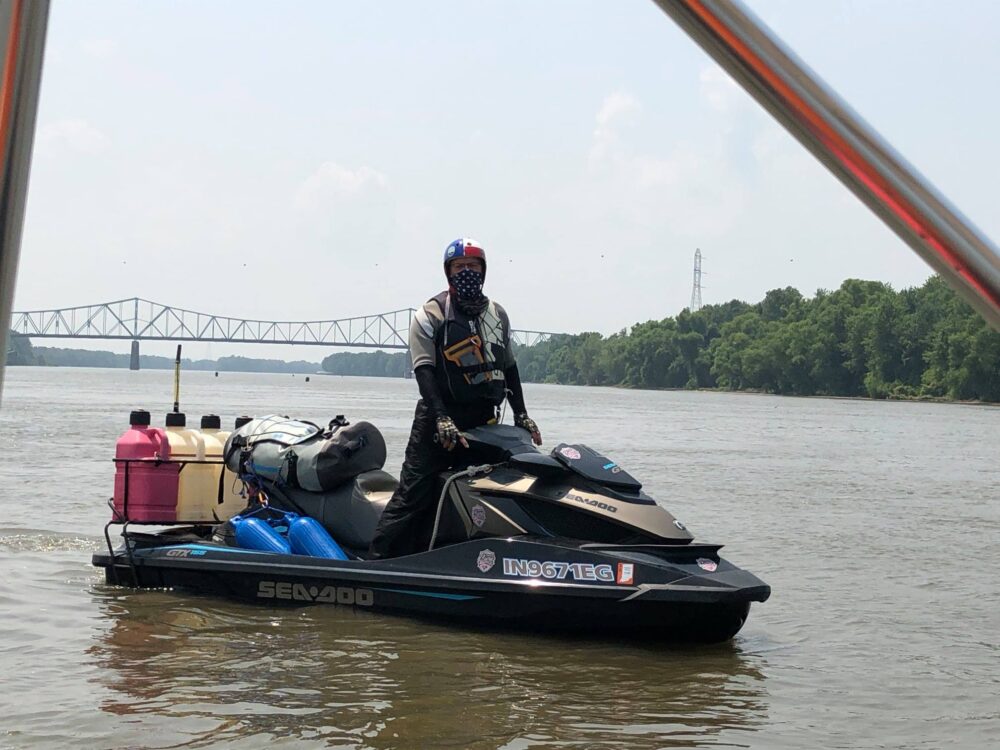
Scott Voelker rides jet skis to raise funds for causes that he supports. His most recent ride was for breast cancer research and to raise funds for the Orlando Sports Foundation and Cure Bowl. He rode his Sea-Doo GTX almost 7,000 miles beginning in Tampa, FL and ending in Chicago, finishing the Great Loop.
He left his home in Indiana to head to Tampa, Florida on July 11 to complete the last 2,000 miles of his 7,000 mile journey. Voelker rode 251 miles on the first day, stopping in Panama City to fill up his pink and white fuel cans. His plan was to ride 200 miles a day while stopping along the way to raise money and awareness for breast cancer research. Updates on his adventure are available on his Facebook page.
He has a lot of stories, including one with pictures of seeing boats on fire. He had grabbed a ride back to the marina where his PWC was docked and saw smoke billowing.
A couple of boats were on fire and his Sea-Doo was nearby. His ski was okay, the boats not so much. Check out his page for more tales of his ride and future plans.
Voelker began the fundraising rides in 2017 when he rode his WaveRunner 2,030 miles for breast cancer research. He rode through all five Great Lakes. He has continued doing charity rides every year for the Orlando Sports Foundation and Cure Bowl.
The foundation says it takes someone with courage and grit to take a dream and make it a reality. Scott’s vision using this adventure as a tool to raise money for cancer research is their shared vision.
That says a lot about the kind of man Voelker is and with the help of people like him, the Sports Foundation and Cure Bowl team has raised almost $4 million since 2015. He finished this latest journey on July 26th and raised several thousand dollars for The Orlando Sports Foundation and Cure Bowl, so that they can continue their cancer research.
“They did it again!” screamed one commenter as Sea-Doo’s José Boisjoli smiled across the screen. Wednesday’s digital reveal of the brand’s 2022 lineup introduced enthusiasts to several new and exciting products certain to lure in first-time and returning customers; but what caught the ire of this viewer (and definitely several others) was the few-yet-significant tweaks and additions to existing models that had only just been released a year or two before.
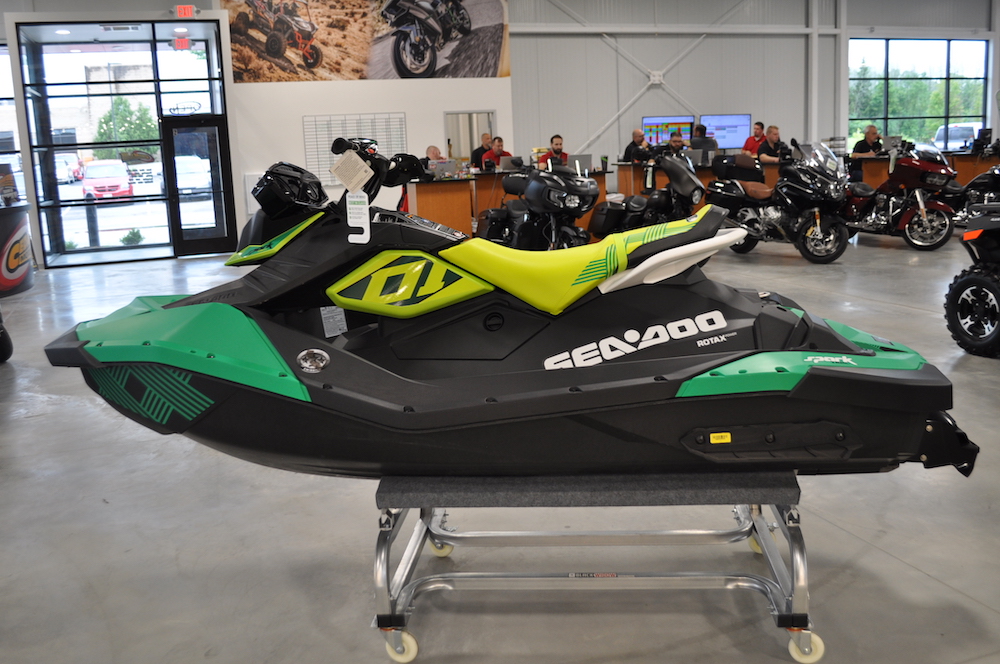
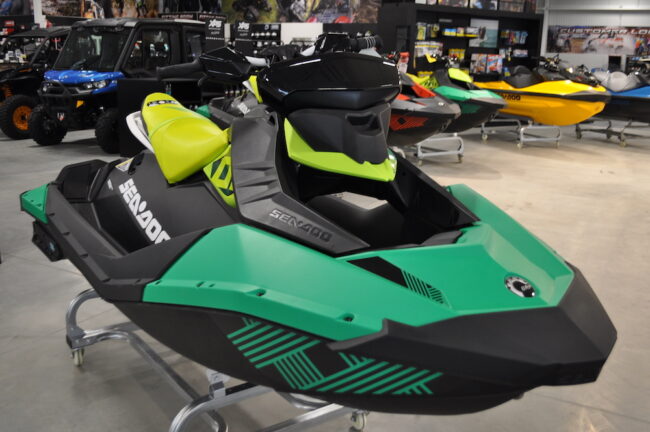
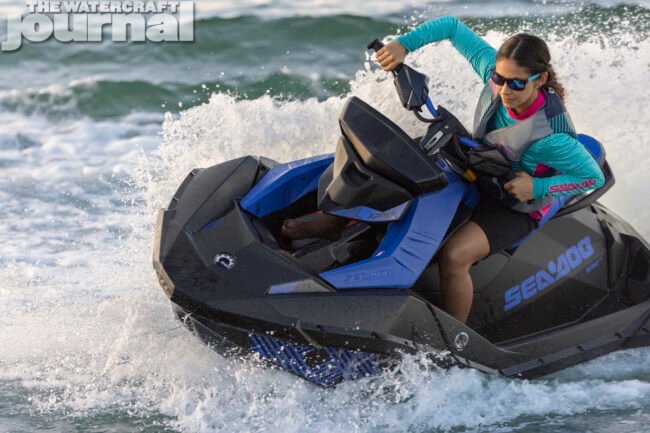
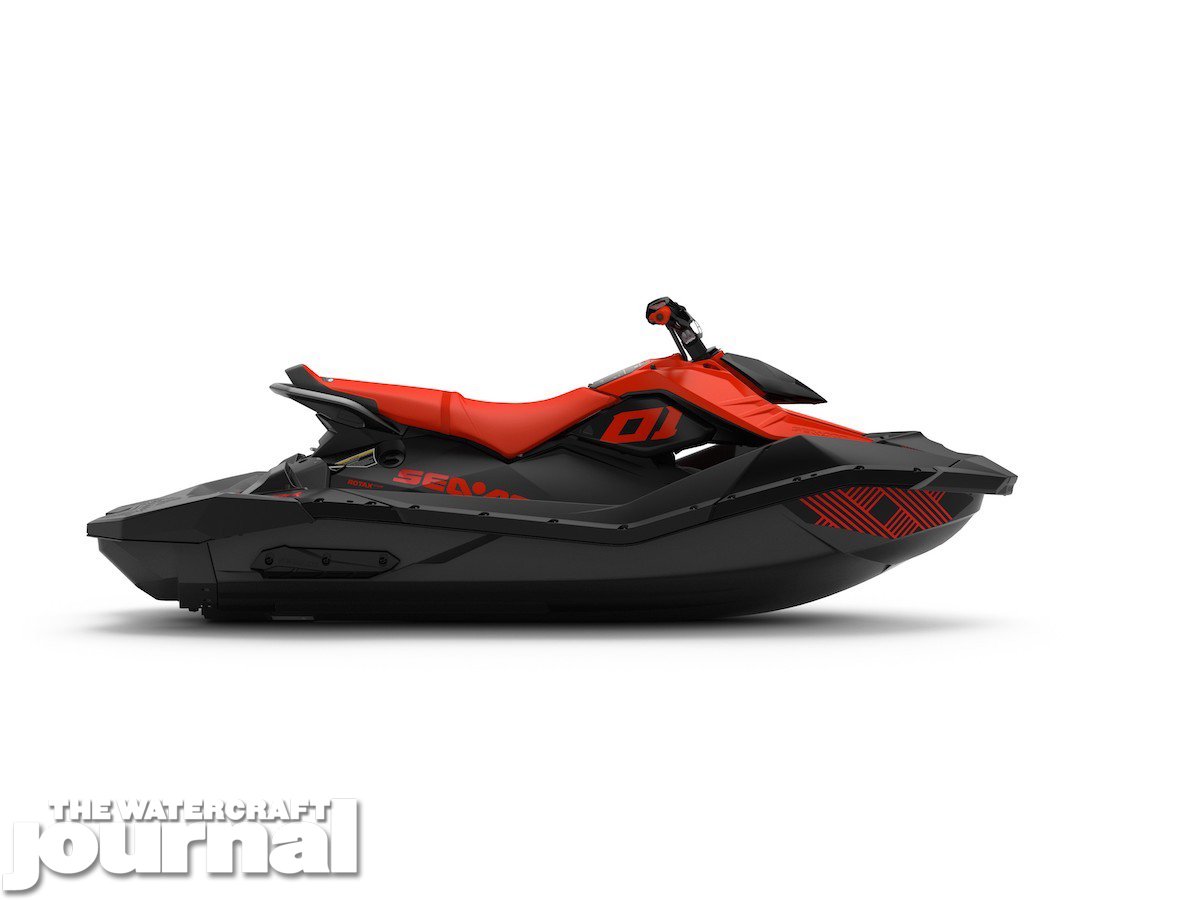
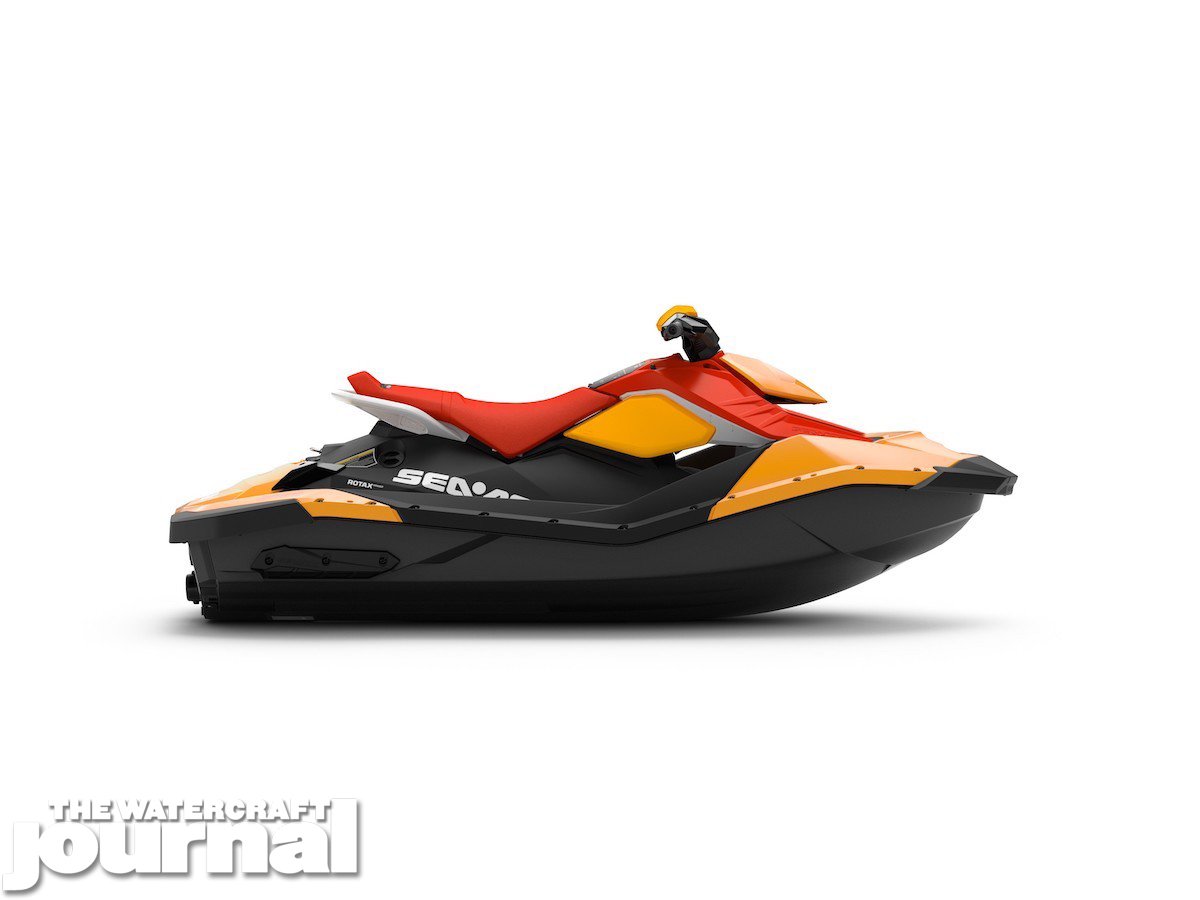
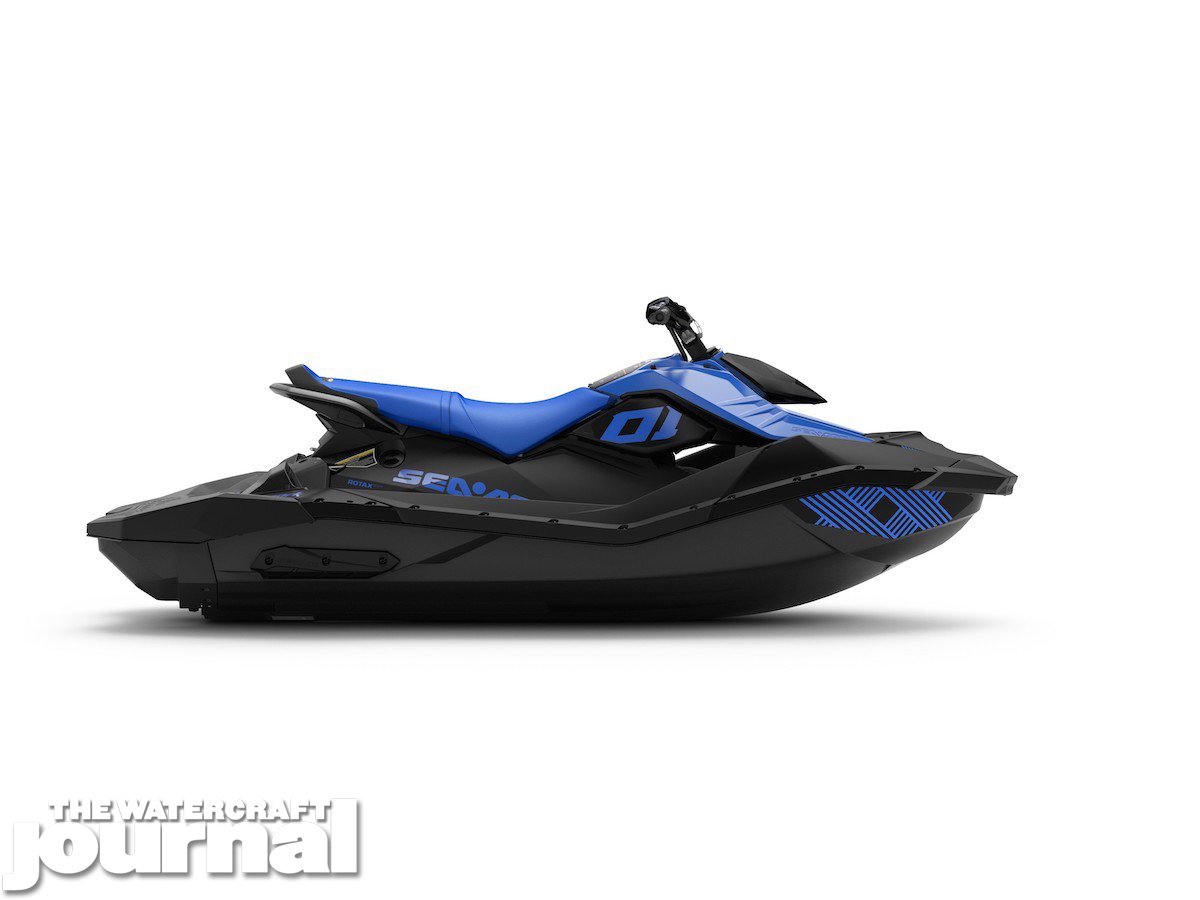
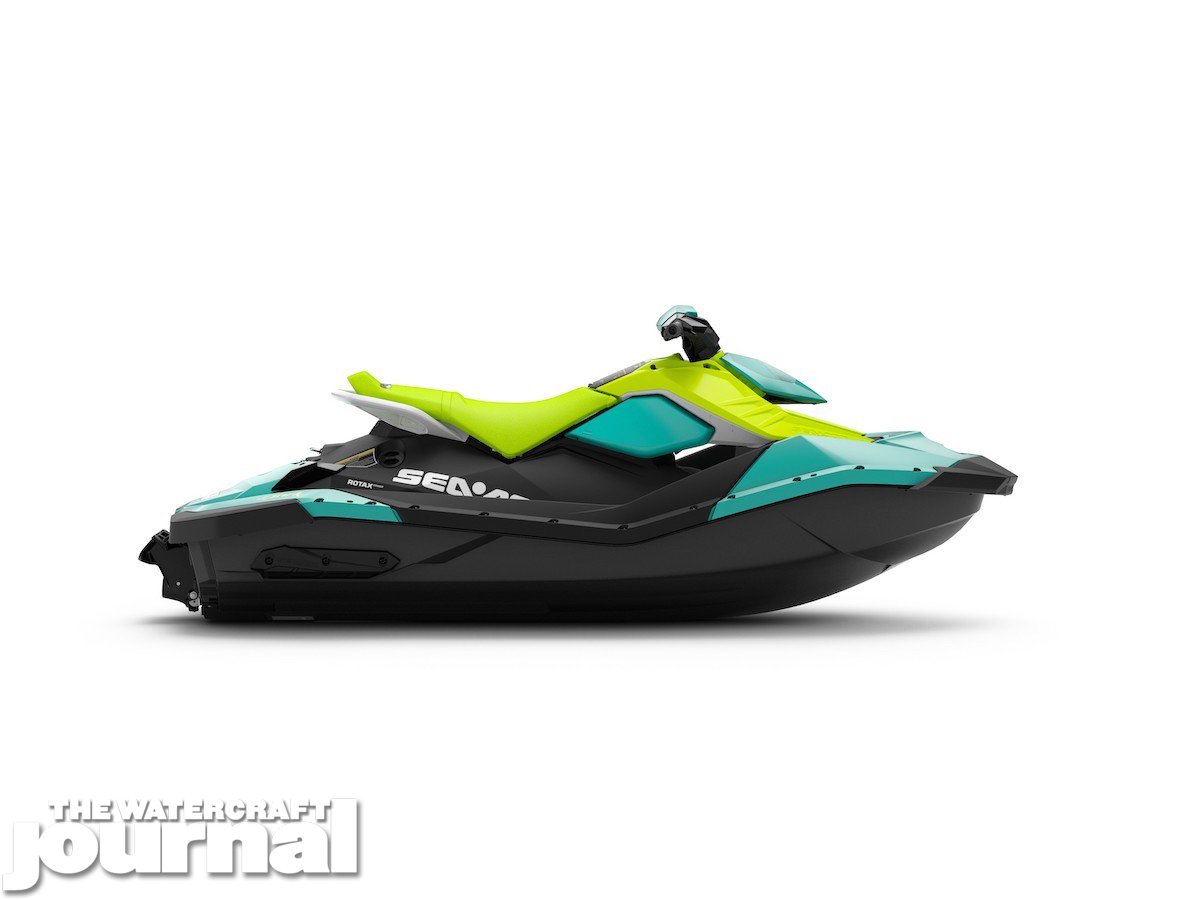
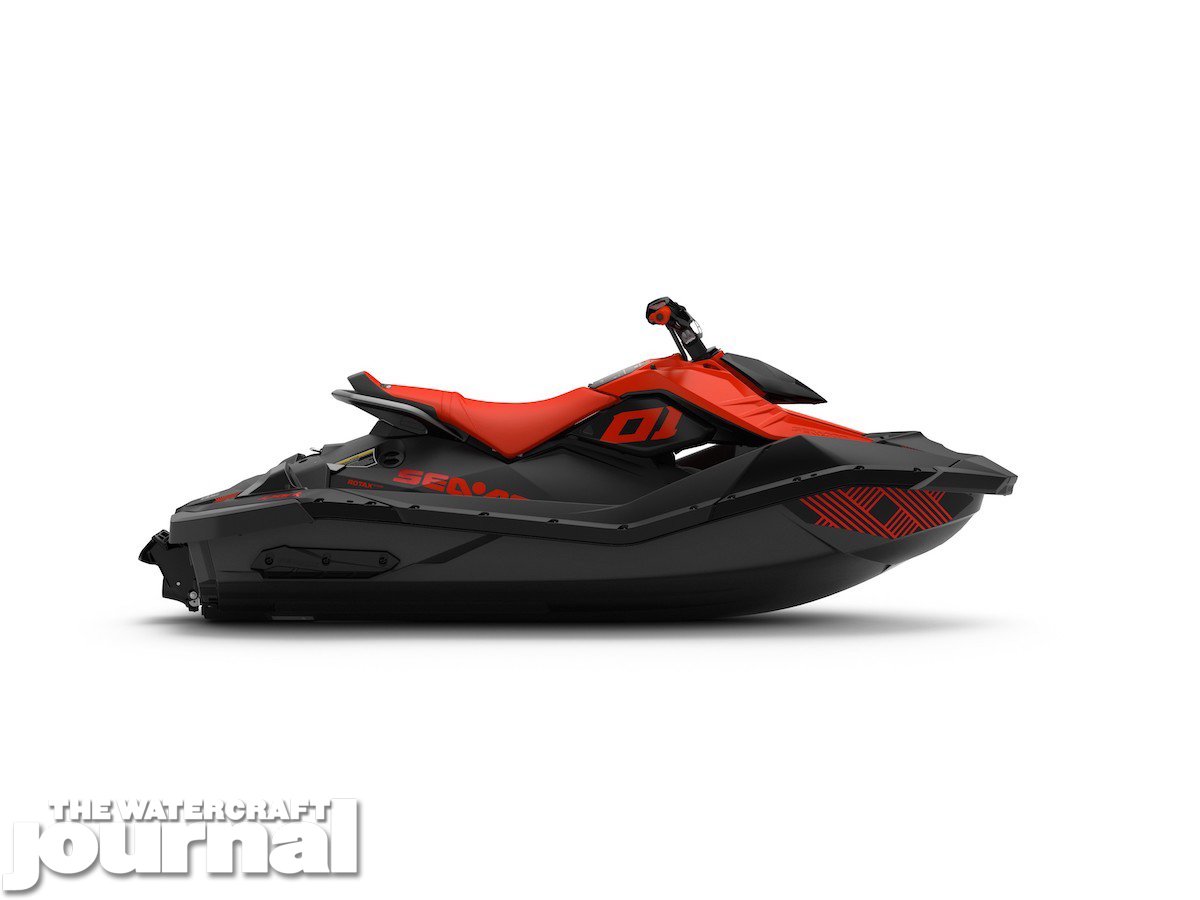
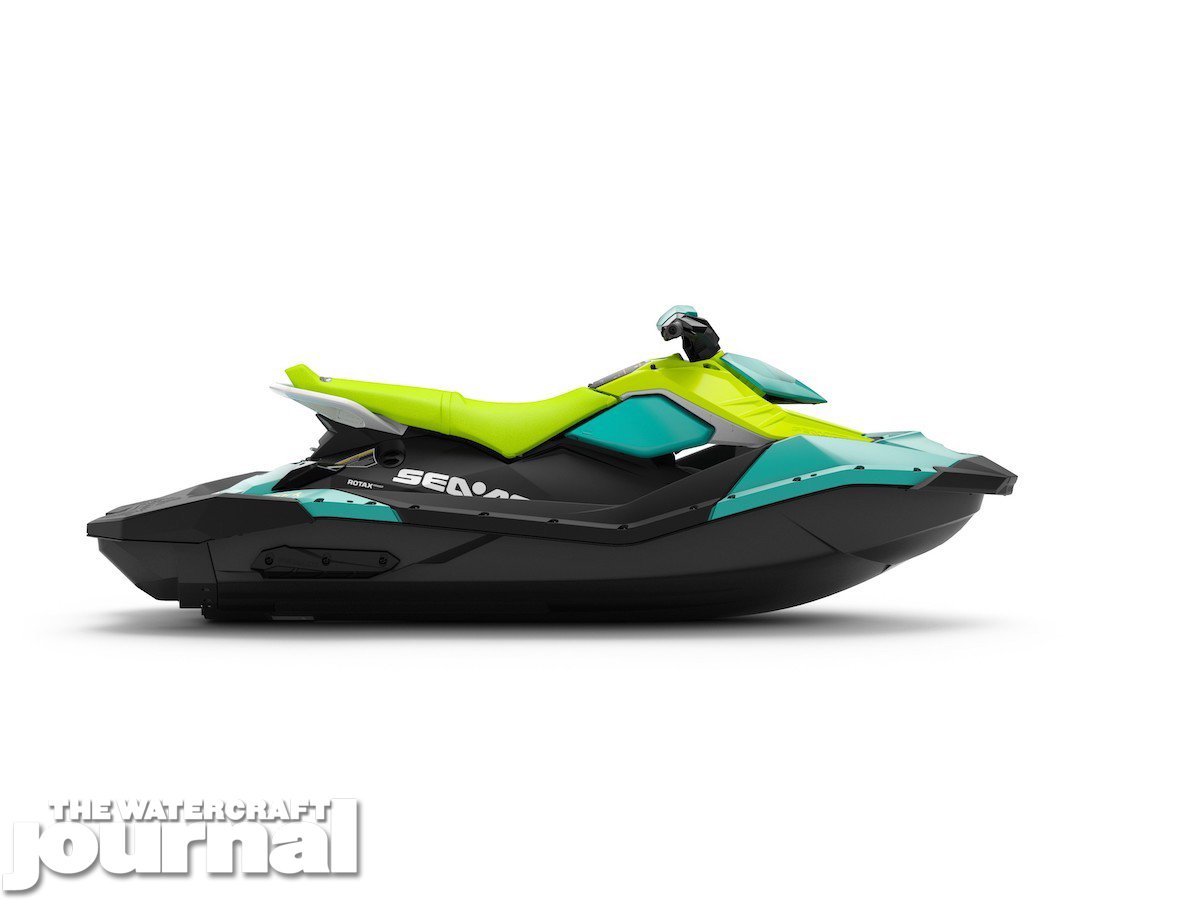
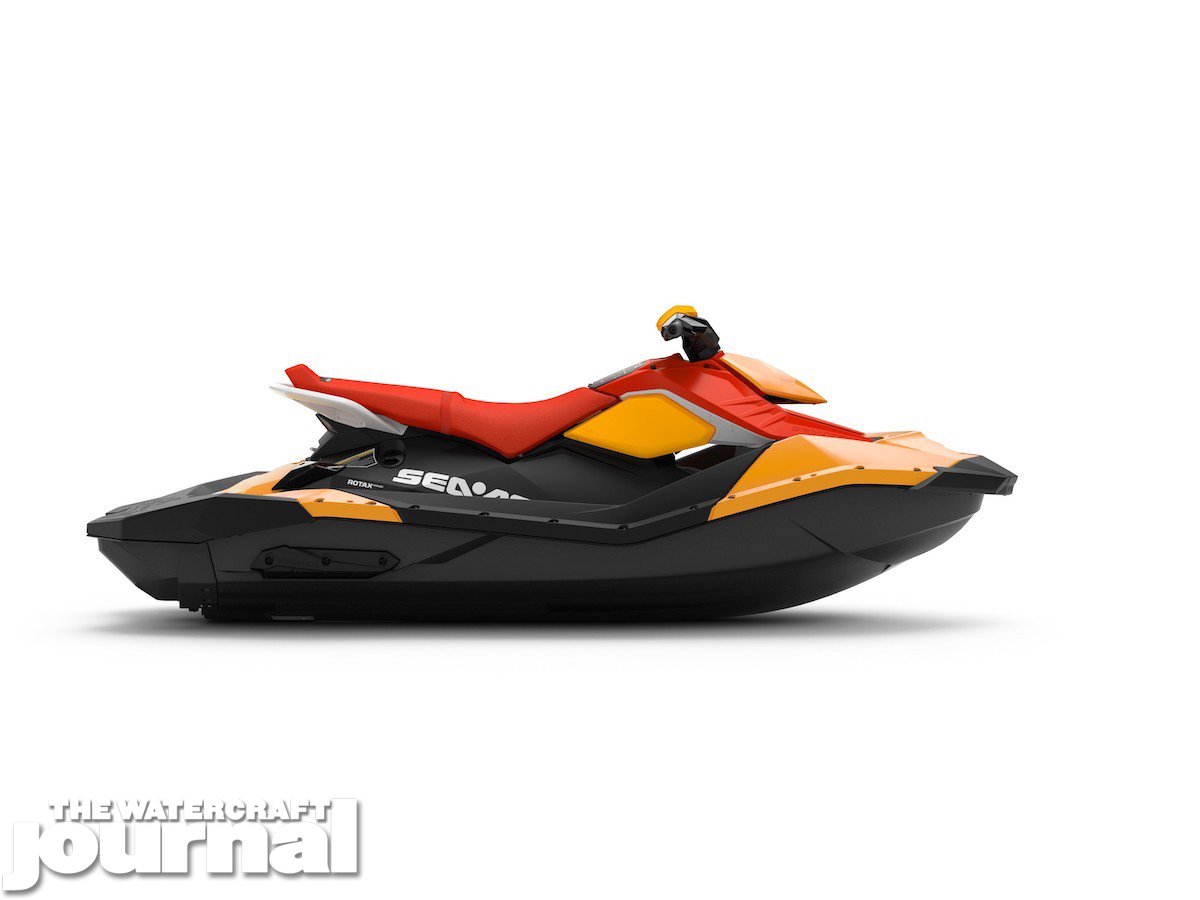
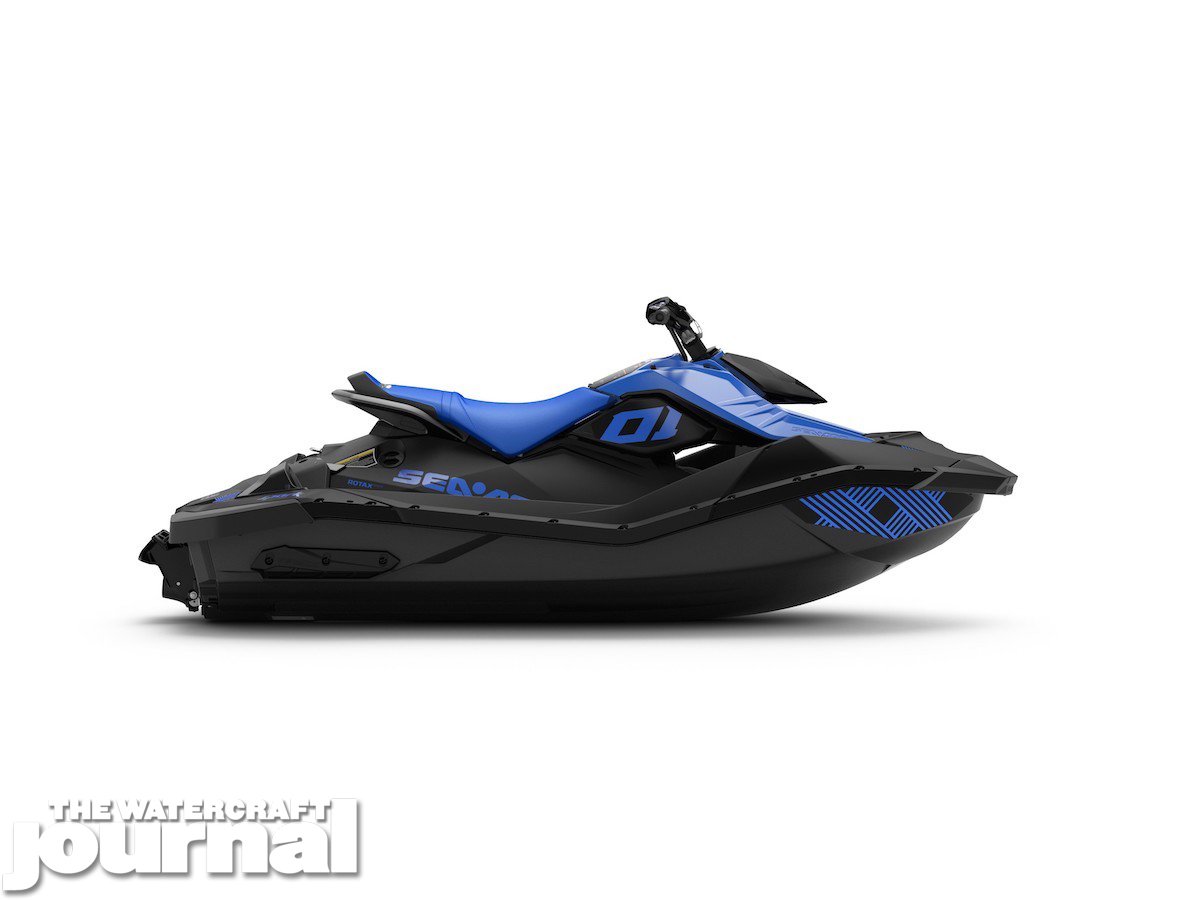
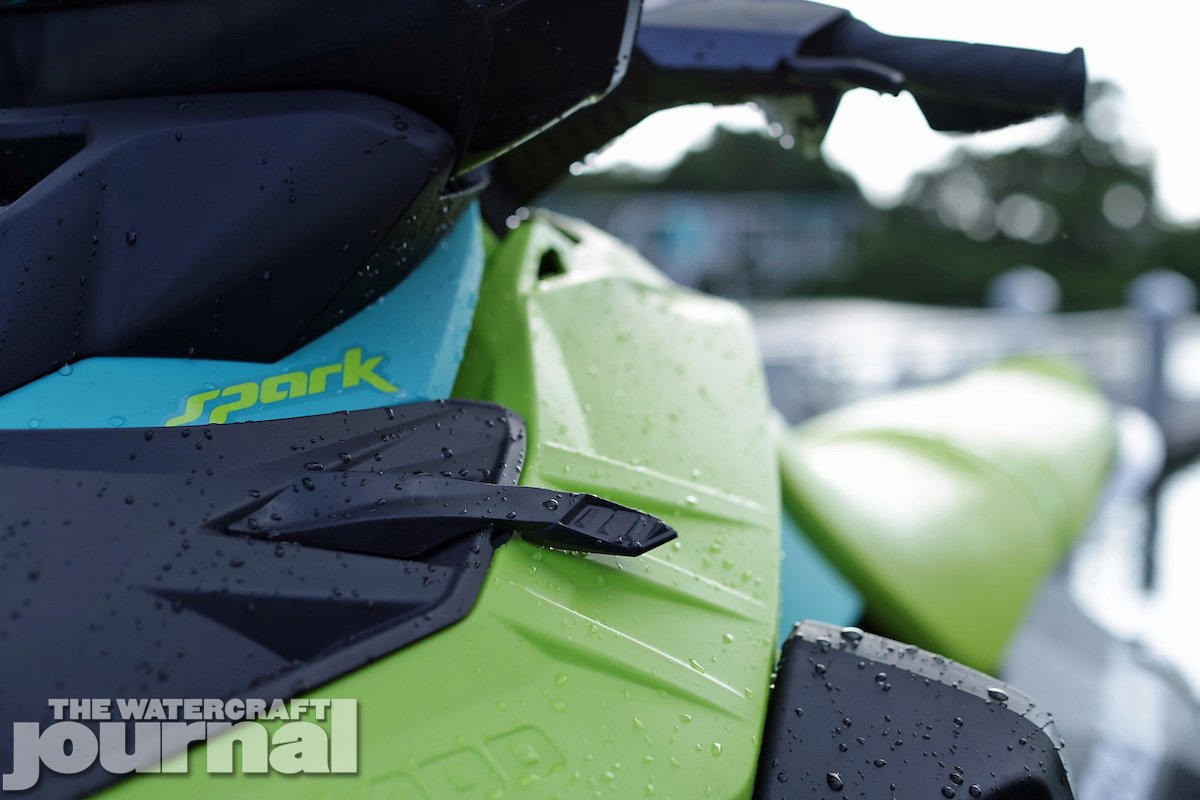
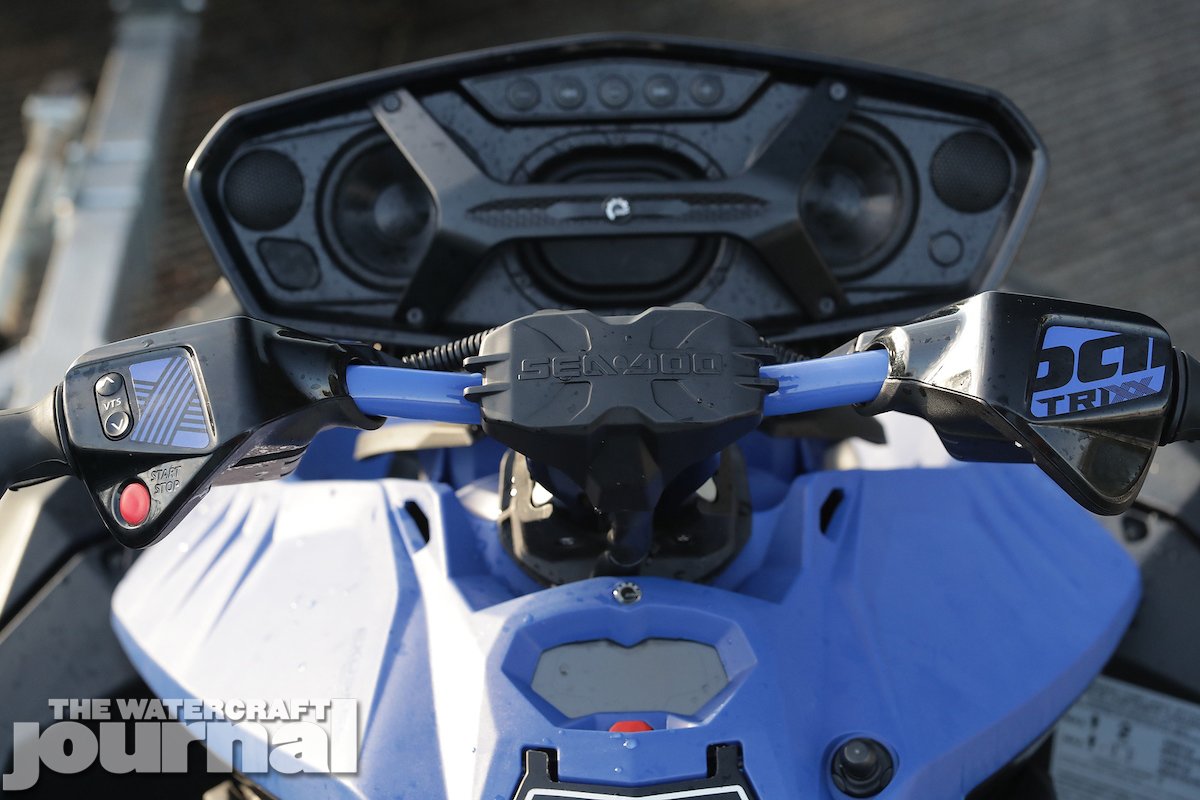
Ranging from the mundane to the magnificent, these improvements were worked into the 2022 batch to better refine and polish the product line. Although chatter speculated on the redesign of the now 8-year-old Sea-Doo Spark (MSRP $5,699), it returned as-is for 2022, save for some smartly reconfigured coloring: Lava Red and Orange Crush or Reef Blue and Manta Green; and a bold Lava Red and Black combination or new Dazzling Blue and Deep Black for the Trixx (MSRP $7,899).
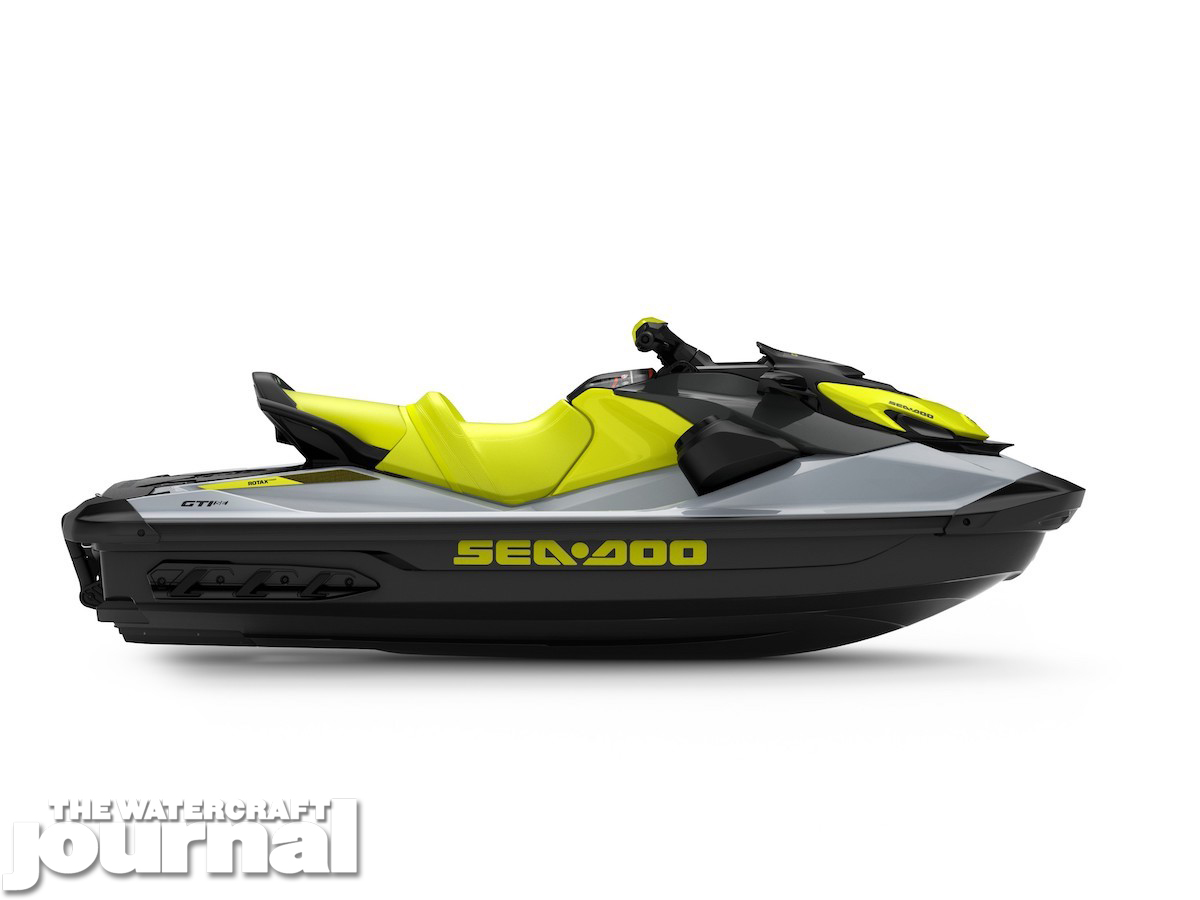
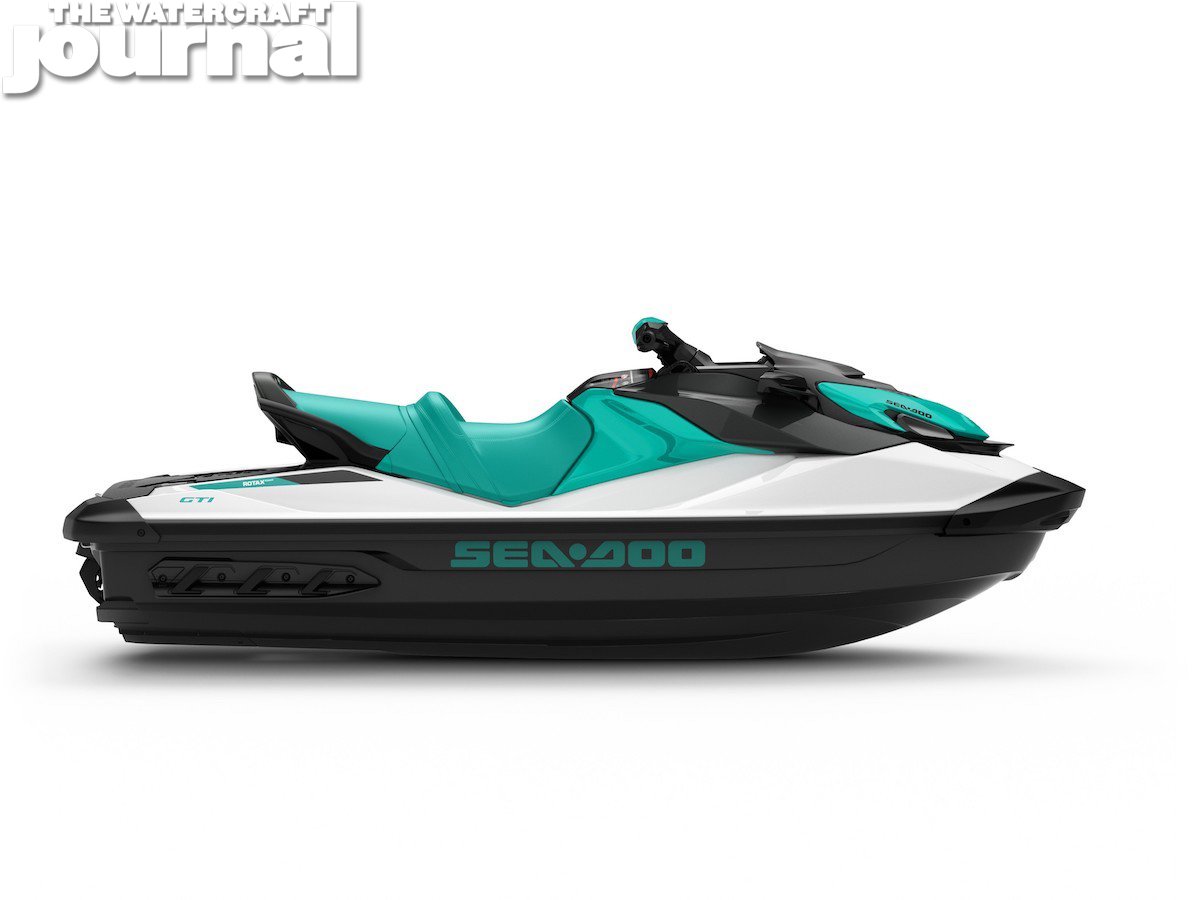
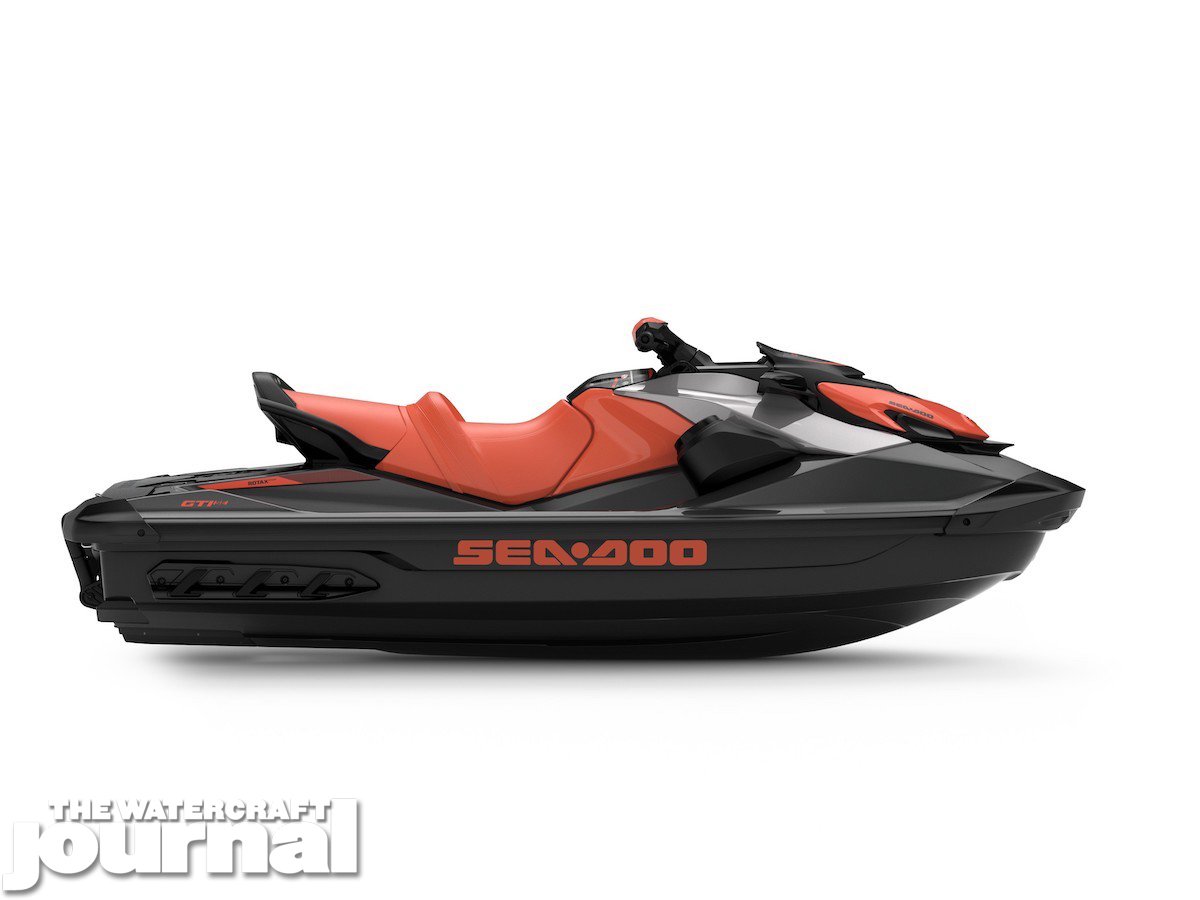
For 2022, the GTI family of Recreation segment watercraft adds to the platform’s already impressive versatility with the addition of the optional iDF (Intelligent Debris Free) system. In fact, the iDF technology, which reverses the pump’s thrust in a 12-second burst in order to clear clogged intakes, has found its way into nearly every Sea-Doo this year (but more on that later). Of course, all 130 and SE-equipped GTI’s can be optioned with the 100-watt BRP Premium Audio system too.
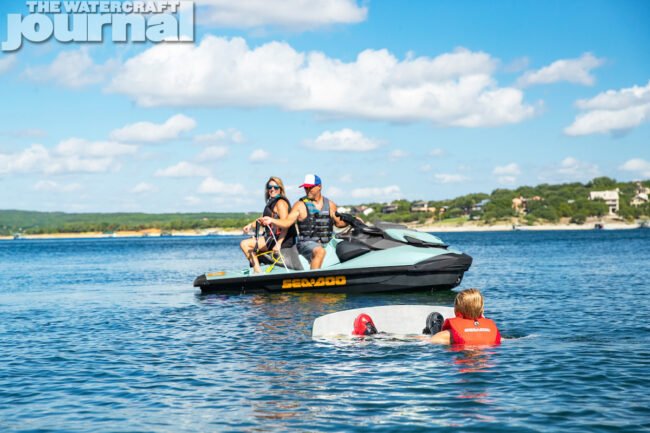
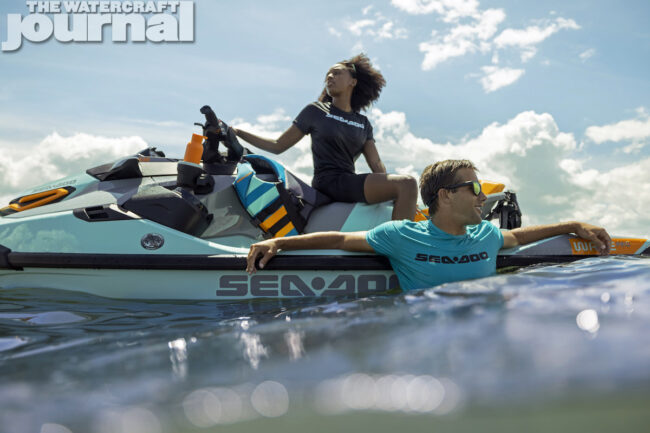
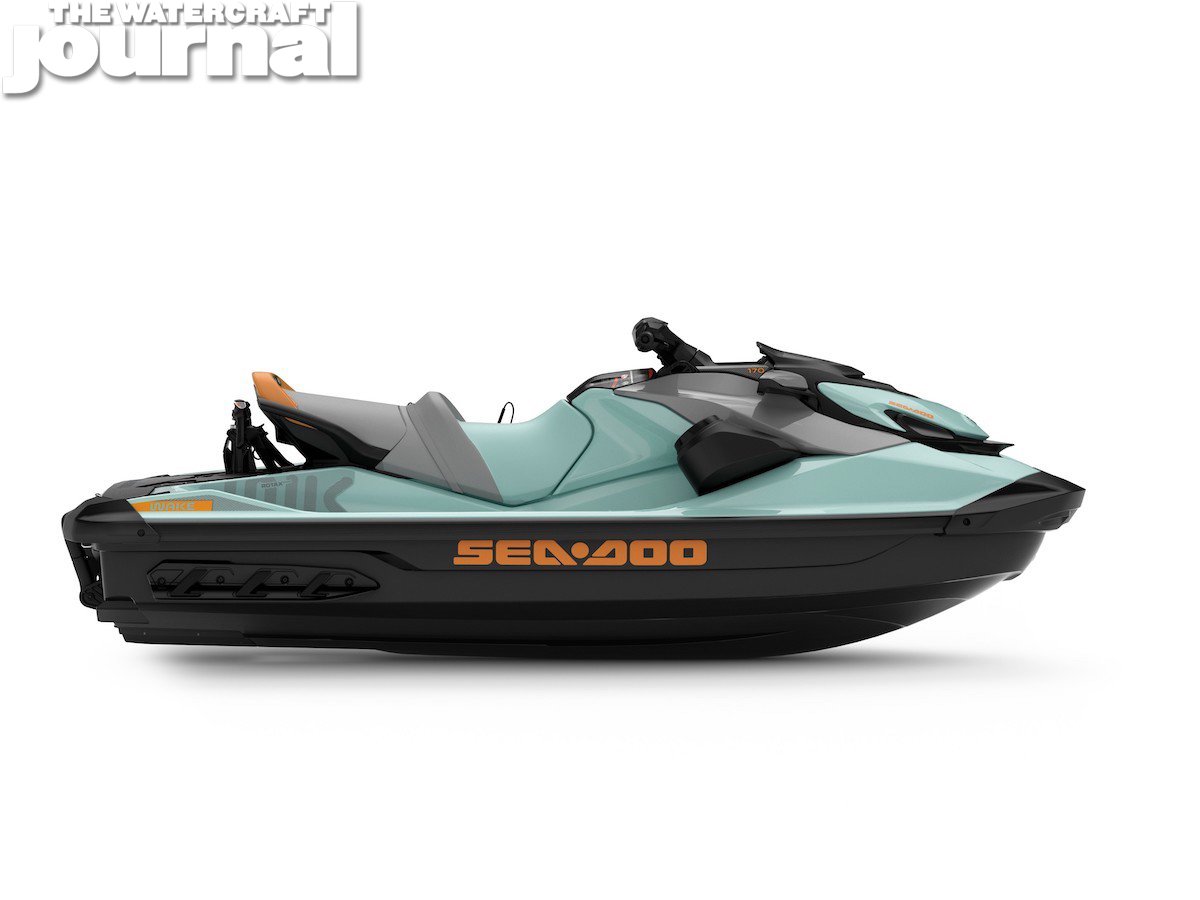
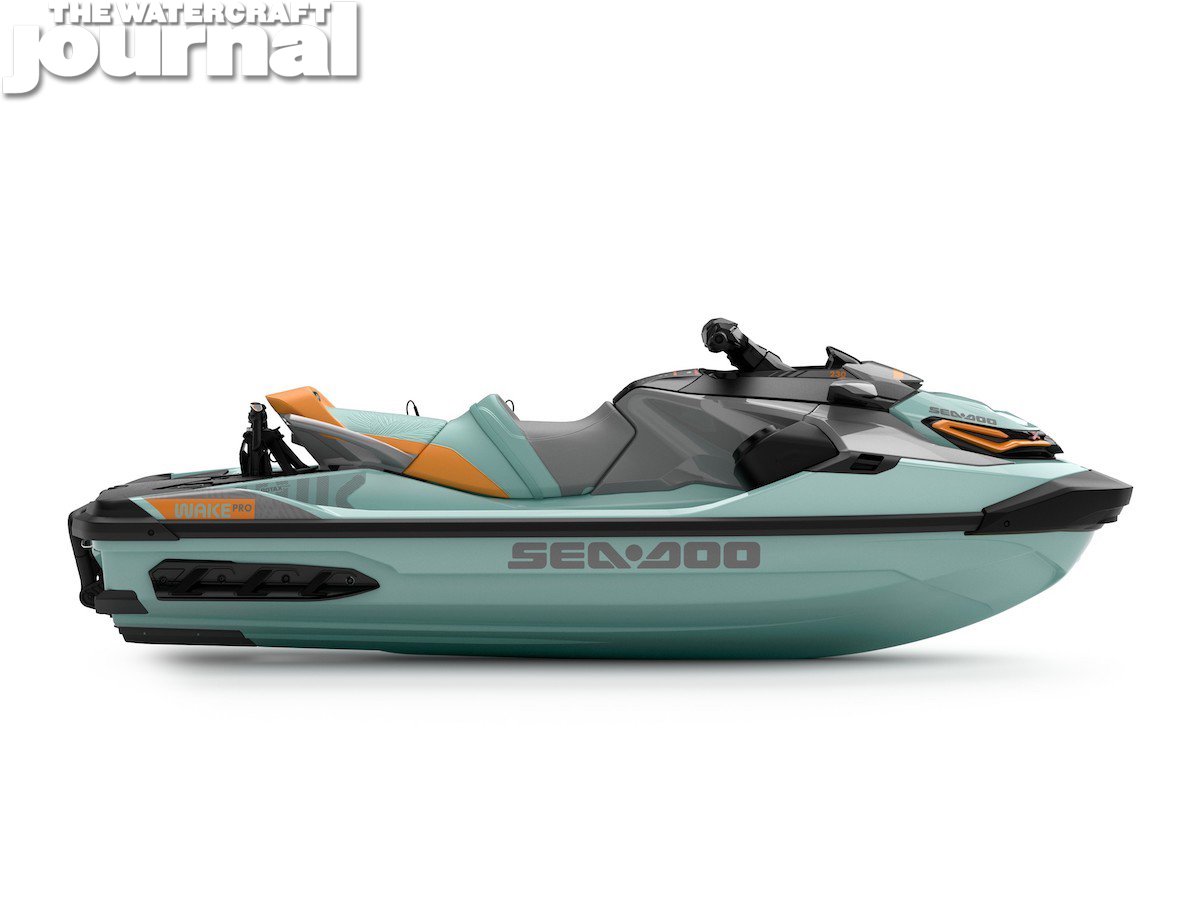
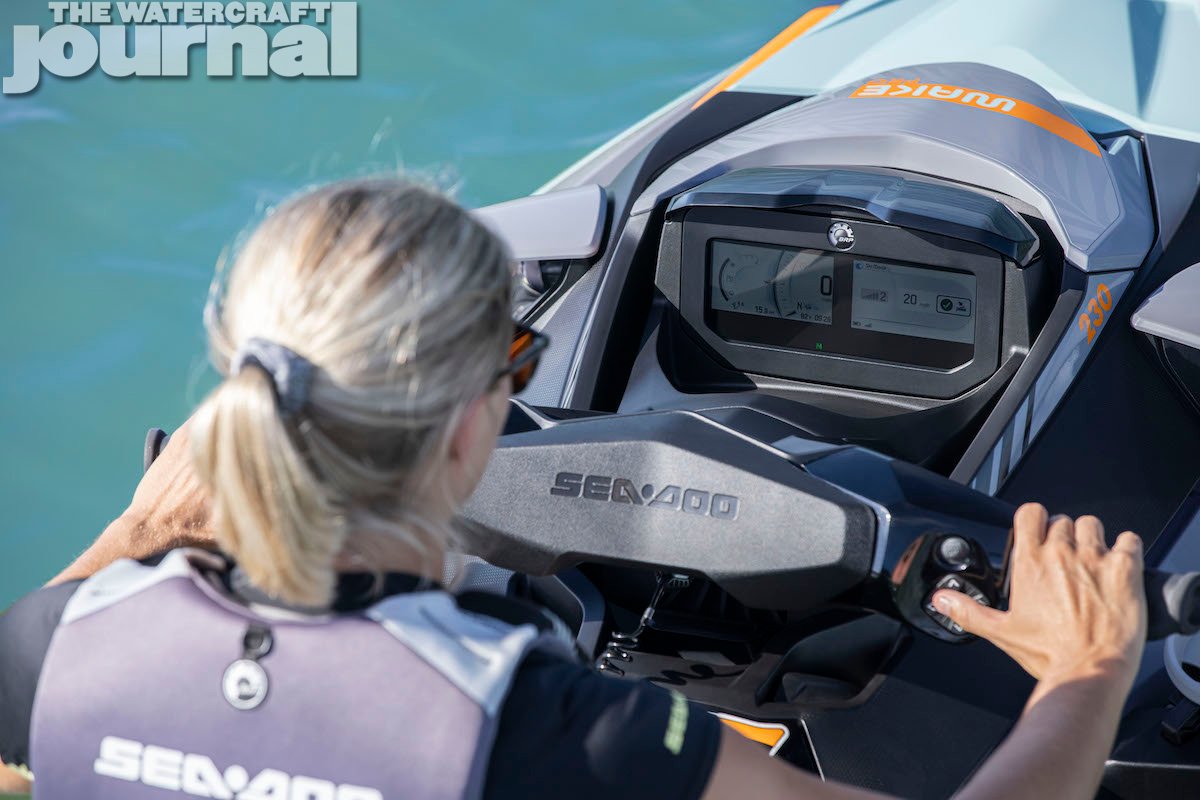
Colorings for the GTI 90 (MSRP $9,299) and base GTI 130 (MSRP $10,299) are Reef Blue on White as the GTI SE 130 (MSRP $11,099) and GTI SE 170 (MSRP $11,699) can be purchased in either Coral Blast and Eclipse Black or bright Neon Yellow. Segueing into the Tow Sports segment, the Wake 170 (MSRP $12,499) returns as-is save for its new Neo Mint livery. Equally, the full-sized Wake Pro 230 (MSRP $16,499) comes in the same hue, but also can be optioned with iDF and the app-compatible 7.8-inch wide full-color display, which can sync to your smart phone via the BRP GO! app.
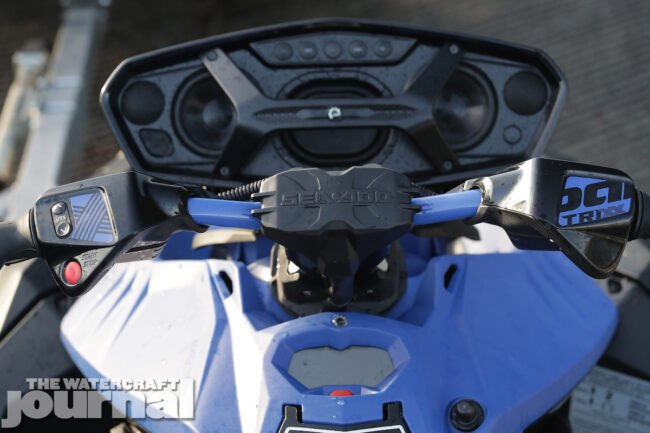
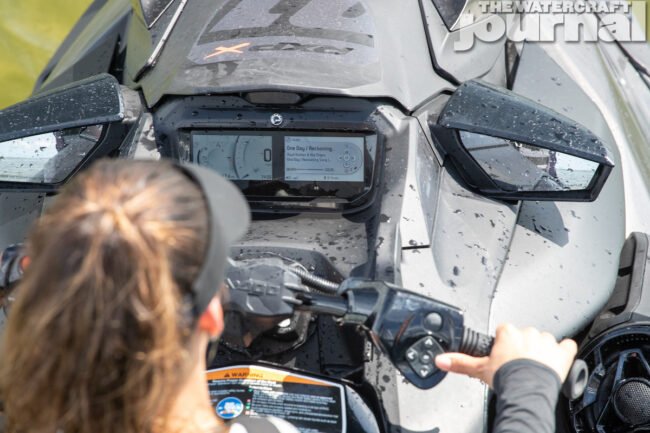
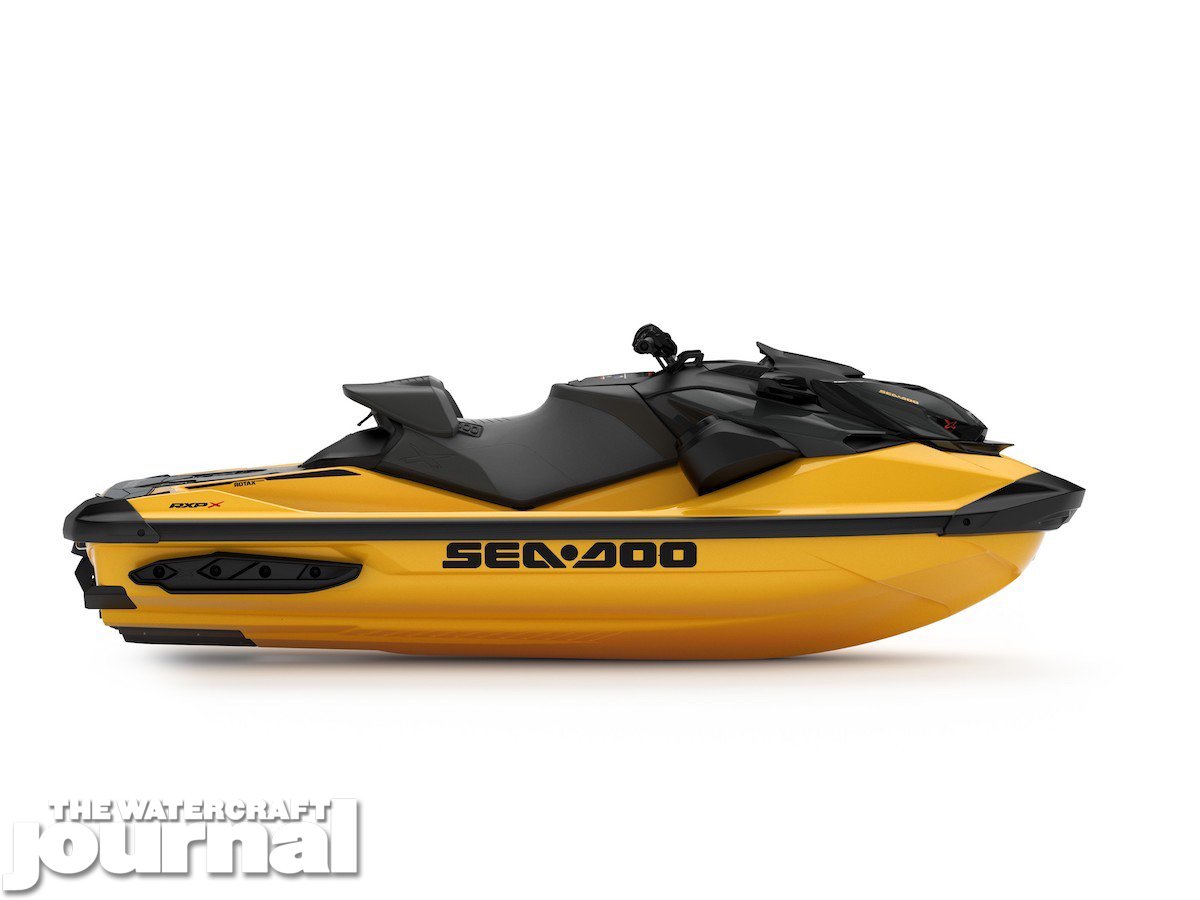
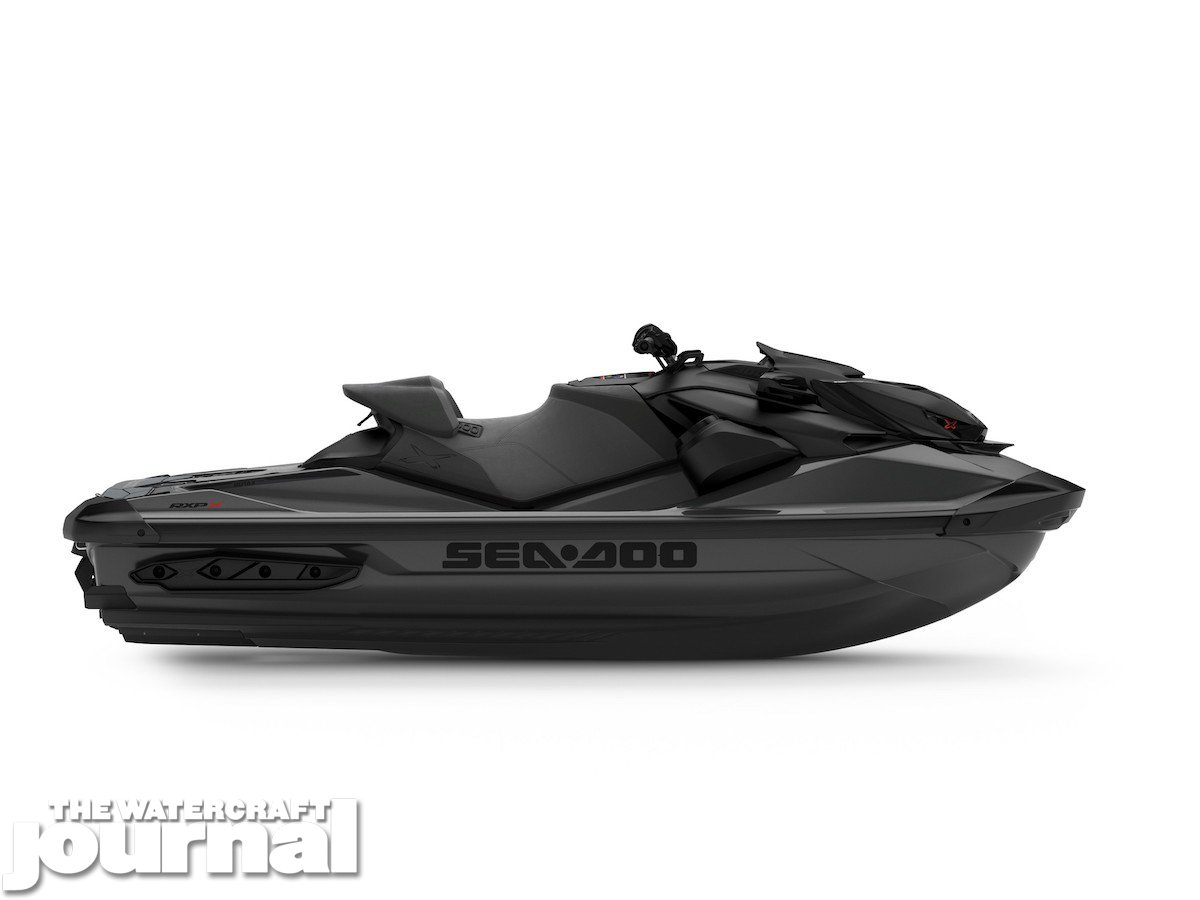
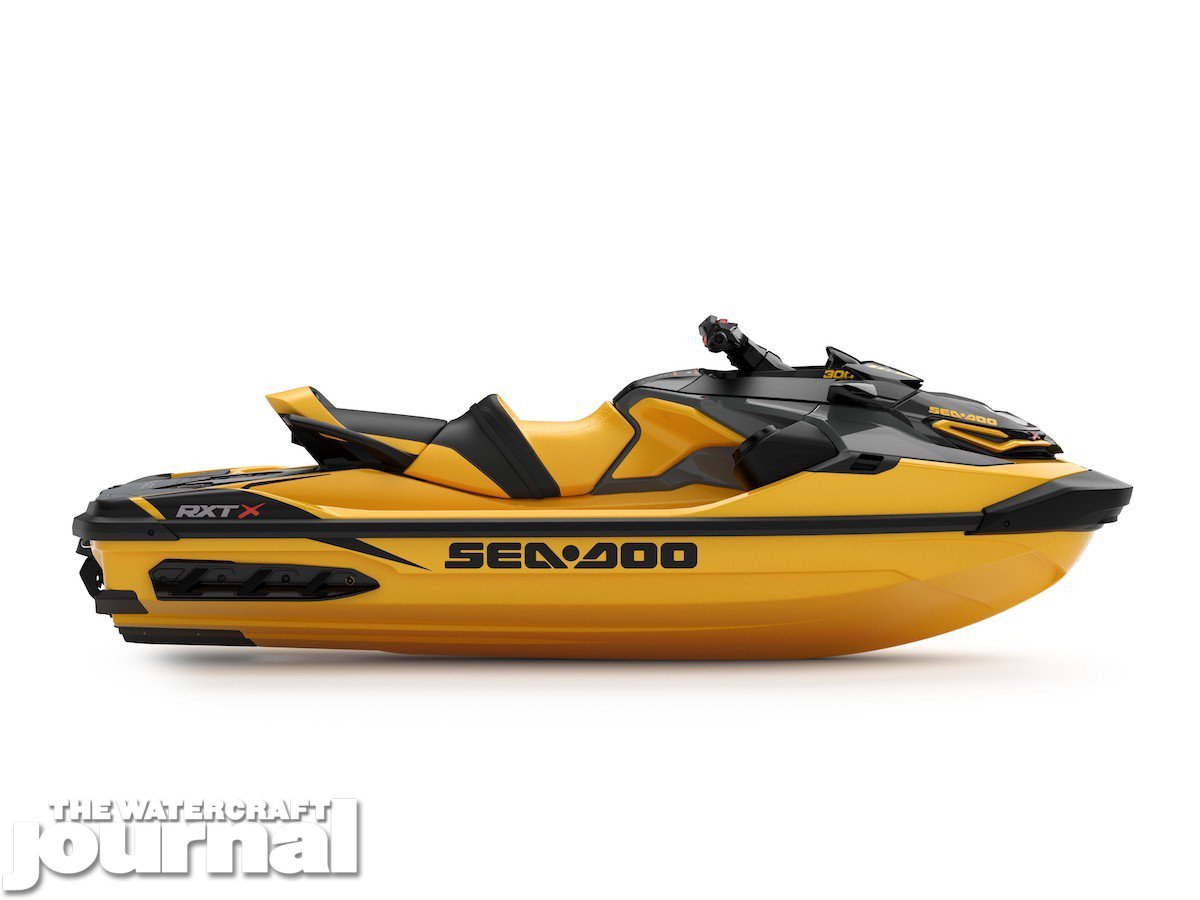
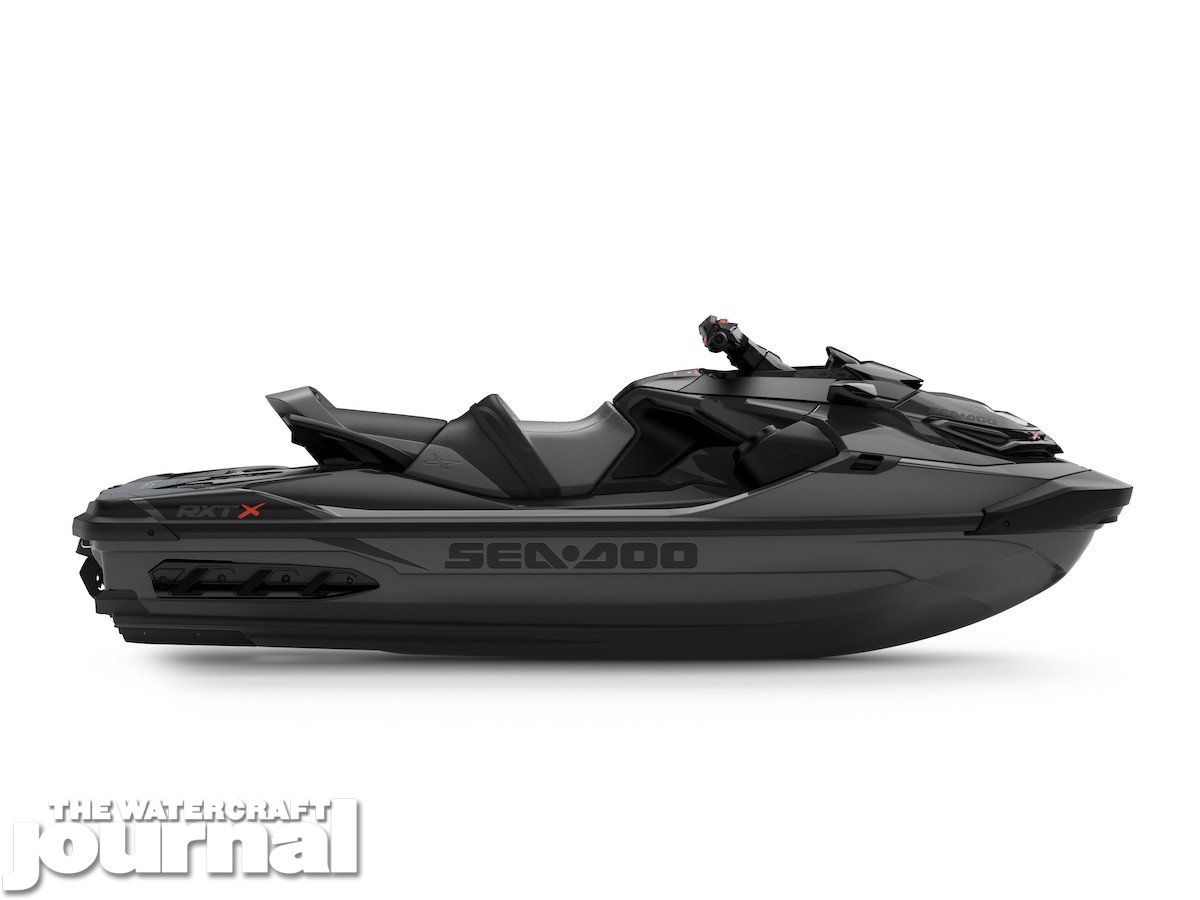
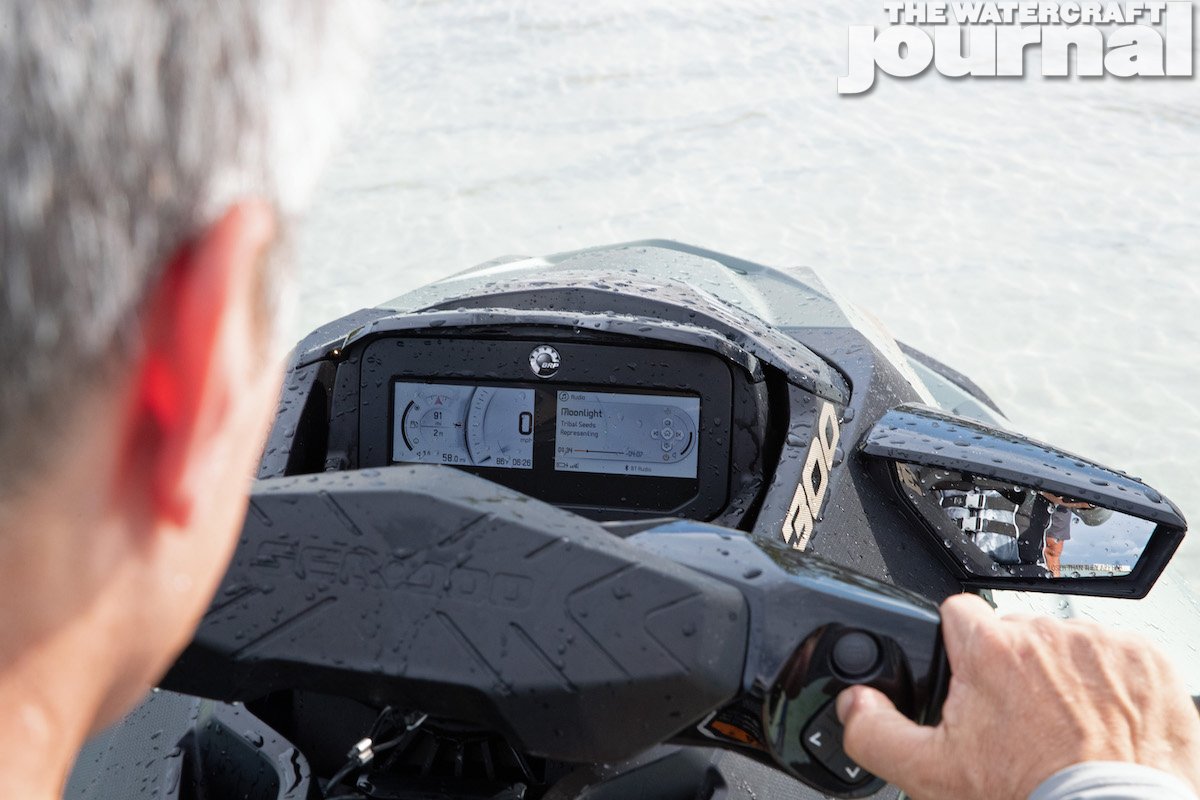
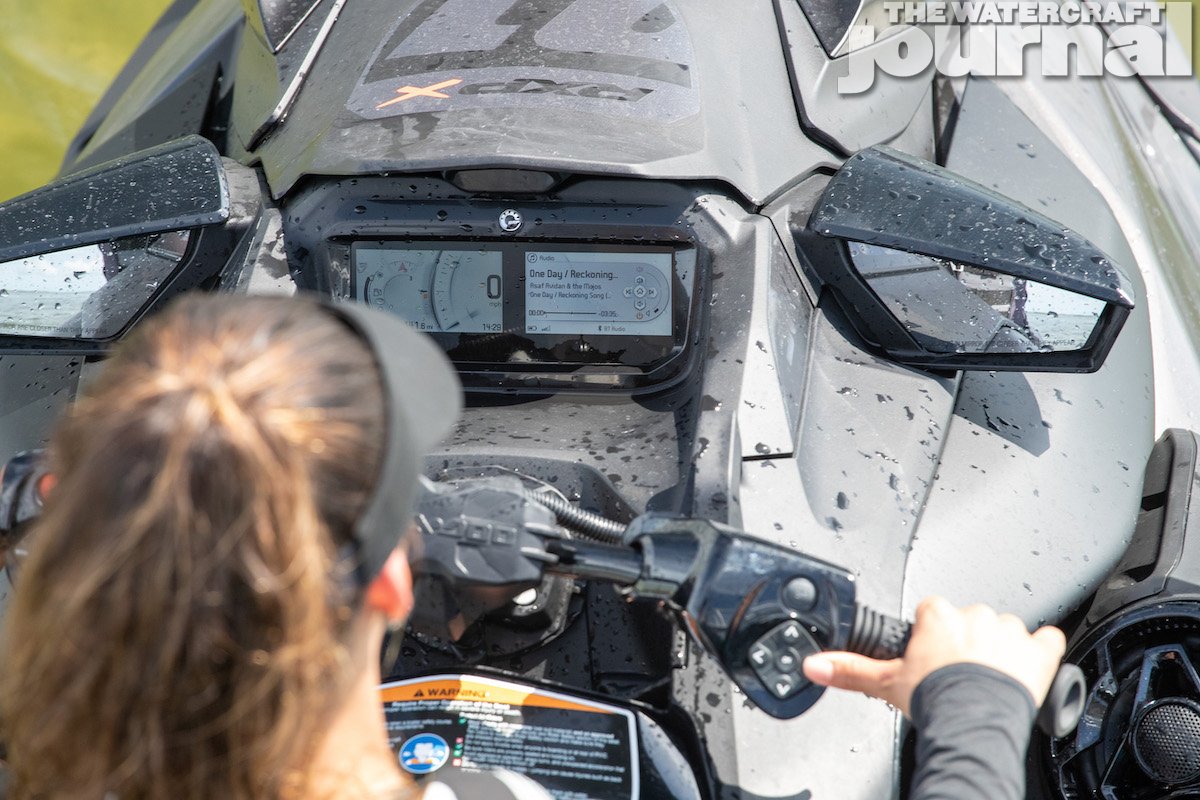
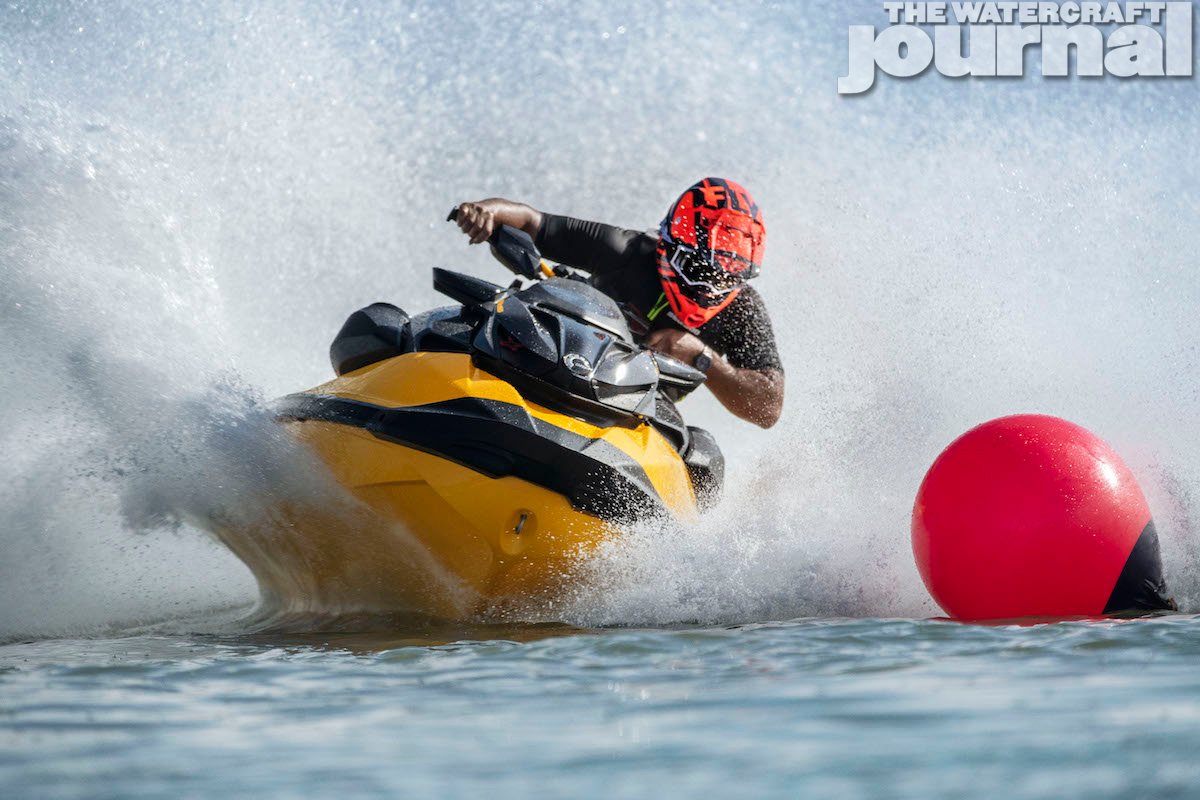
The cause for the initial outburst we witnesses was the announcement of the aforementioned panoramic 7.8-inch wide, full-color LCD display, now optional on all RXT-X 300 (MSRP $17,499) and RXP-X 300s (MSRP $16,099) for 2022. The infotainment dashboard has been highly sought after as a retro-fit for other units, and Sea-Doo’s announcement only rubbed the proverbial salt in the wound. Making matters worse, was the reveal of the absolutely sinister Premium Triple Black color scheme for the two X-series machines.
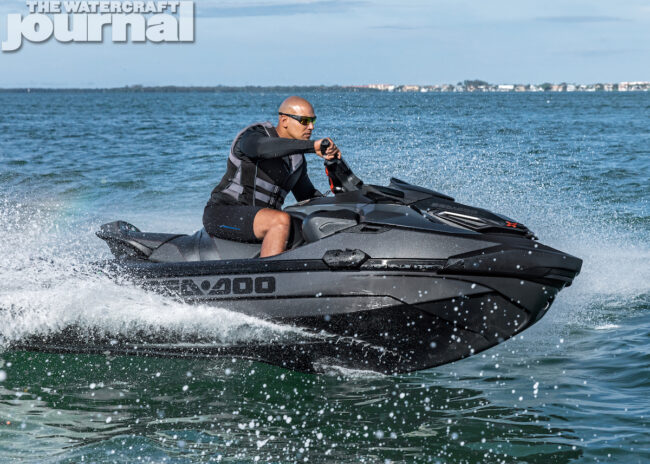
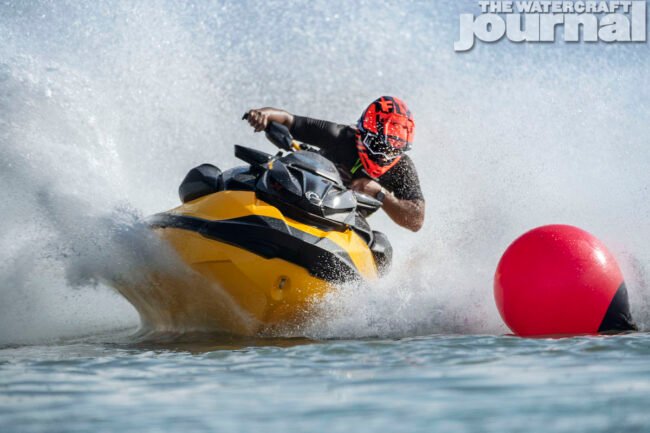
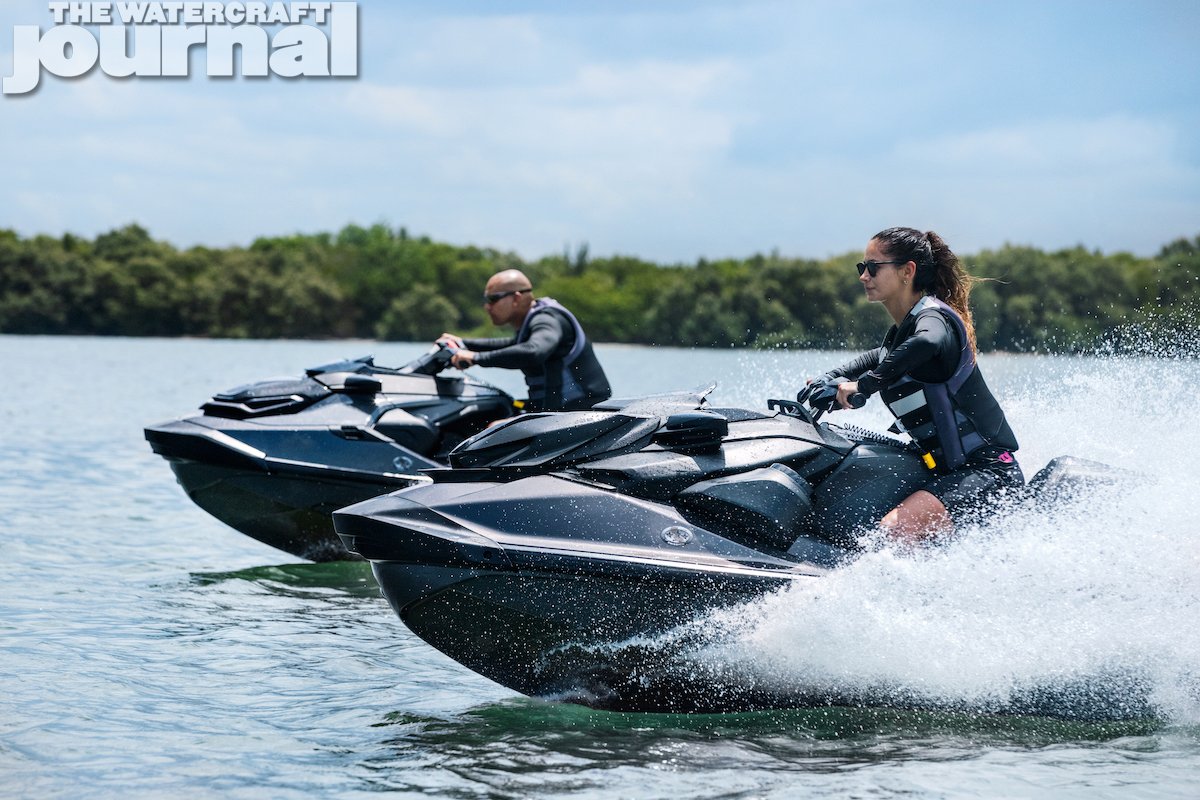
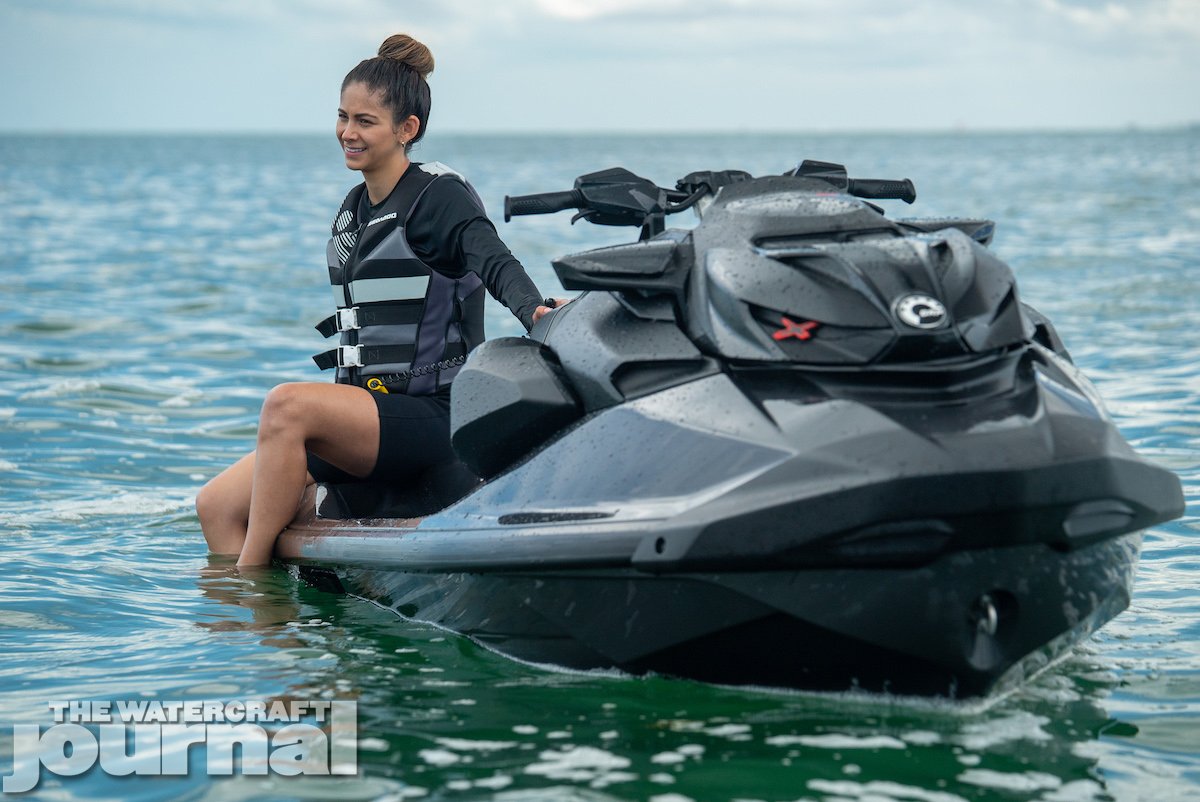
Millennium Yellow does carry over for both models as the standard color as well as being the sole offering for the GTR 230. No other changes were made for 2022, which is fine considering the RXP-X goes 0-50mph in under 3 seconds and the RXT-X still rockets from 0-to-60mph in just 3.6 seconds. Yet, if you want the inked-out look with less frills, Sea-Doo’s GTX lineup returns in Eclipse Black all optional with the BRP Premium Audio sound system and the push-button iDF system.
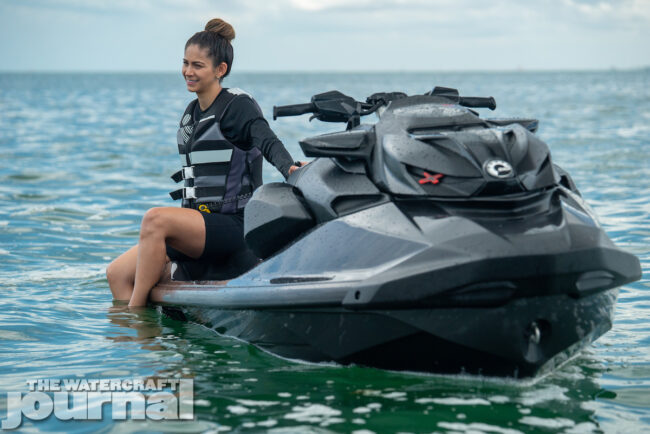
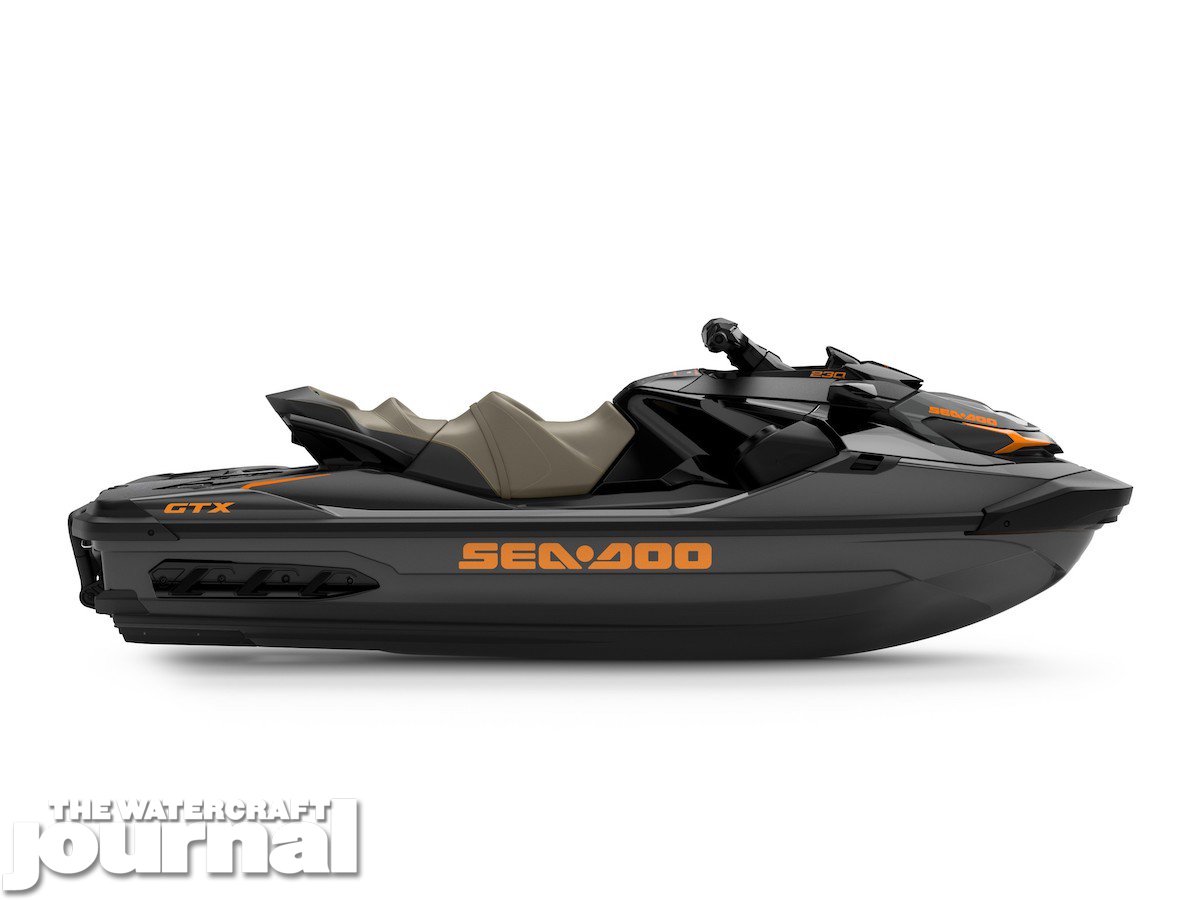
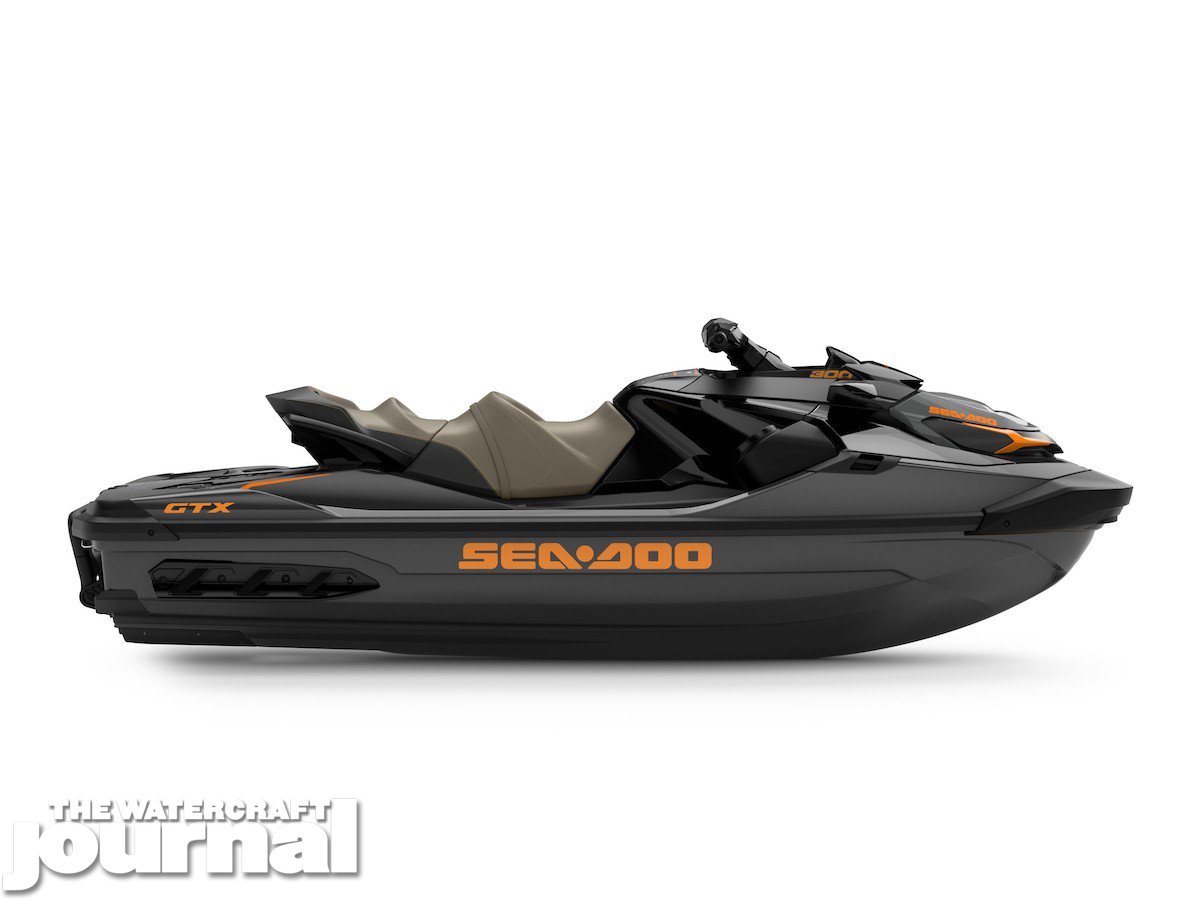
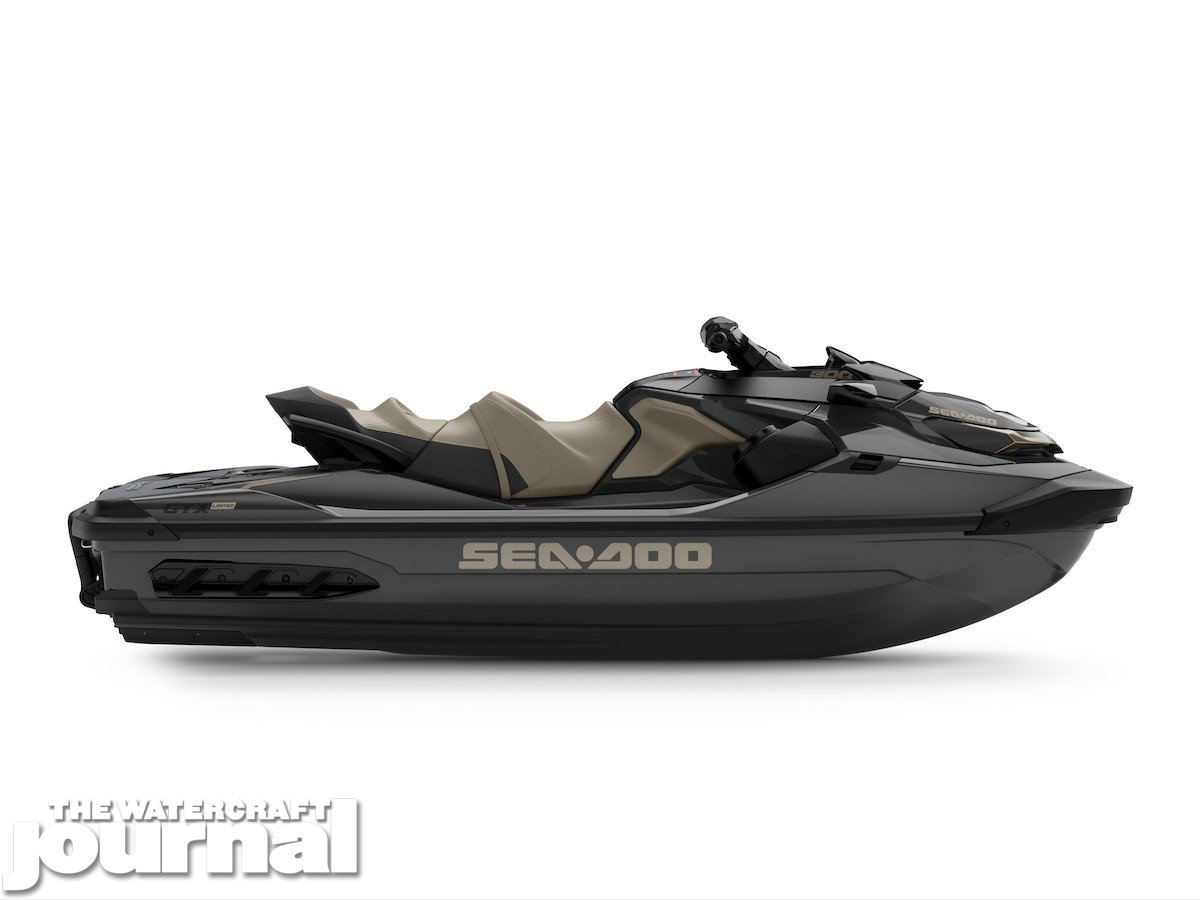
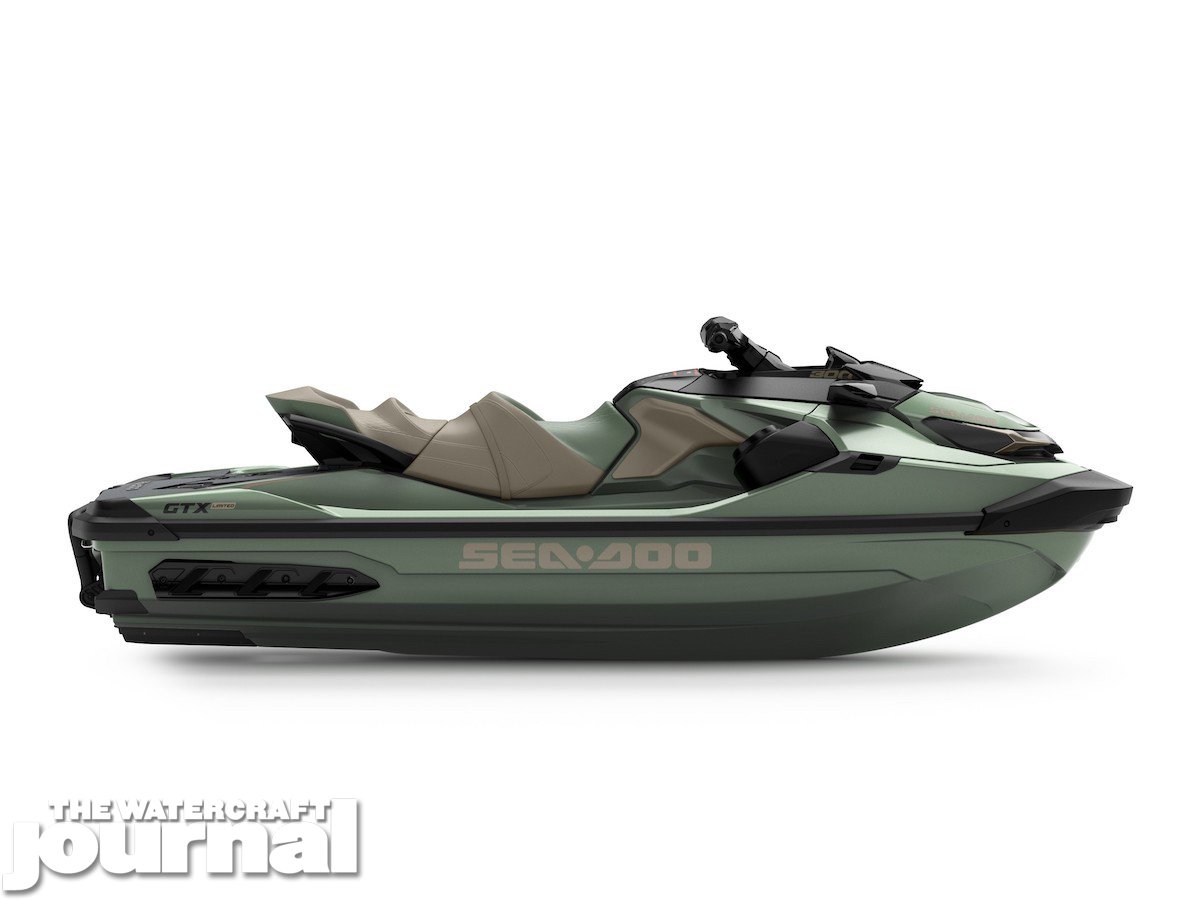
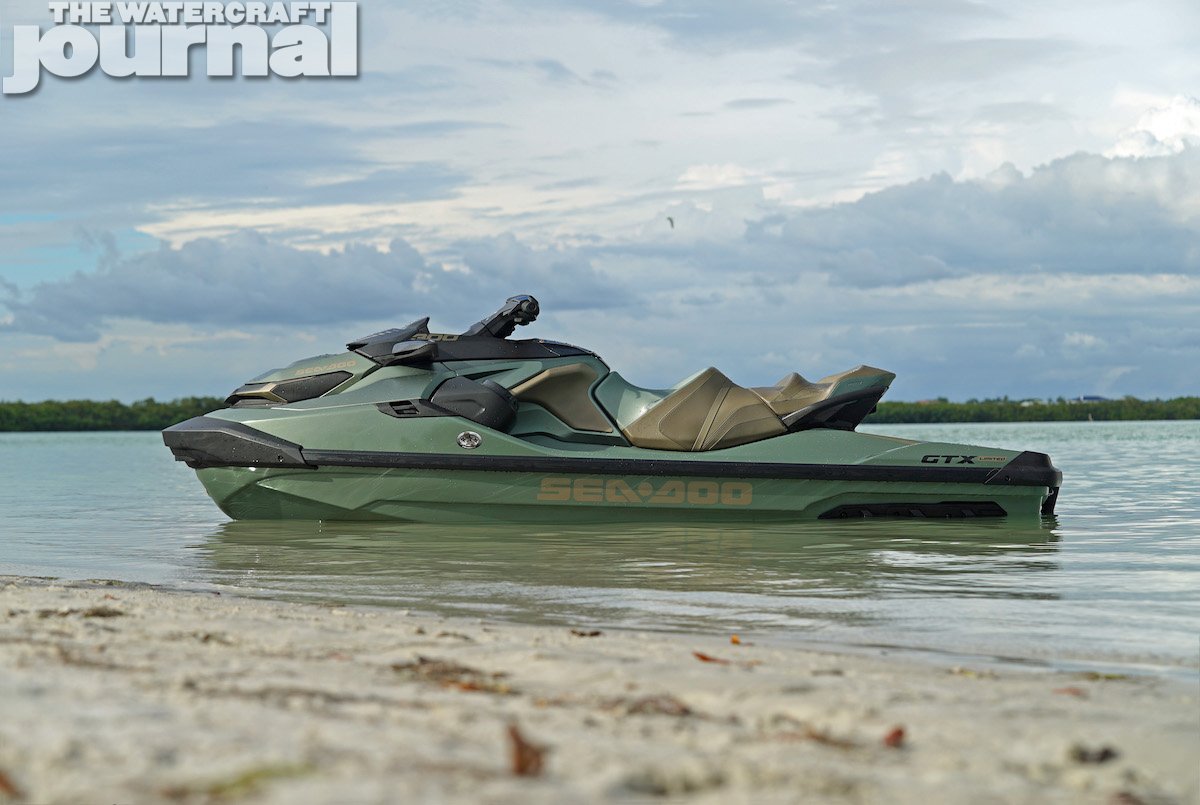
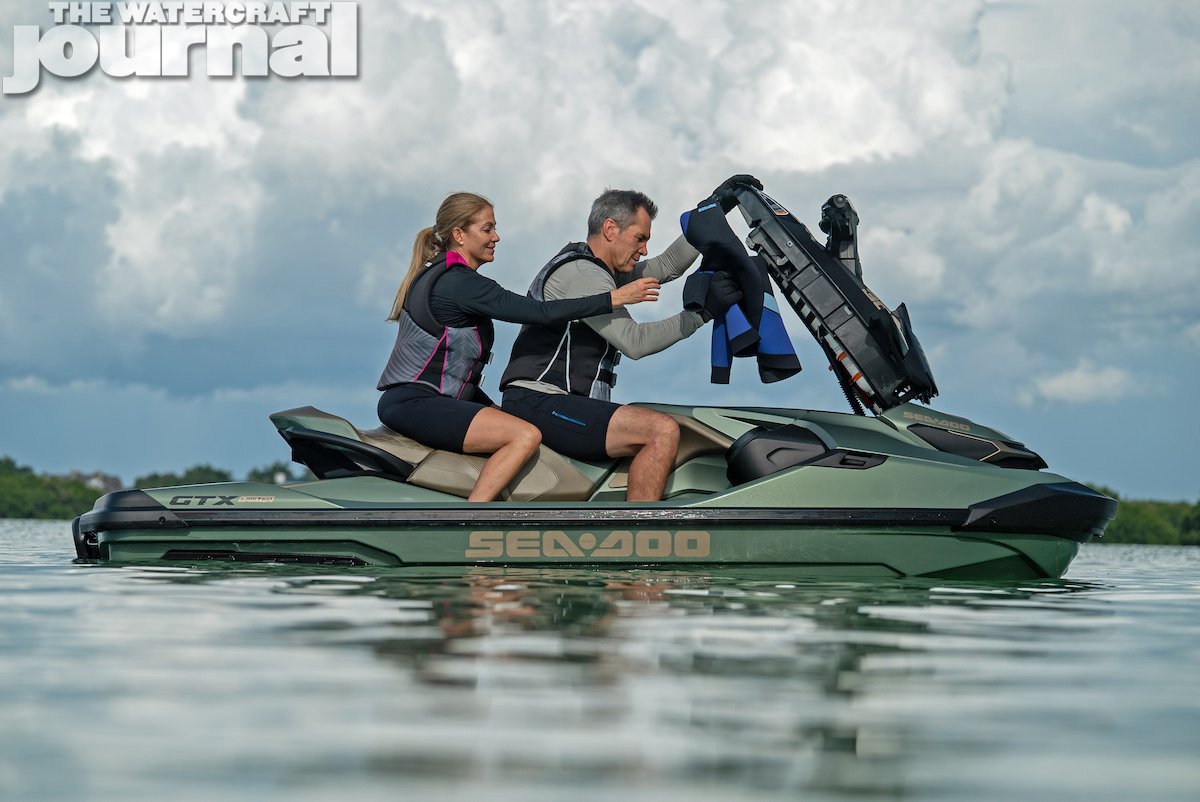
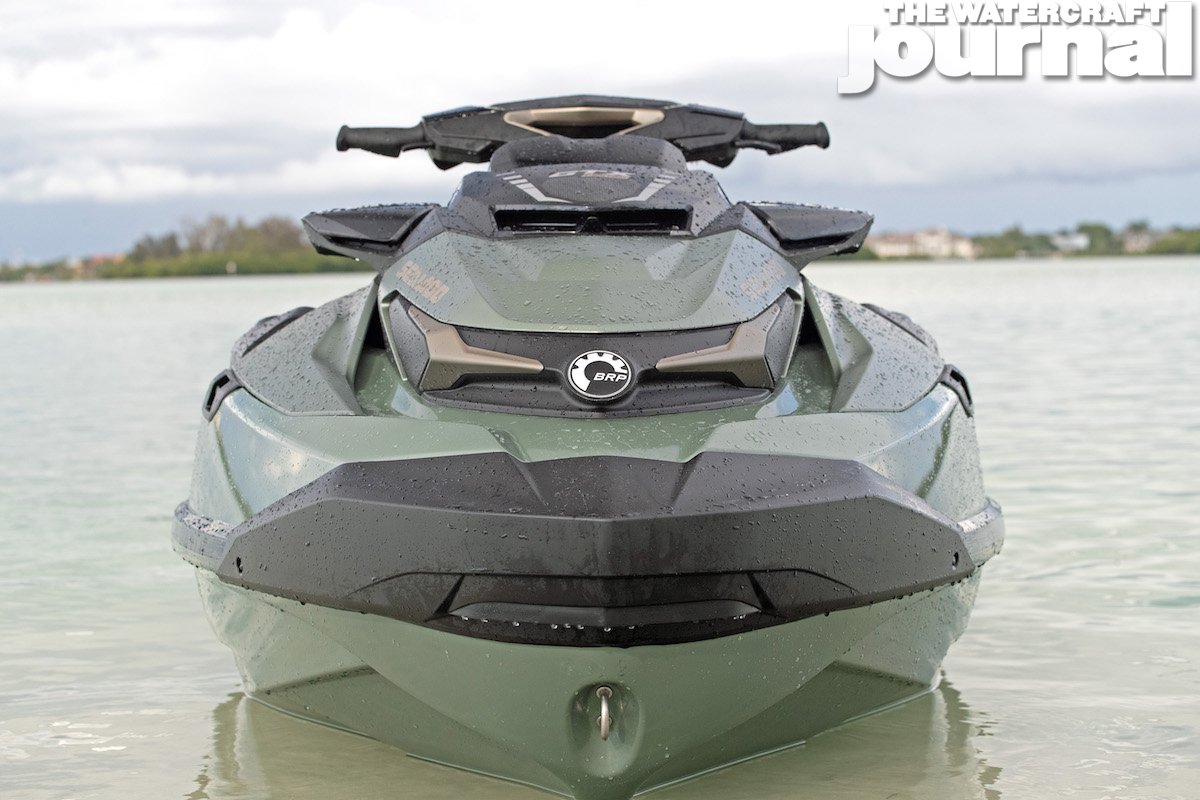
All three iterations – the naturally-aspirated GTX 170 (MSRP $13,399), the supercharged GTX 230 (MSRP $14,399) and the everything-but-an-X-Series GTX 300 (MSRP $16,099) can be dutifully equipped with enough options to make a luxury car blush. But it’s the new GTX Limited 300 (MSRP $18,299) that really gets the king’s ransom with standard features like iDF, the 7.8-inch full color LCD app-ready display, the organizer bins for its 25.3-gallon (96 L) central cargo compartment, and its Metallic Sage and Liquid Titanium coloring.
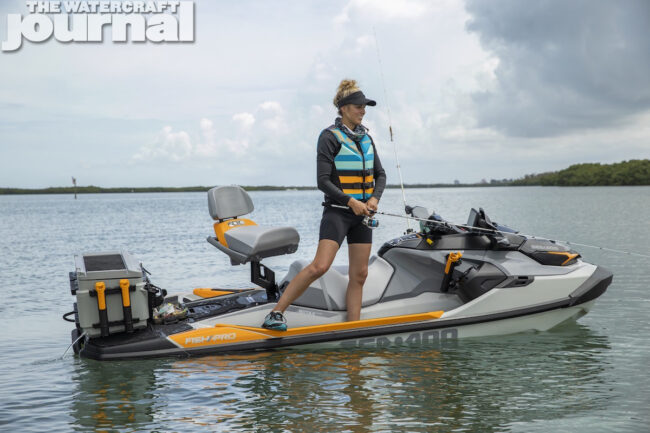
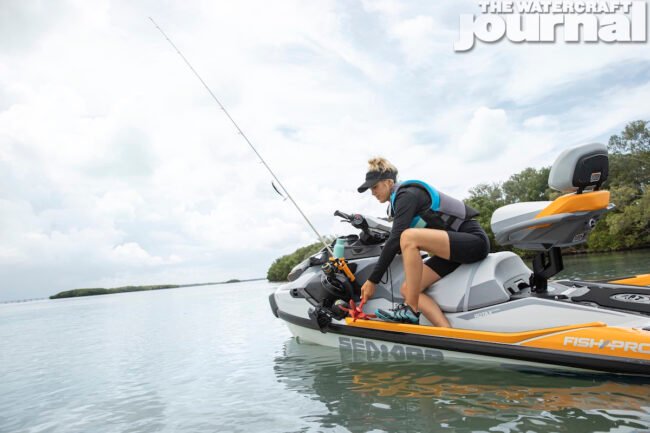
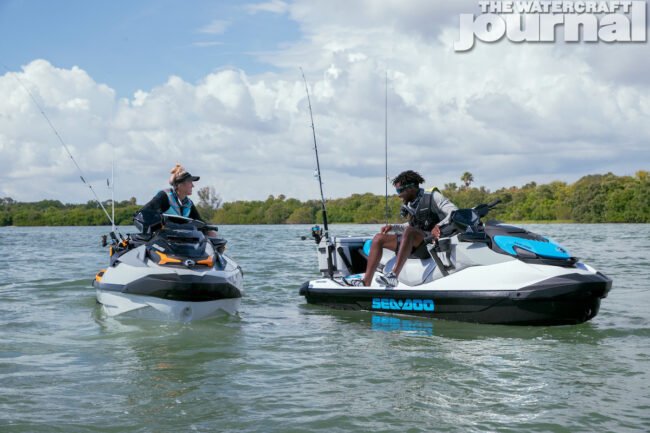
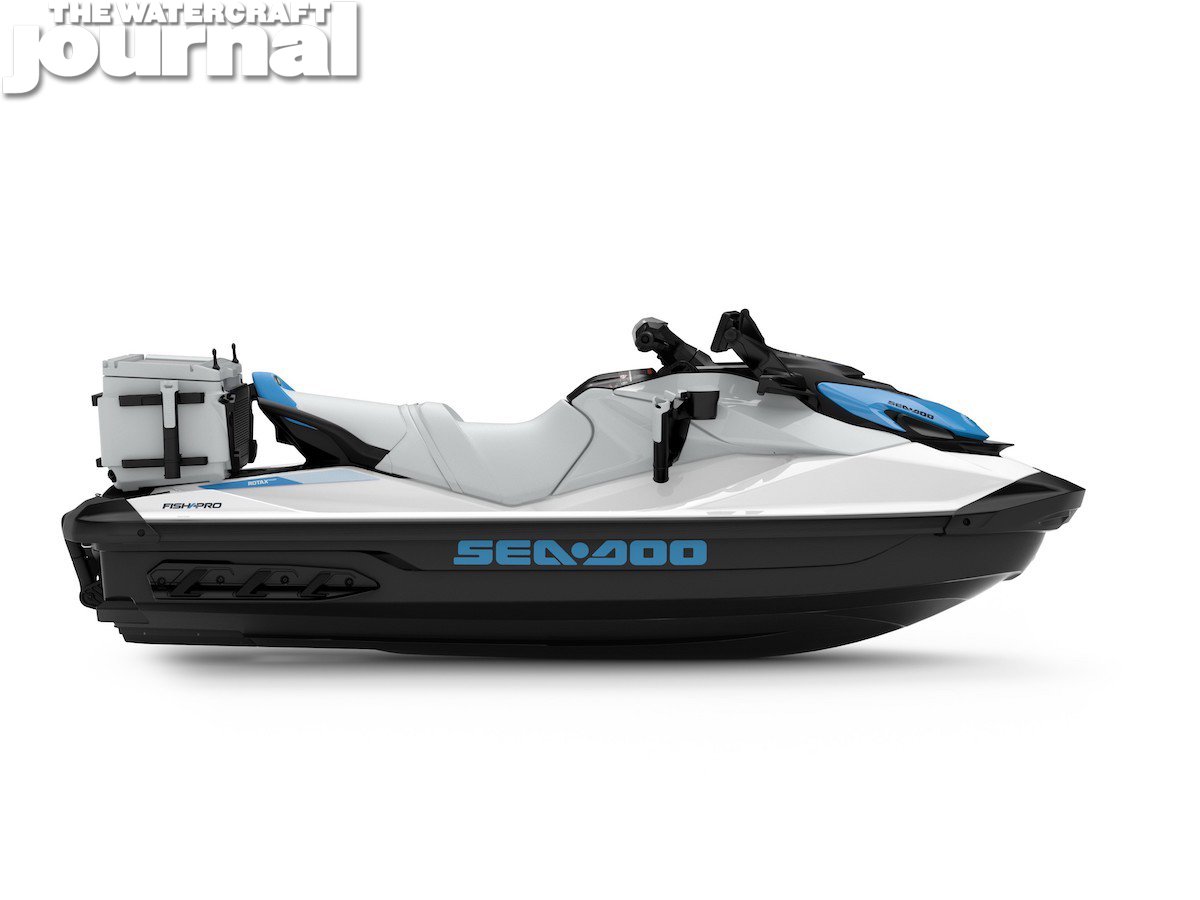
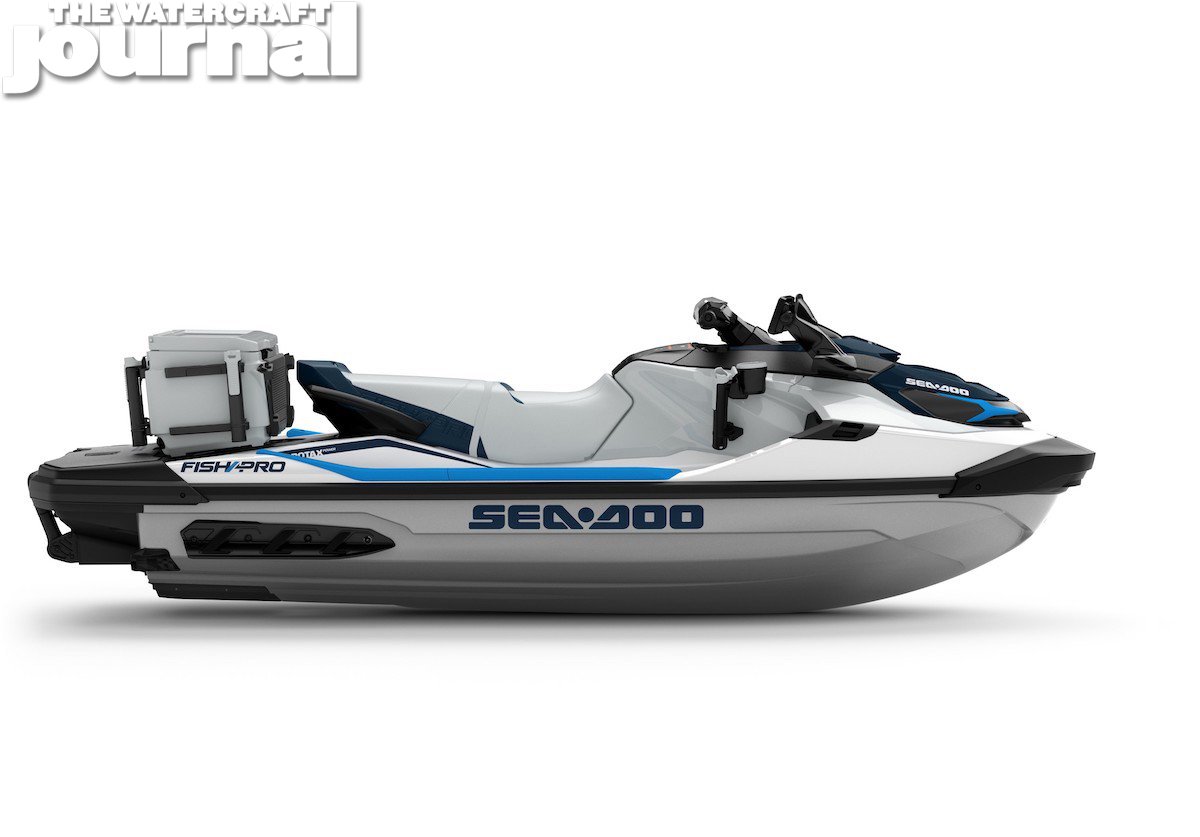
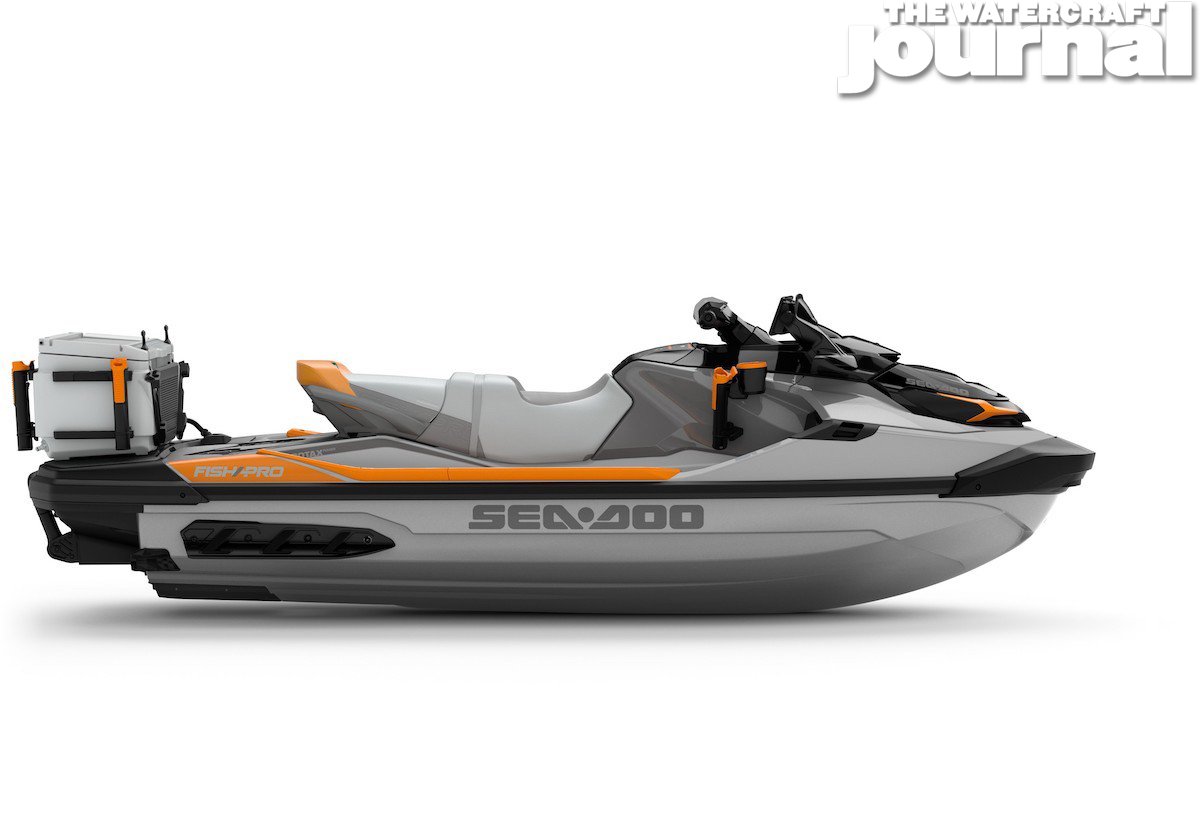
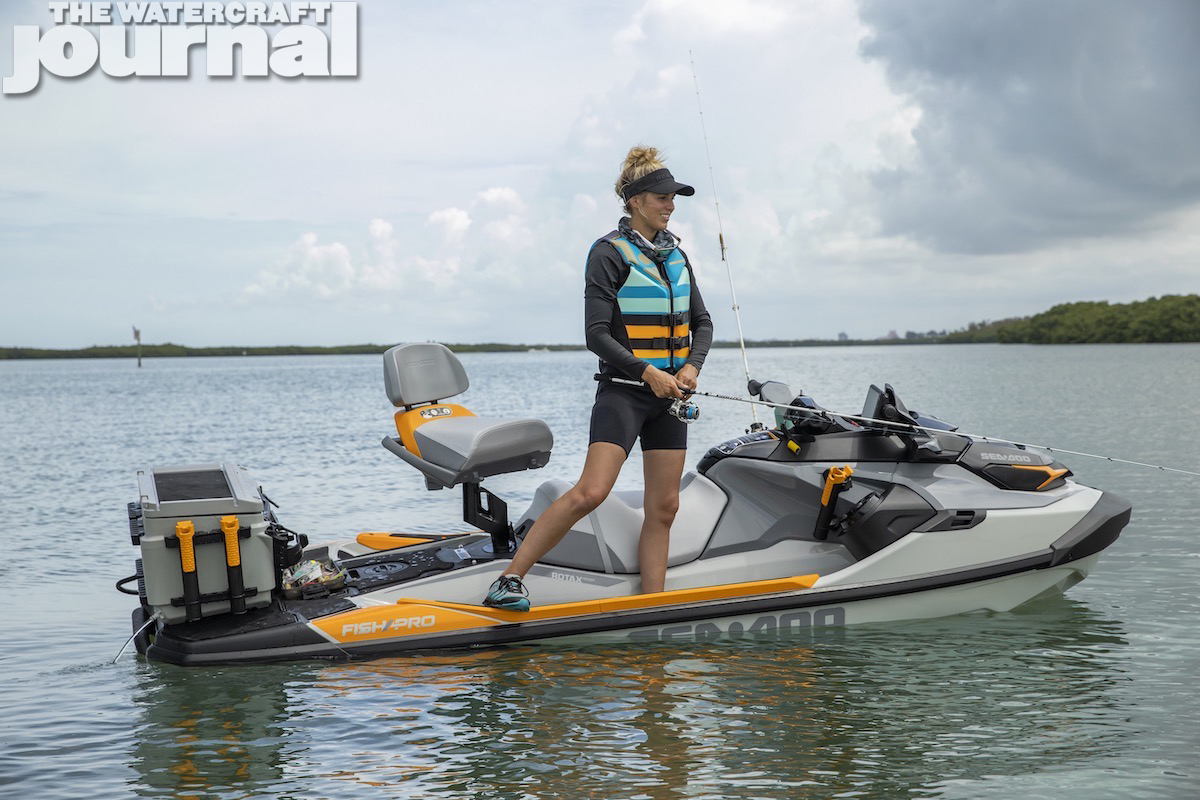
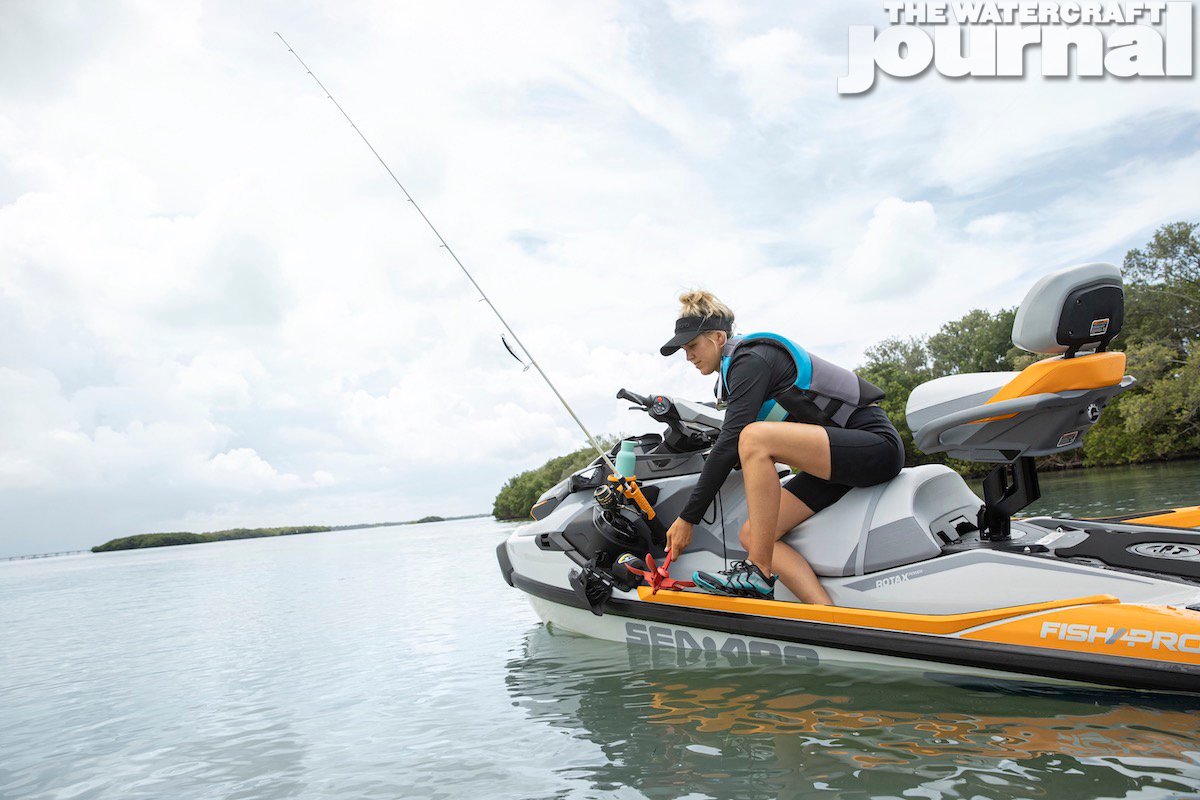
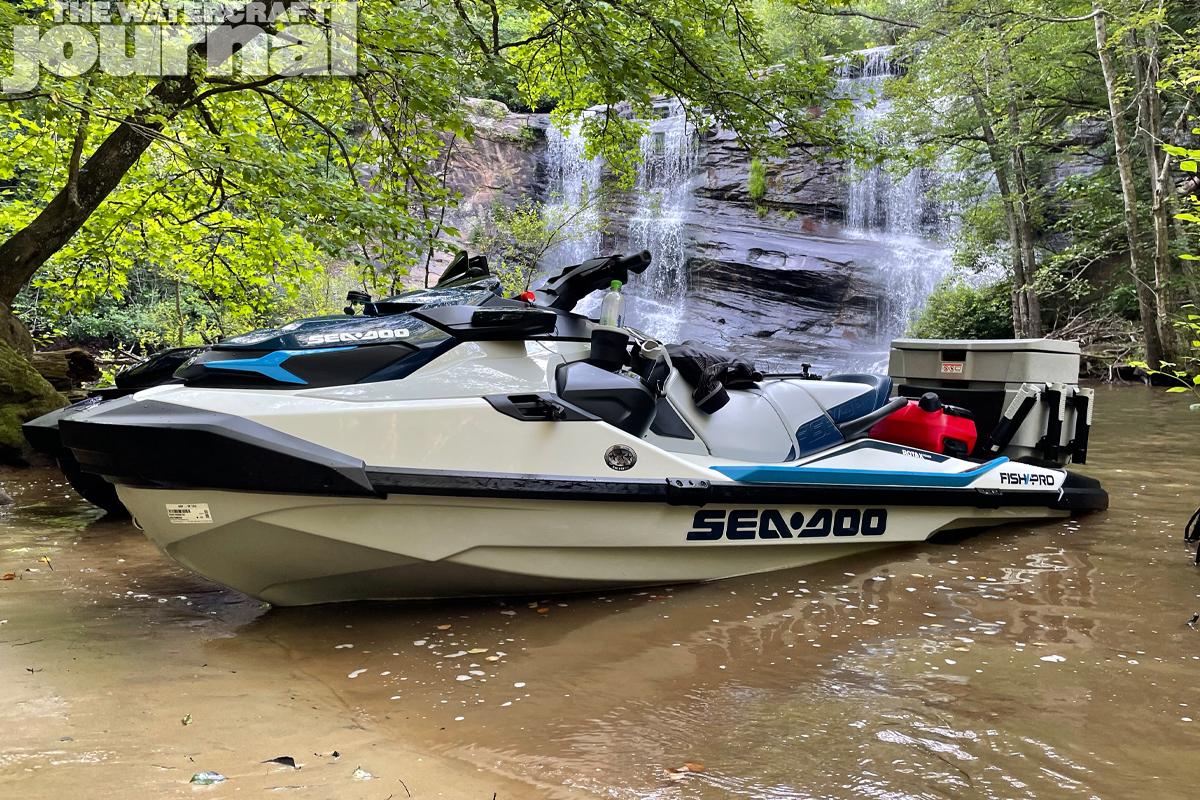
And in a normal world, that would be enough for most folks…but Sea-Doo isn’t like “most folks” and instead chose to create a whole segment from its single Fish Pro. Now there’s three levels of PWC fishing supremacy available to the enthusiast: the 2022 Fish Pro Scout 130 (MSRP $13,899) in White and Gulfstream Blue; the Fish Pro Sport 170 (MSRP $15,899) also in White and Gulfstream Blue; and the top-of-the-line Fish Pro Trophy 170 ($17,799) in Shark Grey and Orange Crush.
Each of these comes standard with the iDF Intelligent Debris Free pump system, a 13.5-gallon cooler, a specially-designed Fishing Bench Seat, a unique “trolling mode” set into the Intelligent Throttle Control software allowing each units to toggle through trolling speeds up to 8mph; and a multifunctional Garmin ECHOMAP GPS & Fish Finder with accurate marine navigation, bright and clear display, mid-CHIRP technology, and more.
While the GTI-based Fish Pro Scout employs a Rotax 1630cc producing 130-horsepower, the larger ST3-based Fish Pro Sport 170 and Trophy 170 also include a few more features, namely angled gunwale footrests; front rod holders and cup holders; and an extended rear platform providing another 11.5 inches of length and a second set of LinQ attachment points. The Trophy 170 comes with all FishPro Sport 170 features, as well as a quick-connect live well and integrated washdown, an all-new Modular Swivel Seat, an anchoring system, a new advanced battery system, and the 7.8-inch full-color LCD display (optional).
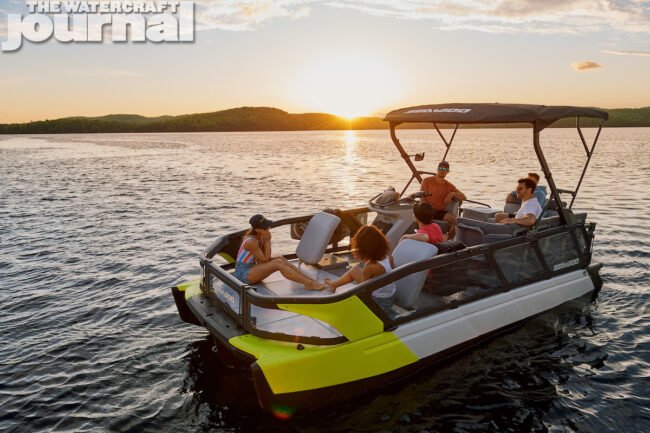
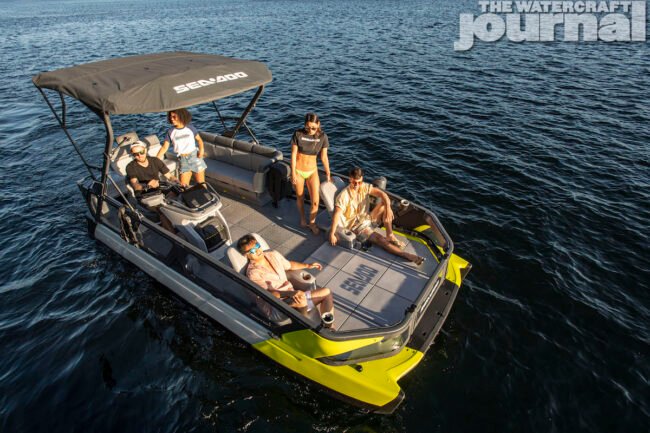
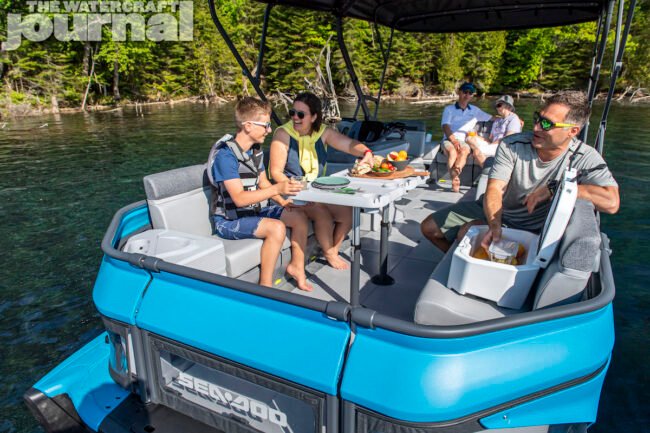
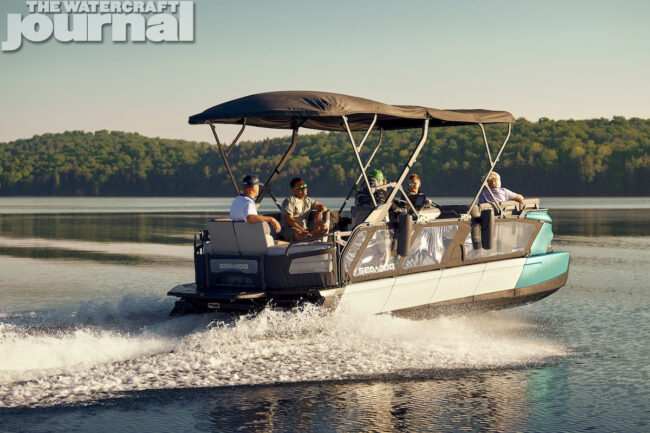
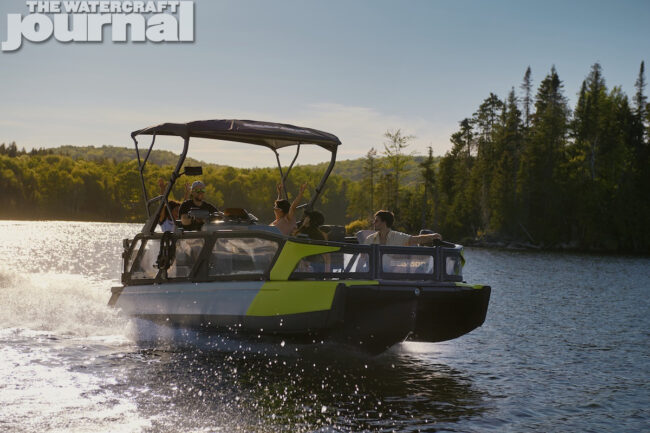
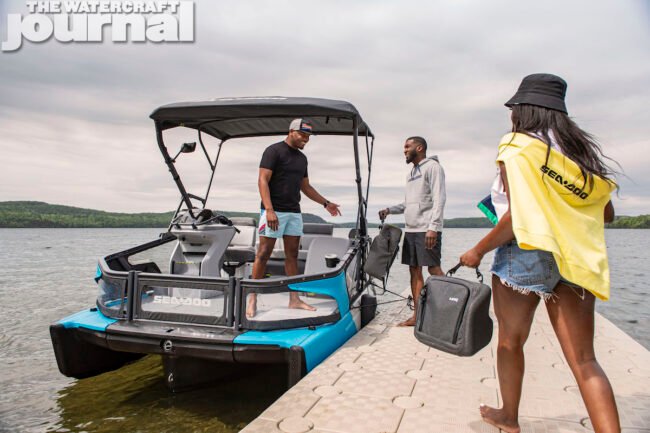
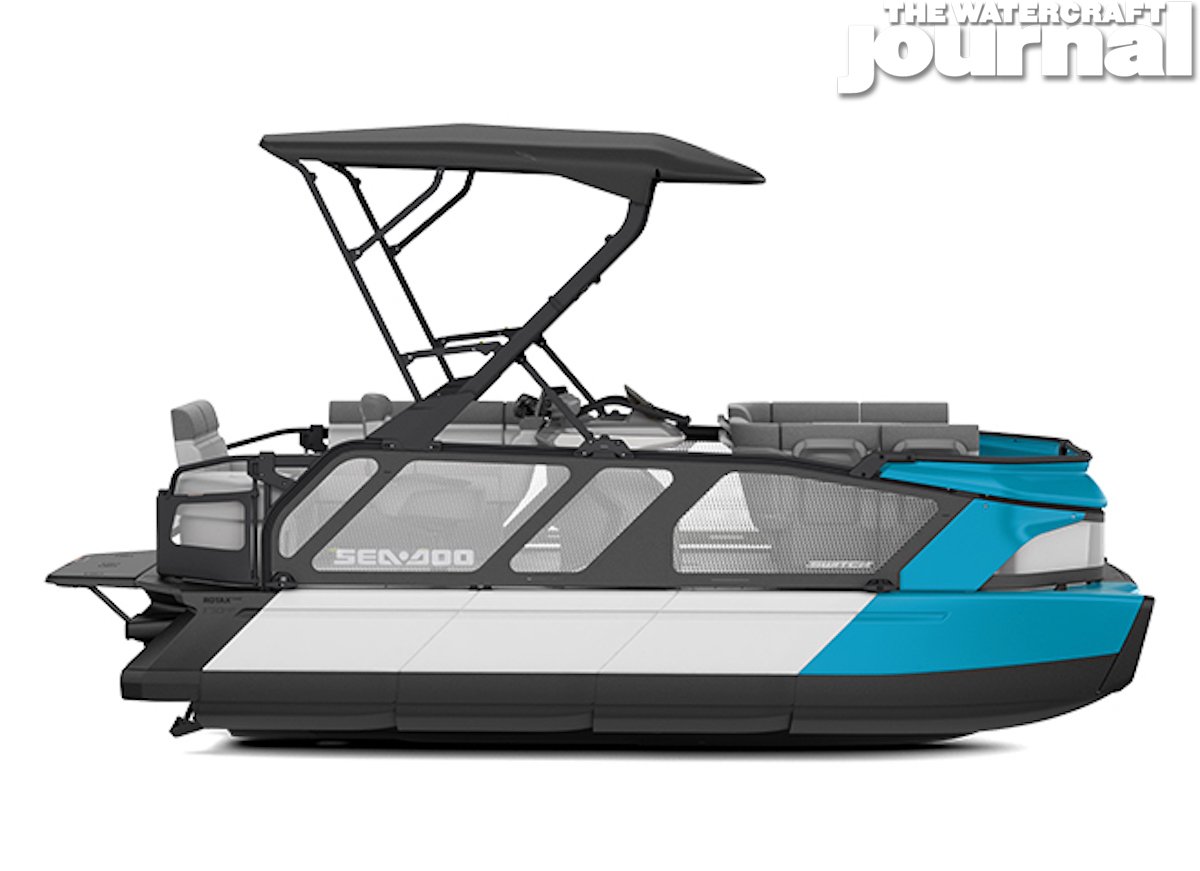
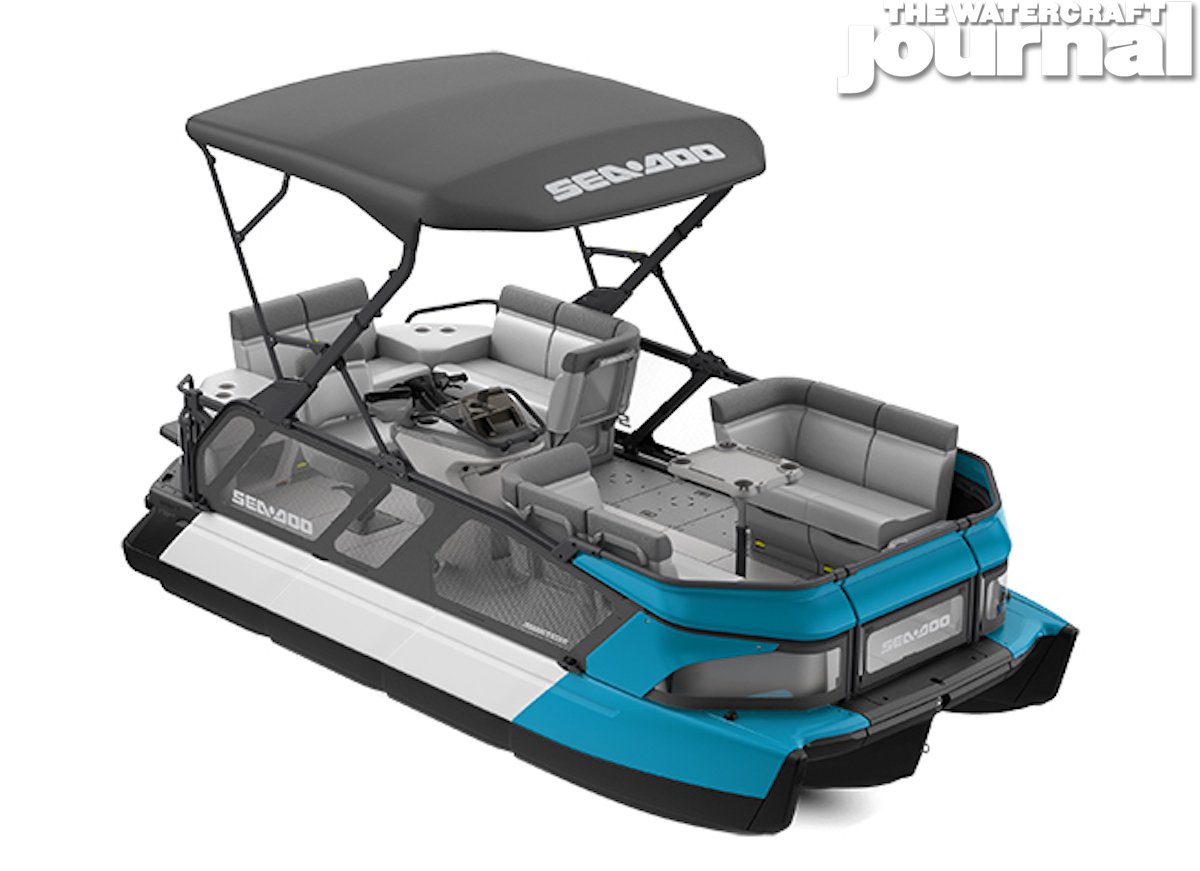
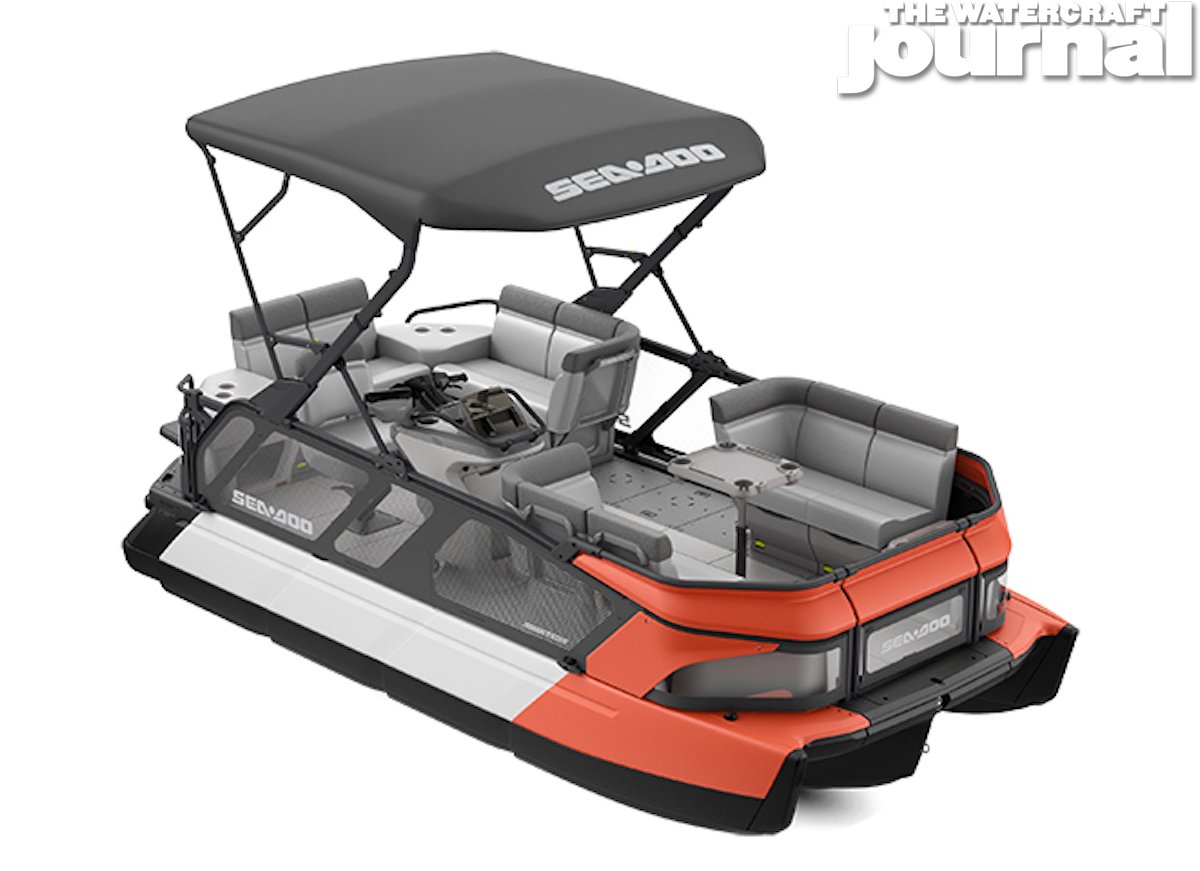
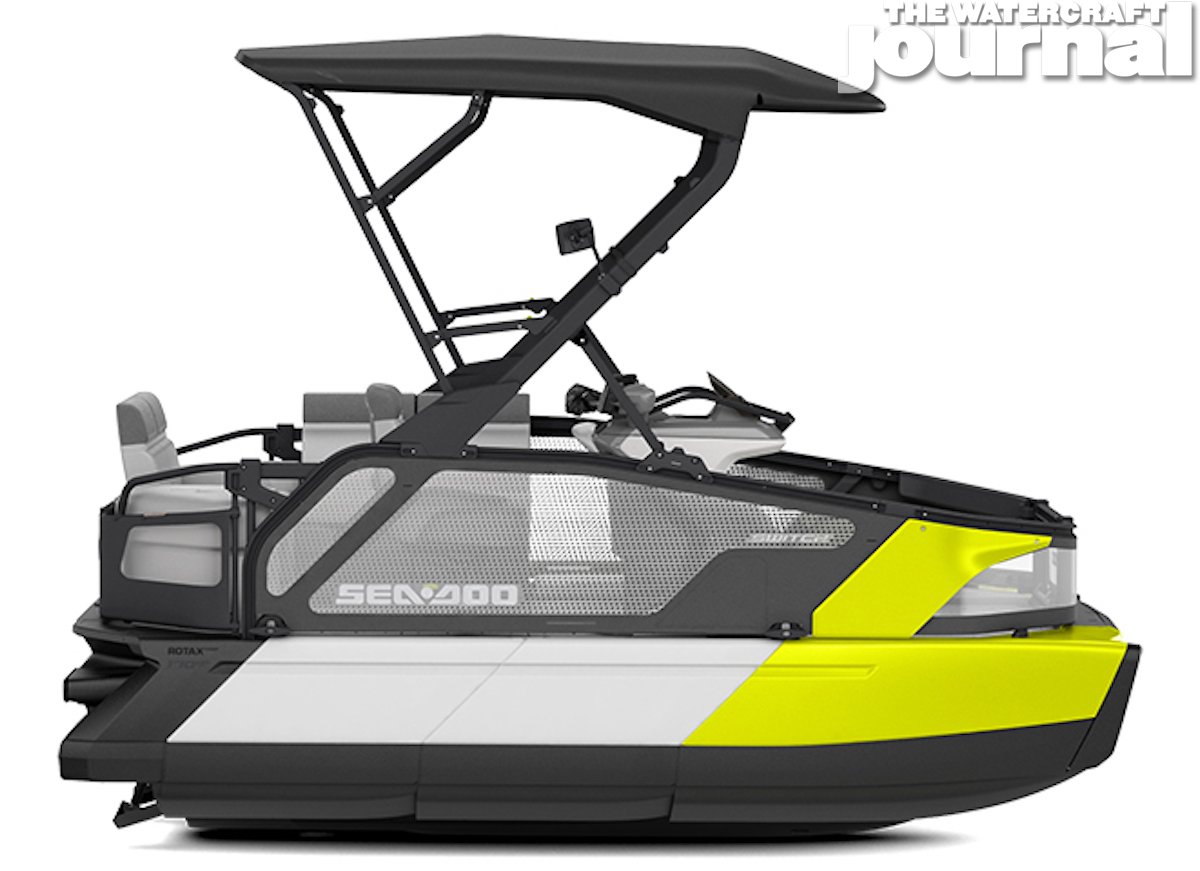
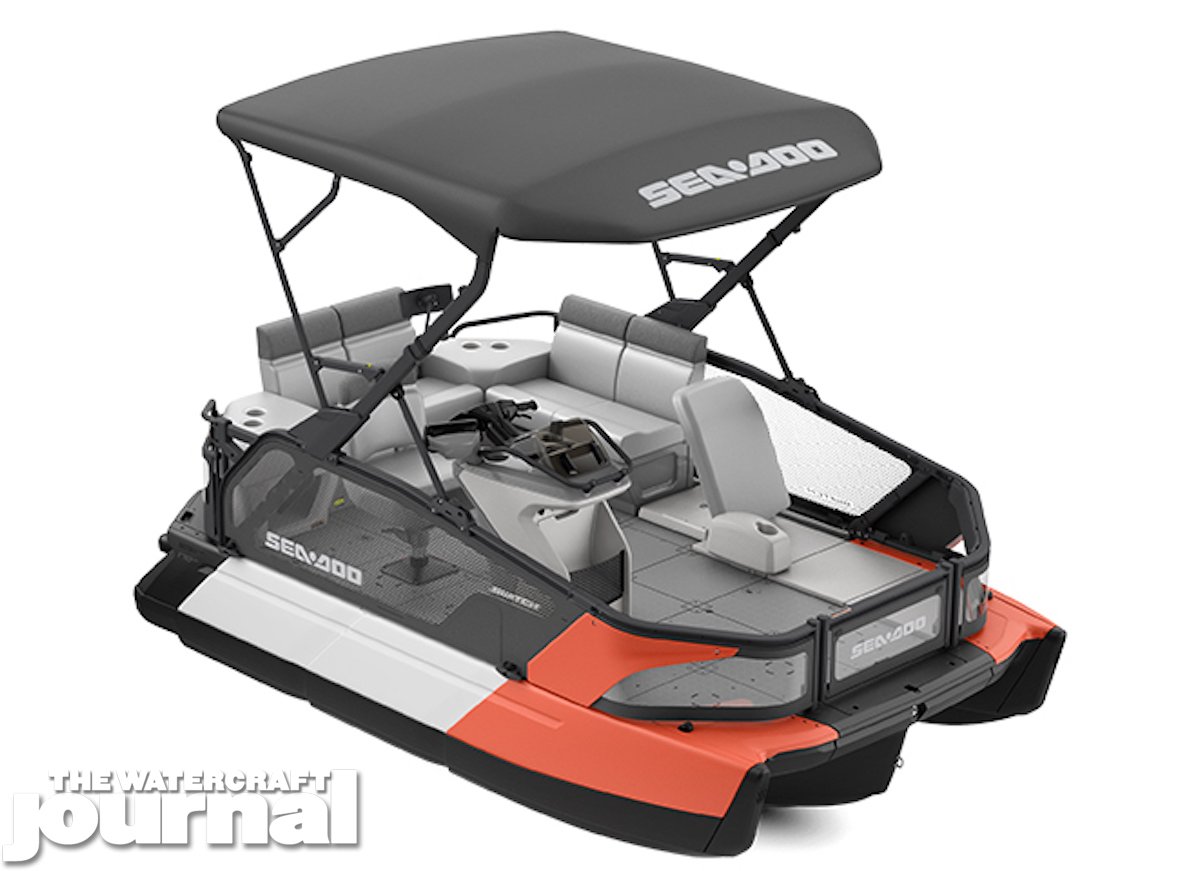
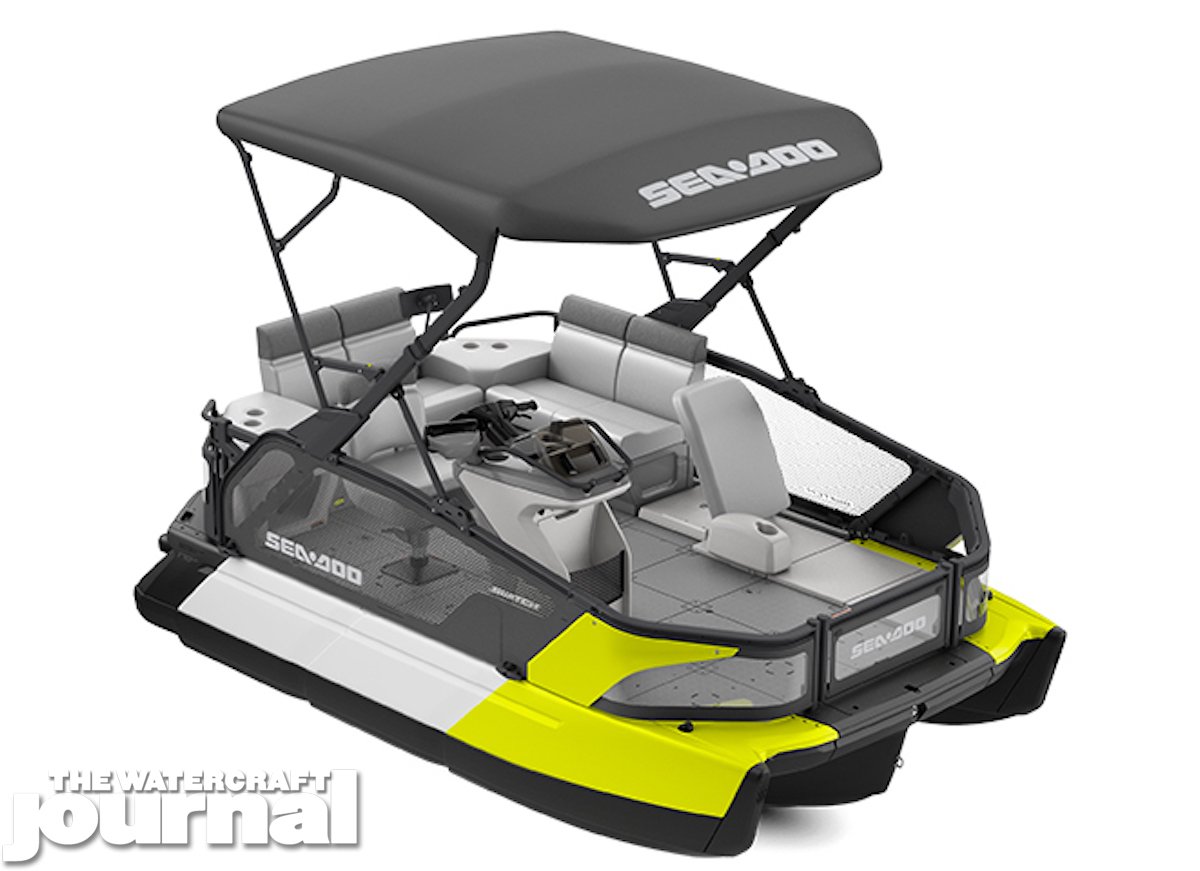
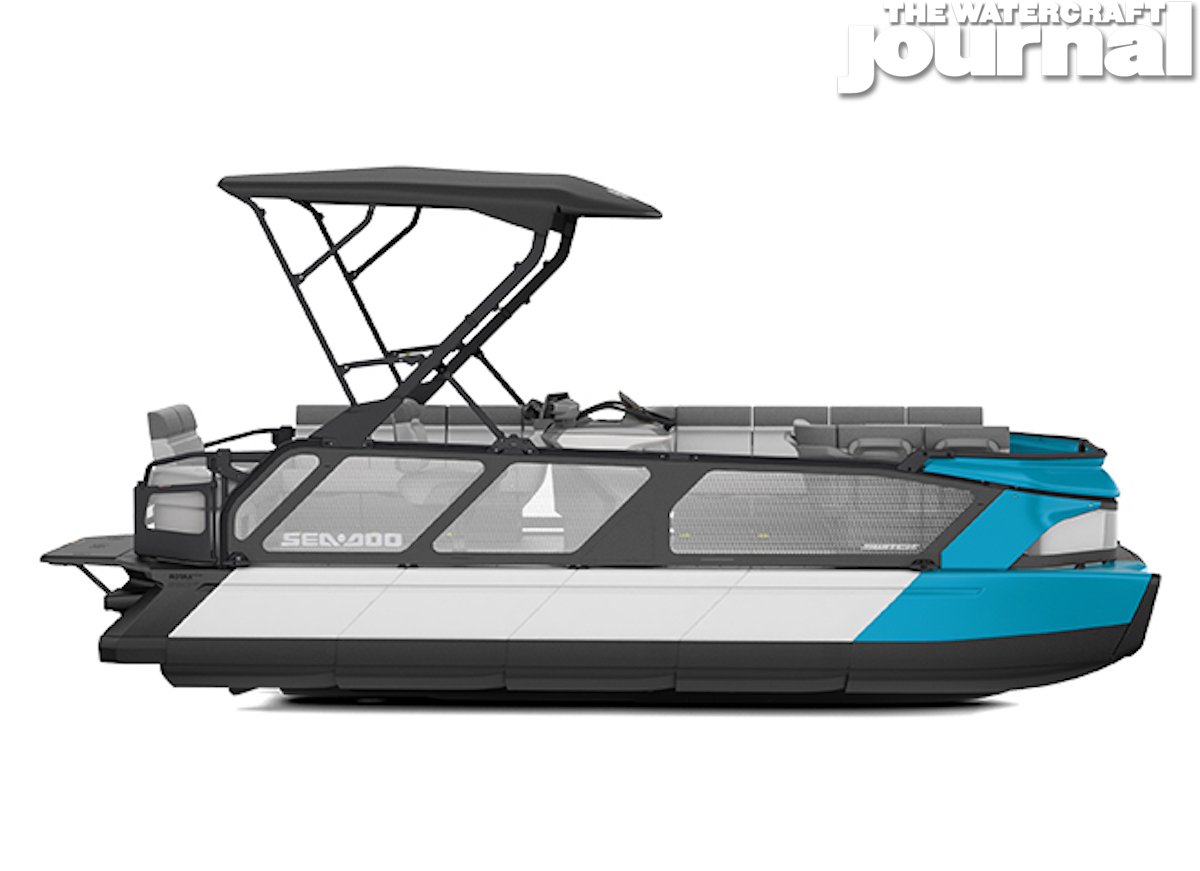
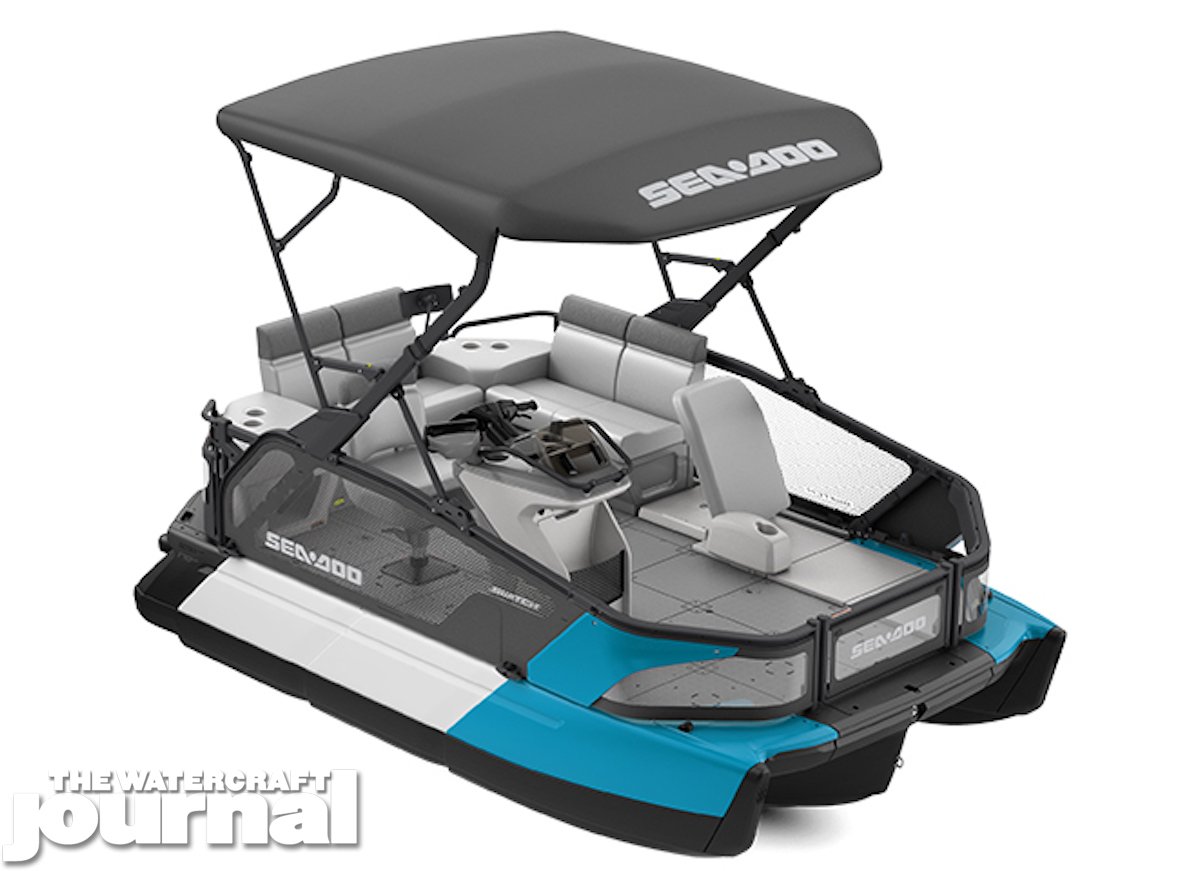
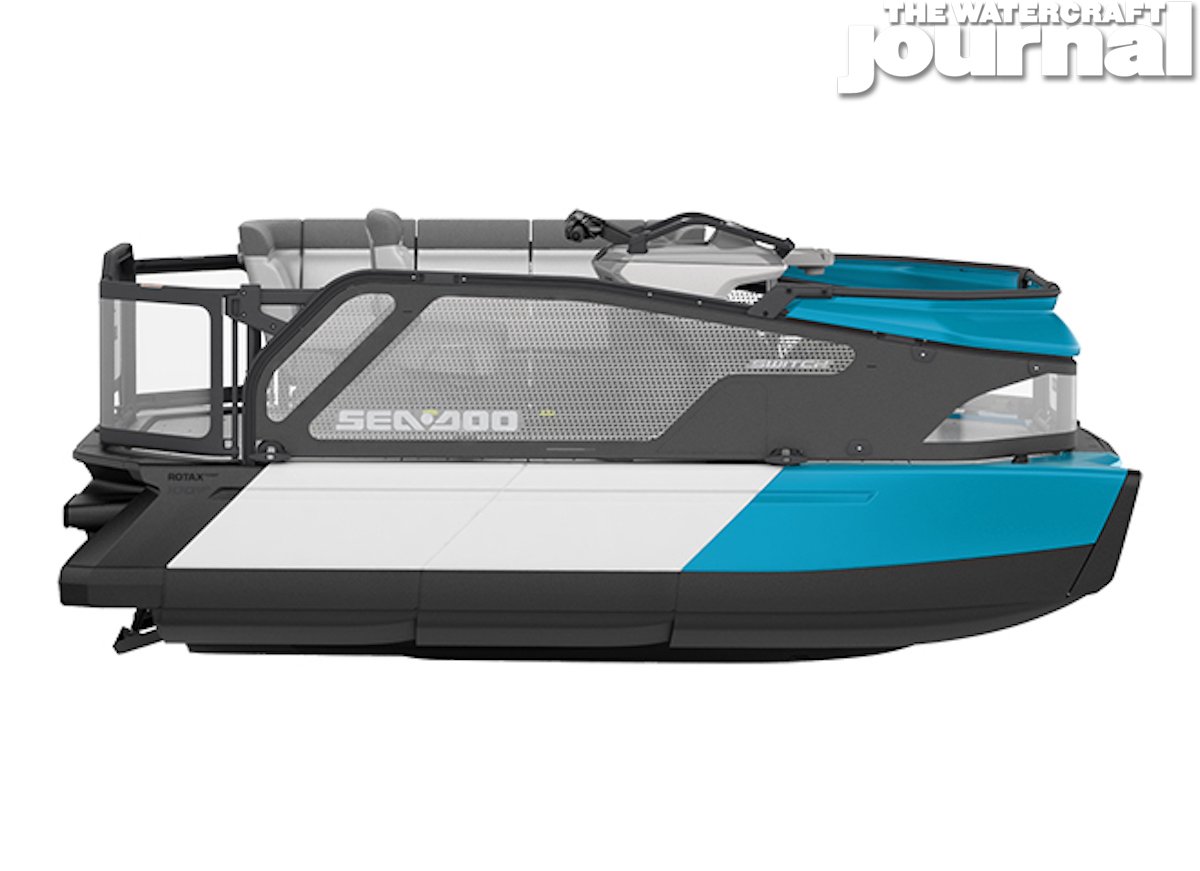
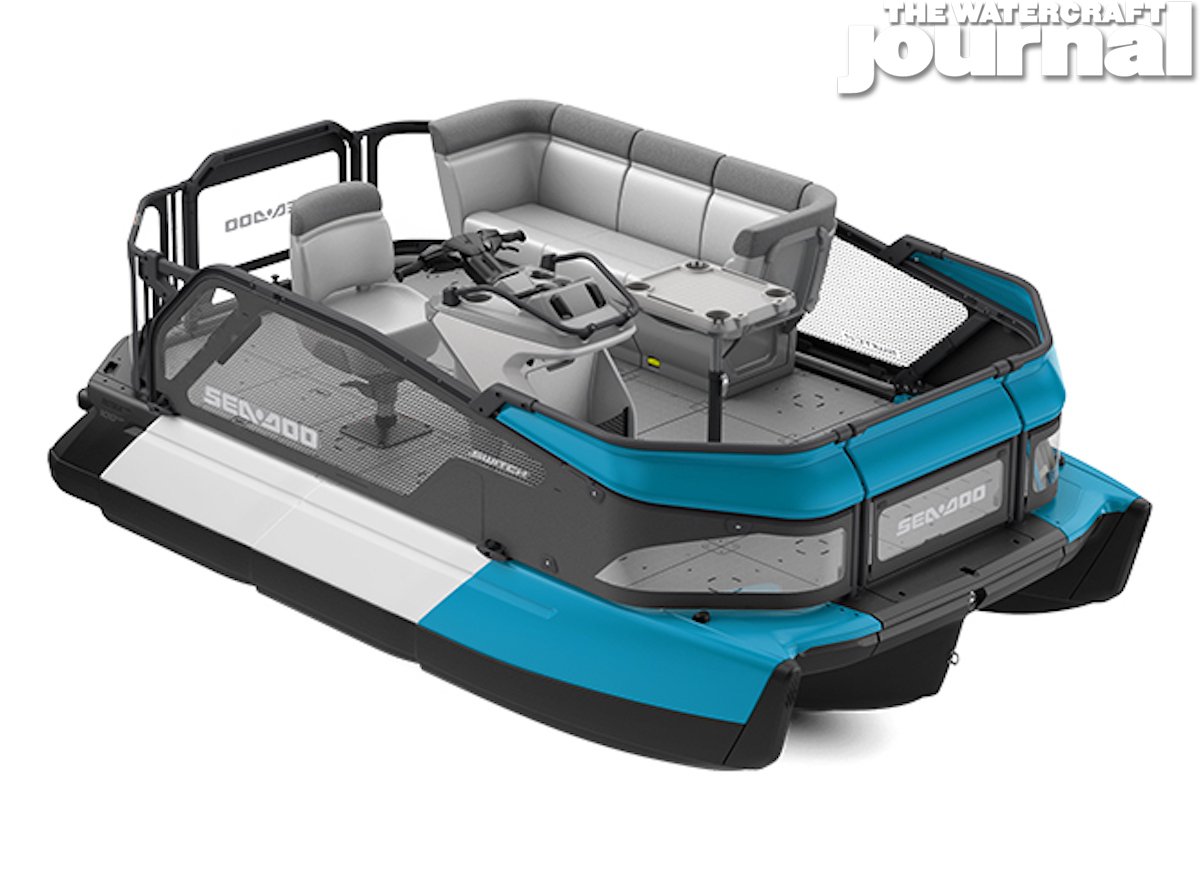
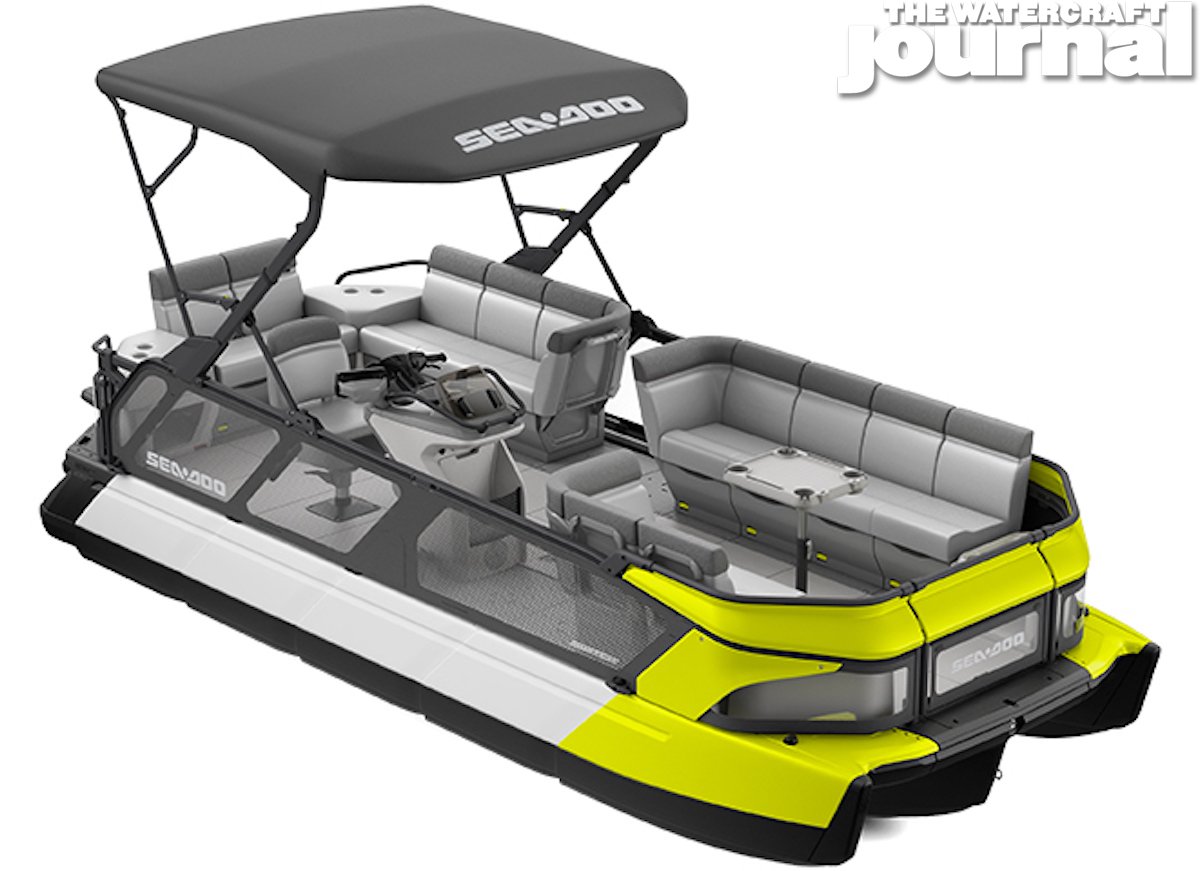
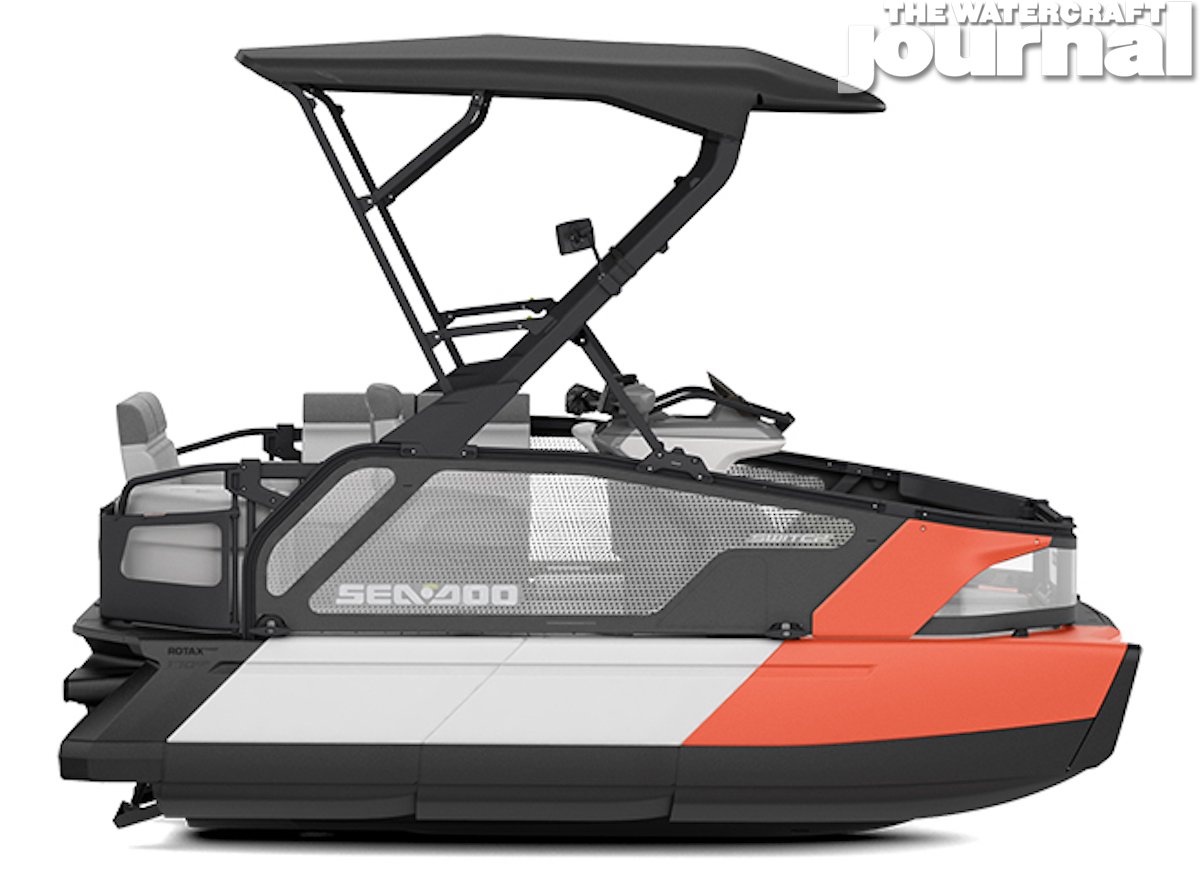
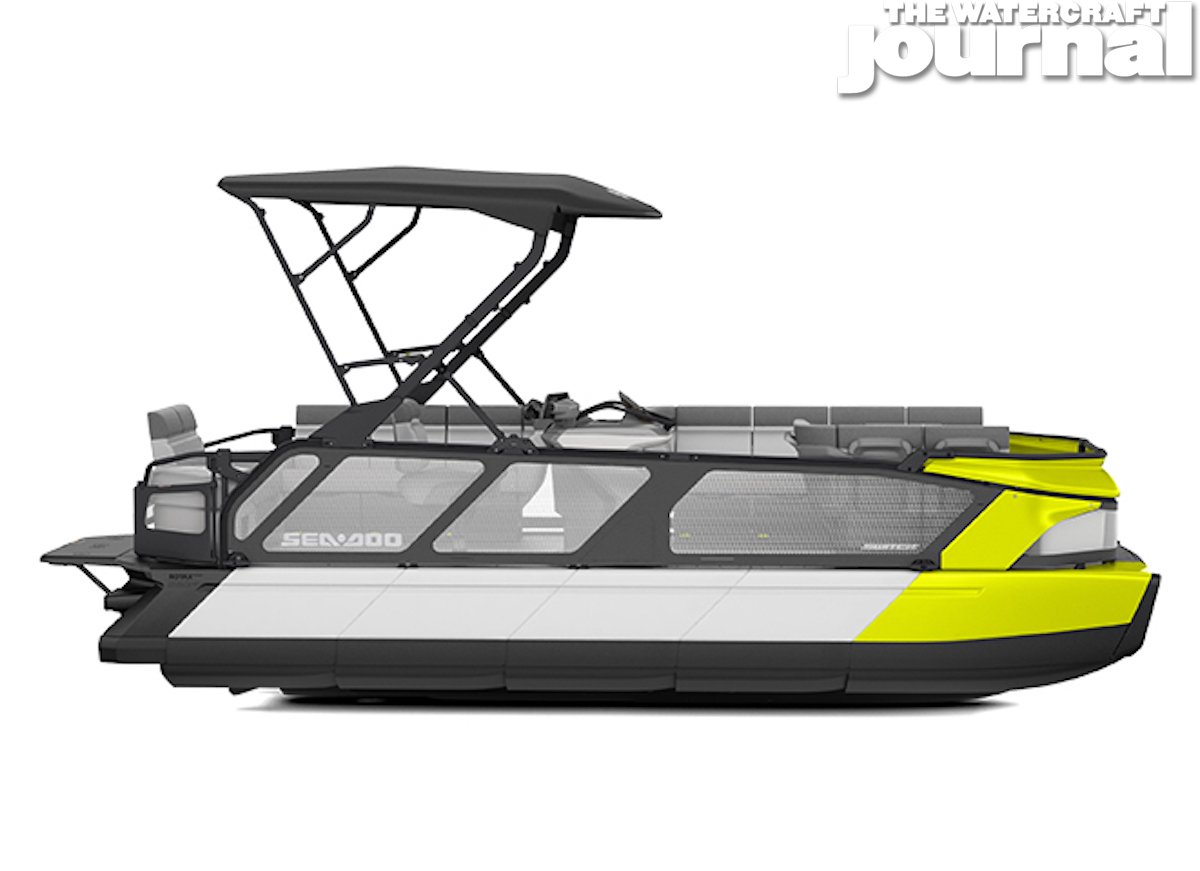
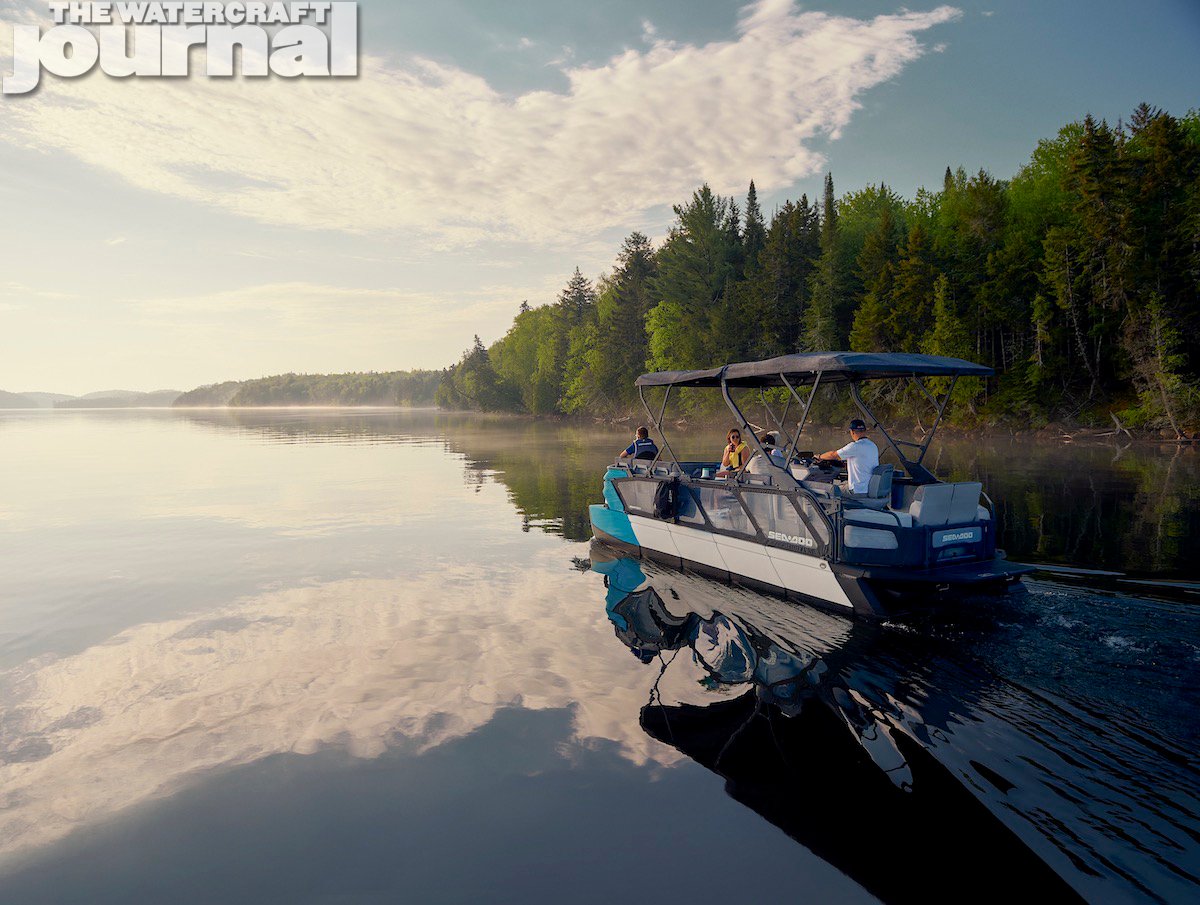
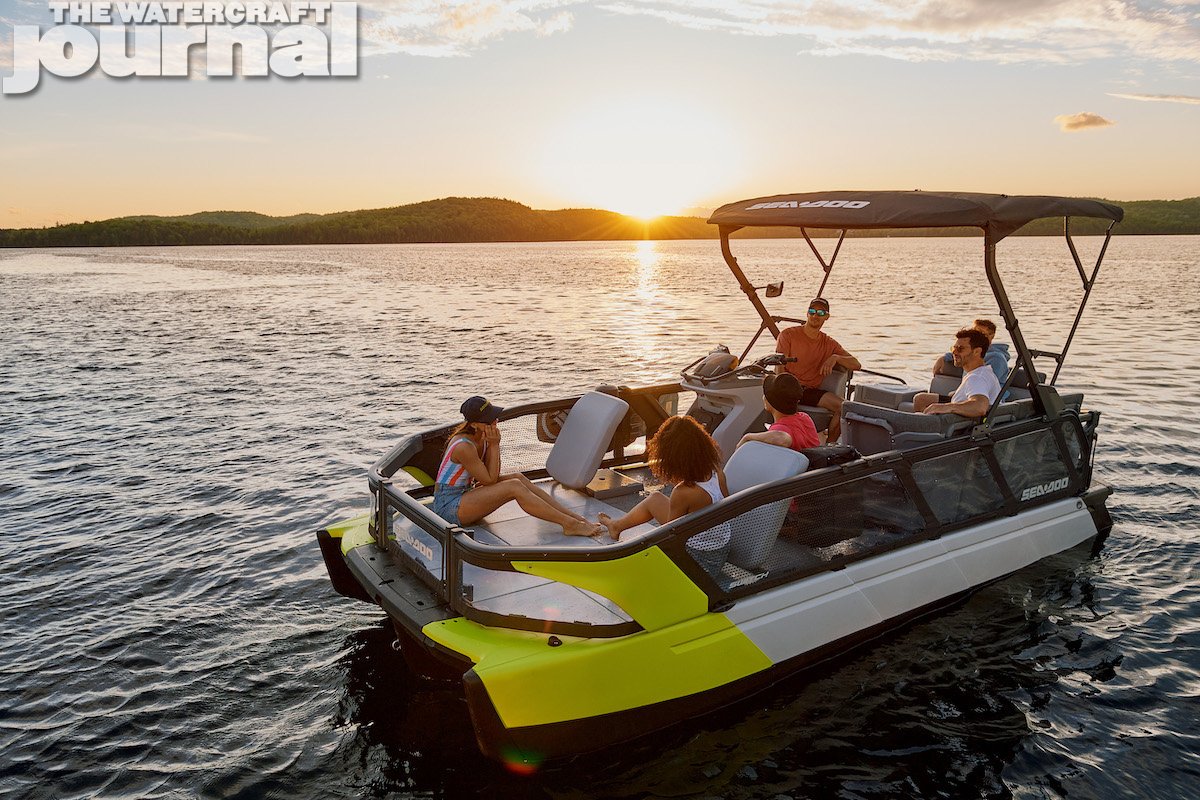
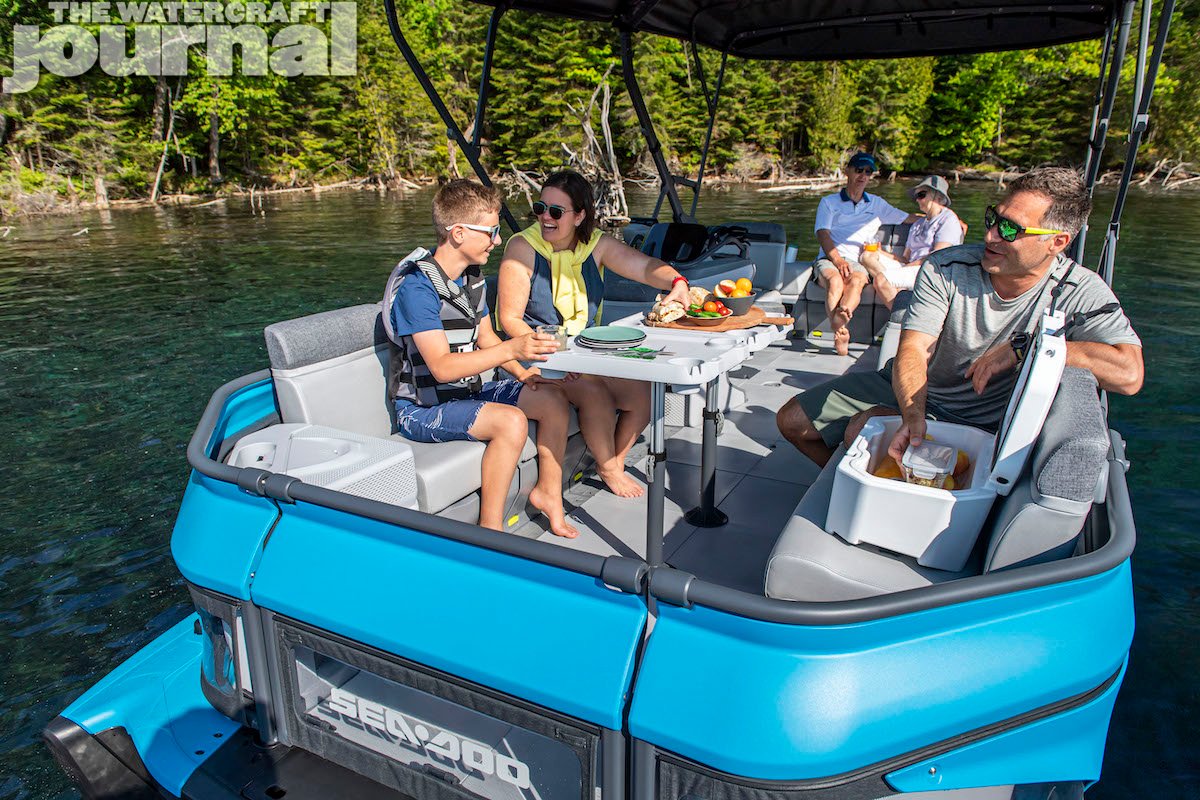
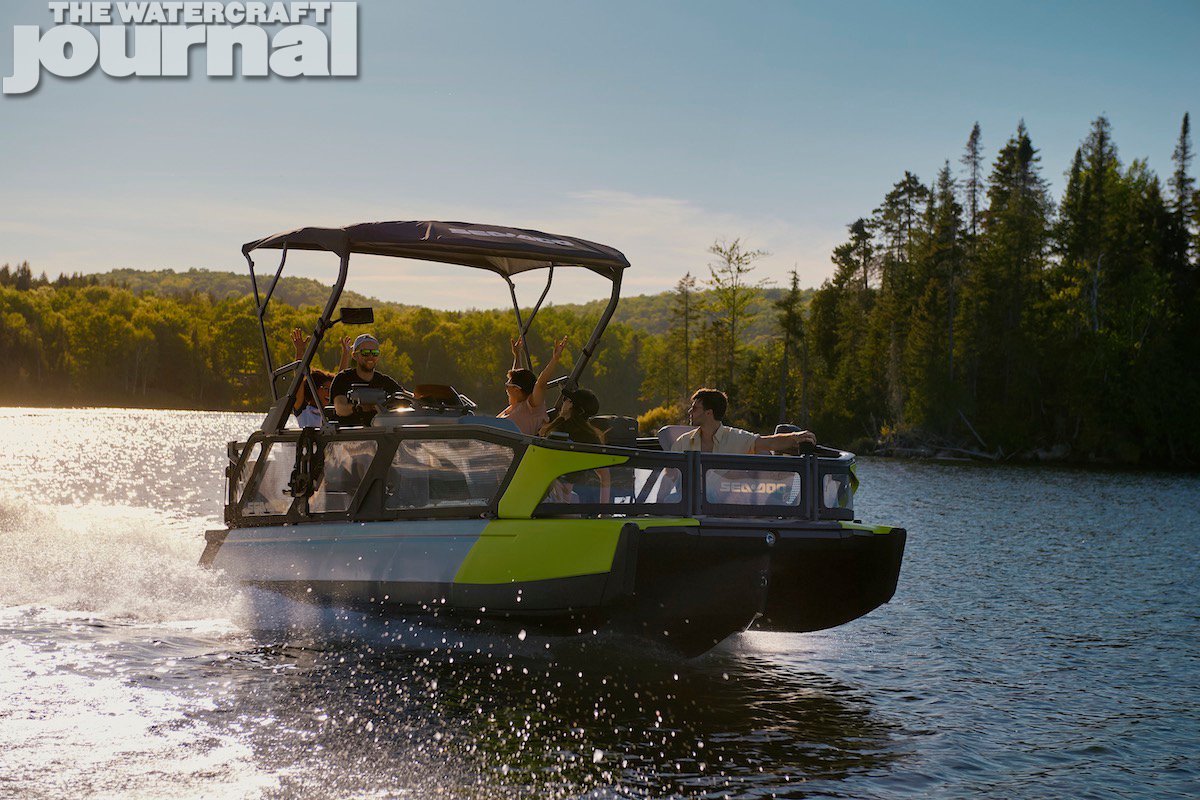
So we’re done right? That wraps it up? Nooope. Sea-Doo just rolled out its whole new segment of Switch Series of Sea-Doo pontoons. These jet-driven tri-hull pontoons offer platforms ranging from 13-footto 16, 18, 19 and 21-feet in length. Made using BRP’s Polytec2 material, the center hull encases the 1630cc ACE engine, producing either 100, 170 or 230-horsepower. At speed these vessel ride on the center keel, the outside pontoons acting like outriggers.
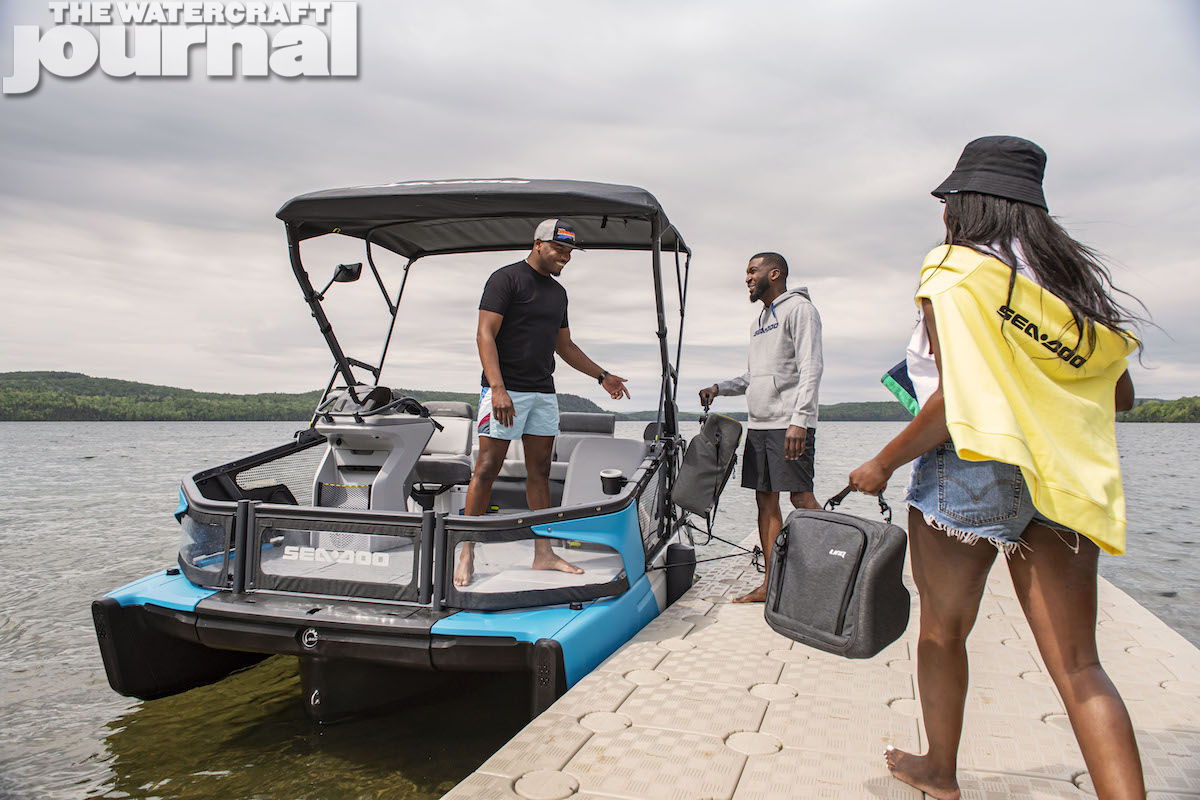
While this is super-cool in its own right, the ultra-adaptable modular deck allows for customized seating and accessory integration. Literally comparing it to Lego bricks, BRP demonstrated how the deck can be fitted with a variety of benches, tables, captains chairs and every LinQ accessory in the catalog – each securing firmly to the deck using the new 16-inch Modular LinQ Tiles. You literally can design and construct your own custom configuration – truly making your Switch pontoon your own.
Three tiers of the Switch are available: the base Switch (MSRP $17,999) comes in at either 13, 16 or 18-feet in length, and produces 100-horsepower. The Switch Sport (MSRP $23,999) comes in at either 13, 18 or 21-feet in length, and can be optioned with either 170 or 230-horsepower, and comes equipped with a quick-attach inflatable holder for tube storage, rearview mirror and Sea-Doo exclusive Ski Mode; available in either Caribbean Blue, Neon Yellow, Coral Blast. Lastly, the Switch Cruise package “takes the party up several notches” with included additions like a collapsible Bimini top, swim platform, sound system, navigation and more seating and tables.
The Cruise (MSRP $26,999) is available in either 18 or 21-feet lengths, as well as a choice of powertrains: 100-horsepower (18-feet), 170-horsepower (18 and 21-feet), and 230-horsepower (21-feet); and is also available in Caribbean Blue, Neon Yellow, Coral Blast. It’s also important to note that every Switch pontoon is equipped with a Sea-Doo-inspired handlebar setup, which includes BRP’s iBRP brake-and-reverse system, iControl and innovative iDF pump-clearing system. Oh yeah, and every Switch comes with its own trailer if you were needing that extra nudge off of the fence.
All of that is to say that Sea-Doo was not planning on resting on its laurels any time soon. Rapidly expanding its Fish Pro line into a series of three machines, integrating advanced infotainment systems (and the GO! phone app) into a wider selection of runabouts and of course, flipping the recreation pontoon boat market on its ear seems to be “all in a day’s work” for Sea-Doo.
Please see the complete photo gallery below. All new product videos are beneath:
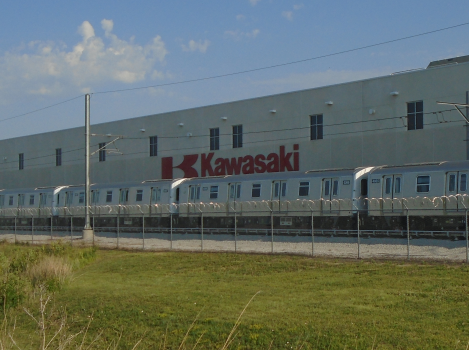
As originally reported by KLIN News Talk, Kawasaki Motors Manufacturing has announced that they will spend an estimated $200 million to expand production for their consumer products division. This capital investment will allow them to expand the assembly, paint, and welding lines along with the general assembly of Kawasaki consumer products.
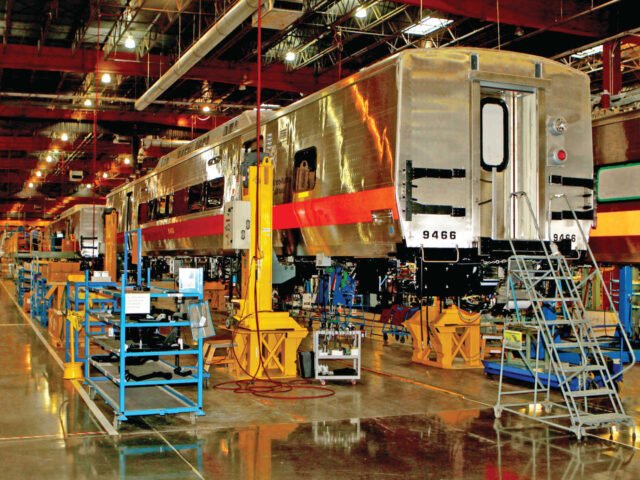
Due to the current growing market after the effects of COVID-19, and to stay competitive in their market, Kawasaki plans to use this capital to not only automate certain aspects of production, they also plan to add over 550 full-time employees that will support this expansion. Along with the expansion of the consumer products division this expansion will also benefit the “Railcar 211 project.”
For those that are unaware, Kawasaki Motors Manufacturing Corp. USA not only manufactures JetSki’s ATVs, UTV’s, and motorcycles, but also manufactures subway cars for most of the United States’ Eastern cities. Kawasaki also added a sizable aerospace division in 2017 to manufacture cargo doors for Boeing’s 777X.
Currently, the Kawasaki motors manufacturing facility is located in Lincoln, Nebraska and contains approximately 2,400,000 square feet and employs over 2400 employees. With these capital investments expansion for the growing markets is definitely on the horizon.
I’m not gonna lie. I was really not feeling like going to the 3rd Annual Belly Buster Ride. I mean, I wanted to go, but man, I was just wiped out. Having just made made the 11-hour drive home from the 2021 Mudbug PWC Rally less than 4-days earlier, I kinda wanted a break.
Thankfully, the “Chattanooga Fish Pro” himself Michael Brandt wouldn’t let me back out. “C’mon man, it’ll be fun,” he promised. I knew he was right but I was dragging my feet. “Drive down to the shop,” he suggested. “We’ll load your ski onto my trailer and I’ll drive the rest of the way. You can sleep. I don’t care.”
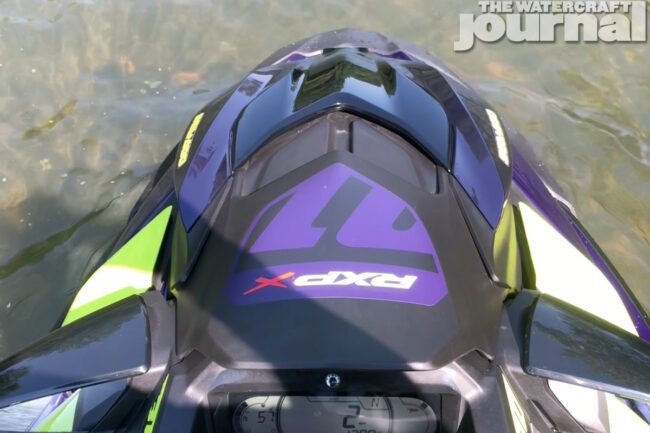
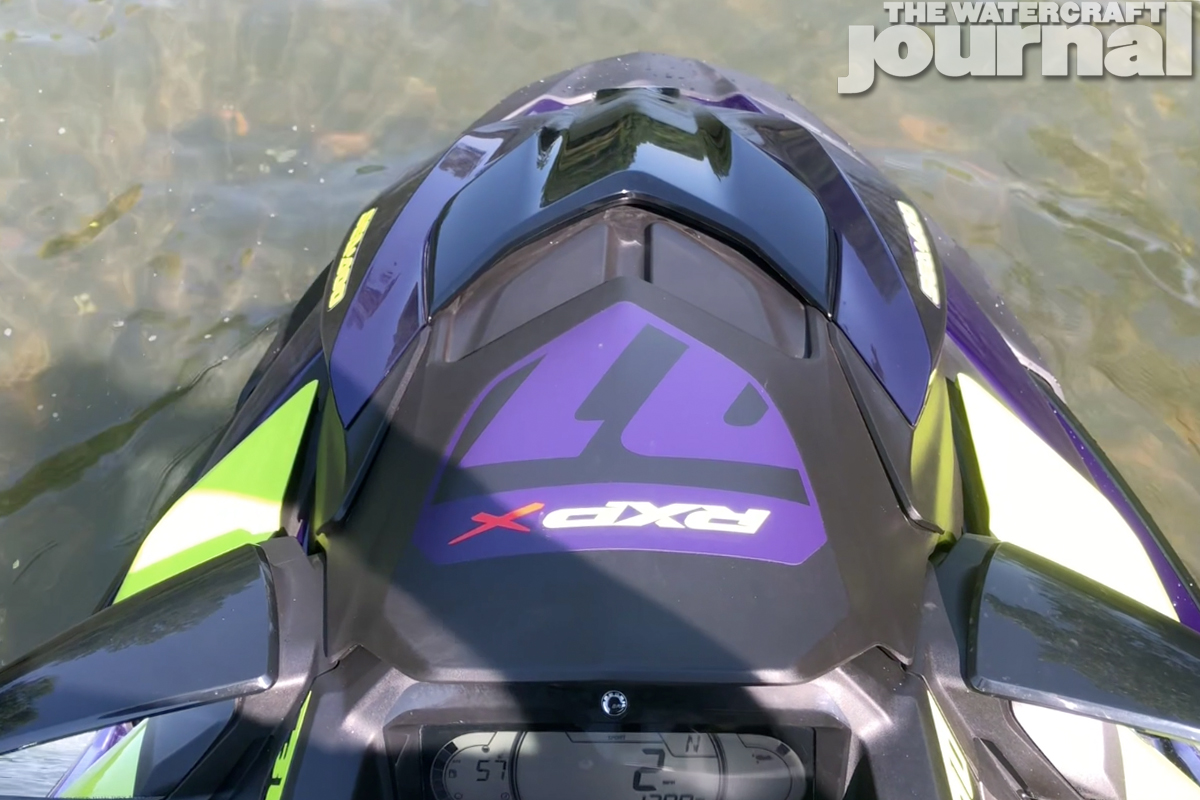
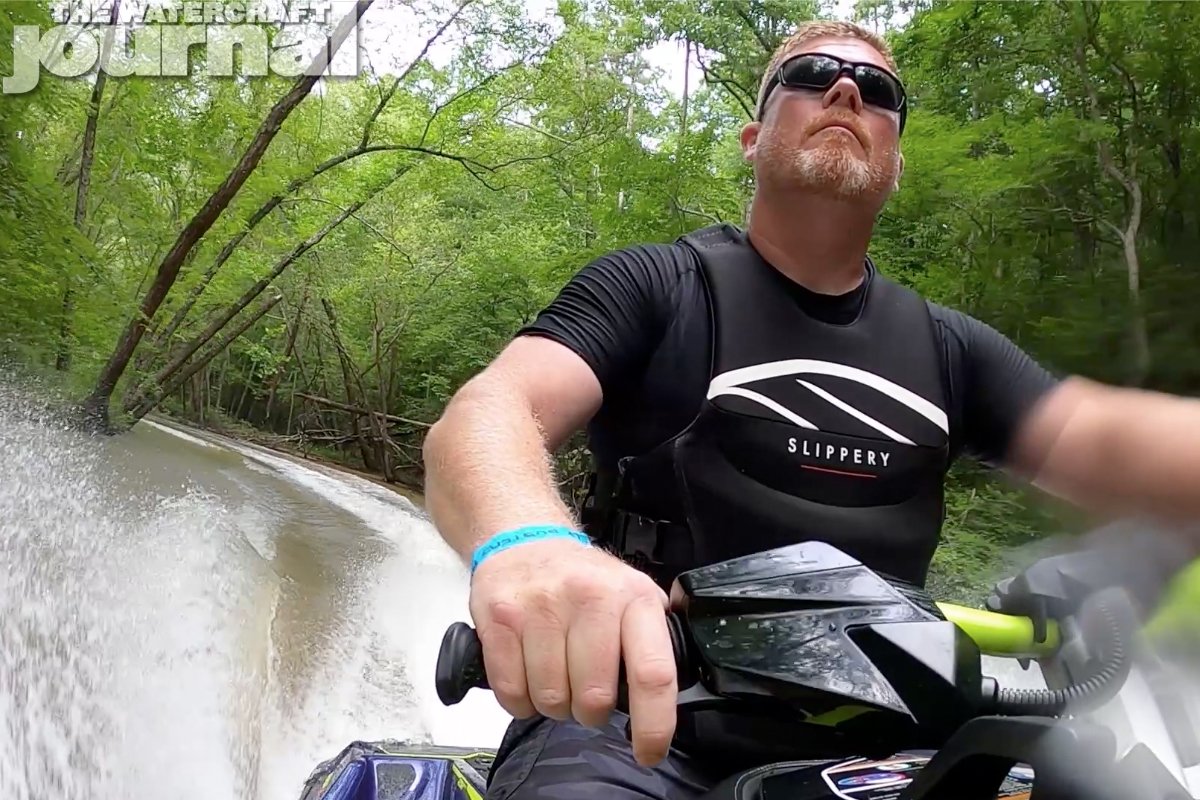
Now feeling guilty, Mike had me on the ropes. So I packed up the 2021 Sea-Doo RXP-X 300 again and headed south to Chattanooga, Tennessee. Besides being an avid fisherman aboard his 2021 Sea-Doo Fish Pro, Michael is also a talented metal fabricator and owner of Garage Bound, LLC. Whether it’s basic metal repair, custom welding or fabricating one-off off-road chassis for 1940’s Cadillacs (no, I’m not kidding), Michael pretty much does it all.
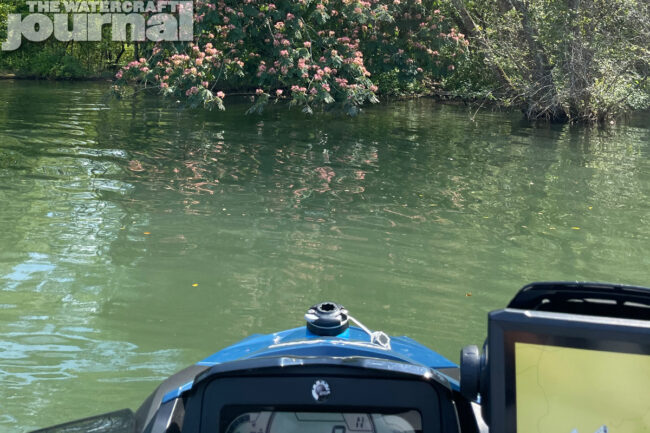
With a house butting up to a quiet shady finger of the Tennessee River, Michael started documenting his fishing adventures from his Sea-Doo to Instagram. Soon his “Chattanooga Fish Pro” account was chocked full of shots of bass and catfish, and getting the attention of American PWC fishermen. Although his boxer, Tiggy is perpetually at his side (even on the Fish Pro), he would be sitting out this adventure.
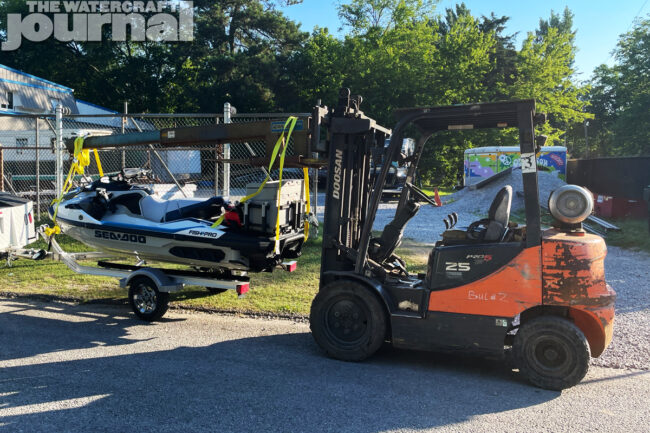
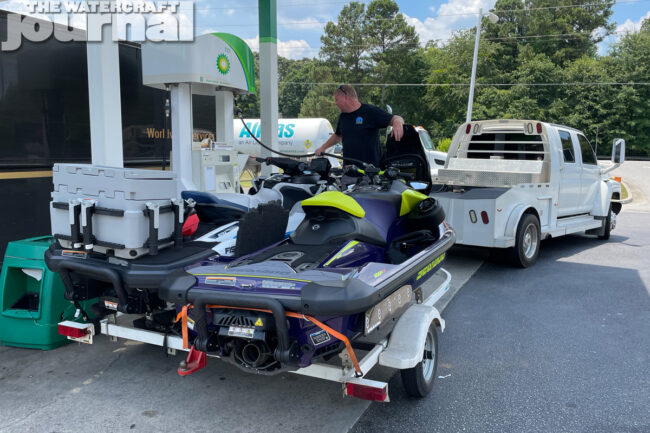
Using his forklift and a custom skid that Michael fabricated, we hoisted The Watercraft Journal’s 2021 Sea-Doo RXP-X 300 onto his trailer, fueled up his massive rig and began the roll into Georgia towards Lavonia.
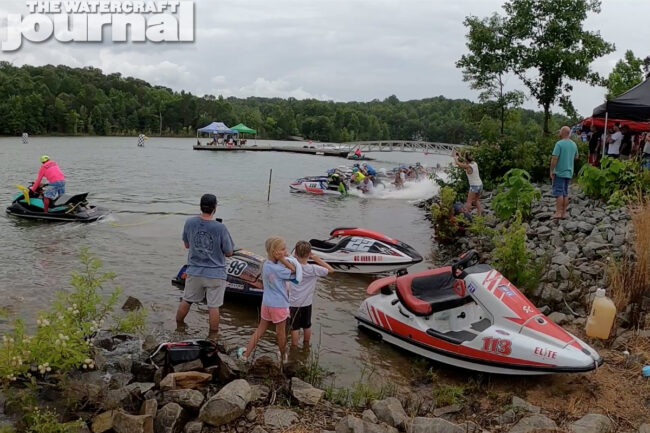
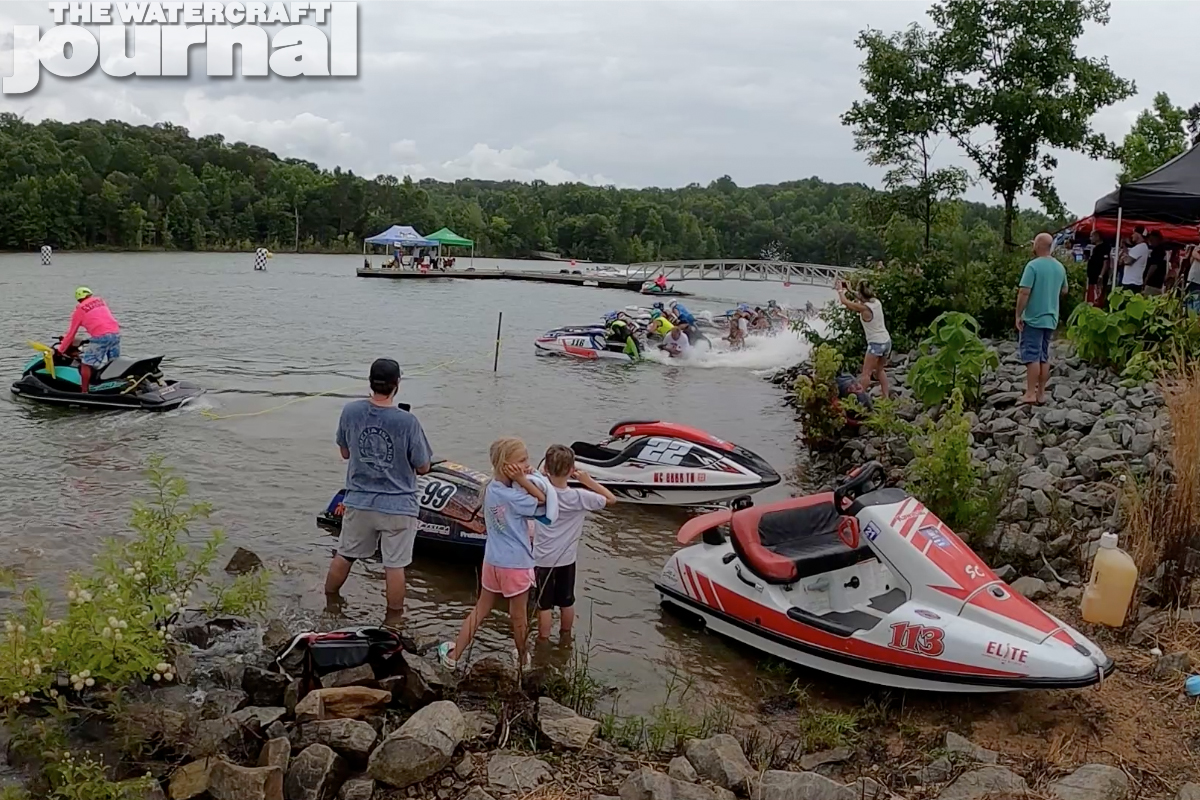
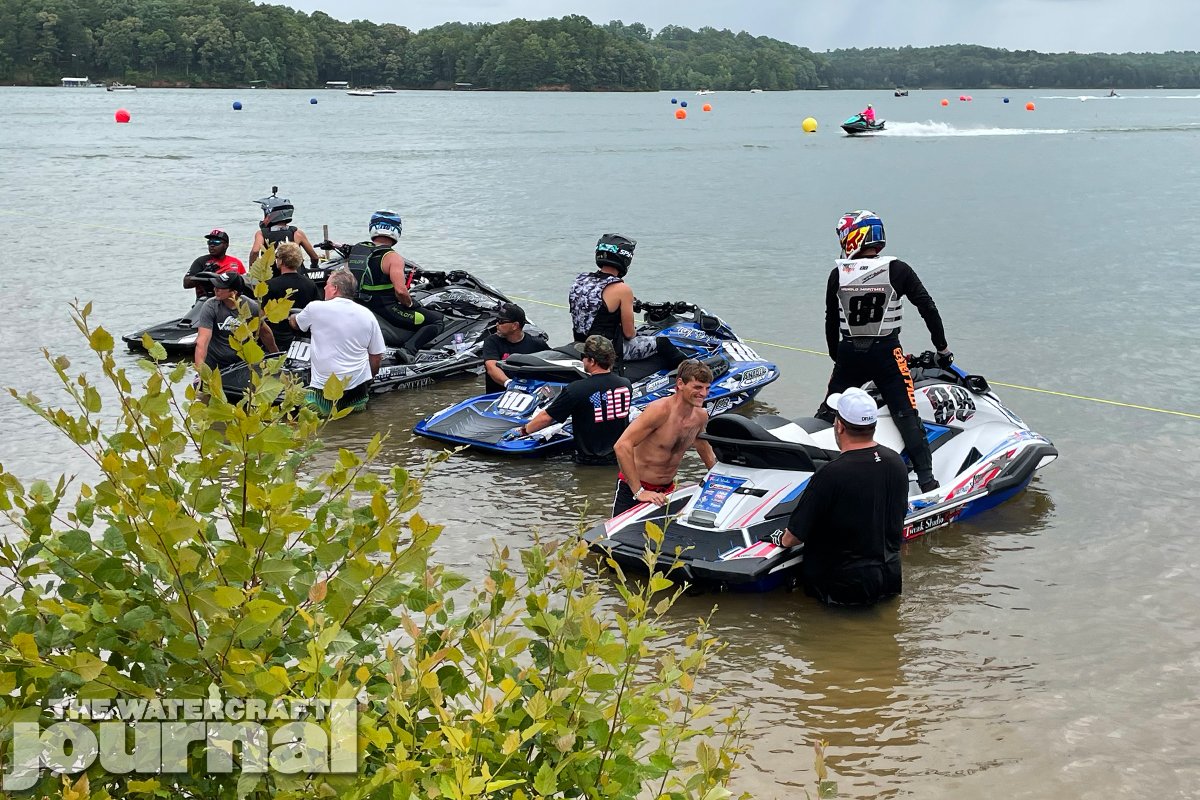
Put on by the Carolina Watercraft Club (with a lot of participation with Pro Watercross), the Belly Buster Ride is an annual charitable event that draws in recreation riders from several states around to enjoy the beauty of Lake Hartwell as well as take in some exciting PWC racing action.
Sharing the weekend with the official Lake Hartwell stop of the Pro Watercross National Tour; the Belly Buster Ride temps enthusiasts with a gorgeous location, an awesome half-day ride, and an incredible 600-pounds of BBQ pork ribs severed for dinner.
If that wasn’t enough to lure you, the Belly Buster crew hosts a huge raffle giving away thousands of dollars in prizes including a one-of-a-kind custom built Sea-Doo XP. Of course, all of this is to fuel an amazing charitable effort that during this weekend, raised over $5,400 for the Frank Trottier Foundation.
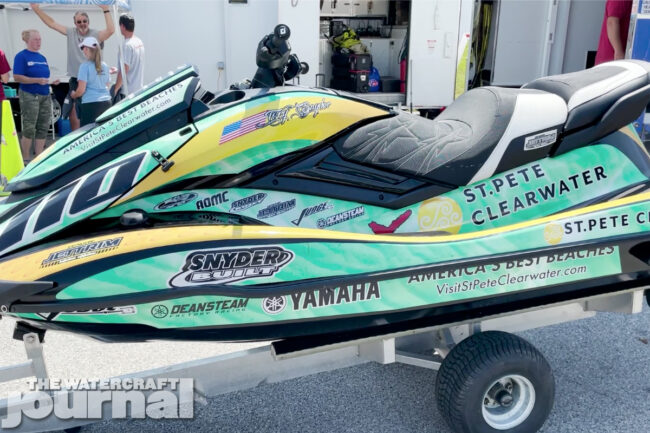
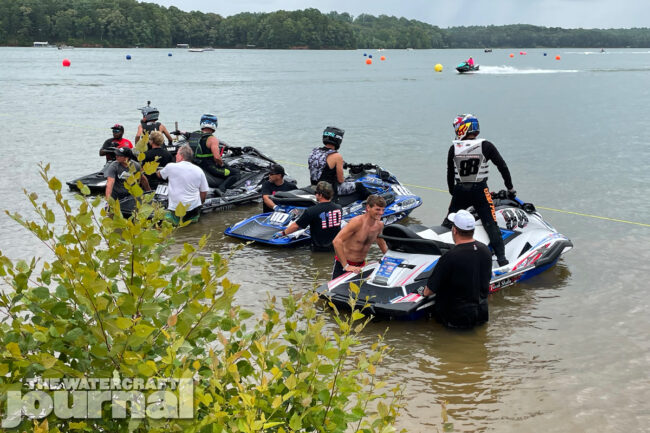
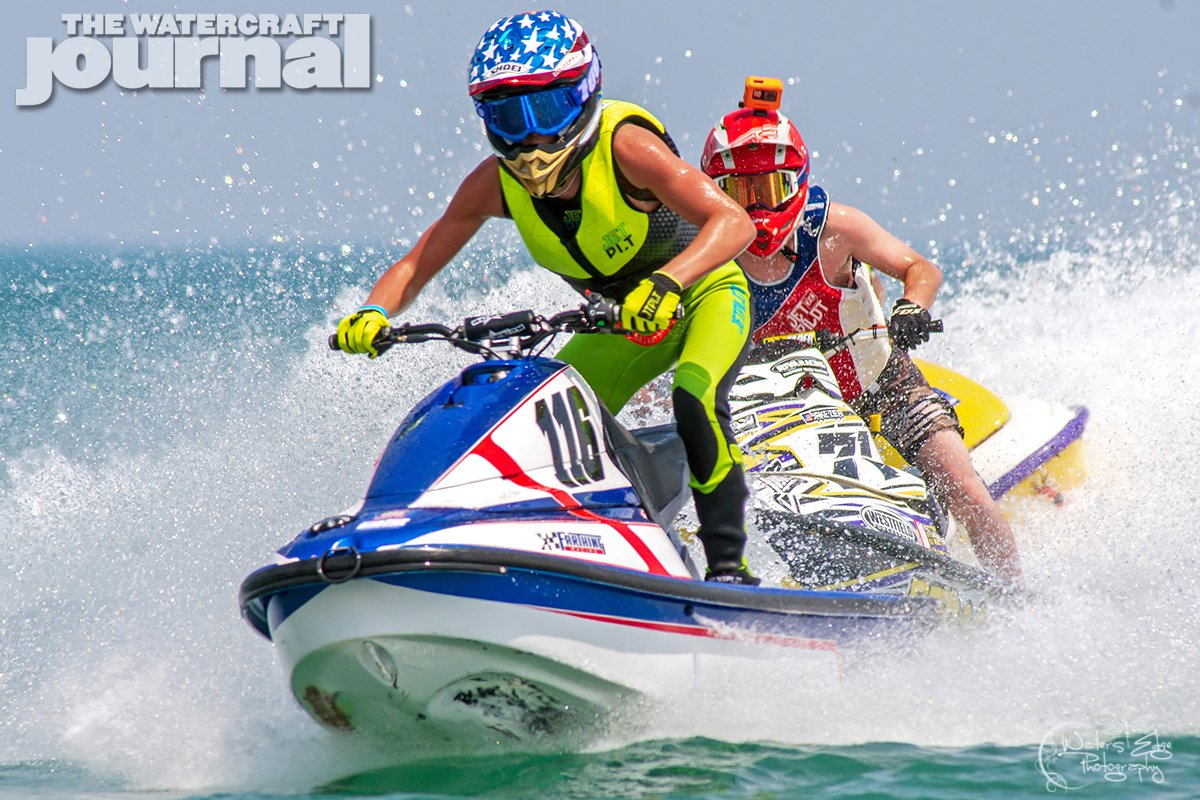
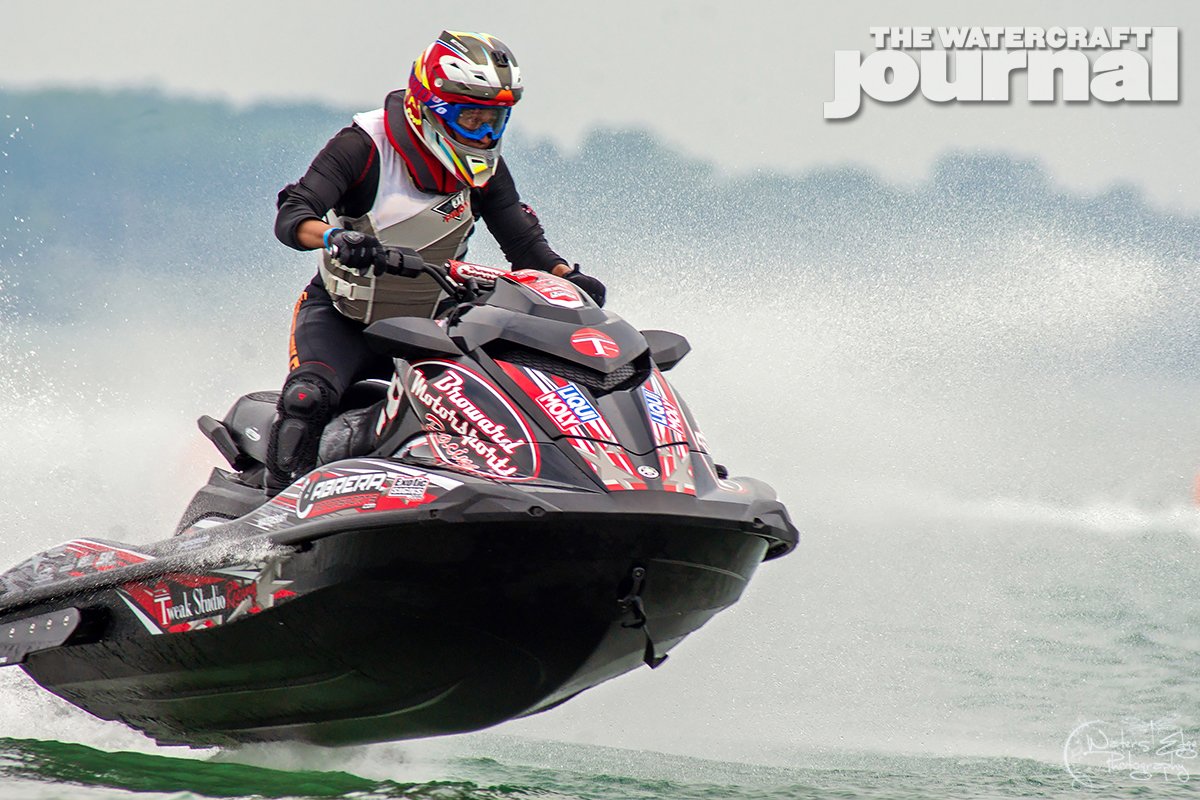
Arriving at the Tugaloo State Park, we pulled into the race venue to check in. The pits were packed with massive race trailers, rigs and team tents; Farthing Racing, Snyder Built, and Broward Motorsports just to name a few.
Michael, anxious to get a little water under his hull, insisted we circle back around to the access ramp and launch our skis. Only slightly familiar with Lake Hartwell, I agreed that we should probably burn a little fuel just to get our bearings and opted for a northwestern route up the winding lake.
Lake Hartwell sits right on the dividing line between Georgia and South Carolina; in fact, this stop on the Pro Watercross Tour is likely the only race to have spectators watching in-person from two states simultaneously.
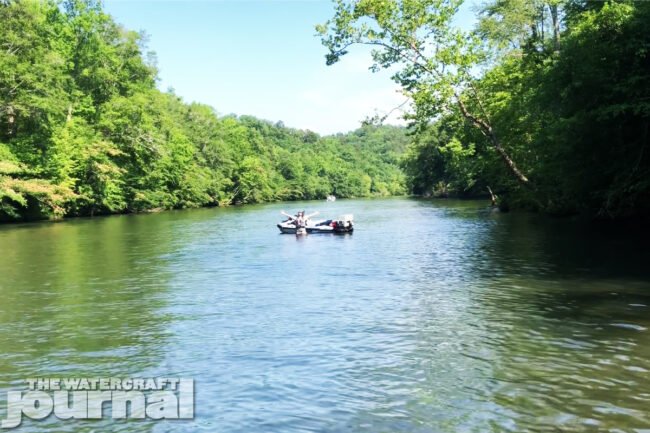
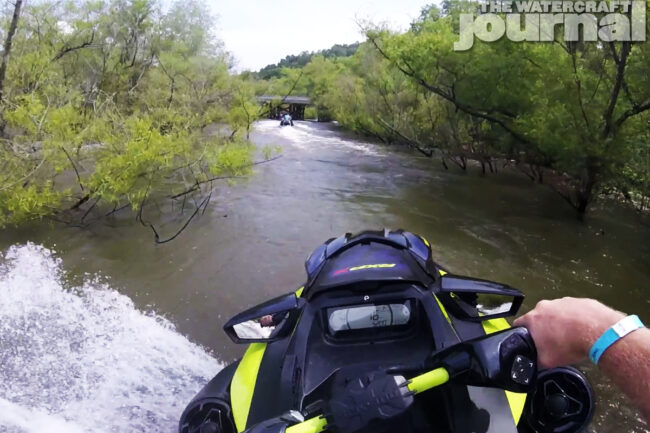
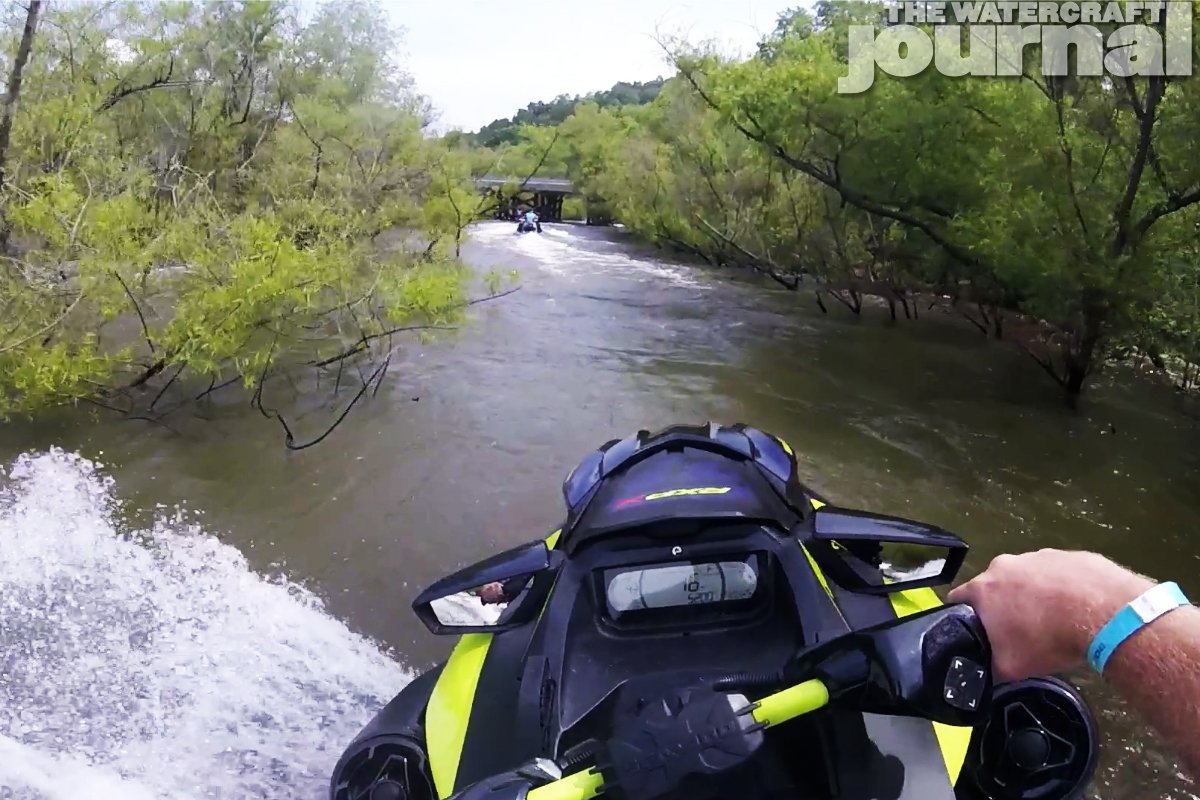
Our route took us from Gumlog, where the race course was set, above where the Tugaloo and Seneca Rivers meet, up towards the Traveler’s Rest historical stagecoach inn and plantation home built back in 1815 hidden in the nape of the Appalachians. The surrounding hills encroached as the lake narrowed to a river. We passed by thin islands sprouting walls of high grass until we reached Tugaloo Bend less than a mile below Yonah Dam.
The Tugaloo had thinned into a wide stream, and we could see trout swim in the crystal clear water below us. The current was strong and pushed us south as the creek bubbled over large rocks above. “We’ve reached the end of the line, Michael,” I yelled and he agreed. Massive oaks and leafy holly trees lined the river, blanketing us in cool shade as we journey back the route we came.
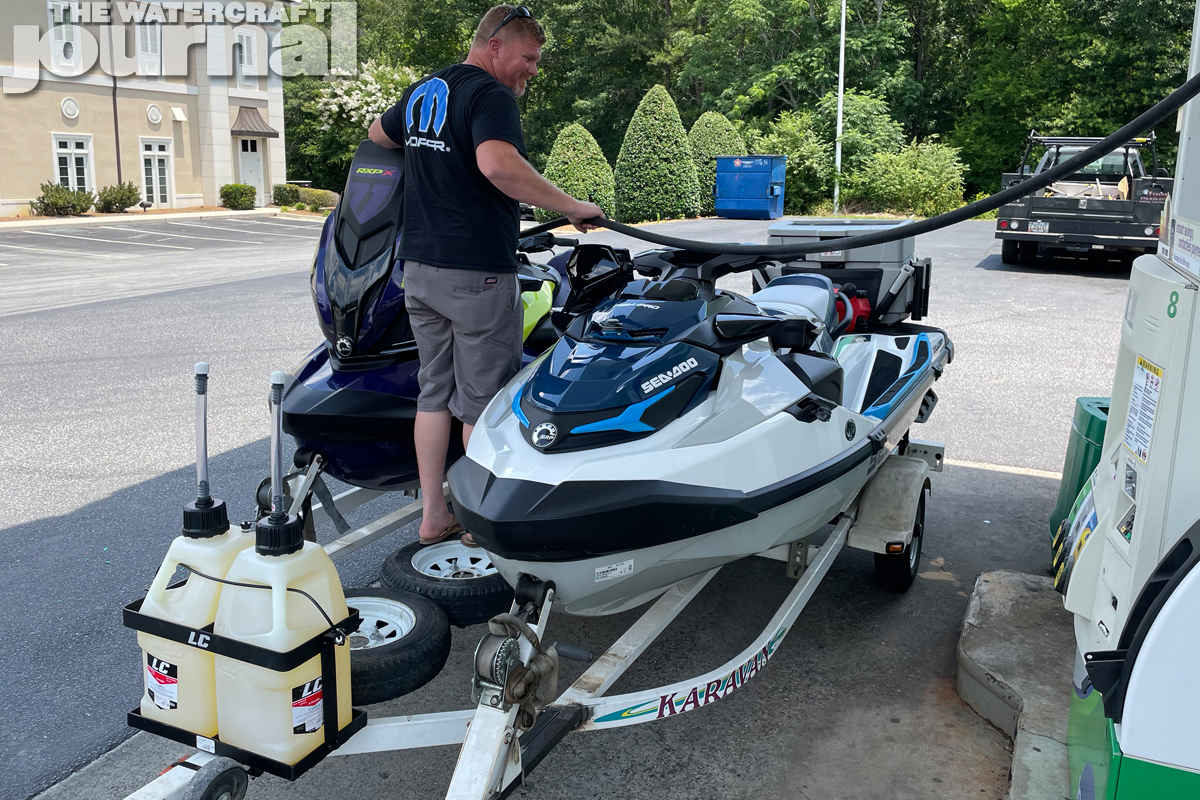
I stopped at the crumbling pylons of a long dismantled trestle running alongside Prather Bridge, once connecting Stephens County, GA and Oconee County, SC. It was mid-afternoon when we spotted the brightly colored buoys of the Pro Watercross racetrack. Michael’s naturally aspirated 170-horsepower Fish Pro was far more miserly on fuel than my supercharged RXP-X, so we opted to splash a few gallons of fuel into the purple Sea-Doo’s tank.
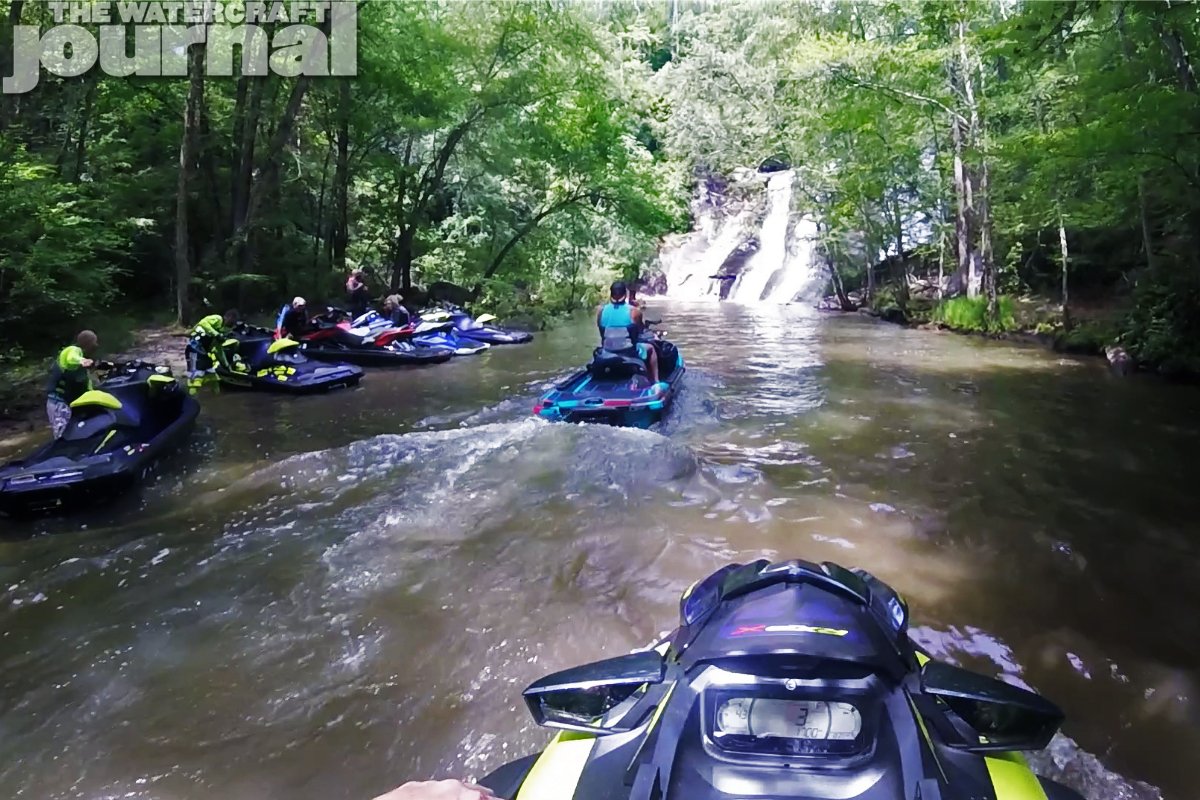
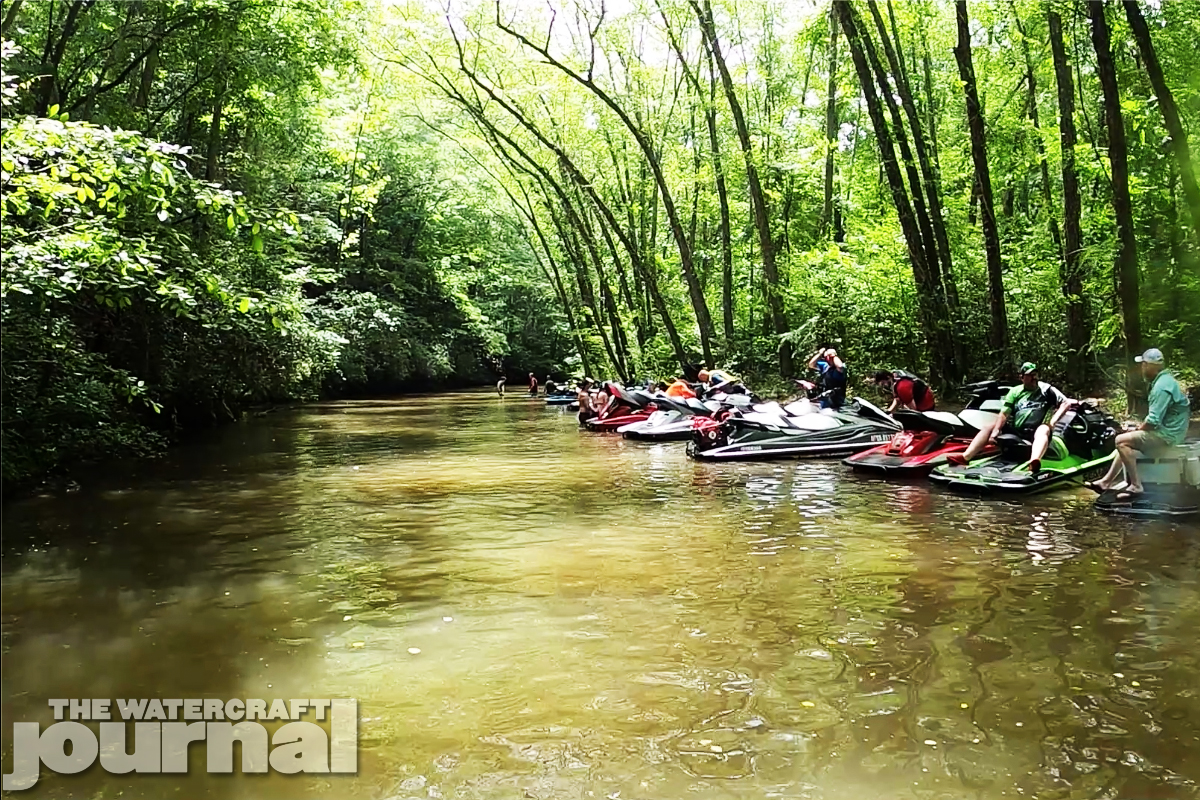
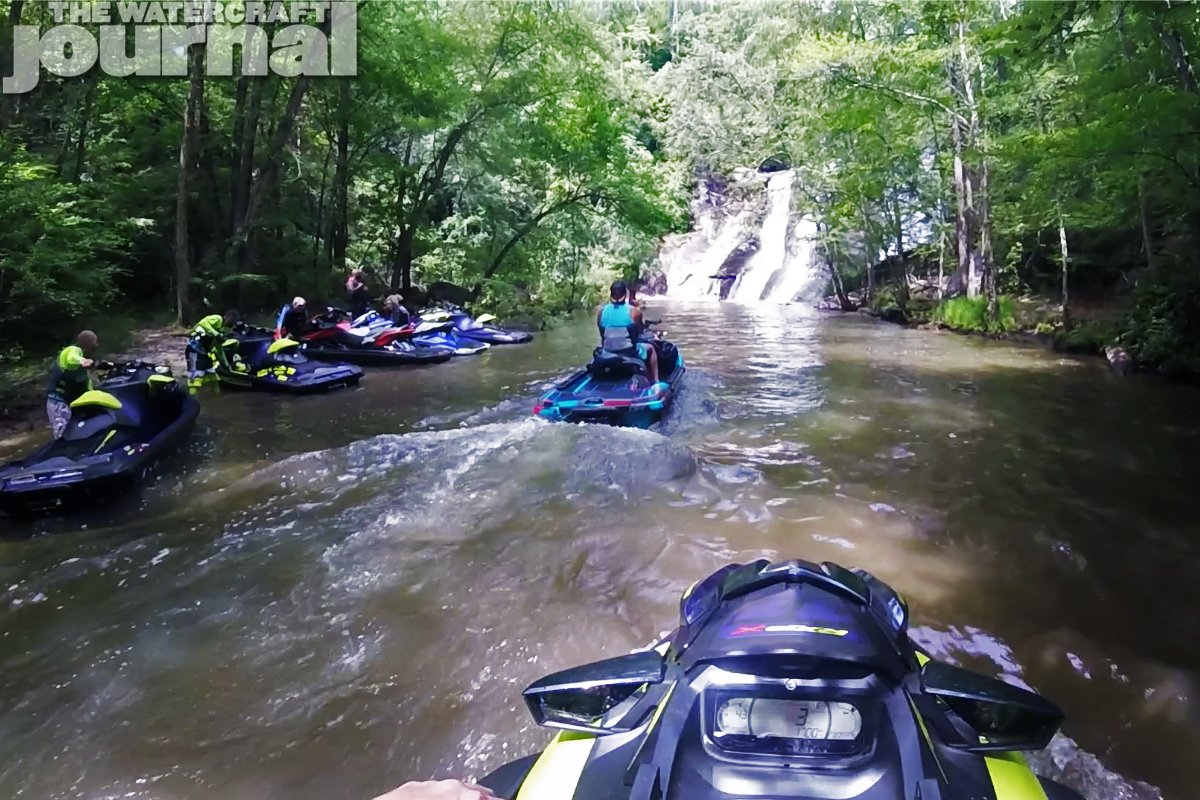
We eyed some other watercraft milling about and asked what was going on. “We’re thinking about making a quick fun run up to the waterfall, you guys wanna join?” one of the Carolina Watercraft Club members invited. “Sure,” I accepted knowing Michael would be more than happy to go out again.
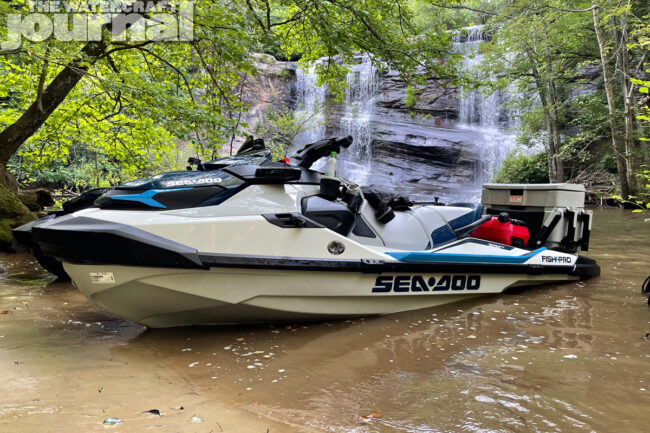
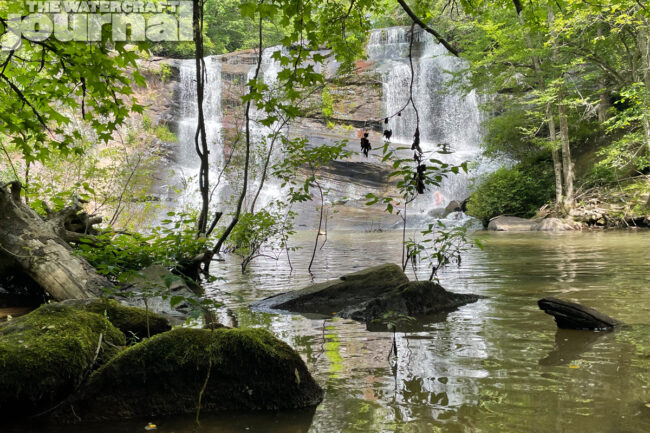
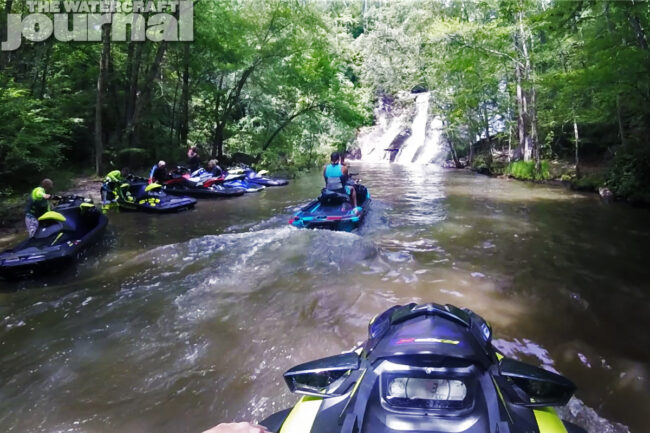
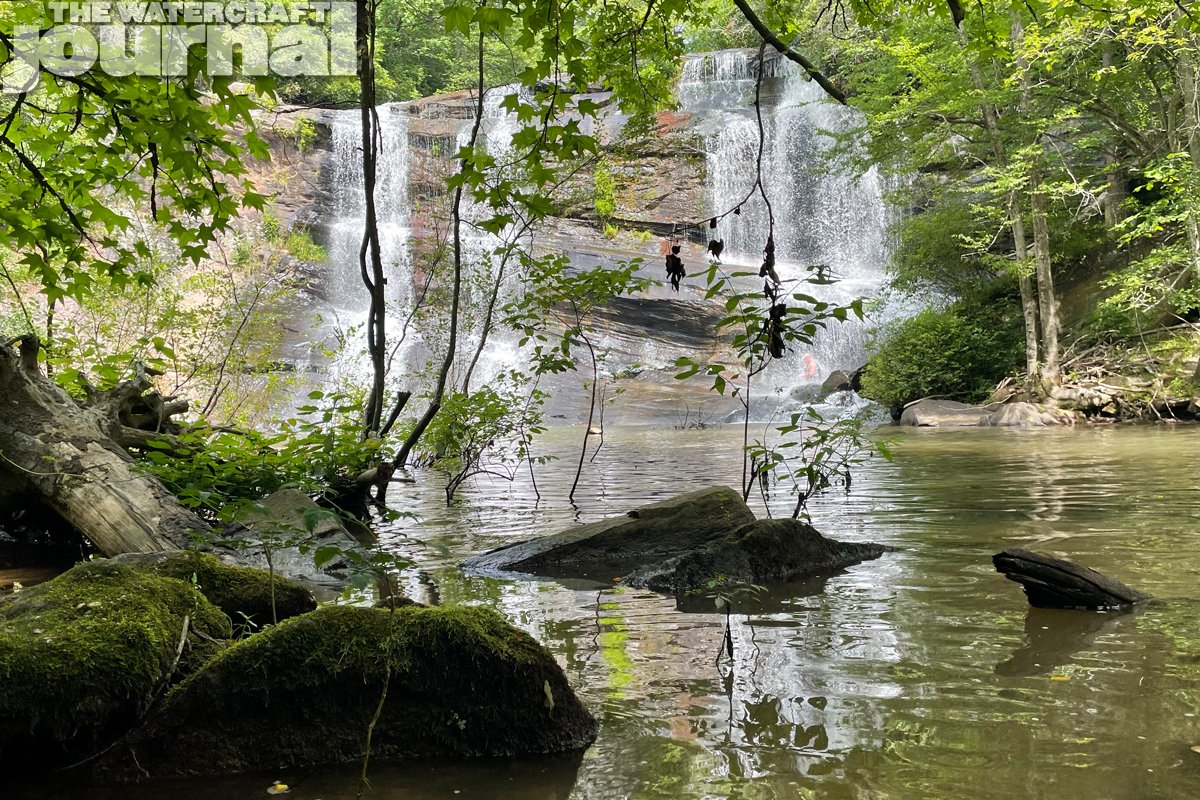
Humorously, our route took us almost exactly the way we had just come, only that prior to veering left to follow the river upstream, we peeled right into a grass-lined dead-end. Rather than turning around, our guides took us up Longnose Creek, beneath the River Road Bridge all the way up to Longnose Falls.
Once the site of an old grist mill, all that remains today is the collapsed tin roof and a grindstone. Pipe can still be seen at the top of the falls where water was diverted to operate the mill. Although I couldn’t find it, the stone chimney from the old home is said to be still standing nearby.
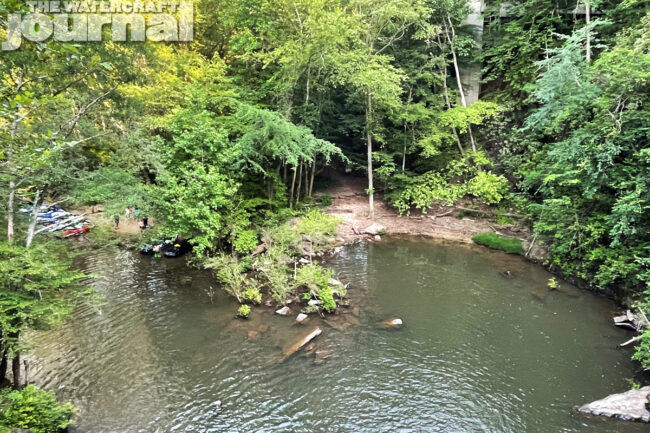
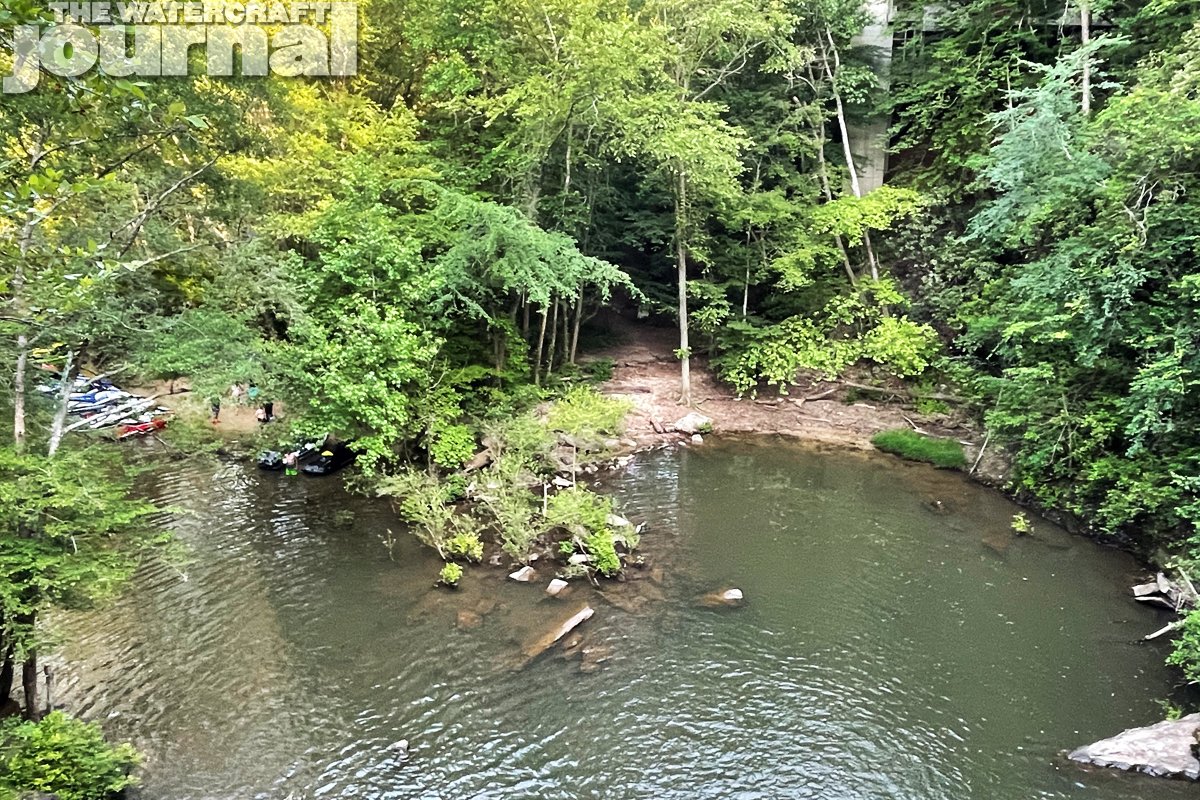
What we didn’t know was that Longnose Creek Falls sits on private property, that is until the owners met us at the top of the falls to shoo us away. After a little swimming, we loaded up our small group of skis and re-entered the Tugaloo. The sun was beginning to dip under the western mountains and the orange sky cast long shadows over the water and we needed to head back into town.
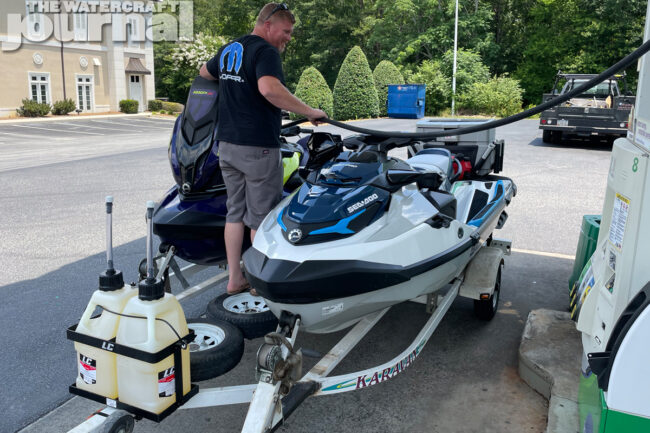
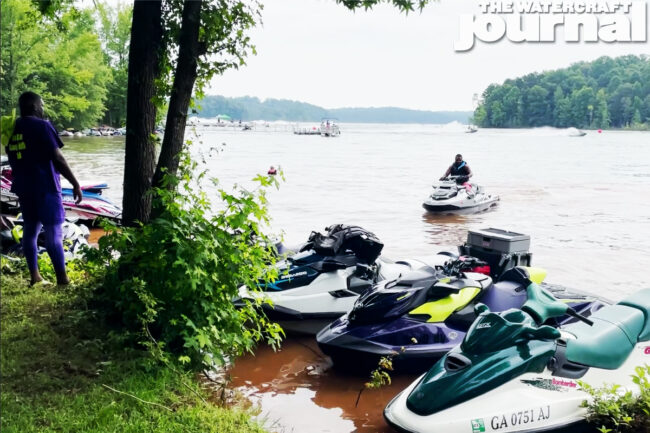
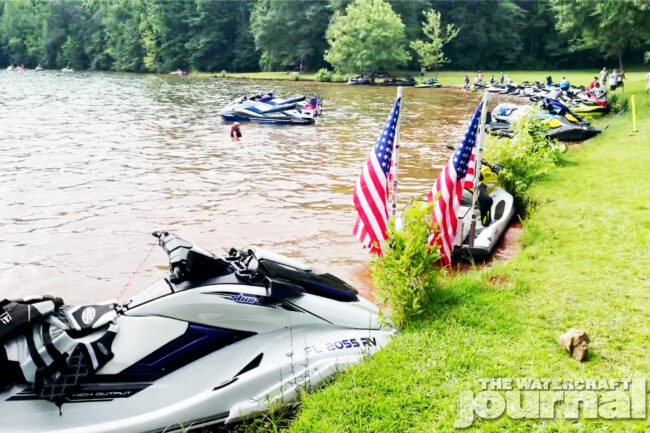
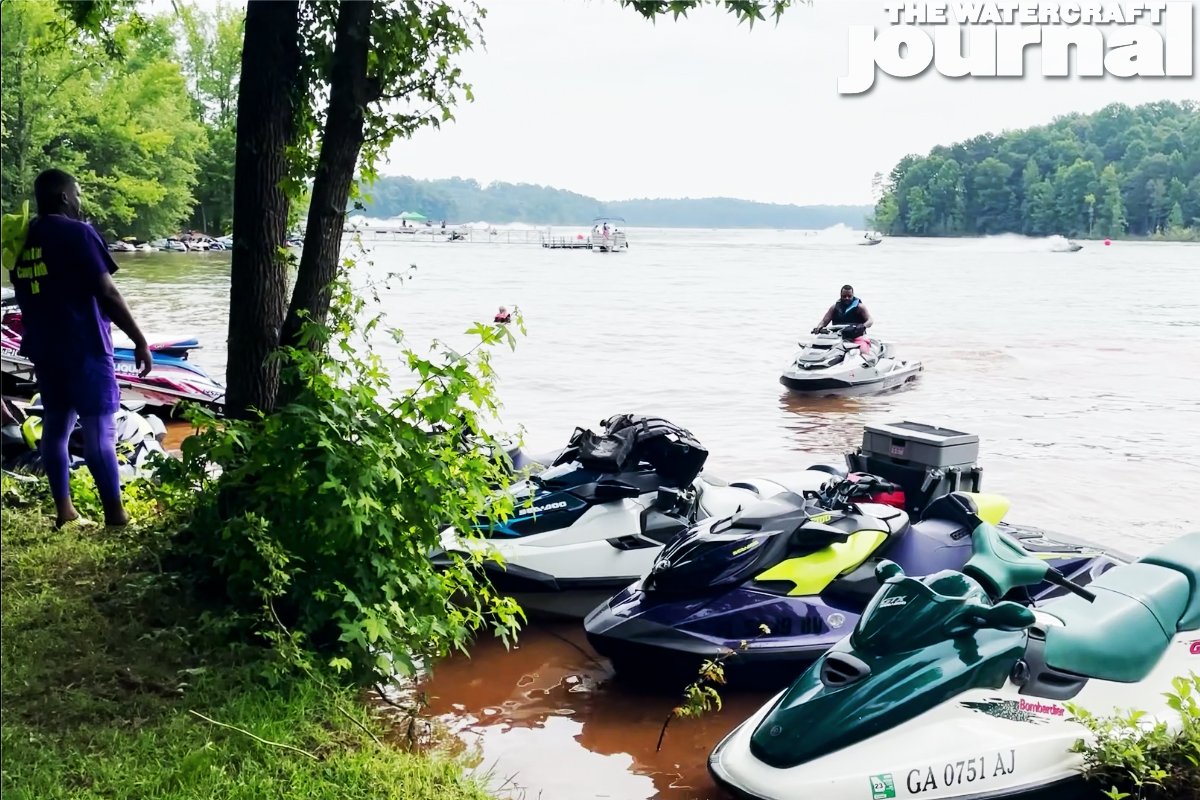
The next day meant preparing for the main group ride; so we refueled both Sea-Doos, as well as the giant Fish Pro cooler with ice and waters. The meeting spot was a grassy cove, and riders filled the shoreline. Expecting Saturday’s ride to venture south, I was surprised to hear, Hey! We’re going to go up to the waterfall! So off we went, a third time up the lake.
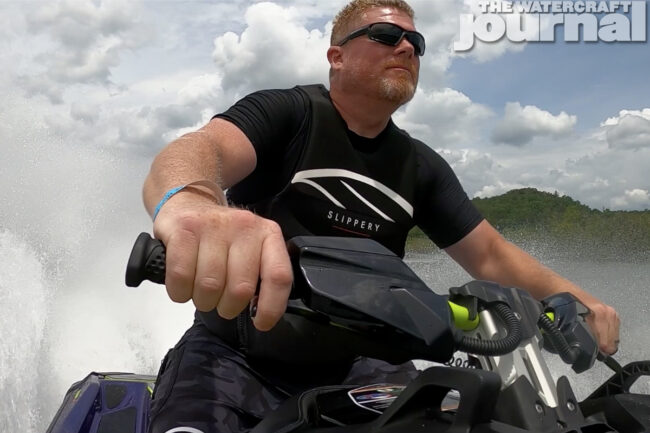
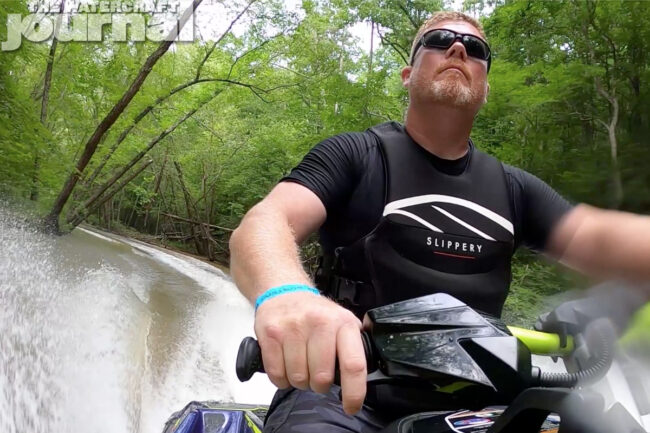
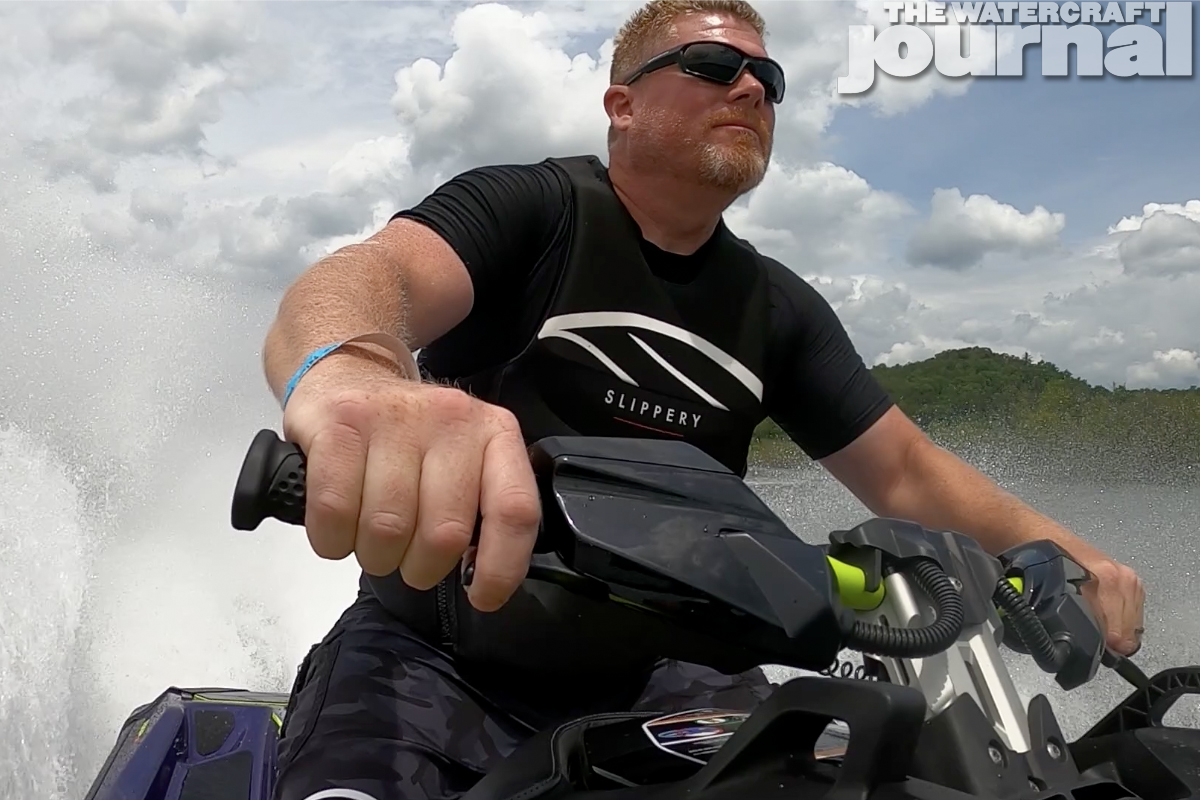
This time, our group was significantly larger – well over 35 skis, including a handful of brand-new RXP-X 300s identical to ours. Knowing the route blindfolded by now, I cut wide far outside of the wash made by the group and raced along the opposite side of the channel markers. Fuel really wouldn’t be an issue as the 18.5-gallon tank was topped off that morning and the route was pretty brief (I estimated 42 miles).
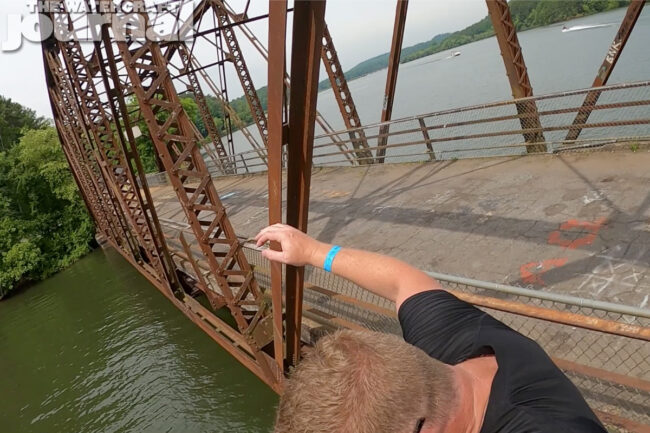
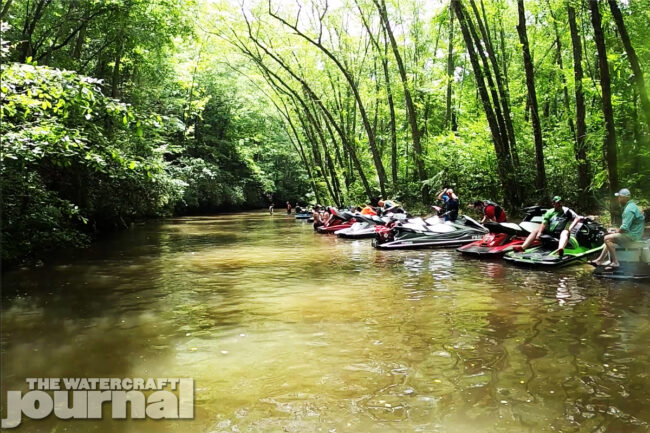
A few other supercharged Sea-Doos tried to give chase, but I wanted to get ahead of the pack to grab a few shots. Capturing the passing herd, I leapt from the broken remains of the Highway 123 bridge (now a fishing pier) and followed behind. Sure enough, we wove through the brush and tall grass up Longnose Creek toward the falls – still as impressive as the day before.
Most mingled in the shade, content to chat and socialize. Few waded out into the brisk pond at the base of the falls, fewer hiked up to the top. Having already seen the view from the top of the falls, thought I’d see the view from behind the falls and scrambled up the mossy rocks and peered from behind the backside of water.
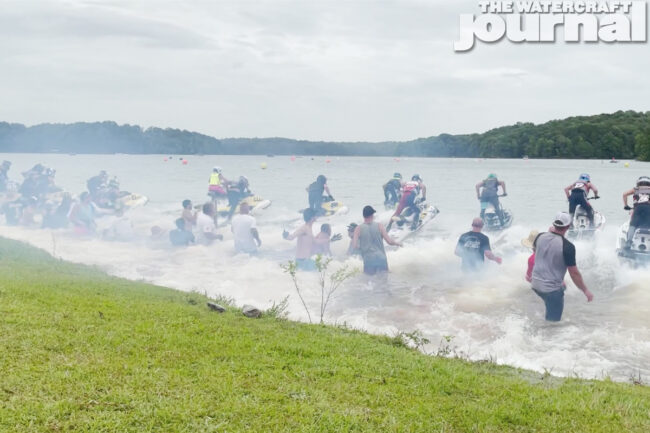
Contented and ready to return, we all rode back to the Gumlog Launch to take in some professional jet ski racing. The Pro Watercross Tour provides venues for these athletes from Wisconsin to Florida throughout the season, and it’s incredible to see what these racers can do out on the water. (And make sure to head over to The Watercraft Journal to read our full race recap.)
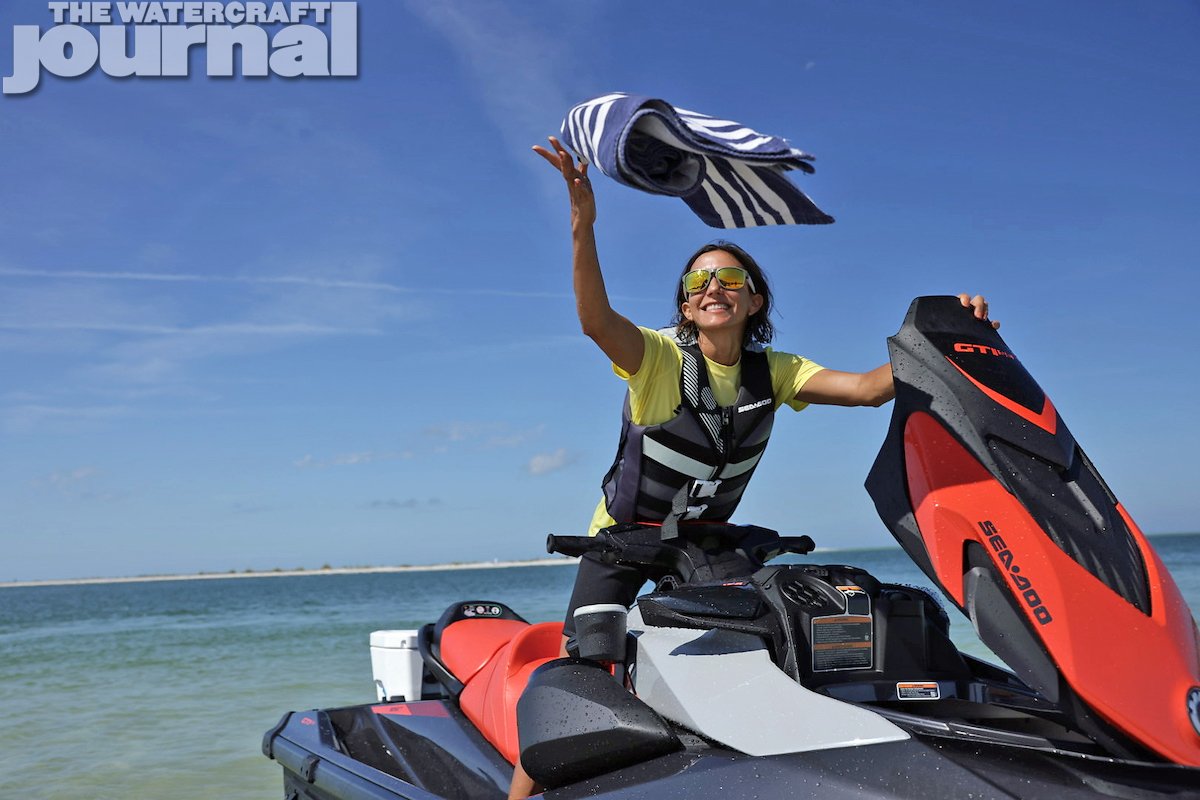
With that, the Carolina Watercraft Club served up plates of BBQ pork ribs as well as raffled off some amazing prizes to those participated in the ride or who donated to the charity. Michael came home with some goodies, including an official Sea-Doo towel, which was immediately stored in his Fish Pro for future use.
With Father’s Day being that Sunday, we made off early the next morning back to Chattanooga. After swapping the RXP-X back over to my trailer, I bid goodbye to Michael and headed back home – grateful that I didn’t back out. The Belly Buster Ride isn’t just a great day on the water with awesome people, but a genuinely special event that donates its proceeds to a worthwhile charity. If you can’t go but want to help, please visit the Carolina Watercraft Club on Facebook to learn how to participate.
Additional images and footage by Michael Brandt of Chattanooga Fish Pro
After many months of waiting, parts are finally becoming available for today’s watercraft. For us, this meant getting the GreenHulk Stage 1 kit installed on our 2021 Sea-Doo RXP-X. With plenty of manufacturers offering performance kits, we decided to introduce our own. Even though the kit is strictly made of RIVA Racing parts, we still pieced together a kit that we felt was a perfect starting point for our Sea-Doo.
With this in mind, we also needed to coincide the modifications with what is currently done to our 2021 Yamaha GP1800R SVHO; with upcoming shootout videos between the two, both skis have to be equally modified for a fair comparison.
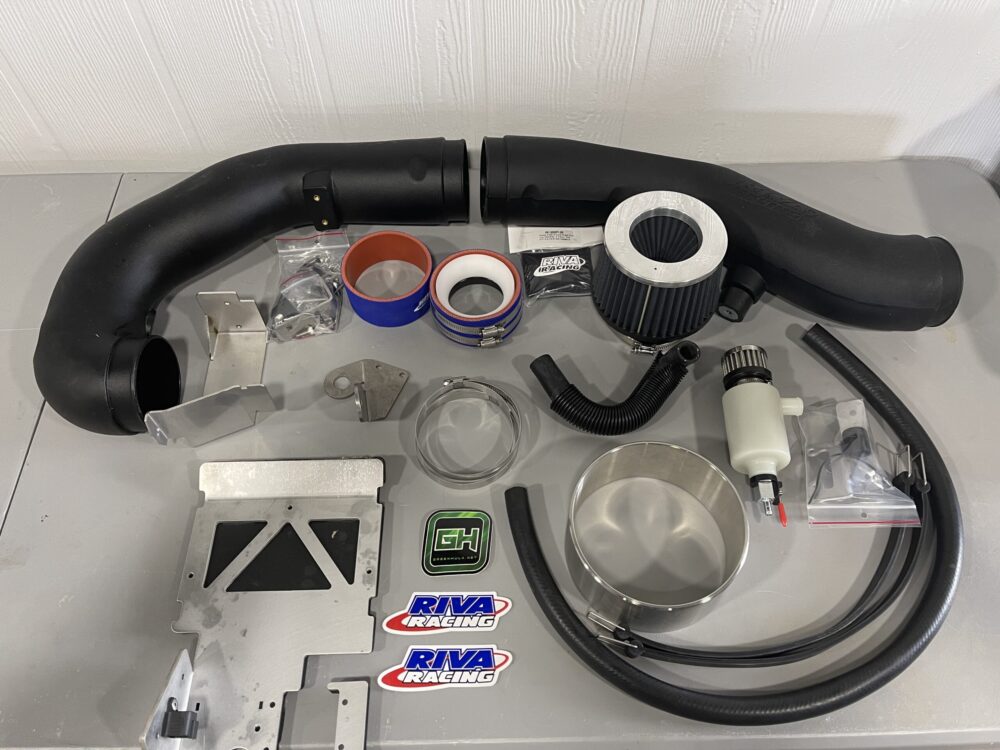
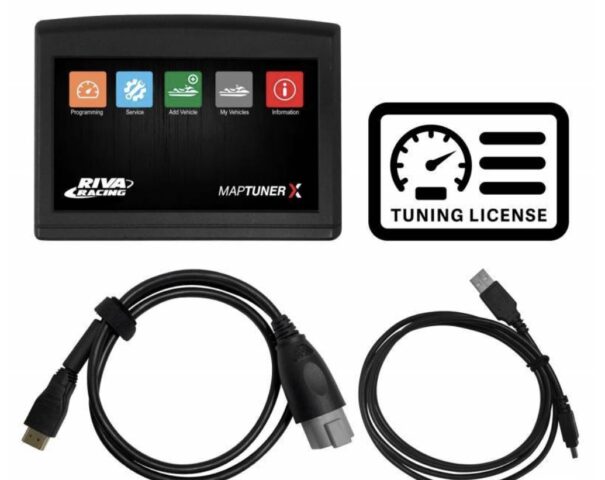
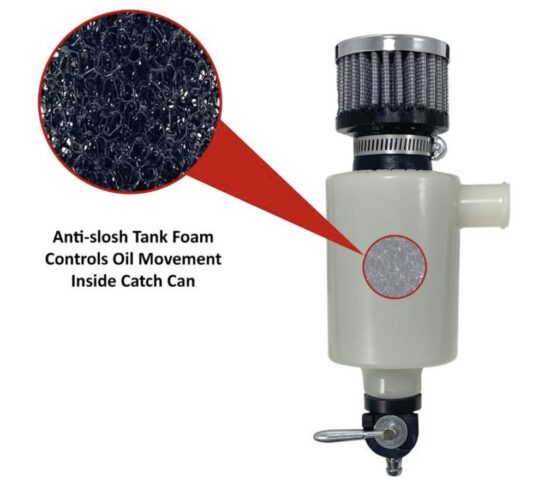
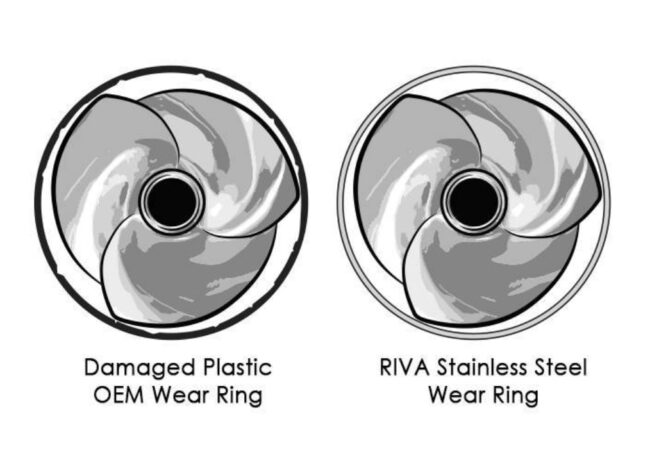
The kit includes a RIVA Racing intake, catch can, stainless steel wear ring, MaptunerX Sea-Doo bundle, and Solas 13/18 impeller. These mods are the perfect starting point in our eyes; the intake, tune, and impeller offers a substantial increase in performance while the catch can and stainless steel wear ring add to the watercraft’s reliability. The intake utilizes a larger diameter piping than the factory intake, a velocity stack, and a freer flowing air filter; this combination as a whole flows more air with less restriction than the factory setup.
The MaptunerX “Stage 2 8500” tune optimizes the fueling and timing to support the intake kit and the Solas 13/18 impeller helps put the extra power to use through the jet pump. While this is all that is necessary for an increase in performance, we wanted it to be more reliable than straight from the factory; implementing the catch can and stainless steel wear ring allowed us to achieve this goal. Sea-Doo 300 engines experience large amounts of blow-by; “blow-by” refers to air and fuel being pushed passed the piston rings and pressurizing the crankcase.
From the factory, the pressure is relieved through the intake and recirculates the crankcase vapors, and oil in some cases, back into the combustion chamber. The catch can acts as a holding tank for any oil or vapors being blown out of the TOPS valve, increasing the longevity and performance of the watercraft. The stainless steel wear ring will replace the factory plastic wear ring that is known for premature wear.
The kit includes only a handful of modifications but you’ll want to set aside at least a day out of your weekend to get these installed; the installation process is quite tedious but the fit, finish, and performance achieved is unrivaled! You’ll want to visit the GreenHulk Garage YouTube channel for a detailed installation video! The kit is exclusively sold at the GreenHulkStore.com and you can save 10% with the coupon code “Greenhulk” at checkout!
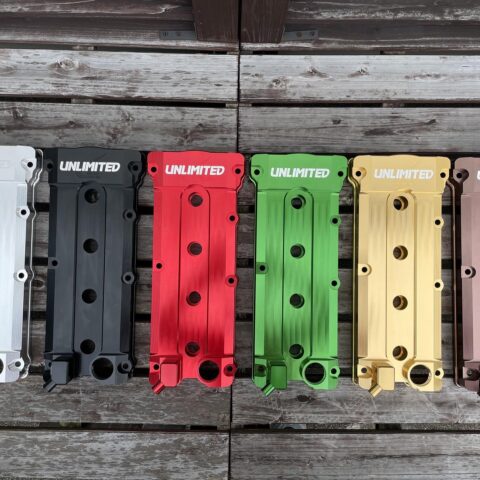
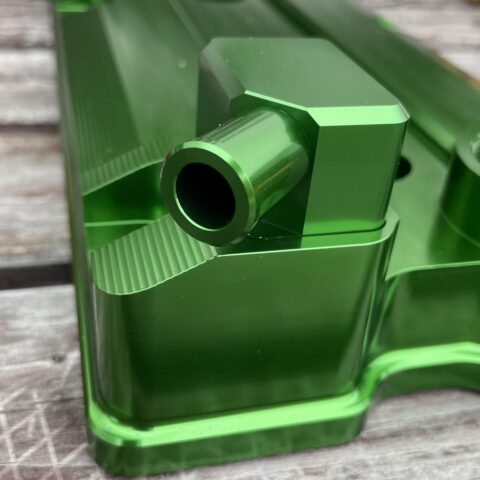
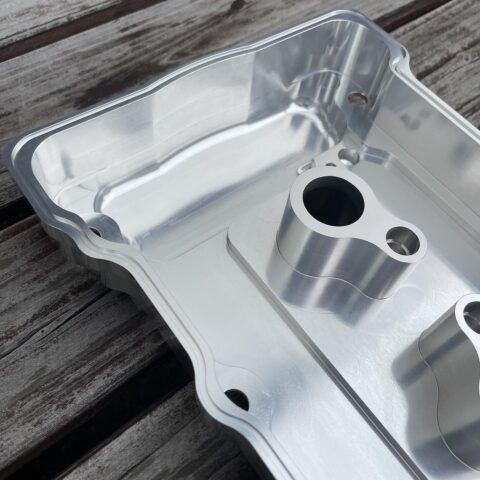
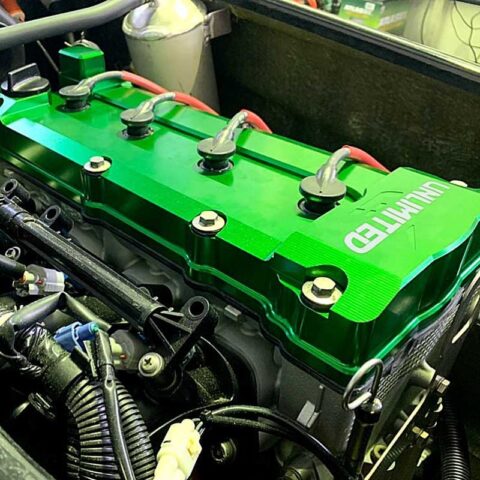
Unlimited PWC parts now offer billet aluminum valve covers for 4-stroke 1,498cc Kawasaki applications. These new billet covers are offered in a variety of anodized colors such as black, red, green, gold, and bronze color options. These new covers are high-quality performance dress-up products as described by Unlimited PWC. Though these do not claim to provide any performance gains, we all know shiny parts make engines faster. (wink, wink)
These new billet covers are in addition to their line of specially-machined and anodized parts for Kawasaki applications. They offer a wide variety of billet machined aluminum parts such as throttle levers, steering stem mounts, exhaust covers and even flush port connections. With almost unlimited options, the rider can customize their ski the way they want, whether that’s looking good while on the water or putting higher strength parts that are more durable than what OEM provides.
For the person that is wanting to make a “built” racing ski, Unlimited PWC performance parts are a leader in aftermarket parts specifically for Kawasaki watercraft applications. For more information on where to purchase parts please visit them at at their home page or on social media.
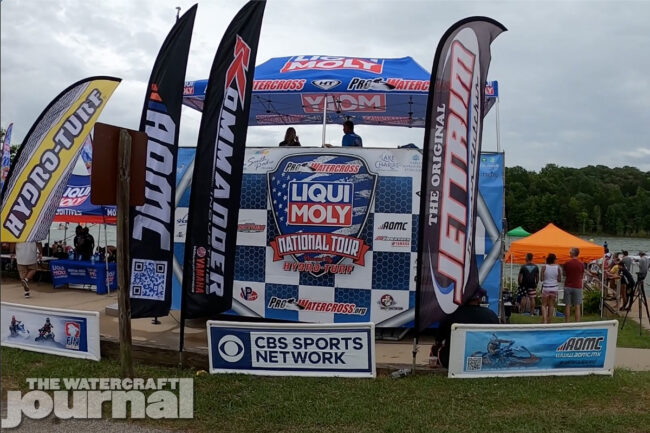
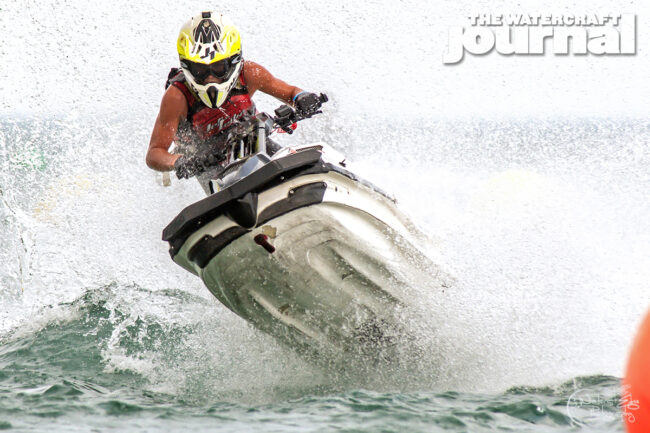
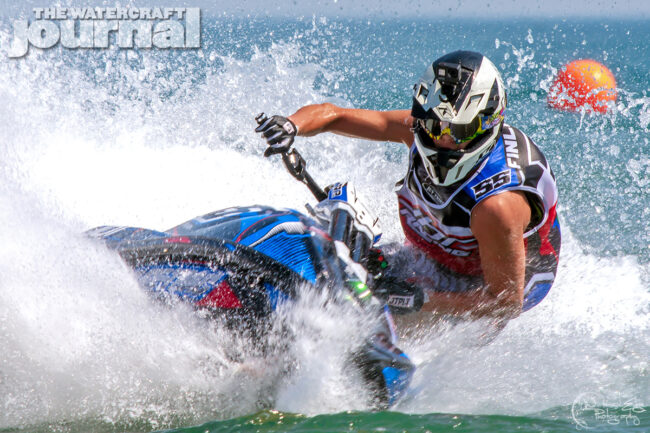
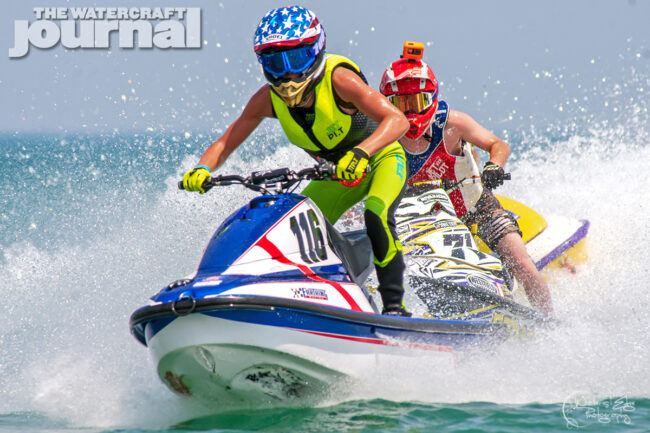
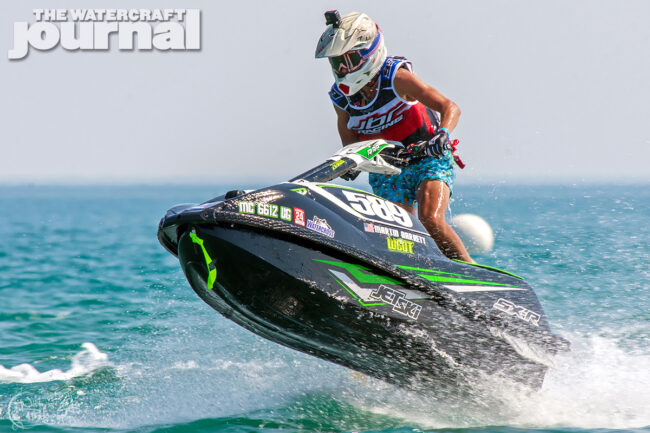
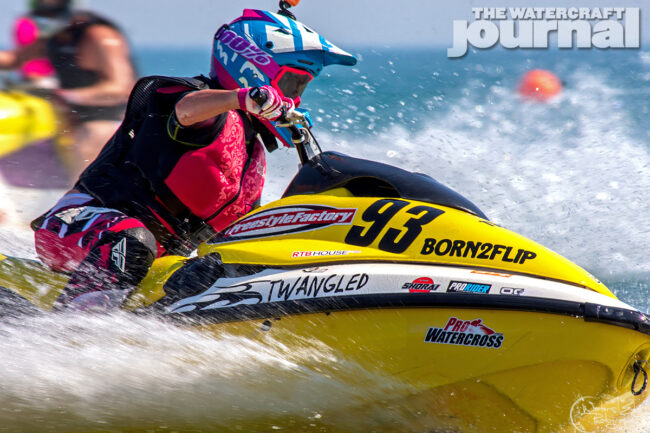
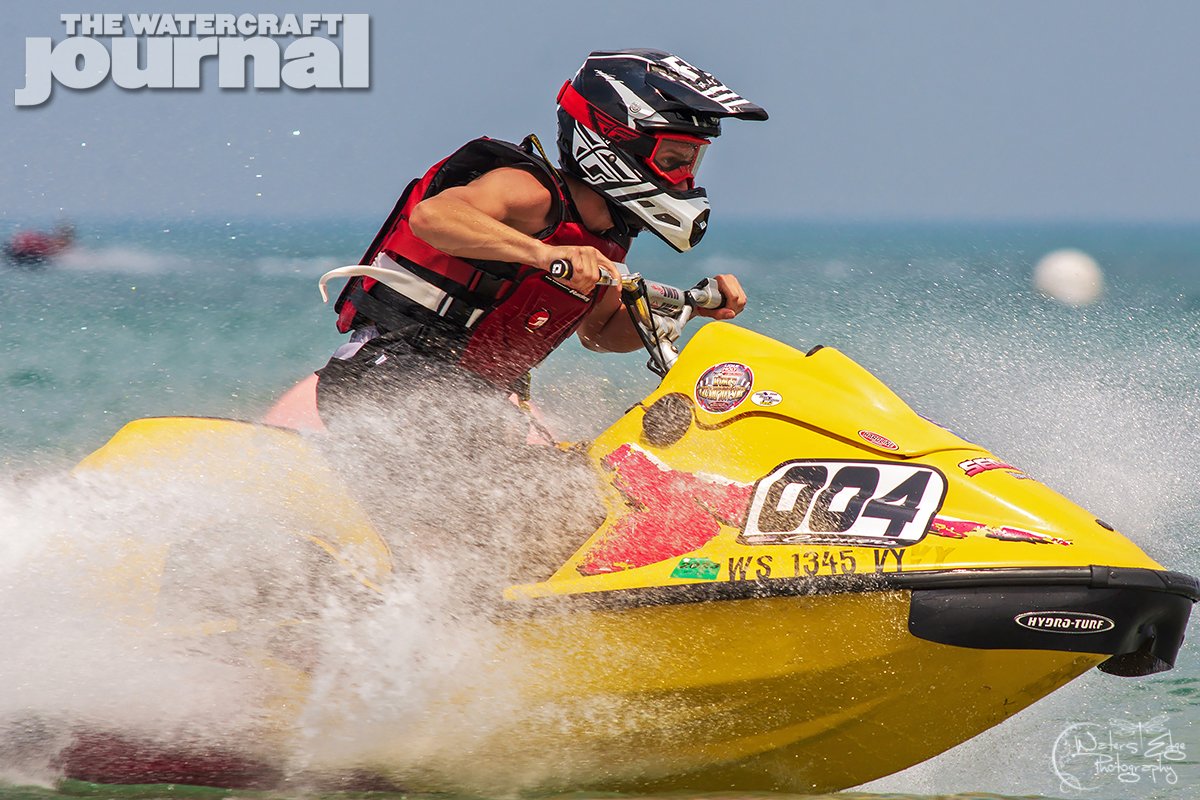
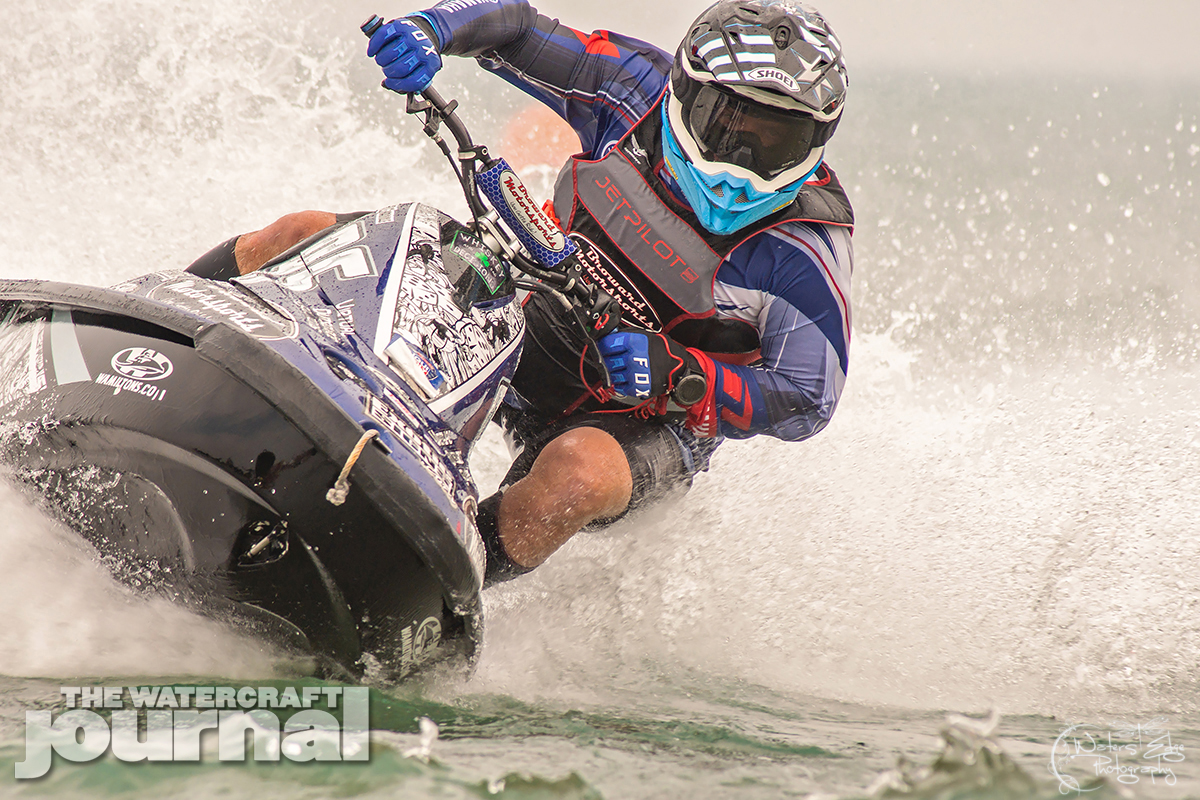
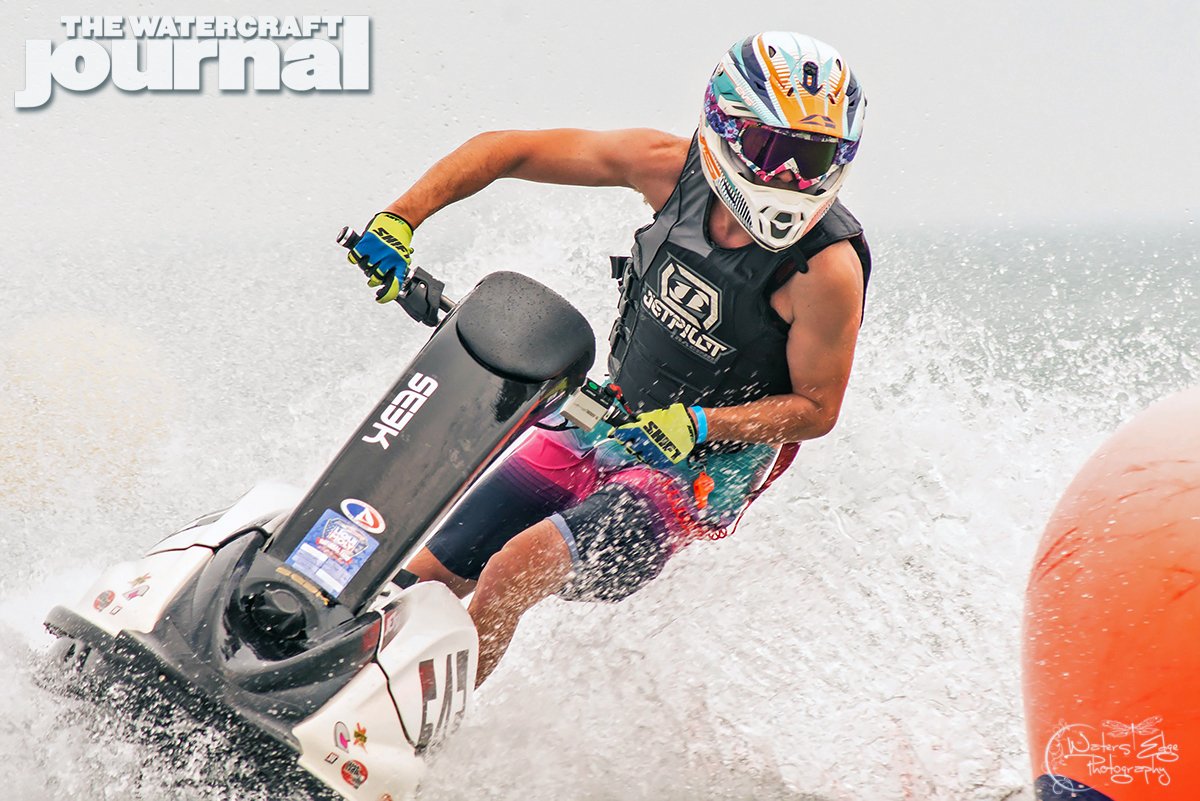
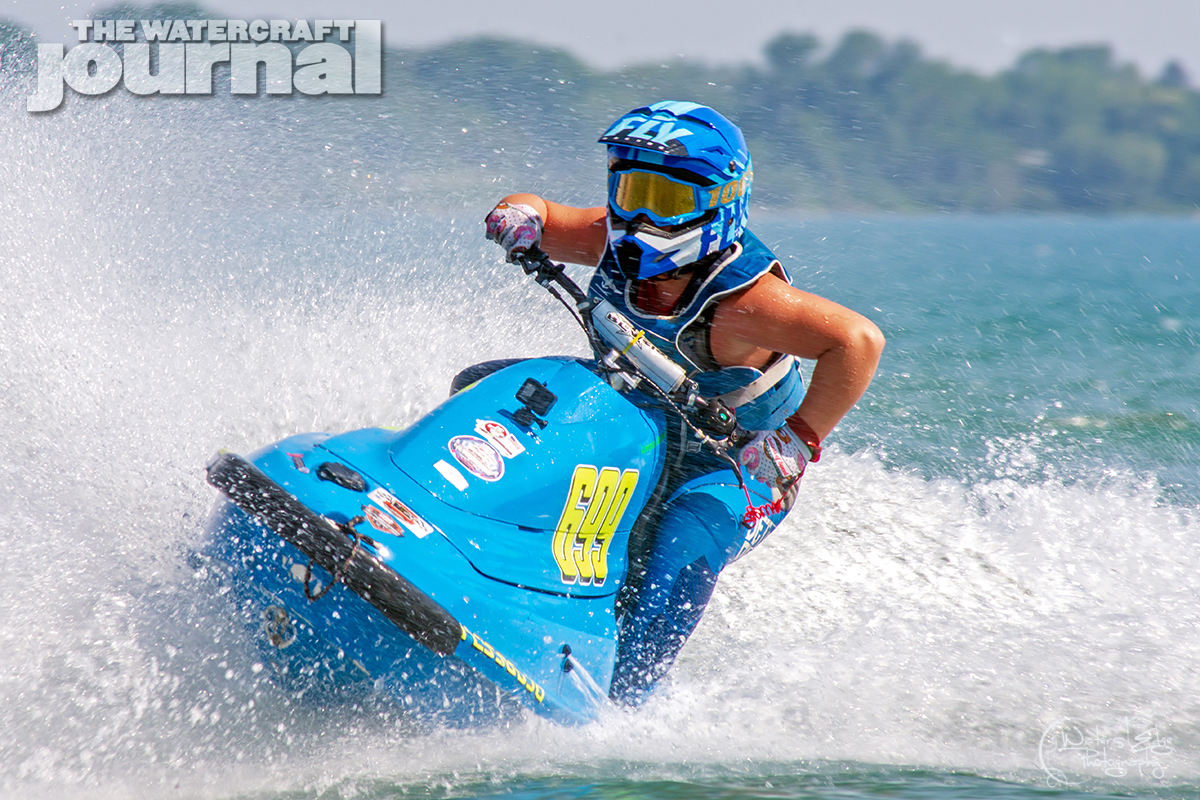
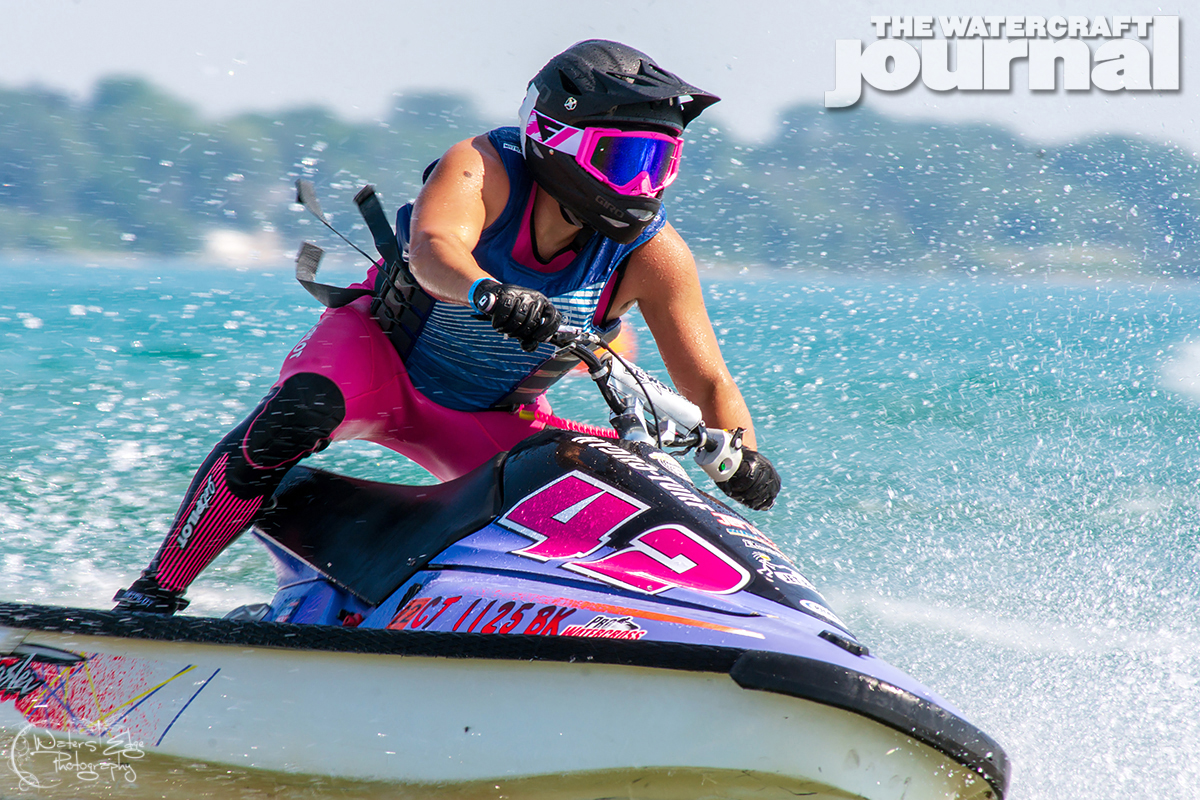
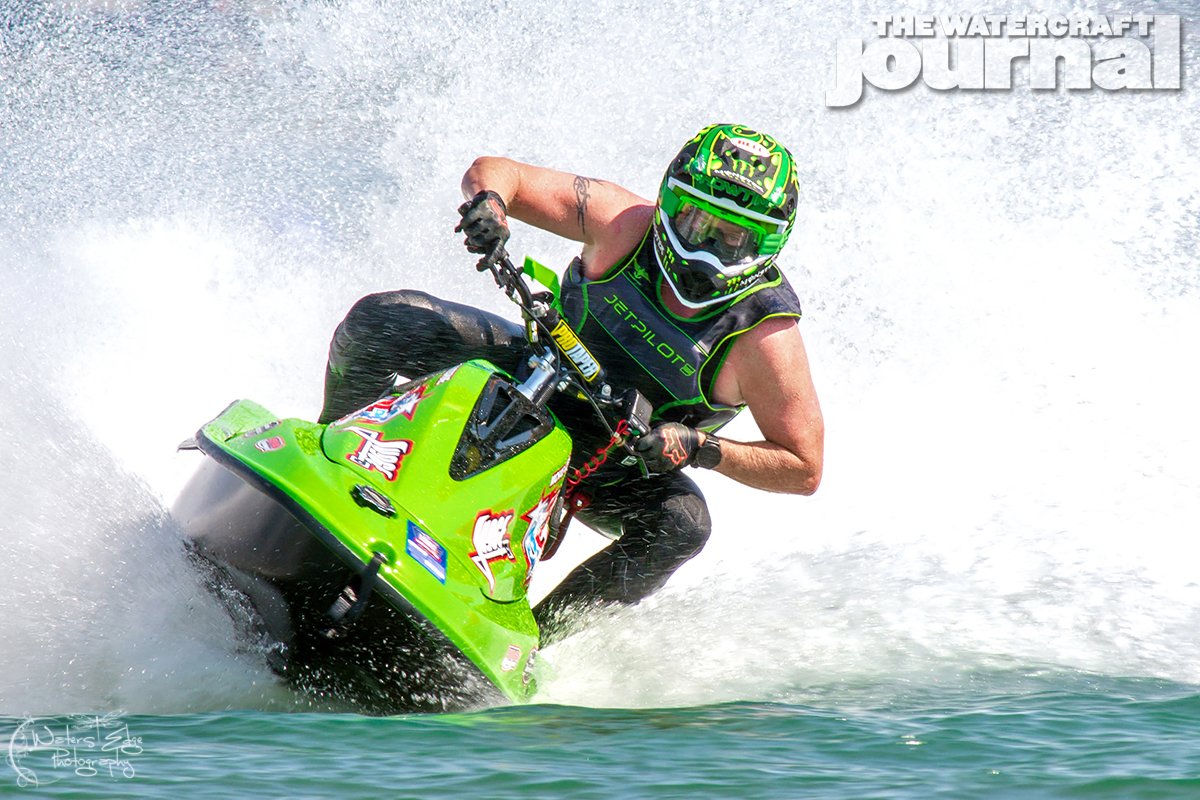
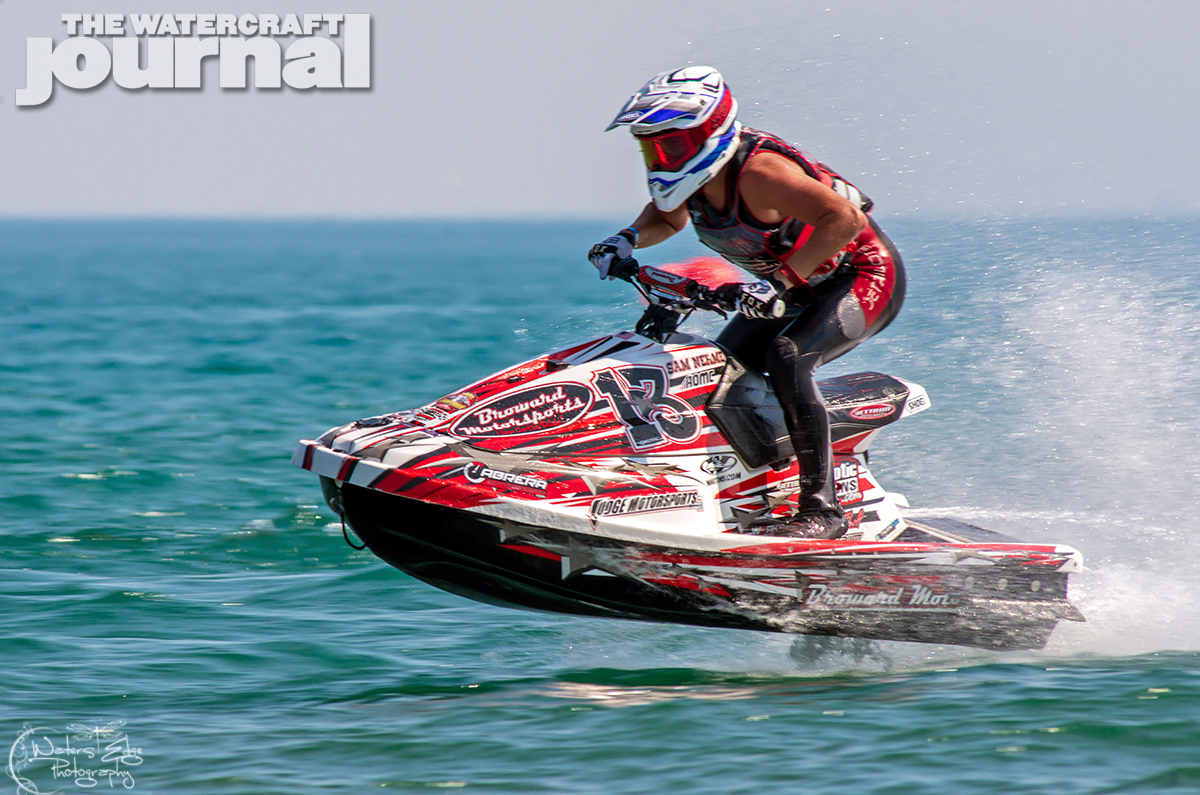
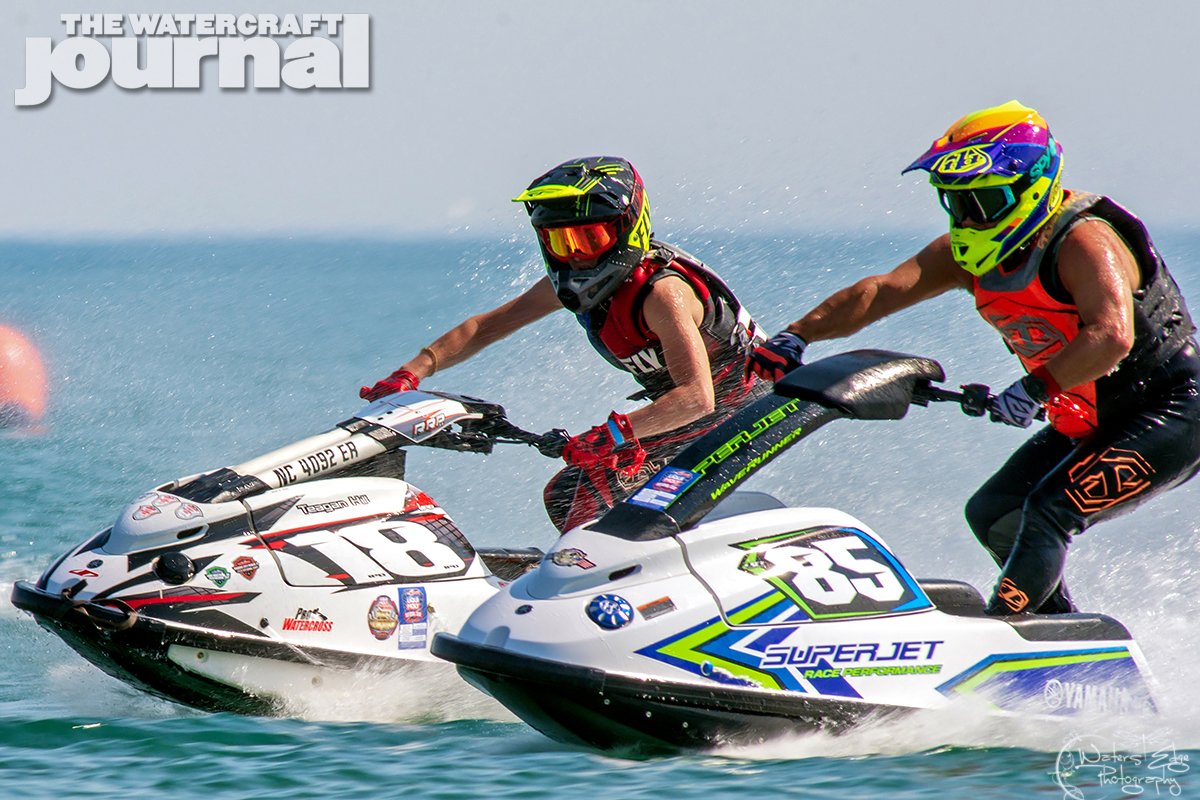
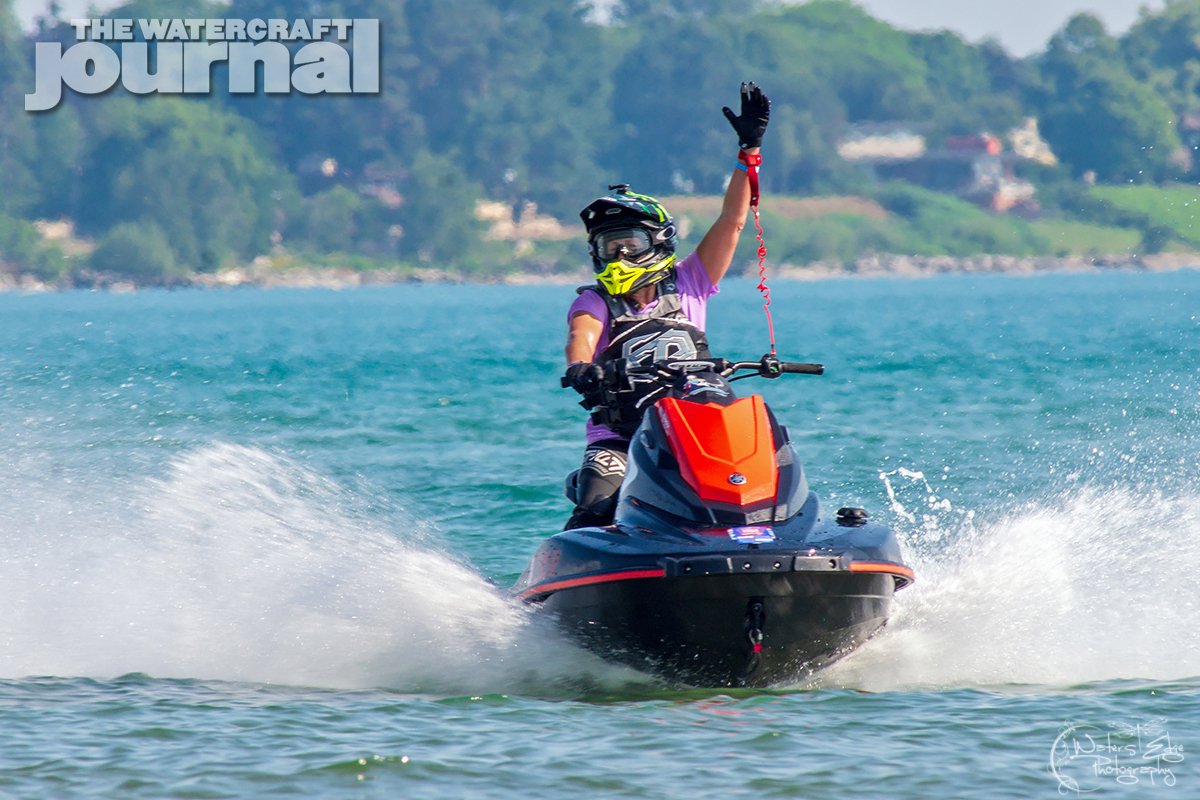
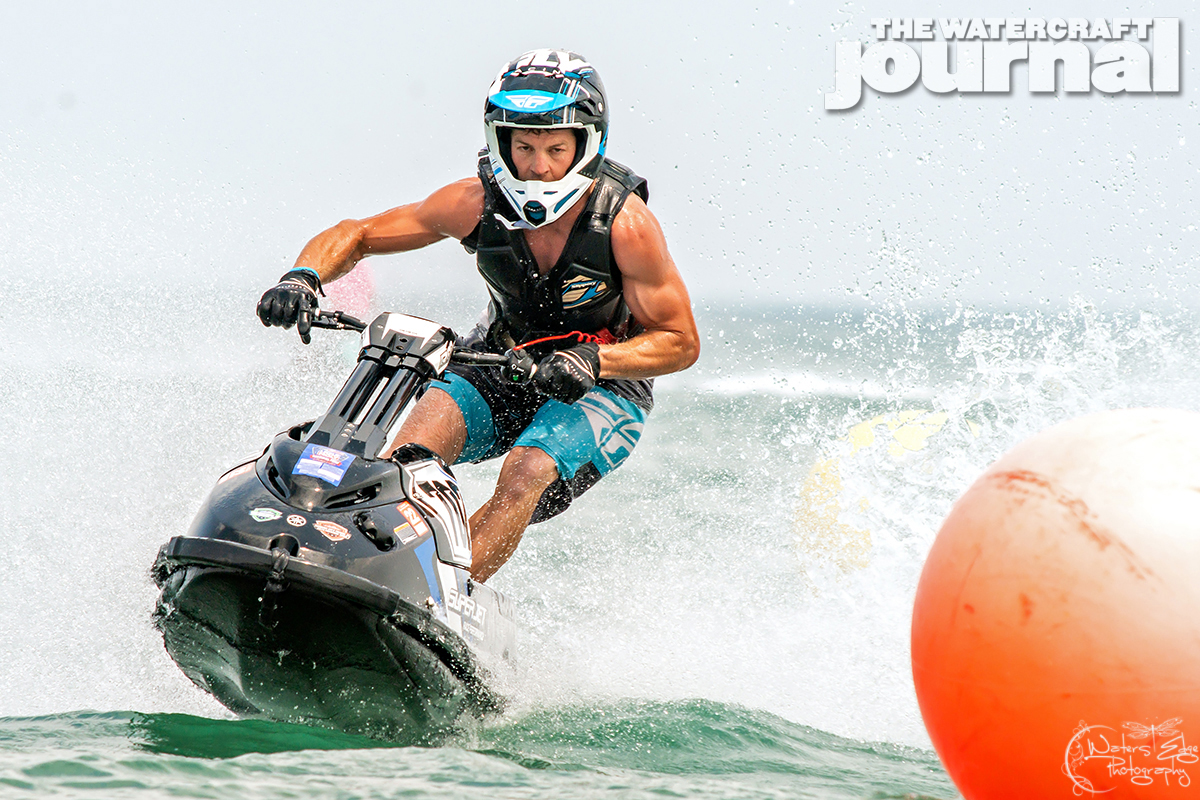
The 2021 Pro Watercross National Tour is technically over; the next race on August 28-29 in Lake Charles, LA, is billed as the Championship round, the culmination of the season’s six tour stops. With double points at stake, and event champions to be named, and season-wide tour-point standing champions to be crowned, the anticipation is bound to ramp up between now and late August.
Racine, the furthest north of the Pro Watercross tour stops, is a great race site, and normally a fairly well-attended, popular stop on the tour. This year, however, despite a decent turnout, bolstered by a good showing from local and regional racers, there were some missing faces – many of whom are tour champion contenders, if not points-leaders in their classes.
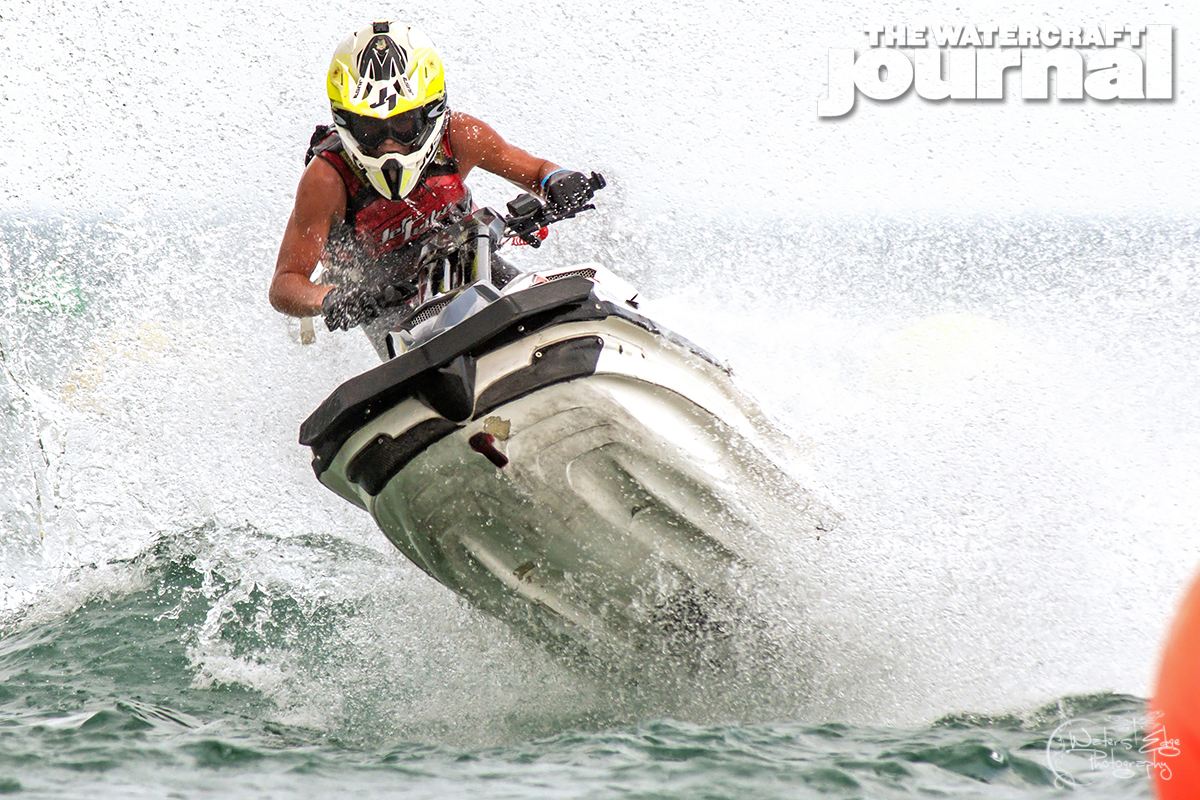
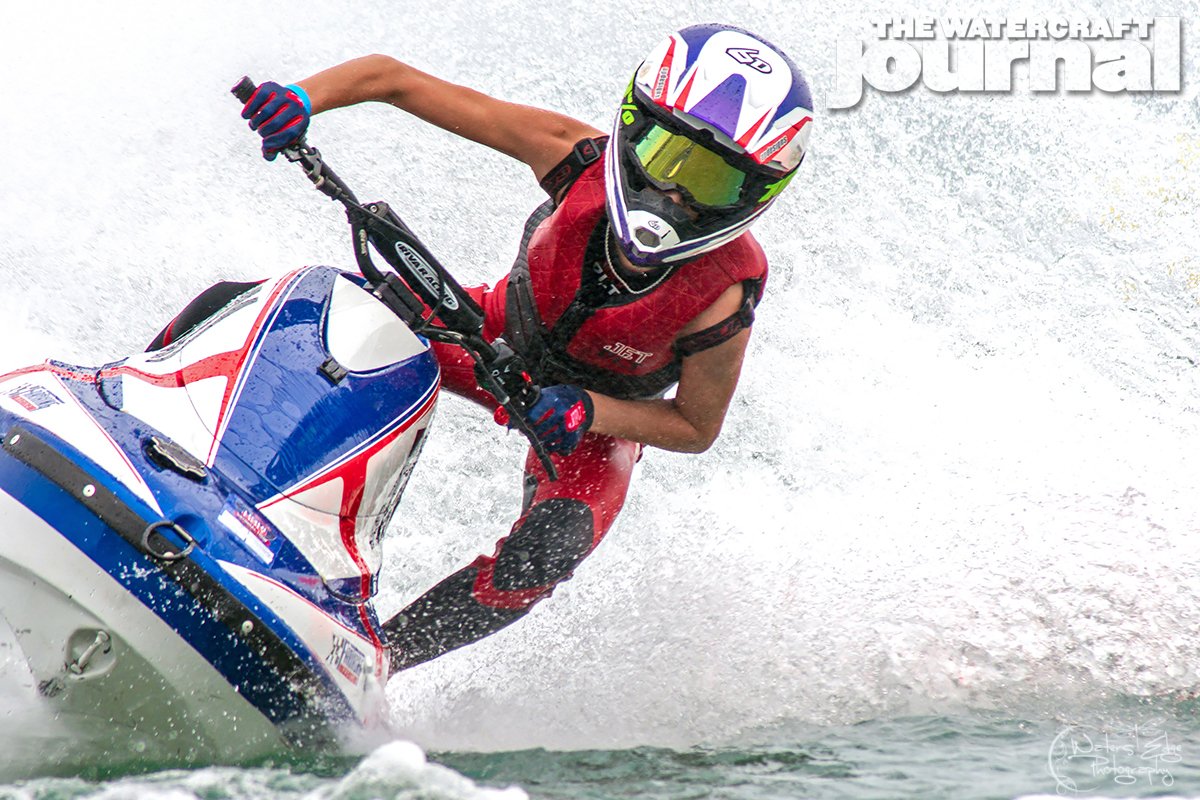
Despite the notable absences, though, the Racine weekend provided plenty of race intensity, some condition switch-ups that kept things interesting for spectators and racers alike, and some strong showings from some of the newer names to the game.
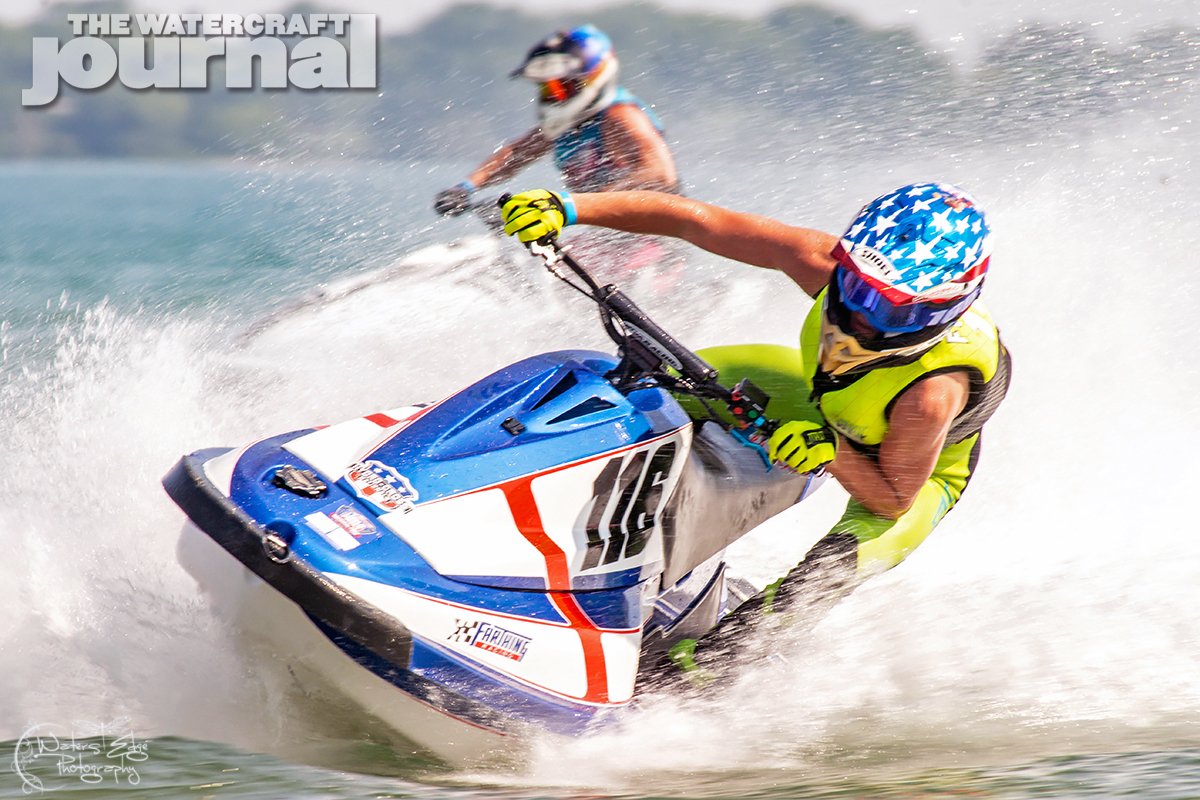
The Pro-Am Ski GP class staked down the largest lineup of the weekend, with nine racers set behind the band, despite the absence of three of the four points-holders in the class. Headed into Round six, Deven Farthing led the pack with 208 points, a lead he held onto with a third-place overall finish at Racine (2, 6, 2) to bring his tour points to 319. However, following the Hartwell race, Matthew Richuk as close on Farthing’s heals with 199 point, followed by Jimmy Wilson with 187.
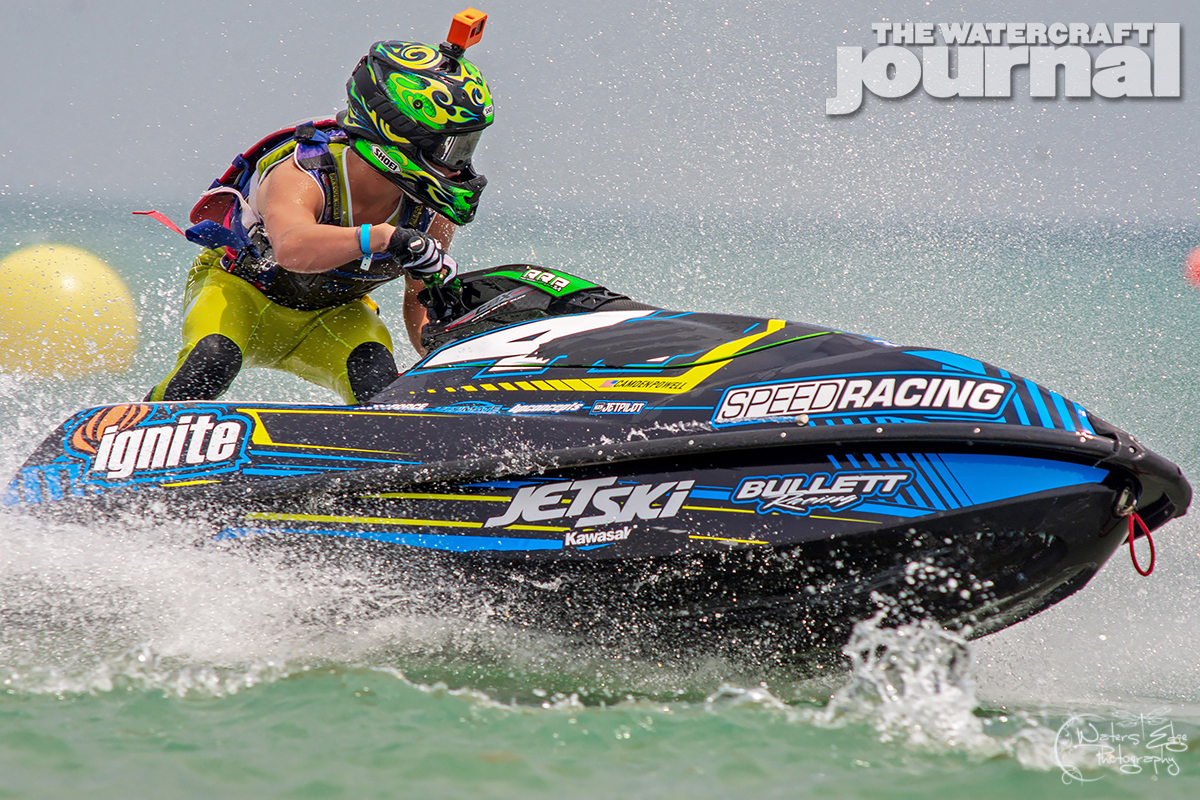
Neither Richuk or Wilson attended the Racine tour stop, and Camden Powell, who now holds 206 points following his 6, 7, 3 weekend at Racine. Richuk held onto their place in the tour points chase, and much of the attention that was focused on the competition between Richuk and tour veteran Jimmy Wilson at Hartwell shifted to the battle at Racine between Mike Klippenstien (3, 2, 4) and his young protege, Ryder Wildeboer (1, 1, 1) With Double points on the line in Lake Charles, the Pro-AM Ski GP 2021 Champion is far from settled.
Pro-Am Runabout Box Stock was another class that put up some tough racing, with some great racing by both Arnold Martinez, who took the overall top podium spot for the weekend, and Brad Bohat, who landed on the second podium step even after two first-place finishes with a rough Moto 2.
However, all three of the top tour points holders were absent at Racine, with Troy and Tory Snyder, as well as Seth Nama, missing from the lineup. Season-long tour point standings heading into the National Championship, however, remain unchanged from the post-Hartwell trio of Tory Snyder (300), Troy Snyder (260) and Seth Nama (140) due to both Bohat and Martinez having missed out on most of the 2021 tour stops.
In Pro-Am Ski Stock, all three of the weekend’s motos posted up matching results, with Ryder Wildeboer (1, 1, 1) taking the weekend’s top spot, Jeb Zarzour (2, 2, 2) taking second, and Alex Anderson (3, 3, 3) taking the third spot. Headed into the National Championship, sporadic and low turnout for the class leaves Tour Points leader Zarzour with only 113, followed by Wildeboer and Richuk tied at 60 points.
Sport Stock was again one of the most attention-grabbing classes, and none of the top tour point holders were missing from the lineup. The weekend’s racing ended with Jake Zier (5, 1, 1) taking the top podium spot, Sammy Nehme (1, 2, 4) taking second), and Talan Farthing (3, 4, 2) sneaking past his brother, Deven (4, 3, 3), to take the third podium spot. Tour points in the class stand at Deven Farthing, 319; Sammy Nehme, 215; Talan Farthing, 203.
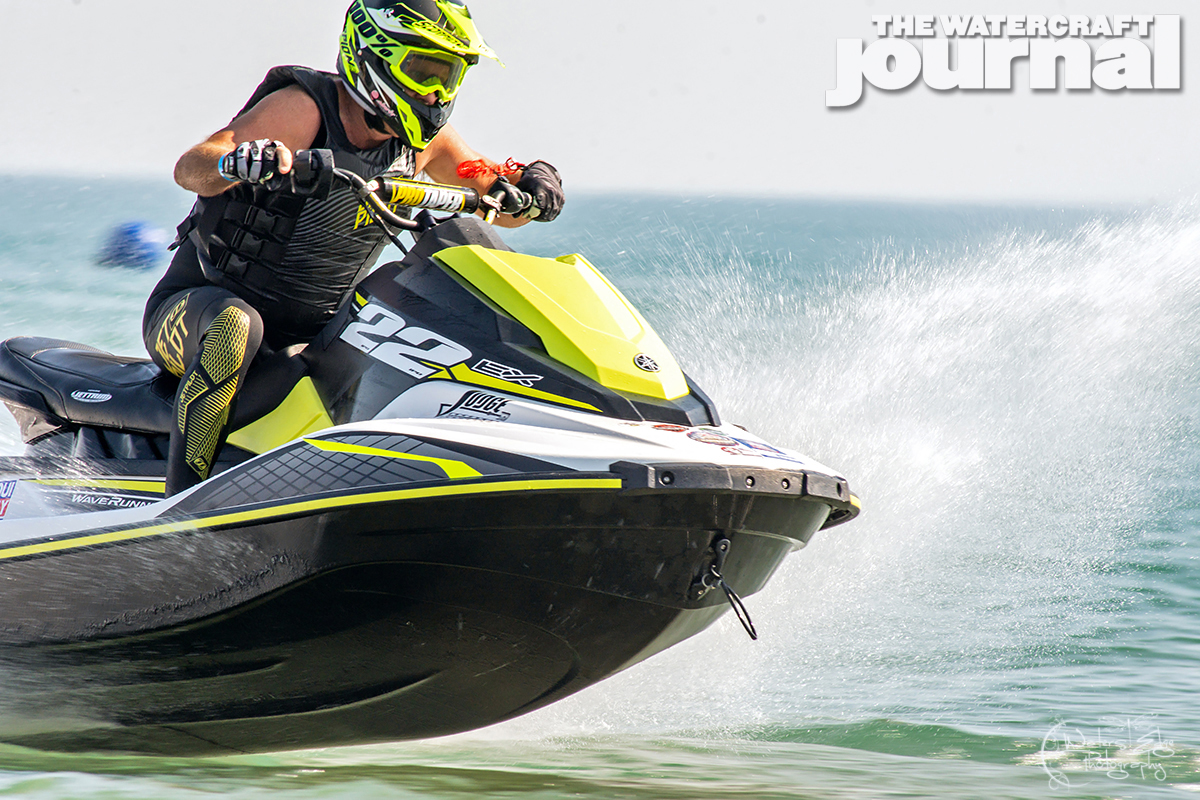
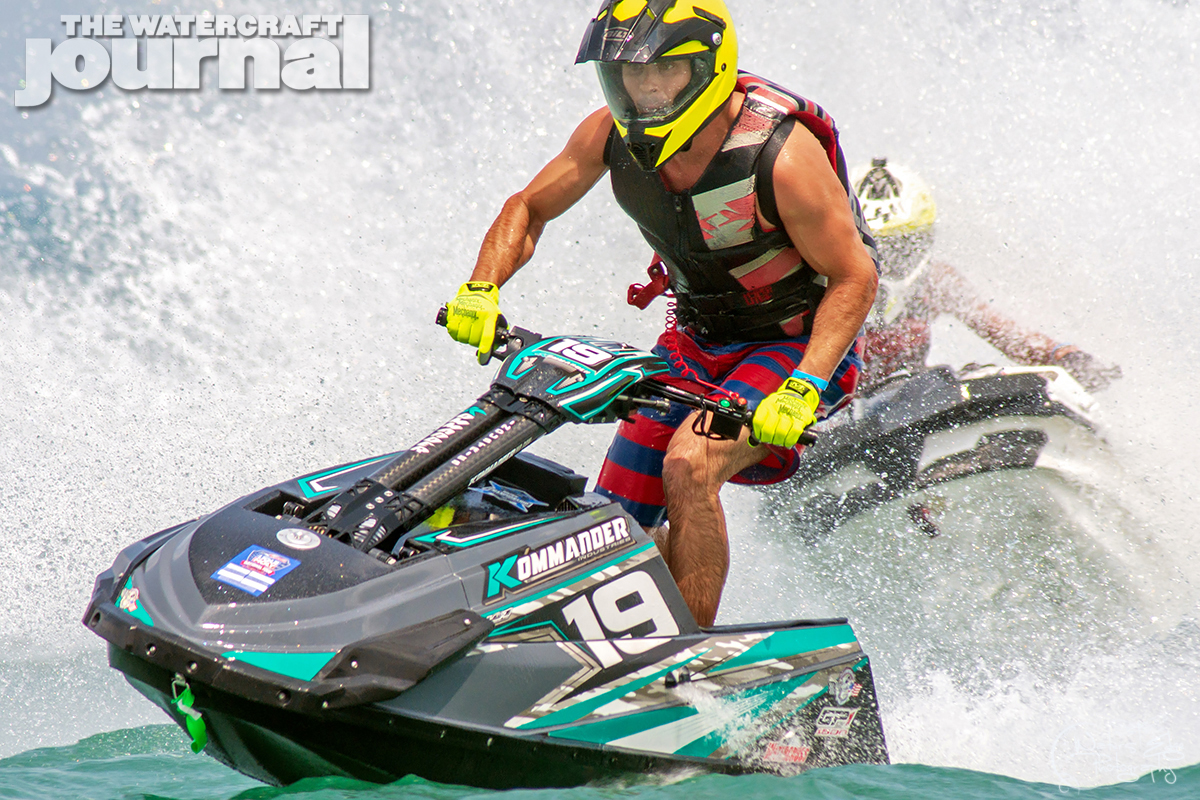
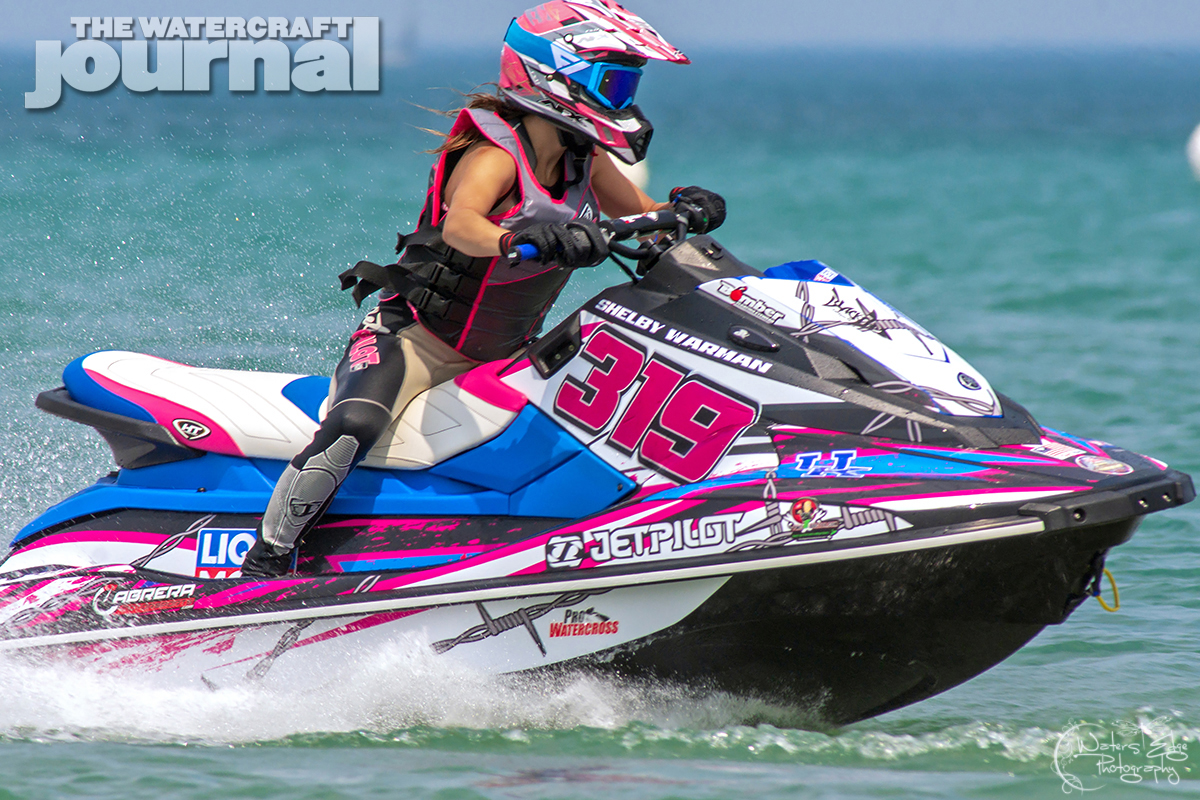
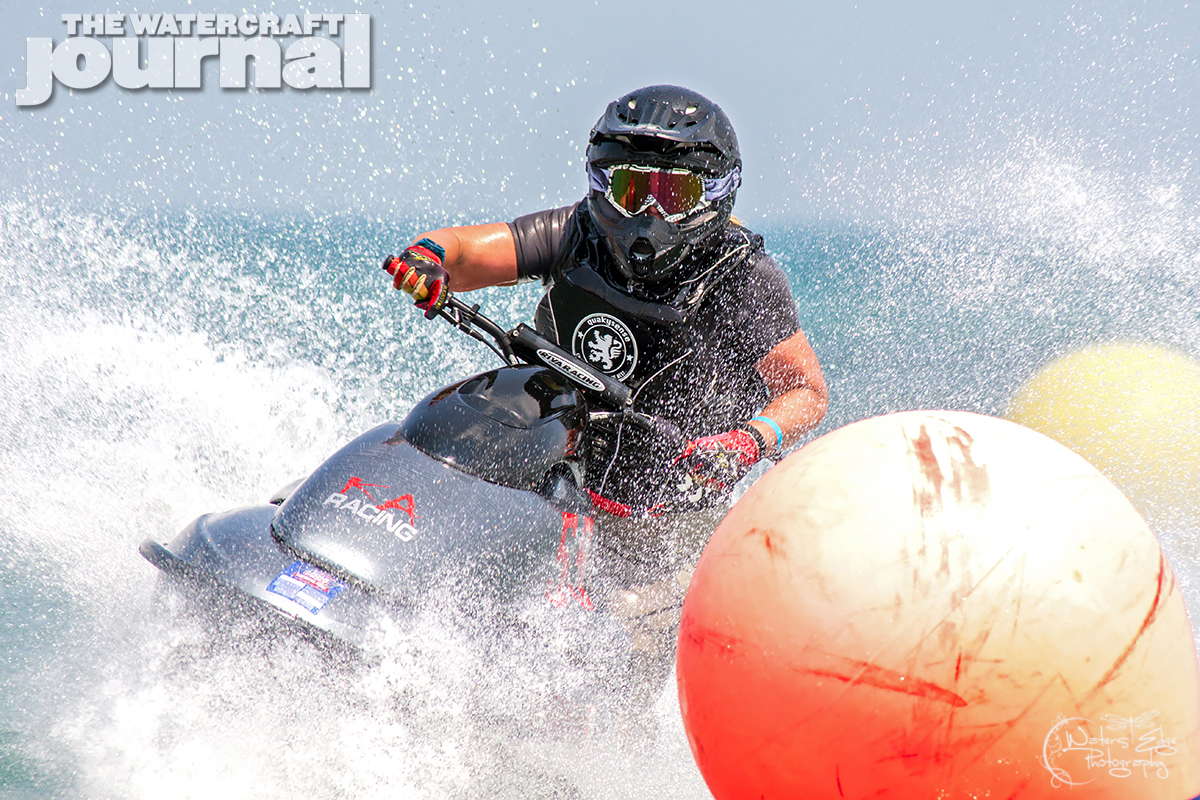
For complete results from Racine, and up-to-date tour points standings, visit prowatercross.org. Visit www.watersedgephoto.online for additional race images from Racine and prior tour stops.
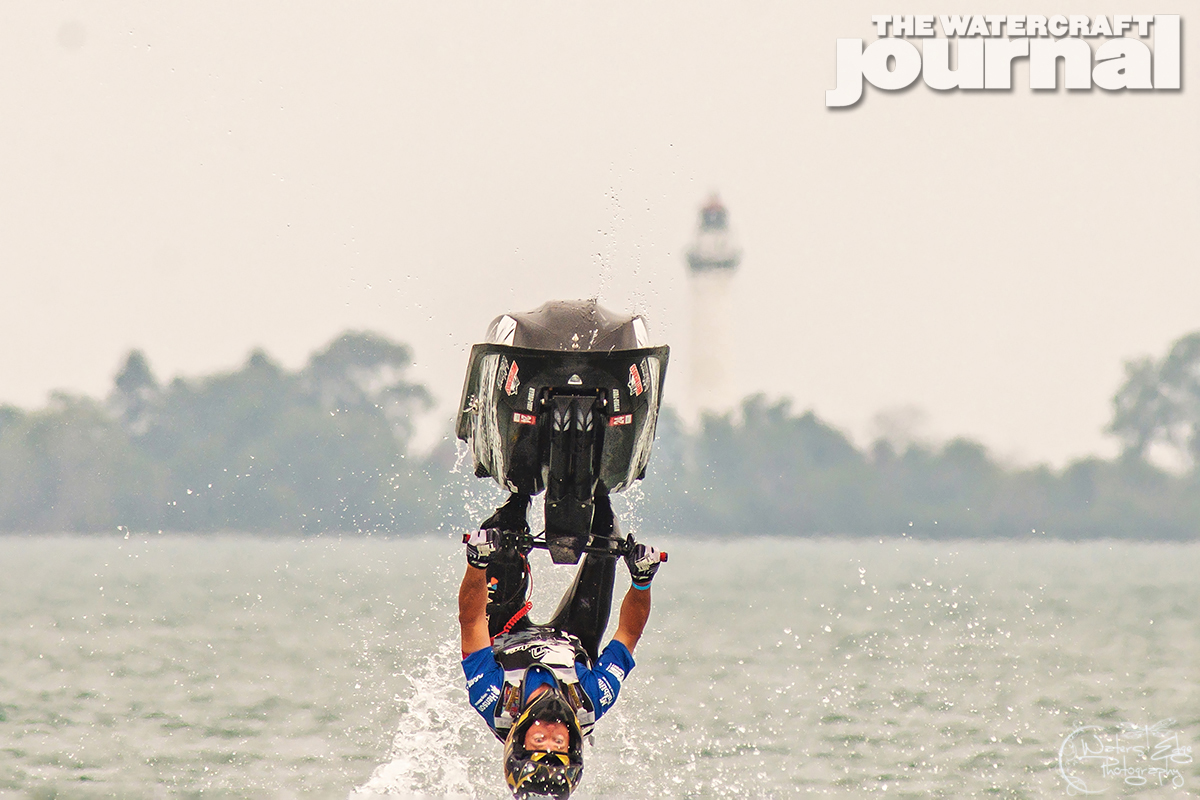
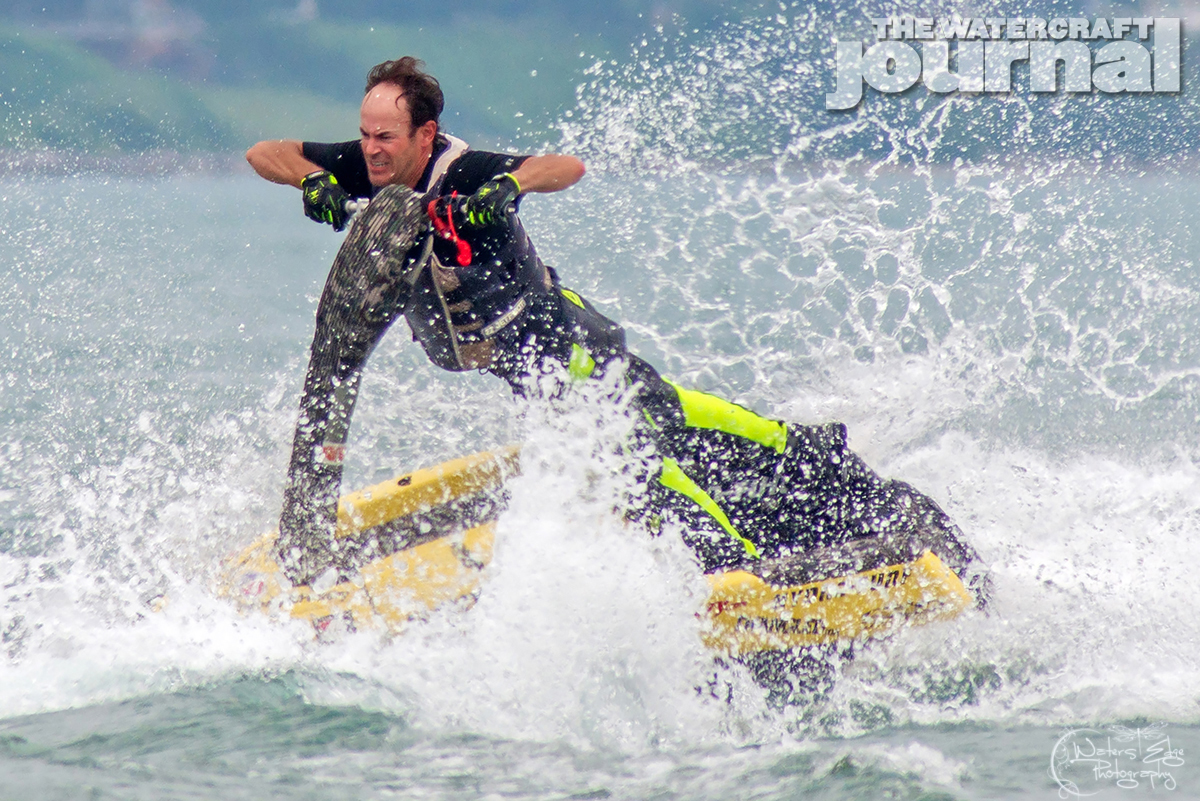
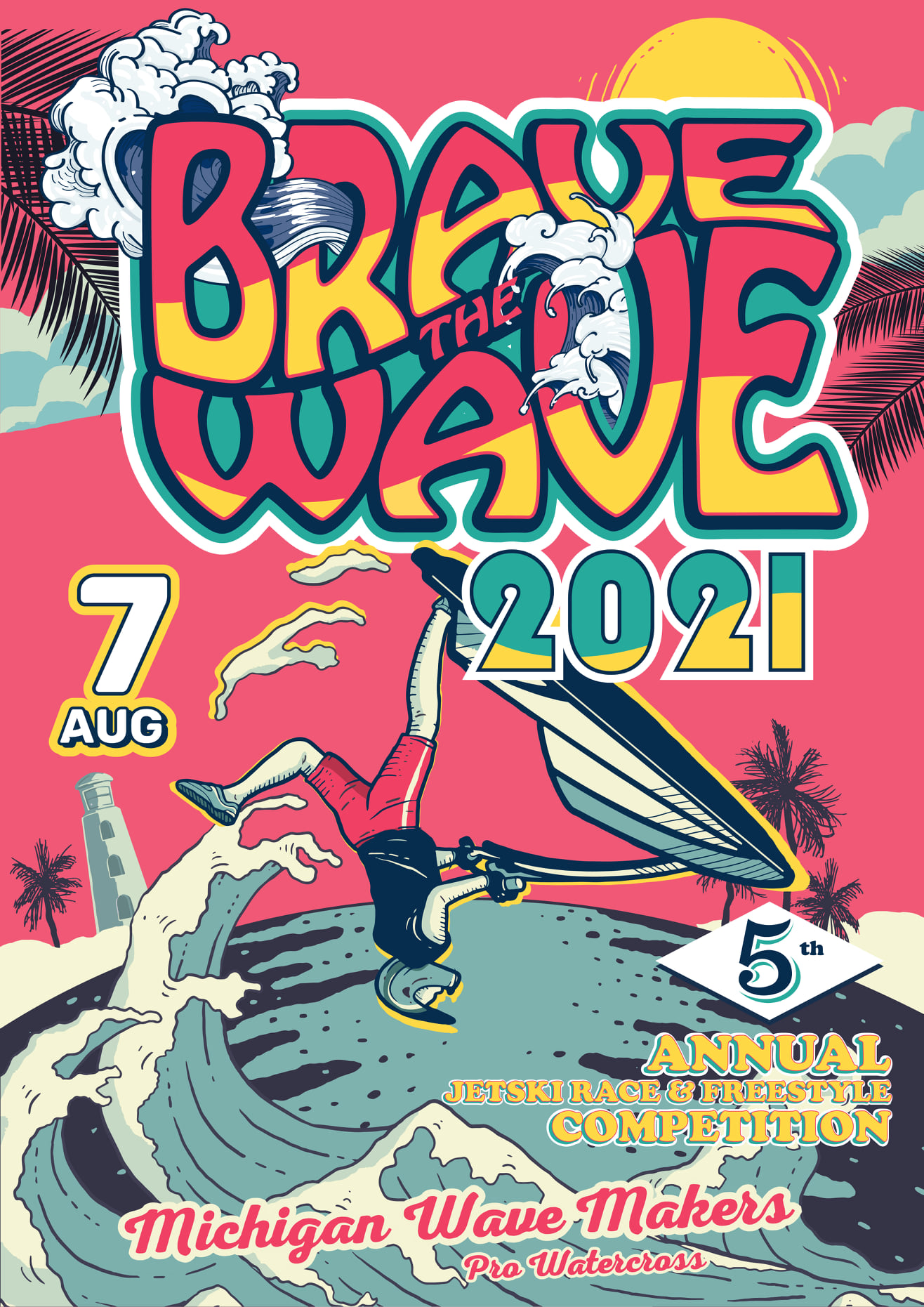
The Michigan Wave Makers are hosting their 5th annual Brave the Wave event on August 7th and the community of Lake Orion is proud to host this event that brings jet ski riders from around the country to compete in freestyle events and races.
A generous prize purse is available for winners in each category and a portion of proceeds from this event will go toward Dutton Farm. They empower those with special needs to “live a life of purpose and dignity.”
Registration closed August 1st and that’s final. Late registrations or day of the event walk-up registrations will not be accepted due COVID protocol. Also, the Michigan Wave Makers ask that you social distance as much as possible
The event takes place on Lake Orion Saturday August 7, 2021, from 11:00 AM to 6:00 PM. They have several different categories to compete in and each one is $50. Enter as many as you like and prepare to have a good time!
Message their Facebook page if you need a place to camp with your trailers or email Terri at [email protected]. The group looks forward to seeing everyone!
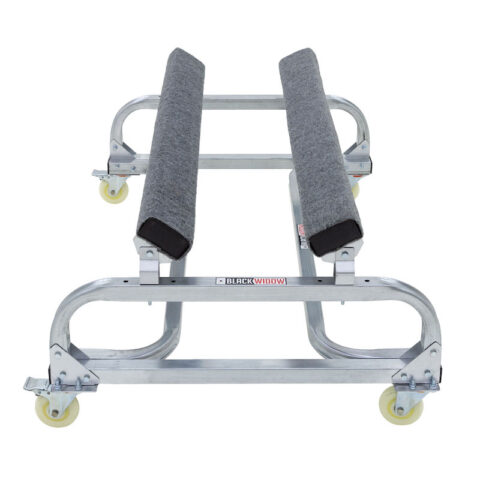
In reviewing some of the industry’s best products, we at The Watercraft Journal have tried to find ways to make one’s experience of owning, maintaining and generally enjoying their personal watercraft as easy and trouble-free as possible. Sure, testing out the latest supercharged machine is fun, but that’s only half of the job. There are many tools and accessories that are just as important; and one for us (and many of you) is finding a quality PWC cart.
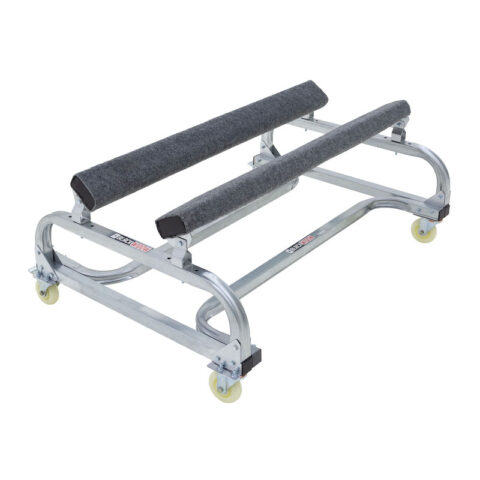
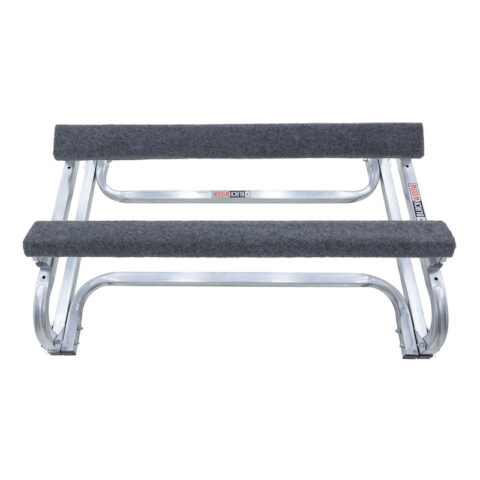
When not in use, a PWC cart needs to be compact and lightweight. When carrying a ski, it’s got to be versatile, easy to roll around. And for the shop or individual with a wide variety of units, it’s got to be adjustable and sturdy. Thus far, no PWC dolly can check all of these boxes…until now. Black Widow’s new PWC Dolly is made from anti-corrosive galvanized steel tubing and features adjustable bunks to fit a variety of machines. Stout and durable, it’s 3.75″ swivel casters can carry up to 1,000-pounds easy over most surfaces.
Here’s the original press release in its entirety: Black Widow, manufacturer of quality, affordable utility products for the powersports market, introduces the Black Widow® Personal Watercraft Dolly (Part # PWC-DOLLY-V2, MSRP: $189.99) for moving and storing jet skis, Jon boats and inflatables up to 1,000 pounds. Designed for use in both commercial and personal garage/shop settings, the dolly is adjustable to fit varied PWC models and includes all hardware.
Constructed from galvanized steel for better corrosion-resistance, the dolly includes the mounting plates and brackets along with four 3.75” casters that rotate 360 degrees for smooth movement across different types of floors. Two of the casters lock to prevent movement once positioned.
The Black Widow Personal Watercraft Dolly features dual bunks with three symmetrical width adjustments (center to center: 12.25”, 16.25”, 20.25’) that rotate internally within their brackets to conform to different hull angles. Marine carpet on both bunks protects against scratches to the PWC. Measuring 20.5” high, the dolly remains low enough to create a wide, stable base with its large 50.5” L x 33.875” W footprint.
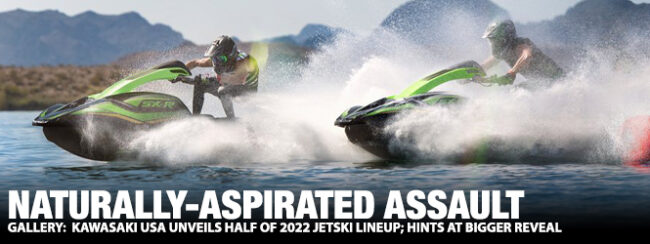
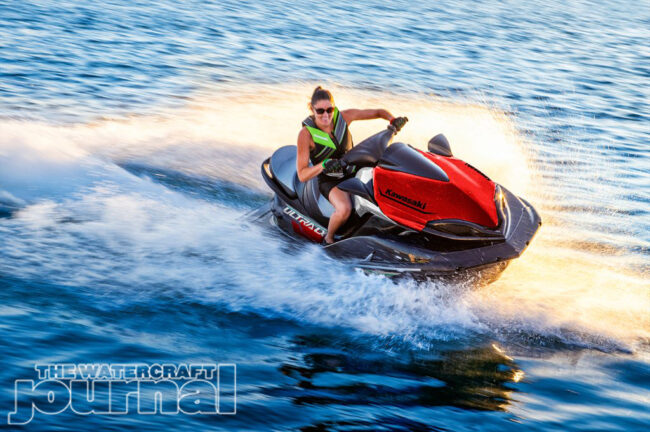
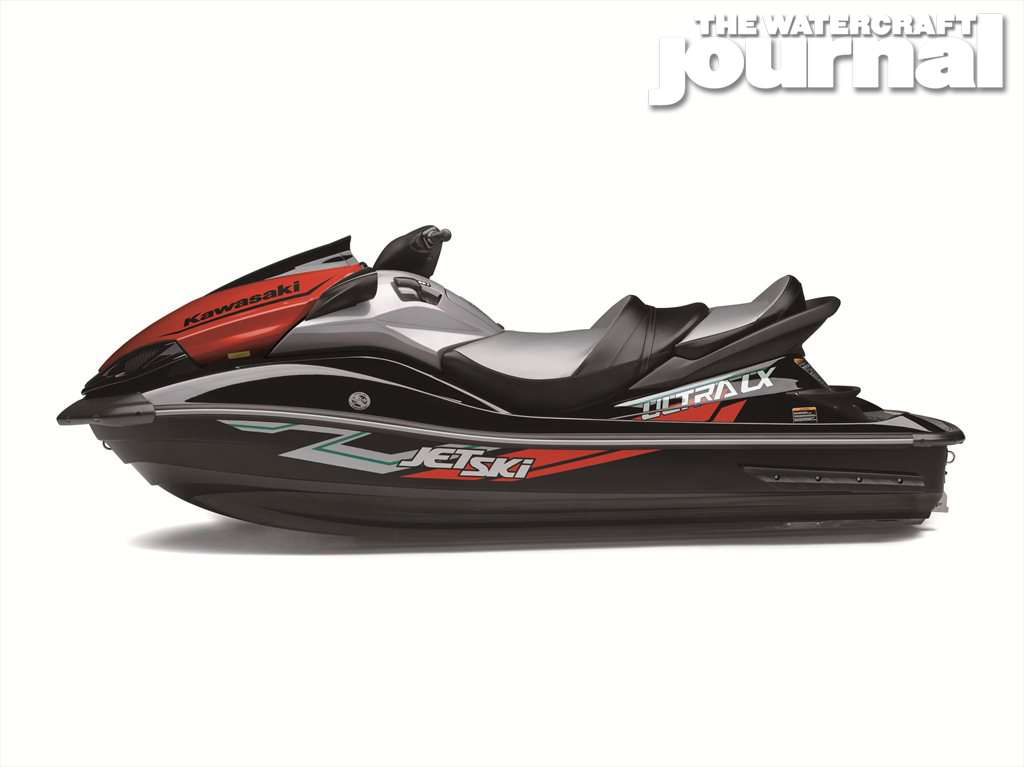
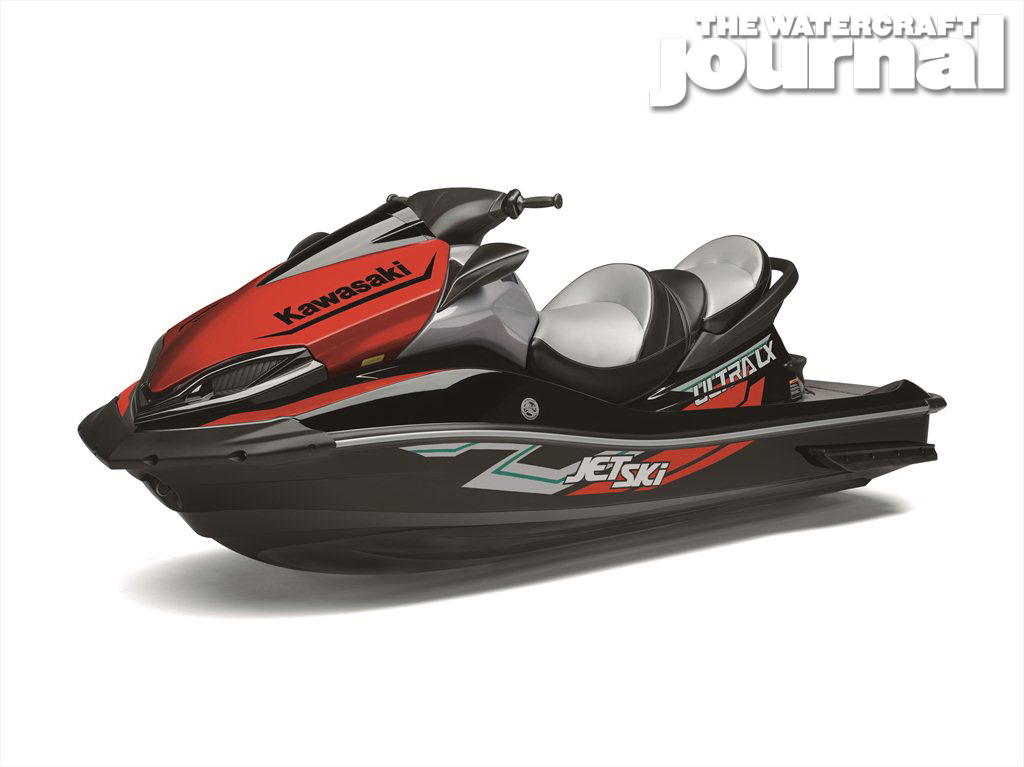
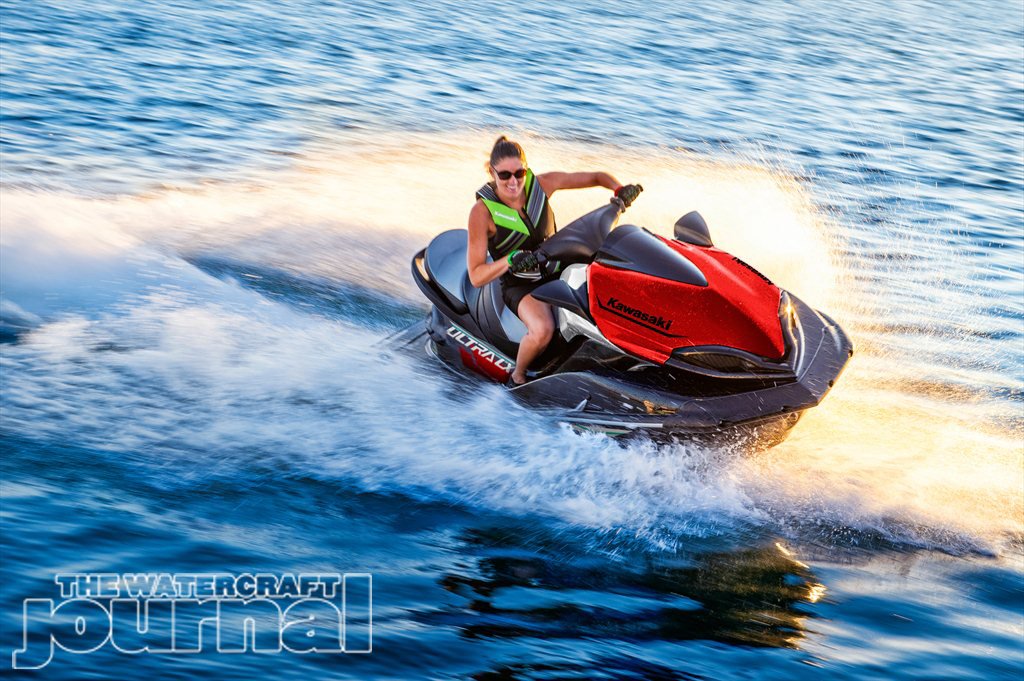
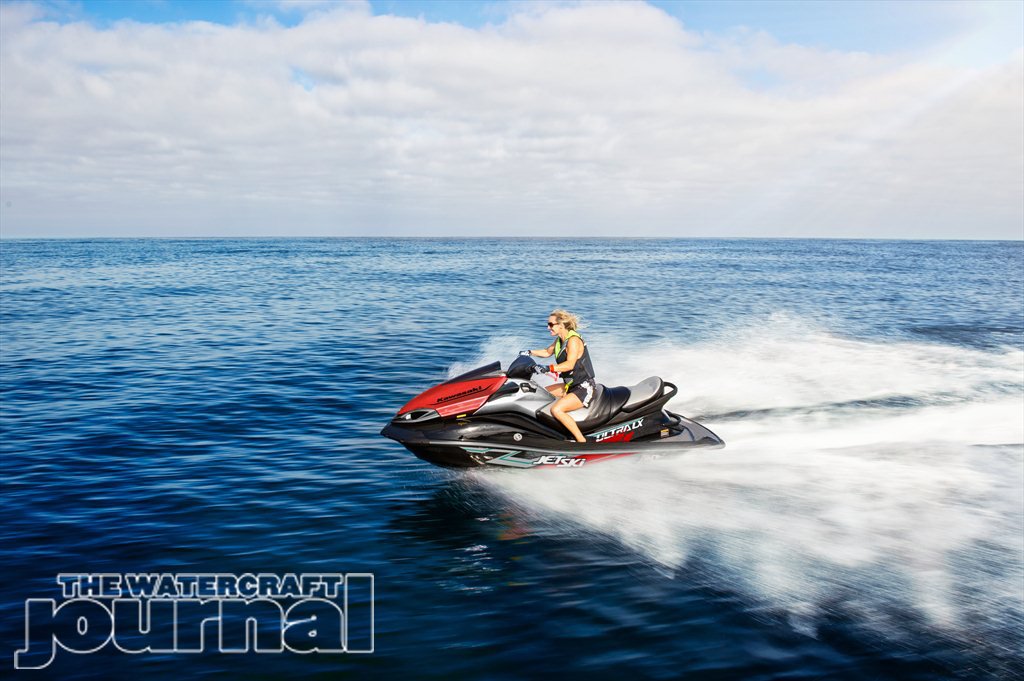
Of these machines, all operate with the identical DOHC, 16-valve, parallel 4-cylinder and 1,498cc engine. All save for the larger Ultra LX employ the same 148mm axial-flow, single stage jet jump as well (the Ultra uses a 155mm pump). Pertaining to the Ultra LX specifically, The Watercraft Journal was hopeful that the expected redesign for the supercharged 310-horsepower series would have effected this model as well. Per this release, such was not the case.
The 2022 Ultra LX remains relatively unchanged apart from a new Ebony/Sunbeam Red color combination with a modest MSRP increase of $300, bringing it to $11,699. Despite it’s stellar 56-gallons of overall storage, 20.6-gallon fuel cell and premium paint scheme, the Ultra LX fails to reach the dedicated cruiser market as it persists without Kawasaki’s engine management system, which gives the other JetSkis its fly-by-wire throttle and cruise control feature.
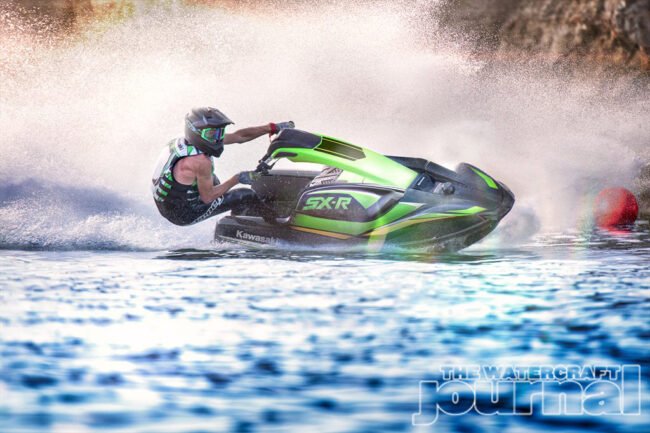
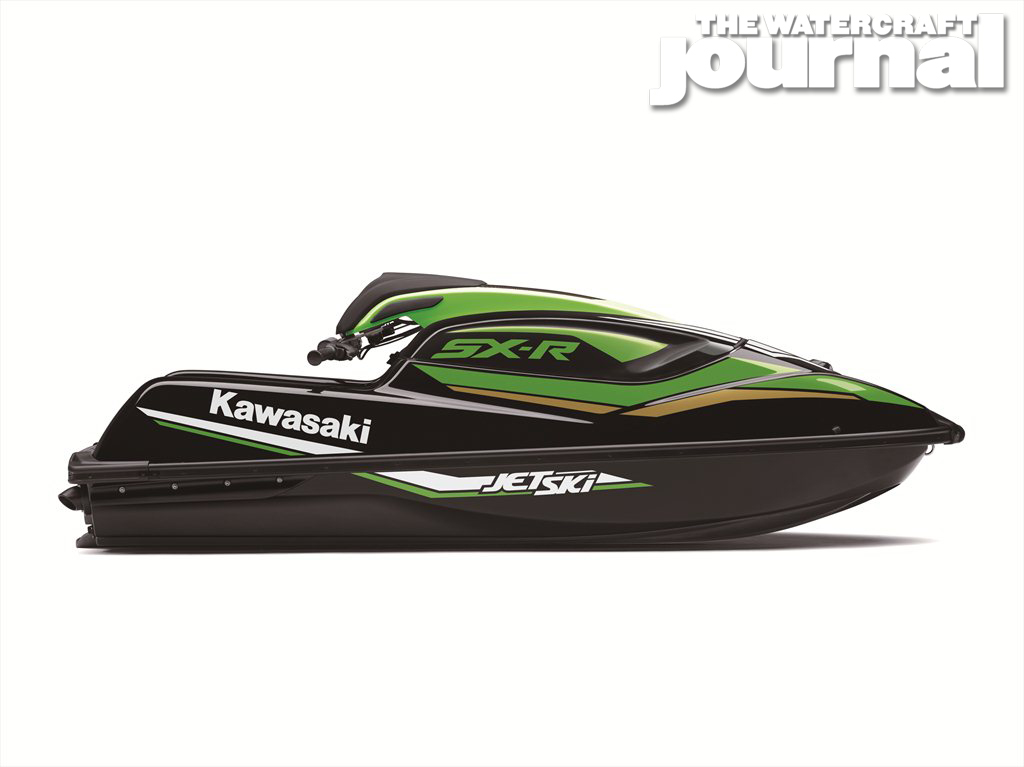
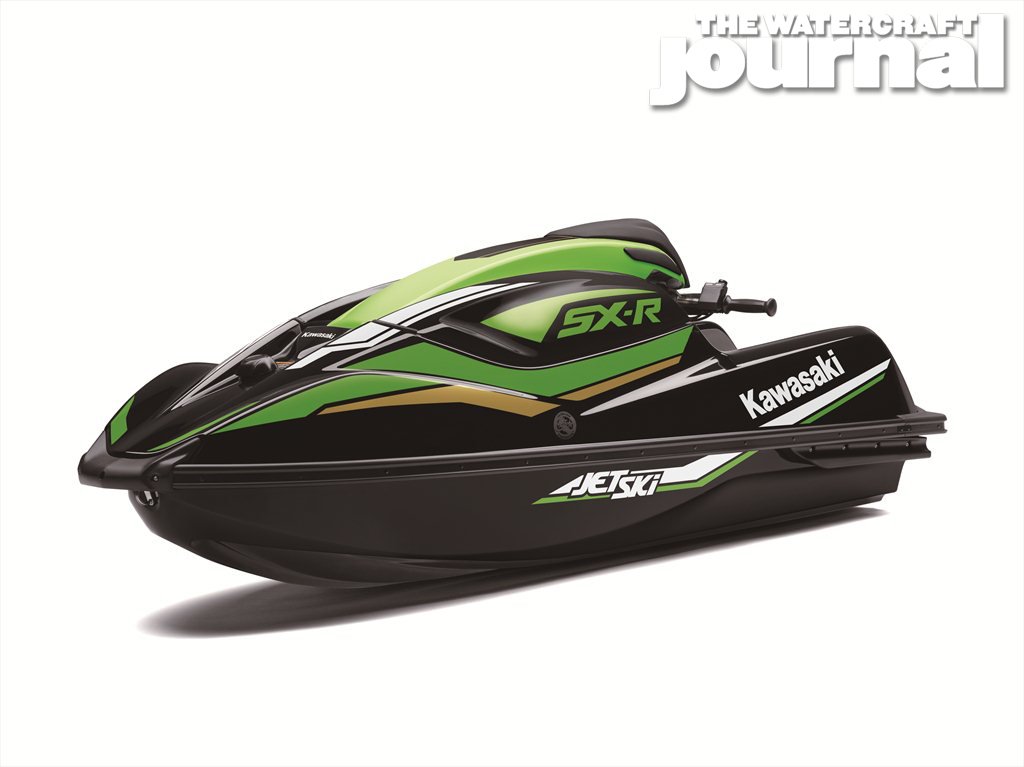
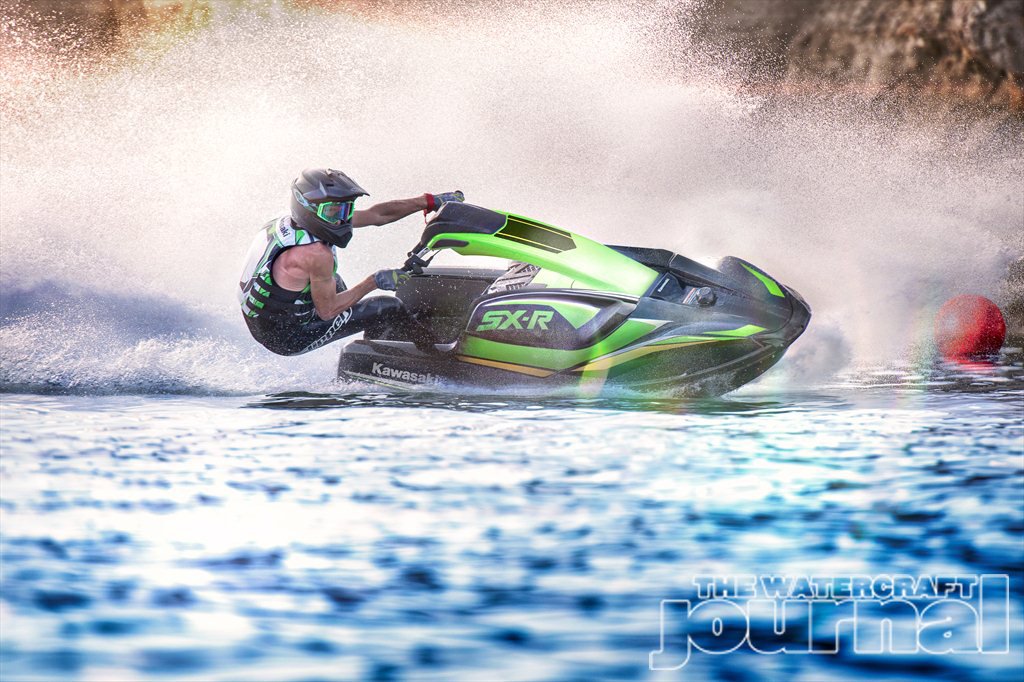
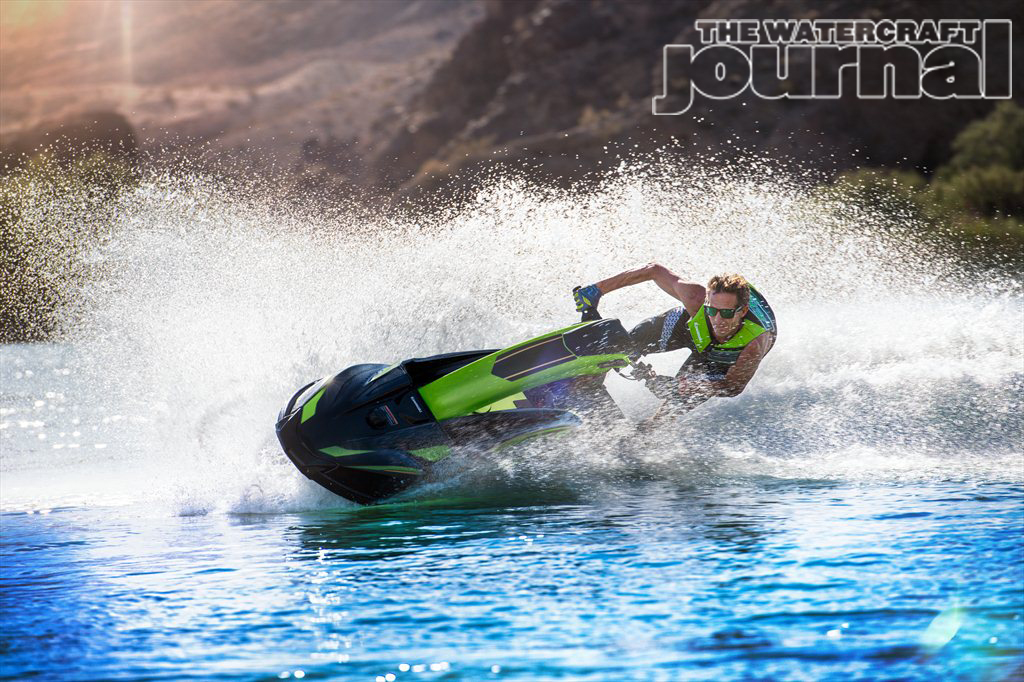
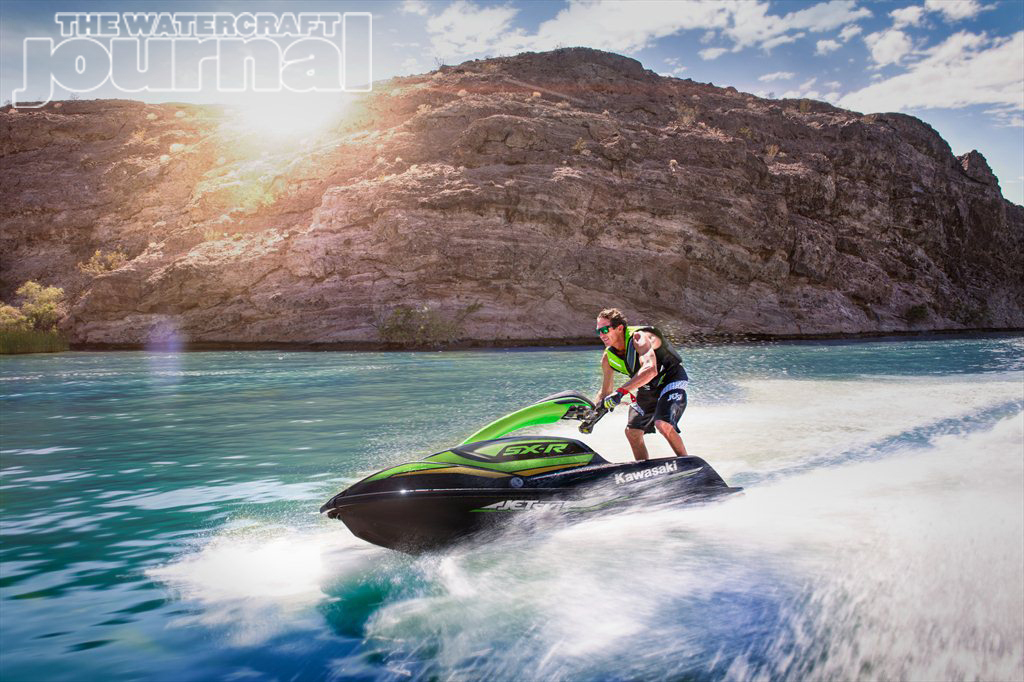
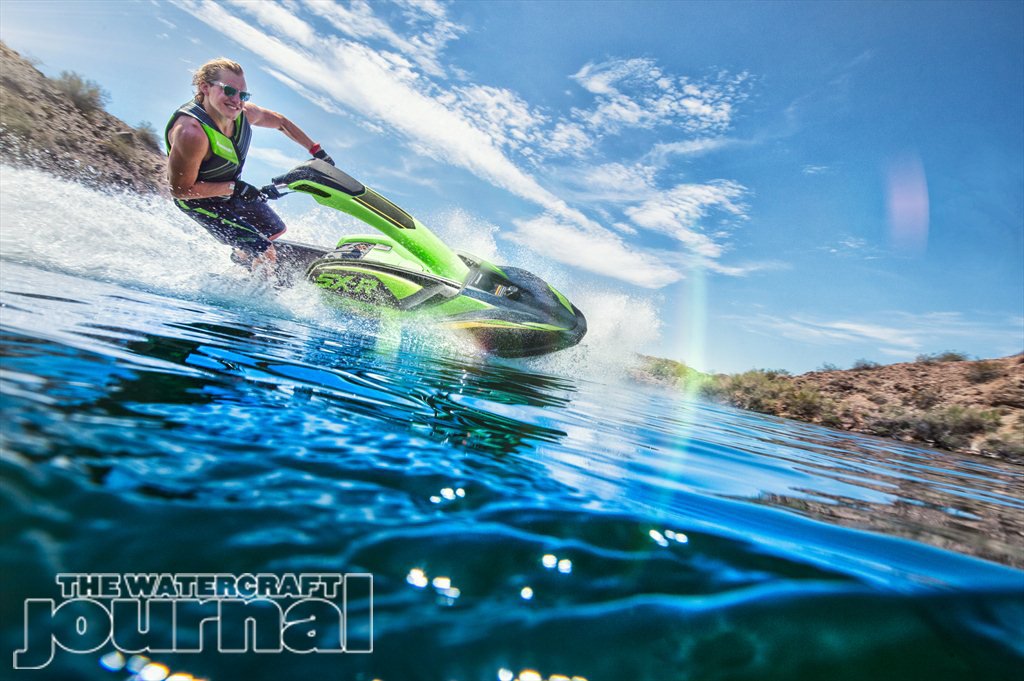
In light of Yamaha’s new SuperJet, the Kawasaki SX-R 1500 has only elevated its stature as the top performing 4-stroke standup offered today. Between the two, the SX-R and its runabout-inspired hull is the preferred pick by racers and athletes looking to carve buoys at speeds about 60mph. Changes to the JetSki are minimal: a $300 price increase from $9,999 to $10,299 and new graphics that include a ribbon of gold amid the Ebony Black and Lime Green.
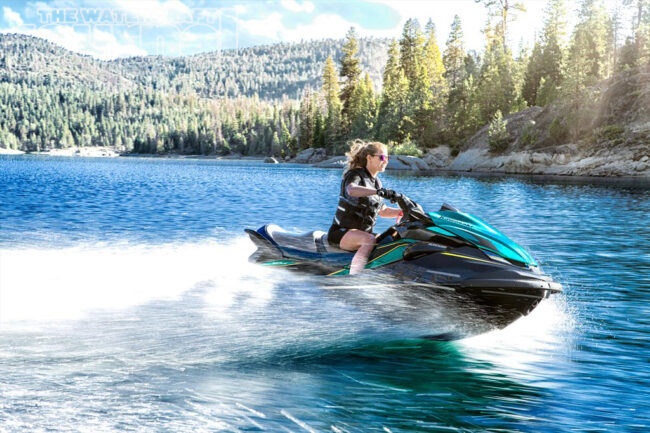
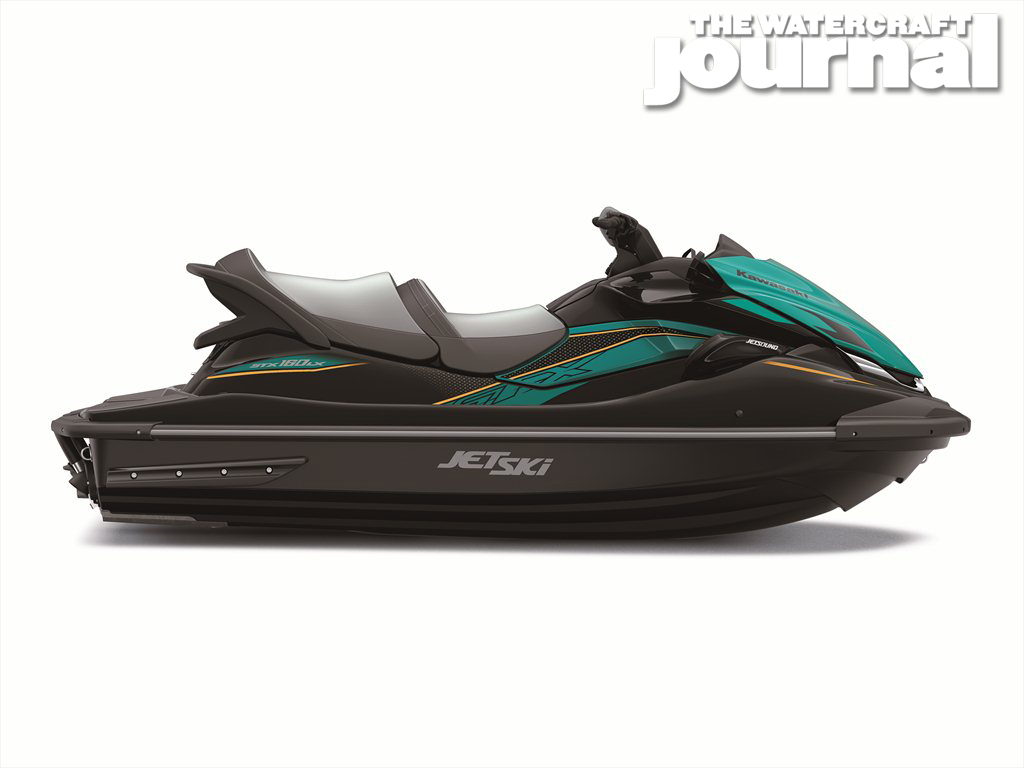
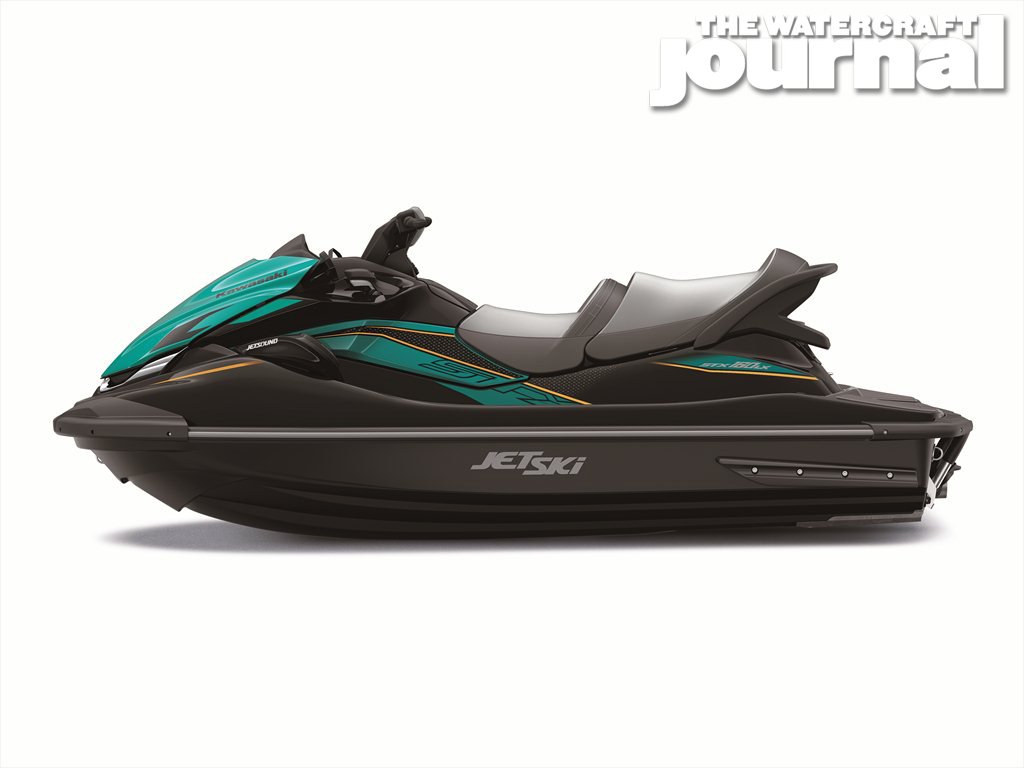
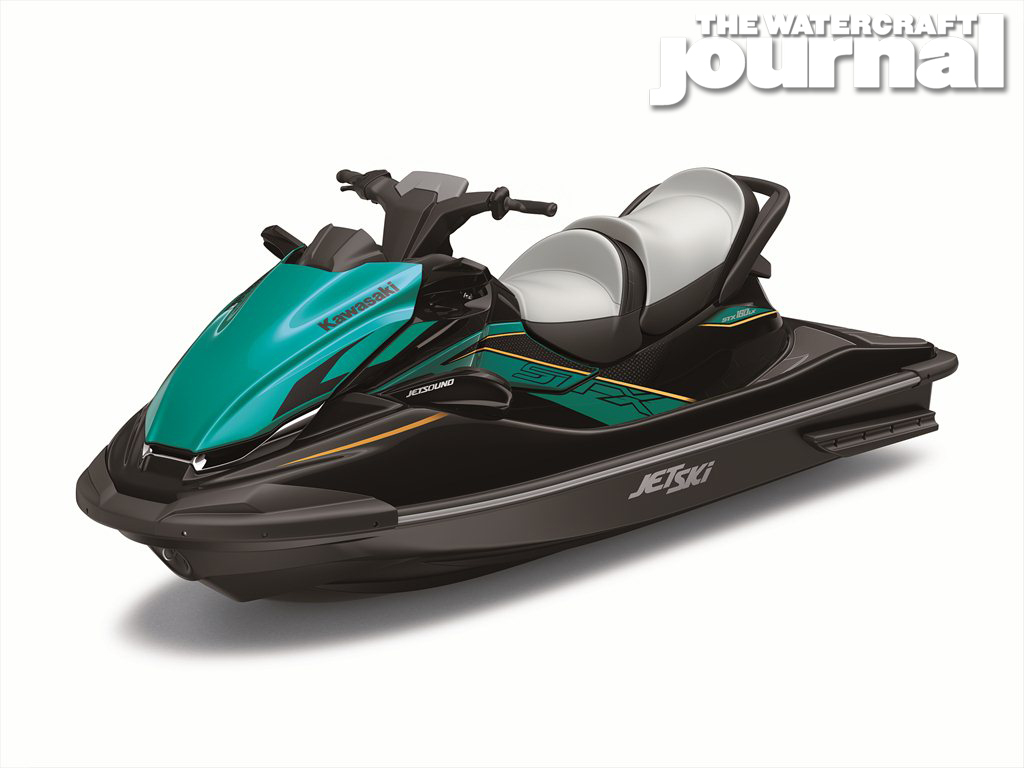
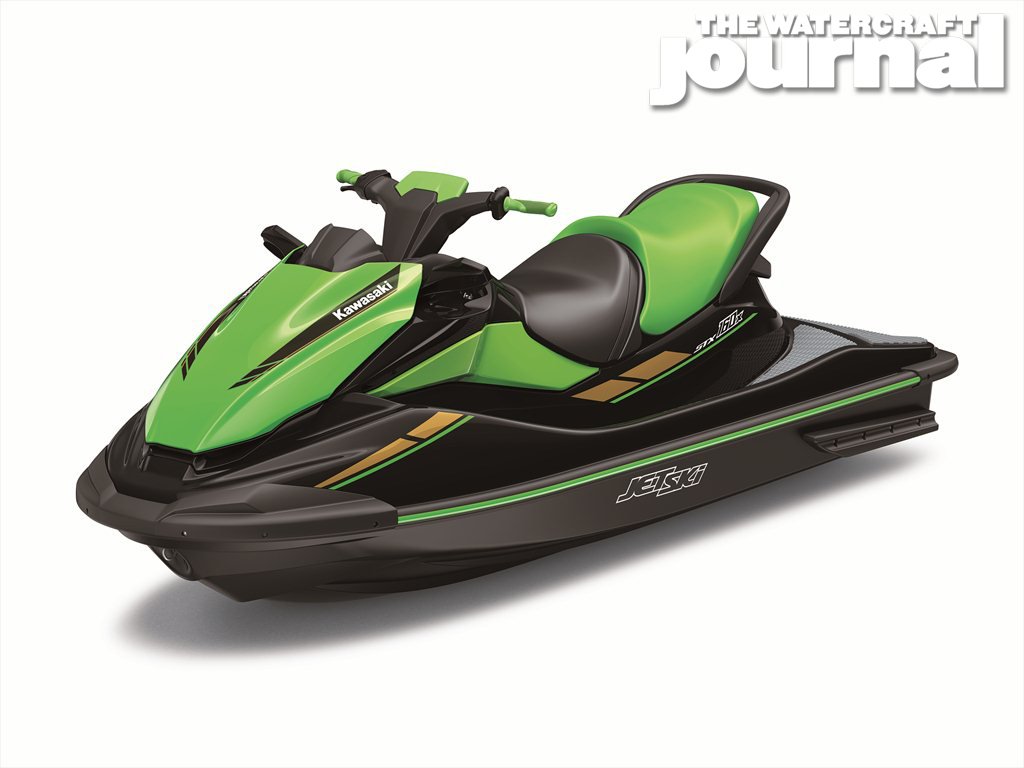
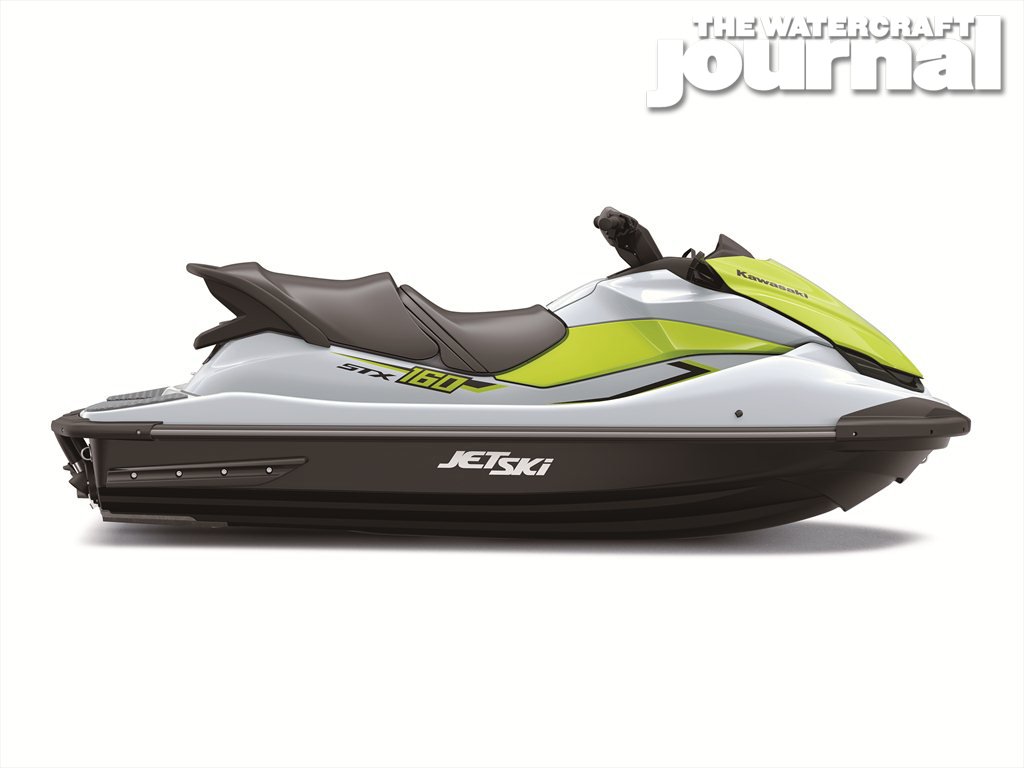
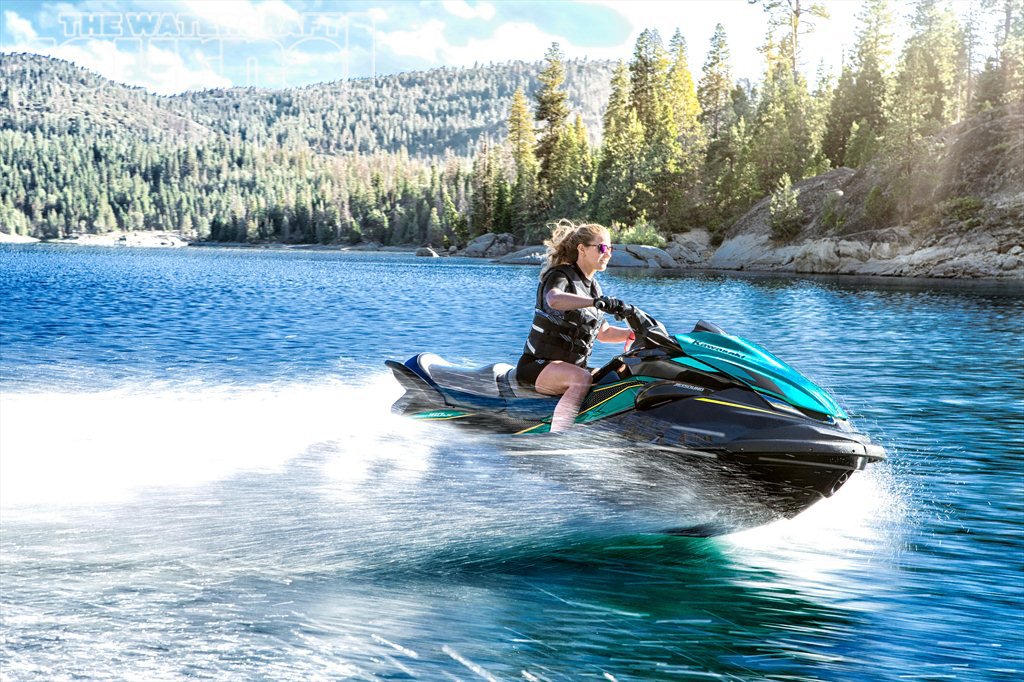
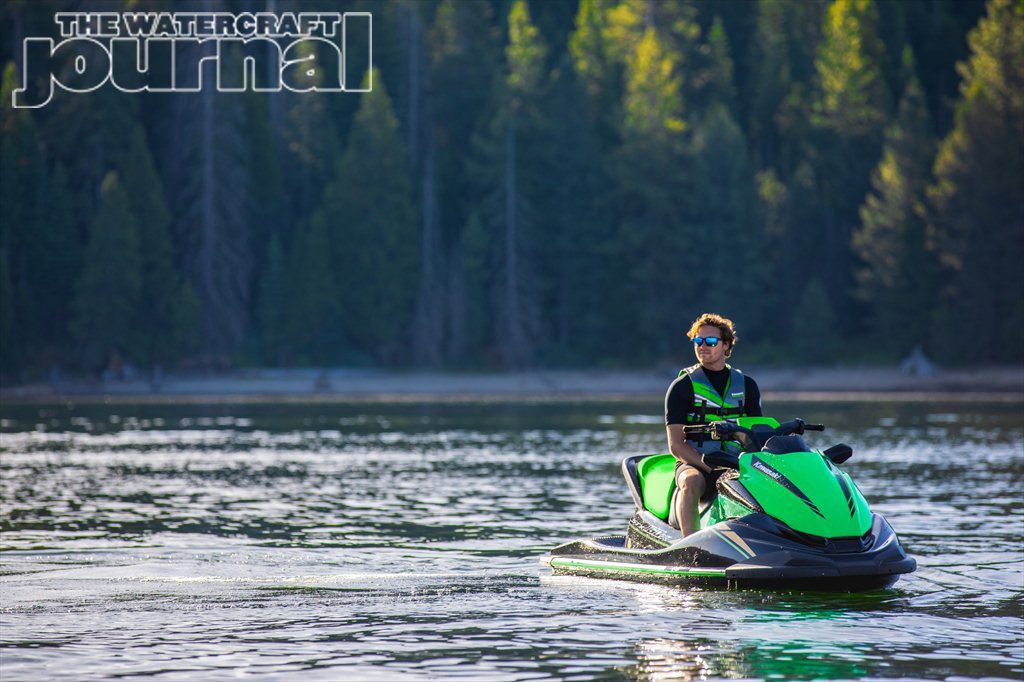
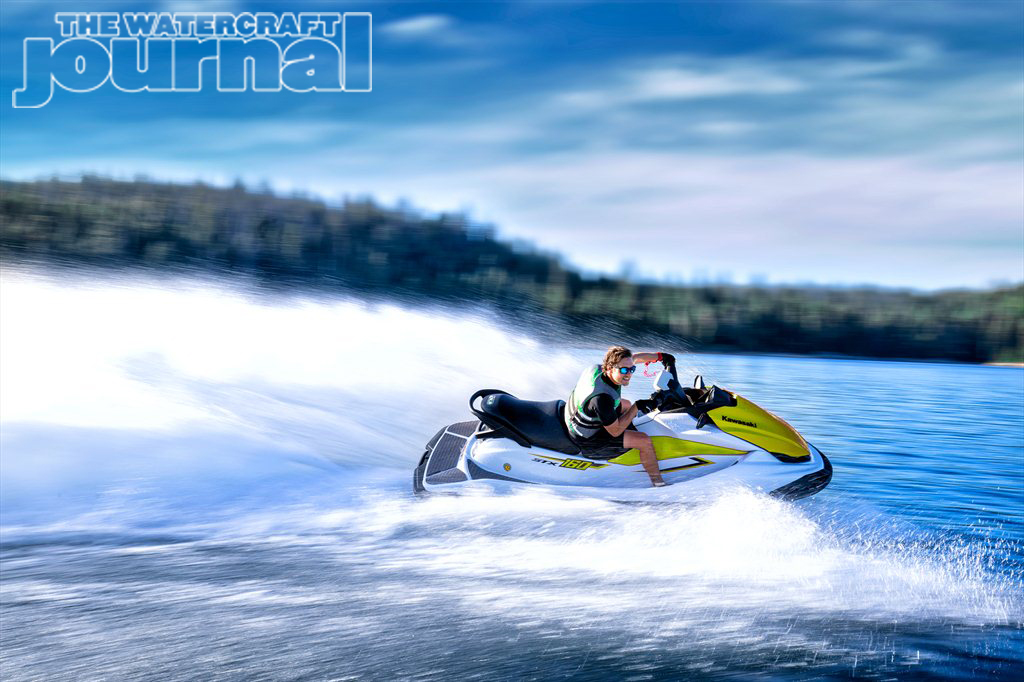
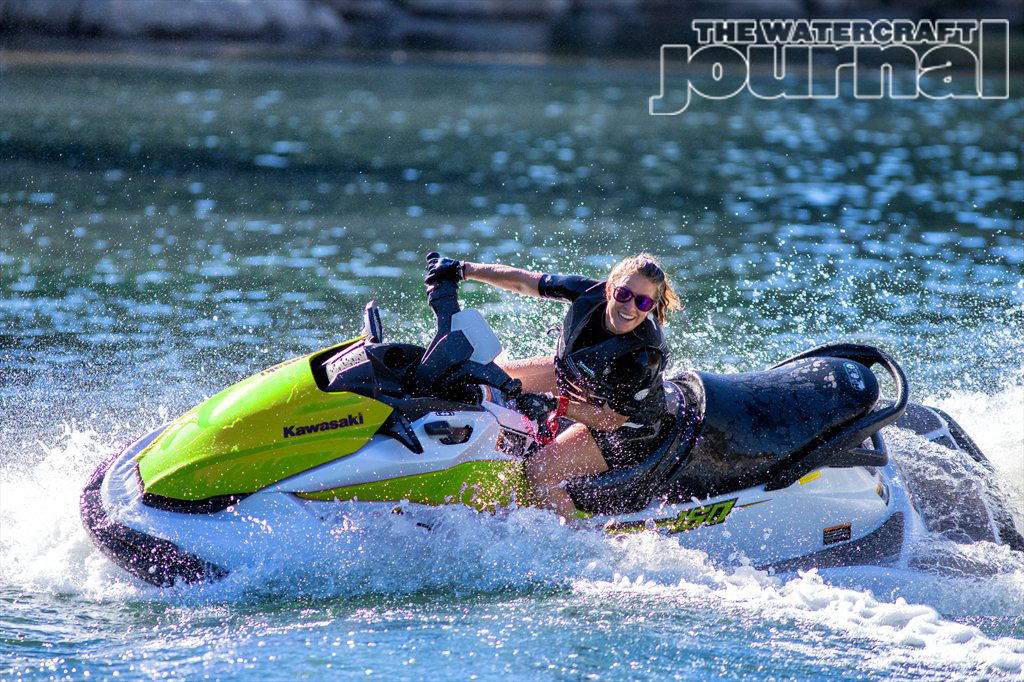
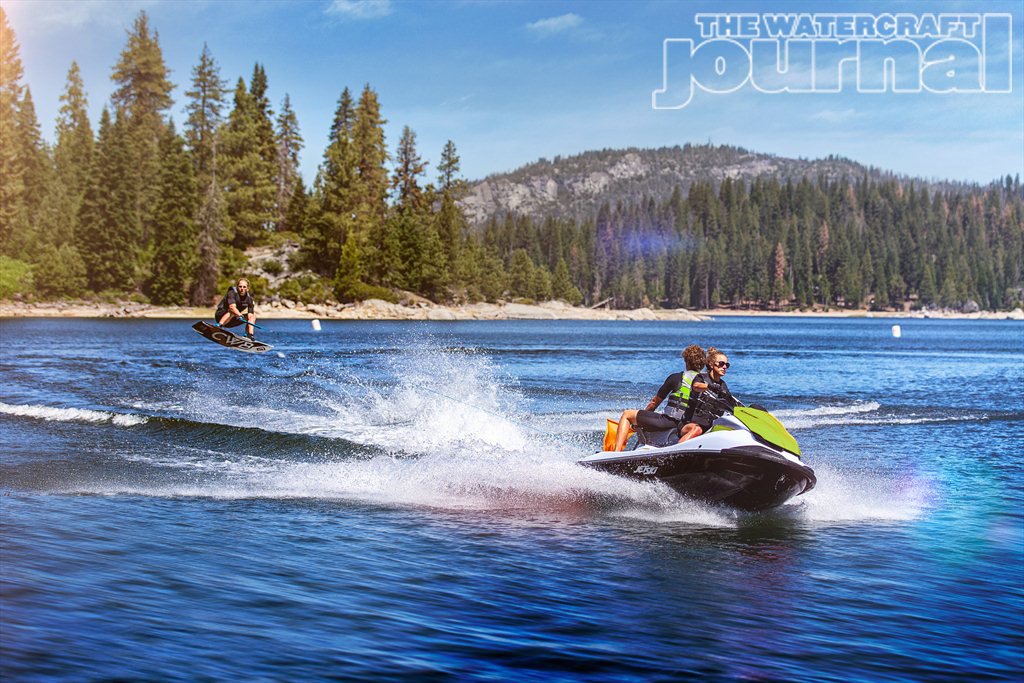
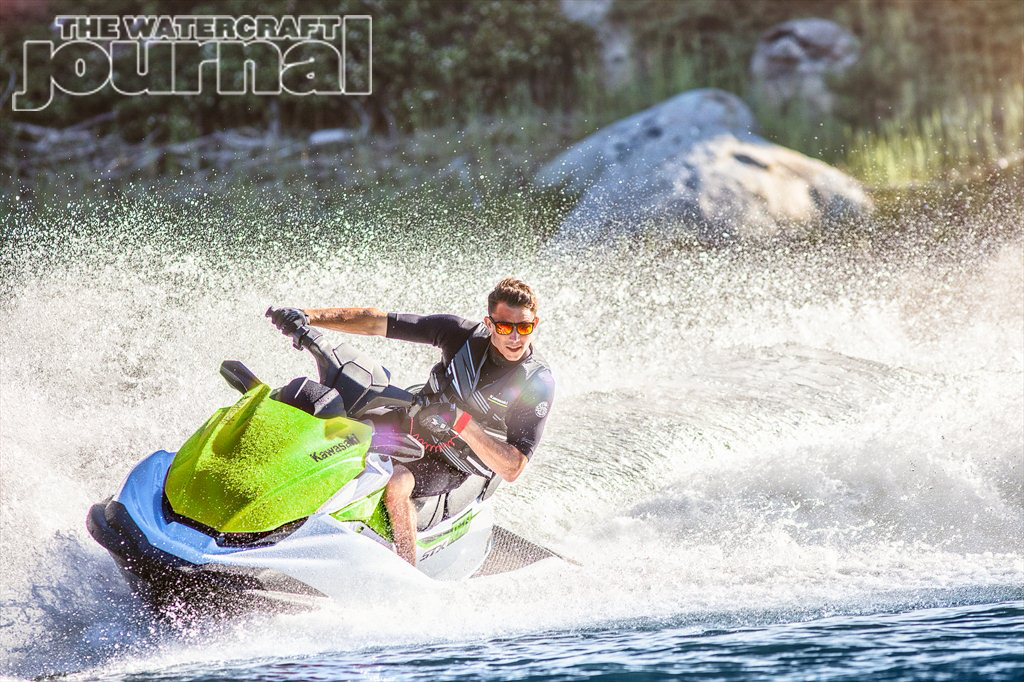
The final models announced are those comprising Kawasaki’s newly minted Recreation segment: the STX 160, 160X and 160LX. All three STX models include Immobilizer keys, SLO key operation and Cruise Control, as well as the folding “Slide & Lift” rear seat (and kickstand). Differences between each model are minor (particularly between the 160 and 160X) with the 160LX being a major outlier, as it is equipped with much of the same accoutrements as the Ultra 310LX.
Specifically, those add-ons being Kawasaki’s Jetsounds Bluetooth-operated sound system, the heat-resistant LXury seat and two-tone LX deck mat – not to mention a very unique paint offering. For 2022, the STX 160LX comes in Ebony and Turquoise (with gold highlights). The color is reminiscent of 2021’s Riptide Turquoise on the STX 160X, but is deeper with rich metallics and a gold highlight in its graphics – and comes with a $12,199 MSRP, a bump of $300.
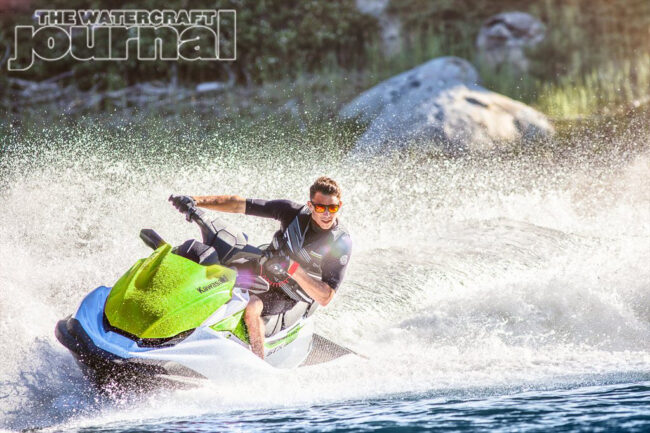
For 2022, STX 160X jumps an additional $300 as well, bringing the MSRP to $10,499. It trades in its Rip Tide hue for Ebony and Lime Green, which was the international livery (same colors we reviewed earlier this year). For the final STX, the 160 comes in Crystal White/Pearl Neon Yellow with an MSRP of $9,899 (only $100 more than last year’s $9,799). The base 160 has Cruise Control, but not the up/down toggles like the other models.
“And what about the other half?” you ask. To date, the remaining supercharged machines have yet to be announced, and likely for good reason. As WCJ has noted, major additions and changes are expected for 2022, which we suspect will rocket Kawasaki’s flagship platform to the front of the class in many aspects. When those new models will be announced still remains to be seen, but we’re banking on late September/early October at the latest.



 He has a lot of stories, including one with pictures of seeing boats on fire. He had grabbed a ride back to the marina where his PWC was docked and saw smoke billowing.







































 The
The