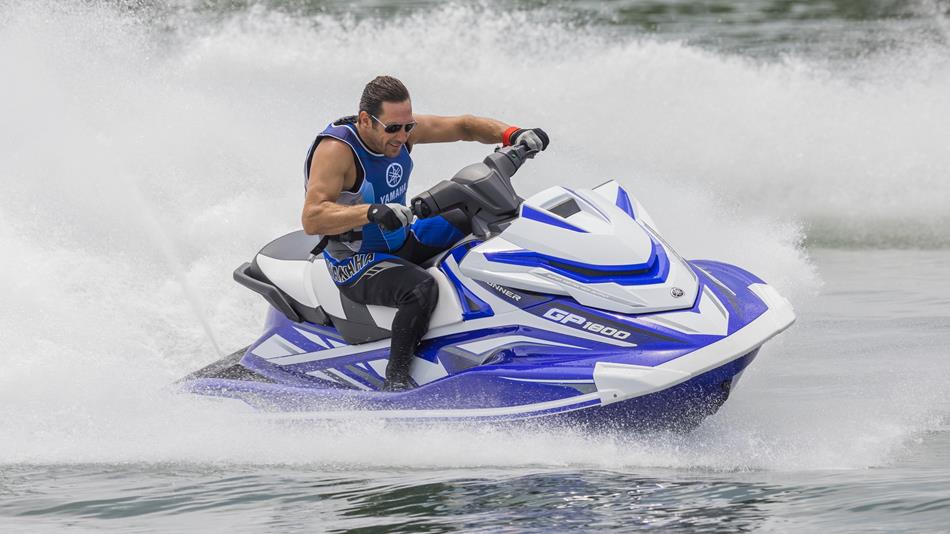
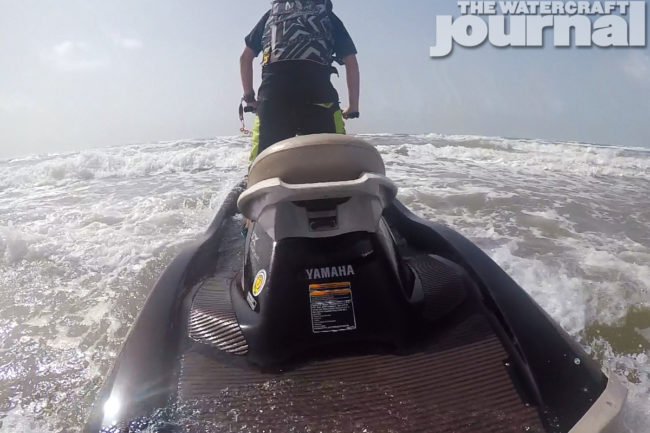
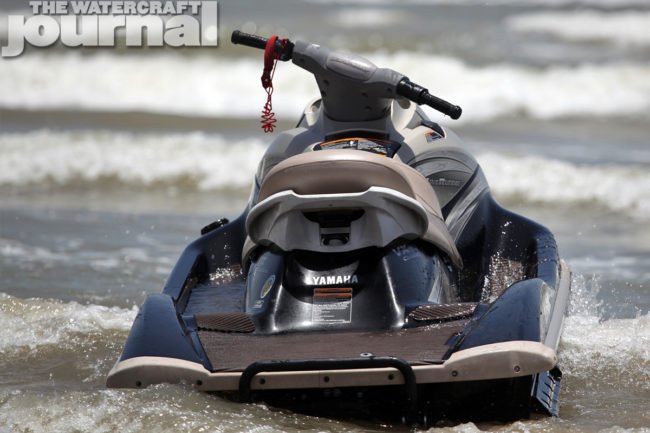
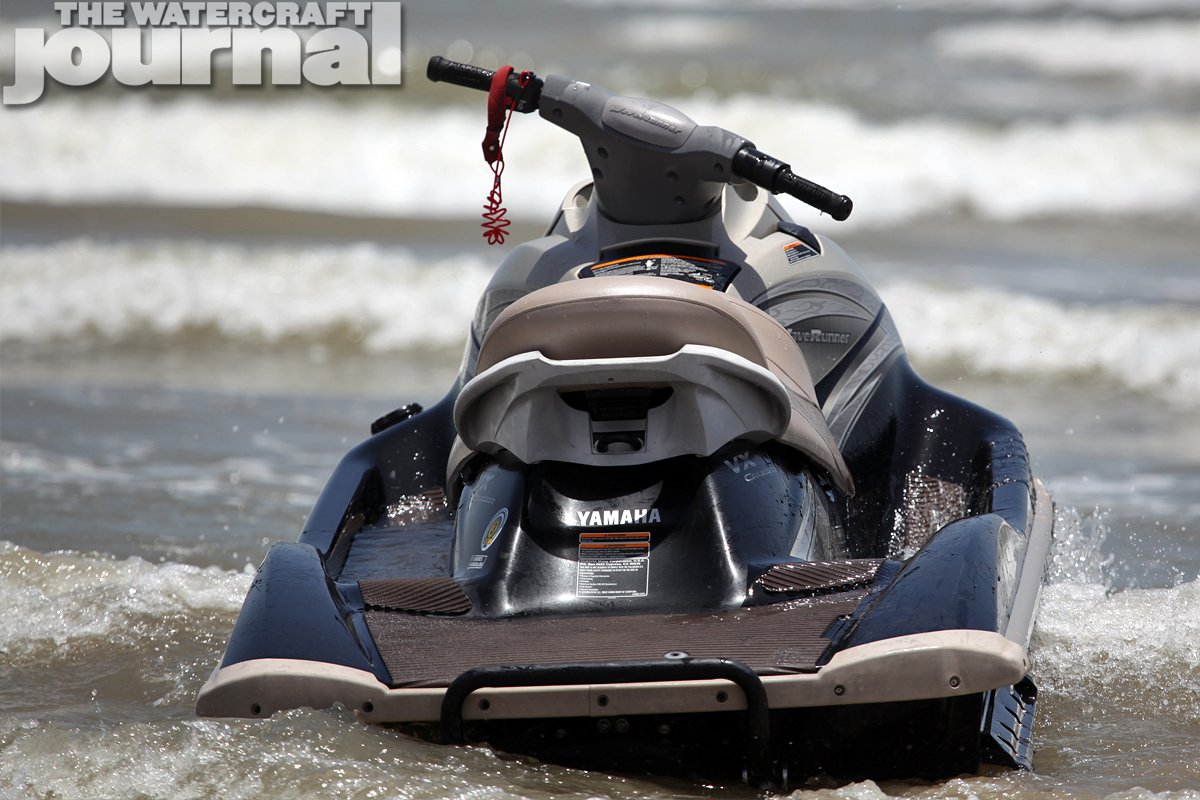
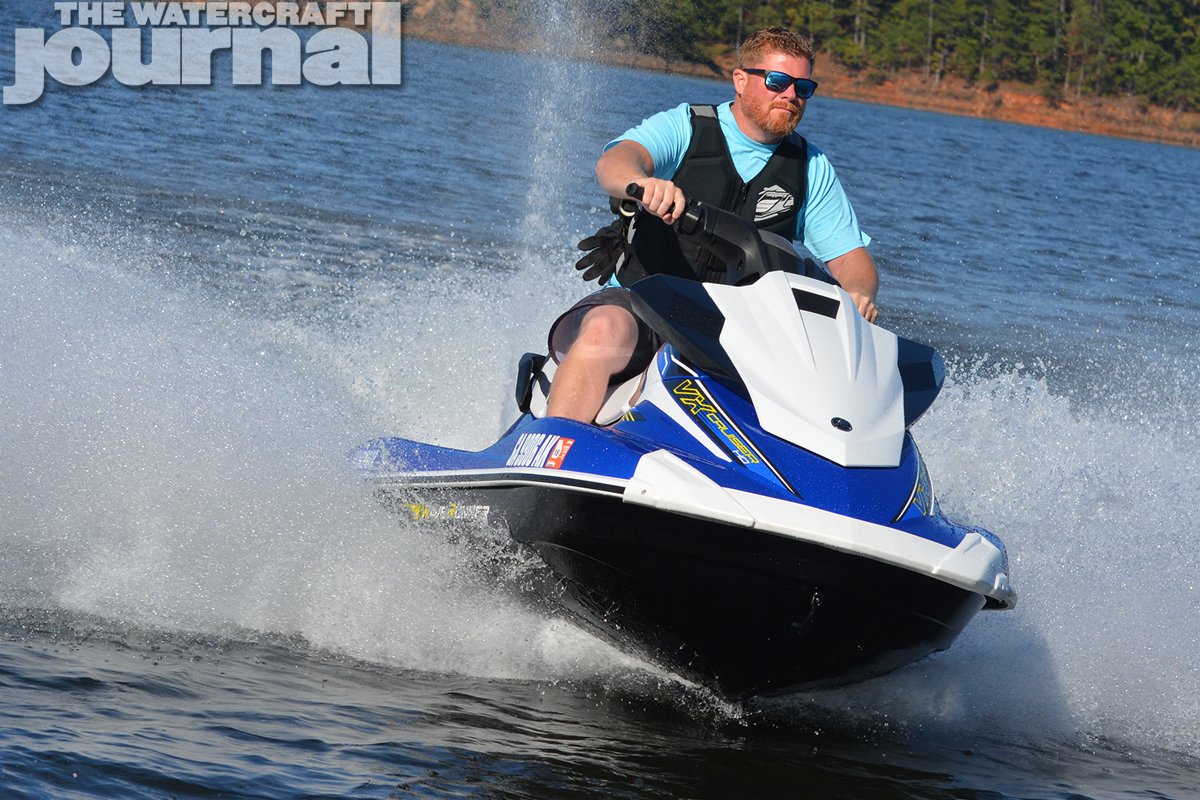
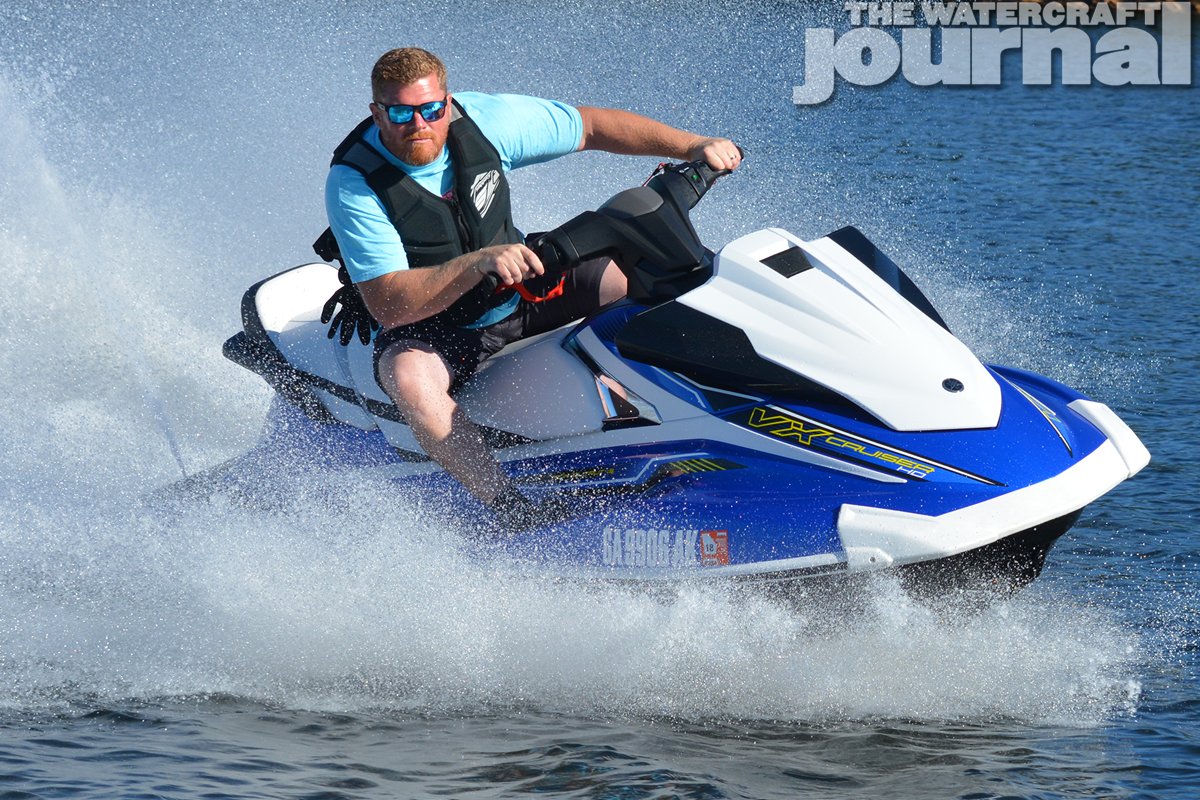
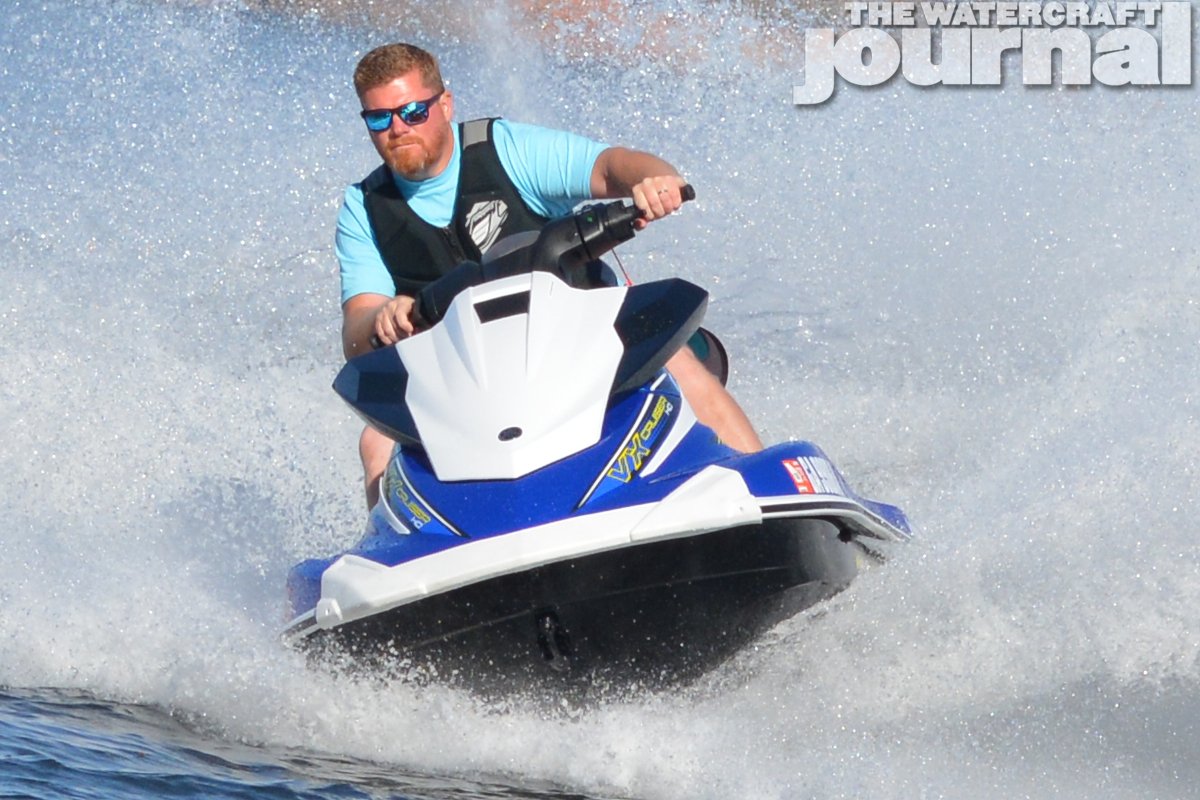
“It’s $600 less?” I balked. Staring at the open windows on my computer screen, the evidence was looking me straight in the face. According to my observation, the 2018 Yamaha VX Cruiser HO is more equipped than the sporty VXR, yet is priced $600 less, at a budget friendly $11,299. “That just seems…weird.” Interestingly, the VX Cruiser HO is slotted as the highest tier of the VX platform offerings, while the VXR is sold as the lowest rung of the company’s performance group, despite so little separating the two. For me, it was trying to delineate differences between a pair of near-identical siblings.
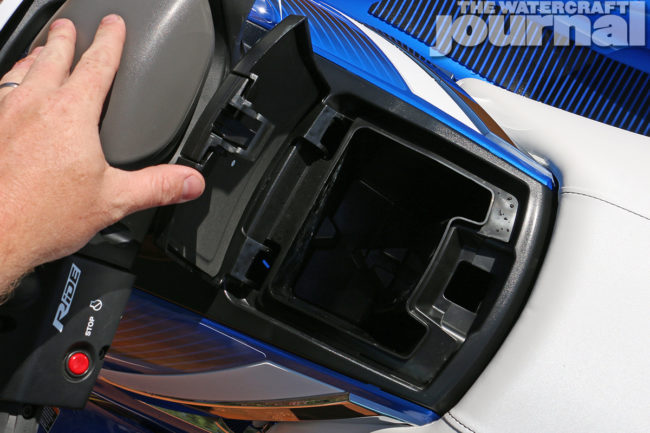
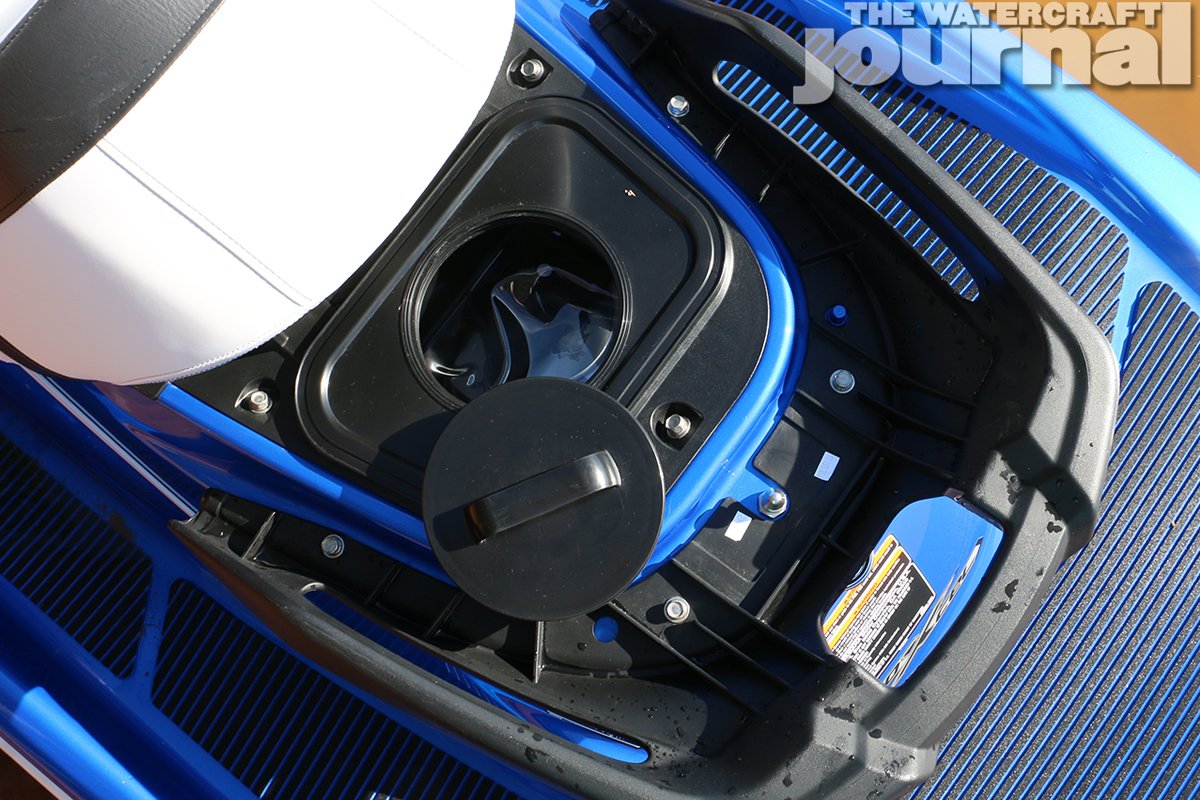
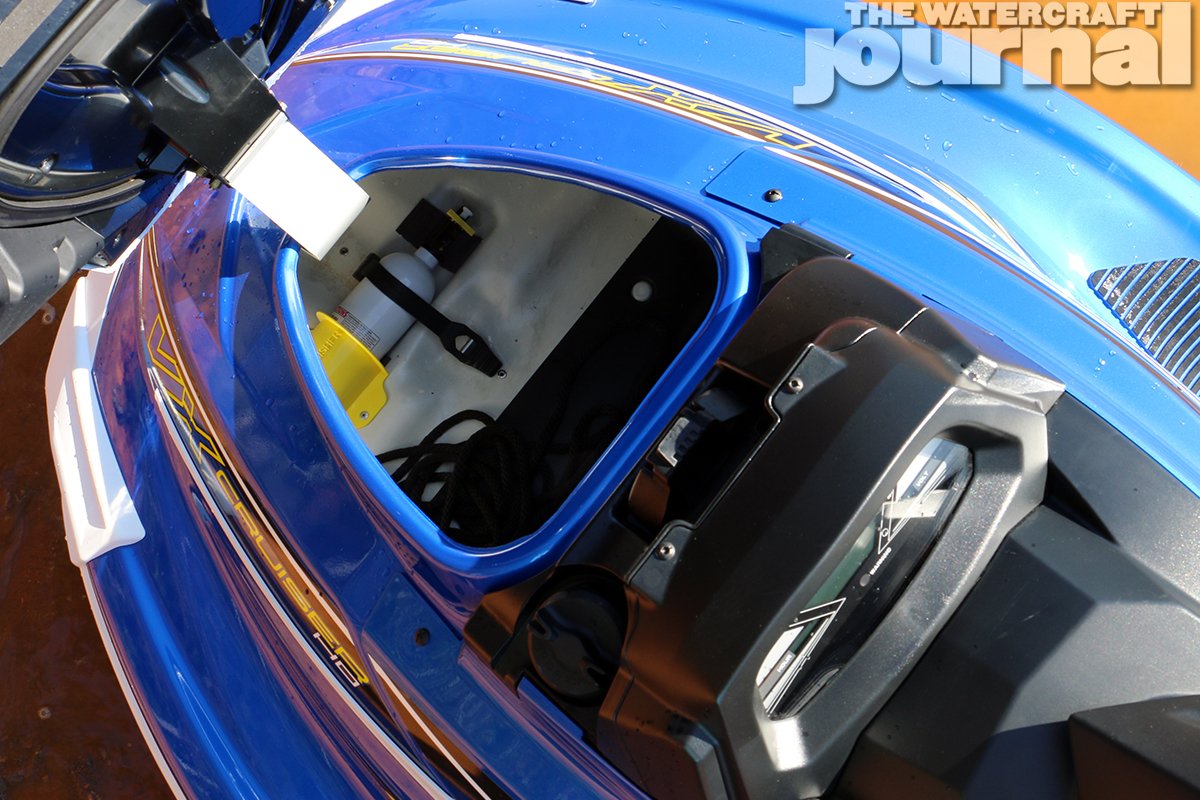
Both runabouts were propelled by identical powertrains, namely Yamaha’s bulletproof 1,812cc 4-cylinder High Output four-stroke marine engine. [By the way, why do we continue designating anything as a “four-stroke?” It’s not like anything is a two-stroke these days (besides the holdover SuperJet). -Ed] Both shared the same 18.5-gallon fuel cell, 155mm jet pump and nozzle too. Equally, the pair rode on the same VX hull and deck, both made using Yamaha’s NanoXcel bonding material. They even had identical weights: 767-pounds. Heck, even the storage displacements were the same (24.6-gallons).
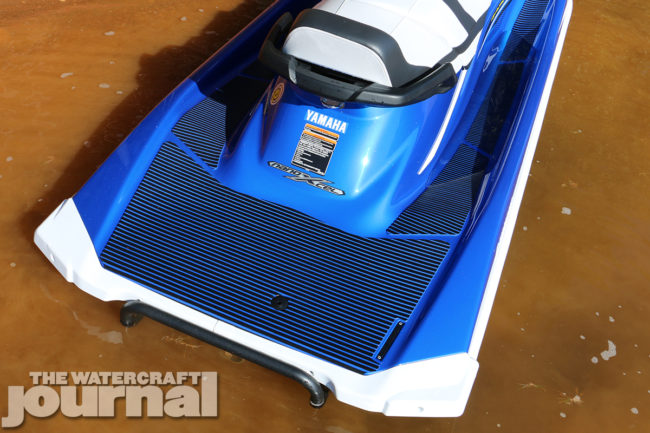
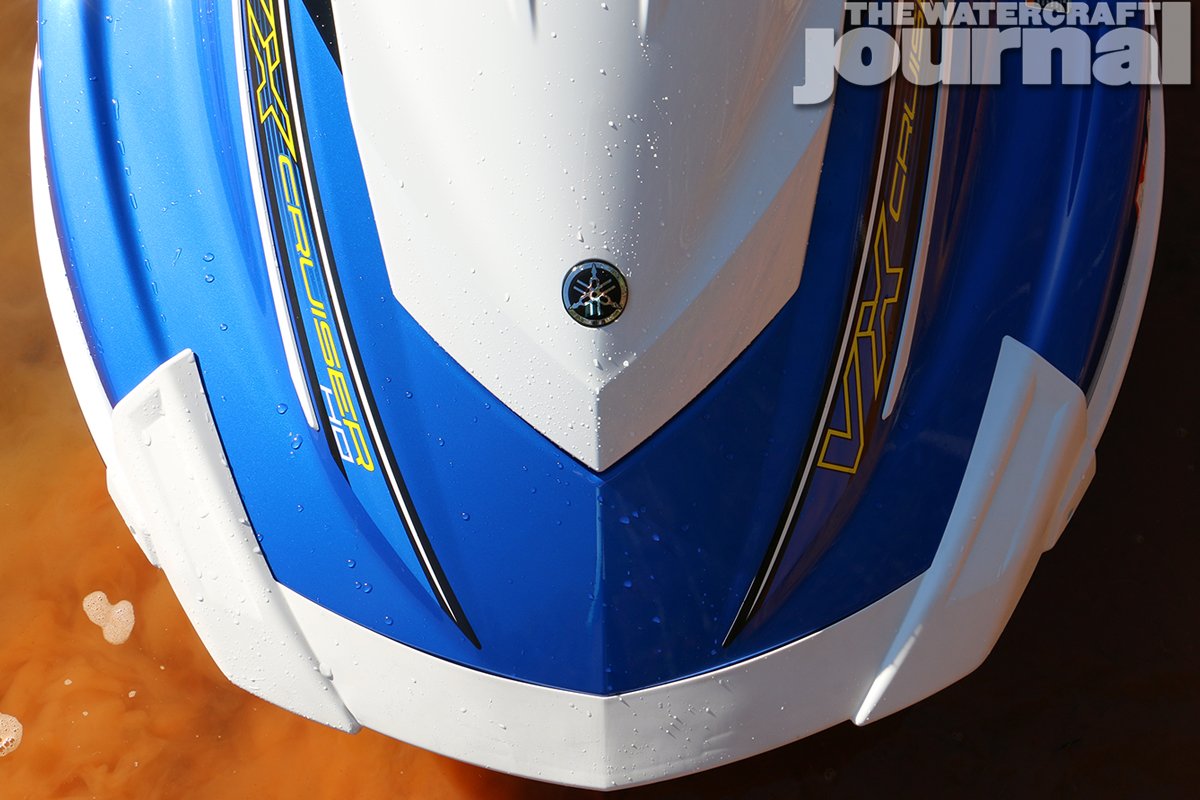
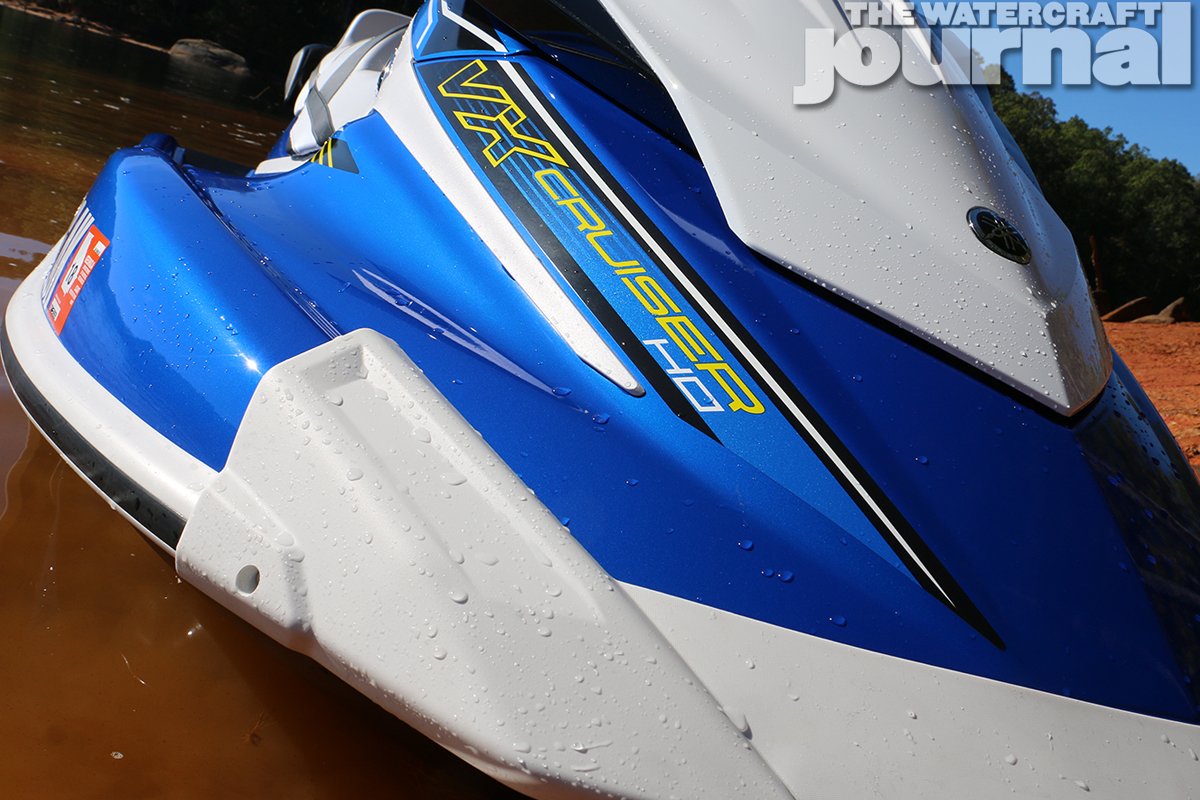
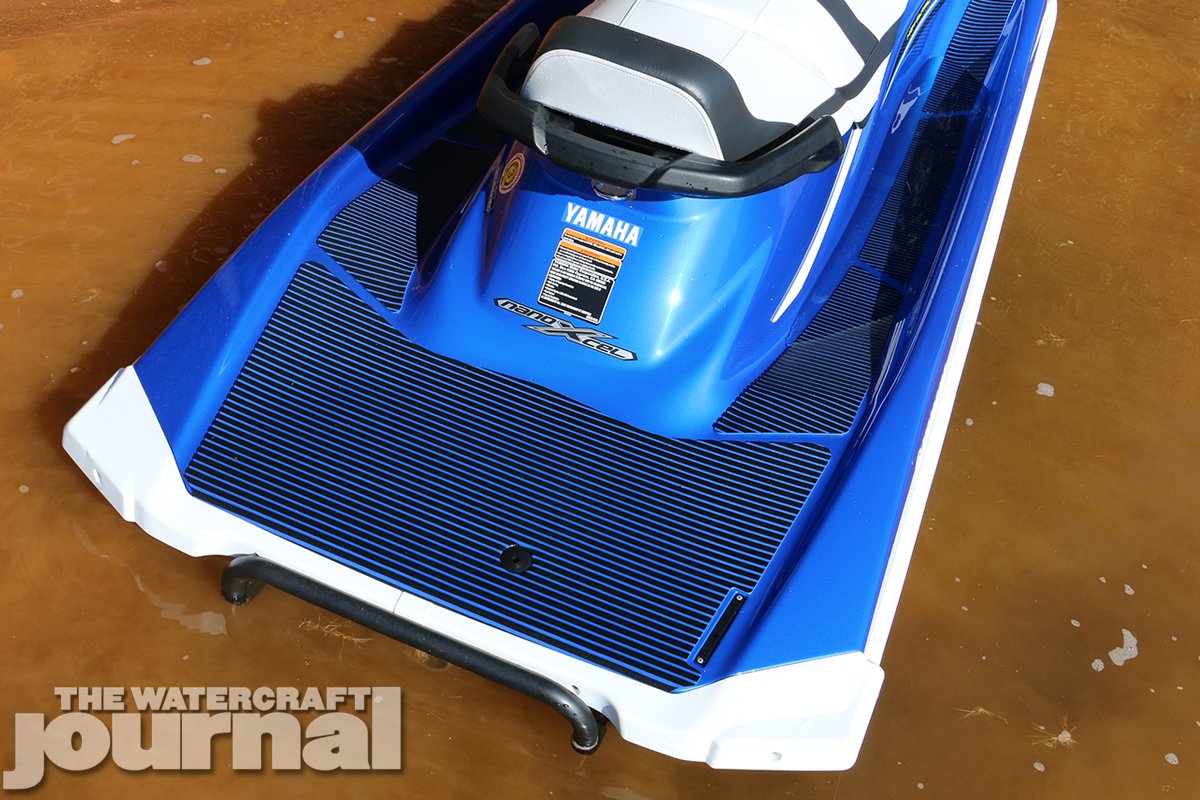
The similarities didn’t end there: both came with a folding, padded swimstep and two-tone Hydro-Turf traction mats. Of course, the machines also came with Yamaha’s RiDE dual-throttle brake and reverse system too. Most compelling was the fact that the VXR and VX Cruiser HO shared the same hull design as the stellar GP1800 performance craft that continues to dominate in both closed course and offshore racing. So then, what accounted for the difference in cost between the two? Cosmetically, the VX Cruiser HO comes in either Azure Blue Metallic or Grey Carbon Metallic, slightly more staid in its graphics and paint offerings, which makes sense given the intended audience. The racier colors and graphics are more suited towards the VXR and GP1800 crowd anyways.
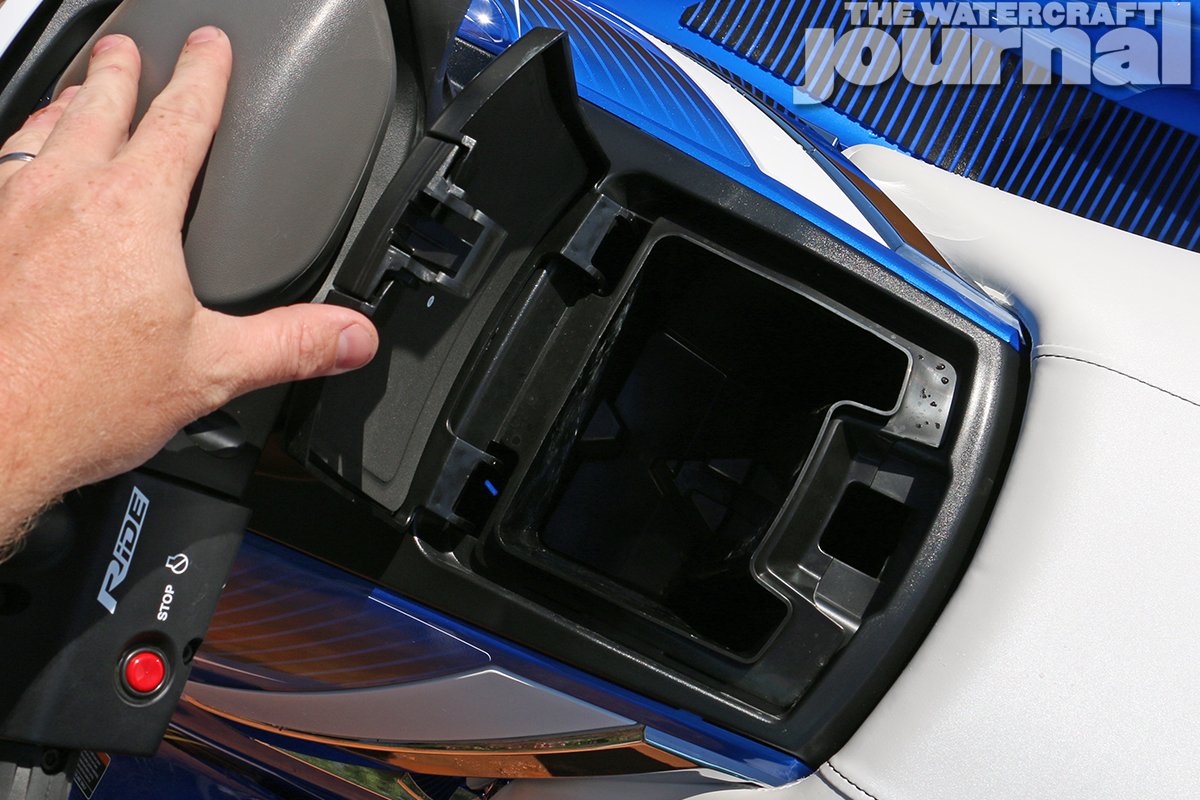
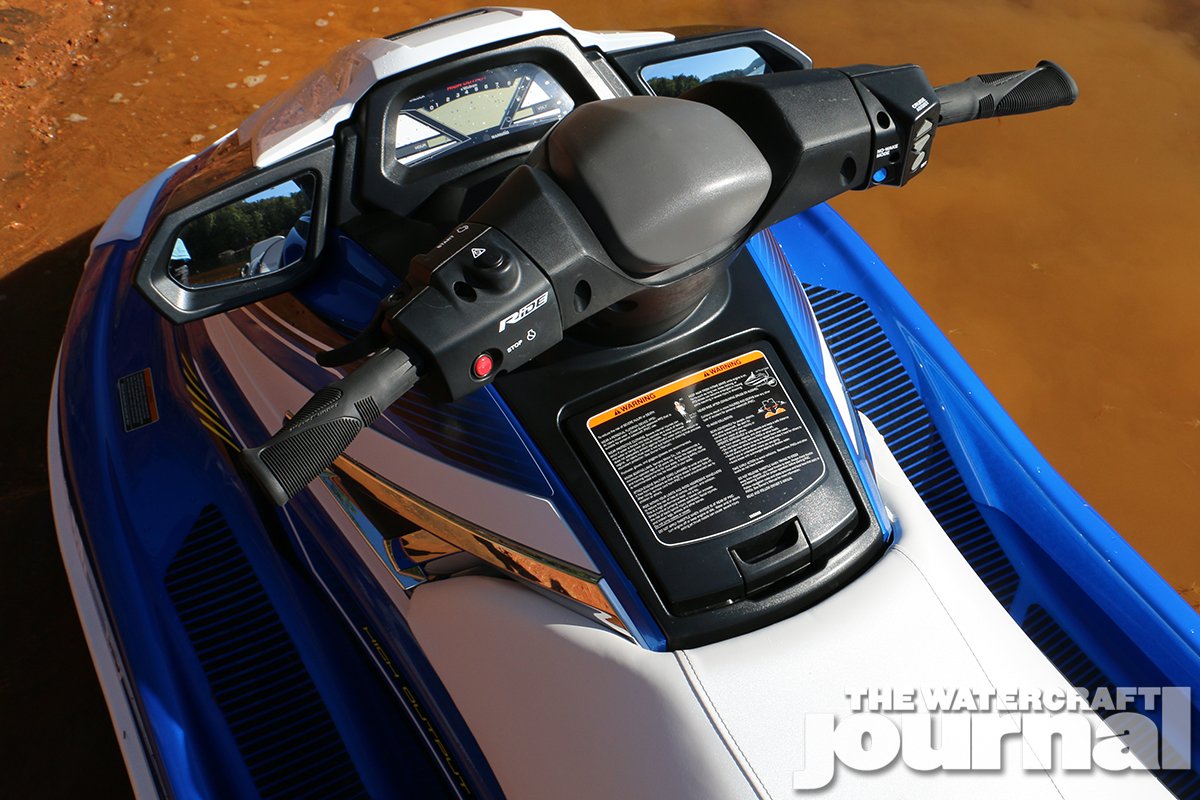
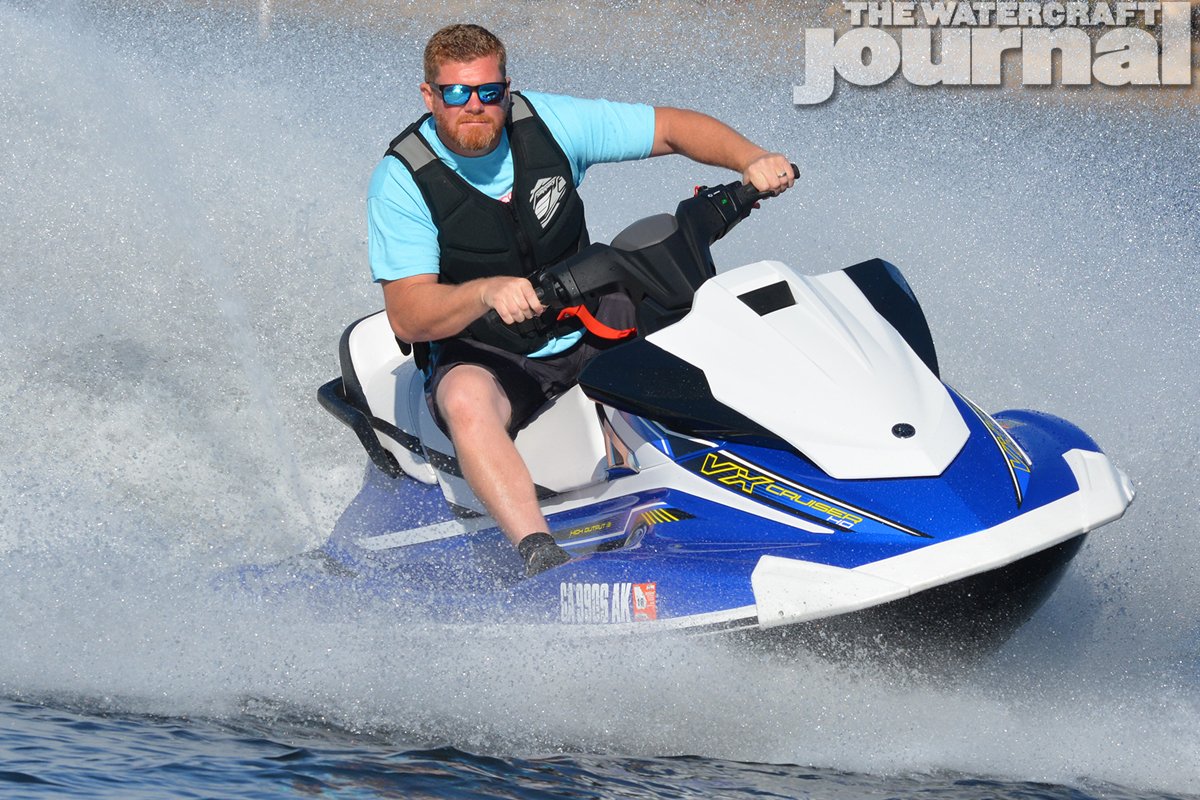
The VX Crusier HO does not share the same “Cylon from Battlestar Galactica” looking hood as the VXR and GP, but that of the other VX line. Of course, the major item is the inclusion of Yamaha’s bolstered Cruiser seat, giving the craft a comfortable, stadium-style sitting arrangement. The two-piece, tiered Cruiser seat is supposed to fit three, but is more suited for two full-sized adults. Although the VXR is smartly equipped with Yamaha’s fast-reacting electric trim control, there’s very little else. The VX Cruiser HO replaces the trim control with Yamaha’s Cruise Assist and “No Wake” mode controls on the handlebars.
The dashboard is serviceable but definitely not flashy. The mono-colored LCD screen gets the job done, providing large visible readouts of speed, fuel and rpm. And like all VX-based Yamahas, the steering neck is fixed. No tilt or telescoping options here. Ergonomics are slight. The seat is wide, making sitting with legs and feet forward in the wells optimal for most riders over 6-feet in height. The steering neck is tall and angled enough to ride without slouching over. And despite its lightweight, the Yamaha fit-and-finish is superb, without any noisy chatter or rattling from loose hinges or panels.
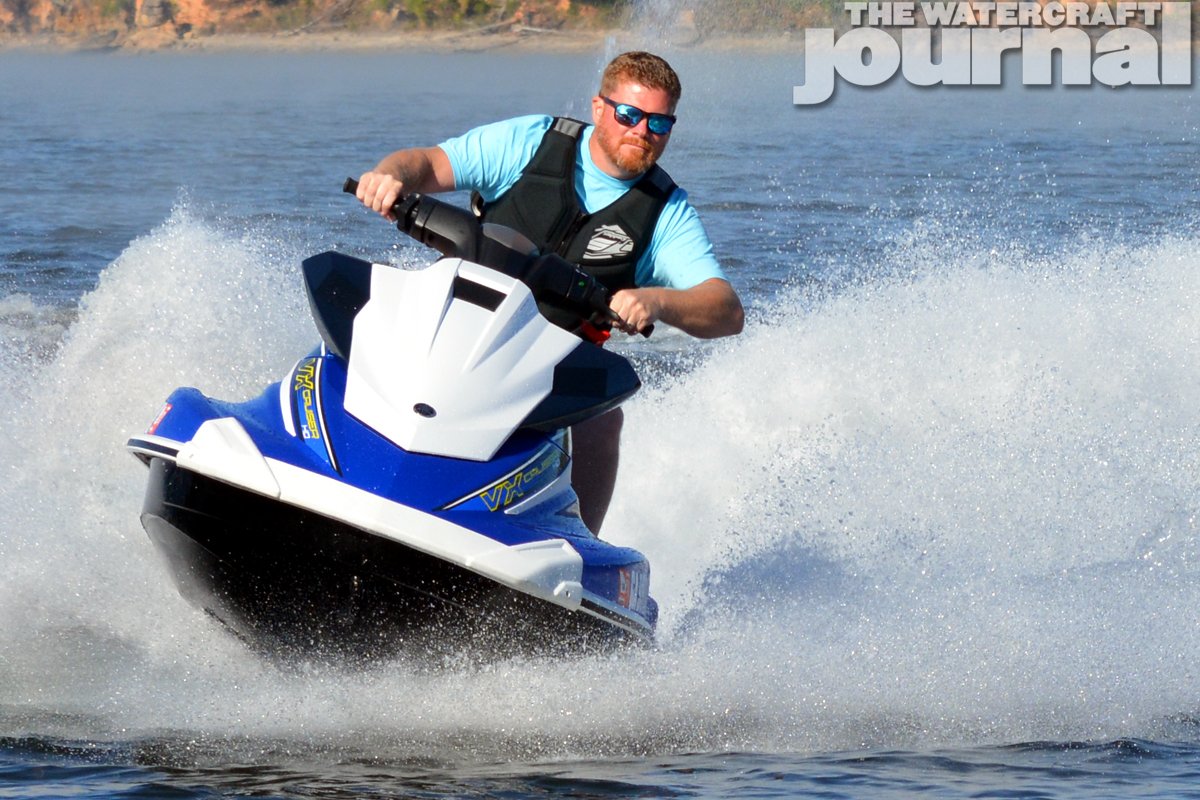
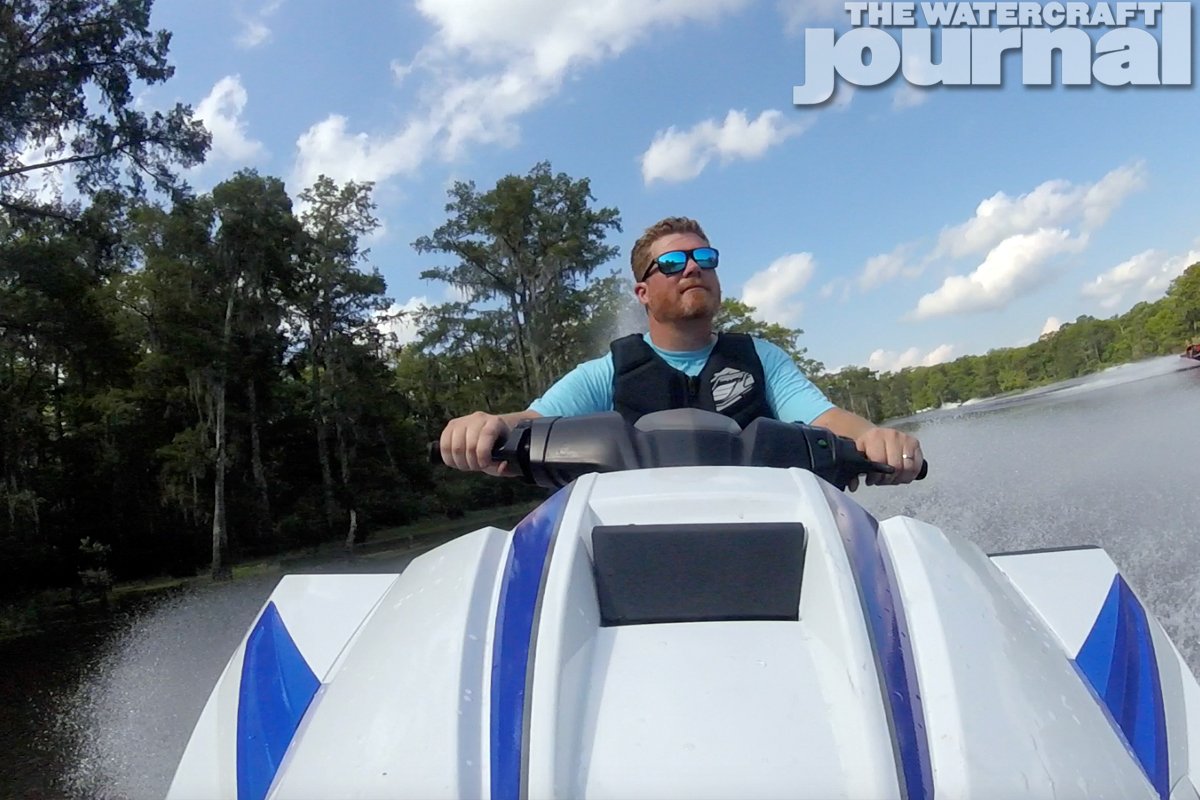
On the water, the VX Cruiser HO is just as sharp and snappy as the VXR, thanks to its shared use of Yamaha’s 180-horsepower 1.8L 4-cylinder and the lightweight NanoXcel hull and deck material – giving it all of the fun, playful performance of a Yamaha VXR with a few more bells and whistles. And because of Yamaha’s well-tuned 1.8-liter HO engine, it can run on either 87 or 93 octane. This, in turn, offers you basically a VXR with a comfier seat and cruise control for longer, more leisurely rides around the lake. Best of all, it tracks true without any bow steering or hunting, regardless of the surface conditions.
The Yamaha’s superior fuel economy and the generous fuel cell means you’ll be riding all day before needing to stop off at the fuel dock. In fact, this was the case during our days testing the VX Cruiser HO. No matter how long and hard we laid into the throttle, we struggled to put a dent into the fuel gauge. The craft itself is stable and mildly mannered – no tipsy, precarious reboarding here, especially with the wide, flat rear platform. All in all, the 2018 Yamaha VX Cruiser HO is a great all-around cruiser that gives dad all the excitement he could want, while retaining fuel economy, and plenty of oomph to tow a raft or wake boarder.
Belle River, Ontario is the first event of the season for the Canadian Nationals. The two round CanAmWatercross Tour event will be held July 14-15. This particular race is in its ninth consecutive year running in conjunction with the SunSplash and is a venue that is favored by the racers. Not only does the race draw many of the best riders from Canada and the United States, it also brings in a huge crowd of spectators.
Families, fans, and riders love this event! Everyone loves an action-packed weekend of racing! Yamaha Motor of Canada will have be on site showing off t adult sized and youth specific WaveRunners. The machines will be on display for everyone to see and enquire about. Take a look at them while you’re enjoying all the festivities and exciting watercross racing.
Veteran racer, Mick Maj hopes to defend his title in the 1000 class and Mark Carmaghan wants to keep the top spot in the Vintage X2 class. We’ll soon know if these guys can again come out victorious.
The Canadian Watercross Nationals event is sponsored by Unique Tool & Gauge, React Tool & Mold, Keystone Groundworks, Belle River BIA, Tourism Windsor Essex, and Hydro Turf. This event couldn’t take place without its generous sponsors and CanAM Water Cross appreciates the support and the racers are stoked about getting the 2018 season underway!
Have you ever wanted to ride your ski through the Florida Keys? Sure you have. Well, now is your chance to do it in the company of (possibly) hundreds of other personal watercraft enthusiasts in a safe and well organized fashion.
With destination maps, plenty of fuel stops, breaks in-between, and lots of opportunities to swim, snorkel and snap a million selfies, the first-annual RIVA Invasion ride Presented by FL Ski Riders and Florida PWC Riders, is sure to impress.
The Watercraft Journal spoke with event co-organizer Adam Williams who detailed:
This will be an experience of a lifetime! Join us on July 28th as we invade Key Largo, Alligator Reef and Islamorada Sandbar! We will be launching between 10am – 10:30am
Launch locations: 1) John Pennekamp Coral Reef State Park, 102601 Overseas Hwy 2) Caribbean Club Boat Ramp, 104080 Overseas Hwy
This ride will take us through the Keys and out to visit the beautiful and popular “Alligator Reef” for some exploring and snorkeling. Bring goggles – this area is amazing. We will be at Alligator Reef for roughly 1 hour. We will then launch and head over to Islamorada Sandbar to relax, eat and enjoy the area. Bring your anchors. This will be the time to fuel up (fuel maps will be available soon). We will make our way back to the launch locations around 5:30pm.
Listen for the airhorns to identify launch times at each stop. Once you hear the airhorns you will have 10 minutes to get your skis loaded and ready for launching. Please follow the lead skis and do not pass them. It’s very important that we ride together as many riders will be joining us from out of town and will not be familiar with the area.
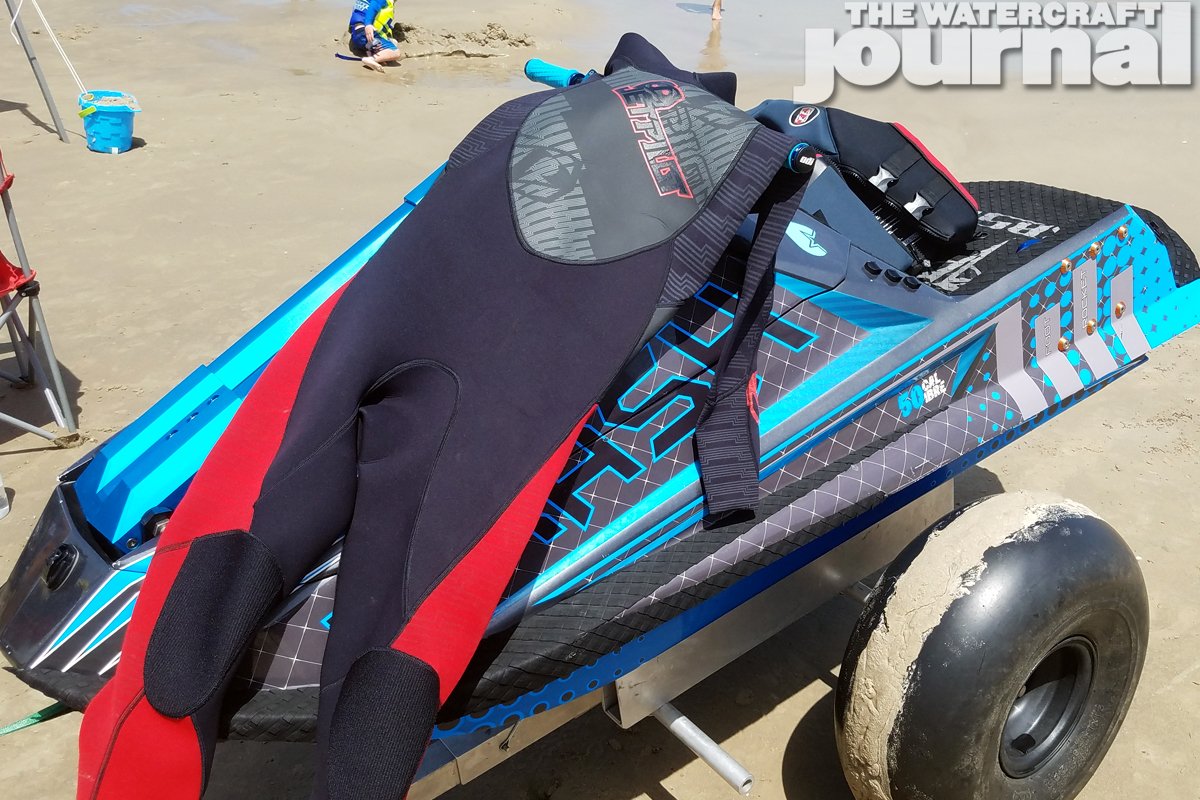
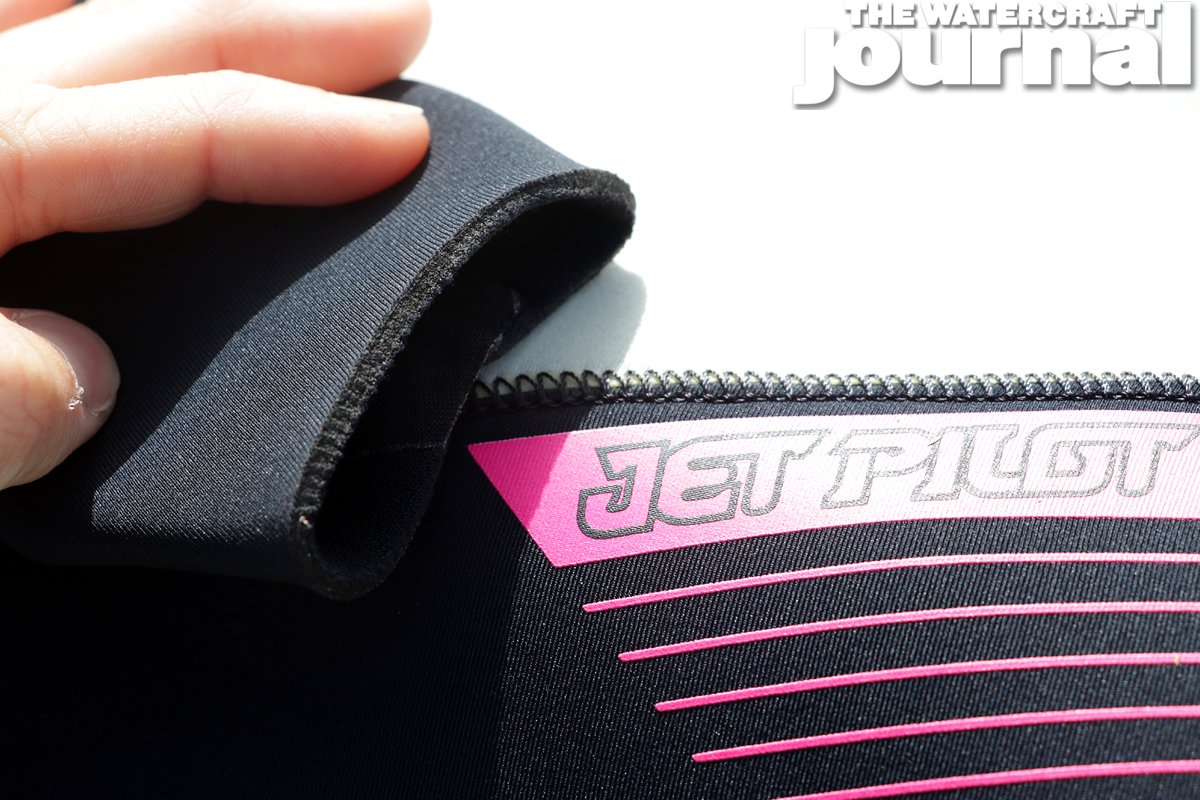
With a vast array of wetsuit thicknesses, colors, and styles, JetPilot has been in the business of supplying quality suits to racers and recreational riders alike for three decades. I live in the great land of Texas where in winter it may snow once in a decade. However, cold is not the only reason (albeit a good, valid one) to don a wetsuit. JetPilot’s 3/2 thickness wetsuits can help provide year-round protection during crashes, the dreaded knee and shin bash on stand ups, and stave off inner leg seat rash from those long days in the saddle.
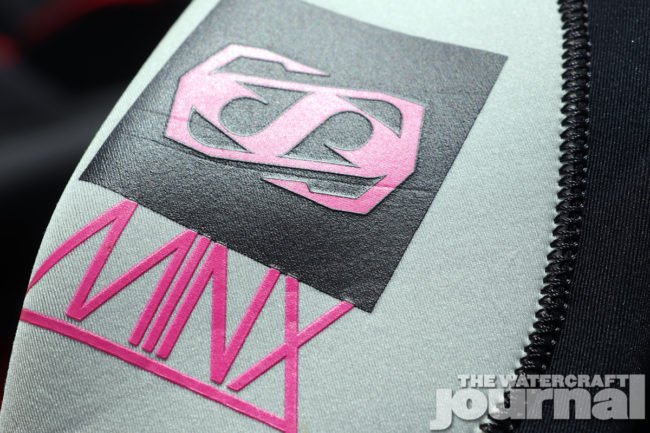
I prefer the single piece wetsuits for simplicity so my go-to suits are the 3/2 Cause and 3/2 Women’s Minx. The easiest way to understand wetsuit thickness is to know the first number refers to the core neoprene thickness in millimeters, the second refers to the arm and leg extremity thickness. Wetsuits with 3mm cores and 2mm extremity measurements should be in everyone’s closet because they can provide warmth from the 60 degrees Fahrenheit, yet are able to be worn in the summer.
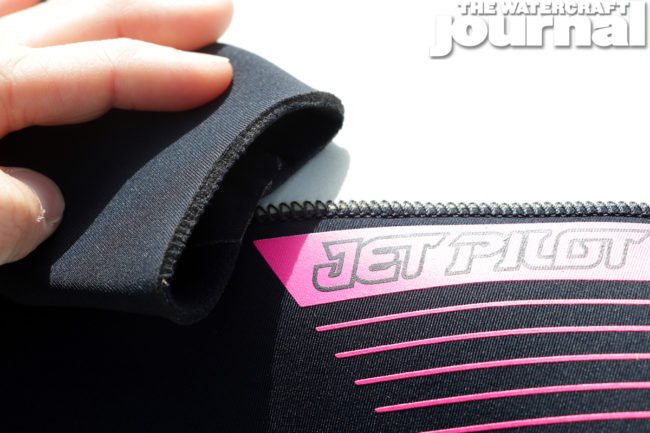
Construction Over the years I’ve sampled offerings from a number of the big name brand wetsuit manufactures. Let’s face it, all of them will get the job done…well some knock-off brands might not, but those are not on a quality level worth mentioning. When selecting a wetsuit – comfort and fit is paramount. Too loose and your body cannot heat the thin film of water between your skin and the neoprene, thus rendering the suit useless for warmth. Too tight and circulation, breathing and overall movement is restricted potentially causing extremities to fall asleep and fatigue. Where JetPilot suits excel above the rest is their pliability and softness. Hands down the best form fitting, yet stretchy wetsuit with a great skin feel I’ve ever worn.
Women’s Minx Generally a bit curvier than men, Women’s Minx has wider hip and narrower shoulder measurements to avoid the dreaded lower back air pocket and general discomfort for ladyfolk. That means no upper butt poof, no cold water getting caught in the lower back either. I am 5’8”, 140lbs and 7/8 size fits great, no tight spots or hindered movement. The back entry Minx also sports an inner liner that form fits to the small of your back.
Men’s Cause
Women are a decidedly smaller portion of the world of jet skis, but have no fear guys, I’ve got your suit covered! The Men’s Cause comes in three color choices to match your kit, all rear zip one piece suits. The medium’s fitment for my spec is superb, the aforementioned softness and pliability coming in to play with no tight spots or restricted movement.
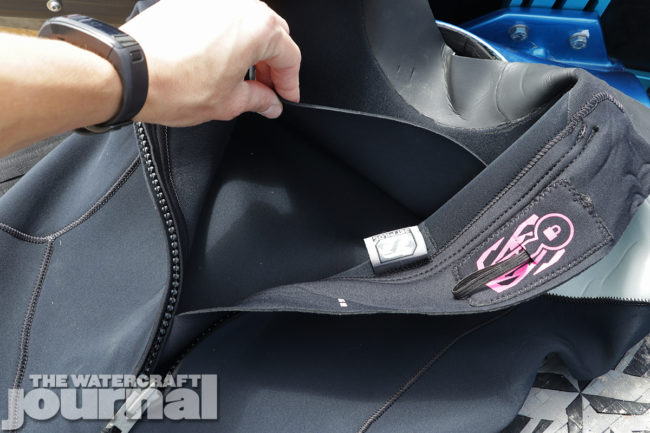
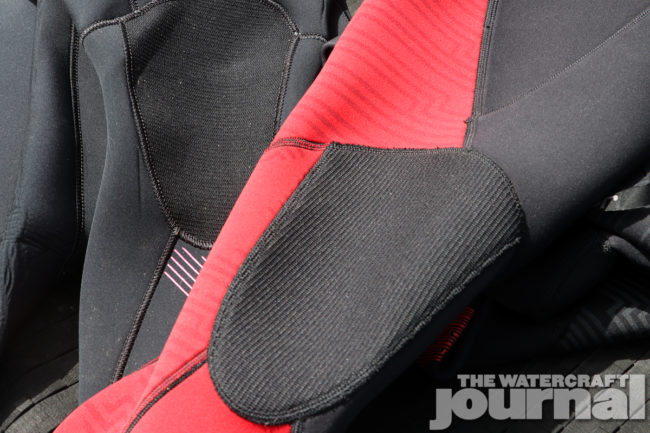
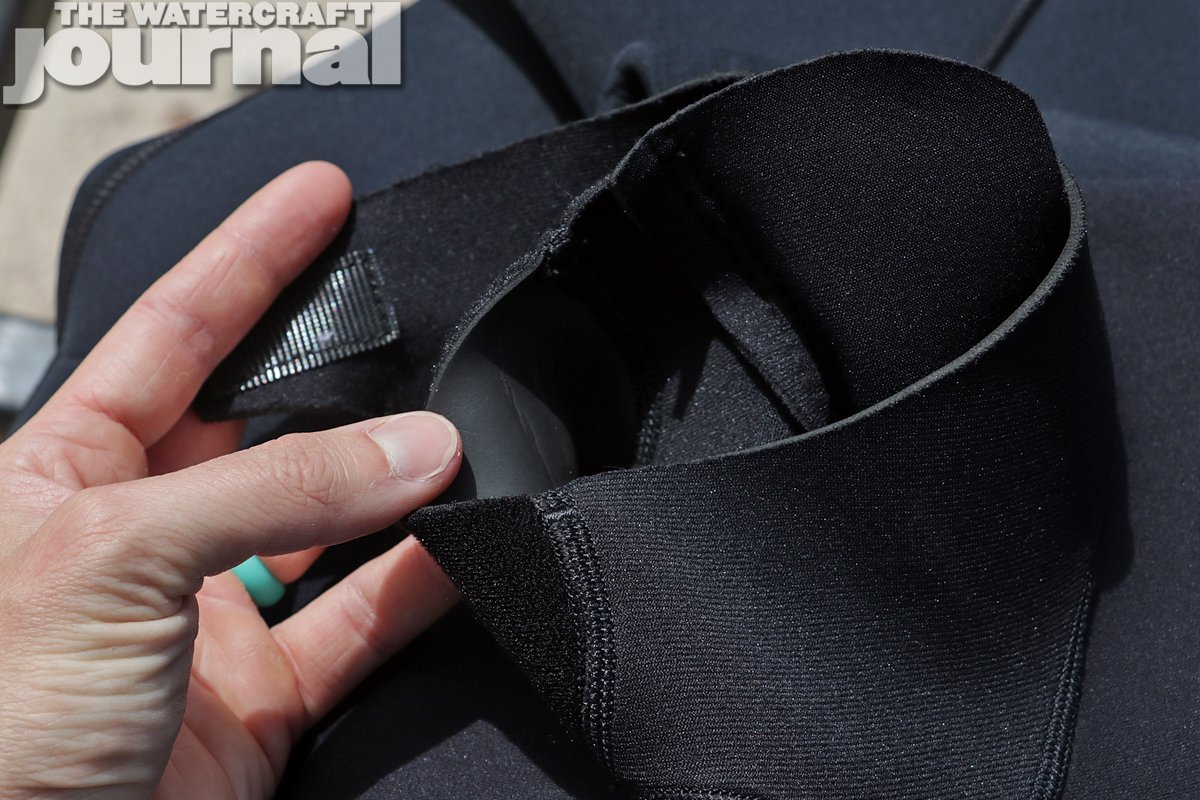
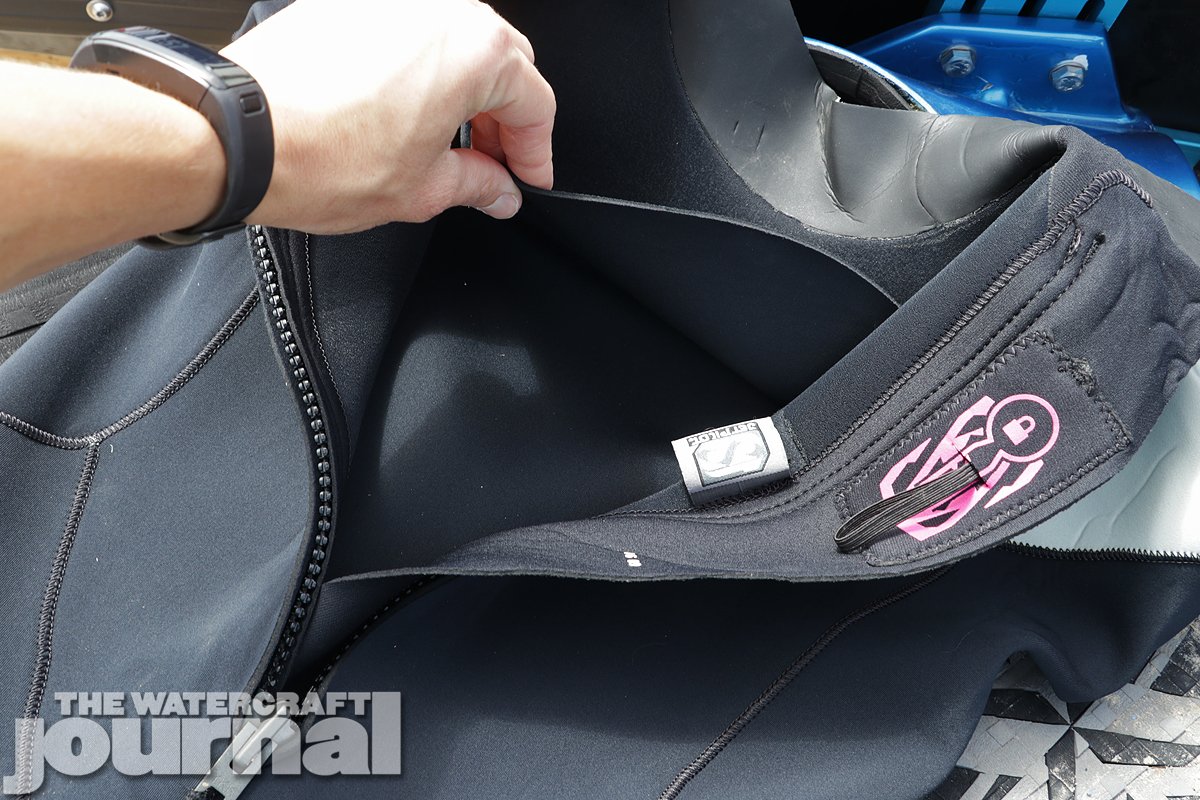
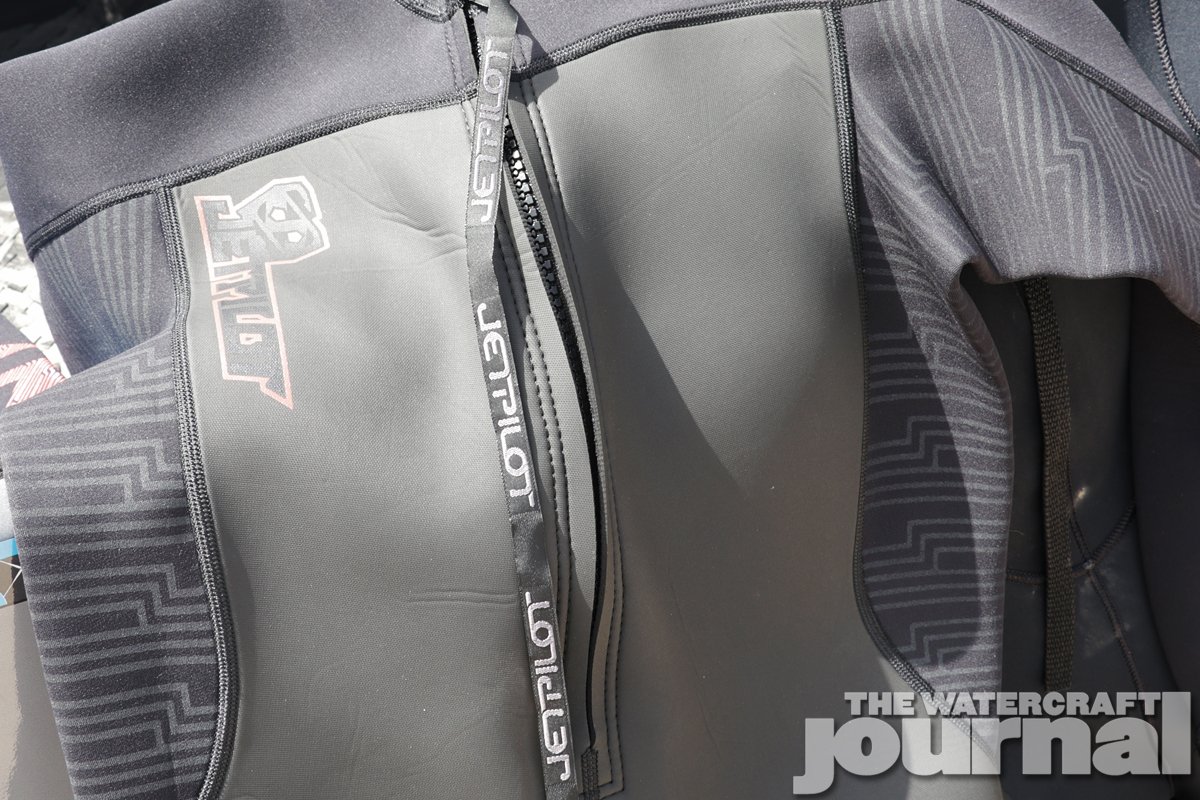
Nitty Gritty Both the Minx and the Cause feature rear entry zippers with a lanyard to easily zip and unzip while wearing the suit. Once zipped, the neck neoprene comfortably seals around your neck with adjustable Velcro. This design allows for a water-tight fit for various neck sizes. If you are a stand up rider you will appreciate the abrasion resistant kneepad material for tray grip. They are integrated to the suit at the knee bend, but use thin material that does not cause bunching or bend resistance. Both suits feature a nifty key lanyard/pocket at the base of the neck.
In the Water Warmth Warmth is highly subjective, and I am a self-admitted bred and born Texan who doesn’t like cold. I rode all winter in both suits, even when water temperatures dropped into the 60s. If you do manage to fall in the drink you’ll definitely notice what is NOT covered in the lovely, soft, pliable neoprene. Once you catch your breath and get back on the ski you’ll be happy to know the suits do a good job at blocking wind chill when you get moving again. If you are cold sensitive I’d suggest checking out a Tour Coat to go over your wetsuit top, effectively blocking the wind to keep you even toastier.
Safety As a stand up rider who has experienced knee injury from the pole slamming down on my bare knee, I prefer to ride with a wetsuit for reasons beyond simply being warm. Avoid the stitches and suit up! Not only can the wetsuit help protect your skin from bumps, falls, life jacket chafe, and saddle/tray rash – in the event of a crash the wetsuit can provide a barrier for unwanted water entry. Plus neoprene provides a supplemental, full body buoyancy so you can stretch out after that high-speed off!
Conclusion As far as wetsuits go, JetPilot has a great lineup to fit all sorts of rider preferences. Man or woman, the Minx and Cause 3/2 one-piece wetsuits will give you comfortable, mild winter protection as well as perform during those warm summer rides. Check out JetPilot.com for more information and ordering.
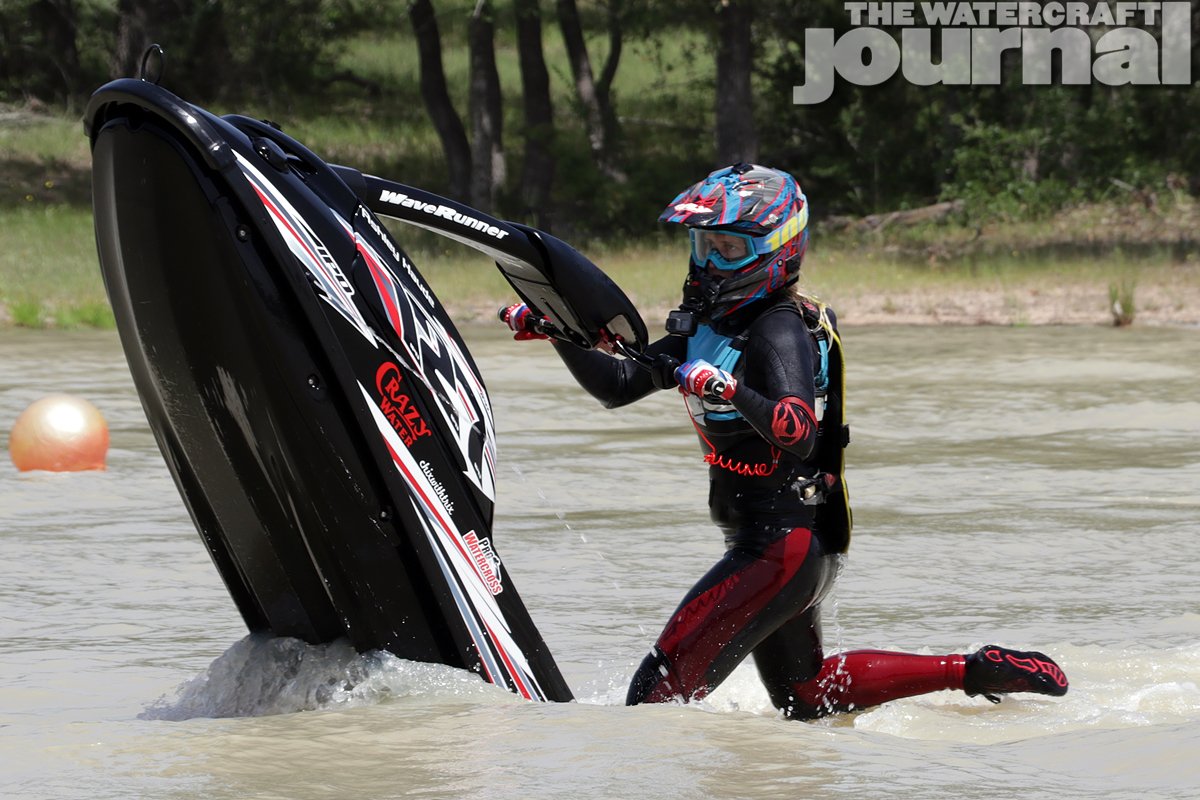
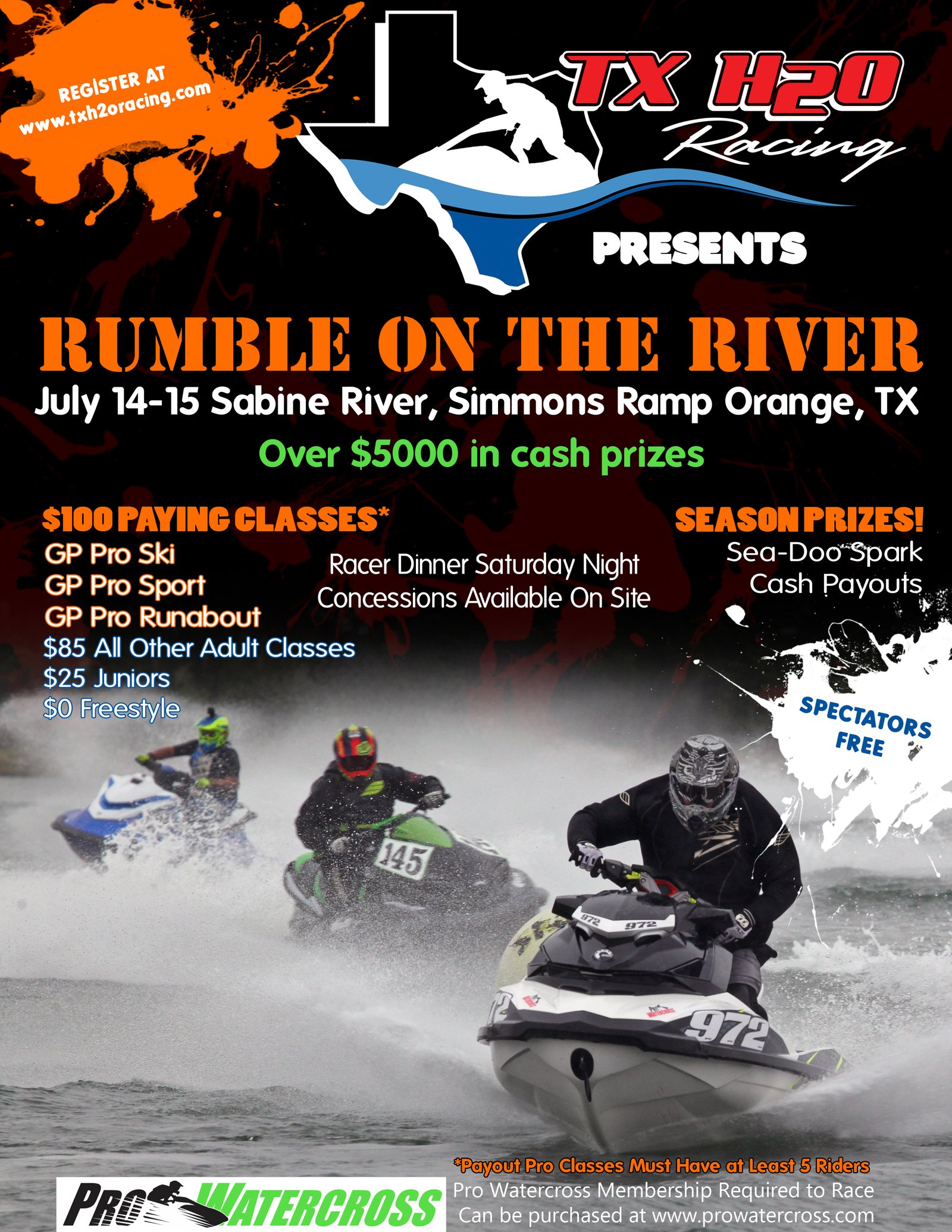
Be a part of history! Jet ski racing returns to the Sabine river on July 14-15, 2018 for the first time in decades.
TXH2O Racing and the city of Orange, Texas have partnered up to bring racers and spectators an event to remember. Pro class payouts and a BBQ dinner, everything is better in Texas!
The banks of the Sabine River near Simmons Boar Ramp are commonly lined with thousands of spectators for hydro-drags so the location is no stranger to high horsepower, water spraying action.
Opting for a rolling start, the Pro Watercross sanctioned event will feature the most intense portion of the track in front of spectators – the split.
Watching up close action and competition while munching on authentic Texas BBQ, yeah, I know we’ll see you there!
Admittedly, I was in a rotten mood. The 11-hour drive down went fine, but pretty much all of my planning had fallen apart. Wanting to be a little closer to the action, I booked a room at the Motel 6 in Morgan City, Louisiana. The Motel 6 wasn’t the best spot in town (not by a long shot) but the large grassy field behind it was always full of trucks and PWC trailers, so I figured I’d go to where the action was. That is, until I realized that the field had been paved over since my last visit…two years ago, and I was only one of two jet skiers attending Mudbug staying there. [Over the next four days, our room would flood, soaking the carpet, and the quickly begin to mildew in the sweltering heat. Add to that raucous partying from construction workers all night, and it’s easy to see why I will find lodgings elsewhere. -Ed.]
Arriving early that Thursday afternoon, plans were to race over to a private stretch of canal and perform a one-to-one, precisely weighed shootout between the 2018 Yamaha GP1800 WaveRunner and the new 2018 Sea-Doo RXT-X 300 using Greenhulk.net’s own Jerry Gaddis as our solitary test pilot and co-host for the video. We had done most of the planning the weeks prior; because we had no way to verify (on camera) how much fuel we had in each ski, we decided to fill each ski to their respective tops. Jerry was to be the only rider, so weight and riding differences wouldn’t be an issue. We were going to use his Vbox Sport accelerometer and a Garmin GPS.
To us, every inch of this was planned out. Except, apparently, when we were going to do it. Upon my arrival into Morgan City, Jerry alerted me that he was flying in Friday morning. So much for that, I thought. The rest of the afternoon was spent prepping the skis, making a run for various oddities I had forgotten to pack, and reaching out to the Greenhulk.net community to see about possible rides. Thankfully, a ride was coming together for Friday morning on Flat Lake, just on the western side of the levee. The group planned to conclude around noon, which would work great. I could pull off of the water, refill the ski’s tank and hustle over to meet up with Jerry for the videoshoot. The weather looked clear and temperatures were supposed to linger in the mid-80s.
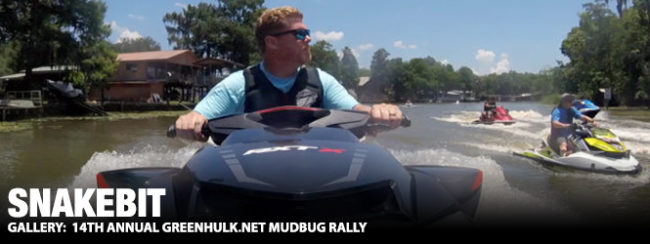
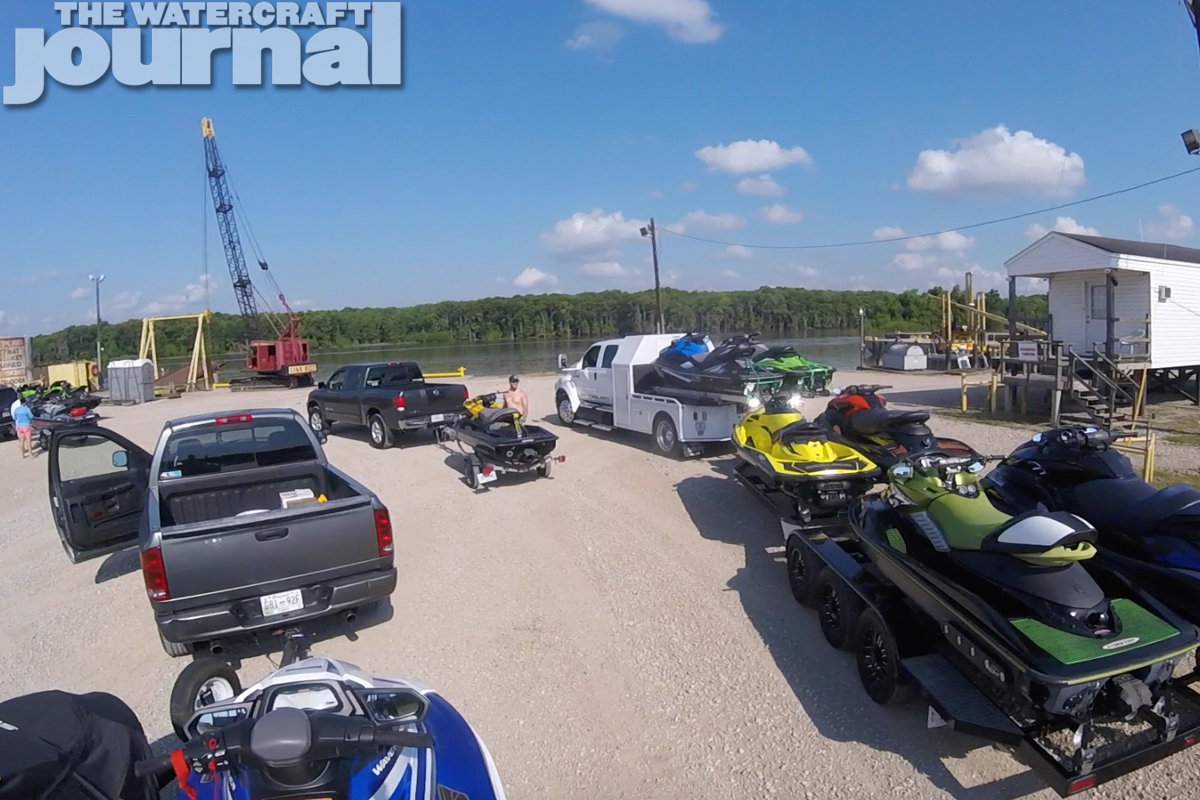
As Friday morning arrived, that prediction fell apart. It was already 90 degrees by mid-morning, and threats of thunderstorms were springing up for the afternoon. I growled in displeasure, but knew I had all weekend to get this done. Friday’s group quickly filled in at Doiron’s Landing. Riders from Florida, Louisiana, Texas, Alabama, Mississippi were to be expected; but a massive rig hauling 6 skis from New Jersey was definitely the biggest surprise. Some warmed over FZRs, a half dozen full-sized Yamahas, a handful of new ST³-hulled Sea-Doos, a RXP-X and a couple of two-stroke Kawasakis joined the fray. We had a pretty big group and was excited to see everyone gathered.
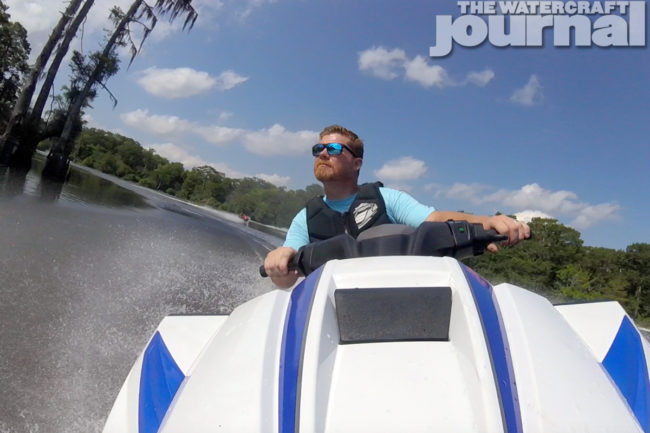
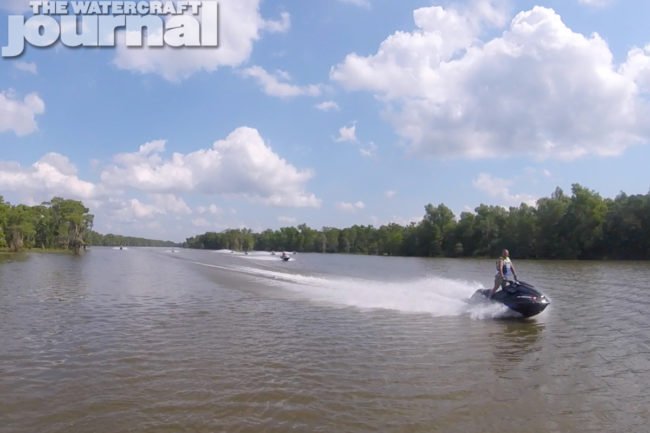
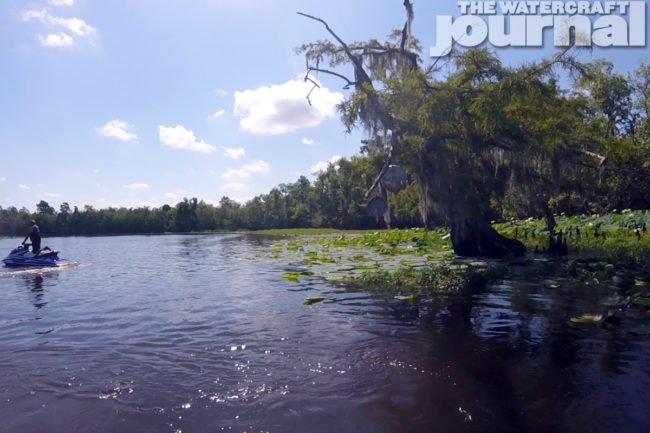
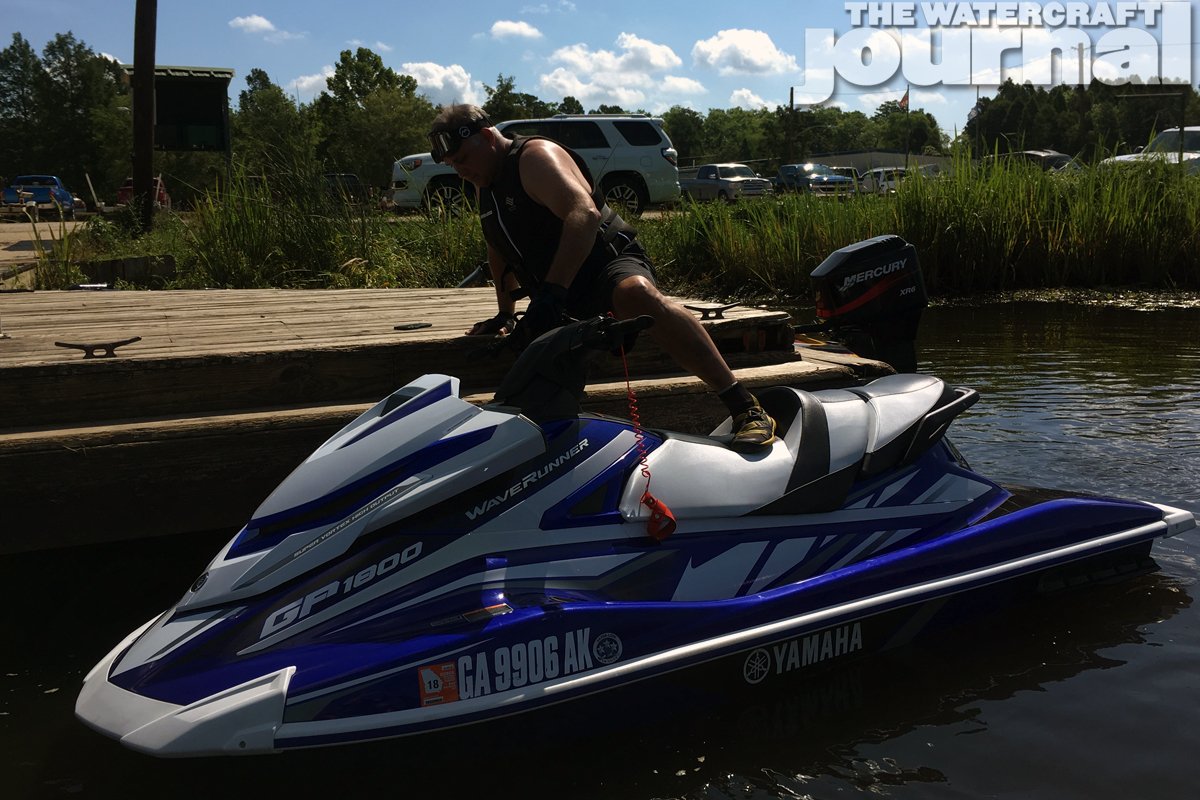
I was aboard the GP1800 only because I wanted to tack up a couple more hours on the clock to make it equal to the Sea-Doo’s 30 hours of use for the shootout. That, and frankly, I wasn’t sure how much fuel we were going to eat up on this ride, so the Yamaha was a better option. The group piloted north up the canal and left into Little Bayou Sorrel until Big Bayou Fork, where unexpectedly, the party split. The group, mainly consisting of the new Sea-Doos and full-sized Yamahas, ventured south toward Duck Lake, while we jogged northward. With the two-strokes smoking along in back, we careened through the cypress knobs and drooping Spanish moss, sluicing through the swamps with ease. Riding speeds were kept at a minimum as not to lose the Kawasakis, which struggled to surpass 40mph, and to stay out of the boost. Speed is fine, but fuel economy is finer.
With a little extra time on our hands, and riding upwards to Doiron’s on the Atchafalaya River, we doubled back and circled Bateman Island to extend our morning ride. With the others low on fuel and one of the Kawasakis struggling to maintain power, half of our group peeled off. Taking in a little more of the scenery, we finished our extended loop and trotted at a healthy pace back north past Pique Bayou and Long Island to Doiron’s. At the landing, we reunited with the first half of our group who split at the fork. Many were stopping for the day, while others were looking to carry on. That’s the joy of Mudbug. You can do pretty much whatever you want.
Once I loaded the ski, I rushed over to meet up with Jerry. With both the Sea-Doo and Yamaha filled to the gills with 93 octane, we went about making multiple passes, looking to record the best acceleration run for each machine. The rest of the day was spent fighting with fidgety cameras, trying to get audio equipment to work, and capturing all of the film necessary to complete the shootout before the blackening skies dumped sheets of rain on us. Temperatures lingered at 91 degrees, but the humidity thickened the air that hung heavily on our sweat-soaked shoulders. By 5pm, we grabbed all of the footage we could stand and drove back to the hotel to edit and upload everything until 1am.
Typically, there’s no set schedule to Mudbug. People show up. They meet up at Gros’ Marina, grab a bite and a drink, listen to music and go out for a ride. That’s pretty much it these days. The years of huge head’s up drag races became a massive legal liability that Jerry and crew simply didn’t want to face, so instead, Saturday mornings are usually a showdown of radar runs. A few mid-to-high 80mph skis show up with the rare 90-plus runabout making a pass or two. Because of other obligations, taking in the speed runs wasn’t possible this year. Again, somehow everything was going caddywhompus. At least, so it seemed.
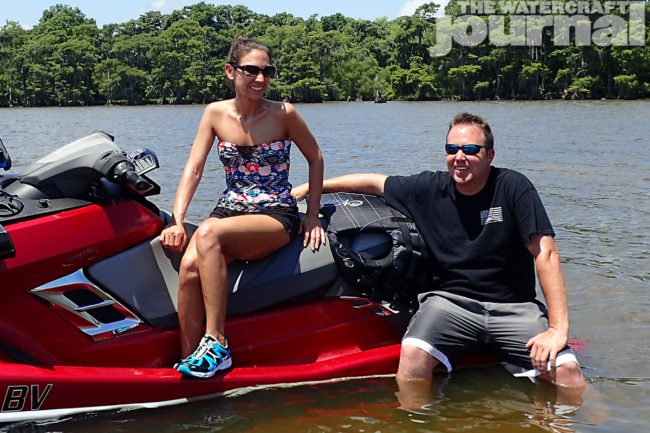
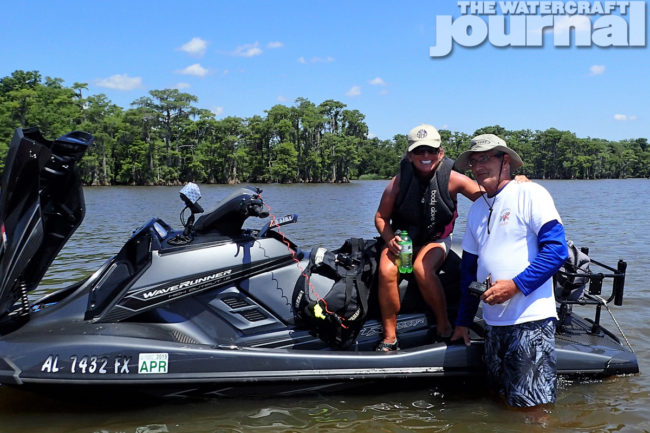
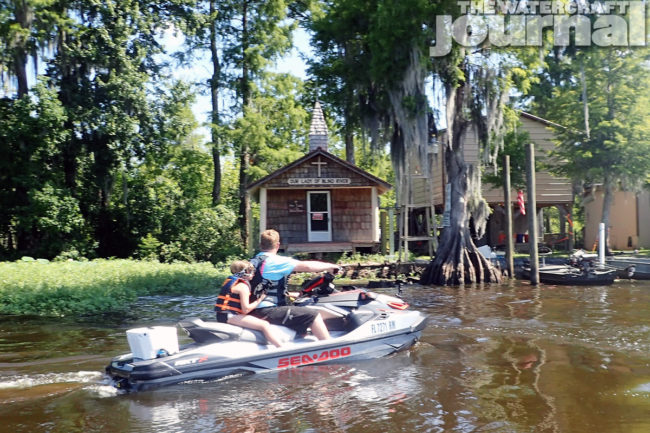
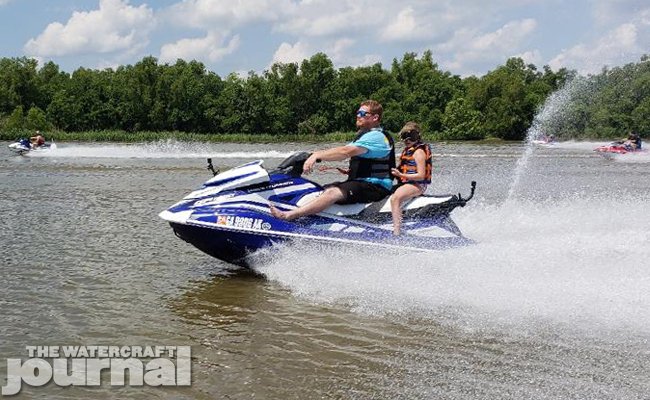
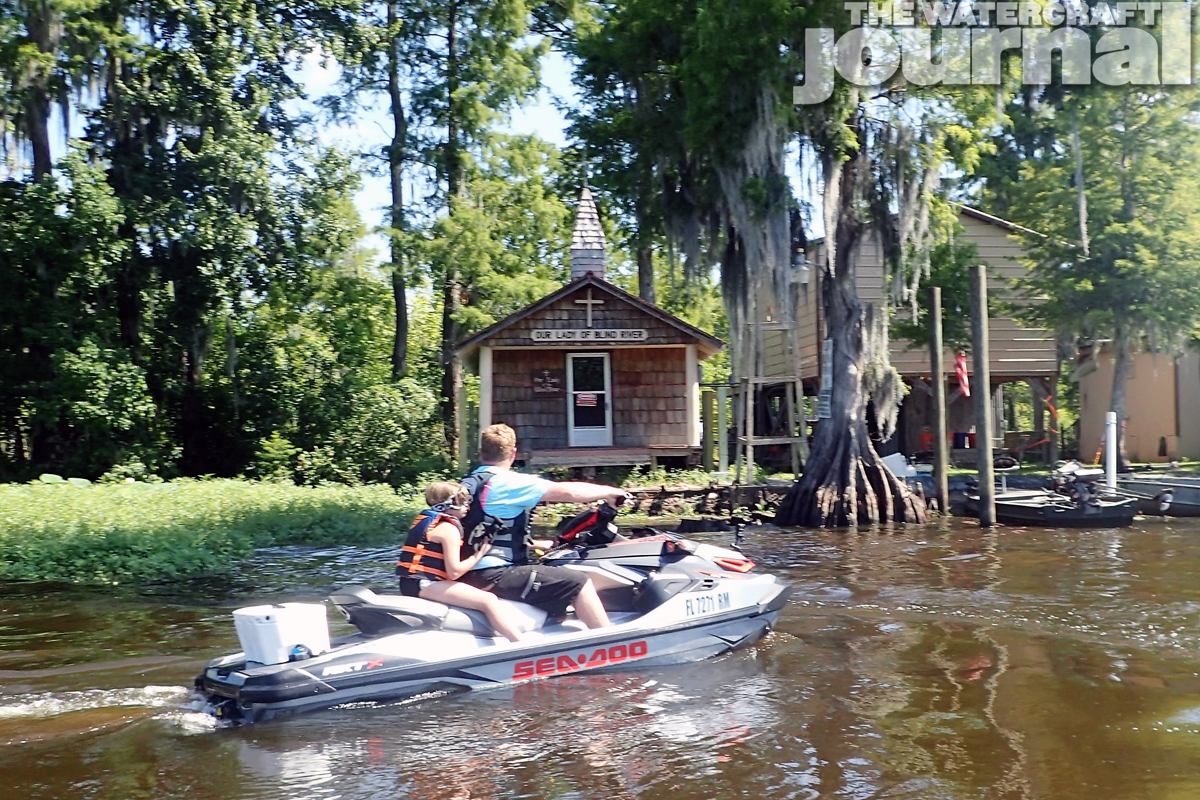
Although I was missing the fun with the main group back in Morgan City, I was particularly excited for Saturday’s ride because it was going to be my second with PWCTrailfinder.com’s Billy Crews. Billy has made a name for himself mapping some of the most incredible routes throughout the Southeastern states, and today we were going to ride one of his personal favorites. Launching early that morning on the Blind River at the St. James Boat Club, we journeyed north up the winding bayou. Stopping to observe the Our Lady of The Blind River chapel, I noticed some peculiar metal discs hanging from a cypress across the river: targets perforated with bullet holes.
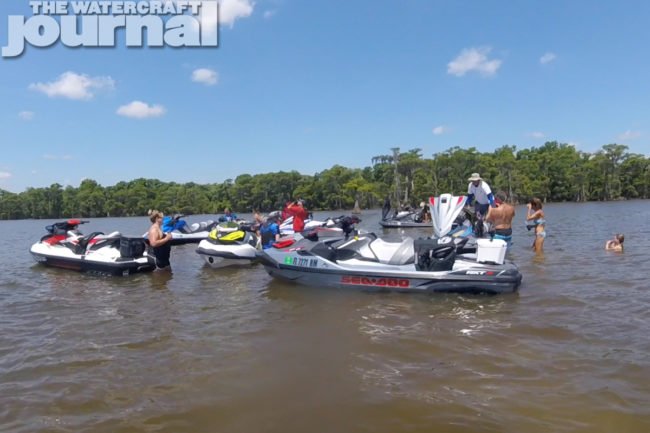
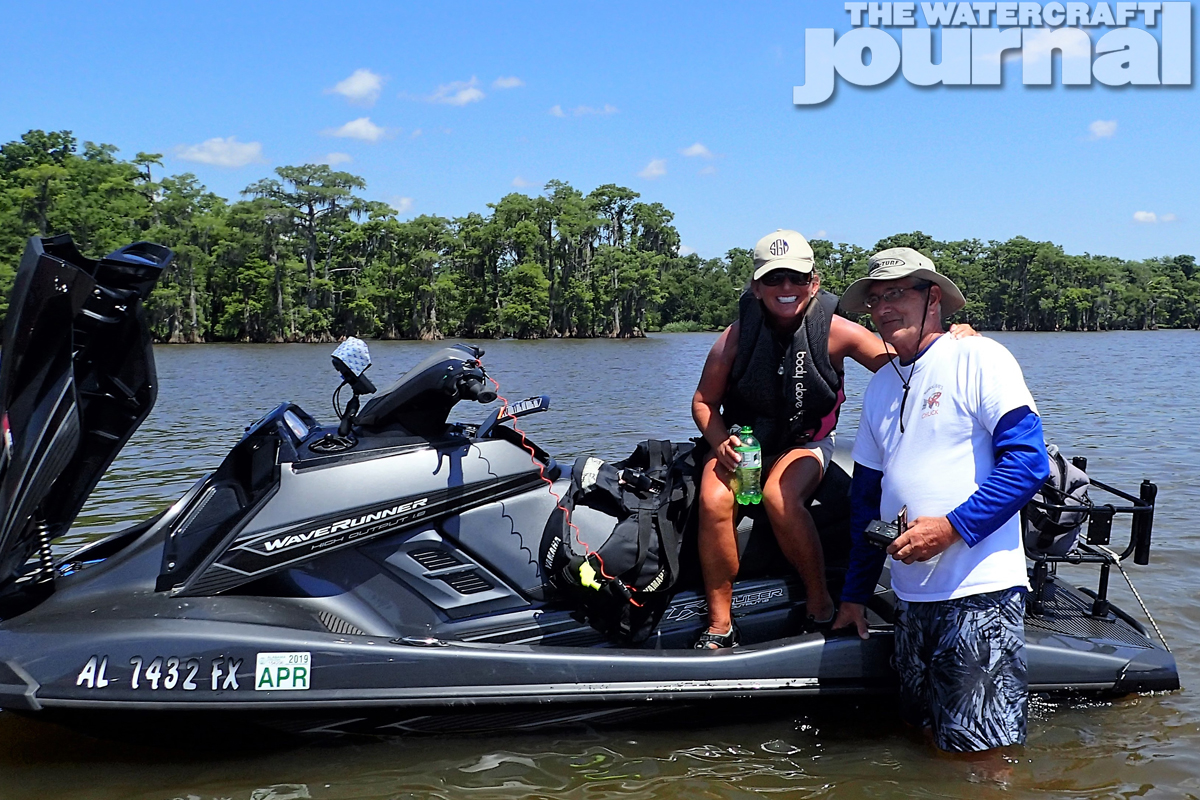
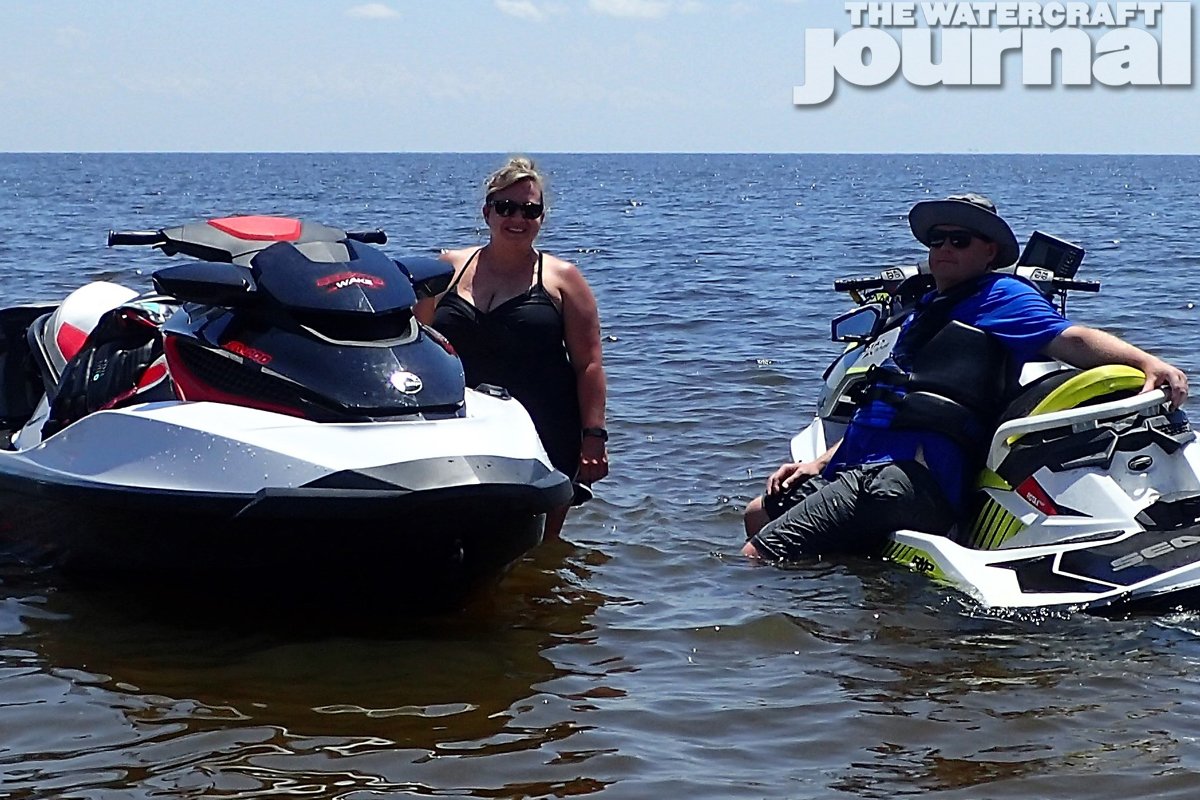
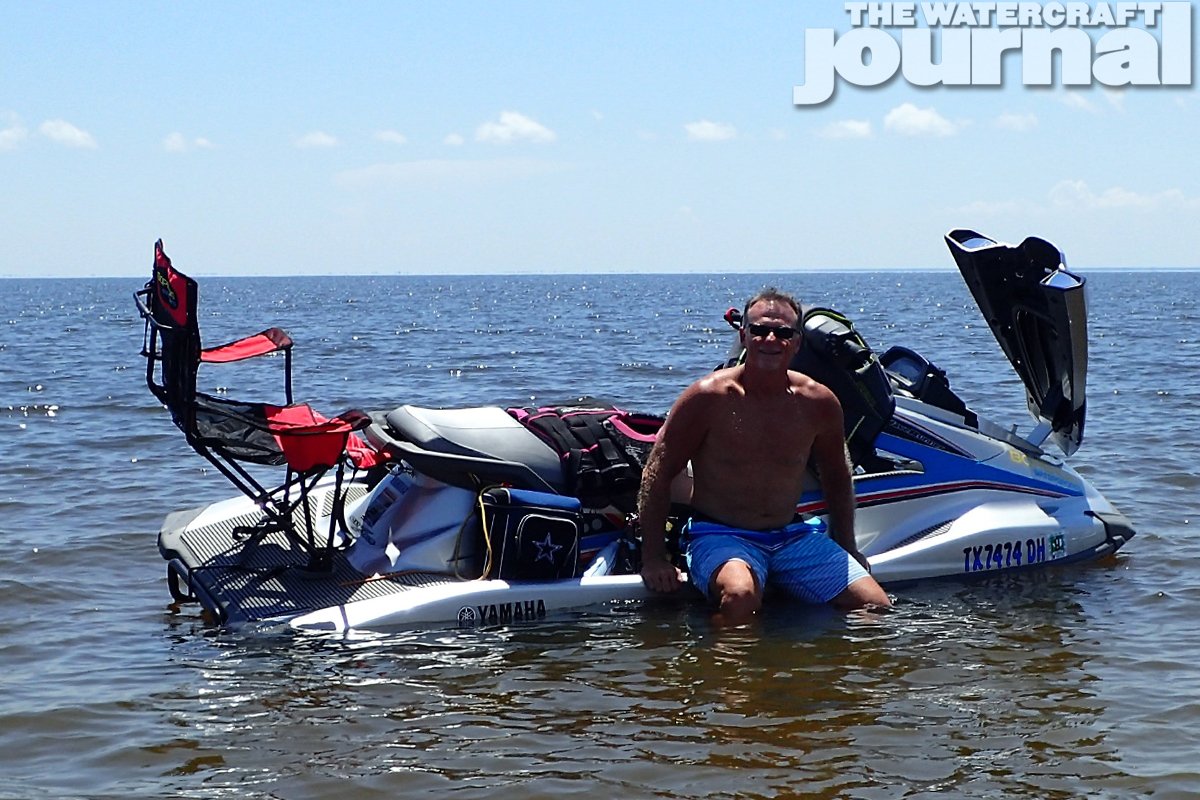
Following the current we spilled out into Lake Maurepas. Low water levels had us searching for sandbars, until coming to a stop for a short break. In the group – consisting mainly of Yamaha FX’s and a couple of Sea-Doo’s – we had Joe and Shari Borden of Bopenski Watersports. Joe quickly unfolded his new Kickback PWC chair and invited folks to try it out. Suddenly lounging on the back of a runabout became a whole lot more comfortable, many echoed. After the reprieve, we reboarded and sped off towards the northeastern end of the lake, following the question-mark shaped inlet back into the bayou, mindful of the submerged tree stumps and trunks lying just under the surface.
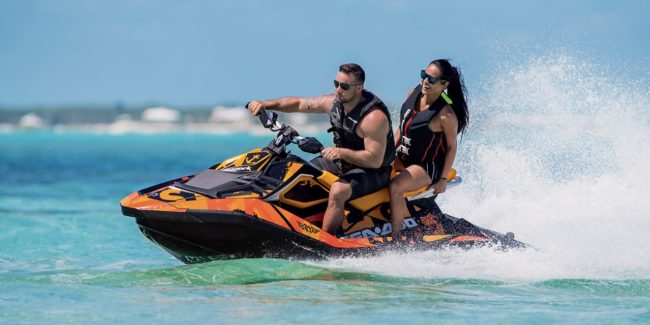
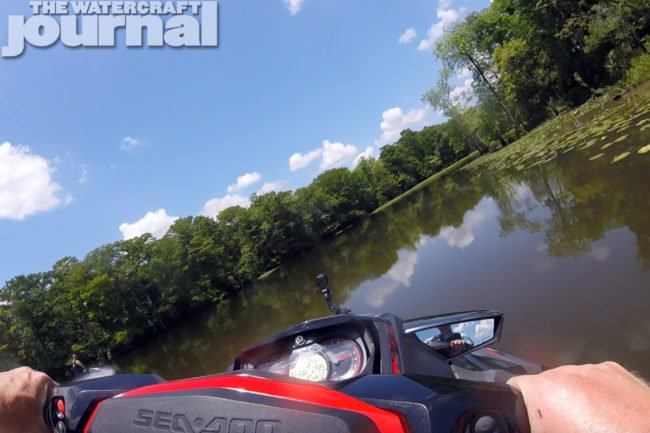
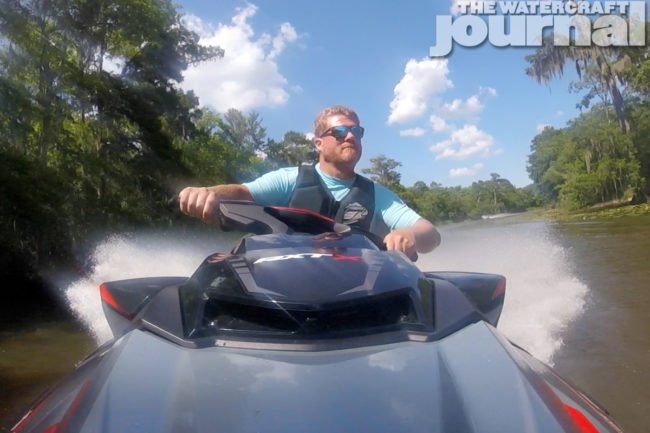
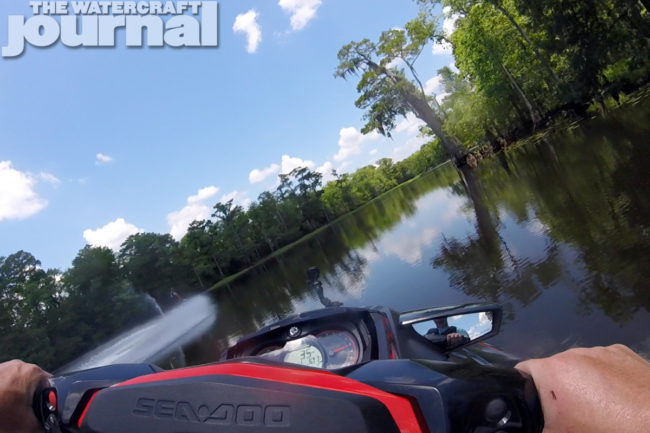
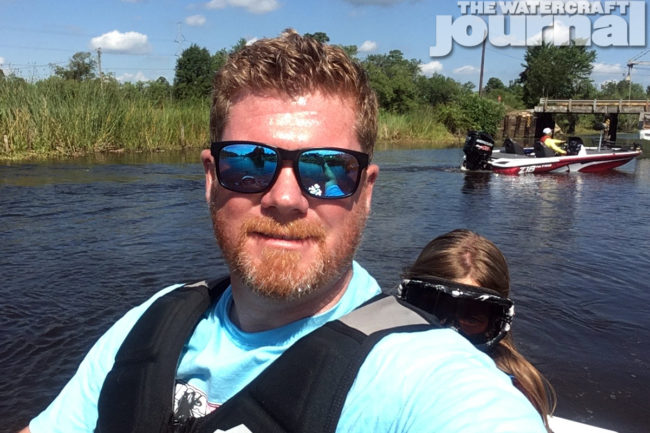
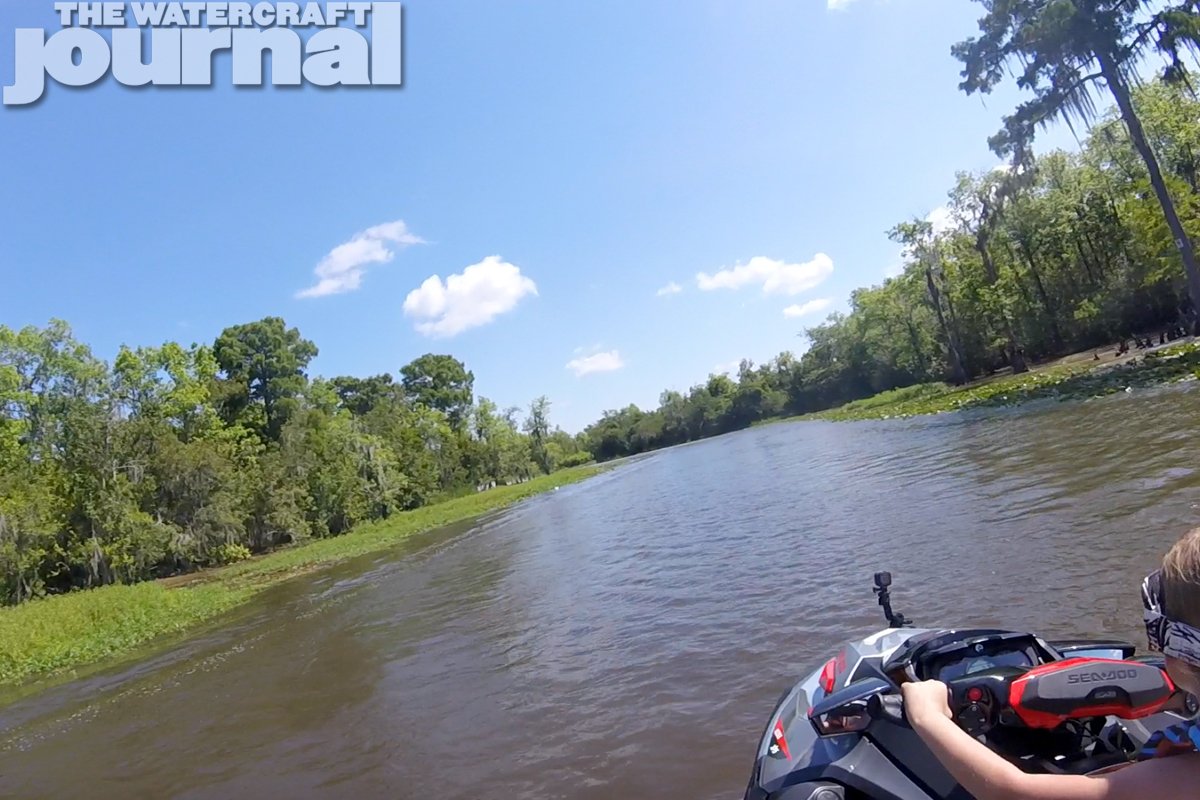
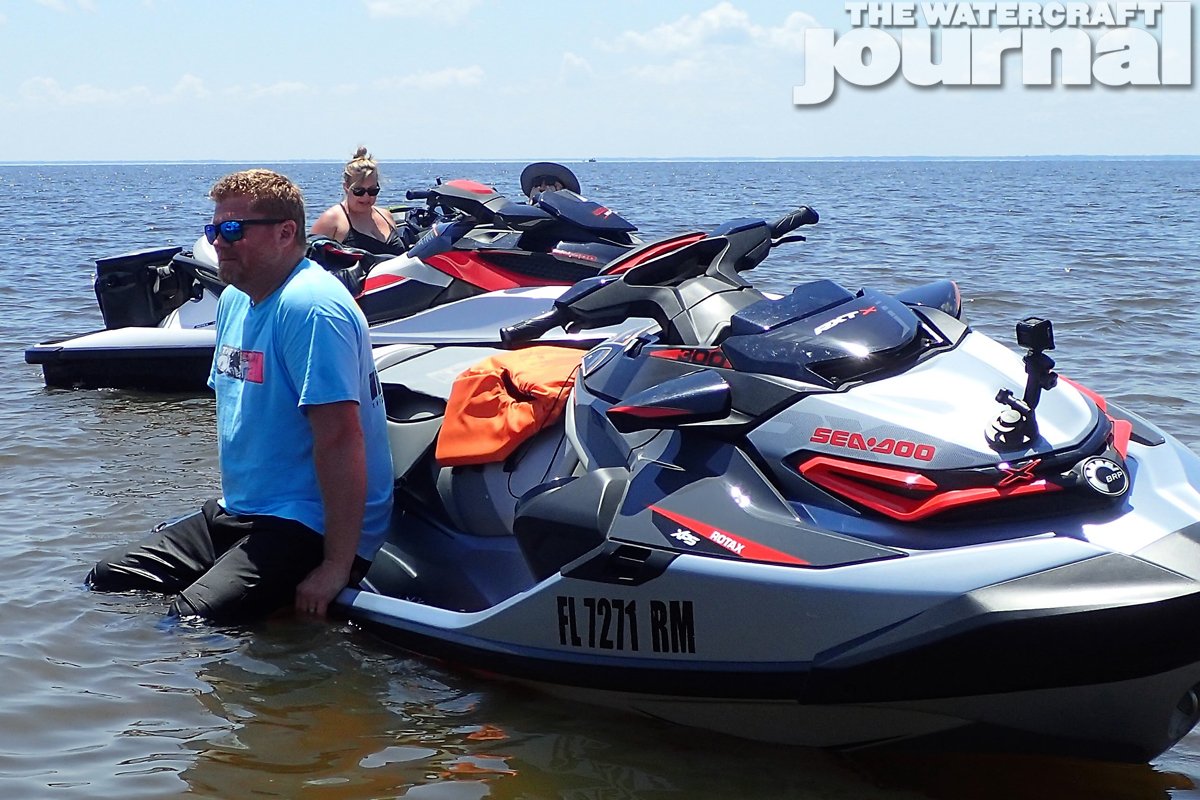
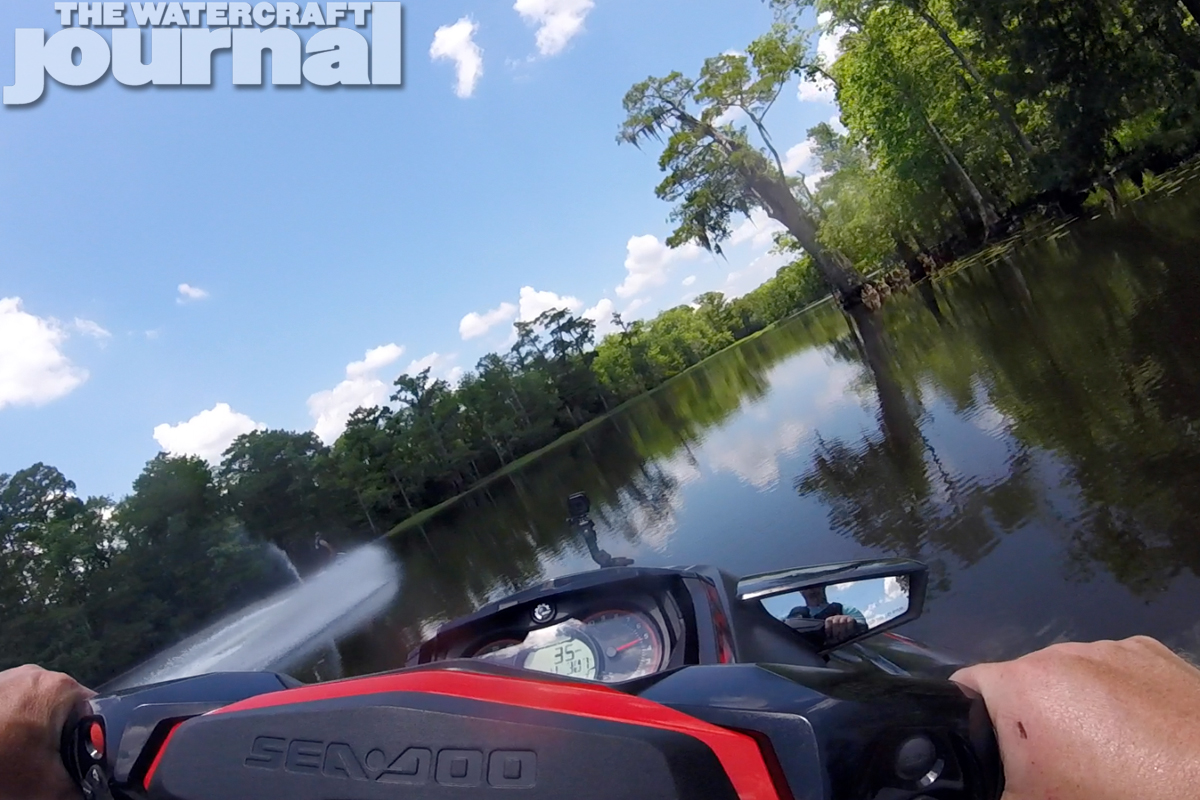
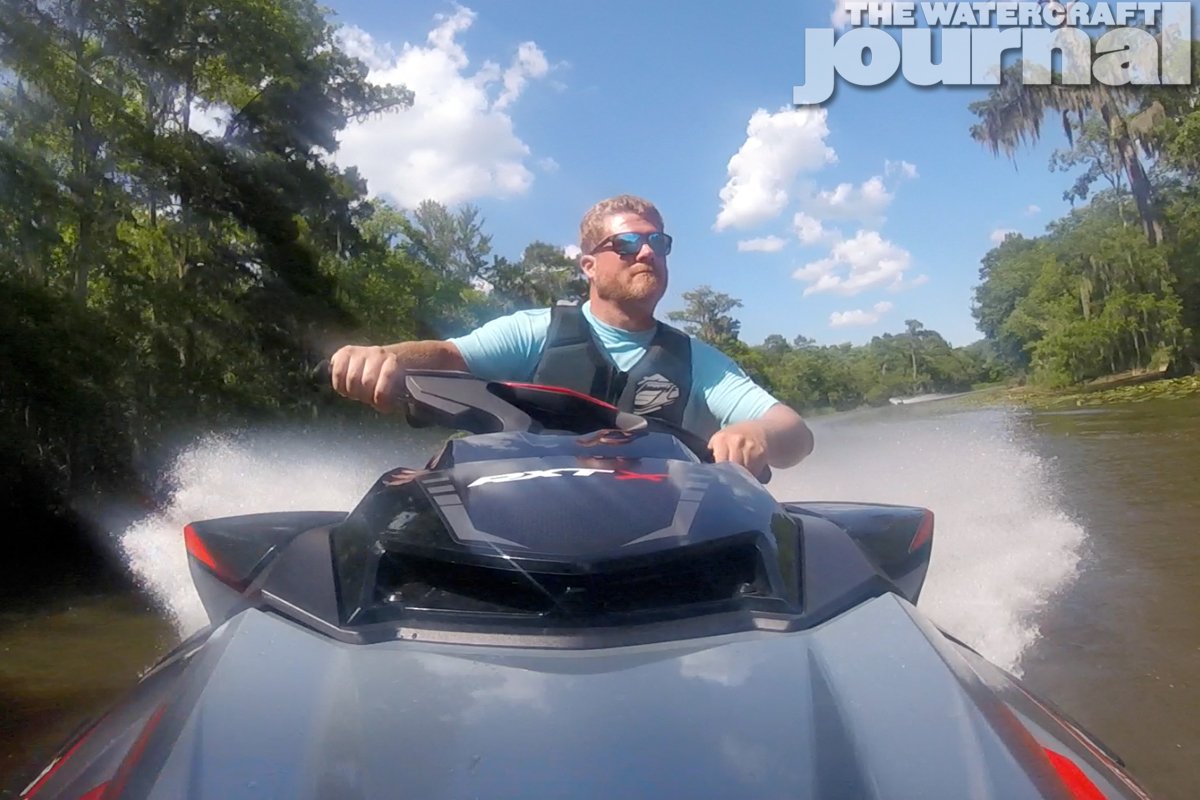
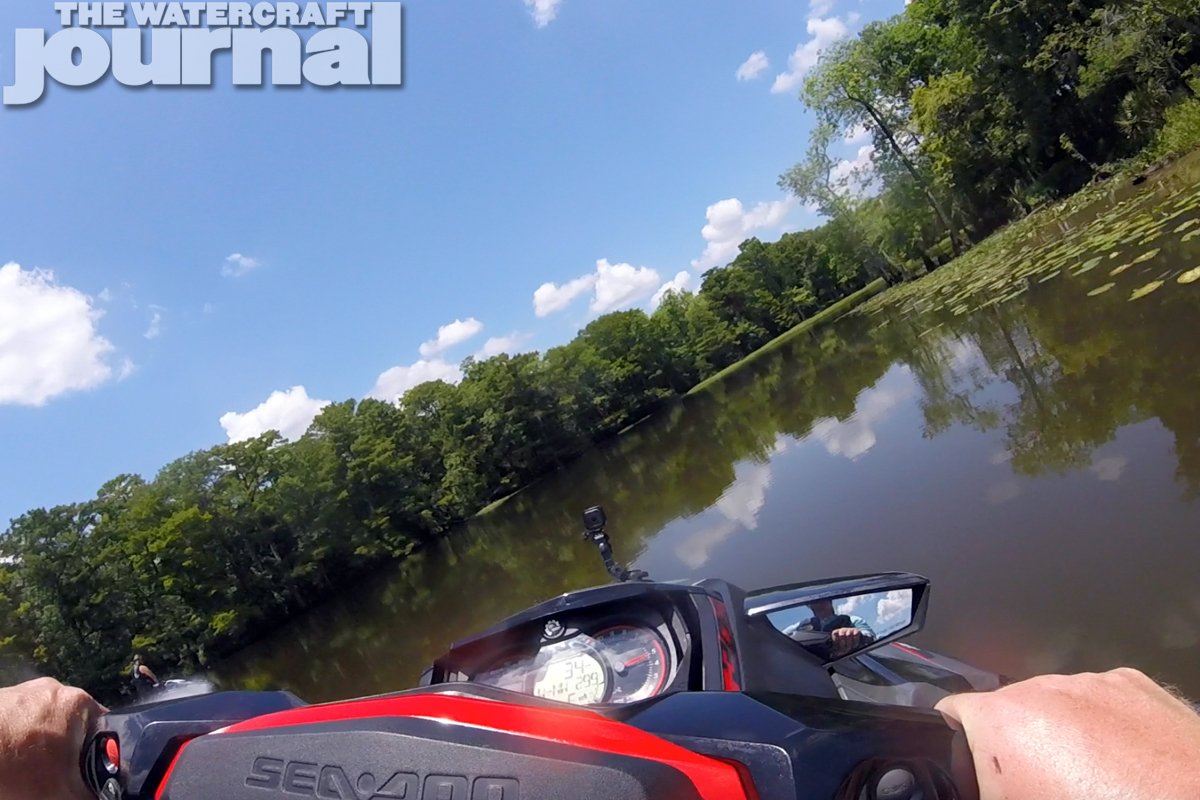
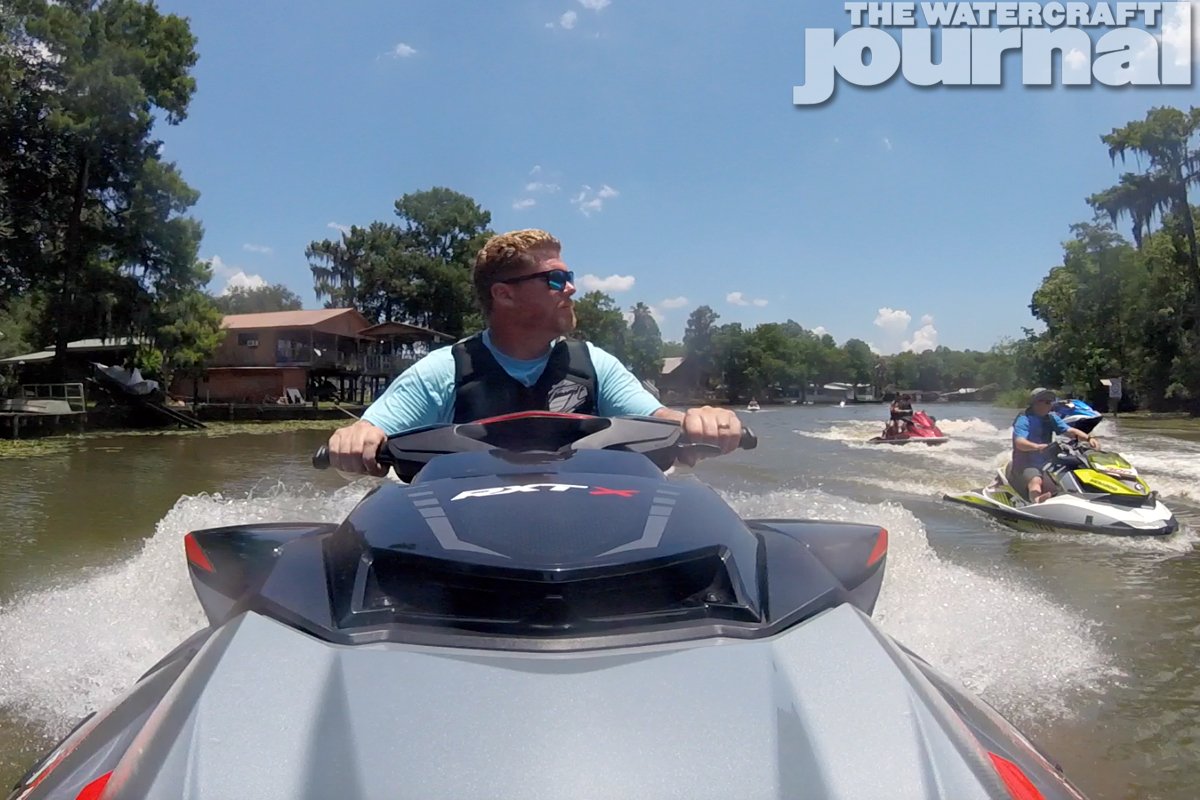
It was here, venturing deeper into the tighter channels of the Whitehall swamps where something very unsettling about the new Sea-Doo RXT-X 300 revealed itself: I had handed the GP1800’s lanyard over to Billy as his ’09 RXT was still in the shop, and frankly, I wanted to enjoy this ride aboard the far comfier 2018 Sea-Doo with my music playing. Riding deep in a procession through winding groves of cypress knobs and willows dripping with Spanish moss, the confluence of V-wakes churned the water into a broiling cauldron. These conditions and the unusual, hollowed-out convex coves flanking the ST³-hull’s keel made negotiating the various hairpins a nerve-wracking enterprise.
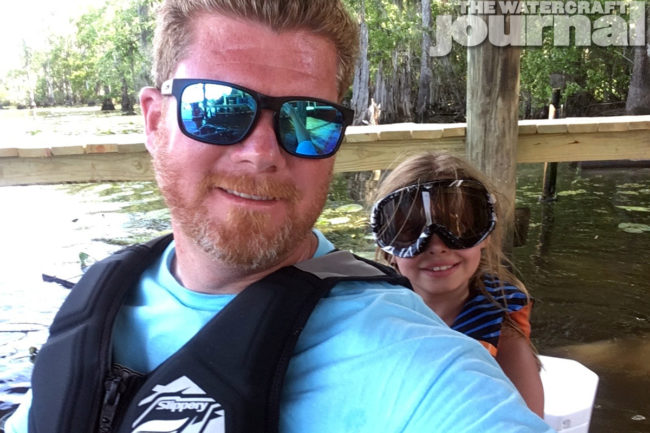
In fact, all too often the RXT-X 300 would bow steer, dramatically and forcefully, almost completely ejecting my 8-year-old passenger in one instance. Toggling through the VTS, I found that only trimmed to its second lowest setting, and purposefully throttling into and through the apex of the corner could I keep the ski on track. This, I later discovered, was to counter the long, lifting strakes and spray rails running along the ST³’s fore and mid-ships, which lift the ski while at speed. Yet, when teetering around 35-40mph through cross chop, it would hunt wildly, it’s nose acting like a front rudder. This of course, was because so much of the hull was based on the RXP-X, a design directly intended for the zig-zagging of closed course racing.
Now with my concentration piqued, rider input was at a maximum to ensure the Sea-Doo would stay on course. So much for a leisurely ride, I growled to myself. The rest of the ride, including a refueling and a welcomed stop for lunch in an air conditioned restaurant, went by nervously. What had been one of most comfortable runabouts I had the pleasure of riding was now a writhing, bucking bronco who did not want to be broken. A few hours and some 100-plus-miles later, we returned to the St. James Boat Club launch and began reloading and unpacking the watercraft. I was spent.
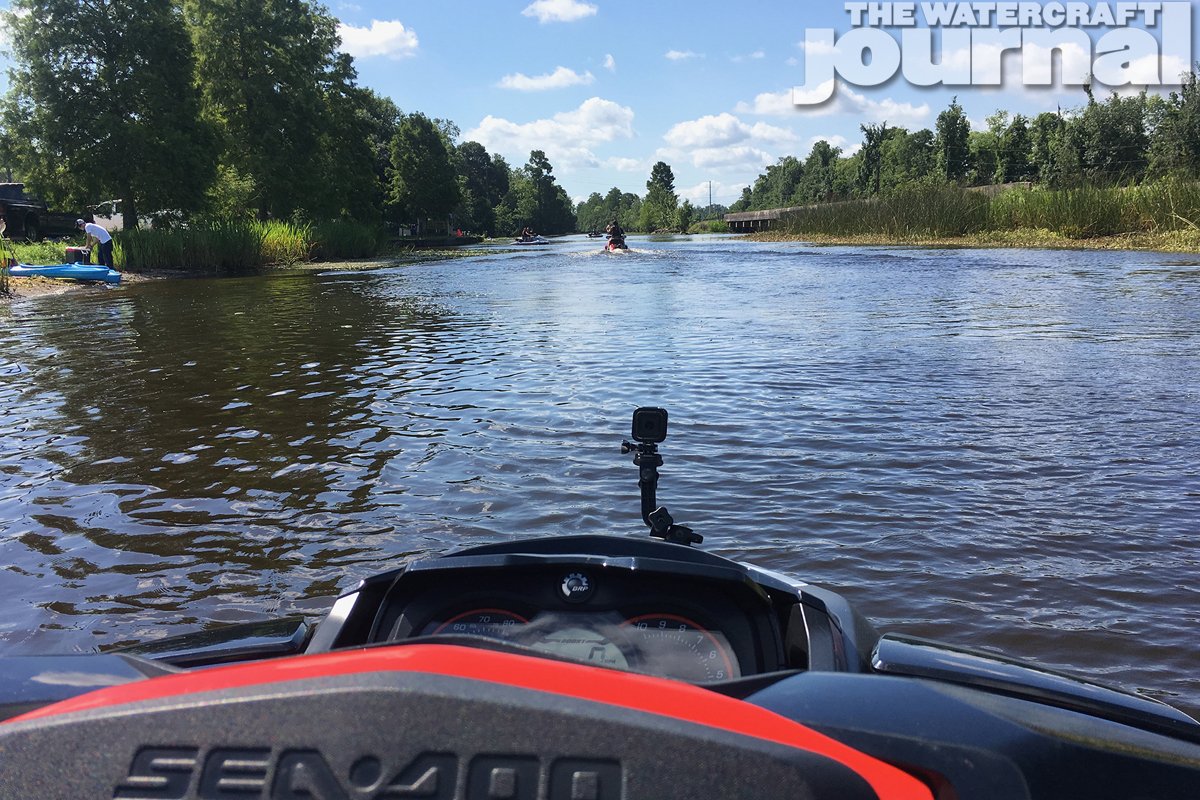
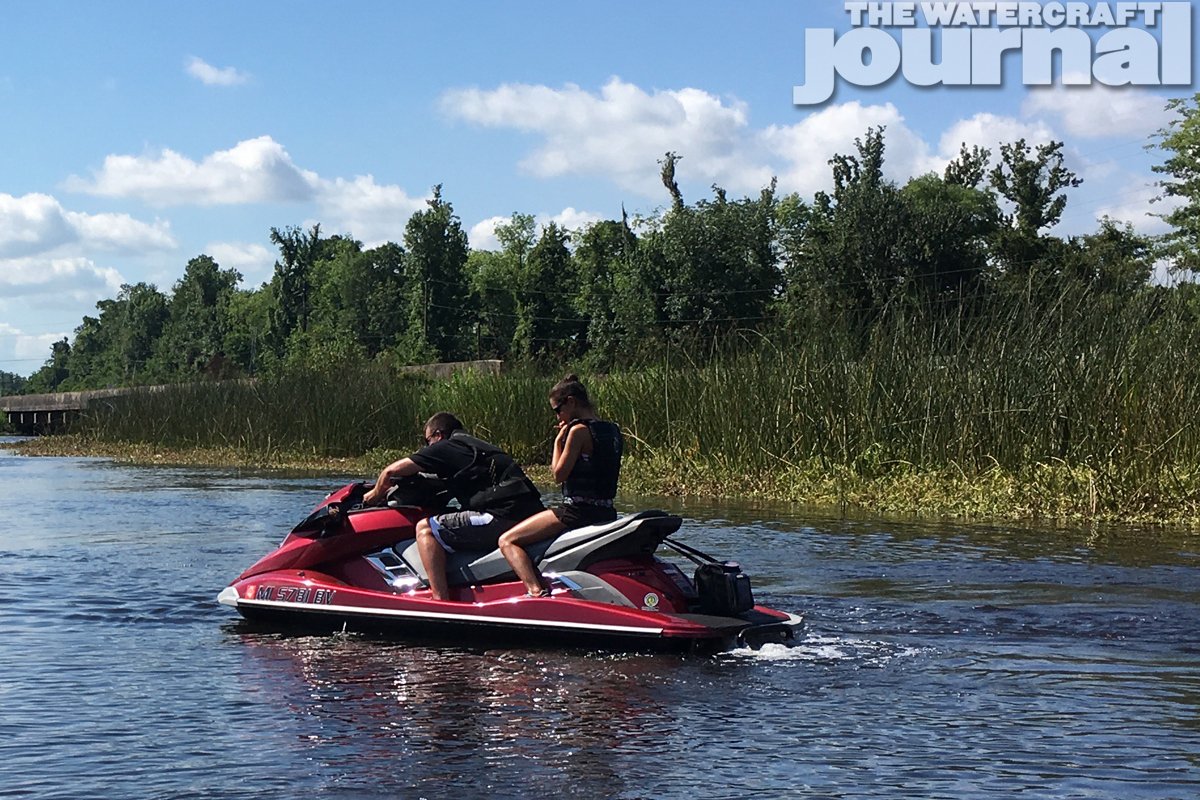
A quiet evening and filling dinner was our reward after trotting back to our hotel room rank with the odor of mildew. The next morning, Sunday, would see most of the Mudbuggers packing up and heading home in time to be at work bright and early Monday morning. Skies overhead were silvery gray, heavy with the threat of rain. Yet again, plans for a group ride fell through as did for meeting up with Jerry, so wanting to spend more time on the RXT-X, decided to put in at Doiron’s and meander through the straight-and-easily navigated Avoca Island Cutoff.
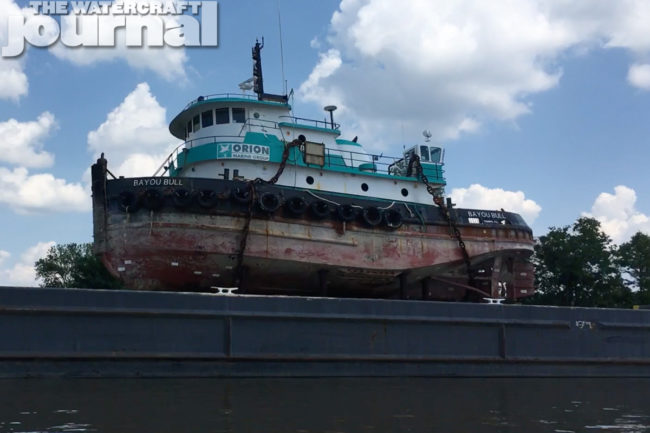
The bayou was glassy smooth, deep green and undisturbed. With the radio on and the throttle pinned, we shot down the evergreen corridors circumventing Lake Palourde all the way to Amelia. There too, we saw no signs of Mudbuggers, only shipping traffic. Checking the GPS, I mapped a route through Grassy Lake to Gros Marine to splash a few gallons in the tank and make our way back to Doiron’s. The ride was entirely uneventful, completely opposite of that from the day before. Reaching Gros, I chatted a with few locals curious about the new, uniquely designed Sea-Doo and showed them around the central storage compartment and Linq system, where I had a cooler packed with drinks and snacks.
Bidding them adieu, we passed the “camps”, large stilted homes protected high above rising waterlines, and encountered a teenager riding a black-and-green ’17 Kawasaki SX-R 1500. It was Jerry Gaddis’ son, who flagged me down and barked over the 4-stroke’s idle that his dad was on his way back to Gros. So back we went, at wide-open-throttle to the dockside bar and restaurant. Sure enough, Jerry and friends had just moored, so we pulled alongside. While live music played and cold drinks were shared, I checked my watch and the drooping eyes of my companion and knew it was time to head back.
That’s all folks!
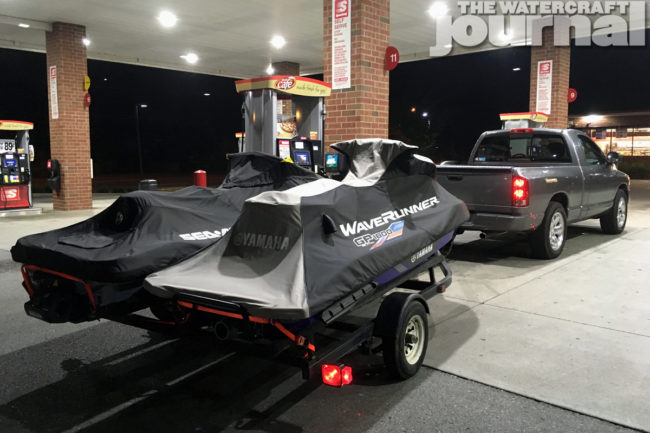
The warm breeze of the weekend had turned brisk as the storm clouds gathered, and the sudden drop in temperature made us begin to shiver. The Sea-Doo was quickly reloaded and strapped down as rain began to fall. By the time we reached the hotel, it was a downpour. The trip back featured road hazards tearing off our trailer’s fender and exploding a taillight, as well as some overheating that required an unexpected roadside pit stop. In all, our Mudbug trip was our longest and our most discombobulated. In later sharing my woes with a fellow Mudbugger, he wisely observed, “Well, that’s what you git ‘fer tryin’ to plan ahead for the ‘Bug. Let that be a lesson to ya.”
Only a scant 22 racers were willing and ready to race the annual Long Beach-to-Catalina Offshore Championships this past Sunday, July 8th, 2018. The 52-mile round trip enduro sees competitors dashing out of Long Beach, California’s historic Queens Gate breakwater, directly due south to Avalon Harbor on Catalina Island, circle a turn boat, and spring directly back. As simple as it may sound, the channel between the craggy Catalina island and the gray Southern California coastline is temperamental open Pacific Ocean and can turn at a moment’s notice.
All signs pointed at a smooth bit of riding until early morning reports barked over the radio that heavy rollers prevailed until a few short miles of the island, where conditions worsened into “washing machine” chop. Despite the warnings, most racers boarded Yamaha FX and GP1800 runabouts. A little more than a handful piloted Kawasakis, which until recently, was the weapon of choice for this event. As the starting flags waved and racers pinned their throttles, 2017-winner, Cyrille Lemoine was nowhere to be found.
Lemoine had been busy mugging for the camera boat when the flag dropped and hadn’t noticed until minutes into the race. The Frenchman quickly darted out to sea desperate to reel in the crowd who had vanished into the horizon. Mark Gerner and Craig Warner dropped out early with mechanical issues and watched as Lemoine howled past them. Dean’s Team Yamaha racer, Mike Klippenstein had pulled ahead early and was leading the pack, but not by much. The 50-year-old’s Yamaha GP1800 was over a minute ahead as the California came into view.
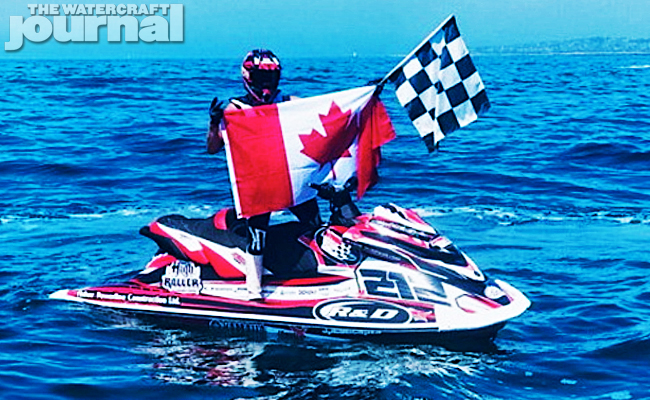
Amazingly, Lemoine has maneuvered through the entire field and was closing in on Klippenstein, whose whitewash was in Lemoine’s sights. Klipper pushed harder and earned his championship, crossing the flag boat a scant 82 seconds ahead of Lemoine, who himself was a mere 5 seconds ahead of third-place finisher Paul Pham. Juan Francisco San Martin of Uruguay took the Manufacturer Stock class on a Yamaha FX SVHO as well. In fact, of the Top 10 finishers, all but 9th place were Yamahas, earning the brand the “offshore championship” squarely.
2018 LB2CAT Overall: 1. Mike Klippenstein (YAM), 2. Cyrille Lemoine (YAM), 3. Paul Pham (YAM), 4. Tony Hoa (YAM), 5. Cassius Sanders (YAM), 6. Juan San Martin (YAM), 7. Jacob Leu (YAM), 8. David Palmer (YAM), 9. Jeff Lane (KAWI), 10. Derek Diep (YAM), 11. David Schapel (KAWI), 12. Sam Deluca (YAM), 13. David Uhler (KAWI), 14. Santiago Kuan (YAM), 15. Dan Lindgren (KAWI), 16. Charlie Martinez (KAWI), 17. Johnny Custom (YAM), 18. Eric Garcia (KAWI); DNF: Craig Warner (KAWI), David Chassier (KAWI), Arteem Kharatt (SD), Mark Gerner (YAM)
Let this be a reminder to you to always check your gear before and after you leave the water. When attending surf or other safety instruction training, we are taught to inspect our equipment prior to to use. We go over a checklist and have a hands on discussion. It is best to know beforehand if there is a problem with your gear. No one wants to enter the water and realize their drain cap isn’t tight or their leash tie is frayed.
Inspecting gear is a little different when it comes to a jet ski. The assessment of equipment is more involved and requires a more thorough review. Trailering may be involved along with proper docking and tying down watercraft.
When we sifted through the Facebook comments to determine what happened to Jorge Ocana’s PWC, we discovered that he failed to check his wooden lift before tying down his newly purchased 2014 Sea-Doo GTX iS 255.
He claims he secured his ski to the lift only to come back later to find his machine had fallen into the water and smashed against some rocks and a dock during a storm. Ocana also wrote that he tied down his ski and that the wooden lift broke.
This disaster could have easily been prevented by taking the time to look over everything. There is no need to rush when it comes to inspecting machines and tie downs. Take the extra minutes to properly secure your craft and look over the place you’re storing it.
A few simple bowlines and half hitches attached to the eyelets on the ski may have saved the day. Straps may have been key as well. However, with the weakened rotted wood, we have a different scenario; a neglected lift. It is too bad that Ocana didn’t notice his lift was bad. A costly error was made and we will never know if the Sea-Doo was properly secured.
Personal watercraft riding can be one of the most enjoyable events in life. The thrills that come with it are some of the greatest but as with any activity, there are good things as well as bad things.
If you are perhaps considering whether or not to purchase your very own personal watercraft, here is a list of good things and bad things that come with the territory of ownership and operation of these machines.
The fun factor: personal watercraft are undeniably fun to ride. The feeling of exhilaration is there every time from the small nimble and playful units to the supercharged high-horsepower monsters. Take one ride and you won’t deny it either.
Easy to operate: Once you understand the basic principle of a personal watercraft in that you use the jet pump’s thrust to propel and steer the craft through the water, they are very easy machines to operate. In fact with such ingenious systems like Sea-Doo’s IBR or Yamaha’s Ride, maneuvering, braking, and reversing have never been easier.
More fun than a motorcycle: Okay so this one is debatable depending on who you ask but c’mon let’s be honest. Take a look around the next time you see someone riding a motorcycle and then someone riding a personal watercraft. The watercraft rider will be smiling and the motorcyclist won’t be. Plus, where else can you pin the throttle and not break any speed laws other than on a personal watercraft.
Safety is there: Modern personal watercraft have come a long way since the early days. The watercraft of today’s world have many built-in safety features such as off-throttle assisted steering, brakes, and learning modes to help new riders. Statistically-speaking, personal watercraft are far safer than motorcycles as you don’t have to contend with nearly as many distracted drivers and hazards in your riding path.
Anti-theft deterrents: Much like your car keys, modern personal watercraft have anti-theft systems installed. Some come with digitally encoded key fobs that are unique to your exact watercraft and others might have a remote control allowing you to digitally lock the watercraft from unwanted starting of the engine.
Fun for adults and younger riders: While most jurisdictions have age restrictions limiting young teenagers and children from riding alone, many watercraft come with programmable keys allowing you to limit the speed and power output for younger, inexperienced riders.
Take the whole family along: Recent personal watercraft have gotten more spacious, more stable, and allow more flexibility for storage of all your essential items. Take for example Sea-Doo’s revolutionary new hull and platform design which allows you to stretch out and bring the picnic along with you.
Many shapes, sizes, and budgets: Personal watercraft come in many sizes from your small, lightweight craft that you can pull on a trailer using a Toyota Prius all the way up to the large touring models that fit three or four people. Prices range from just over $5000 to well over $17,000 so they can be affordable for many people.
More than just recreational riding: Owning a personal watercraft unlocks the gate to so many activities from sanctioned riding and racing events, organized riding clubs and activities, to offshore fishing, and exploring hidden and remote areas.
Relatively simple to maintain: With some simple tools and equipment, anybody can do most minor service work themselves. Additionally, if you regularly clean and maintain your personal watercraft, it will last for years to come.
The Bad
Cost of Ownership: As with any powersports activity, there is cost associated with owning a personal watercraft. You must obviously consider the cost of the unit itself plus a trailer if necessary. In addition, you should consider insurance, fuel, property tax, and maintenance costs.
Limited riding season for many: Unless you are planning on investing in wetsuits and other heavy winter riding gear, many people will realize that riding is limited to the summer and mildly cool months.
Winterizing: If you live in an area that gets well-below freezing and you plan on storing your watercraft for many months, you will need to winterize your ski which includes extracting all water out of the internal engine and/or exhaust passages as well as lubricating the engine cylinders.
Buy a trailer: If you are like most people, you don’t have direct water access from your house and so you will need a trailer and a proper vehicle to tow your personal watercraft.
Need water access: Obviously you need water to ride and an established boat launching ramp. Many people do not live close to a sufficient water source.
Safety concerns/riding at night: You are required to wear certain safety gear such as a life vest. While some may consider this restrictive to your movements, there are actually very comfortable options available. Personal watercraft do not have the necessary equipment to operate at night and so it is unlawful to do so.
Environmental Concerns: You will certainly be operating your watercraft in the homes of marine animals and wildlife. Especially when operating in shallow water conditions, this could pose a hazard to some animals and surrounding environment areas.
Can be hard to sell if you have to: Making sure you like the watercraft you buy is important because re-selling can be difficult especially in the wrong market.
Not all watercraft are for every riding condition: Small, cheaper units will generally have a rougher ride and are not as stable. Therefore, they will not suit well in ocean or rough conditions. On the same note, a larger stable watercraft will not be as playful in terms of doing spins and other tricks so you will need to pick the watercraft that suits your style.
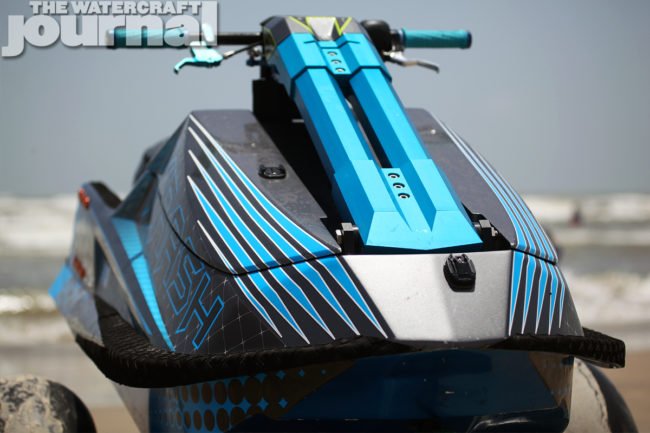
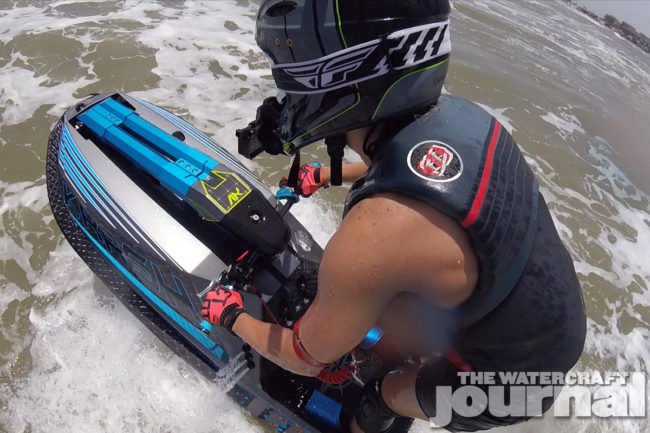
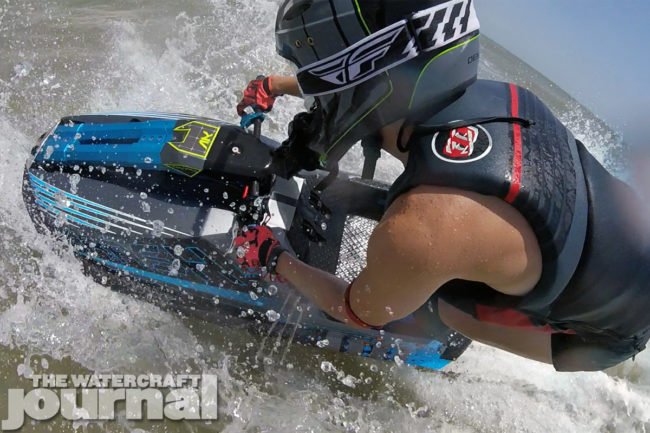
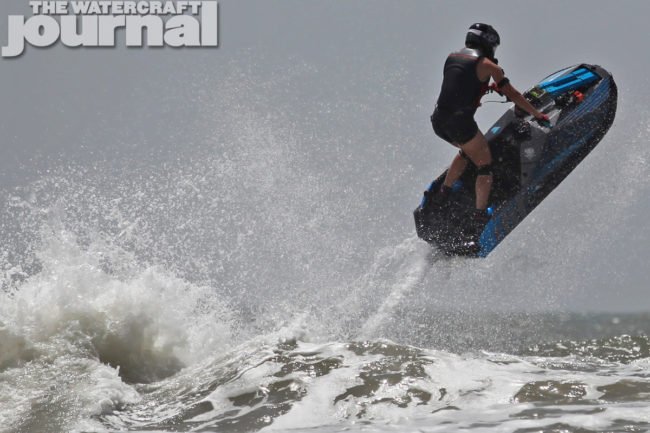
It took me two years of planning, building, and coordinating to experience my first surf ride and that was far too long! Please, don’t be like me.
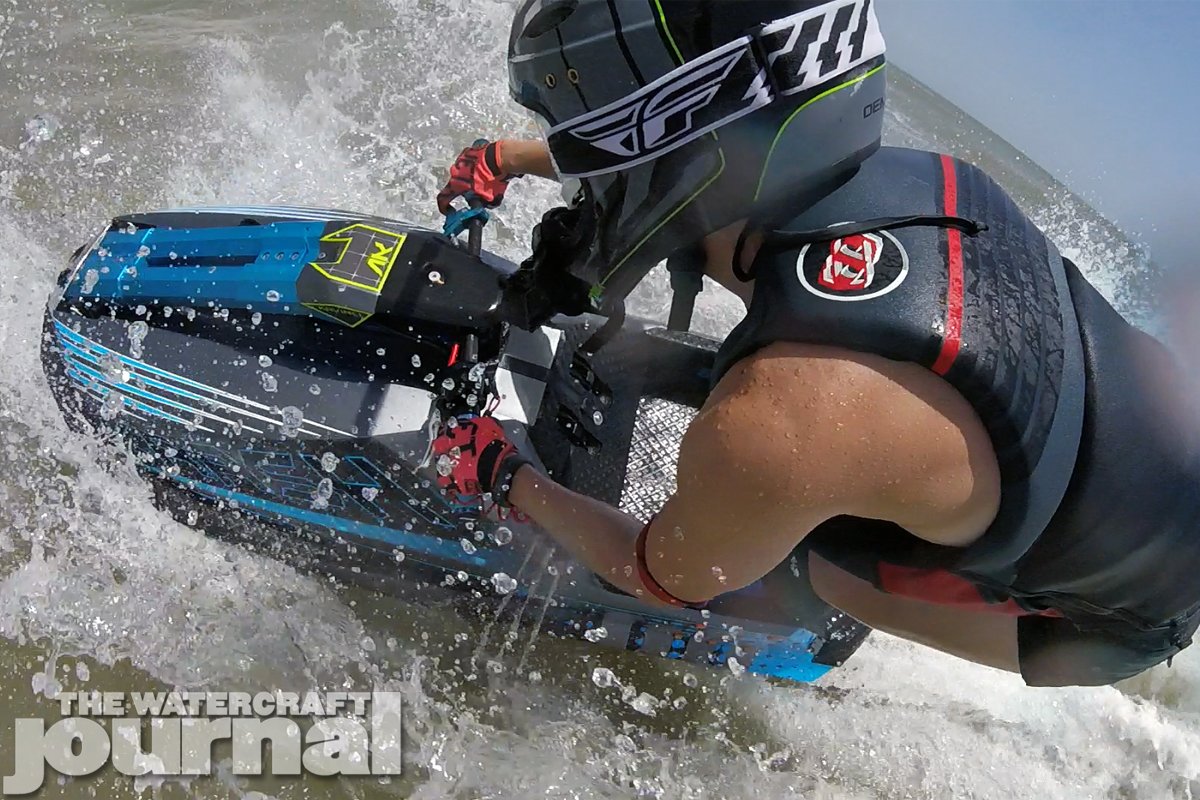
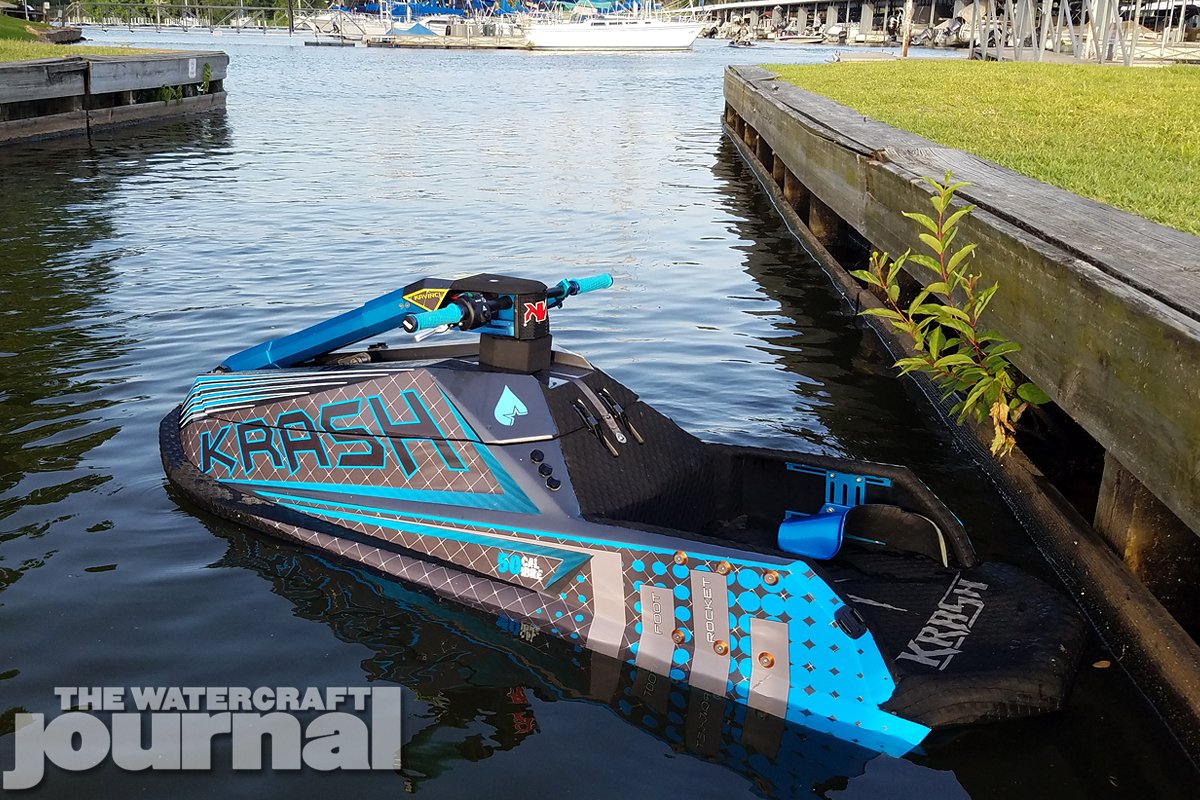
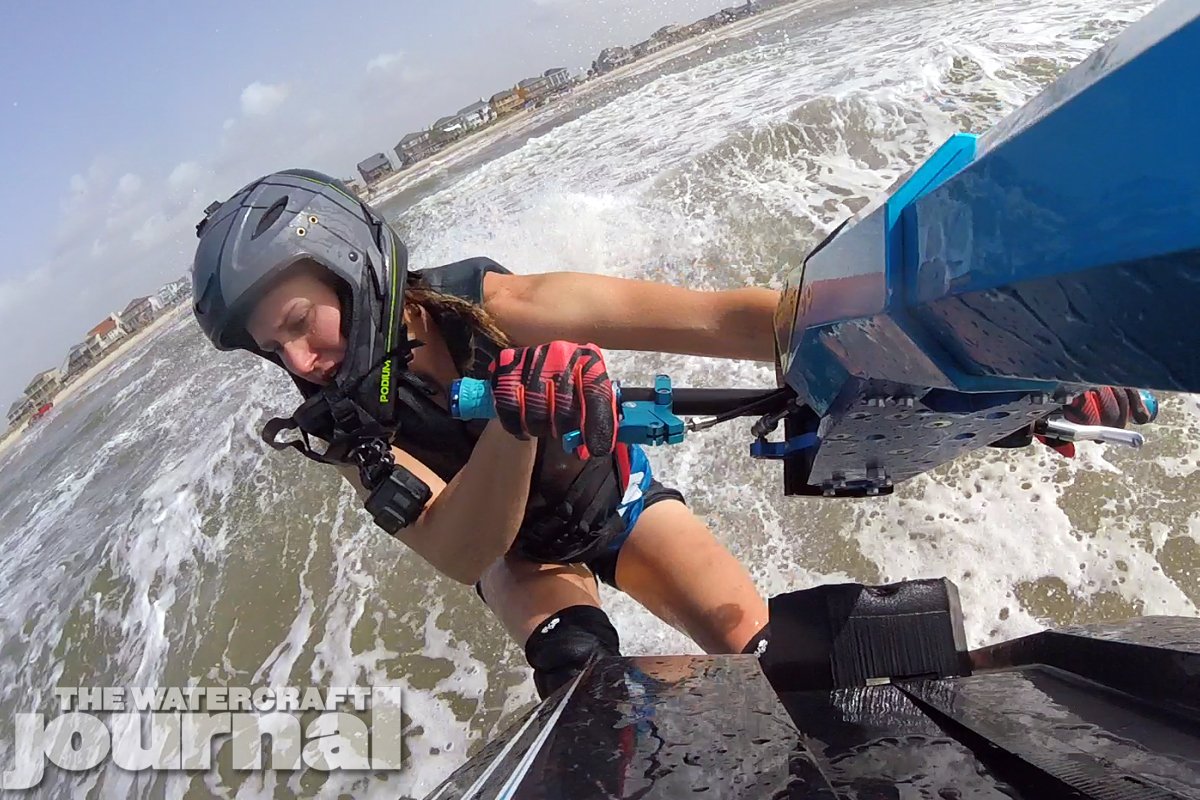
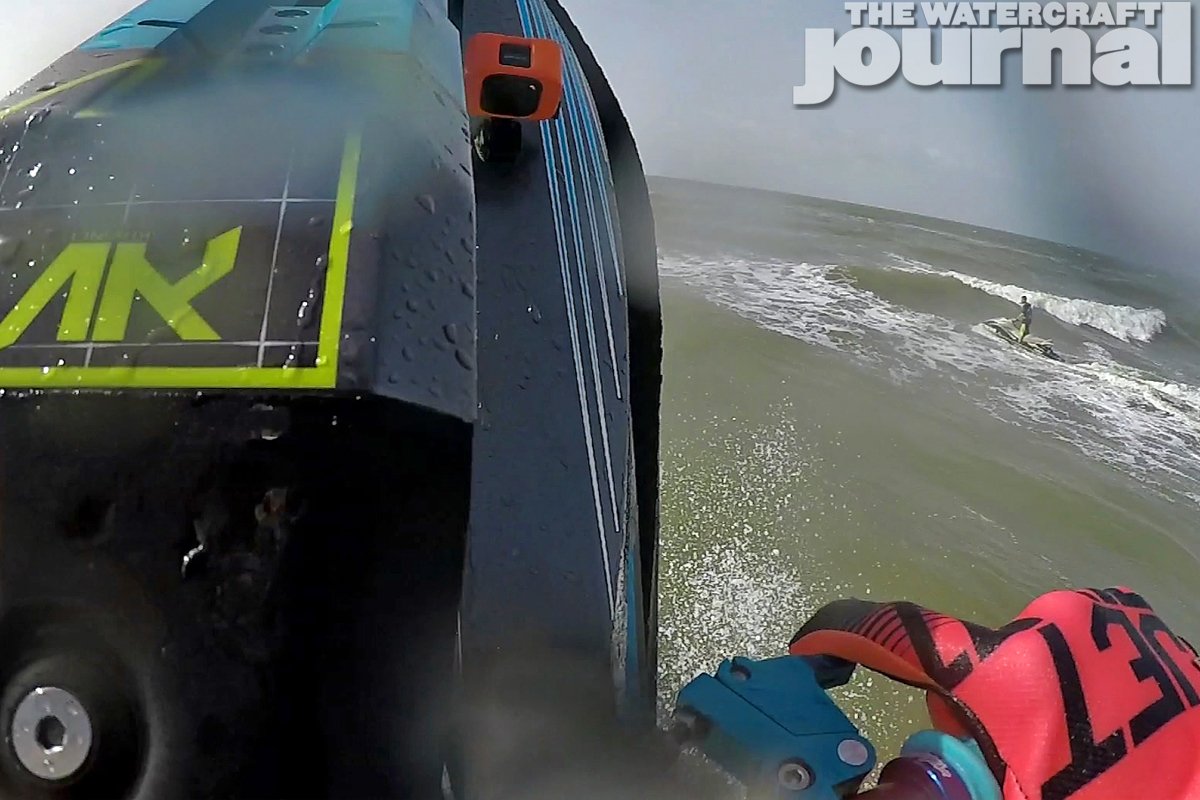
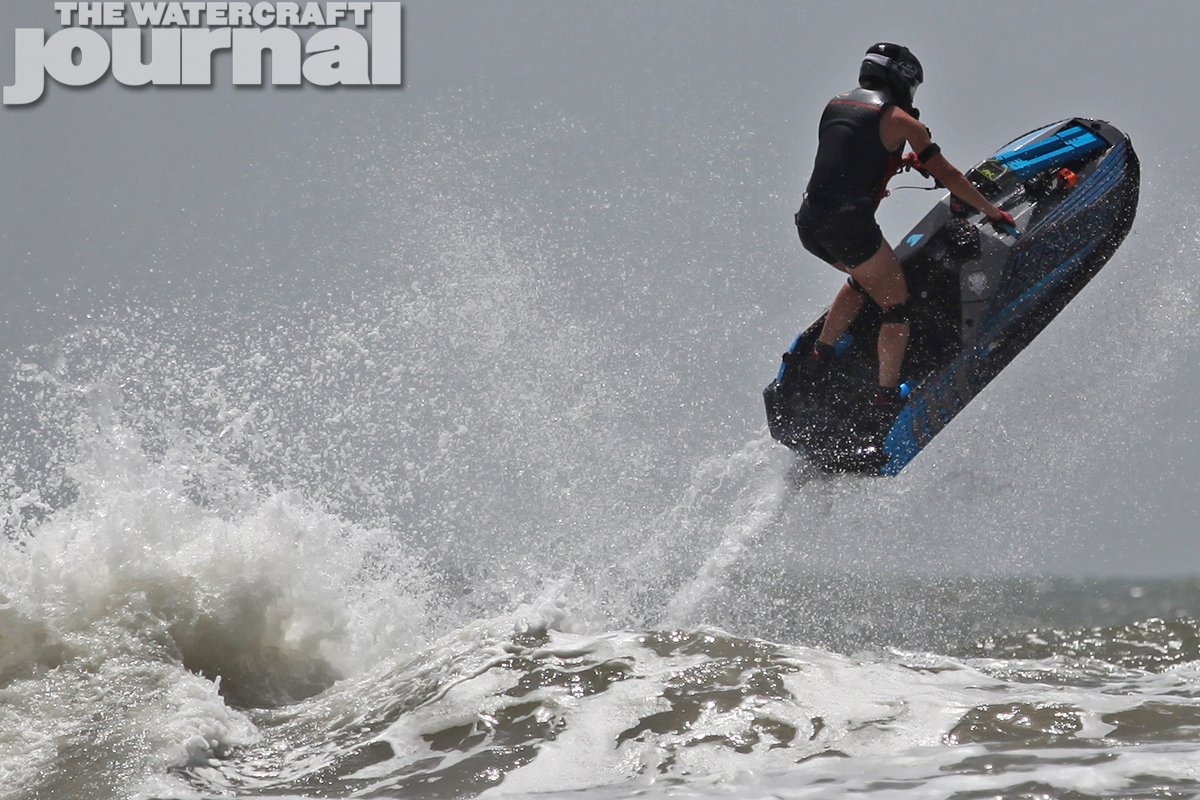
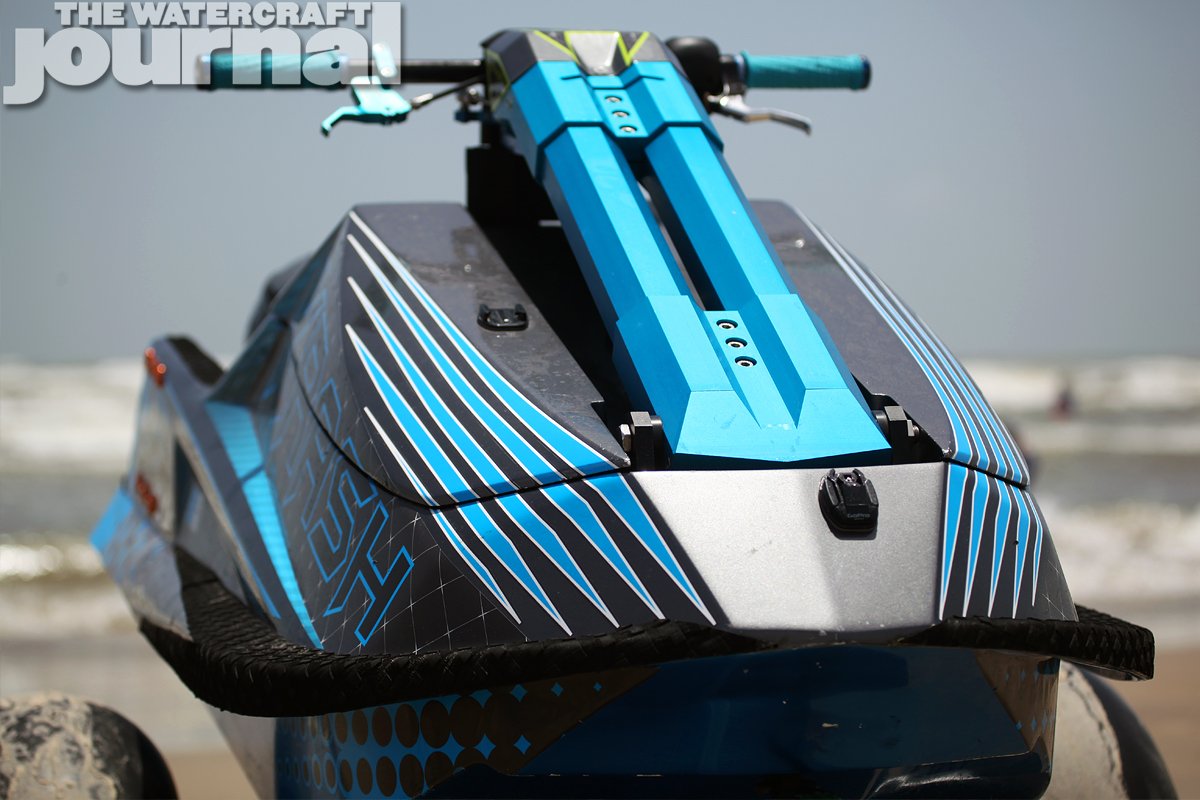
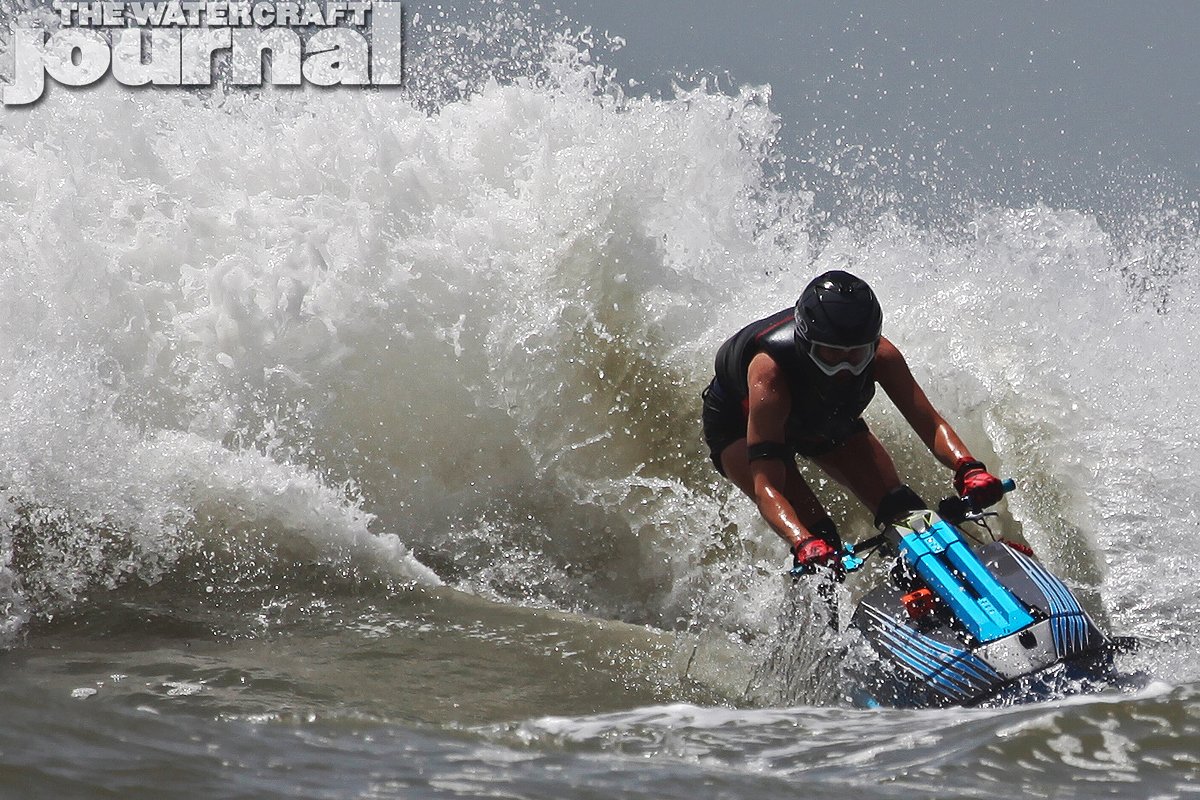
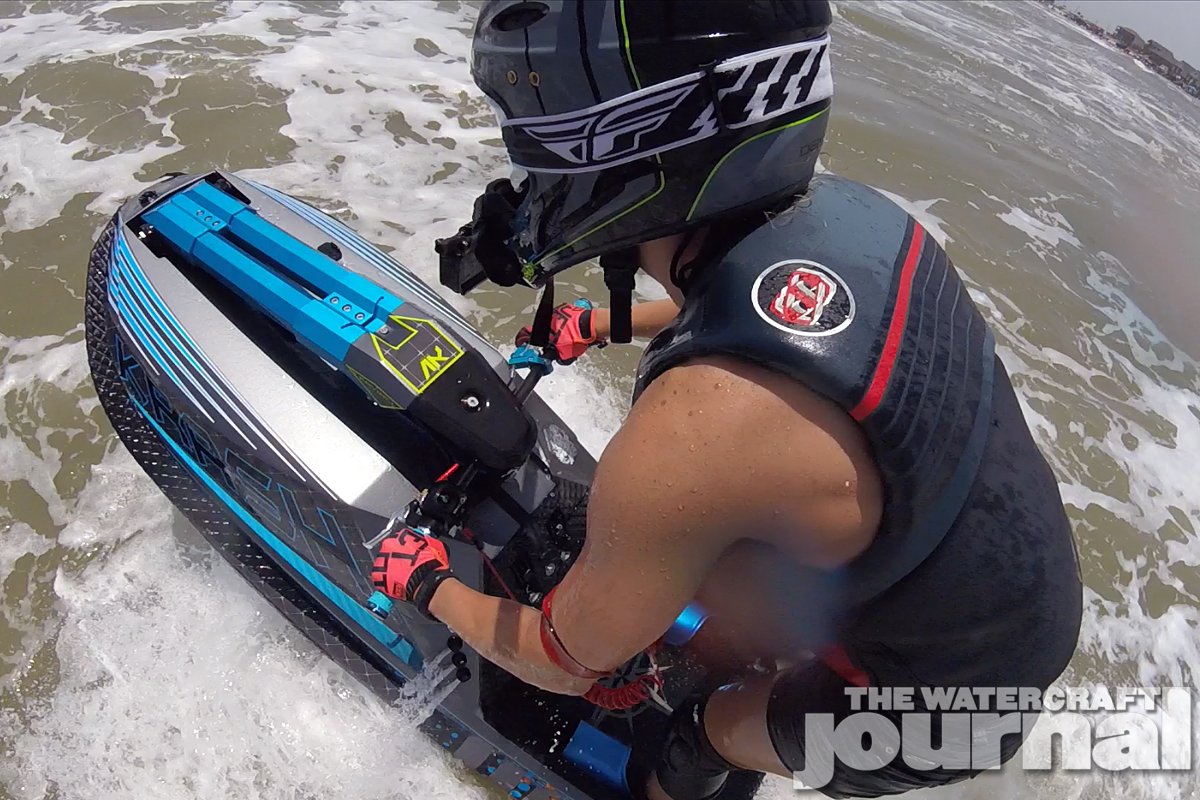
As a child, when my family traveled to the coast for a family outing, full of excitement I would run onto the beach and dig my toes into the early morning sun-warmed sand, feel the salty breeze on my face, and listen to the waves crash onto the shore and recede with persistent tenacity. Twenty five years later, the wonderful smell and bark of two-stroke exhaust echoing from my stand-up ski combined with all those nostalgic feelings created a truly stunning experience. My visit was not without mistakes and problems though. Without proper planning, a surf ride can go from having the time of your life…to instant disappointment and danger. To avoid the typical beginner mistakes, here are some tips that can help your first ride go as smooth as possible.
Section One: Preparation
Pre-Ride Check
Pre-ride checks should be done before every ride, but are especially necessary before a surf ride where something like intermittent spark or bad tuning can leave you stranded. The danger factor when riding surf is greater than fresh water outings, considering the unique threat of ocean predators, strong currents, and obviously, hefty waves crashing over you and your ski. If your ski has lived the fresh water life, some small problems can become big ones once the ski is dropped into corrosive salt water.
Check all electrical connections, dialectic grease in connectors can be used to keep out moisture and corrosion over time. Go over all wires looking for sheath damage or wear, especially where they exit the e-box, stator cover, and spark plug boots.
Look at your fuel lines for nicks, tears, and friction rubs – especially around fittings and connections. You should replace old, brittle fuel lines before the ride to avoid any breakage when jumping waves and the inevitable harsh landing.
Re-torque nuts and bolts, especially major ones on the pump, motor mounts, intake grate, ride plate, pole mount, and steering.
Make sure the hood seal is intact, no need for waterfalls of salt water leaking into the bilge area – especially right into the intake.
If you do not have an OEM style intake or pre-filters on your pod filters, I’d suggest you get some. Even with a proper hood seal, water will enter the bilge. Always better to be safe than sorry and stop the potential sloshing of water into the intake.
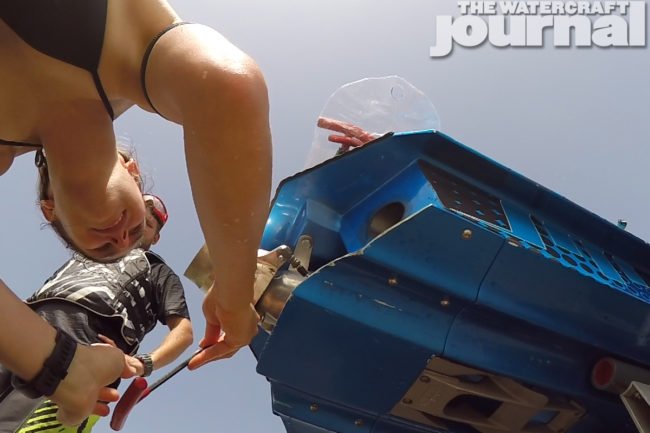
Always good to use anti-seize on proper nuts and bolts if you plan on riding often in the surf. Just be sure to note what bolts need thread locker and which are safe for anti-seize. This can save you a lot of time and headaches in the future when breaking the bolts loose. Along the same lines, a good anti-corrosion spray like CRC’s Marine Corrosion Inhibitor and 6-56 Lubricant can go a long way to protecting bilge components before and after your ride.
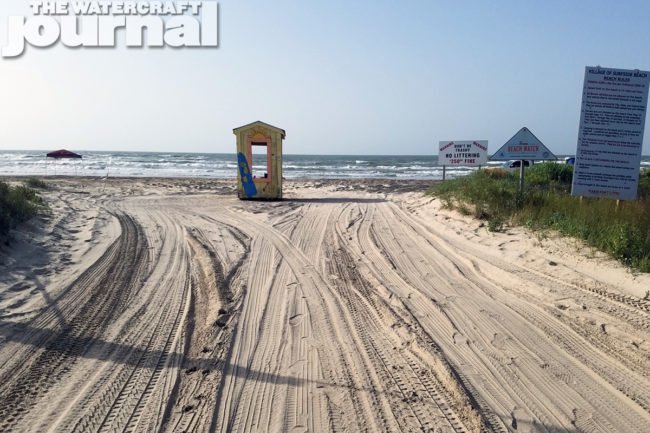
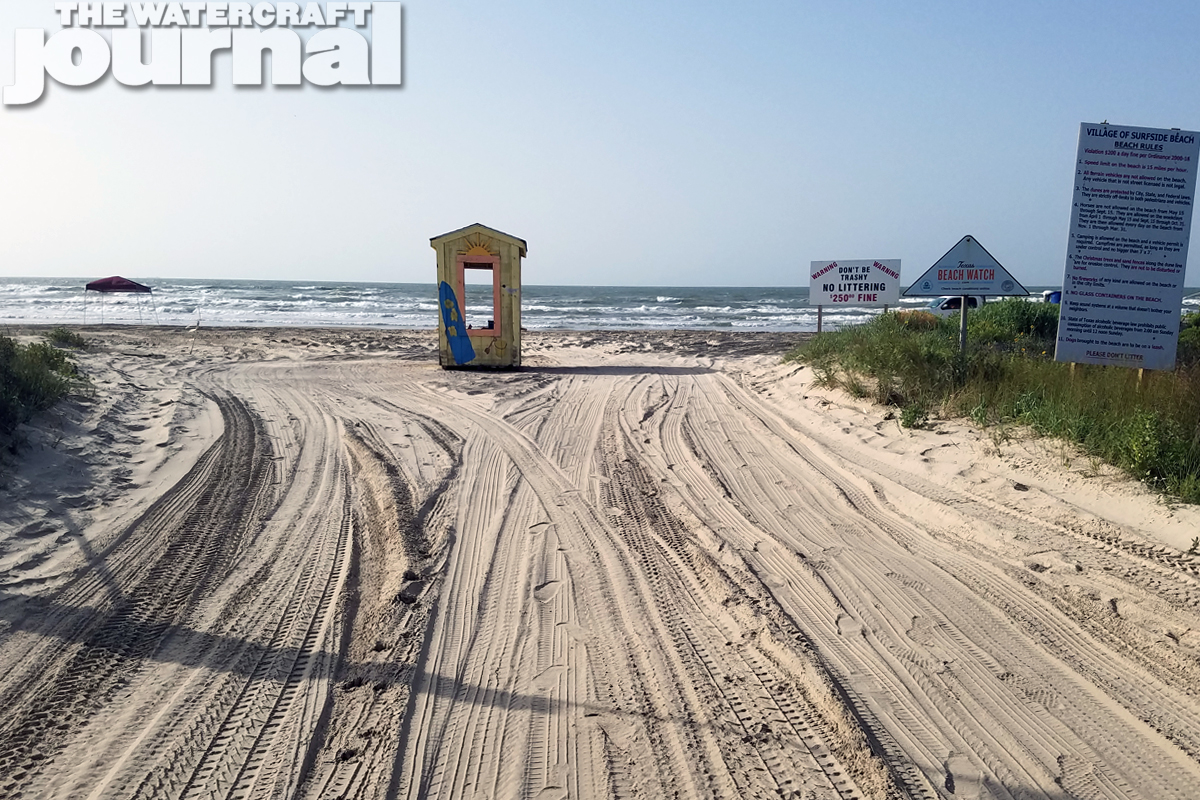
Find Your Spot Use the technology at your fingertips to find your riding spot before you make the trip. Check forums like www.x-h2o.com and others for popular riding spots suggested by fellow riders. Once you find the spot, check Google maps to see what you’ll be working with. Is it a loose sandy beach; is it rocky, any boat ramps around? Will you need a 4×4 or is there a parking lot? These details can make or break a ride before you even hit the water. Check local laws and guidelines for beach access. Often a permit will be required to drive on a beach and can be purchased beforehand.
Check the Surf
Just like the weather; check surf reports before heading out. Beach websites usually have surf and weather conditions, though you can also download surf forecast apps like Magic Seaweed and others. Height and Period are important terms to know when looking at a surf forecast. Height refers to the measurement from bottom, or trough, of the wave to the top, or peak. The distance between waves is the Period. Wider Periods between waves are preferable to give you more time and cleaner water to set up for the next wave. There is nothing like flat surf to ruin your plans, you can ride the local lake if you want flat conditions! On the flip side, its best to not go out in tropical storm surge for your first ride either. A low two-foot day is a great way to cut your teeth if you are near the coast and want to take it slow. Three to four foot plus surf starts to get exciting… and maybe a little bit much depending on your ski-handling skills. Always err on the side of caution and do not ride beyond your limits.
Gear Checklist Like packing your luggage for a trip, gather your gear before the day of your ride. Suggestions for important items you should include are:
Helmet – Motocross helmets are popular among jet skiers for their full-face, high impact protection. On the plus side of protecting your noggin, they also offer a great place to mount a camera.
Goggles – I prefer to ride without them in the surf, but if conditions are rough and windy a pair of goggles can help stop salt-water spray from burning your eyes.
Gloves – Salt water is slippery, keep your hands from coming off the grips with a good set of gloves. I prefer full finger gloves to cut-offs.
Kneepads – Having busted open my knee on my race ski on flat water, kneepads are now a mandatory part of my kit. They do not have to be huge and bulky, slim mountain biking pads can work and often have added shin protection.
Coast Guard approved life jacket – I know the competition wakeboarding jackets look cool and are slim fitting, but proper flotation is necessary. You won’t care how you look if you get knocked out and your unconscious body needs to float.
Shoes – I always ride with shoes in fresh or salt water since they help you stay connected to the ski and protect you from those pesky bottom dwelling sea creatures.
A friend or three – you should never ride alone and always good to have a rescue ski available.
Tow rope with quick connect carabineers for expeditious towing.
Extra gas and oil/mixing container for premix if you have a two-stoke engine.
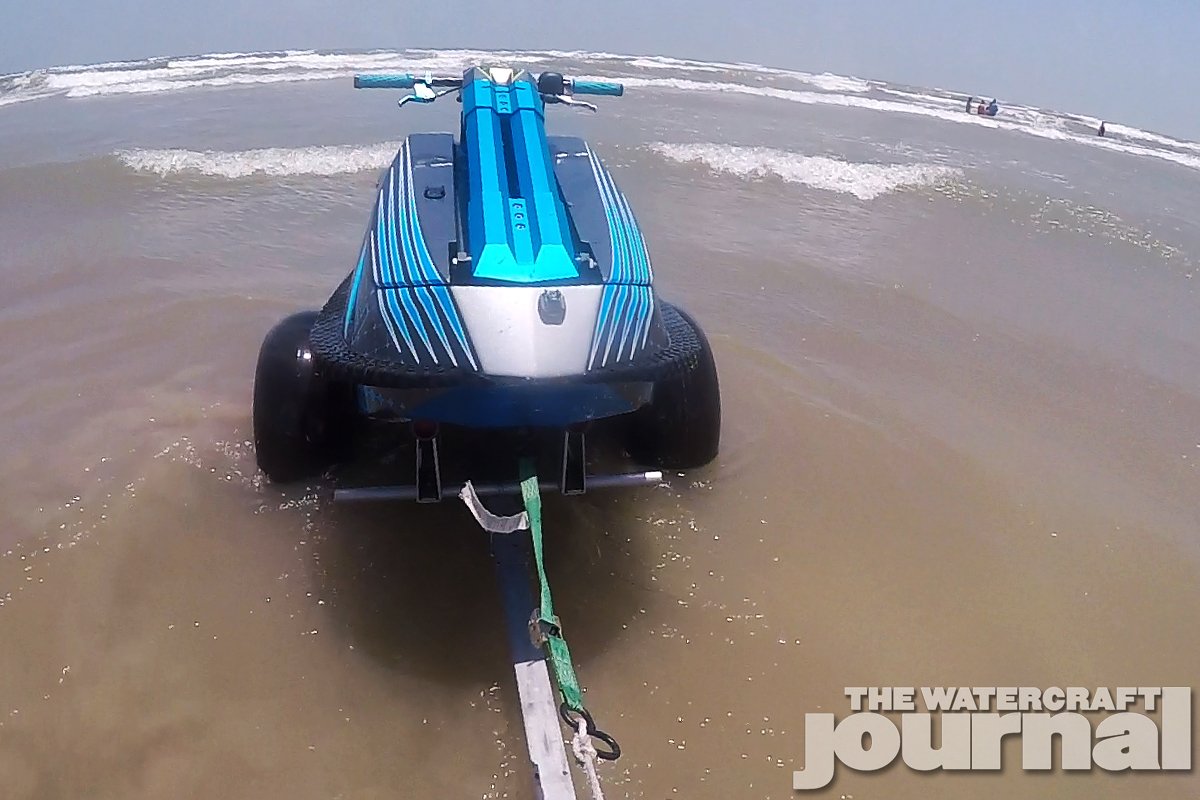
Beach cart if beach-only access.
Water/drinks and snacks, stay hydrated!
Extra spark plugs – Easy to foul plugs ingesting salt water and if you ski randomly decides to run poorly you’ll be prepared.
Tools – I personally have a mobile set of tools that covers anything from simple bolt tightening to taps and dies for stripped bolts. Your minimum should be a ratchet, socket, and wrench set plus an array of flat-head and Phillips screw drivers.
Towels – I cannot count on two hands how many times I’ve forgotten to bring a towel and had to air dry before heading home.
Sunscreen – your coworkers can and will poke your sunburn. Stop the harassment, and more importantly the threat of skin cancer, by keeping the sunscreen flowing!
Other items that are not mandatory, but preferable are:
Wetsuit or rash guard – protect from sand rash and sea creatures (namely jellyfish).
Camera(s) – always good to document the fun (and fails).
Change of clothes – handy to have if local showers are available.
Phone charger – Remote locations can drain your battery faster than normal, keep your lifeline to the rest of the world charged!
Chairs and some kind of shade.
Section Two: Ride Your ski is in perfect working order, ride spot is selected, and your gear is all accounted for and packed. Time to ride!
On the Beach My local surf riding spot is a two-hour drive, so my first surf ride day started out at 4:30am with coffee and more coffee. After the drive, beach parking permit in hand, we drove on to the beach and began to unload the over-full bed of the truck. Still a few more things to go over before hitting the waves!
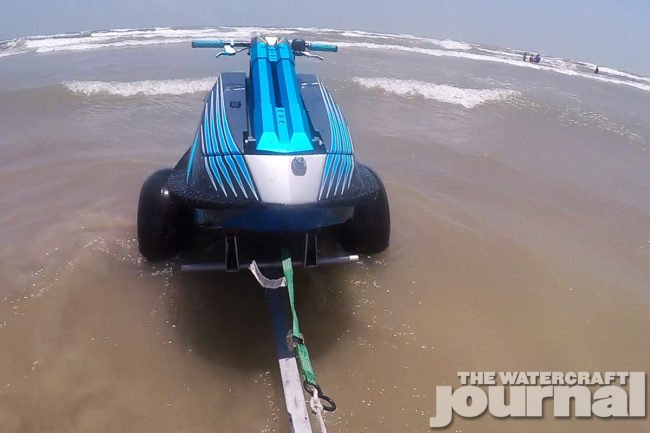
It may seem obvious, but simple tasks are often forgotten when faced with new experiences. Make sure you have a full tank of gas in your ski to give you maximum ride time, and more importantly, a better cushion if you happen to find yourself farther than expected from shore. Before dropping the ski in the water, prime and start your engine on the beach to make sure everything functions properly. As long as all is well, gear up, and drop in. Once in the water sand will find a way to get into every nook and cranny, always clean your pump and ride plate area out by sloshing the ski back and forth before firing up the engine.
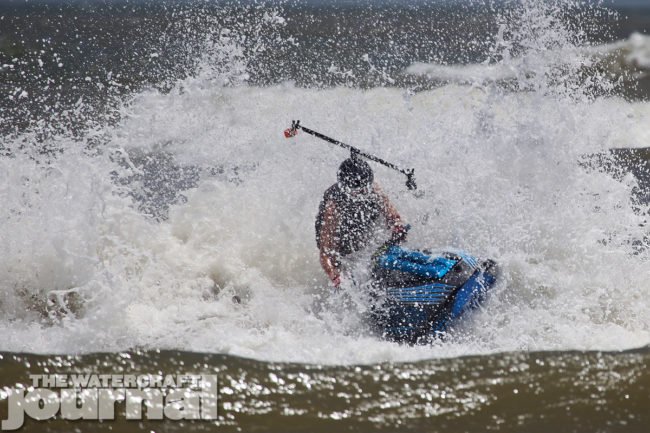
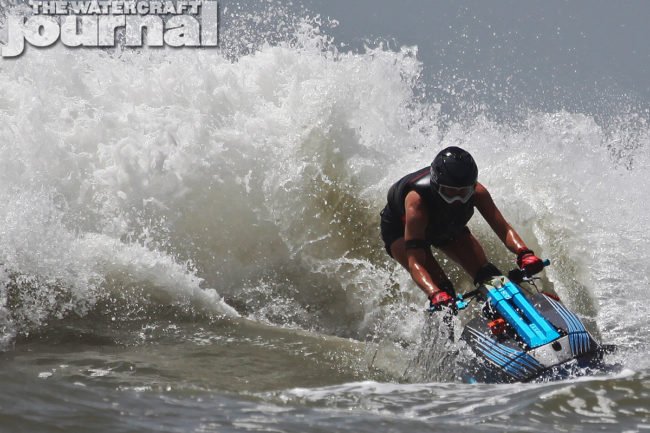
Surf’s Up Most of us jet ski riders being children at heart, our surf day dreams probably consist of wild images of slashing an eight foot wave and pulling rad aerials twenty feet in the air just to land perfectly in time to welcome the next wave. There are hundreds of posts on social media daily of people rocking the ocean on their jet ski. You know your trusty steed and have hundreds of hours logged on your local lake. How hard can it be?
More than likely your first foray out into the surf will be as shaky as a newborn colt trying to walk for the first time. Every ski is setup differently and every rider has a different style and skillset, but here are a few quick tips to get past the breakers:
Be mindful of the shallows – if your riding conditions allow for it, walk out into the surf minus ski to judge depth. Nobody wants to land the back of a ski on solid ground (poor, poor pumps and nozzles!), keep your jump height to a minimum until far enough out from shore. Sandbars can be nasty surprises so always err on the side of caution until you know the area. As mentioned earlier, local jet ski riding groups and forums can be invaluable for finding known, safe riding spots.
Hop over, rather than through small waves – preload the back of the ski and simultaneously blip the throttle to pop over the white water and small waves near shore. Your goal is not to get airborne, but to glide over the wave – or at least impact the wave with the center of your hull instead of the nose so it does not force you and your ski under water. Careful not to tag waves with the back of your ski and cause the nose to dive.
Ride the Wave Once past the breakers and away from the shallows you can now start to experiment with what everyone is raving about.
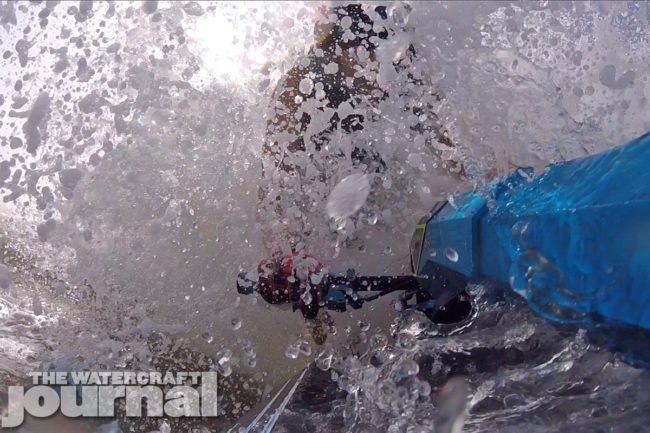
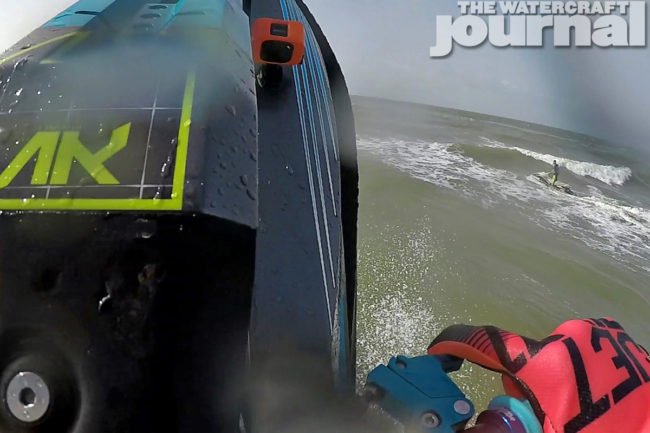
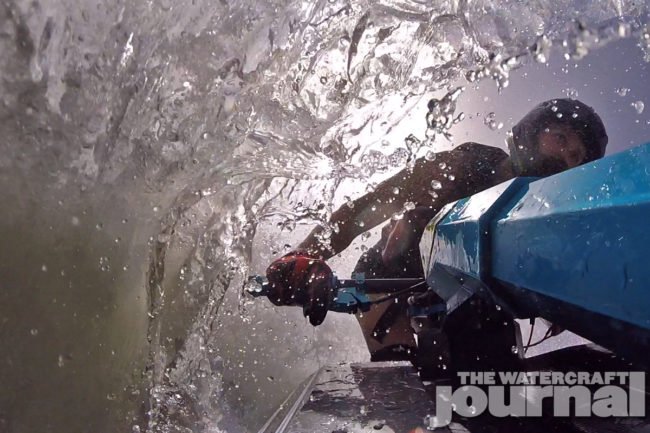
When ‘surfing’ a wave, keeping your nose up is the “name of the game” to avoid pearling. Pearling does not refer to something involving clams either. Pearling is submarining (diving) the nose underwater on the face of a wave, usually resulting in the wave taking you and your ski end over end. On the lighter side you’ll get a nose full of salt water and be a bit shaken up, on the bad side a jet ski to the helmet or a waterlogged, sunken ski caught in the waves. To avoid diving under it helps to shift your weight to the rear of the tray and the side closest to the wave face.
The bubbly, air filled white water can prove difficult to ride in as it causes pump cavitation, inhibiting proper hookup and traction. This can both cause a delay in forward propulsion and cause the rear of the ski to ‘unhook’ and slide. Salt water is also more buoyant than freshwater so your hull will ride higher in the water. Keep that in mind when transitioning from clean water to the white water as it can pop your ski upwards unexpectedly, possibly bucking you off or causing your helmet to hit the pole. Ask me how I know….
You might have many hours on a jet ski, but surf will make you acutely aware of your balance. Try to loosen up on the bars and not ride stiff. I know the death grip is real, but you will be able to better absorb unexpected waves, bumps, and jostles inherent in the ocean current. If your tray or deck allows for it, ride with one your dominant leg forward and other leg at the rear of the ski – aka: surf stance. This improves your balance to give greater control over the pitch and roll of the ski.
Safety This information might not be the first paragraph, but safety is the most important part of any ride. Keep it simple:
Do not ride in conditions beyond your skills.
You are riding in the ocean; oceans have large predators. Just because you are riding on a jet ski with a loud engine does not promise sharks and other creatures will ignore you.
Do not ride alone, and have a towrope if your ski dies or you get injured.
Having a cell phone with you in your dry-bag is always a good idea. If you do not want to use your own phone, inexpensive pre-paid ones are another option.
Section Three: Conclusion Ah the post-ride glow from epic riding with (hopefully) nothing breaking! Once packed up and home, a clean jet ski is a happy jet ski both inside and out. As mentioned earlier, salt water is more corrosive than fresh water so post-ride maintenance is paramount. Either use a fresh water flush from the hose with the engine running on the trailer, or drop your ski in some local fresh water to remove all the salt from the engine/exhaust and exterior. Remove all excess water from the bilge and spray the metal engine bits down with a marine grade lubricant like CRC 65-6 or Corrosion Inhibitor. Similarly, wash and clean your gear so you don’t end up with a sandy, moldy kit. My father always told me if you take care of your machines, they’d take care of you and many years later I still heed his advice. Speaking of – heed this advice and get out and slash some waves!











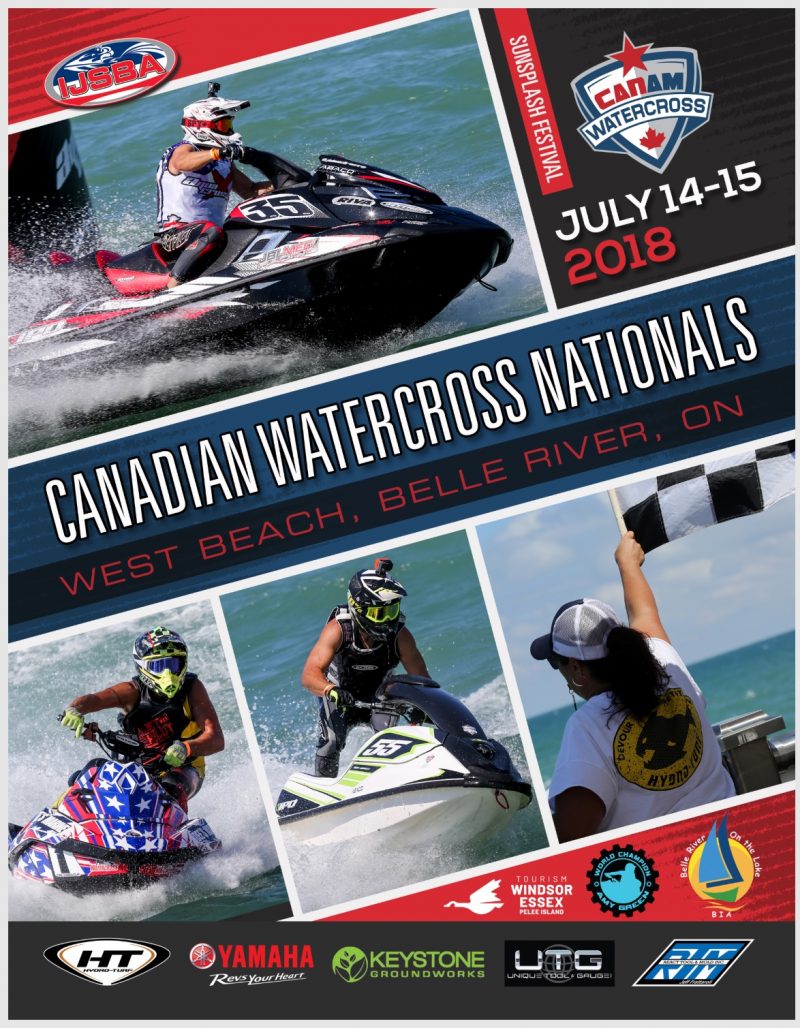
 Belle River, Ontario is the first event of the season for the Canadian Nationals. The two round CanAmWatercross Tour event will be held July 14-15. This particular race is in its ninth consecutive year running in conjunction with the
 Have you ever wanted to ride your ski through the Florida Keys? Sure you have. Well, now is your chance to do it in the company of (possibly) hundreds of other personal watercraft enthusiasts in a safe and well organized fashion.








 Be a part of history! Jet ski racing returns to the Sabine river on July 14-15, 2018 for the first time in decades.
















 All signs pointed at a smooth bit of riding until early morning reports barked over the radio that heavy rollers prevailed until a few short miles of the island, where conditions worsened into “washing machine” chop. Despite the warnings, most racers boarded Yamaha FX and GP1800 runabouts. A little more than a handful piloted Kawasakis, which until recently, was the weapon of choice for this event. As the starting flags waved and racers pinned their throttles, 2017-winner, Cyrille Lemoine was nowhere to be found.

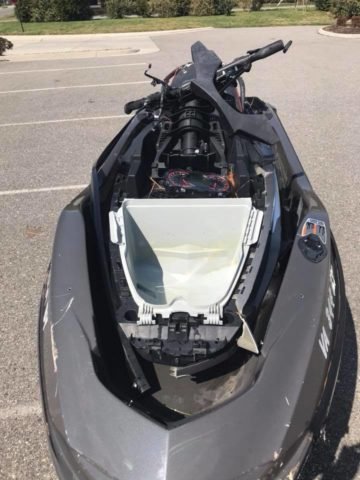

 Inspecting gear is a little different when it comes to a jet ski. The assessment of equipment is more involved and requires a more thorough review. Trailering may be involved along with proper docking and tying down watercraft.