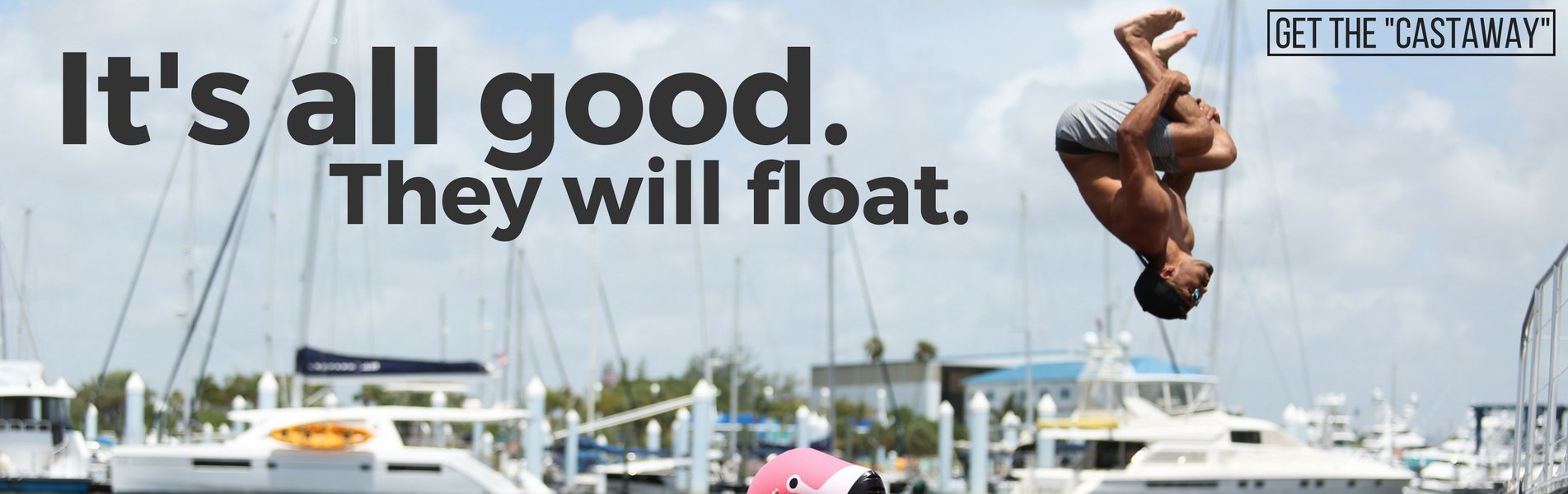
Typically when you think of floating sunglasses, visions of big, thick bulky foam padding lining the frame come to mind. Sure they work, but at the cost of wearing a Nerf-lined pair of sunglasses, right? Well, that’s where Abaco Polarized’s Castaway Sunglasses come in. Made with a golden bamboo frame with flexible spring hinges, and Abaco’s own Pacific Blue Flash polarized lenses offering 100% UV protection, they’re a unique pair of classic style sunglasses.
According to Abaco, “The unisex classic gets a modern update with a Golden Bamboo frame and Pacific Blue Flash lenses. Spring hinges ensure a snug, comfortable fit, and they are so lightweight they float if dropped into the water. Impact resistant polarized polycarbonate lenses block glare and provide UV400 protection for delicate eyes. Virtually anyone can rock a pair of these, as they flatter a diverse range of face shapes and sizes.”
Priced at $50, each pair come with an Abaco cleaning cloth and microfiber pouch included, so you can keep your sunglasses clean and store them safely when you’re not using them. But wait, there’s more! With all Abaco Polarized products, you get 100-percent free shipping as well as an industry-leading Lifetime Warranty for all damage (including accidental) and free returns and exchanges within 30 days of purchase! That’s pretty impressive stuff, and typical of what you can expect from Abaco Polarized!
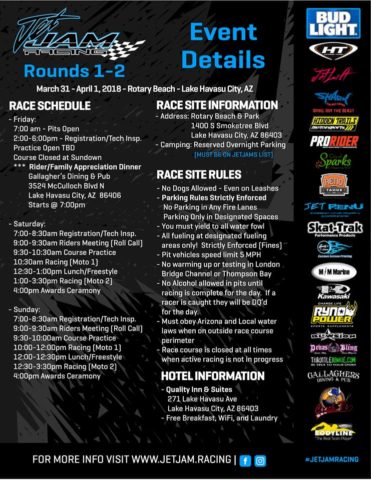
Alright race fans, are you ready to rock?! Well, you better be because registration for Rounds 1 & 2 of the Jet Jam Racing (JJR) series is open now! Scheduled for the weekend of March 31-through-April 1 at Rotary Beach, Lake Havasu City, AZ, JJR is promising to welcome a full field of top tier racers and some super exciting action, so don’t miss the opportunity. Registration ends on Tuesday March 27th
Here’s the original post: Registration is open for the 1sat race! Hello racers! We hope you all enjoyed your holidays but it is now time to get the 2018 race season started! Registration is now open for our first race, Rounds 1 & 2 on March 31st – April 1st at Rotary Beach. We highly encourage you to please pre-register! It is very important to pre-register so we know how many trophies to order.
If there are not at least 3 people pre- registered, per class, there will be no trophy for that class. If you have any questions about what class to register for, please contact Robert Sand at [email protected]. Also, if you don’t see a class for your ski, please contact us and we will do our best to accommodate you so you can race.
Also please see the attached flyers for important information regarding this race. Such as the Pro Prize Purse, rider appreciation dinner on Friday night and important rules for Rotary Beach. These rules will be strictly enforced!
With all this being said, please go to the link below and get registered! Please note you are not required to pay yet, you may pay on site at the race. But PLEASE get pre-registered! https://www.jetjam.racing/register-rotary
Sure, it took 7 days, with three supercharged Yamaha FX WaveRunners and a 22-foot Bay boat traveling 629 miles, but it turned into a lifetime’s worth of memories! After a year’s worth of planning and preparation, a group of five started the 10 hour drive from Pace, FL to Boynton Beach. From Boynton Beach Inlet, the four vessels left at daybreak, making it to West End in 2 hours and 20 minutes.
“After that,” Tim Golden writes, “things got interesting.” One of the skis began taking on water while a couple of the racks snapped under the harsh conditions. Others ran aground, some lost gas cans, and one of the skis ran out of gas. After a grueling 12 hours, the group finally made it to Abaco. There, they welcomed three more who joined the fun by plane. Together, they rode and explored for nearly a week, traveling to several secluded Cays and beaches before having to turn back for home.
Tim writes, “Due to poor weather forecasted for our return trip, we decided to leave a day early and break [the return trip] into 2 days.” Leaving from Treasure Cay at first daylight on Friday, the riders encountered 4-to-5 footers for a solid 9 hours before finally arriving in Freeport, Bahamas. There, they stayed the night and fueled up for the next morning’s crossing.
“The boat took some damage,” Tim writes. “The center console and T-top came loose and we had to strap each corner of the T-Top to cleats to keep the center console from coming completely loose. As daylight came the morning of the crossing, we left the inlet to see 7-to-9 foot rollers, which resulted in another long day. [And a] long day it was: 9 hours!”
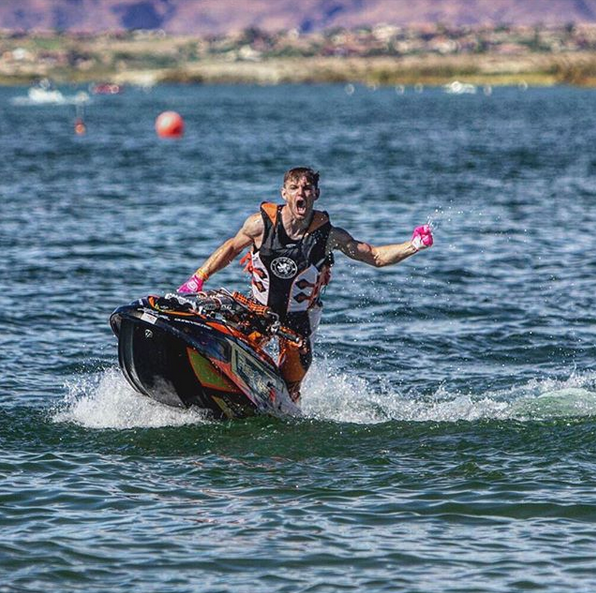
The world is definitely no stranger to Lee Stone and his insane tricks. Usually they come in the form of doubles because he is none other than the one who performed the first ever double backflip in a competition at the 2017 IJSBA World Finals.
If that wasn’t good enough, Lee continues to master his flatwater freestyle efforts as seen in this latest video from Lee Stone. Despite the apparent dreary overcast conditions, Lee definitely looks like he is having some fun tearing it up.
As he circles around to the left and gets his momentum going, he blips the throttle to get an initial hop and with the following crack open, he leaps out of the water pushing to the right and his ski effortlessly follows through with two complete turns in mid-air before touching back down.
On his Instagram post, he indicates that he has already mastered the 720’s in the left direction and that he is now dialing them in going to the right. It sure appears that they are very well dialed in. We can definitely imagine his brain was very disoriented after those combos.
We certainly can’t wait to see what the next crazy double trick Lee is going to pull. Keep it up and we wouldn’t be surprised to see him featured on the next double cheeseburger commercial.
Krash Industries is one of the leading manufacturer of the fastest and best jet skis in the freestyle industry. Soon, you can watch a web series with a trio of Krash Industries team riders who are ready to send it in 2018! See the skis in action with these guys and their amazing freestyle riding.
This teaser shows some of what’s to come in the new Krash Industries web series set to debut this year. Check out some of the best freestyle stand up riding in this short highlight reel.
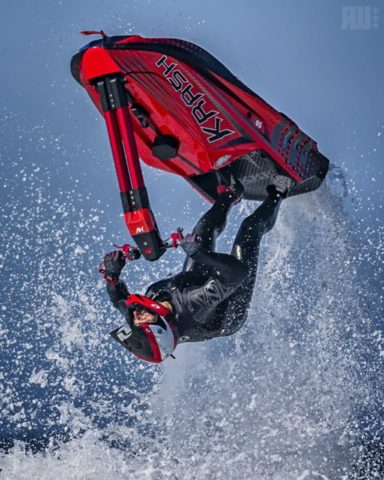
It’s complete with barrel rolls, all the flips, Air Spins, and Grabs. Blaster Jay, Jimmy Blackwood, and Neville Bartos show the water what’s up! If this is the highlight reel, imagine what’s to come when the web series is locked and loaded! Check out Krash Industries Instagram for more videos and photos. You won’t be sorry.
Unfortunately, Blaster Jay blew out his ACL and fractured his tibia while shooting the trailer so filming was cut short. He pulled off some huge moves including an old school slide prior to the injury. We wish Jay a speedy recovery.
Jimmy Blackwood also makes a rad appearance on a ski and a dirt bike in this short video. Neville Bartos is in the clip letting us see what he has! We cannot wait for the web series. It is going to be spectacular!
High performance freestyle riding is what we’ve come to expect from the Krash team and boy do those guys deliver! The maneuvers they pull are nothing short of amazing. And we used to think a big sliding cutback or a submarine was cool. Ha! Expect more stories when the webisodes air. We look forward to letting you know what’s up in the epic freestyle world of Krash Industries. It’s going to be sick!
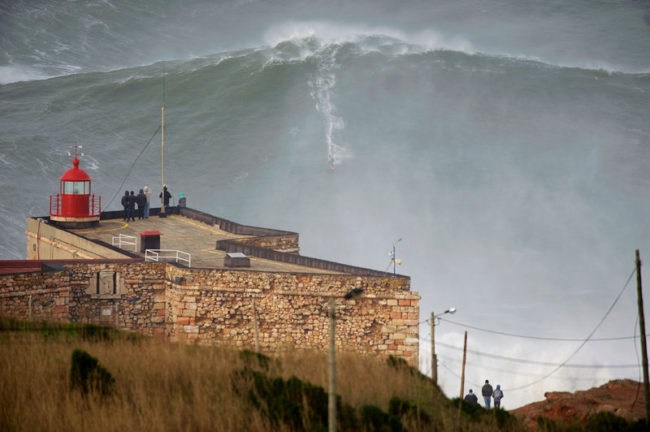
Nazare’s Praia do Norte has made quite a name for itself in the realm in big wave surfing. The wave has made mincemeat out of many, churned and spit out an elite of class of surfers who are willing to risk their lives for a piece of the action. We’ve watched surfers wipe out who were unable to penetrate the wave’s face just skitter or tumble along on top of the mountain of water. It’s similar to falling on concrete. Men and women have left the break on stretchers due to broken bones and or internal injuries. The wave is a premier location for multiple categories of XXL Awards.
We aren’t sure if water safety operator and also an all around waterman, Glyn Ovens is eligible for an award. If not, he should be! He survived an explosion of whitewater after towing big wave surfer, Toby Cunningham into a monster wave. It was amazing how long he was able to hang onto his ski with tons of turbulence erupting on and around him. Ovens’ comment on his Facebook page simply says, “Sometimes those waves eat you alive! Just another day in Nazaré!” He was only sore after the breaking wave exploded all over him. Amazing!
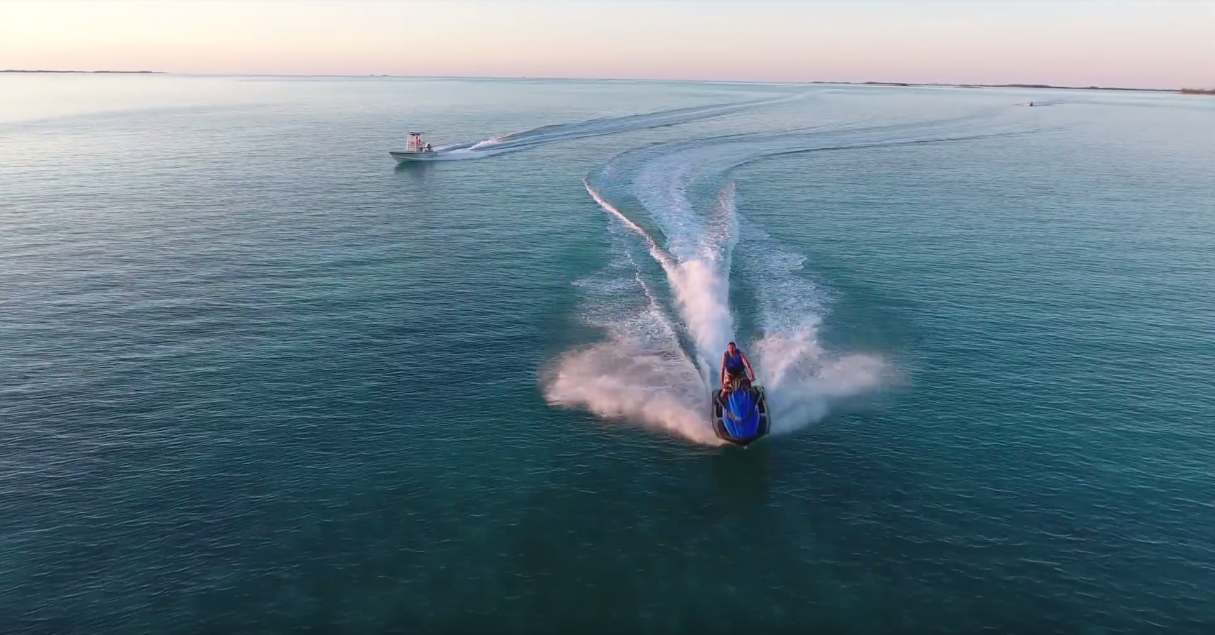
Just as we promised literally 24 hours ago, the latest episode of The Watercraft Journal’s ongoing YouTube series “Long Haul” has just been published for all to enjoy! This time around we take out the 2018 Yamaha FX SVHO WaveRunner, which we reviewed in a full-length feature just last week. The supercharged-and-intercooled full-sized runabout is one of Yamaha’s most successful, being both a hit with enthusiast riders of every ilk as well as the top-of-the-class performance lovers and racers alike.
With not a whole lot changed for 2018 from its previous iterations, we simply give you a brief recap of this awesome WaveRunner, with plenty of on-the-water action and a whole bunch from the air! (Gotta love drone footage, right?!) Pushing its 833-pounds across the lake took little effort from its 250-plus-horsepower SVHO engine, and its low slung, grippy race-inspired seat made for a comfortable ride for anyone of any height. It’s just one of the many reasons why we love the FX SVHO so much – and we think you will too!
Make sure to check out the latest episode of Long Haul below and don’t forget to subscribe so not to miss any upcoming episodes!
Well obviously, s’more of the same to begin with! We’ve still got reviews on many of Yamaha and Sea-Doo’s latest performance-bred machines, we’re going to be taking to the water on some incredible over-the-weekend rides that are both daring and adventurous, but totally replicatable and doable on a budget, we’re going to be heading back to RIVA Racing’s super secret testing lake to have a go at some of their latest fire-breathing hotly-tuned PWC, and just so, so much more. Again, we’re going to be cranking out an impressive two videos a month in 2018, so there is no lack of entertainment to be had.
We’re also incredibly proud to continue to have Yamaha WaveRunners as the presenting sponsor for “Long Haul” and will have some really cool tech tips and do-it-yourself maintenance videos that we’re certain you’ll come to use as a reference. It’s all in good fun and we hope you can subscribe as not to miss a single episode of “Long Haul” this year!
Years ago I was warned that having kids meant catching every cold, virus and ailment swirling around their classroom; and true to the warning the biggest gift I got over my daughter’s Christmas break from 2nd grade was the flu. With the heater cranked up to 75 degrees, and bundling up in flannel pajamas and a warm hoodie, I plopped down in front of the TV with a piping hot bowl of chicken-flavored ramen (it was the only thing that sounded appealing at the time) and cruised what was streaming.
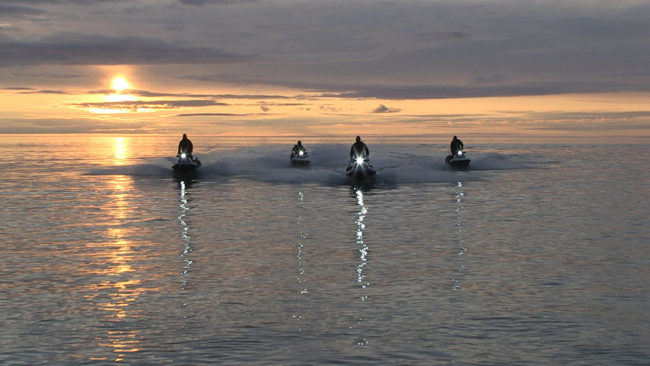
On Amazon Prime I discovered the first six seasons of the (ill)famed PWC-centered adventure show, “Dangerous Waters.” Starting back in 2012, show host and concept creator, Steven Moll – joined by a long-time friend and watercraft novice Pat McGregor, and a ever-rotating support staff – sought to circumnavigate the globe aboard jet skis. Having failed to watch a single episode thus far, I thought I’d “give it a go” and see what all the fuss was about.
Companies such as Kawasaki, Otterbox and SBT, Inc. had played a major role in supporting the show’s run that has since wrapped an abbreviated final seventh season, which is expected to air shortly on MavTV before slipping into syndication on the aforementioned digital streaming service. The show was filmed mainly through the use of GoPros and the occasional DLSR, with the rare high resolution camera handled by professional cameramen, giving it an authentic, “reality” feel.
Here, I’ll break down each season, going off of several notes taken during my marathon session while curled up on the couch over several days’ time. I ran a pretty high temperature during a large portion of this, so take what you will for being the results of a debilitating fever or honest opinion. Oh yeah, and this is a SPOILER WARNING, so yeah, you’ve been warned.
Season 1 – Everything That Can Go Wrong Will
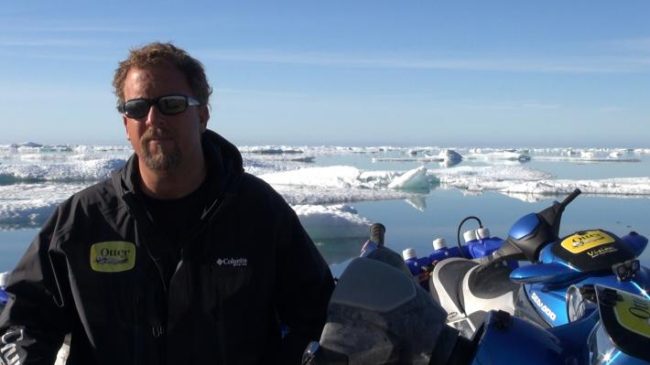
Host Steven Moll introduces himself as a “adventurist” from Folsom, CA. Originating from Southern California, Moll first met lifelong-yet-estranged buddy Patrick McGregor at a high school soccer camp before reuniting in college and then going their separate ways for years. After a one-time experience riding Sea-Doos in the San Francisco Bay, and a second journey up Chatham Strait and around the island chain edging British Columbia, Moll decided he was prepared to ride from Seattle, WA to the Bering Strait, separating Alaska from continental Russia.
Moll and McGregor were joined by Alaskans Charles Davis (who serves as team mechanic), Wesley Davis, and Andrew Mazzella (who is tasked as the expedition’s cameraman). The journey to the Bering Strait was plagued with failure: Moll’s almost non-existent navigational abilities persistently landed the team in shallow water, chewing up props, peeling off all gel coating and layers of fiberglass from the skis, etc. These massive errors sideline the team on wilderness shorelines or in remote fishing villages where food and supplies are scarce.
Ski preparation is almost nil: mismatched gas cans are held down by ratchet straps, navigation is by a single handheld Garmin and Moll’s cell phone, and the team ventures without spare replacement parts. Mazzella – the only team member with useful seafaring experience as an Alaskan crab fisherman – could be a resource to teach Moll how to read the water, but is so impetuous and brash, that his advice is little more than scolding, which is unacceptable to a brutally headstrong Moll. McGregor is positive and upbeat most of the time, but is so clumsy he borders on becoming a liability.
The season ends in dismal failure halfway through the Bering Sea as one ski is abandoned only days after a replacement Sea-Doo was sunk somewhere north of the Aleutian Islands (after the team punctured the rear battery access panels with an aluminum fuel rack). Strong editing helped mask a lot of the in-fighting, personality conflicts and outright misery that flashbacks during later seasons would reveal.
Season 2 – Worst Laid Plans of Mice and Moll
Robbed of his goal to reach Russian soil, Moll and team returned to the westernmost edge of Alaska to attempt crossing the Strait once again. With slightly more preparedness, the team was properly equipped to make the crossing, and do so successfully, reaching continental Asia. There, they are immediately detained by the Russian military and spend several episodes panicking that the rest of their days will be spent in a Stalin-era gulag (ain’t socialism grand?). After some political drama the team is sent back to Alaska packing, left to attempt the Northwest Passage instead of Moll’s previous less-than-half-cocked idea.
Venturing deeper into unknown space, the craft continue to be brutalized every time the team throttle their craft up a frozen, rocky shore, wearing down layer upon layer of precious fiberglass. Add to it additional beaching on sandbars, and the skis and Mazzella are at their breaking point. Moll, already sick from exposure and the cameraman’s constant bickering, decides to send Mazzella home. The expedition continues northward and eastbound, towards the last village in the United States, Kaktovik, Alaska, before entering into Canada.
Charles Davis proves invaluable during this season, as well as the heart of the expedition. His experience growing up in Alaska has taught him how to hunt, cook, camp and handle each and every situation with a levelheadedness rare in men these days. The show also begins to air Davis’ morning benedictions, something which clearly tested well with audiences as it became more and more regular throughout subsequent seasons. The team’s poor riding abilities has Davis perpetually working on the Sea-Doos, even having to reprogram a DESS key/lanyard when one is lost.
Most of the first two seasons is plagued by low funding, requiring the crew to even sell of one of its Sea-Doos to pay for the gas necessary to finish the leg of the expedition. While MavTV is supporting the expedition, it’s obvious that nobody is getting rich off of this. Hindsight could place some blame on Moll’s slapdash planning for a second route. Some of the show’s most dramatic imagery came from this season.
Season 3 – Yeah, Sure. Why Not? It’s Not Like We Could Die
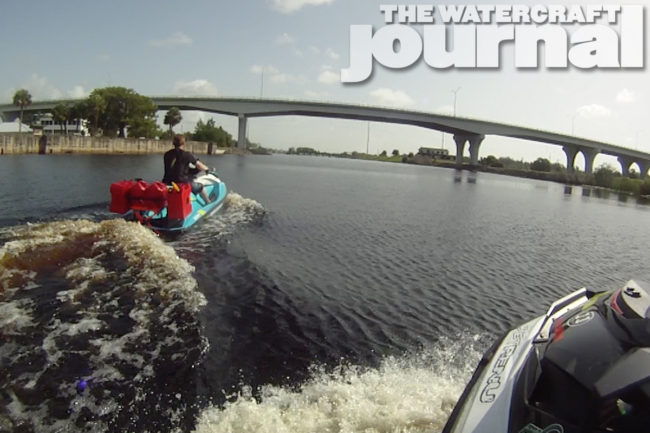
This time, Kawasaki stepped in as a title sponsor, equipping the crew with a quartet of naturally-aspirated Ultra LX JetSkis. Smartly, Charles Davis has fabricated aluminum racks to hold six 6-gallon Tuff Jugs jerry cans, as well as racks for Pelican cases and – amazingly enough – the producers also sprang the extra cost for a fuel boat and crew. Manned by Jake Hammer and Casey Mays, the craft is so hunkered down with fuel it nearly sinks on two separate occasions requiring just as much service and care as the skis.
Speaking of which, Moll tears the hull of his JetSki completely open. Yeah, Charles continually patches it up again and again, but Moll keeps running the damned thing up every beach he can like a crazed Spanish conquistador. A professional cameraman joins the team and provides the show with some of its best footage from the back of the JetSkis and the fuel boat. The team journeys deep into the Arctic Circle and Moll’s complete and total navigational ineptitude nearly gets the team killed – and I legitimately mean that. The Canadian Coast Guard had to airlift the poor guys to safety.
Despite the absolute unwavering warnings given by a lifelong local fishing captain to turn back, Moll pushes his crew northward into an arctic squall that pins the team against a small atoll, icing them in. Huddled together on the support vessel, covered in snow and ice, the team has to convince Moll to issue the mayday. Help comes an agonizing day later. Amazingly, the Canadian Coast Guard concede to let the crew retrieve their equipment and even their skis before evacuating the area. Moll is scolded into humility by the captain like a child. It was great TV.
Season 3 proved to be probably the show’s high point. The footage of the landscape was phenomenal, the scenery was both bleak and beautiful, and the drama was actually on point and not solely personality-based. There were some legitimate stakes in this season, and like the seasons before it, the expedition fell short in spectacular fashion. In fact, their failure is almost a forgone conclusion; it’s now just witnessing the slow decent into madness that makes the show so appealing. Oh, and for whatever reason, nobody can figure out how to keep an auxiliary fuel pump or bilge working.
Season 4 – Remind Me Again What We’re Doing
Defeated by the thickening Arctic Circle (global warming! I mean cooling!), Moll inexplicably drives all the way from California to Maine to personally ship the four new JetSkis to Iceland. In another inexplicable move, Moll has jettisoned Charles Davis from the team, and replaced him with a human marshmallow Scott Somethingorother, who not only personally costs the expedition its one shot at crossing from Iceland to the Faroe Islands, but systematically drives the whole team down into a depression before finally packing up and going home, satisfied that being such a momentous drag has permanently wounded the show. (I suspect.)
With only one day of riding beneath their belts, the skis are boxed up again and shipped to Denmark. The rest of the riding is nearly catatonic; smooth water, plenty of places to stop for fuel, monotonous scenery broken up by the occasional bunker or cliff gun (remnant from Nazi-occupied WWII – yay, socialism!) before entering into Amsterdam and into Germany. Freed from last year’s support craft, Jake and Casey are welcomed additions to the team and earn their keep; although Casey does venture off to join some fraulines for a late night drink, which causes an episode’s worth of panic.
In fact, Casey’s single 3-hour infraction was later referenced as the causality for Moll’s dismissing of him from the team in a later season. The rest of the season is a 5-episode No Wake zone with some nice scenery and consistent bureaucratic haranguing by different EU nations – including a new law outlawing all PWC from the Rhine in Austria. A new new route is taken (by truck) into Croatia, which is just a political nightmare. Somehow nobody stops to think that jet skiing through former Soviet Eastern Block nations might prove to be problematic.
McGregor and Jake are easily the two most likeable people, and only because Casey is the cameraman, and mainly off-screen. Jake is immensely pleasant, effervescent and curious, soaking in local culture, food and people with aplomb. Moll is determined to reach Turkey, ’cause y’know, that’s where terrorists are, but the team remains stuck in Athens, Greece, which of course, is gorgeous and full of history, and that pisses Moll off to no end. It’s apparent that looking at the countries they’re traveling through drives him into fits of impatience.
Season 5 – Say Timmy, Y’ever Been In a Turkish Prison?
The fact that this season was aired on MavTV is all the evidence I need that cable television is a dying medium, and live streaming services like Netflix, Hulu and Amazon are the future. Season 5 of “Dangerous Waters” is a nightmare of monotony, and could easily be deemed as a hate letter to the country of India. Bypassing every inch of the Middle East, the team ships its skis to Mumbai, India, after journeying back to Kos, Greece to find out where the hell their stuff has been for the last year. Then, they wait for a whole month in India waiting for it to show up.
Either Moll suffered a stroke or some knucklehead at Kawasaki’s marketing department got it into the team’s collective skull that more than one JetSki should be pronounced in the singular, like moose and deer. So now, in addition to 5 episodes of Indian bureaucratic bullcrap, I have to listen to Moll drone, “We want to ride our four JetSki across the planet.” Dude, it’s JetSkis. Jet. Skeeez. Were I ever to be detained and tortured at Guantanamo Bay, I fully expect this season of “Dangerous Waters” to be played on a continual loop while I am strapped to a chair “Clockwork Orange” style.
The government of India apparently realizes that the crew is showing the world the fetid squalor that billions of people live in, and promptly kicks them out of the country. No really, they get kicked out. It’s actually pretty funny. So off they go (again by container ship) to Thailand. Jake and team go see the sights (as they did in India) while Moll dances with the Department of Immigration. Remembering that they’re a TV show about jet skiing, the decide to get back on the water before a monsoon chases them off the water. Without fuel or any idea where they are, a rescue is staged to save the team yet again.
By this time, the team has been reduced to Moll, McGregor, Jake and Casey. The later two quickly realize that Moll is chasing a fever dream like Quixote’s windmills. Even McGregor realizes that Moll is out of sorts. It’s a little entertaining to watch the whole thing collapse in on somebody so full of hubris. As a note, with Charles’ dismissal, Moll took it upon himself to hold the morning benedictions, which are always videoed and feel uncomfortably staged, as if prompted by MavTV’s marketing department. I’m not questioning anyone’s faith, but there’s an unsettling tone that just feels disingenuous and ultimately, inappropriate.
Season 6 – Please Lord, Let This End Already
The first episode of Season 6 let me know just who Steven Moll was: The first half of the episode was spent berating Jake Hammer, Casey Mays and pretty much everybody else who had ridden with the “Dangerous Waters” crew – that is, besides Patrick McGregor, who very clearly, is the only person to not outright challenge Moll’s ability to run this expedition. Anyone else who dared voice a protest was ousted in quick fashion. It was truly the most petty, distasteful thing I have ever seen…well, since this article.
Casey’s late-night tryst in Season 4 was enough to be tried for sedition; Jake’s constant adventuring to dive from a 30-foot cliff face, or stop to observe native monkeys at a remote shoreline was simply too detracting from the game at hand, and thusly needed to go. It was shocking, particularly as I had been binging this show over the week, and all of the efforts Jake and Casey had made to keep this s**tshow afloat were still very fresh in my mind. Hell, by this time, I’d rather watch a show with those two guys on a pair of JetSki(s).
Now with a completely new, untested crew consisting of yet another PWC novice, Australian Brett Carroll (serving as cameraman) and mechanic Karlin Nichols and “logistics manager” Troy Larson, the team left from Singapore with a support boat captained by a very clearly alcoholic Australian. Almost immediately, the crew gives up in moderately rough water, and chose to tow the skis overnight, as they enjoy the comforts of their support vessel. And true to “Dangerous Waters” fashion, one of the JetSkis sinks to the ocean’s floor.
A couple short episodes later, a second ski is broken, repaired, and sunk again, because of the ineptitude of its unproven mechanic. Karlin is sent home, and cameraman Brett is sent off to the islands ahead of the team to help prepare for their arrival. In the interim, Troy stupidly loses all of his vital paperwork and medication, ensuring that he’s a big ol’ liability, and needs to be sent home as well. Now, a team once consisting of four JetSkis, five crew members and a support craft, is now two Kawasakis and three dudes, led by a guy with an iPhone with the Google Maps app.
Season 7 – Jane! Get Me Off This Crazy Thing!
The final season of “Dangerous Waters” is soon to air on MavTV. The series ended with the team in the Philippines, venturing upwards into the South China Sea, some of the roughest, most unforgiving water in the world. It’s also chocked full of Muslim pirates who’d love to kill some Americans. The plan is to venture north to Japan, and back into Russian waters before returning across the Bering Strait and eventually return to Seattle, WA. For the sake of closure, I’m certain I’ll watch it once it is added to Amazon’s catalog of content, but not before that. The polish has faded and the veneer has begun to crack on a show that I wasn’t sold on to begin with.
“Dangerous Waters” has become a bit of a parody, and Moll himself has become the embodiment of The Dark Knights‘ caution: “You either die a hero, or you live long enough to see yourself become the villain.” And it’s worth noting that as the show has progressed, the focus has been purposely aimed towards Moll himself and therefore, the recipient of all praise, and target of all critiques. Much of the travel thus far, has been by container ship (much, not most), also detracting from the purity of Moll’s message. It’s also taken several years to complete, instead of say, one year after studious planning, sourcing the necessary funding and support, and a whole metric ton of other logistics.
Right now, as the show nears airing, Moll has leveraged his newfound fame into “Dangerous Waters Adventure Tours,” an all-inclusive guided PWC tour letting fans of the show recreate the first season’s journey up the Pacific Coast of British Columbia and into Alaska, nearing some glacial floes and spotting unusual wildlife. Hopefully, the venture is successful. For me, I’m certain I’ll watch the final episodes of Moll’s never-say-die adventure, but almost entirely out of morbid curiosity than anything. Whether this elongated review has deterred you or not, is entirely up to do – but if you so choose, it’s available on Amazon’s streaming service today.
“Not that I’m complaining, but what makes this time any different?” Yamaha’s Andrew Cullen queried, leaning from the railing of a brand new and sumptuously-optioned Yamaha AR195. “Easy,” I quipped while zipping up a well-worn pair of Jettribe GRB 2.0 boots. “I’m not wearing a stupid wetsuit.”
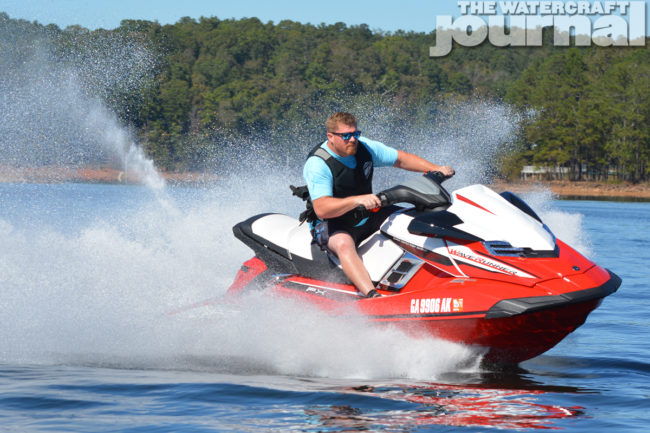
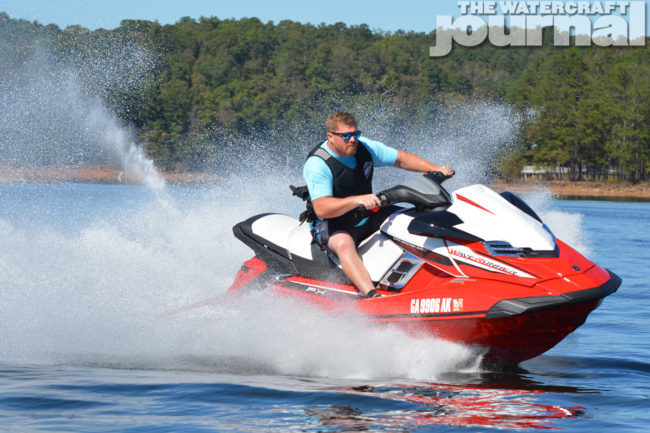
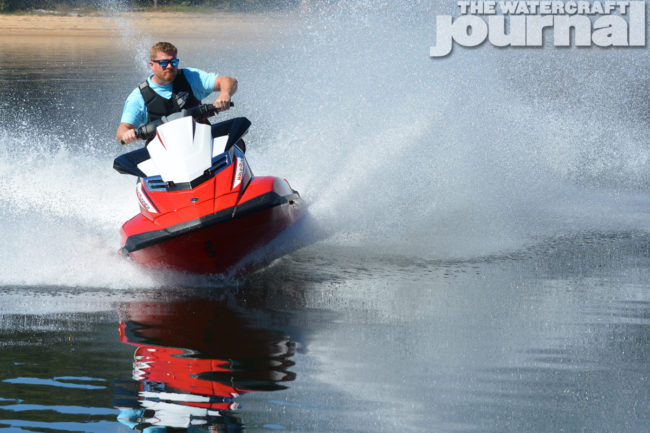
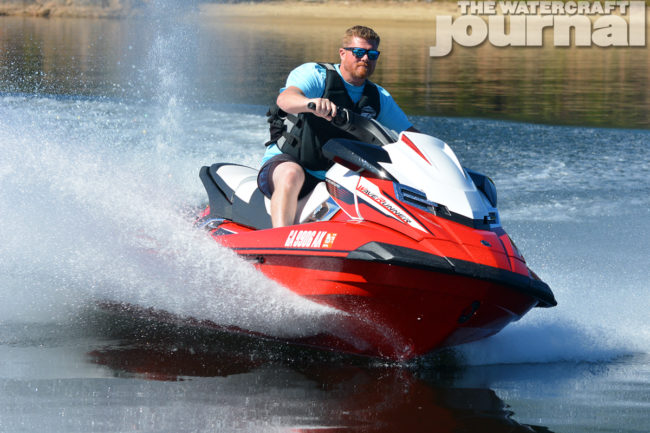
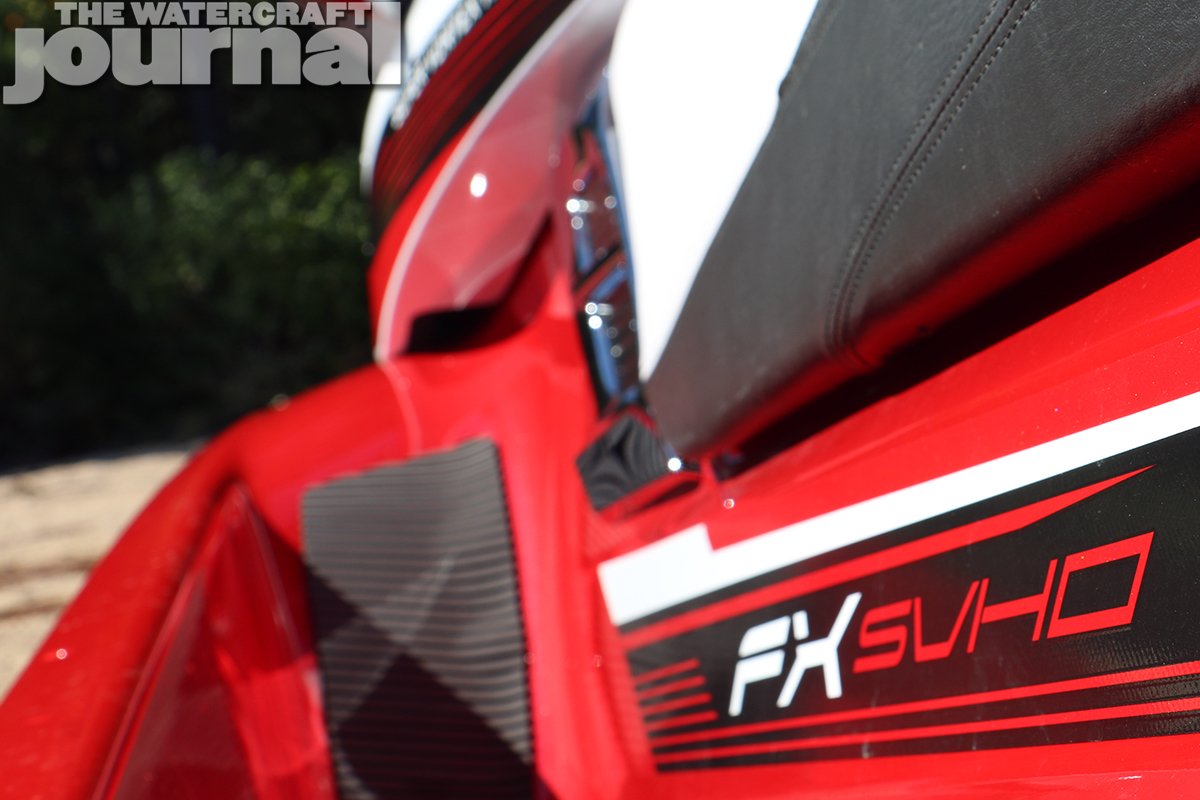
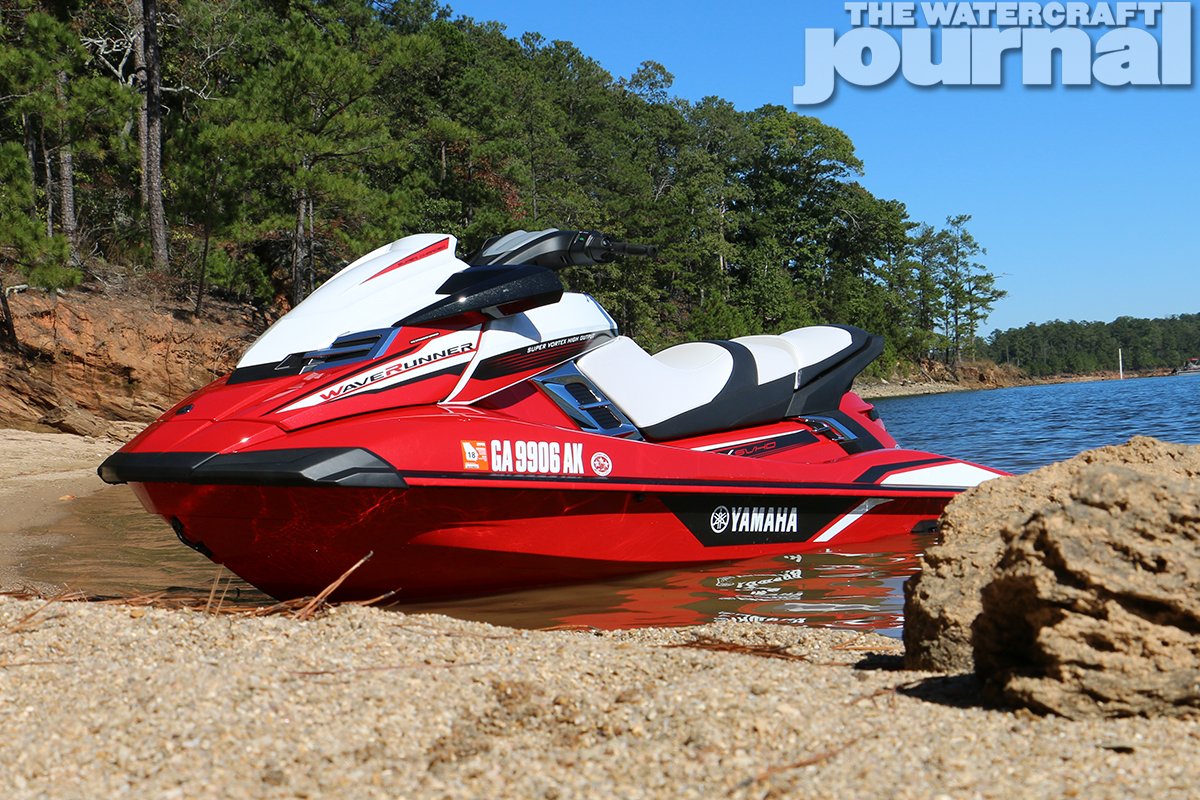
Andrew had reason to question my motives for a test day on the FX. Not much had changed from the previous 2017 model to 2018, apart from the Torch Red Metallic paint scheme. Nevertheless, I had performed reviews on the FX SVHO nearly every year straight since the launch of The Watercraft Journal in the Fall of 2013. And almost without fail, every photoshoot required me to wriggle my way into a wetsuit to stave off the bone-chilling temperatures. Yet, inexplicably on this late Autumn day, temperatures on Georgia’s Lake Allatoona were balmy, cooled by a slight breeze, graciously permitting my typical uniform of a t-shirt and board shorts. Comfort was the word of the day today, and I was going to enjoy myself.
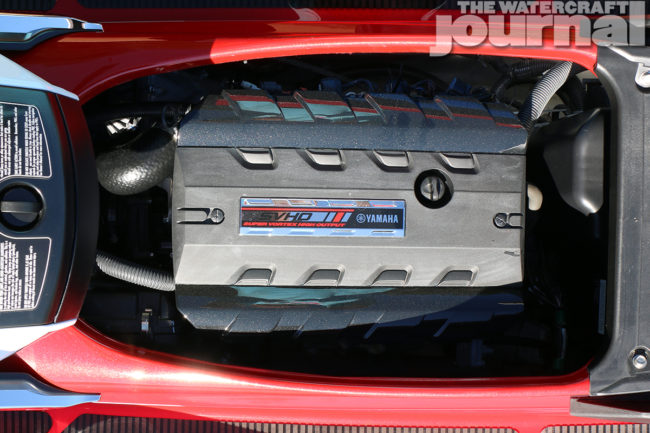
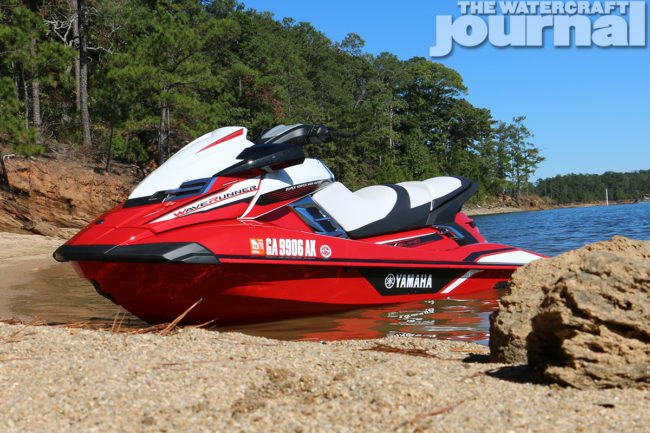
Since its launch in 2012, the redesigned FX SVHO has seen very few changes: the addition of the Super Vortex High Output DOHC, supercharged powerplant (and a couple subsequent upgrades to that powertrain), the additional application of Yamaha’s featherweight NanoXcel2 material for the hull and deck, and of course, the addition of the dual throttle on-water brake and quick reverse RiDE system. Little else had been made or done to refresh the platform in 6 years’ time, so another review of the craft felt a little superfluous. It had even rightly earned the 2015 Watercraft of The Year award. (I had noted that the addition of RiDE is what finally pushed the 3-seater runabout “over the finish line” for that year.)
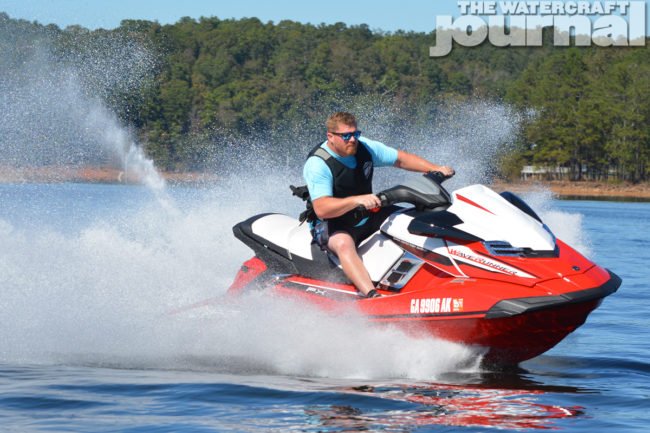
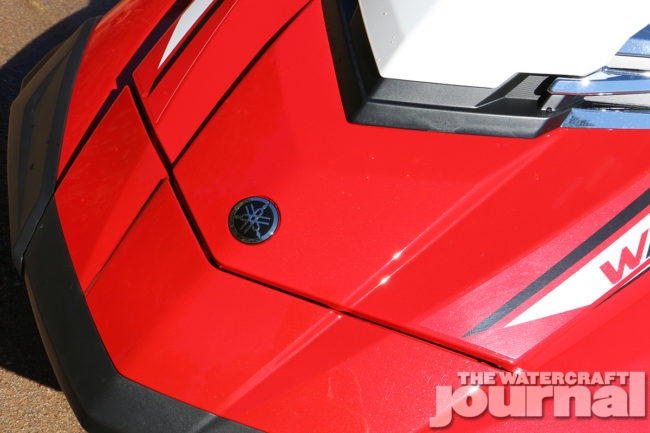
Now, in light of Sea-Doo’s new GTX Limited 300 and RXT-X 300, the FX looks quietly staid. Certainly its long, angular lines are handsome, the rich flicker of its metallic paint beneath the sun is still striking, but the FX SVHO now feels oddly demure, like a well-trained house pet. There’s very little rowdiness in the WaveRunner, whether cruising along the shoreline or pinned at wide-open-throttle; and that’s a very good thing. At no time does the performer feel loose, squirrelly or skittish; the looping strakes move and redirect water out and behind the nose as it slips across the lake. Even trimmed all the way down, hard corners are elegantly executed like a well-oiled plan. Steering input is intuitive, linear, almost premeditated.
Unlike the denser NanoXcel (“Nano 1”), the lighter NanoXcel2 allows for bit more “telegraphing” through the hull, meaning a ever-so-slightly bumpier ride (there’s a near-40 pound difference between the two FX models). Yet, the trade is lighter total weight – 833 pounds, to be exact. That, for a machine of this size (11-foot, 8-inches long, 4-feet wide, 4-feet tall) is significant given that Sea-Doo’s sporty RXP-X 300 tips the scales at 850-pounds. And its paid off too: the FX SVHO is the weapon of choice for Yamaha-sponsored AquaX racers when the water conditions are threatening. Likewise, more casual riders have found the hull and 33-gallons of storage to be a perfect one-two-punch for long distance rides. So the machine has a bit of a Swiss Army knife feel to it.
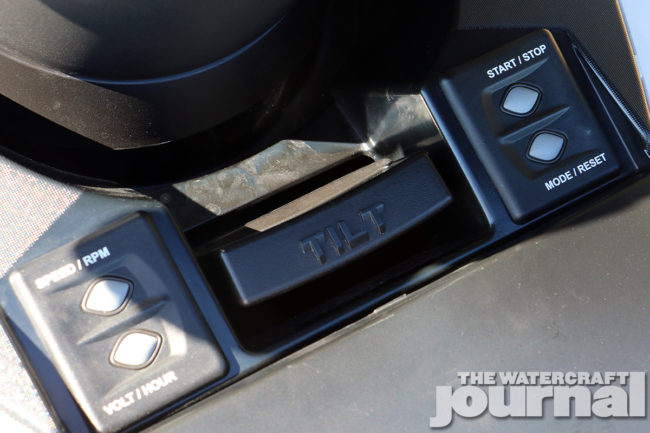
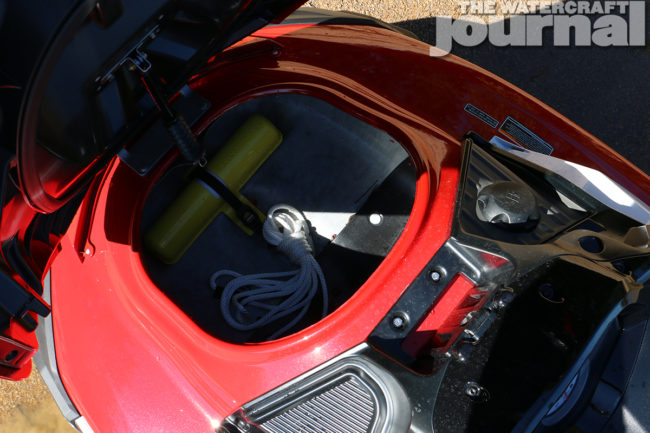
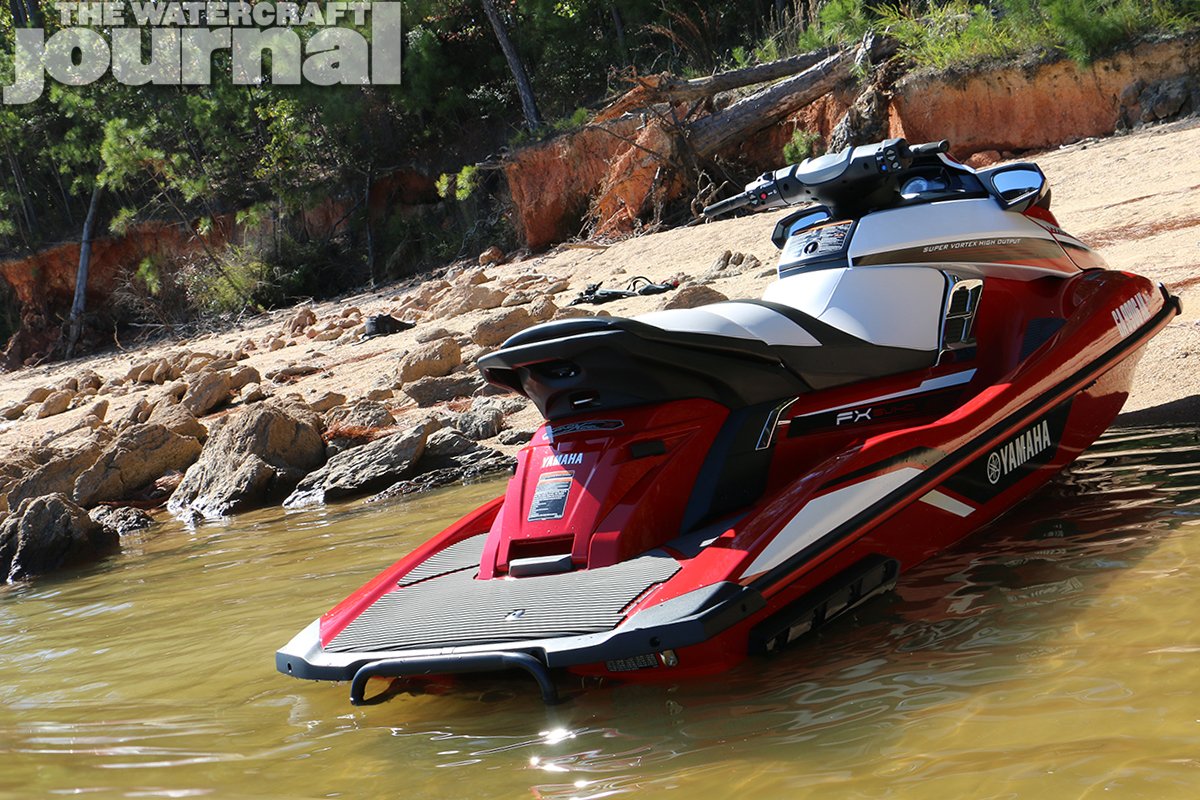
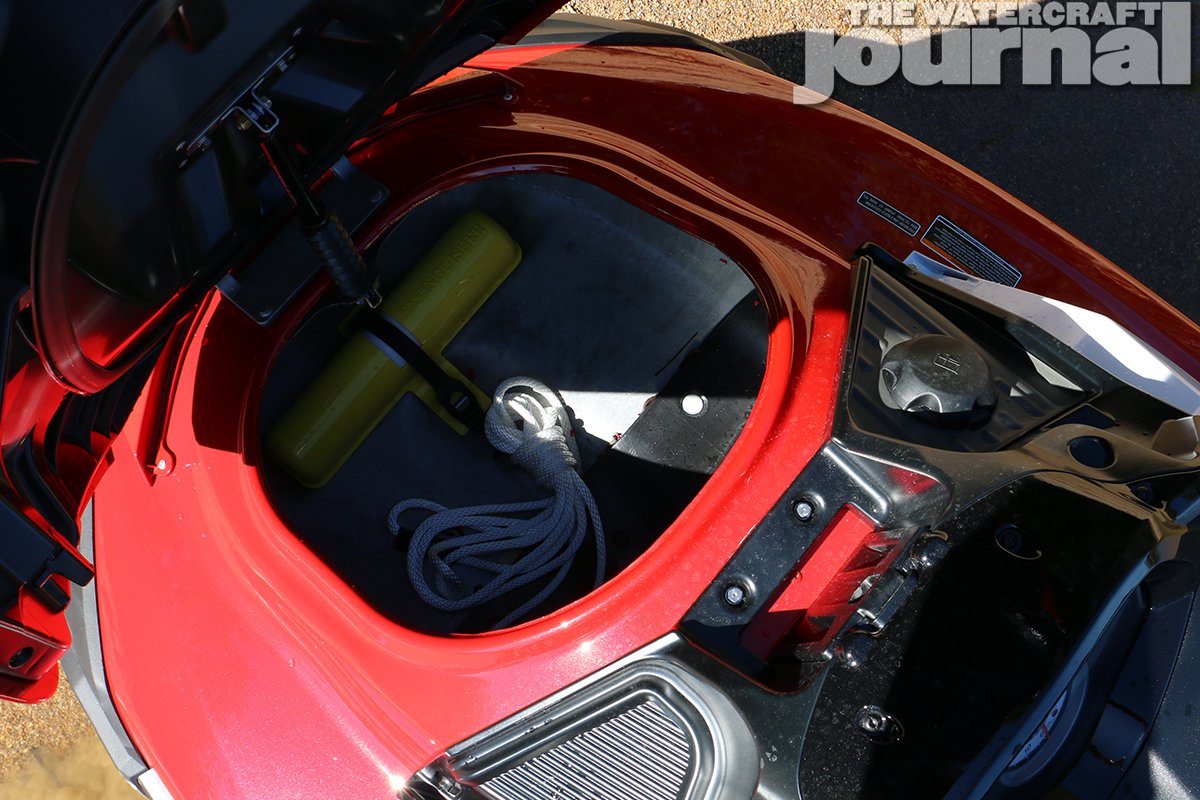
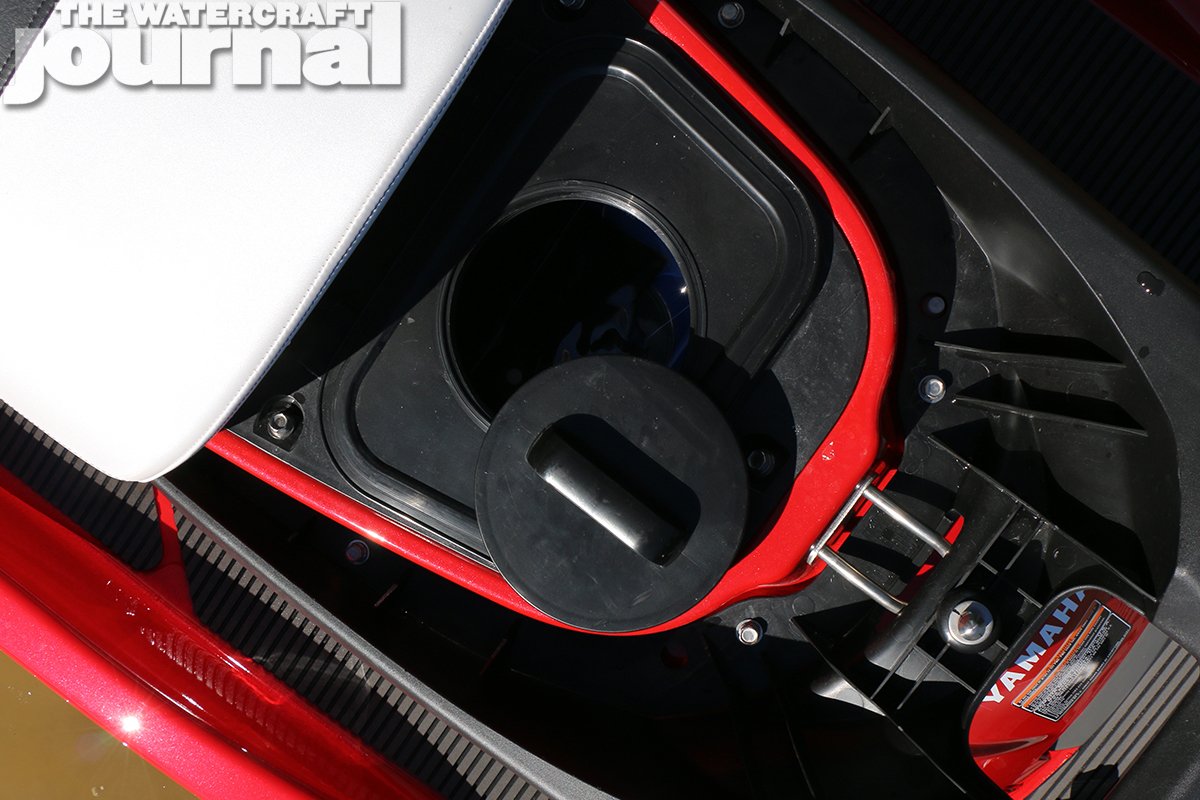
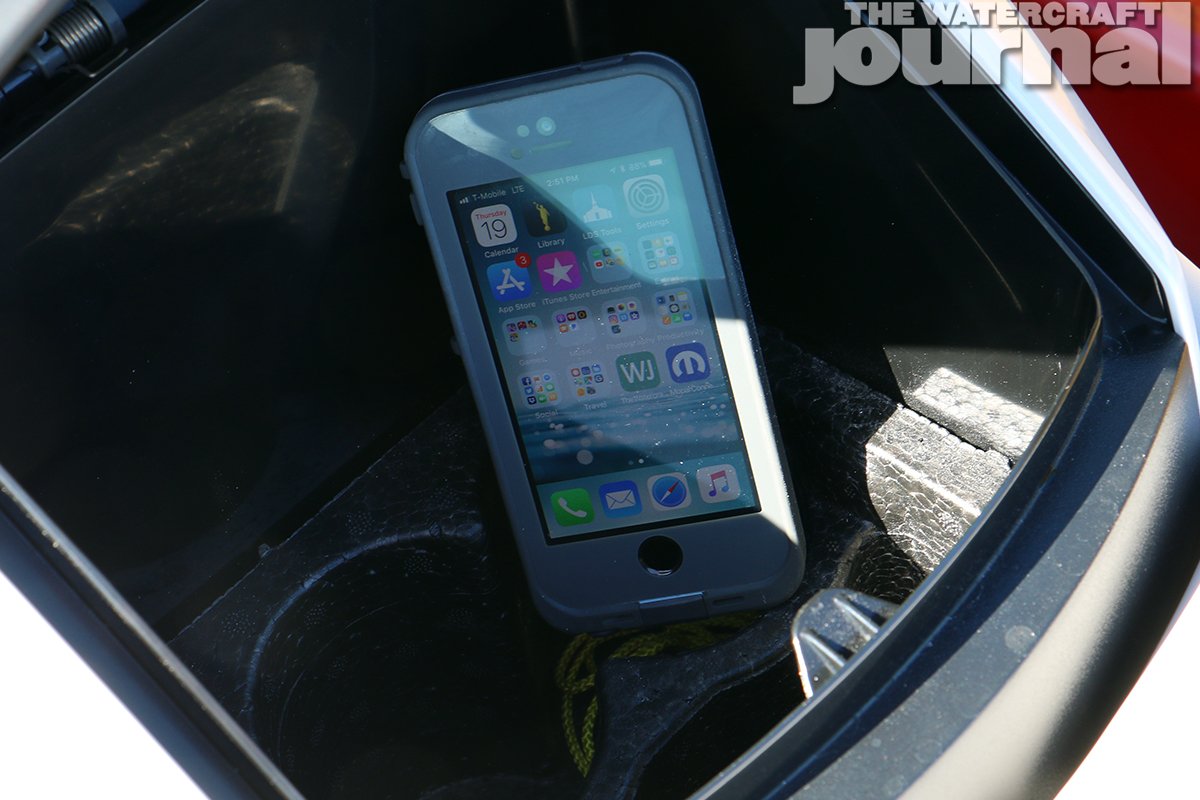
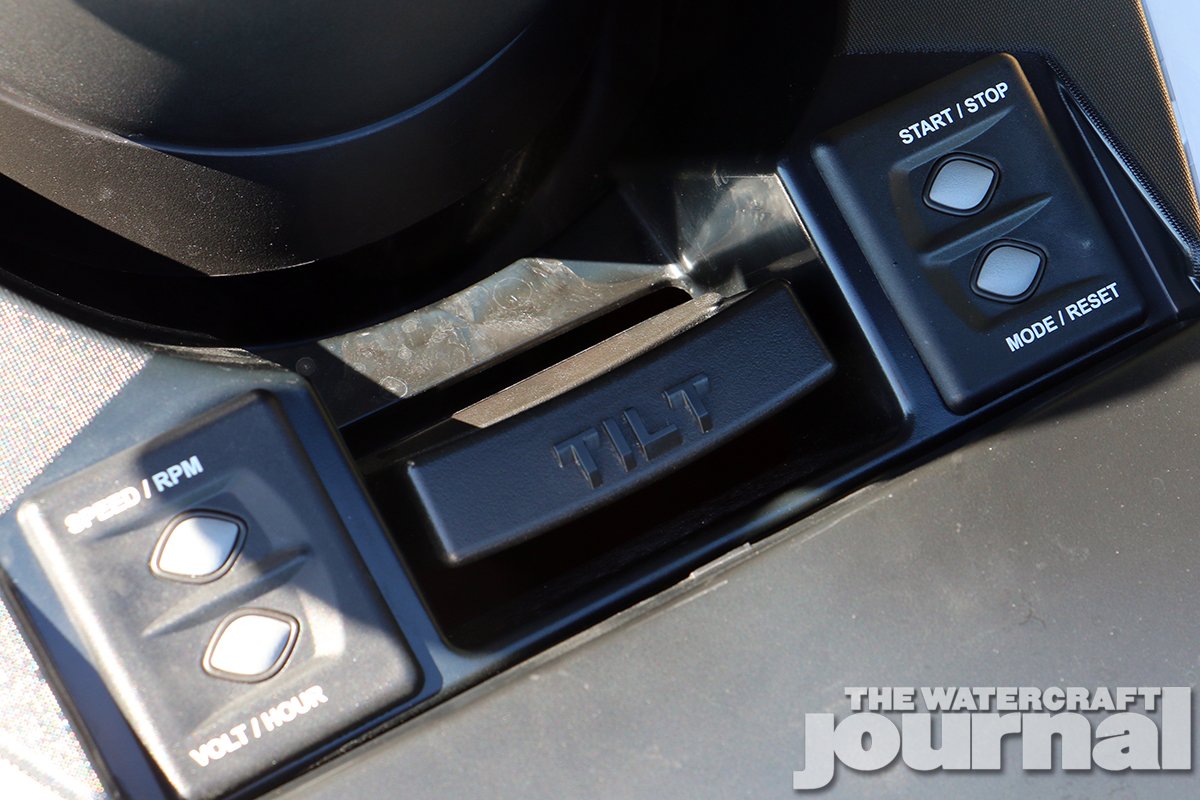
As noted, Yamaha has equipped the FX with plenty of storage but has broken it up into various compartments: a vacuous front bin, a smartly padded waterproof cubby beneath the dashboard, a Styrofoam-lined glove box, another watertight bin beneath the rear passenger and a “wet storage” cabinet in the rear for a tow rope or flipflops. Although slightly stepped, the large 3-person bench is mainly flat (compared to its Cruiser sibling’s stadium-style seating). And speaking of the dashboard, a single analog dial is flanked by two LCD digital displays reading off various stats on Yamaha’s “Multifunction Information Center” controlled via “Fast Access Instrumentation Buttons” panel.
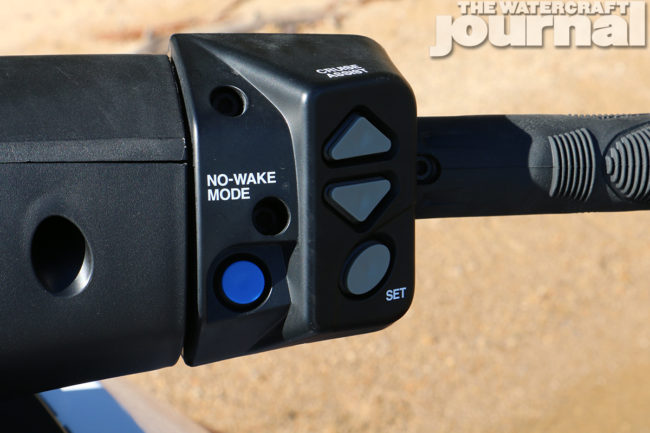
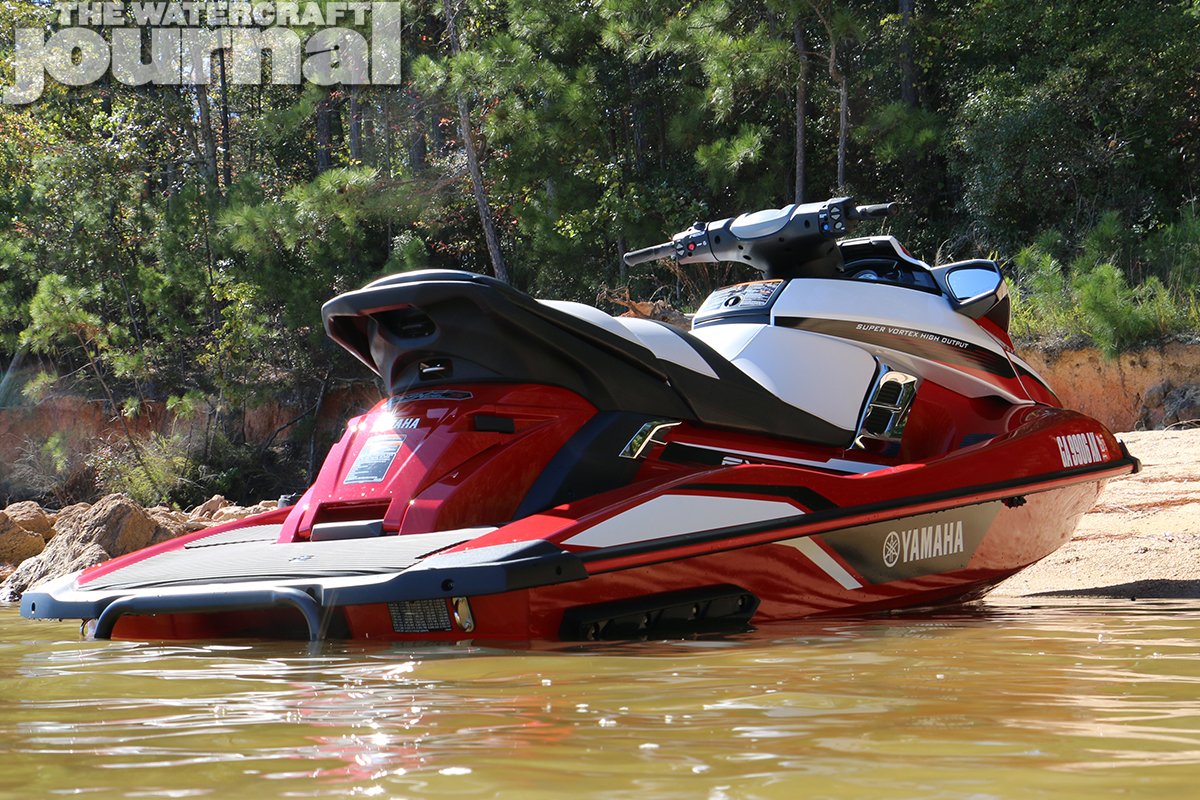
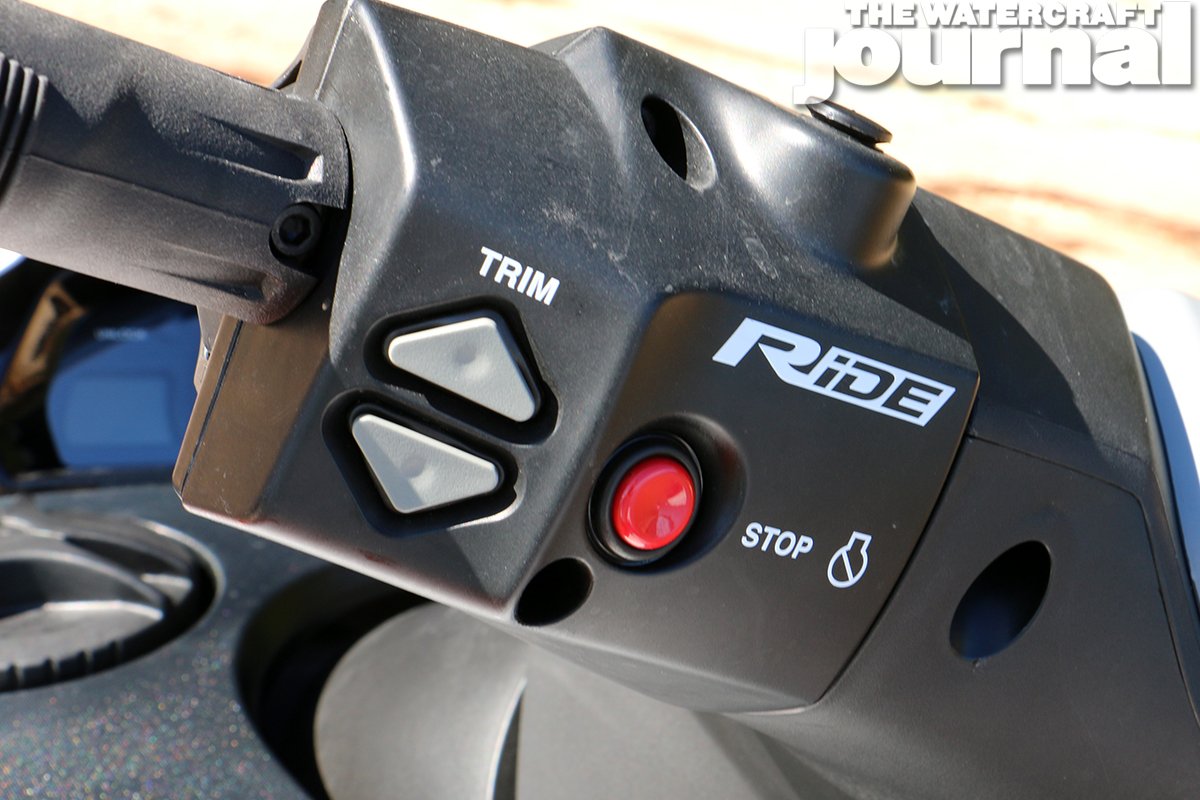
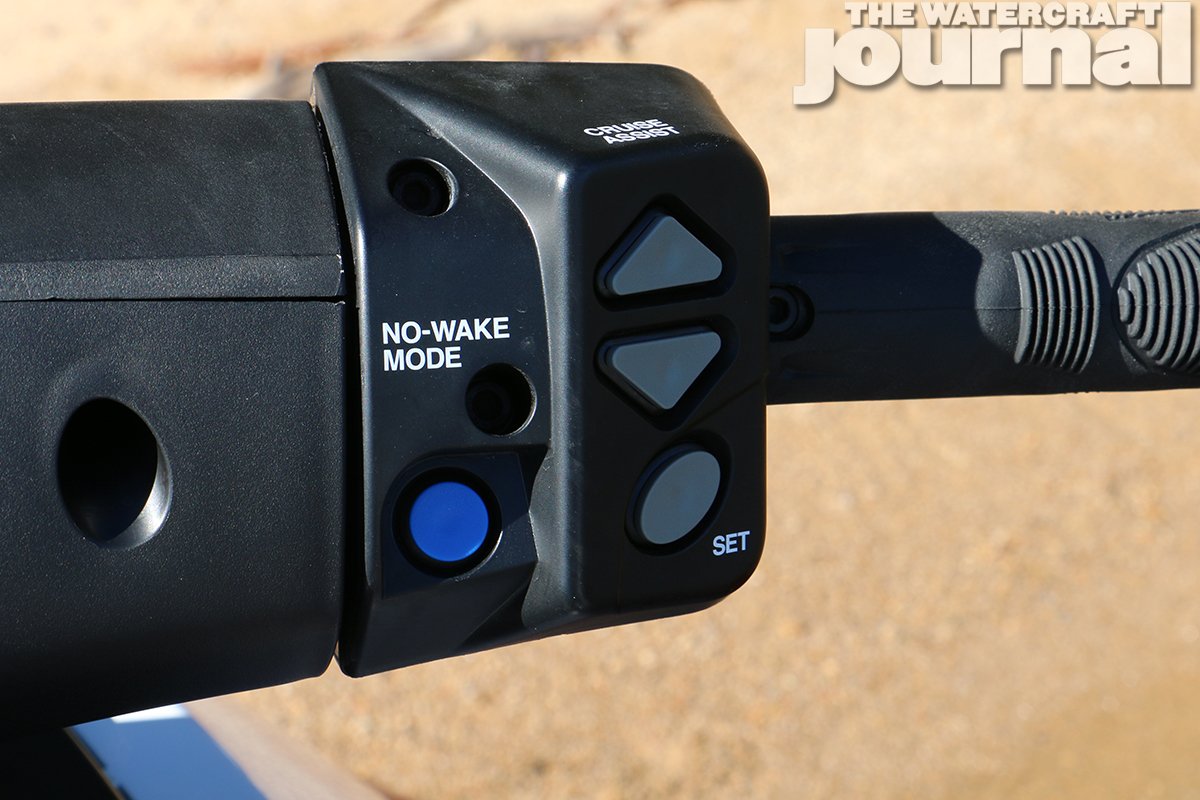
Yamaha’s placed the handlebar toggles within reach (if you’ve got larger hands or abnormally long thumbs) including Cruise Assist and electronic trim. The flat-sided pistol grips are still a fan favorite. The FX is also equipped with laser-cut two-tone traction mats and a wide folding swim step. Because it’s now missing on all full-sized Sea-Doos, the Yamaha retains its reinforced tow eye on the rear so you can drag the kids around on a raft. The WaveRunner also includes the brand’s remote transmitter fob that controls the Yamaha’s Security Mode and Low RPM Mode, which disables the engine, and increases fuel-efficiency respectively.
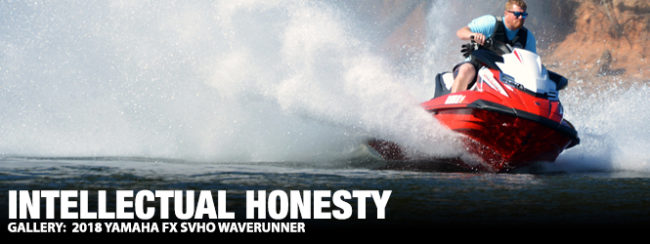
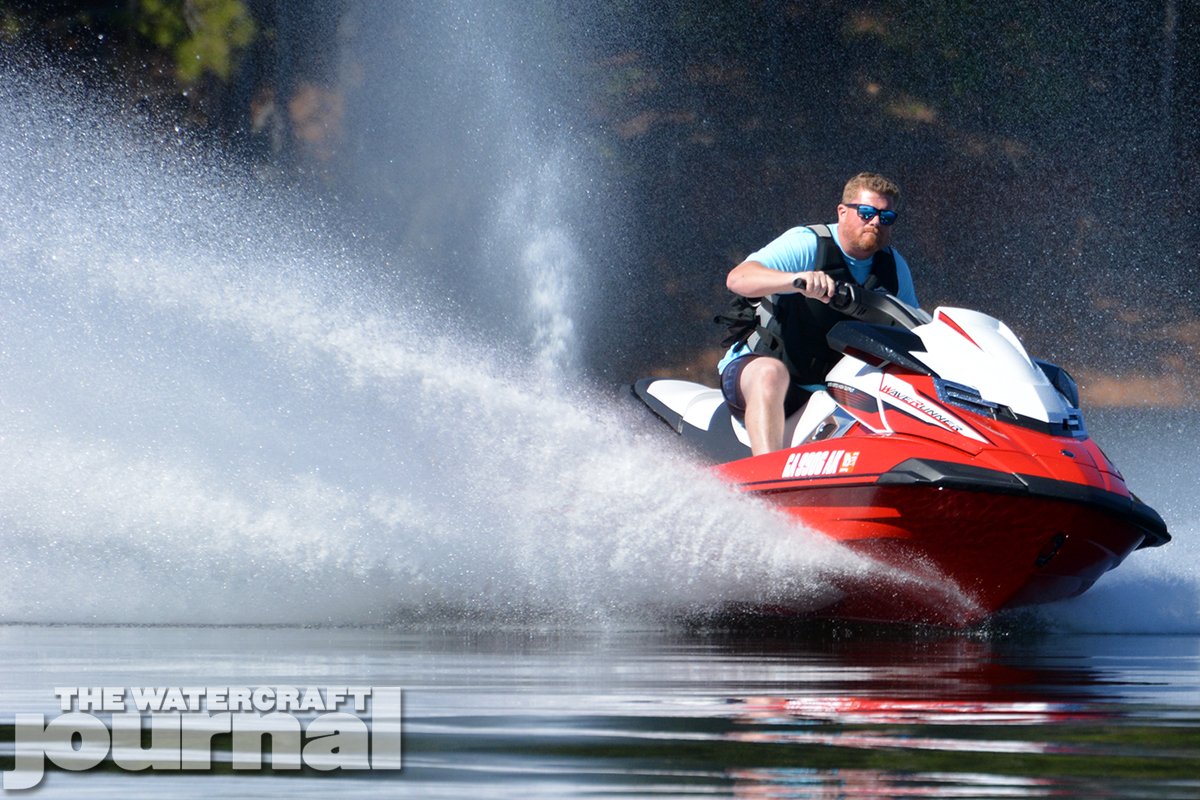
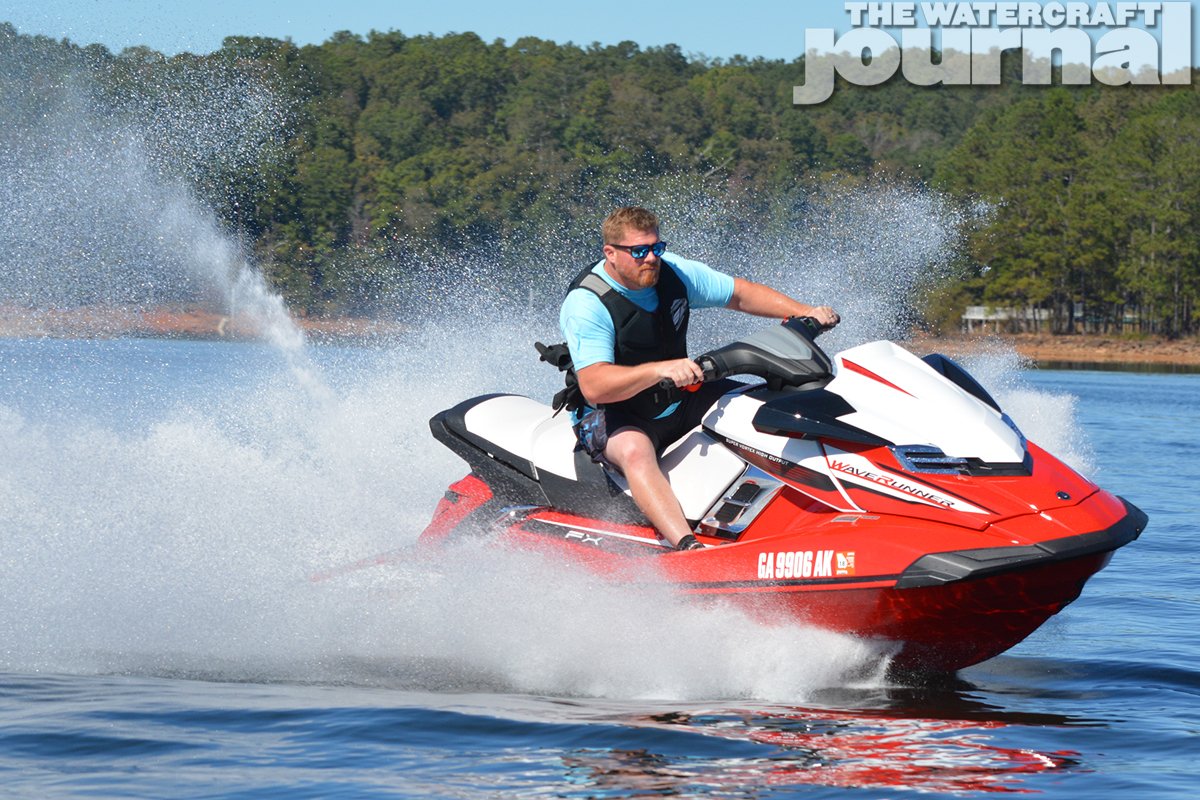
This particular morning was glassy flat. A few wisps of morning fog lingered on the hillsides and crept over the water, but the candied red Yamaha was not having any of it. Twin plumes of spray fanned out from the hull’s sides leaving a flawless V-wake in my trail. Had I chose to wear jeans and a button down shirt, it wouldn’t have mattered given how dry the ride was. Even in weaving through S-turns and giving chase to Andrew’s wake boat, nary a bead of water flicked over the bond rail. This was easily one of the calmest rides I had ever been on. The muted whistle of the centrifugal supercharger could be heard as I crept past the 50-mile per hour mark. The gentle deadrise of the FX lets the beam gradually come to plane – no herky jerky launches for this machine.
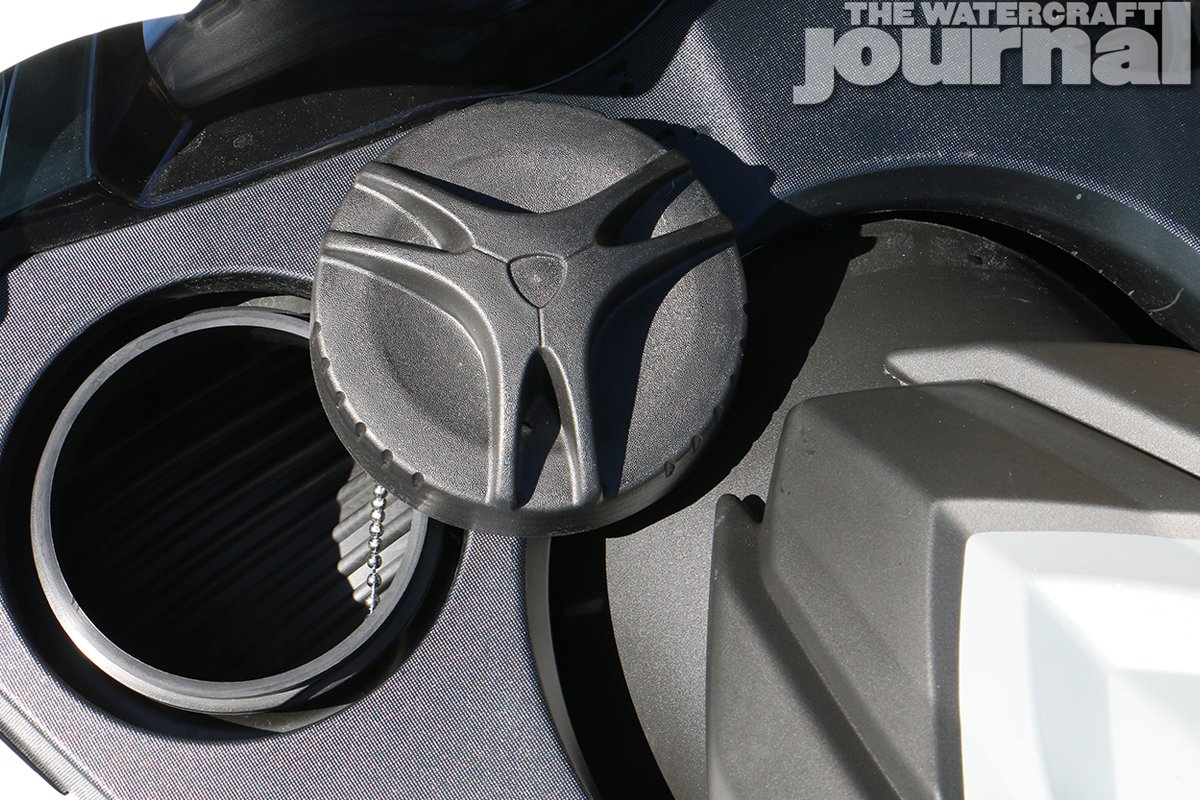
Admittedly, the FX SVHO is one of my personal favorites from Yamaha’s lineup. Even after a day’s spirited ride, my fuel gauge barely dipped below half of its 18.5 gallon tank. Priced at $15,299, the 2018 Yamaha FX SVHO WaveRunner is also smartly priced ($300 below the ’18 Sea-Doo RXT-X 300, $600 below the ’18 Sea-Doo GTX Limited 300 and exactly equally-priced with the ’18 Kawasaki Ultra 310X, which does not have brakes or screw-top watertight storage). When weighed for “bang for your buck” the FX SVHO still comes out a leader, and that’s why I keep coming back to it. And on a day like this, how could you blame me?