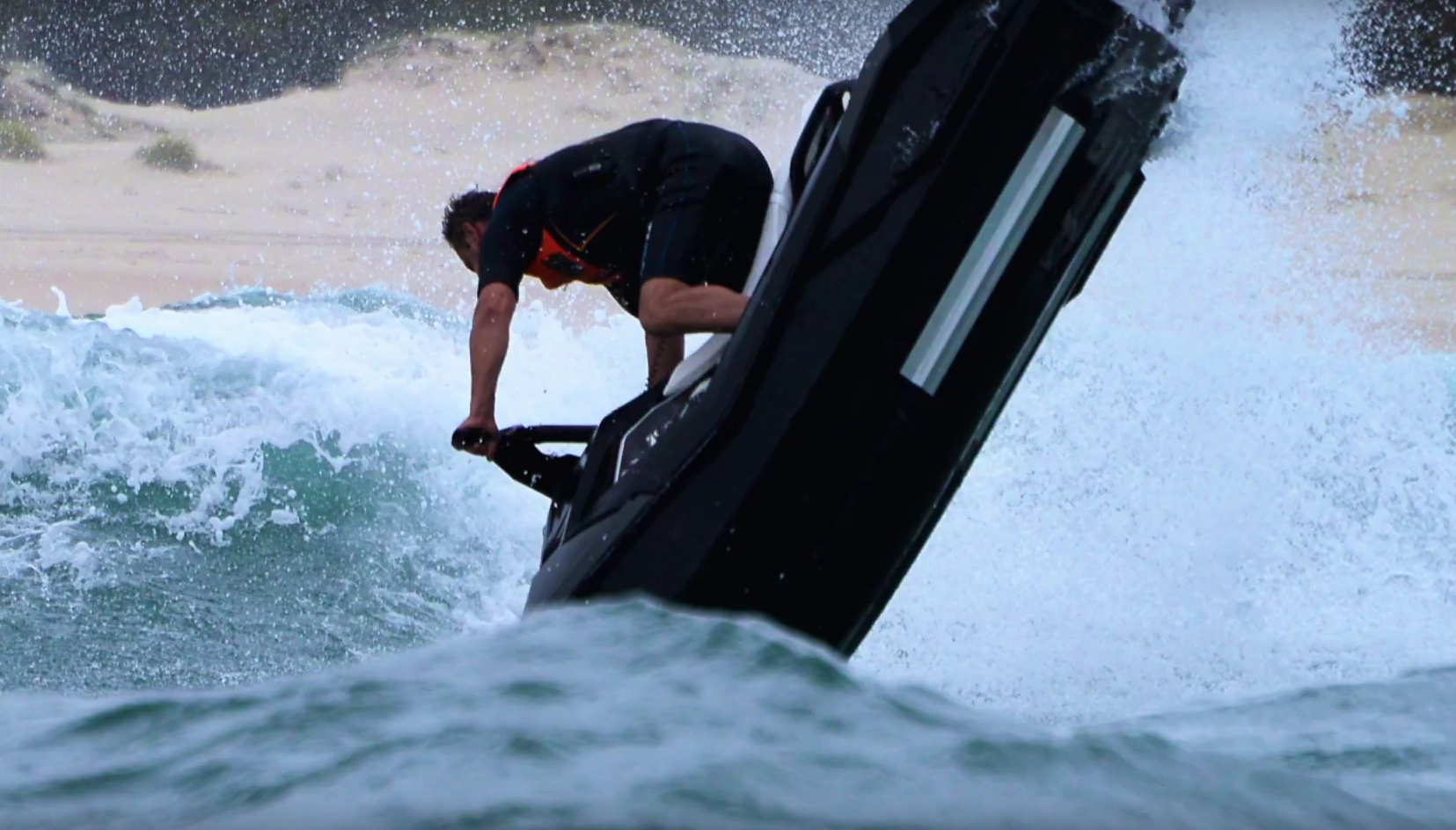
Whenever a new revolutionary design hits the market, it can be a scary moment for a manufacturer. Whether it is a new engine platform, a new hull, or a totally new concept from a material engineering standpoint, the bets are being played in uncharted territory. The Sea-Doo Spark was no exception when it was released.
This little industry-changing ski has definitely seen its fair share of customer uncertainty and scrutiny. One of the main concerns which customers or critics had was the whether or not the hull could stand up to the abuse of not only normal watercraft riding but the pounding of rough water conditions.
Sea-Doo itself went so far to prove the integrity of this PWC, that it released a series of ‘scientific test’ videos to not only give some humor, but show the Sea-Doo Spark’s credibility. As funny yet truthful as this evidence suggests, at the end of the day there is sometimes no better way to show proof than some good ole’ real world rough and tough abuse such as the likes of this recent YouTube video.
The guys from Queensland, Australia definitely look like they had a fun time making this video. It surely goes to show just how much abuse these things can really take and still hold their own. To check out one of these awesome wave jumping machines, head on over to Sea-Doo today.
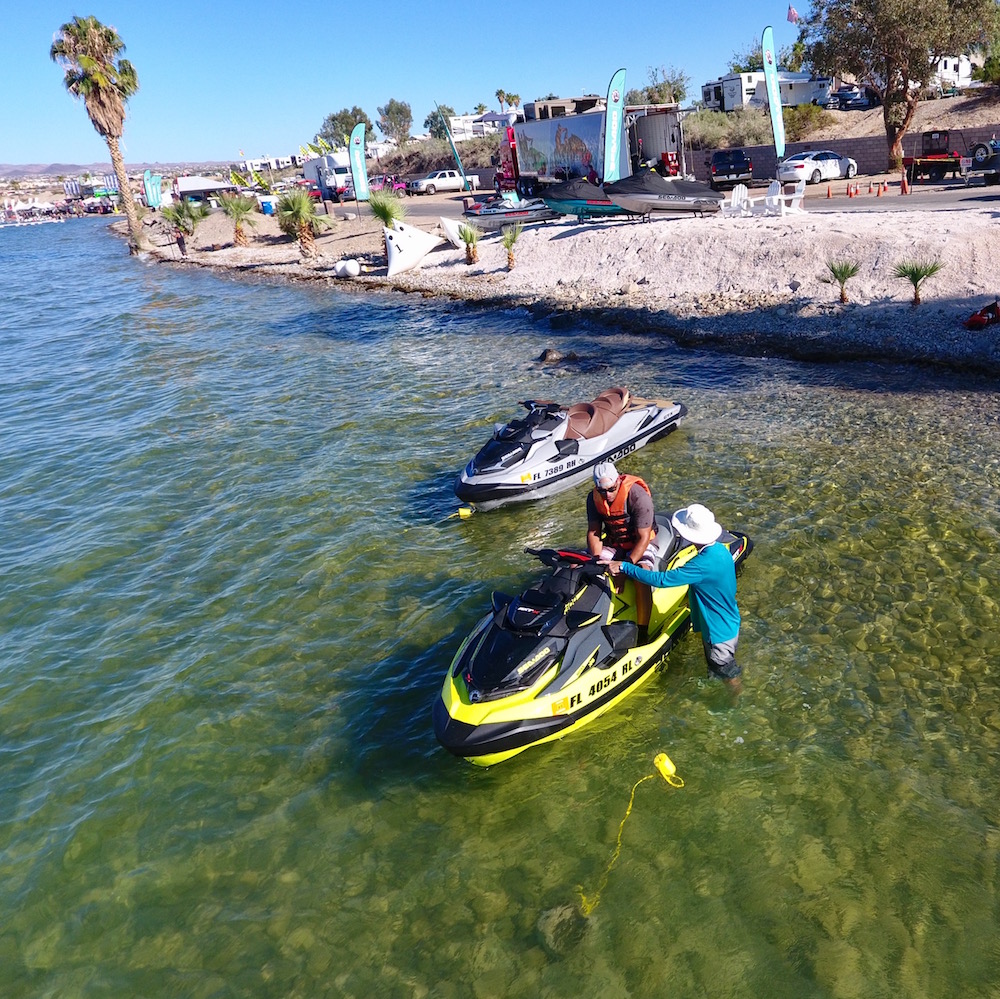
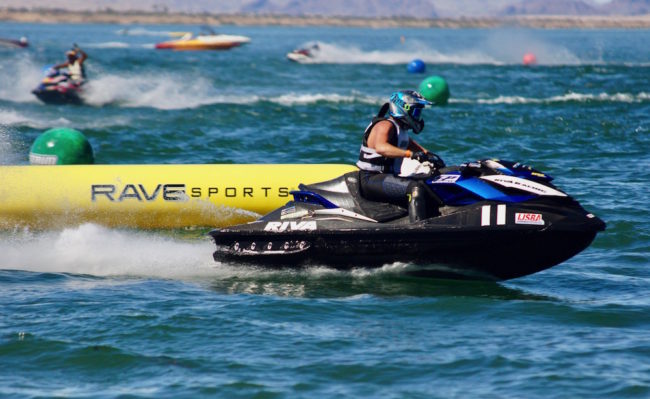
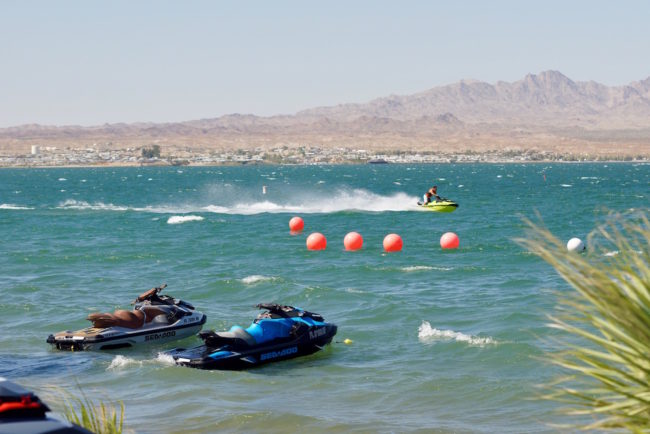
Sea-Doo definitely made a huge impression at the 2017 IJSBA World Finals in Lake Havasu, AZ. They not only set a record with their seventh consecutive Pro Open IJSBA World Championship, they also stirred up quite a bit of buzz with their public reveal of the 2018 Sea-Doo watercraft. In addition, the Sea-Doo Bounty Invitational showcased the stability and handling of the 2018 RXT-X 300.
The Sea-Doo X-TEAM extends the legacy of Sea-Doo watercraft dominance to seven consecutive years in the two premier IJSBA Pro World Championship classes. Kuwait’s Mohammed Burbayea captured his first Pro Open championship aboard his Sea-Doo RXP-X model and Hungary’s György Kasza added to his championships finishing atop the Pro GP class.
Sea-Doo riders added to the podium count with Kasza finishing as the runner up in Pro Open. In Pro GP it was UK’s prolific James Bushell finishing second and Marcus Jorgenson of Denmark completing the X-TEAM podium sweep finishing in third. Kylie Elmers also added another Pro Women’s championship to her resume aboard her Sea-Doo Centre backed RXP-X 300. The event, attended by the top riders in the world, proved the dynasty of performance dominance lives with the Sea-Doo T3 hull equipped watercraft models.
Ready to carry the X-TEAM winning legacy to endurance racing is the 2018 Sea-Doo RXT-X 300 model with the all new ST3 hull. The new Sea-Doo RXT, GTX, and WAKE PRO watercraft models made their public debut at IJSBA World Finals in Lake Havasu City, AZ where guests were able to test ride the new platform featuring the ST3 hull. Numerous racers and performance enthusiasts said this new platform would be the one to beat in 2018 in part because of its incredible rough water stability and lowered rider center of gravity.
Select X-TEAM racers showcased the performance and specifically the stability and precise handling of the new RXT-X 300 in the Sea-Doo Bounty Invitational event. The Sea-Doo Bounty is a racer contingency program that pays Sea-Doo watercraft racers extra money for top finishes and includes a special World Finals event. Florida’s Erminio Iantosca and Australia’s Gee Greenland competed in the Sea-Doo Bounty ‘Pop Man’ Invitational final where both riders rode the new 2018 Sea-Doo RXT-X 300 model around the World Finals track while having to pop several buoys in attempt to post the fastest one-lap time. Greenland showcased the RXT-X 300 stable and precise handling abilities the best by narrowly edging Iantosca by a mere three tenths of a second to claim the $1000 bonus.
Visit Sea-Doo on Facebook at www.Facebook.com/SeaDoo to view images from the 2017 IJSBA World Finals and to learn about upcoming events.
Listen, we get it. Some folks just don’t want to tow a trailer behind them. It gets in the way, there’s all that extra strain on your tow vehicle. And let’s not forget all of the crazies out on the road seemingly hellbent to collide into your skis! That’s why we like Truckboss so much. Their truck bed deck systems are some of the best in the industry, and offer a whole heck of a lot of versatility and functionality to boot. But what we’ve seen here is something different altogether.
Although details remain a little fuzzy whether this was a homebuilt rack and lift system, or was actually something purchased from a manufacturer; but either way, this odd PWC lift and rack combination suddenly makes what normally would be a ladder on the back of a RV into an articulated, ram-operated launching pivot. Watch as the owner backs his camper into the water and slowly dispatches his runabout from the roof all the way down into the water. We can imagine the forces placed on this system when fully laden with fuel and storage, so we’re thinking this might be a do-it-yourselfer kinda deal.
Either way, it’s still pretty ingenious and clearly it works. We wonder how many other RV owners would be interested in such an item. All we gotta say is just make sure the straps are on tight!
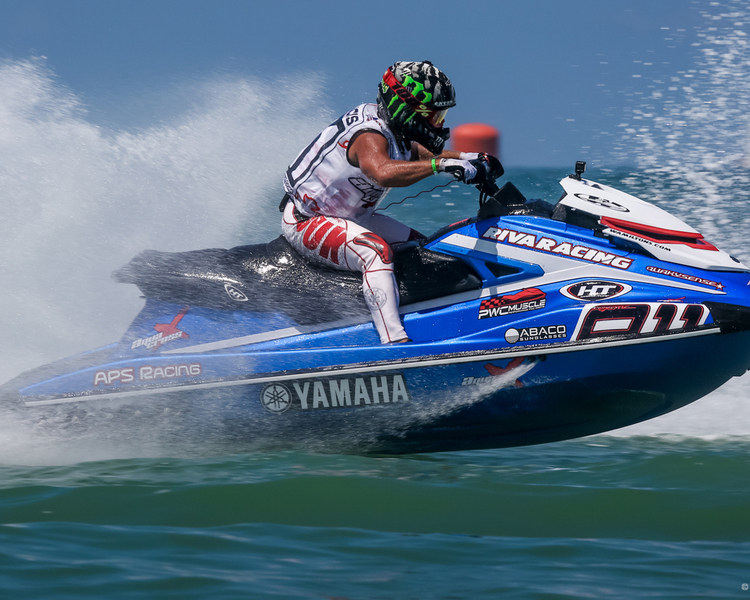
Yamaha GP1800 racers take out the world championships and the world title in Lake Havasu City, AZ, this past September 30-October 8.
“It was truly an amazing showing for the GP1800 along with our other platforms including the new EX which also made its racing debut. The GP’s combination of high power, light weight and unmatched handling in all types of conditions was demonstrated by its strong showing on Friday in two to three foot chop,” said Yamaha product manager and race director Scott Watkins. “The GP went on to dominate the rest of the weekend winning multiple world championship titles. Congrats and many thanks to all the racers and their families, tuners, mechanics, friends and other sponsors who contribute so much to their racing effort. It’s an honor for myself and Yamaha to be a part of such a dedicated group.”
It’s all true; the new Yamaha GP 1800 dominated the field during the IJSBA World Finals. The Yamaha team won Pro Runabout, Stock, and Pro Runabout Limited classes. Chris MacCluggage, Aero Aswar, and Aqsa Aswar finished 1st, 2nd, and 3rd overall.
The victories began Saturday in howling 20mph winds, which created rough chop on the lake. Aqsa Aswar won the first moto in a blazing 42-seconds! Moto 2 was held in cleaner conditions as the winds laid down Sunday. Aero Aswar took the moto win, while MacCluggage picked up the gold in the overall category with his two second place finishes.
Eric Francis’s decision to ride Yamaha Waverunners served him well in Lake Havasu. He won the Pro Runabout Limited on a Stock Class GP 1800. Francis also secured the Pro Runabout Limited World Title with his first place finish.
Yamaha congratulates all of the Yamaha riders who competed this year at the IJSBA World Finals. Congratulations also go out to Dean’s Team, RIVA Racing, and Broward Motorsports. What a great year!
OK, before anyone gets upset, please note that we’ve got an awesome full-length feature article (and photo gallery) coming this week recapping all the action at the 2017 IJBSA World Finals. What we did for the most recent episode of “Long Haul” was focus our attention on the manufacturer’s midway, highlighting some of our favorite sites and athletes as well as some very cool new stuff for 2018.
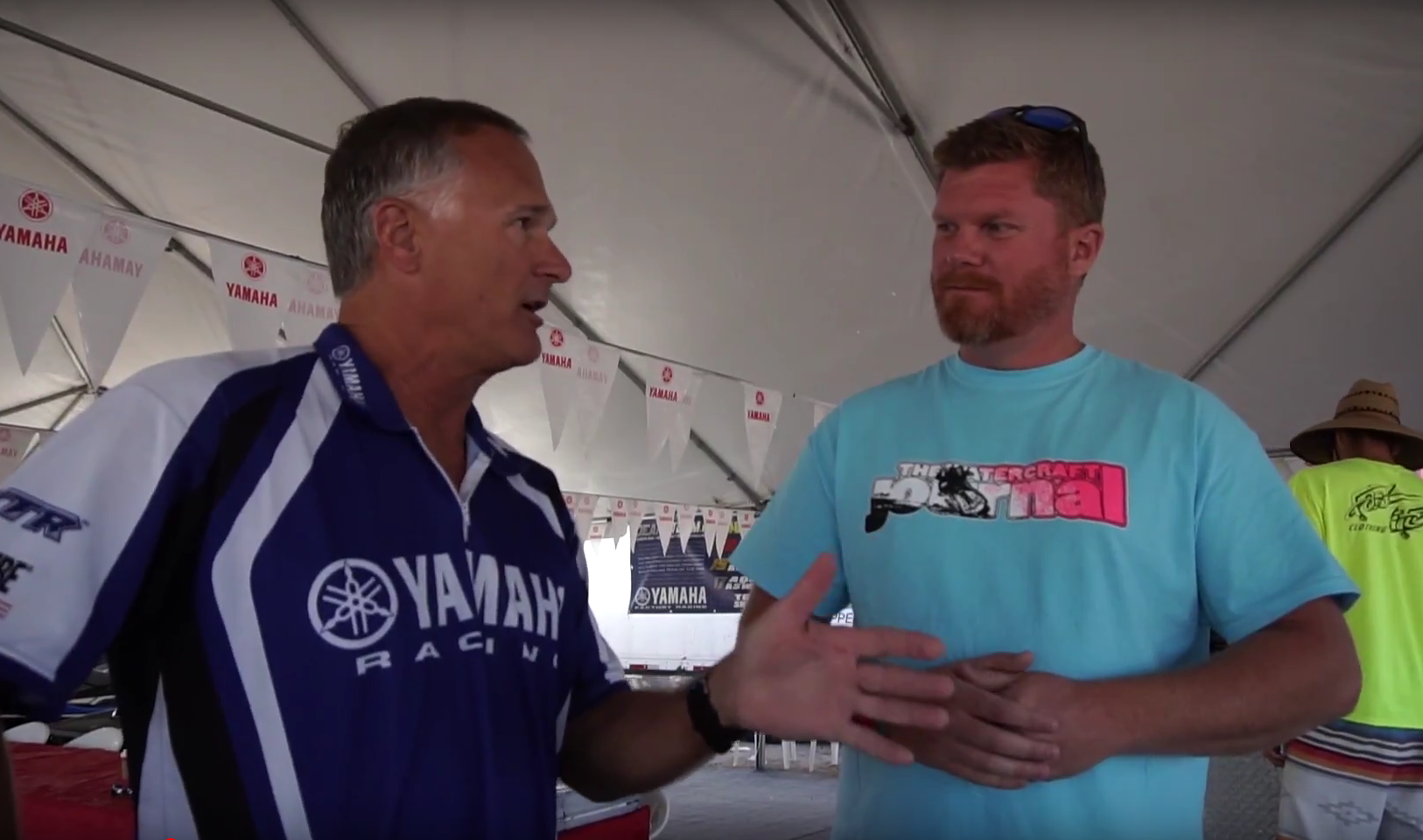
We spent nearly an entire week walking from one end to the other, chatting up vendors and manufacturers on their latest wares. In the episode (embedded below), you’ll note that we got to spend some time with both IJSBA World Champion and general living legend Scott Watkins, who has been the Head of Product Development for Yamaha over the past 20-somethin’ years.
Watkins walked us through the engineering and “black magic” that went into designing and executing the single-most successful performance runabout in a decade, the GP1800. After that, we got a chance to corner RIVA Racing grand poo-bah Dave Bamdas who not only introduced us to RIVA’s one-of-none RXT-X 350, built upon the all-new 2018 Sea-Doo RXT-X 300, but singled-out all the new go-fast parts to make it scream.
We also provide a few shining glimpses at the moves that made Hydro-Turf/Jet Renu freestyle rider Mark Gomez this year’s Pro Freestyle World Champion, as well as former IJSBA champ Lee Stone’s insane double backflip. We also tossed in a few other tidbits of fun. Again, we’ll have our complete coverage from Finals published this week, so until then enjoy the latest episode of Long Haul HERE:
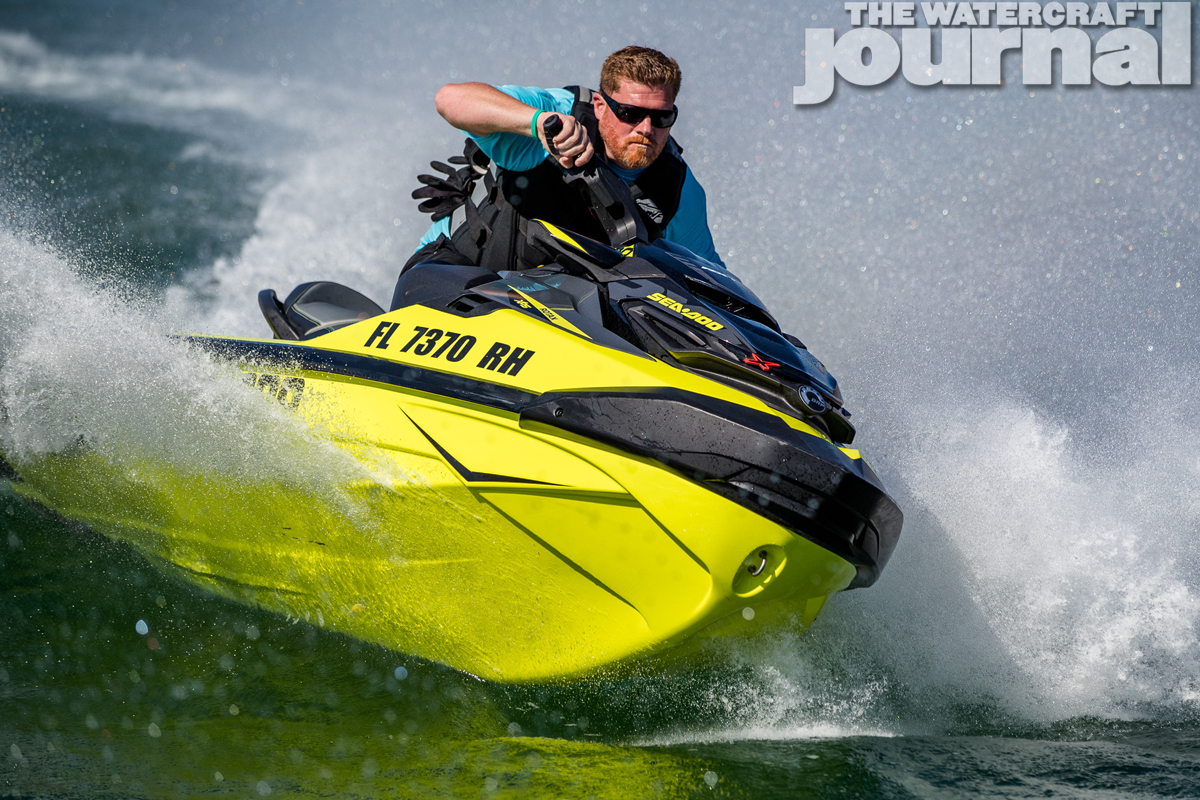
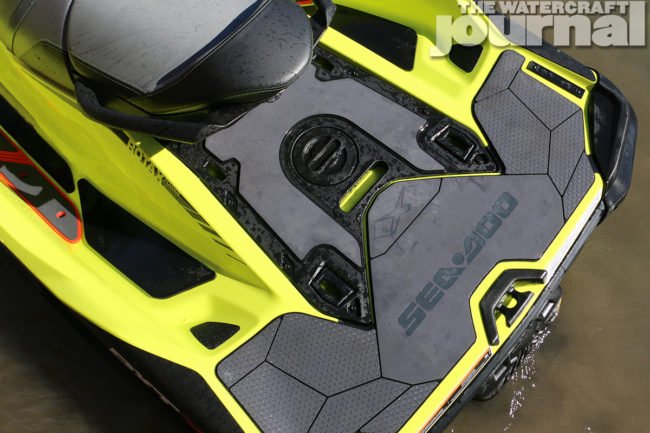
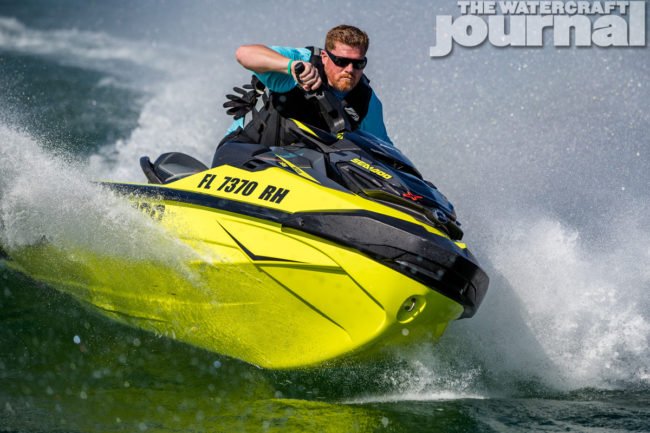
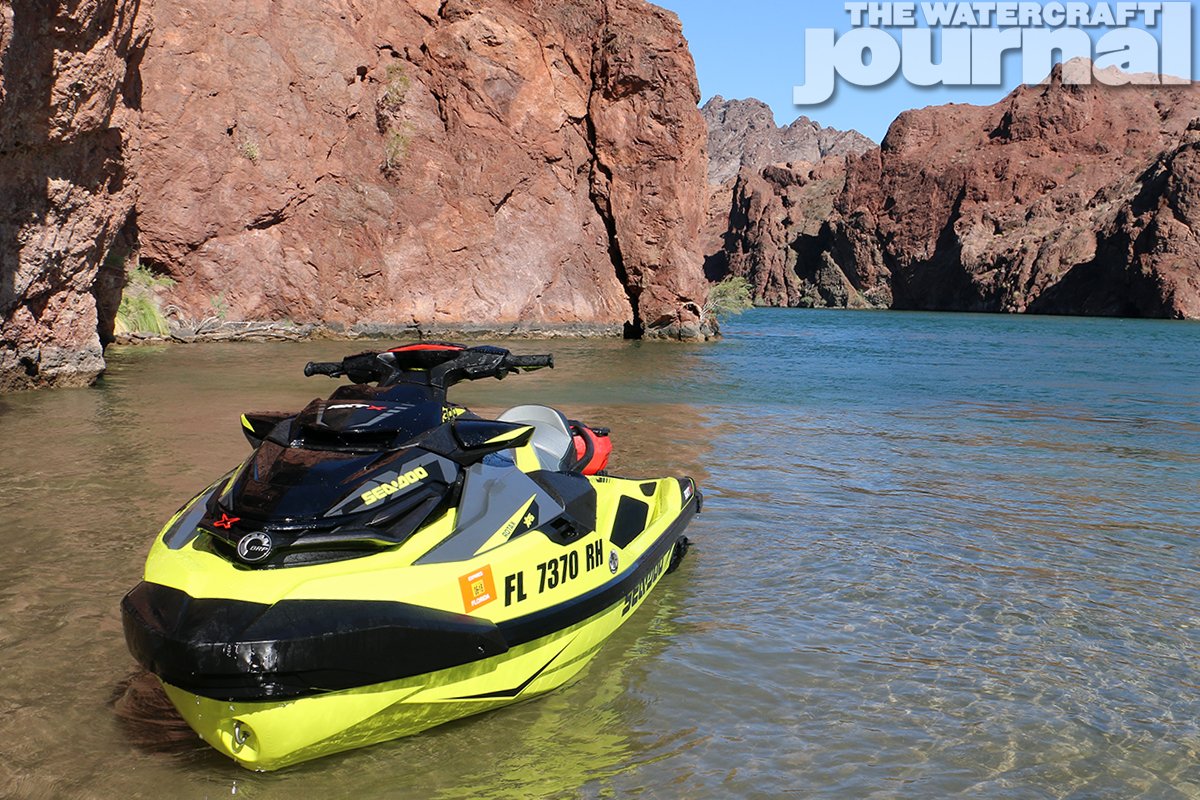
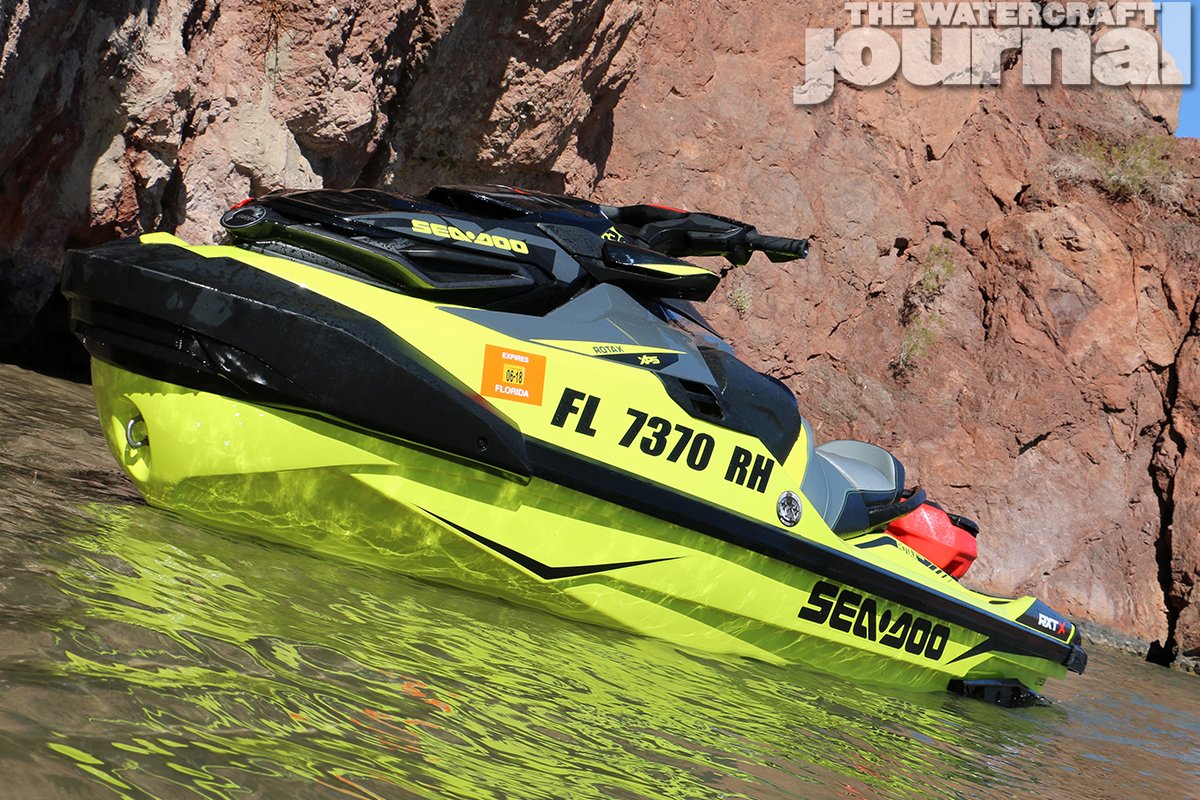
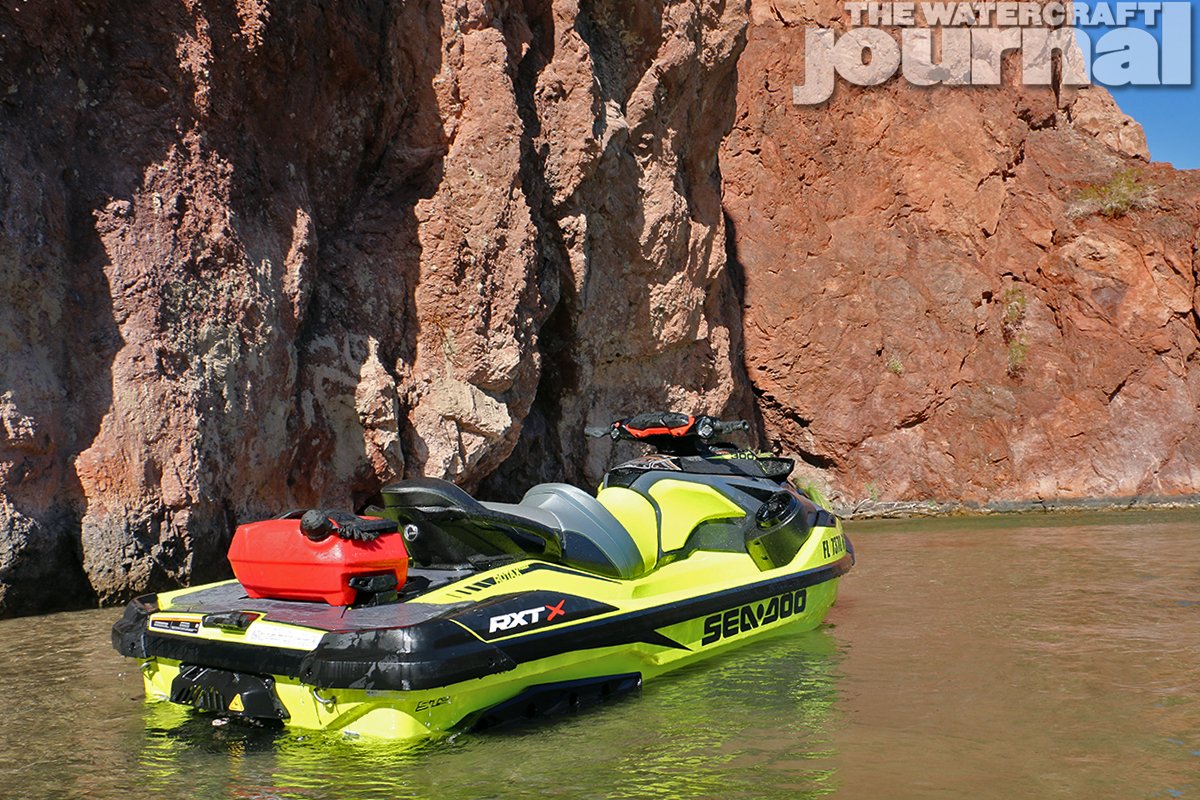
“I’m in trouble,” I sighed to myself my second day of riding the 2018 Sea-Doo RXT-X 300. Over a year ago, The Watercraft Journal’s 2016 Watercraft of The Year went to the re-engineered, 300-horsepower RXT-X, and Sea-Doo wasted no time in using the accolade to help sell the supercharged runabout to performance enthusiasts. Candidates for the award had to be models from that year – this year’s will be strictly 2017 models – leaving the insanely redesigned RXT-X 300 out of the running… at least for now. The grounds for which earned the predecessor of this new craft our prize were weighed upon the application of new ergonomics, power-to-weight dynamics, and overall performance (both on the water and in the showroom), all to an existing platform; with what Sea-Doo has revealed, our scale will have to be wholly reconfigured.
Consider the environment that birthed this model’s new ST³ platform for a minute: four years ago, when the ST³ was first being drafted, the domestic US AquaX series was the fresh-faced new-kid-on-the-block of PWC racing, and the premise of “Race on Sunday, Sell on Monday” actually applied. All of the OEMs saw value in its near-box stock racing program, and none more than Sea-Doo. Unfortunately, the existing RXT-X 260 simply struggled in the Florida surf against a field of supercharged Kawasaki Ultras and Yamaha WaveRunners. Improvements to the powertrain were well underway in the form of the yet-to-be-revealed ACE 300 1.6L 3-cylinder, but stability and rough water prowess were still longing. Even casual riders pined for better handling in the chop.
To answer, BRP engineers – already working with a proprietary CM-Tech bonding process (giving the material better flexibility and durability, as well as better adhesion to automotive-quality paints) – developed a re-sculpted hull that was 1.2-inches wider (from 48.2-inches to 49.4-inches), yet 3.3-inches shorter (from 139.2-inches to 135.9-inches), and an incredible 86-pounds lighter (828-pounds compared to 914). A wide, stepped outside chine acts as a veritable shelf from which the ST³ perches – gone is the soft, rolling outermost edge. A 22-degree deadrise gives the hull a steeply raked bow that borrows heavily from the T³ design of the sportier RXP-X 300. A blend of multi-faceted strakes give the ST³ a dual personality: calm and level at neutral trim, aggressive and determined trimmed down… but more on that in a minute.
Gone are the heavy-lipped splash guards grafted into the bow. So too are the plastic “snow shovel” splash deflectors on the nose. The deeper-and-wider footwells are enormous, and intentionally so. Sea-Doo engineers wanted riders to be able to comfortably move about the cabin when at rest, and swiveling our size 11’s in the wells was suddenly possible. Moreover, the driver’s saddle is 1.4-inches lower, with passengers riding 3-inches lower as well. All of this works to decrease the RXT-X 300’s center of gravity and increase power-to-weight ratio (0.362:1 from 0.353:1). Despite there being only minor changes to Sea-Doo’s largest displacement engine to date, including a simplified CLCS (Closed Loop Cooling System), a more thermally-efficient ride plate, and a larger oil cooler for 2018, the gain to its power-to-weight ratio is palpable.
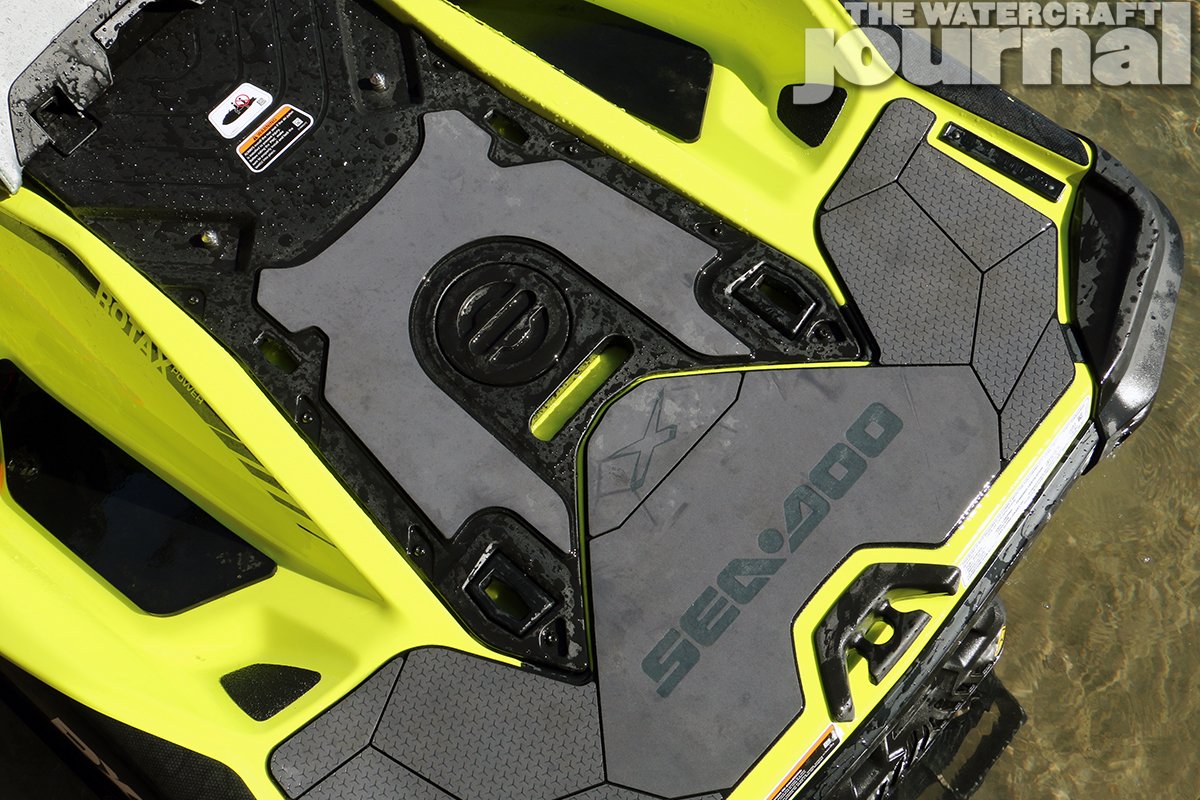
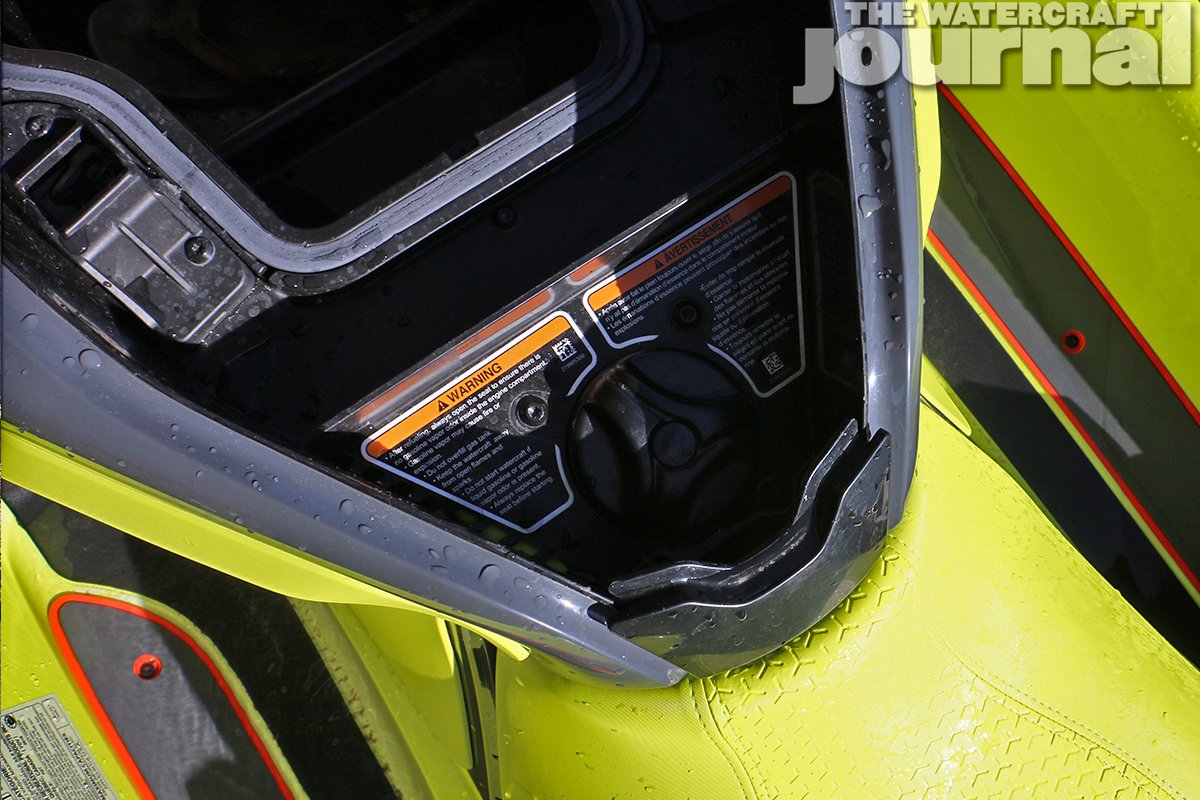
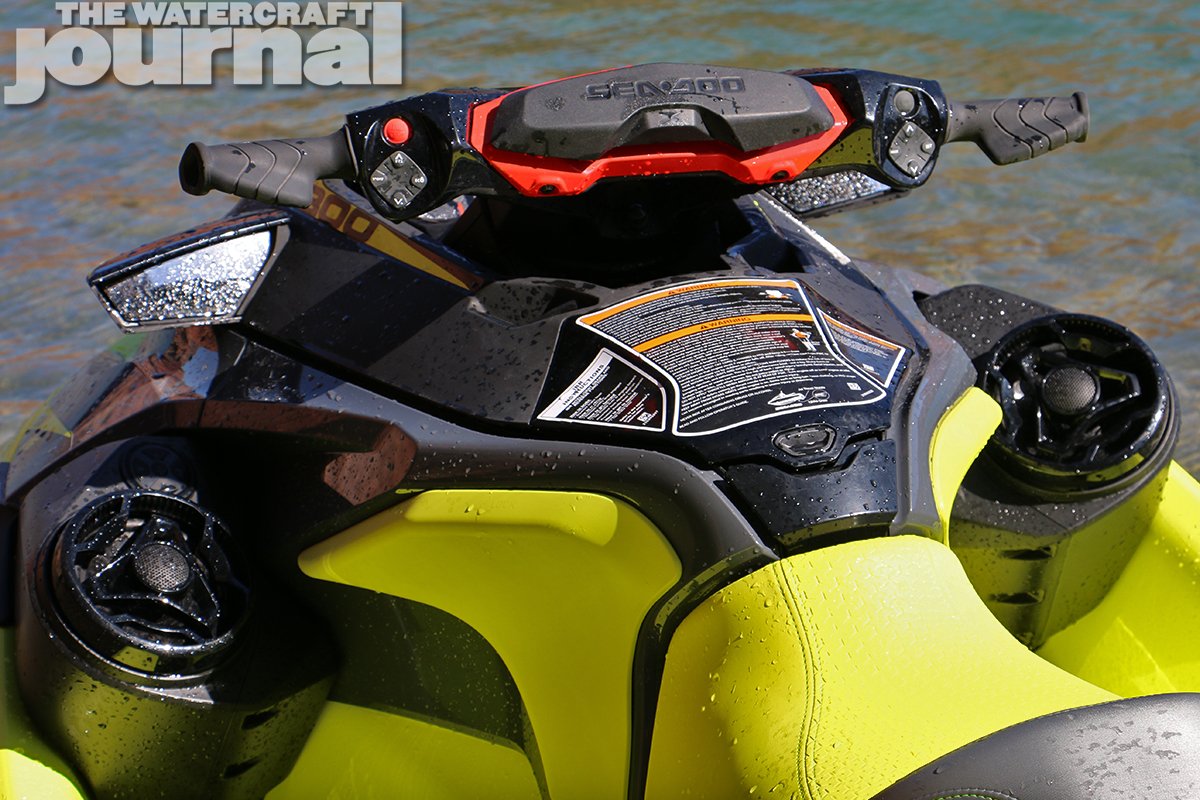
For the 2018, the ST³ platform is hewn from the aforementioned CM-Tech both hull and deck, and also shaves weight from a few key changes to how you’d expect a watercraft to look and operate. By now, most of you have witnessed the glory that is Sea-Doo’s Direct Access Front Storage (unofficially “DAFS”), and its modular rear deck LinQ system. At first blush, I was admittedly skeptical of the new storage arrangement as it dramatically reduces the Sea-Doo’s total storage from 42.8 gallons to 27 gallons, which is even less storage than the Recreation segment GTS/GTI models. Accessed by two recessed snapping locks beneath the handlebars that release the entirety of the top deck, allowing it to hinge upward on a gentle gas shock, did it reveal a single bin that is simply cavernous. No, really. I joked (more than once) that I could aptly cram my 8-year-old daughter in there with little to no effort. (Not that I would. Please don’t call CPS.)
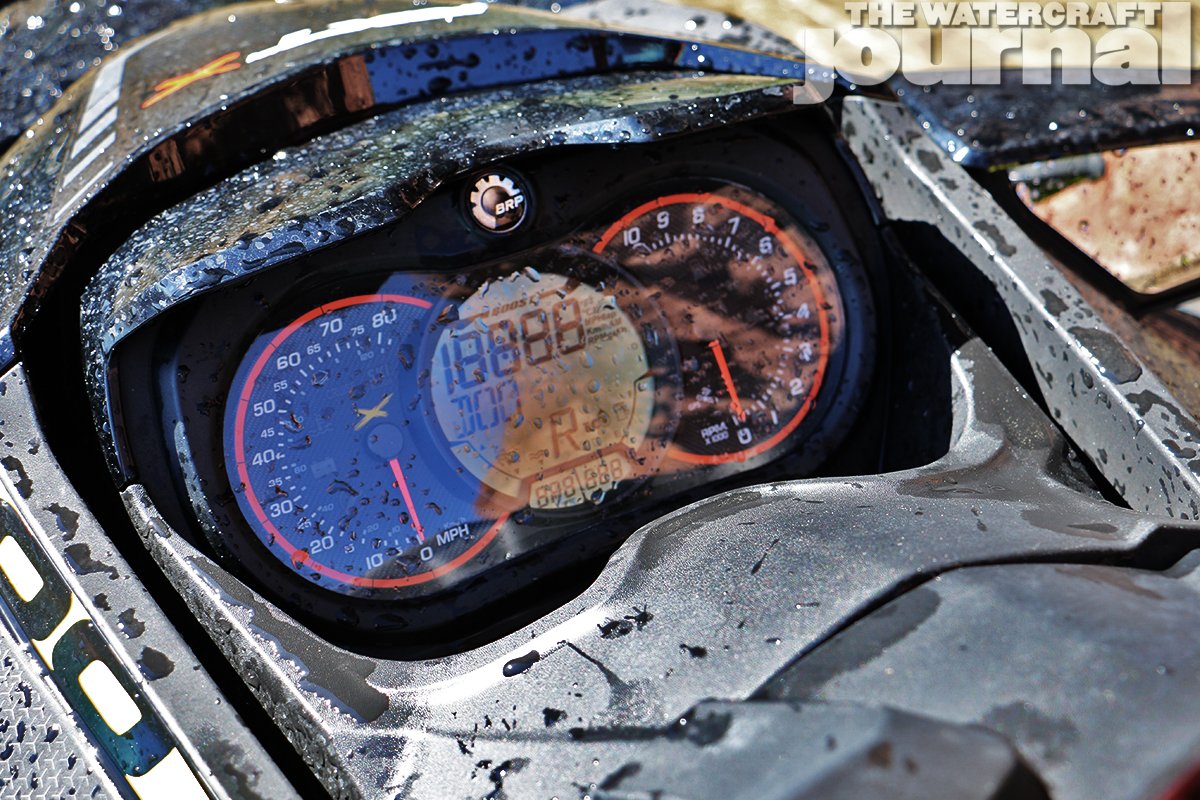
One might think that in making the gauge pod, glove box and steering console suddenly detach from the deck would compromise steering input or build quality, but all of those in attendance at the multi-day media introduction remarked on the Sea-Doo’s superior fit-and-finish. As a matter of fact, the 2018 RXT-X 300 encapsulates a new era of superior fitment for Sea-Doo: uniform gap widths; thick, durable latches and hinges; and a ride completely absent rattles. The DAFS lid fails to chatter or shift, and steering is as tight as any fixed steering neck prior to 2018. And Sea-Doo didn’t need to compromise either; the 5-position tilt steering continues to incorporate the analog-and-LCD digital display as before. Gone is the “slap cap” filler neck on the side, replaced with a screw-tight cap fixed between the driver’s knees in the storage bin. It’s baffled and vented so spilled fuel won’t trickle in with your valuables.
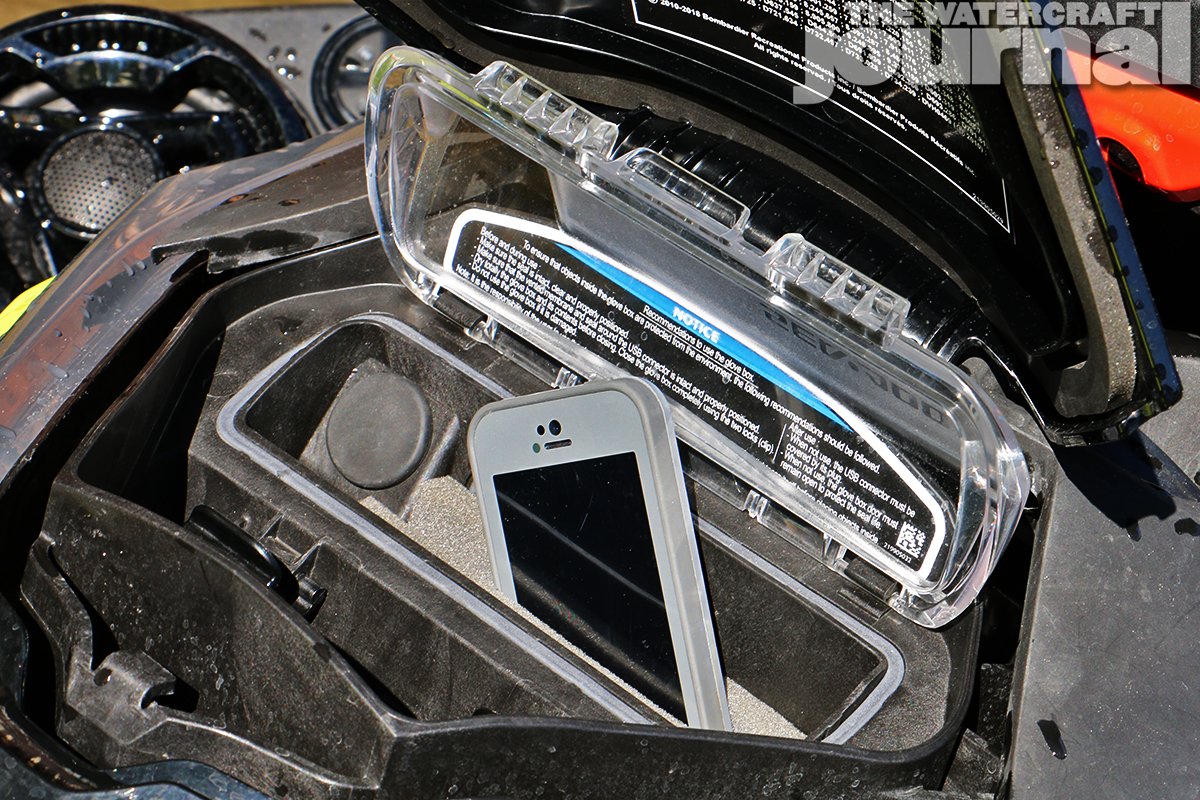
Almost all of the advertised 27-gallons of storage is found in the gasket-sealed central bin, which can be “plussed” through Sea-Doo’s Parts & Accessories program with drop-in netted dividers (which come standard on GTX Limited models) to help organize the tub a wee bit. Yet, less than a gallon of the 27 is given to a diminutive glove box that houses a standardized waterproof-and-foam-lined cell phone case. In addition to your personal device, there’s just enough room for keys and maybe a wallet if you’re not Mr. Moneybanks. Another accessory for the RXT-X 300 (and standard GTX Limited fare) is an available USB port to keep your phone charged at all times. Because so many of us use their phones to monitor weather, track GPS routes or just snap a bunch of photos and video, it’s almost a mandatory add-on.
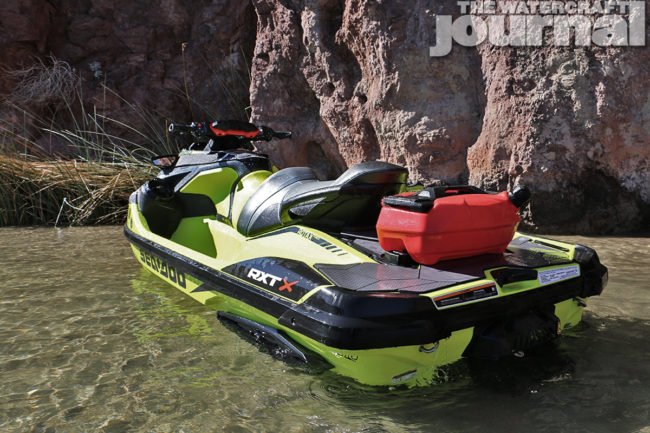
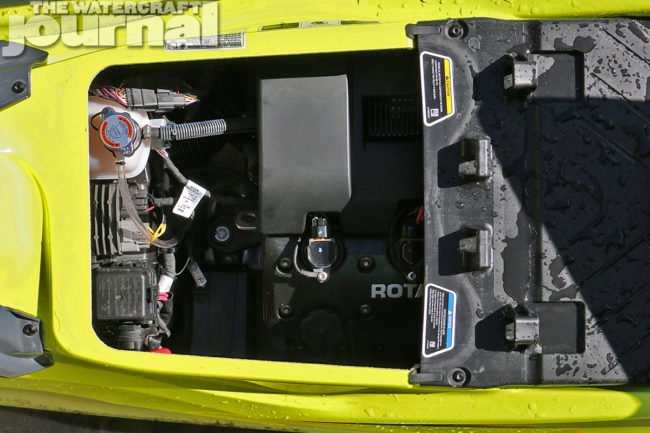
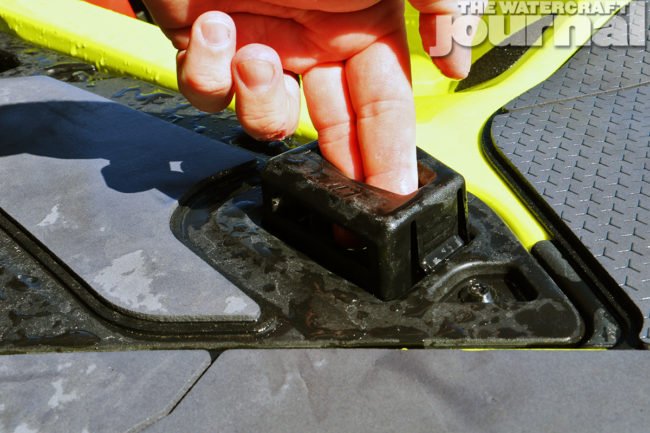
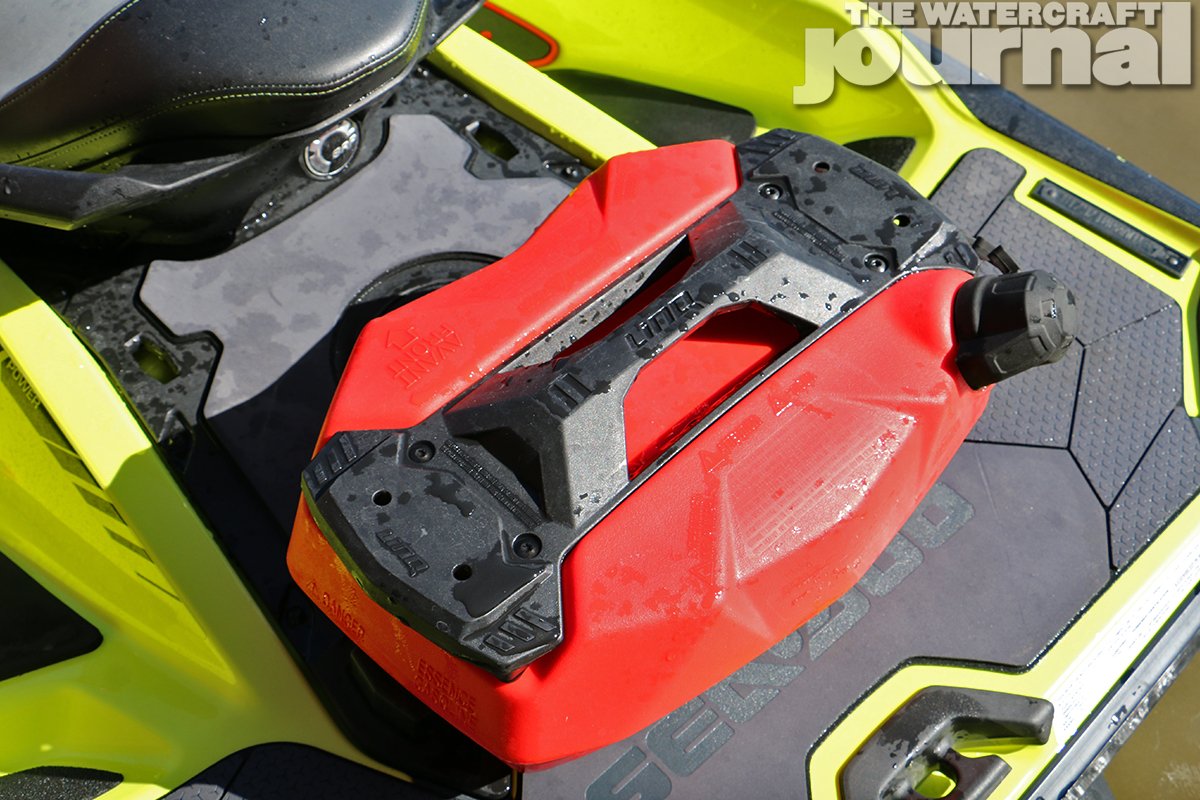
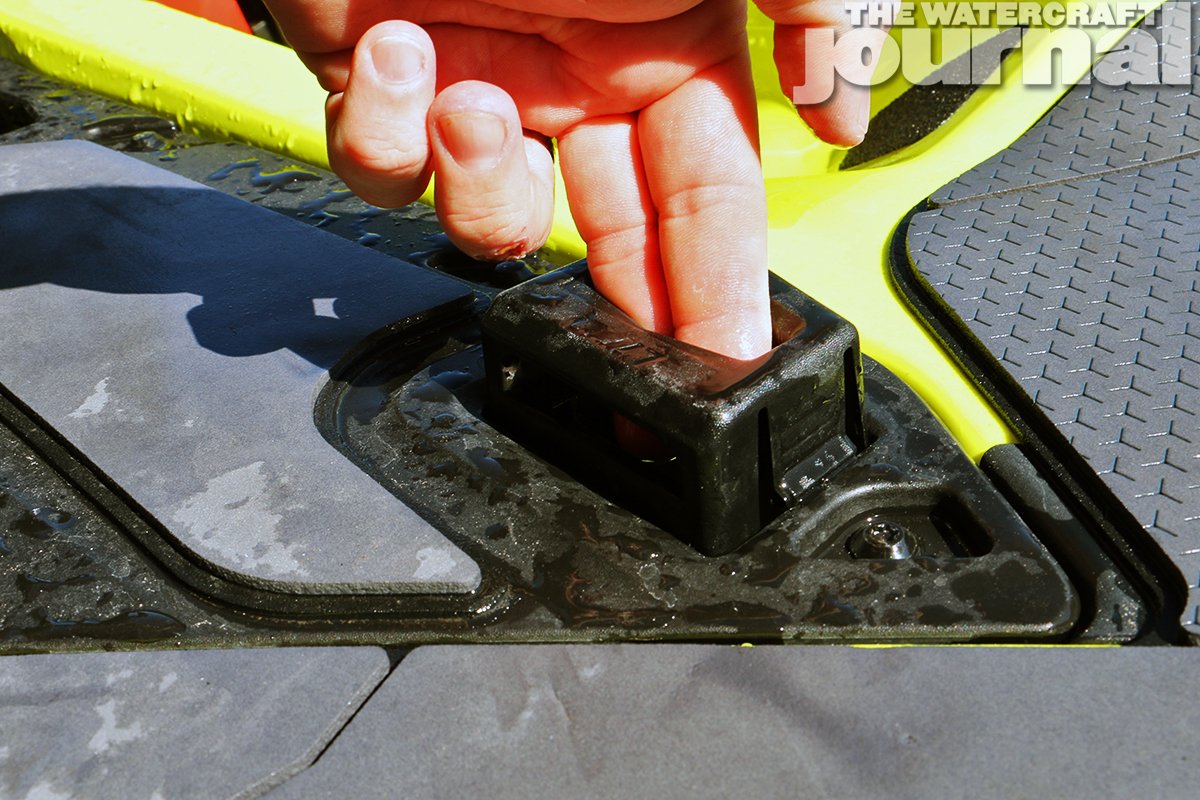
As alluded to earlier, the rest of the deck is uniquely modular. Gone is the massive (and heavy) gas shock-mounted single bench seat. Rather, the wings for the Ergolock seat are replaced with thick padding on the inside alcoves tucked beneath the glovebox. The driver’s seat is shaped so single-person riding is readily accessible. The rear seat detaches with two snapping lock pins and can even fit inside the center storage compartment. Beneath the driver’s seat and running down to the swim platform is a large access plate held down by 13 screws that can be removed to reveal the entirety of the engine compartment. Engine access is now wholly abundant. Integrated into the large access plate is Sea-Doo’s new LinQ Attachment System, a modular pop-up mounting system permitting the attachment of either a 4-gallon fuel caddy; a semi-rigid, 5.5-gallon storage bag; or a 4.2-gallon ice chest. (Each sold separately through Sea-Doo’s accessory line.)
Interestingly, all LinQ-equipped ST³ runabouts are also able to accept Sea-Doo’s telescoping Wake pylon, which now can be mounted (or removed) in about 30-seconds. The entirety of the rear platform was redesigned to offer the industry’s largest rear deck, 366 square inches to be exact. Wide and flat, the new ST³ offers the single-most stable reboarding experience the brand has ever sold. All of this might sound tangential to the spirit of the RXT-X 300, but BRP’s own market research revealed that 40-percent of the buying market wanted to explore, and do “more” with their PWC. To whit, the final accessory also proved to be Sea-Doo’s best: a 100-watt sound system. The BRP Premium Audio sound system features two 50-watt pressure washer-safe, all-weather speakers integrated into the world’s first Bluetooth-controlled system.
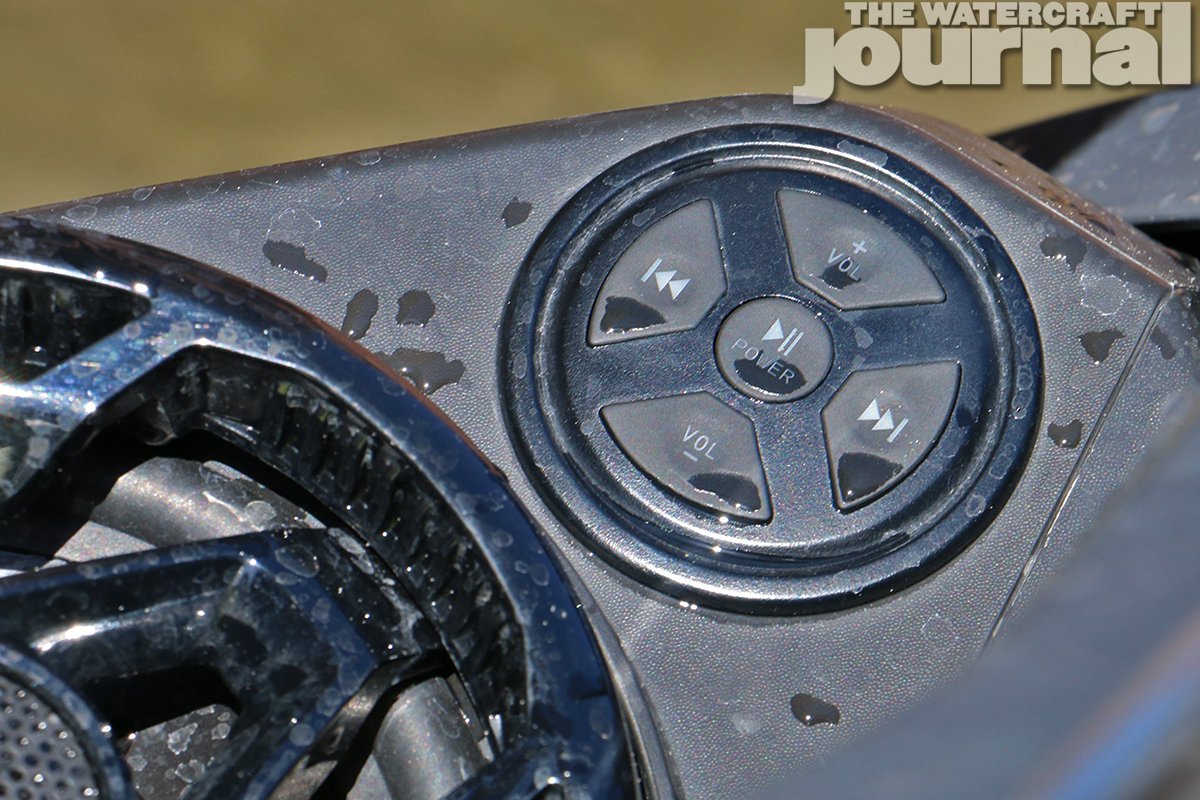
Simply go to your phone’s connectivity controls (found in your “Settings” control panel under “Bluetooth” if you have an iPhone), and select “BRP Remote”. Suddenly, your new RXT-X 300 will be melting your face to your favorite tunes as you streak across the lake. There’s no need to reach for your phone either, external playback controls located above the left speaker allow you to toggle through your song list while at speed or simply lounging around. And yes, you can listen while you’re at the dock or just hanging around with the engine off. A battery sensor kills the sound after 1 hour or low battery signal, whichever comes first. The BRP Premium Audio package adds $700 to the MSRP but is so friggin’ worth it. Otherwise, it’s another $200 to have your dealer install it at a later date. And seriously guys, I cannot emphasize how good this is. Do not buy one without it.
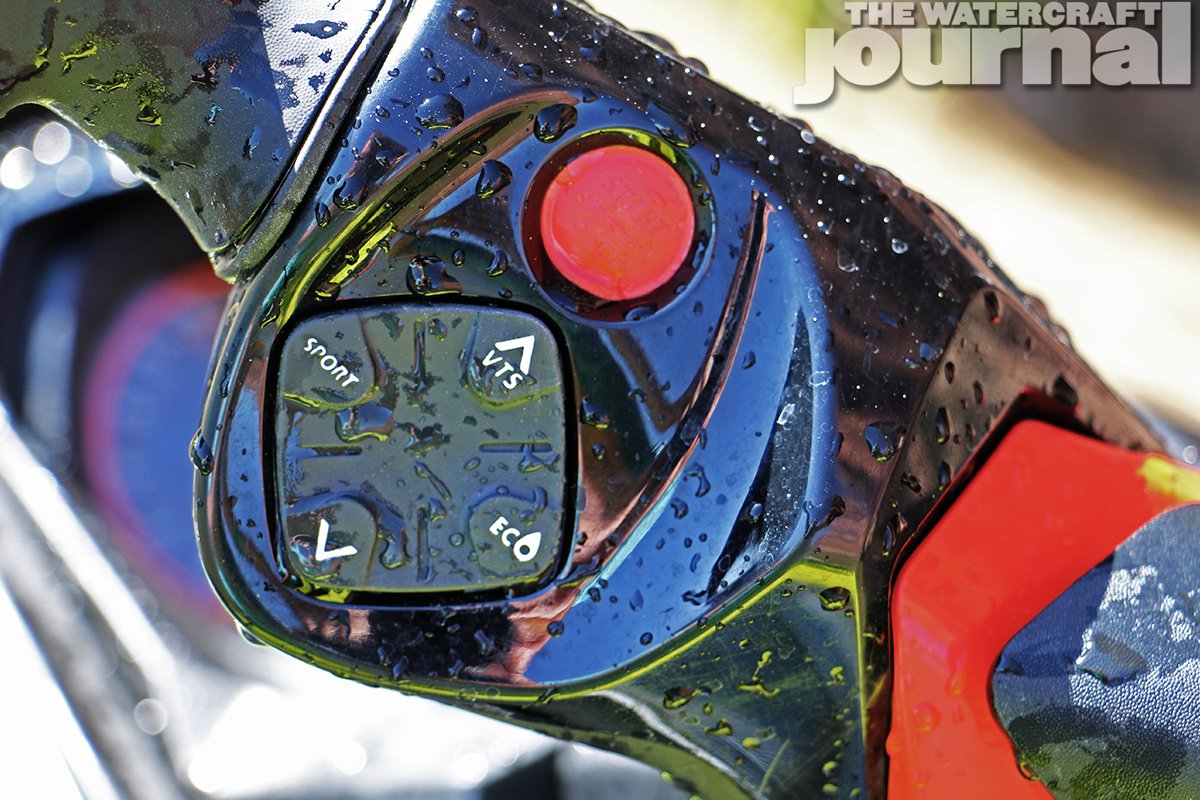
Finally, Sea-Doo has redesigned its reverse gate for a third-generation iBR (“iBR³?”), which better redirects thrust latitudinally for more intuitive docking and greater maneuverability; and has added two new features to its VTS control; one, which when activated (by simply tapping up or down on the VTS at idle), automatically articulates the VTS nozzle so that the craft maintains a steady position while idling in neutral; and the second is exclusive to the RXT-X 300 solely: Launch Control. It effectively toggles the VTS nozzle all the way down and gradually and automatically adjusts back to your previous pre-launch position, whatever that might be. It’s a tool that helps get the craft to plane much, much faster and without porpoising out of the water like previous machines tended to do. While at idle, simply hold “up” and “down” on the VTS control and a prompt will appear on the screen. Set your iTC tune to “Sport” mode, and let ‘er rip.
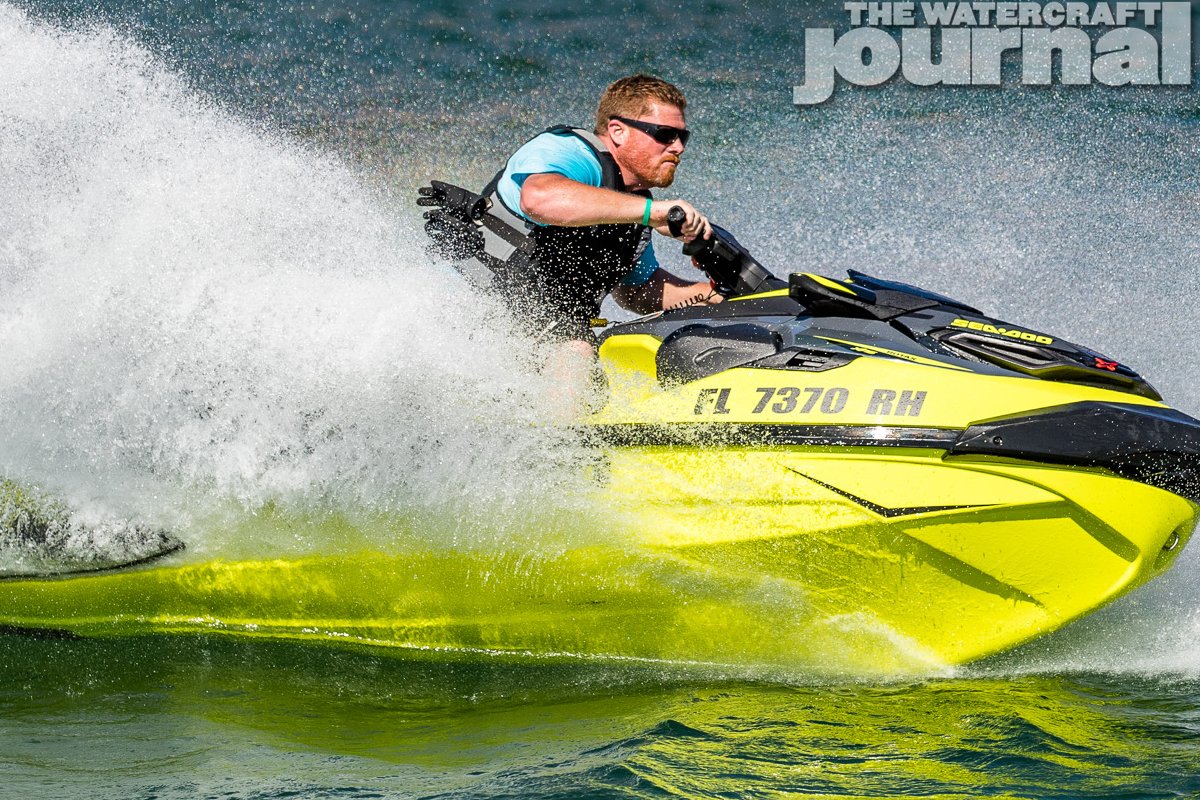
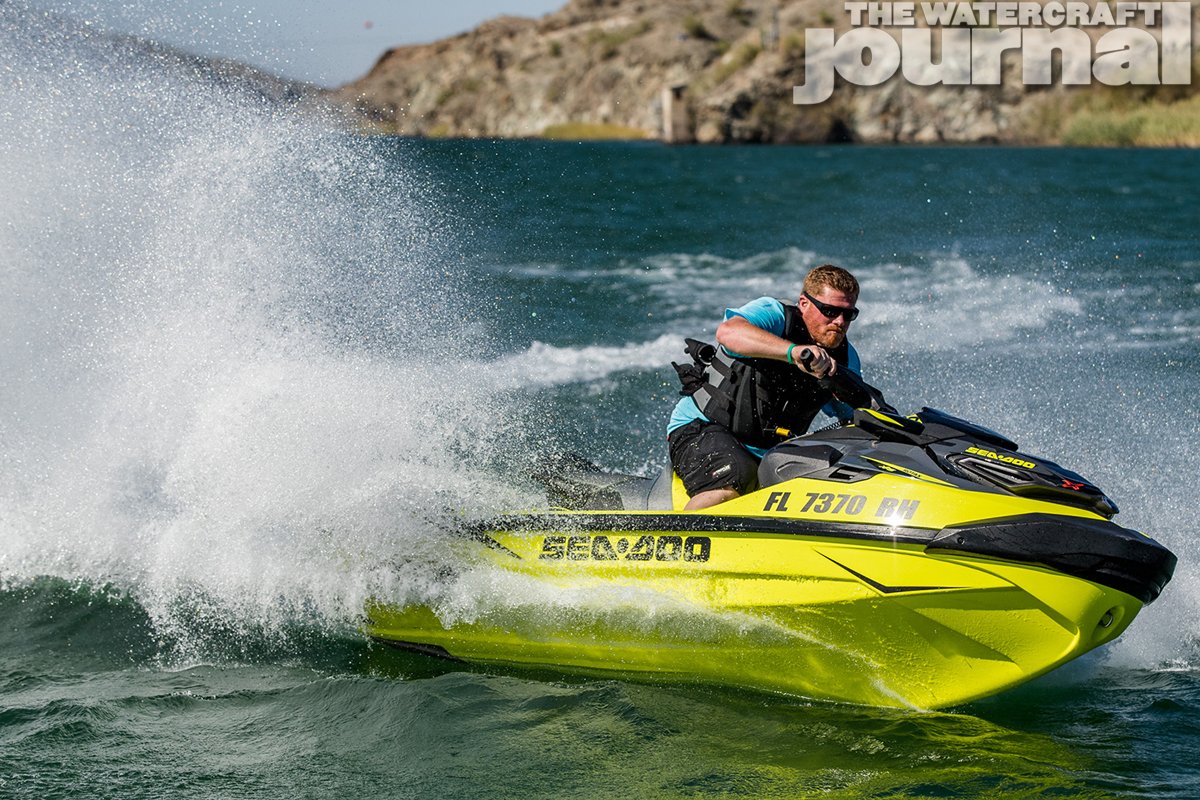
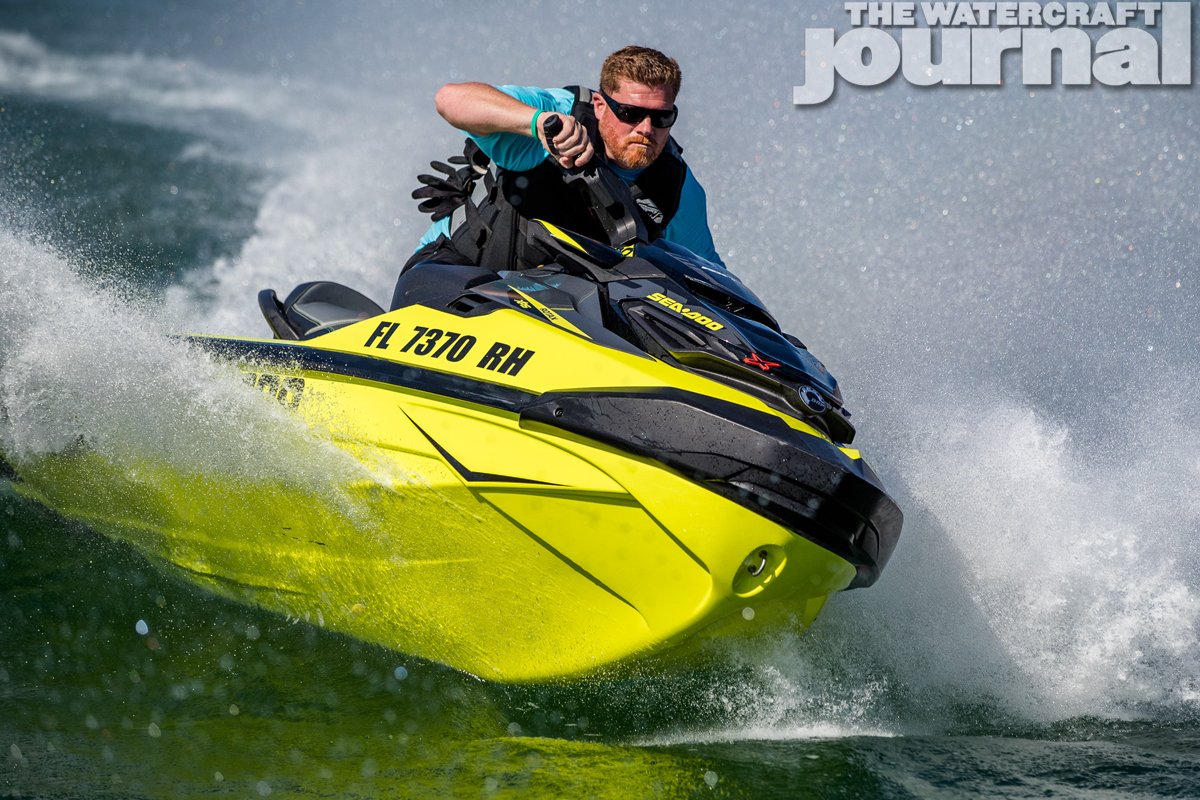
And oh boy, does this dang thing rip. Remember, it’s both shorter and significantly lighter than the previous RXT-X 300 (and even 22-pounds lighter than the current RXP-X 300) but with all the same power and thrust. At neutral trim, it gets up and goes, but in wind-blown chop it felt to ride too high in the bow, showing early signs of searching. Only when trimmed down, and I mean waaay down, does the RXT-X 300 reveal itself to be the monster it truly is. Suddenly, handling becomes tactical warfare, simply point at the target and squeeze the trigger – the RXT-X will do the rest. In corners both tight and sweeping, the fixed position sponsons bit hard, planting the Sea-Doo tight to the water despite the deep-V’s slim draft. The ST³ doesn’t skip across the surface like a stone nor does it plow through it like a Kawasaki Ultra 310X. It slices nautical lines with surgical precision. It’s no longer a watercraft but a seaborne scalpel.
With launch control on and Sport mode engaged, the strongest performance gains were seen not in top speed (USCG caps it off at 68mph, we saw slightly higher), but in 30-to-60mph times, as the new RXT-X 300 shaved off half a second here (2.5-seconds vs. 3-seconds). In all, the 2018 RXT-X 300 outperforms all Sea-Doos before it; including the previous “Watercraft of The Year”-winning RXT-X 300 and even the current RXP-X. It out-accelerates, out-handles, out-stops and out-maneuvers ’em all. Is it comfortable? You bet. Is it stable? Sure is. Is it incredibly well-built? Impressively so. Is it good looking? We sure think so (although we personally preferred the optional Ice Metal and Lava Red livery over pictured Neon Yellow and Lava Grey). How about price? Without the BRP Premium Audio, USB port, storage dividers or any one of the LinQ accessories it retails at $15,699 – with all that awesome stuff would put you closer to $17,000. Yeah it ain’t cheap, but no matter how you cut it, the ’18 RXT-X 300 is the best Sea-Doo has built. Bar none.
The stand-up personal watercraft market has been consistently growing, with many people buying both used and brand new skis. Kawasaki even came out with a brand-new version of their SX-R after discontinuing it over 5 years ago. Riding these PWCs is so much fun, it’s almost addicting. However, many of us have trouble resisting the urge to make modifications and buy shiny aftermarket parts to make our skis go faster and handle better. Whether your ski is all stock or modified, things don’t always go as planned, and sometimes we fry a piston or two.
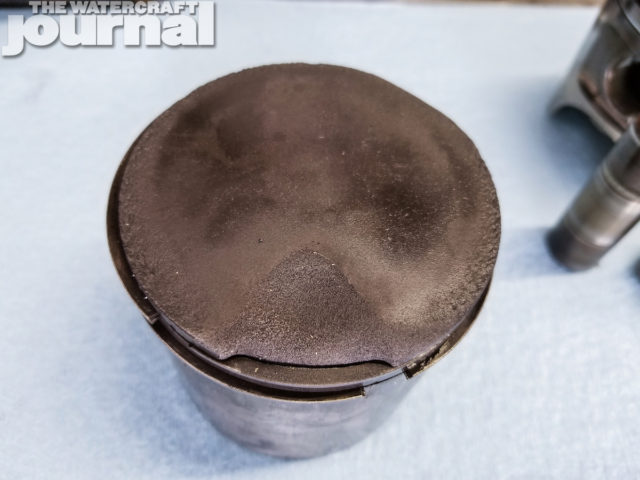
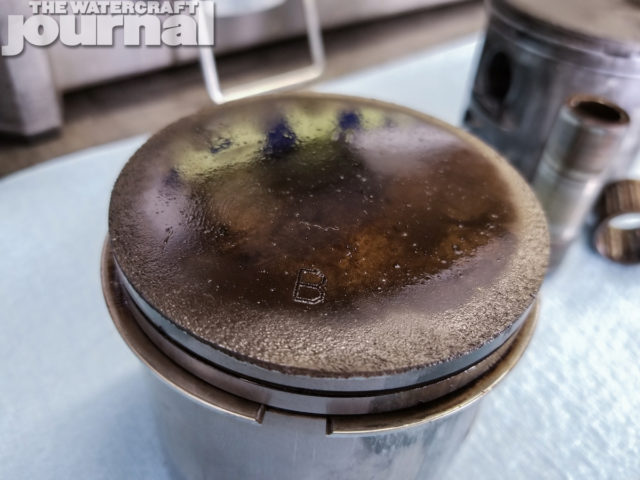
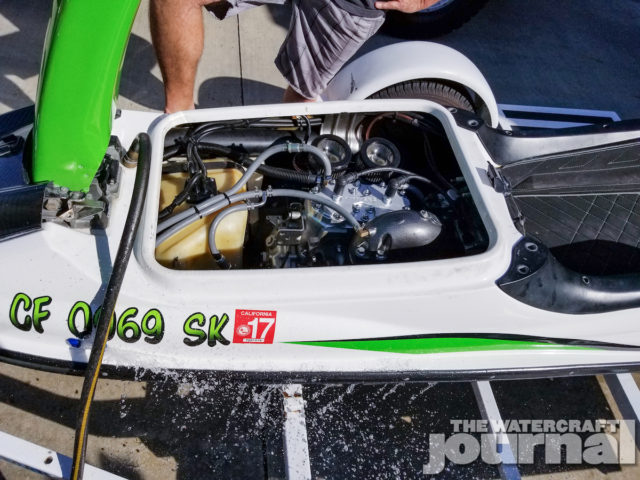
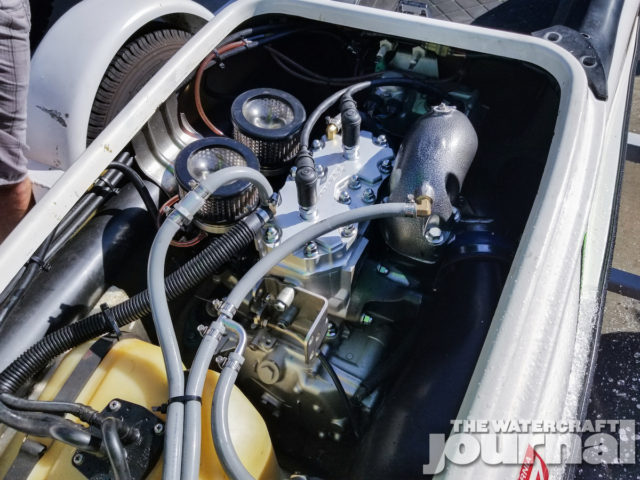
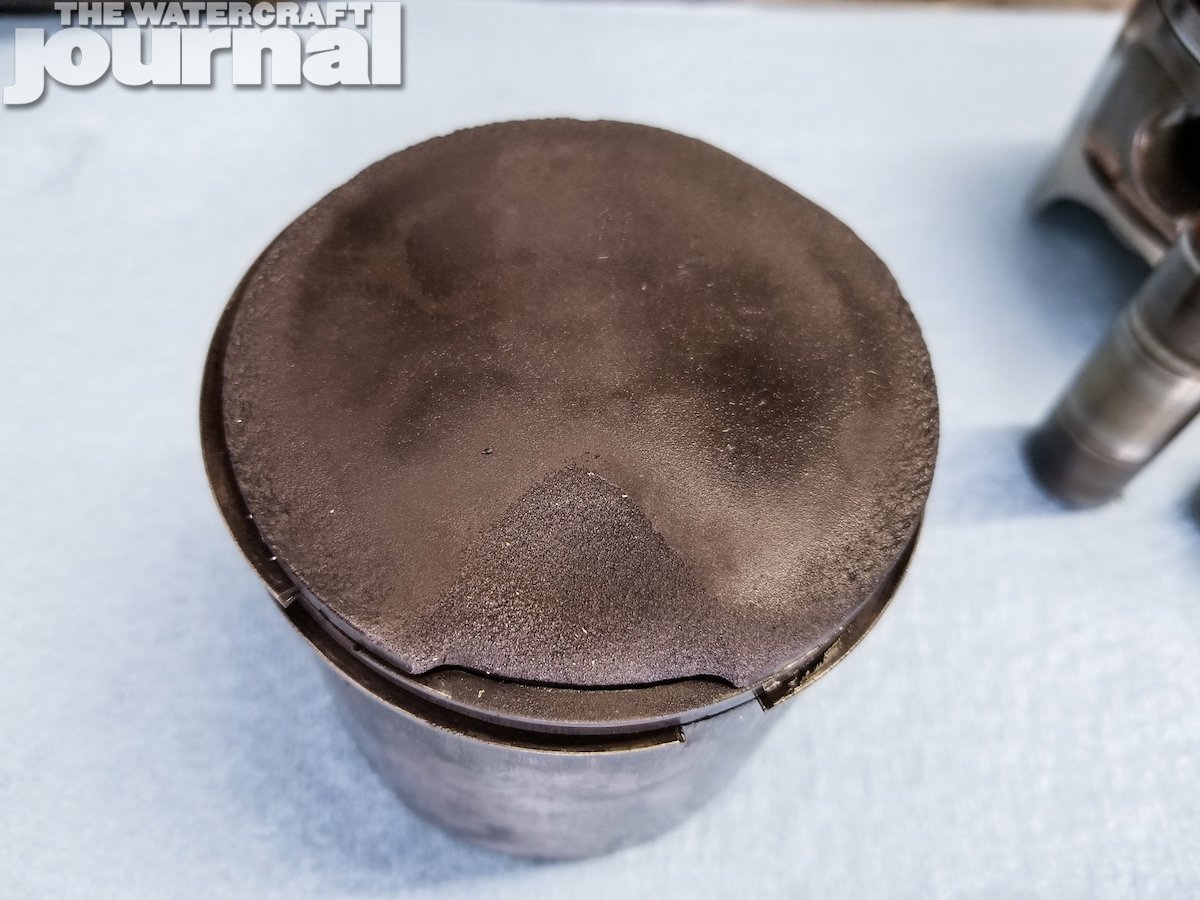
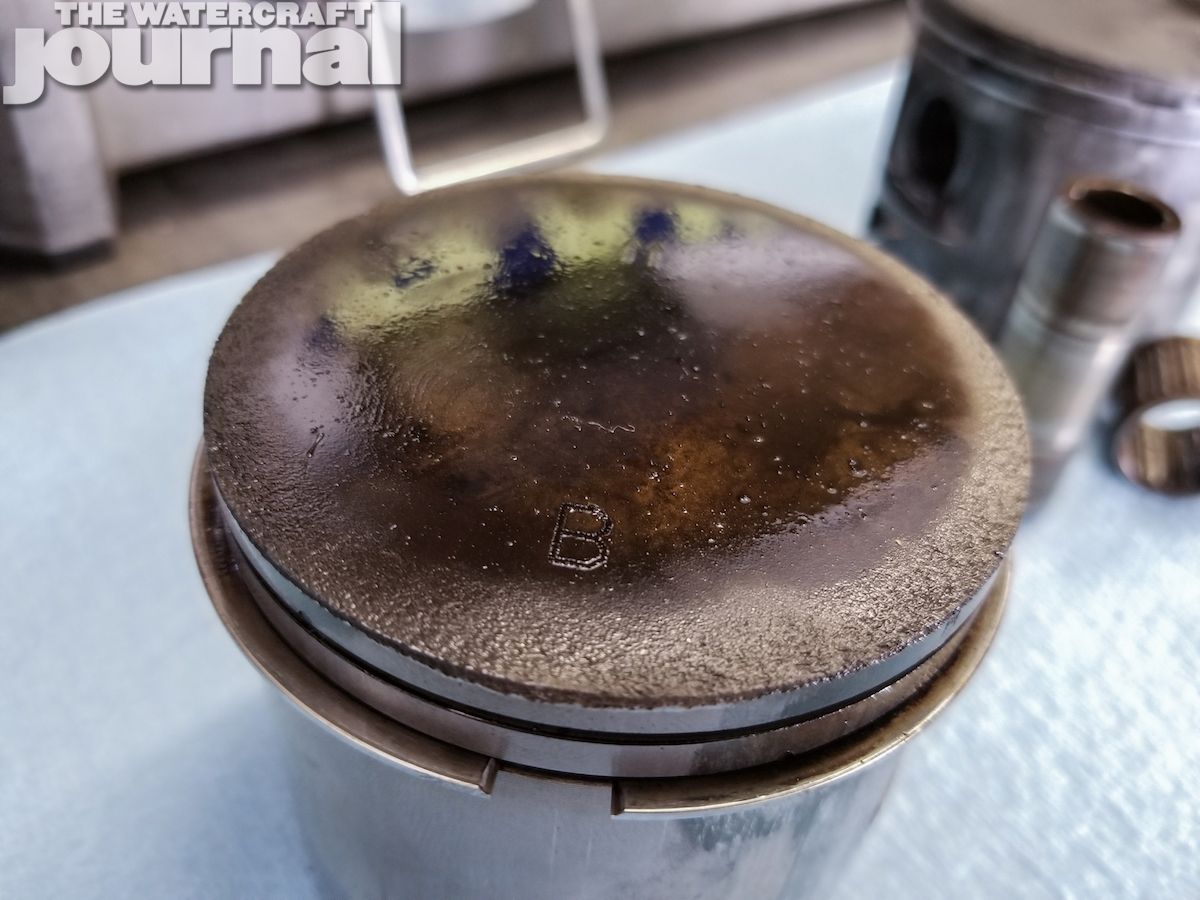
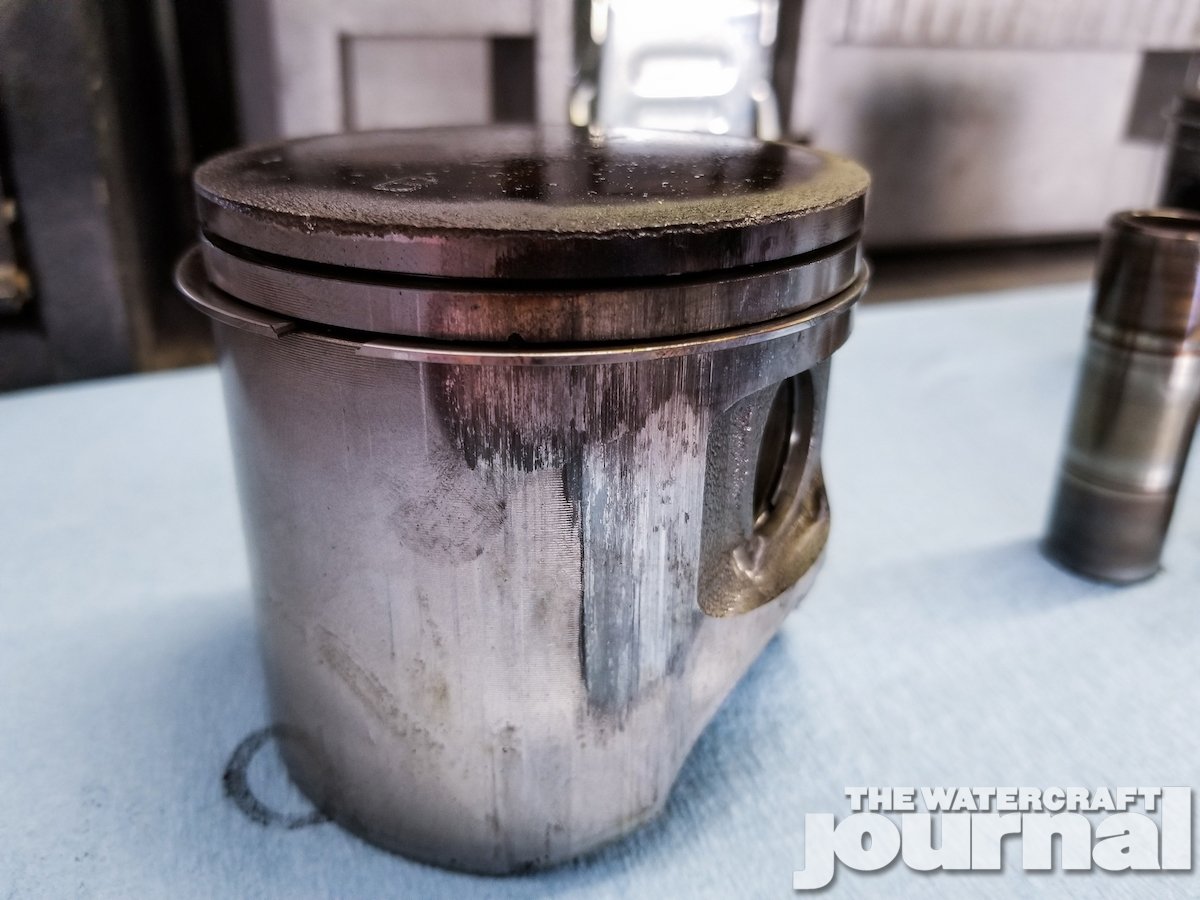
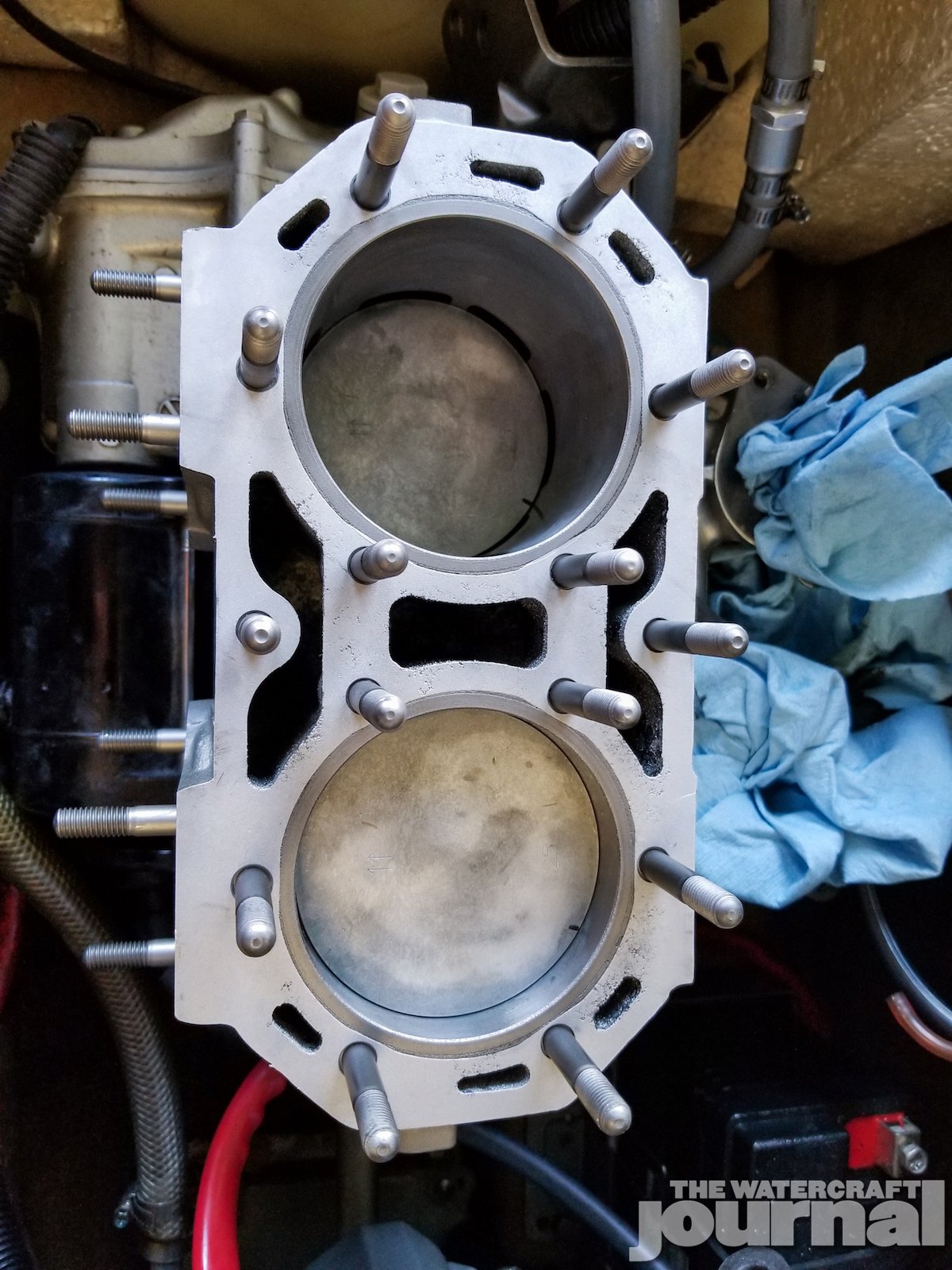
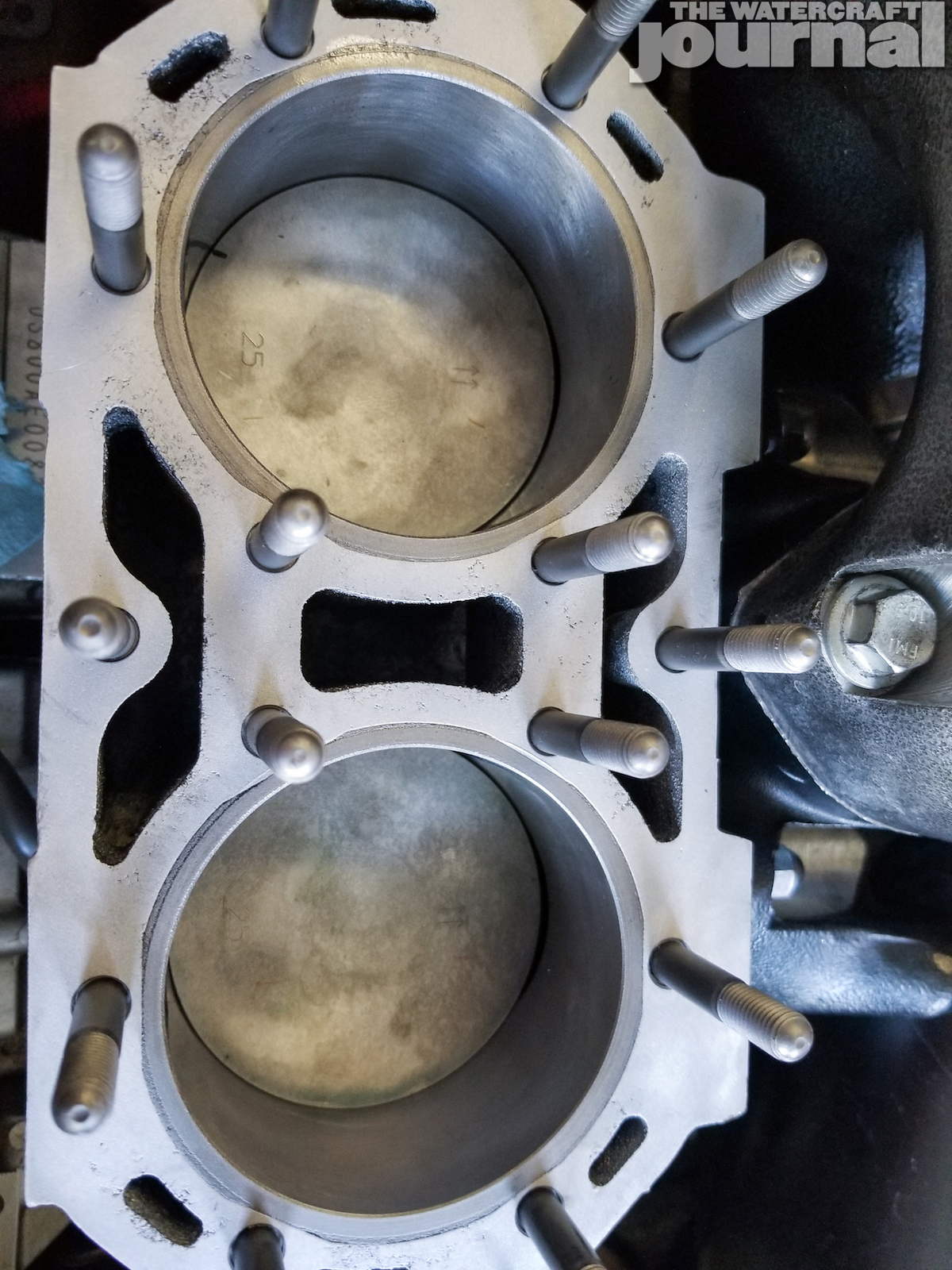
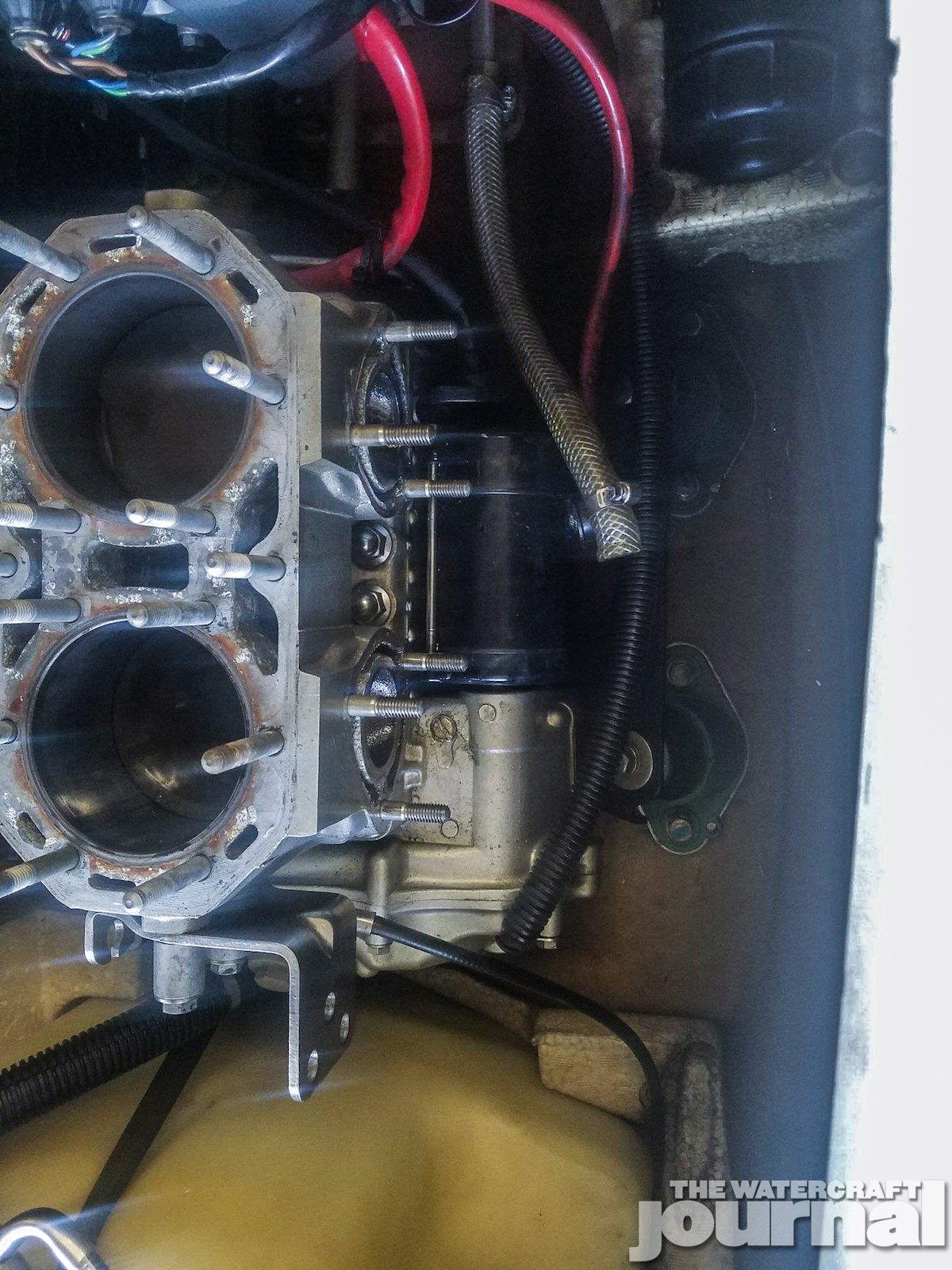
Today we’re going to look at the top end rebuild process in a 2006 Kawasaki SX-R 800. This ski had an all original top end, aftermarket head, and aftermarket exhaust. In this particular case, there was a base gasket failure, causing an air leak, which created a lean condition in the cylinder, raising the internal engine temperatures too high and causing piston damage. The piston crowns are eroded from the immense heat, and you can see where the hottest spot was, causing the most piston damage. There was also some evidence of excessive contact with the cylinder wall, likely due to lack of oil lubrication and material expansion in the overheating cylinder.
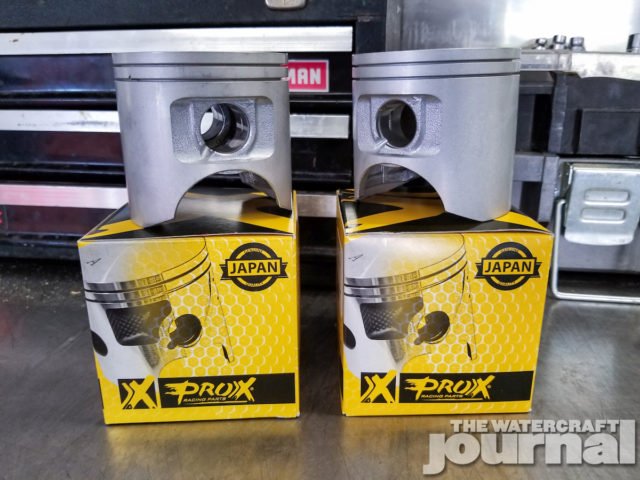
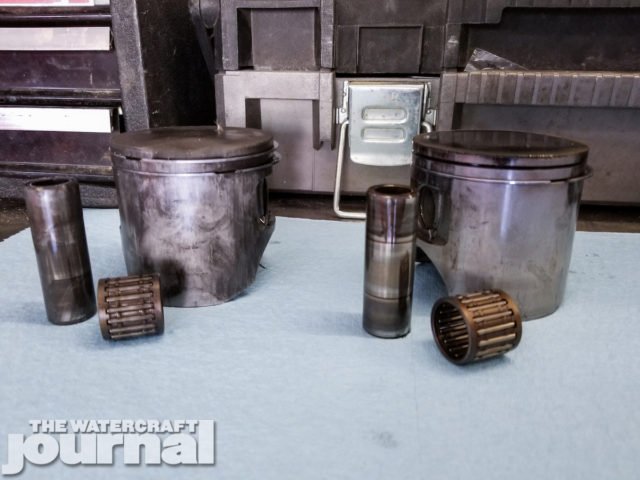
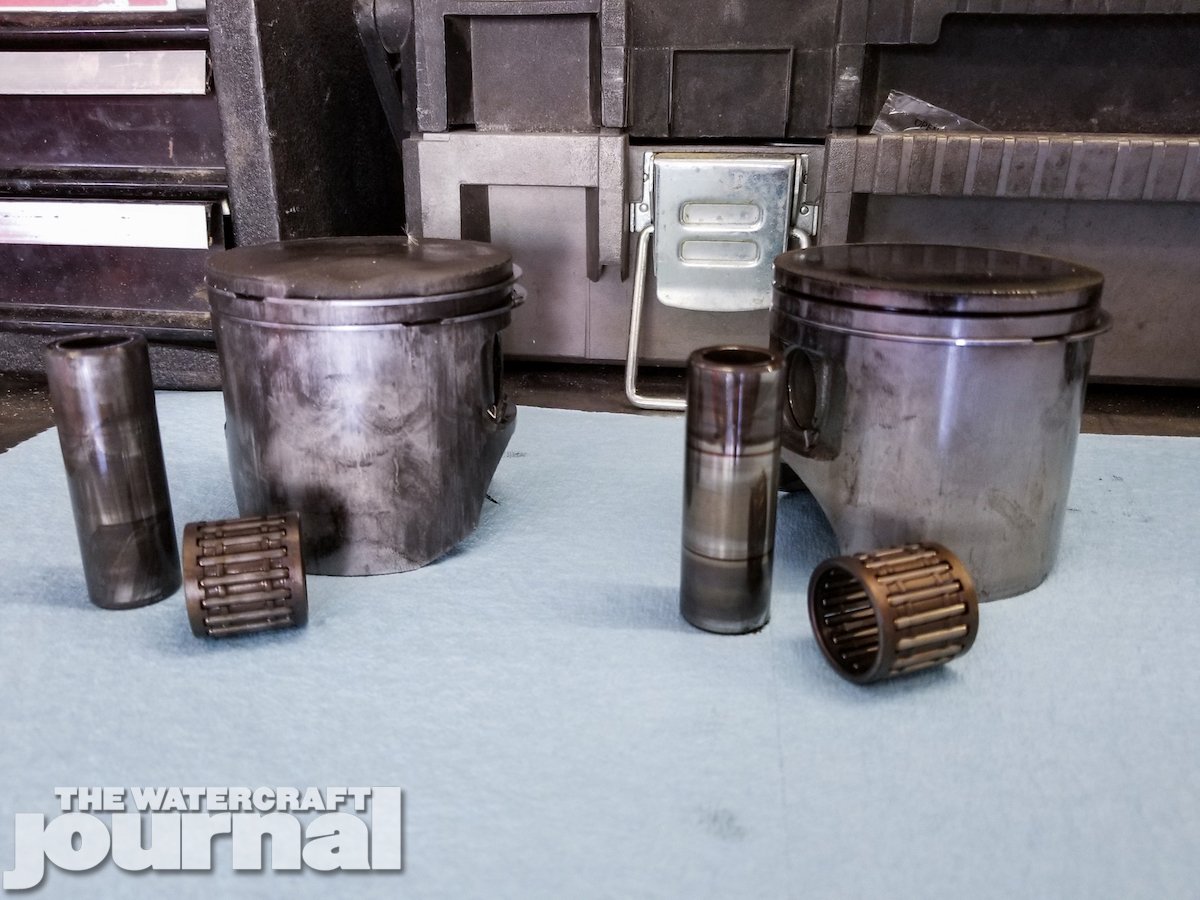
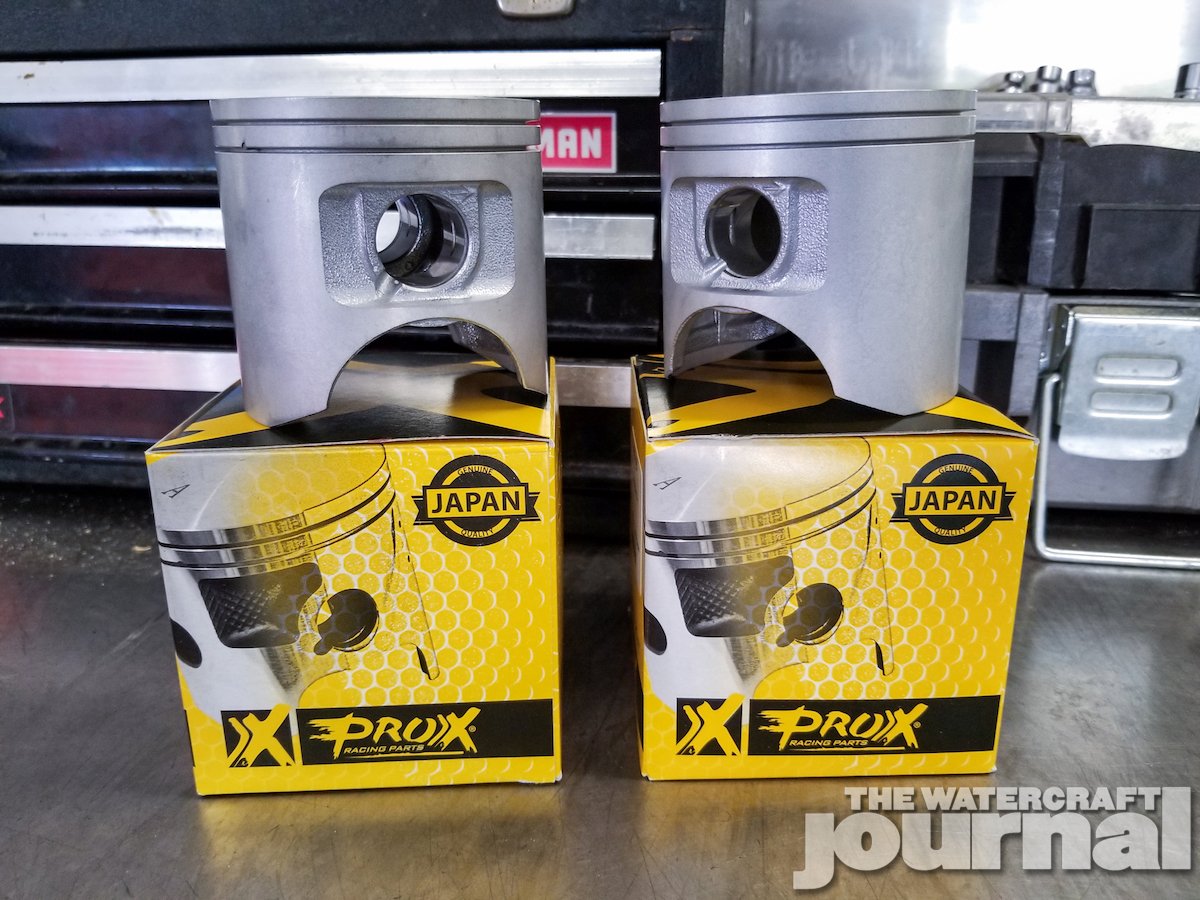
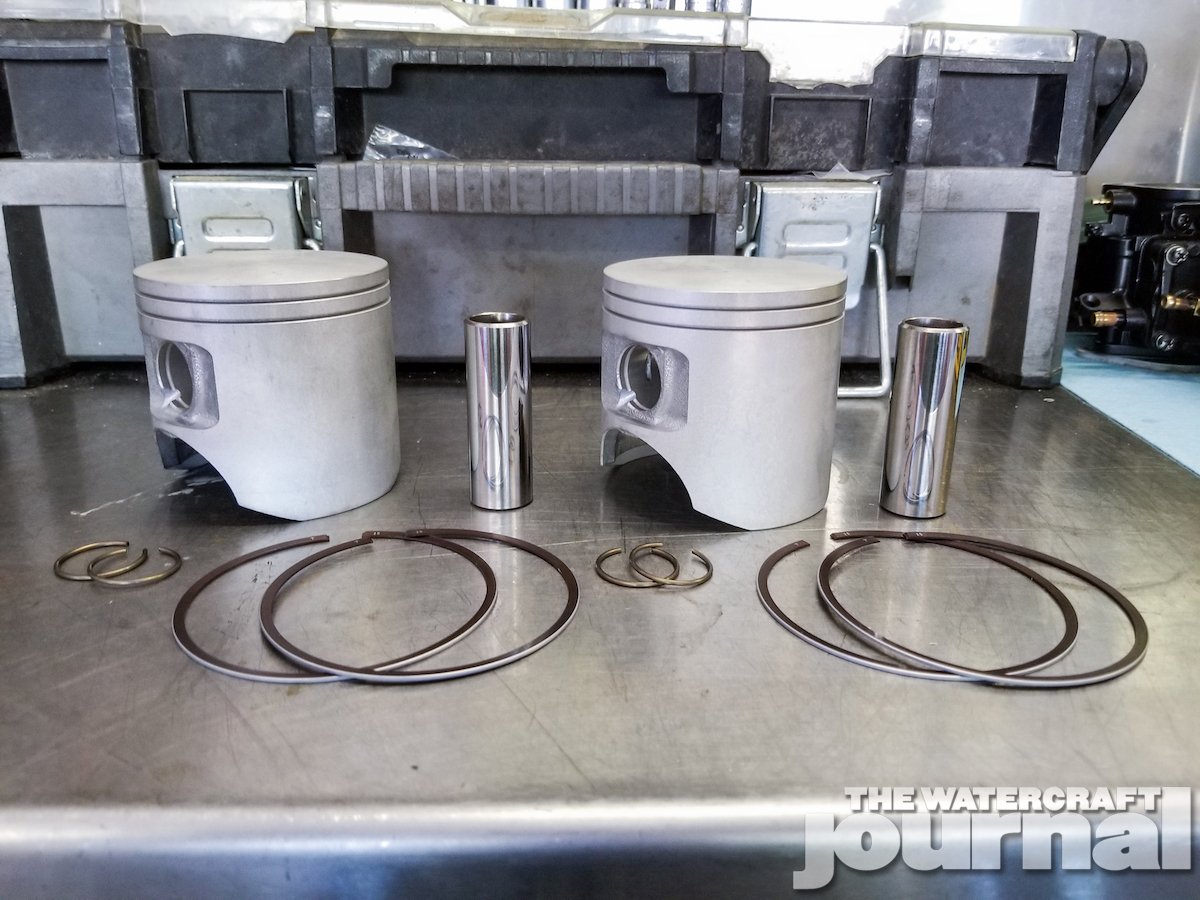
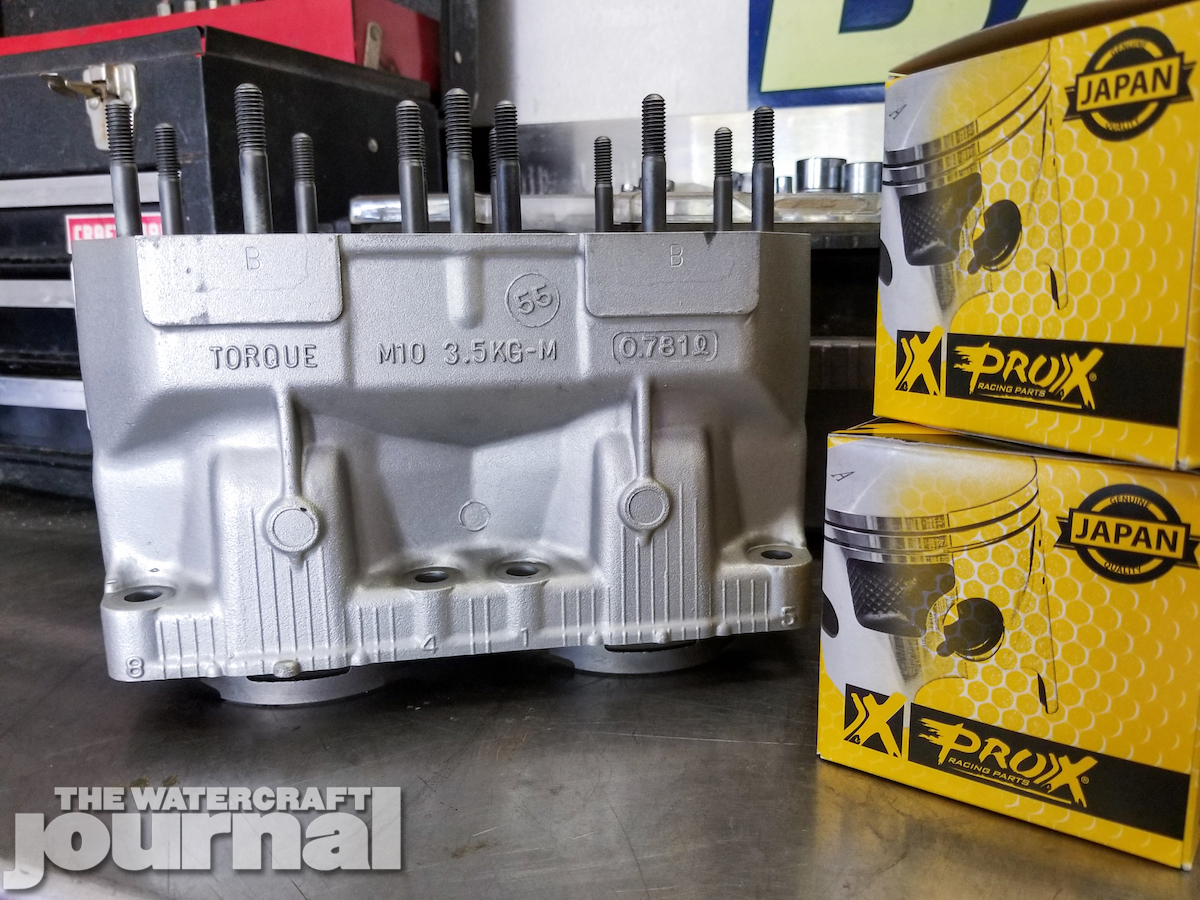
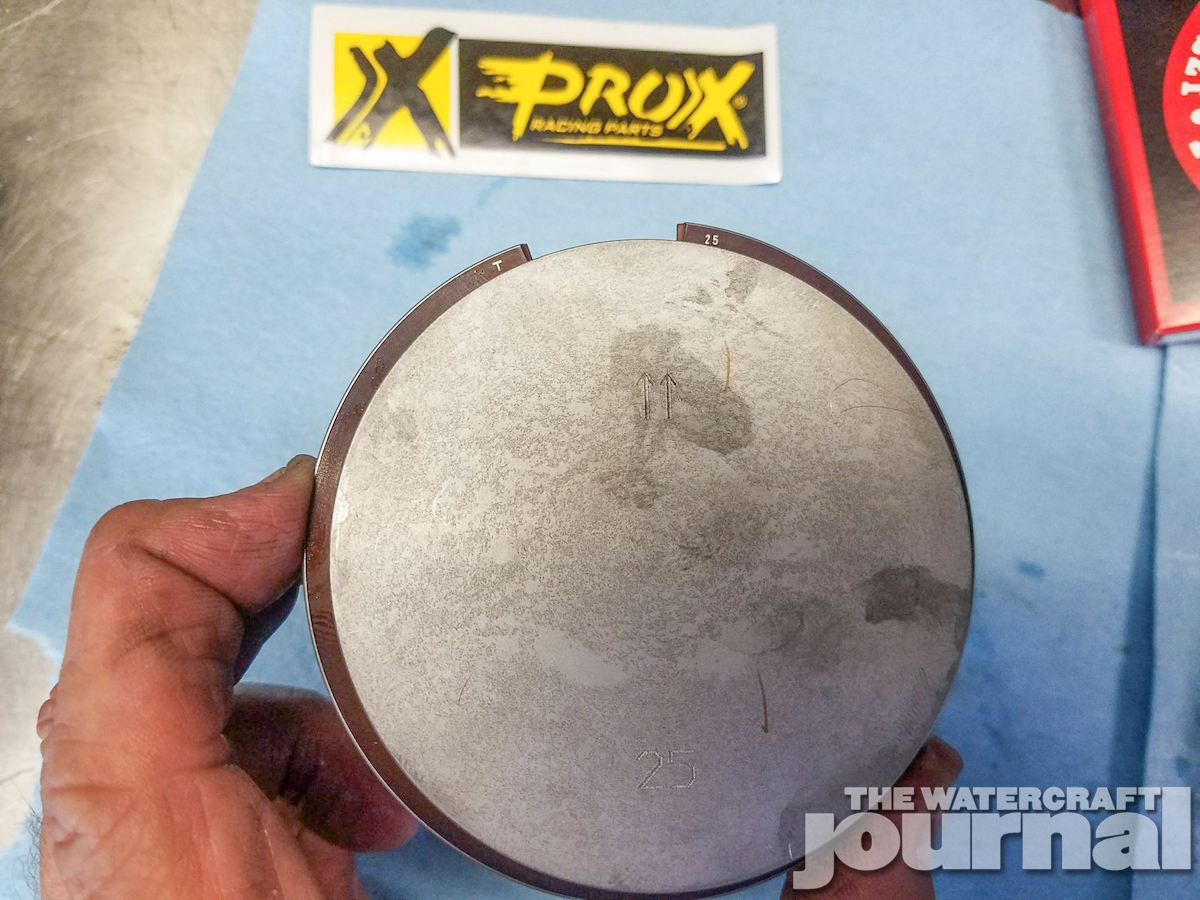
Above left: Luckily, ProX offers OEM replacement pistons for many PWC applications. The weekend warrior PWC rider doesn’t always want to spend a lot of money to rebuild their toy, but they still want to know they have OEM reliability. ProX pistons are manufactured by the same manufacturers as the OEM companies, so you know you’re getting a part you can count on. Above right: The ProX pistons for this 800 2-stroke are cast, just like the OEMs. This is beneficial in 2-stroke applications because the silicon content is higher, lessening the amount of expansion under heat. A great example of this benefit is that in our 800, the internal temperatures were high enough to melt the crowns, but neither of the pistons expanded enough to seize.
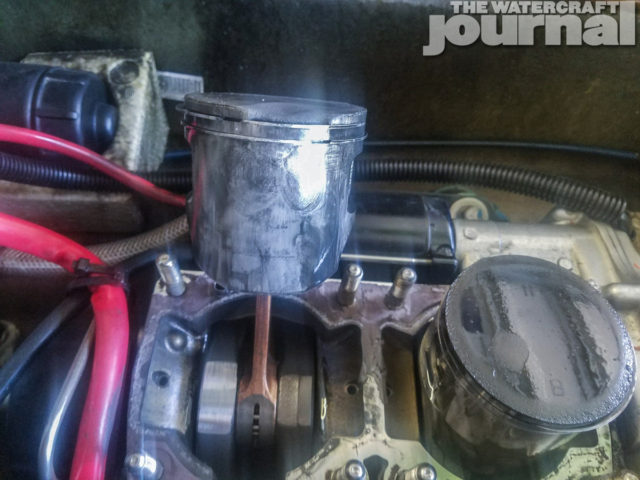
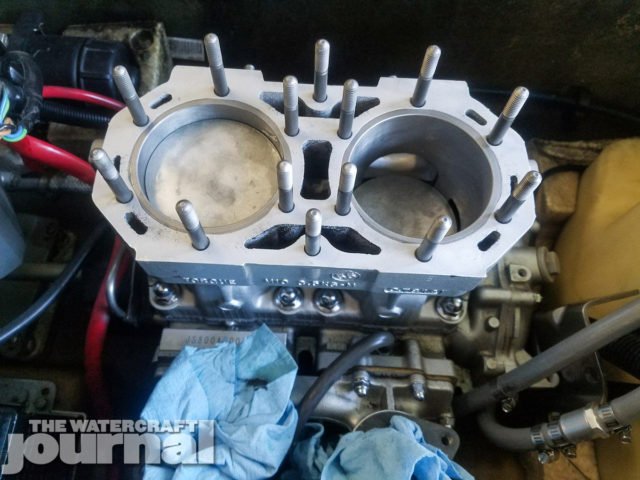
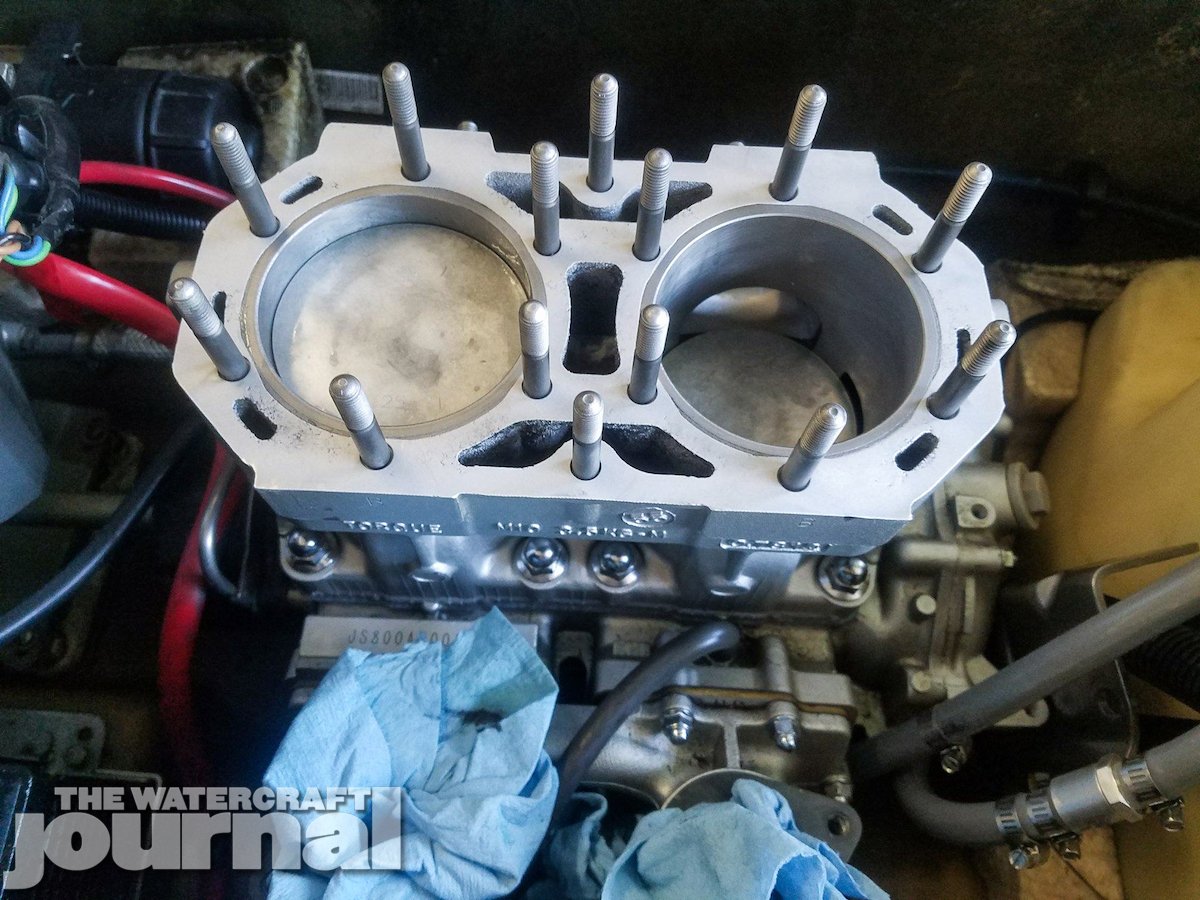
Above left: The first step in this top end rebuild process is disassembly. If you are not confident in your ability to disassemble and re-assemble the following parts, we recommend taking your PWC to a certified mechanic. To remove the head and cylinder, you’ll need to remove the exhaust (including the manifold) as well as the carburetors. Once those are removed, you can remove the head and any water lines attached. The next step would be to remove the cylinder base nuts, and then carefully slide the cylinder off the pistons. Above right: At this point in disassembly, it would be a good time to inspect for the cause of the top end failure, if a failure is the reason for your rebuild, and not just maintenance. 2-stroke top end failures can be caused by many things, but generally you’ll want to inspect the cylinder, pistons (crowns, skirts, rings, ring grooves, wrist pins, circlips).
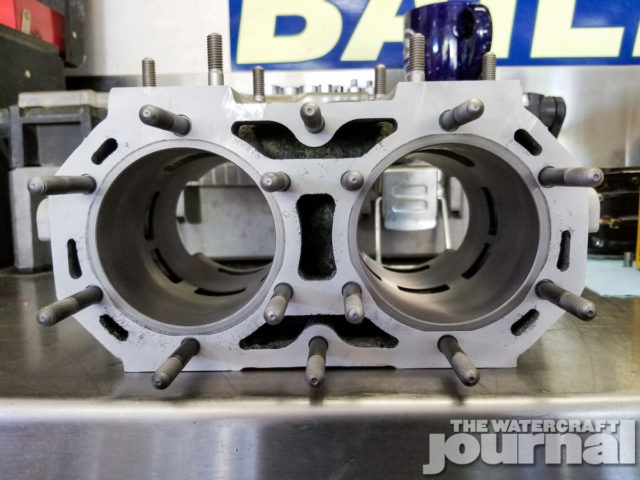
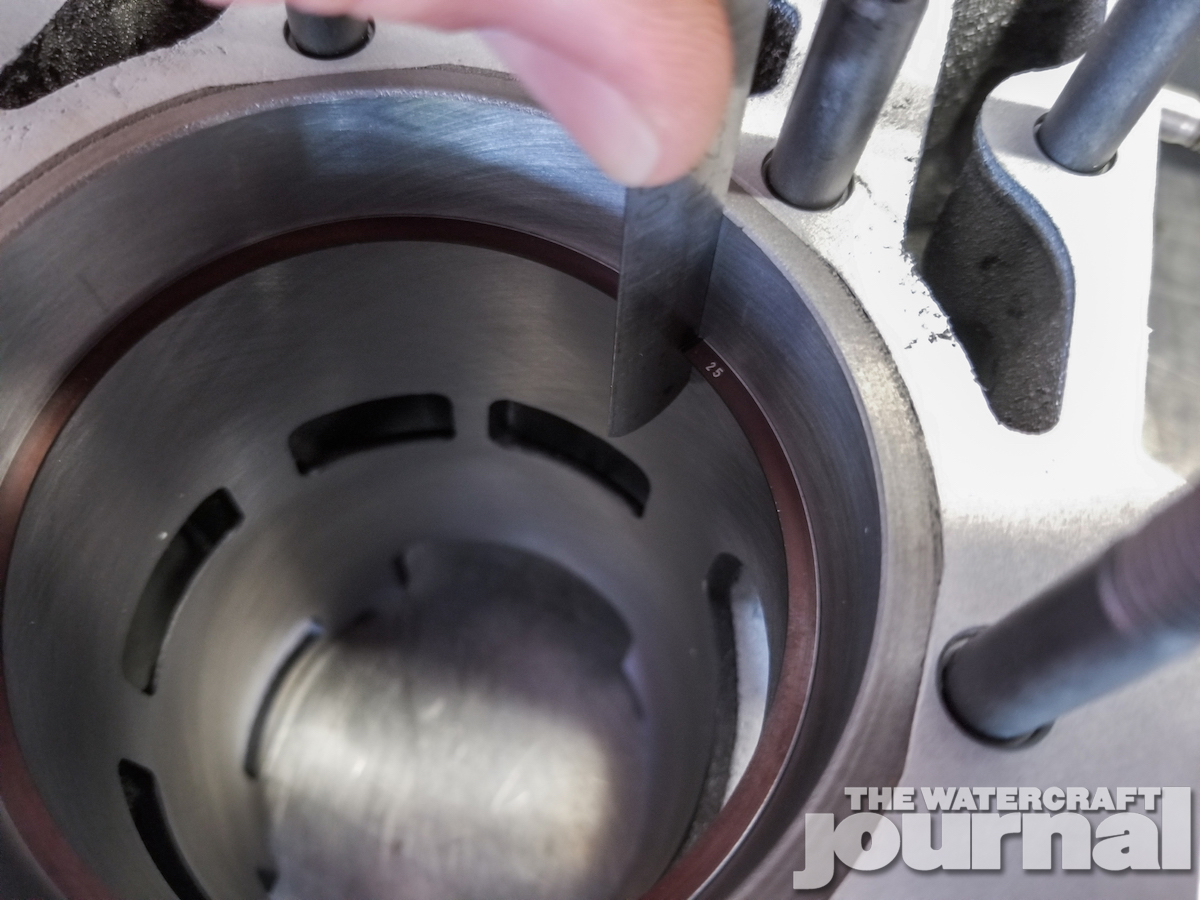
Above left: Check the cylinder walls for areas of excessive contact, and check for any deep grooves that may have been put into the cylinder. Depending on the damage, you’ll most likely either need to bore and hone, or resleeve. If you’re doing the top end just for common maintenance, you should be able to deglaze your cylinder and order the proper sized piston. However, we always recommend using a professional machine shop for all your cylinder work. Above right: Your pistons will usually tell you a lot about what your problem was. This document provides some great tips for diagnosing the cause of a top end failure. Inspect all areas of your pistons and reference this document in comparison. In our case, we knew the engine got too lean because the internal engine temperatures got high enough to begin melting the piston crowns. However, we needed to figure out why it was so lean so we could prevent it from happening in the future. A lean condition in a 2-stroke engine is commonly caused by an air leak, allowing more oxygen into the cylinder than just the fuel/air mixture coming from the carburetors and intake manifold.
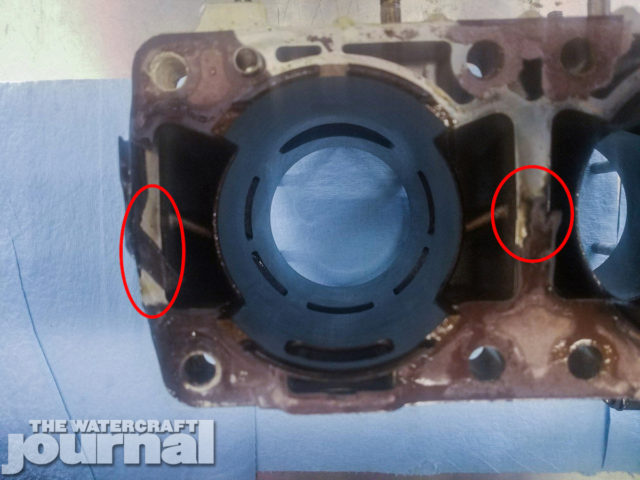
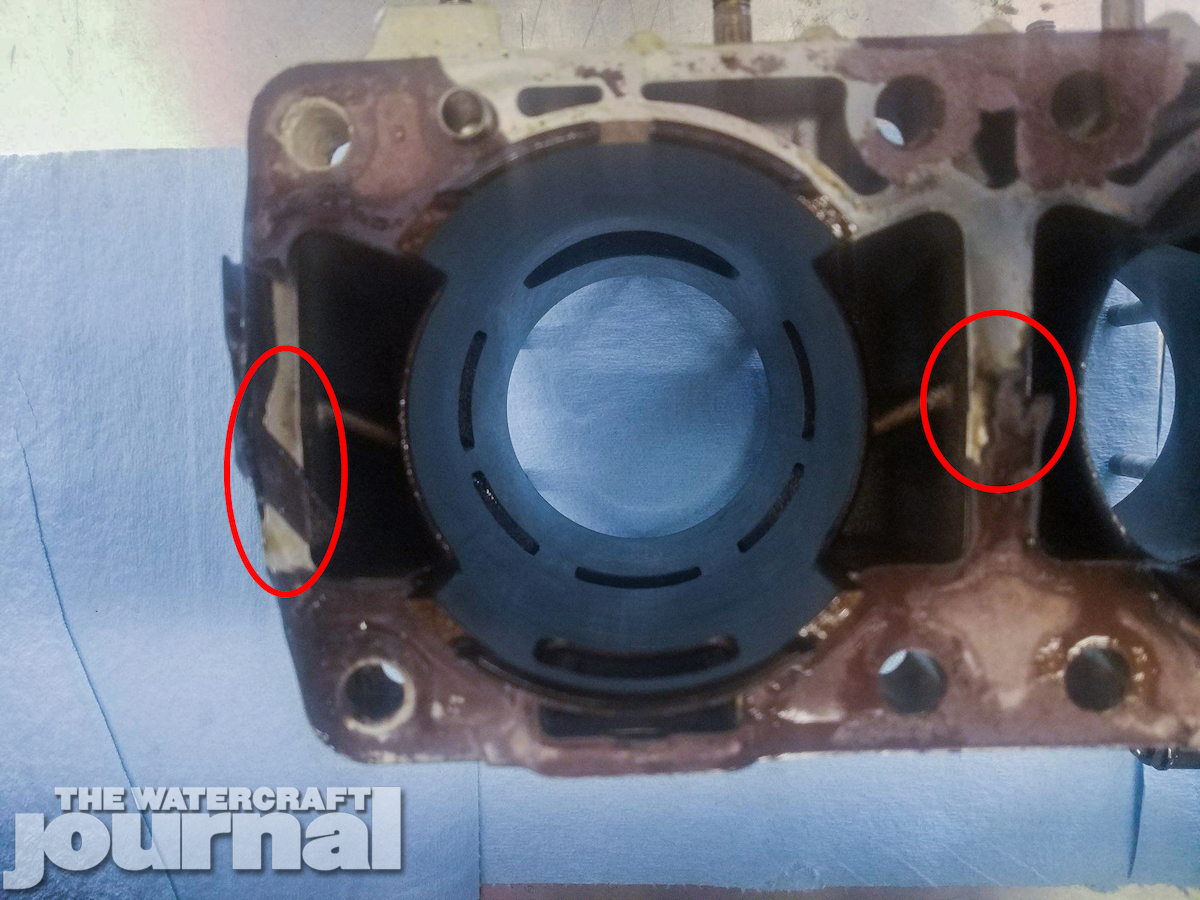
Above left: After removing the cylinder, we noticed the base gasket was damaged right in the center of the cylinder, as well as on the outer edge near of the front cylinder. We could tell oil and fuel had been able to escape through these damaged sections, which means air was able to get in and cross between cylinders. Above right: Other important areas to check in the case of a lean condition are the intake manifold gaskets, exhaust gaskets, head gasket, and jetting. If you had a failure, once you’ve diagnosed and fixed the source of your problem, it’s time to begin reassembly with your new parts.
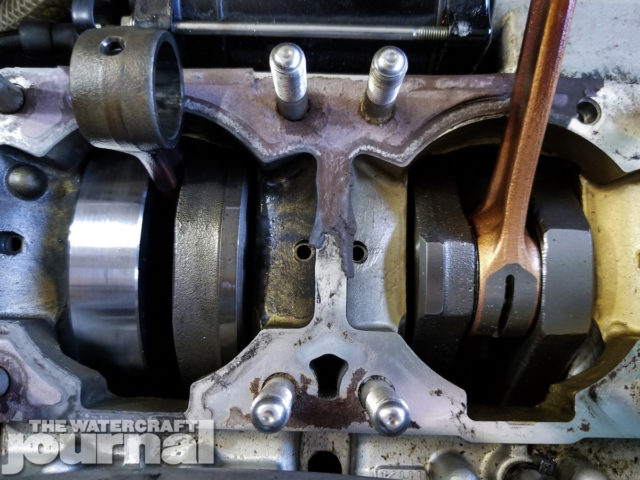
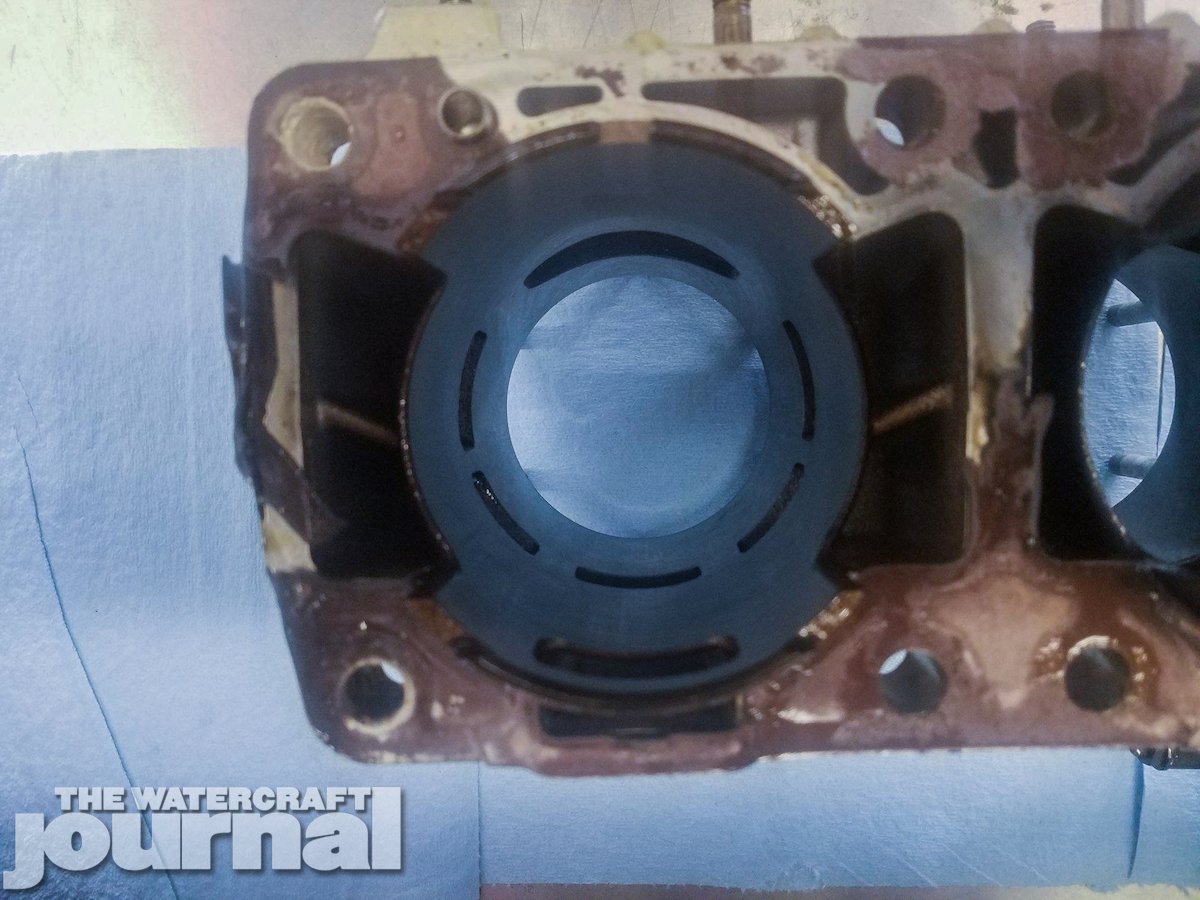
Above left: Whatever extent of cylinder work was required for your project, it should come back at the bore size you specified, honed with nice cross hatch marks, and with all sharp edges chamfered. These are very important to a long life of optimal operation for your top end. It’s never a bad idea to double check the bore size, honing, and chamfer work when you get the cylinder back. Above right: As we begin reassembly, we need to make sure everything is clean. Thoroughly check your crankcase, crankshafts, and bearings for any debris. Any dirt or metal shaving in or around the crankshafts will ultimately lead to a failure. It is also important to clean all old gasket material off the crankcase and cylinder. Once clean, install a new base gasket. Some engine builders recommend using a sealant like Three Bond under the base gasket to make it sure it stays in place when torquing the cylinder down, but this is ultimately the engine builder’s preference. The critical part is that a new base gasket is laid down in the proper orientation.
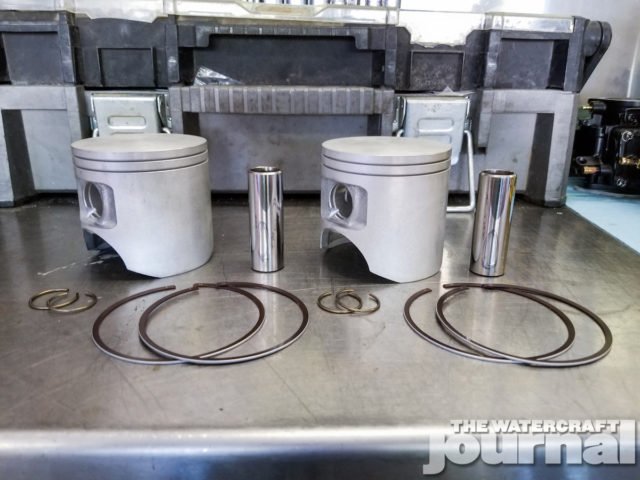
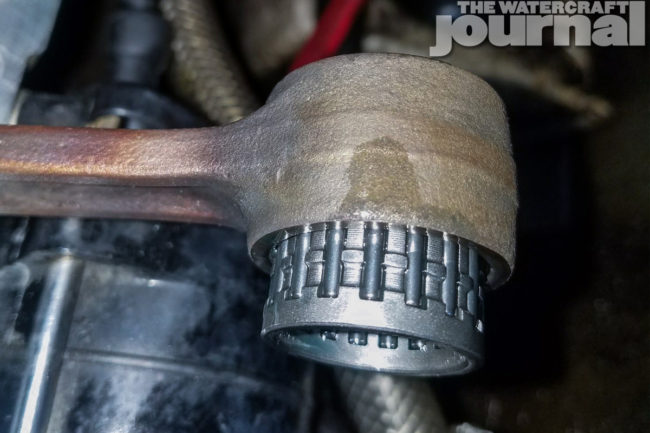
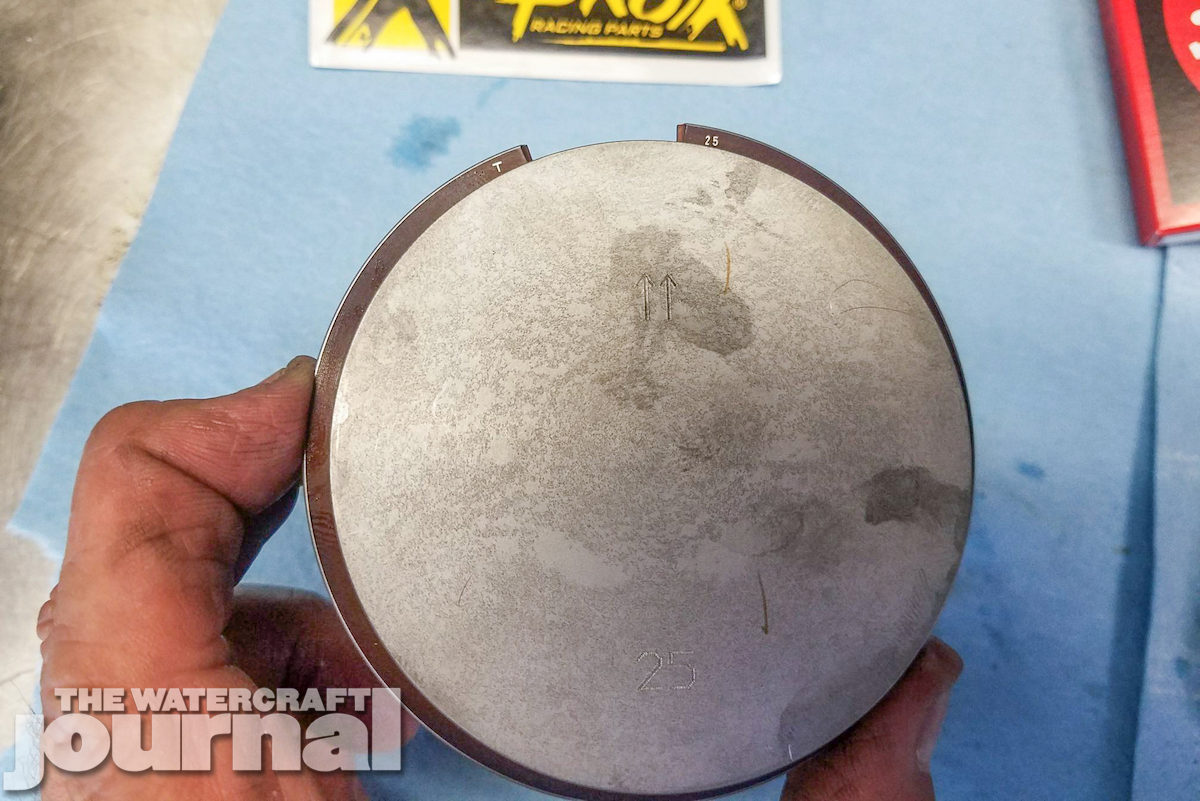
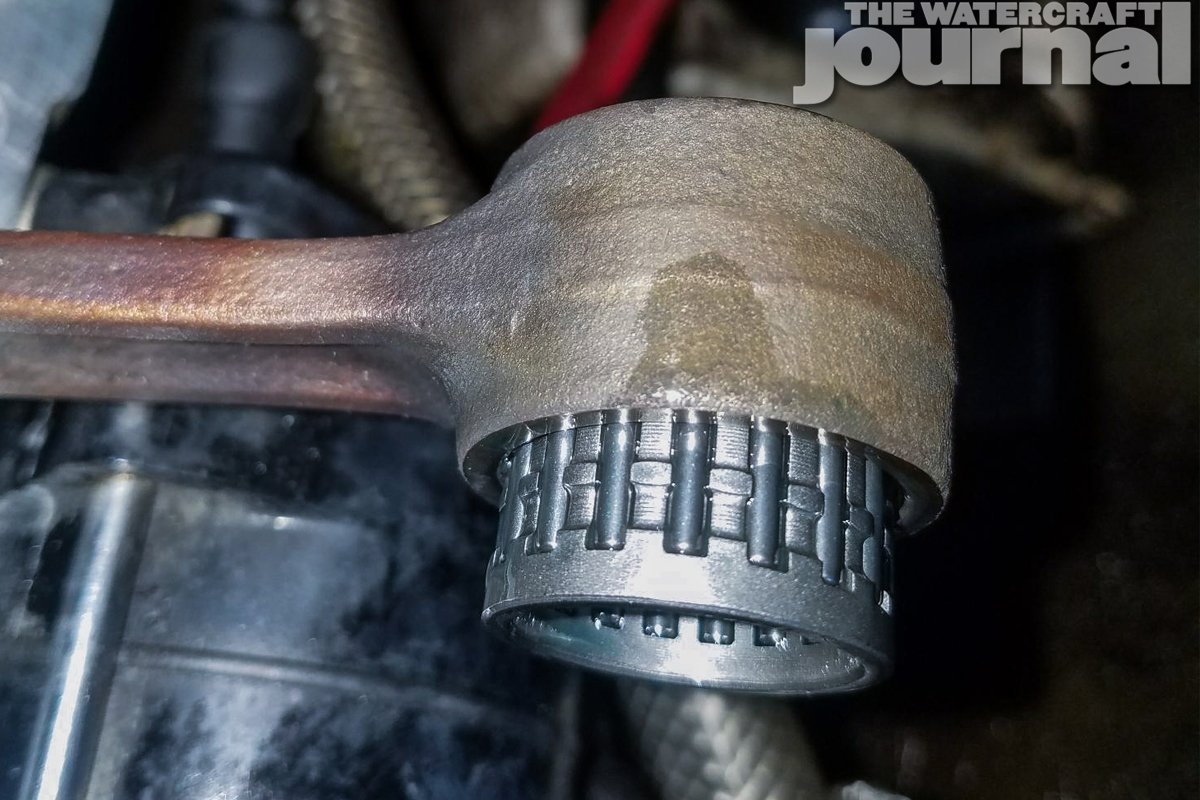
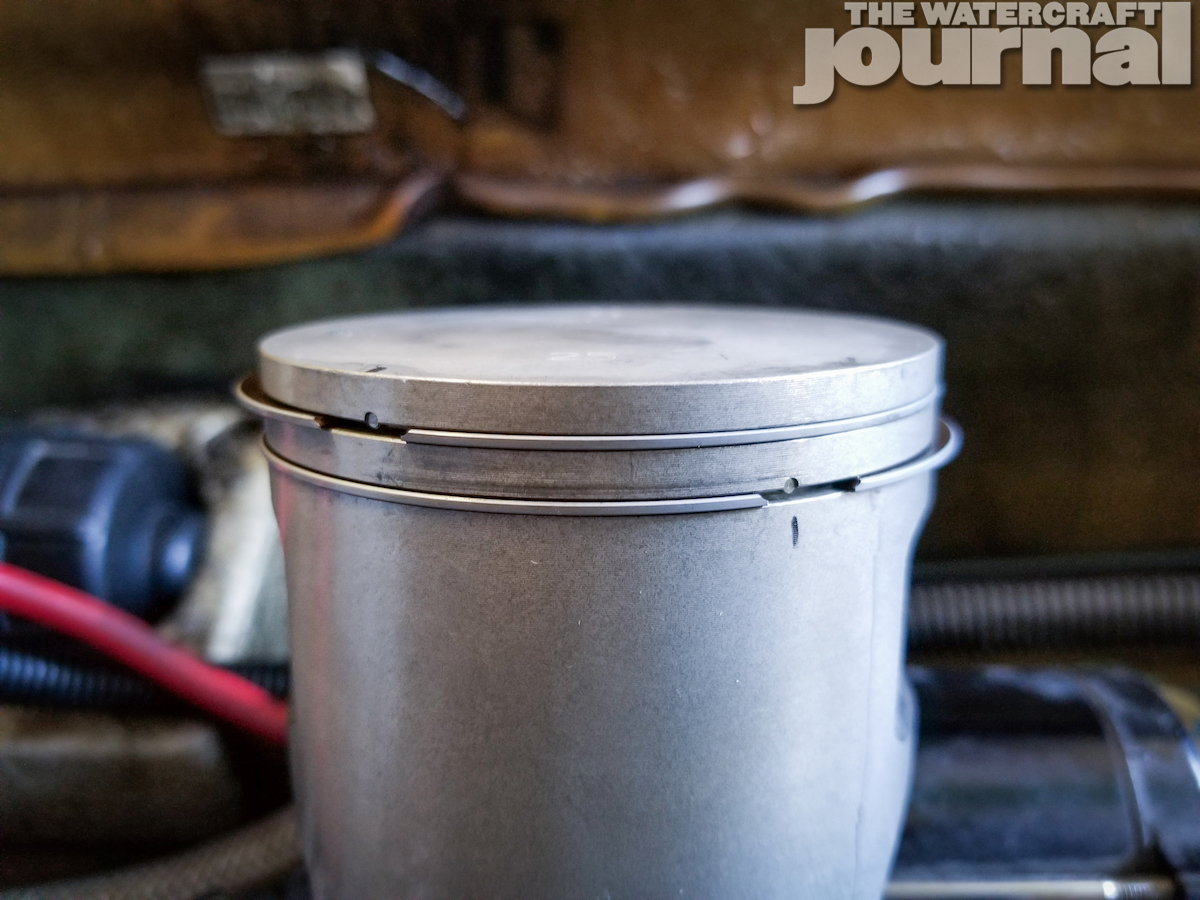
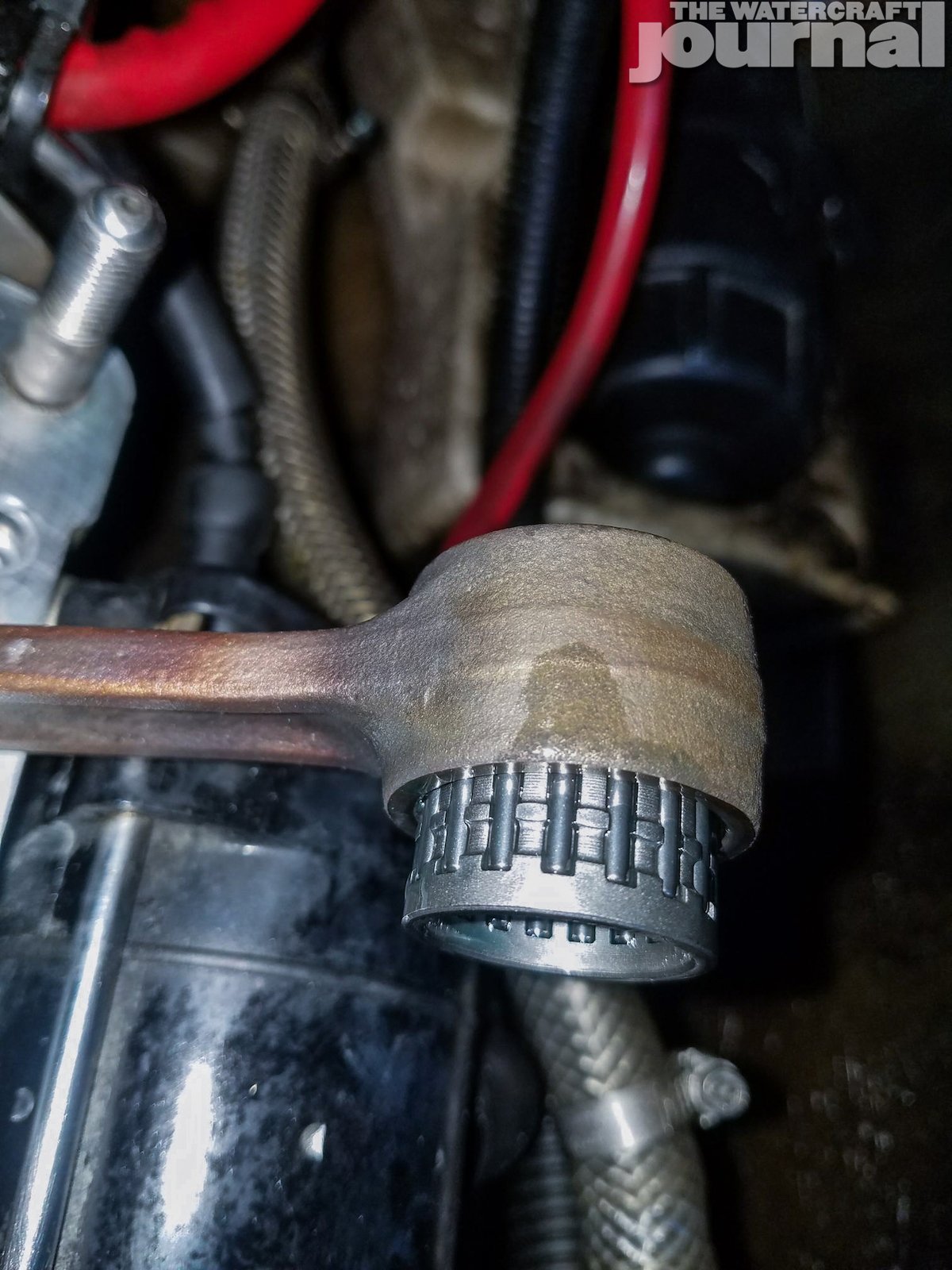
Above left: Next, make sure the small ends of the rods are clean, and have a thin layer of fresh oil on them. Insert your new small end bearings into the rods, and add some oil to the bearings as well. Note: whenever you are replacing a 2-stroke top end, use new small end bearings as well. They’re a relatively cheap item, especially from OEM replacement companies like ProX. A small end bearing failure can be catastrophic, so it’s not worth re-using your old ones. Above right: Now, we can install our piston rings onto our pistons. Our ProX piston kit instructions informed us that the markings on the rings should be facing up, so be sure to install them in the correct orientation. Line up the ring end gaps with ring groove pins. You’ll notice there are notches cut in the ends of the rings, which are intended to sit on either end of the ring groove pin to prevent the ring from rotating on the piston.
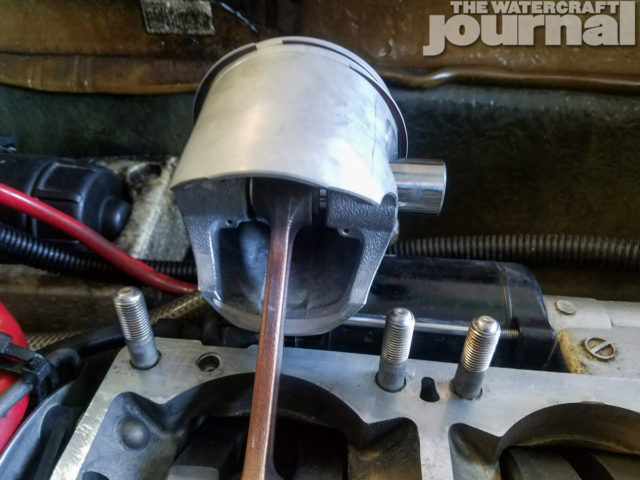
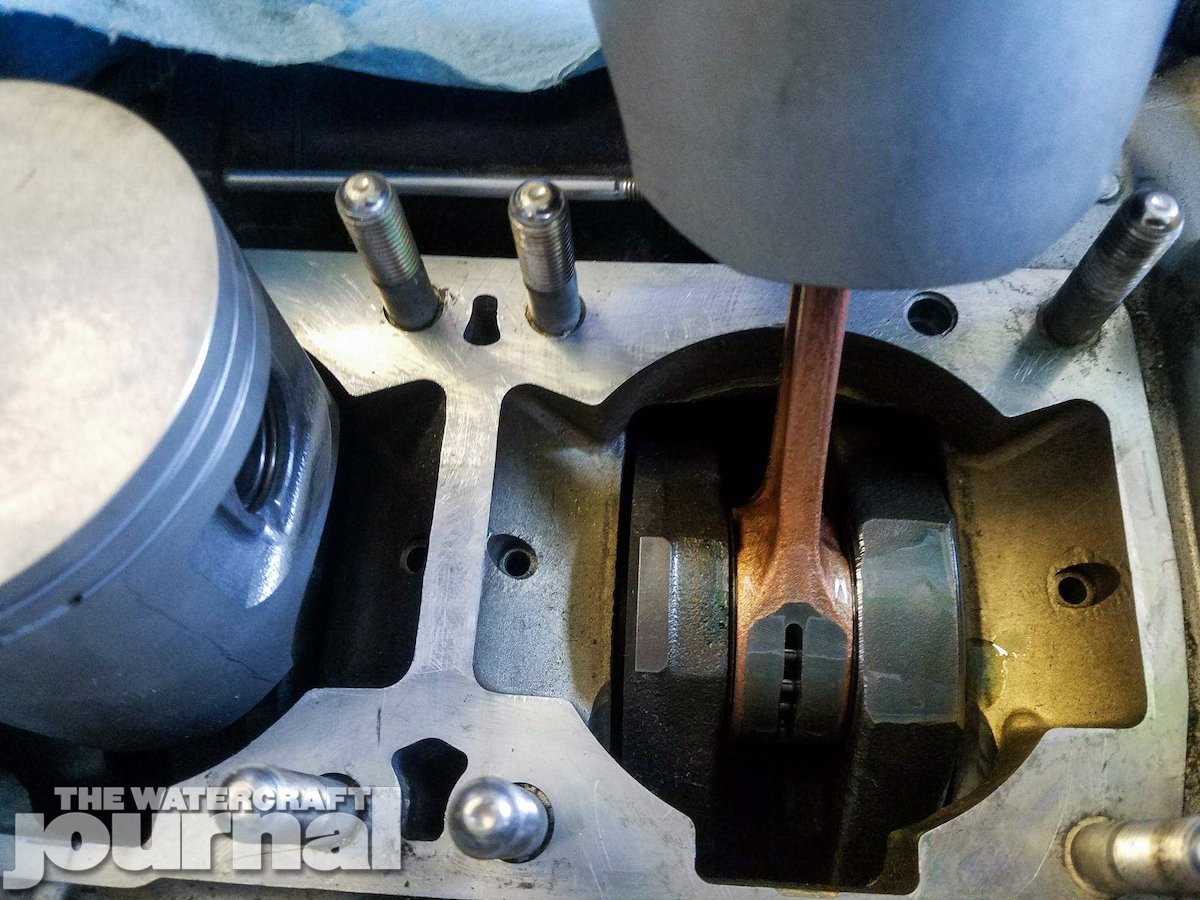
Above left: The next step is piston installation. The pistons must be installed with the arrows pointing toward the exhaust side of the cylinder. Install one circlip into one lock groove on the piston. Make sure your new wrist pins are clean and have a coat of fresh oil on them. Hold the piston over the small end of the rod, and slide the pin through piston pin bore on the side without the lock. Be sure the pin slides through the small end bearing, and then into the other side of the piston pin bore and up against the circlip you first installed. Once everything is secure, install your second circlip to hold the wrist pin in place. Repeat this process for the second piston. Above right: Once both your pistons are fully installed on the rods, slide the cylinder over the pistons. Using ring compressors to keep the rings in the correct spot while initially sliding the cylinder over makes this step the easiest. Before sliding your cylinder all the way down, make sure the rings did not move out of the groove or the end gaps did not move away from the ring groove pin. After you’ve confirmed the rings and pistons are properly in the bores, slide the cylinder all the way down onto the crankcase.
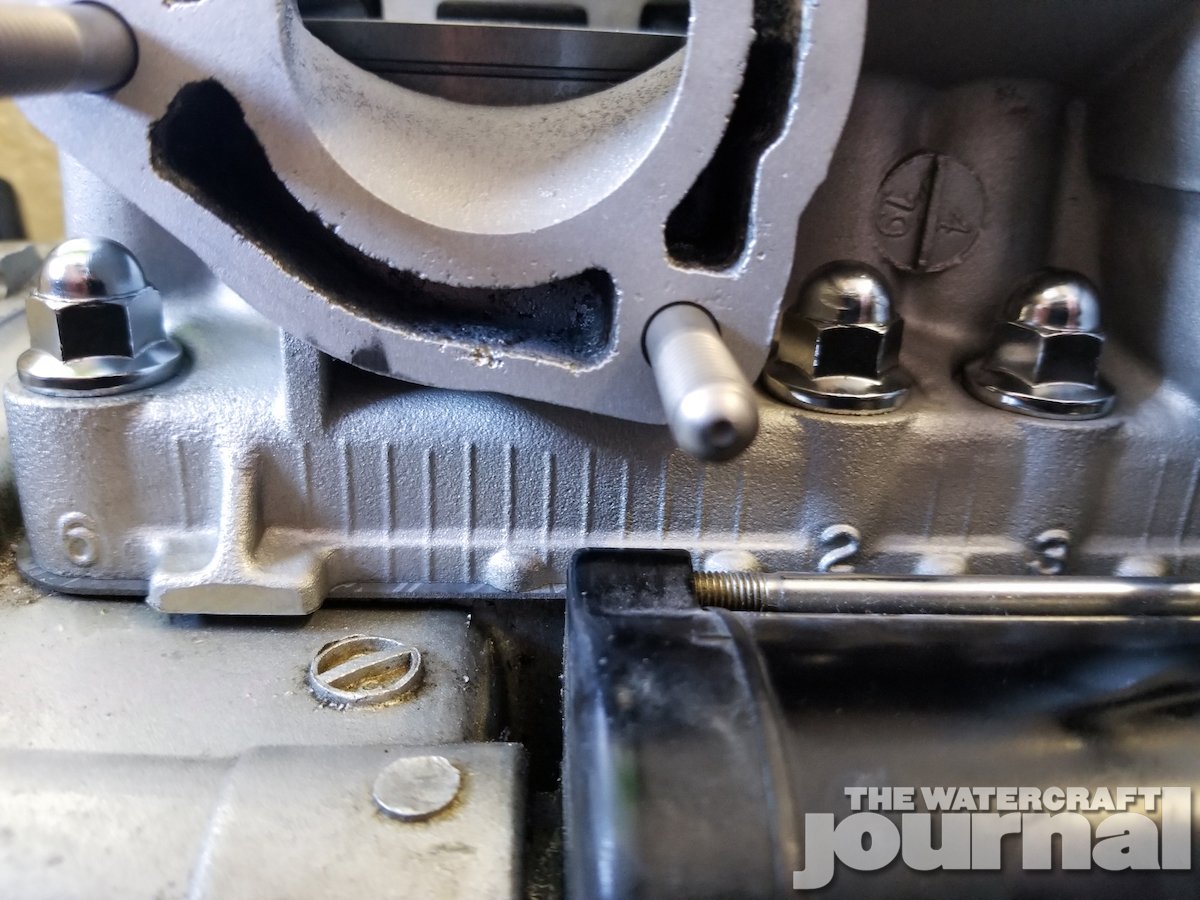
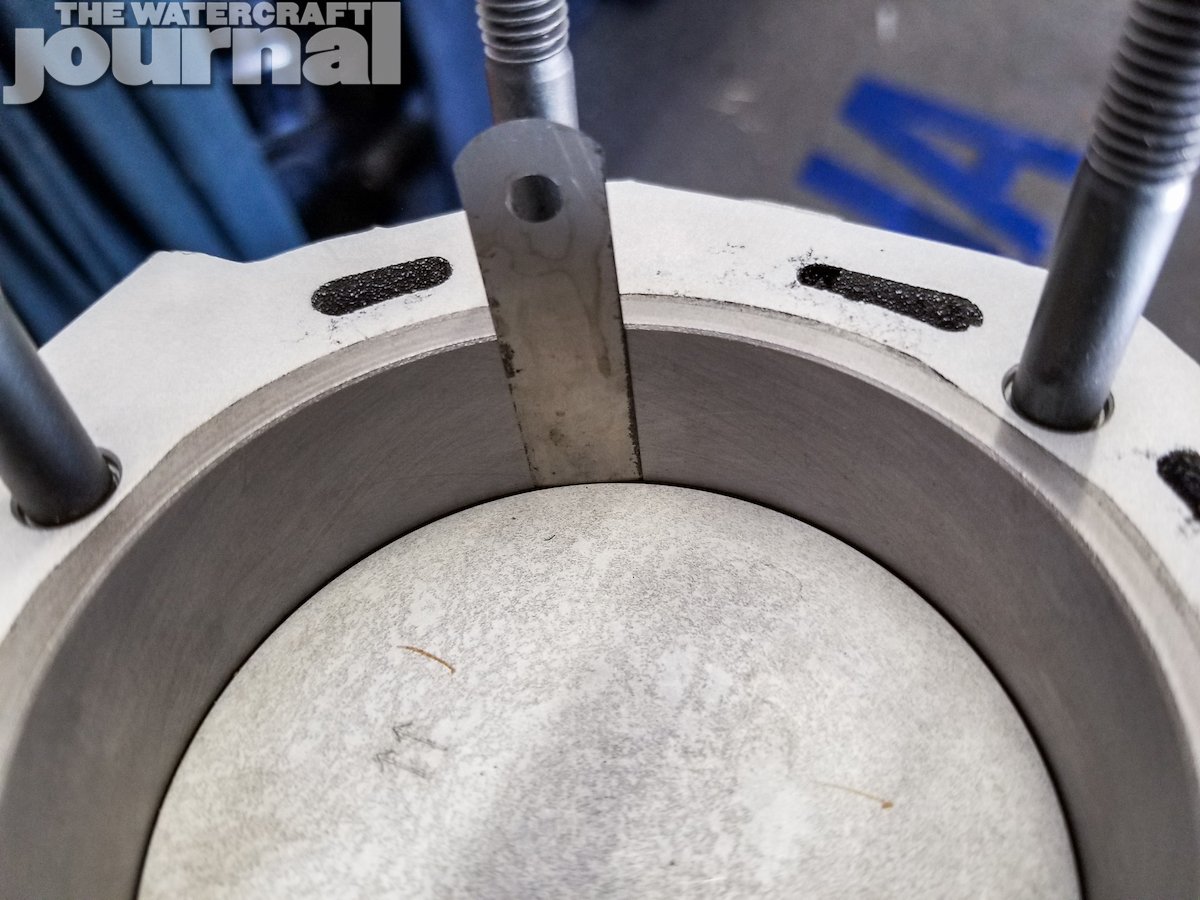
Above: The final steps will be to lay down a new head gasket, and re-install the head. Many OEM heads also have numbers indicating the torque pattern. Again, reference your owner’s manual for OEM torque specifications. Finally, re-install everything that was removed before engine disassembly, including carburetors, intake manifold, exhaust system, spark plugs, water lines, etc. Double check that everything is properly installed and nothing has been missed before starting the engine. Be sure to torque the cylinder nuts to the manufacturer recommended spec in your owner’s manual. Most PWC 2-stroke cylinder have numbers that indicate the order in which to torque the nuts. Always follow this recommended order. At this point, we recommend manually rotating the engine to make sure neither piston will come out of the bore during engine operation. This is just a way to double check your replacement pistons were made at the proper height.
Above left: If you’re starting the ski in your garage, we recommend hooking water up to the flush line to keep the engine cool during break in. When you start the ski, keep it at idle or very low RPM for a minute or two, and slowly work into higher RPM and gradual revs. Avoid holding the engine at high rpms or revving excessively on break in, you don’t want the engine to cold seize and have to do this all over again. Above right: After break in, let it cool down, and check the spark plugs to make sure your jetting isn’t too rich or too lean. If everything looks and sounds good, take it out on its first ride and take it easier than normal. After it cools after that first ride, you should be in the clear to ride it as you normally would.
This year marks the single largest growth of new vehicle sales in a decade. In fact, the total new vehicle sales total of 67,500-plus units, is in par with sales from 10 years ago. Take into account the dramatic increase in alternative materials, additional accessories and features and the new segments reacting a broader populace, and today’s personal watercraft industry is light years ahead of itself less than a dozen years ago. For Yamaha Motor Corporation, USA, who experienced a 14-percent growth over last year’s sales, and picked up additional market share (Yamaha tails Sea-Doo by 7-percent total market share), and the Georgia-based manufacturer has quite a bit to be happy about.
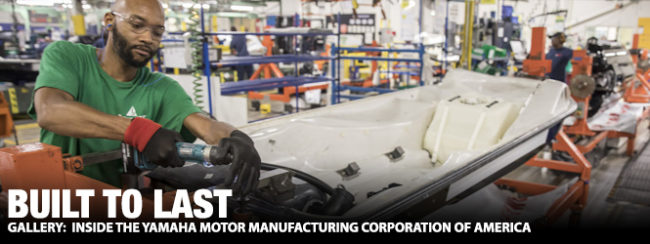
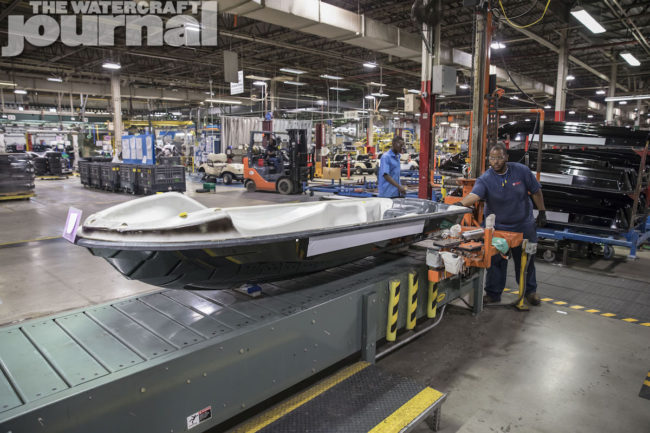
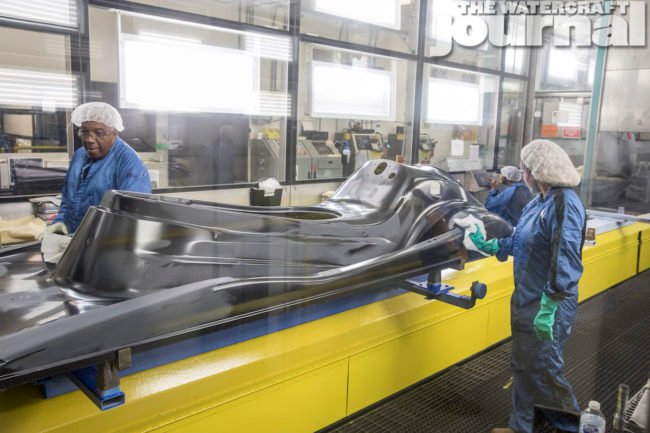
A large portion of the brand’s success can clearly be traced to its commitments to excellence in its assembly process. While the sales and marketing division resides in Kennesaw, the YMMC (Yamaha Motor Manufacturing Corporation Of America) assembly plant is found several miles southwest of Atlanta in Newnan. There, the facility’s 1.35-million square feet of manufacturing and logistics buildings occupy an impressive 280 acres, including six buildings a test and evaluation course for ATVs, Side-by-Sides (SxS) and golf carts, as well as a test lake. Over 1,400 employees punch in every day, many working alternating shifts to keep manufacturing running 24-hours during peak season.
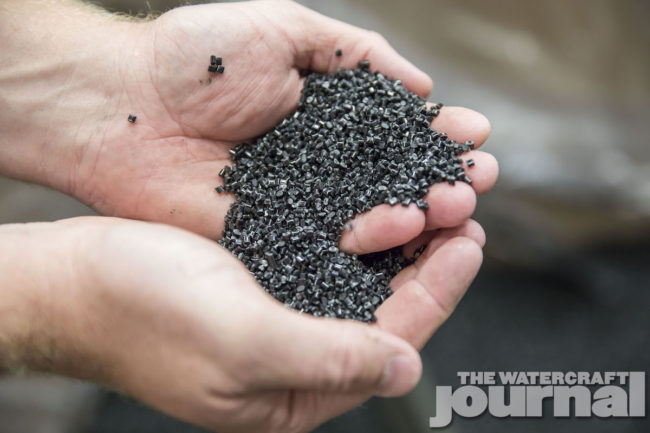
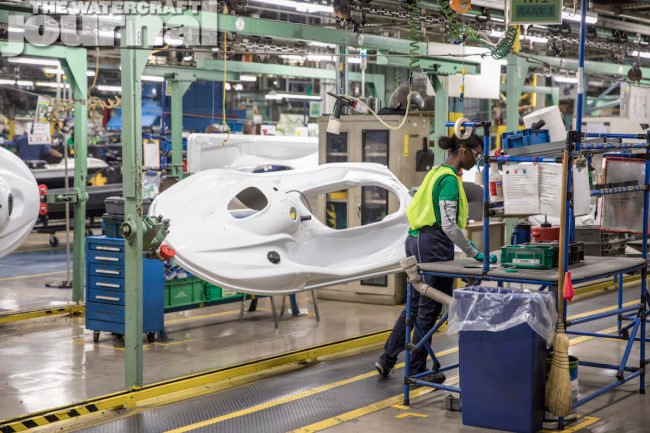
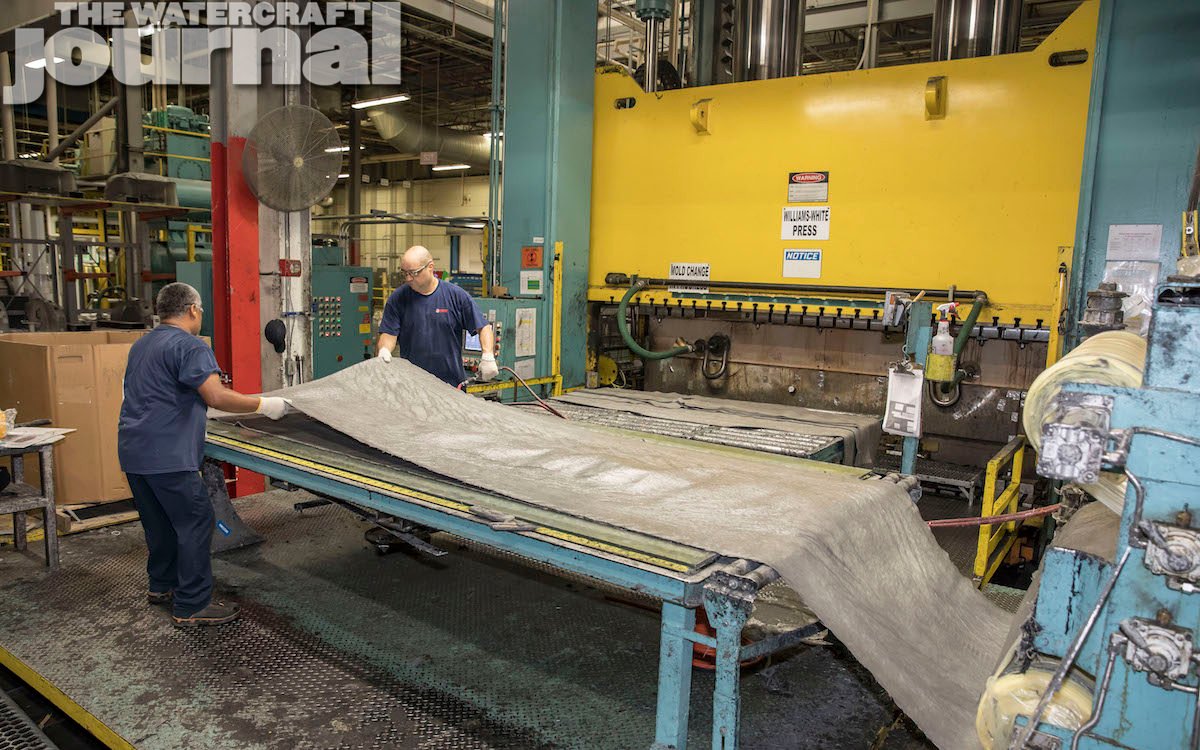
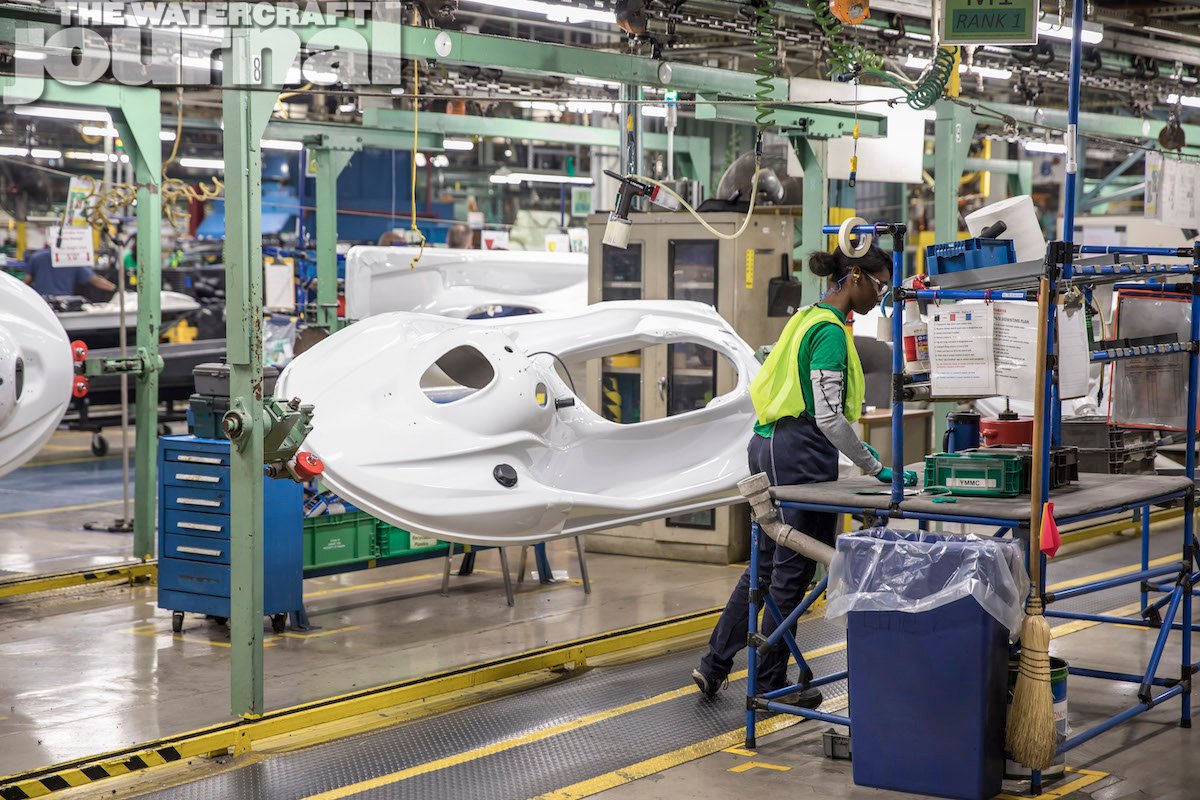
Above: Everything begins with these small plastic nodules. Basic raw materials are compression molded into hoods, fairings and other deck components.
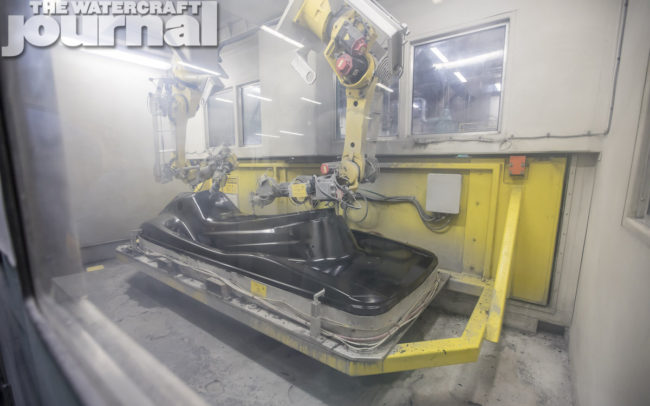
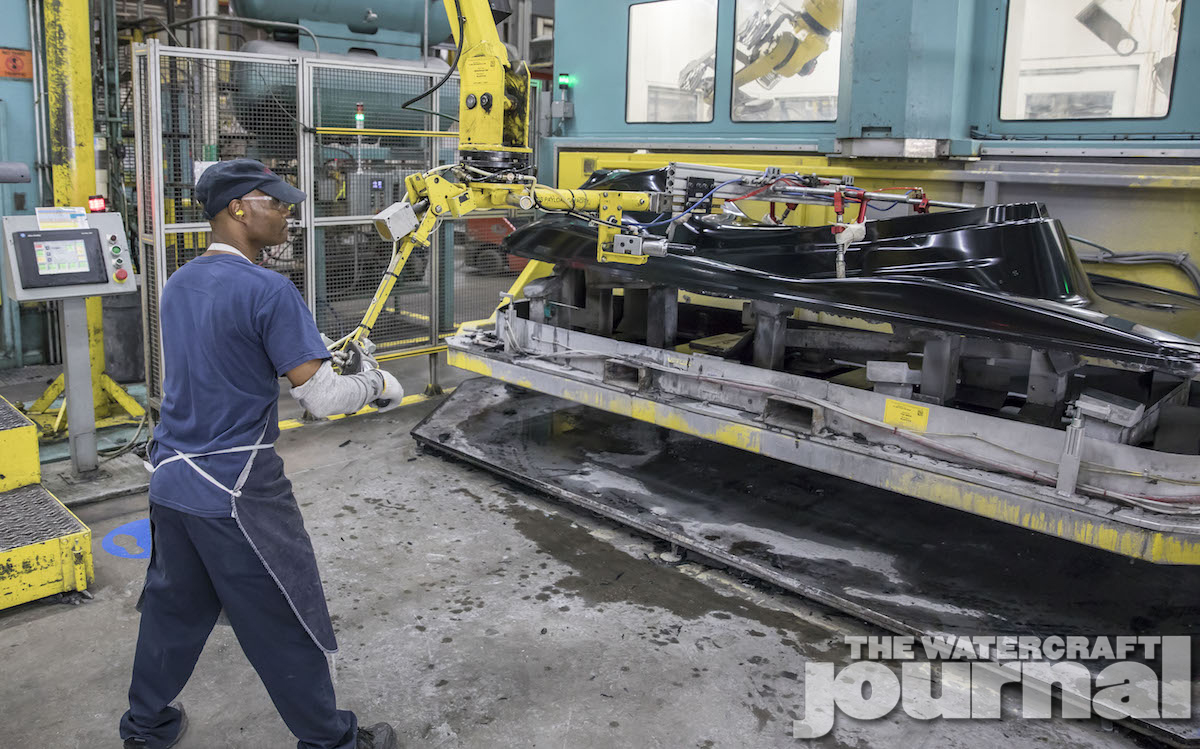
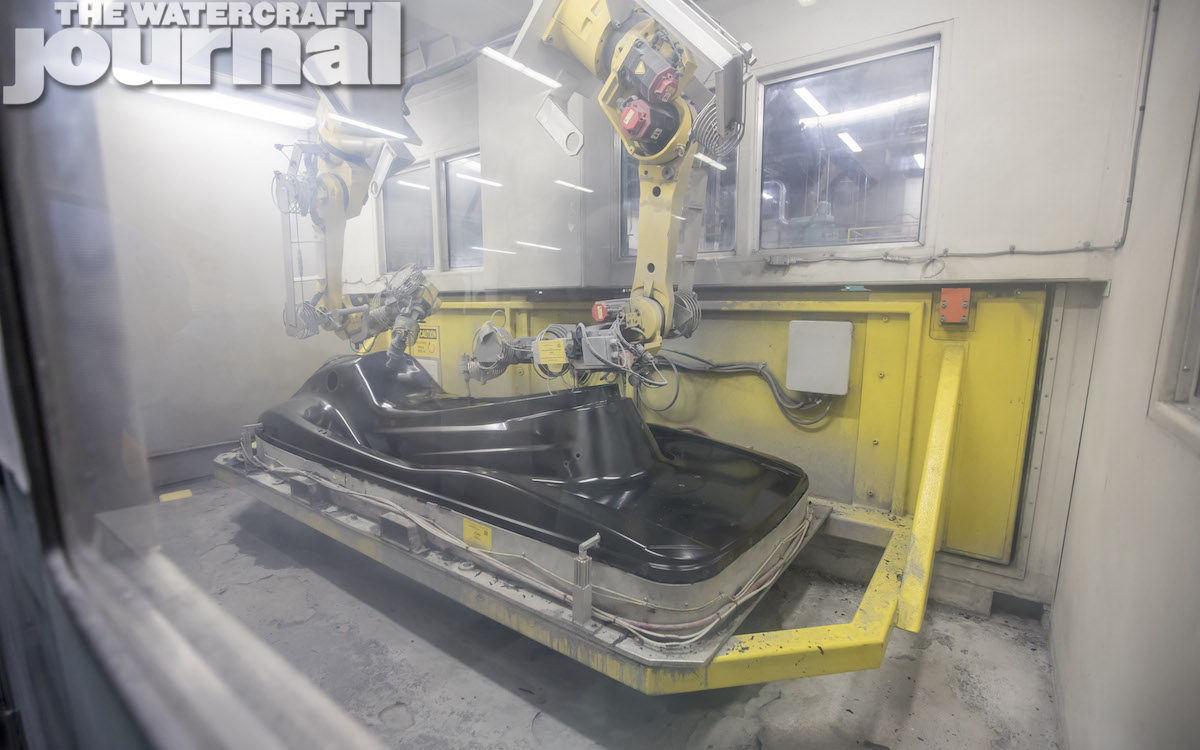
Above: Every deck begins as multiple sheets layered on a table before entering the compression mold. After 4 minutes and several hundred degrees, a finished deck is moved into waterjet cabinet where automated arms spray a laser-like stream of water, cutting out the engine compartment, front storage bin access and other ports and holes.
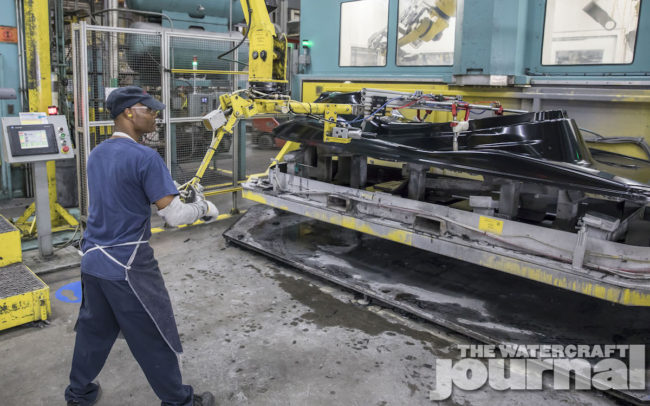
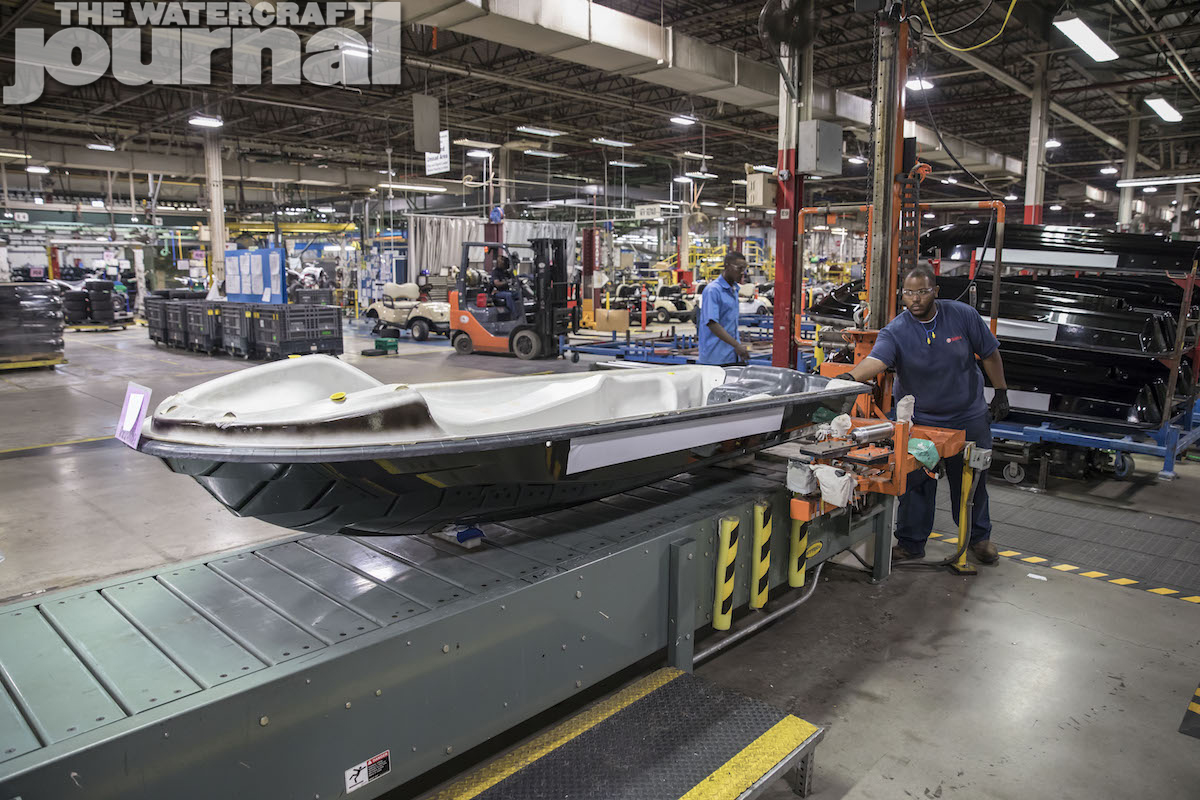
Above: Simultaneously, hulls are being produced and composited with the inner hull liners.
The doors to YMMC were first opened in 1988 beginning with the brand’s golf cart segment, with WaveRunner production following shortly thereafter. Eventually, ATV and ROV (SxS) came to occupy the second assembly building. Since that time, the YMMC has reached several major milestones including reaching 2 million vehicles produced in 2007, and 3 million in 2013. Additionally, YMMC has produced 1 million golf carts in 2015 and 1 million ATVs in 2016. Today, YMMC produces 210 units a day with a stellar 97.5-percent passing initial inspection. And for 2018, YMMC is projected to build its 1 millionth PWC around April (which is most likely going to become a permanent fixture in the Yamaha showroom).
Drawing heavily from its Japanese tradition, YMMC strives to create “Kando”, a Japanese word for “simultaneous feelings of deep satisfaction and intense excitement when people experience Yamaha’s exceptional value.” The decision to move product development and full-time production to Georgia was multi-faceted: First, 70-percent of Yamaha’s market is in North America, making its sales and marketing, design engineering and manufacturing a highly collaborative effort. Additionally, YMMC maintains a strong culture of continuous improvement through organizing small group team projects to seek out and propose resolutions to streamline production and improve worker efficiency. These efforts have worked to prevent injuries, reduce water use, energy, air emissions and waste.
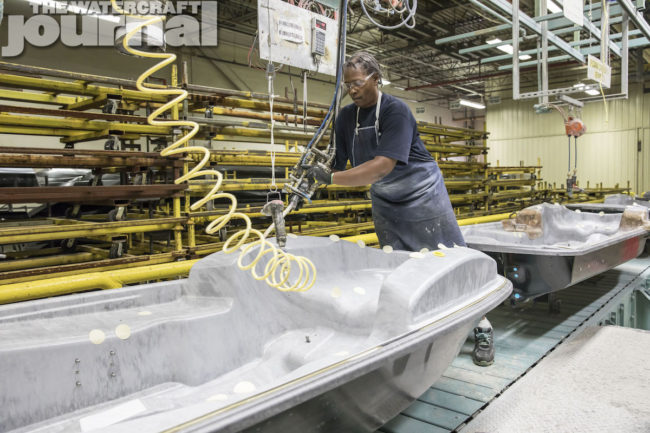
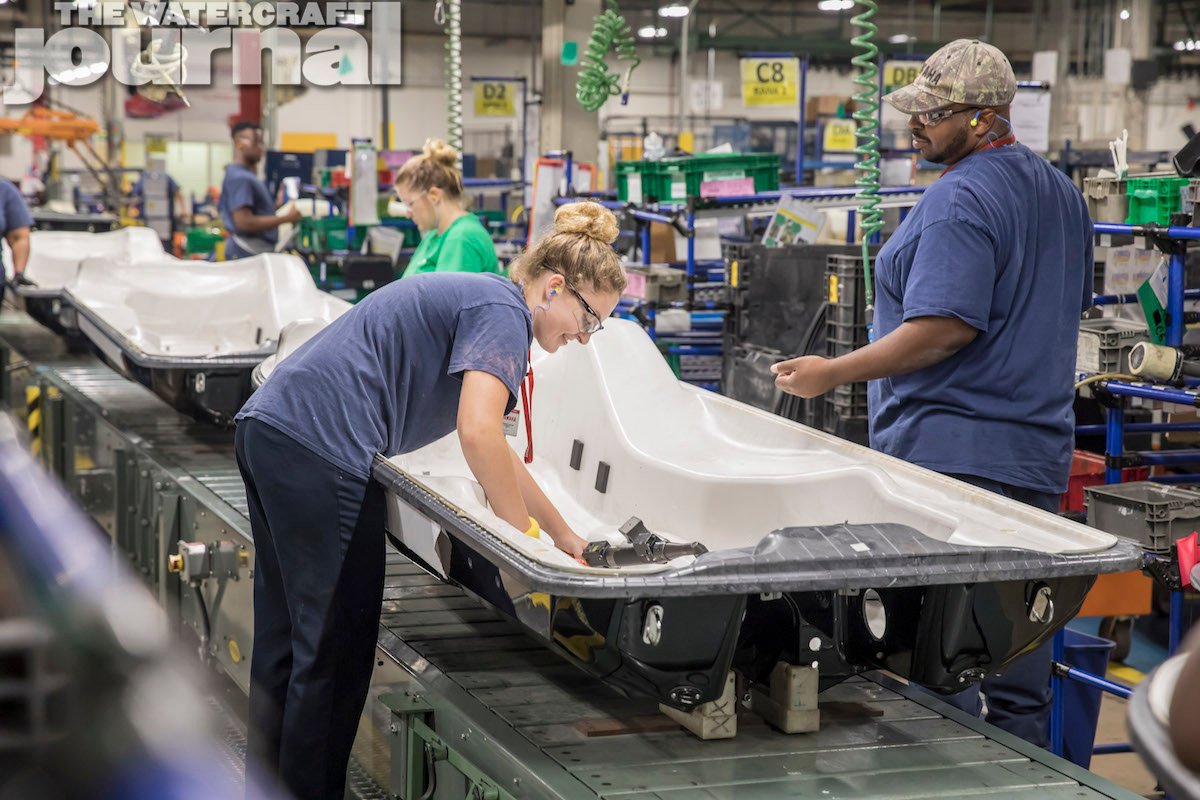
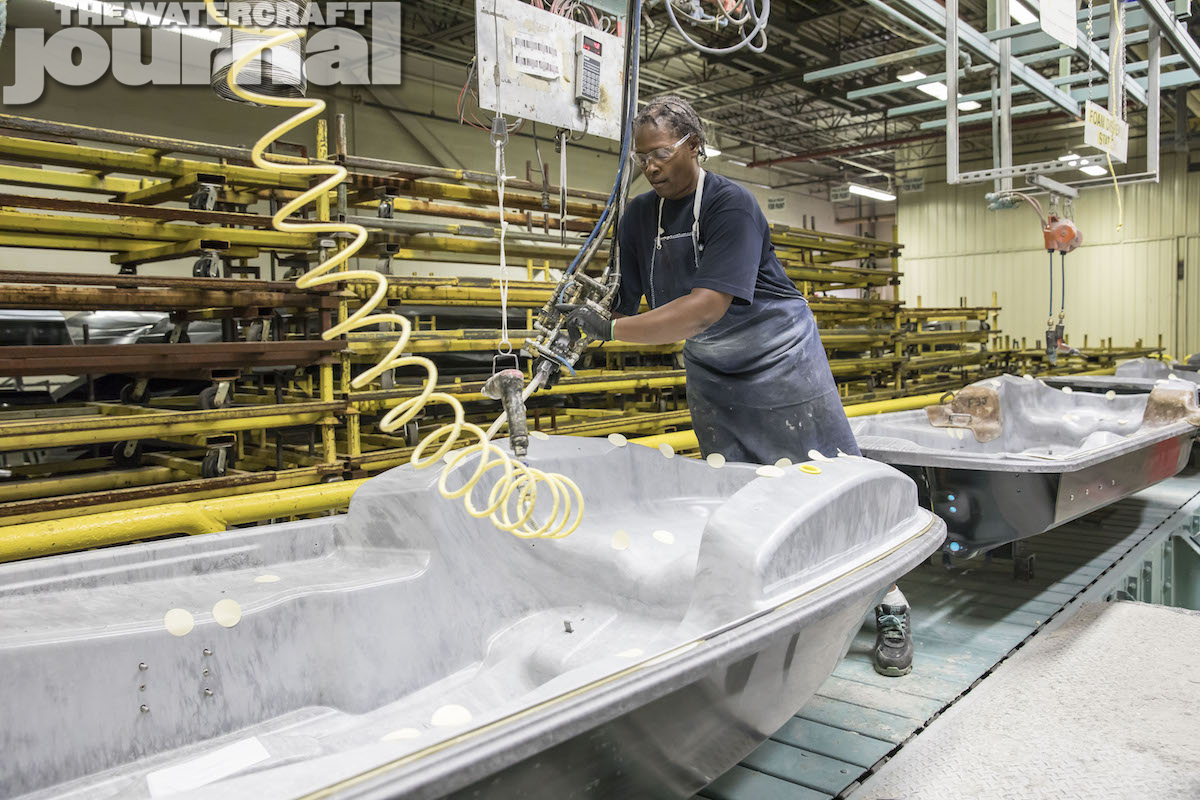
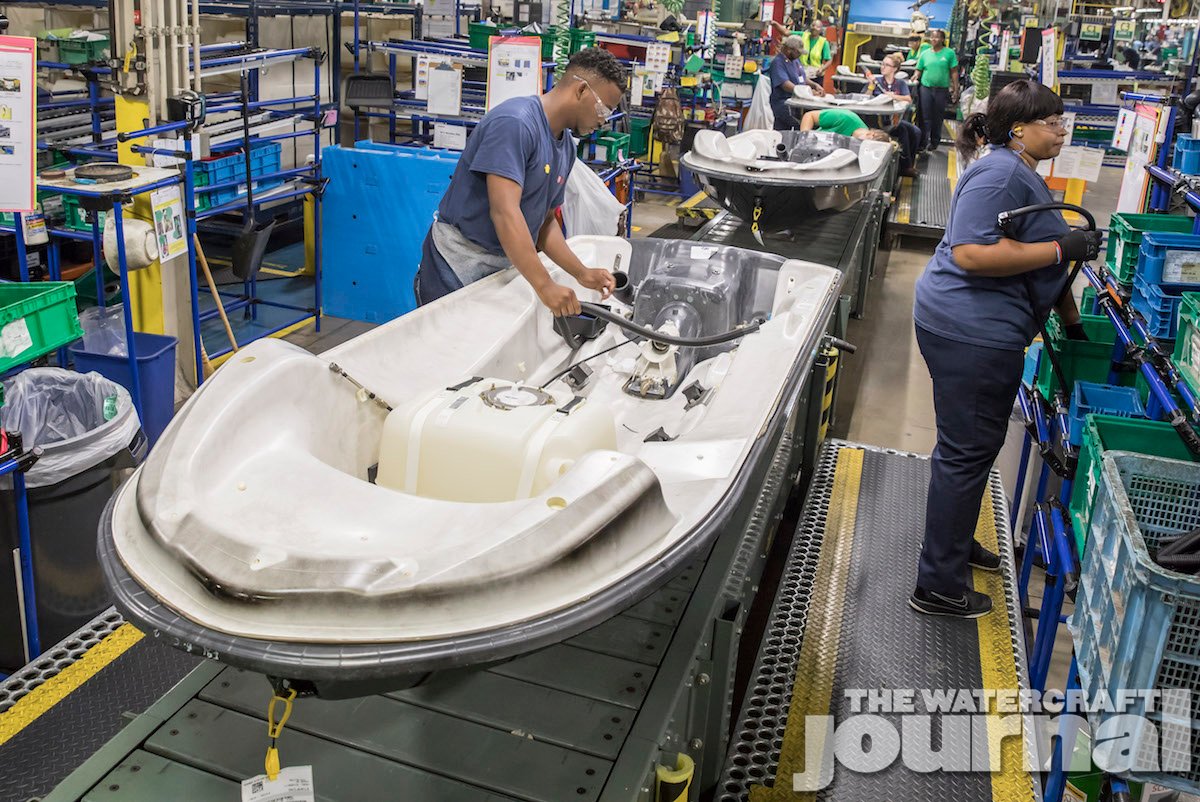
Above: Holes are drilled into the inner hull liner where an expanding chemical foam is pumped in. The expansion foam fills the sandwiched layers. The recently filled hulls are taken to the assembly line where each hull is prepped with a DA sander (where needed) and fitted with major mounting hardware.
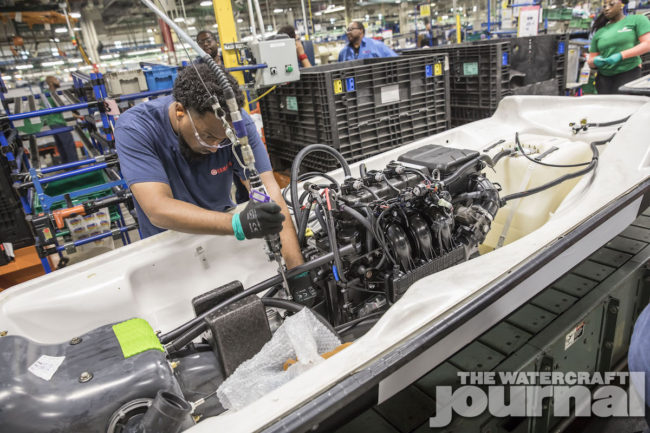
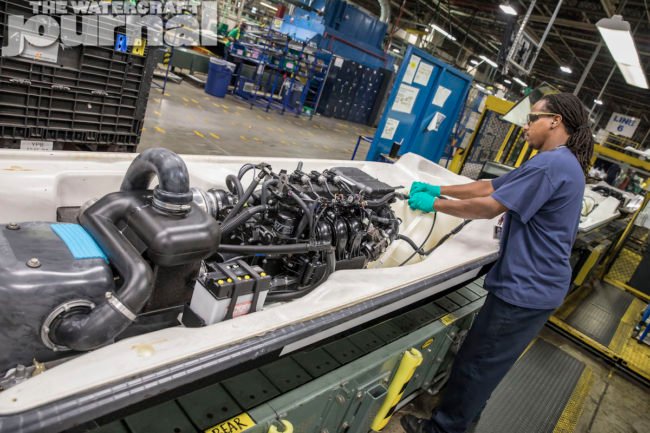
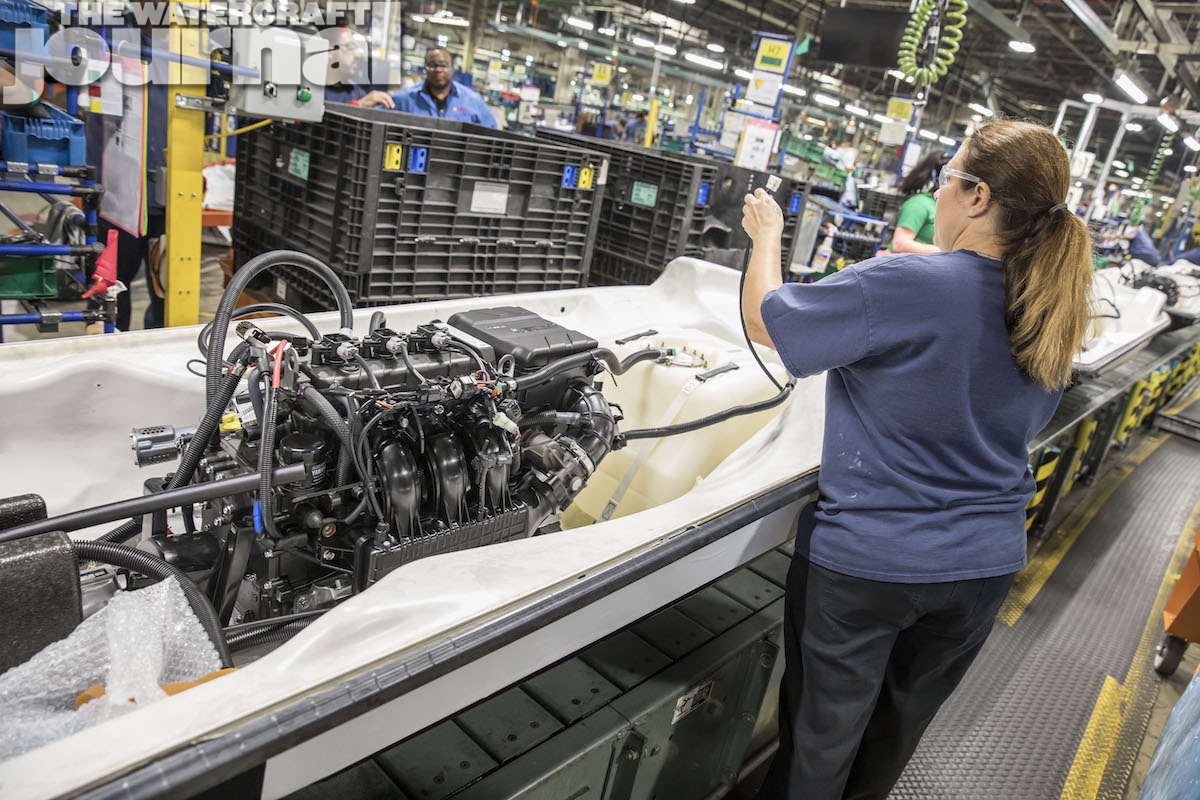
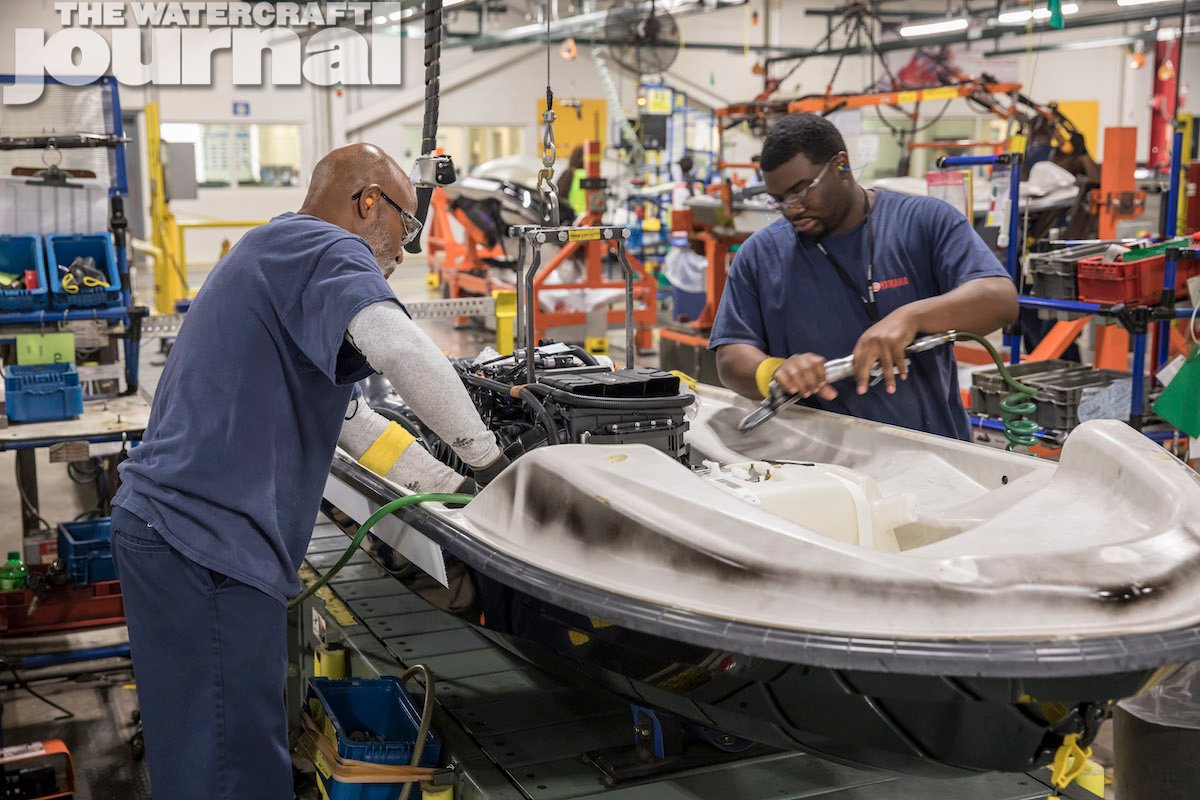
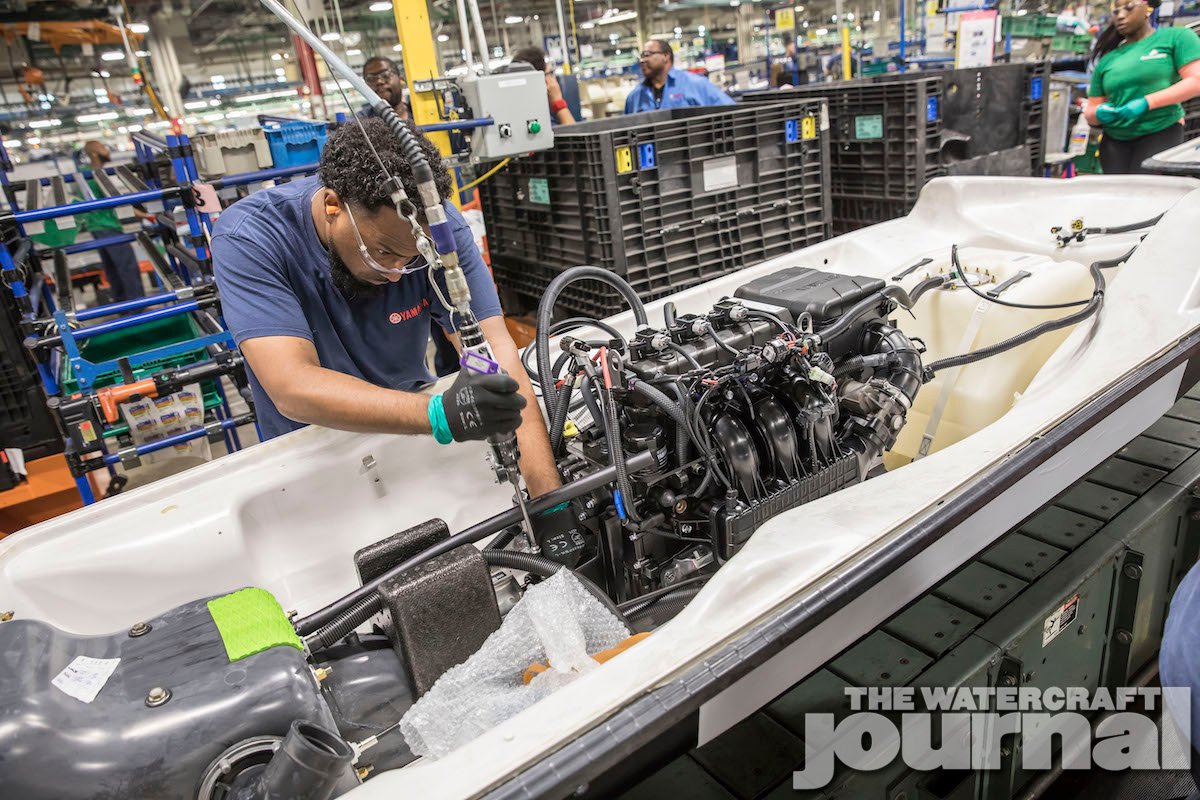
Above: Hulls are fitted with motor mounts, mounting brackets, the pump, shaft and initial plumbing before receiving the complete powertrain. The driveshaft is connected to the flywheel and gas tank plumbed to the fuel rail. The models we followed this day were 2018 TR-1 powered EX Deluxe units.
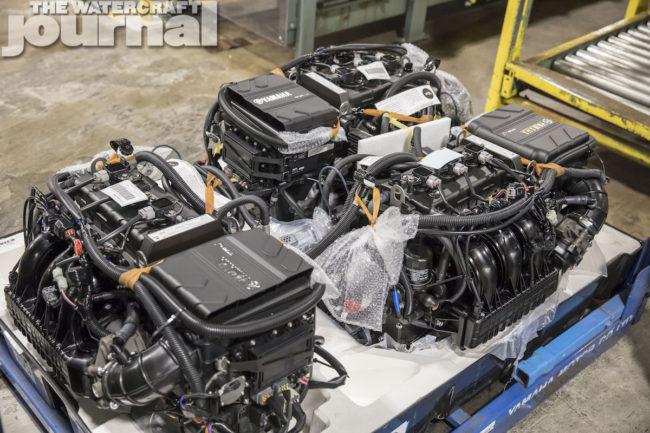
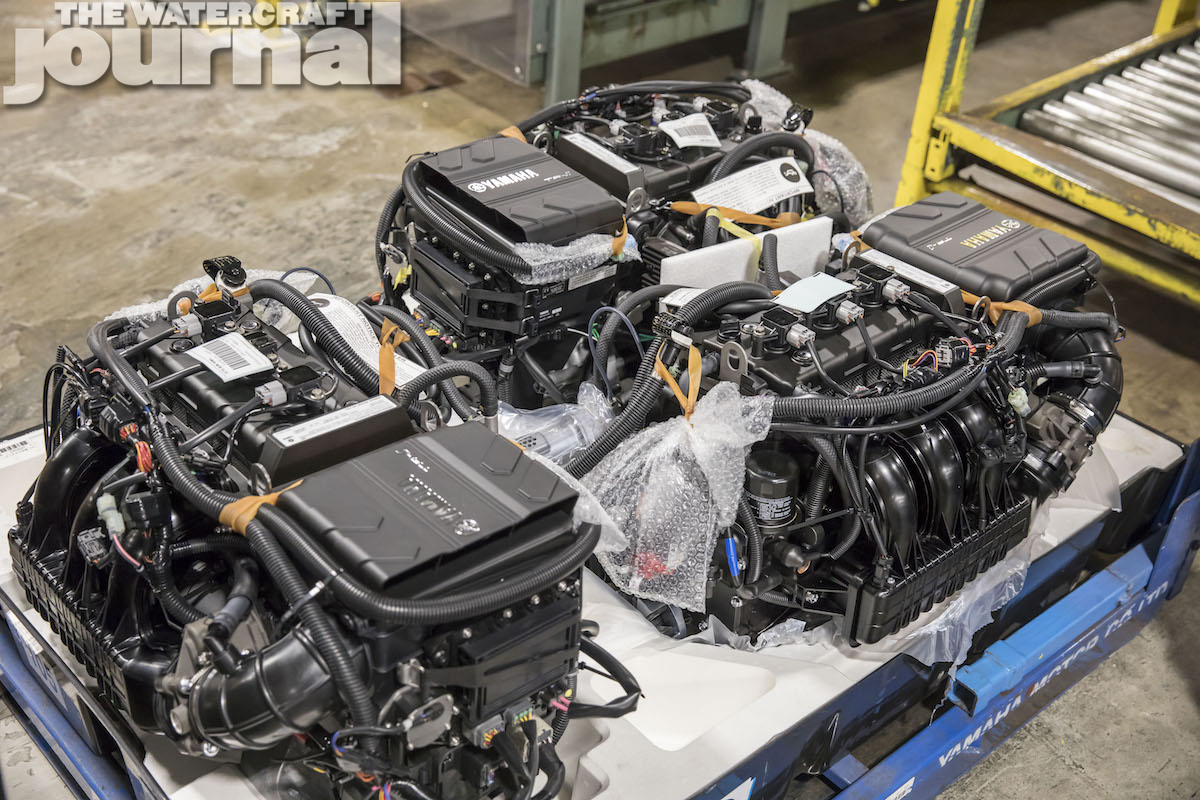
Above left: The final steps before combining the assembled hull to the deck include installing the complete exhaust system and finalizing some necessary wiring. Above right: A pallet of TR-1 EX engines sit at the ready.
While Yamaha Marine engines are world-renowned for dependability and performance, YMMC has committed to equally high quality fabrication and assembly processes, resulting in superior fit-and-finish. Inside of the first assembly plant, Yamaha demonstrated its compression molding and US Steel tooling, all of which results in laser-measured accuracy. The low failure rate results in less lost inventory and superior hull and deck production numbers. In fact, the level of extensive error-proofing and safety controls borders on neurotic, but accounts for superior dependability and performance. While not fully automated, the production and assembly process meticulously proofed and evaluated, with an eye pointed towards continual improvement and streamlining.
This effort has equated for over $2 million dollars in improvements. When Yamaha sought to improve its hull material process, it partnered with Georgia Tech Research Institute to develop NanoXcel (and later its NanoXcel2). Georgia Tech was the only such university who was exploring nanotechnology and even maintained a “Nano Lab” wherein hours of testing and development was poured into the creation of the SMC vs. FMC process that would later become synonymous with Yamaha WaveRunners. In addition to its pursuit of innovation, YMMC also sought out ways to give to the community. In June 2016, YMMC installed its Solar Panel System, a 150kW rooftop array approved by the Georgia Power & Coweta County, helping reduce the plant’s energy draw on the municipal grid.
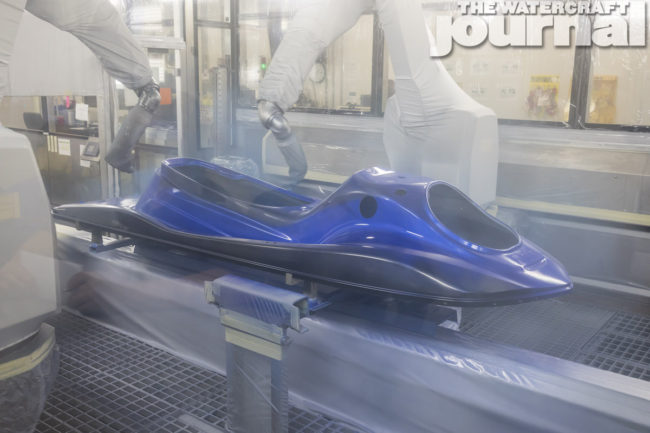
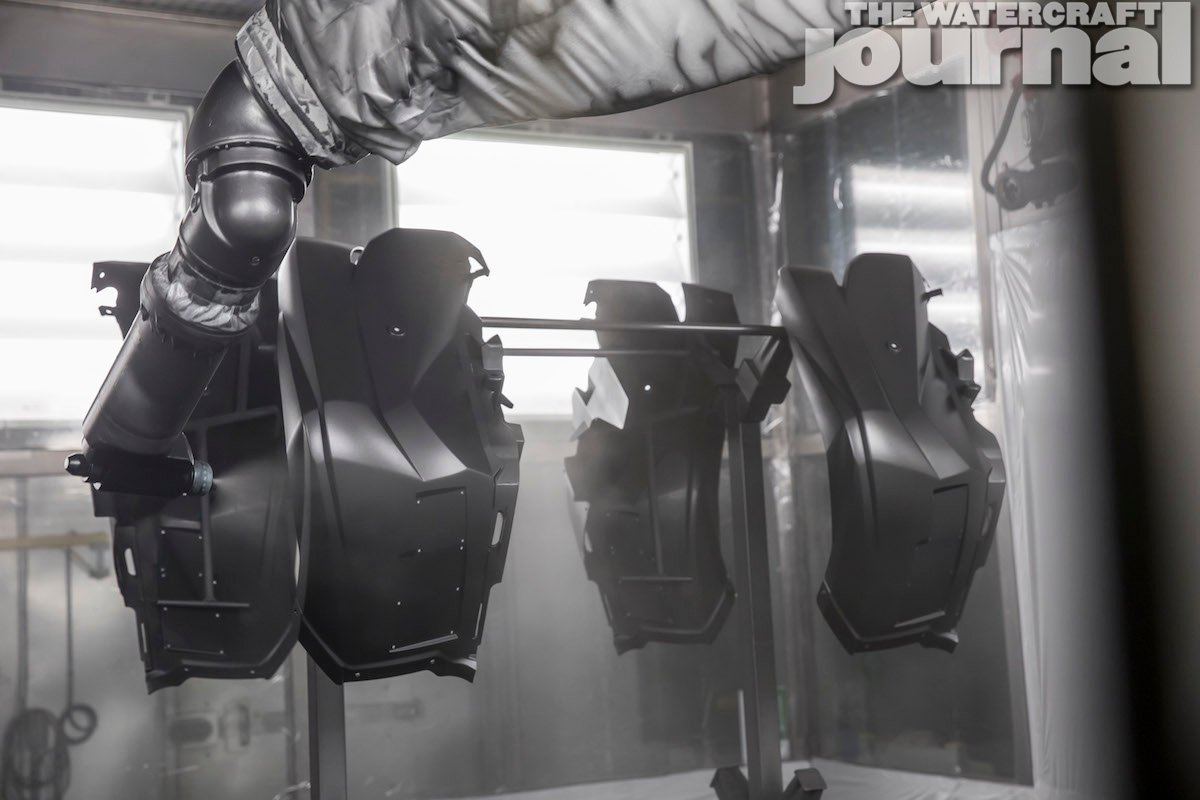
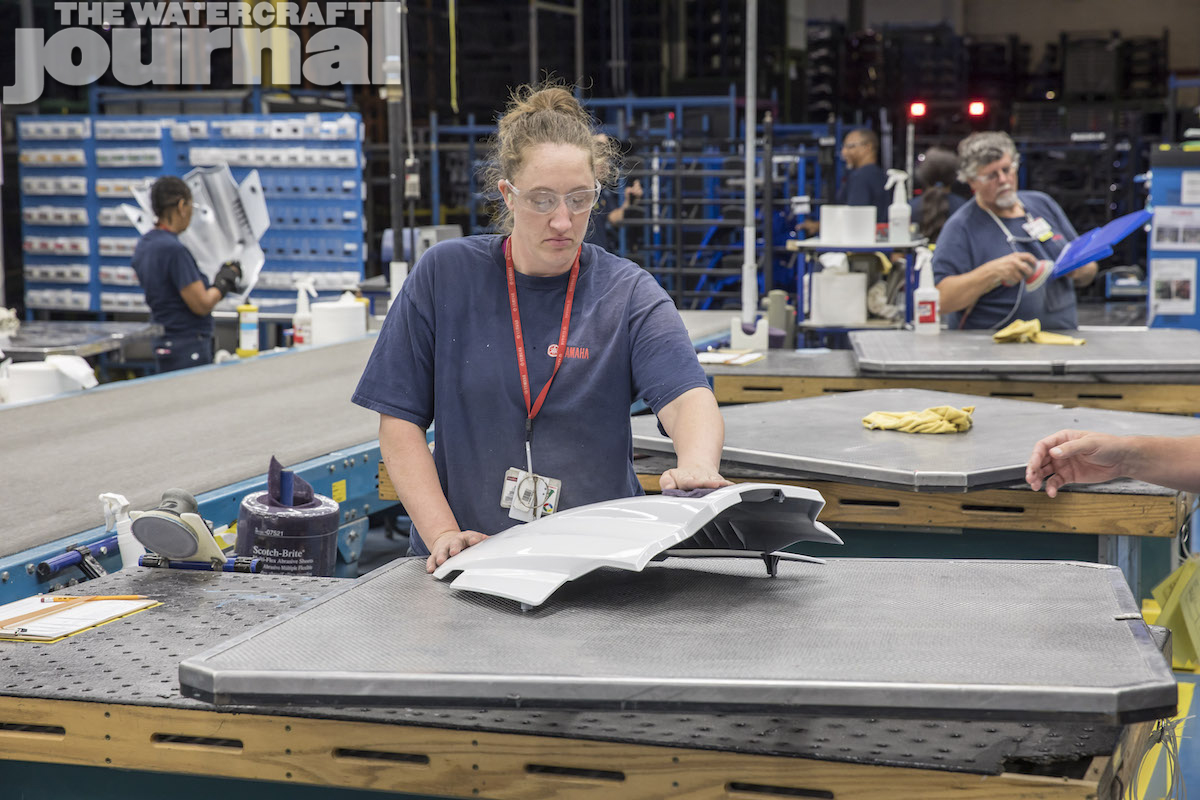
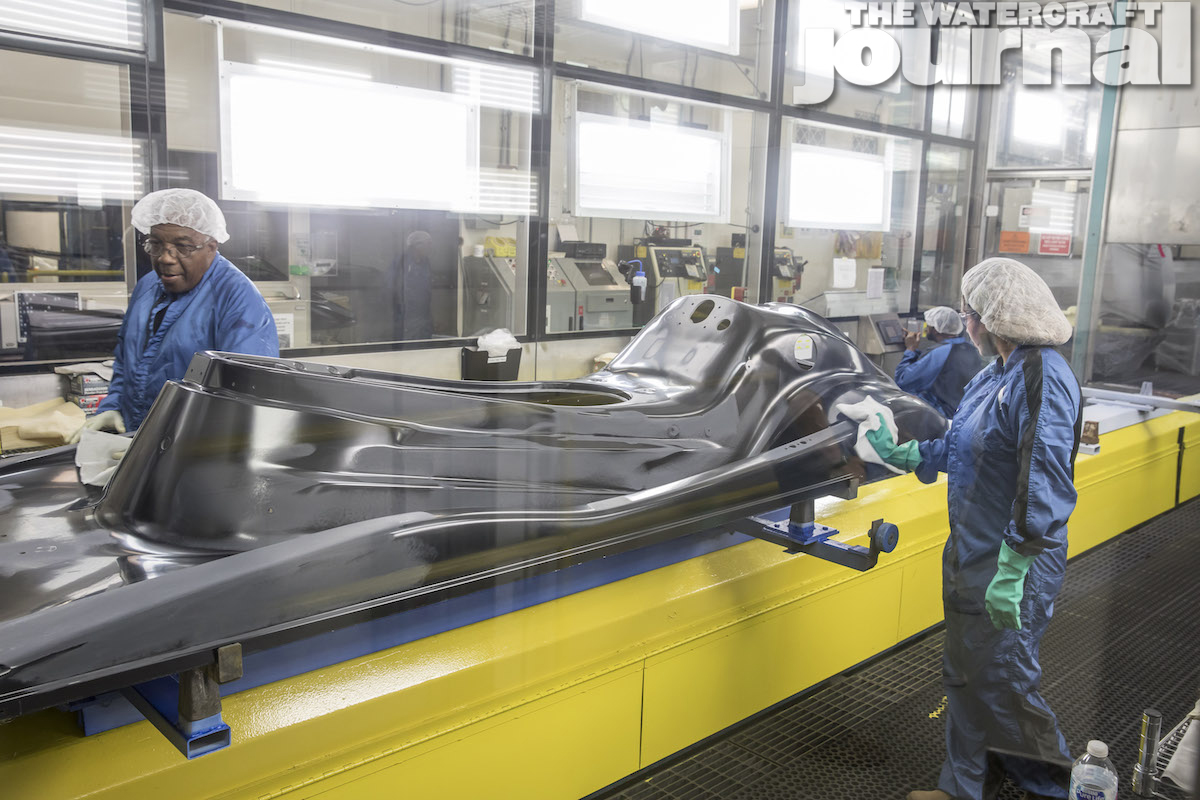
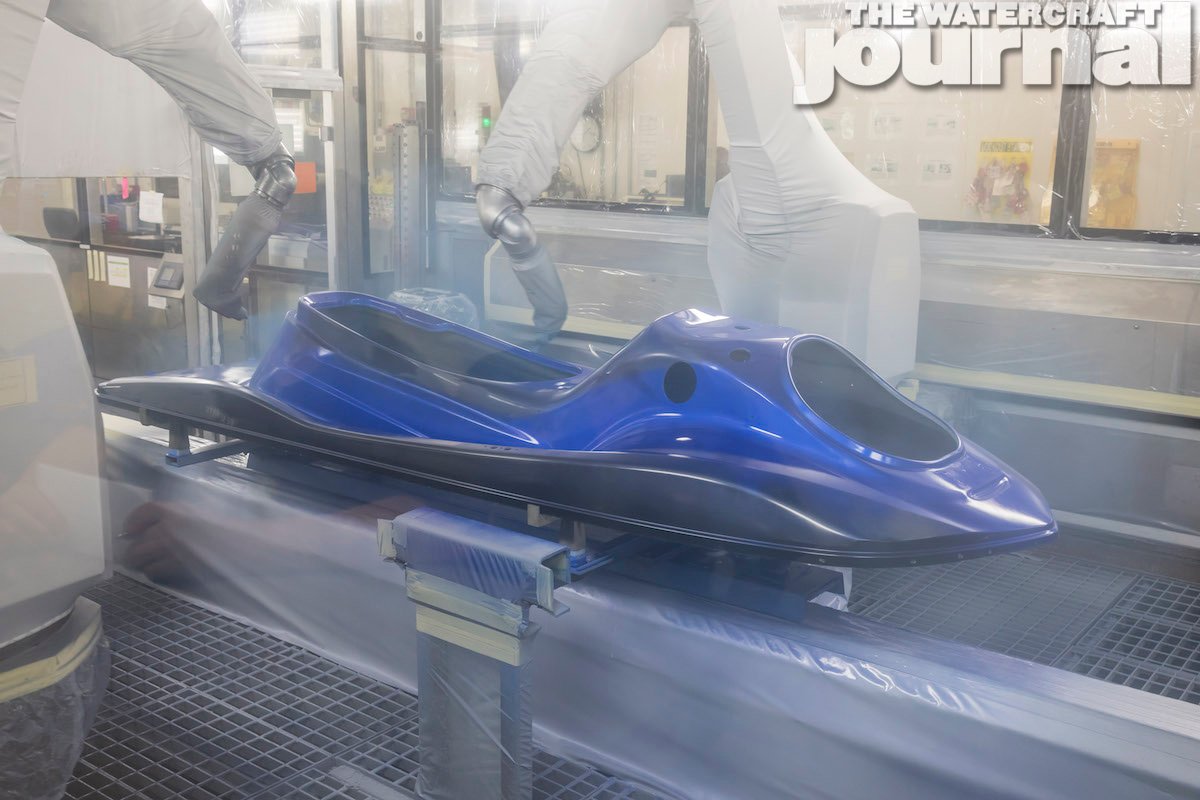
Above: All decks are lowered on a conveyor system, where they are surface-prepped prior to painting. Technicians pass over the scuffed and sanded deck surface to remove any contaminants. Next, automotive-grade automated painting arms pass over every inch of the EX deck coating it in uniform passes. Guns nozzles are exchanged and lines purged between and color change.
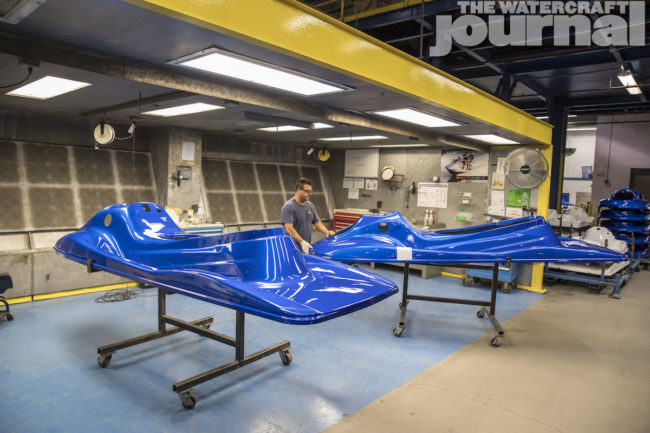
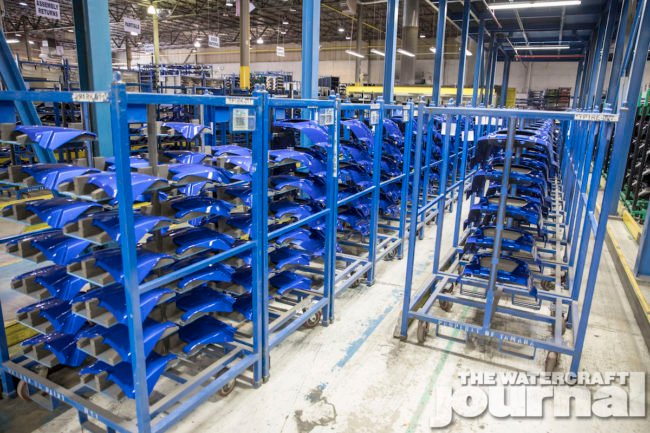
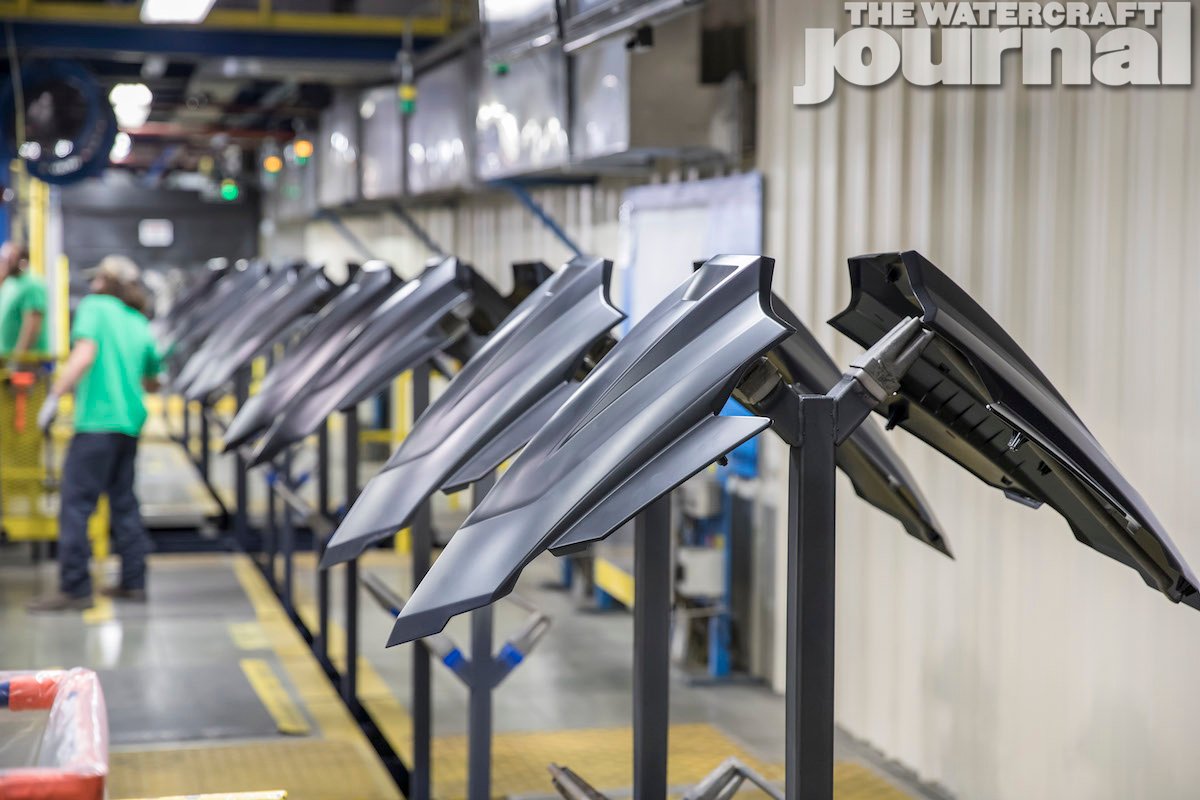
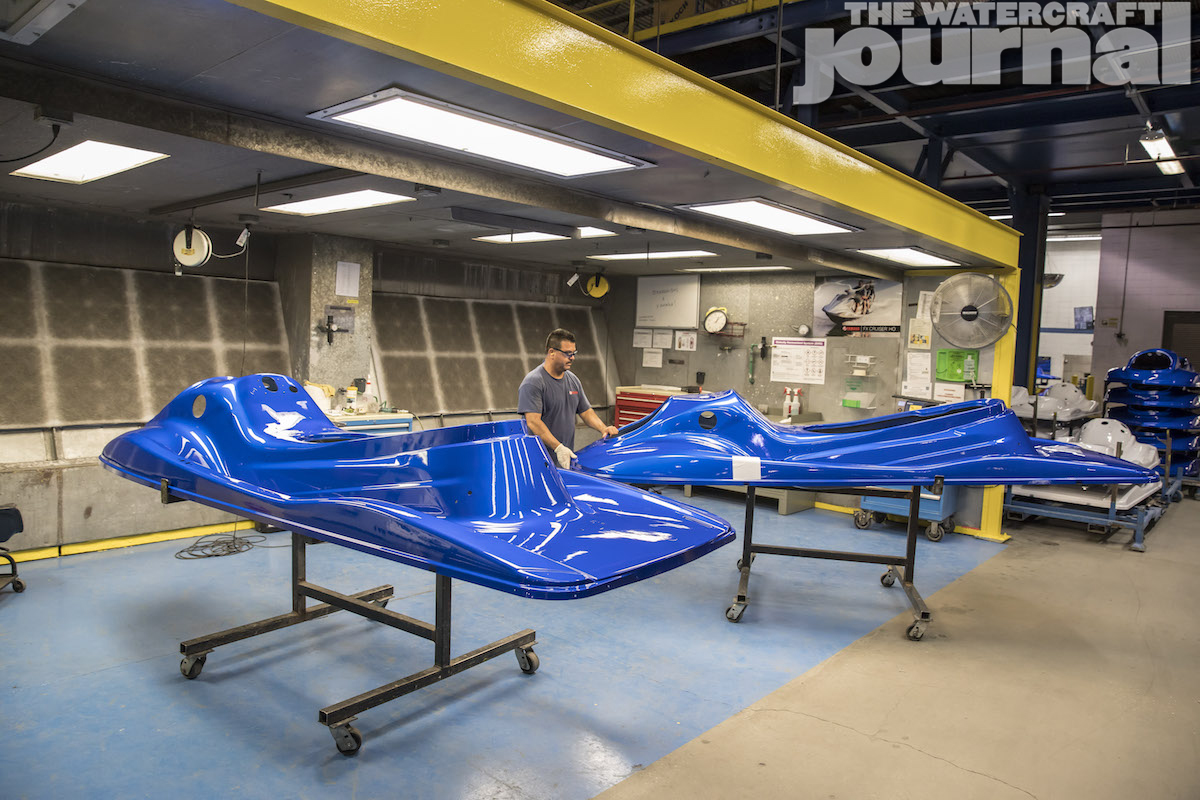
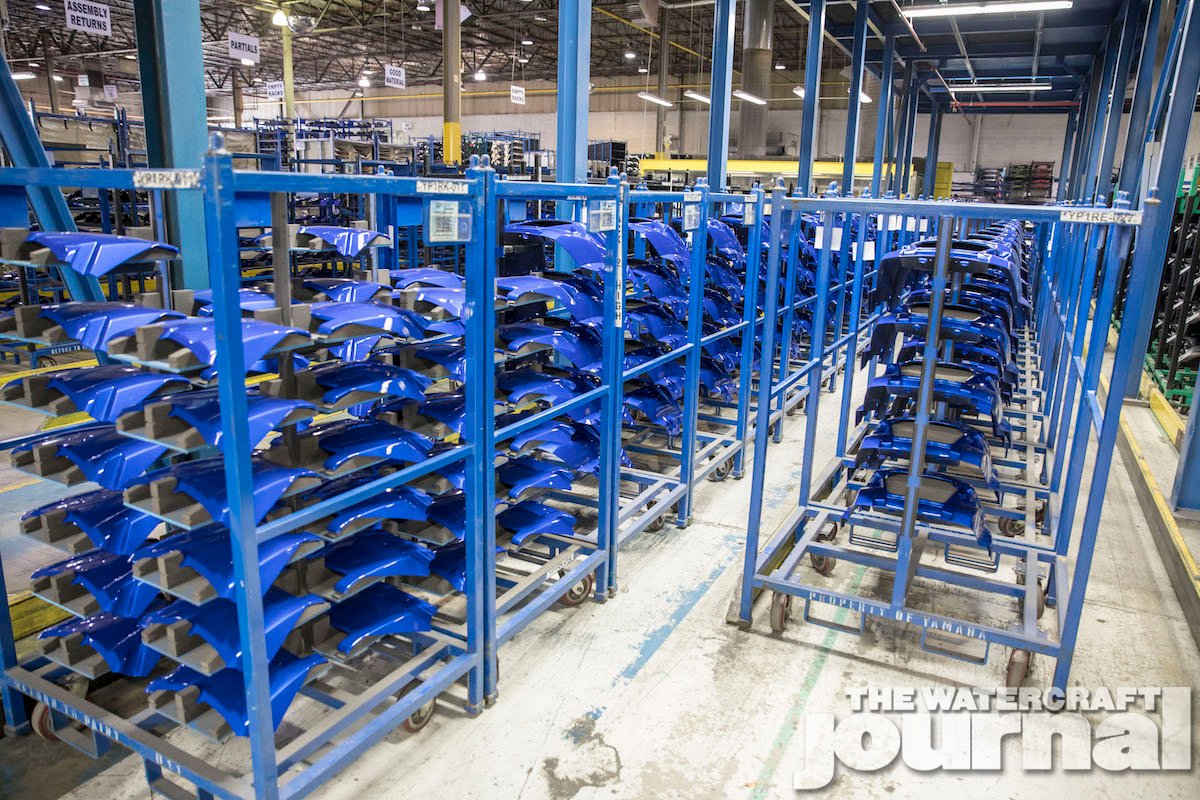
Above left: After painting (and curing), each deck is taken to the inspection room where a technician reviews the surface and final application before passing it off or returning it to be repainted. Above right: Approved decks are lined up ready for final assembly.
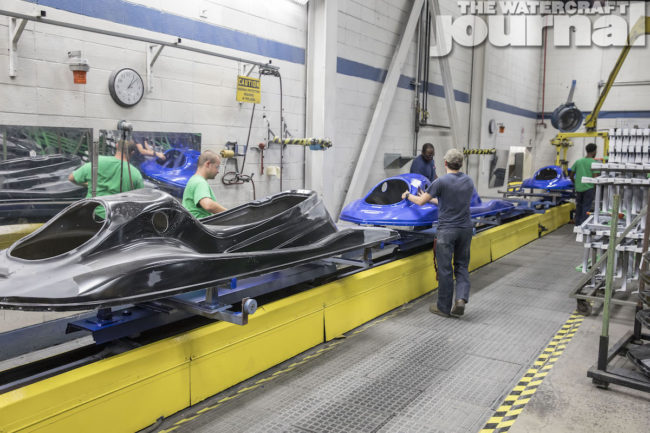
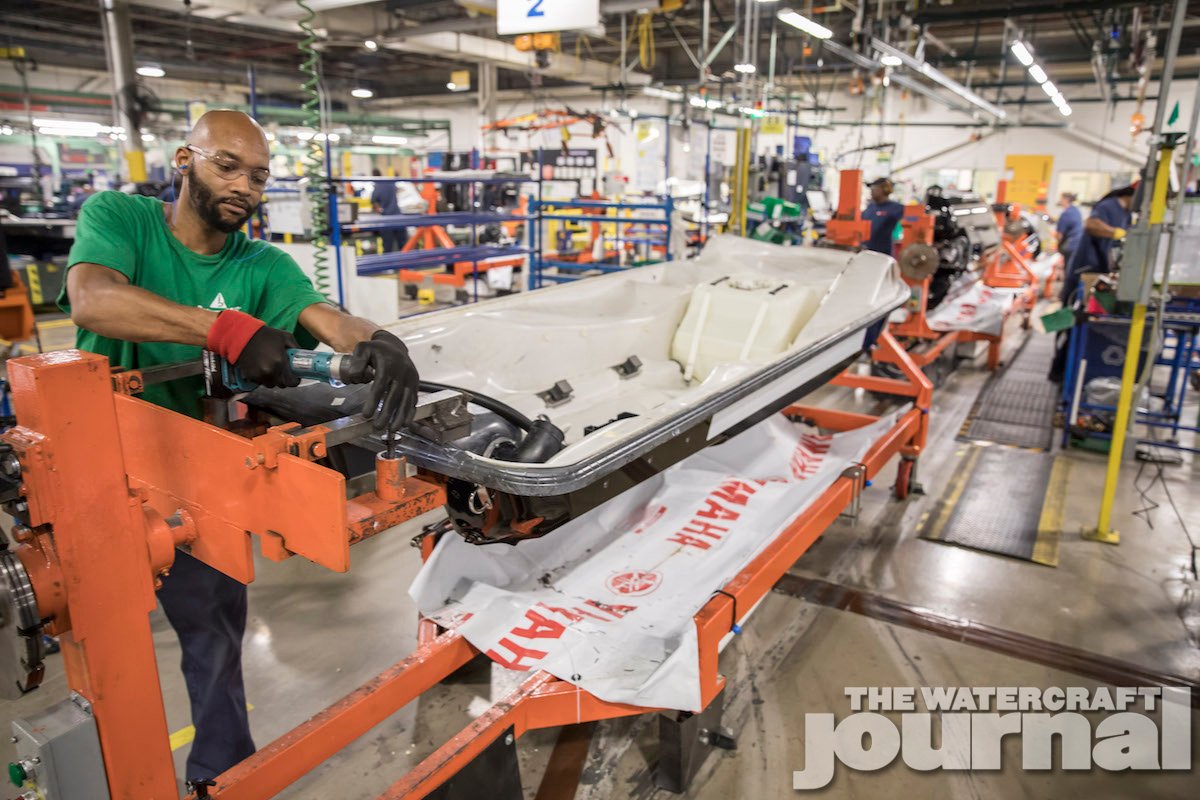
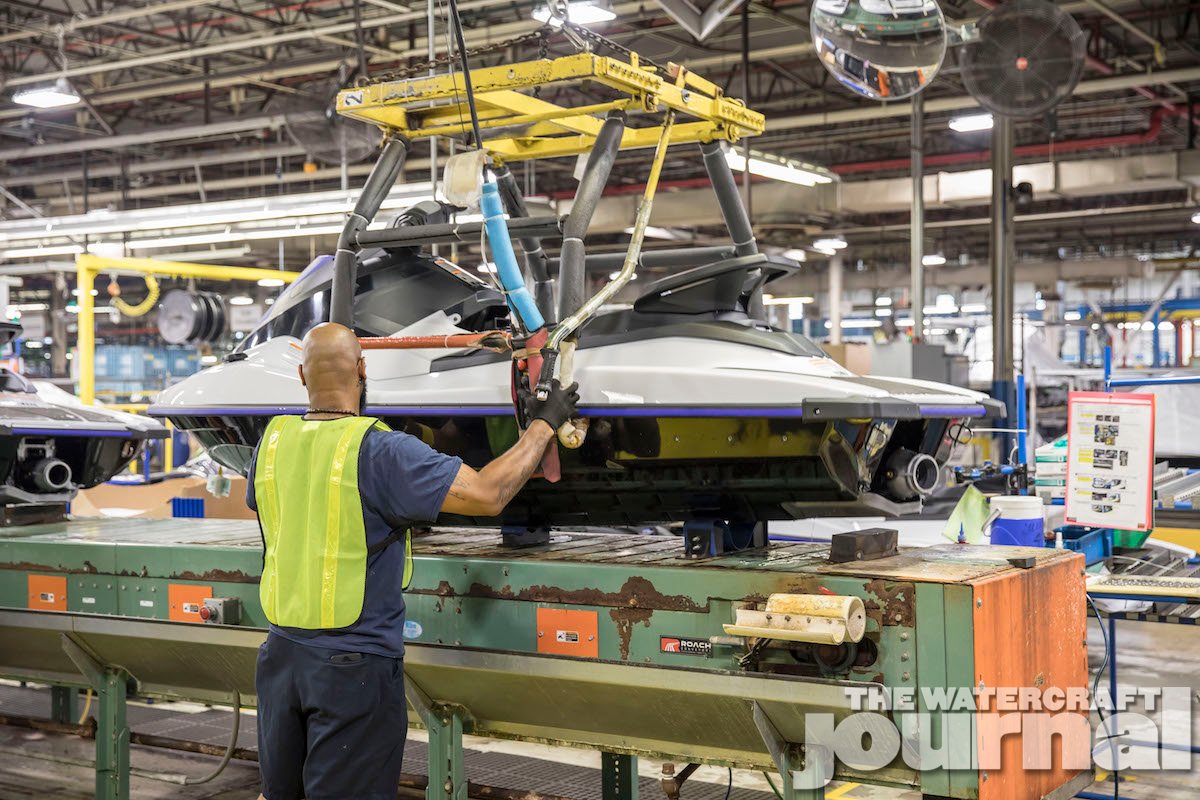
Above: Painted decks ride on a suspended track system, allowing technicians to rotate the deck on a rotisserie. Here ventilation hoses are riveted as well as few other mounting items before the deck and hull are glued together.
YMMC is also reducing its impact on the environment and supporting community programs through its Environmental Recycling Program, an Environmental Scholarships program for employee’s children (students receive a $2,500 Yamaha Motor Environmental Sponsored College Scholarship), and a local community stream clean-up project. Lastly, YMMC has donated vehicles for local emergency response and rescue to provide support for the local community, including WaveRunners for the Coweta County Fire Department to use for Chattahoochee River rescues and local community public events, as well as the Peachtree City Police Department being given donated ATVs for its multi-use path patrol program.
Add to that employee efforts to raise drives school supplied, food and toys for families during the holidays, and YMMC is not just producing some stellar powersports products but quality people and significant change to those in the surrounding areas. The tour of the plant itself was an eye-opening experience but pales in comparison to the revelation of the concerted endeavors the company makes to improve the lives of its employees and neighbors.
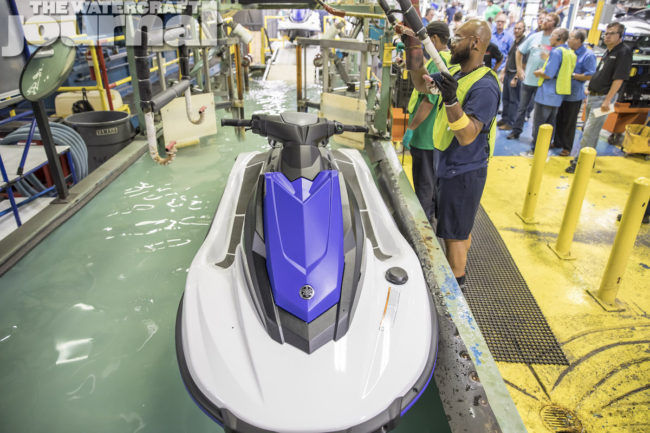
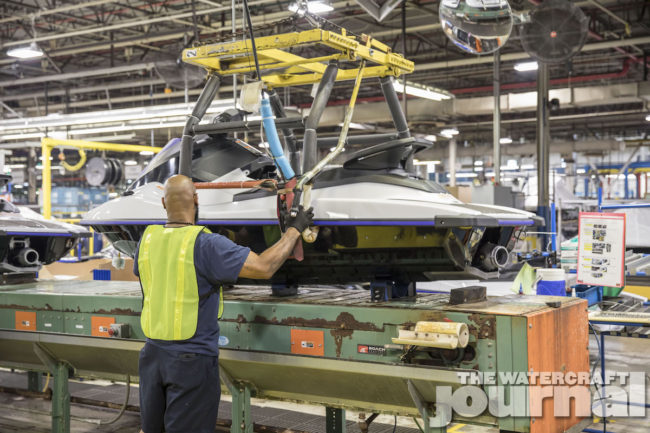
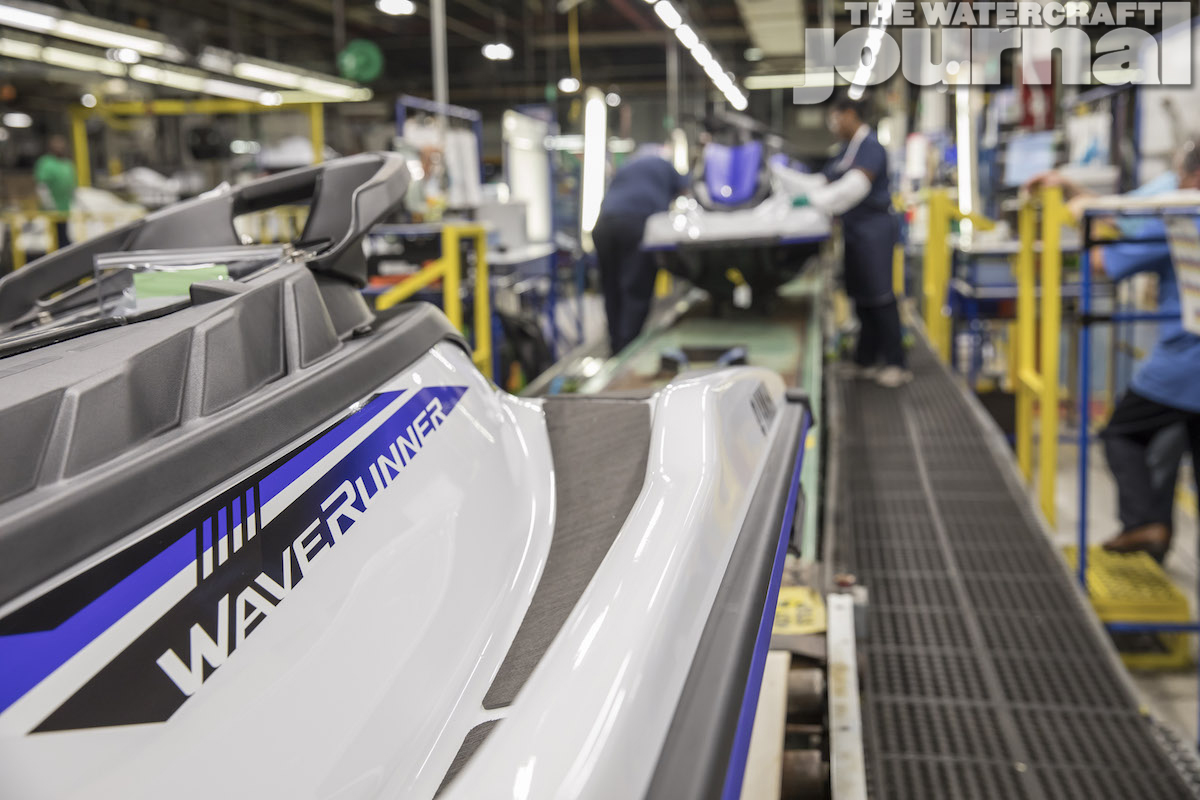
Above: The EX’s top deck, hood and steering system is installed before being lowered into a water tank for leak testing. When passed, the assembled WaveRunner is transferred to a second assembly line for final installation and graphics.
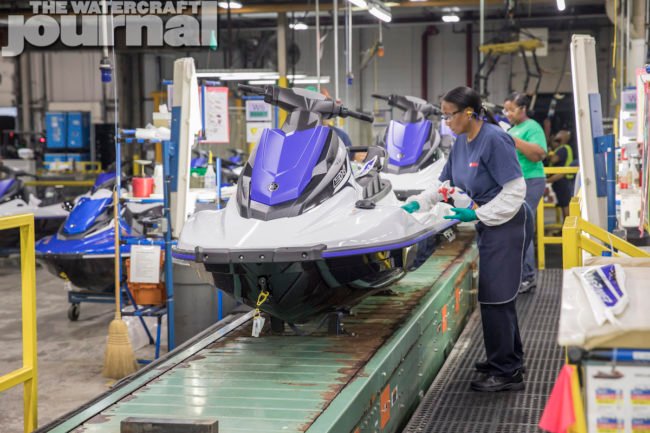
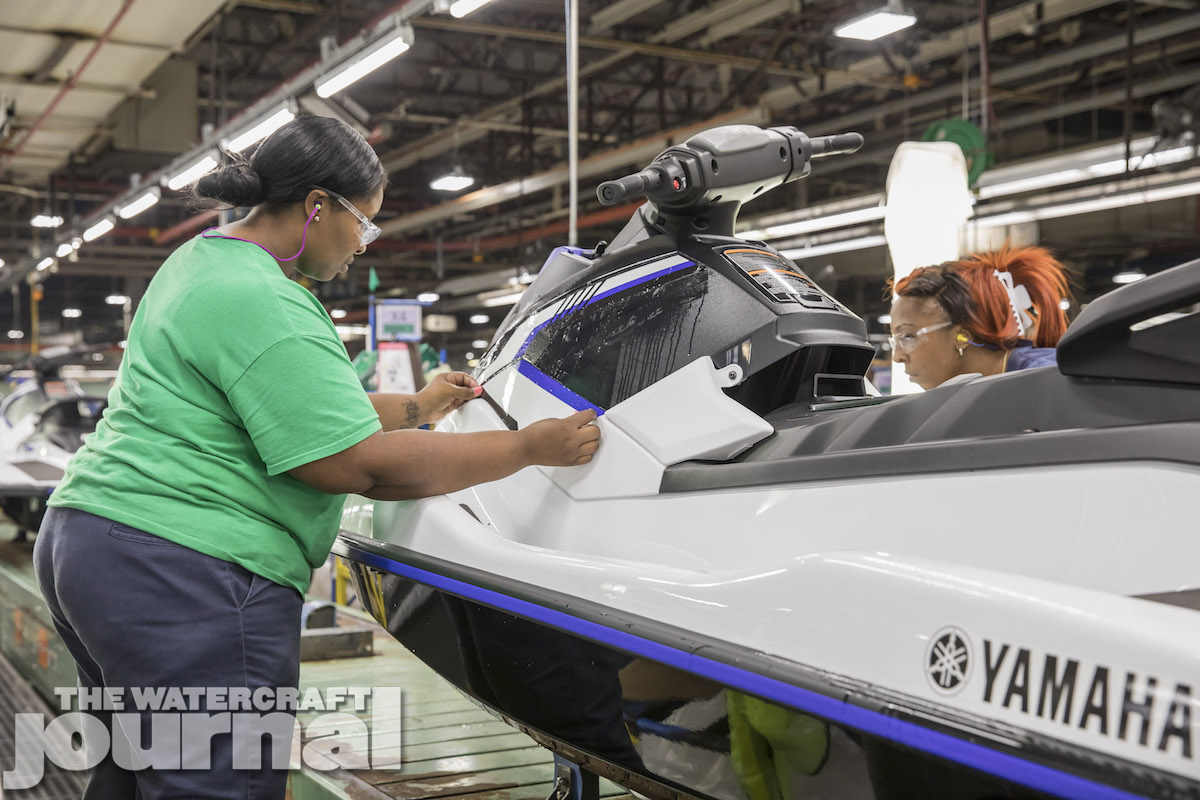
Above: Surprisingly, all graphics are hand-installed. On this line, bond rails and other finishing items are installed prior to final inspections and crating.
Above left: WaveRunner graphics are squeegeed to remove any bubbles or wrinkles before drying. Above right: Finally, all finished WaveRunners are personally approved by Scott “Hollywood” Watkins before being shipped to the distribution center. OK, not by Scott but they are finally approved before leaving YMMC.
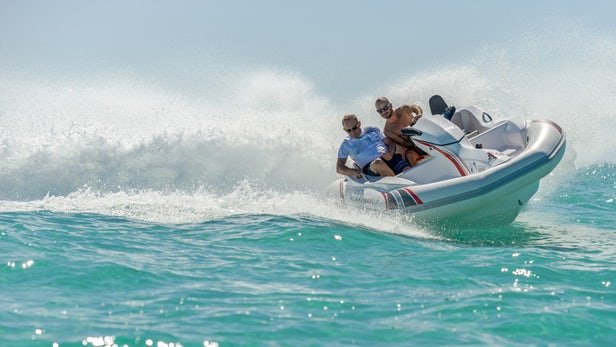
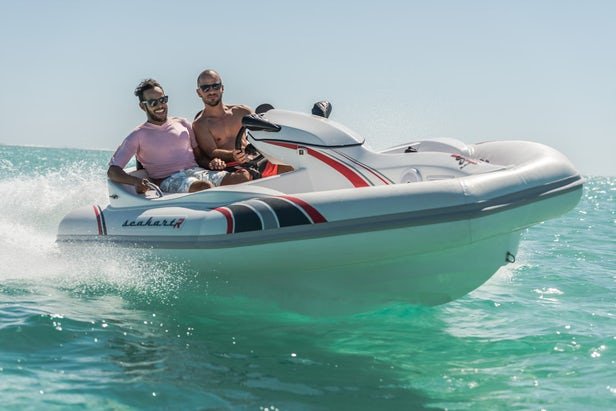
The Seakart 335 is a sweet ride for someone who wants to take the family and friends out for a nice day on the water. The craft is a hybrid of a jet ski and yacht tender which makes it a nice yacht tender and the Seakart crew is cool enough to design a tender to match the colors of your yacht. The company also offers several color choices for those who don’t need one to complement a yacht.
The watercraft is built to operate at fun speeds while you and your passengers travel in comfort and safety. It’s easily maneuverable so even the novice operator can handle it. The Seakart is powerful enough to tow someone on a wakeboards and water skis.
The Seakart 335 is a compact watercraft that is small enough to tow with a jet ski trailer. The machine has a carbon pallet with a steering wheel and a streamlined dive nose. The fuel tank holds 17 gallons, which will offer a good deal of water time. The crafts are equipped with either a Yamaha 110 CV or Yamaha 180 CV engine.
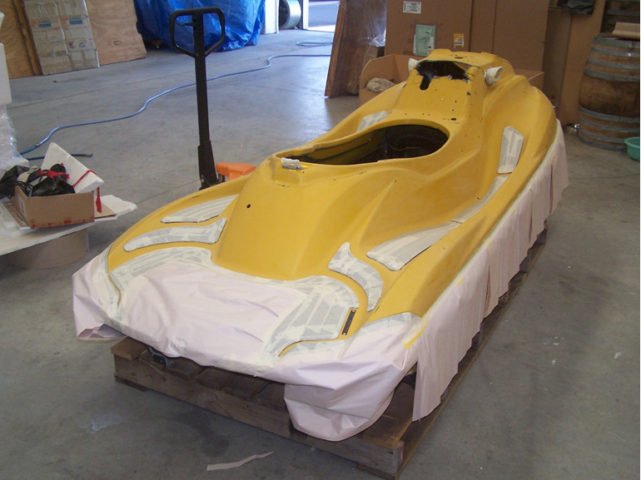
One of the great things about the Seakart is that it won’t flip like a jet ski. It’s built with fiberglass parts, and the core is surrounded by inflated tubes. If something goes awry, passengers are safe thanks to the well thought out features mentioned above.
“Besides world-class quality and optimum safety, top-notch performance is a priority for us,” says Seakart. “It’s for this reason we’ve chosen to power our tender with an economic and reliable Yamaha jet engine. Whether you’re accelerating to achieve maximum speed or slowing down to explore the ocean and surrounding scenery, the Seakart 335 guarantees a fast, fun thrill.”
The Seakart has a couple of options when it comes to seating. The five passenger Seakart is designed for three across the stern and two on the bow. The three passenger model is made for three on the stern.
FIt will cost a few bucks to put a Seakart on the water because it retails for $42,000. The company offers worldwide delivery with a one year warranty.
For a list of the Seakarts’ standard and custom features, click here.
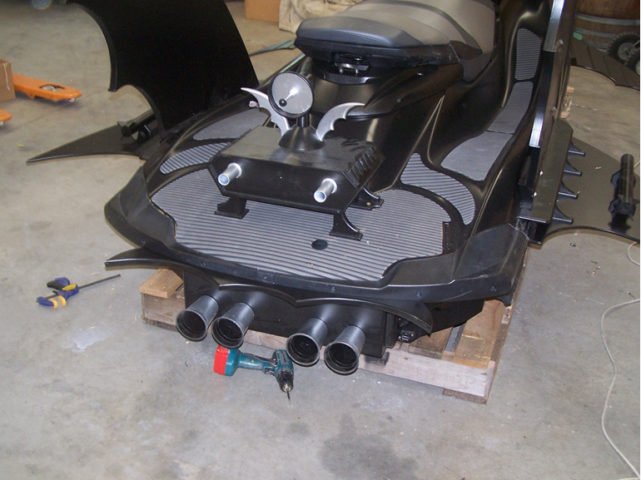
The Batmobile has been around for over 70 years after making it’s first appearance in Detective Comics #27 way back in May 1939. From there, it has changed many times and taken various different forms from the famous George Barris version that we came to love in the 1960’s to the tank looking creations we see in the movies today. Batman has had many different forms of transportation besides the Batmobile over the years but we never really saw him use a jet ski; that’s until now.
Built as a promotional item for BOP Film, the team over at Black Chilli has built a custom-designed jet ski that they think Batman himself would be proud to use. Starting with a written-off hulk of a Yamaha FZR, the team rebuilt it back to new before going totally custom with it. Their new “Batski” features custom wings, machine guns, missiles and other various Batman type gadgets using a variety of materials.
It’s clearly just for show as most of the add-ons will quickly be ripped from the Yamaha, but it makes for a nice show piece. Once it was complete, BOP Film then displayed it with Batman and Joker at the Downtown Tauranga, New Zealand Santa Clause Parade. It turned out to be a massive hit with Batman fans and children alike. Way to go guys! We haven’t seen it on the water but we’d love to see that!