
Home Blog Page 261

Gallery: Act Now On JetPilot’s End of The Season Sale

0

JetPilot has some bits and pieces of its top of the line racing gear on sale. Act fast to get in on the goods before they’re gone. Supplies are limited and so are sizes and colors. Below are the items currently on sale at the time of this writing.

Start by saving $20-$45 off the Apex Race Series. Check out JetPilot’s 2MM ultra stretchy neoprene Apex Race John, which is 100% stitched flat-lock style. The velcro shoulder entry is a nice easy in and out feature. It wouldn’t be complete without leg zippers. The John is available in black with flashy blue, grey, or green accents

Moving on to the United States Coast Guard approved Apex S/E Neo PFD. This necessity is a steal at $59.99 The Apex pfd has a custom side entry with 100% super strong flat-lock seams. It also features a simple 2 buckle zip closure and is available in gray, blue, and red.

The final sale piece available from JetPilot’s Apex line is the pull over 2MM Apex Race Jacket with 100% Flex-Lite flat-lock stitching. This jacket has the comfortable flex-lite ultra stretch neoprene panels allowing for the freedom to move. It will cost you $59.99, not bad for a nice looking race jacket.

The Hellcat Comp Vest is down to three available colors out of the usual six. Grab it with green, red, or blue JetPilot logos. The vest also features 100% Flex-Lite panels. It’s lightweight, comfortable, and has a good fit. The vest boasts ultra soft PVC foam flotation with a ribbed design. This front zip makes for an easy entry. $99.99 gets you one of these bad boys.

Check out the Women’s Lady Luck Signature Comp Vest with its color woven into a tie dyed appearance. The vest has a women’s specific cut and the sweet front zip for easy entry. It also includes the 100% Flex-Lite panels and ribbed design. The vest is lightweight and has the ultra soft PVC foam flotation. This vest is $109.99 and will serve you well.

Next on the list is the Men’s Icon Active Top designed with moisture-wicking and quick drying materials. It also doubles as a rash guard and blocks U.V. Rays. No sunburn for you! Grab one in black and white or blue and white. Flip a coin if you can’t decide and pick one up for $19.99.

The final available item is the $19.99 Shane Bonifay Signature Hat with its fancy 3-D Puff, signature, and flat stitching. The hat comes in blue or black. They both look hot. Head over to JetPilot.com to score a great deal on some high quality swag before it’s gone!

It’s Your Last Day to Score Big on TruckBoss Truck Decks’ Fall Savings

0

TruckBoss is at it again with their Fall into Savings sale. Act fast because the promotion ends October
31st and all sales must be finalized by November 15,2017. TruckBoss is offering a $300 flat fee for shipping to the USA.

The sale includes the UTV Savings Bundle, which includes a TruckBoss Base Deck, Ramp Package, winch kit, six tie down rings, and under deck lighting. The Deluxe Savings Bundle includes all of the above PLUS a SmartBoxx, and two sets of Caliber Retrax Tie Downs, four total.

The ATV Savings Bundle is available as well. It includes the TruckBoss Expandable Deck, Skinny Ramps Upgrade, six tie down rings,and under deck lighting. The Deluxe Savings Bundle has all those pieces and two sets of Caliber Retrax Tied Downs, SmartBoxx, and a winch kit.

We can’t leave out the Snow Package! It includes the TruckBoss Expandable Deck, Carbide Kit, six tie down rings, three ski clamp D-rings, two sets of Caliber Ramp Grips,and under deck lighting. Add Sled Locxx for $185! Yep, they’re on sale too! A Flip Extension is available at a sale price as well. It’s also an add on to the Snow Package. The Deluxe Package includes even more good stuff. A SmartBoxx, Caliber Traction Ladder, and a winch kit come with the Deluxe. Add a FlexLoader Snow for $799. It’s a cradle for your beloved snowmobile.

Moving onto what you came here for is the Large PWC Savings Bundle. Grab a TruckBoss Expandable Deck, PWC Ramp, winch kit, six tie down rings, two X FlexxLoader water cradles, two X FlexxLoader push back systems, and two X dual axle FlexxLoader buggy systems. All of this is available for $7399 or $7699, depending on the preferred size. This is a savings of almost $2000. This Bundle is just what you need for two sit down PWCs .

Rounding out the sale is the Stand Up PWC Savings Bundle, perfect for hauling two stand up skis. This package includes a TruckBoss Base Deck, PWC Ramp, winch kit, six tie-down rings, and two FlexxLoader Small Water Cradles.

Check out the TruckBoss Deck site for more detailed information.

Score a Sweet End-of-The-Season Price on A Spark From America’s Motor Sports

0

Are you looking for a sweet end-of-the-season deal? Score an unused 2017 “Banana Yellow” Sea-Doo Spark for $7,183 from America’s Motor Sports, located in Nashville, TN. This is a great PWC for a family. It’s easy to ride and doesn’t require much torque for towing. Americas Motor Sports offers financing and will accept some trade-ins. Check them out!

The 2017 Sea-Doo Spark is equipped with the Rotax 900cc HO ACE engine and it is easy on the fuel consumption. The machine uses 2.4 gallons of gas an hour and that gives you plenty of time on the water. The PWC is a 3-up so grab a couple of passengers for a day of fun on the water.

The Spark also comes equipped with Sea-Doo’s Intelligent Brake and Reverse system (IBR) and Convenience Package Plus (CONV). The CONV includes a front storage bin kit to hold all the extras you want on board. The package also includes a Reboarding Step, making it easy to reboard your ride. Lastly, the CONV comes with Sea-Doo’s RF Digitally Encoded Security System (D.E.S.S). The system’s key is designed and coded to match only your Sea-Doo Spark. No one can grab your ski and go for a joy ride unless you allow them.

The Spark is comprised of lightweight Polytec material, which is more resistant to scratches than fiberglass.
A closed loop cooling system is used to prevent corrosion from saltwater exposure and also keeps damaging debris out of the engine. This makes the craft more reliable.

Intelligent Throttle Control (ITC) provides choices as to how you want your ski to ride. A Sport mode is available on the 2017 Sea-Doo Spark that Americas Motor Sports has on offer. In addition to the Sport mode, a standard Touring mode is available on all models. Sport mode provides faster acceleration and engaging in Touring mode leads to a nice cruisy pace.

The 2017 Sea-Doo Spark with the Convenience Package weighs in at 442 pounds. That’s lightweight! Interested? Contact America’s Motor Sports to schedule a test ride.

Ride Power Expands Growing Catalog for 2018

0

We are certainly no stranger to Ride Power and their useful charging systems. With limitless charging power on tap, these products not only make life aboard your personal watercraft or other powersports equipment easier and more enjoyable, but they can also come in handy in an emergency situation where you need to make a call for help.

Along with the growing personal watercraft industry, Ride Power is also growing and increasing their product catalog. You can purchase full kits with everything you need for installation and usage or you can buy accessories separately depending on your needs. The full kits come in ten- or six-feet lengths.

The kits include a four foot Ride Power cable with SAE connector on one end and micro-USB on the other end, a two or six foot battery terminal connector cable depending on which kit you choose, and an iPhone adapter plug to give you the ability for charging either Android or iOS devices.

You can additionally purchase any of these items separately in case you already have the other items or find yourself in need of a spare. They also offer a micro-USB female to male USB-C adapter plug so you can keep the juice flowing to a wide variety of devices.

Installation is straightforward as seen from our previous installs. The first step is to connect the terminal leads to the battery terminals and route the connector cable. Then you plug the Ride Power charging cable into the SAE connector on the battery terminal connector. Next, simply plug your phone into the Ride Power’s micro-USB or other adapter and you’re ready to go.

As of early this month, Ride Power is now a patent and registered trademark. According to Ride Power, the patent technology is located within the Ride Power cable. Its circuitry automatically adjusts for voltages between 12V-48V DC. It has integrated shorting protection technology, and only draws power when your device is connected.

It also goes without saying that Ride Power is weather and water resistant with a rugged design for outdoor powersports use. According to the company, they have even put their products through durability testing by running it over with trucks with no ill-effect.

All Ride Power products are currently available for purchase online at ridepower.net and other major websites. They can also be found in select stores and powersports dealerships across the country. The company also has plans to bring their products to major retail stores in the near future.

You can be on the lookout for even more product offerings in the future from Ride Power as they are constantly evolving and coming out with new solutions. Next year they will be coming out with some more new products including a phone holder. So far reviews for these products are great and with continued expansion, we don’t see Ride Power or your phone’s battery status slowing down anytime soon.

Kevin Shaw: I Was Right And Why It’s Important

1

Predicting the future, particularly with no true means to inside developmental intelligence, is pretty tough to do. Every now and again, my position within the media allots me a brief snapshot into what might be coming around the immediate bend, but a sincere, honest-to-goodness pull-back-the-curtain sort of look is pretty tough to do without being an employee of the company itself. When a prediction is made, it’s often done so with a pathfinder’s ear to the trail; you might be able to sense vibrations and predicate whether the footfalls are traveling fast or slow, and a rough estimate of how far away. That’s pretty much it.

So when I publish not one but several articles espousing the same prediction(s) again, and again, and again, it’s worth taking notice. Now, as all of the year’s revelations have been dealt to the public I’m able to review those predictions I made and with affirmation say boldly, “See? I told you so.” Normally, I wouldn’t gloat but for this year in particular, many older and (self-presumed) wiser readers chose to doubt my assertions pertaining to Sea-Doo’s next moves, even going so far to openly berate me and the magazine on social media. Sure, I could be the bigger man and let it slide, but I’m feeling particularly petty today and would like to rub their collective noses in it.

A Sea-Doo Standup: I can see how many would think the initial investment on Sea-Doo’s behalf to develop a standup ski would be, at most, minimal. Much if not all of the electronics, powertrain and auxiliary systems could be harvested from a 90-horsepower Spark HO and dropped in a standup hull. Many enthusiasts even encouraged the use of the brand’s lightweight Polytec material. And as this is certainly possible it remains very improbable. Why? Because Sea-Doo is interested in two things: volume and new (first time) owners, and standup skis simply do not have the numbers to back it. (To date Kawasaki has sold just over ’17 SX-R 1,000 units compared to Sea-Doo’s 12,000 Sparks this year.) We debunked this in July here.

So Long Suspension: This too we called back in July and was pretty easy to predict, yet I received quite a bit of push-back. Sales of Sea-Doo’s suspension-equipped units were never really the runaway hit that most would have liked. Beginning with the first iS (Intelligent Suspension) RXT iS 255 and GTX Limited iS 255 for 2009, the system was heavy, complicated and expensive. Add to it costly and time-consuming service hours, and things added up quickly. It wasn’t long before the “adjust-on-the-fly” iS was replaced with self-regulating version, before becoming completely mechanical (requiring a socket wrench to tighten/loosen). For the RXT-X, a racier “aS” system was offered for a few short years before being dropped back in late 2014. For those still wanting one, the final GTX 155 S is still available as a 2017 model.

Consolidating CM-Tech: This was the first of the big predictions that we got right, and we made it back in February. Companies do not spend literally millions of dollars in developing a entirely new molding process just for a single model, unless they plan to sell tens of thousands of them a year (ie. Spark). That’s why the introduction of the new CM-Tech material on the 2017 GTR-X 230 introduced last year was such a big deal. Sea-Doo ditched its conventional molding process for laying multi-layer thermoformed sheets of acrylic and ABS into the mold before the fiberglass is injected, resulting in a high gloss acrylic finish that is more resistant to chipping and cracking due to the flexible nature of the acrylic sheets.

So again, why is this a big deal? Because for 2018, every single runabout on the ST³ platform, and all of Sea-Doo’s GTI/GTS models are now made with CM-Tech. Heck, both the deck and hull of the ST³ units are made from the stuff. Technicians and tuners will appreciate the smooth inner surface (no more itchy, irritated skin thanks to fiberglass strands), and Sea-Doo has its own proprietary process that they don’t need costly licensing agreements to contend with. It’s a pretty big win-win for the brand. Oh, and speaking of the ST³ platform, we called a new “offshore/rough water” hull for 2018 in July as well.

Popularizing Polytec: This one I’m particularly proud of because Sea-Doo actually tried to bury it. Well, kinda. In late 2016, when introduced to the then-new 2017 lineup, the reveal of the 90-horsepower ACE 900-powered GTS, GTI and GTI SE was overshadowed by the Trixx. (And understandably so, the Trixx outsold every other PWC in the market. Literally. I’m not joking. The Sea-Doo Spark Trixx was the best selling PWC in 2017. Crazy!) What was significant about the change to the GTS/GTI was the addition of the Polytec hull material to the larger craft. Right then, I predicted that this was a harbinger of things to come and reiterated it two more times.

Many scoffed, saying, “The bigger horsepower 130 and 155 Rotax would tear the motor mounts out of the Polytech hull. There’s no way they’ll do it.” Well, for 2018 many thought they didn’t…that is until I looked closer at the Wake 155. Yup, not only had Sea-Doo integrated the Polytech hull on a GTI-based runabout with the larger Rotax NA 1503, but did so on one of its more popular models. The 155-horsepower Wake indeed comes with a Polytech base and CM-Tech deck, dropping the weight to 718-pounds over the previous 799-pounds. An 81-pound drop is significant, yet interestingly, Sea-Doo made zero fanfare over the move. Sure, there’s still a handful of GTIs with optional fiberglass hulls, but it is likely all will be Polytec by next year. And the GTI-based supercharged GTR and GTR-X 230? We’ll have to wait and see when/if those transition as well.

Go Get Wet,
Kevin

2018 Yamaha vs Sea-Doo vs Kawasaki

0

Now that we have seen the official release of all the big three manufacturers for their 2018 lineup, it’s time to do a little comparison. With each successive year, we are seeing more and more consumers getting into the personal watercraft scene and with so many options now, it can be really confusing for first-time buyers.

Okay so we could literally write an entire novel on this subject which would likely take up nearly as much room on your bookshelf as your Bible. For the sake of our readers’ eyes and sanity, we will only look at the entry level and high-end luxury watercraft. This way new buyers can quickly and easily compare as well as previous owners who may wish to upgrade. You can always check out our individual lineup articles for Yamaha, Sea-Doo, or Kawasaki details.

The entry level category is called Rec-Lite. This category is mainly, but not strictly for the price-conscious buyer who just wants to get on the water or for first-time buyers. Sea-Doo’s model for this category is called the Spark. Characterized by its lightweight and playful Polytec hull, it is an excellent way to begin experiencing the amazing Sea-Doo Life. There are different sizes, engine options, and accessory options but the price ranges from $5399 to over $7500.

Yamaha’s Rec-Lite model is the EX. There are different model offerings here as well ranging in options and accessories. Its starting price at $6699 is a bit higher than the base model Spark, but it does start out with more storage and fuel capacity. Kawasaki does not have a Rec-Lite category but their closest entry level Recreation Jet Ski is the STX-15F. This can be a great entry ski as well as its heavier hull and more powerful engine offer better stability and comfort for family riding. It is however priced higher at $9699.

On the other end of the spectrum is the luxury category of personal watercraft. This category is mainly for those who have owned before and are looking to get the most comfort, power, and options available or for those who are just looking to blow some cash. For Sea-Doo, this is the GTX Limited 300. Priced at $16899, you get Sea-Doo’s new ST3 hull with its 300 horsepower engine. You also get pretty much every option your heart desires including the new 100 watt Bluetooth audio system.

Yamaha’s top-line luxury WaveRunner is the FX Limited SVHO. Pricing is right there with Sea-Doo and you also get an impressive list of options including a towable single-rider tube. For Kawasaki, there is the Ultra 310LX. It has the highest sticker tag at $17999, but you get a monstrous 310 horsepower engine with lots of storage, fuel capacity, and other accessories.

While we cannot sum up every single model in such a short article, there are other resources that give a generous amount of information on each make, category, and model out there including this comparison article by an unbiased third-party person.

Real Review: Yamaha Genuine Parts GP1800 Watercraft Cover

0

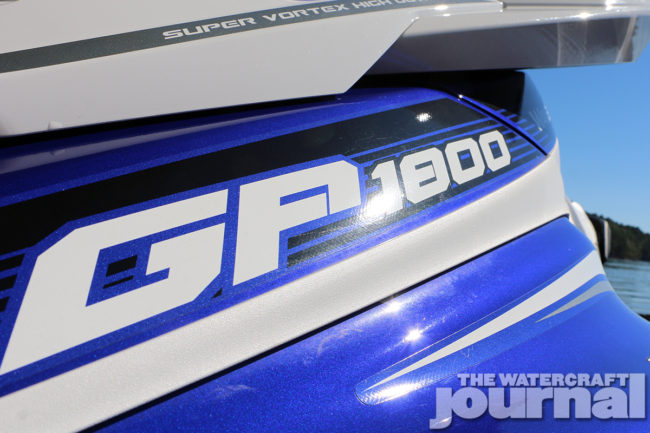
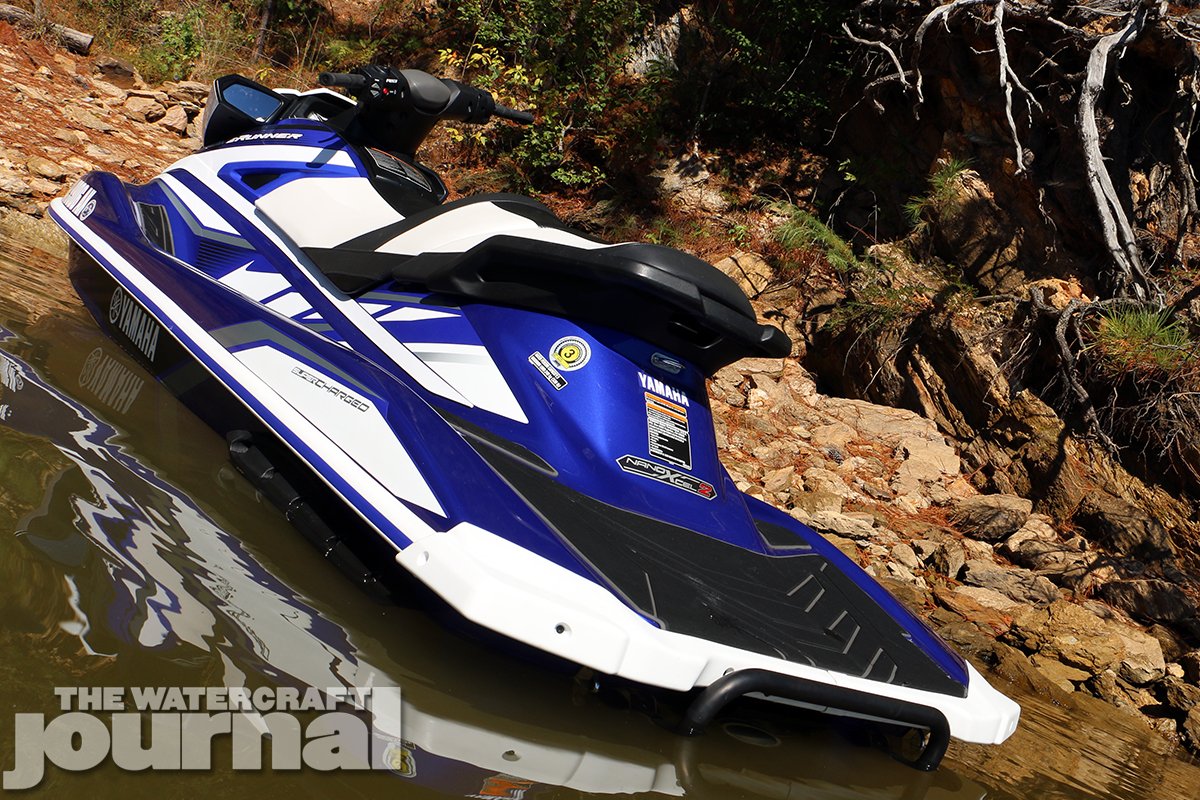
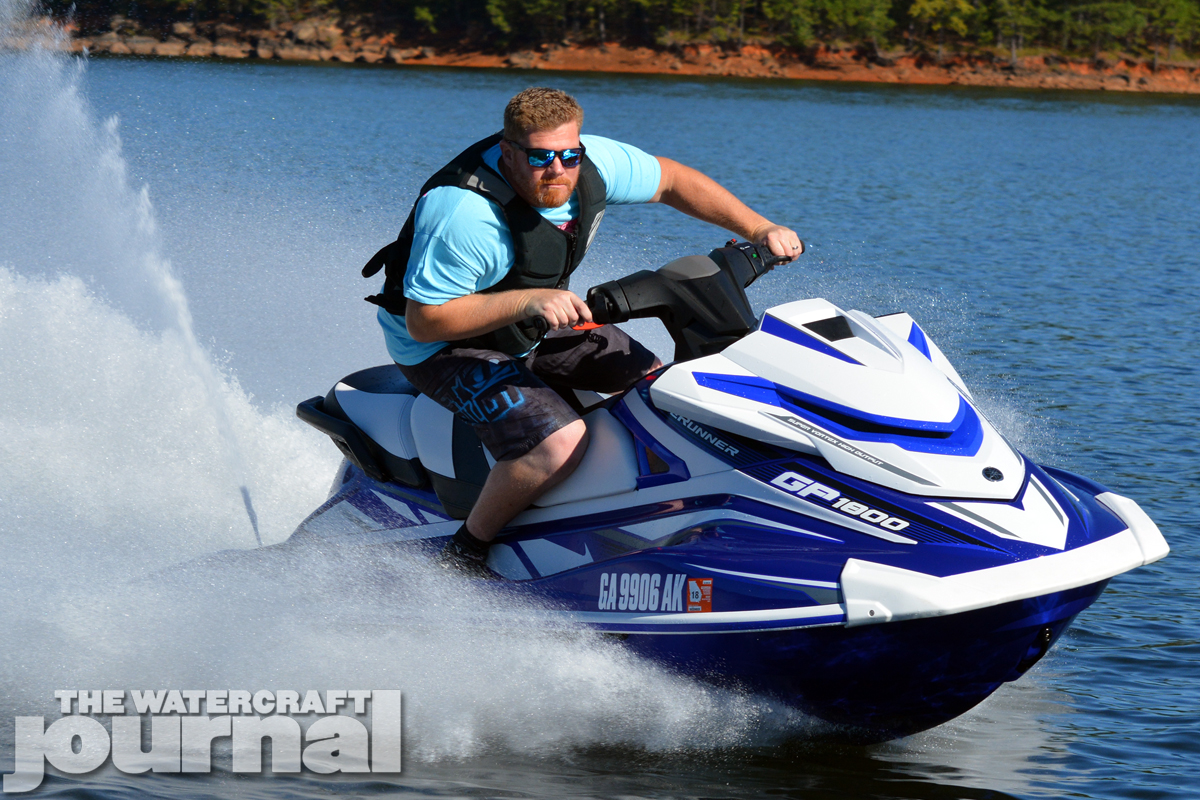
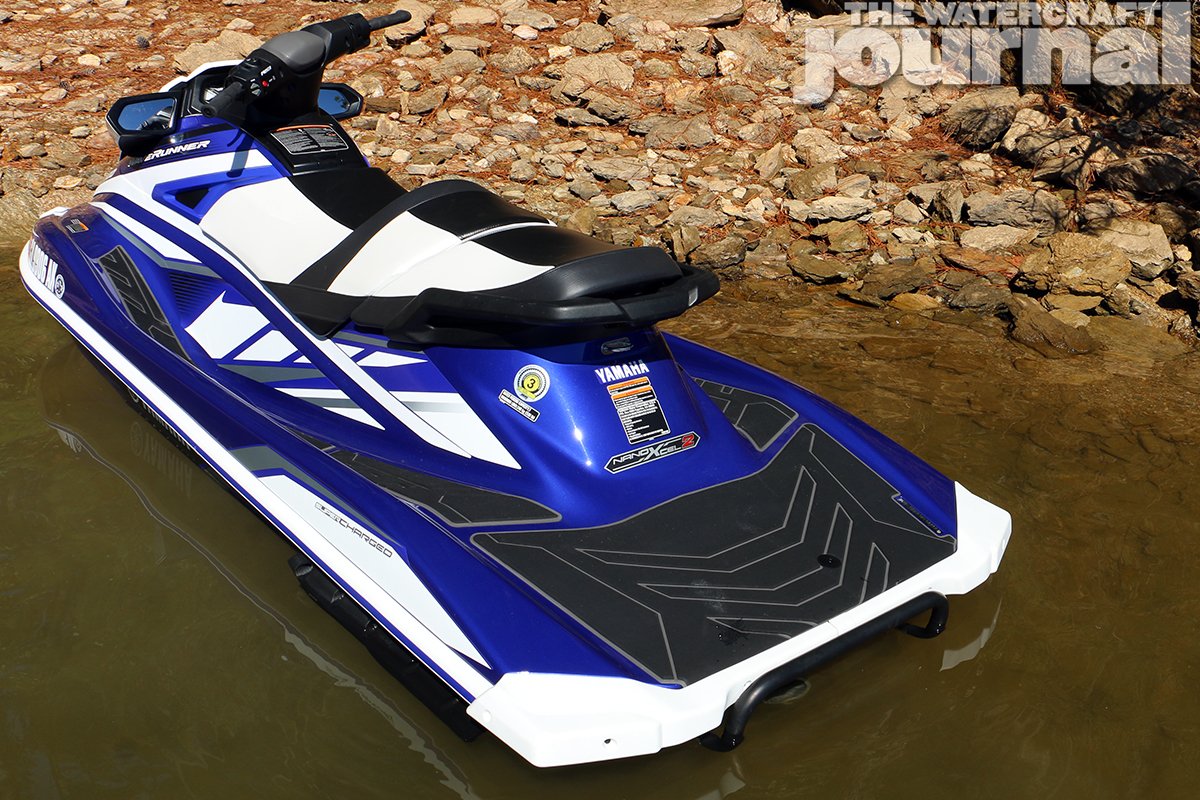
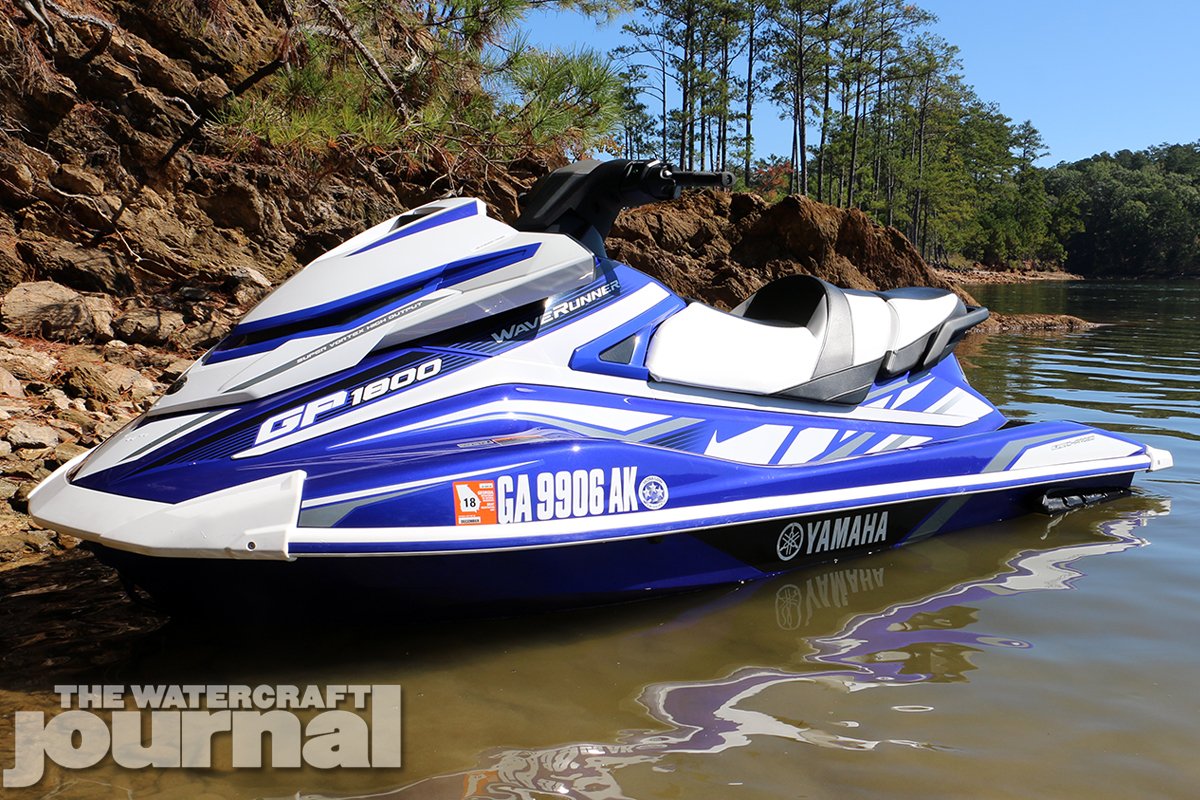
Prior to writing this product review, we joked that we should make it a tutorial on how to properly install a personal watercraft cover on your Yamaha WaveRunner, because – and we’re not joking – we’ve seen people struggle with this. So, we sorta did (see the pics and captions). All joking aside, we thought it an appropriate time of year (at least for you folks north of the equator) to start discussing winterization. Although we think you’re a yellow-bellied coward for putting your ski away for such a large chunk of the year, we can understand not wanting to push your new runabout across the surface of a frozen-solid lake. It doesn’t sound like much fun.

A major portion of your winterization process is protecting your investment from scratches, debris, dirt, dust and any other contaminants over these long months of hibernation – and that means buying a PWC cover. Listen, this might not be super exciting stuff but there’s a lot that goes into making a decision like this. For you brand-loyal types, purchasing an official Yamaha WaveRunners PWC cover through Yamaha Accessories’ ShopYamaha.com webstore is a no-brainer. But priced at $259.99 (at least for the cover specifically tailored for our 2018 GP1800), you more frugal types might be looking to go “off brand”.

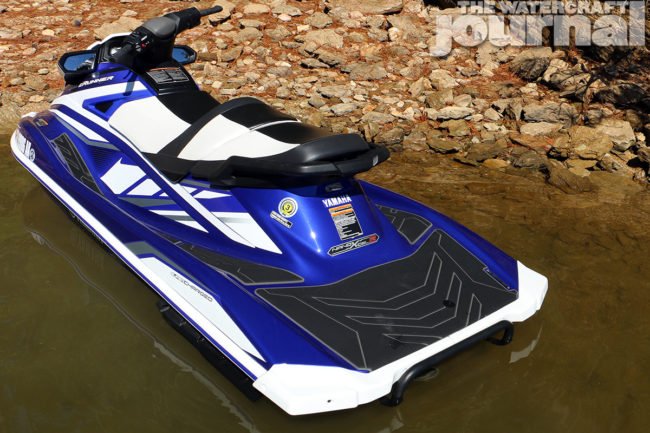
Above: In certain cases, we only suggest the officially-licensed products, like Yamaha Genuine WaveRunner covers.

Above left: Each official Yamaha WaveRunner PWC cover is specifically tailored to fit the ski as snugly as possible. That means fitment over the handlebars is going to be tight, and should be the first place to begin. Above center and right: With the cover over the handlebars, begin working the cover over the bondrail, starting at the nose and traveling around the perimeter of the ski.

Here’s why we say don’t; you get what you pay for. We’ve found more affordable PWC covers, but the material used is often thinner, harsher, poorly assembled or literally sewn out of dufflebag canvas. Yamaha‘s WaveRunner covers are designed to help protect your watercraft‘s appearance first and foremost. Each cover features superior construction and materials to help provide long life as well as a custom fit and are constructed from a ultra-durable Sur Last solution-dyed polyester. for superior protection against the elements. It’s non-abrasive, water-repellent, UV, mildew, and rot resistant.

Sure, the Yamaha PWC cover comes in stylish colors and graphics to match your ski, but there’s also something else that we like more than anything else: you can trailer your WaveRunner with it still on and without strapping it down. Yamaha calls it Vacu-Hold, which basically means that the breathable fabric allows air to travel below the cover’s surface at highway speeds and safely evacuate through two specially engineered vacuum vents incorporated into the cover.

Top left: With the cover over the bars and nose, we worked the cover over the rear of the bench and passenger handrail. Top center and right: Working our way down and around, the rest of the cover went on easily. Bottom row: The Yamaha Genuine Parts WaveRunner cover features soft clips that snap to the underside of the bondrail, air-exacuating vents, and made with mold, mildew and water-resistant materials.

At speed, the negative pressure created keeps the cover tightly in place. That means less aerodynamic drag, reduced air-induced stress on the seams, no rippling, flapping, whipping, scuffing or strap damage to hulls. It’s a patented design, so that’s why you won’t see it on cheaper competitors’ covers either. Yamaha instructs that before using this cover the first time, the elastic band must be adjusted to be as tight as possible. To tighten, simply install cover, locate the elastic knot at the front, pull it tight and retie. (Adjust if it’s too tight to be removed.)

Because of the special, non-abrasive material, maintenance instructions are pretty straightforward: clean with a sponge and mild soap in cold water, rinse and allow to drip dry. No harsh detergents, bleach or hot water. And do not machine wash or dry. The cover does come with a warranty against defects in material and workmanship for 90 days from the date of purchase, so put it on as soon as you get it to make sure everything checks out first. Yamaha also includes additional tie down loops that may be used when trailering behind a vehicle or in case of high crosswinds.

A Peek Inside Belassi: The Austrian PWC Company Releases Inside Info From Inside Its HQ

0

We at The Watercraft Journal have a bit of a love/hate affair going on with Belassi. It’s not that we’re angry or vengeful against the manufacturer of one of the most powerful personal watercraft ever made, it’s just that we’re on the other side of the damned planet and haven’t been given the chance to ride one yet. So, until we can get our hands on their new 333-horsepower, turbocharged Burrasca runabout, we’re left gleaming all of the information we can from press releases and third-party info.

Earlier this month, the Austrian company threw open its doors and arranged for a photoshoot of its Linz, Austria headquarters to shine some light on the process that lead to the creation of their self-described “ground-breaking” runabout. Belassi was kind enough to send us their recap of the tour; and while we often (more like never) cut-and-paste press releases and call them “original content” we did think it worth letting Belassi explain their facility in their own words. So, with no further ado, here’s what they had to say about themselves:

“In July, after taking part in different competitions, the Belassi team stated that they were satisfied with the results their personal watercraft had earned, which made them realize the huge potential of their creation. This events gave them the idea for a new project, a new improvement for their Burrasca; they decided to equip it with a racing setup, so that every customer would live ‘the full Belassi Experience’.

“Quite a few images showing the process of building a Burrasca and Belassi technicians working inside the headquarters have been released. Entirely made in the Belassi factory, it takes the utmost attention and passion. Over twenty-five assembly steps cover more than two thousand parts to get the perfect mixture of the best and most innovative materials, techniques and know-how that is the final products.

Above left: The interior of the Belassi offices. Above right: Research and development department.

“The first assembly phase is the installation of the front plate, steering cable, bracket and the high-tech aluminium adjustable sponsons. The water outlets, hoses, top deck and double-chromed cover for the water-cooled exhaust system are mounted next; followed by the sealants, the engine Silent Block and EPP. Then come the adjustable rear flaps, the electric parts and other. The I3C16 engine — Marine 3 cylinders, 4 stroke — is preassembled and installed, as are the trim, reverse pipes, 3K carbon muffler and bilge systems. The battery, the charge air system and the innovative x-frame, made of light 3K carbon, get placed inside the Burrasca, adding an internal support for the durability and safety of the runabout.

“The drive shaft, the reverse flap and the engine hood, with its innovative and unique opening system are put in place, allowing for a comfortable inspection of the engine compartment.

Above left: Set up of engine I3C16. Above right: The ergonomic sport seat.

Above: The packaging is specifically designed for Burrasca.

“The finishing touches are the covers — steering, side and pads — and finally, the ergonomic sport seat with its carbon fiber base. This seat, made in Italy, is durable, resistant and certified, and features the company’s trident-like logo. To top it all off, the packaging is specifically designed for Burrasca, to protect the precious Austrian personal watercraft from scratches and from the risk of ruining its red glossy finish.

“This means the production is going strong and that Belassi is steadfast in his visionary project of delivering a unique runabout, with a racing-like feel yet designed to be both elegant and sophisticated. It’s a finished product that meets the company’s high standard ideals.”

https://www.youtube.com/watch?v=o8oo6s-a0ys

Video: East Coast Round of 2017 P1 Racing Fuels IJSBA US Freestyle Championship

0

If the amazingly suspenseful final minutes of this year’s Pro Freestyle competition at the IJSBA World Finals wasn’t enough to satisfy your need for top-of-the-class athleticism, then you’re about to drink from the firehose, kid!

The final round of the US Freestyle competition season is happening in Fort Myers, Florida this very weekend. Yeah, there’s still time to enter (but you’re cutting it dang close), and there’s still plenty of time to pack up the truck and drive on down.

The East Coast Round of the 2017 P1 Racing Fuels US Freestyle Championship (officially sanctioned by the IJSBA) will take place on this Saturday, October 28th in Revolution Cable Park (17590 East St) in North Fort Myers, FL.

While it’s easy to drop in and check out the action if you’re in the area, we strongly suggest you show your support and make a day of it. Bring the kids! Heck, bring the dog! Bring a leash (for the dog and/or the kids, we don’t care).

So make sure to check it out in person, or at least, give the official Facebook page a “Like” ’cause you’re a nice person.

Gallery: Putting Finish Renu Degreasers To The Test

0

[Much of this article was previously published at Mopar Connection Magazine, sister publication of The Watercraft Journal. Some portions have been edited to fit accordingly. The original version can be read HERE.]

“Never trust a skinny chef” were the words of wisdom once shared to me by former Mopar Muscle editor Randy Bolig some dozen years ago while serving as a lowly Associated Editor. The philosophy made sense, and by an extent, the same could be said for anyone whose tools and garage are just a little too clean. Even the floors of the most meticulous mechanic are scuffed and discolored, if not you know that work simply isn’t being done there. Therein lies the struggle in keeping a clean shop. Working on our toys can be messy work, so how do you keep it clean?

We chatted up our friends at Finish Renu Car Care Products, [parent company of Jet Renu, who you all know -Ed.] who pushed us to test their products further than what we had in mind. Our initial plan was to document before-and-after shots of some of our dingiest tools and our epoxy-coated garage floor after giving it the ol’ Finish Renu treatment. That all changed when Finish Renu’s President and resident chemical engineer Jim Moreno asked, “How’s your driveway?” Like most of you, the asphalt outside of our garage was littered with oil stains, grease spots and even a large bleached patch where a gas can had tipped over.

Above: Finish Renu Car Care Products offers a full line of degreasers, and sent us samples of their Purple Punch, Venom and Red Bull cleansers to put to the test.

Above: For our first test, we fished out some pretty grimy parts from our parts bin. Because Purple Punch has a recommended 4:1 ratio, meaning 16 ounces per gallon, we measured out 48 ounces of Purple Punch to our 3-gallons of water.

“We can fix that,” Moreno promised. “Let me send you some stuff.” The offer was too tempting to pass up. We regularly put Finish Renu’s bright yellow “Venom” degreaser to work in our shop, diluting it to a 64:1 dilution and carrying it in a spray bottle. Venom, as with all of Finish Renu’s degreasers, is non-flammable and biodegradable, that means it’s environmentally friendly, won’t murder your lawn and won’t infuriate your nosy neighbors when you hose off your driveway. Just in the past year, we’ve found Venom alone out performs most acidic-style cleaners, solvent and other water-soluble degreasers. But how about the rest of the lineup?

Finish Renu offers five different grades of degreaser: Burst, Purple Punch, Venom, Heat and Red Bull. Moreno quickly shipped over gallons of Purple Punch, Venom (because he knew we loved it), and Red Bull. ‘Punch was new to us, and is one of Finish Renu’s heavy duty degreasers specially formulated with special surfactants, wetting agents, emulsifiers and detergents to make it an outstanding concentrated degreaser. Priced at $12 a gallon, Purple Punch can do a long way as a diluted spray, but really does the most work when cut a little on the concentrated side. Moreno did caution us about Venom, Heat and Purple Punch, stating:

Above: We poured in our Purple Punch, dropped in our parts and filled in another 3 gallons of water before we let the degreaser do its work.

Above: After a few hours of soaking you can see the difference Finish Renu’s Purple Punch made on the inside of the timing cover. Sure, it can’t undue the damage of rust, but look at how it ate away at the grime and caked-on grease! The yoke is grime-free as well.

“These degreasers are traditional caustic/butyl-based cleaners and are corrosive. These degreasers react quicker than Red Bull but can have a negative reaction to metals and painted surfaces if not diluted properly. These degreasers are spray-on and rinse-off style products. They can leave a white caustic residue if not rinsed thoroughly or if they are allowed to dry. Believe it or not but these degreasers are most common in the industry because the end user thinks if it smells bad, burns your hands and works fast it must be good!” For most applications, Moreno suggests dilutions: engines (4:1 – 9:1); heavy equipment (4:1 – 9:10; concrete (9:1 – heavy stains – 5:1); asphalt (9:1); general purpose cleaning (15:1 – 30:1).

True to his word, the experiment we conducted on a very greasy timing chain cover and a very filthy rear pinion yoke followed as per his description. Our blend was at the recommended 4:1 ratio, meaning 16 ounces per gallon. With a handy 5-gallon bucket and a measuring cup from the kitchen, we filled our bucket 3-gallons high and with 48 ounces of Purple Punch. We let both the yoke and cover soak for a few hours before thoroughly hosing them off. In the pictures, you’ll see that we left a quarter of the cover untouched to show the efficacy of Purple Punch on built-up and baked-on grease, grime and other contaminants. The yoke came out completely grime-free, and even built up some of that white residue Moreno warned about.

Far Left: One of our most set-in stains from a leaky oil pan on our daily driver. Left and Right Center: We measured out 8 ounces and poured it directly onto the stain. Far right: We began scrubbing with a stiff bristled brush the Red Bull into the asphalt.

Far left: With the smaller stain scrubbed, we let it sit. Center left: For the larger areas we used a hard bristle push broom to work the Red Bull degreaser into the driveway. Center right: After several hours, we began the process of spraying off the now discolored cleanser, using the broom to scrub a little more as we went. Far right: Although not perfect, the ugliest of our stains was heavily removed. We think maybe a second round of scrubbing would eliminate much of the remaining evidence.

When it came to treating our driveway, Moreno had very different recommendations: “Red Bull likes dwell time, so the longer it sits the better the surfactants emulsify the grease and oil. Red Bull (priced at $15 a gallon) is ideal for heavy equipment, concrete, asphalt, engines, under carriages, recirculating parts, washers and floor machines.” His recommended dilutions are as follows: engines (2:1 – 4:1); parts washers (20:1); floor machines (30:1); heavy equipment (2:1 – 5:1); concrete (9:1 – heavy stains – 5:1); asphalt (9:1); general purpose cleaning (15:1 – 30:1); also noting that all dilutions are recommendations only and all dilutions are using a pressure washer or machine. Using a water hose use or simple rinsing may require the product to be used stronger.

Considering we didn’t have a pressure washer handy (and only a “jet” setting on a traditional garden hose nozzle), we opted to “go nuclear” and apply Red Bull straight onto the driveway’s worst spots. On the smaller and/or more concentrated stains we used a hard bristled brush and scrubbed the degreaser into the stain. For larger areas, we used a large, hard bristled push broom. We too, gave Red Bull several hours to set in, almost to the point of drying before hosing it off, making sure to scrub a little more as the solvent washed away. Once dried, we noticed that Red Bull did an amazing job of knocking off much of the stain, but realized that it would take one or two more bouts to really clear off some of our more stubborn stains.