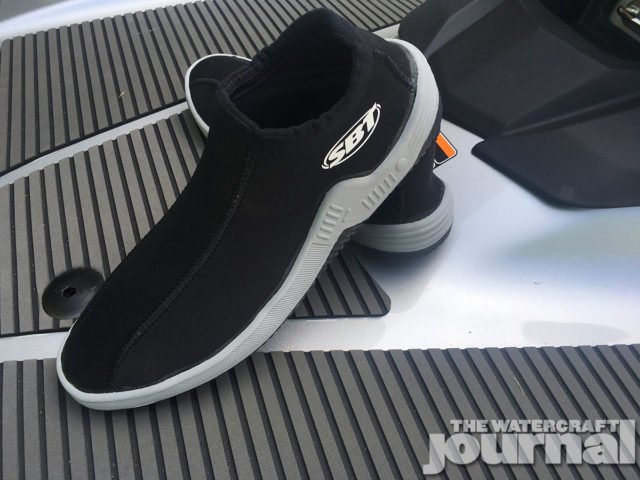
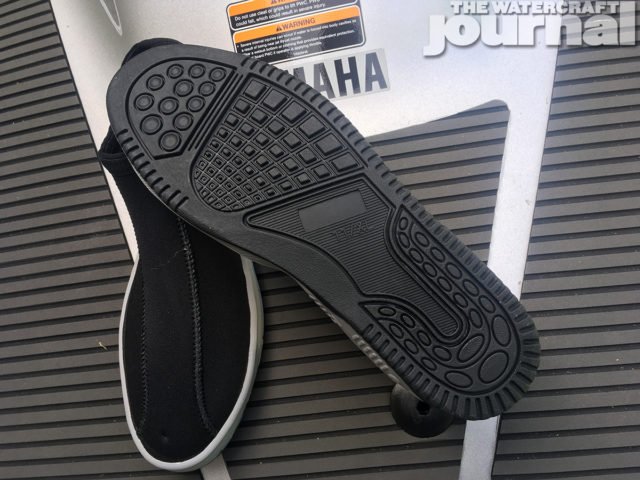
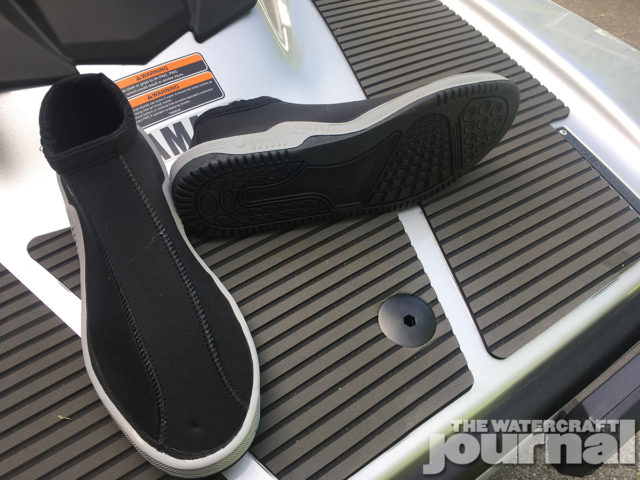
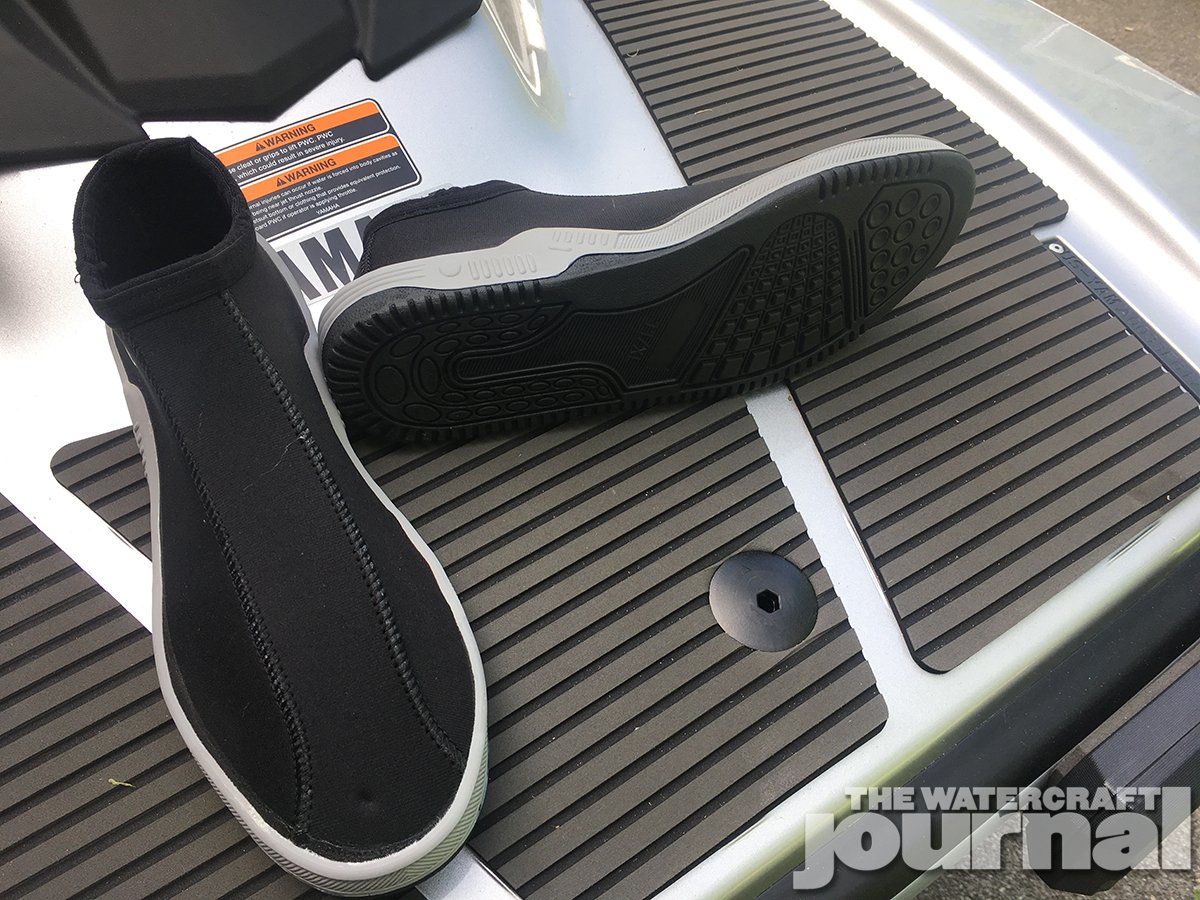
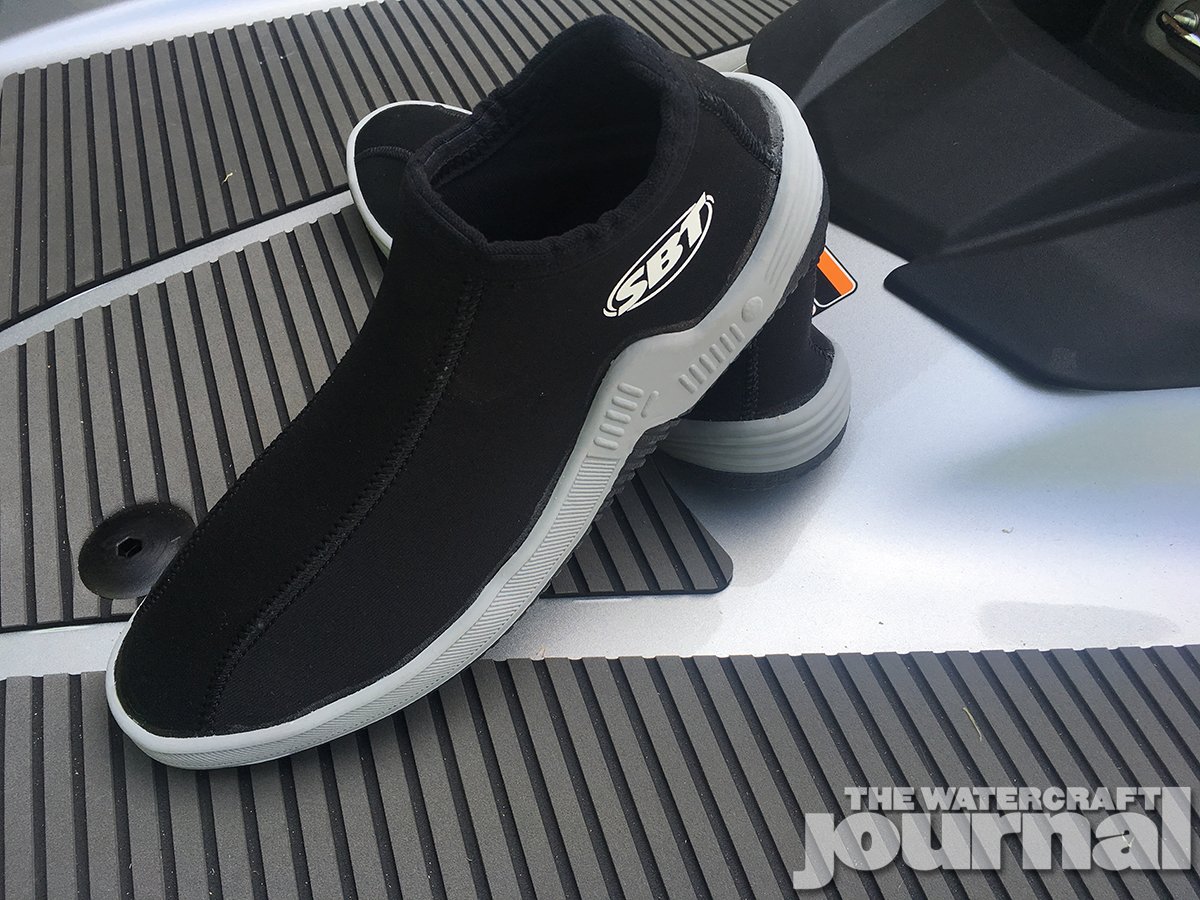
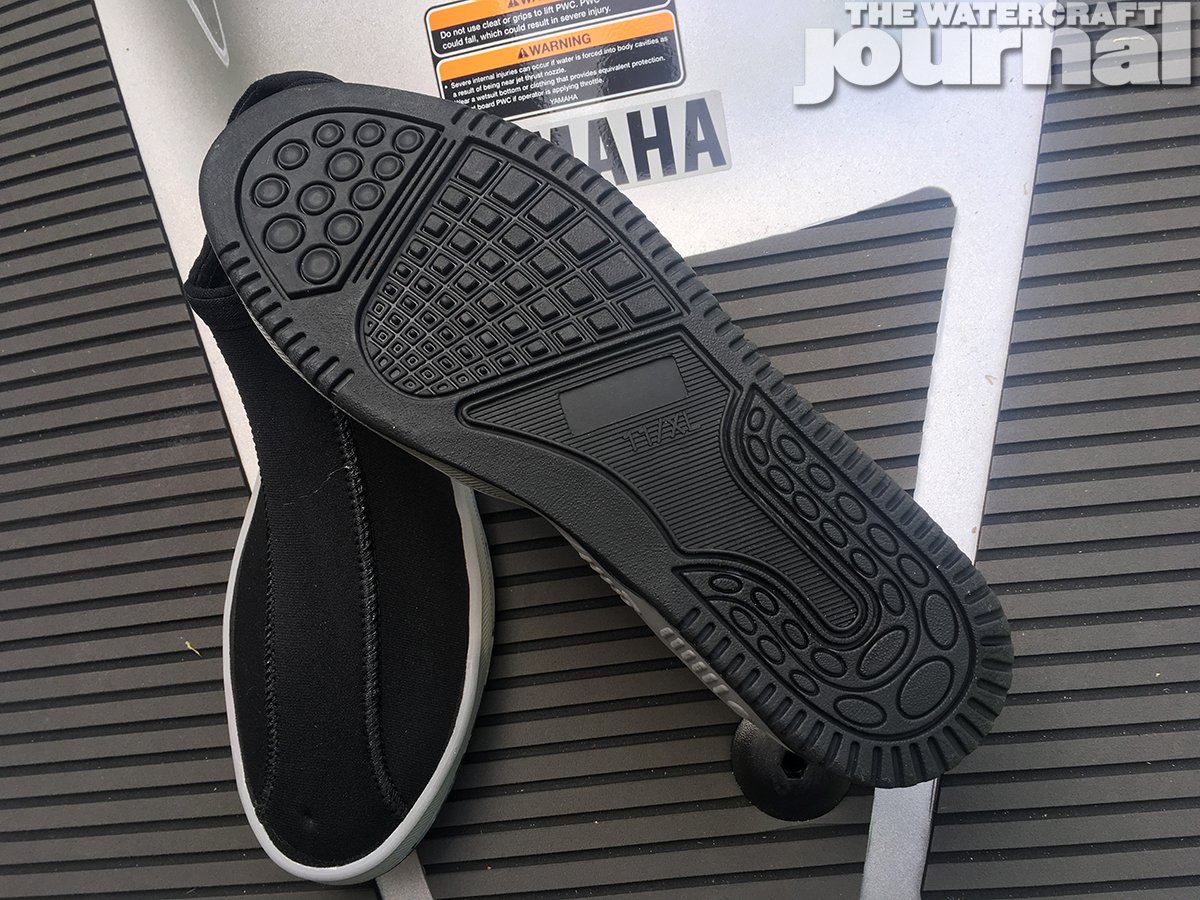
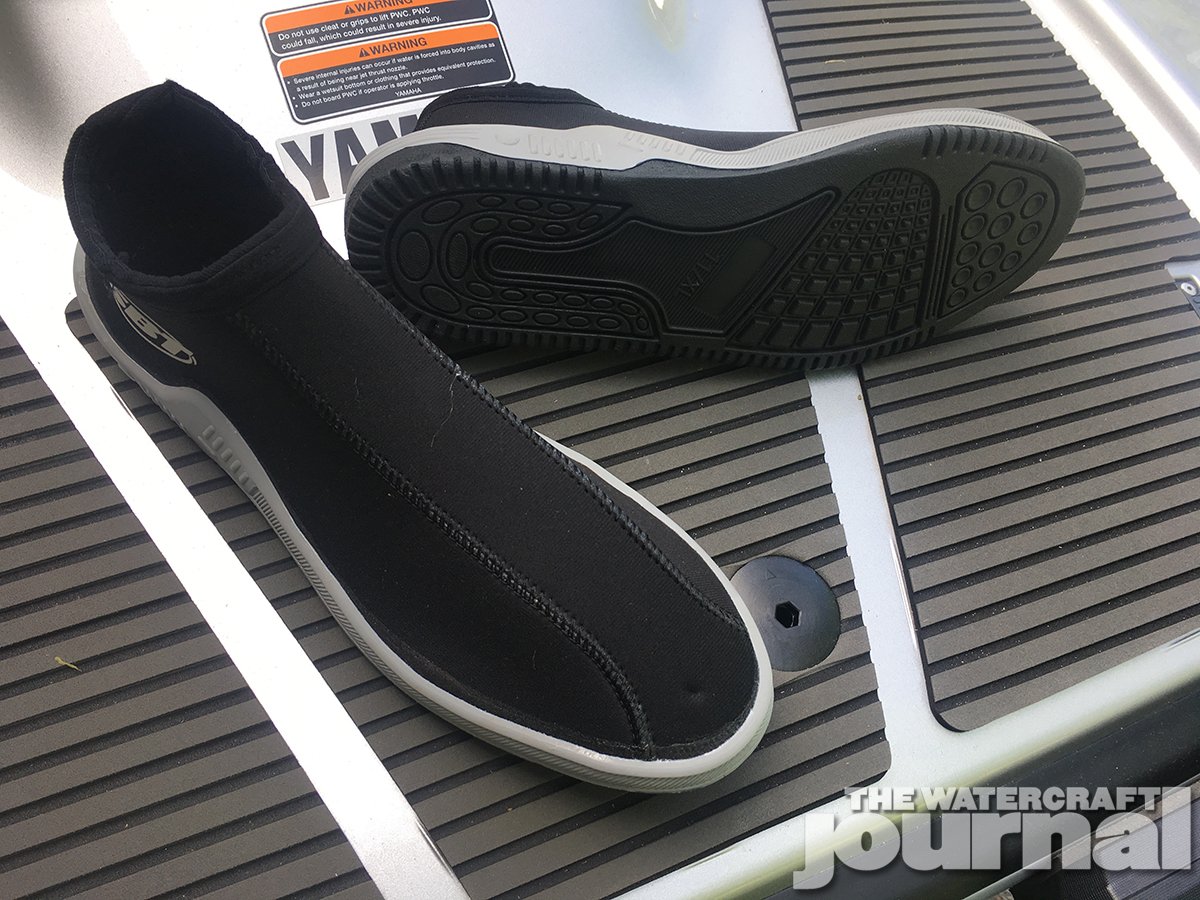
Unlike our previous review, we thought it wise to photograph our new SBT Racing Hydro Shoes before thoroughly beating them to death. If you click the link to our previous review, you’ll see how the Hydro Shoes hold up after 8 months of constant use. The Hydro Shoes are made with a breathable neoprene sock that is cut low below the ankle for an easy, unrestricted range of motion. Equally, the shoe’s liner features a durable elastic band around the opening that remains taut regardless of use. The neoprene sock is glued to a two-part rubber sole that supplies a thick, cushioned sole similar to a tennis shoe more than boat shoe.
Because the Hydro Shoes are strictly slip-ons, there is no lacing required to keep them on. Unfortunately, this also means that you cannot cinch the shoe up any tighter than it already is, which might not work for persons looking for that extra bit of tightness or support. Although the neoprene drains and wicks water well, there aren’t any drains perforating the soles making for a slower drain and drying time. We noted that traction is equal to most racing boots and water shoes we’ve come across, so there’s no loss there either. We did wish that there was a little bit more padding at the toe and heel though, as those points tend to get beat up more than elsewhere.
For whose with experience, neoprene booties typically don’t age well. The soft, breathable material has a tendency to snag, tear and lose much of its springiness. This is often attributed to plenty of exposure to the elements, as well as use in salt water and being embedded with sand, silt and mud. Obviously, proper care will ensure your Hydro Shoe will last longer than those who do not, so do as your mother asked and take better care of your things! In our previous pair of water shoes, we found the glue bonding the neoprene sock to the sole began to leech out, discoloring the two parts and looking rather unsightly. Thankfully, in our two months of use, the Hydro Shoe hasn’t shown such signs, so hopefully a better glue has been employed here.
Priced an incredibly bargain-friendly $21.95, SBT Racing’s Hydro Shoes are one of the better deals we’ve encountered. Whether you’re looking for a new pair of go-to shoes, a spare pair to keep in your gear bag, or something to keep on hand for a friend, these are worth the minor investment, like having an extra rope on board or can of sunscreen.
According to a piece on the IJSBA website, a long time affiliate, Cayman Islands Watercraft Association (CIWA) started its 2017 season in the Caribbean with a small, yet serious competition. The first round of the CIWA National Championships Series of racing took place east of the Red Bay Dock on Sunday March 26, 2017 with Mike Young helping in race administration and in the booth as an announcer.
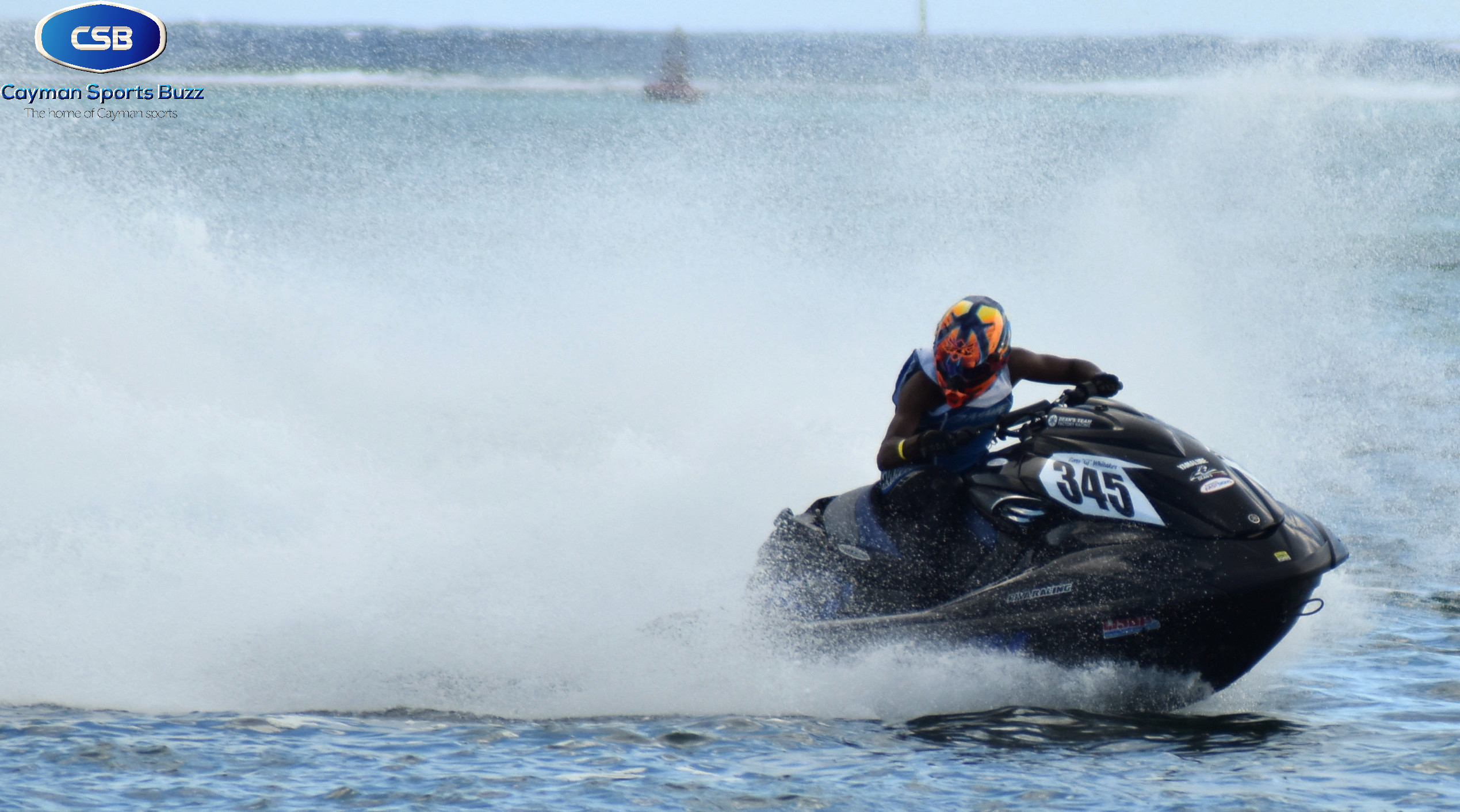
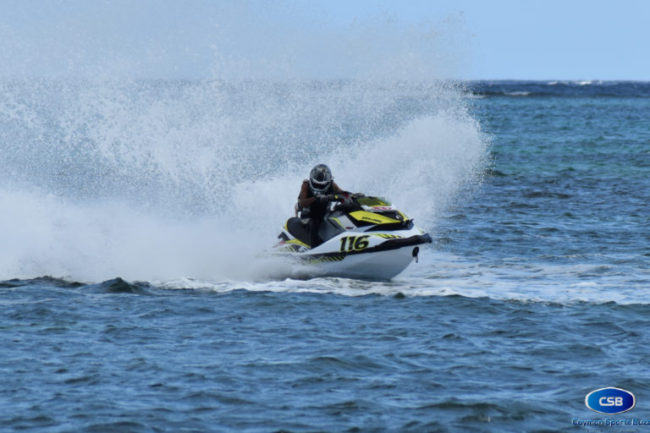
Four classes competed and those consisted of expert, amateur, novice, and beginner. The water was flat so it made it easy to run at top speeds and Gary “GJ” Whittaker took advantage of the glassy conditions by winning all three motos in the expert class. He was the top dog for the Nuttin 2 Lose team.
Vanjee “VJ” Ramgeet of BYP Racing grabbed two second place finishes and a third and ended his day with a second place overall. Nathan Ebanks, a rider for Tony’s Toys finished with a third place overall. Nicholas Hydes of SHO picked up fourth and Wayne Cato of Proven Performance snagged a fifth overall finish.
Matthew Panton of Nuttin 2 Lose won two motos, which put him in the number one slot in the Amateur category. Ramgeet ranked second in the amateur division. The top spot in the novice class went to Tyler Watler of Turnt Up Racing. Thase Walter, another team rider for Turnt Up Racing placed third overall.
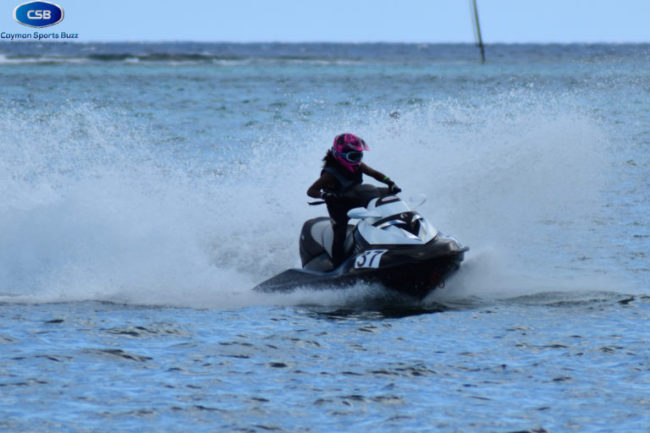
Tiamma Ramgeet of RTP-RAM TECH Racing was the first female rider to win a race in the Cayman Islands. She jumped right in there with the guys and managed to pull off a win in the finale in the beginner class. Ramgeet’s ski suffered mechanical problems in the first two motos and once those were repaired, she was good to go and finished second in her class.
CIWA President, Vincent Ramgeet was stoked with the first event of the season and told CaymanSportsBuzz.com, “It’s been quite a day. A few crafts went down [with mechanical problems] but that’s racing for you. The top guys are putting on quite a show.”
We’ve eaten at plenty of places claiming “the world’s best” what have you, be it a hamburger, ribs or BBQ. We’ve also visited plenty of touristy “world’s biggest” or “most famous” all to very little fanfare. There’s no shortage of spots on the map claiming such things but having very little actual evidence to prove (or disprove) their claim. That is why it’s so impressive when we share that Clearwater, Florida’s own Cycle Springs Powersports is not only the “world’s largest Yamaha dealer,” but it’s celebrating its third year as a Pro Yamaha Platinum level dealer.
This might not mean much to the everyday powersports enthusiasts, but for those who truly know what they’re looking for, a Pro Yamaha Platinum dealer is the highest level a dealer can achieve for Pro Yamaha. This award recognizes the dealers who are committed to providing a truly superior experience in Sales, Service and Customer Satisfaction and creating a “Customer for Life”, and Cycle Springs Powersports has been doing that with aplomb. With their exclusive “Lifetime Engine Warranty”, mobile watercraft service vehicles, special pricing and so much more, Cycle Springs Powersports is the world’s largest for a very good reason.
Here we go again in Australia: A small amount of irresponsible jet ski operators have become such a nuisance; the water police are cracking down on everyone. Transport Safety Victoria (TSV) has added more water police to the known hot spots in order to catch and fine the riders who aren’t obeying the laws, according to OZPWC.
There have been many PWC crashes and other negative incidents involving personal watercraft in the waters in Victoria. These numbers have risen during the last couple of years so the TSV has taken harsh measures to reduce the amount of PWC related problems in order to get careless riders to comply with the laws set forth. In December and January, there were 10 personal watercraft crashes and three of them resulted in serious injuries. That’s bad, considering that in the years 2015-2016, there were 5 crashes and only one in 2014-2015.
Peter Corcoran, Director of Maritime Safety at TSV proclaims,“To combat this trend, we are putting more resources into compliance. Riders, and all those on or being towed by the PWC, must wear a life jacket, keep their distance from others, travel at a safe speed and keep a good lookout at all times.”
It is unfortunate that a small number of riders have caused so many problems, that the majority of PWC operators are frowned upon. PWC manufacturers and riders have come up with a neat idea, which is called a Responsible Riding Code of Conduct. By signing the code, some of the pressure is taken off the reputable riders by helping them set a good example for other jet ski operators and the people along the beaches, like swimmers and regular beach goers.
A copy of the rules and laws can be found HERE. It is quite a list and yet very straightforward. The laws are comprised of items an experienced operator should already follow and are great for new riders as well. We suggest checking them out, if for no other reason, just to refresh your memory.
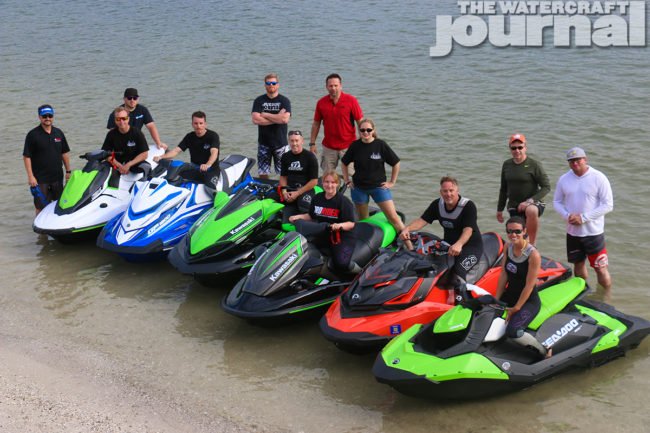
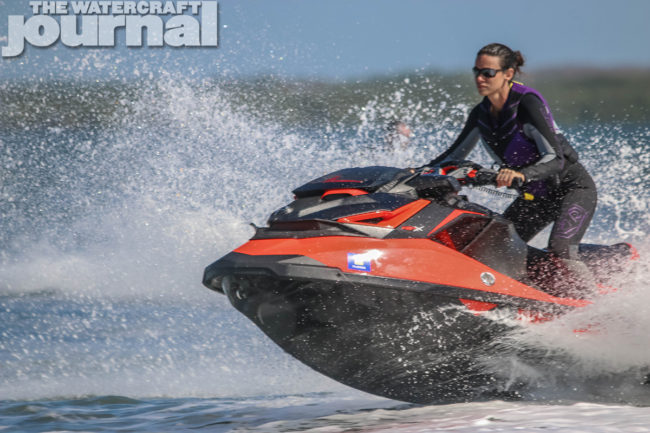
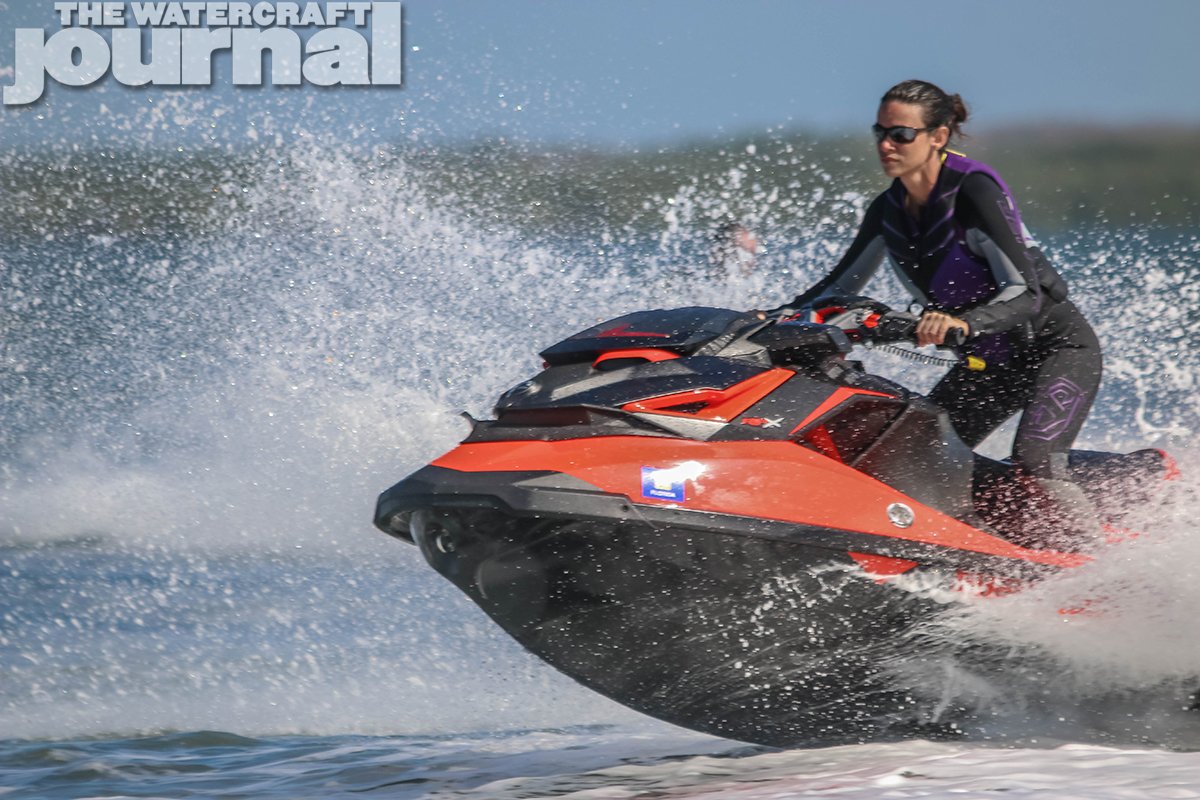
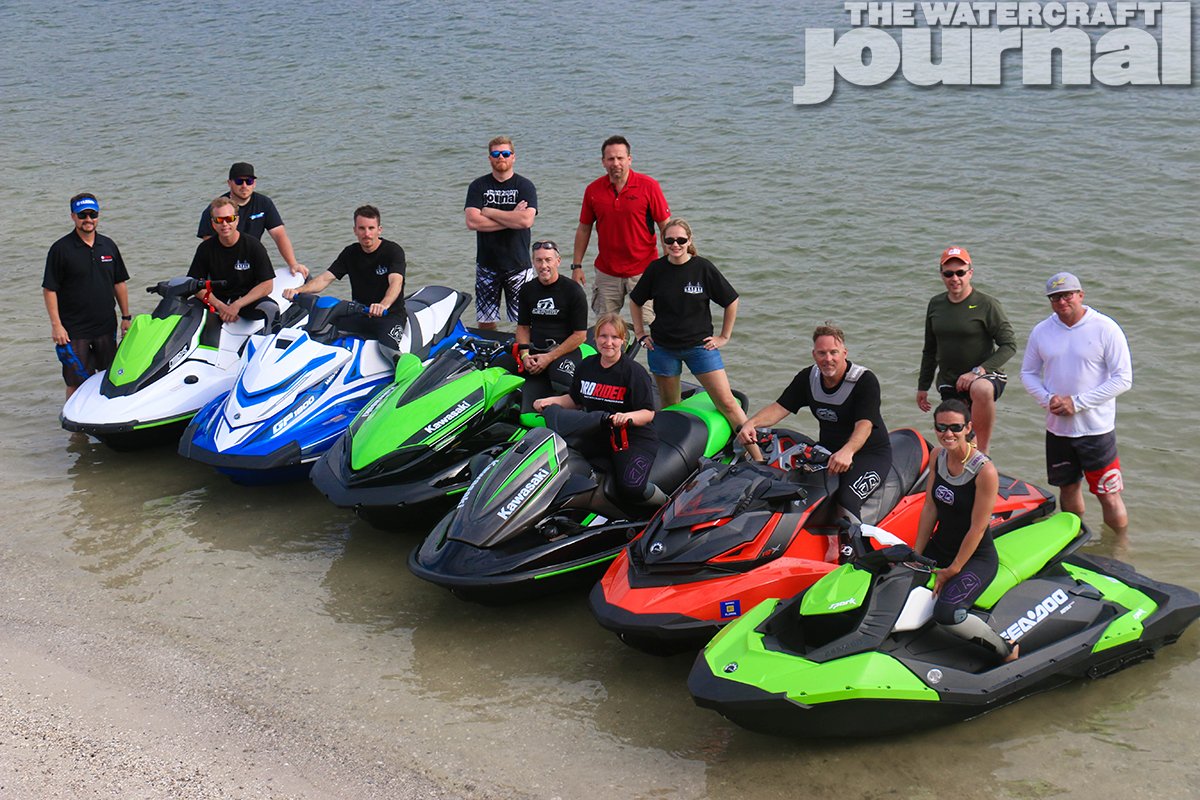
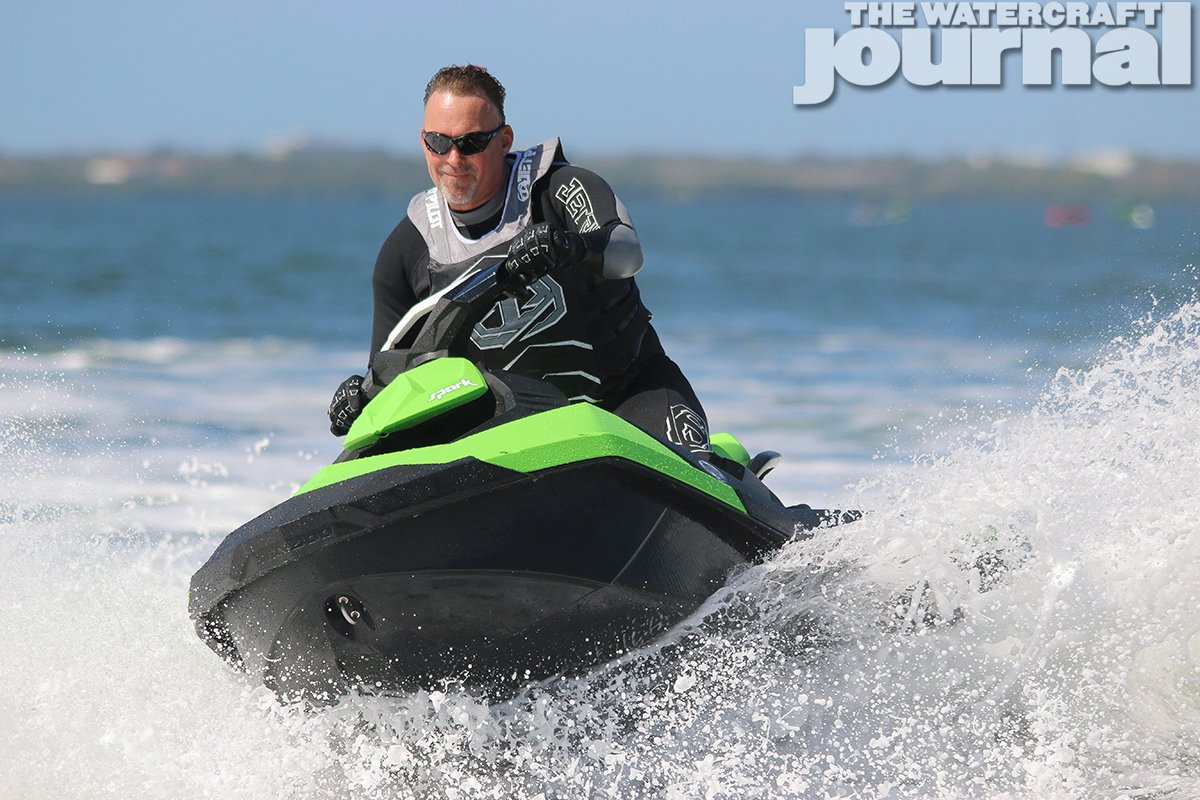
The morning’s overcast hung low over the Florida bay as commuters slogged in creeping traffic along the Courtney Campbell Causeway all as sunlight slipped through the cracks between passing cloud cover and the vertical skyline of downtown Tampa. As I watched passersby I couldn’t help but feel their stares glaring back. If I was trapped crawling along the highway while some jerk was unloading a trailer-full of jet skis into the warming gulf water, I’d be angry too. Sea-Doo’s Tim McKercher lowered a crimson red RXP-X and a festively-colored Spark Trixx into the water, while ProRider’s Danielle Gavagni and myself sat ready to ride them to the beach just inside of Rocky Point.
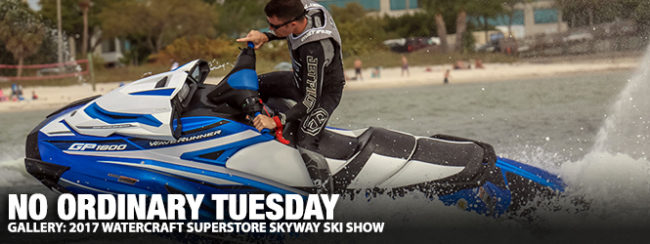
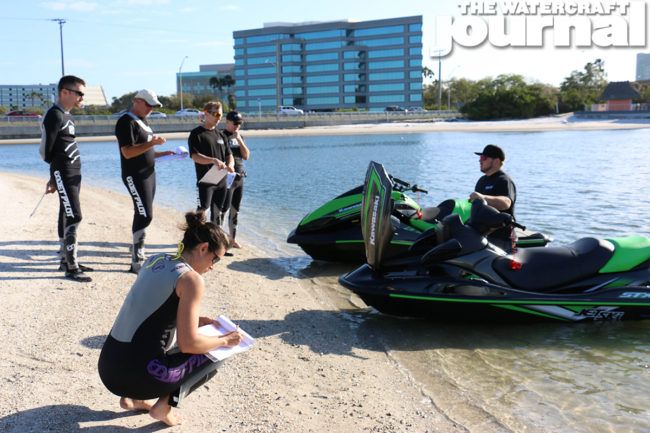
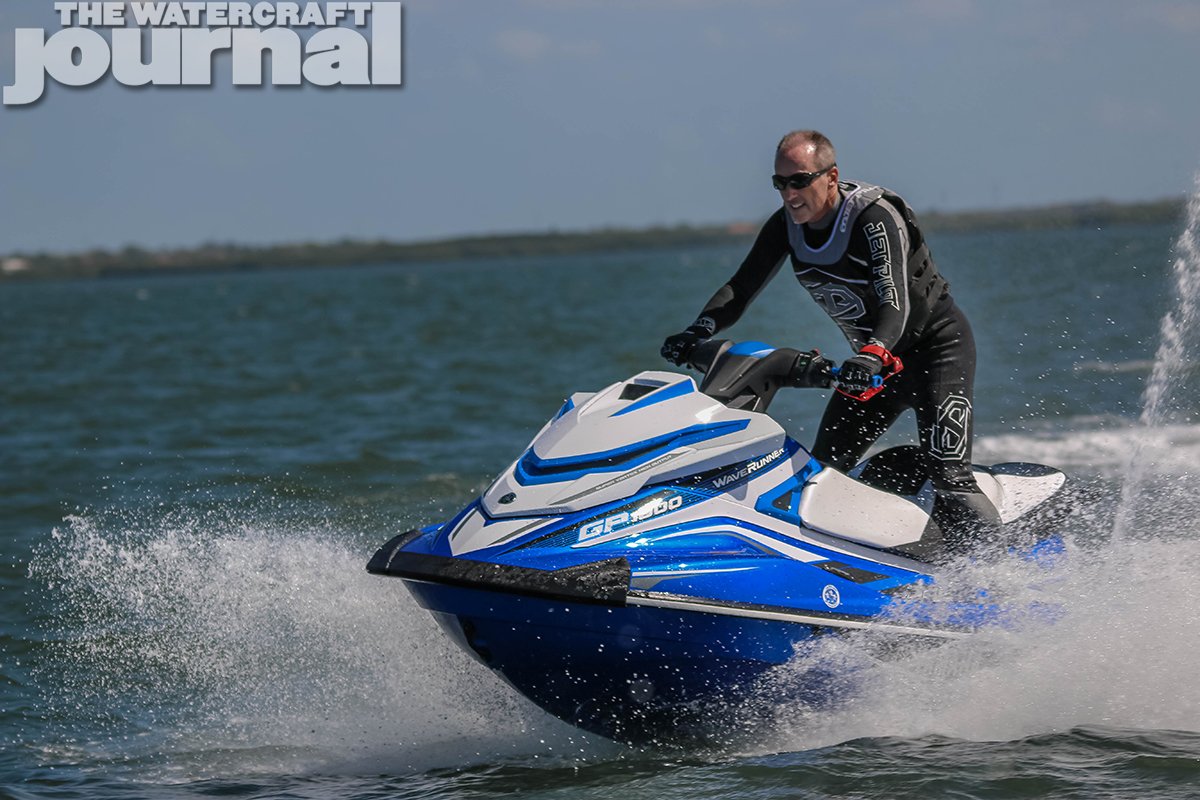
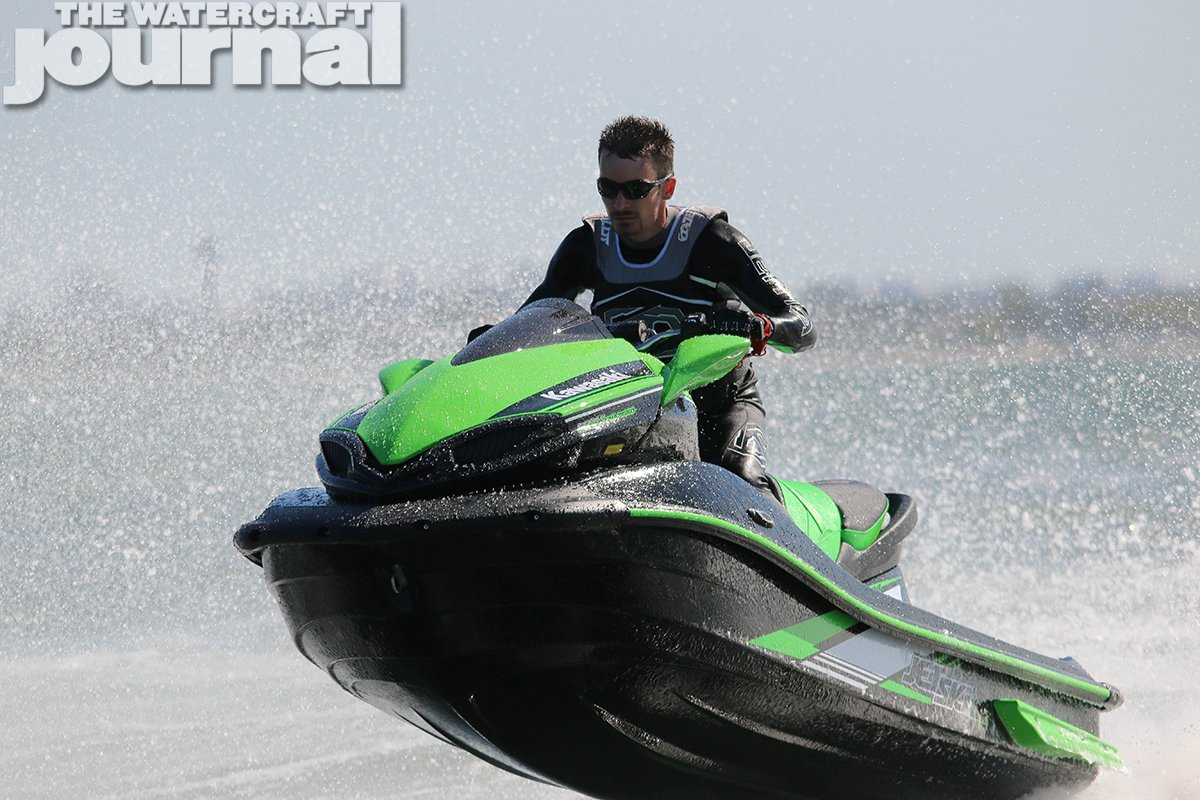
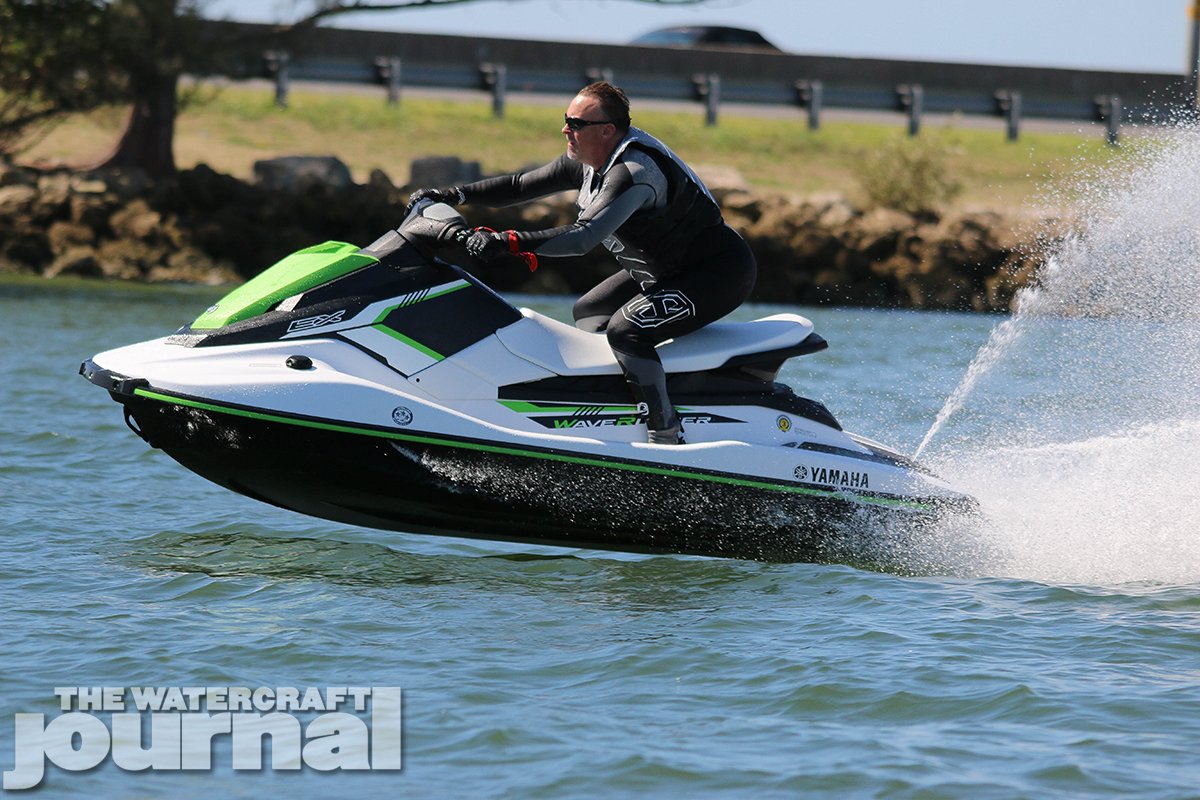
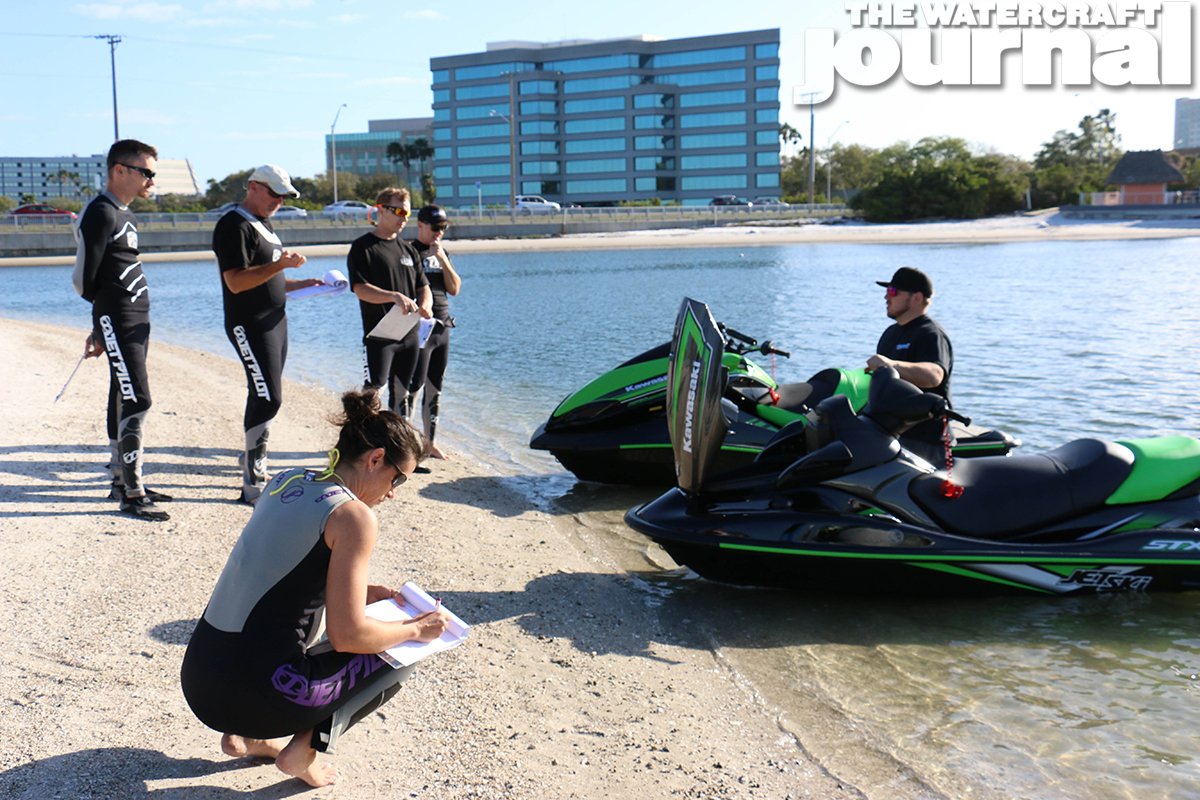
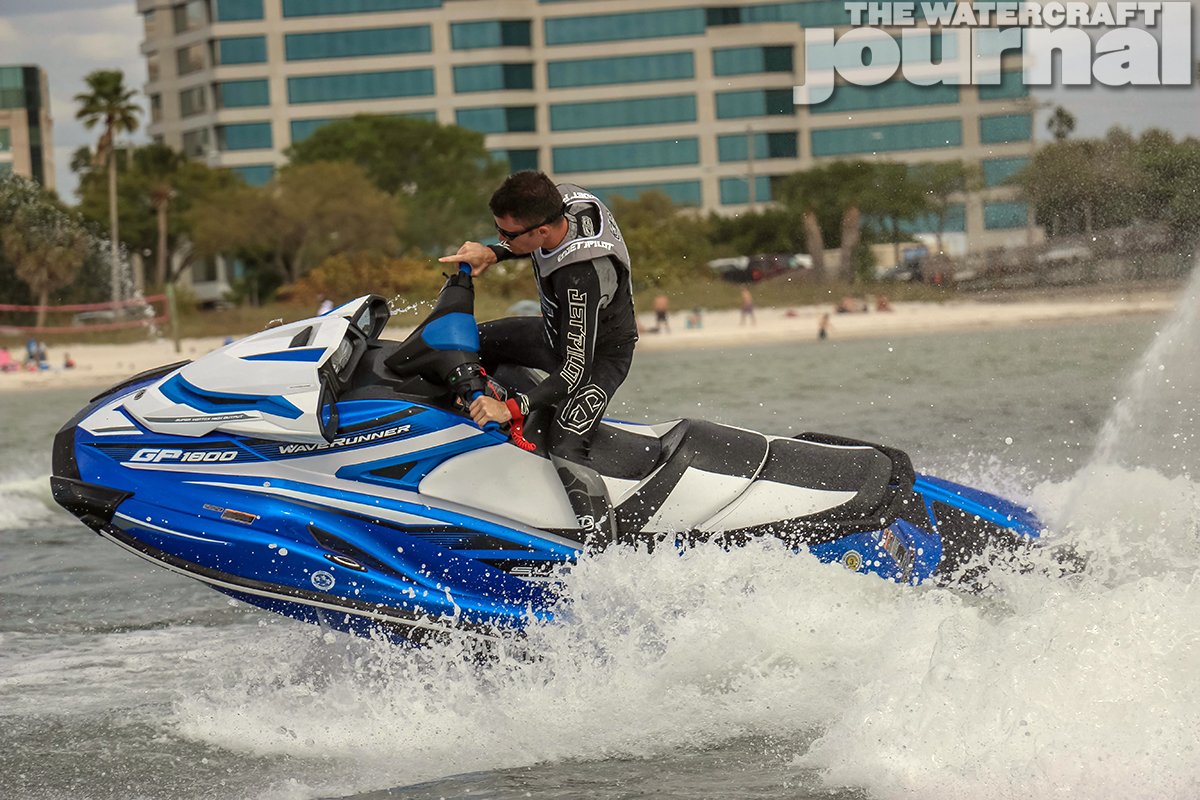
“Not a bad way to spend a Tuesday,” I joked to Danielle who admittedly, wasn’t having “any of it.” She had just came in from Orlando late last night having literally flown 24 hours from a short stay in India to cover the P1 offshore boat races. Despite her best efforts to hide behind a smile, Danielle was visibly exhausted. Accompanying our two Sea-Doos was a blue-and-white supercharged GP1800 and a EX, Yamaha’s entry-level runabout. A brilliant green-and-black Kawasaki Ultra 310R and STX-15F were already idling away from the launch ramp. The morning taxiing of the watercraft from the ramp to the sugary sands behind Whiskey Joe’s has become part of the Skyway Ski Show as much as the show itself, and all hands were on deck to make it happen.
Celebrating its 5th year, the Skyway Ski Show is the last remaining vestige of Watercraft World magazine, which shuttered its doors in 2009. There, the event was called the “Dream Demo” and was a little more than a glorified free-for-all wherein manufacturers provided examples of each of their available models for testing by a panel of nearly a dozen riders reigning from every ilk. Tales of the demo echo throughout the industry, most of which circling about highly tuned models that far exceeded stock performance levels, incredibly lavish gifts to the judging panel from one manufacturer or another, or some pretty “adult” situations best left for the “Letters to The Editor” section of other publications.
Under the direction of the Watercraft Superstore, all of that has been eliminated. Rather, manufacturers are invited to bring two examples from their lineup, typically sorted by predetermined themes; this year was base-model entry level and top performance model. Providing the test units was Cycle Springs Powersports. Watercraft Sales Manager Dan “Smitty” Smith generously provided Yamahas, Kawasakis and a single Sea-Doo Spark (McKercher provided the RXP-X 300) for the day’s introductions and test rides. Marine Mat provided the camera/safety boat, and former Watercraft World staff writer Jeff Hemmel returned as the head judge and guide for the day’s riding who brought Chris Krall, a previous panelist and friend.
The night before, the Watercraft Superstore introduced us to all the test riders, and to Jesse Freeman and the Eckerd Kids Foundation, a tremendous cause working to provide counseling and direction for troubled youth in the area. Jesse was picked as a judge for her complete lack of experience, and laughed, “This was my first time ever riding jet skis. I started off on the ‘beginner level’ [models]; I started off on the lightweight Sea-Doo [Spark] but I did feel stable – I didn’t feel like I was going to fall off or anything like that. I did feel like the Yamaha [EX] was more stable, but I wish it was easier to grab [the throttle]. Overall, I did spend a lot of time on the Yamaha, and I enjoyed it a lot. The Kawasaki was more of a wet ride.”
We met up with professional racer and full-time PWC enthusiast Dylan Osborn who said, “Going out in the rough, the 310R is for sure the machine for the big heavy swells, but just coming back in I was on the GP1800 and was surprised at how well it handled. It tracked beautiful – and had it trimmed up and down just to test – and came down on a wave sideways. If I was on another ski it probably would’ve ejected me. [Compared to the RXP-X], the GP has a lot more lower-end power, you can really feel it come on. The RXP-X definitely handles and carves, but as the GP just does what you tell it to do, you just have to hang on to the RXP-X. The GP1800 has really blown me away.”
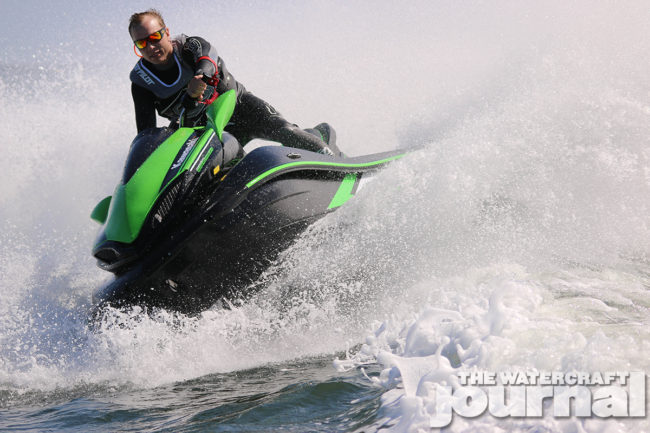
Finally, we chatted up with James Howe after the day’s riding who said of his riding experience, “I’m past beginner, but saying ‘intermediate’ would be pushing it.” Nevertheless, James provided some great insight on his day as a judge, “The Spark was very nimble; very easy to turn, donuts, S-curves, it was very nice. The EX was very predictable when you’re on the gas. It seemed a little unpredictable when you let off the gas. It felt a little uncomfortable when you left off the gas. Of the three, I liked the Kawasaki the best, although I feel it was the wettest. It was very predictable, good get-up-and-go, and got up to good speed. The biggest thing that would keep me from buying the Kawasaki today was that the throttle was sooo tight. It really wore out my hand. The Spark beat me up a little more. The Yamaha was very ‘middle-of-the-road.'”
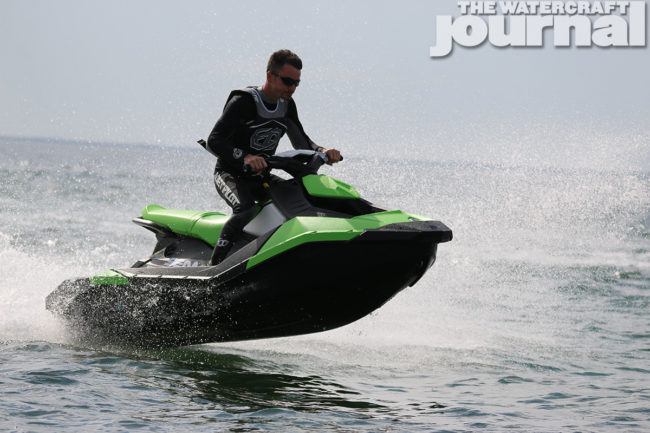
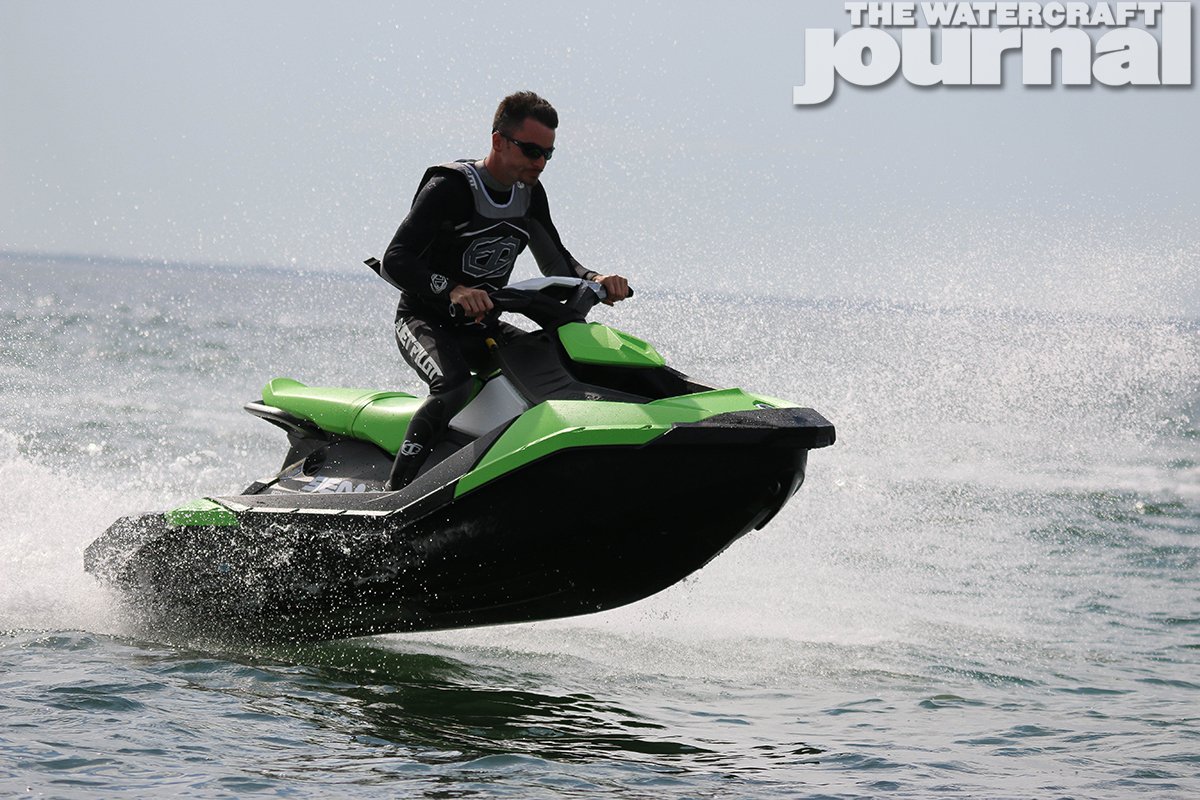
Ultimately, the final judging on the three entry-level machines and the three top-performer machines will be revealed when the annual Watercraft Superstore “magalog” is released to the world in the coming weeks. Until then, we have a sampling of some really great images taken by our own Kurt NgSaye of Harlem Shake Photography, and look forward to seeing how the final judging results. So while the rest of the world was on its way to work, we were playing on the water. Not a bad way to spend a Tuesday after all.
It’s no secret that GreenHulk.net and PWCPerformance.com have become the number one trusted source for top-of-the-line performance products, information and testing results for PWC enthusiasts since 2006. PWCPerformance.com carries only the aftermarket parts and accessories that have been tested and proven on the largest PWC performance forum in the industry. In addition, most of the performance parts listed for sale here have been discussed in great depth by some of the most skilled PWC tuners in the world on the forums at GreenHulk.net.
Now, you can score big savings as you prepare for the height of riding season at the GreenHulk PWC Performance Parts Store because now you can save big as GreenHulk is offering FREE domestic shipping on all orders over $150 in addition to there always being ZERO sales tax! Oh wait, you’re not satisfied with that? Well, why don’t you just take another 10-percent off from your order of most RIVA and R&D parts, all WORX parts and all Solas impellers when you use the discount code: greenhulk – happy now?
That’s right! You can not only forget paying for shipping on all domestic orders (above $150), any and all sales tax, and hack another 10-percent off of your total when you use the special discount code “greenhulk.”
Jet ski fishing is a rapidly growing sport, even if America fishing enthusiasts have been slow to pick up on the trend. We joked that the best way to get Americans interested in PWC fishing is to simply offer it to countries outside of the US and tell them that “they can’t have it.” Why? Because nothing makes an American want something than telling them they can’t have it. Nevertheless, PWC fishing continues to grow leaps and bounds in South Africa, Australia, New Zealand and the Philippines and with that, expand the PWC market to new groups as well as the fishing industry (which is humongous).
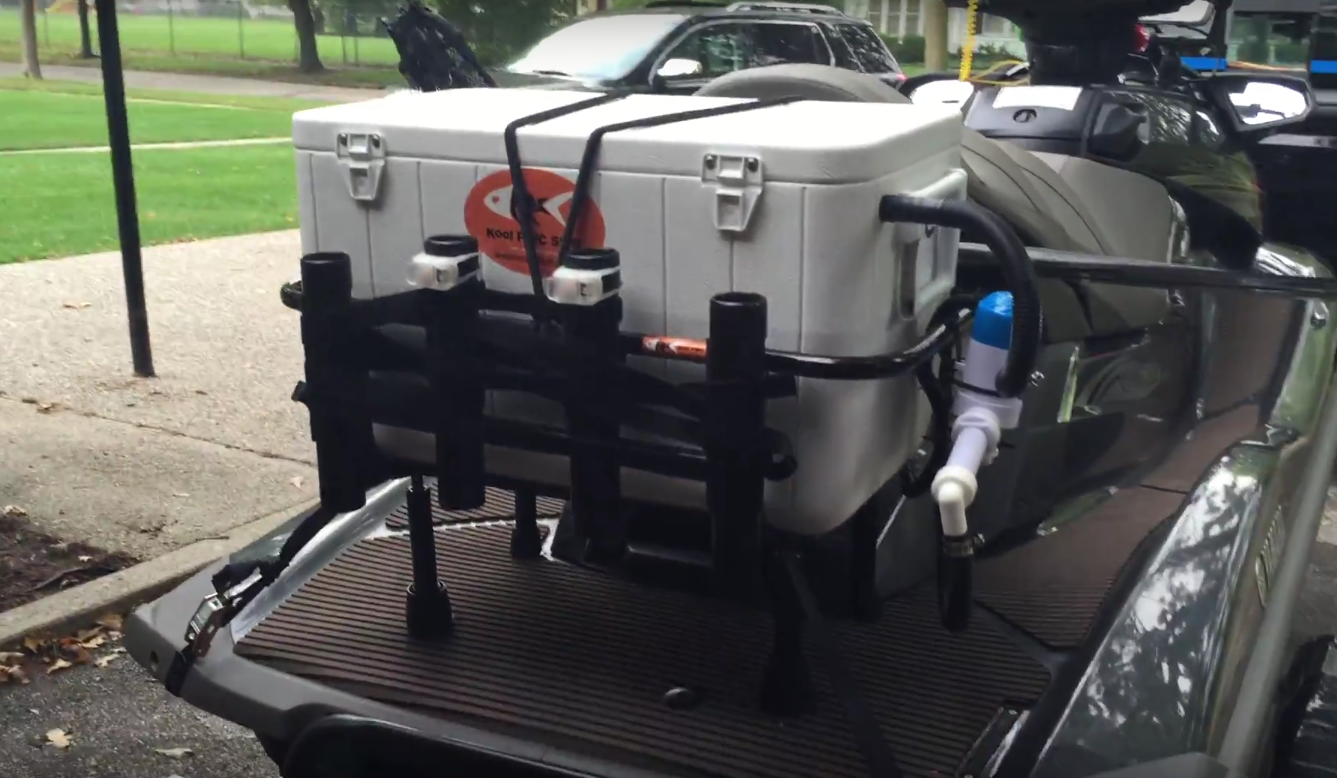
In welcoming Kool PWC Stuff back to The Watercraft Journal for 2017, we also caught word of this awesome “walk around” video showcasing one very well-equipped PWC-rigged Yamaha FX Cruiser WaveRunner. Equipped with one of Kool PWC Stuff’s live well (live bait tanks) and sump pump, remote motorcycle battery (in a canvas pouch) for power, a GPS/Fish finder, running lights and much more, the Yamaha is ready for full days of fishing wherever the beacon points you. Unlike so many other fishing and/or cooler racks, Kool PWC Stuff’s rack is 100-percent non-invasive, meaning there’s no drilling or cutting required to install and mount your new rack.
As stated by Kool PWC Stuff themselves, “Safety is a must. All our racks are designed with a low profile, so that just in case that big wave comes or you just fall off, you can easily get back on your jet ski.” And each rack is made from marine-grade stainless steel, powered coated for extra protection (and looks), comes with adjustable legs to fit any deck surface (including the Sea-Doo Spark), welded rod holder(s) with slightly small diameter to snugly hold your rods, can hold up to a 54-quart cooler (but can be specially-designed for Yeti and Frostbite coolers, or Rigid Frigid 40 coolers), and is predrilled to hold Rotopax fuel, water and storage tanks. Whether you’re going fishing for just wanting to bring along plenty of drinks and snacks for your ride, a Kool PWC Stuff rack is what you need.
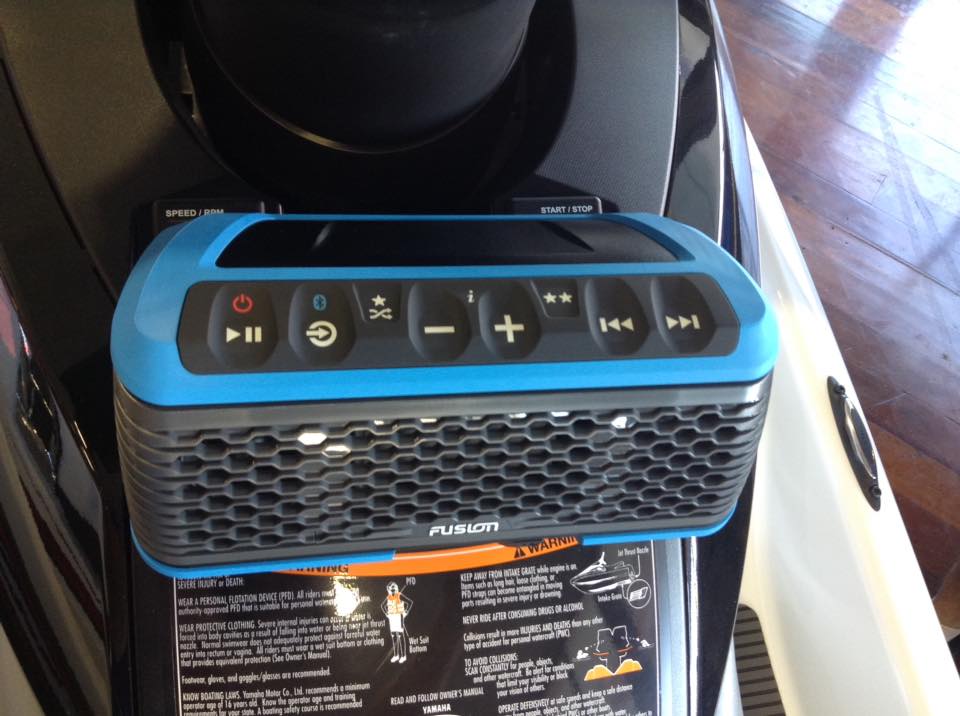
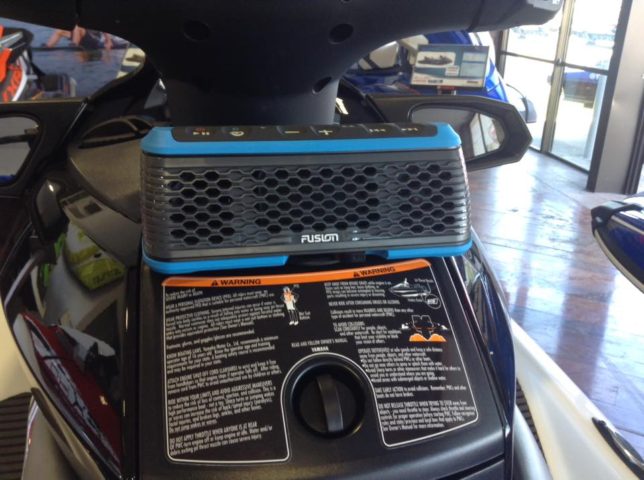
One of the many great features about boats is their ability to blast music across the water without sacrificing too much space. While boats are much bigger, it is safe to say we all love PWC. But we want to listen to music while we are out riding or when we take a break. Luckily a company has just produced a sound system that is small and has a low profile. Fusion Stereo Active looks almost like any other portable sounds system at first glance, but upon looking at it you can find many key elements that make it stand out from its competitors.
Fusion Stereo Active comes with Bluetooth connection, a completely sealed pouch for your streaming device that floats, and a “puck mounting system” to secure it to your watercraft, under any condition. This system fits right in front of your steering console. One of the many advantages of this placement is that it does not sacrifice any leg room if you have passengers aboard. Other stereo system have speakers coming out the back and can restrict from loading your watercraft to full capacity.
With colors offered in red, white and blue, there is something to match your personal watercraft. The price for a Fusion Stereo is $399.95 which includes the sealed pouch and mount. If you have been looking for a sound system and not looking to break the bank, this is the system for you!
[In yet another submission for the “Oops! We did it again” file, I accidentally published an unfinished draft of our 2017 Kawasaki SX-R JetSki review full of disjointed thoughts, incomplete sentences and a whole lot of mistakes. For those who already read our previous version, I apologize. For those who liked it, we question your sanity. – Ed.]
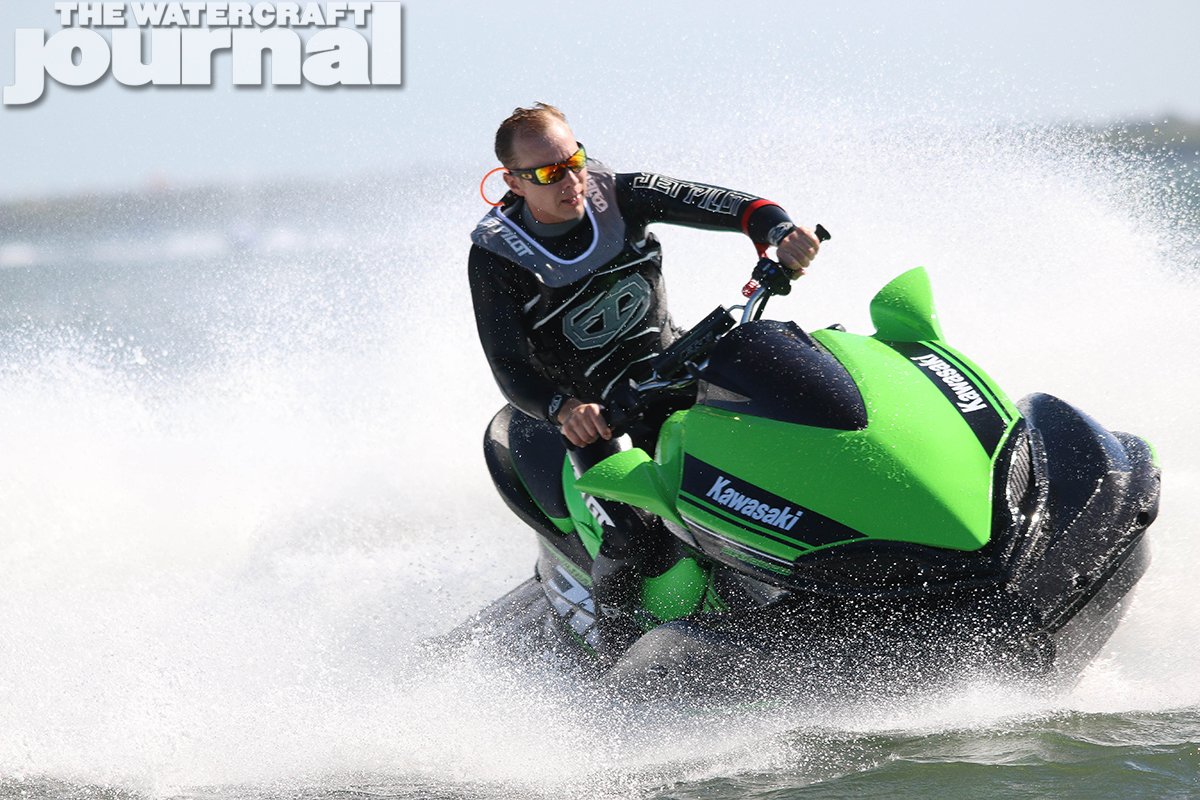
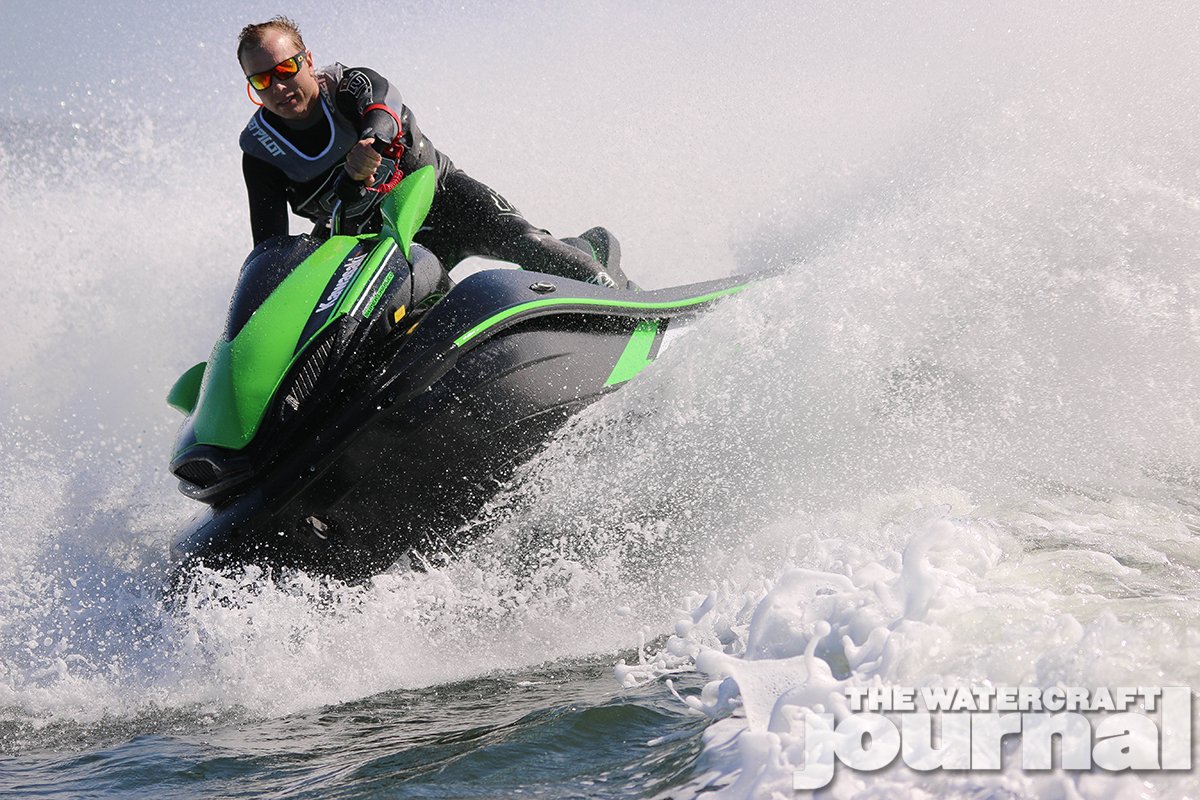
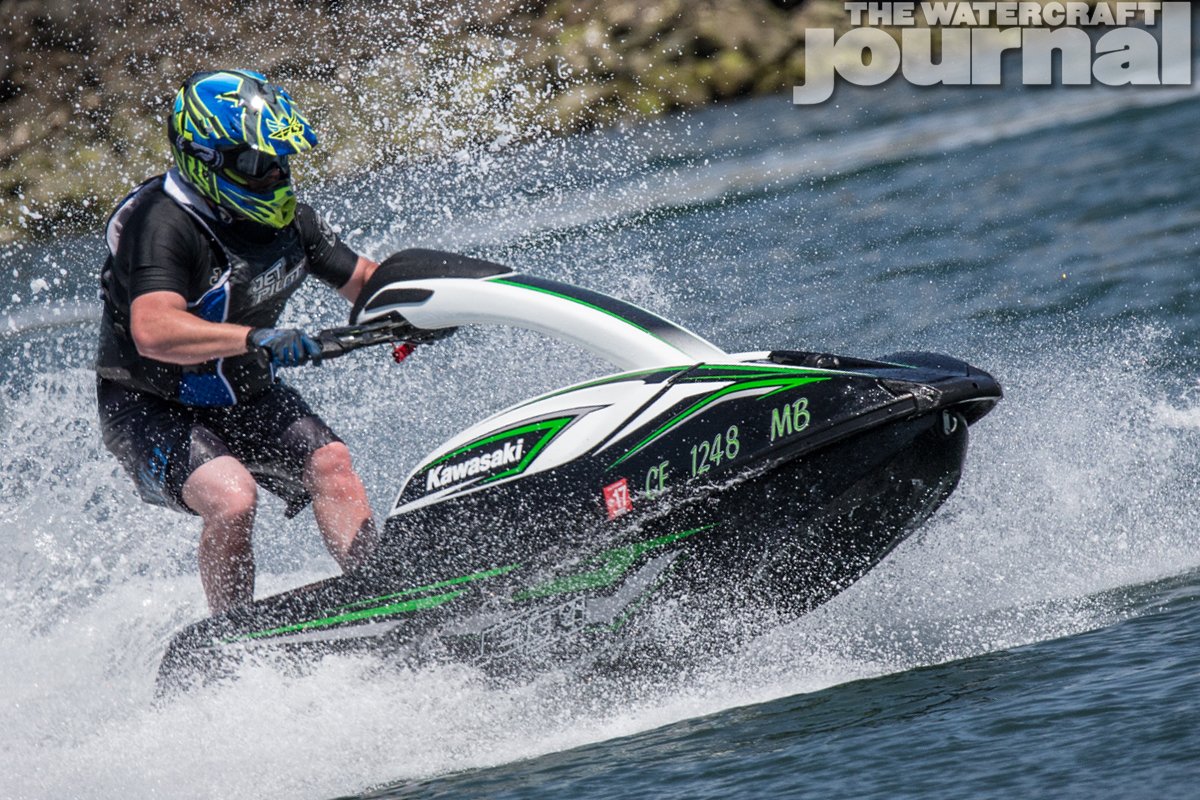
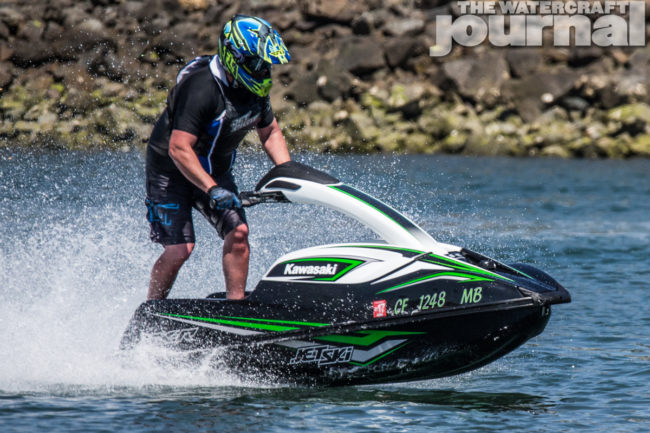
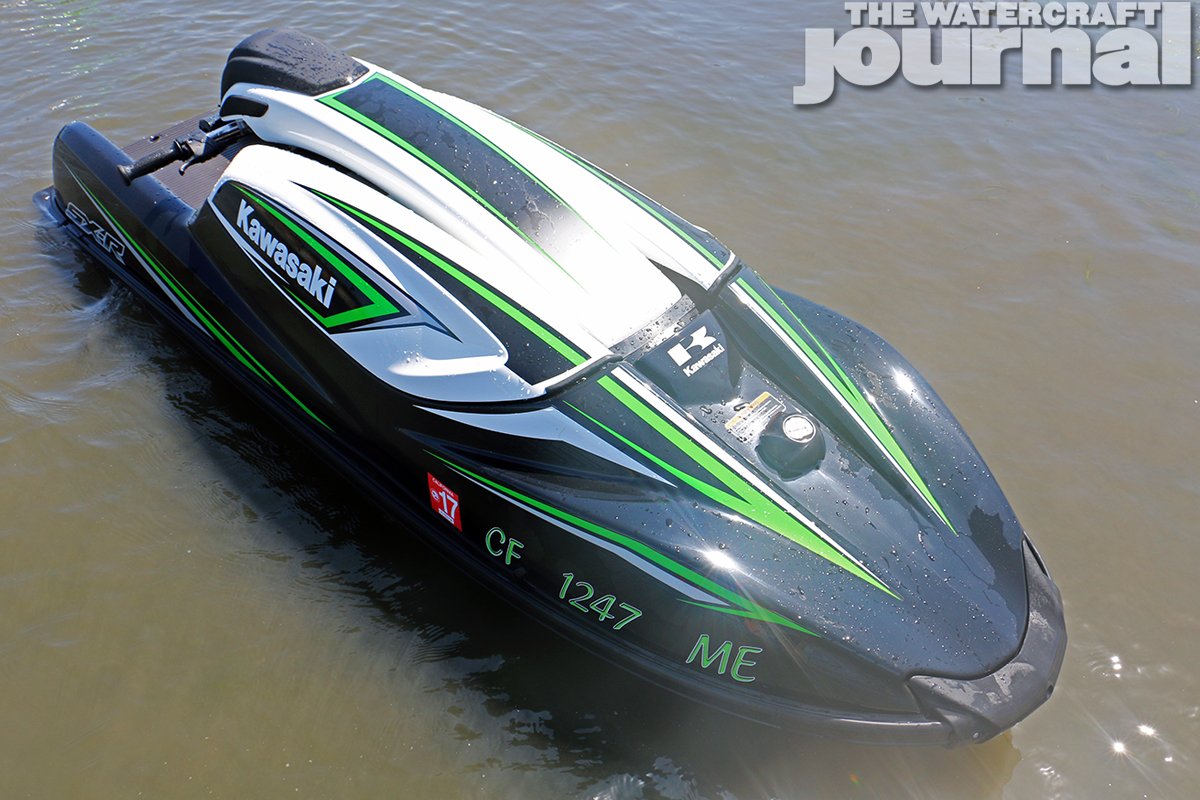
“Yeah, I know,” I grumbled to yet another friend who had taken the new ski out for their first time. I had already heard how fast the 2017 Kawasaki SX-R JetSki was from far too many sources, and for whatever reason, every single one of them felt inclined to call and tell me about it. All but completely mockingly, I parroted, “It’s faaast!” I won’t lie, I was kind of sick of hearing about it over the past six months – between today and the time we revealed to the world that the SX-R would be returning last September. Admittedly, I was bitter. (No duh.) Everywhere I looked, international media outlets were riding the new standup, but for whatever reason, all of the American media was virtually shut out. Was Kawasaki afraid of what we would say? Maybe I was being impatient. Yeah, I knew I was.
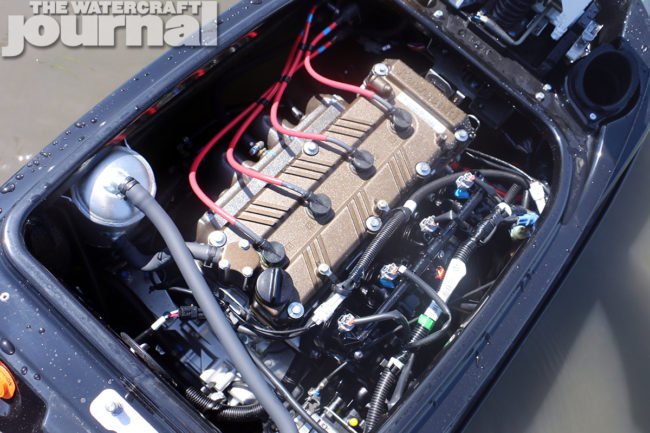
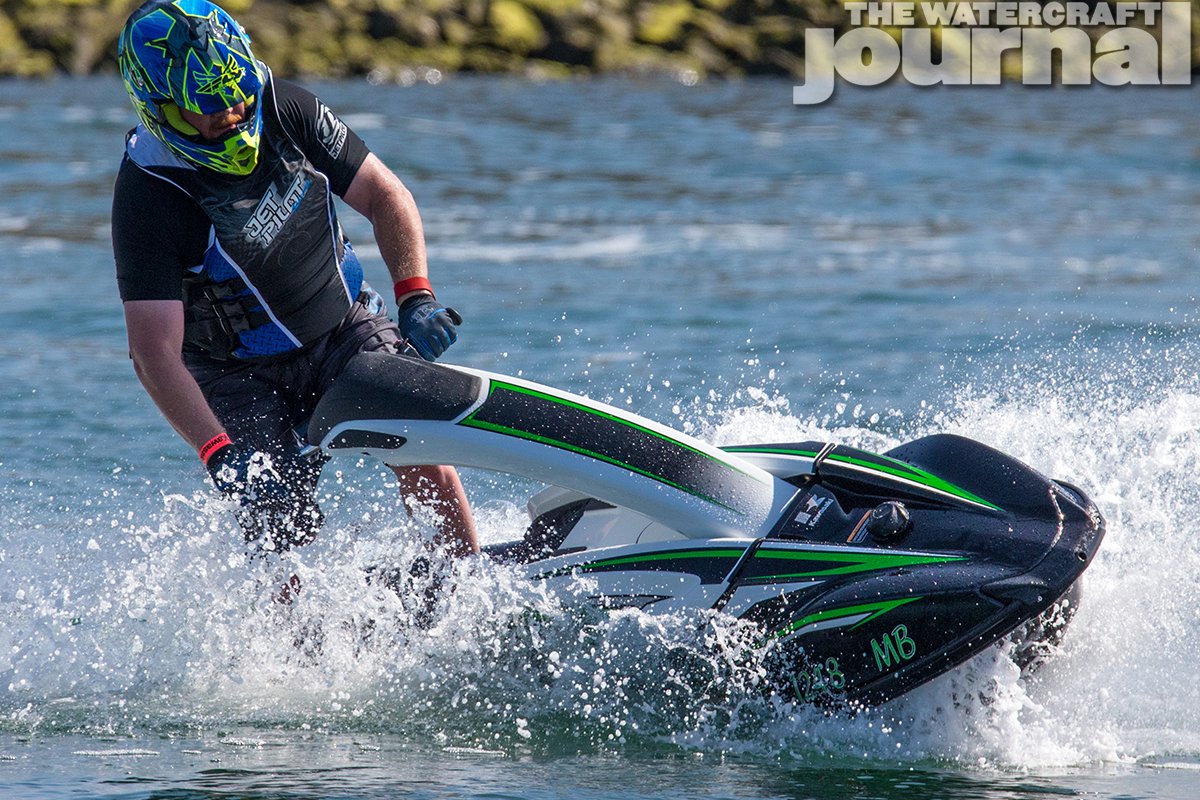
Kawasaki’s resurrection of the standup was something of an enigma in and of itself. And offering a 62-mile-per-hour standup from the factory made the decision less of a mystery and more of a questioning of the company’s sanity. Yes, the SX-R was fast. Despite its 551-pound heft, the 160-horsepower 1,496cc 4-stroke pulled from the STX-15F could deftly propel the new SX-R to Pro Open speeds without breaking a sweat – I had little doubt about that. What concerned me more than its ability to out accelerate the supercharged 310-horsepower Ultra (which it can), was whether the SX-R retained much of its predecessor’s soul. The lingering ghost of the SX-R 800 still haunted the corners and hallways of people’s nostalgia, and all wanted Kawasaki to provide a worthy successor. The long delay in revealing the ski gave many supposed reason to doubt, be it unfounded or otherwise. Admittedly (again), I was one of those.
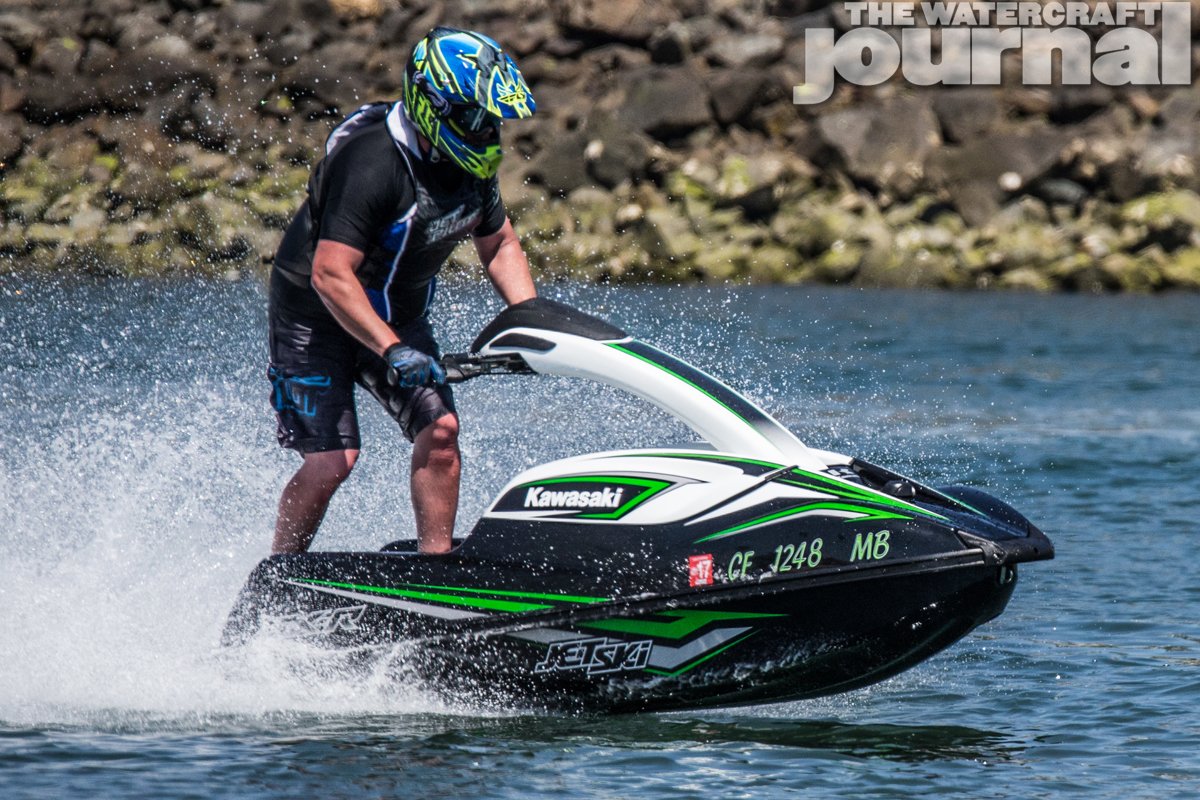
And why not? The SX-R 800 was a huge success for Kawasaki, from its introduction in 2003 until its untimely “retirement” in 2011. In fact, it was one of my personal favorite standups and is still the benchmark for many aftermarket ski builders. The new SX-R on the other hand, appeared to be more runabout than standup. Even I got caught up in the “standabout” name calling among friends. When compared, the new SX-R outweighs the previous SX-R 800 by nearly 150-pounds. (Heck, it’s 130-pounds heavier than a 3-seater Sea-Doo Spark.) The new ski was also 14-inches longer, with only a slight expansion in width, and another 3-plus-inches in height above the old 800. But history has a way of hiding truths; the 800’s introduction back in 2003 was nearly as upsetting as the new SX-R today. The 800, when compared to the then-standard SXi Pro, was enormous, and considerably over-powered. The comparison felt palpable.
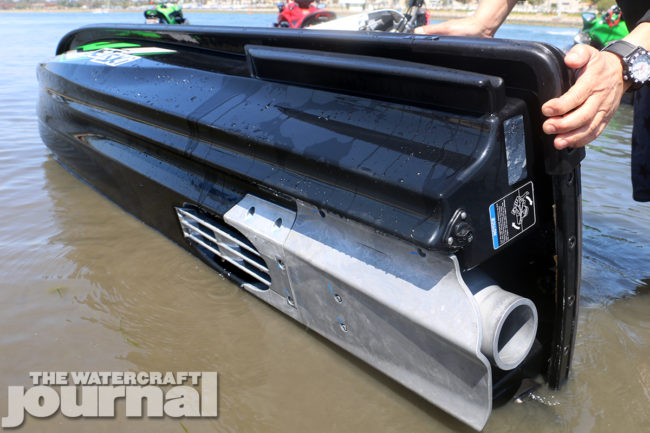
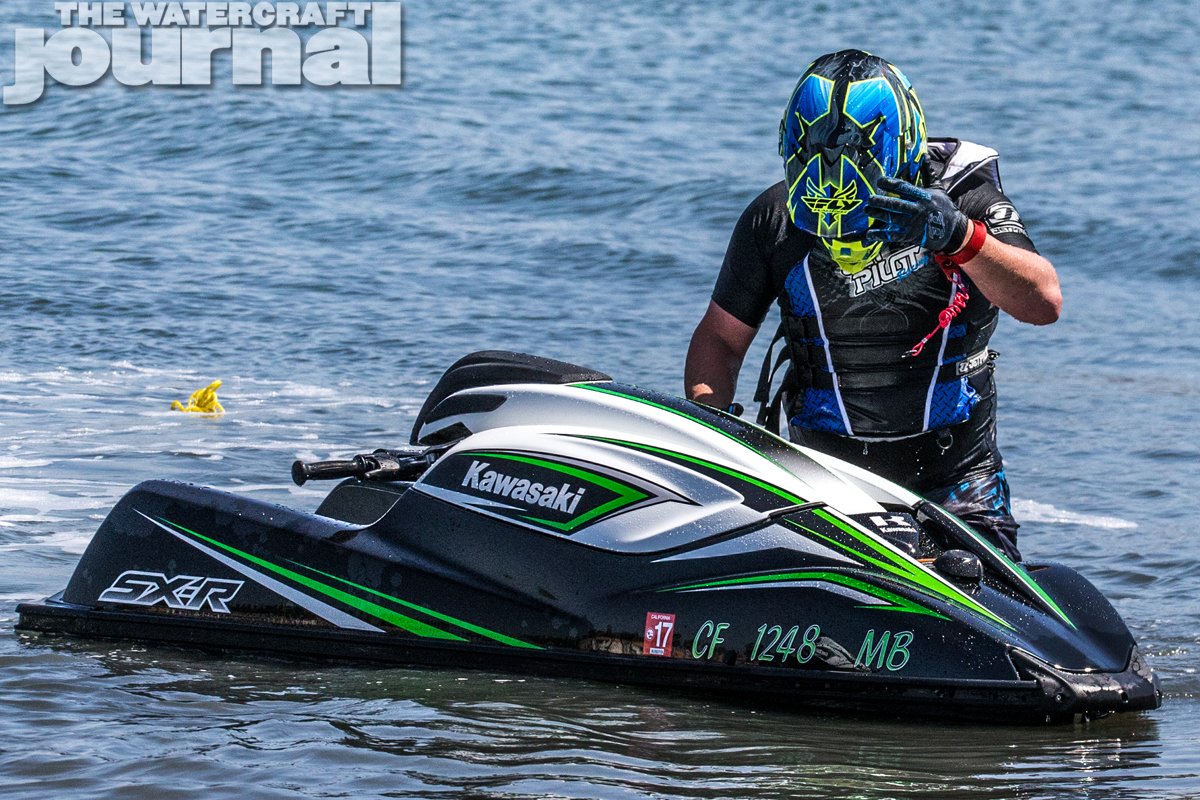
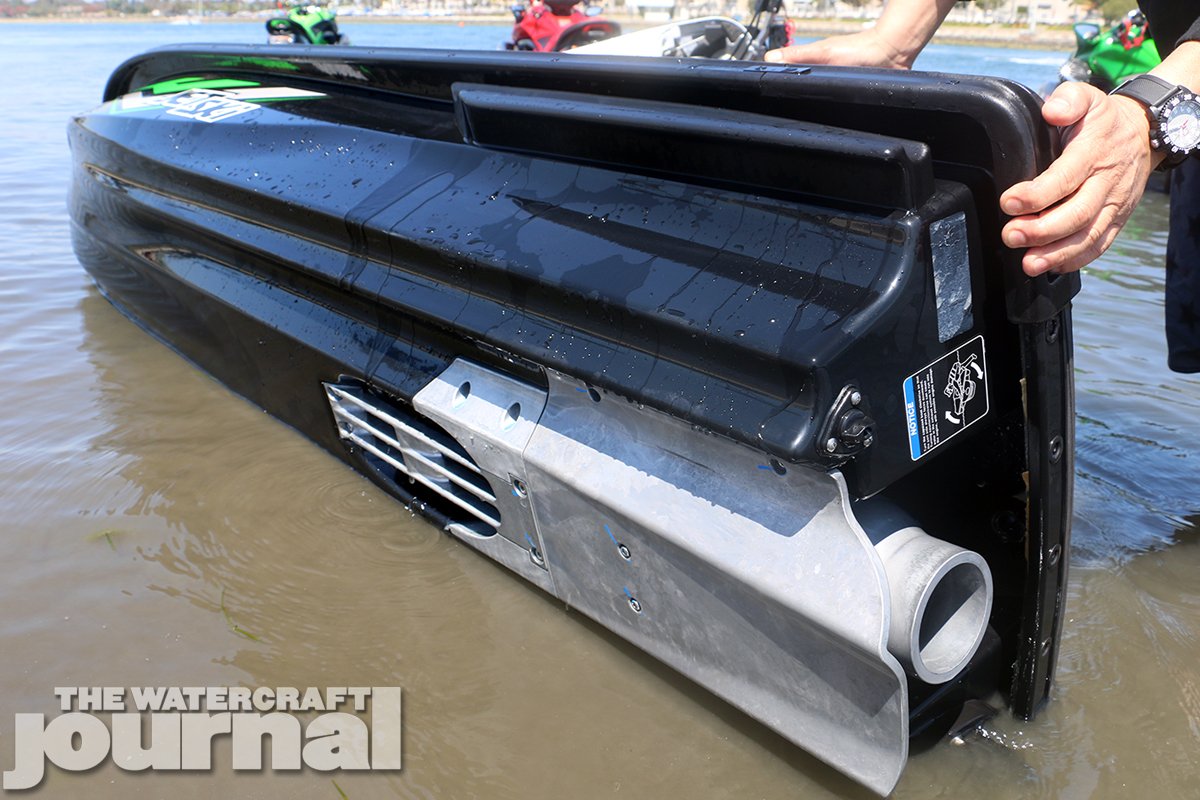
In fact, it was this predisposition that equated for my initial humbling. Observing how much hull resided below the bondline, I had wrongly presumed the SX-R would all but buoy like a pontoon. It didn’t, and dozily rolled over as I confidently threw a knee into the tray. The hull, and the entirety of the new SX-R, is deceptively well-balanced. In fact, the amount of draft was easily explained by Kawasaki standup guru and principal developer, Minoru Kanamori: “We had to place the engine as far down as possible in case it rolls over. With [the engine] so low, it will naturally roll back over.” He continued, “The lower the center of gravity, the better the stability both in the ocean and in the closed course. It makes it more stable and easier for everybody to ride.” And chop is where the SX-R shines brightest. Before, even rolling waves would give us reason to fear on smaller standups but not the SX-R. Simply charge ahead, rollers be damned.
Firing up the ignition spurs an unfamiliar, almost disquieting burble from beneath the hood. Although I consciously knew the 1,496cc 4-stroke powered the ski, hearing the muffled exhaust note was unsettling. That doesn’t sound right. My lizard brain’s inner monologue observed; half expecting the cacophony of a pinging 2-stroke. At idle, the 15F’s transplanted pump churns gently and a lack of blue premixed exhaust instinctively made me question whether the ski was still firing. It was in fact, and was ready for me to wake up. After my stupid bobble, I pulled myself back aboard, pinched the mechanical cable-driven throttle, and let the SX-R’s acceleration reveal itself. Unlike the Eaton-supercharged Ultras 310s, the SX-R’s acceleration comes on linearly, giving only as much as you ask it. With 160-ponies on tap, I feared the throttle would be jarring. Gratefully, such was never the case. Sure, there is arm-stretching acceleration at the ready, but the 60mm throttle body never once threw me a surprise.
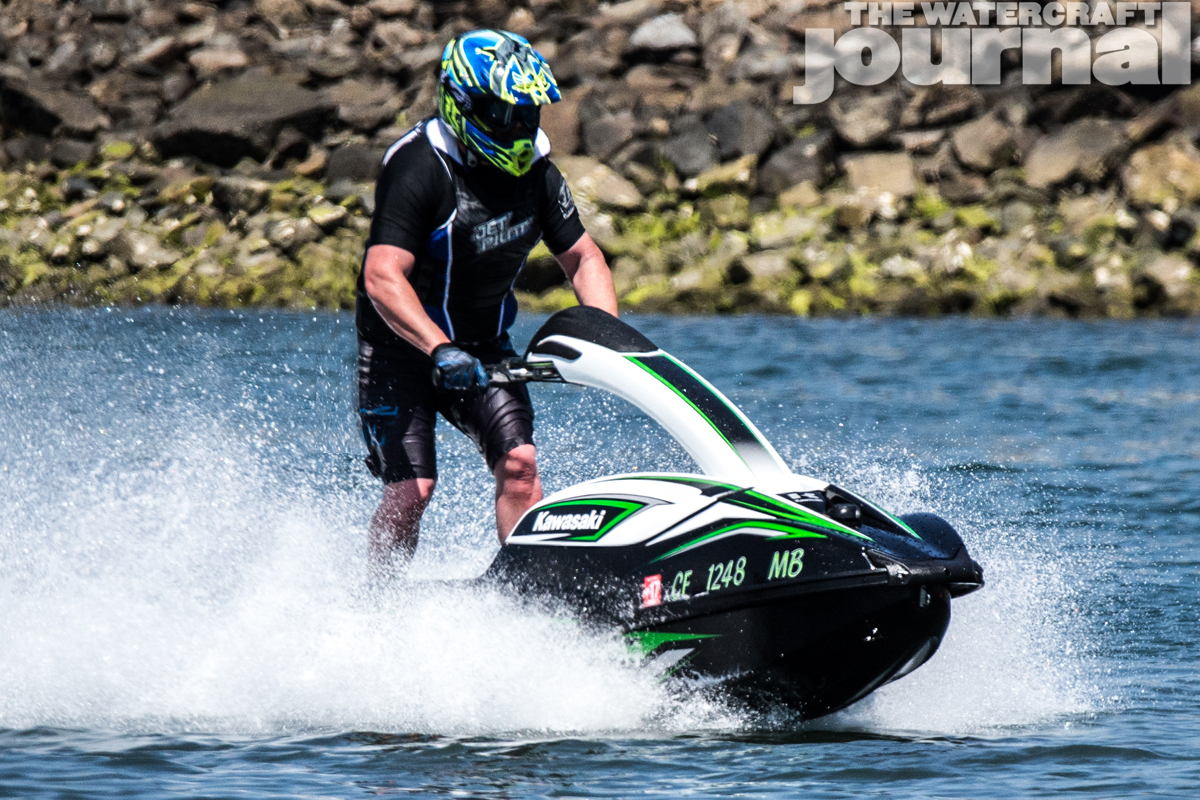
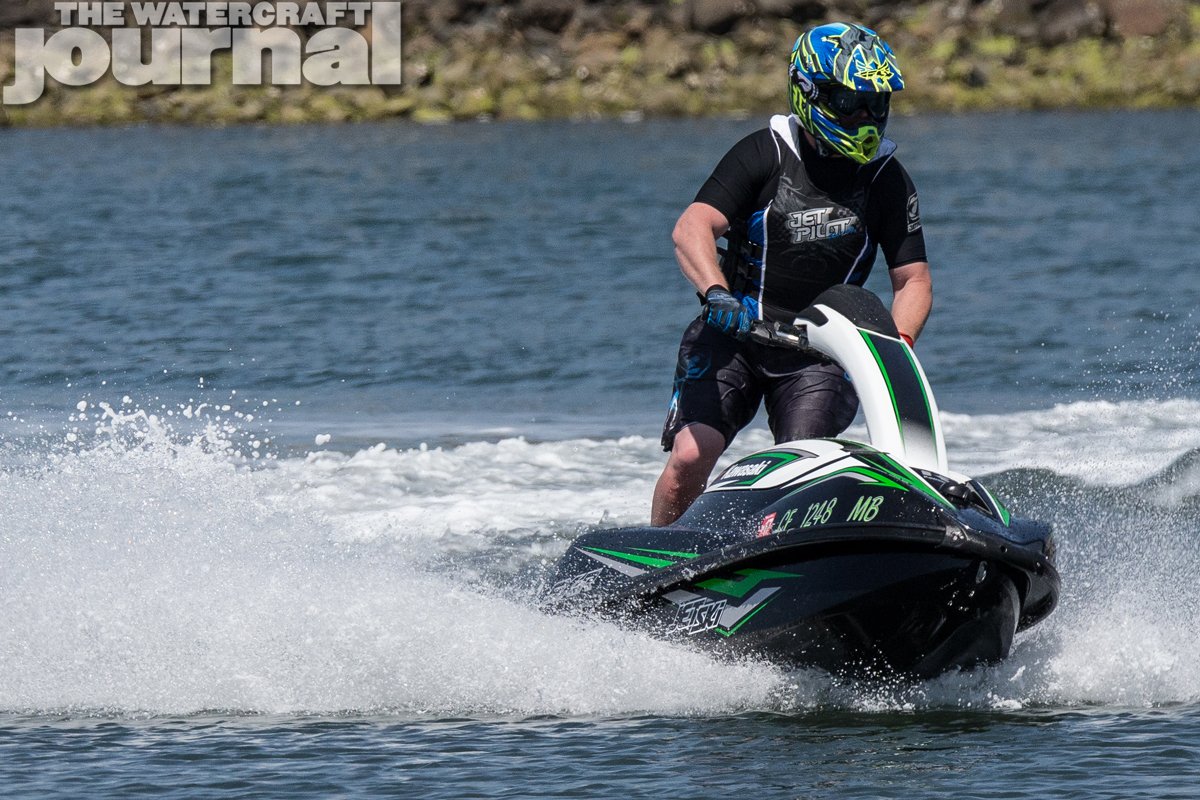
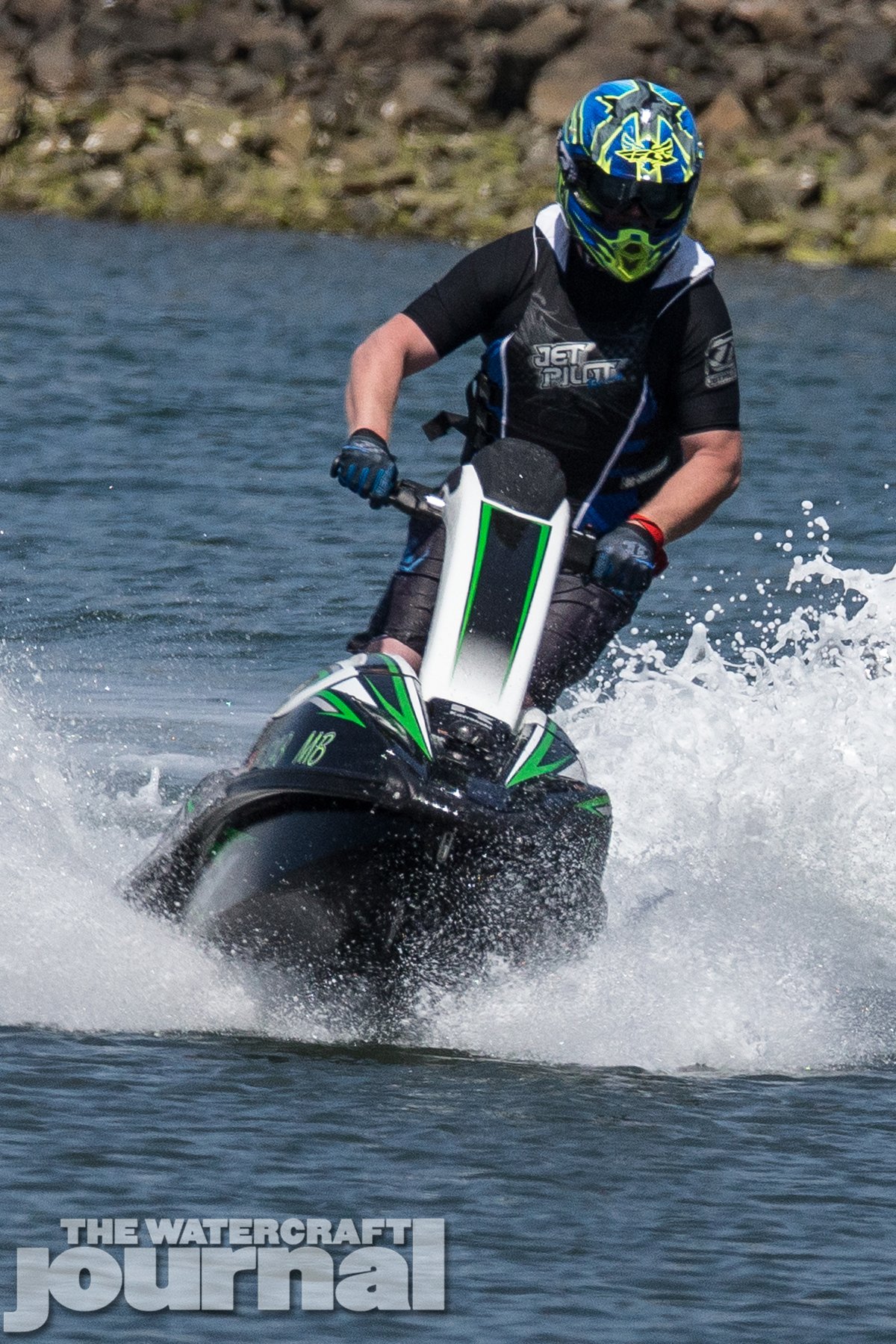
Feeling brave, I decided to open her up. Tucking in low, staggering my feet, I pinned the gas. And it was…weirdly uneventful. Sure, going that fast on a ski is amazing and will definitely alert all of your senses, but at no time did the SX-R do anything wonky. No chine walk or searching. At speed the SX-R tracked true, behaved predictably and well-balanced. No standup we had ridden before acted so calmly at such speeds. It simply went faster. While there was no time that I forgot the size of the craft I was riding, it never felt big, unruly or insulated. It never hunted or darted side-to-side. The steering input was responsive, responding sharply, but measured. In fact, in the corners, it only wanted more: more throttle, more lean-in. In fact, almost at all times did it beg for more throttle. Whether sluicing through chop or in the corner, the SX-R wanted more gas. Let’s go faster, it begged. C’mon, we can take this turn twice as fast.
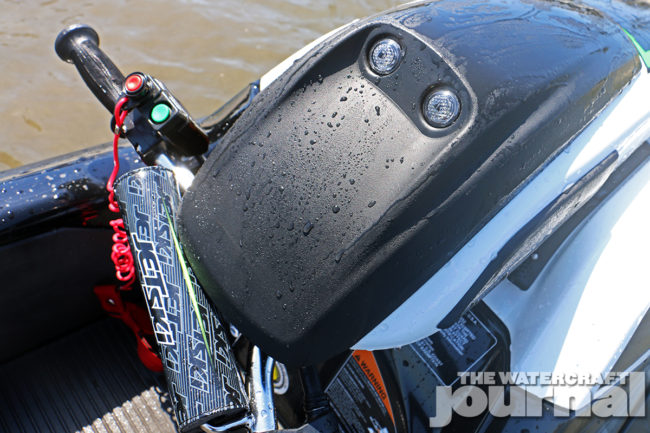
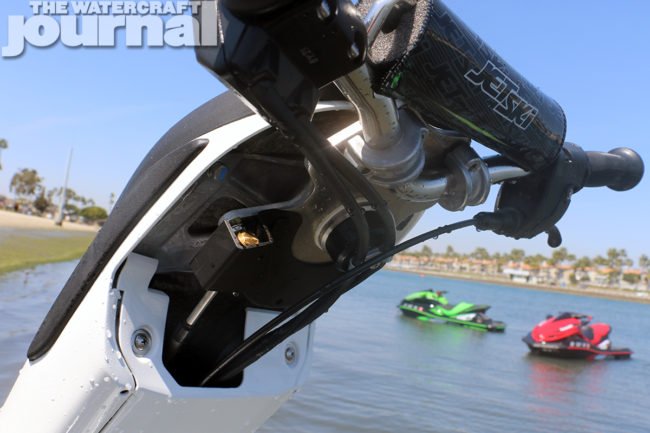
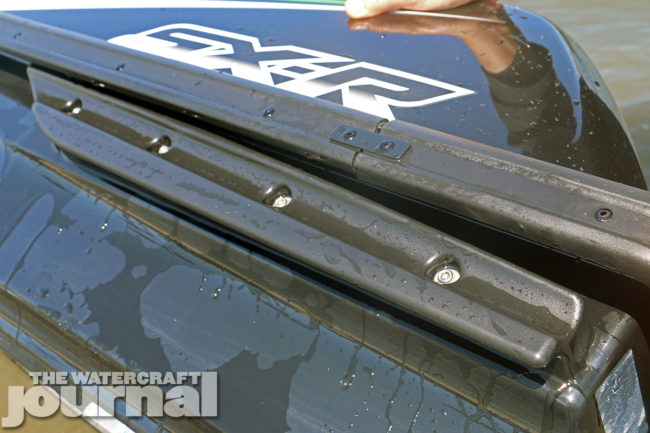
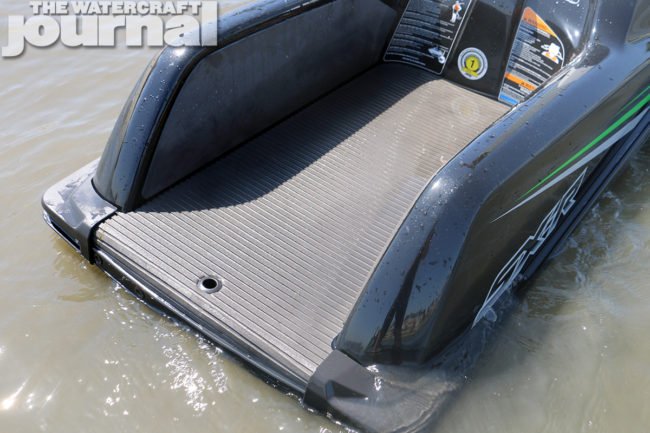
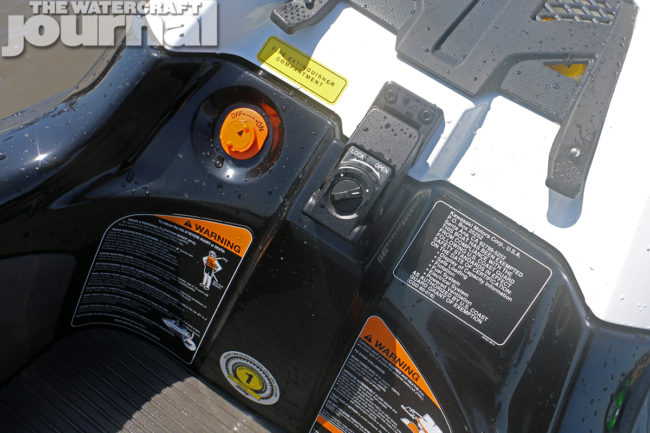
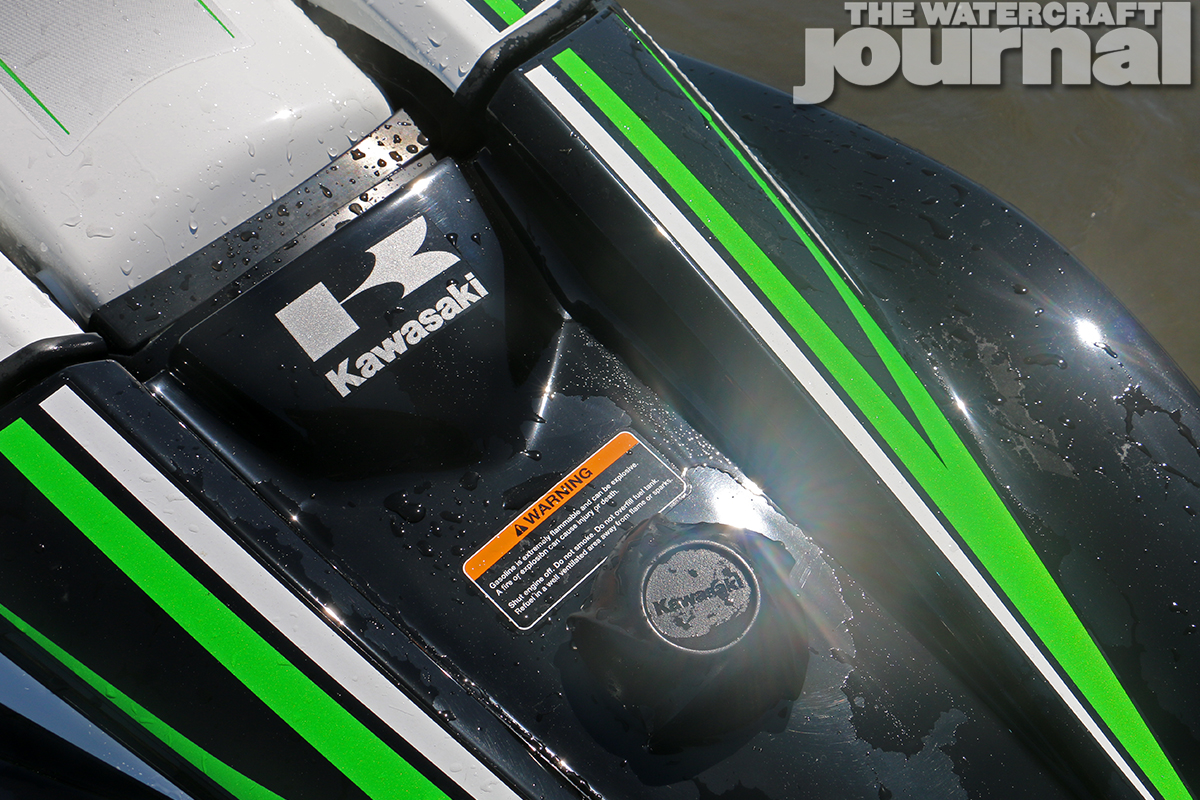
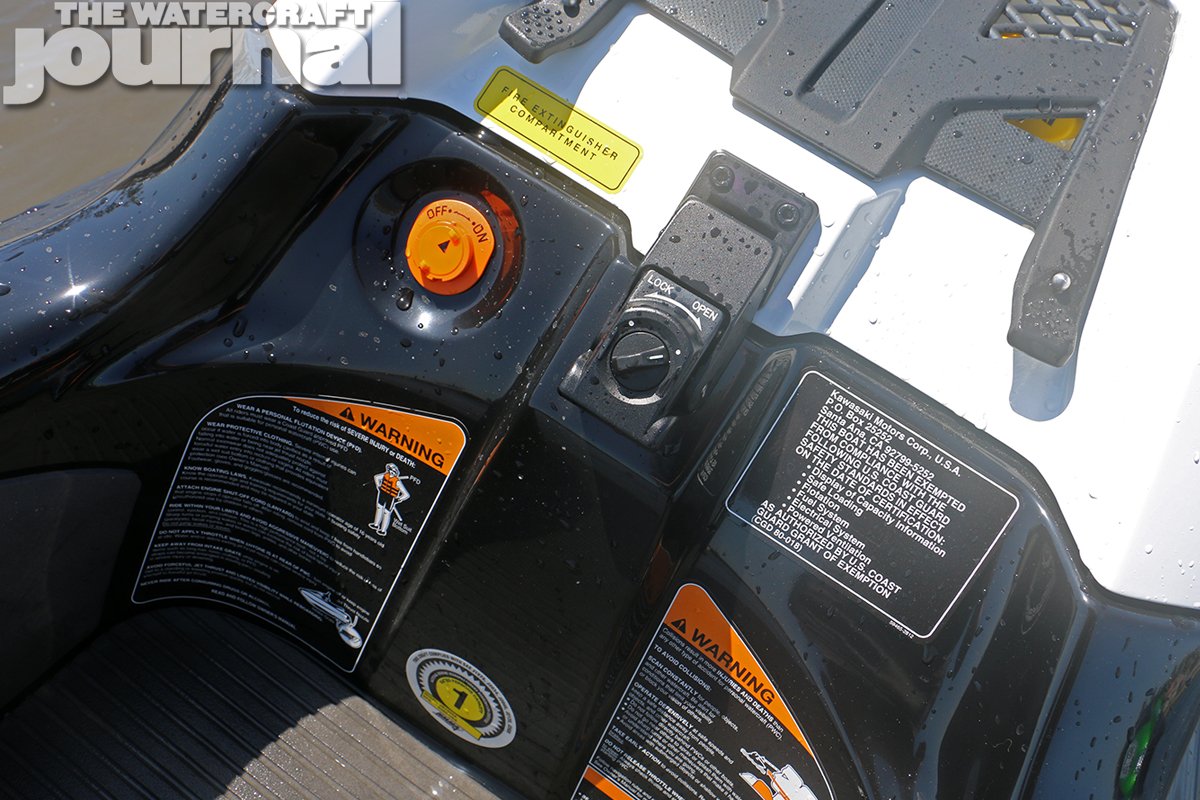
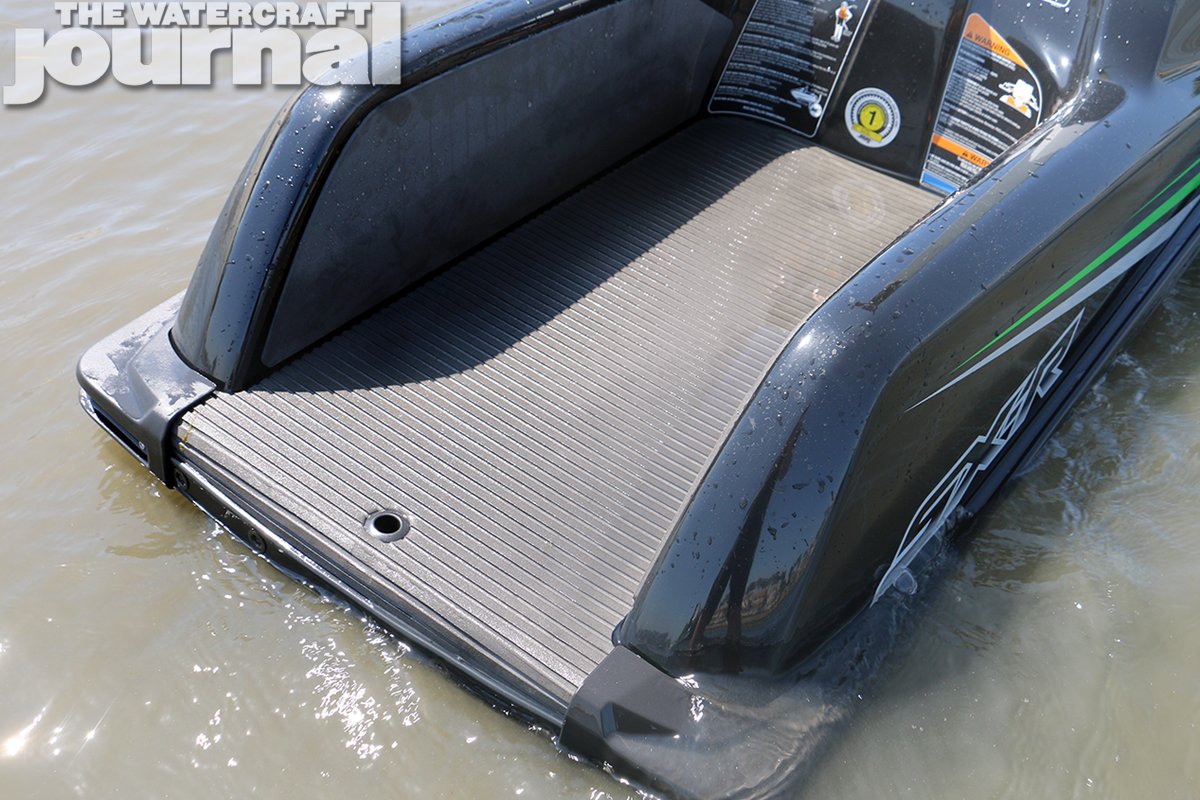
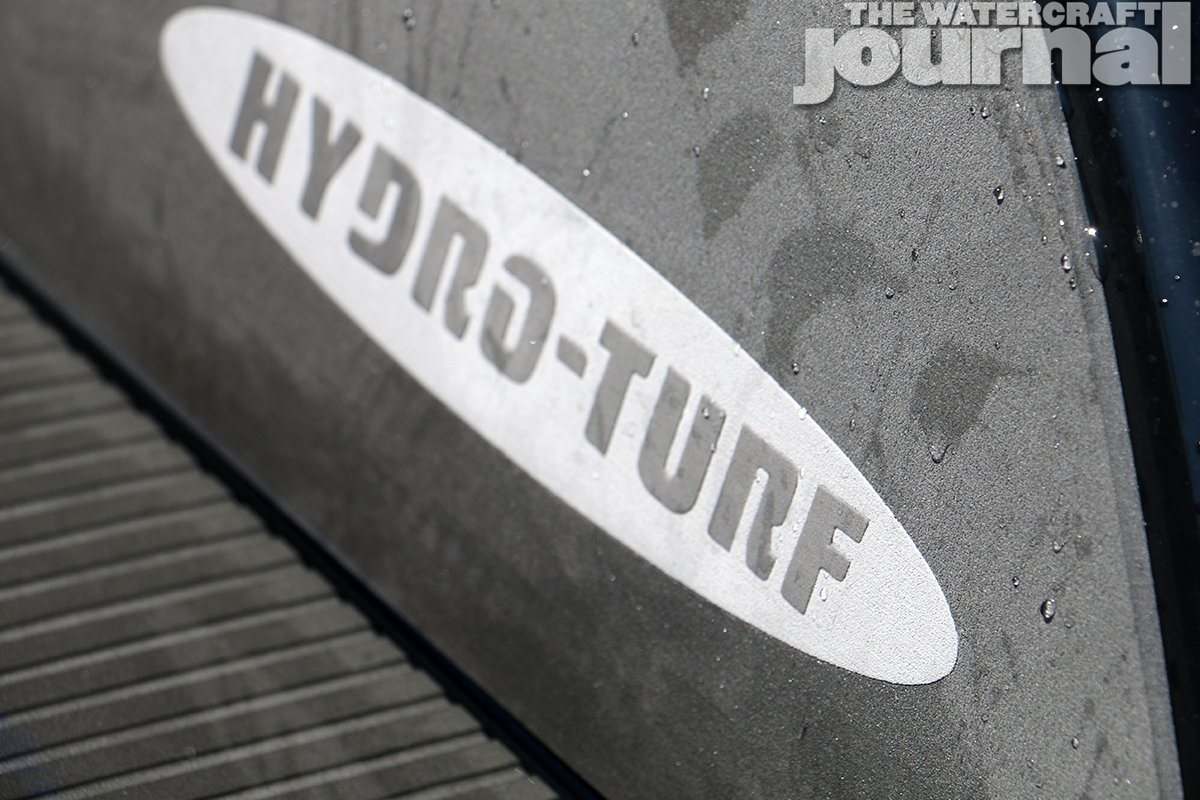
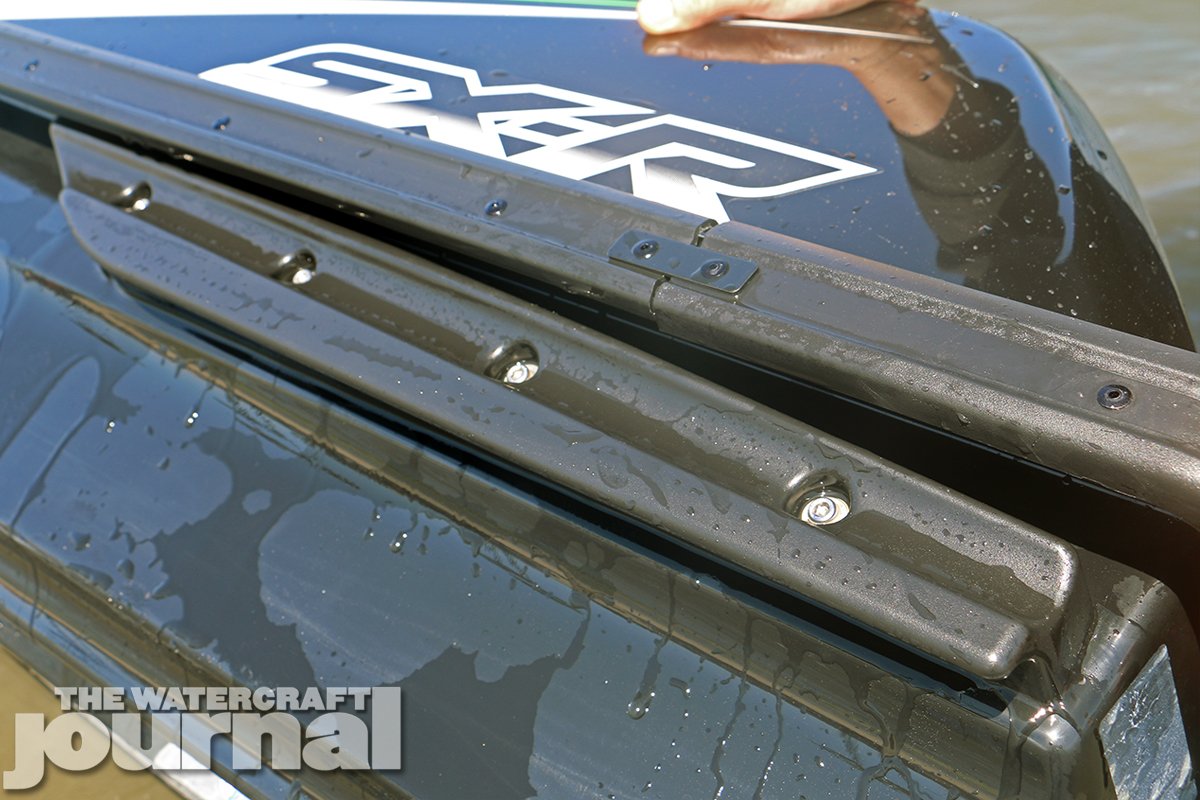
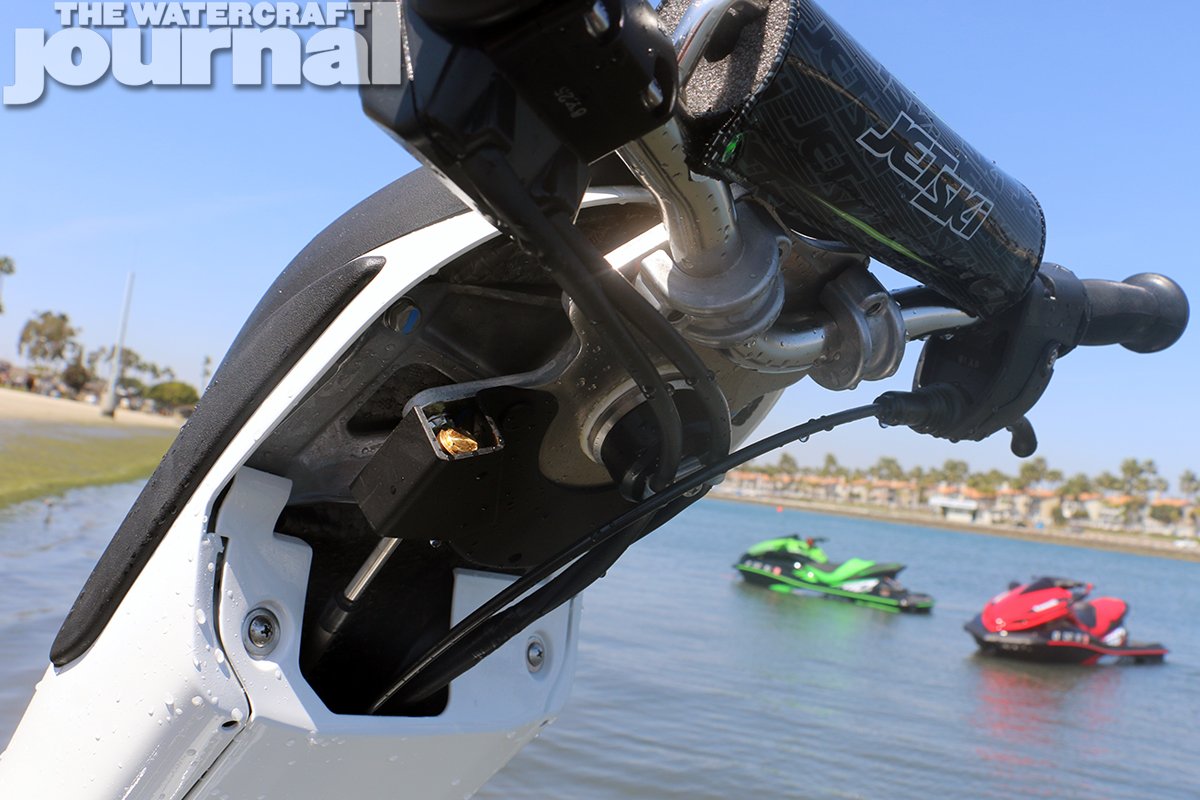
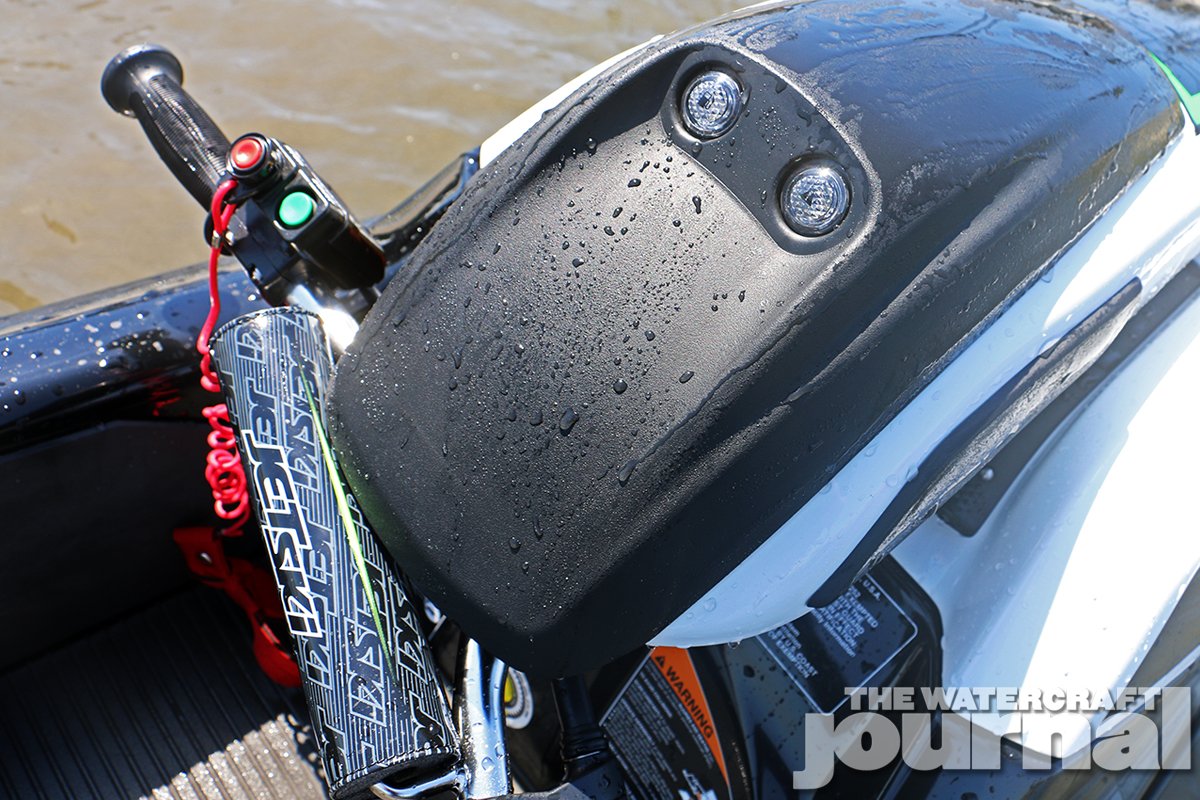
Despite its curvaceous profile, the compounding angles, alcoves and curves, the entirety of the SX-R is somewhat spartan. What innovation exists does so out of necessity, all other conveniences or flourishes were left on the cutting room floor. The teardrop-shaped chin pad on the handle pole features an amber gas warning light and a all-encompassing red engine warning light indicating oil pressure/engine temperature. A magnetic safety key acts as a security kill switch and can be tucked under the snap-together rubberized cargo net atop the hood. Gray Hydro-Turf mats are plush and serve well. Gone are the soft padding from atop the gunwales, which I missed considering how many times I found myself reboarding throughout the day. A foam-lined chest pad wraps around the electroplated handlebars, serving as a small pull-up bar when heaving oneself back into the tray. We hoped for a little more panache given the ski’s return after its 6 year hiatus, but costs were kept to a near zero. In fact, far more than we ever could expect.
Kawasaki’s Off-Road and Watercraft Product Manager Dave Oventhal was graciously candid with The Watercraft Journal. When I prodded why Kawasaki would choose to resurrect the SX-R when manufacturers were doubling down on Rec Lite-segment (Spark, EX) runabouts, Oventhal admitted, “Trust me, we’re not ignoring them. But we decided [it was best] to do something different.” While walking to the beat of one’s own drum is commendable, we did question Kawasaki’s motives. He replied, “It wasn’t just about reclaiming existing market share, we’re an enthusiast company first. We wanted to build something we loved too. And that was a [standup] JetSki.” Moreover, Oventhal admitted that developing a “Spark fighter” would require millions in development compared to the opportunity of creating a 4-stroke standup not from whole cloth, but from a majority of pre-existing components. “You’d be very surprised has how few parts were specifically designed and created for [the SX-R] from scratch.”
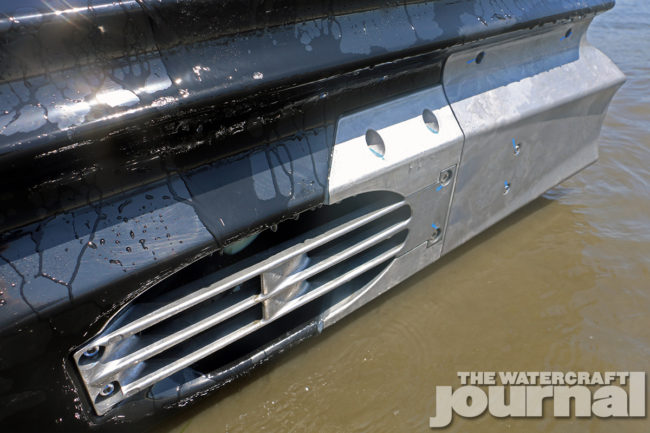
In one instance, Kanamori discovered that after months of trial-and-error, the sponsons found on the STX-15F were actually better suited for the SX-R than any one of the prototypes he had been developing. “That sponson is 100-percent identical to the STX-15F. Same bolt pattern. Everything,” he laughed. The air box, criss-crossing air inlet tubes and even the flush kit hose adapter all came from the STX as well. Building a machine from so many existing components worked to keep the MSRP price below $10,000. “That was a big goal for us,” Kawasaski’s Jon Rall smiled. “We knew we had to keep the price down if we wanted to be taken seriously [by many of the JetSki diehards].” And that’s what Kawasaki is hoping for; thus far, Kawasaki reports that 80-percent of SX-R buyers are recreational riders with some previous standup or PWC experience, with 20-percent belonging to dedicated racers. The hope is that the racing segment will inspire new and returning buyers to rekindle their love affair with the standup JetSki. And given the SX-R’s out-of-the-box race-readiness, the asking price is right where it needs to be.
It’s an impressive thing to see Kawasaki put all of its passion back out on the table again. The SX-R is a valid entry, regardless of how many other machines its made from. In fact, it really shouldn’t matter at all. The machine is now entirely 50-stage legal, as well as legal in several countries it couldn’t have been sold in before, and it’s an absolute blast to ride. And yes, it’s a workout and for those of us who could bare to lose 5-to-50 pounds, it might be the only gym membership you’ll be willing to buy. There’s no doubt that Kawasaki will sell every SX-R they build this year; the big question is what will next year (and the year after) look like. Will this 4-stroke SX-R reignite the standup industry? We definitely believe it has what it takes.
In a world full of horsepower, torque, top speed and anything that deals with speed, safety equipment is often overlooked. Yes, going fast and flying across the water is what many people dream of, it is important to take a moment and look through your own safety equipment.
The first thing that comes to mind when talking about safety equipment is life jackets. They have saved thousands of lives and with the recent advancements, companies have come out with great looking but most importantly reliable life jackets. One of these companies is Yamaha. Yamaha has been a leader in personal watercraft since the late 1980’s. With a company in the industry for so long, you can count on them to provide products to the public that are of the best quality.
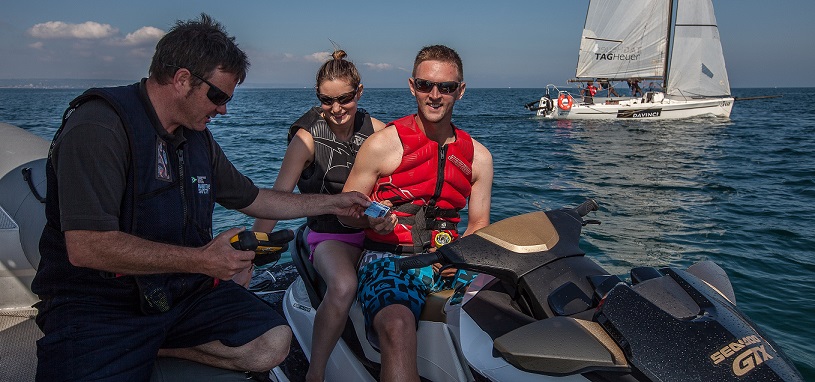
Yamaha has just announced their 2017 life jacket line up and are available to the public now. It is important to know what condition your life jacket is in before going out to ride, if could save your life. Yamaha’s 2017 life jackets are made of Synthetic Neoprene along with foam panels to provide the user with maximum comfort without sacrificing reliability. Yamaha offer male and female 2017 life jackets at an affordable price of $89.99. Male and female sizes range from Small to 2XL. Females have the option of blue and pin and male have black, blue or white.
These life jackets are Coast Guard approved and UL listed. Whether you are in need of a new life jacket, on the fence or wanting to spruce up your look out on the water this spring, now is the time to buy.






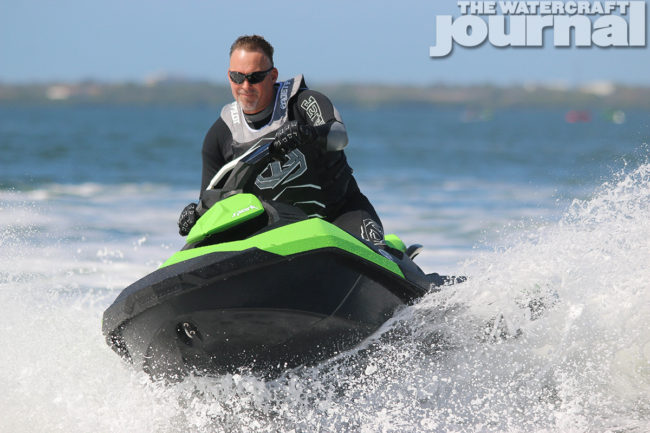
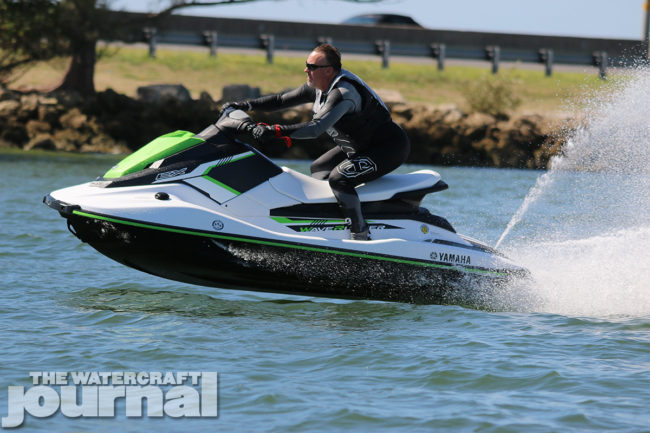
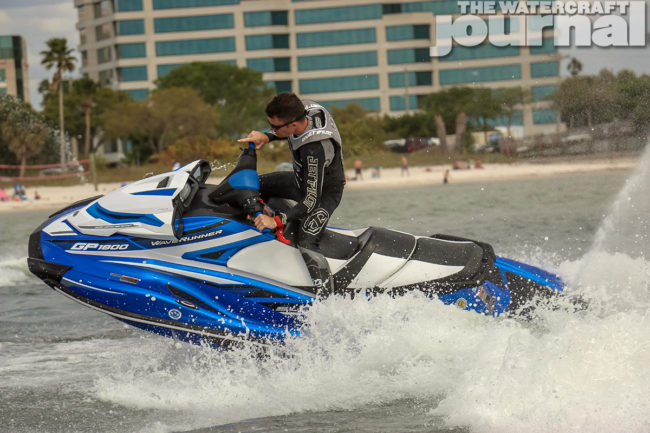
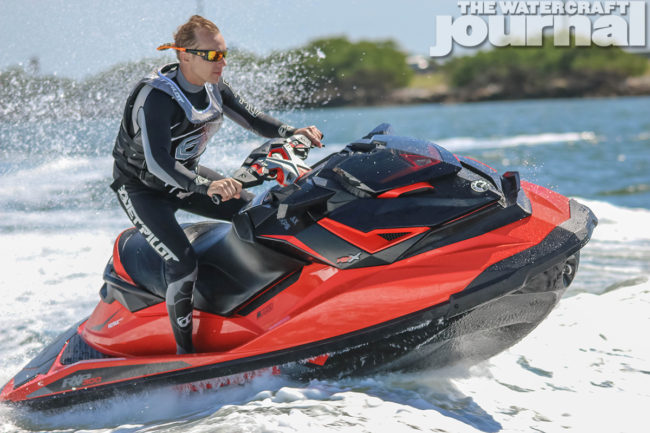



















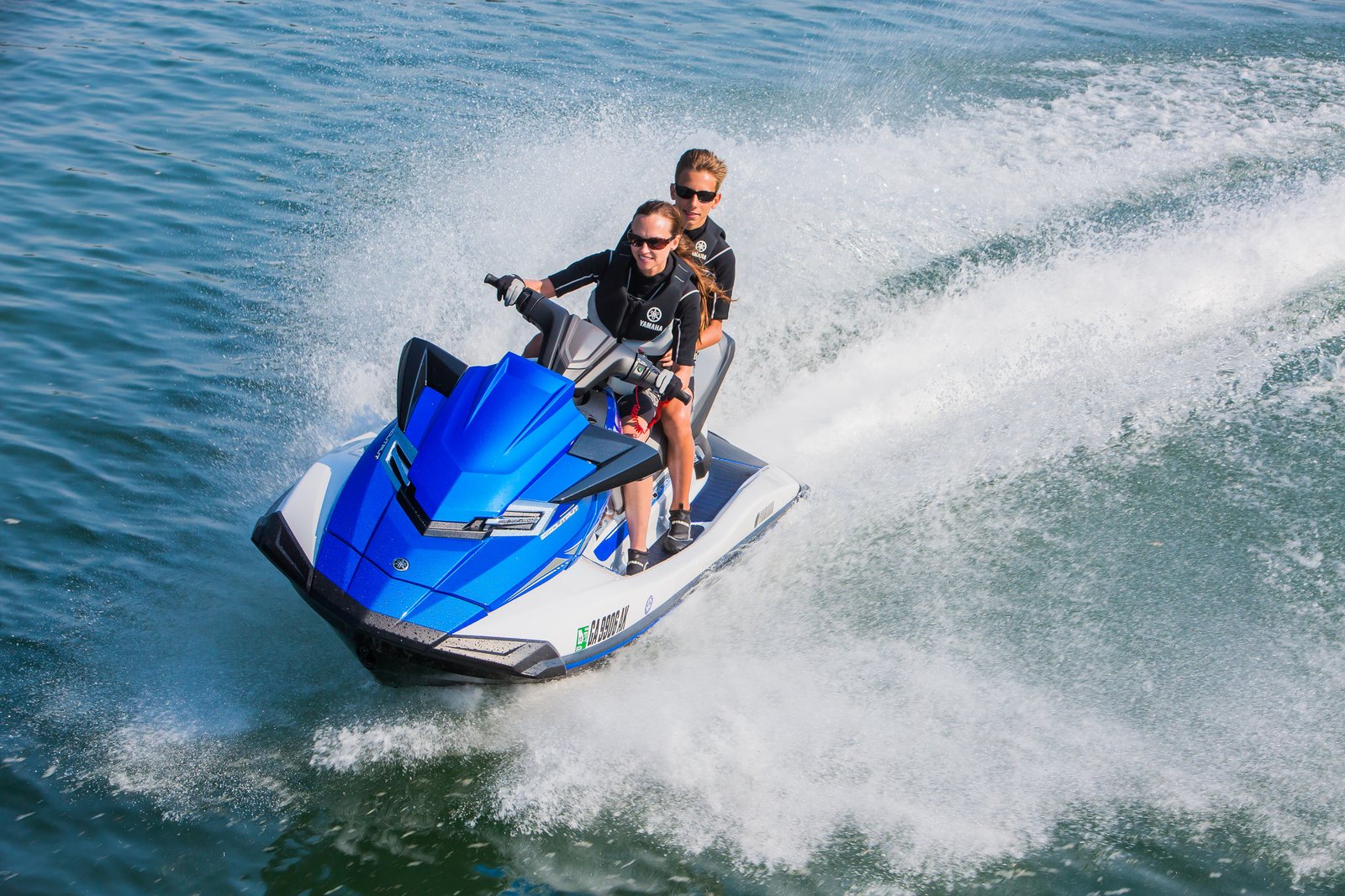
 Yamaha has just announced their 2017 life jacket line up and are available to the public now.