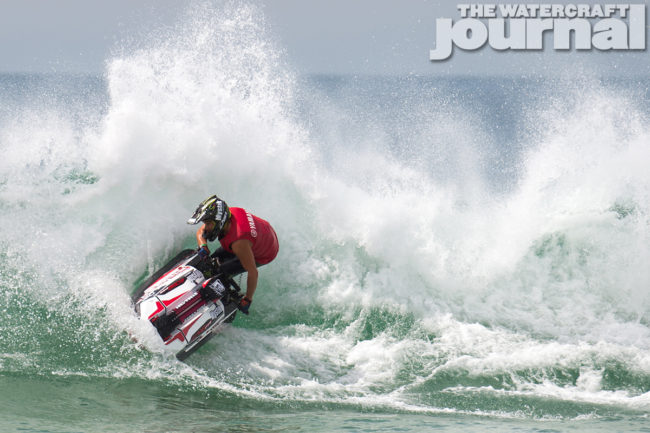
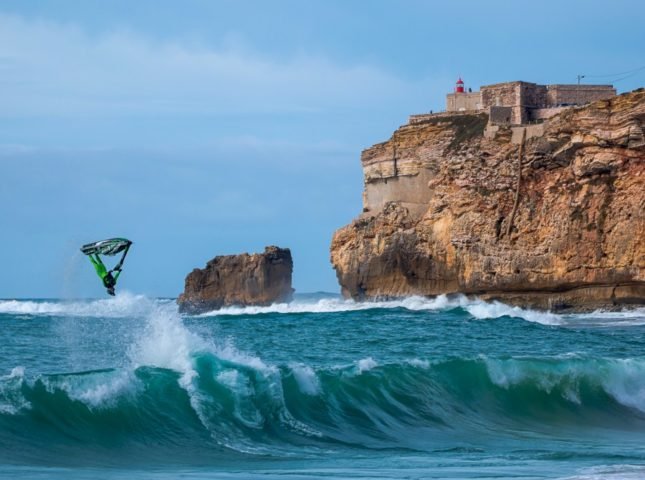
Praia do Norte in Nazaré, Portugal is home to beautiful, long, sandy beaches that attract people from all over the planet. While the beaches are what the tourists love, jet ski freeriders only care about what the surf is doing. With some of the biggest waves recorded at Praia do Norte, freeriders flock to this beach. While the conditions are extremely dangerous, it is what drives the freeriders to wake up in the morning and get out riding.
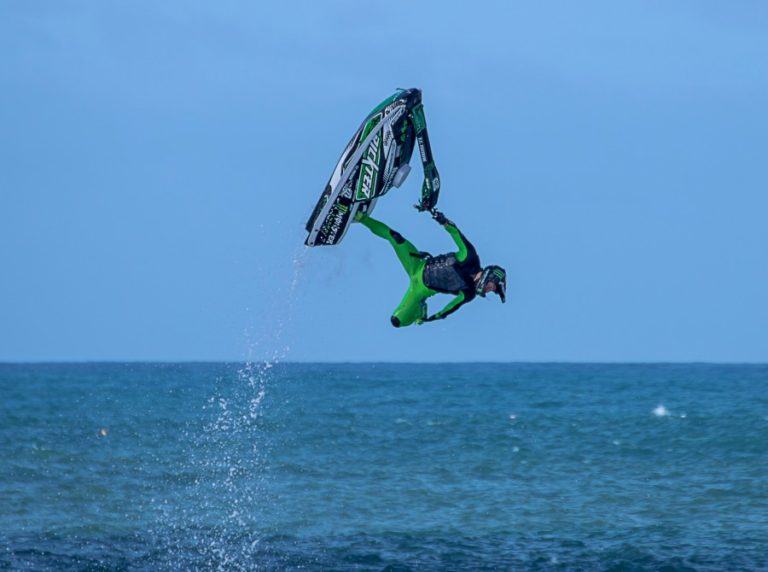
Recently, Abraham Hochstrasser has been in multiple headlines for riding in rough conditions and putting on a fantastic show. Equipped with a Rickter freeride hull, he is able to hit any wave, at any speed, and pull off any trick. Having the right equipment is the first thing to check off your list but having the guts to be only holding onto your craft while being inverted is insane. Abraham Ho, the Mexican freerider was invited to come down to Portugal and ride for a upcoming action sports film. This film will showcase riders from all over the world and it only made sense to have Ho riding in the best surf in the world. The film is expected to be released by the end of 2017 so be sure to mark your calendars and get your hands on a copy before they sell out.
We think Ho summed up his recent experience perfectly in an interview with Monster Energy, “I had to try and go into, a wave of almost 20 meters is something difficult to explain, interact with so much power is truly exciting and frightening at the same time; that sense of being so small makes you feel so alive!” The power of the waves and power of his craft is what makes him one of the best freeriders around.
For those paying attention to the powersports industry (outside of PWC sales), you’ll know that there has been quite a few highs and lows for the domestic manufacturer of side-by-sides, snowmobiles, motorcycles, ATV, and electric vehicles. Only in January did the OEM announce the closure of its famed Victory motorcycle brand, with Polaris Industries Chairman and CEO Scott Wine stating, “Over the past 18 years, we have invested not only resources, but our hearts and souls, into forging the Victory Motorcycles brand, and we are exceptionally proud of what our team has accomplished.”
Wine justified the decision, stating “This move allows us to optimize and align our resources behind both our premium, high performing Indian Motorcycle brand and our innovative Slingshot brand, enhancing our focus on accelerating the success of those brands.” Yet, what Wine left out of his public address was the deepening of Polaris’ relationship with a certain engine manufacturer and the widening of the company’s portfolio into the personal watercraft category (yet again).
Polaris is the SxS leader with over a 50-percent share of the market and “a stranglehold on the hero-building Pure Sport segment with the company’s RZR performance vehicles,” according to SuperTraxMag. Moreover, Polaris’ snowmobile division is the second most successful in the marketplace. Placing Polaris at the top of the SxS heap is their turbocharged Pro Star DOHC twin 4-strokes producing 168-horsepower (from a 1L no less!). But unless we were talking about Sea-Doo GTIs and Yamaha VX’s, that’s simply not enough to cut it.
Interestingly, General Motors revealed it will be investing $233 million into its small engine production at its Spring Hill manufacturing complex. The Spring Hill facility currently manufactures GM’s Ecotec 2.0L, 2.4L and 2.5L 4-cylinder engines, including direct-injection and turbocharged variants. And why this matters is because, as per Polaris’ CEO Scott Wine, it’s looking to “expand” its Slingshot line and “deepen” its relationship with General Motors, who supplies the Ecotec LE9 2.4L DOHC for the three-wheeled street trike.
In it’s current form, the Ecotec LE9 displaces 2,384cc making it, effectively, the largest displacement engine in the PWC market. Equally, the DOHC (dual overhead camshaft) VVT (variable valve timing) allows the Ecotec to perform at various speeds better than current overhead cam engine platforms, producing a strong 173 naturally-aspirated horsepower @ 6,200 rpm. Conversely, the turbocharged version adds an additional 92-horsepower at the flywheel, pushing the Ecotec’s output to over 260-horsepower – well within the range of the Yamaha SVHO (Super Vortex High Output) – at 265HP.
In a brief exchange of emails with Polaris’ Social Media Coordinator, Shana M. O’Hara, plans for an aggressive, full-sized 3-person watercraft have been “in the making” since the brand’s withdrawal from PWC in 2005. O’Hara states, “The image of the clay sculpt [above] is of a prototype runabout [rumored to be named either the “Icon” or the “Element” -Ed.] similar to what the final product would have been but was never released.” O’Hara hinted that interest in returning to PWC began in “early 2014” with the advent of the Sea-Doo Spark’s release. “We thought it was a very bold move [for Sea-Doo] and got us reconsidering our program.”
Although inspired by the entry-level Spark, Polaris has no intention of starting off small. “It’ll definitely carry some Slingshot DNA,” O’Hara needled, giving us ample room to believe the Ecotec 2.4L will reside beneath the bench seat; and as next year promises to deliver a turbocharged Slingshot to the public, so too will the GM-supplied 2.4L find a home in the future Polaris. The hull itself is expected to share much with the brand’s old flagship the aggressively designed limited edition Matrix (a derivative of the previous MSX 140 that has been discontinued for 2005, Jeff Hemmel once wrote back in 2004), capable of top speeds reaching up and beyond 67 mph with a full tank of required 92 octane fuel.
The model shown is a dated one, as indicated by the minuscule sponsons and lacking left-side brake/reverse lever. The Maxtrix though, was surprisingly avante guarde for its time, with scalloped fairings giving the runabout a early Ergolock design, predating the current RXP-X by nearly a decade. We expect changes to the sloping seat to take a more tiered look, and the unusual nodules on the nose to vanish. Obviously, we don’t expect the return of a Polaris watercraft to happen overnight, but as the brand expands its reach (and market share), so should logic follow that a return to PWC would be imminent. Competition breeds excellence and we’re excited to welcome a fifth manufacturer to the field. For all future updates on the coming Polaris return, make sure to check in HERE regularly.
Over the last few days, parts of Southeastern Queensland, Australia has been getting pounded with some severe weather. In fact, rains have been so heavy that flash flood warnings have been issued for the popular surfing location, as various areas have been instantaneously washed out, turning roadways into raging rivers.
Existing rivers have swollen to record heights, taking with them tons of sediment, trees, plantlife and much, much more. Certainly topography will be changed over these next few days, and with it damage to municipal infrastructure. So how to locals manage to cope? Well, they go surfing, of course. And if the video below isn’t enough to convince you, we really can’t convey it any better.
Not only are a handful of surfers enjoying the surging tide of rushing waters, but they’ve also enlisted a friend on a full-sized Yamaha WaveRunner to literally tow the surfers (at speed) into the surf, whipping back sharply propelling the surfers into the surf break. It’s both a feat of amazingly piloting talent and a wild exhibition of idiocy, as literally thousands of people die from pulled under in flash floods, but you gotta hand it to these tow-in surfers for their determination.
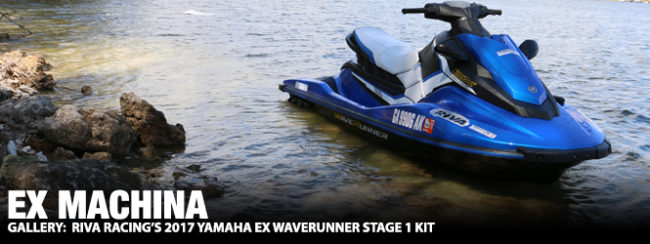
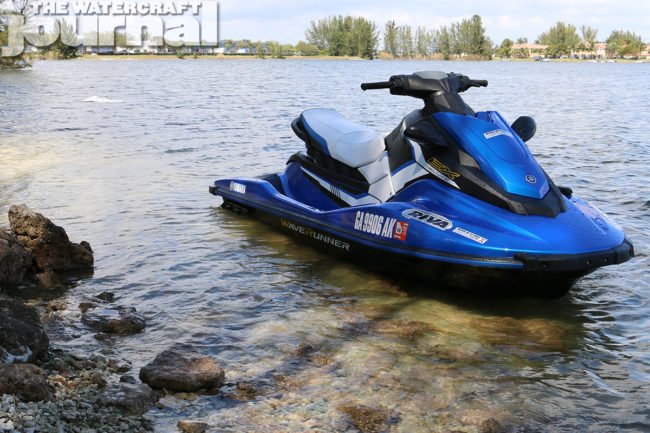
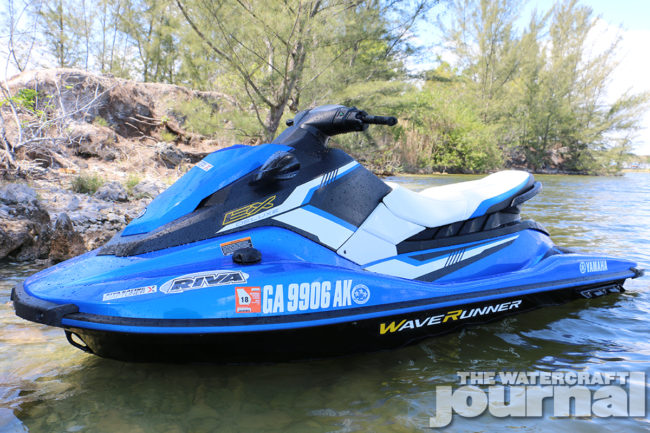
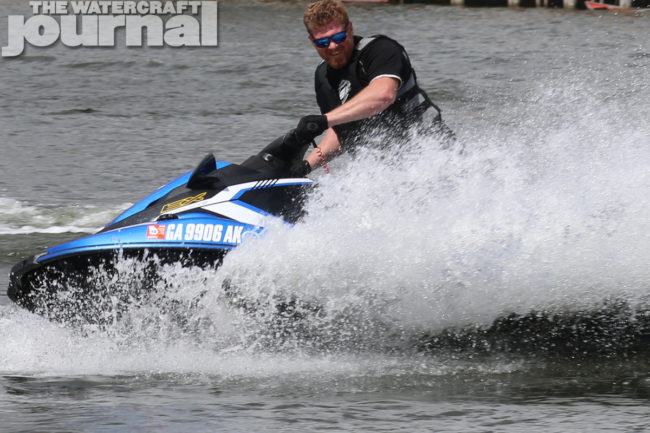
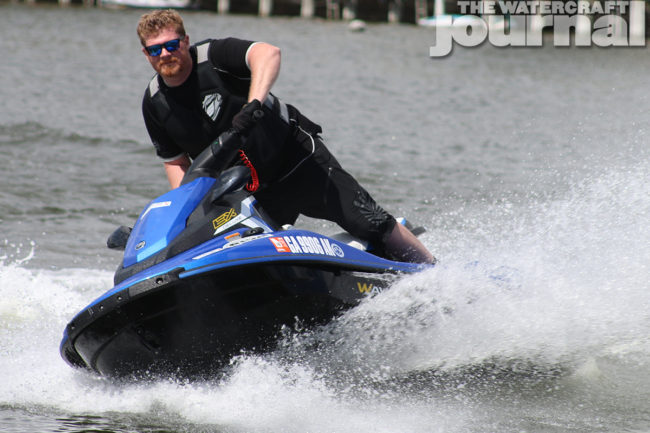
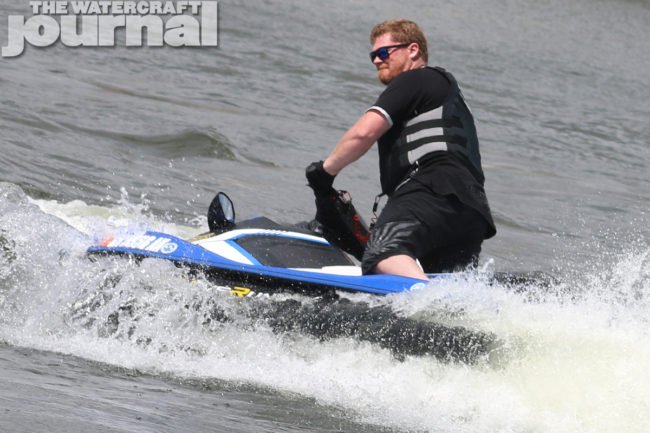
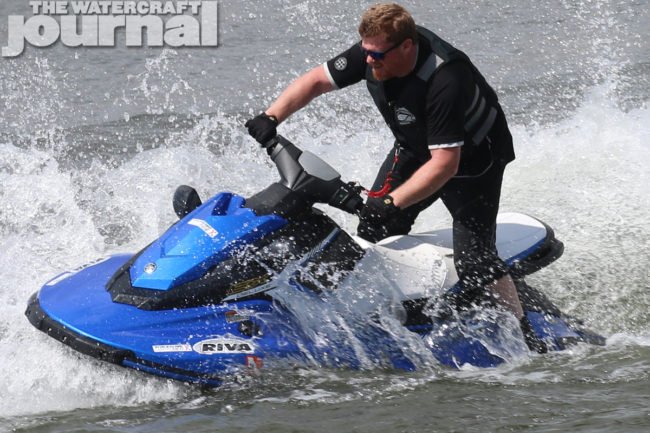
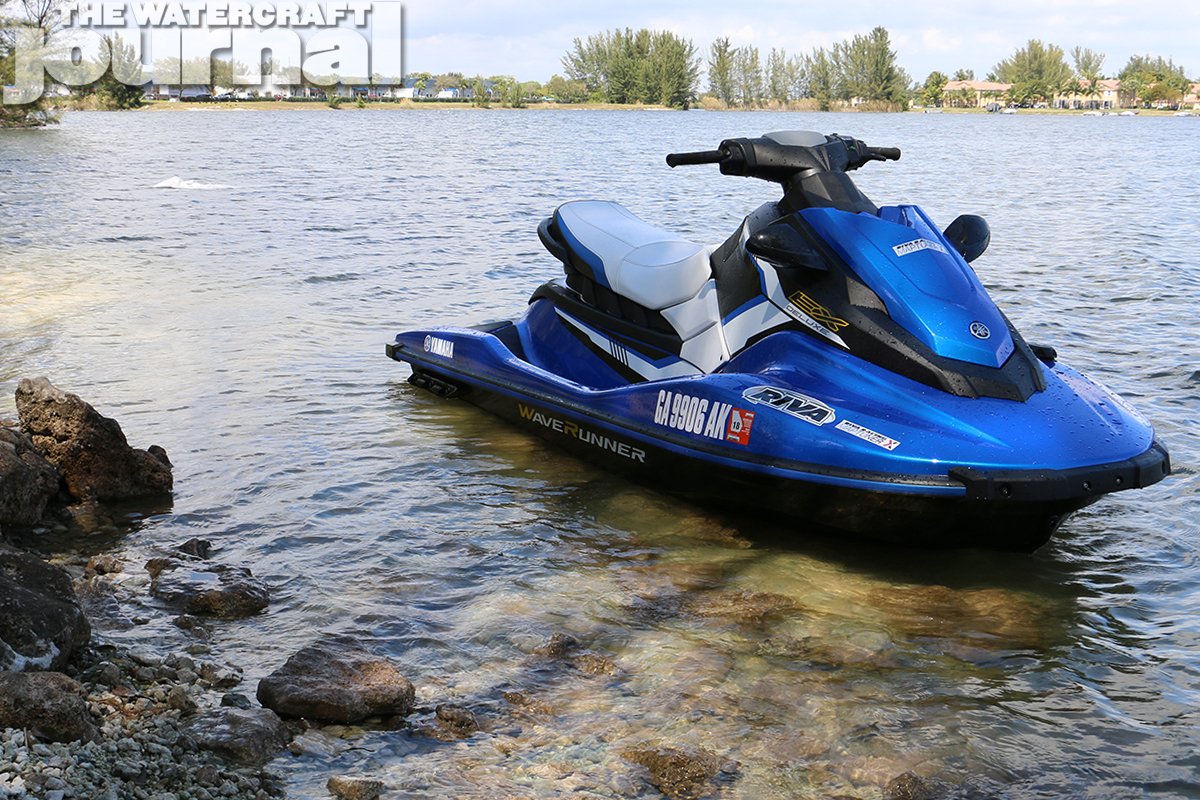
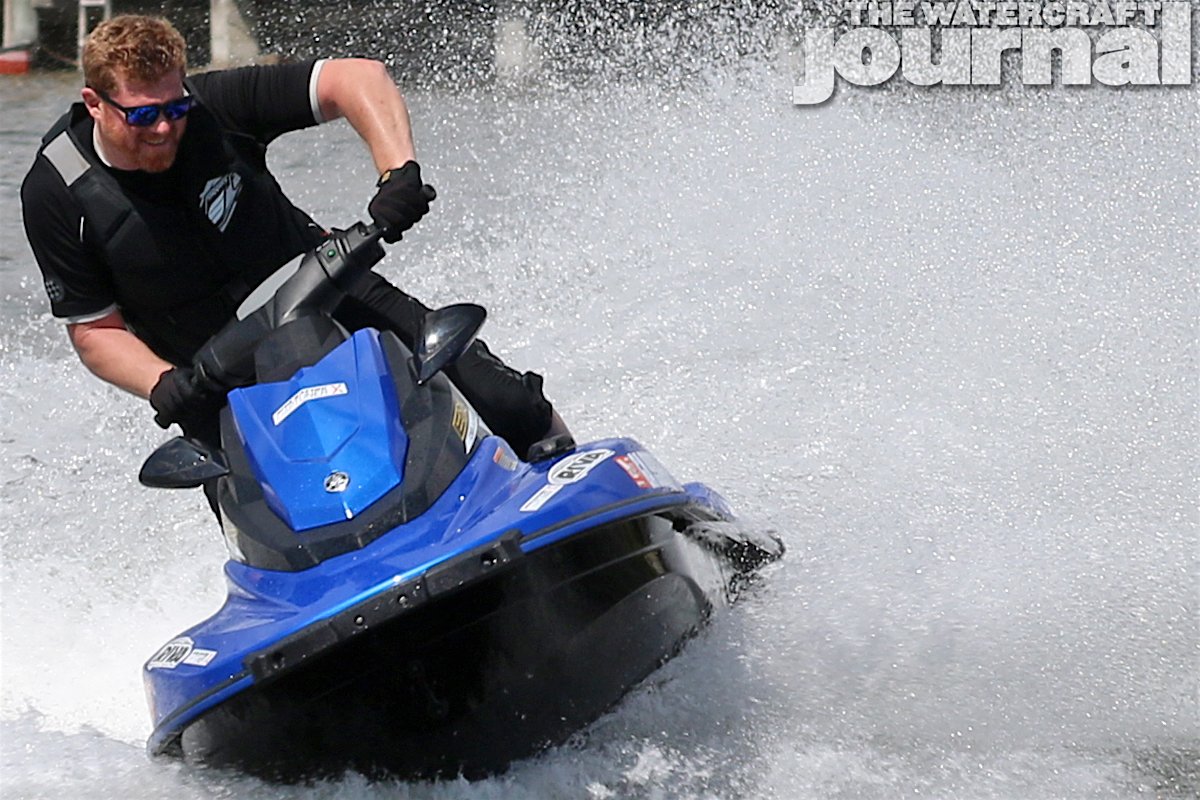
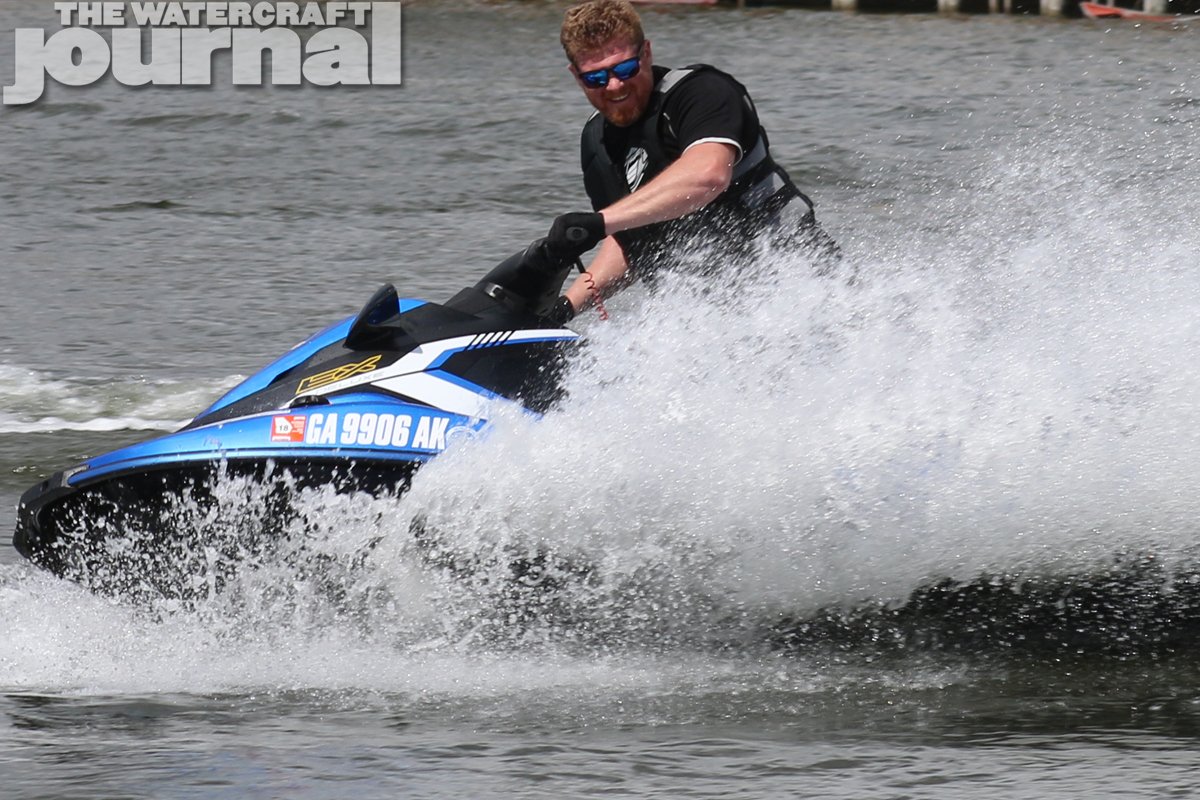
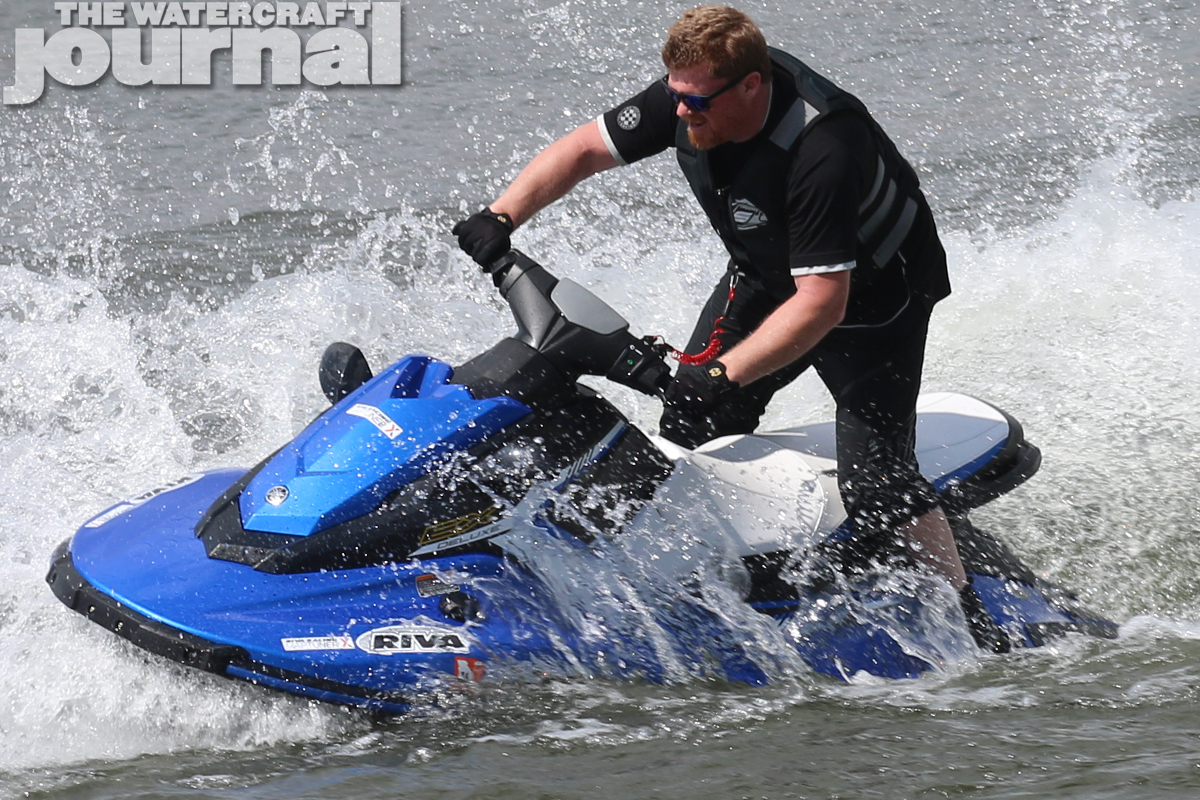
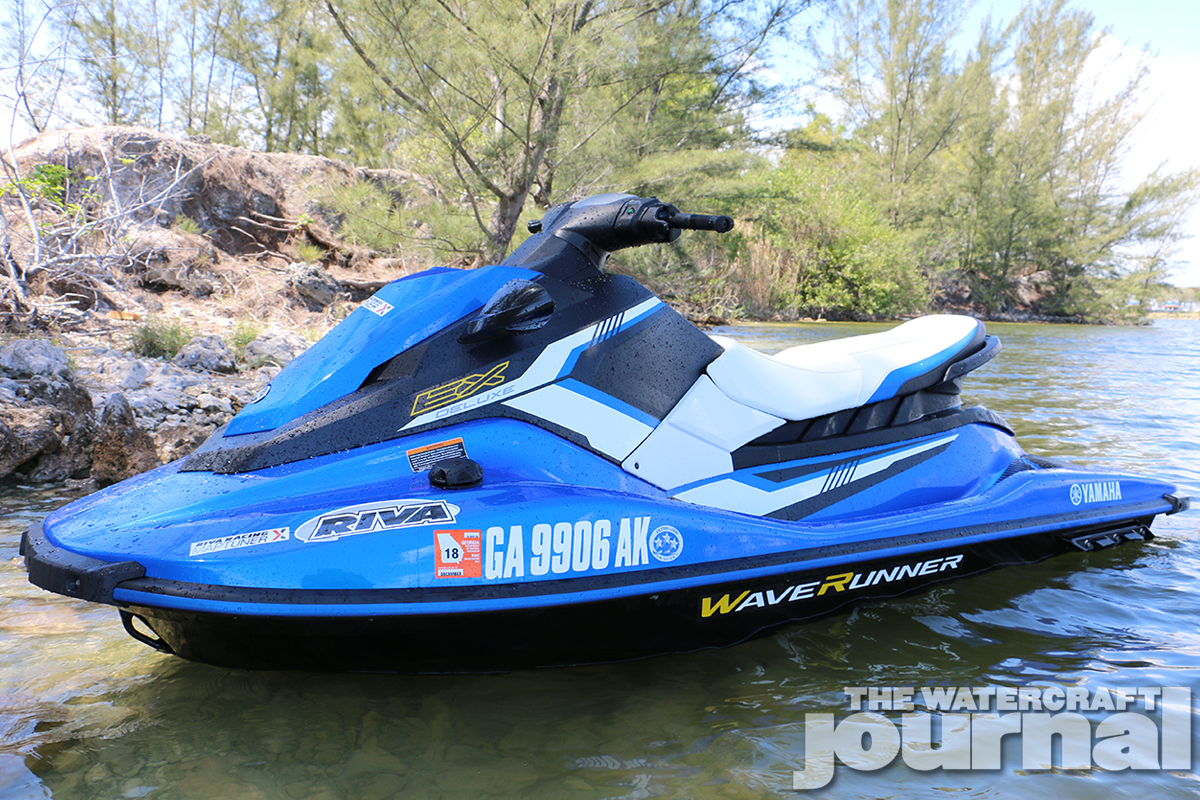
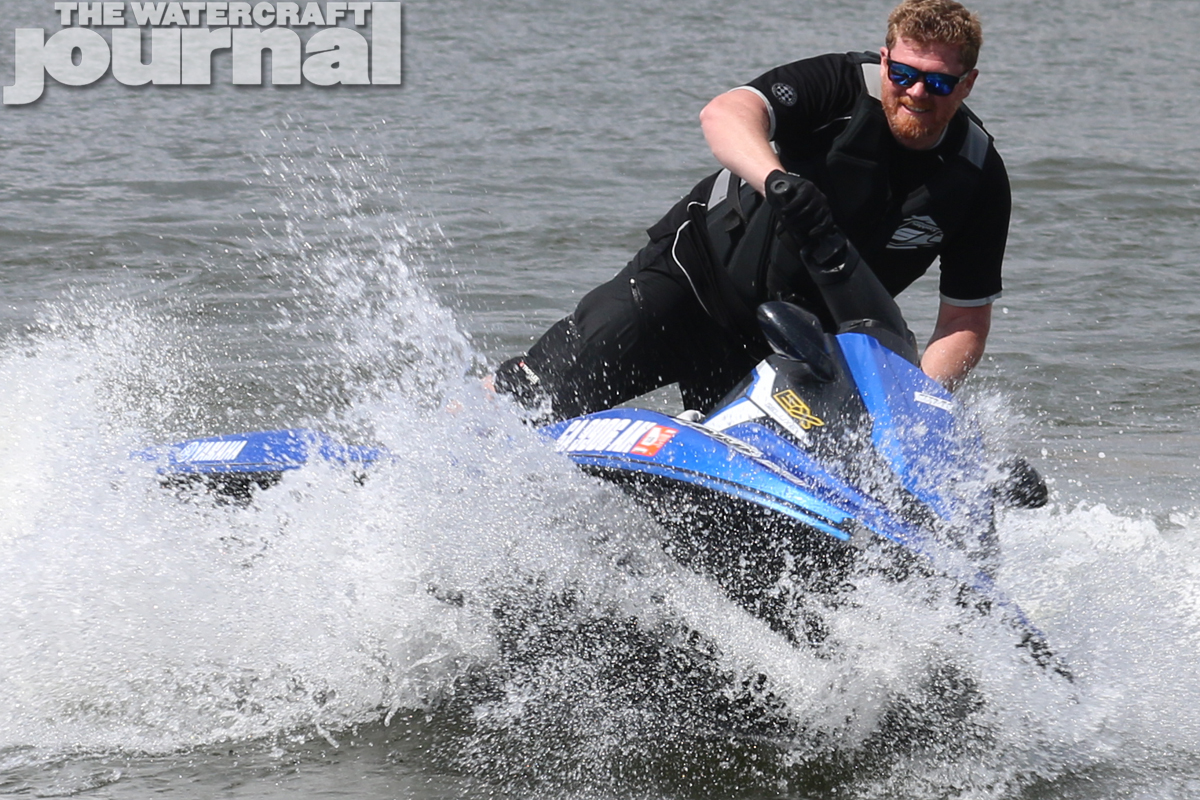
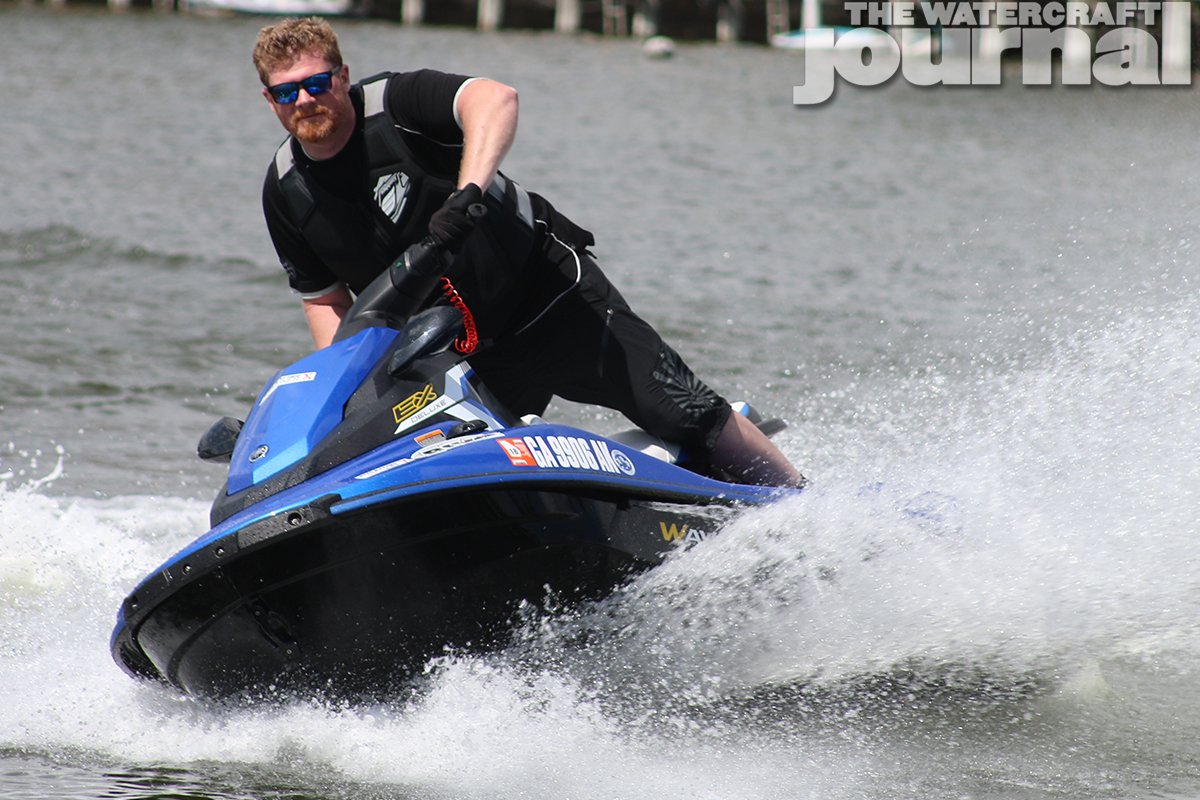
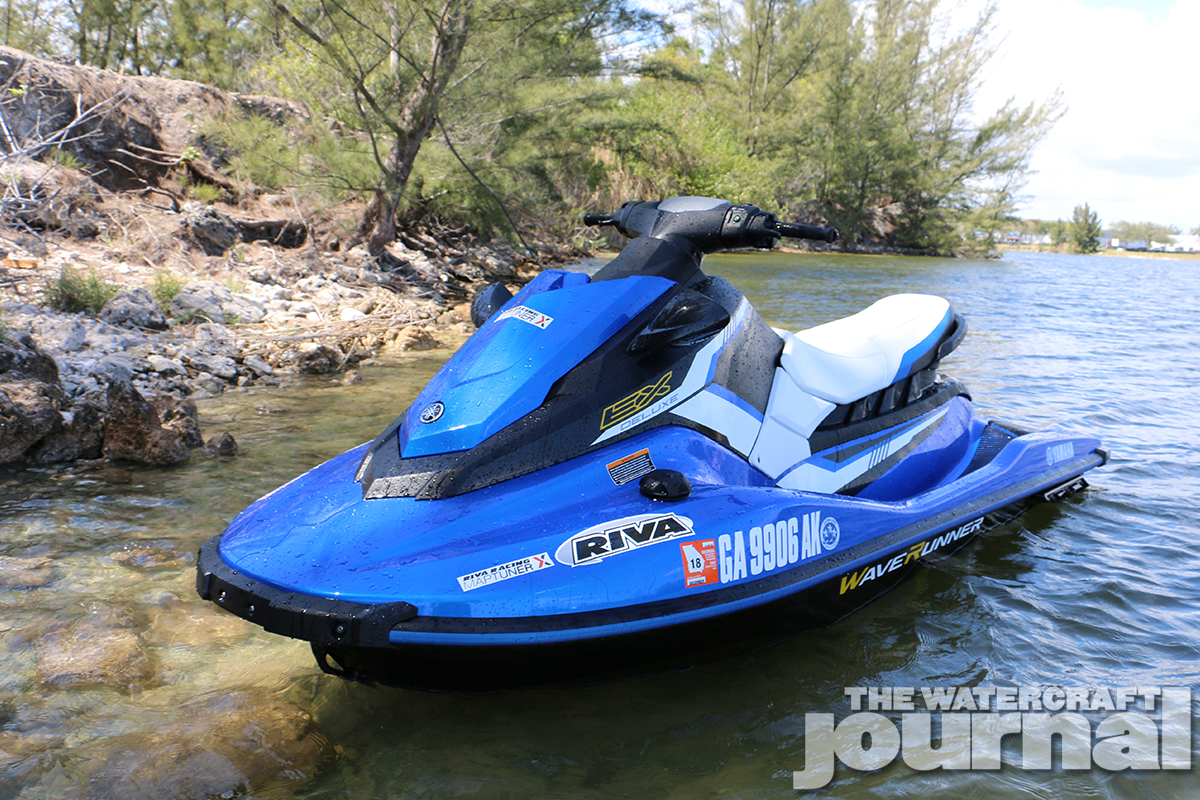
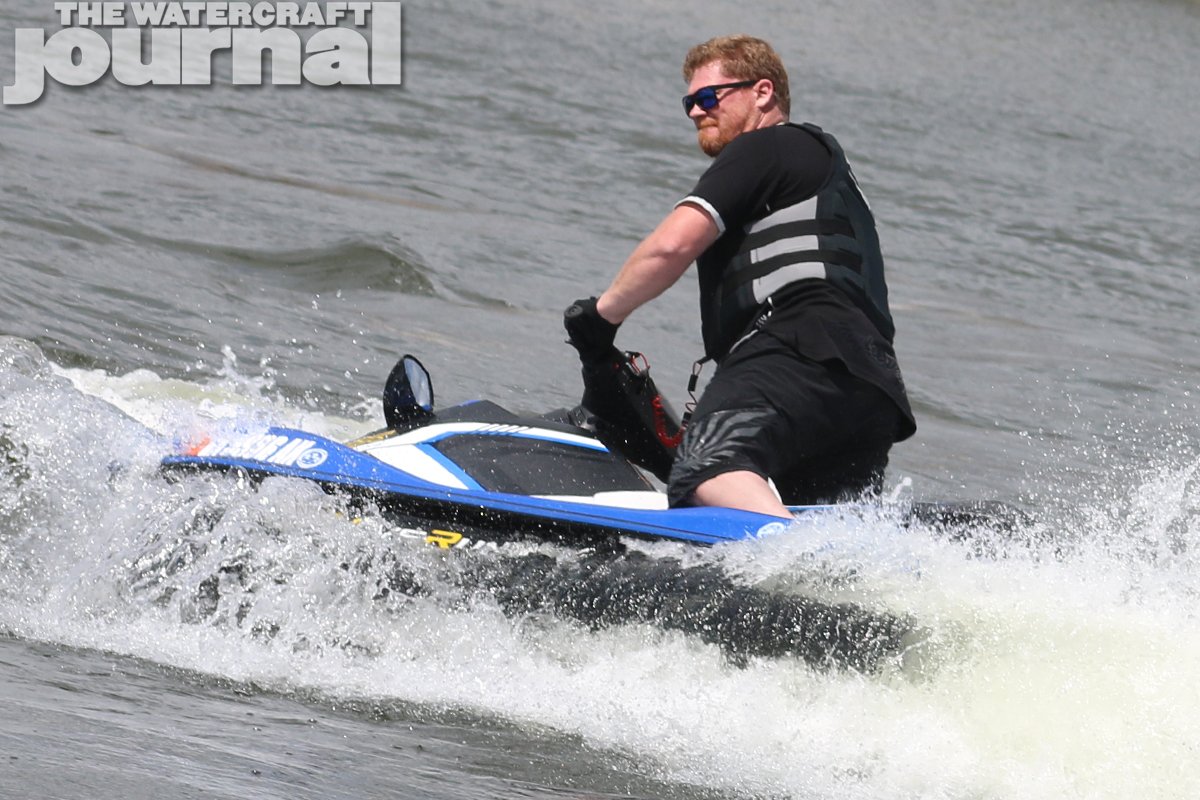
I found myself laughing. In fact, I was laughing a lot. Unlike test riding the ludicrously fast (88mph!) RIVA-tuned GP1800 a few minutes earlier – which is serious business because one misstep at those speeds could result in an unexpected trip to the hospital – the lightly reworked Yamaha EX WaveRunner equipped with RIVA Racing’s Stage 1 Kit was pure, unrefined joy and it was showing on my face. The combination of an ECU tune, a new prop and a bit of breathing assistance for the EX TR-1 engine was all it took to turn Yamaha’s happy-but-ultimately-humdrum Rec Lite entry into a lively, alert and rowdy little colt.
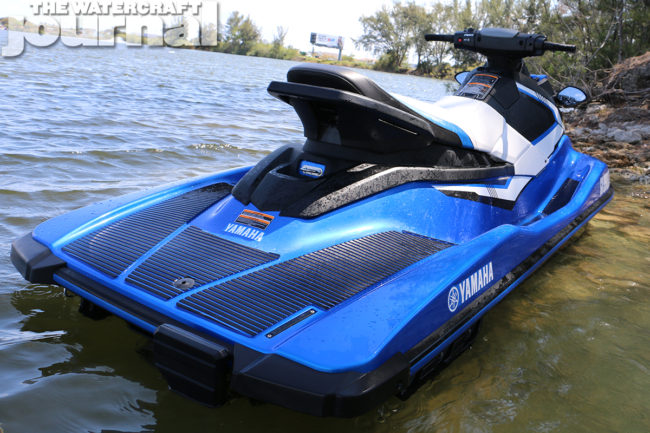
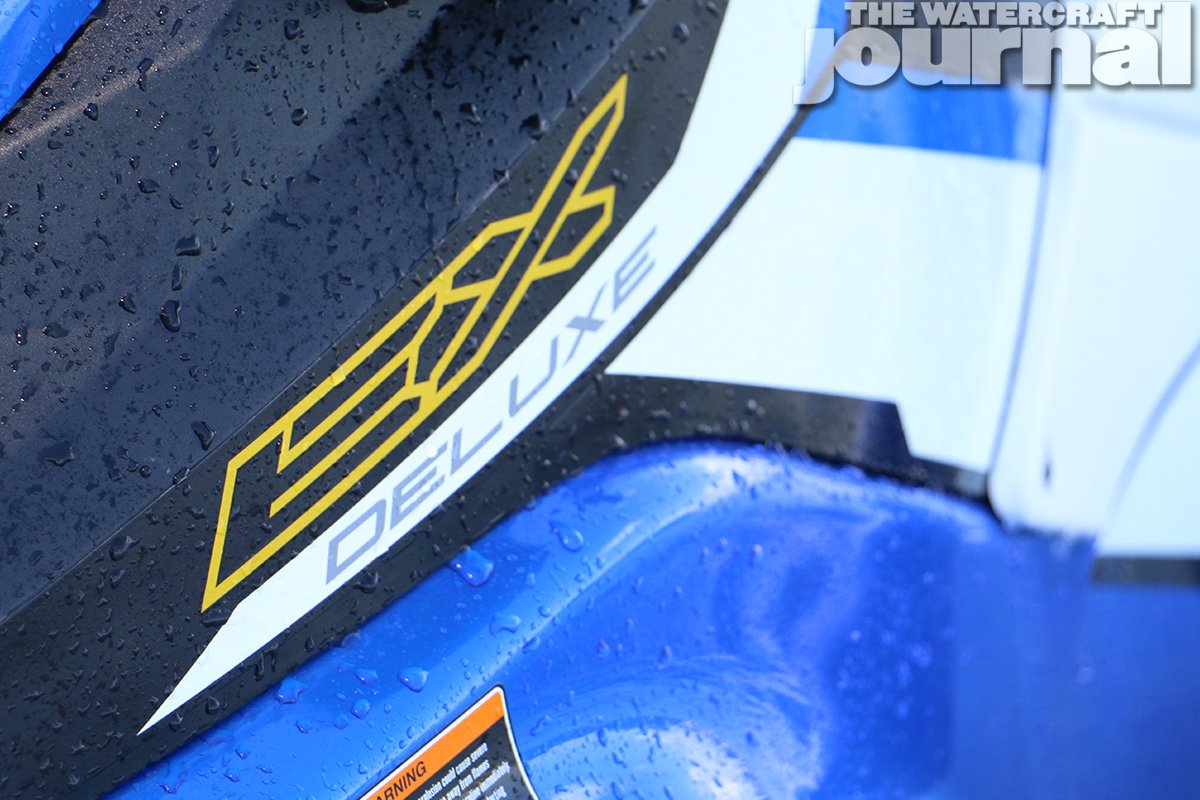
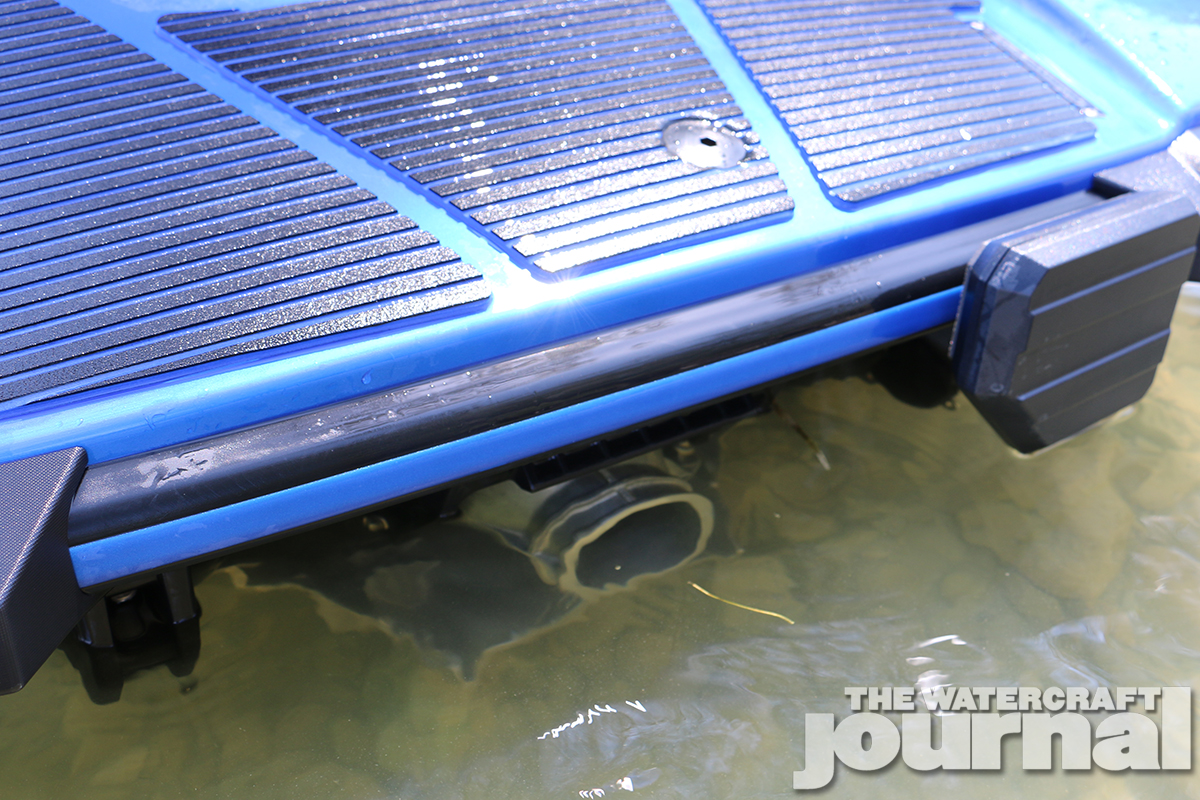
When first introduced to the all-new EX WaveRunners, I found them to be a very conservative response to Sea-Doo’s Spark, which is actually very much in line with Yamaha’s modus operandi. The EX is well-built, solid and well-balanced (all fancy euphemisms for being 170-pounds heavier than the Spark). Yet, that added weight serves a valid purpose; gone is the loose, tipsy feeling, replaced with a hull that feels well-seated and predictable. The bench narrows at the knee allowing for comfortable-yet-forward seating, as the EX, EX Sport and EX Deluxe are meant to carry a trio of riders, offer more storage and are significantly more stable.
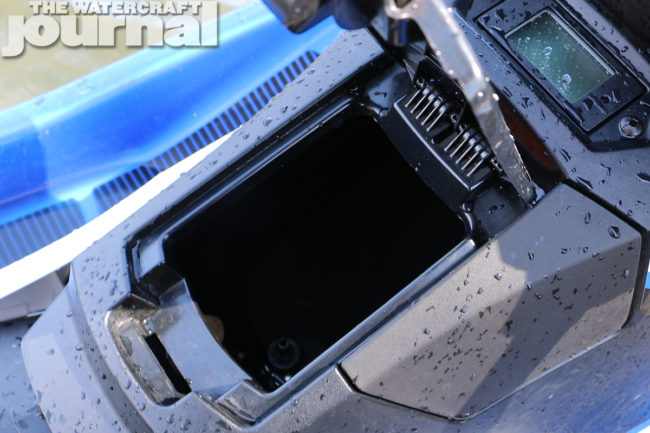
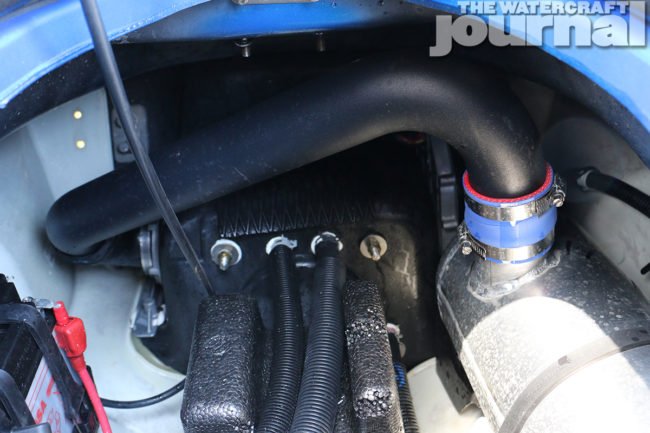
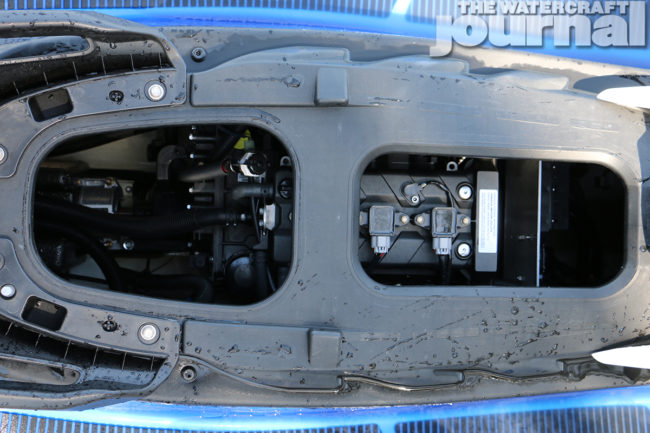
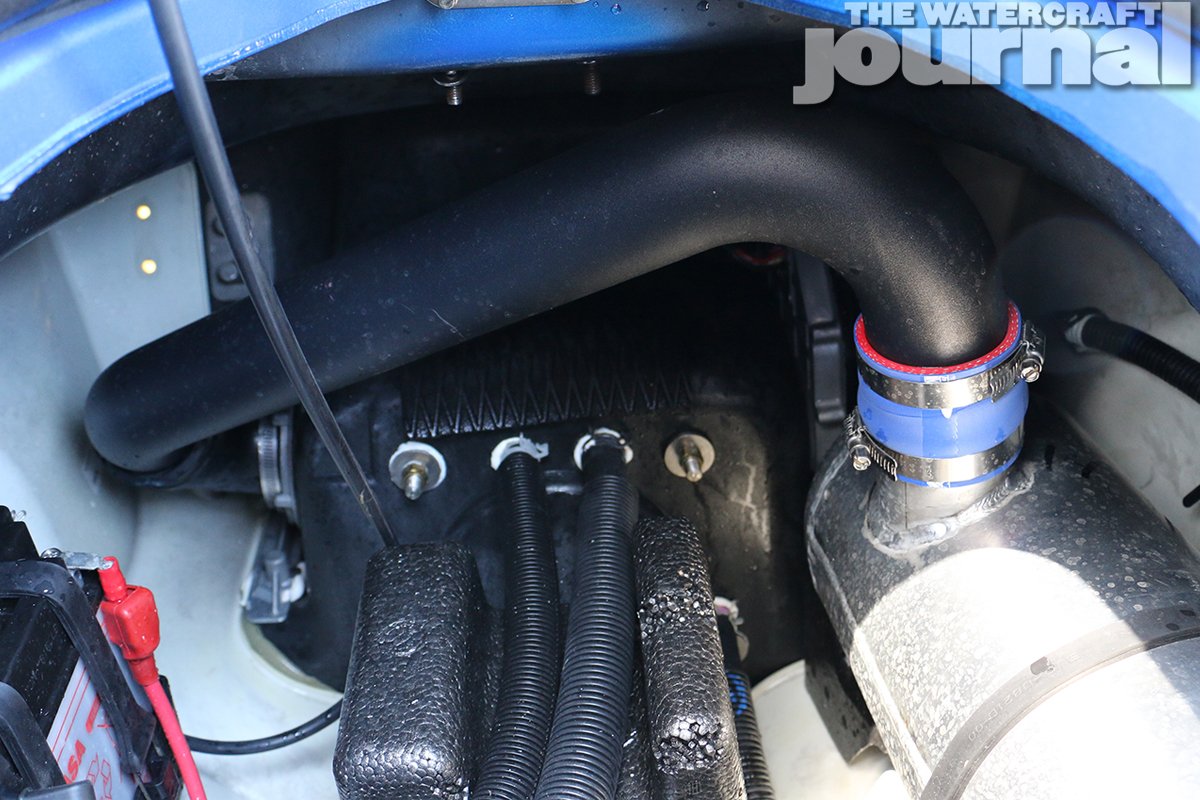
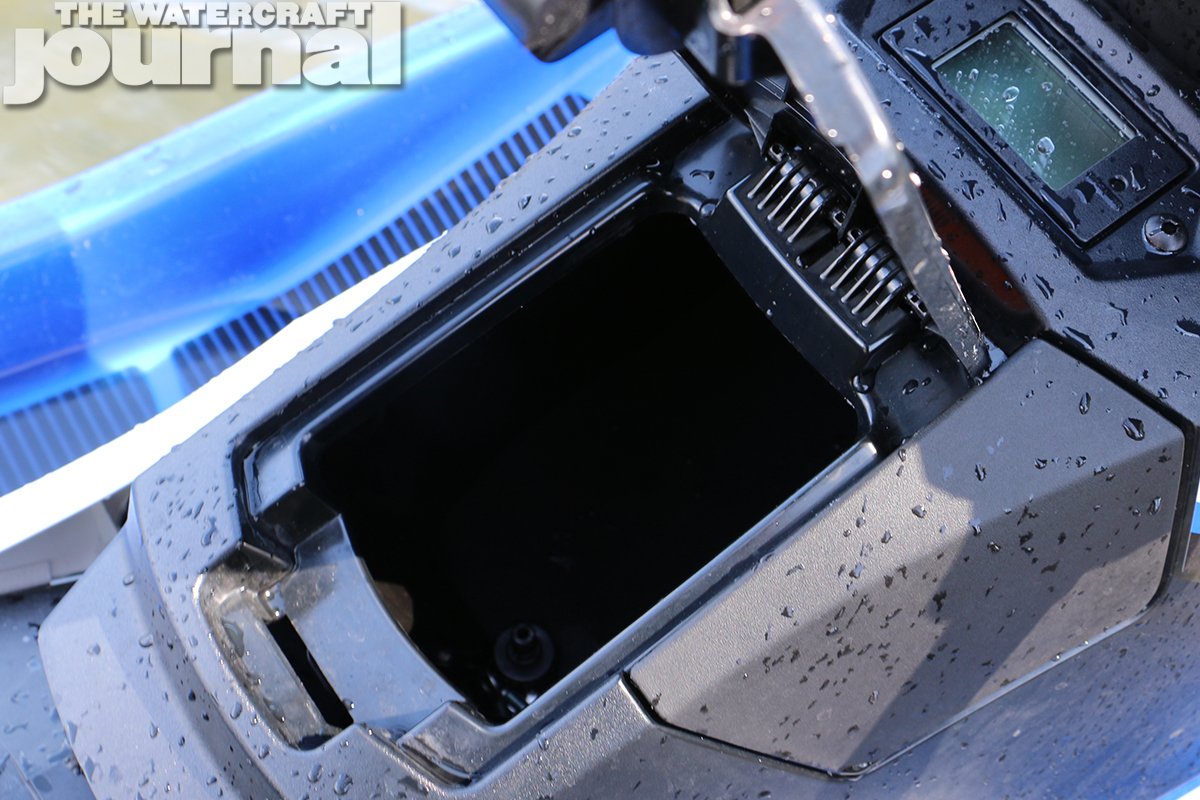
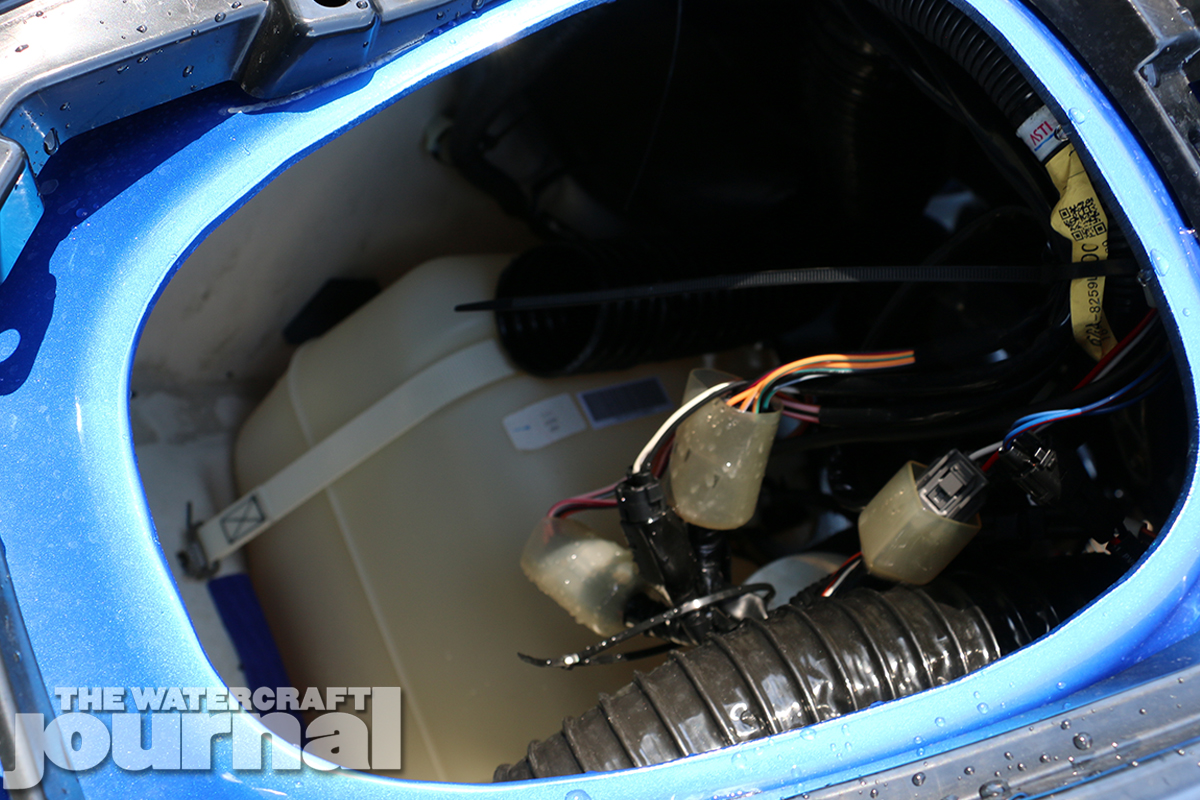
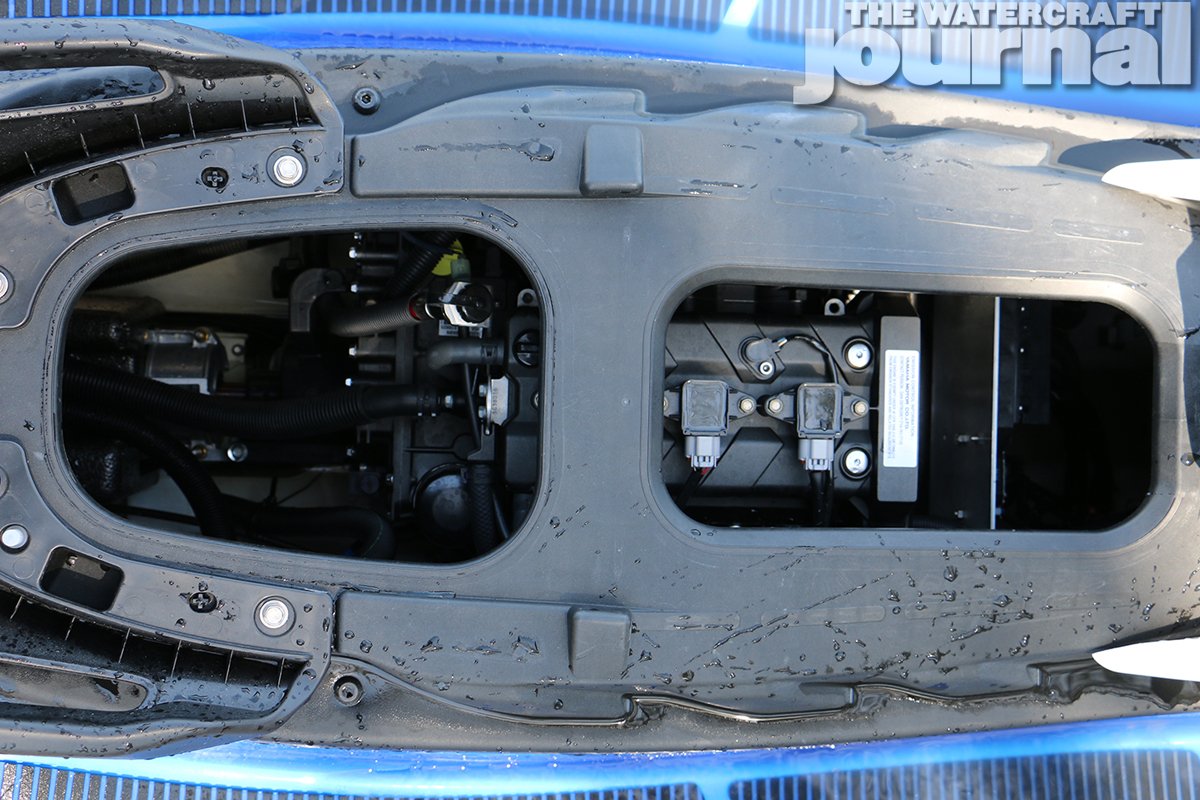
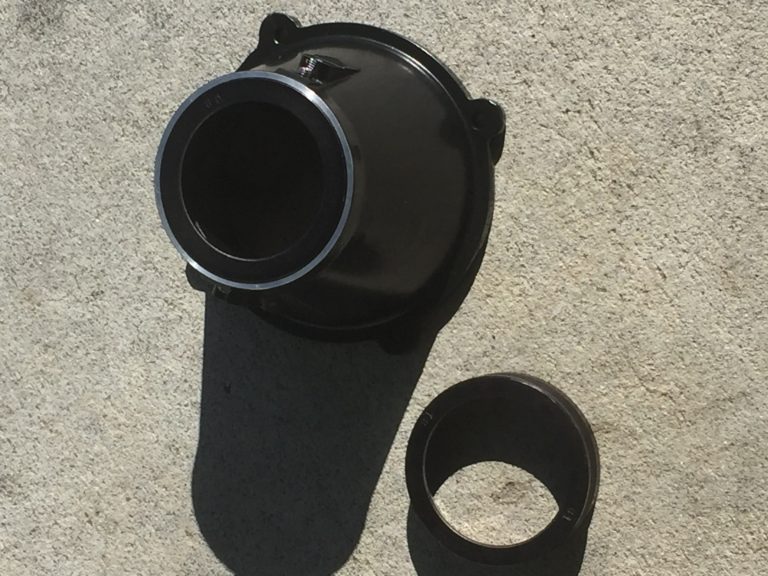
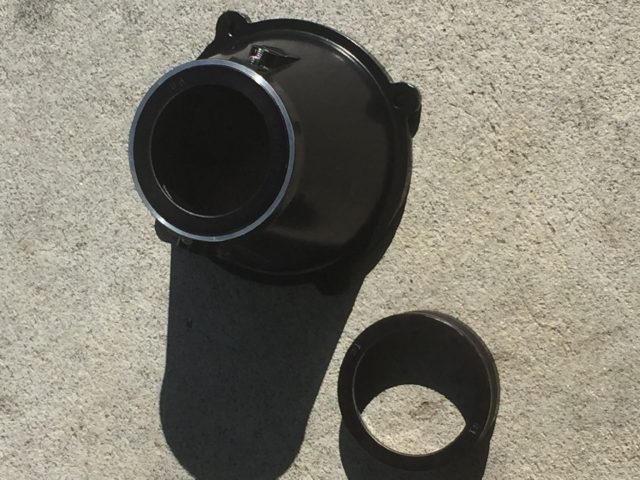
Powered by a 100-horsepower TR-1, the EX-edition powerplant is slightly restricted for the Rec Lite unit by a revised exhaust manifold, muffler and redesigned shaft coupler driving the completely original two-piece pump and venturi. The 3-cylinder, four-stroke is seated beneath the one-piece seat and a large black plastic base. The base comes off quickly with basic hand tools and requires no hoist or extra set of hands to heave out of the way. Already tuners have found that the VX-level TR-1, producing a base 120-horsepower, responds brilliantly to modifications, leading all to believe the EX to be equally responsive. RIVA chose to prove that fact this day.
The RIVA Racing Stage 1 Kit for the Yamaha EX is constituted of four parts: the RIVA MaptunerX Yamaha TR-1 Bundle, RIVA Yamaha EX Power Filter Kit, RIVA Yamaha EX Free Flow Exhaust Kit and a Solas Yamaha Concord 144mm 12/17 Impeller. It doesn’t sound like much, but the package alone adds a solid 5 miles per hour to the unit’s top speed (56mph @ 8,400rpm over the stock 51mph @ 7,500rpm) and a significant jump in the EX’s 0-to-50 acceleration, leaping to speed in 7.2 seconds over the previous 10.5 seconds. The throttle’s immediacy is palpable and the increased response plays a big part in the EX’s newfound playfulness and ability to pull itself out of a hard turn.
In RIVA’s own words, the “Maptuner X programmer is utilized to reflash your original ECU (Engine Control Unit) for added performance. The MaptunerX Bundle delivers instant plug-in horsepower! Quickly and easily load our Stage 1 performance tune into your Yamaha ECU eliminating the need to ship out your ECU for programming. The MaptunerX features a slick, full color, touch screen display for easy operation. Includes full access to RIVA’s World Famous Tuning Library along with unmatched technical support. Easily switch between performance tunes and then back to stock settings if you wish.”
The RIVA EX Performance Power Filter replaces often restrictive factory intake opening up the engine’s intake to cool, dense air, improving both throttle response and top speed; as the RIVA EX Free Flow Exhaust Kit replaces the choking factory sound suppression system (between water box and hull exit) helping relieve backpressure and lower engine operating temperatures. Finally, the new Solas impeller features a new design specific to the EX and “incorporates a large blade area and superior hub design that deliver increased acceleration and top speed”, according to RIVA.
I got to spend as much time on the Stage 1-equipped EX as I wished and admittedly found myself taking it out not once, or even twice but three separate times. In fact, during the test session, 8 different riders took the EX out on the lake and experienced the same joy as I did, nary once requiring a refill of its 13.2-gallon fuel tank. Two thirds of RIVA’s Research & Development team were on-hand for questions, and both Bruce Clarkson and Jesus Garcia said that a ride plate, sponsons and intake grate were soon coming, but that as it stood, the Stage 1-equipped EX was using all stock handling products – and it showed.
Putting the EX on its bond rail and power sliding it like Rhys Millen is effortless. In fact, pinning the throttle uproots the EX and will jut skyward when weighted on the stern. (Jokes of “Yamaha’s new ‘TRIXX EXX” earned some solid laughter.) While somewhat nimble, the stock EX simply didn’t pack the responsiveness of a Spark in “Sport” mode until now. Racy turns, winding Figure 8’s, and the aforementioned power slides kept many of us entertained until exhaustion. Suddenly, one tester noted, putting an EX on a closed course against the Sparks sounded like a good idea. With current IJSBA rules notwithstanding, the RIVA Racing Stage 1 kit for the EX WaveRunner retails for $1,659.35.
When Kawasaki decided to bring back the standup, which started the whole industry, it shook things up. Questions we’re going around asking whether or not a 4-stroke motor would be put into the new hull. Well, as we all know, there is a 4-stroke standup now. While the hull is much bigger than any stand up previous, there have recorded speeds of 63mph.
While this is a huge step for Kawasaki as they are trying to get back into the game, there are some concerns that have arisen. What class will the SX-R race in? Will the size of the hull and power of the motor be too much? Recently, the IJSBA announced that they have received a product from Skat-Trak that is a reduction nozzle and will be used to restrict the speed of the new 2017 SX-R. Skat-Trak is a industry leader when it comes to jet pumps and all of the components included which makes them a great company to work with in testing speeds.
The new SX-R is extremely powerful and IJSBA wants to be sure that anyone racing in the Novice Stock, Women’s’ Ski, and Juniors classes will be safe. With this speed control device, it will allow for women and young riders to be competitive, have fun but most importantly be safe while racing. It can be dangerous going around buoys in such a large JetSki. IJSBA wants to do whatever they can to help. Testing has been underway and any findings will be announced.
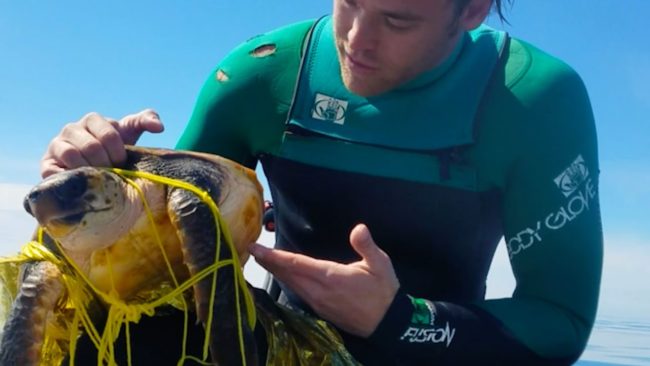
Bryce Trevett, a self-described “modern day adventurer” with a passion for nature and wildlife has made a name for himself traversing the globe doing research, photographing wildlife, getting up close and personal with nature. Bryce, and partner Angel Hernandez, have logged hundreds of hours filming their exploits, particularly reptiles and marine life. Recently, while off of the coast of Southern California, the two (aboard a Sea-Doo Spark and Yamaha VX, respectively) encountered a sea turtle is dire need of help. Bryce wrote:
“Angel and I were out filming wildlife on the open ocean off the Los Angeles coast yesterday and thought we saw a balloon from a far distance. We always collect the many balloons we see on every ocean expedition and as we approached this balloon, we noticed it was entangled with a young loggerhead sea turtle! We jumped in, pulled it on board, and cut the line/balloon material off. We took the opportunity to quickly talk about and hopefully educate people about the importance of throwing away your balloons and trash and how they affect marine life. This is the second sea turtle we have encountered in the last couple months that has been tangled in trash. Throw away your balloons!”
Marine biologists have attributed several deaths of sea turtles to swallowing balloons and plastic bags as they (the sea turtles, not the marine biologists) often mistake them for jellyfish. This particular turtle was wound up in a balloon that hindered its ability to swim freely. Recently, the entire State of California outlawed the sale and/or distribution of plastic bags by grocery stores, and recently the city of Laguna Beach proposed the outlawing of balloons in the city. (We’re literally not making this up.) While laws such as these bare questionable if not completely negligible results, it’s best to remind people to not be dirt bags and just pick up after themselves.
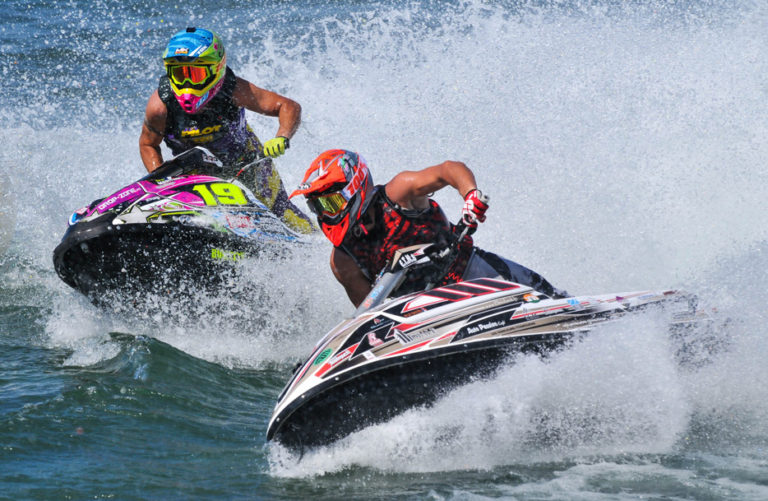
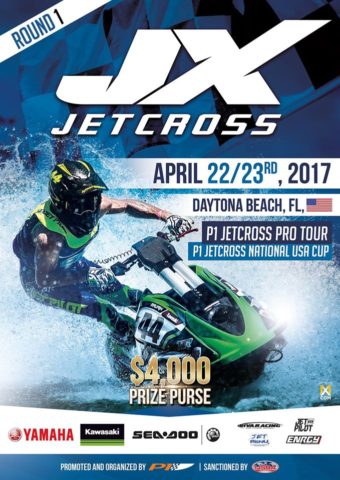
Many of you already know that Daytona Beach, Florida is home to some of the best racing and freeriding the states have to offer. With beautiful beaches, sunny weather and a rich history in motorsport racing, it makes a great place to offer round one of the P1 JetCross Pro Tour and National USA Cup.
The race days are set for April 22-23, 2017. It will be the start of a great 2017 race season with many well-known athletes taking to the water. Last year’s event was extremely exciting for the fans but frustrating for the riders as there were 5-6 foot waves crashing in on the shores. It became a true test of man-versus-craft-versus-water conditions. This year riding are hoping and praying for better conditions to give the fans what they want to see.
With sponsors such as Sea-Doo, Yamaha and Kawasaki, this event will be something you do not want to miss. Having the industry leaders sponsor an event, you know the scale will be off the charts. This is not a IJSBA event however it is sanctioned by them. The purse this year is $4,000 which can definitely be worth the prior investment in performance parts.
You and your friend had a fun day on your ski and on the way to the dock, you notice a boater in distress and possibly in need of a tow. Obviously, jet skis aren’t like other boats and don’t have the same towing capacity as something like a Boston Whaler. Personal watercraft are smaller, weigh less, and don’t have heavy duty engines with the horsepower needed to tow a larger boat. However, that doesn’t mean that one can’t render aid and offer a tow to a lightweight craft, such as a John Boat or small skiff.
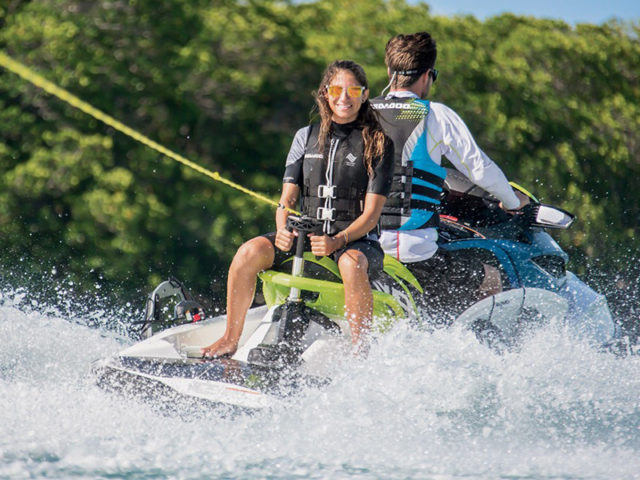
First of all, it’s good idea to have two people aboard the ski so one can act as a spotter while the other drives. The spotter will make sure the towline doesn’t get caught in the wash while also keeping a close eye on the vessel that is being transported. If your ski is equipped with a transom that includes a tow hook, then you can tow something within reason!
Speak with the person operating the boat that has run afoul and ask if there is a problem and if so, how you can assist. If the boat simply ran out of fuel, a battery needs a charge, or another minor issue, you may be able to assist in a different manner. Jet skis are efficient speed machines so it would be easy to promptly help out the people in distress by running one of them ashore with you, grabbing what is needed, and making your way back to their boat to take care of the problem.
If you and the captain agree on attempting to pull the boat, size up the situation by circling the vessel in need and make sure your and your ski are capable of performing the task at hand. If a tow is in order and you and your ski can do so safely, go for it as long as one of you has the proper line to use for this particular circumstance.
Nylon is a good choice because of its ability stretch, lack of UV degradation, and reliability. However, it can have terrible consequences due to its ability to snapback. This can cause serious injury and more problems for you and the boaters in distress. A powerful floating tow-line is great, if one is available, otherwise an anchor line in good condition is a reasonable alternative.
You’ll want to approach with your bow into the wind or prevailing current if possible. Throw out a line and make sure you and the boat you’re offering assistance are at least 100 feet apart. When using a jet ski for towing, the stern tow is probably best due to the lack of cleats on a ski. Place your stern to the other vessels bow, using a stern knot, such as a bowline for this type of tow.
A highway man’s knot may be a better choice when using a PWC for towing purposes. This knot is a quick release, which sounds ideal for the person using a ski to pull a boat. Make sure the line is slack! Take your time and also see that everyone is in a life jacket. Also, check the amount of fuel that is in your tank. No need to create a second crisis!
Make sure that you and the captain have a plan before hand as to whether to continue the mission or what to do if it becomes necessary to abort. If the sea surface conditions are not suitable for your ski to tow a boat or if the boat is beyond your scope of capabilities, render aid in another way such as helping the crew to safely wait it out while someone with more capabilities is on the way.
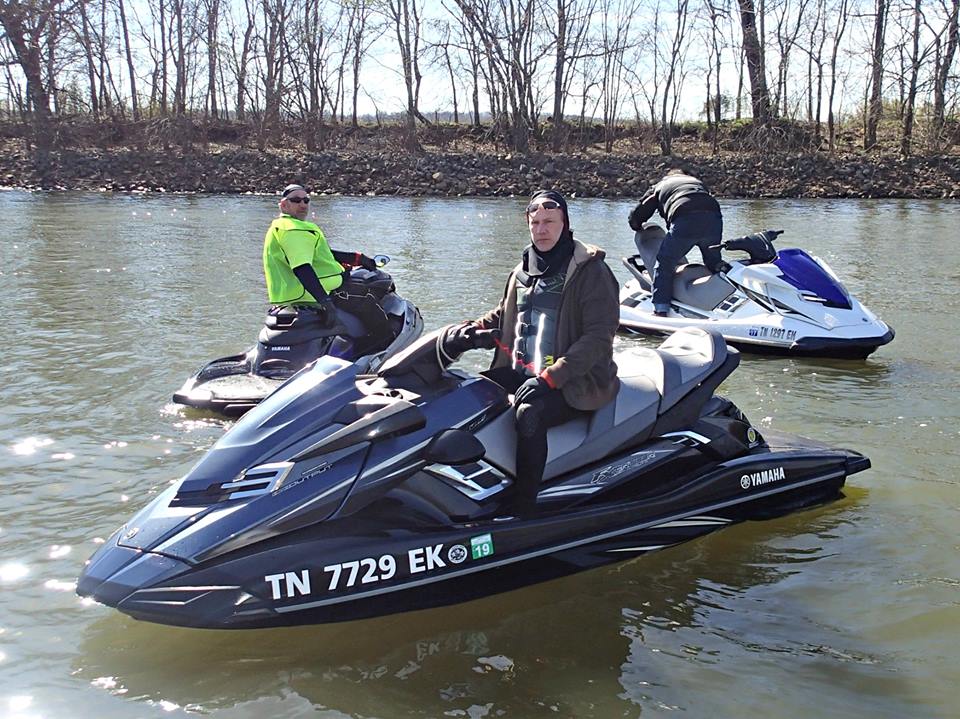
We’d be remiss if we didn’t share the latest news from our friends in the Middle Tennessee Personal Watercraft Club as they are the riding club residing the backyard of The Watercraft Journal publishing headquarters. These guys are braving whatever weather Mother Nature throws at the Middle South without complaint, providing a “fun, safe, responsible way for families and friends to enjoy riding Personal Watercraft together and share the beautiful waters that The Middle Tennessee and surrounding states have to offer,” as their mission statement writes.
We recently got an update on the very aggressive ride calendar that was released on the club’s Facebook page, and wanted to share it and the club’s recent update to all:
Middle Tennessee Personal Watercraft Club meets every month of the year, starting each year off In January with lunch & attending the Nashville Boat Show together. February is our Planning meeting this is where each member brings ride ideas to the group, the rides are voted on and dates assigned to them, In March we officially start the season with a ride typically MTPWC has one or two rides each month of the year thru November in December we hold a Christmas Party that is always a great time! Hope you can join us for one of our great ride adventures in 2017….Let’s Ride !
For more information on Middle Tennessee Personal Watercraft Club check out our Facebook page, email inquiries to [email protected] or call (615) 428-4943
MTPWC 2017 Ride Calendar:
March 18th Spring Icebreaker TN (Clarksville -to- Lake Barkley State Park)
April 15th Center Hill Lake, TN
May 6th-7th Defeated Creek/Granville, TN (Shute’s Branch-to-Cordell Hull, TN)
May 20th Tim’s Ford Lake, TN
June 10th Wilson Lake, AL
June 24th-25th Douglas & Cherokee, TN
July 14th-16th Ironman Weekend, TN/AL/MS
August 11th-13th Lake Hartwell, SC
August 21st Dark Side of the Moon Ride, TN (Monday ride Cumberland River Spring Creek)
September 23rd Farwell to Summer Run, TN (Shute’s Branch-Ashland City)
Oct 14th Fall Colors Tour, TN River (South Pittsburg, TN-Guntersville, AL)
Late last October, The Watercraft Journal published a complete report and photo gallery from the 9th annual Rip ‘N Ride on Cronulla Beach, Sydney, Australia. One of the continent’s most anticipated freestyle surf (ie. freeride) events has made incredible aerial antics, amazing tricks and frankly, some pretty gorgeous people common place year after year. Add to it the returning title sponsorship from Yamaha Motor Australia, who offered up a brand-new SuperJet to the grand prize winner, and what you’ve got is an awesome event.
While our photo galley came from one of the industry’s best photographers, Andrew “Skip” Donovan, we are always wowed by the video footage captured at this event, and last October’s was no different. From the talents of Andrew Cooney, this past official video of the Yamaha Cronulla Rip ‘N Ride 9 is truly something to behold. It’s a great way to start your week and will definitely make you want to attend this year’s Rip ‘N Ride X (or “ten” for those lacking in the Roman Numeral dept.).
And as Rip ‘N Ride itself wrote, “Big Thank You to all our sponsors, staff, riders and spectators. Look forward to seeing you all at RNRX this coming October.” Enjoy the video below:

















 Many of you already know that Daytona Beach, Florida is home to some of the best racing and freeriding the states have to offer. With beautiful beaches, sunny weather and a rich history in motorsport racing, it makes a great place to offer round one of the