
Home Blog Page 309

Gallery: Dean’s Team Limited Edition Yamaha GP1800RS WaveRunner

0

ready

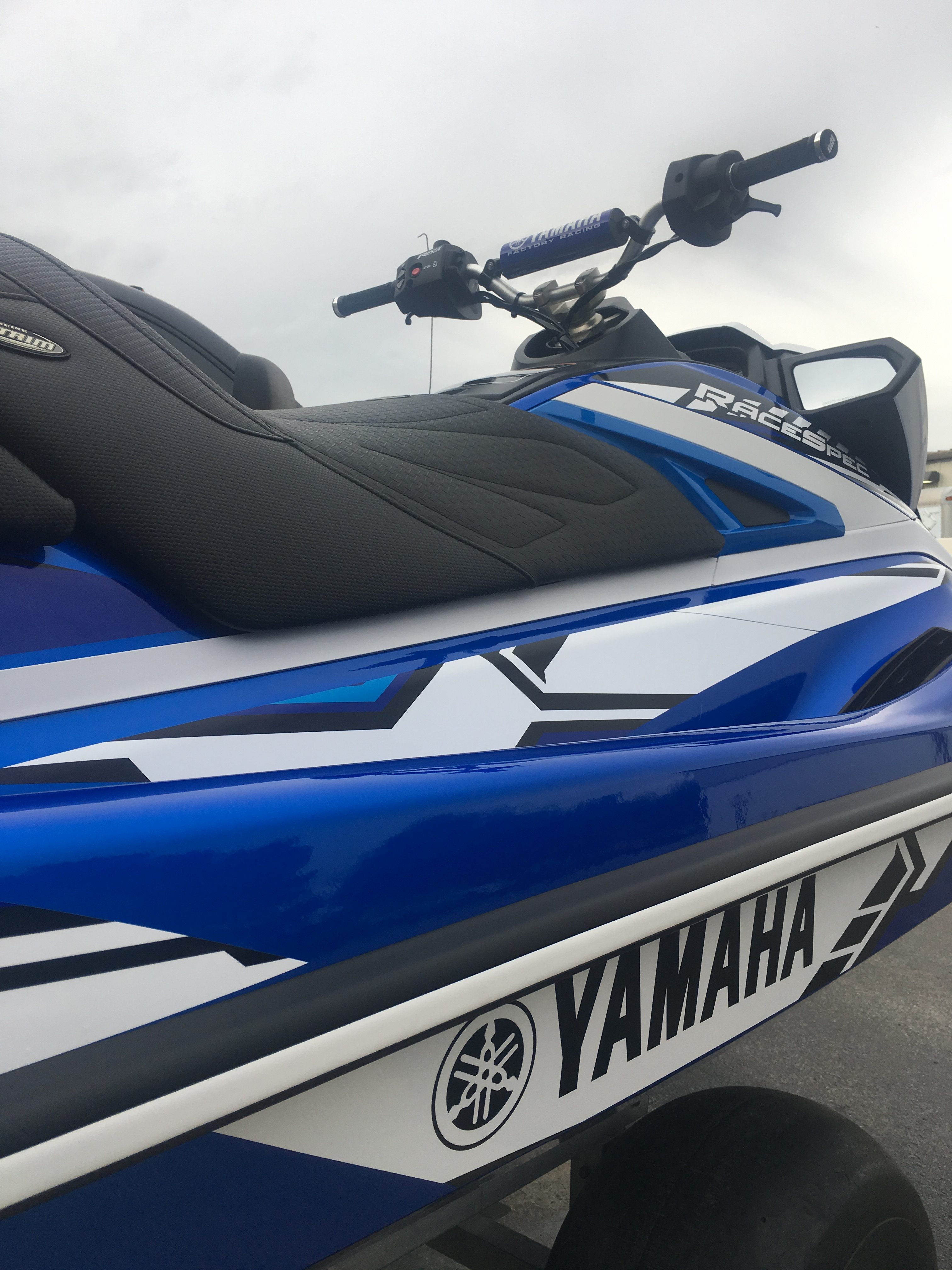
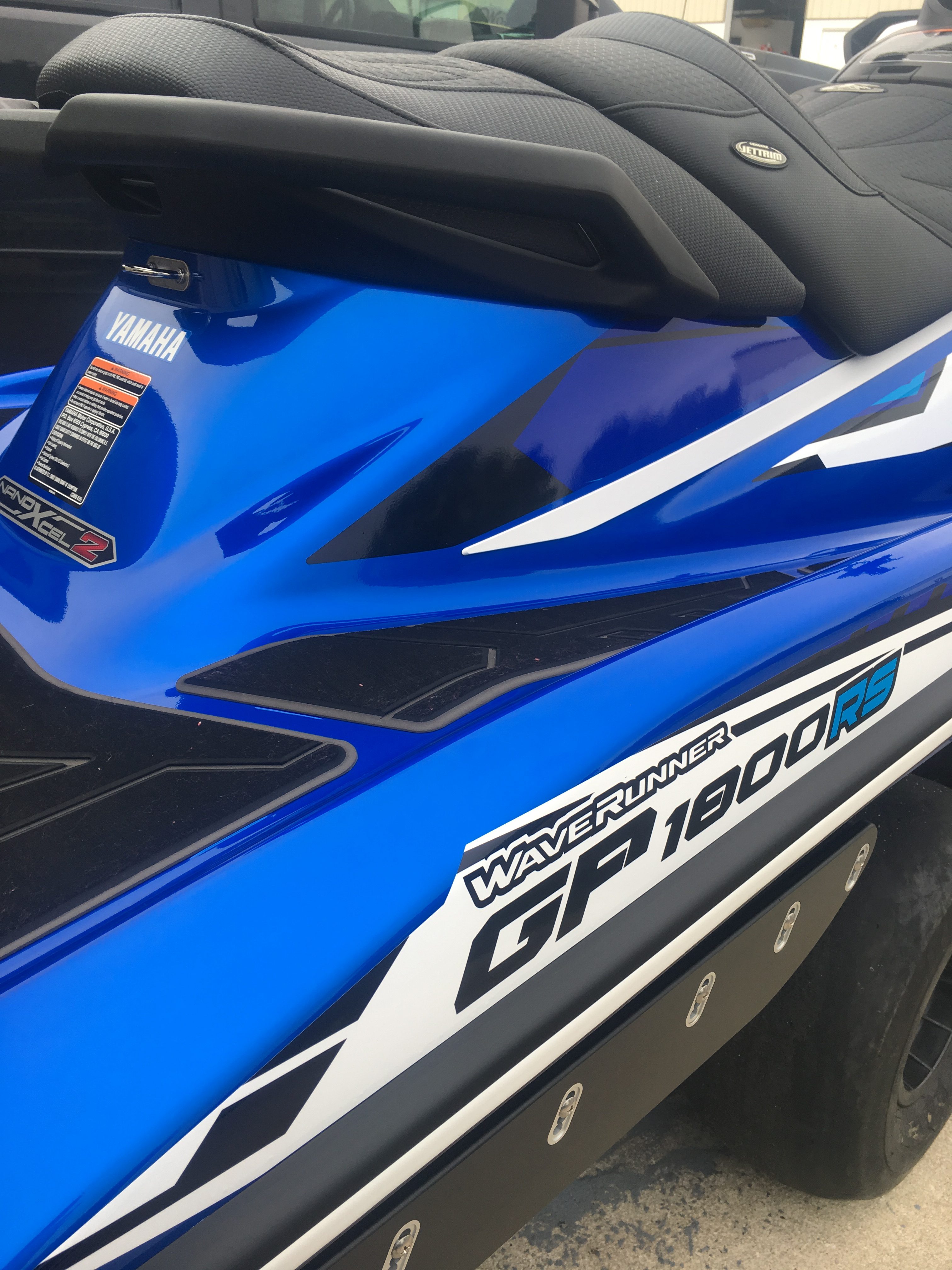
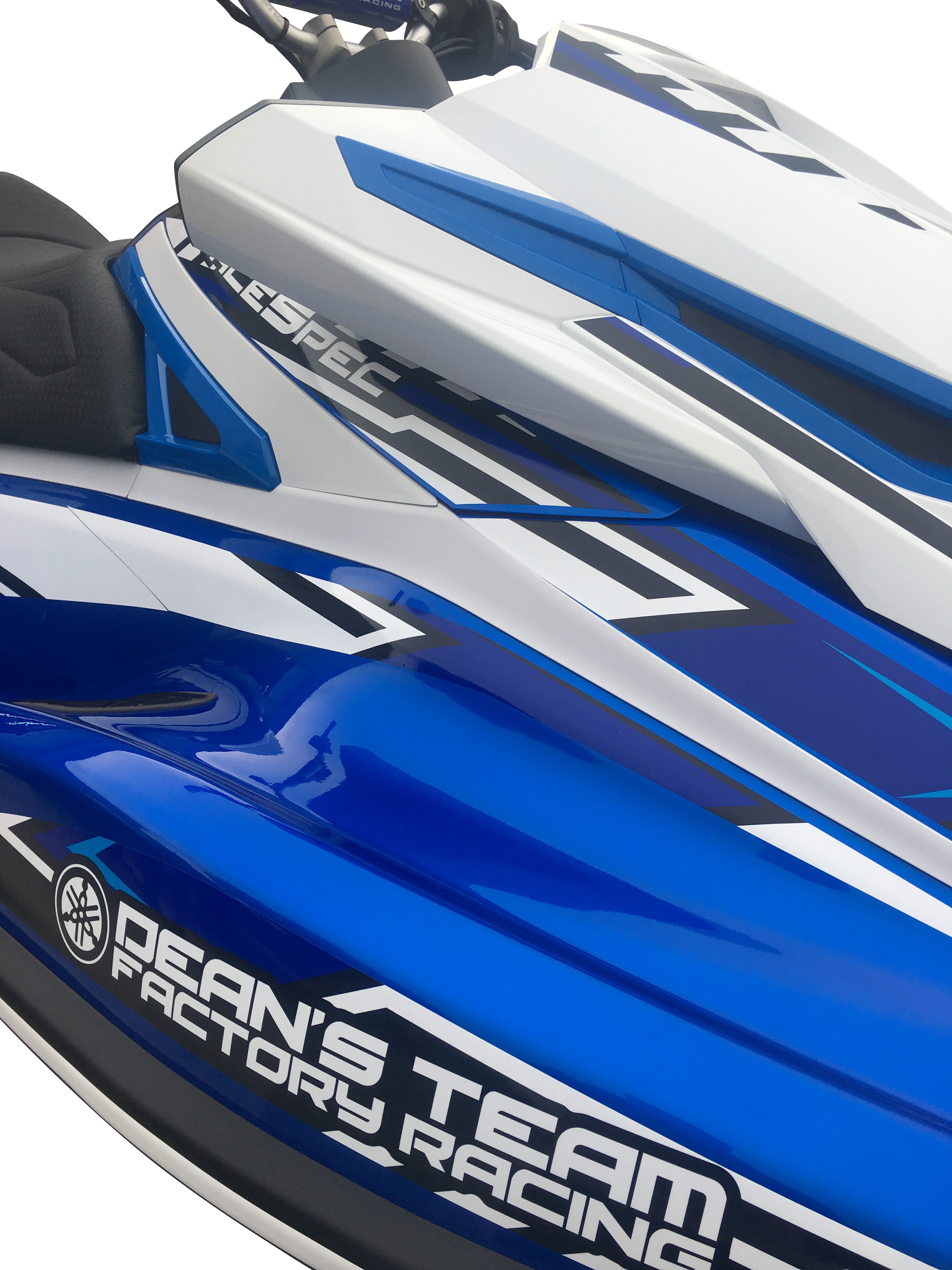
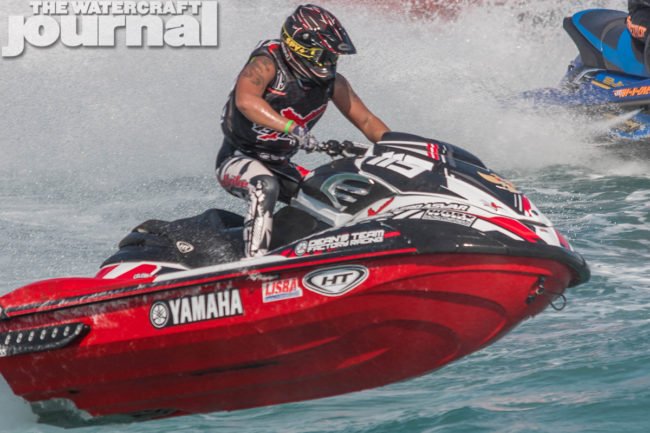
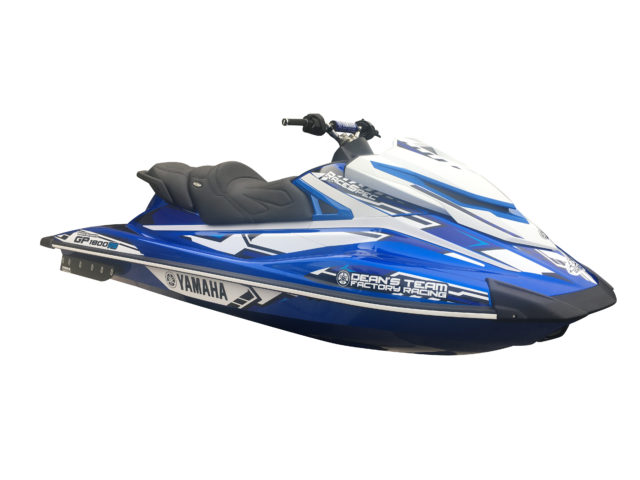
Were Roger Penske willing to sell you a ALMS-spec Porsche for less than what it would take for you to build one, would you even blink an eye? That is the argument for Dean’s Team new Limited Edition WaveRunner GP1800RS. Built to exacting specifications, thereby earning its “RS” RaceSpec moniker, every RS is hand-built, tested and fine-tuned by the same hands that have assembled the same skis to rack up dozens of World Titles; including, as Dean Charrier wrote, “the last three years of IJSBA Pro Runabout Stock, the 2015 P1 AquaX Team of the Year with wins in the 200 and 300 classes, wins at the HydroDrag World Championships in Stock, Spec, and SuperStock classes, and many more.”

Only now have many who bemoaned the replacement of the FZ Series Yamahas with the new GP1800 WaveRunners started to come around, particularly through the efforts of Dean’s Team, as well as RIVA Racing and Greenhulk.net. Only yesterday did The Watercraft Journal report that a box stock GP1800 was capable of a staggering 79.2mph with only the aid of an ECU reflash. The GP1800RS sprints comfortably to 82-to-83mph in its closed course arrangement, and when pressed and slightly tweaked, can reach a maximum 84mph. “When we loosen it up for top speed, it gets upwards of 85 mph,” Dean told The Watercraft Journal, with all testing done locally in Orlando, FL.
img_1462

Again, that is in IJSBA Stock Class trimming, as well as compliant with AquaX Pro Enduro regulations. As Dean continued, “[It’s] the perfect set up for someone who wants to be the fastest on their lake or the fastest around buoys,” continuing, “[When] set up for closed course racing it has great acceleration like the skis we won the World Finals on.” Until recently, Charrier and his Dean’s Team ECU reflash was a well-kept secret. Charrier’s relationship with Yamaha proffered the tuner exclusive access to not only early GP1800 prototypes (confessing, “We’ve had the GP1800 for over a year now and have been developing and tuning longer than anyone for it.”), but also access to sensitive engine mapping software.

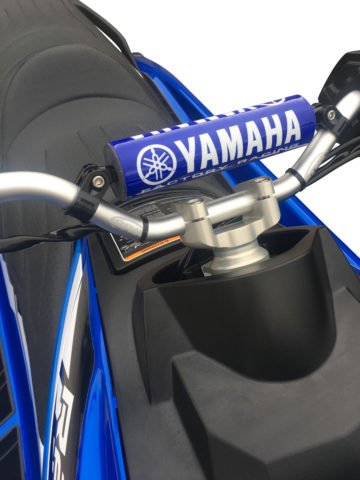
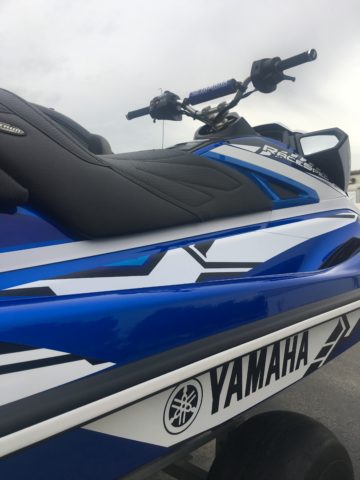
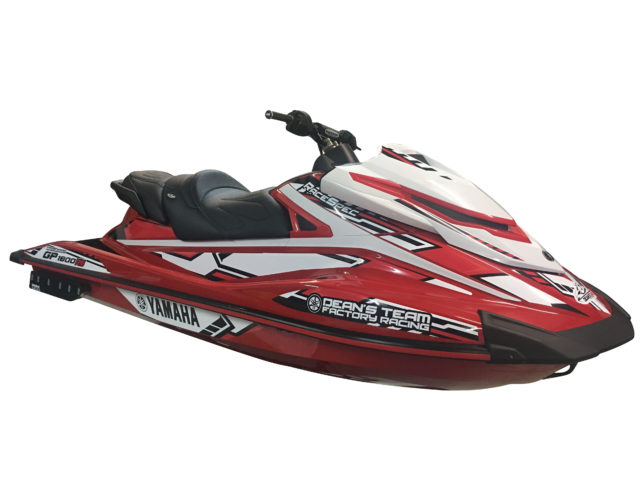
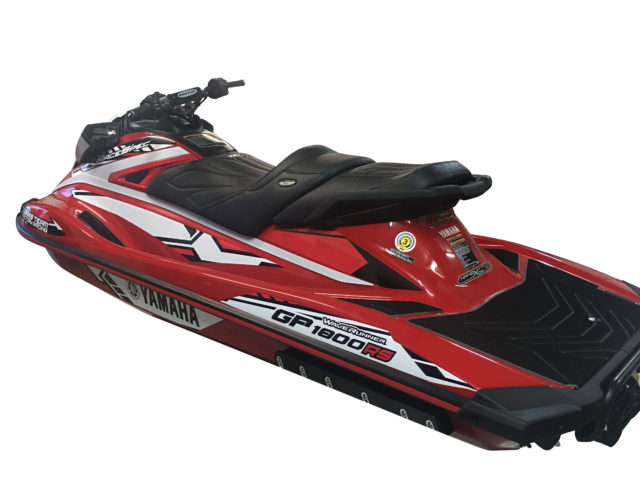
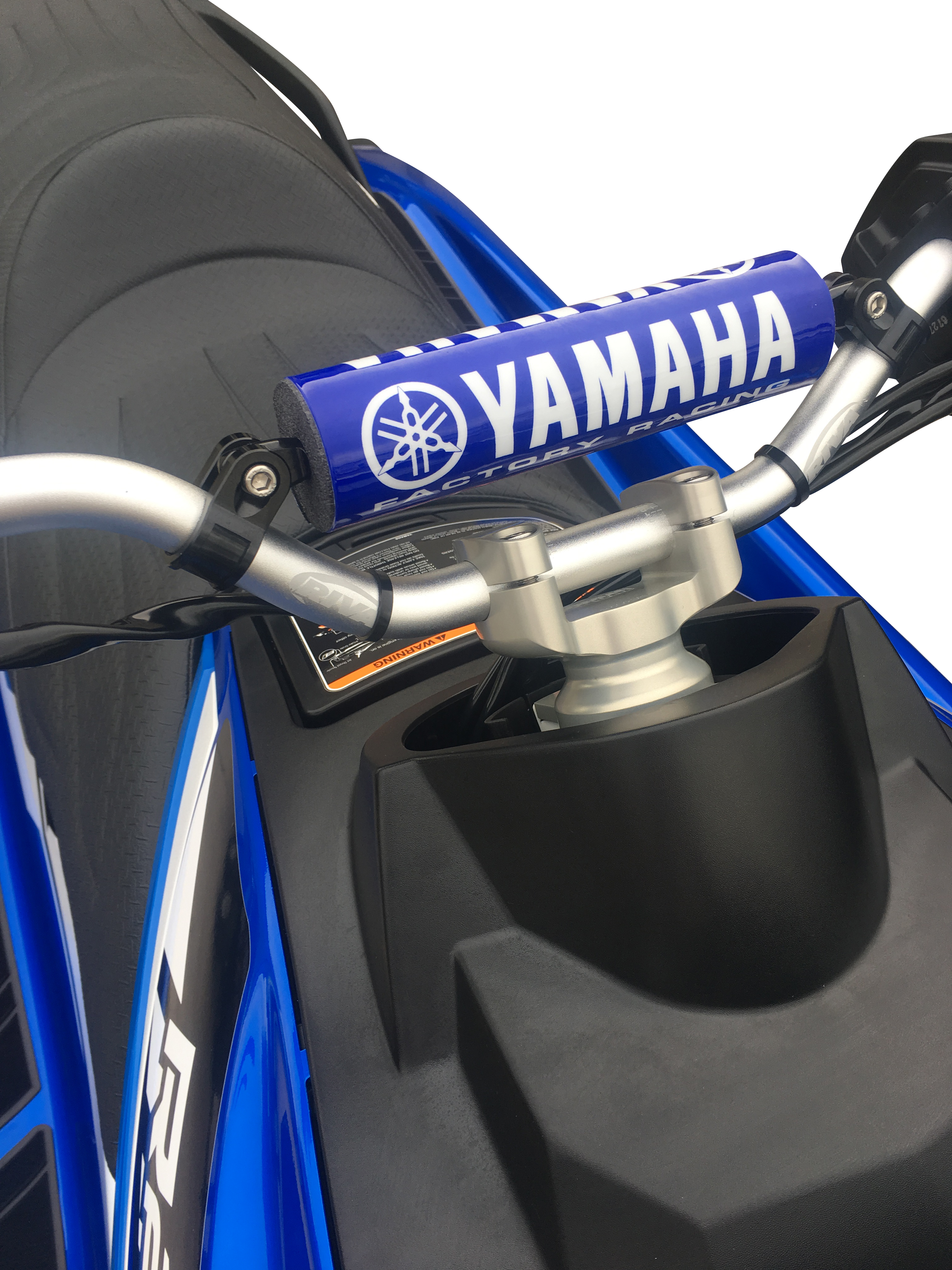
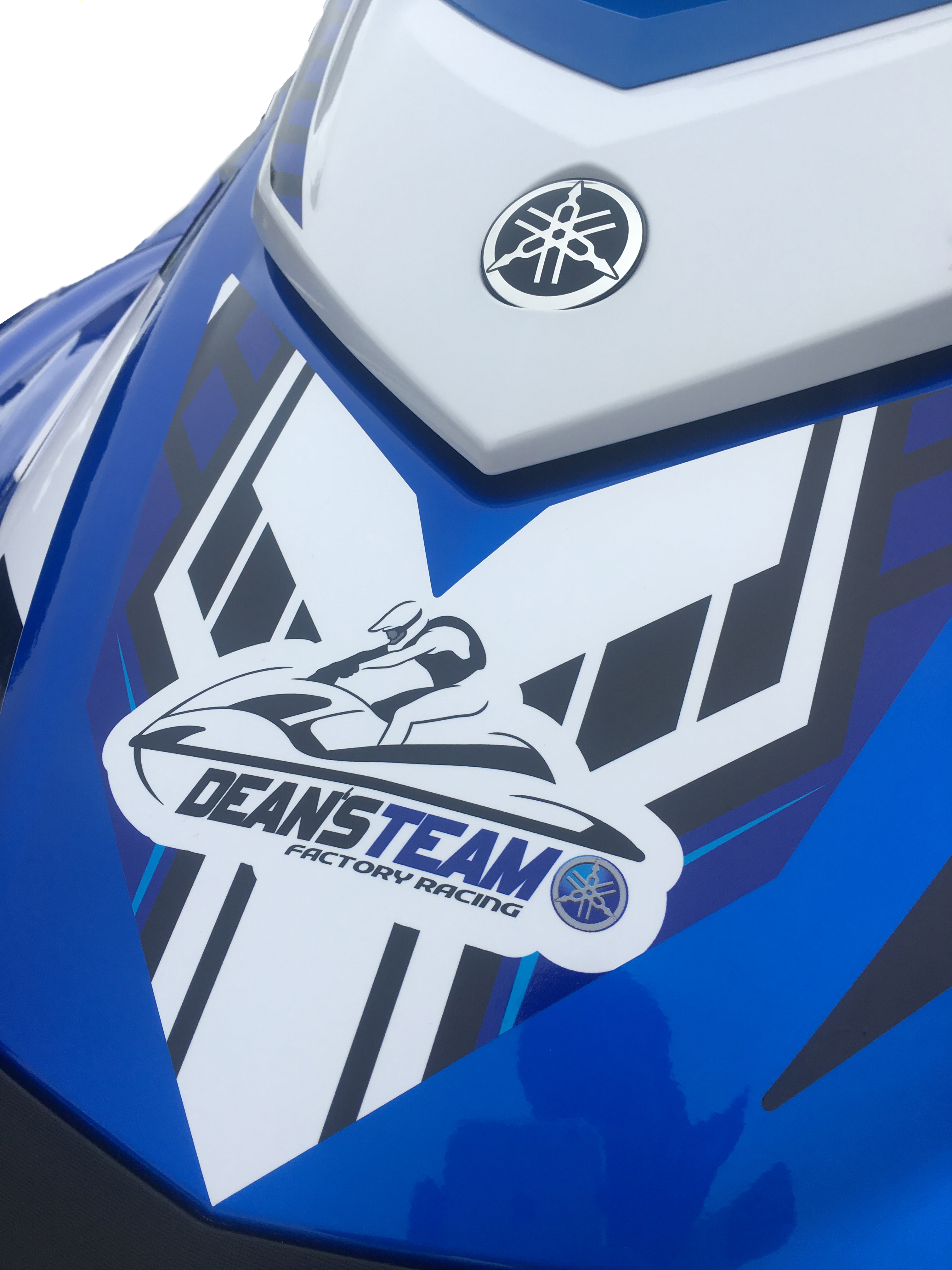
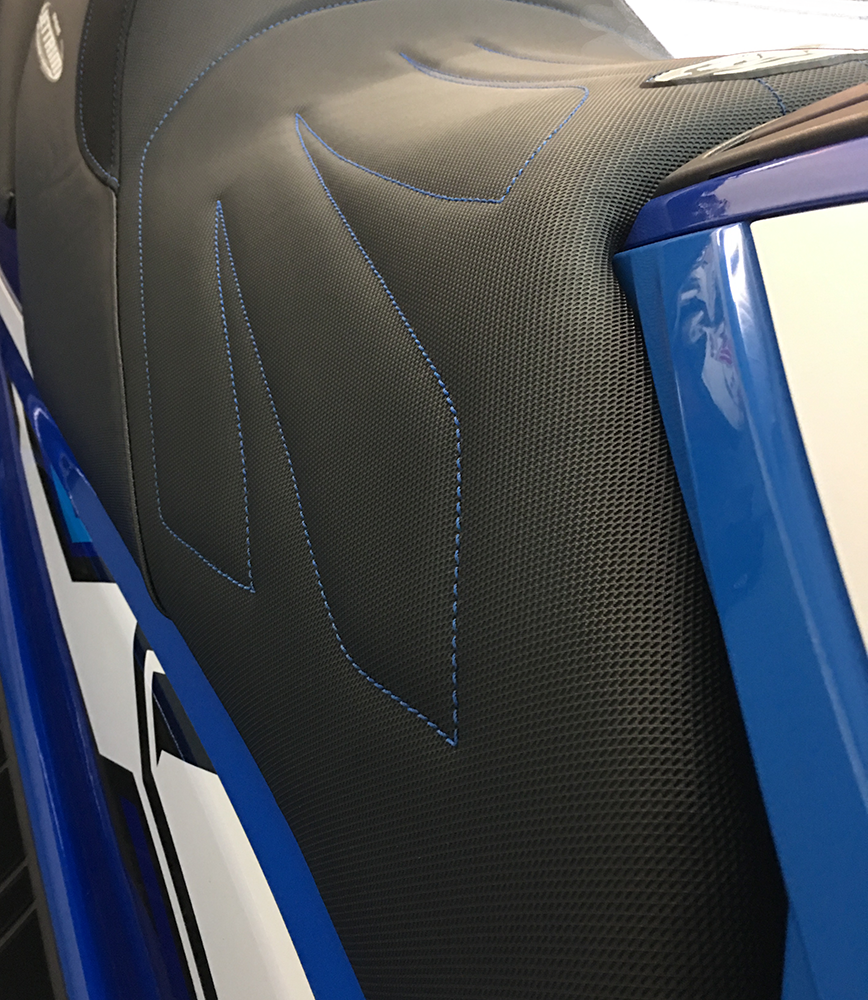
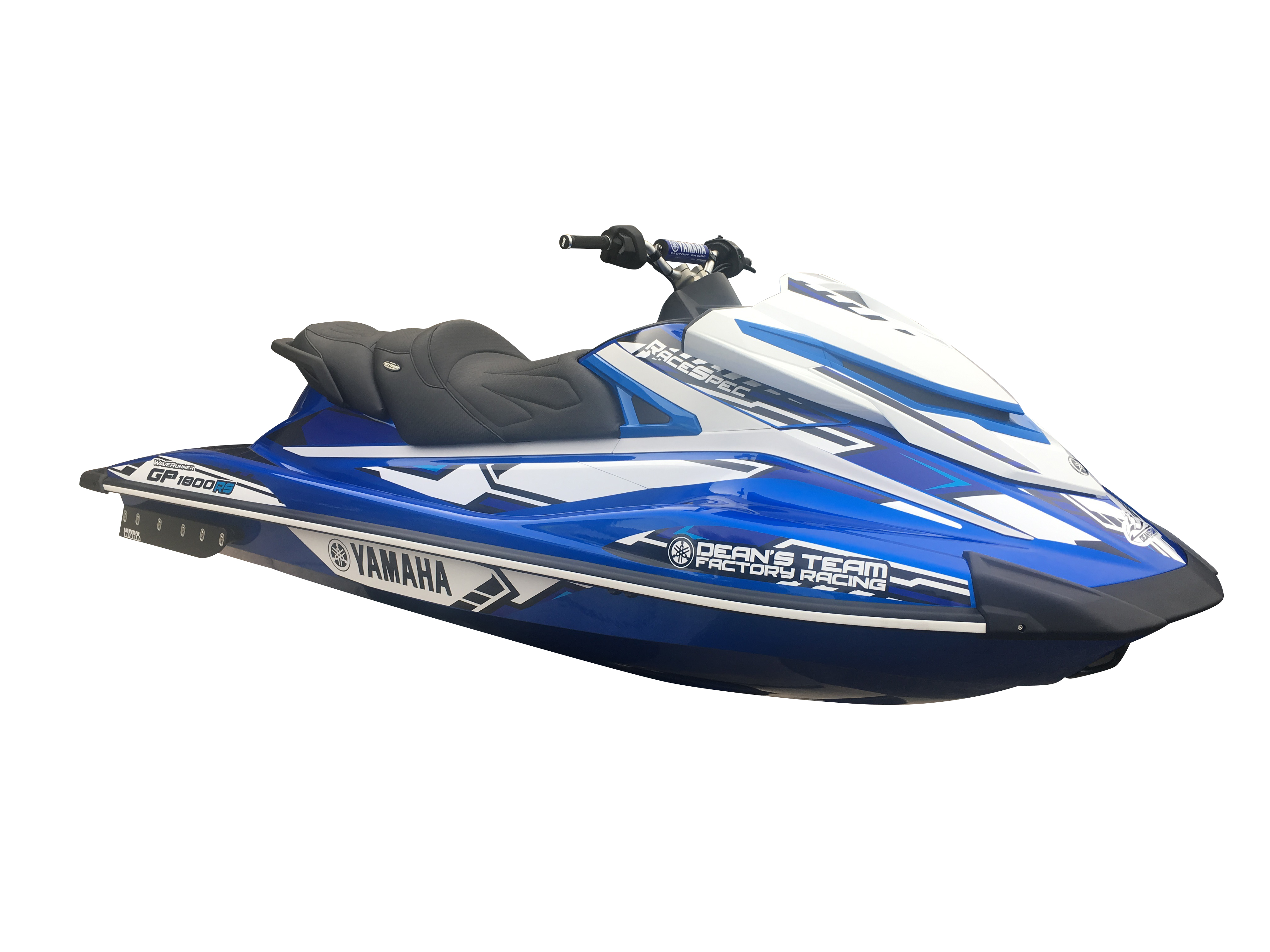
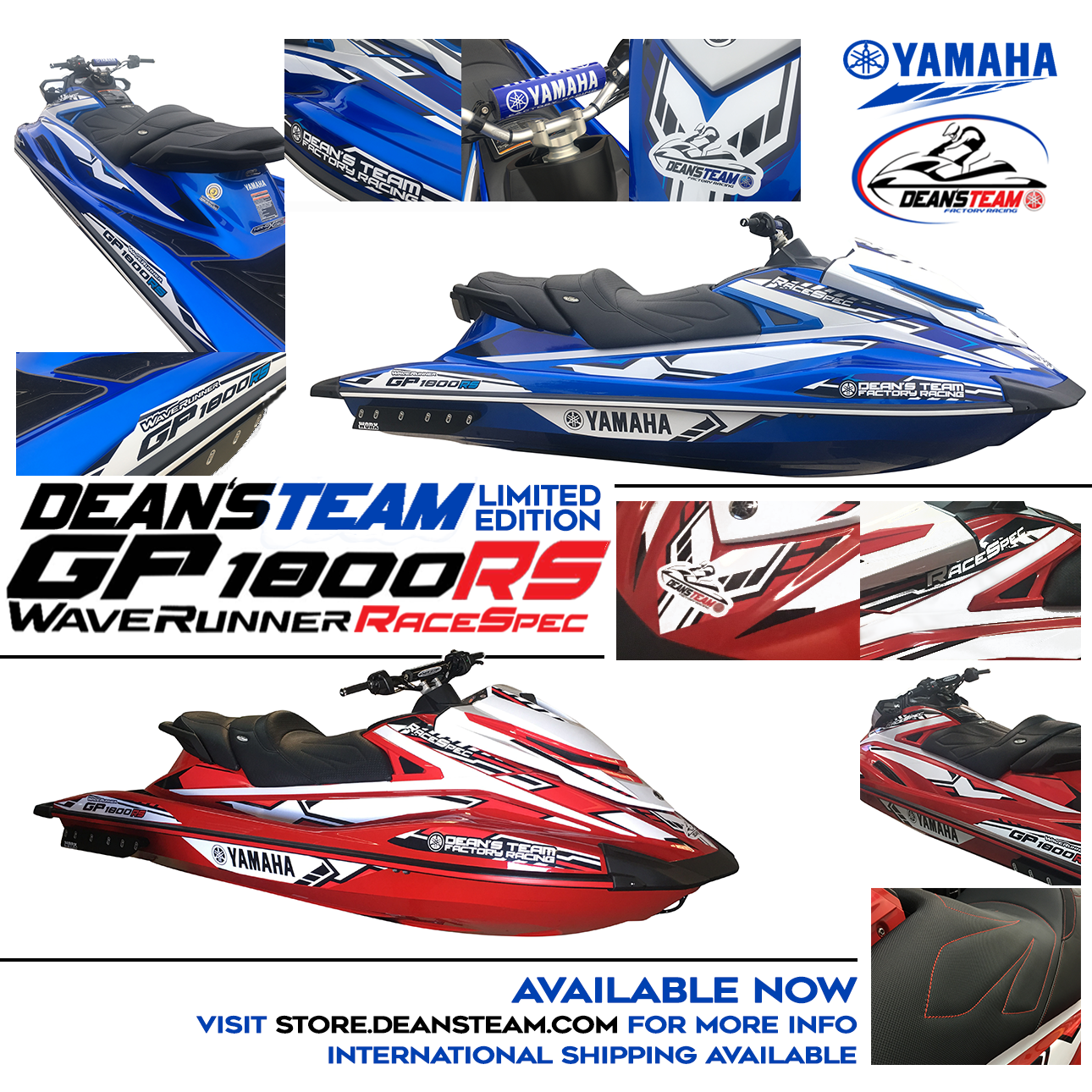
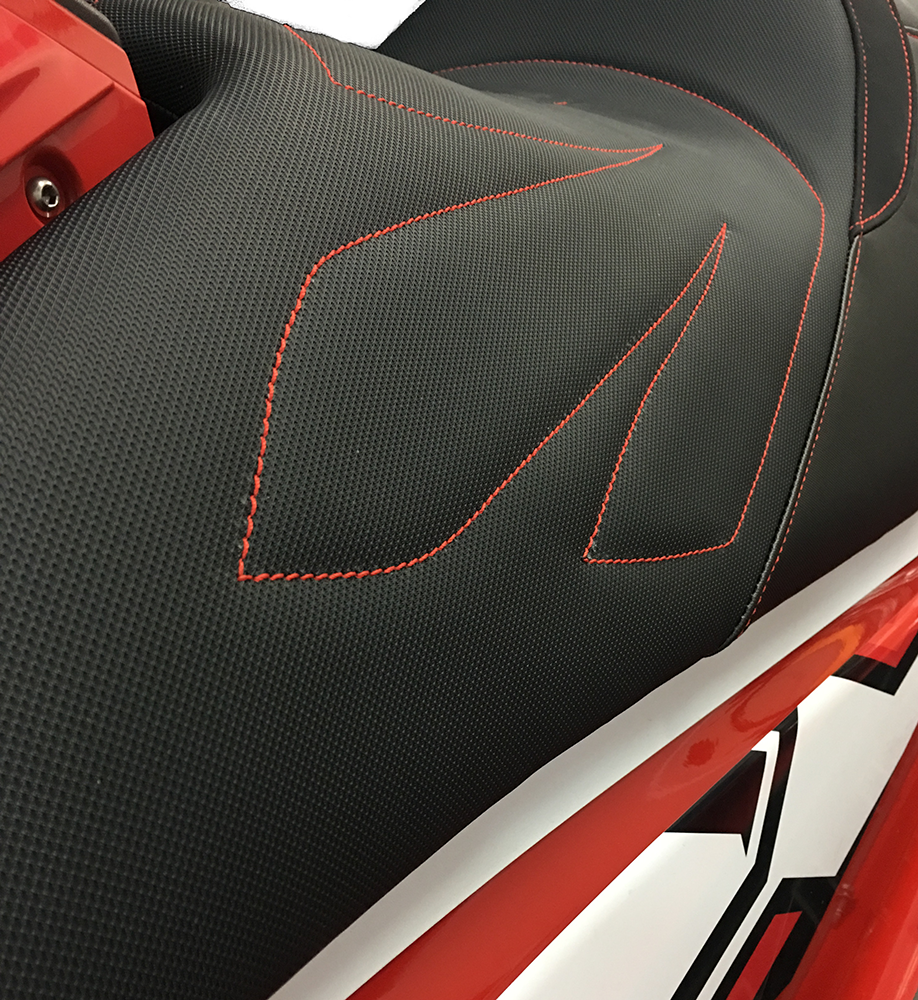
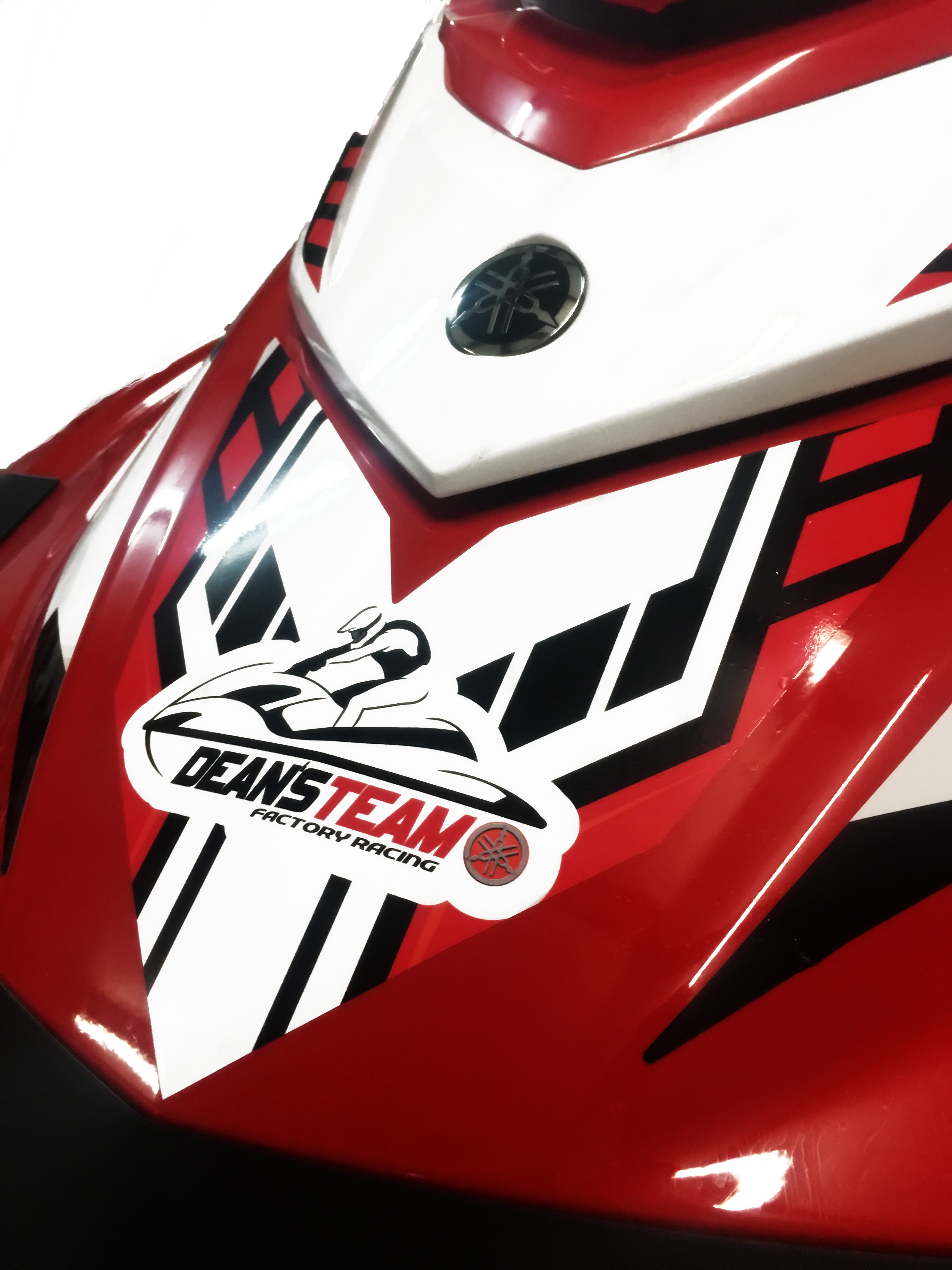
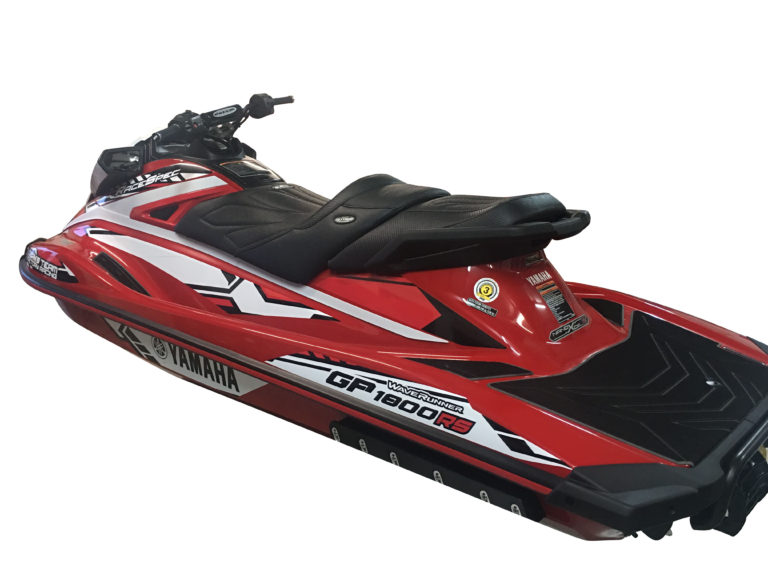
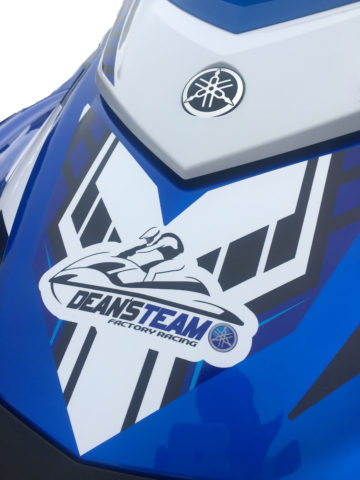
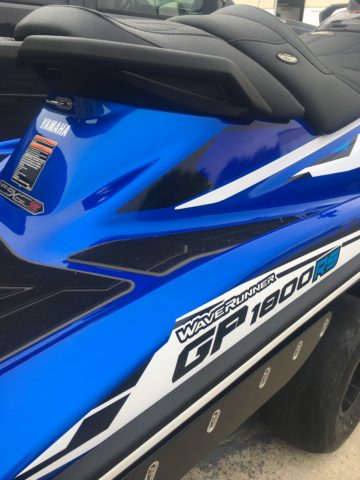
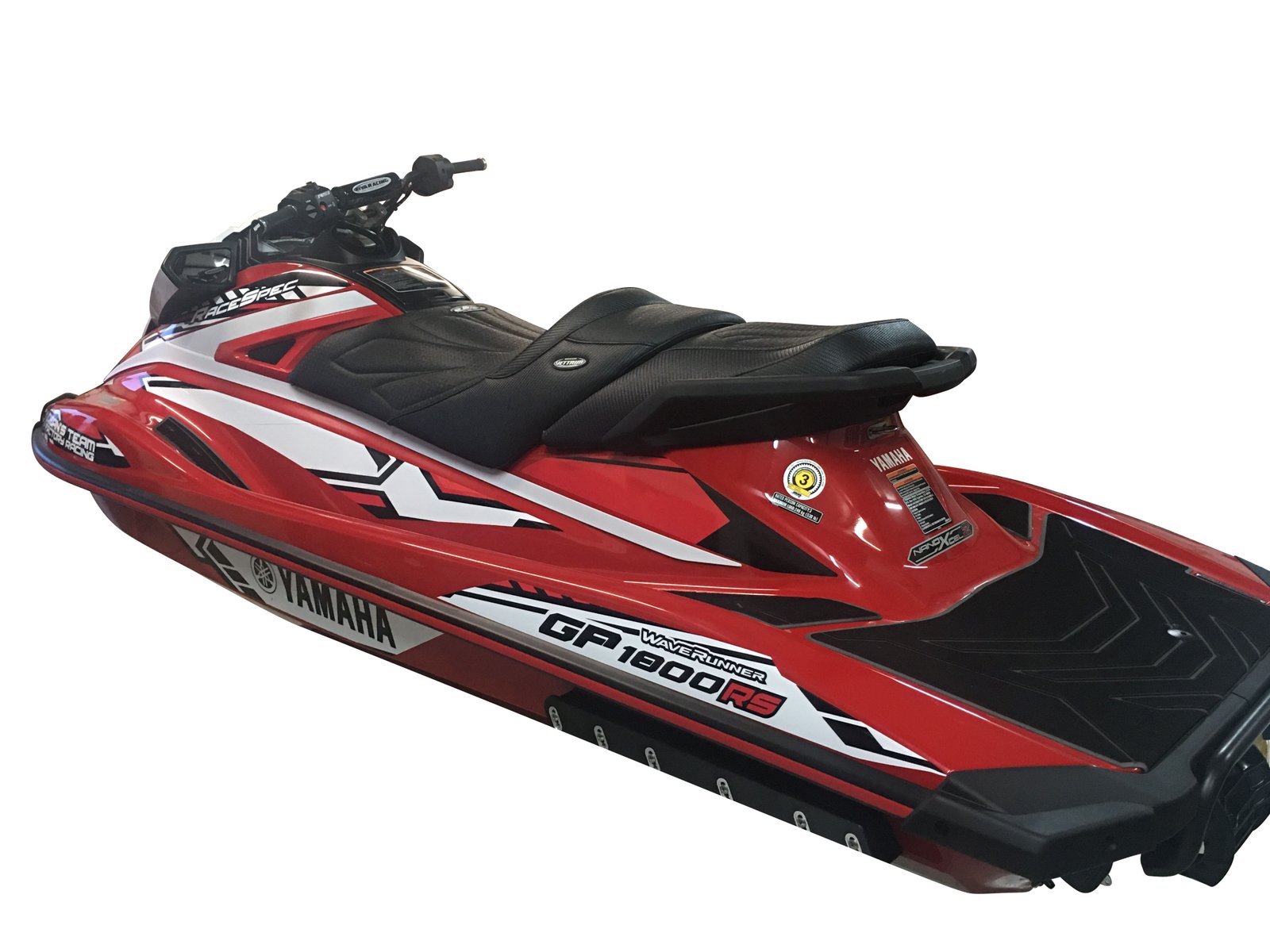
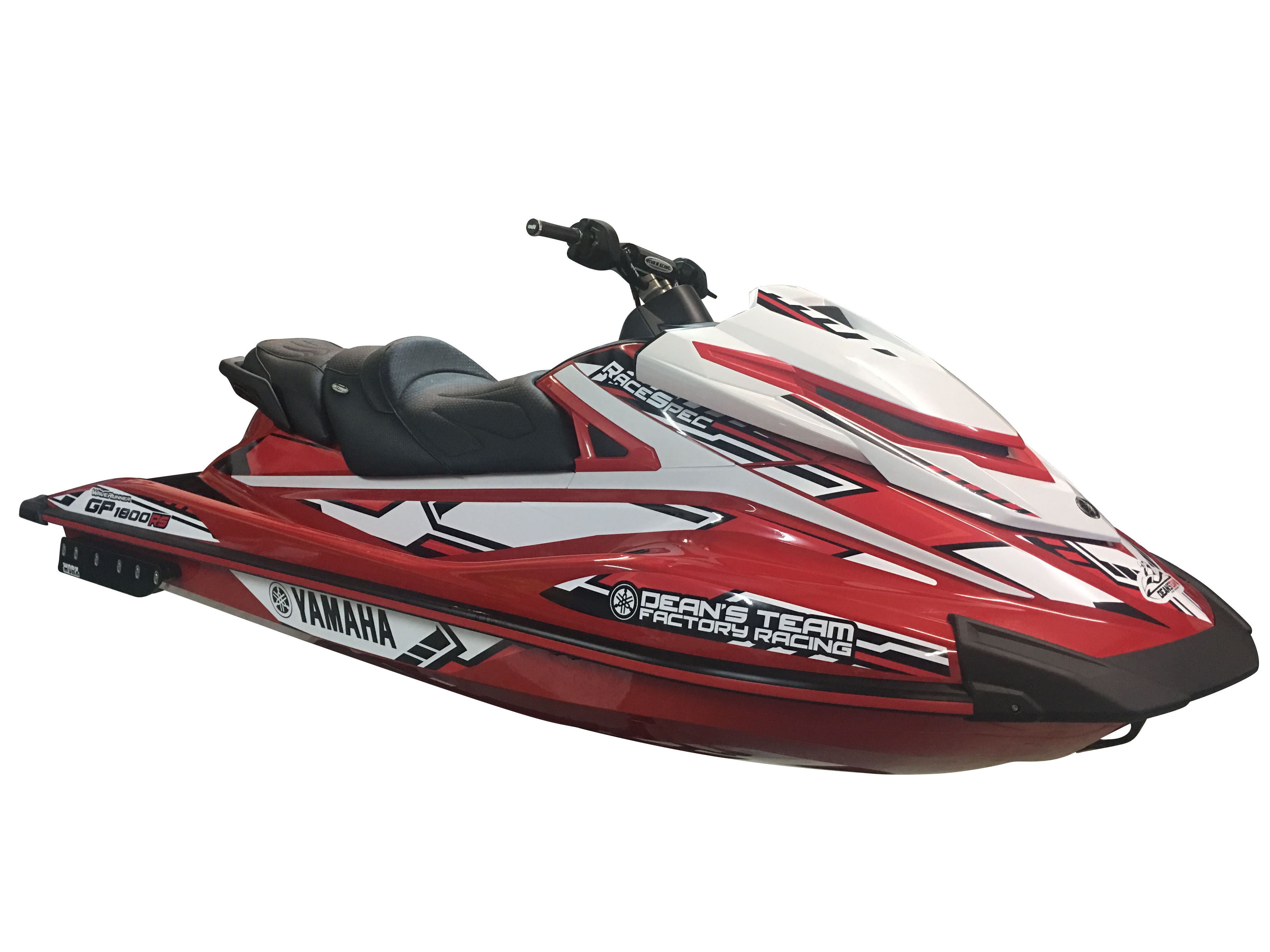
Coupled with a uniquely repitched Single Prop, every GP1800RS is tuned and tested to Dean’s specs and standards. Of course, much more is included in the RS than just a custom Dean’s Team Reflash and Repitched Prop; but also includes a custom aluminum Worx steering neck and 32-inch race bars with ODI Ruffian Grips, Worx air intake and filter, a custom-shaped intake grate, a Worx ride plate and special, adjustable “Billet Insert Edition” sponsons, RIVA Racing water strainer, a custom-stitched, grippy Jettrim seat cover with contrasting-colored stitching to match the corresponding red or blue Yamaha, and a unique Dean’s Team GP1800RS vinyl graphics kit to match.
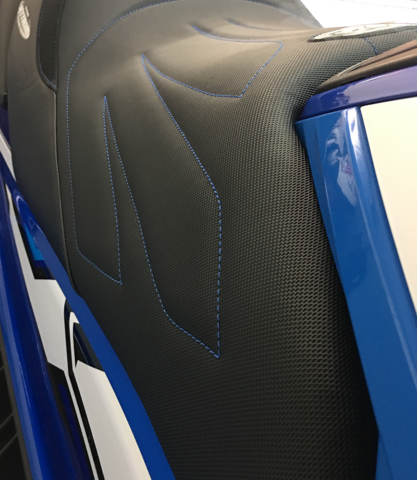
As per our initial review of the factory GP1800 for 2017, the new WaveRunner shines brightest when pushed through the corners. Lightweight and precise, the stock GP handles like a slot car, and the Dean’s Team RaceSpec configuration only magnifies that. The added traction provided by the sponsons, grate and ride plate, combined with the improvements to rider comfort and input thanks to the new steering system and seat, all make for a machine that is all but unmatched on the water. Although Charrier didn’t disclose a cut-off number, the GP1800RS will be a limited edition machine sold for $17,800 – and a quick breakdown of the MSRP of the craft, all of the parts and labor shows that at that cost, you’re paying less than retail.

Even if you’re not pursuing a career in racing, but just looking to get your hands on a race-ready machine that is sure to upset everybody else on your lake, the Dean’s Team GP1800RS (RaceSpec) looks to be the perfect weapon to bring to that fight. But if you are chasing podium finishes, we can’t think of a better watercraft package available on the market today.
img_14811 img_14781 img_1456 img_1455 img_1454 img_1453 img_1452 gp1800seatb img_1462 gp1800rsfb gp1800seatr img_1480
<
>

Gallery: Undercover At The 2017 Kawasaki Dealer Business Meeting

0

kawi

“Inside baseball” is a phrase not commonly bandied about within social circles, but is an apropos way of saying “we show you how the sausage is made” (which is also a colorful albeit esoteric turn of phrase). When it came to the reveal of the new 2017 Kawasaki SX-R JetSki, our coverage might’ve skirted that line, occasionally dipping into behind-the-scenes information that the layman couldn’t really care less about. Yet, seeing that we’re a PWC enthusiast magazine, and not some generic powersports publication, we felt it appropriate to dive a little deeper.

That being said, we also wanted to draw the curtain back a little further to reveal some of the inner workings of Kawasaki – in particular it’s mindset regarding the new ski – so we had multi-time Junior Ski and Amateur Ski National Champion AJ Luinstra skulk his way through the 2017 Kawasaki Dealer Business Meeting and bring us back a full report. Mind you, there’s not a whole heck of a lot revealed here (particularly about the new SX-R) that you haven’t already read or heard, but we do get a taste of how Kawasaki is looking to market the new standup:

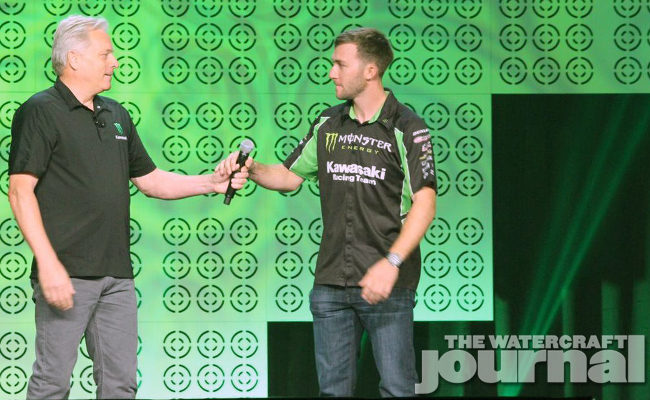
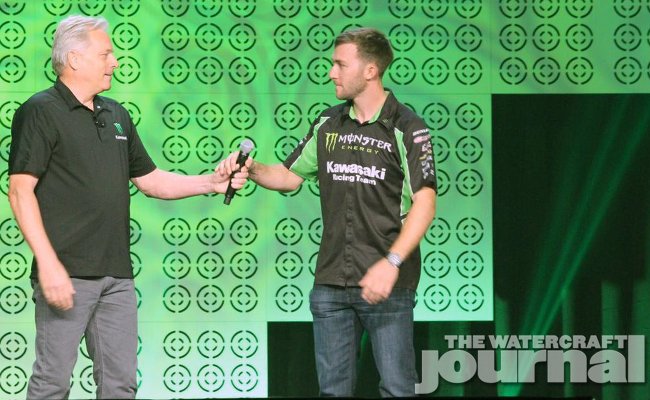
Above: Kawasaki brought out several top superbike and motocross riders as several new units from the motorcycle, side-by-side and PWC divisions were rolled out for 2017.

“Well, the 2017 Kawasaki Dealer Business Meeting is officially in the books. The Dealer Meeting marked 50 years for Kawasaki in the USA. With this 50th anniversary we knew there had to be some awesome new products; Kawasaki released fifteen new products ranging from side-x-sides, motorcycles, and personal watercraft.

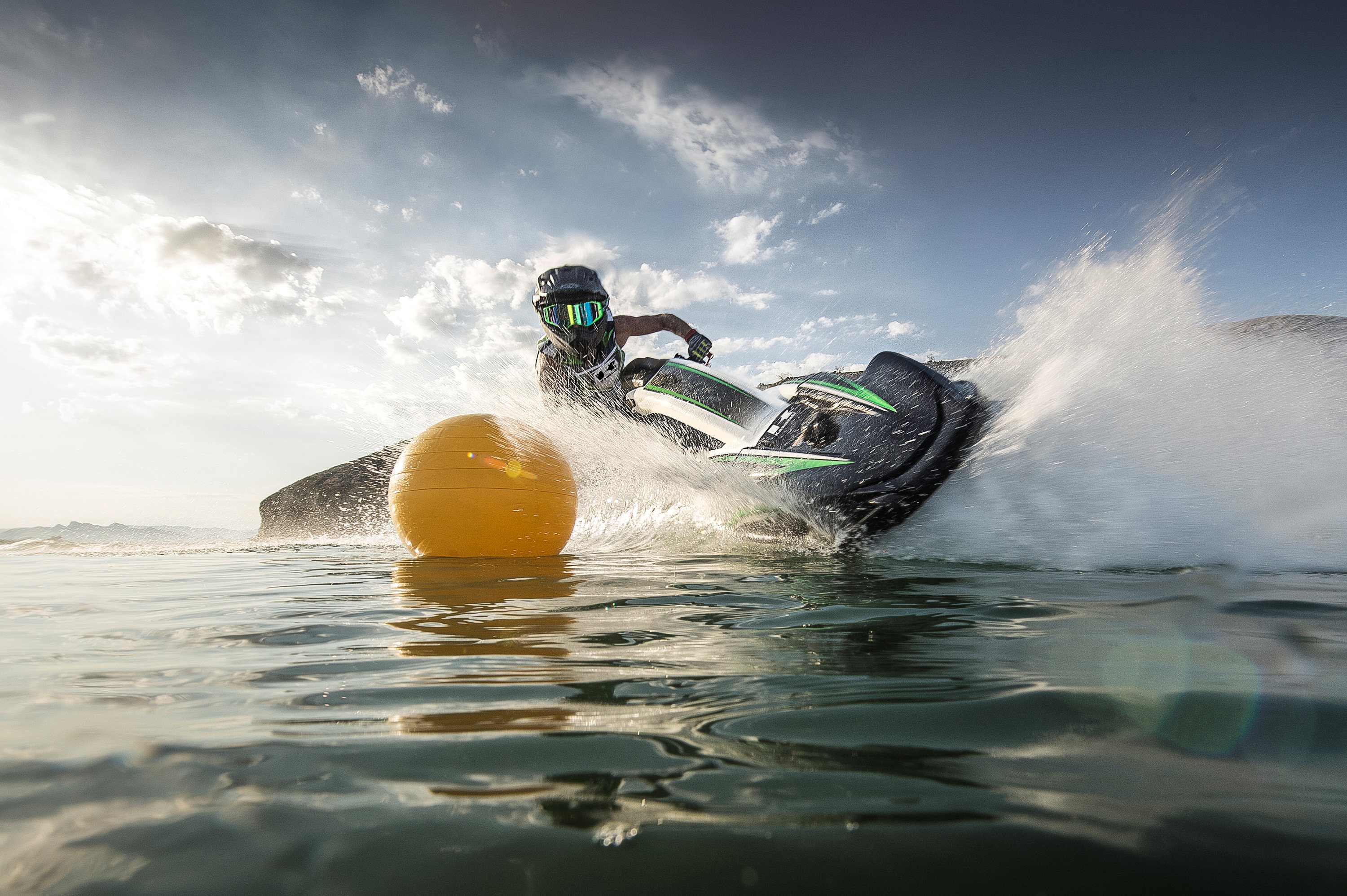
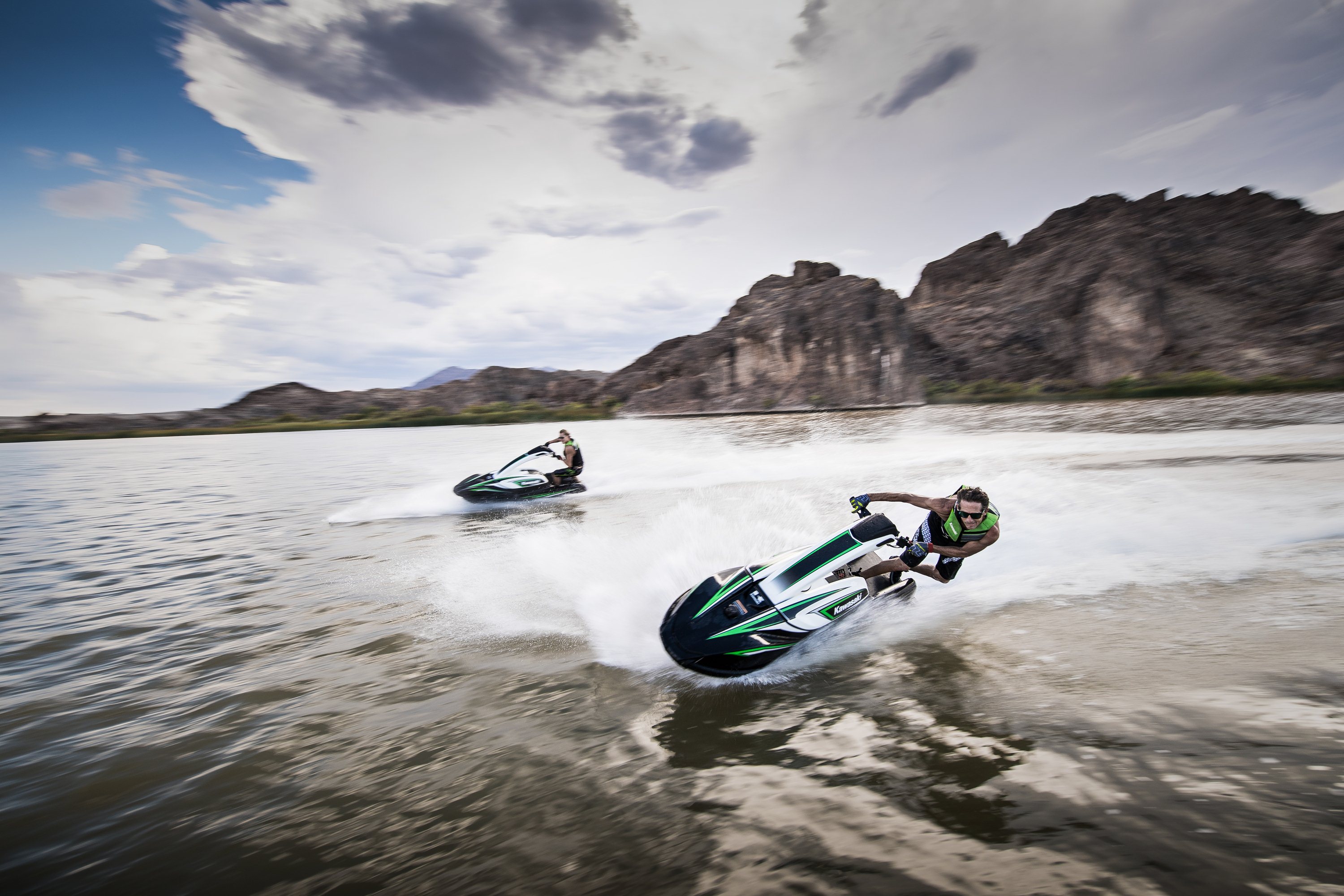
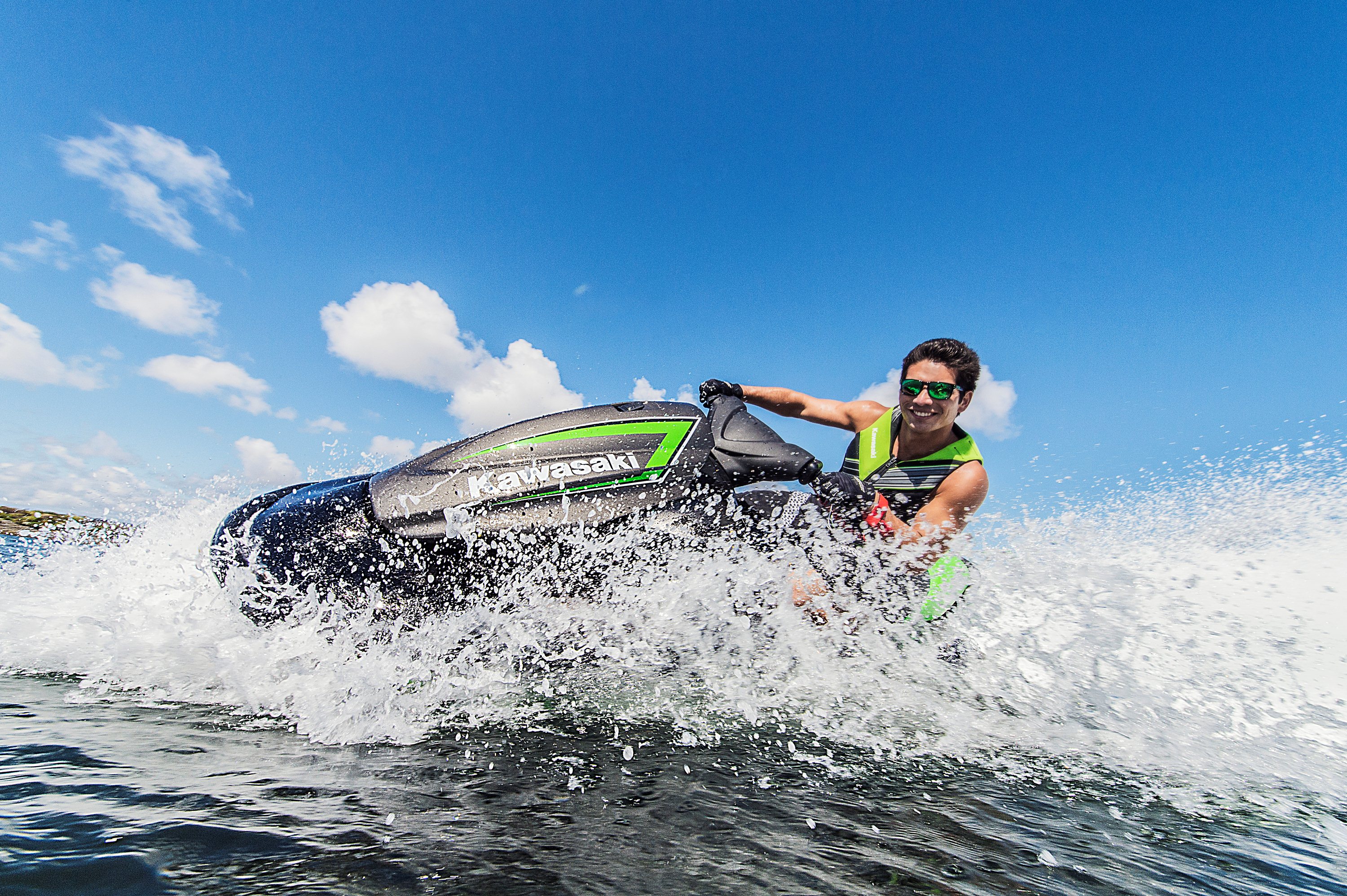
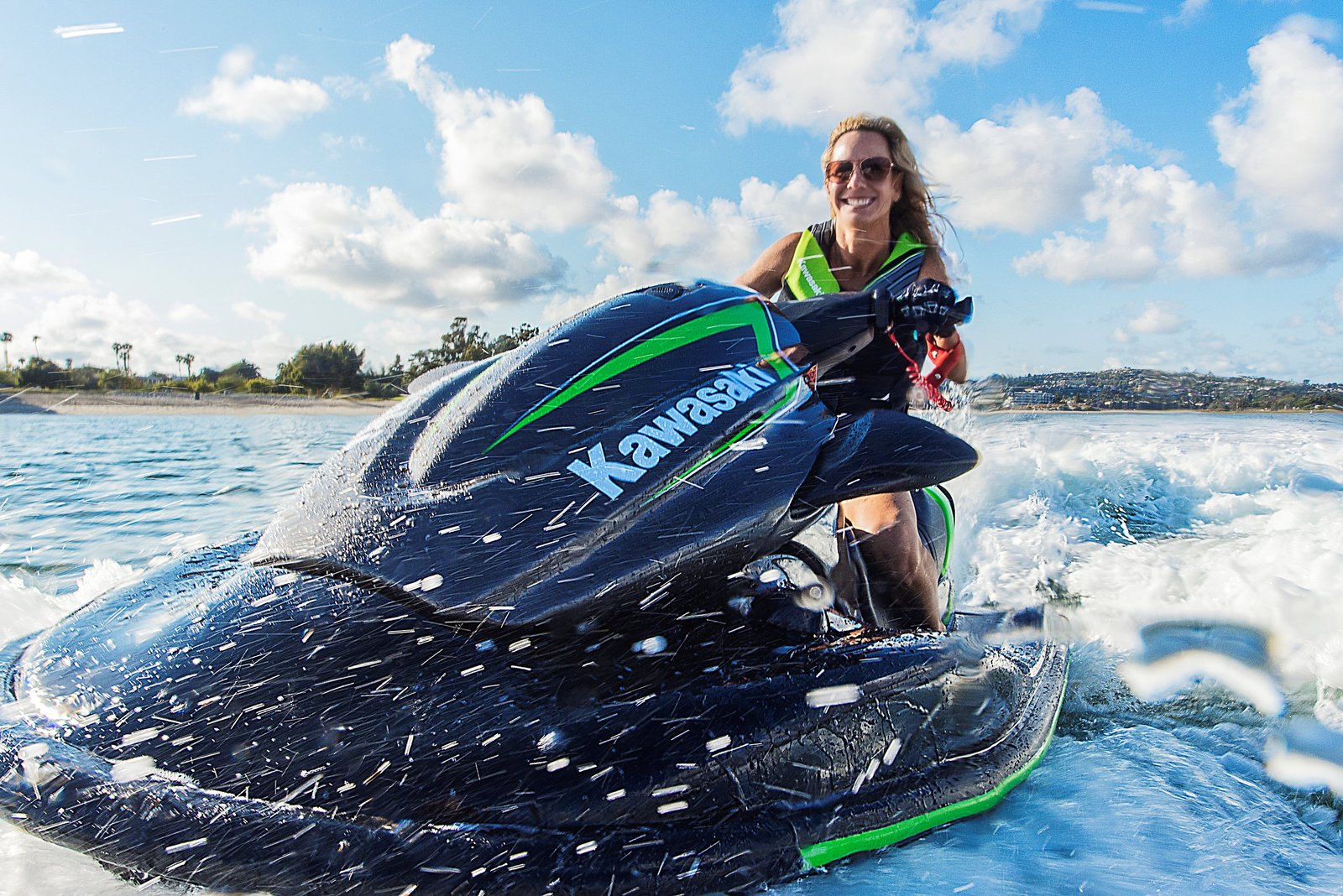
“One of the products that I know we have been waiting for was the all-new 2017 Kawasaki SX-R. This new standup watercraft had its official international unveiling back in October of this year at the IJSBA World Finals. One of the main things we did not know back in October was the price and the full specs for the ski. We now know after a very eventful 2017 Dealer meeting that the price will be $9,999 MSRP. We also now know that the weight is 551.3 pounds with fuel. You can also see the full specs HERE.

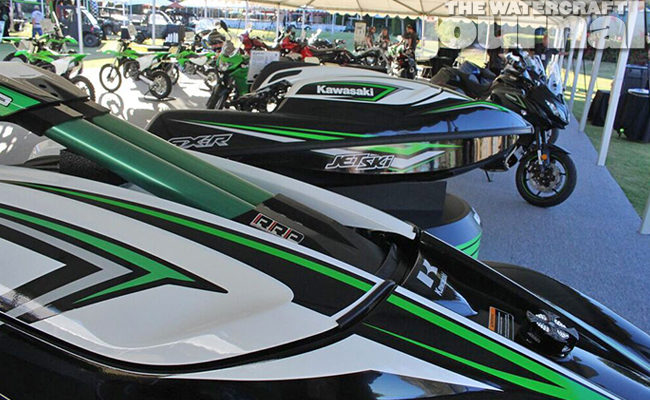
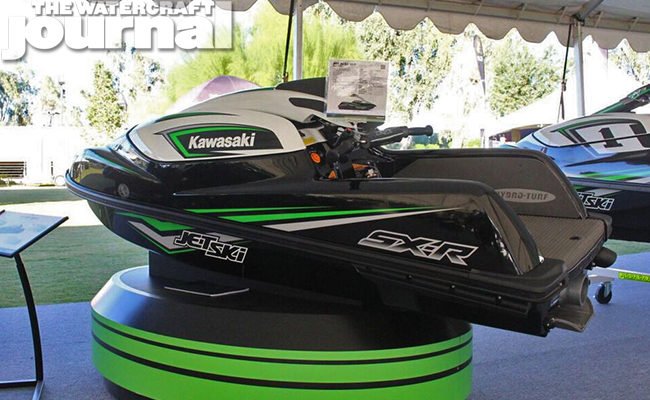
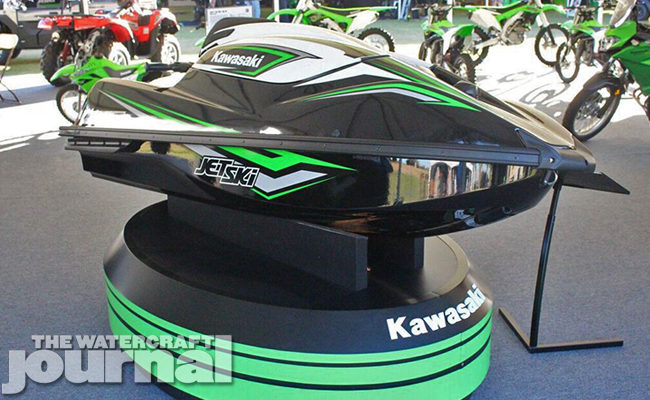
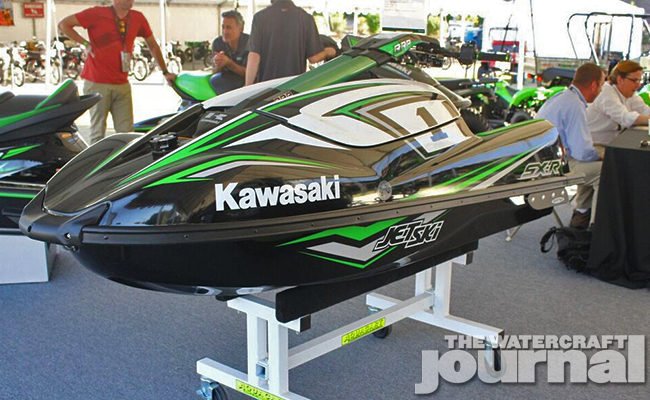
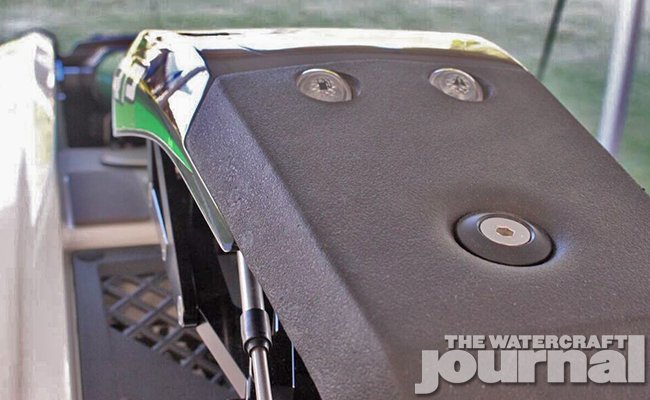
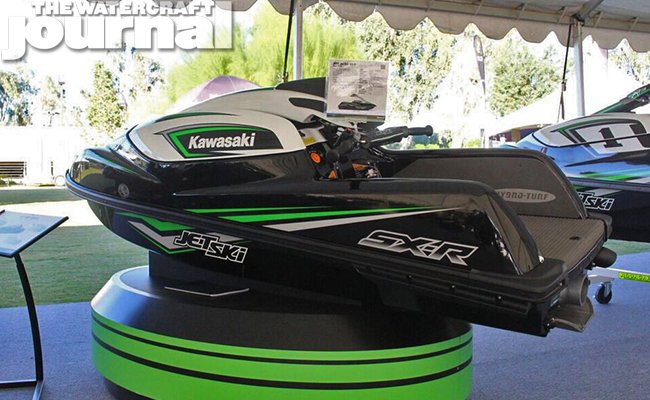
Above: Kawasaki displayed the SX-R with some interesting notes, including “Comfort” and “Convenience” as being major proponents of the new standup’s appeal, with easy boarding thanks to a wider, angled tray, easy-to-start electronic fuel injection, storage (!) and a drier ride thanks to the KSD splash deflectors integrated into the bow.

9

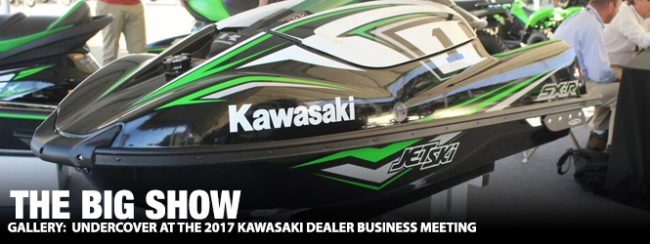
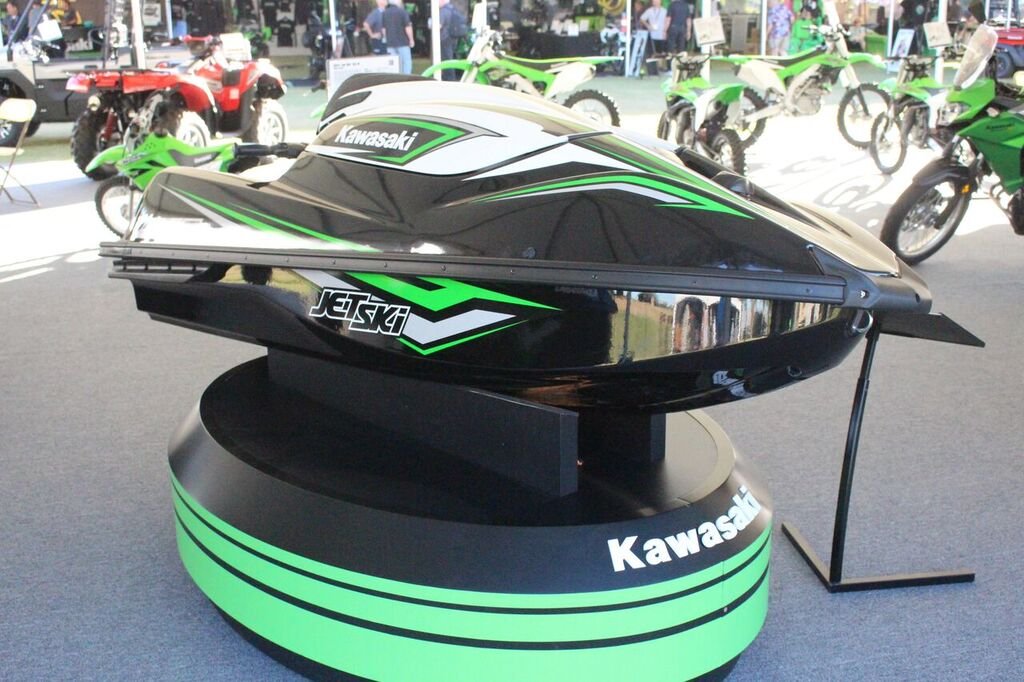
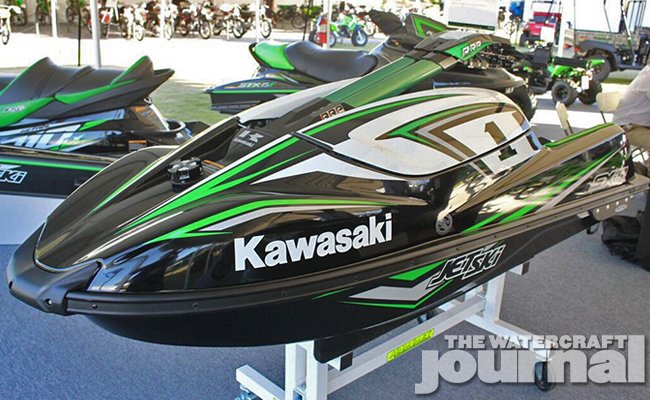
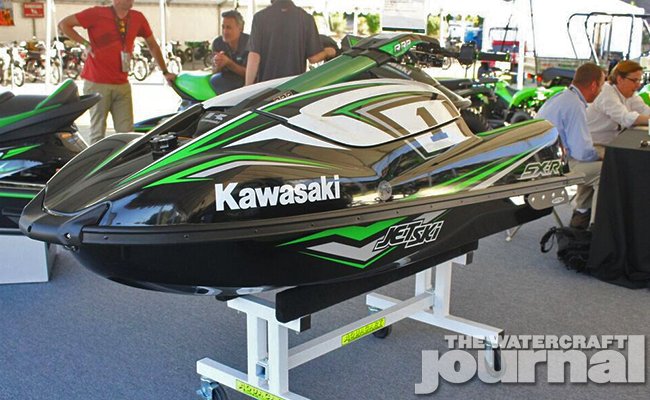
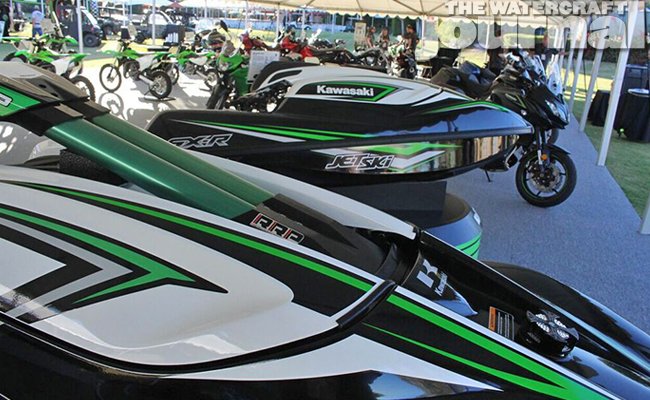
Above: In addition to several new 2017 SX-R units, Kawasaki also displayed what the manufacturer advertised as a unit modified for “IJSBA 2017 Ski Stock Class Racing.”

“One of the cool things that we got to see was all the reactions from the dealers and even the Kawasaki staff. There were many different Kawasaki employees that got to ride it along with some of the top motocross riders for Team Green. There were many dealers that were so happy and ready to sell this product this year. One of the top features noticed by a lot of the dealers is that it is not just for smaller people to ride. Bigger people can now ride this ski too and feel very comfortable on it.

“I got the chance to talk with many dealers and Kawasaki staff about this new standup. There were so many different reactions to the new ski. Some of the people said that it was crazy fast but it also handled very good. One of the coolest reactions was by one of the Kawasaki district managers [who] got to ride it in Indian Wells. He said the ski was so fast that he couldn’t hang on to it but that it was by far one of the best standups he had ever ridden. There was also many top Kawasaki motorcycle riders like Eli Tomac, Tom Sykes, and Johnathan Rea that got to ride it.

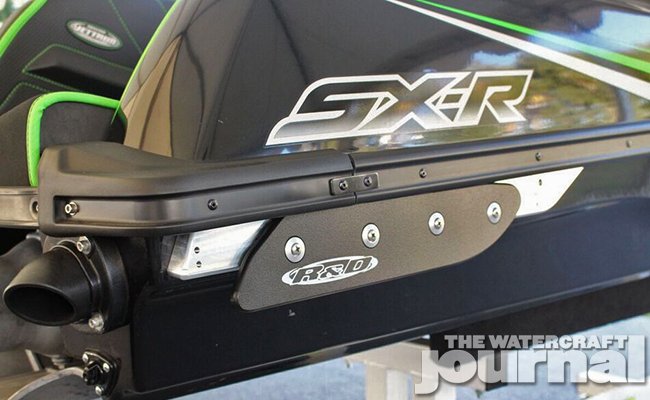
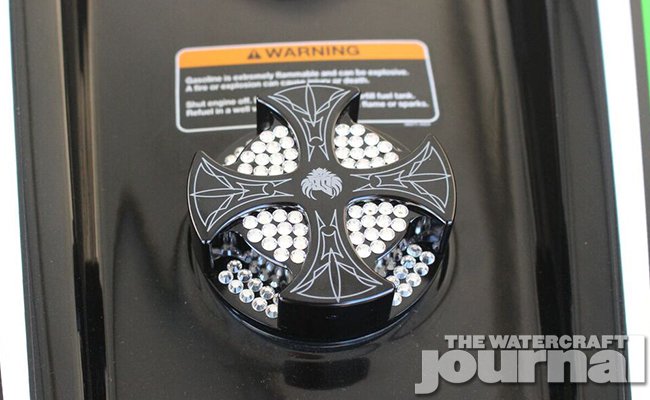
Above: Modifications to the Stock Class SX-R included custom stitched Jettrim mats, a blinged-out Sato Engineering billet gas cap, R&D Performance sponsons, a Rick Roy Products (RRP) handle pole and chin pad, a RRP 4-degree racing handlebar and steering system with ODI lock-on grips, and Skat Trak impeller.

1

AJ concluded, “Overall the 2017 Kawasaki dealer meeting was very eventful and we can’t wait for another 50 years for Kawasaki in the US.” We tried to get Luinstra a chance to ride the new machine but was thwarted at every attempt, saying that media will “get their chance in a few months.” Until such time, we’ll have to live vicariously via leaked video and sporadic social media posts. But fear not, dealers are taking pre-orders currently, including 321 Kawasaki out of El Dorado, KS – so order your 2017 Kawasaki SX-R today to get the special racers discount exclusively through 321 Kawasaki today.
h_lsahe6is5g9ll54gowkppmhjllft-5q9w0z0phc7mjhcg4qawpgz55jfdvv4nw53wdqxpygghvx-teejio18 4 1 8 6 5 9 7 2 10 3
<
>

Video: Greenhulk.net Stock Yamaha GP1800 Goes 79.2 MPH With RIVA MaptunerX Tune

0

attachment

Remember the days when going 60 miles per hour on a stock personal watercraft was outright insane? Yeah, we remember those days too. Well, when today’s stock machines need to be detuned just so that they stay somewhere close to the USCG-mandated 67-ish max speed cap, you know that there’s a lot left to unlock. That has been the theme behind Greenhulk.net’s newest project Yamaha, a 2017 GP1800. Greenhulk’s Jerry Gaddis picked up the blue-and-white GP1800 only a couple of weeks ago and he hasn’t let any grass grow beneath his feet.

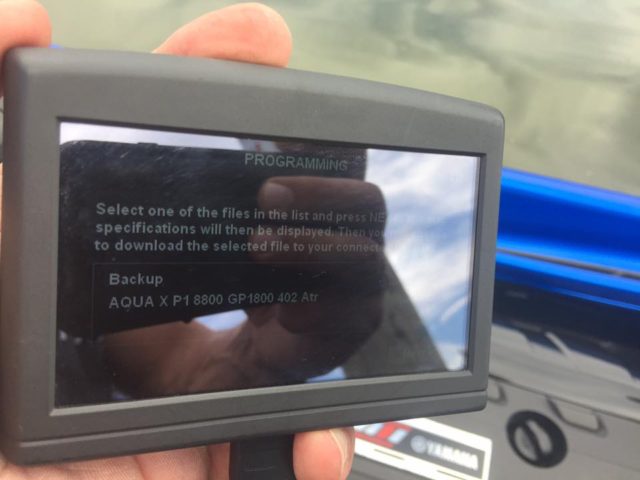
After installing a secondary digital tachometer and giving the ski a coat of Velocity Visions ceramic coating, he went right to work breaking in the engine, for y’know, about .8 hours. With his son at the throttle, the GP hit 71 on GPS, but as Jerry writes, “the limiter kicks in and drags it right back down to 69 mph.” Reaching into his bag of tricks, Jerry produced a RIVA Racing MaptunerX ready with a reflash ECU tune ready to be uploaded into the ski. The handheld tuner from RIVA walked him through the different prompts, withdrew and saved the factory tune, and replaced it with the optimized tune almost instantly.

Jerry writes, “Minutes after tuning the ski easily pulled 79.2 mph at 8300 RPM. This is bone stock, no mods and just the tune. The acceleration is brutal! Yes, [it’s] still bone stock, [the] impeller [has] not [been] tweaked, [or the] ride plate. [This is] fresh out the Yamaha crate and only a MaptunerX tune. I’m amazed! [I] can’t wait to see what this thing will do once I start adding mods.” Near 80mph runs is an incredible feat for an otherwise untouched machine and a little hard to believe were it not for the GPS-documented video HERE:

As Jerry teases, “Stay tuned, guys! Much better speeds [are] to come once mods are added. You can follow the build progress of the ski right here on this thread.”

Videos: MacClugage, Zielasko and Anyzeski’s Morning Ritual

0

screen-shot-2016-11-16-at-8-04-22-am

For many working people, it can be hard to wake up each morning for work knowing your jet ski is in the garage waiting for some attention. Although we need to keep working so that we can keep riding, the temptation always lures. One of the greatest inventions that has come about is coffee. Coffee has been one of the most important drinks of the day to become motivated but what some guys are doing to get their own coffee is becoming pretty cool.

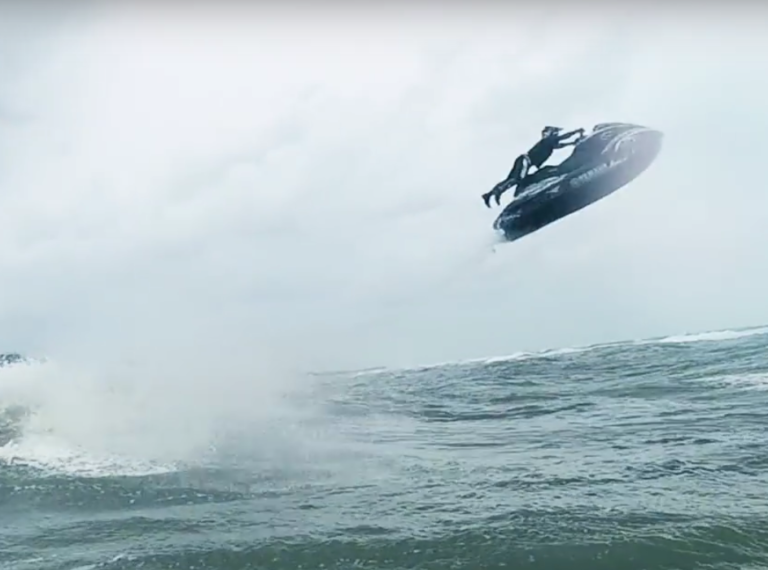
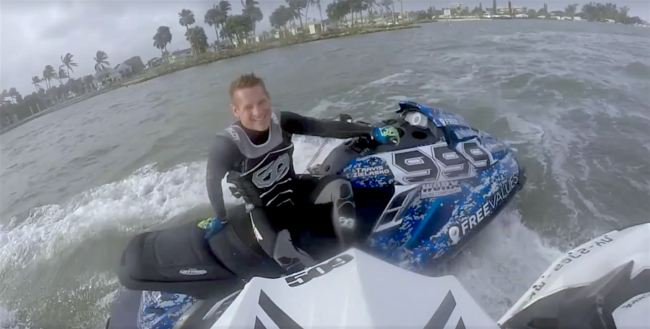
World Champions Chris MacClugage, Travis Zielasko and Chris Anyzeski decided that if they traveled by water in the rough Atlantic ocean that they could eventually get free coffee at a local marina. And who doesn’t want free coffee? Thankfully, the designers over at Yamaha have put a coffee cup holder in their Yamaha FX SVHO which makes it the perfect excuse to do some morning riding. Yamaha WaveRunners handle great in the rough water but there is no guarantee that your coffee will stay in when shooting off huge waves.

In these two videos you will see the guys launch off the 10-foot swells of Florida’s Jupiter Inlet and be airborne for what seems forever. (As if the caffeine wouldn’t be enough to wake them up.) To conclude, the question we ask you is; Why aren’t you traveling by water for free coffee? Enjoy:

Case of The Hump Days: Are You Ready For an Enclosed Sea-Doo?

4

4

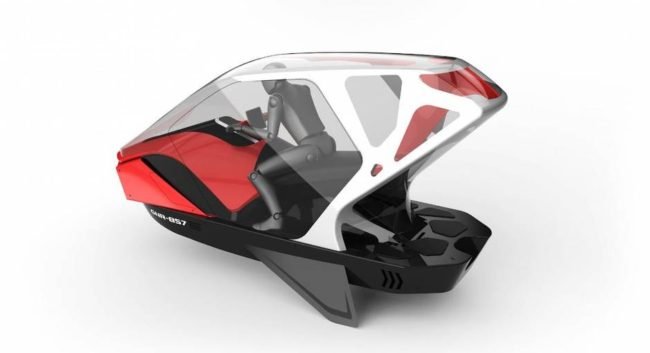
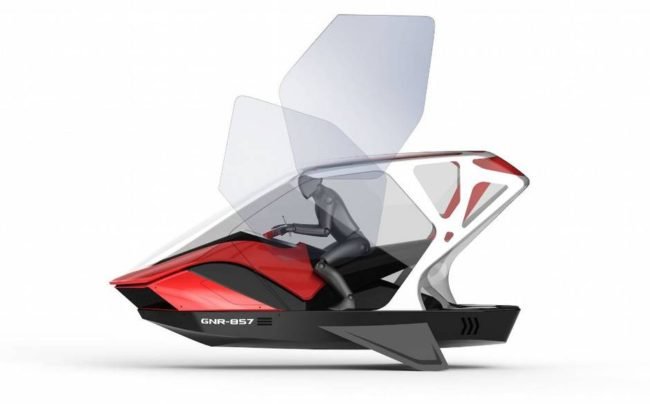
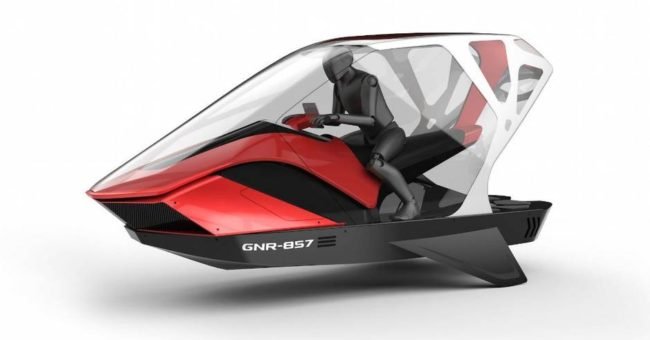
Charles Bombardier is at it again. This time, with the help of Slovak industrial designer Jan Bujnak, a graduate from the Academy of Fine Arts and Design in Bratislava. And what has he designed, nothing short of a near-fully enclosed canopy on a PWC. Titled “The Oneida,” the personal watercraft (PWC) was designed to be used during “three seasons of the year instead of one,” although we know many diehards continue to ride year ’round. Based upon an existing Sea-Doo platform, the Oneida includes a transparent canopy to shield riders from cold winds and splashes.

The cockpit is designed to incorporate a strong, transparent canopy; a structure that looks similar to that of a helicopter. Bombardier had no suggestions for the kinds of materials his design would employ. He went into further detail, noting: “There should be enough space inside the cockpit so the pilot and passenger feel at ease when riding. The engine’s heat would be used to warm the people inside, and in the summer, an air conditioning system could be installed if the owners wished to keep the cockpit on. A sun shade could be built into the roof, or maybe parts of the canopy could be darkened to reduce sun glare.”

Again, while many more adventurous riders refuse to dry dock their PWC when the going gets tough, Bombardier’s design for the Oneida could open up all-season riding to a vast majority of those who live in colder northern regions. Additionally, he submits: “It could also be used to carry out rescue missions along dangerous coasts where the surf breaks near rocks because the pilot would be more protected from falling off. Even if a series of waves kept rolling the vehicle, the driver would remain safe inside his cockpit.”

Although the instances of a rollover are far more rare today with larger, more stable craft, the fear of swamping the canopy, filling with water and acting like a net might deter many from the Oneida. Of course, only time will tell.

Gallery: Introducing 2017 Kawasaki JetSki Lineup

0

2017

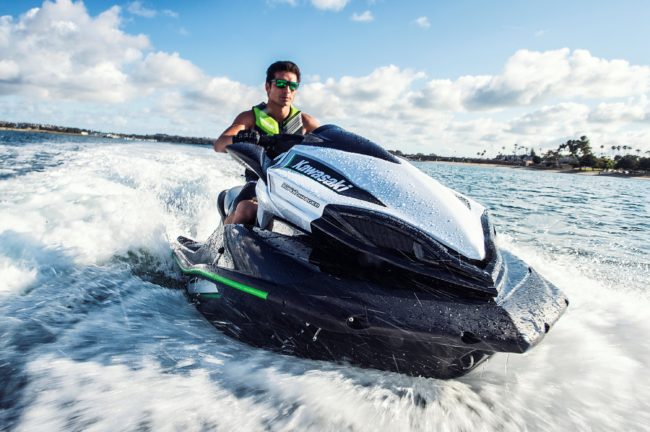
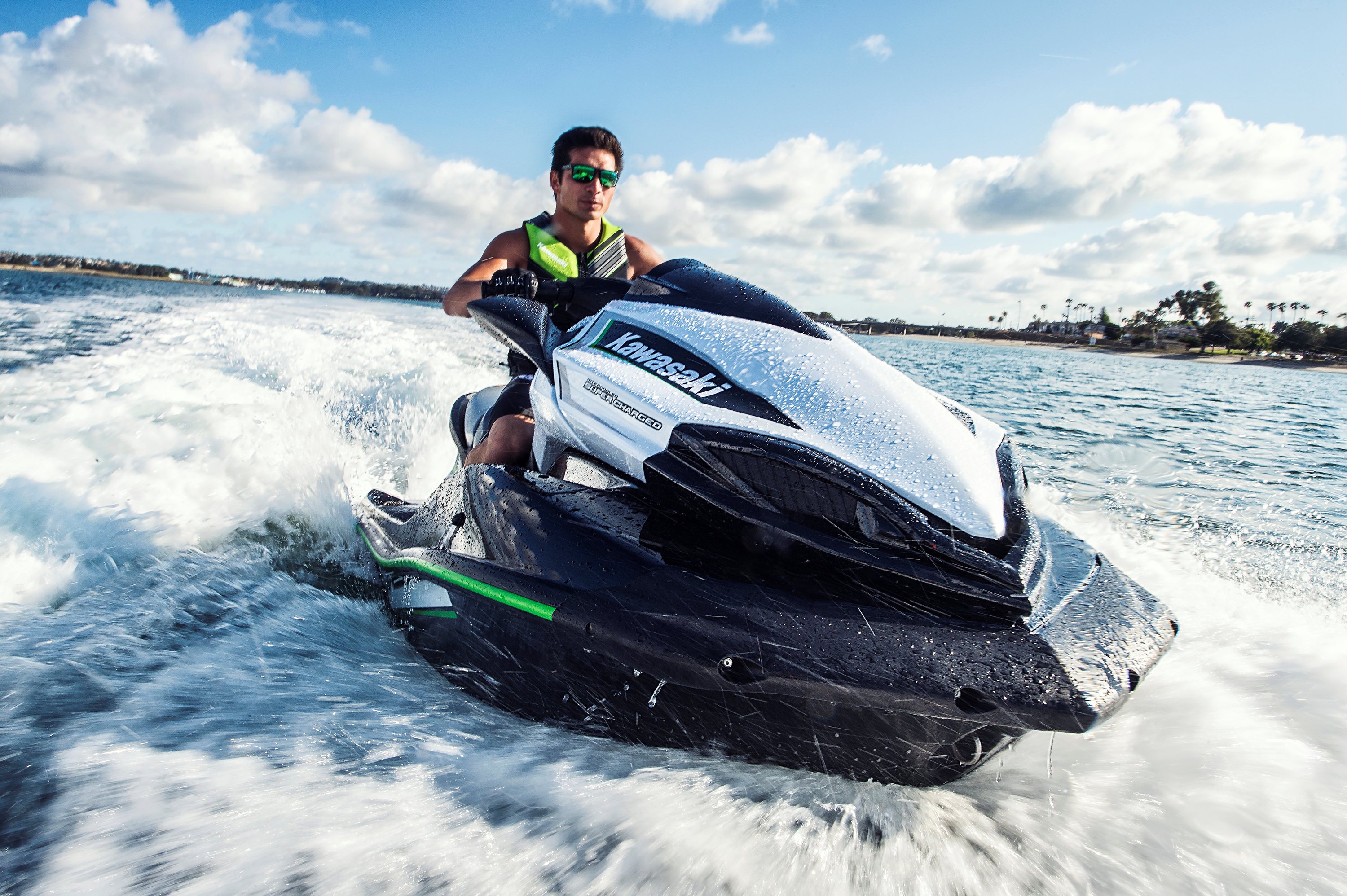
We wrestled over publishing this article as nearly all of the information found below has been published (albeit piecemeal) on The Watercraft Journal previously. We were first to show four of the five Ultras back in very early August, revealing a slight rearrangement in colors and decals. Next, we were first in the world to bring a complete and heavily detailed look at the new 2017 Kawasaki SX-R. While there are a few morsels of added information to toss into the mix, you will have gleaned 95-percent of everything you’ll need to know about the new JetSki from October’s article.

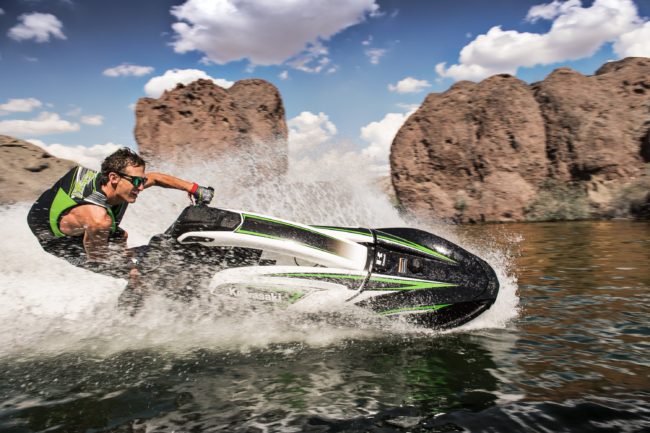
Of course, the return of the standup SX-R JetSki is the biggest news for the manufacturer. The nigh 40-year-old machine was retired in 2011 after a strong retail decline in 2009 (spurred by an upside-down economy, failing consumer confidence and a rash of Eco-legislation banned 2-strokes in several left-leaning states) following years of slowly deflating sales. Although shelved, subterranean efforts by project designers Minuro Kanamori and Craig “Fuzzy” Boyd to develop a functioning 4-stroke standup birthed several prototypes, but final approval was out of the question until the tricky landscape could be traversed.

17_js1500ahf_000088-high

The Watercraft Journal learned first-hand that the decision to resurrect the mothballed project was heavily contested internally, with many factors playing a part – most surprisingly being the reception of the new SX-R by the racing community. IJSBA President Scott Frazier and Pro Watercross’ AJ Handler were both notified early of Kawasaki’s impending release and provided valuable feedback, as well as committing to amend certain rules to permit the new 4-stroke to compete. Even its public reveal was purposely targeted towards the racing audience, drawing back the curtain to a bated crowd at the IJSBA World Finals last month.

The final product and all of its gory details was finally uncovered this past weekend at the annual Kawasaki Dealer Meeting in Palm Springs, California. Priced at one dollar below $10,000 (notably $500 less than our initial intel had confirmed), the SX-R borrows heavily from the brand’s oldest-running model, the STX-15F.

The drivetrain, which has remained almost entirely unchanged since 2005, directly drops into the 551.3-pound (curb weight, 509-pound dry weight) standup – making it significantly heavier than its 370-pound predecessor. The SX-R even shares the same pump and stator, giving the SX-R equal thrust (957-pounds) as the runabout – giving the JetSki near-identical acceleration as the supercharged 310X.

Comparisons in dimensions continue to distinguish the SX-R from its 800 (technically, 781cc) ancestor: the ’17 model totals 104.5-inches long, or 8-feet, 8.5-inches, a full 14-inches longer than before; with between the two is slightly less than a inch and half difference (30.1″ versus 28.7); and the new SX-R stands 3.2-inches taller than before, at 33.1″ over 28.9″.

17_jt1500ahf_0852-high

Although visually identical as two generations of JetSki before it, the handlepole has been reinforced with an internal brace and fitted with a chin pad with Low Fuel and Oil Temp caution lights (not gauges). The throttle is cable-operated (no fly-by-wire), and there’s no electric or mechanical trim control (contrary to some reports published elsewhere).

Again, the engine is Kawasaki’s proven 160-horsepower 1,498cc 4-stroke DOHC four-cylinder, employing the supercharged-Ultra’s composite resin long runner intake manifold. As outlined in our previous article, the oval-edge, stainless steel, three-blade 148mm impeller is also pulled from the STX-15F, and the steering nozzle increased from 76mm diameter to 87mm and a total 102mm nozzle length.

17_jt1500khf_0763-high

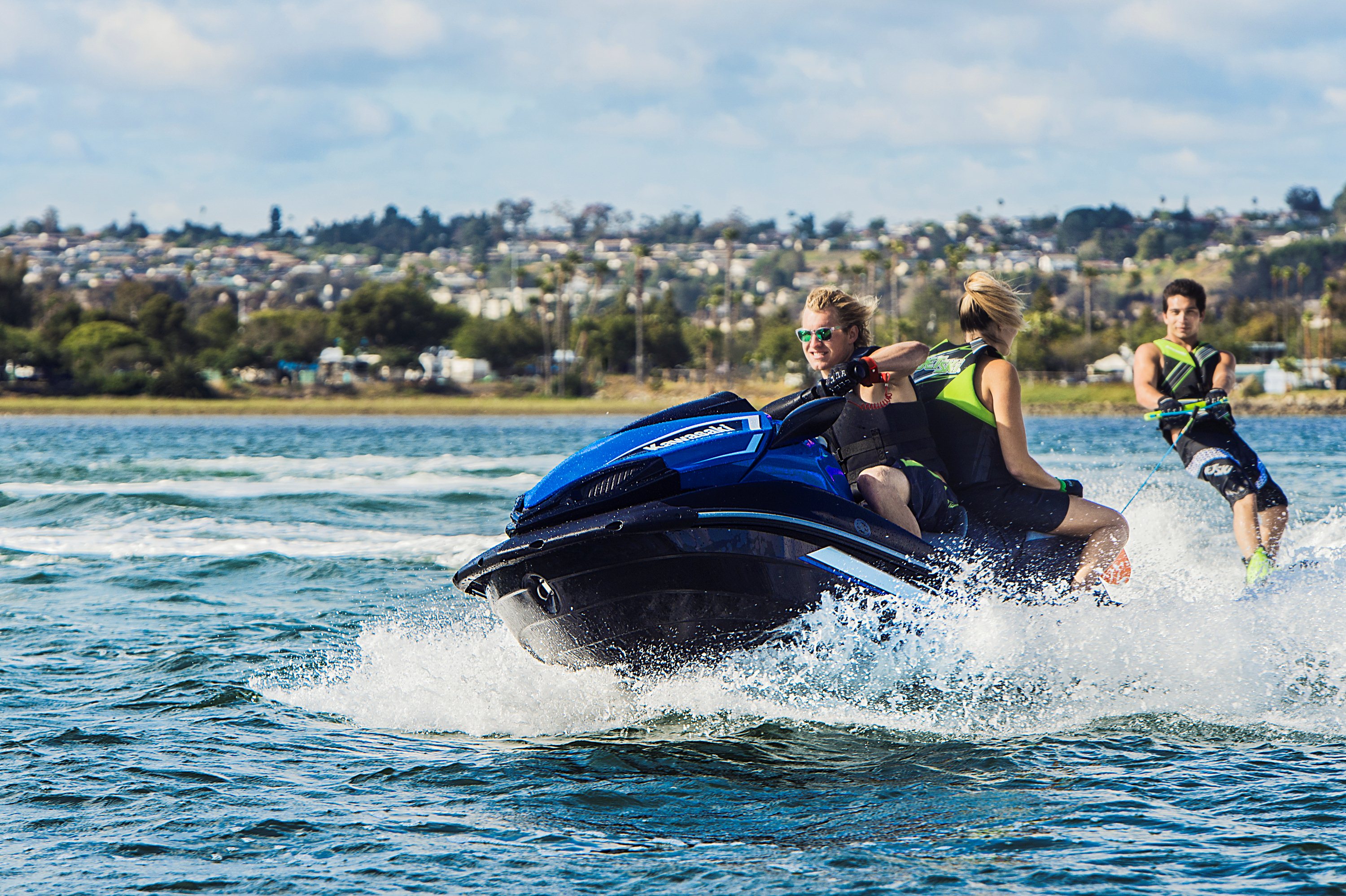
All of this makes the SX-R “the quickest and most agile personal watercraft in Kawasaki’s lineup,” not to mention the fastest factory-built standup JetSki to date with a top speed of 63mph. While pre-orders are being accepted, production is slated for early 2017, putting new units on sales floors somewhere around April.

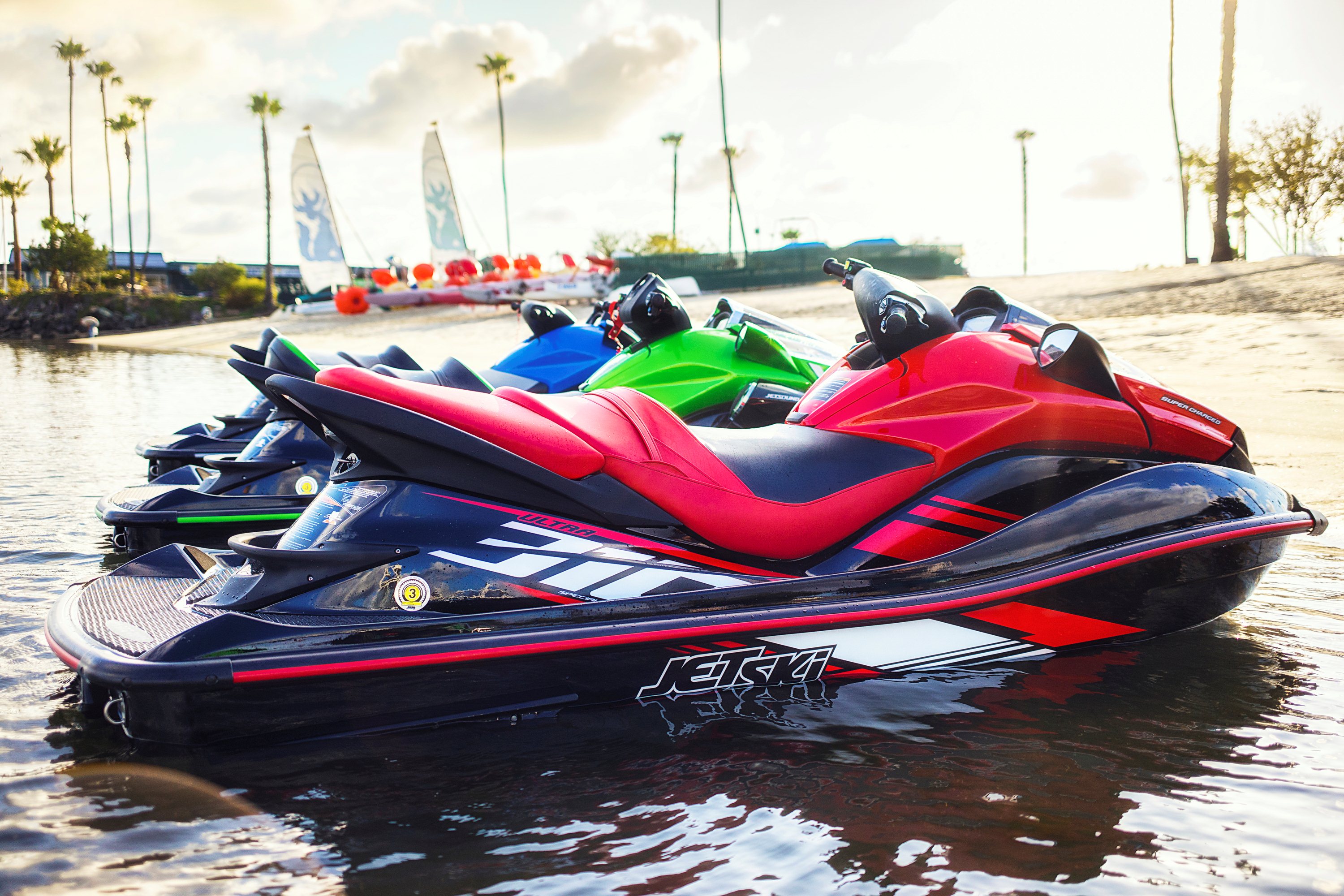
For the rest of Kawasaki’s lineup, it is, as they say, “BNG” or “Bold New Graphics.” Beginning from the bottom-up, the aforementioned STX-15F remains inexhaustibly unchanged after 14 years – save for its new Ebony/Metallic Graystone livery and all-too-familiar $9,699 price tag. The solitary unit is Kawasaki’s answer to Yamaha’s VX line (consisting of 7 different trim and performance packages), and Sea-Doo’s GTI line, with its 8 different iterations.

17_jt_lifestyle_1951-1-high

Joined with the STX is the base-level Ultra LX, whose Ebony/Valiant Blue is a nice return to the LX’s of the past. Priced at $11,199, the LX is void of electronic throttle control, trim, cruise or Eco modes found on the supercharged models to follow.

The 310-series Ultras retain the same Eaton TVS (Twin Vortices Supercharged) 1.5-liter powerplants ingesting a max boost of 16.8psi. That makes for a thirsty beast, and its 20.6-gallon fuel cell is just enough to keep the 1,498cc creature in its belly satiated. While the Kawasakis have earned the stigma of being “huge,” facts prove otherwise:

17_jt1500phf_1730-1-high

Rated with a curb weight of 1047.4-pounds (using the Ultra 310R as the example), the true dry weight is 914-pounds, exactly identical to that of the current RXT-X 300. Additionally, all Ultra 310 models are also 6.5-inches shorter than the RXT/GTX/Wake Pro/RXT-X models (132.7″ versus 139.2), and also 1.2-inches more narrow (47″ versus 48.2″).

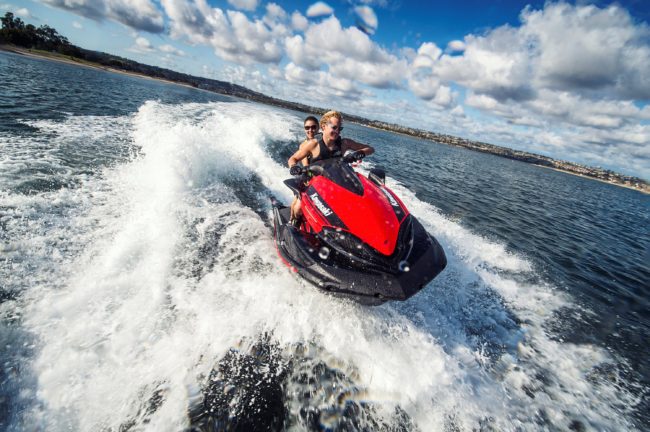
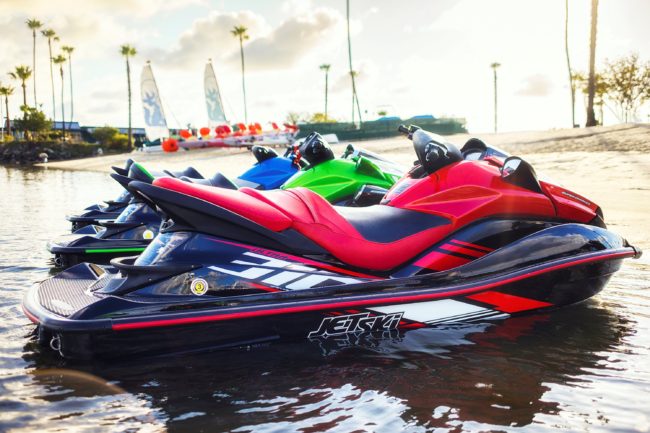
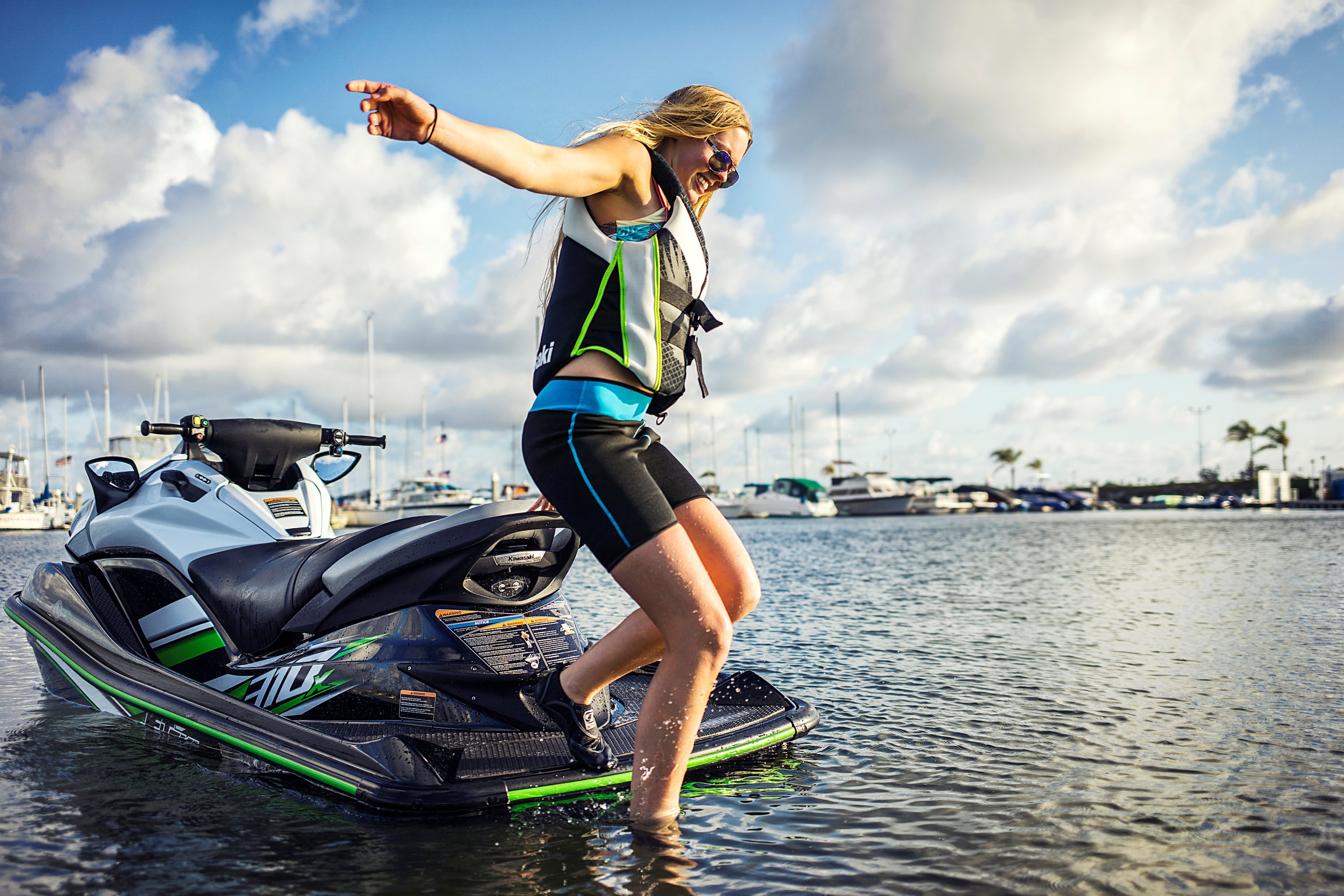
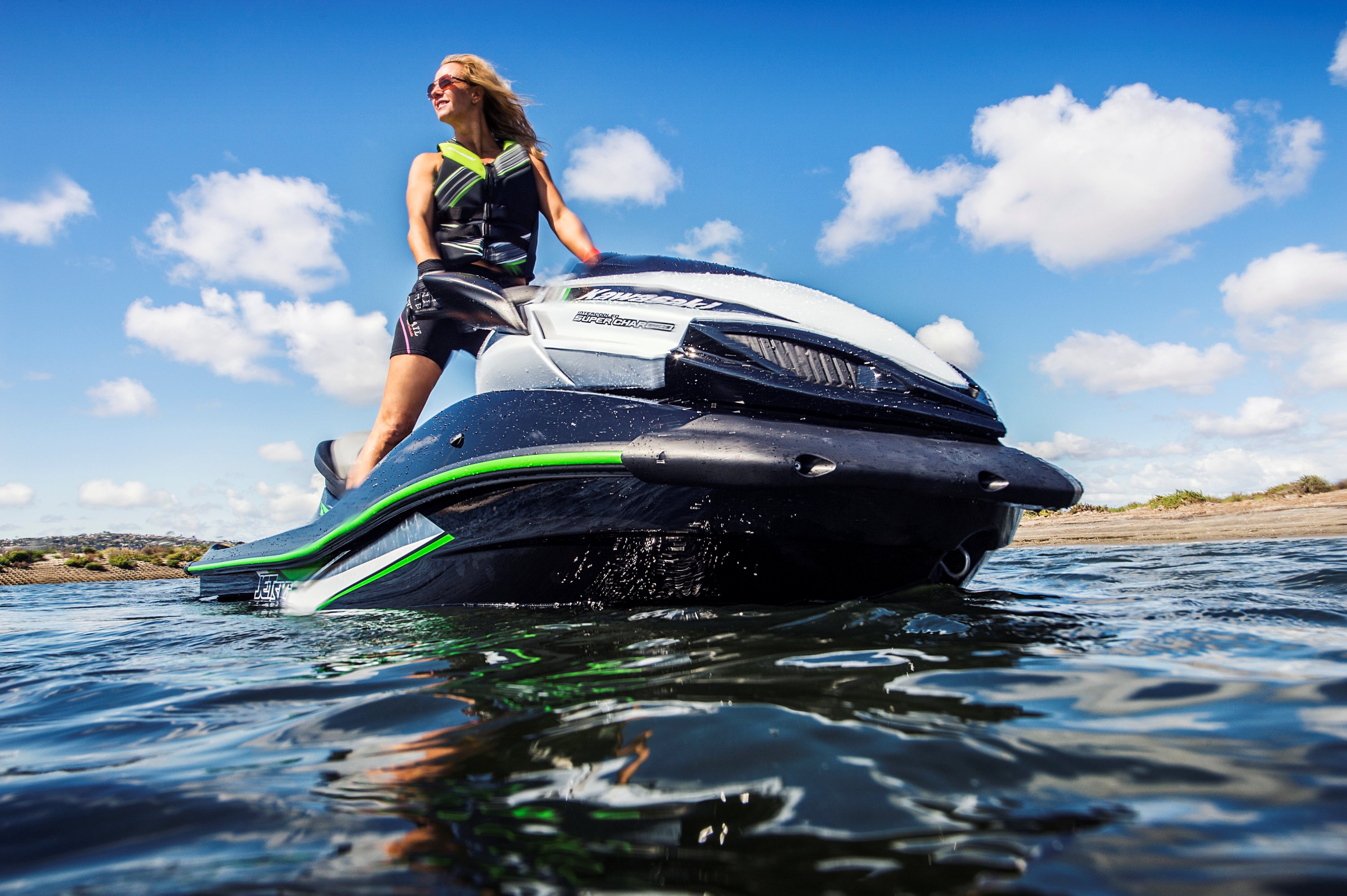
Nevertheless, the changes to the four separate 310-horsepower Ultras are minimal. The 310X receives a Ebony/Metallic Stardust White paint scheme with a price tag of $15,299 (identical to the RXP-X 300 MSRP). The next step above the 310X is the limited Ultra 310X SE (Special Edition). Distinguished by a bolstered, two-tone seat and its Ebony/Sunbeam Red coloring, the SE is priced at $15,799 (a full $300 over the aforementioned RXT-X 300, and $200 less than the Yamaha FX SVHO Cruiser).

17_jt1500nhf_0642-1-high

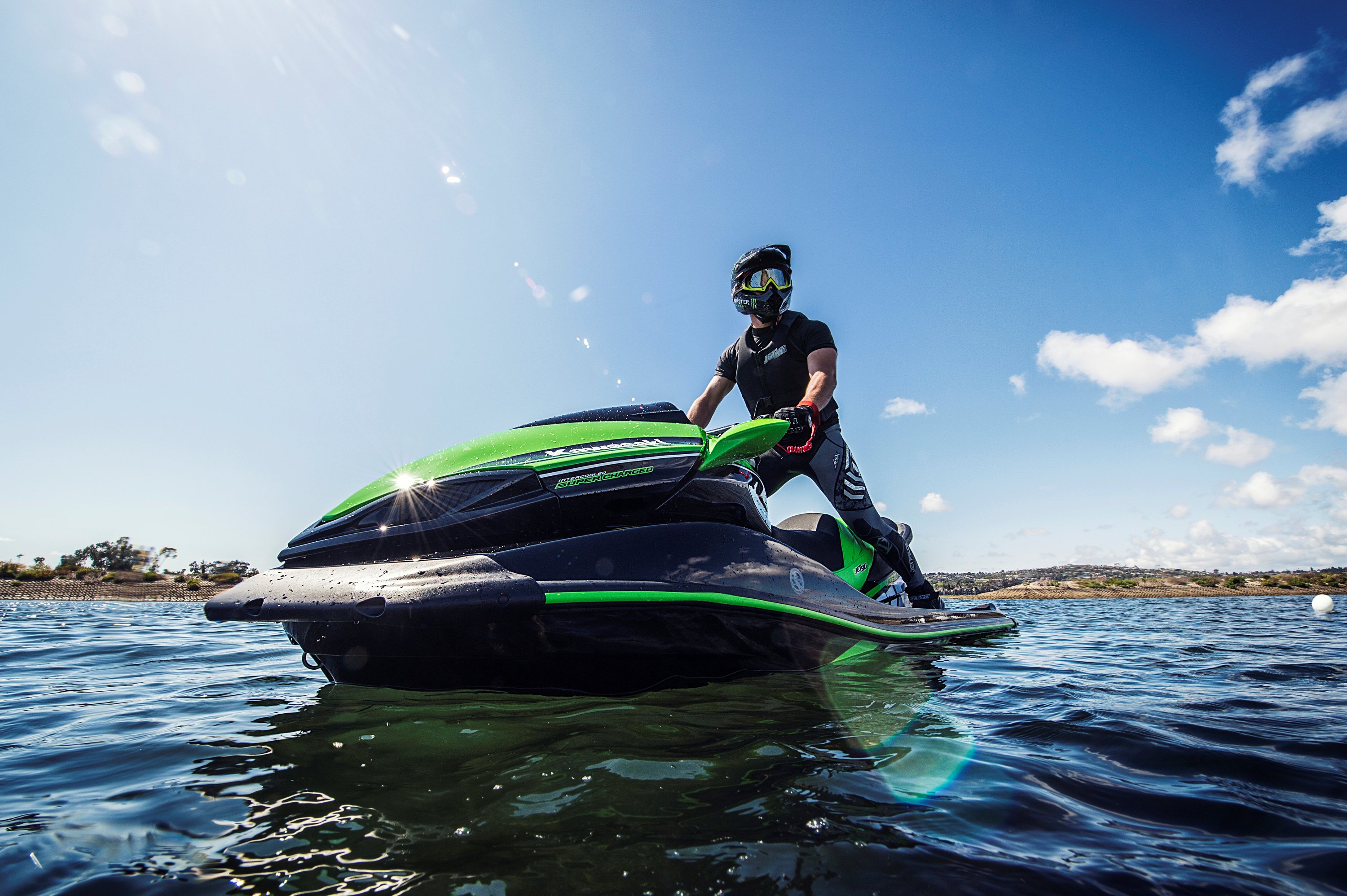
Above the SE is the “race-ready” Ultra 310R, priced at $16,299 ($200 more than Sea-Doo’s top-of-the-line GTX Limited 300), which comes with a cast aluminum steering neck and electroplated MX-style handlebar, a narrowed grippy seat and green sponsons to match its Ebony/Lime Green livery.

Capping the 2017 lineup is the Ultra 310LX. Marked by Kawasaki’s JetSounds, Kawasaki’s onboard sound system that includes dual 30-watt speakers, amp, and controls implanted into the handlebar pad. In the glove box is a waterproof screw-top container with a USB port for reading a memory stick, and a waterproof bag for a phone or MP3 to supply music; as well as a heat-resistant, bolstered saddle. Again, the 310LX returns in Ebony/Candy Lime Green coloring with an asking price of $17,999 (an even $1,000 over Sea-Doo’s GTX Limited S 260, and $1,1,00 over Yamaha’s heavily-optioned, fully-accessorized FX Limited SVHO).

For some considering themselves market strategists, Kawasaki’s play is a bit befuddling. As competitors double-down on entry-level runabouts, and lightweight muscle craft, the company that started it all is metaphorically bringing the band back together for a reunion tour. Hopefully sales reward the bold strategy as all projections for 2017 look remarkably positive, with building consumer confidence at an all-time high in nearly a decade.

17_jt1500mhf_1153-high

17_jt1500nhf_0031-1-high 17_jt1500nhf_0648-1-high 17_jt1500nhf_0643-1-high 17_jt1500mhf_1288-high 17_js1500ahf_000088-high 17_js1500ahf_000027-2-high 17_js1500ahf_000038-high 17_js1500ahf_000047-high 17_js1500ahf_000042-high 17_jt_lifestyle_0891-high 17_jt1500ahf_0536-high 17_jt1500ahf_1033-high 17_jt1500ahf_0852-high 17_jt1500khf_0763-high 17_jt_lifestyle_1296-high 17_jt1500khf_0603-high 17_jt_lifestyle_1951-1-high 17_jt1500lhf_0600-1-high 17_jt1500lhf_0888-1-high 17_jt_lifestyle_1905-1-high 17_jt1500phf_1730-1-high 17_jt1500phf_1895-1-high 17_jt1500nhf_0642-1-high 17_jt1500nhf_0786-1-high 17_jt1500nhf_0821-1-high 17_jt1500mhf_1153-high 17_jt1500mhf_1453-high 17_jt1500mhf_2249-high
<
>

Gallery: AquaX Lake Worth, Florida

0

aqua

The AquaX race series returned to the Sunshine State after their last round in Chicago, Illinois. This past weekend’s races came to a brand new venue for the series in the city of Lake Worth, Florida. The weather forecast for the weekend called for perfect weather and Mother Nature didn’t disappoint. With a vantage viewing point of the Lake Worth Pier and the beach, spectators had front row seats to watch some of the greatest Jet Ski riders in the world battle it out.

The weekend started off with the Junior racers. Haden Skellett and Sammy Nehme went back and forth throughout the race. Sammy Nehme was in the lead coming into the start/finish line and eased up a little not thinking that Haden Skellett would pass him at the finish. Haden pulled up next to Sammy and claimed the first win of the weekend with a photo finish and barely passing Sammy by inches.

6

Next up were the Sport Spec and Spark Class. Sam Nehme continued where he left off from World Finals and came in first place in the Sport Class followed by Keith Dill and Ken Waddle. Johnny Smith had mechanical issues that kept him out of the first race. In the Spark Class, Eric J. Gabryel took the win followed by Eric T. Gabryel and Louie Sand rounded out the top three. In the Pro Ski Class Franco Tobler took first place followed by Johnny Smith. In the Amateur Ski Class it was England’s Harry Robinson who took the top spot.

The Amateur Enduro racers were up next. Rider Joseph Harvey from England made the trip over from across the pond. He wanted to show the American riders how fast the British were and put on a show. In the 300 Class, Enrique Chia and Gary Shrigley were chasing Harvey. Chris Saxon was in the hunt also, but it was Harvey who came out in front for the win. In the 250 Class, the top three riders were Jason Lester, Kevin Sullivan and Alejandro Mora. The 200 Class had the new queen of racing Jennifer Nolan continue her winning streak and was followed by Eric Diaz and another rider from across the pond, Carl Lofthouse.

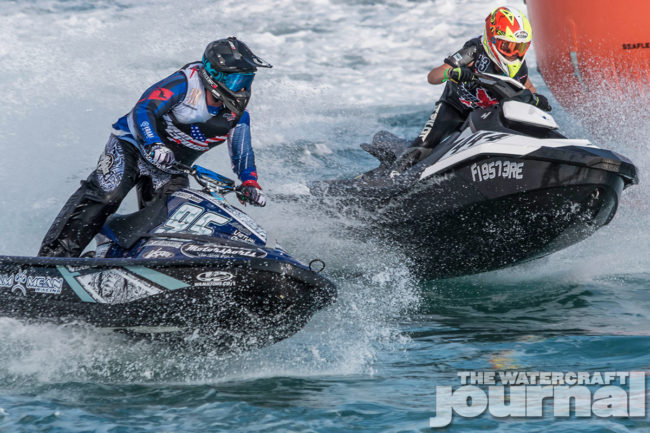
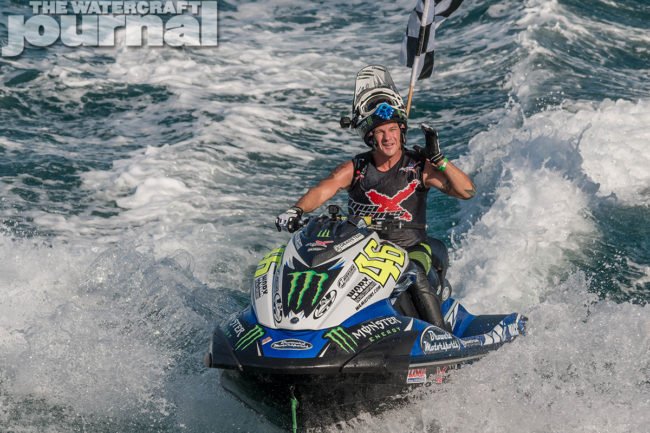
After a short break for the helicopter to get refueled, it was time for the first Pro Enduro race of the weekend. Chris MacClugage came to rebound from his races at Chicago and Sarasota and was looking to move up in points. Chris pushed his Yamaha to the limits and sliced through the water to take a first place win. He was followed by Eric “the Eagle” Francis and Mike Klippenstein respectively. Aero Aswar was on the hunt also, but due to contact with Eric Francis and having his ski damaged, he got knocked down to seventh place. Both riders were banged up but managed to complete the race. Officials for this infraction reprimanded both riders.

The first day of racing ended with the Amateurs racing again. Chris Saxon wanted to earn redemption for the home country and took the win in the 300 Class followed by Joseph Harvey and Hector Toledo. In the 250 Class, the winning order was the same as the earlier race. In the 200 Class Duncan Johnstone from England took the third place finish from his countryman Carl Lofthouse.

Day Two called for another perfect day for racing. It started off again with the Junior racers. Sammy Nehme learned from the previous day and wasn’t going to let Haden Skellett take the win from him. It had looked as though Sammy had the win locked up, but the rough water took him out on the last turn to the front straightaway on the last lap. Haden Skellett took advantage of this and crossed the finish line for the win. Haden’s sister, Taylor rounded out the field in third place behind Sammy Nehme.

Next up was the Sport/Spark Class. In the Sport Class, Sam Nehme continued his winning ways and earned the top spot followed by Keith Dill as he had done the previous day. Johnny Smith again had trouble with his ski at the start but came roaring back to earn third place. In the Spark Class it was Eric J. Gabryel who again earned the to spot followed by Louie Sand and Eric T. Gabryel. The Ski Class again had Tobler, Smith, Washington and Amateur Robinson trying to get the win.

1


The Pro racers were up next for their second race of the weekend. Again MacClugage set the pace of the race and maintained the lead. Eric Francis stepped on the gas and was chasing Macc for the majority of the race and finally passed Macc to take the lead with time running out. It had looked like Francis was going to come away with the win. On the backstretch Francis made a mistake and couldn’t stop MacClugage from taking the lead again on a white flag. MacClugage came out on top once again for his second win of the weekend.

The Amateur racers were ready to do their final race of the weekend. Chris Saxon took the lead and never relinquished it. Hector Toledo and Joseph Harvey chased him. Saxon took the overall win in the 300 Class. In the 250 Class Jason Lester took top honors and in the 200 Class it was a clean sweep for Jennifer Nolan. The rest of the day was filled with some fast action from the Sport/Spark Classes and the Ski Class. The juniors then raced and the third time was a charm for Sammy Nehme as he took the win from Haden Skellett in the last junior race of the weekend.

2

The final race of the weekend was the Pro Enduro race and Chris MacClugage showed why he is considered the greatest of all time by taking the win and completing a complete sweep. He was followed respectively by Eric Francis and Mike Klippenstein.

The AquaX team came and put on a great show for the city of Lake Worth with fast action. Next up will be the final round of this year’s season in just seven days. The series will be taking it to the city of Fort Lauderdale; Florida and they in for one hell of a fast paced weekend.

Video: Sea-Doo Trixx Sparks Prehistoric Playtime

0

screen-shot-2016-11-13-at-11-09-33-pm

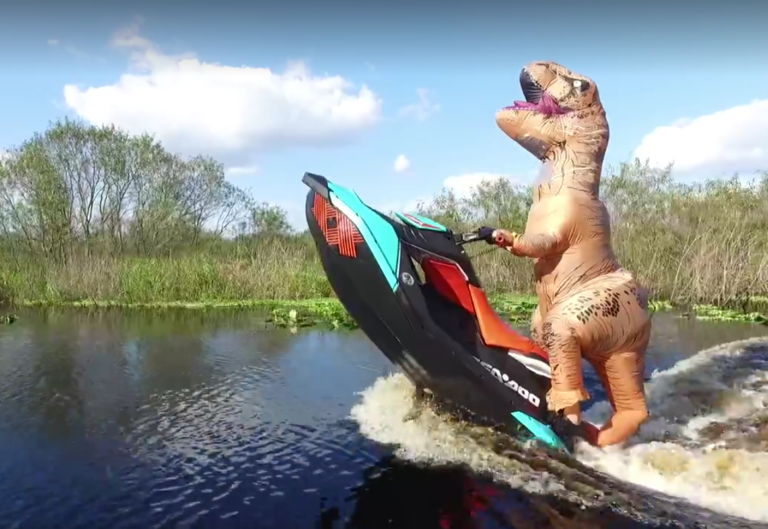
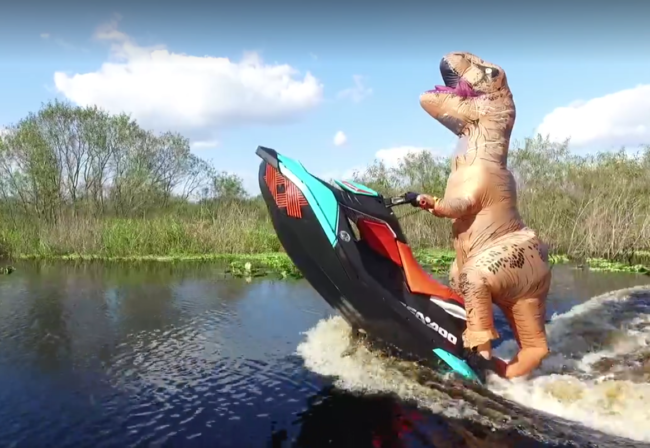
Imitation is the most sincerest form of flattery, and for freerider Mark Gomez, there’s a whole lot of flattery going around. Prior to this past IJSBA World Finals, the Southern California Hydro-Turf rider produced a video of he performing a sequence of flatwater freestyle tricks stuffed inside of one of those inflatable tyrannosaurus rex costumes. The end result was not only hilarious, but also exceptionally viral, which, in turn, birthed a handful of similar T-Rex-on-a-PWC videos.

The latest of these is also one of the better produced, having come from the creatives at Look Marketing – y’know, the guys who pretty much handle everything public for Sea-Doo. This time around, the video features a caveman fleeing a tyrannosaur in pursuit of a hot meal (although, historically, the two were separated by literally tens of millions of years, but hey, suspend your disbelief for a minute or two). The caveman reaches a clearing and encounters a brand-spankin’-new Sea-Doo Spark Trixx, perfect for his escape.

The Rex, clearly upset that his meal has escaped, opines for a chance to enjoy the Spark as well, and in a feat of kindness, is handed the lanyard to the new Trixx (we particularly like the adjustable steering helping accommodate the T-Rex’s tiny arms). The Trixx of course, is the latest addition to the Sea-Doo line up of Rec Lite machines, and offers enthusiasts a specially-tailored machine that can aptly perform tailstands, power slides and other tricks with ease.

Video: The Full Story Behind The Most Infamous PWC Crash In Surfing

0

Tow WAVES in Tahiti/2005

It’s possibly the most seen PWC wipeout ever. Now here’s the story behind it:

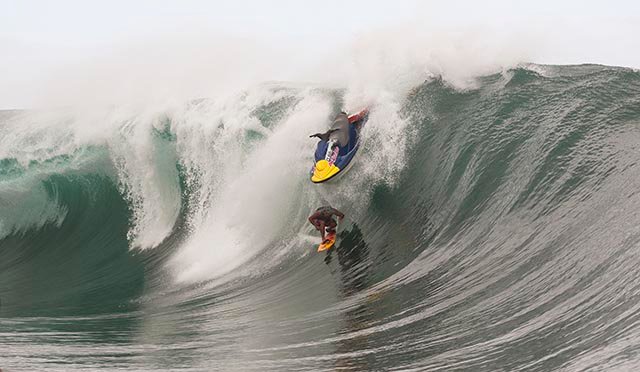
The year was 2005 and an epic swell hit the island of Tahiti. Surfers from around the world descended on a crazy wave that sits below sea level and breaks over a sharp deadly reef. Called Teahupo’o, it’s literally at the “end of the road.” Surfers come from around the world to charge the heavy swell that made its way to infamous surf spot, many of them had experienced or witnessed many heavy wipeouts, none like the one you’re going to read about.

It was a tow-in day and surfers Reef McIntosh and Raimana Van Bastolaer showed up to pull into some giant waves. McIntosh, an inexperienced jet ski driver had no idea what he was getting into when Bastolaer asked him to drive the ski into the line up and attach the tow rope. The surfer admittedly had no experience driving personal watercraft and had no intentions of doing anymore than what he had already accomplished.

Unfortunately, Bastolaer’s tow-in partner was not around so McIntosh was told to jump on and prepare to tow him into a wave. McIntosh was like, “No way,” yet Bastolaer insisted that he could do it. After some coercing, McIntosh still uncertain, agreed to the task.

There was big chop on the waves and it was a little stormy on that crazy day in May. This was definitely no place for a dude with no driving skills to attempt towing a surfer into a wave. Bastolaer almost paid the ultimate price for their actions. The ski that McIntosh was steering was literally picked up by a thick heaving wave. He bailed off the back after losing control, leaving the jet ski alone in the surf. That’s when the riderless machine tumbled precisely over Bastolaer’s head while both were within the confines of a massive barreling wave. It’s amazing that he wasn’t hit by the ski and came out unscathed. We aren’t so sure about the watercraft though.
Prior to the incident, a video shows surfers being safely towed into monstrous caverns, with some guy getting worked while others made successful rides. The jet ski drivers simply dropped them off and quickly motored out the back; which was not the case with McIntosh. His first experience as a tow-in driver was not only a debacle, it was caught on film as well.

Here’s what McIntosh says in a quote from GrindTV.com, “Once I popped up, I was just praying that I’d see him kick out into the channel; that’s all that mattered to me. Once I saw him do so, I was so relieved. After that, I just had to deal with a bruised ego and a lot of embarrassment. Andy Irons was in the channel, and he was like, ‘You shouldn’t have been out there,’ and I was like, ‘I know!’ It was in Sports Illustrated, the “[Late Night with David] Letterman” Show, ‘Good Morning America’; that @#$% was everywhere! I can look back on it now and laugh, and once I saw Raimana, I was like, ‘I told you I couldn’t #$%@-ing drive!’”

Video: Grayland Open Sports Television Show To Premier This Sunday

0

252-650x455

The official release of the 2016 Grayland Open sports television show will be released to the masses this Sunday afternoon! The show will air on multiple television networks over the next year but will also be available on demand through a link that we will provide this Sunday!

Paul Higgins and his crew at Athletes in Motion (in association with ESPN) have really worked hard to put together a great show that showcases a lot of different riders and even some fans and spectators. I am very happy with the way it turned out and I think you will all like it as well! For now we will trickle out some extra interviews AIM sports has provided to get you pumped! Check it out! you may just be in it!

For a sample of Athletes in Motion’s work, make sure to check out their videos from this year’s past Grayland Open; stating, “Athletes In Motion Sports Television hits the beach with Zoe Zehren as she catches up with riders, spectators and fans of the sport of Jet Ski Free Ride. Enjoy.”