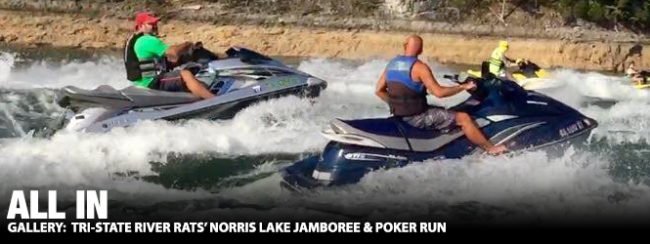
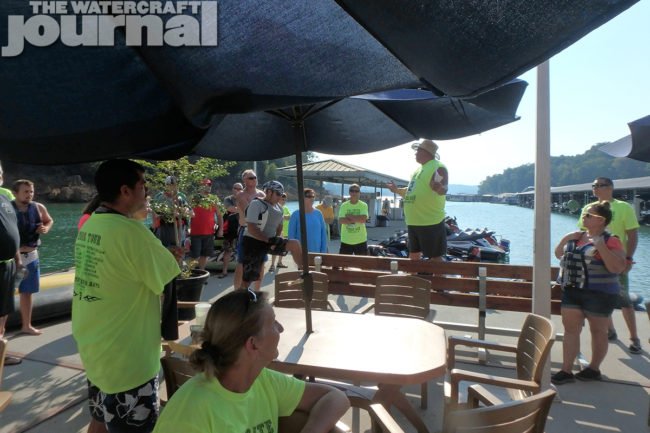
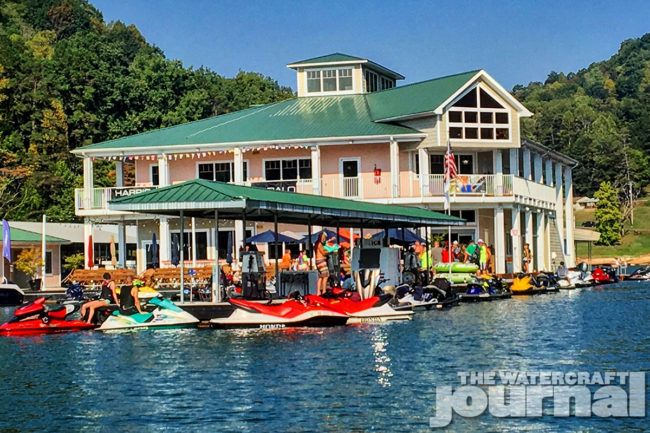
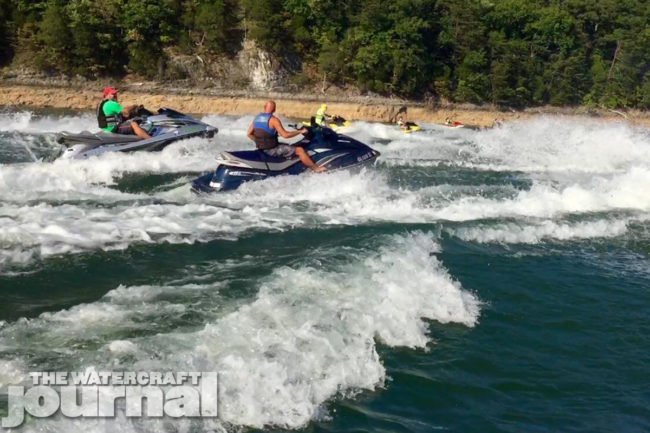
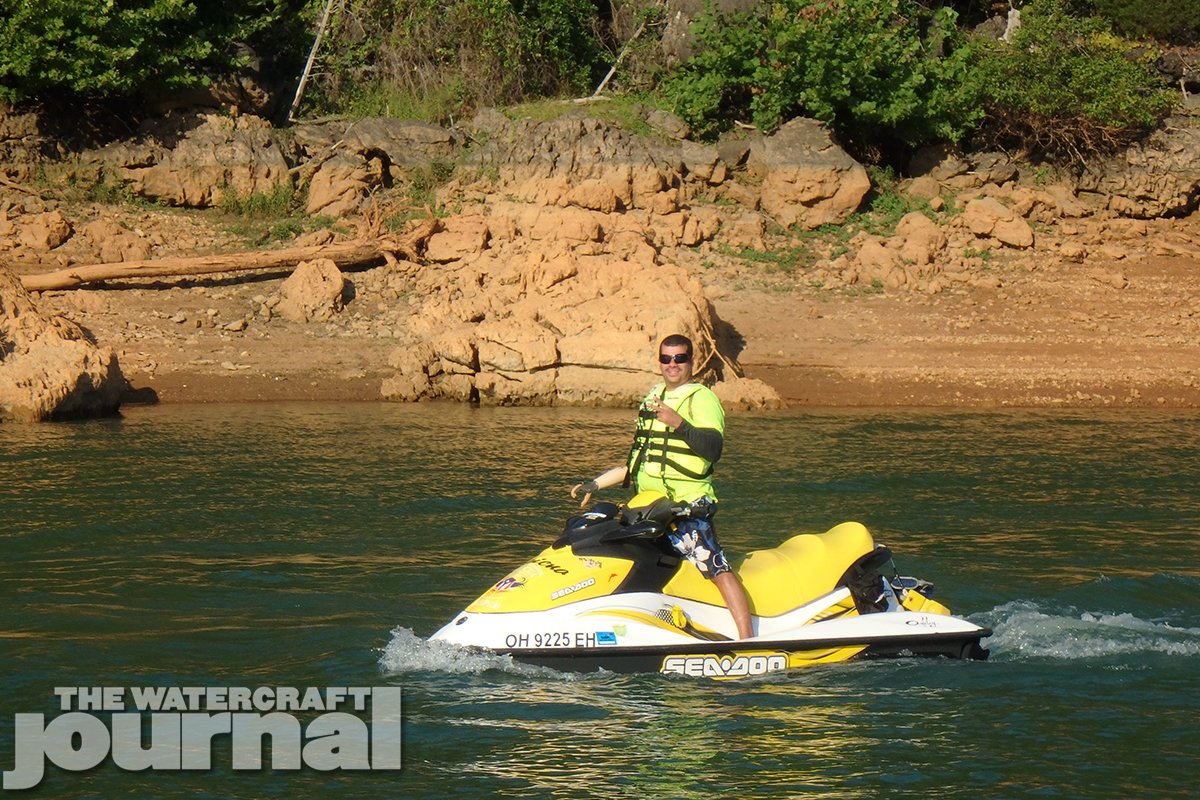
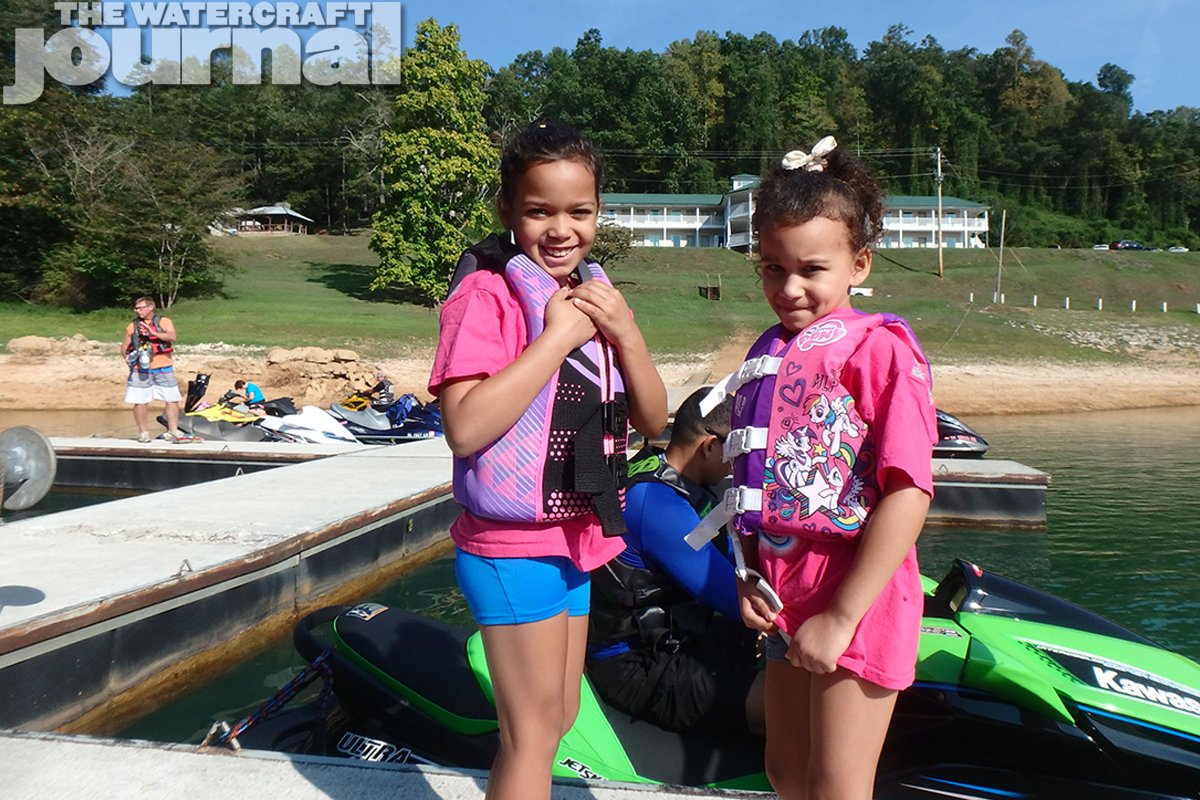
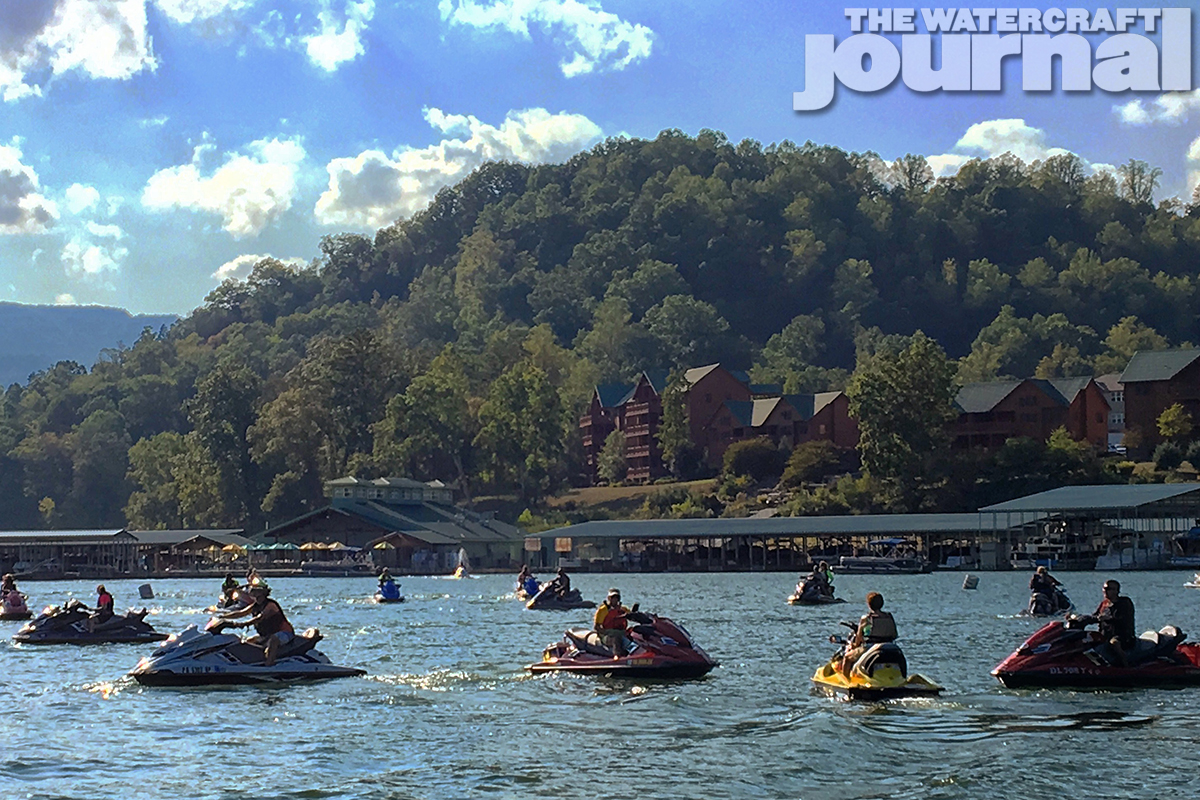
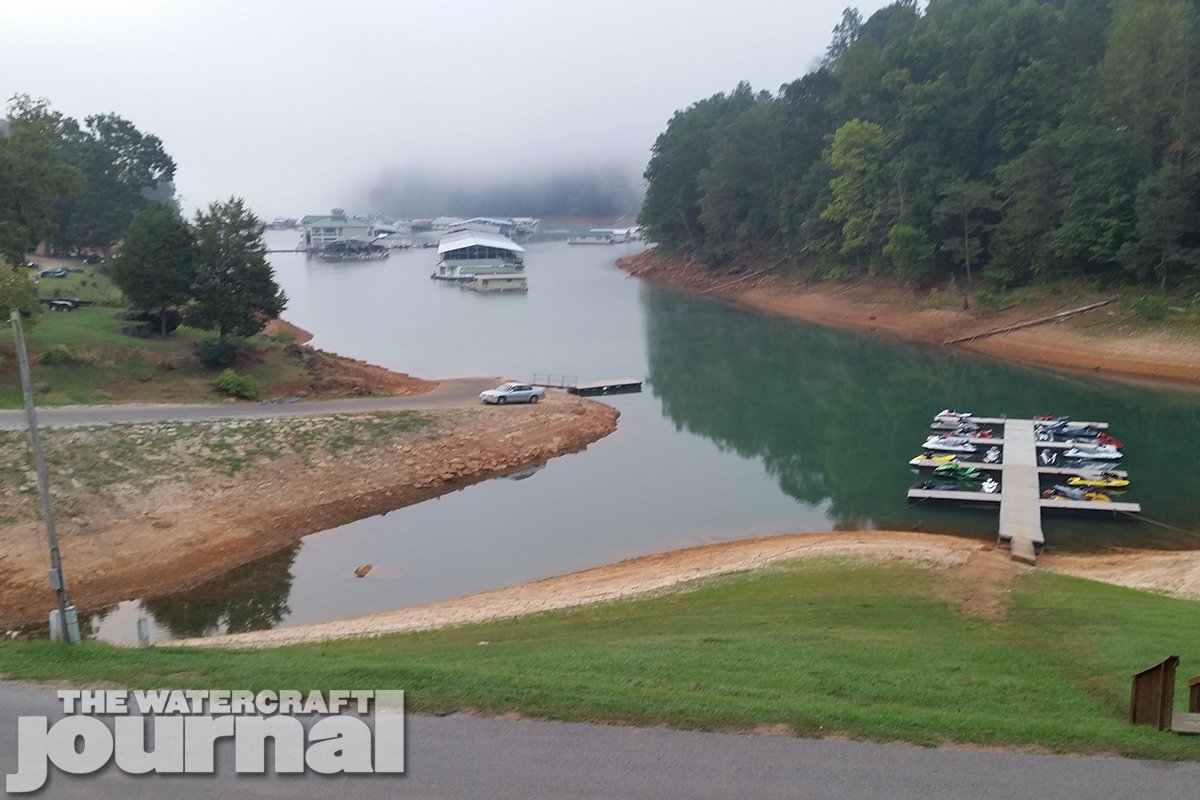
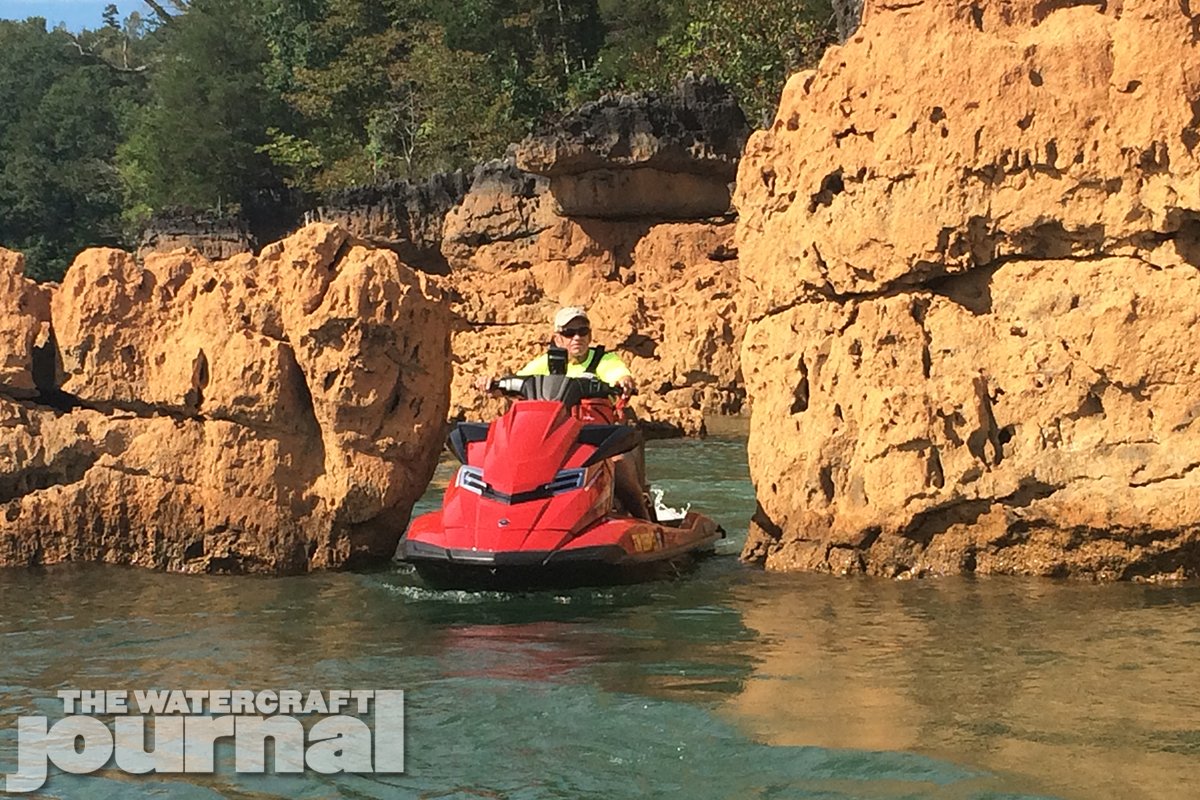
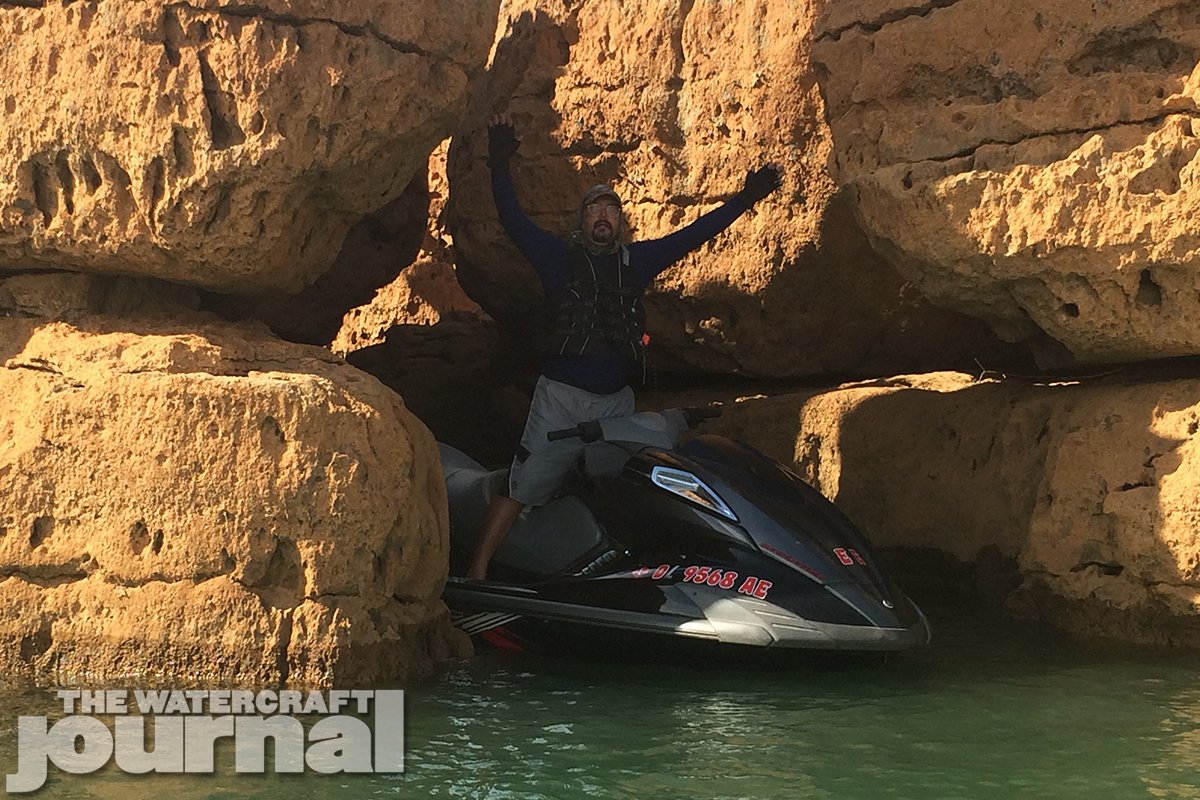
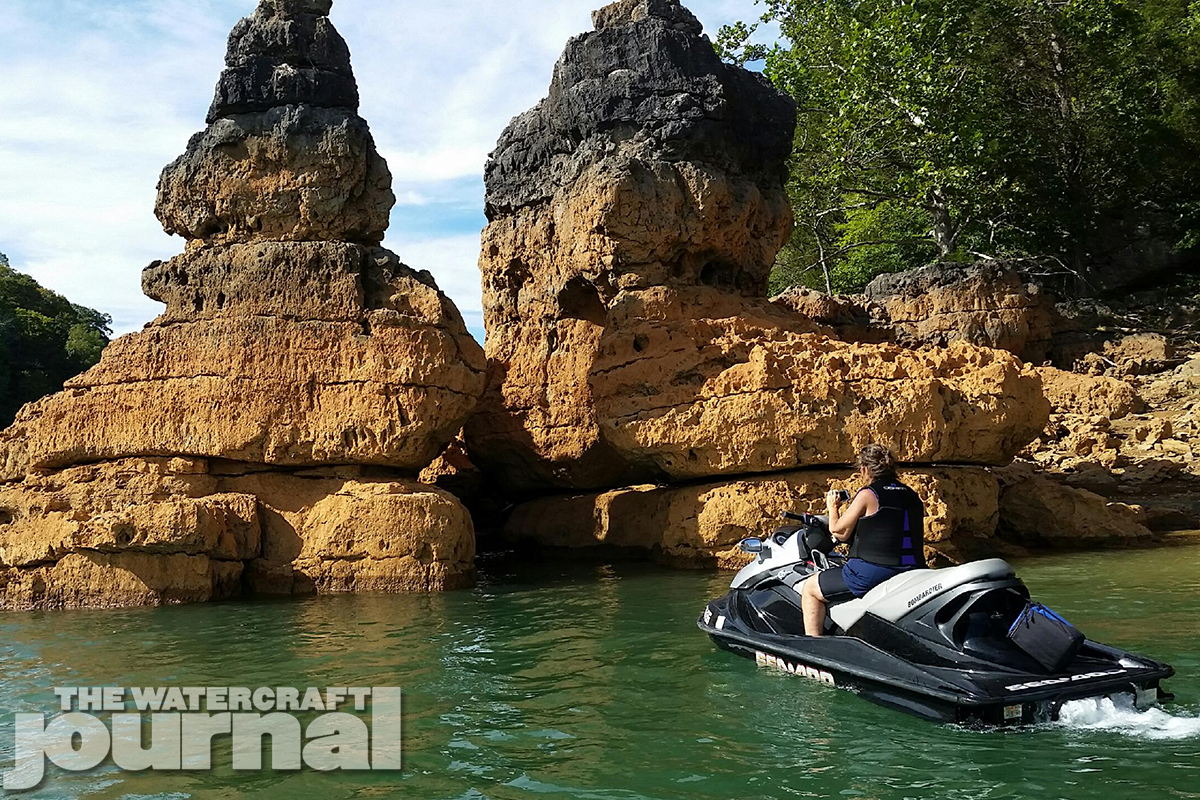
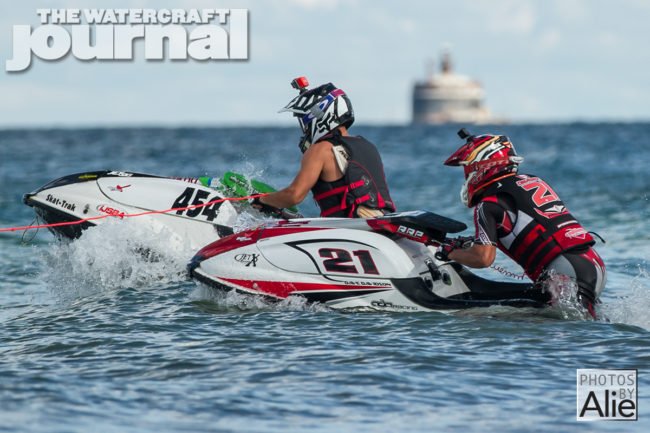
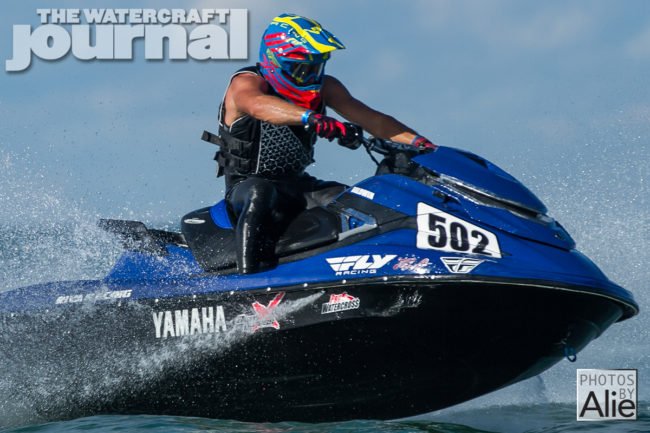
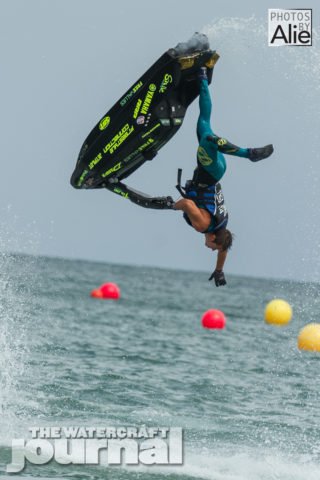
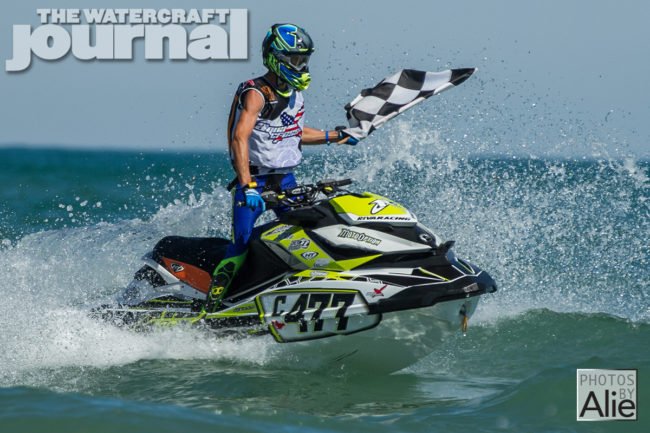
What started out a few years ago as an easy, lazy, late season weekend morphed into the first Tri-State River Rats’ Norris Lake Jamboree and Poker Run, held over September 8th-through-11th. It keeps happening in our club; the small rides turn into big events, suddenly and without warning.
Back when it was cold, and we were thinking about what to do the summer, we planned the weekend-after-Labor Day at Norris Lake, as usual. “We had a few more people asking about this ride after last year, so I knew we would have more attendance,” said Steve Kresko, River Rats President. “I knew it was Cumberland poker run weekend too, and I thought about a PWC poker run, and what it would take to pull off.”
So began the organizing; phone calls made, invitations sent, prizes begged for. “We really didn’t know how it would turn out, but the momentum was building, so we kept doing more,” Kresko said.
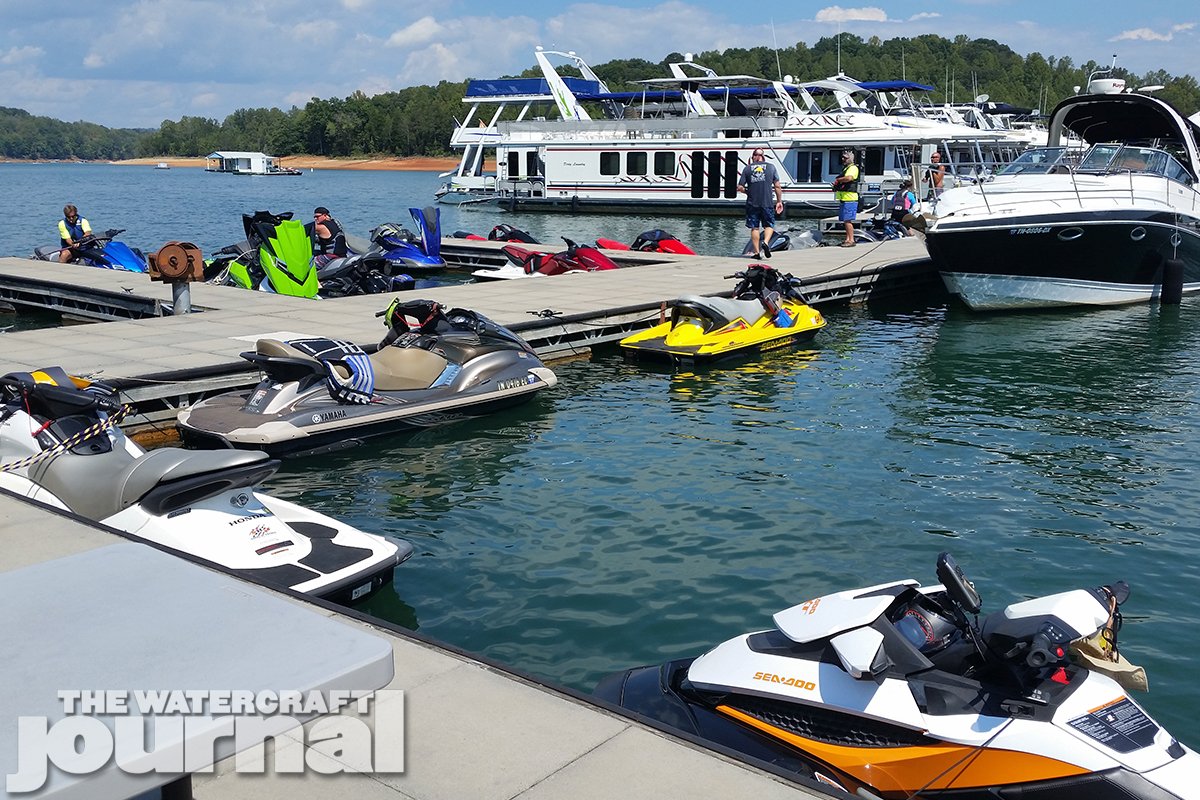
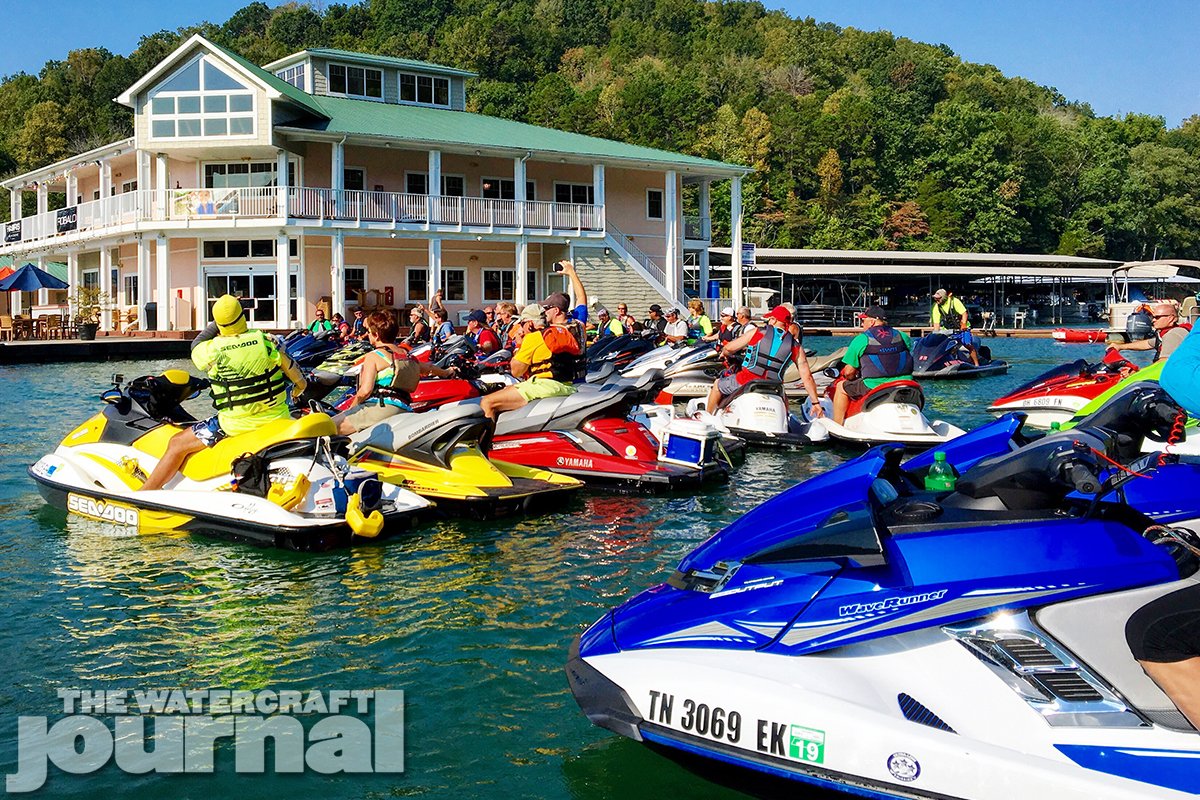
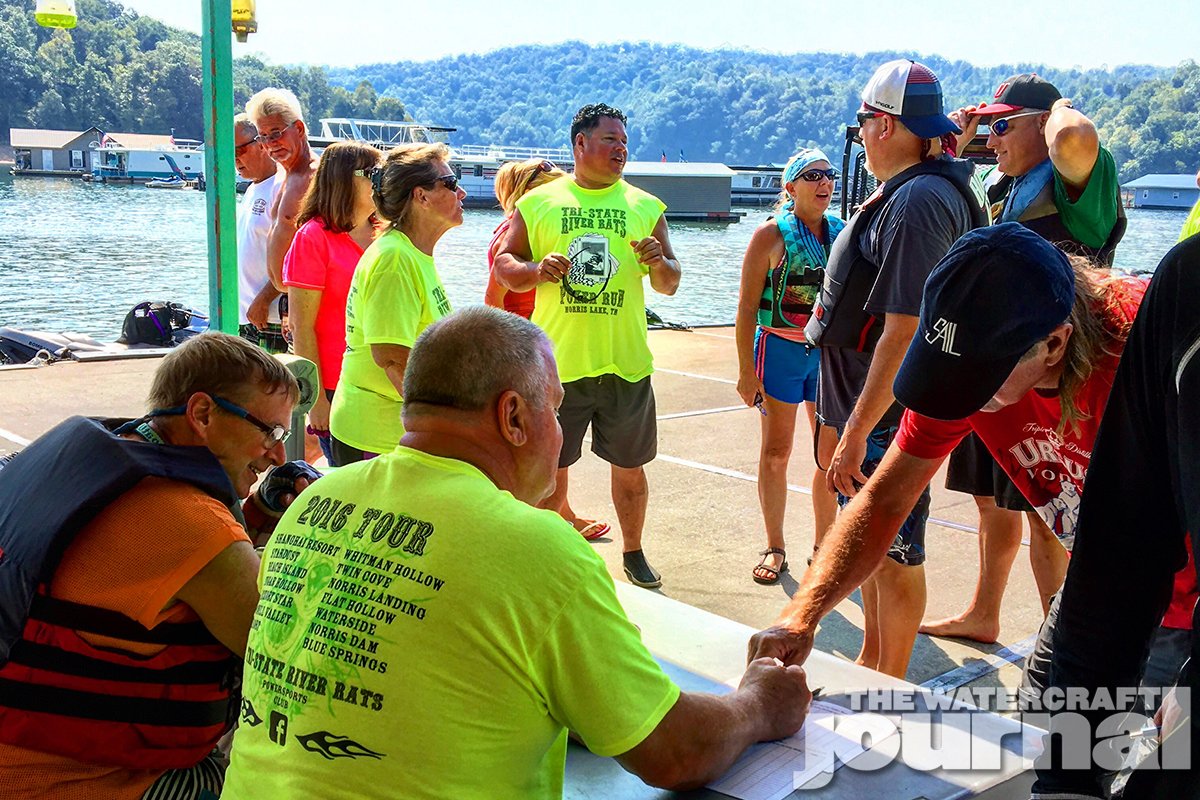
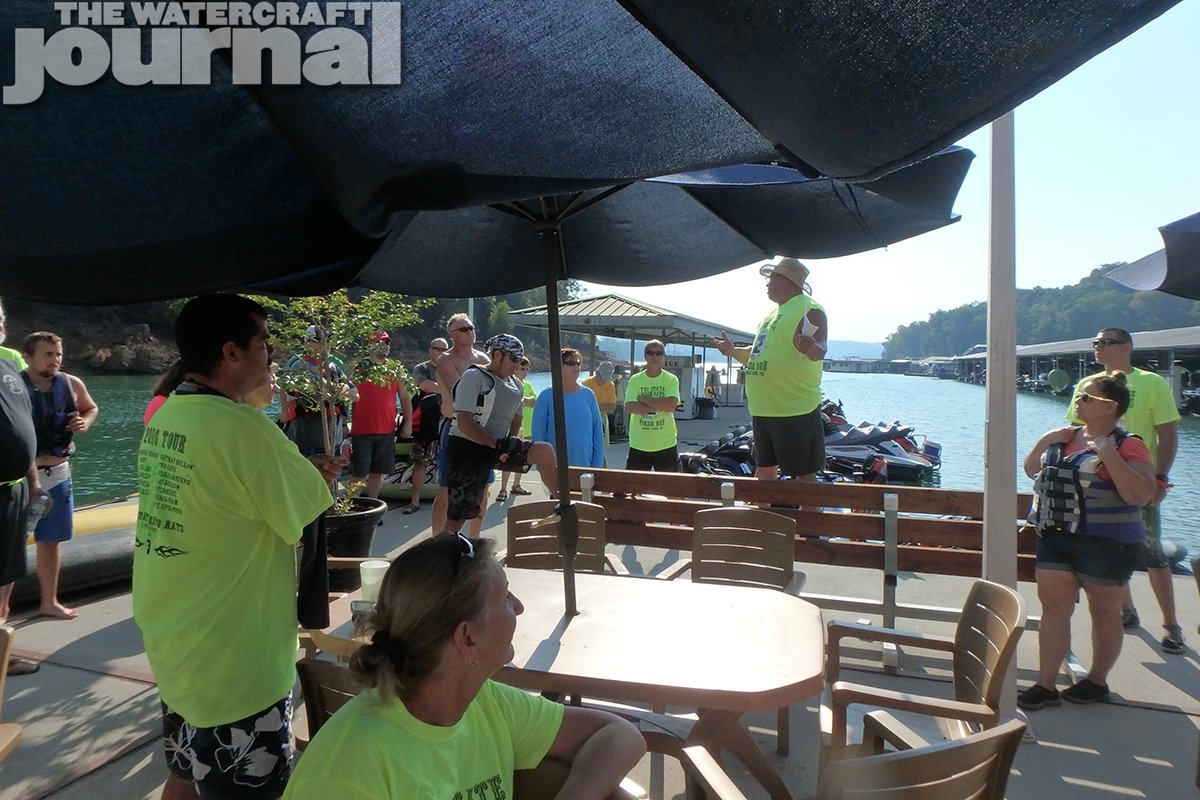
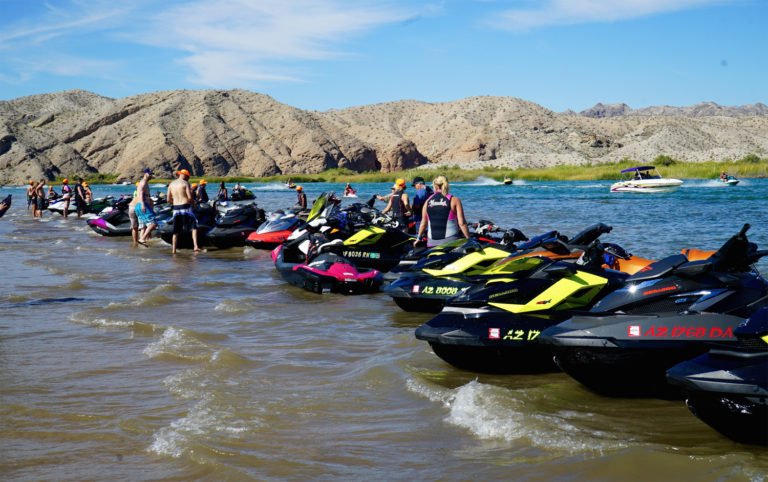
Four PWC clubs: Middle Tennessee PWC, Nashville PWC, Northeast PWC, plus the River Rats and some additional independent riders joined in the fun. Casual rides on Friday and Sunday bookended Saturday’s Poker Run.
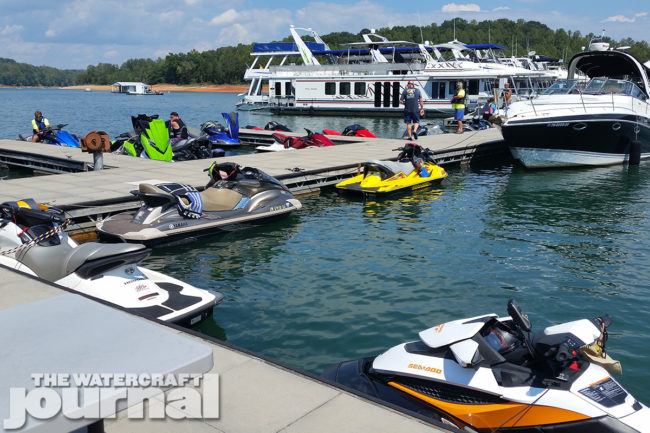
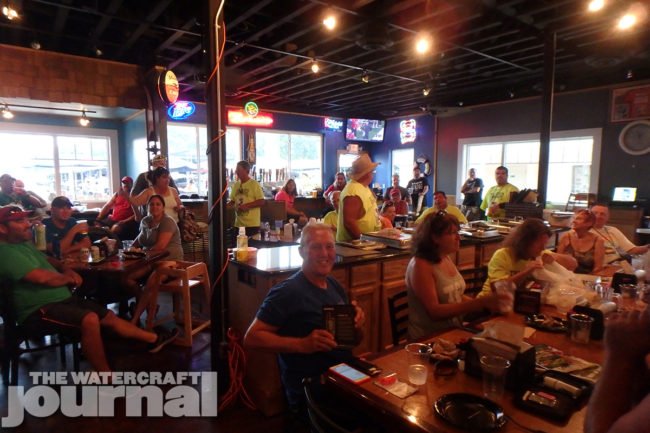
The event was headquartered at the beautiful Shanghai Resort on Norris Lake in La Follette, TN. We took advantage of the resort’s motel, cabin, marina, restaurant, and fuel docks to handle the crowd of about 40 people. “I can’t thank the folks at Shanghai enough for their hospitality and professionalism,” Kresko said. “We all but took over the whole place for the weekend. They welcomed us, and went far beyond expectations. I think it was one of the key things that made the weekend great.
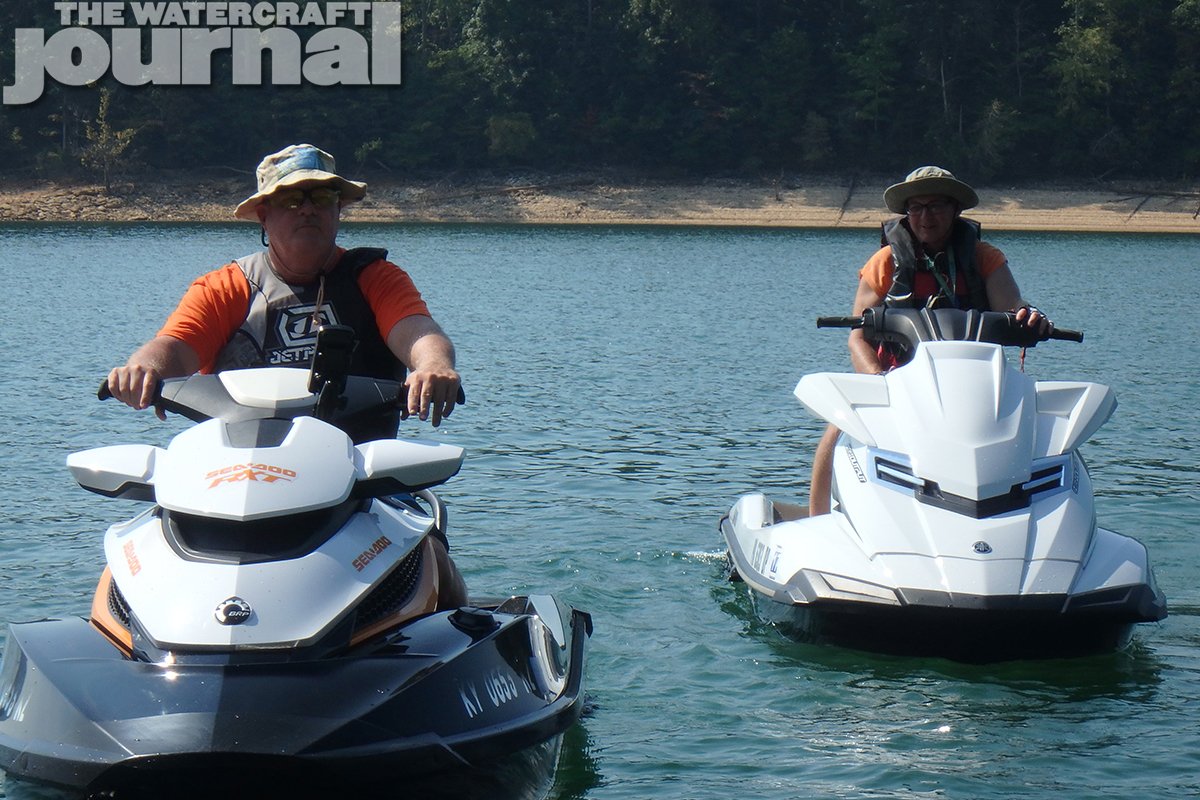
“We also had an incredible group of PWC riders and families here with us. People are always what make these events truly memorable,” he added.
The prizes didn’t suck either. Grand prize, a GPS system, was won with a jack-high-straight. In addition to the Poker Run, there was a raffle for other prizes; including a PWC stereo from Car Stuff of Louisville, free winterization from Tyler’s Personal Watercraft Service, an ECU tune from Torx Racing, several pairs of flip-flops and water shoes from Whitman Hollow Marina. Assorted T-shirts, ski wax, and sunglasses completed the raffle prize offerings.
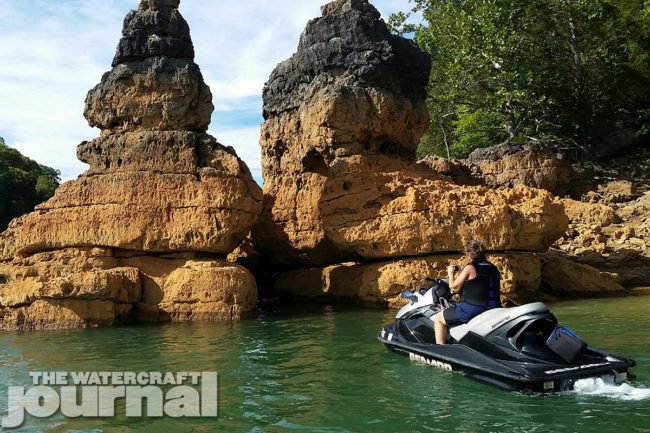
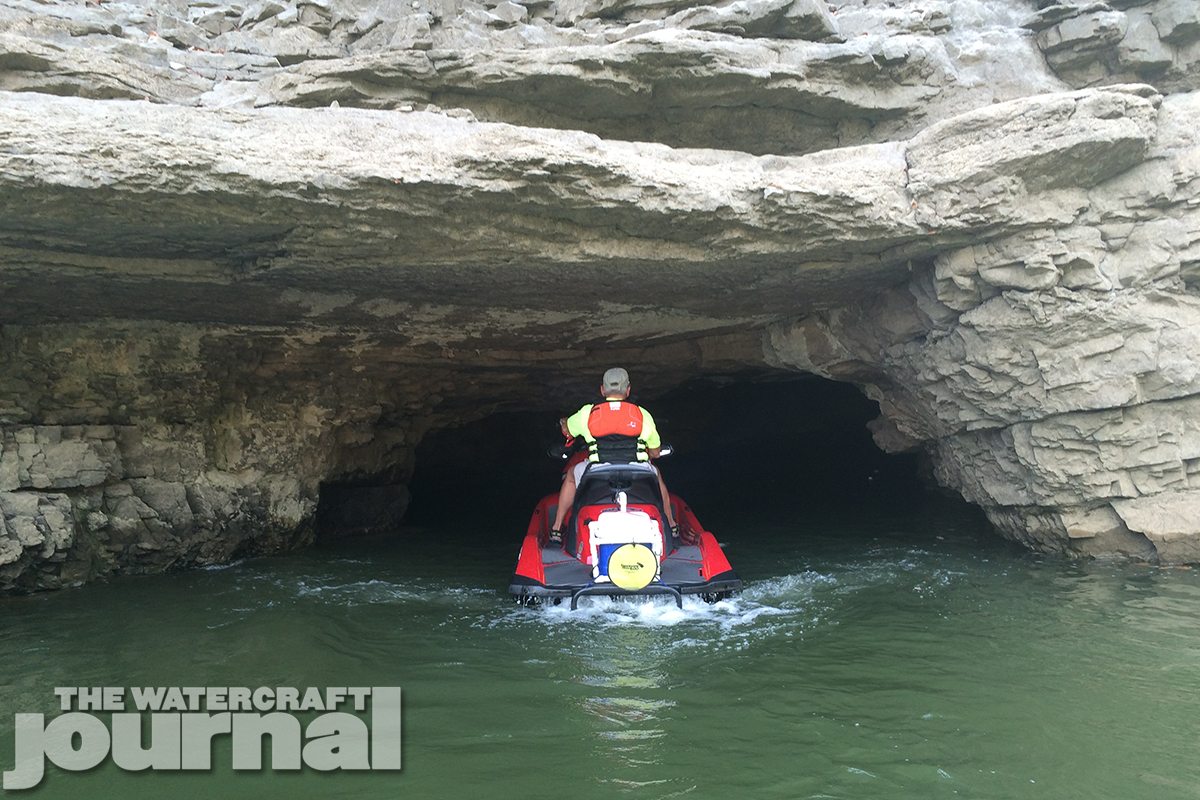
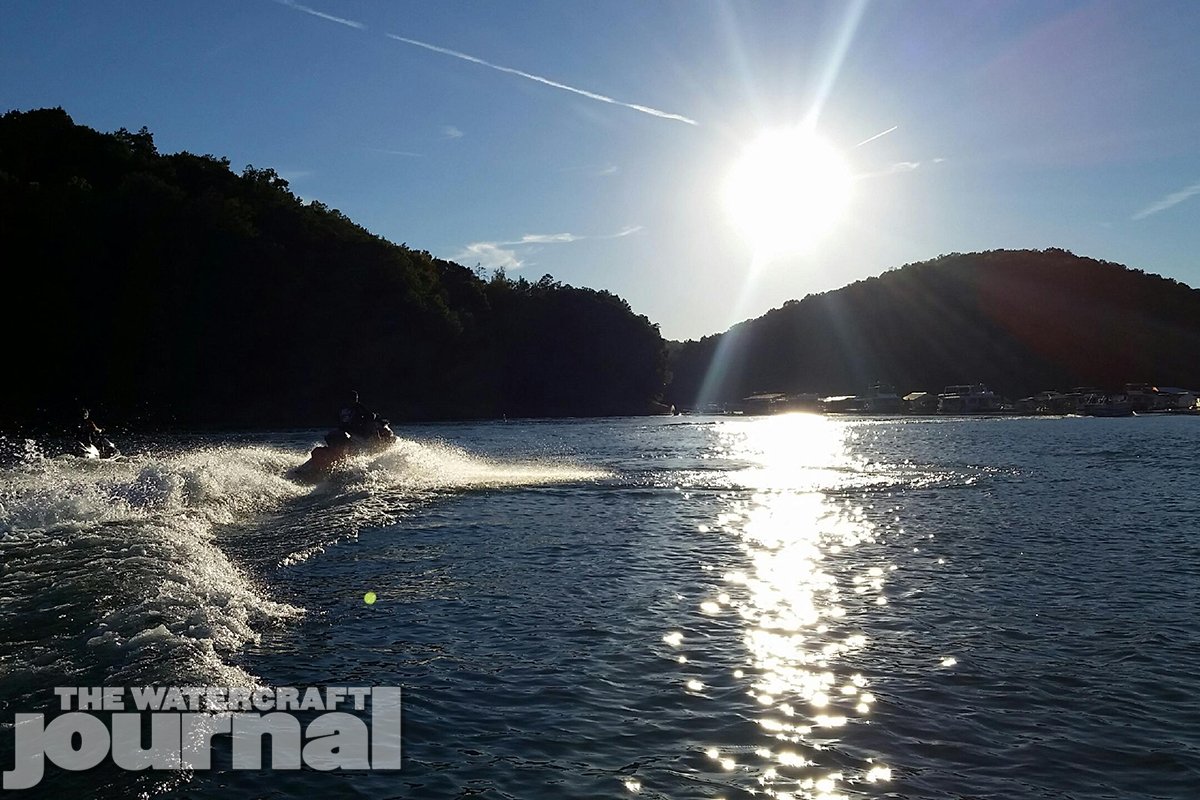
How often does everything go right? Cerulean blue skies all weekend allowed us to ride all day and deep into late sunset, showing those new to the lake all the best places. New friends, and others who haven’t seen each other for a while, had time to catch up. The poker run itself went smoothly. All the riders courteous and considerate of others on the lake, showing our sport at its very best, as 40 skis coming at you can be a bit intimidating.
We purposely set up the poker run so that it couldn’t be a race, no benefit to arriving first at any of the stops, so everyone could enjoy the ride. Ken Meadors acted as the dealer, keeping track of everyone, and tallying the hands at the end, with other River Rats leading and watching out for the riders, to make sure everyone was safe and happy.
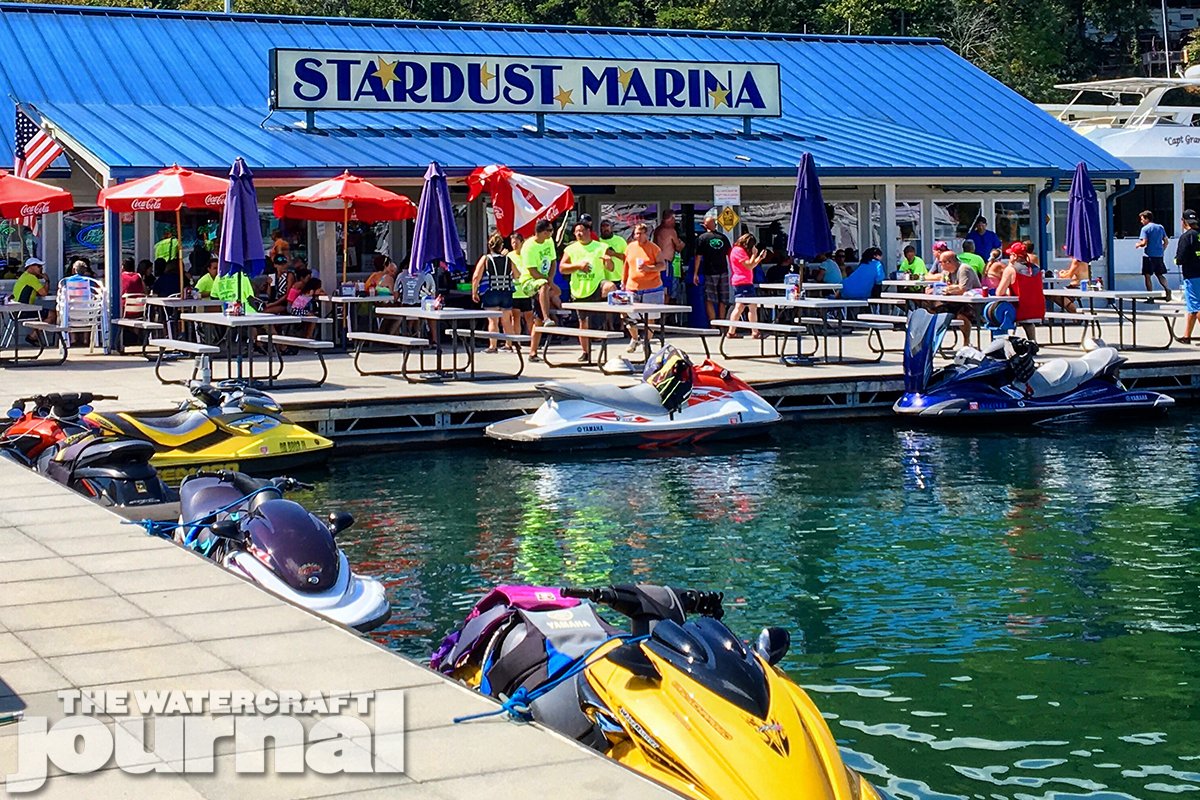
“I keep saying ‘thank you’ to people,” Kresko said. “But I can’t forget the marinas involved: Flat Hollow, Stardust, Whitman Hollow, Twin Cove and, of course, Shanghai. Everything came together at the right time, in the best place, with awesome friends. It doesn’t get better.”
Find the Tri State River Rats, Northeast PWC, Middle TN PWC, and Nashville PWC clubs on Facebook. Join these groups, all of which host regular rides throughout the year. Next year’s Poker Run will be the same time, the weekend after Labor Day.
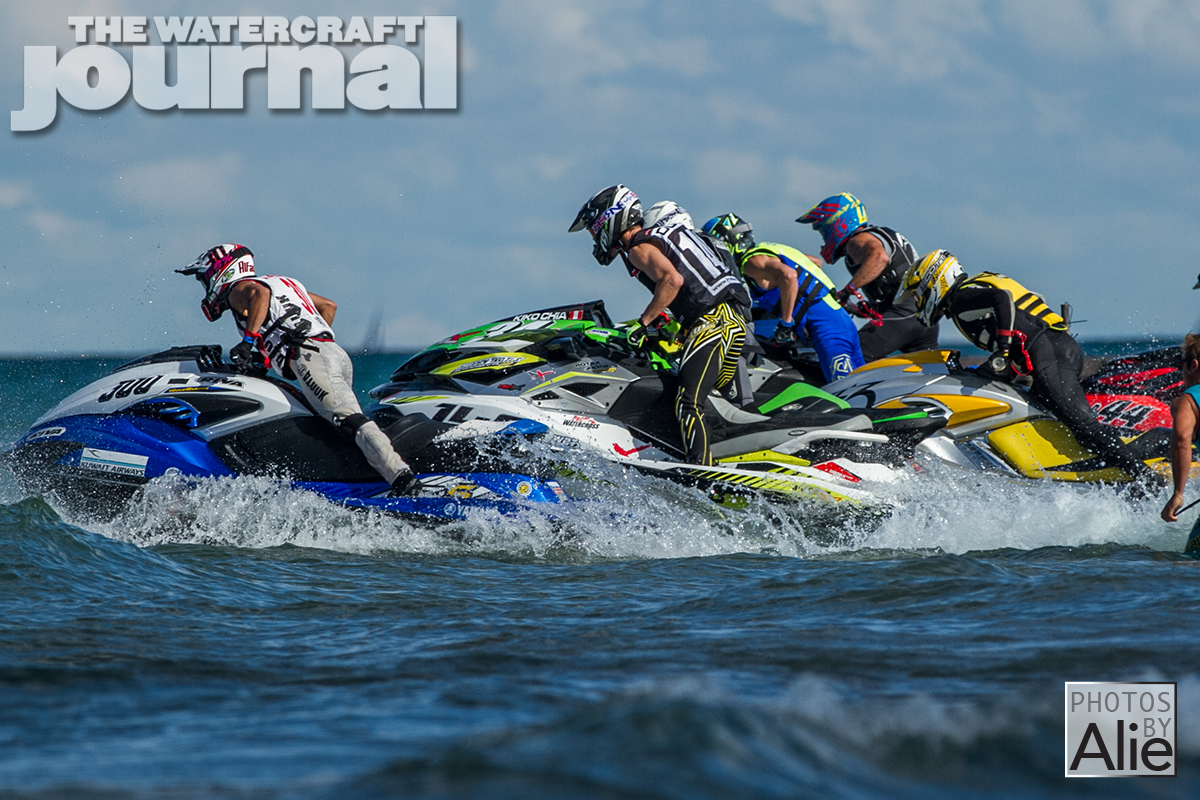
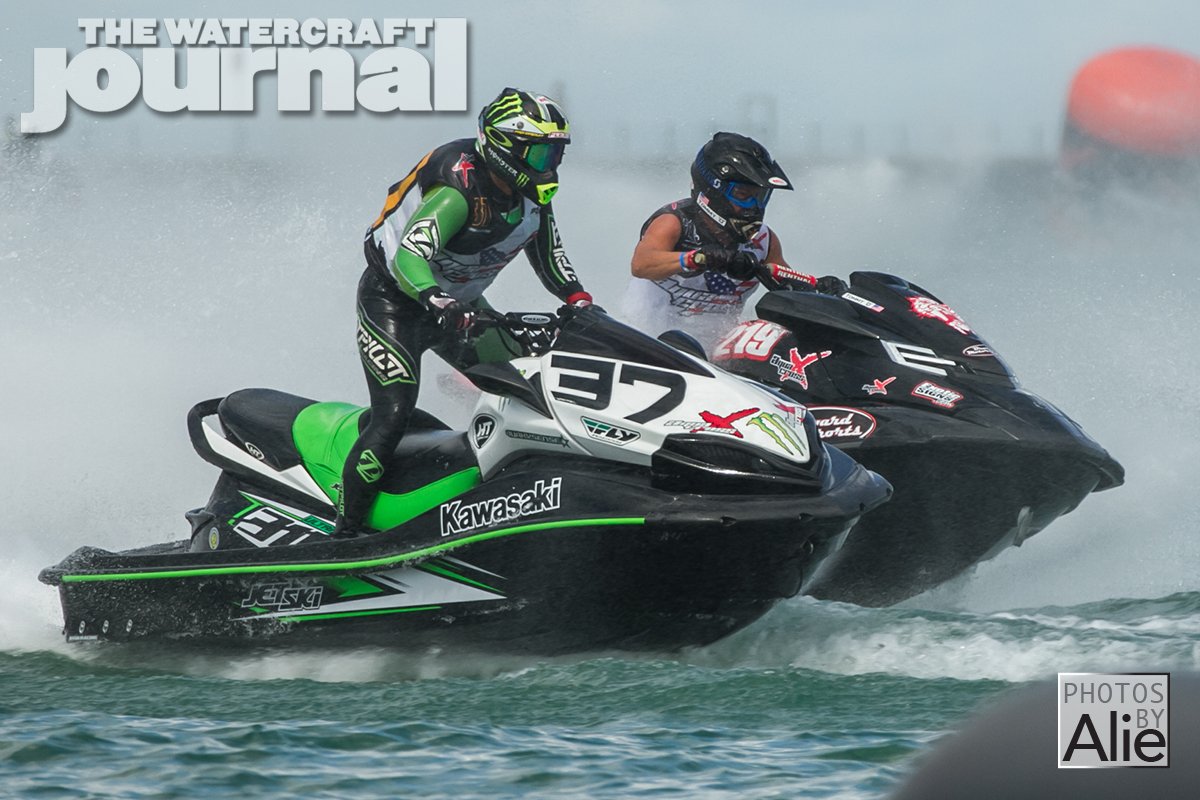
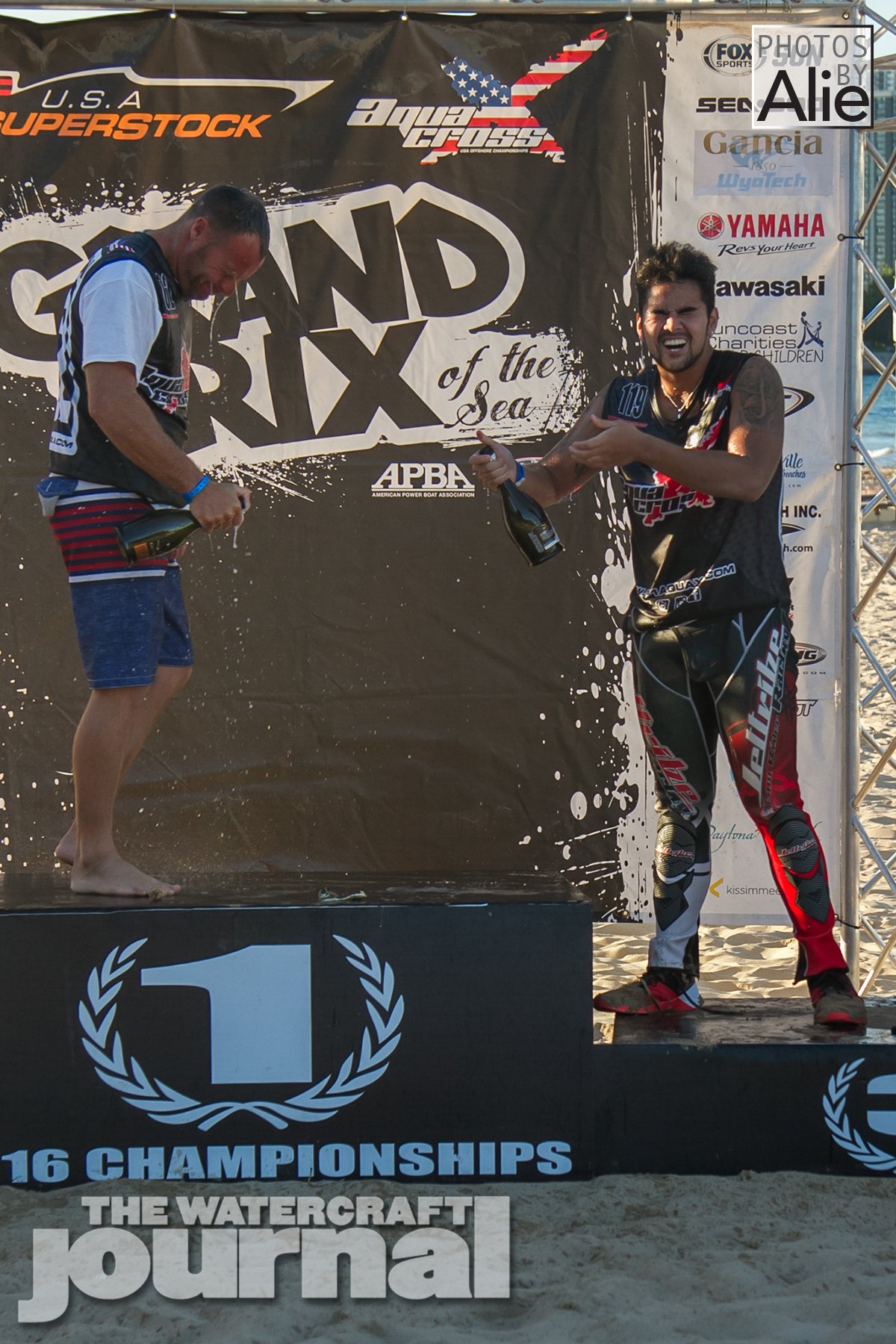
The beautiful Chicago skyline (and the rough waters of Lake Michigan) was the focal point of the watercraft racing world for two days last weekend and it did not disappoint. At an amazing location, Foster Beach made for one of the best race sites of the year, as one series came to an end, one heated up to a scolding hot temperature, and multiple National Champions were crowned. In fact, with so many events happening simultaneously, many didn’t know what the event was officially called.
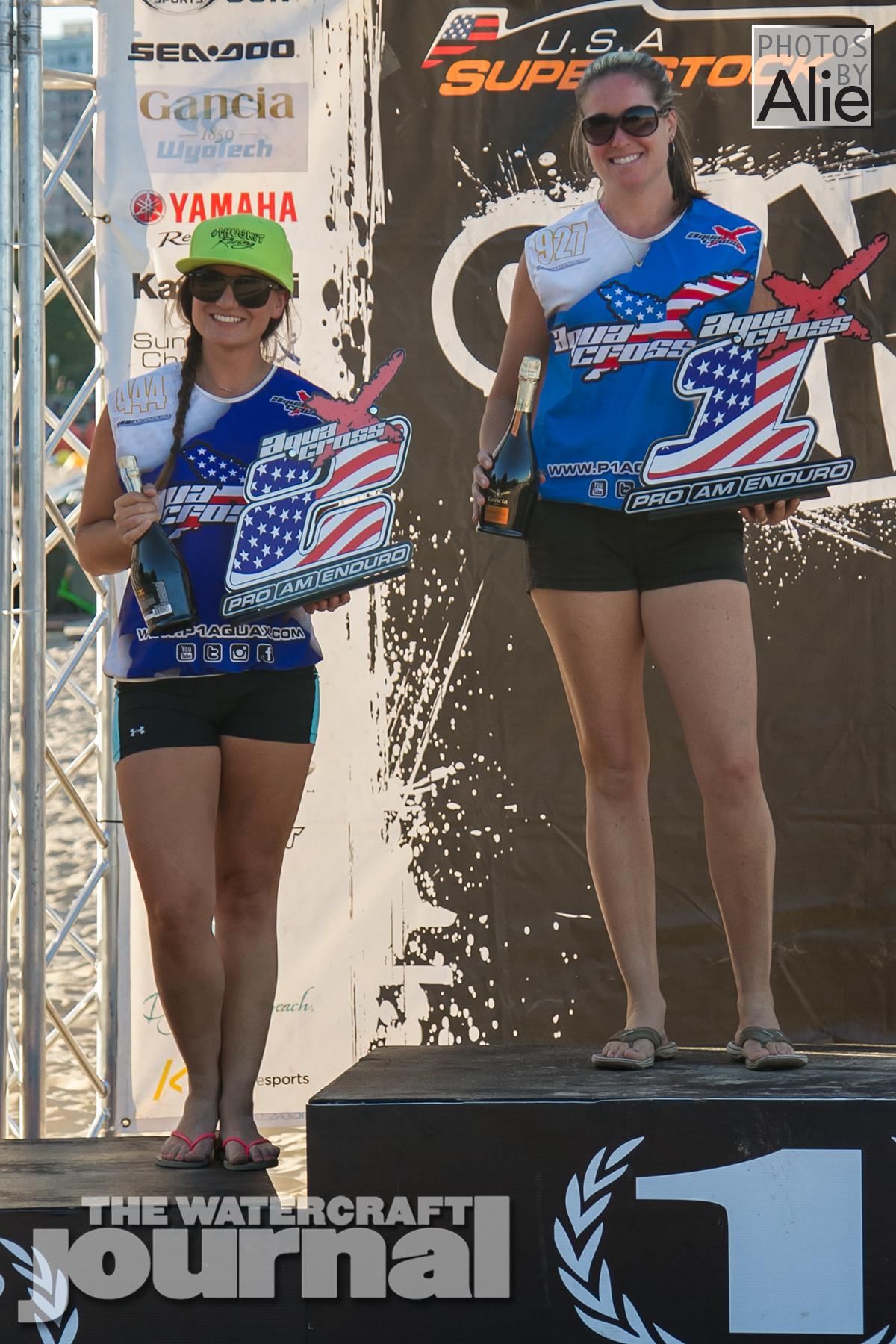
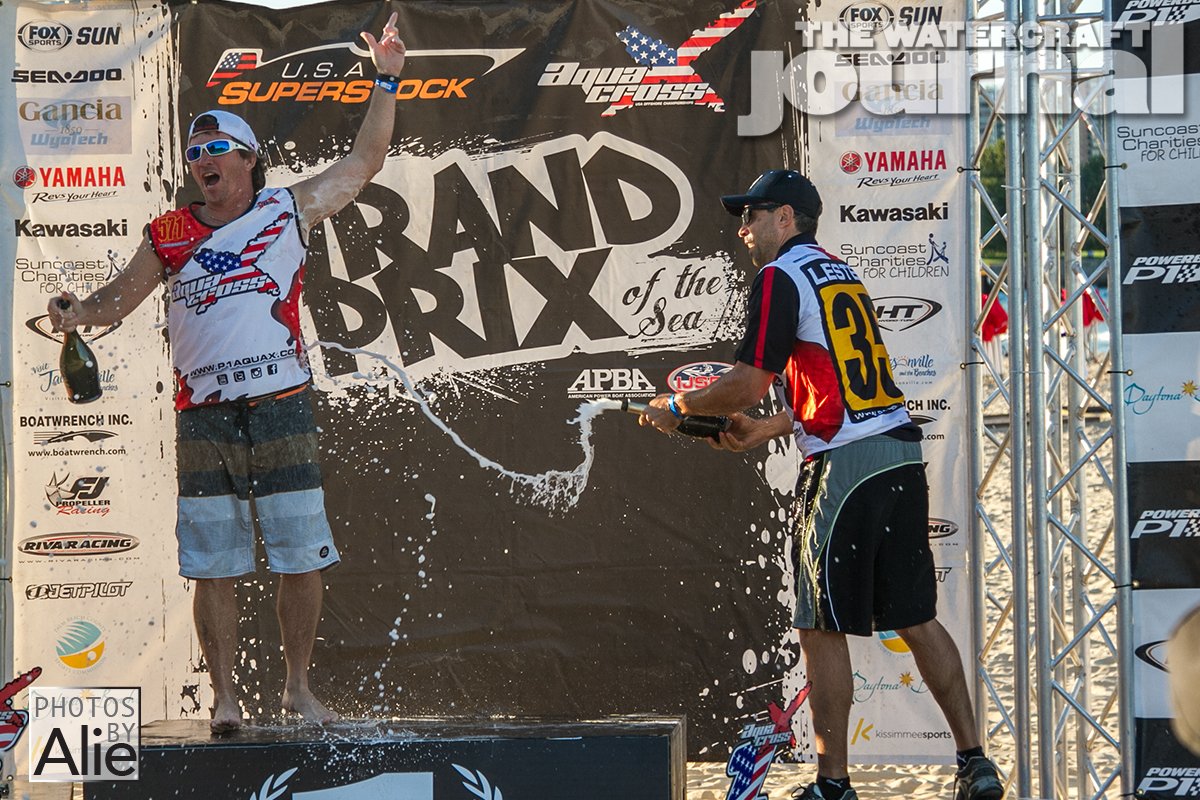
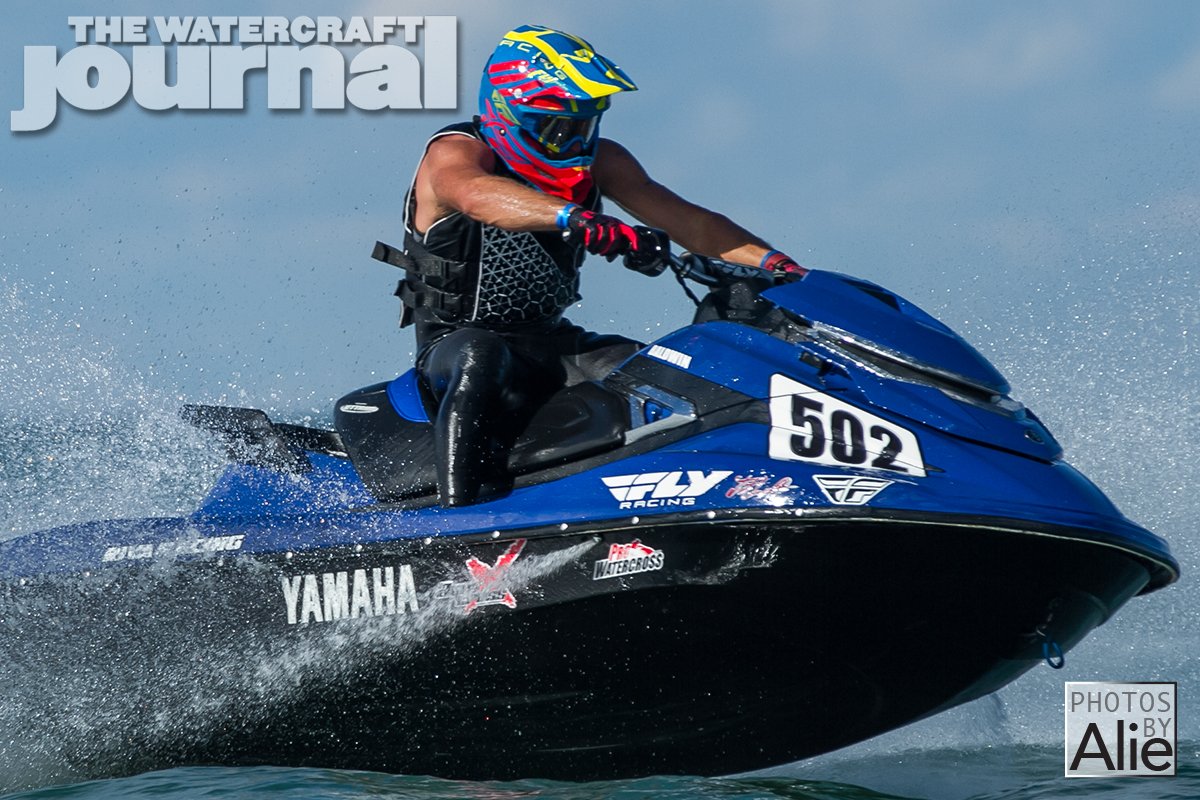
Up first was the series that was coming to an end: The Great Lakes Championship, new to P1 AquaX, was a two-round series that did not disappoint. In the 200 class, it was a battle between two amazing female riders, Jennifer Nolan and Amanda la Cheminant, both aboard Yamaha VXR watercraft. Nolan went for the three moto sweep and looked fast in doing so, la Cheminant fought valiantly and finished just out of reach of Nolan in all three motos. The 250 class was another two-person Yamaha watercraft battle. Jason Lester looked amazing in the first two motos taking two wins but Kevin Sullivan wouldn’t go down with out a fight. Moto 3 Sullivan pulled out the win but it wasn’t enough to take the overall with Lester taking the top spot followed by Sullivan.
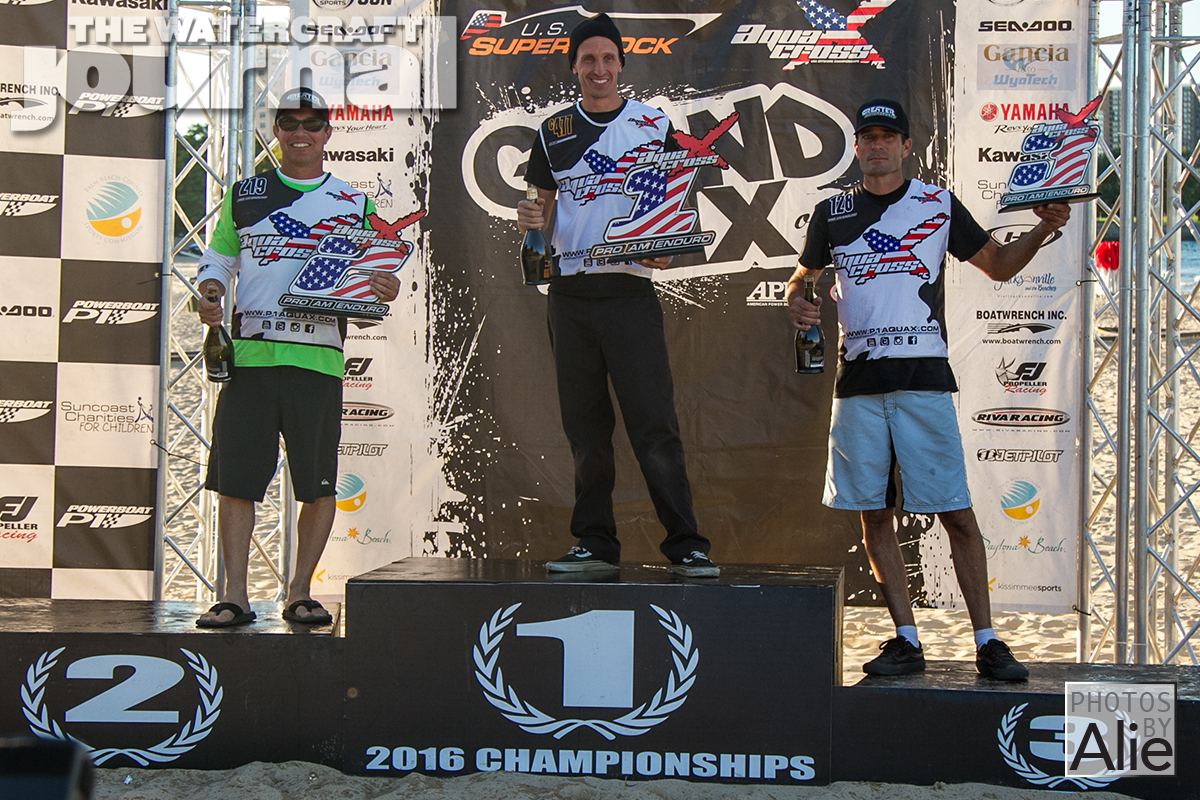
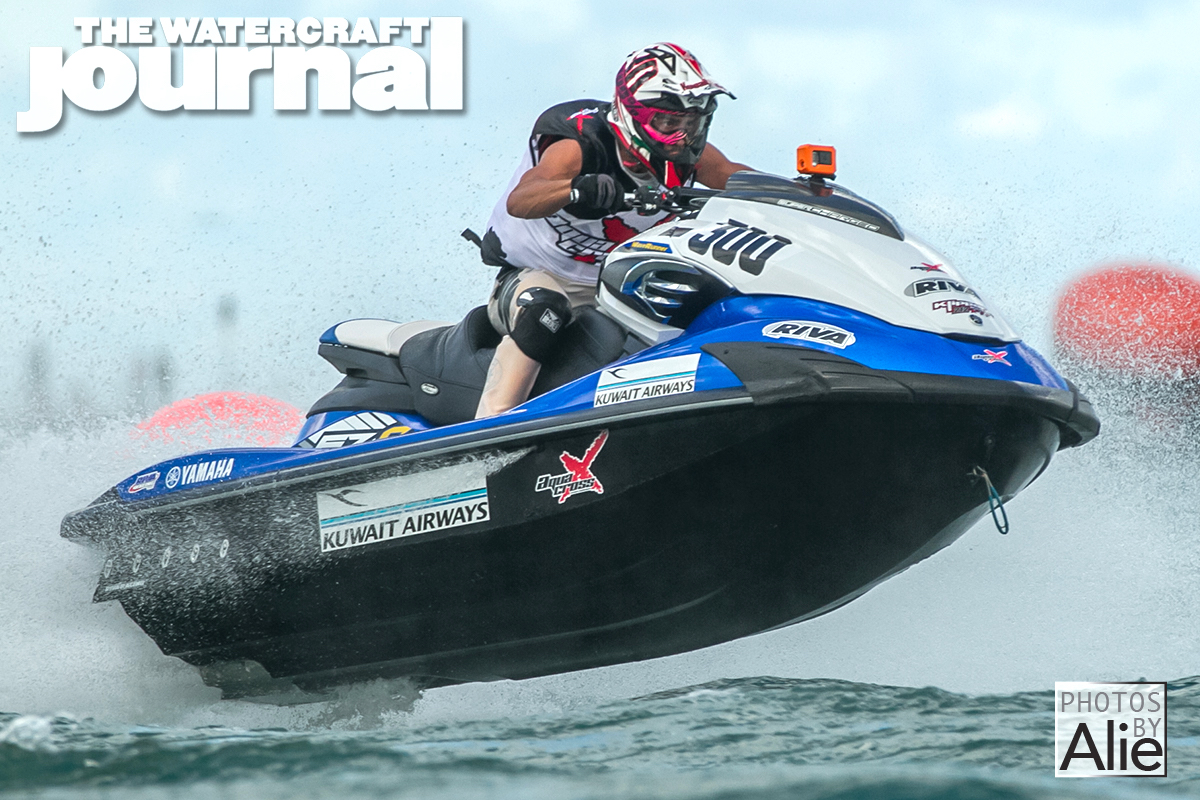
The Pro Am 300 class in the Great Lakes series was a battle all the way through. Broward Motorsports/Greater Yamaha rider Daniel Steele got out to a great start in Moto 1 and looked very solid the whole way through. Aboard his Kawasaki 310R, Enrique Chia plowed the big lake Michigan cross chop on his way to a solid Moto 1 win but engine problems later in the day would cut his chase of a podium spot short. Another Broward Motorsports/Greater Yamaha, rider Tommy Olswang provided another solid outing with a third place finish and that would be the motto of his weekend.
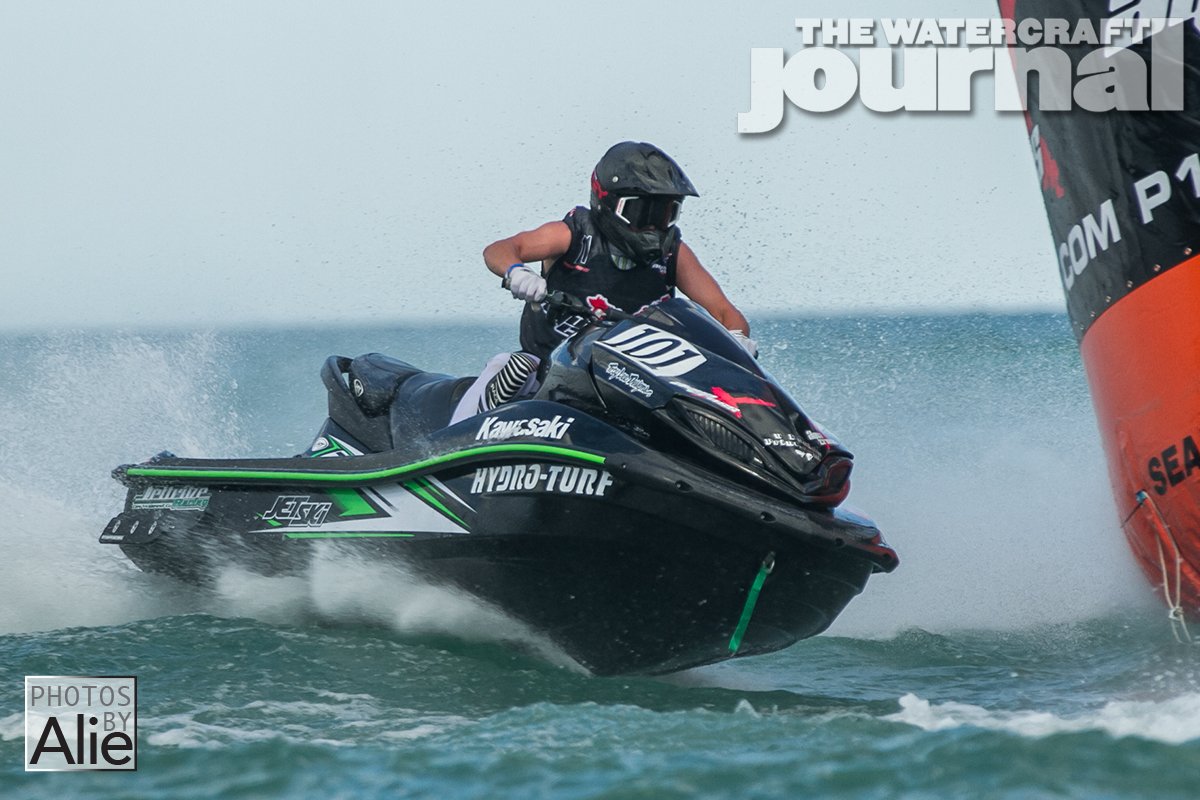
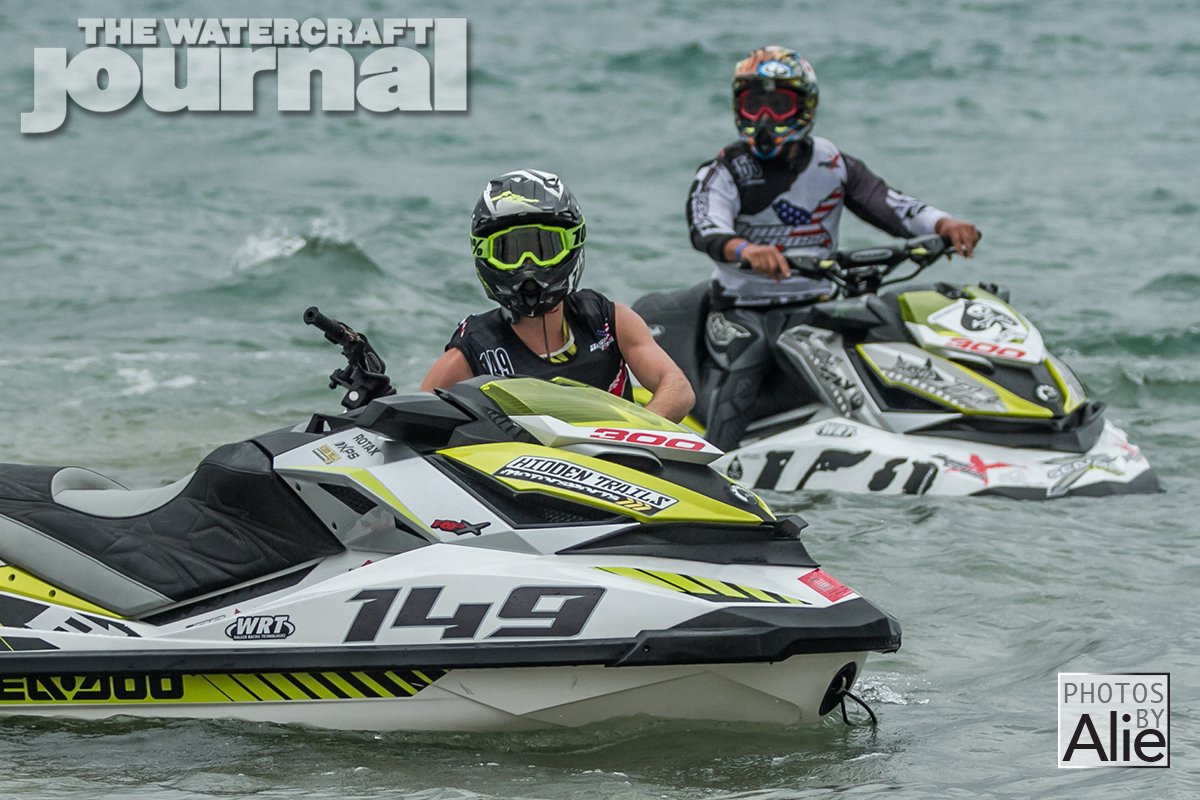
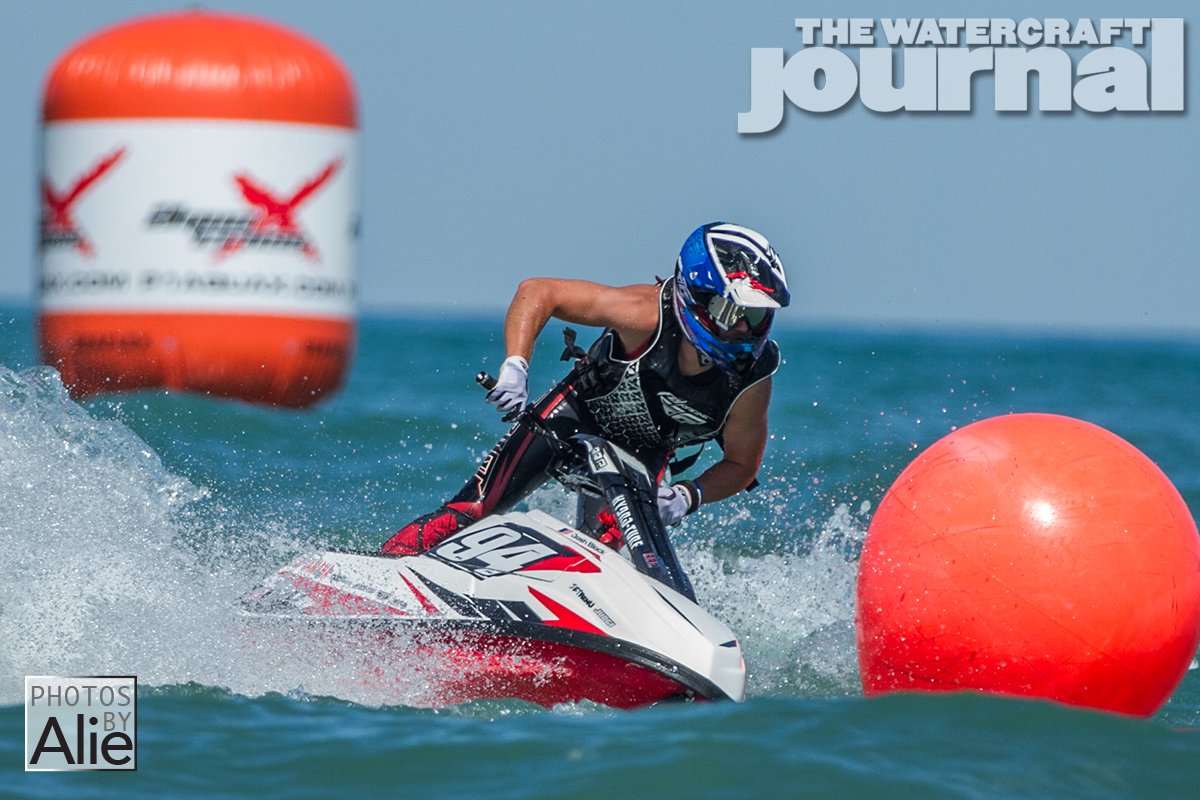
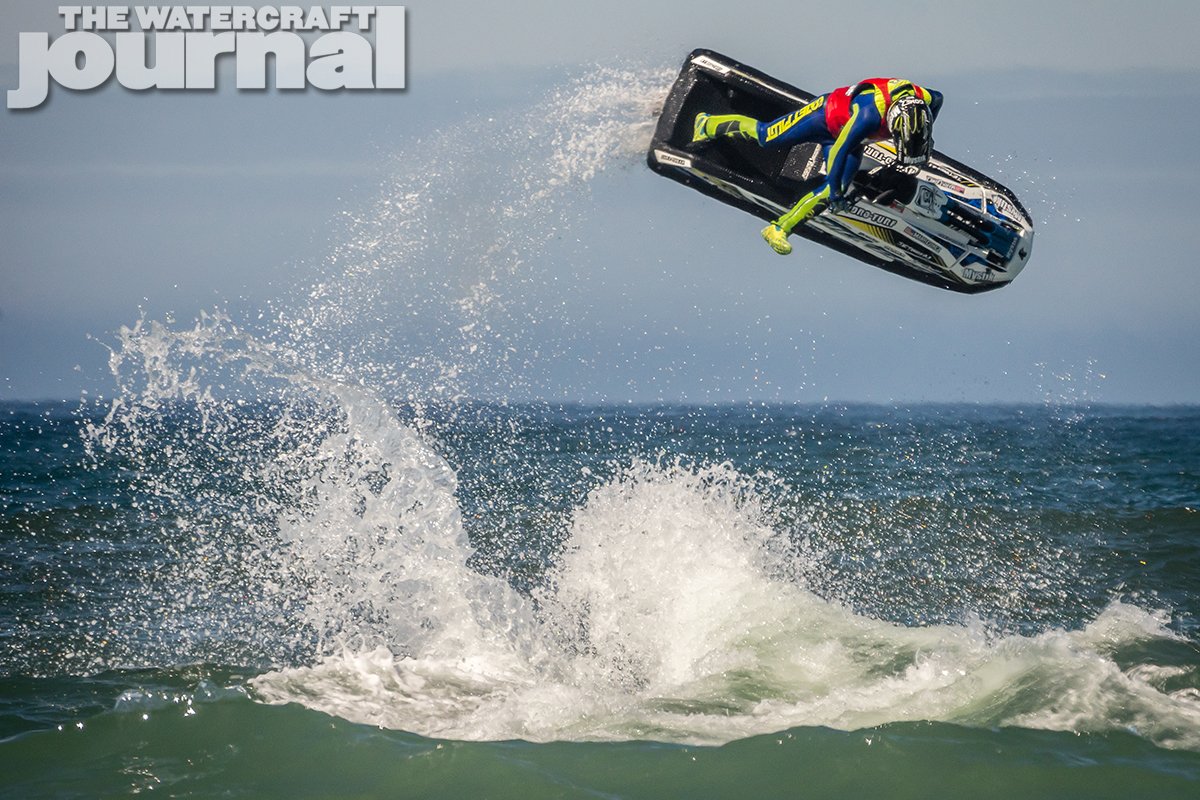
After Moto 1 hard charging JetX rider Jay Edworthy put on a show once again making moves and taking a Moto 2 win and a Moto 3 second place finish. Edworthy’s strong finishes in Moto 2 and 3 propelled him to a overall victory for the weekend along with a huge overall for the Great Lakes Series. Olswang’s solid three motos put him second on the podium followed by Moto 1 winner Steele to round out the Top 3 for the weekend.
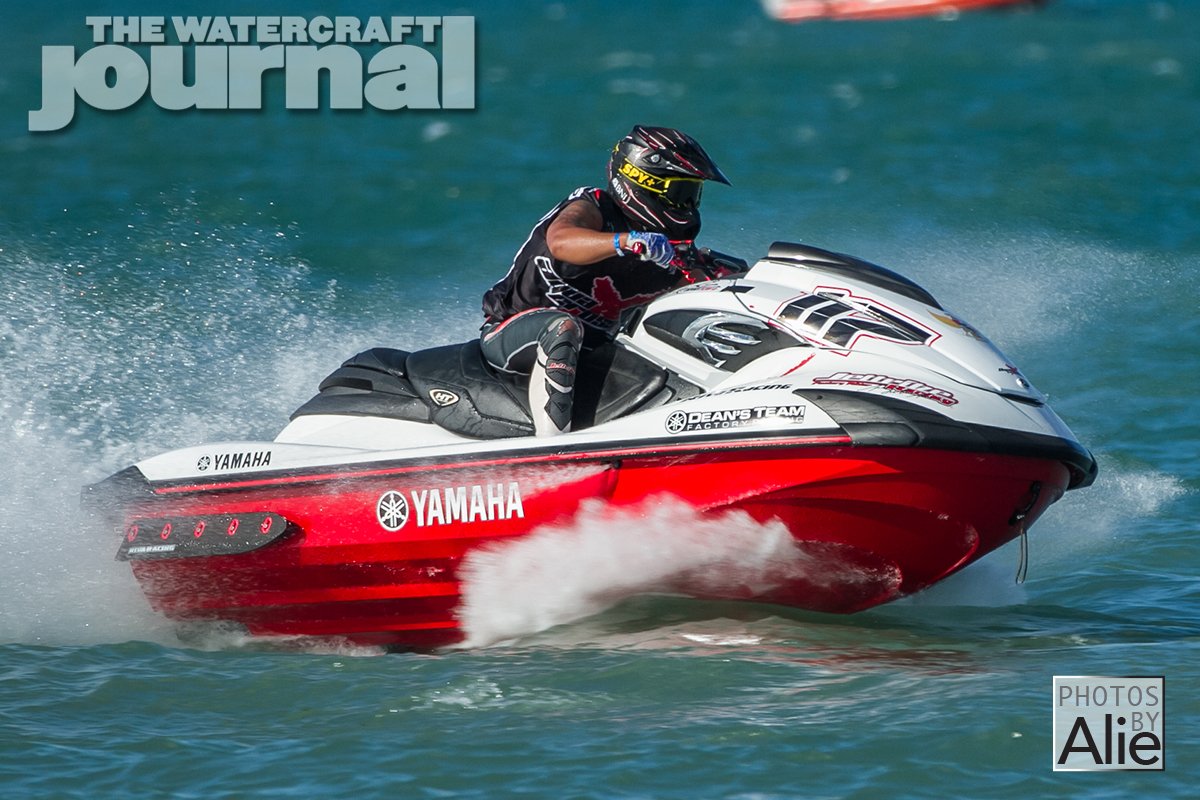
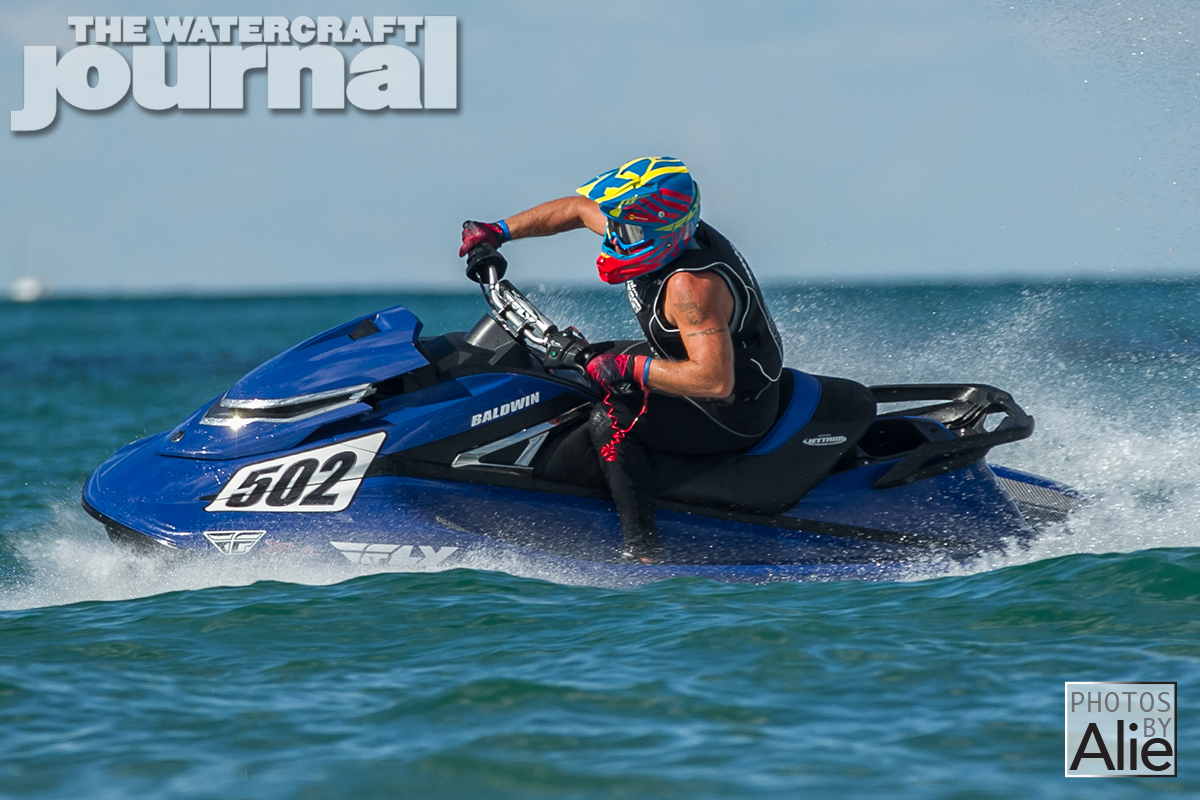
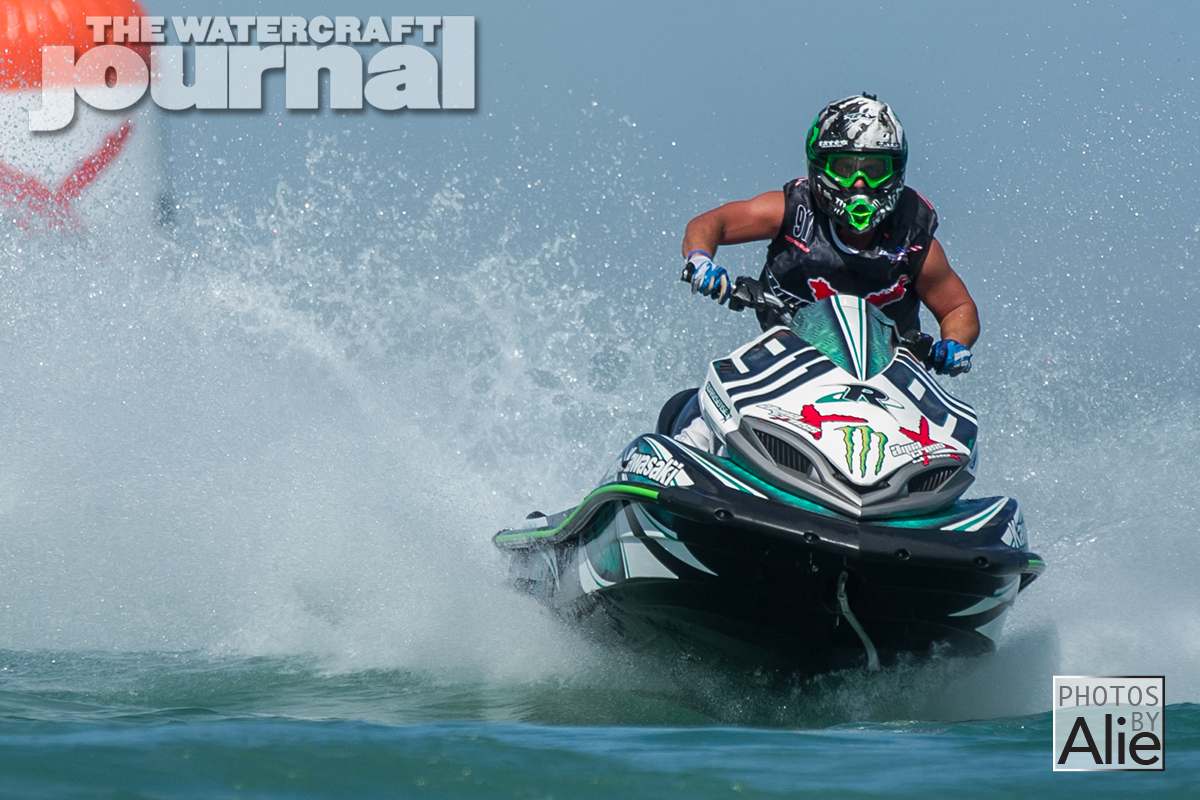
The Pro Enduro was the best race of the year in this author’s eyes. Dean’s Team Yamaha rider Brian Baldwin put on a show, winning Moto 1 by a huge margin, even leaving Baldwin to wonder if he was going the wrong way; that’s when you know you’re are going fast. Baldwin followed up Moto 1 with another win in Moto 2. Moto 3 was a little bit of a change for Baldwin after his hood practically blew off leading to a fifth place finish and that was enough to lock up the overall for the weekend. Monster Energy Kawasaki’s rider Craig Warner turned in a very consistent weekend with moto finishes of fourth, second, fourth and that consistency led to a huge second place overall.
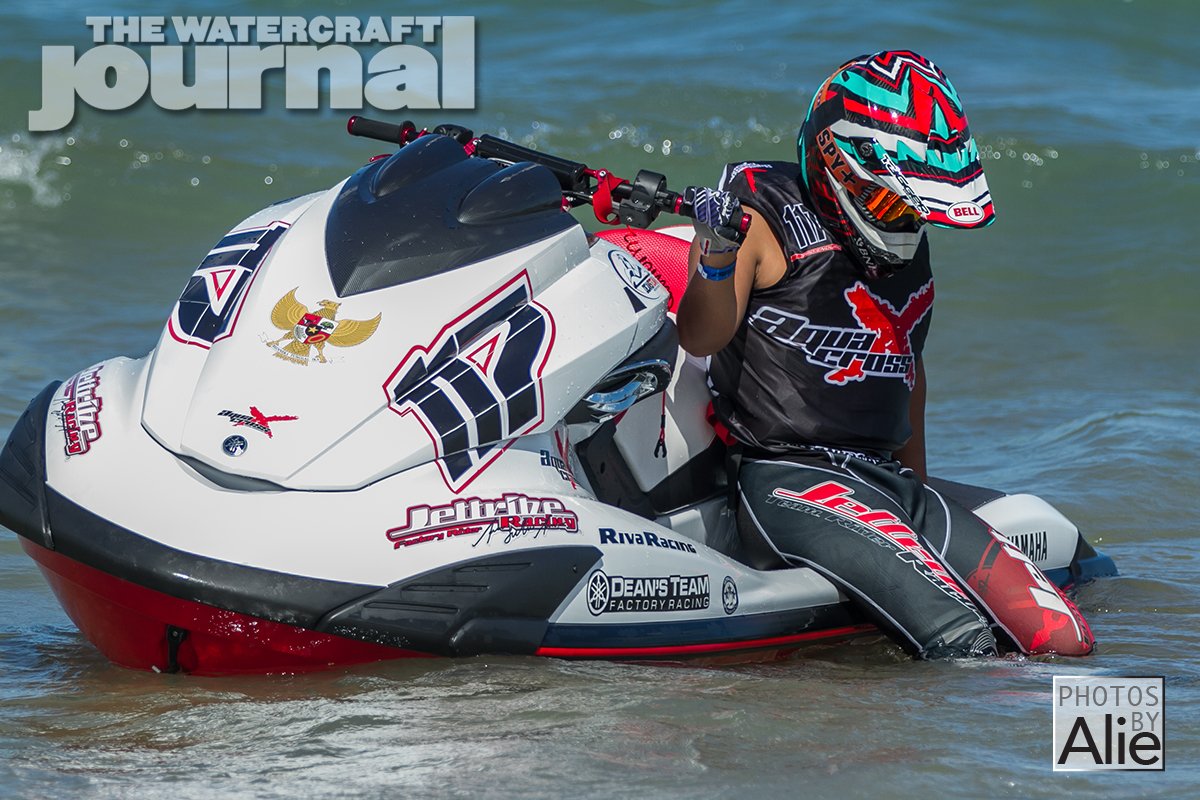
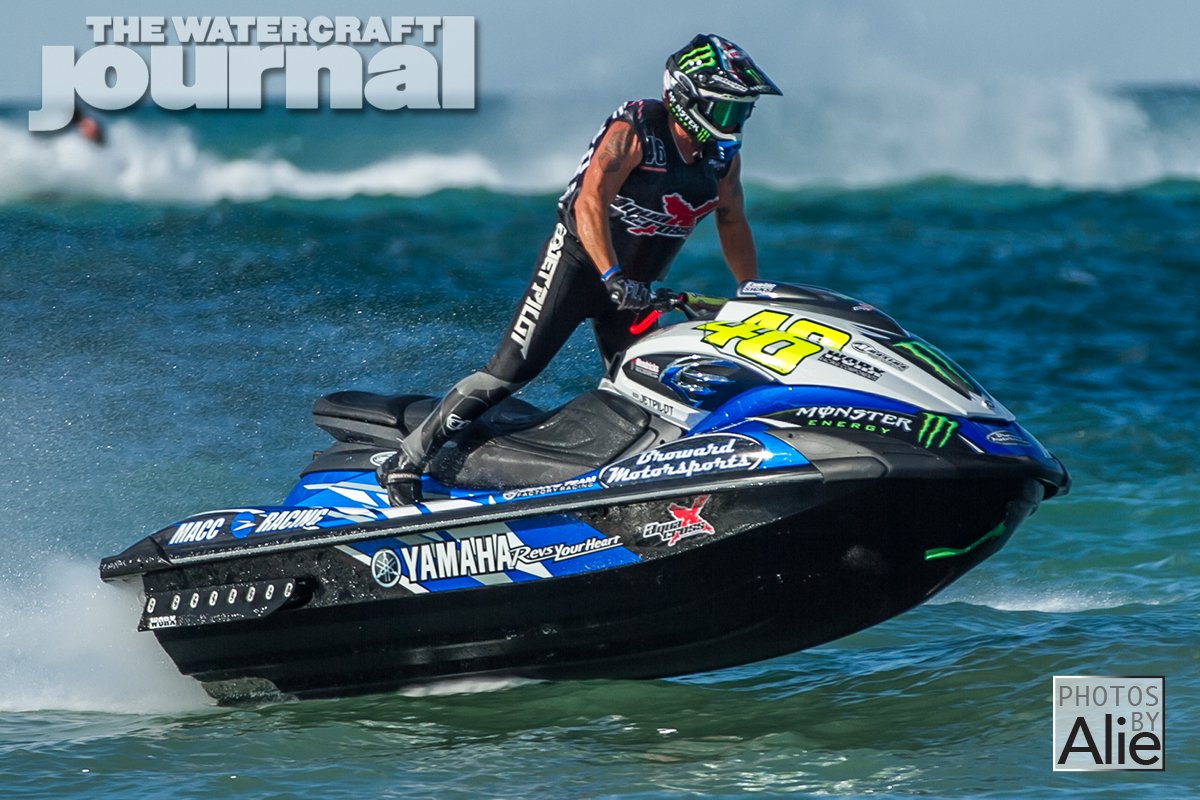
Dean’s Team rider Aero Aswar had an amazing weekend finishing second, and fourth in the first two motos but a huge spill on the last lap of Moto 3 put him in 7th and cost him second on the podium. Aswar just missed out and took third overall for the weekend. Any recap of the Pro Enduro wouldn’t be complete without mentioning the high speed high flying weekend of Monster Energy/ Yamaha rider Chris MacClugage. Macc laid down some of the fastest laps of the weekend but odd hull issues and high flying acrobatics set him up for a rough weekend. Look out for Macc in the coming rounds.
The third and what could be considered as the biggest event in Chicago was the IJSBA National Championships. The Runabout classes, GP and Stock, were combined into one big time showdown. Dean’s Team and Yamaha swept the top spots. In GP, it was Brian Baldwin and in stock it was Abdullah Al Fadel. Both won all three motos in their respective classes. The field was stocked with some of the biggest names in personal watercraft racing today and was a veritable who’s who of PWC racing.
All and all this was an amazing rough weekend of racing. Many racers stated that this was some of the roughest water they had raced in and it led to great racing. We are looking forward to the rest of the series and to see what the conditions lead to in the future rounds. All of this weekend’s P1 AquaX scores can be found HERE.
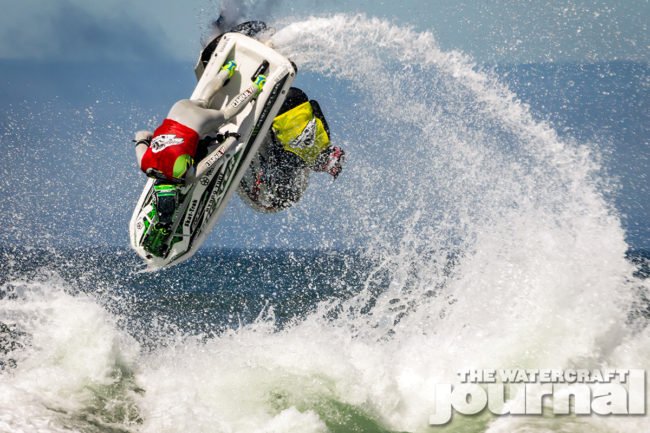
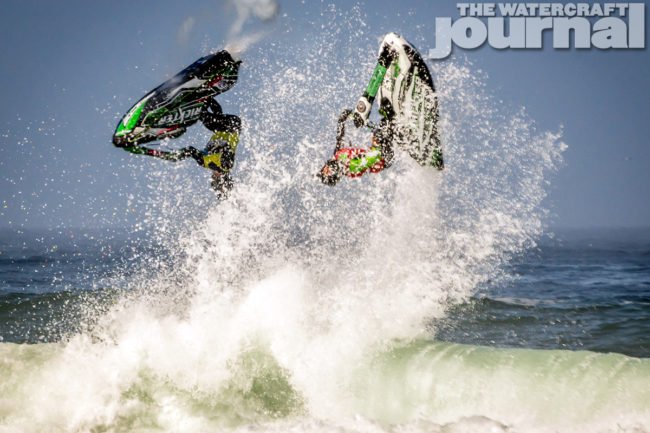
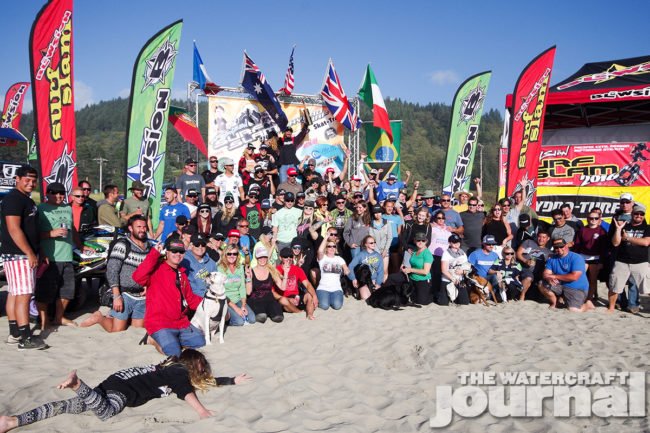
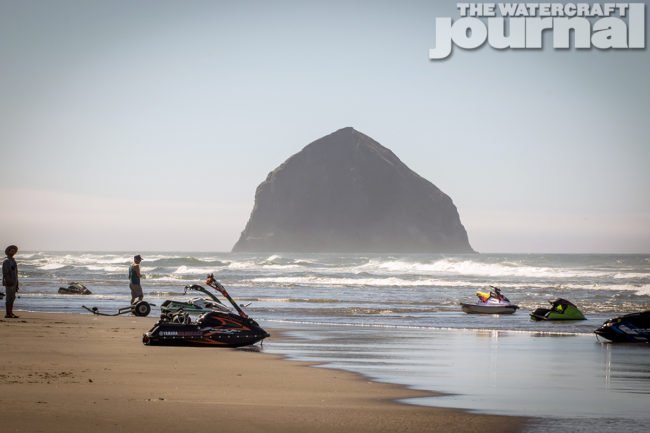
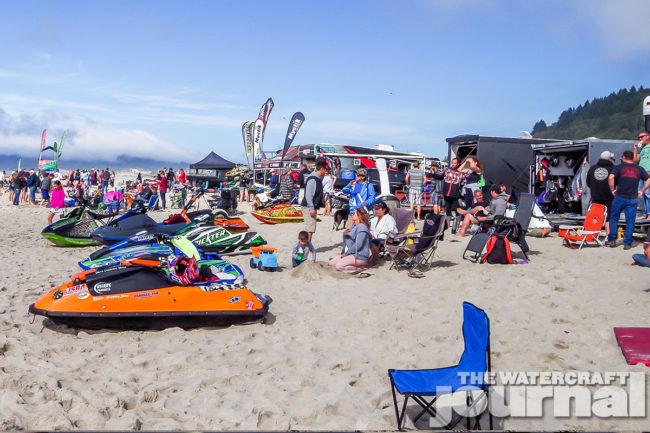
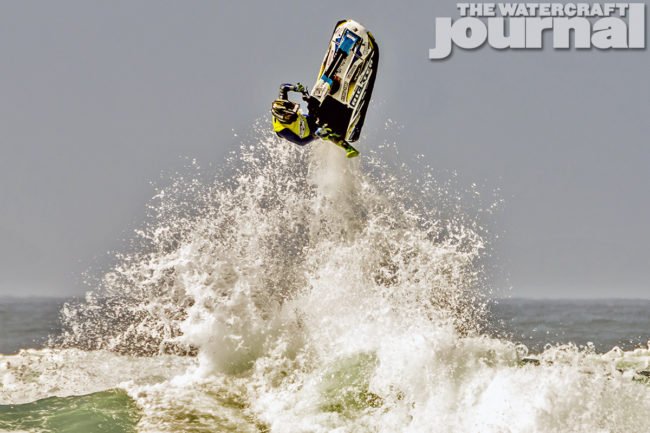
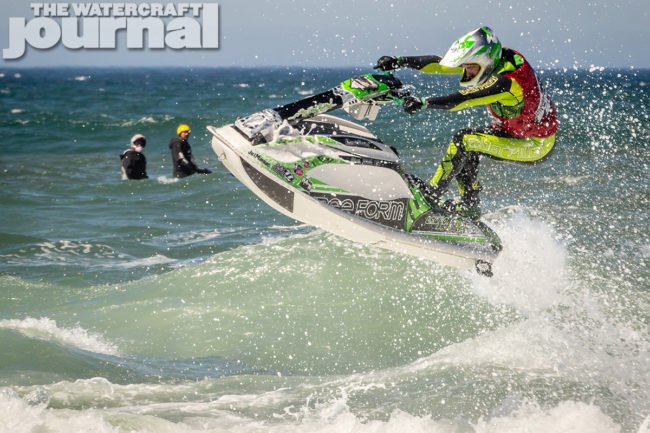
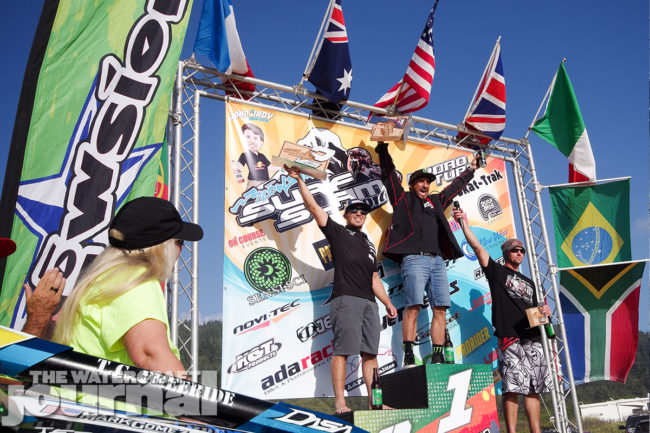
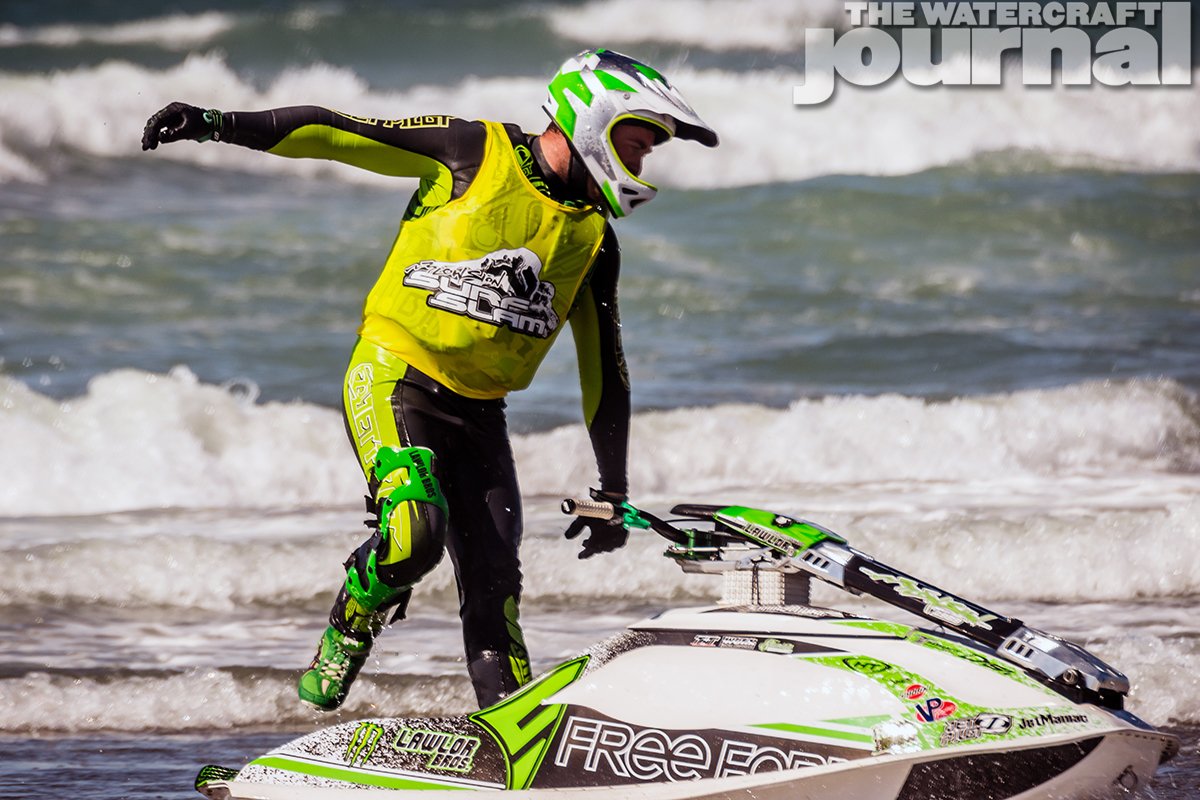
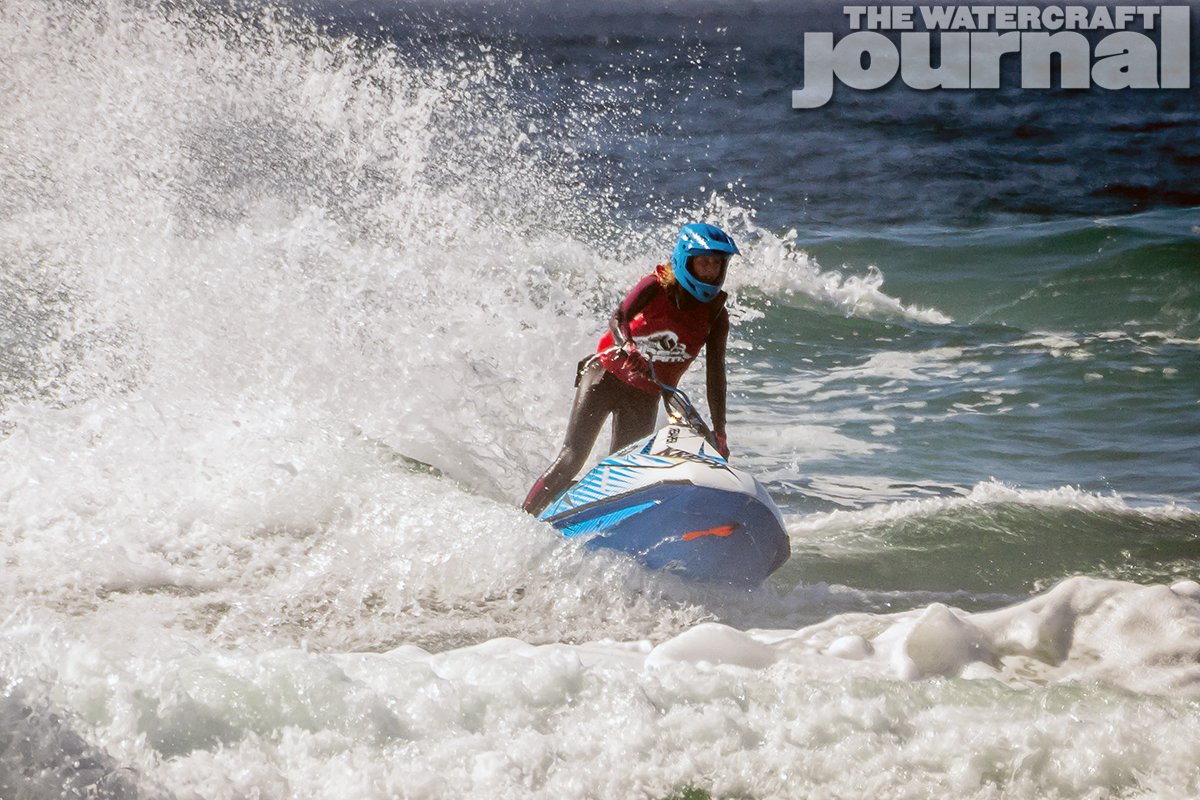
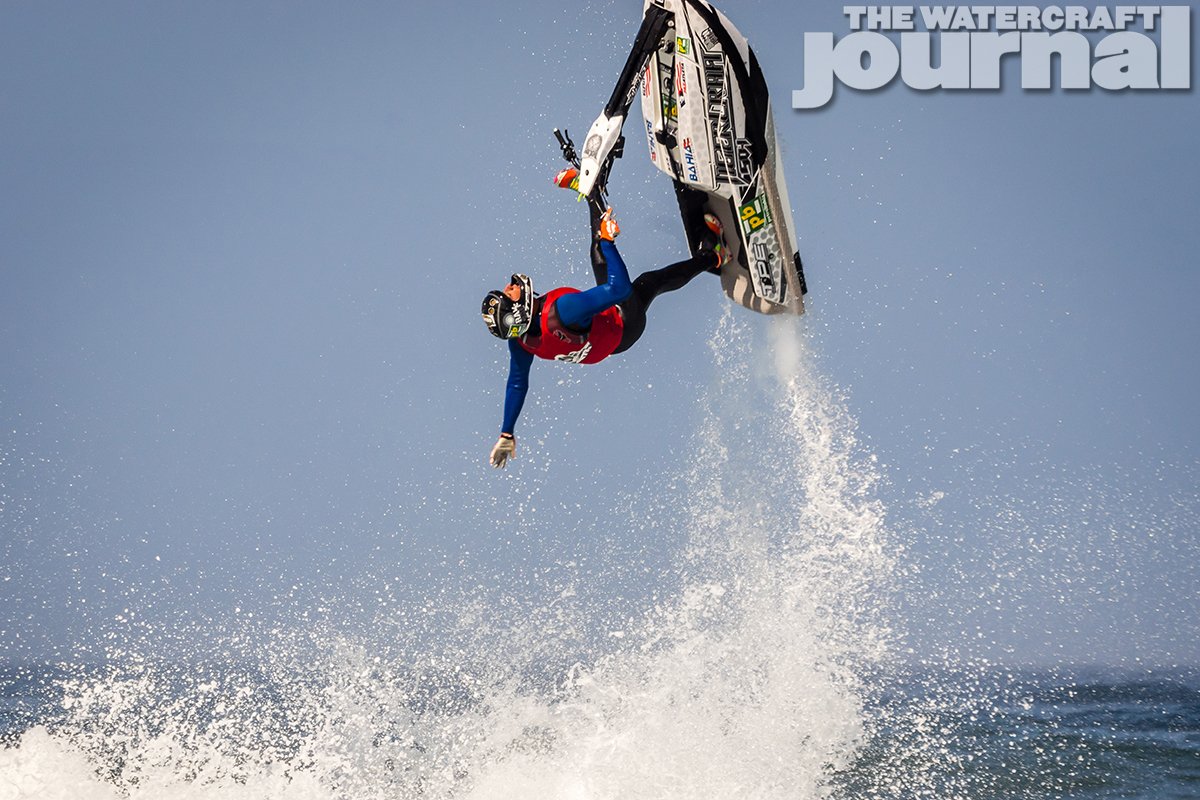
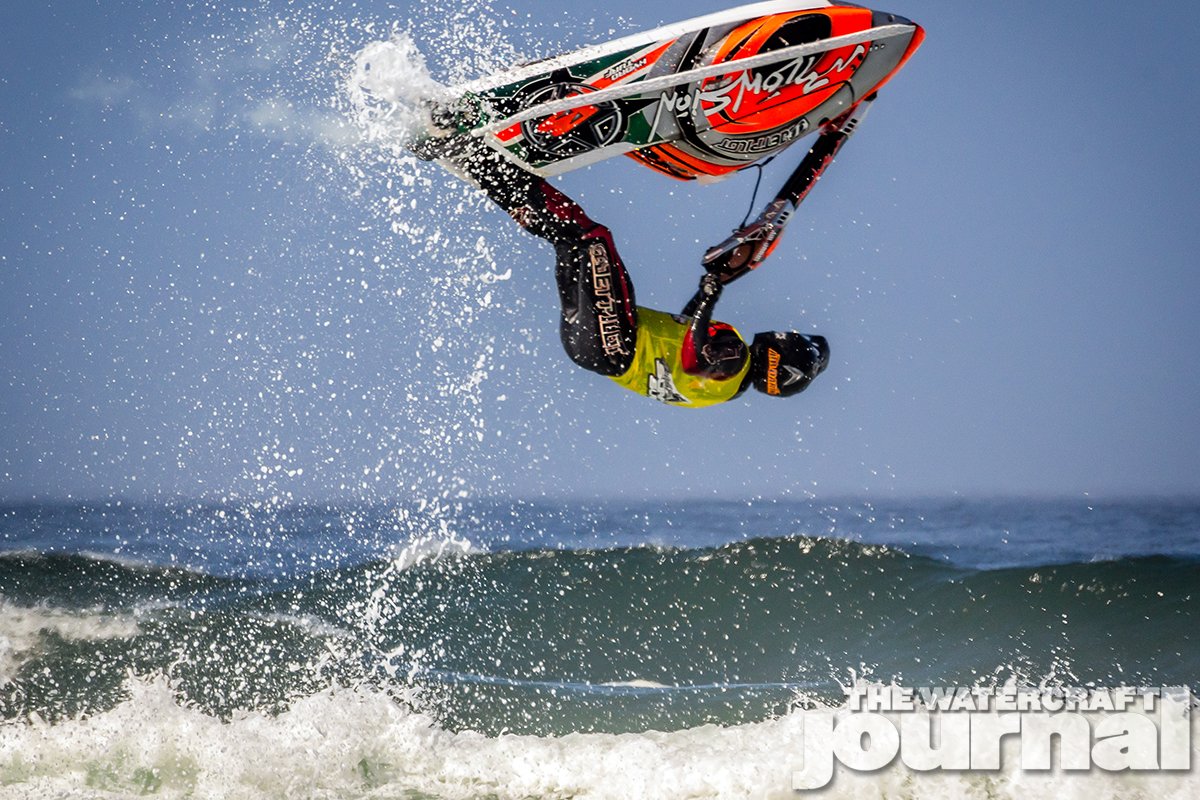
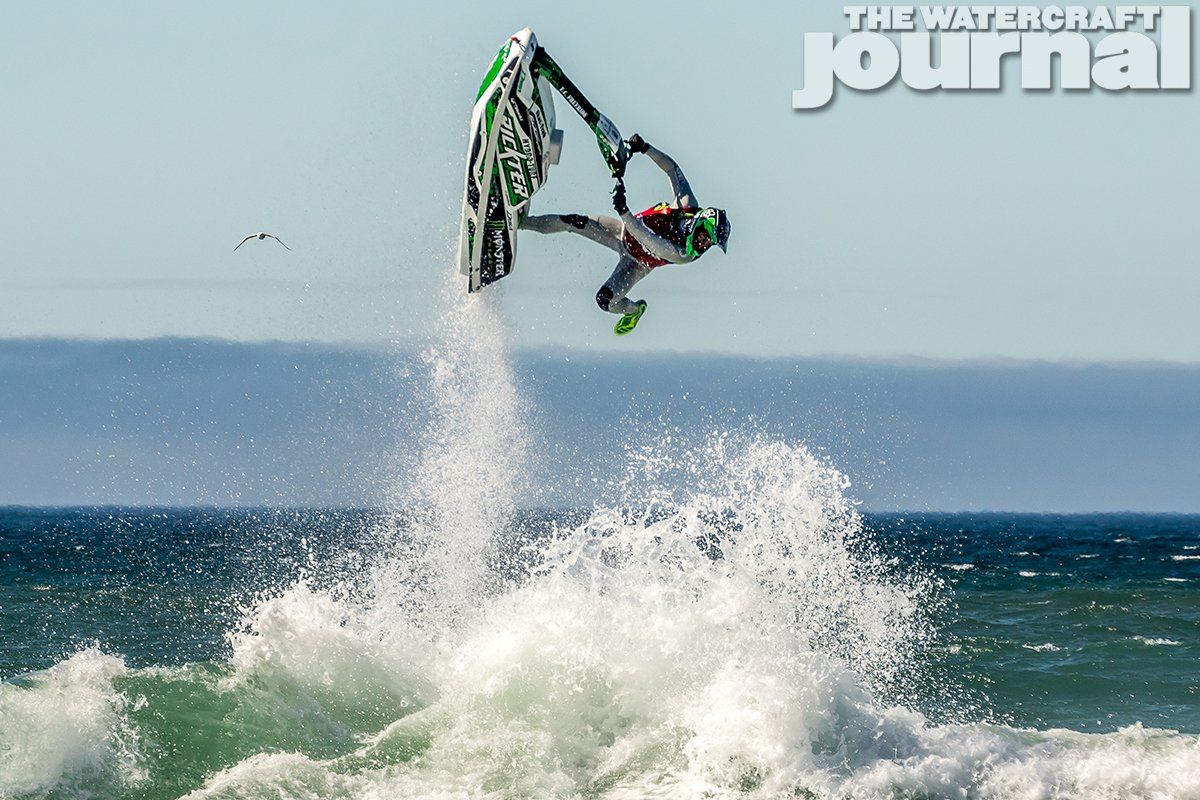
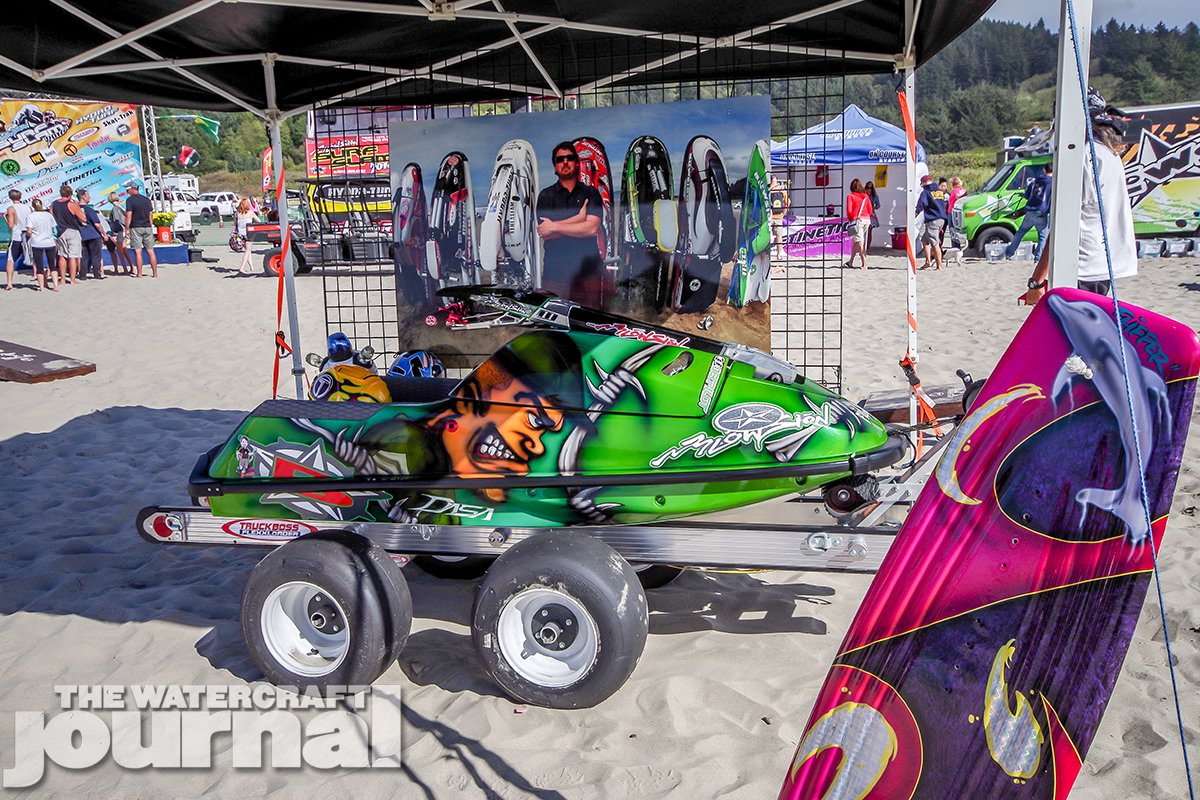
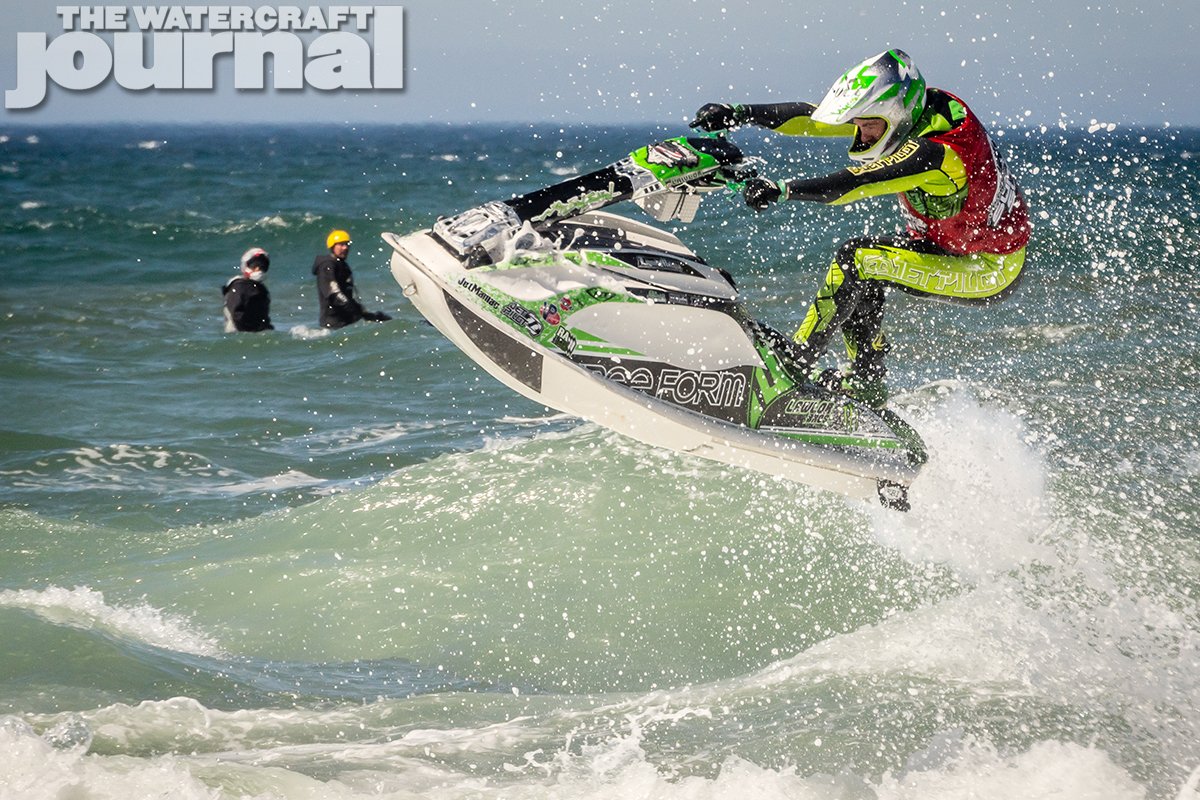
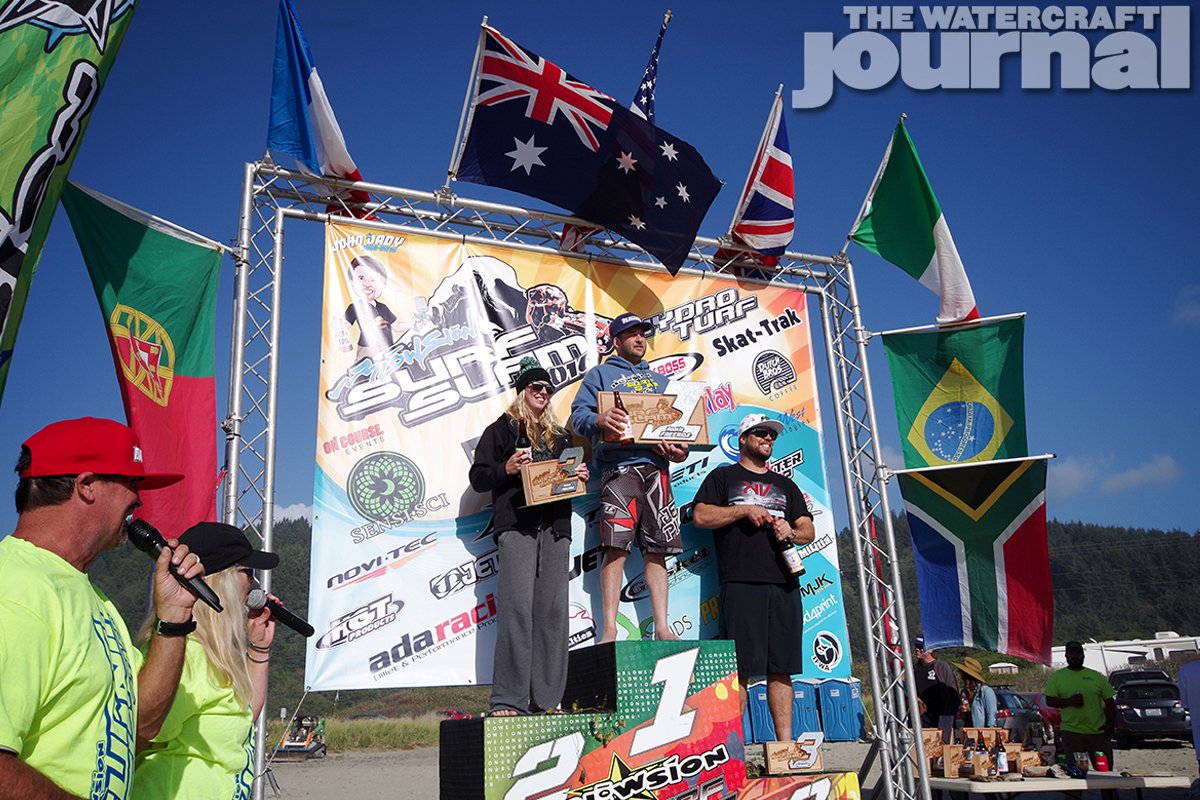
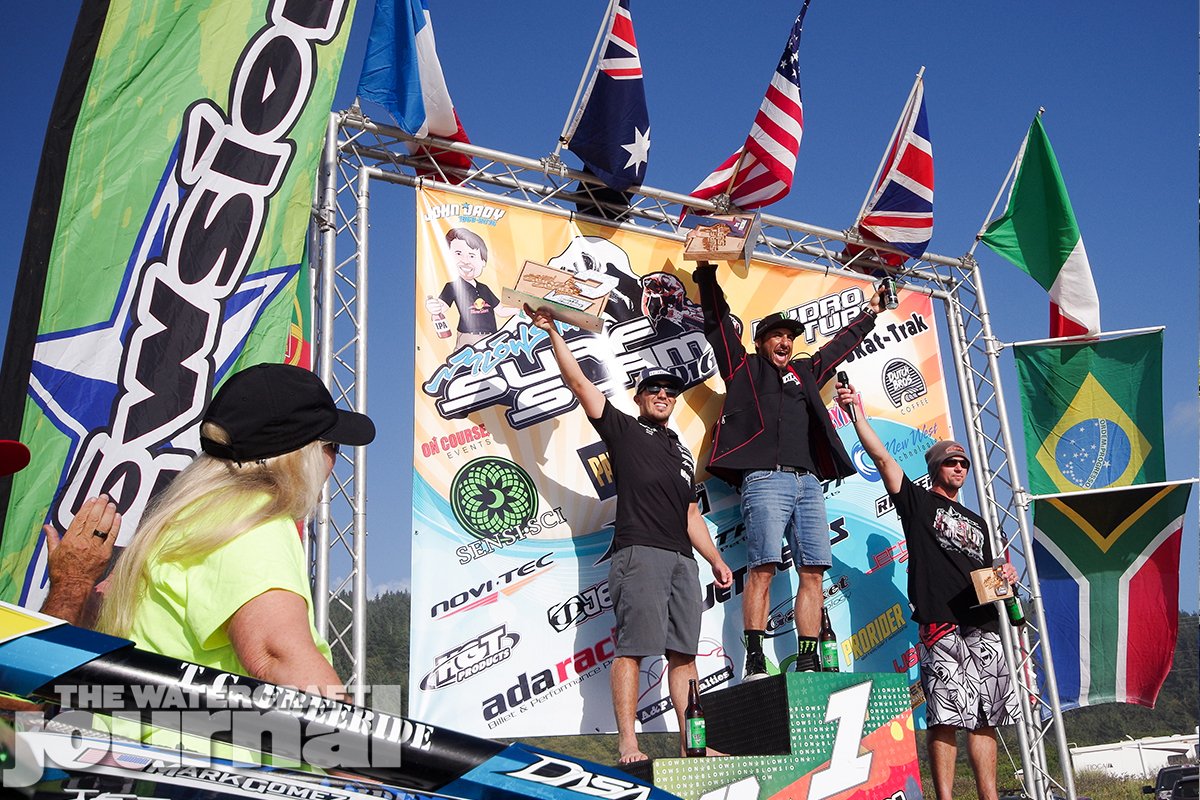
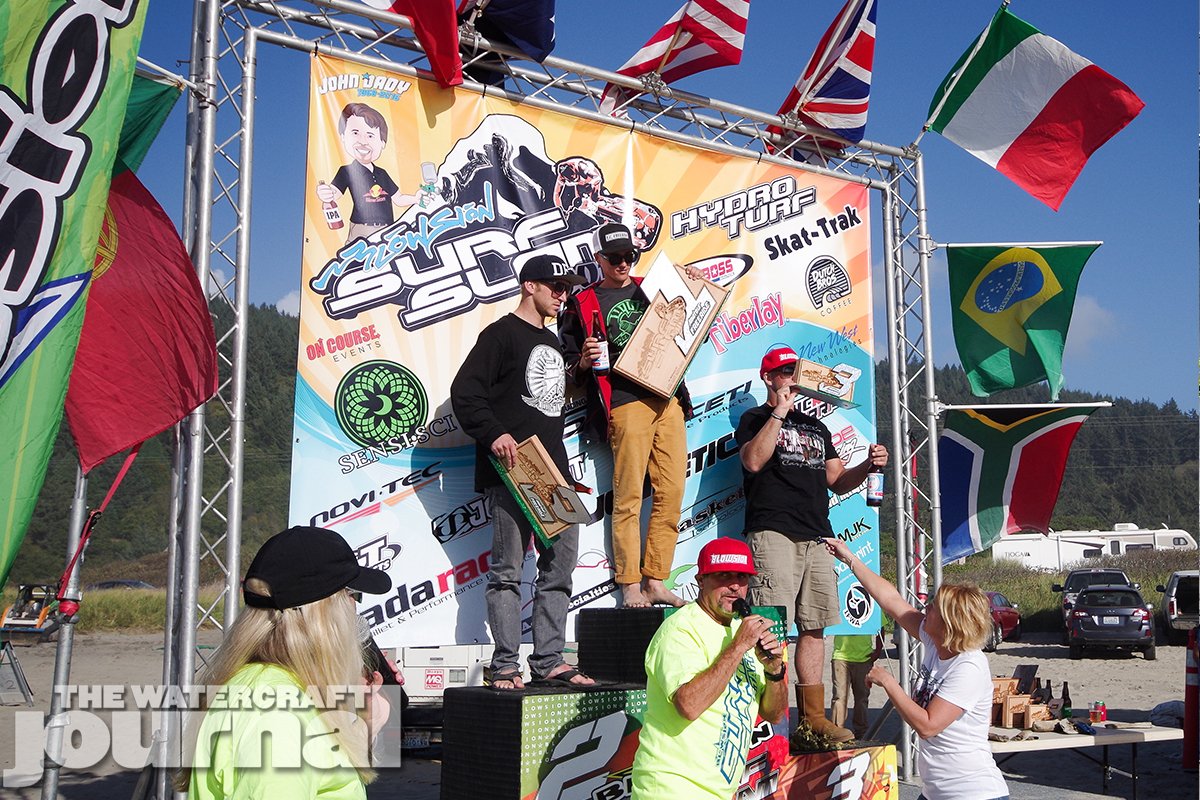
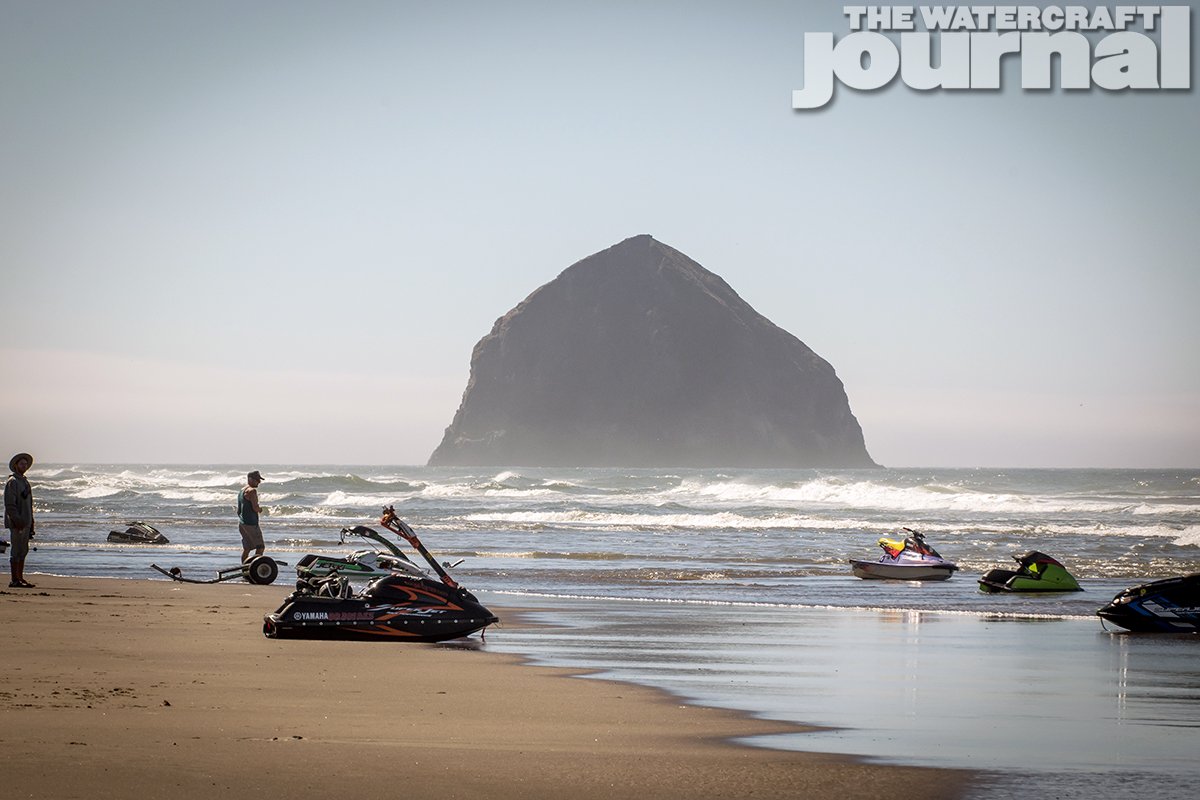
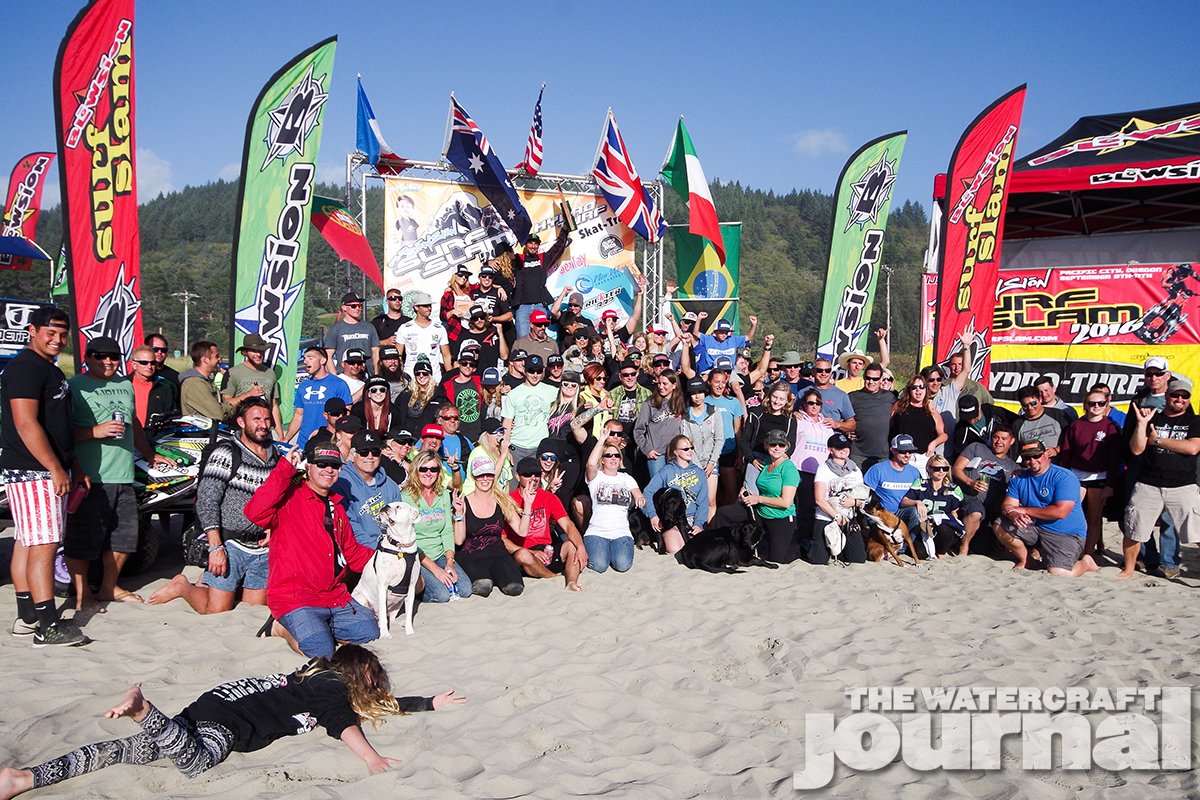
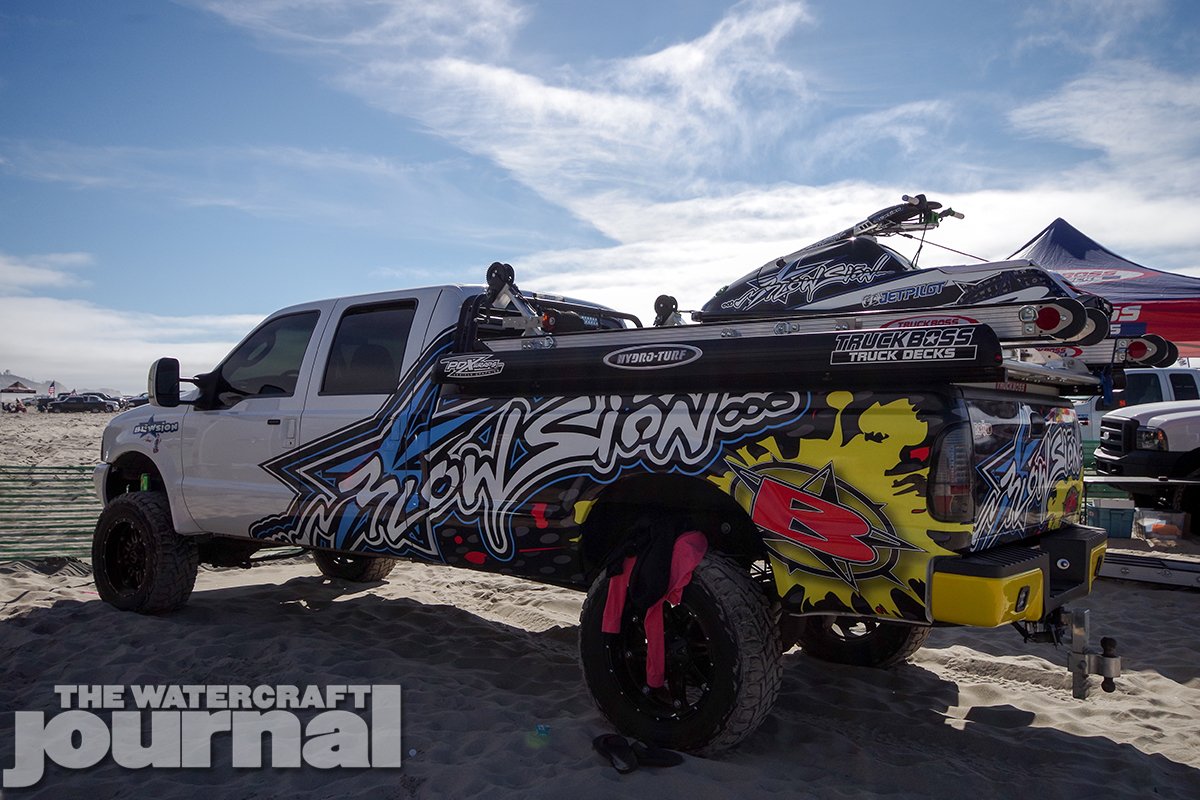
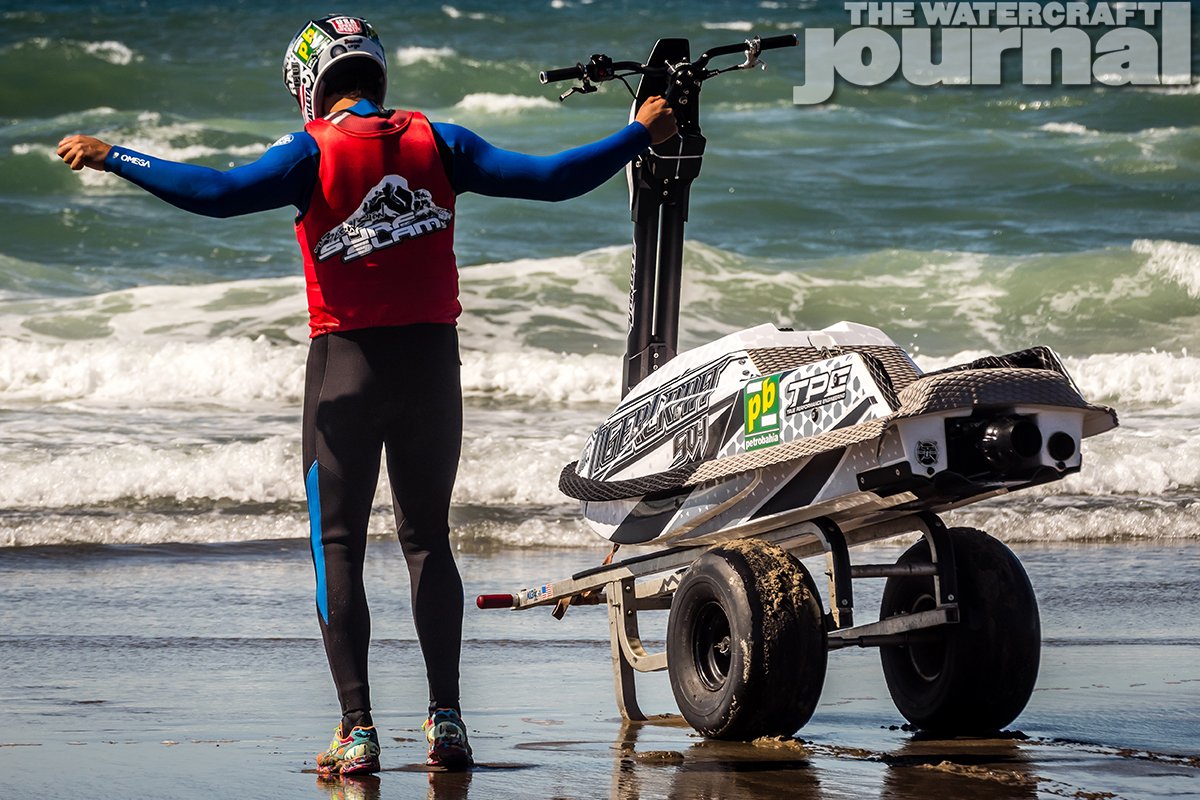
Round 5 of the IFWA World Championships was recently held in the beautiful little beach town of Pacific City Oregon. This event, known as Blowsion’s Surf Slam, is one that has yet to disappoint. For the eighth consecutive year, riders from all over the world came together for an epic show of athleticism on the pristine beaches of Tierra Del Mar beach. The weather was by far the best anyone can remember and the surf was big and gnarly, just as we have come to expect in the Pacific Ocean along the coast of Oregon. There were 3 classes in the tournament style, head to head competition along with the Salty Investments Blowsion big air contest. The tournament competition classes consisted of Rookies, Amateurs and Pros with the big air contest open to all that wanted to give it a go.
To get things started, Friday consisted of registration and pre qualifying rounds. Qualifying rounds went on for the whole day to seat everyone for the tournament that would continue the next day. The beach vibes were good all day and everyone was enjoying getting caught up with their freeride family. The turnout on Friday was also Huge with people lining the beach as far as the eye could see and hundreds of riders lining the beach to give the big surf a try outside of the competition area. The sunset on Friday was the most incredible sunset of the weekend with a yellow orange color array surrounding the sun over the ocean and zero clouds in the sky. It was an amazing cap to a great day.
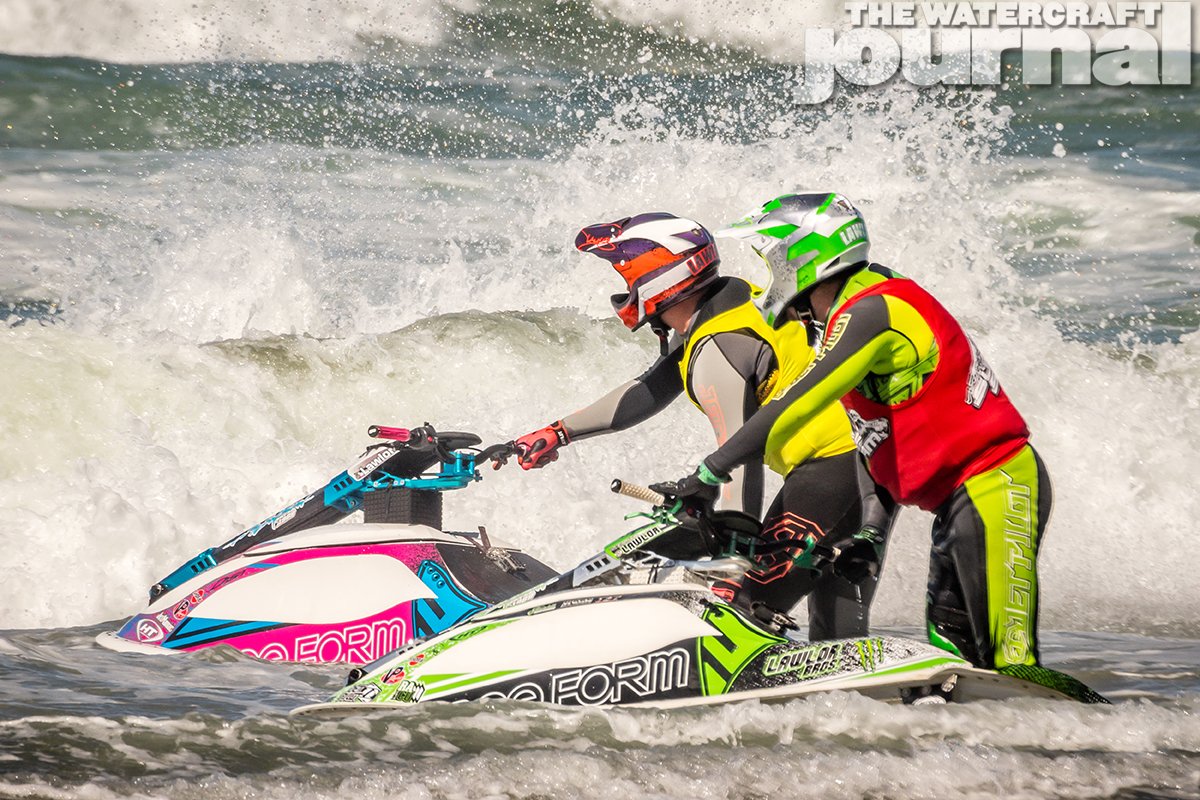
Saturday began with the Rookie and Amateur Round 2, consisting of six head-to-head heats at 6 minutes each. Pro Freeride Round 1 was up next, followed by the freeride LCQ where we even saw two brothers, Brandon and Randy Lawlor, battle it out in one of the heats. After a short lunch break the riders were back out on the water for the 1/8 finals made up of 5 heats. This would bring us to the quarter finals that would be run the final day along with the big air showdown.
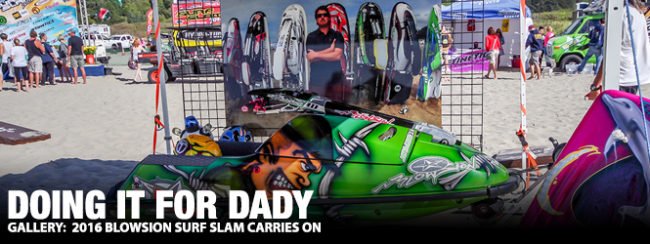
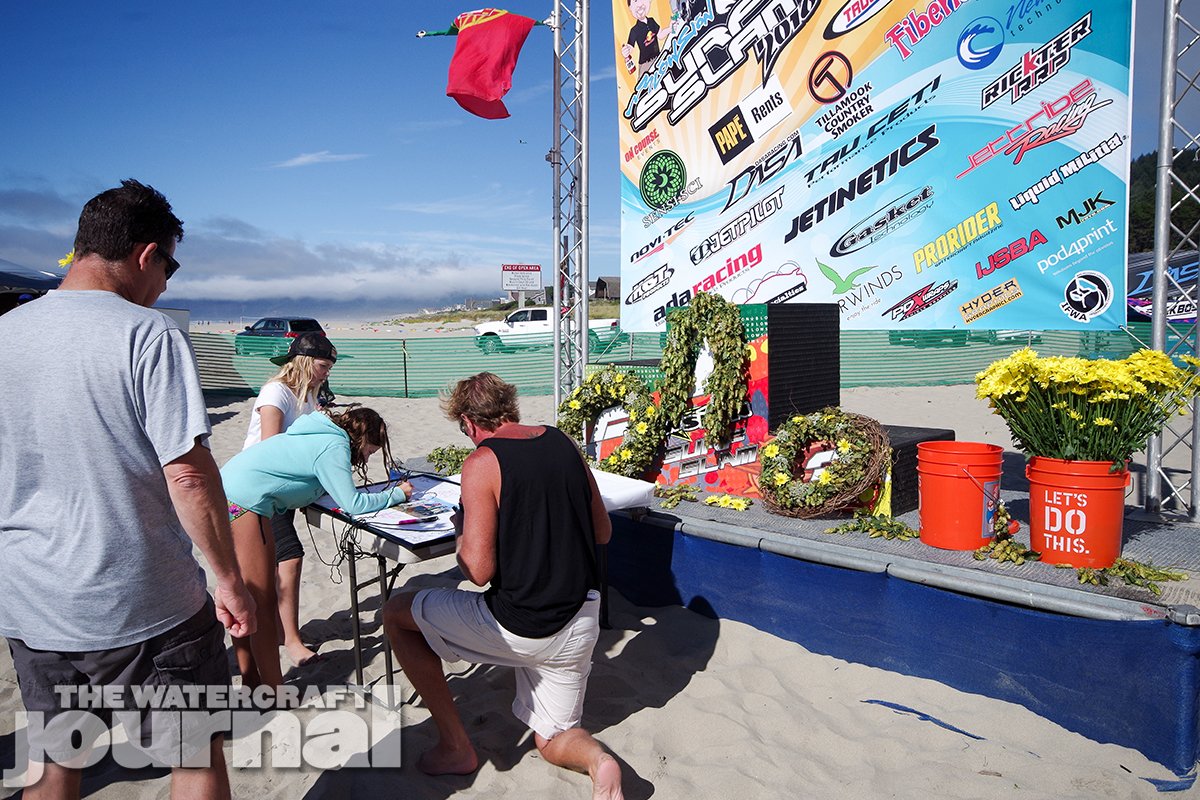
To cap of the day, in the early evening was the John Dady Tribute where riders as well as spectators and supporters of the event were given a chance to share their memories of Johnny via open mic. There was a lot of love shared about experiences and memories of John and hardly a dry eye on the beach. Once the open mic was finished On Course Event Director Carol Anne Justina gathered everyone and brought them down to the water’s edge to form a large circle and join hands. More kind words were spoken and our locked hands were raised toward the sky. We then proceeded as a group to the water’s edge to throw flowers into the breaking surf.
All of this was then followed by a jet ski paddle out. A hundred-plus stand ups rode out past the breaking waves to form a big circle where wreaths made of hopps were released into the center of the circle of riders and the riders began to splash and cheer in the water as to honor our fallen friend. In the surfing world there is no greater honor that you can give to a fallen friend than a memorial paddle out. It was only fitting to honor John Dady who unexpectedly passed away last month. Many described the experience as being emotional and almost surreal. His presence was felt throughout the beach that evening.
Sunday began with the Pro Quarter Finals consisting of four heats of 6 minutes, followed by the Rookie and Amateur Semi Finals made up of eight heats of 5 minutes each. Next was the Pro Semi Finals consisting of two heats of 8 minutes each followed by a lunch break. After lunch, all the final scores were tallied and the final rounds of competition decided in each respective class.
In the Rookie class it was Nick (Salty) Stipanovich pinned against Dustin Erickson for 3rd and 4th place, and the final it would be Balie Jones out Crescent City CA, up against Aaron Milstien of Oregon. Bailee and Aaron both were showing great surf riding skills with some reentries sprinkled in but about half-way through the round, her steering cable snapped. This took a lot of time out of her heat as a replacement ski from Pete McAfee was being brought out. She again had a mechanical issue which ended her heat. Meanwhile, during Bailee’s mechanical issues, Aaron was running a solid heat, tearing up the faces of the big waves that were firing all day. Making the podium for Rookie Class was Dustin Erickson in 4th place, Salty Stipanovich in third, Bailee Jones in second and in first place, Aaron Milstein.
The Amateur Class saw some really great competition and solid riding all day but the final heats had Oregonians Anthony Anderson up against Collin McLaughlin (Senci Sci). These two battled it out for 3rd and 4th place, both going huge and ripping throughout their heat. The final heat in the Amateur class ended up being TC Freeride team rider, Sean Star up against a fellow Californian, Bryan Bairassa. Both of these riders have exploded onto the freeride scene over the last 18 months and clearly are on their way to competing at the Pro level. Brian and Sean both were sending it to the moon with their own unique style and some great surf riding but ultimately the win would go the Sean. Amateur Class’ final standings were Collin McLaughlin (Scenci Sci) in 4th, Anthony Anderson in 3rd, Bryan Bairassa in second, and Sean Starr taking home the gold.
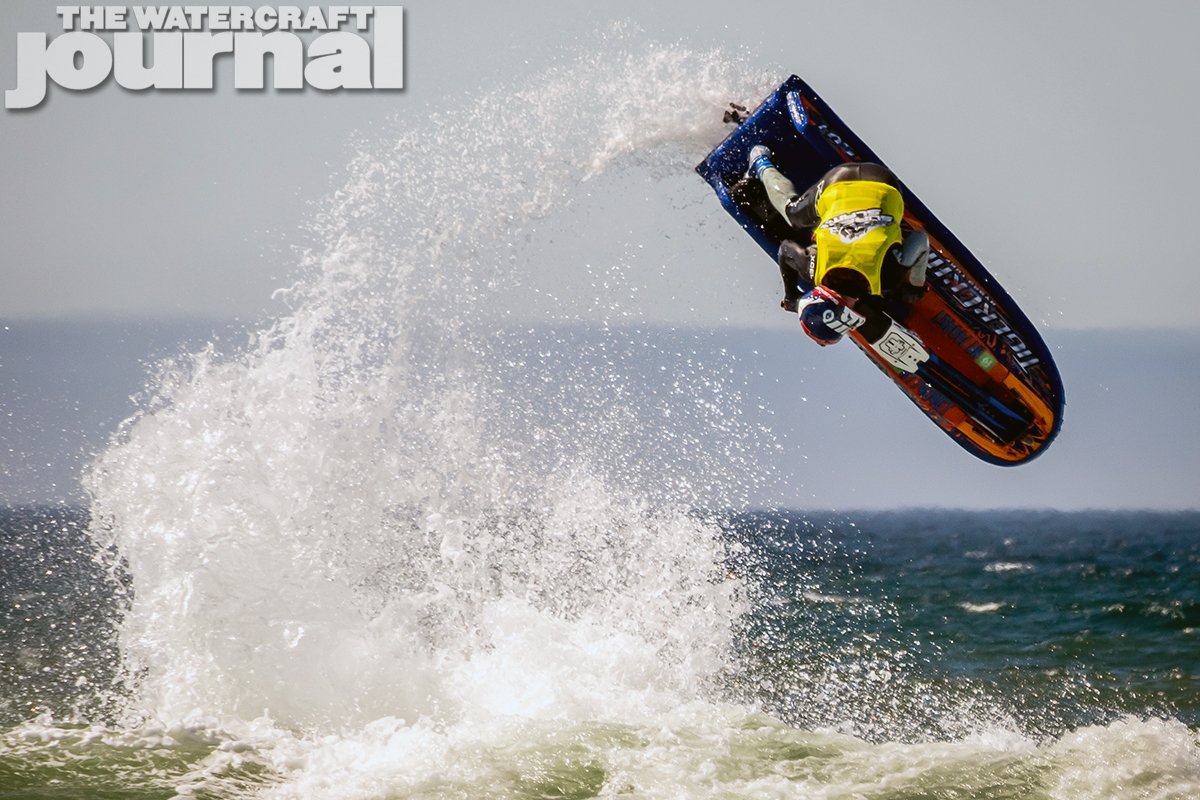
The Pro Class Finals would go down with Blowsion freerider and Oregon native “Air Darrin” Anderson up against new-to-the-Pro scene rider out of New York, Tom Scaccianoce. These two riders are both known for there big aerials so this was a heat full of bangers! Big aerials were coming consistently out of both riders but it was Darrin’s surf riding on a modified SuperJet that pulled out the win giving him podium finish for the contest.
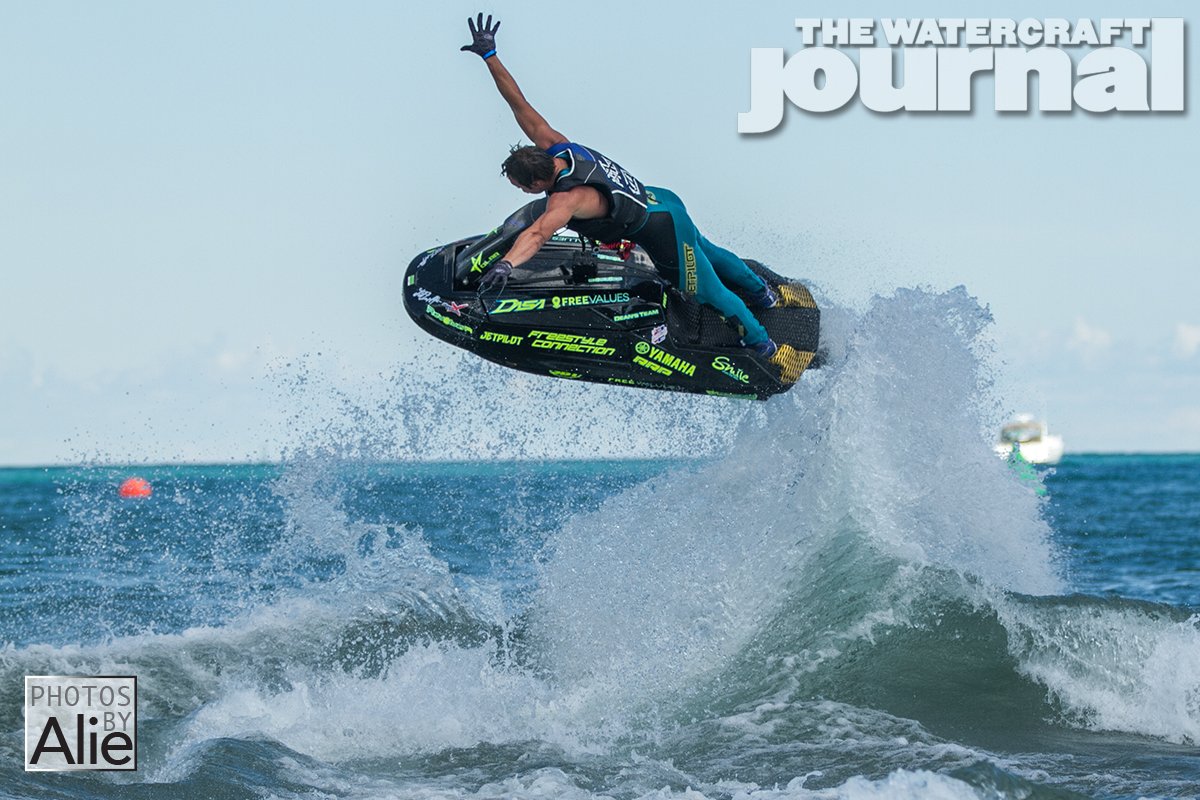
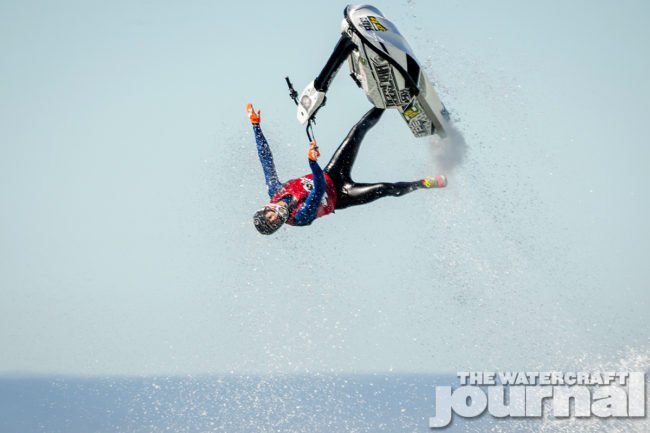
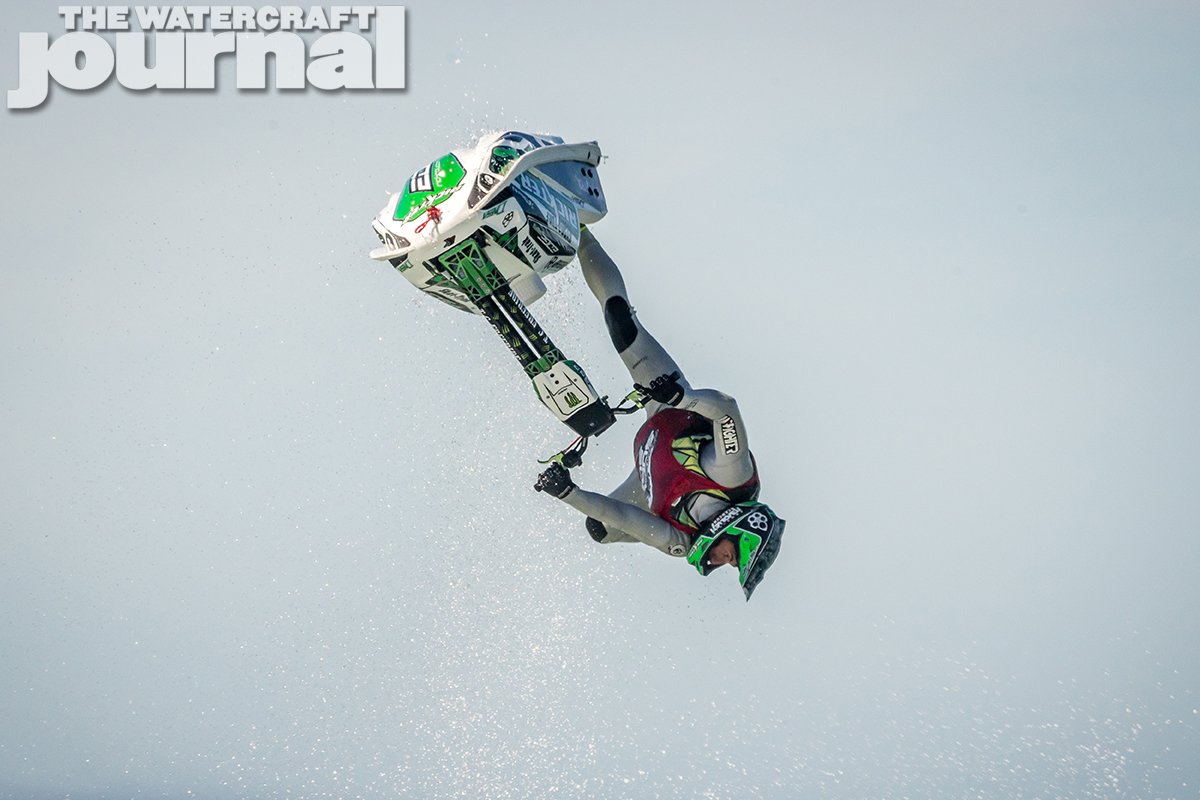
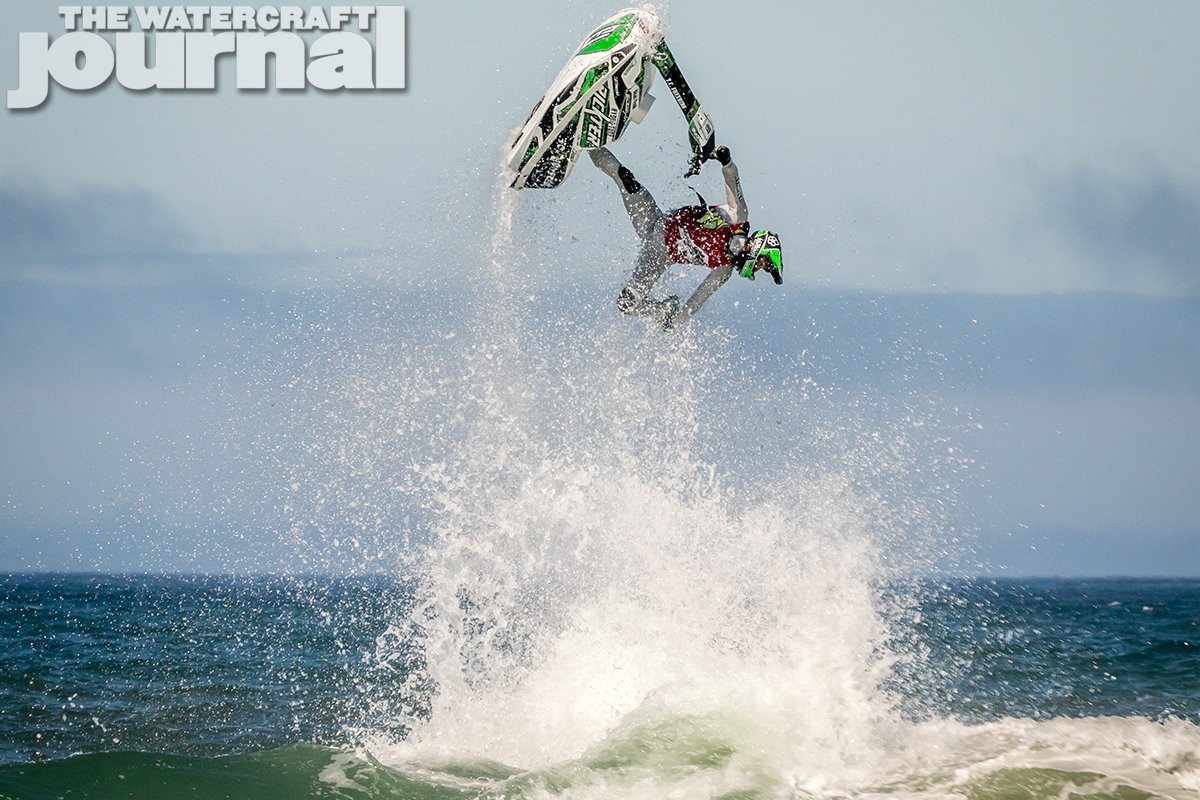
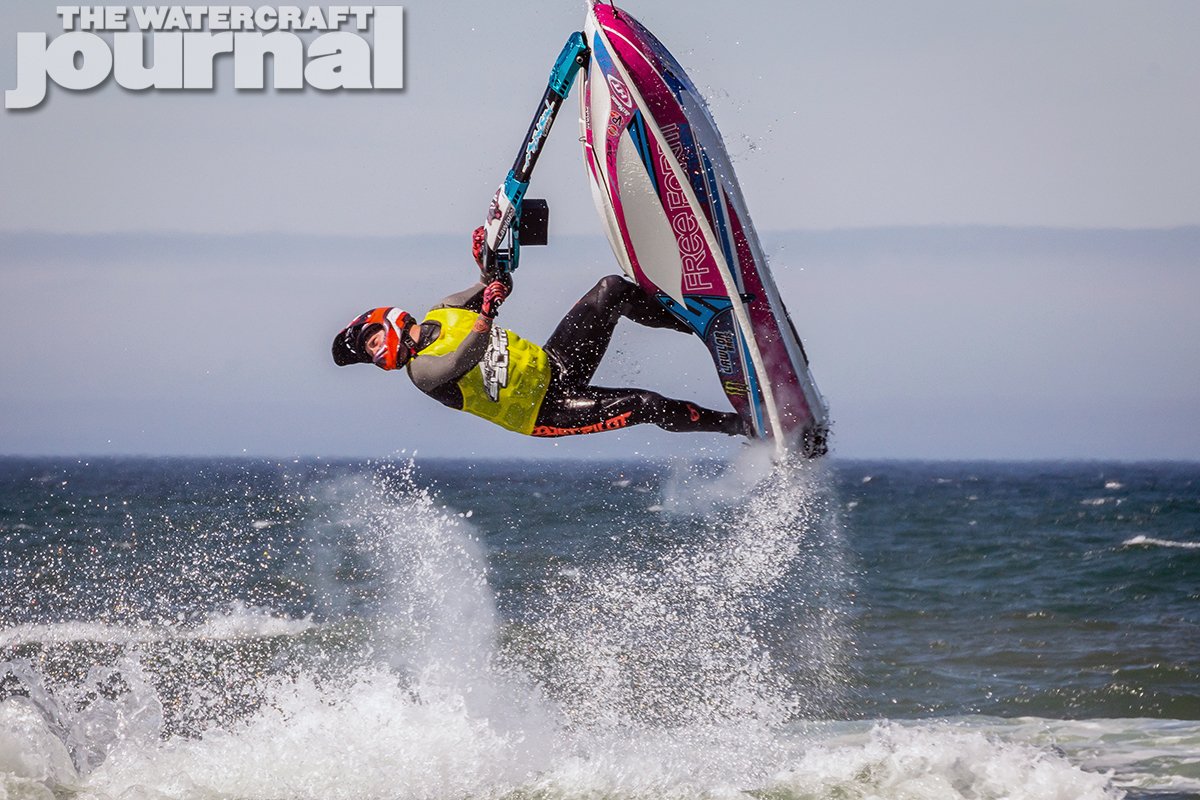
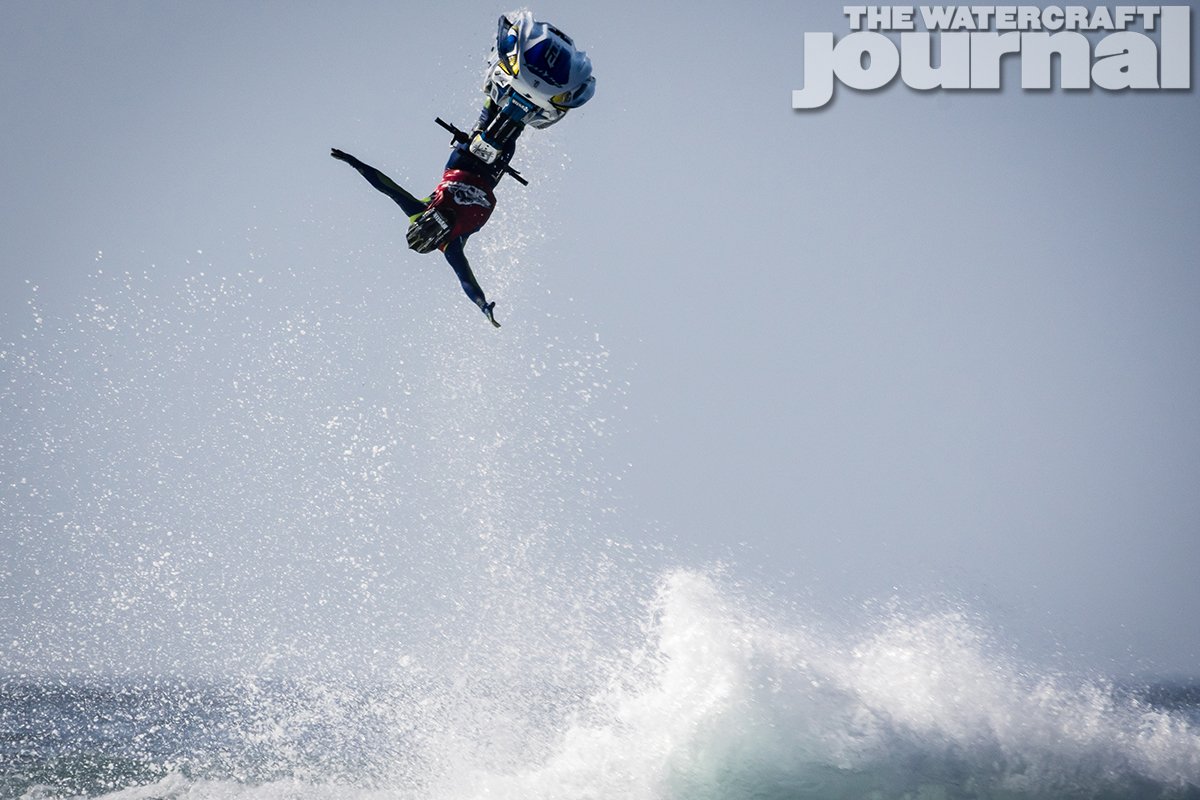
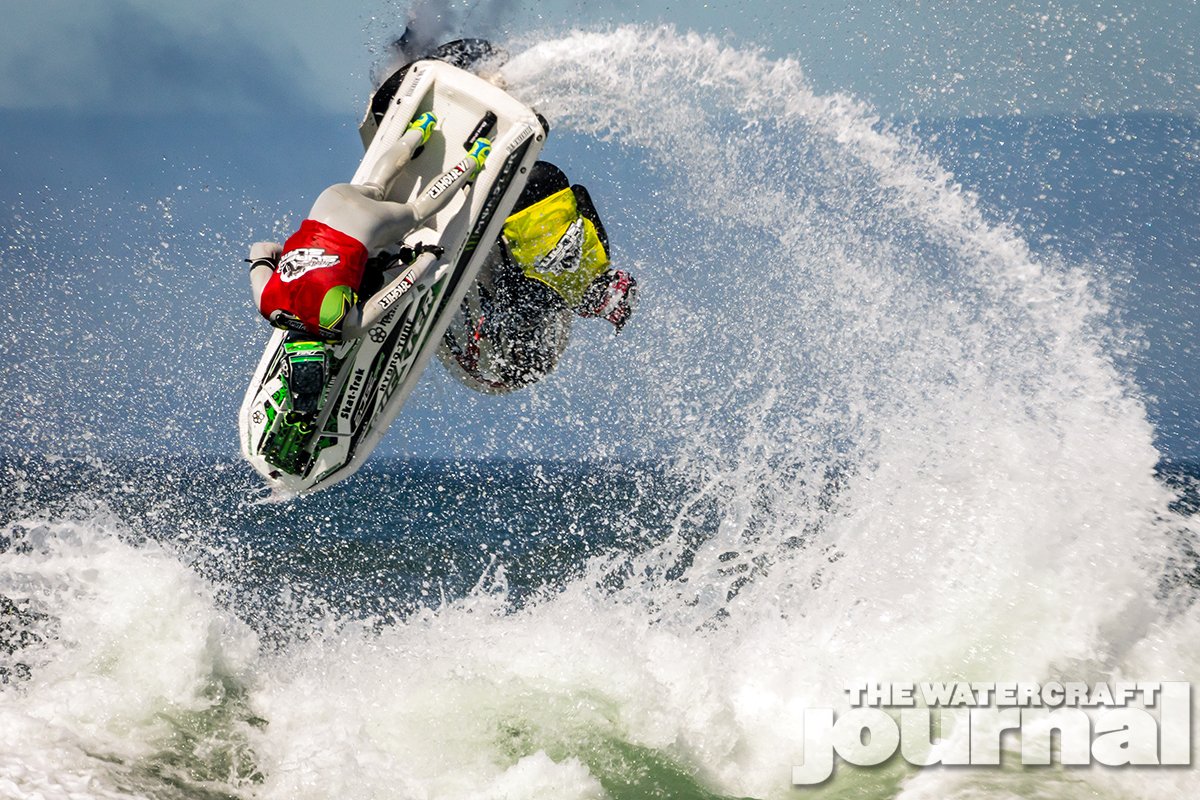
The final heat was none other than 2015 World Champion, Mark Gomez out of Fullerton, CA riding against his TC Freeride teammate Abraham Hochstrasser. These two have been battling back and forth for the last two years on the IFWA tour and this final heat would be one more showdown. Conditions were big with not many separations so timing was everything. Both riders broke out all of the big tricks to try and best one another. Gomez, with what now are becoming his signature Superflips toward the end of the heat, and Abraham busting out his huge flips and 360 airs.
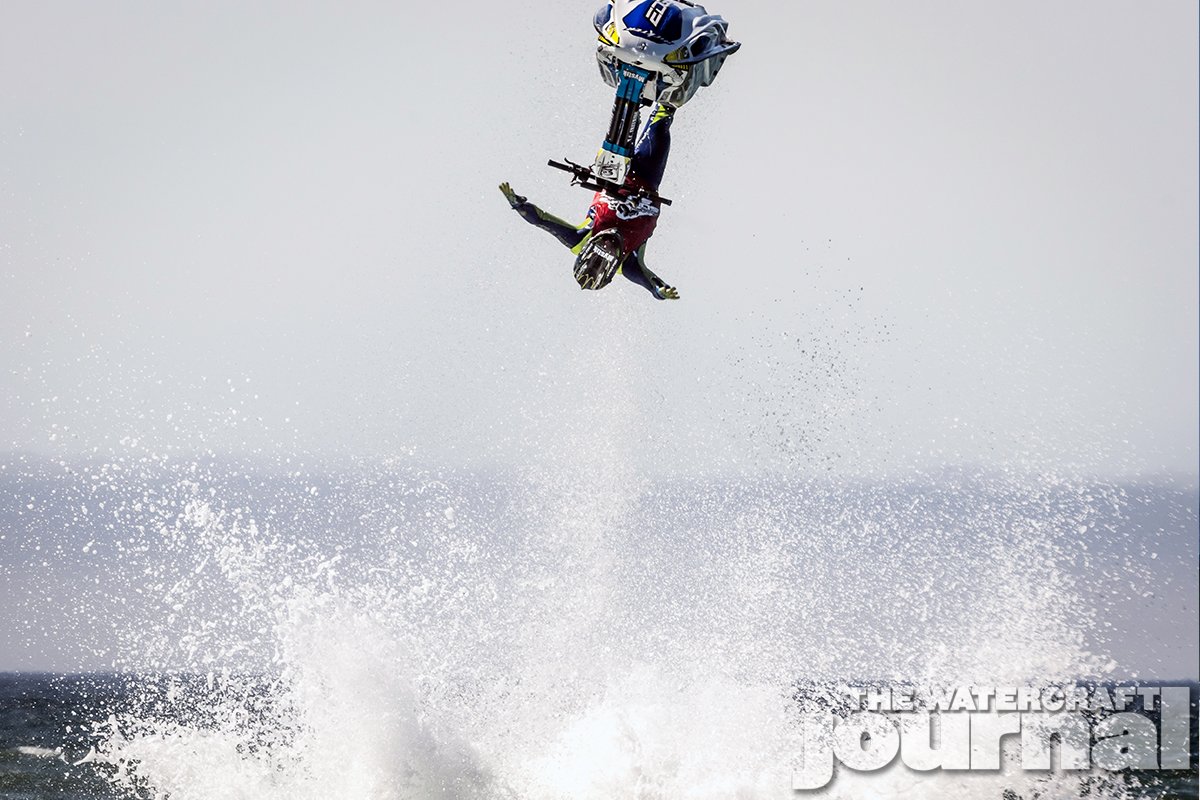
This was not a heat that anyone would have wanted to judge because both riders really put down a solid performance in both surf and air. All the finals were announced at the awards so no one really knew who was to be crowned the victor of Surf Slam until then. It was too close to call. When the announcement was made, the crowd erupted along with all of Abraham’s teammates (including Mark) in congratulatory applause for Abraham and all of his hardwork and stellar riding. Abraham has stepped up his game and his amplitude. It certainly showed at this year’s Surf Slam as he also won the Salty Dog Big Air Showdown with a monster backflip.
Congratulations to all of the competitors and a big thank you to all of the sponsors that supported this year’s Blowsion Surf Slam and made it possible in Johnny’s absence. Another special thanks goes out to the IFWA and staff, the freeride family, On Course Events and their team and to all of the Blowsion staff who stepped up and made this year’s Surf Slam one of the most memorable weekends that many people will ever experience in their lifetime. Cheers to you!
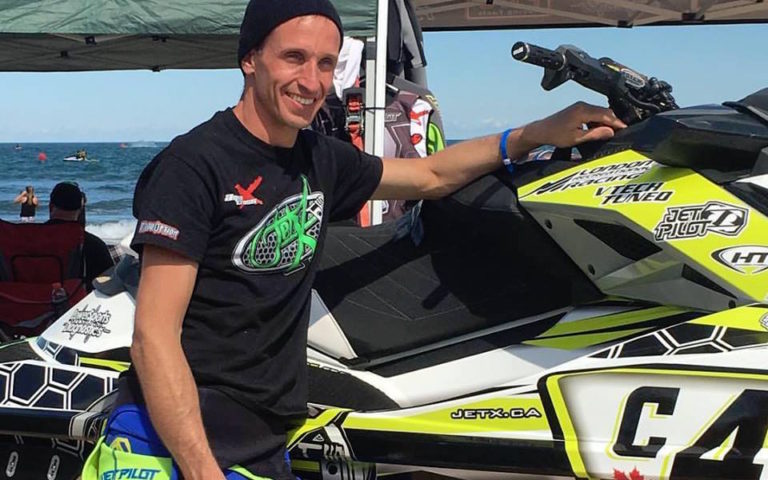
The Watercraft Journal received this race report from JetX’s Adrienne Dalli who wrote:
The JetX Racing Team is no stranger to competition but the latest P1 AquaX Pro-Am Enduro race that took place in Chicago, this past September 10-11, proved itself to be a nail-bitter!
Saturday proved itself to be more of a challenge for both Jay Edworthy and Jonathan Hoffer. In Moto 1, Jay fought back from a 10th place start to take the number one spot before hitting a wave and being ejected from his Sea-Doo RXP-X 300.
Once back on the boat, he fought back and finished with a 4th place. He took a second in Moto 2 on Saturday. Jonathan rode hard and consistently battling both the race course and the water conditions that changed rapidly throughout the day, taking a 10th place in Moto 1 and 5th place in Moto 2.
Sunday was the day to take it home for JetX! Racers were faced with wind and waves and unsettled conditions but both Jay and Jonathan had their sights on the championship podium. Jonathan took a 5th place in Moto 3 placing him 6th overall in the Great Lakes Series and Jay placed first to take the championship spot winning the P1 AquaX Pro-Am 300 Enduro class in the Great Lakes Series.
A special shoutout goes out to BRP for making their RXPX 300 a world class race boat and the entire P1 AquaX Crew for organizing a world class event. JetX would like to thank all of its sponsors that have helped this AquaX Championship to become a reality including Riva Racing, Jet Pilot, Hydro Turf, Moto Option, V-Tech Tuned, Powersportsdiagnostics.com, Snow City Cycle Marine in Toronto!
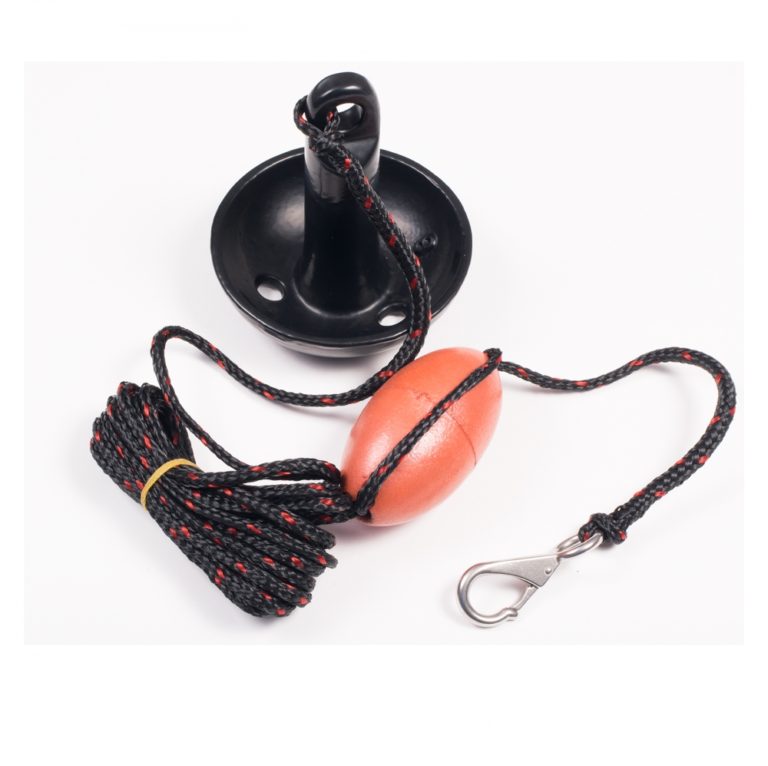
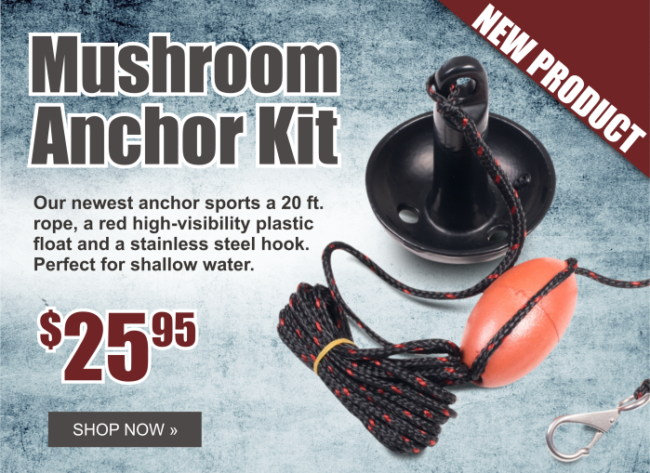
Tools are tools, and tools never lose their value. The Watercraft Superstore (WCSS), the industry’s largest watercraft accessory, apparel and component retail store, just announced a smoking deal on possibly one of the most overlooked tools you should always carry in your runabout: a lightweight anchor. If you regularly ride or plan to ride anywhere where you plan to pull up to a shallow sandbar and relax, you’re going to need some way to hitch up your pony, unless you want to see your ski float away with the current.
Right now, WCSS is offering an 8-pound mushroom anchor along with 20-feet of nylon rope, a bright red high-visibility plastic float, and a stainless steel hook all for the paltry sum of $25.95. Whether you’re cruising with your local club, venturing out on your own, or just looking to pull up to some secluded spot and kick back, WCSS’ mushroom anchor is perfect for anchoring in shallow water. Don’t beach your ski or try to tie up to a sunken tree trunk (we’ve seen worse, folks). Do your PWC right and get yourself an anchor.
And if you’re going to do things right, make sure to pick up an anchor bag! WCSS has two choices of sizes that also come in a variety of colors to match your machine. Each bag has sewn-in handles for easy carrying and emptying. It’s just the type of thing you’ll need to keep your front bow storage clean and tidy.
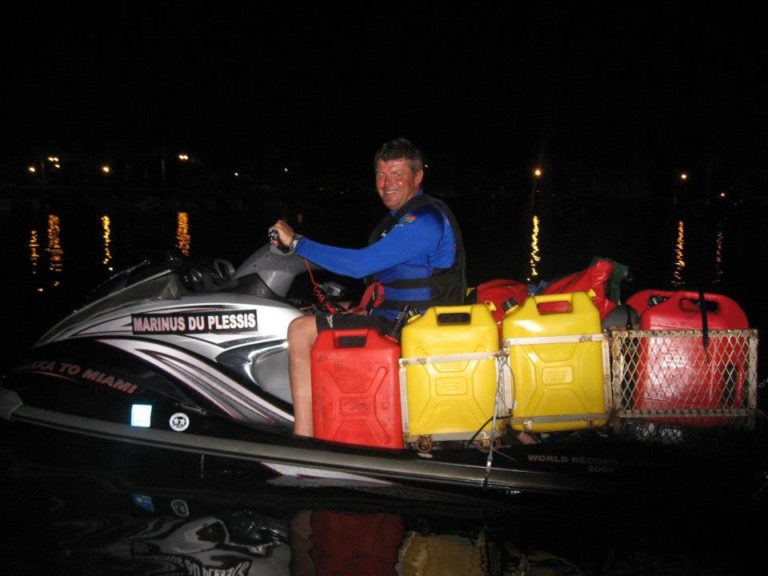
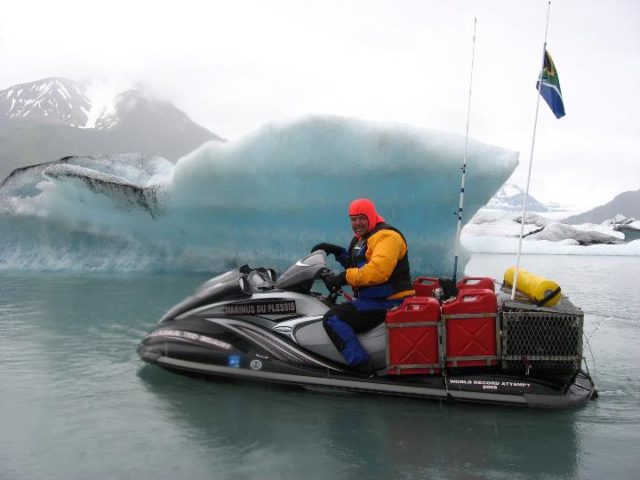
It was September 19, 2006 when South Africans Adriaan Marais and Marinus du Plessis succeeded in completing the longest journey ever recorded on personal watercraft. They rode 10,729 miles in 95 days after leaving the west coast of Alaska and motoring south toward the Panama Canal and faced many hardships along the way. Guinness World Records confirmed the amazing feat on their website.
Marais and Plessis rode their skis ten hours a day averaging a speed of 40 mph. The two faced many challenges including rough seas, frigid waters, engine failures, and the awful feeling of dehydration. None of this stopped them because it was important to finish the task at hand.
A personal Facebook Page provided a fairly simple report of the successful world record achieved by South African’s Marais and Plessis. The two men arrived in Alaska to challenge the Australian world record for the furthest distance traveled on a jet-ski. Unlike the Australian’s, these two men had no support crew or knowledge of navigating the route from Anchorage to Panama. It’s amazing that they made it!
After installing fuel racks on their Yamaha FX Cruisers, they got underway and quickly realized how the Alaskan coast obtained its dangerous reputation. The men camped along the beaches at night where brown bears lurked and a sea lion startled them awake one evening. Another incident occurred when the guys ran aground and wrecked their skis. After repairing them with scrap metal and fiberglass, the anguish continued with the Coast Guard having to rescue them due to a damaged fuel pump that left them at the mercy of the sea.
Central America offered no joy either, except for the fact it would be less likely for them to become hypothermic in the area. The pirate activity, on the other hand, was gnarly! The guys covered distance more quickly with armed pirates chasing them!
Ultimately, Plessis and Marais met some awesome people at every destination and saw many whales, dolphins, and sharks. They were not only stoked about completing the longest ride on personal watercraft, they also enjoyed experiencing nature in this style.
There’s more to attending the annual IJSBA World Finals in Lake Havasu City, Arizona than merely racing (although that’s the major reason why to be there). It is, for all intents and purposes, the single-largest gathering of personal watercraft enthusiasts in the world, and brings out thousands of spectators and hundreds upon hundreds of racers to the Crazy Horse Resort on the shores of the most famous lake in PWC history.
To hammer down yet another reason to go, Sea-Doo is rolling out the red carpet in many more ways than just filling the field with top notch racers: in addition to competitors like Dustin Farthing, Erminio Iantosca, Gyorgy Kasza and Mohammed Burbayea tearing up the buoy course (as well as offering a very cool – and free – autograph signing session), Sea-Doo will also host its sixth annual Ultimate Owners Ride, as well as offer demo rides of the all-new Spark TRIXX, and cool Beach Party Zone for all to enjoy.
Here’s the original release: Valcourt, QC, CANADA– September 12, 2016 – BRP has plans for a full Sea-Doo Life immersion at this year’s IJSBA World Finals with the Sea-Doo Beach Party Zone, Ultimate Sea-Doo Owners Ride VI, and Sea-Doo X-TEAM championship pursuits. The Sea-Doo X-TEAM is looking continue building their performance legacy by adding to their five-year string of Pro Open and Pro GP World Championship titles. The X-TEAM is led by defending Pro World Champions Gyorgy Kasza and Mohammed Burbayea, and joined by 2016 Pro Watercross Tour Pro Open and Pro GP champion Dustin Farthing, all on Sea-Doo RXP-X models.
The IJSBA World Finals is taking place October 3-9, 2016 in Lake Havasu City, Arizona and is renown as the largest watercraft specific event in North America where the best racers from around the globe converge to compete for world racing championships. The event takes place at Crazy Horse Campgrounds and draws 15,000 spectators every year. BRP is the leading supporter of watercraft racing through the Sea-Doo X-TEAM Bounty racer contingency program and the Sea-Doo X-TEAM Promoter support program.
The Sea-Doo Beach Party Zone will include a showcase of select new 2017 Sea-Doo watercraft, SPARK TRIXX model test rides, X-TEAM autograph sessions, and Sea-Doo owners VIP viewing area. 2016 Sea-Doo World Finals efforts will include:
o #SEADOOLIFE Beach Party Zone – The Sea-Doo Life Beach Party Zone headlines the IJSBA World Finals’ Performance Alley with the new RXP-X 300, GTR-X 230, SPARK TRIXX, GTI SE models and more. Attendees will also have the opportunity to talk to product experts, take home Sea-Doo giveaways and become Instagram famous at the SPARK TRIXX photo booth.
o #SPARKSOMEFUN TRIXX-PERIENCE – The Sea-Doo Events Team will be offering test ride, freestyle session on the new SPARK TRIXX model for a limited time on Friday, October 7th and Saturday, October 8th on the west end of Performance Alley at the World Finals event site. Visit the #SEADOOLIFE Beach Party Zone on-site for information.
o SEA-DOO ULTIMATE OWNERS RIDE VI – The annual Sea-Doo Ultimate Owners Ride VI will join the world’s largest personal watercraft event on Friday, October 7th. Sea-Doo owners can enjoy an action filled Sea-Doo weekend by experiencing one of the most beautiful, one-day, leisure boating experiences in North America. The ride will depart from Site Six Launch ramp in Lake Havasu City at 8:30 AM and include a ride roughly 30-miles up the Colorado River to Pirate Cove Resort for a sponsored Sea-Doo lunch stop and exclusive VIP seating on pro finals day at the Sea-Doo Beach Party in performance alley. Open to Sea-Doo owners only*, participants will get a special owners ride event hat, wristband, meal, and be eligible for Sea-Doo giveaways. For more information visit HERE.
o SEA-DOO X-TEAM AUTOGRAPH SESSIONS – Sea-Doo Fans will have the opportunity to meet the best Sea-Doo watercraft racers in the world and take home a signed X-TEAM racer poster. Select racers will include; Dustin Farthing, James Bushell, Gyorgy Kasza, Mohammed Burbayea, Erminio Iantosca, wounded warrior veteran and paraplegic athlete, Anthony Radetic, and more. Autograph sessions will take place Saturday and Sunday midday at the #SEADOOLIFE Beach Party Zone and Kokomos nightspot during the Saturday night, “Under the Bridge” show.
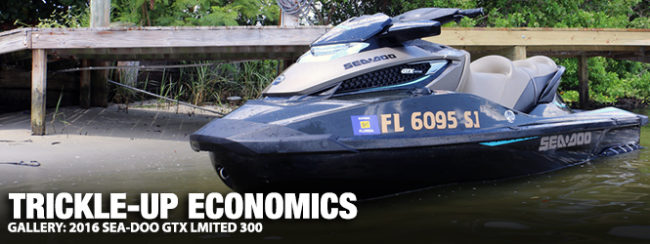
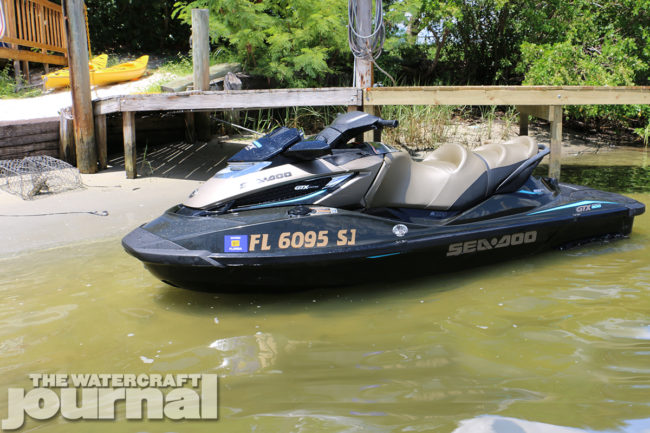
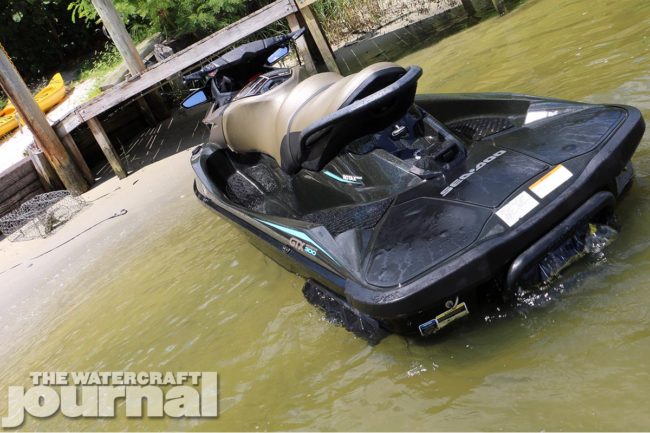
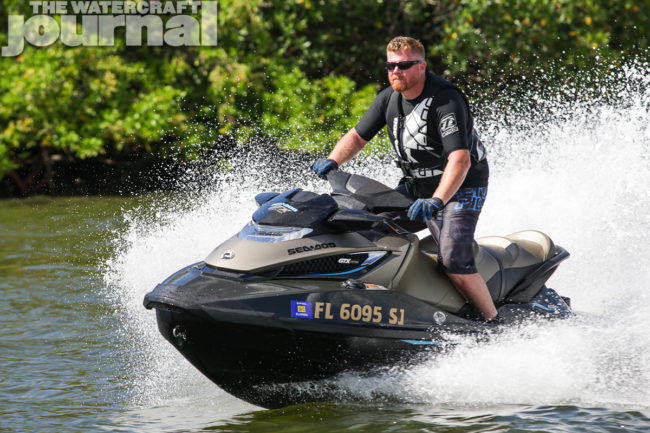
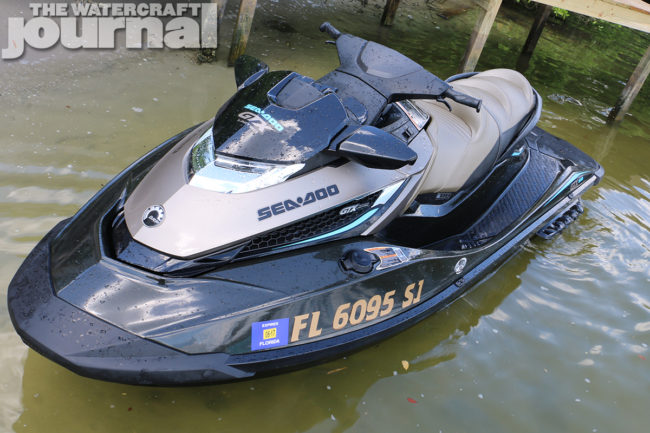
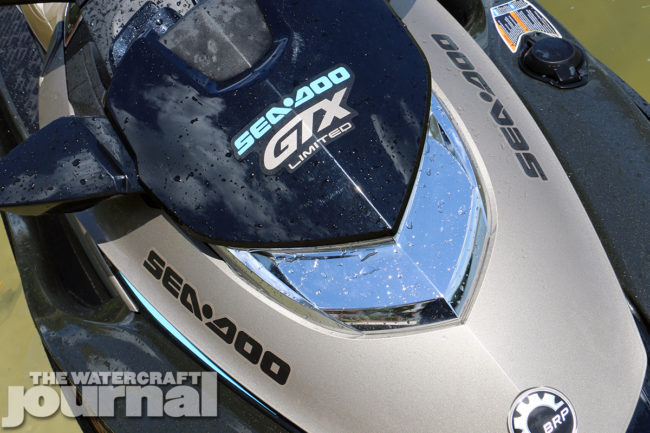
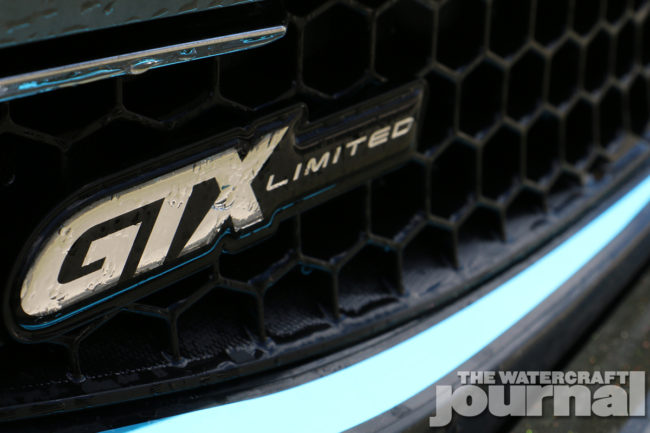
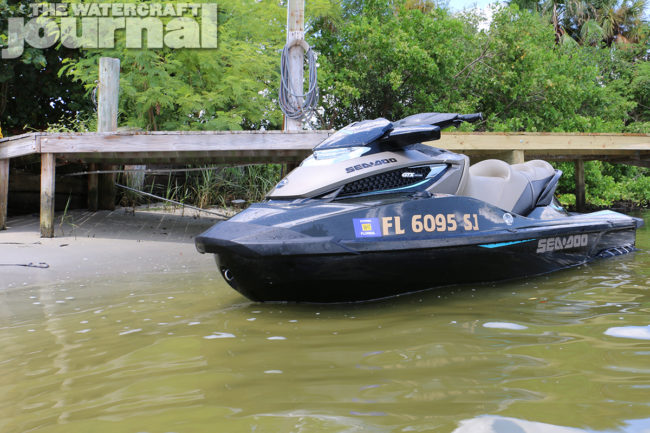
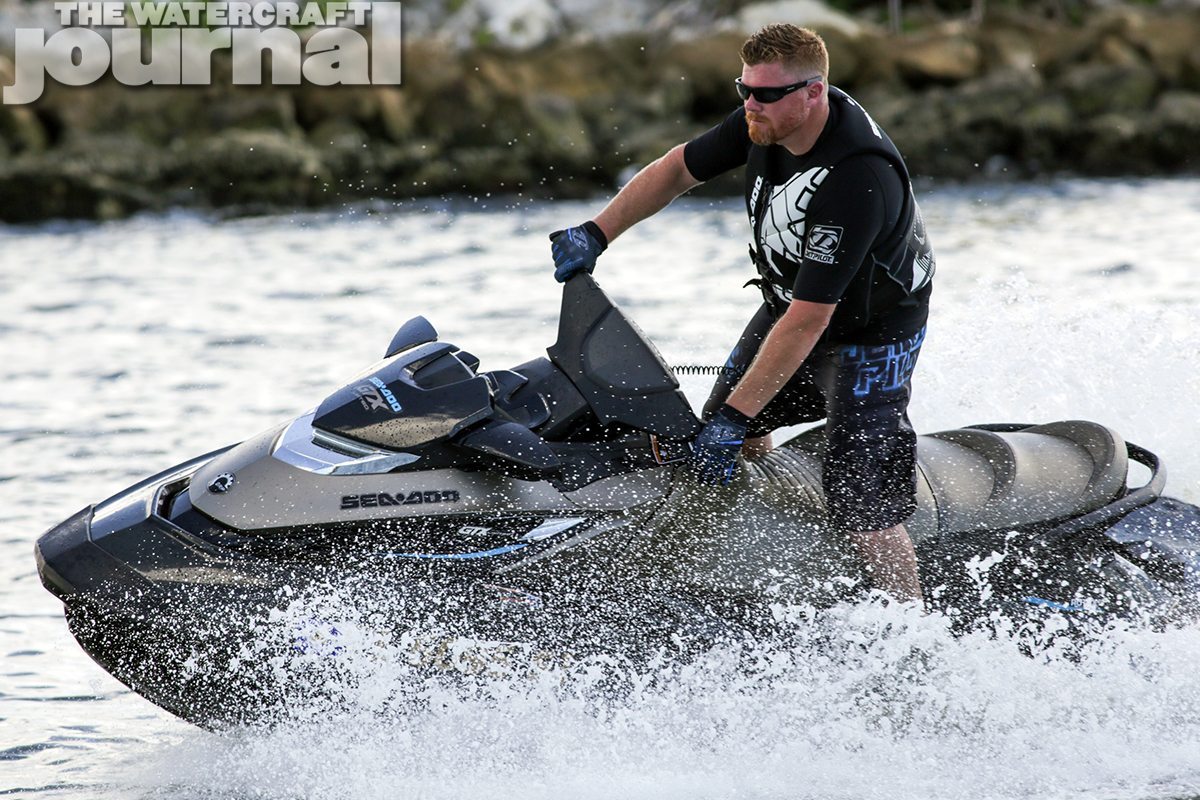
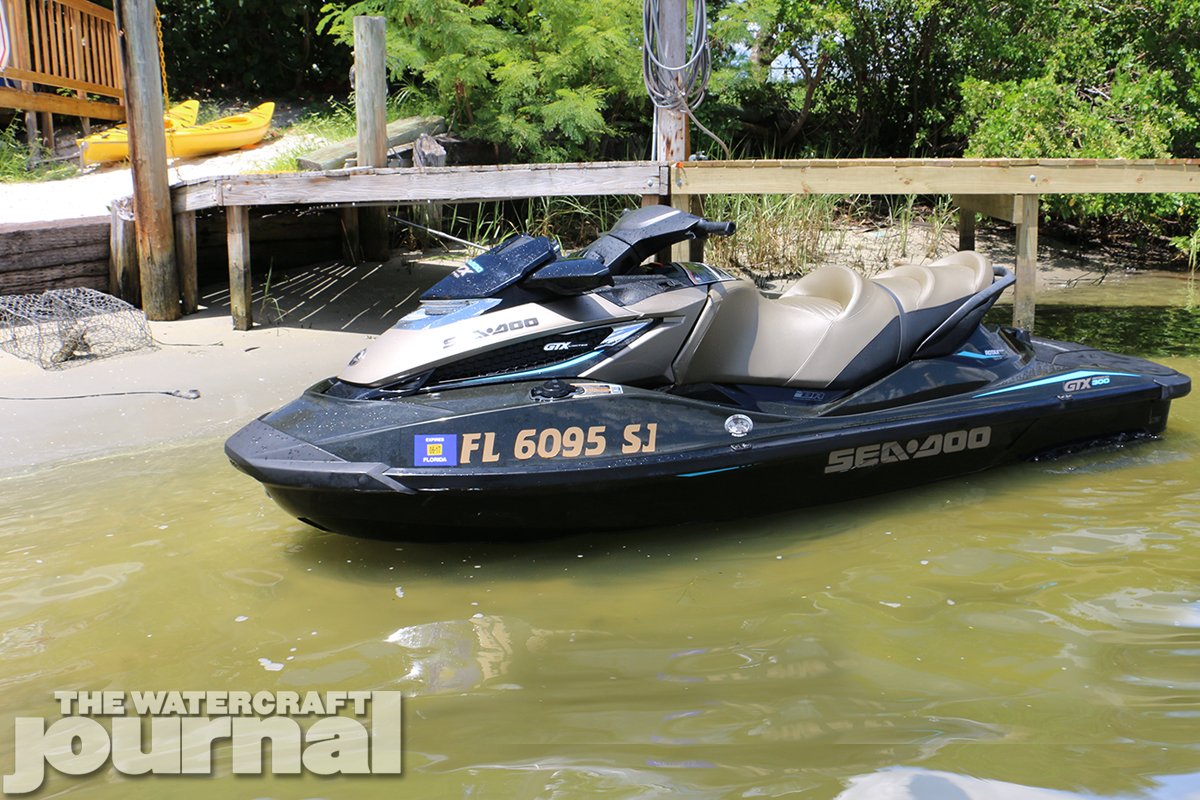
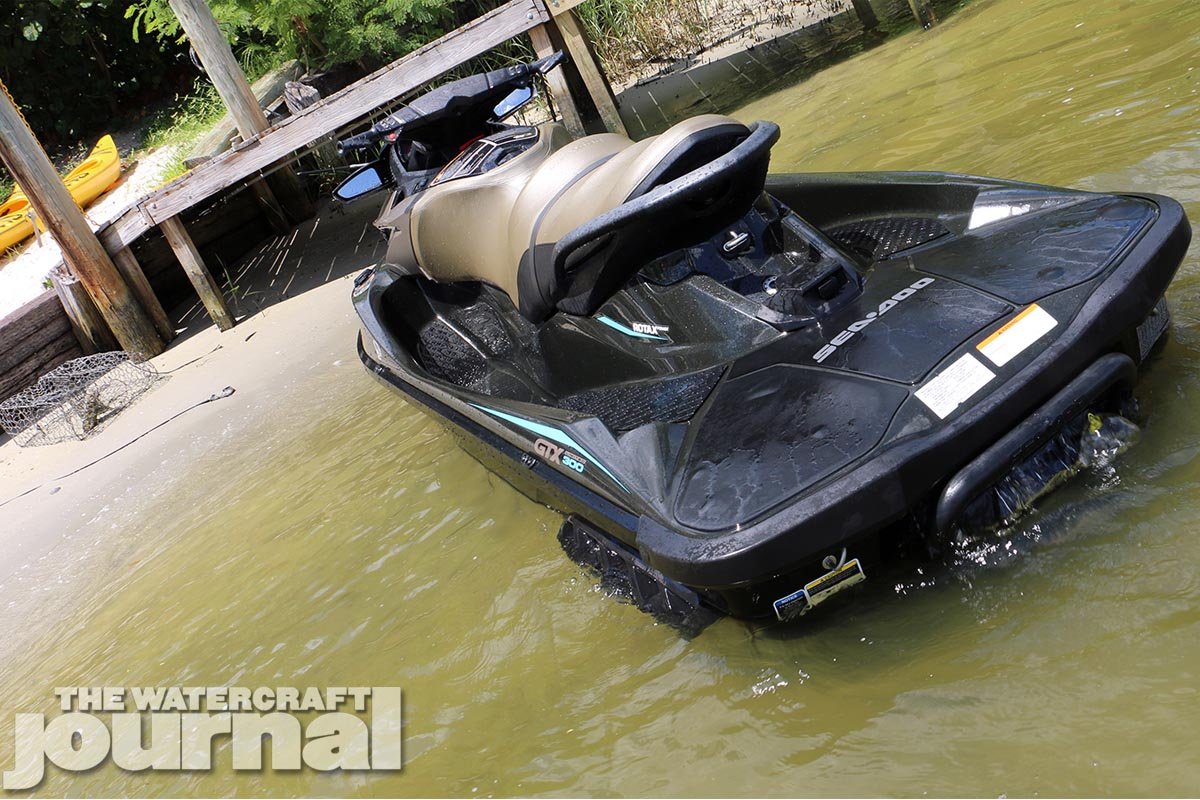
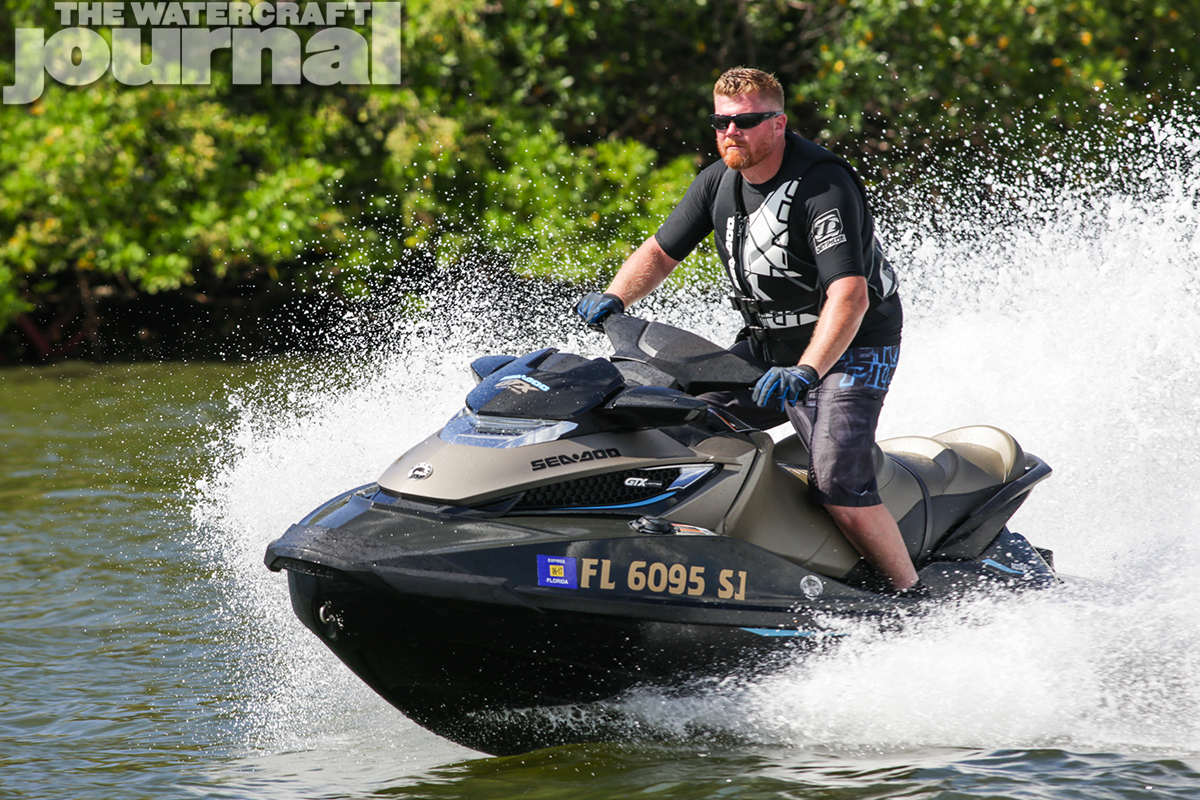
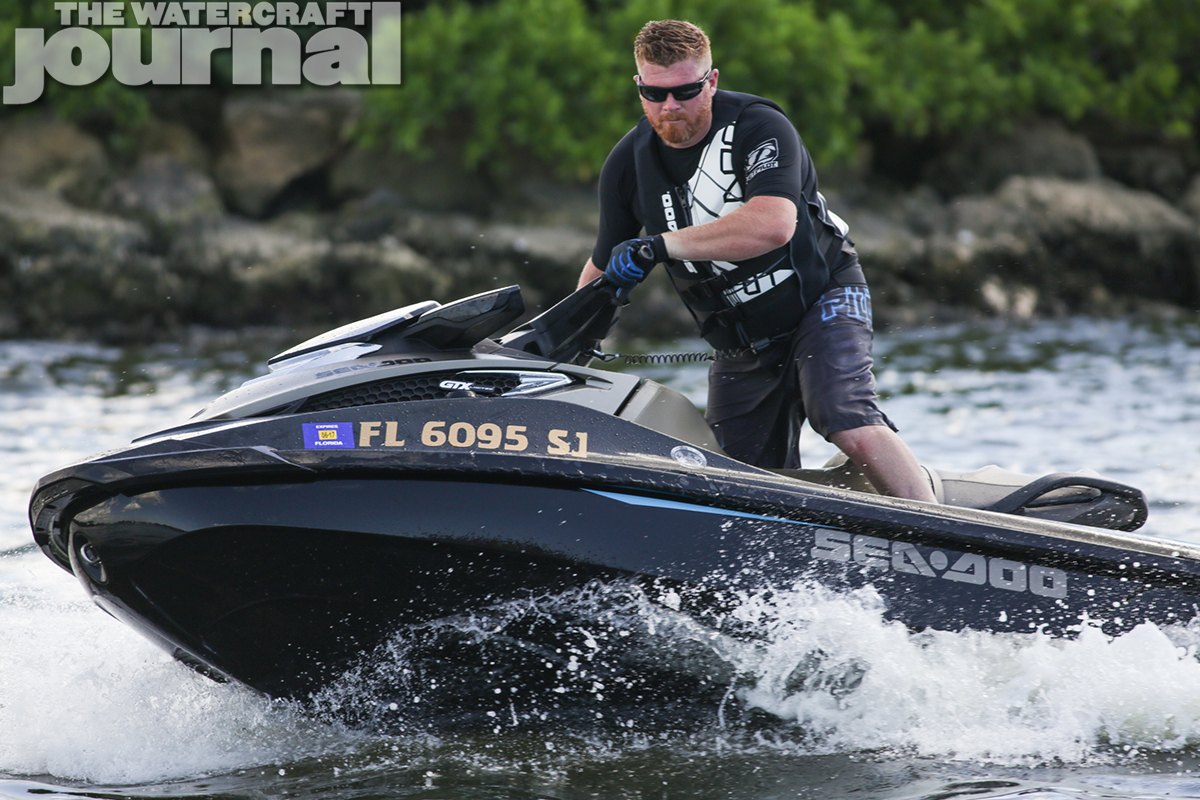
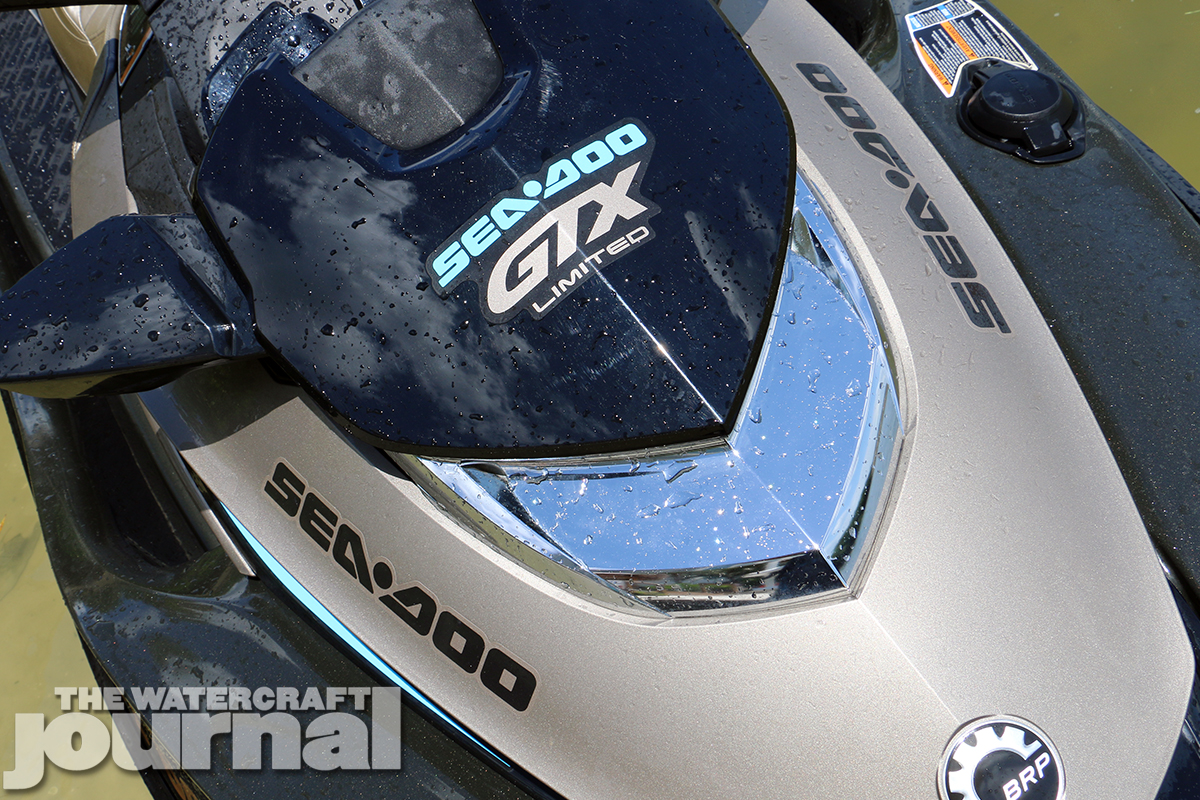
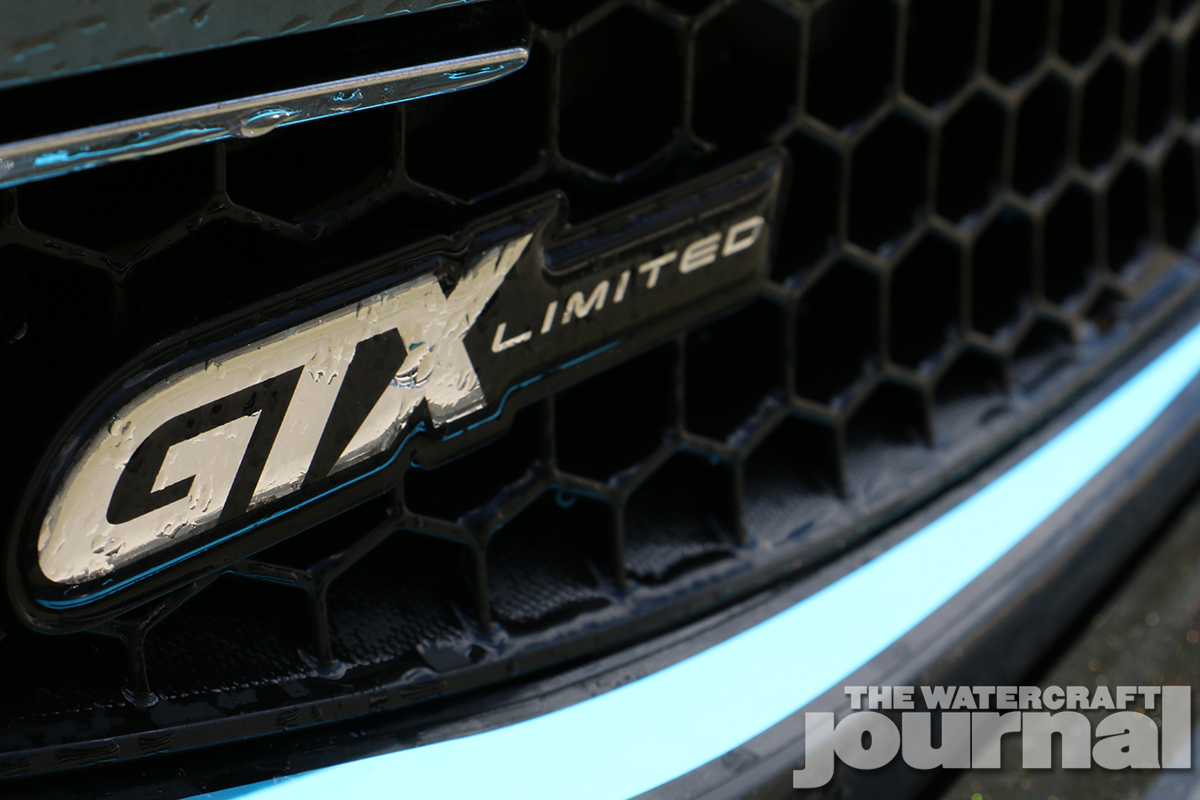
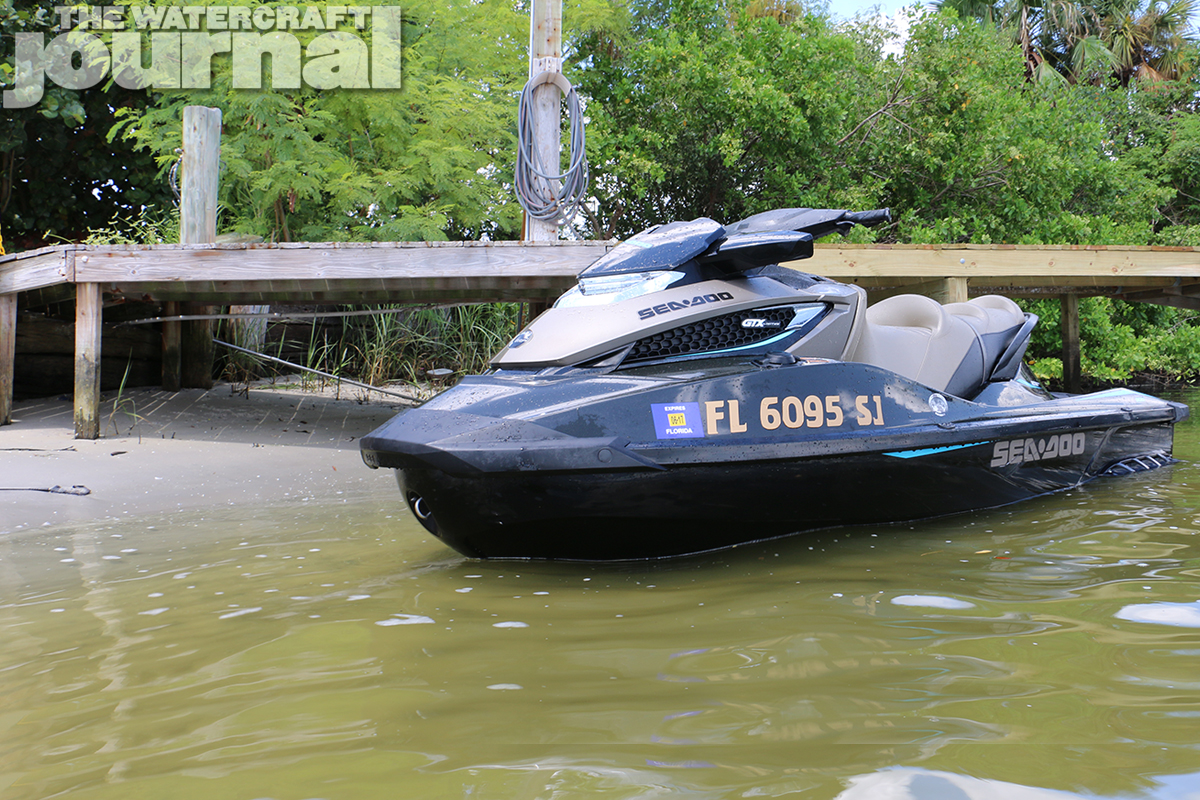
It’s hard to deny that the 2016 Sea-Doo GTX Limited 300 is the culmination of a long fruition of 8 years of product development, technological achievement and marketplace-based refinement. So much of this machine exists because of other models before it that it’s nearly the successor to a near-decade’s long evolution of product. And while this might sound like we’re gushing, there are some very good reasons to heap some serious praise onto what is effectively the most luxurious performance Sea-Doo that the brand could muster.
In 2008, with the advent of the brand’s Intelligent Suspension (iS) innovation also came its S3 hull. The stepped design pulled from offshore “cigarette” race boats, incorporating three escalating tiers with an elongated V-hull (139.2-inches long). This was done to help break suction for better speed and turning. The deeper keel permits the GTX to glide through low to moderate chop with ease. This same hull graced both the performance 3-seater RXT and luxurious GTX models, be them with suspension or without, and proved itself a respectable contender in both offshore and rough water riding.
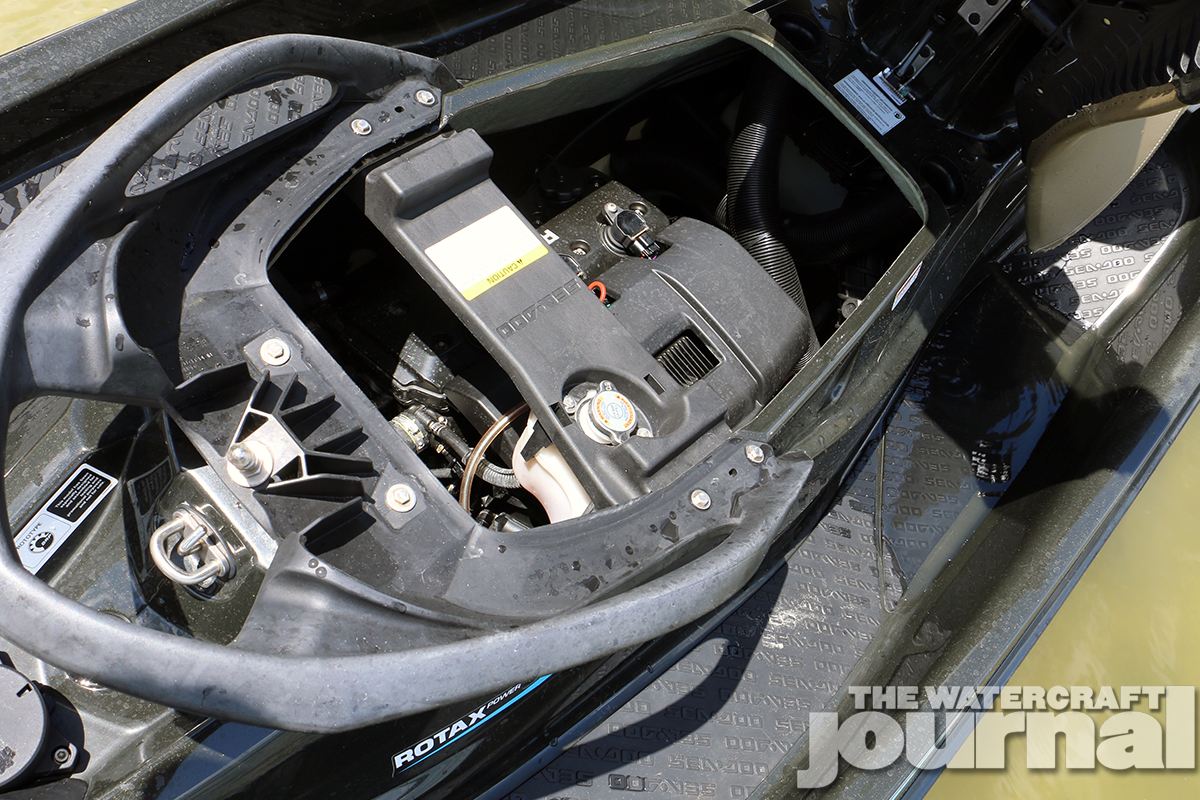
With the advent of the Spark and its ACE (Advanced Combustion Efficiency) engine design in 2013 gave way to the subsequent redesign of the 1503 4-Tec 3-cylinder last year, birthing the 2016 GTX Limited 300. Wielding the mightiest powerplant the watercraft maker has ever offered, the 1.6-liter four-stroke ACE 300, a heavily re-engineered version of the outgoing plant, the GTX’s the new 1630.5cc features the same 100mm bore of the 1503, but an increased 69.2mm stroke (over the previous 63.4mm), providing 9-percent more displacement, and subsequently, 15-percent more power.
Redesigned pistons are bigger but 20 grams lighter and feature longer, coated skirts, and ride atop lighter, shorter connecting rods. Key to the ACE redesign is the use of a coated cylinder wall, not a pressed-in steel sleeve. A new plasma coating (applied via a proprietary thermal spraying process) was exclusively developed by Rotax’s team in Gunskirchen, Austria, to replace the heavy steel sleeves, not only cutting engine weight, but improving surface durability and heat transference, all while minimizing friction.
The new ACE engine also touts a redesigned single-camshaft valvetrain configuration: The cylinder head has been redesigned with a new and more efficient combustion chamber quench, larger injectors, and direct-ignition high-intensity coils that produce double the ignition energy as before; providing a hotter, cleaner and more efficient burn. Combined with an additional cooling circuit, a hybrid dry sump oiling system, larger heat extractor, and a new, larger intercooler that is 2.2-times more efficient with over double the cooling capacity, totals up to 33-percent improved engine cooling.
But most dramatic was the complete redesign of the newly minted “maintenance-free” centrifugal supercharger. Producing an impressive 30-percent more boost (18psi) via a more efficient, compact wheel that spins 8-percent faster at 47,000rpm, the new wheel features double the blades of the outgoing design – increased from 16 to 32 – and features a revised drive shaft with 8 steel washers and two composite bearing packs at either end of a near inch-thick shaft.
The result of all of this is a dramatic increase in throttle response over the outgoing GTX Limited 260, providing the luxurious performer halting acceleration and an ever-escalating torque curve that peaks at a United States Coast Guard-mandated 68mph (we reached a best sustained speed – not peak – of 68.4mph at 7,700rpm). Remember, this is a big craft – when dry, the GTX Limited 300 tips the scales at 909-pounds – and with a full 15.9-gallon tank, pushes closer to 1,200-pounds when laden with a rider and a few pounds of cargo.
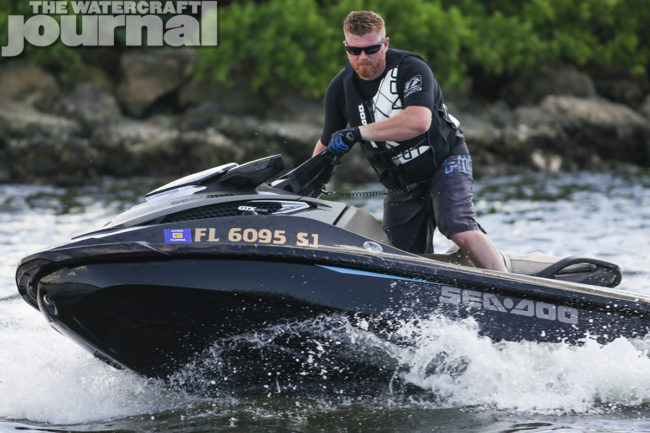
The GTX Limited is also the recipient of Sea-Doo’s class-leading ergonomics, specifically its Ergolock seat, first introduced to the public on the race-bred RXP-X in 2012. The Ergolock seating begins with a narrow saddle with lateral coves where the rider can grip with their knees, helping reduce fatigue in the hands, arms and shoulders particularly in turns and through chop. Although without the canted foot wedges found on the X-series performance craft, the Ergolock seat is greatly beneficial if only for the seat being pinched at the knees saving one from riding wide in the saddle.
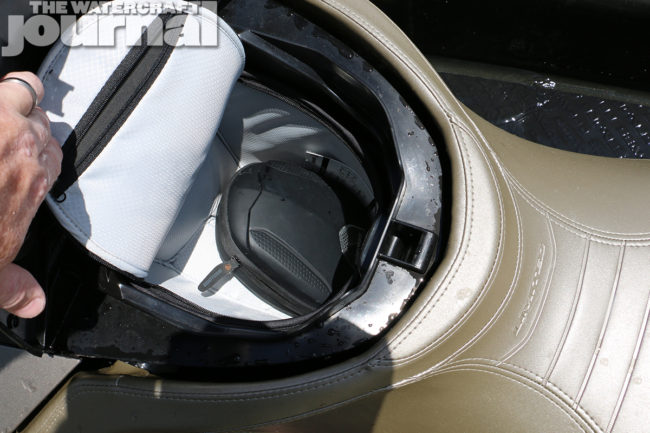
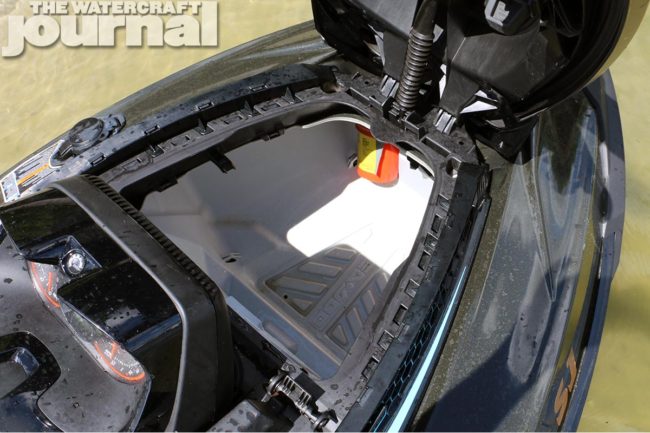
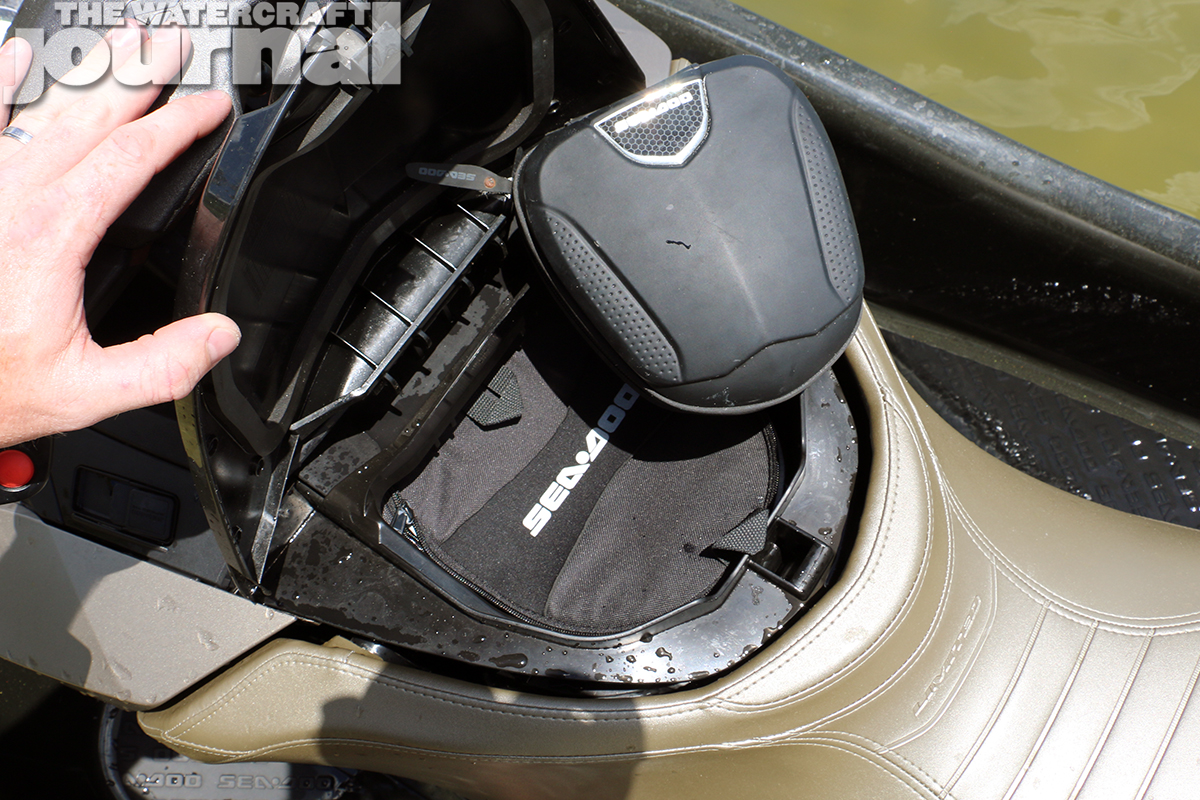
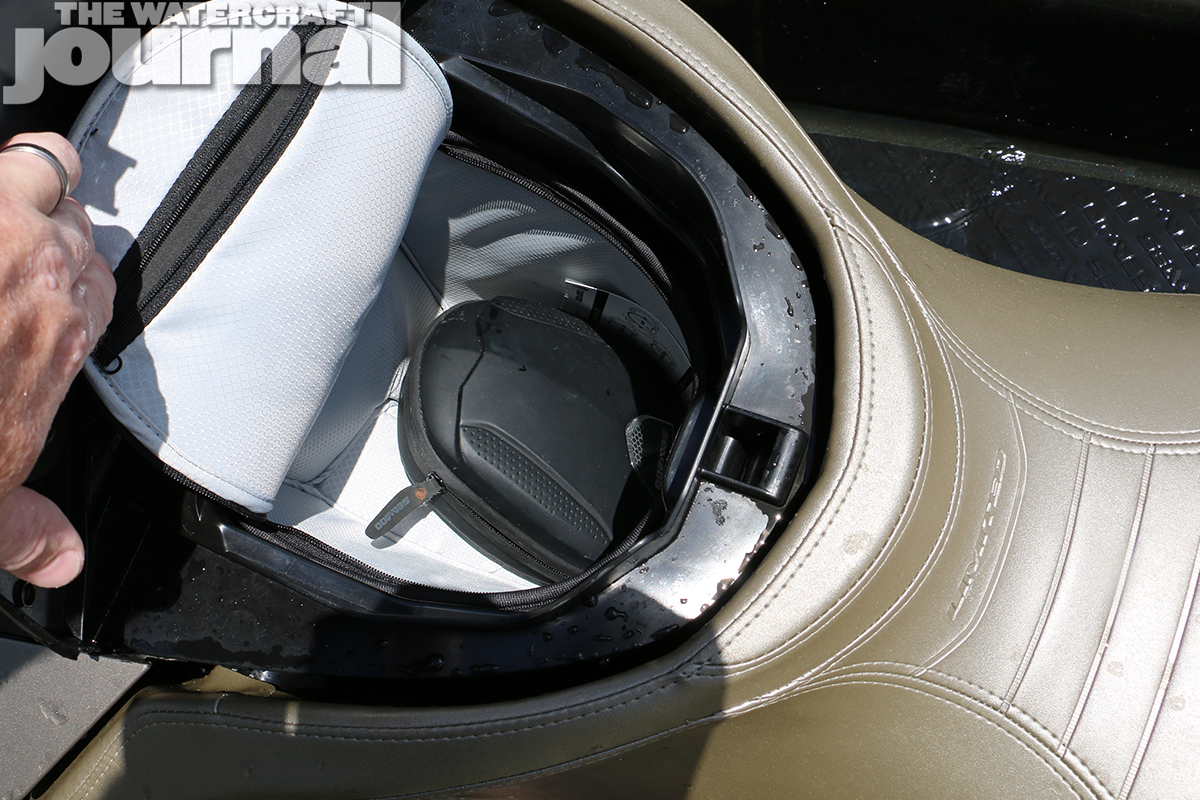
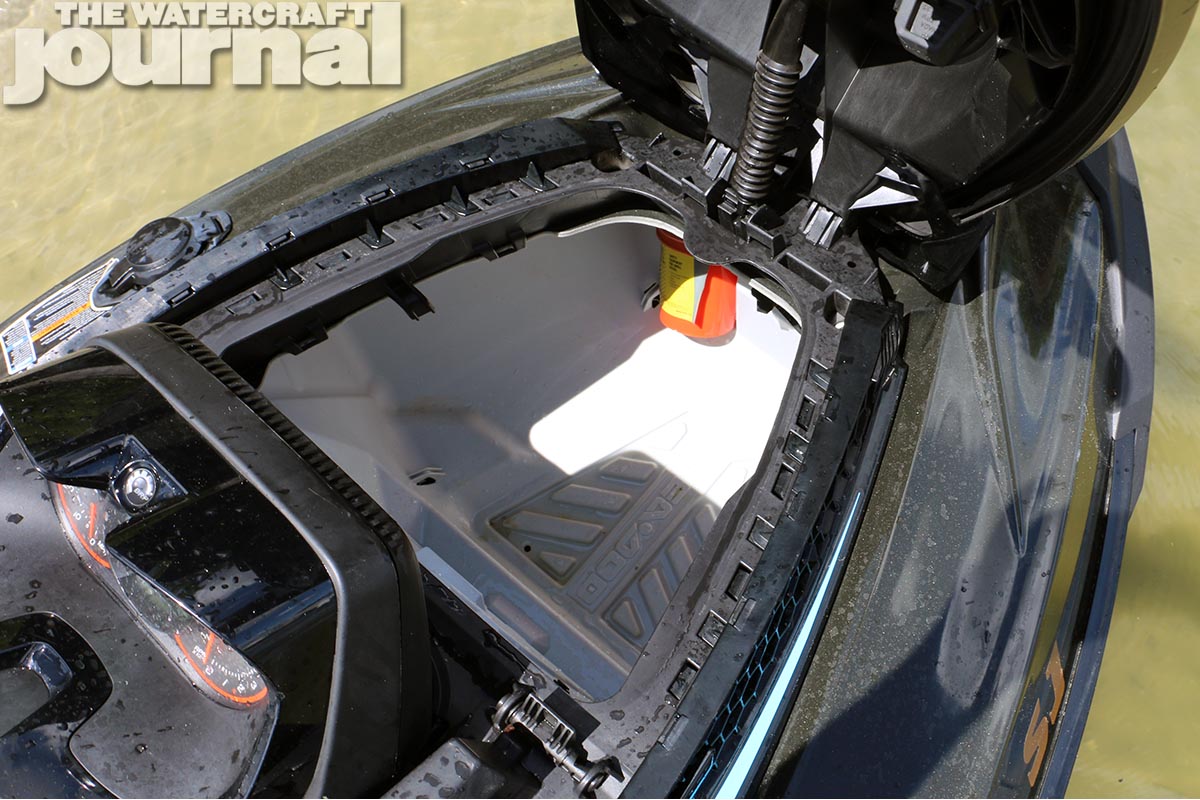
The addition of the Ergolock seat also had another happy benefit: a surprisingly massive glove box. Add to that the GTX’s removable watertight storage bin, and the Limited increases its storage capacity over three times over the previous generation — 42.8 gallons in total. Second and third passengers are not without, as the single-piece seat is stepped in a stadium fashion, with each spot raised above the first. Yet, the push for ergonomic superiority doesn’t end there:
Across the board, all models receive Sea-Doo’s innovative palm rest hand grips. True to their name, a padded blade graces each grip, allowing the palm to rest, and taking tension from the wrist. And as first developed back in 2008, the tilt steering not only allows for four angles of adjustment, but incorporate the engine gauge cluster into the steering mechanism, bringing the dash up and down with the bars for maximum visibility.
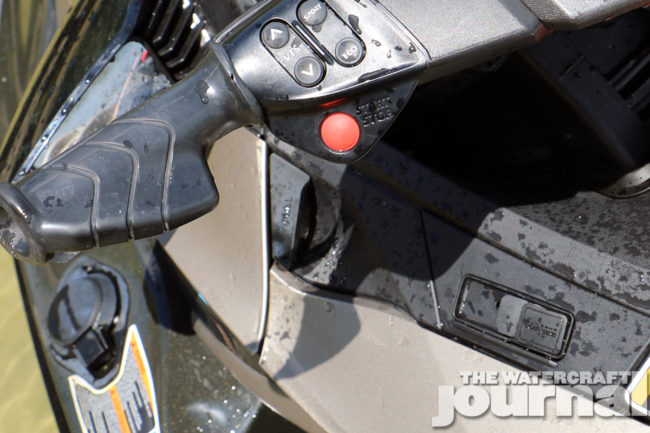
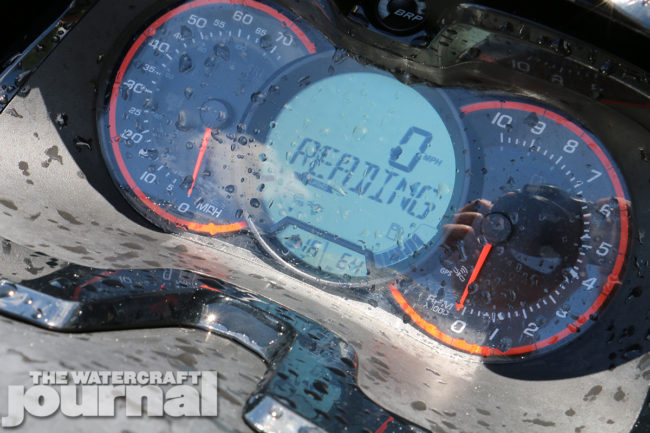
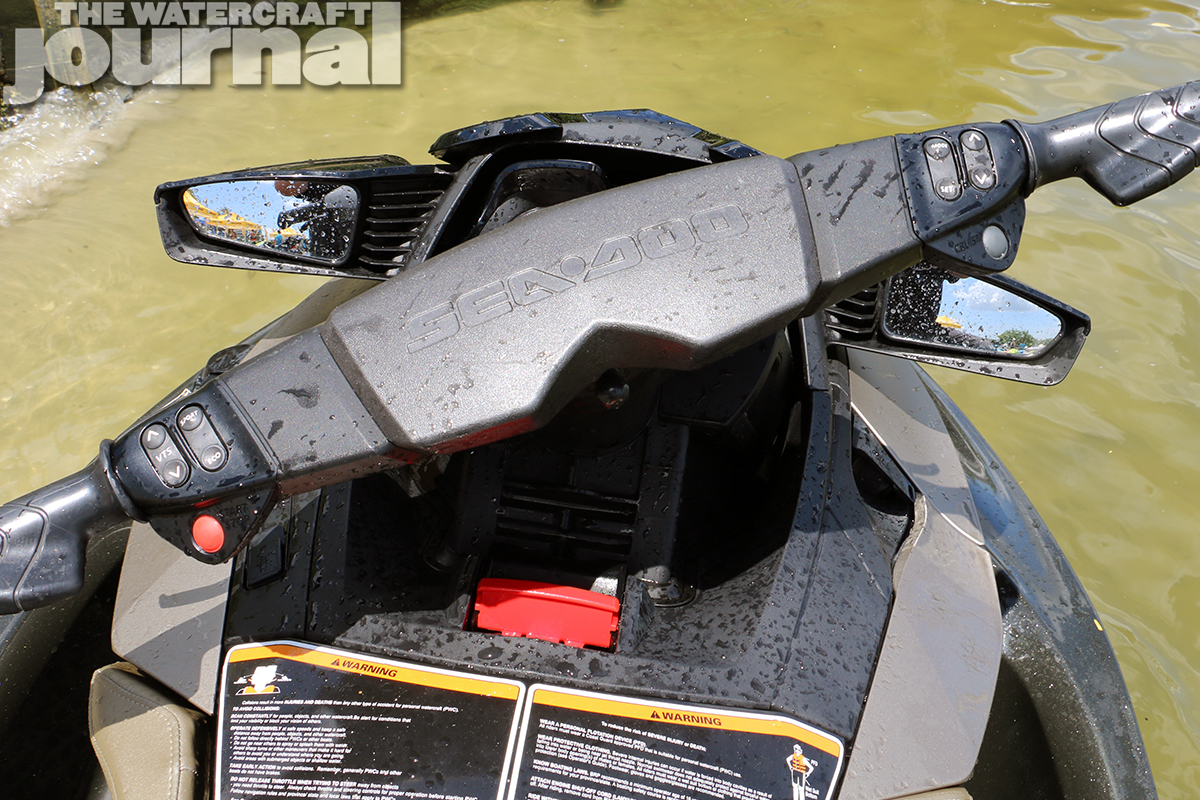
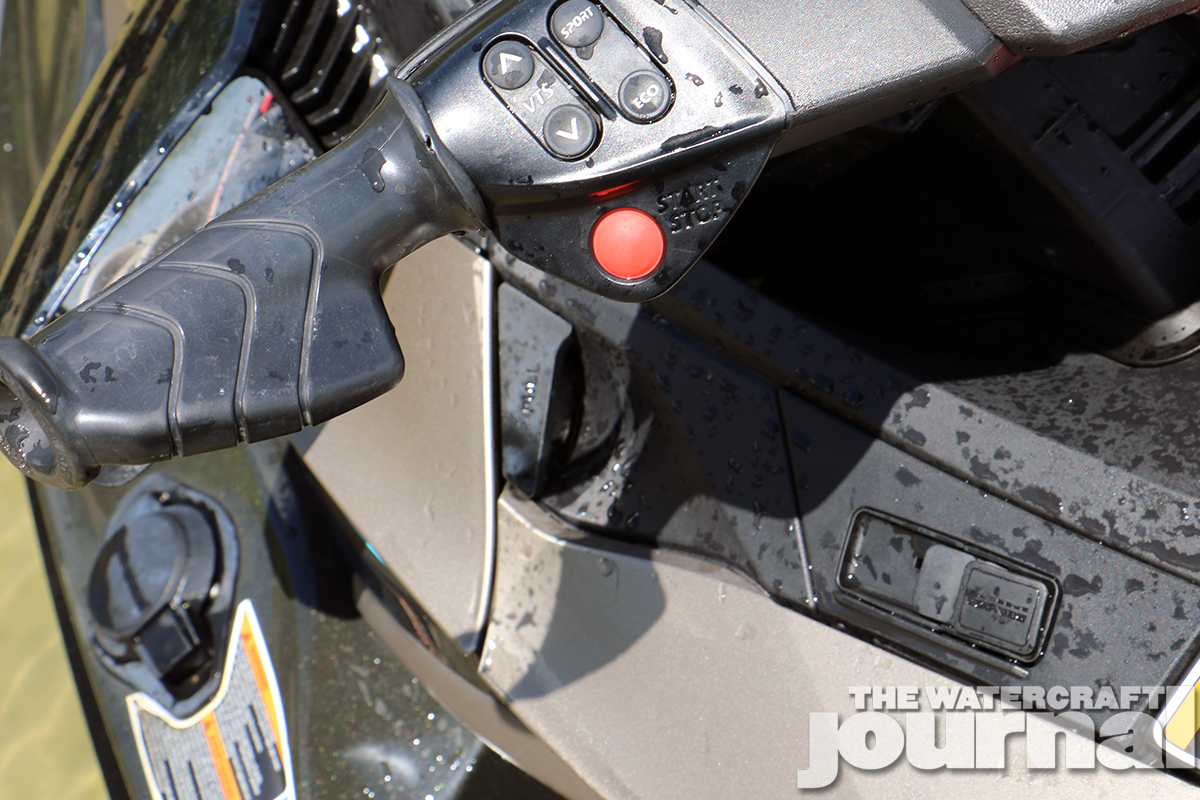
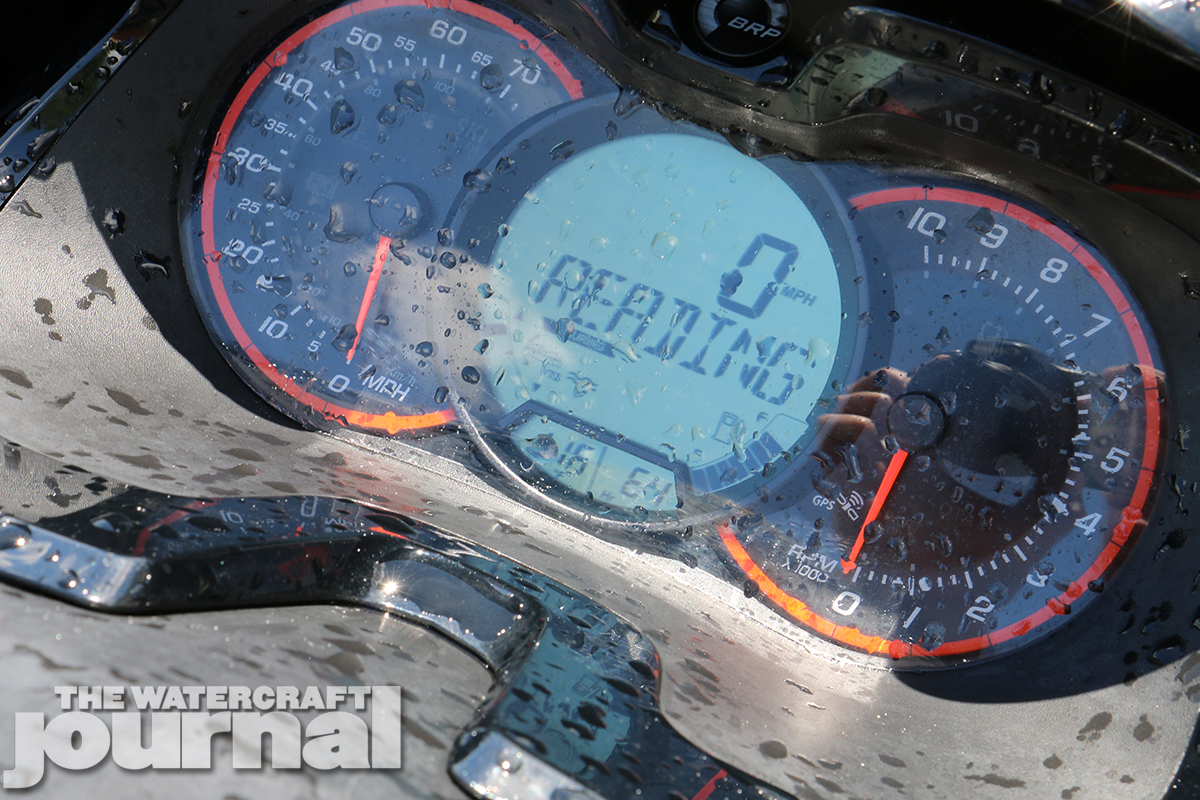
Speaking of which, Sea-Doo’s Interactive Multifunction Digital Information Center — a three-gauge cluster — speedometer, a LCD customizable multifunction digital screen, and tachometer — not only communicates to the driver performance and engine conditions, but the GTX’s VTS preset, fuel level and rate of consumption (both immediate and average), hour meter, compass, clock, depth gauge, and F-N-R indicator. Moreover, it also displays the craft’s iTC setting (ie. touring mode, sport mode, ECO mode).
iTC, or Intelligent Throttle Control, provides the GTX Limited 300 with three engine curves (as well as Cruise Control). Beginning in its default Touring mode gives the GTX access to full throttle, but curbs the ACE 300’s potential for hard acceleration, which the Sport mode provides. Throttle response is radically improved and makes for a more thrilling ride, but again, isn’t ideal for two-up cruising. Eco mode reduces the GTX’s top speed and acceleration, minimizing boost and optimizing fuel consumption.
Another carryover from the Spark is the incorporation of the second generation of Sea-Doo’s iBR (Intelligent Brake & Reverse) system. The electronically activated braking and reversing system can help stop forward motion 160 feet sooner than a non-equipped machine, and does so moderately and without jolting the rider forward or over the handlebars. Not only that, but it also allows for slow controlled maneuverability in launching or docking, with the reverse bucket deployed in the neutral position when starting.
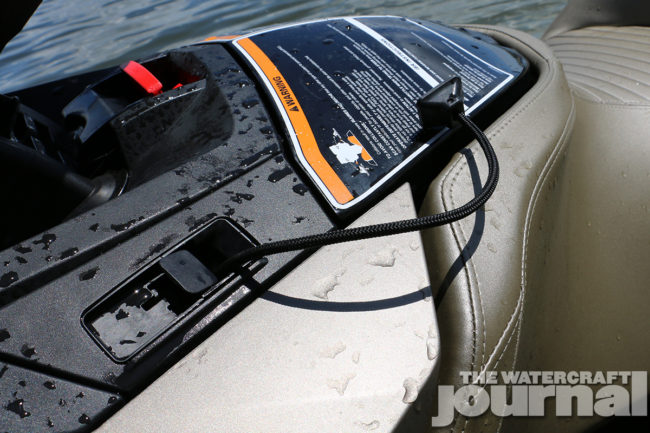
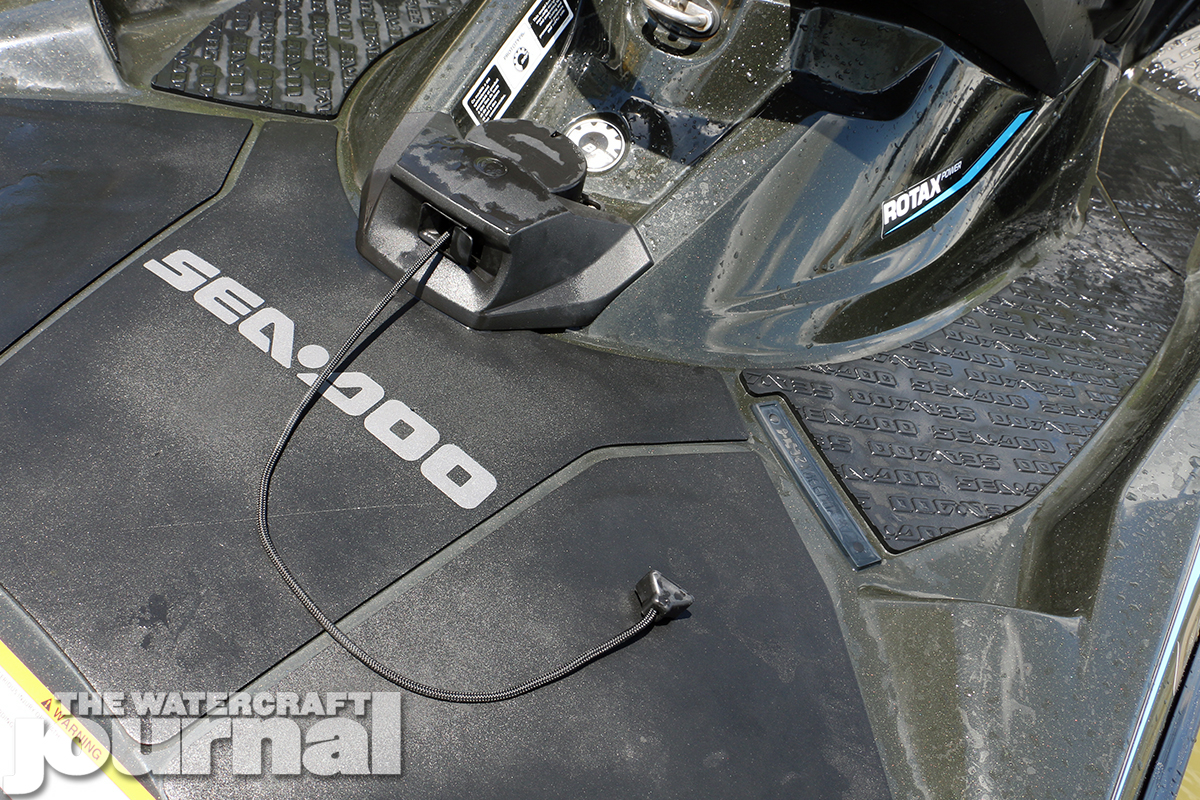
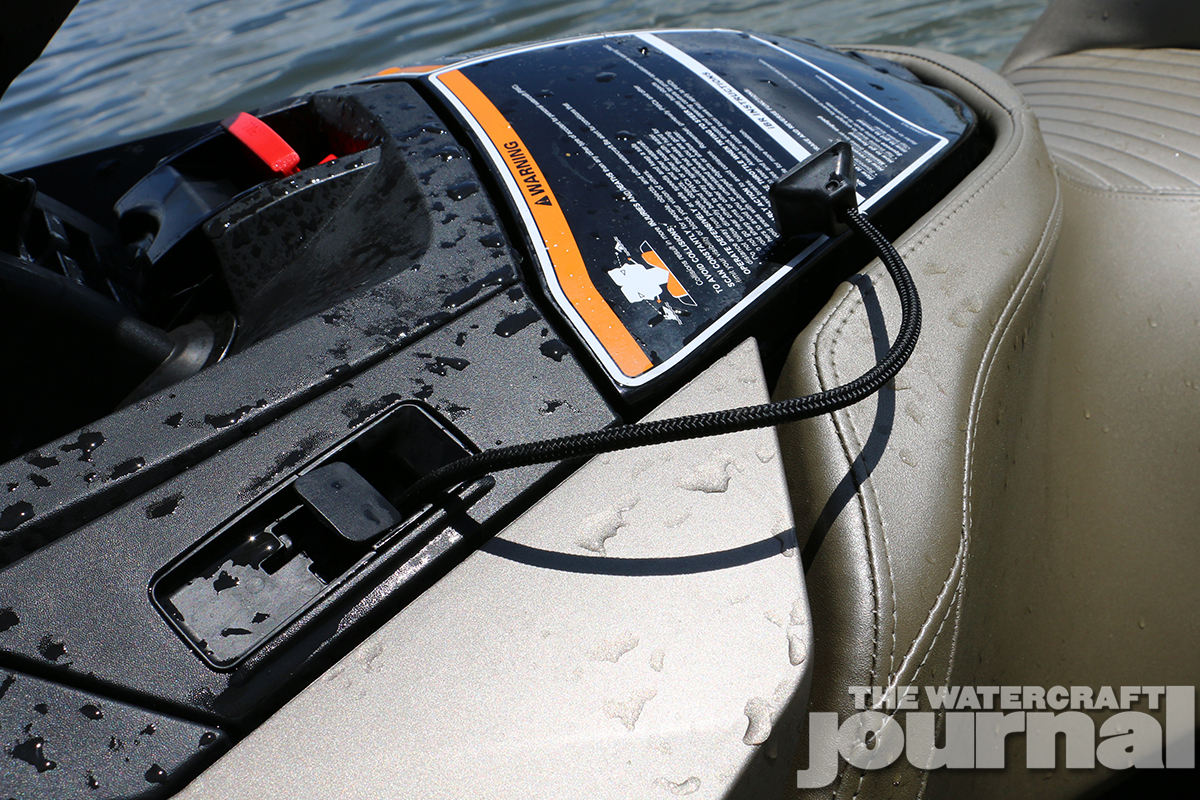
In addition to the GTX Limited’s exclusive Jet Black Metallic and Deep Pewter Satin coloring, the 300 comes equipped with a long list of features and accessories, including Sea-Doo’s hugely useful and innovated speed ties fixed to both the fairings and rear swim platform, a glove box organizer and hard-backed case, watercraft cover, a removable dry bag, safety kit, and additional digital gauge functions like the aforementioned depth finder and water temperature.
In all, the complete package comes in at $15,999, the identical price to the brand’s biggest competitor Yamaha and their SVHO-powered FX Cruiser. Yet, when weighing the vast amounts of digital functions, accessories included with and incorporated in the vehicle, the brutish 300-horsepower (never before has a Rotax engine been as close to its advertised horsepower. Tests have consistently produced power within 1-percent of the noted 300, with EPA/CARB tests resulting in a KW-converted 296 horsepower), and other innovations baked into the 2016 Sea-Doo GTX Limited 300, it’s not too hard to see its favorability in the luxury market.
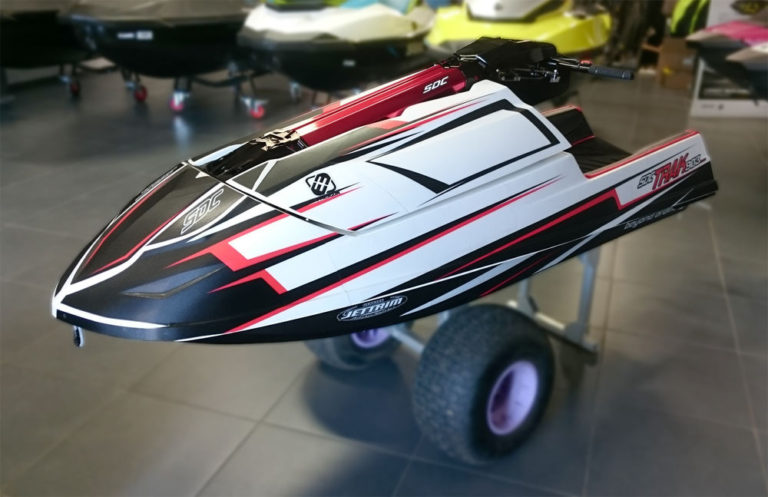
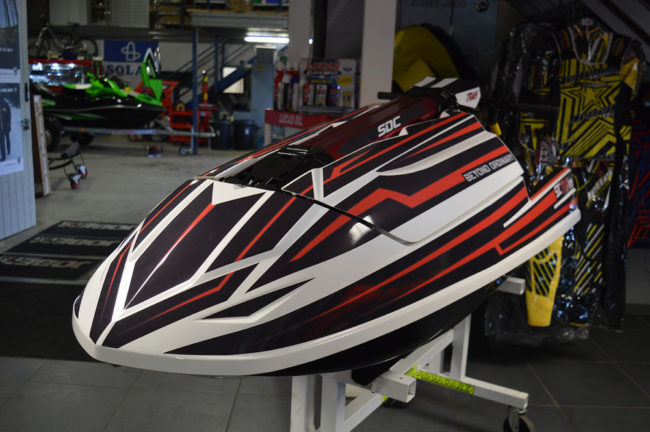
Now with the advent of the new Kawasaki SX-R 4-stroke standup (with the official release scheduled for the World Finals this upcoming October) there’s been a massive resurgence of interest in standups whether for recreation or racing. And as Sea-Doo has absolutely zero interest in building a standup (when Spark sales have singularly accounted for 30-percent growth in new product sales), the only way we’ll see a Sea-Doo powered standup is through aftermarket manufacturers like Sea-Doo Centre.
Unfortunately, building a SDC Trak 903 requires the complete evisceration of a Spark, so you’re not just paying for a new ski, but the sacrificial Spark as well. Nevertheless, interest is high for this ski, and Australia’s Newcastle Jet Ski Centre knows it. And according to OZPWC.com, that’s why they recently announced a demo/ride day for interested parties to test ride Sea-Doo Centre’s normally-aspirated 110hp Sea-Doo Spark-powered standup.
The event is scheduled for this coming weekend (September 17-18) at Lions Park off of Macquarie Road in Eleebana (just south of Newcastle). To give everyone the best opportunity to experience the demo, there are two ride days, one on Saturday from 2-to-5pm and again on Sunday from 9-to-12 noon. Riders are event invited to bring their own ski to compare. Newcastle Jet Ski Centre will also provide BBQ and drinks, so for our Australian (or traveling) readers, make your plans now as the ride day will go on as planned rain, hail or shine.
Jet skis, primarily stand-ups, have a bit of a bad wrap. Unfortunately, decades of reckless riding, breaking boating restrictions, blowing through no wake zones, high-speed beaching, collisions, and just generally bad decision making has resulted a bit of a public relations snafu that has taken the OE manufacturers decades to repair. The damage isn’t entirely fixed though, and with videos like today’s springing up on social media sure doesn’t help.
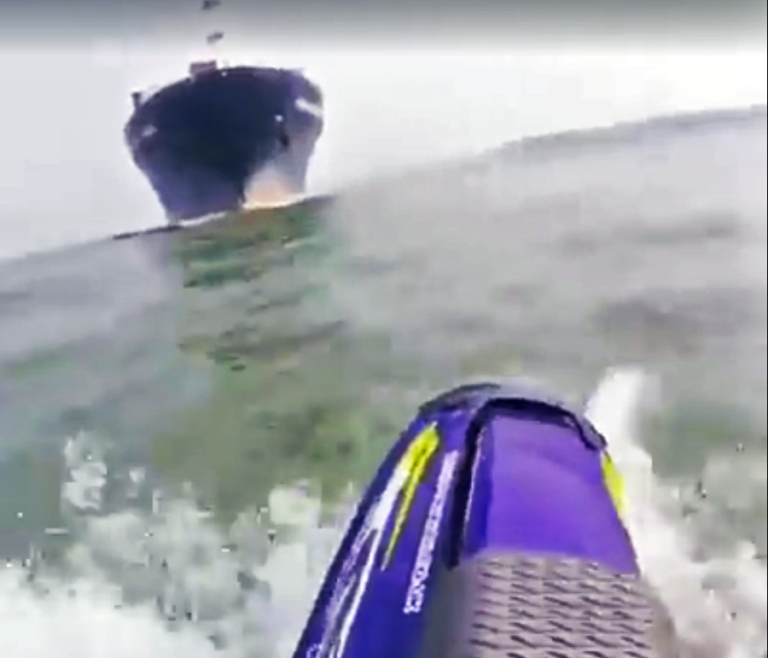
The who, when and where are unknown nor do they truly matter. What matters is that a foolhardy rider aboard a SuperJet dares to venture not mere too close, but close enough to attempt to graze their hand along the hull of the container ship. Of course, the massive displacement (an estimated 10,800 tons given that it appears to be fully laden) is enough to churn a wake so ferociously that the rider almost immediately loses balance and falls off.
Scrambling frantically to reboard and reignite the Yamaha’s starter, the rider is nearly sucked up into the wake and bounced off of the hull several times. Thankfully, the rider survives the fall and near impact with the cargo ship. They manage to fire up the ski and escape before being sucked into draft of the ship’s props, roiling a fan of sea foam behind it. There’s nothing cool about this video. In fact, it only robs the Darwin Awards of another recipient.