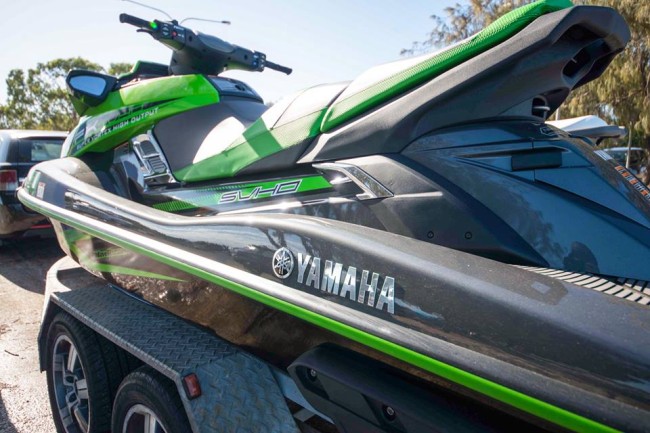
Earlier this month, over 30 watercraft and many more participants gathered at one of the Gold Coast’s favorite spots, Broadwater for the 2015 Gold Coast WaveRunners Summer Ride Day for Charity. According to Yamaha WaveRunner Australia’s Facebook page, “Together with the help of volunteers, riders and donators a total of $1,100 was raised for the Royal Brisbane and Women’s Hospital Burns Unit.”
With the 2016 models already hitting showrooms in Australia, many enthusiasts anticipating the purchase of a new SVHO-powered machine had their Christmas wishes made true early, allowing many to take to the water on their brand new units. Others were content to test ride many of the new models provided by Gold Coast WaveRunners. Accompanying the Yamaha Australia and Gold Coast WaveRunners teams were WORX Racing and Christian D’Agostin and the PTS racing team with their new FX SVHO, as well as super shutterbug Andrew “Skip” Donovan who provided all of the official photography for the event.
Additionally, Gold Coast WaveRunners unveiled their 2016 Yamaha FZR Limited Edition equipped with Level 1 WORX Racing Components Upgrade. As they state, “These are fast right out of the box but if you want that little bit more then this is for you. Yamaha Motor Finance in store works out at only $136 per week (on a trailer) drive away with a $500 deposit (T.A.P.). Come in and check it out now and be the envy of everyone this Christmas!”
Lastly, Yamaha Australia closed out the ride day saying, “Yamaha and Gold Coast Waverunners would like to thank all the riders who participated, Worx Racing Components for their generous donation, and Photo by Skip for the fantastic photos.” You can click here for the full Facebook photo gallery.
So you’ve decided to buy your first new Sea-Doo watercraft? As you can imagine, we at The Watercraft Journal have spent a lot of time out on the water riding for both work and pleasure. We have had countless amazing days enjoying the sun and water on our PWCs and have met some of our closest friends out there. You will fall in love with the fun, the lifestyle, the bonding over great times your new Sea-Doo has in store for you, your friends and family.
In BRP’s own words regarding their Spark; “The Sea-Doo Spark makes your family’s dreams of great days on the water possible right now…” We couldn’t agree more and want to help first time Sea-Doo buyers through what may seem like a daunting purchase process from start to finish. So get ready! Collect your family and friends, beach towels, and do not forget the sunscreen, days of memories are just ahead out on the water!
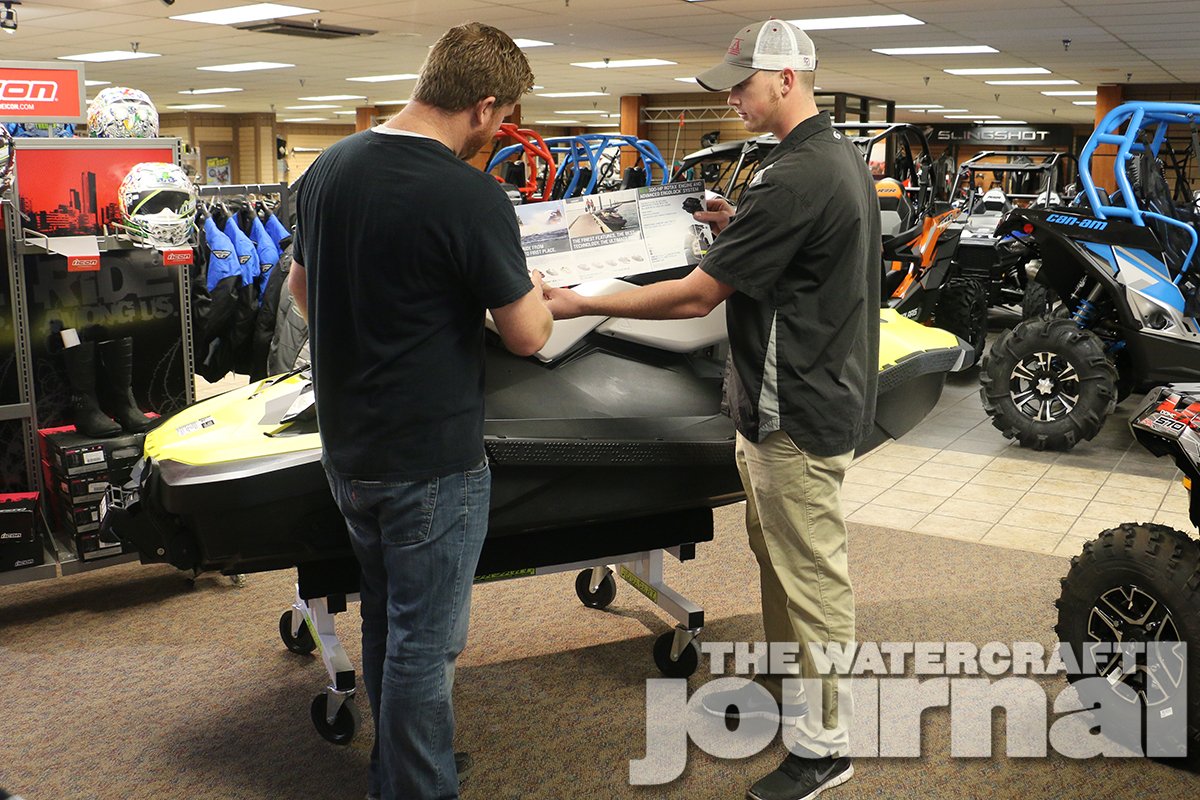
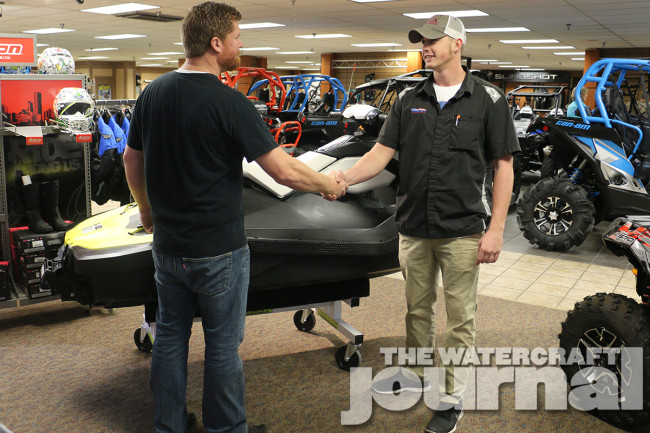
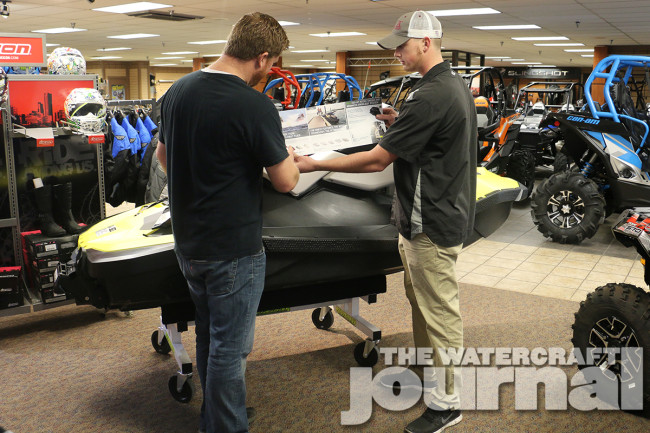
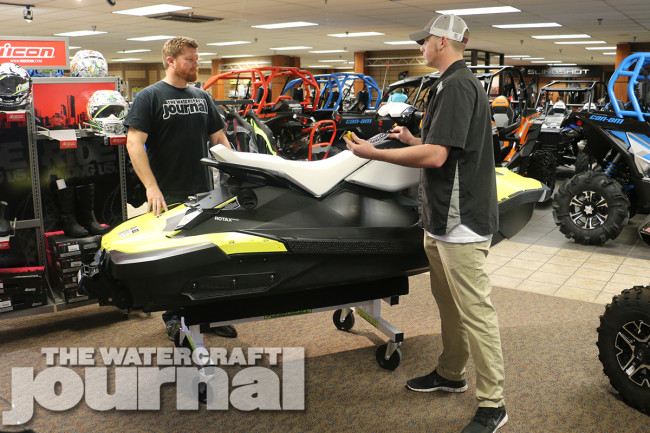
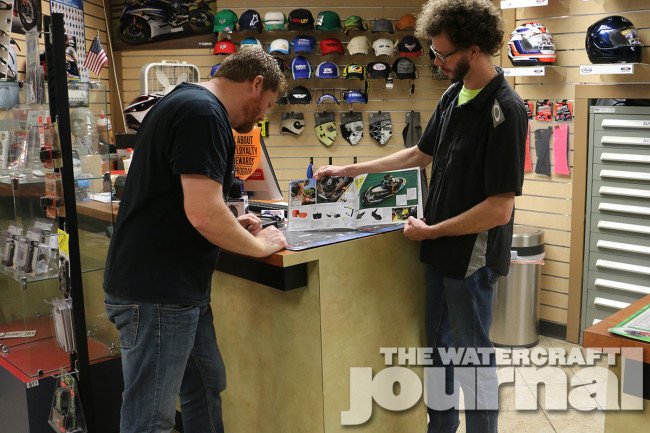
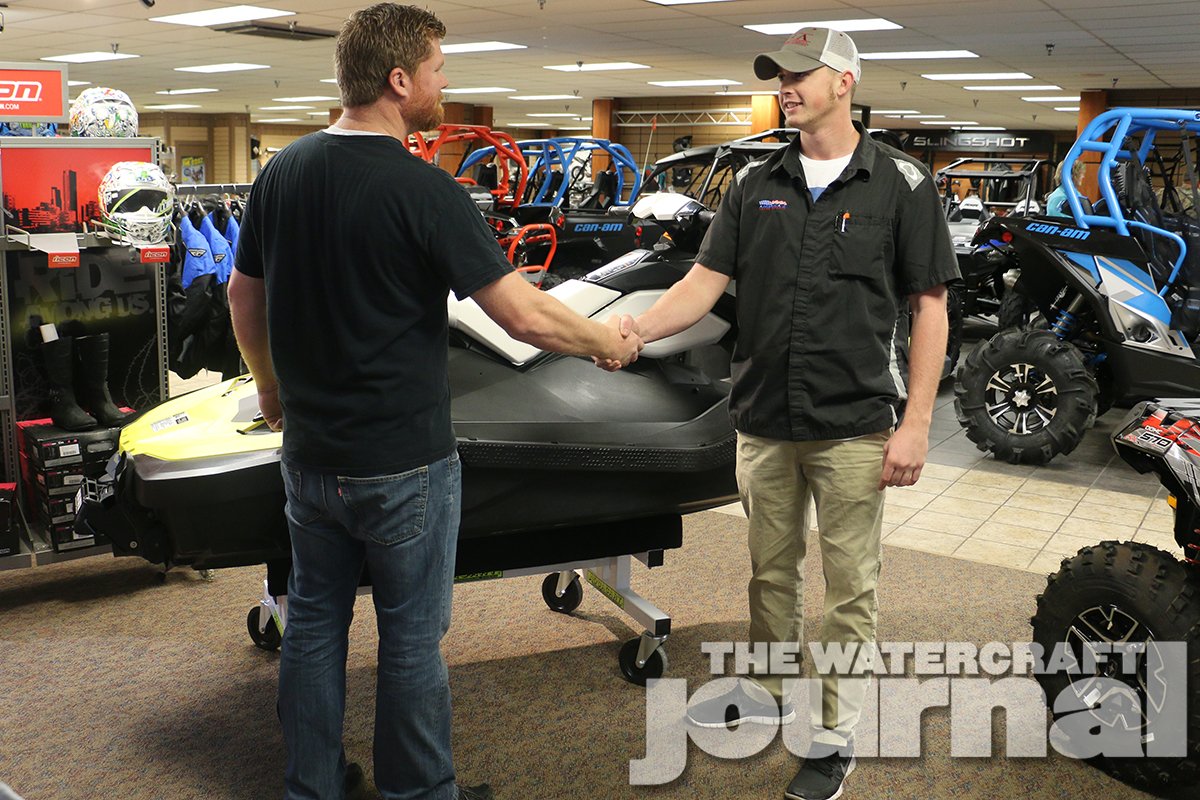
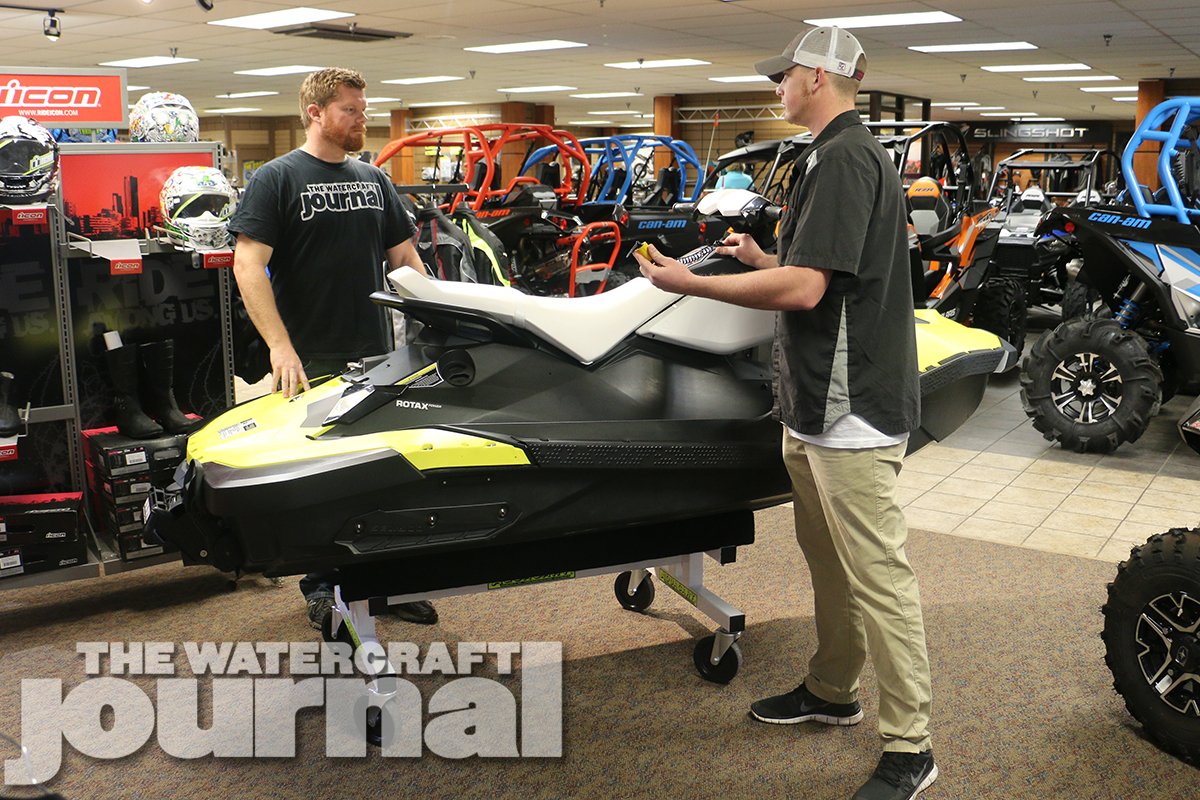
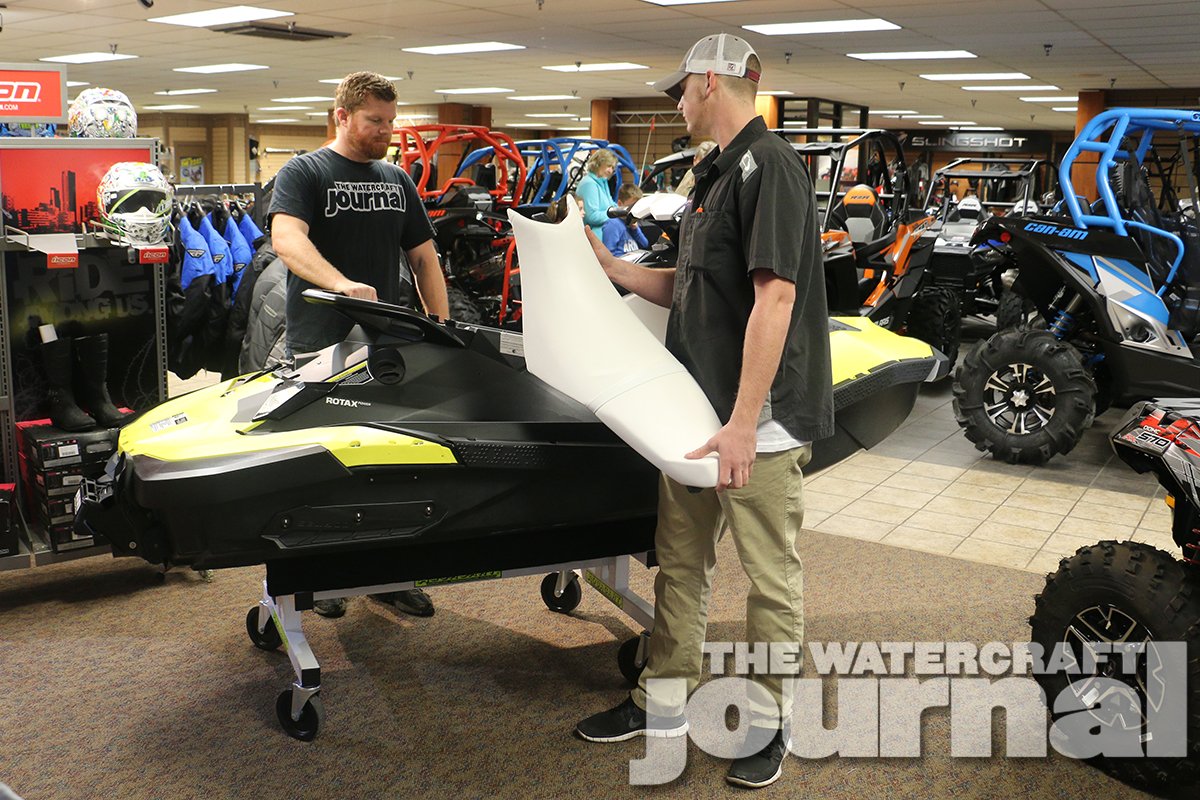
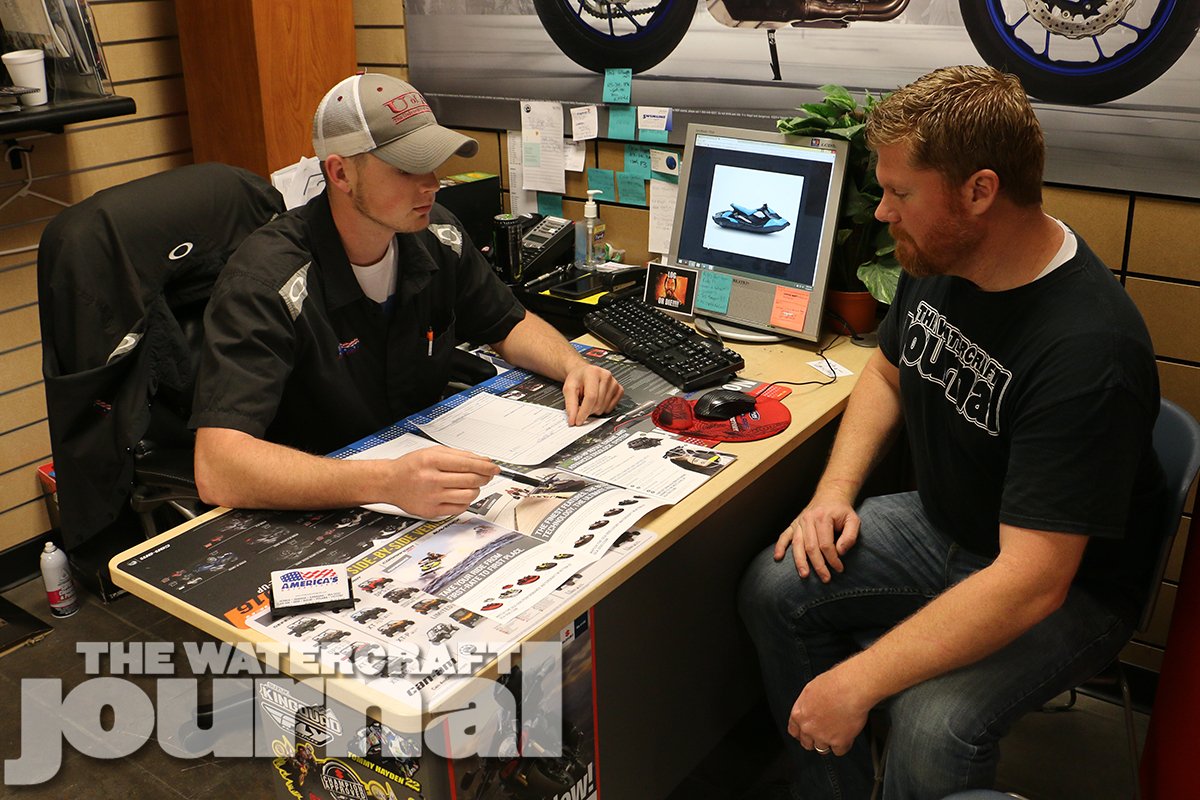
Above left: When it came time to pick out our new Sea-Doo Spark, we ventured to America’s Motor Sports in Goodlettsville, Tennessee, the recipient of the Powersports Business’ Power 50 Award for three consecutive years. There we were greeted by John, who helped us through the purchasing process from beginning to end. Above right: Although we liked the floor unit on display, John smartly presented us the official 2016 Sea-Doo catalog to show us the many different options available with the entire 2016 Sea-Doo Rec Lite line.
Picking Your Sea-Doo Certified Dealer
Being the powersports junkies we are for longer than we care to remember, the dealerships we have chosen to frequent over the years are really an extension of the time we spend out on our PWCs. Dealerships are full of us powersports junkies that have made their passion their work. These friends occupy the other side of the counter and service areas waiting to exchange stories of the past weekend’s adventures and assist you in your quest to do it all over again this coming weekend!
When you walk in the front door, along with the Sea-Doo certifications, qualified sales and service staff and the wide array of Sea-Doo watercraft and accessories, you should feel comfortable, at home and expect to spend more time than your significant other would like you to chatting about your new Sea-Doo watercraft and the coming adventures!
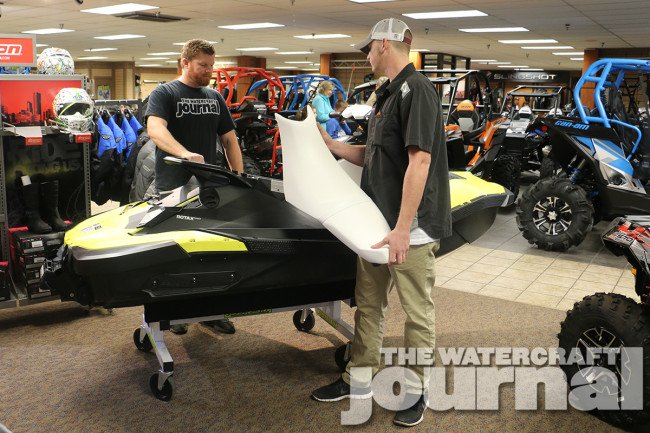
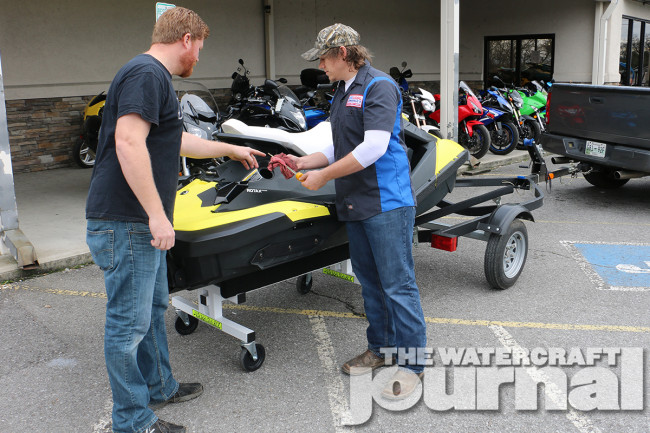
Above left: Our salesman walked us through the basic features, and operating the several functions. Any salesperson at a Certified Sea-Doo dealer will be well trained and ready to answer any questions you might have. Above right: John not only demonstrated how to remove the seat, accessing the filler cap and neck, as well as where to find the fire extinguisher in case of an emergency.
You are in the beginning stages of developing a relationship with your dealer for years to come. They will not only be a places you connect with others like you, but they will also serve as your resource and guide as you delve into this new addiction. You want to be able to stop by, or give them a ring and get answers to any questions you may have at any time.
From simple to complex; from “How do I put my new Sea-Doo in ‘Sport Mode’?” to “How do I flush this again?” you want to be able to have the resources available to you when you need them. Your new relationship with your dealer friends will pay off handsomely when it is time for Sea-Doo certified service and maintenance, and you want to be comfortable with the guidance and advise as would from a friend.
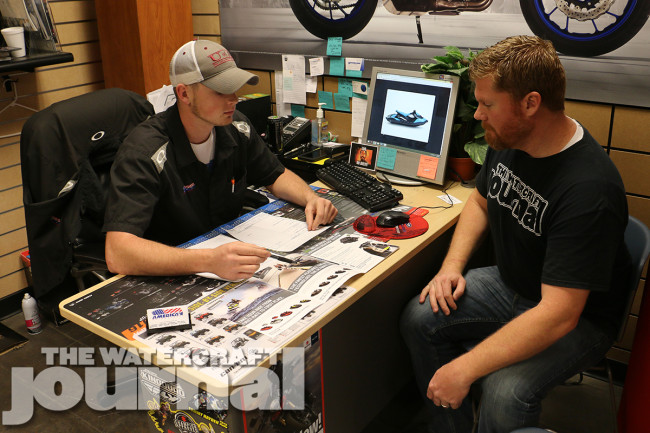
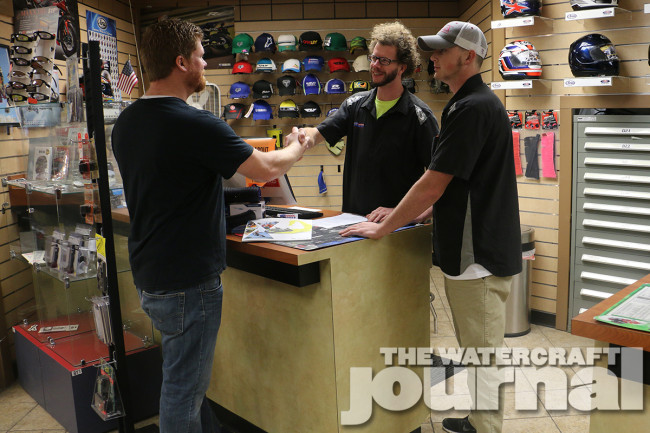
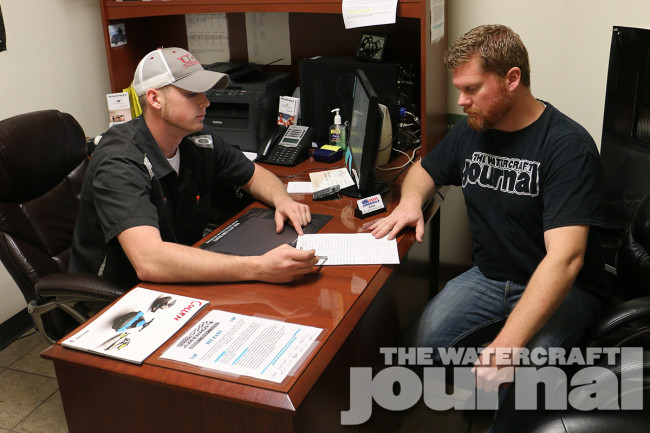
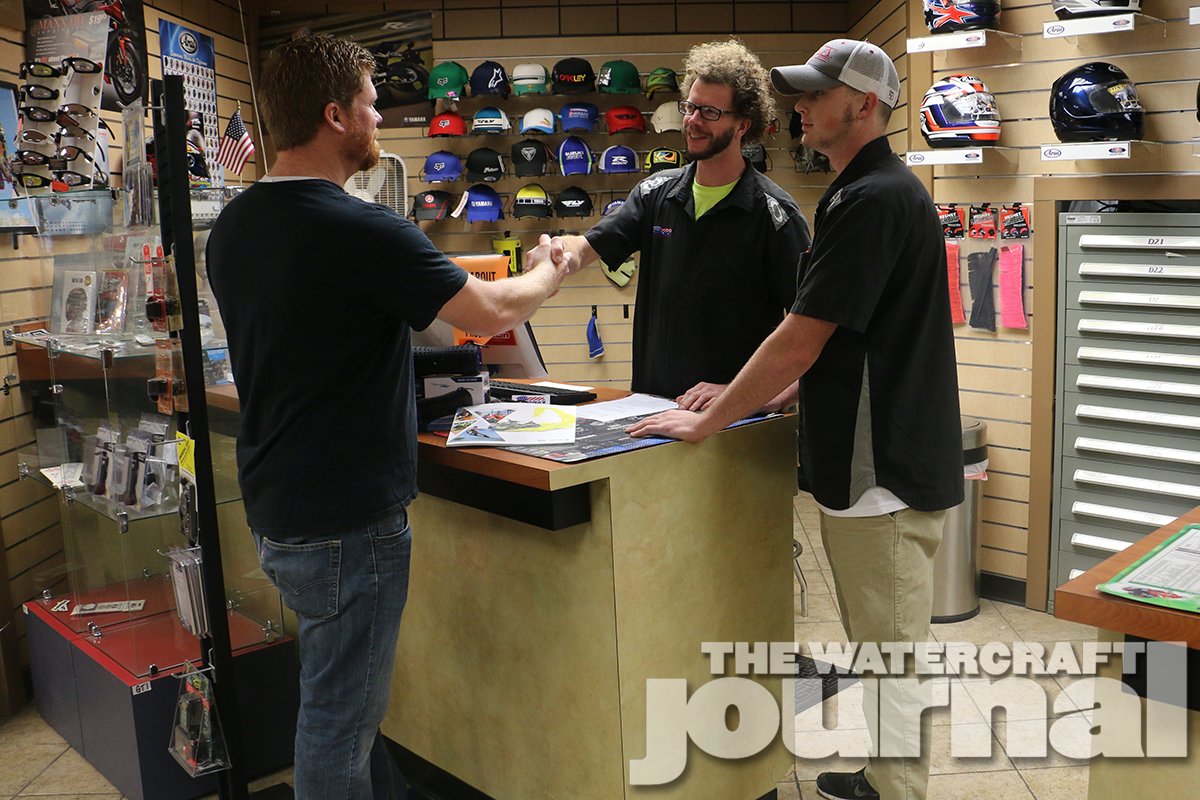
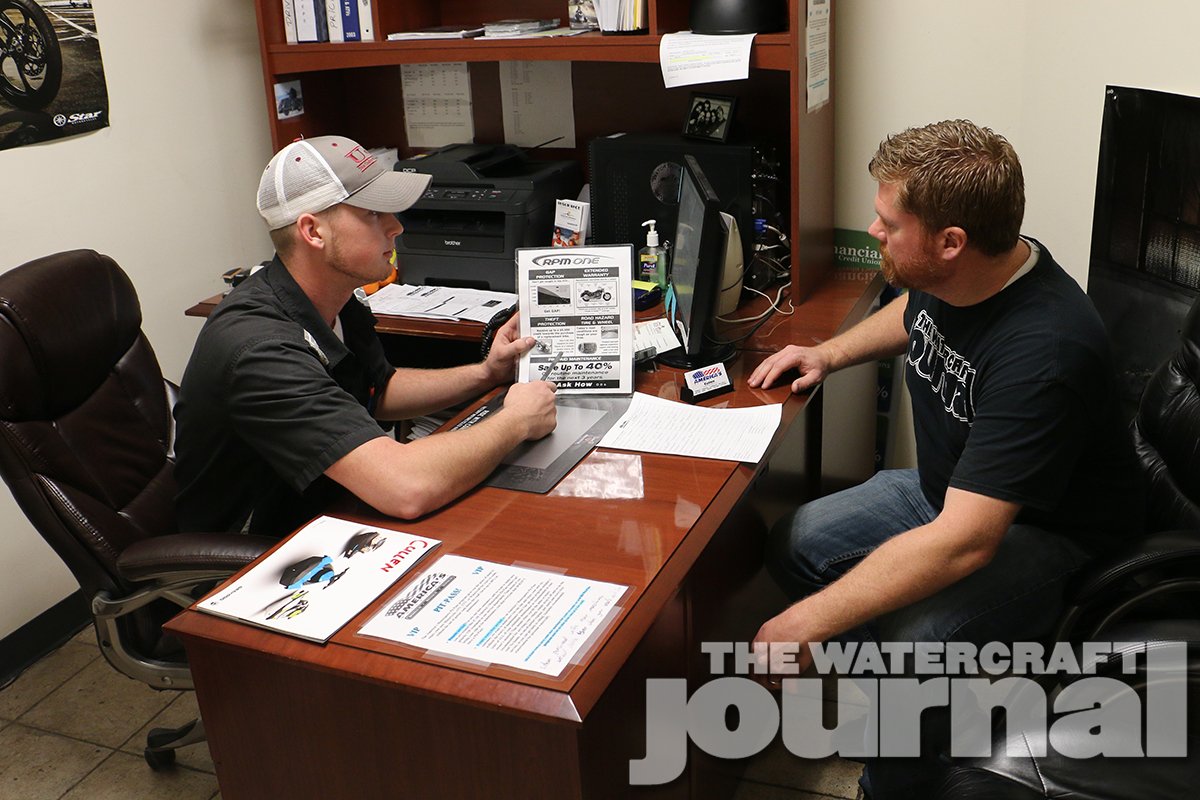
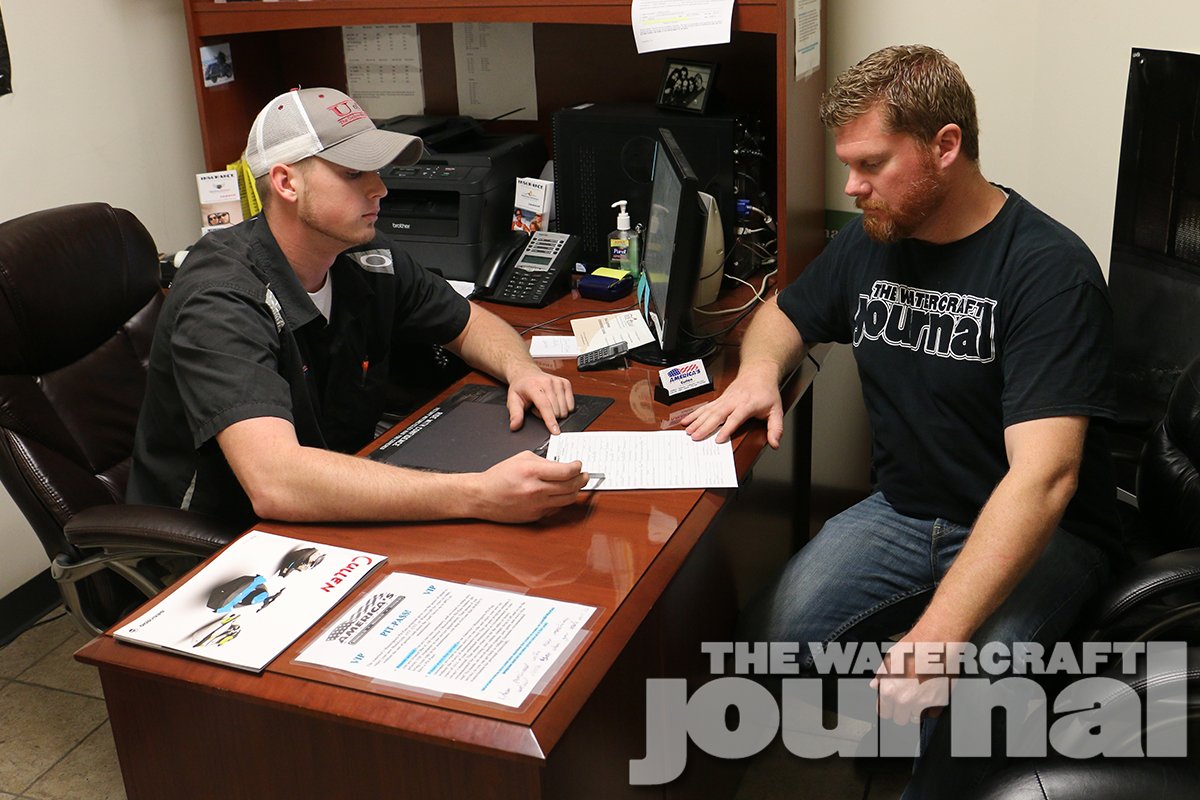
Above left: Our salesperson next took us back to their desk to discuss the model and features we wanted, and what price the dealership could accept. Finding a price we could agree upon, we filled out a credit application (which takes about an hour or so to process). Above right: While we waited for credit approval, John introduced us to America’s Motor Sports’ parts department staff. It’s always best to create a positive relationship with the Parts Department as they’ll be your best resource when it comes to upkeep and servicing your Sea-Doo.
Once you have that warm fuzzy feeling about the place and the staff, start to pay attention to the technical aspects of your chosen Certified Sea-Doo Dealer. They will not just have the watercraft and official Sea-doo merchandise you are dying to get your hands on, they will also have specific perks like financing options, OEM Sea-Doo parts and Certified Sea-Doo mechanics working diligently to get others like you back out on the water.
Along with “feeling” like you are in the right place, your dealer of choice should be qualified. Your Sea-Doo dealership should be filled with knowledgeable sales people with the goal of getting you the best deal on the new Sea-Doo that best fits you and your family’s needs. You want them to guide you effortlessly through picking out and purchasing your new craft, choosing the Sea-Doo trailer your new baby will be riding home on and which Sea-Doo life jackets, wetsuits, drybags and etc. you are going to need when you hit the water. Sea-Doo has a lot of options in their watercraft lineup and tons of merchandise to pick from. The helpful guidance of your new dealer’s staff will be priceless when you purchase and down the road.
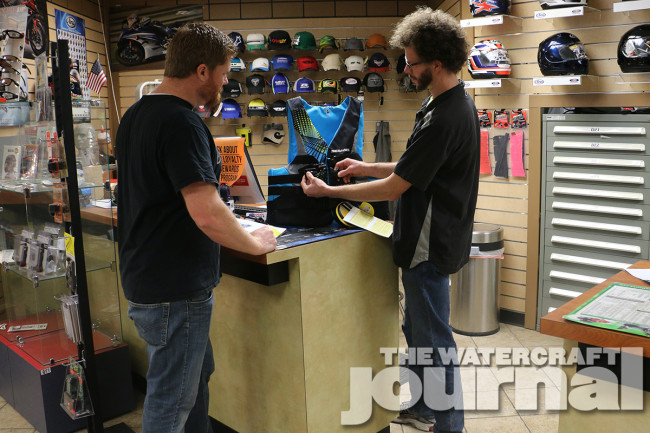
Above left: Ian, our Parts Department salesperson, walked us through the official 2016 Sea-Doo Parts & Accessories catalog, piquing our interest with the many items Sea-Doo makes available to magnify your Spark-owning experience. Above right: Ian was also helpful in providing us with a new official Sea-Doo lifevest to go with our new Spark.
Paying for Your New Sea-Doo Watercraft
Financing your new Sea-Doo Spark is the option a lot of new watercraft owners take on their first go around buying a new PWC. Your dealer, and sometimes BRP will offer special incentives for buyers in the market for a personal watercraft. Often times special interest rates and extended warranties for example are available once you sit down at the sales desk at your local dealership.
Another option is financing available at the bank you have your checking and savings account. Often times they will also offer special deals for their customers and your continued business. So weigh your options! We have to say, your local dealership is going to make your life easy.
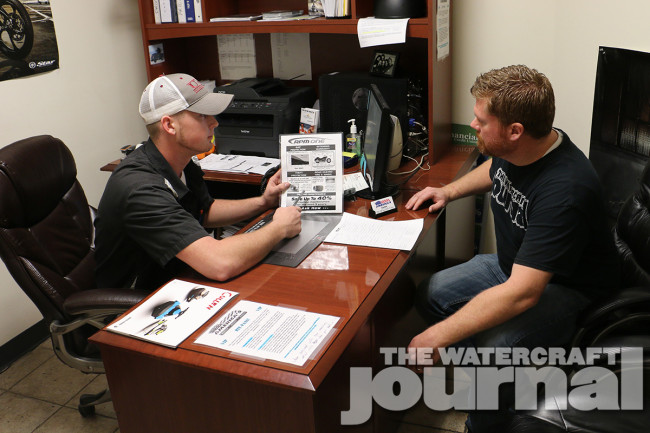
Above left: Many Certified Sea-Doo dealers have special pricing and financing options made available for applicants with approved credit scores. Your dealer will walk you through your best payment options and how to get the most for your investment. Above right: Additionally, many Certified Sea-Doo dealers will offer specials on scheduled maintenance, parts and repairs, as being all part of your financing options.
They will take a short application and often times have you an approval within the hour. Their ability to get you in house financing makes the process almost seamless from the time you walk through their door and pick out which color you want until you are driving away and headed to the nearest boat ramp.
If you are purchasing your new Sea-Doo Spark with cash, well then, it is as easy as it could ever be. We do not really need to explain this. Just walk in, make it rain on the sales person’s desk and BAM! Your new Spark will be on your trailer ready to breathe its first gulp of water!
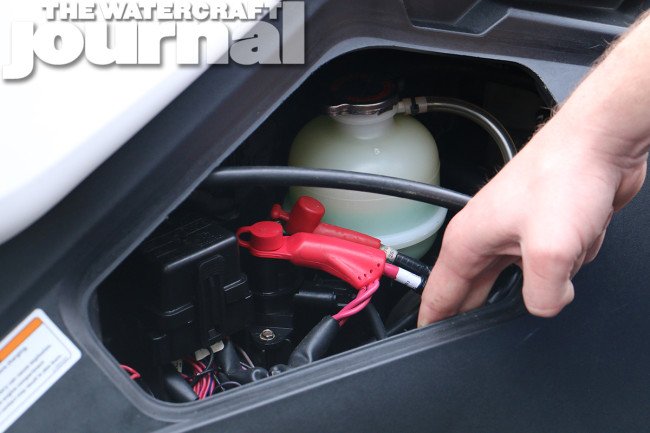
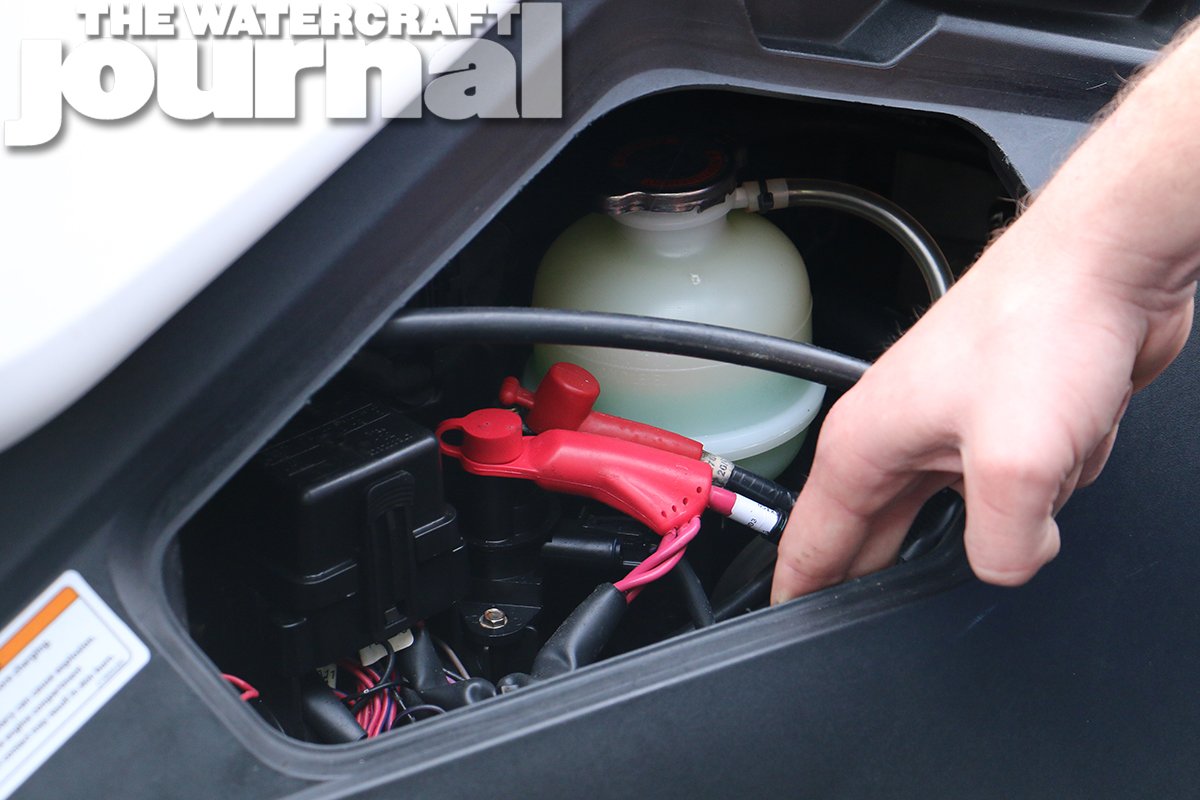
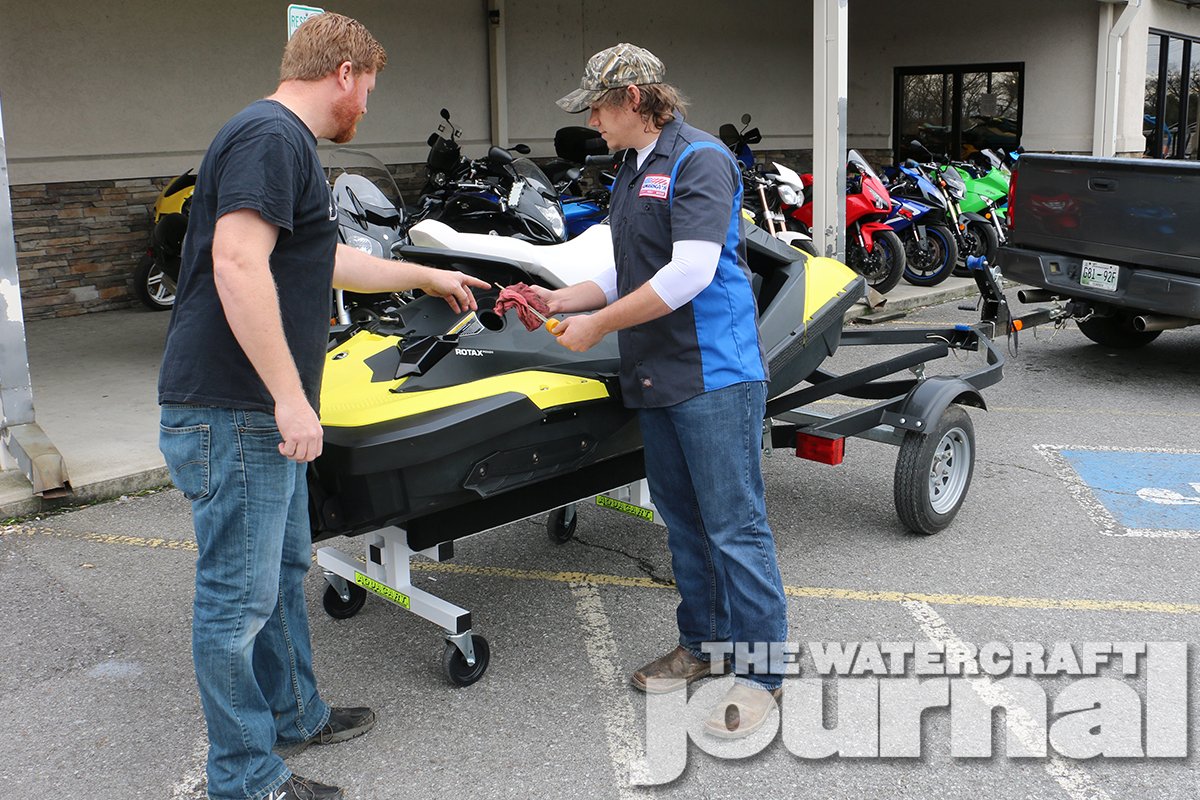
Above: With our financing finalized, our name scribbled on more dotted lines than we can count, and a new packet of paperwork and an envelope of new owner’s media from Sea-Doo in our hand, we were greeted by Blake in the Service Department. He walked us through basic maintenance and upkeep as well where to find the battery terminals (left) and where to find the oil dipstick and how to properly check it (right). And with that, our new Spark was loaded up onto our trailer and ours to enjoy!
Wrapping up the Deal and Your New Spark!
While you are signing the paperwork and asking questions about your new Spark, your local dealership’s service people are busy scurrying around in the back prepping your key to outdoor family water time! Whether you bring a trailer with you, or buy one from your Sea-Doo dealer with your new Spark, they will be loading it for you while you finish up inside.
Don’t forget your life jackets, water clothes and the accessories! You are headed home from your local Sea-Doo dealer and all you can think is ride, ride water, water let’s go ride! Go collect your family and friends, beach towels and do not forget the sunscreen, and go make an entire day of memories out on the water.
Yamaha stepped up their performance game in 2014, unveiling an all new SVHO (Super Vortec High Output) engine capable of producing roughly 265-horsepower. While the SVHO engine brought huge performance gains to the Yamaha performance models, it has had its problems as well. Recently, there have been several reports of broken timing chains in SVHO models, which can lead to other internal engine parts being damaged. Yamaha did address the issue on the 2016 models, but it is too early to tell if the changes completely eliminated the problem.
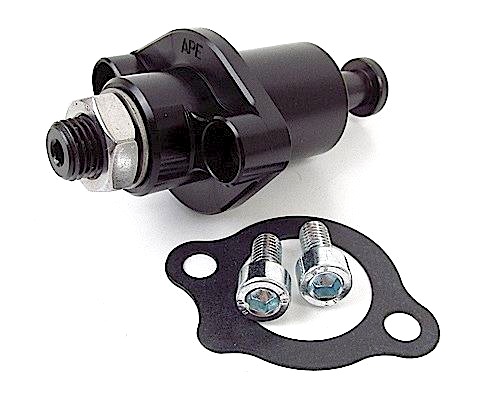
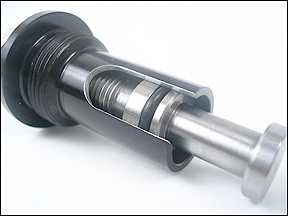
There are many theories as to why the timing chains break on some SVHOs, but APE believes the problem lies in the automatic cam chain tensioners that come equipped on them. The OEM tensioner can allow the chain to loosen up, then suddenly tighten, causing it to break. This simply can’t happen when a manual tensioner is used. APE recently released their Pro Series manual cam chain tensioner for Yamaha 1.8 liter engines to hopefully put an end to this issue.
While auto tensioners can make service of the vehicle easier, they do not give the precise cam chain control needed for performance applications. Starting about a decade ago, some OEM auto tensioners began to prove themselves problematic. APE Pro Series manual tensioners have been used to remedy the problems created by automatic tensioners for years.
The motorcycle guys have been using these for a while now. In fact, the manual cam chain tensioner for the Yamaha R1 is one of APE’s best selling products. And though it is too early to say for sure whether a manual tensioner is the answer for the Yamaha Wave Runners, it is certainly not going to contribute to the issue.
Installation of the APE Pro Series manual tensioner is fairly straight forward. Since the APE tensioner is a direct replacement for the OEM auto tensioner, you just bolt the APE tensioner in place of the OEM. Then, screw the center shaft in until desired cam chain tension is achieved and the jam nut is locked. The manual tensioner will keep the timing chain in adjustment, giving you peace of mind when out on the water as well as more consistent performance, since the chain isn’t moving around.
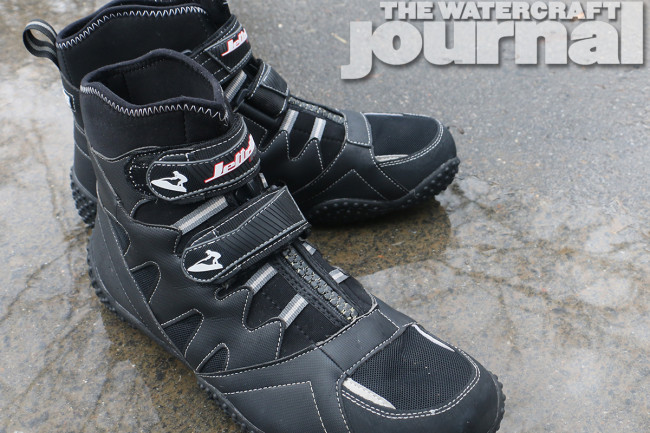
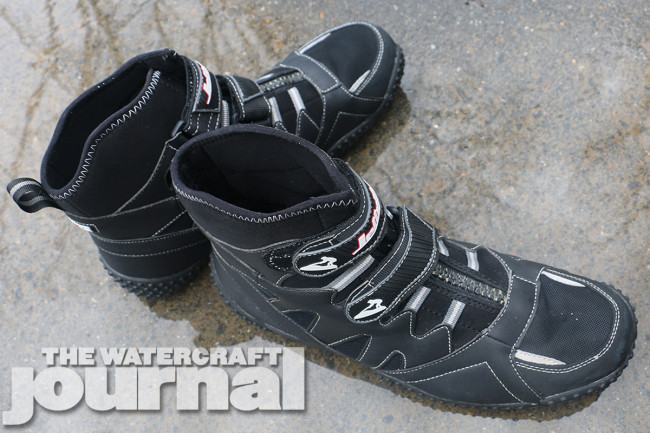
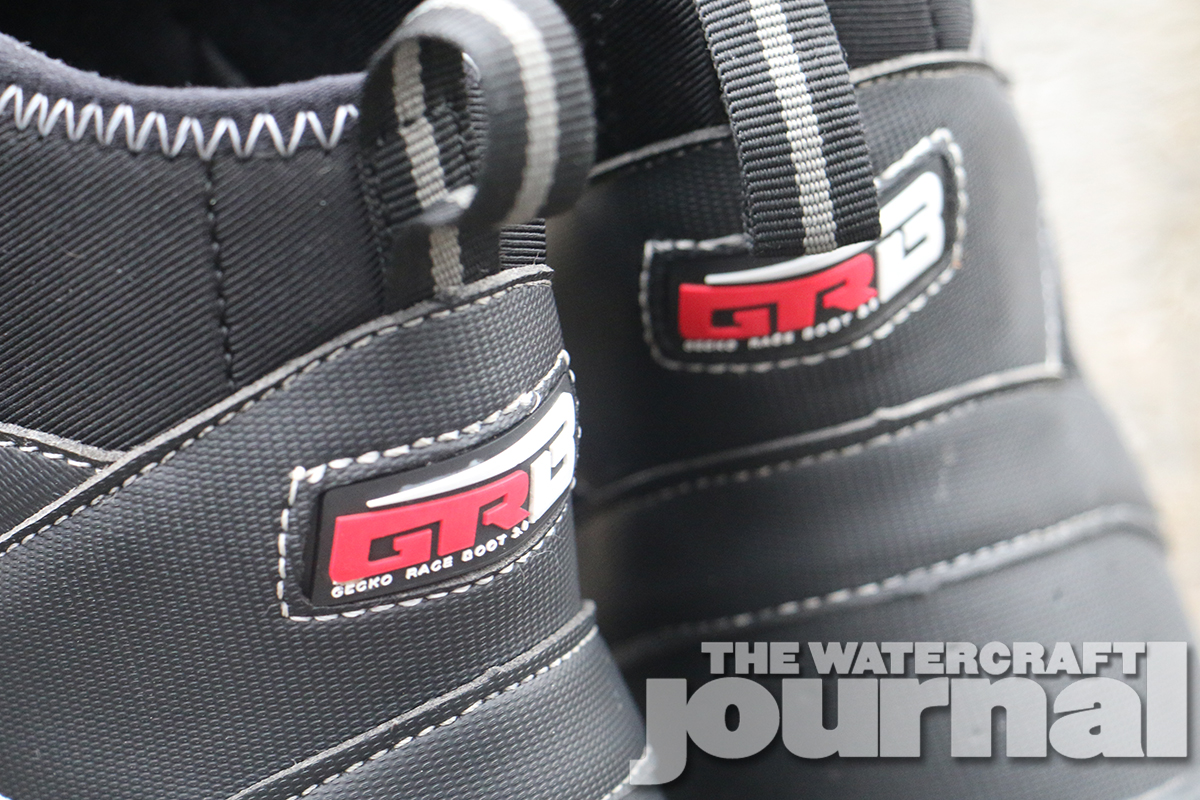
In our experience, besides gloves, there are no other items of personal watercraft riding gear that wear out faster than riding boots. Be it the use of inferior materials, poor molding or stitching, or a combination thereof, riding boots are one of the hottest contested items on a consistent rider’s list of products that seemingly never hold up. In our gear closet, we’ve got four pairs of riding boots (as well as some slip-on booties), each of which hailing from a different manufacturer: Slippery, Jetpilot, Jobe and now Jettribe.
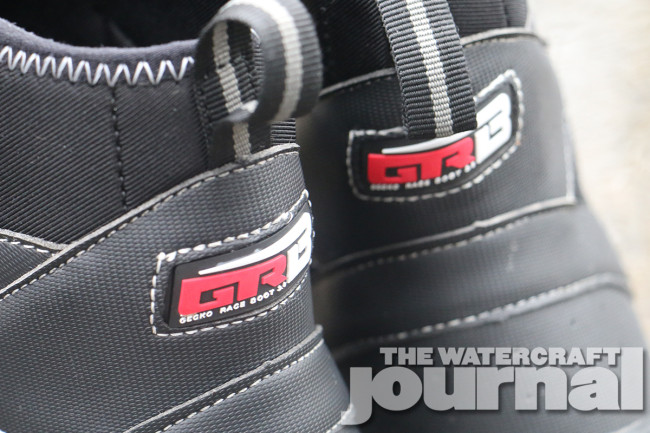
While we vowed new to perform a one-on-one comparison of personal watercraft, we want to bend our rule and illustrate a little how the 2016 Jettribe GRB 2.0 Race Boot stacks up against the above brand’s boots that have also been reviewed on The Watercraft Journal previously. It’s a little unprecedented, but as we’ve discovered, there’s enough difference between each brand that its worth noting where the new Jettribe boot shines and where it might gain from a little positive influence.
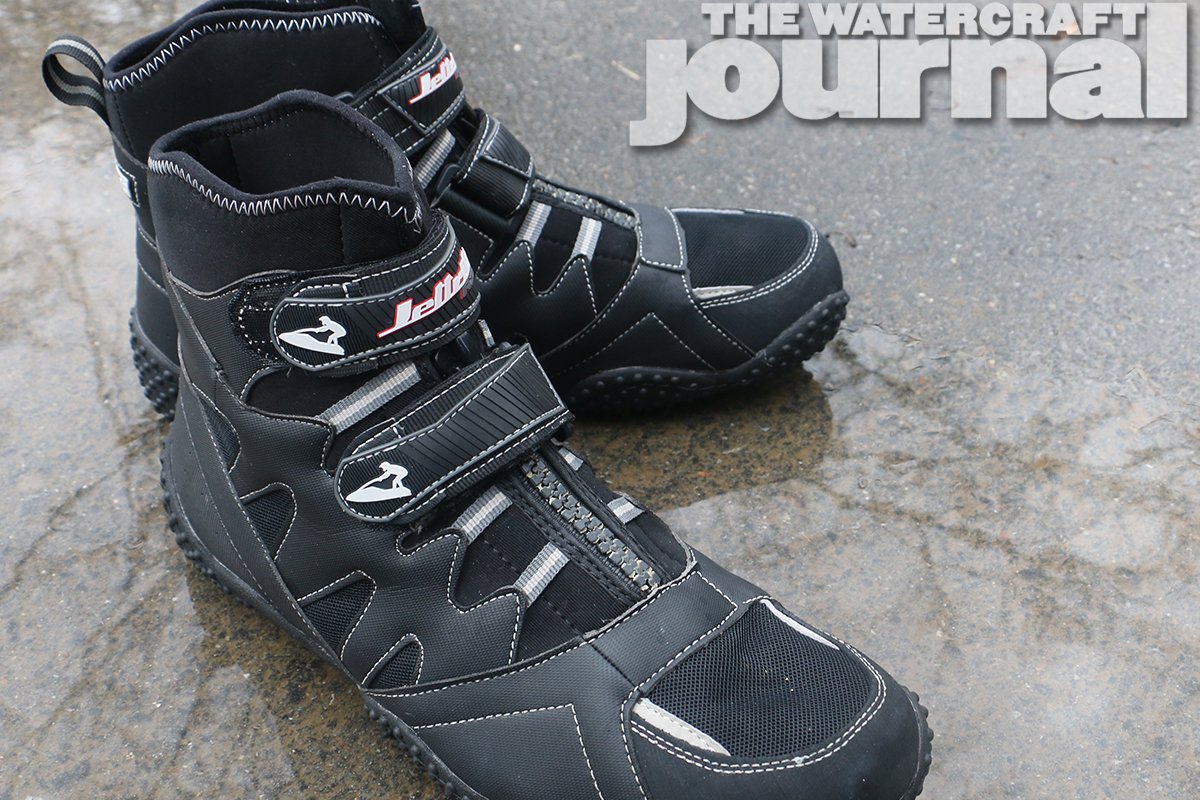
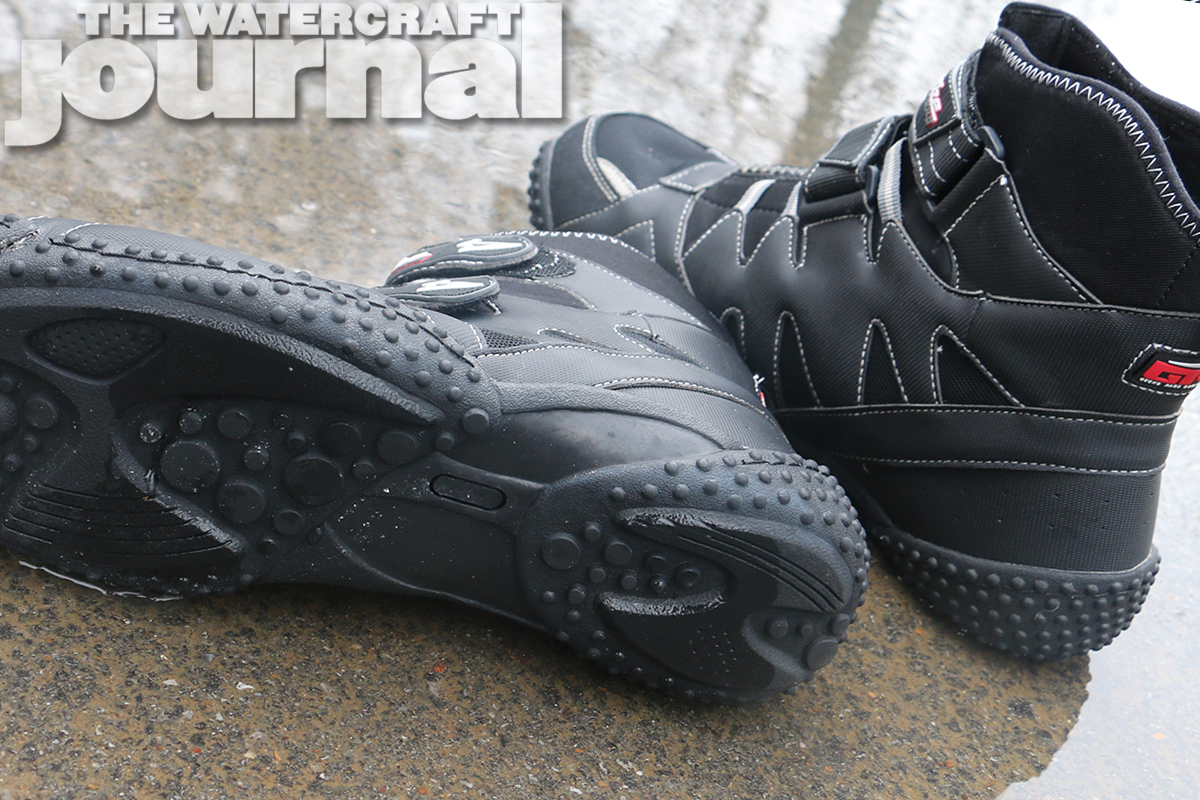
First, it’s important to mark on how superior the design, construction and materials used on the GRB 2.0 Race Boot are to its predecessor. Jettribe poured a lot of effort into designing a rubber sole that has been purposely molded with three raised points of contact – the ball of the foot, the arch, and the heel. All of this has been done to accommodate the aggressive rider and/or racer who switches through different standing and sitting positions, and shifting weight from one foot to the other.
This is illustrated in a pre-curved sole with a strong arch support that also wraps around the sides and toes to limit lateral side-to-side movement. The toe and heel are heavily protected by the rubberized, nodular sole. That knobby rubber acts to grip the ends of the foot in the tray (or foot holds if so equipped) for maximum grip when needed. Thick stitching circumvents the sole, sewing it all the way around the boot to prevent separation; the boot itself being made from neoprene.
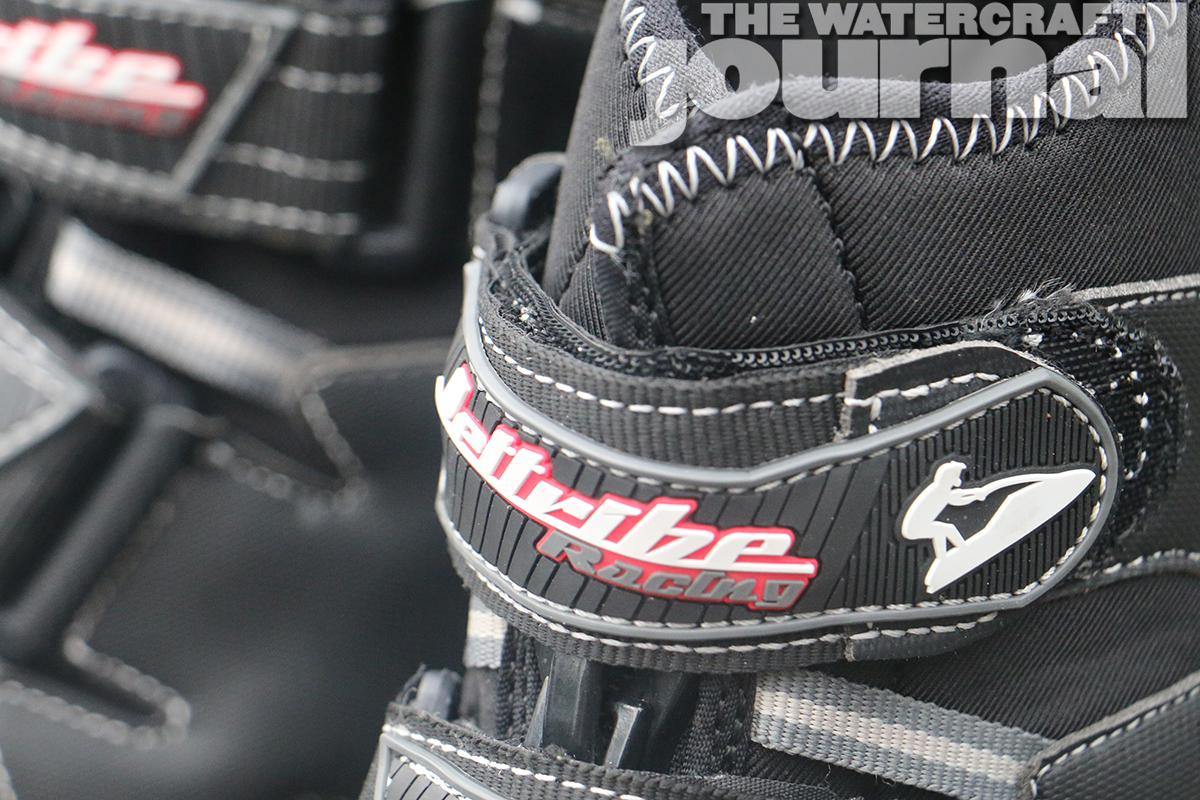
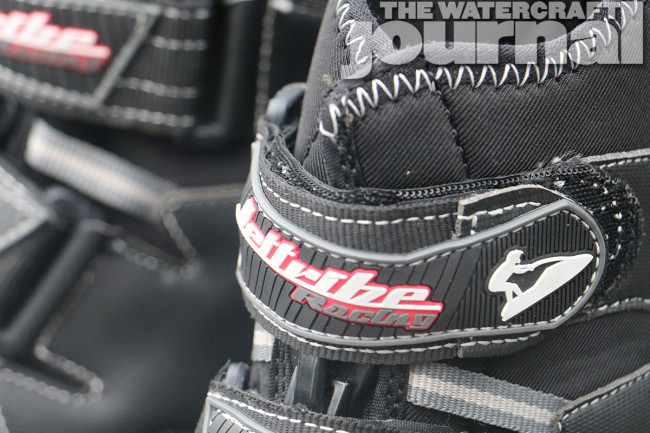
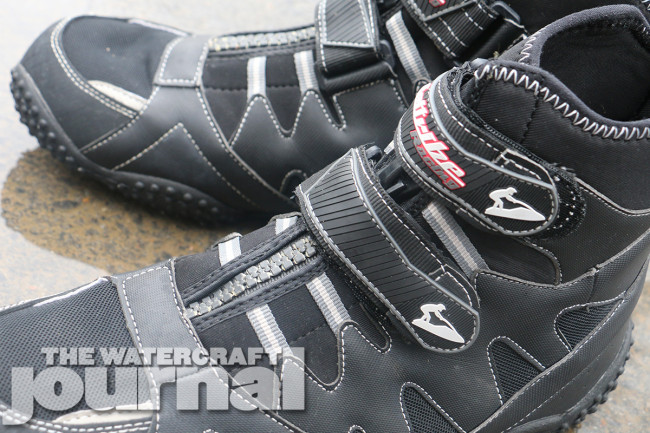
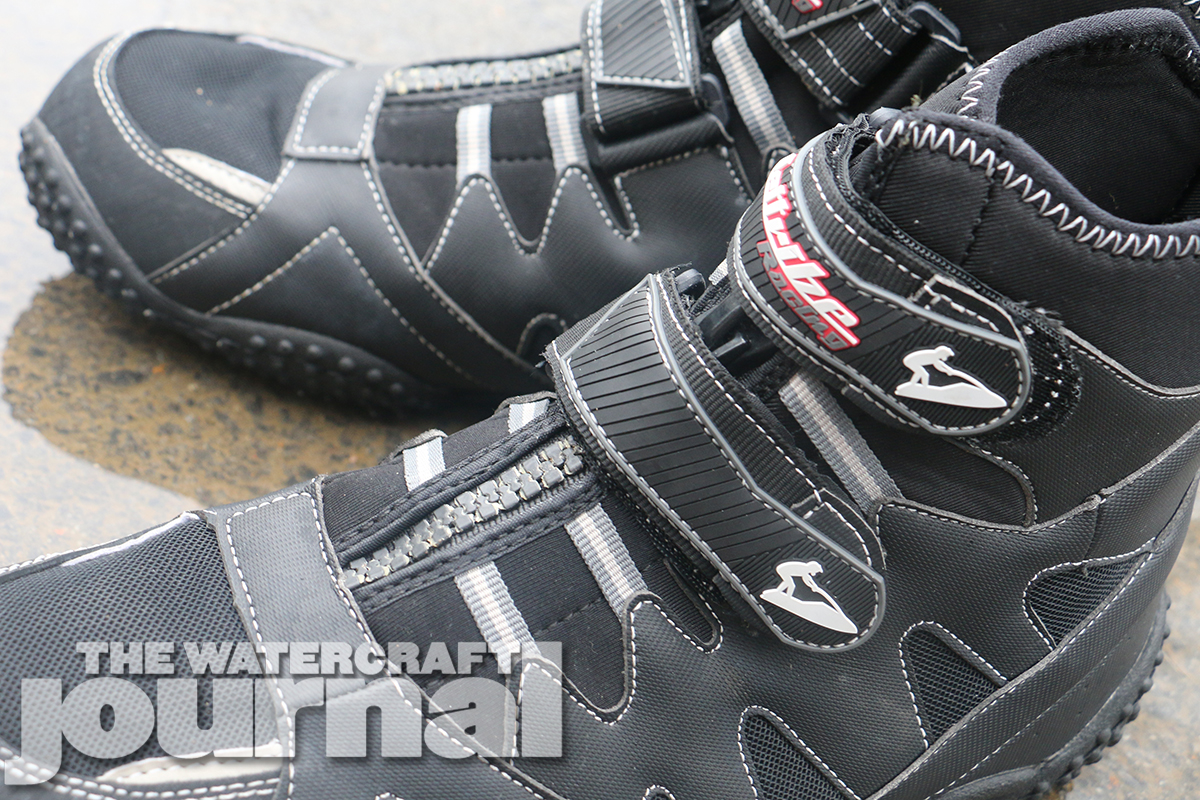
Gone are the traditional laces that are prone to rot and snap, eyelets that corrode and tear, and hooks that break off. In their place is a zippered entry running half-way up the boot for slipping in and out of easily, with two large, adjustable Velcro straps snugging one’s foot inside. As Jettribe notes, their boots run a half of a size too big on purpose, encouraging riders to purchase their neoprene socks to wear with these boots. Initially, we ignored this advice and later found wisdom in the purchase of their Gator Lycra socks.
Both Slippery and Jetpilot boots come with removable neoprene socks as part of the boot purchase. For those looking to pinch their pennies and forego the sock purchase, they’ll find the Velcro straps don’t tighten enough without them. Yet, with them on, the GRB 2.0 is snug and comfortable – in fact, the most comfortable boots we’ve evaluated thus far at The Watercraft Journal. And, as noted by Jettribe themselves, the neoprene boots are cut extra high to keep out rocks and gravel. The long Lycra heavily assist with that.
Although Jettribe includes nine mesh flow-through panels for drainage, there are no drain holes in the sole like you’ll find with all other competitor’s boots. Jettribe says this is intentional, but as water filled our boots and starts to weigh them down, we argue that at least one or two drains do serve a purpose. Yet, the positives heavily outweigh any complaints. The zipper is thick and comes pre-waxed (and with a stick of surfer wetsuit zipper wax), and the straps are heavy duty and attach firmly. Ankle and heel support is solid, and the high arch is comfortable.
Again, we need to reiterate: these are the most comfortable riding boots we’ve tested on The Watercraft Journal to date – but only when wearing a pair of neoprene (or Lycra) socks. Without them is a totally different experience. Priced at $98.99, the 2016 Jettribe GRB 2.0 Race Boots are also the most expensive boots we’ve tested, almost by 40-percent over some. Thus far, the GRB 2.0 boots have held up great, but we’ll need a few more months of prime riding season to really rack up the mileage before evaluating whether they’re worth the extra duckets or not, but our feet are happy with ’em, and that’s what matters most.
We’ve seen personal watercraft showcased in mainstream commercials before, in fact, several are quite funny (while a few are not so much). So when Taco Bell unveiled its “This Is Amazing” campaign, they not only chose to showcase a jet ski, but super-talented freestyle athlete Anthony Burgess of Nantwich, UK on his Team XScream ski conducting a series of awesome aerials (previously taken from a viral JunknVideo).
Tagged as “Jet Skis are amazing but you can’t eat them. Crunchwrap Sliders. Just a buck each.” The campaign is promoting the fast food chain’s $1 Crunchwrap Sliders, a terrifying concoction of other larger and debatably better-tasting menu items. This also comes at a time where other chains – McDonald’s, Burger King, and Wendy’s – have all started eliminating their respective Dollar Menus. Why? Because a new generation of consumers are choosing to avoid fast food than ever before.
Nevertheless, we’re excited to see more jet skiing featured in the mainstream – particularly freestyle – as we’ve been saying for years that freestyle needs to be brought front and center before as many non-core enthusiasts as humanly possible, be it at waterfront events, amusement parks and the wise. Hopefully, the efforts of fellow freestyle athletes like Daniel Martin and Mark Gomez (together with Anthony’s TV spot), will render more publicity for the sport than ever before.
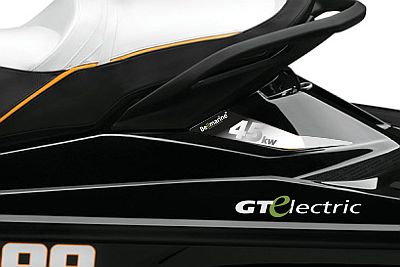
We know, we know. This sounds like a prank, and trust us, we know all about pulling off the perfect “electric PWC” prank (we’ve done it before). But, as irony would have it, this appears to be the real deal…to a degree. As partners Bell Marine and ID Technology announced first via a YouTube video in 2012, and shortly thereafter in a press release:
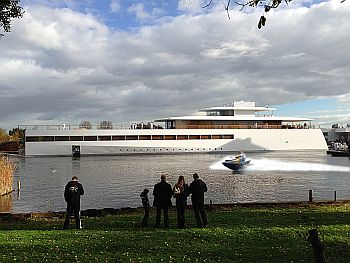
“Bell Marine / ID Technology Zeewolde developed their first prototype electric personal watercraft. Following Steve Jobs’ approval of this first model, he ordered the construction of two 100% Electric personal watercrafts for…his new super yacht “Venus.” Without his passion, drive and support this project would never have been realized. We are proud and grateful that we have this project on behalf of him and his wife are allowed to perform and after his death to finish.”
Of course, this announcement came after October 5, 2011, when Jobs succumbed to respiratory arrest following a long battle with pancreatic cancer. Prior to his passing, the software and hardware mogol changed the way many of us communicate (and bring The Watercraft Journal to its quarter million annual readers), and potentially impacted the future of the PWC industry.
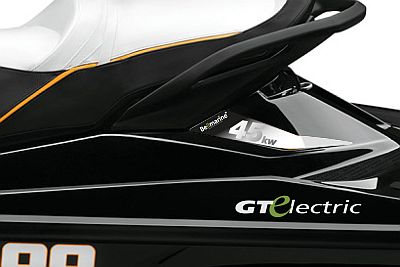
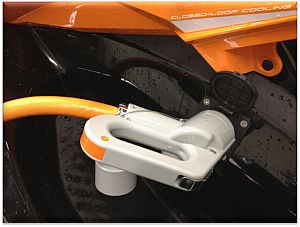
The “Electric Water Scooter GT E 45kW” as it was known by the engineers involved in the project, the electric PWC is based off a 2012 Sea-Doo GTR 215 and touts a range 30 minutes at full power plus an additional 30 minutes set in ECO mode. In reality, this equates to an average of 1.5 hours of normal operation, with a total 2.5 hour recharge time.
And true to Jobs’ requirements, the GT E 45kw produces zero emissions, runs completely silent and carries no fuel on board, and therefore be stored aboard a ship/yacht. Some very cool items included on the build are the complete retention of all original Sea-Doo iTC features including, iBR (Intelligent Brake System), VTS (Variable Trim System), GPS positioning, Compass, Speed, Lap timer, etc., and the inclusion of an automatic “Limp Mode” when the batteries descend 20-percent capacity. It all adds up to a total weight of 959 pounds.
Specifications:
Based On: ’12 Sea-Doo GTR 215
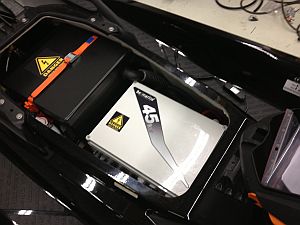
Engine: Liquid-cooled 45 kW AC 120V
Controller: Liquid-cooled AC 144V 500 Amp
Batteries: Lithium Polymer HP (High Performance)
120 Volt 160Ah (20 kWh) Forced Air Cooled zoals
Specially designed BMS (Battery Management System)
Battery Charger 120 Volt 60 Ah
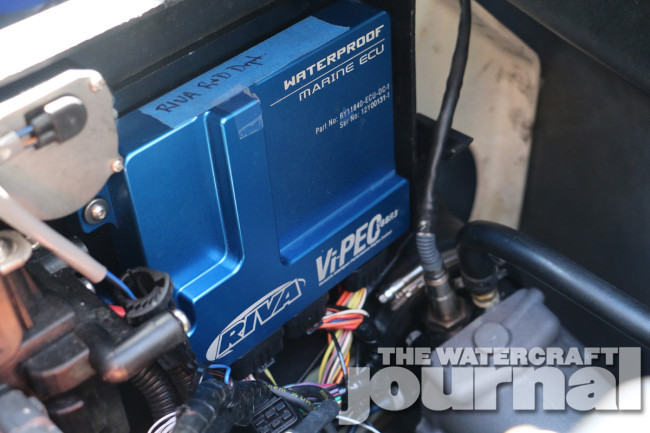
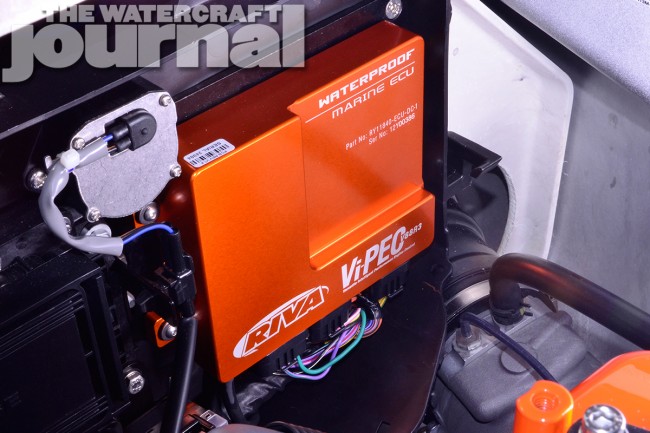
In the pursuit of more horsepower and greater ignition efficiency, many performance-seekers have turned their sights towards ECU reflashing. While this aptly serves to unlocks much of your factory personal watercraft’s engine control unit (ECU), it does so with a “one size fits all” philosophy. Disconnecting and shipping your PWC’s brain off to another state for a week or two (or in some cases, over a month), leaves you with a dead watercraft. And, by happenstance, the new retuned returns to you flawed, either in its code or the map provided doesn’t cooperate with your particular arrangement of aftermarket parts, you can expect a far longer downtime.
That is why for those seeking the utmost in both delivered performance and compatibility with a vast arrangements of aftermarket components, RIVA Racing’s Vi-Pec ECU still stands head and shoulders above the rest. While we could pontificate over the many features of the Vi-Pec itself, its another feature that truly separates RIVA from other ECU tuners: A multitude of programmable maps! RIVA Racing’s research & development team work tirelessly to explore hundreds of different combinations for a wide variety of applications. These maps are then dyno and lake tested prior to being uploaded to RIVA’s free Performance Map Library.
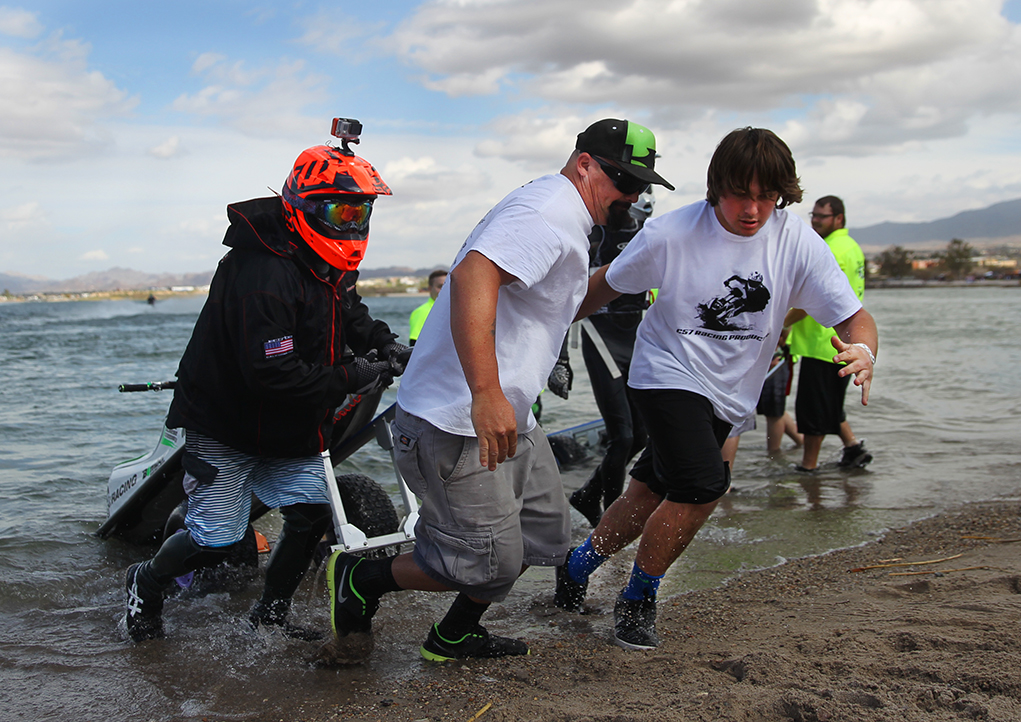
PWCOffshore.com’s Mark Gerner has announced that he will sponsor both the first place “Best Pit Crew” trophy and second best Crew Award for pit crews participating in the 2016 Hot Products Mark Hahn Memorial 300 Mile PWC Race this upcoming February 27th, 2016, at the Crazy Horse Campground in Lake Havasu City, AZ.
The Hot Products Mark Hahn 300-mile PWC race is a test of pilot, technicians, craft and PWC Pit Crew. Pit Crews are challenged to recover, fuel and launch PWCs in less than a minute, this is no easy task. This process requires planning, process evaluation and improvement, practice and perfect execution on race day.
Mark Gerner said, “We are happy to sponsor the ‘Best Pit Crew’ award, the pit crews work exceptionally hard prior to and on race day and deserve all of the recognition they receive. Many of the fuelers train year round to have the necessary strength to throw around 80 pounds of fuel.”
Mike Follmer said, “Pit crews are a big part of winning this event, getting their rider in and out and not spilling any fuel can make or break a team’s success in this event. This race race is the 12th annual Hot Products Mark Hahn Havasu 300 Presented by Yamaha.”
Pit crews make it all happen at this event, we are glad to recognize their efforts. Race officials will make the top two Pit Crew selection based on their observations of the Crews throughout the race. For more information regarding the Mark Hahn Memorial Race go HERE.
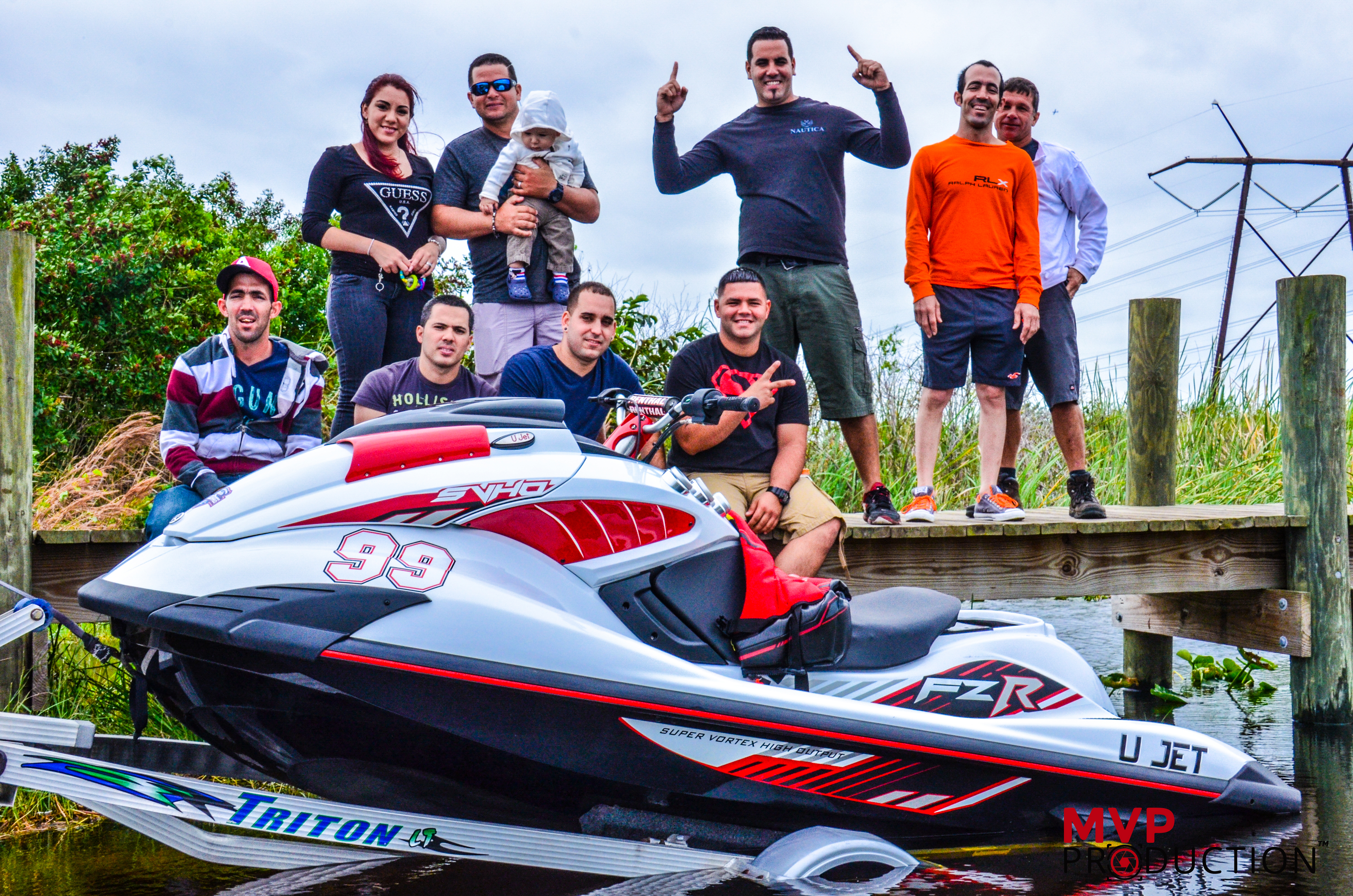
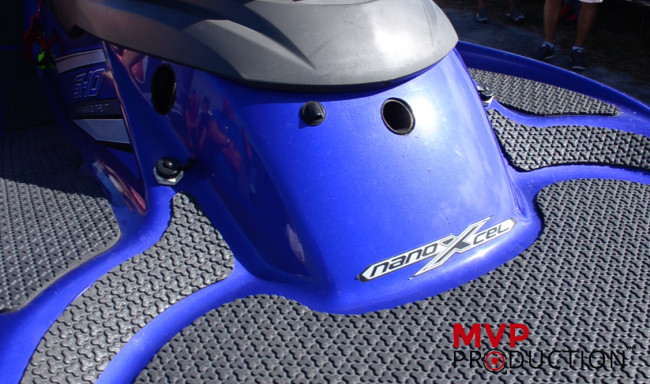
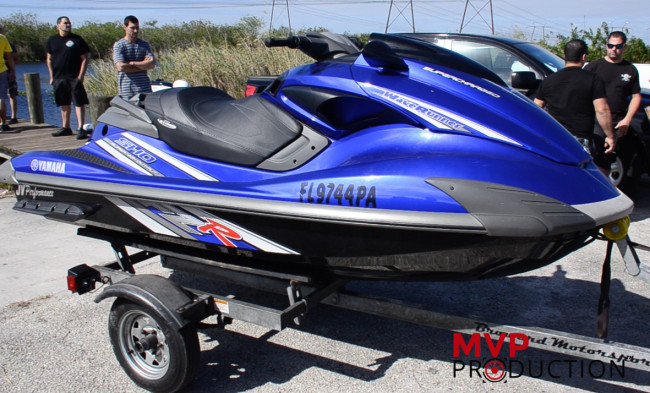
The highly competitive world of PWC drag racing has taken a page from “The Fast & The Furious” with the level of underground, winner-takes-all racing happening in private and municipal waterways around South Florida. One such high stakes drag race took place within the past week, and MVP Productions’ Manuel Valdes was able to not only provide The Watercraft Journal some insight to the race, but video to boot:
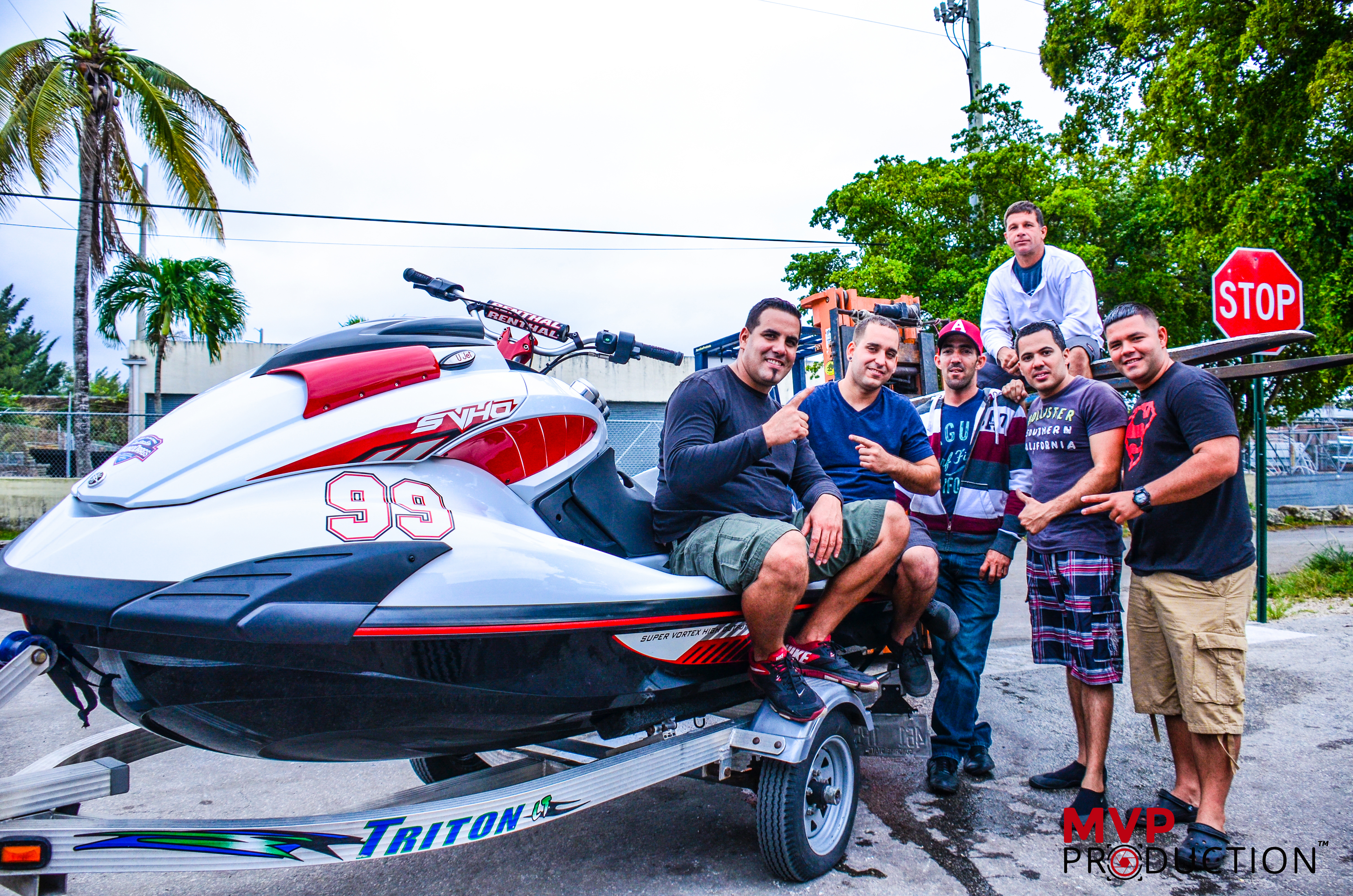
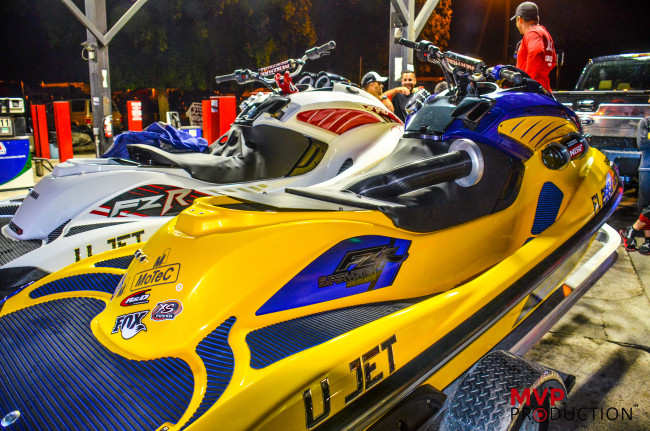
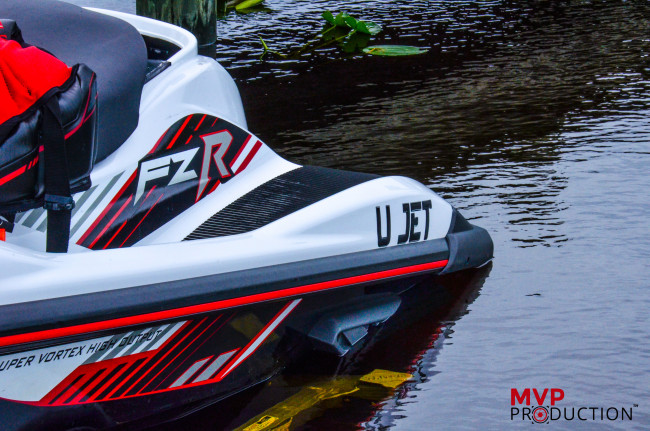
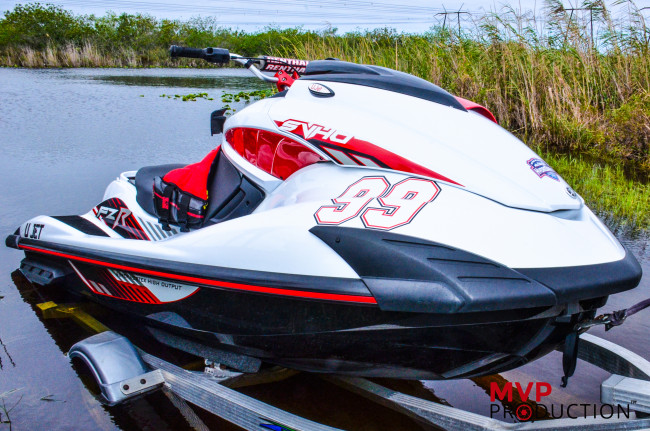
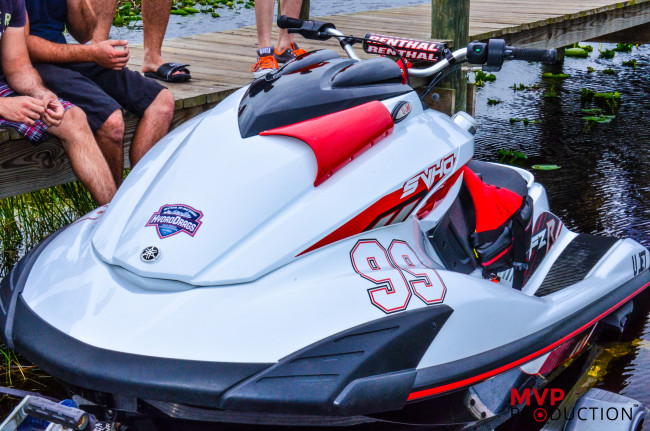
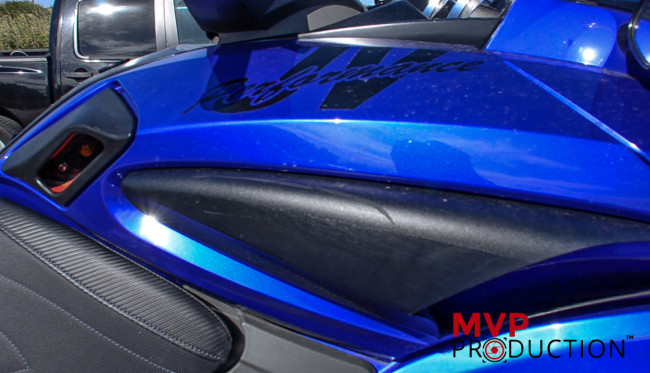
“The race began by a call out from Joaquin Lara, the owner of a blue turbocharged FZR from JV Performance calling out Darian Rodriguez, owner of a white #99 FZR (equipped with a supercharger) from UJET team. Joaquin didn’t know the #99 was supercharged and still Rodriguez didn’t back out of the offer of racing a turbo FZR, even though Lara told him he was pushing close to 100mph.
“The race took place in a canal near Broward County, FL. The bet was set at $1,400, winner takes it all. The driver of the white FZR was Mike Valdes, winner of the Super Stock class at this past Hydrodrags World Finals. Lara decided to experience the rush by being behind the controls of his turbo FZR on his very first race.
“The white FZR is supercharged, and uses a RIVA/Vi-Pec and is fed on E85. Rodriguez wished to keep the speed a secret until the next Hydrodrags where he will reveal it in a speed alley pass. The blue turbo FZR also uses a RIVA/Vi-Pec ECU and also is running on E85, with the owner claiming it to be close to 100 mph. It’s built by JV Performance and tuned by Albert Turbo.”
As the video shows, Lara’s blue FZR can’t keep hooked, with Valdes driving the white #99 FZR to a win with every pass. In fact, after three passes, Valdes looked noticeably frustrated with Lara, waving him on and looking to give him the starting nod. Regardless, the supercharged Yamaha pulls far ahead of the turbo machine all three times.
“The white #99 was put together by UVA, who owns a shop called UJET and owns the world’s fastest turbocharged FZR (seen in blue and yellow with a custom bracket for a nitrous bottle on the side) with a top speed of 109mph and counting. The white FZR is custom built to match the looks of the blue-and-yellow FZR but still run a supercharger, built with the help of one of the best tuners, Brian Kirchberger, also with the help of Ernesto Calas, Mandy’s Performance and Daylon Rodriguez.”
All images, video and information provided Manuel Valdes of MVP Productions.
Although I’m a racer at heart, growing up riding and racing motorcycles bred into me the need to jump almost anything and everything! If it resembles a ramp or it can be made to resemble a ramp, I’m in! When the Sea-Doo Spark debuted in 2014 it seemed to me like the perfect watercraft for both my girlfriend to get out on the water and have some recreational fun and me to go jump in the surf. So, I bought one. She named it “(Storm) Trooper.”
The standing rule at the Daytona Freeride has always been standups, X2s and WaveBlasters only on the water. Since the Sea-Doo Spark’s weight is about the same and it is only slightly larger than a WaveBlaster, I made the call. Freeride’s mastermind Nicholas Foederer, allowed me to take part aboard my newly purchased Sea-Doo. Nick took some heat for allowing what is considered a runabout to participate, and a Spark at the Freeride looks to be a one-time deal.
With my new Sea-Doo Spark in tow, fitted with GoPros and some awesome custom BlackTip Jetsports Elite mats from Watercraft Superstore, I hit the surf with some of the best Freestyle riders in the United Sates. In 2014 the surf was about head height up until Sunday and it was a cold January in Florida terms. However, that did not stop the riders.
Aside from being out there and getting to “jump stuff,” a highlight for me was watching one of my favorite freestyle riders Mark Gomez up close. He was ripping and putting on a clinic in smooth, seemingly effortless riding! Here is a video I put together of my time at the 2014 Daytona Freeride on my Sea-Doo Spark, putting it through its paces and seeing how ‘Trooper flew!
Mark your calendars and come see first-hand what the best Freestyle and Freeride guys have in store for you this year at the 2016 Daytona Freeride, presented by BlackTip Jetsports. Stop by and say hello to your favorite vendors in person. Stay late and see what antics ensue January 14-17 Daytona Beach, Florida.