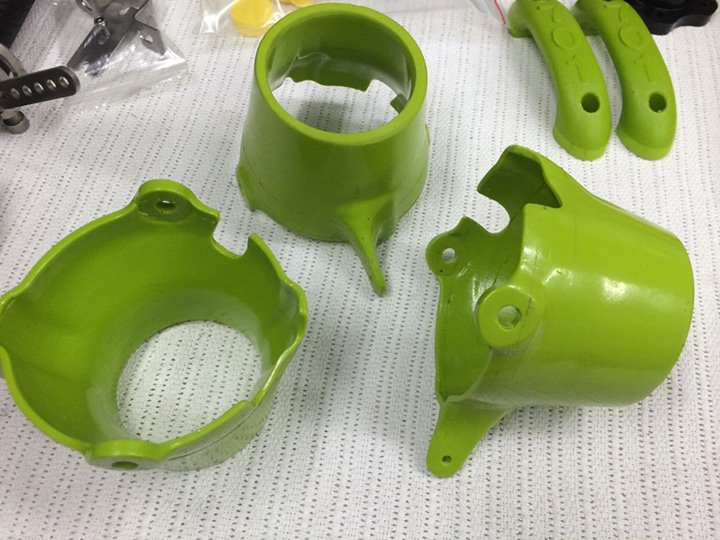
Listen, we’ve all seen our fair share of late night infomercials shilling “indestructible” items – but we think we’ve actually seen something that is, for all intents and purposes, idiot-proof. Following a video posted on 701 Industries’ Facebook page, we dug a little deeper and were completely impressed with the company’s proprietary Duro Trim Nozzle.
Made specifically for freeriders, the Duro Nozzle is formed from a flexible urethane that is rigid during use, but able to flex under stress and absorb seemingly endless blunt force impact – particularly from hitting the seafloor upon reentry – protecting other pump parts from impact and keeping them from failing. Priced at $89.00 (AUD) the nozzles are in high demand and a waiting list continues to compile.
But that’s what is expected from a company producing top quality products for Yamaha WaveBlasters, SuperJets and a wide variety of aftermarket hull manufacturers. 701 Industries was founded by Dave Dale in 2013 to service an industry where aftermarket parts were “drying up,” by designing and crafting innovative parts for jet skis.
The video you see below is possibly one of the most over-the-top, insane durability tests, ranging from direct hits from hammers, rocks, stomping and even a small panel truck. Oh yeah, and make sure you see how the Duro Trim Nozzle fares when crushed in a hydraulic press. IF that doesn’t convince you, nothing will.
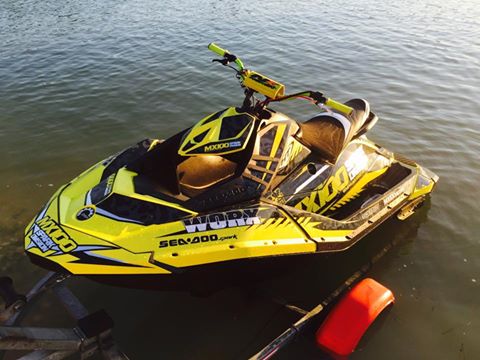
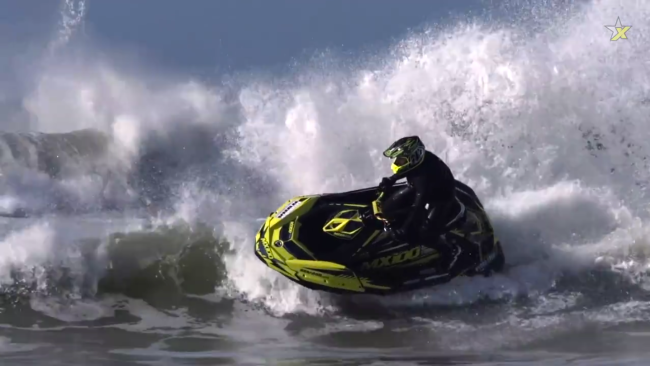
This left the virgin territory of successfully executing a backflip on a Sea-Doo Spark wide open. To WORX and Gomez’s credit it took the better part of six months and one of the most decorated freeriders on God’s green earth – Pierre Maixent – to pull it off, and how! Maixent’s company MX100 Factory is a freeride and freestyle shop specializing in building custom skis “on demand” as well as selling of all the “sickest products” in the industry. Likewise, Maixent applies his experience as a 7-time world champion to advise other freeriders.
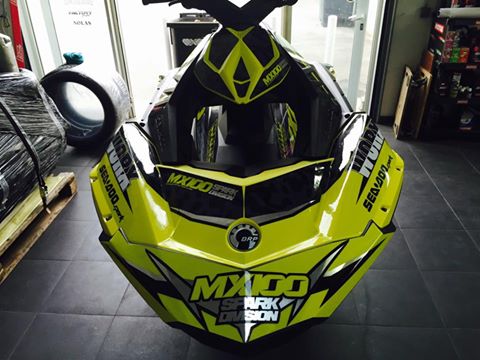
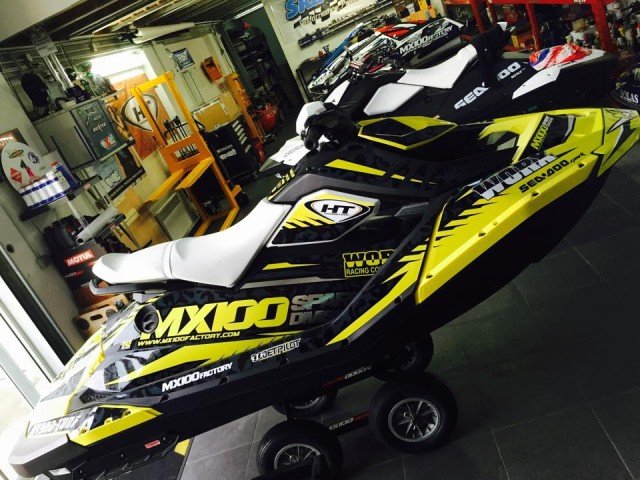
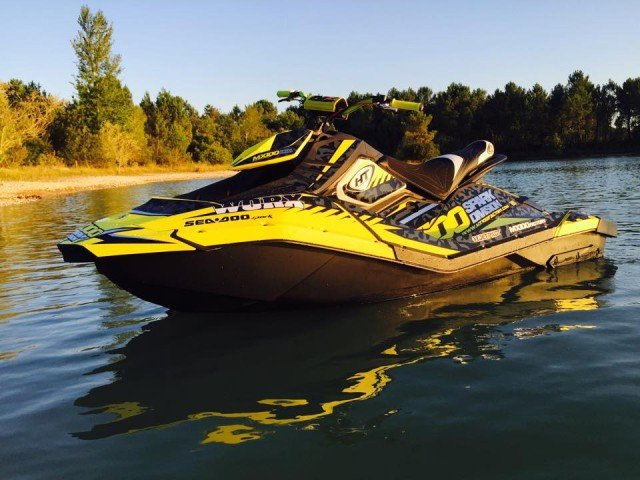
Recently, MX100 unveiled a new “Spark Division” with the announcement of MX100’s Spark re-mapping services, as well as offering a full array of WORX Racing components specifically for the Spark – all of which add up to an impressive 120-horsepower. The company’s prototype is a handsome Pineapple Yellow 2-up unit wrapped in a custom vinyl kit and touting all the goods necessary to propel Maixent not only through one successful backflip but a recorded two others – including a one-handed flip for good measure.
Below the video published on Antoine Mortoire’s Facebook page was filmed in Montalivet, France only three days ago and has since gone stupidly viral. We only share it here to those who haven’t seen it yet. Enjoy!
All of us are very excited to welcome one of the most exciting companies in our industry – Thrust Innovations. Committed to providing quality PWC service, developing amazing billet and hand-fabricated performance parts for and custom-made jet skis, Thrust has evolved since its beginnings in 2007 to become one of the premier freestyle and freeride stores (carrying hundreds of parts from some the best in the business). But, if you’re like us, you know Thrust for its own line of premium billet, carbon and composite parts.
Working together with The Watercraft Journal, we will bring you all of the latest news and special offers from the Florida-based manufacturer helping us bring you the coolest freestyle and freeride jet ski performance parts and jet skis – because unless you’ve been living under a rock, these are some of the most impressive machines on the water today. Thrust and its team of highly skilled machinists, builders and riders are always innovating, tweaking and improving previous and current designs to offer the PWC industry some seriously impressive parts.
“What makes Thrust different is that our sales staff individually tests all products, as well ride and compete in racing and freestyle events on Thrust-built skis,” Thrust Innovation‘s Brian Vergin states. “This first-hand knowledge of products allows us to gain the best technical advice and maintain the highest standards of quality possible. In fact, you’ll never find us selling products or offering advice we wouldn’t take ourselves. From our machining service to our selection of over 5,000 in-stock parts, we always offer quality equipment and a personalized customer service experience. Whether you’re looking for parts or repairs, the Thrust team is ready to help.”
As the year begins to finally wind down and all of the North American race series draw to a close is when we start seeing the recaps, cumulative awards and “best of’s.” The Watercraft Journal is no different and will be announcing its “Watercraft of The Year” award (and runner up) in just over a month’s time. Last year, we weighed the results ultimately upon a total impact on the industry as a whole: the 2014 runner-up was Yamaha’s then-new SVHO-powered FZR that ran roughshod over every race series and class it entered; but it was Sea-Doo’s revolutionary Spark that came home with the honor of “Watercraft of The Year” as it nearly upturned the whole industry on its ear, singularly accounting for a double-digit percentage increase in new PWC sales and bringing more neophyte riders to the sport than any other machine.
Yet before we dish out the year’s winners (that is, in our view), we were entreated with PWCOffshore.com’s announcement if its choice for offshore watercraft of the year and their choice for runner up. For those familiar with the site and accompanying group of dyed-in-the-wool offshore/endurance racers and enthusiasts, their selections will come as very little surprise. Their process of selection though, comes after fielding endless and questions asking, “What is the best craft for riding hard in the ocean?”
As PWCOffshore.com writes, “Personal Watercraft that we believe are best suited for enthusiasts and racers who are riding aggressively, at high speeds in the ocean in straight lines (not lakes, not glass water, not closed course, not for waterskiing, not for doubling up). The ocean/offshore riding denotes riding aggressively in chop, rough water and waves at higher speeds for long distances.
“We are defining ‘offshore’ as salt water riding and racing beyond break walls piloted at high speeds where there is a minimum of two and a half foot chop and ocean waves. Our methodology was either to ride the craft and / or solicit feedback from very experienced riders & racers who have ridden all of the models and were selected to provide a review. Stability, hookup, average speed, recovery time, the ability to fly straight when the craft was out of the water combined with the least amount of nose hunt possible in the rough is the name of the game in aggressive offshore riding and the basis of our selection.”
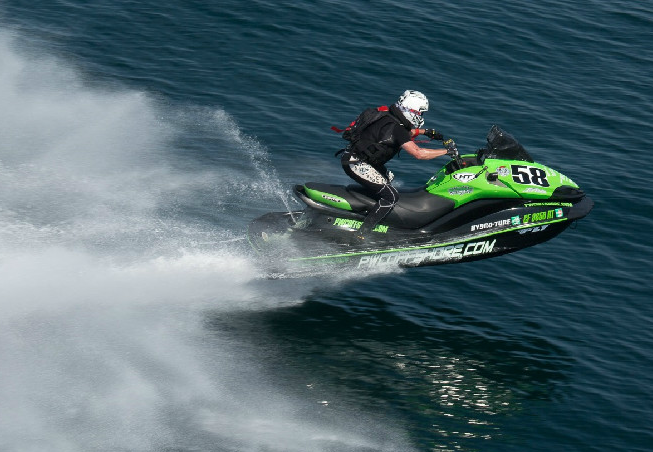
And with these parameters established, PWCOffshore.com gave the accolade to Kawasaki’s Ultra 310R JetSki as the ultimate offshore PWC, with Yamaha’s FX SVHO coming in as the runner up. Make sure to read their full report for all of their listed pros and cons and see if you agree!
Last weekend marked the end of the 2015 AquaX season, and boy, was there excitement in the 250 class. This was not a race to miss if you have been following a rider from the 250 class or if you’ve just been following the action throughout the 2015 AquaX season.
Coming into the event, the AquaX 250 class was very close in points, and produced plenty of excitement. Peruvian Paloma Noceda came into the weekend with only a two-point lead over second place rider, Sea-Doo/RIVA Racing’s Eric Lagopoulos.
In the first moto, Brian Baldwin pulled away and got the win, and the two points leaders battled it out for second place. Lagopoulos was able to hold Noceda off and take second place, which evened up the points race. In Moto 2, Baldwin again took the win, with Noceda taking second this time, and Lagopoulos third.
Going into Moto 3, only two points separated Noceda and Lagopoulos, whichever one crossed the finish line first would leave with the AquaX 250 class championship. Noceda jumped off to a huge lead and looked to have the moto and the points lead in the bag, but after falling off, she lost a few positions and came in at a disappointing fifth position. Lagopoulos took second in moto three (behind Brian Baldwin) and the points lead for the season.
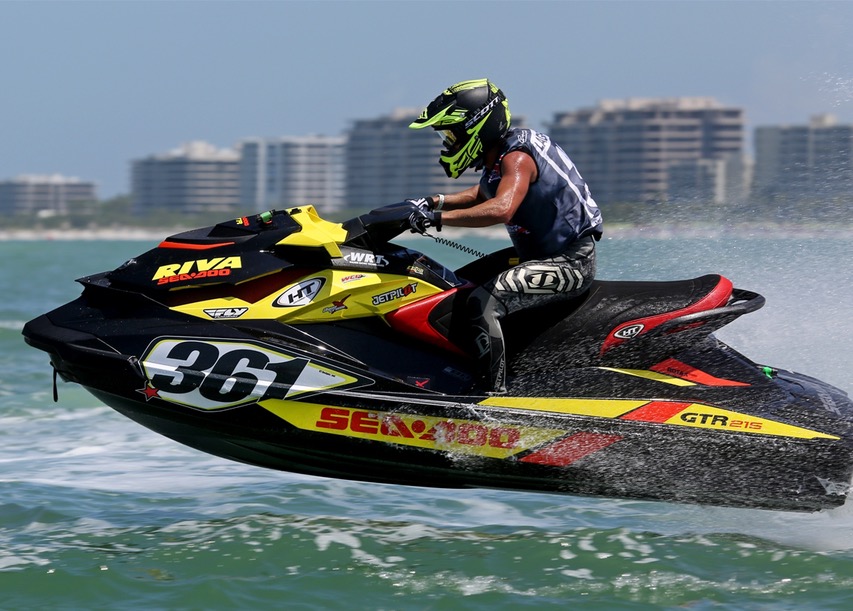
“I really love the mental side of the sport, so knowing I had to beat one rider for the overall championship was really exciting!” Lagopoulos said, “I pushed the entire race from the drop of the green flag to the beautiful checkered flag and my second Aquacross championship in a row! It was a tight race figuratively and literally. The GTR 215 simply proved it’s the better overall watercraft.”
“I’ve had so much success on the GTR 215 in regards to Aquacross because of the different conditions each round. I mean is good in every condition. The GTR 215 is good in the flat water, good in chop, and good in the big surf races. It’s a watercraft that you can ride hard no matter where its ridden.”
Lagopoulos concluded, “It was an incredibly exciting season filled with ups and downs but when it came down to who was destined to be on top the season ended in pure satisfaction with the X-Team’s second championship in two years!”
Just a little over a month after the 2015 Pro Watercross season came to an end, the Pro Watercross staff has already released a 2016 tentative schedule. The schedule outlines the Pro Watercross plans to stop at the same locations as the 2015 season, in the same order.
2016 Tentative Tour & Championship Dates:
Round 1 May 7-8 Panama City Beach, FL
Round 2 May 14-15 Pensacola Beach, FL
Round 3 June 18-19 Sparks/Reno, NV
Round 4 June 24-25 St George, UT
Round 5 August 13-14 Lake Hartwell, GA
Round 6 August 20-21 Charleston, WV – National Championship
World Championship September 20-25 Naples, FL
Just as with the 2015 schedule, the tour kicks off the season at Panama City Beach, FL. This location is a favorite of many of the racers on the tour. The race will take place May 7-8.
Round 2 will go down on the beautiful coast of Pensacola Beach, FL. It will be one week after the season opener, on May 14-15. That Sunday (15th) is Mother’s Day. The Pro Watercross staff looks forward to honoring all the moms at this event.
The Pro Watercross Tour takes a trip out west for the third and fourth rounds. Round 3 will take place in Sparks/Reno, NV on June 18-19. Following that event, Round 4 will be in St. George, UT on June 24-25. No, this is not a typo, the Pro Watercross staff has decided to begin the racing action on a Friday and wrap up on Saturday.
As of right now, there is no tour stop scheduled for Lewisville, TX, but the staff at Pro Watercross tells us that they are working with the city to get a round scheduled there.
Round 5 will take place in the beautiful city of Hartwell, GA. The stop is scheduled for August 13-14. This is about when the points race begins to tighten up, and we expect very exciting and competitive racing action at the last couple of rounds.
Round 6, in Charleston, WV, will again host the Pro Watercross National Championship. This event is set to take place one week after round 5, on August 20-21. As the last event where racers can earn points, racers will be giving it everything they have to try to leave with the points lead.
Racers will then have a one month off period to rest and get their skis set up for the second Pro Watercross World Championships in Naples, FL. The event will go from September 20-25, and will host racers from all over the world trying to claim a World Title.
Keep in mind, this is a tentative schedule and is subject to change before the season actually starts. We are already looking forward to the 2016 season here at The Watercraft Journal, and, as always, will be bringing you exclusive coverage of each round throughout the season.
Today is a special day as we celebrate the second anniversary of launching The Watercraft Journal. So we’re not going to solely review the past month’s performance, but look back over the past two years’ performance of the internet’s only daily PWC magazine. In fact, The Watercraft Journal marks a series of firsts for the personal watercraft industry that bear noting: Again, it is the only digital publication in our industry to publish new, informative and entertaining articles each and every day, but it is 100-percent subscription-free. There’s no downloads. No apps to buy. No bulky PDFs to download. If you’ve got access to the internet, you can read what we publish.
This level of unprecedented access has catapulted The Watercraft Journal ahead of all other magazines, blogs, news aggregates and even several forums in both readership and popularity. And since The Watercraft Journal has never missed a day (except intentionally, for major holidays. And although we didn’t publish anything, last Christmas was conspicuously popular. Apparently, you get bored hanging around with the family). Our new twice-a-day publishing schedule also caters to our Australian and Japanese readers, as well as our North American friends, publishing one article at midnight Central Standard (CST) and the second in mid-morning. But of course, as a reader, you already know this.
What you might not already know is that The Watercraft Journal machine is equally as well-oiled behind the scenes. Our collaborative contributors are all paid inside of 45 days of invoicing, and are never short on work to do. Our advertisers – for which all of us at The Watercraft Journal are immensely grateful – are our biggest advocates, as The Watercraft Journal’s readers are active buyers of their products. Sure, ad clicks might not rival that of Google, but they are introduced to and learn about your products, and then buy them equipped with the information they learned here. And we’ve got the right age demographic and written testimonies to prove it.
That is what a healthy, reciprocal professional business relationship is. And frankly, many are surprised how well it works. Our product reviews, ride tests and event reports have been directly responsible for added attendance, increased sales and greater brand (and product) awareness that through any other PWC magazine. Likewise, The Watercraft Journal is the only remaining privately-owned PWC publication in North America. No marketing agency, group publisher or top level advertiser has final say on what is printed in The Watercraft Journal. While others jettison off portions of their content to cover content outside of the industry, we remain true to the core sport.
November 2013 to November 2014 vs. November 2014 to November 2015
November 2013 to November 2015
What’s All This Stuff?
To the untrained eye, everything above can look like nonsense. Yet, to those attuned to tracking any sort of trending, this is rock solid evidence (as reported by Google’s data tracker, Google Analytics) of an unprecedented growth curve for such an intimate industry. With 40- to 100-percent annual growth in respective segments, The Watercraft Journal has broken several records, including surpassing 200,000 annual individual readers in 2015 (and nearing a quarter million before the end of the year) equaling a monthly average of 18,200 individuals a month, and comparing that to last year’s monthly average of 9,451 shows a near perfect 100-percent increase in readership.
November 2013 – November 2014
Total unique readers: 113,419*
Total articles read: 339,115
Percentage of new readers: 60.7%
November 2014 – November 2015
Total unique readers: 218,410*
Total articles read: 576,303
Percentage of new readers: 63.6%
November 2013 – November 2015
All-time unique readers: 328,507*
All-time articles read: 925,056
All-time percentage of new readers: 62.6%
All-time percentage of mobile device users: 59%
*This number is considered equal to an individual sale of a single copy of a magazine.
Get More Here Than Anywhere Else
As the last print PWC magazine thin out and eventually evaporate, and competing websites fail to keep up with the rigors of working Monday-through-Friday, The Watercraft Journal continues to push forward, blazing new trails in media for the industry. Publishing professionally-written magazine content each and every day adds up in more ways than just expense; The Watercraft Journal’s consistent publishing schedule has averaged an impressive 118-plus page count if we were foolhardy enough to waste our money on printing. And that’s just counting our feature content – adding in our massive production of daily news and thousands of pictures filling over a hundred photo galleries, then you’ve got a 200-plus page magazine every month.
Total feature articles published: 309
Total news articles published: 648
All-Time Highest Read Article: 35,330 views
Reaching More People in More Places
Contrary to what many millennials might advocate, social media is not the end-all cure for today’s business ailments. Rather, it only puts your brand under a microscope. So if you’re producing new and entertaining content, a robust social media campaign with get the word out. But if there’s not much going on, it only amplifies how bad things really are (there’s quite a few examples to be sure). The Watercraft Journal only uses its social media to directly drive readership to the magazine itself. Doing otherwise is not only wasteful but disingenuous to your followers. Our Facebook, Twitter, Instagram, YouTube, and weekly newsletters are purpose-driven, to bring all the magazine’s articles directly to you.
Total Facebook Followers: 14,596
Total Twitter Followers: 534
Total YouTube Subscribers: 132
Total Instagram Followers: 4,378
Total Weekly Newsletter Subscribers: 1,237
There’s Only One Way, And That’s Up
So, to all of our advertisers we wish to express our deepest gratitude for supporting The Watercraft Journal, and we, in turn, strive to present your products and services to the largest audience of bright, energetic, intelligent and active readers in our industry by producing the utmost in professional content day in and day out. And as we’ve promised before, we’ll never dilute our standards for superior and family-friendly content. Again, please don’t mistake this for braggadocio, but a promise to you. The Watercraft Journal has earned your trust because of our dedication to hard work, reliability and integrity; we publish fun, informative and insightful daily news, weekly product and vehicle reviews, interviews, technical “how-to’s”, shop tours and event coverage for you, every day, for free. And that is a promise.
There are few companies more committed to the sport of jet ski racing than Jettribe. Celebrating its 20th year in business in 2016 (which is only two months away!), Jettribe has been working nonstop since those heyday years to provide a full array of products for those racers who take to the band week in and week out.
From their first foray into the industry providing heavy duty canvas PWC covers, to developing and testing their own range of high performance racing boots, wrap-around goggles, race-bred full suits and safety-minded side-entry vests, Jettribe’s lineup of modern products are rife with details and features that frankly are not found with any other manufacturers.
Likewise, Jettribe’s support of jet ski racing has grown substantially in recent years, most notably in its support of the Jettribe West Coast Series and jetting its Jettribe USA Team overseas to King’s Cup in Thailand, Asian Aquabike in China, Offshore Endurance race in Martinique, and elsewhere – not to mention support of some of the biggest names in racing including James Bushell, Erminio Iantosca, Aero and Aqsa Aswar, Craig Warner, Brock Austin, and many, many more. Oh, and you’ll remember Jettribe as the 2014 title sponsor of the IJSBA World Finals at Lake Havasu City, Arizona.
Because of the vastness of the Jettribe catalog, The Watercraft Journal will be conducting an unprecedented product review once a month of some of the best, most popular and favorite items offered by the venerable manufacturer. We’re incredibly excited to provide our 200,000-plus annual readers a better look at Jettribe‘s vests, boots, gloves, wetsuits and much, much more throughout the next 12 months! Oh, and make sure to keep a close eye and stay tuned to special offers exclusive to The Watercraft Journal’s readers found in their digital ads and special announcements!
Unless you’re either of the position of living in a temperate climate that never sees snowfall or requires the winterization of your watercraft or can afford to hole up your PWC in a private storage facility, chances are you’ll be storing your slumbering ski in your home garage or storage shed while the skies gray and the weather turns to crap. It’s an unpleasant inevitability, so we’re thinking of the best tools and tactics to make the transition from weekend hot rodder to hibernation.
Highest on our checklist of necessities for the off-season was a shop cart that would not only provide us a comfortable height to access our engine as we plan on tinkering all winterlong on our project ski, but be able to roll smoothly over our garage’s less-than-perfect surface without catching or jamming. These might sound like minor “must haves” but once you’ve nearly topped a runabout because a low-quality caster catches on a loose bolt, you’ll feel the exact same way.
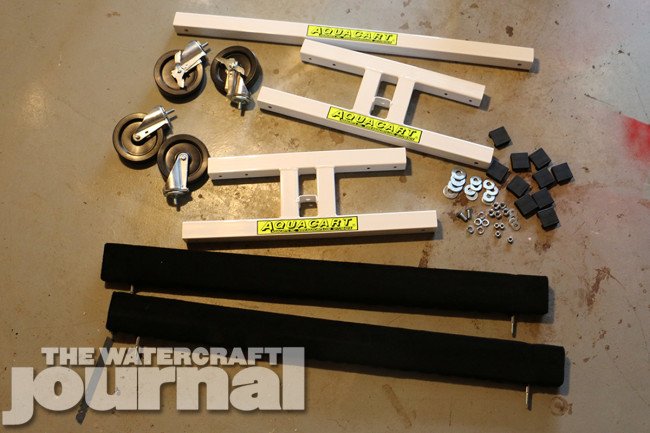
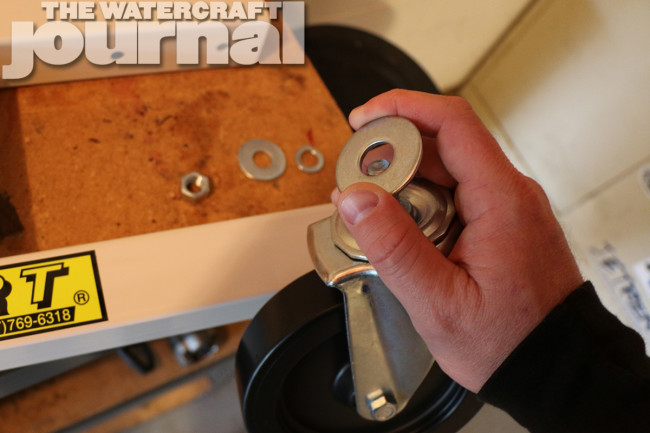
Above left: The complete AQ-19 cart comes in 9 pieces with all the hardware you’ll need. Above right: The large 5-inch 4-axis casters mount to each end of the 28-inch wide base.
Initially, we approached Aquacart wanting their lowest-slung runabout cart because we hated the idea of climbing up and over our Sea-Doo Spark all season. Thankfully, wiser minds prevailed. Aquacart’s Rob Towner convinced us that the AQ-19 was ideal for what we were looking for, particularly as the AQ-19 was, as he said, “a great height for using with trailers.” Only after an hour assembling the Aquacart AQ-19 did we learn firsthand exactly what he was talking about.
Our Spark slid almost effortlessly from our single-place trailer onto the 48-inch long black premium marine-carpeted bunks. The cart’s 19-inch height is measured to meet most PWC trailers, earning the AQ-19 its namesake. Of course, the featherweight Sea-Doo Spark’s 400-pounds doesn’t strain the AQ-19’s 1,300-pound weight restriction, and with a choice of 14- or 20-inch wide bunk spacing adjustments, the Spark fit comfortably on the widest setting.
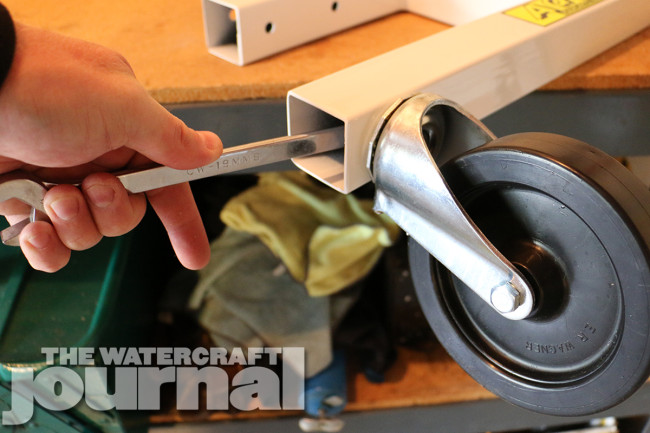
Above left: A 19mm boxed-ended wrench is all that’s needed to tighten down each caster. Above right: Aquacart also includes these nice black plastic end caps to protect you from sharp edges.
Prior to assembly and use, we were immediately impressed with the AQ-19’s build quality upon arrival. Built from heavy-duty 2-inch 14-gauge steel square tubing, each of the components come professionally finished in powder coated bright white (the powder coating being significantly more durable than conventional paint and corrosion resistant) – and if you’re looking for a dash of color, Aquacart offers other hues upon special request.
In fact, the finish is so nice on these carts that they’re not just intended for storage or shop use, but also for showroom display. Towner provided us dozens of examples of dealerships and custom hull makers using these carts in their displays and across their showroom floors – many using the same carts for years without showing any sign of distress, patina or discoloring.
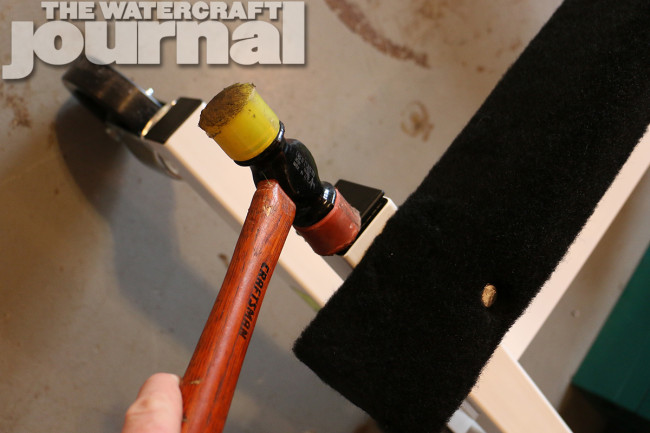
Above left: The center support mounts to opposing perches on the H-frames. Above right: The carpeted bunks also have long bolts that run through the H-frames and are fasted down before adding the final end caps.
The basic frame assembly consists of two wide footprint 28-inch H-frames, a center spine (or support), two pressure-treated wood bunks – with the inside edges beveled to reduce additional wear on the carpet – and wrapped in the aforementioned marine carpeting. Assembly takes a skilled mechanic mere minutes. We needed a while longer to snap pictures along the way (and we skipped a few steps, so this isn’t a step-by-step tutorial on how to build your AQ-19, sorry).
And to our pleasure, the AQ-19 includes four-axis, 5-inch diameter swivel casters. We opted for the optional caster wheel brakes as we knew we’d be crawling all over the ski in the coming months, and although Aquacart offers optional 6-inch casters with an impressive 1800-pound rating, we knew the standard 1300-pound rated casters would work more than enough for our PolyTec Spark.
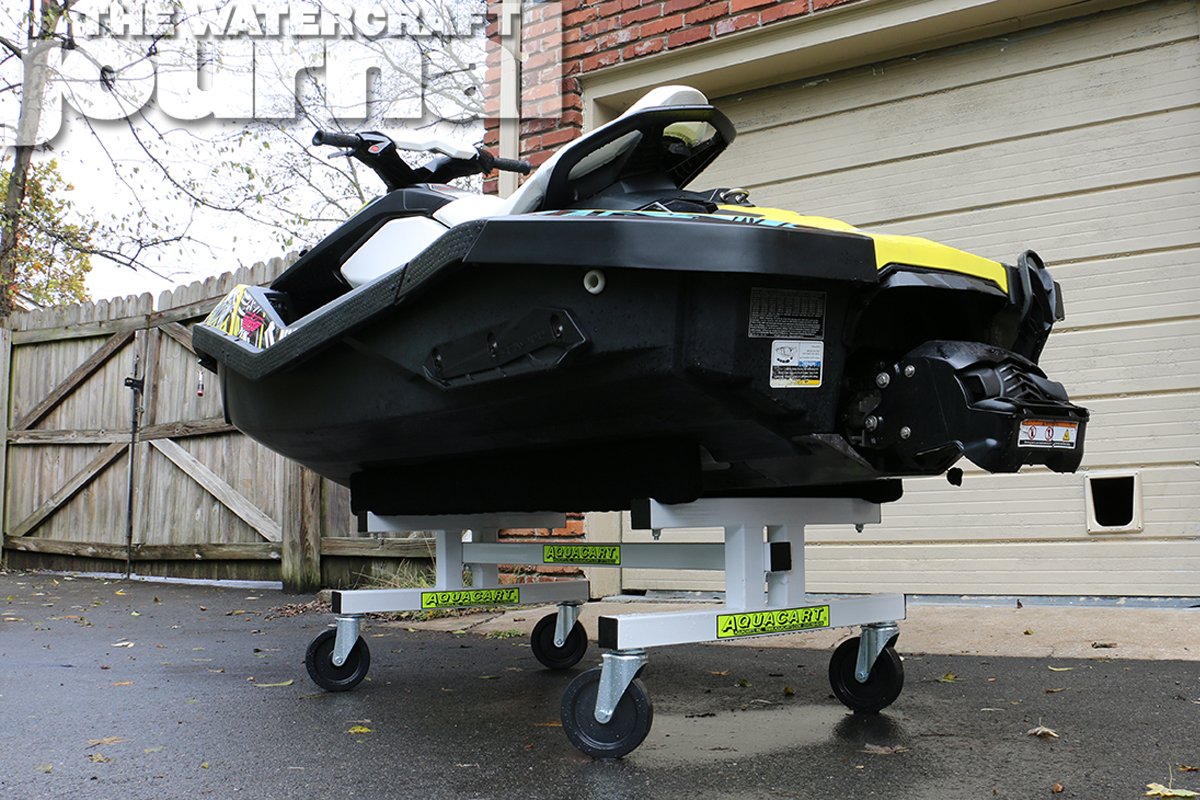
Above: Our Sea-Doo Spark slid effortlessly from the trailer to our Aquacart AQ-19 and maneuvered through our garage without any trouble – or down the garage approach and across the asphalt driveway.
The best way for us to evaluate our AQ-19 was by pushing it laden with our Sea-Doo through some tight spots around our tool bench, riding lawnmower and car all parked in the garage. From there, we rolled the Spark out (and down the approach) of the garage and across the driveway. From treated concrete to asphalt, the big 5-inch casters rolled over the surfaces easily, the Aquacart never feeling tipsy or unsteady.
Climbing up onto the ski, leaning forward over the bars to access the front bin or crawling down the back, the casters’ wheel locks didn’t fail either. Obviously, we’ve got quite a few months more of testing ahead of us, so some might consider this review slightly premature, but we’re already pretty certain this was one of our smartest purchased. Priced at $234.95, the Aquacart AQ-19 is the ideal shop cart for the home garage, the professional shop or dealership. We know, we’ve seen already seen them there!
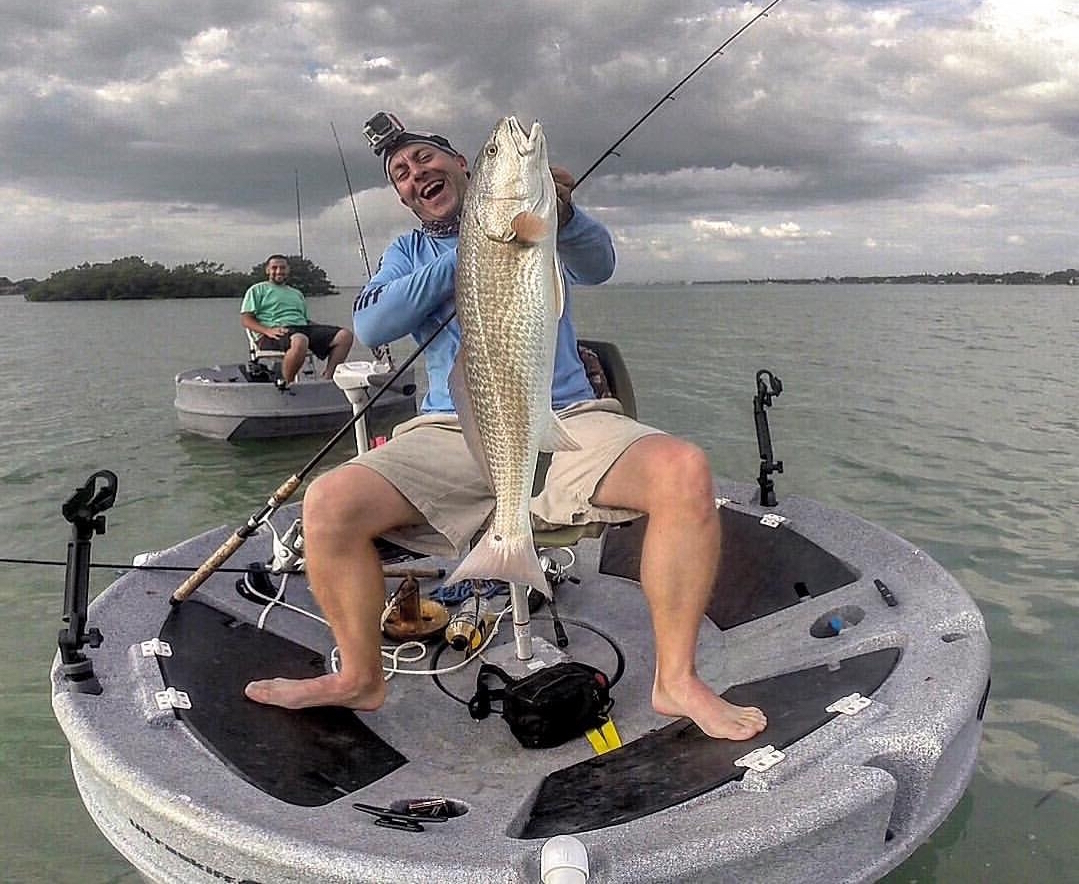
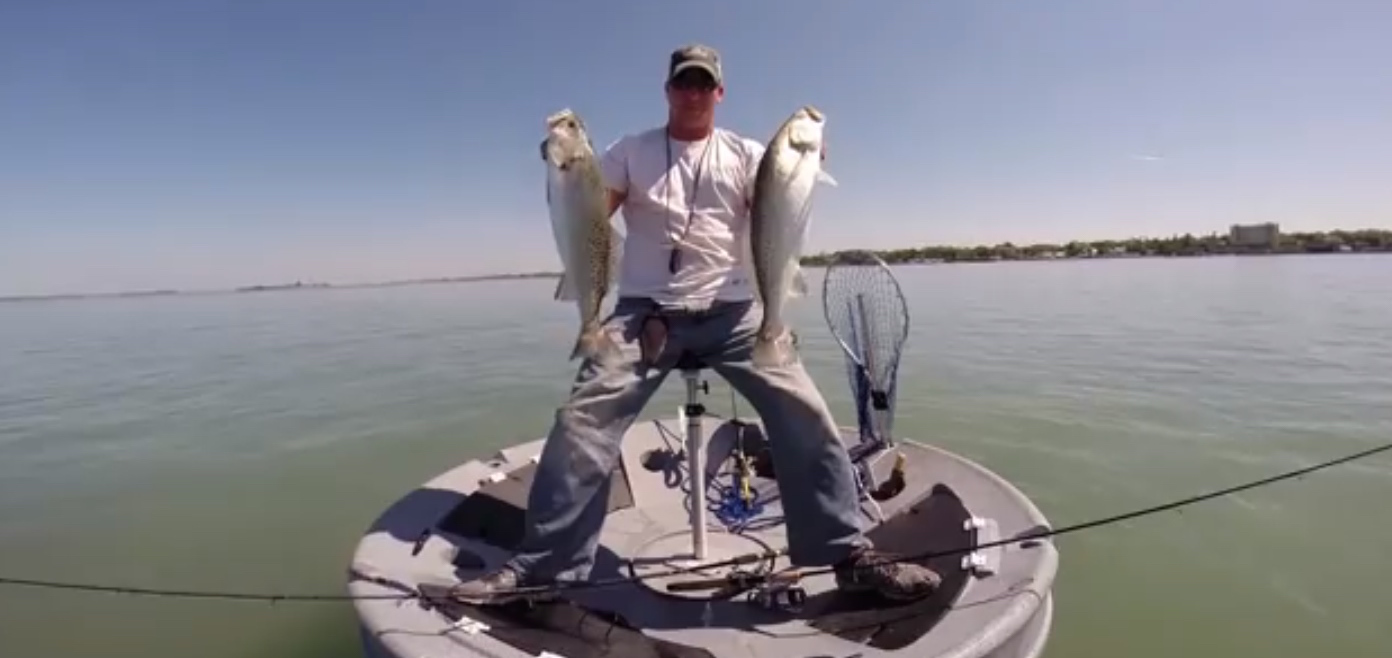
The Ultraskiff 360 is a round, lightweight boat that is easy to tow, move, and launch. The disc is balanced well so it’s great for fishing and hunting. The video below shows it rigged for fishing and also transformed into a duck blind for hunting. The skiff weighs in at 123 pounds and is 6-feet in diameter. It retails for around $1,600 and is made in the USA.
The boat has numerous features and is geared toward the recreational boater and the serious sportsman. Whatever you choose, this thing will get you on the water quickly and easy. A person can put it on a hand truck or just roll it to its destination. It is designed so it won’t tip and the deck won’t even incline so there is no fear of tipping.
The video has a guy bouncing in the boat and it barely moves and another man is shown jumping into the water and he easily climbs aboard from the water. Another scene shows a guy reeling in a fish with no issues keeping his balance, he even lies down to net it. The sleek design allows a person to comfortably and safely lay or kneel over the side with no fear of falling into the water.
Jeffrey Lizzio, the inventor of the boat, recommends outfitting the boat yourself since people like different seats,motors, and batteries. However, it is possible to find a dealer who will sell a buyer an outfitted boat.
The skiff does come with these removable accessories:
• Four Cup Holders
• Three Storage Compartments
• One Battery Compartment
• OneTow ring/Anchor holder
• One Transom with Covers
• Eight Strap Guides
• Six Rod holders
• One Side Bumper
• One Prow
• Six Bottom Skegs
• One Center Hole
• One Drainage Canal
The boat seems great for the solo fisherman, hunter, or just someone who likes to doing own thing by themselves since there’s only room for one person. Visit Ultraskiff for more information.