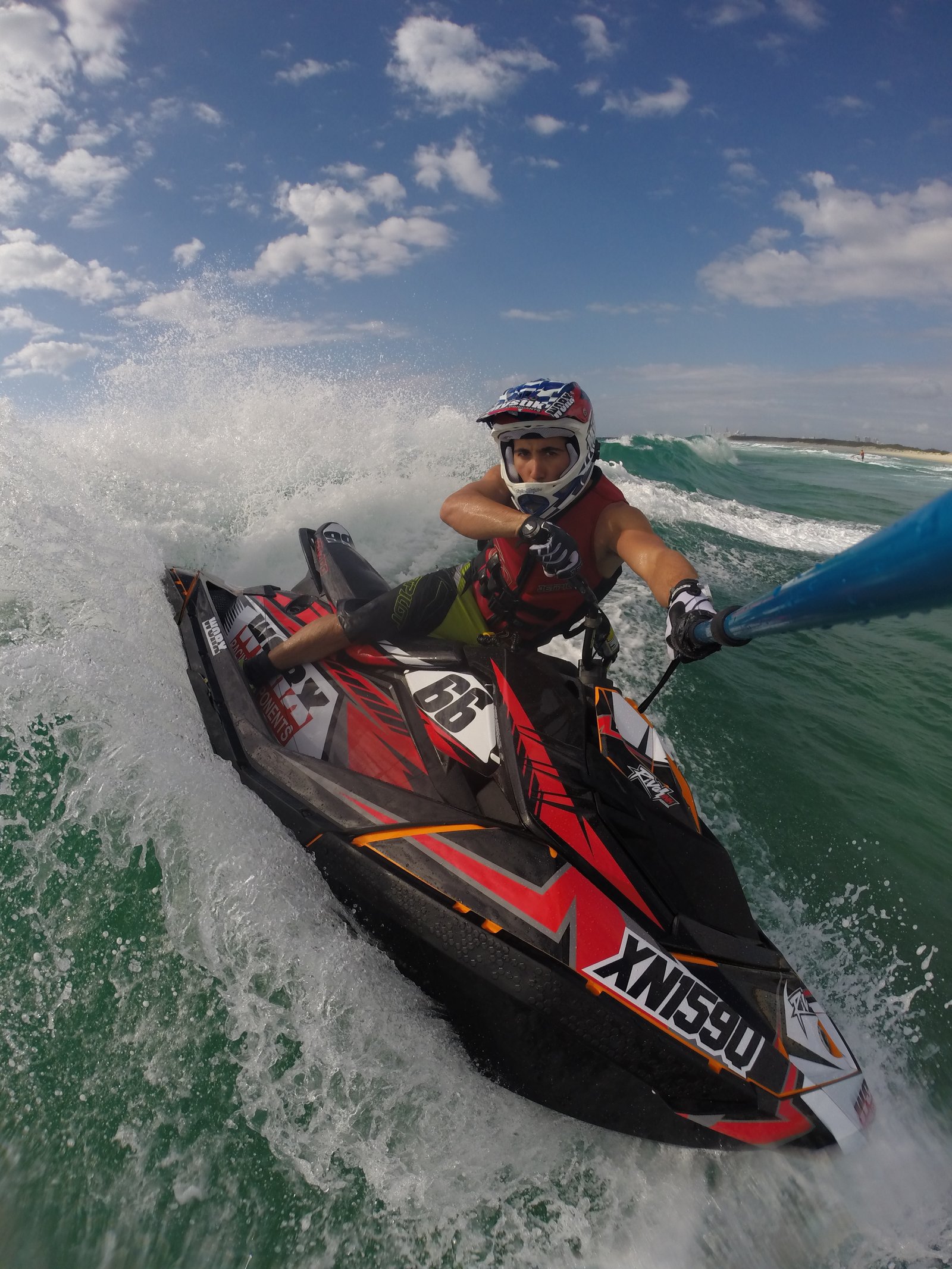
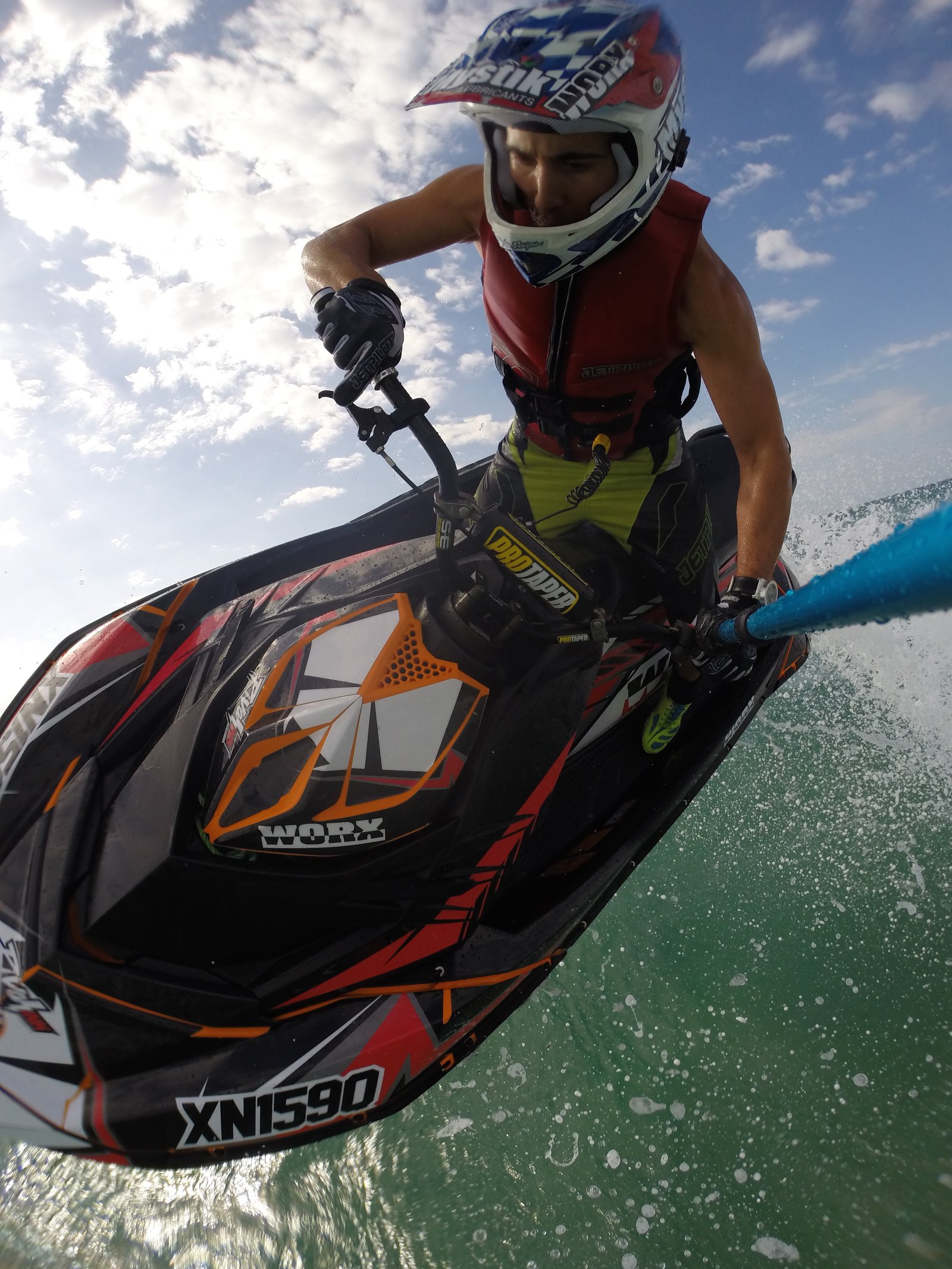
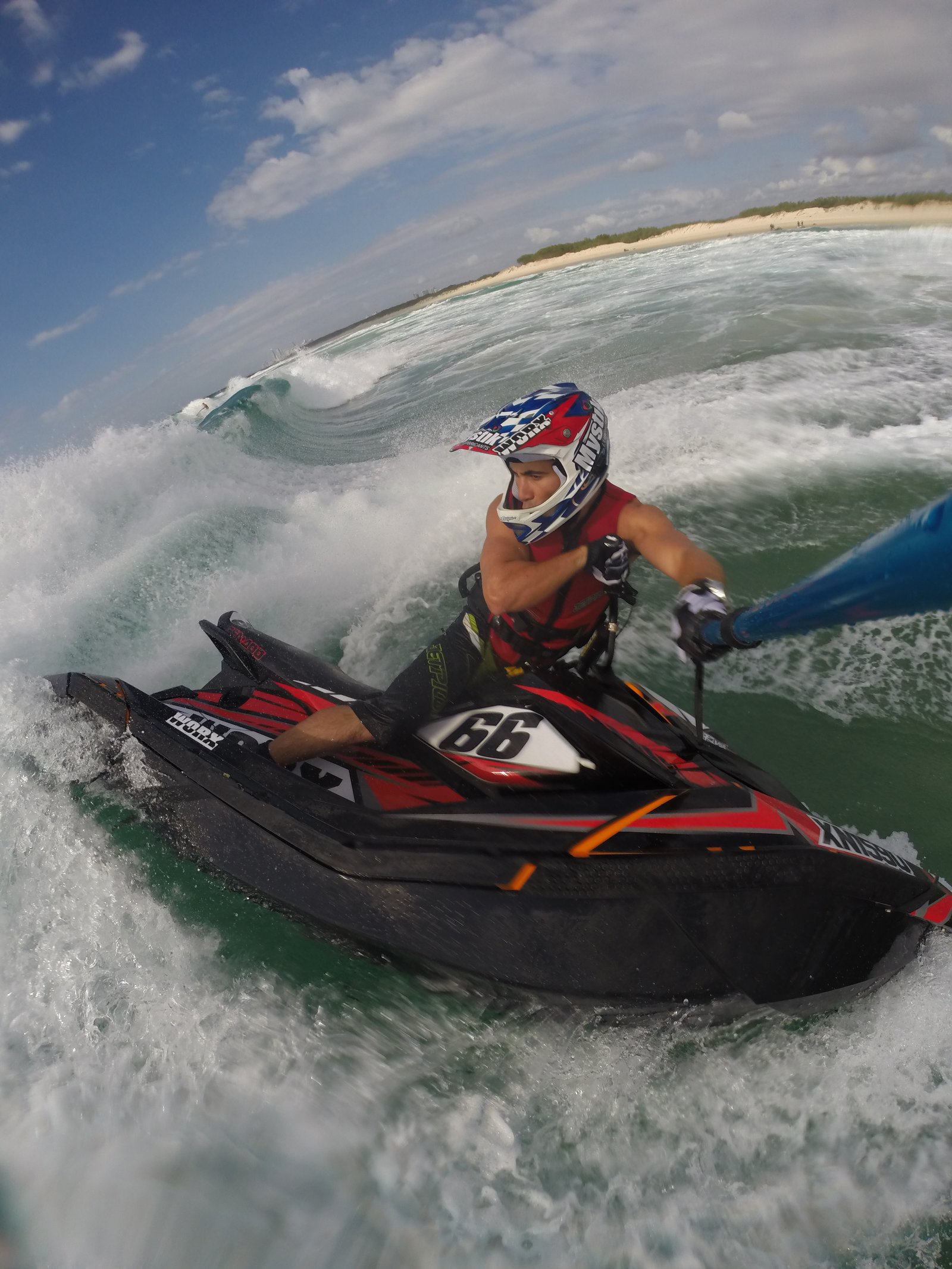
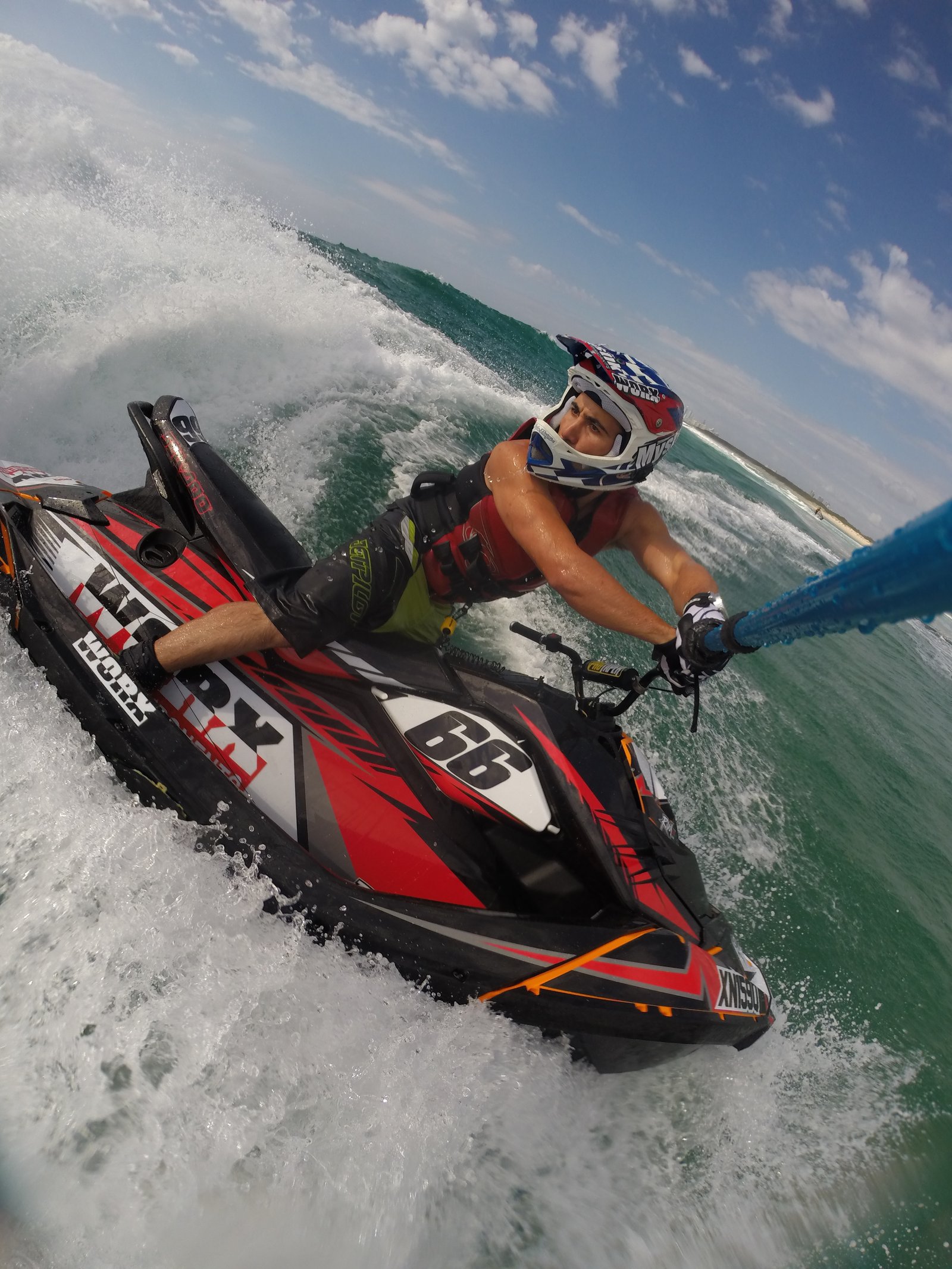
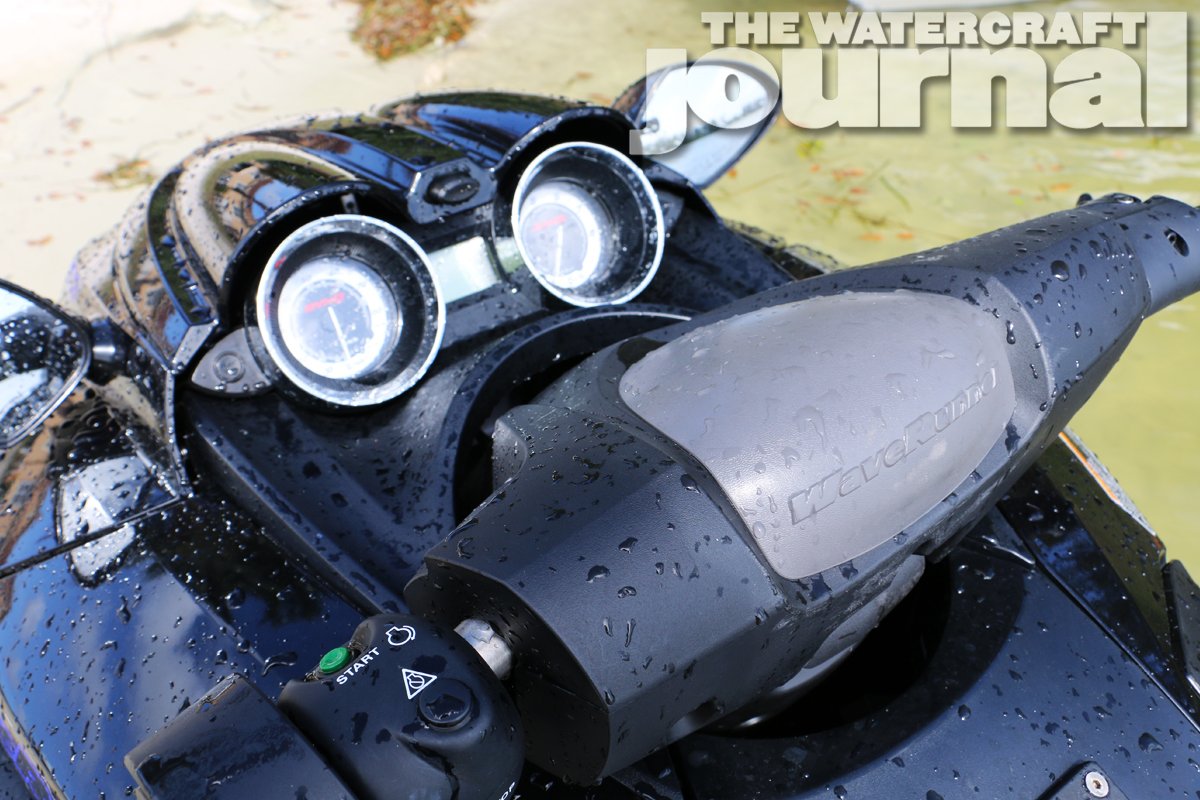
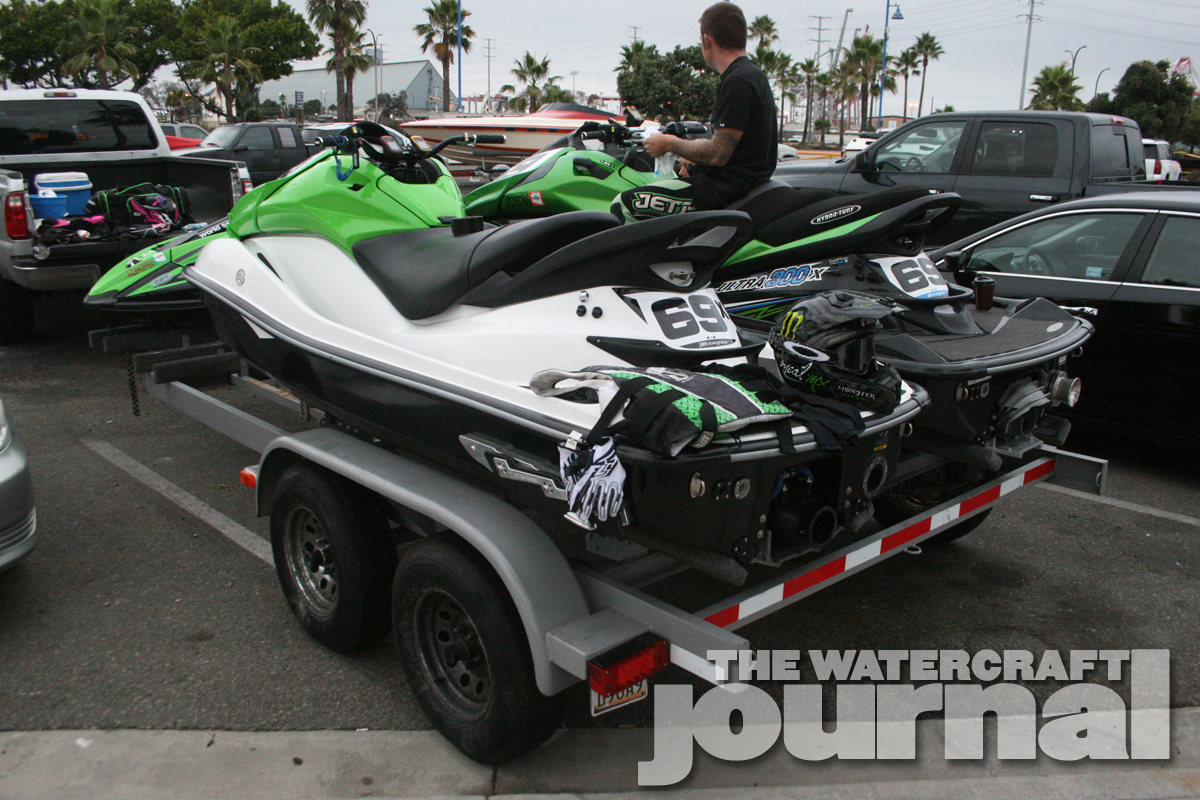
OK, let’s be a tad more specific: meatheads love the Kawasaki JetSki 650 TS, that is according to Rob Lowe’s hilarious string of DirecTV advertisements. The television spots feature the seminal “St. Elmo’s Fire” Hollywood star squaring off against somewhat less glamorous doppelgangers, with the prior representing DirecTV and the other traditional cable service.
Recently, Lowe’s ads have come under fire from from ‘”shy bladder” groups, cable companies, and the Better Business Bureau’ according to The Atlantic. Unfortunately, several groups representing individuals didn’t find Lowe’s ads all that funny, and they, together with the National Advertising Division (NAD), sought to shut them down.
https://youtu.be/KGeJV7_0Wsg
The International Paruresis Association (IPA), which advocates for the 21 million Americans who, as Lowe’s alter ego put it, “can’t go with other people in the room,” cried discrimination while NAD’s complaint was “that DirecTV wasn’t being truthful about the reliability, picture quality, and customer satisfaction of its service when placed beside cable.”
Nearly a dozen of these 30-second spots have been made with Lowe pairing up against “Creepy Rob Lowe,” “Painfully Awkward Rob Lowe,” and “Deadbeat Dad Rob Lowe.” The ad in question though, is “Meathead Rob Lowe” who provides a glimpse of his garage well-stocked with a year’s worth of protein supplements and shake mix, speed bag and resistance bands, and of course, his own tanning bed. But the real kicker is the gold-flamed ’95 650cc TS behind it.
Sure, we’re OK with making fun of excessively hairy people or those with nervous bladders, but seriously, why do you ya gotta hate on jet skis, Rob?
How would you like to grace the pages of Jobe PWC’s 2016 catalog? Nope, you don’t have to be a professional model or a dashing personal trainer, but you do have to be a dyed-in-the-wool PWC enthusiast. All you need to do to enter is showcase your favorite “ruthless moment” by hashtagging #jobemoments on a Facebook or Instagram post. Once you do, your photo will be entered into a contest to be selected to be featured in Jobe’s next product catalog.
Oh, but there is one catch: your picture has to “reference” Jobe. Creativity is encouraged, so put on your thinking caps and get to work. There could be 15,000 copies of Jobe’s 2016 catalog with your face in it!
Below is the original release:
What’s you ruthless moment? Jobe launched a new campaign called Jobe ruthless moments. This campaign is created for all the Jobe fans who want to share their favourite moments with the world. Jobe’s giving YOU the chance with this new campaign to be in the official 2016 Jobe PWC catalogue! Do you want to take your moment of glory? Join the Jobe ruthless moments!
Jobe wants to show the world the Jobe ruthless family is all over the world. With the new campaign you can join the Jobe ruthless family by yourself. Use the hashtag #Jobemoments on Facebook or Instagram and have a chance your photo will be featured in over 15.000 printed catalogues!
There’s only one restriction to this unique campaign: the photo needs a reference to Jobe. Be as creative as possible! How cool is it to build your own Jobe sand castle and post this?! The Jobe PWC athletes are also joining this campaign, so get inspired by them and share all your Jobe moments!
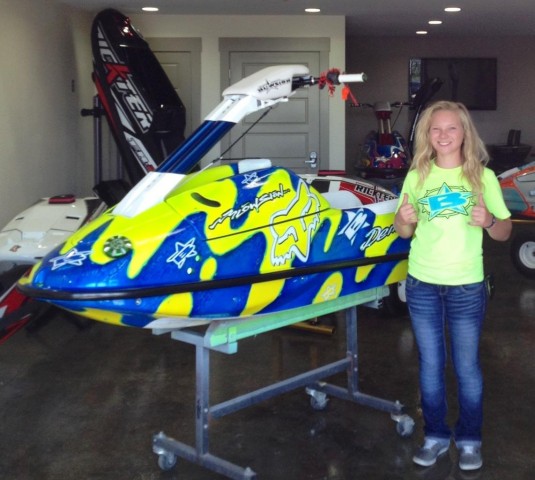
Demi Morgan, a teenage jet skier from Aostin, Washington, was 9-years-old when she purchased her first jet ski. Two years later she became passionate about riding personal watercraft after she spent a summer honing her skills by going upriver on her ski every weekend with friends.
She began competing at an amateur level in March 2014 and placed 9th in her first event where she also picked up her first sponsor, Blowsion. She was competing at their event, the Blowsion Surf Slam and the crew saw potential in her skills and has continued to push her capabilities as a Jet Ski pilot.
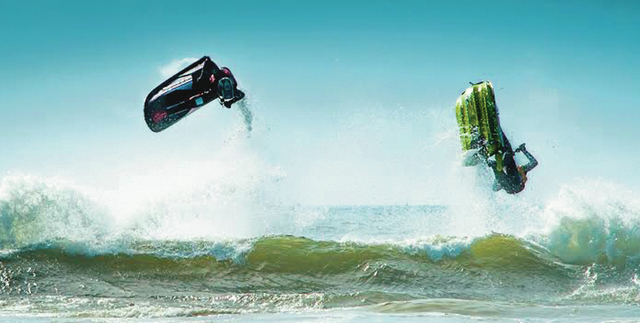
Morgan is currently 16 with aspirations of becoming a pro rider in a couple of years. Her goal should not be an issue since she is one of the few females who can land a backflip. In an interview with KLEW3 she claimed:
“I landed it, and hit it so perfectly that when I landed I landed flat, and usually you don’t land flat, you nose it in, and I looked around, and I yelled Wooo and ran onto the beach and all the Blowsion crew was running at me and they hugged me and were like that was crazy!” said Morgan.
She has not had an easy path to her new found fame. The 6-day a week workouts were not in her plan until the ambitious professional inside her began really driving its way to the surface. Her social life is fairly non-existent due to her constant drive to get better and compete on an elite level. Morgan is so focused on her goal that she does not have time to hang out with her friends and that is okay with her.
She hopes to set an example for other kids by showing them that they can set goals and achieve them as well by following through and putting forth the effort.
“I wanna show girls and just other kids in general that they can go after their dream,” said Morgan. “Money’s a big part of it but really if you work towards something and put in the effort, you can always accomplish what you want to accomplish.”
Morgan credits much of her success and confidence to her parents; coach Brice Barnes at Riverview Marina, and her sponsor Blowsion.
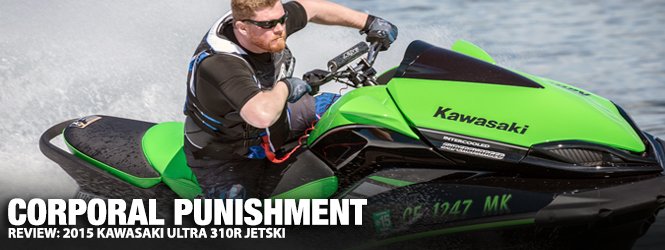
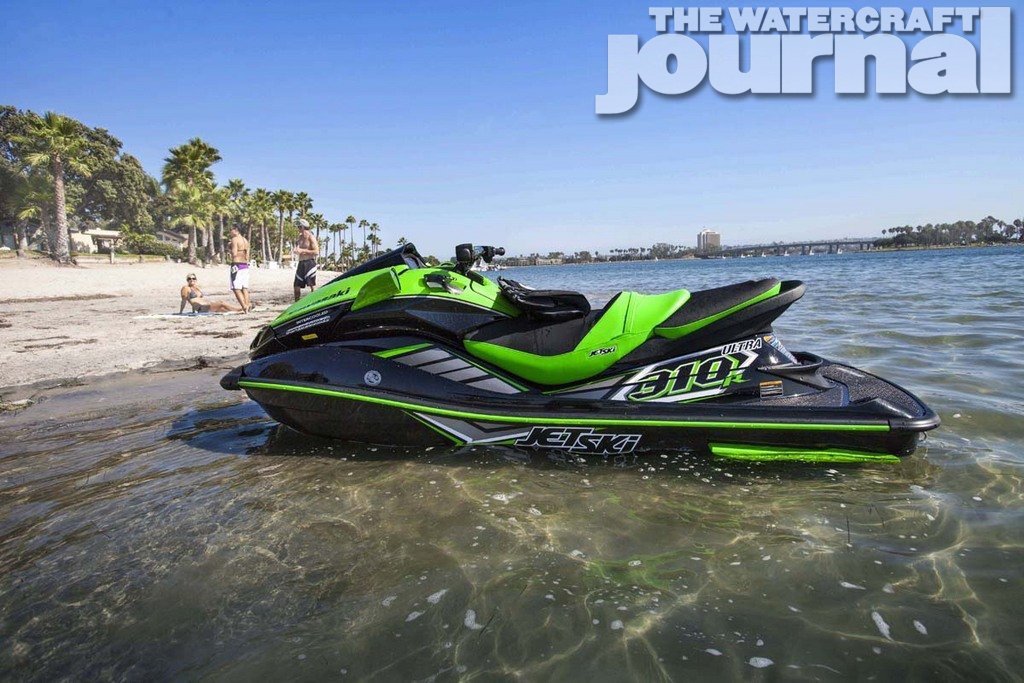
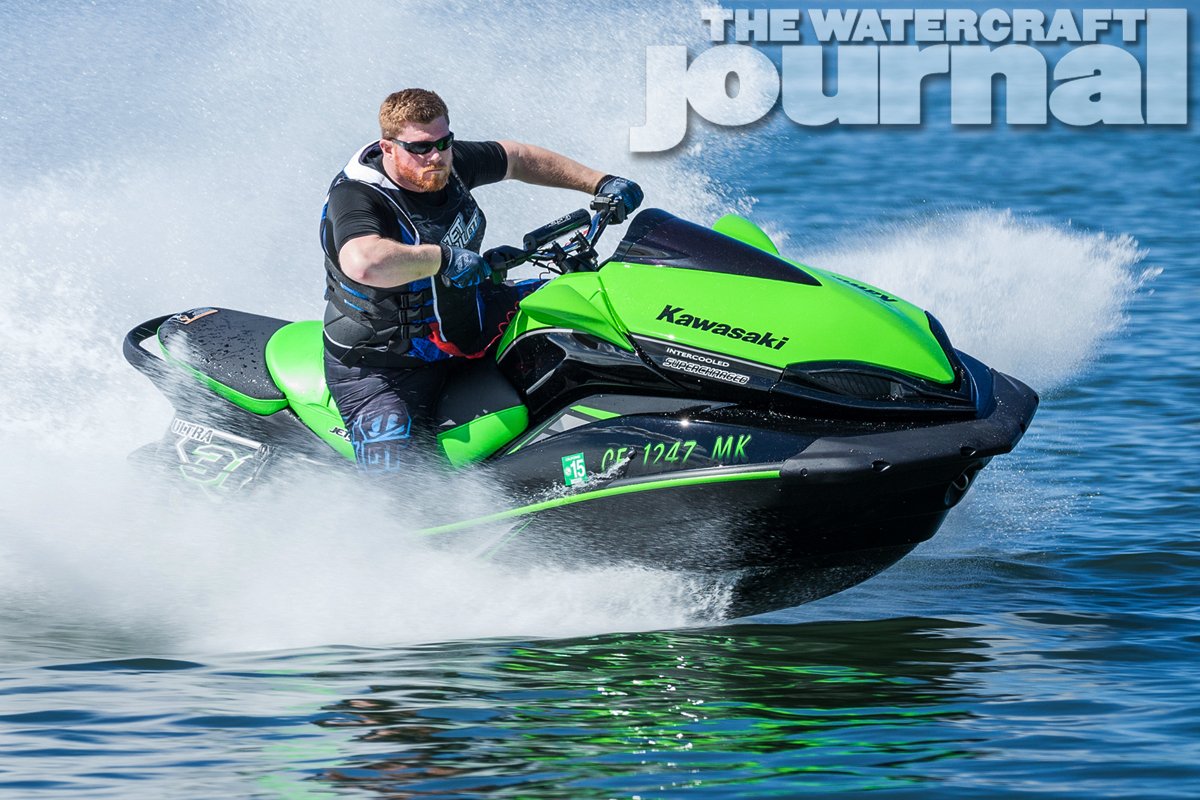
If there is only one thing that you take away from this review, it should be that Kawasaki’s 2015 Ultra 310R JetSki makes a lot of power. A brutal, rotator cuff-tearing amount of power. If you’re not ready for it, not properly conditioned both mentally and physically, it will fight you back… And make no mistake, the 310R will win. So much so that we toyed with the idea of naming this review “Corporeal Punishment.”
Last year marked the introduction of the R-class Ultra and its lauded 310-horsepower. The jump from 300 to 310 ponies was not merely an advertising ploy by Kawasaki to push ahead (way ahead) of the competition, but rather a happy accident. By radically improving engine oiling, reducing heat soak and lowering internal engine temperatures throughout the engine’s powerband, Kawasaki managed to free up the extra power by making major improvements in the engine’s efficiency.
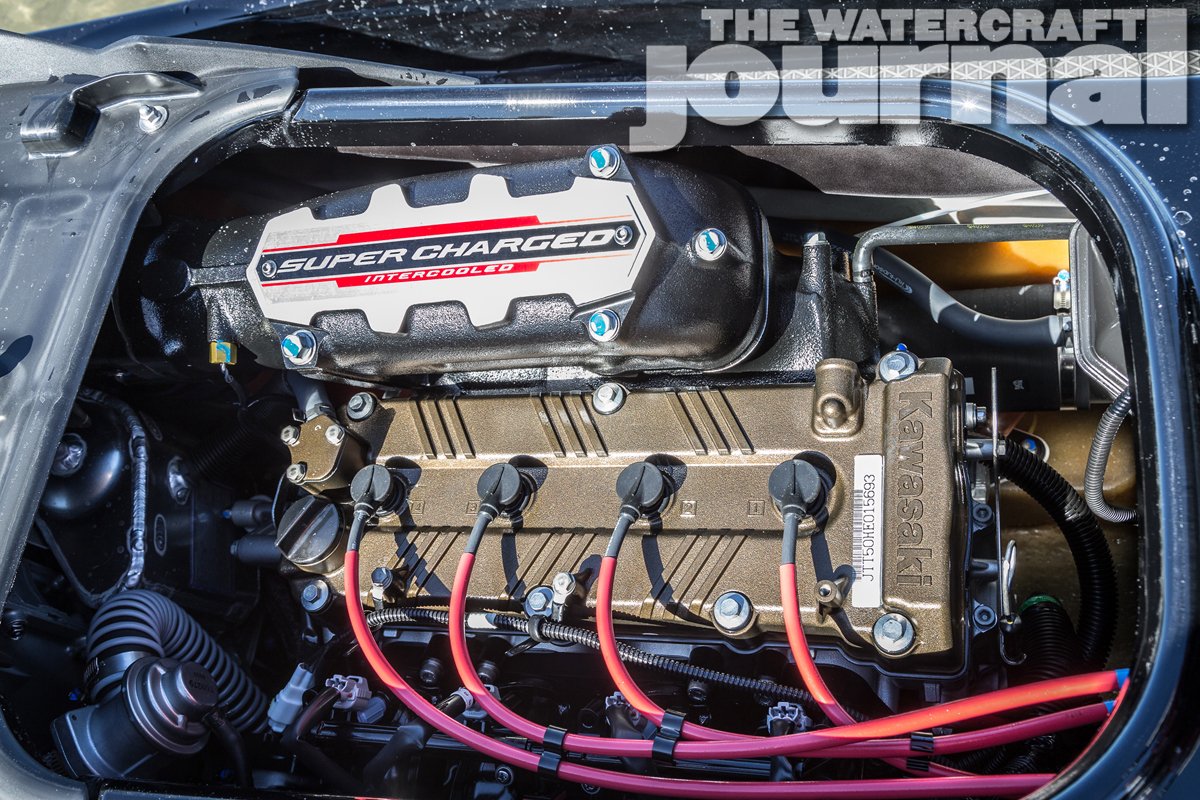
The 1,498cc, 83.0 x 69.2mm (bore x stroke) liquid-cooled inline four-cylinder received a newly re-engineered crankcase with thicker water jackets, larger oiling passages for quicker oil return to the redesigned baffled pan that reduces oil windage and sloshing, a second sprayer to each under-piston cooling oil jet comprising a semi-dry sump system, new lightweight 8.2:1 cast pistons featuring additional ring land V-grooves, a larger capacity fuel pump and 500cc injectors.
Last year’s supercharged Ultra also got a brand-new long-runner intake manifold made from heat-resistant plastic, fed by an Eaton TVS constant-displacement, four-lobe supercharger pressing 16.8psi past two blow-off valves. And speaking of valves, new hardened nickel 33.4mm intake and 28.3mm exhaust valves ingest and expel the spent fumes.
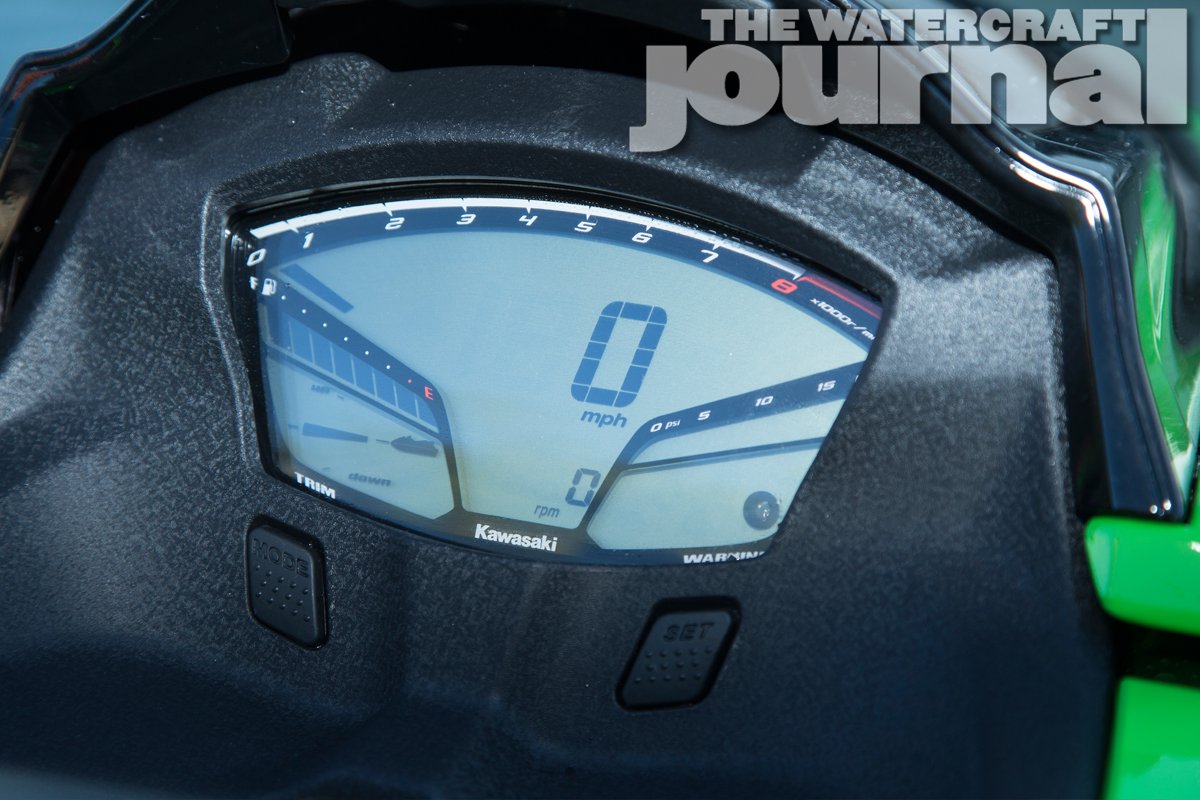
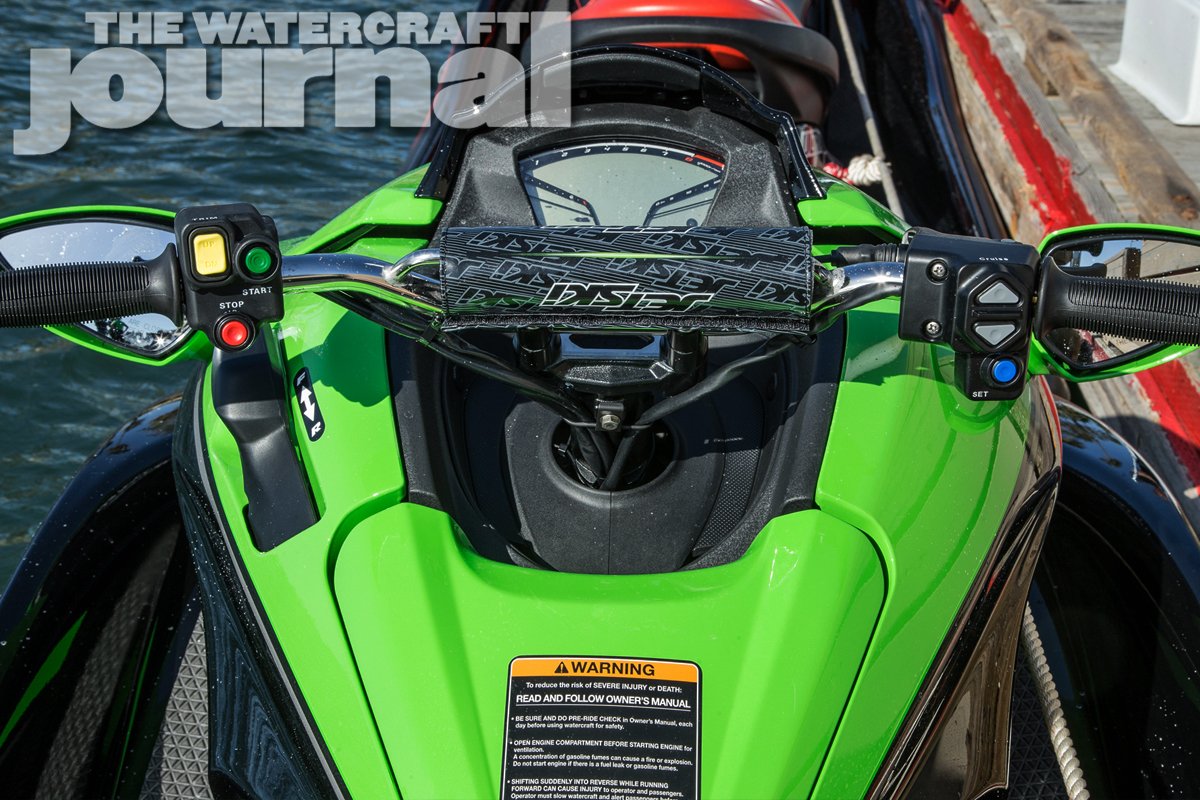
Above: Engaging No Wake mode is effortless compared to setting Cruise Control, which we struggled to master. While cruising past the No Wake buoys, the Ultra tracks smoothly and dryly – with no nose-plowing. We noted that adjusting the trim requires holding down the toggle, something we marked as bothersome particularly while on the move.
Other goods included a large oil breather/catch can and articulated sprung belt tensioner, and a check valve system fixed between the cylinder jacket and water muffler that shuts water flow off above 2,000rpm, keeping the cooling water inside the cylinder jacket for optimum cooling performance. Finally, a voluminous 160mm 8-vane pump houses a repitched 3-blade long-snout prop.
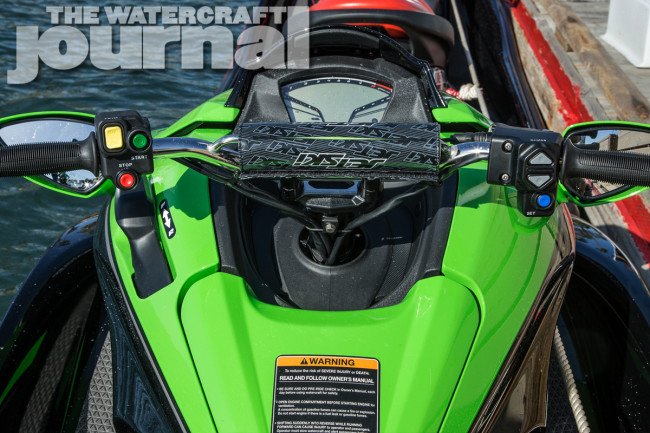
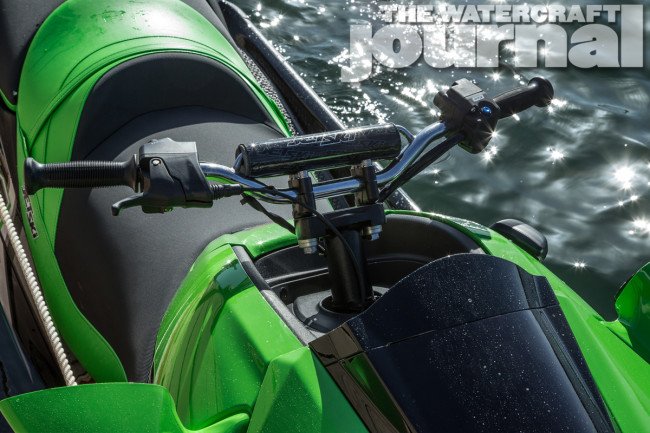
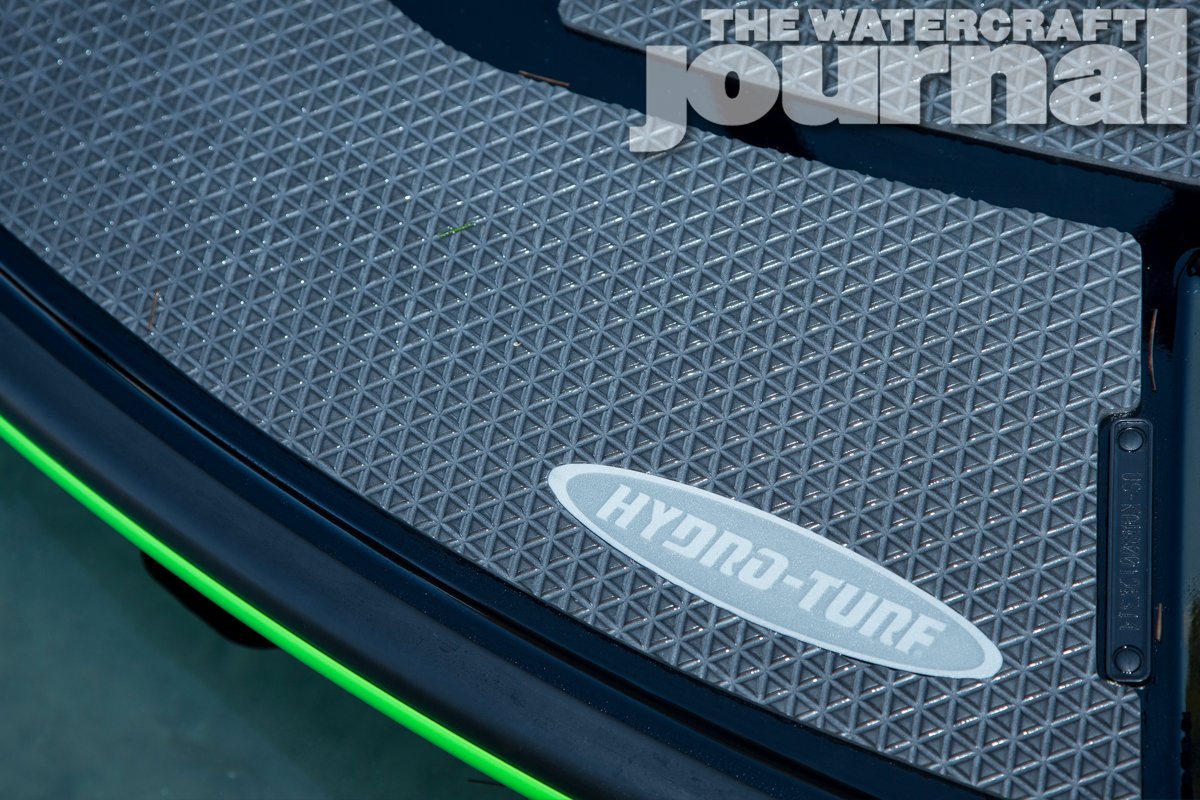
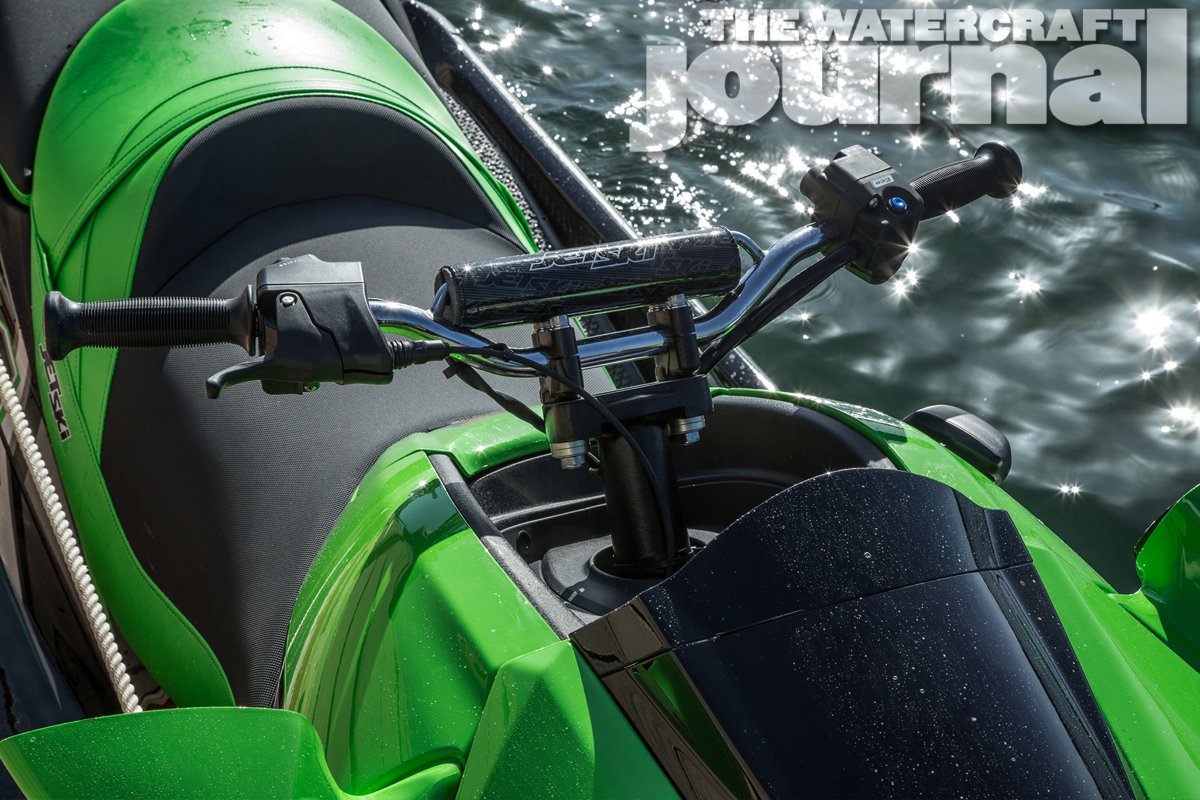
The 310R gained a new Sportseat, wrapped in a grippy textured canvas and a molded Hydro-Turf traction mat kit. One final addition to the R-class was a fixed electro-polished stainless steel steering neck and race-grade MX-style handlebars replacing the standard tilt steering. These new MX bars can be adjusted fore and aft by loosening the hex head bolts to 12 different positions.
The changes made to the 2015 310R are miniscule but intentional: First, a mid-production adjustment was made to the big 1,498cc’s engine management program during last year’s run that is now standard on all Ultras. (Contrary to claims that a new ECU was introduced.) Next, tweaks in the race bred Ultra’s livery – namely the change from 2014’s blue pinstripe to silver, and the almost boring “Kawasaki” hood decals – were made to accommodate racers who replace stock graphics with race numbers and sponsors’ decals.
A final, albeit purely aesthetic change, are the addition of green sponsons. Literally identical to last year’s and to other 2015 models, the choice to make the 310R’s sponsons green is elusive, if not as purely a conversation piece. Although they’re fixed in position, they offer measurable traction in tight turns, even throughout the Ultra’s 5-position electronically-adjustable trim settings. Other controls include Cruise Control with accompanying toggles, 5mph No Wake mode and Kawasaki’s own take on Eco mode.
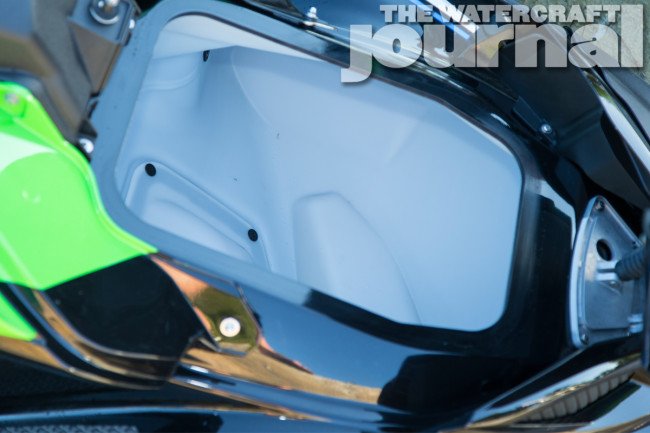
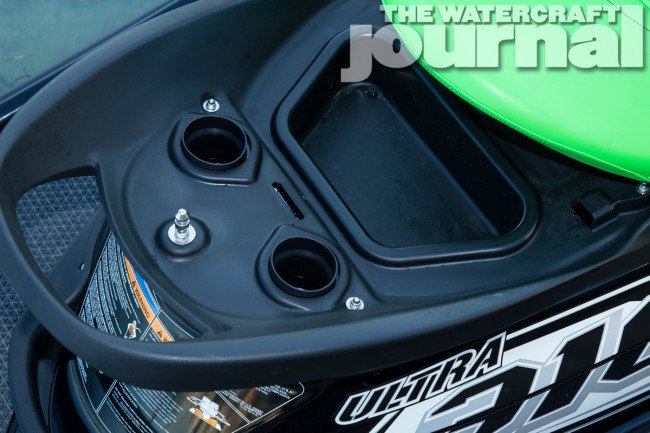
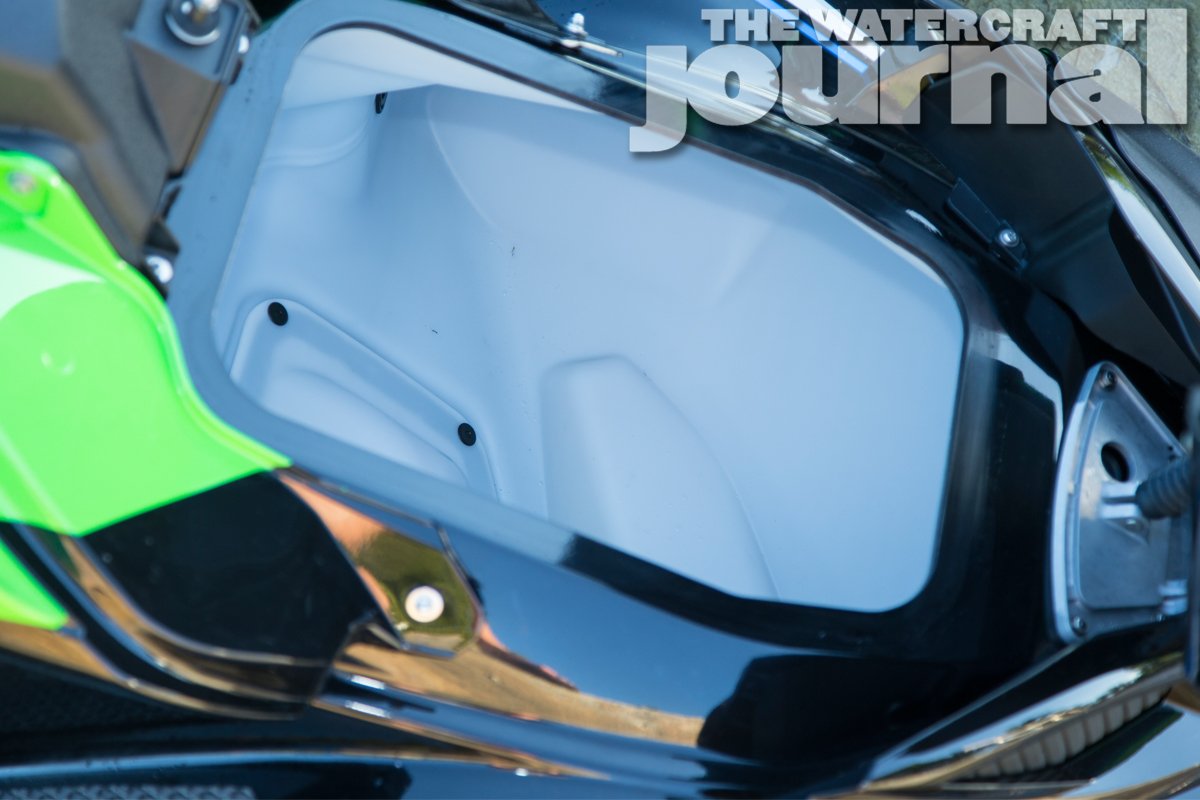
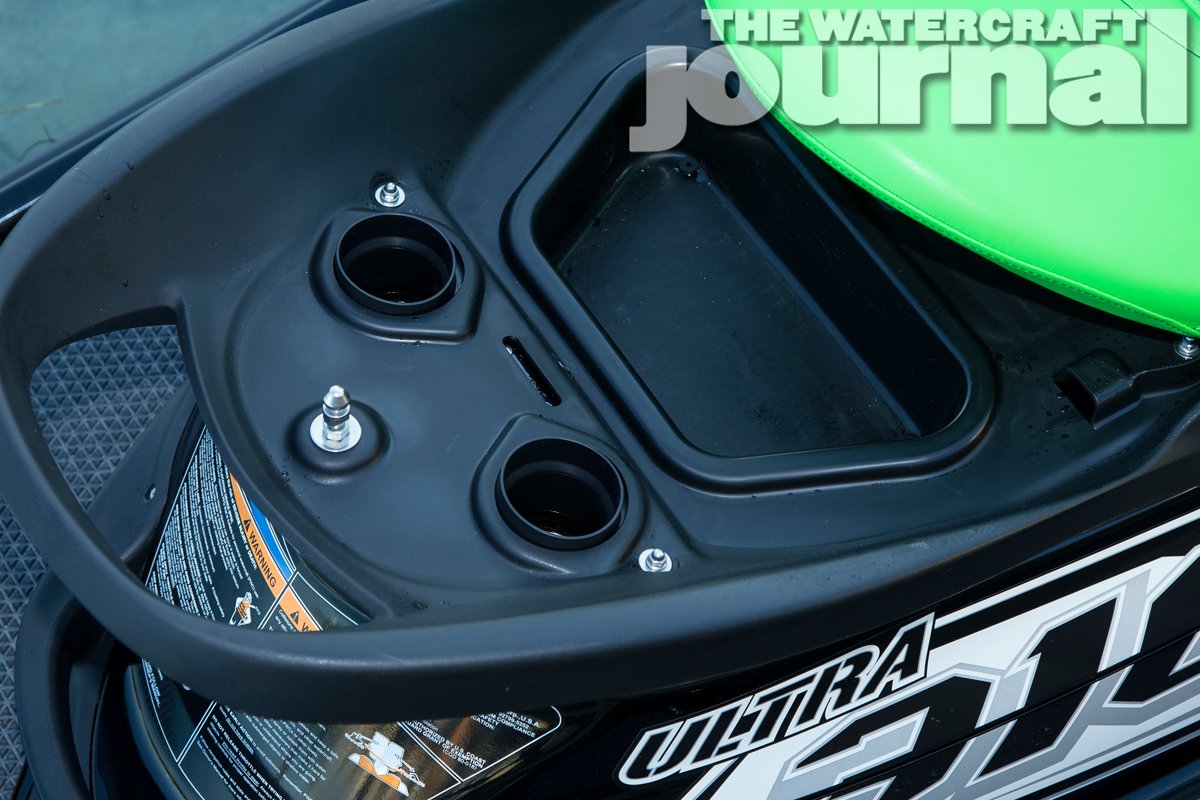
Beneath the glove box door is a capacious bin that combined with the underhood stowage equals a class-leading 56-gallons worth of storage, and the keyway ignition for a choice of Kawasaki’s yellow SLO (Smart Learning Operation) to reign in the Ultra’s throttle, or the normal use green key, which unleashes the 310R’s full fury. Even with Eco engaged, throttle response is taut if not only slightly muted from standard operation, and capable of top speeds in the low 60s.
When released from its Eco setting, the whine of the JetSki’s Eaton supercharger is only dwarfed by the whistle of wind blowing past your ears. Launching from a crawl, the Kawasaki comes to plane in seconds, its 22.5-degree deadrise sluicing through chop like Luke Skywalker’s lightsaber. At wide-open, the blown 4-stroke four-cylinder propels a single rider to 67.2mph with bravado.
The 2015 Kawasaki Ultra 310R breaks from its limited run last year of just over 500 units, and comes ready to rock with an asking price of $16,299.
A day spent behind the bars of the 310-horsepower Ultra will be one of face-stretching acceleration, and knee-in-the-tray hairpin turns that will kick up Gibraltar-sized walls of seafoam with every corner, not to mention maybe one or two stops at the fuel dock. With all that power comes not-so-great fuel mileage, and the 310R’s 20.6-gallon tank will surprise you with how speedily it can be drained.
We attribute a fair amount of that unquenchable thirst to the Ultra’s shotgun-like throttle response. Again, acceleration comes on strong behind the bars of the 310R (and not without some recoil), and easing the fly-by-wire trigger takes a great deal of finesse and restraint. Truly, the 310R’s throttle not only manipulates the Ultra’s big 60mm throttle body, but also your brain’s endorphins.
We took particular note of the 310R’s redesigned seat, as its low bolster is slightly set further back than the big scallops of the luxurious 310LX and is narrowed at the knees compared to standard 310X’s. The grippy material offers plenty of bite without irritating exposed skin as well. Taller riders might struggle with the low slung position of the bars (ideal for seated closed course racing, rather than standing upright for offshore riding).
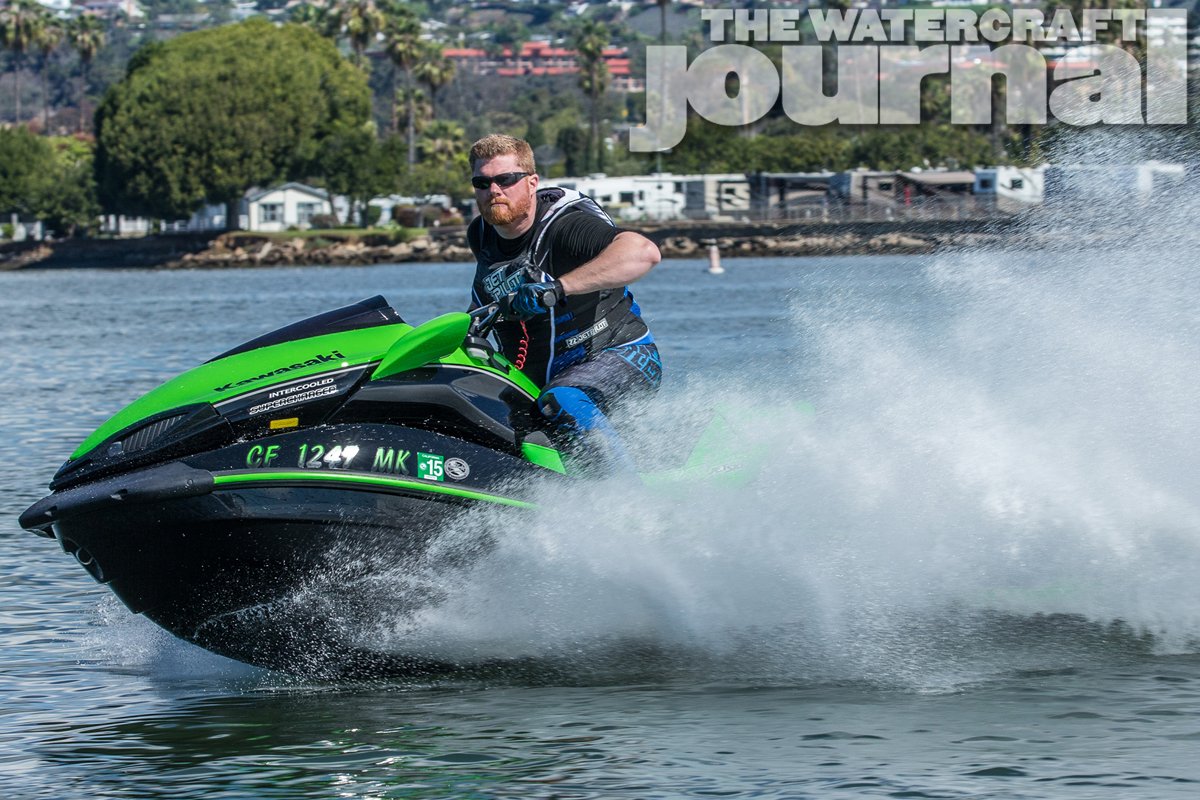
Of course, such minor quibbles pale in the shadow of the 310R’s true purpose. Even in light of its 1047.4 lbs. curb weight, the 2015 Kawasaki Ultra 310R’s horsepower will hit you like a hammerfist. It will cut turns like a steel tracked rollercoaster and it will blast through lake chop like a heated knife through room temperature butter. As far as watercraft go, there is no Kawasaki more unapologetic for being this punishing to your senses. The sights, sounds and sensations conjured by the Ultra 310R can be overwhelming to lesser men. We suppose that is why we love it so much.
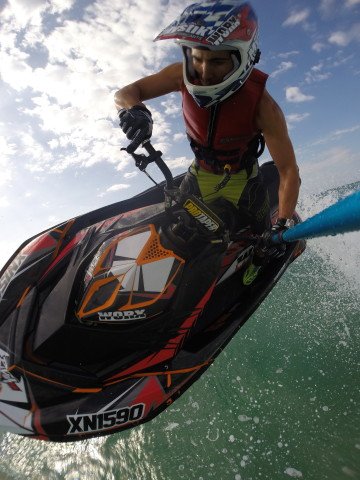
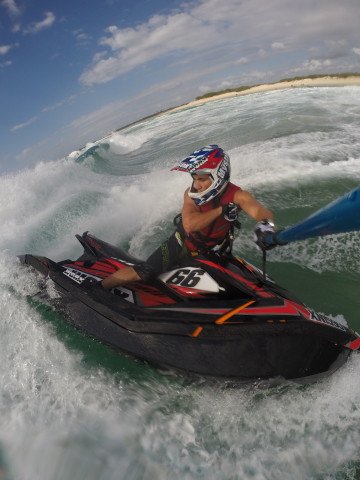
After the busy weekend at the sunny coast battling it out in the IFWA first round, I made my way back to the Gold Coast of Australia to spend time with my local friends and catch up with my family at WORX Racing Components. Gary and Emma Watson have recently purchased the brand and have been doing a fantastic job of building the brand up by improving production quality, and coming out with new innovative components for several different watercraft outside of the known sponsons, intake grates, and ride plates.
They had recently finished building a 2015 Sea-Doo Spark and bolted on all of their accessories and handling components onto it including their ECU reflash. I had a chance to ride a stock Spark a few days before and was impressed by its handling but was a bit let down overall by its lack of performance for such small fun craft. I then took out the WORX Spark and absolutely loved it with a night and day noticeable difference.
The WORX Billet Steering System feels much smoother and stable. Combined with the easy ergonomic billet finger throttle and start/stop button housing is a must-have for anyone who owns a Spark. The ECU reflash/tune made a considerable difference in throttle response with the fly-by-wire system set in sport mode. With their rideplate, sponsons, and intake grate, the ski felt like it was on rails, completely hooked up in every corner making it a fun, aggressive, and smooth tracking ski to ride.
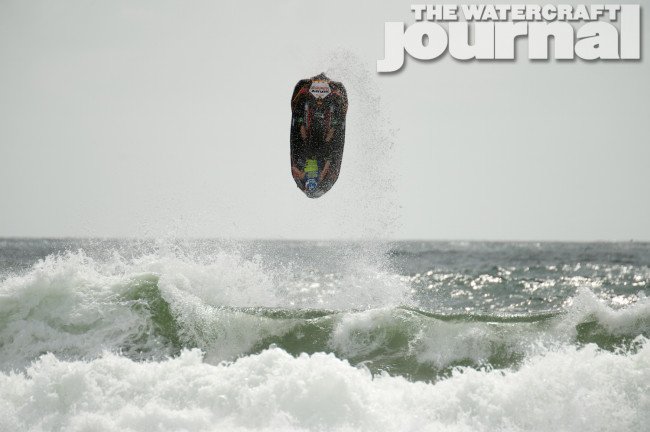
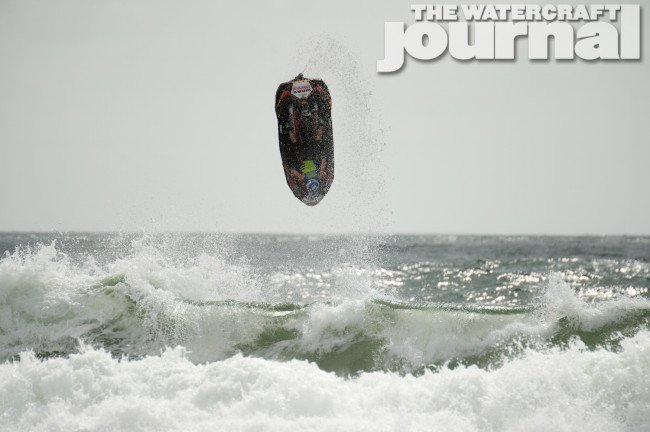
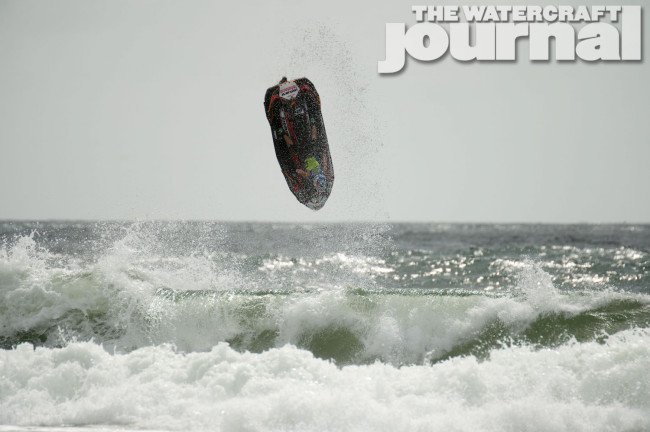
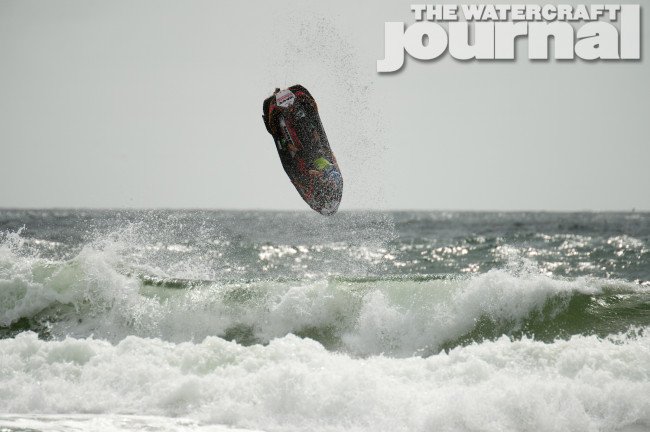
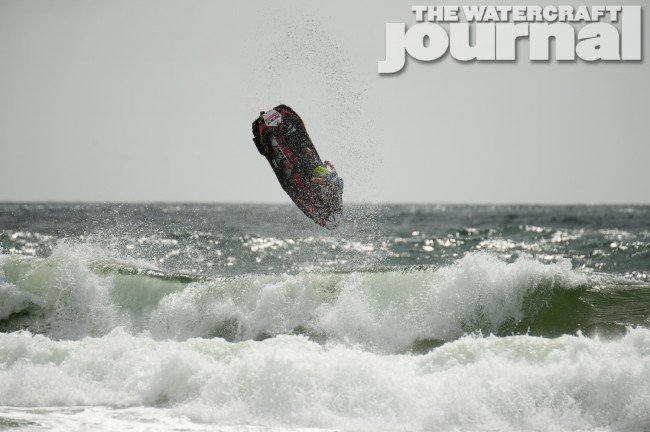
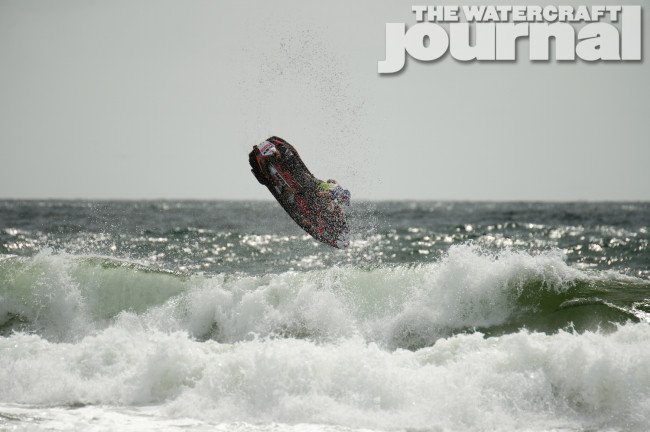
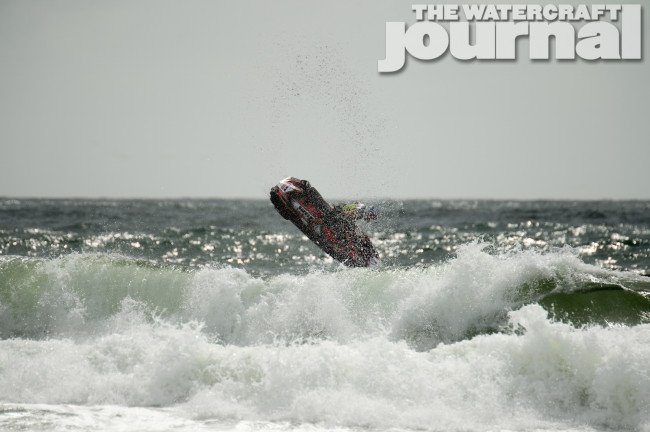
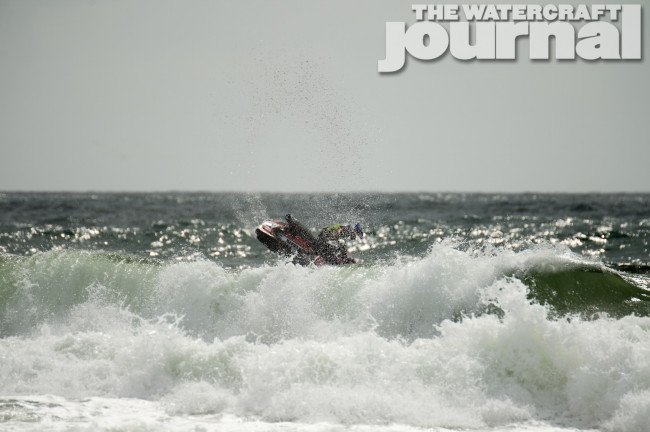
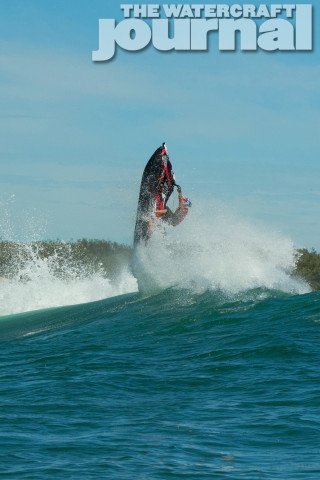
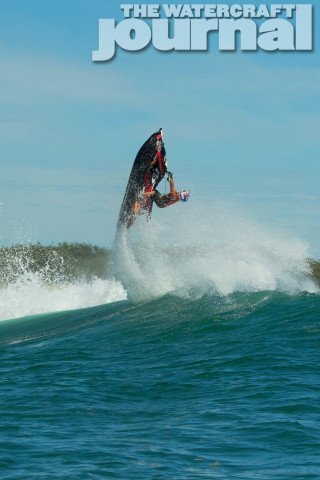
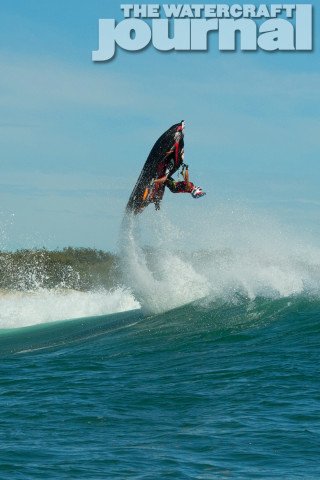
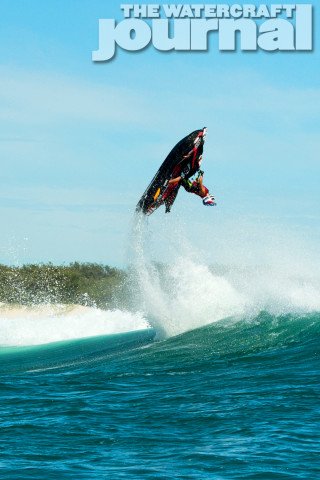
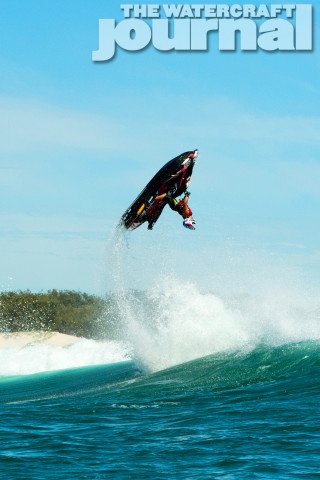
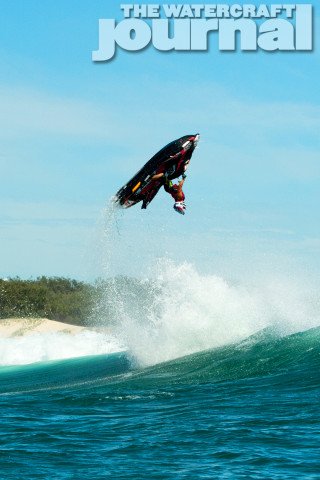
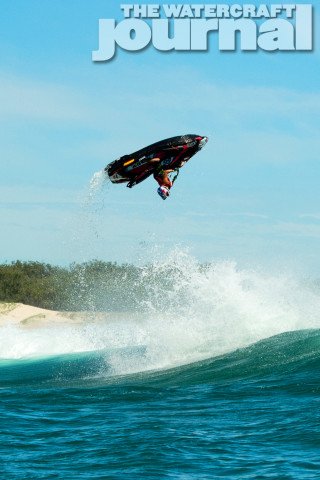
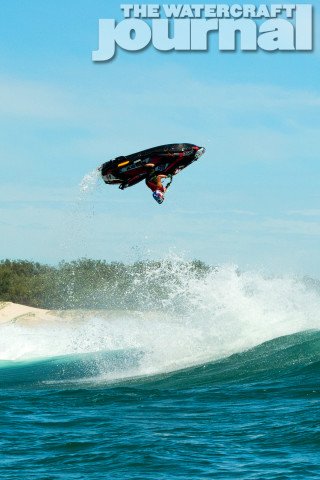
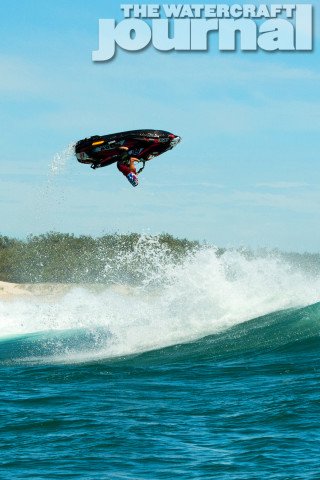
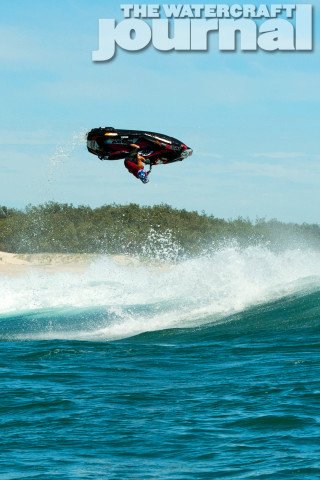
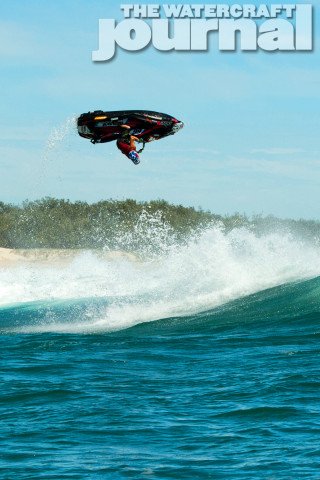
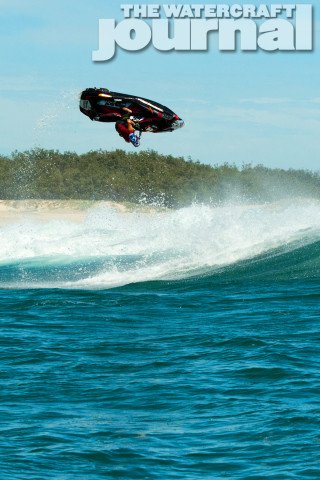
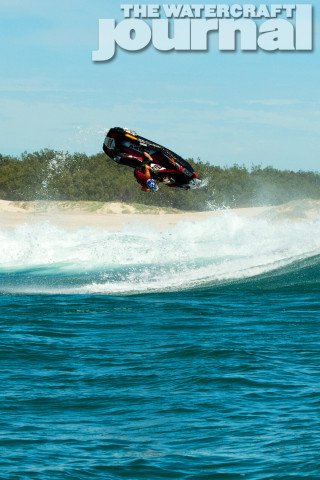
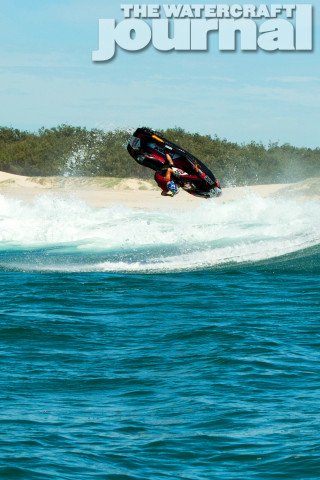
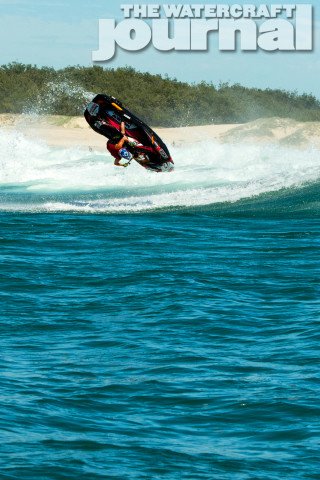
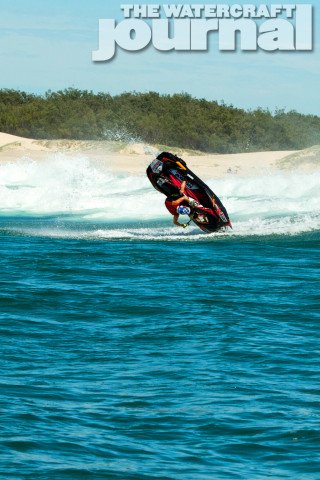
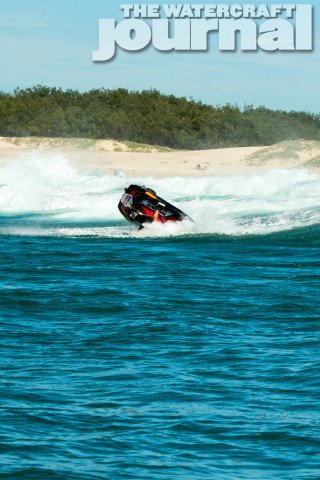
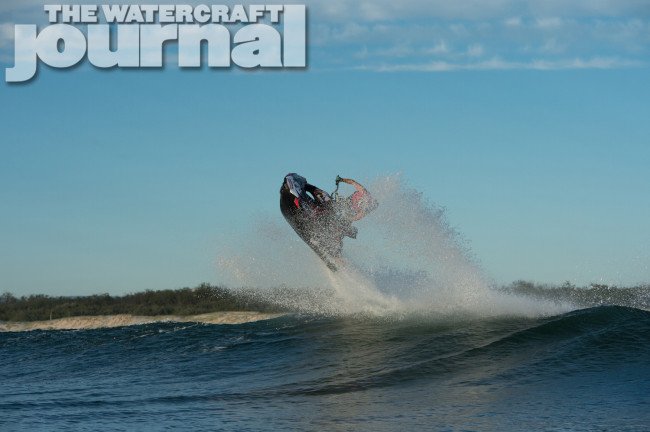
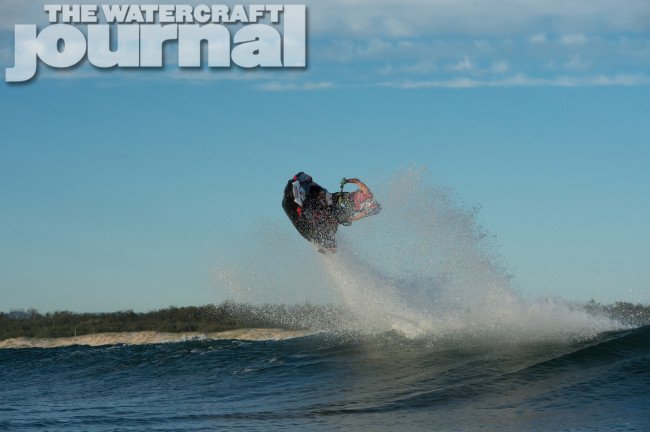
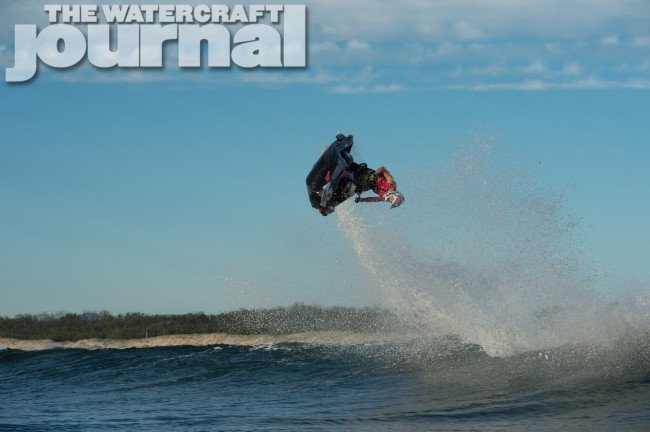
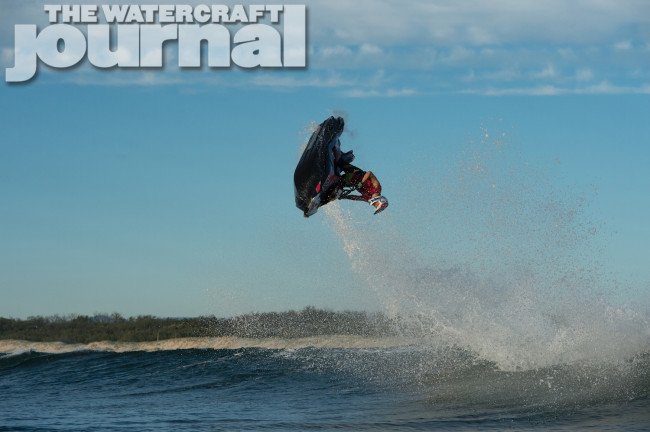
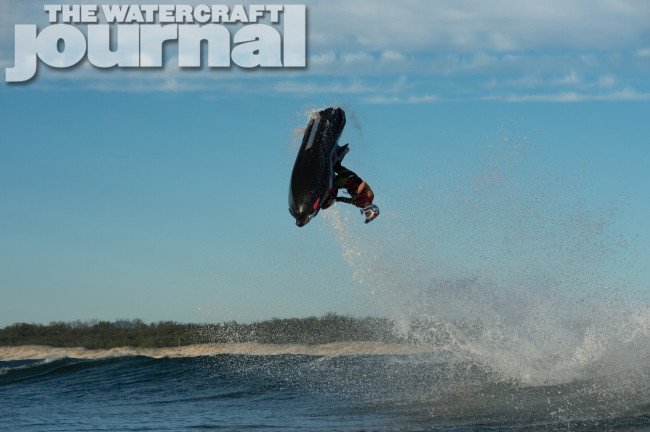
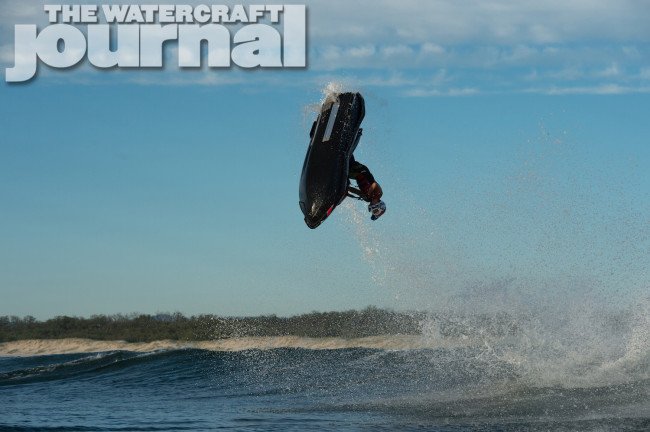
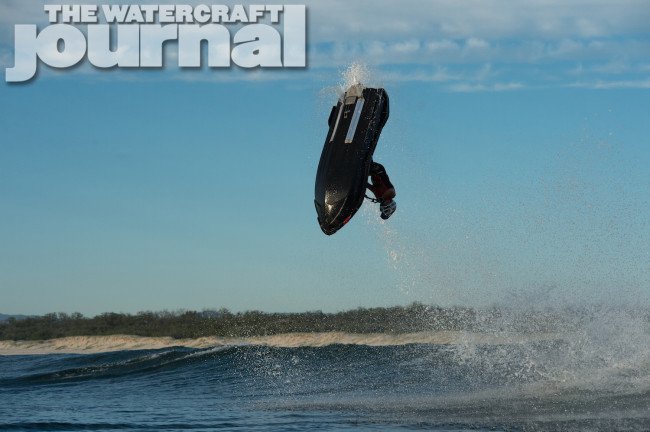
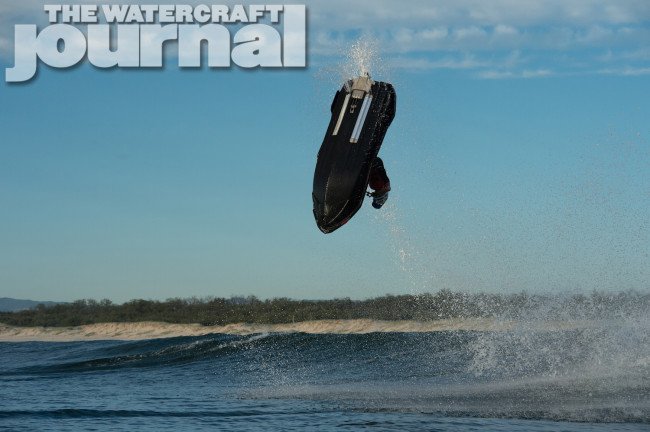
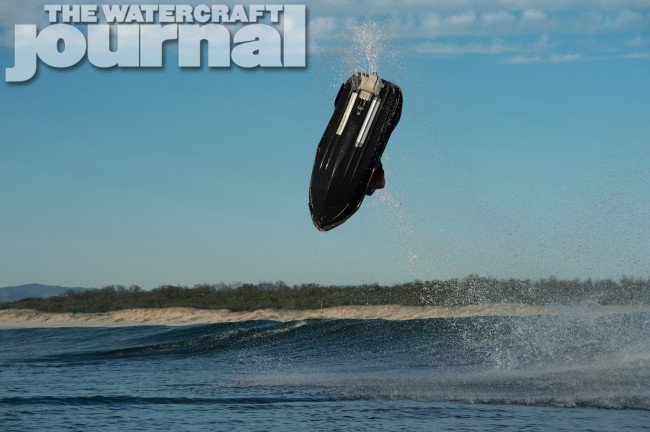
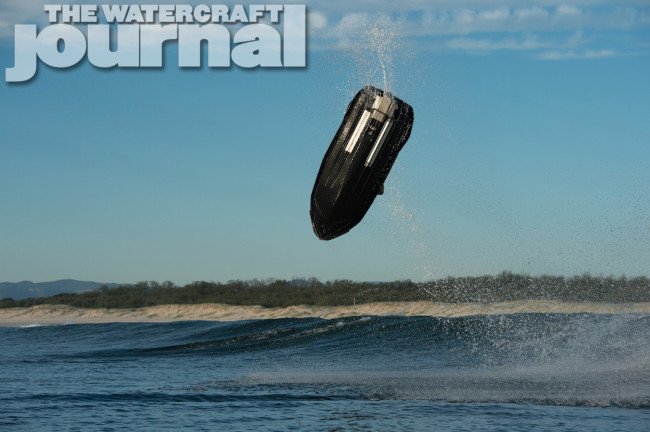
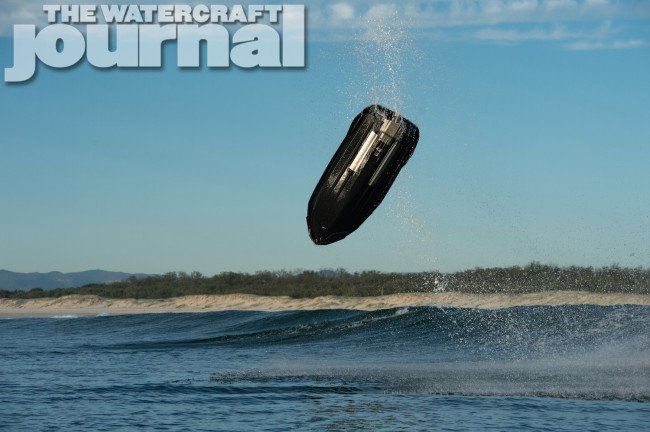
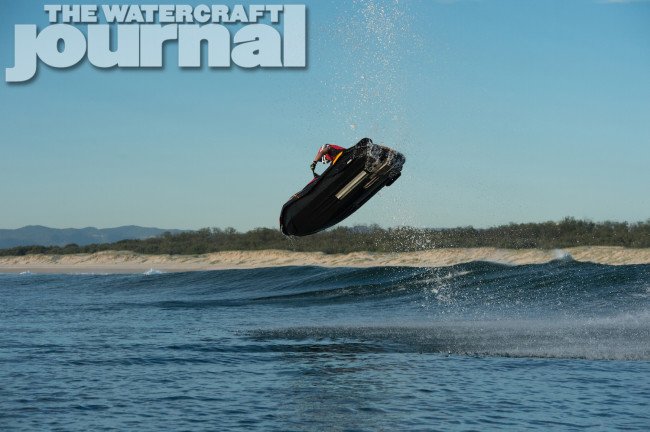
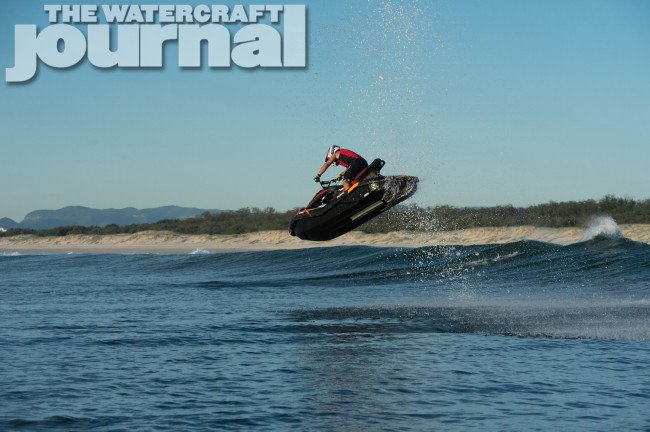
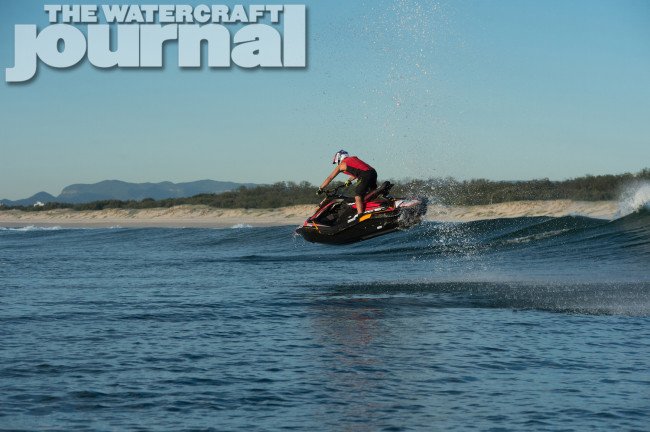
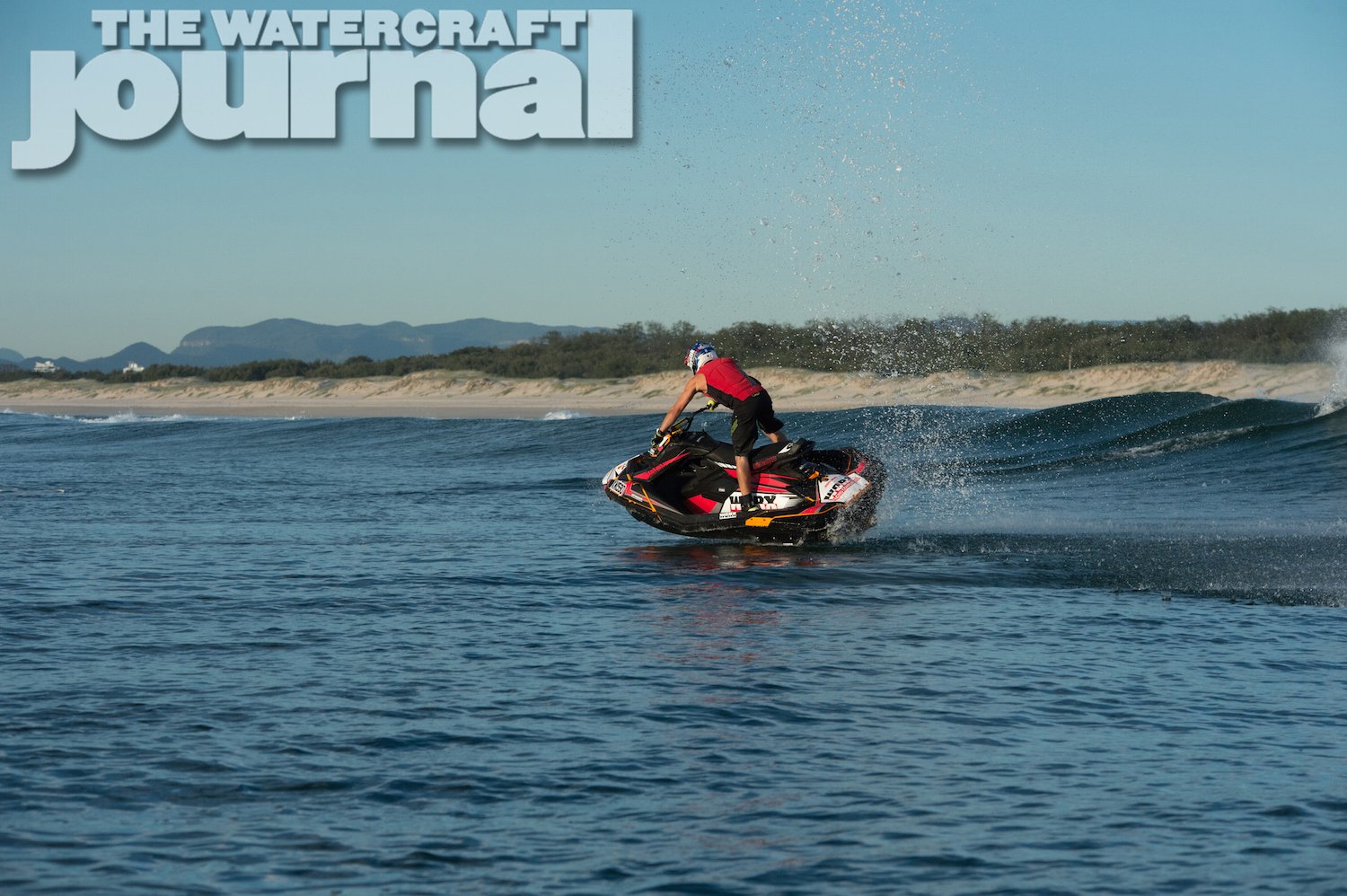
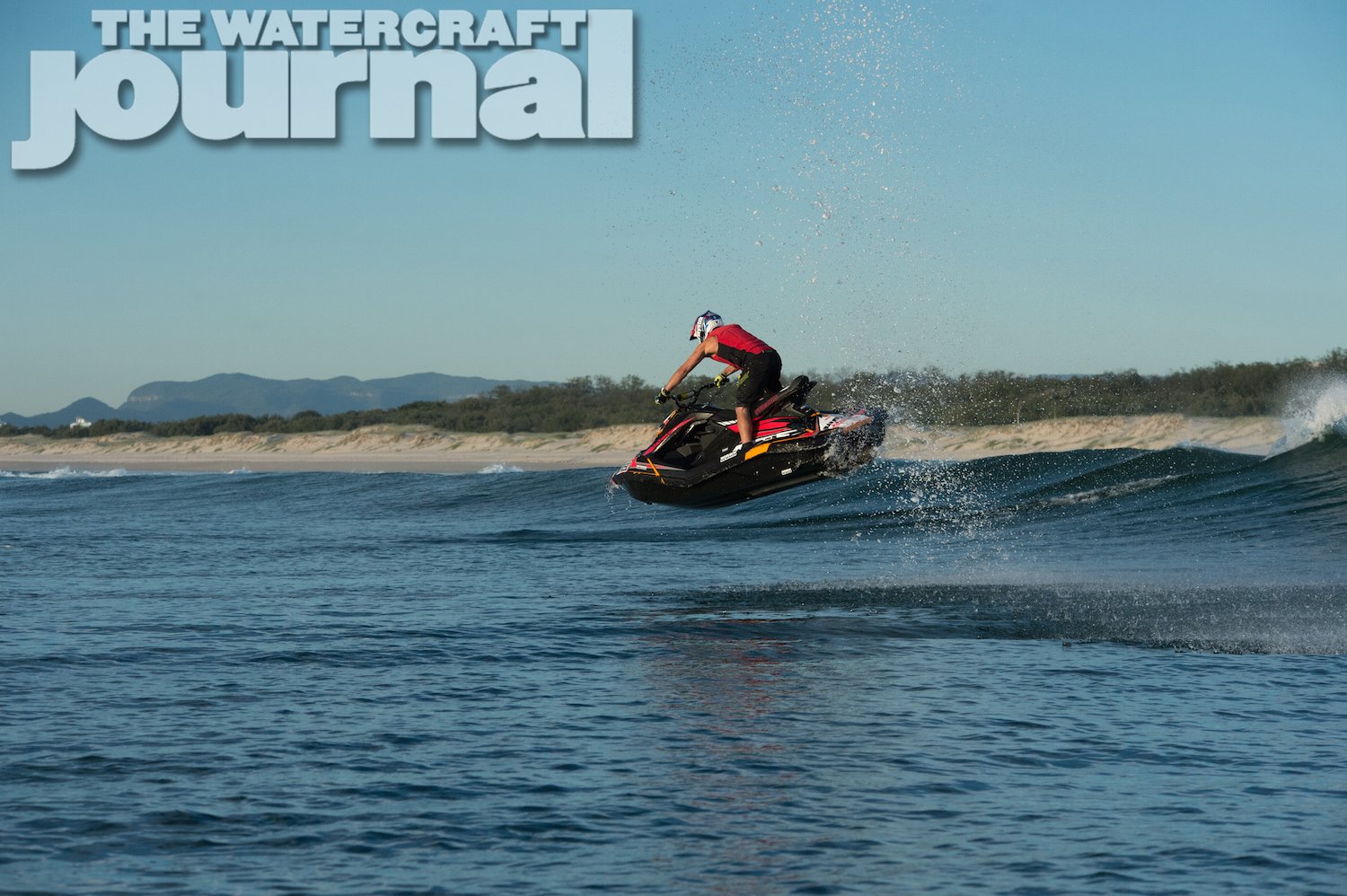
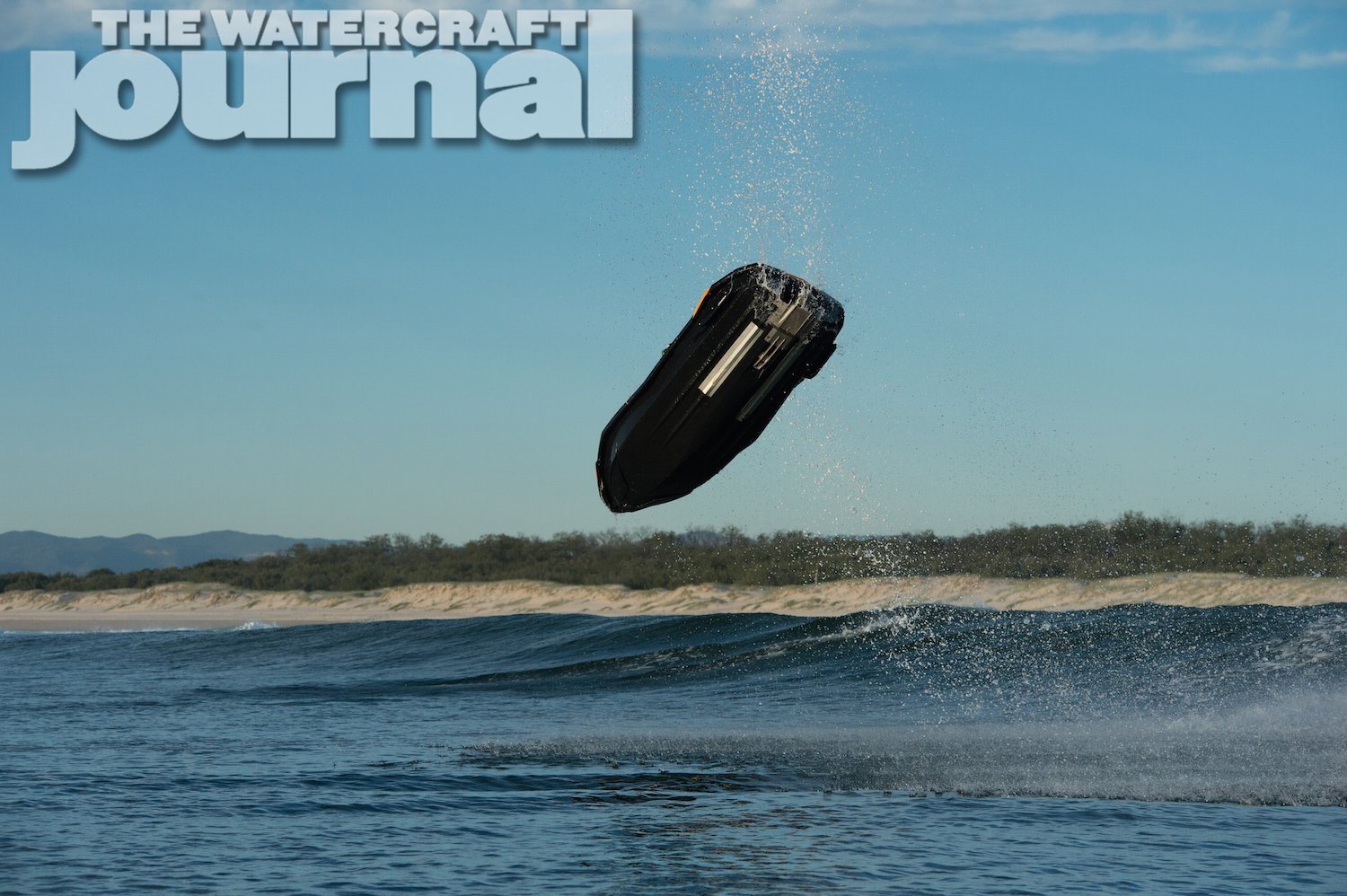
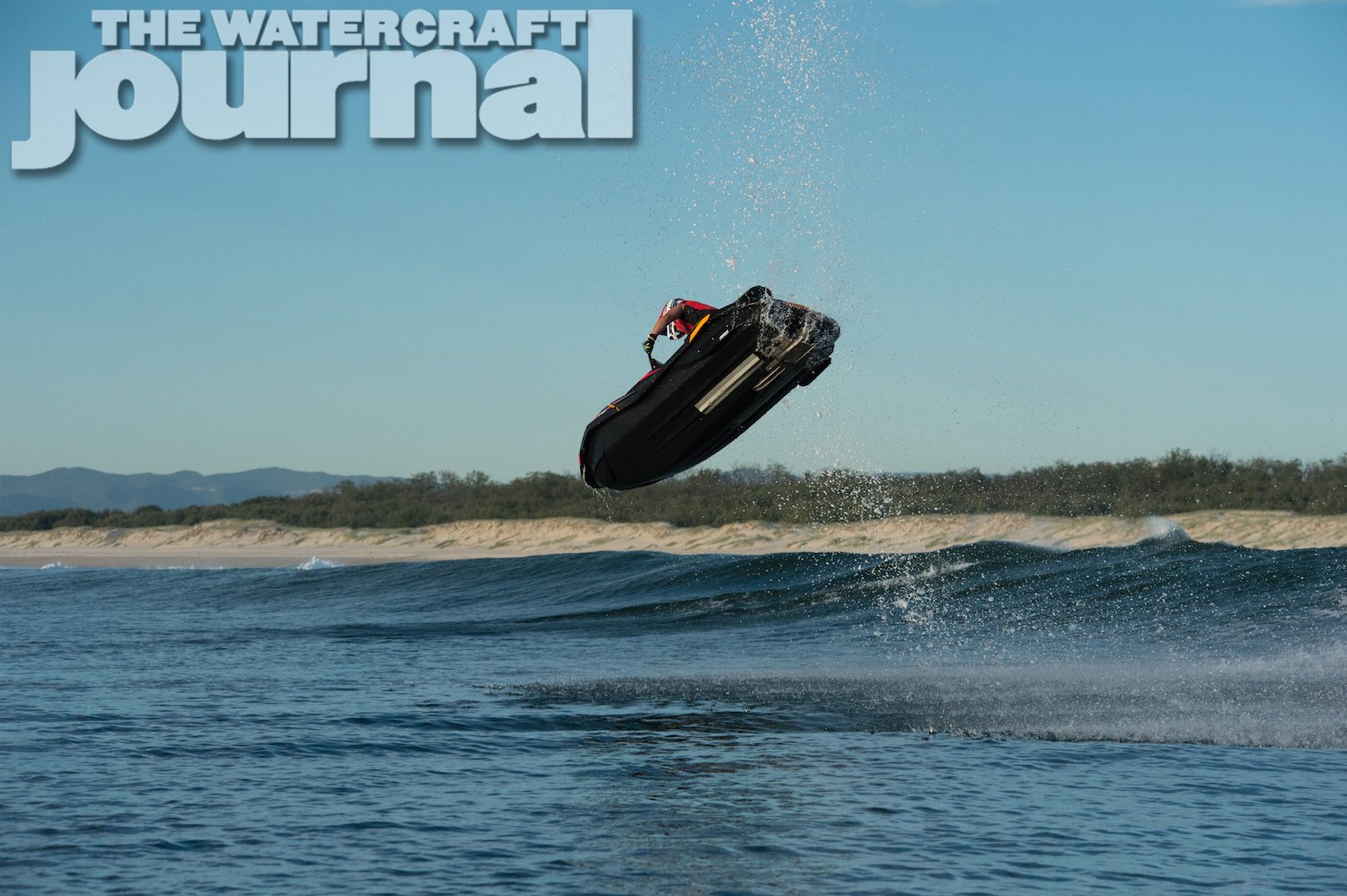
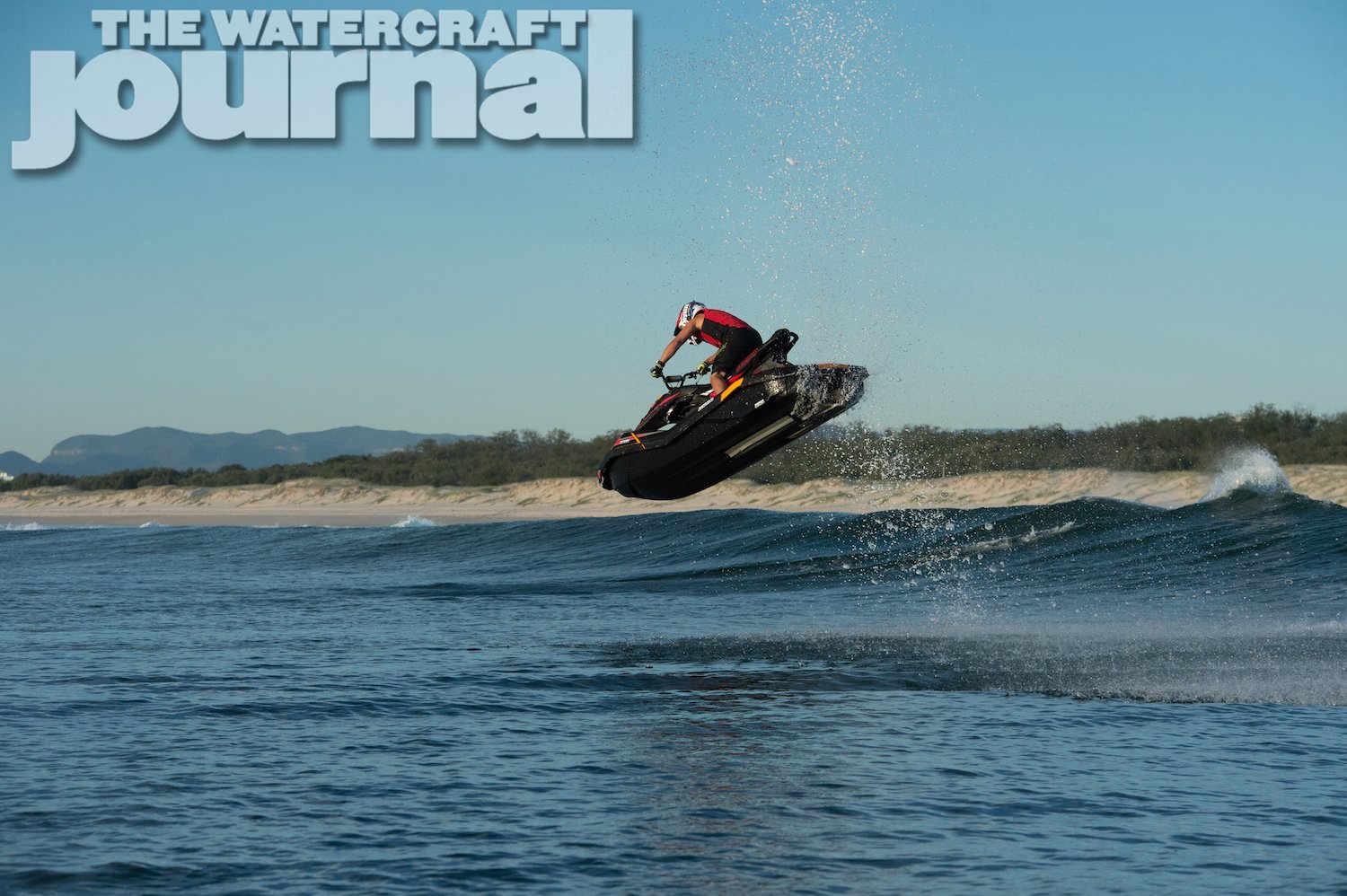
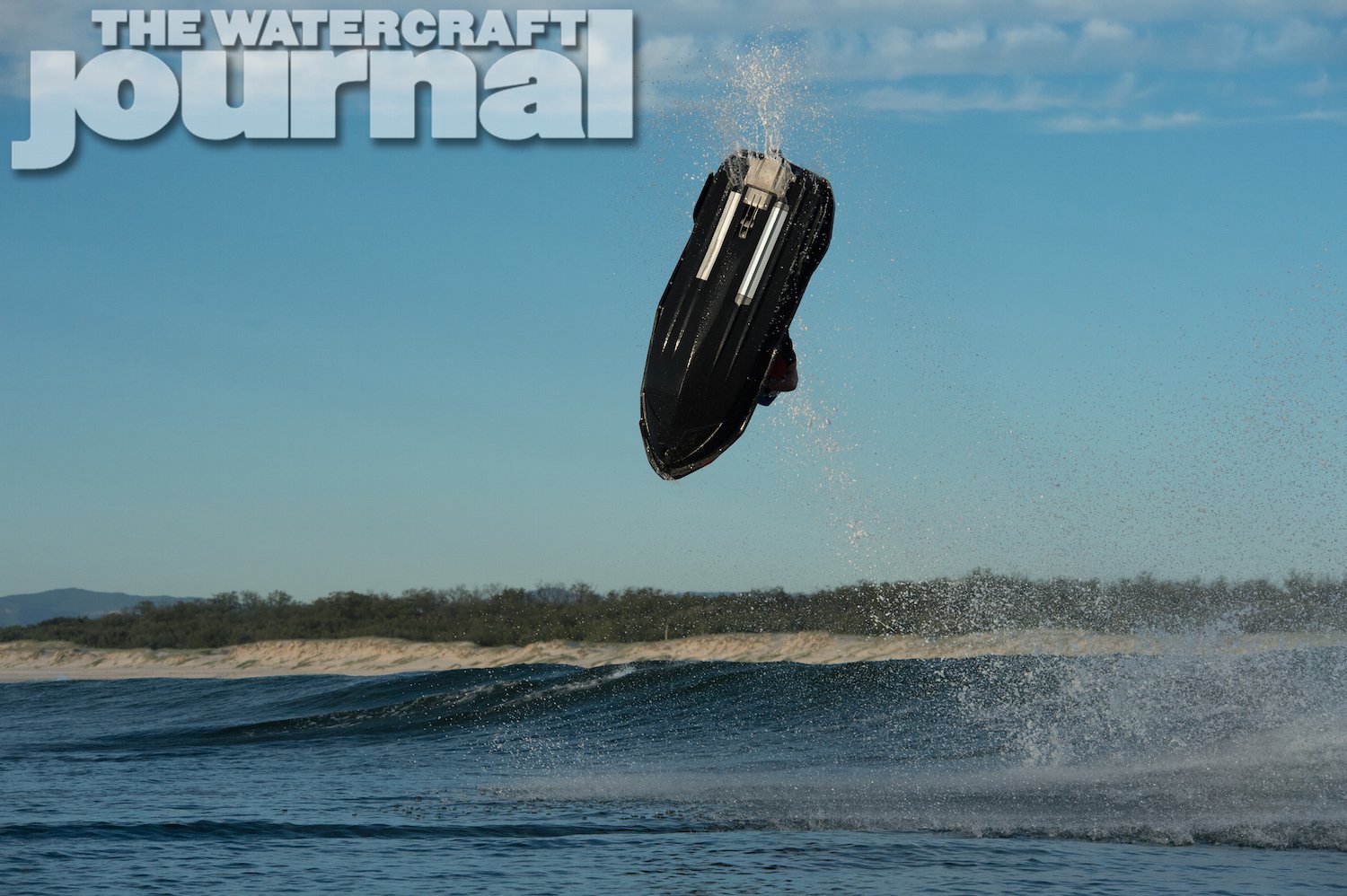
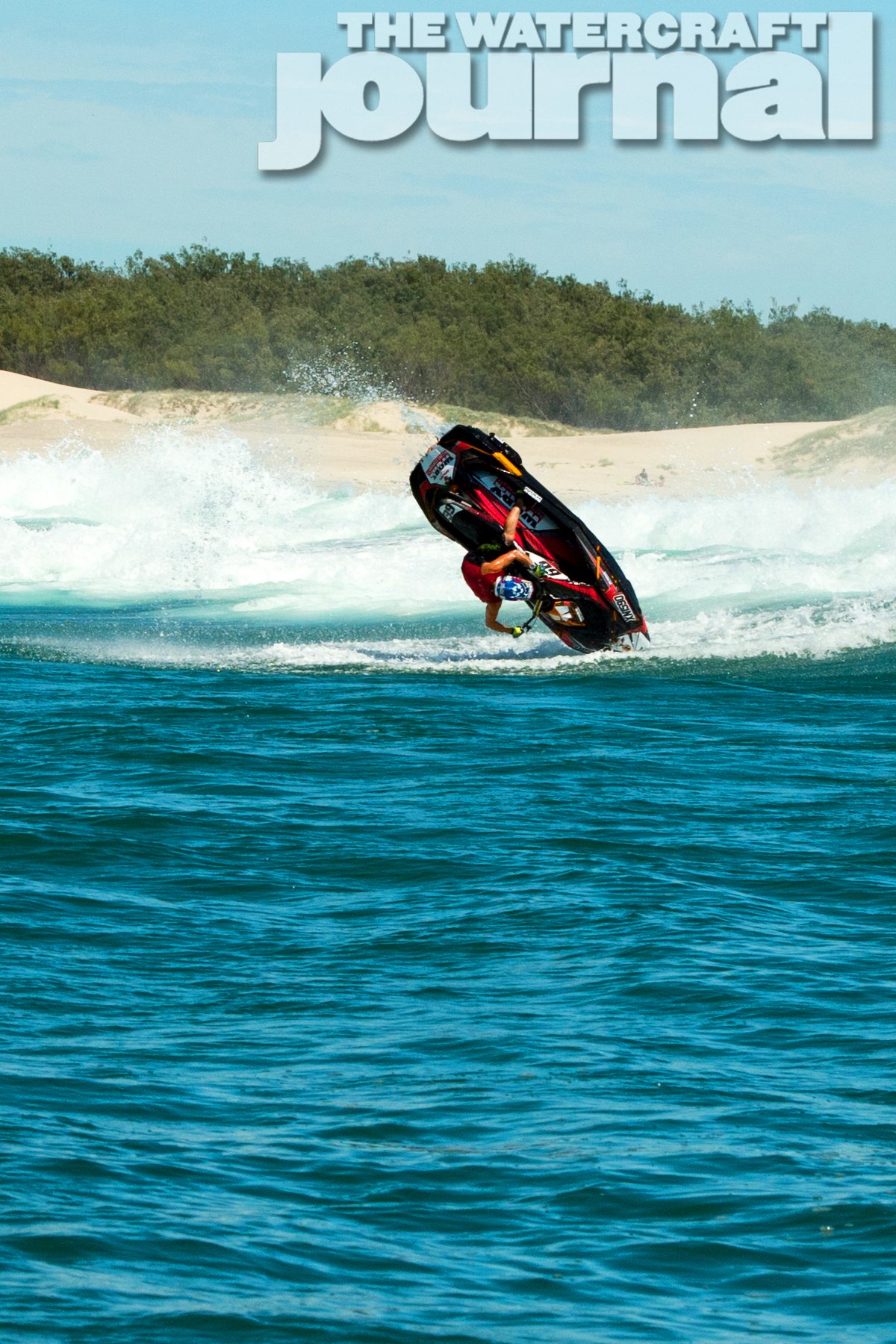
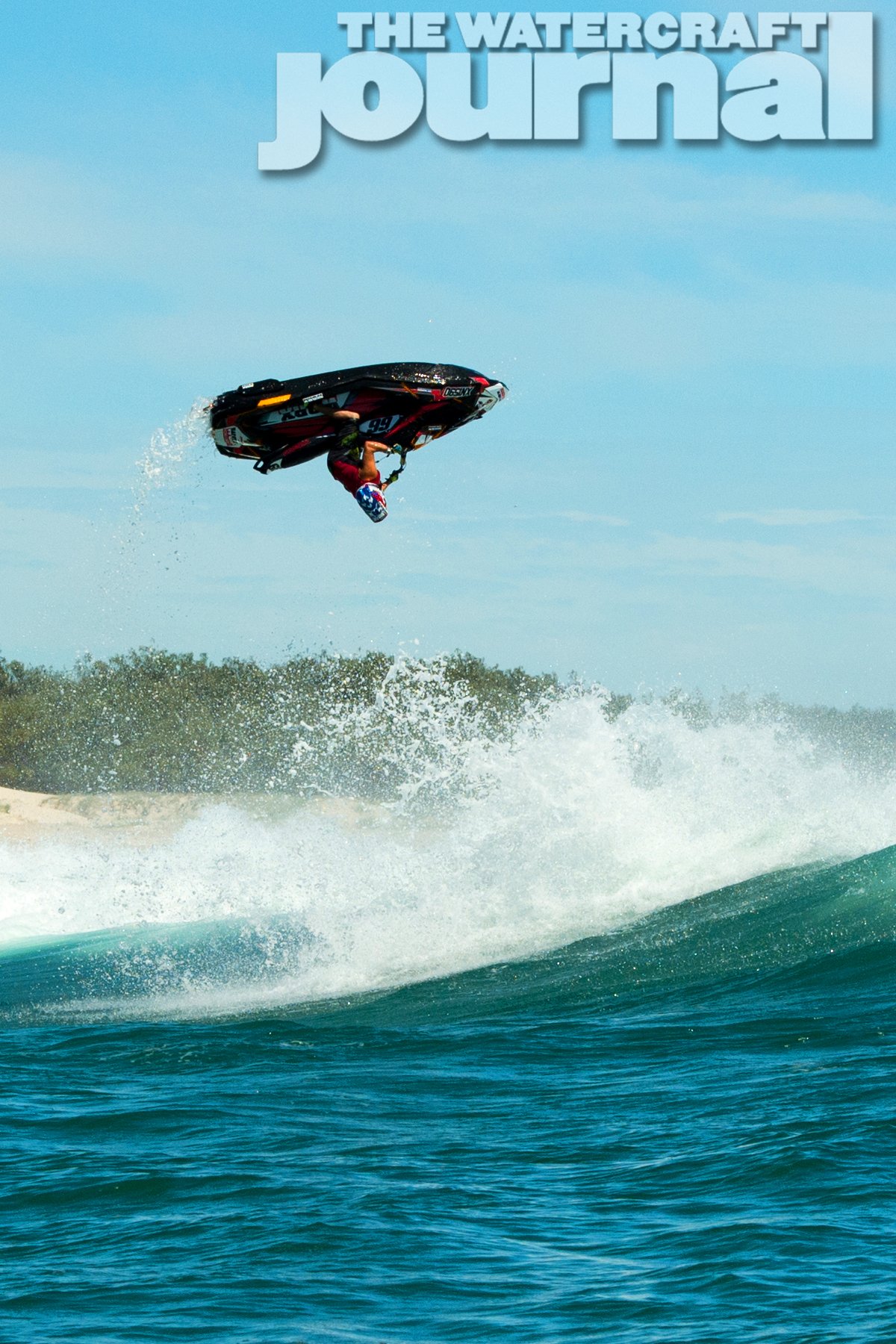
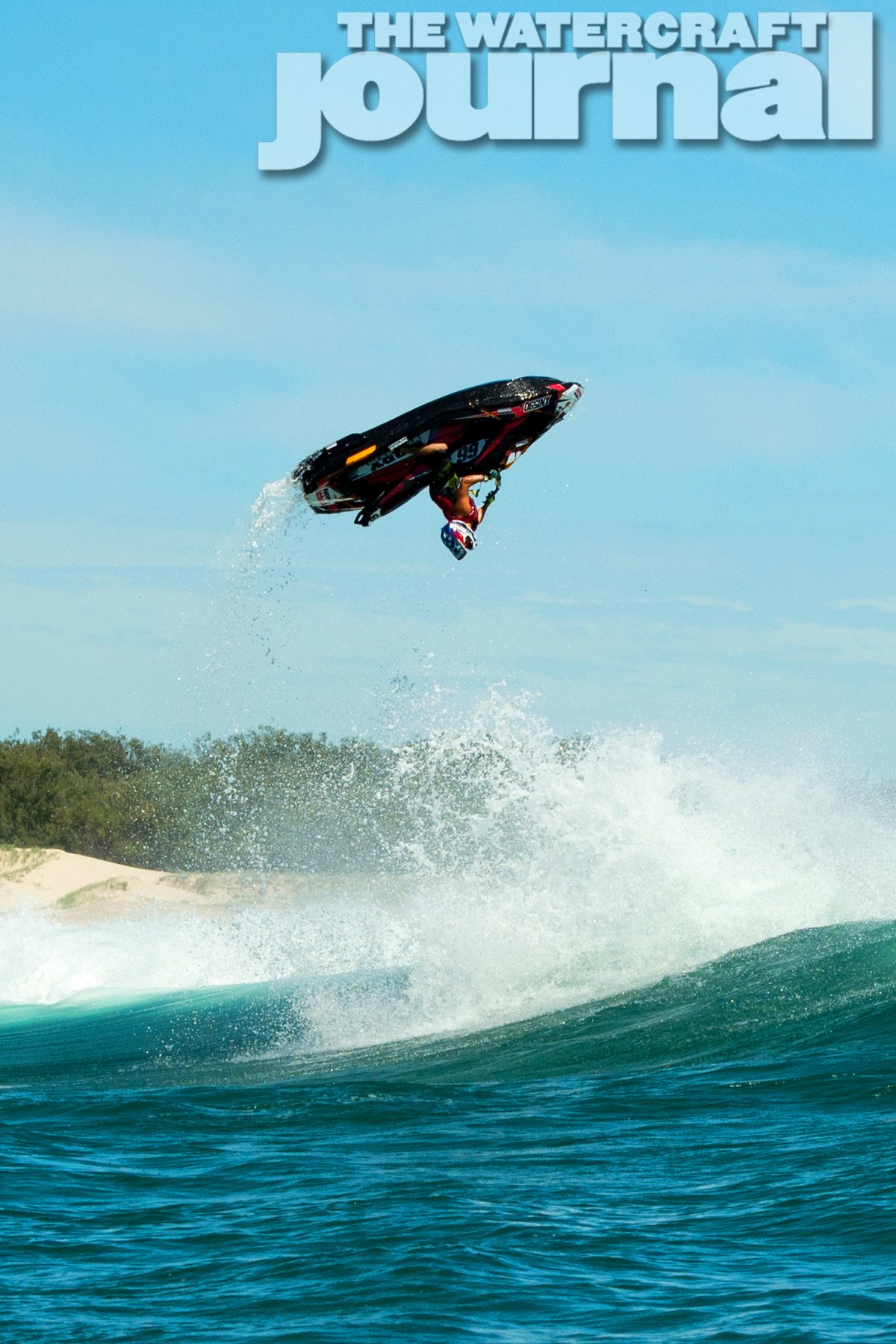
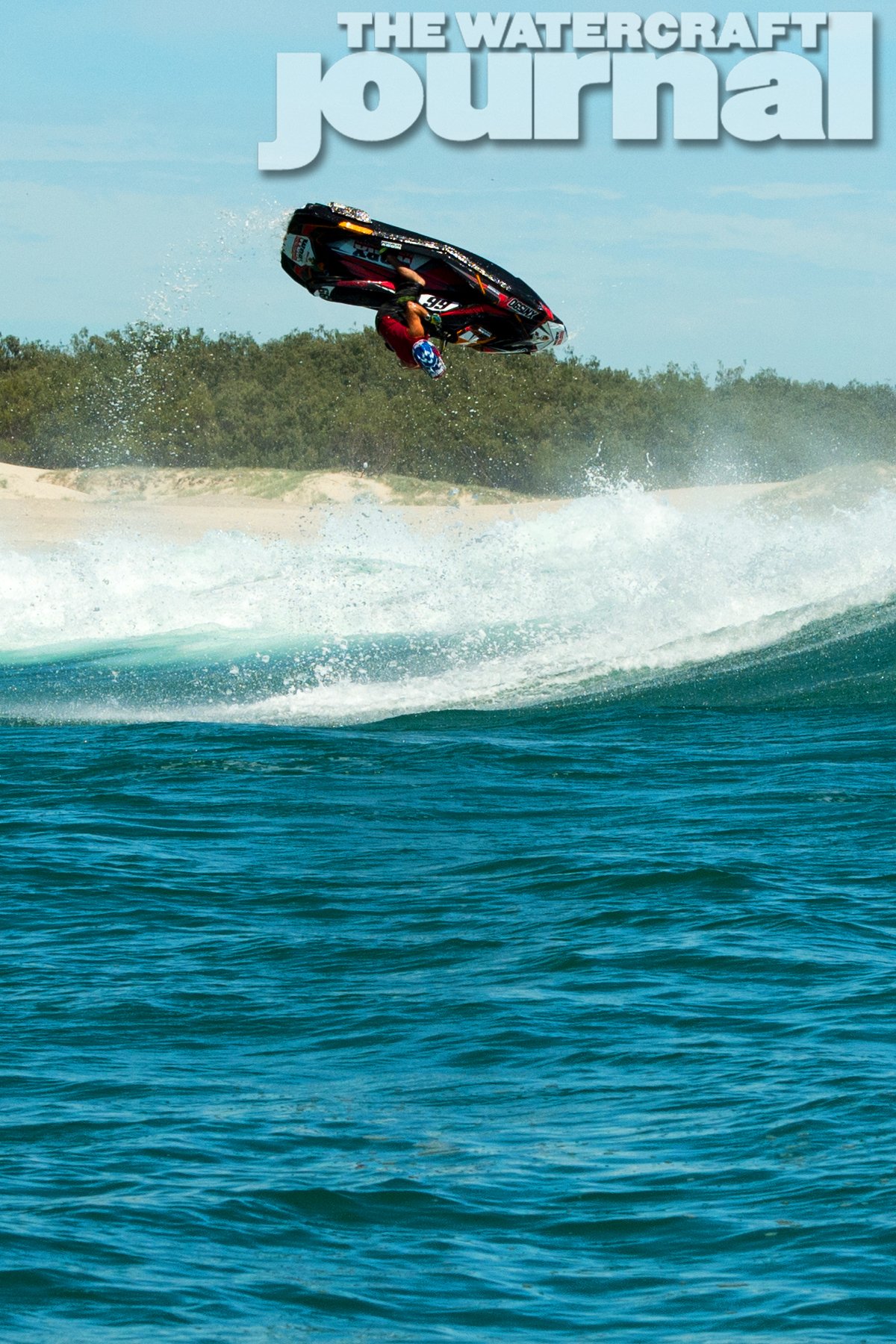
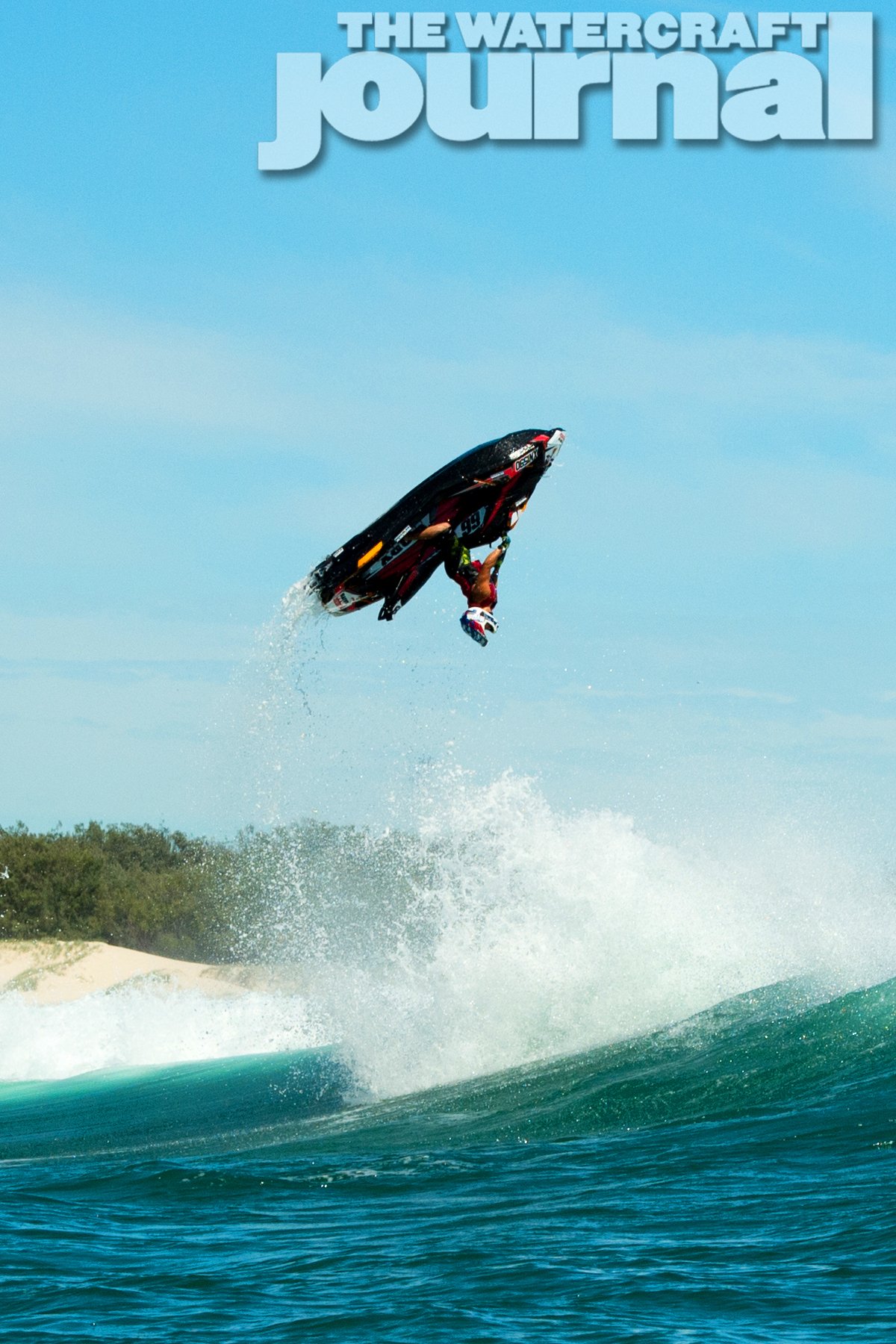
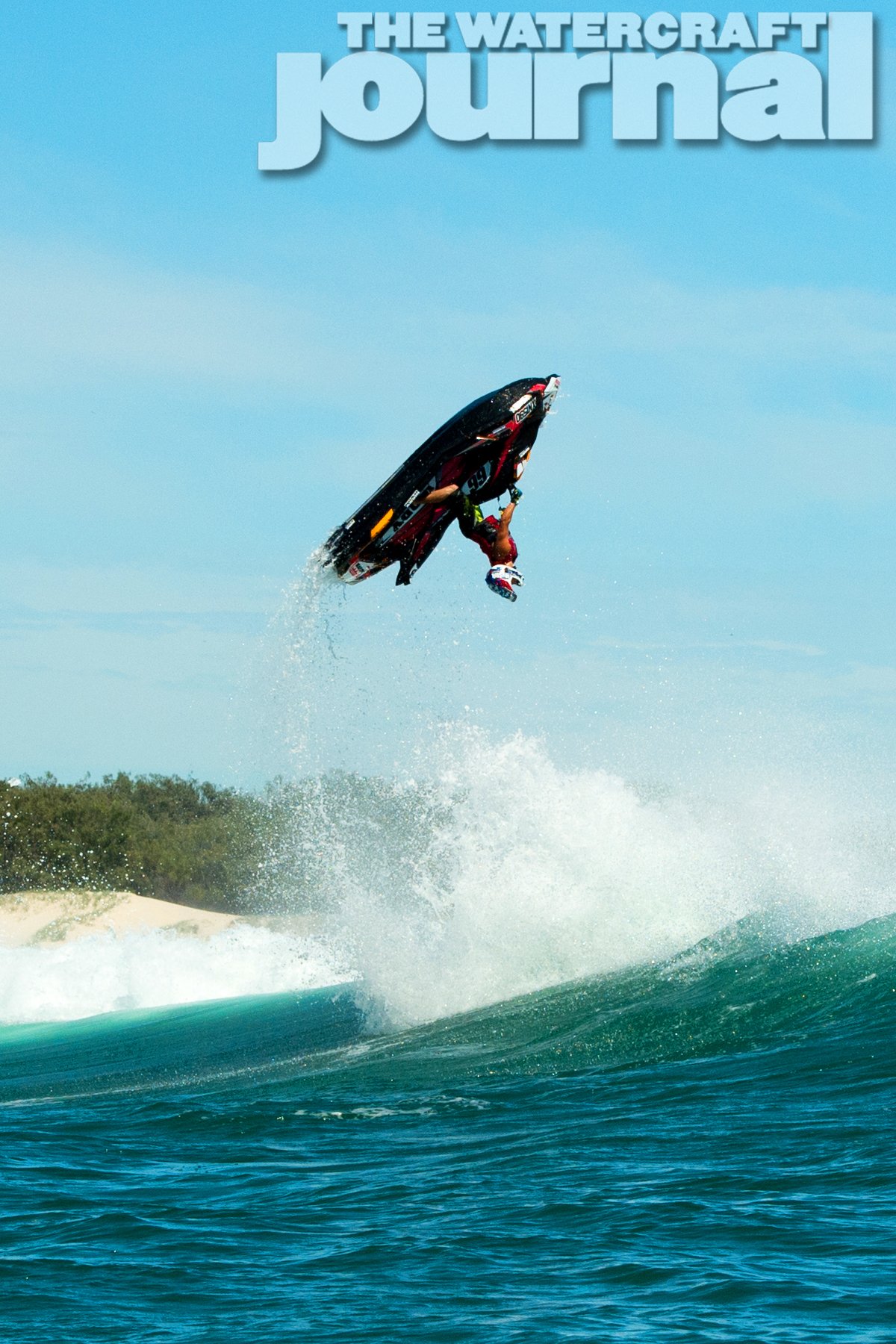
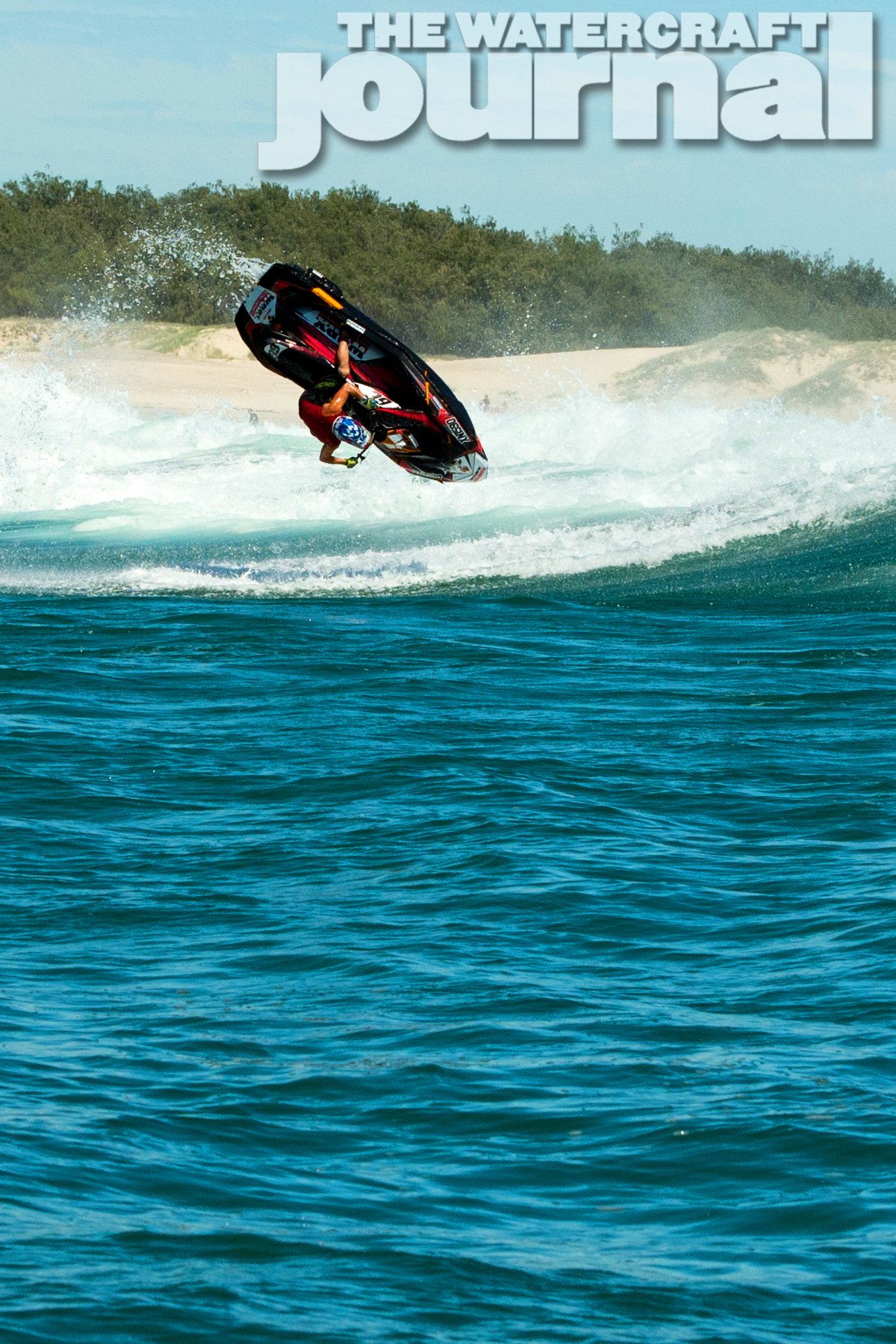
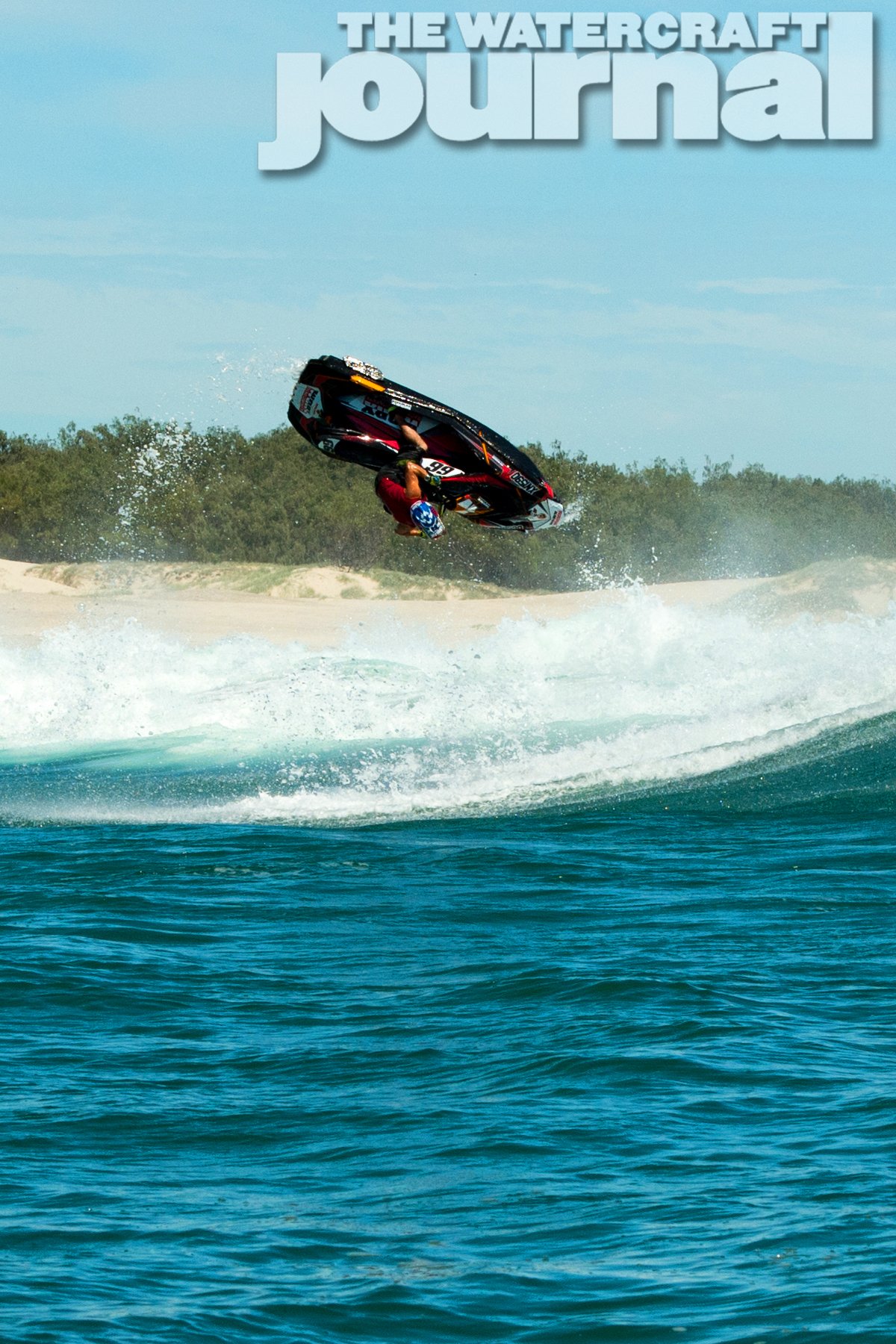
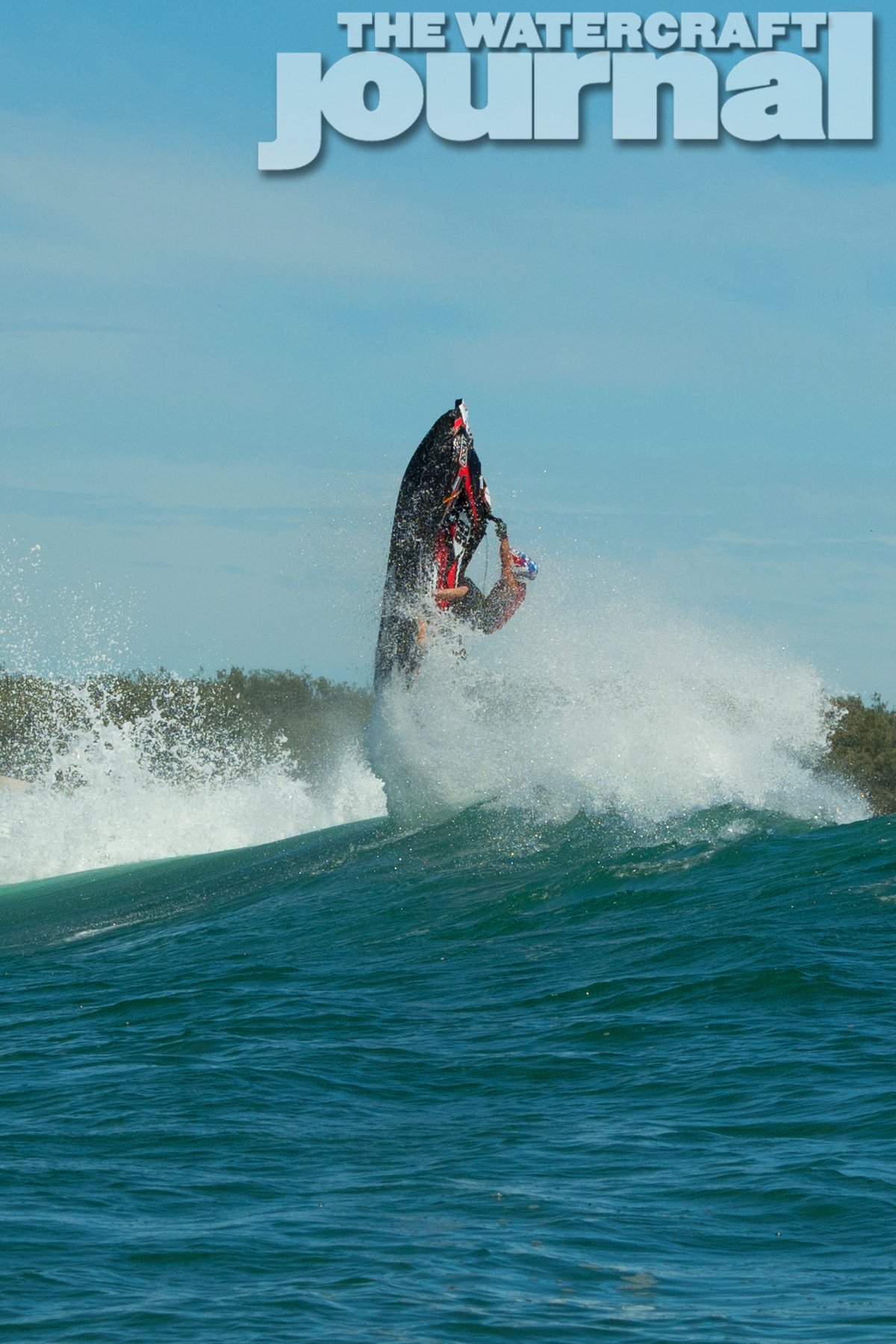
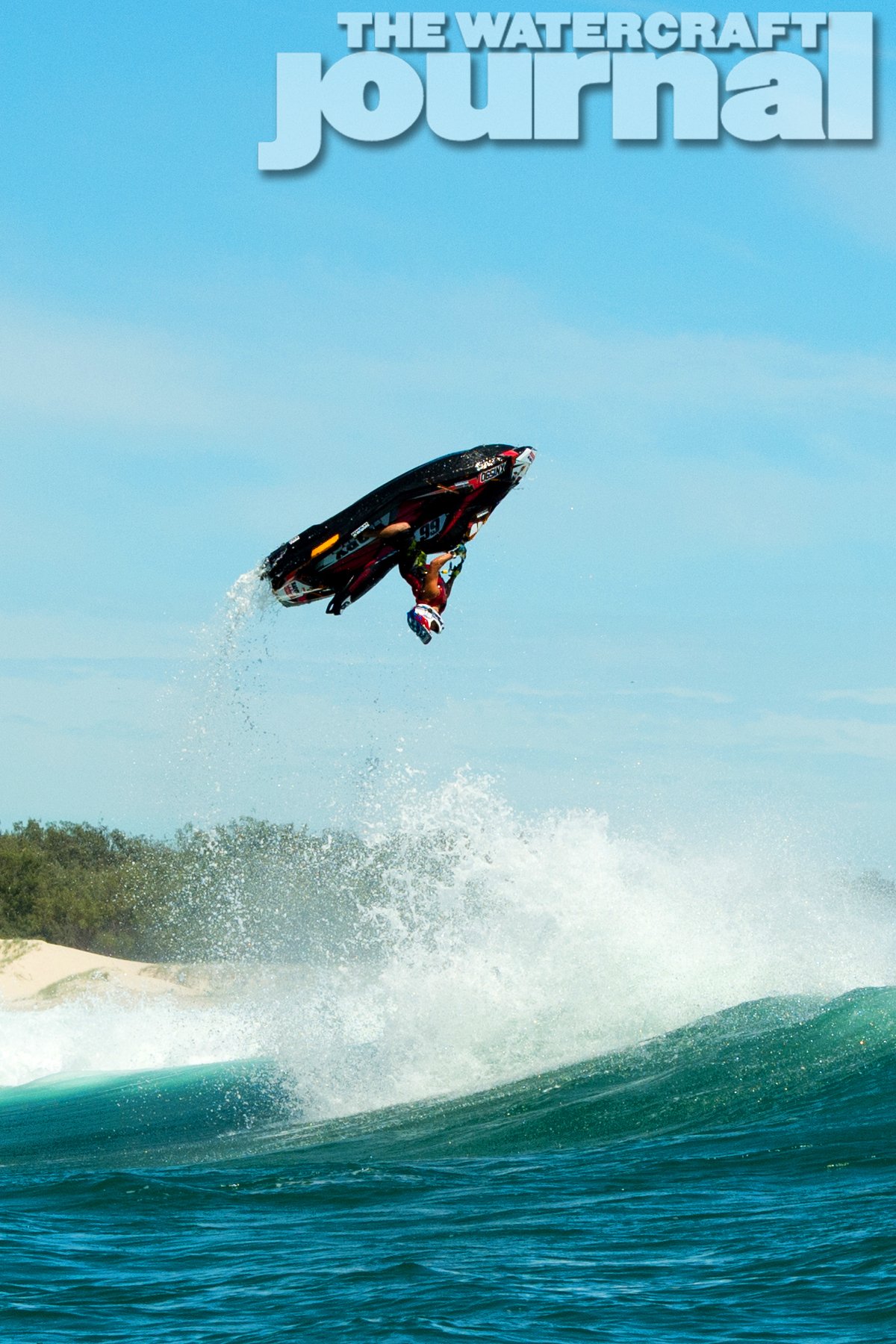
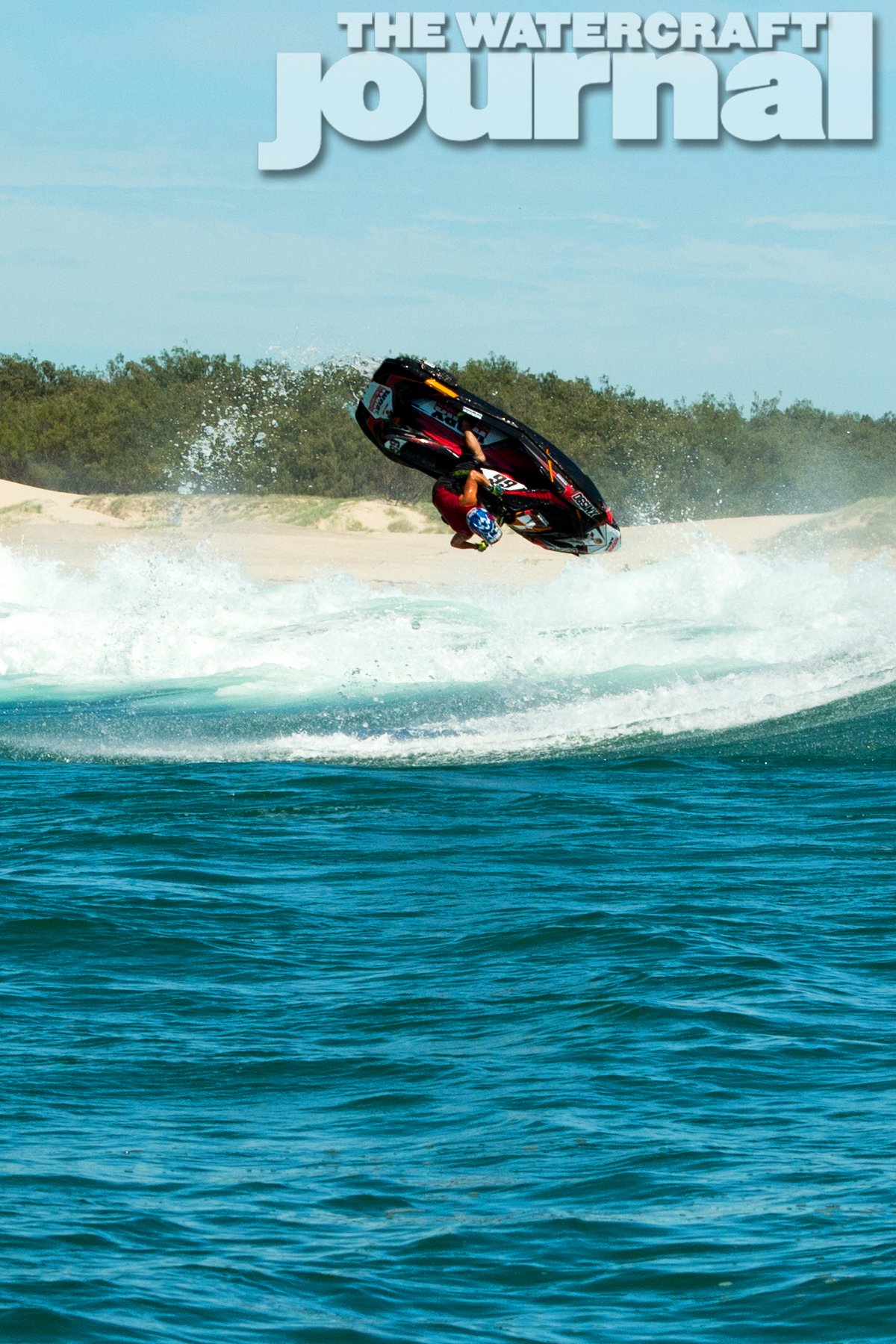
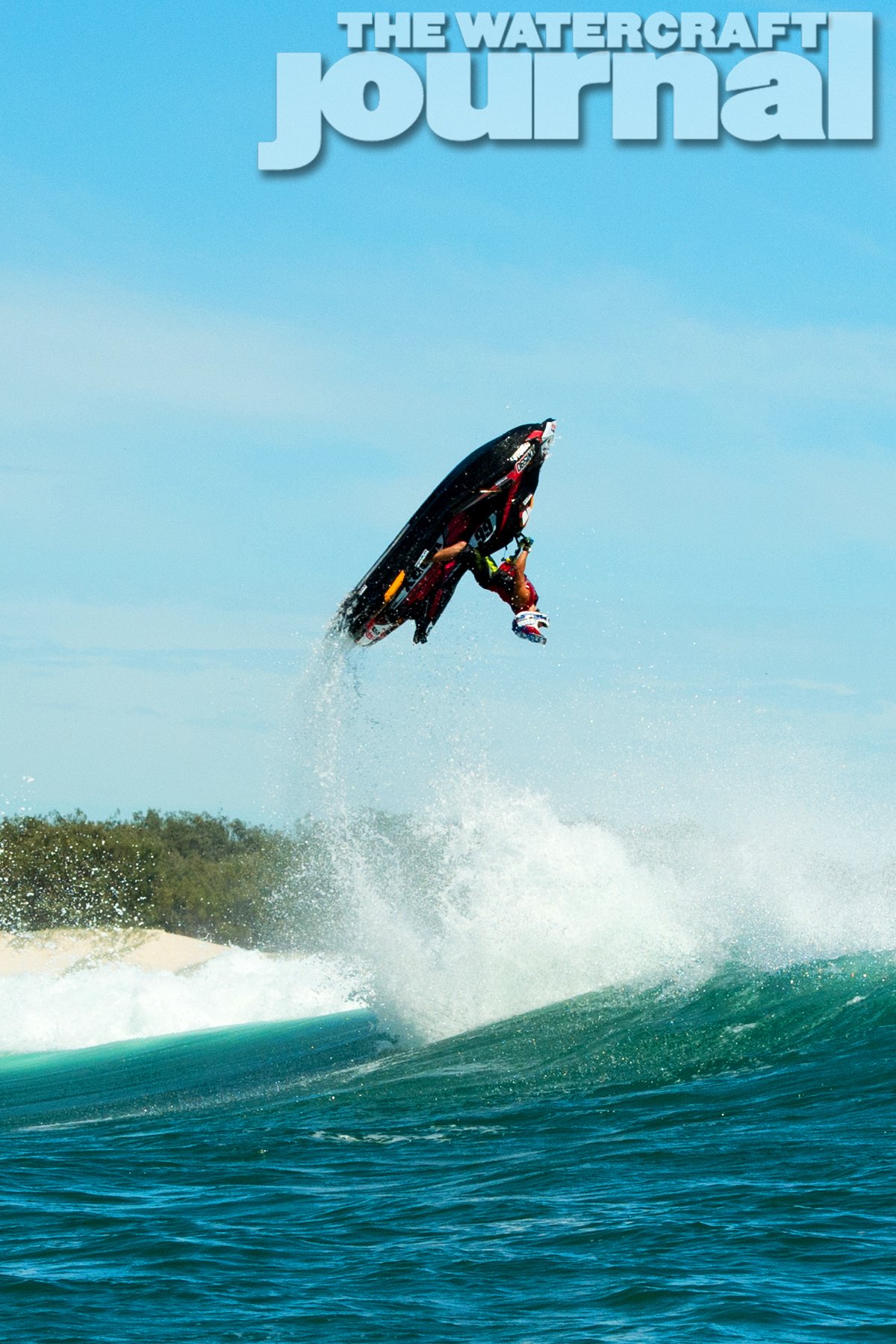
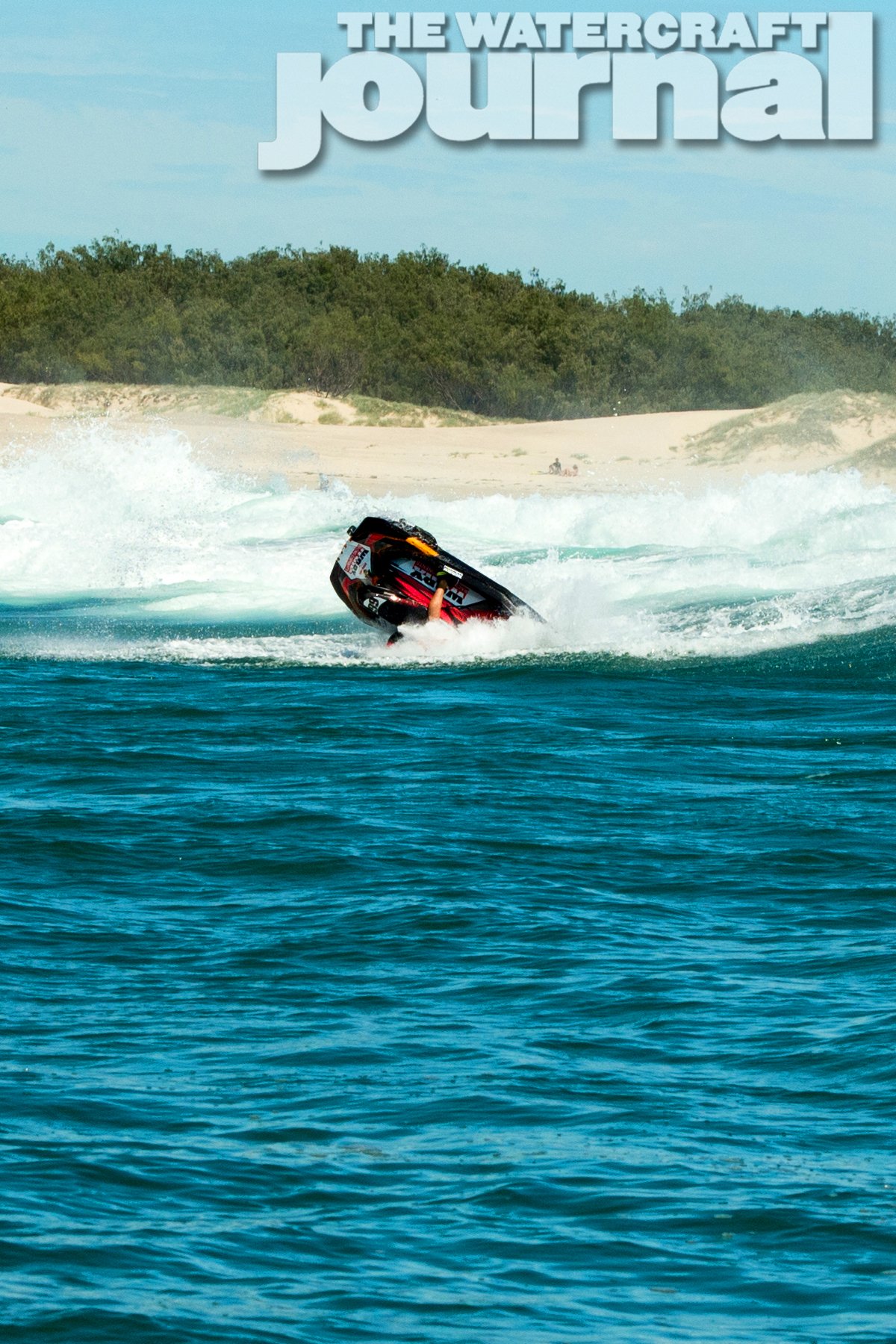
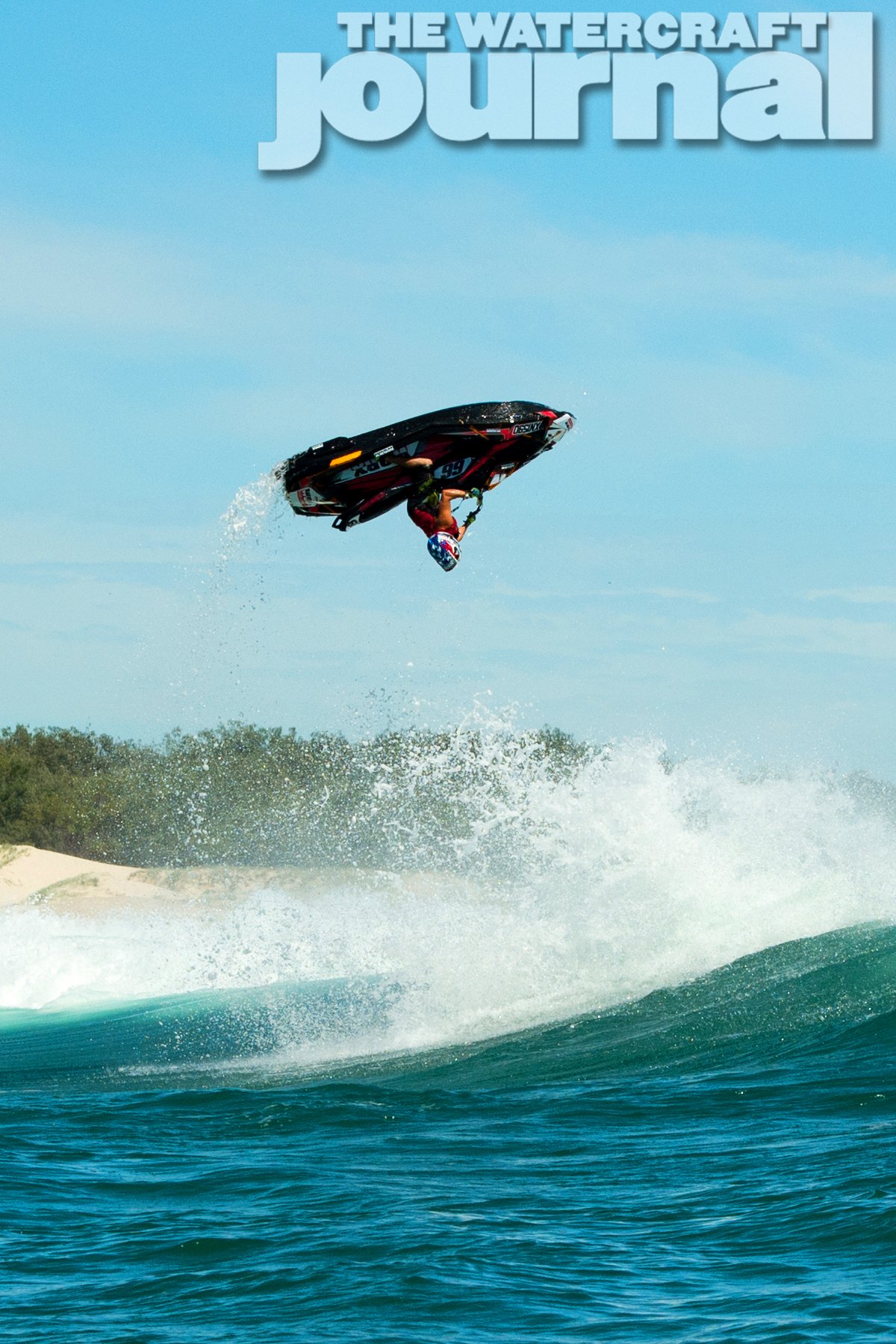
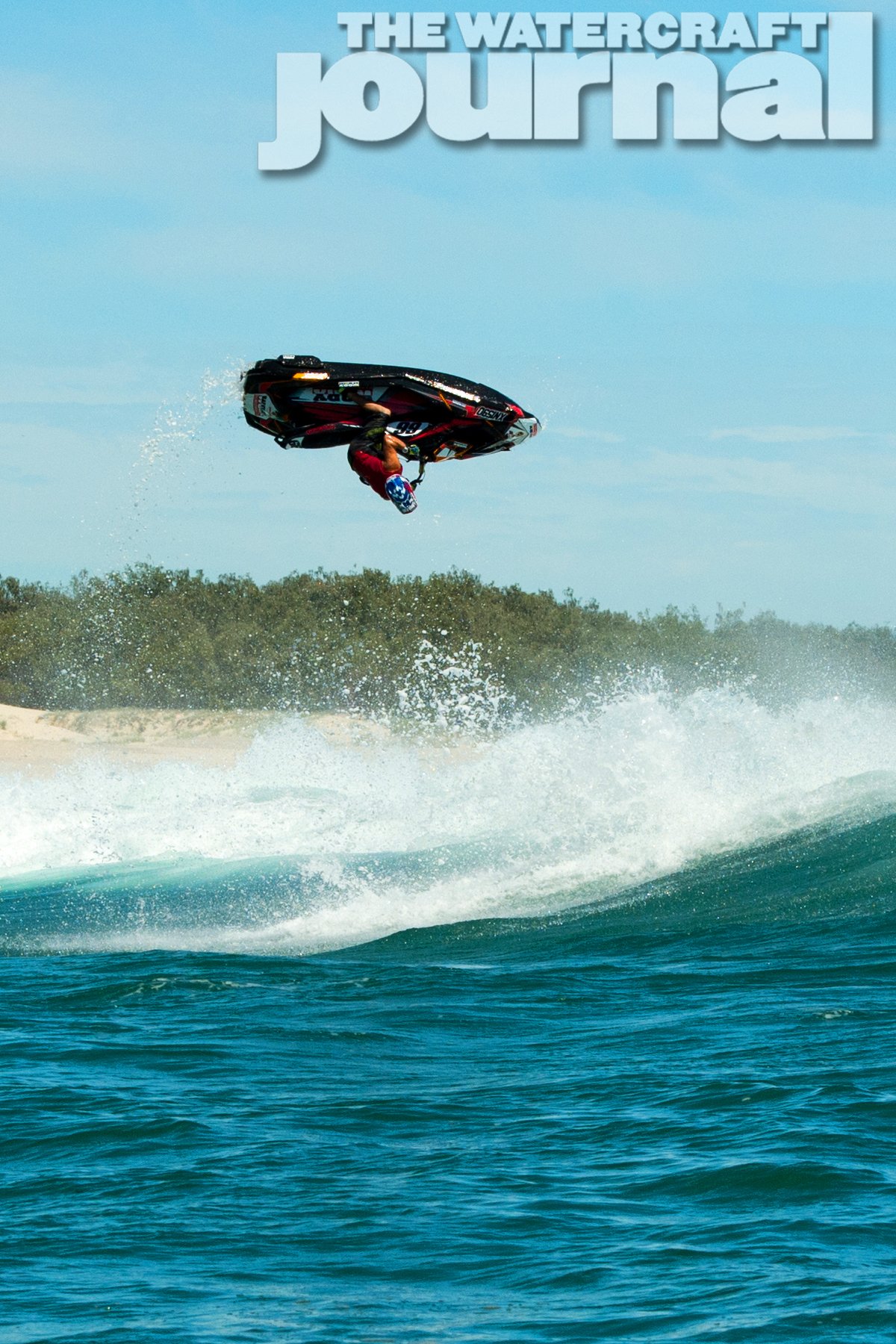
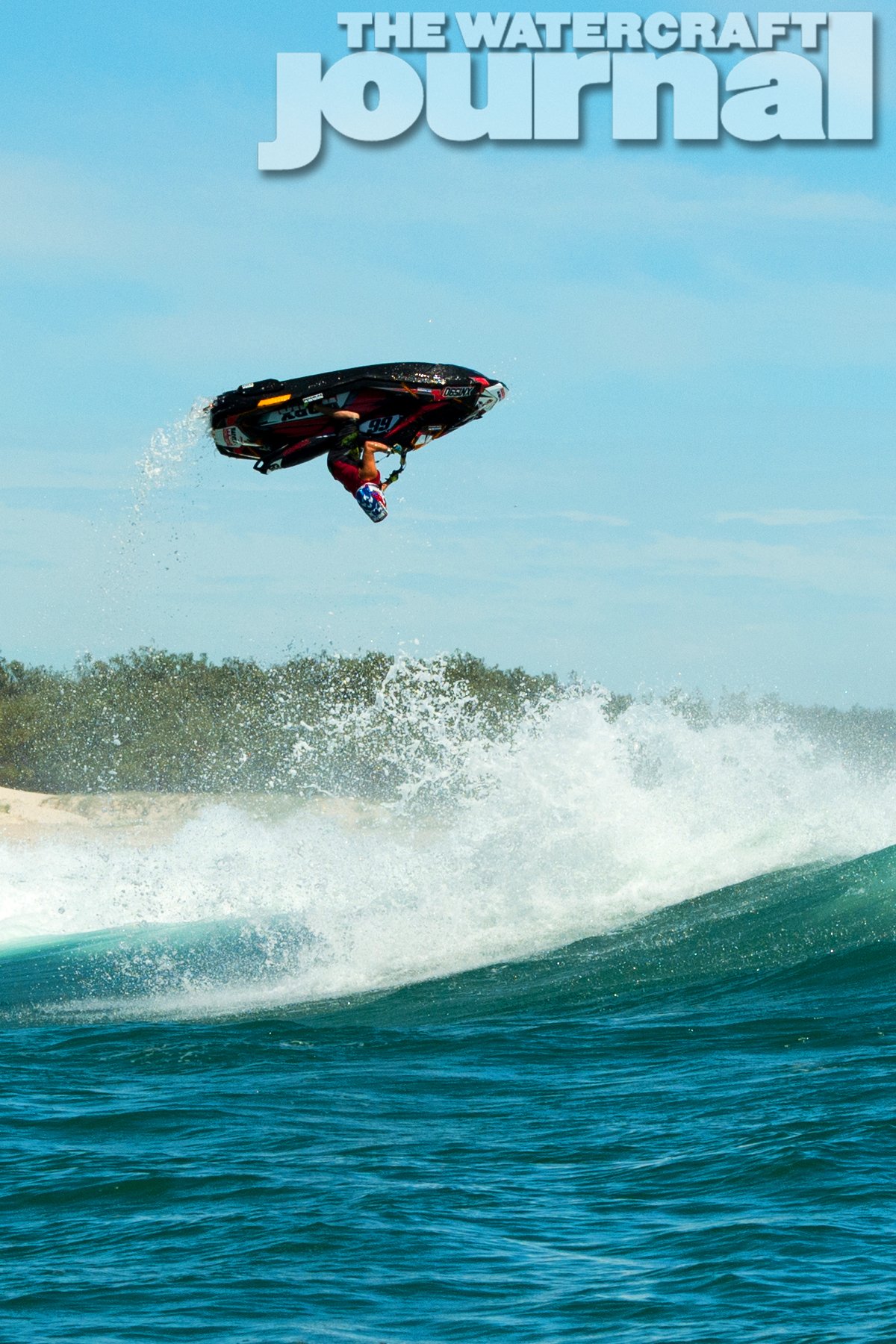
Feeling out all of these new changes, I got their blessing and took it out to where I feel most comfortable and the hardest R&D test conditions for the ski and parts – in the surf! Not knowing what to expect, I eased into a few waves and really started to enjoy how flickable the ski was especially with the durability of the added WORX steering system and power from the ECU tune. I had so much fun that toward the end of the trip I mentioned to Gary Watson (the owner of WORX), that I believed flipping it would be possible.
He again gave me his blessing to get it done, so I extended my trip an extra week to have the best shot at making this Spark flip happen. We removed the top deck and we installed Hydro-Turf 9mm underpadding into the foot trays along with some modeled diamond turf for traction and shock absorption. Along with that, we installed DaKine footstraps to keep me locked in and in control when going inverted off the waves.
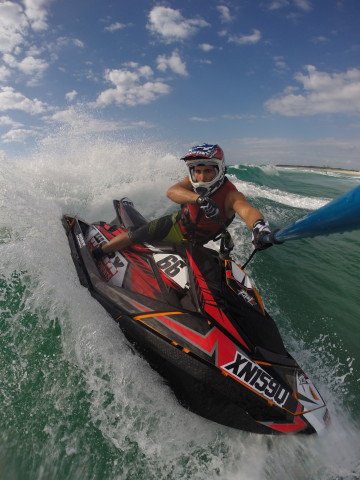
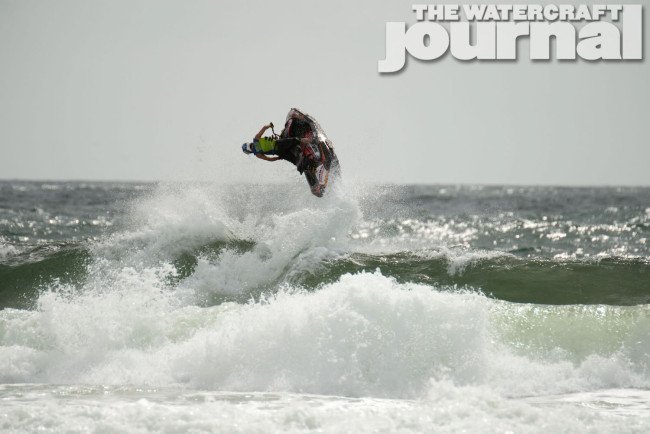
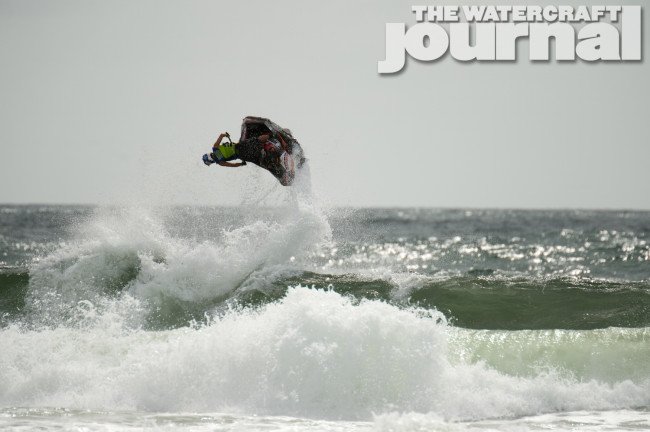
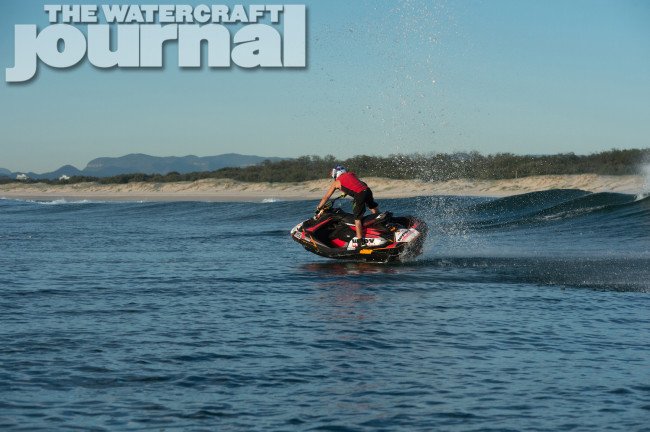
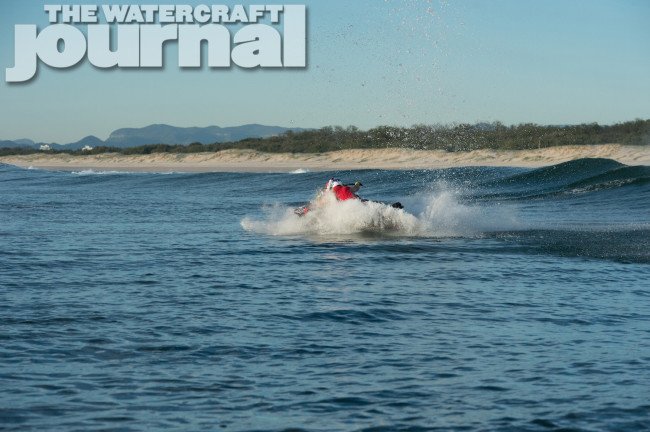
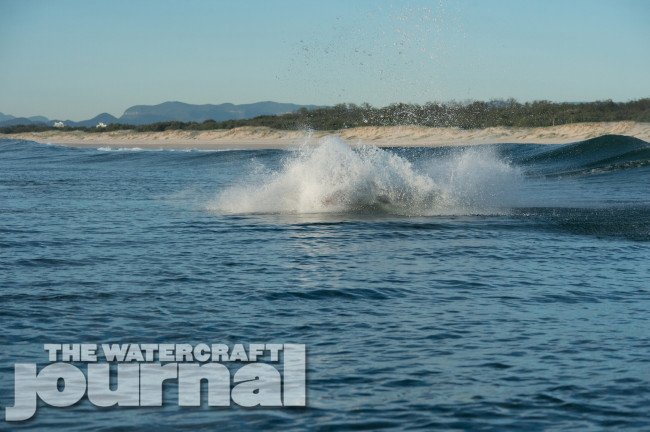
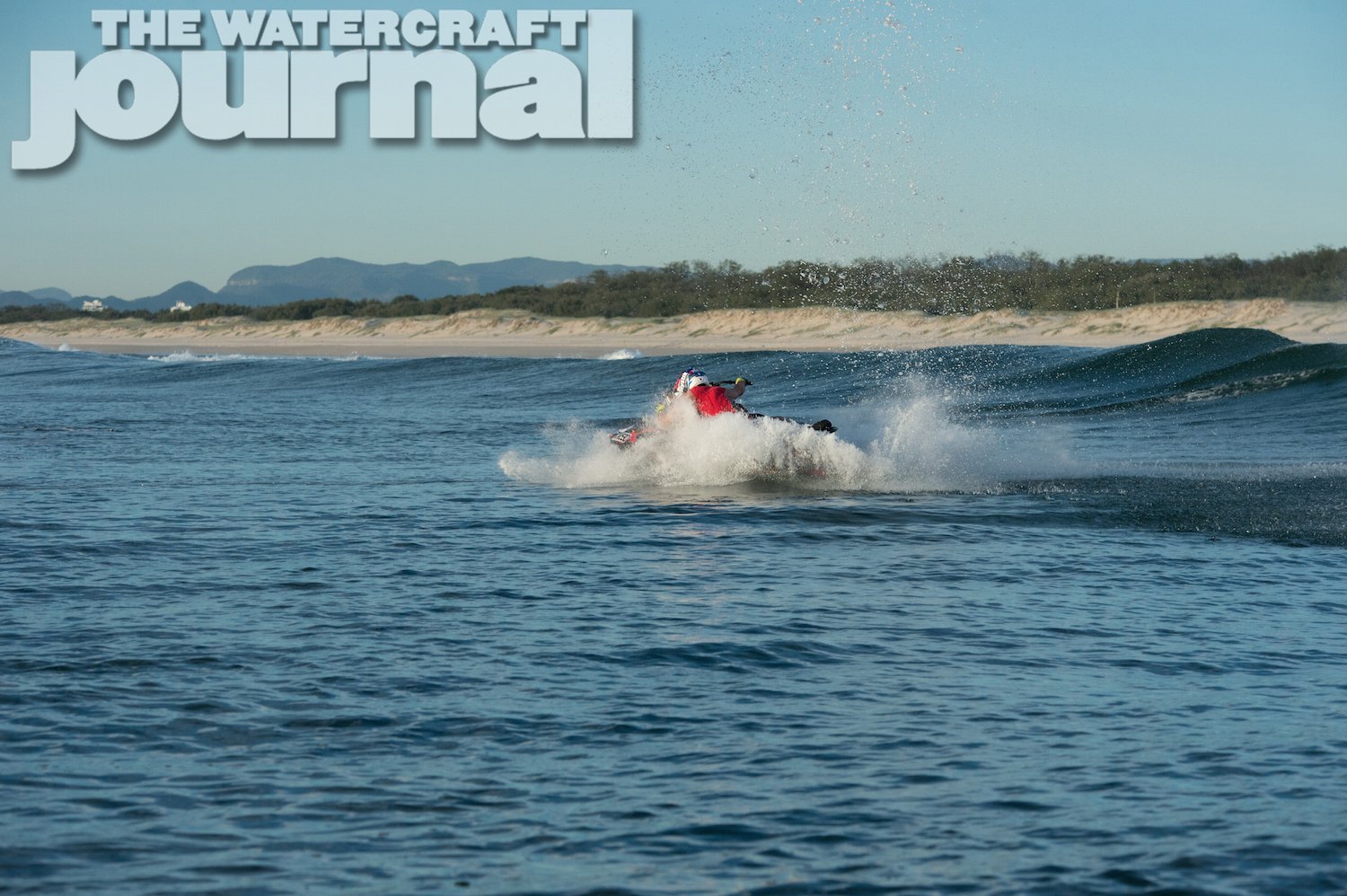
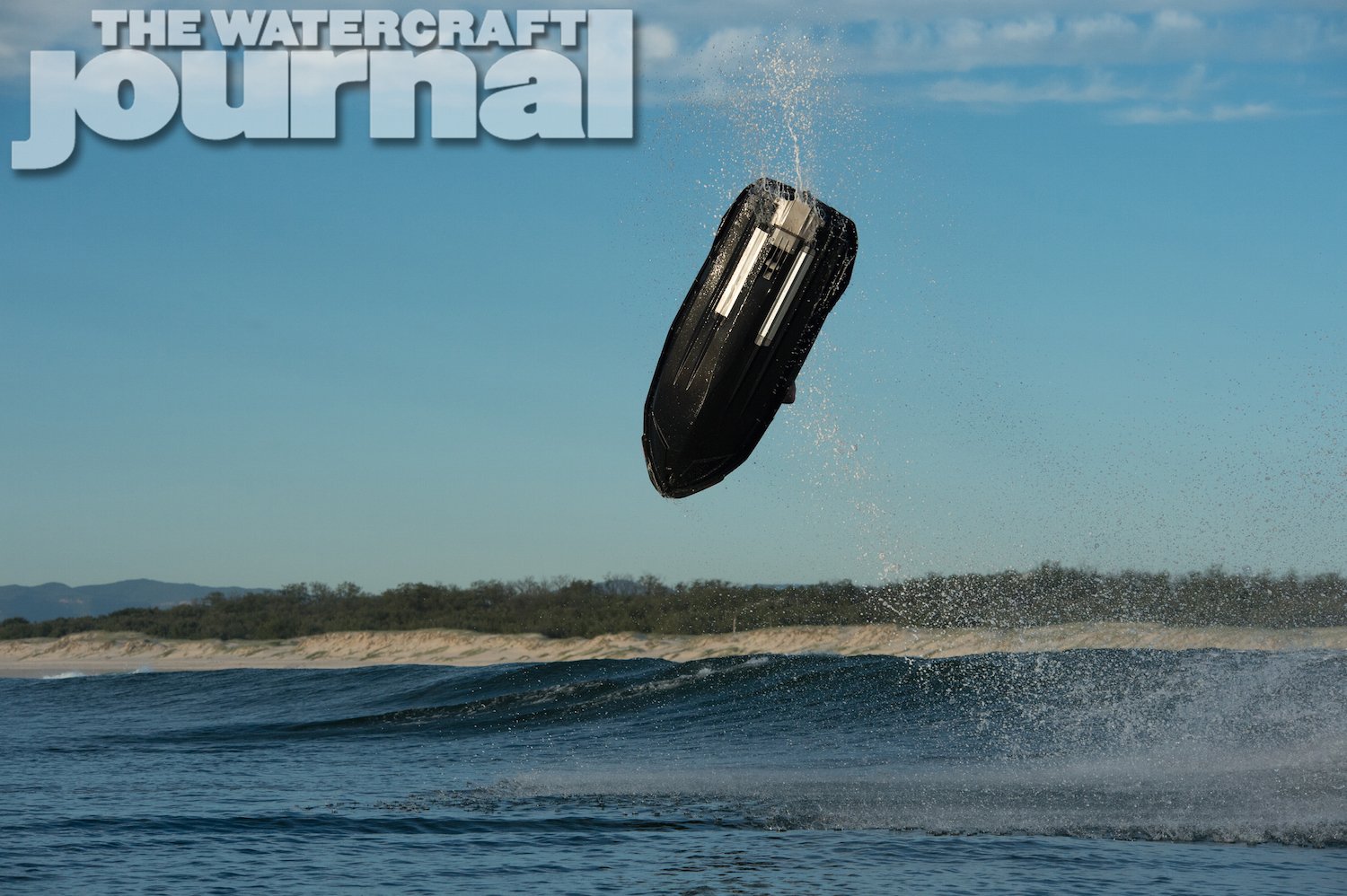
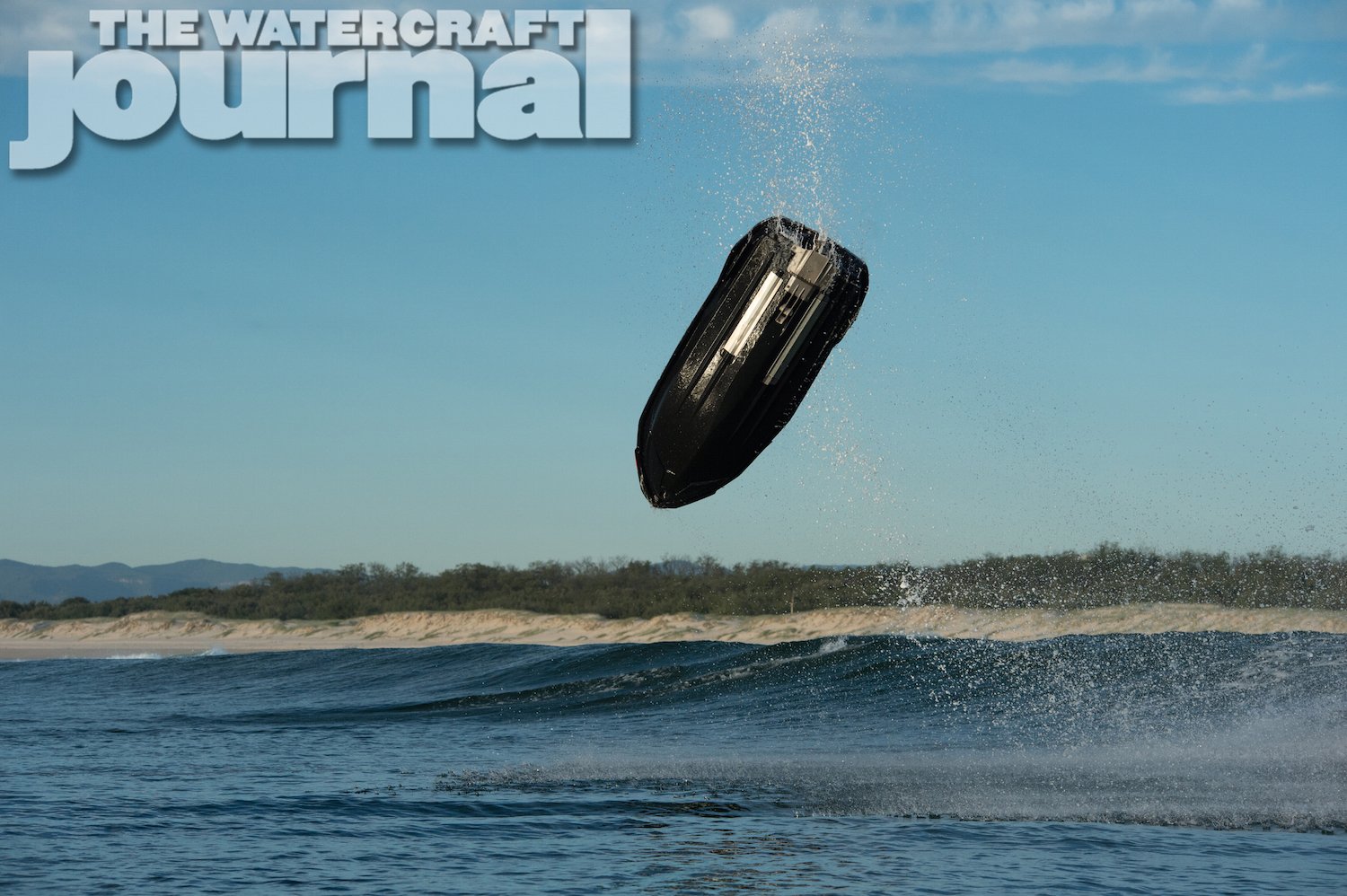
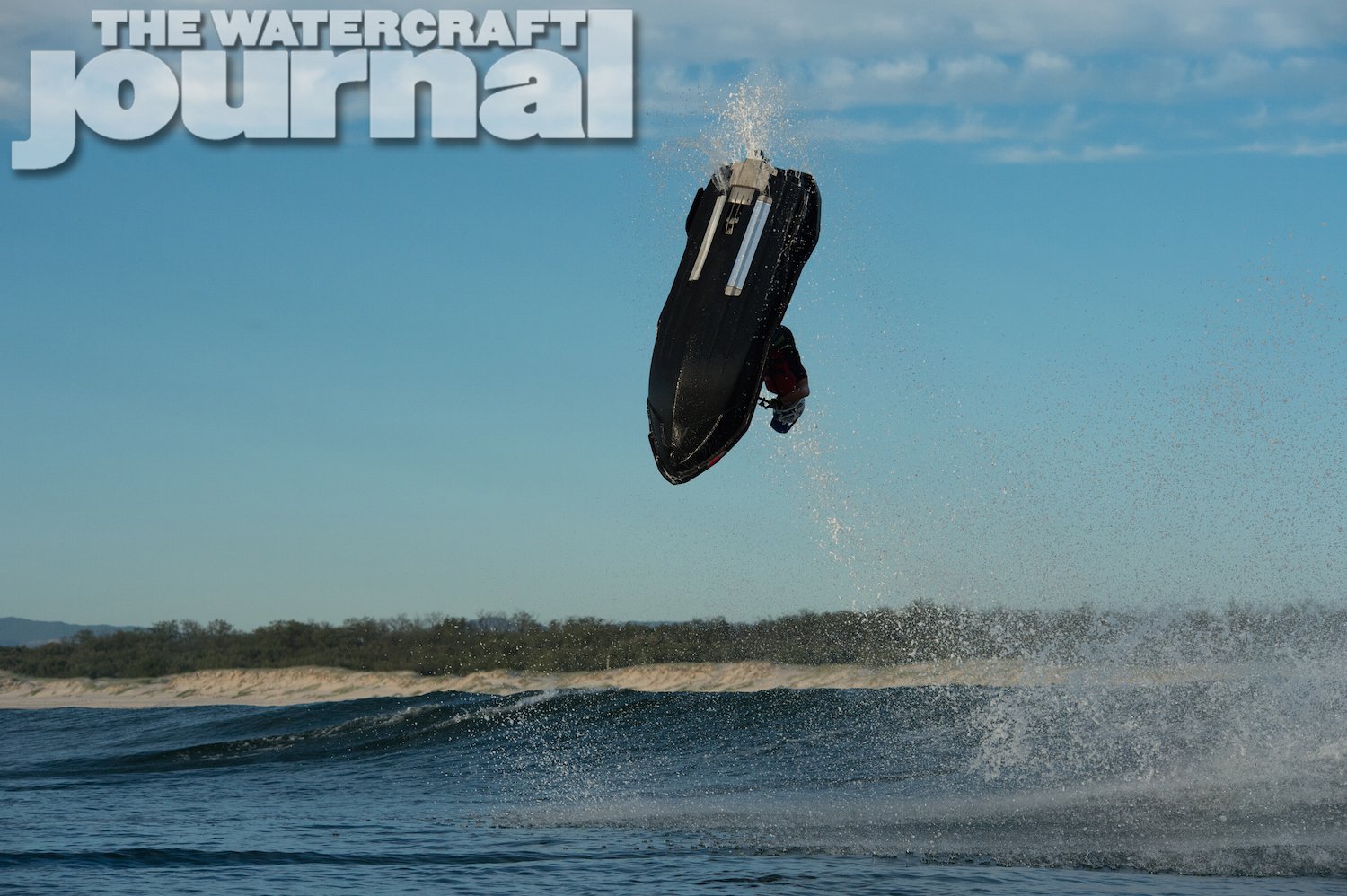
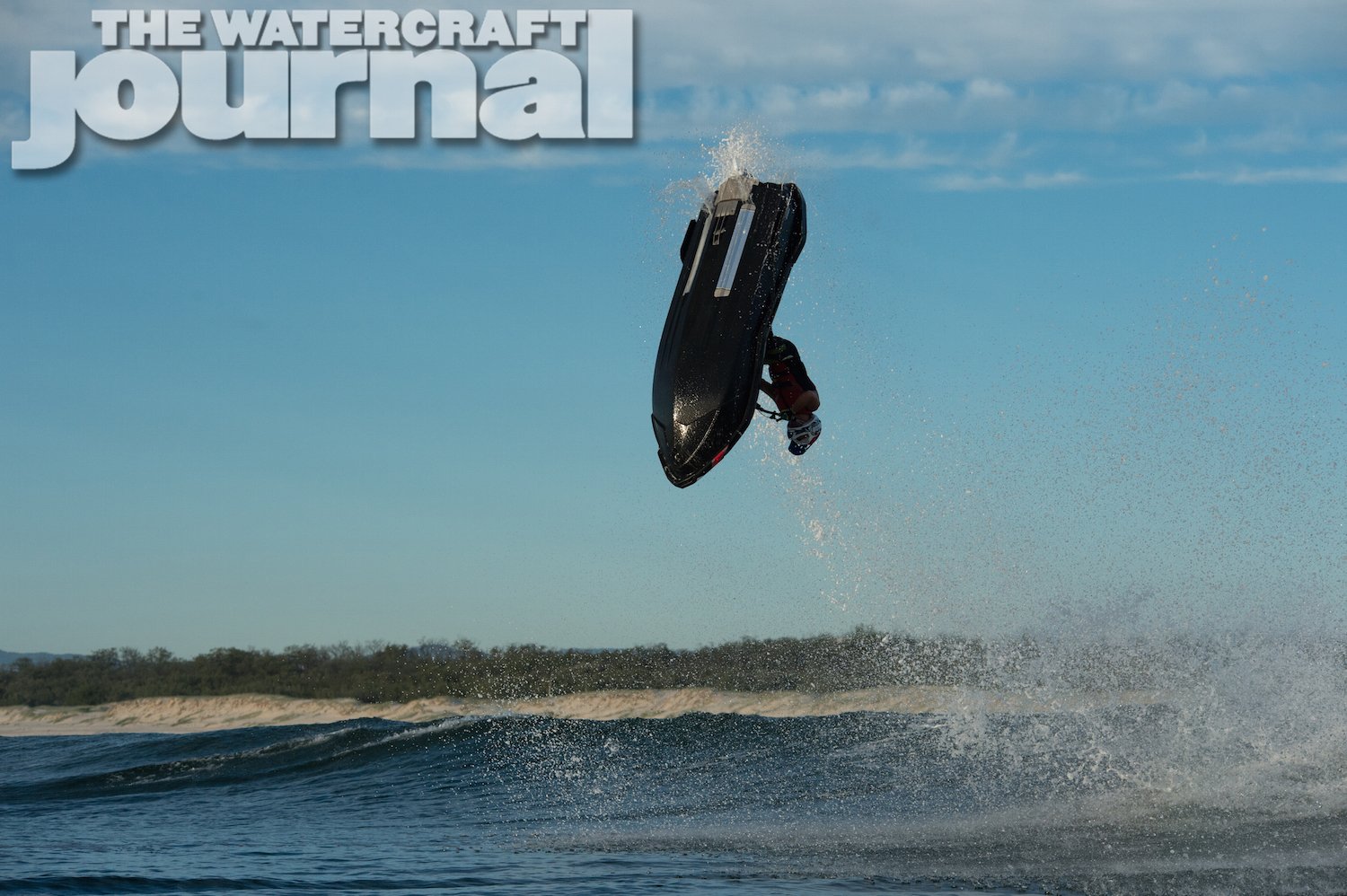
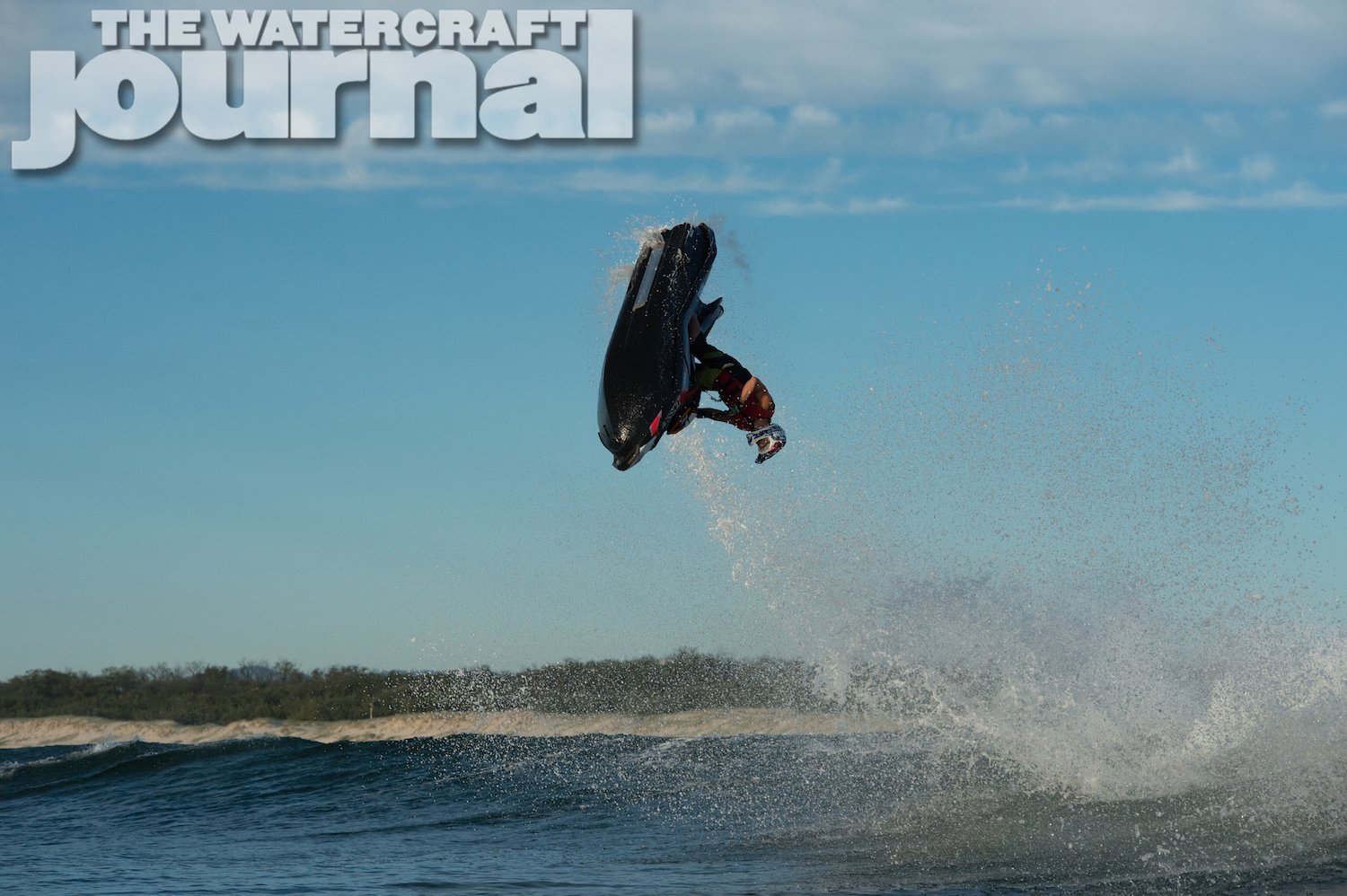
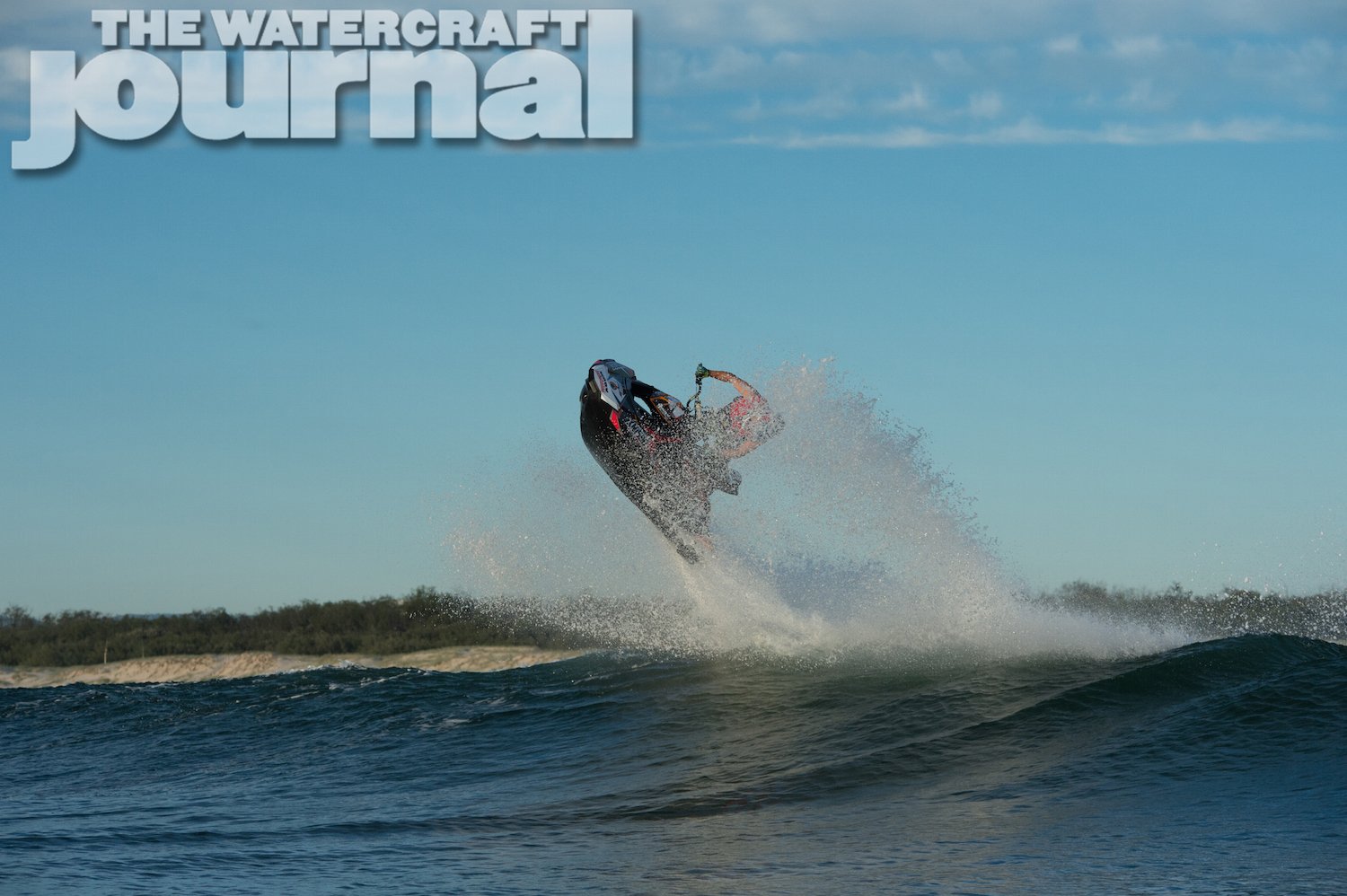
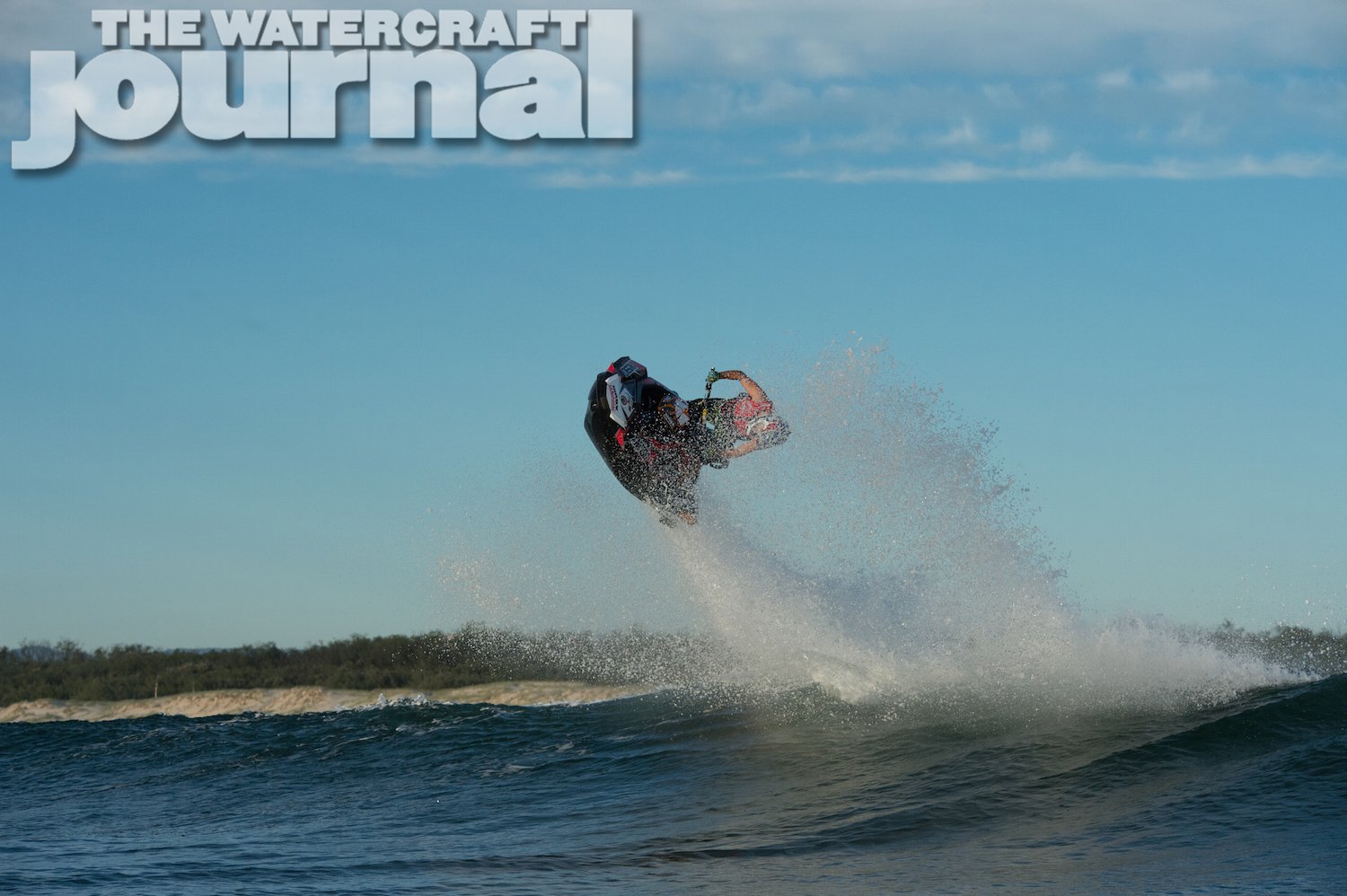
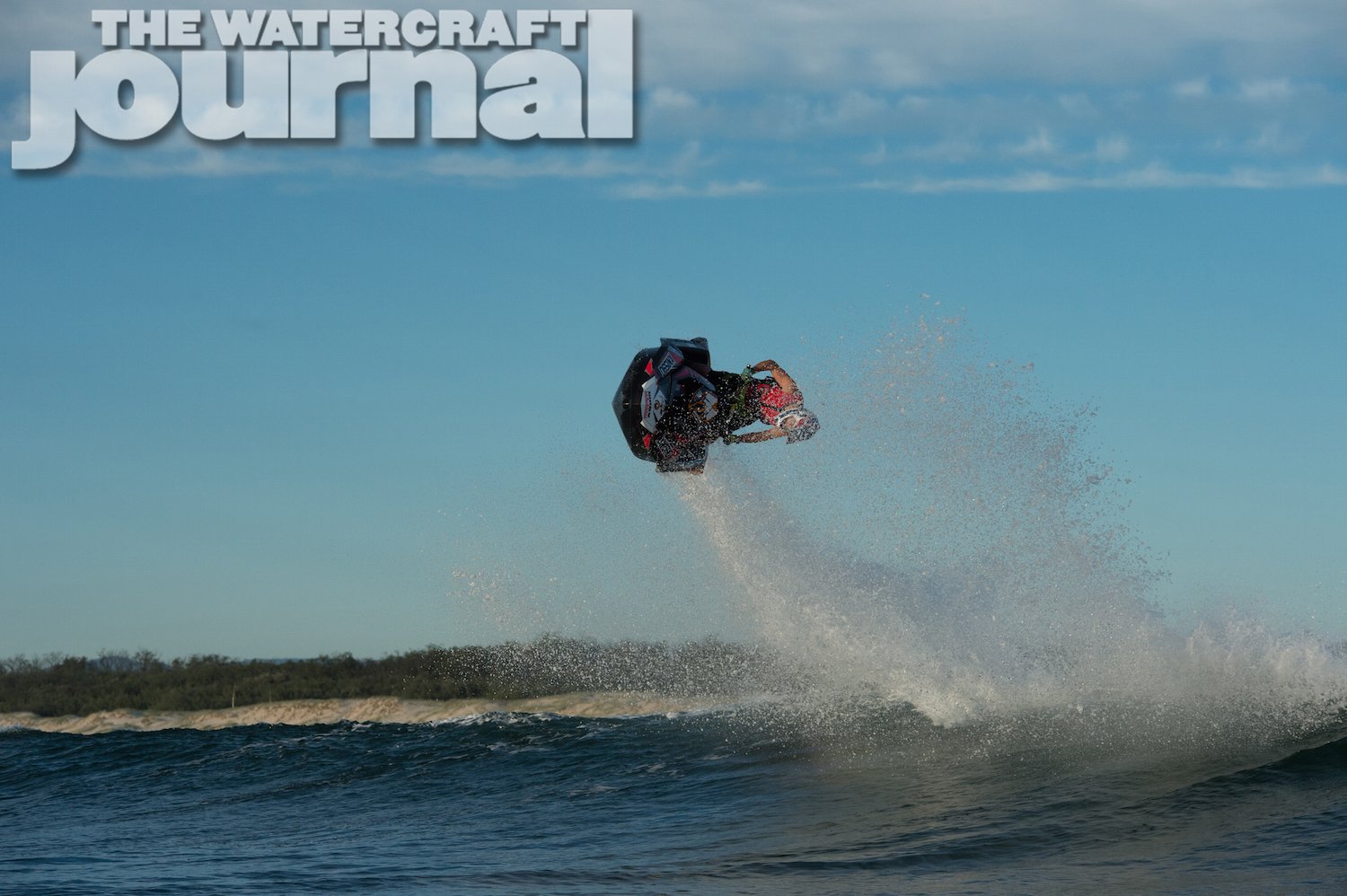
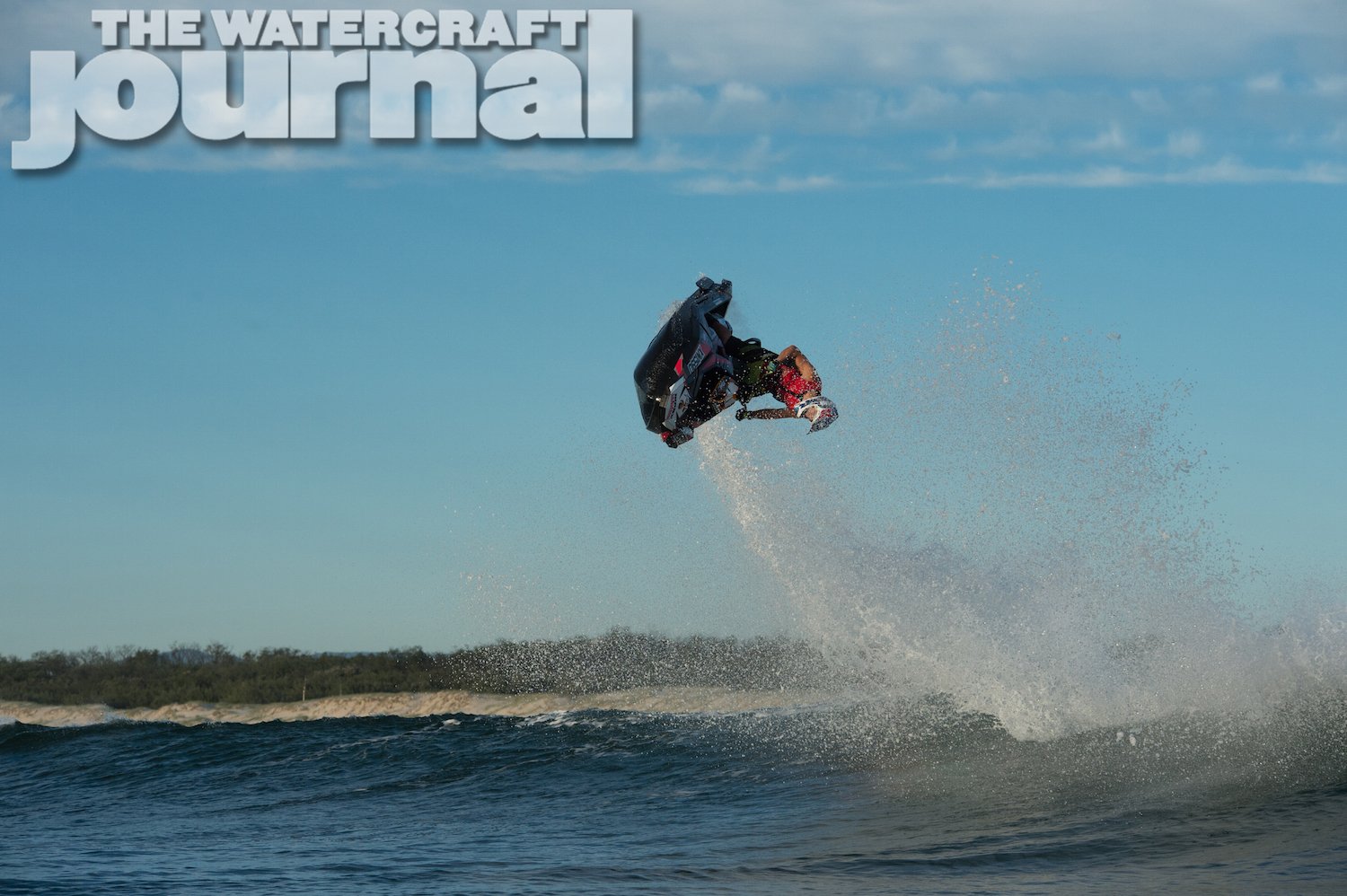
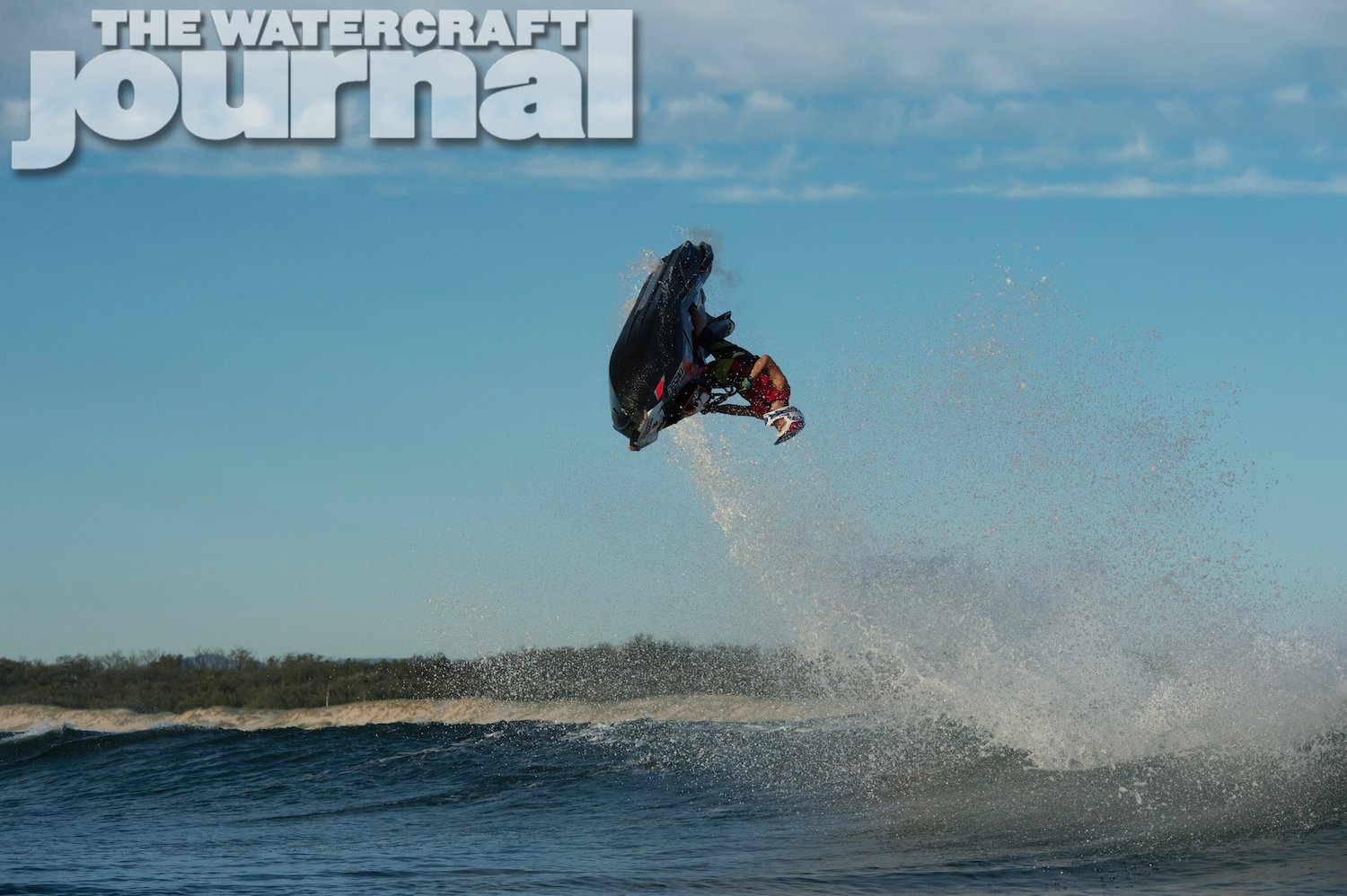
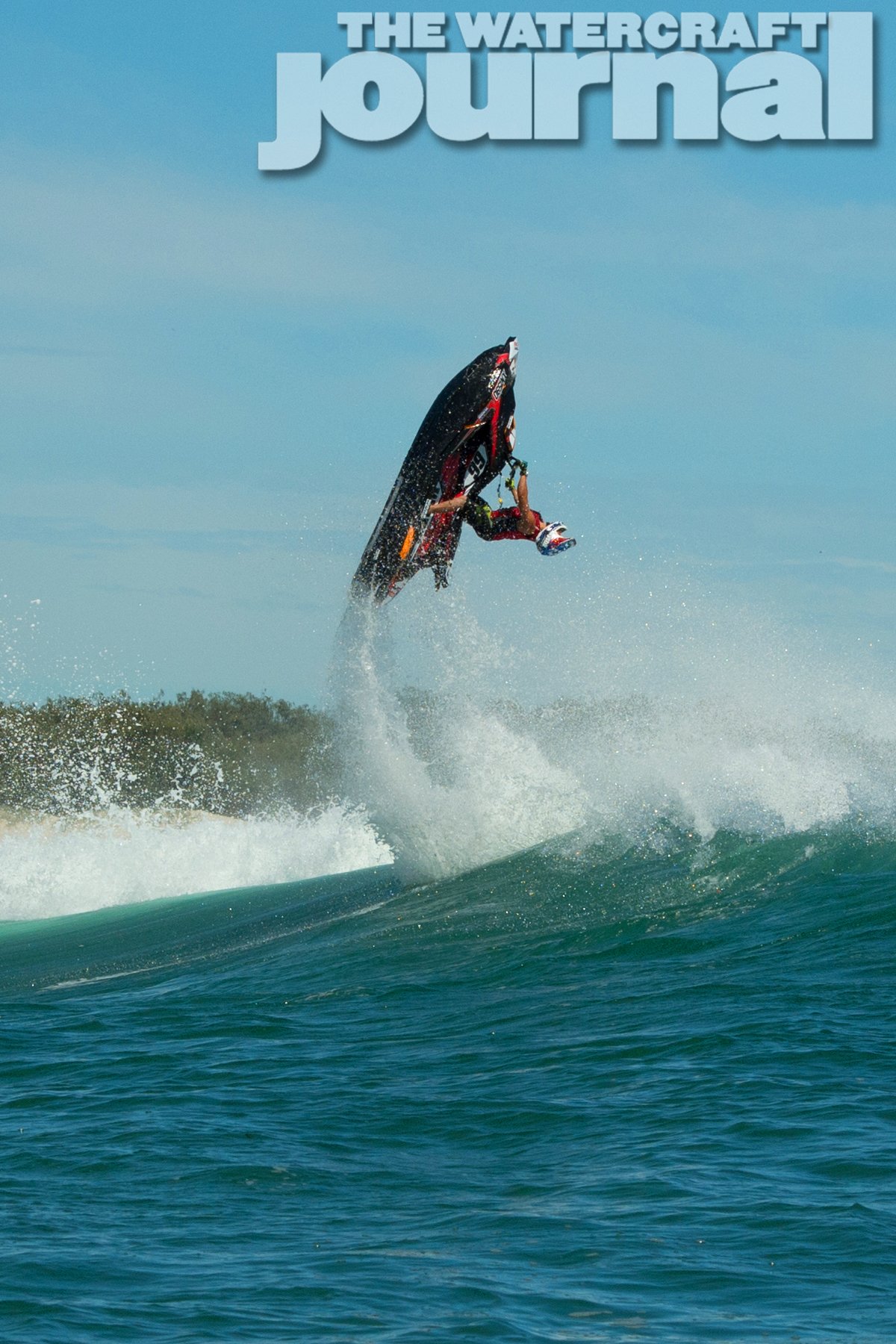
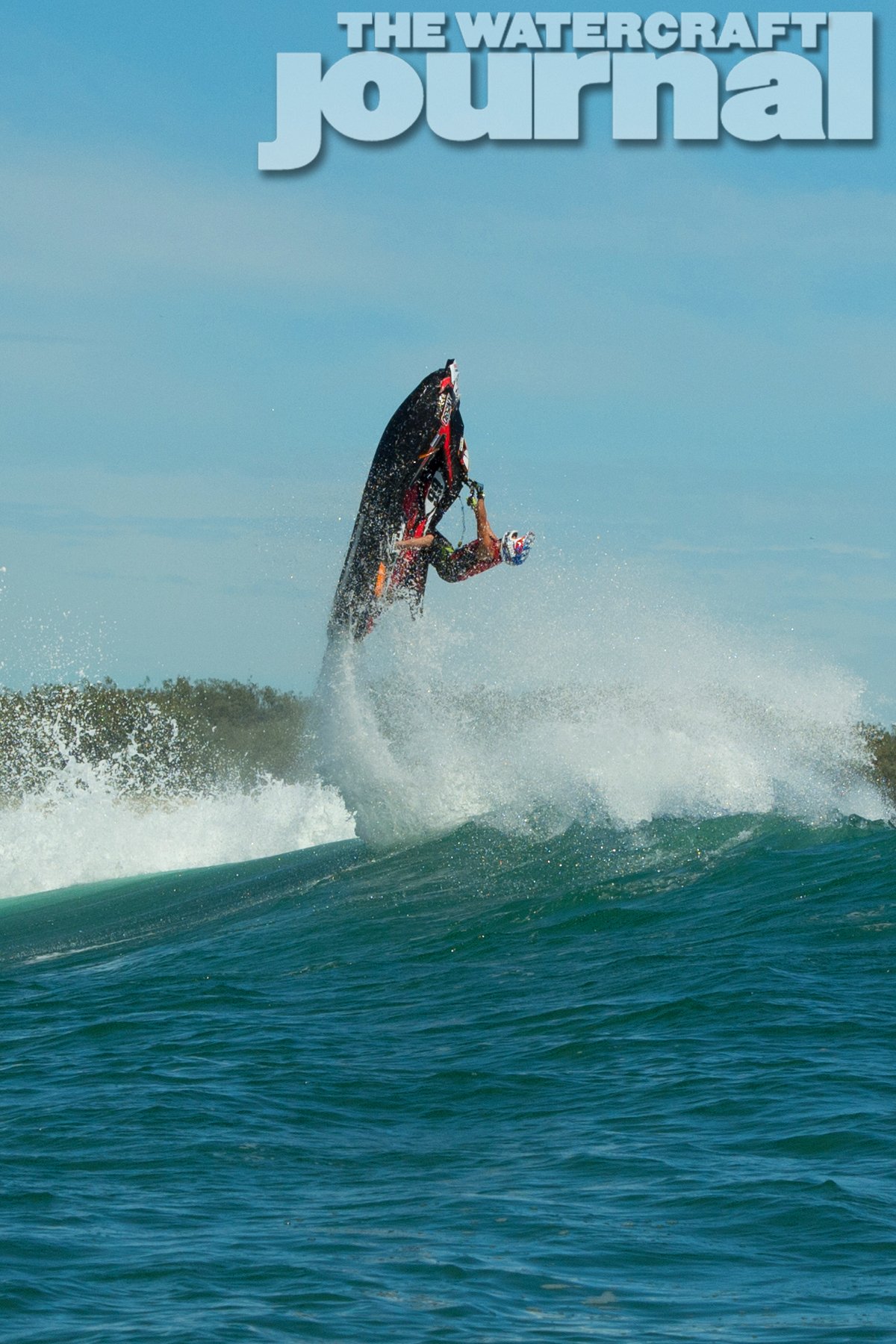
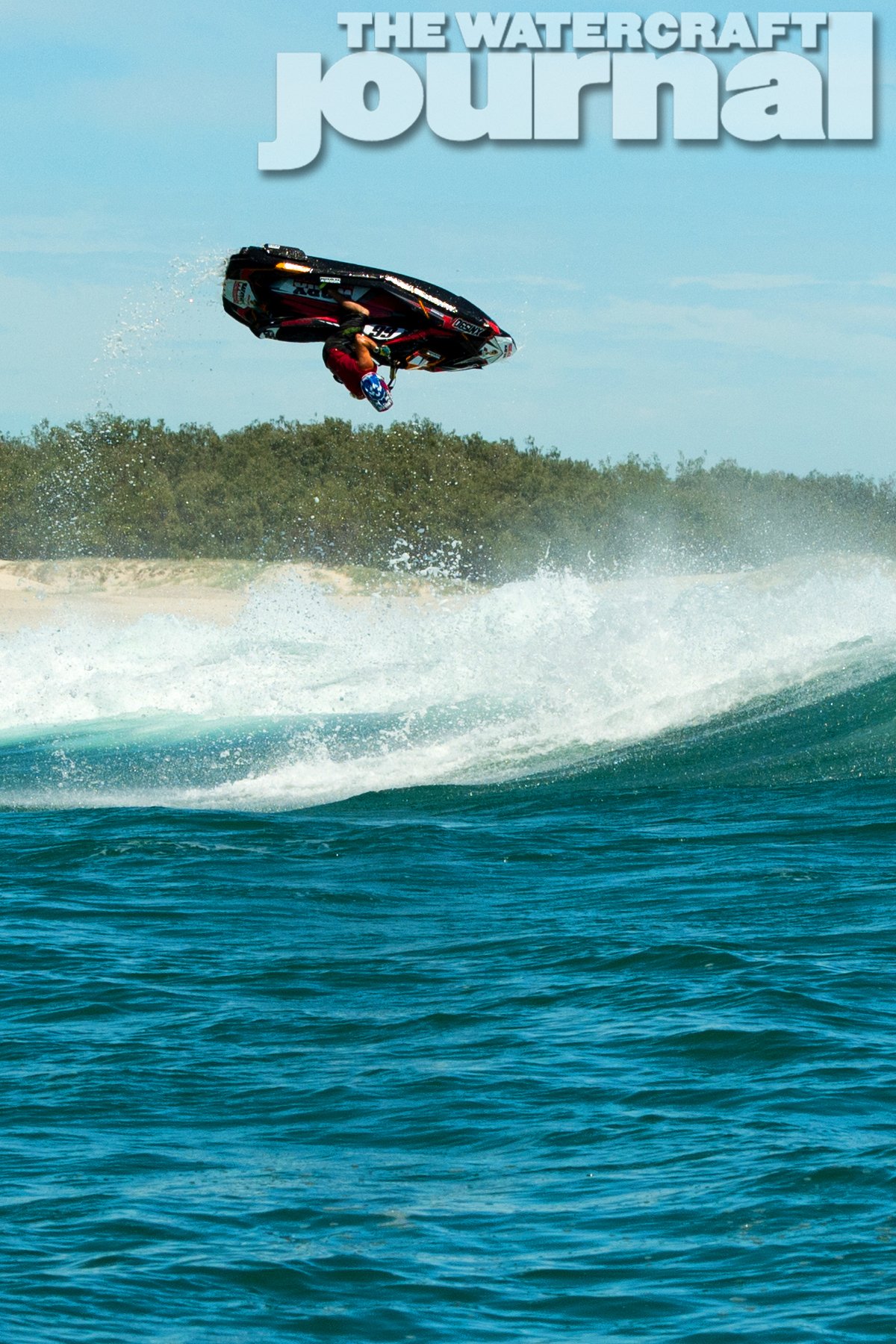
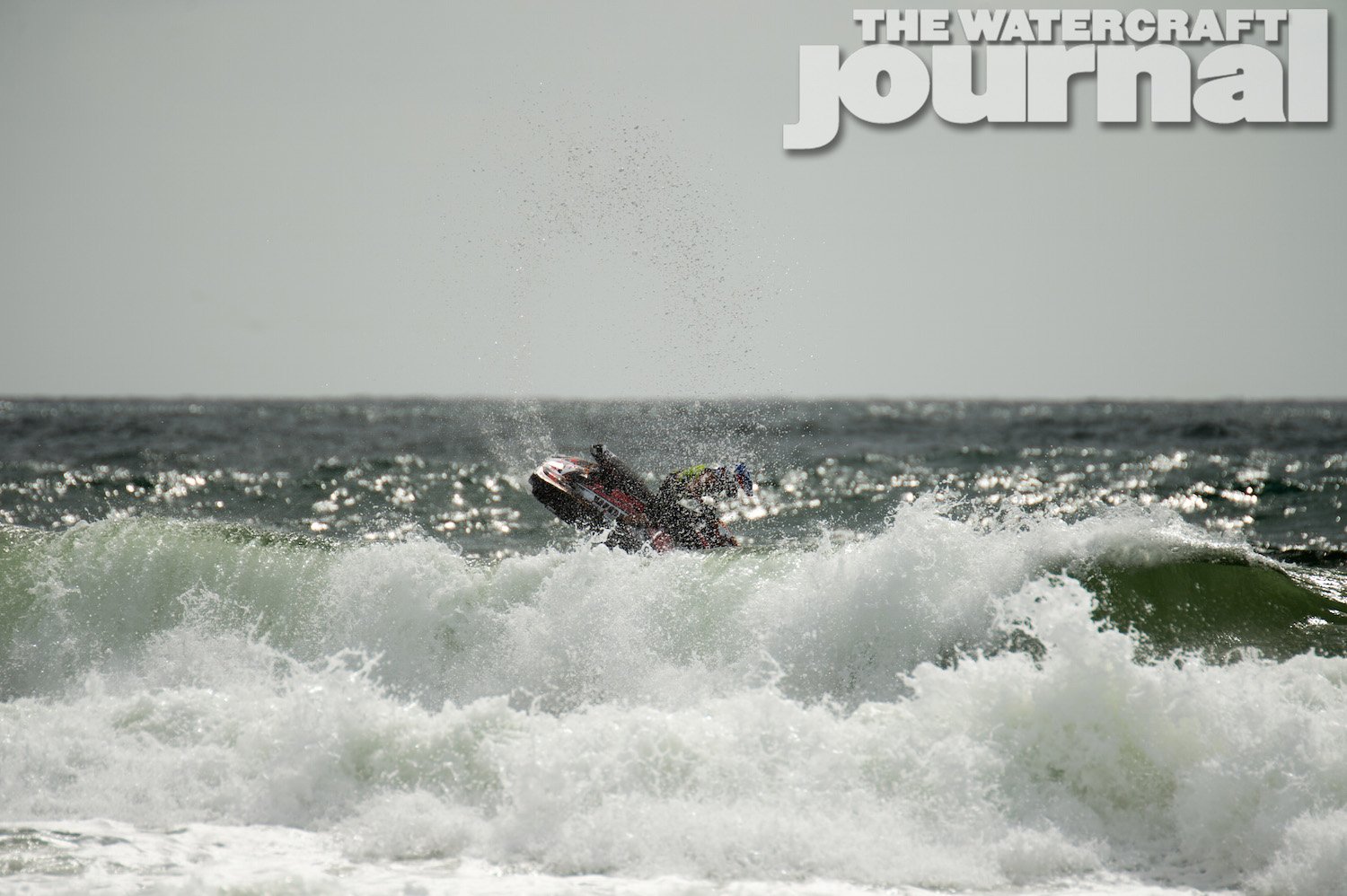
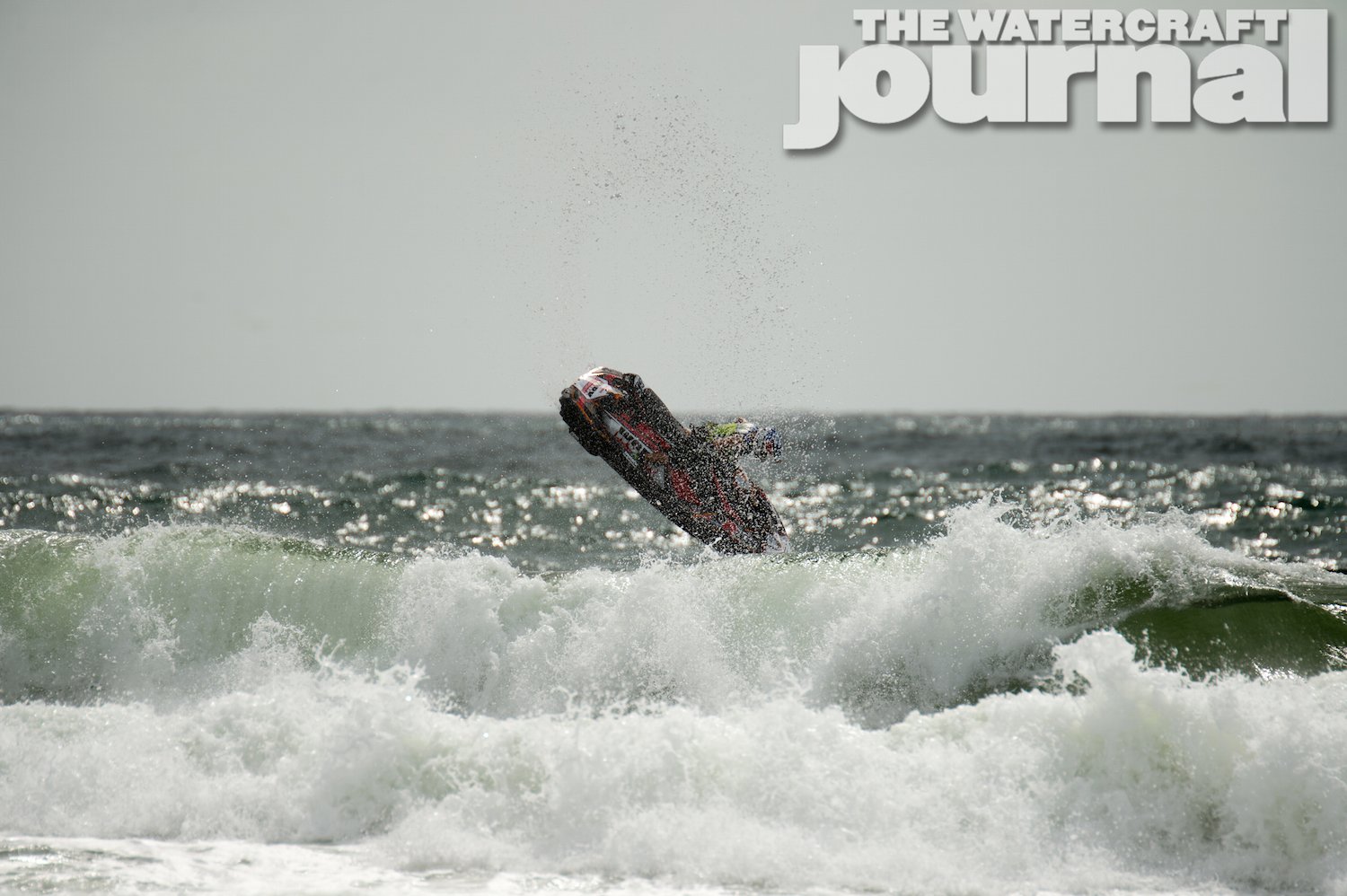
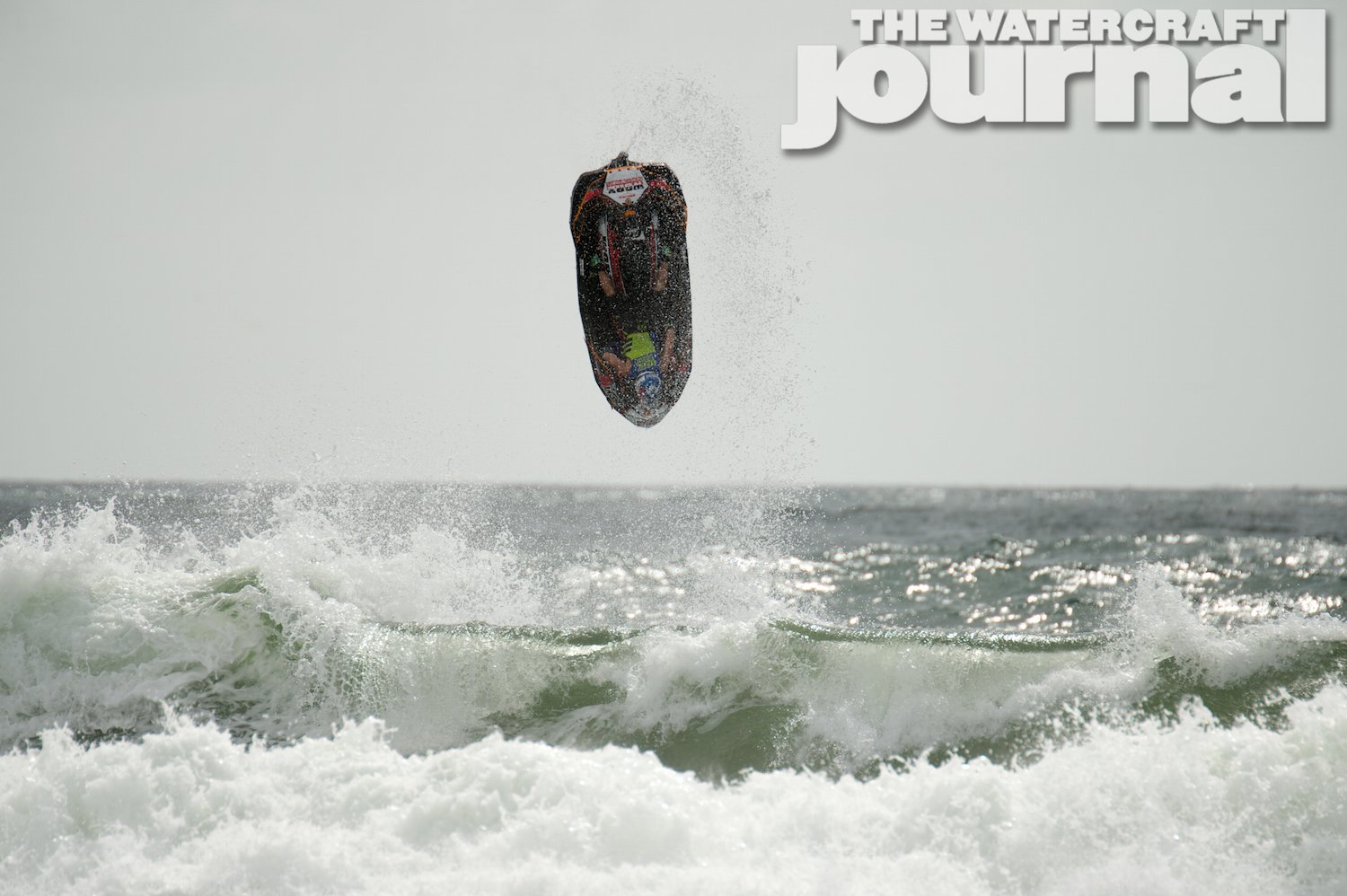
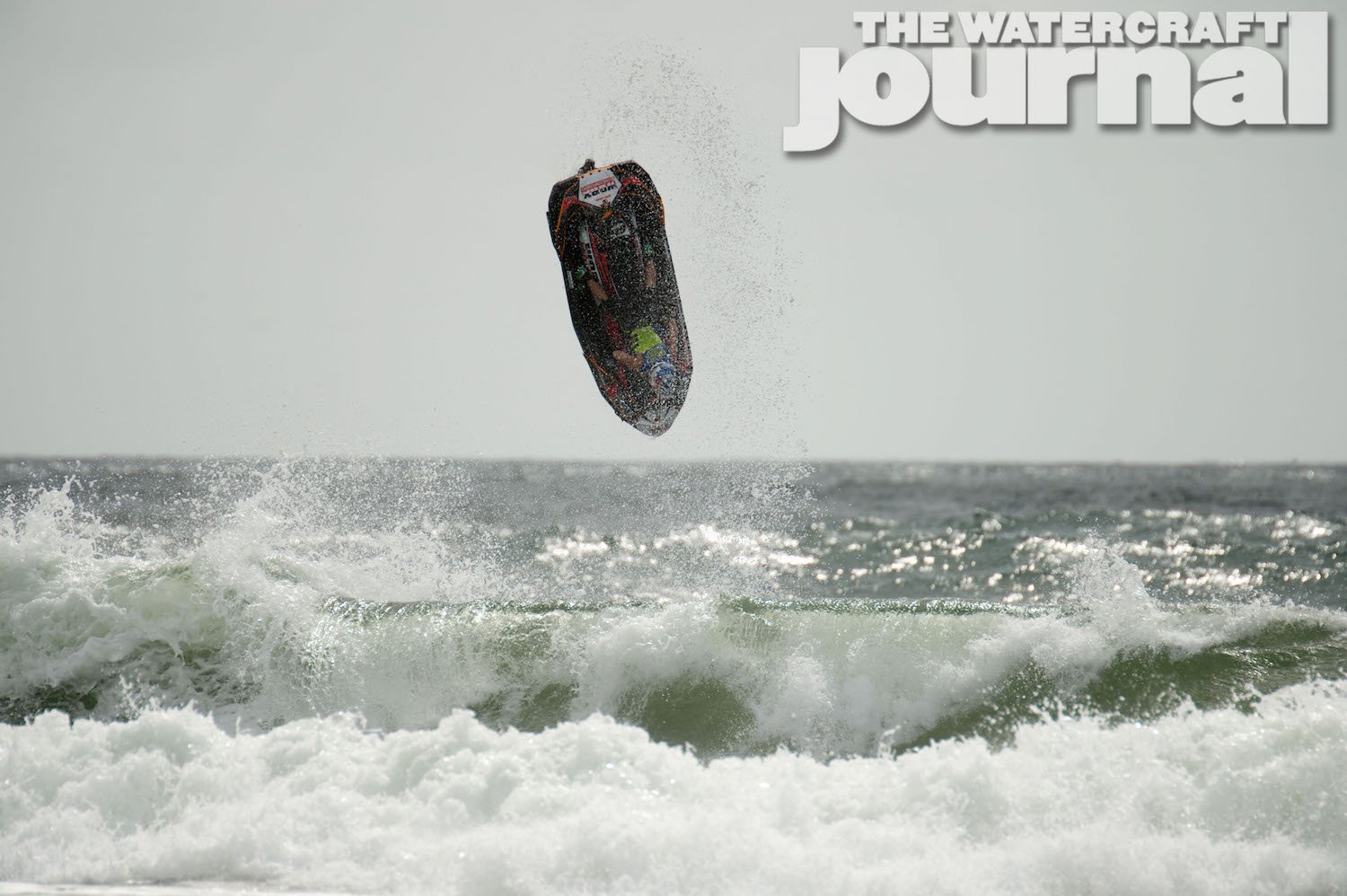
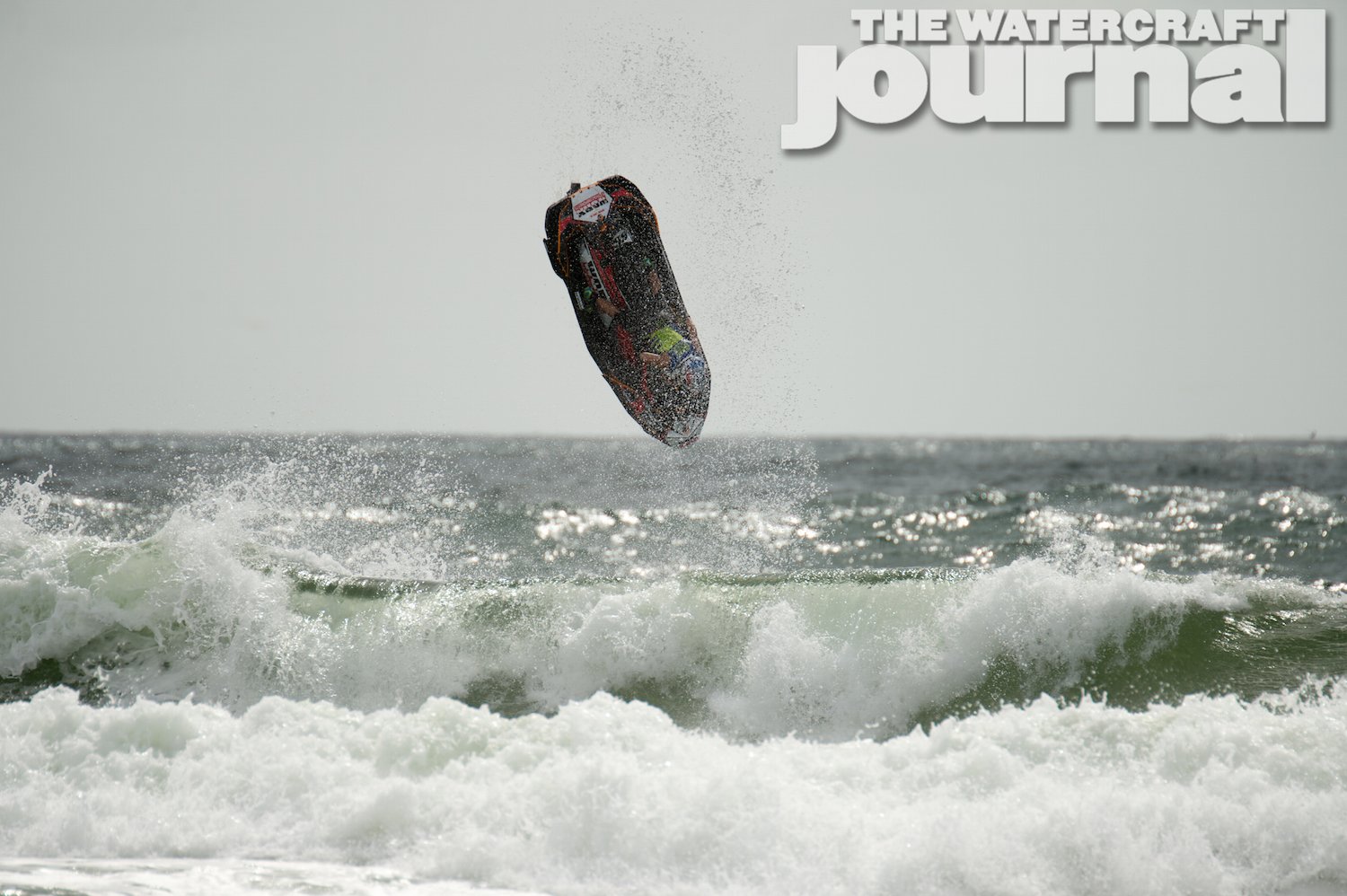
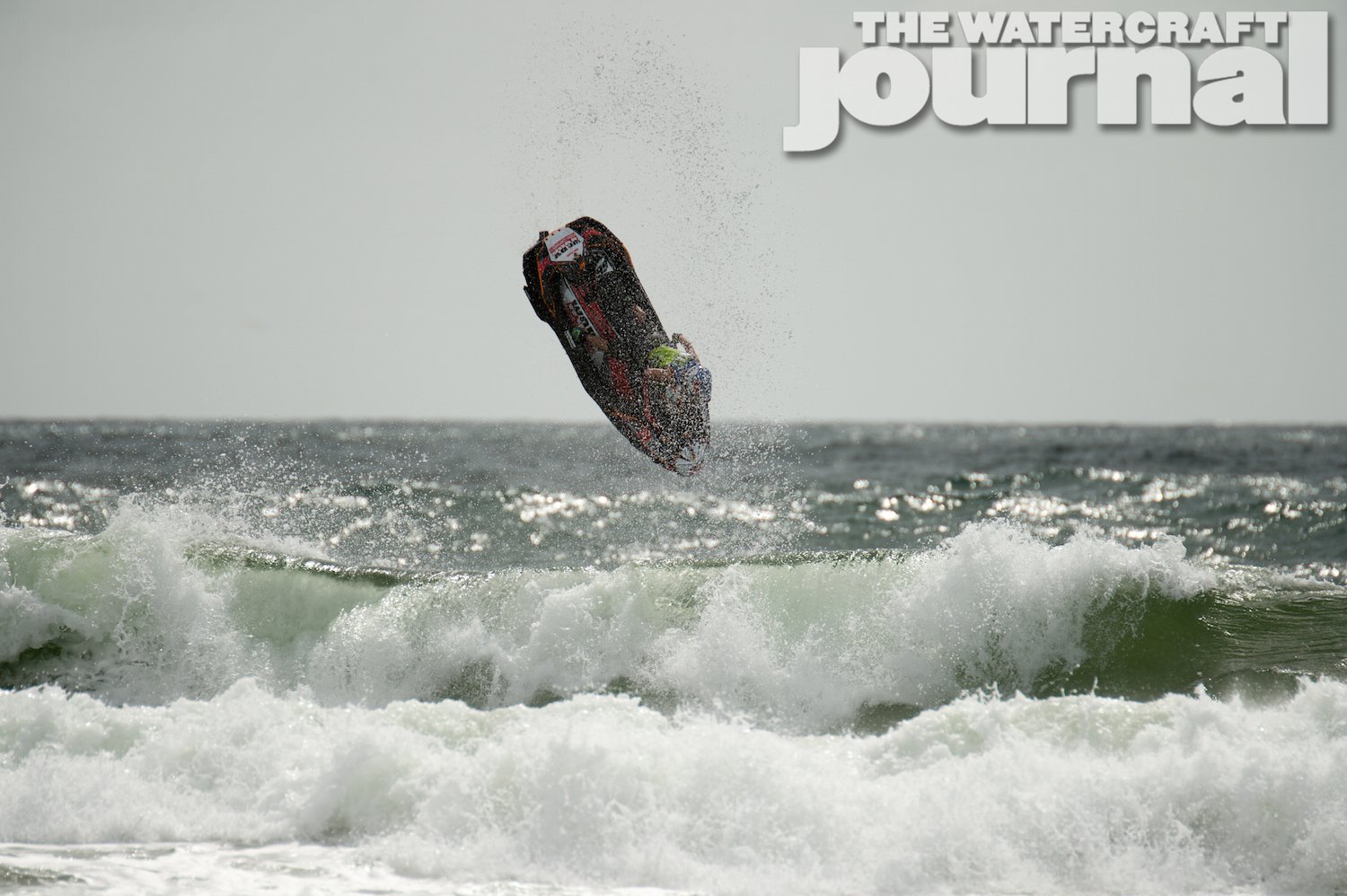
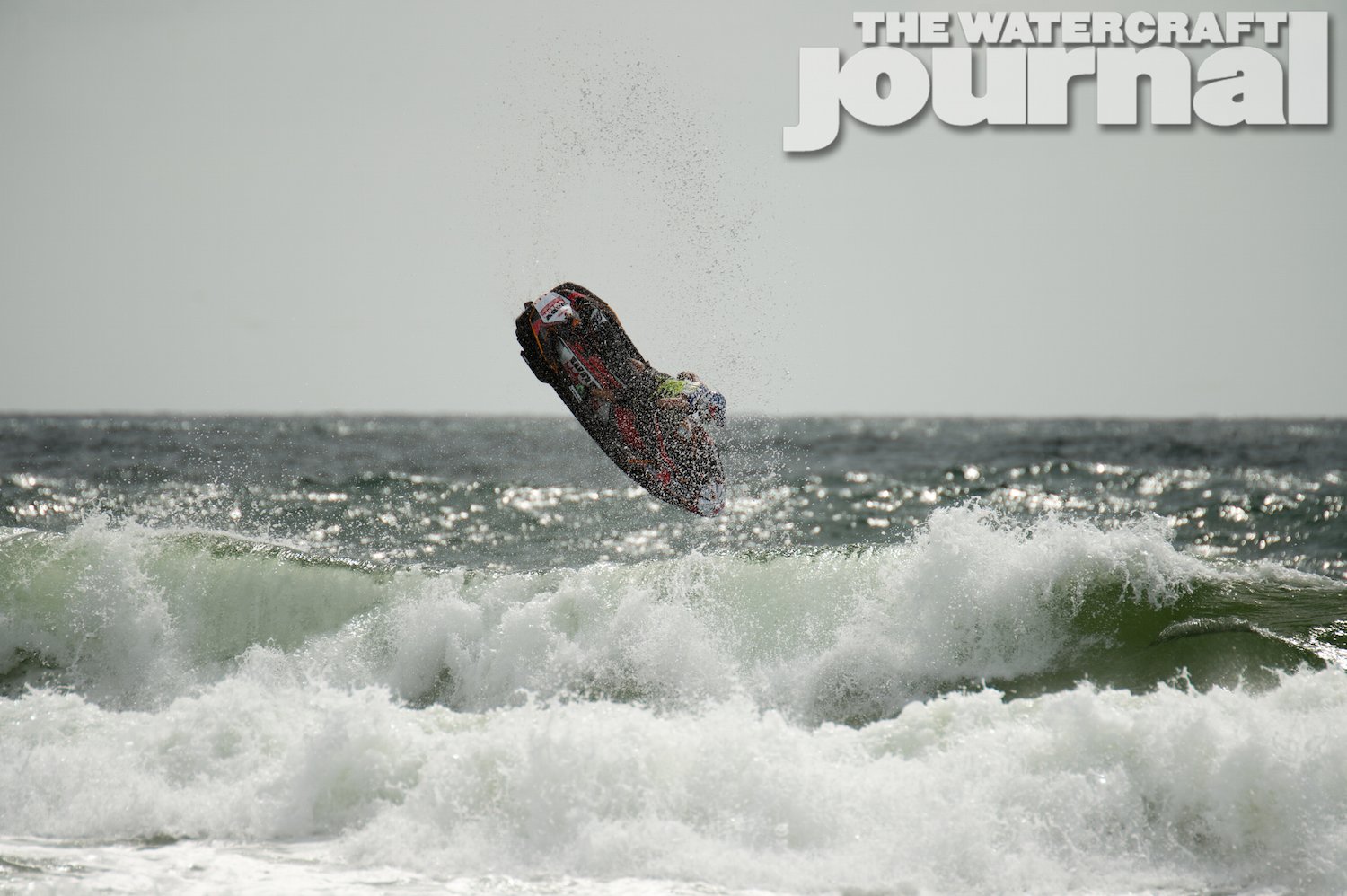
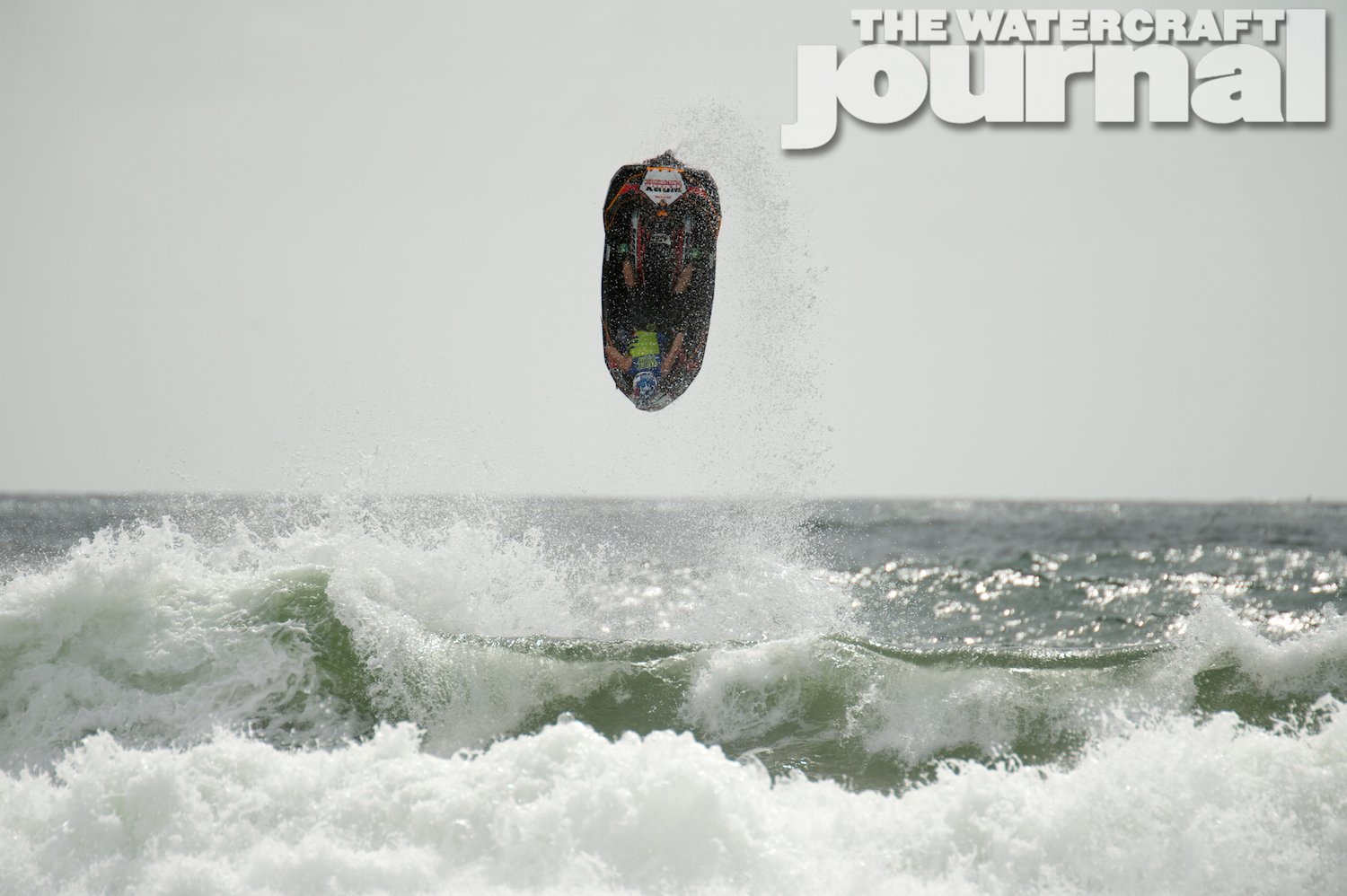
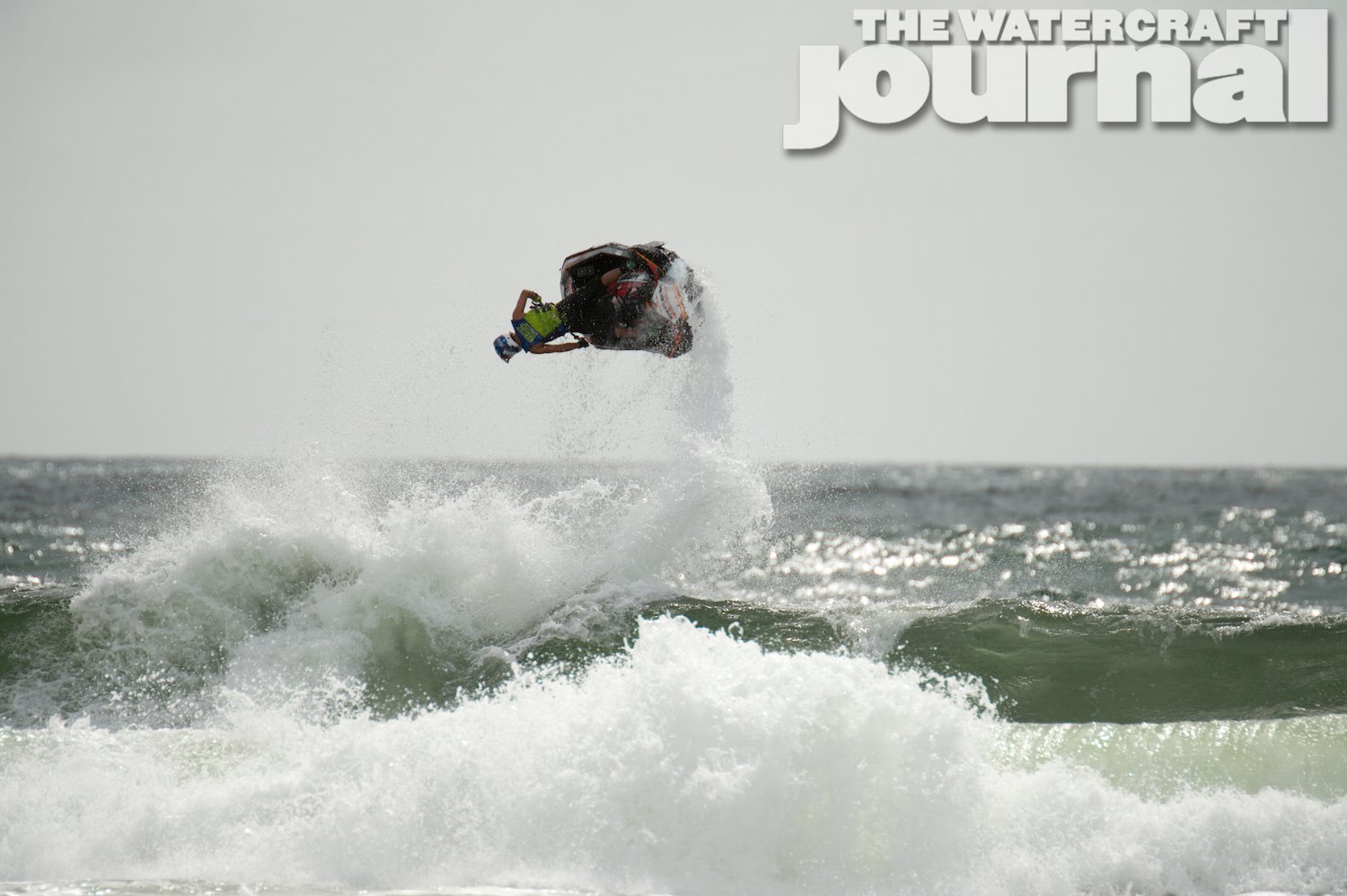
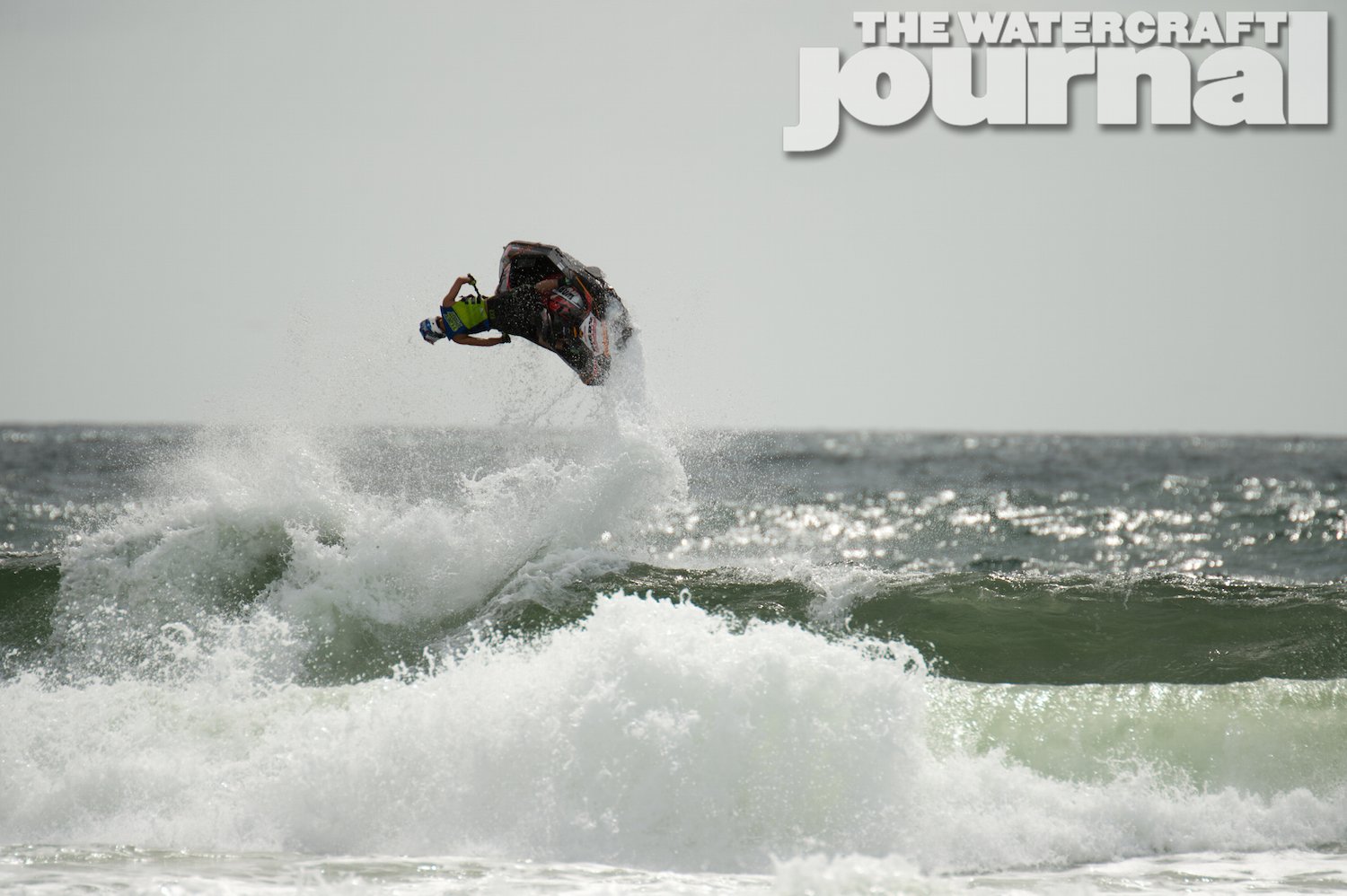
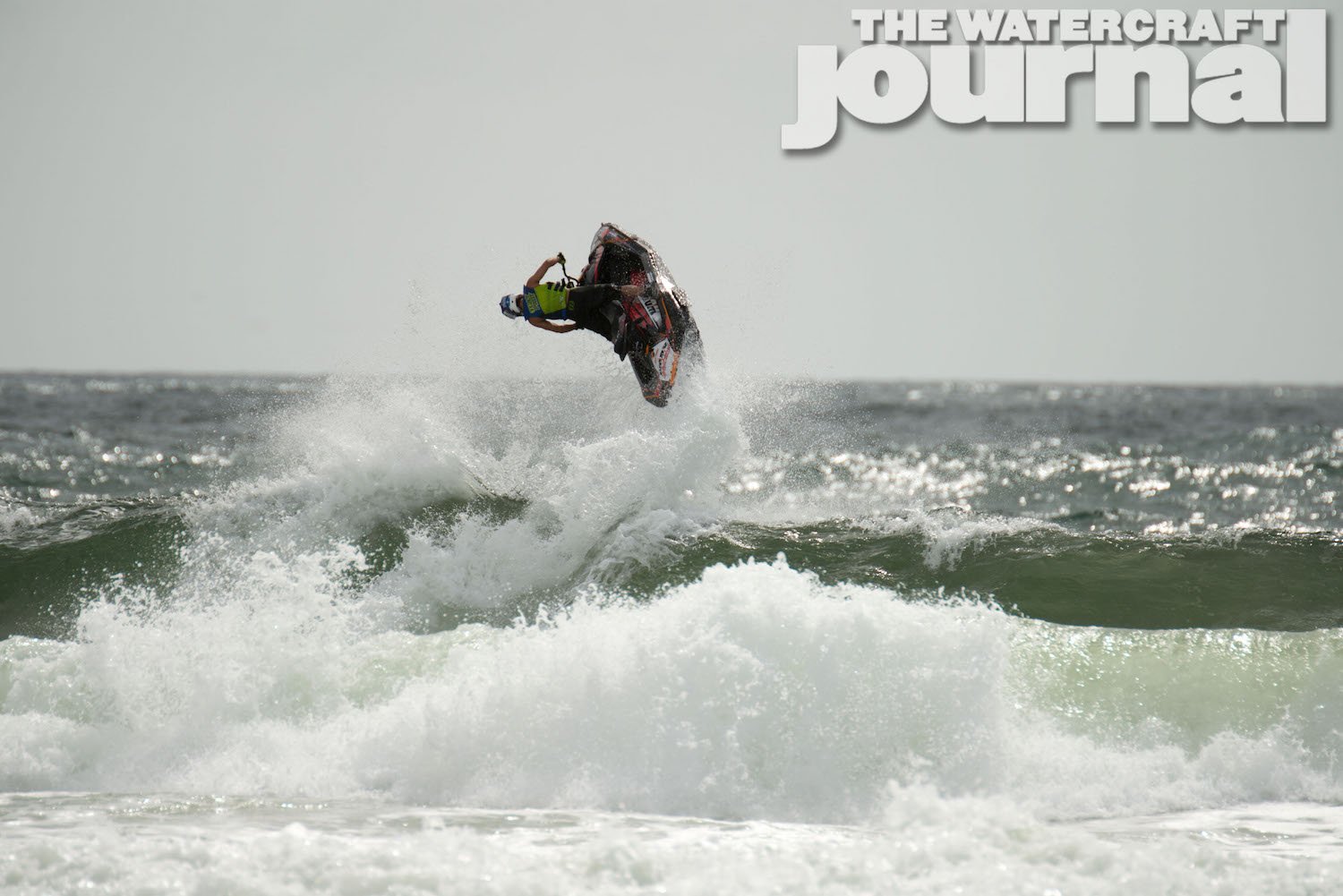
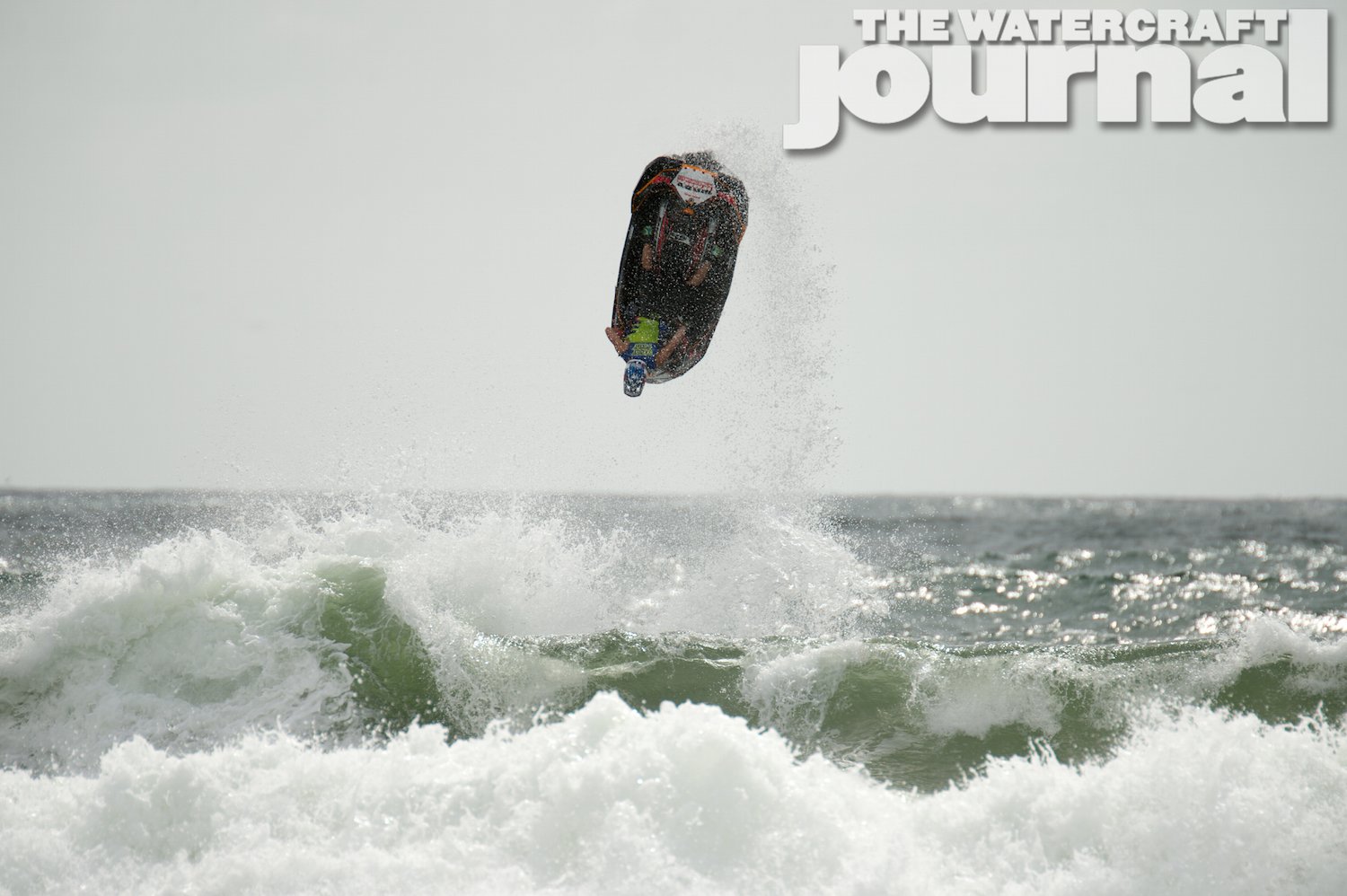
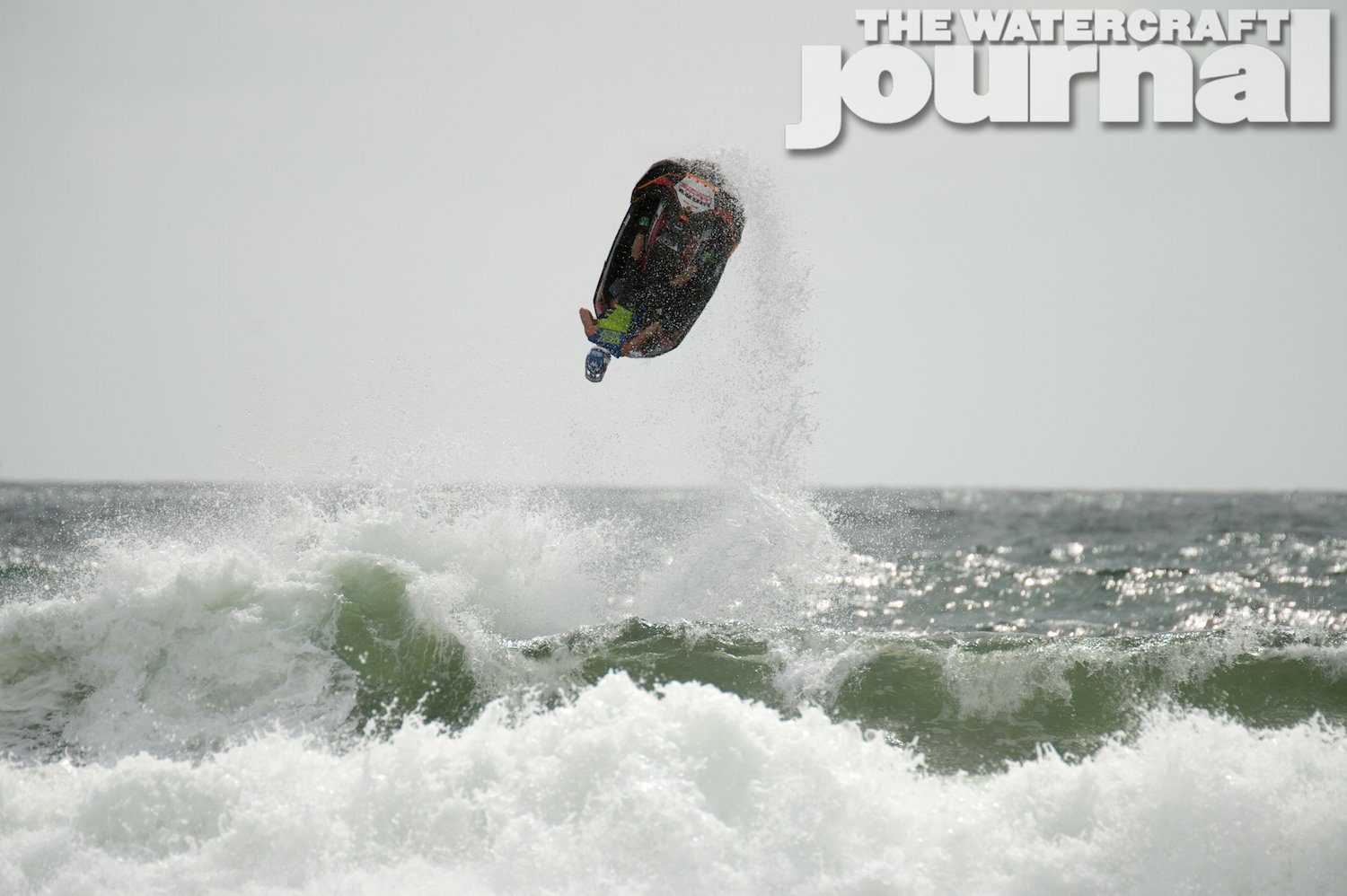
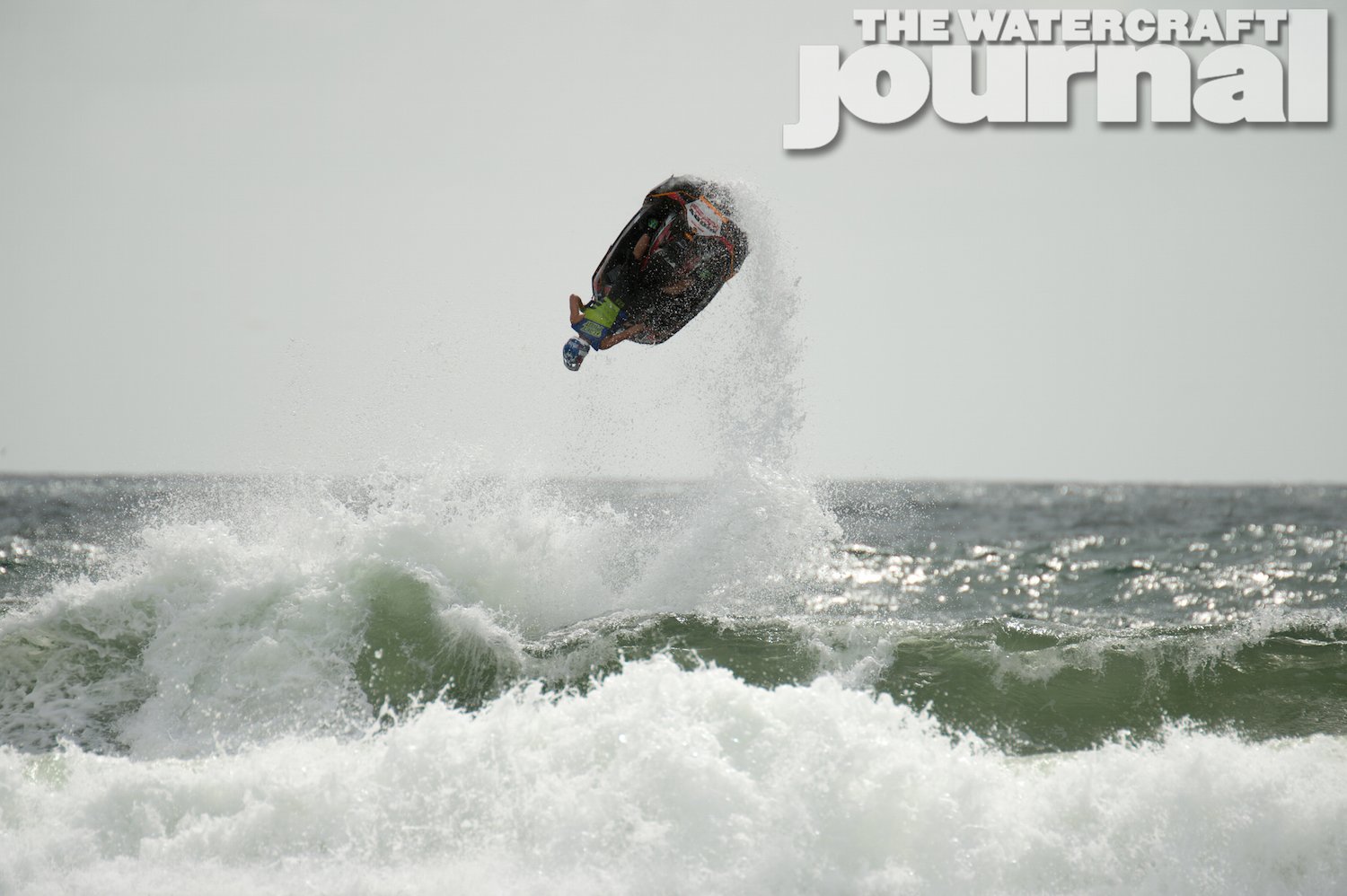
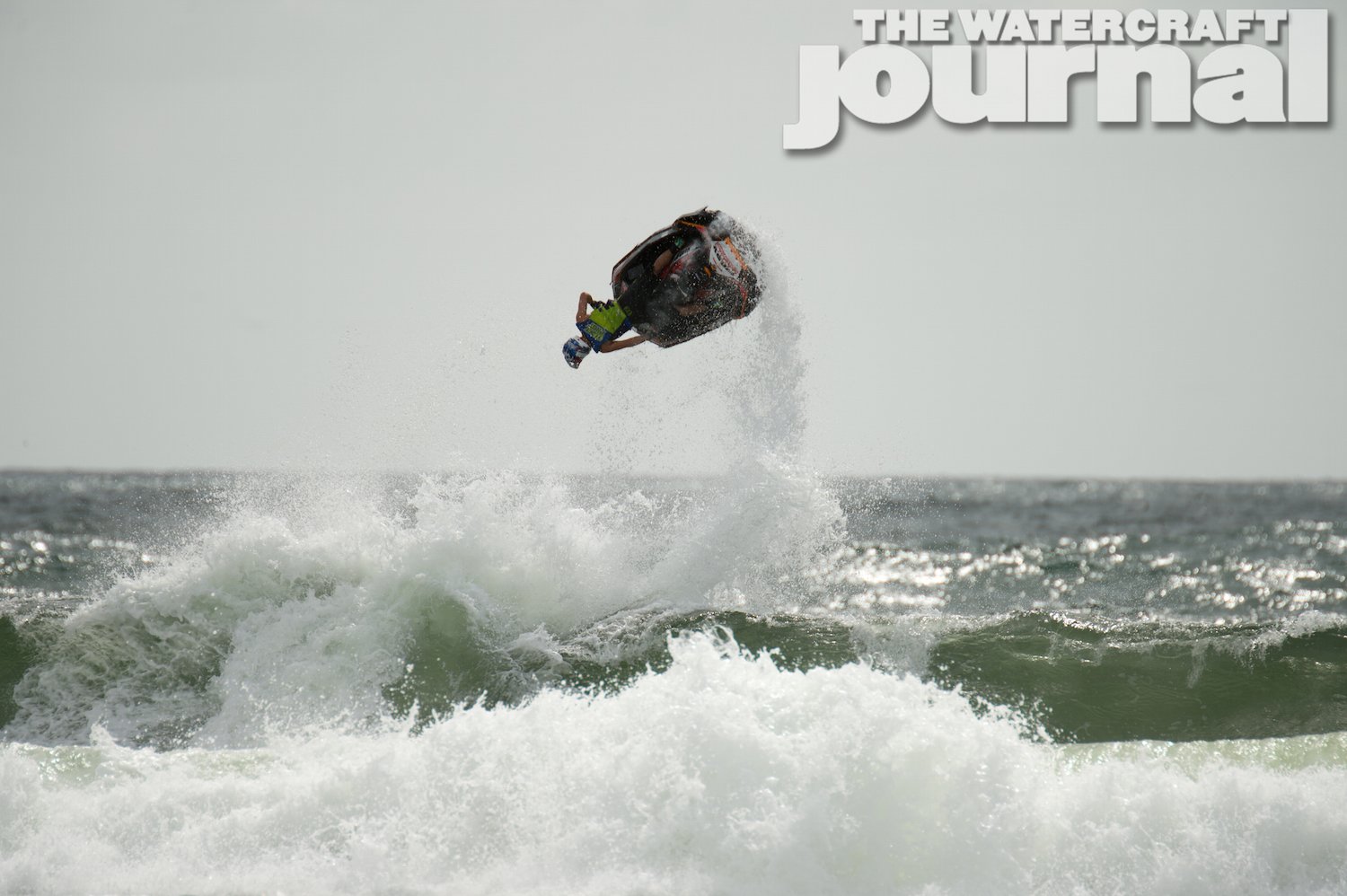
I took the Spark out a few times, quickly learning its strengths and weaknesses in the surf when pushed into things like barrel rolls and nose stabs. I quickly got the hang of nose stabs, which lead to getting barrel rolls down in a sequence Skippy got during a rainy day at Kingscliff. The next time I rode at stride, I attempted the backflip but miscalculated my approach to the wave and didn’t get the pop off the lip that I needed to completely bring the rotation around.
Landing upside down, I learned that the removable maintenance panels need to be secured so that they don’t pop off like they did and immediately sink the capsized ski. With plenty of on-board floatation we got it to the beach, drained it and then got it back to the shop where I spent the rest of the day getting the water out of the engine and running again.
The day before I left, we took off to Straddle early in the morning to attempt another flip with all the repairs and modifications in place. Unfortunately, the surf was not at my side so I decided to go for a barrel roll to warm things up and with an awkward rotation ended up landing completely flat and sideways tweaking my ankle and ending my ride. The PolyTec hull is light and is extremely buoyant making the landing awfully hard because it didn’t want to penetrate the water as much as fiberglass skis do with the extra weight.
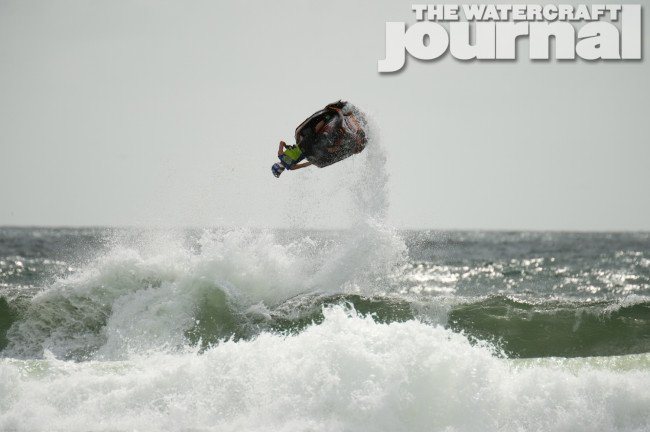
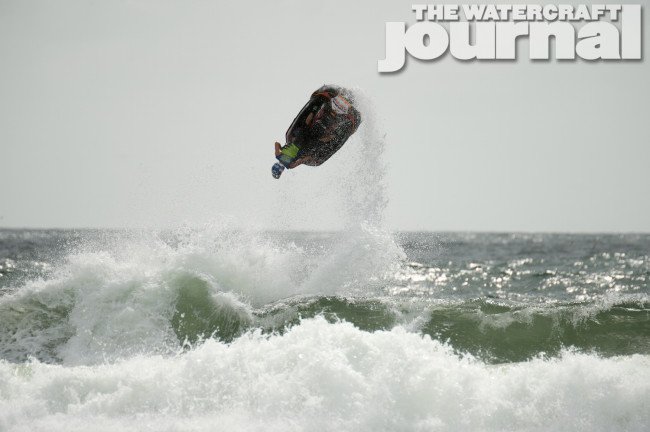
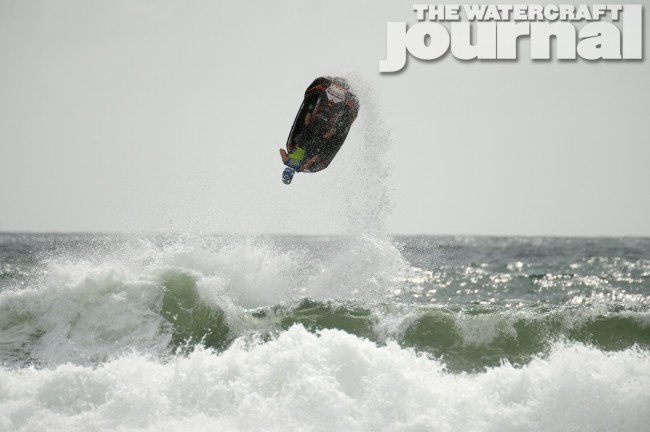
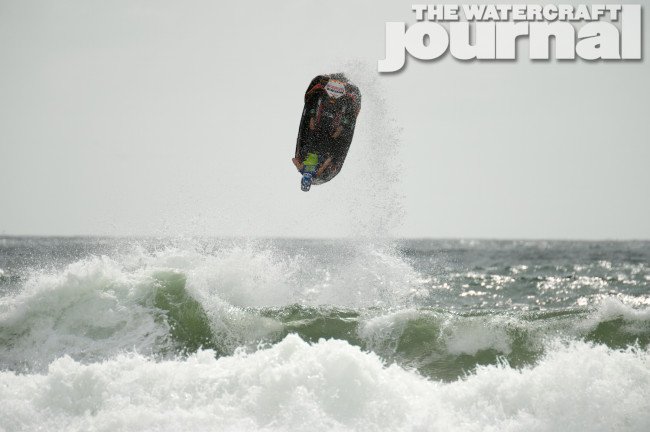
Working on this Spark flip production with WORX has been one heck of an adventure and learning experience putting me hands on with all of their quality built performance products and this new ski overall. I had a blast trying some barrel rolls, catching some waves, attempting to flip the thing, and getting some cool photo sequences out of it. I gave it my best and realized that the Spark backflip is absolutely possible with the right things in place. That being said, I strongly advise against anyone to attempt it without the right safety equipment, and overall surf riding experience.
Thank you to Andrew Donovan for all of the photos and being apart of the rescue and production team as well as Gary and Emma Watson, Matty Elliot, and Justin Belczowski at WORX for making this experience all possible.
All images courtesy of Photos by Skip and unaltered, full-resolution versions can be purchased HERE.
Recently, a picture of a woman with an awesome fishing set up on her Sea-Doo Spark was posted on greenhulk.net, which led to questions relating to how one sets up a Jet Ski for fishing. Her husband also had the same set up. Unfortunately, none of the guys who posted on the forum could reach the couple for comment because the two of them sped away to catch fish.
Intrigued, I did a search and found a little more information on how to set up a Sea-Doo for the purpose of fishing. The Jet Ski Fishing Channel on the SeaDoo.com forum provided several “how to” videos. Upon watching the videos, one of the main points noted was how fuel-efficient the skis are for fishing. There were claims that a person could get approximately 100 miles from a tank of fuel.
According to a video from New Zealand, to get started on this endeavor, one needs a reliable Jet Ski, bait station, stainless steel cable, and rod holders attached to the ski. The commentator used bungee cords to hold everything down. He had bait set up on top of his cooler for easy access. His landing net, gaff, and rods were attached with stainless steel clips and wire. He kept his reels protected from spray by using special covers when traveling in saltwater.
His glove compartment contained a small tackle box. Pliers and a Personal Locator Beacon (PLB) were attached to his life jacket. The host of the show reiterated how important efficiency is when fishing from personal watercraft. I truly appreciated his focus on safety as well as his fishing setup. He carried a VHS radio in a waterproof case, a cell phone that was also in a waterproof case, and his PLB as a last resort for rescue.
His personal watercraft was also equipped with a GPS and Sounder for fish locating purposes. Moreover, he believed it was best to purchase a Sounder that can withstand at least 30 minutes underwater due to the splash factor and possible submersion.
Some other good things about fishing from the Spark are the fact that it is versatile, easy to launch, retrieve, clean, and one can get underway alone. Fishermen can get close to the fish without spooking them and it makes for a fun adventure, as well as a challenge. Don’t forget your rods!
Jetcross series promoter, JX Sports announced the cancellation of the Jetcross France Cup has been scrubbed. The Vichy, France race was scheduled for May 16th and 17th of this year. The news of the canceled race was posted on jetcrosstournews.com in late March.
“Due to several issues beyond our control, it is a great pity for us to have to cancel the Jetcross French series, which would have been the only one event in originally birthplace of the Jetcross Series. We were greatly looking forward to taking the Jetcross to France as we are well aware there is a great following there, but this will unfortunately have to wait a little longer,” said Julien Bastien, Manager director of JX Sports.
There were no explanations given as to why the race would not happen, only the vague statement by Bastien. However, he did mention that JX Sports is working toward a solution to whatever problem or problems are holding it back from the 2015 event. He is optimistic about a 2016 competition being held in France.
Bastien proceeded to say that currently, they would focus on the first World Cup event that is taking place in Doncaster, England from July 24th through July 26th of this year. The England race is a first in Jetcross history which is very exciting news in itself and it may create a large following, helping France along as well.
Maybe 2016 will be France’s year, pending JX Sports can put a Jetcross event together.
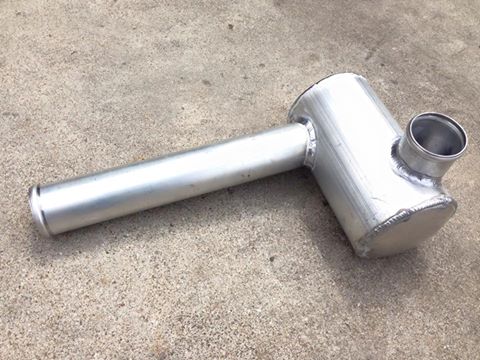
You’d never think so much thought and time could go into something so simple as a standup waterbox. Ronald Self, owner and operator of Rogue Racing put us straight: “In 2009 and 2010, I ran a rear-mounted exhaust set up. It was really short and simple but extremely loud – even with water injection.”
Since then, Ron has been playing around with his SolidWorks CAD design program. “You can do flow test in the software it’s really an extension on the imagination,” he recounted. “I sat down at the computer and drew up several on screen designs of which most were just deleted until I got one I liked.”
The unique, proprietary design is unlike anything on the market today. Starting with stamped domed end caps, Rogue’s 1,100cc SX-R waterbox does away with a lot of forward weight in the SX-R, be it a OEM, Trinity, or Bullett hull.
The Rogue Racing box weighs in at 2.2lbs. (compared to the OEM box that tips the scales at 7lbs. 8 ounces) and includes a built-in water bung, bead rolled-tube ends, and silicone 90-degree hose for the exit (which is a shorter route for the exhaust).
According to Ron, “Since there are so many different styles of 1,100cc installs out there, this leaves the chamber outlet at different positions in the different craft. The OEM 1100 rubber exhaust coupler can be trimmed to custom length and used to fit the box in place.”
Although demand is so high that the first four waterboxes have already been purchased, Rogue is racing to complete a second run of waterboxes shortly. With all it’s parts, the Rogue Racing SX-R waterbox will be sold at $350 plus shipping. Email [email protected] today!
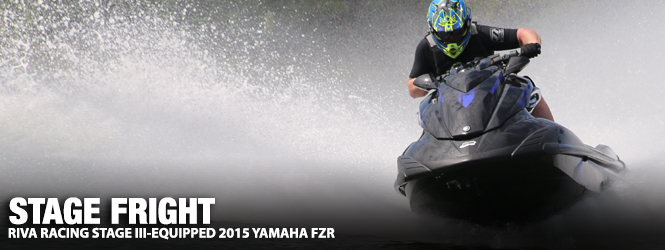
When it came to adequately defining the experience of riding RIVA Racing’s Yamaha SVHO-powered FZR test mule, we kept coming back to one word: potential. But exactly did that mean? Webster’s sums it up rather well:
po·ten·tial (pəˈten(t)SHəl) adjective
1. having or showing the capacity to become or develop into something in the future. noun
1. latent qualities or abilities that may be developed and lead to future success or usefulness.
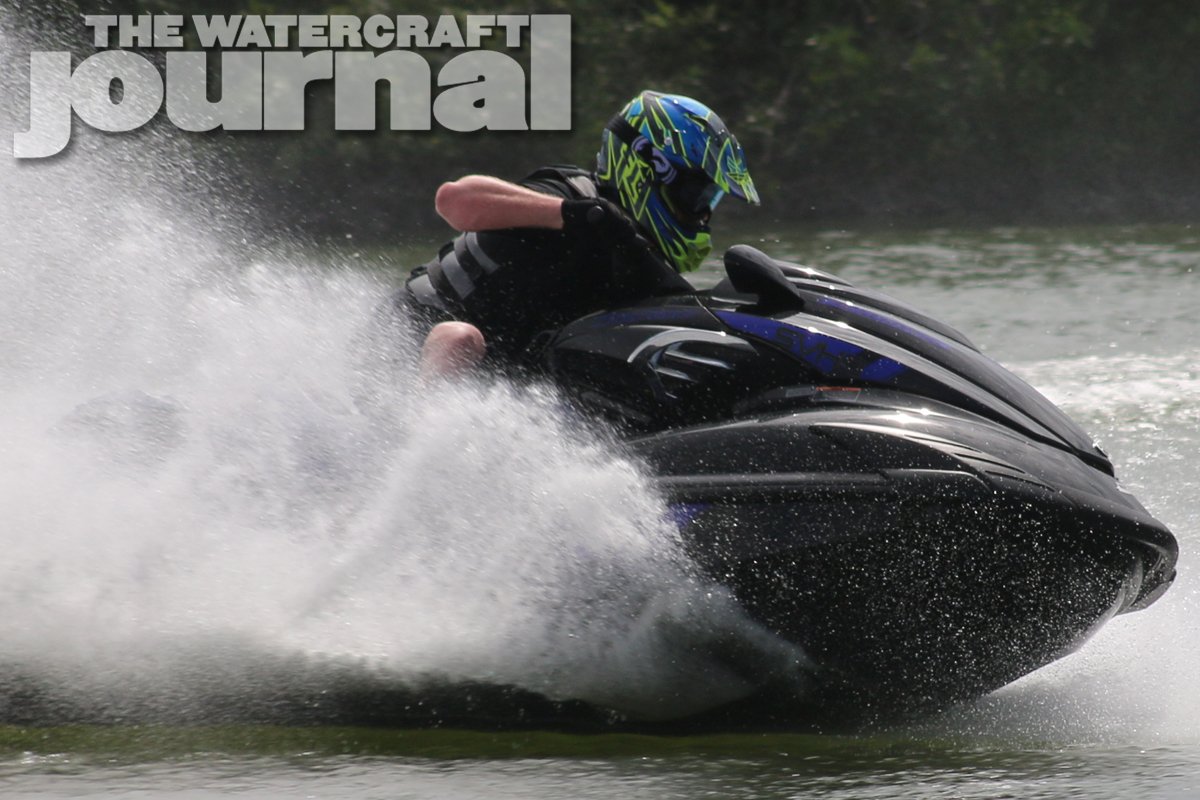
Although the unit itself is a 2014 model, and thereby slightly heavier than the ’15 model equipped with Yamaha’s NanoXcel2 hull and deck material, the test mule is extraordinarily fast given its deceptive stock look.
Yet, even aboard the as stock craft one can feel a degree of untapped potential surging beneath its seat. Even with last year’s swathe of FZR-mounted racers snatching up as many National titles as possible is a testament to the SVHO’s latent power, there’s still much to be mined. That is why RIVA Racing’s research and development branch has continued laboring to optimize their performance packages to unearth the most out of customers’ WaveRunners. The result are a series of “Stages” providing enthusiasts levels of excitement.
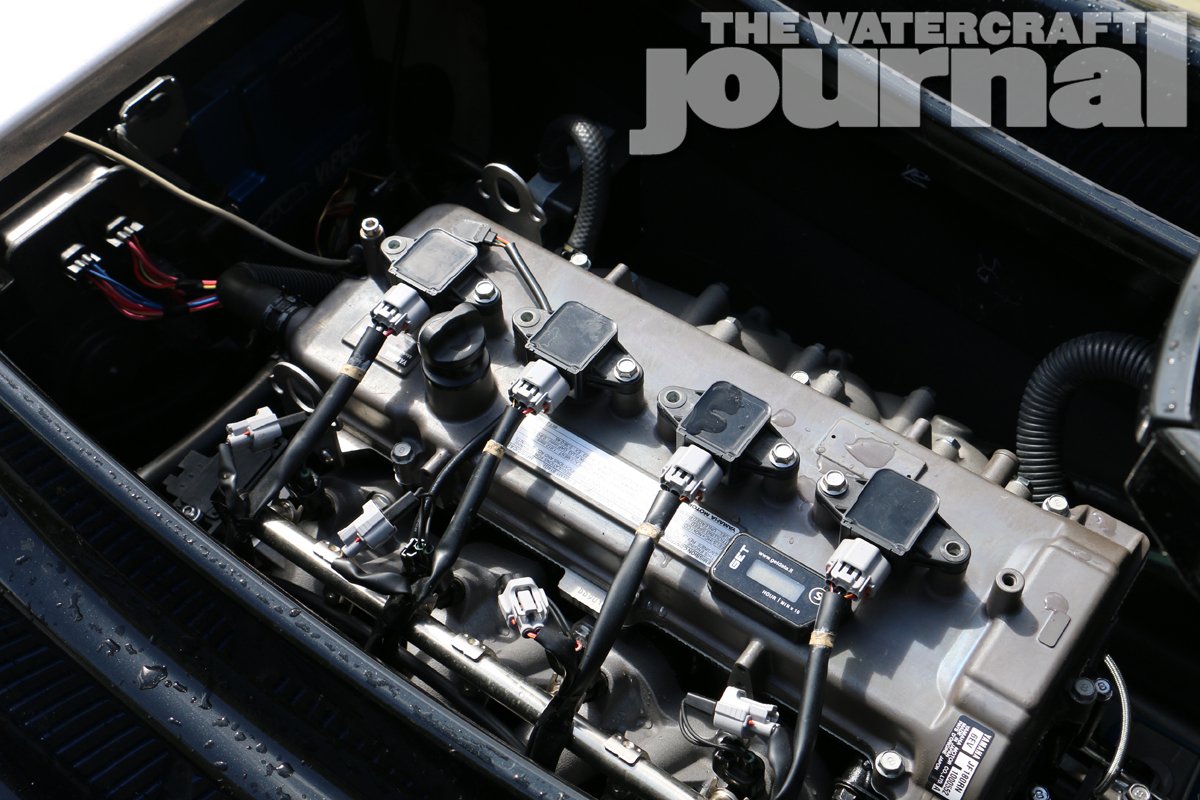
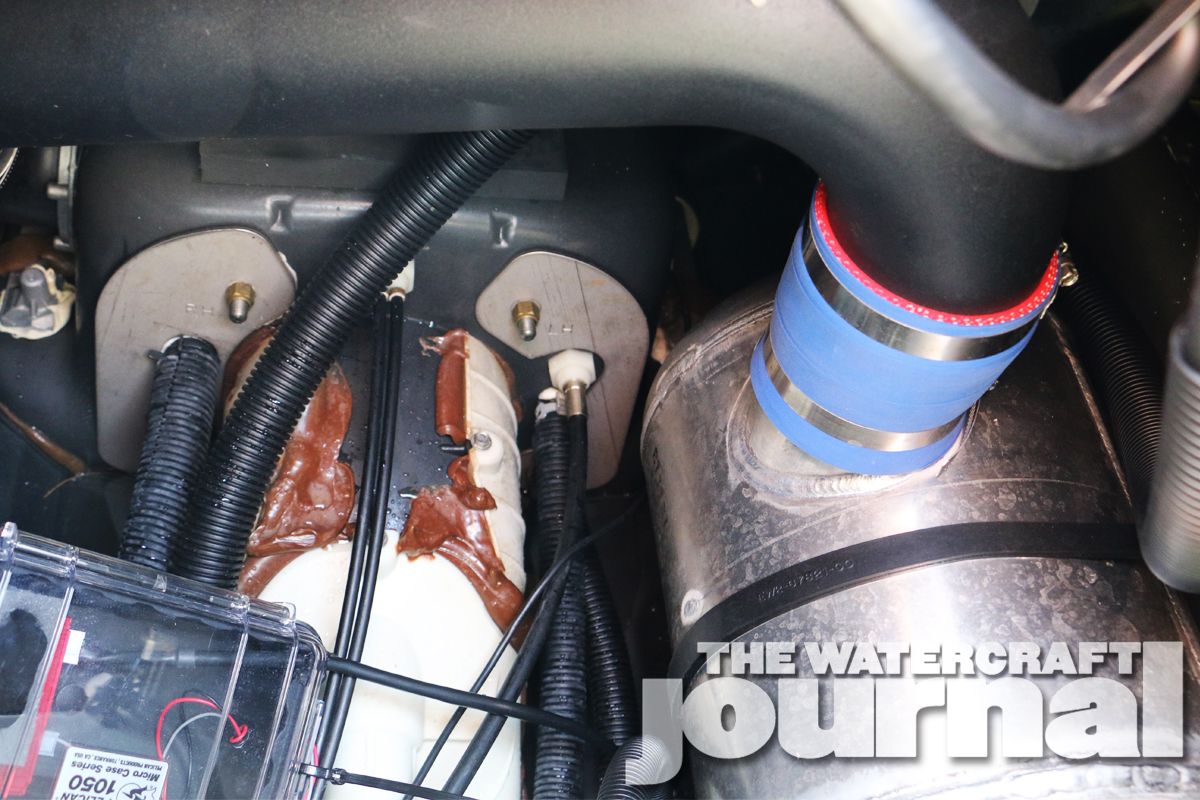
Beneath the saddle, the RIVA Stage III FZR featured almost exclusively bolt-on improvements: RIVA’s Power Filter, intake manifold upgrade kit, 1000cc injector set, 3-bar map sensor, a RIVA/Vi-PEC V88R3 ECU, F2 SC impeller, Gen 2 Powercooler, HKS blow off valve, billet fuel rail and fuel pressure regulator.
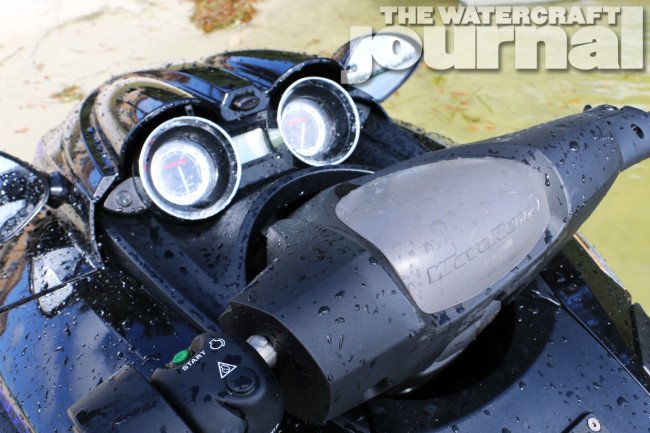
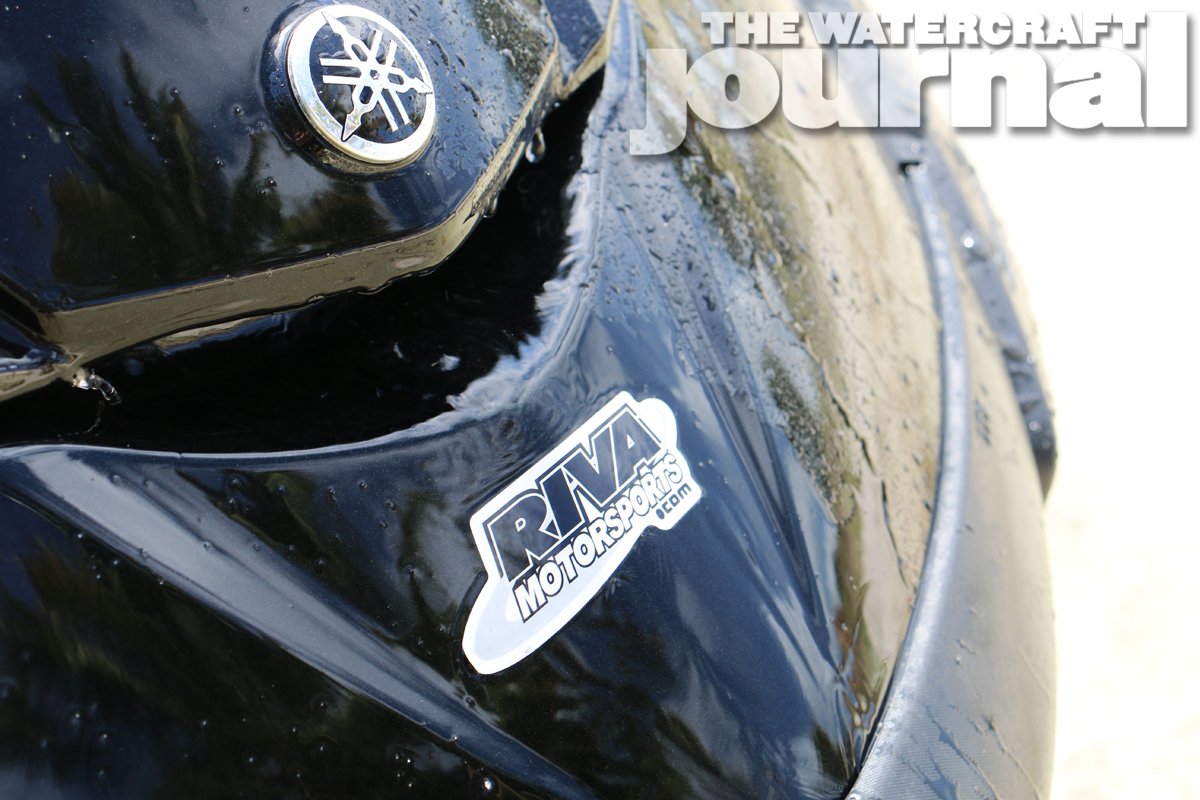
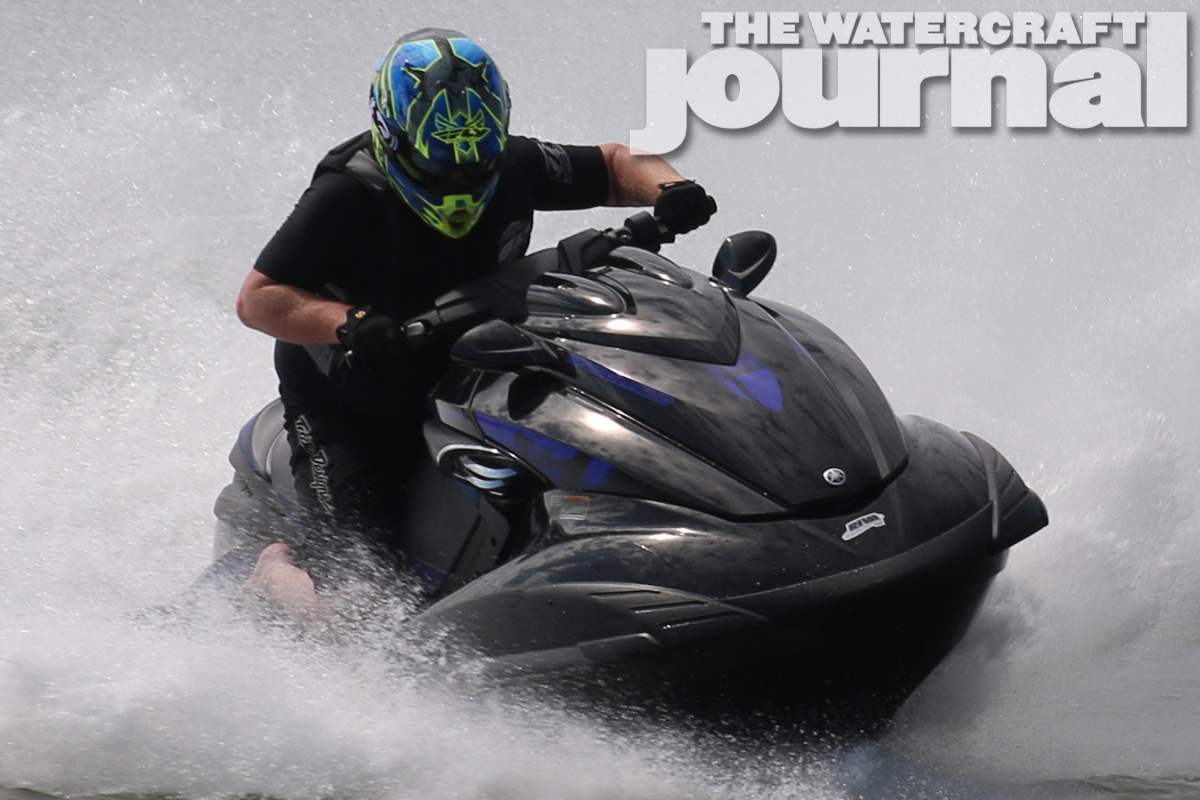
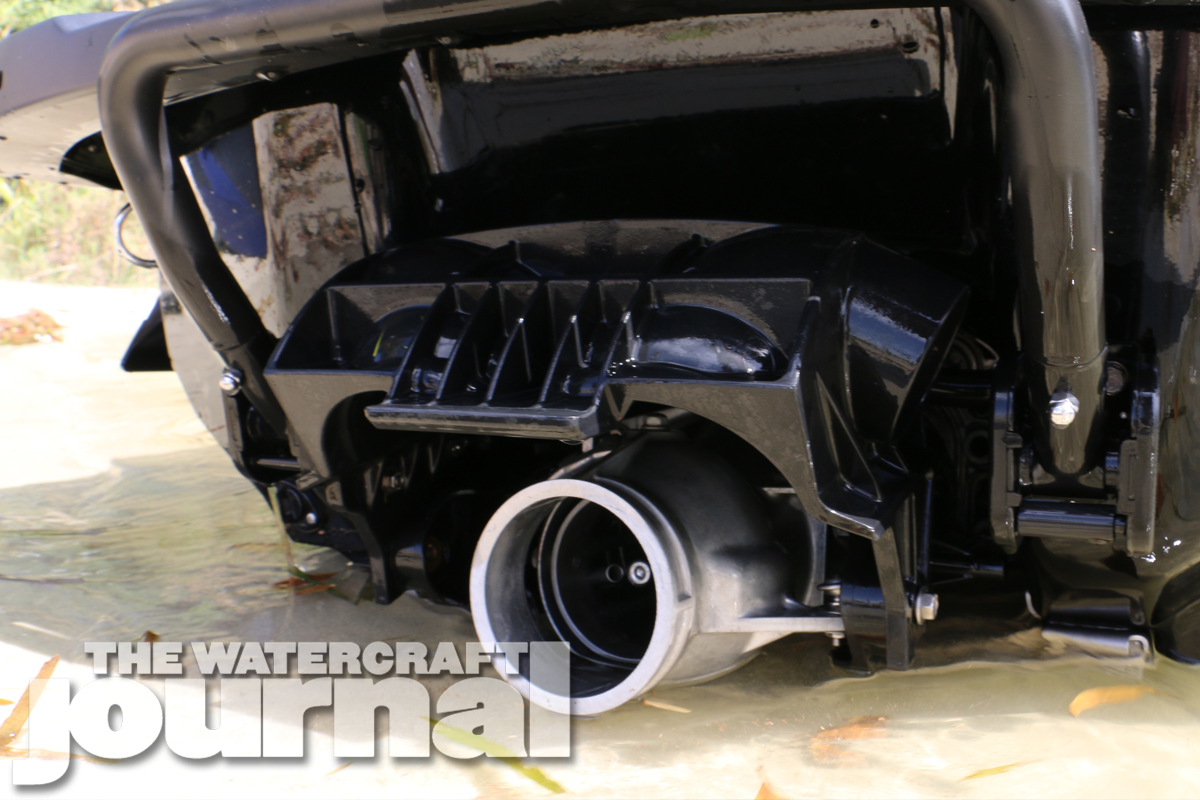
From the outside, the FZR was almost wholly indistinguishable from any model sitting on RIVA Motorsports’ Pompano Beach showroom floor. The stock sponsons, steering and nozzle were clearly visible. All that whispered that something was amiss were the presence of a GPS mount on the glovebox door and a lone RIVA decal on the nose. No external exhaust outlet, no two-piece sponson kit or aftermarket handlebar grips. Only the subtle burble resonating from the free flow exhaust hinted at what RIVA’s secret skunkworks had in store for us this day.
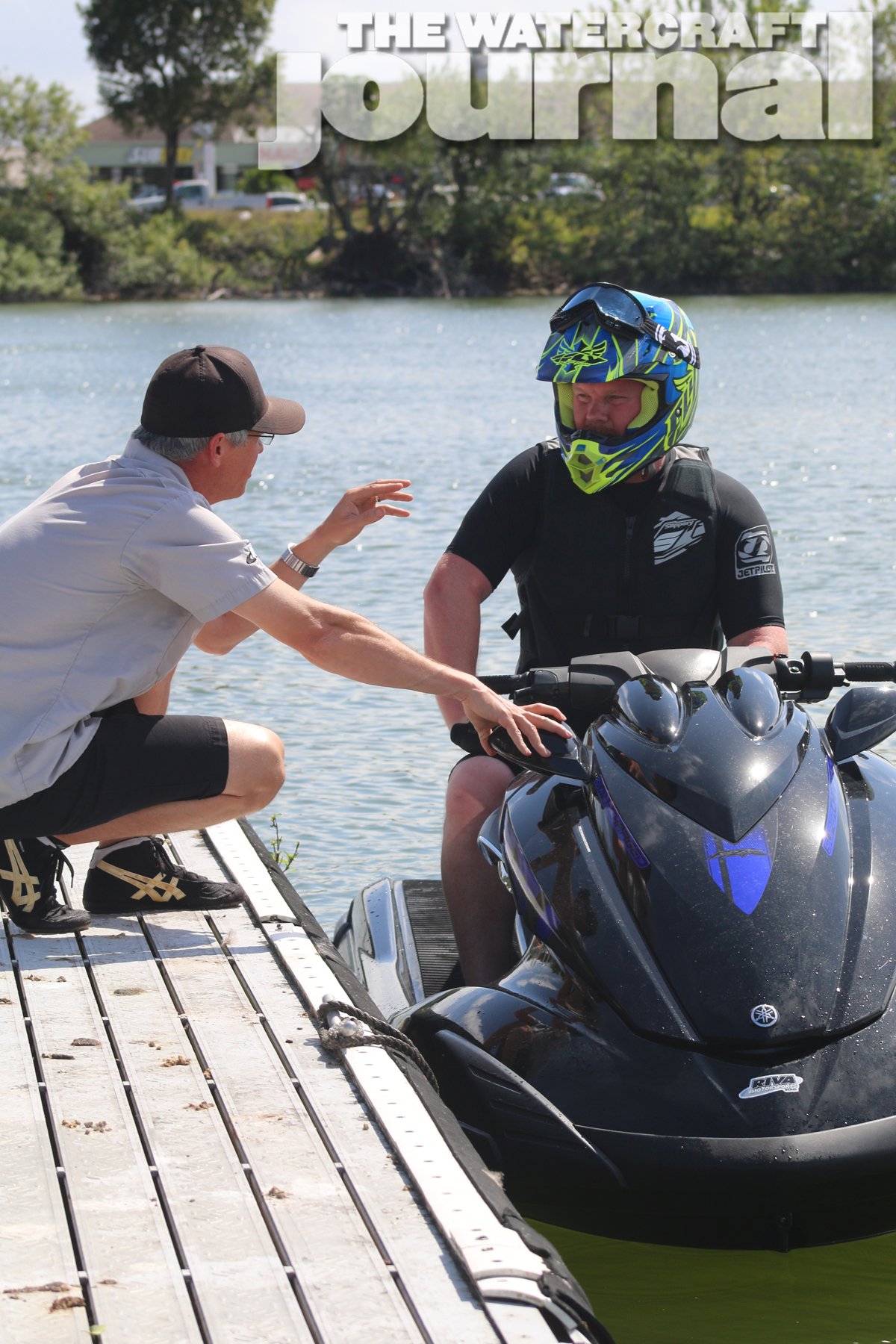
Although RIVA is currently testing impellers and pump combinations to best optimize the package, the primary purpose of the test unit we rode was to develop the engine/ignition portion of RIVA’s Stage III kit for the FZ SVHO. Currently, the setup recommends running this package on 100-plus-octane fuel. In spending the day with RIVA’ s R&D Mark Sheffield, we were made privy to a lot of the process poured into creating not only the ultimate performance package, but in the many hours spent water testing to optimize fuel tables and ignition timing on the Vi-PEC base maps.
Above left: In addition to the FZR, RIVA was hard at work on a Sea-Doo Vi-PEC test tune. Above center: Sheffield is one of the industry’s best minds, able to precisely isolate inconsistencies in air/fuel ratios and adjust accordingly. Above right: Acceleration achieved from the yet-to-be-complete Stage III kit is staggering, with 0-to-60 times averaging 2.75-seconds.
“With each map, we first start with the engine on our Dyno. The benefit of having the Dyno at our facility is we can pinpoint where horsepower is being made with the engines, as well as fully monitoring all aspects of the engine while developing these tunes,” Sheffield explained.
“When building these tunes we first verify target air/fuel ratios throughout the entire RPM range of the tune, making adjustments to the fuel tables as necessary. Once we reached targeted air/fuel values, we then focus on ignition timing. Again, we slowly go through the entire RPM range of the tune, monitoring ignition timing versus horsepower produced.
With all of the advanced capabilities latent to RIVA’s new RIVA/Vi-PEC V88R3 ECU, Sheffield and team are hard at work not only optimizing the ideal tune to match the current selection of performance parts within the Stage III kit, but additional tunes to cooperate with a wide variety of additional and customized packages.
“Once this process is complete, we then transfer the hardware and the file to the watercraft. Once installed we go through a series of ‘cold starts.’ This is to ensure proper starting and fueling when the engine is under colder-than-normal conditions. We’ll let it sit in a cold environment overnight, then proceed with cold starts the next morning. Once the cold starts process is complete, it’s time to hit the water.
“When water testing, we go through the entire RPM range of the tune in steps; first, running at idle for a few minutes, then 2000 RPM, 2500, 3000 RPM and so on, (holding the RPM for a couple minutes at each point) until we go through the RPM range of the tune. The test rider will monitor the engine data live as well as being recorded on the Vi-PEC data logging feature.
The power delivery throughout the torque band is impressive and will continue pulling in a linear arc as it reaches its growling crescendo. The power provided by the current package overpowers the stock sponsons through the apex, requiring the use of RIVA’s Pro Series sponsons.
“After each session, the data log is downloaded and carefully reviewed. Adjustments are made if necessary to optimize performance. Once initial water testing is complete and target values are verified, we go through a series of endurance testing and heat things up. Again, by monitoring data and reviewing data logs provided by the Vi-PEC, we establish limits and parameters to create safety margins with each tune.
“We log about 20 hours of endurance testing before any of these files are sent out for field testing. Files are sent to certain racers and dealers in different locations around the world. Using the customer’s Vi-PEC data logs, we can adjust and optimize tunes for these varying conditions. This way we have this information to support our customers in other parts of the world with different environmental conditions than ours. Once we complete this step, at that time we are ready to release this base map to the public.
Above left: The lack of a through-hull exhaust outlet or aftermarket nozzle, and the presence of the stock reverse bucket adds to the Stage III’s “sleeper” look. Above right: We enjoyed the absence of revealing handling components like a billet steering neck or aftermarket bars too. We loved the visual of burying the factory speedo well past the 80 miles per hour mark.
“A lot of time and effort goes into building these base maps for our customers. More so than most people are aware of. We want to ensure that when a customer purchases the Vi-PEC V88R3 system from us, they are getting both high quality, optimum performance and reliability.”
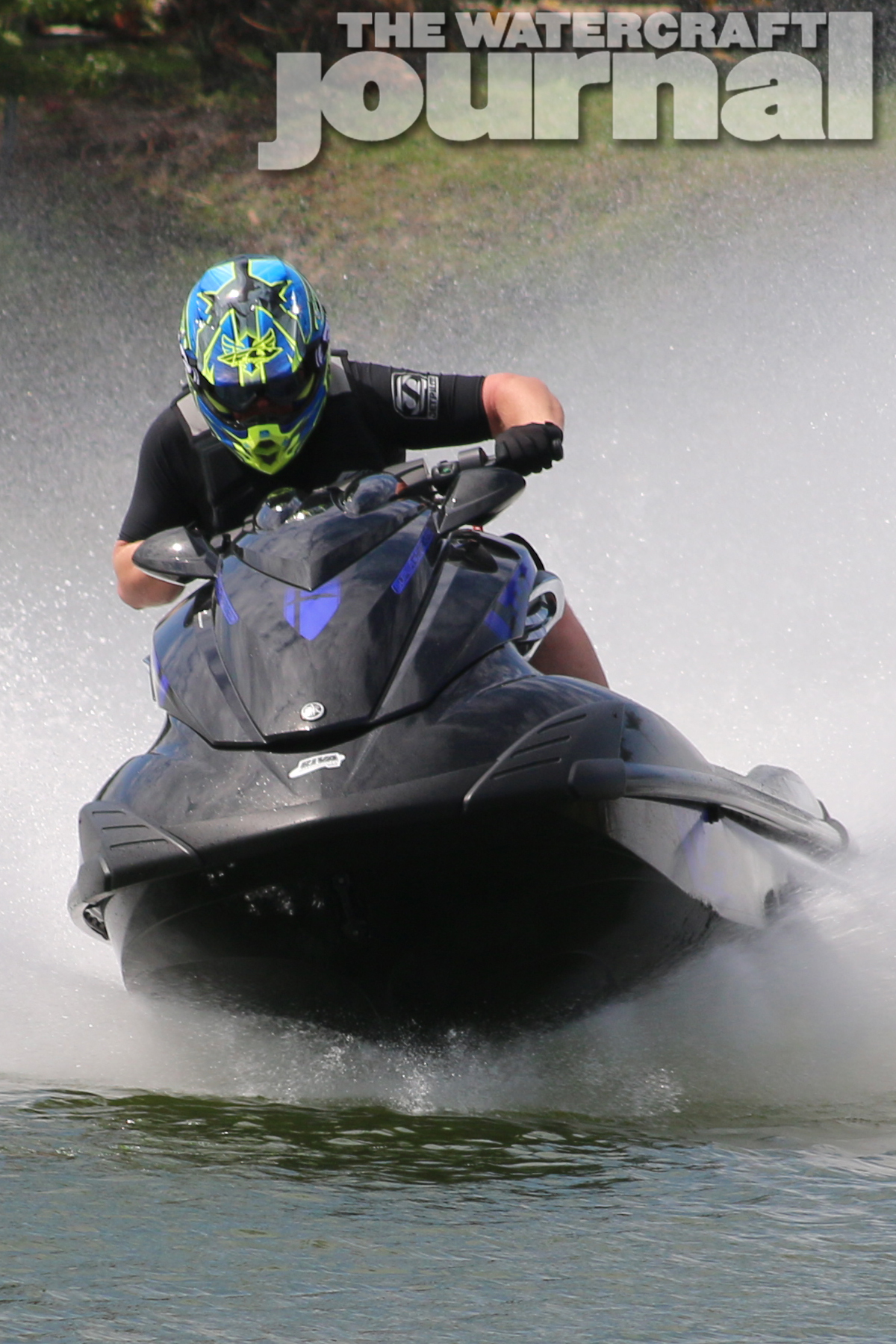
Even piloting the FZR in its current mid-testing process, the performance is nothing to sneeze at. Acceleration and mid-range pull is incredibly strong with 0-60 times averaging right at 2.75 seconds. We topped off at a maximum of 84.5mph, which Sheffield admitted was “lower than average.” Considering we outweighed Sheffield by 30 pounds, we kinda knew the reason why.
Again, this machine was only a test mule for RIVA’s research and development team and only illustrated a sample of things to come from RIVA Racing. Once finalized with the proper tune and pump/impeller configuration, and applied to the lighter 2015 FZR SVHO WaveRunner, the results are certain to impress.
If what turns you on is some seriously challenging open ocean competition off of the Pacific coastline, if what excites you is pushing yourself as hard (if not harder) as your personal watercraft’s ability to traverse rolling, cross-chopped and turbulent seas, and if you’re looking to race alongside some of the most dedicated, determined and fiercely competitive offshore racers in the United States, then the 2015 Hot Products Triple Crown of Offshore Endurance Series is tailored for you.
Kicking off the action in just over a month’s time with the Dana Point to Catalina & Back race (what once was the briefer Dana Point-to-Catalina one-way sprint), the Triple Crown of Offshore only gets hotter with the legendary Long Beach to Catalina IJSBA Offshore Endurance National Championship. The final round is the Dana Point to Oceanside & Back lap that has famously enjoyed glassy conditions – but isn’t always a guarantee.
Below is the brief three-stop series and the caveat that each event must have a minimum of 25 entries three weeks prior to each race. For more information, visit RPM Racing Enterprises here.
IJSBA PWC Endurance Hot Products “Triple Crown of Offshore Endurance” Series
Round 1: Sunday, May 17th – The Hot Products Triple Crown of Offshore- Dana Point to Catalina & Back (DP2CAT)
Round 2: Sunday, July 19th – The Hot Products Triple Crown Of Offshore -The IJSBA Offshore Endurance National Championships – Long Beach to Catalina (LB2CAT)
Round 3: Sunday, September 13th- Final Round of The Hot Products Triple Crown Of Offshore- Dana Point to Oceanside & Back)
(Note: Must have minimum of 25 entries for all Triple Crown races to move ahead three weeks prior to each race)