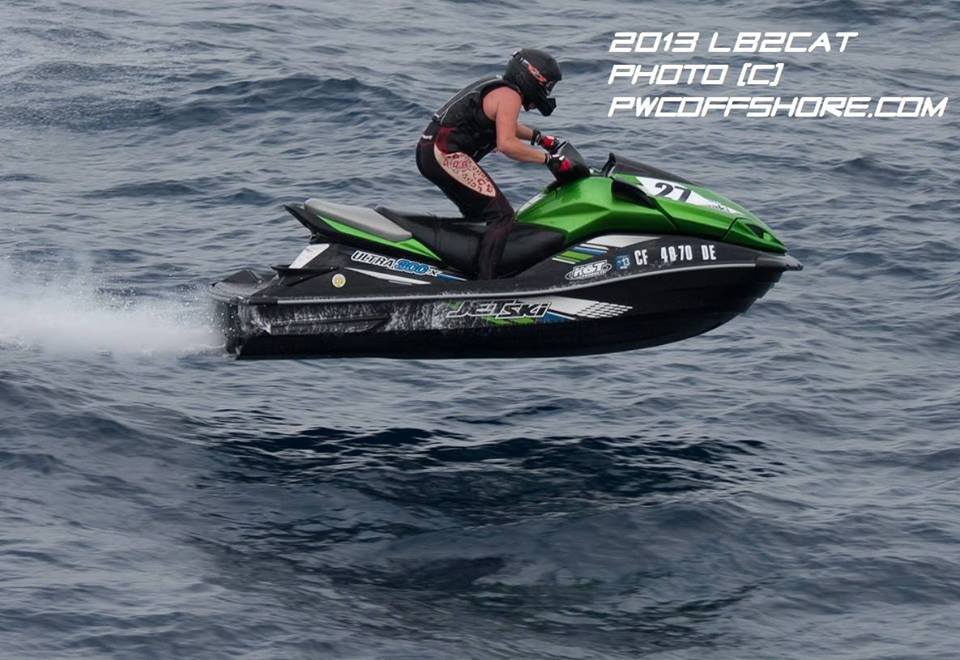
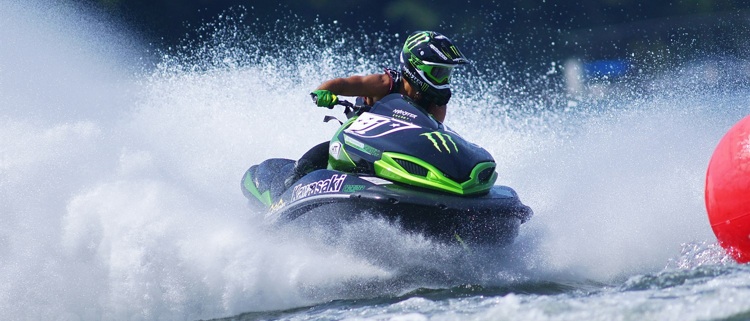
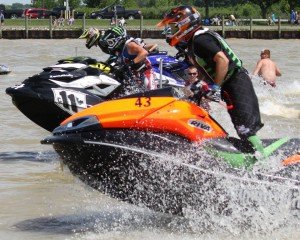
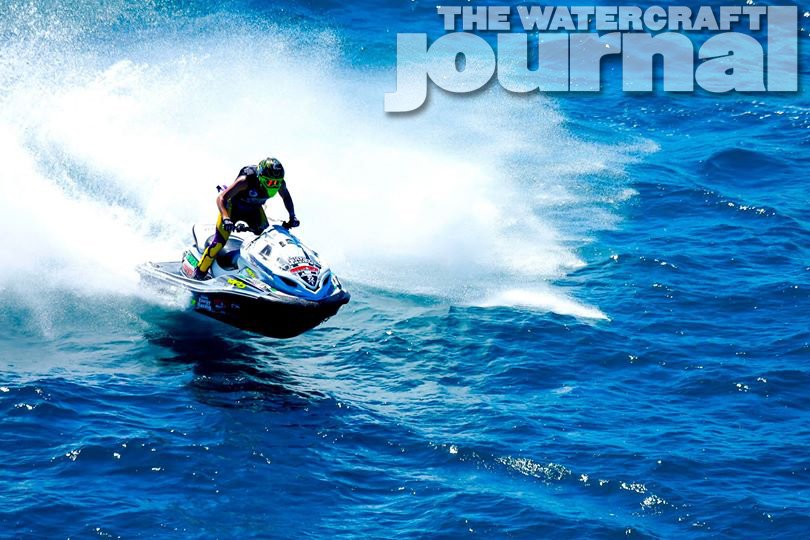
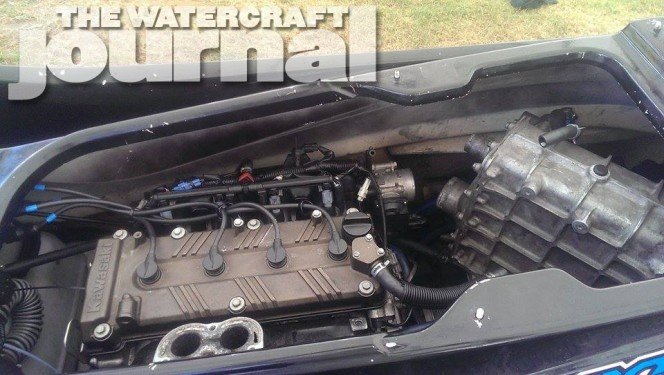
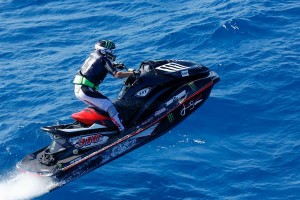
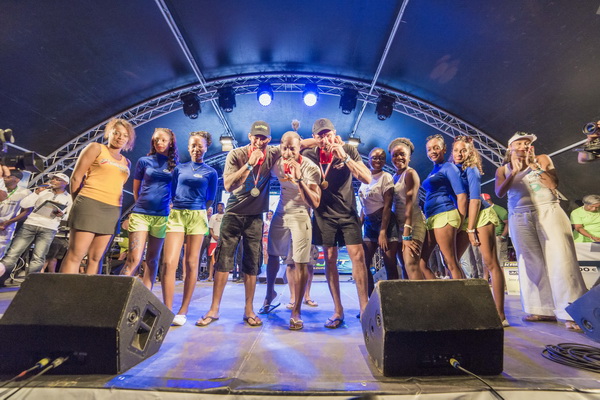
Say, y’know what’s pretty cool? Winning. Y’know what makes winning even cooler? Getting paid for winning. And that’s what’s happening at this year’s Long Beach to Catalina Offshore Championship. Just recently, PWCOffshore.com’s Mark Gerner announced that he’ll be tossing in a $500.00 bonus payout for the winner of the 2014 LB2CAT Manufacturer Stock Class who has been joined by Dave Tew with another $500 and Scott McIntosh providing another $200 – totaling $1,200 for the class championship!
Mark feels like we do that bolstering attendance through making the Manufacturer Stock class more appealing to first-time competitors and others is the way to entice OEM support and a broadening of the entry field. For the IJSBA Long Beach to Catalina Race, the payouts are not sponsor supported, but supplemented by the racers themselves!
Mark Gerner echoed, “The manufacture stock class is a vital component of the growth of our sport, anyone can go by a stock PWC on Saturday, fill it up with fuel and race on Sunday – let the best straight out of the factory manufactured ski win the class with the best pilot, no modifications – just you and the ski you selected to pursue the win.”
Mark wrote on the PWCOffshore.com Facebook wall, “So which manufacture has the best stock offshore craft that can endure and win this race and the best rider to pilot their stock PWC? We’re going to find out on July 20, 2014. Last year it was Michael Perry on the Kawasaki ULTRA 300X. We shall see in 2014…? “
Y’know those ridiculous disclaimers at the bottom of car commercials saying, “Do not attempt?” Well, the reason they are there is because chances are that some knucklehead had already gone out and tried to reenact some stunt they saw in a Mountain Dew ad and ended up with a concussion or worse.
Unfortunately, when we see things like the Pro Watercross Tour adopting a new “Code of Conduct” for its athletes, teams and support crews, we know its because they’ve been forced to take such measures. And that’s really a shame…
As outlined in a statement by Pro Watercross Director AJ Handler, “A code of conduct is a signal to attendees that the Pro Watercross Tour organizers have carefully considered the issues involved with attending tour events, and that they want to make the tour welcoming and safe for everyone.”
He continued, “It is important for everyone to be respectful and when competing always compete in the spirit of fair play… understand that there are repercussions to negative actions and in order for the sport to move forward athletes need to be in control and behave in a professional manner.”
Sadly, actions both on and off the field of competition by athletes, their crews and teammates have forced organizers to insist that all agree to these statutes to ensure that only the most professional are present at Pro Watercross events. Fist fights, aggressive and even dangerous racing, drinking and lewd behavior has no place in professional racing – be it watercross or otherwise.
Seriously, folks. This a sad reflection on our sport. As AJ concludes, “We are all judged by our actions…”
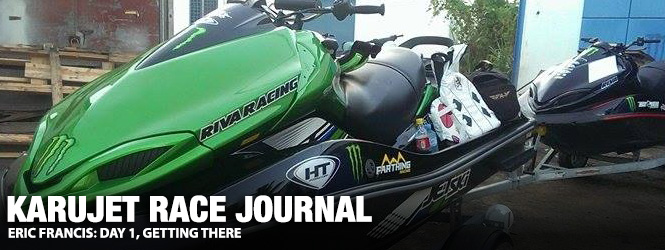
Getting to the Karujet was an adventure itself, with an early morning for Eric and Chris MacClugage.
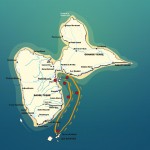
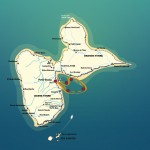
It’s possibly the most hardcore offshore race in the world. The Karujet is a four day race around Guadeloupe, the southernmost Leeward Island in the eastern Caribbean Sea. Well, not entirely. Guadeloupe is actually two islands: Basse-Terre and Grande-Terre, separated by the Salt River.
Welcoming some of the biggest names in personal watercraft racing in the world, we wanted to cover this year’s Karujet in a way that has never been done before: from the point of view of a competitor! All weekend-long, The Watercraft Journal will be providing you same-day event coverage from the Karujet exclusively from first-time racer and last year’s UWP-IJSBA National Champion, Eric Francis!
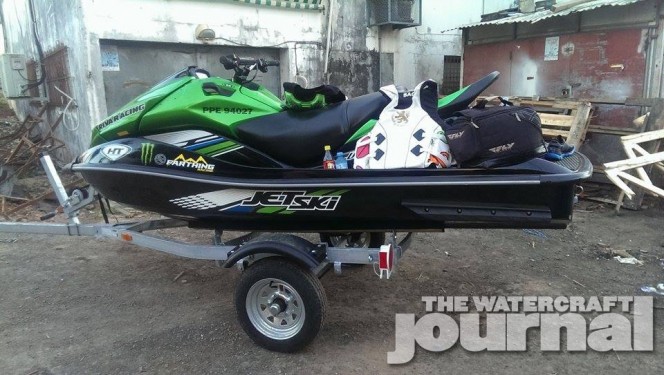
As you might have already heard, Francis is accompanied with other fellow Americans and legendary racers themselves, 18-time IJSBA World Champion Chris MacClugage and PWCOffshore.com and Mountain Motorsports racer Craig Warner. All three athletes will be piloting Kawasaki Ultra JetSkis.
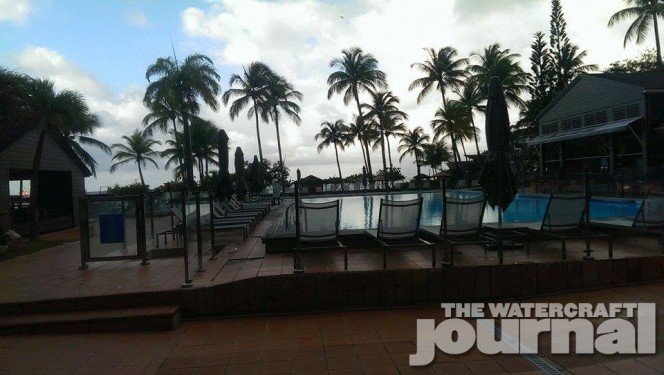
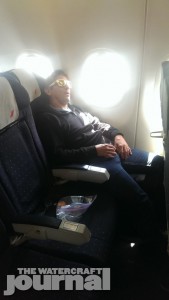
Although Guadalupe is beautiful, technology comes at a premium. “Texting from here is like ten bucks a text. LOL!”Traveling from Lake Havasu City, Arizona to Miami, with a connection in Haiti and onto Guadalupe is quite a bit of travel. Macc is understandably exhausted.
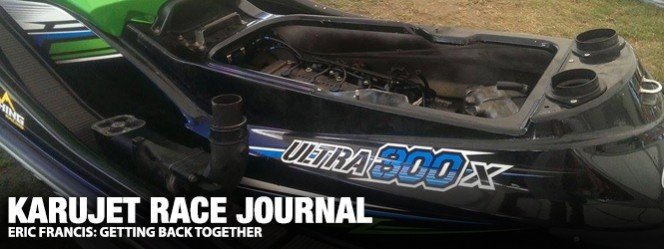
“The ski I’m riding is a 300X with a 310R head, free flow exhaust, Solas prop, and [aftermarket] steering with bars,” Eric explained. “Nothing too radical.”
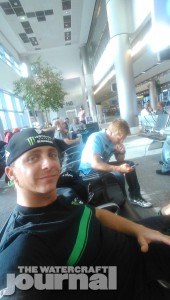
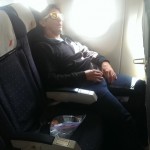
Getting to the Karujet was an ordeal in itself. “I’m sitting with Chris in the Miami airport,” Eric wrote early yesterday morning. For his teammate, Chris MacClugage’s travels started the day before. “Macc was up the whole time. He passed out right after we took off.”
After a short stop in Haiti, the two arrived at their hotel, dropped off their bags and meet up with Cedric with their skis for a quick ride. “I’m supposed to hit the ocean today,” he explained. “I have been hanging with Macc the whole time. I need to make sure I am in top shape.”
“Macc has been helping me read menus and translate to people [who knew Chris MacClugage spoke French? -Ed]. I’ve been watching my diet, eating very well, and drinking lots of water.”
“Oh, and I’m very excited. I’m not really too nervous as I have grown up in surf racing. I feel very good and think I will be able to leave my mark in my first year out here. Luck has a lot to do with a race this long and hard, but I feel I’ll make America proud that I was chosen to represent our country.”
Eric notes, “We did a small test session yesterday and Chris and my skis are running very good. I’m on Cedric’s personal 300X with a few handling upgrades, such as steering and handle bars, free flow exhaust and a 310X head that has been cleaned up and a Solas impeller. I have been watching my diet closely out and and drinking lots of water to stay hydrated. Stretching and light running and work outs.”
As for the next few days, Eric wrote, “The rider’s meeting is tomorrow at 10am at the Beach Viard Restaurant. We took the skis out yesterday and will do a longer ride today.”
DAY TWO: GETTING STARTED
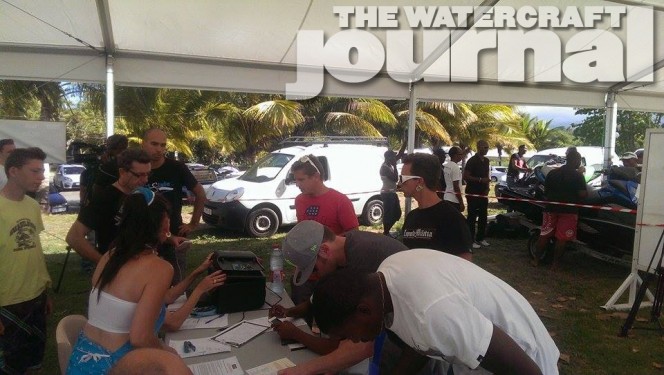
At the racer registration and tech inspection, Eric noted, “The UIM is very professional and check everything.”
After a long day of getting situated, a break-in ride and dinner, Eric finally made it back to his room. Despite waiting it out, grappling with technology outside of the States continued to plague him. “I just got WiFi. It’s crazy here, bro.” Eric laughs. “My phone is being weird, so I’m on a friend’s phone. I’ll try to get stuff straightened out.”
Wednesday was the last day before the first race, starting at midday. Getting ready for the first leg of the Karujet was nearly as stressful as racing it. “Yesterday was a busy day,” Eric recounted. “We were going over everything, checking clamps, the quick-fill systems, changing spark plugs, fueling the skis and going through the tech inspection.”
Being a UIM event, Eric had never experienced the rigors of the international sanctioning body. “Tech inspection is pretty difficult when you don’t understand the local language! But every one was very nice and helpful.”
The language barrier makes being in a strange place all the more difficult. Thankfully, he’s not alone. “Chris [MacClugage] has been a huge help with advice, driving me around and keeping me in the loop.”
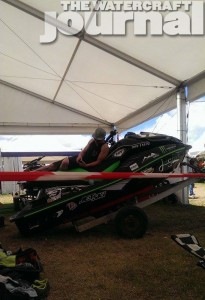
Chris MacClugage (in red), Eric Francis (black) and Craig Warner (gray hat) were all present together to sign in and register from the four-day enduro.Tech inspection under the UIM was surprisingly stringent for Eric, but found the staff very helpful in getting the first-time racer situated.
Eric continued, “After you tech the ski, they make you wrap it in cling wrap and put the ski in their impound so no one can change anything, and the ski returns to the impound every night after each day of racing.”
Because of the grueling nature of such an aggressive offshore race, safety is imperative. “Racing this event require lots of safety equipment such as a cell phone, search light, tow rope and transponders, as well as the usual stuff.”
With his ski wrapped up and in storage, all that was left was to wait. “I’m very excited to race tomorrow and plan to really test myself today against 80 of the best surf riders from around the world.
“Tomorrow’s race is about 50 miles with no pit stops and probably the easiest race of the week…although no race here is easy,” Eric joked, catching himself.
Prior to going in for tech inspection, the team of Americans meticulously went over their skis, double checking clamps, changing sparkplugs and capping off the quick-fill fuel system.
DAY THREE: GETTING A JUMP ON THINGS
After the day’s race, Eric sat down for the racer recap and daily awards. “Looking forward to the water tomorrow!”
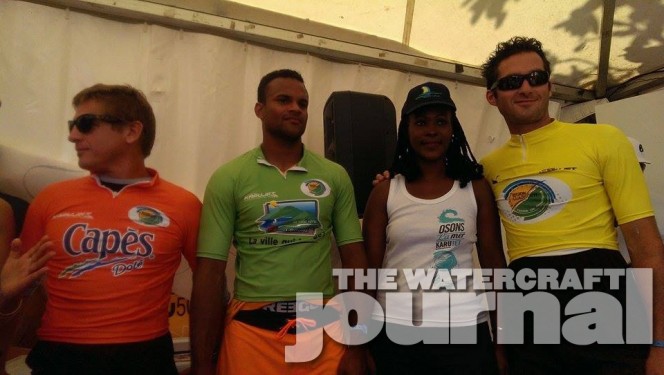
The first day of racing was the shortest, and saw it go to local Guadeloupean, Lucas Granger, who was followed by Martinique racer Hugo Fidelin and America’s own Chris MacClugage.
Previous Karujet winners Teddy Pons and Jean-Bruno Pastorello followed closely behind, with Craig Warner in 11th and Eric Francis at 17th place, respectively.
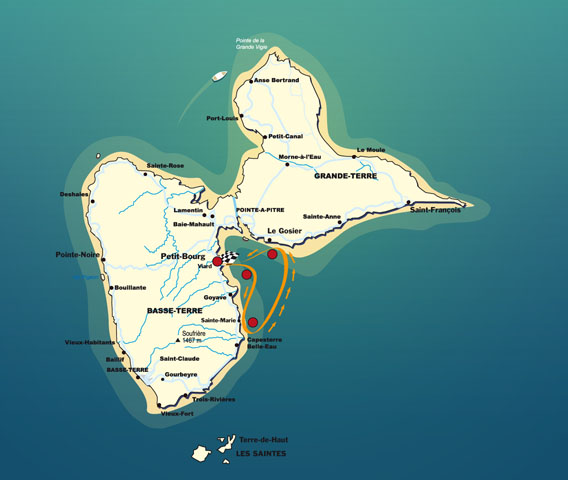
Although the course was brief, leaving from Viard to Saint Marie, then up to Ilet Gosier and back to Viard totaling 60km or 37 miles.
Readying for the day’s race, Eric donned his new Quakysence gear, which came on as a new sponsor for his 2014 season. Afterwards, Eric was in pleasant spirits and charged for the next day’s significantly longer heat, which will come in at just over 87 miles, requiring a pit stop.
As of Thursday night, the points are as follows: 1. Granger, Lucas, 2. Fidelin, Hugo, 3. MacClugage, Chris, 4. Medori, François, 5. Pons, Teddy, 6. Pastorello, Jean-Bruno, 7. Karam, Vincent, 8. Vaitilingon, Davy, 9. Gounouman, Pascal, 10. Thomas, Vincent
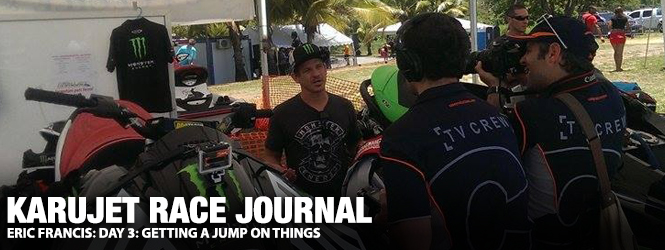
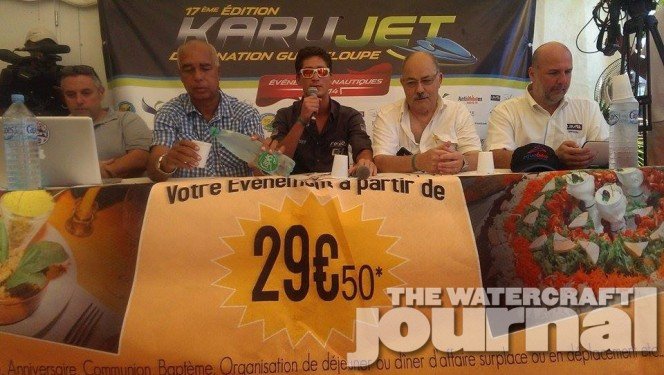
Prior to the race, Macc got some time in with the local media, where they asked about his 310X Kawasaki and his tactics in returning as a former Karujet champion.
DAY FOUR: GETTING INTO IT
The first day took it out of Eric emotionally, “This is the hardest race I’ve ever done.” But has vowed to give it his all these next few days.
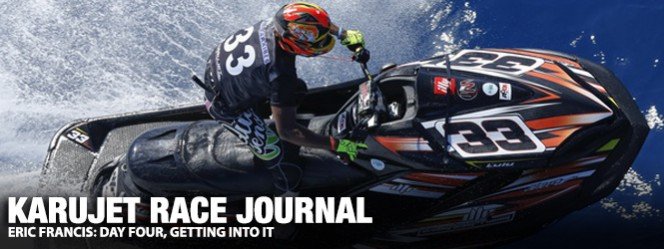
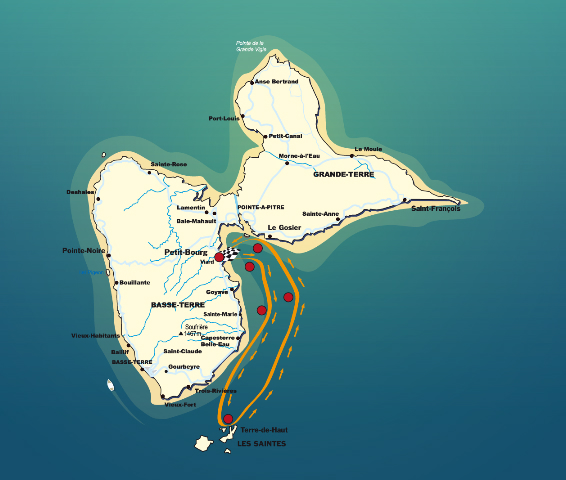
Although the fourth day into Eric’s Guadalupe adventure, yesterday marked the second day of official racing. The day’s challenge took the competitors the second-longest course of the four-day race, from Viard to Saint-Francois twice – what’s called the Viard Circuit a total of 87 miles.
Former Karujet champion Teddy Pons took the checkered flag this round, with a 1:38-lead over the pack, as Chris MacClugage battled yesterday’s winner Lucas Granger. In the final moments, Granger was able to eke ahead of Macc by five seconds. This rearranged the scoreboard, placing Pons into second place in the overall, 16 seconds behind Granger and slightly ahead of MacClugage.
Unfortunately, the day was filled with tough breaks both literally and figuratively, alike. Pastorello, who was in the top three during the early minutes of the race, was forced back and eventually having to back out of the day’s heat due to mechanical woes. Francois Medori lead the pack for most of the first leg but fell to an ignition problem. Medori eventually limped in at 17th place.
Officials at the Karujet take safety very seriously, and racers are expected to comport themselves with the utmost professionalism.Speaking about his first day at the Karujet, Eric explained, “Yesterday I just freaked out and overrode, I didn’t do well. I took a very hard shot to the stomach and just stressed out, and never caught my breath.”
Mountain Motorsports Kawasaki racer Craig Warner fared worse, coming in at 34th place, with our own Eric Francis coming in four places behind, having received a four minute penalty.
“So today I focused and rode way better,” Eric recalled. “I started dead last due to water in the ski. I got it all out and past about 20 riders but then broke the belt and had to lip home. If the ski didn’t break today I would have been in the Top 6 no problem. Tomorrow is another day.
When asked about the penalty, Eric admitted, “I beached my ski too far up the beach after I broke.” Concerning how tomorrow is shaping up, Eric beamed. “The ski’s all fixed now and tomorrow will be my day.”
But Eric’s confidence wasn’t as solid last night. “This race is by far the hardest race I have ever done in my life. After Day One, I wanted to give up. I slept on it and came back much stronger.”
The toils of the grueling nature of the Karujet are playing on everyone, be them emotional or physical. Chris MacClugage was quoted as saying, “age was catching up with him and that he really felt all his 40 years of experience, and his knees, which have gone through a few operations, were really hurting. But that he’s having a lot of fun out there and in a good position,” according to Aquabike.net.
Eric concluded, vowing, “I’ll prove myself on the water tomorrow I’m sure of it.”
The final remaining days of racing will shake out the rest of pack, as fatigue and mechanical weakness will separate the men from the boys.Macc’s consistency has kept him on the podium for the first two days.
Craig Warner fought fuel pump issues the day before and decided to sit out the day’s racing.
The longest and possibly hardest day of the four-day marathon Karujet offshore championship, today’s action saw some serious highs and lows, shaking out some of the most talented racers, elevating others and drastically rearranging the points structure. Fatigue, mechanical trouble and soul-crushing exhaustion filtered the field of competition by nearly half.
With a considerable lead over the pack, French racer Teddy Pons continues toward a second Karujet title as he leads Martinique rider, Ugo Fidelin and Alexandre Barret. Racing for two hours over 144km (89.5 miles) over “very choppy conditions,” Eric Francis climbed back from his rearward position over the previous two heats to an impressive 8th place.
“It was a crazy day today. It took every ounce of my soul to push through and finish. I had to dig deeper than ever. This race is by far the hardest thing I have ever done,” Eric said, exhausted from the day’s racing. “People were giving up today because its so hard, and these are the best from around the world!”
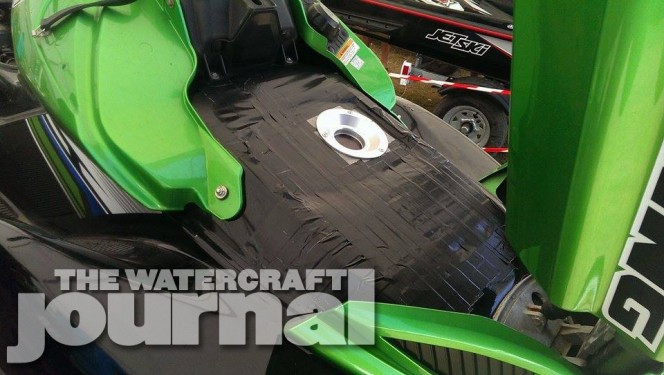
Water seeping into the engine compartment caused Eric’s supercharger belt to slip the day before. Some preventative measures (and a few pounds of duct tape) resolved that.Stress isn’t only effecting the riders, but the causing fractures in the hulls of skis as well.
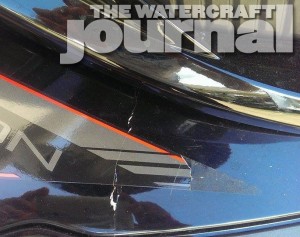
Thankfully, the gremlins that plagued Eric the day before stayed away. He laughed, “I lost my oil cap sometime during the race. I don’t know how!” But he did note, “The hull’s cracking from just riding. It’s crazy.”
He continued, “I felt really good about today before the race and my team told me they would love for me to finish in the Top 10, so pushed with everything I had to make them proud to have me.”
Eric’s success unfortunately wasn’t shared with his fellow American racers. Up until today, Chris MacClugage was the steadiest performer on the field, coming in a tight third place in each heat.
Unfortunately, Macc wouldn’t complete the day’s event. Eric shared, “ECU issues. His ski would only idle.”
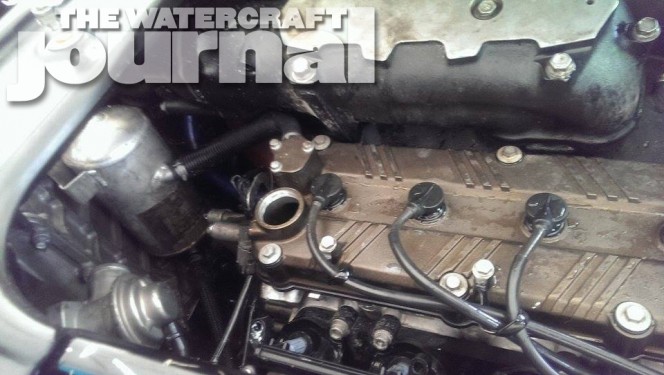
Remembering tighten everything down as much as possible is becoming a valuable lesson as Eric’s oil cap unthreaded during the day’s racing.
Likewise, Craig Warner would be down, choosing not to enter in today’s race. “He broke yesterday with fuel pump issues and didn’t was to risk the ski today. He is gonna run tomorrow on the final race,” Eric noted. But that didn’t stop Craig from helping out. “Craig held for me today and did my fuel stop. It was awesome to have a pro help me so much.”
Eric continued, “Actually, he and Chris have helped me so much and I feel truly blessed to have them here to show me the ropes.”
Thrashing the previous night and the morning before racing, Eric and team were able swap out supercharger belts and repair the damage done the day before to help Eric cross the finish line in the Top 10.
DAY SIX: GETTING OVER IT
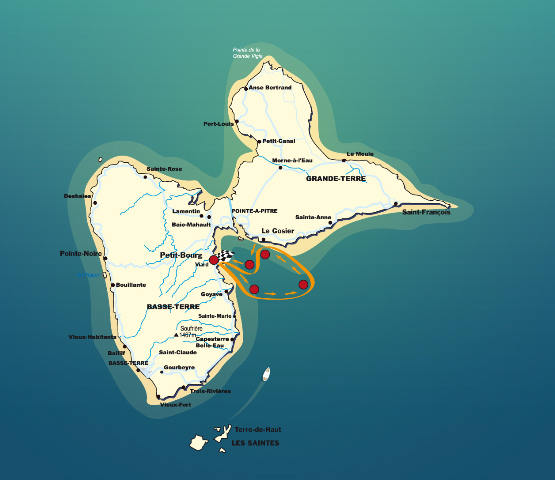
If you thought yesterday’s race tossed the Karujet standings on its ear, you haven’t seen nothing yet. Sunday marked the final day of racing, consisting of two heats of four laps around the Viard inlet, totaling a combined 78.5 miles for the day. Challenging sea state combined with riders looking to put it all out on the line made for some heated competition.
Chris MacClugage came back swinging alongside teammate Craig Warner and grabbed fifth, as Warner crept ahead with a best of fourth place.
Eric Francis’ luck seemed to have been used up by yesterday’s 8th place finish, as the native Floridian suffered technical difficulties during both motos. Mountain Motorsports and Monster Kawasaki’s Craig Warner’s strategy to hold back from yesterday’s racing paid off, as the California-to-Georgia transplant performed his best for the week, coming in just behind Jean-Bruno Pastorello, in fourth place.
Pastorello came back swinging this final day and dramatically rearranged the scoreboard, as he grabbed a second and third place finish during the two motos, but it wasn’t enough to place the venerable racer up in rank enough to grab a podium spot.
Macc Racing’s Chris MacClugage picked himself up after a frustrating race the day before to come in behind his teammate in sixth. Unfortunately, the rebound wasn’t enough to hurdle the gap in combined time between he and the pack leaders, resulting in Chris earning a 15th place overall (five places above Francis’ 20th and Warner’s 30th).
As for the winner of the 17th annual Karujet Championship, the maxim “slow and steady wins the race” might actually apply – at least, as far as the “steady” part is concerned. Martinique’s Ugo Fidelin, who never once finished first on a podium the whole week (earning a 2nd, 3rd and two 6th places), rode strong and consistently all weekend. And that proved enough to push him ahead of Guadalupe local Vincent Karam and France’s Alain Tarzia.
It wasn’t but last week that we helped announce the Miss Ruthless 2015 contest (which, if you’re looking to enter, you’re running out of time), and now we’re happy to share Jobe’s PWC Movie for 2014. Although it’s not much of a movie, but really a fun teaser of their new 2014 “Ruthless” personal watercraft line of swimwear, wetsuits, life vests, helmets and other needful riding gear and apparel.
As it states on the official Jobe website, “One month from now and it’s officially Spring! Temperatures will start to rise and taking your PWC to your local lake will become a common habit again. No better time to take two minutes and check out our all-new PWC range in the Jobe PWC Movie 2014!”
Although not a common choice among us Yanks, Jobe holds a major international presence in both professional racing and recreation markets across Europe, Australia, New Zealand and elsewhere. We’re hoping to see more Jobe products here in the States and on the backs of more professional and amateur riders throughout the 2014 season.
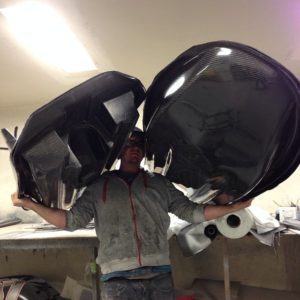
Derrick Kemnitz’s ad starts, “Any Bay Area locals looking for a job, or know of someone who is?” Thankfully, as the winter months have warmed to Spring, so has the demand for state-of-the-art lightweight carbon fiber freestyle and freeride hulls.
“Business is booming and I’m looking to get a fourth person in the production line for Hurricane Industries. Jet ski and composite knowledge not required, as training will be given over time. Just need someone who can use a paint brush to start full time.”
With a invoice roster five deep for new hulls this month alone and plenty of more work to come, now is your chance to learn a fast-growing trade as well as get really involved in the industry. Derrick says he’s looking to hire as soon as humanly possible, so there’s no long interview process.
If you’re seriously considering this position, please reach Hurricane Industries’ owner Derrick Kemnitz Jr. at (925) 706-2858 or via email at [email protected]. Hurricane Industries is one of the industry’s fastest-growing aftermarket PWC hulls as well as PWC composite parts, graphic kits, decals and apparel.
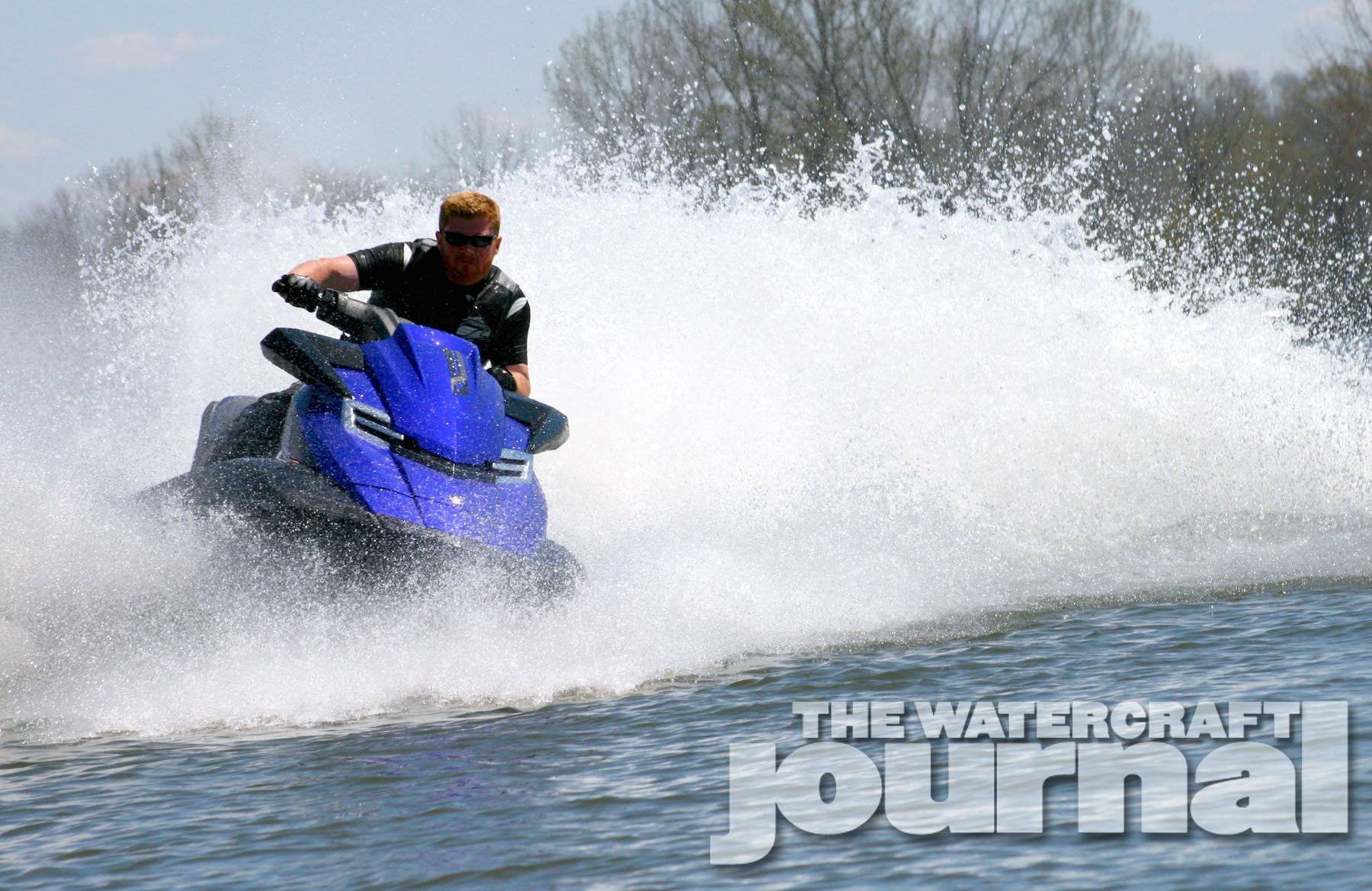
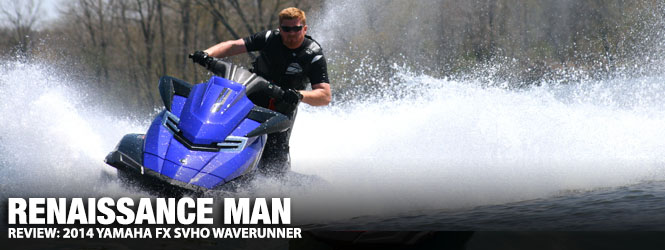
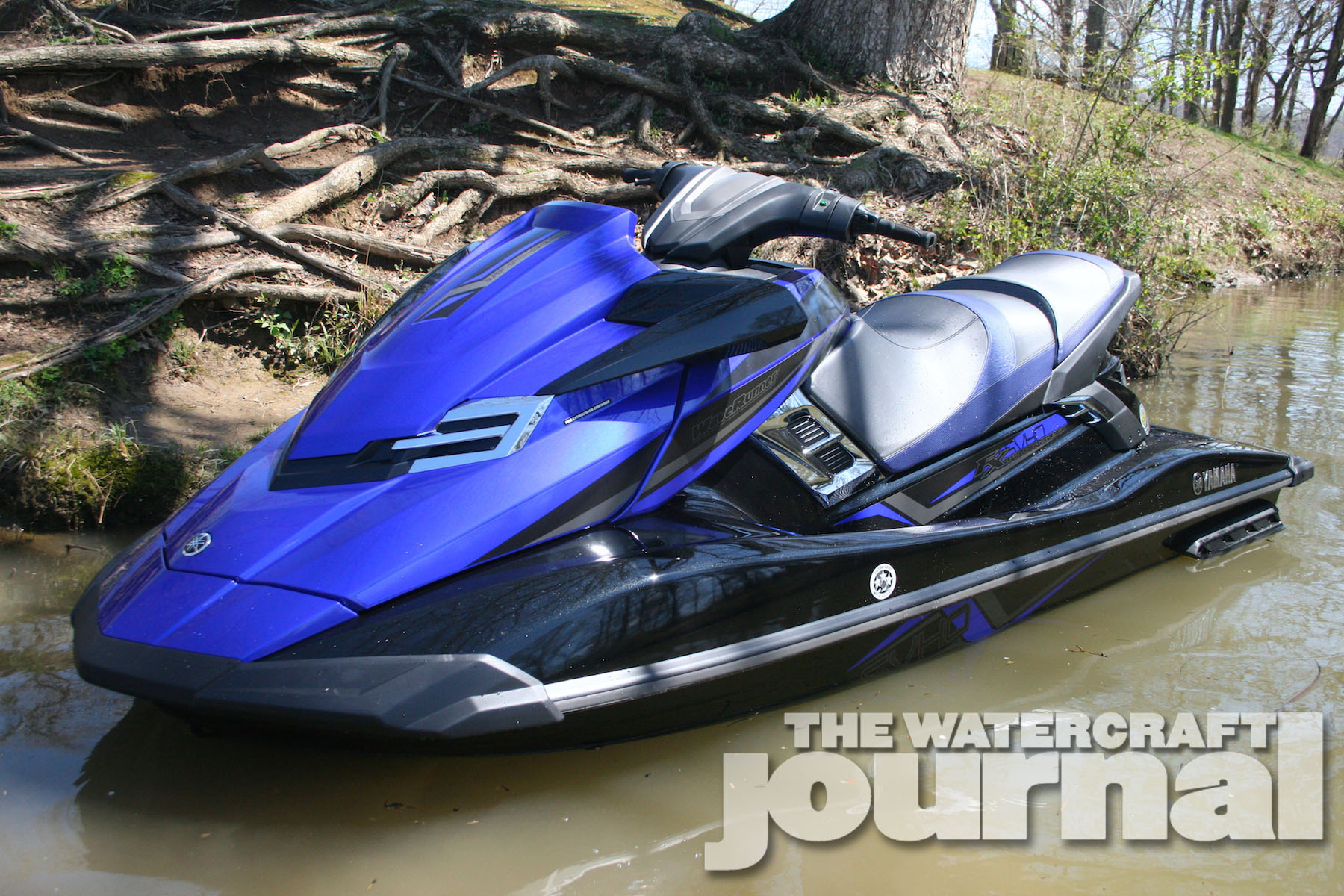
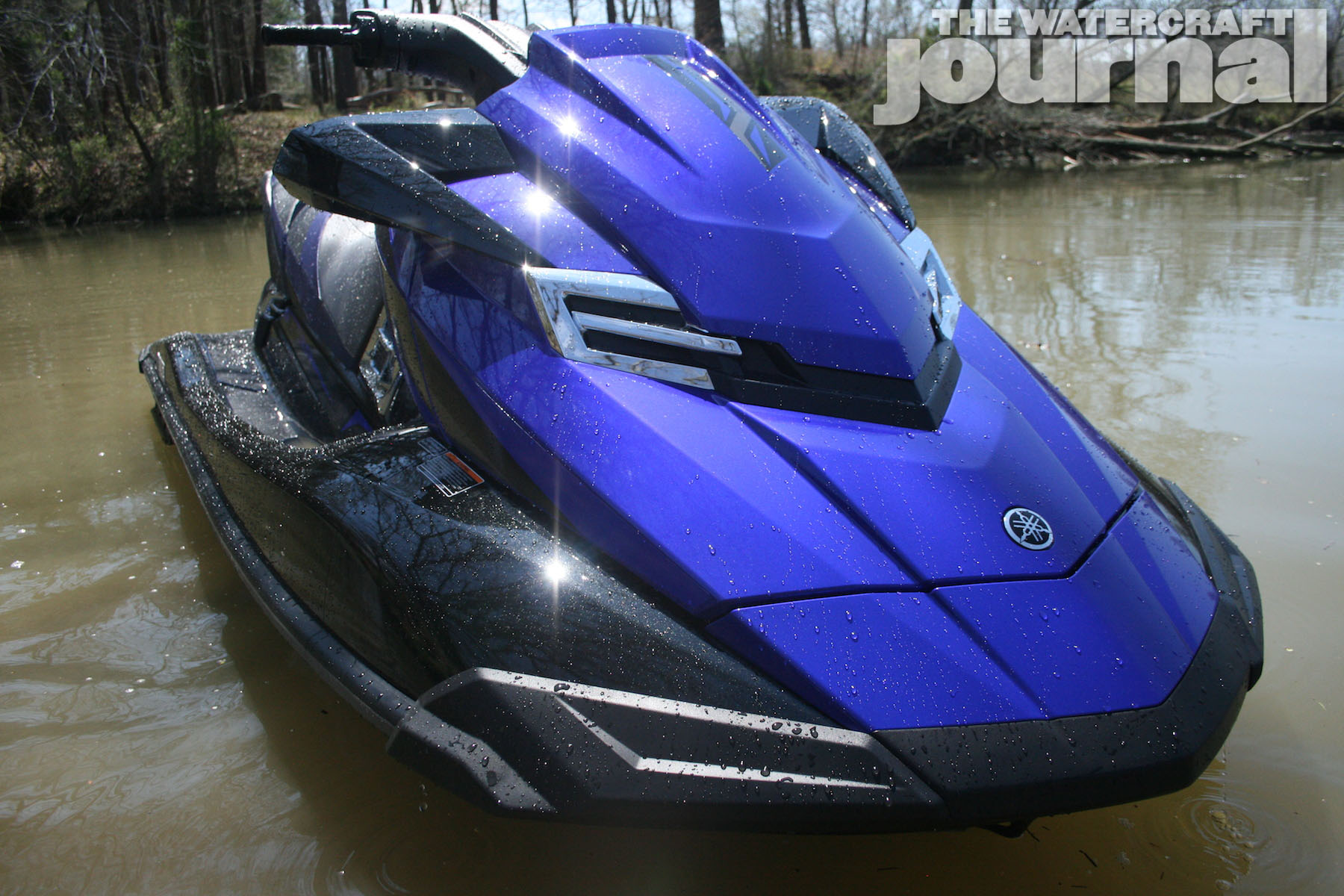
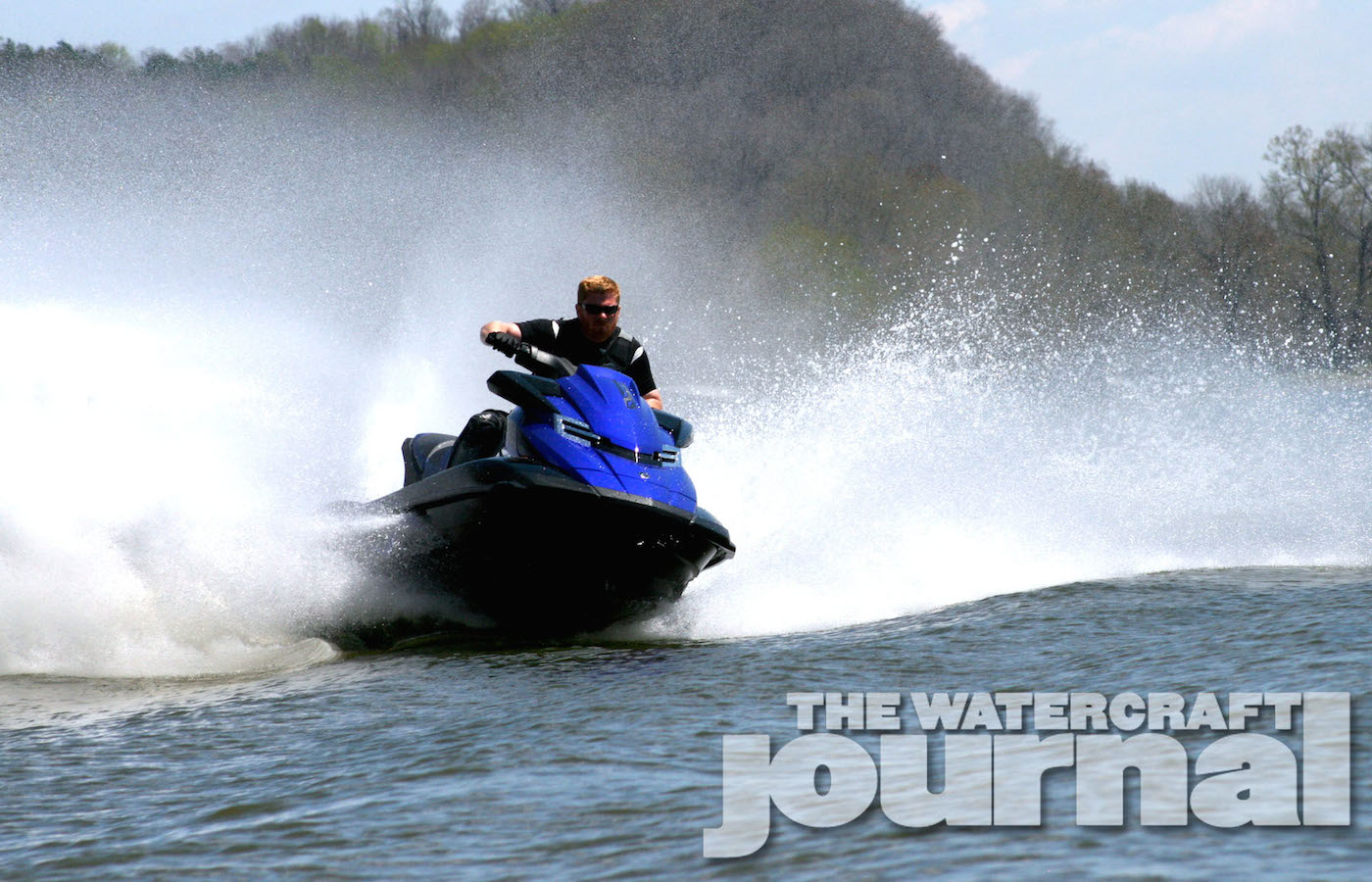
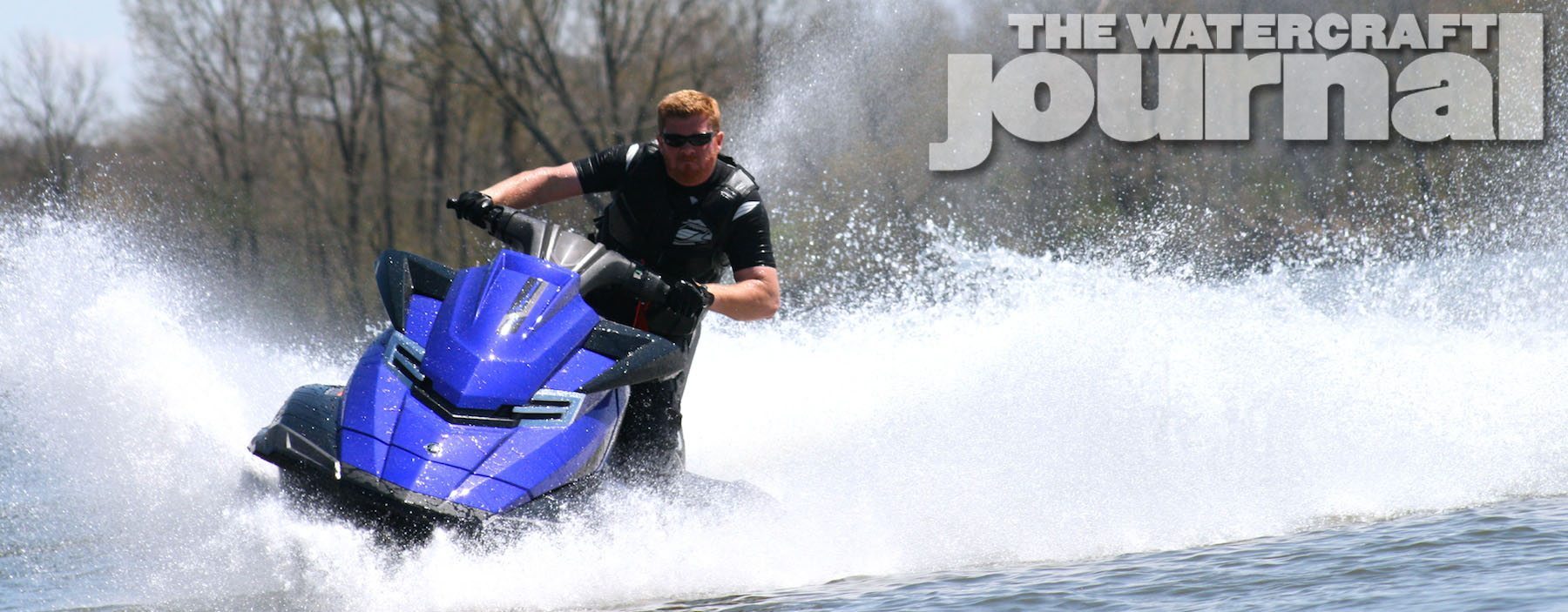
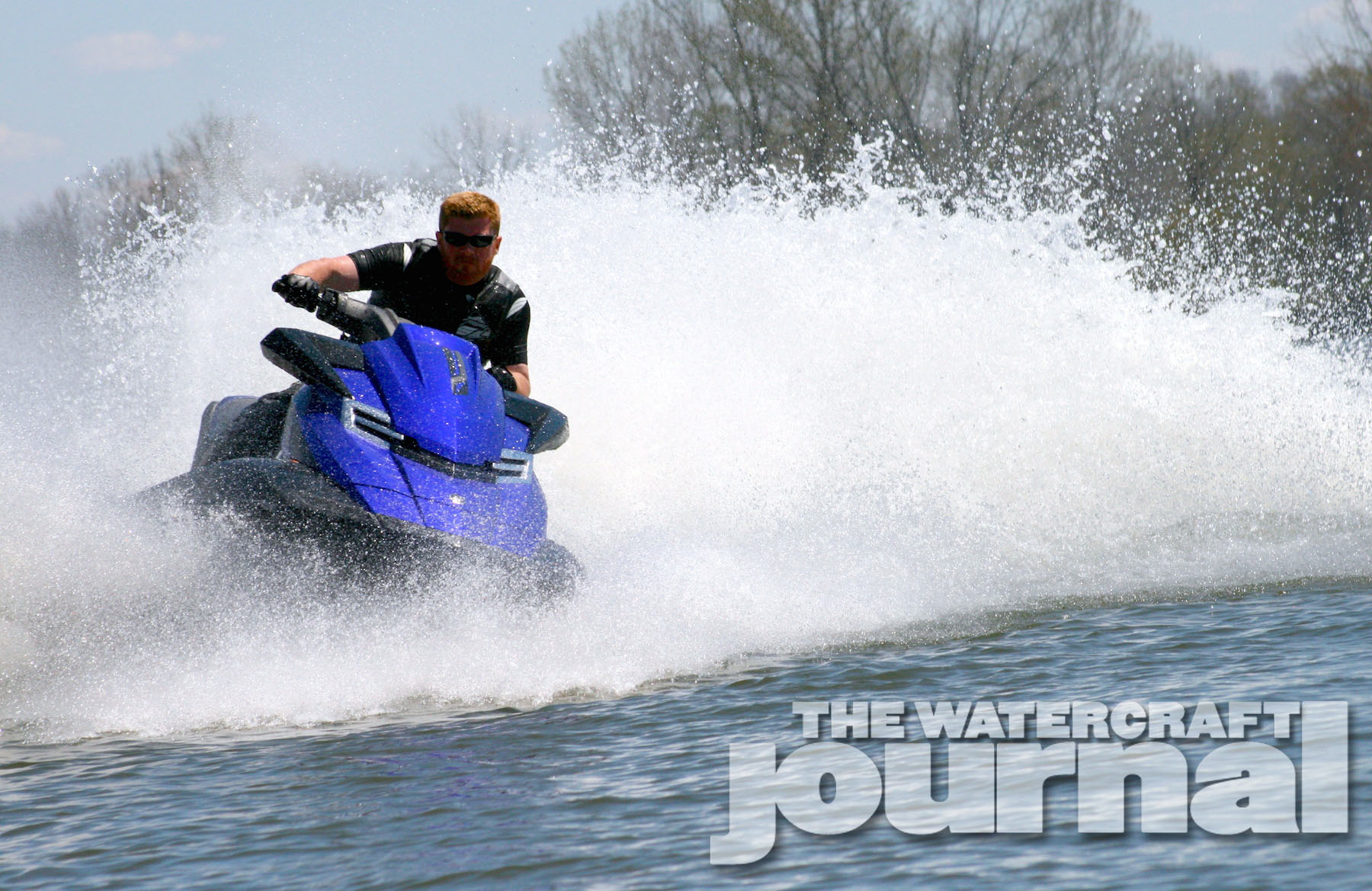
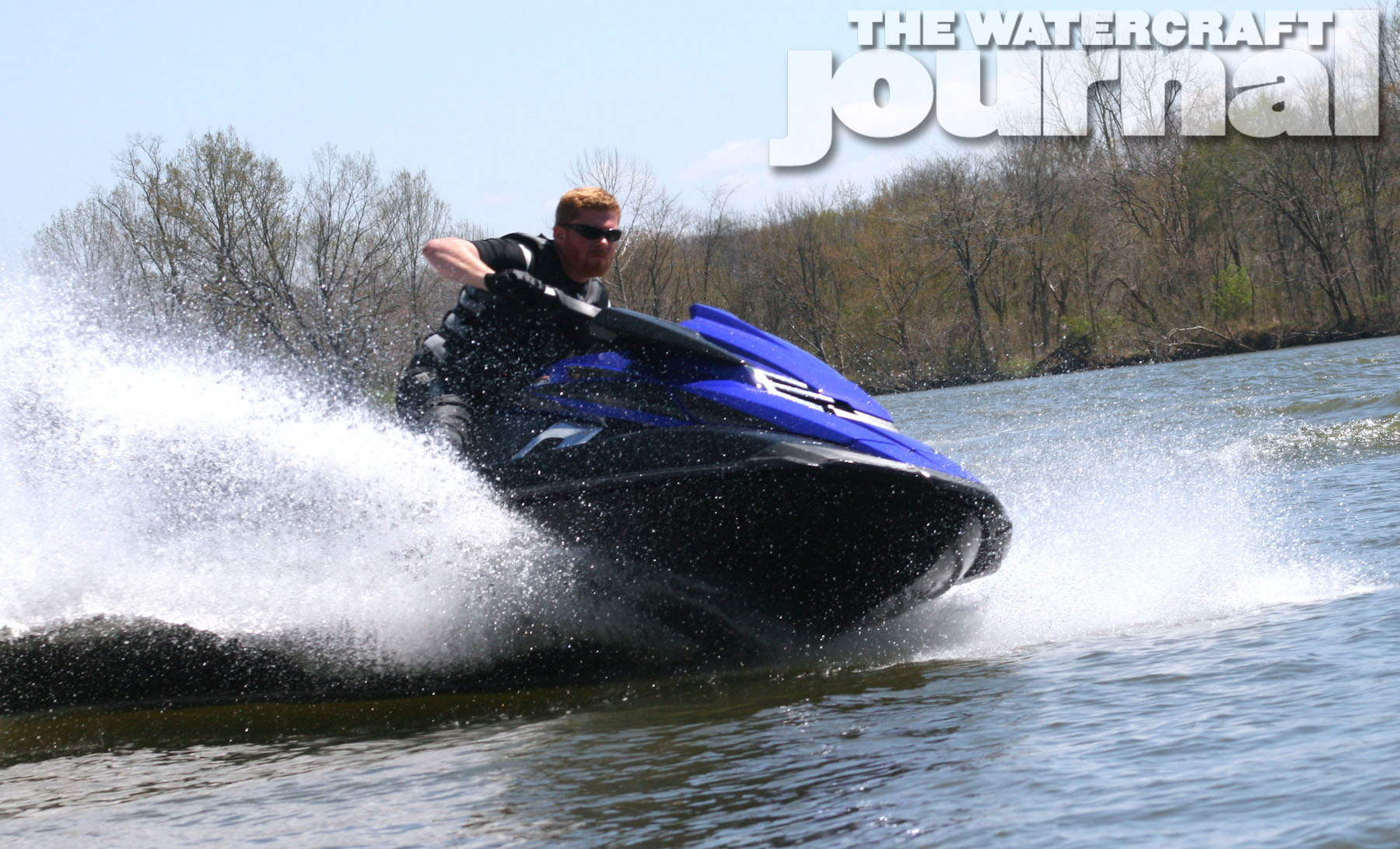
The deep blue and rich black metallic hues of the FX SVHO drew the attention of passersby as we blasted down the muddy waters of Sycamore Creek, TN.
A couple of years back, Yamaha performed a few modifications to the hull of the brand’s existing full-sized three-seater runabout, the FX series. By extending the keel the length of the ski, sharpening the chines and a few other tweaks, Yamaha hoped to infuse a little more excitement into its top-of-the-line segment.
Although fine machines in their own right, the FX’s couldn’t shake the reputation as a somewhat staid craft, particularly when lined up against the very excitable FZ two-seaters (even when equipped with the unofficial 218-horsepower SHO plant). Despite the revisions made to the ski’s belly and sponsons, the FX SHO failed to catch fire with the performance crowd the way it ought to.
If this review serves any purpose at all, we hope it grabs you by the ears and violently shakes you out of it. The newly minted 2014 Yamaha FX Super Vortex High Output (SVHO) WaveRunner is more than a regular ol’ three-seater with a hot supercharged plant. This is a Lamborghini Superleggera with a backseat. Sure, you can toss a friend or two in behind you, but you’re gonna scare the bejeezus out of them…if they can hang on long enough.
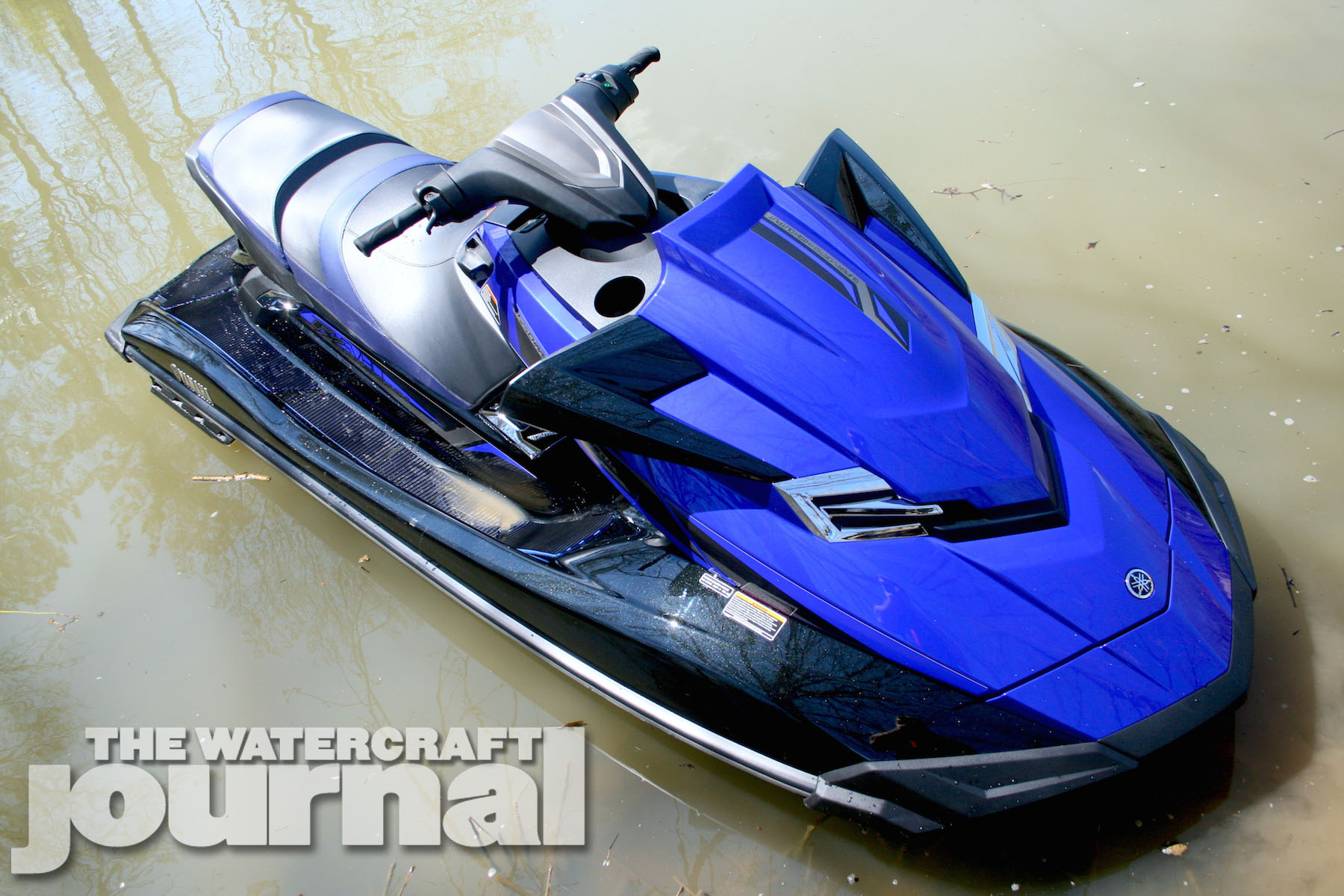
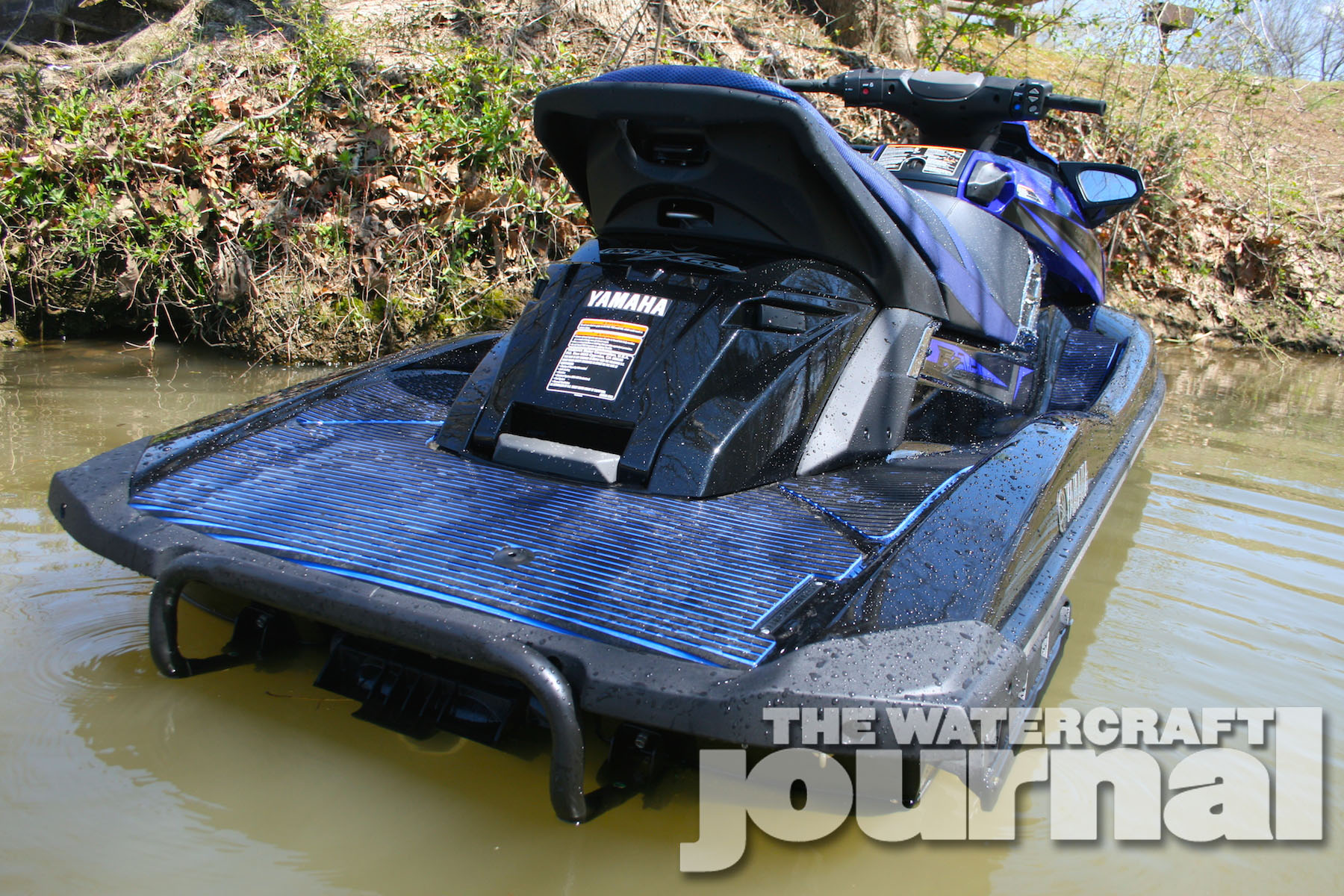
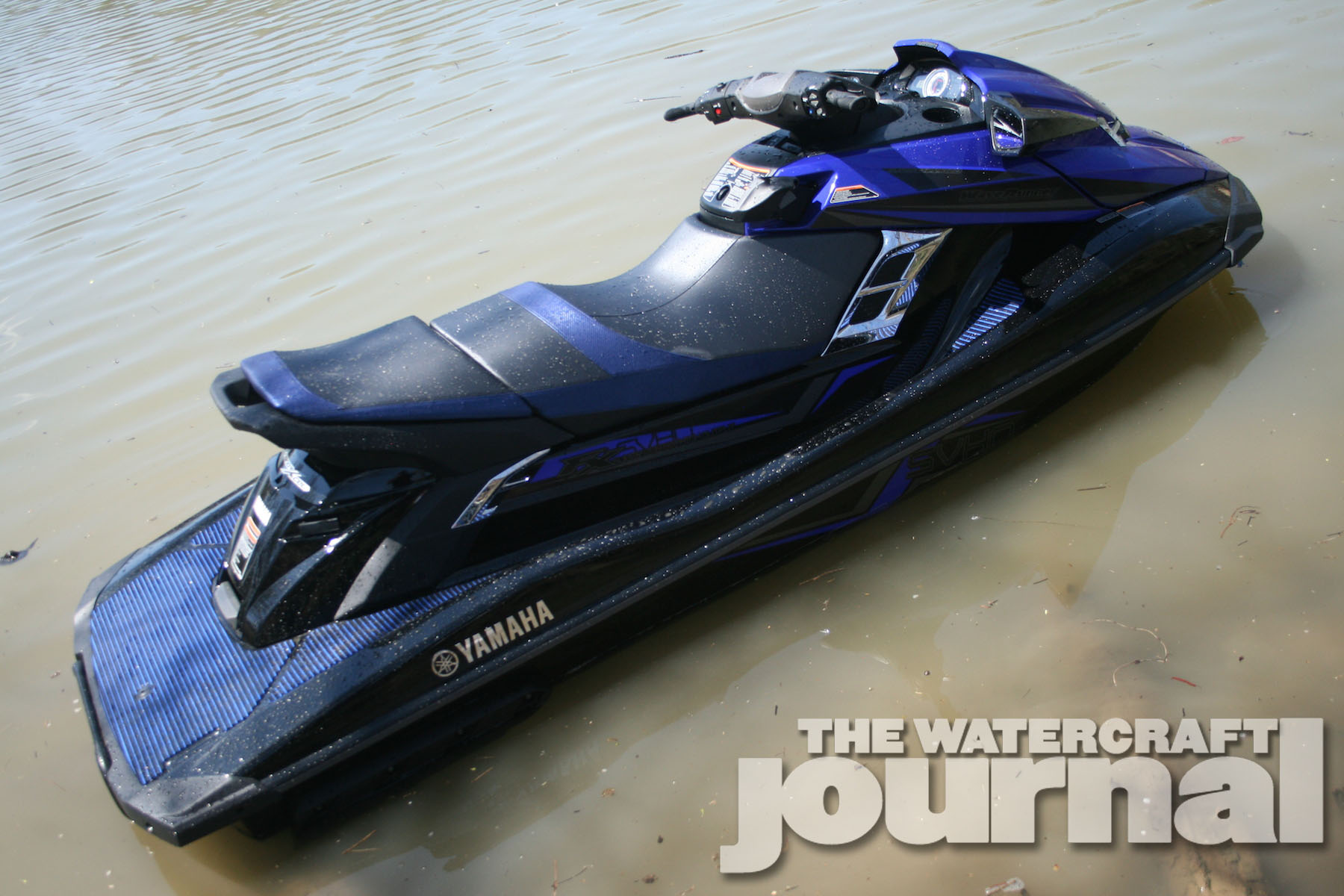
New for 2014, Yamaha amped up their lineups with some very sharp cosmetic touches. Our personal favorite is the electric blue-on-black two-tone Hydro-Turf traction mats. The rear swim platform is wide and deep featuring a broad, flat-edged folding swimstep and deck storage.The 1.8L SVHO benefits from 8.5:1 forged pistons, larger 60lbs. injectors, a larger, more efficient HKS supercharger producing 60-percent more boost, improved oiling and a larger intercooler.
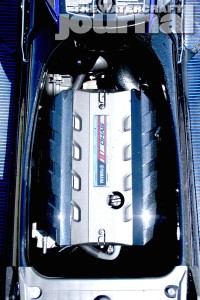
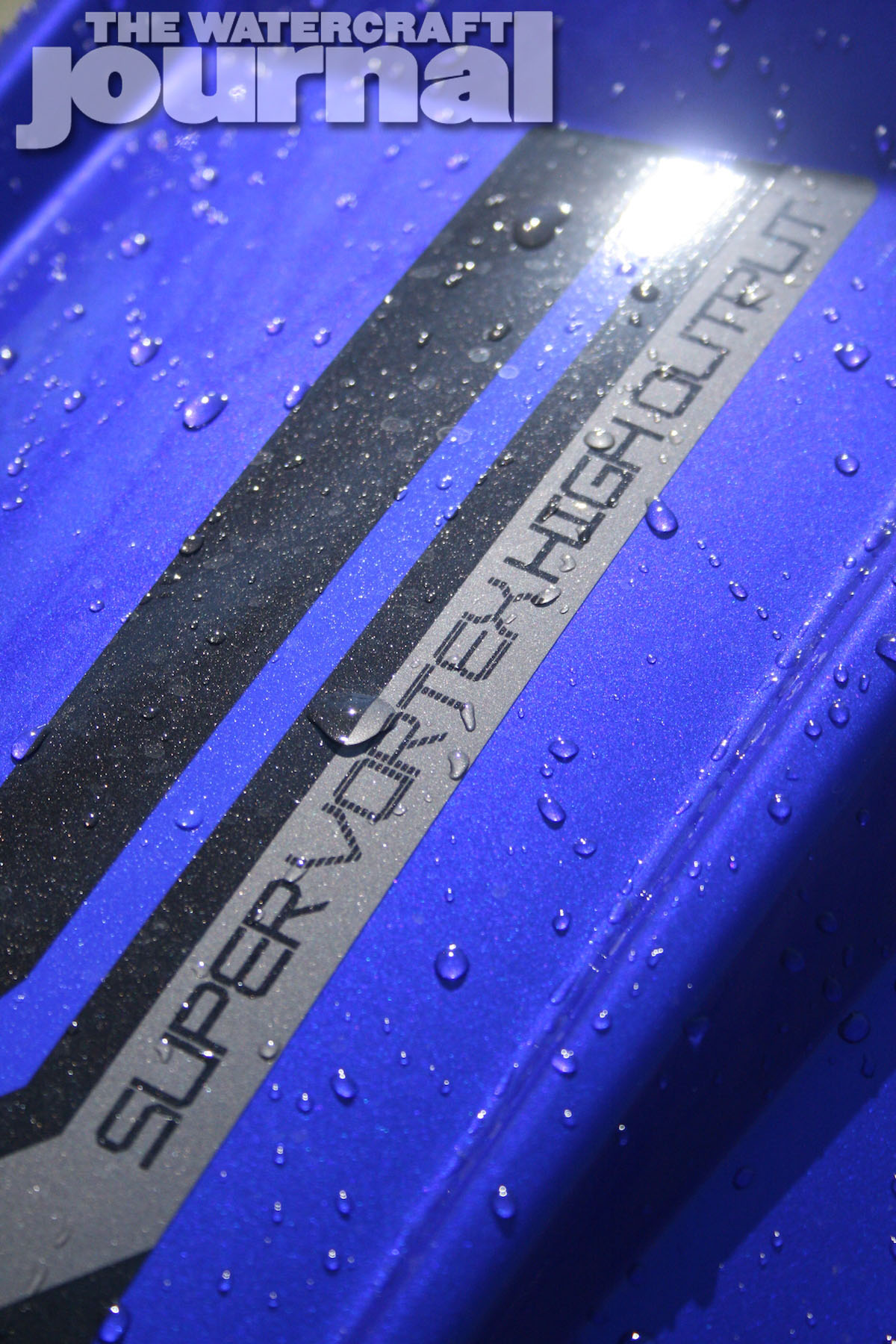
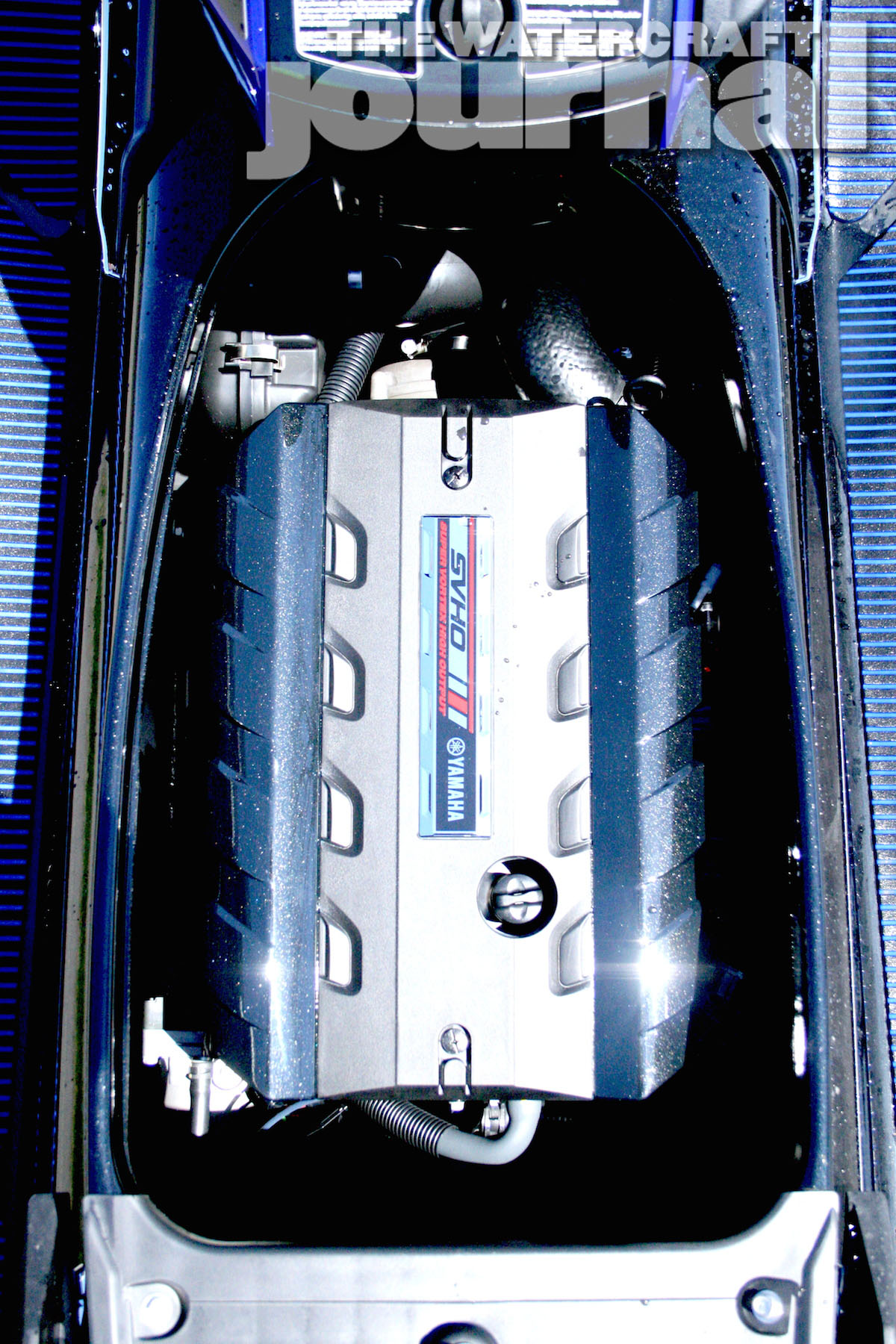
Building upon the aforementioned Super High Output 1,812cc four-cylinder four-stroke, Yamaha’s laboratory of mad scientists threw caution to the wind and built the SVHO (or Super Vortex High Output).
The new engine benefits from stronger 8.5:1 compression forged pistons, larger 60-pound fuel injectors (over the previous 42-pound sprayers), a larger and 22-percent-more efficient intercooler, a redesigned oil cooler providing 110-percent improved efficiency, and a larger (86mm versus 82mm) HKS supercharger pushing 60-percent more boost thanks in no small part to a new 6-vein impeller.
Processing all of that power is a larger performance-bred 8-vein pump spinning a 160mm impeller. Unfortunately, the FX SVHO retains the same 5-degree 87mm nozzle unlike the FZR series’ new 3-degree nozzle with cast-in diffuser veins and tighter 85mm exit diameter. Likewise, the SVHO shares the same knife-edged tiered sponsons, a ride plate, and a steep-angled intake grate as the previous year SHO’s impressive handling package.
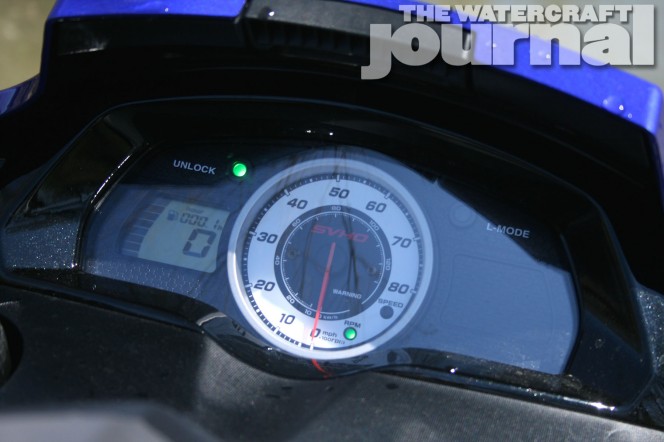
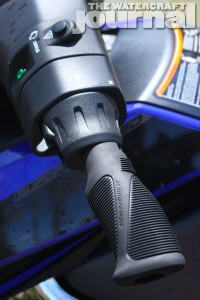
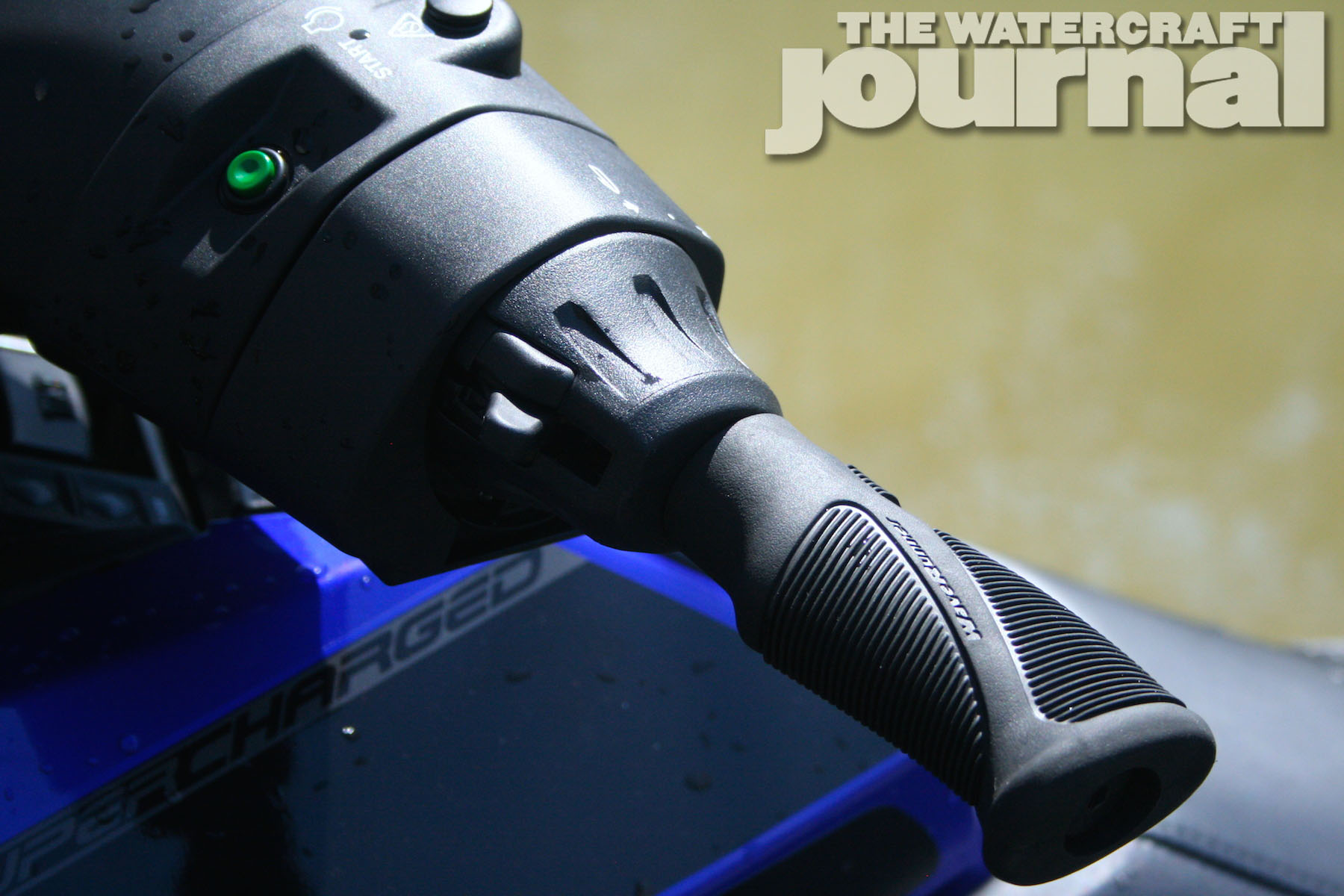
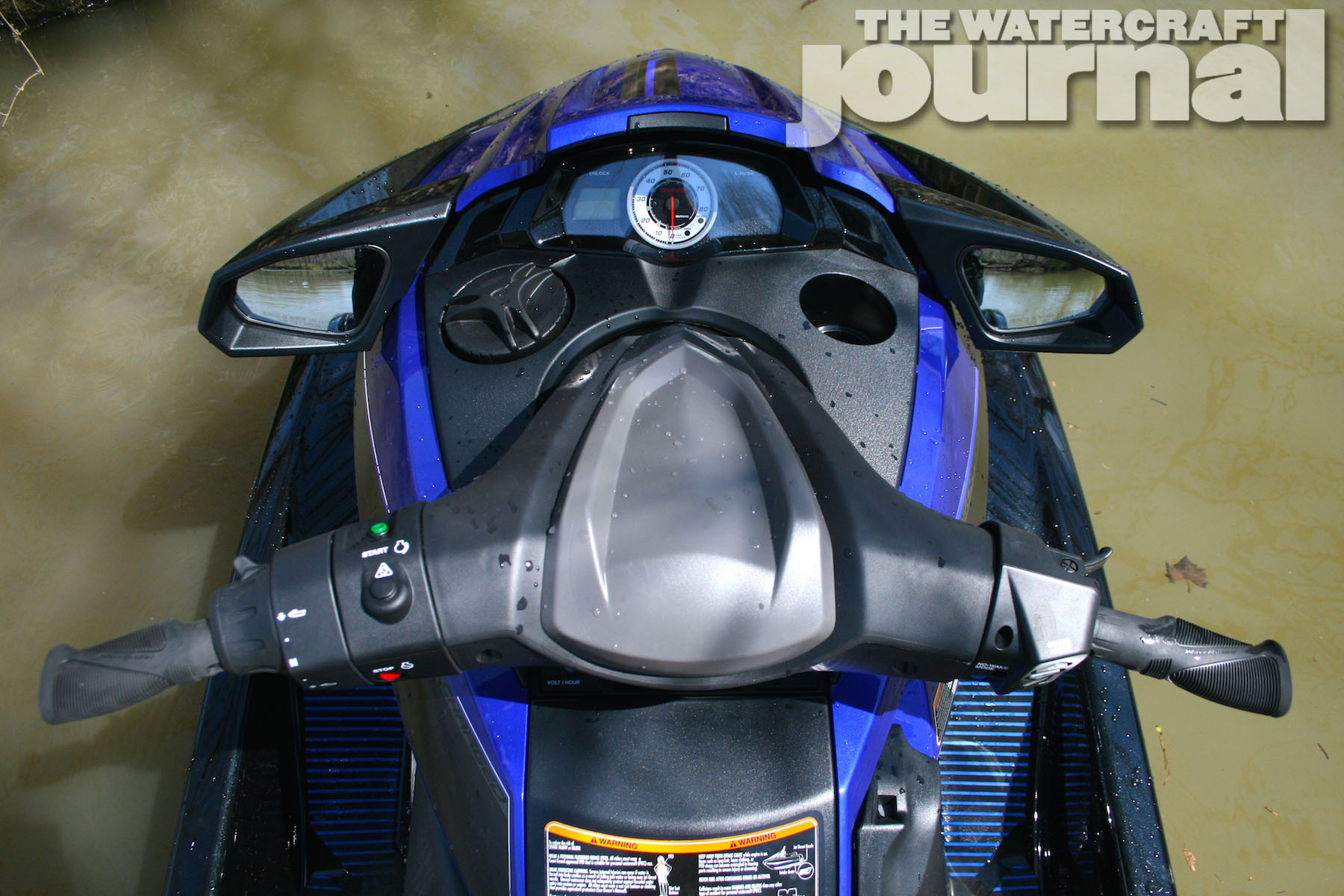
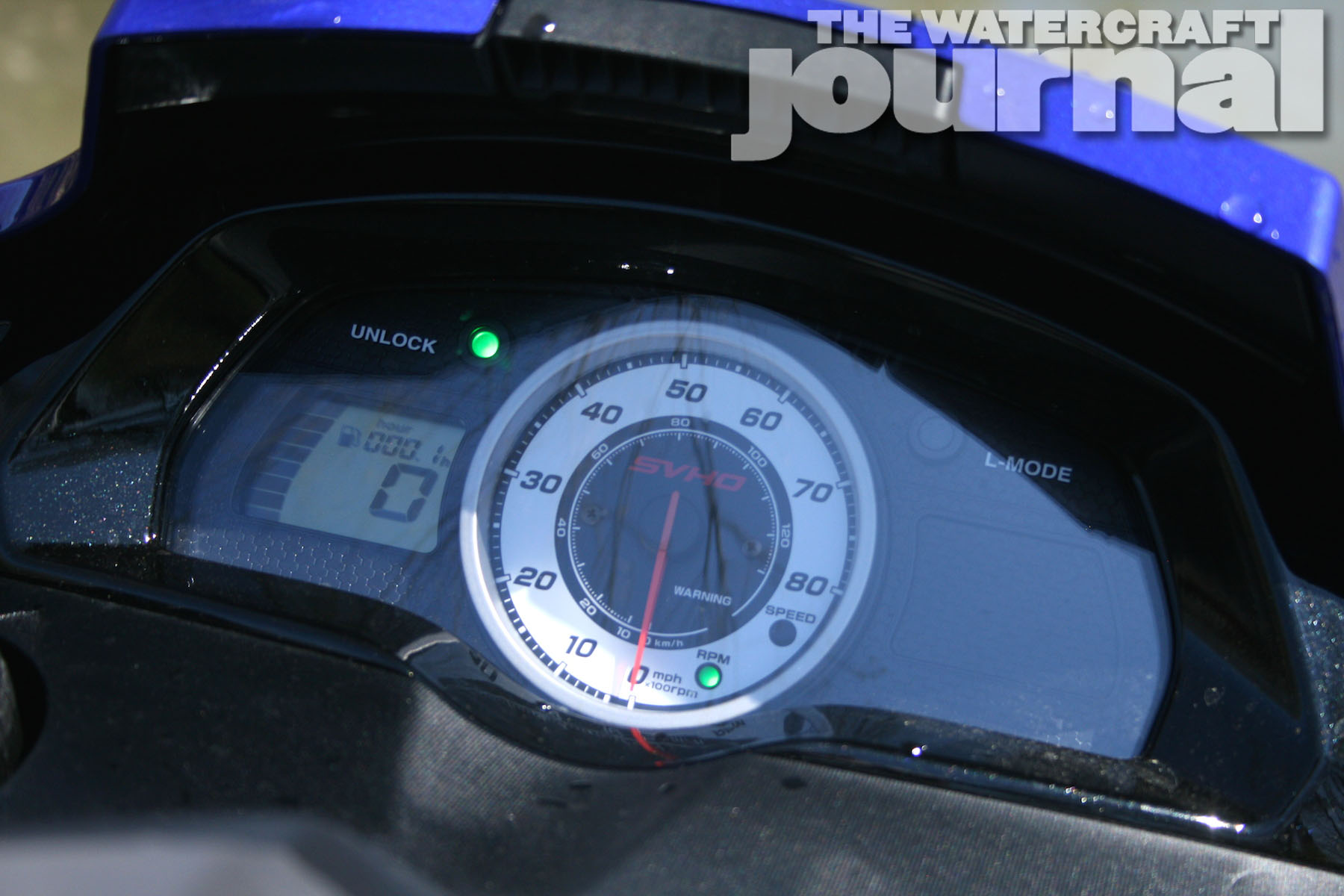
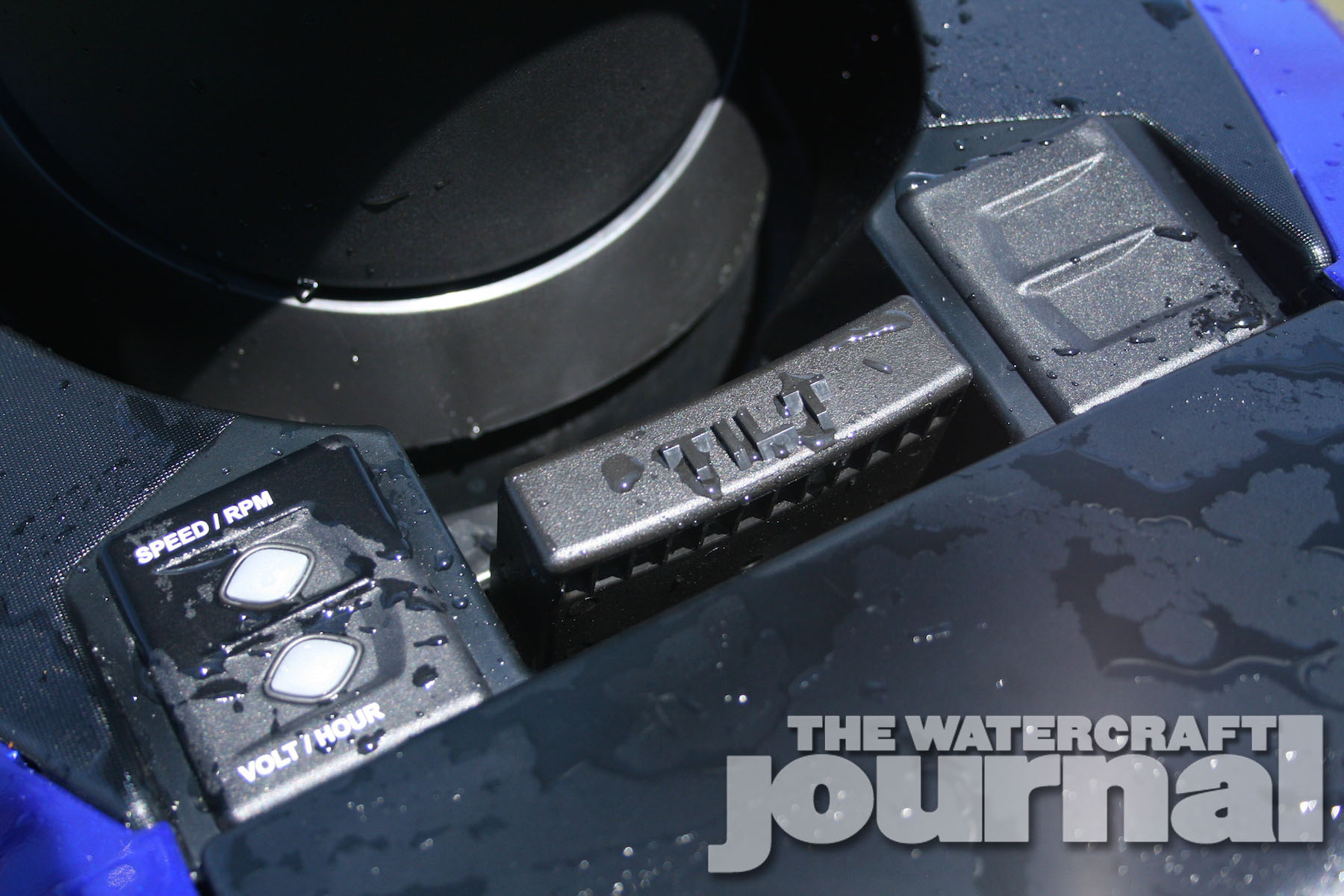
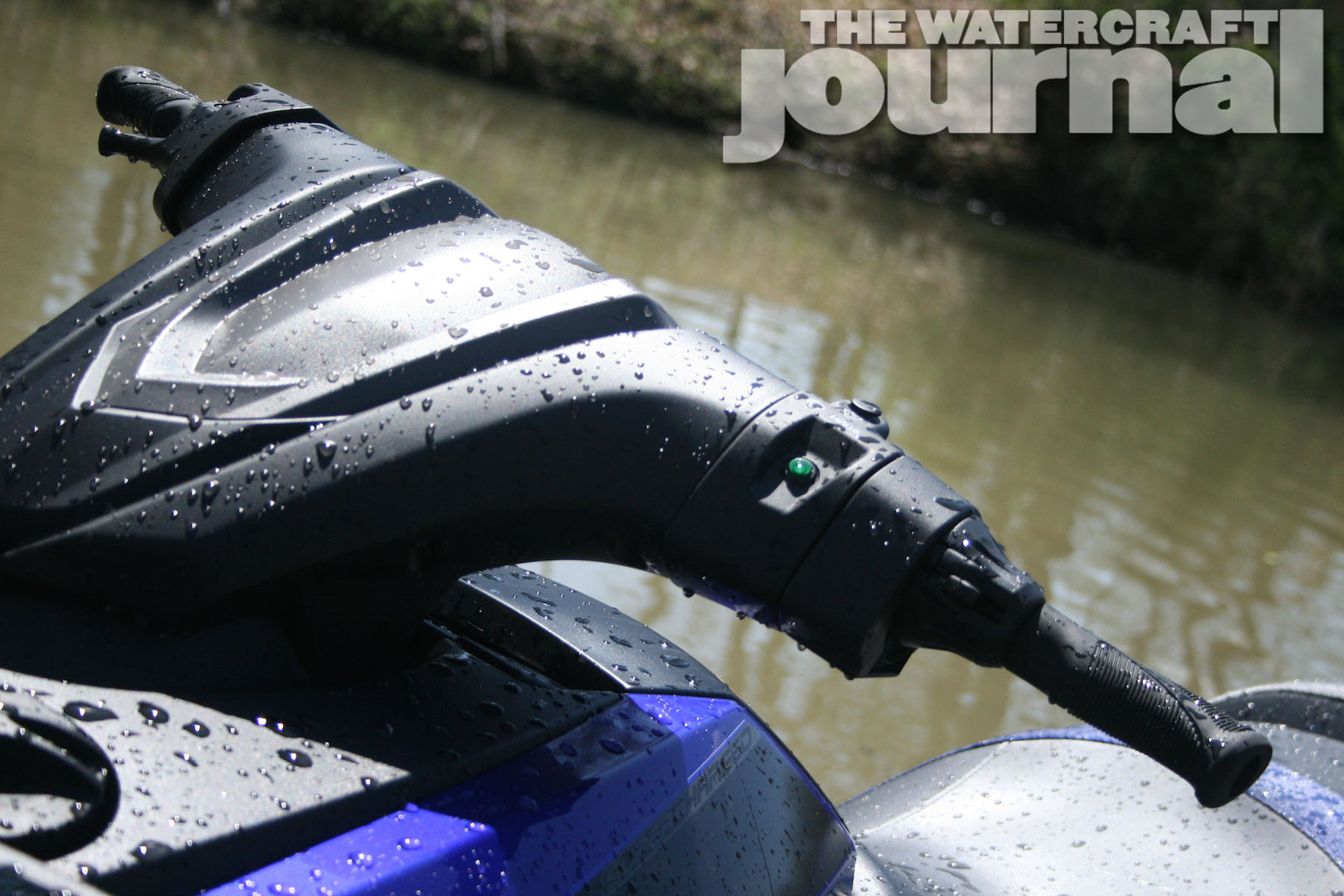
The dashboard of the FX SVHO is delightfully uncomplicated. High visibility lights and an easy-to-read single analogue gauge reads off speed (or RPM) with a very clear hour counter and fuel gauge.The command to “hang on tight” has never been easier thanks to Yamaha’s pistol grip-style handlebars. Oblong, contoured and well-placed, we wouldn’t change a thing even if we could.
To get the most out of this new powertrain, Yamaha not only employed its proprietary NanoXcel material laying process for the hull but the deck as well, plummeting the runabout’s heft down to a featherweight 873-pounds. (All without sacrificing an ample 33.2-gallon total storage capacity.)
Producing more boost, more compression, greater fuel efficiency, lower internal engine temperatures (heat soak), more thrust, better hookup and improving the power-to-weight ratio, the SVHO erupts out of the gate with a neck-snapping 1.5-second 0-to-30, and reportedly, when piloted with a lightweight rider and laden with a gallon or two of fuel, can tickle 71mph (but don’t tell the USCG).
For our test, we scantly reached a top speed of 67 miles per hour, which is understandable given that we had a heavier pilot, a full tank of fuel (18.5-gallons) and less than the required 5-to-10 hours of sufficient break-in time on the hour meter. Nevertheless, throttle response is razor sharp, leaping at the flick of the trigger. In fact, the immediacy in which the SVHO pulls through its sturdy mid-range to top end is enough to quiet naysayers.
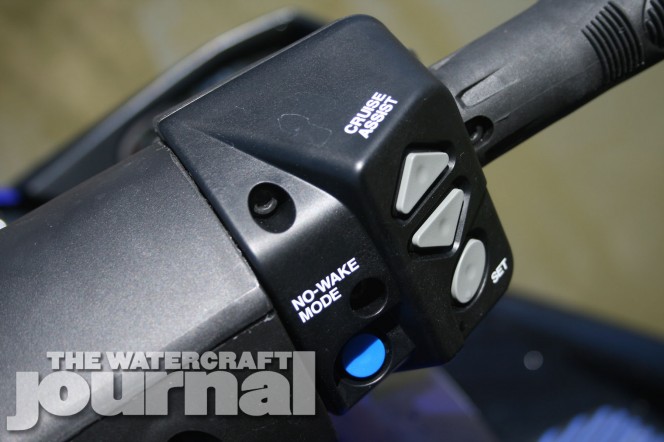
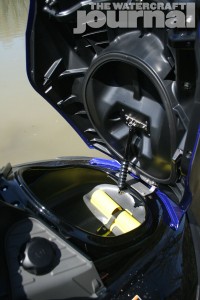
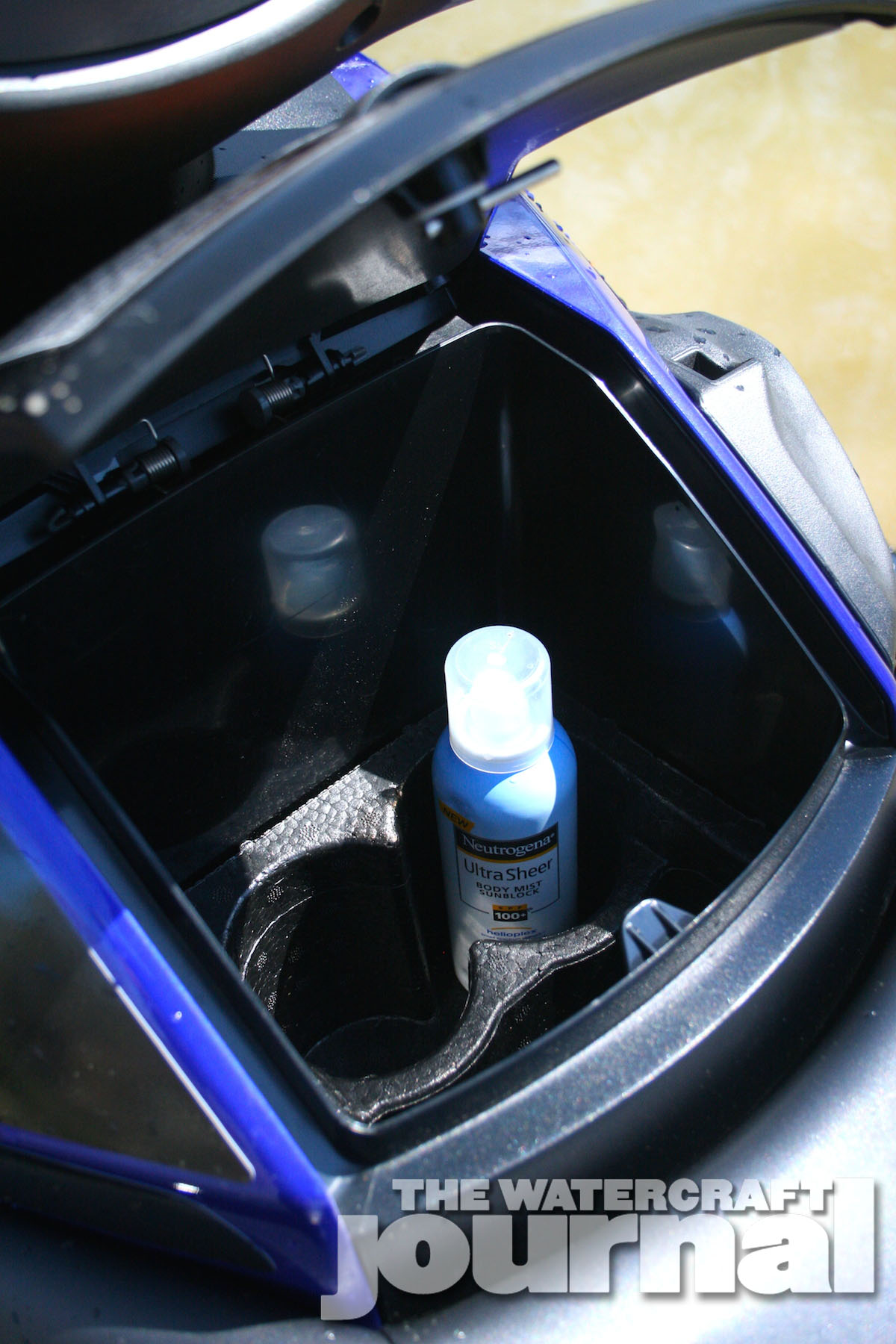
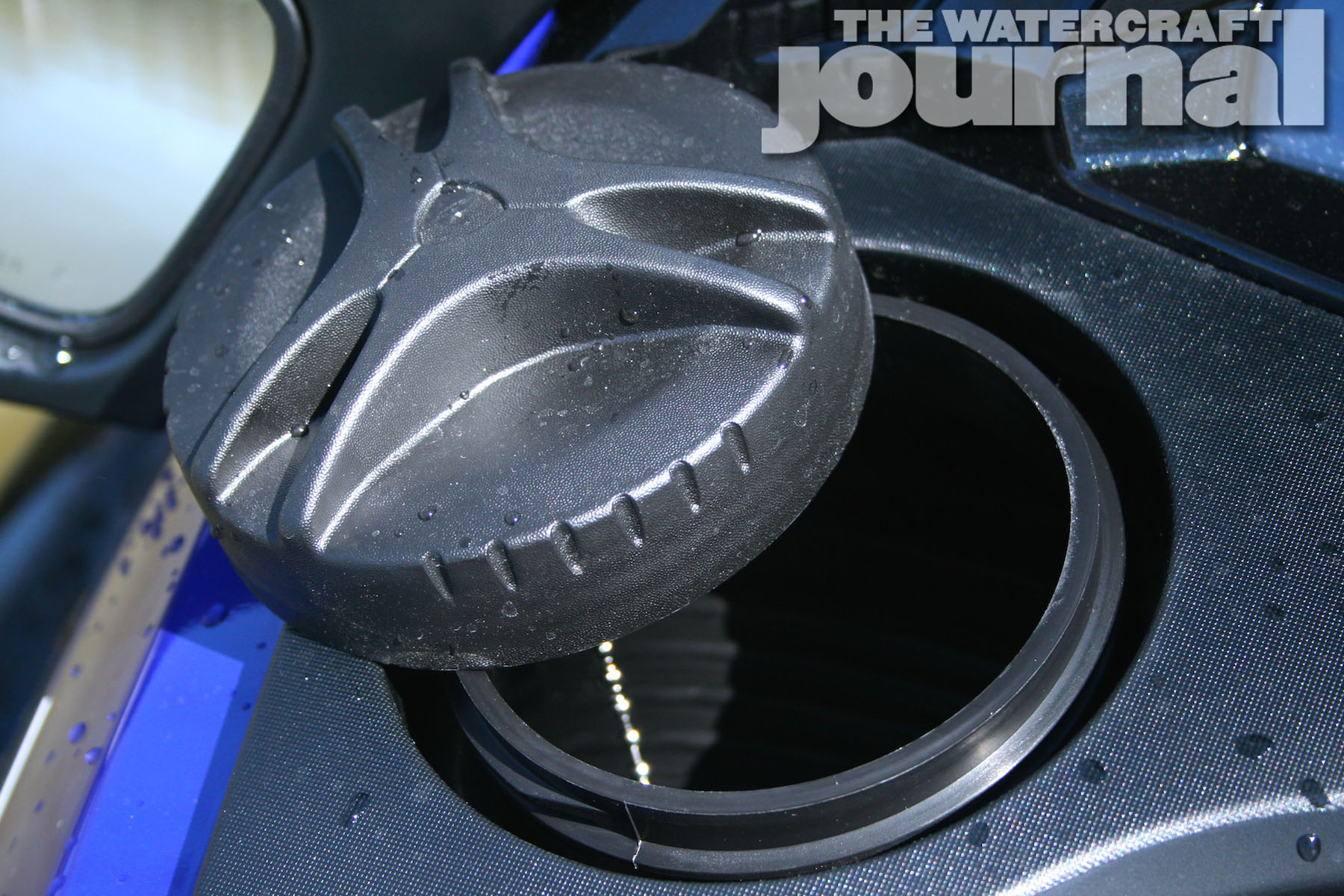
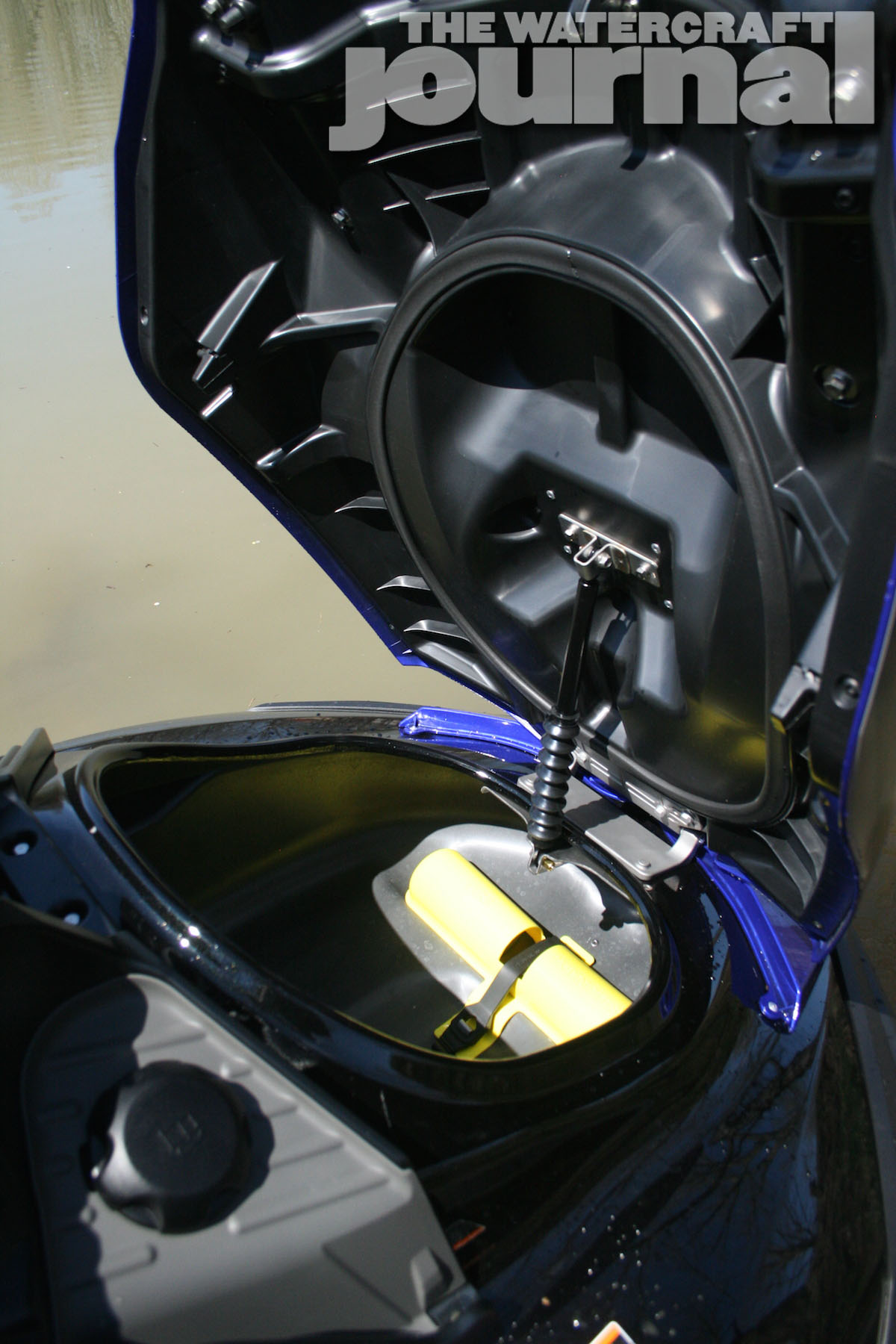
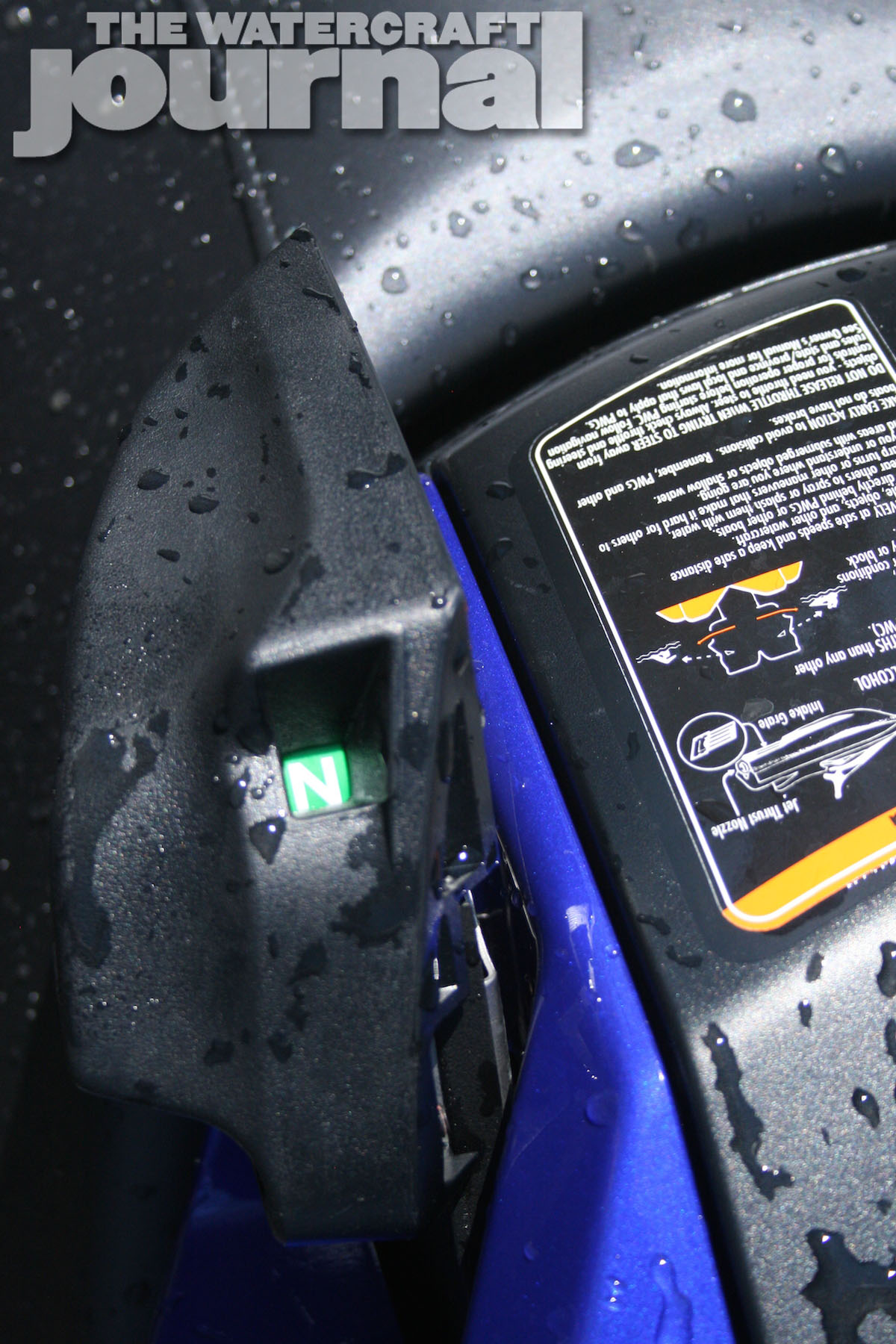
Yamaha’s Cruise Assist controls and No Wake Mode buttons are well within reach, but could benefit from a little quicker response when activated.The glove box features a removable Styrofoam insert with two integrated cup holders (in addition to the in-dash cup holder), ensuring that riders never dehydrate.
Without taking away from the FX SVHO, the bliss provided by the new powertrain can be had in both of Yamaha’s FZ units, the FZR and FZS. What truly makes the FX SVHO is its full exploitation of the previously mentioned redesigned hull. The SVHO package simply produces the power and hookup that reveals the brilliance in the NanoXcel FX hull that the SHO couldn’t.
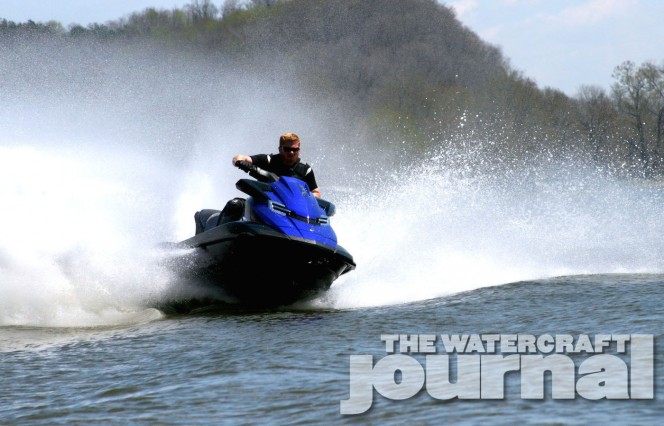
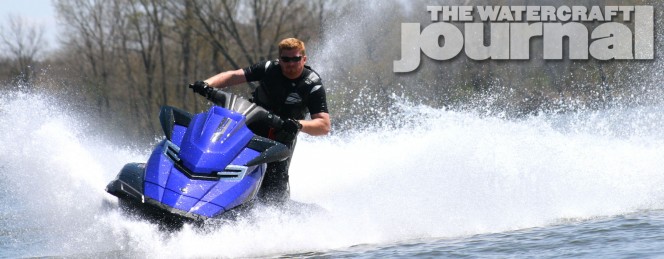
Now, the FX can confidently roll into a turn without backing off the gas. With the trim set down a notch or two, the bow digs in, bites hard and rolls into the turn like a craft two thirds its size. Through chop, the FX behaves like an angrier version of the naturally-aspirated versions we’ve reviewed here before, tracking straight and true.
We managed to snap the tail loose a time or two, but racked that up to setting the trim down to its maximum and refusing to lay off the fun trigger. When careening through the tight serpentine turns of the muddy-brown Sycamore Creek or the open, windblown waters of the Cumberland River, we couldn’t get enough out of the FX SVHO.
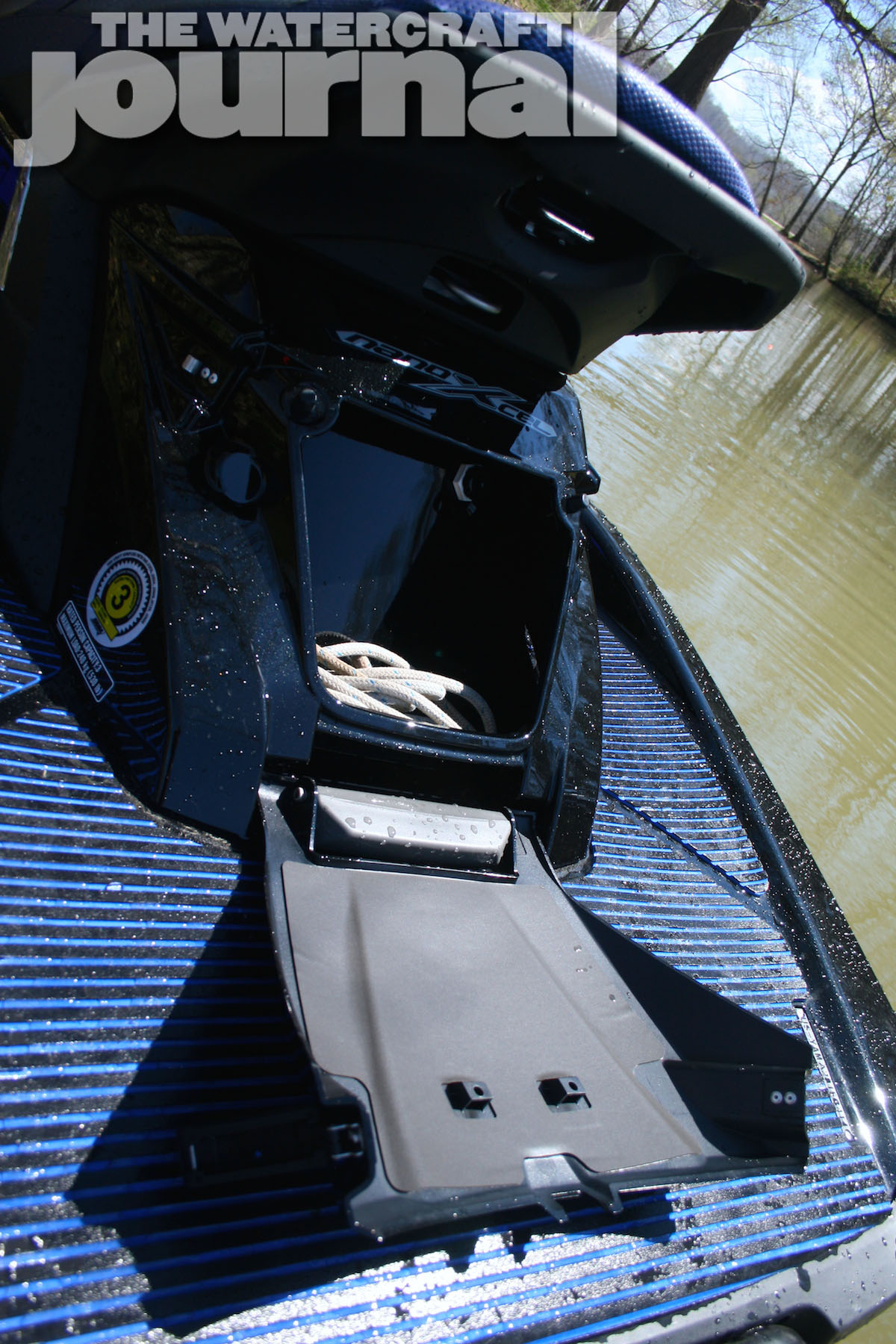
Whether sluicing through windblown chop or the still waters of a quiet creek, the FX SVHO can handle it with ease – and speed! We were impressed with the ski’s good nature in the rough and impressed with how greedily it cuts a turn.Bow storage is plentiful, but when combined with the glovebox, rear deck bin and watertight storage under the rear passenger seat, the Yamaha’s 33-plus-gallons is more than enough.
The dashboard is spartan, with a single analog gauge and simple LCD screen to the left reading off RPM, speed, fuel and other necessities. The tilt steering is sturdy with no noticeable play. And as we’ve said before, Yamaha has got the best hand grips on the market today. The pistol grip design allows for comfortable reach of the No Wake mode, Cruise Control toggles and ignition switch.
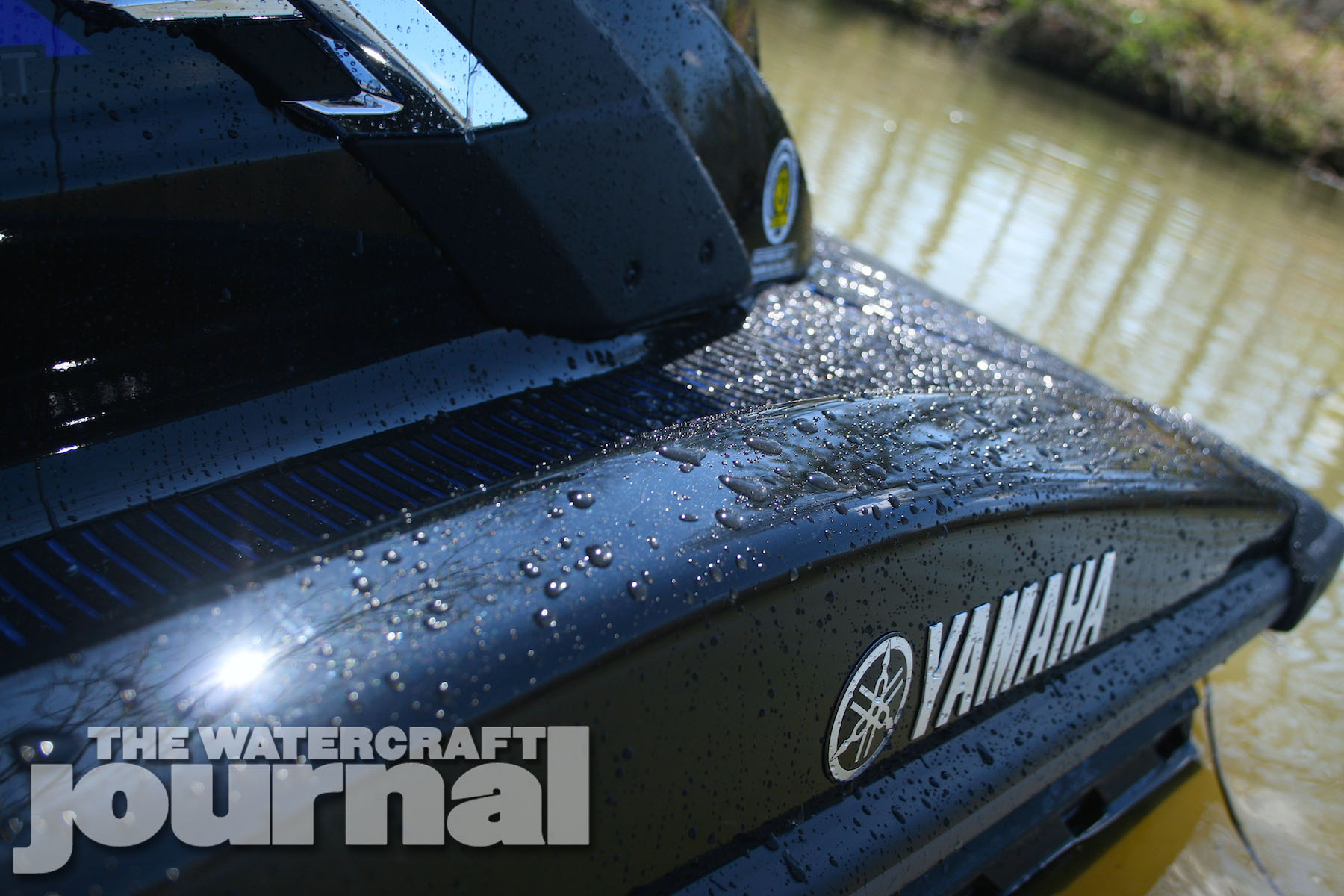
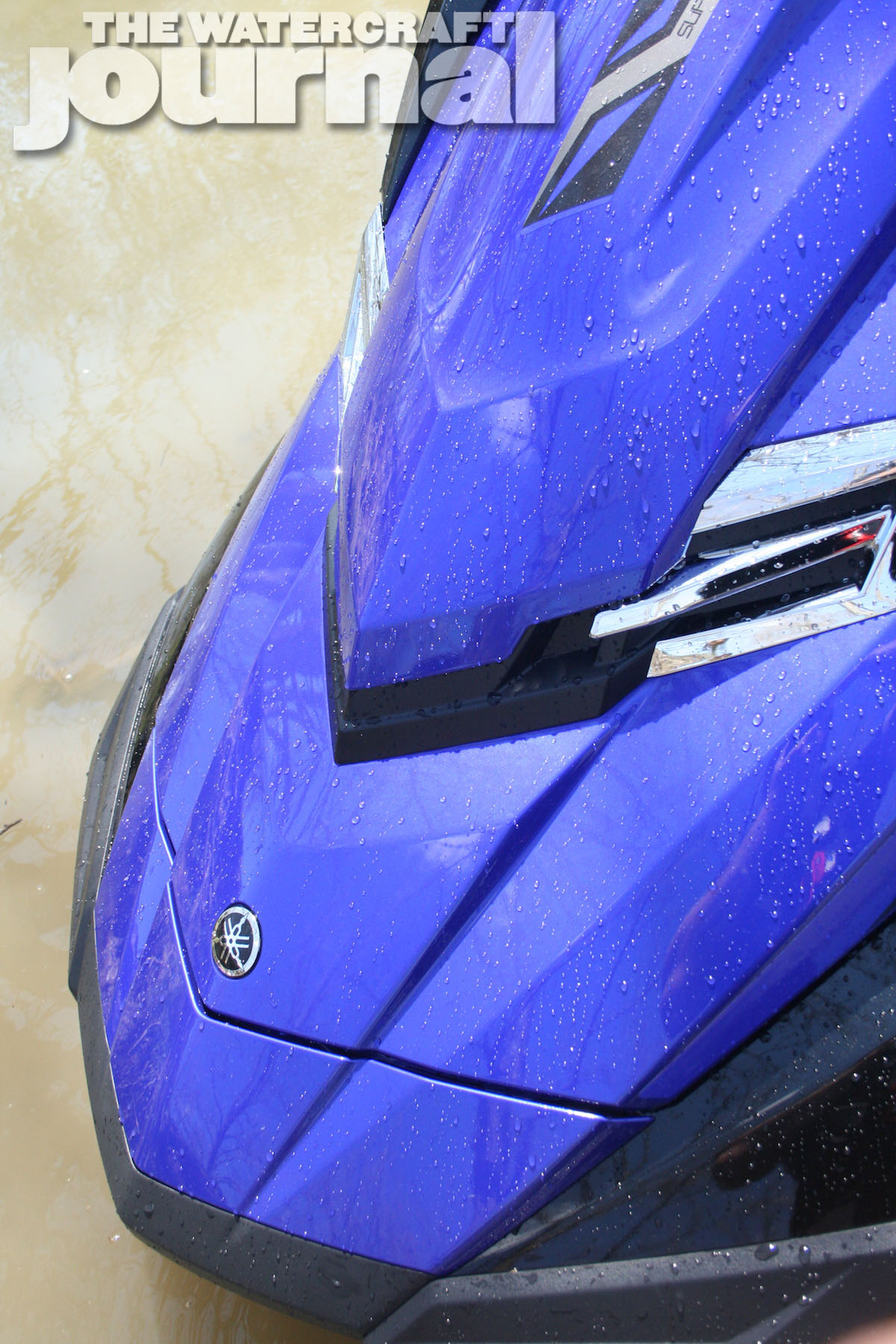
Being an FX, the three-seater SVHO provides plenty of room for riders and gear, including the “wet storage” bin beneath the third passenger. The craft’s most aesthetically pleasing addition is a large swim step covered in two-toned Hydro-Turf traction matting. The long two-part bench seat is equally hued, but it’s in the paint job where Yamaha shines. Adorned in Yamaha’s Deep Blue and Black Metallic paint, our test subject caught the eyes of passersby even before we reached the launch ramp.
All in all, the 2014 FX SVHO is something to behold. Providing all of the refinement and civility of the FX lineup but the brutish power and catlike reflexes of the FZ runabouts, the FX SVHO is a do-it-all performer that will surprise a lot of disbelievers who think they can’t get the performance they crave from a full-sized three-seater. We know because we were one of them.
And for those of you looking at tweaking and tuning a new Yamaha, will find the FX superior for top speed numbers than the FX and its large, wide-mouth pump intake.
Special thanks to Pat Moeller who let us break in his new toy, and George Rinehart who nearly got me eaten alive by snapping turtles and water moccasins.
The above resume should attest to our love of freeride, and because of this, we are really excited to share James Visser’s fantastic GoPro edit of his January freeride session aboard his Yamaha WaveBlaster. Titled, “Because Backflipping a Stand-up is Too Easy,” James, the 2003 Freeride Jetski World Champion in both Stand-up and Sit-down categories, “shows what can be done on a sit-down ski. After not getting onto a jet ski for 7 years, this video was filmed on his second ride with a rotator mount from Upclose Productions” according to the video.
We strongly encourage you to watch James masterfully shred the lip off of several waves, perform can-can, kickflips and just a whole lot of stellar freeride tricks that are hard enough on a lightweight aftermarket stand-up, not to mention a heavy sit-down ‘Blaster (although, we know calling a WaveBlaster a “sit-down” will probably get us punched in the mouth in some circles). And once you enjoy the video below, make sure to check out James’ collection of snapshots from the surfride session HERE.
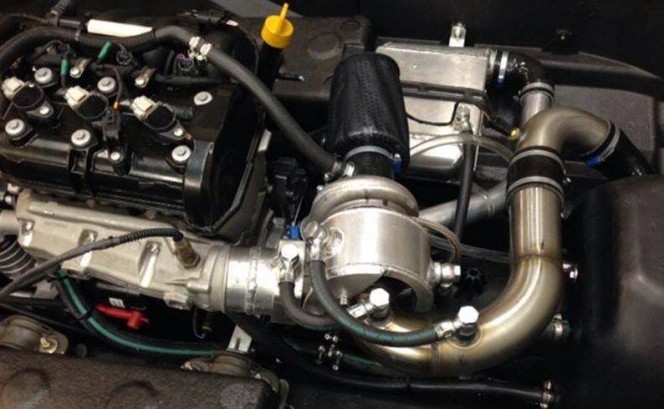
Hey, we all love Sea-Doo’s little “Rec Lite” class runabout, the Spark but its 60-horsepower leaves quite a bit to be desired. In a world of 310-horsepower supercharged machines and sub-2 second 0-to-30 times, it’s hard not to want a little more performance. Word of V-Tech Tuned’s insane turbo package for the Spark broke late last year and the numbers pouring out of the Swedish tuner’s shop continue to impress.
Our friends at WMF Watercraft are equally impressed and have recently announced that they are ready to begin converting your staid and simple Spark into a real screamer. Purchased through Jerry Gaddis’s top tier PWC performance store 4-tec Performance, Millsboro, Delaware’s WMF will quickly convert your entry-level 2- and 3-up Spark into a boosted and bad ass runabout in no time.
V-Tech’s Jonatan Holmelius explained, “Just a reflash will give the 60/90-horsepower Spark approximately 110Hp. With the turbo kit you can get [between] 140-to-180hp depending on the boost level you run. Even if you run the “low” 140-horsepower setting, you still get a lot more mid-range torque! From 6,000 rpm, you get approximately 40 horsepower more then stock…all the way to 8,500 rpm! Its a very nice improvement on both mid-range and top end!”
A major retailer of RIVA Racing parts, WMF Watercraft has proven itself as a go-to source top-tier performance tuning, having completed the gorgeous Miss Geico RXP-X Sea-Doos seen at nearly every boat show in the United States, not to mention their stellar tuning, repair and upkeep services.
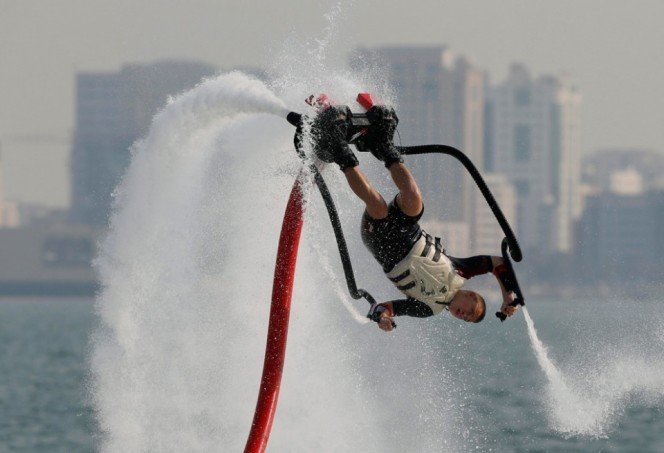
The public interest in growing, but Flyboard(ing?) still has yet to reach the mainstream. To help fix this, Zapata-Racing is helping create the first ever North American Flyboard® Championship 2014. Hosted in collaboration with Flyboard® Canada, Flyboard® Quebec, The Canadian Flyboard® Association, The American Flyboard® Association, The Mexican Flyboard® Association and The RedPath Waterfront Festival (that’s a mouthful!), the North American Championships will be hosted in Toronto, Canada this upcoming June 20-22.
Welcoming the top Pro Flyboarders from Canada, USA and Mexico, the North American Flyboard® Championship is baiting competitors with goodies, swag, fame and $2000 for first place (and $1,500 for second and $500 for third). Additionally, the North American Flyboard® Championship is promising over a million spectators. We have literally no idea how they can promise this unless the championship will be broadcasted internationally, but no such announcement has been confirmed thus far.
Nevertheless, it’s bound to add up to a pretty interesting event. Here’s the original press release:
You have been un-randomly selected to join us at this massive historical event!
This is the world’s first North American Flyboard® Championships held this June in Toronto, Canada. This event is conjunction with Zapata Racing, The Canadian® Flyboard Association, The US Flyboard®Association, and The Mexico Flyboard®Association.
Please read Flyboard magazine’s article for more details: http://www.flyboardmagazine.com/north-american-flyboard-championship-2014/
We want to see your face here, so come on and join us for a guaranteed mind blowing good time! This will be epic experience as we’ve put more than 6 months of work into it. 32 of North America’s top Flyboarder, 200ft Tall ships, helicopters, the Zapata family, the Flyboard family, live bands, Flyboard costume contests, great food and polite Canadians! What else could you ask for?
Attendance will be close to a million people, yup, that’s almost 2 million eyeballs, on YOU! This is your chance, don’t miss it. BOOK IT NOW! JUNE 20th, 21st, 22nd. Huge hotel discounts announced soon. Everyone is welcome so bring family, friends, pets? To our beloved Flyboard family, we can’t wait to see you all.
COMPETITION SCHEDULE DAY 1 (Friday) 9am-12pm QUALIFYING ROUND 1pm-4pm ROUND 1
DAY 2 (Saturday) 9am-12pm ROUND 2 1pm-4pm ROUND 3
DAY 3 (Sunday) 10am to 1pm FINALS 2pm to 4pm GROUP FLIGHT/COSTUME SHOW/PRIZE GIVEAWAY 4pm-5pm CLOSING CEREMONIES
HOTEL Hi all, here is the info for our hotel. PLEASE DO NOT BOOK YET. I WILL SEND YOU A LINK FOR THE DISCOUNT. The BLOCK for Flyboard Family is as follows:
x60 rooms total Dates secured from: June 19 to June 23 Room rate $175.00 The hotel is the Westin Harbour Castle Hotel AAA 4 Diamonds. Located at 1 Harbour Square, Toronto, M5J 1A6. Website is: http://www.westinharbourcastletoronto.com/gallery
VISA Some counties will be asked visa’s to get in as a visitor. USA and France are not required. I just saw that Mexico is required. For Mexico here is the web site to get all the info
English http://www.cic.gc.ca/english/visit/visas.asp?country=Mexico
Français http://www.cic.gc.ca/francais/visiter/visas.asp?country=Mexique
You can easily check in this website bellow if a visa is required for your country.
http://www.cic.gc.ca/english/visit/visas.asp
If you need any help with this please feel free to contact me on my cell: Alex 514-754-2775 our US number in my cell(305) 514 9182.
While we at The Watercraft Journal were patting ourselves on the back for a pretty snappy April Fool’s Joke, it would look like Sea-Doo was the one who pulled a fast one on us, and released a entirely new runabout (nearly mid-season, mind you) for 2014. No, we’re not kidding. And this machine is something that we think everybody can get behind of, although its not being marketed towards the masses. Enter: the 2014 Sea-Doo Search And Rescue (SAR).
The SAR is almost a tailored-fit response to not only the cries of rescue responders on the race course, but also that of local municipalities and lifesaving departments who regularly venture into surf, whitewater rivers, flooded areas and the like. Advertised as being ideal for “evacuation, surveillance and interception,” the SAR is significantly more than just a dolled up GTI either.
The list of features added to this machine make it a virtual commando of life-saving. From the outside, the SAR is available in two liveries, the high-visibility red-and-yellow scheme shown here, and a more staid black-and-white combo. But the SAR is much more than fancy graphics and a color-coordinated seat.
Quite literally, the Sea-Doo Search and Rescue (SAR) is no joke, with enough equipment to make a Coast Guard Zodiac blush.
Most noticeable are the SAR’s long pontoon-like “secondary sponsons.” Made from professional grade CSM (Hypalon®), the sponsons provide significantly more stability and buoyancy. These are capped with new running boards, allowing for more mobility around the deck. The hull has been treated in a shock protective 2.8 mm elastomer coating and features a large front bumper to ward off any hull damage.
Under the hull, a new “Shallow Water Navigation Kit” includes an anti-debris water intake grate, stainless steel wear ring, internal heat exchanger, and shock-protected cooling system (read: no ride plate heat exchanger). Above, the SAR is loaded with front navigation lights and a tall carbon fiber rear mast topped with another navigation light. The front storage bin includes a 12V outlet as well.
Because the SAR is based off of Sea-Doo’s Recreation-line GTI SE, it’s powered by a naturally-aspirated 1,494cc Rotax generating an advertised 155-horsepower. But it’s not the same old, same old, here. The SAR comes default in Sport mode, and includes a “universal key,” unlocking the system for fast deployment by any rescue team member.
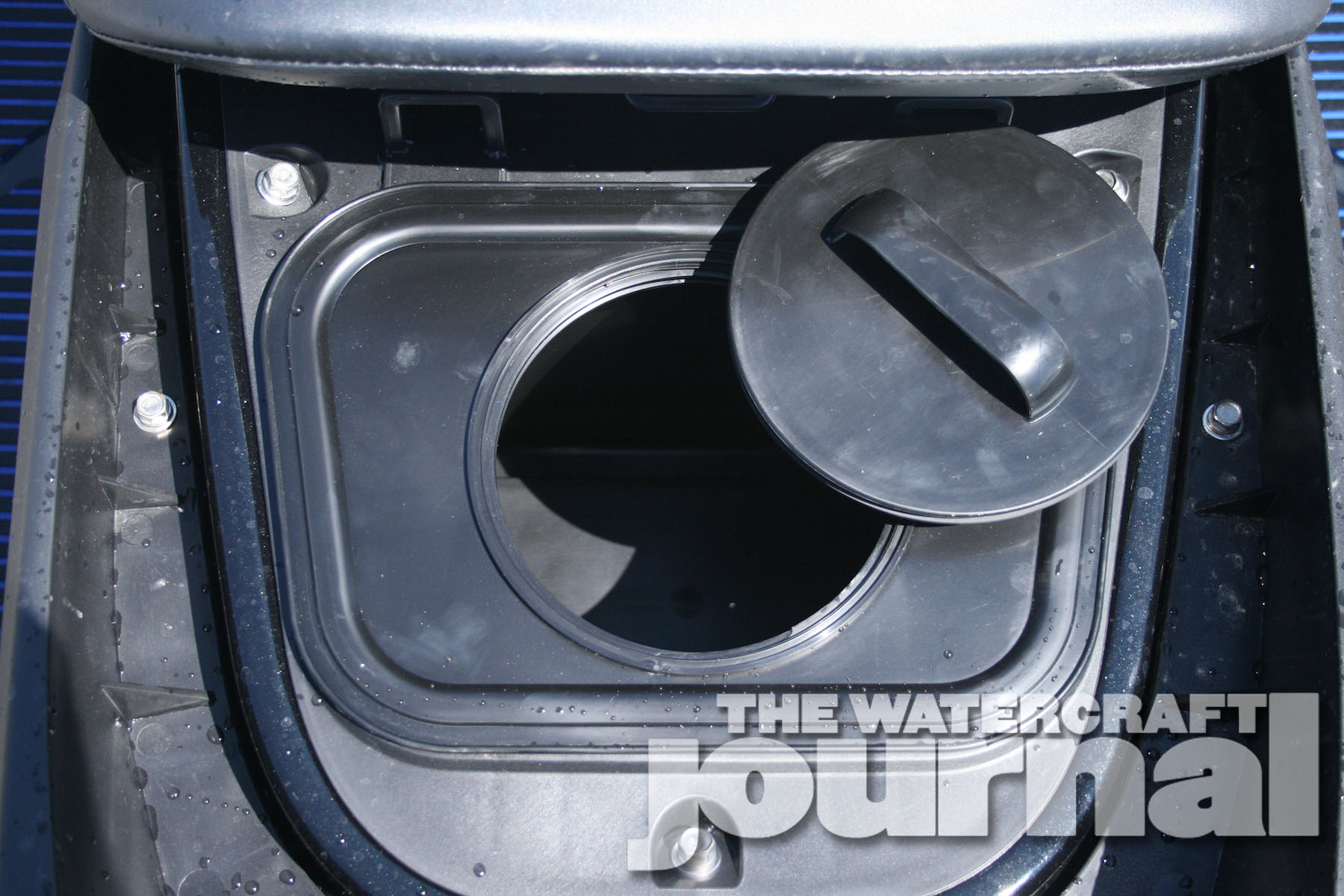
Additionally, the SAR has the brand’s first elevated fuel filler for easier access and refueling, while preventing water intrusion while refueling. The SAR’s list of additions include a tow hook, seat strap, a rear boarding step, an external exhaust cooling flush attachment, and large capacity bilge pump. The first of its kind – especially from a major manufacturer, the SAR benefits from all of the maneuverability of a personal watercraft, the features endemic to Sea-Doo (like iBR and iControl) and years of experienced rescue crews who have already excelled at using PWC to save lives.
Below are a handful of videos outlining the SAR’s capabilities in a variety of circumstances as well as a closer look at its features: