There’s always something new going on here at The Watercraft Journal. While we’re working on some really cool ways of better connecting our readership to the industry’s best aftermarket products and planning a great refresh of the industry’s fastest growing, most popular and ONLY daily personal watercraft magazine, we also have some fantastic announcements to make regarding some of the sport’s biggest events here in the United States.
But hey, that’s just the tip of the iceberg! Not only will the whole Watercraft Journal staff be present at the Panama City, FL and Lake Hartwell, GA tour stops, the Jettribe IJSBA World Finals in Lake Havasu, AZ, but we’ve bee personally invited to participate in this year’s Long Beach to Catalina Offshore Endurance National Championships happening this July 20th.
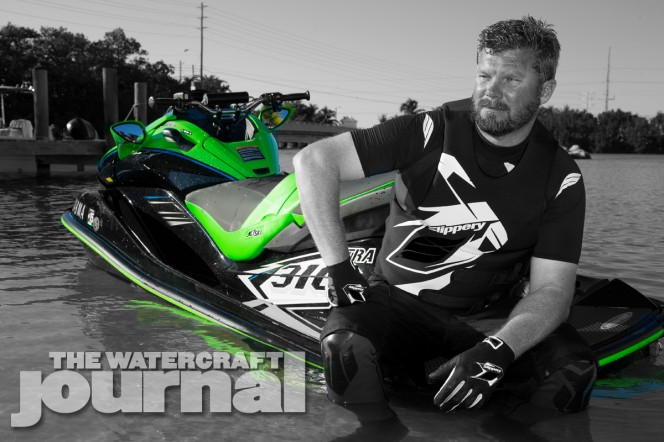
Our own Editor-in-Chief, Kevin Shaw will thrash to shed some extra pounds before boarding a brand-new 2014 Kawasaki Ultra 310R JetSki and battle 56-miles of wide open Pacific Ocean. Kevin will be joining the ranks of multi-time IJSBA world champion Craig Warner, who will be contending for his fourth LB2CAT championship, as well as master offshore athletes Mark Gerner and KC Heidler of PWCOffshore.com, and the possible return of Tera Laho, who blew the doors off of last year’s race aboard a supercharged Yamaha FX.
As you’ve come to expect, The Watercraft Journal will bring you immediate next-day event coverage from the Long Beach to Catalina, as well as live updates on our social media channels. Huge thanks go to Kawasaki USA, JetPilot and our other soon-to-be announced sponsors for making this great opportunity possible.
Ugh. Some hump days are tougher than others. So if you find yourself struggling to dig up the strength to really put a full day’s work in, your friends at The Watercraft Journal are here to provide you a little entertainment – if not a complete sap on your daily productivity. As you might already know, our pal “JetSki Brian” Lockwood has become one of the nation’s premier personal watercraft fishermen, having dedicated years to mastering the art of jet angling.
His blog, www.jetskibrian.com is swimming in entries of his exploits including tips on how to equip your runabout for fishing, insight on what equipment he recommends and even recipes for when you bring your catch home! Brian is not only a talented fisherman, photographer, waterman and author, but a cook as well!
But we just glossed over one of Brian’s best attributes: photography. The nature lover has captured some serious terrestrial majesty with his camera lens and you owe yourself a few minutes’ worth of browsing to check out what he’s snapped. From nesting bald eagles to breaching whales, Brian has an eye that not only sucks you into his experiences out on the water, but makes you want to join him for his next trip out.
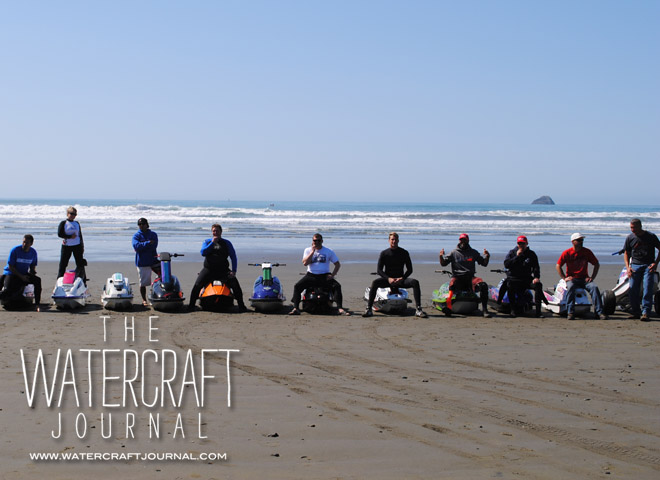
The inaugural freeride weekend took place over the popular spring break vacation, but still brought in 25 riders from across the States.
The inaugural Crescent City Freeride was held this past weekend (March 21-23 2014) in quiet little beach town Crescent City at the northern tip of California. This event was put together by local riders Kendri and Roy Rook along with Chris Farrell and frequent Crescent City pro rider, Pete McAfee.
This year was a bit of a test to see if the locals and the surfers could handle a group of jet skis taking a small piece of the South Beach for a weekend. The hope is that the event was well received and that it can possibly become an annual freeride location.
I was fortunate enough to be able to attend the first ever spring break freeride. I was joined by my good friends and riding buddies Chris Farrell, Dave Pennt and Peter Morrill. We all showed up at Chris’ house on Thursday night to load the skis in the trailer and get a couple hours of sleep before hitting the road at 2:30 am. Our plan was to try and make the 9 hour drive to the ride spot by noon.
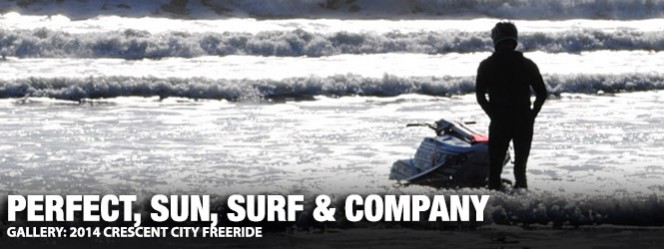
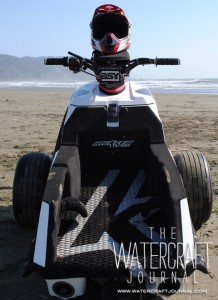
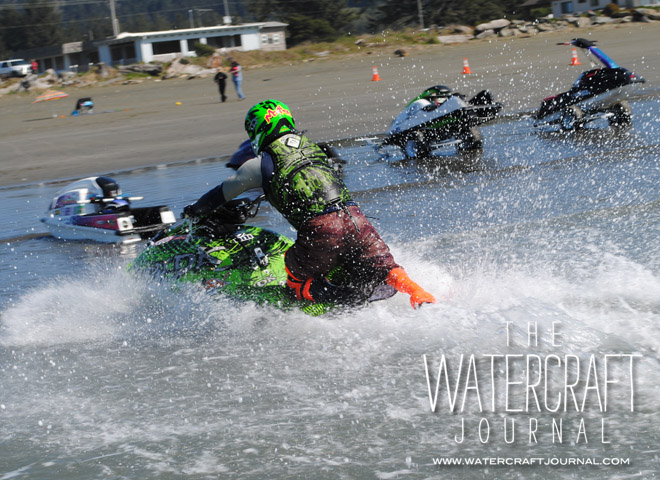
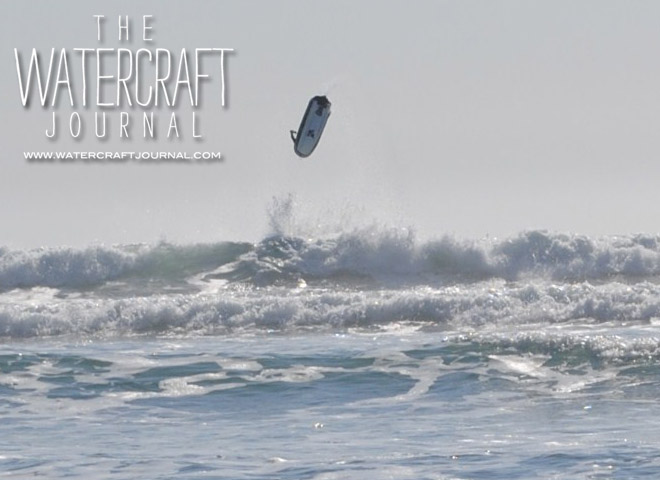
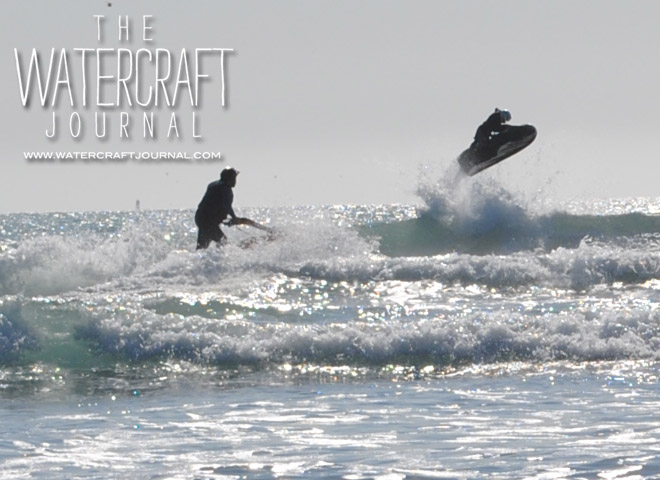
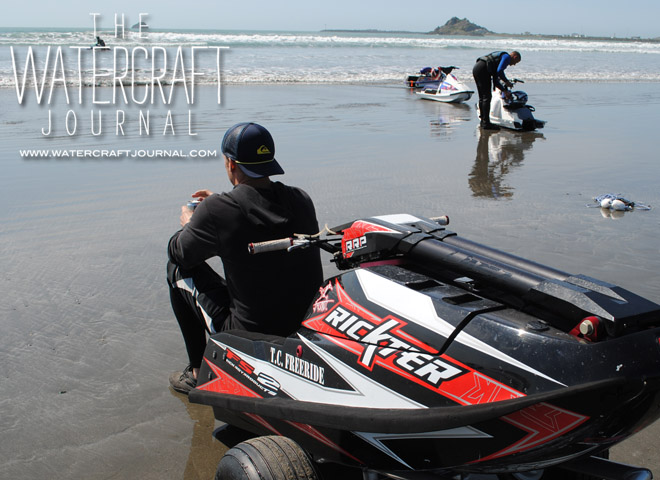
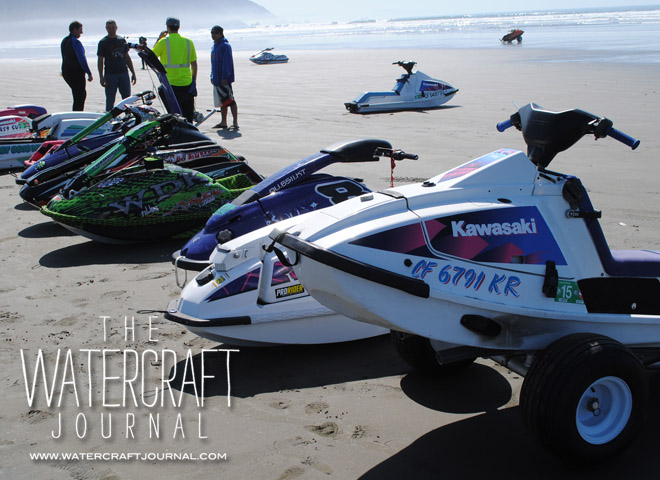
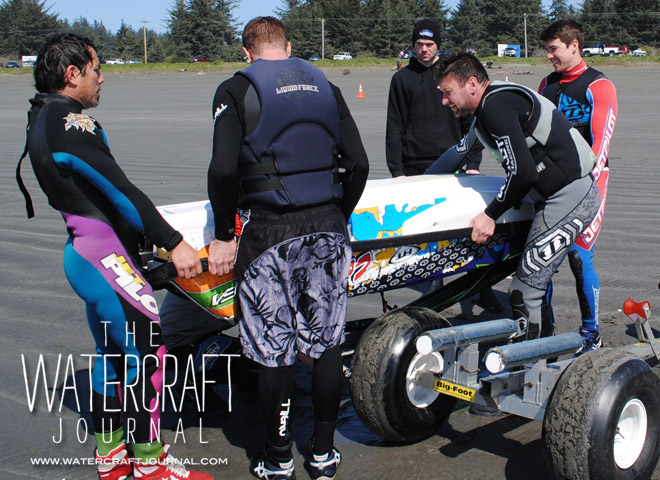
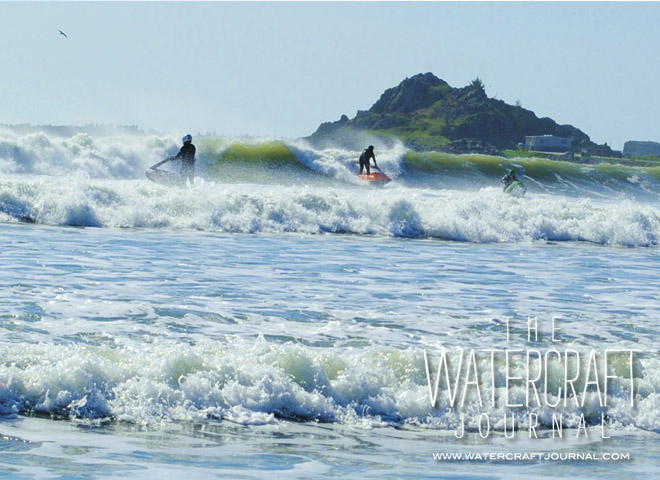
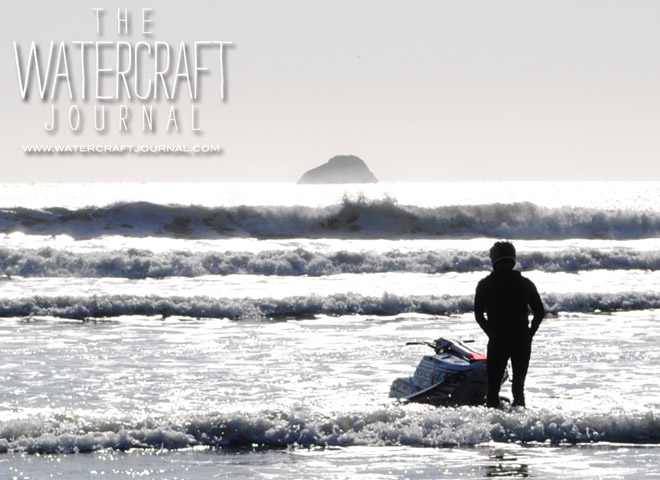
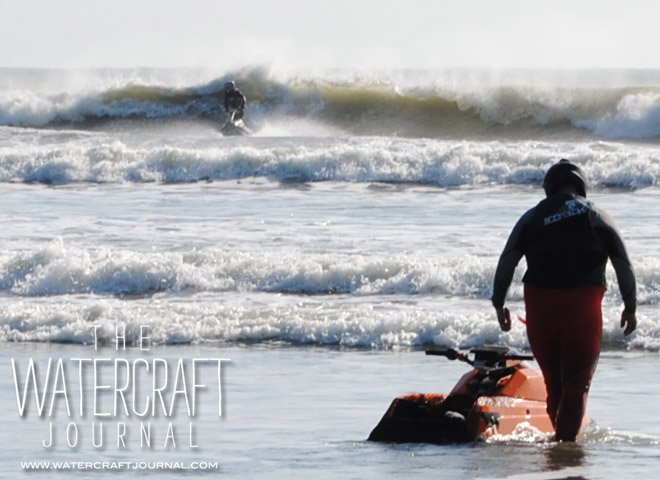
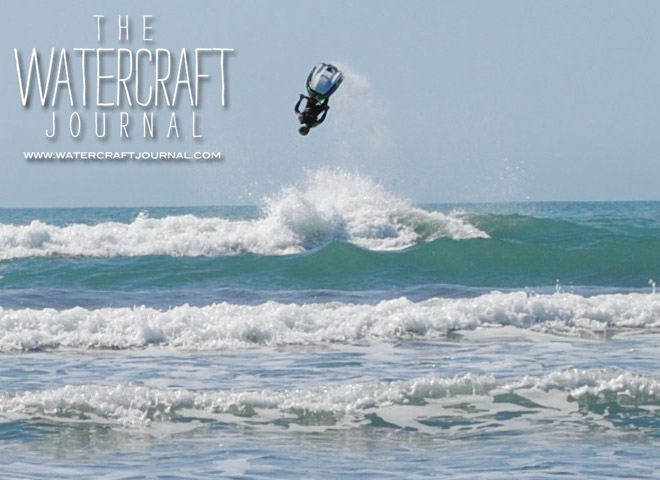
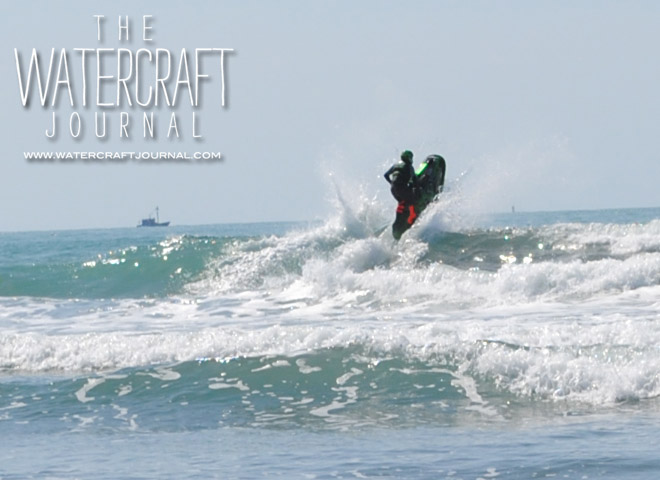
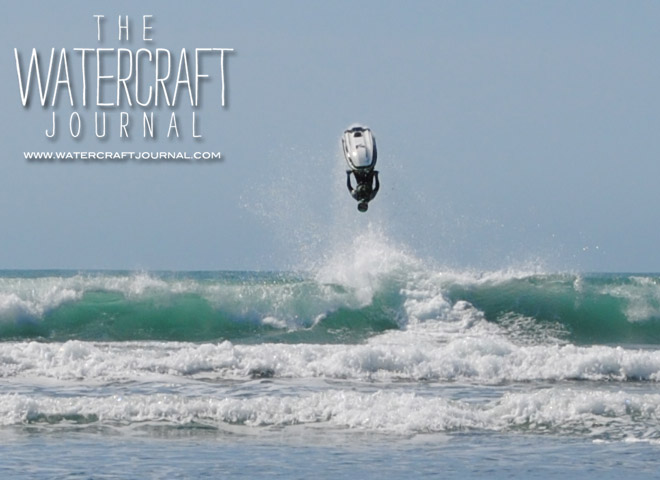
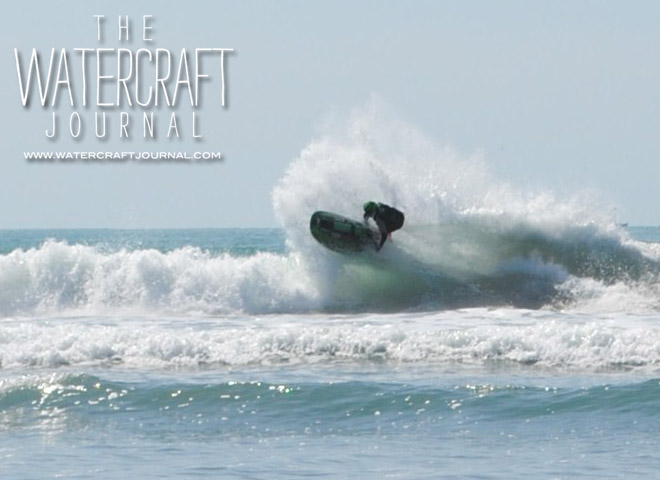
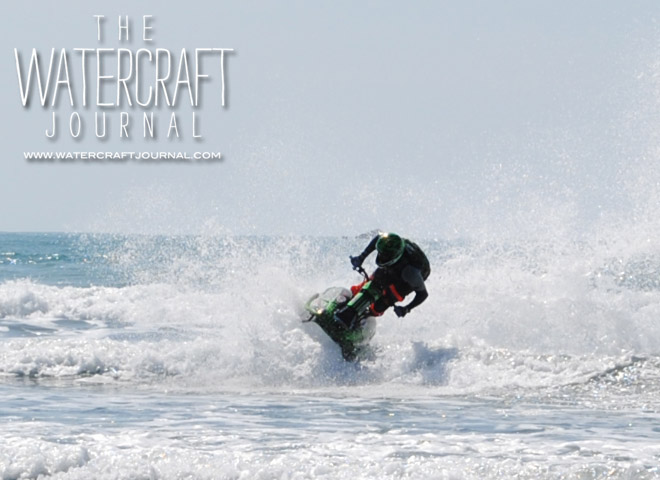
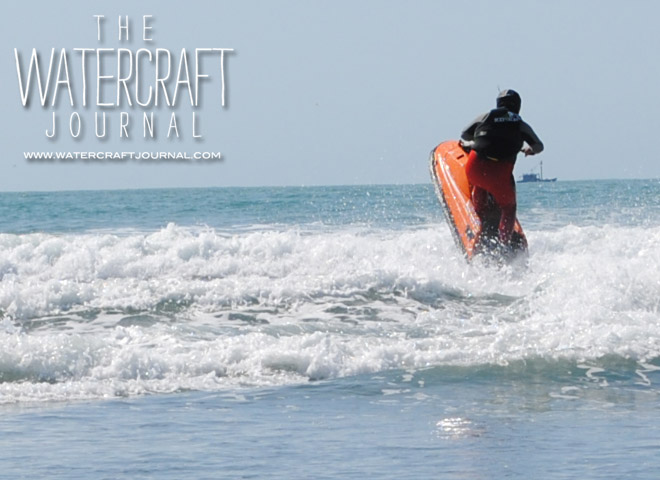
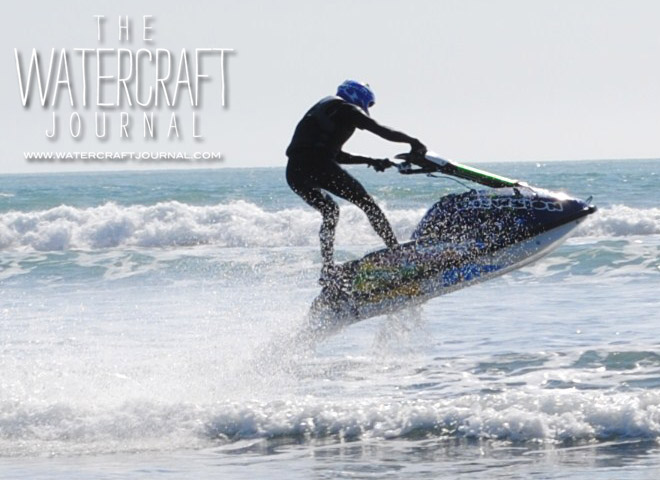
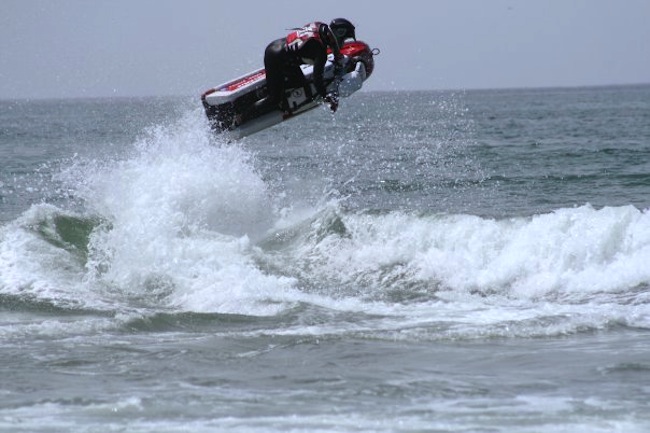
The Crescent City, CA location proved itself fortuitous with nearby parking and great surf, freeriders were able to cart their skis across the flat packed beach into the rolling tide.Two days of full throttle freeriding regularly-breaking 5-to-6 foot waves wore most riders out but in the best possible way.
Chris drove all night like a boss and even let the rest of us sleep (try to anyway). We made minimal stops and arrived on the beach right on schedule to find fellow rider from Idaho, Chris Batton shredding by himself. We quickly unloaded the trailer, stoked to try out the new riding spot that we had heard so many great things about.
It was a great spot with parking right at the edge of the beach, making it an easy cart-in location. The surf was looking really good. Waves were about 5-6 feet with perfect faces and plenty of separation, and we even had a little off shore breeze. We rode all day while more people trickled in to join us.
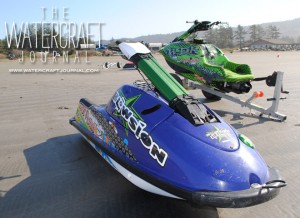
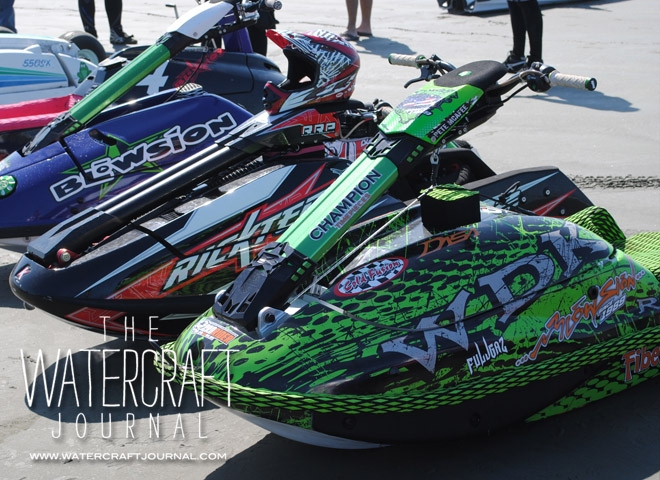
Pro freerider and local charger “Peg-Leg” Pete McAfee Never let off of his Blowsion-sprayed WDK ROK-R ski, even invited newbies to try out their first backflip aboard his ski.Local freerider Robbie Miller impressed all in attendance with how well his throwback Kawasaki 550 could charge the surf. Miller proved that while the equipment helps, there’s no substitute for skill and stoke!
By about 5:30, we all decided to load back up and check into our hotel that was only about 100 yards from our riding spot right on the beach. That night, local riders Roy and Kendri Rook invited everyone out to their home to join them for dinner and hang out for the evening.
They fed the whole Friday night crew (25-plus people) potatoes and tri-tip and we all got a chance to catch up with each other and make introductions to new riders and some locals. Everyone was pumped to get back on the water the next day.
Saturday was to be the main day. The local paper did a little advertising and more riders were on the way.
Some dude flying a motorized parasail came out and buzzed surfers and riders and damn near hit our trailer, but was pretty fun to watch.After the first full day of freeriding, the Rook’s invited all 25 in attendance back to their place for food, fun and repairs. Broken handlepoles, ignition misses and other gremlins were sought out and properly repaired.
The morning started out a bit slow. This being a spring break freeride, many skis had just been taken out of storage or tinkered with and a lot of guys were working out bugs and making adjustments. By midday, most of us were out shredding, and again the surf was killer!
Local rider Robbie Miller brought out his old school 550 and smashed that thing against the face of the waves. I was impressed at what he could pull off on that 550. Peter Morill was getting used to his new Rickter EVO1 and dialing it in.
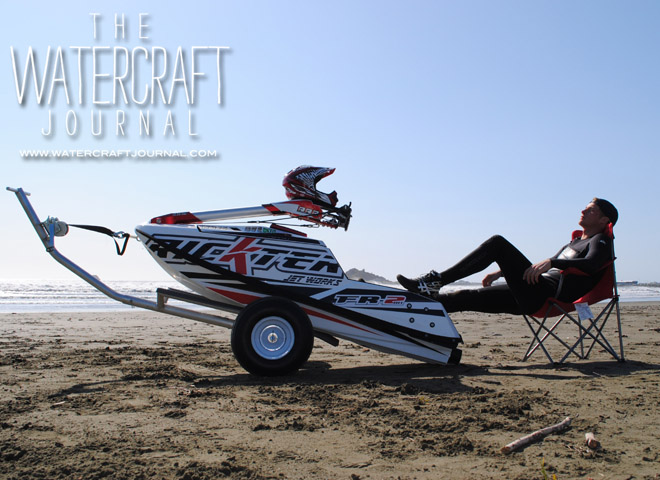
I surfed a ton of waves with a little air here and there and even went out and burned a tank of gas in the WDK ROK R surf ski, which was the most different surf ski I have ever ridden (but very fun to ride). Future star Stuart Allison was showcasing some impressive surf skills. Chris Batton was throwing big nose stabs and making good use of his DASA powered Rickter FR2.
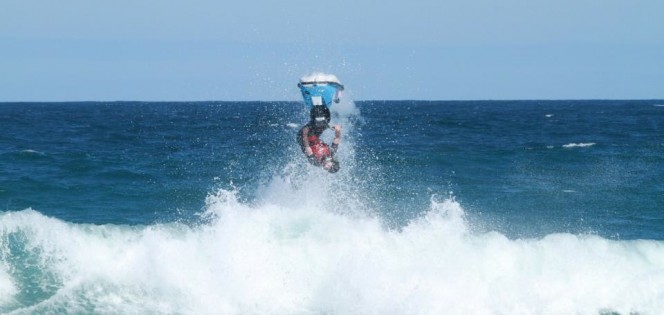
Blowsion and WDK sponsored rider, Pete McAfee (Peg-Leg Pete) was throwing down the biggest airs, flips, rolls and re-entries of the day, putting on a great show for all the spectators and surfers that were hanging out in the water to watch us.
Skis weren’t the only things getting banged up. Your author suffered a pretty nasty gouge in my shin which required some beachside triage from Peg-Leg Pete himself.Pete and Matt from Blowsion offered up some shwag for anyone that wanted to try their first flip.
Another honorable mention goes to local rider Chris Jones (Jonesey), who broke his handle pole off that day. Towards the end of the day everyone was out of the water with the exception of Peg-Leg Pete and Stuart.
They went out for one last session and with Pete’s encouragement, Stuart was able to pull off his first back flip with his father and girlfriend watching from shore. He was stoked to say the least. Big congrats to Stuart for his first flip and winning the cherry popper award for the weekend.
Crescent City, CA proved itself as a great riding spot and we all expect to see next year’s Spring Break ride grow in attendance.Back at the Rook’s for more food and fun the following night, many spent the night socializing and getting to know the new faces.
That night we all went back to the Rook’s house again for the evening to eat and tear into broken jet skis. It was a great night full of good conversations and good people that the sport of freeride is. It’s so crazy how everyone you meet in this particular sport have kindred spirits and everyone that rides is just a friend naturally from day one. Lots of laughs and a few shenanigans of course.
Sunday it was back to the beach for the last day of riding. We were all pretty beat from riding for two days but we still had fuel so back to the water we went. It’s very hard to stay out of the water when the surf looks so good. Sometimes your body says, “Hey buddy, I’m done” but your mind says “Let’s do this, I can go for one more session!” I know that’s where I was.
We all went out to get some GoPro footage and in the first 15 minutes I hit a good set and launched a pretty big nose stab. My right foot came out of the foot hold at about the apex and when I nosed it in I smacked my shin on my nozzle (I think) pretty hard. It hurt but I shook it off thinking I might end up with a lump on that shin.
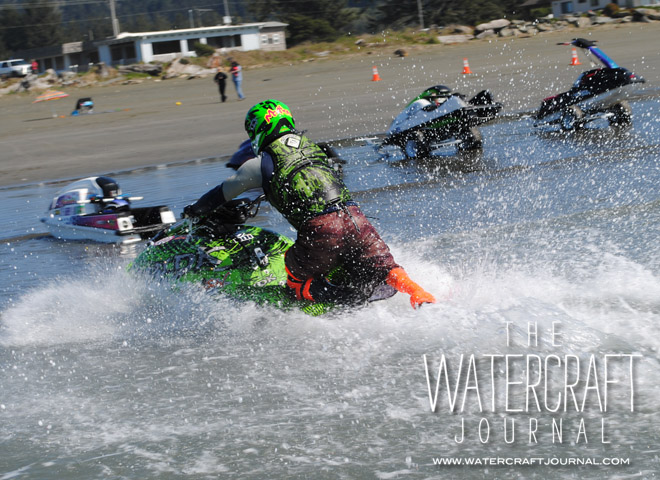
Because Crescent City is Pete McAfee’s local spot, the professional freerider couldn’t be slowed all weekend.A tremendous weekend had by all in attendance, the first ever Crescent City Freeride weekend went off without a hitch.
We got some good riding in and came back to say our goodbyes and start cleaning up skis. I flushed mine and decided to get out of my wet suit and to my surprise I had a pretty big gash in my leg.
At that point I found Peg-Leg Pete, who works at a hospital and happened to have a sucher kit with him. Long story short, Pete sewed me back together with 13 stitches. If you ever have to get stitches, have a buddy that knows what he is doing do it while you’re watching the sun set over the beach chatting with your riding buddies. I’ll not forget that anytime soon. Doc says he did a great job and he wouldn’t have done it any different.
All in all, it was an amazing weekend with a great turnout. I can’t wait to meet up with my old and new friends again at the next event. I hope we can do Crescent City again next year!
PWCOffshore’s KC Heidler came in fourth behind the Mike Klippenstein in Pro Open (he also double entered in Vet Masters) class.
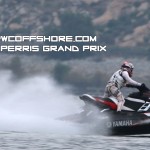
The inaugural Lake Perris Grand Prix Endurance Race debuted to great reviews, making for a fun day on the water as well as a race well positioned for future growth of the PWC endurance racing niche. The format of the race consisted of two motos, each one an hour-plus-one 5.3 mile lap completed throughout the day with a Le Mans start. Racers could race solo, have a race partner to split the motos and perform pit stops if they chose to do so.
The origin of the race was a result of collaboration between Ross Wallach, the promoter RPM Racing Enterprises and PWCOffshore.com soliciting feedback from local California racers back in 2013 regarding what additional race format they’d like to see in the West.
The Lake Perris recreational area was suggested as it is local to Southern California, is very close to many PWC dealerships and to a very large population of people, making it the ideal location and logistically easy for racers to attend.
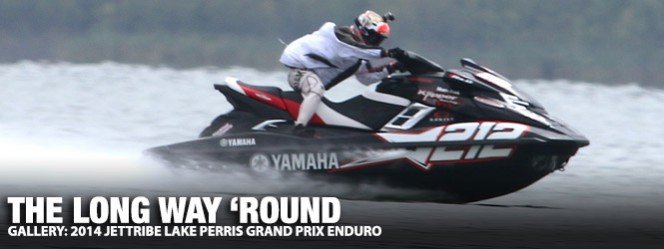
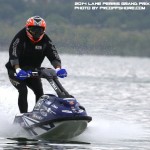
Powered by R&D Racing’s wicked T1 turbo kit, Mike Klippenstein greedily lapped the entire field at least once during each of Saturday’s two motos. Klipper kept the 90-something-mph Yamaha in the mid-80s to save the ski from over-taxing.Pete Yauri grabbed the win in the standup class, with Jettribe’s own Tony Vo taking second.
With very little time between the official announcement and the actual race date (less than one month), attendance was understandably limited as many struggled to negotiate travel and work schedules in such short notice. With less than two dozen entries, the lineup was thin but raring to go.
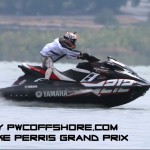
The very flat water and still winds combined to give Mike Klippenstein all the extra edge that his new rocket ship – a R&D Racing T1 turbocharged Yamaha FX SVHO – needed to lap the entire field at least once during each of Saturday’s motos. Klipper to walk away from the field and take the overall victory on his wicked fast Turbo Yamaha platform.
The last minute timing of the first inaugural Jettribe Lake Perris Grand Prix limited the number of potential participants, but both attendees and event organizer Ross Wallach feel confident that next year will welcome far more racers.Although Kawasaki’s legendary racer and watercraft developer Minoru Kanamori would race a STX-15F to victory in the Manufacturer Stock class this day, he couldn’t help but pose with the brand’s new 310R.
Unofficial reports stated that Klipper’s SVHO was well within the capabilities of 90-plus-miles per hour, but dialed back the throttle to keep the machine together long enough to bring in the win.
Second would go to former TCO Champion Mark Gerner piloting PWCOffshore’s backup Kawasaki Ultra 300 while his primary Ultra 300X craft underwent a rebuild.
Former three time IJSBA Vet Master World Champion and PWCOffshore.com Core Racer KC Heidler would struggle with fuel issues on his 310R but would still pull off 28 laps for a fourth place finish.
Beginning with a slightly modified Le Mans’ style start, rather than sprinting down to waiting skis, racers acted as their own holders and boarded immediately behind their craft after the starter pistol fired.Less than a month after the 10th annual Mark Hahn Memorial 300, the Lake Perris Grand Prix is a more budget-friendly enduro that eliminates pitting and allows for secondary fuel tanks.
Evelyn Mangan would win the 4-stroke Stock Class on her Kawasaki Ultra 300X, as Kawasaki’s own Minoru Kanamori and Takahiro Takahiro Tsujimotu would win the Manufacturer Stock Class on their Kawasaki STX-15F.
The 4-Stroke N/A Open class was won by Shane Newton on his Kawasaki 15F. Pete Yauri would take yet another victory in the Standup class, while Jettribe’s own Tony Vo would come in second.
Overall, the inaugural Jettribe Lake Perris Grand Prix Endurance Race was a success. The venue itself offers a large pitting area, beautiful setting and friendly staff, and the promoter and racers are optimistic that the Lake Perris race has been positioned for great success in the future!
The flat water and still weather made for sublimely glassy conditions. Although not nearly as challenging as open water or rough ocean conditions, it does lend itself towards more participant-friendly racing.
Pro Am Open: 1. Mike Klippenstein 33 laps, 2. Mark Gerner 30 laps, 3. #102 Bill Scott & Kyle Scott 28 laps, 4. #58 K.C. Heidler 28 laps; Vet/Master Open: 1. Mike Klippenstein 33 laps, 2. Tom Cruz 29 laps, 3. Scott McIntosh & Jonathan Mangan 15 laps; 4-Stroke Stock: 1. Evelyn Mangan 30 laps, 2. Josh Glenndenning & Charles Anderson 29 laps, 3. Derek Newton 26 laps; 4-Stroke N/A Open: 1. Shane Newton 26 laps, 2. Louis Nguyen & Tony Hoa 14 laps; MFG Stock: 1. Minoru Kanamori & Takahiro Tsujimotu 27 laps, 2. Eric Graff 26 laps; Stand Up: 1. Pete Yauri 18 laps, 2. Tony Vo 2 laps
The race season is nearly upon us here the ‘States and the racers are quickly getting their ducks in a row before the first rubber band snaps. While the social media hubs are abuzz with the big announcements from the top tier sponsored racers, many of the “little guys” are going unnoticed are struggling to gather up the funds necessary to compete.
We at The Watercraft Journal caught wind that 20-year-old racer Brooks D’Antonio is in that same boat and wanted to help get the word out. Brooks launched a gofundme.com fundraising campaign to help afford him enough funds to get him on the water.
The Watercraft Journal got a quick minute with the young gun who explained, “The funds will strictly cover traveling expenses, race fees, and maintenance towards my ski. Right now we’re in the process of building an Open class ski; it’s taking a bit longer and more expensive than planned. We’re getting close to the wire for the first race May 3rd and 4th in Parker, Az. We want to be on that line and fight for another regional championship.”
He concluded by saying, “Big thanks to everyone! They are the backbone to my race team, and are helping me live a dream that has been dear to me since I was a child.”
In the official gofundme campaign page, Brooks wrote the following, “My name is Brooks D’Antonio and I am 20 years old out of Phoenix, Arizona and I am an up and coming jet ski racer [moving] towards the professional level. With a successful season last year winning all of my races we are taking on a bigger class with much more competition. Our goal is to compete in all of Region 1’s Jettribe Westcoast Nationals, and some of the National tour stops among the Amateur Ski Open class and Pro Ski GP.
“Being a full-time college student, it leaves me little time to work and put in longer hours to get me to all the races, and complete building our new race ski for the season. If you can help me get there it would mean the world to me! A little goes a long way! Thank you all for the support through the past few years. Jet ski racing is a true passion I have. [I] wouldn’t trade it for the world!”
Call us corny, but we still tend to believe that people are genuinely good at their core. That when given the opportunity to rise and meet the needs of others, many will happily step up and bear another’s burdens. Last week, twenty five personal watercraft enthusiasts did exactly that, and raise an impressive $93,000 to aid in the fight melanoma skin cancer.
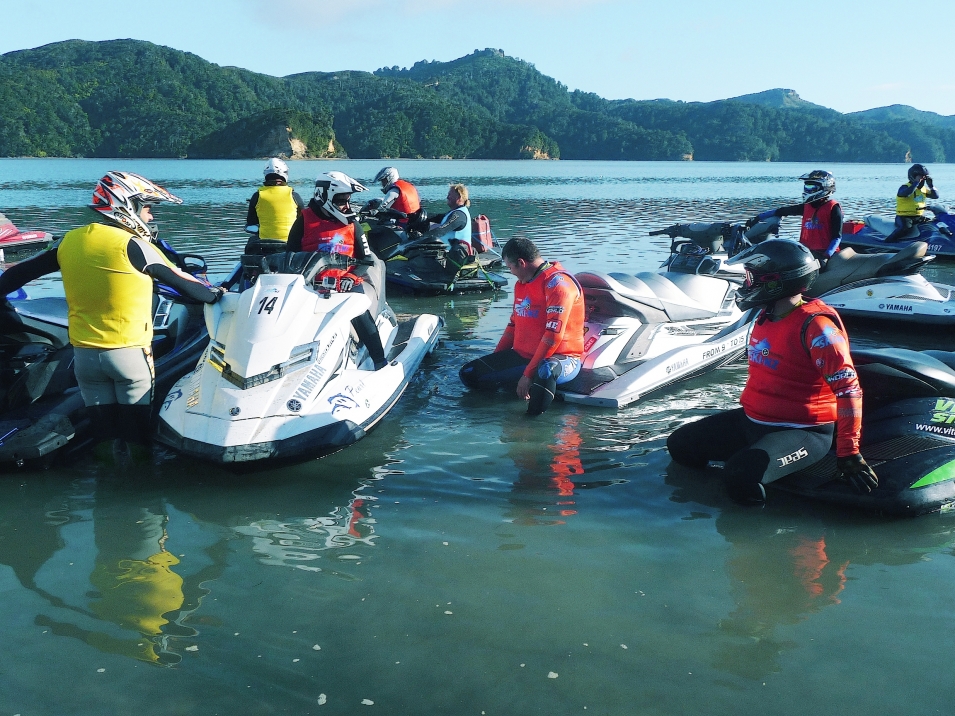
The two dozen-plus entries of the 2014 Yamaha Melanoma Foundation Ski-NZ challenge embarked on a 6day, 325-nautical mile journey that took them from the top of New Zealand’s South Island, from the Whanganui Inlet (west of Farewell Spit) to Nelson, French Pass, around D’Urville and Stephens Islands to finish at Picton (the final leg bringing them across Cook Strait to Wellington, was called off due to the imminent arrival of Cyclone Lusi).
Organized by Auckland 747 pilot and melanoma survivor Jeremy Burfoot, the Yamaha Melanoma Foundation Ski-NZ challenge carries a very personal message, as the father of three fought the cancer years earlier. He stated, “Last year our journey took us from Tauranga to Russell, spreading our melanoma awareness message in those areas and raising $60,000 for the Foundation. This year, we took it to the South Island and raised an incredible $93,000!
“Just as importantly,” Burfoot continued, “We again clearly demonstrated our continuing commitment to raising awareness of melanoma: a cancer that is killing more than 300 Kiwis a year.”
Hosting the fourth year for the event, Burfoot teamed with Yamaha to raise awareness of the dangers melanoma poses to New Zealanders. In an article published on Yamaha’s official New Zealand page, “[Burfoot] has also set two world records on his Yamaha VXR1800 Wave Runner (for the fastest 1000km on a PWC and for the longest distance traveled on a PWC in six hours).”
After a successful Yamaha Melanoma Foundation Ski-NZ challenge, Burfoot says he is already looking forward to next year’s challenge, saying, “Next year we are hoping to take on the East Coast of the North Island, from Napier to Tauranga. And hopefully we will raise even more money for the Melanoma Foundation so that it can continue leading the fight against melanoma and supporting those affected by it.”
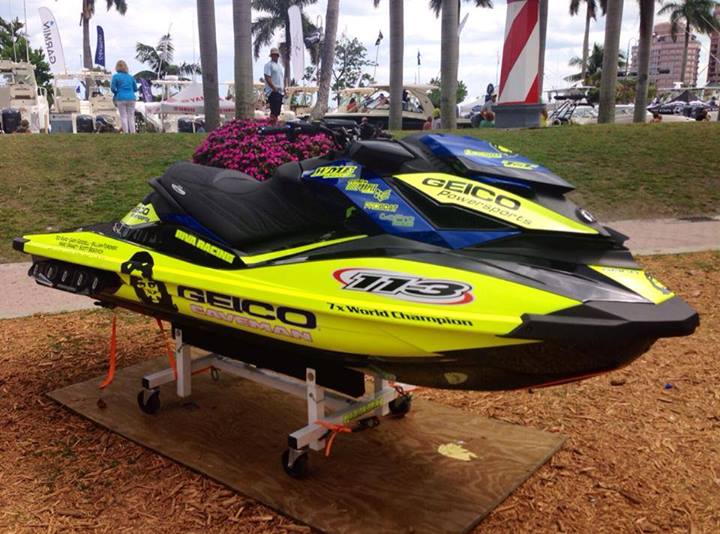
While the first official day of Spring was week, many of you reading this are still dealing with cursed white stuff falling from the sky and screwing up your riding. Even with temps undulating like they are, the maniacs at WMF Watercraft are already having a killer opening to the year. Sure, you’ve already seen their tricked out GEICO Powersports race-ready Sea-Doo RXP-Xs making the rounds at all the boat shows (see above), but they’re also making deals on used PWC and some of the nicest pontoon boats available.
Over the course of the past month, WMF has moved over 18 of the big boy pontoons and over a handful of meticulously prepped pre-owned personal watercraft. Of course, even if you’re not in the market for a new or used PWC but just want to get your ride fine-tuned or brought back from the brink of death, the master technicians at WMF Watercraft’s Millsboro, Delware location can get you up and running in no time.
If you’re one of those who like to strike when the iron is hot, make sure to swoop in and “Like” WMF’s Facebook page to keep up on the latest deals and goings on!
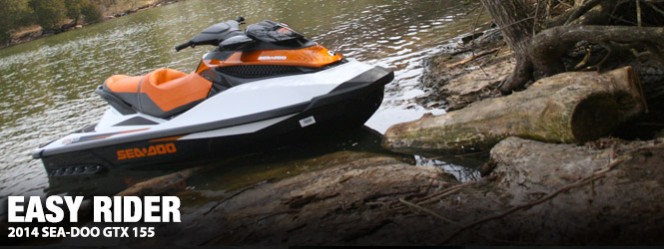
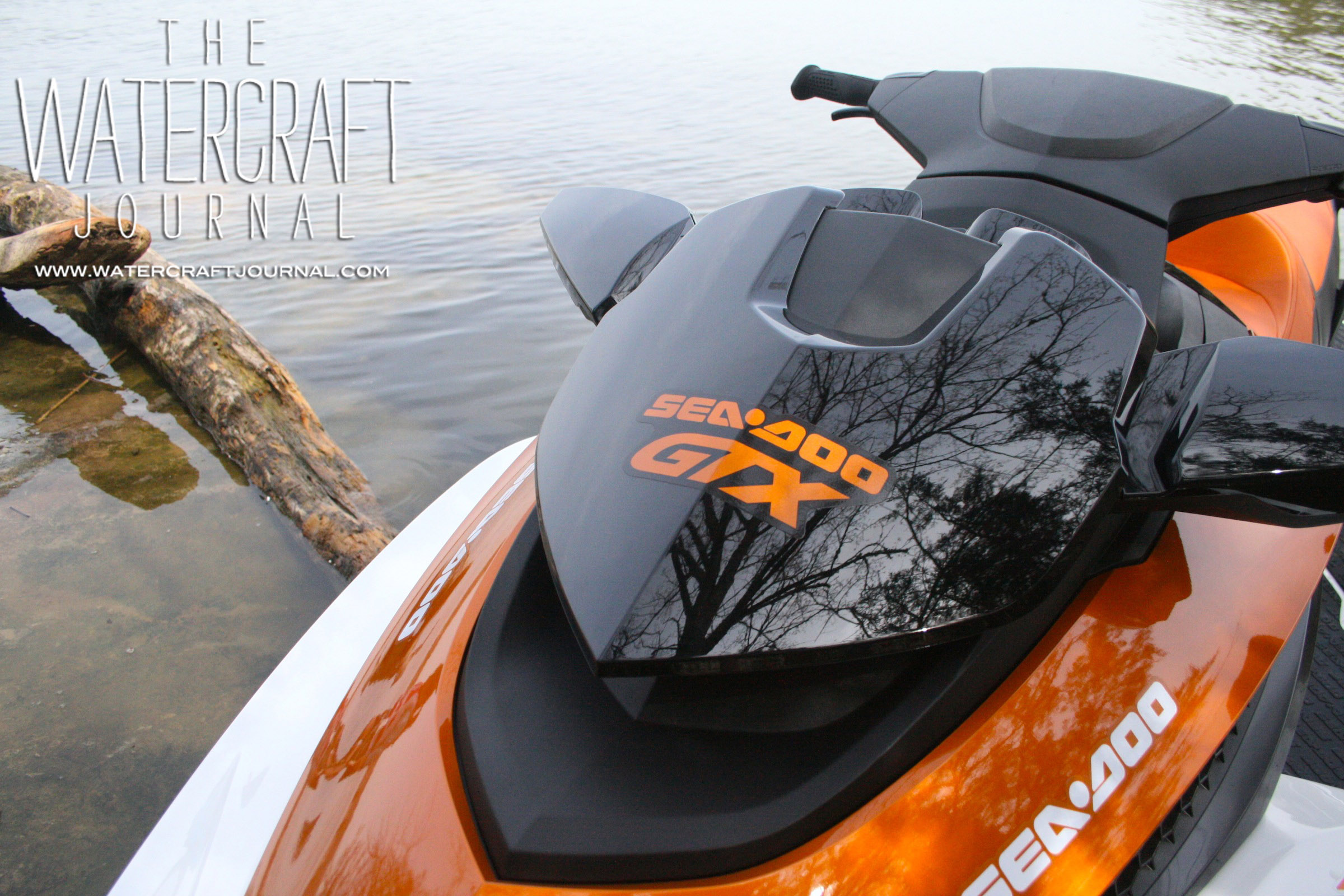
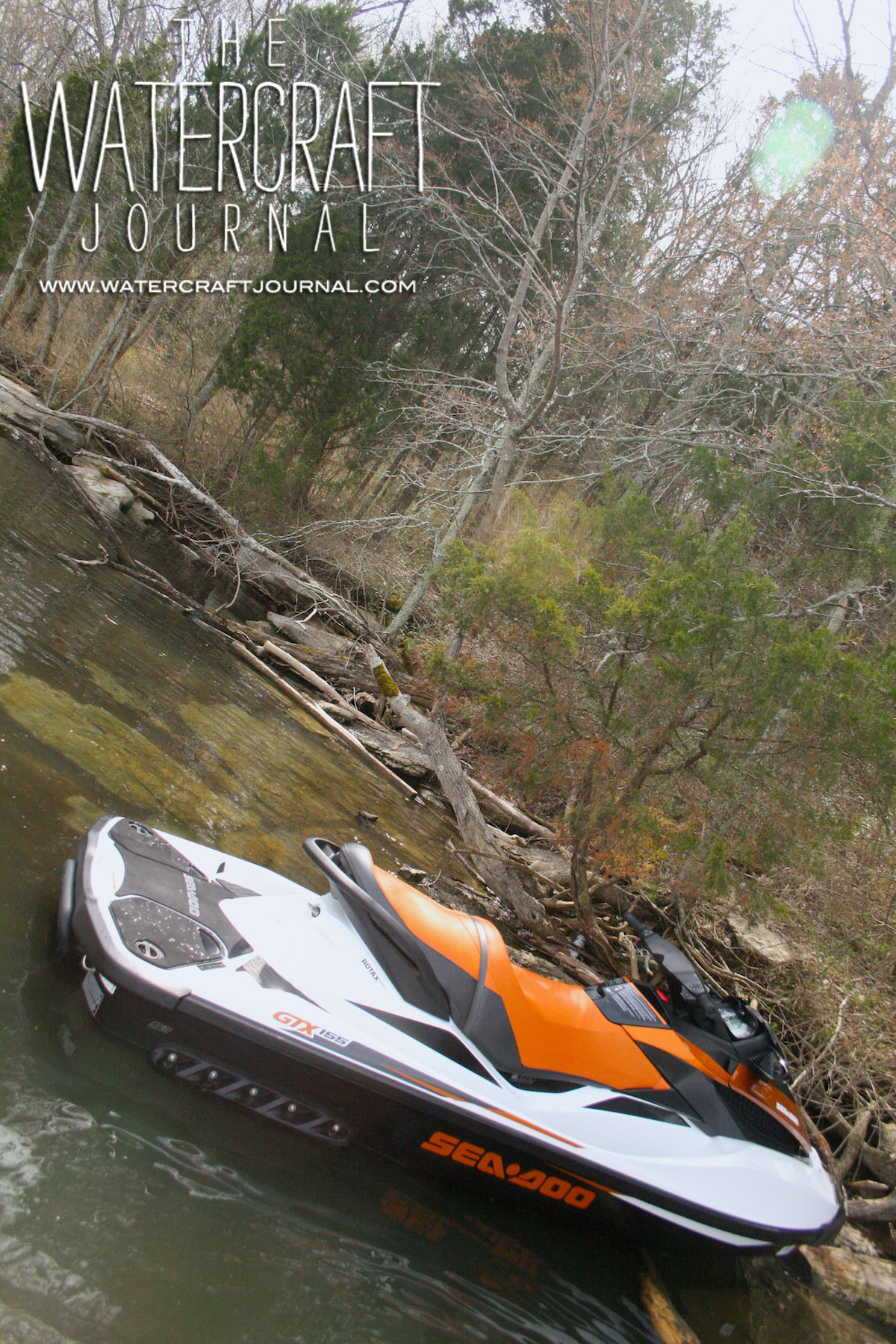
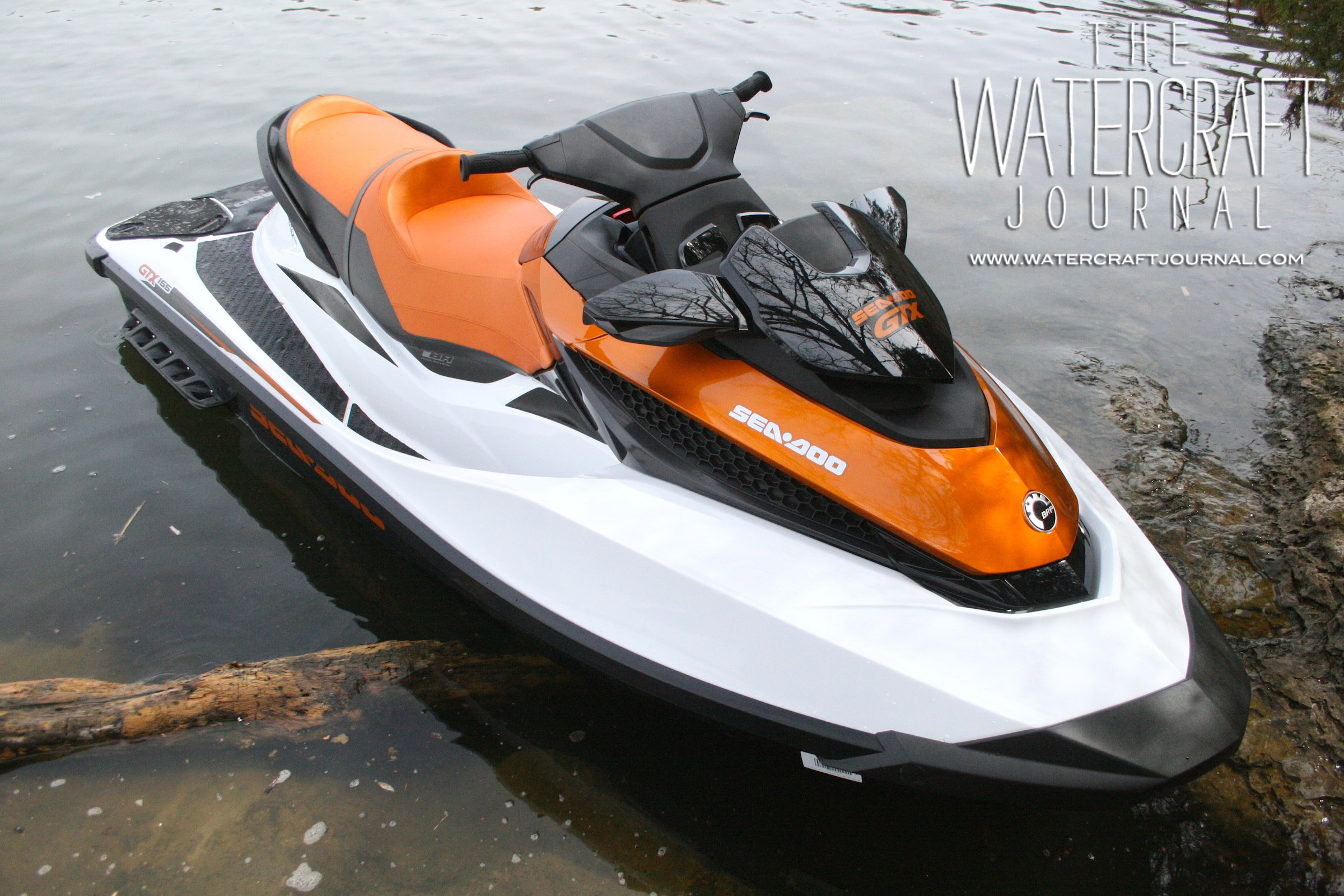
Not much for the GTX 155 has changed from last year’s model apart from the striking metallic “Alloy Orange” – a hue we’d love to see on the aggressive blacked-out X-Series skis.
It wasn’t long after we reviewed Yamaha’s 2014 FX HO Cruiser that we were invited to take the equally-equipped 2014 GTX 155 out for a ride. Both skis share the same market segment (apart from the Yamaha’s next-level-up stadium-style seating), particularly those watersport enthusiasts looking for a happy medium of comfort and reliability, and best of class fuel mileage. And throughout our time aboard the Sea-Doo we couldn’t shake the tendency to contrast the two.
Unfortunately, a throwdown shootout between the two is not something you’ll find here. But as Kawasaki’s staid naturally-aspirated Ultra LX is the brand’s only entry in the non-huffer segment, the only two really taking this class seriously are Sea-Doo and Yamaha, and so we will be drawing some comparisons between them.
It wasn’t long ago when Bombardier first announced the “high output” 155-horsepower Rotax plant. By today’s standards the successor to the brand’s lowest producing 130HP engines seems anemic. But at the time and well up until the 215 and 260HP supercharged models, 4-Tec 155 was plenty of push to propel the previous “Phoenix” hull.
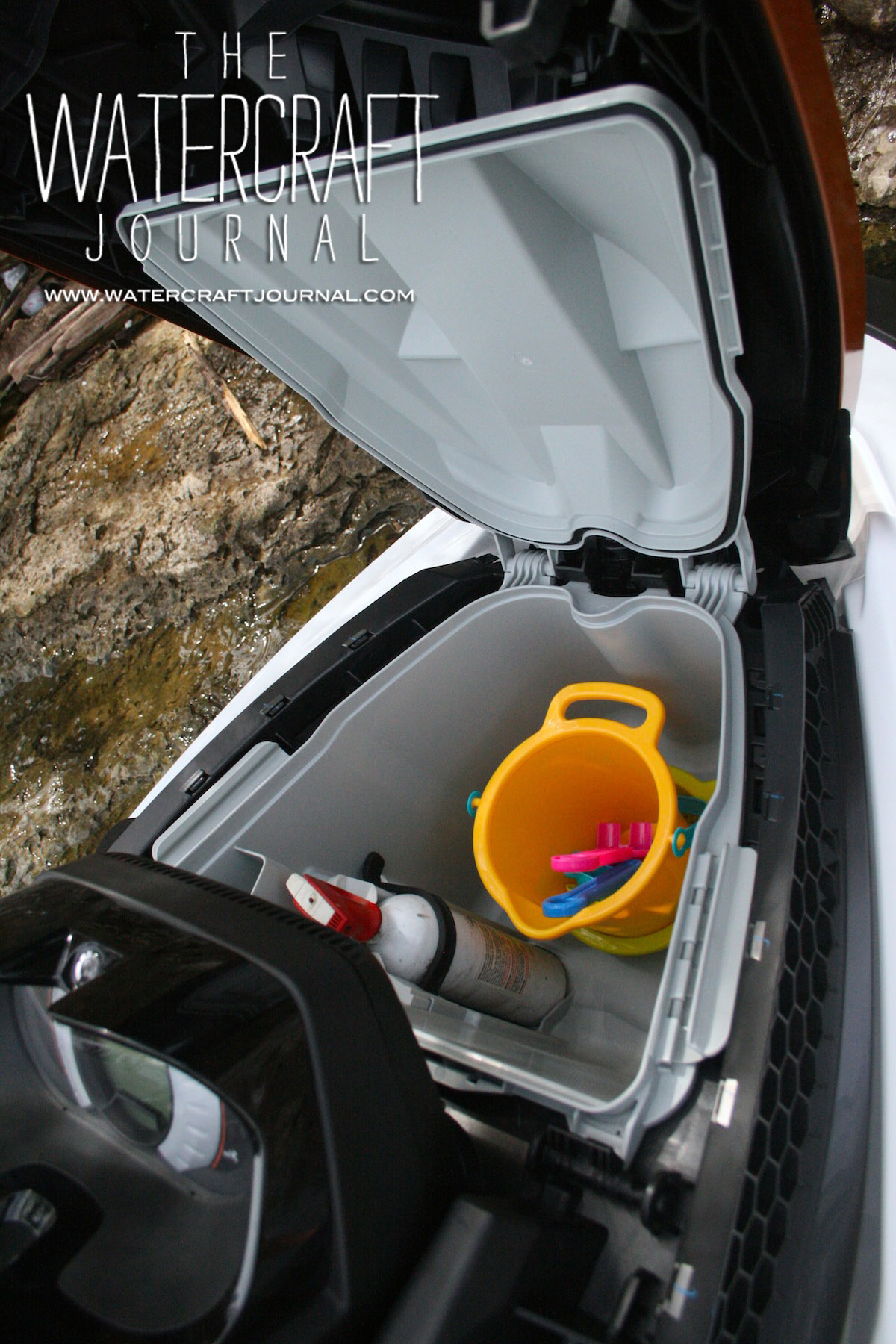
At nearly 140-inches long and closer to 900-pounds when weight for oil and coolant are factored in, the S3-based GTX’s naturally-aspirated 155-horsepower output might strike as anemic, but the iTC’s “Sport” mode will resolve most concerns.Standard on all Luxury-level Sea-Doos is this locking watertight bin. With total storage at 13.7 gallons, finding a secure place to stow your needful things should not be a problem.
Yet, once the larger S3 hull became the standard for 2010, the 155-level naturally-aspirated plant just seemed to wheeze when passed up by Kawasaki’s 1.5L four-cylinder and Yamaha’s not-so-thirsty 1,812cc monster. Well, at least that was what we thought…
Because of Sea-Doo’s iTC (Intelligent Throttle Control) and standard trio of available engine tunes, namely “Touring,” “Sport” and “Eco,” the unboosted 155HP GTX manages to leap from a rolling start with no shortage of motivation.
While the long three-seater (139.2-inches) won’t break any 0-to-30 second speed records, it will pull hard enough to surprise most rear passengers.
In fact, the GTX’s iTC proved itself as the vehicle’s most underrated resource. Toggling through the engine programs is equally as accessible as setting its one-touch Cruise control. Considering that fuel economy was a main motivator for buyers of the GTX 155, we rode most of the day in Eco Mode, hardly denting the scant $30 in fuel we poured into the tank earlier.
Major factors that aided in our overlooking a handful of small complaints were Sea-Doo’s unmatched ergonomics on the handlebars. Toggles are responsive and the one-touch Cruise control is unrivaled in its ease.The GTX comes with a thick padded folding swim step standard which makes boarding a cinch. Even with the locking access panels, the rear platform in wide and spacious.
Those riding will find the single-piece bench seat supportive and roomy. In some cases we’ve found the tall scalloped seats other brands a little restrictive for taller riders, but our qualm is merely a matter of preference. Beneath the tilt steering, the glove box is voluminous, and the sealable, locking bow bin (a standard feature on all GTX models) offers sufficient storage.
Even in its most humble form, the lowest rung of the “Luxury” segment is endowed with Sea-doo’s VTS (Variable Trim System), F/N/R gear indicator and adjustable LCD dash display settings.
As is with all Sea-Doos equipped with iBR (Intelligent Brake & Reverse), maneuvering around tight spots, docking and loading the trailer is a far superior experience than any other ski without it; not to mention the tremendous safety benefits of a fully-functional braking system.
Quibbles with the Sea-Doo rose from its “plasticy” hood and glove box hinges, which felt fragile. These materials undoubtedly help keep the large runabout down to 816-pound (dry) weight.
The lines of the GTX are low and long and nowhere near as complex as the racier RXP-X – but the family DNA can still be found. We were pleased with the dry ride and maneuverability.Priced at just over $12,000, the GTX 155 comes with 87 octane compatibility and BRP’s Eco mode, fuel consumption is conservative, helping recoup a little of your initial investment.
Likewise, we struggled with the release lever to access the engine compartment. On two different occasions while driving to our location, the seat unlatched, swinging open while on the highway. After securing it a second time, we fought to open it again to no avail (sorry, no engine pic).
The juxtaposition of state-of-the-art innovation and thin, finicky plastics gave the GTX 155 an oddly imbalanced feeling. In Sport mode, the GTX failed to breach 60mph, but graciously remained one of the driest rides we had experienced all the while being spry, actively carving S-turns with modest provocation. Sea-Doo’s handlebar grip-to-button ergonomics are second to none, and are found on nearly every other model. Button responsiveness is equally above the fray. For that we applaud BRP’s engineers.
Priced well over $1,000 under that of the aforementioned Yamaha, the GTX 155 does manage to both fall below and rise above its nearest competitor. We would’ve preferred the low end grunt and solidity of the HO Cruiser, but keep returning to the iTC and iBR as its saving graces. Fuel economy (particularly in Eco mode), watertight storage and ergonomics help push the GTX over the edge into the “recommended” category.
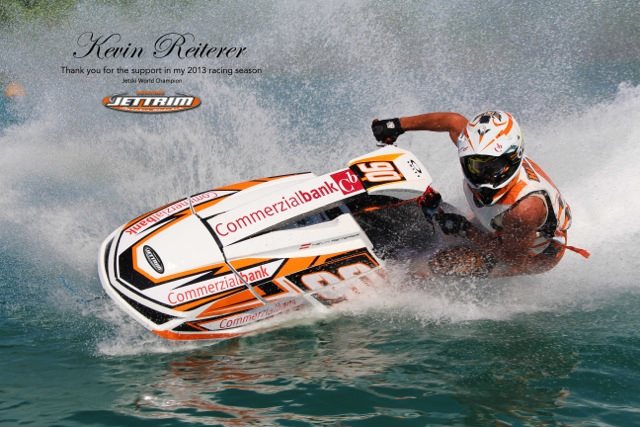
While we just published a news article on Austria’s globe-traveling jet ski racer Kevin Reiterer just yesterday, we caught this great video update from the World Champion and couldn’t pass it up. Before Kevin charged the waters off of the Crazy Horse Resort in Lake Havasu, AZ at last year’s IJSBA World Finals, he made one very important stop: Jettrim.
As Kevin wrote, “Jettrim is an exclusive brand pushing the Limits of Design and Quality by making products amazing. The Company is driven by Passion and their whole Team enjoys being part of something bigger then themselves. Custom PWC Mats and Custom race seats for Buggys are their territory.”
This inside look at the inner workings of Jettribe provide you with a peek into Jettrim’s workshop and how the some of the very best designed and handling products in the sport originate from.
The Watercraft Journal: Kevin, we’re glad we can finally get a chance to talk. You’re quite the globetrotter. Last we heard you were living on a sailboat in Oceanside, right? Before that, weren’t you living in Australia?
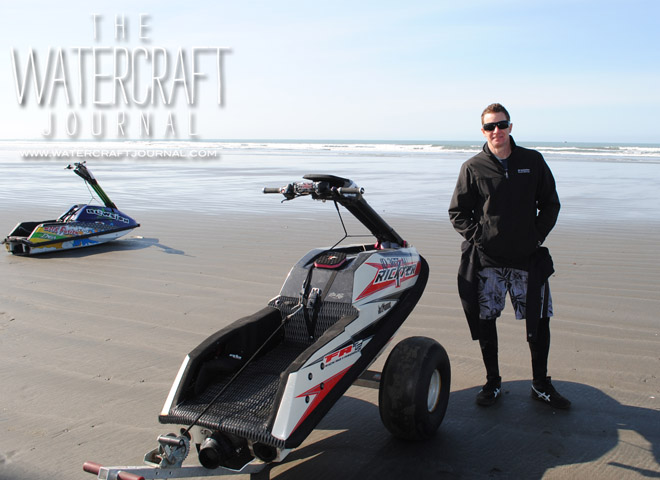
Kevin Rickon: The last few years I have been living a very nomadic lifestyle. Other than a handful of items and clothing (enough to fill up a single suitcase), I do not own much anything else. My current life on a boat in San Diego has been great. I’ve always been around boats and living on one has just made my life a living dream. Joey Kenney lives on his 36-foot Chris Craft next to me and we share stories of sailing adventures, surfing, the freeride lifestyle and how important it is to do what you love. He has been a great friend to me this last year and has made my time at the marina much more enjoyable.
I really enjoyed my time in Australia. For 9 months I was the manager at Worx Racing Components. And oh man! Was that an experience! It was at Worx Racing that I really took my first role at managing a small business. On top of that, I managed the company through the exchange of new owners, which entails a lot. Because of the exchange of hands, the business moved several hundred kilometers south into a different state. I moved from Queensland to New South Whales. Before the shop was fully moved out, I drove across the border to the old Queensland office three times a week to hand make the sponsons for the new orders. I was relieved when the equipment finally moved to the new shop!
WCJ: So what brought you home to the States? And don’t tell me it was the Mexican food.
KR: The lack of Mexican food was definitely a challenge. Thankfully, the Aussie meat pie was a great substitute. I was in Australia for just a year and I was really missing home. There will always be a place in my heart for Down Under but home is where my family is. I don’t believe my time in Australia is over, I know I’ll go back.
WCJ: You’ve been tied to jet skiing for much of your life. Tell us a little about what/who drew you to freeriding? What is it about freeride that’s so unique to jetskiing?
KR: My father told me I could never buy a jet ski. So I did the most logical thing and bought one anyways. Jon Hall, one of my closest friends and I went for a casual ride together on our FX1’s in Oceanside. That was my first time riding a stand up independently and the first time seeing anyone do a backflip. I thought to myself, “Oh no he didn’t!” With new found interest, I wobble over to the best of my ability on my knees to take a closer look. It was then that I met Ross Champion for the first time.
The O-Side Crew took me in as one of their own and I became part of a brotherhood. Not for a moment did I ever consider myself to be as talented as many of the other individuals but I felt part of a family and everyone looked out for one another. I believe there are just a few and far between sports that really emphasize on taking care of the guy next to him. In all of my troubles in and out of the water, I would turn to any one of the boys for guidance and help in any of my endeavors.
In addition, riding jet skis in any condition, especially the surf is quite unique as opposed to other sports that support the phrase, “freeride.” First off, water is an element that wants nothing more than to swallow whatever is on top of it. The jet ski for example must be in 100-percent condition to be above water and move through it. As simple as it sounds, it takes a lot of preparation, skilled work and strong/reliable parts to do that. Jet ski freeride is unique in that it takes all those things as well as your buddies to perform through the most unknown element in the world.
Cuong Son said it best, “The wave is the canvas and we are the brush stroke.”
WCJ: Great words to live by. Is that what prompted you to create KR Lines? Tell us about your company and what you guys do.
KR: I am all about “buying things once.” Other than something like a Rolex Submariner, I’m not sure anything lasts forever. I wanted to create something so simple and so long lasting that it would never cross any ones minds of possibly failing. I have snapped several “limiting ropes” and I found it to be silly to ever buy one the way that they were made.
I come from a heavy background in the nautical community. I am a United States Coast Guard Licensed Captain and have been sailing my entire life. KR Lines is different from the others because I am able to take my unique background and bring it to the jet ski market. Anything that uses the term “rope” is incomplete. Incomplete meaning the rope is just by itself. I take a rope and splice it into a line. This is why KR Lines has the strongest product. I use 12 strand Dyneema, the same rope on all Americas Cup boats. I count each individual strand and split them perfectly for each hand splice. Anyone can learn to splice rope but to be able to do it perfectly the same each time takes years of practice. In addition, they must all be able to handle the same load.
Did you know if you tie a bowline knot the strength is reduced by 40%? And did you know that if you properly splice a line the strength can increase by 10%? I’ve completed several strengths test at random and have come within -1% to +7% of a 5400lbs Dyneema line that I use on all of my products. Those are very good numbers by anyones professional rigging standards.
I have sold a number of lines all over the world and have yet to have a single person notify me of a failed product that is put out from my product line. And if anyone’s were to fail, I would cover them at my cost.
WCJ: That’s got to keep you pretty busy. With such a frenetic schedule do you still find time to ride? Where are your “regular spots?”
KR: Since coming back from Australia I have yet to have found time for myself to ride. I am juggling several jobs on the water as well as other entrepreneurial endeavors related to KR Lines. In the upcoming future, I will build another ski and will ride my favorite spot, Oceanside.
WCJ: Got any big rides/events you’re planning on attending?
KR: I am going to make it a priority to make it to Blowsion Surf Slam this year as I have never been part of that event. Blowsion has done a great job promoting their events and have drawn riders from around the world. Just being there would be an incredible experience.
WCJ: Just for fun – if time and money weren’t an issue, where would be your “dream session” to go freeriding?
KR: You know, I have been surfing since I was a little grom and this question comes about to me all the time. I would say the most fun I have ever had, and looking to the future of dreams and possibility, the only place I would want to ride freeride is wherever my friends are. That being said, Oceanside and Gold Coast.
WCJ: OK, here’s your chance for some shameless plugs. Who would you like to thank?
KR: Oh man, where to begin? Generally speaking, the boys at Oceanside for always being there for me. Jono Hall for being my “P-I-C.” Ross and Joey for people to look up to. Luke Rotolone for being my save and grace. Corin Williams for the best advice anyone could ever as for. Brodie Copp for being my friend through the thick and thin. Jack Shelley and Gary Watson from Worx for the incredible teachings and experiences and the rest of the boys Down Under.