

Home Blog Page 441

Video Captures Last Wave And Attempted PWC Rescue of Surfer Kirk Passmore

0

With a heavy heart the The Watercraft Journal reports the loss of big wave surfer Kirk Passmore on the North Shore of Oahu last week. Hawaii’s mecca of surfing was experiencing the first large, Northwest swell of the season and surfers were taking full advantage of the extreme conditions. Sets in the 20-foot range were seen along the outer reefs creating a great kickoff to the winter season.

Over the last several years there has been a resurgence in big wave paddle-in surfing as apposed to the tow-in craze of the early 2000’s where surfers utilized personal watercraft to tow themselves into large waves. Despite the trend of forgoing mechanical assistance to actually catch the wave, PWC’s have remained a huge part of surfer safety in extreme conditions and last week was no exception.

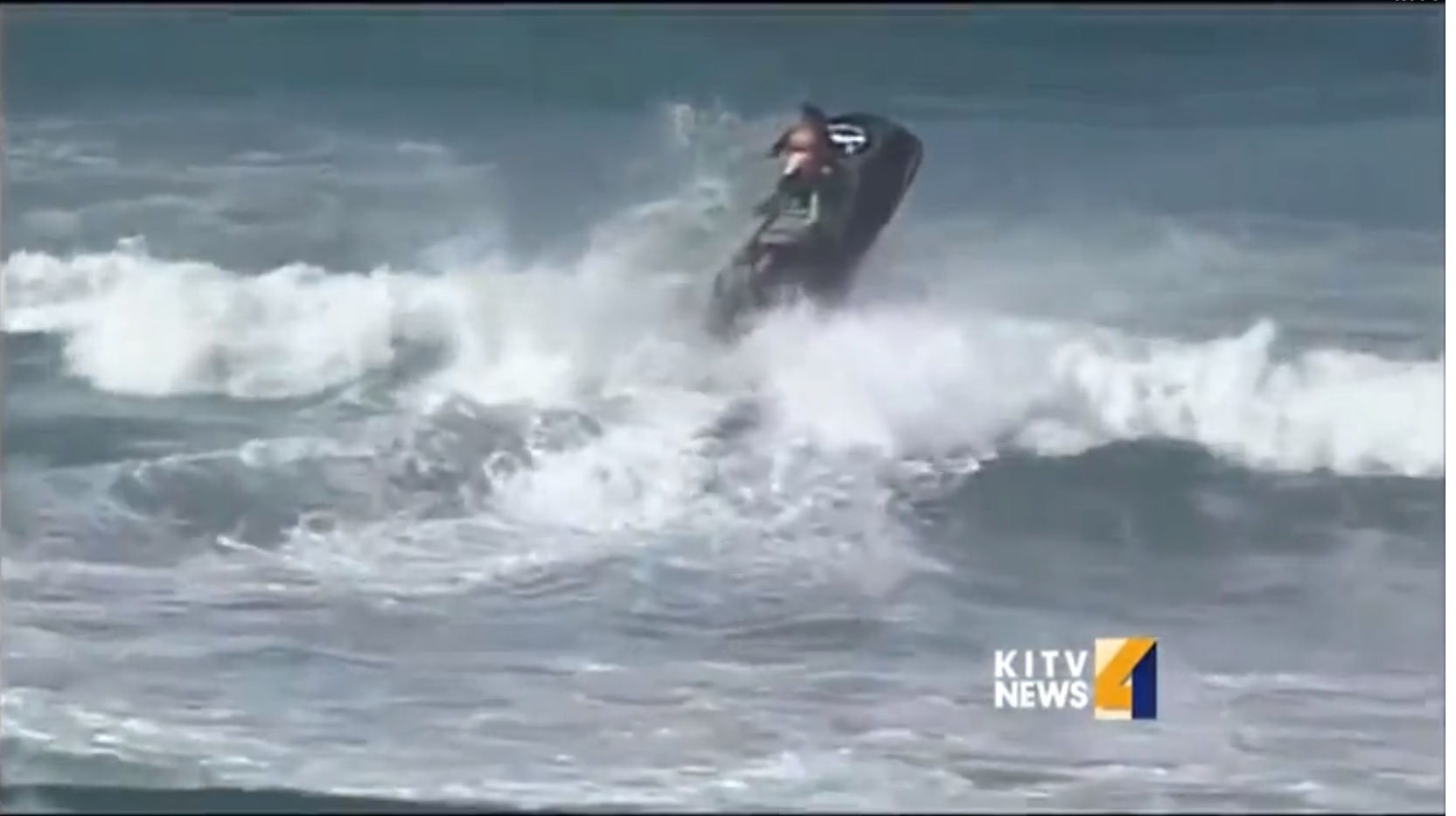
32-year-old Kirk Passmore and a standout crew of top pro surfers were trading off on solid 20-foot sets at an outer reef know as Alligator Rock. Several PWCs were on hand to take action in the case of an emergency. At 11:20am Passmore was seen dropping in on a huge set wave. As he dropped down the face he caught his outside rail, sending him headfirst off his board with the lip of the wave impacting right behind him. Witnesses describe seeing Passmore’s feet sticking strait up in the air, with his head below water as the next wave came crashing down on top of him.

Safety crews aboard PWC raced in to grab him but were thwarted by repeated set waves. Passmore was not wearing a flotation jacket, something that has recently gained popularity among big wave surfers. Witness Chris Owens told Hawaii Now News, “They were trying to grab him but they had nothing to hold on to. You know like, everybody out there (pause) see what would have saved him is if he had a float vest on. Everybody wears float vests nowadays.” Pro surfer Jamie Sterling described his flotation vest he uses in extreme conditions, “I have co2 canisters in here. I can pull them and they blow up like the life vests on the airplane so if we get in trouble, I pull these and they go to the top and they stay inflated throughout my whole session so I have constant buoyancy.”

Rescue crews continued their search via PWC as well as helicopter and Coast Guard cutter but were unsuccessful. Despite the advantage of having PWCs on hand, one can never be too careful when in extreme conditions. The Watercraft Journal would like to send our condolences to the Passmore family as well as urge all of our readers to always wear a flotation device.

Below is a video of Kirk’s last wave. It has been released with the permission of the Passmore family so the community can share Kirk’s last ride.
Equip Your PWC With Strong Outdoors’ Pac-Rac Utility Rack And Do Anything

0

It’s really a shame that the United States is so far behind the rapidly-growing trend of PWC fishing. Only a week ago did we publish a great bit on Fishmaster’s PWC arches, but as any budding budget-minded fisherman might will attest, spending a clean grand to outfit your runabout might just be a little too rich for the ol’ pocketbook.

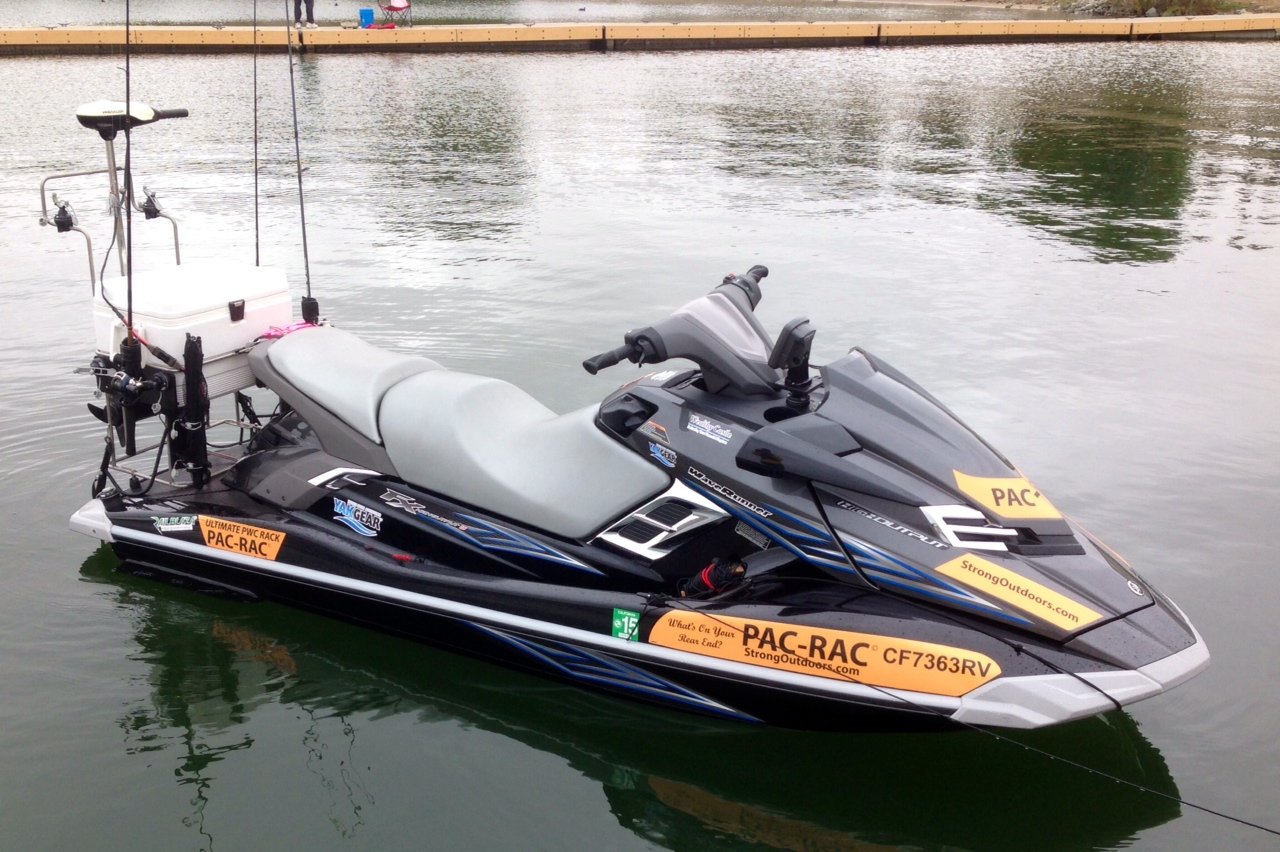
That is why we’re excited about Strong Outdoors’ utility rack for PWC. Dubbed the “Pac-Rac,” the versatile 300-grade stainless steel rack can be outfitted for fishing, camping, or pretty much anything on the water. Fully customizable, the lightweight-yet-durable rack can be easily installed on most all Yamaha, Sea-Doo, Polaris, Honda, and Kawasaki runabouts without any drilling or modifications.

It’s stainless construction makes it great for both salt and fresh water use, and even be used for lifeguard and patrolling use. So much so, that company owner Kraig Strom told The Watercraft Journal, “I’m talking to my local sheriff department about rigging them for officers patrolling the Colorado River.”

We’re loving what we’re seeing coming from the US aftermarket in regards to personal watercraft fishing and hope to only see it grow. Keep up the good work!

Lobbyists Seek to Ban PWC From Gulf Islands National Seashore National Park

0

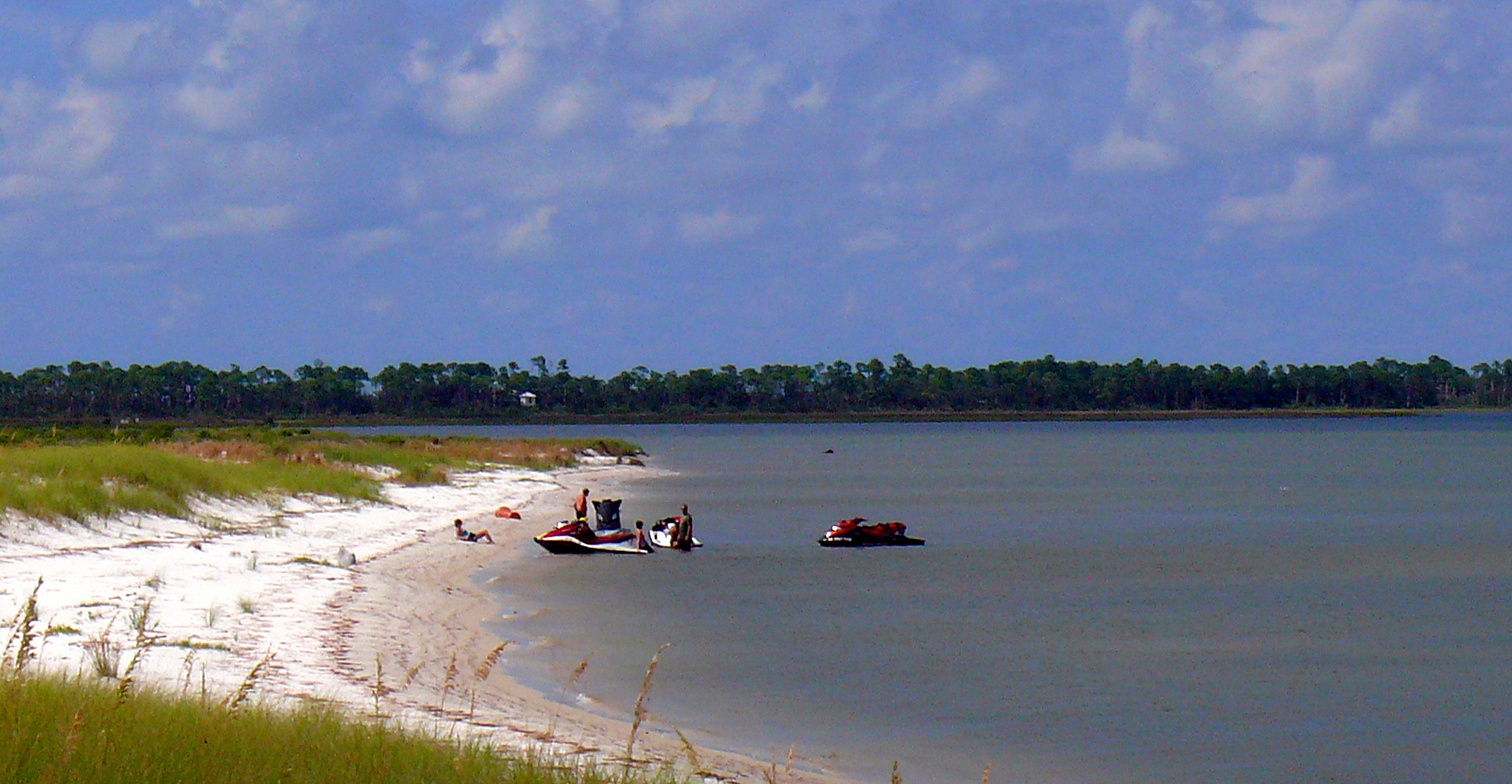
I’ll get straight to it: Once again, your rights as personal watercraft enthusiasts are at stake. In this case, I’m talking about the Gulf Islands National Seashore (GUIS) National Park. Certain types are seeking a permanent ban on PWCs within the park boundaries with their initial actions being brought on by a frivolous lawsuit.

If you checked the link, you may have noticed how carefully the document was orchestrated to cast our kind in such a poor light. Words like “loud,” “disturb,” “destroy,” “dangerous,” “polluting,” and “degrade.” Are you getting the picture here? It’s obvious that proponents of the ban view personal watercraft, and those that operate them, in the worst manner possible.

Obviously the plaintiffs have failed to realize the positive gains the PWC industry has made in the last ten years. Industry standards now include “greener” 4-stroke engines with better fuel efficiency and lower decibel outputs. The GUIS also shares water with a lengthy portion of the nearby Gulf Intracoastal Waterway (GIWW). As a major shipping channel, the GIWW sees a steady flow of tug & barge traffic in addition to other commercial marine vessels. Considering all the marine traffic types, outside of the kayakers and sail boats, the PWC may be the vessel with the smallest physical and carbon footprint.

In case you’re thinking this issue involves a few, uninhabited barrier islands, think again. The GUIS includes parts of Cat Island in the Mississippi sound and goes as far east as Navarre Beach in the Florida panhandle. This includes waters surrounding Cat, West & East Ship, Horn, and Petit Bois islands. Back on the mainland, the park takes in both sides guarding the entrance into Pensacola Bay and most of Santa Rosa Island. A quick view of the park map will show you just how vast GUIS is and how far reaching such a ban will be.

What can you do? Defend your rights and let your voice be heard! Public comment is now ongoing: Public comment is being used by the National Park Service to consider the future of PWCs within GUIS and will be taken at the following meetings:

Monday, 11.18.13, 3:30PM to 7:30PM
Florida District, Naval Live Oaks Visitor Center
1801 Gulf Breeze Parkway
Gulf Breeze, FL

Tuesday, 11.19.13, 3:30PM to 7:30PM
Mississippi District, Davis Bayou Visitor Center
3500 Park Rd
Ocean Springs, MS

JetPilot Launches All New Allure And F-22 Vests

0

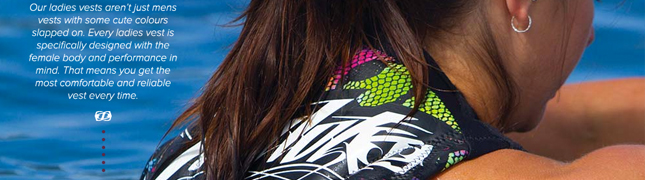
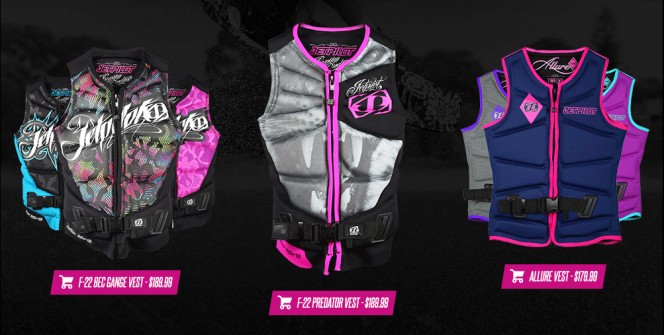
Let’s face it, ladies. There’s not a lot of riding wear that is really designed with a woman in mind. Just because a company resizes a vest a little smaller and offers it in some cute colors does not a women’s vest one make. Thankfully, companies like JetPilot have stepped up and truly tailored their products to meet the shapes and curves of the female frame.

The all-new Allure and F-22 vests are built with a woman in mind – and not just some willowy model, either. Rather, the F-22 in particular, is designed with the elite rider in mind. Offering superior fit, top quality materials and some eye-catching style lines, the F-22 shatters the norm of a woman’s lifejacket.

Both the Allure and F-22 feature super lightweight construction with PVC foam cores for maximum buoyancy. As these are thinner, non-USCG approved vests, but are designed for wakeboarding, freeriding and wake skating, the two vests are designed with maximum mobility in mind; both are made with Flex-Lite neoprene and articulated, pre-bent form-fitting foam and hidden and secured belts tucked in beneath the neoprene for improved comfort and reduced resistance.

Video: RIVA Racing HydroDrags 2013 World Finals

0

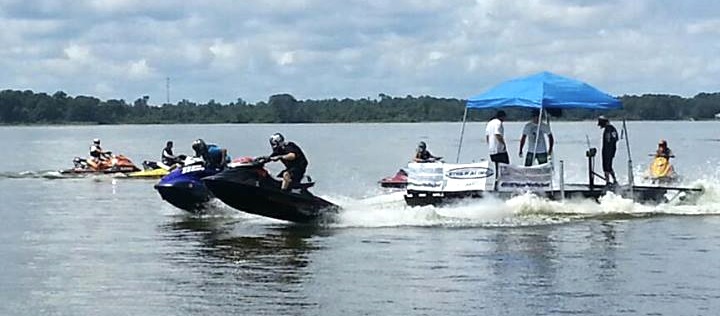
For the fourth consecutive year the RIVA Racing HydroDrag World Finals was at Lake Grew, in Polk City, FL, right behind the USA Water Ski Hall of Fame. Held over the first weekend in November, the event welcomed some of the world’s fastest personal watercraft – with many inching closer to toppling the standing World Record of over 106 miles per hour (current held by Rayge Sanchez)!

The winter weather was setting in early for November in Florida, causing many to scramble to re-tune their engine’s computers. Others found the temperatures favorable for their setups. Thankfully, the air might’ve been crisp but the rain stayed clear, giving racers a weekend of clear blue skies.

Classes were broken into Hydro Stock, Hydro Superstock, Hydro N/A (Naturally Aspirated), Hydro Spec, and Hydro Unlimited. In addition to the bracket races, the HydroDrags featured a Speed Alley as well as the Blowsion Flatwater Freestyle event and the Waterfrontoo Slalom Competition.

Featured below is a fantastic 30-minute video Manuel Valdes. Recapping the weekend’s festivities, Manuel does a great job of capturing all of the fun, the excitement and fervor of the fastest growing series of PWC racing in the United States.

Round 1 Of The 2014 Greenhulk.net IJSBA US HydroDrag Nationals Announced

1
Ever seen a full-sized runabout pop a wheelie? Now you have. Image: Adam Barbanell

Has the off-season got you down even though it’s only been a month since the IJSBA World Finals? Well, now you don’t have to wait so long to get your top speed PWC fix. The first round of the Greenhulk.net IJSBA US HydroDrag Nationals was just announced over on the official HydroDrags Facebook community page. Scheduled for the weekend of March 1-2, 2014, at Wooton Park, Tavares, Florida.

Kicking off the beginning of a minimum five-round season for 2014, the HydroDrags welcomes some of the fastest PWC in the world to fight it out on the 1/8th mile drag strip. With skis clearing well over 100MPH, it’s becoming a high speed phenomenon that is easily one of the must-see’s for a personal watercraft enthusiast.

If you’re looking to attend this coming March, make sure you join the online community and RSVP for March’s event. They’d like to know who is planning to attend and how many to expect

Make Your PWC a Serious Fishing Machine With Fishmaster’s Fishing Arches

5

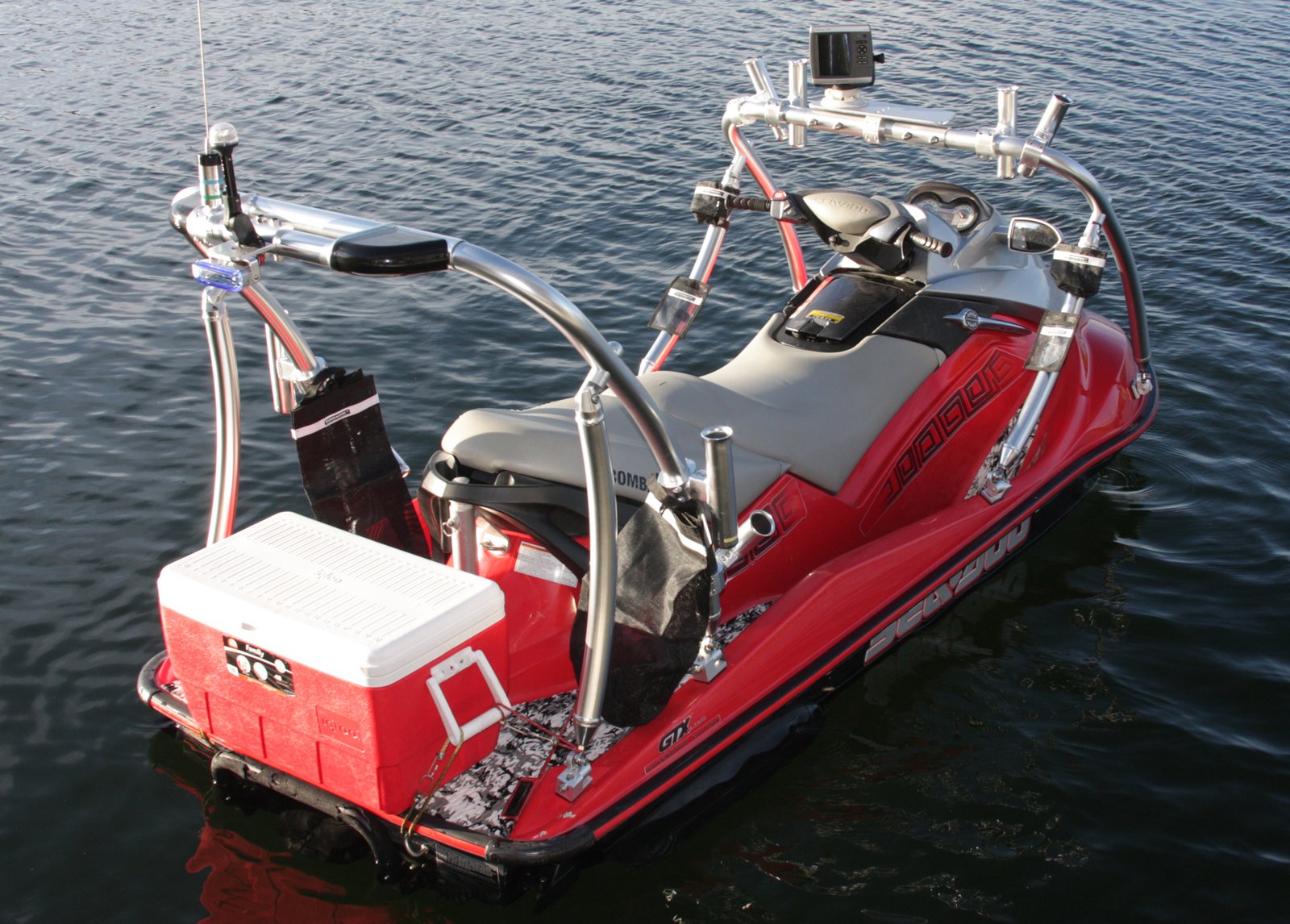
OK, now this is what we’re talking about. Ever since we first ever stumbled across “Jet Ski Brian” Lockwood’s blog, we’ve been jonesin’ to try our hand at some serious “jet angling.” While Brian might be touting some of the most impressive setups in the PWC world, he’s not the only one – especially thanks to Fishmaster.

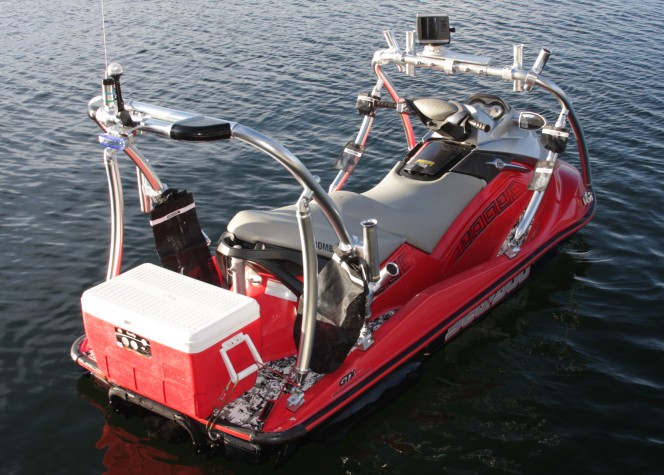
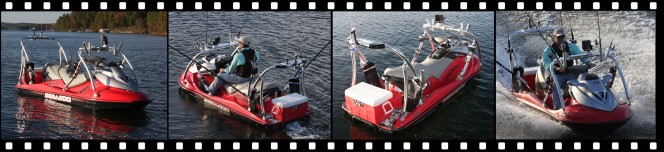
Offering a comprehensive catalog of products to store a cooler, mount GPS and places to carry multiple fishing rods, Fishmaster’s fishing arches are the first to be offered to the PWC industry. The arches are designed for easy installation (within two hours each!) and can hold multiple rod holders and mounting options for GPS, fish finder, VHF radio and other accessories.

Both arches are made from 1.90-inch diameter aluminum tubing and come with free shipping, carry a 30-day money back guarantee and 5 year warranty.

Fishmaster sells the front arch for $495, the rear arch for $595, and a PWC Combo Pack (including both front and rear arches, two rod holders and soft storage goods for $995 (a $1230 value). For additional information visit www.fishmaster.com or call (877) 777-8693.

Video: Exploring The Pungo Intercoastal Waterway, Virginia Beach, VA

2

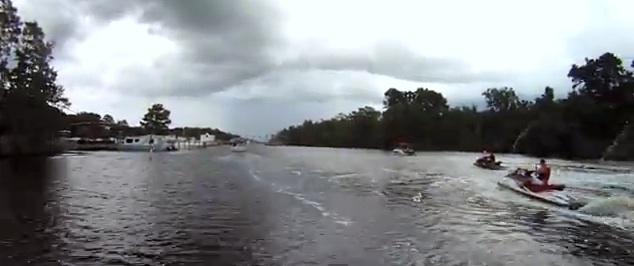
It’s pretty humbling when within a day of its launch, The Watercraft Journal starts getting fan mail. In an email from John Tipton, he included a couple of really cool videos of rides he’s taken with a group of friends up and down the Intercoastal Waterway running alongside Virginia Beach, VA.

John wrote, “The ride started out in Chesapeake, Virginia at the Great Bridge Lock. We headed East on the Intercoastal Waterway 30 miles or so to Munden Point in southern Chesapeake, which is located just north of the North Carolina border. From there, we rode several small trail systems that break off the main Intercoastal Waterway.”

The group include John on his RXT-X 260, Mark Lewis on a RXT-215, Eric Petrone aboard another RXT-X 260, James Champman and his VX110 and Dan Merriam on a Yamaha FXHO. Together they regularly ride the waters from early April to late October each year. As John states, “It’s a great area for jetskiing and seeing the back bays of the Intercoastal, and it also gives you more than just a beach-side view.”

According to John, “Virginia Beach doesn’t have any real organized riding groups, but there are a lot of riders in the area. The riding areas mainly consist of the Chesapeake Bay and of course the Virginia Beach oceanfront.” The area featured in the video below is the Intercoastal Waterway located in the southern areas of Virginia Beach. It runs through the cites of Norfolk, Chesapeake, Virginia. Many riders that are not familiar with the area do not know about the ICW and all that it has to offer as far as riding areas. Its it some of the best flat water you will find and there are numerous routes off of the main channel to explore.”

Video: Installing an Attitude Graphic Kit for your Sea-Doo Spark

0

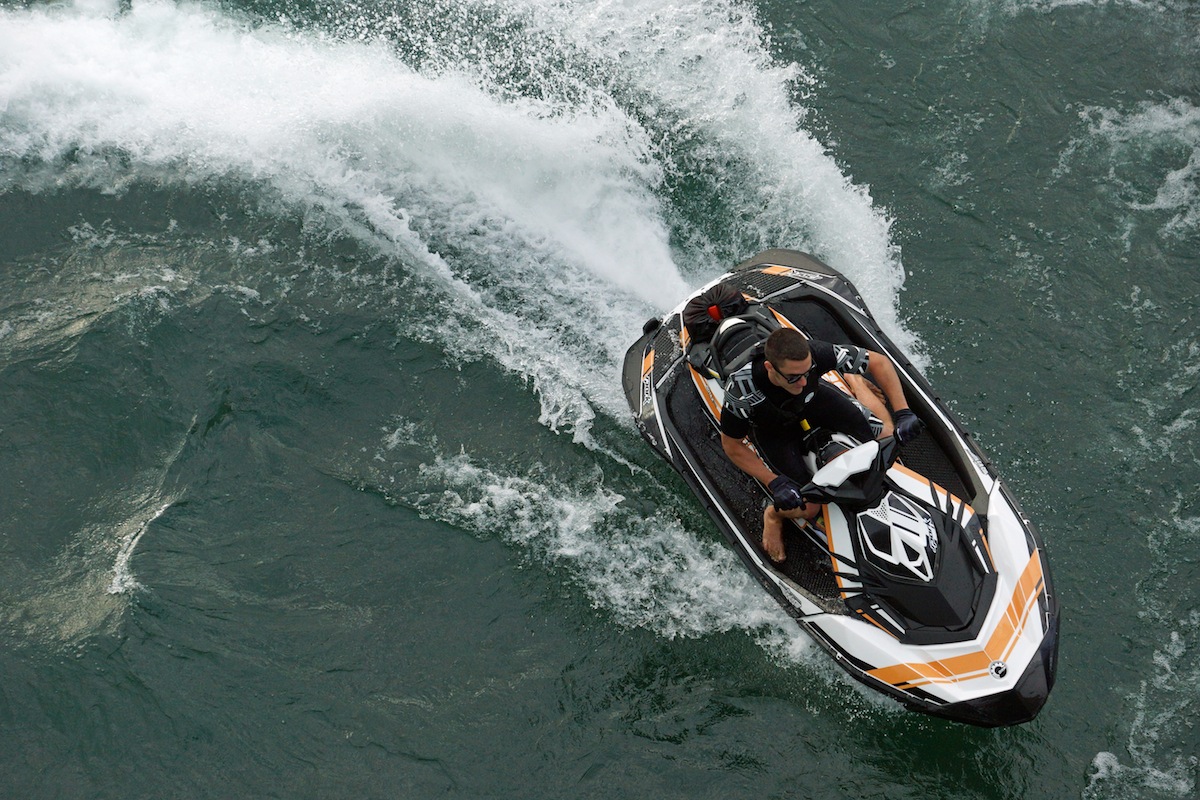
One central point to the appeal of the 2014 Sea-Doo Spark is its ability for customization. Be it in selecting colors, seating, powertrain or from a catalog of accessories, the Spark allows owner to truly make their Spark their own.

A huge portion of the Spark’s offerings is the addition of literally 60 different custom vinyl wrap and color combinations. Dubbed a Sea-Doo Attitude Graphic Kit, owners can personalize their Sea-Doo. Now, vinyl wraps are nothing new to the PWC community and we at The Watercraft Journal actually strongly encourage the use of vinyl wraps instead of paint, as vinyl wraps helps to protect your ski’s finish and better retain its resale value when its time for you to “trade up.”

But installing a vinyl wrap on a Spark is a slightly different chore, as most vinyl wraps won’t properly adhere to the Spark’s PolyTec body. Rather, SCS Unlimited designed these wraps exclusive to the Spark.

With 11 different graphic kits available in three levels of customization – light, medium or fully wrapped – each digital print design is UV resistant and designed to bond to the Spark’s “low energy surfaces.” Check it out:

Flight of The Flyboard: Can This Performer Become Mainstream?

0
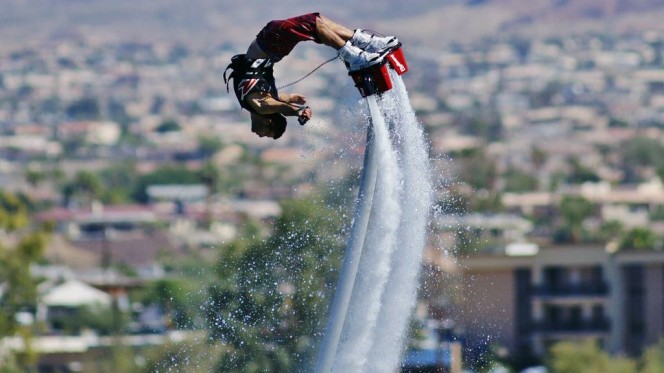
No it's not Iron Man, and the power of flight is achieved solely by the thrust from a modified runabout. Image: Clay Tolbert

World Champion racer and personal watercraft innovator Franky Zapata took time out of developing V6 and V8-powered runabouts to create the Flyboard, which has literally taken off.

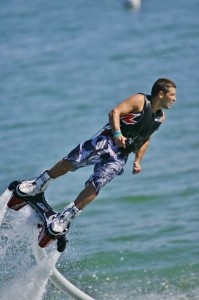
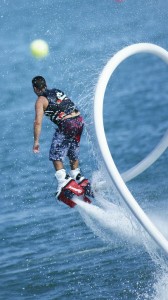
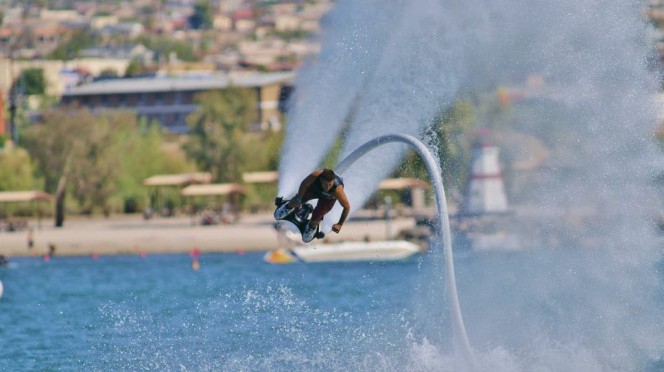
It’s not hard to stand in awe of the aerial acrobatics achieved by those athletes in command of World Champion racer Frankly Zapata’s impressive Flyboard. Part snowboard and part jet pack, the Flyboard looks deceptively easy.

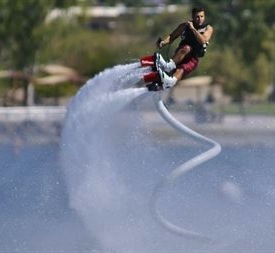
Riders’ feet are strapped into fixed boots similar to a snowboard, which channels the thrust provided by a modified personal watercraft runabout (sitdown) which pushes a torrent of water through the 18 meter-long hose, allowing the rider heights up to 10 meters above the water.

Of course, nobody expects first-time riders to achieve the impressive backflips, porpoise dives and other trick moves executed by those who have dedicated hundreds of hours to learning the intricacies of the Flyboard, but that’s OK; Zapata Racing offers a pair of arm braces that likewise pump thrust through each gauntlet, letting you literally fly like Iron Man.

It’s impressive to see and even more to try and are looking at seeing more Flyboards being used for recreational use rather than just exhibition.

No it’s not Iron Man, and the power of flight is achieved solely by the thrust from a modified runabout.
The Flyboard makes for fantastic spectator entertainment and even a fun diversion for daring enthusiasts, but it’s reliance on a secondary source of thrust (namely a full-sized PWC) makes it more of an accessory than its own entity.

The Flyboard has one fatal flaw: it requires significant athleticism to master. A precarious balance of muscle and throttle control are needed to make the Flyboard soar, and there lies its greatest limitation, that is, at least in the eyes of many. For others who might be physically capable of attempting the Flyboard, the deterrent comes from a far more carnal instinct: self-preservation.

For the same reason why normally adventuresome persons are petrified of riding roller coasters, the thought of relinquishing control (and perceived safety) to the pulls of velocity, gravity and centrifugal force as well as man-made machine is all too much to handle. But more commonly, the physical needs of balance, strength and control are simply too far outside of the mainstream.

OK, here’s where we’re going to get mean: There’s not a lot of proficient standup watercraft riders who are overweight or all that clumsy (although imagining one is pretty funny). Once given the option of a traditional standup ski or a runabout, mainstream Americans gravitated towards the craft that required less physical exertion to operate so much so, that OE manufacturers eventually ceased drastically dialed back building skis altogether.

The second major strike against the Flyboard is its dependence on an existing four-stroke runabout; albeit the genius behind the design of the Flyboard. Its redirection of the pump thrust to a pair of nozzles mounted to the board provide the vertical lift necessary to levitate over the surface and – once a certain degree of confidence is achieved – rotate, spin and maneuver. Likewise, as mentioned previous, a pair of stabilizer jets mounted to left and right hand gauntlets provide additional control.

Zapata, as well as many others, have successfully demonstrated the Flyboard before tens of thousands of spectators with even Zapata himself appearing on live television in Spain and performed for Tom Cruise (who voiced interest in trying the Flyboard).
The Flyboard has all of the potential to become its own performance-level sport equal to freestyle and freeriding as long as the public embraces it. We love the marriage of PWC, wakeboarding and freestyle but wonder if its uniqueness is its downfall.

Yet, without a runabout at the ready, the Flyboard remains dead in the water, so to speak. A 30-foot hose mounts to a coupler that interrupts the factory pump housing of the watercraft to redirect the thrust to the Flyboard. The PWC remains operable but in a limited fashion as it is serves almost exclusively to propel the Flyboard.

Audiences and enthusiasts have shown interest in the Flyboard but mainly as a source of brief entertainment, not necessarily a sport of its own. The aftermarket has also shown limited interest in the Flyboard.

PWC Performance offers custom-made Skat-Trak Twin Drive impellers. The dual-sided impeller features main drive 4-blade impeller and an inducer impeller to improve thrust while scrubbing vibration and cavitation commonly found on stock-equipped PWC powering a Flyboard.

Owner, Jerry Gaddis, stated, “I think it’s a very small market, but the guys that have them seem very passionate about them.”

Whether the Flyboard is a fad or will become a permanent fixture in the personal watercraft industry remains unseen. Yet, like so much, it all depends on the public’s acceptance.

All images: Clay Tolbert