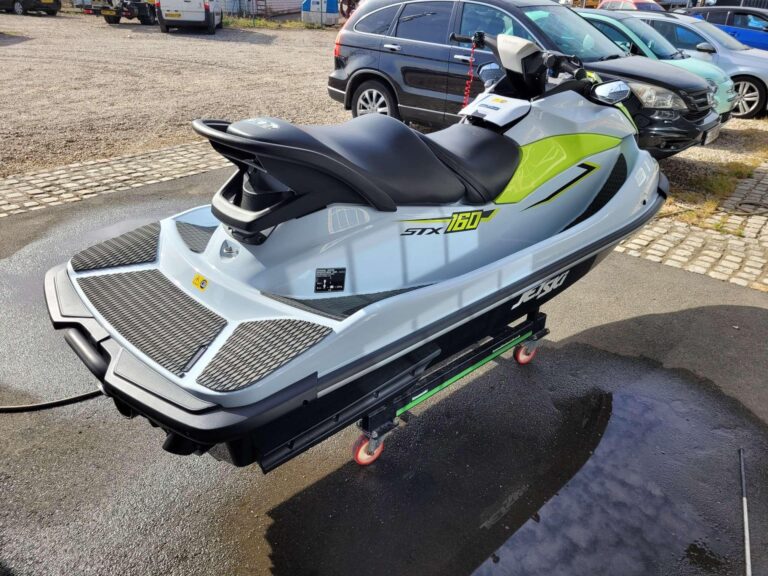
Few companies have proven their mettle when it comes to troubleshooting, problem solving and offering proven positive results for Kawasaki JetSki owners than Kawi Performance. Within the past dozen years, Steve Ciervo and his team have made huge gains in improving the longevity of these machines – not to mention increasing horsepower, sharpening throttle response and much, much more.
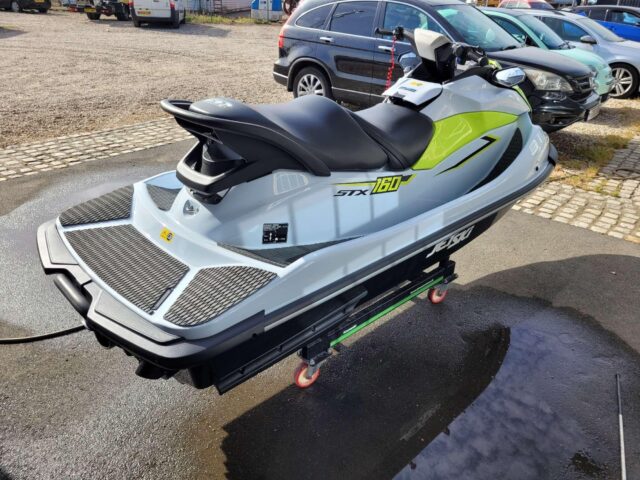
Wanting to demonstrate Kawi Performance’s prowess, Ciervo took to YouTube to announce their latest – and likeliest most ambitious – project yet: a 310-horsepower Ultra-powered base model STX 160. Purchased as a bare shell, the powertrain, fuel system and complete digital engine control system was pilfered for a aluminum mini jet boat, allowing Ciervo to pick up the hollowed JetSki for a song.
Interestingly, Kawi Performance will not be gutting a 2014-and-up Ultra 310, but will start using a previous generation’s 300 motor. Ciervo stated that the 300 will be completely overhauled, fitted with forged internals and updated to match the current 310’s output (if not a tickle more). Below we’ve inserted the first video, but make sure to subscribe as Kawi Performance seeks to update the series weekly.
While few are immune to the exhilarating allure of cutting across the water on a speeding jet ski – the wind in your face, the spray popping up against the hot sun – one of the most significant barriers of entry for riders can be figuring out how to afford such a luxury. New jet skis can cost anywhere from $5,000 to $20,000, with luxury models going even beyond that. Of course, not everyone has to purchase a jet ski to enjoy it, with renting becoming an increasingly popular market at marinas worldwide, but even then, the daily price adds up.
For anyone who really wants to get into jet skiing, buying one can be a great long-term investment, and more accessible than some might think! A recent piece at Yahoo Finance details some of the ways to finance a PWC, making it an accessible financial decision for both first-time buyers and those looking for an upgrade.
Yahoo Finance suggests four possible pathways for financing a jet ski: taking out a personal loan, using a credit card, a personal watercraft loan, or manufacturer financing. While you can read the full write-up at Yahoo Finance for more details on each option, there are several important factors to consider while choosing.
For example, the interest rate for each option can vary widely, with some credit cards or manufacturers offering a 0% interest rate for a certain period of time, while other options can reach upwards of 12%. Some options for financing also have lower limits on the amount you can borrow, which may limit your options. Lastly, it’s important to consider the repayment term for a loan, as some limits might make monthly payments less affordable.
If you’re in the market for a new jet ski and want to consider a financing option, check out Yahoo Finance’s write-up for a comprehensive guide to your available choices!
Undoubtedly, you’ve read The Watercraft Journal defend the Kawasaki’s offshore/rough water prowess but at the cost of ripping top speeds equal to that of Sea-Doo and Yamaha. The Ultra dominates in chop due to its deep-V hull and overall heft. Simply put, that means that the Kawasaki sits deeper in the water.
With so much wetted surface, the Kawasaki simply produces far more drag than its slipperier competitors when in glassy conditions. Having to push so much mass through the water requires some serious power, and getting the big JetSki to displace water quicker means some serious know how.
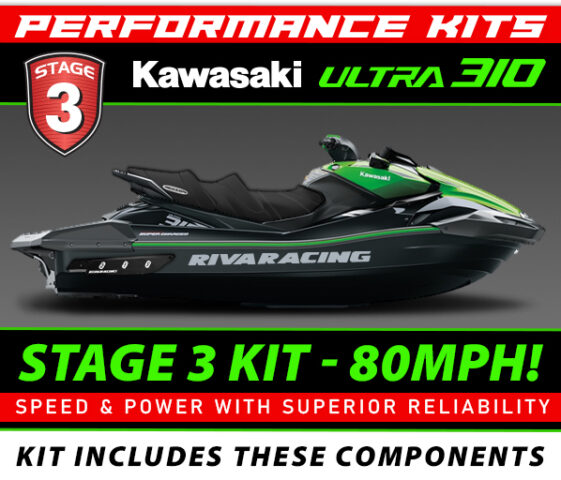
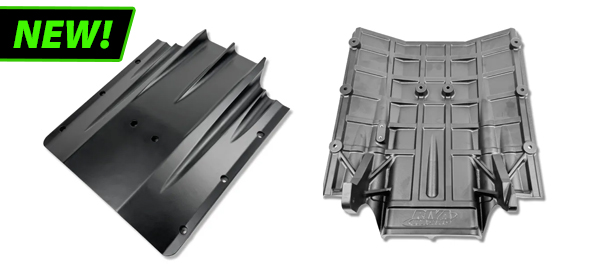
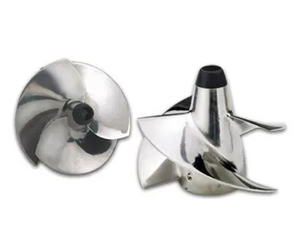
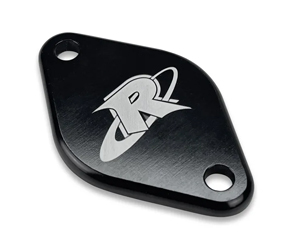
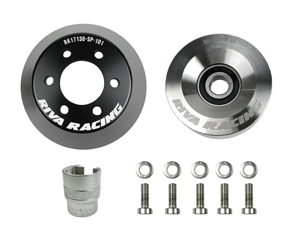
Thankfully, RIVA Racing has managed to do both. Requiring a great deal of effort, RIVA managed to redesign its Performance Ride Plate (including a higher ramp, deeper runners and a center skeg); perfected the pitch on a Solas Concorde 14/18 impeller; added a wastegate block off plate; and introduced a billet aluminum K3 supercharger pulley with all stainless hardware and idler pulley.
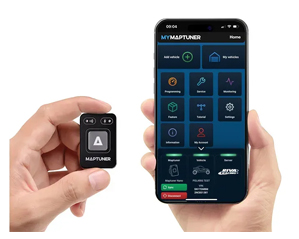
Of course, the most important feature is the use of RIVA’s Maptuner Nano tuning bundle. This incredibly easy-to-use dongle plugs directly into the supplied diagnostic cable, allowing tuning upgrades to be made through your smartphone app; as well as a king’s ransom of live data and decoding tools.
The end result is a Stage 3 Kit that delivers a repeatable 80mph @ 8400rpm (RIVA states the test unit was a 2023 Kawasaki Ultra 310X ridden in fresh water with 180lbs rider; 1/3-full tank), ignition timing is very safe for use with RIVA’s Stage 3 pulley. Equally, it was all done using the factory waterbox and air intake.
Here’s the original press release from RIVA Racing: Our Stage 3 Kit delivers a huge performance gain with simple bolt-on modifications! Delivers great acceleration and a top speed increase of 13+ MPH.
The Maptuner Nano Bundle delivers instant plug-in horsepower!
Includes everything you need to connect to and reflash your watercraft’s ECU in one complete package.
Flash your vehicle’s ECU for more power, monitor and log critical engine data, read & clear error codes all from your smartphone! This revolutionary app based device is controlled with your phone via wireless Bluetooth connection. Intuitive & easy to use with a few simple steps!
There is no limit to the number of vehicles or tunes you can reflash with the Nano. Simply purchase one tuning license for each vehicle that you would like to program. This gives you access to RIVA’s world famous Tuning Library along with unmatched technical support. Easily switch between performance tunes and then back to stock settings if you wish.
Features and Benefits:
Wireless Bluetooth connectivity to Android or iOS smartphone.
Switch between performance tunes quickly & easily.
Restore stock tune settings if you wish.
Reflash your ECU instantly without shipping it out for programming.
Allows reading & clearing fault codes.
Includes live monitoring & data logging of critical engine data.
RIVA Wastegate Block-off Kit is installed. Billet block-off plate replaces the factory wastegate valve on your intercooler enabling maximum boost and engine performance.
RIVA ‘K3’ Supercharger Pulley Kit is installed. Smaller in diameter than stock, it produces over 3psi of additional boost delivering incredible horsepower and torgue. Made from billet aluminum and coated with a special military spec material for improved belt wear and corrosion resistance. Stainless steel idler pulley is matched with stainless steel precision sealed bearing.
Solas Concord Impeller is installed. New design incorporates a large blade area and superior hub design that deliver increased acceleration and top speed. Billet nose cone included.
RIVA Performance Ride Plate is installed. Our ride plate increases top speed and significantly enhances handling characteristics.
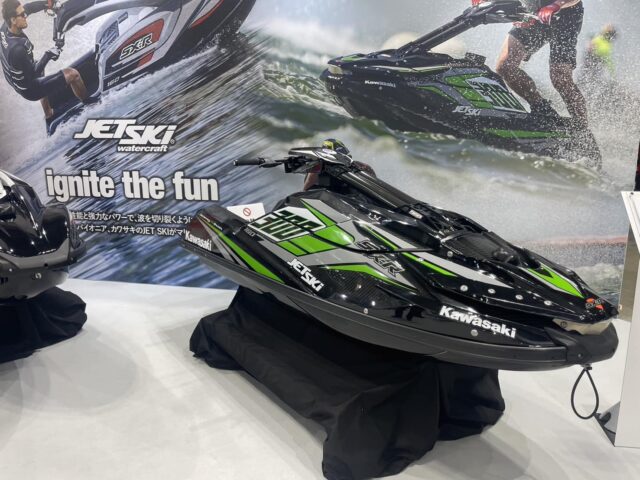
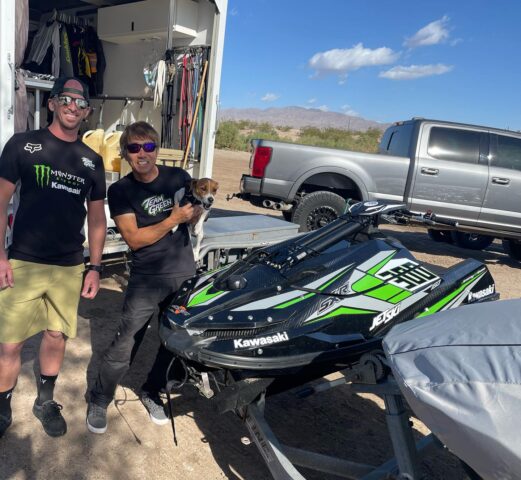
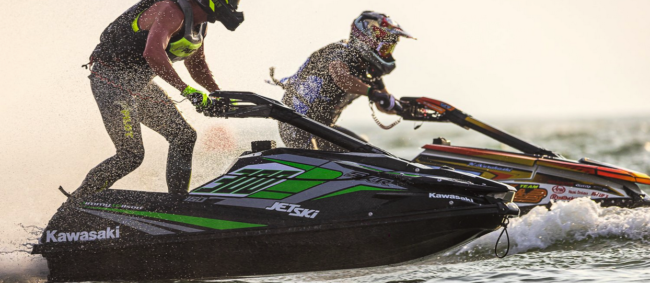
A Facebook post published last week had many pontificating the possibility of a redesigned SX-R 1500 “race edition” JetSki. Featured front-and-center in the Kawasaki Motors booth in the Pacifico Yokohama, Japan boat show, a gorgeous black-and-lime green standup was on display alongside SX-R 160’s.
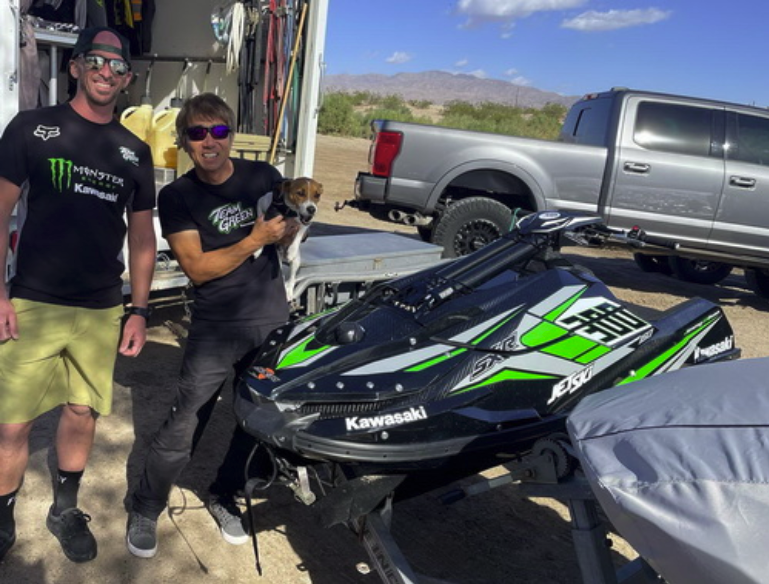
The SX-R in question is actually, a uniquely-designed “Hyperion” jet ski made by VK Composites and sold domestically through Rival PWC. Belonging to professional Kawasaki racer, Jimmy Wilson, the #300 Hyperion is actually a part of a far larger effort by Kawasaki to dominate standup racing yet again.
Image: Jimmy Wilson
In an article published on JetSkiWorld.gr, Vasilis Moriatis spoke with Factory Team according to spokesman, Minoru Kanamori about Kawasaki’s efforts to expand its racing efforts globally. Working together with Wilson, Kanamori has been experimenting with different engine tunes and handling setups.
After returning back from Thailand where he joined Kanamori and the Kawasaki Factory Team, Wilson spoke with Moriatis stating, “The Factory Kawasaki ski is a mix of old (2-stroke) and new (4-stroke GP) in my opinion. The ski stays hooked up in turns and doesn’t slide out or hope coming out of the turns.
“I do like that the ski allows for more rider input entering the turns than most of the newer GP skis on the market. I say that because this ski will roll over more than most skis but it doesn’t fall over. It’s stable in the straight line but would be good in a slalom section as well.”
As an observer, it is very revealing how Kawasaki’s Factory Team has adopted the Hyperion design. Wilson is no stranger to aftermarket hulls and has been a worthy representative of Kawasaki, making this particular marriage of the racer bringing in a third-party’s design (and it being so readily accepted by a major factory team) particularly intriguing.
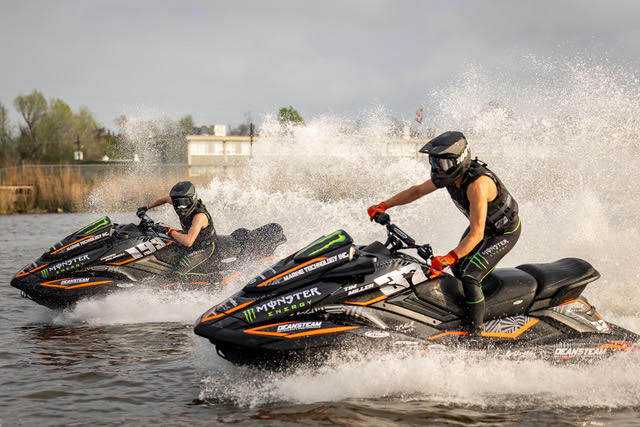
Déjà vu. One year ago, The Watercraft Journal announced that Chris MacClugage’s MACC Racing was officially partnering with Monster Energy for the 2023 P1 AquaX US National Championship season.
As WCJ Editor-in-Chief Kevin Shaw stated in that 2023 announcement, MacClugage – called the GOAT by many – is one of the most decorated and highest winning World Champion athlete across multiple classes, including Pro Freestyle, Pro Ski GP, Pro Runabout /GP & AquaX Pro Enduro, with more than two dozen championships to his name.
Considering not only that impressive resume, but adding in an impressive victory by MacClugage at the final 2023 round in Kissimmee / St Cloud, it should come as little surprise that WCJ just received notice from Monster Energy that the adrenaline junky dream team of Monster and MAAC Racing is a done deal for the 2024 season.
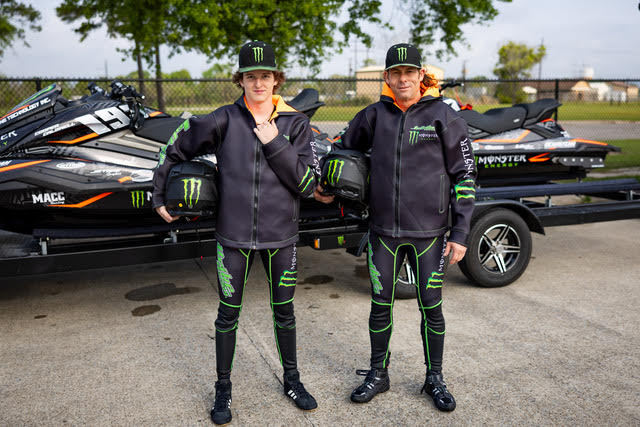
In addition to the renewed partnership, MacClugage has announced the lineup for the 2024 MACC Racing team, introducing new teammates Tim Miller and Cooper Caldwell.
After receiving the press release, WCJ contacted MacClugage to chat with him about the coming season, but Mac is currently in Spain, competing, but he promised to sit down with WCJ when he returns stateside to talk about the challenges, opportunities and plans for the coming race season and the newest MACC teammates.
Read the full press release below: MACC Racing is thrilled to announce the continuation of its partnership with Monster Energy for the highly anticipated 2024 P1 AquaX US Championships. As a pinnacle event in the world of personal watercraft (PWC) racing, the P1 AquaX series draws elite racers globally to compete at the highest level.
Following a challenging start to the 2023 season, Monster Energy MACC Racing finished on a high note with an impressive victory by Chris MacClugage at the thrilling final round in Kissimmee / St Cloud. The team’s triumph has set the stage for an exciting 2024 campaign, with a focus on carrying forward the positive momentum from last season.
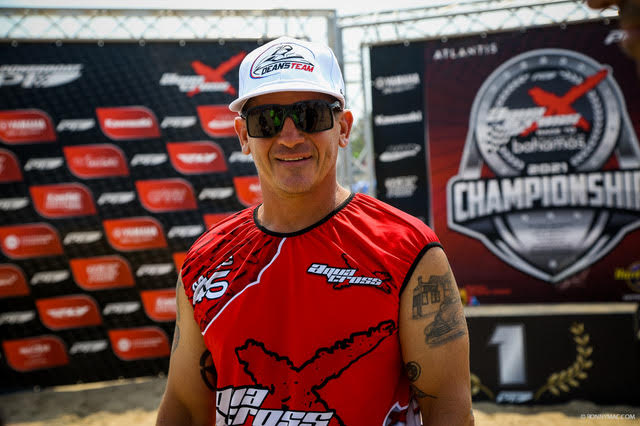
In preparation for the upcoming championships, Monster Energy MACC Racing has bolstered its roster by welcoming Tim Miller, a seasoned competitor renowned for his achievements on the US National Tour and at the IJSBA World Finals. Miller’s addition enhances the team’s competitive edge and solidifies its position as a formidable force in the PWC racing circuit.
Alongside Tim Miller, the team is proud to welcome Cooper Caldwell, who will be competing in the P1 AquaX Amateur Enduro Class. At just 16 years old, Cooper Caldwell already brings a wealth of experience and success to MACC Racing. A two-time US Amateur National Champion, Caldwell’s impressive track record includes a 2nd place finish in the 2023 IJSBA World Championship Amateur Runabout Stock Class. His dedication and skill have already made him a rising star in the world of PWC racing.
The 2024 championship will see the team on Yamaha powered Jet Ski’s. Chris MacClugage, Team Owner, Rider, and two-time P1 AquaX US National Champion expressed his confidence in the team’s preparations for the upcoming season. “With the continued support of Monster Energy & Dean’s Team, I feel like we have the fundamentals in place for a successful season. Tim Miller is a great addition to the team. We have over 60 years of racing experience between us.” stated MacClugage. He also emphasized the team’s excitement in introducing rising star Cooper Caldwell to represent the team in the amateur class, demonstrating his dedication to nurturing young talent within the sport.
“I’m excited to be part of the Monster Energy MACC Racing team” says Cooper Caldwell. “I met Chris MacClugage at the 2023 World Finals in Lake Havasu & did a few coaching sessions with him. Chris helped me improve my riding style & learning from all his years of experience has made a big improvement to my performance.”
Caldwell added, “This is a huge opportunity for me & I’m thankful to my dad, Chris, Tim & Dean Charrier for their effort in getting my ski’s ready for the season. I’ve been training hard to prepare for this year’s championship. I know I have a lot to learn in P1 AquaX, but my plan is to listen to what Chris and Tim tell me, take care of the equipment and ultimately be on the podium.”
Tim Miller shared his excitement about his new venture with Monster Energy MACC Racing. Recalling his early days in the sport, Miller reminisced about lining up alongside a young talent who would later become one of the world’s best – Chris MacClugage. In recent years, Miller has been instrumental in developing skis for Cooper Caldwell, with the support of Dean Charrier. Expressing his enthusiasm for the upcoming season, Miller stated,” I’m looking forward to racing with Chris & being part of the Monster Energy & MACC Racing team. We’re ready to battle for the 2024 Championship.”
As the team prepares to embark on the 2024 P1 AquaX US Championship, the stage is set for an exhilarating season of competition with the opening round set to take place in Daytona Beach, 19-22 April.
About MACC Racing:MACC Racing is a leading force in the world of personal watercraft racing, known for its commitment to excellence and passion for competition. With a history of success and a dedicated team of talented athletes, MACC Racing continues to push boundaries and redefine standards in the thrilling sport of PWC racing.
About Chris MacClugage #30:Dubbed the GOAT, or the Greatest Of All Time by friends, colleagues & fellow competitors, Chris, who was once known as merely “The Kid” has grown into his own as the sport of jet ski racing. With 25 career championships, he’s become the most decorated and highest winning World Champion athlete across multiple classes, including Pro Freestyle, Pro Ski GP, Pro Runabout /GP & AquaX Pro Enduro. Chris also holds the current Guinness World Record for, “Most wins of the IJSBA Pro Runabout 1200 World Championships”.
About Tim Miller #37:With a racing legacy spanning back to 1988, Tim Miller stands as a seasoned figure in PWC racing, known for his expertise and dedication to the sport. A consistent top performer, Miller has secured top 10 finishes at the IJSBA World Championships since 2019, showcasing his enduring skill and competitive spirit.
About Cooper Caldwell #193: Cooper Caldwell is a rising star in PWC racing, boasting two US Amateur National Championships and a runner-up finish in the 2023 IJSBA World Championship. With a drive for success and a promising future ahead, Caldwell embodies the next generation of racing excellence.
About P1 AquaX:P1 AquaX is a premier personal watercraft racing series that brings together top racers from around the globe to compete in exhilarating and high-stakes races. With a reputation for delivering adrenaline-pumping action and showcasing top-tier talent, P1 AquaX sets the stage for intense competition and unforgettable moments on the water.
About Monster Energy: Monster Energy is a leading energy drink brand, renowned for its commitment to extreme sports and high-octane action. Partnering with athletes across various disciplines, Monster Energy fuels their pursuits, pushing the limits of what is possible.
About Dean’s Watercraft Performance: Since 1995, Dean’s Team has been at the forefront of the jet Ski racing world. Owned & operated by Dean Charrier – The world’s top tuner & custom parts manufacturer for race jet skis. Dean’s Team has consistently brought in National and World titles year in and year out.
While it certainly isn’t every day that we see PWCs as a topic in Forbes magazine, it’s no surprise that world-class Big Wave Surfer Garrett McNamara would be at the center of such a story.
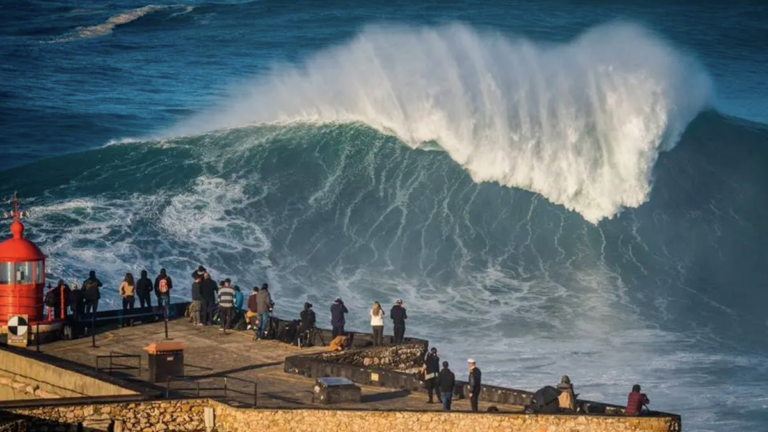
In a recent piece for the magazine, McNamara takes Forbes contributor Jim Clash out on jet skis at the notorious wave at Nazaré, Portugal, to bring the adventure writer up close and personal with this legendary wave.
In fact, Garrett McNamara is widely acknowledged for bringing about Nazaré’s recognition as a premier destination for world-class big wave surfing, when, on November 1, 2011, he set the world record for the largest wave ever surfed at 78 feet. The Hawaiian surfer has since dedicated much of his time to fostering the surfing community in Nazaré, an otherwise quiet fishing village just north of Lisbon. His accomplishment – which would later be turned into the HBO Docuseries 100 Foot Wave – set the stage for subsequent world-record breakers Rodrigo Koxa (80 feet) and Sebastian Steudtner (86 feet) at the same site.
In the Forbes piece, Clash recounts his time out on the PWC with McNamara, riding on waves of over 60 feet at times.
McNamara tells Forbes, “…we rode horizontally across the top of a 60- to 70-foot wave and watched it break under us. You could see how far down the face was, with the [Praia do Norte] lighthouse in the background. It gives a great perspective of what we, as surfers, deal with. From where you were, you could totally understand what it would look like to drop into a big wave [without doing so].”
The drama didn’t end there either, as Clash writes of the nearly disastrous flip of their Jet Ski among the waves. While everything turned out safely without casualties, that kind of accident could be catastrophic if another wave had hit at the wrong time.
To read the full story, check out Clash’s write-up for Forbes here.
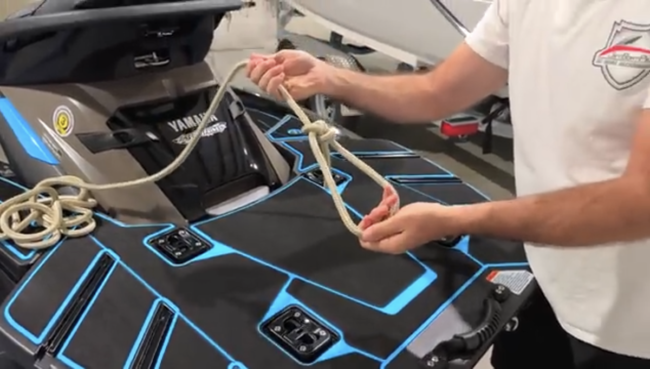
While there are tons of useful knots that can be used while working with personal watercraft, the Bowline is easily one of the most important for anyone working with boats, jet skis, or just about anything on the water.
For those who aren’t yet familiar, the bowline knot is a knot used to create the loop at the end of a dockline. While some dock lines may come with a loop built in, the bowline knot is an easy way to create a strong, reliable loop at the end of any line. This allows PWC users to connect to tow points, cleats, dock pilings, and a wide variety of other uses.
The bowline knot is particularly useful because it won’t jam or slip, even under intense strain, but it can be easily loosened just by using one’s finger. In the video by JetBoatPilot, we’re walked through both the easy way, and the fast way to make this knot, making it a valuable primer for just about everyone.
If you don’t know how to tie one yet, check out the video from JetBoatPilot below to add a super useful tool to your arsenal of PWC skills.
You can learn about other handy-to-know knots in this tutorial.
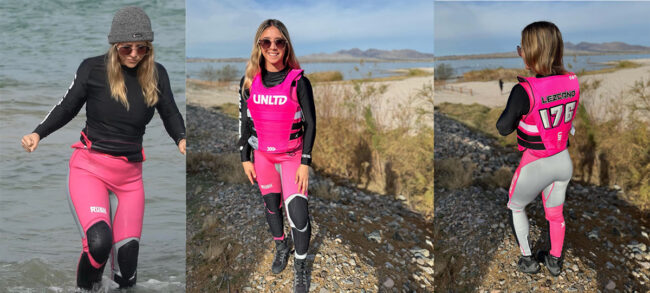
A spate of sedate color schemes seem to be desaturating much of the PWC world lately, with toned-down colors and muted hues popping up in everything from rash guards to wetsuits to ski graphics.
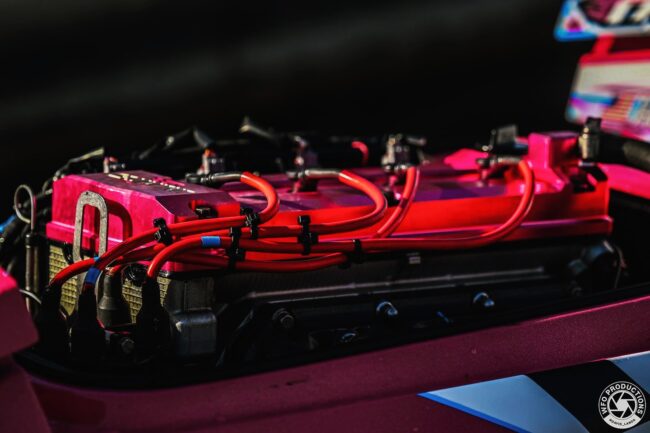
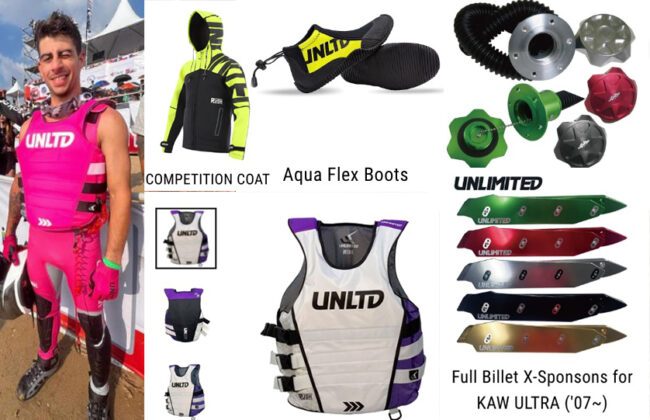
Unlimited PWC Products, however, is having none of that nonsense! With a push of product teases and highlights over the past few months, the performance parts and apparel brand – already known for the style and flare of their offerings – has splashed bold and eye-catching color across their website and social media pages, on everything from race gear to engine parts.
And Unlimited customers are tickled (Neon) pink (and blue, and green, and highlighter yellow) about the anything-but-boring aesthetic.
With a personality that harkens back to the 80s and 90s retro style, but updated with imaginative color blocking, modern detailing, and advanced materials, Unlimited is putting some pizazz back in the PWC game. The move is one finding favor with many recreational riders who are looking for gear and decked-out skis that look as fun as the adventures they head out on. The look is also one that has secured the attention of some well known names in the PWC race world, as evidenced by Raphael Maurin and Valentina Lezcano.
Yamaha Motor Corp. USA has an unfailing grip on the jet boat market. Retaining nearly 80-percent of all total jet boat sales in the world, Yamaha is unequivocally the industry leader in this regard. But with boats exceeding $36,000 for its lowest entry point, many looking for something priced like a personal watercraft but needing a larger vessel like a jet boat are priced out of the market. That is, until recently if what we are seeing here comes to fruition…
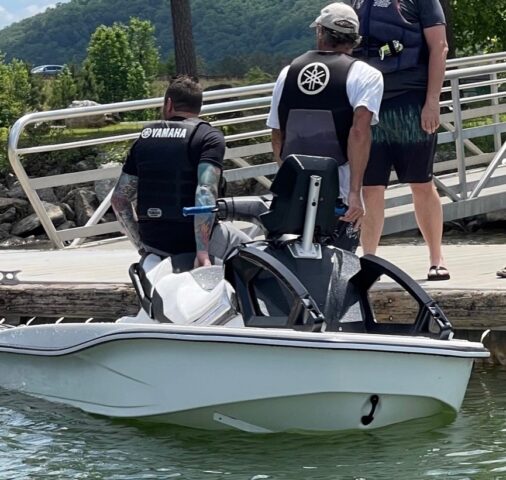
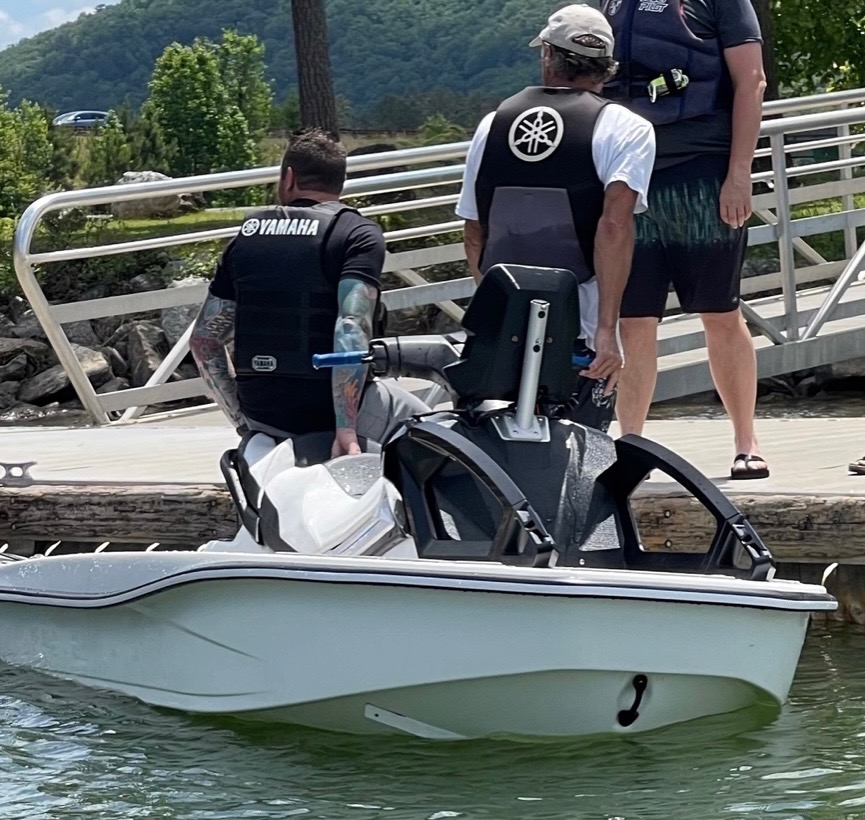
Over the weekend, social media was buzzing with speculation after a grainy cell phone image emerged of Yamaha Motor Corp. USA engineers testing a prototype WaveRunner-based vessel. Snapped from a passing boat on Allatoona Lake, the spied prototype employs existing FX WaveRunner seats, handlebars and portions of the deck; the dashboard, forward fairings and bow storage have been replaced by a durable – albeit temporary – structure and large digital screen standing on an aluminum strut.
Appearing to have large foot-to-two foot wide footwells and a thick gunwale, the Yamaha boat rides on a widened hull with a deep-set outside chine and splash deflector. Observers were quick to note that the prototype appeared to be incomplete and wholly missing its top deck cover. Powered by an existing TR-1 3-cylinder or new-for-2024 1.9L High Output marine engine, this Yamaha boat would enjoy the reliability of the WaveRunner jet-drive propulsion system and fuel delivery system.
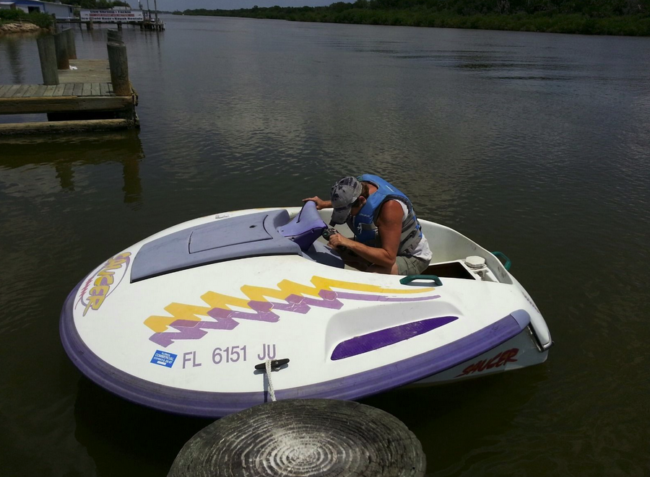
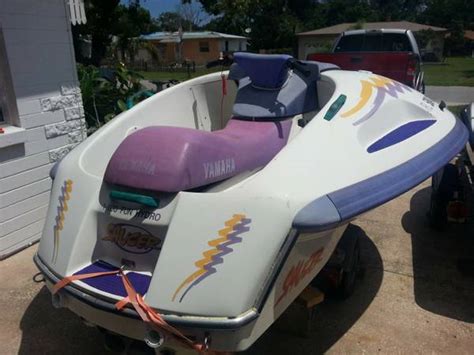
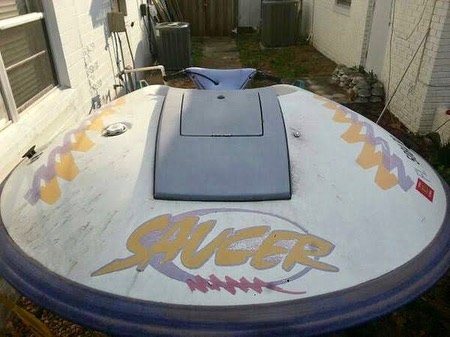
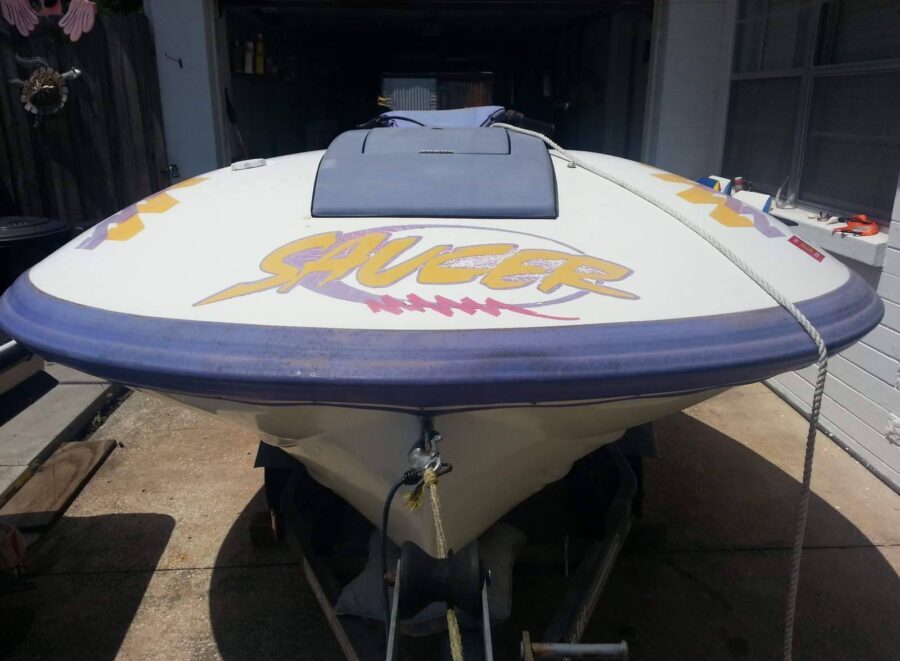
When rendered to cover the boat’s large width and low-slung profile, a handful over commenters were reminded of the short-lived “Sea Saucer,” a limited-run of 300 rental units based upon the WaveRunner 650 in 1996. For those who recall, the Sea Saucer dramatically widened the 2-seater WaveRunner 650, making tipping and rollovers neigh impossible; the massive 12-foot length and similar width also provided renters plenty of protection from impacts or collisions with other boaters.
While an unofficial product not sold through Yamaha dealerships, a small handful of rental outfits were able to purchase the Sea Saucer through official channels as a WaveRunner. It is rare to find much online regarding the Sea Saucer and rarer still to see pictures of one still in use. Yet, as Yamaha Motor Corp. USA seeks to expand its boating market, designing a WaveRunner that manages to bridge its personal watercraft division with its massive jet boat market presence could be a massive boon to the brand.
Alas, what we have to go off of here is almost entirely speculative. For all we know, this is a “test buck,” a rough-but-functional craft used solely to “durability test” different powertrain components (or otherwise). Considering Yamaha just recently introduced a new 1.9-liter naturally-aspirated 4-stroke, which was revealed to consume fuel at the same rate of the outgoing SVHO engine, we might be seeing engineers troubleshooting the new engine’s fuel consumption issues. So again, this is entirely speculative.
If, like us, you’re already looking ahead to those gorgeous Summer days out on the water, it might be about time to consider ordering a new watercraft for the season from our friends over at Cycle Springs Powersports. They’re offering a wide array of watercraft as we approach the season, with some real gems to highlight from the 2024 Sea-Doo lineup.
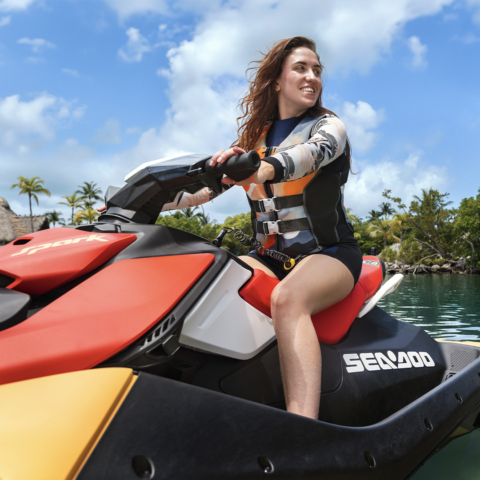
In a Facbook Post from earlier this year, they promote “Lightweight, compact and fuel-efficient, the 2024 Sea-Doo Spark is your passport to aquatic adventures. Easy to maneuver and designed for fun on the water, it’s the perfect fit for riders of all levels.” A quick visit to their online catalog shows the versatility of this affordable PWC, loaded to the brim with useful features, making it an accessible pick for a wide variety of riders, from enthusiasts to amateurs, without sacrificing an ounce of quality or power.
A little more exploration of their online catalog will bring up the 2024 Sea-Doo RXP-X, a jetski lauded for its new 325hp Rotax ACE engine, which is currently the most powerful jet ski engine out of the box! This kind of power is a boost for the most dedicated of racers, allowing you to boost from 0-60mph in a mere 3.4 seconds.
In another FaceBook post Cycle Springs promotes Sea-Doo’s line of fishing PWC, writing: “Capture thrills on the Sea-Doo FishPro personal watercraft. Enjoy hands-free fishing with rod holders and speed adjustment without touching the throttle. You’ve never fished close to wildlife like this before!” Again, they manage to show the full range and versatility of the Sea-Doo craft they’re offering this year.
Whether you’re a life-long fisher, a PWC enthusiast, or a dedicated racer– or if you’re just looking to try your hand at a new sport – be sure to check out the great deals on Sea-Doo 2024 offerings from Cycle Springs Powersports


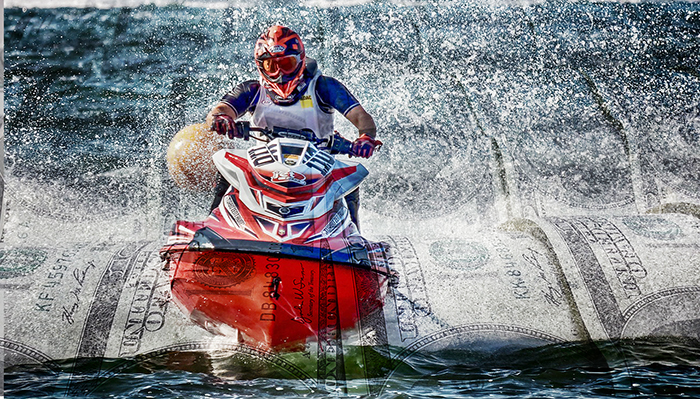
 While few are immune to the exhilarating allure of cutting across the water on a speeding jet ski – the wind in your face, the spray popping up against the hot sun – one of the most significant barriers of entry for riders can be figuring out how to afford such a luxury. New jet skis can cost anywhere from $5,000 to $20,000, with luxury models going even beyond that. Of course, not everyone has to purchase a jet ski to enjoy it, with renting becoming an increasingly popular market at marinas worldwide, but even then, the daily price adds up.
 Yahoo Finance suggests four possible pathways for financing a jet ski: taking out a personal loan, using a credit card, a personal watercraft loan, or manufacturer financing. While you can read the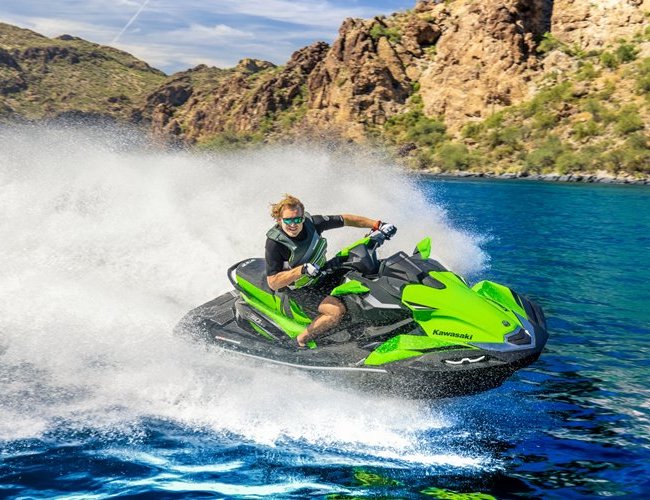
 While it certainly isn’t every day that we see PWCs as a topic in
  In the
 The bowline knot is particularly useful because it won’t jam or slip, even under intense strain, but it can be easily loosened just by using one’s finger. In the video by JetBoatPilot, we’re walked through both the easy way, and the fast way to make this knot, making it a valuable primer for just about everyone.
 A spate of sedate color schemes seem to be desaturating much of the PWC world lately, with toned-down colors and muted hues popping up in everything from rash guards to wetsuits to ski graphics.
 And Unlimited customers are tickled (Neon) pink (and blue, and green, and highlighter yellow) about the anything-but-boring aesthetic.
 Be sure to check out Unlimited’s website, where you can find the hue to suit you, whether you are looking for