

Home Blog Page 61

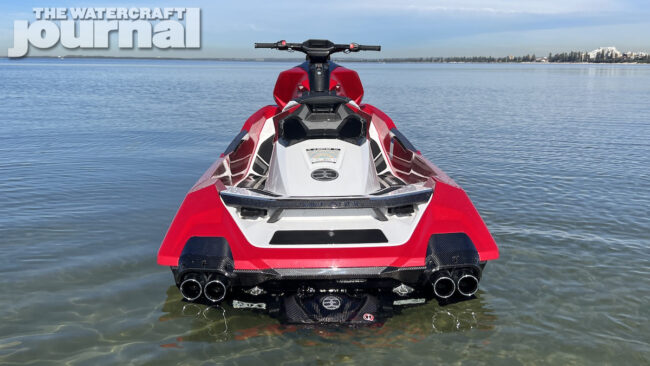
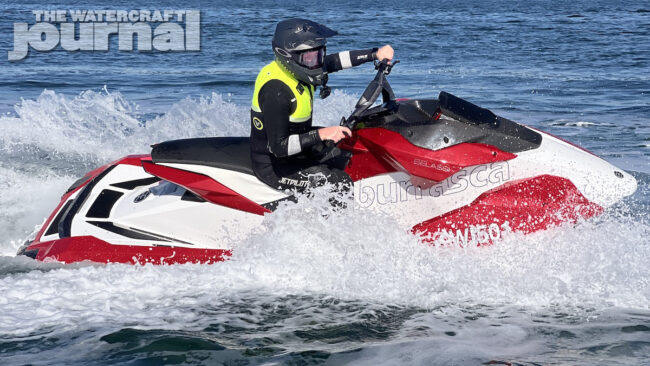
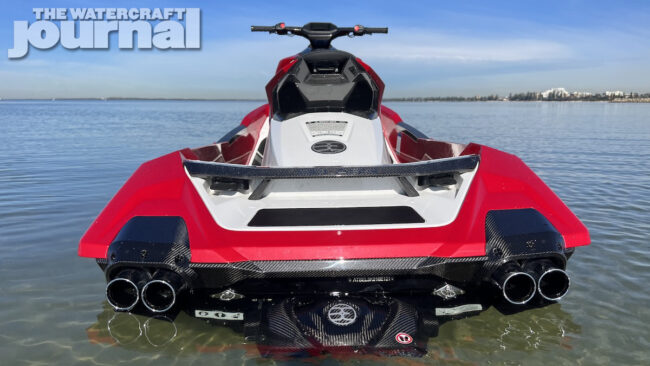
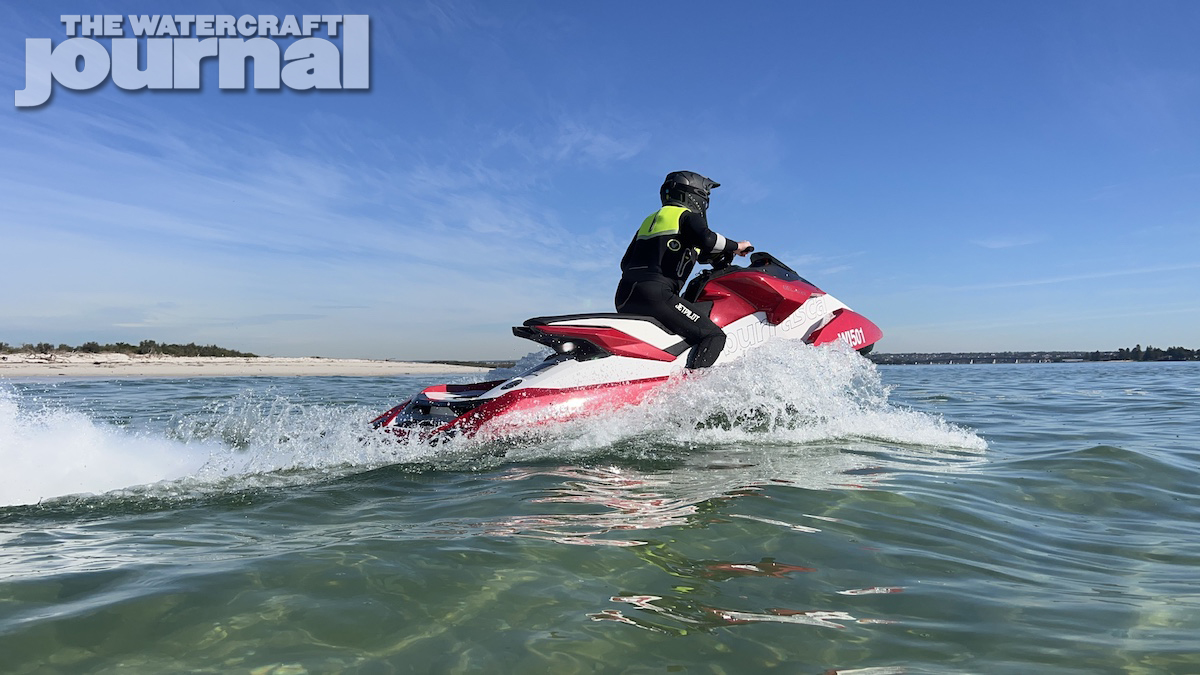
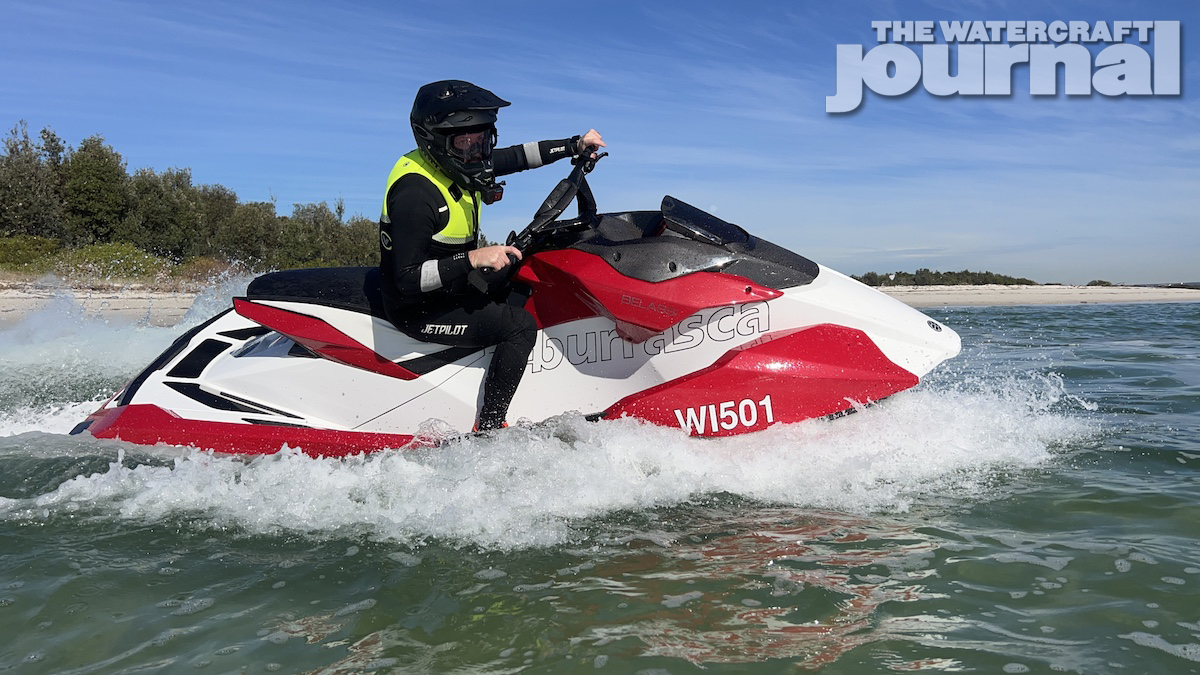
Gallery: 2023 Belassi Burrasca (Video)

0

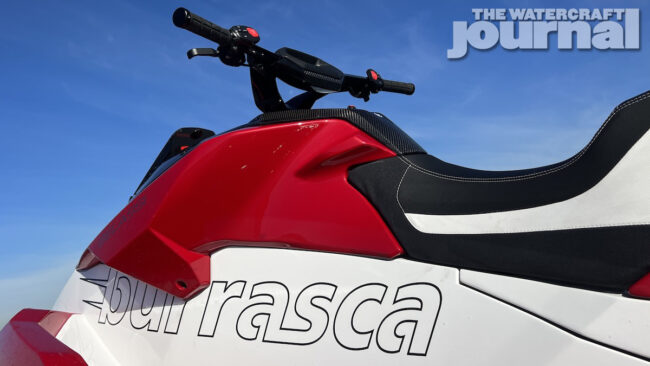
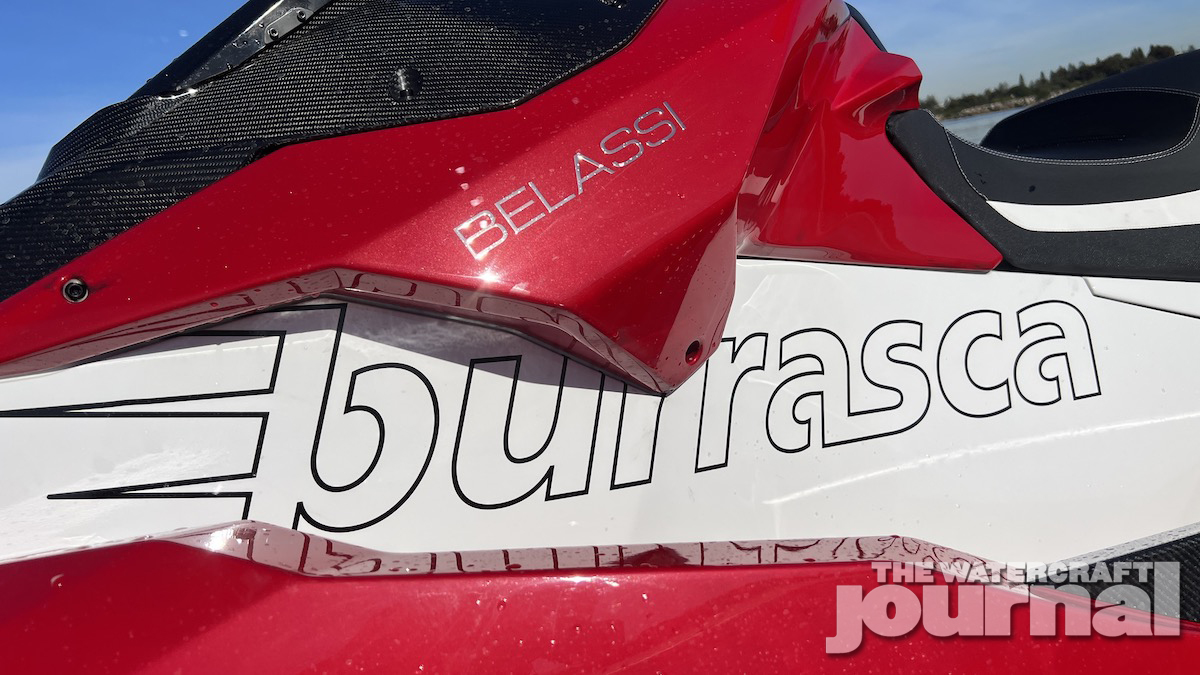
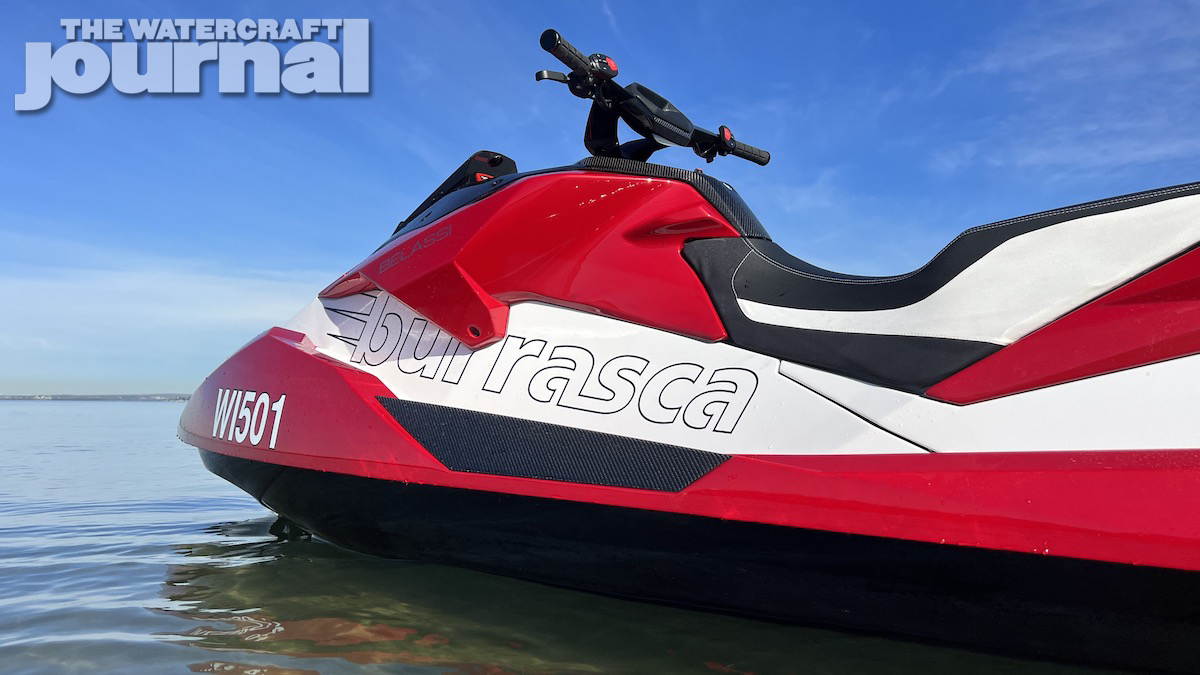
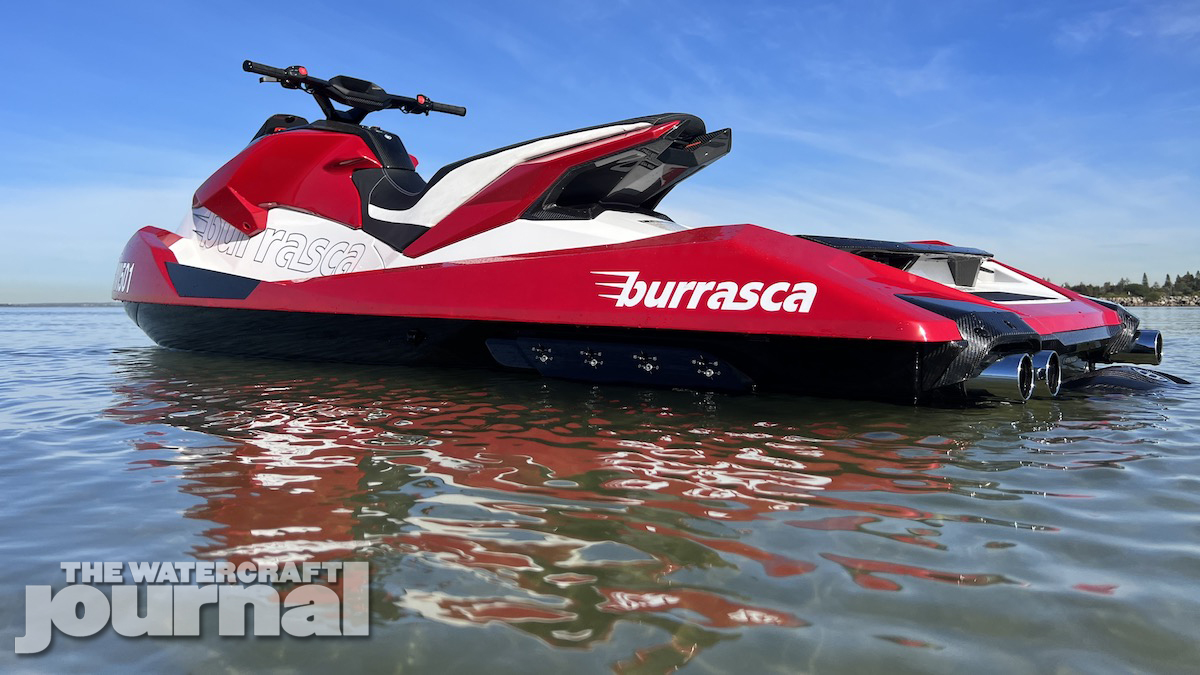
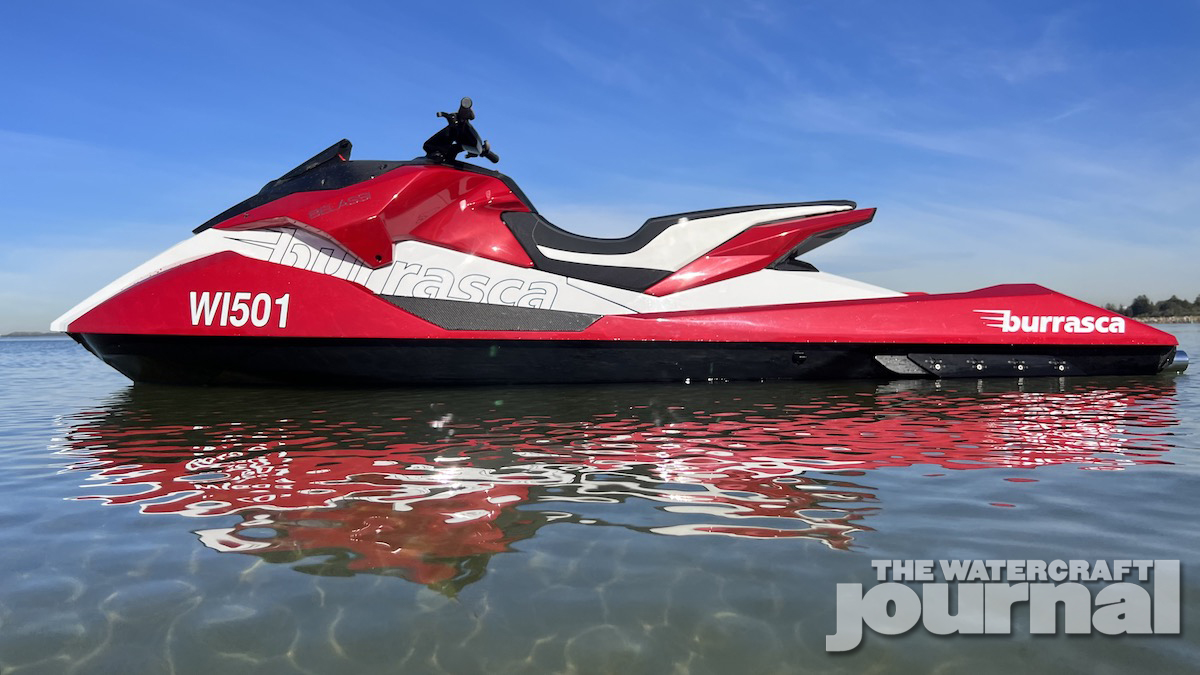
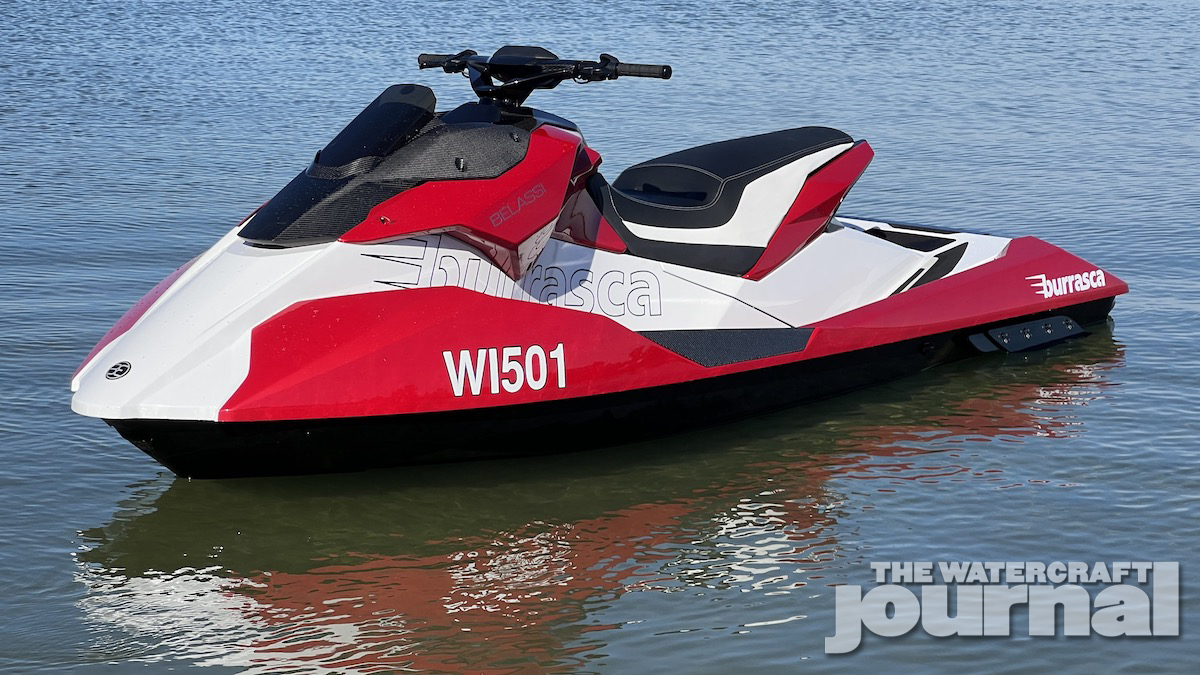
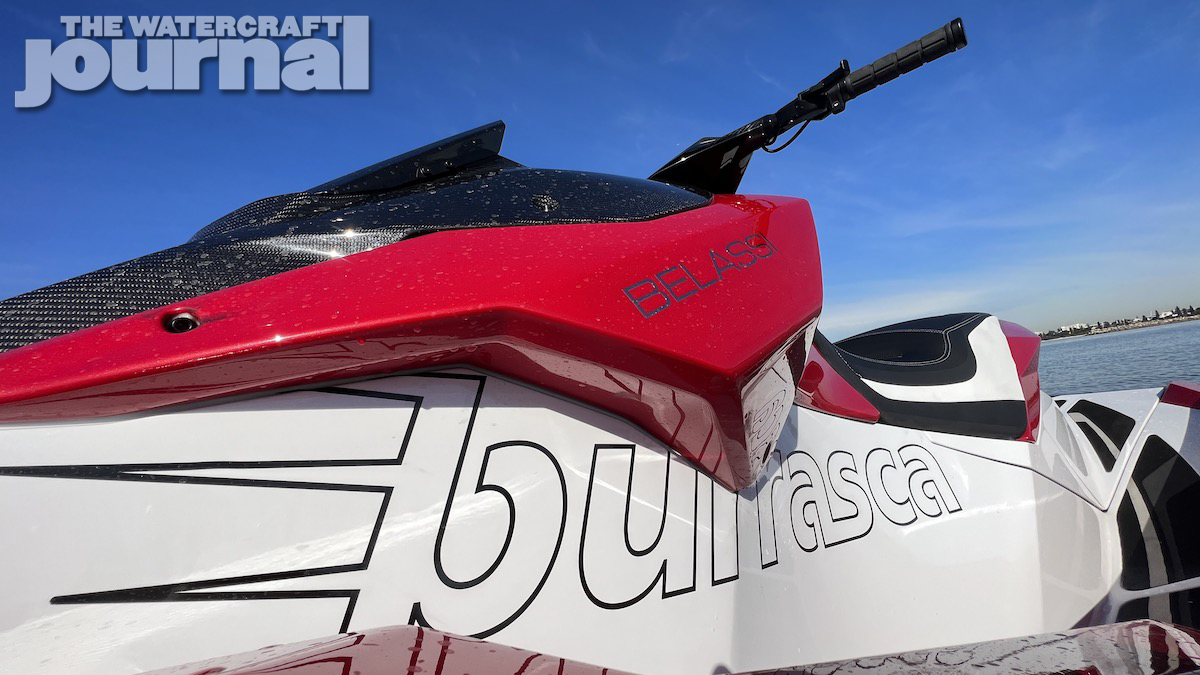
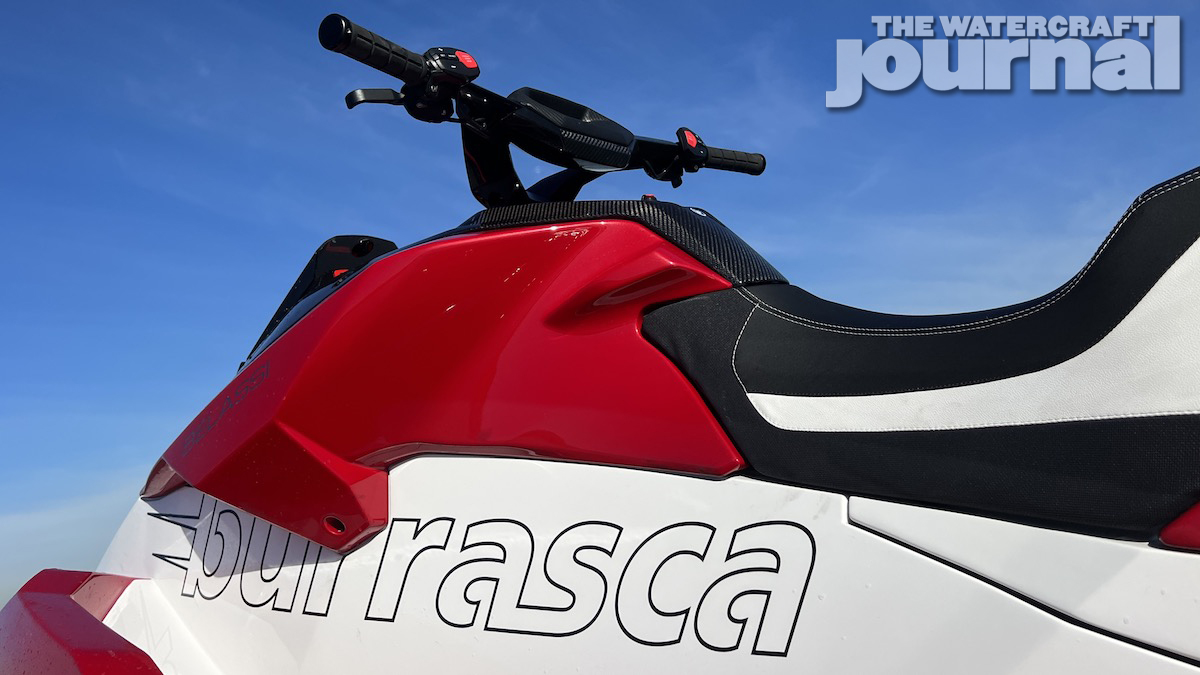
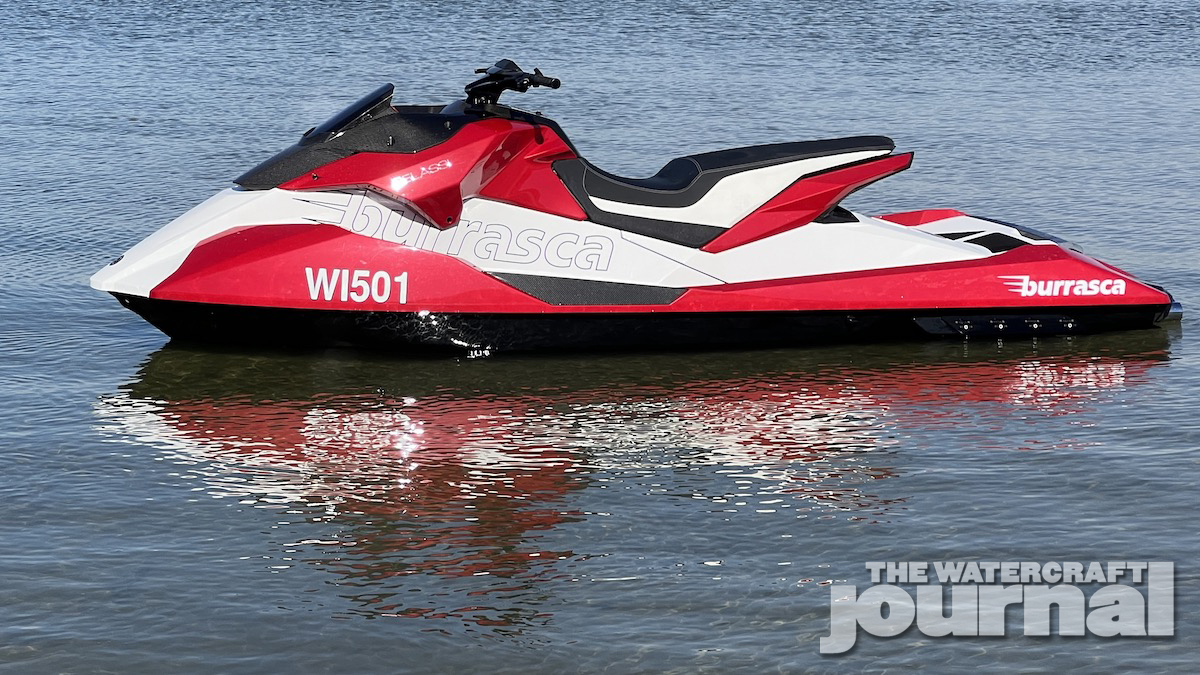
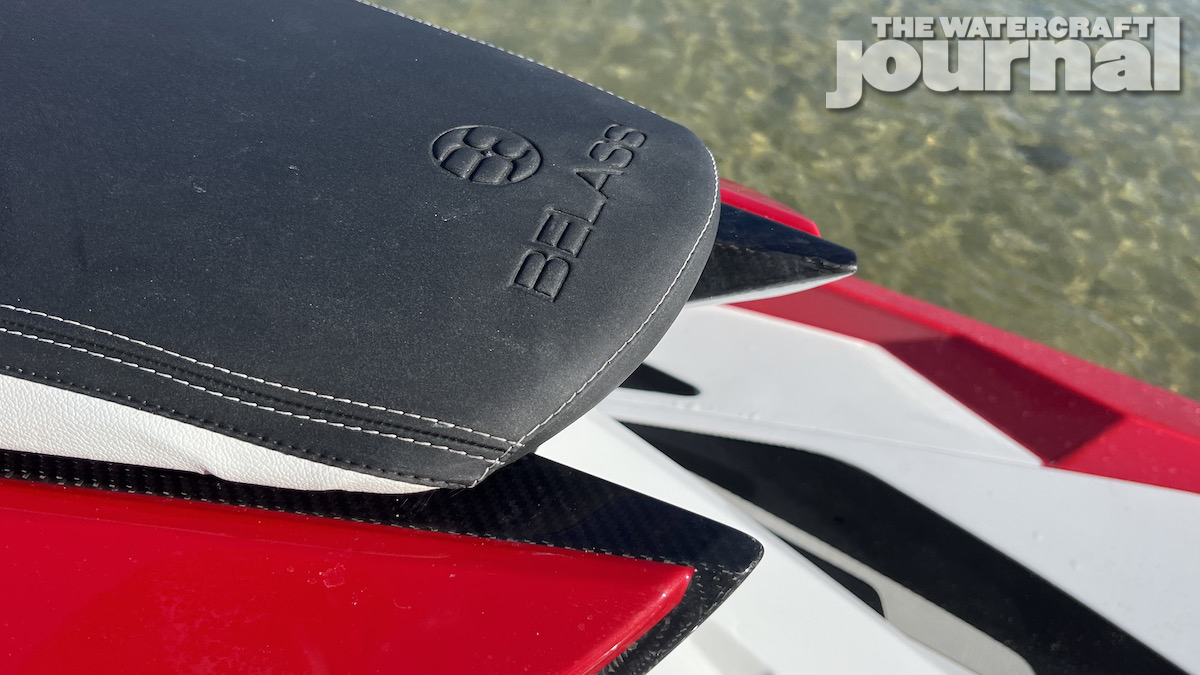
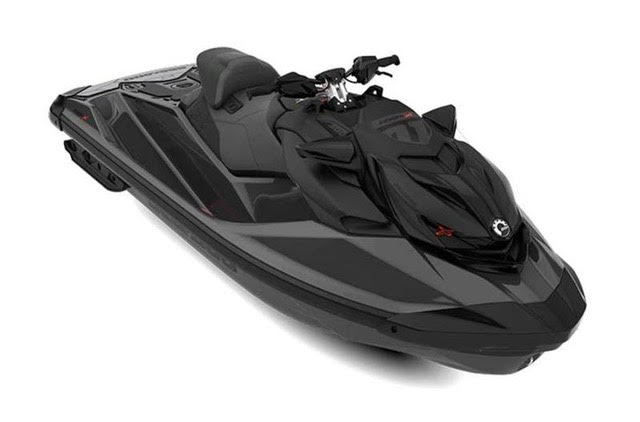
Here at The Watercraft Journal we have been following the rollout of the Belassi Burrasca from Europe since way back in 2017. As many may recall, the firm was originally called Benelli then it changed hands, got a new name and an overhaul of the craft itself. We’ve been chasing this thing down for more than five years and finally we have a taste of what it’s like. From the other side of the world.

Our mates at Watercraft Zone in Sydney, Australia were able to get on a demo from the distributor of Belassi in Australia and New Zealand. They got to spend some decent time on the craft. Although weren’t able to run fuel consumption numbers, they were able to give it a top speed run and test out the hull in a range of conditions.
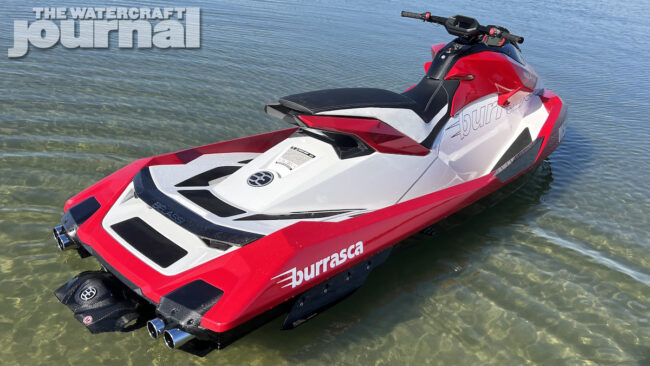
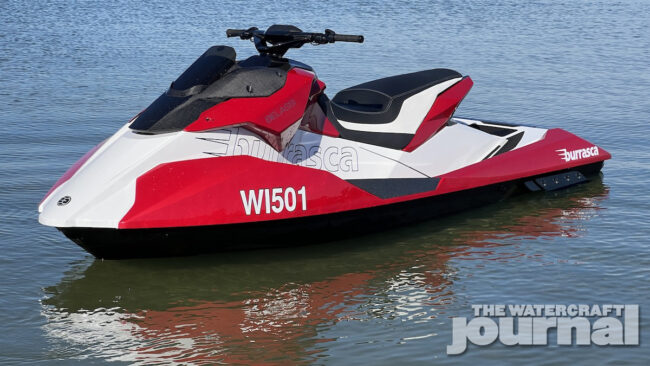
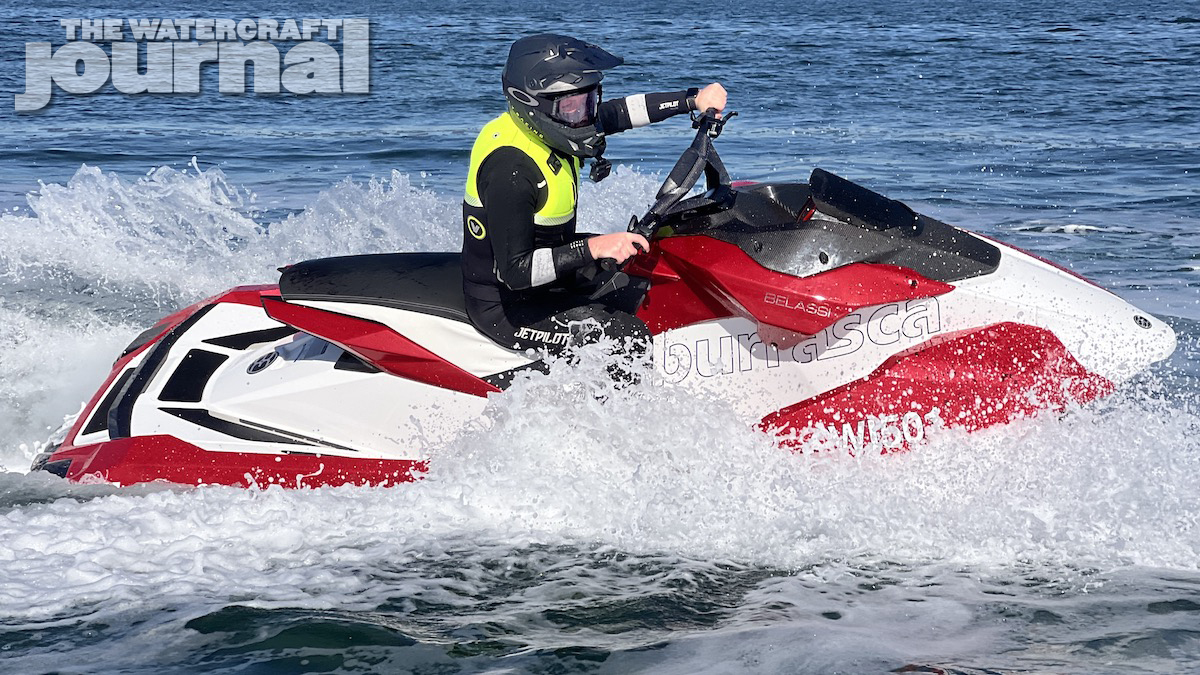
Spoiler alert! Belassi claims a top speed of 78-to-80mph. But in a VBOX test, the guys at Watercraft Zone saw a top speed of 73.9mph. To be clear this was an average of four runs, two in each direction. Which is why in one clip you can see the digital speed of the Belassi nudging 121kmh (75mph) briefly.

Also, Belassi says its top speed claim is with half a tank of fuel and a rider that weighs 176-pounds. When the guys tested it, they had a full tank of fuel and a 154lb rider. Water conditions were calm but not glassed out. So we’re not doubting Belassi’s top speed claim. We’re merely pointing out what we got.
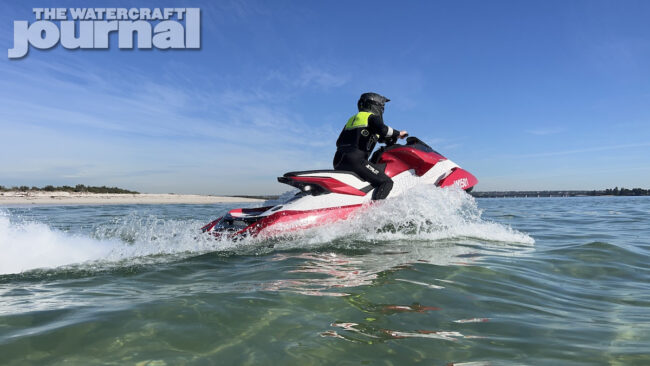
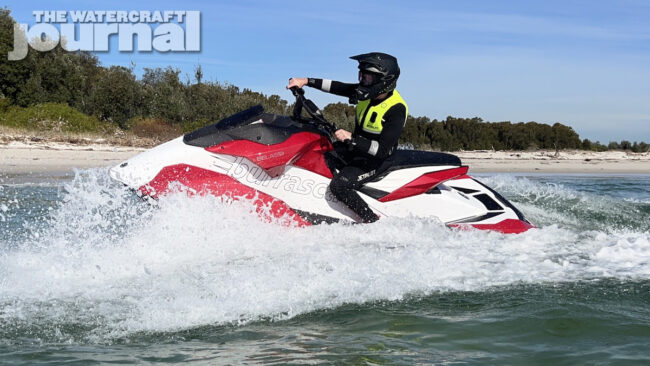
Sure you can get modified skis up to or in excess of this speed with a Riva kit and the like. But the Belassi Burrasca is not only about top speed. The guys at Watercraft Zone say it’s a bit of a weapon to ride. But before we get into it, a quick recap.

While the Belassi Burrasca has an Italian name – Burrasca is Italian for “storm” – the craft is hand-made in Austria. [That’s Austria near Germany. Not Australia near New Zealand. –Ed.]
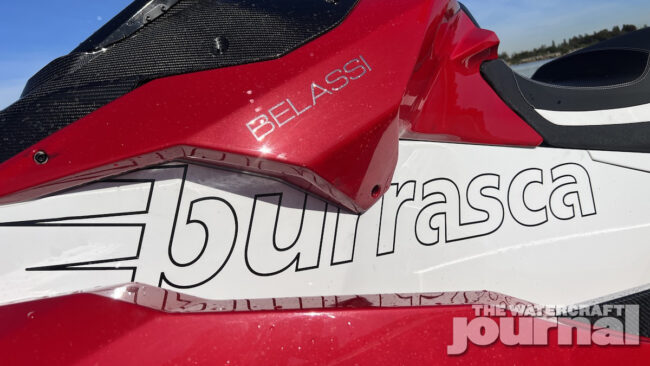
When it went on sale in Europe in mid 2021 it was priced from 50,000 Euros, the equivalent of about $56,000 US dollars. And while that is a stack of money – and more than double the price of the fastest PWC from Sea-Doo, Yamaha and Kawasaki – it’s worth noting this is a highly specialized machine.

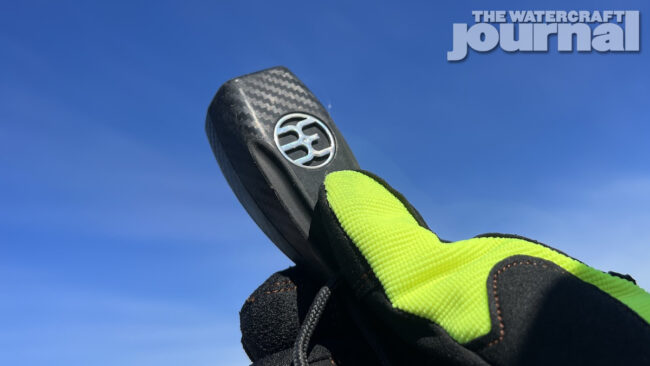
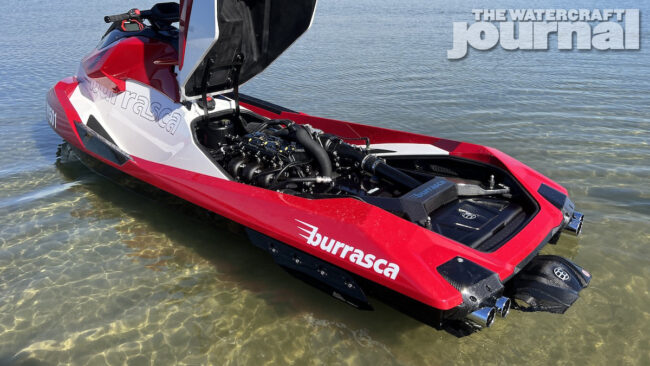
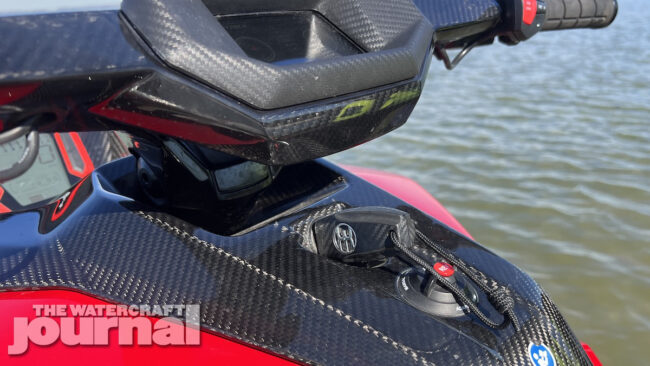
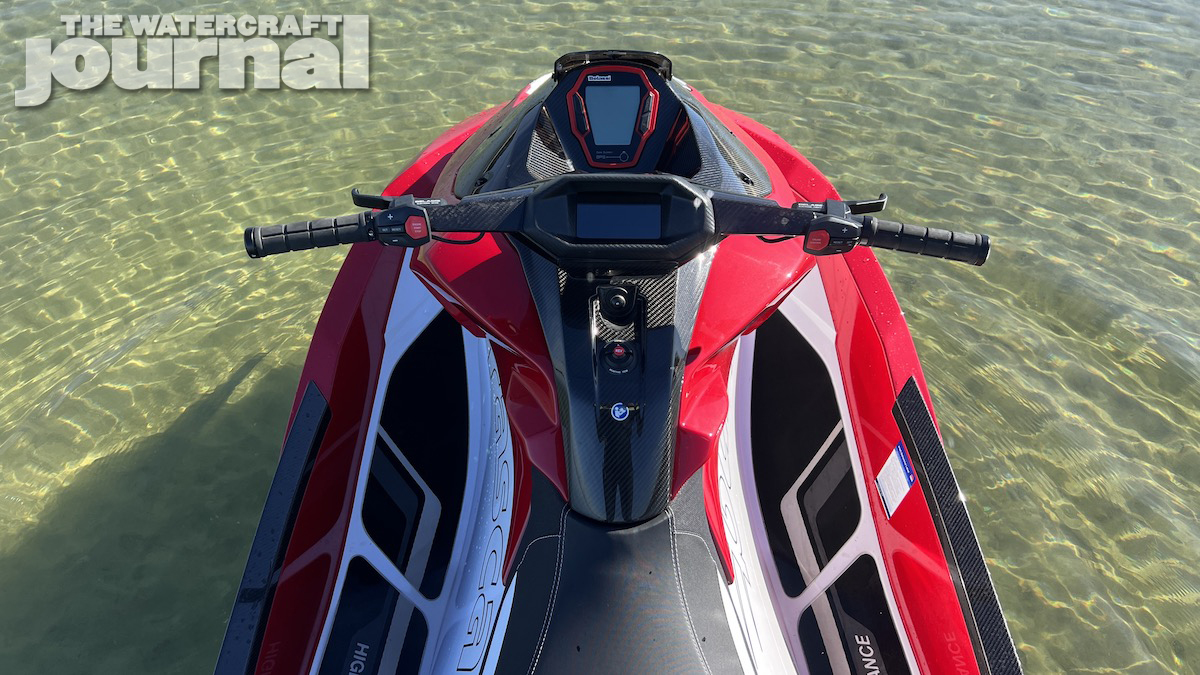
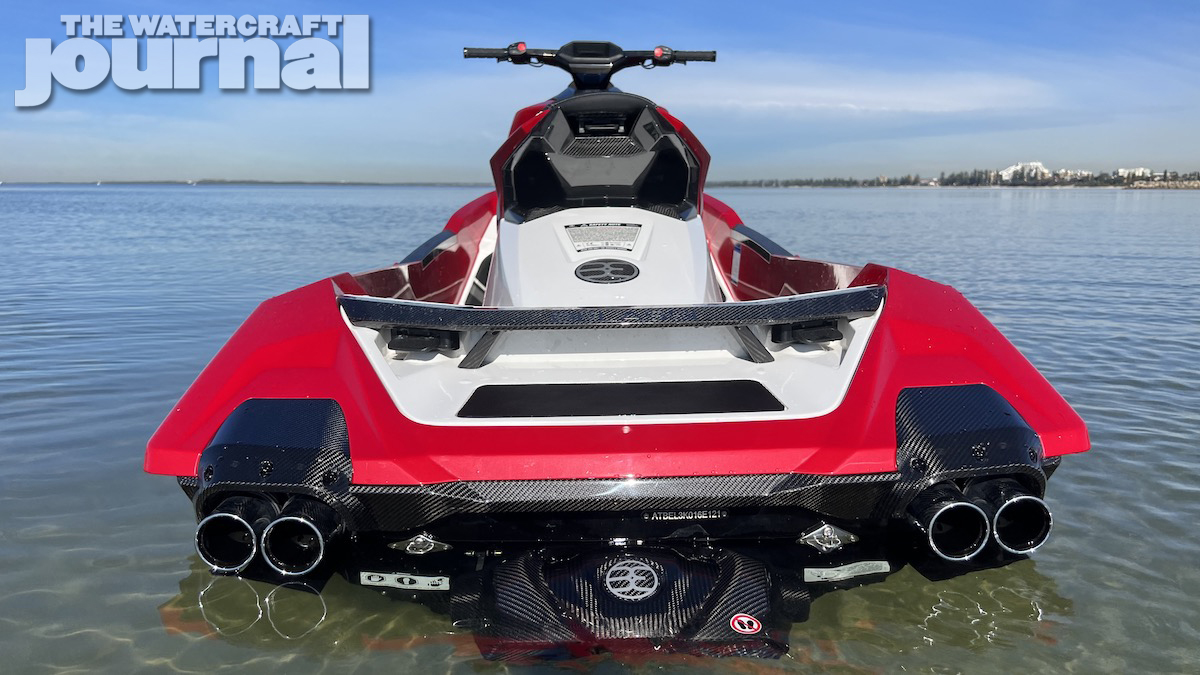
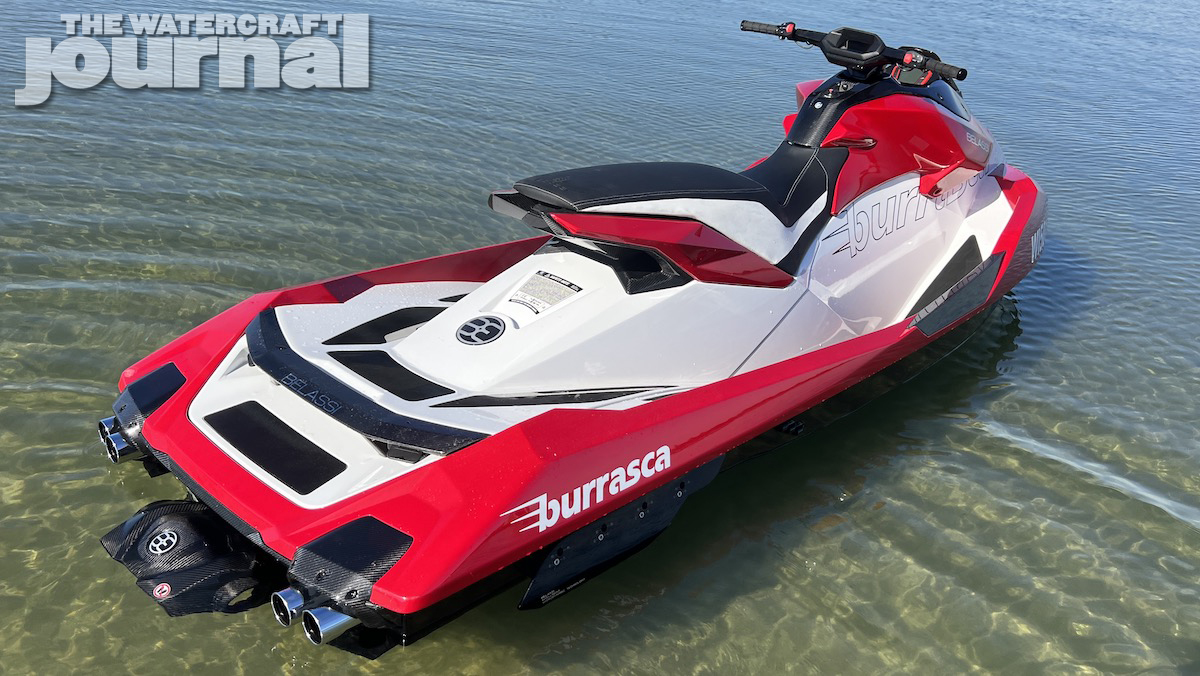
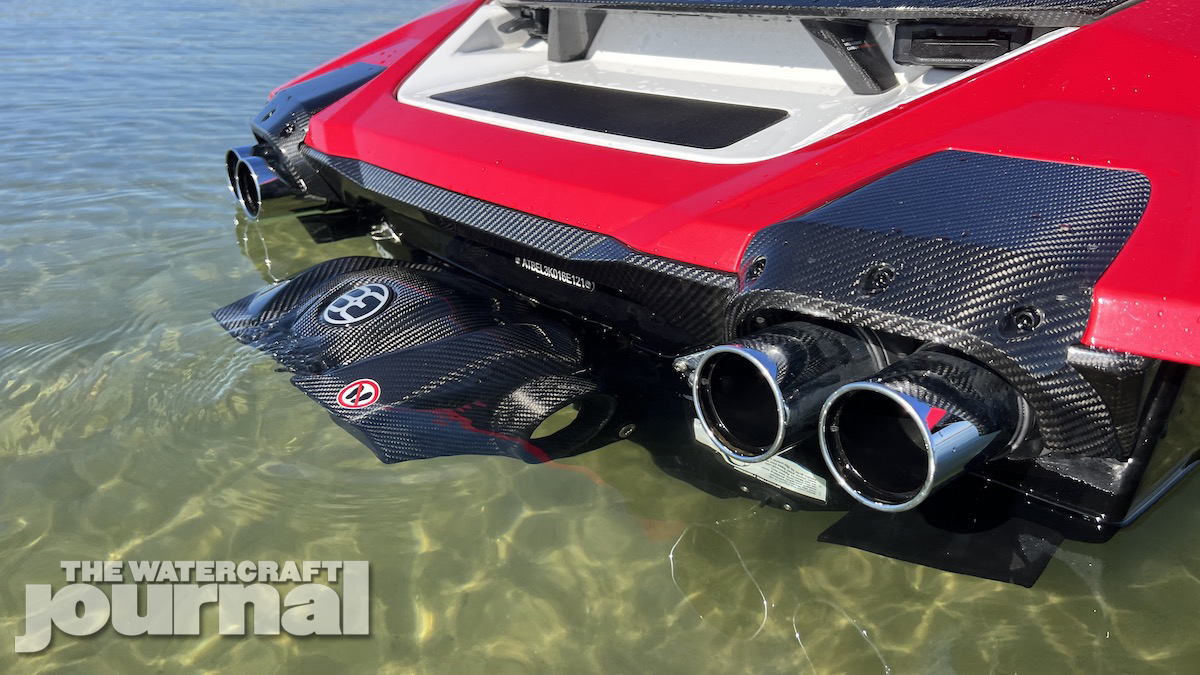
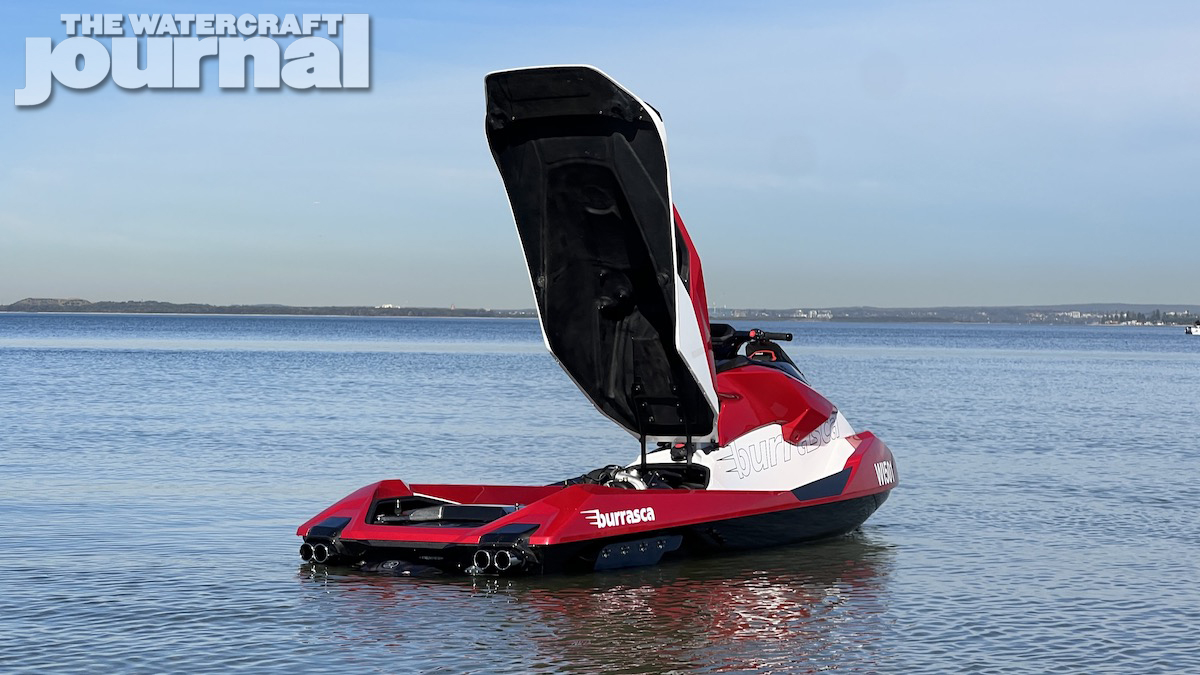
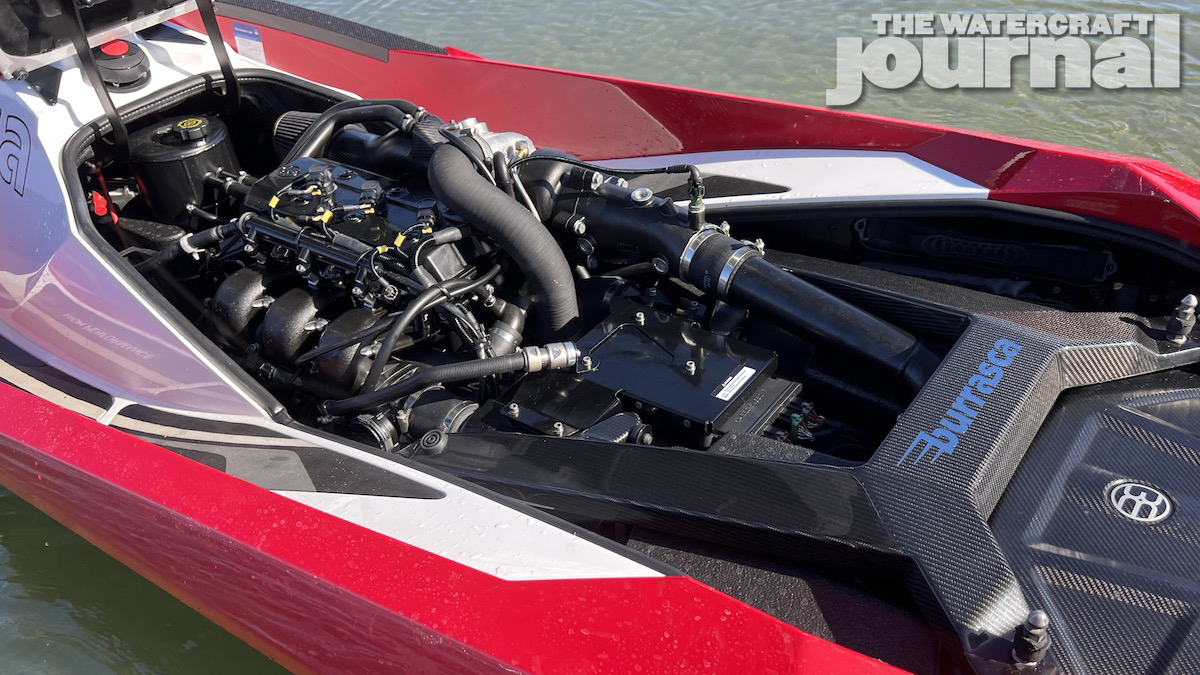
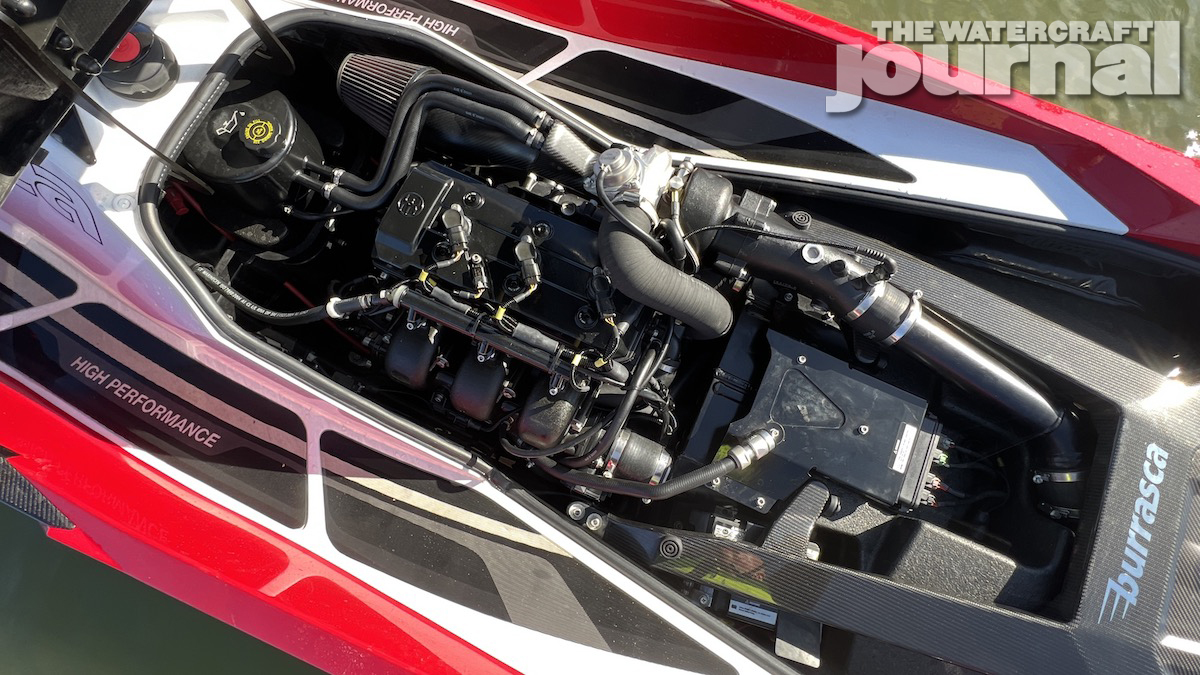
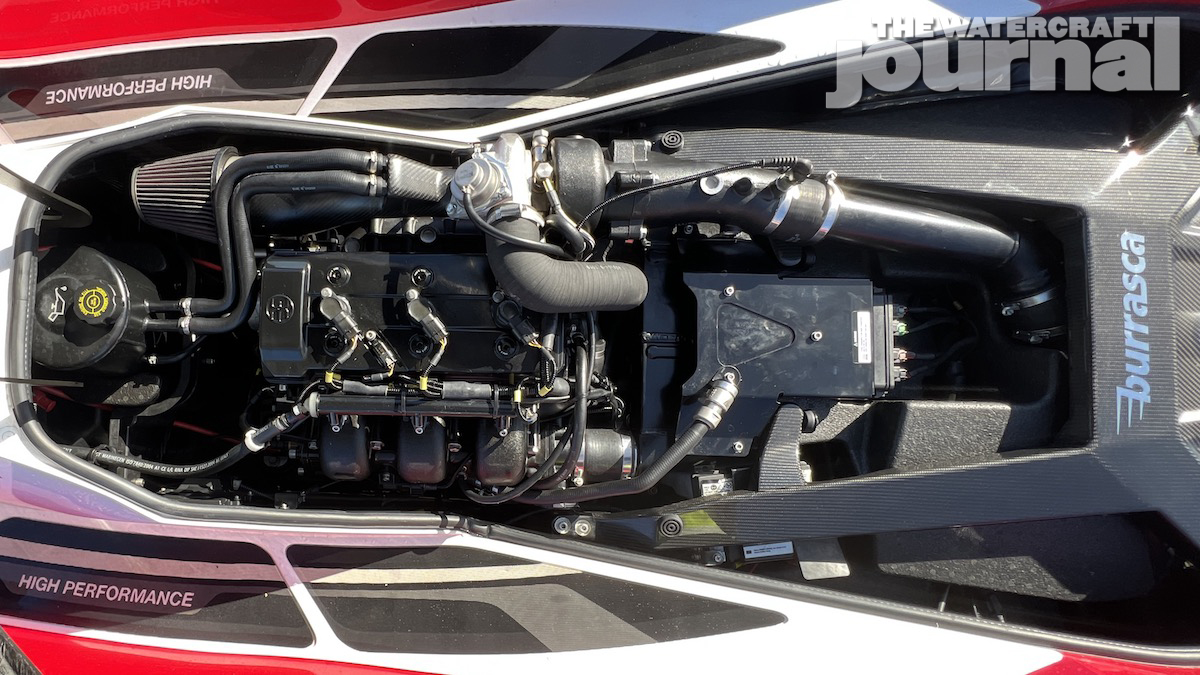
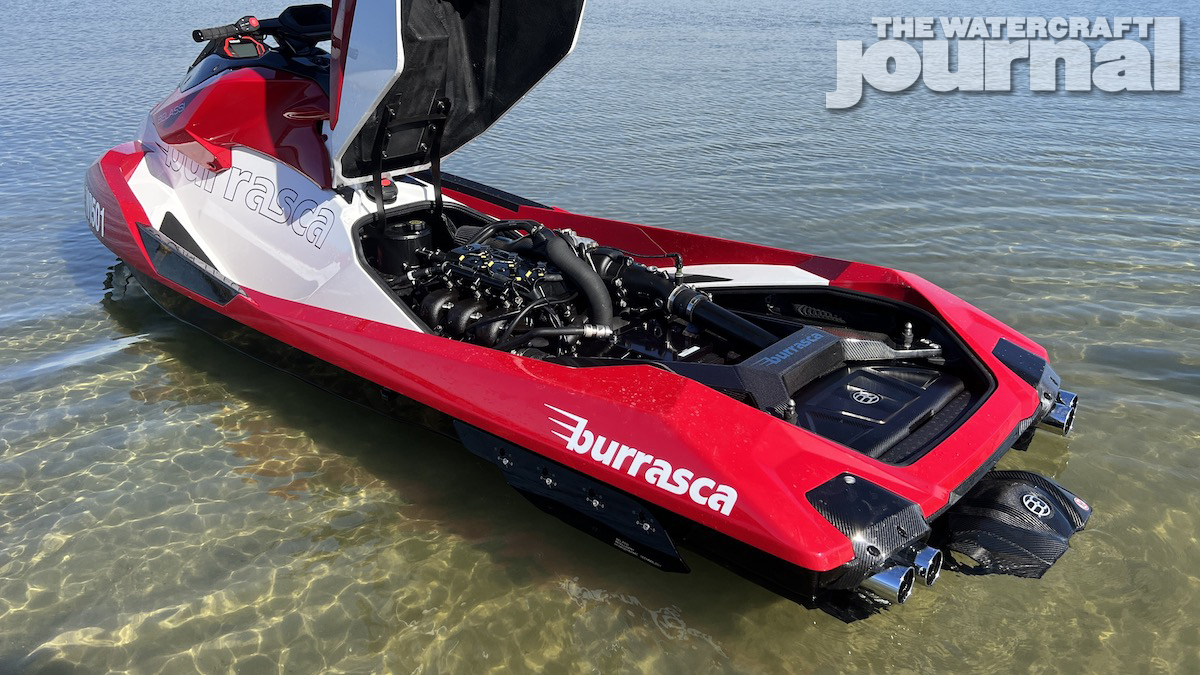
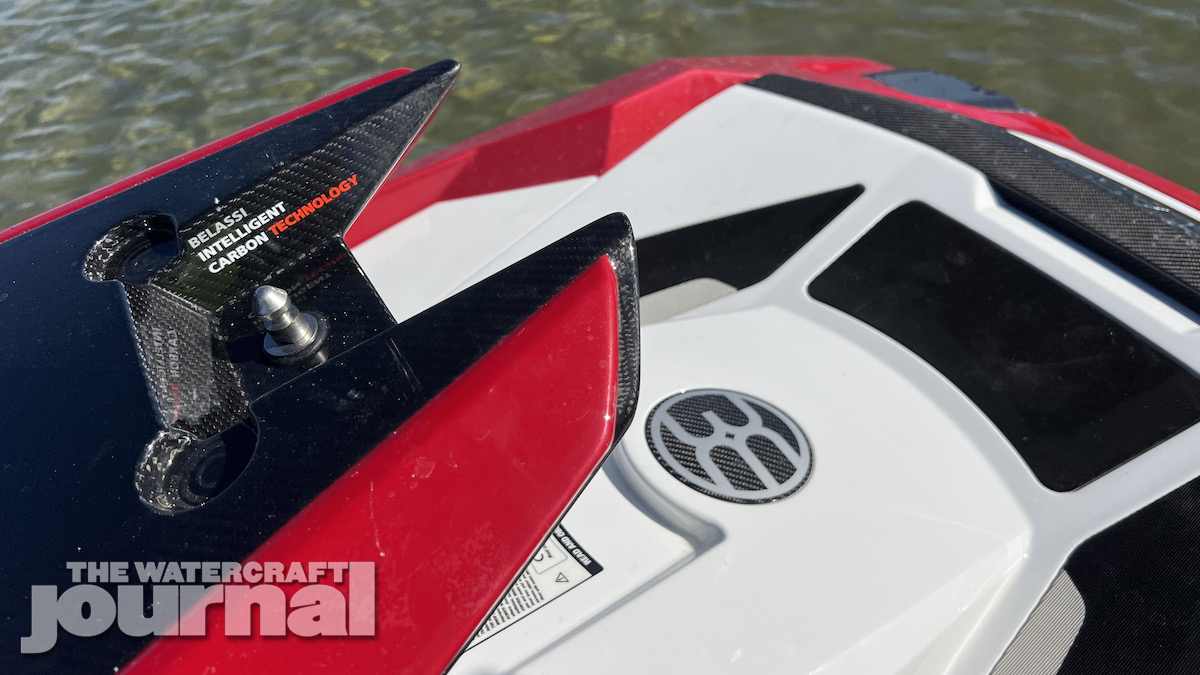
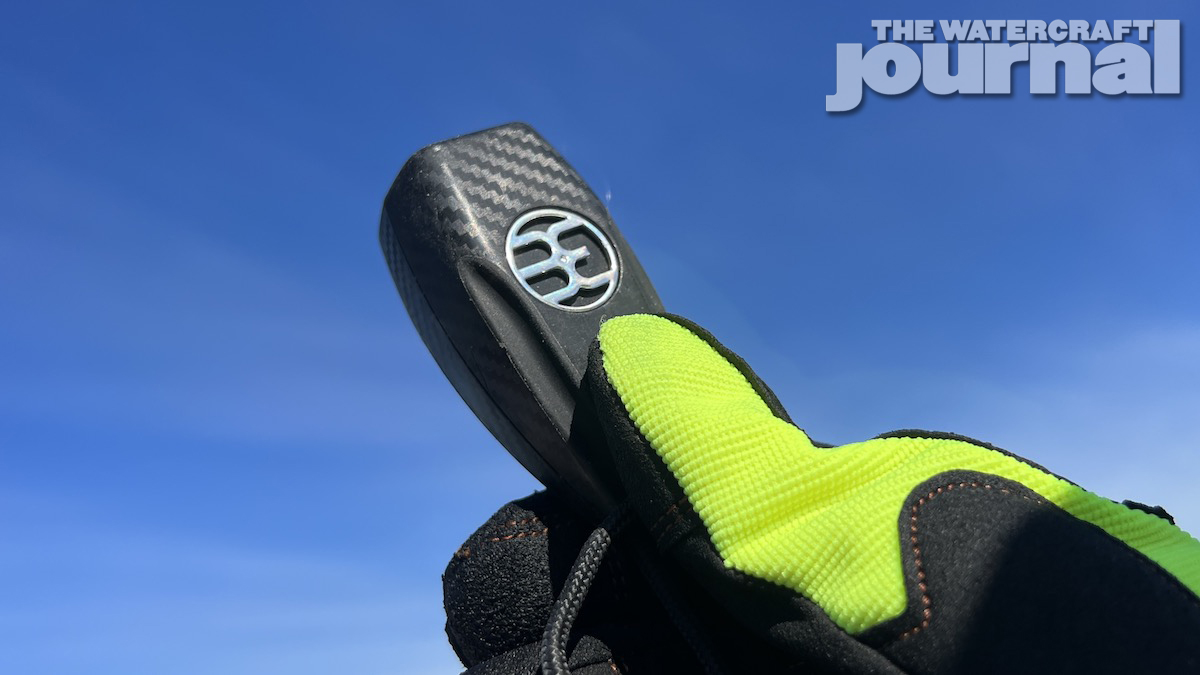
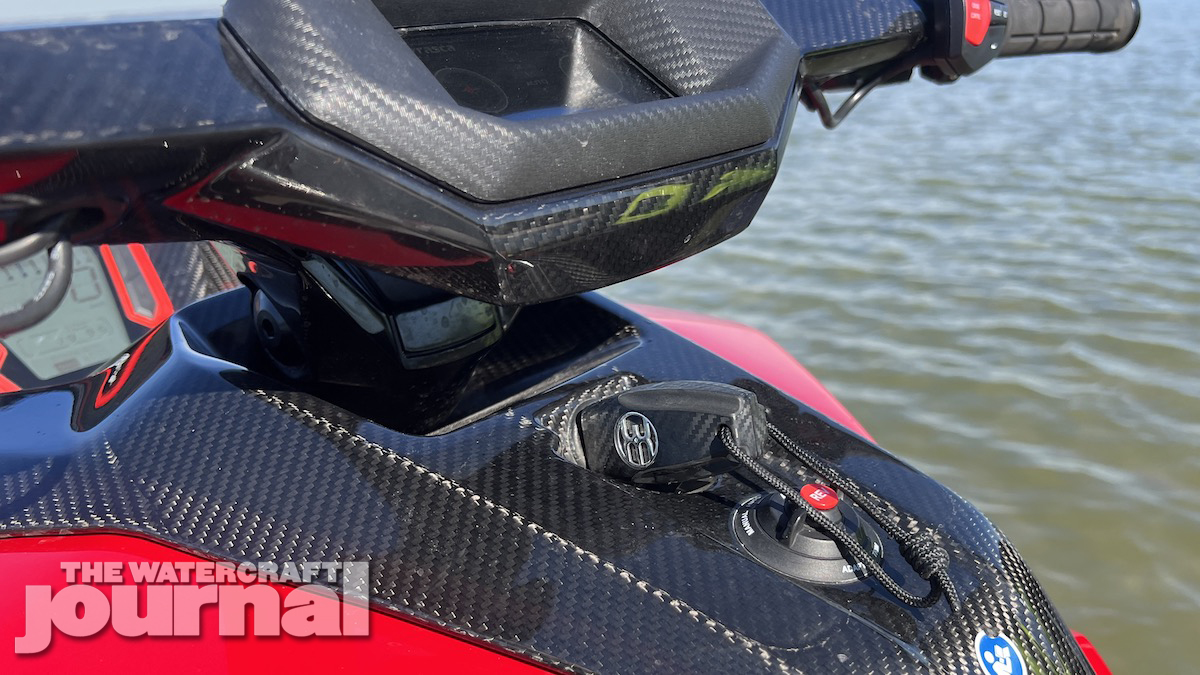
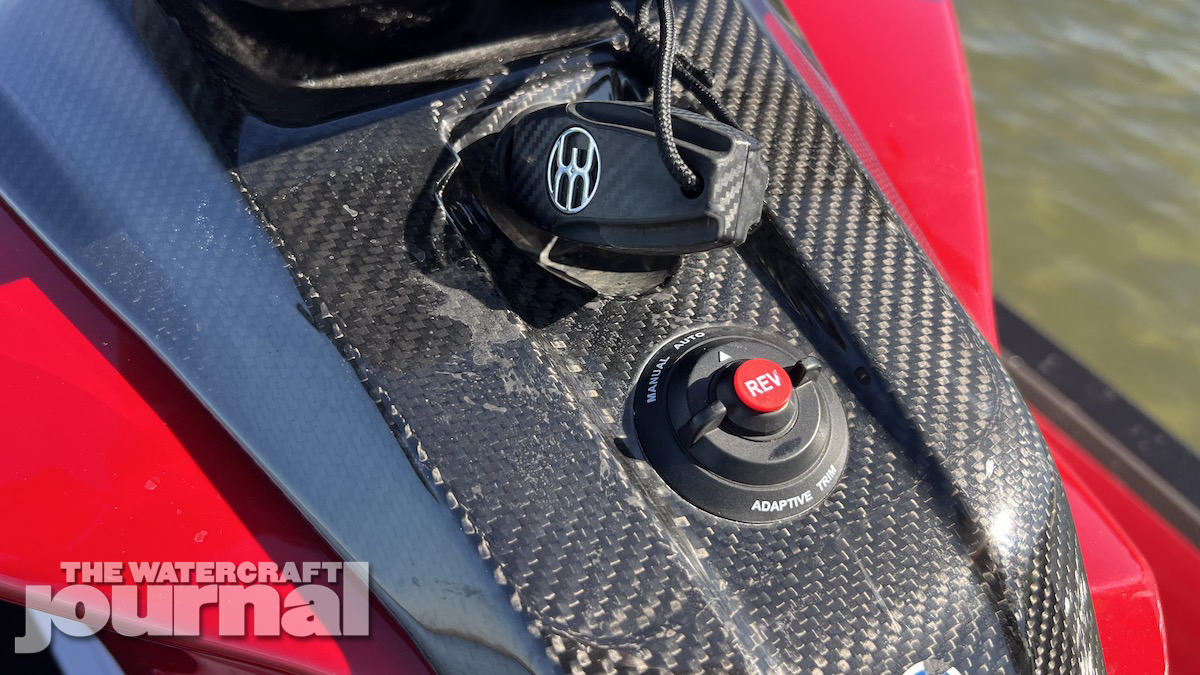
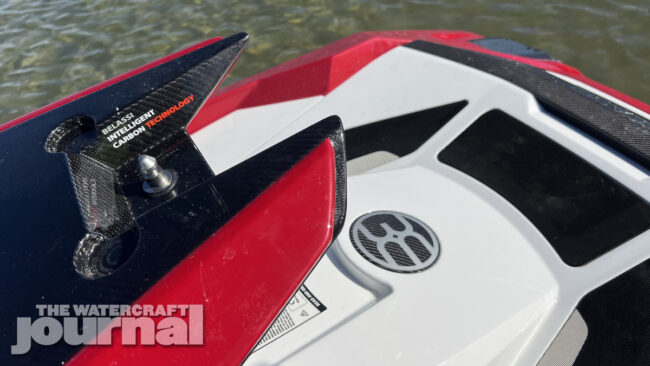
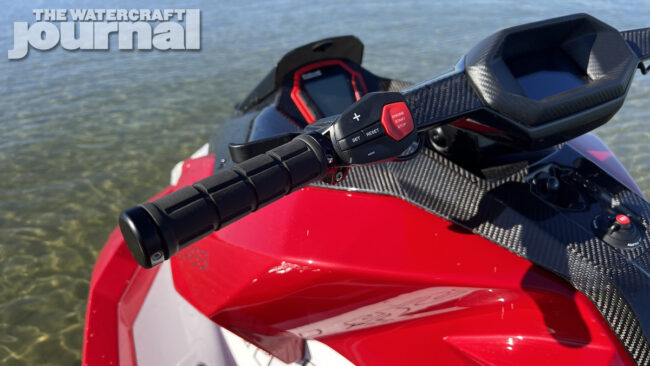
In fact, each Belassi Burrasca is built by hand over 108 hours using more than 2000 specially crafted parts. It has a dry-sump oil management system to help the turbocharged three-cylinder engine handle high G-forces. And there is widespread use of carbon-fiber to strengthen the structure, such as the cross brace in the engine compartment, as well as carbon-fiber handle bars, a carbon-fiber muffler housing, and a carbon-fiber air intake.
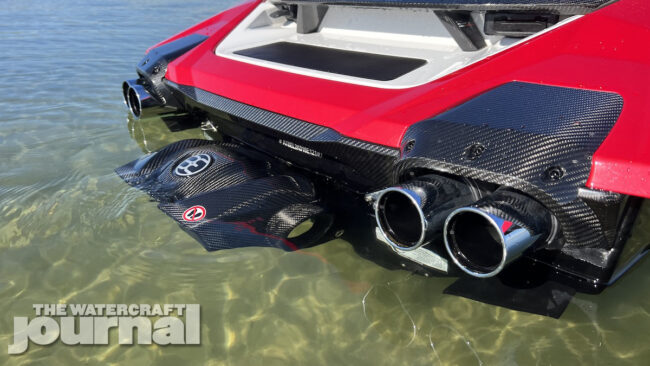
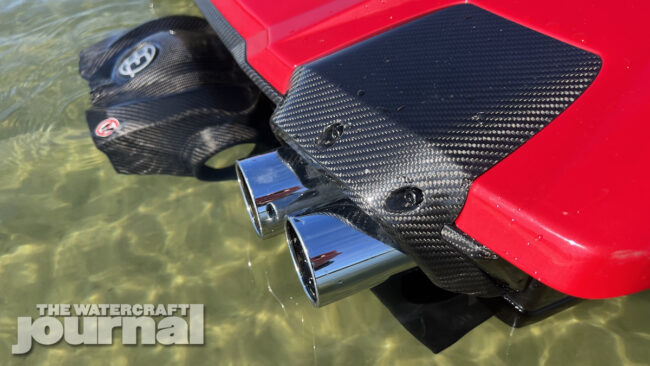
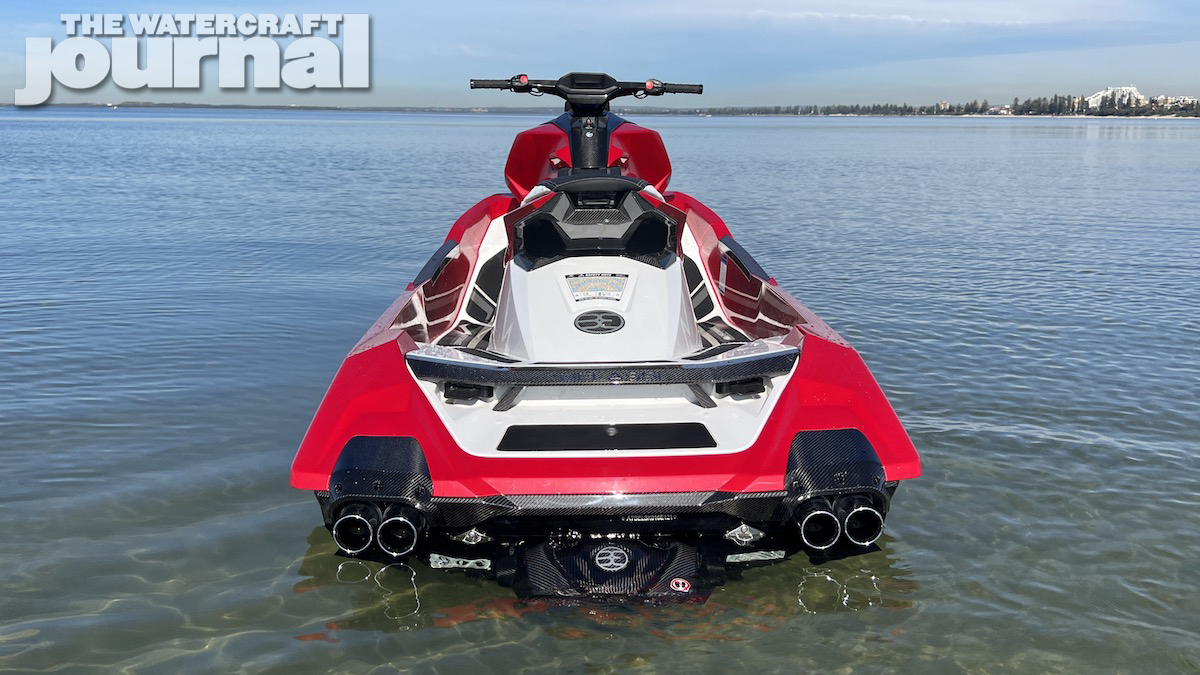
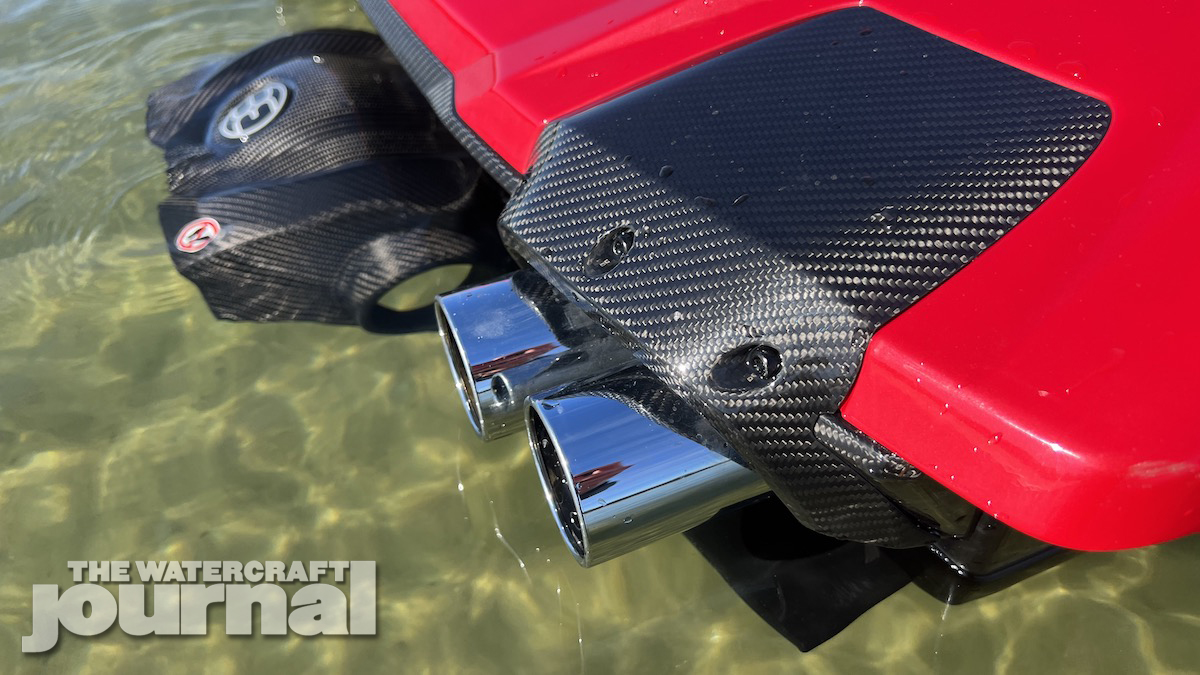
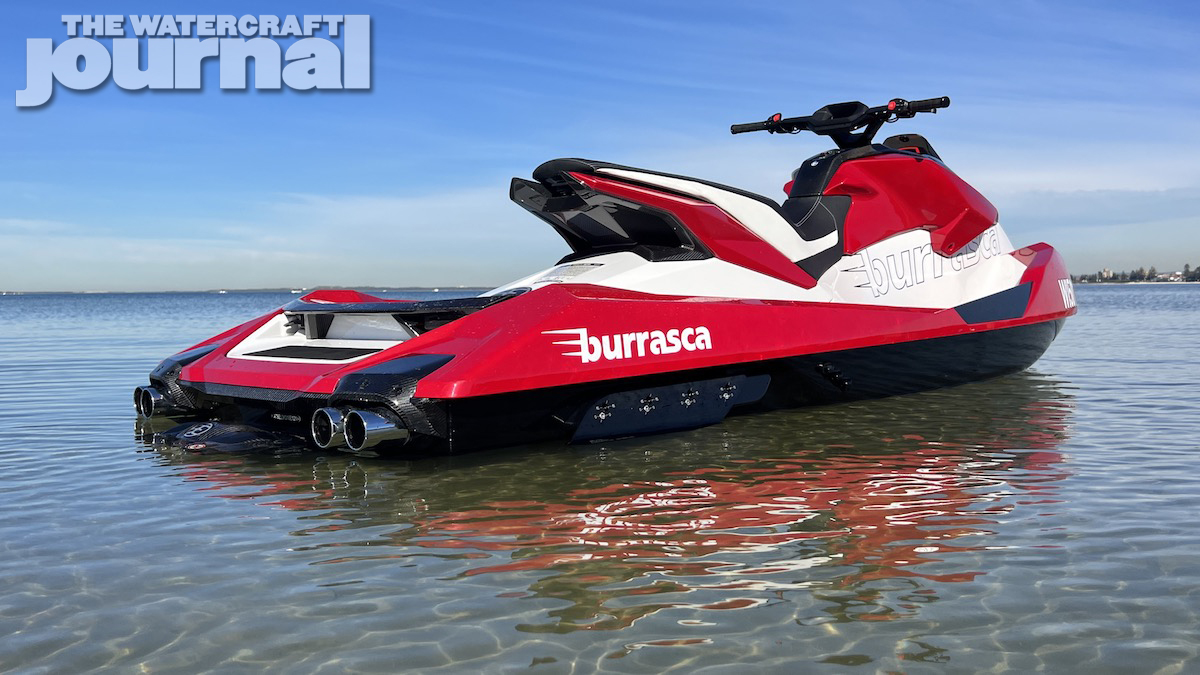
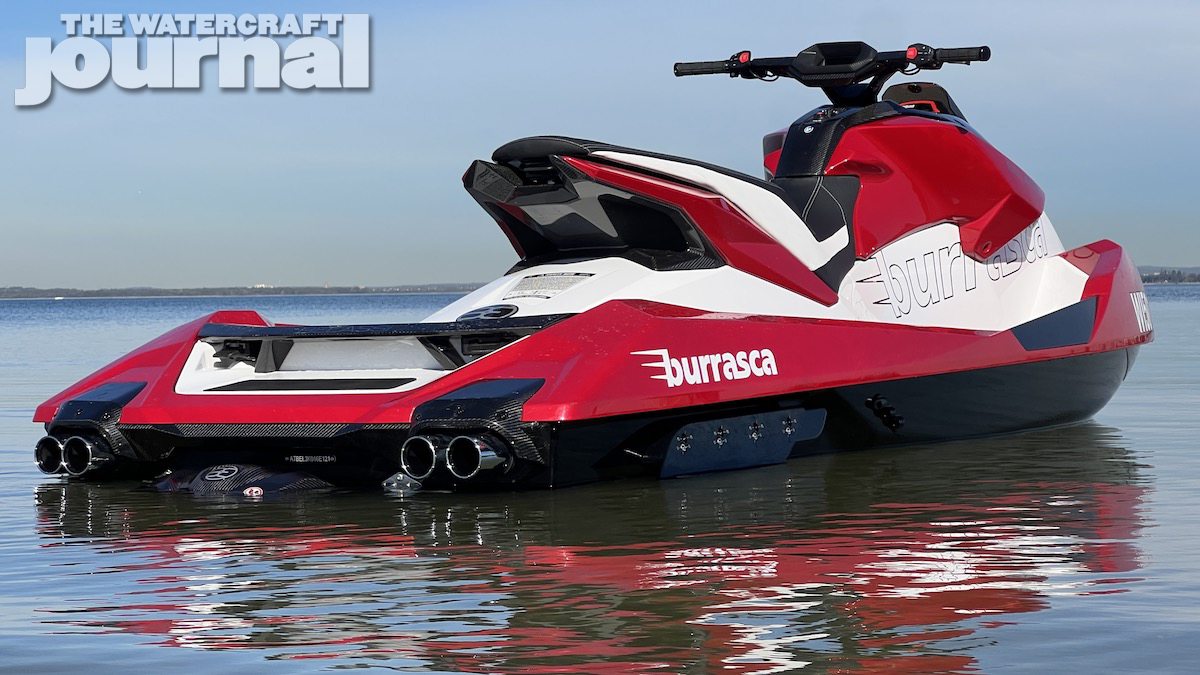
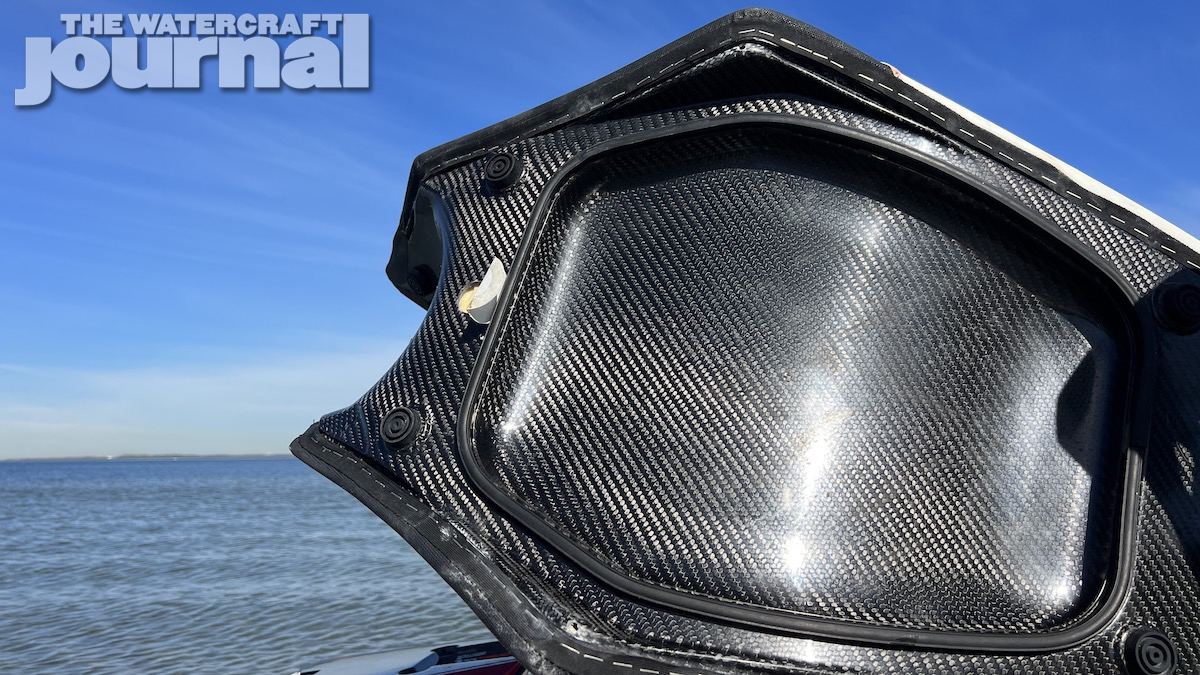
There are also carbon-fiber accents above the quad exhaust tips, and on each side of the top deck, as well as a genuine carbon-fiber seat base, and a genuine carbon-fiber reverse bucket. While there is plenty of carbon-fiber, in fact the top deck and hull are made out of an infused fiberglass composite material.

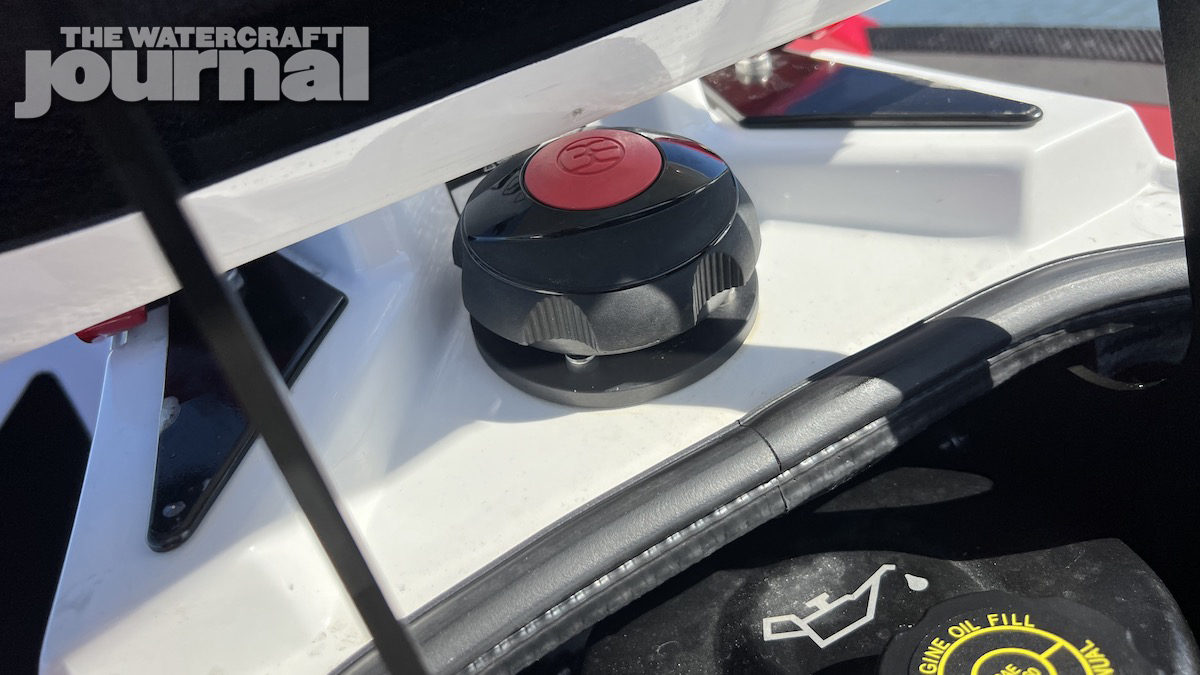
The top deck, hull and hood cover are painted by hand, which means customers can customize their ski at additional cost. The engine compartment is easy to access once the seat is removed. Then the top deck cover can be raised after releasing two tabs.
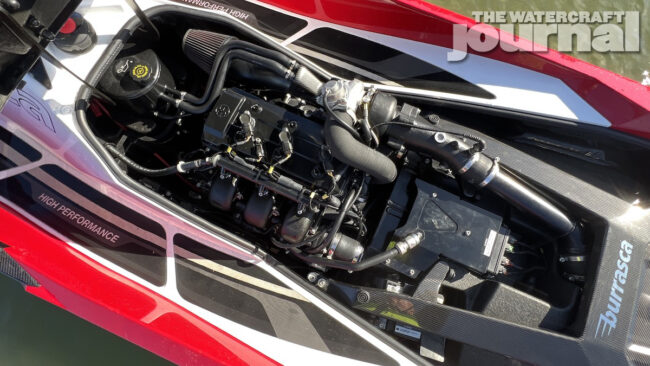
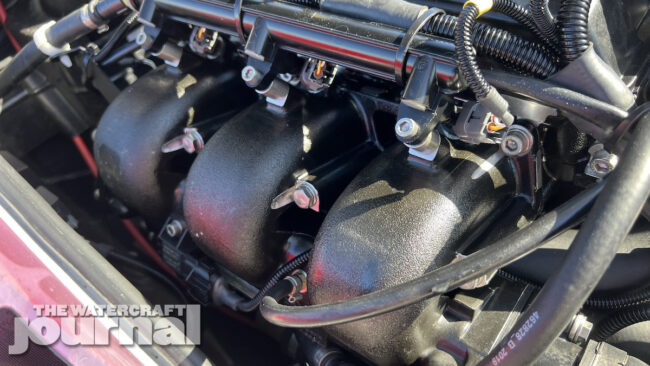
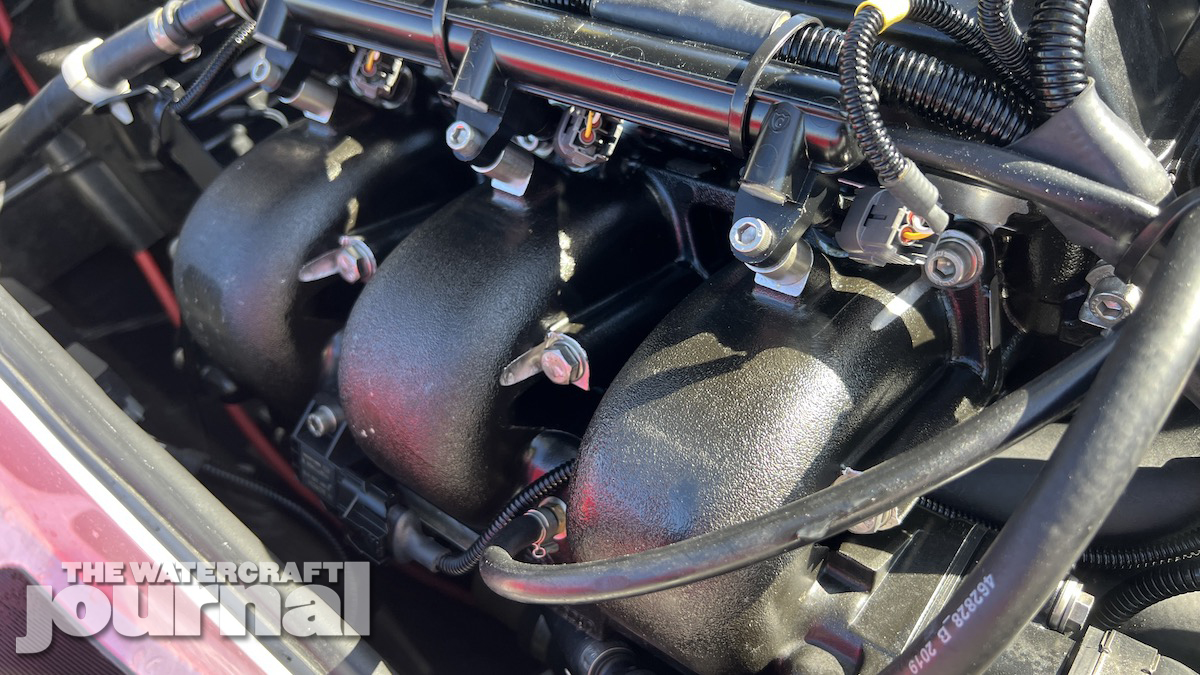
The Belassi Burrasca is powered by a 320-horsepower turbocharged 1602c three-cylinder engine; and although that’s similar to the 1630cc capacity of the Sea-Doo Rotax engine, Belassi says this is its own, unique design. To that point, the intake manifold is made of metal rather than plastic as it is on the Sea-Doo, and is on the other side of the engine compared to the Sea-Doo.

The jet pump has an internal diameter of 161mm and 14 vanes. The turbocharger uses a Mitsubishi core but the unit is custom made for Belassi to deliver zero turbo lag and deliver instant responsiveness. The fuel tank is rated at 16.9-gallons.
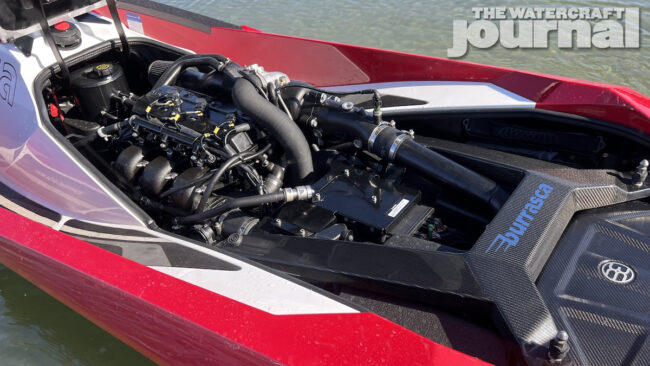
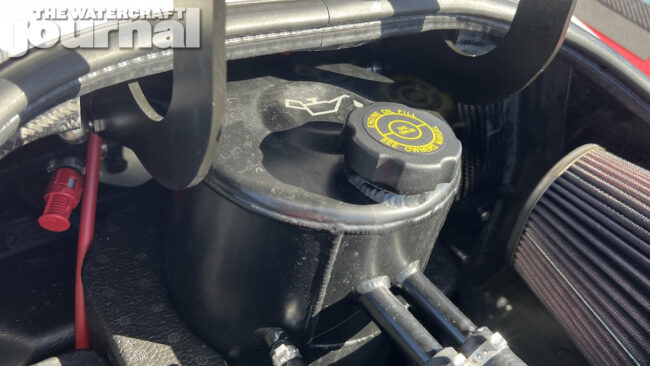
The Belassi Burrasca tips the scales at 809lb, whereas the Sea-Doo RXP-X 300 has a dry weight of 780lb – and the Yamaha GP1800R SVHO has a dry weight of 754lb. Kawasaki lists the weight of the 2023 Ultra 310LX between 1032 to 1090lb but this is with fluids versus the dry weight figures for the others.

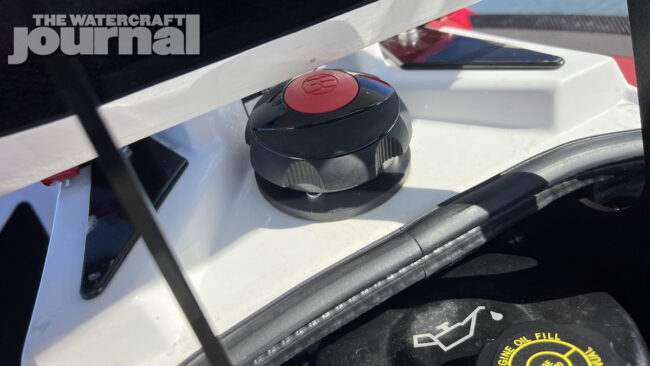
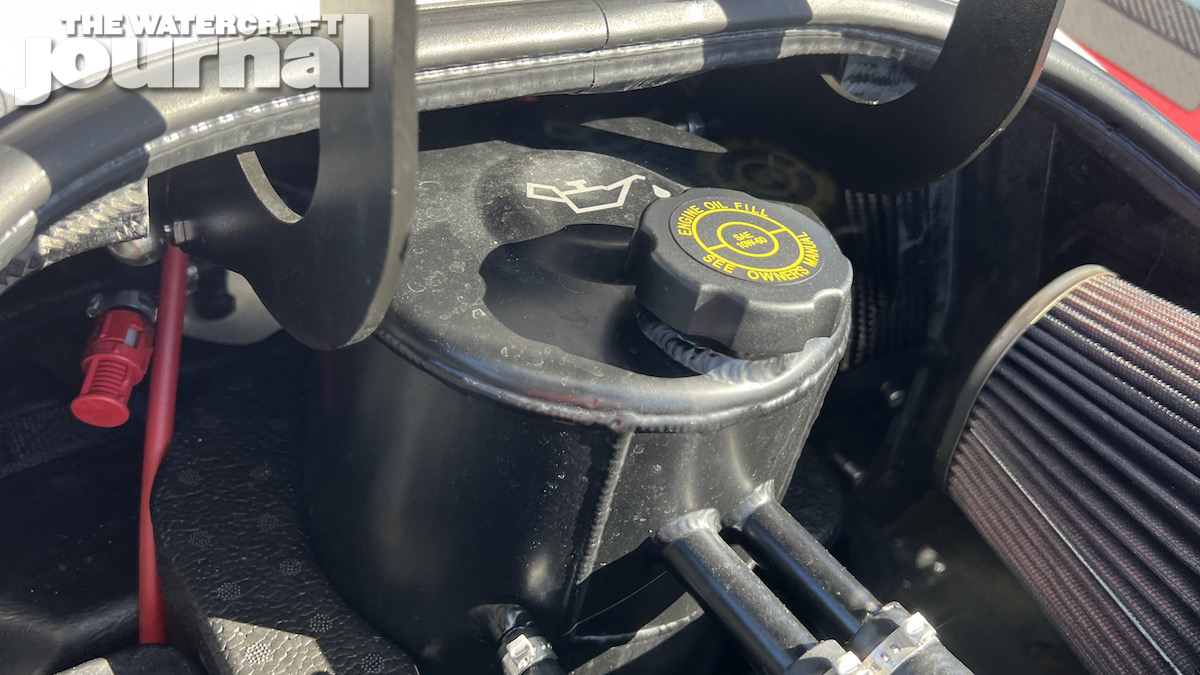
A K&N air filter is attached to a carbon-fiber air intake. And the engine is fed oil via a gear-driven, six-stage, dry sump system, feeding into a carbon-fiber reservoir and heat extractor. The oil filter is located in a tight spot on the engine block, next to the dry sump, but is more easily accessible than the oil filter on most other jet skis.
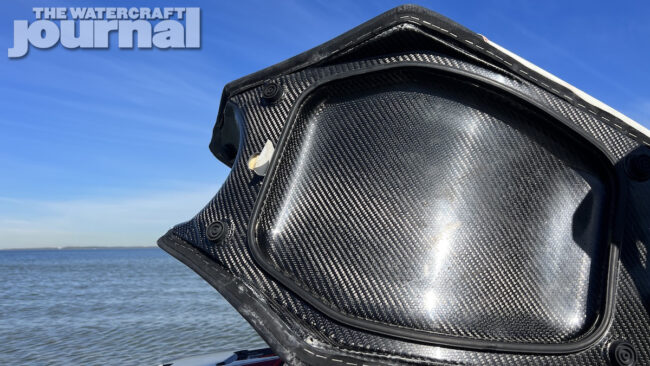
The water-injected exhaust system flows into a carbon-fiber muffler. The exhaust pipe then splits into two before exhaling via four exhaust tips – two per side. There is no carbon seal, instead the drive shaft operates in the same way as Yamaha and Kawasaki Jet Skis – via a bearing and two seals.

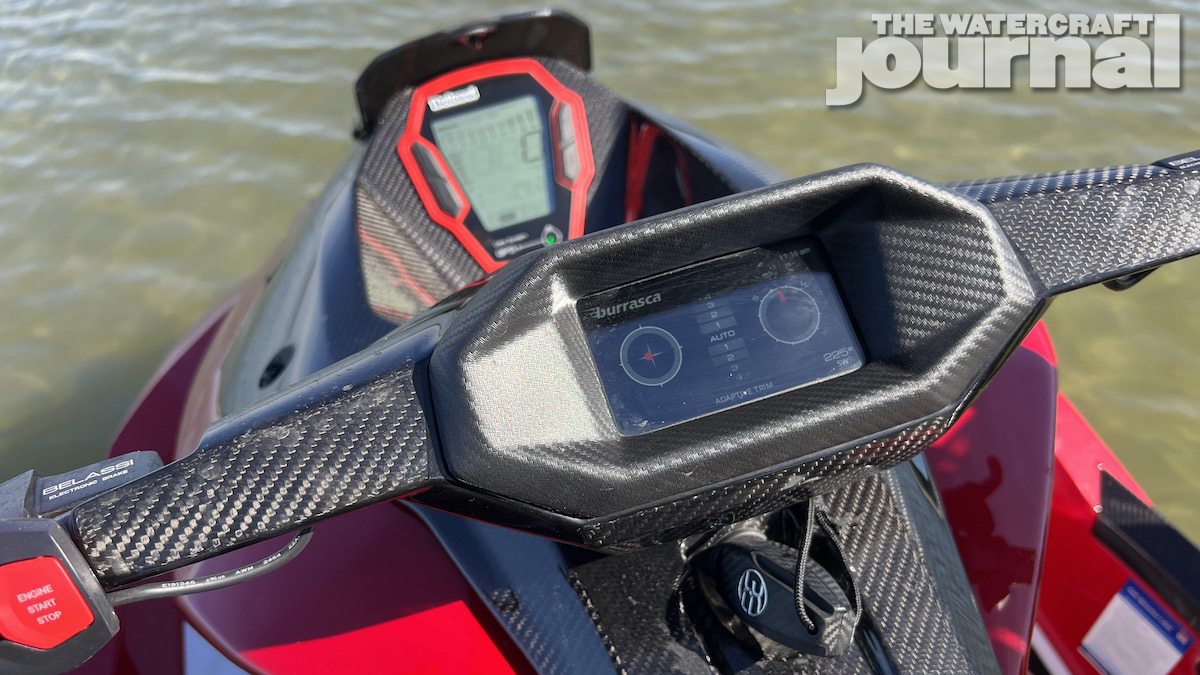
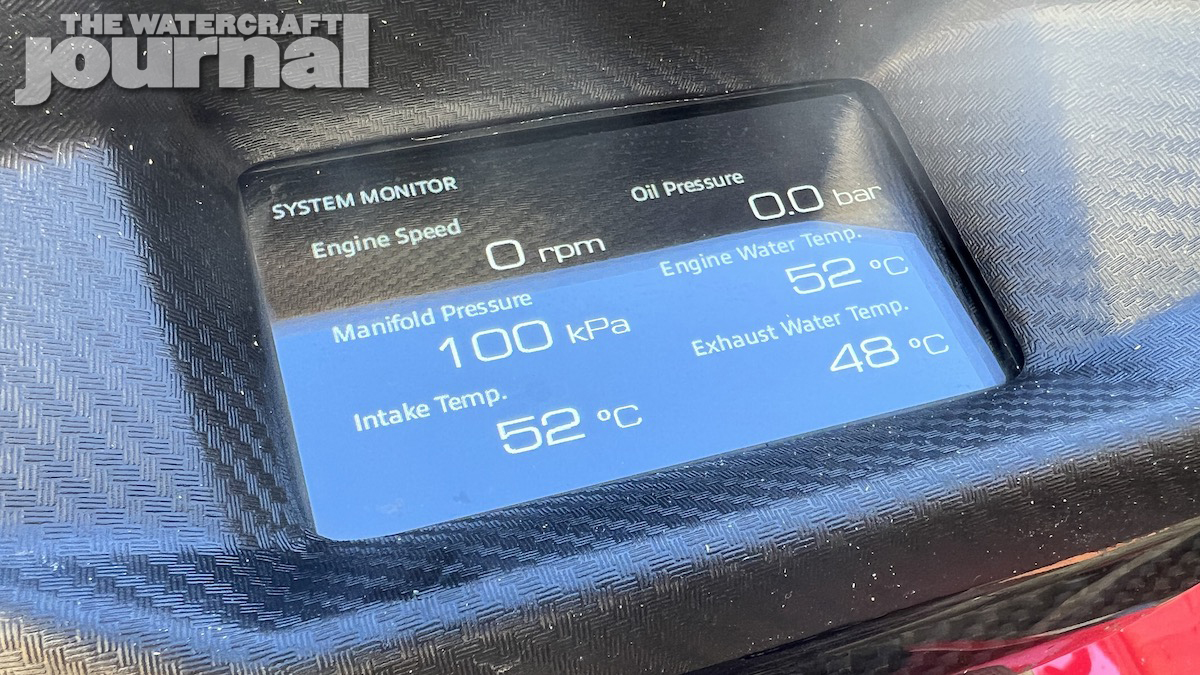
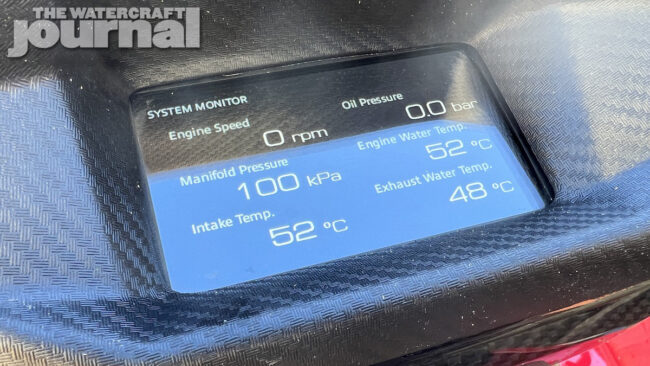
There are two digital display screens and a GPS speedometer. The screen in the handlebars display critical data such as oil pressure, manifold pressure, intake temperature, engine water temperature, and exhaust water temperature.
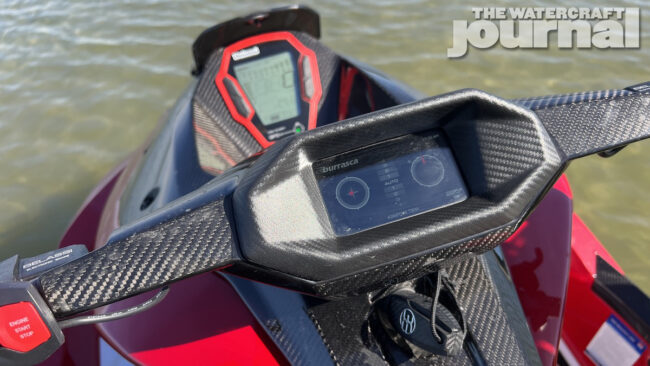
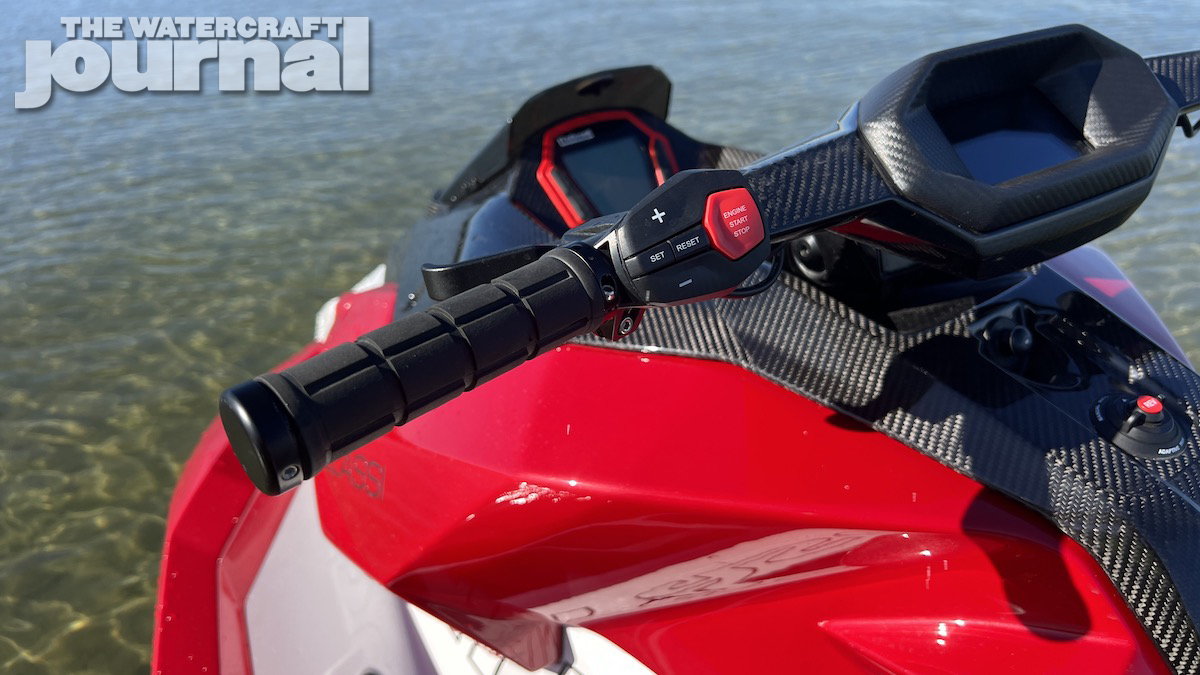
Some of the technology can be fiddly however. To change the trim on the Belassi Burrasca you press a button on the left handlebar, and then toggle up and down in the menu on the digital screen.

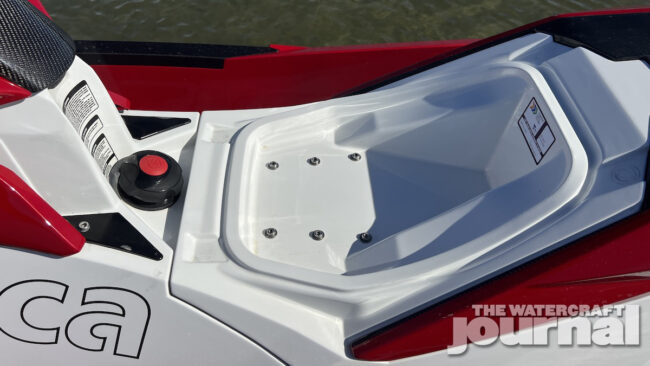
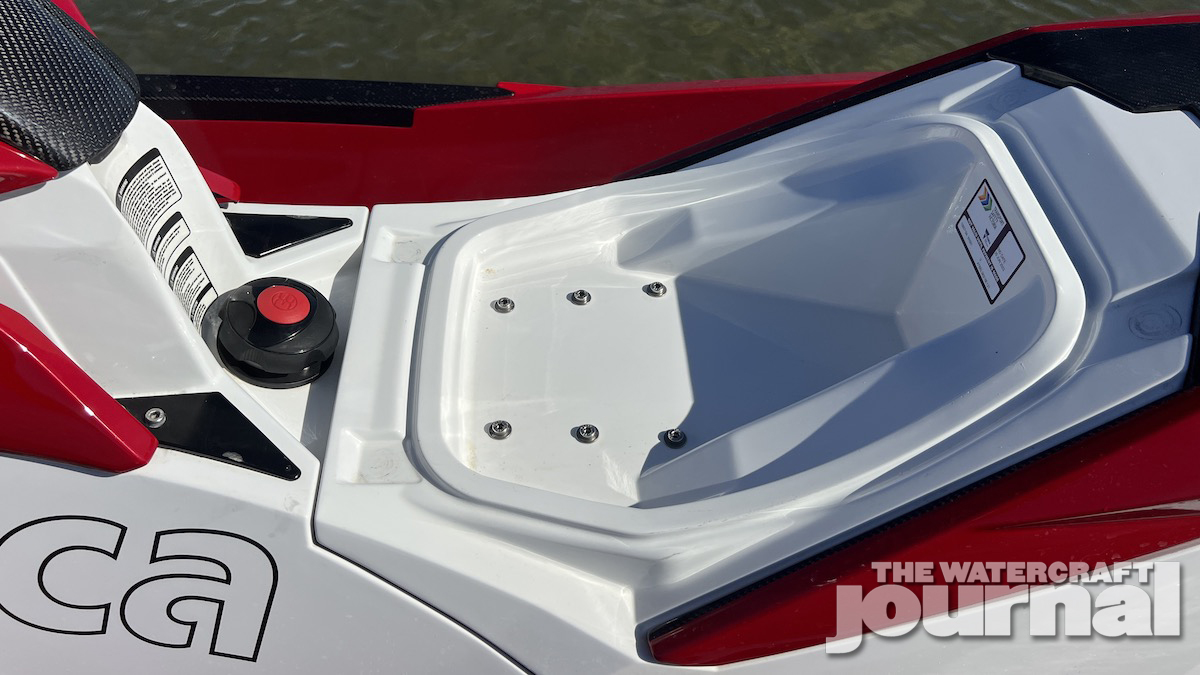
The handlebars are not height adjustable without resetting their position with tools; and there is no storage for a phone, wallet or car keys. There is a small wet storage area under the rider’s seat but it’s not practical to use. And reboarding the rear deck is also a bit tricky. The aluminum sponsons are adjustable. If we were to own this ski, we would soften them off.
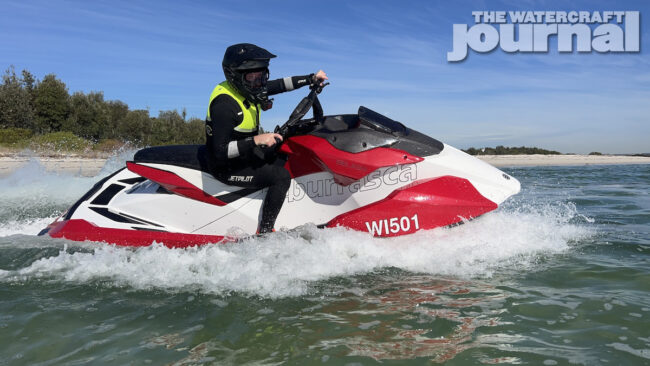
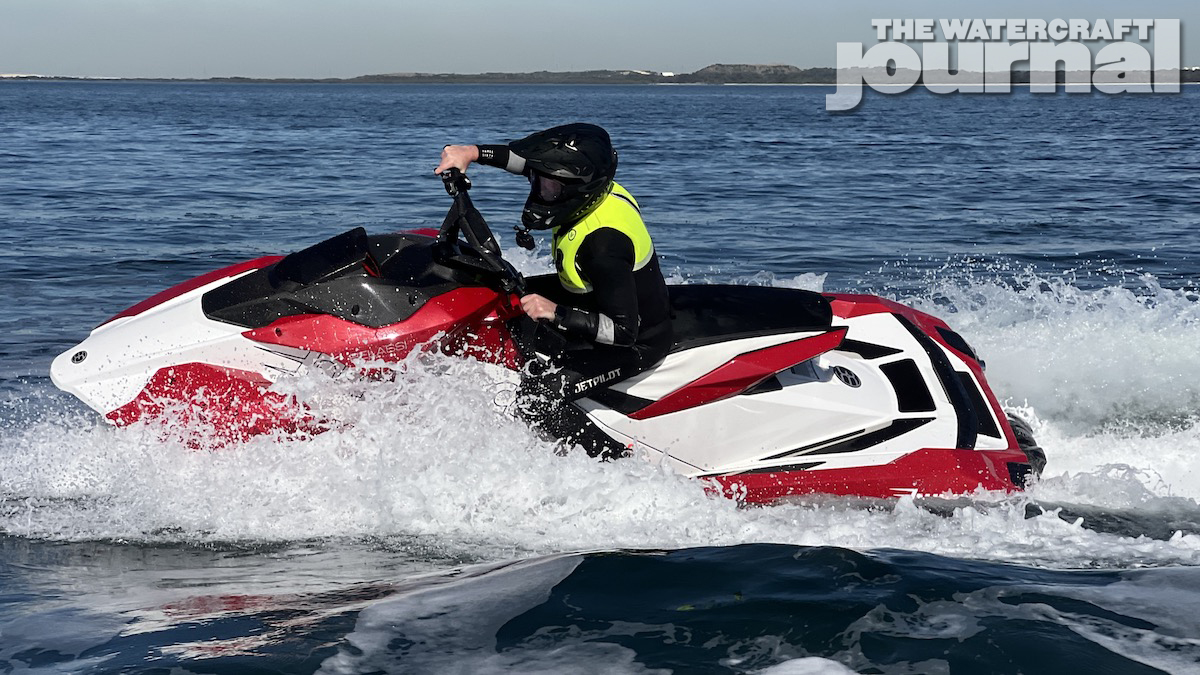
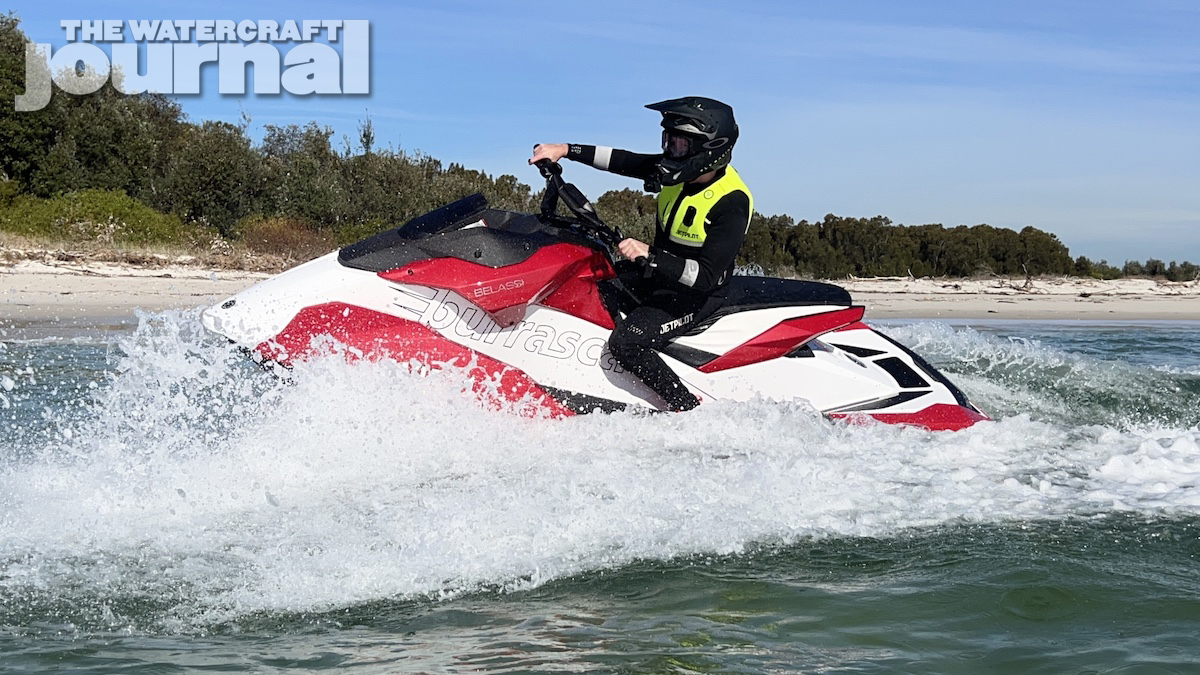
The idle speed is quite high too, about 5mph. Because the engine is mounted towards the rear slightly, the Belassi is tail heavy which pushes up the nose even before you dial in any trim. That said, the guys found the Belassi cut through chop well and felt stable at top speed.

To sum up, while most Sea-Doo, Yamaha and Kawasaki fans probably won’t queue up to buy one of these, it was still good to get an insight into a high-end European take on the personal watercraft. And the price is not just mark up. The Belassi Burrasca has serious and expensive componentry, craftsmanship and upgrades. And exclusively others can’t match.
RIVA Racing Reveals New Billet Pro-Series Steering System for 2022+ Ultra JetSkis

0

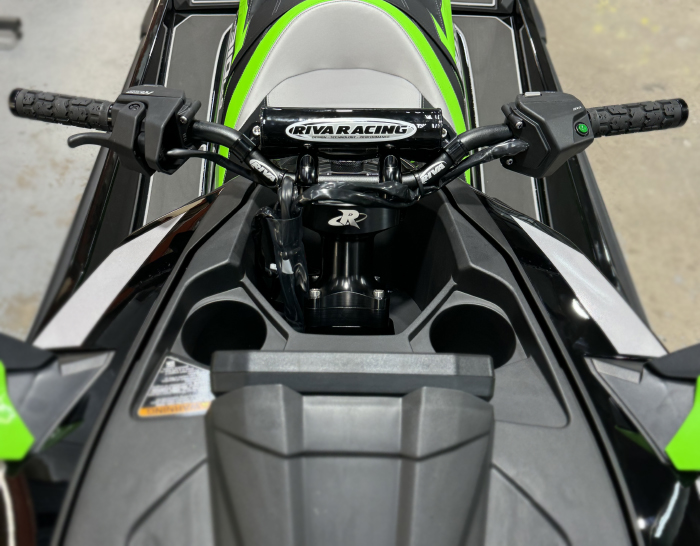
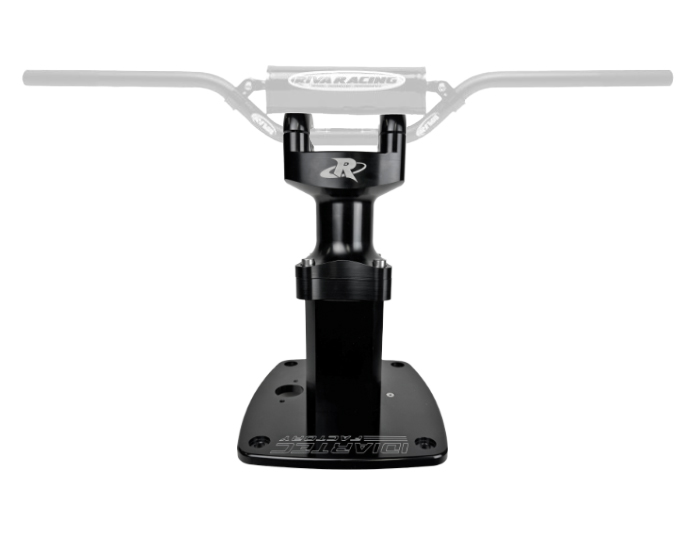
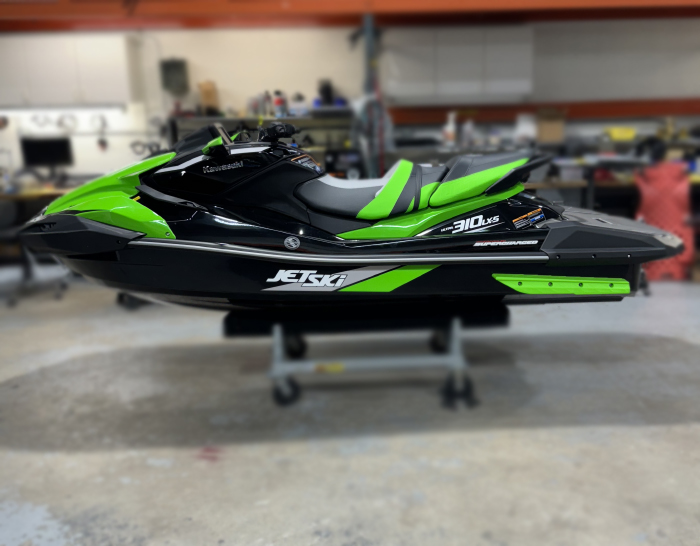
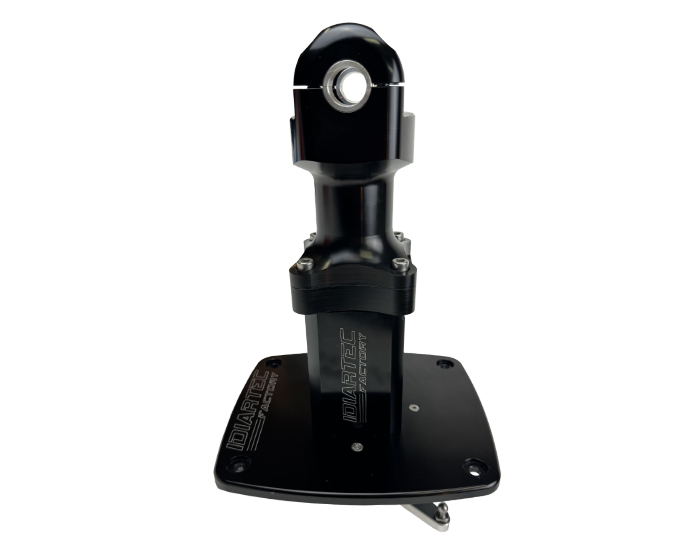
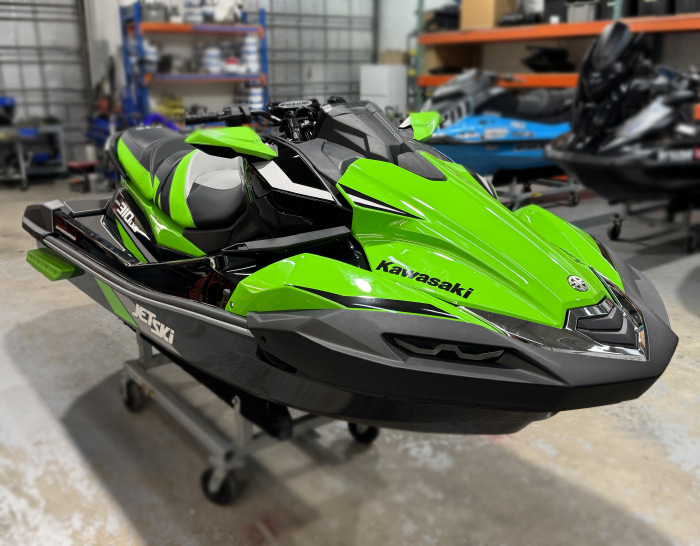
The Achilles’ heel of the Kawasaki Ultra JetSki has been its plastic steering neck. Considering the rough water prowess and how the ergonomics of the 2022-and-newer Ultras encourage standing up while riding in heavy chop, the molded plastic steering neck is equally loose and fragile to hard impact.

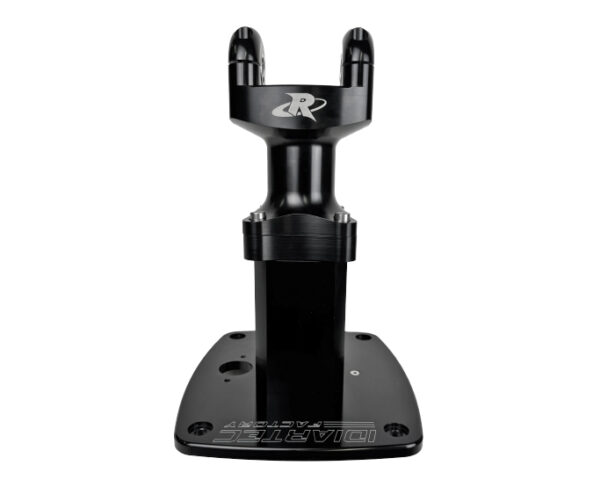
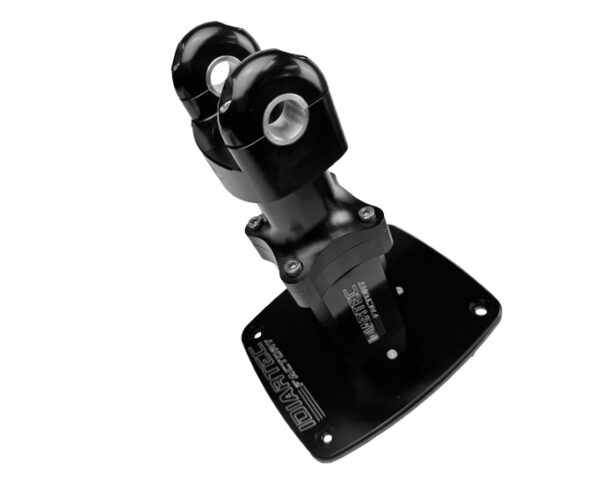
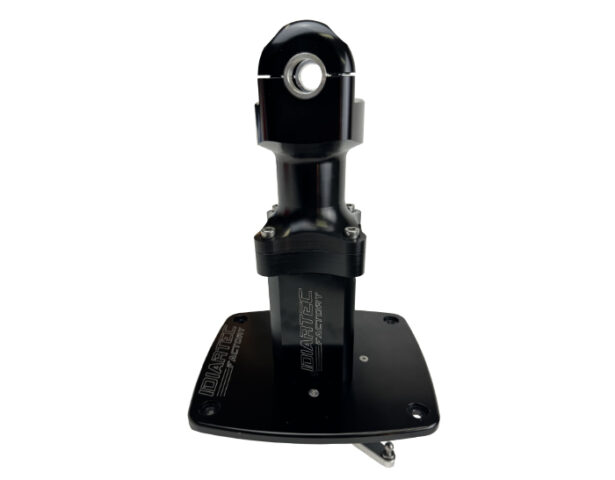
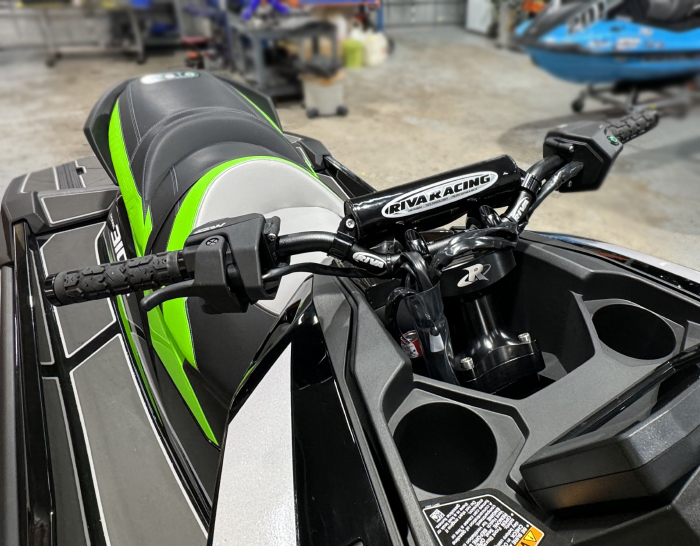
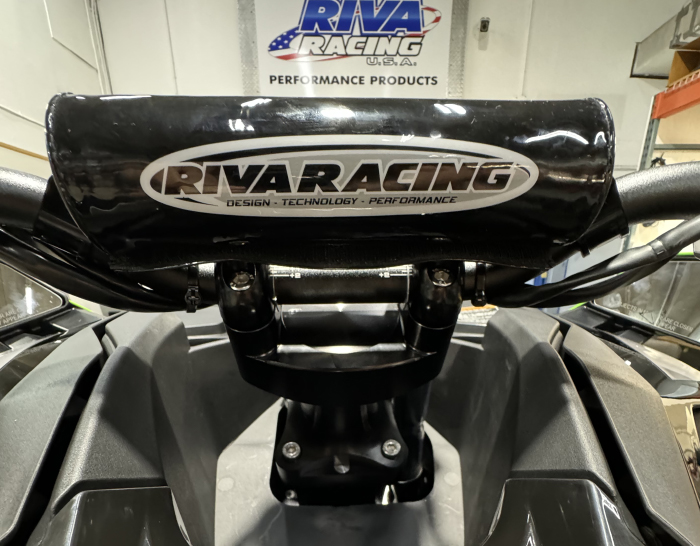
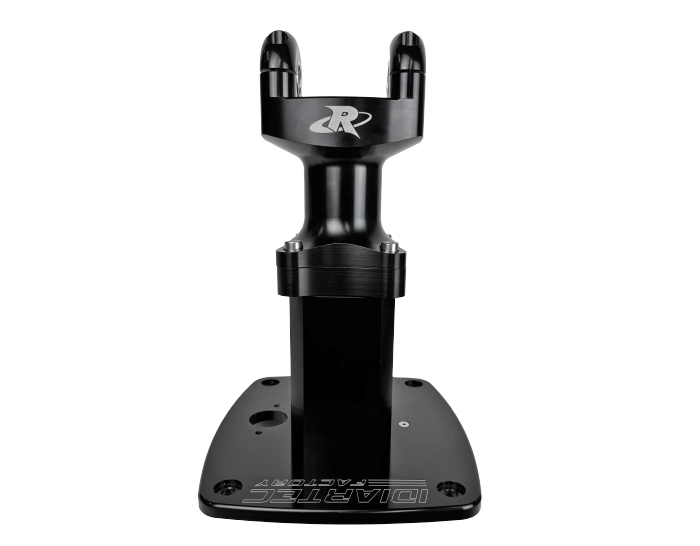
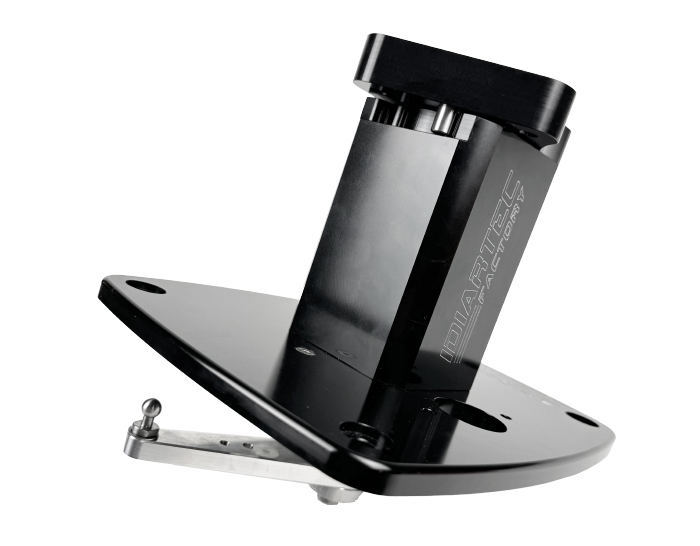
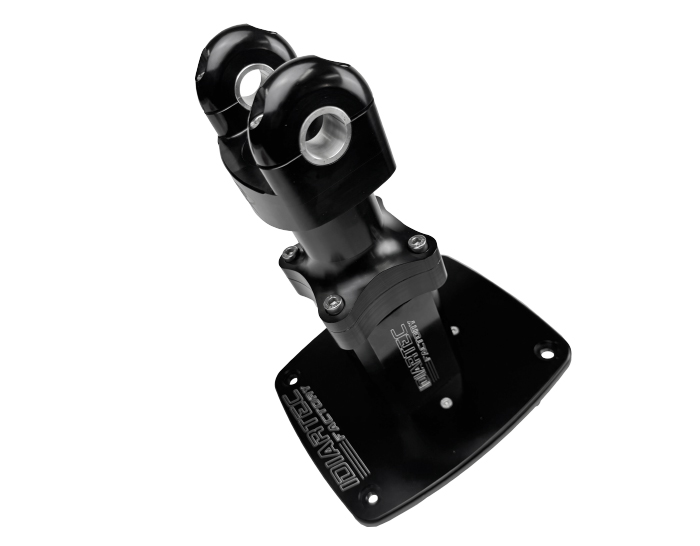
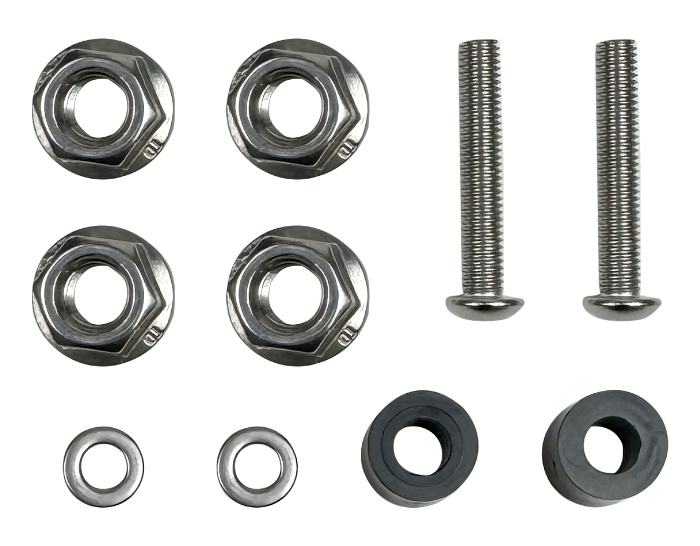
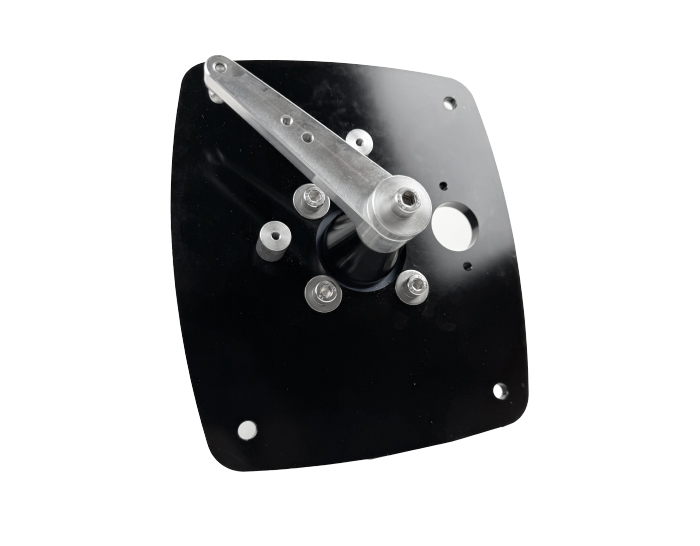
Aaand without a 310R model to provide a factory supplied aluminum steering neck option, RIVA Racing sought to solve this issue. In a brilliant collaboration with Idiartec out of Urcuit, France; RIVA just announced this race-proven Pro Series steering system for the modern 2022-and-up Kawasaki Ultras.

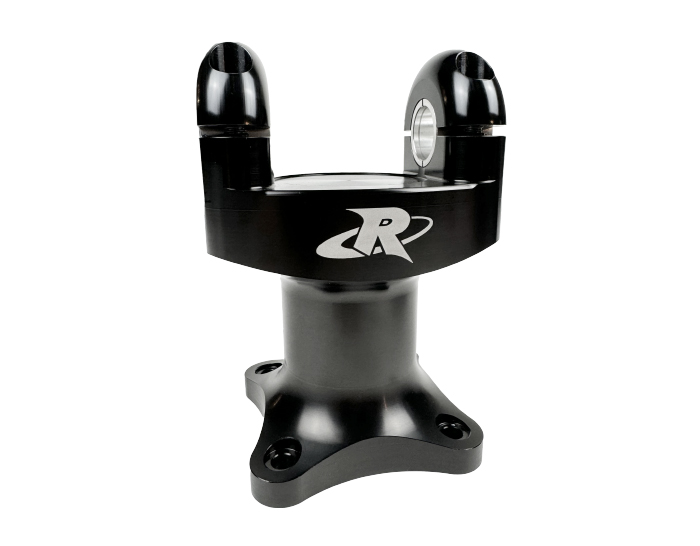
Ran throughout the 2023 P1 AquaX season on Camden Powell’s Ultra, this RIVA/Idiartec design is CNC carved from billet aluminum radically improving strength and rigidity, with a precision feel thanks to the sealed bearing.

Equally, the bosses feature a removable collar allowing the neck to accept either standard 7/8″ and 1 1/8″ “fat” bars. If precision steering feel and assurance that you’ll never snap your steering neck is a must, RIVA Racing’s new Pro Series Steering System ($1,199.95) is right for you.

Key Features:

  • Billet aluminum construction delivers superior strength & rigidity
  • Accepts all popular 7/8″ handlebars and 1-1/8″ Fat Bars
  • Precision machined steering arm
  • Cutting-edge race styling
  • All aluminum parts anodized to prevent corrosion
  • Fits 2022 & newer Ultra models
  • Co-designed with Idiartec Factory

Featured Inventory From RIVA Motorsports Miami

0

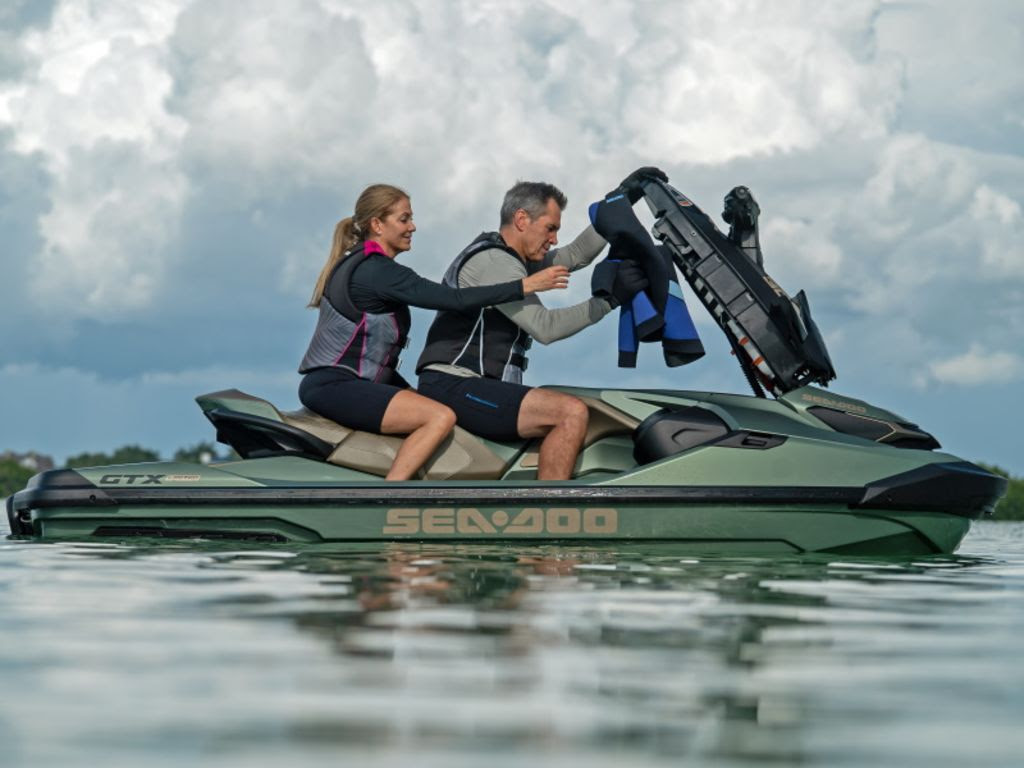
The 2023 Sea-Doo GTX Limited 300 in Metallic Sage is on the RIVA Motorsports Miami featured inventory list. This machine is in stock and can be yours for 20% down and $405 a month with your excellent credit. The payment is based on 10.99% APR for 60 months. You can trade in your old watercraft as well. 

The GTX Limited 300 is powered by 300 supercharged Rotax horsepower. This watercraft will move! It is loaded with tech features that keep you connected. The full color 7.8-inch display is easy to read, and when integrated with BRP Connect, you have access to music, weather, navigation, and much more. 

The ST3 Hull will keep you stable and upright in rough water; it also provides room for you to move around on deck. Take a break and chill and the large swim platform or add accessories with the LinQ setup. 

If the Sea-Doo GTX Limited 300 isn’t for you and you’re looking for a better deal, check out the clearance inventory at RIVA Motorsports Miami. They have the 2022 Sea-Doo RXP-X 300 iBR & Audio in Premium Triple Black and Millennium Yellow. Both are loaded with features and the millennium yellow one can be yours for 20% down, $327 a month for 60 months with 4.99 APR. The premium triple black is available for $180 a month at 4.99% APR for 60 months with 20% down. 

The 2022 Sea-Doo Spark Trixx are available in 2-up and 3-up models. 

For all the Yamaha riders, the 2023 GP1800 R SVHO with Audio are available for $17,299, giving you a savings of $1,311. The 2023 Yamaha WaveRunners FX Cruiser SVHO with sound, comes in at $19,399. That is a savings of $1,411 off the retail price. 

Check out the RIVA Motorsports Miami website for more deals and other powersports vehicles. They have a large selection of vehicles for land and sea. 

New Plant-Based Materials Help Yamaha Reduce Weight & Carbon Footprint

0
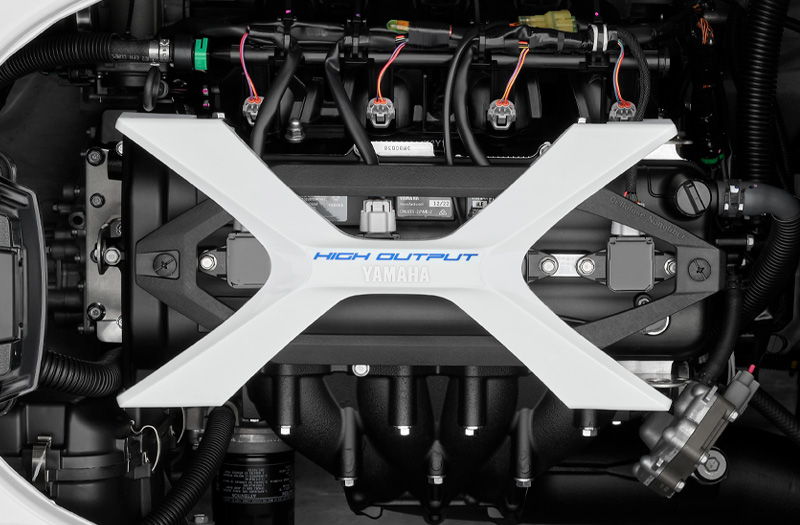
FX Cruiser HO. 1.9L HO ENGINE: Industry highest displacement 1.9L naturally aspirated High Output Engine. Newly designed intake system, cylinder head, muffler, and water cooling system etc., have enabled higher power, more torque, and quick & smooth acceleration. For the engine cover, plant-derived cellulose nanofiber (CNF) reinforced resin is adopted, it is the world’s first practical use for vehicle parts. The cover expresses the stylish crossbar concept.

“Cellulose Nanofibres” sure doesn’t sound like a topic that belongs on the pages of The Watercraft Journal. After all, it’s not a redesigned cylinder block, it doesn’t go 142 mph, it doesn’t do backflips and it doesn’t take home trophies, right?

According to Yamaha, cellulose nanofiber actually does win races, help break speed records, and plays a vital role in advancing the personal watercraft industry on both the pleasure and competitive sides, and is a step in reducing the jet ski industry’s carbon footprint.

According to NBIC +, a leading nanotechnology website, Yamaha is perhaps leading the emergence of powersport use of cellulose fibers.

FX Cruiser HO. 1.9L HO ENGINE: Industry highest displacement 1.9L naturally aspirated High Output Engine. Newly designed intake system, cylinder head, muffler, and water cooling system etc., have enabled higher power, more torque, and quick & smooth acceleration. For the engine cover, plant-derived cellulose nanofiber (CNF) reinforced resin is adopted, it is the world’s first practical use for vehicle parts. The cover expresses the stylish crossbar concept.

According to an October 28 NBIC+ article, the 2024 models of Yamaha WaveRunner personal watercrafts and sports boats use “the first mass produced composite parts based on plant-derived cellulose nanofibre (CNF) reinforced resins.”

Specifically used in the power unit engine covers, these parts were developed in a partnership with Nippon Paper Industries specifically to handle the effects of seawater and high heat. 

The article states that these resins, reinforced with the cellulose nanofibres, “achieve strength and other material properties equal to or greater than existing materials and in addition to being over 25% lighter than existing resin materials, it also has excellent material recyclability properties and can be used repeatedly.”

According to Yamaha technical sheets, CNF reinforced resin is a new high-strength material manufactured by kneading and dispersing CNF, a biomass material made from wood resources, into resins such as polypropylene.  

The incorporation of products such as the plant-based cellulose nanofibres is part of Yamaha’s published sustainability initiatives, working on the top-level goal of reducing the risk of marine ecosystem destruction and fishery resource depletion by increasing the recyclability of marine products.

An August 25 press release stated, “Yamaha Motor Co., Ltd. announced today that it will adopt plant-derived cellulose nanofiber (CNF) reinforced resin for marine products as an initiative toward reducing CO2 emissions and the Company’s environmental footprint. In developing the material, Yamaha Motor has reached a collaborative agreement with Nippon Paper Industries Co., Ltd. (Headquarters: Chiyoda-ku, Tokyo). This is the world’s first practical use for vehicle parts.”

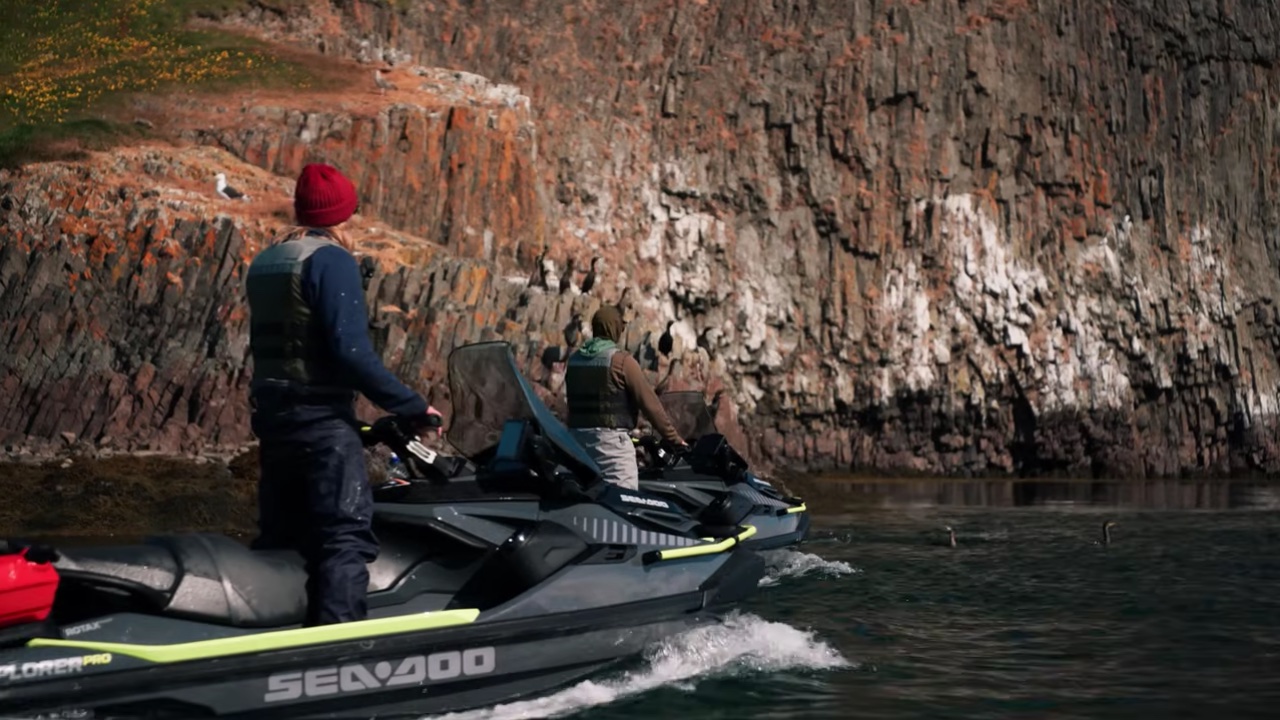
Video: Sea-Doo Explorer Pro Takes Adventure To A New Level in Iceland

0

Creating memories that last forever, exploring places few have seen before, going the extra mile to experience the unique, the rare…the next-to-impossible.

That’s what adventure is about, and for photographer and adventurer Chris Burkard, it is a key part of both his profession, and his personality. 

And for his latest adventure, Sea-Doo was an integral part of each of those components.

Burkard, and friend and fellow photographer Elli Thor Magnusson, had a goal in mind – to explore areas of Iceland that logistics, physics, and mother nature made tricky to visit … unless you had the right vehicle.

For Burkard and Magnusson, Sea-Doo provided exactly that – the solution to the extremely shallow reef passes and the highest tides in Iceland that mark West Iceland’s remote, beautiful, and for many – impossible to reach islands, inlets and hidden coastlines of Breidafjordur Bay near Stykkishólmur.

“You have these super shallow reef passes that go between Islands in Iceland, and when you pair that with the biggest tides in Iceland, you know, meters and meters and meters, it can be really complex. Utilizing something that’s got the ability to kind of peak around and sneak around this unique area is something you really couldn’t do with any other type of vehicle but the Sea-Doo,” Burkard explains in this Sea-Doo Adventure video of his exploration of some of  West Iceland’s most inaccessible, and most beautiful landscapes. 

With some navigational advice from local fisherman, sailor and captain Kristjan Lar Gunnarsson, Burkard takes advantage of the SeaDoo Explorer Pro’s stability, technology, storage, range and maneuverability to check one more “once-in-a-lifetime” adventure off of his bucket list. 

“So the beauty of an experience like this is, this really comes down to the self-sufficiency. I mean, for me, the thing that is really so exciting about any type of experience or adventure is not having to rely on a support vehicle or some big infrastructure,” Burkard says.

“Being able to just open up the hatch – my camera gear, my drone, everything I need is right there. Food’s in the back, I’ve got all the gear I need, extra fuel, fishing rods. You could be off the grid for a couple days.”

Visit the Sea-Doo Life: Adventure playlist to get inspired for your own next Sea-Doo adventure, and be sure to check out the Sea-Doo YouTube channel or search for #SeaDooLife for an extended selection of Sea-Doo how-too videos and feature clips on each of the vessels in Sea-Doo’ lineup. 


Gallery: RIVA Racing Revolutionizes ECU Tuning With New Maptuner NANO

0

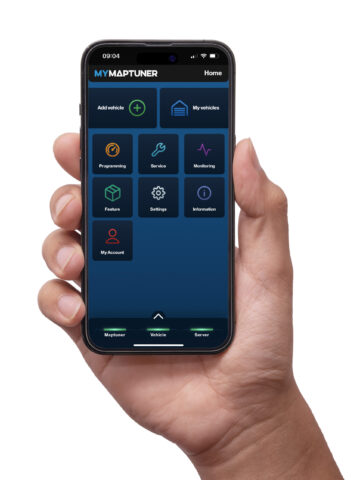
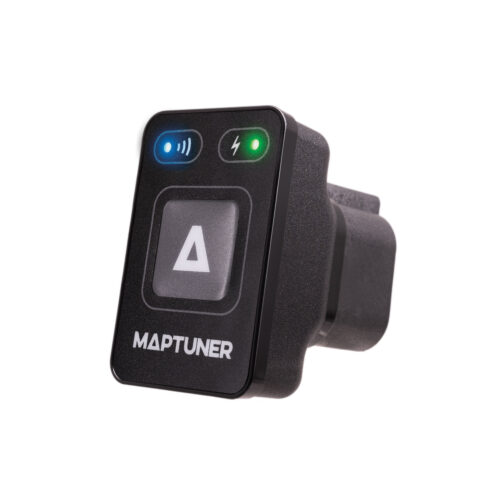
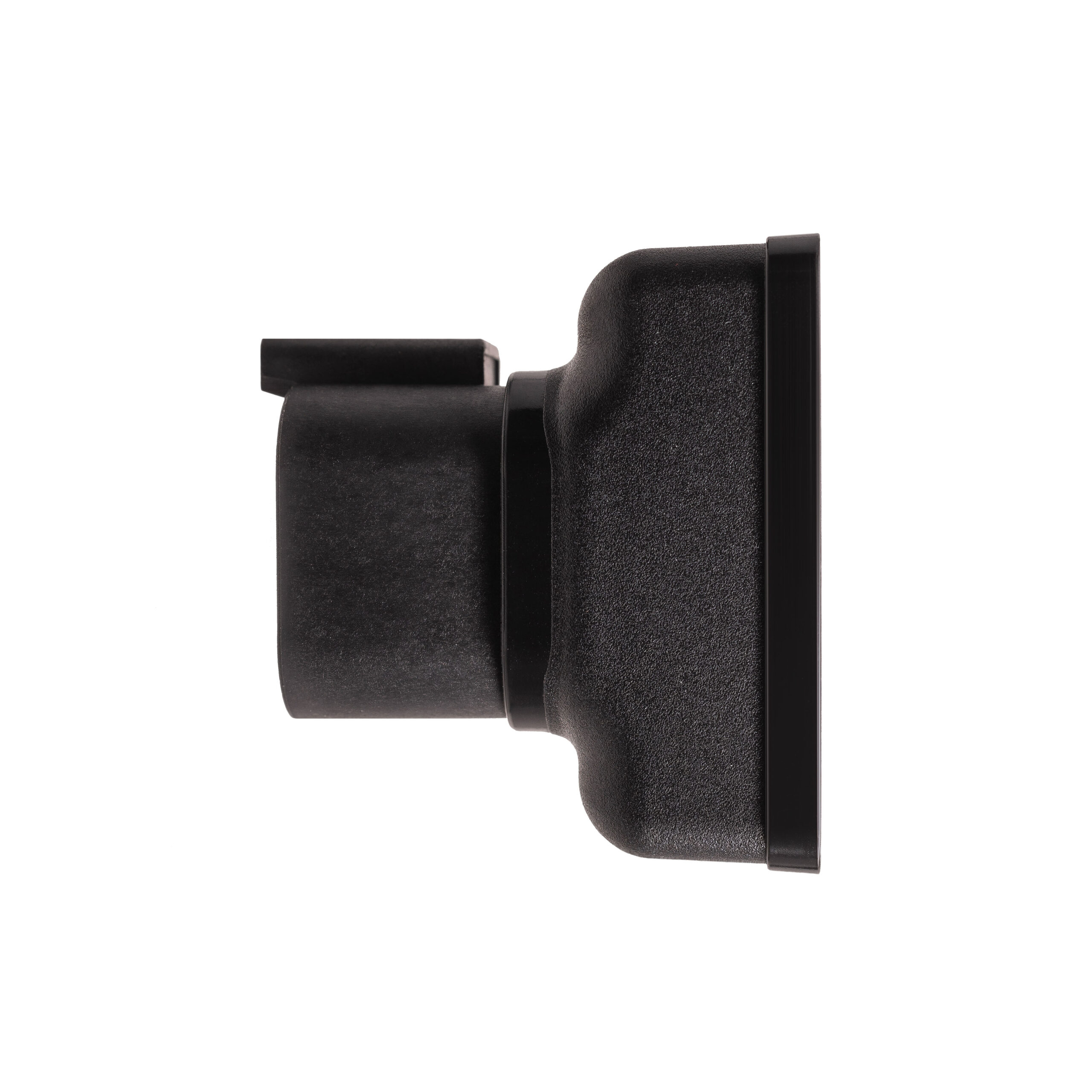
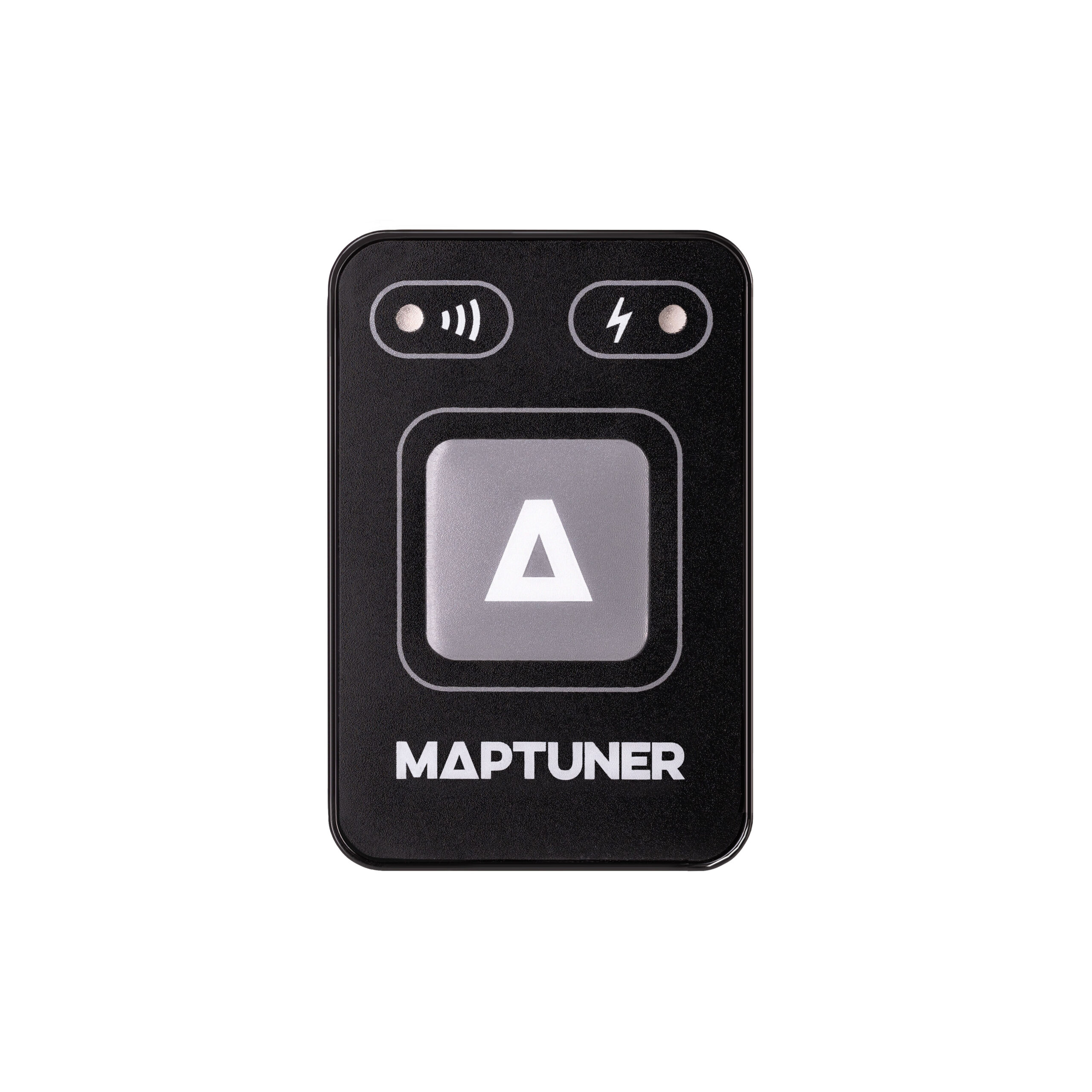
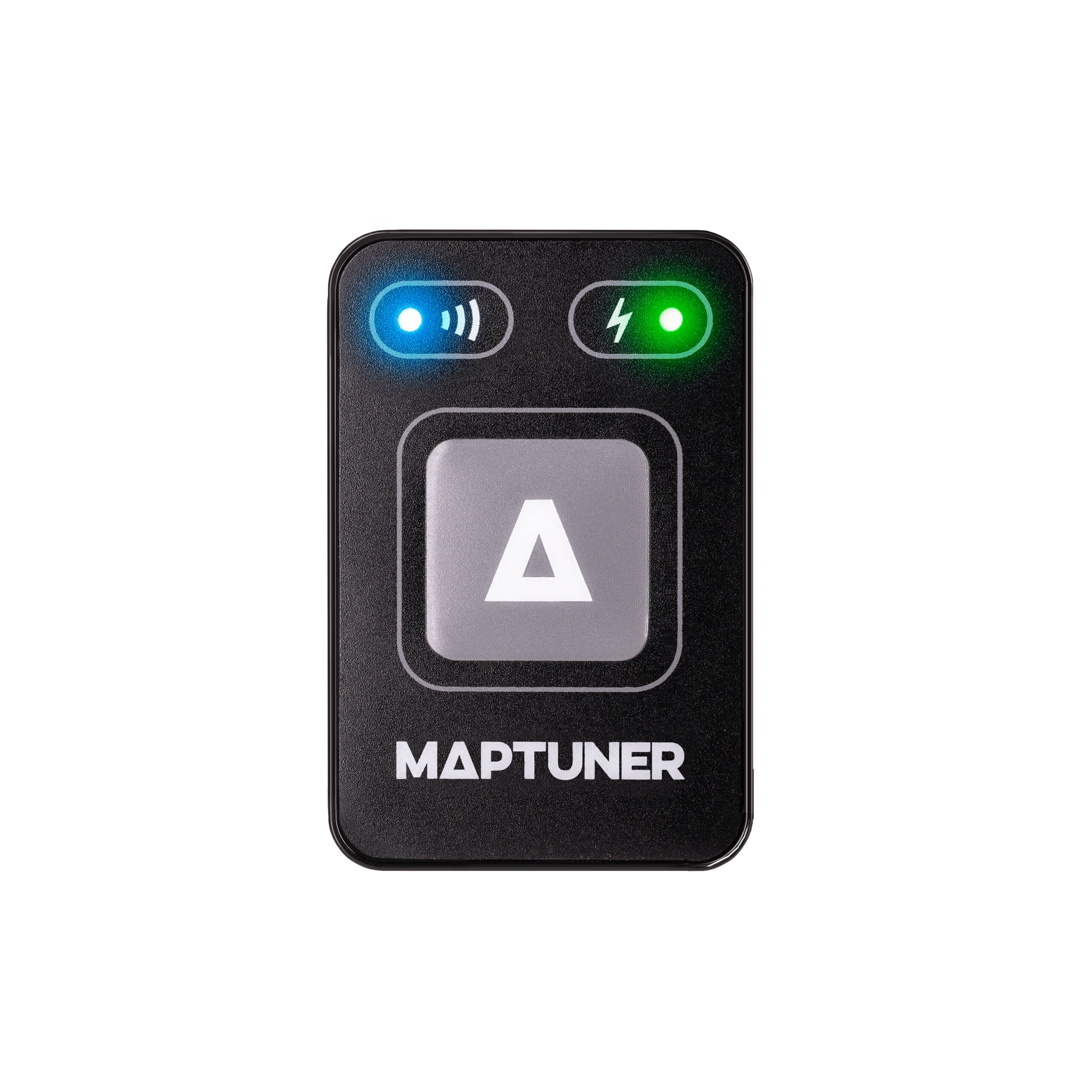
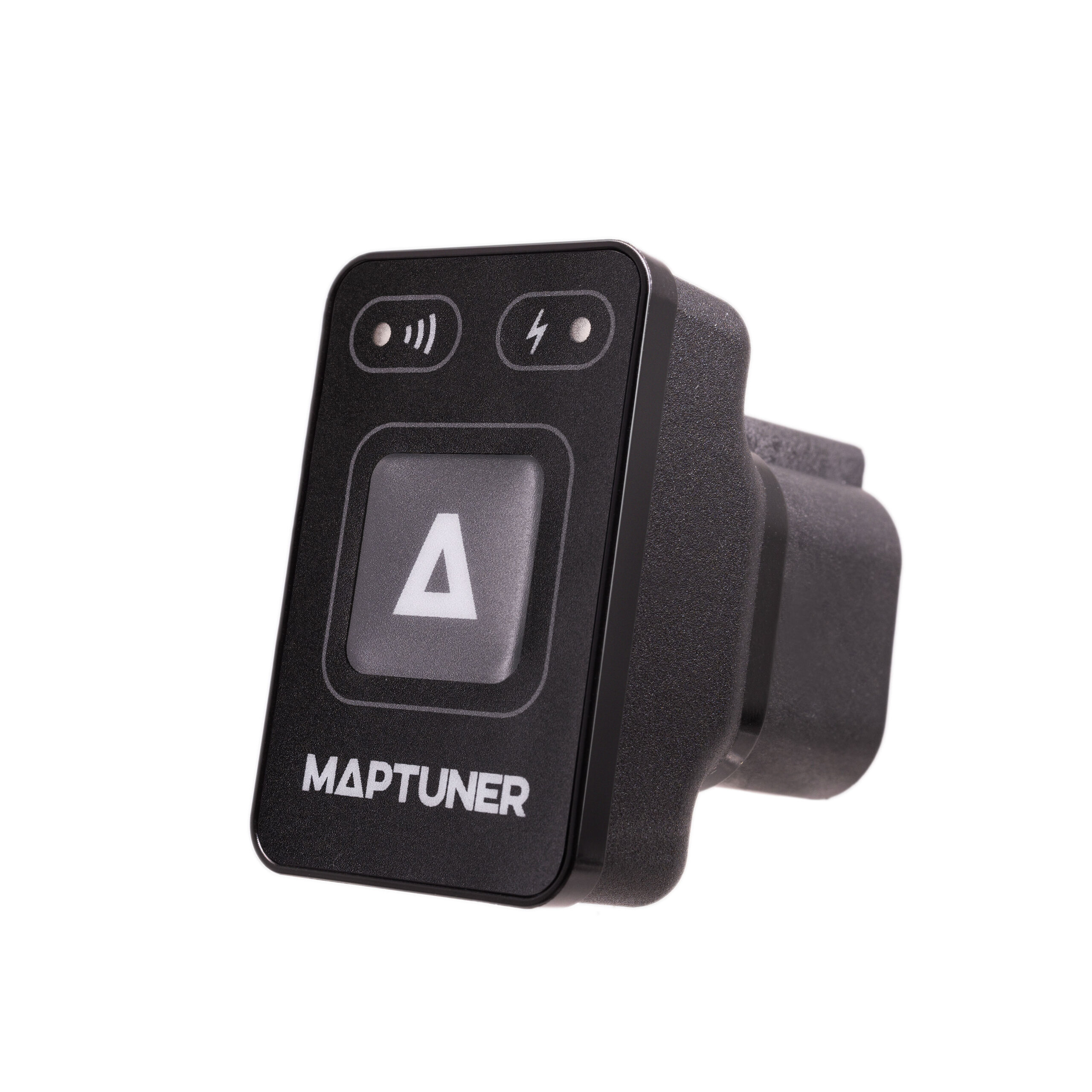
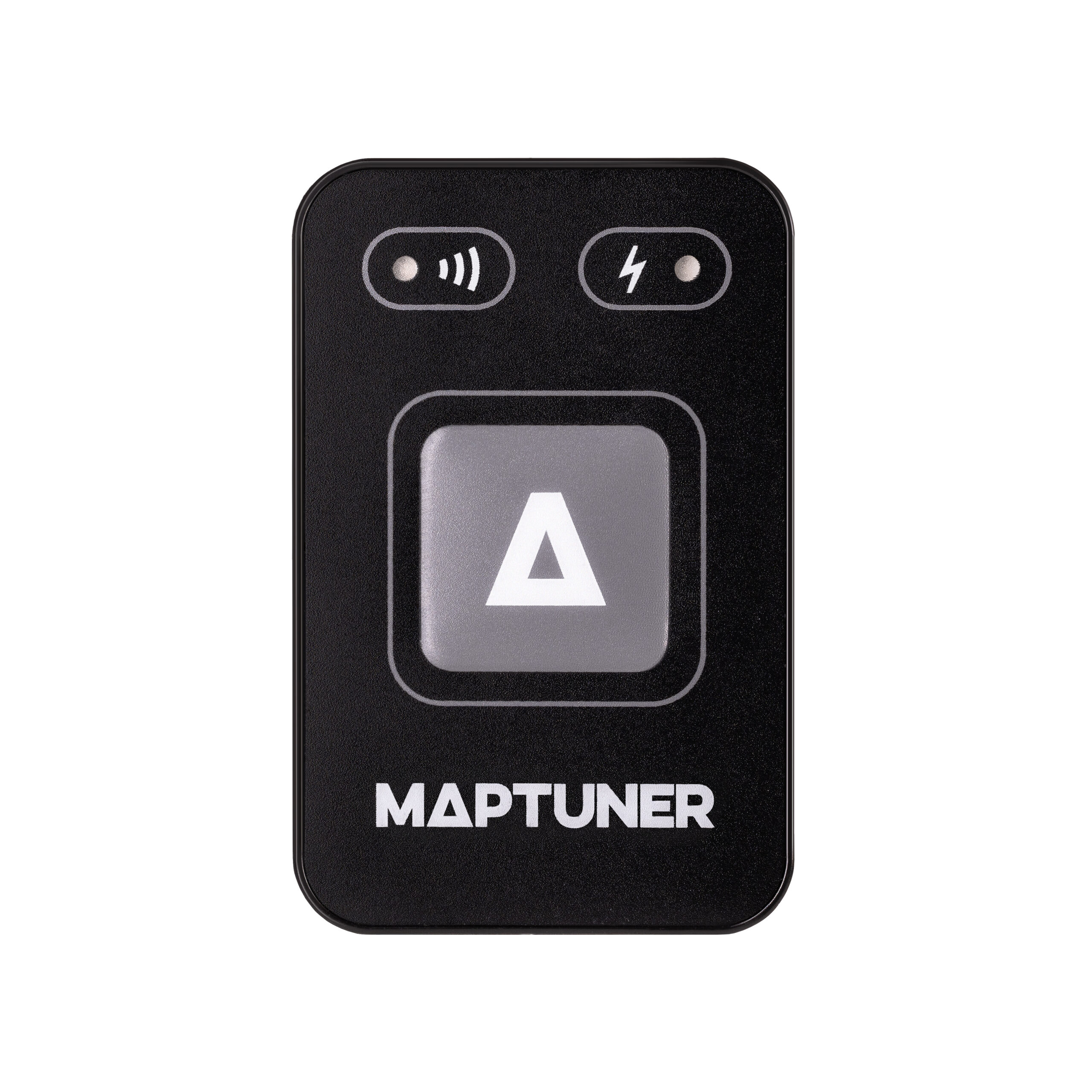
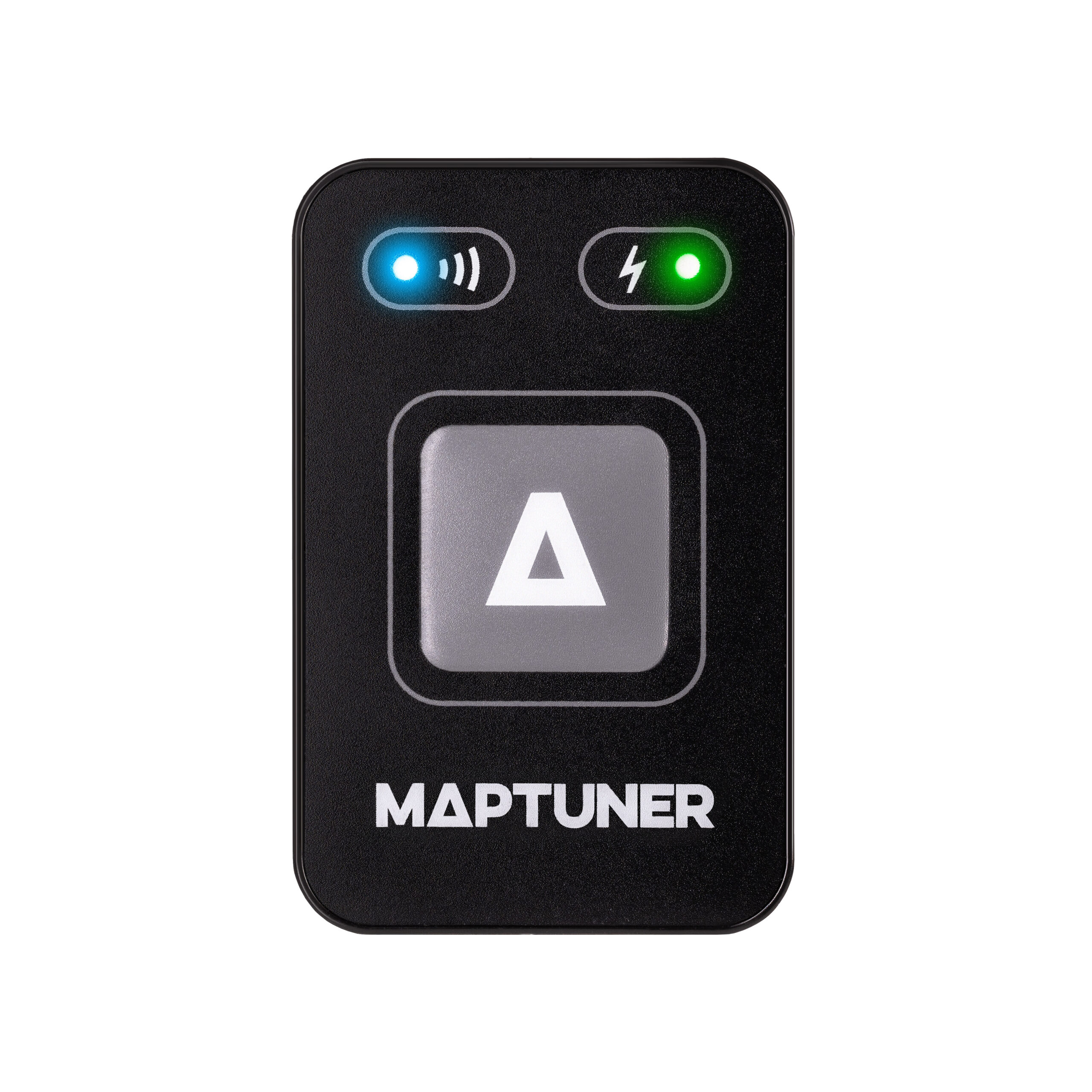
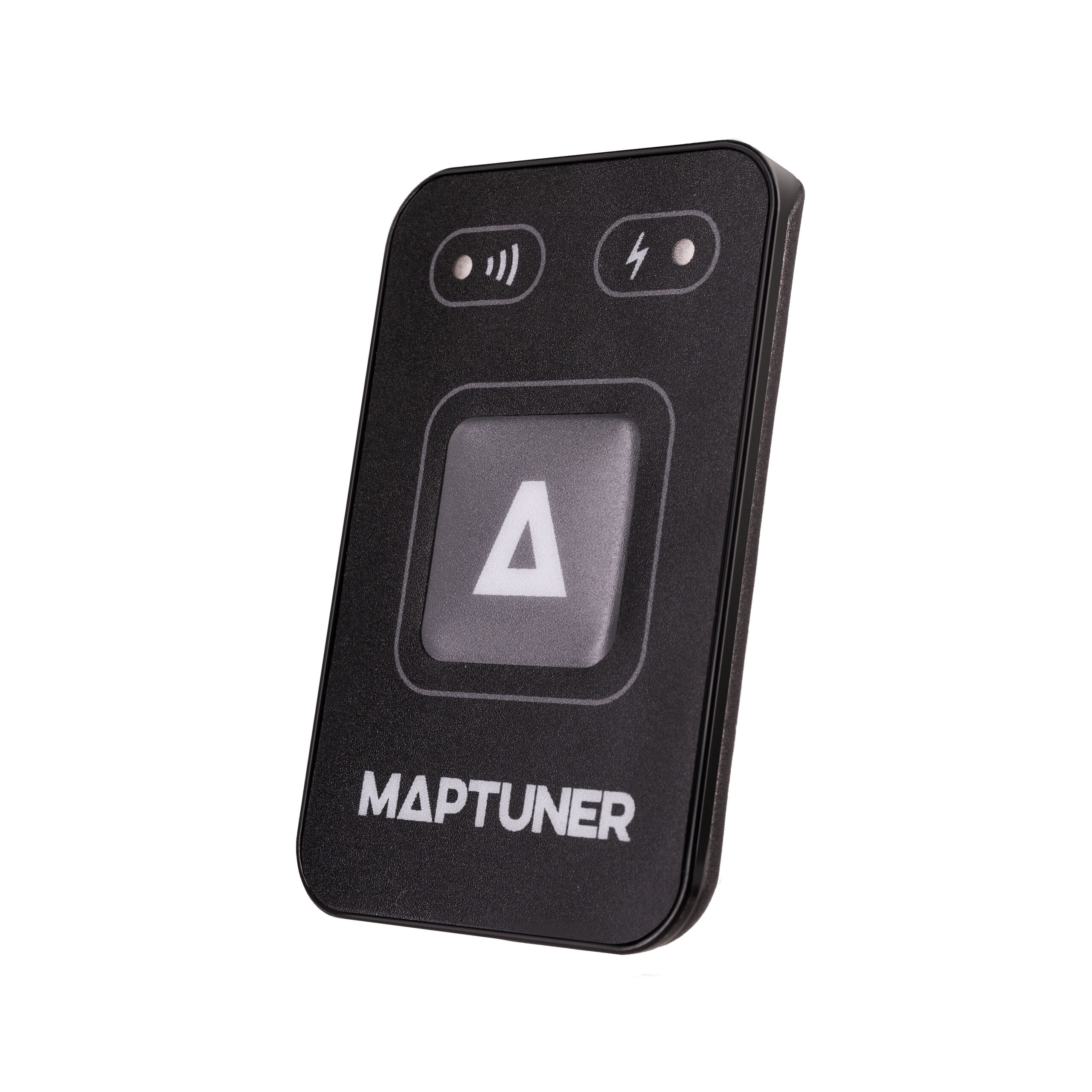
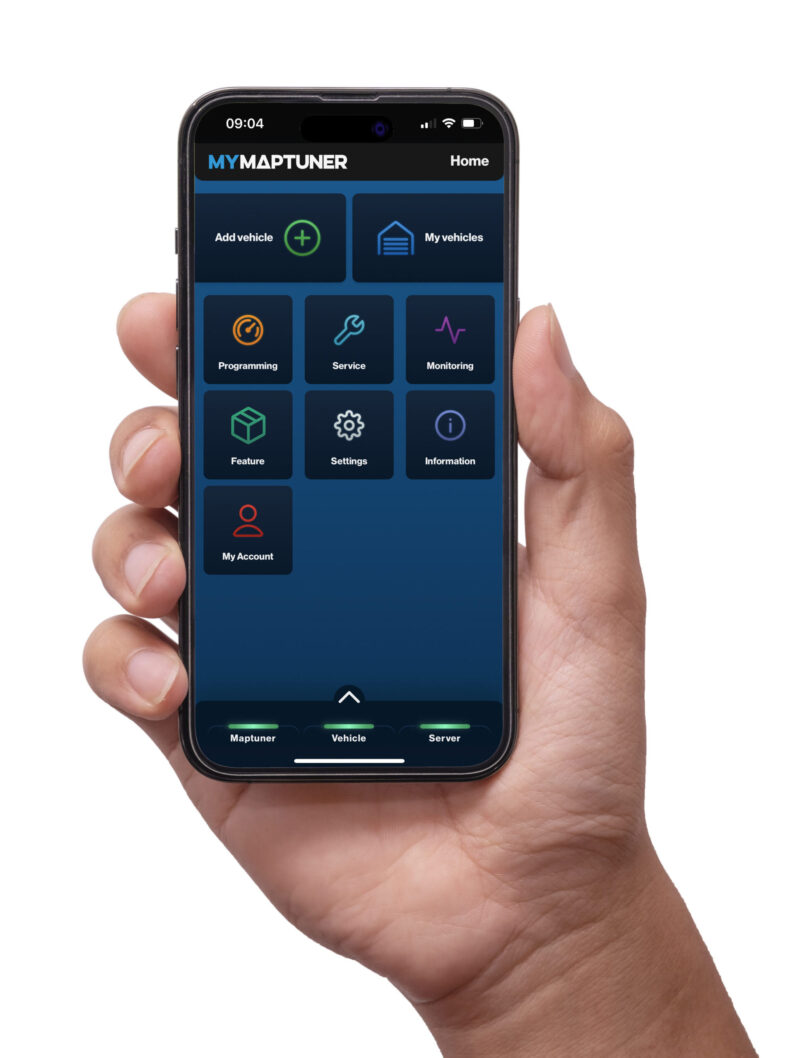
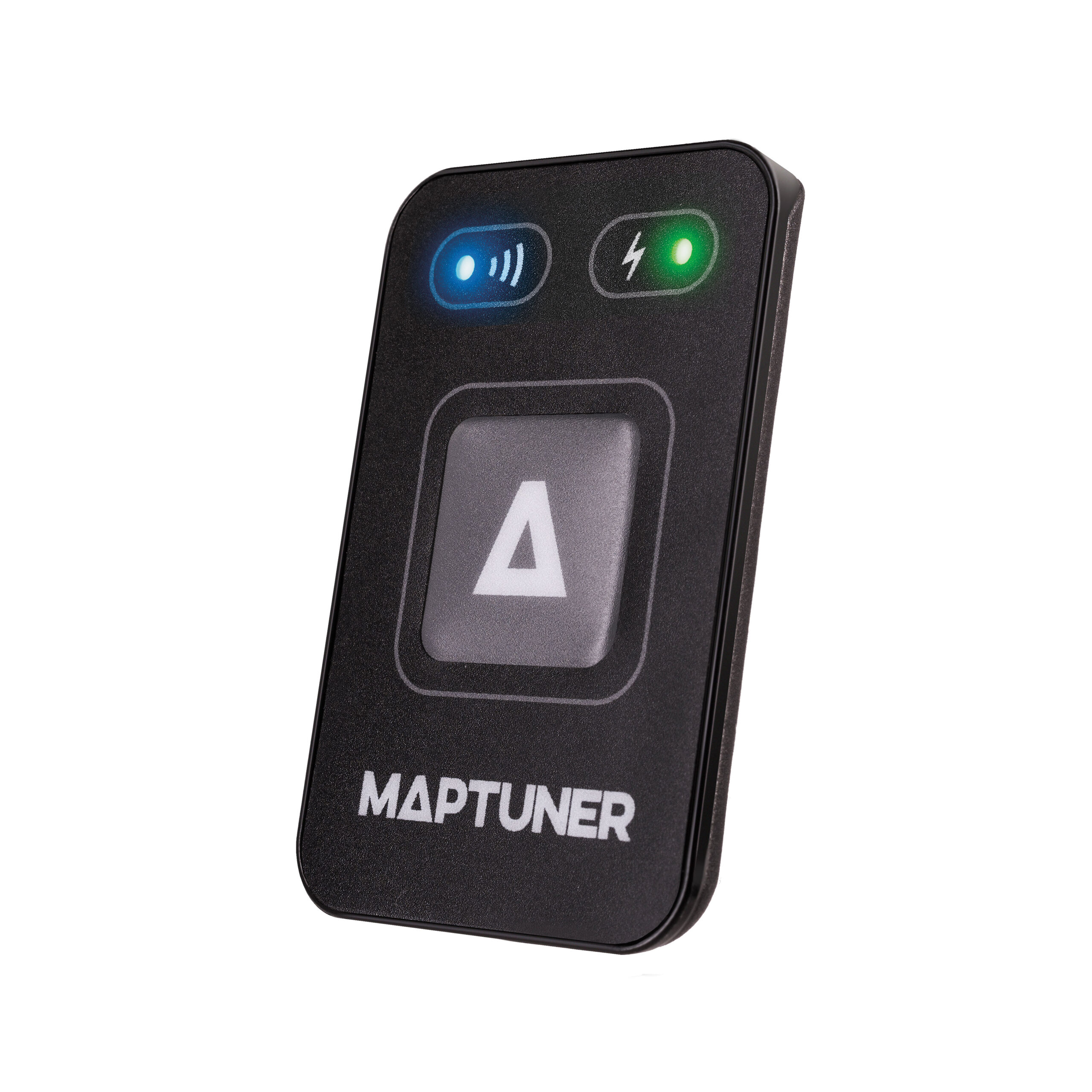
Sometimes, progress marches forward. Other times, it leaps. RIVA Racing just revolutionized how tuning, servicing and monitoring your personal watercraft’s performance can be done (and costs) thanks to its new Maptuner NANO and My Maptuner app for your Android or Apple smartphone.


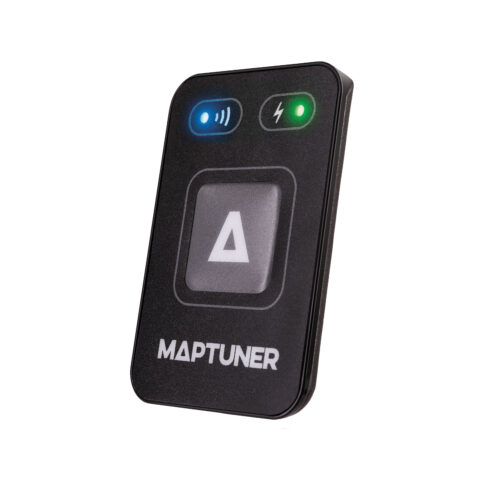
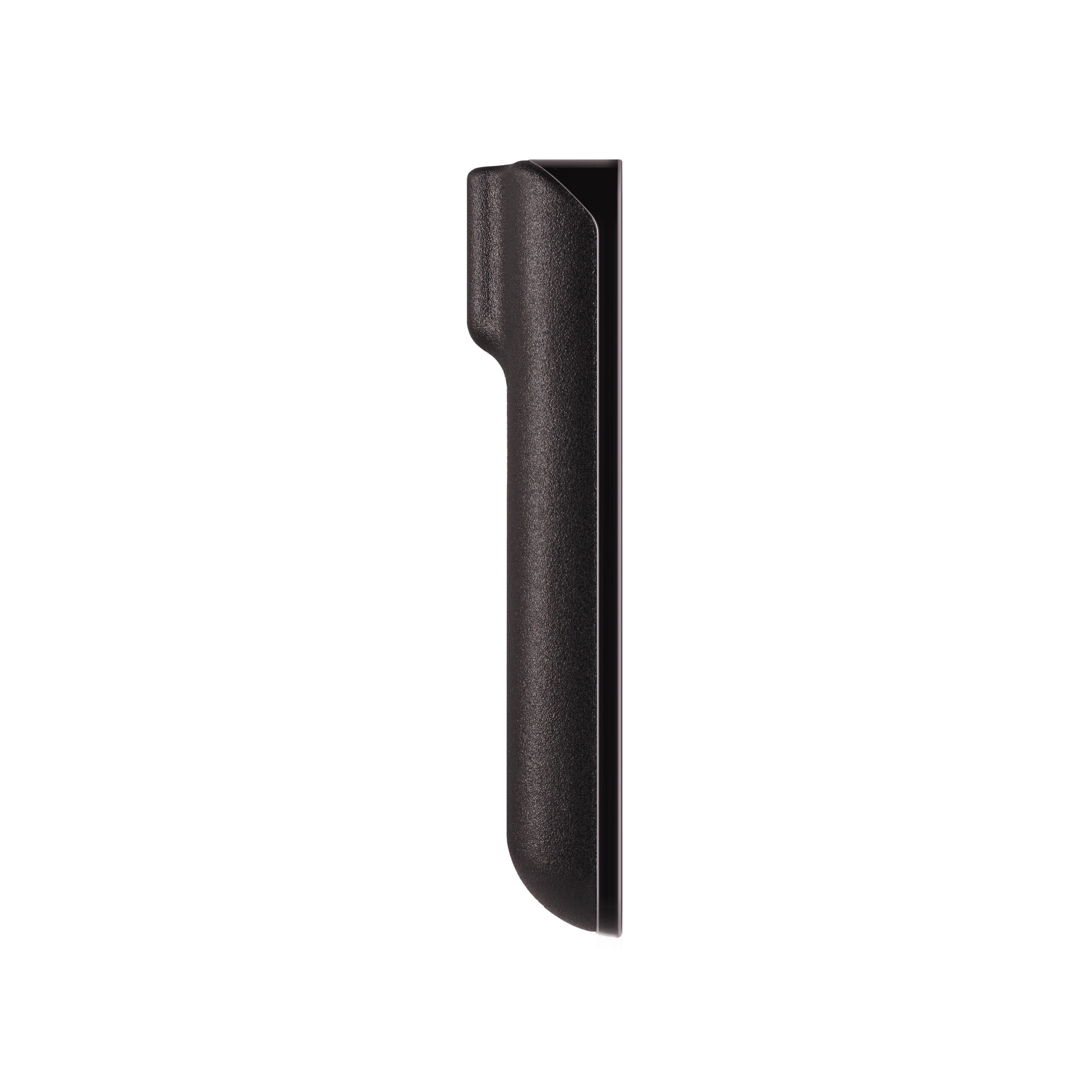
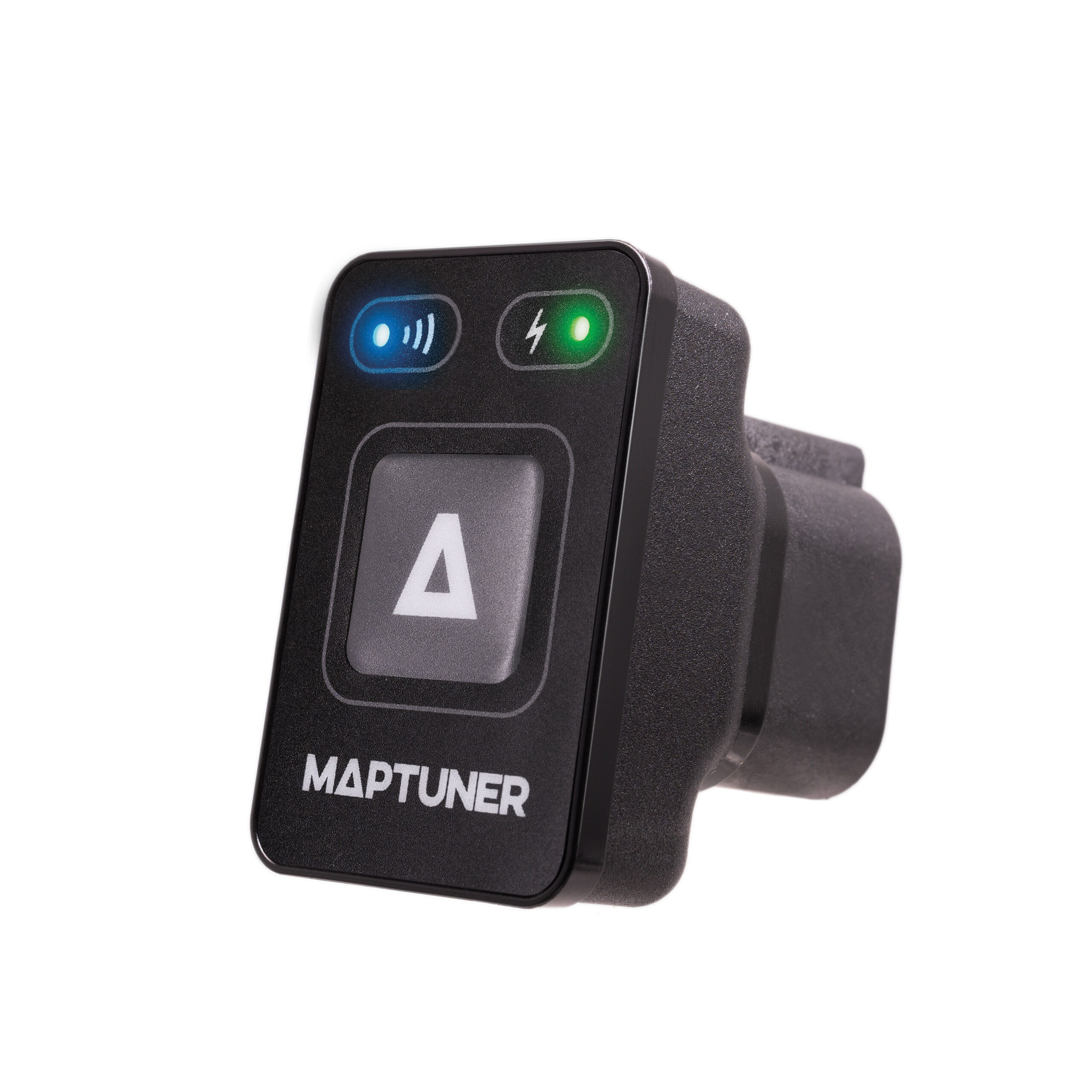
While the MaptunerX remains a vital tool for dealers, service centers and performance shops, as a single handheld tuner can operate RIVA’s Dealer Service App and store literally thousands of different vehicles’ tuning files – the new NANO places the power of the full-sized tuner in a compact, thumb-sized dongle.

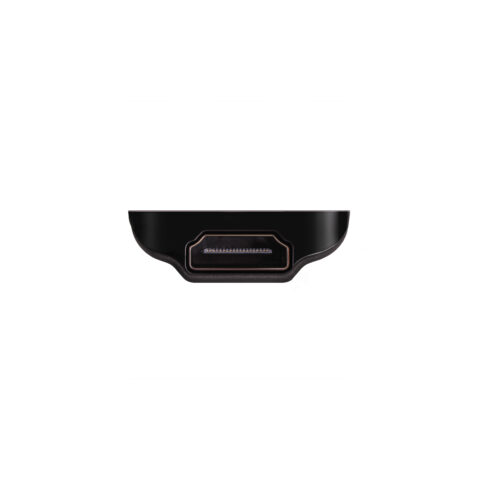



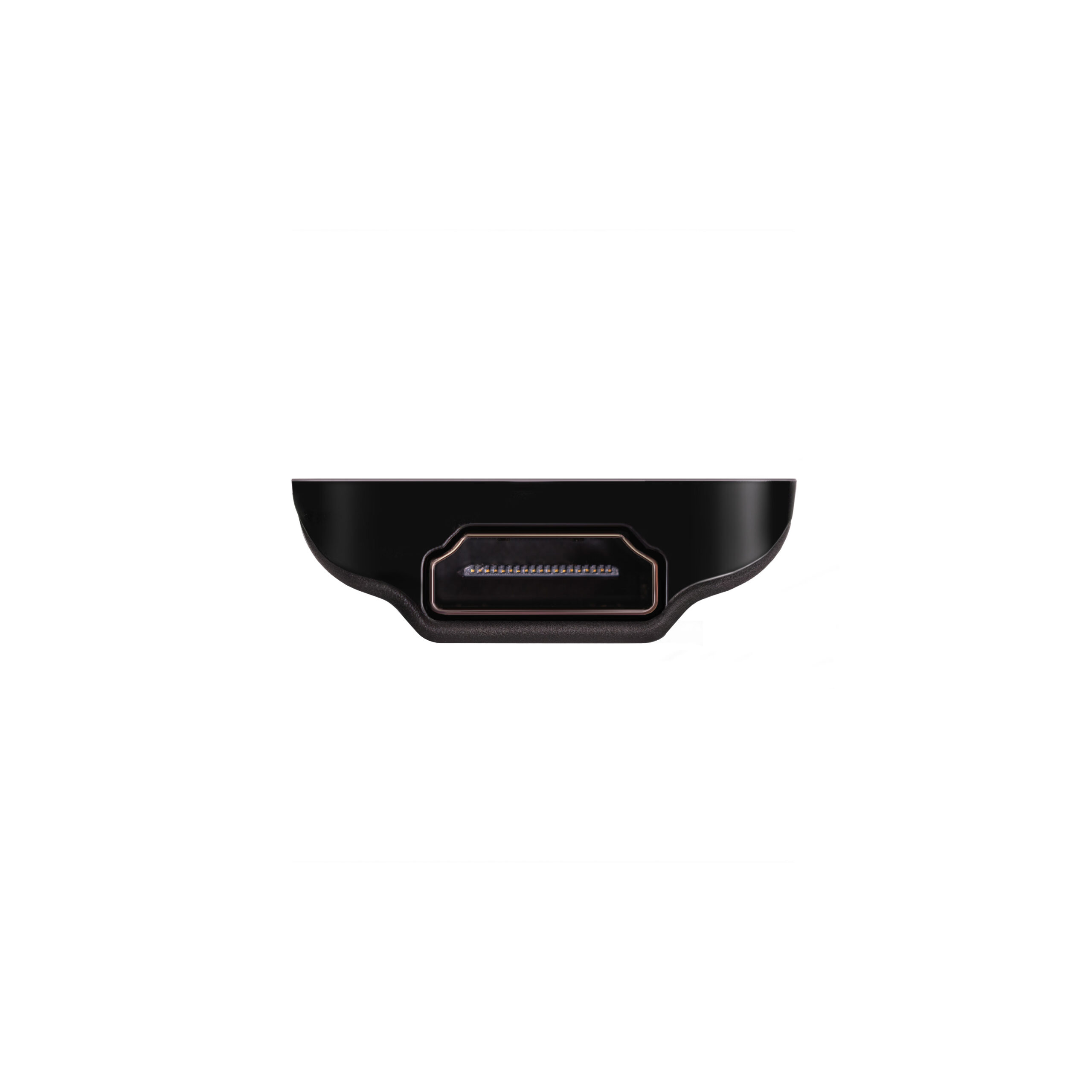
The NANO plugs in directly to your Sea-Doo’s diagnostic port or to your Yamaha or Kawasaki using a designated HDMI harness. Once paired to the My Maptuner app (downloaded to your Android or iOS phone) via Bluetooth, you can reflash, tune, monitor and clear fault codes through your phone on the fly!

By purchasing a license for the vehicle that you want to program, the NANO gains access to RIVA’s massive Tuning Library. Getting started is a cinch, and with RIVA’s unmatched technical support, anyone will be able to switch between performance tunes and back to stock settings within a few minutes.

Even without a tuning license, the NANO provides services like clearing fault codes, live monitoring (through your phone) and for Sea-Doo applications, doubles as a Speed Control Override (SCOM) for all 2018-and-newer 300 models, starting your Sea-Doo in Sport mode every time! [Additionally, RIVA anticipates having full SCOM capabilities for the new 325-horsepower Sea-Doo models by January 2024. – Ed.]

Above left: The Sea-Doo NANO application does not require a harness as it plugs directly into the factory diagnostic port, making for a waterproof connection. Above center & right: The Yamaha and Kawasaki NANO applications are slimmer by design, but require a separately sold model-specific HDMI cable to operate.

Priced at two-thirds the cost of a traditional MaptunerX, the Maptuner NANO saves customers nearly $200; and when “bundled” with the harness and tuning license, shaves off another 10-percent. Oh, and the My Maptuner app is completely free and has some functionality even if you don’t own a NANO.

The possibilities of unlocking the most potential from your modern PWC just made a quantum leap forward and you get to benefit from years (and millions of dollars’ worth) of development and effort. Check out RIVA Racing’s new Maptuner page today to learn more about this amazing breakthrough.

Video: That Racing Channel Captures Jose Luis’ Record Shattering 142mph Run

0

Just in case you ad taken a break from all social media for the last couple of weeks, Jose Luis from BK Built absolutely decimated his own standing world record of 135mph set over three years ago with a blistering new all-time top speed of 142 miles per hour aboard a 1,400-plus horsepower turbocharged Yamaha GP1800R SVHO.

Achieved early Saturday morning, October 14th during the most recent HydroDrags at Lions Park in Lake Alfred, Florida; Luis and the BK Built team absolutely shook the crowd with the record-breaking pass. Instantly, rival teams protested the speed run citing a malfunctioning GPS. Only recently did event officials overturn the initial decision to not count Luis’ run.

The Racing Channel recorded the weekend’s racing, subsequent drama and squeezed in a couple of interviews: beginning with Luis and Brian Kirchberger (the owner of BK Built), and with FuelTech CEO Anderson Dick where TRC chatted up some of the smartest guys in the sport about 4-cylinders running compound turbos pushing 60-plus pounds of boost, methanol and nitrous.

FuelTech Solves Multiple Oiling Issues With Billet Yamaha 1.8L Oil Pan

0

If you missed last week’s The Watercraft Journal IRL podcast with FuelTech’s CEO Anderson Dick, you are literally costing yourself the most exciting education on top tier performance. Over the course of 110 minutes, Dick walked WCJ’s Editor-in-Chief Kevin Shaw and Greenhulk Garage’s Greg Gaddis through several engineering failures of the current 1,812cc and 2024 1.9L engine offerings from Yamaha Motor Corp., and how the global innovator has addressed them.

During testing, FuelTech’s chief discovered serious fluctuations in the SVHO’s oil pressure. It turns out that the Yamaha engines suffer from severe oil cavitation specially under hard deceleration, starving sensitive areas of the engine of vital lubrication (including the supercharger, shaft, clutches and valvetrain). This oil starvation was traced back to the pan’s oil pump suction tube not having proper oil supply.

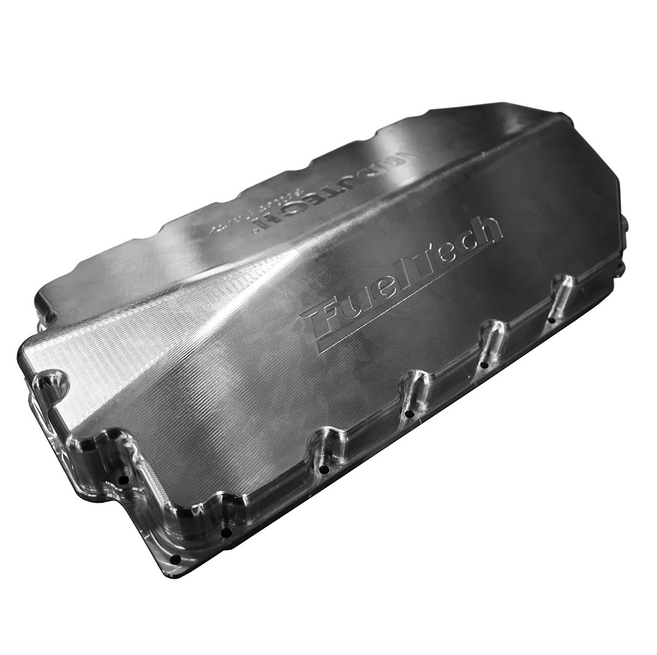
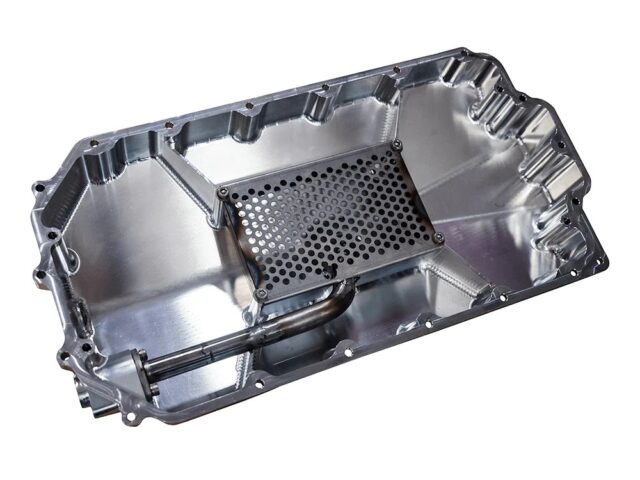
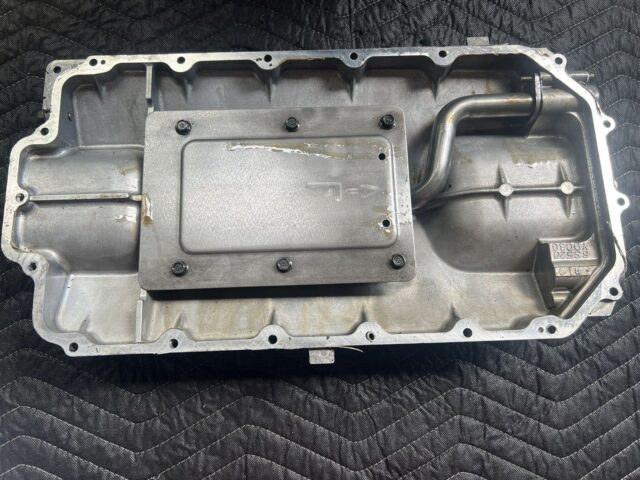
Above: Compare the massive 10 quart volume of the FuelTech pan (left) compared to the constrictive 5 quart factory Yamaha oil pan (right). The factory pan blocks off the oil pickup tube’s “cage” with a solid plate and thick barriers. The FuelTech pan allows for far, far superior oil collection with a deeper pickup catch and directional “trap doors” than keep the cage perpetually full of oil.

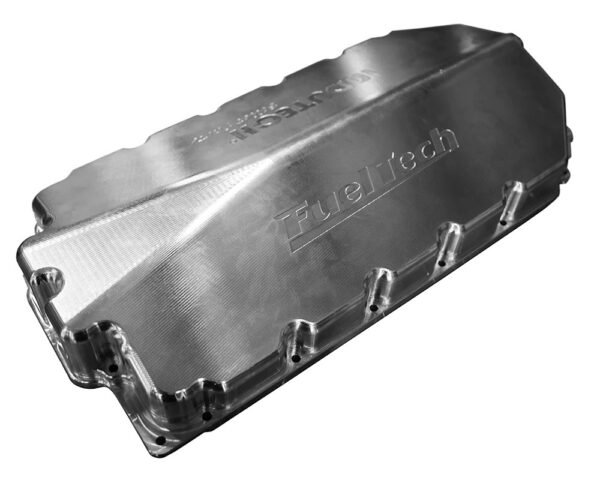
The factory oil pan and “pickup” tube is exceptionally restrictive, allowing the pump to draw up pockets of air in extreme conditions (hard lateral g’s). FuelTech worked closely with Jose Luis from BK Built (y’know, the fastest jet ski holding the world record at 142mph) to develop this billet oil pan design that fixes the oil cavitation. CNC machined from a single slab of billet aluminum, FuelTech’s Billet Oil Pan fits all 1.8L and 1.9L Yamaha PWC engines.

FuelTech more than doubled oil capacity to 10 quarts allowing increased oil life; added (4) “trap door” directional flaps that permit oil to flow naturally to keep the cage filled at all times.

FuelTech also radically redesigned the suction tube by increasing the tube’s volume and added a 90-degree pickup that pulls oil lower than the stock unit.

Oh yeah, and Fuel Tech included a proper drain plug that allows a suction hose to be attached to fully drain the pan.

And since it’s a solid piece of billet aluminum the design provides structural reinforcement for the engine block, which if you’re pushing some serious horsepower will keep the stress from cracking the factory block.

Here’s the point: FuelTech’s Billet Oil Pan ($1,699) absolutely resolves the several oiling issues with the Yamaha 1.8L and 1.9L. That kind of ingenuity ain’t cheap; big boy horsepower requires big boy payola.

Date Announced for 20th Annual Mark Hahn Memorial 300 Endurance Race

0

The daydream between friends dreamt up over two decades ago became reality after longtime Factory Yamaha racer Mike Follmer’s good friend, Mark Hahn passed away during an event. Follmer promised to make their idea for the world’s longest continuous PWC race with a LeMans-style start a reality, and 2004 did so.

Since that time, the annual Mark Hahn Memorial 300 has undergone some changes, made a few additions and moved from two prior locations, but the spirit is still there; and more importantly, participants from across the planet come to Lake Havasu City, AZ to compete in this one-of-a-kind event.

Now, the Mark Hahn Memorial 300 celebrates its 20th year this coming Saturday, February 24th, 2024 at Lake Havasu State Park, Windsor North Launch. Racers who had participated in previous Hahn’s loved last year’s relocation to the Windsor launch, which removed the potential of getting stuck in the sand.
Sanctioned as an IJSBA event, racers must prepare for several fuel stops throughout the race’s continuous 300-mile length, requiring them to be pulled safely from the water, refueled and swap riders (that is, if racing with a partner). Late February can bring glassy conditions or torrential wind-whipped white caps that will test your mettle.

World Champions – like Craig Warner, Chris MacClugage, Victor Sheldon and Mike Klippenstein – have all earned top billing. Many have entered and won or met disappointment. It’s truly a test of athlete and machine. Visit www.markhahn300.com for more information, fill out an entry form and renew your IJSBA membership.

Video: Kspeed Provides Detailed Tutorial on Reflashing Ultra 310 ECU

0

In recent weeks, performance Sea-Doo enthusiasts have experienced a few highs and lows when it comes to tuning the new 325-horsepower RXP-X and RXT-X. While freeing the ECU of its speed control is possible it’s expensive and time-consuming. Equally, wholly unlocking the 325’s potential is only possible by replacing the ECU altogether, and installing several thousands of dollars’ worth of additional hardware.

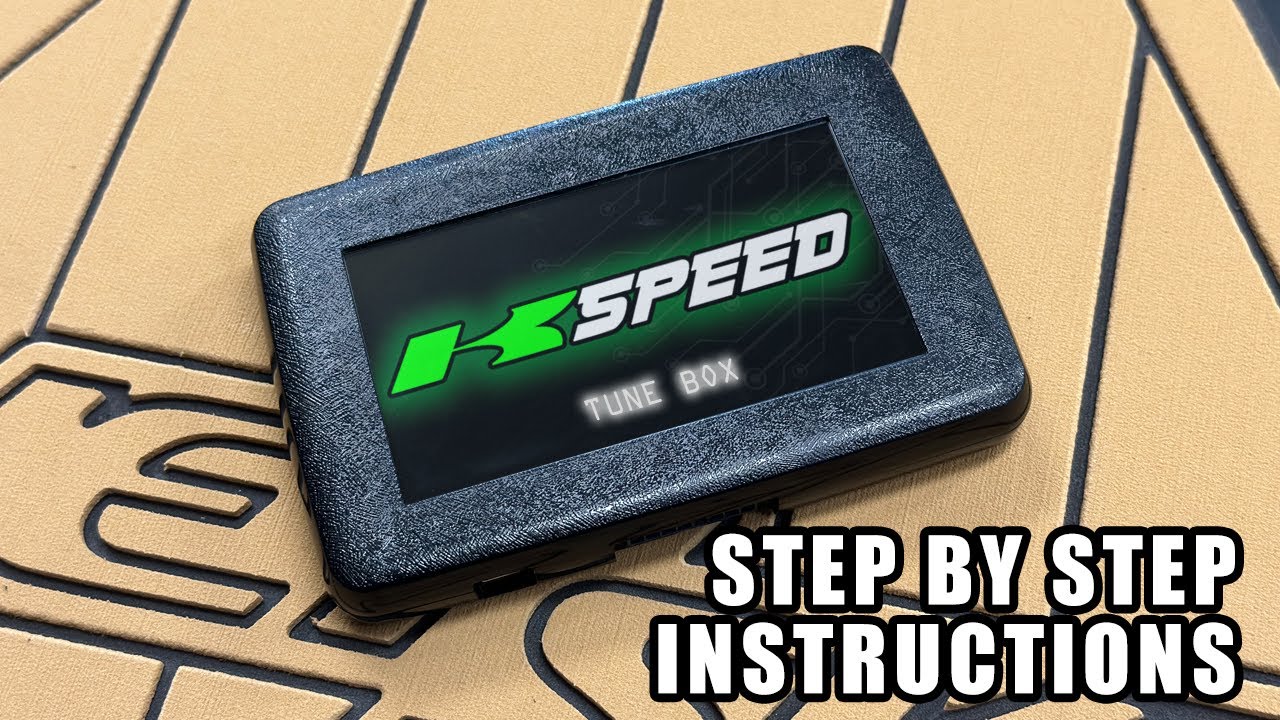
Then comes Kspeed with an incredibly simple plug-and-play handheld tuner that frees up the supercharged 310-horsepower Ultras within 10-to-15 minutes. The Watercraft Journal first hinted of the tuner at the beginning of October, and fully revealed the Kspeed Tune Box a little over two weeks ago. Since then, inquiries into the Tune Box have been huge and performance Kawasaki enthusiasts are champing at the bit to get one.

And because Kspeed is always trying to answer questions before you ask them, they went ahead and documented a real time reflash of an Ultra using the Kspeed Tune Box in a video attached below. This should held take a little of the fear out of some folks who want to reflash their ECU but are scared of screwing something up in the process. The video is absurdly simple to follow and should equip the most hapless with the steps to tune their JetSki.