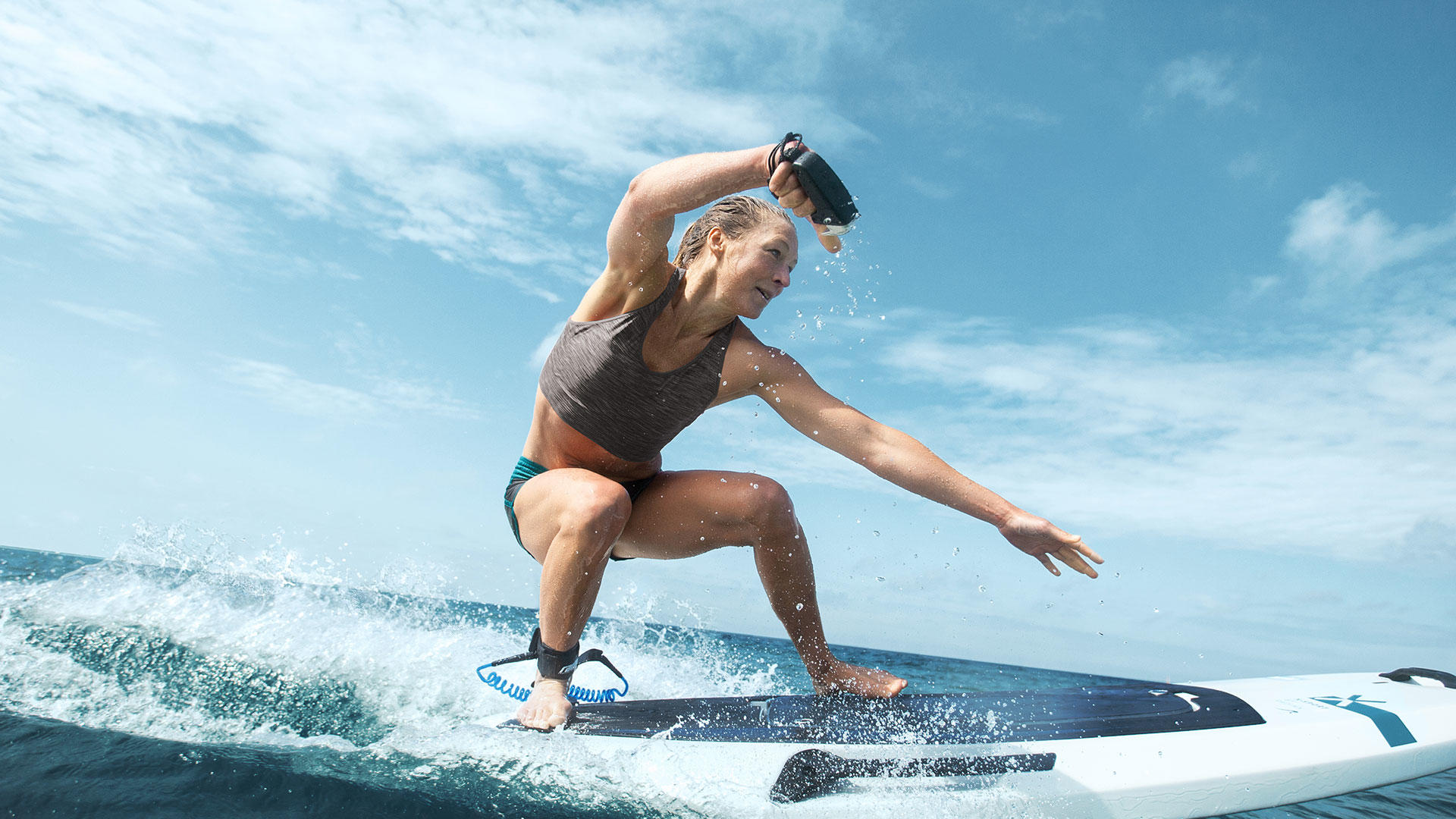
It’s not a pairing you would expect – but like french fries and a chocolate Frosty – Radinn Electric Jetboards has partnered with the new Volkswagen ID. The collaboration happened when Volkswagen released the new VW ID Electric Bus. The new ID takes fromthe old school VW bus – an iconic part of the 1960s surf lifestyle – and reimagines it in electric form, making for a perfect partnership with Radinn as both companies push the electric surf revolution.
The Radinn crew was able to pack the tiny Volkswagen ID with a surprisingly large amount of cargo. The interior held a fully loaded Radinn board bag, wetsuits, and other gear, while the racks on top easily held a full Radinn board bag. With all your gear safely stowed, you’ll be ready to hit the road in search of the perfect surf spot – and with Radinn, you don’t even have to find the perfect wave.
That’s the beauty of an electric surfboard; no waves are required. You can roll up to your local lake and get your surf on. If you’re on the road exploring and spy a little spot that’s tucked away, you can check it out and go for a secret ride. The Radinn X-Sport is made for exploring those less accessible spots that may require a hike through the woods. The X-Sport is their most durable board and can take a beating, making it great for explorations.
Radinn Electric Jetboards and Volkswagen even put together a video to demonstrate the joys of VW microbus ownership and the thrill of riding electric Jetboards. The new bus will not be available in the United States until 2024, but you can check out the complete lineup of Radinn boards available now, and sign up on the VW website to get US release date notifications.
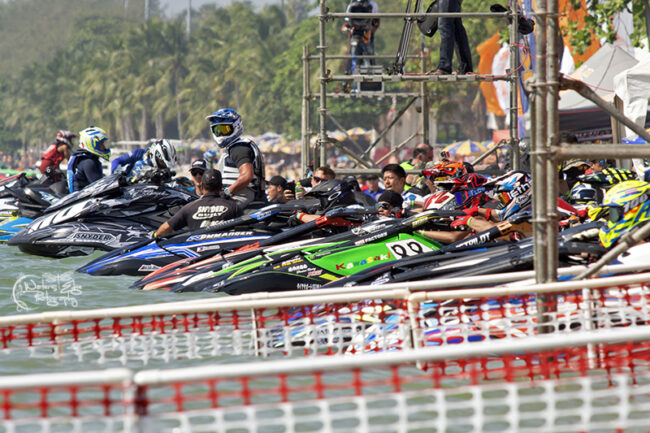
On October 16, Kevin Reiterer turned the volume up to 11 on the industry’s conversation about race safety.
In a public post on his Facebook account, Reiterer published a copy of a letter he drafted, addressed to Jet Ski World Cup Grand Prix tournament director Drake Parikhet.
In the letter, Reiterer requests that a race committee, “composed of selected professional racers chosen by their peers,” be involved in the pre-event design process that determines the physical layout of the race course for the World Cup, to be held Dec. 13-17 in Pattaya City, Thailand.
Citing specific areas of concern regarding course safety, such as the design of splits and placement of penalty buoys, Reiterer states that input in this area from those who “understand the intricacies of the sport, the abilities of the machines, and the thrill of the competition” will not only improve safety, but help event organizers create “an exciting, challenging, and memorable racing experience.”
Pointing out the advances in jet ski technology and performance, Reiterer urges the Jet Ski World Cup Grand Prix to become “a beacon of thrilling, innovative jet ski racing,” leading to “a constructive and progressive dialogue between professional racers and race organizers, allowing us to collectively set new standards and raise the bar for racing worldwide.”
Reiterer stressed that cooperation and a joint effort from the race community would be necessary to move forward with this effort, stating in his social media post, “We, as racers, have all come together, pulling on one string for the sport we love. It’s time to act now!” Two dozen prominent racers signed the letter posted by Reiterer, including Quinten Bossche, Jeremy Poret, Emma-Nellie Ortendan, Deven Farthing and Raphael Maurin; dozens more have expressed support of the proposal in social media comments.
“A lot of things need to change for the better. Good to see the riders step up for the second year in a round. I hope to see change, but nothing will happen unless we all stand together,” wrote Chris Hagest.
Deegan Newton added, “A race union/committee of pro racers that actually have a say in the production of these events has been needed for years. I love this! New tracks, 2 split sections, that are CONSTANTLY adjusted to remain even. The freedom to adjust the buoys or the track is the racers deem it unsafe. Clear rules that are enforced across the board.
And David Cabrera wrote,” It is awesome to see that we are passionate about our sport, and that there’s hope to make it better.”
The Watercraft Journal has contacted several racers, including some who signed Reiterer’s original letter, to get further comment, but have not yet heard back from them. We will continue to monitor this story, and provide updates as they become available.
See the full text of Reiterer’s letter below:
Dear Promoters and Race Organizers of the Waterjet World Series.
We hope this letter finds you well and in high spirits. As professional racers, we are writing to express our shared commitment to the growth and improvement of the sport we hold dear – jet ski racing. Our aim is to enhance the excitement of the races for our dedicated sponsors, enthusiastic spectators, and the vast television audience, all or whom contribute significantly to the success of the Waterjet World Series.
Over the years, we have seen remarkable advancements in the technology and performance of jet skis. We believe that it is now time for the racetrack to evolve and we feel compelled to act.
Our collective vision is to establish a Race Committee, composed of selected professional racers chosen by their peers, to collaboratively shape the design of the race track before it is finalized and made public by the organizing body.
We believe that the input of those who understand the intricacies of the sport. the abilities of the machines, and the thrill of the competition can provide invaluable insights into creating an exciting, challenging, and memorable racing experience.
We advocate for several key elements that we believe should be integrated into the race track design. To name a few:
We propose incorporating splits consisting of a minimum of six buoys or more.
Certain entry and exit of those sections and degree of difficulties within.
Penalty buoys shall be placed at each end of the split sections before the finish line, and many more.
We acknowledge that our attempts to communicate these ideas with various race organizers have not always yielded the desired outcomes. Therefore, we are taking this collective initiative to make our voices heard and drive the necessary changes.
We invite you to join us in making the Waterjet World Series a beacon of thrilling, innovative jet ski racing. It is our hope that this proactive approach will lead to a constructive and progressive dialogue between professional racers and race organizers, allowing us to collectively set new standards and raise the bar for racing worldwide ahead of this year’s final round in Thailand.
Thank you for our time and consideration, and we eagerly await the opportunity to discuss these important matters further.
Sincerely,
Jonna Borgstrom, Valentin Dardillat, Nacho Armillas, Quinten Bossche, Estelle Poret, Jeremy Poret, Mickael Poret, Samuel Johansson, Emma-Nellie Ortendahl, Sofie Borgstrom, Deven Farthing, Daniel Andersen, Anders Keller, Axel Courtois, Kevin Reiterer, Kylie Ellmers, Francois Medori, James Bushell, Raphael Maurin, Rasmus Koch-Hansen, Virginie Morlaes, Oliver Koch-Hansen, Morgan Poret, Dustin Farthing.
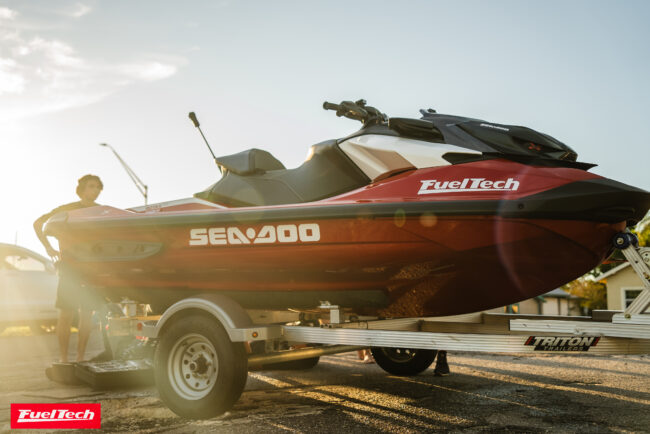
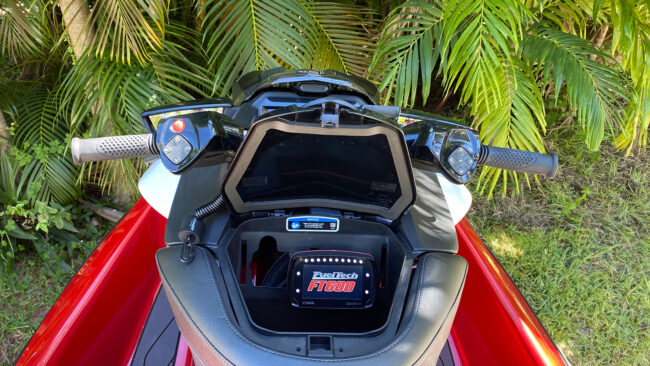
Well, that didn’t take too long. With all of the record-shattering happening at this past weekend’s HydroDrags, you might’ve missed that FuelTech showed up with a fully unlocked 2024 Sea-Doo RXP-X 325. To the neophyte, this might not sound like a big deal but to those who understand the drastic changes made for 2024, what FuelTech accomplished is impressive to say the least.
In terms of electronics, the 325 is completely different from the 300: it has a new ECU – the same “locked” BOSCH ECU used on the top performance Can-Am Maverick models, different connector and pinout from the previous model. Rotax also added a wideband O2 sensor and fuel system with an external driver for the fuel pump, allowing to adjust psi upon demand.
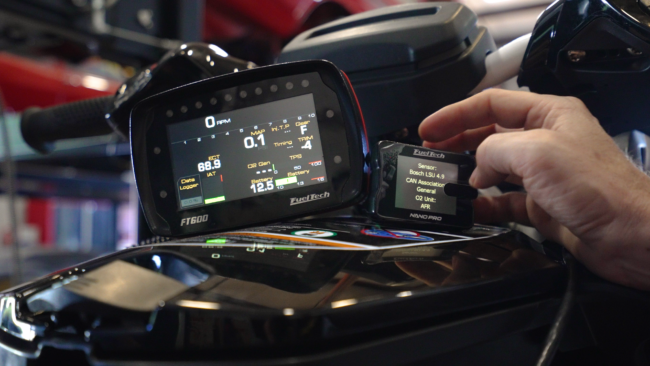
Picking up the 2024 Sea-Doo RXP-X 325 with just a week before HydroDrags, FuelTech’s options were slim. Unlocking the stock ECU has challenged tuners for two years, so FuelTech’s CEO Anderson Dick quickly developed a basic plug-and-play harness and equipped a standalone FuelTech ECU.
Anderson told The Watercraft Journal, “It took many hours […] to understand the higher complexity CAN bus communication with the OEM dashboard and iBR module, since the new ECU for 2024 has different protocol.
“Fortunately, we were able to finish the full CAN bus integration so […] everything works like stock, including the gauge cluster, the IBR module with Reverse, Neutral and Forward manipulation as well of VTS trim control, the stock start/stop and key.”
Using a base map developed for the previous 300-horsepower models, FuelTech was able to achieve 81mph (on the dashboard) @ 8300rpm producing 15psi – and using 75% injector duty cycle. Per Anderson, “This was on a ski with literally 0 hours and full tank [of fuel] at Georgia elevation” and then it went straight to Hydrodrags for Angelica to race it!
All of this gives you full tuning – not only fuel and timing but also fuel pump control, throttle control strategies and many ways, traction control and a lot of data acquisition. FuelTech did it, folks! And there are few more trusted in the world of performance engine tuning.
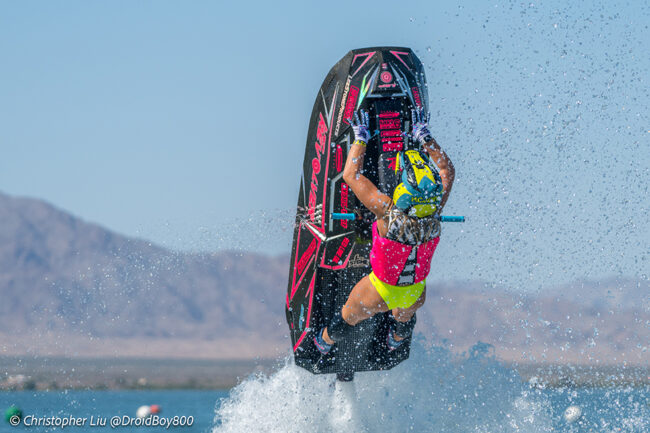
In addition to the annual fierce competition between the world’s best watercross athletes, competitors and spectators at this year’s IJSBA World Finals in Lake Havasu City also witnessed history being made as Demi Morgan was named the first female World Champion in Freestyle, besting a field of nearly a dozen competitors.
Morgan was crowned Amateur Freestyle Champion at the 2023 Short Block Technologies WGP-1 World Finals, and event organizer and IJSBA Executive Director Scott Frazier contacted The Watercraft Journal to talk about the significant event.
Frazier said that both Amateur Freestyle and Pro Freestyle have been won exclusively by men since the inception of the sport 42 years ago, and said that he was extremely proud of Morgan and the work she has put into her sport.
“I am personally so proud of Demi and her hard work she has put into the sport makes her truly deserving,” Fraizer told The Watercraft Journal. “She is an excellent ambassador for our community and a great role model to young women everywhere to show that it is possible to break through and become the very best in what has been, up to now, a male dominated category.”
Frazier added that, in addition to Morgan’s success in the class, a new female freestyle competition, Vanessa Jones from Albania, joined the Amateur class, continuing the increased diversity in the freestyle competition class.
Joining Morgan on the podium for the 2023 IJSBA World Finals in Amateur Freestyle were Parker Scholand in second and Jack Dubois earning the third spot.
Morgan’s win in the Amateur Class also meant that the pro class lineup included a bit of that diversity, as Morgan took her place among the eleven competitors for the Pro Freestyle Championship, where Nolan Jukish walked away from the weekend with the Freestyle Championship, and Gabe Jukish locked down the third place podium spot, split by second-place winner Mark Gomez.
Photos courtesy Chris Liu, video courtesy Geno Bates.
Nailing down a solid 4.8-out-of-5 rating from DIVEIN reviewers – the second highest overall rating on the list – Radinn’s Carve jetboard picked up the “Best Surfing feeling” spot on the list.
Marketed by Radinn as their most agile board, designed for a responsive feel and high-performance ride for intermediate to advanced riders, The Carve boats speeds up to 36 mph and a range of 45 minutes. According to DIVEIN’s review, The Carve “is well-thought-out and well-designed. It’s got an impressive suite of technology and app features.”
“Overall, it’s one of the best electric surfboards we’ve tested,” DIVEIN reviewers added in the full review of The Carve.
Falling just under The Carve, with an overall 4.7 rating and snagging the ““All Round Awesomeness” title, the Raddin Freeride jetboard is a perfect choice for riders of all levels, according to DIVEIN reviewers, who stated “It’s a beautiful all-around board with tons of buoyancy, making it easy for beginners. Excellent support and over-the-air upgrades mean that once you’ve got a few rides under your belt, you can get more torque and go-juice out of your jet drive when you’re ready for it.”
Radinn boasts the Freeride as their premium model, stating, “This model has an innovative hull adapted to slice through waves and choppy waters, as well as features that direct the spray of water down when you are turning, resulting in gained thrust.”
The DIVEIN full review of The Freeride notes that the board is stable for small riders, but still can handle large riders.
“Riding the Freeride could be described as more of a cruiser board rather than a shredder,” the review states. “This is a big board that is clearly designed for cruising on calm waters, not tricks, sharp turns, jumps, or catching waves.”
As DIVEIN says, “A jet board will provide you with one of the coolest and most adrenaline-fueled water sports experiences that can be enjoyed despite flatwater conditions” … and Radinn’s top spot honors on DIVEIN’s list of 2023’s top e-boards proves that the company is living up to it’s “Making Waves” motto.
Meant primarily for race skiers and those who wish to tune their skis for speeds in the upper 80s – and above – this kit directly replaces your ski’s iDF system – known for early failure on modded skis that are frequently operated at 8,400 rpm and above.
Sea-Doo’s Intelligent Debris Free system (iDF) is a set of gears in the engine that can reverse the rotation of the impeller, reversing the water flow so debris is blown out, eliminating the need to manually removing debris from the intake.
As handy as that feature is for recreational users, the system has become known for early failure on high-performance watercraft, and has a tendency to negatively impact performance and limit modifications.
RIVA’s Mike Hodges told The Watercraft Journal, “Since BRP updated the iDF internals, we’ve found that the failure rate is pretty much a non-issue on stock craft as well as craft modified up to Stage 2. However, we’ve received reports of a few iDF failures on modified craft run above 8,400rpm, which is well beyond the system’s intended use.”
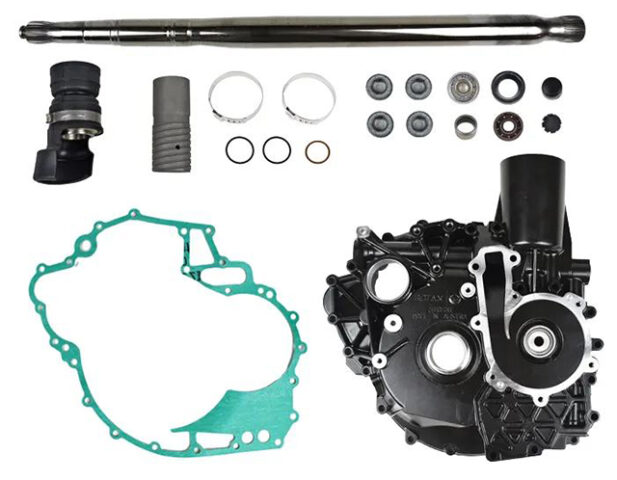
RIVA’s iDF-removal kit uses all OEM engine & driveline components, and instructions directly out of the Sea-Doo shop manual, to eliminate the iDF system and return the ski to one-way only driveshaft rotational operation for improved reliability.
In addition to improved reliability we found that overall performance is improved by what we believe is a reduction in mechanical drag related to the iDF gearbox components,” Hodges said.
While the process does require “deactivating” the iDF function through BRP Dealer Diagnostic System (BUDS) or Maptuner X with Tuning License, and requires a high-level mechanical proficiency and specialized tools to complete, use of this kit will enable performance modifications beyond RIVA Stage 2, as well as that reduction of mechanical drag on the driveline caused by iDF gearbox components, resulting in increased performance.
And now, the RIVA Racing Sea-Doo iDF Delete Kit for 2022-23 RXT-X models with iDF and 2022-24 GTX models with iDF is available at the GreenHulk store, priced at just over $1,500.
RIVA Motorsports Miami has some awesome featured inventory they want you to know about. The 2023 Sea-Doo RXT-X 300 is for sale in Millennium Yellow. You can score this ride for as low as 20% down at $391 a month with your good credit. The crew welcomes trade-ins and other options for financing.
The RXT-X is a 3-passenger PWC with a 1630 ACE-300 engine. It comes with BRP Connect so you can stay in touch through your smartphone. Stay on track with GPS, listen to your music, and stay on top of the weather with BRP Connect. Stay locked in with the Ergolock System seat.
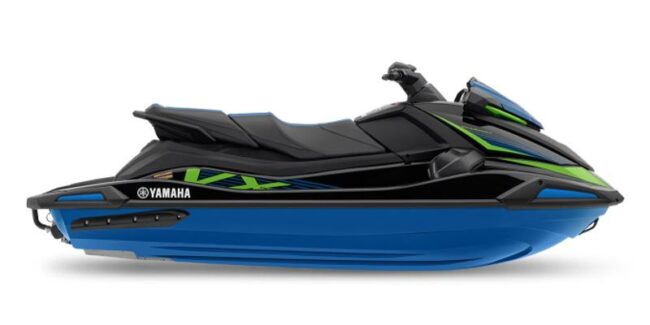
If you prefer a Yamaha WaveRunner, the new 2024 VX Deluxe with Audio is part of the featured favorites. This machine can be yours for $3,000 down at $289 per month with approved credit. This unit is available with the custom integrated VX audio system. The audio system includes twin 41/2-inch waterproof marine speakers, 2 channel amplifier, easy access control panel, and low voltage regulator to protect the battery.
The WaveRunner VX Deluxe also has the updated Connext LCD Display so you can easily see how your machine is operating while underway. It is equipped with the multi-mount system so you can add on extra speakers, a fish finder, or an action camera, making your time on the water more fun. This is a good-looking ride in Black with Deepwater Blue.
You can get all the details on these two PWC and more rad vehicles on the RIVA Motorsports Miami website.
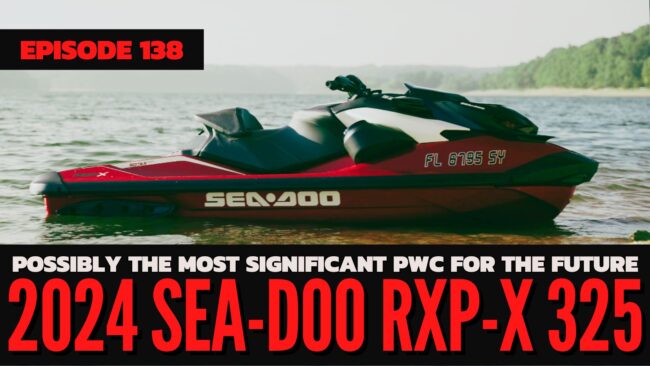
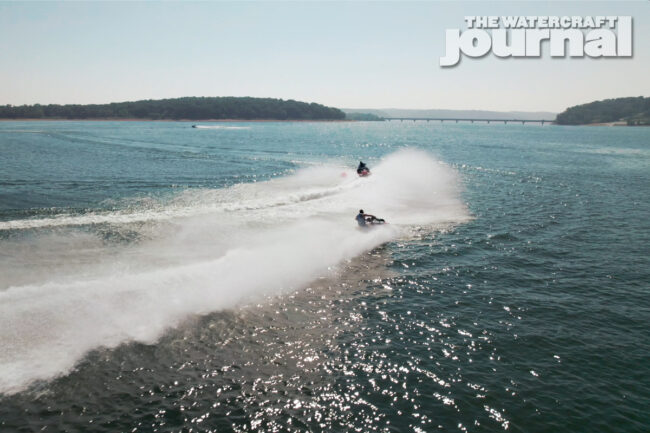
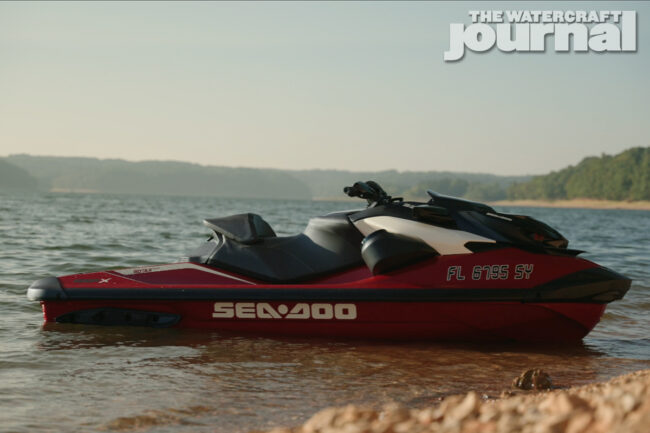
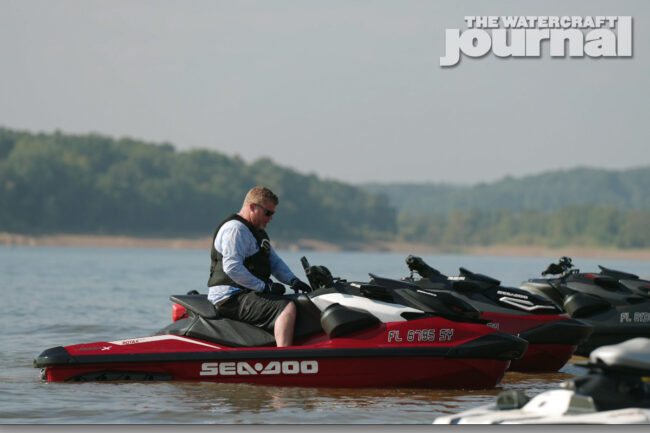
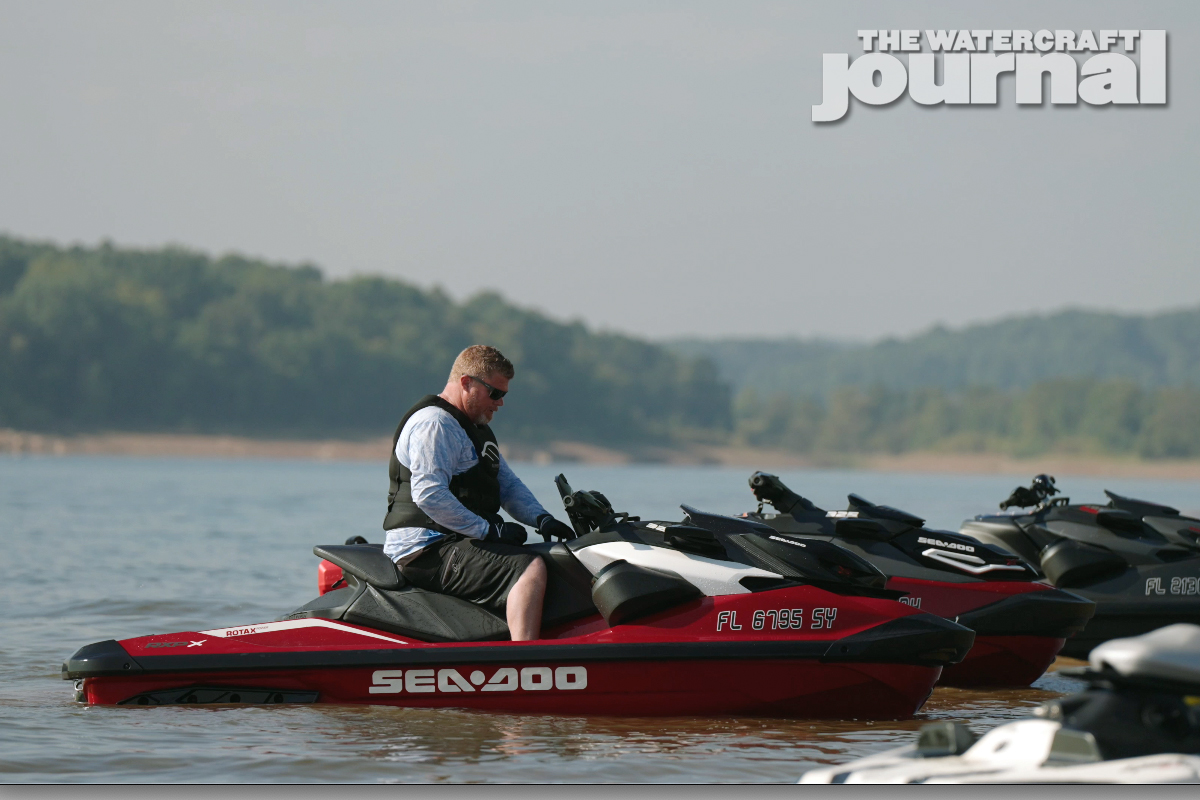
OK I’ll just say it. This ski scares me. Not because it’s soo fast or because it corners sooo hard. No. Not really. I’ve ridden plenty of faster, more aggressive race-built skis before. Instead, the 2024 Sea-Doo RXP-X 325 scares me because of what it means for the future.
The newest RXP-X is what happens when the world’s biggest, most dominant powersports manufacturer directly targets the performance aftermarket; y’know, the guys pushing watercraft into the 90’s and higher. That’s who the new RXP-X is designed for.
They’re not looking to lure in you weekend warriors who spend your Saturdays trying beat your buddy to the next sandbar. Pfft. They’ve already got you. No, Sea-Doo is aiming their sights at the guys looking to set world records.
Three years after launching the redesigned RXP-X 300, the 2024 model somehow makes that ski look kinda boring. Yeah, the molded CM-Tech hull and deck remain unchanged. That’s no big deal. The Ergolock-R seat carries over as well. I mean, what else would you change about a customizable race saddle?
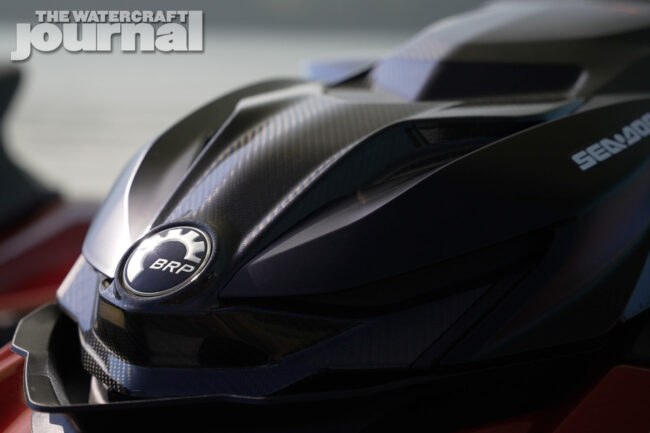
They also integrated damn near ever single thing that made last year’s mid-production APEX so snazzy – namely the carbon fiber hood and hydraulically-dampered adjustable steering. But that’s all stuff we’ve seen before.
No, the changes from then to now are there – and they’re BIG DEALS – but they’re kinda lying under the surface. Most folks wouldn’t see ’em or even appreciate them for what they are. Hell, even after watching this video with me listing every single upgrade and change most folks will just go uhh, Sea-Doo just upped the horsepower.
No, Sea-Doo seriously raised the bar for performance by producing an engine that you’d expect to get custom made for you from a shop like RIVA Racing’s skunkworks or Gyrogy Khaza. First, the 1630 ACE 325 is much more – like so much more – than just a hopped-up tune. Nearly every major hard part was revised, redesigned or improved.
The cylinder block itself has been redesigned. Bosses are recast thicker, adding material to common stress points and webbing. Rotax added an additional piston oiling jet on the exhaust side, cooling down cylinder temps.
The connecting rods have stronger hardware because the pistons have been redesigned with tilted piston ring grooves and deeper valve pockets. They’re also DLC coated for better durability. Y’know who also uses DLC coated pistons? NASCAR and top fuel drag racers.
Even the crank has an improved press-fit for the gear so it can handle all of the new torque band this thing produces.
See, the biggest issue with the previous 300-horsepower engines was the heat produced by the supercharger. As RPMs sped up, air intake temperatures rose. Higher intake temperatures means less boost and that means diminishing power as engines speeds climbed.
So Rotax dumped the conventional supercharger and started over with a clean sheet of paper. According to Rotax’s Project Manager Norbert Schofbanker, they don’t even like to call it a supercharger anymore. And it’s certainly not a turbo, so what is it? They prefer to simply call it a compressor.
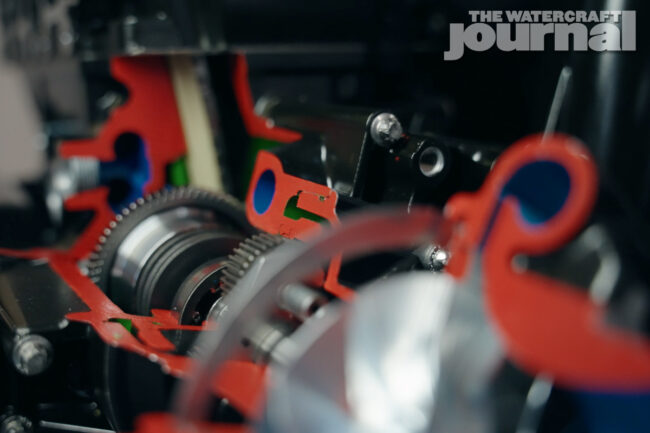
As the crankshaft spins at the new peak redline of 8,250rpm (which is 250rpm above the previous 300 ACE’s redline), the lightweight hollow gear applies pressure to the three spring washers engaging the mechanical positive clutch – interlocking the two keyed jaws providing zero slippage and continual, unbroken force.
With the output shaft engaged, the positive clutch (or what some call a “jaw clutch”) spins an all-new planetary gear that spools up the smaller, more aggressive impeller to a blistering near 100,000 rpm – or one-and-a-quarter times faster than the previous 300 ACE engine.
Not only is the impeller spinning over twice as fast, but it’s doing so more efficiently and without super-heating the intake charge. In fact, it’s almost 40% cooler. Heck, it’s sooo good at building cool, dense boost that Rotax just left the intercooler alone. Yup. It’s the same as last year.
Moving at those speeds, the planetary gear gets its own oiling jet. Additionally, Rotax upped the valvetrain to handle the load with new forged rocker arms, rocker shaft and heavy duty springs and tapered retainers – again, all stuff you’d expect to see on custom-built engines, not stock stuff.
But a couple of things needed to be improved to handle what the new 1630 ACE 325 is putting out: namely, everything else.
The air intake system is a helluva lot beefier. The intake tube diameter is so much bigger that the tube itself had to be made ovular like the exhaust of a NASCAR Cup car.
The plumbing into the supercharger includes a new blow-off valve to prevent excessive boost since there aren’t any friction clutches in the supercharger anymore; without the blow-off valve regulating boost pressures, the mechanical jaw clutches would boost the engine into oblivion.
…and the intake manifold was redesigned to be a lot stronger with added webbing so it wouldn’t split like they do with a lot of you hot rodders making extra boost.
The 325 requires waaay better fuel management so it gets a new varying pressure fuel pump as well as a heftier fuel rail and connectors.
Lastly, Rotax employed its new BOSCH engine control module – the same one used on the turbocharged Maverick side-by-sides – to operate this beast. The new ECU also uses an all-new wiring harness that even includes an O2 for live air fuel data – the single-most overdue performance addition to a stock PWC since forever.
That required Sea-Doo to cast a new exhaust manifold with a permanent bung for the O2 sensor, so no more clunky aftermarket couplers for this bad boy.
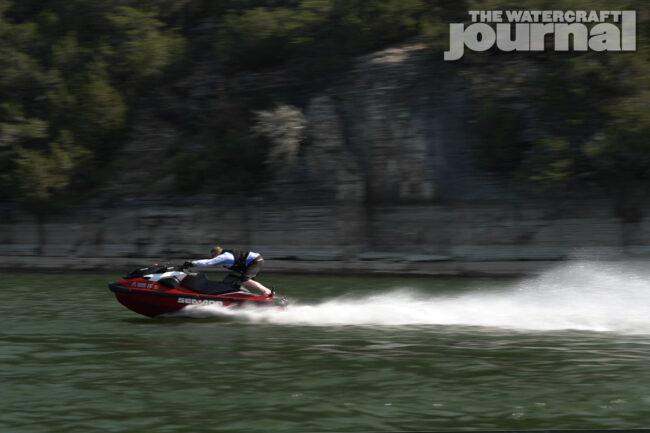
Again, it bears belaboring this point: this engine is so damn overbuilt for the stock enthusiast, it’s bonkers. In our testing, we were hitting the speed limiter at 7,600rpm before backing down from 70 miles per hour. If redline is 8,250 and we’re bouncing off of 70 at 600 rpm below that, this ski without a speed controller will hit 75 miles per hour without breathing hard.
And yeah, we’ve already received confirmation of unrestricted 325’s hitting 78 miles per hour without moving the new redline. But, like I said, the speed limiter is still there so unless you’re looking at voiding the snot out of your warranty, you’re just gonna enjoy getting to that speed a lot quicker.
How quick, you ask? The previous RXP-X 300 hit 0-to-60 in 3.6-seconds. The new 325 does it in 3.4-seconds, two tenths of a second faster, or in drag racing jargon, a little less than two car lengths.
When playing with launch control mode, you’ll feel it. The new ECU does a good job of not cavitating the snot out of polished 13/18 impeller. It comes on smooth and just pulls.
No, seriously. This thing pulls and pulls like you wouldn’t believe. Most folks won’t be able to feel two tenths of a second difference, but I sure as hell did. This thing will stretch your arms out of their sockets if you’re not paying attention. And yeah, that’s pretty cool but it’s the mid-range that needs to be addressed here:
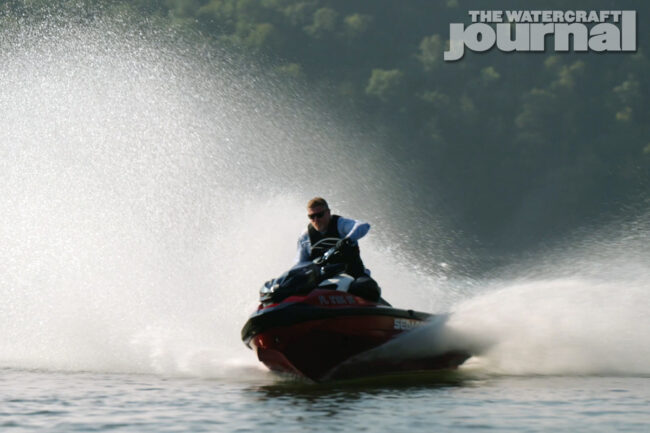
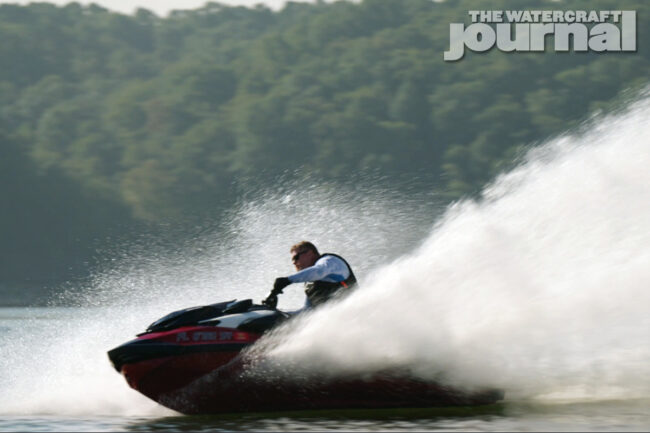
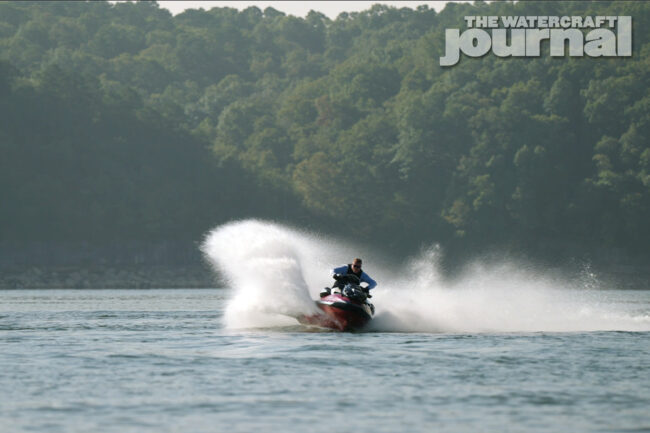
The one thing that puts the 325 above the 300 is how ungodly hard the ski comes on when you clamp the throttle open while cruising at 35-40 miles per hour. You’re just cruising alongside your pals and BAM! you’re at 70. It’s so fast it’s kinda stupid. Like, you’re cruising at 40 aaand now your at 70. It’s that quick.
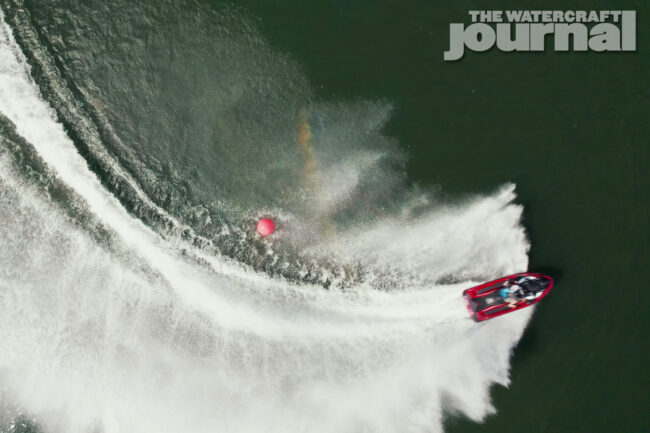
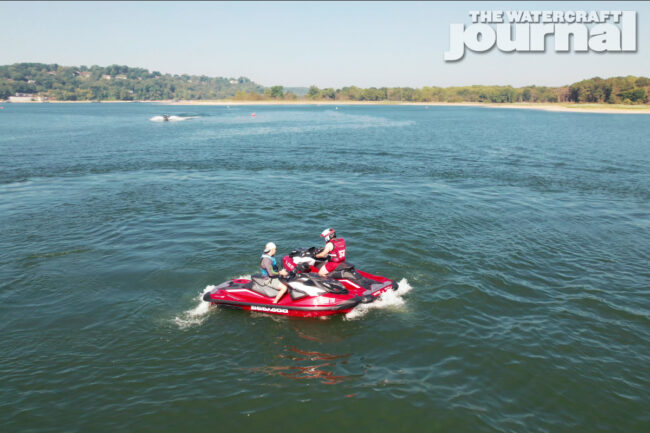
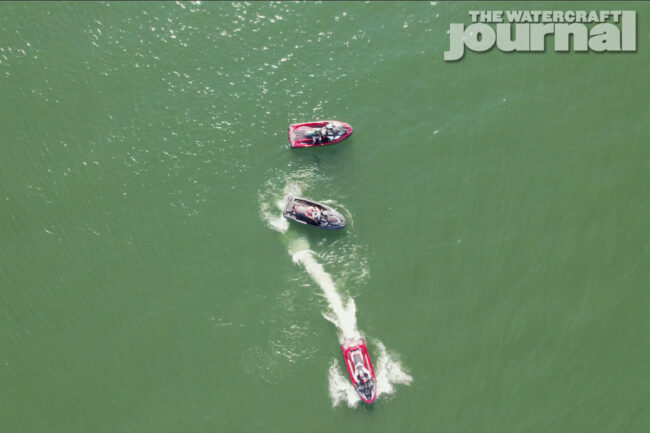
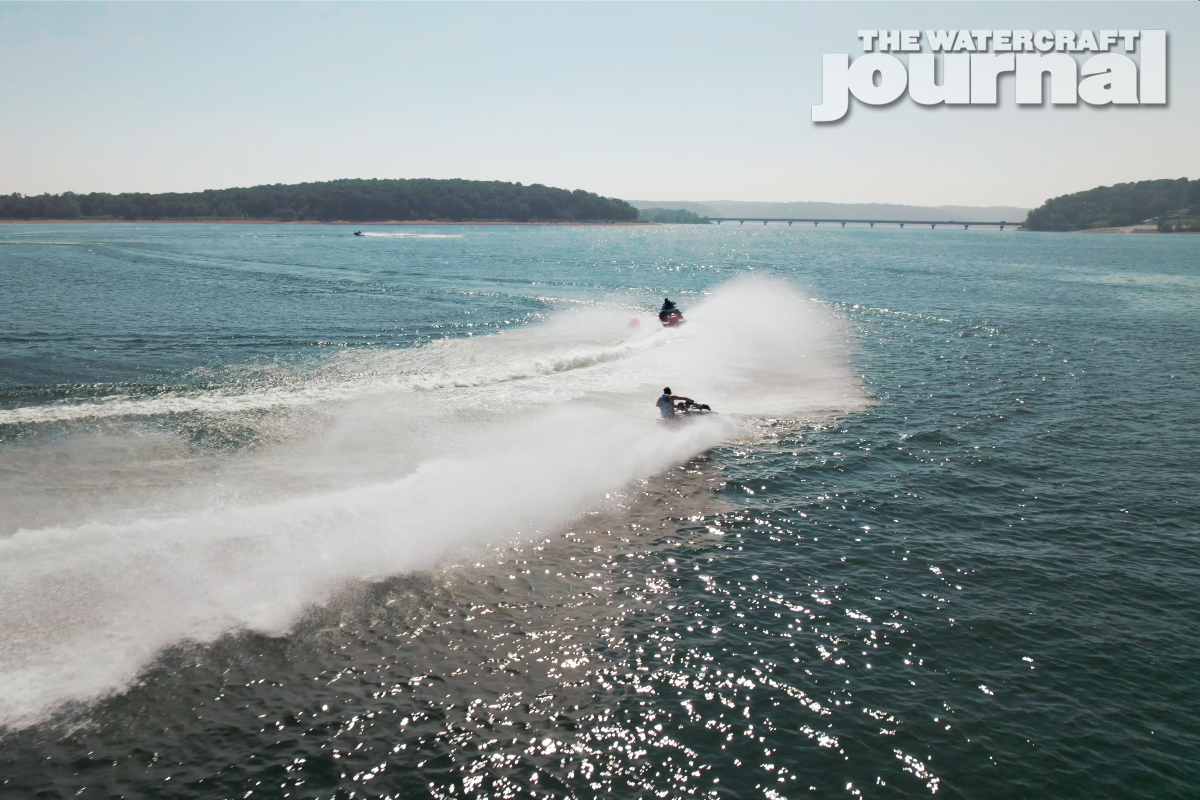
Now, you know me. I like to break stuff and the RXP-X 325 just wouldn’t let me. We had set up a buoy course to see how it pulled out of a hairpin. I mean, I already know how well the T3R hull corners in the soup – I’ve racked up plenty of seat time on it – but how well can it carry you out of a corner was what I wanted to know.
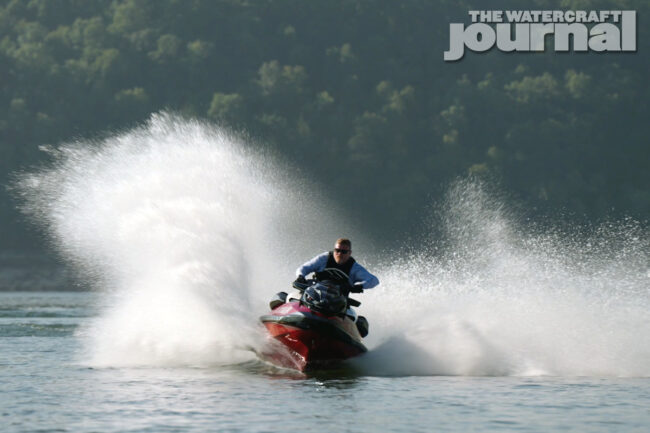
Without fail, the 325 stayed spooled. There was zero – and I mean ZE-ROH – surging. The power curve was linear, always on and fully charged. Corner after corner after corner after corner, the stinkin’ thing never faded or heat soaked.
With the old 300’s you could kinda feel it after a while. Not so with the 325. This thing was pulling like a big block buried in the red. So yeah, the 325 delivers. Like, hell yeah It delivers. But lets go over the other stuff.
You might’ve heard but the 325-horsepower engines aren’t available with iDF. If you didn’t care, don’t worry about it. But for those who were curious, the answer’s no. Also, the 325’s have a new impeller shaft that better closes up the carbon seal. Gone is the old floating C-clip and now there’s a fastening nut with a lock washer.
You still don’t want to start your ski in shallow water, run it for too long out of the water or beach it, but worries about the C-clip backing out are no longer a concern.
As a bonus, some of the upgrades made to the 1630 ACE engine – like the new starter, hose clamps, the redesigned PTO bearing, and new seal for the water pump shaft also make their way onto the other 1630 engines. Even the revised pistons, rods and valvetrain carry over. I guess BRP got a killer buy-in-bulk deal.
Moreover, changes to the fuel pump, rail and plumbing don’t effect the fuel tank. It’s still a max of 18-and-a-half gallons. Storage is the same as before too: 40-point-6 gallons, about one-and-a-half times more cargo room than the full sized RXT-X. Plus, it’s got a huge glove box with a waterproof phone case. Sorry, it’s just so much better than whatever the heck the RXT-X comes with.
As mentioned, the RXP-X comes with the hydraulically dampered steering. No, it’s not a gimmick. It totally works, and it’s one of my most favorite things that Sea-Doo has done in regards to handling and rider input in years.
The three settings are great – although every one of us who tested it wished their was a true ZERO setting. Even the number 1 setting has some resistance to it. The carbon fiber hood doesn’t shave off any weight from before: it still tips the scales at 778-pounds without oil, coolant or a battery (what they like to call “dry weight”.)
The RXP-X is available in two colors. But anyone who doesn’t pay the extra $300 bucks for the Fiery Red livery and opts for the Ice Metal and Manta Green is out of their damn minds. It’s friggin’ gorgeous in the sun. And that’s literally the only thing – besides maybe that underhood storage bag – that I would add on to the RXP-X’s listed MSRP of $19,199.
It comes standard with a 7.6-inch wide digital display that lays out everything you need to know in a tidy, organized layout. Do not – and I mean do not – equip this machine with the BRP Tech Package. I don’t care what you think you want. It’s wrong. Don’t saddle this racecraft with a bunch of extra weight you’ll never need. Let this ski be what it’s meant to be: lightweight, stripped-down and fast as $#&%.
I know most of you won’t listen to that list bit of advice, but I don’t care. Most RXP-X owners hardly ever ride half as hard as the skis they own are designed to be ran, and that’s OK.
Listen, the 2024 Sea-Doo RXP-X 325 is not just a “race ready” watercraft. That’s been said year after year since the 1990’s. What I’m saying this is a tuner’s wet dream. Once that ECU can be unlocked, you’re going to see dudes pushing speeds well into the 90’s without much more than a reflash of the computer.
This engine was designed to terrify the competition into submission. And damn if can do it. I wholly expect this machine to be the ONLY thing lining the starting lines of every race series next year. And don’t be surprised if a few YouTube personalities become nothing but Sea-Doo test and tuning channels.
Personally, if I was 10 years younger, single and far more caffeinated than I normally am, this would be my pick from Sea-Doo’s roster. No question. This ski is a weapon. Locked and loaded. So if you’re eyeing it for your next purchase, make sure you wield it responsibly.
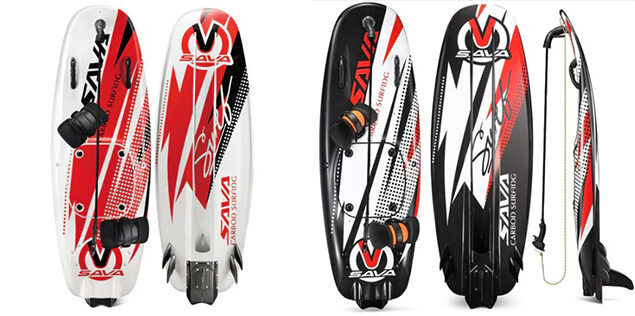
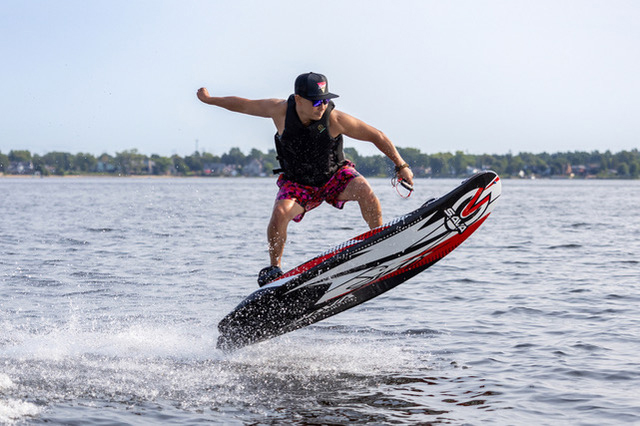
SAVA has doubled down on the surf game with the introduction of two powered surfboards for the USA and Canada markets. SAVA’s carbon fiber surfboards are available in electric and gas-powered versions. The E1-B electric surfboard has a top speed of 37 mph and can run for up to 75 minutes on a single charge.
The P1-W is powered using a 109cc two stroke gasoline engine, has a top speed of 31 mph and can run for over 90 minutes on a one-gallon tank of gas. The E1-B is scheduled to begin delivery in January, 2024 and can be pre-ordered. The release date for the P1-W has not been set.
SAVA was founded in 2003 and is known for their carbon fiber bicycles; the introduction of the P1-W and the E1-B is the company’s first entry into the personal watersports market.
Read the complete press release below.
SAVA Powered Surfboards Coming to North America: Introducing a New Thrill on the Water
September 19, 2023 — DIAN Inc., a North American importer and distributor of recreational products, is excited to announce the introduction of SAVA powered surfboards to the US and Canada.
SAVA’s carbon fiber surfboards come in both electric and gas-powered versions, offering exceptional build quality and performance at a price that’s unmatched by the competition.
The E1-B electric surfboard is powered by a 60V, 60Ah Samsung battery and a PMSM electric motor. It has a top speed of 37 mph (60 km/h) and can run for up to 75 minutes on a single charge. Charging is easy and takes less than 2 hours via a standard home outlet. Removable fins and adjustable foot bindings allow each user to customize the riding experience.
The P1-W gas-powered board utilizes a 109 cc, two-stroke engine making 8.5 hp. It has a top speed of 31 mph (50 km/h) and can run for over 90 minutes on a one-gallon tank of gas.
Both boards are constructed from 3K carbon fiber for maximum strength, minimum weight and smooth performance on the water. SAVA boards feature a sleek, modern design with robust quality at an unbeatable cost: MSRP is just $7,499 USD for the electric model and $4,999 USD for the gas version.
For a limited time, interested customers in the US & Canada can pre-order the SAVA E1-B electric surfboard to be among the first to own this exciting new watersports product. Visit www.savausa.com to place your $100 deposit today and receive a free roller bag with delivery ($200 value); deliveries will begin in January of 2024. (The release date of the P1-W gas board has yet to be determined.)
Founded in 2003, SAVA is recognized internationally as a manufacturer of exceptional carbon fiber bicycles at budget-friendly prices. Now sold in more than 50 countries worldwide, the SAVA brand has become synonymous with quality, reliability and innovation. With a commitment to excellence and a passion for sporting activities, SAVA is poised to continue its upward trajectory as it enters the world of personal watersports products.
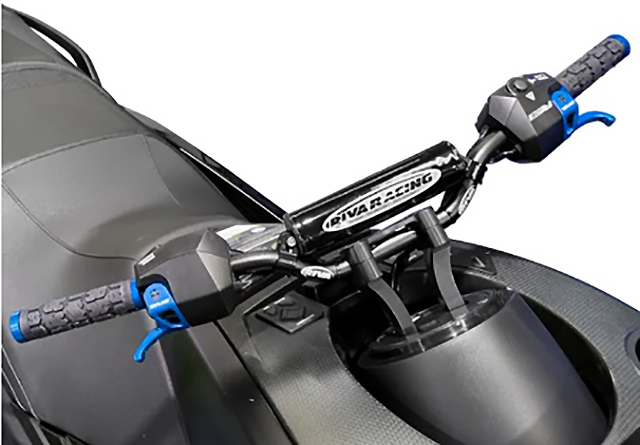
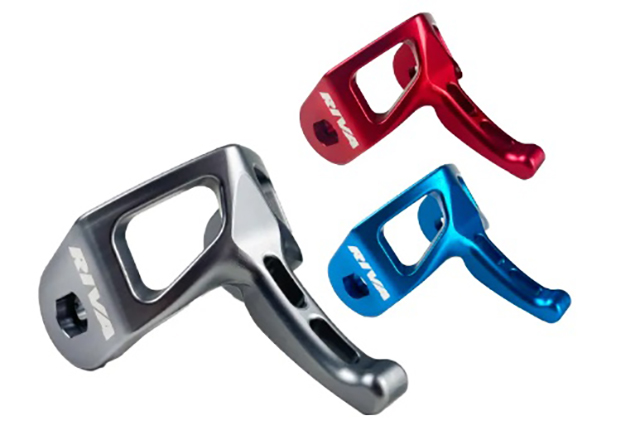
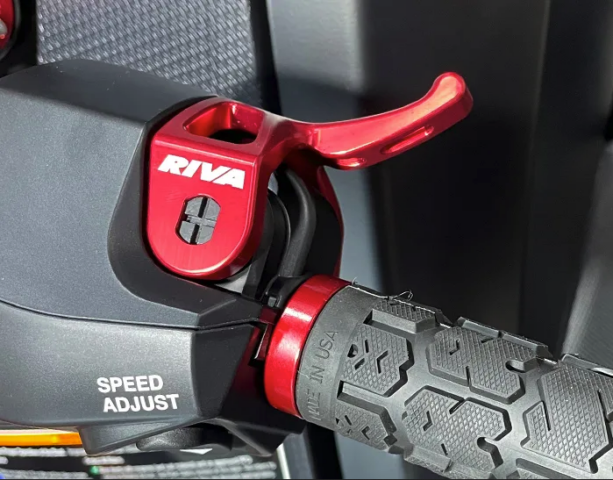
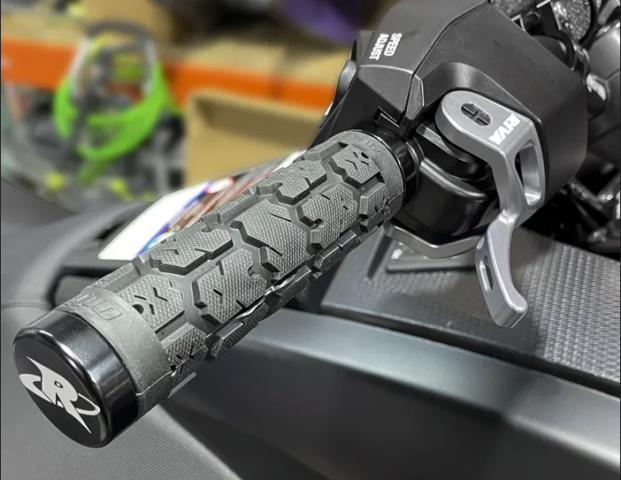
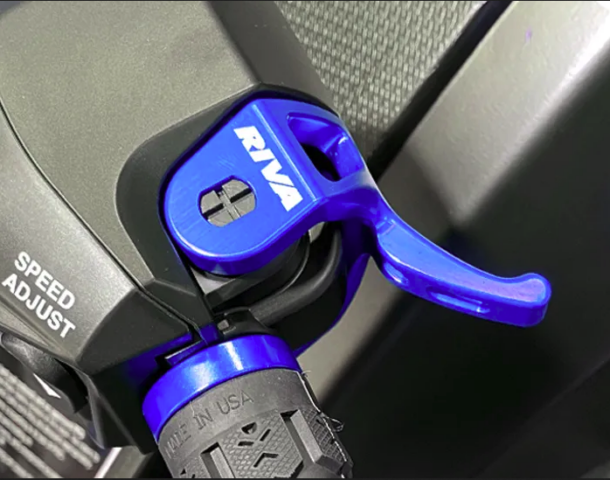
Are you looking to tighten up the throttle feel on your Yamaha RIDE triggers or just want to add a little bit of cool customization to your WaveRunner? RIVA Racing has posted up a trio of billet control levers for Yamaha WaveRunners that will improve your trigger-pull angle and be much stronger than the factory plastic.
The levers, specced for all 2021 or newer GP models, most 2021 and newer VX models, and 2022 and newer FX models, feature an anodized coating that prevents corrosion and provides a choice of blue, red or gunmetal gray to coordinate with your graphics, all for under $260.
Designed to directly replace plastic OEM levers, these throttle and brake/reverse levers are high-quality, CNC machined from billet aluminum to provide superior control while offering comfort and cutting edge race styling. Visit RIVA Racing for more information.







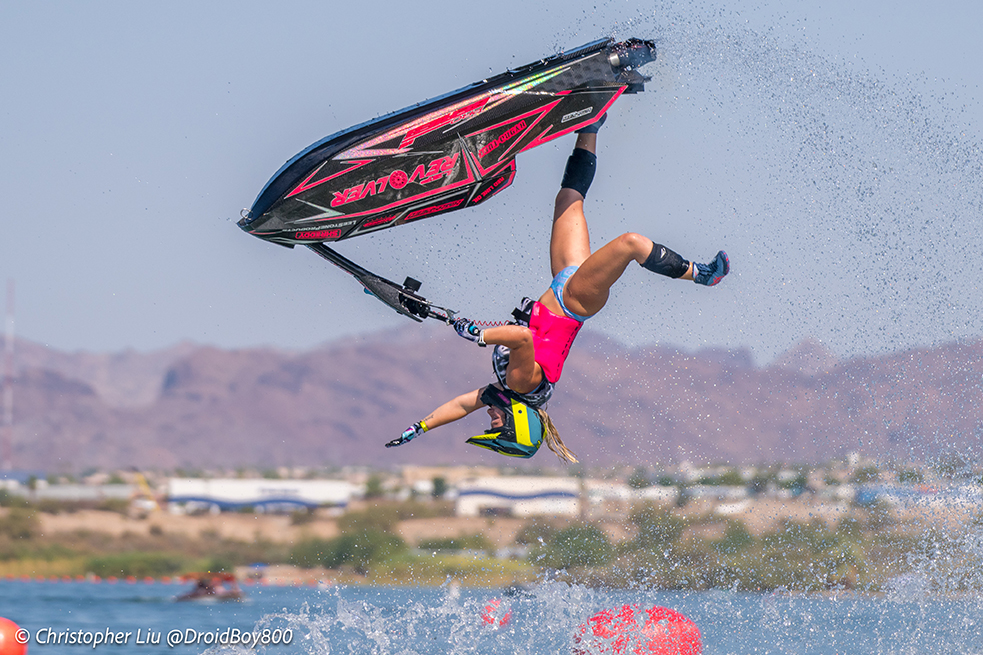
 In addition to the annual fierce competition between the world’s best watercross athletes, competitors and spectators at this year’s IJSBA World Finals in Lake Havasu City also witnessed history being made as Demi Morgan was named the first female World Champion in Freestyle, besting a field of nearly a dozen competitors.