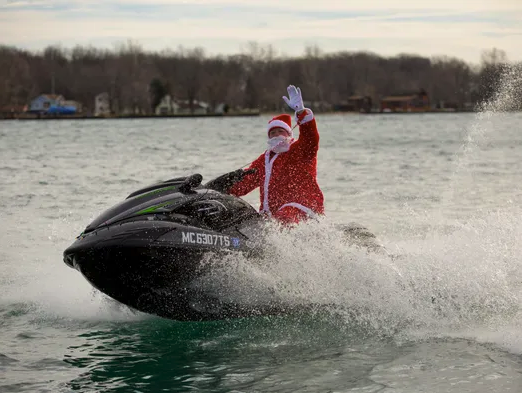
If cold weather has you down, the annual Daytona Freeride is a sure cure. Each year, the Daytona Freeride draws surf riders and spectators from across the country for one of the most anticipated freeride events of the year.
The Daytona Freeride is not ALL fun and games, though. On top of being one of, if not the largest jetski freeride events in the world, the event will also once again serve as a major fundraiser to benefit the Roswell Park Comprehensive Cancer Center.
Last year, the Daytona Freeride pulled in more than $35,000 for cancer research and patient care programs, and this year, they’re aiming for $50,000.
Rider registration went live in mid-October for the 2024 event, with title sponsor Hydro-Turf, and 100 percent of the registration fees are going directly to the fundraiser, according to event organizer Brian Sizemore, owner of Torrent Pumps.
Sizemore posted on social media last month about the fundraiser and the registration fees, saying “There were some questions on how much of registration goes to the cancer research facility.100% of registrations goes direct to cancer research. As you all may or may not know, I’m now in remission. If it weren’t for places like Roswell doing research, I would not be here today.”
Daytona Freeride founder Nick Foederer added, “I’m honored to be associated with such an amazing group of people. Roswell has a top notch staff and facility. They are bringing cutting edge medical and emotional support for the family’s fighting the good fight. It could be you or one of your loved ones going through this. It’s great to know there are organizations out there that really care. Roswell Park are the good guys and without them and groups like them, we would be losing a lot more friends and family to this terrible disease.”
To add to the pot, Daytona Beach Hardrock Hotel is donating a portion of all room bookings that were completed by Nov. 30 to the fundraiser.
But wait, that’s not all! Yesterday, the Daytona Freeride fundraiser’s online auction went live, with Buffalo Bills merchandise and Full Spectrum 49mm carburetors.
Additional items have been donated to be raffled off at the event, and Sizemore is asking that individuals, companies and organizations consider contributing items for the raffle.
The schedule for this year’s Jan. 11-14 event includes a Saturday night Freeride Party at the Hard Rock Avalon Ballroom. See the full schedule and event details below.
Ride zone is North and South of hotel. Entry point North is University Blvd. Entry point North and South is Seabreeze Blvd. The Beach area in front of the Hard Rock Hotel is a “no drive zone” you cannot drive your vehicles through there. Registration is required, all riders must check in at the registration tent. All riders must have a wrist band and sign the insurance waiver before entering the water.
THURSDAY JAN 11TH 7AM Opening vehicles to beach. Ride boundaries are listed. 9AM – 5PM Open ride time.
FRIDAY JAN 12TH 7AM Opening vehicles to beach. 9AM – 5PM Open ride time. 8 PM-11PM Gathering of Freeriders @ Ormond Brewing
SATURDAY JAN 13TH 7AM Opening vehicles to beach. 9AM – 5PM Open ride time. 12-2PM Surf Events Tentative Cherry Buster/Sickest Air Competitions 6PM-7PM Charity Raffle in the Avalon Ballroom ground floor next to the restaurant/bar area at Hard Rock Hotel. 8 PM-10PM Sat nights Freeride Party is at the Hard Rock Avalon Ballroom, Skis inside, DJ, drinks, food will be served. Meet your old friends and make some new ones at the largest Freeride party of the year.
SUNDAY JAN 14TH 7AM Opening vehicles to beach. Ride boundaries are listed by the lifeguards. 9AM – 5PM Open ride time. This is the last day of the event, ride zone will be closed and back to the normal Volusia County ride zones. January is Ride Zone A, Ormond Beach Cardinal Ave entrance.
While not particularly a “performance” based mod, this install will save a lot of aggravation, frustration and annoyance, not to mention cutting down on the chances of you pulling away from the pump smelling like you used fuel for cologne.
Although this installation project does not require any specialized tools or knowledge, and can be completed in less than a half hour in most cases, Kawi Performance doesn’t skimp on the accuracy or thoroughness, and Steve provides not only the progression of steps to remove the filler tube, install the mod, and reassemble all parts, but adds in the extra steps that are easy to forget, especially on those “quick and easy” jobs – steps like always adding Sharpie marks to parts prior to removal to assure proper alignment on reinstallation.
Steve also takes the time to cover steps to get past the “what if” situations that always tend to arise, like .. what if the filler neck won’t come off of the adapter? (Answer – Carefully applied heat gun)
Watch along as Steve takes you through the installation of this $16.99 mod to stop fuel blowback at the pump.
Members of the extensive PWC world fit in a variety of categories – racers and recreational riders being the two main divisions, with plenty of crossover riders.
One sector that is often overlooked include those who utilize a PWC as part of their work life – either on a day-to-day or seasonal basis.
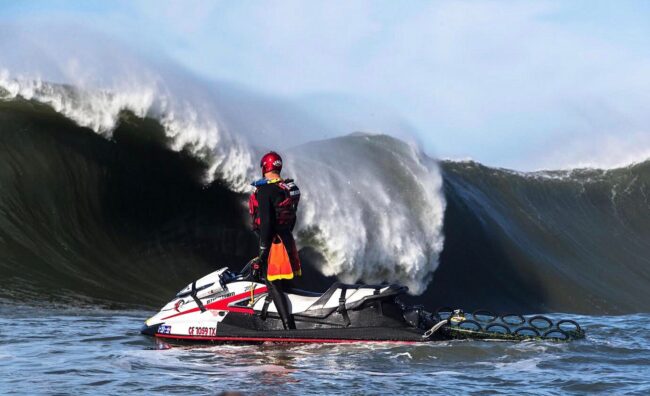
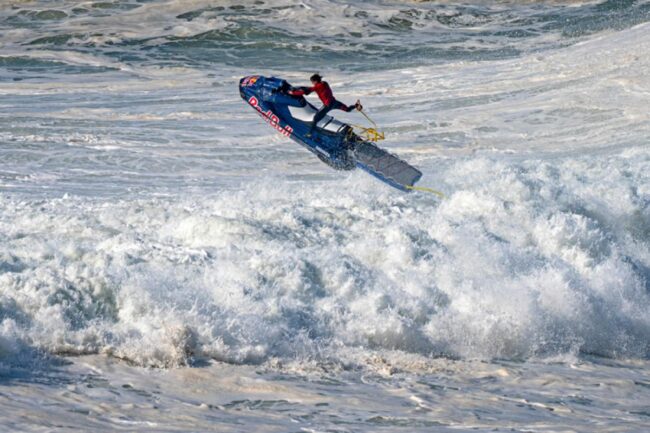
In this category, one of the uses that puts the most demand not only on the PWC operators, but the machine itself, is surfer rescue work. Yamaha has even worked specifically with rescue teams to modify and outfit a WaveRunner XL700 to be used as a rescue PWC.
SurferToday.com explained the practice of using PWC and rescue sleds to retrieve surfers in danger, saying “Jet ski drivers may use their knowledge of surfing and wave patterns to anticipate the movement of incoming waves and position the PWC in a way that allows them to effectively rescue the surfer without being hit by the waves.”
Credit: SurferToday.com
Countless YouTube videos show daring rescues accomplished by the rescuers on PWC – and the dangers to the rescuers. SurferToday.com states, “PWC pilots must have the necessary training and experience to operate the jet ski safely and be aware of their own abilities and the potential risks of the rescue situation.”
An article on OZPWC about Big Wave Rescue Teams talked about the work and skill necessary to be a rescue ski operator and quoted Maverick’s Rescue Team member Drake Stanley – a familiar name and face to many in the PWC race world as a long-time course marshal – as saying “As I tell people, a pro surfer doesn’t make a first responder and a first responder doesn’t know the ocean like a pro surfer, so it really takes somebody that has both that background of understanding ocean dynamics, and then having the medical licenses on top of that to be able to do the job the right way.”
Companies such as Intrepid, in California, offer rescue-specific PWC courses, where “During the course, students learn the fundamentals of hydrology and how it relates to PWC operation, design, and construction of the vessel. Other skills covered are pre-trip, post trip operation and maintenance of PWC, SAR theory and techniques utilizing the PWC, self-rescue and victim recovery strategy and techniques.” Similar international courses are offered by organizations such as the UK’s Marine Education.
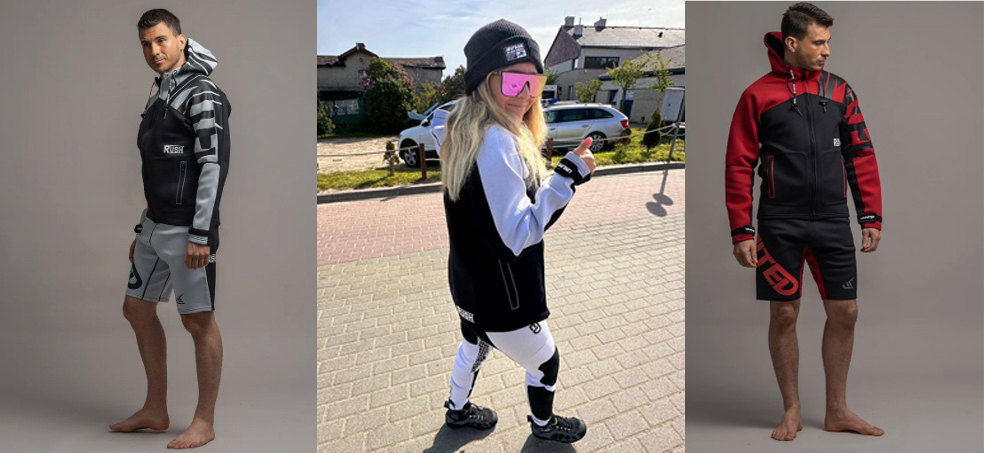
Unlimited has got fashion and function all zipped up – literally
Their latest release competition coat is designed to provide warmth for autumn and winter riding, without sacrificing freedom of movement. Unlimited describes the stylish tour coat as “fashionable and full of commitment to quality.”
Made of 2.5mm flex chloroprene and designed to be closer-fitting than standard tour coats, the Unlimited Rush competition coat features a number of design details that set it apart from the crowd.
A velcro wrist closure keeps the coat from interfering with acceleration, and a high neck to cut down on the wind chill, especially when combined with use of the integrated hood with a drawstring for even better protection.
Despite the trimmer silhouette and more fitted style, the Rush coat is designed specifically for combined use with a wetsuit to keep the chill at bay for those off-season rides.
The Rush coat, priced at $148, comes in sizes from small to extra large in ash white, black or red – and is perfect for all the guys and gals on your Christmas list. You can also check out Unlimited’s lineup of riding gear to round out your Christmas wish list.
See full ad below:
A new type marine coat that is fashionable and full of commitment to quality. We recommend using it with a wet suit in autumn and winter. UNLIMITED -RUSH- -feature- It has a tighter body line than traditional tour coats and does not restrict movement on the water at all. The wrist is smart with a Velcro closure that won’t interfere with your accelerator work. ・2.5mm flex chloroprene ・The high stand neck firmly guards against the entry of wind from the neck. – The hood and integrated collar further enhance cold protection. ・Velcro list closure (Velcro type) -Finished with just the right length to cover your lower back when you sit down and not feel stiff even without the center vent. -Separately sold setup product- ・RUSH WETSUITS JHON – wet suit John – (item number UWJ2210) ・RUSH WET PANTS -wet pants- (item number UWP2220) ・RUSH WET JACKET-Wet jacket-(item number UWA2230BK) Can be worn in combination with the above products. Size / S-XL
Holiday savings are still in full swing at Greenhulk PWC Performance store, where you can not only get some of the most innovative and trusted performance PWC parts, but stock up on accessories, apparel, riding gear, hull components and even maintenance tools, chemicals and service manuals.
Whether you’re scrambling for a last-minute gift for the PWC rider or racer in your life (even if that’s yourself) or you’re working on off-season projects and enhancements, or simply need to stock up on the basics for next spring, GreenHulk has you covered, and they’re running special holiday deals all the way through December 31st!
This is no bargain-bin, holiday panic shopping scramble though; as always, GreenHulk puts quality first, even when offering huge savings.
How about those WORX Racing or Riva Racing products you’ve been wanting? GreenHulk’s going to save you up to 15% off the listed price on just about any of them, just by typing in the coupon code greenhulk at checkout. And to make it even easier, they’ve got Maptuner products, Fizzle Racing inventory and Riva staged performance kits at up to a 15 percent savings, no coupon code needed – even if your last minute Christmas shopping spills over to pre-New Year’s shopping!
Here’s the original announcement:
All WORX Racing products are featuring up to 15% off the listed price, and most Riva Racing products will net you the same discount when you use the coupon code greenhulk at checkout.
Looking to give your PWC that extra edge in performance and speed? Now’s the perfect time as we are offering big savings on top-quality performance parts & accessories!!
The Holidays are here, which means you are looking for deals!
We are now offering Up to 15% retail discount off the listed price of MOST Riva Racing and ALL WORX Racing Products by using coupon code greenhulk. We also offer Maptuner products, Fizzle Racing, and Riva staged performance kits at up to 15% off retail with no coupon code needed for these items.
Nov 21st 2023 to Dec 31st 2023.
This promotion may not be combined with any other offers.
Not refundable, exchangeable or transferable.
In stock items only.
So folks… Ready Set SHOP NOW!”
Remember – It’s not JUST about more power; it’s also getting those gains without breaking the bank.” Let’s rev things up together!!!#GreenHulk
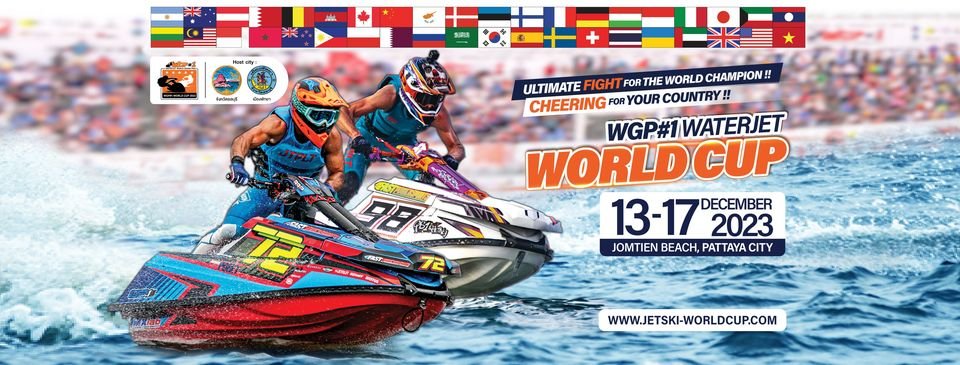
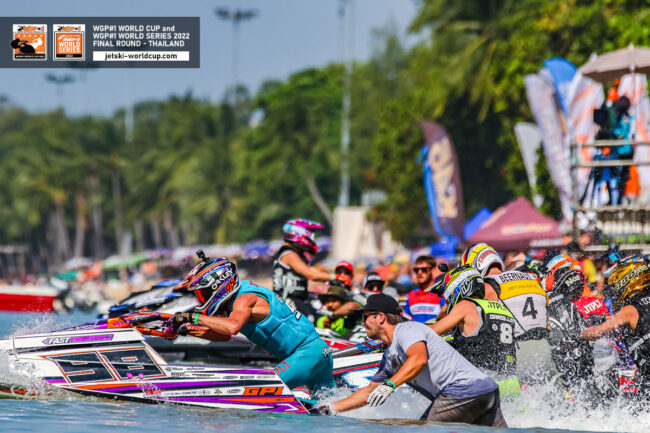
They may be far from home, but U.S. racers getting ready to hit the WGP#1 Waterjet World Cup start line in Thailand are far from unknown.
With Amateur championship races set for today and tomorrow (Dec. 13-14) and Pro championship races running Friday through Sunday (Dec. 15-17), race officials have posted the latest official riders list, and it includes ten US racers.
The Ski Grand Prix class’ lineup of 20 includes four US racers – Jonathan Phan (Kawasaki-Hotproducts), Deven Farthing (Farthing Racing), Sebastien Girello (GoFast US) and Jimmy Wilson (Team Kawasaki). Competitors include Kevin Reiterer (Austria/Flamingo Racing), Quinten Bossche (Belgium/QB1 Racing), Raphael Maurin (France), Mickael Poret (France/77 Racing), Jeremy Poret (France), and Toshi “Samurai” Ohara.
In Pro Sport GP, a lineup of 11 pits UK racers James Bushell (158 Racing) and Simon Belcher (Handy Motorsports) against a field of Thailand racers, including Freedom Racing’s Teerapat Meechai and Supuk Settura.
In Pro Runabout 1100 Open, multi-time champion Saly Ou Moeut (Cambodia/Flamingo Jet Ski Team) faces a field of 9 with a heavy Thailand representation, including Meechai and Suphathat Footrakul (K45 Maxima Yamaha Team)
In Pro Runabout GP, U.S’s Dustin Farthing (Farthing Racing), faces a lineup of 23 world-class racers including Rasmus Koch Hansen (Denmark/Lindbergh Racing), France’s Easy Rider teammates Francois Medori and Jeremy Perez, Hungary’s Gyorgy Kasza, Kuwait’s Rashed Aldawas and Mohammad Burbayea, and Bushell.
Demi Morgan
In Pro Freestyle, U.S. rising star Demi Morgan (High Speed Industries), who nailed down a amateur freestyle world championship in Havasu this year, is the sole female entry against a field of eight competitors, including Japan’s Bunn Freestyle teammates Taiji Yamamoto, Yuhi Iwaizako and Norio Fukuda.
Anthony Radetic
In the Pro Am Endurance Open, the field of 36 includes two U.S. entries, Anthony Radetic (USA Sea-Doo) and Tory Snyder (Snyder Built). The crowded and challenging lineup includes Jean Bruno Pastorello (France/Pastorello Competition Kawasaki), who just took the Aquabike Endurance World Championship at Lake Toba with 154 points, edging out Radetic with 149. Aldawas, who took 3rd at the Aquabike Endurance Championship, is not competing in this class in Thailand, but top named racers such as Guy Greenland (Australia/GeeRacing), Kylie Elmers (New Zealand/Flamingo), Ou Moeut, Footrakul, and Oraphan Teerapatpanich (Thailand/Pusan Sea Doo Jet Ski Team) are entered in the class.
In ProAm Womens Ski Grand Prix, U.S. racer River Varner (GoFast US) takes on a field of five, including Emma Nellie Ortendahl (Sweden).
U.S.’s Tory Snyder will line up again, this time for the ProAm Runabout Stock class, racing against a line of 14 that includes Medori, Abdullah Al Fahel (Kuwait/Deans Team), and Waleed Alsharshani (Qatar/Qatar Jet Ski Team).
In the Junior divisions, the sole entry listed for the US is Andrew Huy Vo (Flaming, Jettribe), competing in the Junior 14-15 Ski 4-Stroke Lites class.
While all of the hoopla has been around the all-new Sea-Doo 325’s, the reality is that we’ve got seven solid years of the Sea-Doo 300 ACE engine – and it’s still going! Although BRP said that eventually the 325 will supersede the 300 eventually, it’s still alive and well and certainly worth taking a good hard look at if you’re in the market to build up a potent performance machine.
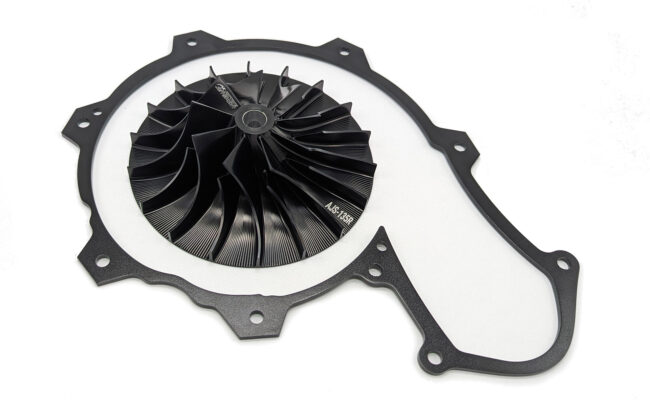
And you’re not alone! Active Jet Sports just revealed its comprehensive Sea-Doo 300 AJS-135R 19 PSI Supercharger Impeller Kit for all 2016-and-newer Sea-Doo 300’s. The kit requires zero modification to your factory supercharger housing; just drop in the new impeller wheel and insert the housing spacer (with longer dowel pins included), and be ready to press out an impressive 19psi at 8,800rpm.
Here are the details from the listing: Delivering an amazing 19 PSI of boost in the 8800 RPM range, our AJS-135R Sea-Doo 300 drop-in impeller will take your Sea-Doo to the next level. If you’re after the most boost without modifying the housing, this supercharger is for you!
Precision machined from aerospace grade 7075 aluminum alloy, perfectly balanced and anodized in black, the quality of AJS-135R is second to none. The complete kit comes with housing spacer and longer dowel pins for proper housing alignment.
The impeller is meant to fit tight on the shaft and may require heating in order to fit the tight clearances. Using a heat gun, do not use open flame torch, heat the impeller around the shaft opening for 30-60 seconds and slide it down the shaft.
Slip: Target slip is 19 ft-lb, since this is a large boost wheel it may be required to verify, and reset, the slip after first couple heat cycles.
Yamaha WaveRunner has finally fixed the long-standing issue of faulty low-fuel warning buzzers and fuel consumption trip meters that reset every time the craft is switched off.
The fix – which is a simple 30 minute software upgrade at the dealership and free of charge under warranty – is already being rolled out Down Under, in Australia, and is expected to be available in the US any day now.
Judging by the outpouring of frustration on social media, it appears Yamaha Corporate has underestimated just how many customers were affected – and how upset they were.
There are at least several thousand affected models in Australia and the US and anywhere else the craft is sold.
A legal Class Action was launched against Yamaha in the US earlier this year given the company’s inaction on the issue in the two years since the affected models were released to the public.
As reported by an in-depth article on on the issued published on Dec. 7 by our friends at Watercraft Zone in Australia, the problems arose when Yamaha WaveRunner introduced new 5-inch and 7-inch touchscreens to 2022 and 2023 versions of the flagship FX HO and FX SVHO model series.
Two faults combined to make it almost impossible for riders to accurately measure just how much fuel they were using.
The low-fuel buzzer would trigger early even though there was more than half a tank remaining, and the precise “fuel used” trip meter (which showed exactly how many liters had been used, right down to the decimal place) would wipe its data as soon as the engine was shut down.
It meant that riders who stopped for a break or pulled up at a beach would lose their most accurate fuel-use data during a day-long ride.
However, in a frustrating twist, if riders continued to ignore the low-fuel warning buzzer knowing it was a false alarm, there was a genuine risk they could end up stranded and out of fuel a long way from wherever they launched.
The situation was so frustrating, some customers disabled their low-fuel warning buzzers. However this also muted the buzzer for other critical warnings on the craft.
It is unclear what Yamaha’s fix means for the Class Action that has been launched in the US.
However, there is still a lot of pent-up frustration from Yamaha WaveRunner fans, if the comments on social media are any indication.
The general consensus from affected Yamaha WaveRunner owners is that they’re glad there is finally a fix, but are dismayed that it took the company so long to address the issue – after Yamaha initially refuted there was a problem.
Yamaha dealers in Australia have been given instructions and the software update – which does not require a replacement display screen – and the same service action is expected to apply in the US.
The faults affect 2022 and 2023 versions of the non-supercharged Yamaha FX HO and supercharged Yamaha FX SVHO model series.
Earlier versions (2019 to 2021) have a different dash and are unaffected by this fault, though they are known to have a separate problem of the display fritzing out and not working altogether.
Yamaha dealers have been advised the new 2024 versions of the Yamaha FX HO and Yamaha FX SVHO will be delivered with the software update already installed.
Love jet skis? Enjoy writing? Want some spending dough?
If you answered yes to all three of those questions, The Watercraft Journal wants to talk with you.
Heck, if you answered yes to even one of those questions, and would like the opportunity to explore the other two, we’d still love to talk with you.
The Watercraft Journal has no plans to deviate from its industry-leading daily (Monday-through-Friday) publishing schedule, and because of that, I am actively seeking self-motivated, dedicated freelancer writer(s) and/or PWC enthusiasts to inform, advise and even entertain our ever-growing readership.
Ideally, WCJ freelancers will have a strong interest in the personal watercraft (PWC) industry on either the racing or the recreational side (or both), and a familiarity with the terminology, technology and players, but writers that can pick up quickly on the details and culture of the PWC community are encouraged to apply.
Likewise, WCJ freelance writers should be knowledgeable writers, with the ability to turn a phrase, the understanding of journalistic principles and practices, and strong self-editing and proofing skills. However, racers (and families and crew members), fans, recreational riders and industry experts with the ability to follow through on assignments and an interest in learning the art and craft of writing are also strongly encouraged to apply.
Freelance writers are 1099 subcontractors and will be paid twice a month per a predetermined scale for each written article. Workload is flexible depending on your schedule, but commitment to completing accepted assignments on deadline is essential.
For more information, please send an introductory cover letter and a resume to [email protected].
You’d think if we took this list more seriously that we’d have it to you months before Christmas, but alas here we are and here’s The Watercraft Journal’s annual Top 10 Christmas Gifts for Jet Skiers. And yes, you can be the very person that you’re shopping for if you so wish. Our Christmas Gift Guide also serves as a big of an acknowledgement for superior accessories, equipment and add-ons that were announced and/or released to the public this year, so please take that in mind as you read.
This year you’ll notice that a great deal of our suggested items lean more on the technical side of things. Often we toss in the occasional bit of apparel or whiz-bang gadgetry – and those are certainly here as well – but as today’s personal watercraft ever become more and more advanced, eking the very most performance from your machine requires greater technical acumen. So with that in mind, we’ve got several easy-to-operate hand-held tuners and mechanical upgrades to really ramp up your enjoyment.
RIVA Racing MapTuner NANO – $254.96
Being the industry’s dominant resource for all things performance personal watercraft takes innovation and a lot of risk, and RIVA Racing wowed the aftermarket earlier this year with the introduction of its MapTuner NANO. Paired with RIVA’s entirely-free-to-download “My Maptuner” smartphone app for all Android or Apple devices, all of the functionality of the MaptunerX is now available through your phone (besides RIVA’s Dealer Service App) – saving customers literally hundreds of dollars.
For Sea-Doo applications, the NANO plugs in directly to your existing diagnostic port and immediately works as a SCOM. For Yamaha or Kawasaki applications, you’ll need a designated HDMI harness. Once paired to the My Maptuner app (downloaded to your Android or iOS phone) via Bluetooth, you can reflash, tune, monitor and clear fault codes through your phone on the fly. By purchasing a license for the vehicle that you want to program, the NANO gains access to RIVA’s massive Tuning Library.
Unlocking the potential within your personal watercraft has never been easier, more affordable or clearly navigated than with RIVA Racing. The possibilities of unlocking the most potential from your modern PWC just made a quantum leap forward and you get to benefit from years (and millions of dollars’ worth) of development and effort. Check out RIVA Racing’s new Maptuner page today to learn more about this amazing breakthrough.
The Watercraft Journal’s Long Sleeve Riding Jersey – $40-45 The Watercraft Journal teamed up with Windrider to custom-design what we believe is the single-best riding jersey possible. Every WCJ Long Sleeve Riding Jersey is made using Helios material proven to provide UPF 50+ protection, stellar stain resistance and most importantly, superior water wicking and breathability. Each shirt features durable mesh lining the inside length of the torso all the way down the sleeve to the elbow for maximum ventilation even while wearing a life vest!
The WCJ Long Sleeve Riding Jersey is cut slightly larger than typical shirts including a longer cut torso. This means your jersey won’t ride up your lower back while you’re riding at speed for no unsightly sunburns! Priced at $40-$45 USD each (depending upon size), the WCJ jersey is far more affordable than other riding shirts and with a demonstrably shorter turnaround. So equip yourself with the best riding jersey on the market by visiting The Watercraft Journal store HERE.
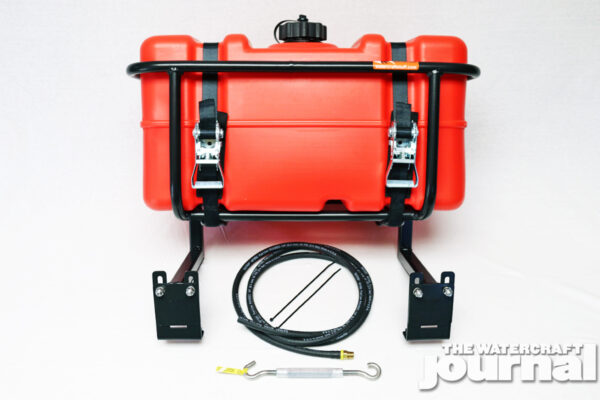
The Watercraft Journal’sLong Hauler Auxiliary Fuel System Kit – $795
Inflation really sucks, and frankly we hated to do it but our prices had to climb again this year as the cost of producing this package increased by 30% from 2022. That meant that not only has the price of The Watercraft Journal’s Long Hauler Auxiliary Fuel System Kit increased but it’s also our final run of this stellar product. We’ve got FIVE kits left, so if you want to increase your PWC’s fuel range by upwards of 85-percent (depending on model), now is your chance.
Engineered so that the least mechanically-savvy could install it, installation requires zero permanent modifications and is 100% reversible. Designed for all 2004-up 4-stroke Kawasaki and Yamaha runabouts, as well as all 2003-2011 Sea-Doos; the kit consists of a special-designed stainless steel, powder coated rack with an adjustable base; a stainless steel turnbuckle; a USCG-certified 12-gallon auxiliary fuel tank featuring a ventilated locking gas cap, internal pickup and fuel level gauge; two ratchet straps; and a 10-feet of 50psi-rated fuel line fitted with a brass 5/16-inch hose barb.
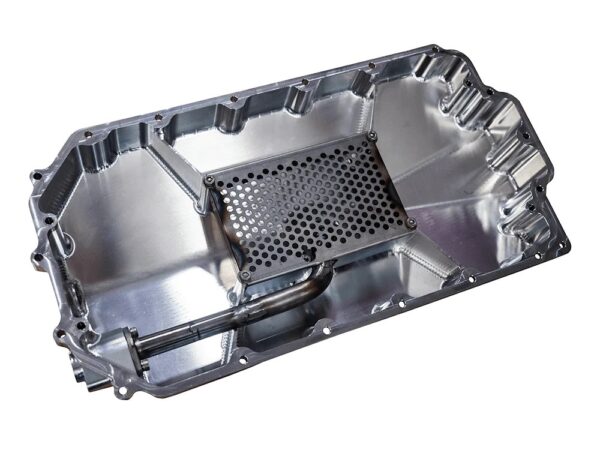
FuelTech Billet Oil Pan for All 1.8L and 1.9L Yamahas – $1,699
What we might consider the single-most significant modification one could make to ensure the longevity of their 1.8L and 1.9L Yamaha 4-cylinder four-stroke engine, FuelTech’s Billet Oil Pan resolves possibly the most damaging component – poor oiling. FuelTech’s Anderson Dick discovered serious fluctuations in the SVHO’s oil pressure, a result of severe oil cavitation. Without a consistent oil supply, the engine starves sensitive areas – including the supercharger, shaft, clutches and valvetrain.
The factory oil pan and internal pickup tube is exceptionally restrictive, both in capacity (5qts.) and functionality. Rather, FuelTech’s billet oil pan doubles oil capacity to 10 quarts allowing increased oil life; added (4) directional flaps that permit oil to trap oil within the cage at all times. The suction tube was redesigned by increasing the tube’s volume and added a 90-degree pickup that pulls oil from deeper in the pan. It also includes a proper drain plug to fully drain the pan.
Kspeed Tune Box Handheld Tuner – $919 AUS
Not to be left out in the cold, Kspeed came out swinging in 2023 with its new hand-held Tune Box for all 2022-and-up Ultra Kawasakis. Ideally paired with Kspeed’s the Stage 1 kit the Tune Box can be used by itself to serves as both a speed control override (SCOM) or a true ECU reflashing tool as it comes equipped with both Kspeed’s Stage 1 tune as well as its all-new Endurance+ Tune. Waitaminute, you ask. What’s an Endurance + tune? We’ll tell you.
A proprietary engine map that precisely balances the smooth, progressive throttle of Kawasaki’s Mpo (Middle Power Output) setting and it’s Stage 1 tune when held wide open. The idea behind it was to appeal to the rough water rider who doesn’t want the jerkiness of the Stage 1’s razor-sharp throttle response while jostling through waves, but needs all of that top end speed when the waves lay down. It’s the perfect blend of mild and wild.
The Tune Box allows customers from across the globe to enjoy immediate tuneablity and none of the down time that comes with removing and shipping out your ECU to be reflashed. Rather, the Tune Box immediately “VIN locks” to your ski, ensuring that nobody can use your tuner on their own ski. Sold together with the supplied cables, the tuner will store your factory tune allowing you to revert back to your factory settings at any time – but c’mon, who’s really gonna want to go back to stock after riding a 310-horsepower Kawasaki, right?
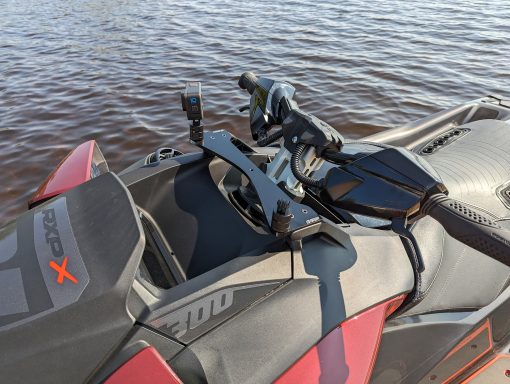
Active Jet Sport’s Sea-Doo RXP-X/GTI Action Camera/Accessory Mount – $129.99
For those who love to document their adventures on the water, Active Jet Sport’s new action camera and/or accessory mount for all 2021+ Sea-Doo RXP-X and GTI models is going to be your next favorite purchase. Each mount is precision machined from aluminum and hard anodized in semi-gloss black to protect it from harsh sun and exposure. The mount provides super secure mounting of up to three accessories at once, all of which must use the standard ¼-20 UNC threads.
Easily rotate the camera to any position while at speed – without having to let go of the throttle! One minute you’re recording your friends on your left and instantly rotate to record on the right. Lastly, the Action Jet Sport RXP-X mount is designed to open up your versatility: if you don’t need an extra camera, consider using the mount for added gauges, GPS screens or any other accessory which uses the standard ¼-20 UNC screw thread mount mentioned earlier.
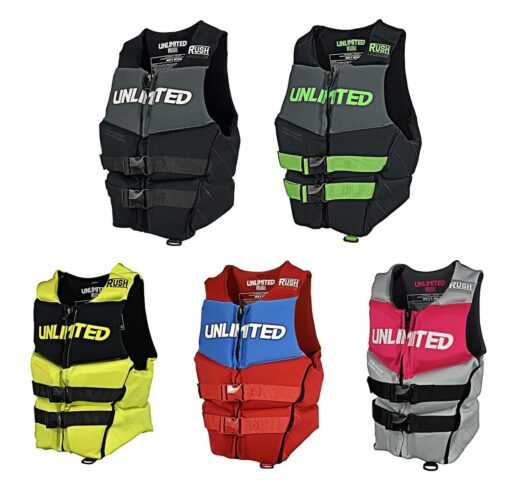
Unlimited PWC Rush Neo Life Jackets – $152
Whether you ride for fun or a professional racer, Unlimited PWC has life jackets for all your needs. The top of the line is the Rush Eclat Neo Vest part of the Unlimited Rush series of products designed by professional watercraft riders. The vest is USCG certified and made of water repellent neoprene to help keep you comfortable. It also has a lumbar pad to support your lower back. The jacket comes with a whistle and has a D-ring for attaching a kill switch.
The Neo Life Jacket and Rush Neo Life Jacket’s rate up there with the Rush Eclat Vest when it comes to high-end products. The Rush Neo Life Jacket is another design in collaboration with professional riders. It also certified by the USCG and comes with an inside pocket for stowing your license or other small item. They are made for movement, so you don’t feel confined and can move freely. The vest comes in black, white, and yellow.
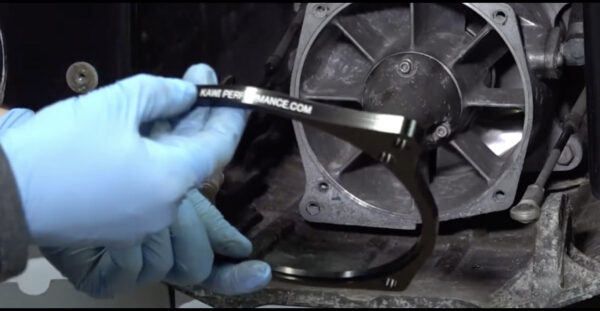
Kawi Performance Kawasaki Ultra Premium Pump Wedge – $84.99 – $86.99
A pump wedge will add 2-degrees of lift to the bow, getting your vessel up on plane faster. This helps create less drag, improve acceleration and free up some top speed. Kawi Performance has created these billet pump wedges, not just for the newest Ultra platform, but all Ultras, all the way back to the Ultra 250.
Whether your Kawasaki is bone stock, or heavily modified, this easy bolt-on addition is a must-have. The Premium Pump Wedge from Kawi Performance is hard coated black for optimal corrosion resistance and strength. The kit includes 316 stainless steel hardware for salt water and ocean riding. This is a simple bolt-on modification that requires no silicone or cutting.
Impros Pump, Driveshaft & Impeller Tools – various Impros has everything you need to rebuild your pump, replace worn components, and the tools to do the job. They offer rubber seals for impellers for Yamaha, Sea-Doo, Kawasaki, and Hondas; as well as a 440 Driveshaft Tool for proper removal of 300/400 Skat-Trak impellers. If you have a Kawasaki 300 or 440 JetSki, Impros carries the Impeller Spanner Wrench that is necessary for tightening or loosening the impeller from the driveshaft.
The Kawasaki JS 550 Shaft Wrench fits into the small pump shaft on a JS 550 and can be used for multiple applications when working on your impeller. Impros carries a line of Solas Impeller Tools to remove and install select models of Solas Impellers. There are tons of other impeller tools and parts like impeller boots, spacers, nose cones, and spline tools. Check out the Impros website for all the details and all things impeller. They don’t call themselves The Impeller Professionals for nothing!
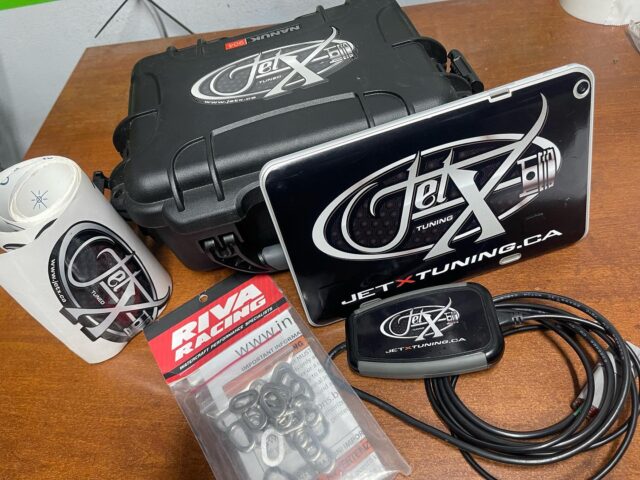
JetX Remote Tuning for Yamaha WaveRunners – various JetX Tuning provides a tune for your WaveRunner that is supplied by RIVA and backed by JetX Powersports. The customer will notice a dramatic increase in performance without any additional modifications, parts or mechanical knowledge. You can ship your ECU to their facility, drop by in person or they are even willing to meet you at a local boat ramp or other location and tune your watercraft ECU on site!
All tunes increase acceleration and throttle response, raise the RPM limit (to a safe level) and require 91+ octane. Gains seen by JetX customers include: The supercharged WaveRunner (FXSVHO and GP1800 SVHO) should increase your speed to 75 – 77MPH. The SuperJet will see an increase to around 60 MPH. The VX models should see an increase to around 65 – 66MPH and up to 68MPH with a performance impeller. Anyone in North America can get their tune done by JetX, but if you live in Ontario, it’s just a no-brainer!


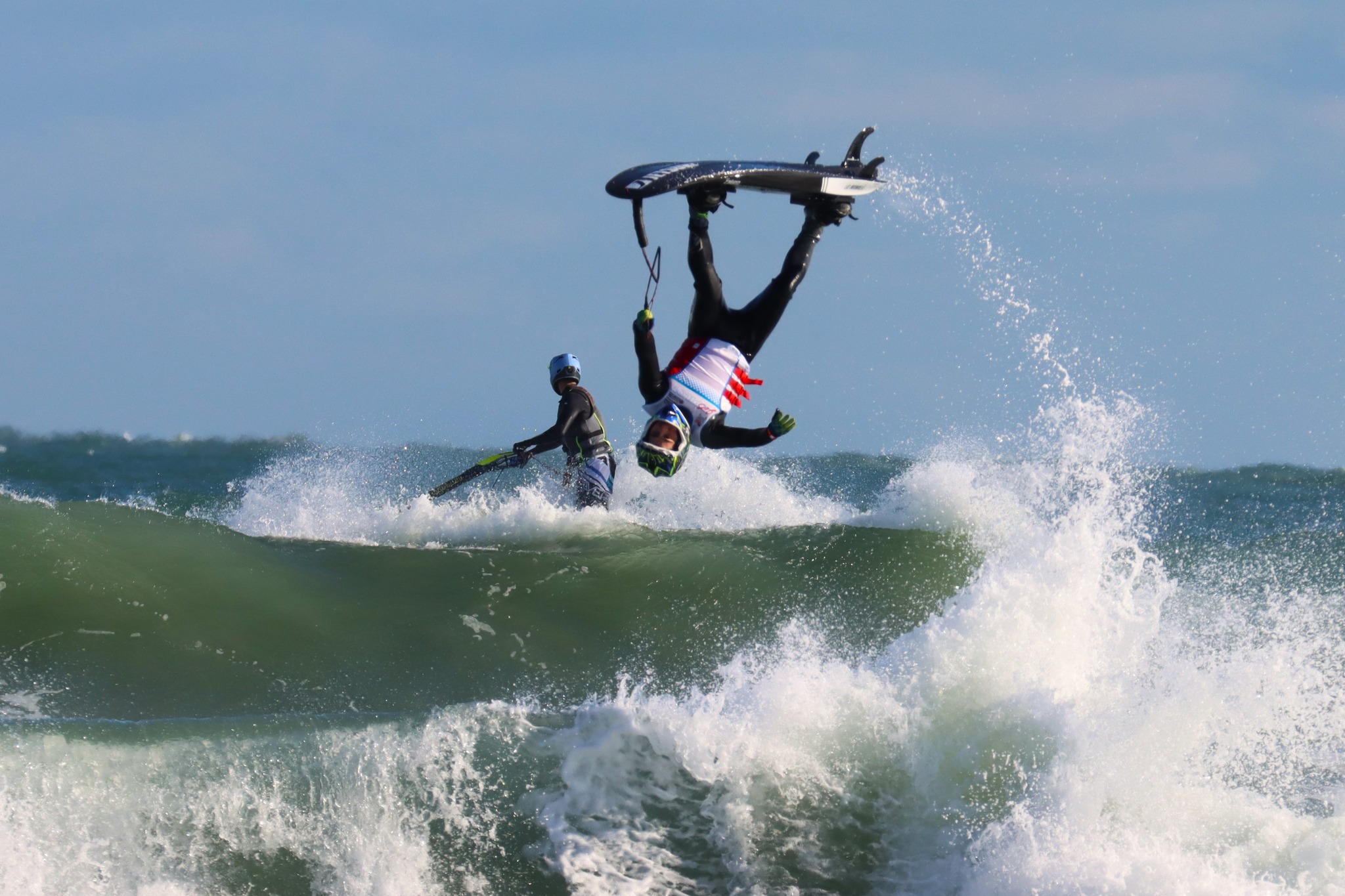
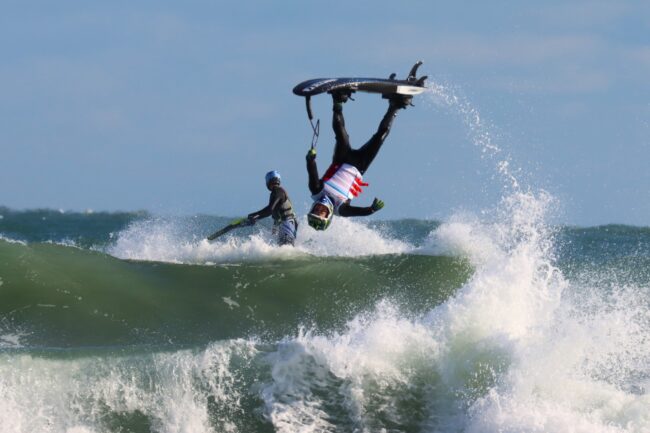 If cold weather has you down, the annual Daytona Freeride is a sure cure. Each year, the Daytona Freeride draws surf riders and spectators from across the country for one of the most anticipated freeride events of the year.
 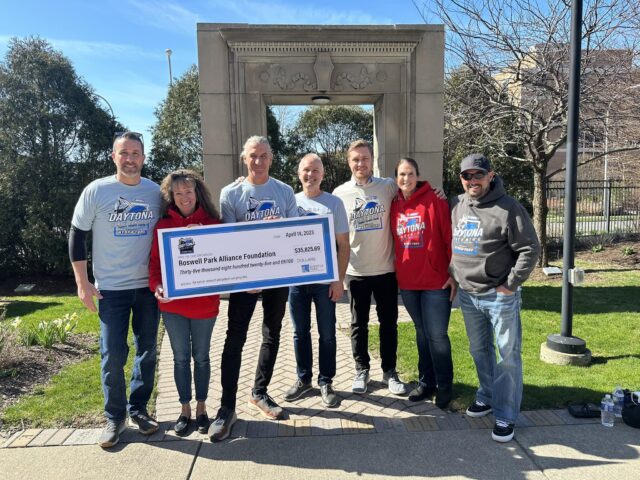 Last year, the Daytona Freeride pulled in more than $35,000 for cancer research and patient care programs, and this year, they’re aiming for $50,000.
  Additional items have been donated to be raffled off at the event, and Sizemore is asking that individuals, companies and organizations consider contributing items for the raffle.
 In what is perhaps one of their least-technical
 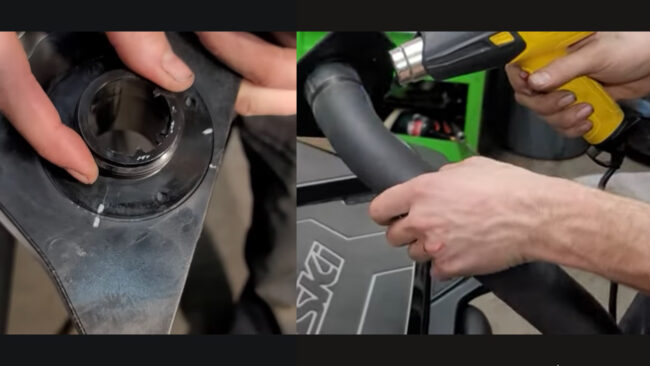 Steve also takes the time to cover steps to get past the “what if” situations that always tend to arise, like .. what if the filler neck won’t come off of the adapter? (Answer – Carefully applied heat gun)
 Unlimited has got fashion and function all zipped up – literally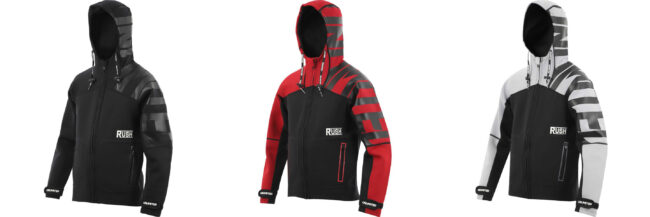


 They may be far from home, but U.S. racers getting ready to hit the WGP#1 Waterjet World Cup start line in Thailand are far from unknown.
 In ProAm Womens Ski Grand Prix, U.S. racer
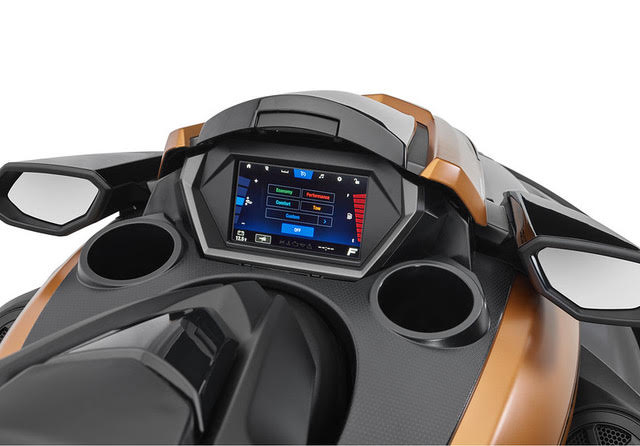
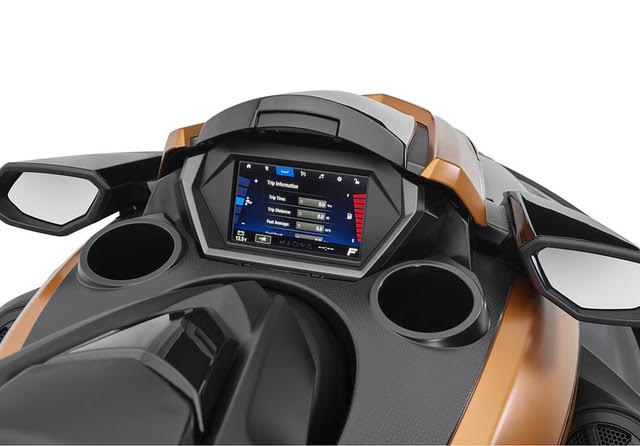 Yamaha WaveRunner has finally fixed the long-standing issue of faulty low-fuel warning buzzers and fuel consumption trip meters that reset every time the craft is switched off.