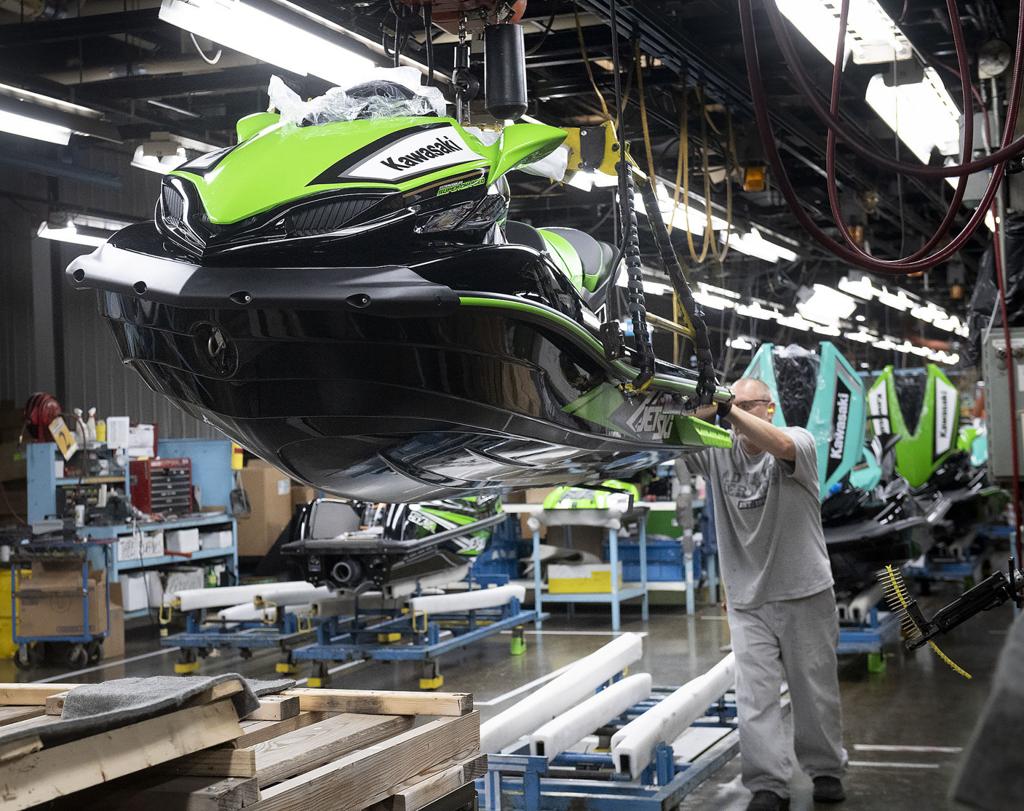
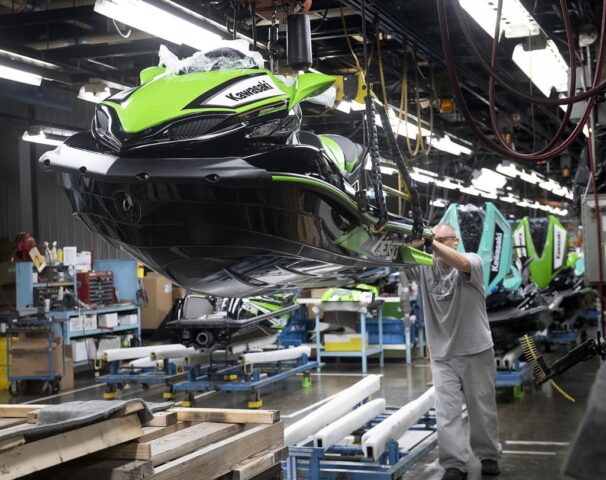
Kawasaki Heavy Industries (KHI) announced that construction will begin on a new production facility in Mexico. As a subsidiary company Kawasaki Motores de Mexico S.A de C.V. This new production facility will be added to the current Kawasaki Motors Manufacturing (KMM) corporation. This new facility will help enhance production capabilities of the Lincoln, Nebraska manufacturing facility.
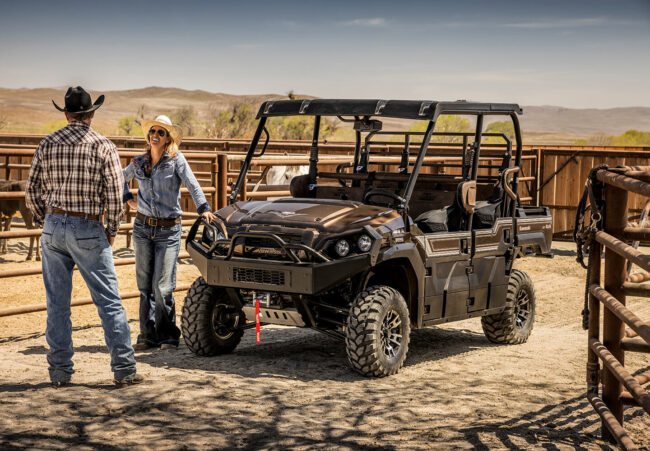
The North American market has an ever-growing demand for off-road type vehicles. From side-by-sides to dirt bikes and quads, along with small engine manufacturing for a variety of applications. To meet this increase in demand Kawasaki, move some product lines from the from sport recreation division to the new manufacturing plant.
This will allow Kawasaki to expand production capabilities for off-road and vehicles along with expand production for personal watercraft and general-purpose gasoline engines at the Lincoln, Nebraska plant and the Maryville, Missouri plant. This expansion of both product lines will allow all three-manufacturing facilities room to grow as demand increases along with the addition of new product lines to come.
Here is the original press release from Kawasaki: Kawasaki Heavy Industries, Ltd. announced today that construction will begin on new production facilities at its Mexican subsidiary Kawasaki Motores de México S.A. de C.V. (KMX). These new production facilities will be added to the current Kawasaki Motors Manufacturing Corp. (KMM) facilities which will also build new, enhanced production capabilities in Lincoln, Nebraska.
In North America, the side x side market for off-road four-wheeled vehicles continues to expand in all categories from utility to sport recreation. In order to meet the increasing demand, Kawasaki will invest a total of approximately $265 Million for production facilities at KMX and KMM. KMX will expand Kawasaki’s production capacity and start producing off-road vehicles in fiscal 2023. In addition, KMM also plans to increase its production capacity for new models by March of 2023.
In addition to off-road vehicles, KMM’s production for consumer products such as personal watercraft (Jet Ski®) and general-purpose gasoline engines includes Lincoln, NE, Maryville, MO as well as the Boonville, MO plant scheduled to start operation and production of general-purpose gasoline engines in 2022. The new KMX plant will bring the number of Kawasaki production facilities in North America to a total of four.
By strengthening its business foundation in the North American market and by organically utilizing the four production facilities, Kawasaki will further enhance the Kawasaki brand, customer satisfaction, and aggressively expand its business.
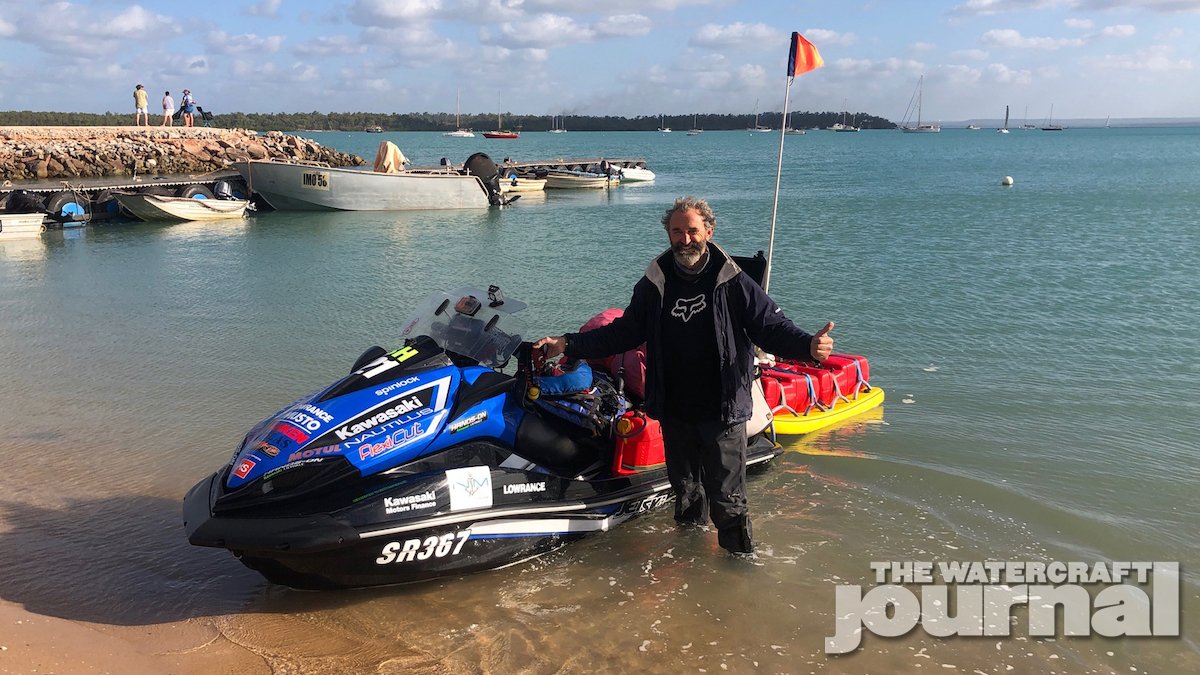
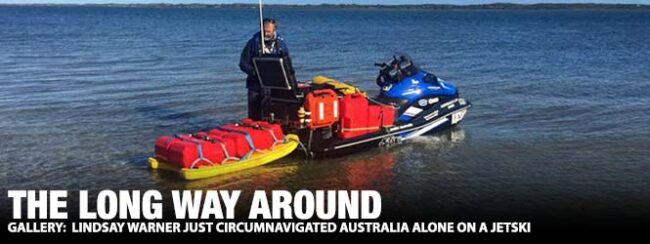
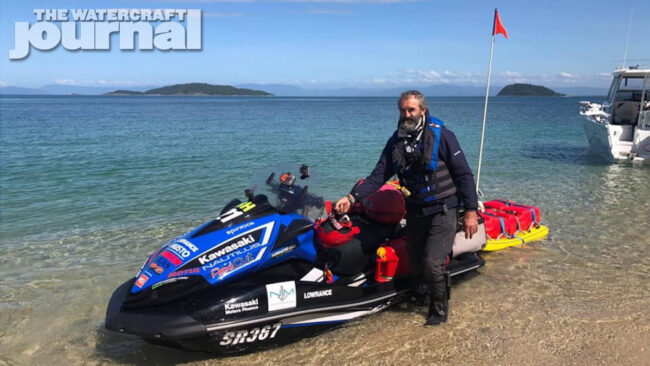
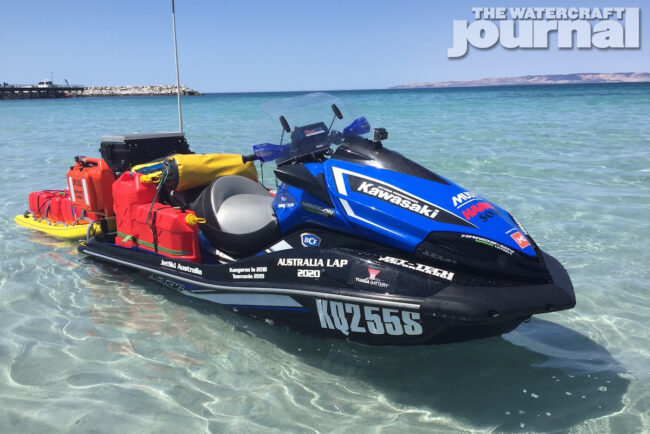
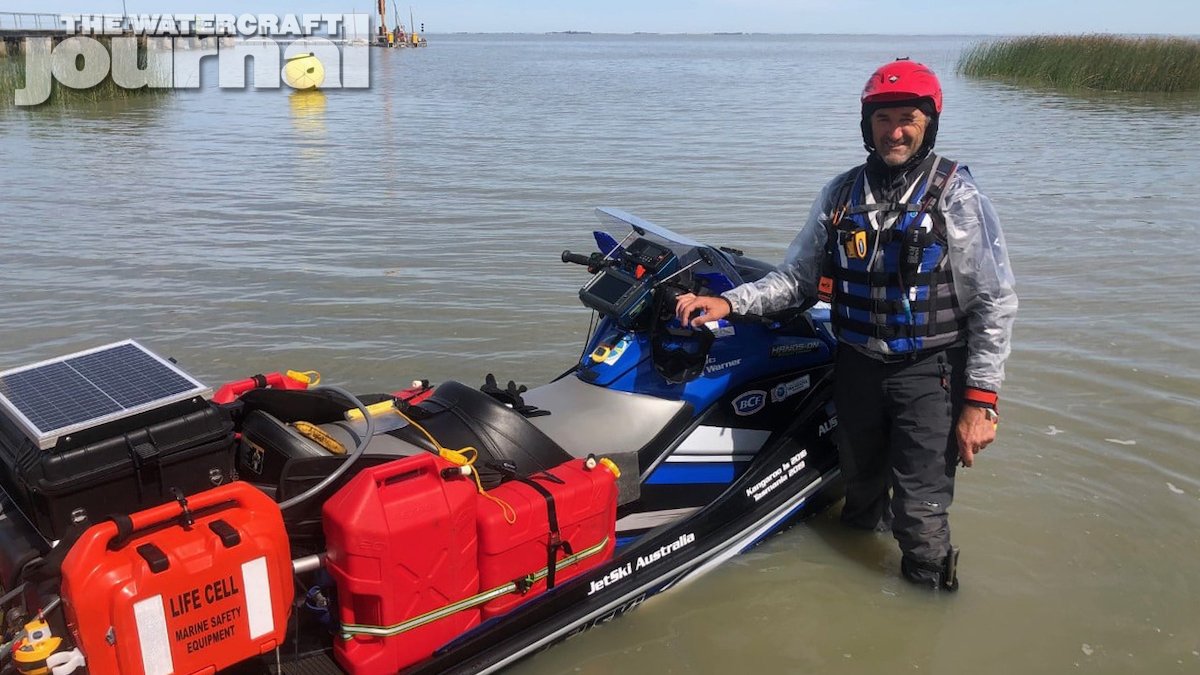
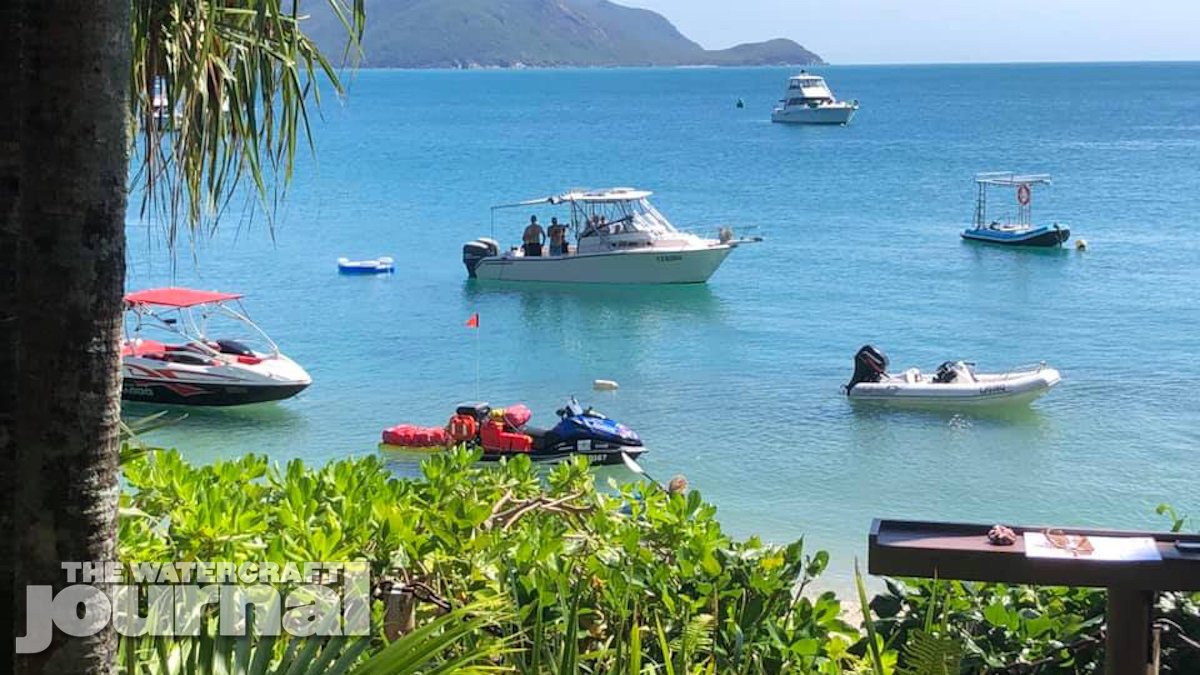
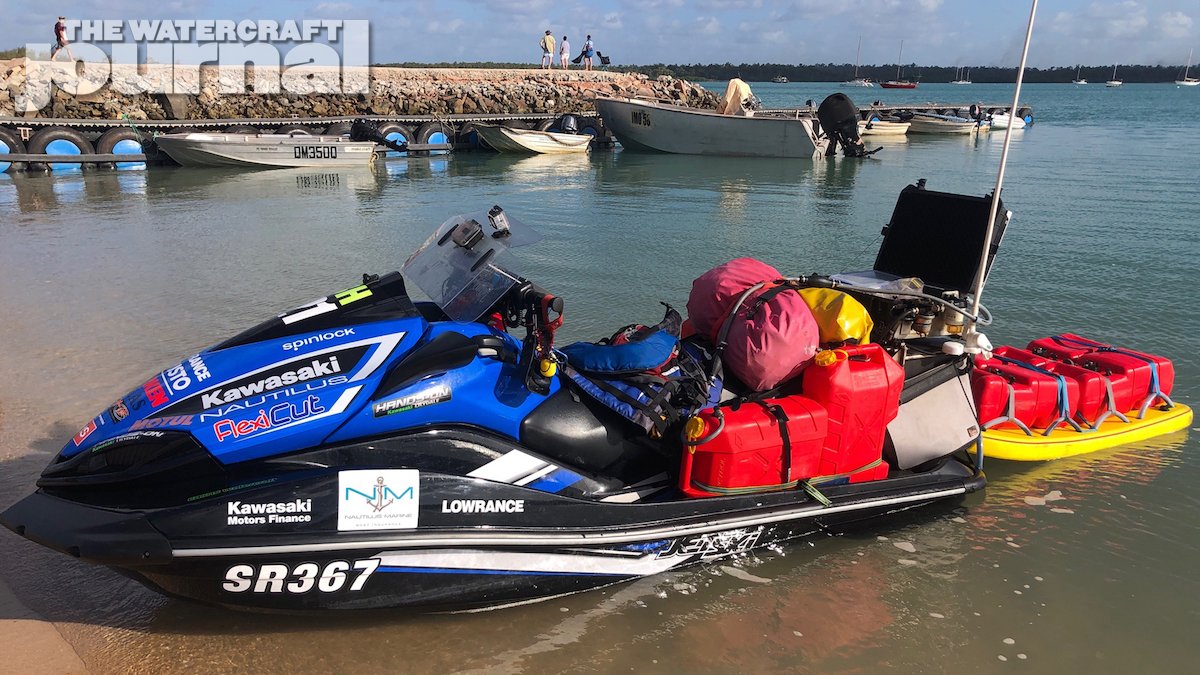
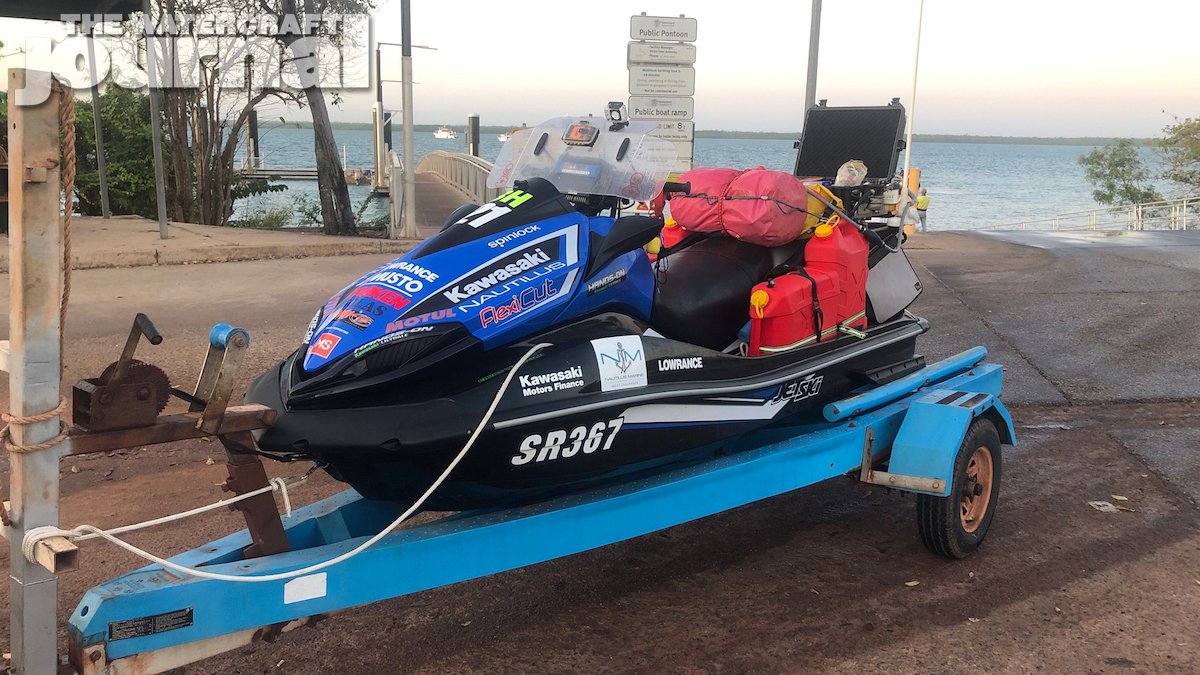
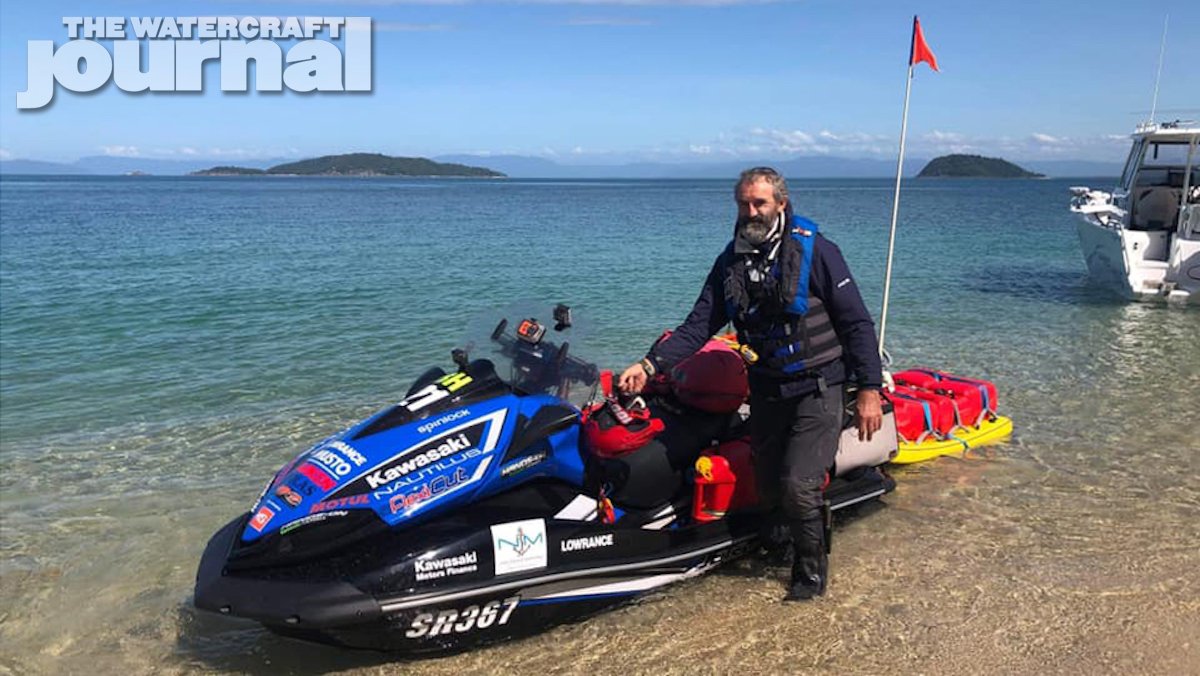
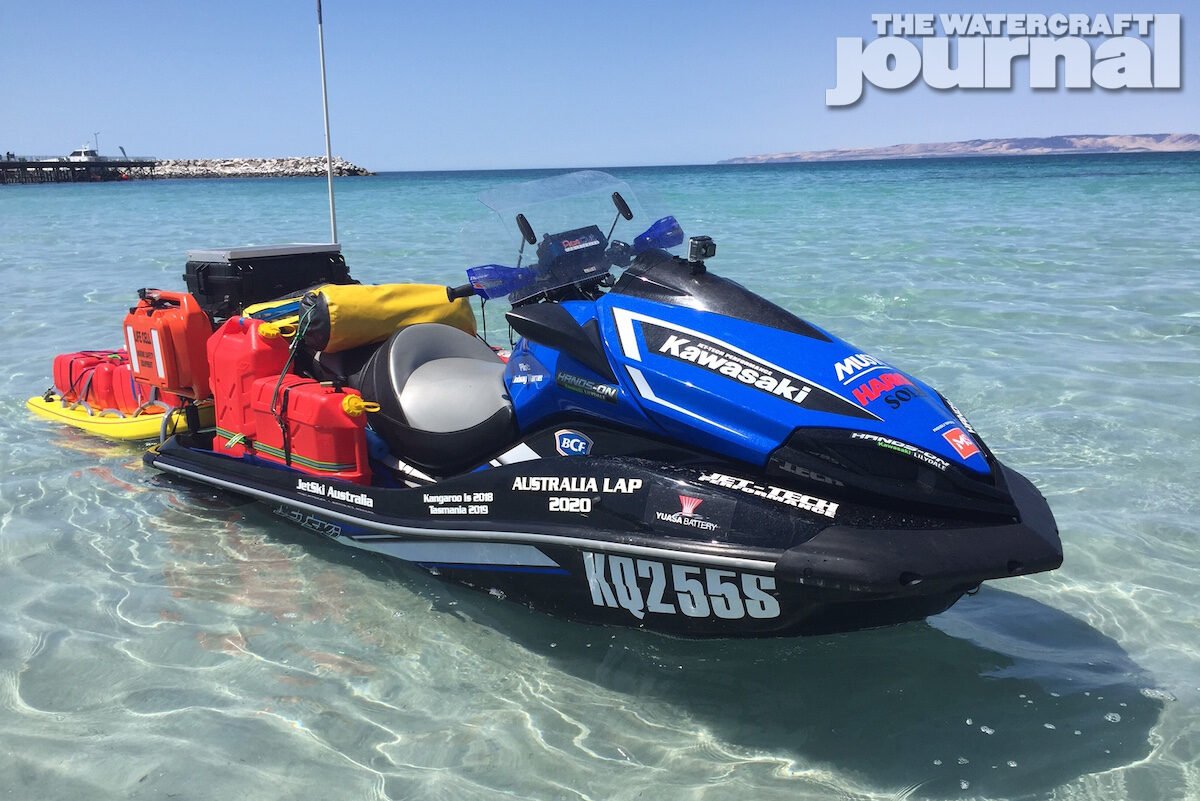
An Australian man aged in his 60s has just completed the first ever solo lap of mainland Australia on a jet ski. Riding a 2017 Kawasaki Ultra LX bought secondhand, Lindsay Warner, 63, was forced to split his lap into three legs after Australia’s strict border closures during coronavirus stopped him in his tracks. Or in this case, stopped him in the water.
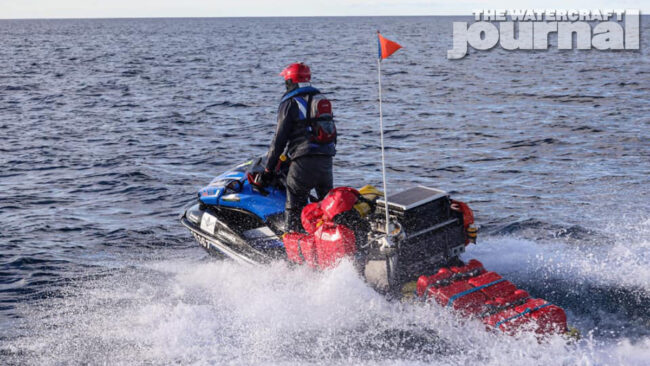
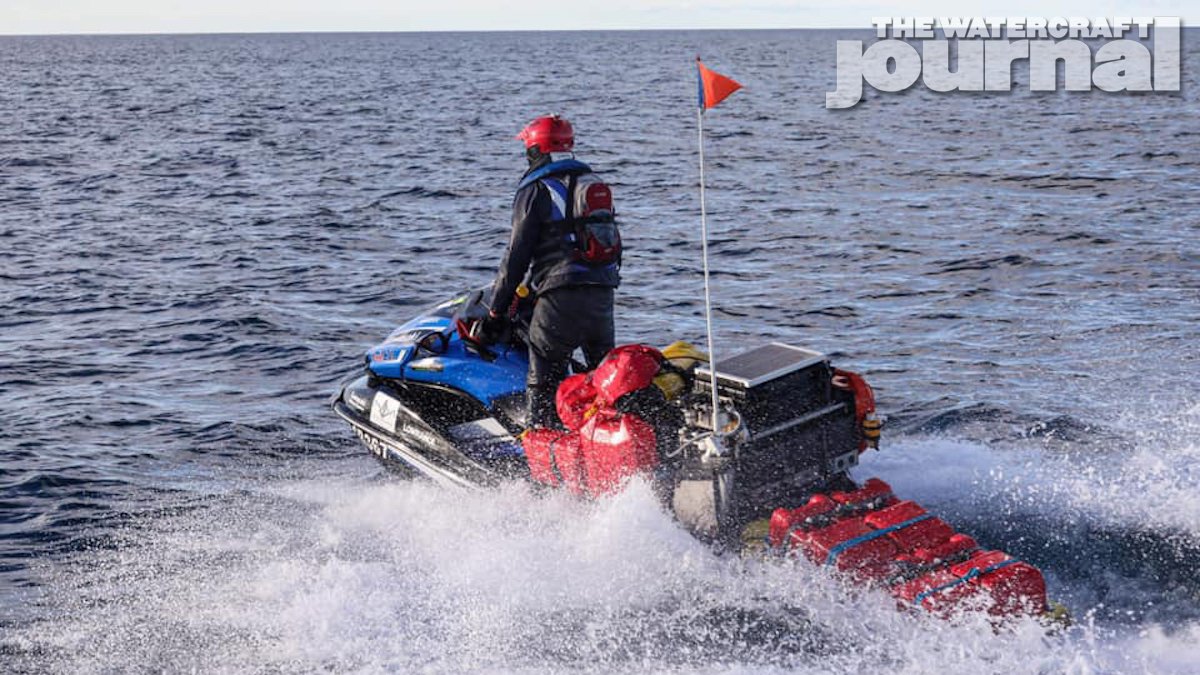
In the end he completed an estimated 9000 miles (15,000km) after straight-lining from point-to-point around the vast coastline, encountering freezing temperatures in southern waters and then, weeks later, tropical conditions – avoiding man-eating crocodiles – in the far north of the country.
While his achievement is truly amazing, unfortunately he got little to no mainstream media coverage for his efforts – because Lindsay Warner was too busy keeping the throttle pinned to keep to schedule, calling days and weeks ahead to arrange fuel drops in remote locations.
The distinction about lapping “mainland Australia” is referred to because the island state off the far south-east coast – Tasmania – is also part of Australia, in the same way Hawaii is part of the USA. But here’s the thing. Lindsay Warner lapped Tasmania in January 2019 as a warm-up to his effort around mainland Australia. So, yeah, technically he has lapped all of Australia – but at separate times. You could say he has now completed the set.
Lindsay Warner – a real estate auctioneer, pilot, and formerly an endurance dirt bike racer – had planned to complete the 9000-mile (15,000km) lap of mainland Australia in one attempt, starting from Exmouth – a remote stretch of beach in the mid-north coast of West Australia – in March 2020.
But he had to pull the ski out of the water in Esperance, West Australia, after just 20 days due to border lockdowns which, amid Australia’s strict enforcement, also applied to coastal waters. After a year of uncertainty and sporadic border closures, Lindsay Warner finally made another run for it in April 2021.
He departed Esperance and made all the way across the southern coastline of mainland Australia until a new round of border closures pulled him up after 51 days, at a sleepy beachside town of Mallacoota, near the border of the states of Victoria and New South Wales.
After another month of delays he hit the water again in Mallacoota at the end of June 2021 and was able to keep going for 67 days until he finally reached Exmouth, the place where the journey began 18 months earlier. Indeed, he pulled up at the same boat ramp he departed from. Lindsay Warner told Watercraft Zone: “I’m relieved it’s over. There is a lot of planning that goes into something like this, few people would have an appreciation for it, especially without a support crew to follow you all the way.”
“I’ve genuinely been staggered by the generosity of all the people I’ve met along the way,” he said. “Considering what’s going on in the world, it’s actually a relief to see there are a lot of kind-hearted people.”
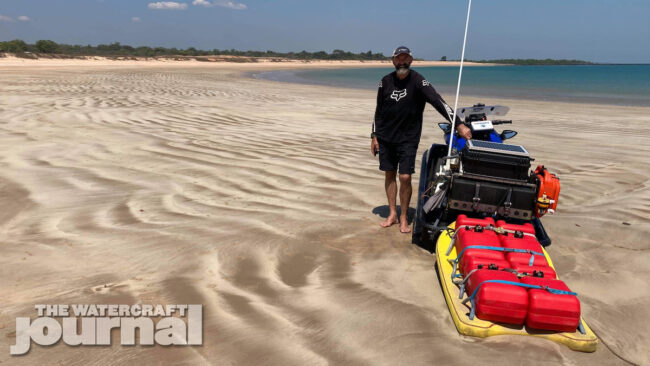
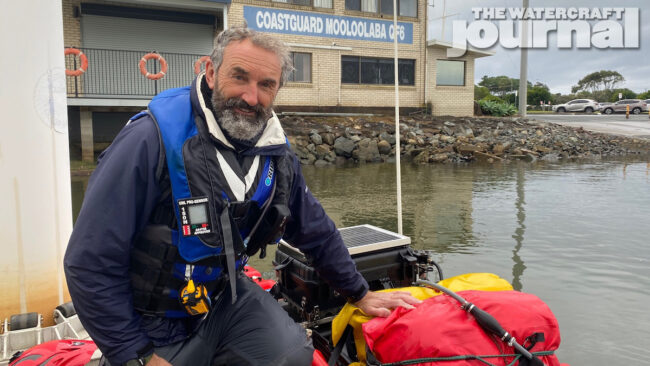
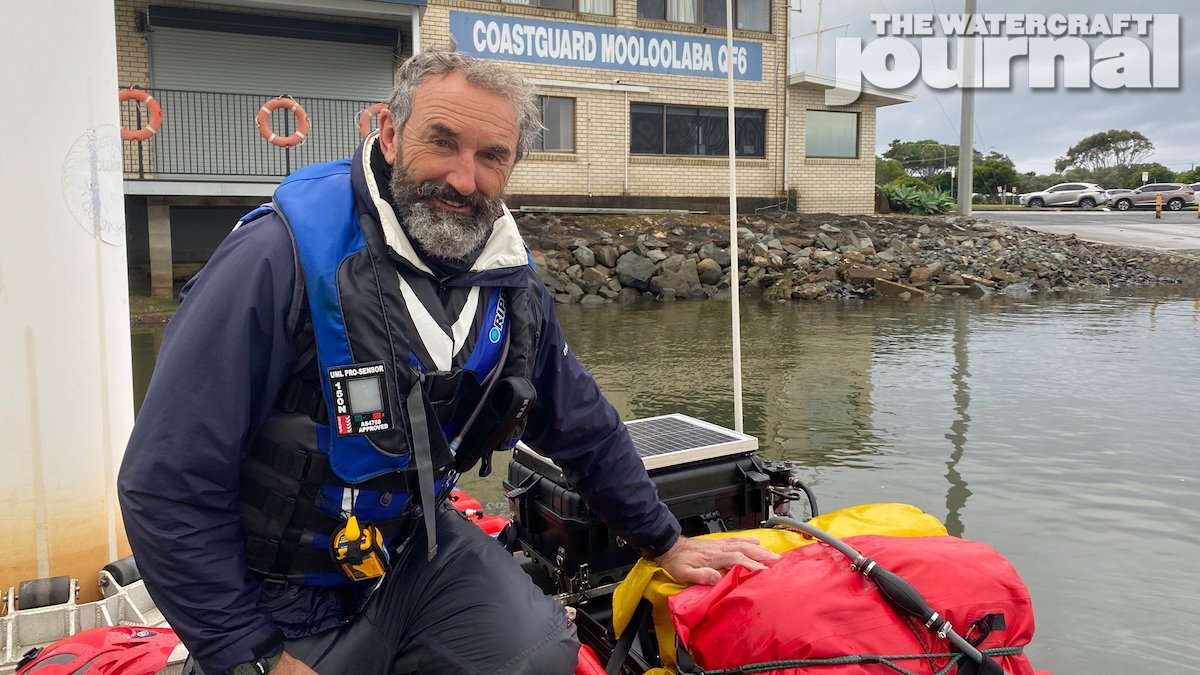
Lindsay Warner often slept rough on remote stretches of beach, or in coastguard sheds. He survived on food rations in the most remote regions. In far north Queensland and in the Northern Territory he had to find high ground each night so he didn’t become a meal for the five-metre crocodiles.
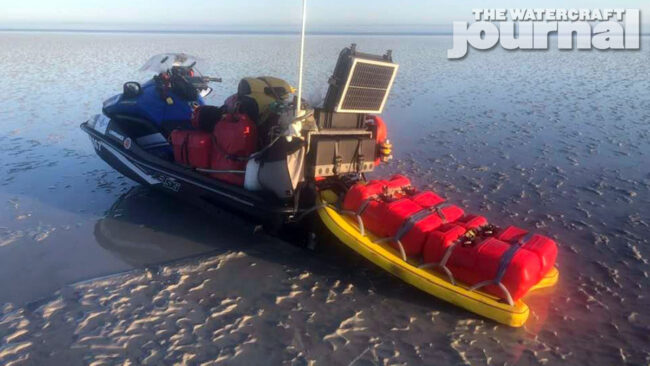
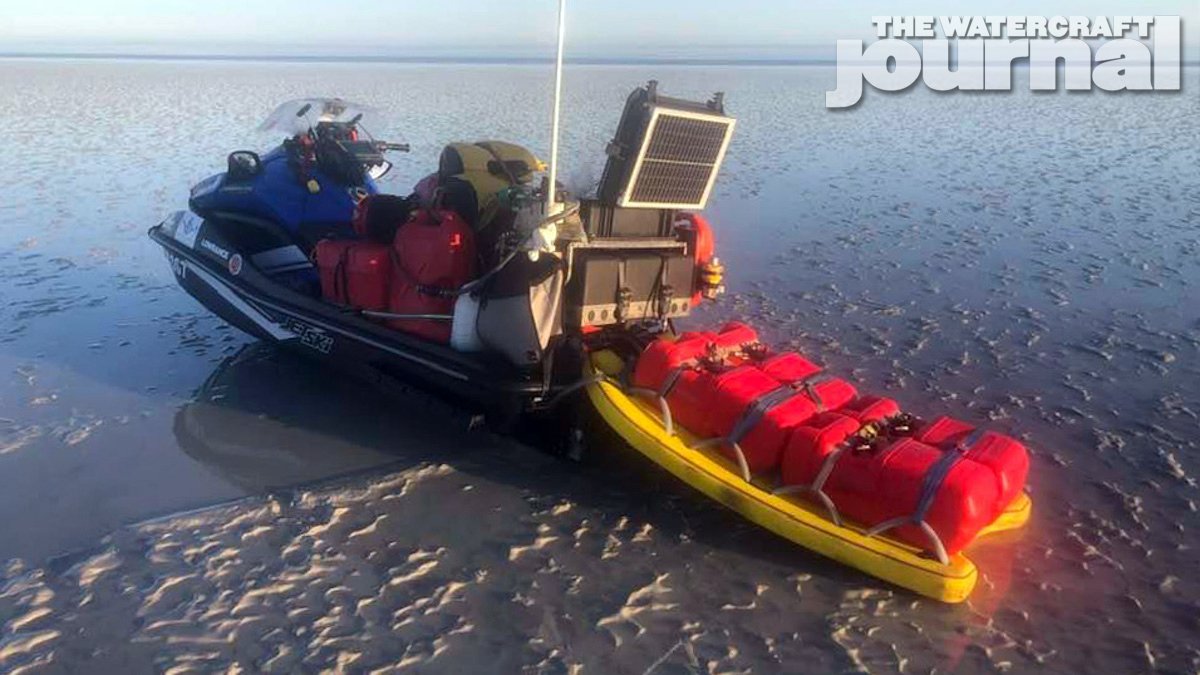
In the final fortnight, he was caught out a couple of times by the massive tides of West Australia. He set his alarm every hour overnight to push the ski out with the tide. When that didn’t work he sat on the ski from the dark hours of the morning and waited for sunrise so he could start the next leg.
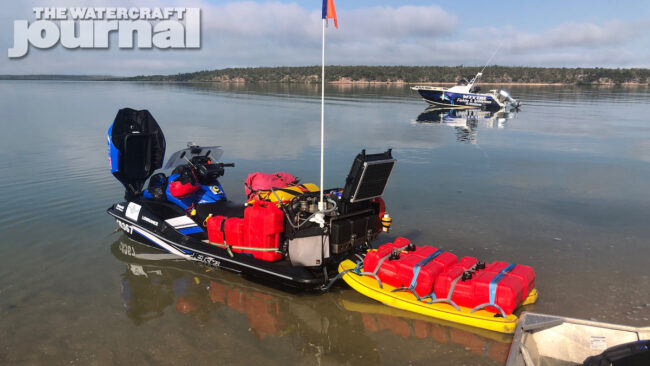
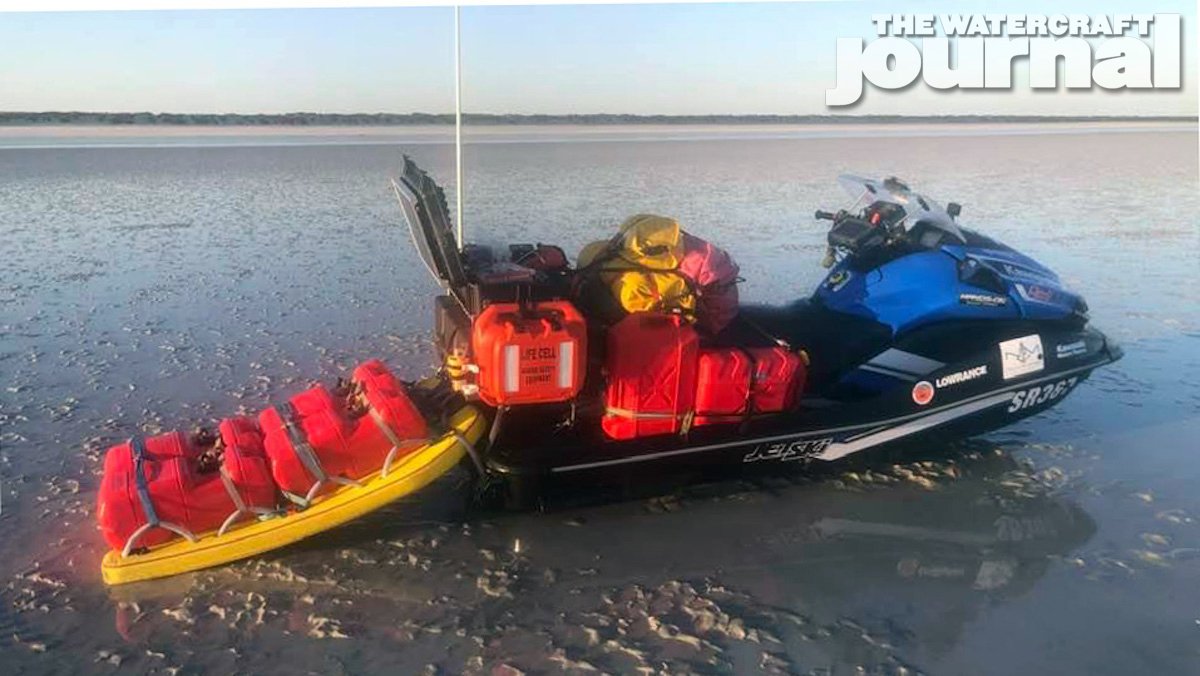
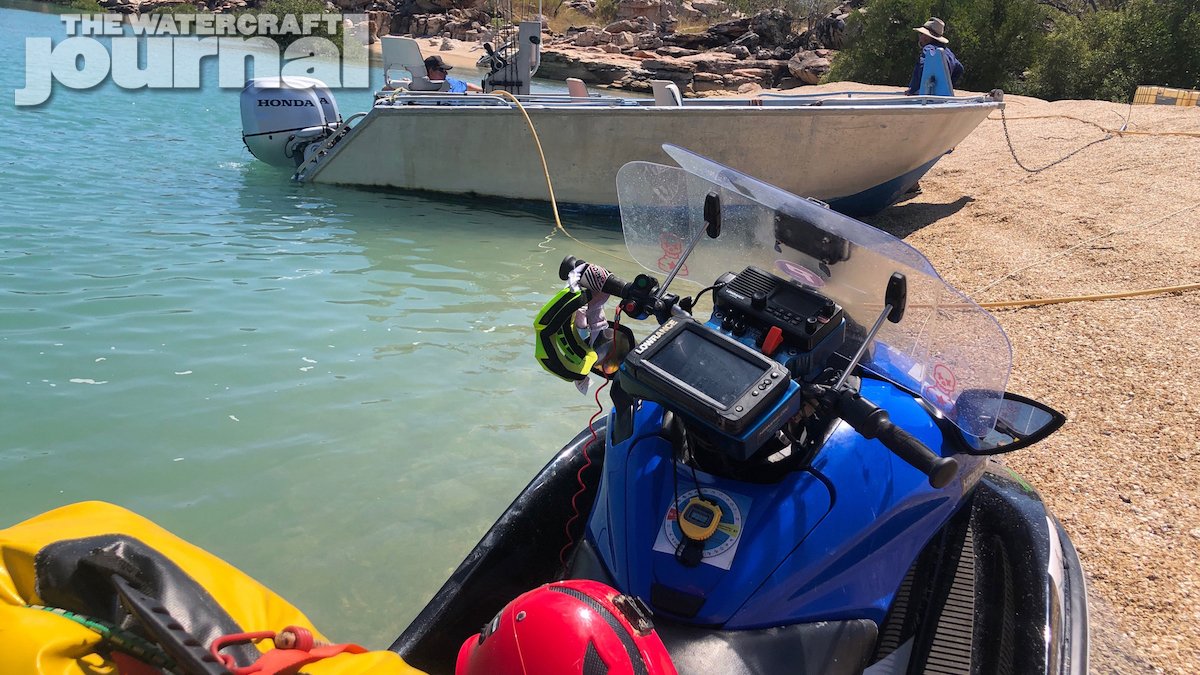
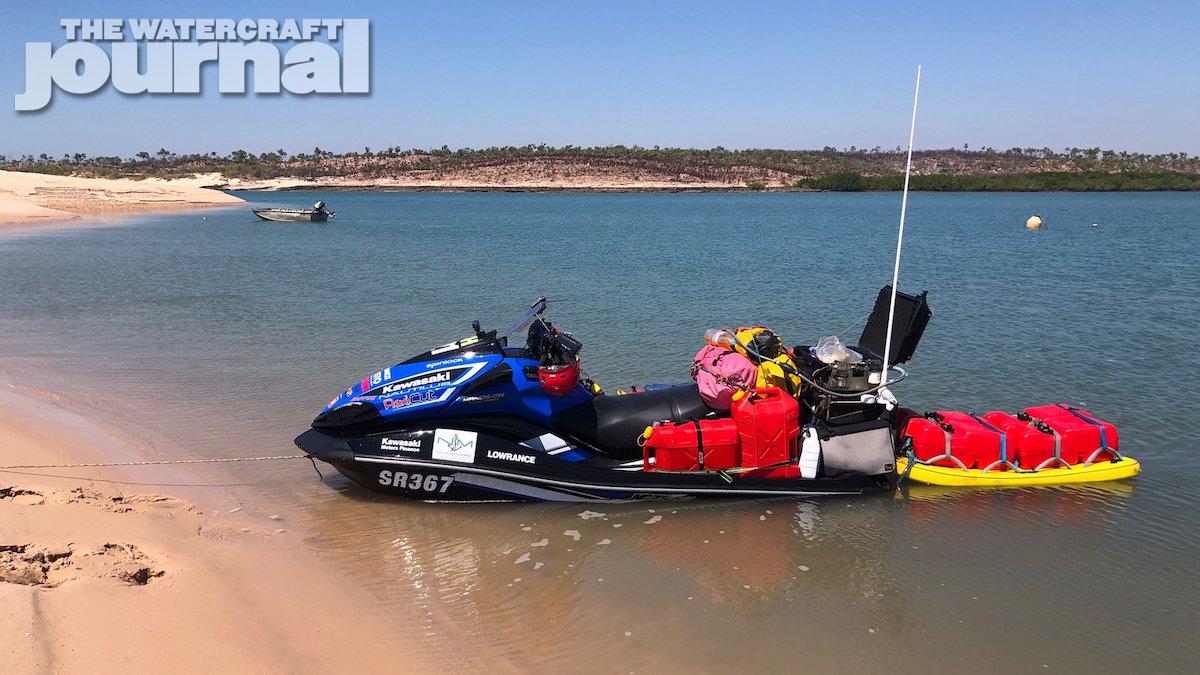
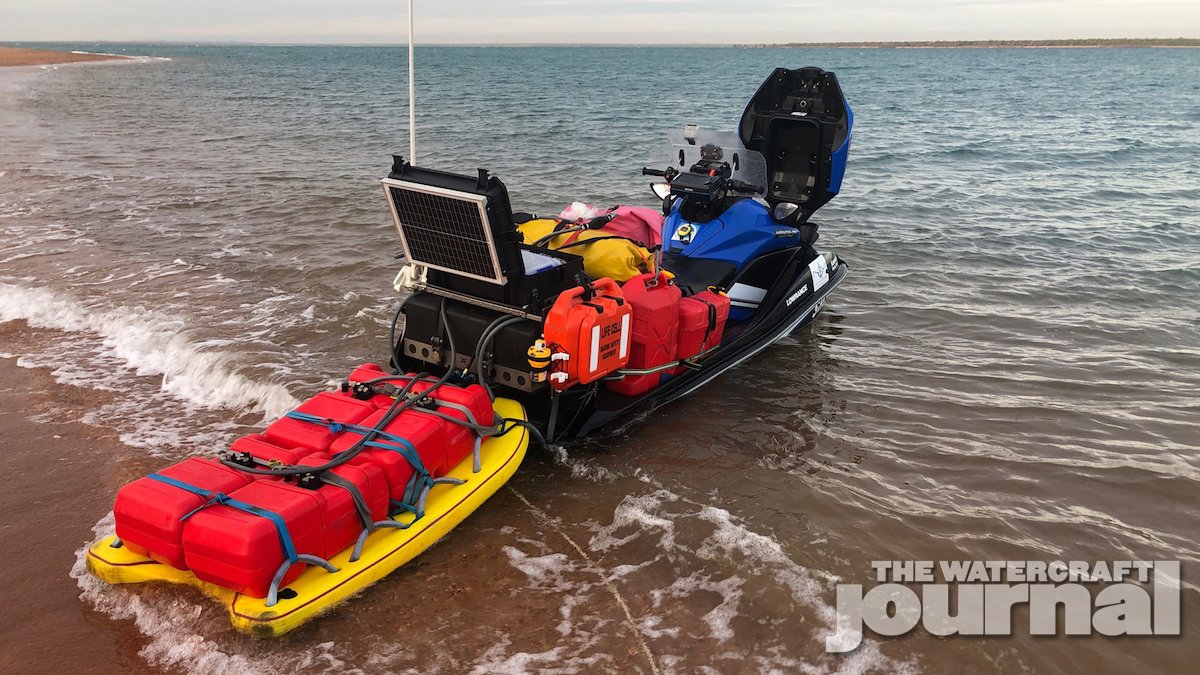
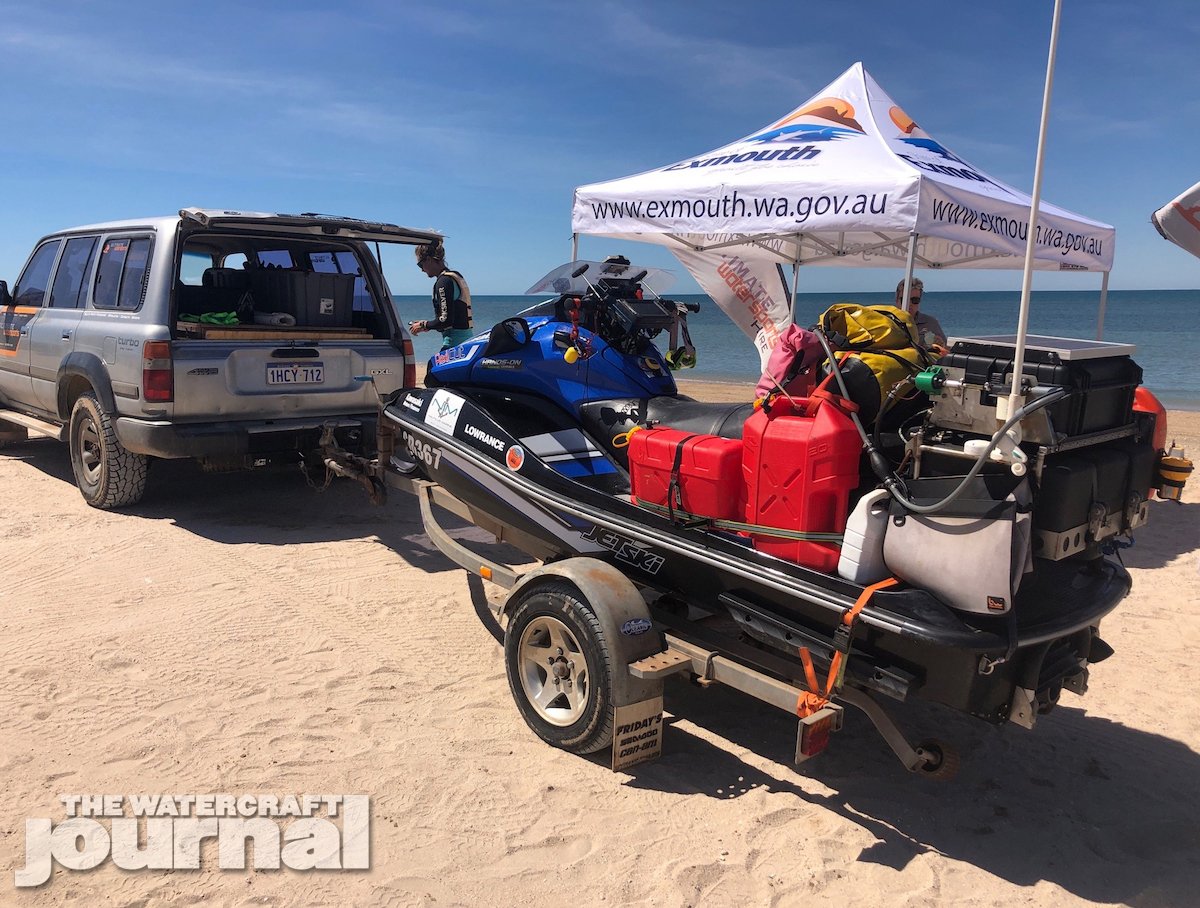
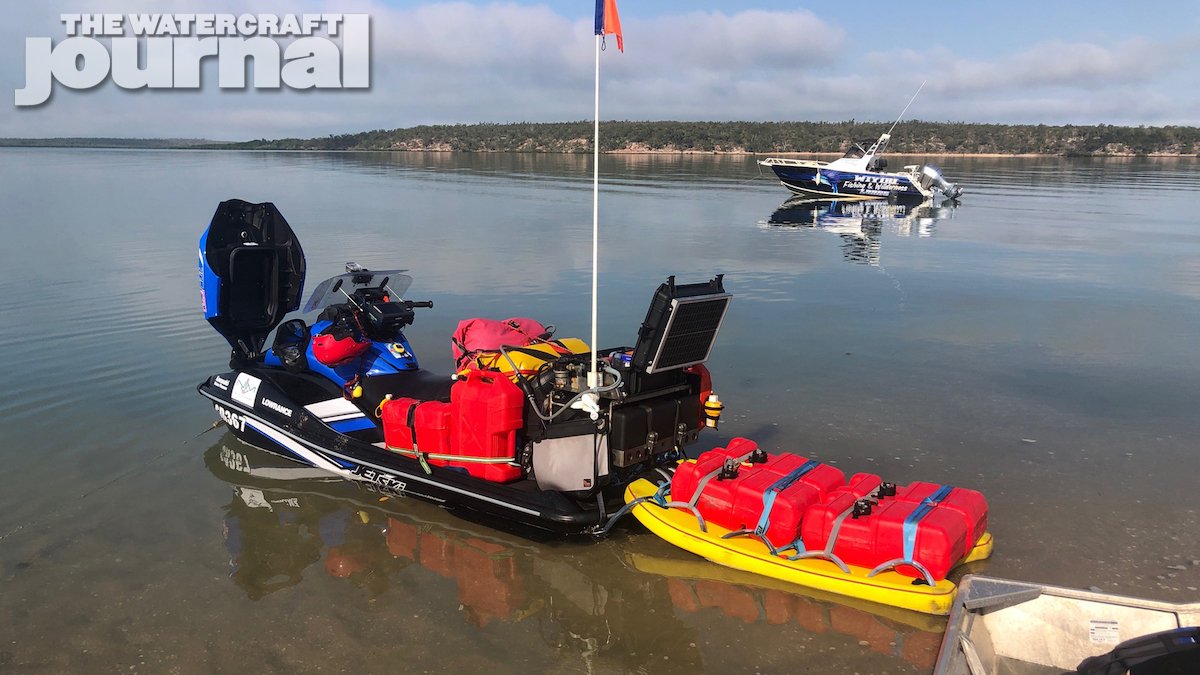
In addition to the standard 78-litre fuel tank in the Kawasaki, the Ultra LX had a 60-litre bladder on the rear deck and eight 20-litre plastic jerry cans (two in each footwell and four on a sled). He didn’t ride fully loaded all the time, only on the most remote legs.
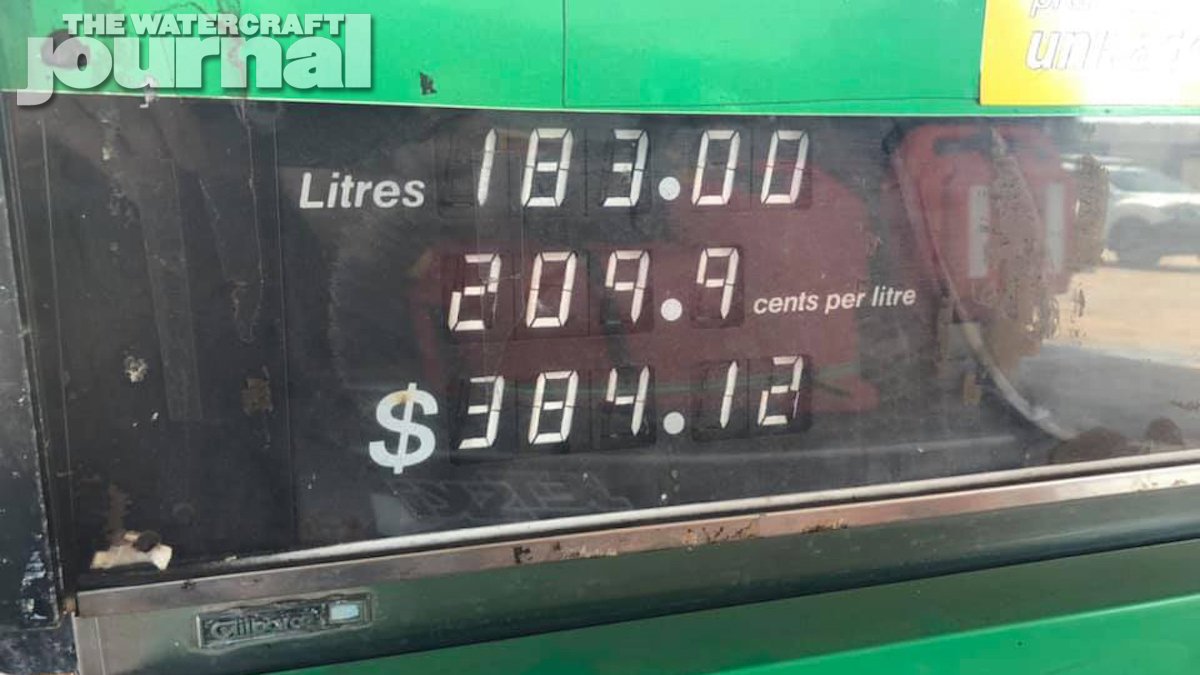
You think gas prices are dear in the US, in remote parts of Australia Lindsay Warner paid $2 to $2.40 per litre (Australian currency). The biggest fuel bill? When he had to pay an eye-watering $6 per litre on the most remote part of the trip. Lindsay Warner’s journey was largely self-funded, and he did it to raise awareness for men’s mental health.
Although at times he did have support from friends, family and strangers along the way, without a road crew following him the entire journey, Lindsay Warner had to call ahead to borrow an old trailer to pull his ski out of the water whenever it needed maintenance.
Incredibly, Lindsay Warner got the job done, having lost a little weight but gaining age and experience. He also avoided injury, which is lucky given he was always hours away from medical air support. It will likely be a long time before anyone attempts to repeat this trip solo on a Jet Ski. But Lindsay Warner will always be the first.
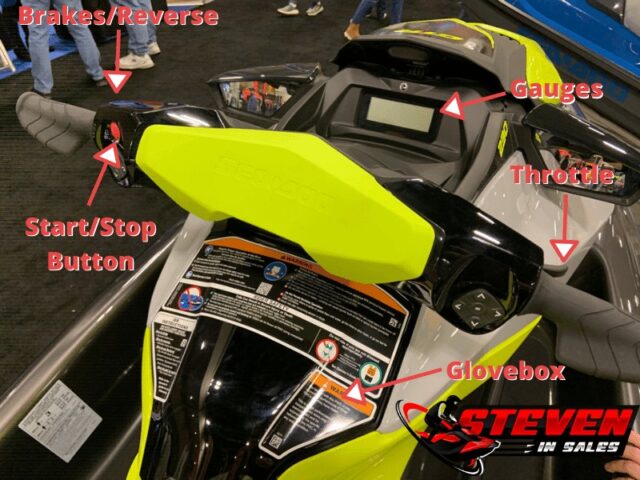
Steven in Sales outdid himself with his updated guide on how to drive a jet ski. Whether you’re a seasoned vet or brand new to jet skiing, this guide has something for you. It’s a nice refresher for the experienced rider and a must have for the novice. It is jam packed with useful tips for riding and includes a list of items that you must have before getting underway.
Steven includes a list of other recommended items and accessories as well. The pre-ride checklist might be useful for all of us! The guide includes instructions on how to launch a jet ski from a trailer and how to launch from a drive-up slip.
Another section includes comprehensive docking instructions. He gives us a couple of reasons to go slow in a No-Wake Zone. One of the reasons is that these are known hot spots for water patrol to hang out and ticket riders who aren’t following the rules.
Another reason is because other boaters may be at the ramp loading or unloading. it’s important to not come flying into the area creating choppy conditions. Speaking of chop, jet skis are affected by wind and waves. Keep these in mind when docking.
Sometimes the wind can be your friend, other times it is completely against you, so keep the wind and current when docking. The best advice for a novice, is to practice driving your PWC.
You’ll want to work on maneuvering and learning how to use the controls. Find a quiet spot and get busy. You’ll be great in no time! And for you experienced riders, keep at it! Check out Steven’s in-depth guide here.
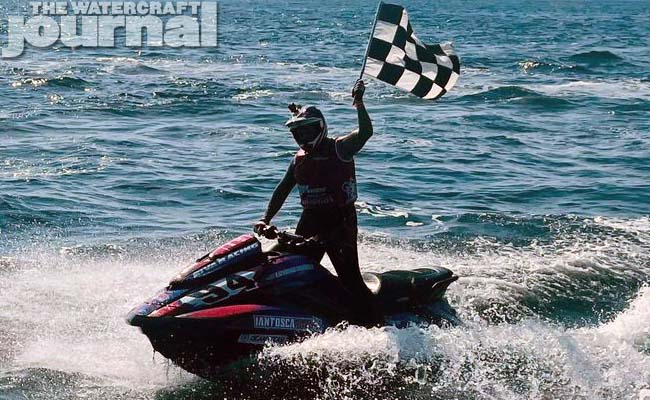
In April of this year, The Watercraft Journal announced that longtime Sea-Doo affiliate racer Erminio Iantosca had fulfilled negotiations to bring the veteran athlete over to Yamaha. Maintaining strong ties with RIVA Racing and tuner Dean’s Team Racing, Iantosca was received with open arms by other fellow Yamaha racers – including those from rival teams like Broward Motorsports and Snyder Built.
“I’ll be racing P1 AquaX on a 2021 Yamaha FX SVHO and Pro Watercross on a 2021 GP1800R SVHO,” Iantosca told WCJ in April. Equipped with a single FX SVHO to compete with throughout the entire P1 season, Iantosca’s game had to be on point. Risking injury to himself or his solitary WaveRunner would put him out for the season. For Iantosca to survive, he had to play things smart.
Coming into this past weekend’s P1 AquaX St. Petersburg Powerboat Grand Prix, Iantosca was in contention for the overall US points, facing off against 44-year-old Chris MacClugage and 18-year-old Tory Snyder. Iantosca explained, “The race was crazy. Macc and I going back and forth for the championship was just awesome.”
[During the] first moto, I got 4th. Macc won, so that gave him the points lead,” Iantosca detailed to WCJ. “Then in Moto 2, I got second and Macc got third, so I tied the points back up. Then in the last moto, I got second and Macc got 4th, so I won the [overall] championship.”
Iantosca claimed the US National Championship eking out both Snyder and MacClugage by 5 points (203 total); each earned a tied 198 points, landing the two 2nd and 3rd in the nation, respectively. “I have to thank Yamaha, my buddy Dean Charrier from Dean’s Team for all the hard work on my FX all year and RIVA Racing for all their amazing parts and support they have given me all year.”
Additional photography provided by P1 AquaX via RonnyMac with written approval
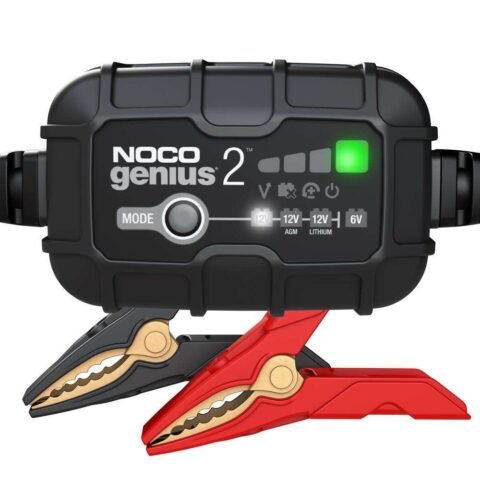
Steven in Sales has published another useful guide and this one address battery chargers, charging tips, proper amps, and voltage. Let’s dig in! According to Steven, the best jet ski battery charger will be a 12-volt smart charger that charges at a max of 2 amps. His top choice of battery charger’s is the NOCO Genius2, 3-Amp Fully Automatic Smart Charger. It has the right amount of charge, and a built-in maintainer that automatically turns on and off as needed.
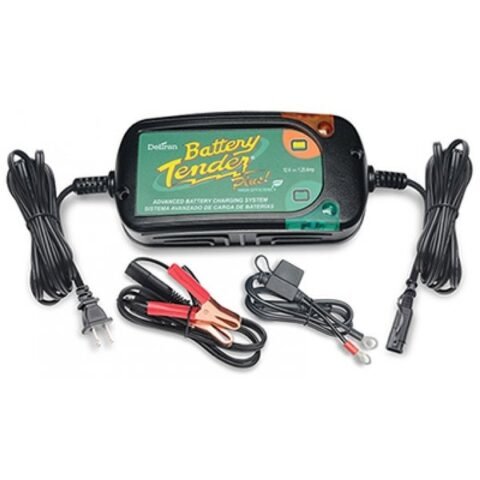
The Battery Tender Plus 12V Battery Charger and Maintainer is his second-place pick. It’s super simple to use and easy to store and with 1.25 amps, it has just enough amps to charge a battery at a good speed. If you’re off the grid or store your ski in an area without a power outlet, a solar charger is in order. When charging a PWC battery, charging from .75 to 2 amps is a good range for a charge.
Charging at over two amps is too fast and will cook a small jet ski battery. It will take about 12 hours to get an empty battery up to a full load. It’s good to keep your battery on a charger, especially if you don’t ride much. A well-charged battery will last longer. One last thing; do not jumpstart a jet ski battery with a car or a truck unless you want to replace your electronics.
Check out Steven’s entire article here for more handy tips on jet ski batteries and charging.
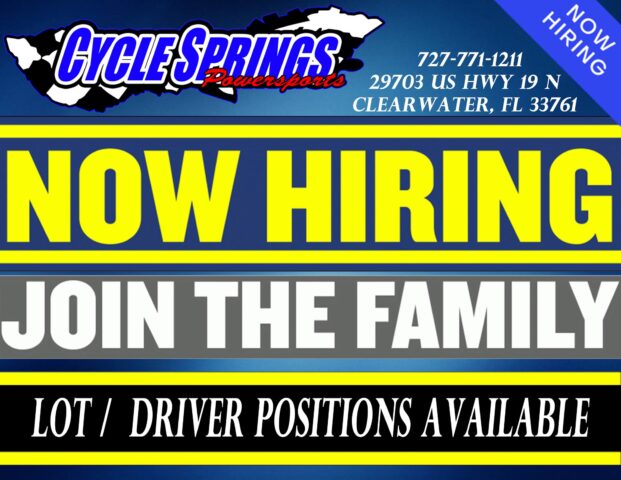
Cycle Springs PowerSports wants you to join the family. They are in search of lot techs. If you are motivated and hard-working, they want to talk to you. A clean driving record is required, and you must be able to handle working outside even if it’s raining. A positive attitude is necessary.
If you meet these requirements, Cycle Springs wants to meet you. They offer competitive wages, and you can accrue PTO time. Health insurance is available after 90 days and you can score a 401k after spending a year with them.
If you are looking for a good a job in a fun family atmosphere, fill out an application or send them a Facebook message. If you like being around watercraft and other like-minded people, this could be a good fit for you. The crew does fun stuff, too like going to boat shows and hosting the upcoming Yamaha Watercraft Product Tour. Stop in and check out the store located at 29703 Highway 19 N in Clearwater, FL.
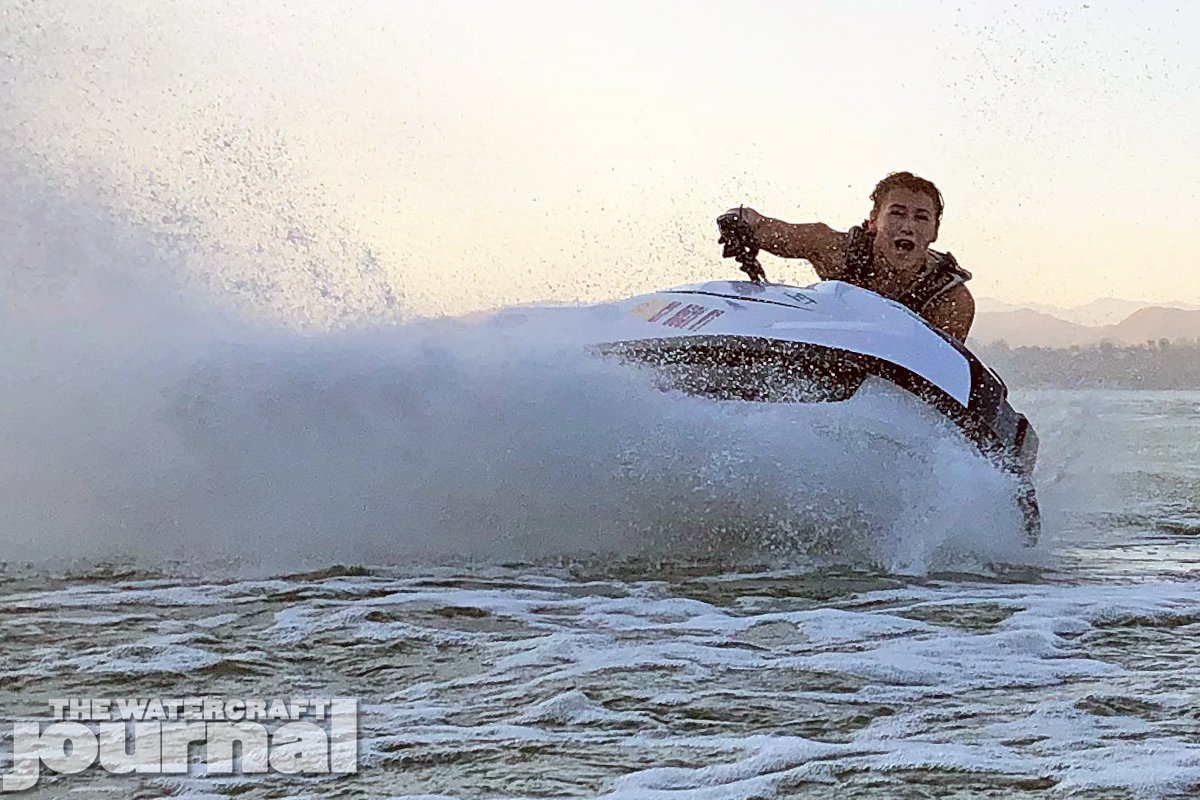
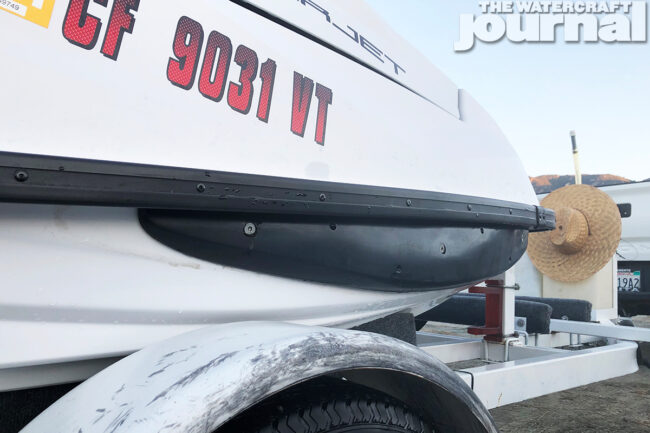
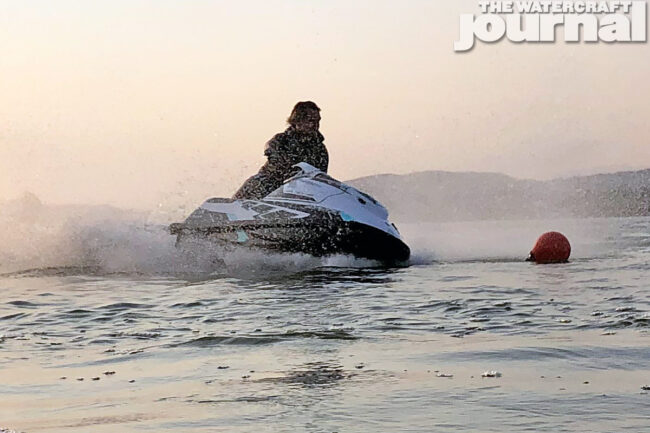
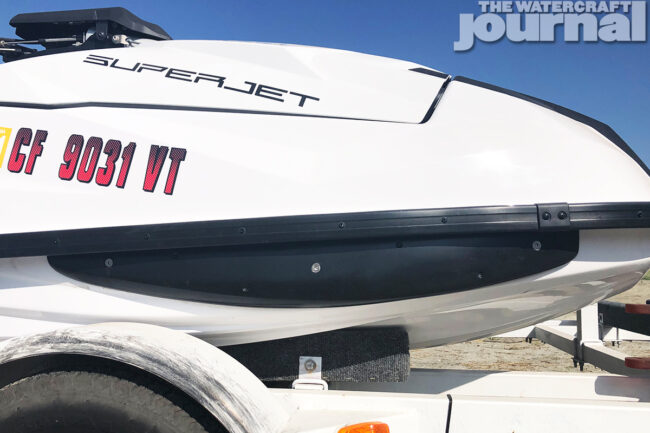
IPD Racing has had an excellent summer testing new products for the 2021 Yamaha 4-stroke SuperJet (along with continuing to test and improve our Gen3 2-stroke SuperJet setup), and we’ve found that there was still a lot of room for improvement that allows the rider to make the most of what these watercraft have to offer. One of the first modifications that we recommend for both the 2008-2020 SuperJet and especially on the 4-stroke SuperJet is a set of front sponsons and we were super excited to try out the newest one to hit the market.
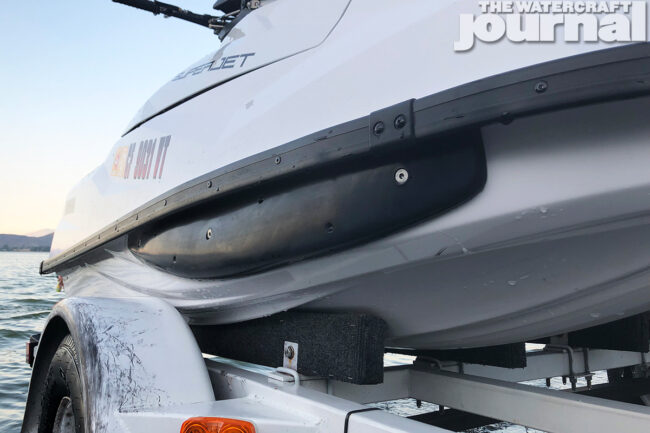
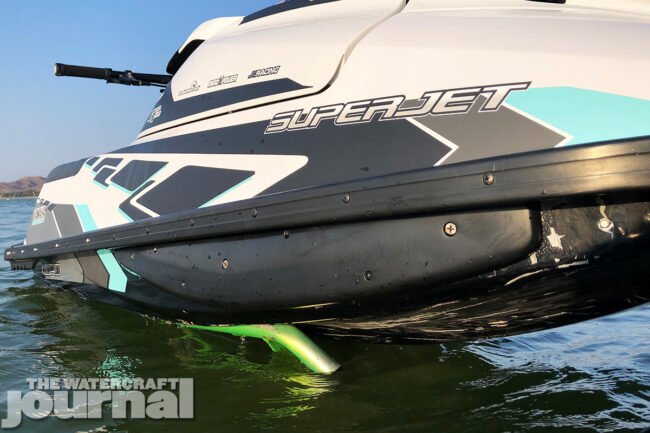
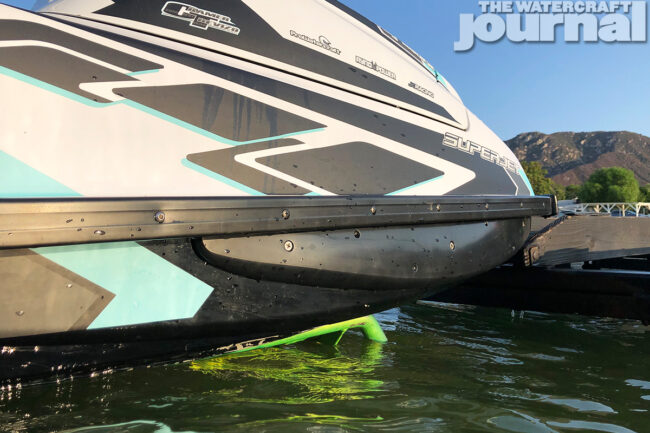
We were able to get a hold of the new ProWatercraft Fattie front sponsons. ProWatercraft designed these sponsons to offer maximum stability when you lean into the turn. The Fattie front sponsons were reported to provide better turning through the waves and choppy race water, which is probably where the new SuperJet suffers the most. ProWatercraft designed these sponsons to be universal for most Ski and Sport PWC but found them to be a very good fit on both the Yamaha 2-stroke and 4-stroke SuperJets and we wanted to try them out.
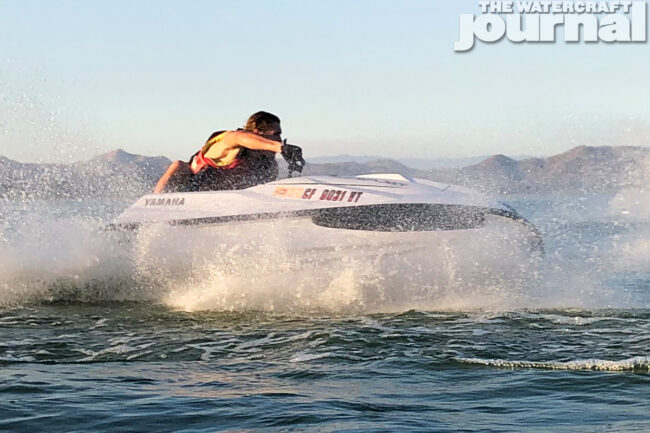
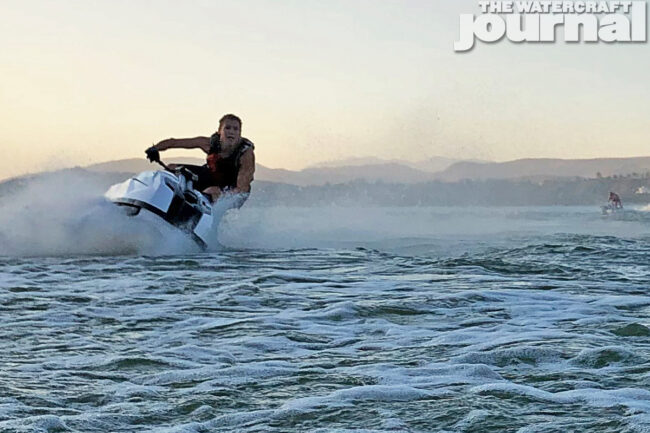
The new 2021 SuperJet design has a deep-V shape, which at times can feel very unpredictable. We have done a lot of riding and testing on the 2021 SuperJet with the Blowsion sponsons up to this point, and we were looking forward to seeing how the new PWR fatties compare. The first thing we noticed with the ProWatercraft sponsons was that the boat stayed hooked up much better in the heavy race chop and had more drive out of the corner.
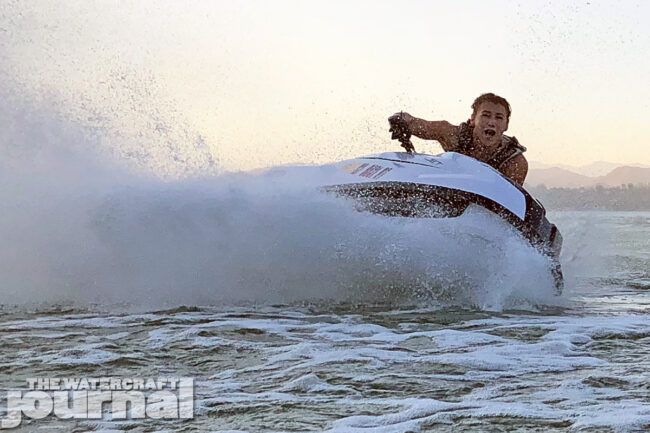
The next thing we noticed was how smoothly it entered the corners. It felt more predictable and without any of the twitchiness that we had experienced before. When exiting the corner, the ski seemed to come to the center easier than before; likely due to the added buoyancy of the sponsons lifting the ski onto the center of the V-shaped hull. For the racer or buoy chaser, one of the best benefits was the increased drive and control when crossing someone’s wake. All in all, it makes the boat easier to ride in race conditions or just recreational riding.
The 2008-2020 SuperJet definitely handles rough conditions more predictably and with more confidence, but we typically add the first generation PWR sponsons to enhance and improve the setup. Our test ski handled so well that we hesitated to rip off the original sponsons and install the fatties, but boy were we happy we did! The new fatty sponson offers even more stability, more predictability entering and exiting the turns, better rough-water drive, and a smoother transition in and out without sacrificing the awesome playfulness of the 2-stroke SuperJet!
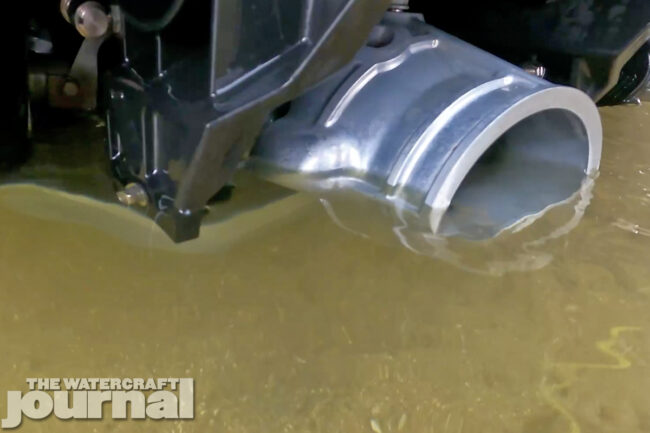
In fact, the sponsons make the ski drive so hard in rough water, that we had to move our nozzle that we had pitched down a bit on our Limited setup, back to the stock location to get the attitude of the boat back to where we like, which will be great for Stock class setups. All and all, they were a massive improvement on our Limited setup test ski!
As for the installation, it was very easy and they can be bolted on in multiple places and fit like a glove. The sponsons do not come pre-drilled, but you will have countersink cones in the design to help you with the installation. For hardware, you can choose to either bolt-on or use the stainless screws from the outside. The sponsons come with instructions and silicone adhesive. You can get these sponsons HERE and many other performance parts right from IPDRacing.com. Feel free to call us to discuss other best-performing options on this and all other standup jet skis.
“Today’s watercraft are just too big,” one commenter wrote. “They’re not fun anymore. You can’t whip ’em around like you used to.” Boy, have we got news for you. The Rec-Lite segment of runabouts have been one of the best additions to the marketplace in nearly a decade, and Yamaha’s EX Series has provided a new entry-point for enthusiasts looking to get into PWC without breaking the budget. Yet, of these smaller entries few have truly embodied the spirit of what many deem as watercraft’s “heydays.”
In 2019, Yamaha took its EX to a new level by shaving off an impressive 60-pounds through the use of its featherweight NanoXcel2 material in the hull and deck, and tuning the TR-1 EX 1,049cc 4-stroke into a throttle-happy 110-horsepower TR-1 High Output – giving us the EXR. Admittedly, it was a personal favorite of The Watercraft Journal as it was sublimely thrilling. Aimed as a entry racer, the EXR leaned heavy on the closed course credibility of its GP Series siblings but failed to set the world on fire as we had hoped.
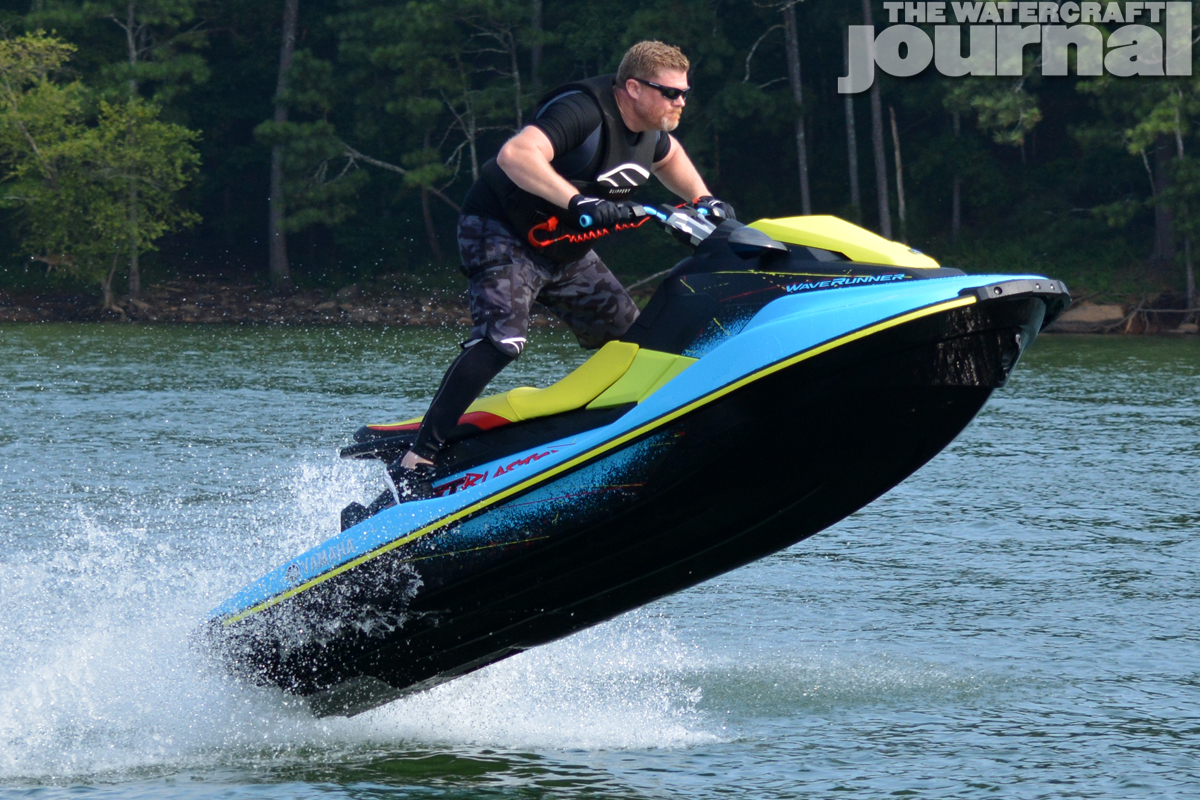
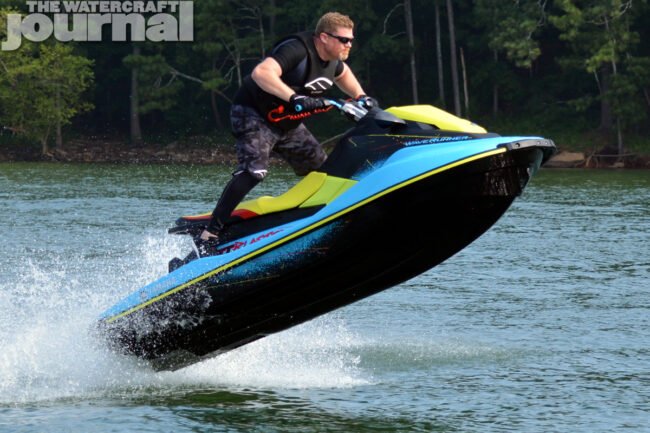
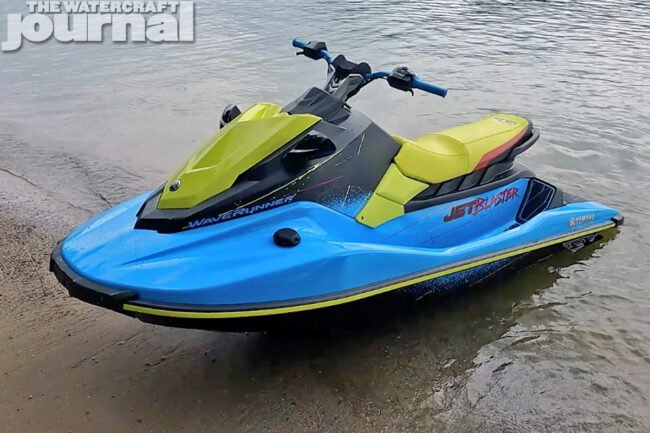
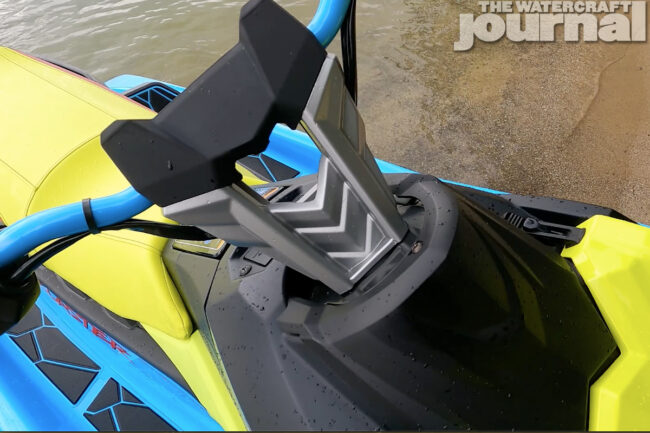
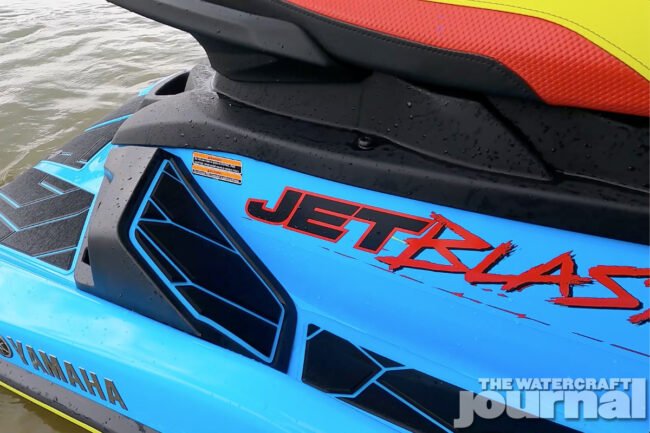
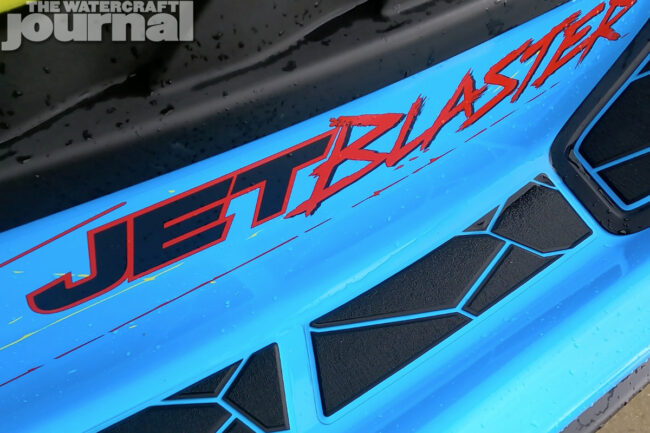
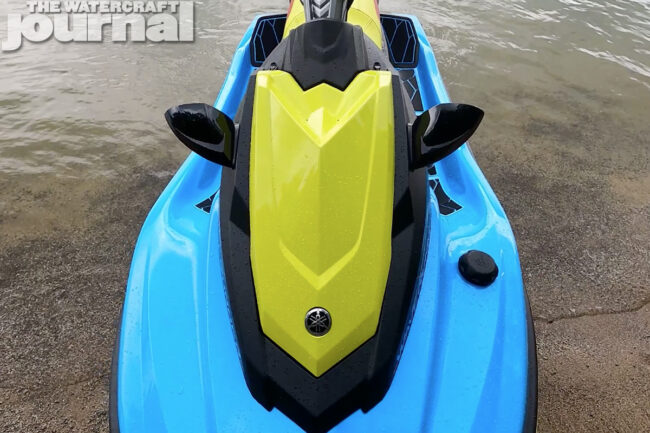
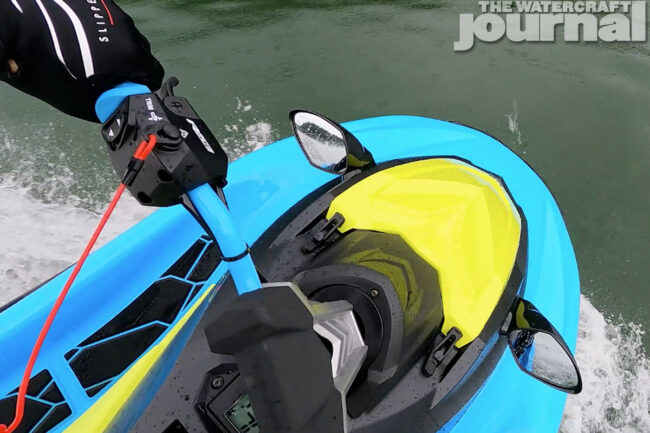
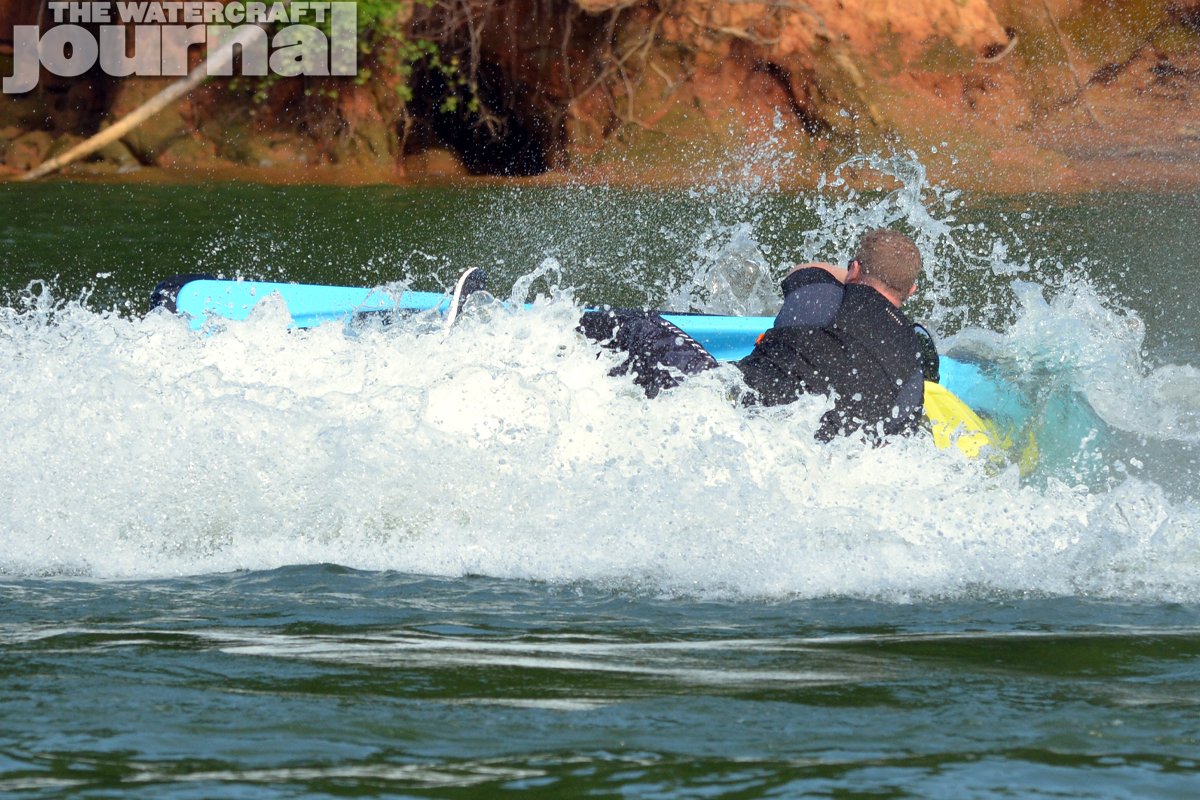
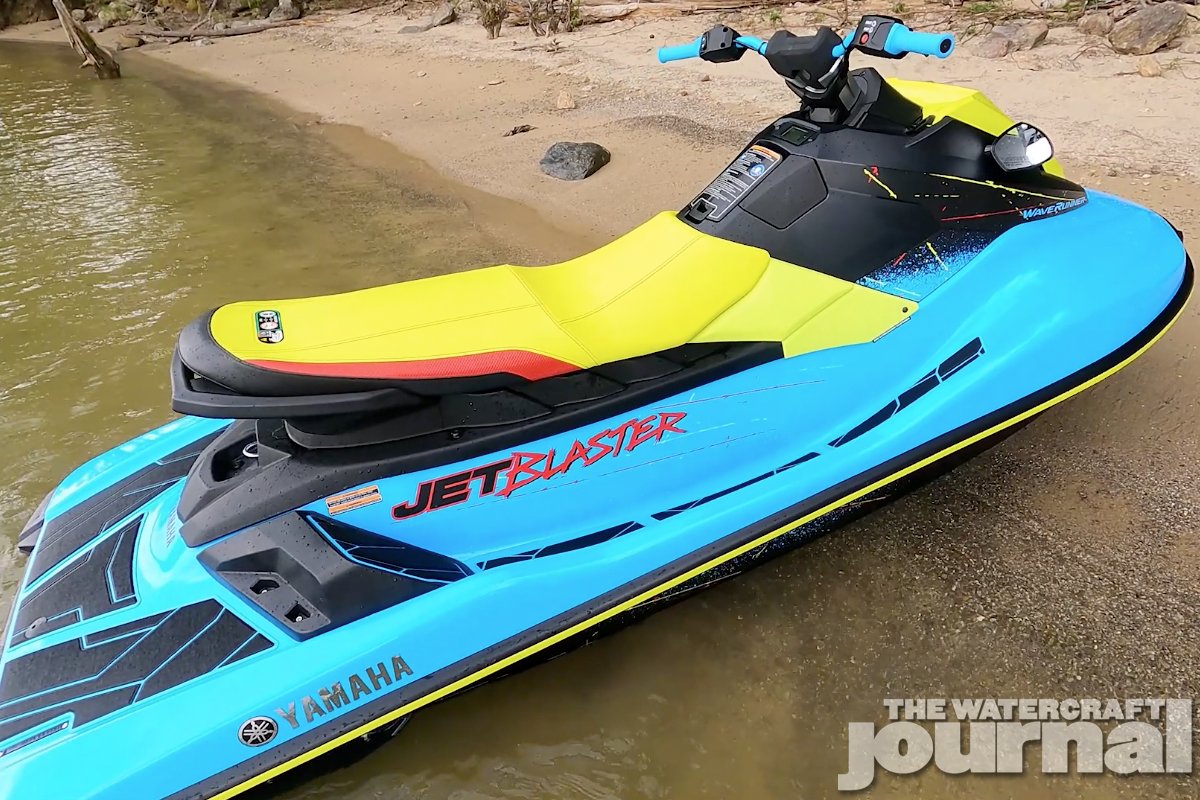
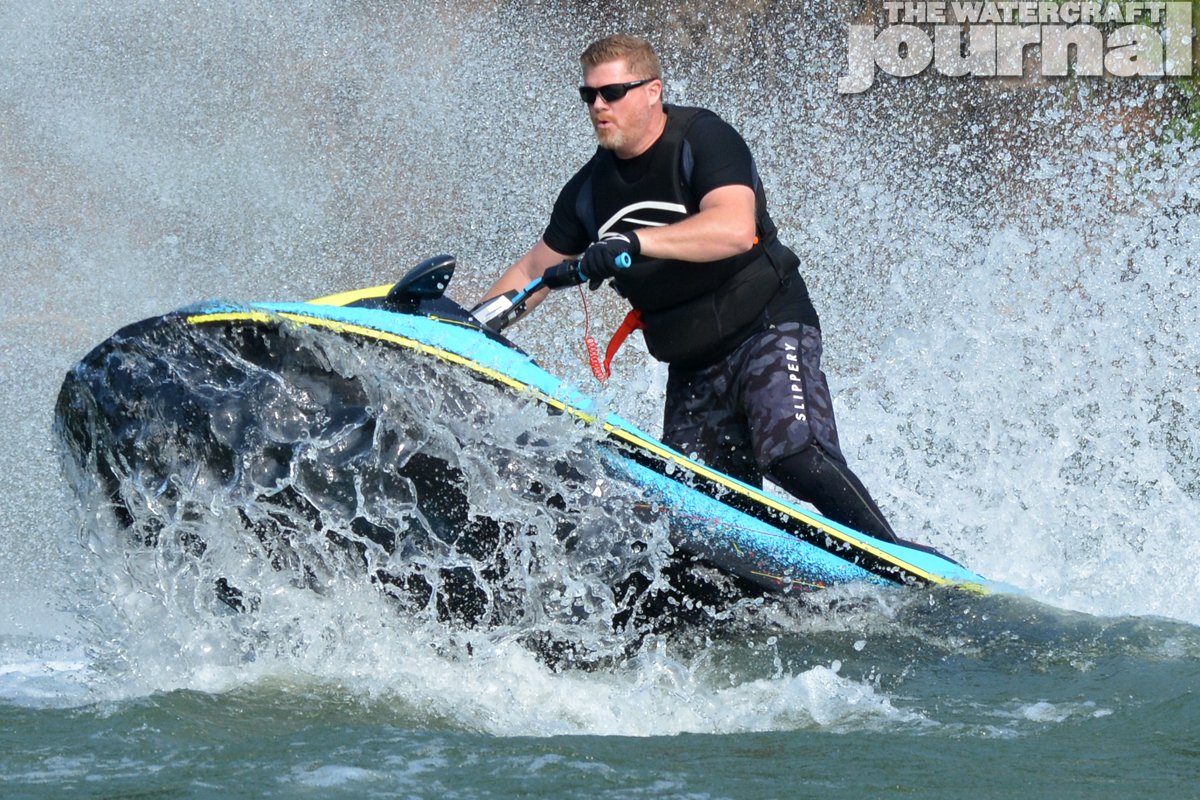
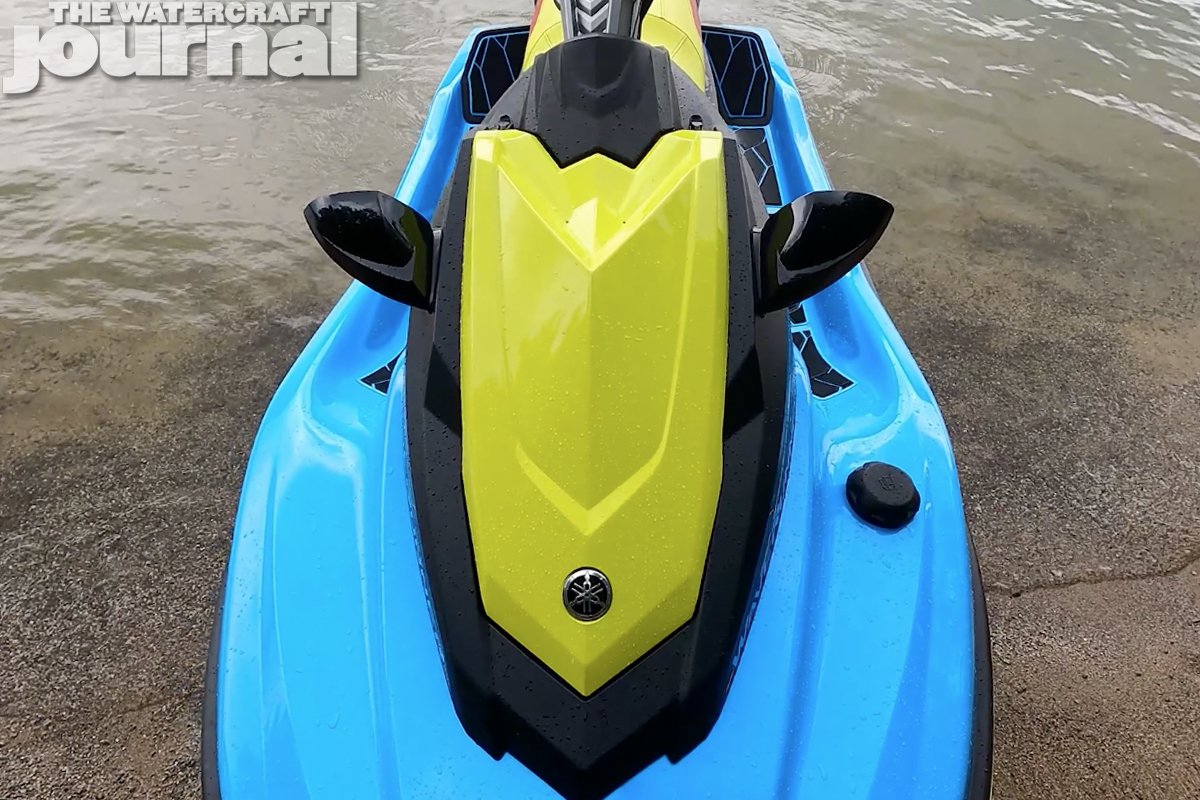
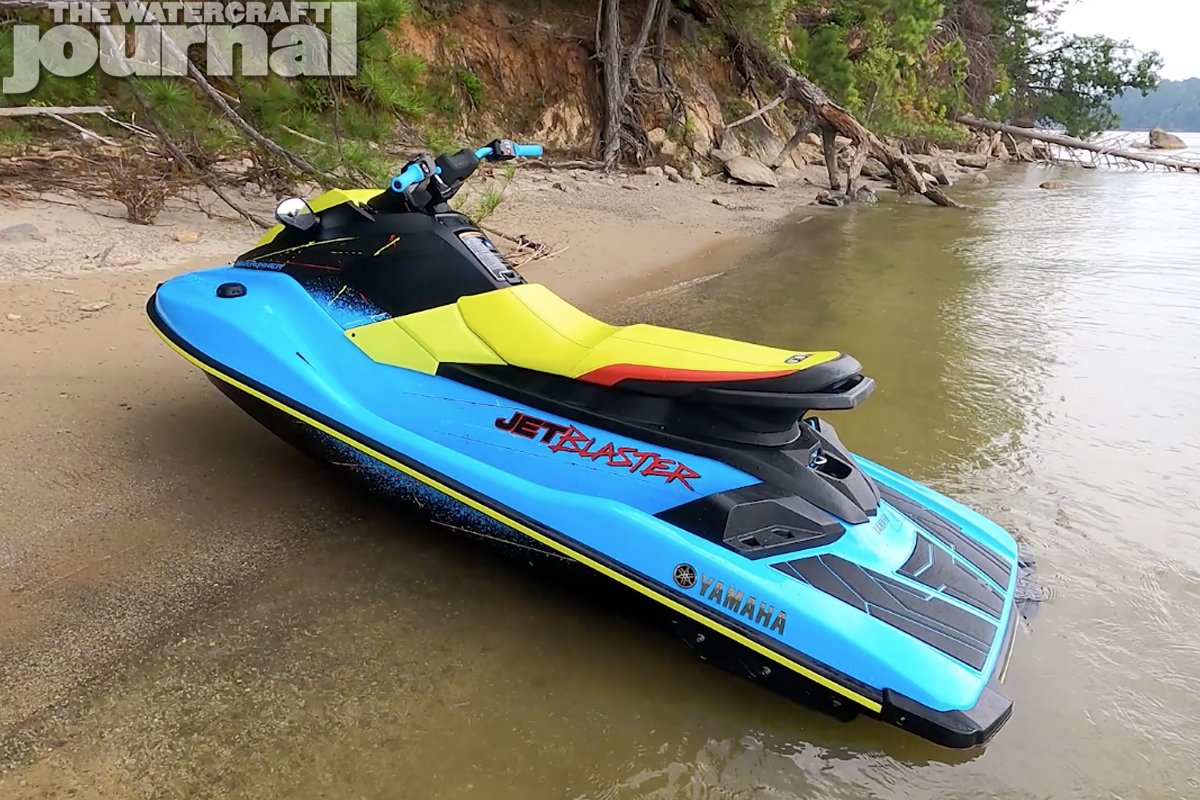
For 2022, gone is the EXR, the lightweight 110HP Rec-Lite rocket, and in its stead, Yamaha has metamorphosed our favorite little EX into the JetBlaster (MSRP $9,999). The new 2022 ‘Blaster takes all of racy fun of the EXR and pours in a healthy dose of rowdy playfulness that so many enthusiasts have been clamoring for. Drawing from the revered history of the WaveBlaster, the new JetbBlaster is perfectly capable of submarines, power slides and 360s.
Curious how well the new ‘Blaster stacked up against its famous predecessor, the original WaveBlaster, we referenced our previous article, Weight Watchers: The Power of Power-to-Weight Ratios to evaluate the two craft’s respective power-to-weight ratios. Weighing in at 360-pounds and producing a total of 63-horsepower, the 1993 ‘Blaster earned a power-to-weight ratio of .20:1 (horsepower per pound). Interestingly, at 549-pounds and making 110-horsepower, the 2022 Yamaha JetBlaster WaveRunner came in at a near identical .20:1 ratio! While certainly the new ‘Blaster is larger (10’3″ long and 44.5″ wide), it’s power-to-weight ratio is equal to the 1993 entry.
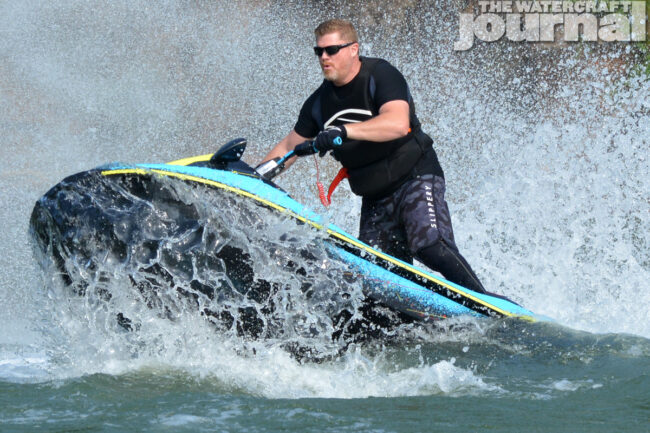
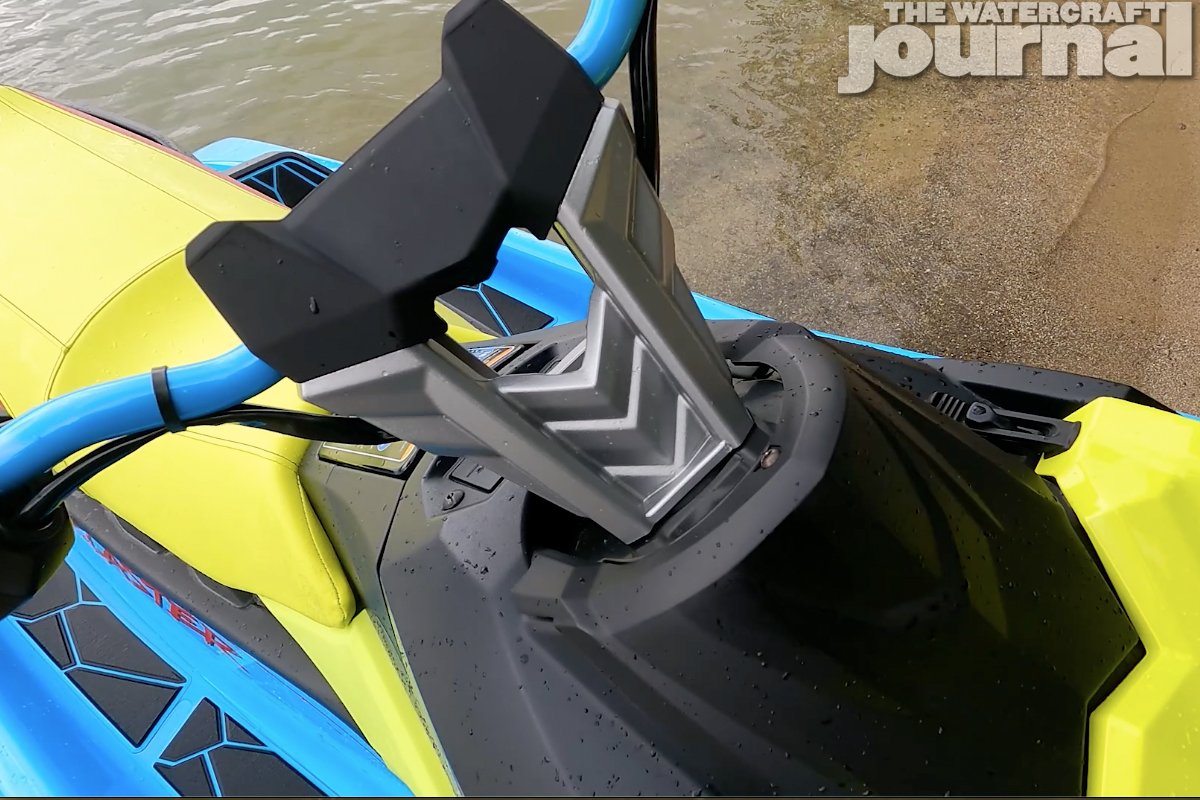
Newly equipped with angled, padded foot chocks, an open-neck cast aluminum steering system with wider 30-inch MX-style handlebars; and custom-configured electric trim, the new ‘Blaster is ideal for wake jumping and powerslides. Speaking of which, the repitched trim alters even the neutral position, raising the bow ever-so-slightly. At full tilt, the ‘Blaster stands tall and with a blip of the throttle ejects itself out of the water. No, it’s not a wheelie, it’s a liftoff.
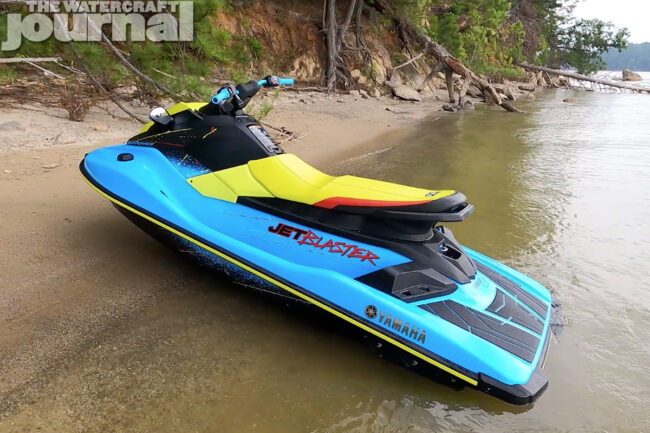
All of that low-end grunt is courtesy of the same TR-1 HO 3-cylinder rocketing the ‘Blaster up to speed. Power is immediate and the ‘Blaster responds in kind, leaping excitedly out of the water and sprinting up to a maximum GPS-recorded speed of 54.6mph at 7,960rpm. The TR-1 is accessed by removing the single-piece bench seat and through two windows cast into the black plastic “sub-deck” to reach for the dipstick, oil filter, battery or other maintenance items. For full engine access, the entire sub-deck can be removed with 15 screws within a minute’s time exposing the entirety of the engine compartment.
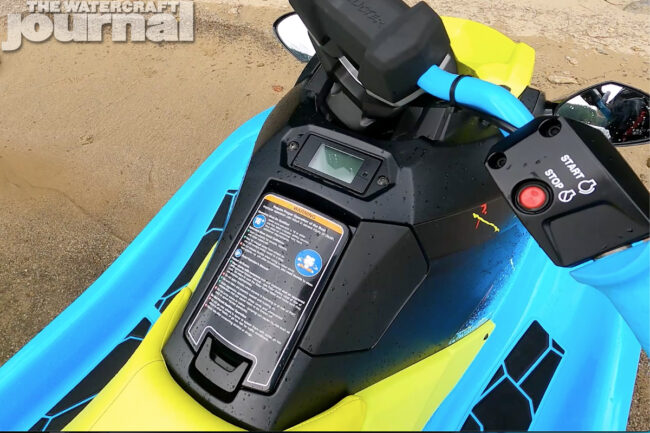
The ‘Blaster benefits from a 13.2-gallon capacity fuel cell, 7.7-gallons of total storage, two-tone CNC-cut traction mats, a padded spring-loaded folding swim step, and of course, Yamaha’s RiDE dual-throttle brake and reverse system. The revised LCD screen below the handlebars now reads off trim settings as well as a little-too-basic 4-bar fuel gauge. The front wet storage is optimal for a wet rope or flipflops. Thankfully, the center console is cavernous, albeit a tad narrow; a can of spray sunscreen, water bottle or a hat slip in without any trouble.
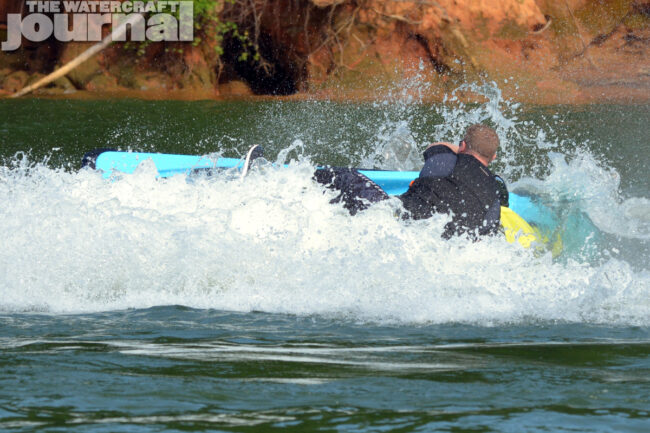
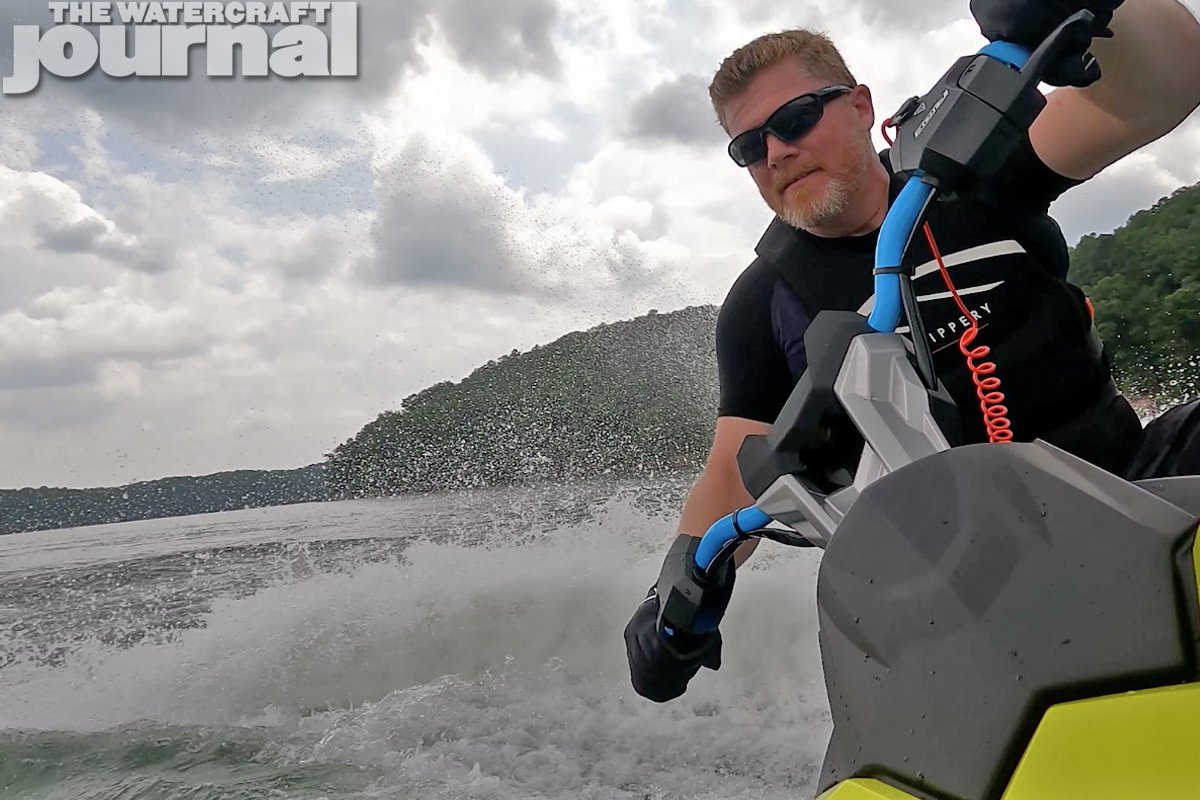
No, you won’t find cruise control or No Wake features on the JetBlaster either. And for most of you reading this, that is all you’d want anyway. Weighing in at 549-pounds, the JetBlaster with a little over 50-pounds lighter than the heaviest EX, the fully-loaded Limited. Pedestrian tricks like bunny hops, donuts, 360’s, wheelies, and even the harder-to-execute on-the-bondrail power slides from our youth are easily achieved. Wave jumping is an endorphin-rewarding experience. Frankly, it’s easily the most excitable, exhaustive fun we’ve had on a runabout in a long, long time.
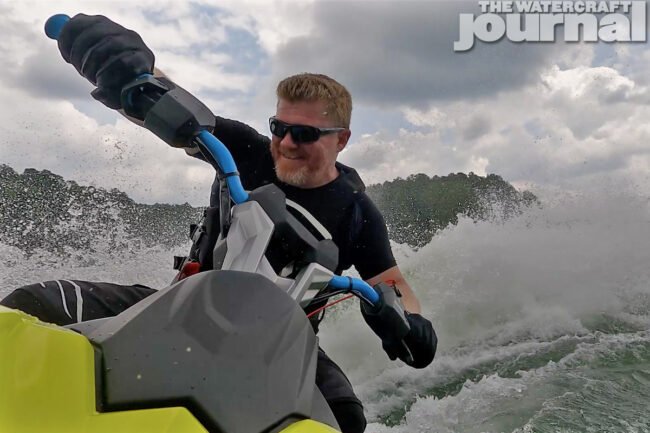
While cruising at plane, the ‘Blaster – like its EX siblings – is a relatively dry ride; its narrow bench seat and sloping footwells provide an upright but comfortable static riding position. But riding this way would be to wholly miss the craft’s purpose – like riding a standup ski solely upon your knees. Standing with your feet back in the angled chocks and shoulders up over the handlebars is how the JetBlaster wants to be ridden; responding to every shift in weight, every flick of the throttle and snap of the steering with intuitive, excitable energy.
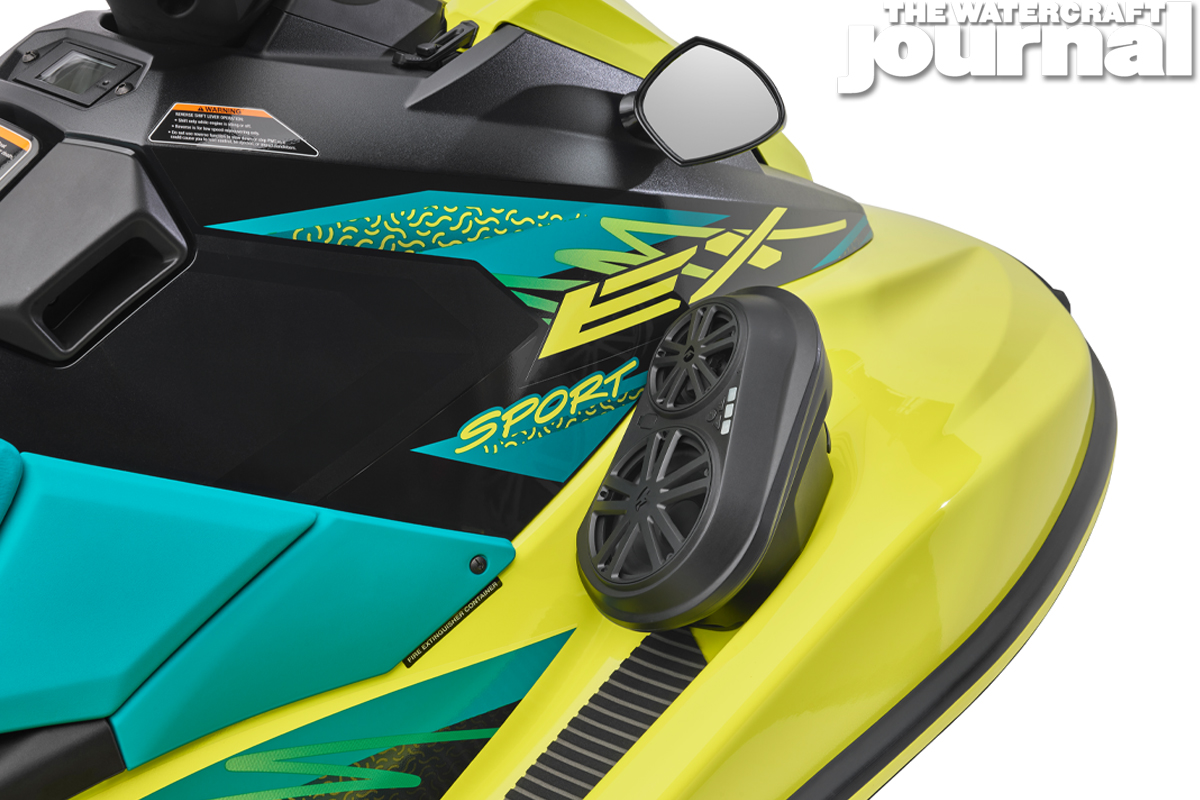
Bathed in a retina-searing Cyan with Lime Yellow, the ‘Blaster is wrapped in bright splatter paint-type graphics, and a high quality cut-and-sew, thickly-stitched one-piece bench seat cover. Yamaha forwent the pistol-grip style handgrips and went with a more rounded MX-style grip and riders will be switching up their positioning often. Lastly, a stainless tow eye juts out from below the rear of the bench permitting the towing of a raft or knee boarder, although the JetBlaster’s lightweight might result in a case of the “tail wagging the dog.”
A final change to the EX lineup resulted in removing the ‘Blaster from the Rec-Lite category and creating a new “Freestyle” category joining the 4-stroke SuperJet. The SuperJet sees a small price increase of $300, from $9,499 to $9,799 with no changes apart from some optional storage accessories and an adaptive bracket to fit two small EcoXgear speakers were made for 2022.
These two machines offer the most hyper responsive, athletically-challenging ride – although not too much. Snapping the tail loose, roosting friends, and spinning 360’s are child’s play – the ‘Blaster makes it that easy.
Originally published on Joshua Dowling’s Watercraft Zone, New South Wales recently went on another COVID-19 lockdown and this time the rules for residents not only applied to home life; they carried over to the water as well. Residents are required to stay within 5 or 10 km from home, depending what area of Sydney they reside. These guidelines apply to boating and PWC and are subject to change based on outbreaks.
NSW Police fined recreational boaters who traveled from a Sydney C-19 hotspot to an area about 40 km offshore to go fishing. Authorities have stated that public health order distance limits still apply even when on the water. They have provided a website for residents to check distances from their home addresses. Boaters had questions about exceptions for different types of transport.
The NSW Police Marine Area Command had this to say about exceptions: “There are no special provisions for motorbikes…doesn’t matter if you’re in a boat, on a bike, walking, running, skateboarding, or doing backflips…10km is 10km.”
When asked about getting permission to get a moored vessel serviced, the NSW Police command said: “Case by case basis, but for a recreational vessel, initially no. You need to ask yourself does it have to be done today or is it something that can wait a few weeks. If it’s urgent-i.e., your vessel will sink-then there’s other provisions (such as) calling us, Maritime, Marine Rescue, local marinas.”
The 2022 Yamaha Product Tour is stopping by Cycle Springs PowerSports for a one day only event. Join them at the Clearwater, FL store TODAY, August 31st from 11am to 6pm. This is one way to get up close and personal with the 2022 Yamaha lineup and to be among the first to check out Yamaha’s new line of WaveRunners – including the new JetBlaster – and new Yamaha boats for 2022.
Watercraft products on display include the Performance Series featuring the GP1800R SVHO. This thing is a beast! The new Recreation Series will be on display with the best-selling VX Limited HO. A couple of fully loaded models from the Luxury line will be there as well. These include the FX Limited SVHO and the FX HO with its new line of accessories. Some of the featured accessories include integrated audio speakers, tubes, tow ropes, and storage.
The all new JetBlaster should make an appearance as well and it screams fun! The JetBlaster is part of the new Freestyle Series which includes the SuperJet. We all know the SuperJet is a favorite among stand-up models. Rounding out the 2022 Yamaha Product Tour are the 252 FSH, and the 255X boats. The two boats are part of the Wake Series, and they look damn cool! You don’t want to miss this event!






 Steven includes a list of other recommended items and accessories as well. The pre-ride checklist might be useful for all of us! The guide includes instructions on how to launch a jet ski from a trailer and how to launch from a drive-up slip.