As summer ends, it’s time for some of us to winterize our jet skis. If you are unsure of how to do this or need a refresher, Steven in Sales has a guide. We’ll touch on some key points, and you can check out the complete guide from Steven in Sales here.
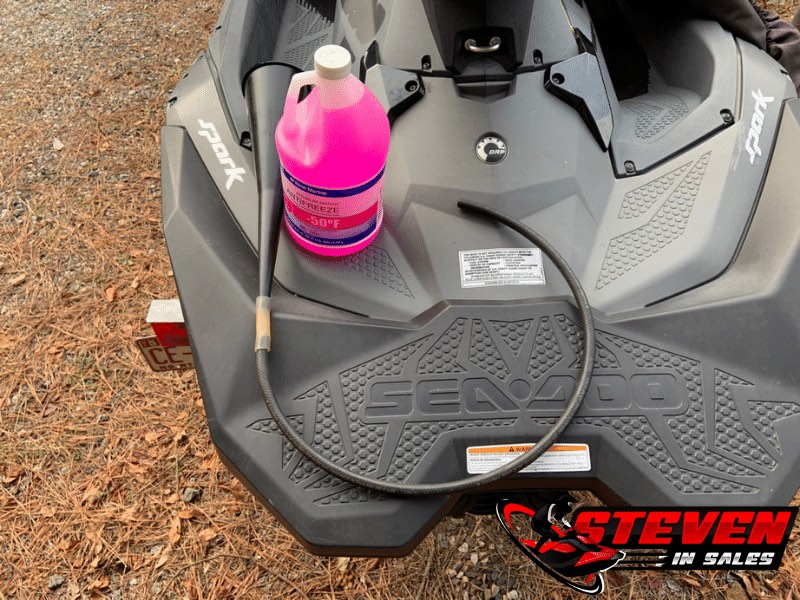
Before you begin winterizing your PWC, get your supplies in order. You’ll need a gallon of marine antifreeze per ski, marine fuel stabilizer, multi-purpose lube spray, fogging spray oil, and a smart battery charger. A flushing adapter is necessary for Yamaha brand PWC. Sea-Doo and Kawasaki use a 3ft garden hose for flushing. You’re ready to begin. Follow the steps in Steven’s guide and you can’t go wrong.
Winterizing is a must if you live somewhere where the temperature is below 40F/5C. If you don’t winterize your jet ski, the water inside the engine and intercooler can expand and crack the engine block. We suggest spending the $20-$200 on doing it yourself or paying to have it done at the dealer. This is better than having to replace the engine.
Even if your jet ski is kept in a temperature-controlled garage, Steven recommends winterizing to some extent. Fog the engine, charge the battery, coat the components with anti-corrosion spray, and add fuel stabilizer to the gas.
If you don’t want to handle the winterization and worrying about your PWC during the winter, call your local dealer and ask them about storing and winterizing your jet ski. They may have space. When it’s time to de-winterize, Steven has you covered! Follow his de-winterization steps, and you will be good to go!
Today’s high performance PWC enjoy so much power-on-delivery because of the increased atmospheric pressure that their superchargers generate. That compressed air multiplies the efficacy of the compression stroke, igniting into a potent power stroke of the piston and consequently, horsepower. But what happens to all that extra compressed air when the throttle blades suddenly snap shut? If it’s not “scrubbed” that excess pressure can damage throttle bodies, supercharger clutches and more.
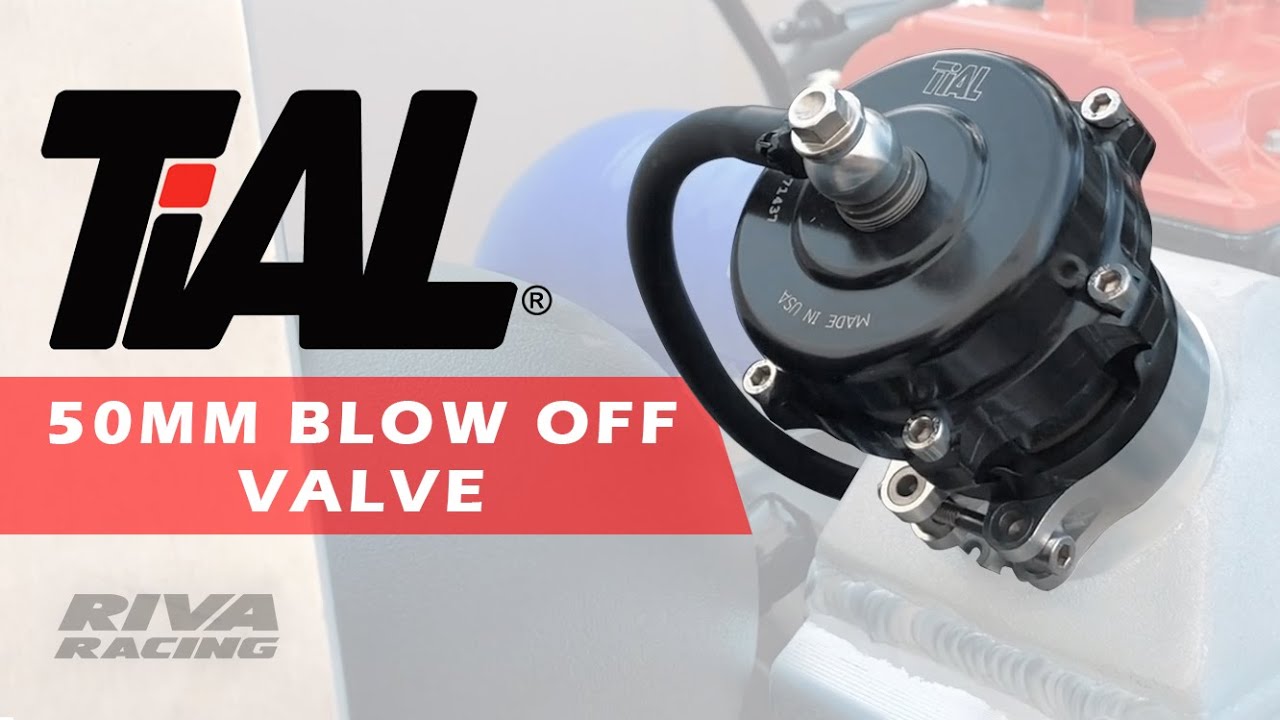
That is why RIVA Racing offers Tial Blow Off Valves (BOVs) with their Yamaha Power Coolers and Upgraded Sea-Doo Intercooler Tubing Kits. “This valve improves supercharger reliability and performance by relieving unwanted pressure during off-throttle operation; reduces supercharger clutch and gear wear and eliminates heat soak in the discharge tube,” per RIVA’s listing online. You can preserve your supercharger and sound cool while doing it too.
The body of the Tial BOV and all internal components are CNC-machined from 6061 aluminum alloy, and features a large 50mm valve and V-Band design aluminum mounting clamp. For Sea-Doo applications, RIVA includes their precision-formed silicone tubing with a specialized molded-in bung for the BOV. For Yamahas, the Tial BOV comes as part of their upgraded “Power Cooler” intercooler kit. For those of you making extra boost and/or revving your PWC well beyond factory specs, do your ski right and get a Tial BOV today.
If you’re in the market for a brand new PWC then you’re in luck! Sea-Doo and Yamaha have both crushed the 2022 model lineup reveal and are bringing loads of new features to the market. Both manufacturers have introduced new products that have broadened the PWC industry and allow consumers to use their PWC like never before.
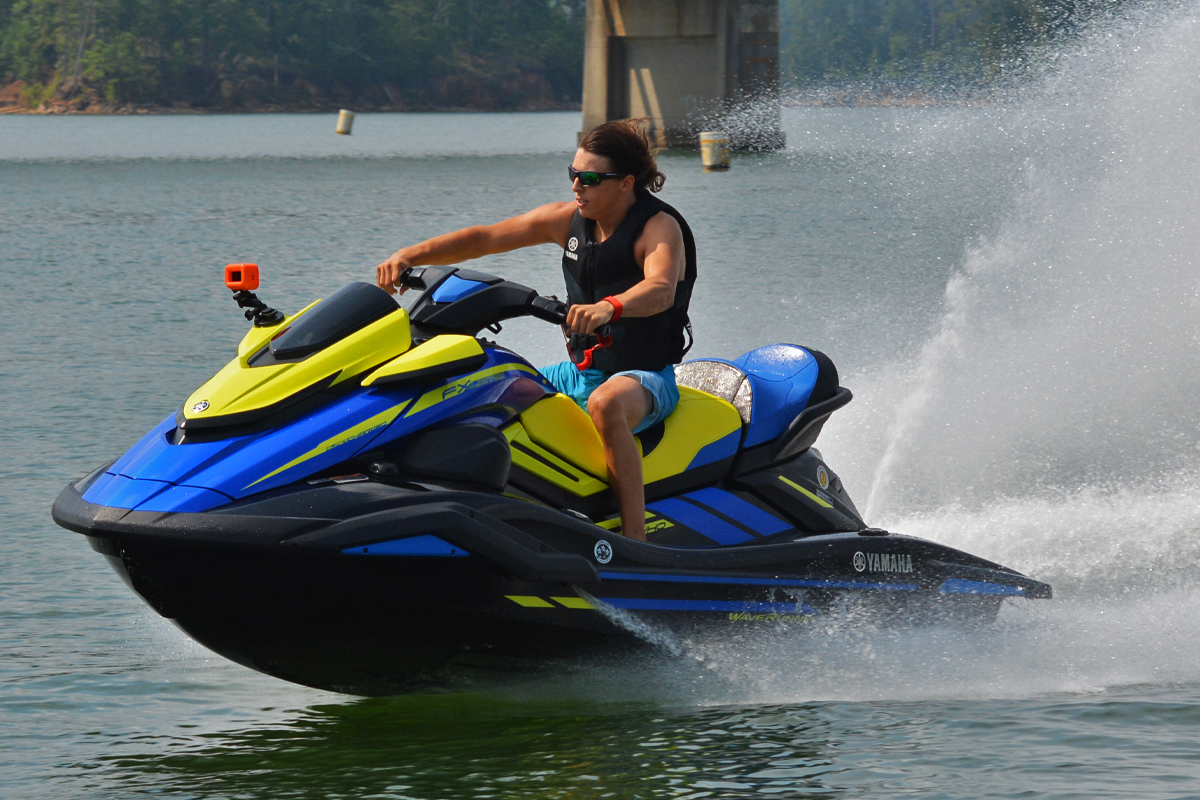
Yamaha was kind enough to fly me out to their home base, stick me into a hotel suite, and let me have an entire day on the water with all their new products for 2022. They may have rolled out the red carpet for me, but I was far more interested in an action-packed day on the water. The big hit from Yamaha is going to be the all-new JetBlaster! The addition of the light-weight, compact JetBlaster is going to add to Yamaha’s freestyle segment and appeal to adrenaline junkies and thrill seekers alike.
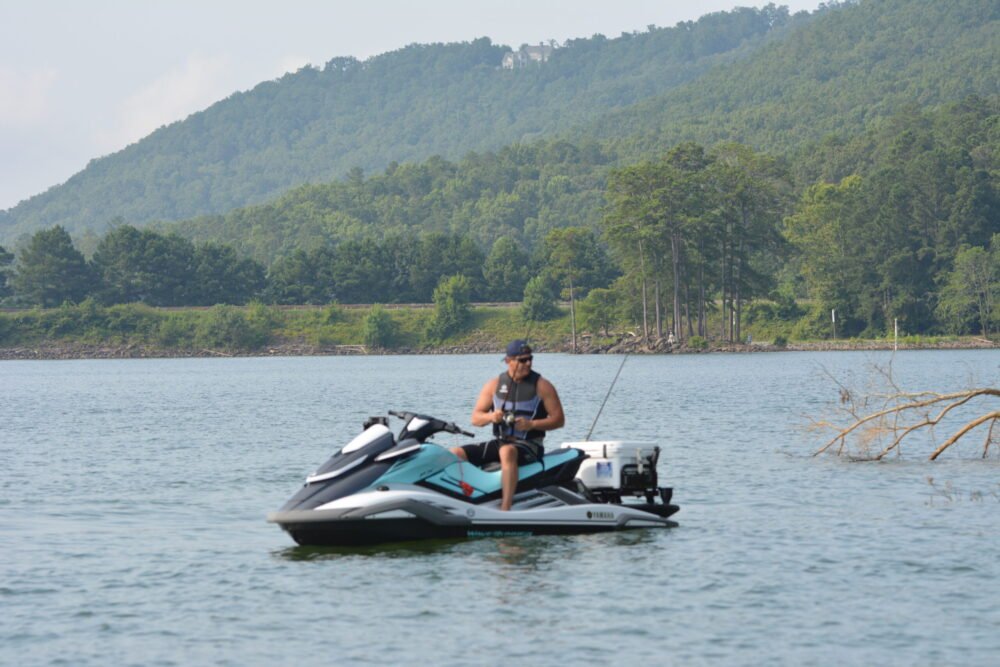
Even though the JetBlaster was truly a “blast” to ride, I must say the changes made to the FX series was the highlight of my trip. Yamaha is now offering a unique platform, the RecDeck, for all 2019-current FX models. The RecDeck is a removable extension added to the stern of the watercraft where an endless number of accessories from both Yamaha and the aftermarket can be added. Yamaha will be offering two fishing packages, a rack package, a lounge chair package, and a tow sports package to add to the RecDeck.
I love to fish just about as much as I love high-performance PWC so the RecDeck is going to be a huge hit in my garage this year! While Sea-Doo has produced a designated fishing model for several years now, it just isn’t the right fit for me. The Sea-Doo FishPro is a wonderful watercraft for avid anglers and recreational riders, but it is limited to a naturally-aspirated engine. The beauty behind Yamaha’s RecDeck is that it can be fitted to both the naturally-aspirated and Supercharged FX models so performance enthusiasts, like myself, will have plenty of speed when trying to get to our favorite fishing spots!
Not only does the RecDeck have the capability to be fitted to my FX of choice, but I love how highly versatile that it is. I will have the ability to get my fishing setup dialed in and quickly changed to a long-distance riding setup in a matter of minutes. Yamaha will also be adding a new digital display that is GPS equipped, an audio system, and several other features to the FX line this year. With the combination of the RecDeck and added features to the FX line, you can bet I will be catching some monster fish in the Summer of 2022! The 2022 model lineup from Yamaha is for sure to bring more riders into the PWC industry, but Sea-Doo has managed to break away from the traditional PWC market.
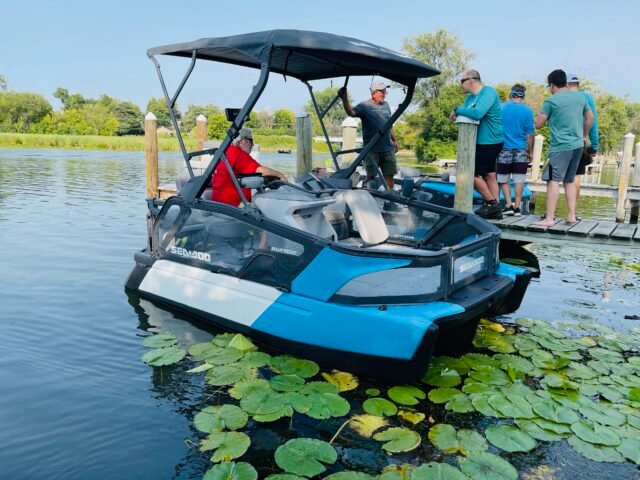
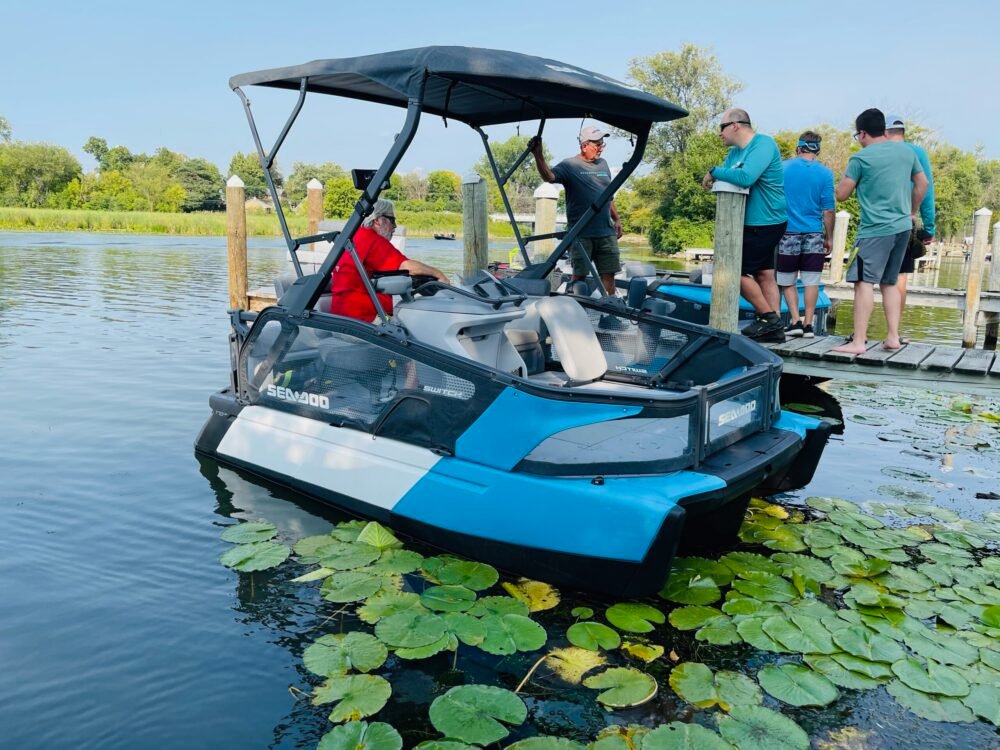
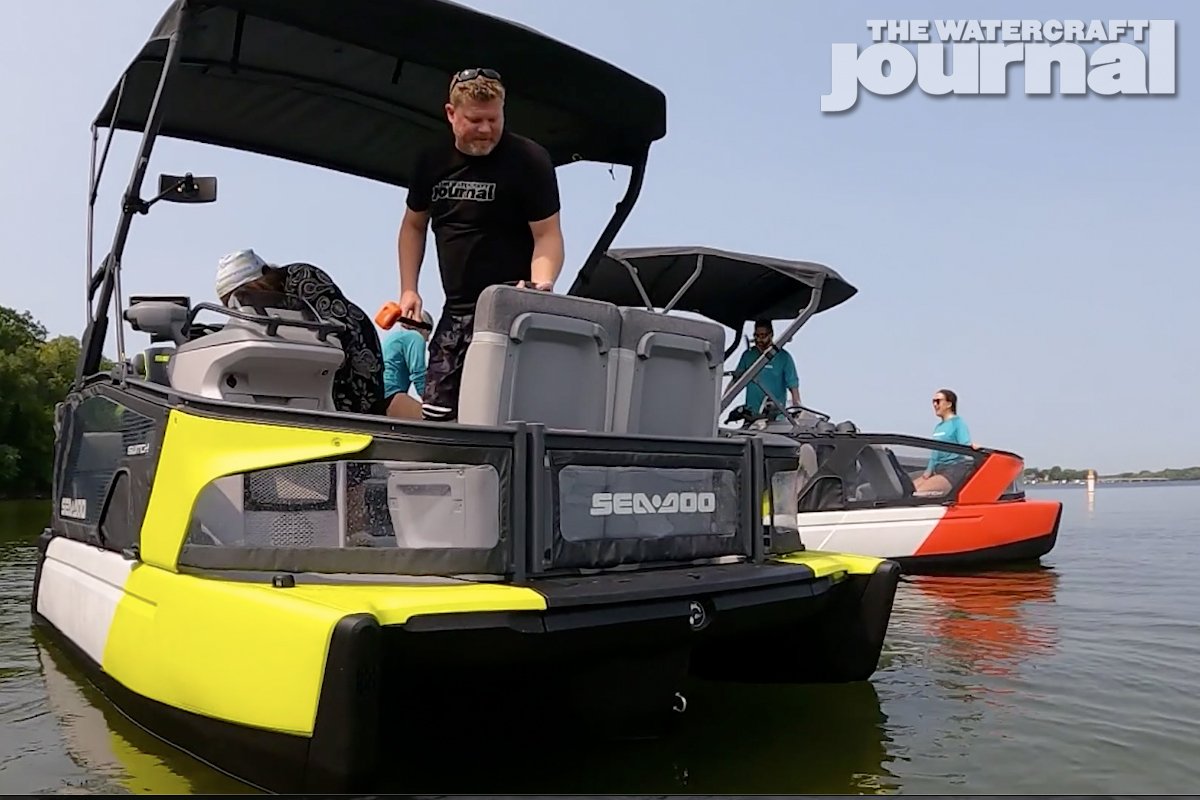
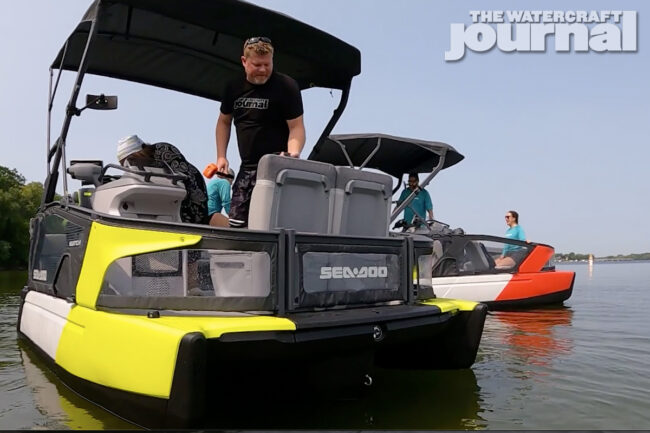
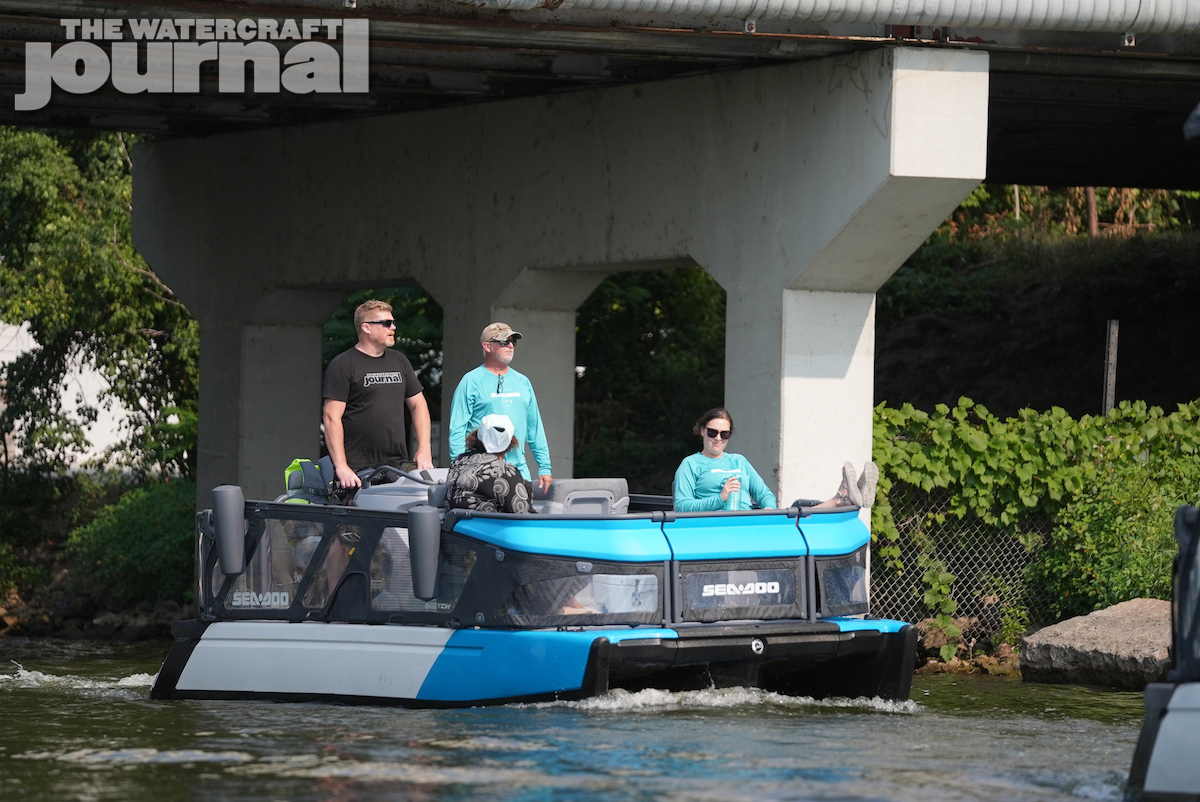
The highlight from Sea-Doo’s extensive 2022 model release is going to be none other than the Switch. Admittedly, I was a bit skeptical about a jet-powered pontoon boat with handlebars; having countless hours behind the wheel of a boat, the idea just didn’t seem fitting. However, I was quickly proven wrong after I spent a day on Lake Minnetonka to experience all the Switch models. The versatility of the Sea-Doo Switch is unmatched by any other pontoon boat, or any boat, on the market! If you want comfortable furniture for the entire family, then Sea-Doo has you covered with configurable seating.
If you want a sundeck on your Switch, then Sea-Doo has you covered with the optional deck mats. If you want an open layout for fishing, then yes, Sea-Doo has you covered too. One Sea-Doo Switch can be configured to your liking and rearranged in a matter of minutes. Sea-Doo’s LinQ system and an almost Lego-styled deck allows the Switch to be setup in countless configurations on just one single boat. Yes, the versatility of the Sea-Doo Switch is brilliant, but the performance of this pontoon boat caught me by surprise.
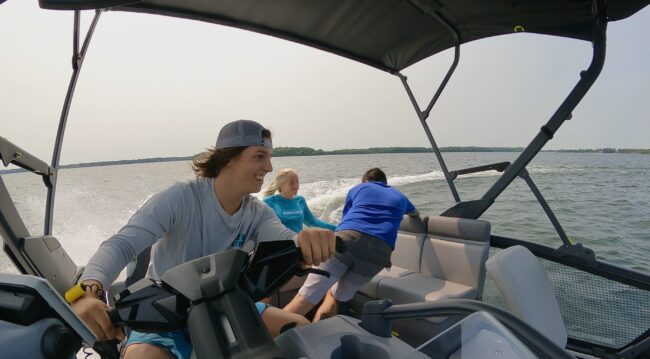
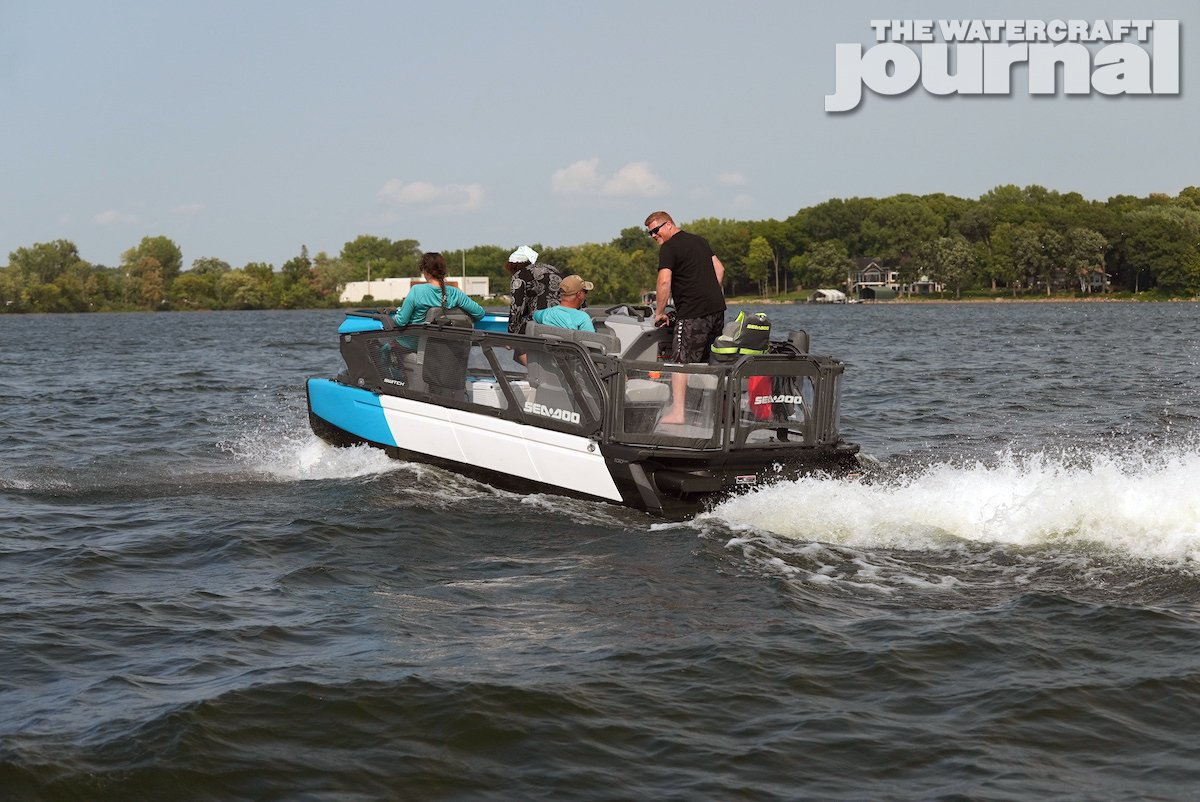
The Switch is considered a tri-toon with a larger center hull and two smaller hulls on the outside for added stability. The center hull greatly resembles one of a traditional PWC, sits lower in the water than the outer pontoons, and even has sponsons in the rear! This entire combination made for a sporty ride that felt like a PWC; no other pontoon boat on the planet will lean in for a turn, do donuts, and create as many smiles as the Sea-Doo Switch! Surprisingly, the handlebars at the helm only added to the fun factor. I was able to whip the boat around and have much more control than a boat equipped with a traditional steering wheel.
The 13-foot compact Switch model paired with the 170 horsepower 1630cc engine left me speechless! I was astonished as to how close it resembled the riding characteristics of a traditional PWC but yet the 13-foot Switch can still take the whole family on board! Admittedly, I probably had far too much fun at the helm of the 13-foot Sea-Doo Switch; maybe one day I’ll have to buy one for myself! My condolences go out to the Sea-Doo staff and media outlets who had the unfortunate opportunity to tag along for my joyride; I hope y’all did not hit the deck too hard!
After the release of the 2022 models from Sea-Doo and Yamaha we can all agree that there are more ways to use a PWC, or a pontoon boat, than ever before! I am truly amazed at the creative new products being released from both manufactures. Whether you want to fish, go out for long cruises, or even take a group of friends or family with you, the 2022 model lineup from both Yamaha and Sea-Doo will have something for you.
Check out this video RedPoints, featuring the top five personal watercraft inventions that were on the market in 2019. It begins with the Cabaratec, an inflatable e-foil made in Czech Republic. This thing is big, like ironing board big. It weighs in at 14 kg plus 6kg battery, making it a lightweight piece of equipment. A single charge gets you 80 minutes of ride time using the Li-ion battery.
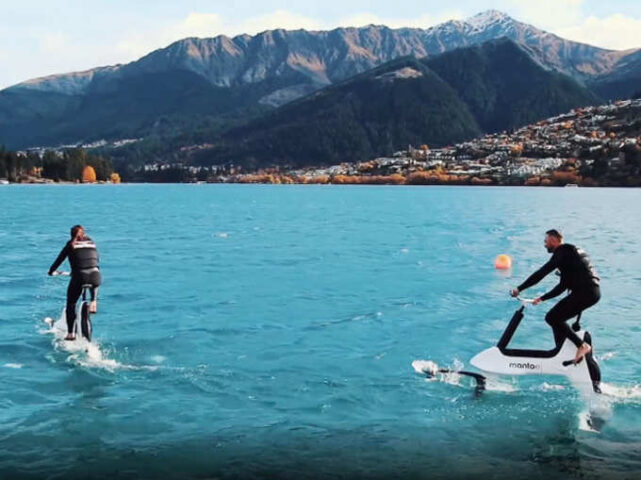
Next up is another foil, the Hydrofoiler XE-1. It’s a waterbike from Manta5, a company out of New Zealand. It looks like a lot of work to get it to the water for launching. It must be carried in pieces and assembled on site. It looks like a good workout once you get assembled and into the water. The ride time is up to 4 hours and top speed is 12 mph. The frame is aluminum with carbon fiber foils. It comes with a Garmin 2Bike Remote that can be used with an app to keep track of various data.
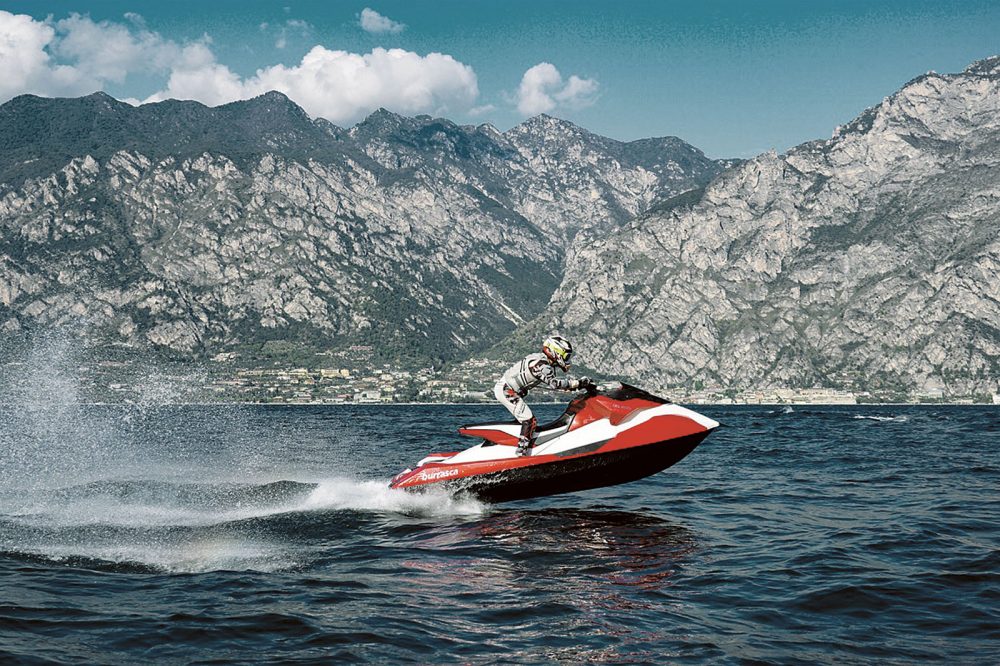
Next on the list is the Burrasca, which we have covered extensively. It is one bad ass machine in both looks and performance. The crew at Belassi doesn’t cut corners when building these machines. They use state-of-the-art technology and everything about this watercraft is high performance, down to the colorways!
Now we’re off to the air with the Zapata Racing FlyRide. The FlyRide is designed to be used with a jet ski. Connect the hose to your ski and take off! It makes hydroflight a real thing. It looks like a fun thing to do on vacation.
Rounding out the top five is the Renegade Hovercraft. These things look fun! They are fast and furious on the water. It comes with a 4-stroke engine and is styled with aircraft in mind. They are user friendly, simple to drive, and quiet. With four different models to choose from, there is one for every type of driver.
Check out the RedPoints video to see all five watercraft in action and let us know if you have seen any of the above watercraft in your travels.
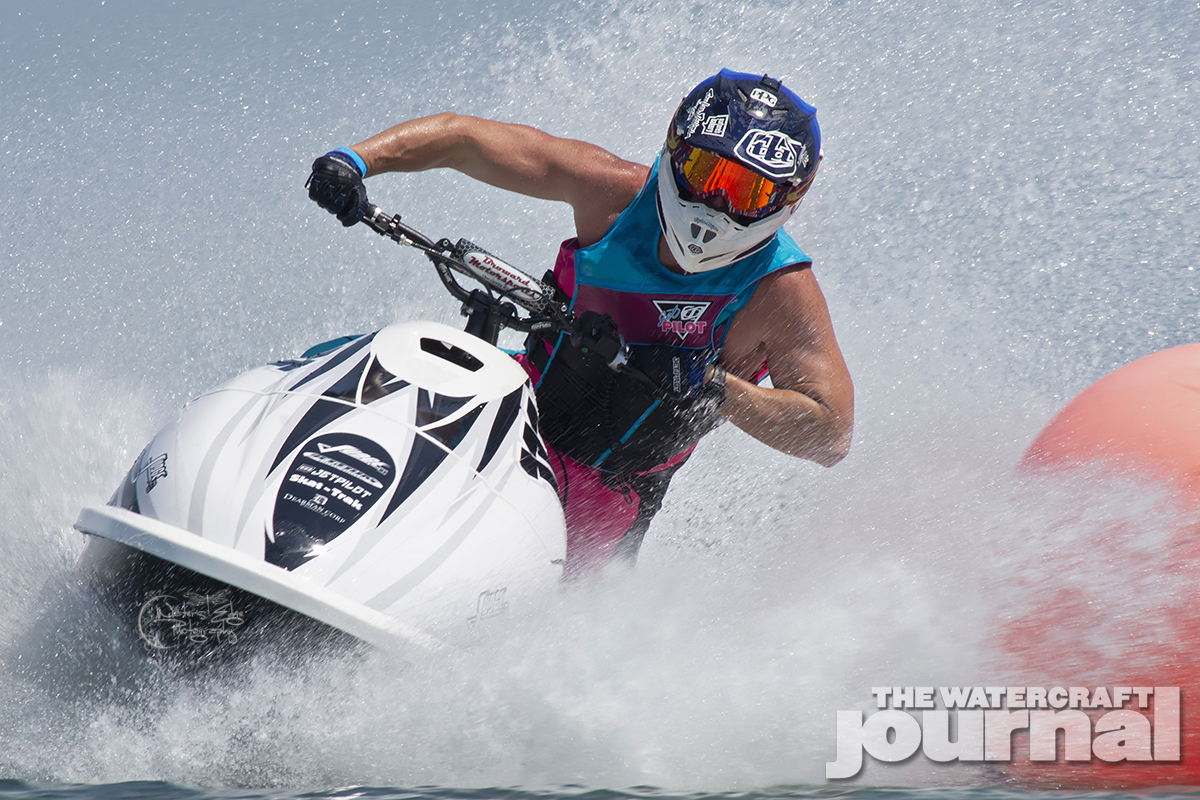
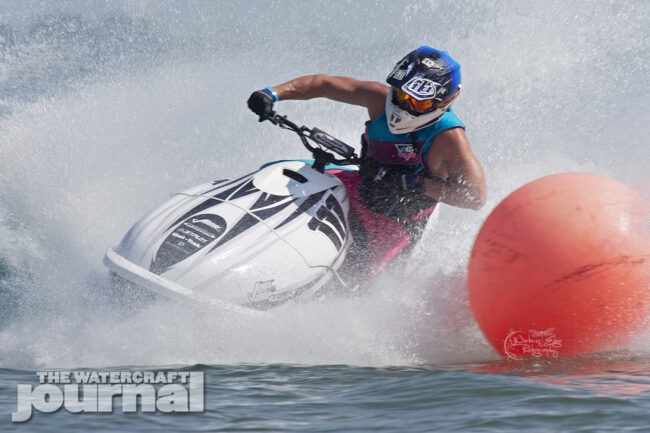
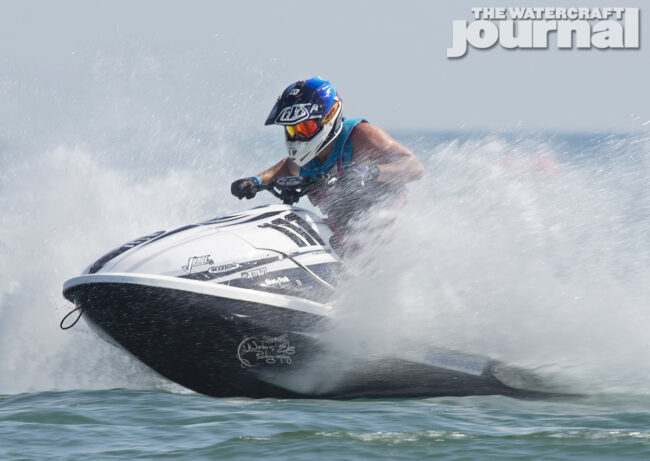
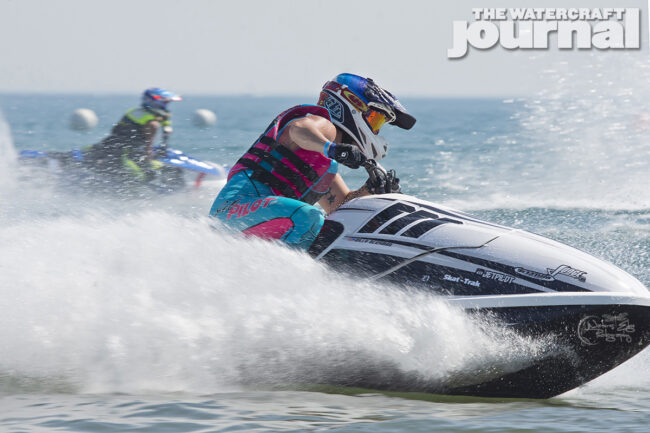
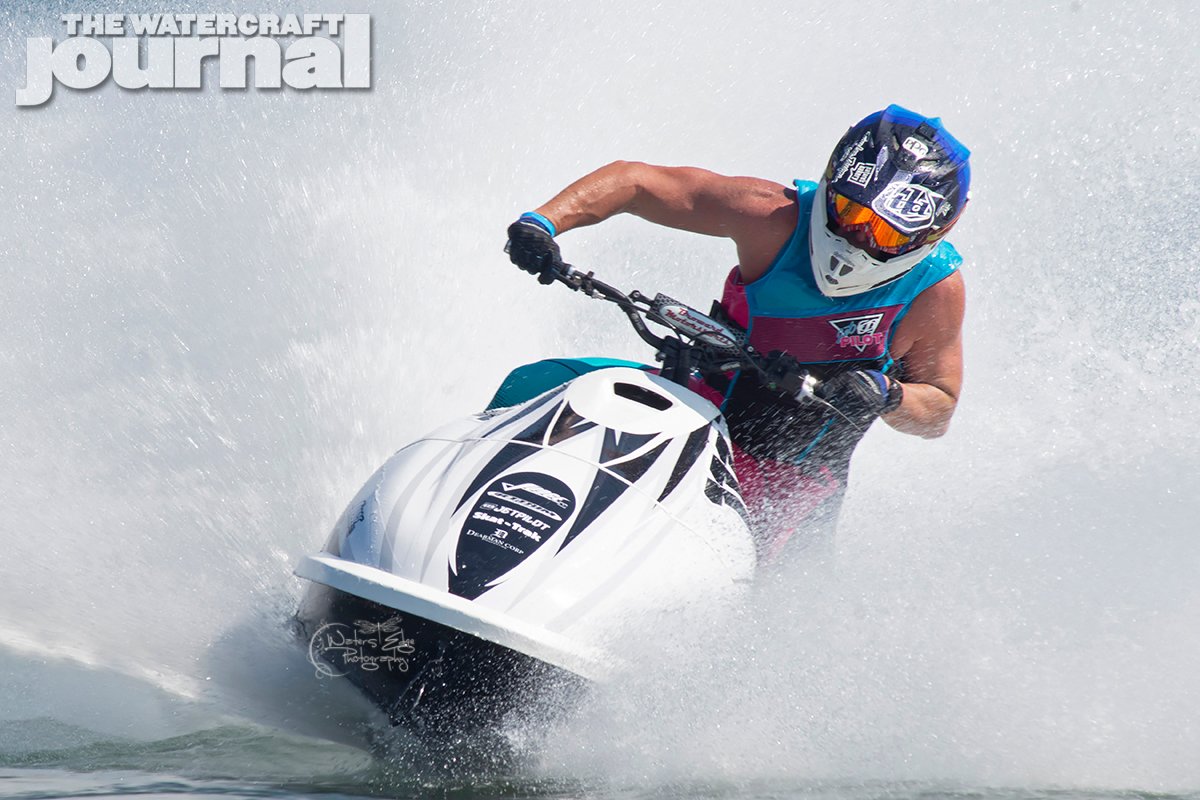
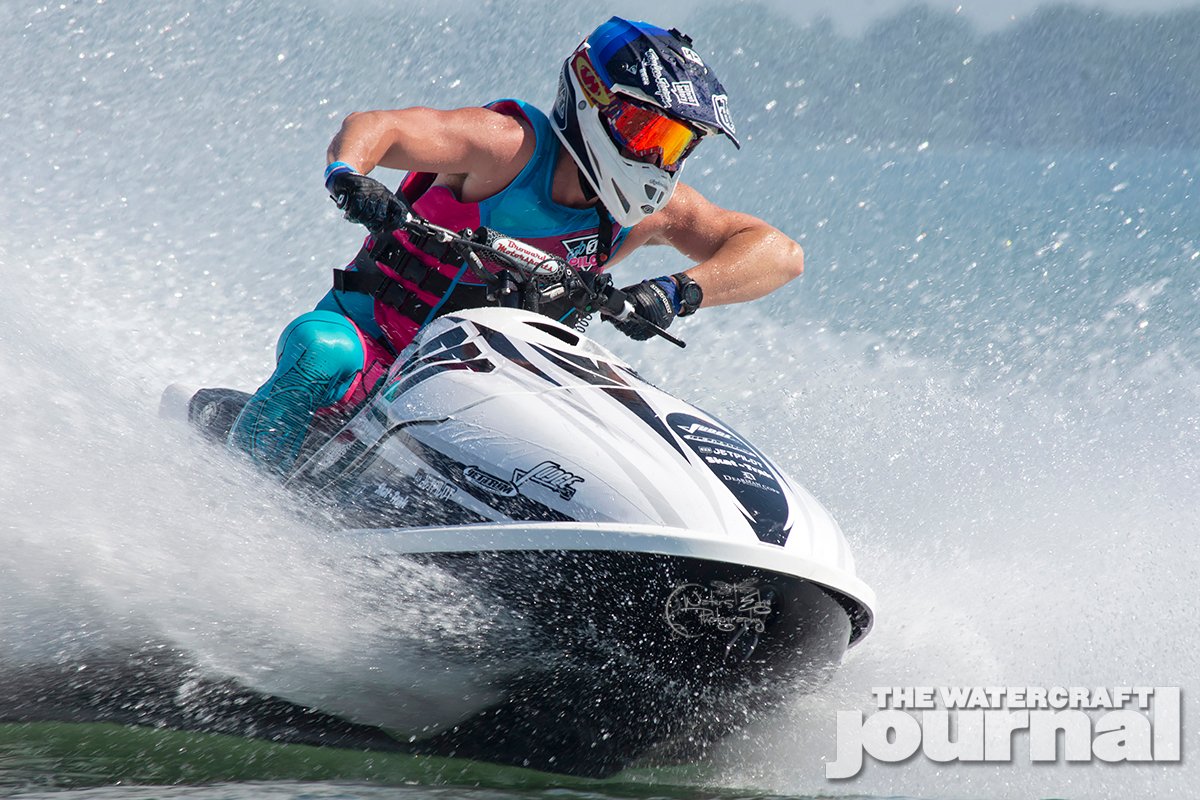
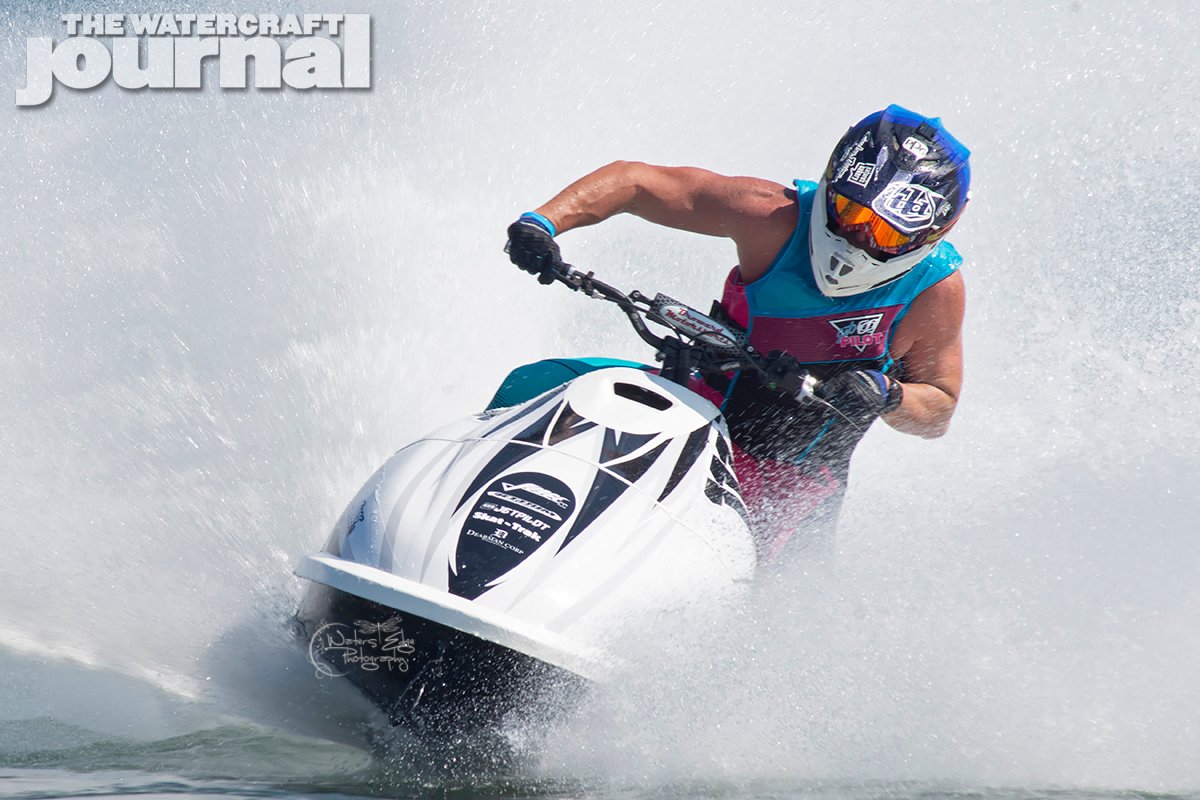
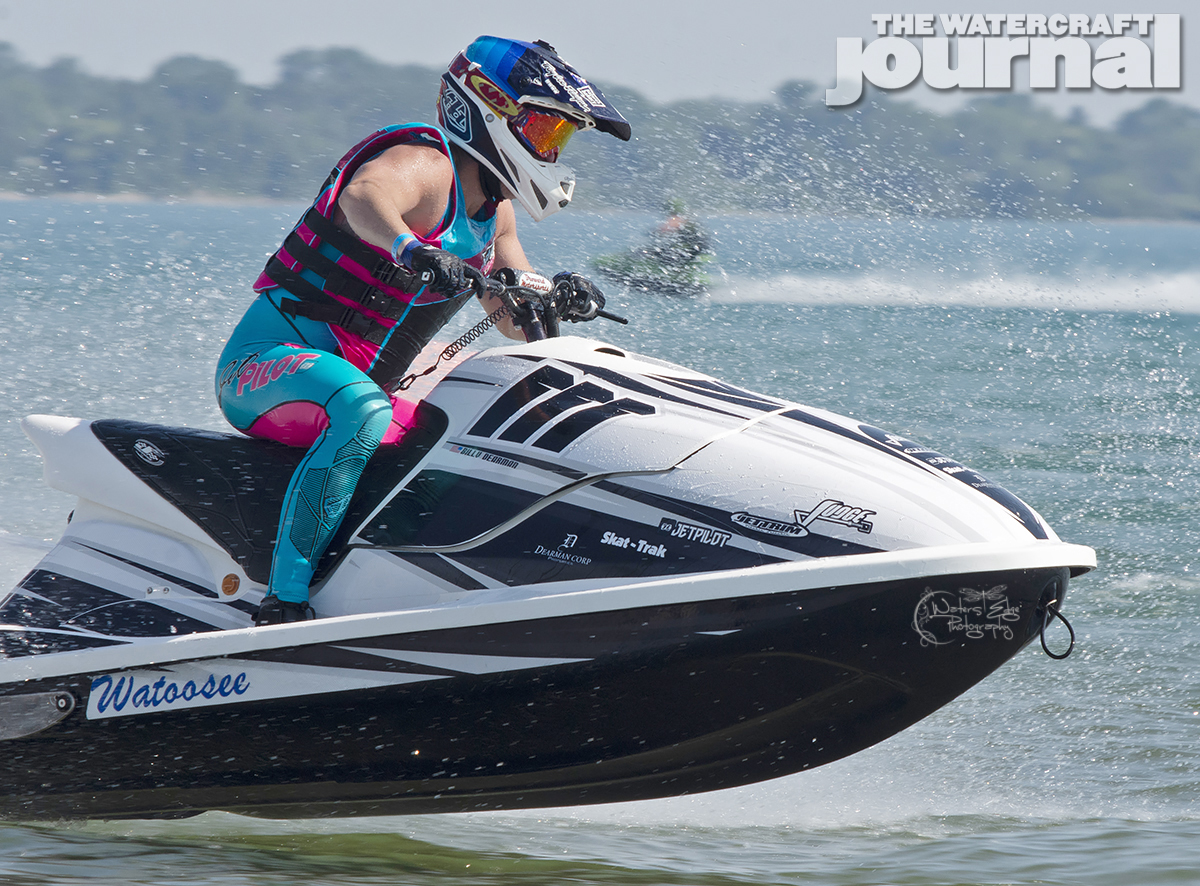
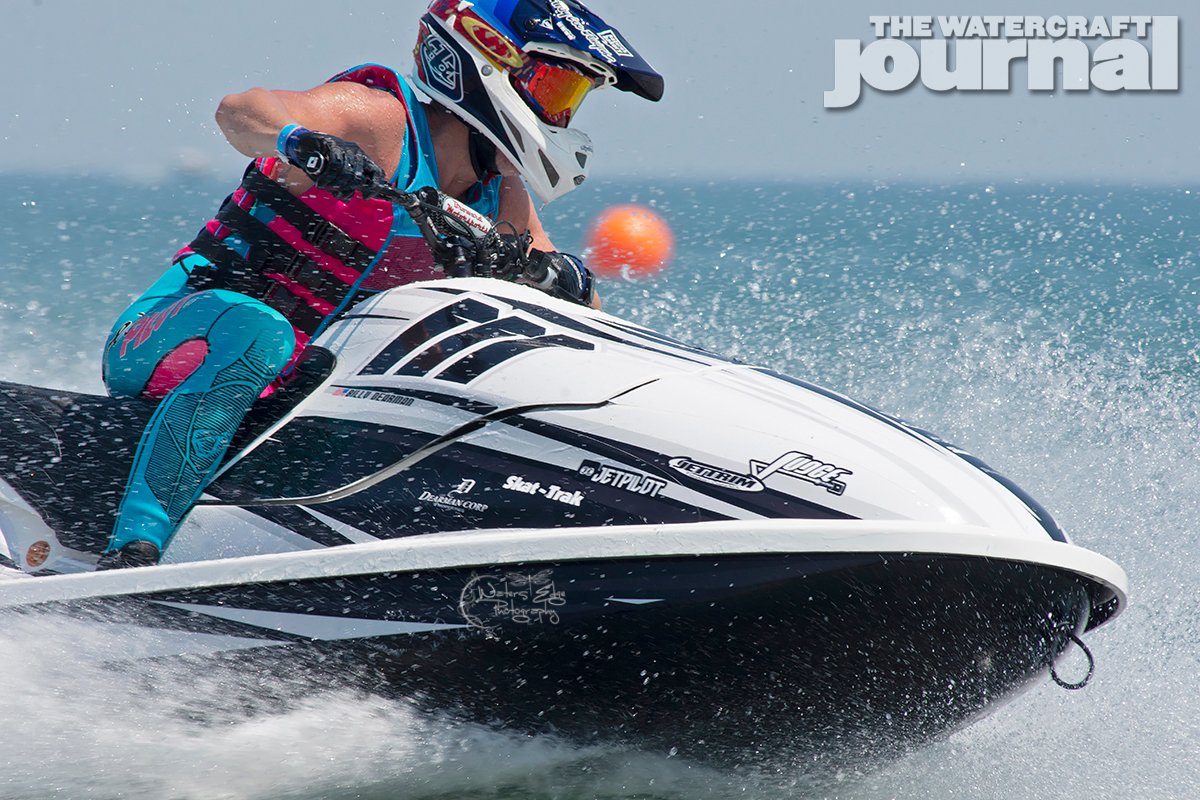
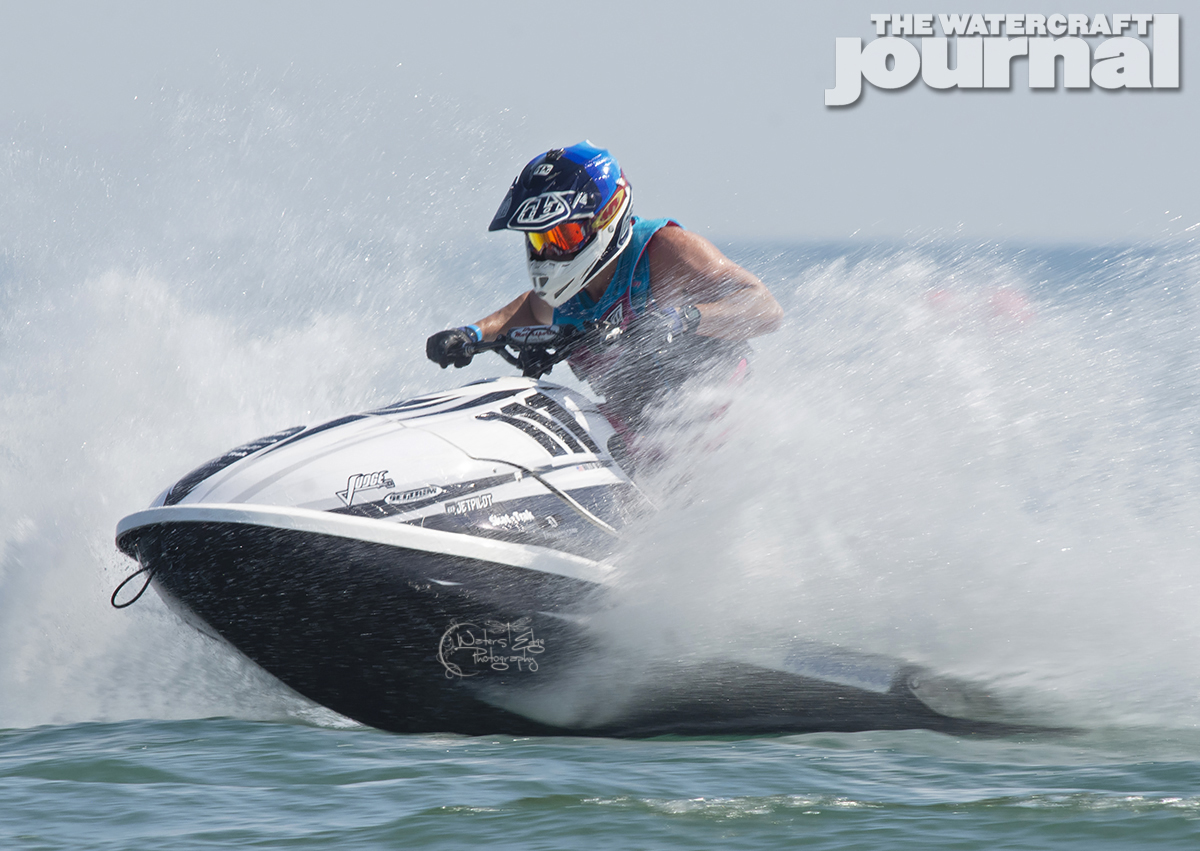
The Watercraft Journal spoke to Billy Dearman to ask about his new hull and how racing went at the Pro Watercross Round 6 tour stop in Racine, Wisconsin.
The Watercraft Journal: The Pro Watercross Tour has been splitting fairly evenly between ocean and lake racing lately. Which is your favorite?
Bill Dearman: That’s a hard question. This new hull we’ve got does really well in choppy water, so basically (the Racine race weekend) wasn’t to my advantage because the water ended up just being really flat. On Saturday, the water was kinda choppy and we had real good water for our hull, but for Sunday’s race, basically the water was flat and when we’ve got the younger kids in there racing against us on the Wammers, the Wammers just turn so hard.
I’ve got one of those as well, and when you’re racing those things, you just don’t have to lift the gas. And on these new boats, basically it just won’t corner like the Wammer will. It’s got more top end and it handles the chop better, but when we’re out here on flat water, it’s just not going to run through the buoys like they will. So we were fighting a battle with that (at Racine.). We got out front in every moto, but then the younger kids were chasing us down and right on me after four or five laps. It just works out that way.
I love surf races, I think they’re fun, and then we’re really good at flat water too because we’ve got the big motor. Some days go better than others, but any time we can get out here and race and nobody gets hurt, it’s a good day.
WCJ: The younger racers are definitely giving everyone a run for their money. How does the age difference impact your training and your racing, and do you find yourself running more of a mental race and focusing on strategy?
BD: As I have gotten older, I’ve had to do way more training than I used to. I remember back when I was doing this and I was 16 years old and back then it was ‘okay, we’re going racing,’ and you didn’t have to change up anything in your daily routine, you just go and get on the jet ski and go racing. Now, you’ve got 30 miles worth of running you do every week and two to three day’s worth of lifting and so many days of riding your bike, and VersaClimber, and all that.
It becomes more of a full-time gig to be able to race at this level, but I’ve been doing this almost 30 years now, and these kids are coming around and there is no way to get around the fact that they are 26-28 years younger than I am, and if I want to compete on their level, I’m going to have to put in the work. And some days, it doesn’t matter how much work I put in, I’m still not going to be able to run with a 16-year-old kid.
As some of us have gotten older, we’ve learned to race smarter, and that’s a big part of the game out here. But at the end of the day, you can only do so much to try and make up for that much of an age gap.
WCJ: Let’s talk about your new hull. Why build a new hull, and what is unique about it?
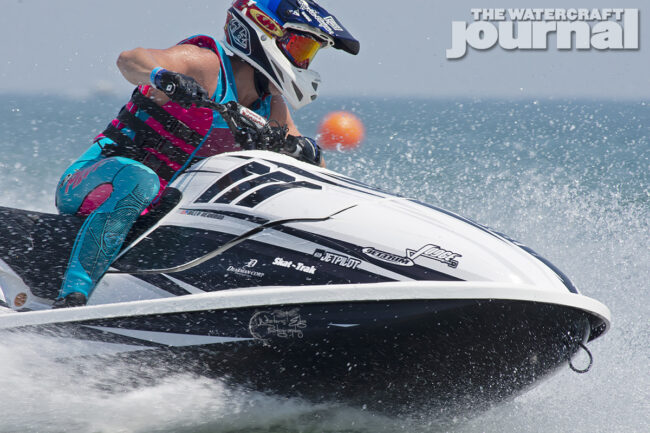
BD: We wanted to improve the game. This is a boat we have been working on for three years, and Judge Motosports teamed up with Jerry Marquis of Watusee Hull Designs, a guy that has been building hulls for decades. I approached him with an idea of what I wanted to do and basically, we took a race hull of Jerry’s and made it to fit under a lightweight WaveBlaster 3 copy.
We molded the WaveBlaster 3 top deck, made it a lightweight top deck, and then we put one of Watussee’s race hulls underneath it. So, it’s a completely different design on the bottom of the boat – larger intake grate, deeper chines, you know, better handling and things like that; things that will help it get off the line harder and hook up better in rough water. The bad thing is, for the class that we built this hull for, we just don’t get a lot of attendance during the year at the Pro Watercross races or the AquaX races or the Powerboat Nationals. There’s just not a lot of attendance for Sport GP. But when we get to World Finals, or you go overseas and you race over there, Sport GP is the race everyone wants to be in.
So that is where all the competition is, so basically going and running the tour, we’re just training for World Finals – I wish everyone would just start showing up like they used to instead of just trying to start arguments online and bicker and moan instead of showing up to the races to see what they can do to help improve our sport.
WCJ: Do you see any way to bring this sport back to what it was in the 80s and 90s?
BD: Well, yes. There are ways to bring it back, but unfortunately, in my opinion, it has to start at the top, because we’re not the ones, the racers are not the ones running these events. So, in my opinion, it has to start with the people sanctioning the races. Basically, they need to hire a marketing department. It happened again at Racine.
We’re in Racine all weekend, the city is paying us to come here, we show up, we have an event, and I have people walking up to us on the beach and saying they live here and had no idea there was anything going on. Without marketing, without the guys in charge putting the effort in and doing what it takes, putting money back into our sport, advertising, letting people know this is what we do, this is the event, stirring up new interest for new riders to come on board – until something like that happens, we’re just spinning our wheels.
WCJ: You’ve been racing a long time, are you still learning new things?
BD: Oh absolutely. Especially when we break out new boats like this. It’s basically that we’re starting from scratch all over again because nobody knows what this boat is going to do. We haven’t seen it on the track before so we don’t know what it’s capable of so all we can do is take it out, test it, push it, push it and push it. You just keep pushing the limits till something goes wrong, then you know, okay, that’s what it can do and that’s what it can’t, and you learn where you need to back off a bit and you learn where you can push it harder.
WCJ: What advice would you give to a young kid, or even an adult, who is just coming into the sport?
BD: Show up. Get to the races. All of us here that have been racing for years are more than happy to help you guys, just come to the races. We’re never going to grow the sport and we’ll never get the big money back into these events unless we start getting larger events and more people showing up. As much as anyone else, I want to see 300 riders showing up at an event for a regional race. I want to see that happening again. I want to see qualifiers at regional races. In the early and mid and even into the late-90s, regional racing had qualifying.
You might show up at a regional race in Region 7 where our home is; you’d show up, for example, to one of Mike Young’s races in Fort Walton and you might not race the main because you didn’t make it through the qualifier. You would show up and it would just be a typical regional race and there would be 25 people in one class, and if you didn’t hit the top 15, you weren’t going to race the main. I would love to see our sport get back to that, but for us to get there, we need some help. We need some help from the leadership. We need some money put into marketing.
WCJ: Last question. Who do you want to thank?
BD: Same as always; Tim Judge, Judge Motosports, Jettrim Jetpilot… I’ll even throw a little shout-out to my company because my company keeps the bills paid for those other guys – Dearman Corp Properties/ Vacation with Dearman Corp.
But primarily, Judge Motosports, Jettrim, JetPilot, Skat-Trak, all those guys that have been helping me for so long – I can’t do this without them. My kids are just now getting to the point where they’re about to start racing, and those companies are already throwing stuff at them to help them out. We can’t look forward enough for the next generation to get out there and do the same thing.
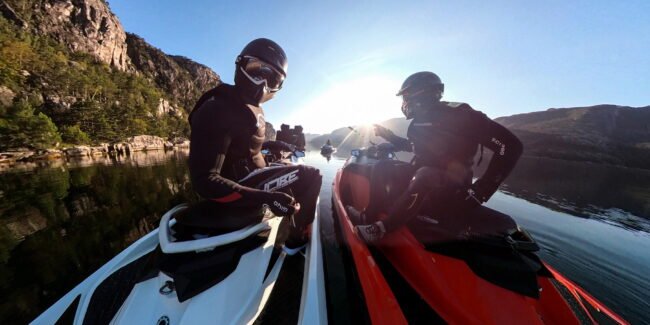
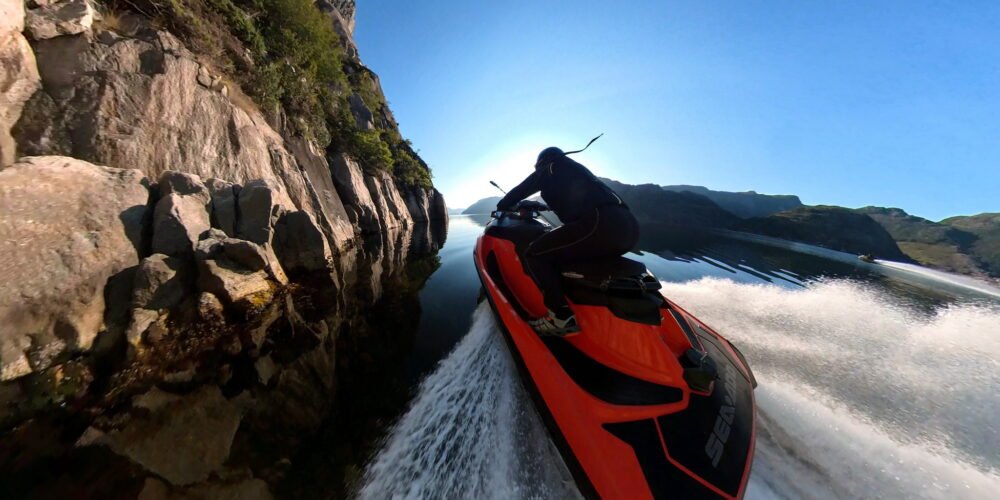
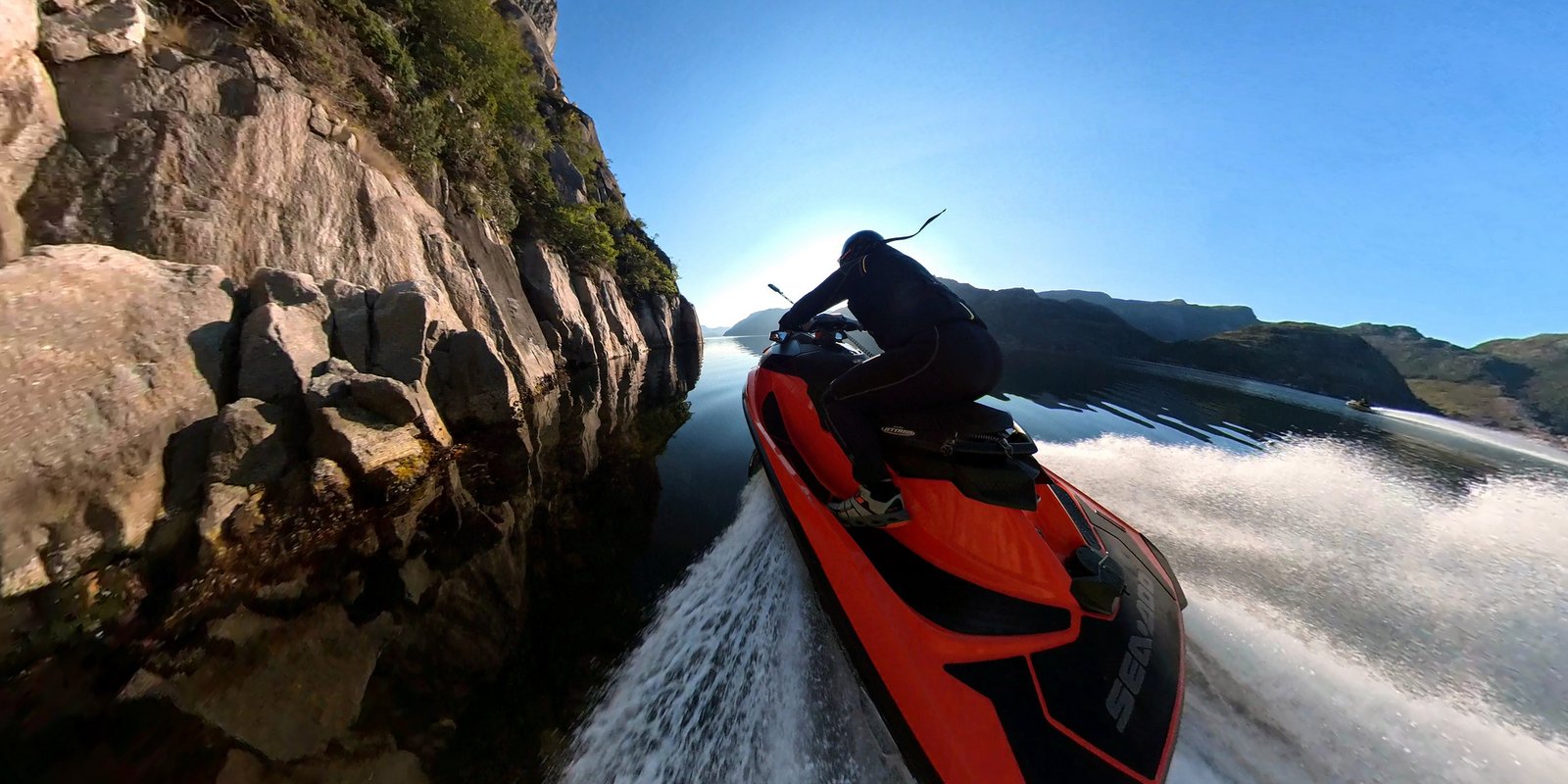
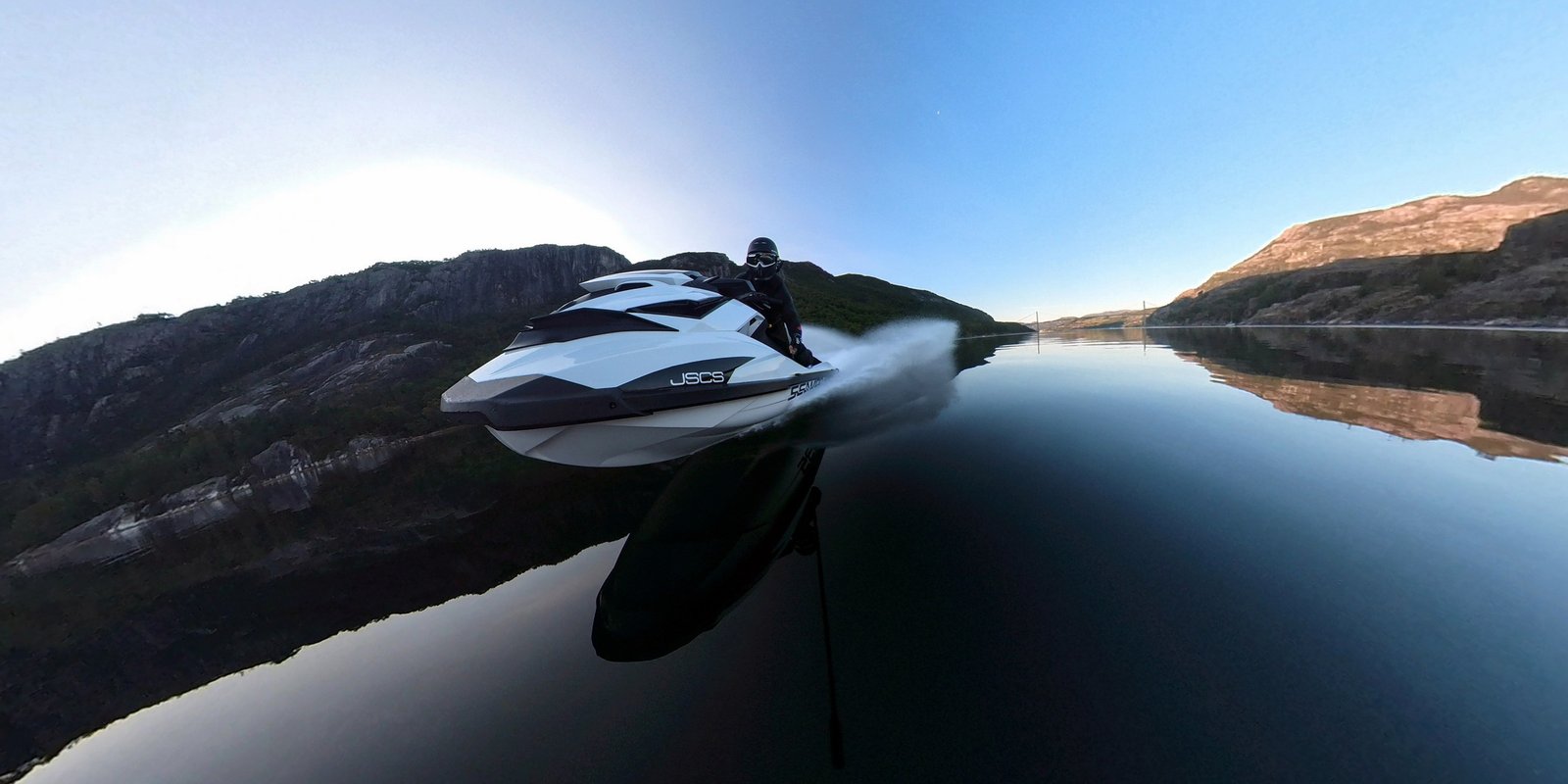
All of us at The Watercraft Journal are perpetually wowed by the absolutely gorgeous content that comes out of the JSCS Crew (@JetskiClubStavanger) or the Stavanger Sandnes Jetski Club. These Nordic Sea-Doo enthusiasts never fail to deliver with some of the most striking content that you can find online. No really, if you haven’t subscribed their YouTube channel literally go there now. We’ll wait…
OK good, you’re back. As we were saying, the JSCS Crew provided us with some knockout content who filmed the video “Proximity” using two Insta360 One X2 cameras. They explained, “We always ride with a plan. Most of the time we start very early, sometimes before sunrise, especially in the autumn when the days are shorter.”
“Perfectly flat mirrors like water and the rising sun that’s what makes every ride special. Also, early morning or just before the sunset (“Golden Hour”) with the right weather is one of the most important “ingredients” for the beautiful looking jet skiing video,” they continued.
“As of today the best 360 camera of choice for us is Insta360 ONE X2. It’s amazing how good looking quality video you can get from such a small camera. That being said it might take 2x more time to choose the desired angle and edit a video compared to a regular non 360 camera. But when you get the hang of it the final results speak for itself and it’s really worth it.”
Well before Covid lockdowns encouraged tens of thousands of people to explore local lakes and waterways, recreational boat sales were already steadily climbing. And of those sales, pontoon boats equated for the overwhelming majority. Those with access to calmer waters gravitated towards pontoons – and sportier tritoons – over the past decade, particularly as the quality of materials, accessories and ease of use all progressed. Within a decade, pontoons calculated for a massive segment of the recreational boating community, and powersports manufacturers took notice.
Yet, it was one key element that stood out to the product planners and engineers at BRP: as amenities and performance options for pontoon boats increased, the pricing multiplied to the point that entry and mid-level buyers were pushed out of the market. Wanting to address this segment square on the chin, Sea-Doo applied some of its Spark-mojo into developing a whole new segment of tritoons – the Sea-Doo Switch series. Employing its popular powertrains and Polytec materials, these jet-driven tri-hull pontoons are poised to shake up the pontoon industry.
Above: Power comes via a selection of 1630 ACE Rotax engines; a 100 or 170-horsepower naturally-aspirated version, or the supercharger 230-horsepower variant. The new catalytic converter-equipped exhaust comes on all 16 and 19-foot models. The 13-footers are exempt.
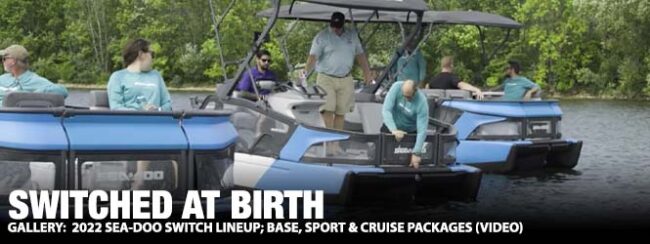
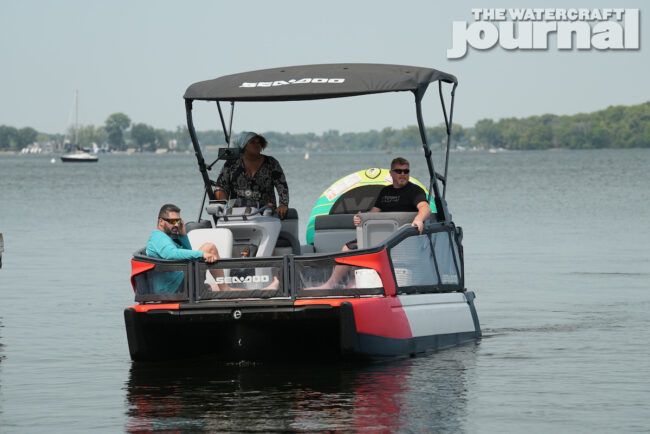
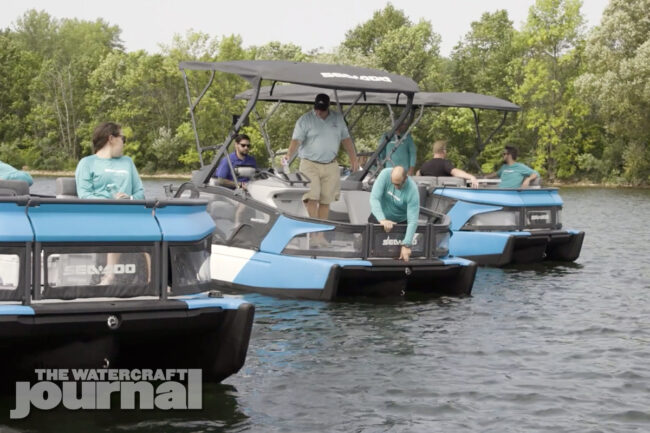
Being the world’s most popular personal watercraft magazine, The Watercraft Journal was invited to fly out to Lake Minnetonka, Minnesota to test drive a handful of Switch models – since there are three different-length platforms, those being 13, 16, and 19-feet (the latter two able to be fitted with a 2-foot swim deck, increasing the overall length to 18 and 21-feet when equipped). The longer of these two different-length platforms can be equipped with specially-equipped package groups, namely “Sport” and “Cruise” as well as wide variety of optional sub-packages [more on those in a minute –Ed].
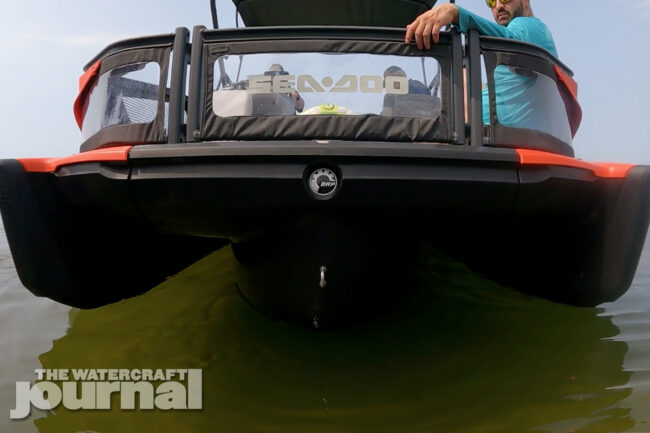
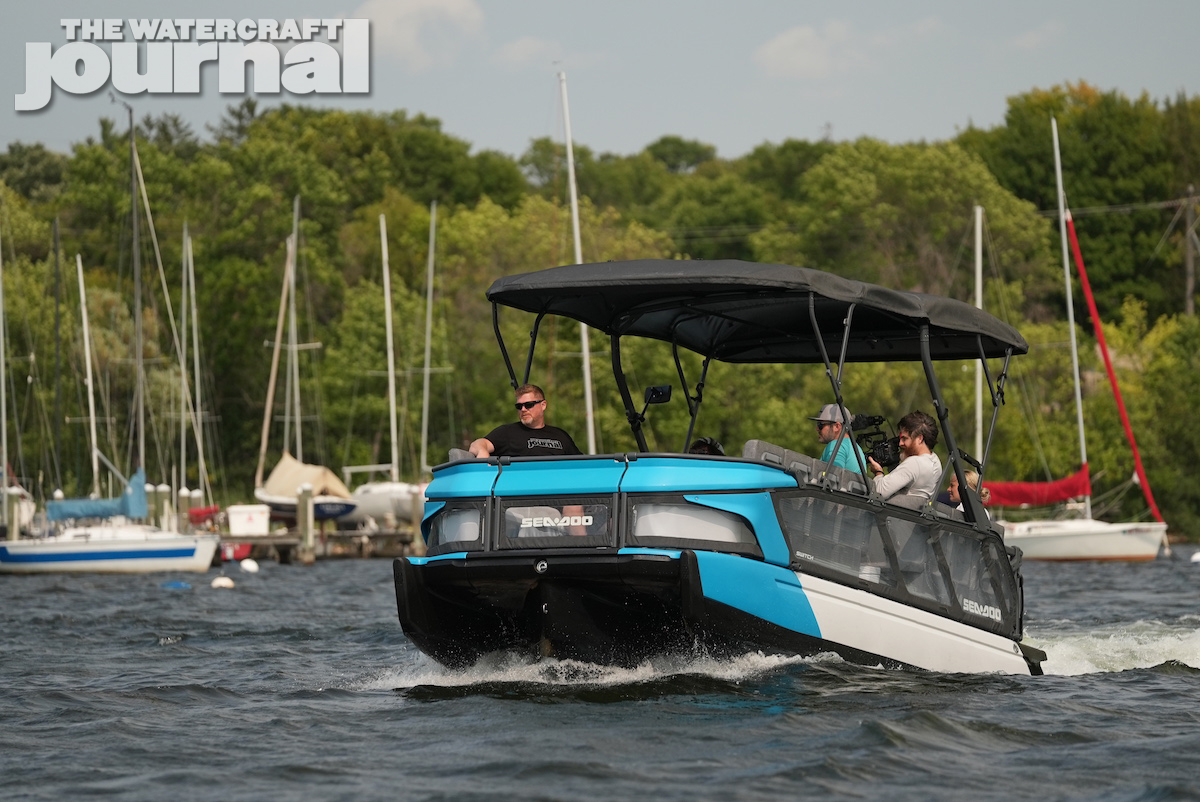
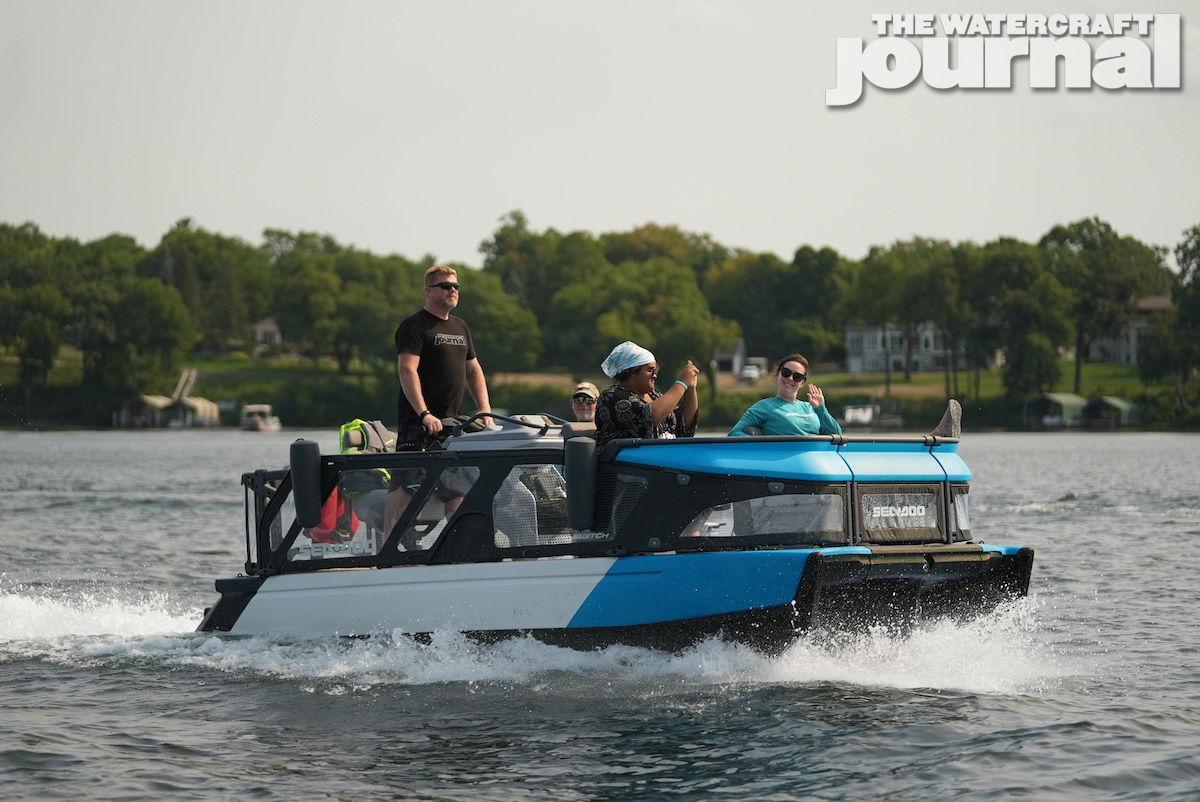
BRP began by developing a configurable chassis that allowed for quick assembly, despite the desired vessel length or trim package. Cast from Sea-Doo’s proprietary Polytec polypropylene-material, the center hull sits 7.32-inches deeper in the water than the modular outriggers, keeping the jet pump engaged for continual thrust. The hull itself is progressive with a mild deadrise, featuring prominent shelved chines for the utmost stability. At speed, the different-length hulls come to plane a little differently, but all allow for a gentle inside lean when throttled into a corner.
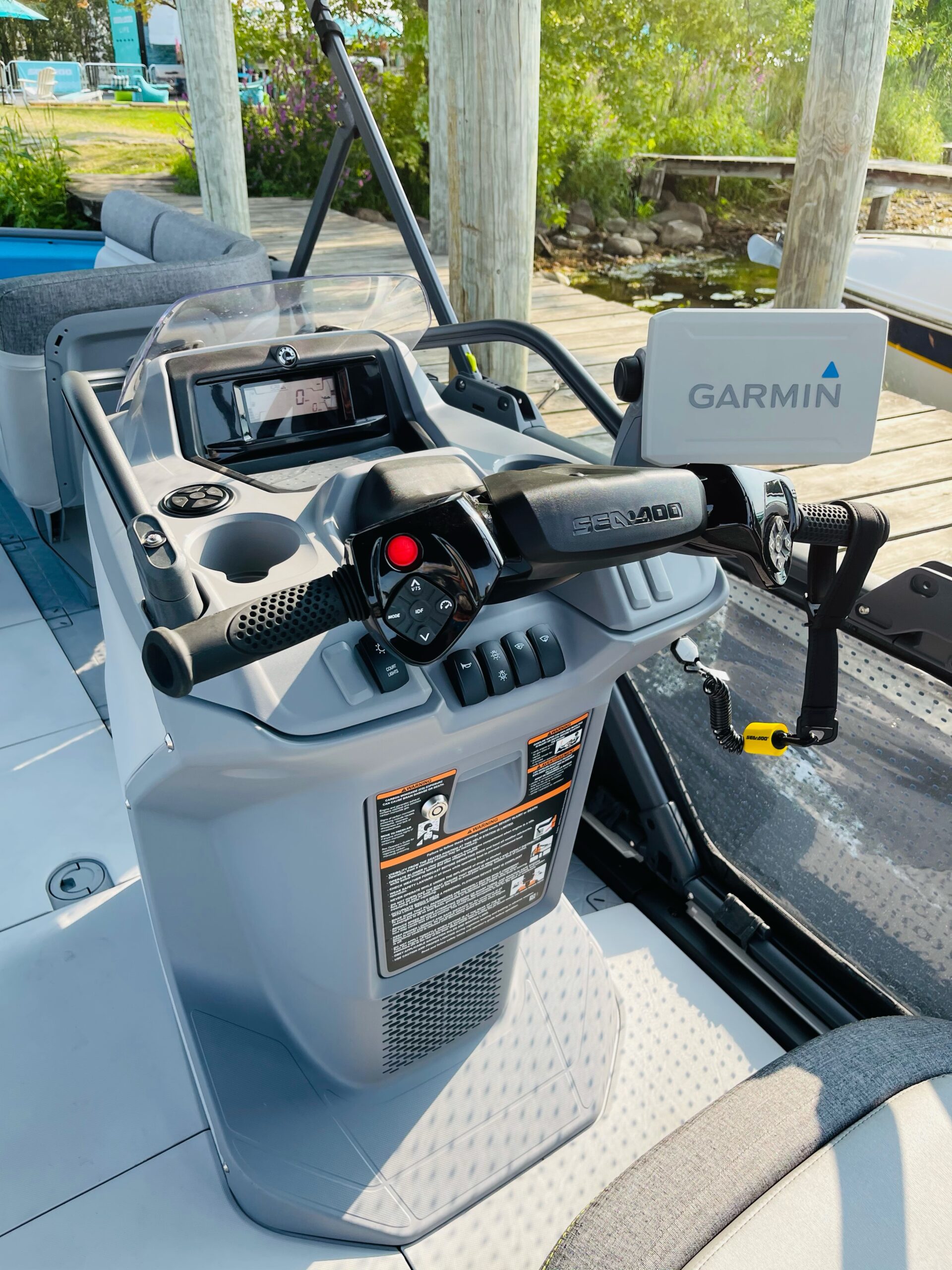
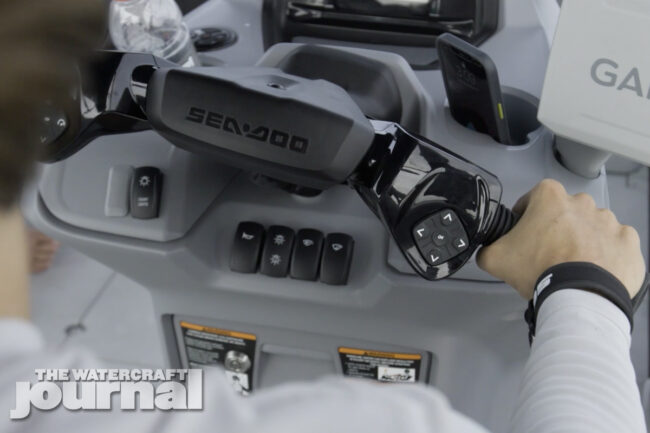
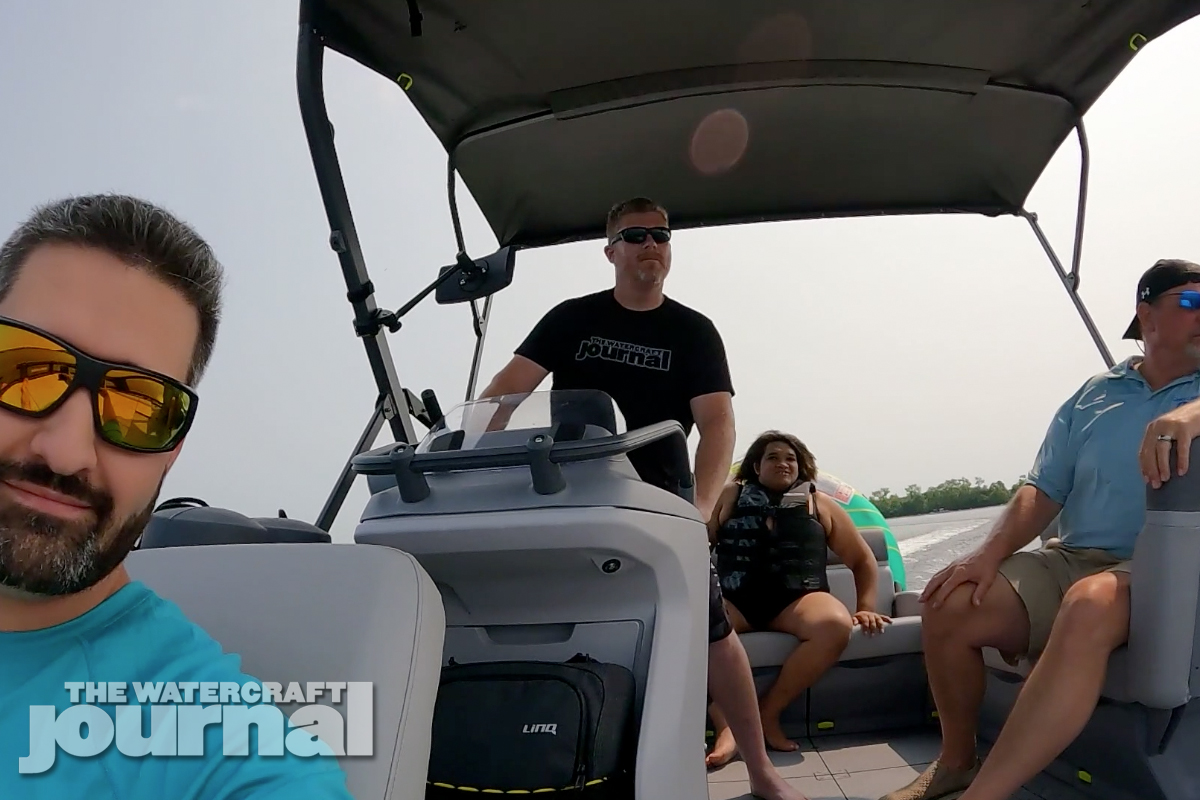
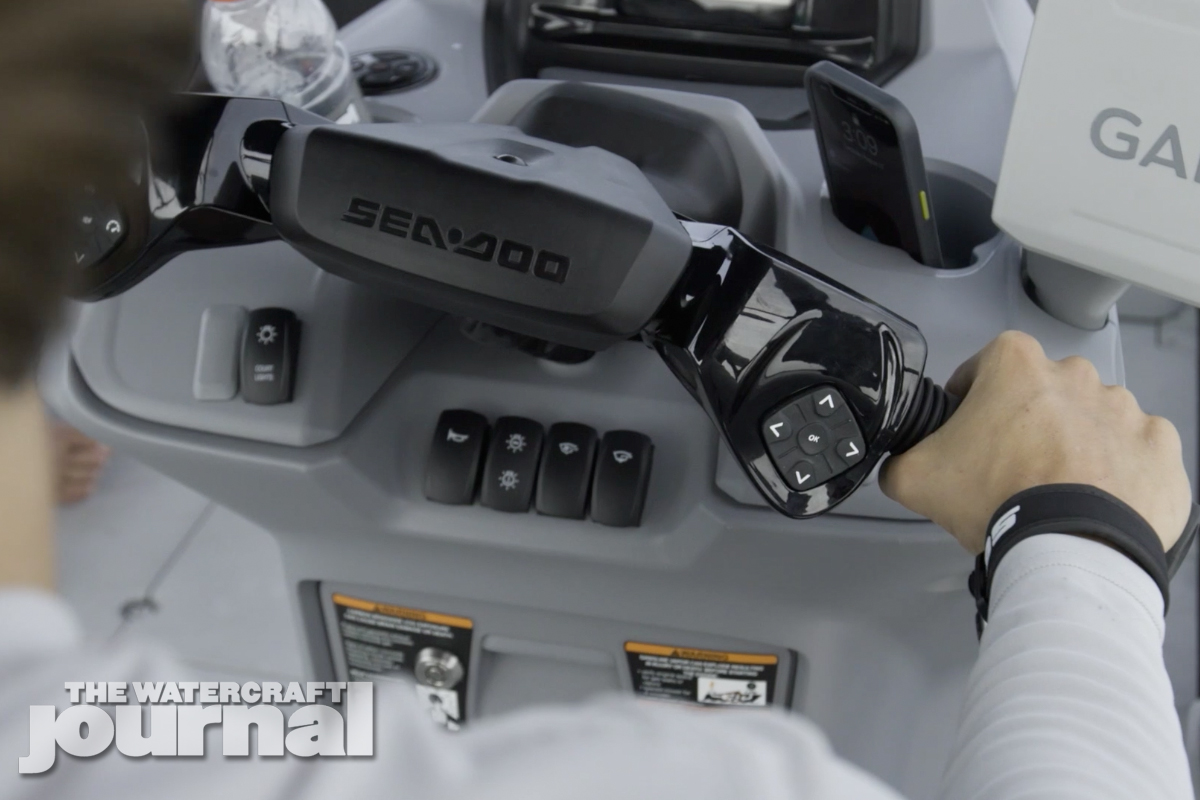
Above: The Sea-Doo runabout-inspired helm is surprisingly natural for the tritoon. All iTC (Intelligent Throttle Control buttons are direct carryovers, including IBR (Intelligent Brake & Reverse) and IDF (Debris-Free control). Below the helm are the bilge and bilge blower controls, as well as that for the running lights and horn.
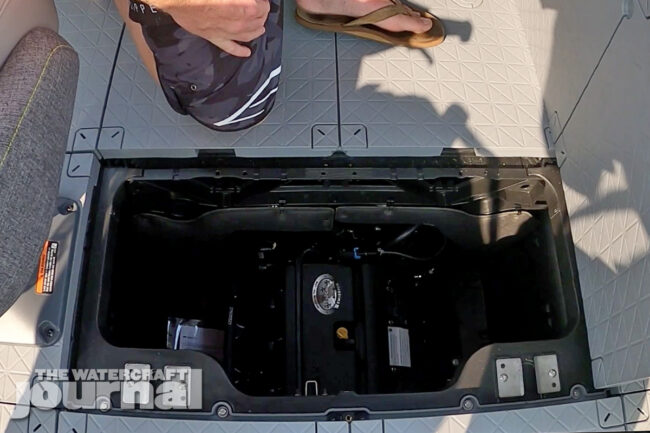
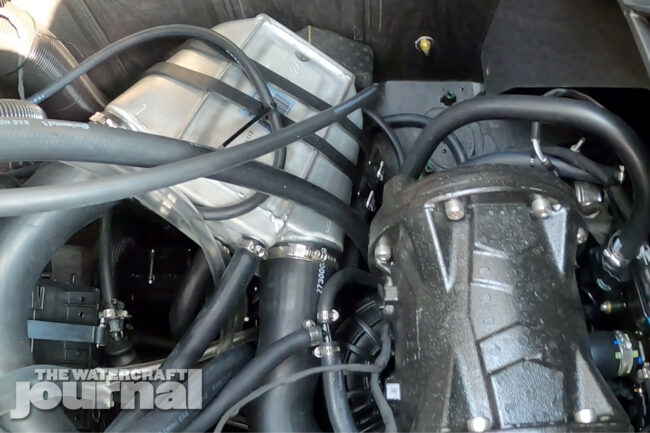
The hull literally sits inside of the deck, fastened together at what might be considered the bondline in a personal watercraft. The center hull – like a watercraft – contains the 29-gallon fuel cell and 1630 ACE powertrain. All Switch models are configurable with one of either three engine options: the 100-horsepower 1630 ACE, the 170-horsepower variant, and the supercharged-and-intercooled 230-horsepower 1630 ACE 3-cylinder four-stroke. And to remain compliant with the strictest emission laws, Sea-Doo has engineered a high-flow catalytic converter-equipped exhaust system that also manages to reduce engine noise and drone.
The outriggers are less like traditional pontoons as they are not watertight, but rather, a paneled Polytec framework that have been tightly packed with high-density foam and feature a unique serrated surface to break up drag (much in the same vein as the “Shark Gills” on the revised T3R hull beneath the current RXP-X 300). The result is a smooth, predictable ride that traverses mild lake chop firmly and predictably. While the modular framework did flex and chatter in rougher water, it never bounced or jostled erratically – delivering a very enjoyable – and in the case of the 13-footer, thrilling ride.
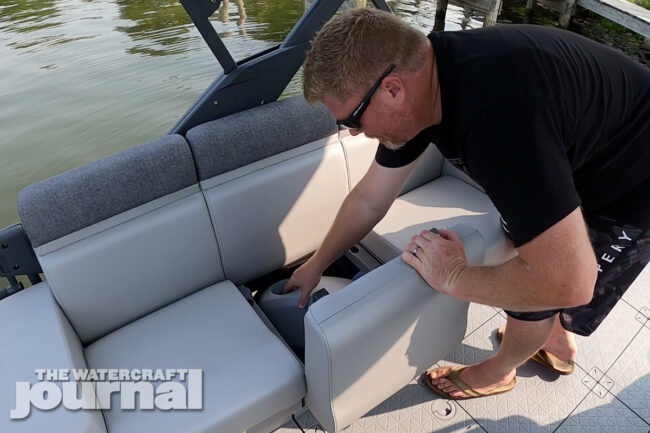
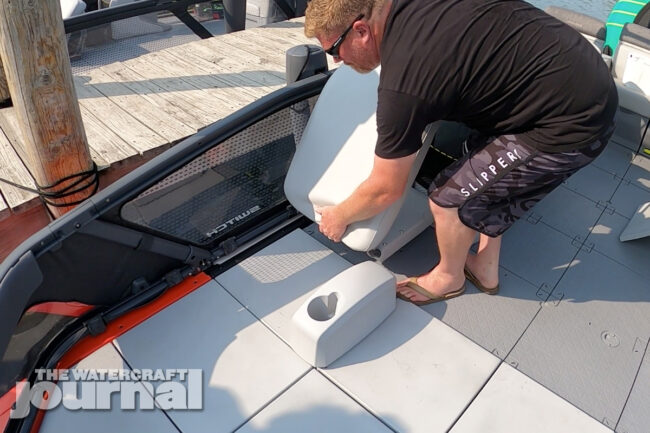
Above: The freedom to reconfigure the deck seating is one of the larger appeals of the Switch platform. Every seat also contains a storage cubby beneath the cushion.
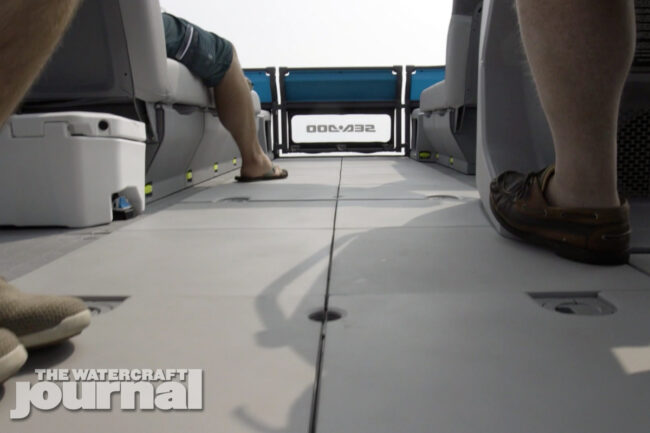
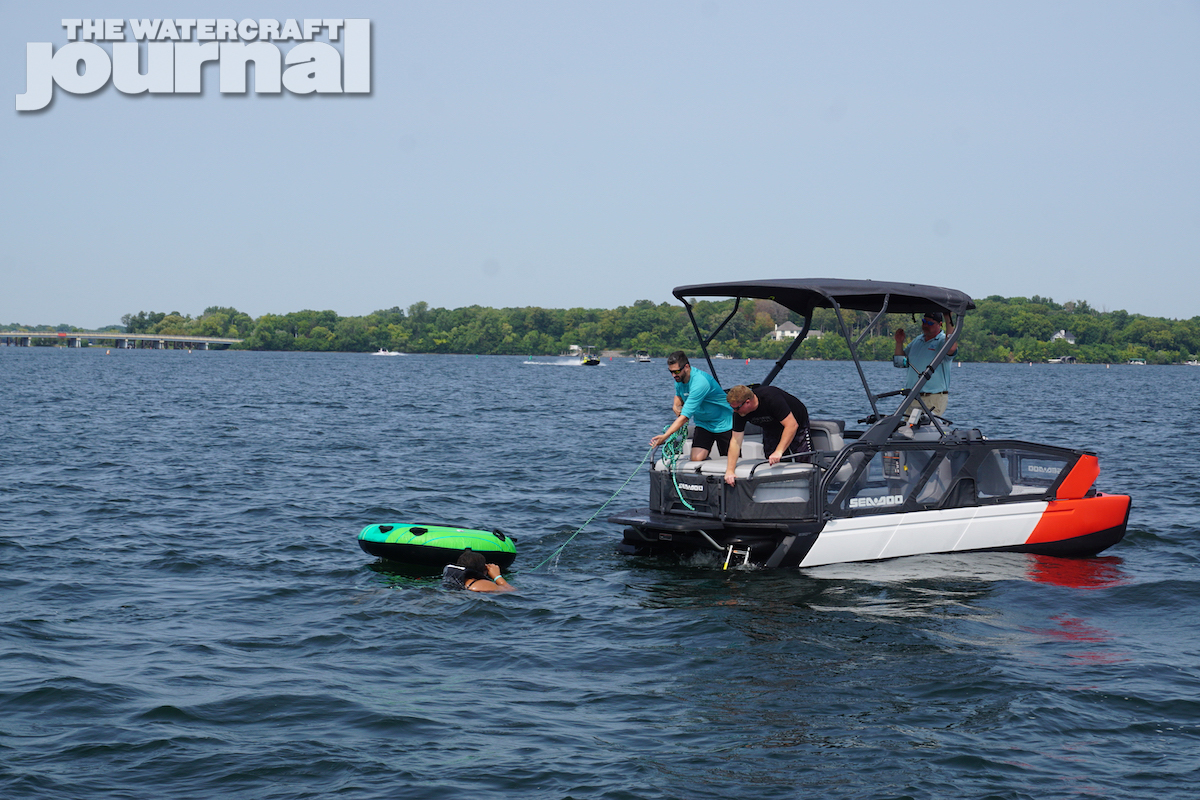
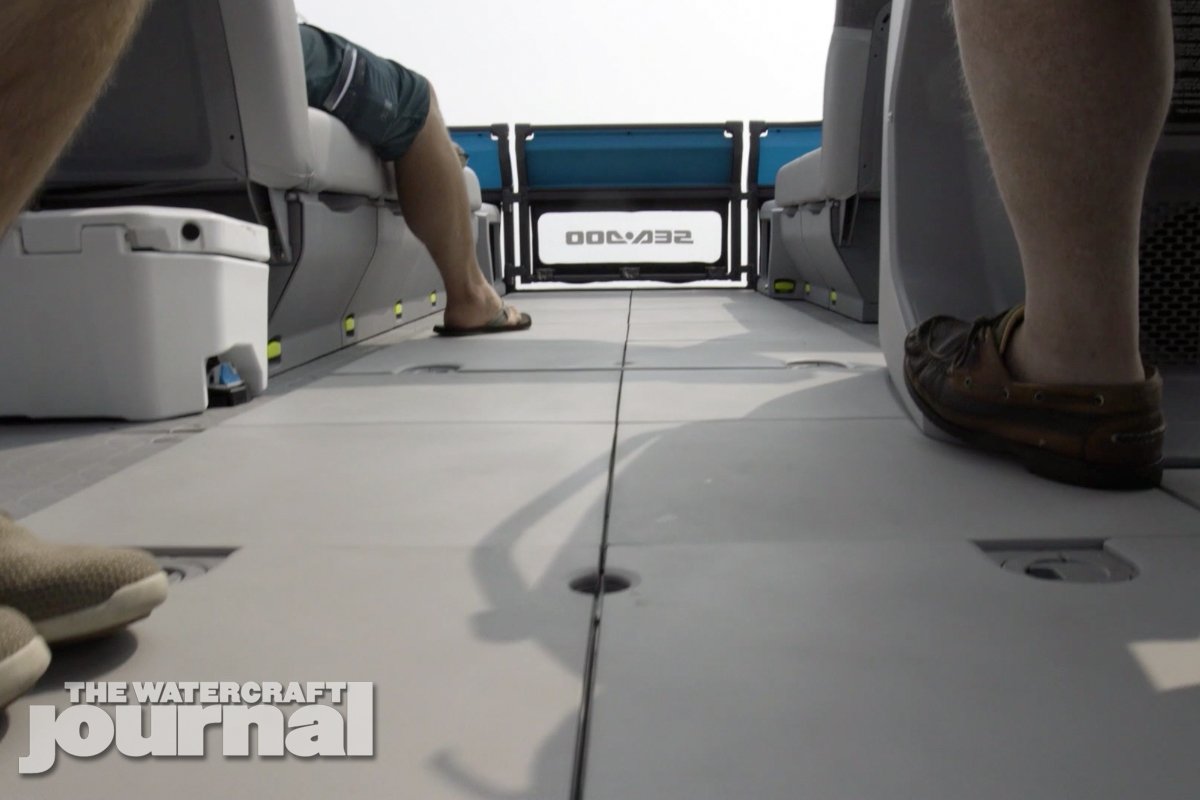
While this is very cool in its own right, it’s the ultra-configurable deck which allows for customized seating and accessory integration that is the star here. Sea-Doo’s team demonstrated how the deck can be fitted with a variety of benches, tables, and every LinQ accessory imaginable (and all available through a collection of packages or individually through the catalog) – each item securing firmly to the deck using the new 16-inch Modular LinQ Tiles. This feature permits anyone to literally design and construct their own custom configuration – truly making every Switch pontoon unique.
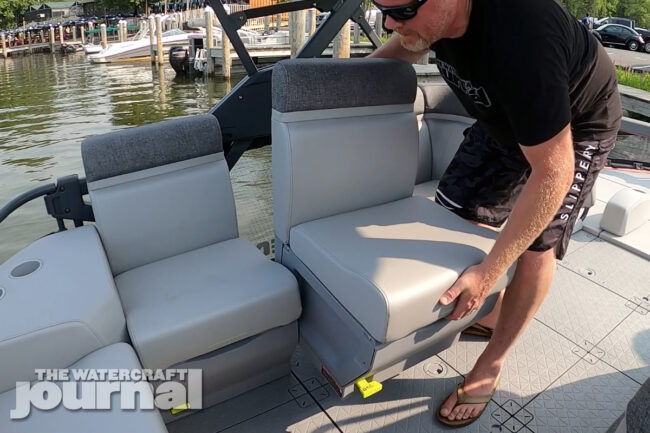
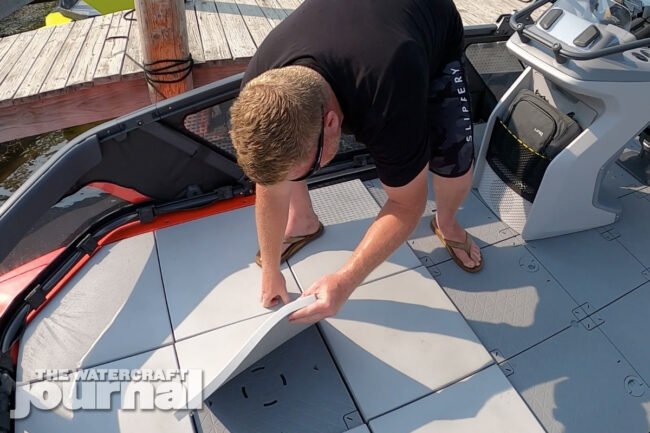
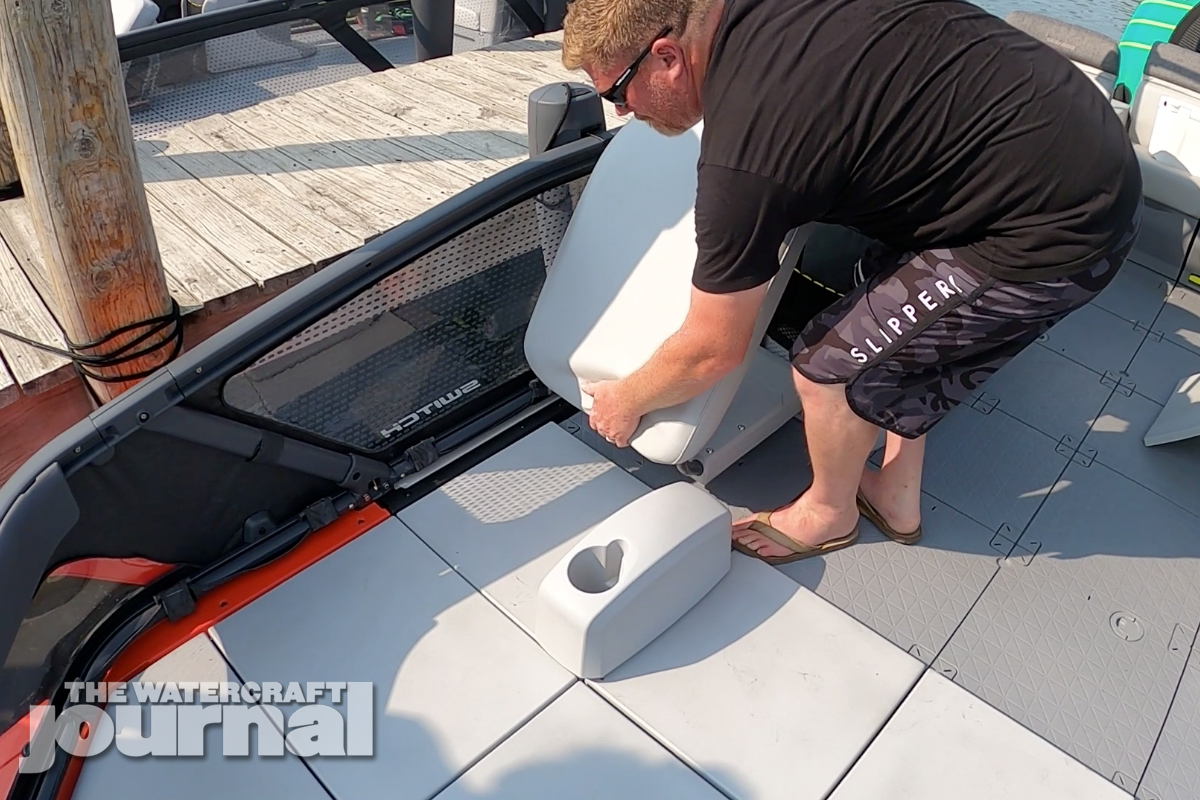
Each chair has a small storage cubby beneath its removable seat. The chair itself can be released from its perch by pulling on the neon handle and relocated to any spot with the corresponding receptacles. The same goes for the deck-level Lounge backrest – simply pull the handle and move it over to a new location. The padded Lounge Deck panels have small plastic teeth at all four corners that snap into place with a tiny bit of pressure. On higher tier packages, corner tables either with integrated Bluetooth speakers or extra storage and cup holders are also available. In several trim levels, a folding rear bench seat comes standard.
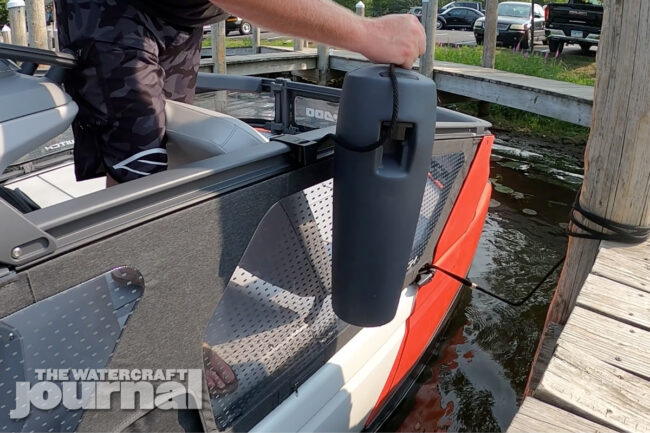
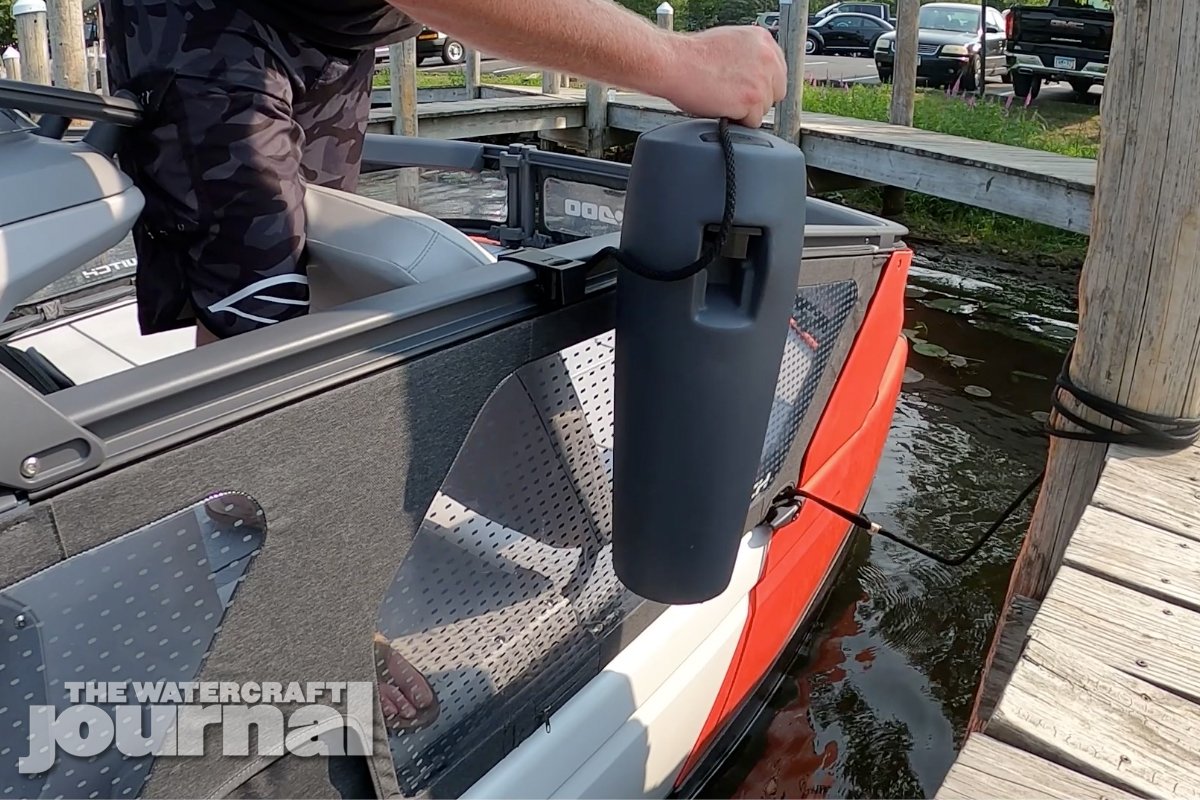
Above left: Every model Switch features a voluminous 105.9-gallon storage bay beneath the deck. Above right: The LinQ Rail Bumpers are rather ingenious, locking onto the pontoon’s railing, these bumpers are tethered and can be dropped over a foot lower to protect against low or high dock heights.
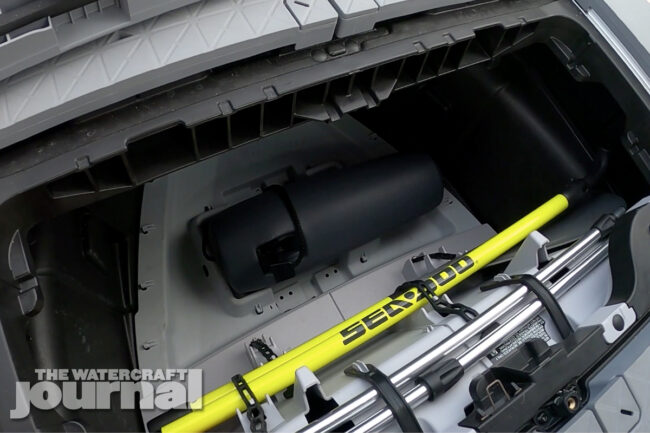
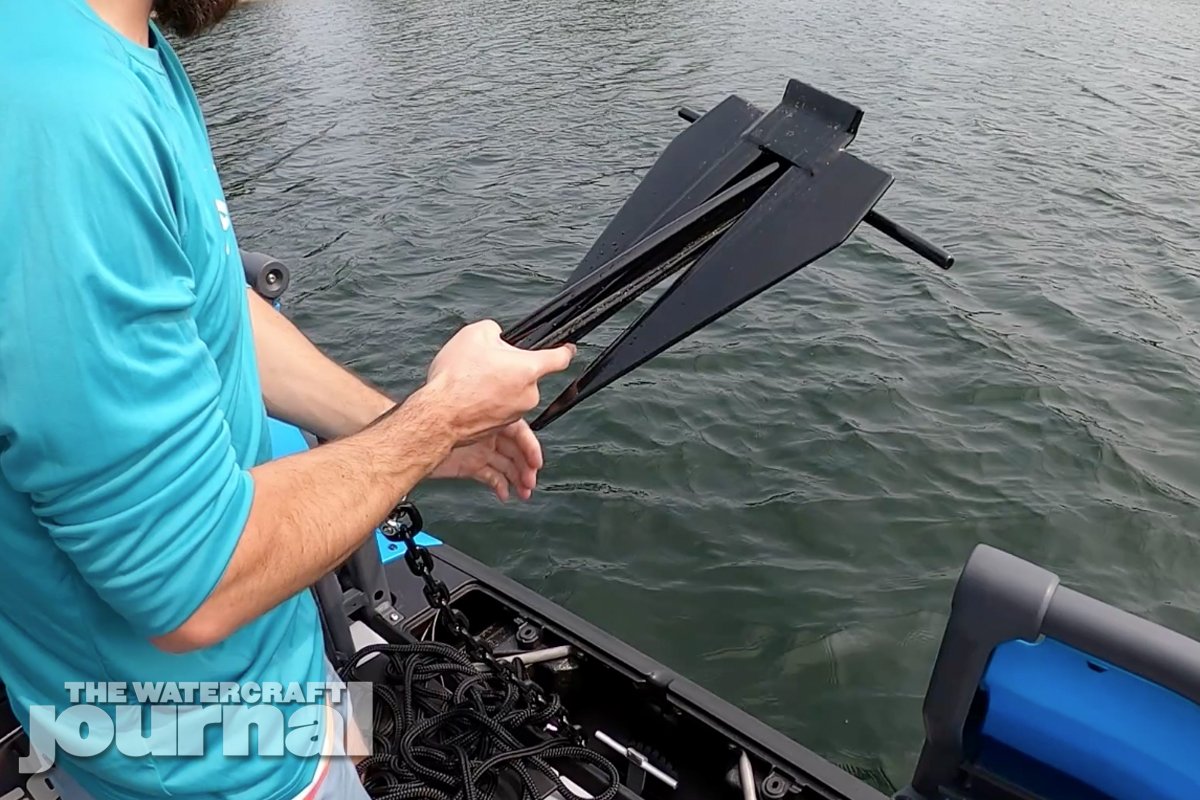
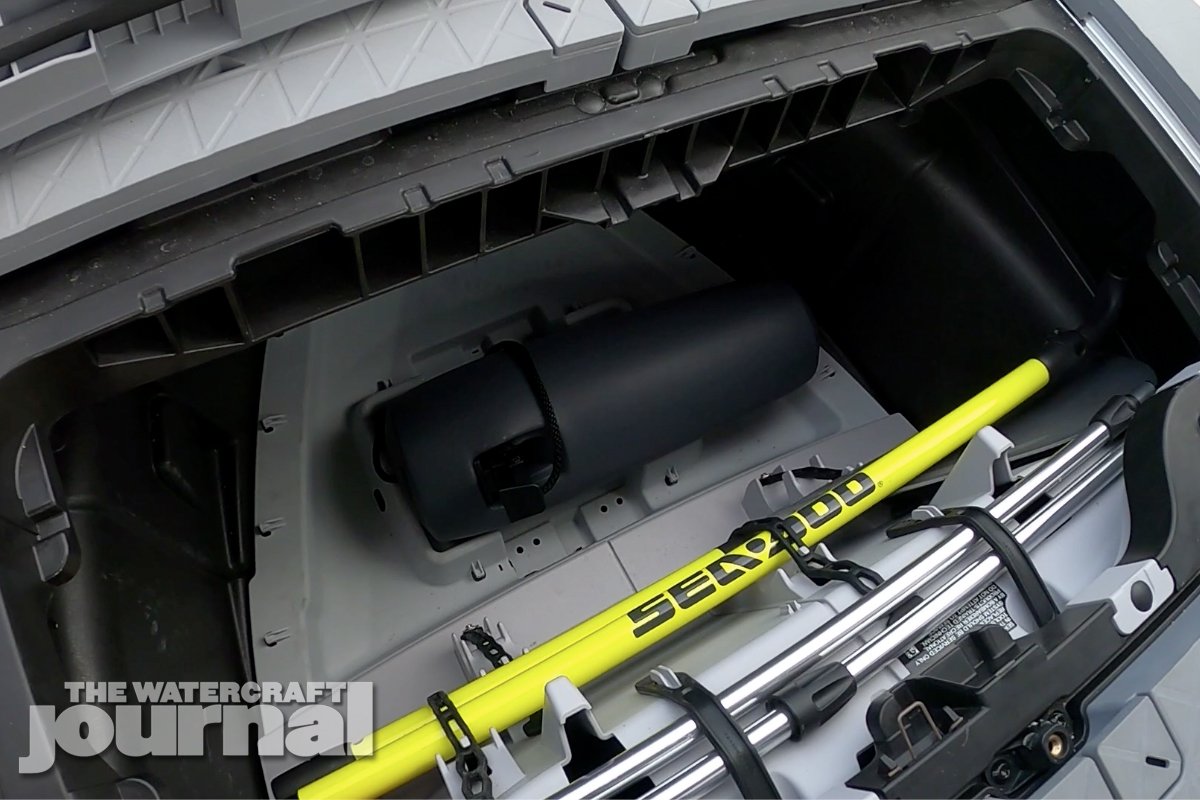
As to storage, each Switch regardless of length or trim contains a spacious 105.9-gallon cargo area accessed by a wide removable panel. Inside can accommodate multiple life vests, an inflatable tube and tow rope, dry bags and much more. At the bow is a standard feature on all models: a full-sized marine-grade anchor and 100-feet of line. This way you’re not having to drag a muddy anchor onto your Switch’s deck, but tuck it away in its own compartment. We were particularly fond of the new LinQ dock bumpers that snap to the fence railings or can dangle on short ropes to deflect impact at lower-height docks.
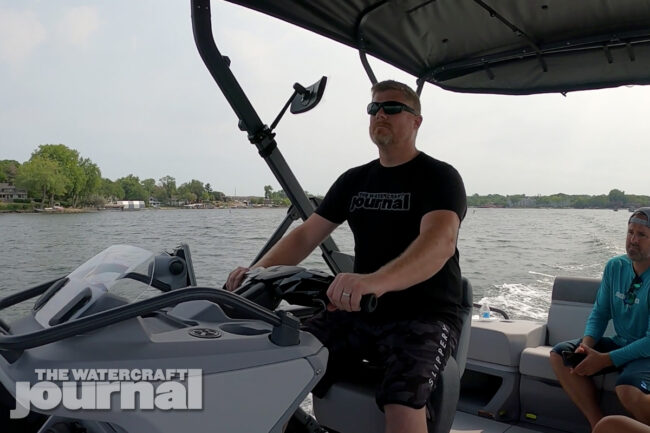
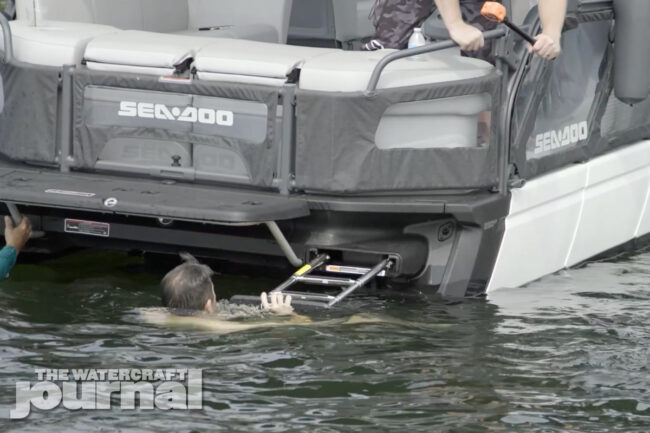
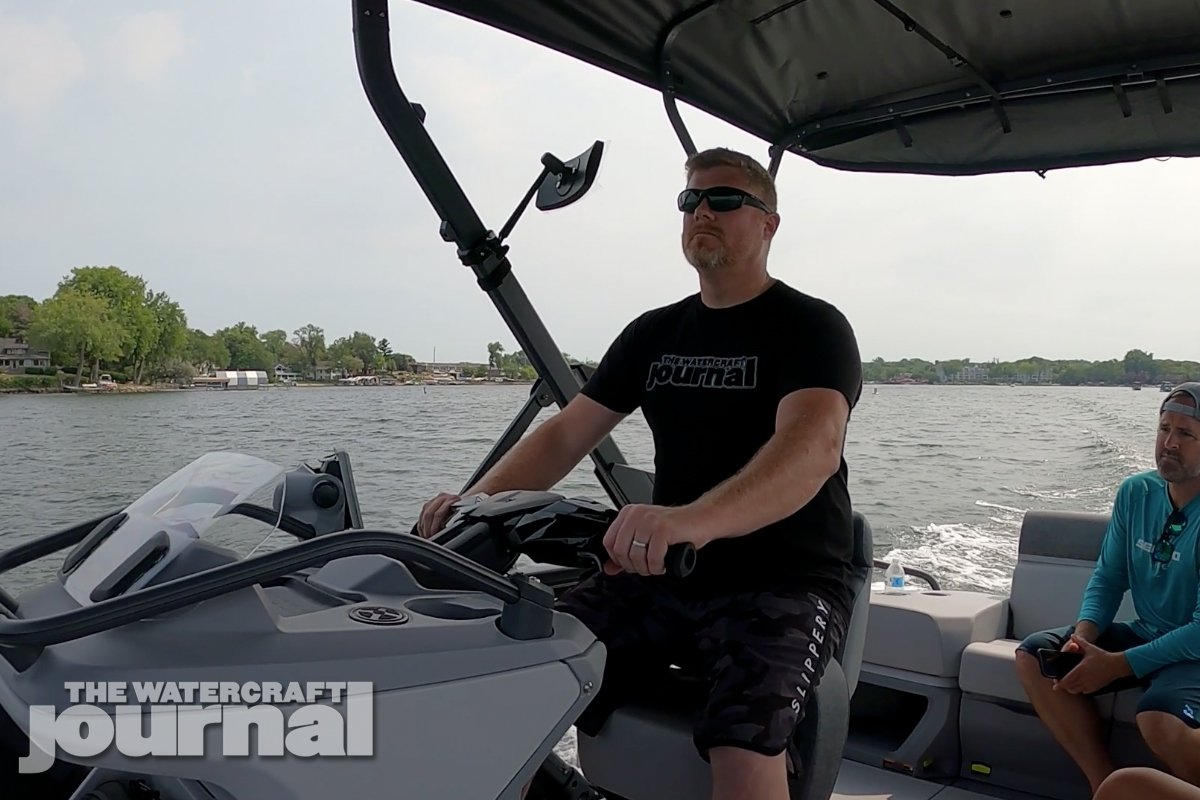
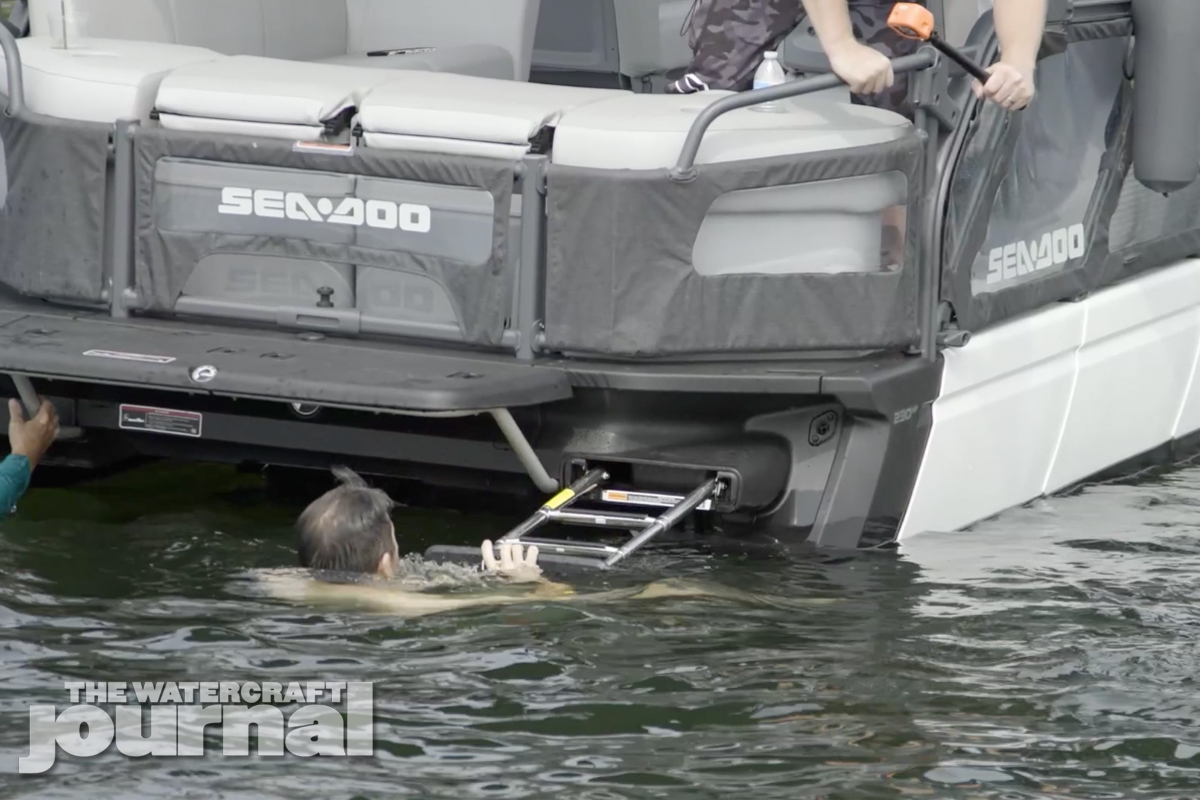
While the features will increase with each tier of the trim level scale, every Sea-Doo Switch comes with a retractable swim ladder that tucks neatly into the rear, and every captain’s console includes a Sea-Doo watercraft-style handlebar instead of a traditional helm. Although some bristled at the idea, the watercraft handlebars worked very intuitively and of course, included Sea-Doo’s Intelligent Brake & Reverse system, making the Switch the only pontoon boat with brakes. Equally, every Switch comes with IDF, the Intelligent Debris-Free System debuted only a year previous. And the cost of every Switch includes a trailer to tow it with.
Above: The key to the Switch is its runabout-inspired center hull. Housing the 1630 ACE drivetrain and jetdrive, the center hull rests 7.32-inches (186mm) lower than the outriggers, allowing the Switch to rise on a center keel while at plane.
Above: Despite the accessory package that you might purchase, you can reconfigure the lounging deck of your Switch any way you see fit. The padded tiles snap into place with gentle pressure. The backrest – like all points of adjustment for all Switch models – has a neon yellow tab that you pull to release and push in to lock back in to place.
The base Switch starts with an entry MSRP of $17,999, and can be ordered at either 13, 16 or 19-feet in length. Two engine options are also available, the 100 or 170-horsepower 1630 ACE. Capable of seating between 5-to-9 passengers (depending on length, of course), the base Switch is only available in Caribbean Blue. The Switch Sport (with a base MSRP $23,999) comes in at either 13, 18 or 21-feet in length, seats the same as the base model, and can be optioned with either the 170 or 230-horsepower 1630 ACE engine. Each Sport comes equipped with a quick-attach inflatable holder for tube storage, rearview mirror and Sea-Doo’s exclusive Ski Mode; and is available in either Caribbean Blue, Neon Yellow, Coral Blast.
The highest tier Switch group is the Cruise, which promises to “take the party up several notches” with included additions like a collapsible Bimini top, swim platform, sound system, Garmin GPS navigation and more seating and tables. The Cruise begins with an MSRP $26,999 and is available in either 18 or 21-feet lengths, as well as a choice of powertrains: 100-horsepower (18-feet), 170-horsepower (18 and 21-feet), and 230-horsepower (21-feet) – although we seriously recommend the two high outputs, the 100-horse option is just not enough to get your party moving. Additionally, there are three Cruise Accessory Packages: the Family ($30,41 MSRP), Watersports & Fun ($37,909 MSRP) and Comfort ($42,619 MSRP) that “plus” your Switch accordingly; all models are available in Caribbean Blue, Neon Yellow, Coral Blast.
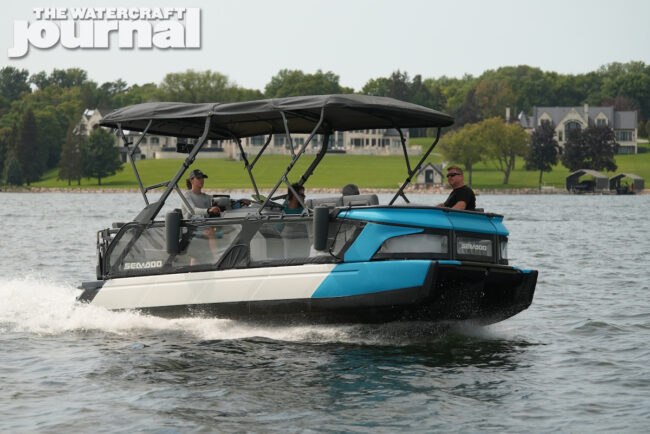
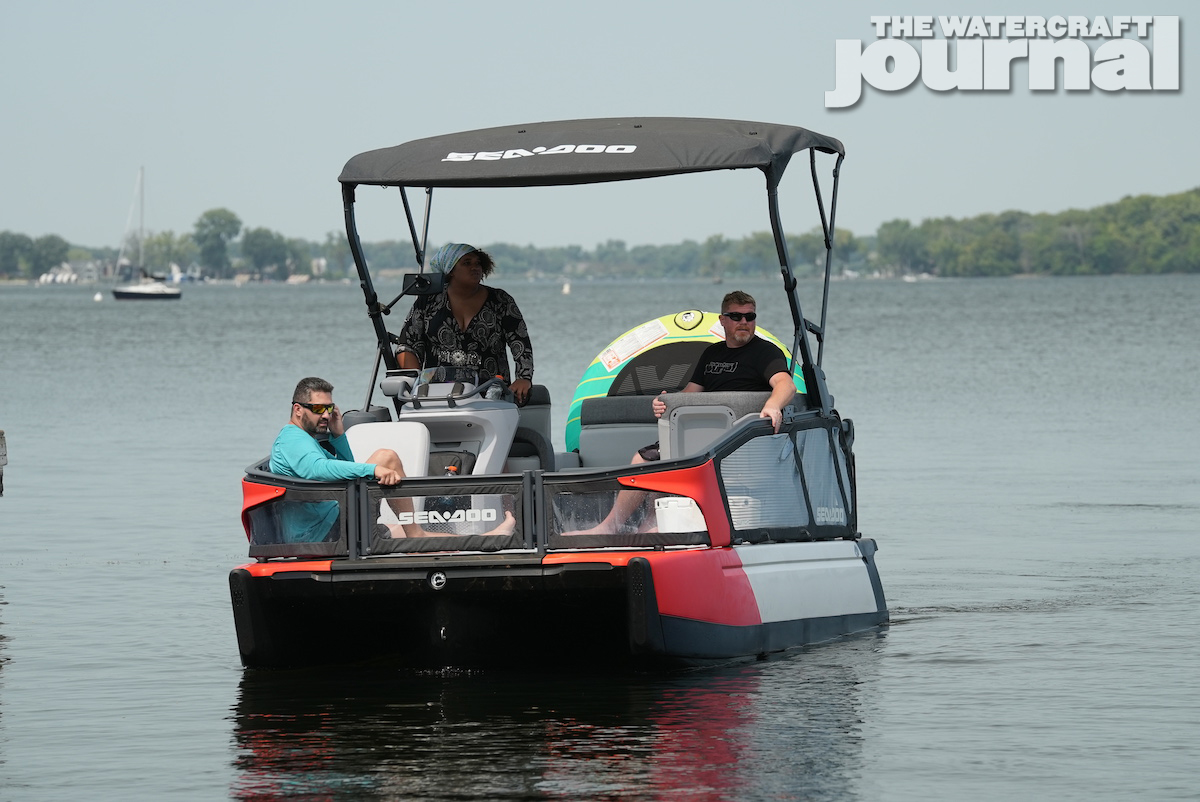
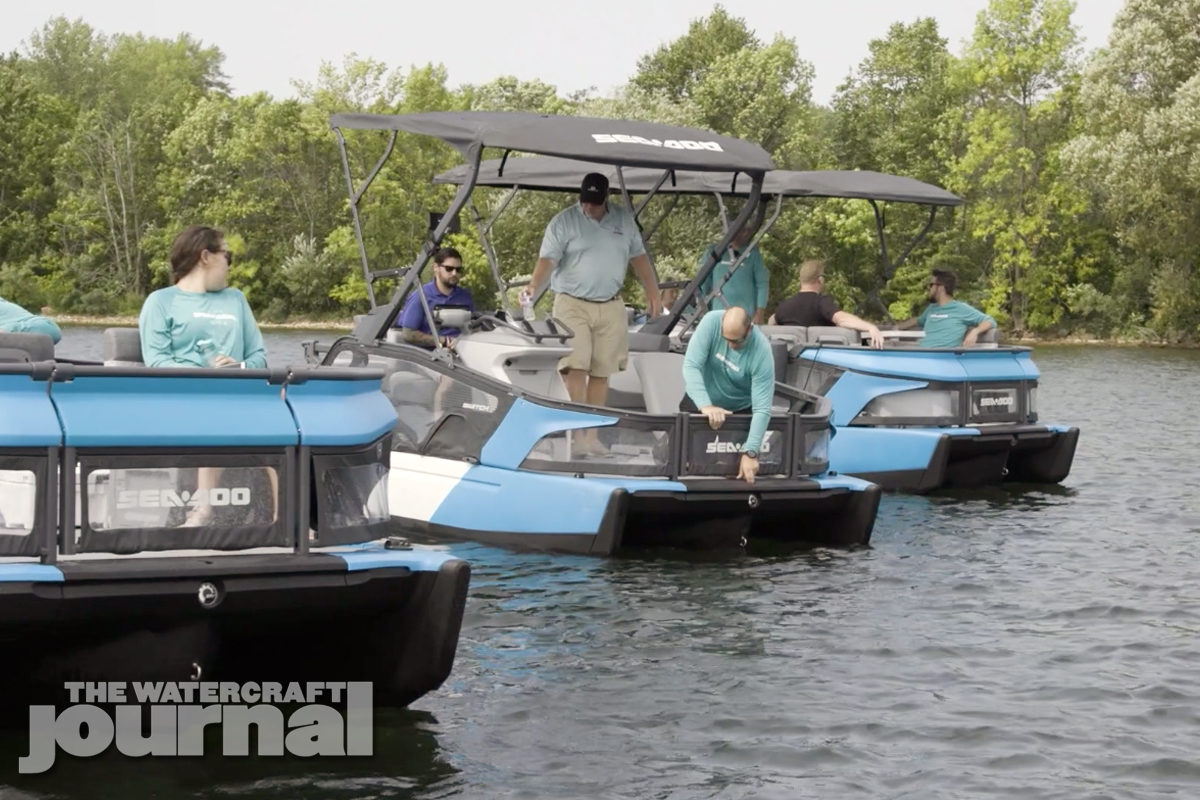
Above: The top tier 21-foot Cruise equipped with the 230-horsepower 1630 ACE provided the most seating, shade and configurable accessories.
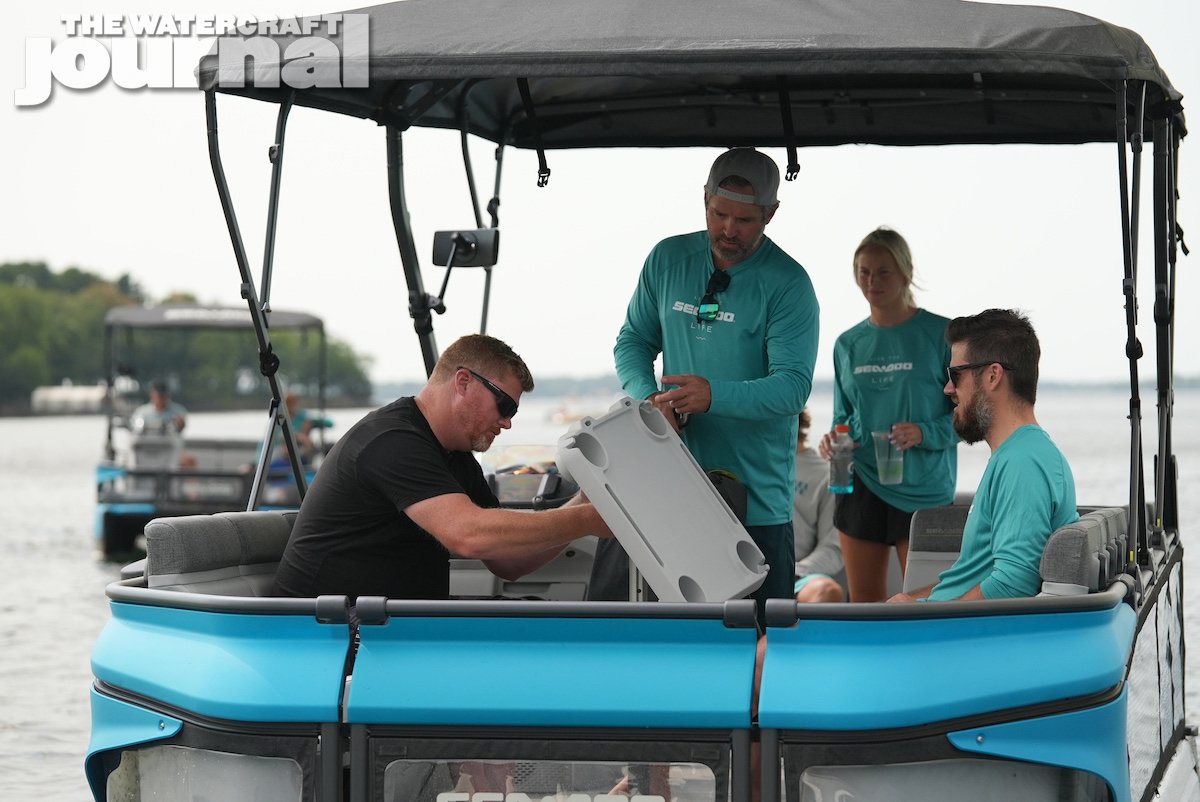
Above left: We toyed with nearly everything. The Cruise’s collapsible table went together rather easily and in a matter of seconds. Above right: All Switch models come with a black-powder coated anchor and 100-feet of line in its own dedicated bow storage bin.
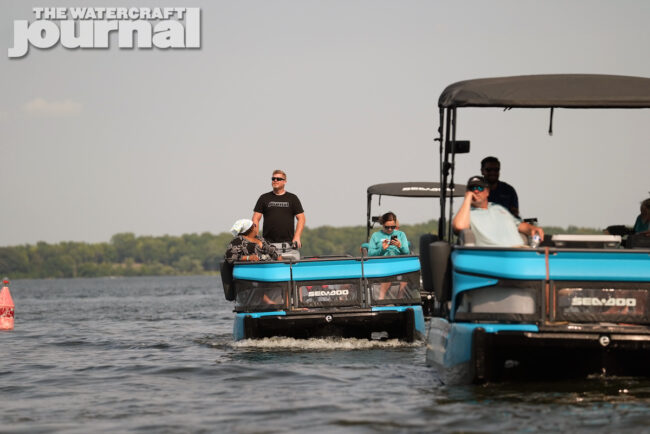
When it came to on-the-water speeds, Sea-Doo had provided us with some rough estimates, namely 26-28mph for boats equipped with the 100HP 1630 ACE; 34-44mph with those running the 170HP 1630 ACE engine; and upwards to 44-46mph with those pushing 230-horsepower. Obviously, those ranges depended upon the length of the hull and how heavily it was equipped. For our testing, the 100-horse 16-footer never saw above 18mph with four adults onboard. Meanwhile, the 230-horsepower 18-foot Sport saw 43mph with a full crew. The other 230-horsepower model, a 21-foot Cruise, ran a steady 40mph with five adults aboard.
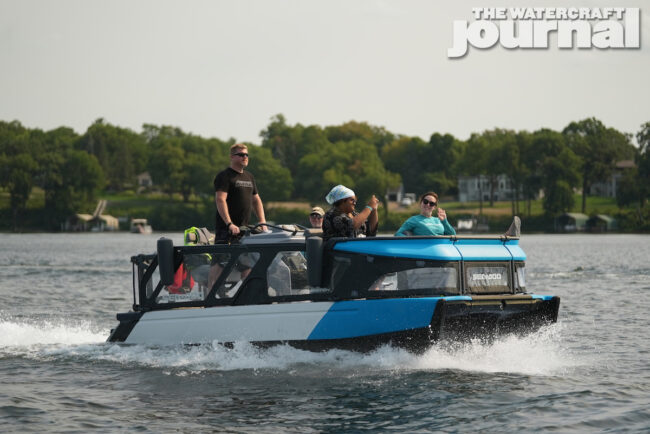
When it came to a fun, playful ride it was the 170-horsepower 13-foot Sport that really shined. Even with three other adults on board, the 13-foot Sport could whip a tight hairpin turn, bounce over chop and cut a tight figure-8. With 230-horsepower on tap, the longer 18-foot Sport made for a spirited ride without losing its footing. Although we enjoyed the premium seating and long shaded deck of the full-length Cruise, the mid-sized Sport with the top tier powertrain managed to check nearly every box that we could dream up.
Above: The deck of the Switch is where the real magic happens. All Switch models can be personalized to fit your intended use for the day, whether you’re bringing the family to a favorite cove or alone for some quiet fishing.
Above left: All Switch models also include a collapsible swim ladder that tucks neatly into the transom. Above right: Our biggest criticism came from the 100-horsepower option on any Switch above the 13-footer. The two larger platforms beg for the 170 or 230-horsepower option.
With seemingly miles of options and endless configurations, it’s almost impossible for us to tell you which model and accessory package is the “ultimate” one to get. And we didn’t even get to try out every option that’s available. When it comes to choosing a Switch you really need to spend some time on Sea-Doo’s redesigned website and build your own. And don’t get too stressed out because the way that the Switch is made, you can literally switch it up with each new accessory or piece of deck furniture any time you want.
Originally reported by News Channel 5 Nashville. Two brothers set out originally to try and rescue their aunt who was trapped in her home on Sutton Ave., Waverly, TN during the late August floods. However, it turned into more than just a single rescue. These two brothers heroically rescued 15 people and at least six dogs during the Saturday flooding in Waverley, Tennessee.
Mark and Brian Bohanon were able to do an incredible thing that Saturday. Using their 15-year-old Sea-Doo, they were able to maneuver through their neighborhood to pick up people that were stranded and take them back to dry land. They were even able to rescue a mother and her nurse daughter as they were holding on to a tree against the current of the water. With the floodwaters so high and people being trapped they used a hammer to break windows to get people out and onto the ski. The courageous acts of these two brothers ultimately saved 15 lives that day that could’ve been lost.
All this started with the beginning of the day with a Sea-Doo that would not even run! They had to fix some of the wiring and use gas that they siphoned out of a chainsaw. During the rescue operations they even capsize the ski twice locally they were able to get it turned right side up again and continue helping people. As said by the brothers, “the Good Lord giving us the ability to work together, because we haven’t had any training at all we went into compassion mode is what I would like to call it.”
These two brothers don’t want to be seen as heroes however after the water receded, they went back to the neighborhood to help their neighbors clean up after the damage was done. This just goes to show there are still good people in the world.
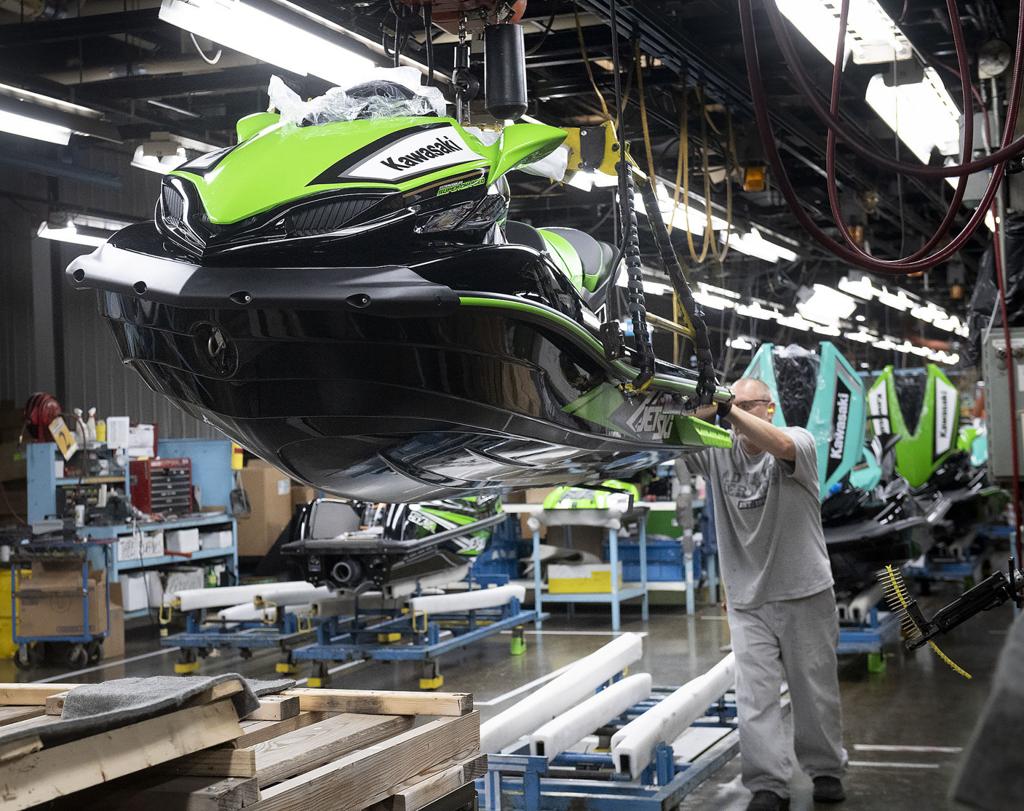
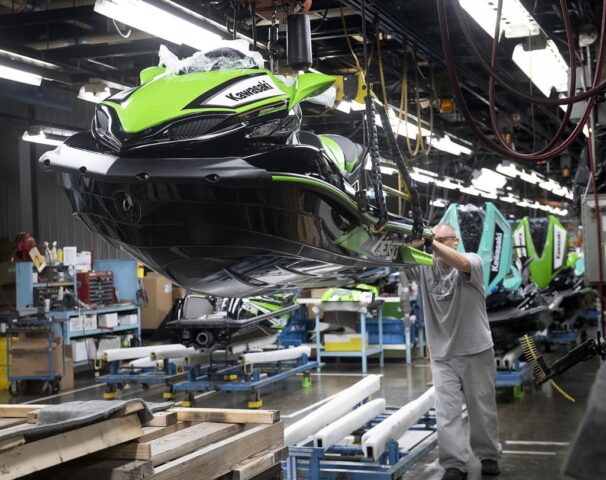
Kawasaki Heavy Industries (KHI) announced that construction will begin on a new production facility in Mexico. As a subsidiary company Kawasaki Motores de Mexico S.A de C.V. This new production facility will be added to the current Kawasaki Motors Manufacturing (KMM) corporation. This new facility will help enhance production capabilities of the Lincoln, Nebraska manufacturing facility.
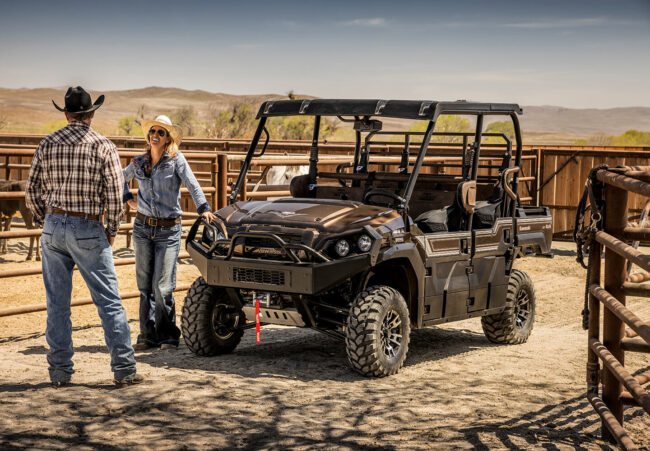
The North American market has an ever-growing demand for off-road type vehicles. From side-by-sides to dirt bikes and quads, along with small engine manufacturing for a variety of applications. To meet this increase in demand Kawasaki, move some product lines from the from sport recreation division to the new manufacturing plant.
This will allow Kawasaki to expand production capabilities for off-road and vehicles along with expand production for personal watercraft and general-purpose gasoline engines at the Lincoln, Nebraska plant and the Maryville, Missouri plant. This expansion of both product lines will allow all three-manufacturing facilities room to grow as demand increases along with the addition of new product lines to come.
Here is the original press release from Kawasaki: Kawasaki Heavy Industries, Ltd. announced today that construction will begin on new production facilities at its Mexican subsidiary Kawasaki Motores de México S.A. de C.V. (KMX). These new production facilities will be added to the current Kawasaki Motors Manufacturing Corp. (KMM) facilities which will also build new, enhanced production capabilities in Lincoln, Nebraska.
In North America, the side x side market for off-road four-wheeled vehicles continues to expand in all categories from utility to sport recreation. In order to meet the increasing demand, Kawasaki will invest a total of approximately $265 Million for production facilities at KMX and KMM. KMX will expand Kawasaki’s production capacity and start producing off-road vehicles in fiscal 2023. In addition, KMM also plans to increase its production capacity for new models by March of 2023.
In addition to off-road vehicles, KMM’s production for consumer products such as personal watercraft (Jet Ski®) and general-purpose gasoline engines includes Lincoln, NE, Maryville, MO as well as the Boonville, MO plant scheduled to start operation and production of general-purpose gasoline engines in 2022. The new KMX plant will bring the number of Kawasaki production facilities in North America to a total of four.
By strengthening its business foundation in the North American market and by organically utilizing the four production facilities, Kawasaki will further enhance the Kawasaki brand, customer satisfaction, and aggressively expand its business.
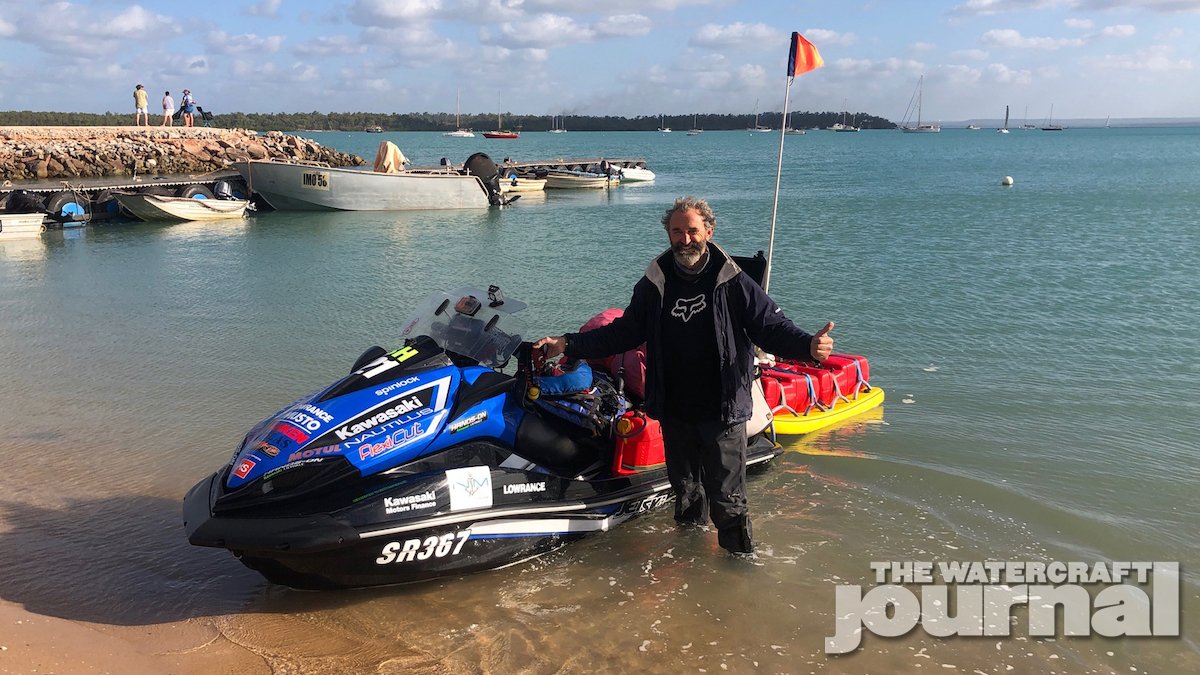
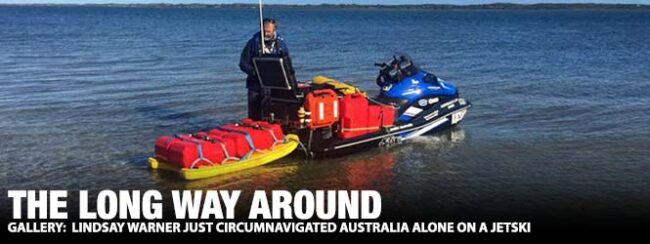
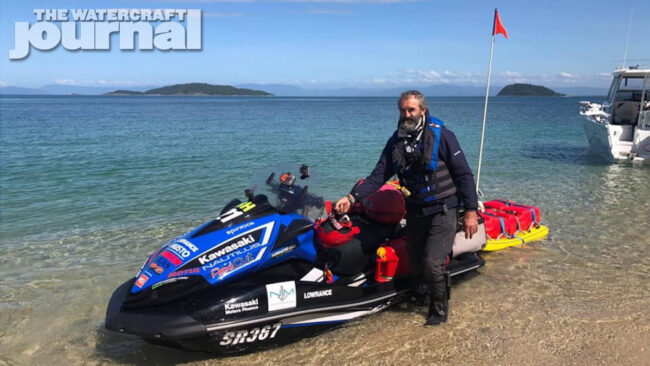
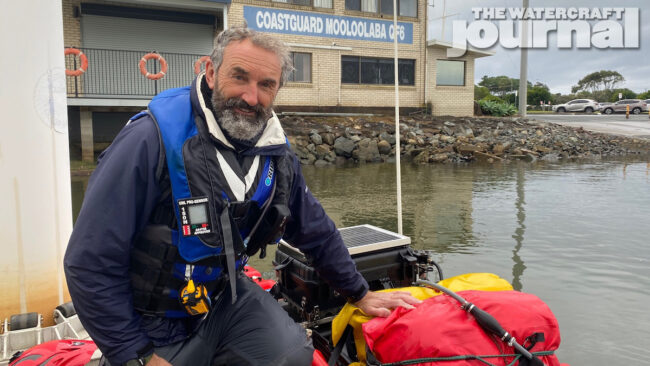
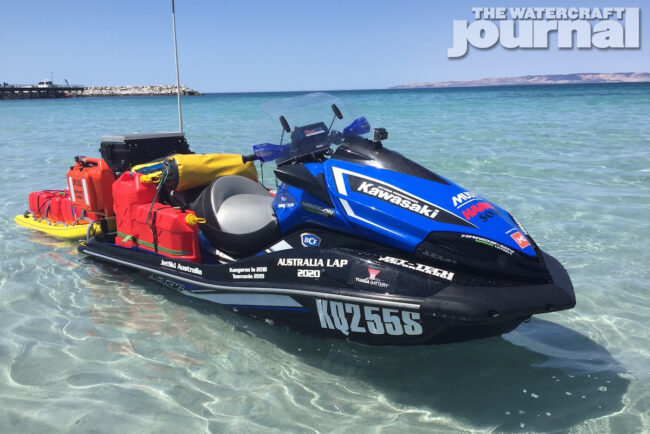
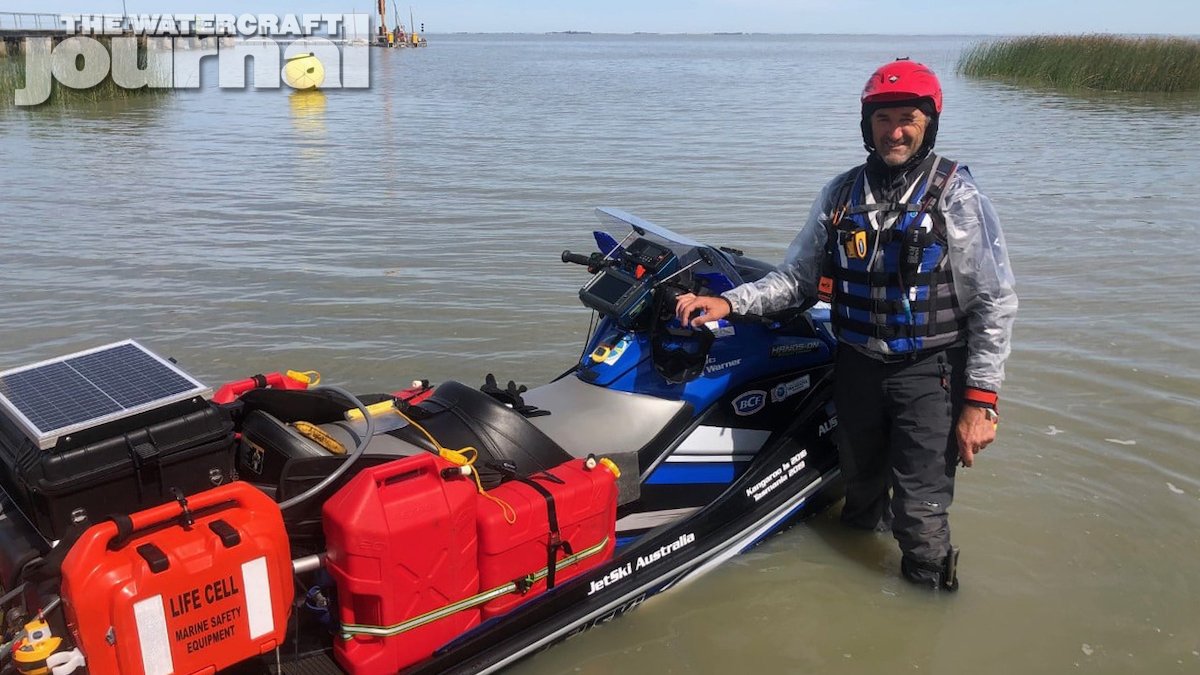
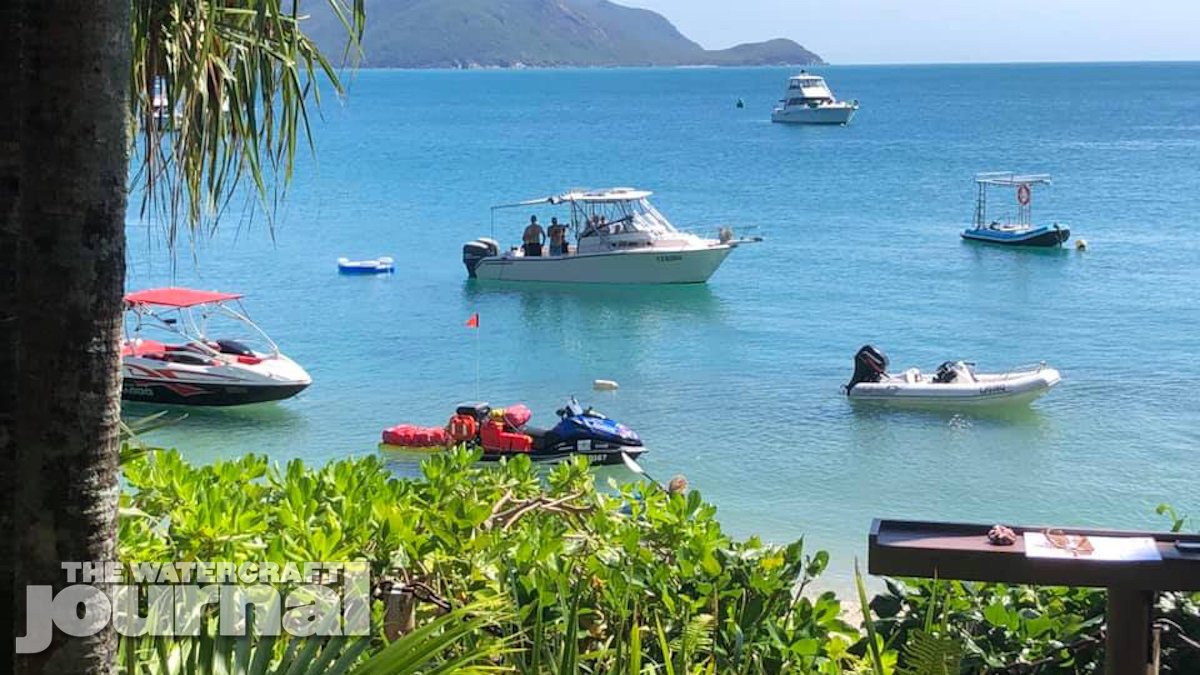
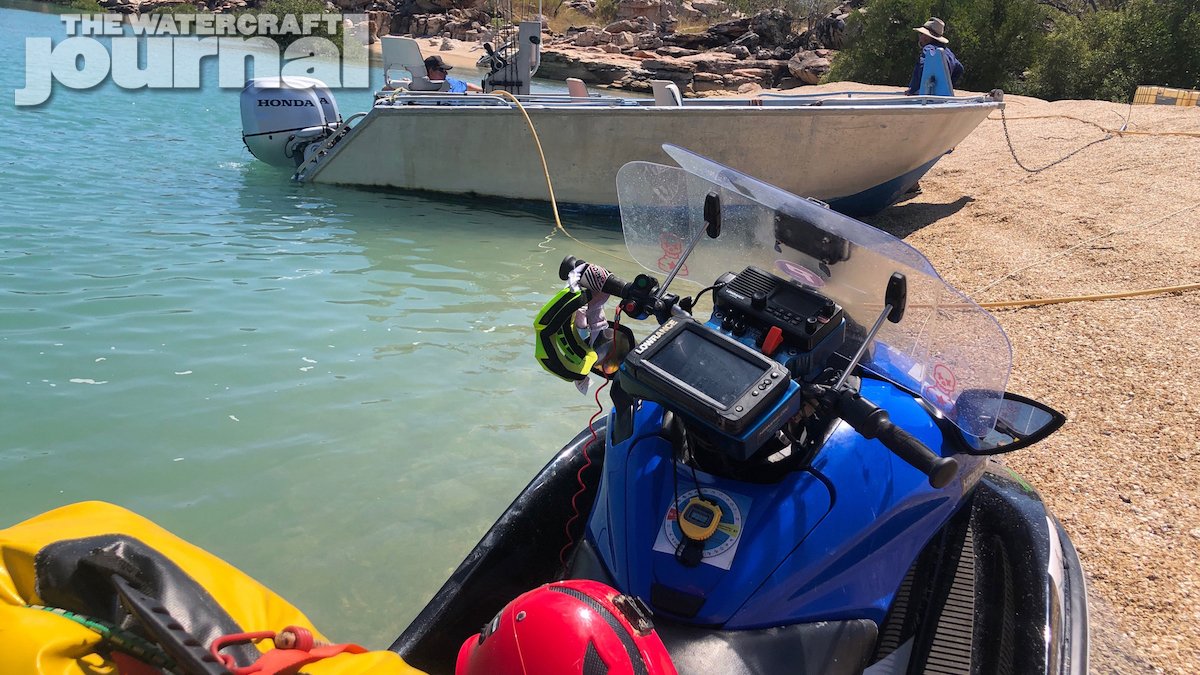
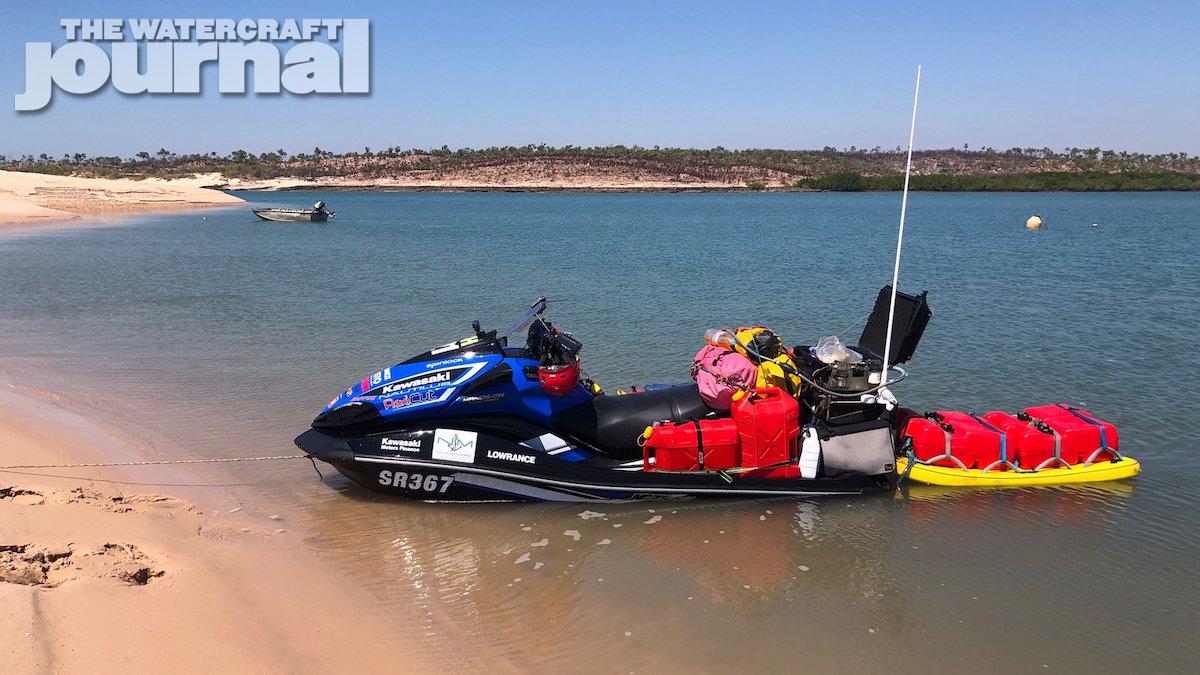
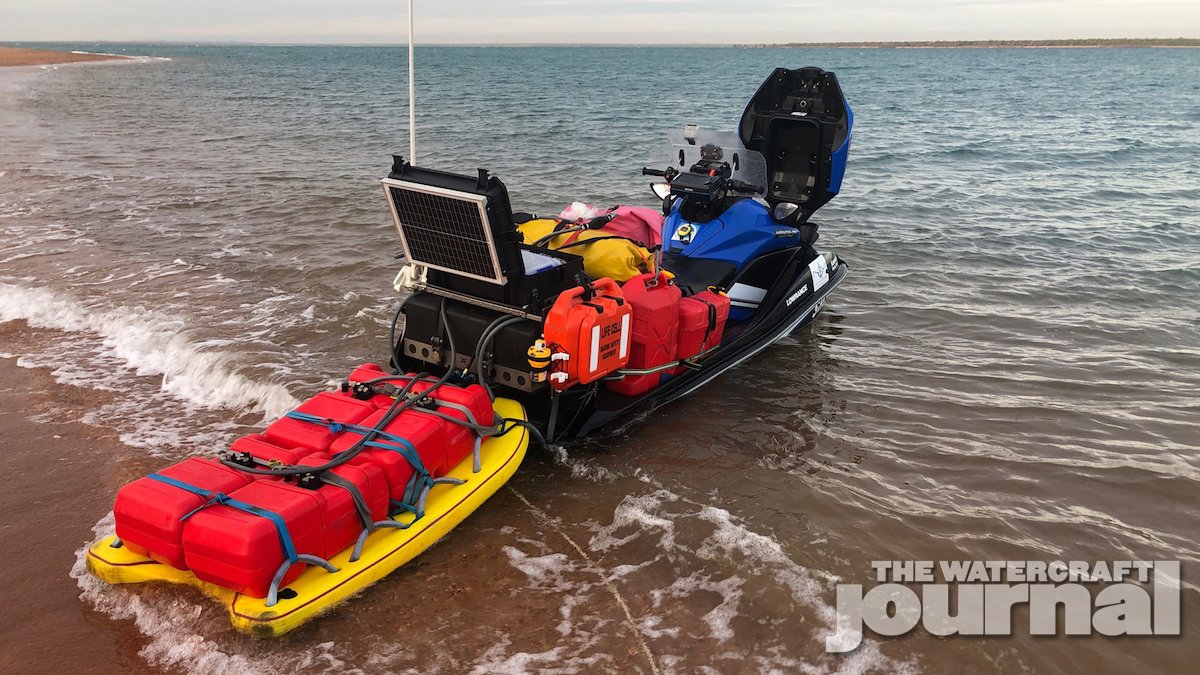
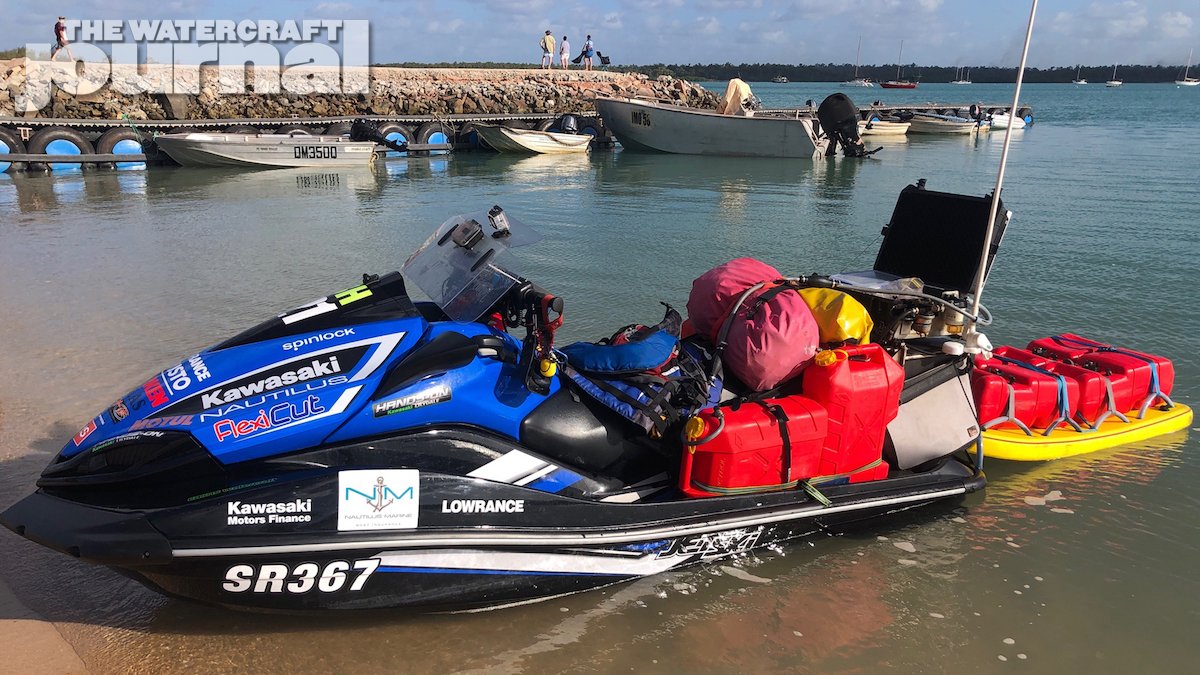
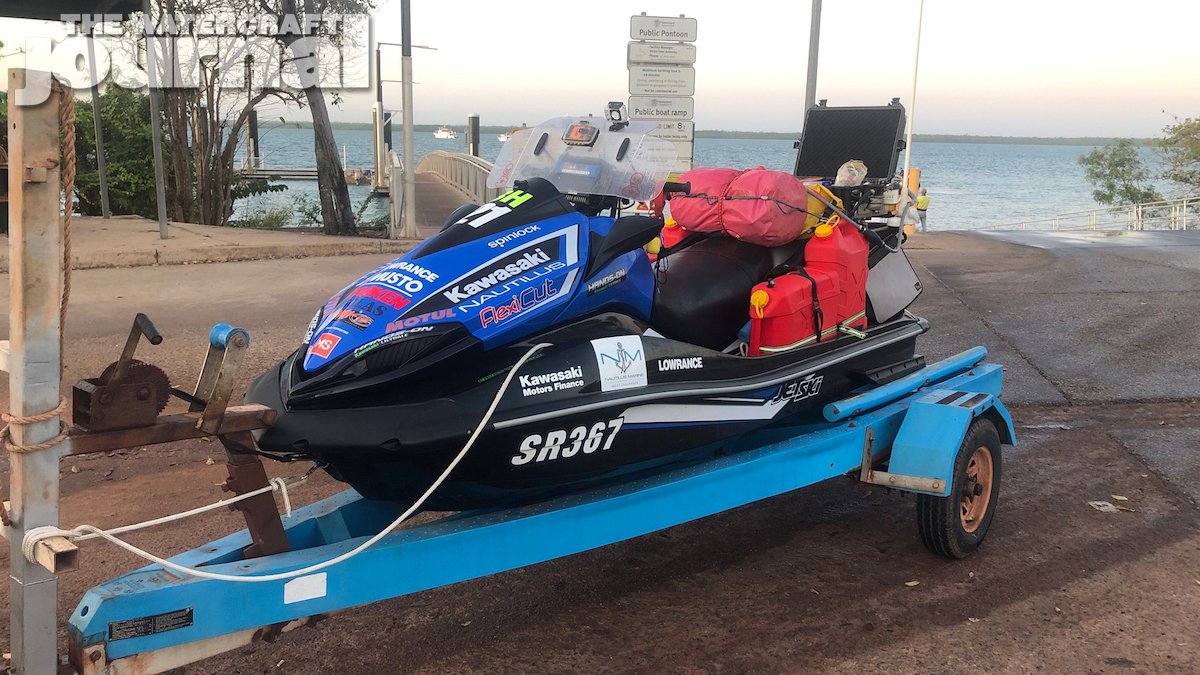
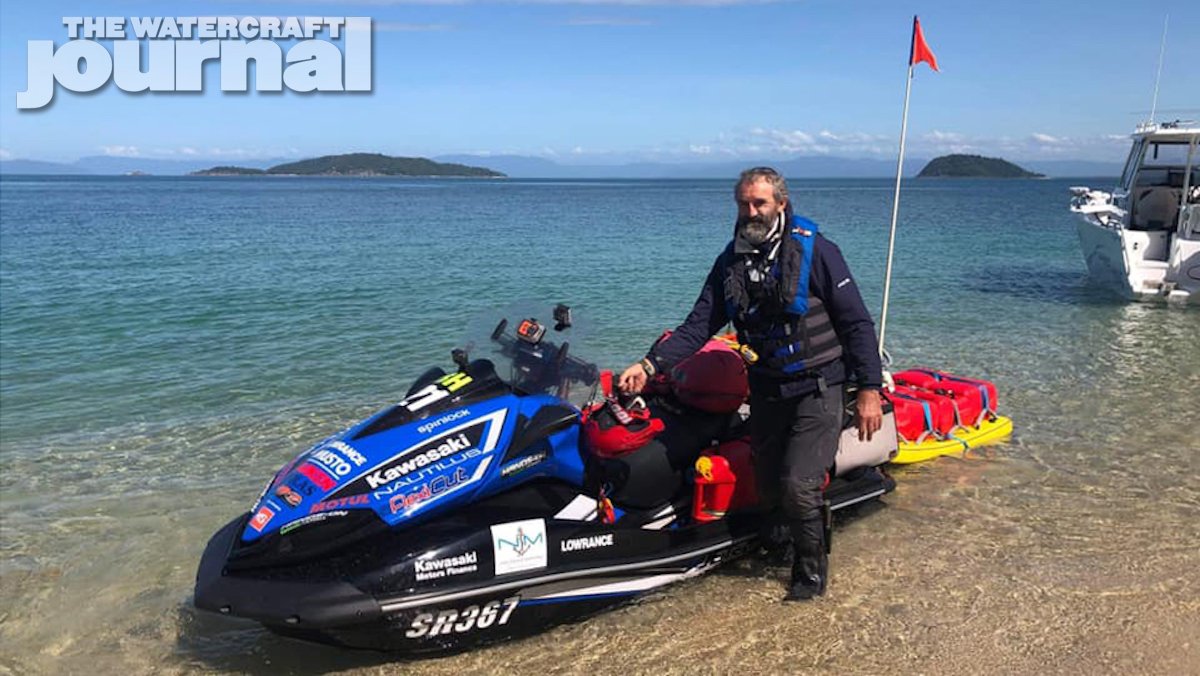
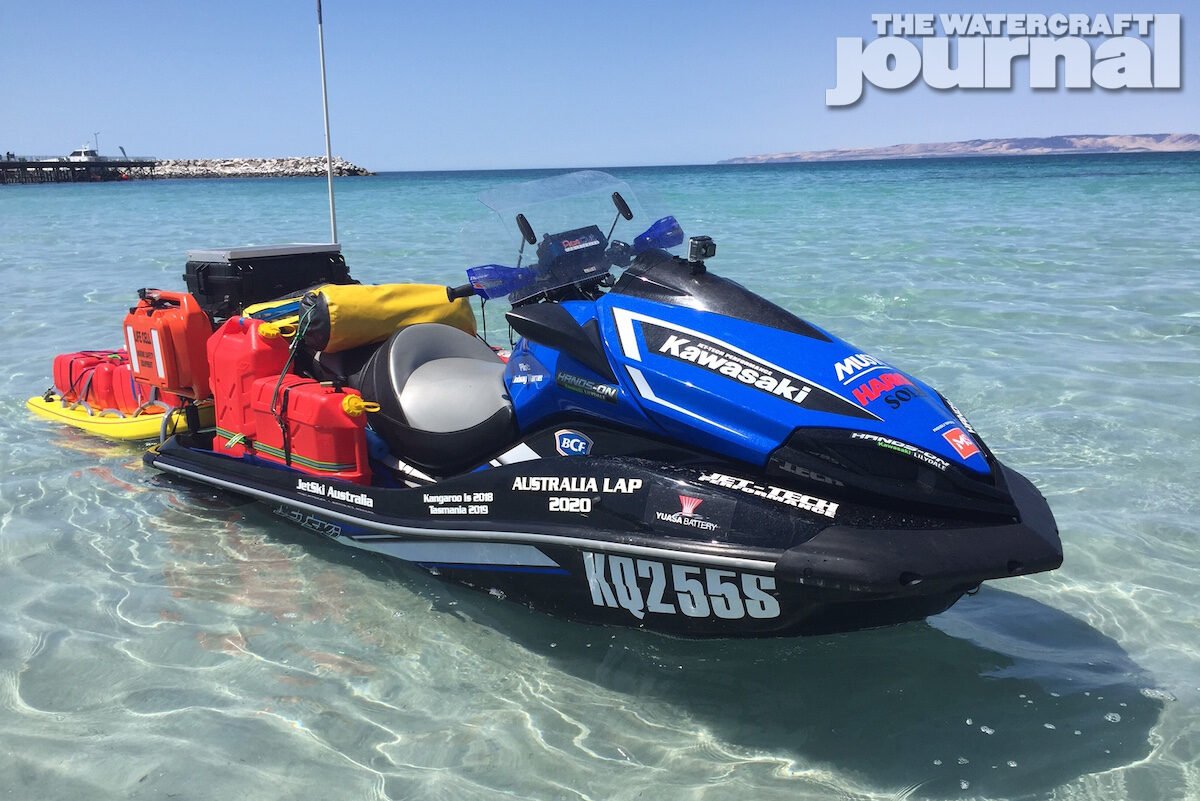
An Australian man aged in his 60s has just completed the first ever solo lap of mainland Australia on a jet ski. Riding a 2017 Kawasaki Ultra LX bought secondhand, Lindsay Warner, 63, was forced to split his lap into three legs after Australia’s strict border closures during coronavirus stopped him in his tracks. Or in this case, stopped him in the water.
In the end he completed an estimated 9000 miles (15,000km) after straight-lining from point-to-point around the vast coastline, encountering freezing temperatures in southern waters and then, weeks later, tropical conditions – avoiding man-eating crocodiles – in the far north of the country.
While his achievement is truly amazing, unfortunately he got little to no mainstream media coverage for his efforts – because Lindsay Warner was too busy keeping the throttle pinned to keep to schedule, calling days and weeks ahead to arrange fuel drops in remote locations.
The distinction about lapping “mainland Australia” is referred to because the island state off the far south-east coast – Tasmania – is also part of Australia, in the same way Hawaii is part of the USA. But here’s the thing. Lindsay Warner lapped Tasmania in January 2019 as a warm-up to his effort around mainland Australia. So, yeah, technically he has lapped all of Australia – but at separate times. You could say he has now completed the set.
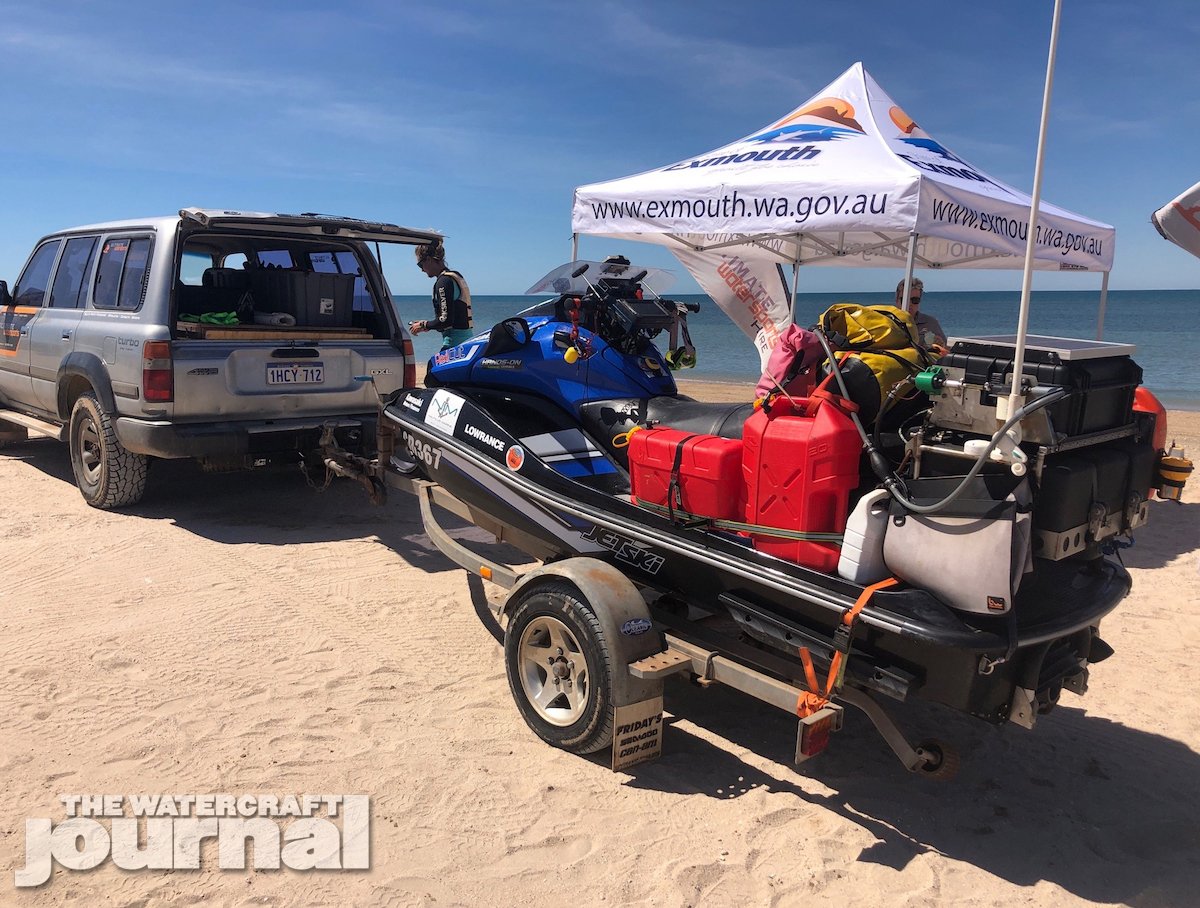
Lindsay Warner – a real estate auctioneer, pilot, and formerly an endurance dirt bike racer – had planned to complete the 9000-mile (15,000km) lap of mainland Australia in one attempt, starting from Exmouth – a remote stretch of beach in the mid-north coast of West Australia – in March 2020.
But he had to pull the ski out of the water in Esperance, West Australia, after just 20 days due to border lockdowns which, amid Australia’s strict enforcement, also applied to coastal waters. After a year of uncertainty and sporadic border closures, Lindsay Warner finally made another run for it in April 2021.
He departed Esperance and made all the way across the southern coastline of mainland Australia until a new round of border closures pulled him up after 51 days, at a sleepy beachside town of Mallacoota, near the border of the states of Victoria and New South Wales.
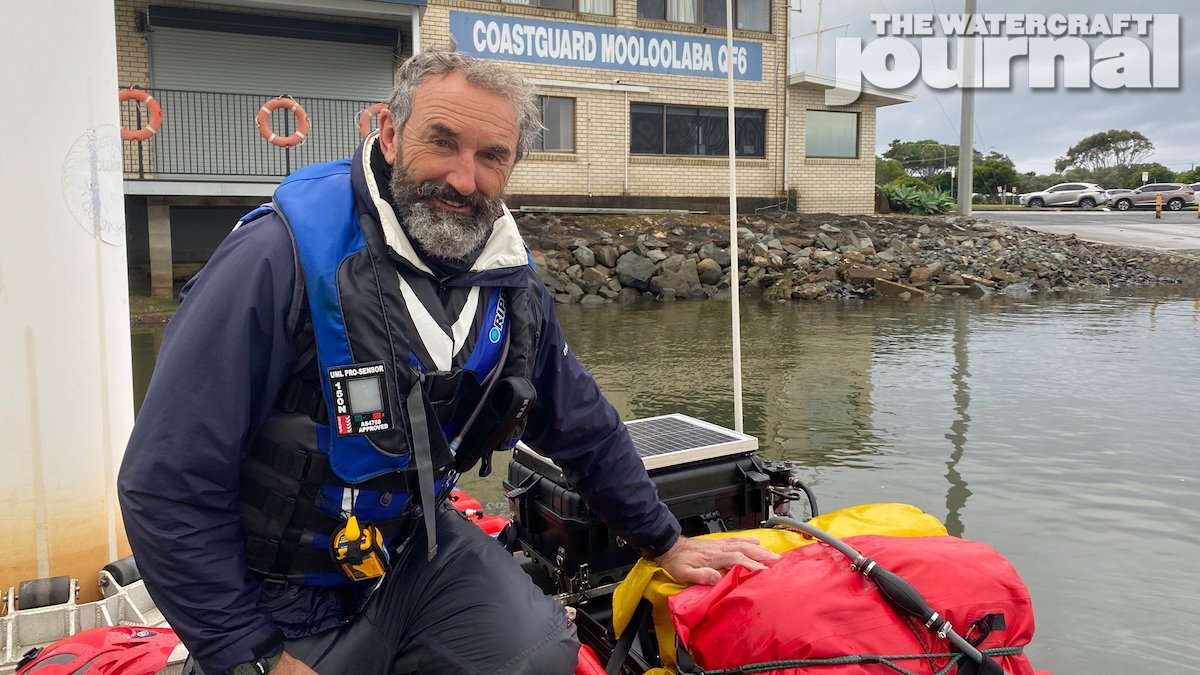
After another month of delays he hit the water again in Mallacoota at the end of June 2021 and was able to keep going for 67 days until he finally reached Exmouth, the place where the journey began 18 months earlier. Indeed, he pulled up at the same boat ramp he departed from. Lindsay Warner told Watercraft Zone: “I’m relieved it’s over. There is a lot of planning that goes into something like this, few people would have an appreciation for it, especially without a support crew to follow you all the way.”
“I’ve genuinely been staggered by the generosity of all the people I’ve met along the way,” he said. “Considering what’s going on in the world, it’s actually a relief to see there are a lot of kind-hearted people.”
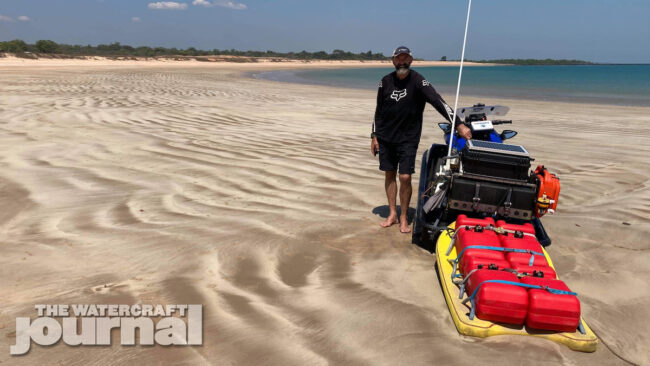
Lindsay Warner often slept rough on remote stretches of beach, or in coastguard sheds. He survived on food rations in the most remote regions. In far north Queensland and in the Northern Territory he had to find high ground each night so he didn’t become a meal for the five-metre crocodiles.
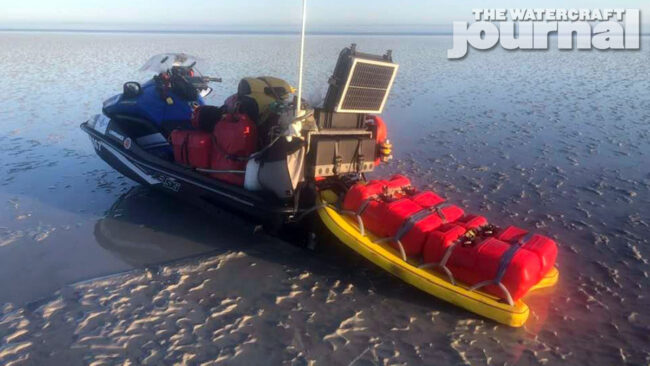
In the final fortnight, he was caught out a couple of times by the massive tides of West Australia. He set his alarm every hour overnight to push the ski out with the tide. When that didn’t work he sat on the ski from the dark hours of the morning and waited for sunrise so he could start the next leg.
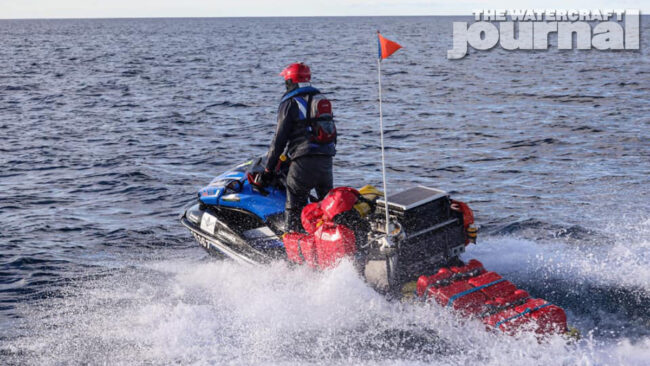
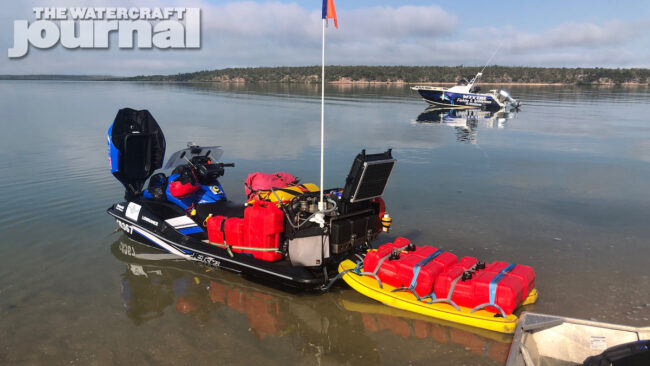
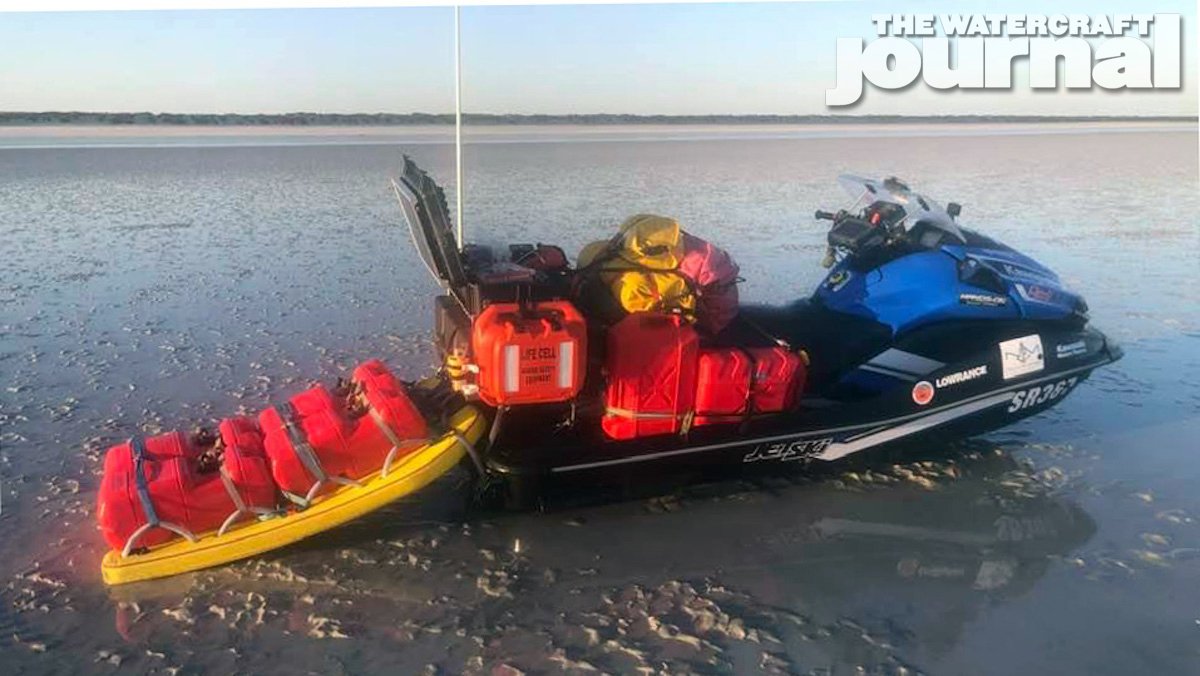
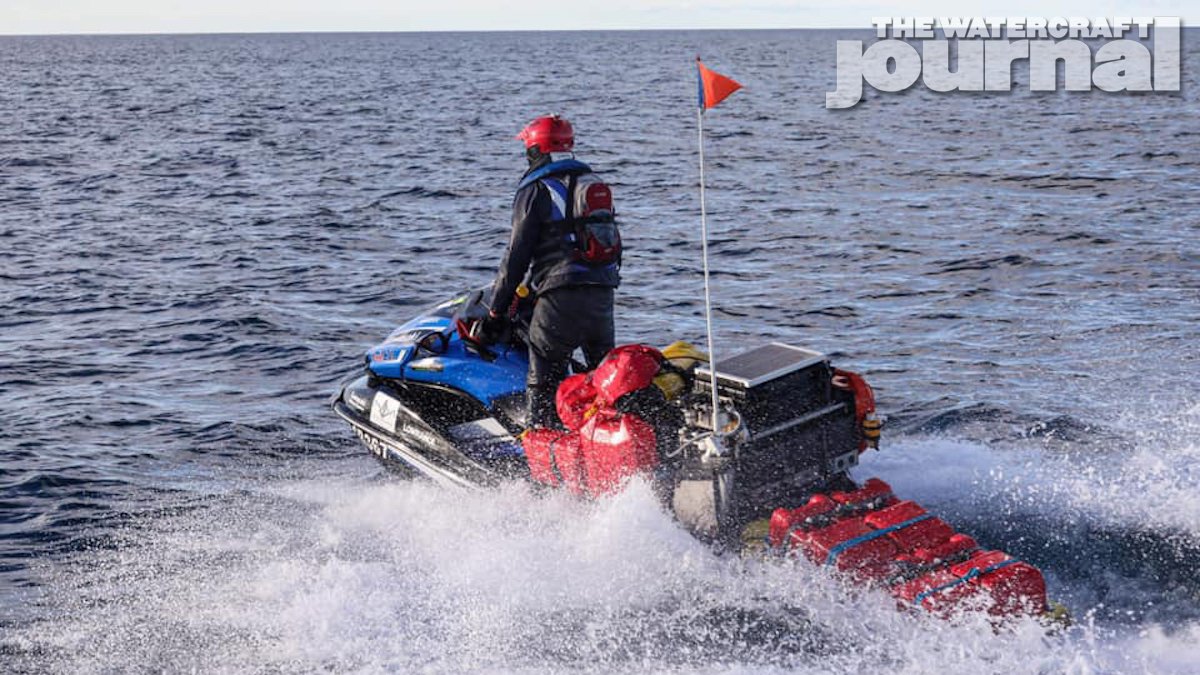
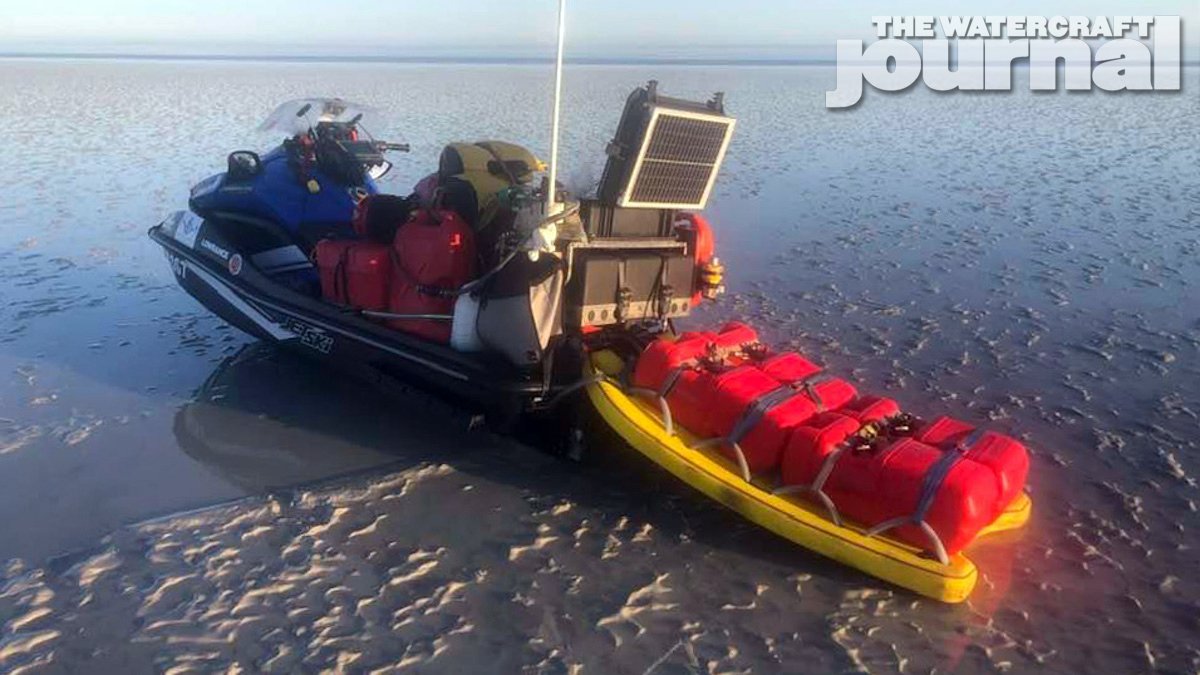
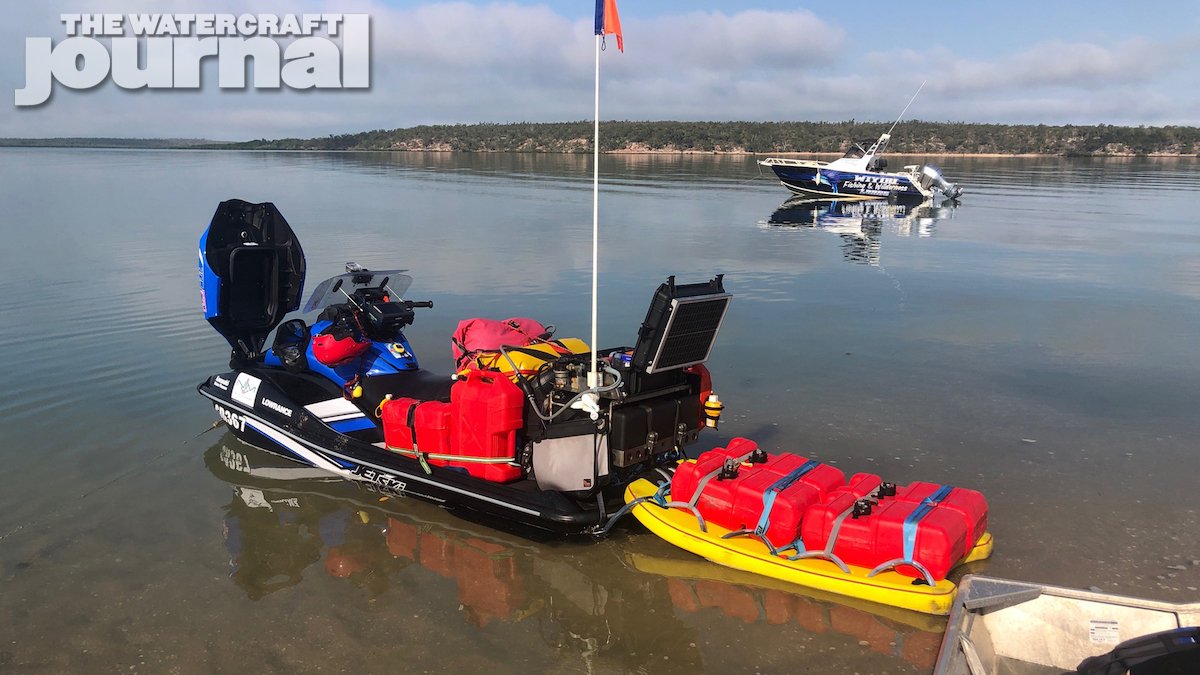
In addition to the standard 78-litre fuel tank in the Kawasaki, the Ultra LX had a 60-litre bladder on the rear deck and eight 20-litre plastic jerry cans (two in each footwell and four on a sled). He didn’t ride fully loaded all the time, only on the most remote legs.
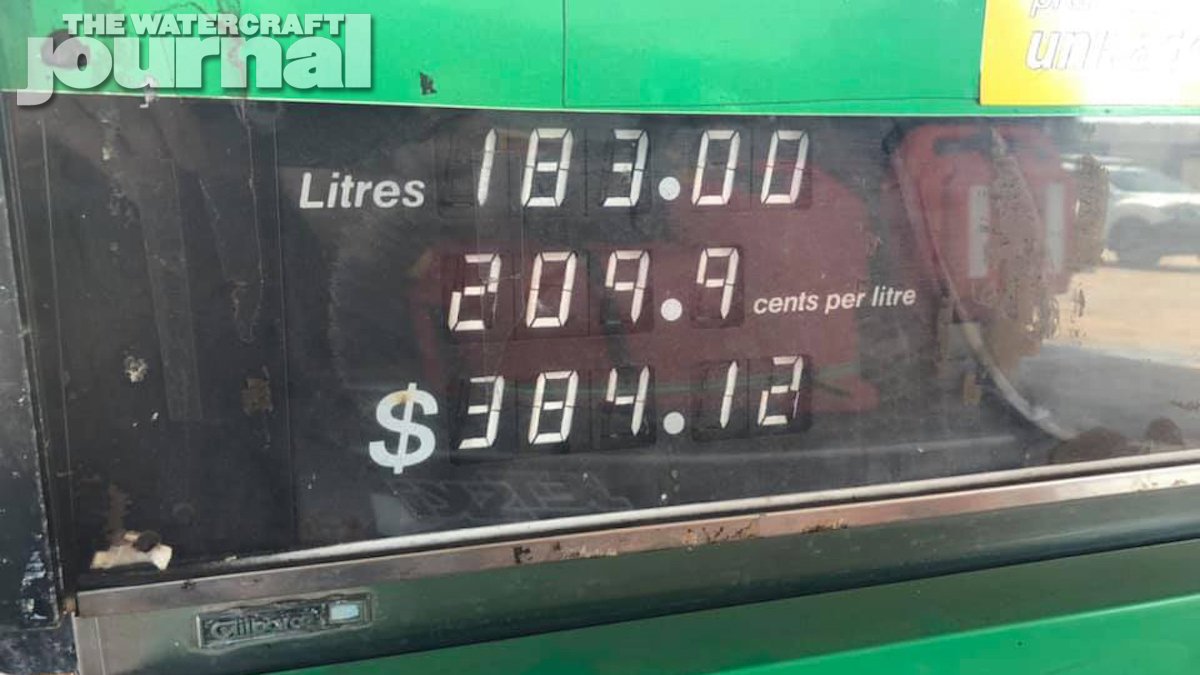
You think gas prices are dear in the US, in remote parts of Australia Lindsay Warner paid $2 to $2.40 per litre (Australian currency). The biggest fuel bill? When he had to pay an eye-watering $6 per litre on the most remote part of the trip. Lindsay Warner’s journey was largely self-funded, and he did it to raise awareness for men’s mental health.
Although at times he did have support from friends, family and strangers along the way, without a road crew following him the entire journey, Lindsay Warner had to call ahead to borrow an old trailer to pull his ski out of the water whenever it needed maintenance.
Incredibly, Lindsay Warner got the job done, having lost a little weight but gaining age and experience. He also avoided injury, which is lucky given he was always hours away from medical air support. It will likely be a long time before anyone attempts to repeat this trip solo on a Jet Ski. But Lindsay Warner will always be the first.