

Home Blog Page 135

The Watercraft Journal By The Numbers: Record Growth for 2020

0

First launched on New Year’s Day in 2013 under the name Watercraft Performance – and later rebranded The Watercraft Journal in Fall of that year – this publication has swelled to become the single-most frequented resource for personal watercraft reviews, industry news, accessory and apparel evaluations, as well as race and event coverage in the world. As we near half a million annual readers it’s an odd realization that WCJ has also surpassed the subscription sales of former print hallmarks Personal Watercraft Illustrated and Splash magazines.

Not only has WCJ continued in its upward trajectory for nearly 8 years, but we’ve also expanded into video production, providing The Watercraft Journal a whole new demographic of readers who often do not overlap between the magazine and YouTube channel. This fetches WCJ an additional audience of 1.1 million viewers, pushing The Watercraft Journal’s total audience to over one and a half million annual readers. This kind of audience is something that readers of old school PWC magazines could only dream of.
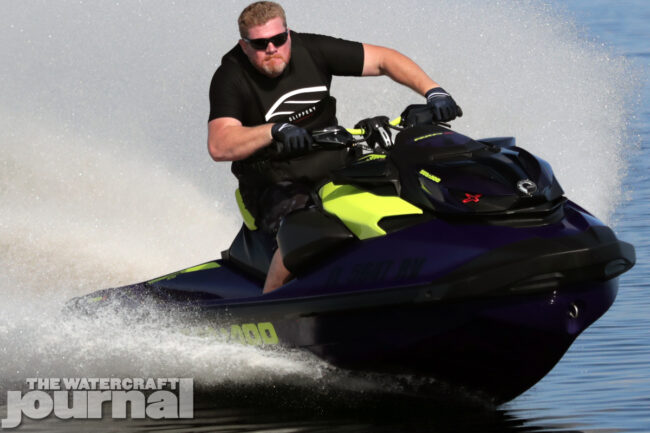
So how does The Watercraft Journal succeed when others fail? Easy, reliability. No other publication produces on a tighter schedule. Equally, we contractually deliver on the commitments we make to our supporting advertisers. Companies looking to reach this magnitude of audience know that WCJ is the best, most reliable way to do it. We provide measurable results in click-throughs, impressions and interactions ensuring that your advertising dollars result in sales. Those who join the WCJ see a better return on their investment than with any other PWC publication. That’s a fact.

Finally, our publishing schedule and social media presence is so vast and consistent that others simply fall short. Others like to try to sprint to the finish line, while we’ve managed a steady, consistent pace that has taken us further than our competition. Under the direction of industry veteran, Editor-in-Chief Kevin Shaw, The Watercraft Journal is respected and trusted by all three Original Equipment (OE) manufacturers as well as other major producers within the industry. We’ve helped open distribution channels for smaller companies, develop and trial-tested new products for manufacturers and much more. A rising tide raises all ships, after all.

Total Readership and Growth in 2019 vs. 2020

Growth By Nearly Half Over Last Year
Upward growth is great, and continued growth is really great. But what happens when 7 years into The Watercraft Journal you leap ahead of last year’s readership by nearly 47-percent? That’s pretty much unheard of. But that’s exactly what happened in 2020 and we know exactly why. Certainly the austere COVID shutdowns pushed people into pursuing new forms of fun – and a new jet ski certainly looked like a good option for tens of thousands of people worldwide. The Watercraft Journal capitalized on this surge as the primary source for industry news, product and PWC reviews, and much, much more. Additionally, in offering unique written, photographic and video content to peruse, visitors to WCJ could soak up far more information than a few scant pictures on a printed page, or a blog rehashing the same factory studio images.

2019 total number of readers: 334,779*
2019 total number of articles read: 674,833

2020 total number of readers: 487,368*
2020 total number of articles read: 866,963

*This number is considered equal to an individual sale of a single copy of a magazine.
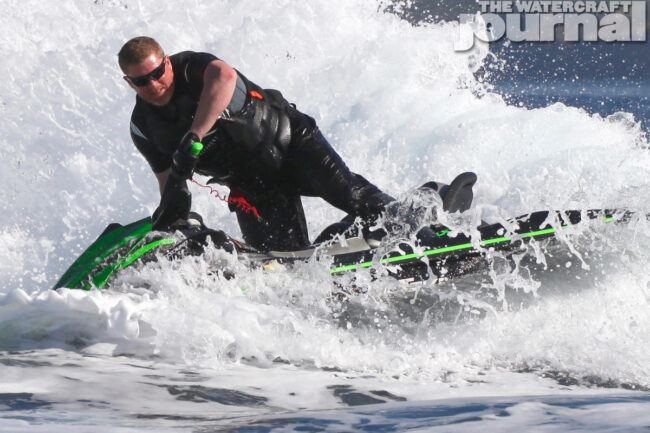
A Steady Flow of Content Never Ceases
Our publishing schedule is pretty radical; every week The Watercraft Journal produces five new articles as well as a easy-to-click newsletter that shows up in your email’s inbox every Friday recapping the week’s stories. (Except for national holidays, we’ve never “taken a day off” or decided to make up work the following day. Nope. That’s not us.) Equally, we produce two full-length video episodes on our YouTube channel as well as host a weekly “The Watercraft Journal IRL” live broadcast. Our readers have come to depend on The Watercraft Journal as a reliable source of industry news, product releases, event coverage and of course, reviews of some of the best stuff the PWC industry has to offer. We value our relationships with these companies who see the impact that partnering with WCJ brings their brands; and in turn, we hope you support those companies who support us!

Total number of articles published in 2020: 259
Total number of news articles published in 2020: 211
Total number of feature articles published in 2020: 48
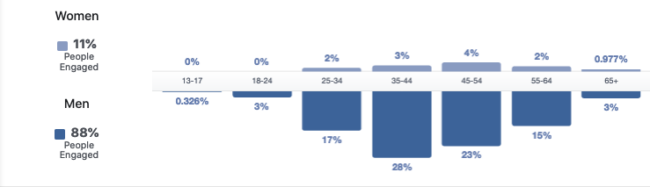

Much More Than A Website
When you’re nearly a decade into a project, it’s unlikely to see explosive growth but that’s exactly what happened to The Watercraft Journal in 2020. Leaping ahead of last year’s readership by nearly 47-percent is all the more remarkable when considering 2019’s growth over the year previous was a scant 6-percent. So what accounted for such a significant leap? Diversification. While video production has always been a part of The Watercraft Journal’s diet of unique content, it took a far larger role in mid-2019 accelerating into 2020. Equally, The Watercraft Journal’s audience isn’t just reading articles, but engaging in Instagram stories, commenting on Facebook posts and sharing YouTube videos. This, combined with unique access to PWCTrader’s search engine of used and pre-owned personal watercraft and our own T-shirts and decals in our store, and The Watercraft Journal is suddenly much, much more than just a single website posting updates on the PWC industry.

Total number of Facebook followers: 30,054
Top Five countries: United States, Australia, Canada, United Kingdom, New Zealand
Total number of Twitter followers: 1,023
Total number of Instagram followers: 12,623
Total number of YouTube subscriptions: 11,328

And The Beat Goes On…
There’s an old saying that you can’t deny the scoreboard, and the numbers that The Watercraft Journal has racked up speaks to the success of this publication. We’ve welcomed more readers than our competitors and even legendary print titles of old; we’ve written more content; provided more information; and produced more multimedia than many would produce in double the time. If there’s a failing that we’ll admit to is that we continue to struggle to convince many holdouts of the value The Watercraft Journal offers to their business. Some are slow to change. Others think their own social media page can make the difference that we can. But if you’re one such company whose ready to reach literally tens of thousands of would-be customers and have us spread the word about your product and services, then please email [email protected] about advertising your company in the world’s most popular PWC magazine today.
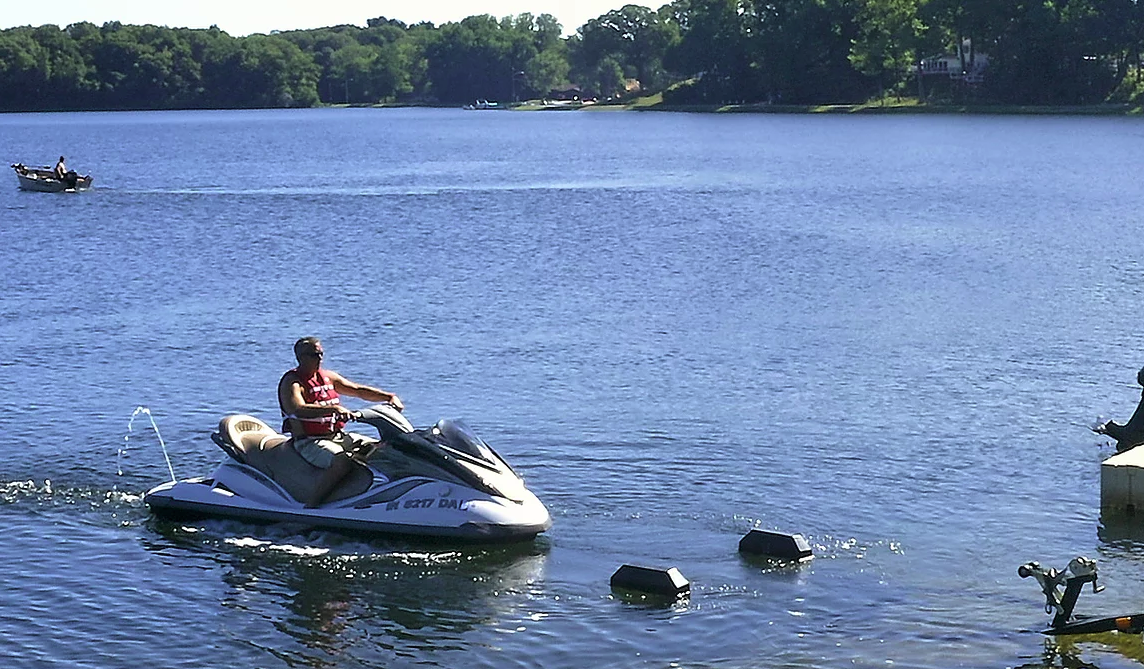
EasyGuide Improves Supply Chain, Drops Prices by 25% for 2021

0

One of the unexpected side effects of 2020’s shutdowns has been the impact placed on manufacturers and the supply chain. We’ve seen this most prominently with delays to new Yamaha and Sea-Doo watercraft rolling out, but the logjam has also bungled up smaller manufacturers as well. This in turn, has caused several to seek out new business partners – and in the case of EasyGuide, render some positive results.

Recently, EasyGuide announced a recent partnership with a new supplier providing all of the hydroformed plastic components for the docking device. EasyGuide’s CEO Cliff Leisure stated, “We own the molds, they own the machines that are capable of running the molds.  They can run our parts at a better rate which allows us to drop our price significantly.” Yes, that’s right.

Leisure continued, “We can now offer EasyGuide at a much better price. And to start off the New Year, we are offering a 25% discount!” To purchase the best addition to your single-place PWC trailer, simply go HERE to save a quarter of the previous cost and start your riding season right! Whether you’re loading or launching, the EasyGuide makes boating that much easier. See the newest animation below to see how it works:

There’s Still Time to Save at RIVA’s End of The Year Sale

0

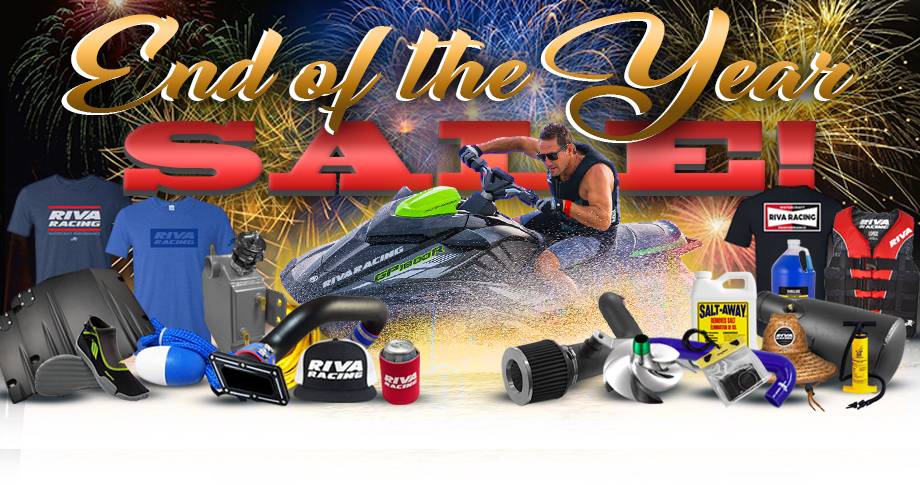
We know that it’s a little cliche to say, “There’s still time to save…” but yeah, it’s true. If you’re online reading this, then you’re just a few more clicks away from scoring a pretty deep discount on pretty much everything that RIVA Racing offers. No joke, the whole friggin’ catalog has been listed and -repriced just for this sale.

Whether you’re looking for new riding apparel, air intake systems, exhaust kits, top-loader intake grates, Pro Series sponsons, factory and aftermarket accessories, steering components and even engine upgrades like fuel injectors or supercharger parts – again, pretty much everything is on sale for one more day. Opportunity knocks, but for not very long.

So without belaboring the point much further, head over to RIVA Racing by clicking this link, which will take you directly to their massive End of The Year sale page. Start exploring because you’re bound to find something we’ve been wanting now at a lower price.

Unlimited PWC Parts’ New Sea-Doo RXT-X 300/ST3 Deck Mats

0

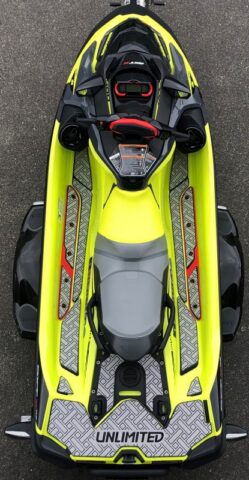
Sure, there’s a few aftermarket traction mat companies out there, but few show the kind of style and flare that you can get from Unlimited PWC Parts. Wanting to add a new look to your 2018-up Sea-Doo RXT-X 300 or other ST3-based runabout without looking like everyone else is now a lot easier thanks to Unlimited’s line of ST3 Sea-Doos.
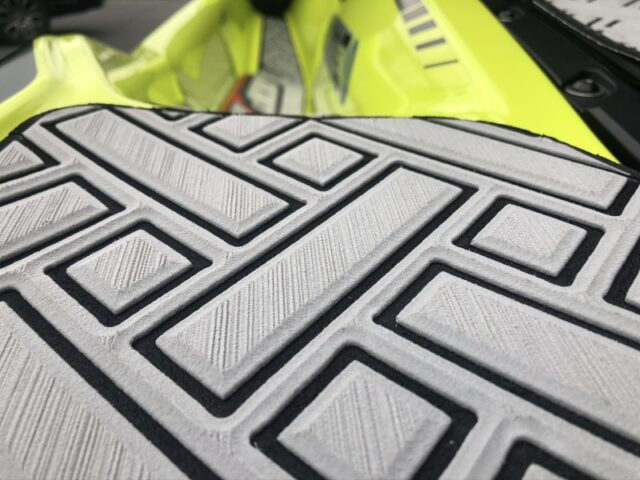
“In addition to the excellent cushioning provided by the two-layer mat structure,” Unlimited explains.

“The latest laser processing has been incorporated into the design and construction, which not only eliminates the surface tension of water and allows the deck to drain smoothly, but also provides a durable mat with high grip even when wet. They also provide a durable mat with good grip even when wet.”

This specific kit includes half a dozen laser-cut mats specifically for applications with X-series foot wedges. Applying Unlimited’s mat kit is easy using their new double-sided tape.

“The double-sided tape used is not the conventional 3M tape, but a new PSA2 based on 3M 9786, which has excellent wrinkle resistance, durability and adhesiveness.” Kits are available for $289.95 USD and will radically change how your Sea-Doo looks and feels.

Video: Pro Racer’s Daughter Jailed in Cayman Island For Breaking Covid Restrictions

1

Skylar Mack, the 18-year-old daughter of professional PWC racer Dennis Mack, and Vanjae Ramgeet, a 24-year-old Cayman Islands resident and also professional PWC racer, were both sentenced to 4 months in jail after Mack willfully removed a COVID tracking device during a mandatory 14-day isolation period in the Cayman islands.

After undergoing two negative COVID-19 tests, and her family appealing to President Trump directly, the White House responded by forwarding her case to the appropriate federal agency. Per an article in Gateway Pundit, Jonathan Hughes who is the attorney for Skylar Mack said, “This particular sentence would have a particularly harsh effect on her, and the court ought to have considered that the individual before it, not just the crime.”

Cayman Islands Governor, Martyn Roper stated, “All of us have to show individual and collective responsibility if we’re going to effectively deal with this pandemic.” Ramgeet was charged with “aiding and abetting” Mack and was originally sentenced to 40 hours of community service and a $2,600 fine each; but “under the country’s revised penalties for quarantine breaches,” BuzzFeed News reported, “prosecutors appealed for a harsher sentence that included prison time for the couple.”

After lengthy appeals and international attention placed on this case, both Mack and Ramgeet’s prison sentences were reduced to 2 months on Tuesday, according to court records.

RIVA Racing Teases Custom Race-Ready 2021 Yamaha EXR WaveRunner

0

It’s been easily one of our pet favorites since its introduction only a couple of years ago; but the Yamaha EXR WaveRunner has really to really make the impact on the world of performance Rec Lite personal watercraft that we would like to see. Thankfully, folks are getting hip to the 110-horsepower, super lightweight NanoXcel2 2-seater, including some racers.

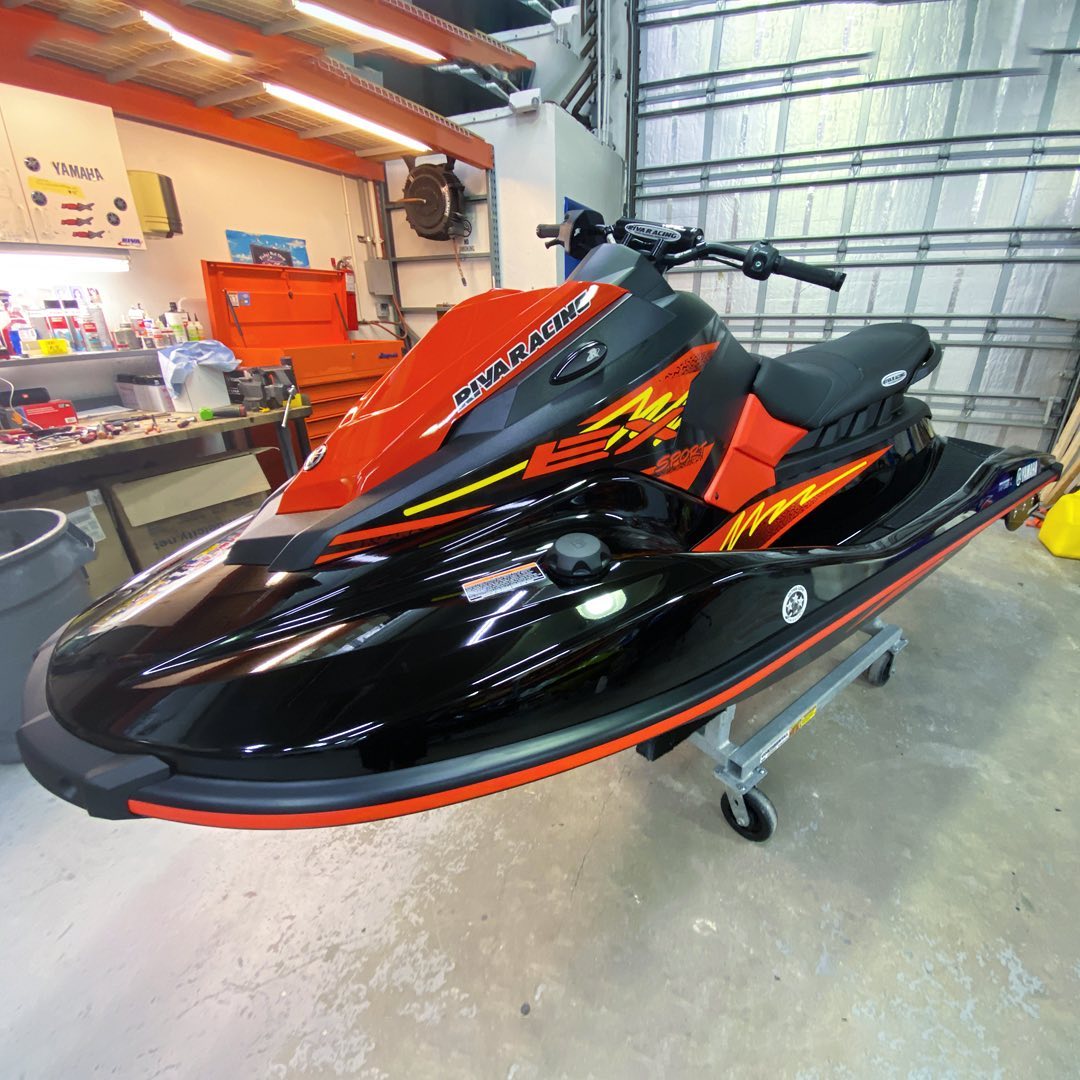
One such athlete came to RIVA Racing to have a customized 2021 EXR built for IJSBA and ProWatercross racing this coming year, and the results are impressive. The list of go-fast goodies on this little machine are impressive and will definitely help to push this WaveRunner towards the front of the pack if the racer can keep it pinned!

Here’s what RIVA published to its Facebook page just a short while ago:
We recently completed this Yamaha EX build for a customer that competes @ijsba & @prowatercross racing. Mods include
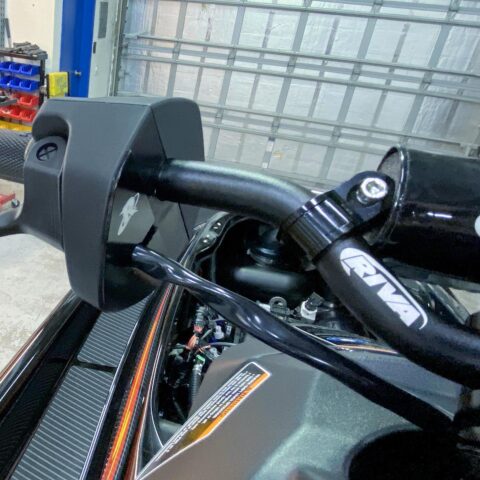
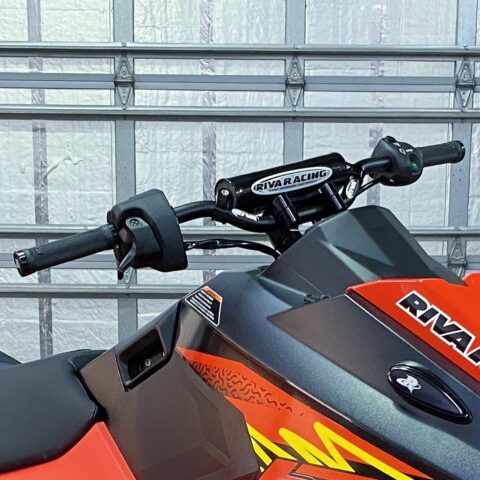
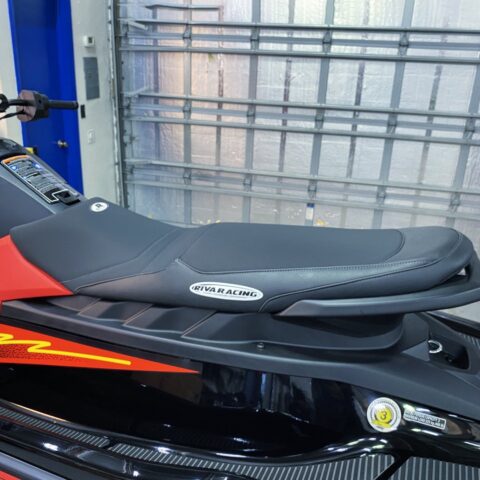
• MaptunerX ECU Tuning • RIVA Power Filter Kit • Solas Impeller • RIVA Ride Plate • RIVA Top-Loader Intake Grate • RIVA Pro-Series Sponsons • RIVA Billet Steering System • RIVA Bars & ODI Grips • RIVA/Jettrim Seat Cover • RIVA Mirror Block-off Kit

Contact us for expert advice on taking your watercraft to the next level! Click here to shop now!

Video: Experience The Sea-Doo Life; Lake Powell Style

0

In this latest action-packed Sea-Doo adventure, media star and adventure seeker Rory Kramer show us how to live the #SeaDooLife; Lake Powell Style.

Rory along with his wife and crew of ultimate fun seekers, turn this beautiful landscape into a backdrop of exploration and thrill-seeking while onboard their Sea-Doo watercraft.  Some could call it the ultimate Sea-Doo playground.

According to Sea-Doo, the crew was there for two epic days tearing up the water by jumping, gliding, and surfing their way across the reservoir with an impressive canyon backdrop at every turn.

So keep watching the video below to check out all of the action-packed fun.  Want to experience this for yourself?  Well you can with the uncharted society.  Check it out to book your travel package today and find out all of the ways to enjoy the #SeaDooLife.

The Greenhulk PWC Performance Store Holiday Sale is Still Going Strong

0

The world leader in performance PWC parts and components – as well as a major vendor of all OEM replacement parts – the Greenhulk PWC Performance store is continuing its Holiday Sale all the way through December 31st. That means you can still save on all of the go-fast goods you’ve been eyeing, or simply pick up that replacement piece you need to bring your PWC back to showroom-stock.

Whether you’re looking at RIVA Racing, Fizzle Factory or WORX Racing, the Greenhulk PWC Performance Store has it all – and for an increased discount of 15-percent over the normal 10-percent when you use the coupon code “greenhulk” when checking out. It’s really that easy, guys. Seriously, why pay full price on the same stuff when you can shave literally hundreds of dollars off?

Here’s the original announcement:
Use the discount code: greenhulk when completing the checkout process in the Greenhulk PWC Performance Store and save 15% off the listed price of MOST Riva Racing, ALL Fizzle Factory, and ALL WORX Racing and all OEM parts.

Applicable products show much money will be discounted on each individual product page. Promo period: Nov 24th 2020 at 12:01am to Dec 31st, 2020 at 11:59am (EST). Discount qualifies for NEW orders ONLY.

Video: Installing The Watercraft Journal’s “Long Hauler” Auxiliary Fuel System Kit

0

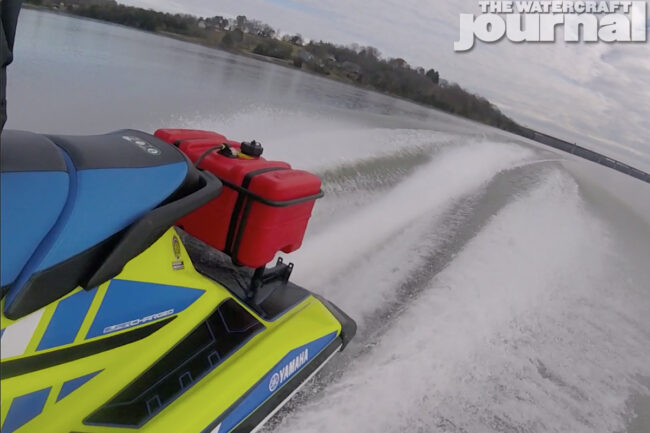
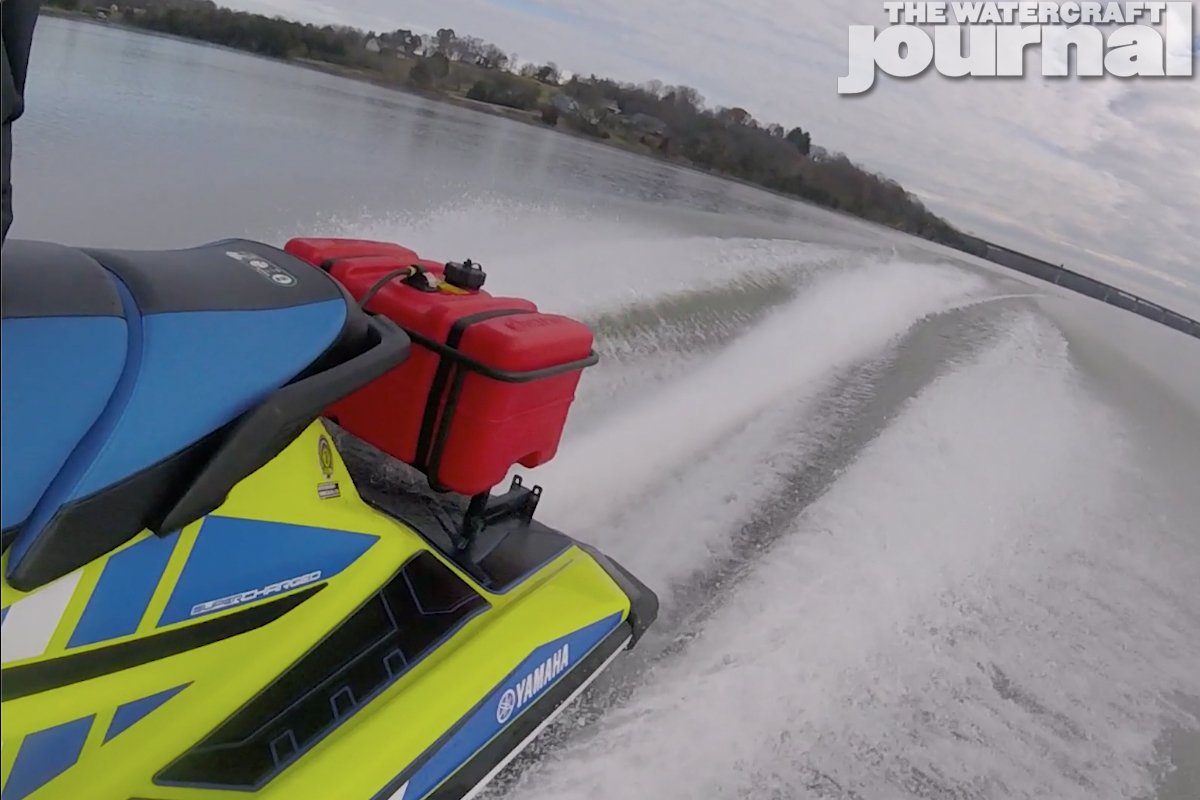
Seeing how today’s personal watercraft enthusiasts are looking to push the boundaries of long distance traveling and exploration, The Watercraft Journal sought to develop the easiest, most non-invasive auxiliary fuel system possible. The goal was to provide a secondary fuel supply that would automatically siphon extra gasoline from the rear tank into the factory fuel cell without the need of cutting, drilling or permanently modifying the watercraft in any way.

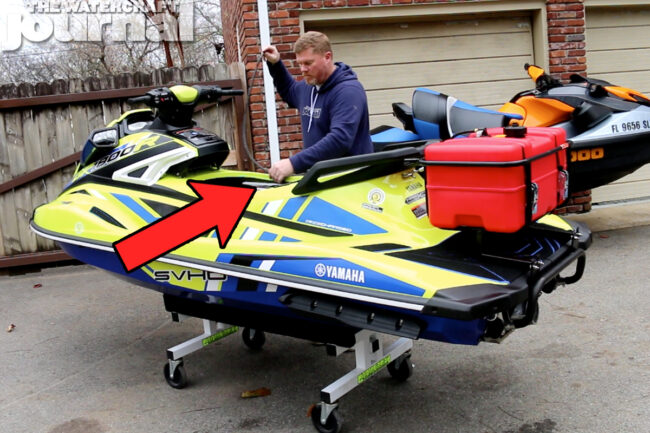
The Watercraft Journal’s “Long Hauler” Auxiliary Fuel System Kit is the single-most comprehensive yet simple package we could devise. It was purposely engineered so that the least mechanically-savvy can install it in a matter of 10-to-15 minutes using common hand tools. Here we’ll demonstrate each step of the installation process, using this 2020 Yamaha GP1800R SVHO WaveRunner.

Because our system operates using the mechanical vacuum created in the factory fuel cell to organically siphon fuel from our auxiliary tank mounted on the rear deck, our kit will work on all 2004-and-up 4-stroke Kawasaki and Yamaha runabouts, as well as all 2003-through-2011 Sea-Doos. Changes made to the fuel pickup by Sea-Doo in 2012 makes use of our system impossible without major changes to the factory fuel system, which we didn’t want to require.
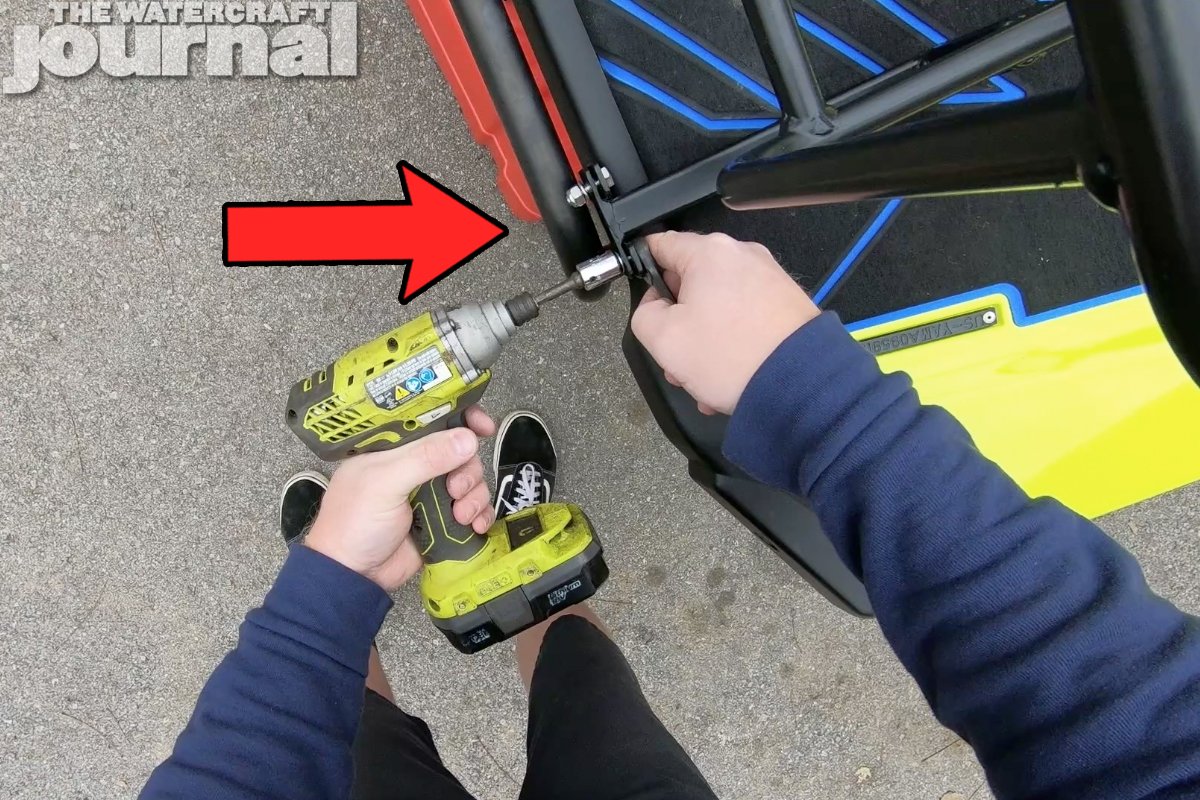
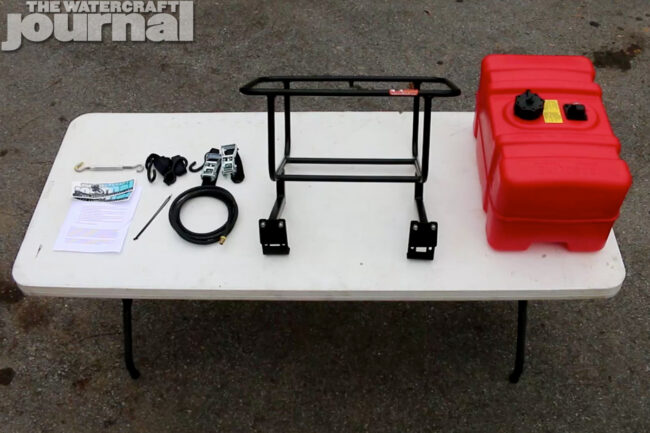
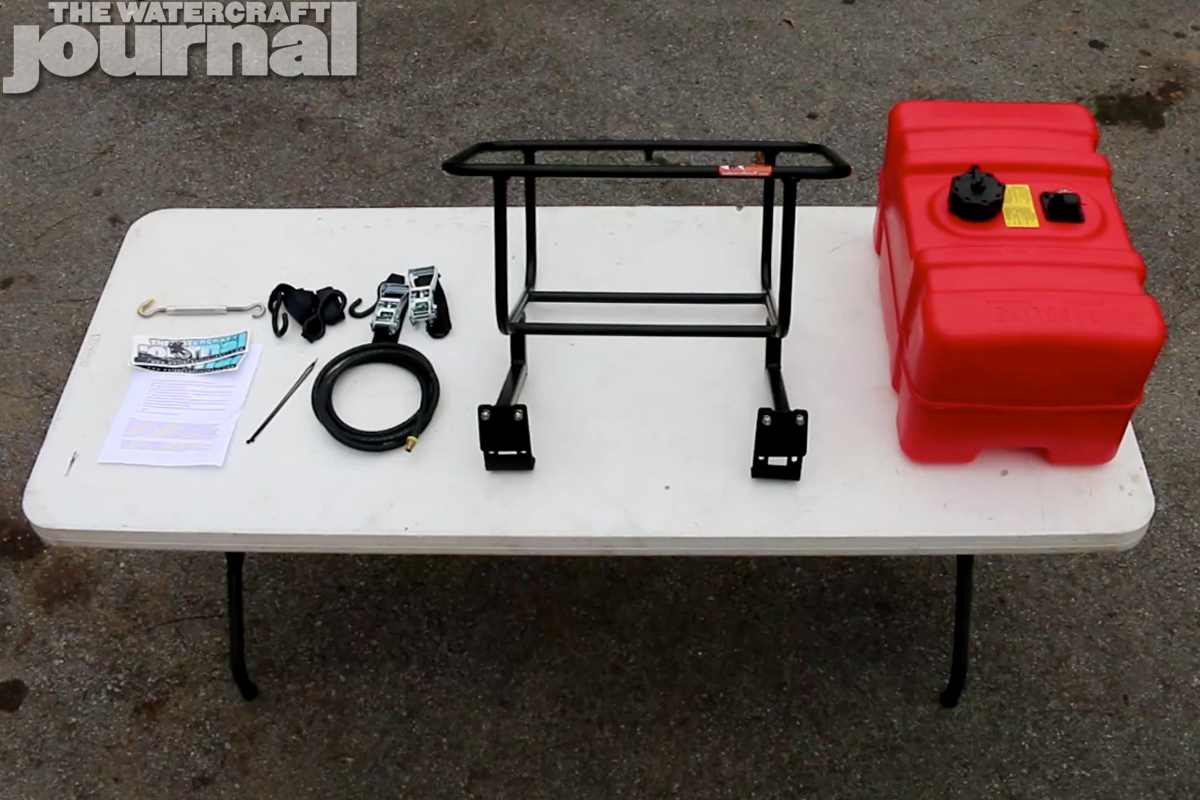
The Long Hauler Auxiliary Fuel System consists of 9 pieces: a cold-rolled stainless steel-and-black powder coated rack from Kool PWC Stuff, featuring its patent-pending Z-bar adjustable base, lined with thick Hydro-Turf padding; a stainless steel double-hooked turnbuckle; a USCG-certified 12-gallon auxiliary fuel tank featuring a ventilated locking gas cap, internal pickup and even a floating fuel level gauge; two ratchet straps to secure the tank to the rack; 11-feet of non-EFI 50psi-rated fuel line fitted with a brass 5/16-inch hose barb; and two zip-ties to secure the fuel line.
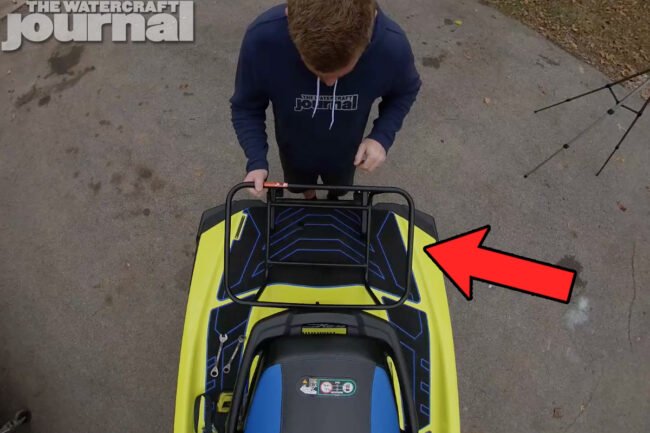
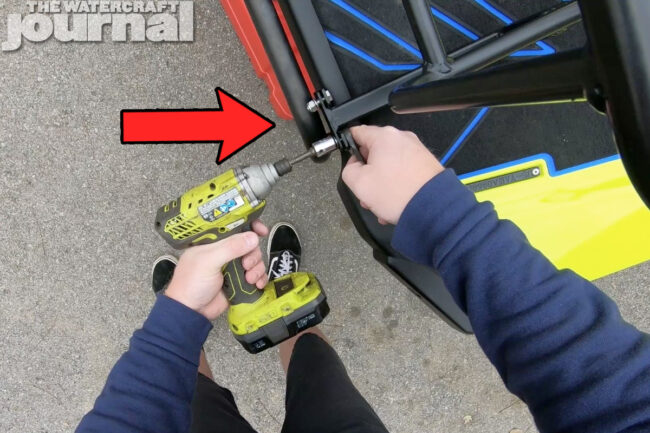
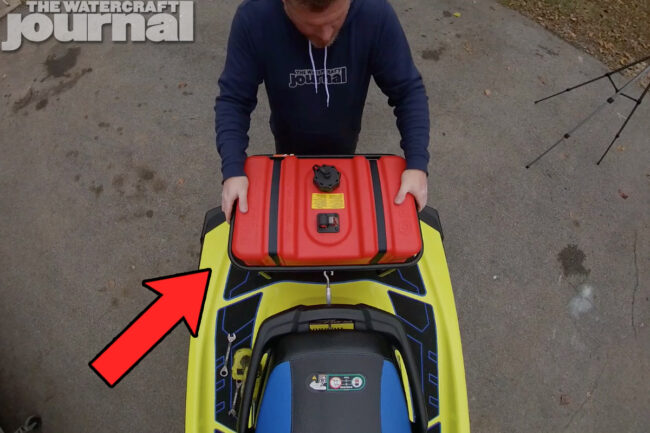
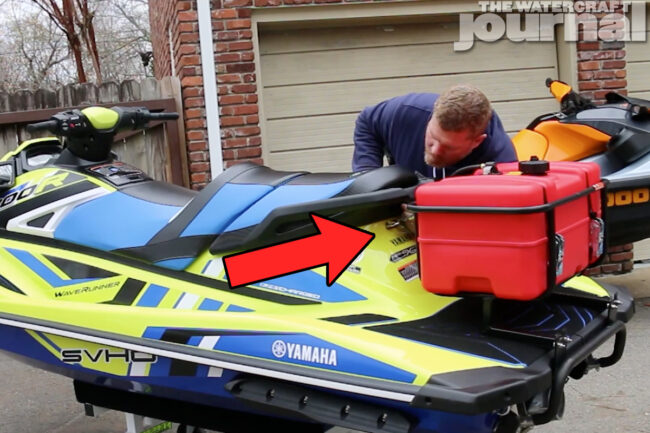
Installation begins by placing the empty rack on the rear swim platform. Make sure that the legs are flat against the deck before adjusting the rear hooks around the bottom of the rear bond rail. Tighten each of the (4) nylock nuts using either a pair of 1/2-inch sockets or wrenches, careful to make sure the adjustable brackets do not loosen in the process.

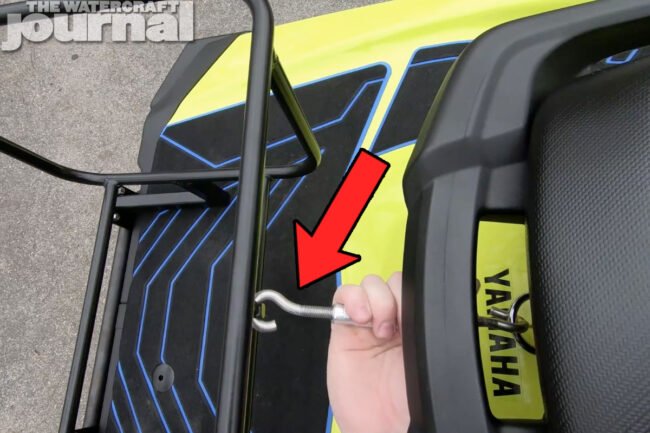
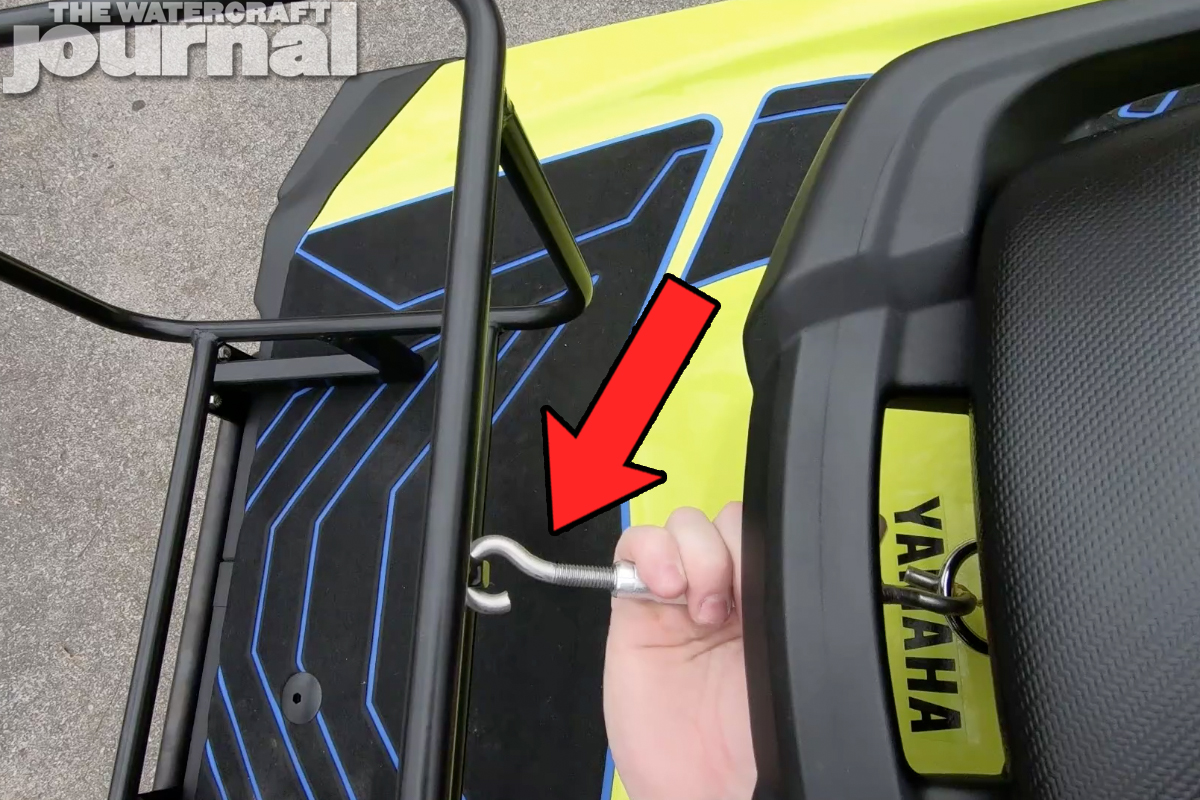
Once snug, install the turn buckle by inserting one of the hooks through the loop on the front of the rack. You’ll need to loosen the turn buckle to reach the tow eye on the rear of the ski. Once looped through the tow eye, begin tightening the turn buckle by hand by twisting the center section clockwise. You will immediately feel the rack begin to tighten down.

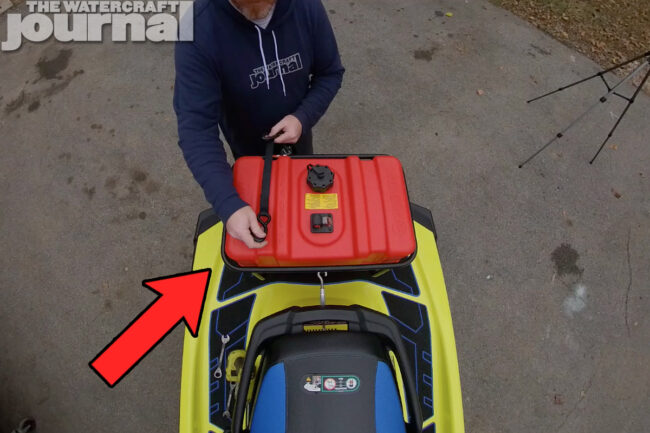
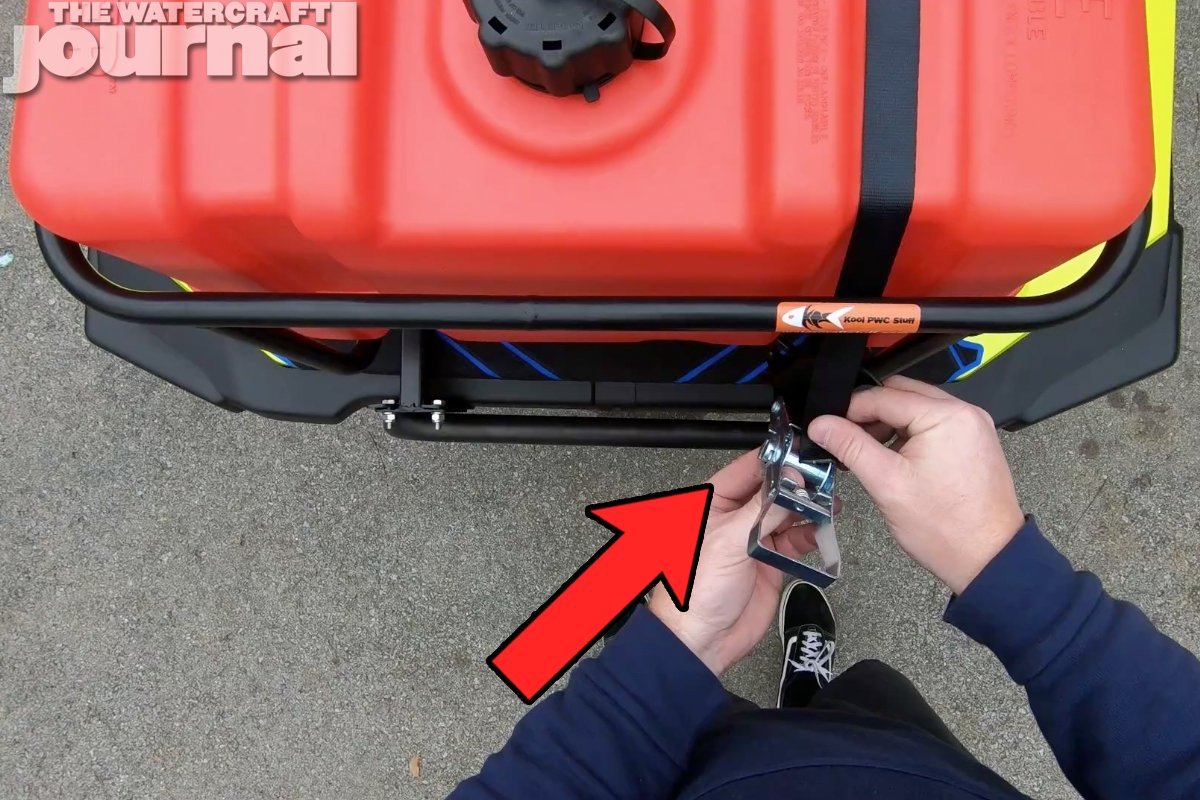
Next, install the auxiliary fuel tank into the rack, with the ventilated gas cap towards the rear, and the fuel gauge towards the front of the watercraft. Now loop the ratchet straps around the tank, feeding the strap inside of the upper rails and around the bottom bars. The hooks hook together on the bottom, letting you tighten down the straps, securing the tank to the rack.

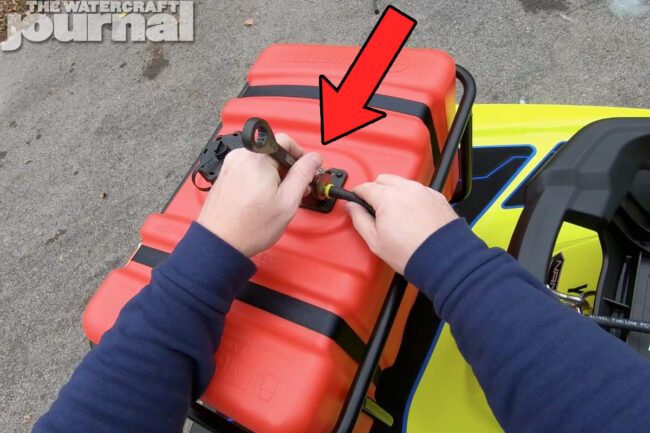
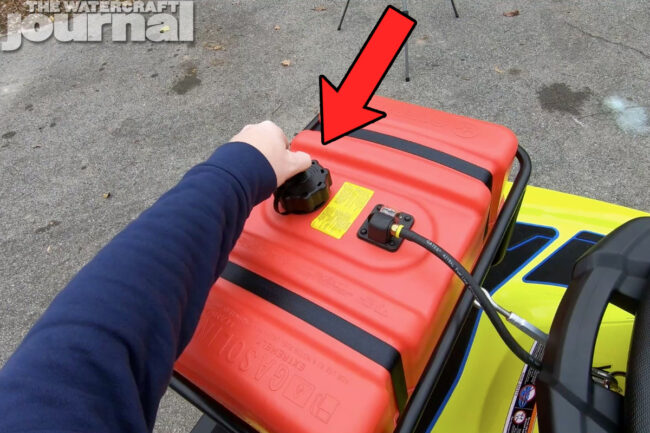
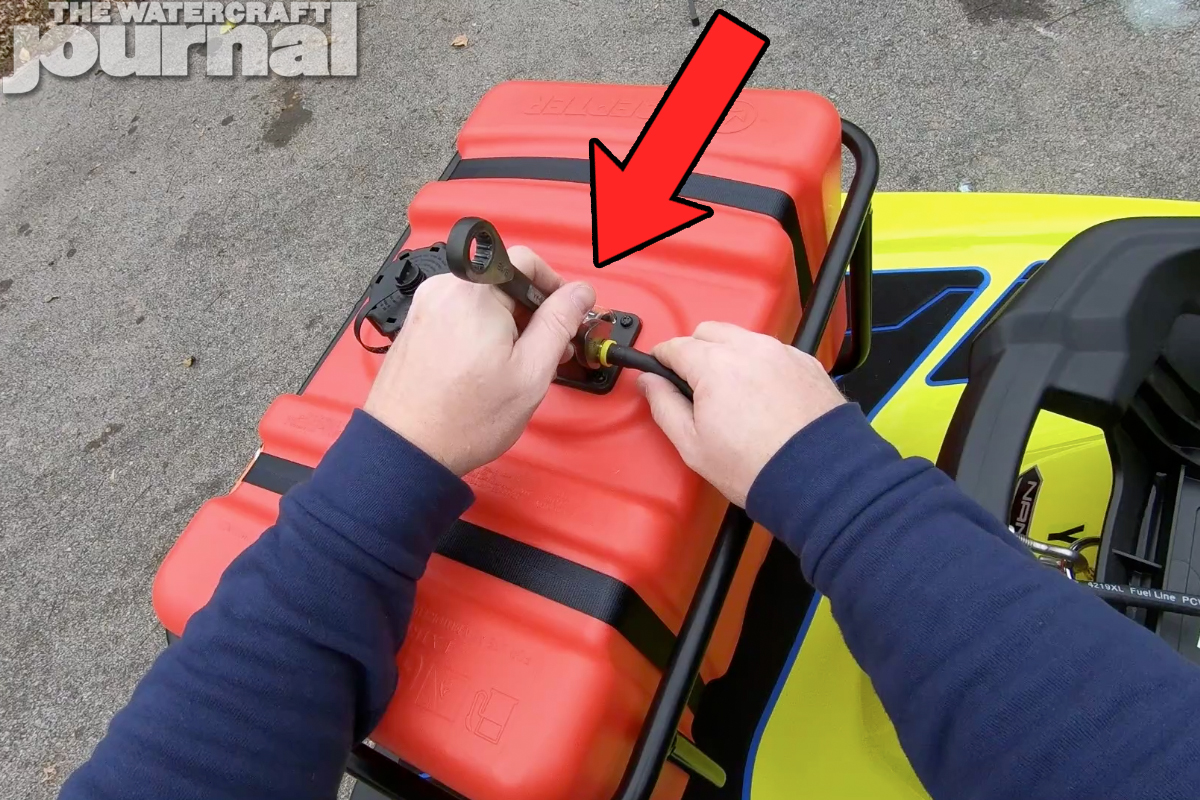
With your rack secure and your tank installed, remove the seats from the watercraft exposing the engine compartment. Begin to install the fuel line by first removing the red safety cap from the tank pick up; then threading in by hand and then tightening down with a 9/16″ wrench the brass fitting into the fuel tank. Because this fuel line isn’t pressurized, there’s no need to add thread tape or plumber’s glue to the threads.

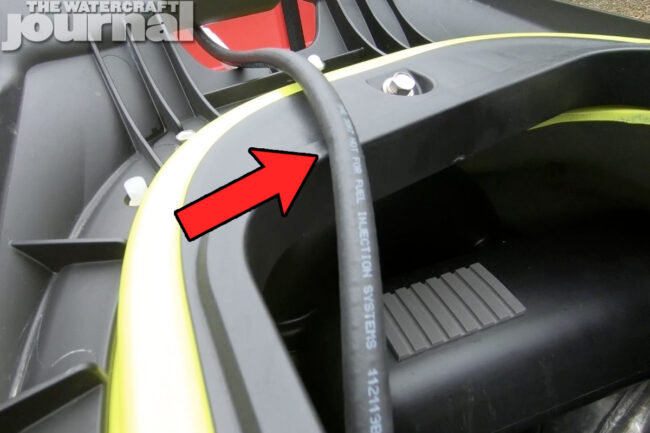
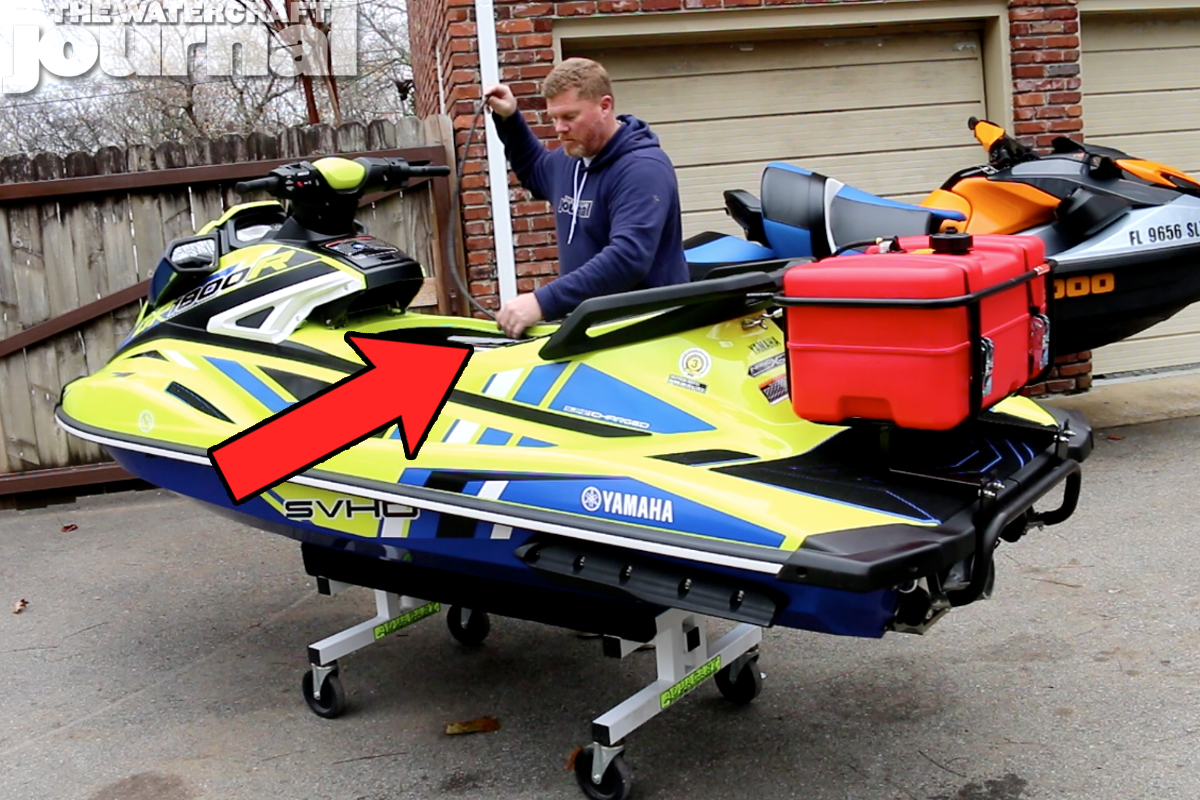
Once tightened down, feed the fuel line from the tank into the engine compartment, running the fuel line away from the exhaust side of the engine. For Yamahas, this often means having to remove the rear storage bin to allow the line to enter in beside the bulkhead. For Kawasakis, we recommend backing off one of the engine compartment vent hoses.

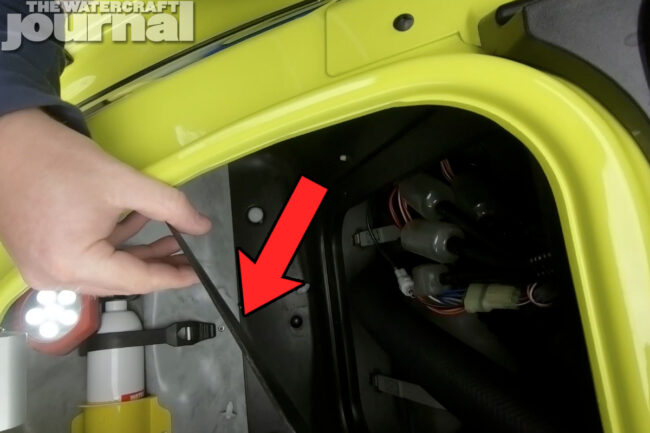
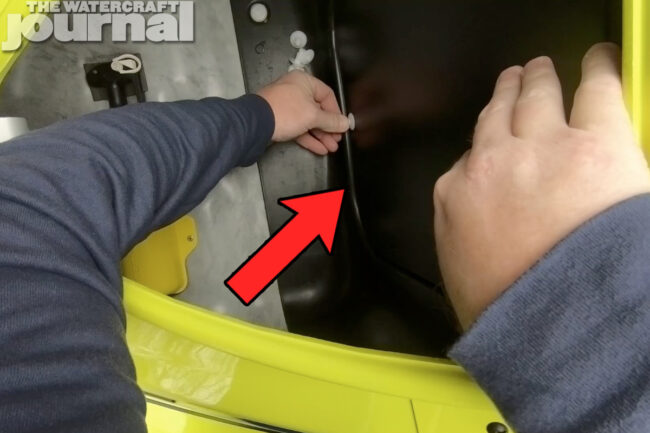
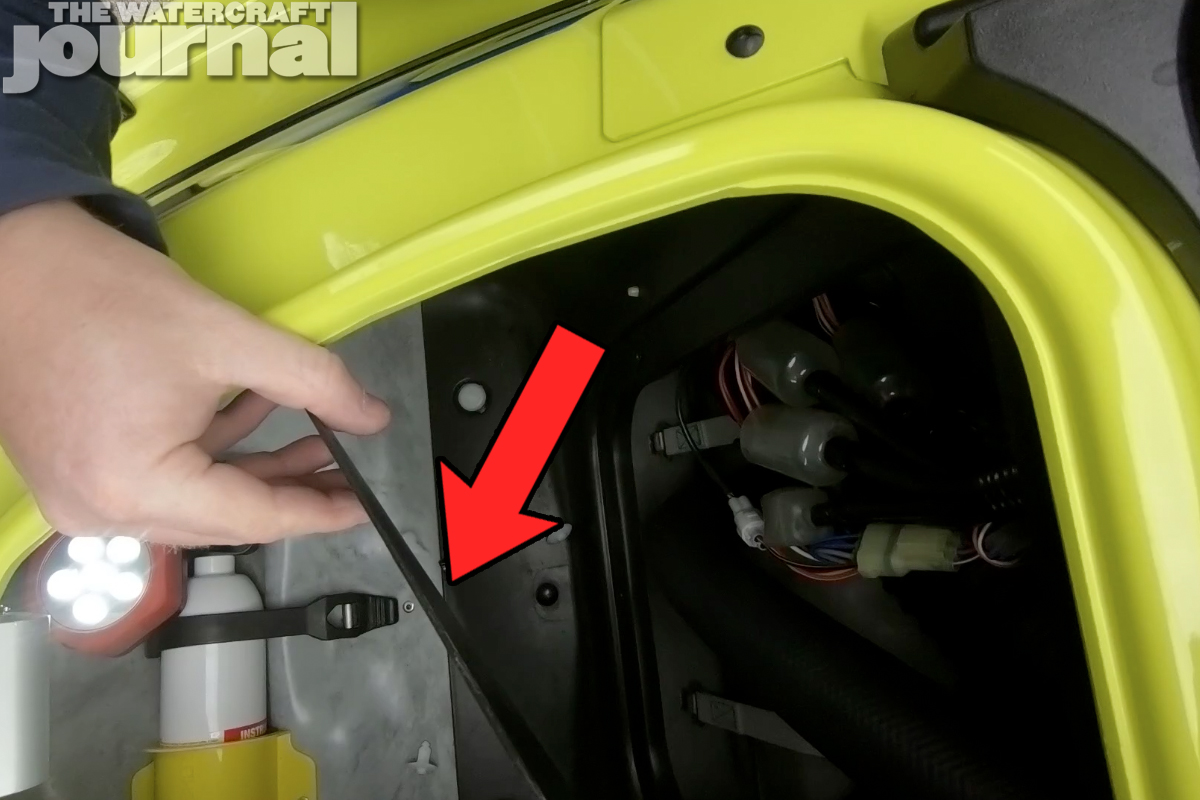
Remember: if the hose is kinked or compressed, fuel will not flow from the fuel tank into the ski’s fuel cell. Route the fuel hose along the intake manifold side of the engine, feeding it forward to the front of the fuel cell. Next, open up the front storage compartment and remove the forward bulkhead. This is often held in place by several plastic push pins. Simply press in the center pin until you hear an audible “click” and the panel will be able to be removed. (For Sea-Doos, the pin needs to be pried out half way before being removed.)

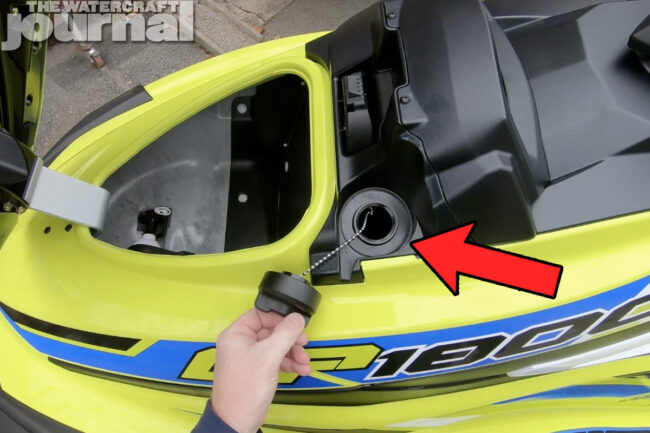
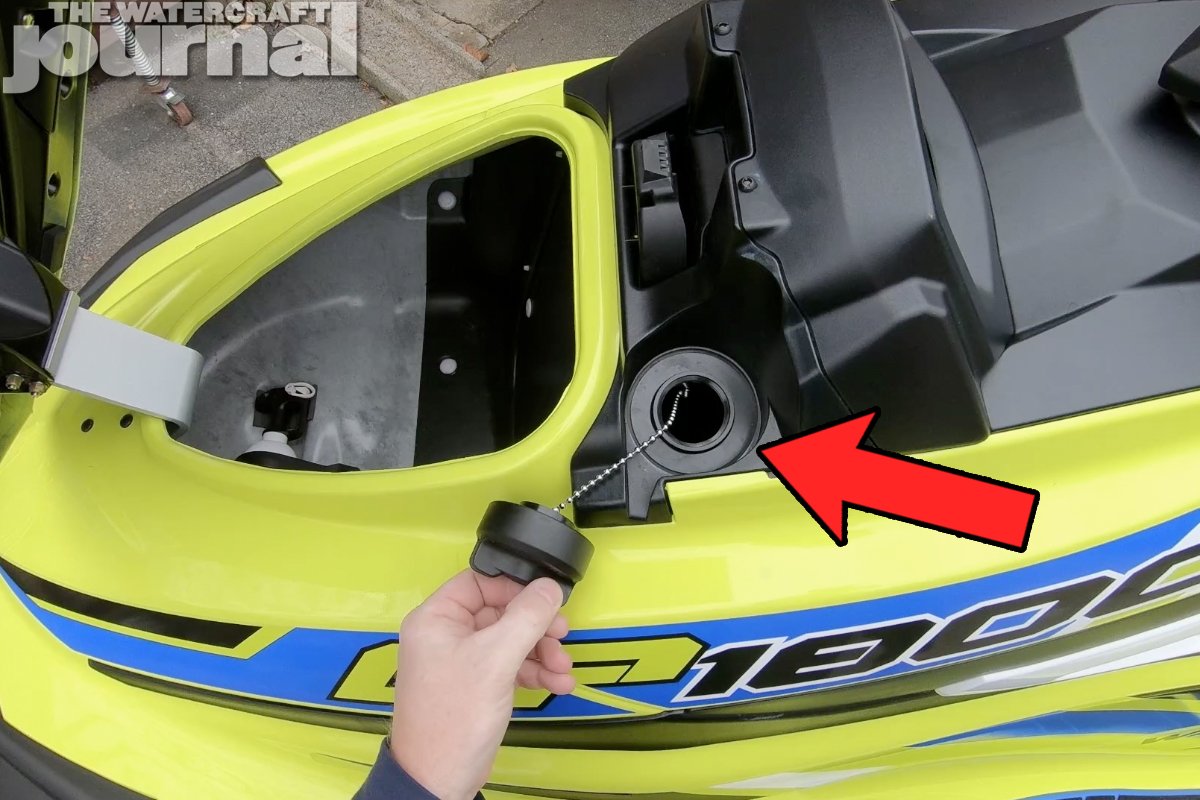
For Kawasaki and Yamaha applications, the removed panel will reveal a thin gauge vent line. This rubber line supplies the factory fuel cell with air as gasoline is mechanically drained out of it by the fuel pump. Prior to removing this line, crack open the factory gas cap to depressurize the fuel cell.

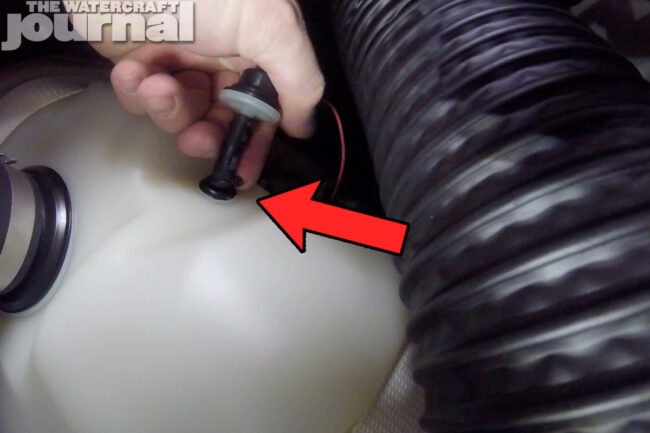
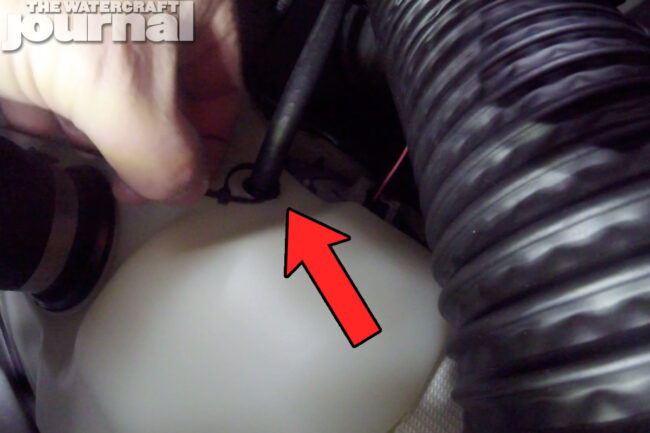
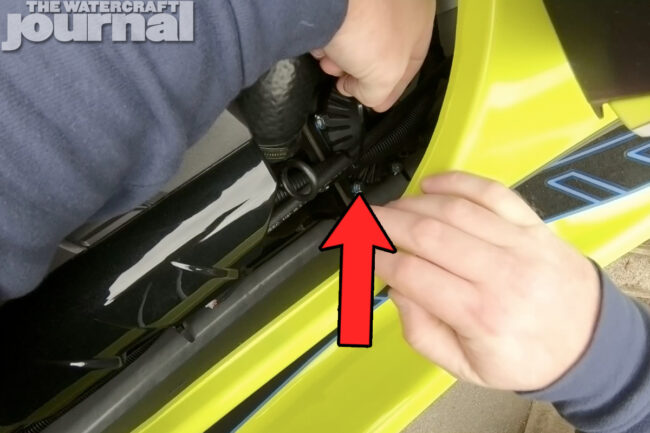
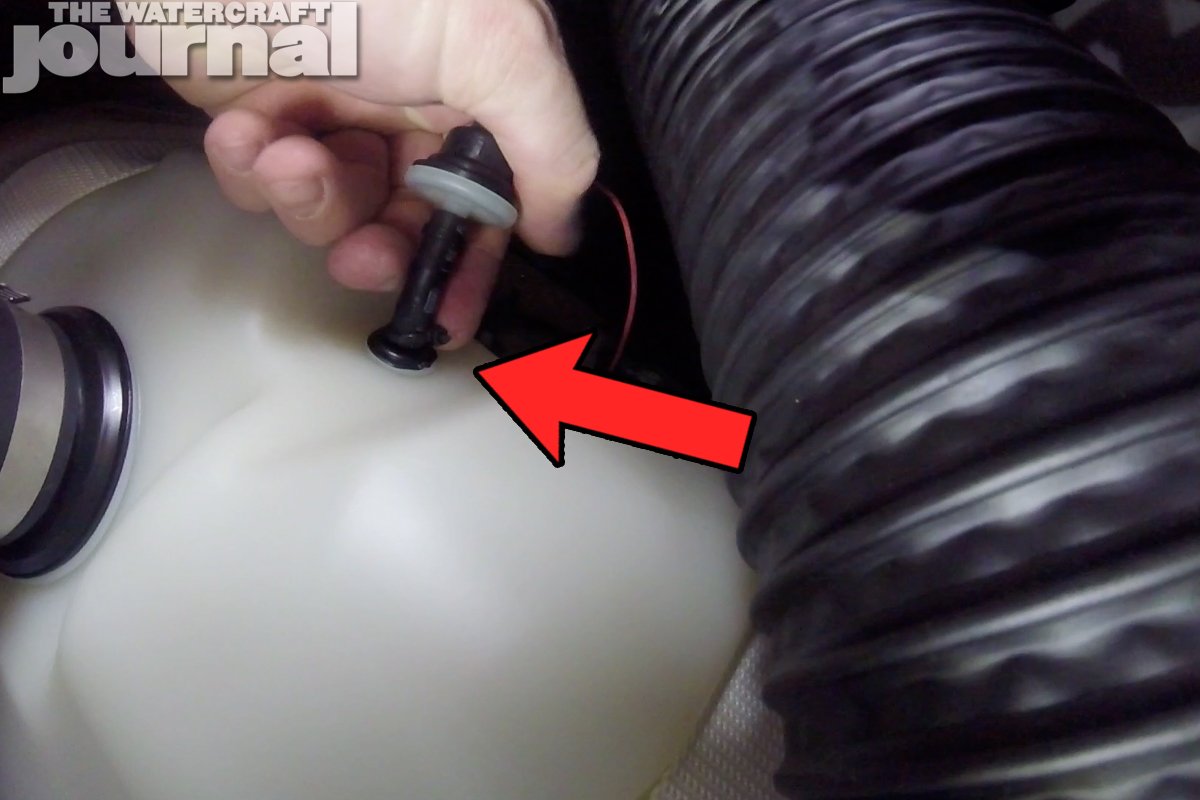
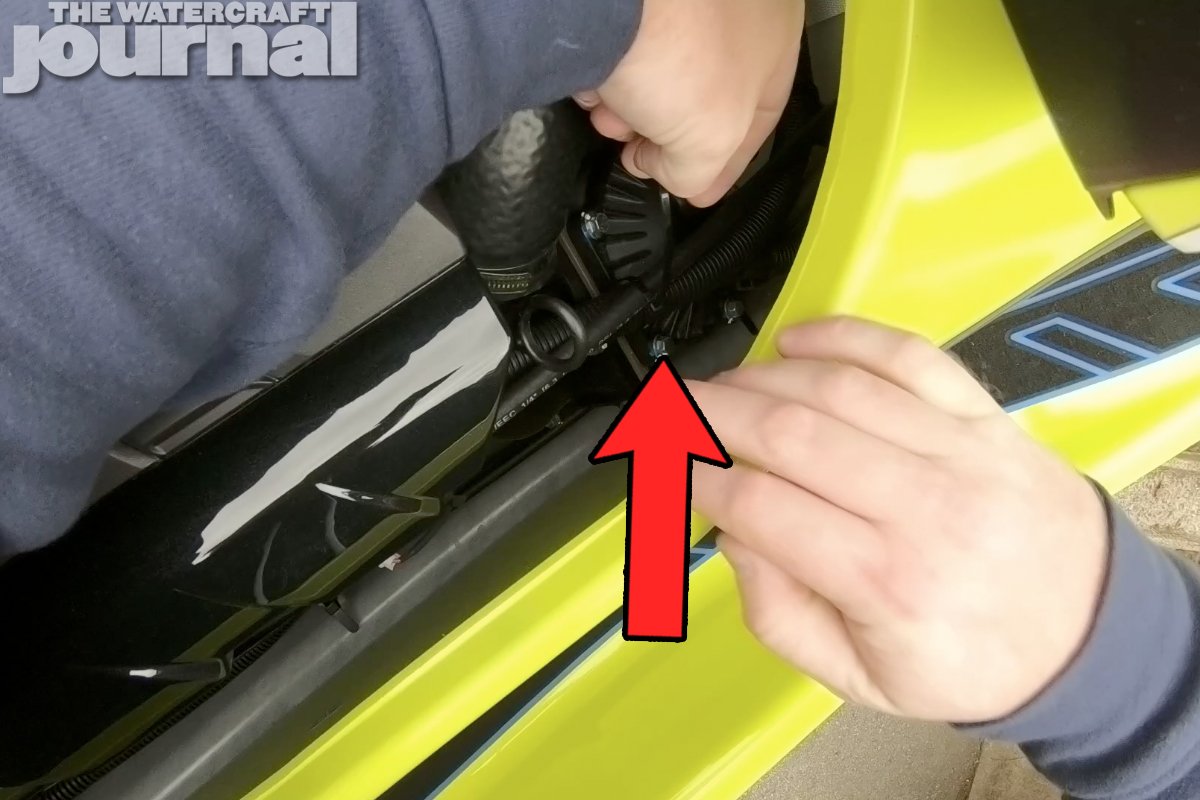
The vent line is not pressurized and is held on by a small black zip-tie. Often the line can be removed without cutting the zip-tie, as it is often loosely installed. Remove the vent line and push it aside – then install our new fuel hose to the tank’s vent nipple. Secure it using one of the supplied zip-ties. Once installed, go back towards the engine and use the second supplied zip-tie to secure the fuel hose away from the engine where possible. You do not want the fuel hose to make contact with any heated surfaces.

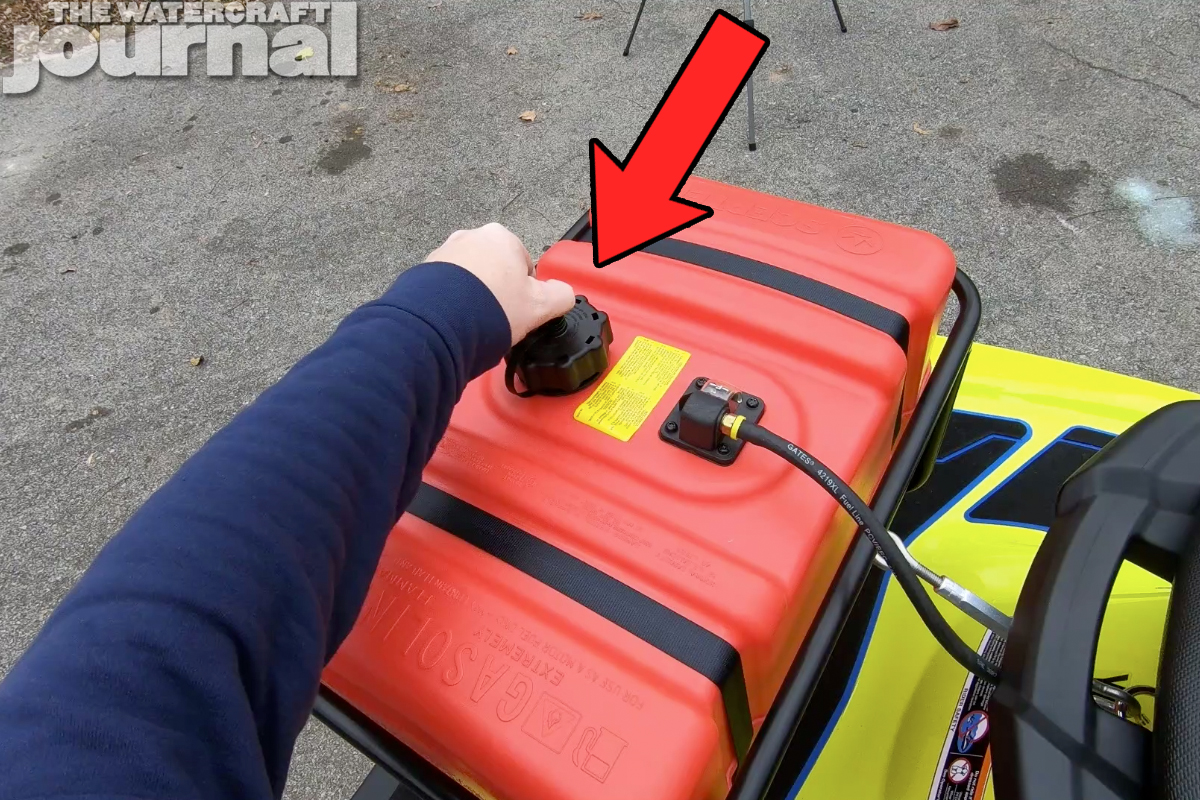
Now you can reinstall the front bulkhead and pushpins, as well as your seats, careful not to pinch the fuel hose. Finally, double check the tightness of your turn buckle and rear brackets before filling the auxiliary tank with fuel. Before beginning your ride, always remember to open the threaded vent on the auxiliary tank’s gas cap. If this remains closed, the fuel system will not work, and potentially hurt the fuel pump.

As you ride, the fuel gauge on your watercraft’s dashboard will not move until the auxiliary fuel tank is drained dry. When refueling, always refill your ski’s factory fuel cell first, as an empty fuel cell will NOT produce the vacuum necessary to siphon fuel from the auxiliary tank in the rear. If you haven’t bought your Long Hauler Auxiliary Fuel System Kit yet, you can find it for purchase exclusively HERE.

https://www.youtube.com/watch?v=Irym6RRM8kA&feature=youtu.be

We Announce The Watercraft Journal’s 2020 Watercraft of The Year (Videos)

5

In crowning a Watercraft of The Year award, it’s imperative to weigh each vehicle upon its individual merits, and to do so without leveraging in any personal bias. Over the course of The Watercraft Journal’s near decade of publishing, Original Equipment (OE) manufacturers have come to respect and appreciate the effort taken by The Watercraft Journal’s staff to acknowledge achievements in innovation, design, overall execution and the model’s lasting affect on the marketplace and/or industry.

What we’ve come to call our IDEA score. Each of the aforementioned categories (innovation, design, execution, affect) are capable of earning a maximum of 10 points each, totaling a combined 40 possible points. This year, as we did last year, we have gone ahead and listed each model’s accumulated score, as it’ll clearly show how each model in our Top Three lined up against the other; and the narrow margin that some models were within to its next contender.

Again, judging a potential winner is not merely a matter of subjectivity; we took into account a variety of factors, compared notes with others outside of our staff, culled public opinion, and even considered the past year’s service claims, etc. Moreover, contenders were pulled from the near two-dozen personal watercraft individually reviewed over the 2020 model year. We feel it’s important that no entries were eligible that The Watercraft Journal’s staff didn’t personally review. If we can’t get our hands on it, we won’t review it. It only seems fair – we hope you feel the same.

Finally, as we’ve done over the last few years’ of Watercraft of The Year award, we’ve including the video review of each respective model that earned its place on our podium. The Watercraft Journal is the only personal watercraft magazine that publishes full-length reviews of the newest PWC as well as produces a video to accompany each feature, giving the enthusiasts (and first-time buyers) the best, most comprehensive data to make an informed purchase.

As we’ve said in years previous, each of the machines in this article are worthy of the top honor – in certain key segments, as every PWC excelled in one category over the other. Although awarding one machine the highest honor inevitably incurs some push back from those with dissenting opinions, it is important to know just how close these three watercraft came within of earning the highest award.


2020 Watercraft of The Year 2nd Runner-Up: 2020 Kawasaki STX 160LX JetSki
Innovation: 9; Design: 9; Execution: 8; Affect: 8; Total: 34 points

The long-overdue redesign of the STX-15F was both highly speculated and greatly anticipated. What many didn’t expect was the creation of three new models out of the refresh. In revamping much (not all) of Kawasaki’s Recreation segment entry, the brand gave us the STX 160, the STX 160X and the STX 160LX. While the hull and 148mm axial-flow jet pump (as well as many other internal components) remained the same; the new STX’s deck, hood, seat and even its 1,498cc four-cylinder 4-stroke would be upgraded. Equally, new standardized features – particularly, those found on the top tier 160LX model (MSRP $11,699) – gave this 877-pound JetSki a direct-through-the-sternum-into-the-heart injection of adrenaline, earning it a spot on this year’s Watercraft of The Year podium.

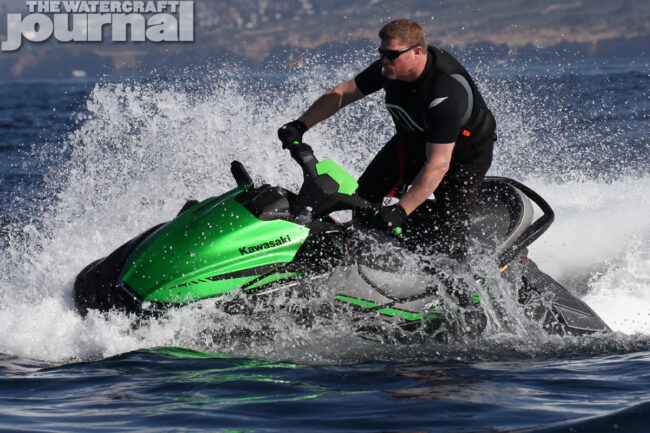
The newly molded deck gives the 2020 STX 160LX deeper and wider footwells, a stepped rear swim platform featuring a soft foam-padded folding swim step that integrates into the bumper rail. Kawasaki integrated a two-rung reboarding ladder behind the rear passenger seat and tucked in a rubberized pouch that stows a dock line or tow rope. Two-tone, CNC-cut Hydro-Turf traction matting looks sharp as does the grippy, two-tone seat cover (using the same heat resistant material found on Kawasaki’s Ultra 310LX). A neat new feature is Kawasaki’s hinged rear seat that folds up to reveal a removable, deep well storage tub. For the pilot, two cup holders were molded into the top deck, fore of the LCD dashboard. (But don’t be too surprised to find a manually-operated reverse lever; brakes are still on the horizon.)

Below the STX’s redesigned handlebars is a split glove box with a separate waterproof phone pocket, a USB socket and Kawasaki’s “Immobilizer” colored key anti-theft system. And while its 35-gallon total storage capacity is competitive with Yamaha’s VX, its massive 20.6-gallon fuel cell gives the STX the largest fuel capacity of any entry into the segment. Of course, the major change was the addition of Kawasaki’s full fly-by-wire throttle, ignition and engine management system, giving the STX – most noticeably – Cruise Control and No Wake mode. The 160LX designation also gives the Ebony-and-Candy Lime Green JetSki the Jetsounds audio system providing a pair of 30-watt waterproof speakers powered by an amp rated at 20W (x2 channels, max 40W x2) that can play all of the MP3s your smartphone (or other digital music player) can carry.


2020 Watercraft of The Year 1st Runner-Up: 2020 Yamaha FX SVHO WaveRunner
Innovation: 8; Design: 9; Execution: 9; Affect: 10; Total: 36 points

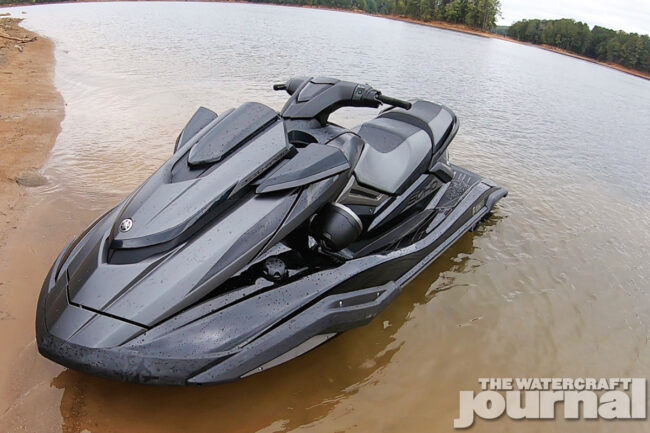
Admittedly, changes made from 2019 to 2020 were entirely aesthetic. Yet within that single production year, the Yamaha FX SVHO WaveRunner has become the most successful full-sized 3-seater runabout in professional racing. Since its 2019 redesign, the FX SVHO and smaller GP1800R were the ONLY two machines ridden by competitors in the Pro Stock class at 2019’s IJSBA World Finals. This alone is absolutely astounding. Evolving from a staid, somewhat tame 3-seater into a full-sized runabout that can cut hairpin turns around a buoy course or slamming through open ocean waves is a remarkable feat, and the FX SVHO can do so with aplomb. Long (140.9-inches long) and lean (818-pounds dry weight), the only change Yamaha could make was to paint the whole damn thing black.

From bow-to-stern, the 2020 FX SVHO (MSRP $15,699) is slathered in a two-tone combination of inky gloss and textured flat black. Sure, black is difficult to see at times; it can get hot as blazes baking under the sun; and it’s the single-most difficult color to keep clean but daaang, is it gorgeous. Beneath its seat is the supercharged-and-intercooled 1,812cc Super Vortex High Output delivering lightning quick fly-by-wire throttle response from the industry’s largest-displacement 4-cylinder four-stroke. The 4.3-inch Yamaha Connext touchscreen dashboard offers data on fuel consumption rates, miles to empty, or a 4-digit security PIN number, among a bevy of other analytics.

Yamaha’s RiDE brake & reverse system is standard fare, as are Yamaha’s No Wake Mode and Cruise Assist. No Wake Mode’s default speed is 5mph, with an adjustment of 1 mile per hour either up or down. For Cruise Assist, you’re given up to 5mph of advancement or deceleration, before being required to reset to a different speed. For 2020, we tested Yamaha’s optional JL Audio System pounding out of a face-melting 600-watt, 4-channel amp through two pressure-washer safe, waterproof footwell speakers. Priced at $1,800, the dealer-installed option is best paired with the available 8-inch subwoofer kit, which goes for an additional grand and eats up much of the FX’s watertight glove box, cutting down the FX’s 44-gallons of storage a bit. The trade though is without a doubt, the clearest, most explosive sound system we’ve seen (or heard) available on a PWC.


2020 Watercraft of The Year: 2020 Sea-Doo GTI SE 170
Innovation: 10; Design: 9; Execution: 10; Affect: 9; Total: 38 points

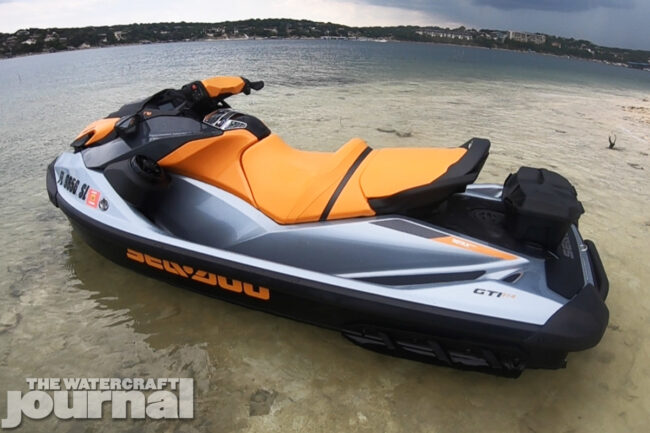
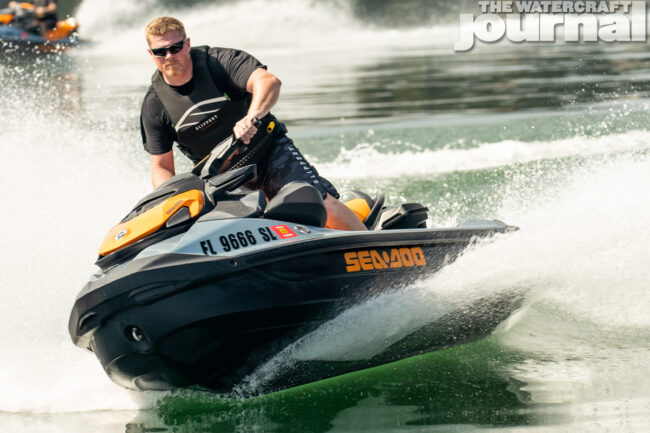
Awarding the 2020 Sea-Doo GTI SE 170 as The Watercraft Journal’s Watercraft of The Year was unequivocally one of the easiest decisions we’ve made in years. Starting with an entirely fresh sheet of paper, Sea-Doo managed to design and execute one of the most innovative, groundbreaking and just plain enjoyable personal watercraft we’ve had the pleasure of testing. It’s not often when one PWC can please on so many levels, but the all-new 2020 GTI SE 170 (MSRP $11,399) does it – and does it right. Everything about the 2020 GTI is new; the fiberglass-stringer reinforced Polytec 2.0 hull material; the multi-strake, low-angle V-design of the hull; and the 170-horsepower, naturally-aspirated 1630 ACE engine – and everything is spot on.

Sea-Doo pulled from its recent years of innovative development to pour it all into the entirely redesigned 2020 GTI platform. The deep footwells and unmatched Ergolock seating are stellar, flowing back into a removable rear passenger seat and LinQ accessory attachment system. Whether you’re bringing along Sea-Doo’s 4.2-gallon cooler or the massive 13.5-gallon Fish Pro cooler, the GTI can haul it. A spring-loaded rear swim step snaps taut to the bondrail; integrated grips are molded into the bow for easy loading; and a class-leading 42.5-gallons of storage gives this Recreation-segment PWC far more capacity than even Sea-Doo’s full-sized skis (including a giant 2.3-gallon glove box with a watertight phone storage case).

Optional is BRP’s 100-watt Bluetooth-controlled Premium Audio package. A new 4.5-inch digital display (featuring an orange backlight) reads off the vitals. As in 2019, gone is a conventional cruise control, replaced by Sea-Doo’s Slow Mode. Acting as a speed regulator, Slow Mode permits the driver to set a top speed, and when the GTI set at neutral, to program a low “no wake” speed for idling through marinas or the like. Sharing the same left hand side toggle pad as the GTI’s Variable Trim System (VTS), Sea-Doo lets the operator choose from several low speed presets – from a near dead crawl to upwards of 9mph. When used while under throttle, engaging Slow Mode artificially caps the GTI’s top speed, giving you an ideal feature for novices learning to operate the GTI.

With 2020, Sea-Doo retired the 1503 Rotax engines and introduced a 1,630cc naturally-aspirated ACE 1630 3-cylinder, cranking out 170-horsepower; making it the most powerful naturally-aspirated engine ever produced by Rotax. The larger displacement and added 15-horsepower gives the 170 variant a 20% improvement in acceleration over the previous 155, equating a 5.2-second 0-to-50mph against the outgoing 155-horse GTI’s 6.6 second run. We managed a top speed of 57.4 mph at 7,700rpm. And as mentioned, the new Polytec 2.0 hull is not only a far superior shape in a variety of water conditions, but tracks and handles more predictably than any other model Sea-Doo offers. Add to that a reduced curb weight of 739-pounds (51-pounds less than last year’s GTI SE 155), and the 2020 Sea-Doo GTI SE 170 is without a doubt the single-most worthy recipient of Watercraft of The Year we’ve had.