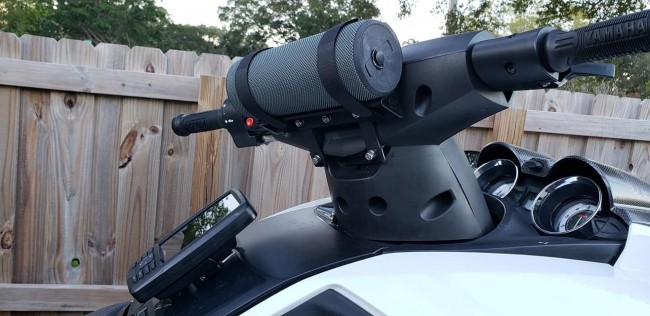
The sun is shining, the water feels refreshing and it’s the weekend. The perfect picture to start your weekend of riding PWC with your friends and family. While it could be hard to make this any better, PWC Muscle has one thing to make things better. They sell a Yamaha Speaker Bracket that allows you to use your UE Megaboom speaker while out on the water. The UE Megaboom speaker is not sold with the speaker bracket but can be bought on multiple websites online.
Listening to music is something that makes very situation better. Whether your choice is hip-hop, country or classic rock and roll, listening to music makes your time on the water even better. The Yamaha Speaker Bracket fits on Yamaha GP1800, FX and VX models is offered at $34.99.
When shopping on PWC Muscle, simply put in your Yamaha model, if you would like blue Loctite and what color of strap you would like. The Bracket is made of powder-coated aluminum, two Velcro straps and 3 stainless steel mounting hardware. With the aluminum powder-coated and using stainless steel hardware, it eliminates the chance of rust or corrosion if you ride in the saltwater.
While installation is very simple, PWC Muscle has provided an installation video which shows you exactly how to install the bracket. The video shows installation on a GP1800 but it is the same process for every other model.
The Watercraft Journal: Michael, your recent 4-Stroke Stock class win and 3rd place overall at the 2020 Mark Hahn Memorial Havasu 300 is pretty remarkable – especially, the road getting you here. (But let’s not get ahead of ourselves!) Could you please begin by introducing yourself to those readers who don’t already know you?
Michael Sparks: Sure! My name is Michael Sparks, I’m 27 years old, and in active duty in the United States Coast Guard as a Machinery Technician. I’m married with a baby on the way.
WCJ: Next, tell us a little bit about how you came to know your teammate, Brian Smith.
MS: I first reached out to Brian 9 years ago (to the day, coincidentally) who at the time was the promoter of Region 5 racing. I was 18, with an old 2-stroke Sea-Doo. He taught me about racing, how to ride, how to conduct yourself as a professional racer. I helped him his last 3 years promoting with set up, tear down, going to the cities and helping plan the events. A year into our friendship, he took me to the 2012 Mark Hahn Memorial 300 as his mechanic and pit crewmen. I returned again in 2013 in the same role. Each time giving up my time and skill as a mechanic for a free trip, the chance to learn and grow, and to meet new people.
WCJ: The Hahn is pretty grueling on both man and machine. Now that we know why you chose Brian to be your teammate, tell us what model watercraft did you selected to ride.
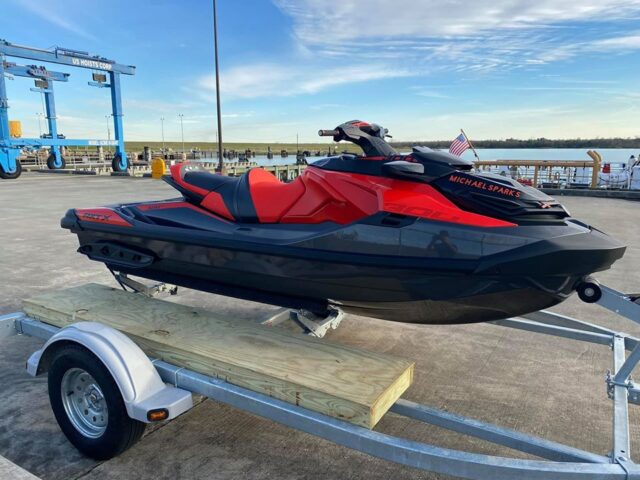
MS: I had always been a Sea-Doo rider, from my very first 1997 XP to now. Learning about how big the RXT-X was, but how it was lighter, quicker out of the hole, and had a faster top end than the competition made it a winner for me. The 2020 also had a 18.6-gallon fuel tank, which was a must for the race. I received the ski the second week in January and immediately dove into it.
WCJ: So you started with a brand new, zero-hour 2020 Sea-Doo RXT-X 300? What made you choose to compete in Stock class?
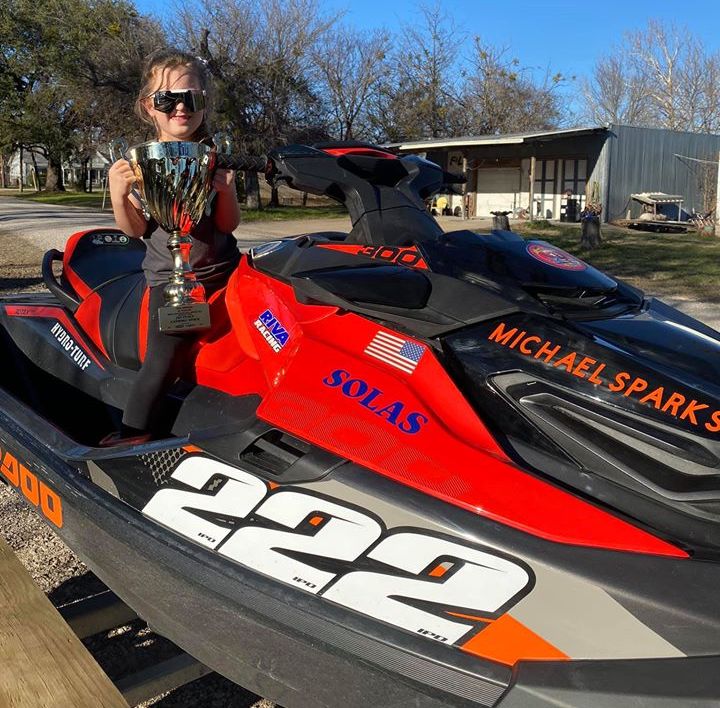
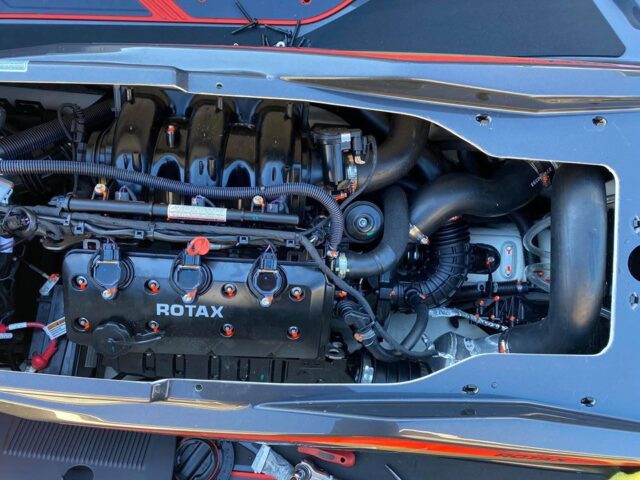
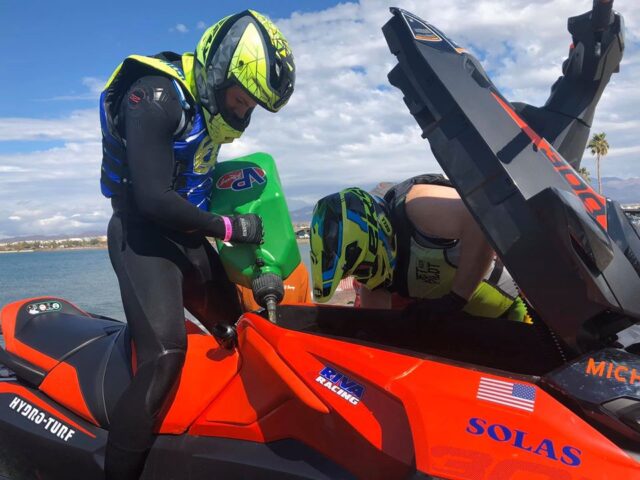
MS: Yup! That meant I had to do the proper break in, fluid changes, and pour over the engine compartment to weed out any possibility of failure – checking and marking every bolt, hose clamp, and wiring connection. I also added chaffing gear to hoses, bilge pumps for safety, and finally, perfecting a critical quick refueling system. Our original plan was to compete in the Manufacturer Stock class, but the fear of getting beaten by a cheater that didn’t get caught, and knowing that together we had the potential do much better, we decided to build up the boat with just 3 weeks before the race. Brian got me in touch with Ryan Dalli of JetX Powersports. He spent hours on the phone discussing and guiding us towards what would be my final set up. The build was insanely simple: a RIVA Stage 2 tune and a custom tweaked Solas SXX prop, which resulted in a blistering 85mph at 8,600rpm.
WCJ: You mentioned you’ve got a baby on the way. We don’t suppose your wife joined you for the race?
MS: Not even close. Nine days before the race, while on my ship away from port in New Orleans, LA, I got a phone call from my wife; she was driving herself to the hospital in labor. I immediately called my parents who were 5 hours away and sent them to her aid, and I started planning how to get home. My wife had developed a severe cough that threw her into what she and the doctor thought was labor. It turned out to be Braxton Hicks contractions, but she was dilated slightly. The doctor gave us strict orders to minimize her activity while she had this cough, and to watch it closely. I called Brian and expressed my concerns and told him I just didn’t know if I was going to make it. It was now Wednesday, 3 days before the race and my wife is about over her cough, so I set her up the best I could with meals and got the house ready so she wouldn’t have to do anything extra in my absence.
WCJ: Yikes! That didn’t leave you with much time to get to Lake Havasu City, AZ did it?
MS: I left for Havasu on Thursday; a 23-hour, one-way trip. It took me all of the remaining two days before race day to just make it. The drive went without issue, stopping for the night to sleep and arriving at Body Beach in Havasu by Friday midday. Brian rode the RXT-X for the first time for a total of maybe 15 minutes. I rode it for about the same amount of time, satisfied it was ready. Now we had get everything else ready. We left Body Beach, got registered for the race, and ran errands all over town collecting the last-minute things we needed to make the next day possible. Brian got us hooked up with Ron, the owner of Paradise Wave Rental who lent us a SxS to use in the pits. When it came to a pit crew, we talked with a few other racers and friends, namely Doug White, Jimmy Roberts, and Billy Bates. They all agreed to help when they could, but obviously their own boat and teams came first. Just offering to help was more than we could ask for.
WCJ: Man, that’s a rough road just to get to the race. Once it began, how did it go?
MS: We had been watching the weather all week and the forecasts started out less than ideal, and just got worse. When we set off together on the parade lap it was raining with wind whipping from the southeast at nearly 30 mph, and it looked more like offshore than on a lake. We had agreed Brian would start. The LeMans-style start is the most dangerous point in the race as the 45 competitors are clustered together over a 10-mile loop. With no issues, Brian came in for his first pit stop. To our disbelief, it went excellent. We had better than average pit times with just the two of us, and better pit stops when the guys were able to help us.
That became the routine for the next 13 laps, until halfway through the race (the pit traffic was severely decreased from so many PWC breaking down by then), when Brian came in early and screamed, “FUEL! I NEED FUEL, QUICK!” Still being over half full, he quickly explained that we were in a battle for position and needed to offset our pit times. In order to be ahead when the race ended and be one more place up, this decision would end up wining us the race. He took off again, completed 4 more laps without stopping and gained us a lead on the boat that was closest to us. By the time we traded places, it was starting to lay down becoming an all out drag race to the finish. The RXT-X was running flawlessly and was blisteringly fast. I noticed that every lap I made I was never passed, and was consistently reeling in slower boats. At the time I didn’t know where we were standing, but I knew we had to be doing very well.
WCJ: Dang, that sounds like smooth sailing.
MS: Well, that’s when disaster struck. I had cleared the turn boat on the California side of the lake and quickly accelerated to over 80 mph when the course marshal’s boat just crossed the track. The wake of the boat came into view too quickly to turn or bleed of speed (even with the iBR system). I hit a 3-foot wall of water at full speed. I slammed forward into the bars, cartwheeling and skipping across the lake.
I surfaced gasping for air, ears ringing, and dazed. I began crawling towards the ski only to get picked up by a course marshal a few seconds later. I assured him that I was OK, and sped back to the pits. Brian noticed my shatter goggles, broken helmet, ripped wetsuit, and bleeding legs. The impact had broken the adjustable handlebars, leaving them stuck in the full up position. Looking me over, Brian asked, “Are you OK?” followed with, “I think we’re first in our class, maybe Top 5 overall.” I set about getting fuel and checking to make sure I was able to make my last laps. I replaced my goggles and ripped off my destroyed helmet visor and readied for my last turn out.
Finally, Brian finished his laps, and I set out to seal the deal. All I had to do was stay consistent and we would have a podium spot in the bag. On the tail end of my last lap, as I could see the scoring chute buoys, it hit home what we had accomplished. The months of work, the sacrifice and terror of leaving my wife at home, the help of Brian, Ryan, and everyone that made crossing that finish line possible. After crossing the finish, I went back out on the course instead of returning to the pits, and just sat on the ski knowing if I came in the emotions would get the better of me. The results were posted on the race trailer a short while later. We had won our 4-Stroke Stock class, and came in third overall.
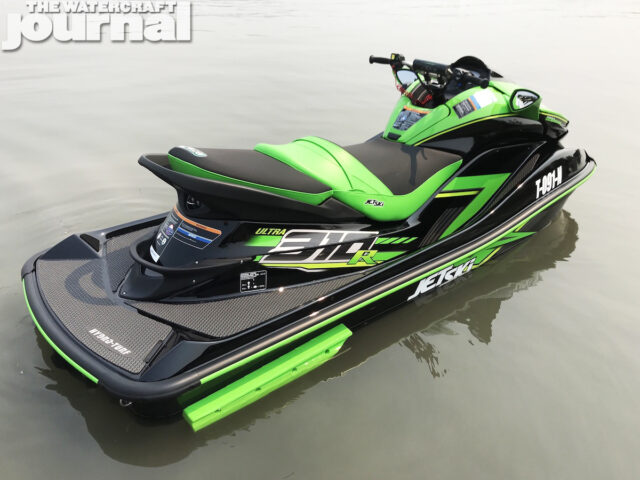
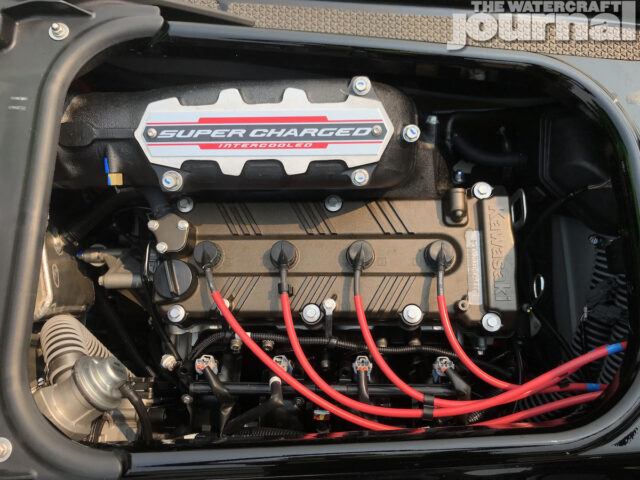
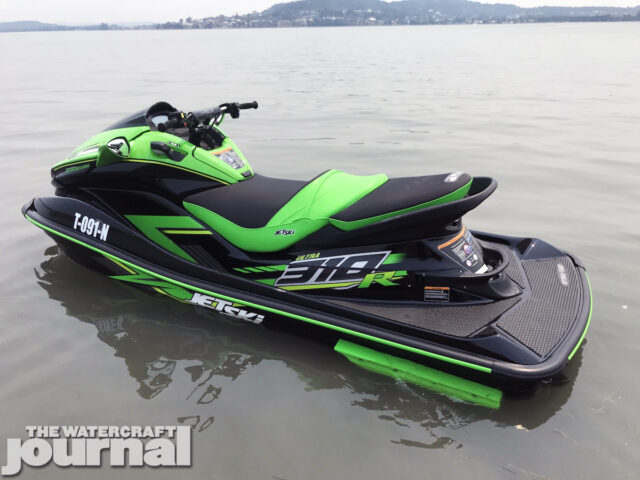
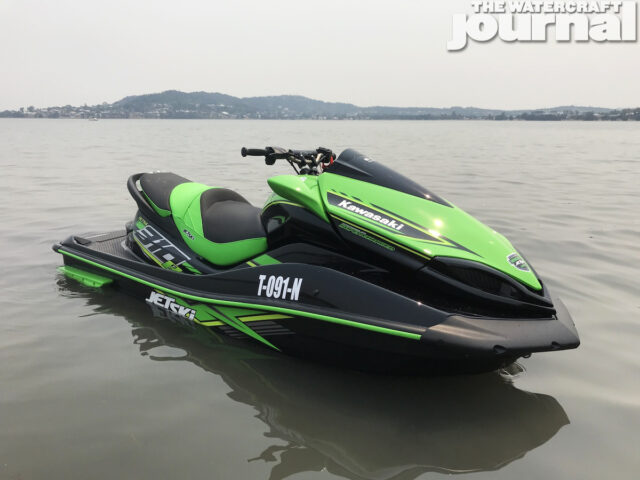
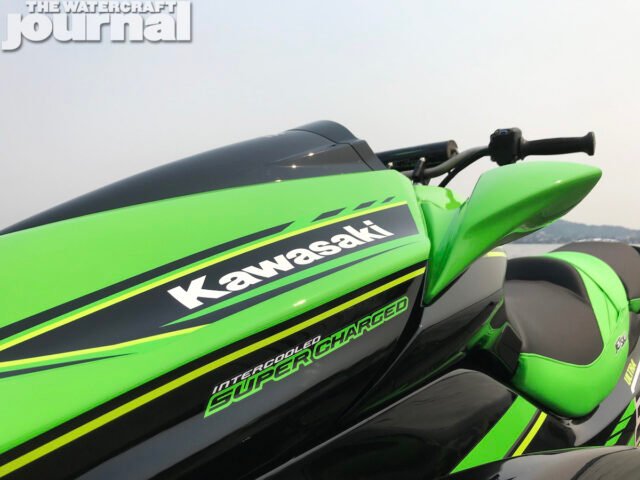
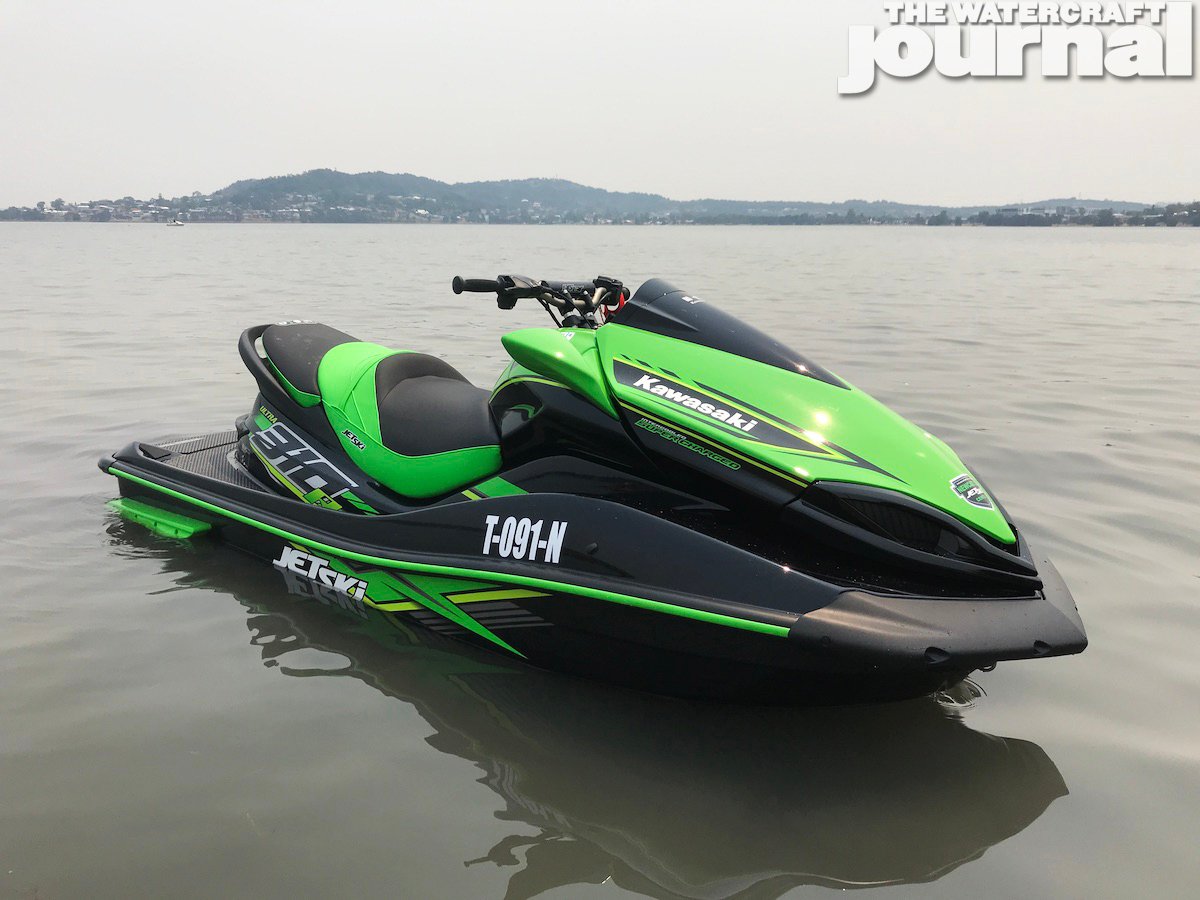
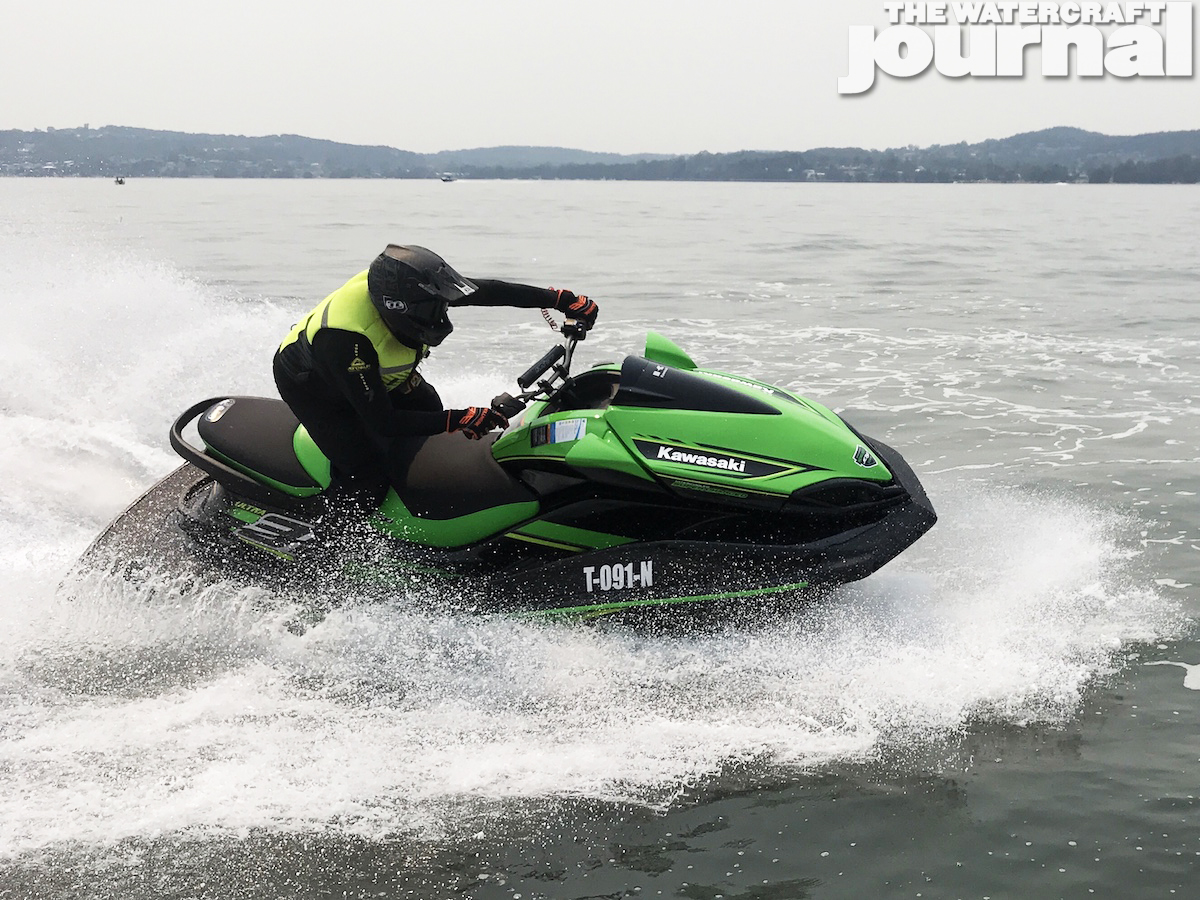
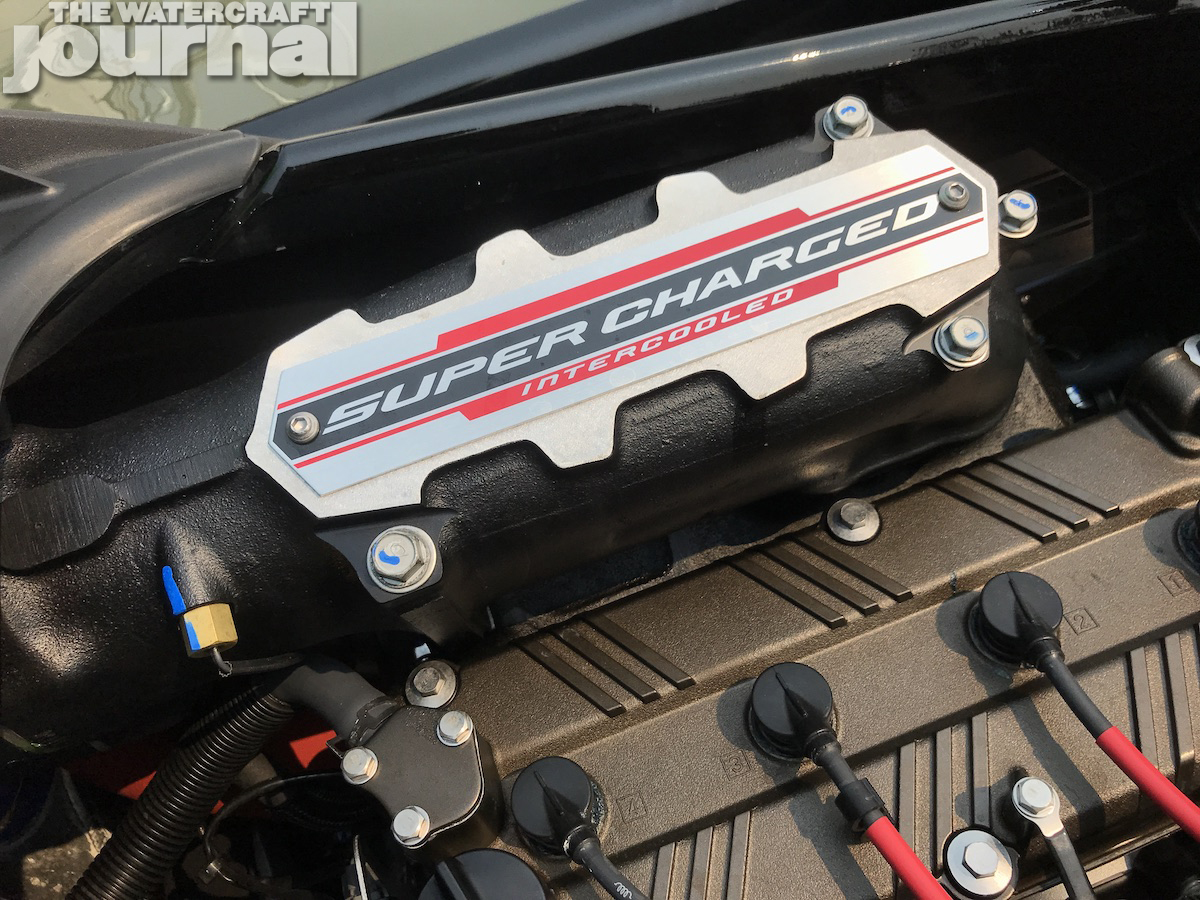
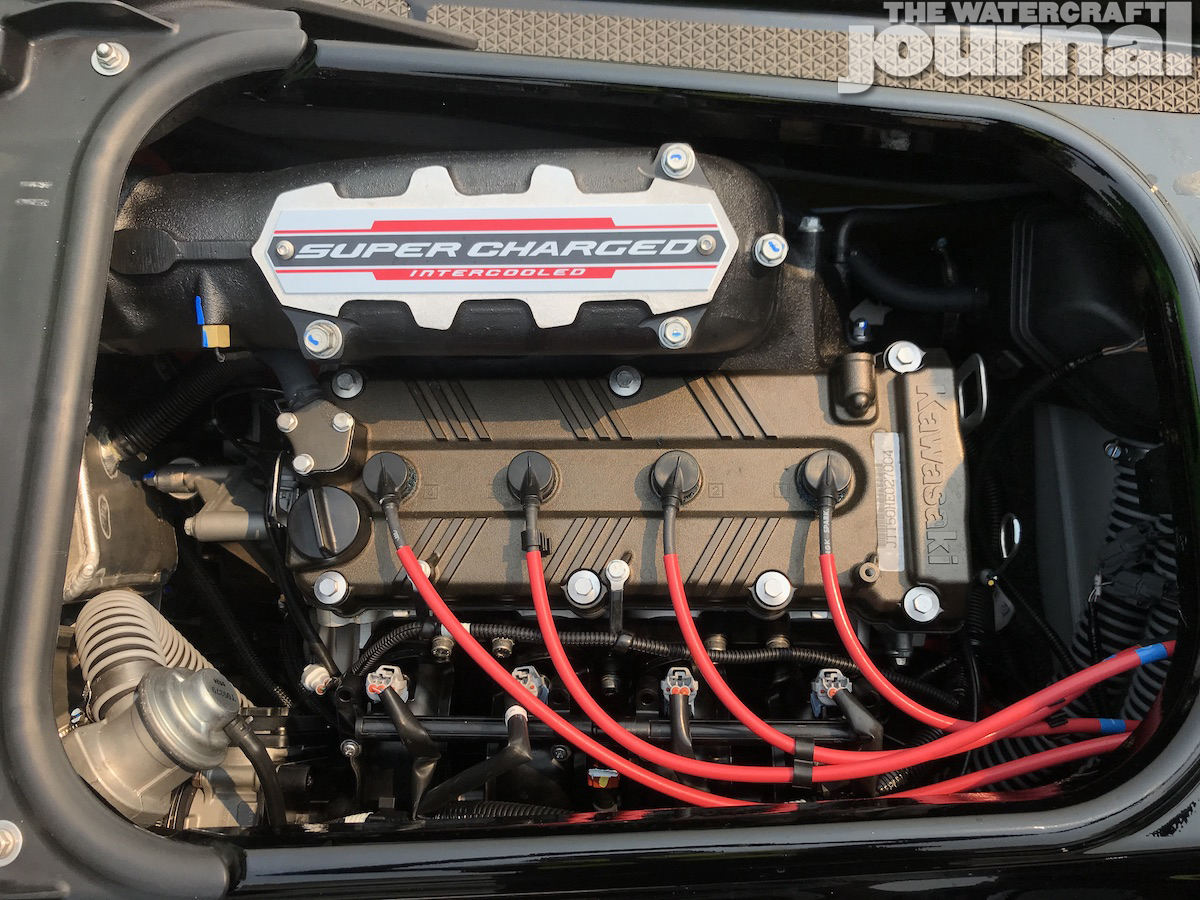
The current Kawasaki Ultra JetSki has been around in some form or another since 2007, back when it first launched with – what at the time was – an industry-leading 250-horsepower supercharged 1.5-litre four-cylinder engine.
Over the years, the Ultra has had numerous power upgrades: 260hp in 2009, 300hp in 2011, and finally pushing out 310hp in 2014, retaining it’s place as the most powerful watercraft on the market today (narrowly ahead of Sea-Doo’s 300hp supercharged 1.6-litre three-cylinder Rotax engine; Yamaha does not publish power claims but its supercharged 1.8-litre four-cylinder has the largest capacity in the business).
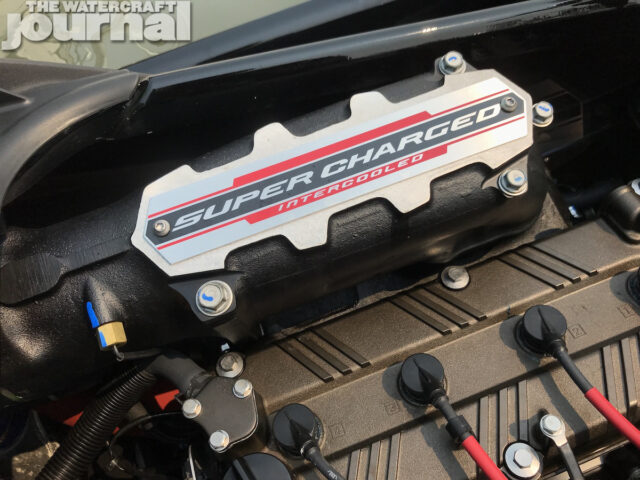
While visually most of the model-year changes have amounted to new color schemes and graphics, over the years Kawasaki has continuously improved the engine’s internals with upgraded valve train including stronger timing chains, dramatically improved engine oiling and cooling, and switched to an Eaton twin vortices roots-type supercharger for better strength and durability. In case you were wondering, Kawasaki is running 16.8 pounds worth of boost through that sucker.
The engine’s 1,498cc displacement and bore and stroke (83.0 x 69.2mm) are the same as the engine in the naturally-aspirated Kawasaki STX 160X, but the internals are way more heavy duty and the compression ratio is 8.2:1 versus the non-supercharged’s 10.6:1. While Sea-Doo and Yamaha both have newer rivals in this category, Kawasaki has adopted the “if it ain’t broke, don’t fix it” philosophy for its proven Ultra 310 package: the overall shape of the hull and top deck have gone predominantly unchanged since 2007.
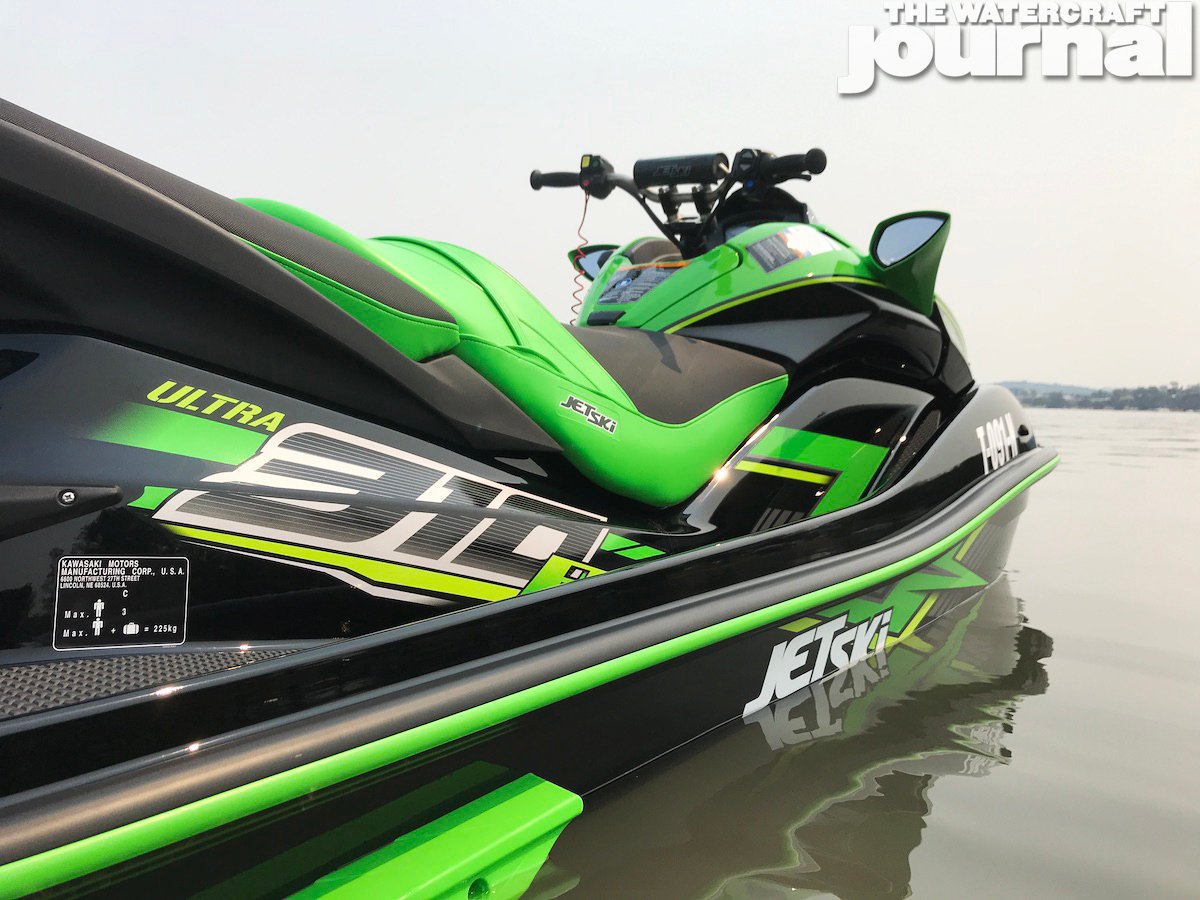
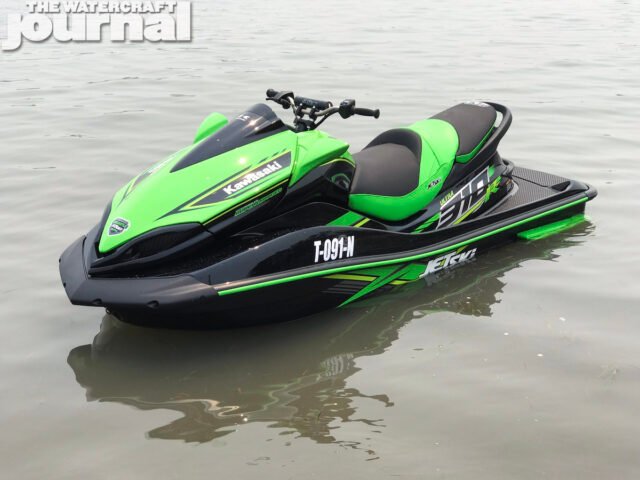
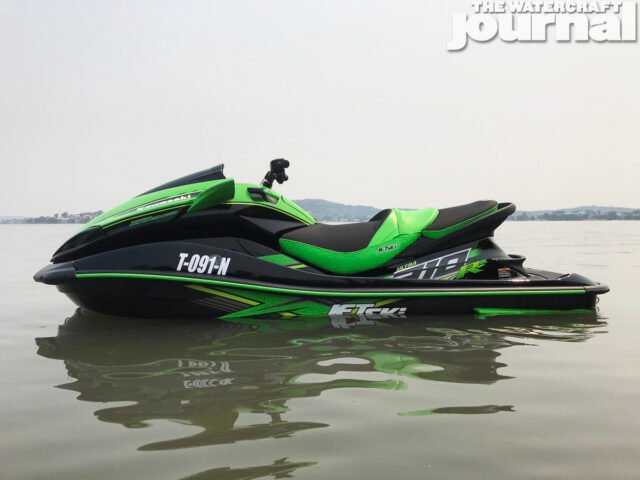
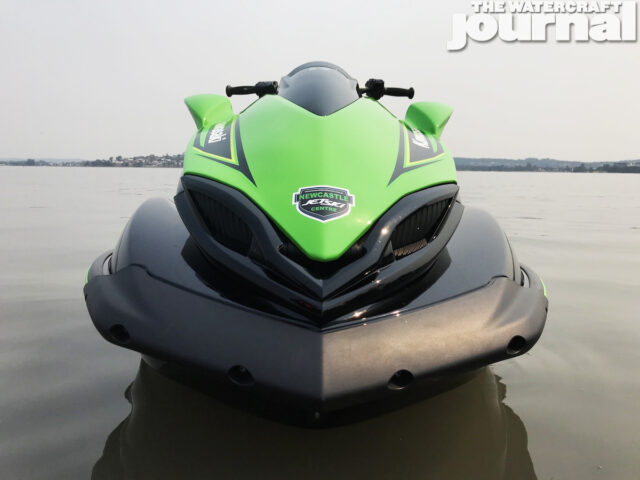
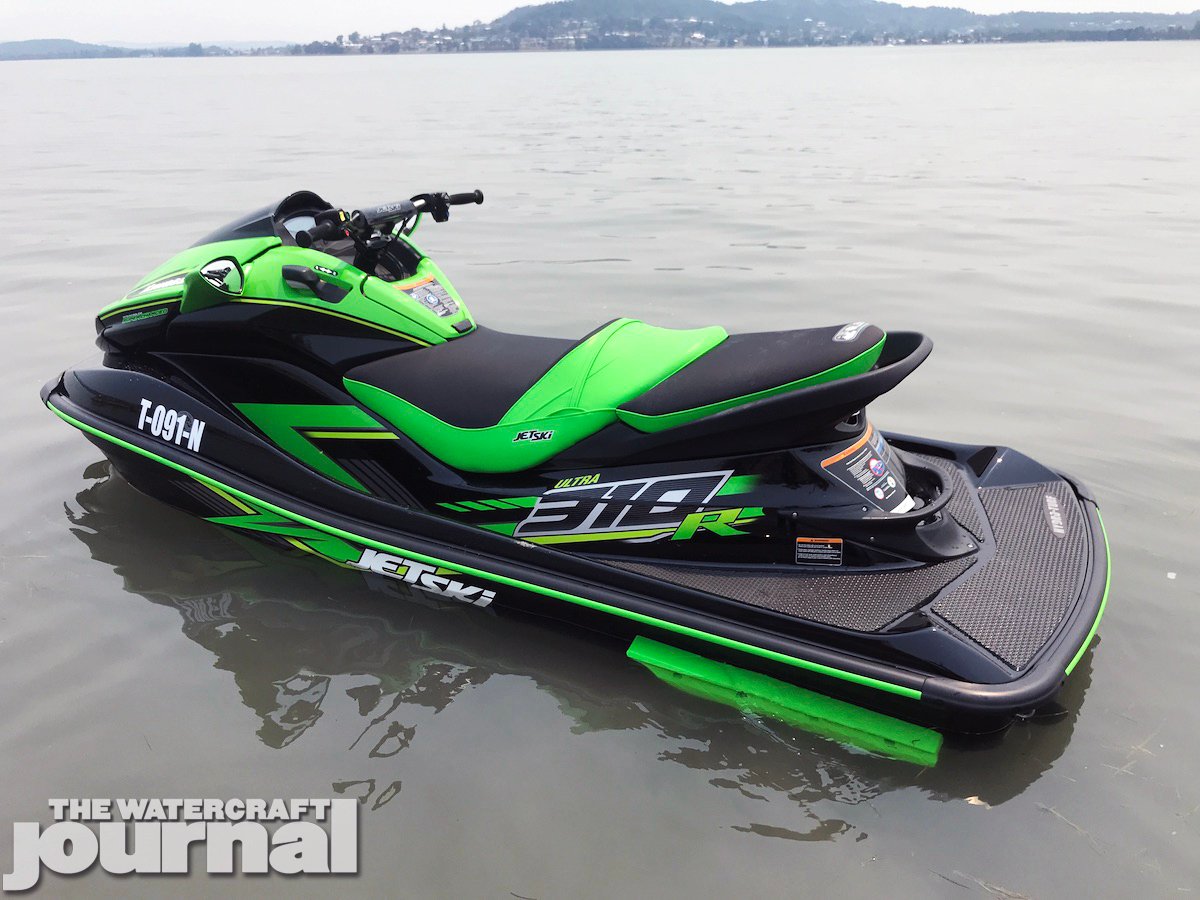
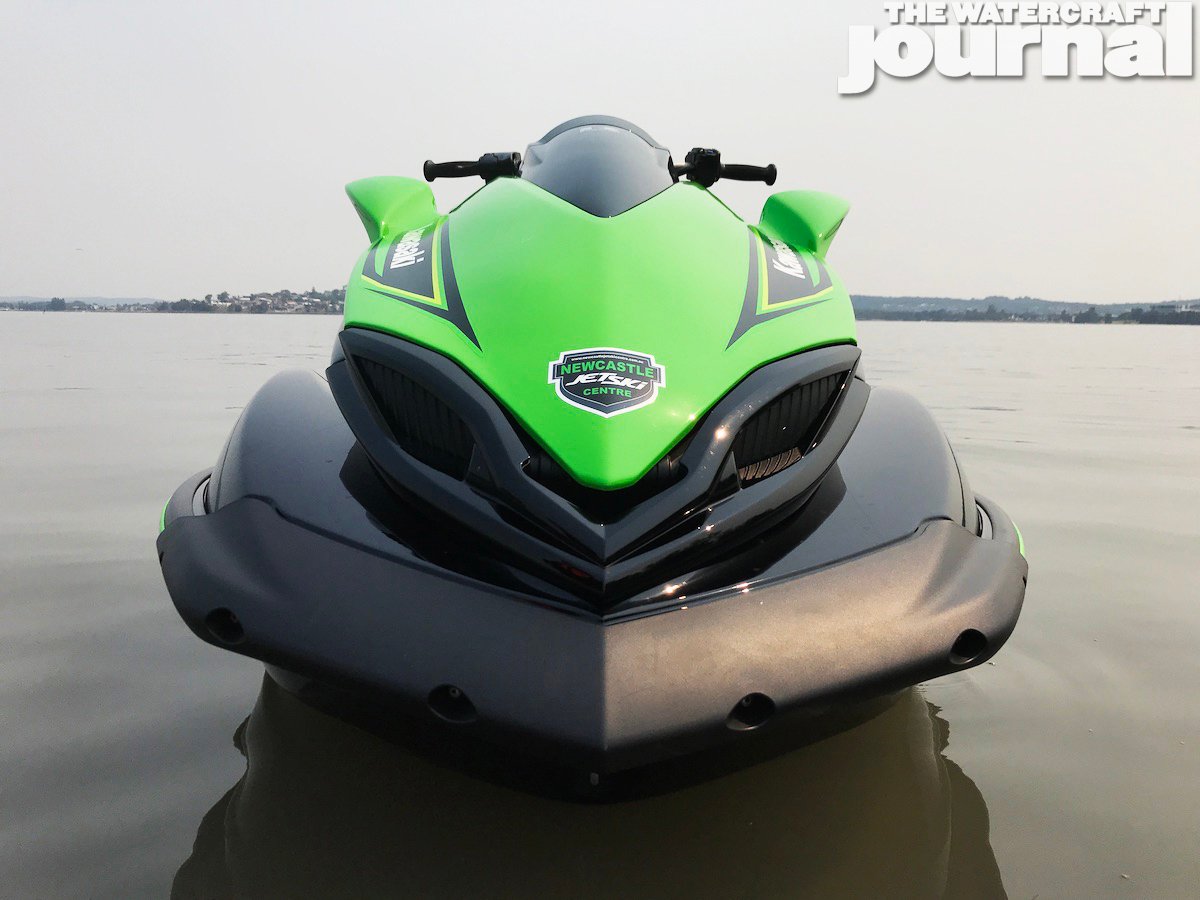
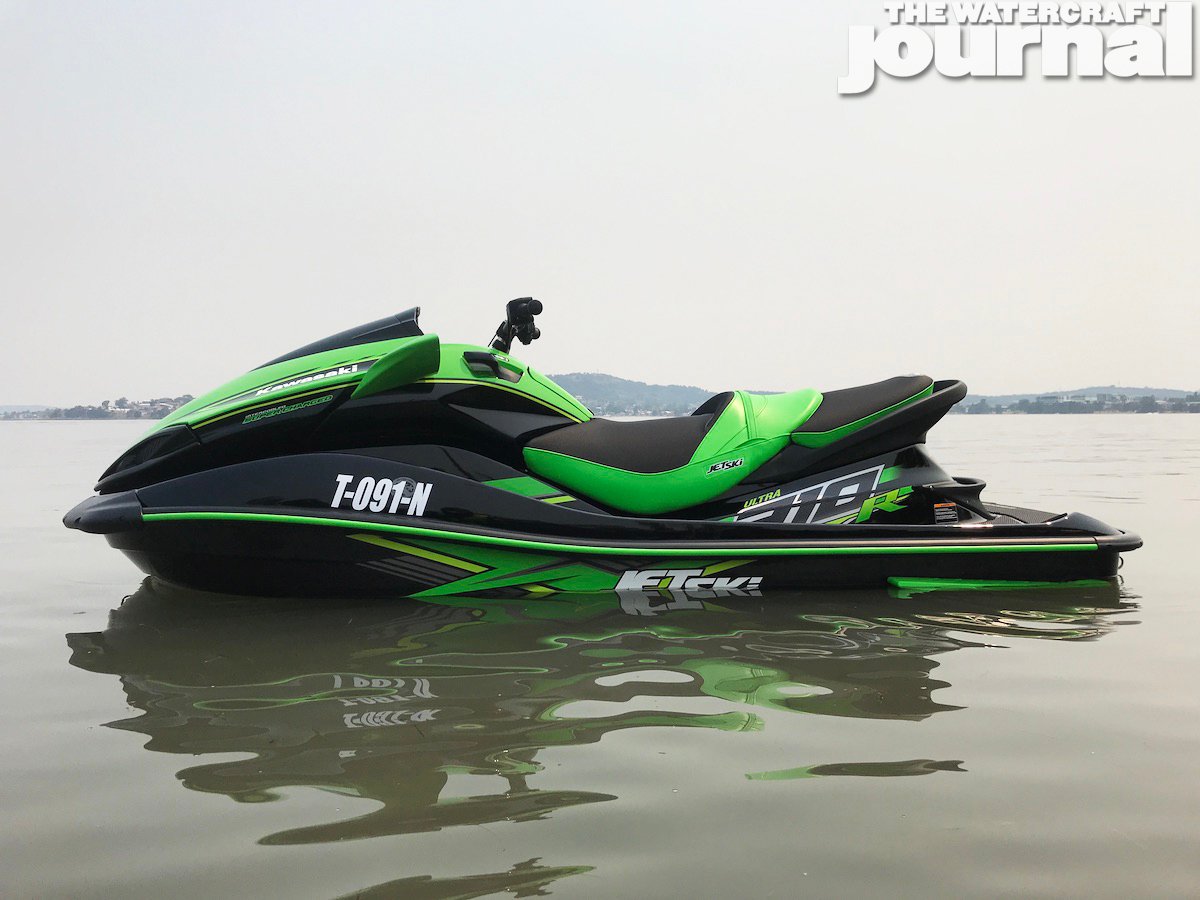
However, given that it’s been a while since we’ve been on one of these Kawasakis, we thought it was time to get reacquainted, especially against the backdrop of the new Yamaha FX series released last year and the new Sea-Doo ST3 hull released three years ago – so we met up with Newcastle Jet Ski Centre to put this 2020 Kawasaki Ultra 310R JetSki through its paces.
In the US, there are four versions of the supercharged Ultra, starting with the 310X ($15,299), 310X SE ($15,799), 310R ($16,299) and the flagship 310LX ($17,999), not including trailer, registration, sales tax and destination charges. In Australia, where this test was done, there are three models in the range, starting with the 310X ($20,999), 310R ($22,299) and the 310LX ($24,399) excluding trailer and registration but including taxes.
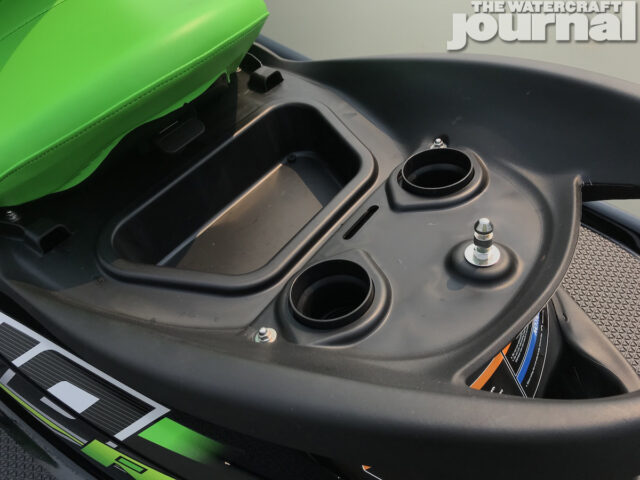
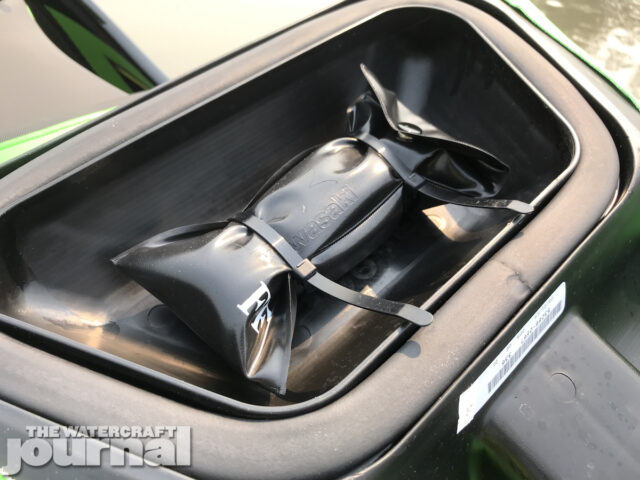
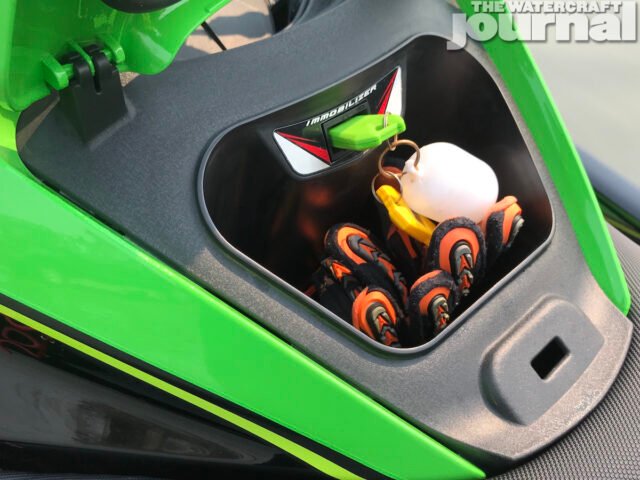
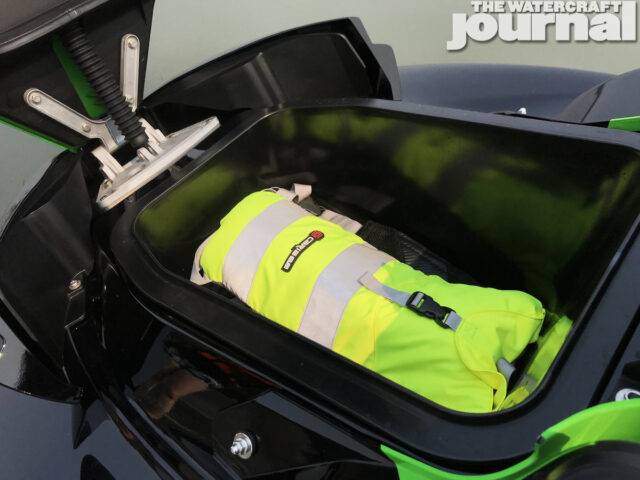
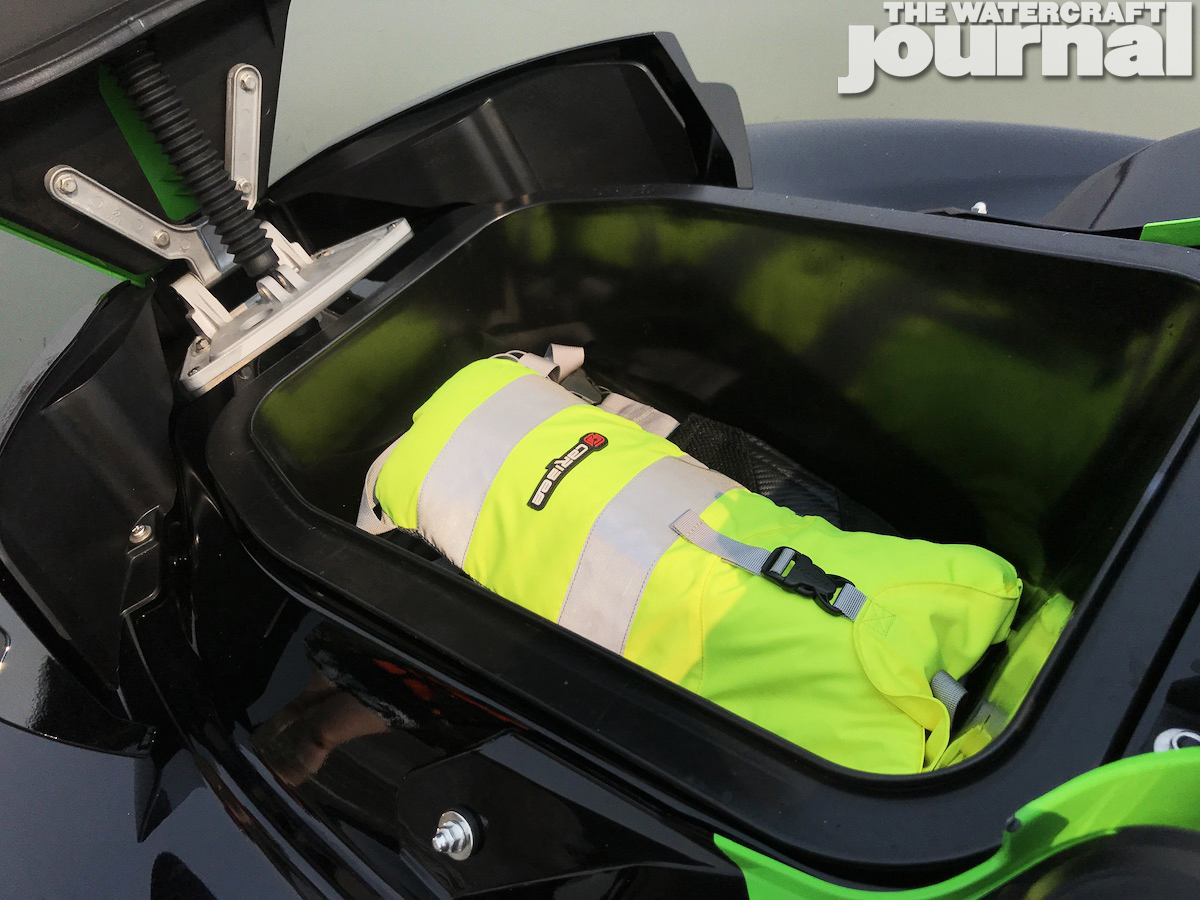
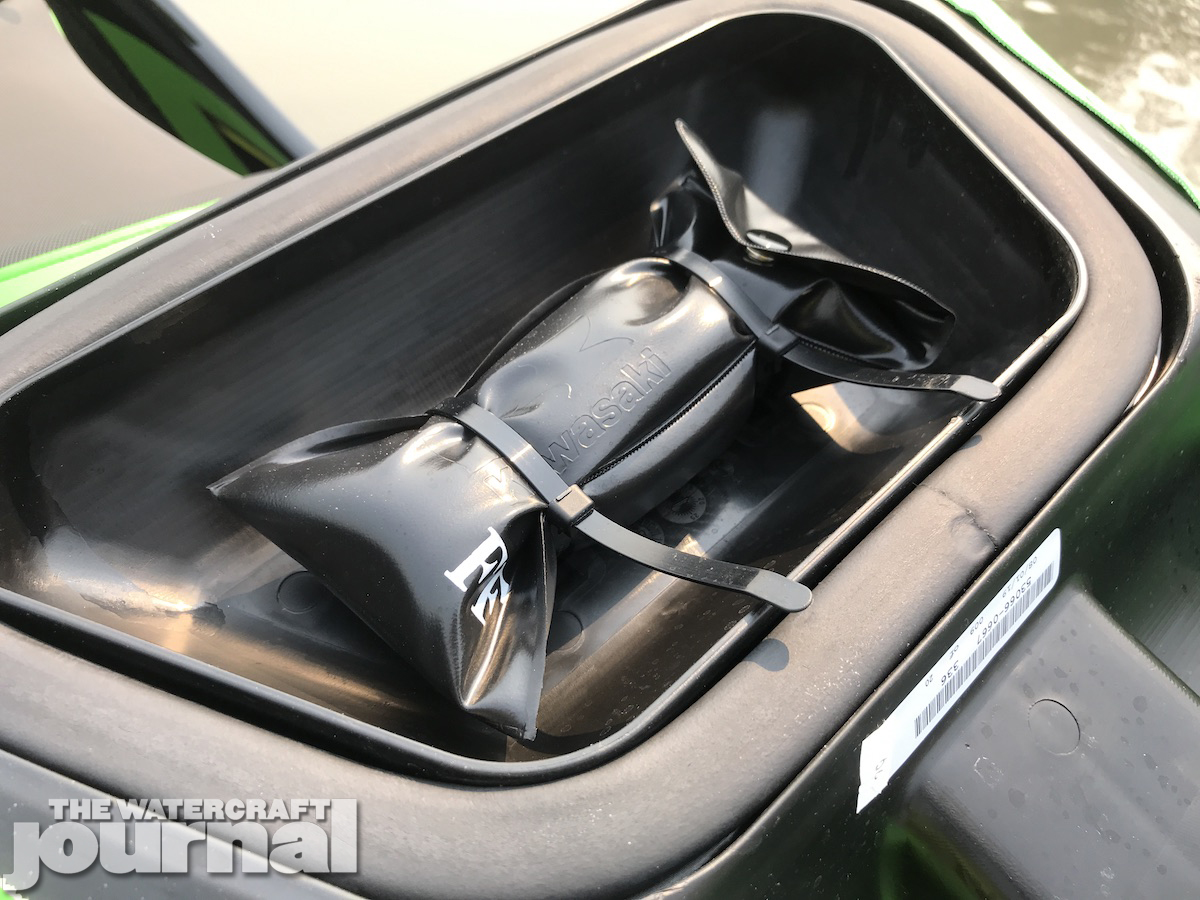
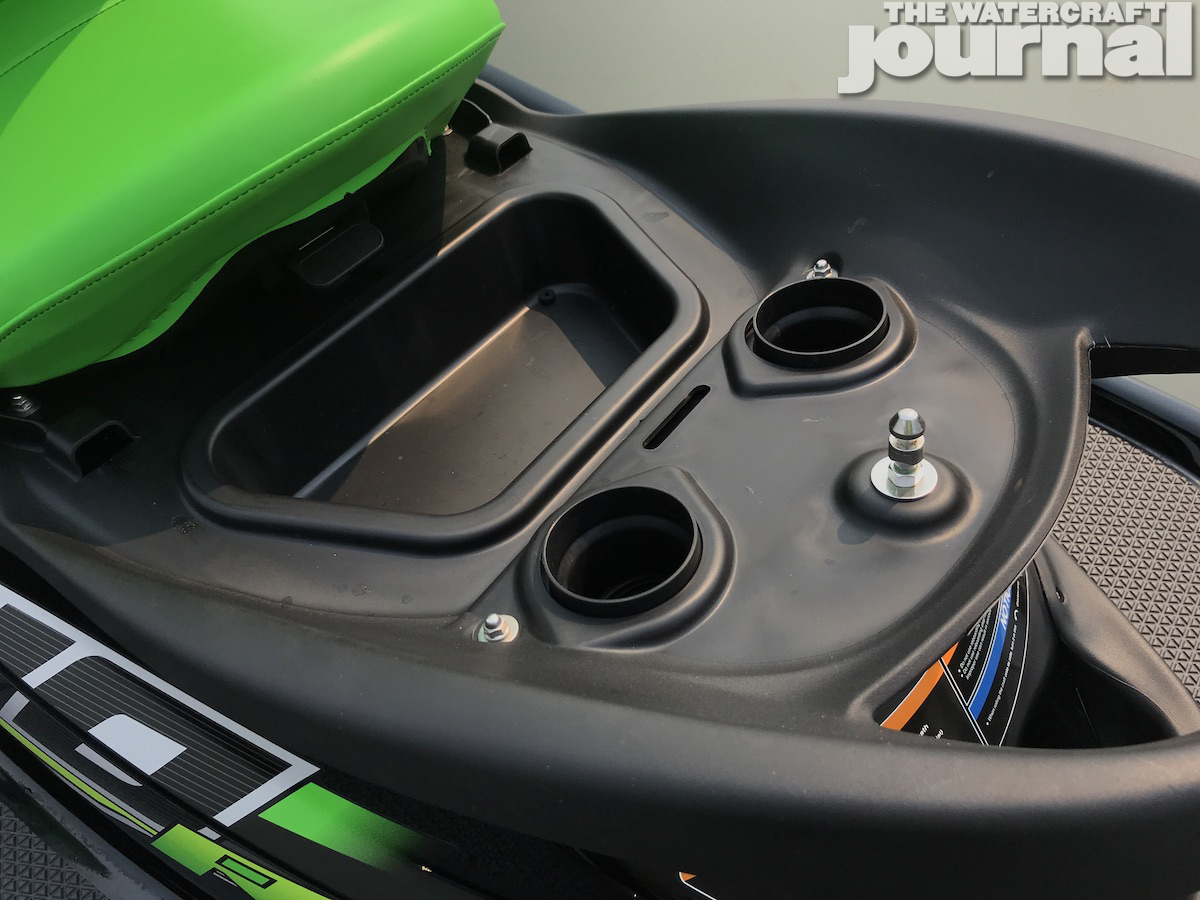
At first glance, it’s easy to see why Kawasaki hasn’t changed the top deck. It has the most storage space in its class (equaling 56-gallons total), including a handy bucket that sits atop the massive 54-gallon (206-litre) cargo hold under the hood. There’s a generous glovebox which is shared with the immobilizer key slot, however unlike Kawasaki’s newer and smaller STX 160X sibling, there’s no separate waterproof compartment for a phone, wallet or car keys. Additionally, there’s also a small storage pocket beneath the rear passenger’s seat, ideal for a dock line or tow rope.
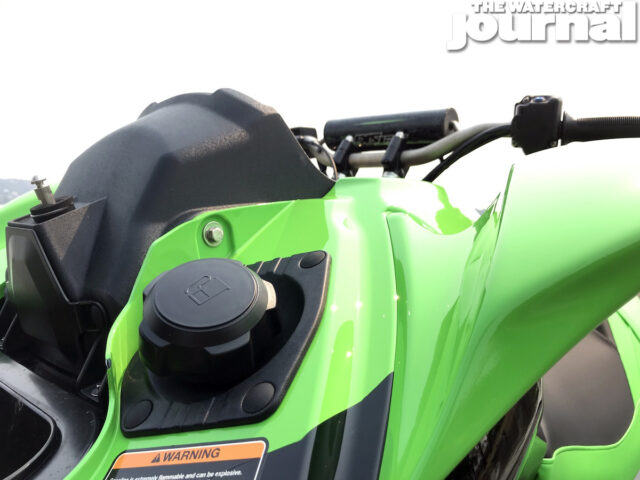
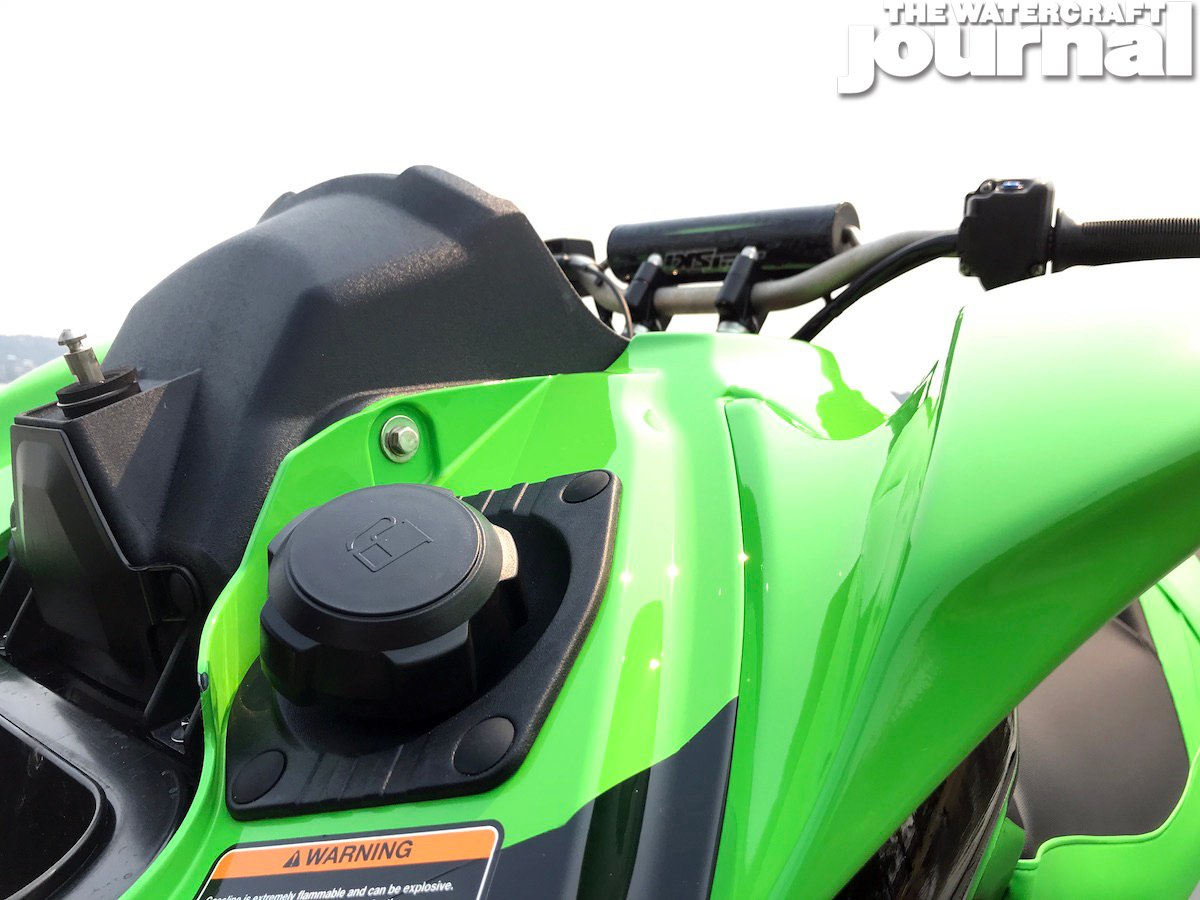
The Kawasaki’s 20.6-gallon (78-litre) fuel tank is still the biggest in the business – and just so happens to be shared with the STX 160 line for 2020 – providing the Ultra more capacity than the 18.6-gallon (70-litre) tanks in the 2020 Sea-Doo RXT-X 300, and the Yamaha FX series; although the topic of range is a different story. With so much boost on tap, the JetSki is notoriously thirsty, and while we calculated a total range of 80 miles, some claim slightly higher when carefully feathering the throttle.
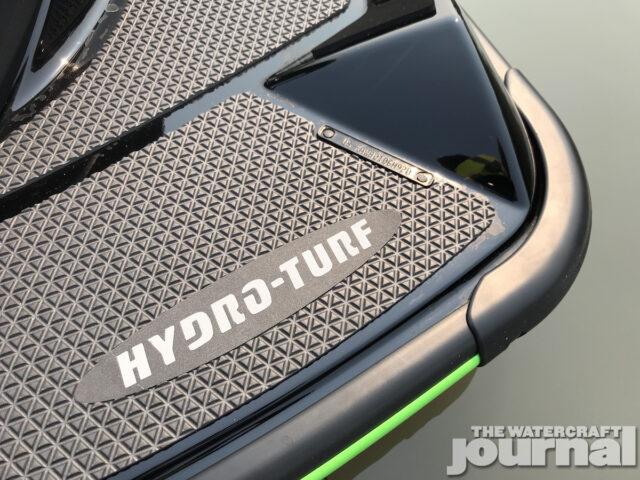
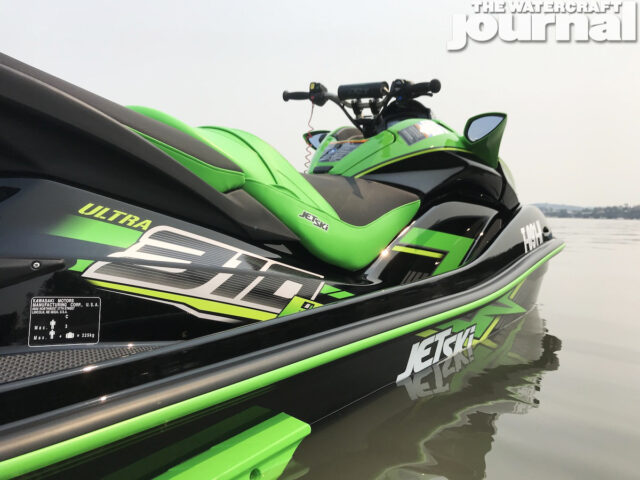
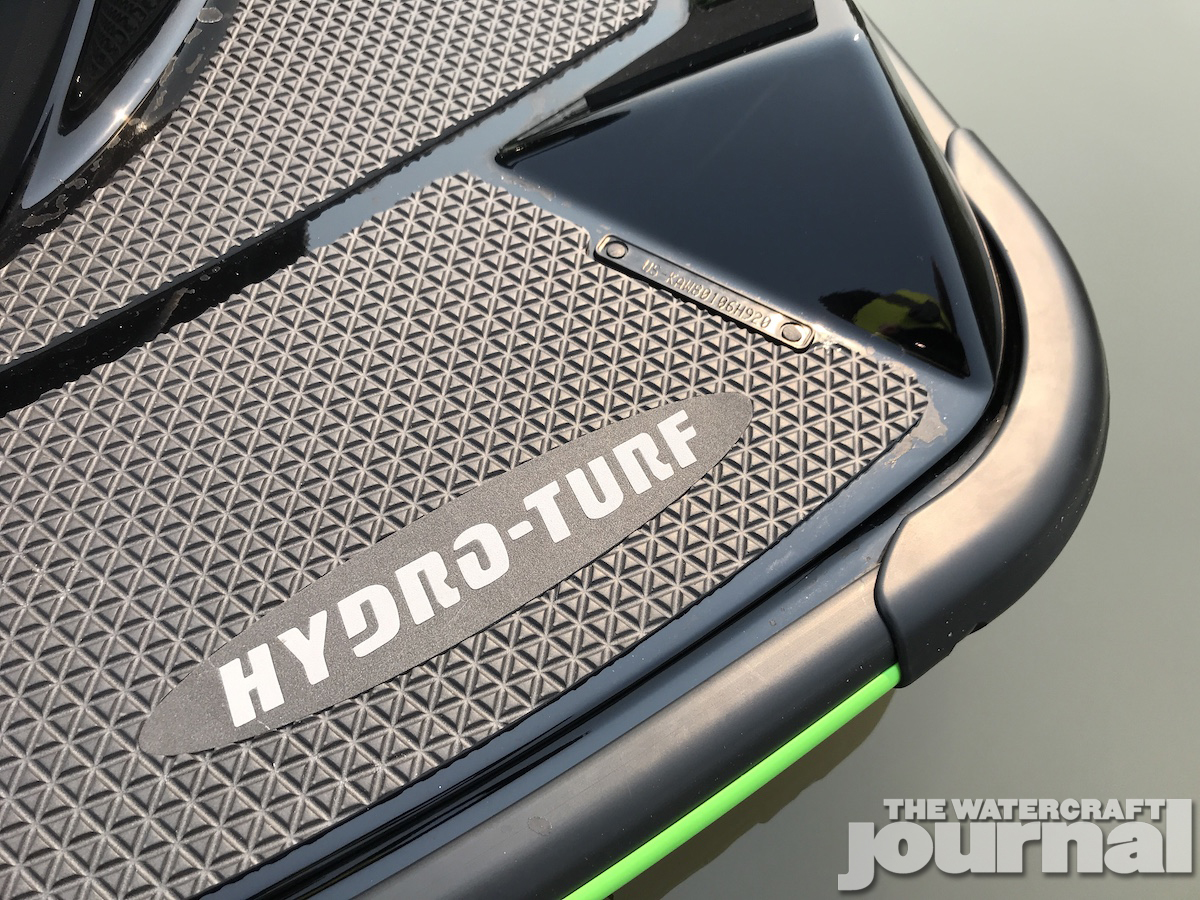
A fold-down boarding step is standard, although it’s not as wide as the one on the new Yamaha FX series. The rear deck is low and easy to climb back on. However, the rear deck itself is noticeably shorter than rivals such as the Sea-Doo RXT-X300 and Yamaha FX series. A textured Hydro-Turf traction mat covers the deck and footwells, and the 310R features its “race inspired” seat that’s wrapped in a proprietary textured material to provide added grip when snapping off a tight turn.
As for seat comfort, the Kawasaki Ultra 310 has slightly less knee room than other offerings in its class making the rider feel like they’re sitting low and very wide in the saddle. Keeping your legs in this position can become tiresome over long distances or after pounding through rough water, so it’s best to switch up your posture over time. Although the seat provides decent levels of comfort while sitting over short distances, we found standing preferable.
For what it’s worth, our backseat passenger said the Ultra 310R was more comfortable to ride two-up versus the Yamaha FX and Sea-Doo RXT-X 300 we had ridden the day before, so that’s a definite win for Kawasaki.
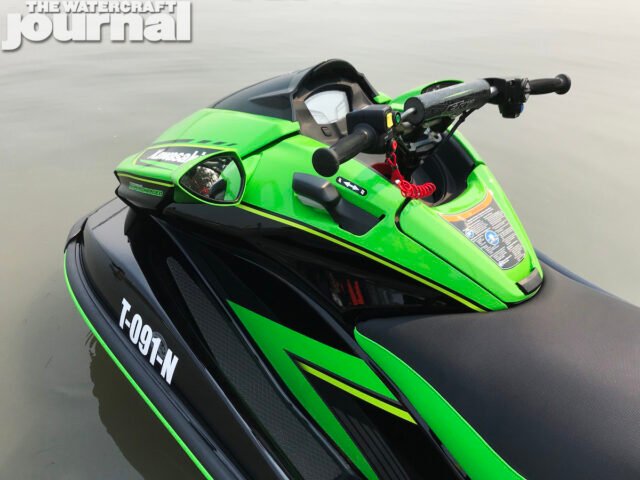
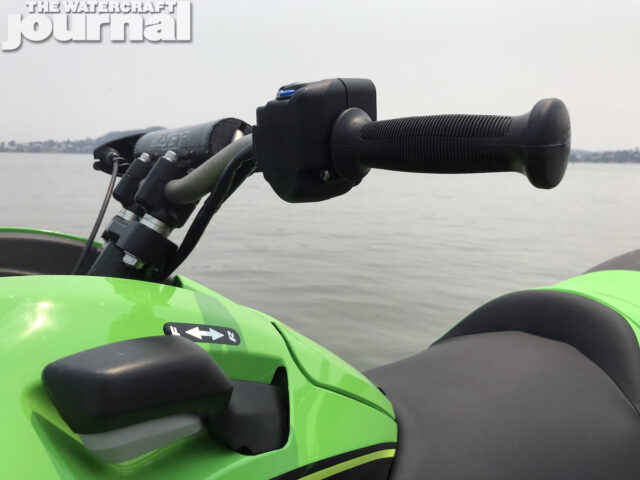
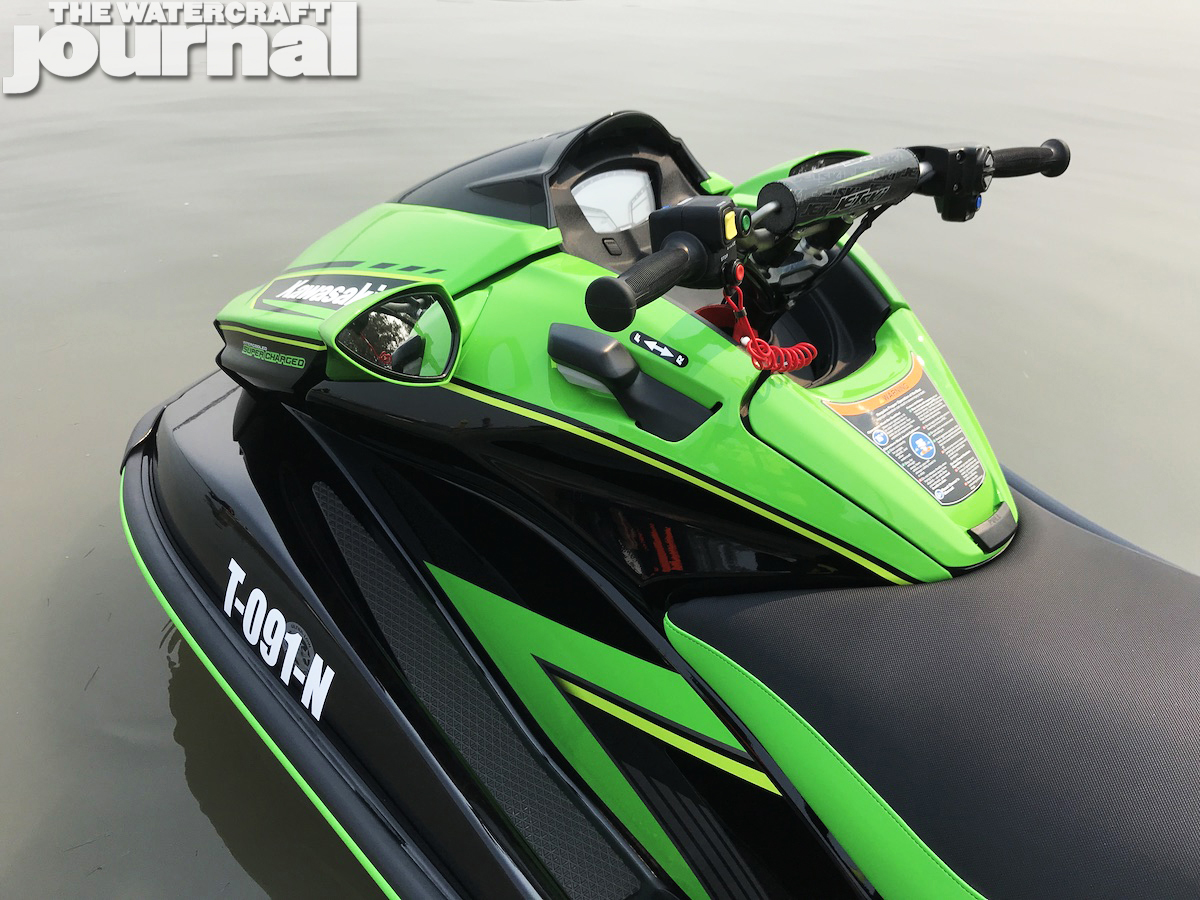
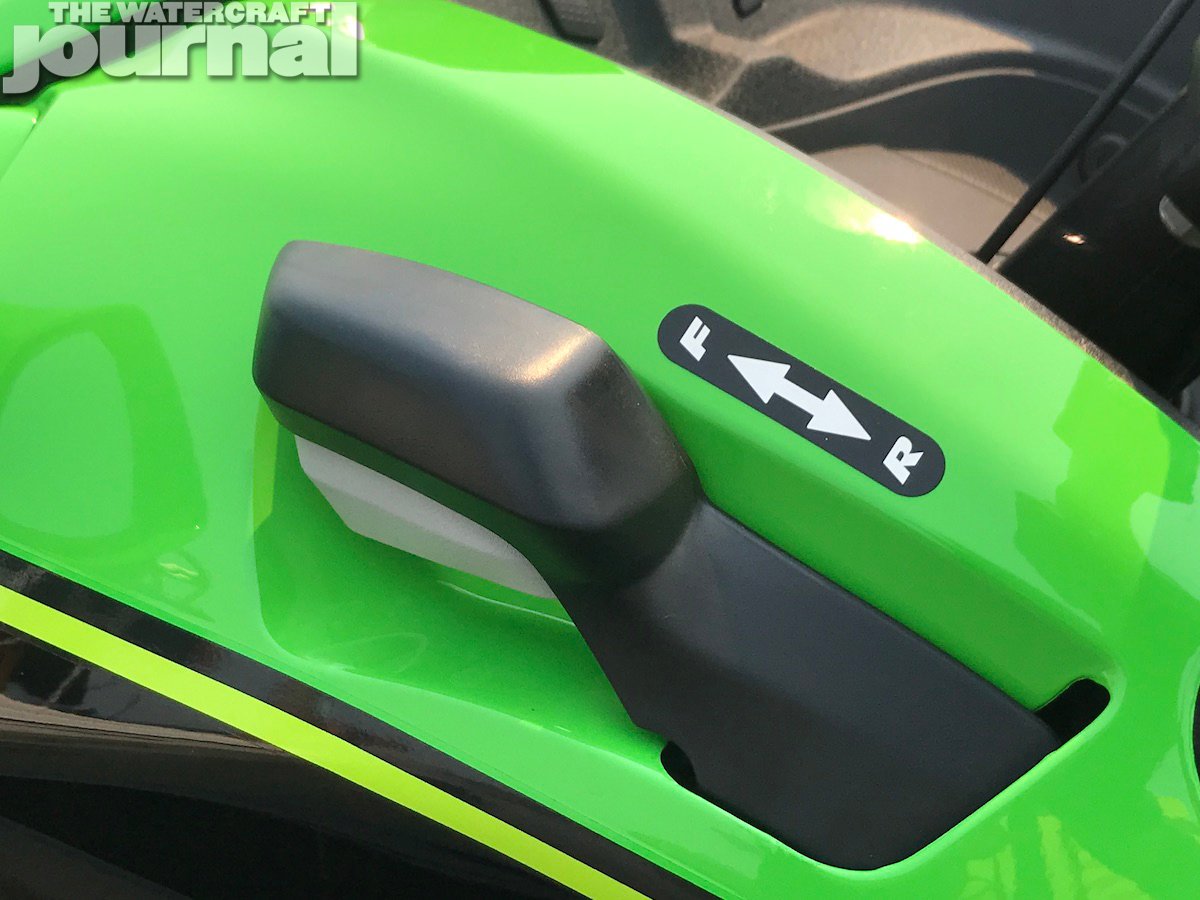
A carry-over from the previous decade is Kawasaki’s continued use of a handbrake-style reverse lever, which is mounted left of the center console. Rivals Sea-Doo and Yamaha have more convenient reverse levers on the left of the handlebars (opposite the accelerator levers on the right) which is handy for low speed maneuvers, and provides those machines with a verifiable braking system – an almost mandatory safety feature in today’s marketplace.
As a side note to those familiar with competing brands and transferring to a Kawasaki: aside from the awkward operation of the bulky reverse lever, you need to turn the handlebars in the opposite direction as you would when reversing a Sea-Doo or Yamaha. Certainly as an owner, you would get used to it over time; but for the uninitiated, it’ll take some doing to master it. We noted it was like trying to pat your head and rub your tummy while trying to spell the alphabet backwards.
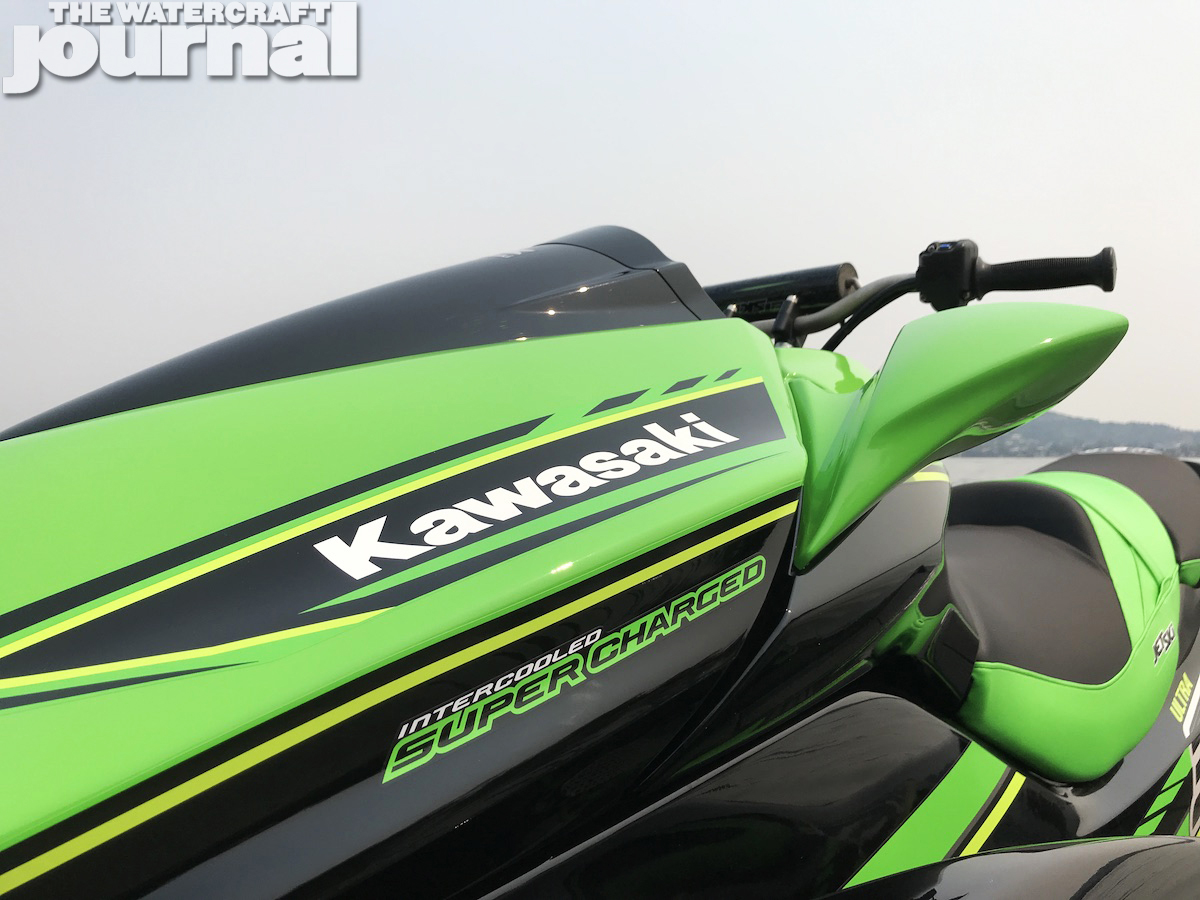
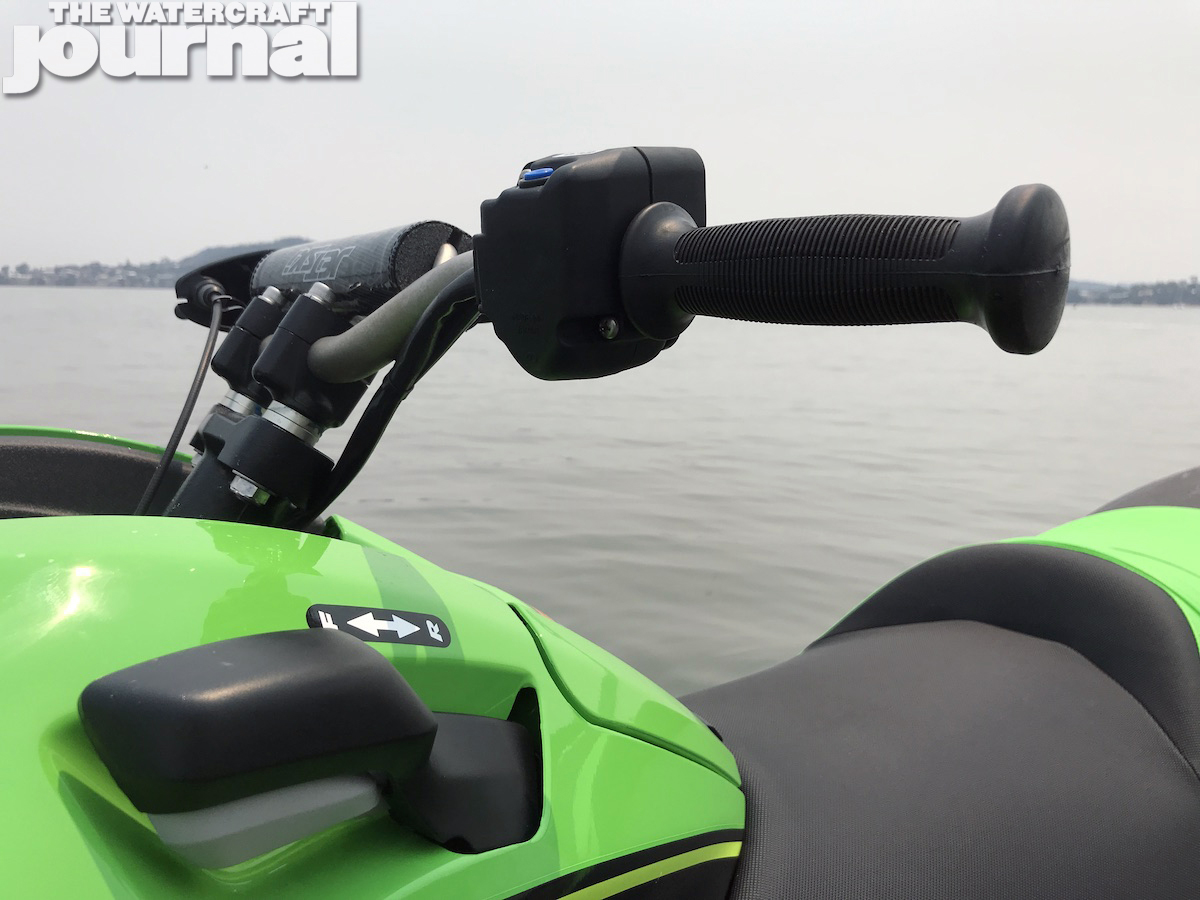
But that’s not to say that the Ultra 310R is not without features and innovations. All but one of the Ultra 310 models have five-stage adjustable handlebars; and that would be the Ultra 310R tested today. The 310R features motocross style handlebars fixed to a cast aluminum steering neck instead of the soft plastic tilting joint, providing the rider with a stronger, more precise steering feel.
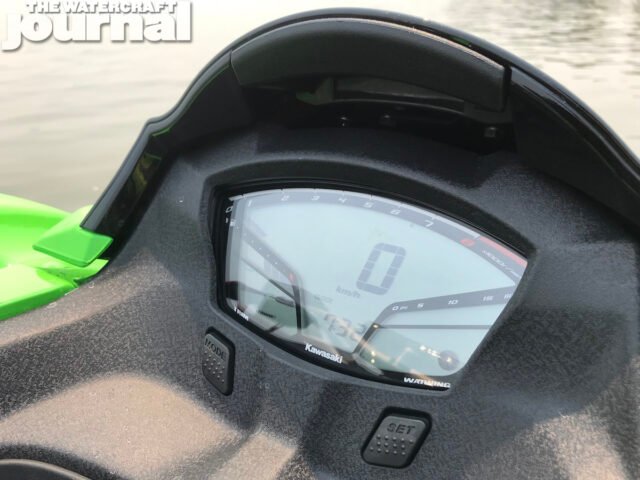
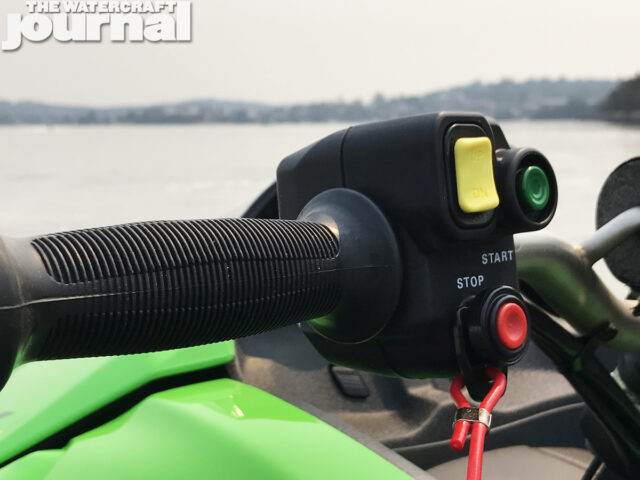
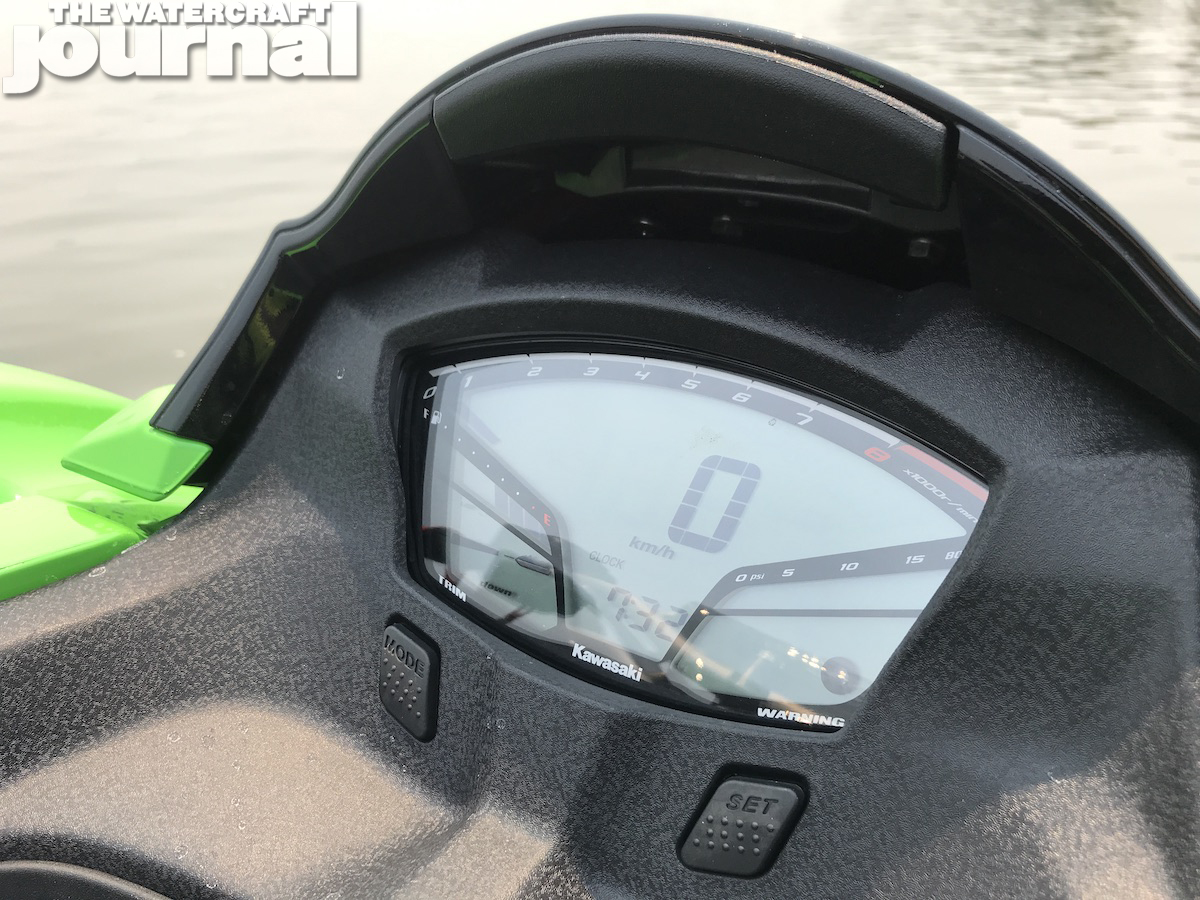
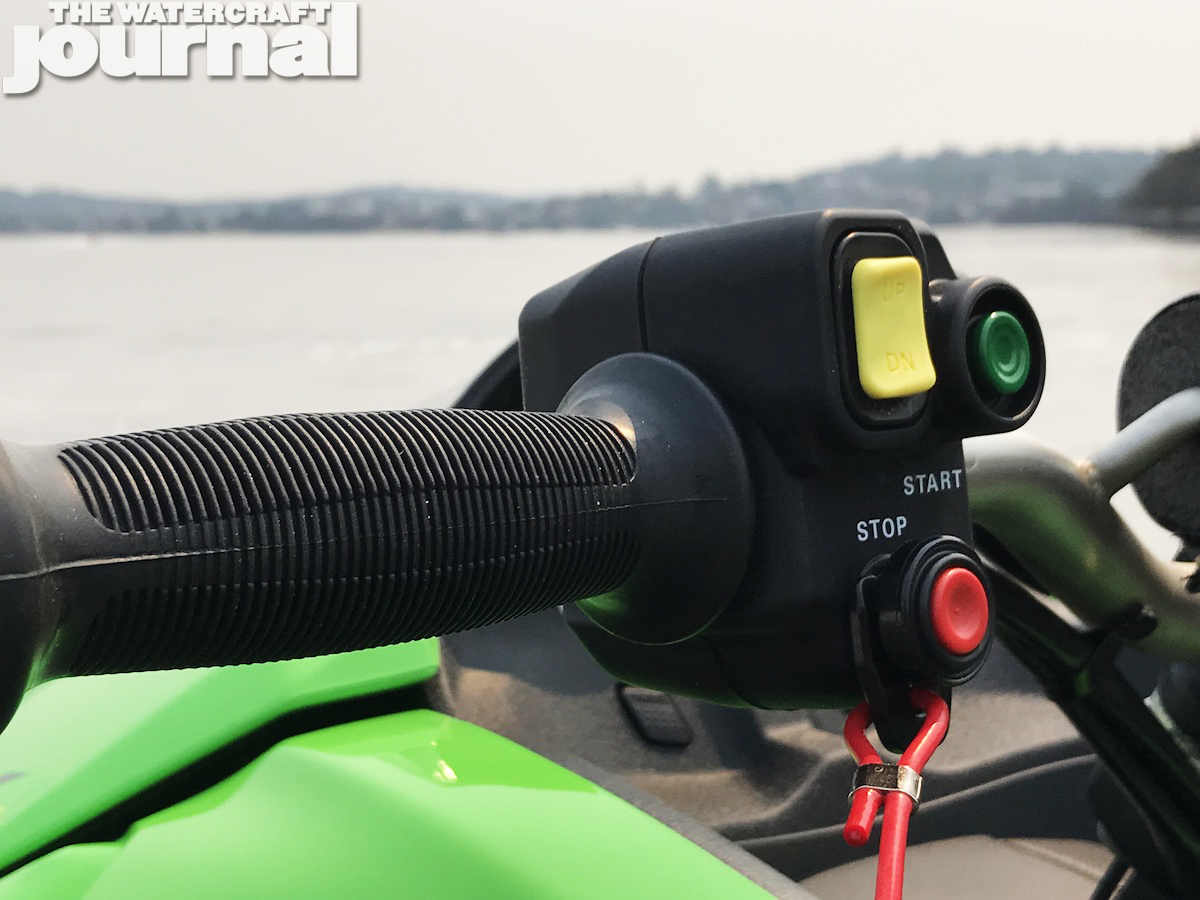
Mounted to the electroplated handle bars are the controls for the quick-response electric trim, cruise control, and no-wake mode that secures the speed at 5 miles per hour. Although not a programmable setting, the 310R will display an “ECO” alert on the digital dashboard when you’re operating the throttle in the engine’s most efficient position. Finally, a yellow Smart Learning Operation (or “SLO”) key is available if you want a novice to take a turn. It dramatically decreases the 310R’s initial launch and all but completely scrubs the big blower’s boost, dropping the top speed down into the low 40’s.
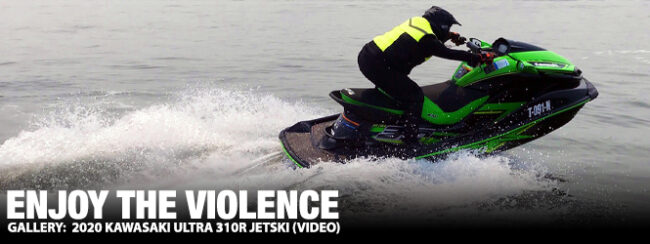
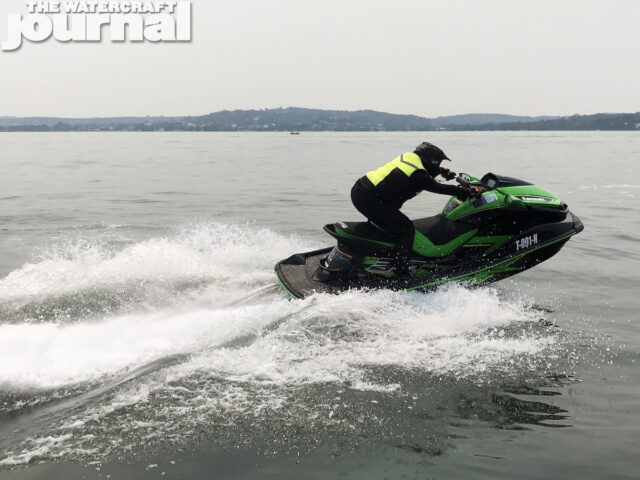
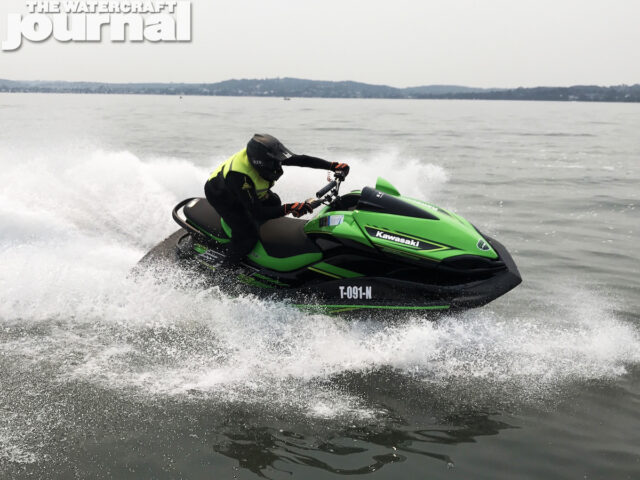
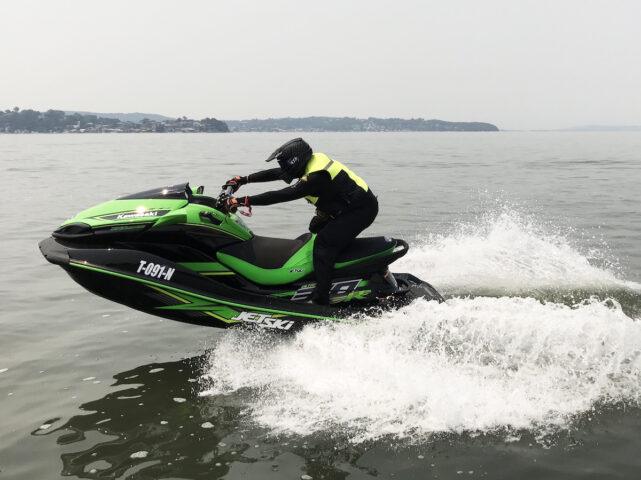
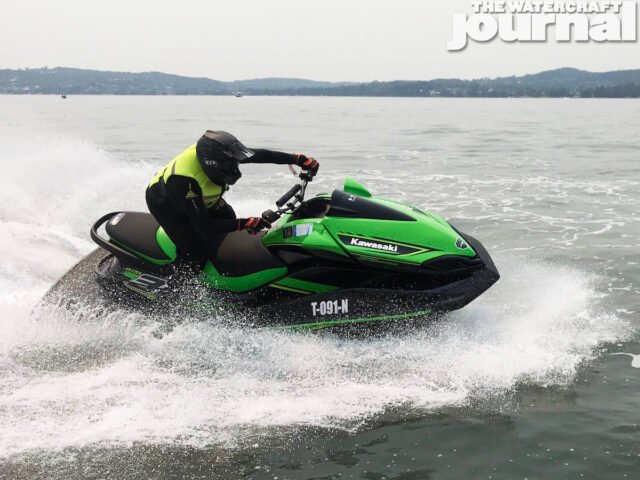
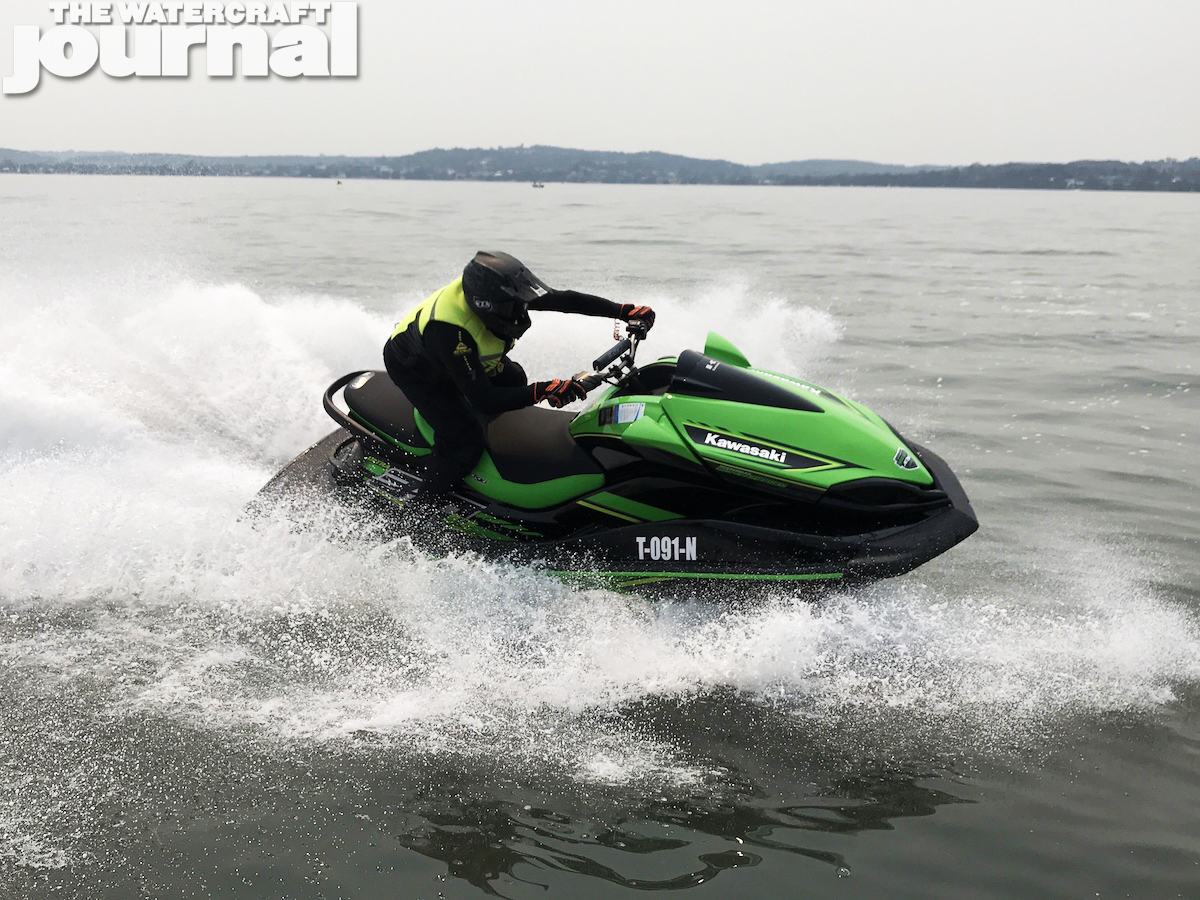
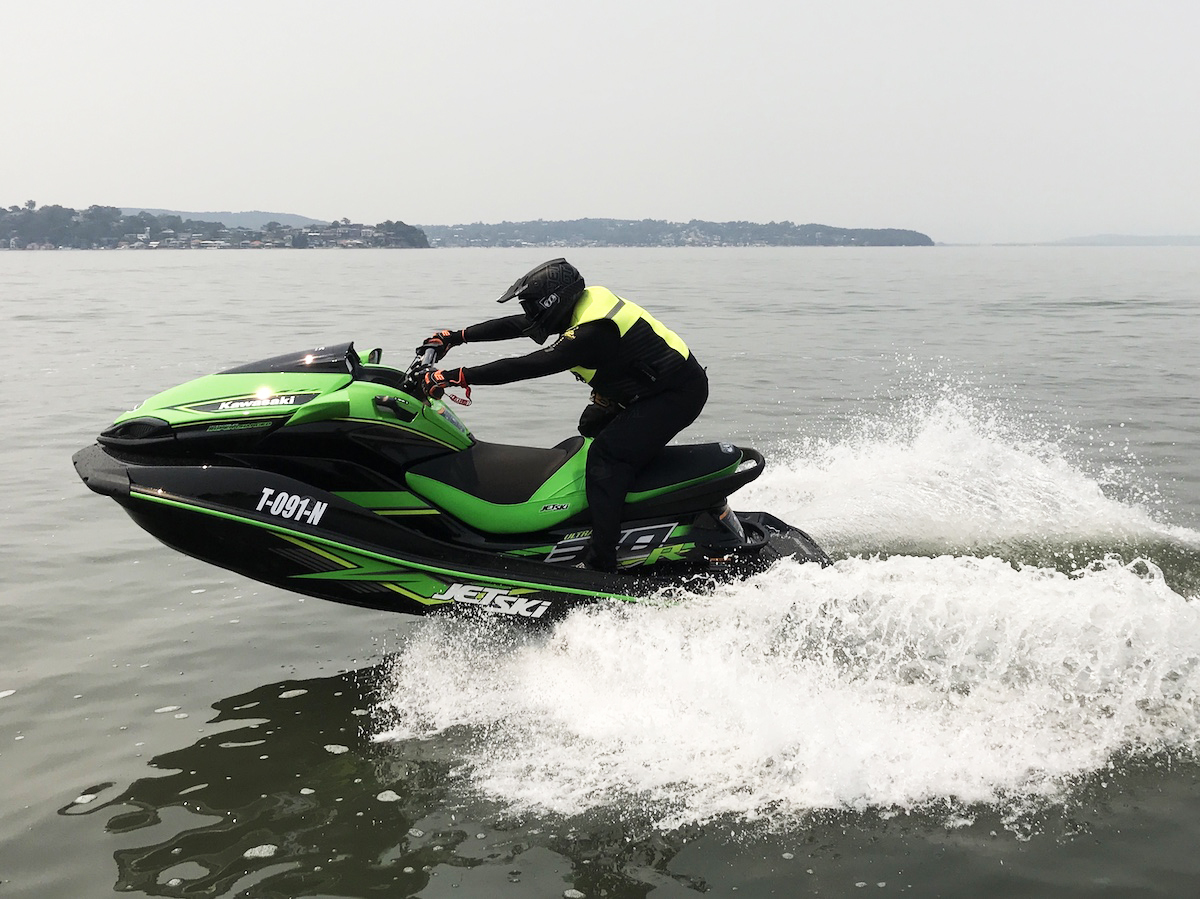
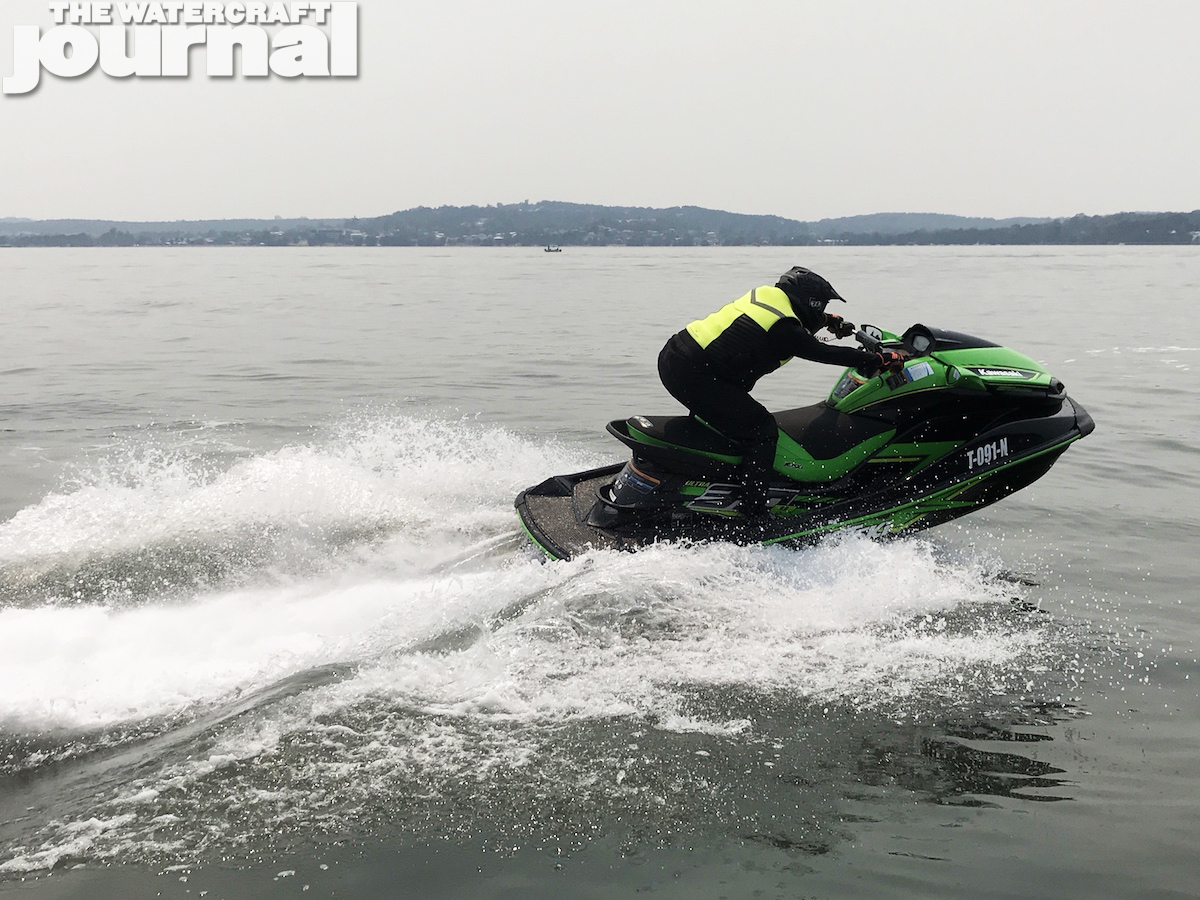
Speaking of which, the Kawasaki Ultra 310R has without a doubt, one of the most violent launches of a modern supercharged personal watercraft available today. From a near-stand still, the Ultra 310R roars out of the gate, it’s supercharger whining at an ear-splitting pitch. Although it’s all but impossible to get a true 0-to-60 time since watercraft don’t start from a standstill, we managed a best of 3-and-a-half seconds to 60 miles per hour. Top speed lingered in the high end of 67 miles per hour, but conditions weren’t ideal – even for the big Kawasaki’s “deep V” hull.
To that point, the hull, intake grate, ride plate and sponsons have remained unchanged since 2007 – but, as we said earlier, this is a proven package and age has not wearied it. The hull is made from hand-laid fiberglass, which is particularly rare in an era of lightweight materials used by rivals, and is known for its 22.5-degree deadrise. This, combined with its 1,047-pound curb weight and integrated splash deflectors, makes it the weapon of choice for many who regularly traverse choppy conditions.
The Ultra’s hull certainly has the deepest draft of any of the full-sized supercharged runabouts. While this costs the 310R a little in the top speed category, it definitely benefits the machine by giving it tremendous stability, particularly at speed, and very predictive cornering under throttle. Even though it feels like a big machine, it’s surprisingly responsive, showcasing similar reflexes to the new generation Yamaha FX series. The Kawasaki turns naturally across its speed range, and that is a huge win.
At times the Kawasaki Ultra 310R feels a bit like a monster; everything about this JetSki has been turned up to 11. Everything about it is huge; big power, big storage, big fuel capacity, even the Lime Green beams brighter than regular ol’ Kawasaki Green – just everything is over-the-top. But with so much power on tap and lacking a functional brake, this is definitely not a machine to hand over to a first-time rider but rather belongs in the hands of someone with more experience. And that’s really it. A brake is the only thing that truly stands between the 2020 Kawasaki Ultra 310R and greatness.
Special thanks to Newcastle Jet Ski Centre who provided us with our test watercraft. Please make sure to click the link in the description to visit their site and their virtual showroom.
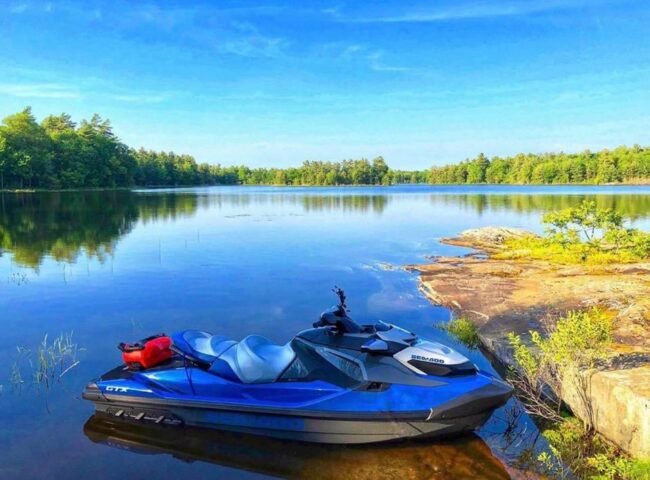
Thanks to decades of innovation, the application of greater technologies and increased comfort, people are using their personal watercraft in ways wholly removed from those from 30 years ago. The modern conveyances of today’s Sea-Doos, for example, have paved the way for budding long-distance explorers to take to the water in all-new ways. It’s truly how BRP loves to see their latest runabouts used and frankly, a super fun way to see the world around you.
Recently, we discovered Mark Forrest’s YouTube channel, ForrestSound Adventure and Exploration where he boards his ’19 Sea-Doo GTX 155 and embarks on monthly adventures, making sure to capture all of the scenery, wildlife and unusual sights during his journeys. We particularly enjoyed last Fall’s two-part “Exploring the Trent Severn Waterway” series (which we’ve shared below), as Mark and company go on an overnight camping trip up and back down the Trent Severn Waterway in Ontario, Canada.
Passing through a series of locks (including a very cool “lift lock” elevator), beneath a variety of bridges, and through miles of unspoiled nature (as well as spotting a beaver dam and a swimming squirrel); Mark also captures one unlucky boater nearly capsizing his boat after tying to the wrong docklines in one lock. It’s all part of the experience, and Mark’s videos do it perfectly, paired with perfectly-selected relaxing music and just the right amount of commentary.
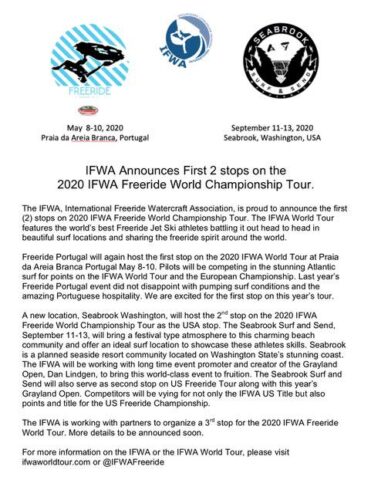
Our friend and former contributor Dan Lindgren is no stranger to those in the stand up community. Dan took a short hiatus from hosting his annual Grayland Open Freeride event, but recently announced its return as well as a very exciting second event, the Seabrook Surf n’ Send event.
Scheduled for the weekend of September 11th through the 13th, the Seabrook event not only will provide an all-new venue for freeriders and motosurf enthusiasts to compete, but will also be joined with the IFWA Freeride World Championship Tour, serving as its second stop for the season.
If you’re interested, here’s the breakdown of the new event and some important hyperlinks:
The Westcoast Surf Riders and the IFWA are proud to announce a new Motosurf Freeride event for 2020. This event will be held on the beach at a brand new amazing beach town called Seabrook on the central Washington coast of the United States of America. The Seabrook Surf n Send event, presented by Sensi Sci, Westcoast Surf Riders and the IFWA Freeride World Championship Tour will feature the top riders in the world coming from all parts of the globe to compete for their spot on the podium and claim their world titles. Not only is Seabrook Surf and Send 2020 the IFWA World Championships final, it is also the USA National championship final. The national and International champions will be crowned at this event.
If you are a rider or a spectator that enjoys this incredible sport, you do not want to miss this event! With all of the best riders from the USA and from around the world, the display of talent and exciting competition will be pretty insane.
If you are a spectator, this event is free to attend. Grab a chair, some drinks and snacks and make your way down to beach. The competition location is just out in front of the staircase that leads down from Seabrook to the beach. You’re gonna want to stay a while. Music will be pumping on the beach and there will be a ton of action in the waves all weekend. We’ll have event shirts available for purchase. We will also have food vendors if you get hungry.
Please keep your vehicles off of any shiny wet sand areas and help us protect the clam populations. The weight of a vehicle can kill clams and it’s also a pretty huge ticket if the state parks see you driving on the clam beds.
****Riders**** This event location is accessible with any vehicle including RV’s Motorhomes and even small sedan type vehicles if you are familiar with driving on the beach. Stay our of the dry, soft sand and you should have no issues. The beach area is very large and there is plenty of room for everyone. Please spread out and do not block any access through the event area. A traffic lane will be clearly marked. Seabrook Washington Seabrook Cottage Rentals is our lodging sponsor and this event would not be possible without their support. They’ve invited us to be at this location and have been very supportive and helpful in making this event happen. I would encourage you all to make plans to stay in Seabrook in one of their amazing homes. The lodging situation is similar to Blowsion’s Surf Slam. There are homes of all sizes available to rent.
The best option is to get with a group of people and go in on a house rental as a group to share costs and be within walking distance of the event. Literally all of the homes within the Seabrook boundaries are an easy walk to the beach and the downtown area and the Seabrook town has many amenities for guests including dining options, indoor swimming pool and hot tub, outdoor fire pits, gathering spaces and much much more. Trust me, Seabrook is where you want to be. I will post up all lodging details in one post on this page so ask your questions on that thread once that post is up.
In the interest of keeping things easier and just having information in one location, this page will be the primary source of event related information. This page is monitored daily. Check back frequently and feel free to post up any questions and share posts to help us to get the word out. Please take a minute to invite friends that you think would enjoy this event. That would help us out immensely. I have 20% housing discounts in place for you. Please see the Lodging post on this event page for details. I should have housing discount codes in late march and will post them up, so wait for the code before booking if you want the discount.
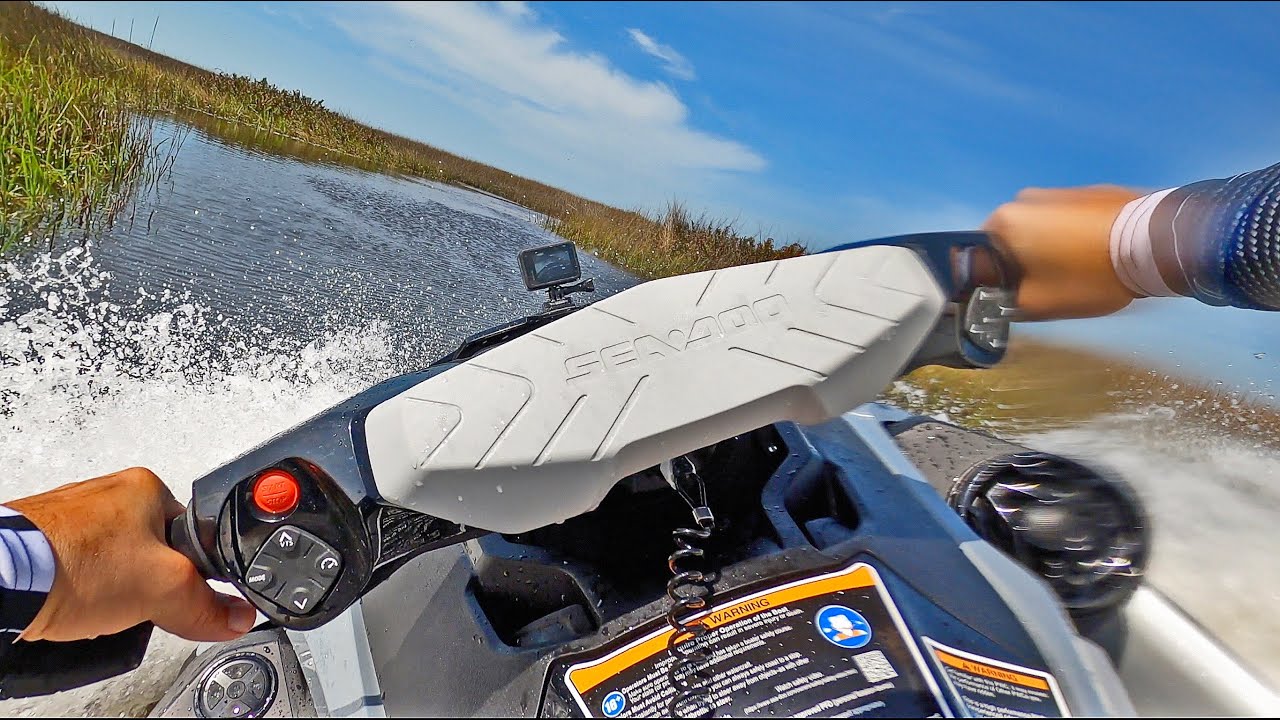
“Whooo!” Florida Ski Riders’ founder and Sea-Doo ambassador Randy Cabrera howls like a waterborne Rick Flair. Donning his latest officially-branded FL Ski Riders’ jersey and embroidered hat, Cabrera pushes his silvery 2020 Sea-Doo GTX Limited 300 through a serpentine trail of grassy knolls and clusters of mangroves that litter the horizon and make navigating the labyrinthine waterways a dizzying affair. Only when we’re shown the occasional aerial shot via drone does one get a better scope of the maze he is traversing.
What Cabrera’s video demonstrates is what we at The Watercraft Journal and several more experienced riders have deduced for a while; the current Sea-Doo’s difficulty in negotiating tight, turbulent waters. Pay careful attention to how often Cabrera pins the handlebars to their stops while trying to make a hairpin. Even while feathering the throttle, the ST3 hull pushes Cabrera wide, almost into the grass despite being pinned to the side. Cabrera tilts hard, shifting his weight left to right, but the hull breaks its line and pushes outside of the apex again and again.
More importantly, Cabrera is a conservative rider. He’s not one for dangerous showboating or stunts. He knows when to get on the throttle and not; and his throttle control is more-or-less on point here. Nevertheless, the ST3 presents Cabrera a few too many close calls, to which he instinctively reacts with a “Whooo!” When leading the pack, Cabrera’s GTX sluices a trail rather naturally; yet, when navigating through wash, the hull is often prey to the whims of the leader’s wake. Thankfully, deep-set RIVA Pro-Series sponsons and some cleaver trimming has all but solved this issue for the big 3-seater, as we’ve proven HERE.
When you own a Sea-Doo Watercraft, you live for the moment, you own the experience, and you truly live the #seadoolife.
Just take it from one of the many Sea-Doo Ambassadors who perfect their own niche of respective sports or lifestyles. Each of them shows us what it means to live this lifestyle and how a Sea-Doo watercraft really transforms your adventures. It opens up a world of possibilities.
Over the years, we have gotten to know some of these adventurous ambassadors. From Anthony Radetic and Erminio Iantosca, two world-class Sea-Doo racers, to Randy Cabrera, founding member of one of the largest personal watercraft groups, Florida Ski Riders.
Sea-Doo has been adding to the list of their awesome Ambassadors including wake skater Nick Taylor who shows us that a Sea-Doo is a perfect tool for doing water tow sports. As Nick explains, “You don’t need a $150,000 boat to have fun!”
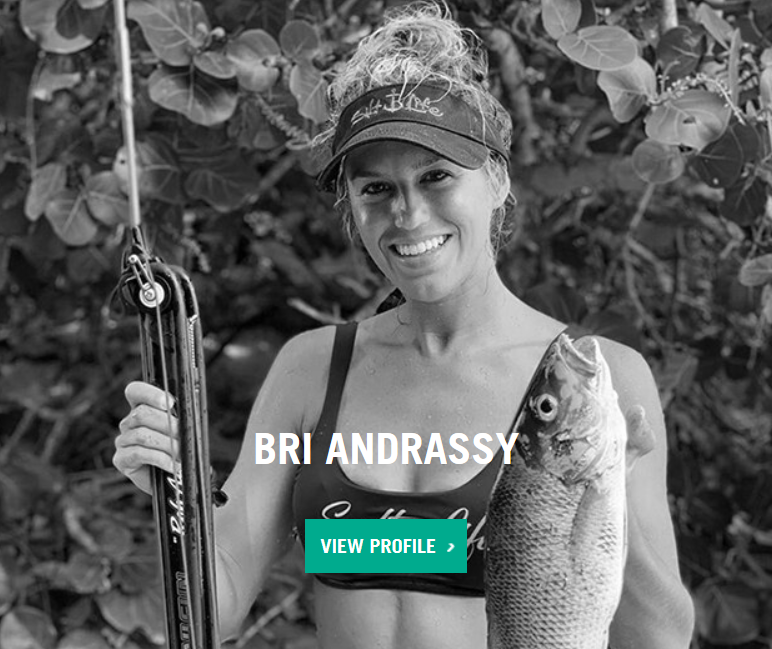
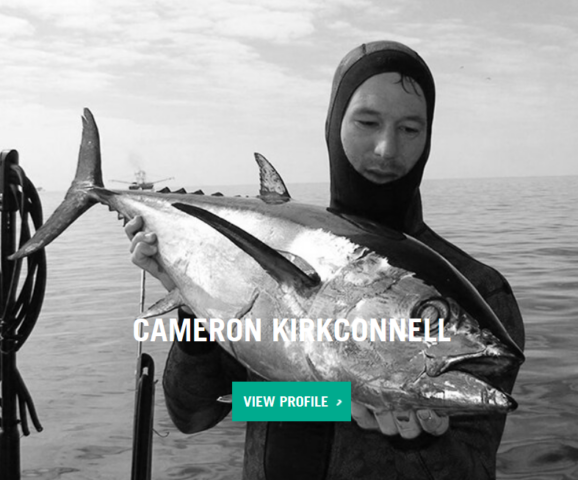
Additionally, complementing their wildly popular Fish Pro Sea-Doo, we have seen a rise in Ambassadors who love the sport of fishing. Take for example Bri Andrassy and Cameron Kirkconnell as well as a list of others.
So, check them out and start learning about all of the ways that you can live the Sea-Doo life.
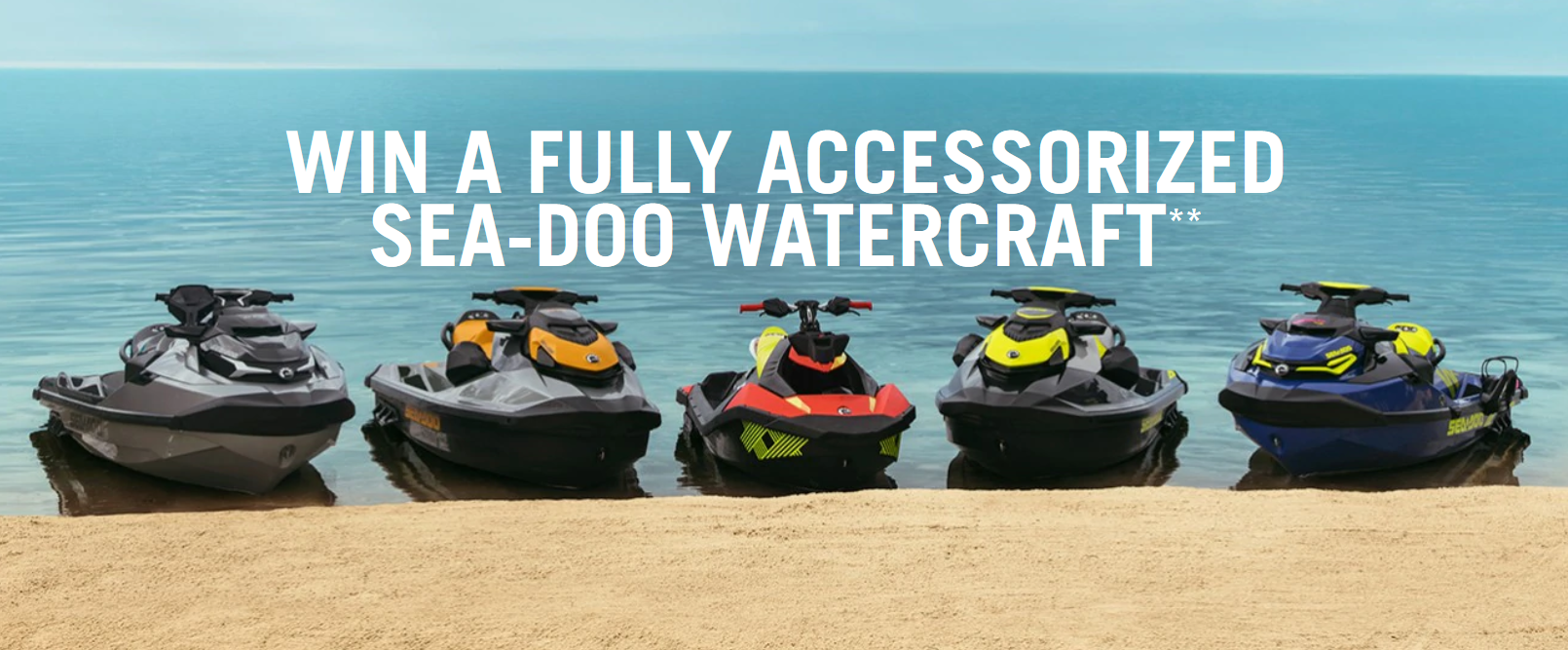
It’s back for 2020! The Sea-Doo dream giveaway contest returns again this year giving you another chance to win your very own Sea-Doo Watercraft.
That’s right, you can win any Sea-Doo of your choice that will come fully accessorized at your discretion. It even comes with a Sea-Doo Move trailer so that you can tow your glossy new unit to the water. If you’ve dreamed about getting on the water and riding, now is your chance.
You will have to hang on tight though because the drawing isn’t until December 11, 2020. A prize definitely worth waiting for though and what a score that would be just in time for Christmas.
So, get your entry in folks because this year could be yours to walk away with your very own dream Sea-Doo.
Many of you PWC and powersports enthusiasts order parts as if it’s a weekly or monthly ritual. While researching about certain parts to upgrade on your current ride, you may not realize how valuable that information really is. If you are someone who loves the powersports industry and is looking to transfer your knowledge to work for a family owned company, check out Cycle Springs Powersports located in Clearwater, Florida.
Cycle Springs Powersports is currently looking for an individual to be their new parts specialist. This is a full-time position and provides you with the opportunity to use your knowledge and help others in the powersports industry. While working for a family owned business, you will be treated like so as one of their employees. While it is not guaranteed, having previous experience in parts and shipping is a huge plus. Cycle Springs Powersports offers great benefits and perks to their employees aswell.
Cycle Springs Powersports has been around for 31 years and has built a strong reputation. With hundreds of positive reviews online, this is a great place to work. For more information, click the link here to start the online application.
The job would be located at their storefront at 29703 US-19, Clearwater, FL 33761. Even if you are located out of the state, Cycle Springs may be able to help with relocation costs.
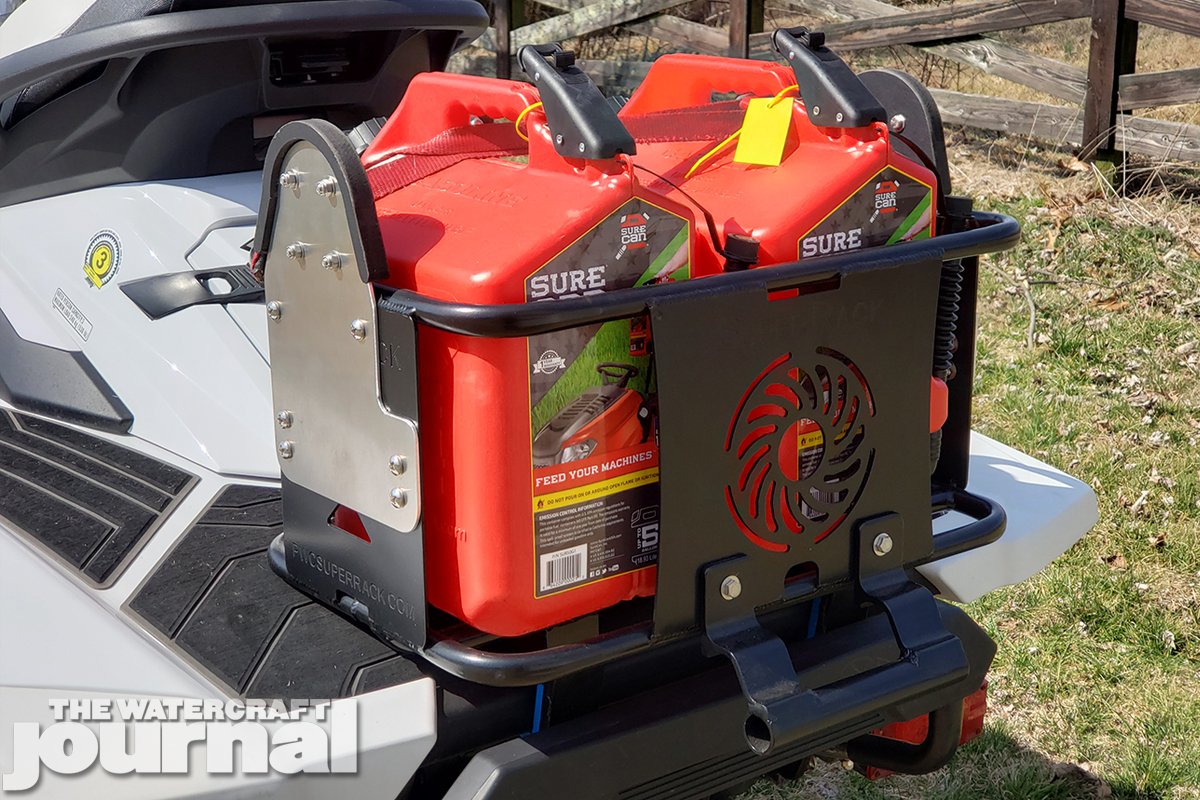
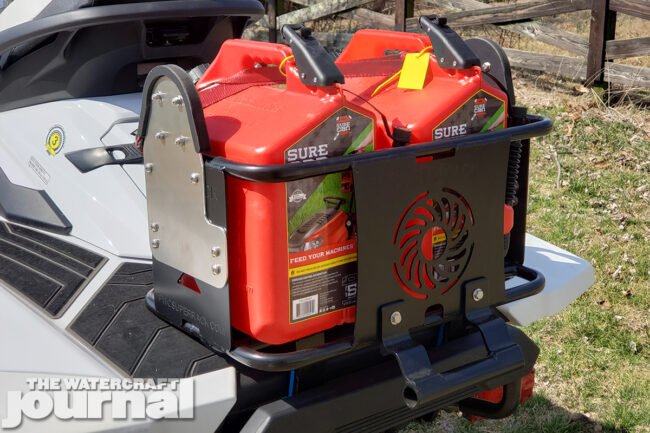
A few months back, we found ourselves in a conversation with Nelson at PWC Super Rack, LLC. We at The Watercraft Journal were toying with the idea of a “carry as much gas as you can” endurance ride, and they were manufacturer we wanted most to speak with, especially as the ride was set for either the Panama Beach, Florida area or the Intracoastal Waterway up Florida’s eastern shore, and PWC Super Rack calls South Florida home.
For those uninitiated, PWC Super Rack is quickly becoming the single-most popular storage accessory for watercraft enthusiasts in Florida, the Gulf and up the Atlantic Coast. In one of those “Five-Year-Overnight-Success” stories, PWC Super Rack built its business upon the credo that there is always room for someone who offers either a superior product or is easier to work with. It just so happens that PWC Super Rack offers both.
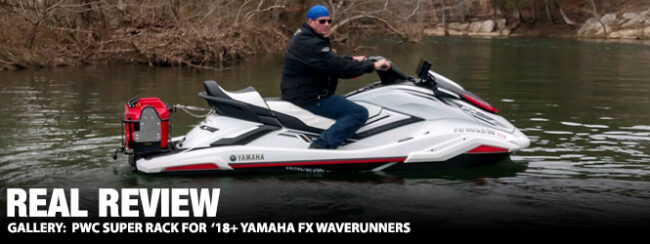
Nelson happily obliged to provide us with one of their racks to test. The problem was that the runabout we had planned to use – a 2019 Yamaha FX Cruiser HO – was required back at Yamaha, and the rack that was sent was specifically designed to match the Yamaha’s swim platform. Needing someone with such a machine who could rightly tally up as many miles as possible, we turned to Tom Hill, who many will remember from our tutorial on installing a Raymarine Axiom 7 Chartplotter and Transducer on a ’19 Yamaha FX HO.
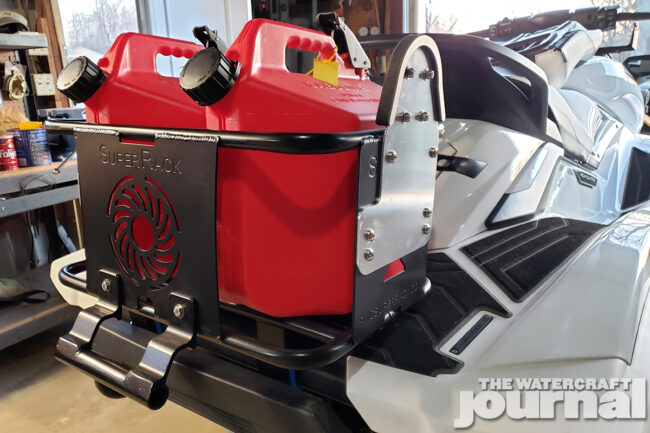
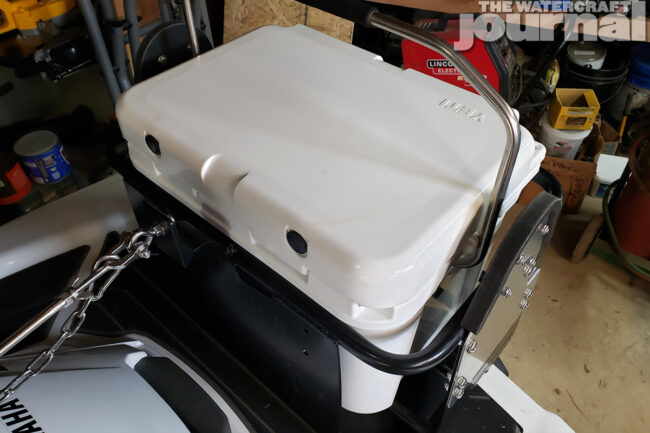
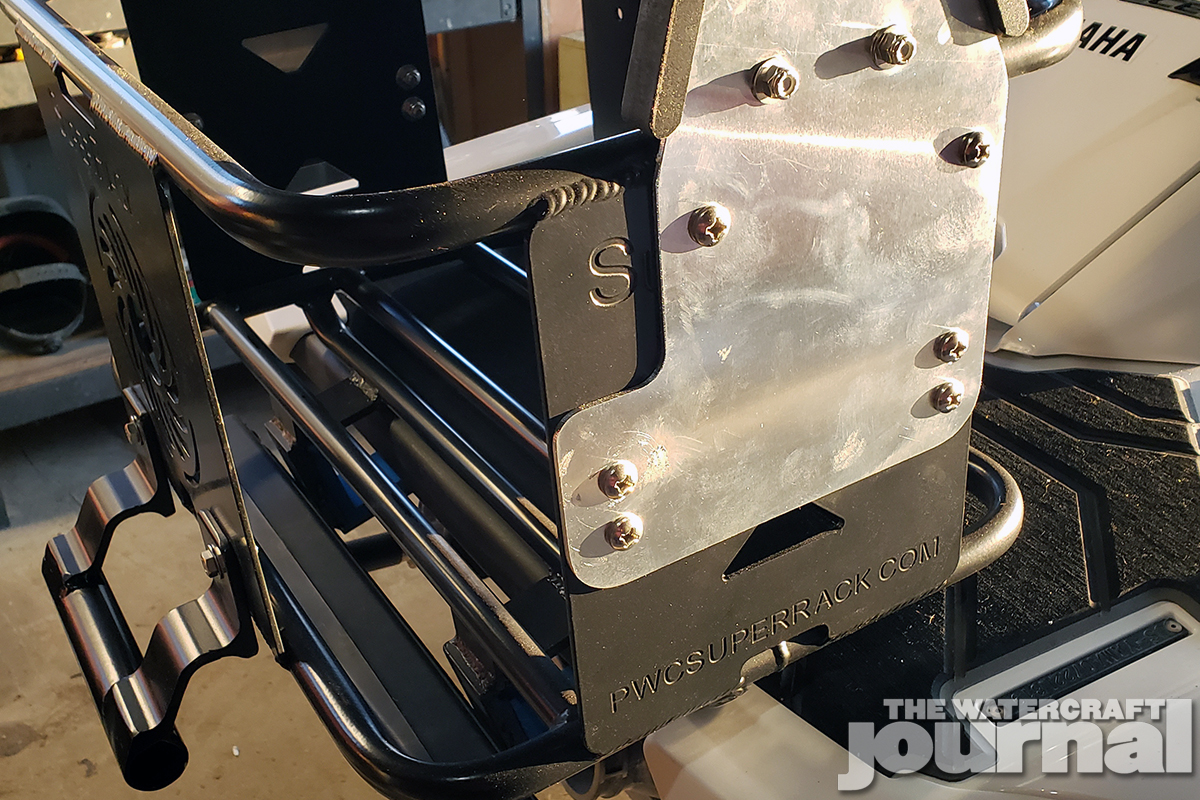
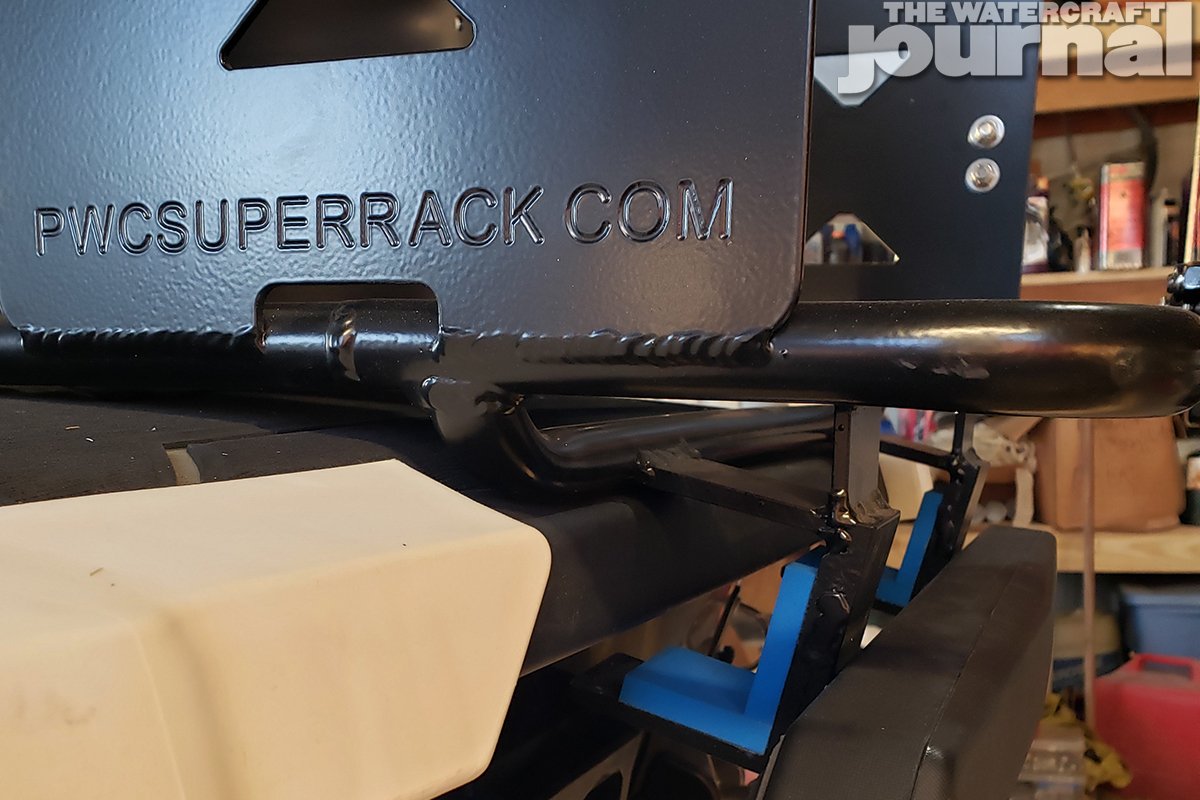
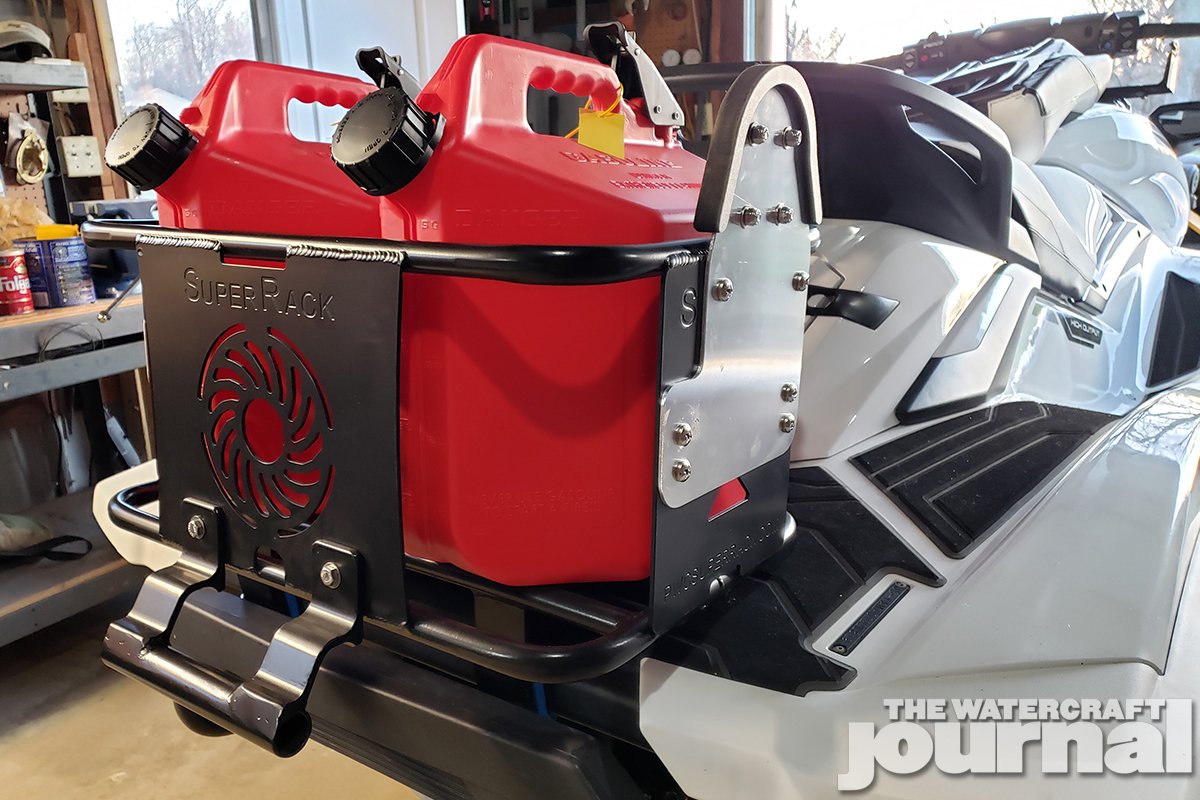
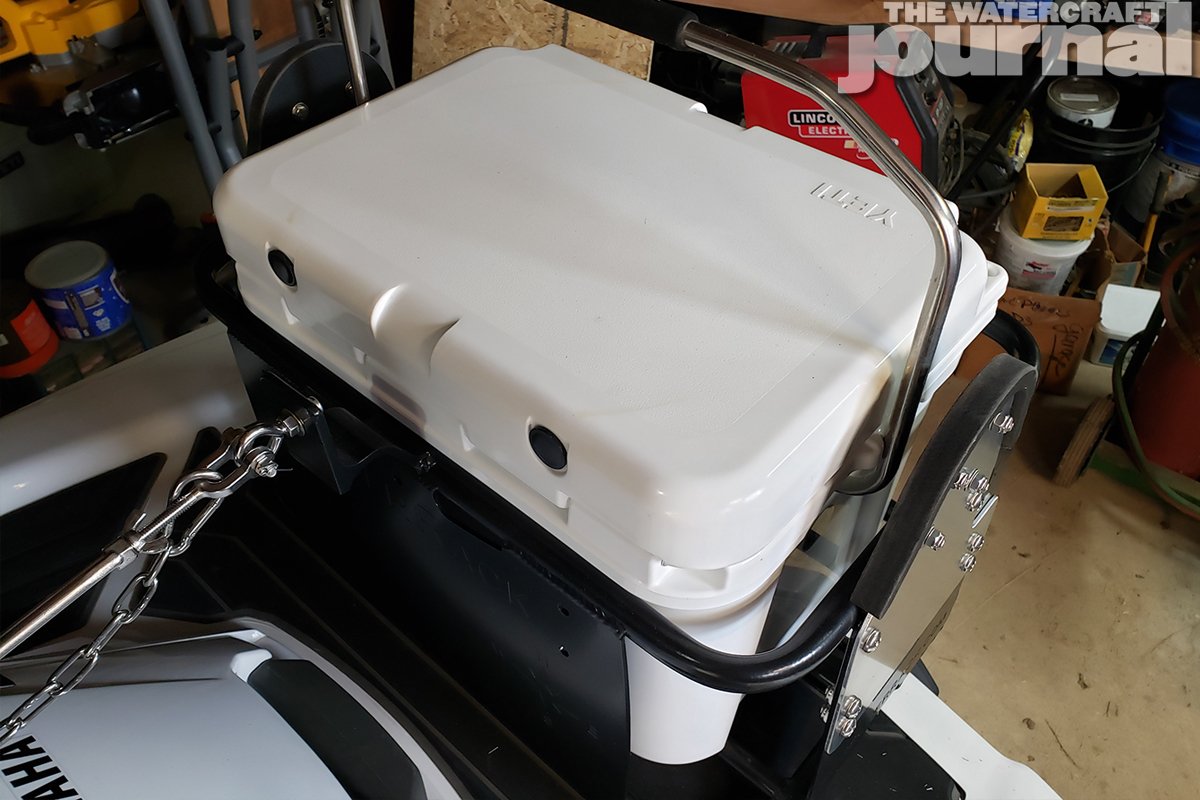
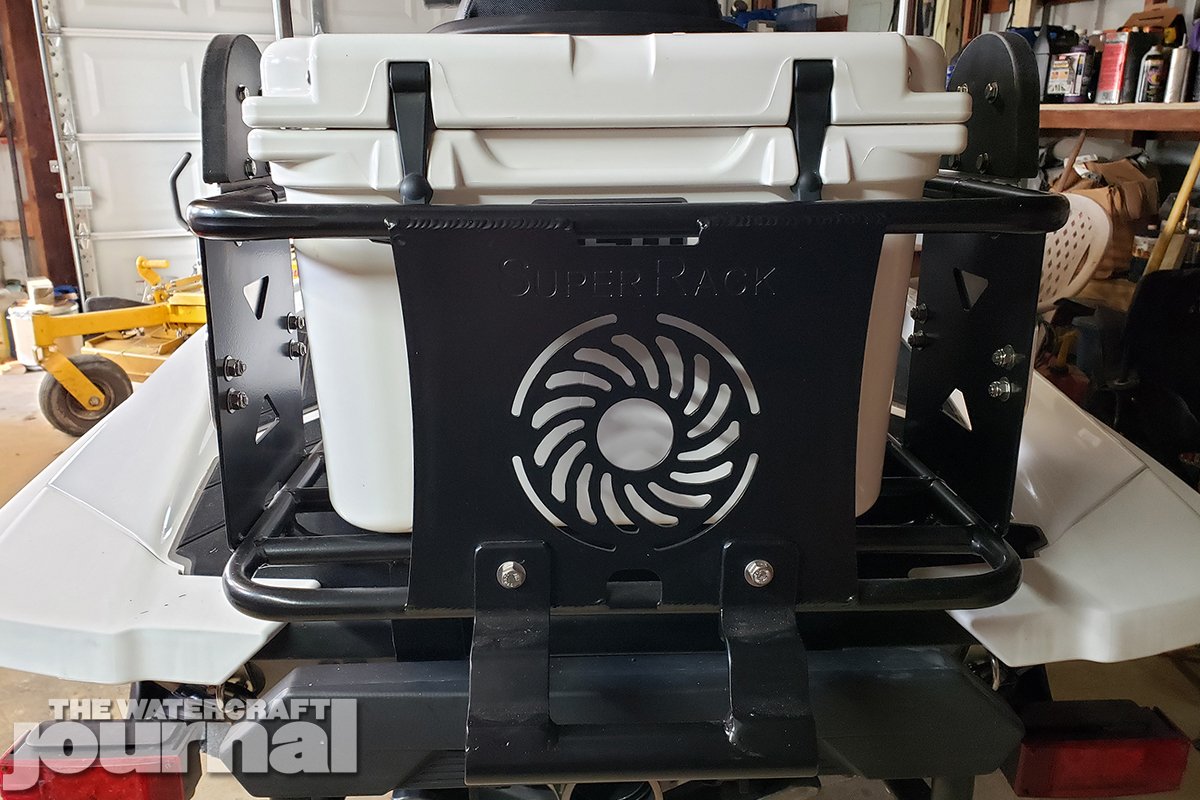
After several months of cold weather testing, Tom came back all smiles. “After looking this Super Rack all over before install I was impressed with the build quality. The fit and finish are excellent.” All PWC Super Racks are hand-fabricated to exacting specifications in the United States. More importantly, PWC Super Racks offers an array of sizes, shapes, applications and fitments to precisely fit both your PWC and your intended use (gas cans, coolers, fishing gear, etc.).
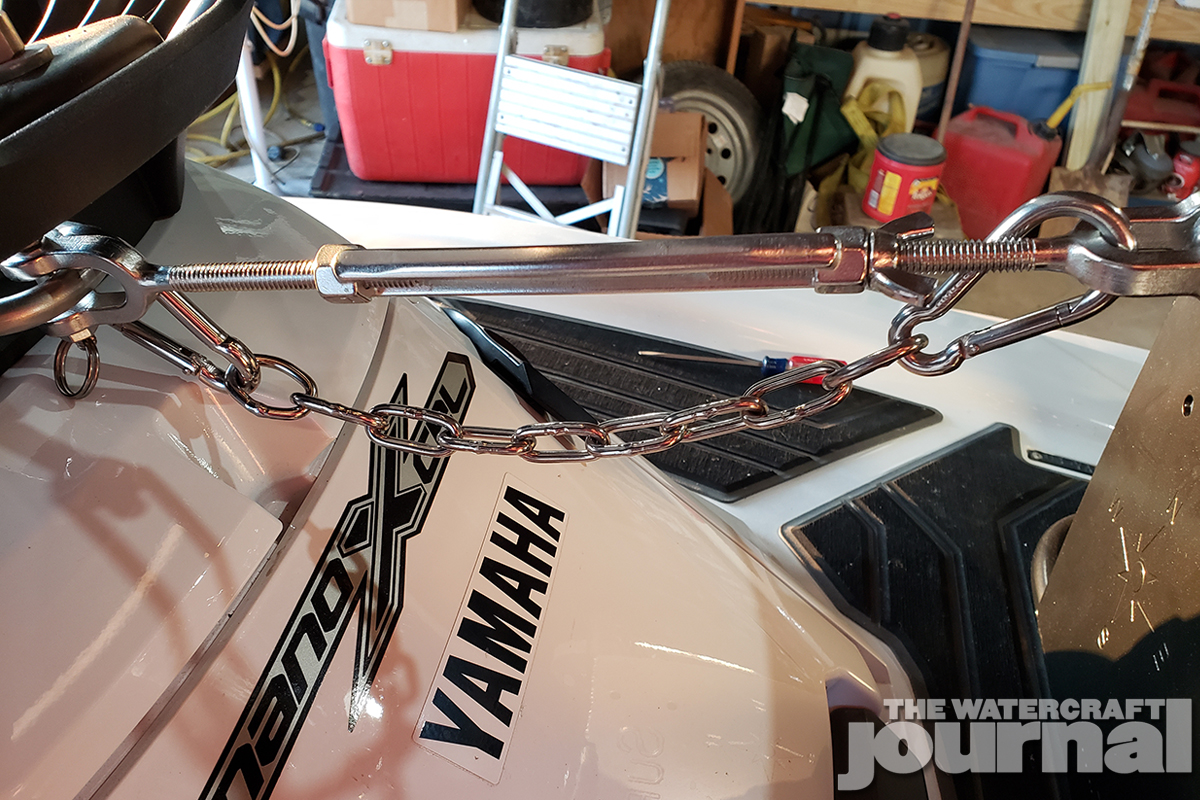
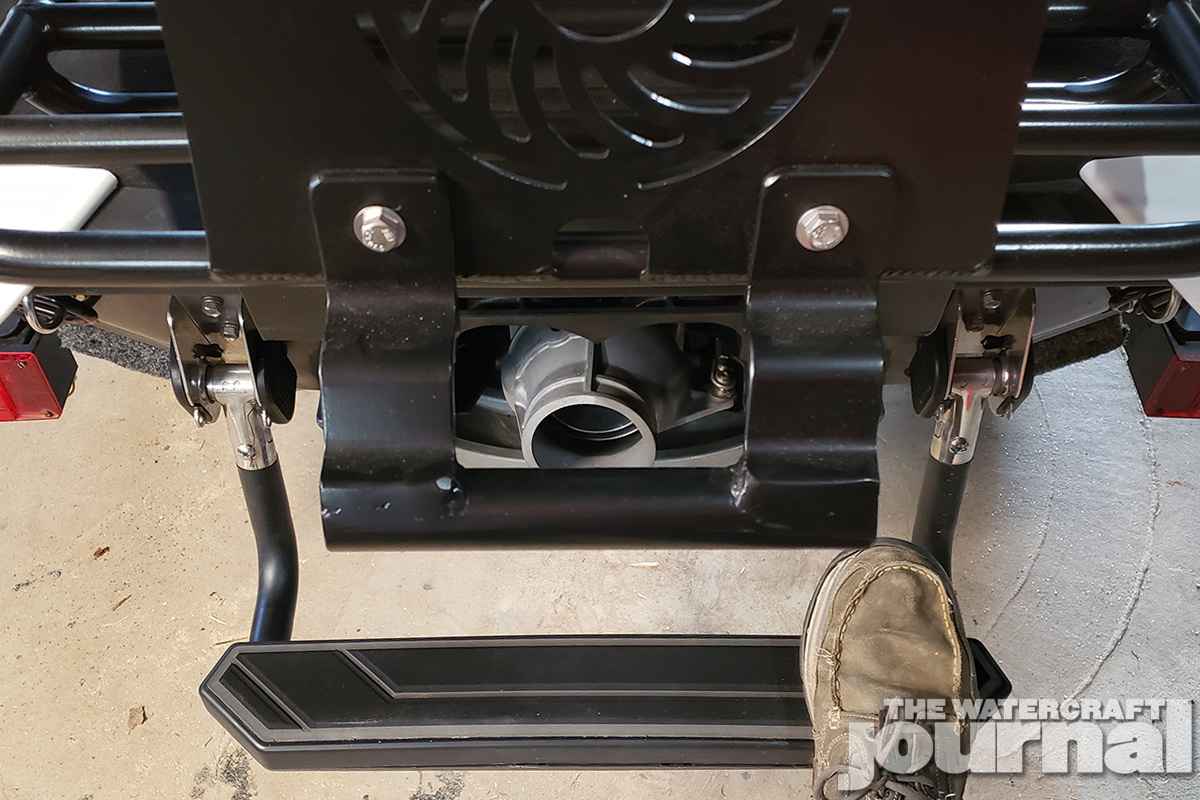
“Sliding the rack on from the rear of my Yamaha FX Cruiser was pretty straightforward,” Tom began. “I liked the way Super Rack [lines the transom hooks with foam] making sure it was centered. [It] shows that someone took their time with an actual 2019 Yamaha FX to get the fit perfect. Hooking the stainless steel turnbuckle to the ski’s tow hook was a little time consuming – not bad – but not bolt on and go.”
Tom continues, “I removed the rear seat first. Then had to unscrew the turnbuckle to get the end out so I could turn it at a 45-degree angle to get the bolt to go through the tow hook. Once the bolt was in I screwed the turnbuckle back together.” The stainless bolt has a small hole drilled in the bottom for a safety ring so there’s no chance of the nut coming off. The hole is pretty small, so Tom used a small screwdriver to pry open the ring so it would slide through.
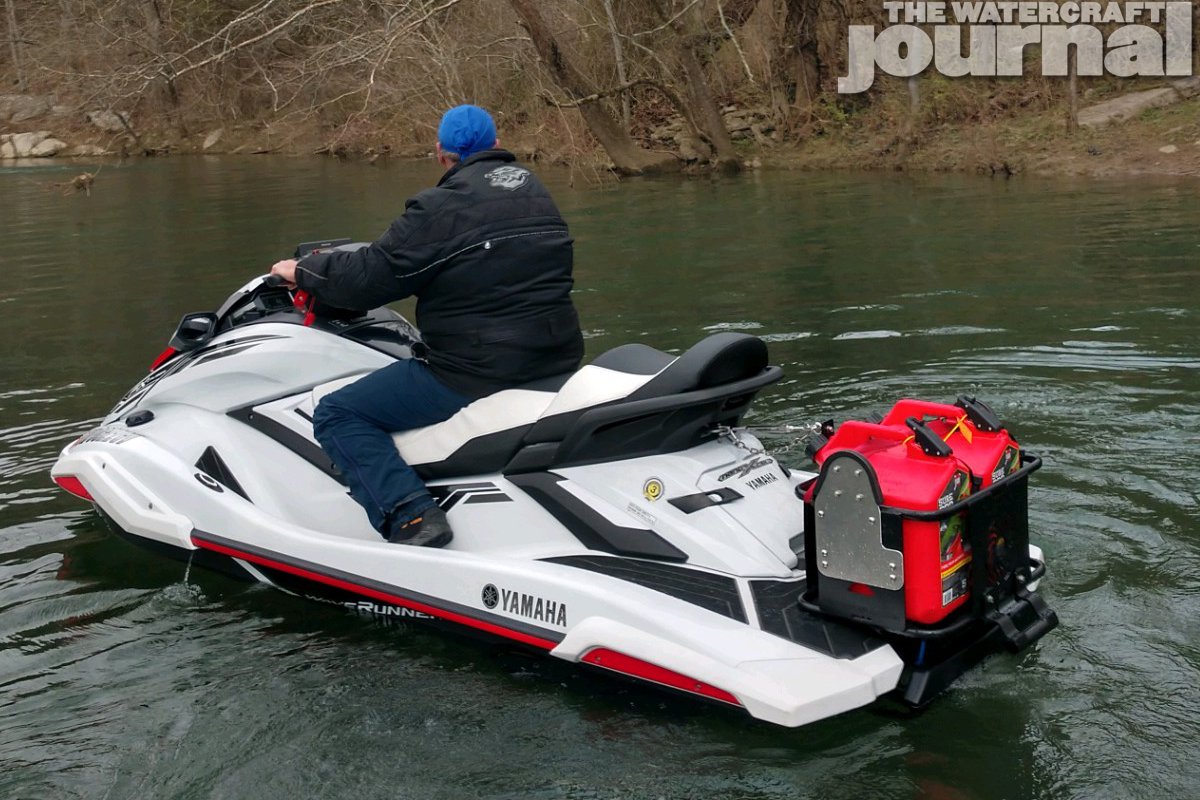
We also supplied Tom with a pair of 5-gallon SureCan jerry cans to try out. “Perfect fit, very nice. The two SureCan’s extra 5-gallons [added up to an] extra 10-gallons, which is about [an added] 170-mile range [on the FX]. I like to ride hundreds of miles so this is a win for me. I also tried my two 6-gallon moto-style tanks and they fit nicely with room to spare. The SureCans fit perfectly and have a lower center of gravity than the moto tanks, but they both worked well. I also tried my Yeti 20 roadie cooler and it fit perfectly too.
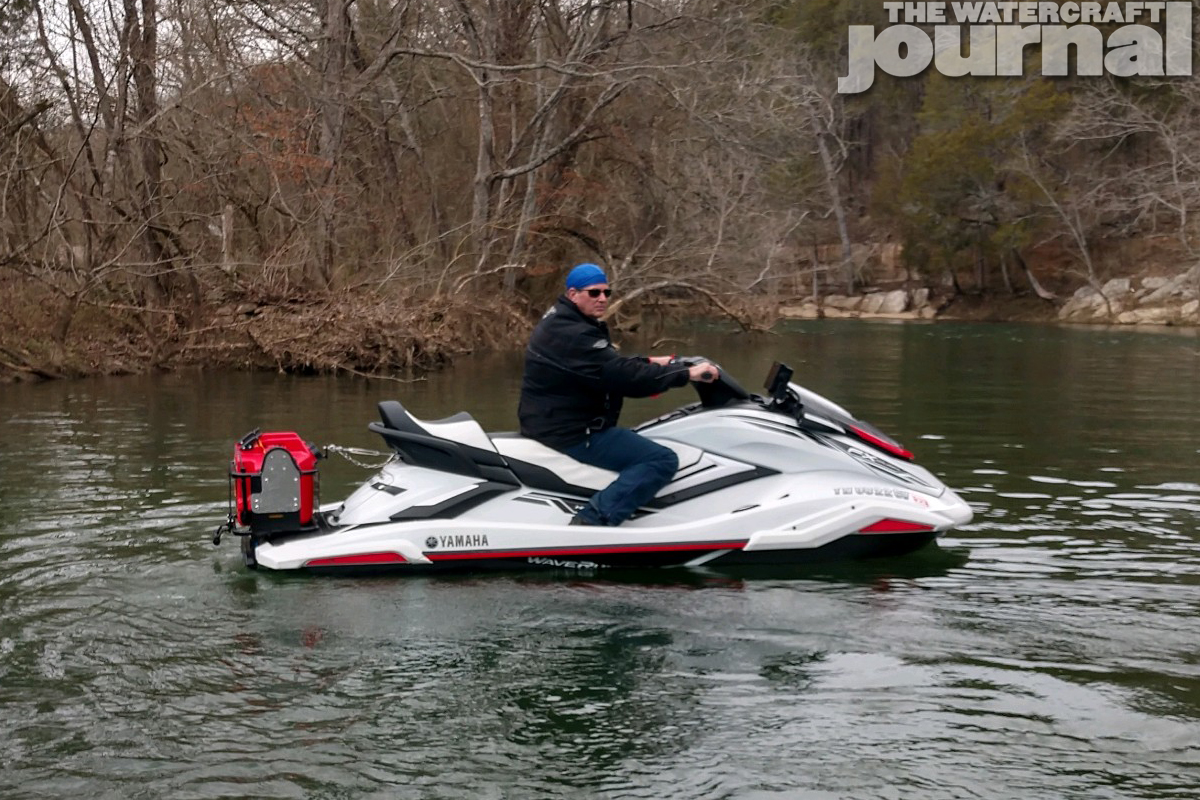
“My hat’s off to Super Rack for making this size as it’s not too big and not too small. Like I said, someone put a lot of thought into the rack.” Tom noted the accessory hand hold for reboarding. “You gotta have this as the factory handle is a little longer stretch with the rack on, and that handle [made with] the same great quality as the [rest of the] rack.” He continued, “Out on the water, the Super Rack is superb. You don’t even know it’s back there. [The] weight and balance [is perfect.] I had this rack on 2-3 foot solid chop at speed and it doesn’t move.”
Again, PWC Super Rack, LLC makes all of their racks to fit your model PWC, all without using straps, bungees or rope. It’s a hard-mount system every time. Because of the unique fabrication and application options, it does mean that prices tend to vary pretty extremely. Just perusing the website, we see prices beginning at $299.99 and going as far as $749.99; so it’s important to reach out and let PWC Super Rack know exactly what you’re planning on doing. Finally Tom concluded, “I am very impressed with this Super Rack. I don’t believe you could buy a better rack than this. Yes, it’s that good. Thank you Super Rack for making a excellent product that’s nothing but quality.”