Home Blog Page 174

Gallery: KY PWC Riders Old Danville Invasion (Video)

0

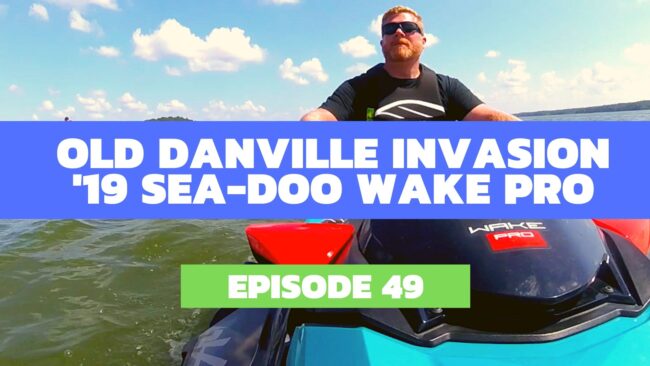
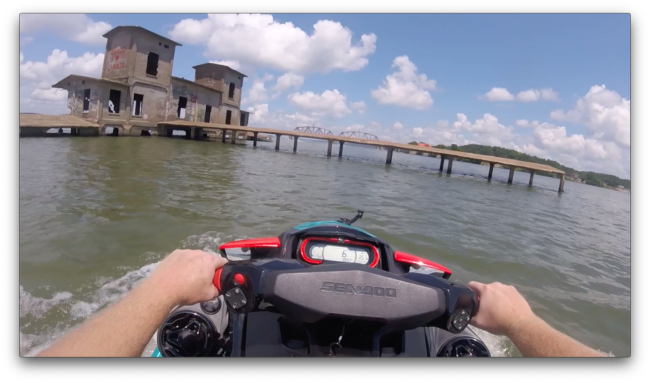
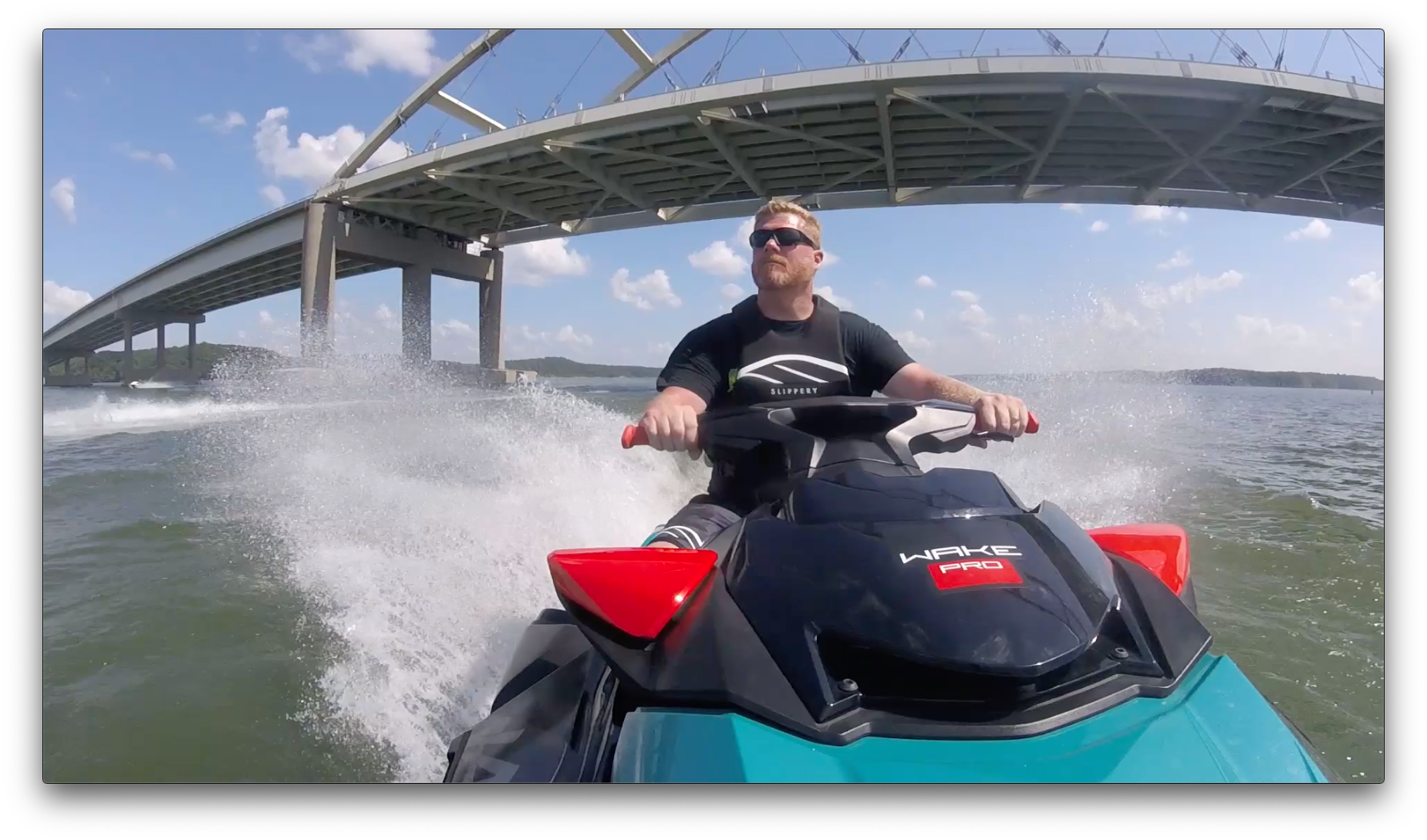
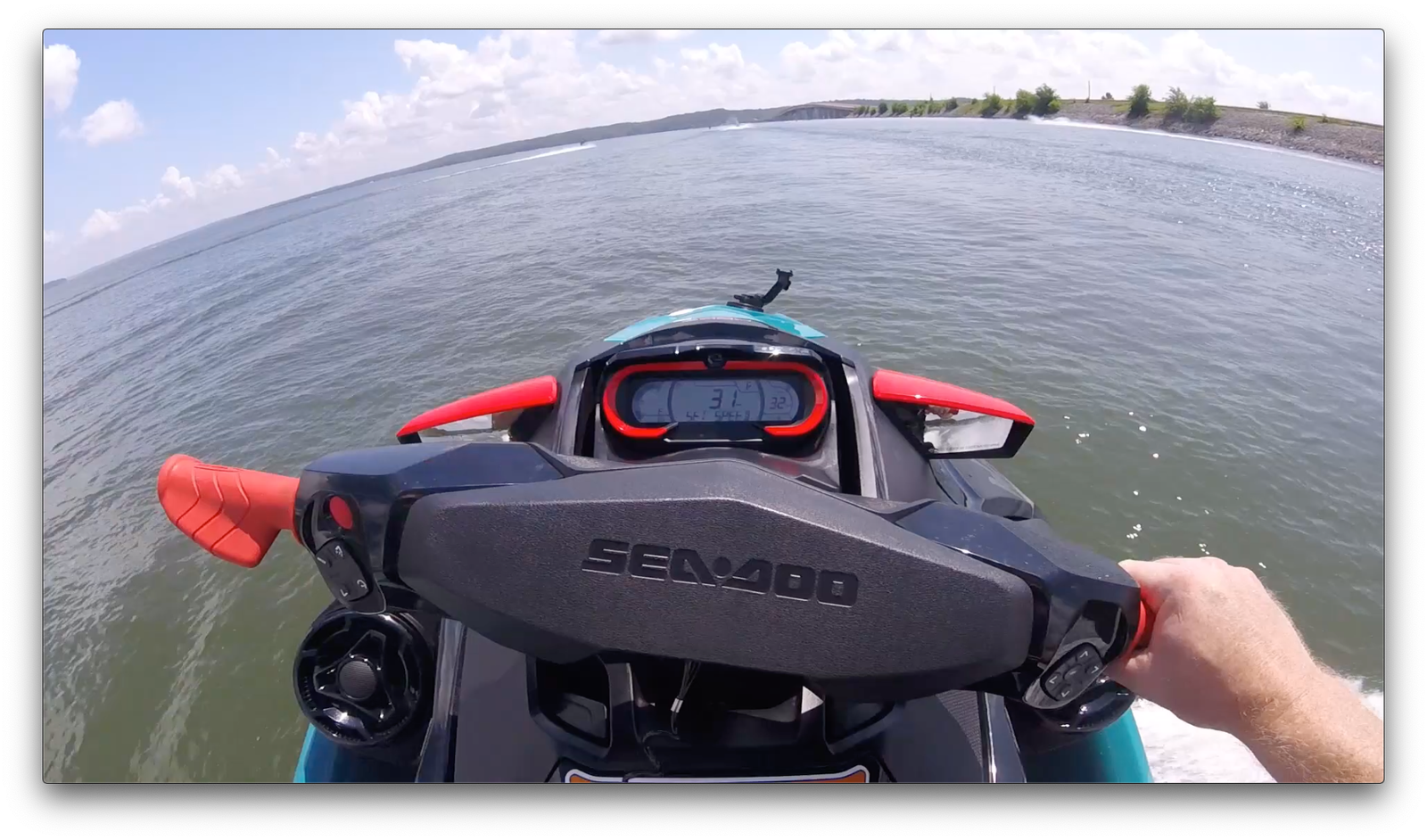
After a bit of rescheduling, we found ourselves with the very rare open weekend and were more than happy to accept an invitation from the Kentucky PWC Riders to join their 100-mile round trip ride. Called the “Old Danville Invasion” the group gathered at the top of Kentucky Lake, at Moors Resort before heading down to the the historic Danville Grain Elevator located in the middle of Cane Creek, just before joining the Tennessee River.

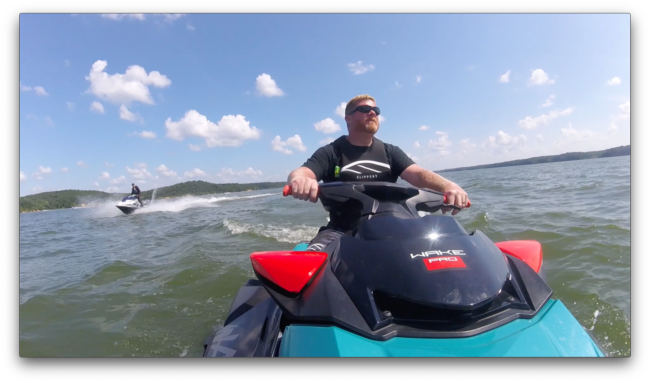
We had toured the 100-plus-year-old submerged remains a couple of years ago with the Middle Tennessee PWC Club during their annual “Iron Man” ride; but never from high up in Kentucky and not aboard a brand new 2019 Sea-Doo Wake Pro 230. So how could we say no?

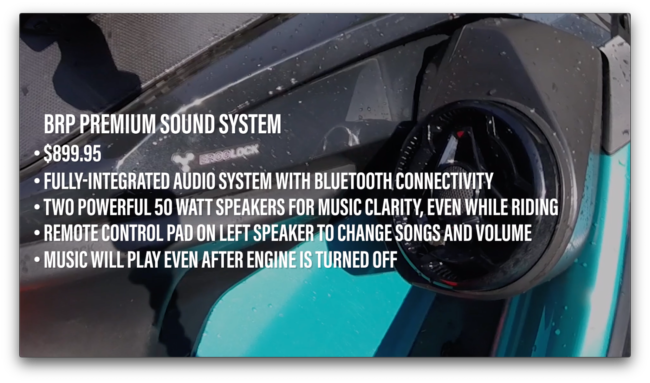
Wanting to beat the Saturday boat traffic, we decided to meet bright-and-early. Not wanting to waste a minute, we were quick to launch our Wake Pro, tie up to the dock, load up on drinks and snacks for the day, and even select some of our favorite tunes to play over the BRP Premium Sound system throughout the day.

The plan was to gather at the breakwater outside of Moors Resort; impressively of our dozen skis, few came from Kentucky. We welcomed riders as far away as Georgia, Alabama, Indiana and Ohio – not to mention ourselves hailing from Tennessee aboard a Sea-Doo with Florida registration numbers.

With our tanks fully topped off, we sped off due south, with the famous Land Between The Lakes National Park to our left. The early hours blessed our group with smooth sailing and light boat traffic. We settled into our seats, turned on some music and sang along over the howl of the Sea-Doo’s 230 supercharged horses.

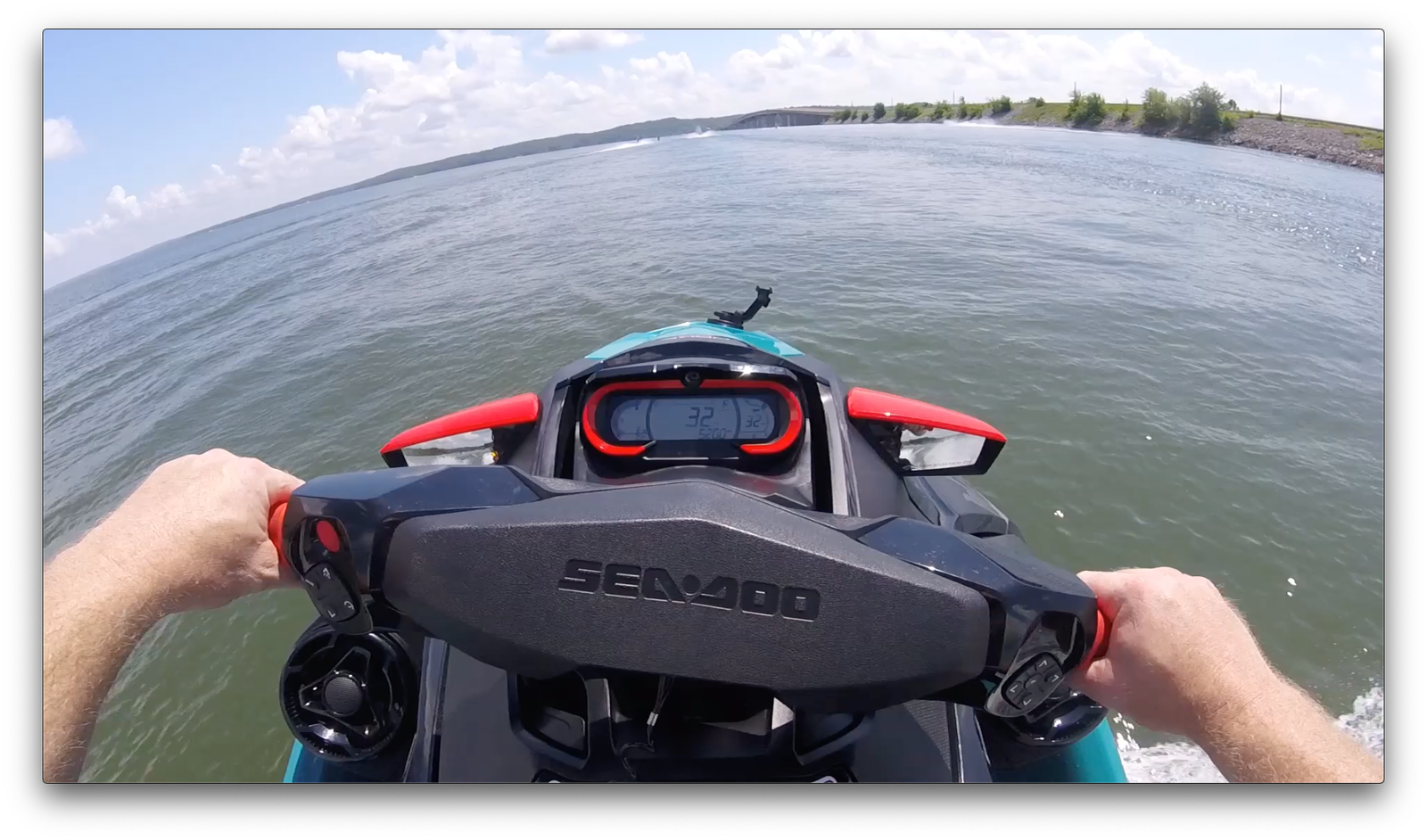
The Wake Pro famously includes its “Ski Mode” speed control options, allowing the driver to scroll through five preset acceleration profiles that help pull and tow a wakeboarder or a raft smoothly and consistently. Yet, a little known feature is Sea-Doo’s Slow Speed Mode.

Similar to setting Cruise Control (which our Wake Pro didn’t come equipped with), the Slow Speed Mode lets you set a desired top speed. And, unlike Cruise Control, you’re not “locked” into maintaining just one speed. You can ease off the throttle to slow down or speed back up without cancelling your preset max speed.

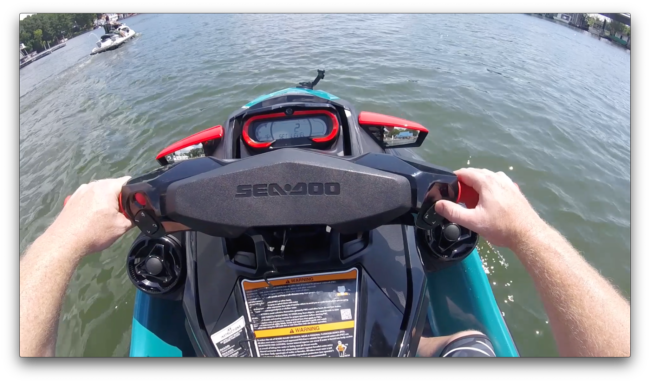
That, and just like you’d expect with Cruise Control, Sea-Doo’s Slow Speed Mode lets you bump your set speed up or down by five one-mile-per-hour increments – all without having your hands leave the handlebars thanks to two large quick-response button pads.

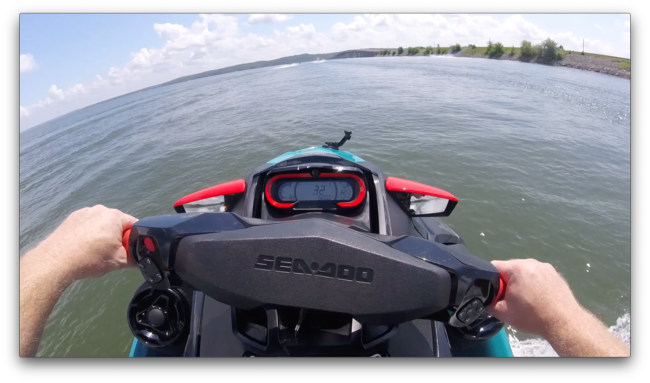
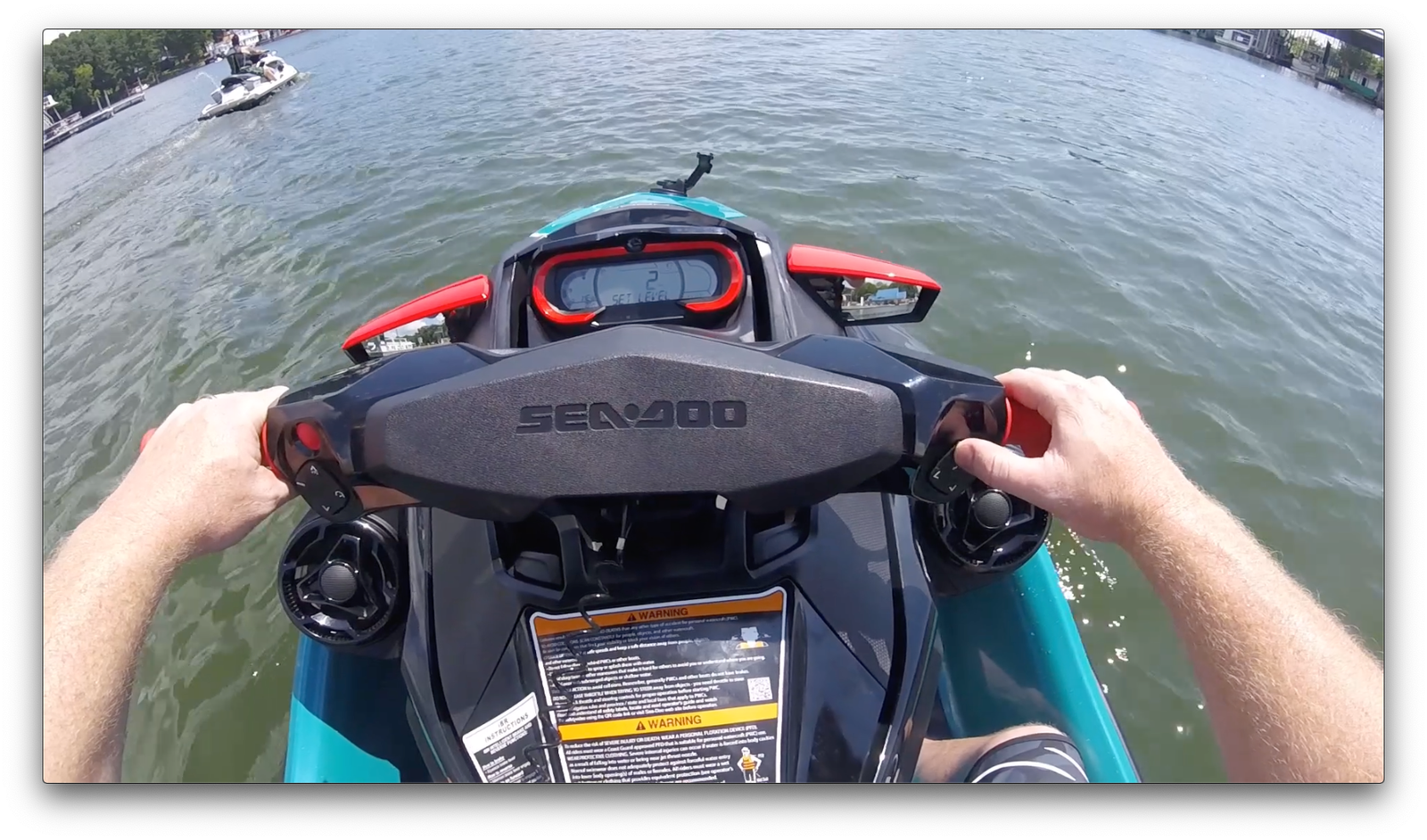
Just press the left hand side’s Intelligent Throttle Control button while at the speed you like, and the new-for-2019 7.6-inch wide digital display will read out “Slow Speed Mode”. To adjust your max speed, simply toggle up or down using the right hand buttons. It’s that easy. And frankly, we used it all day.

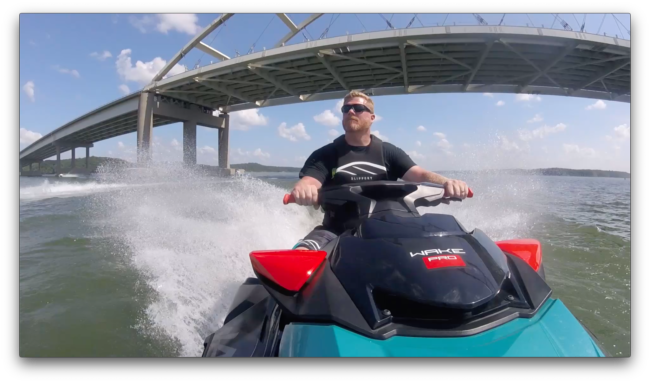
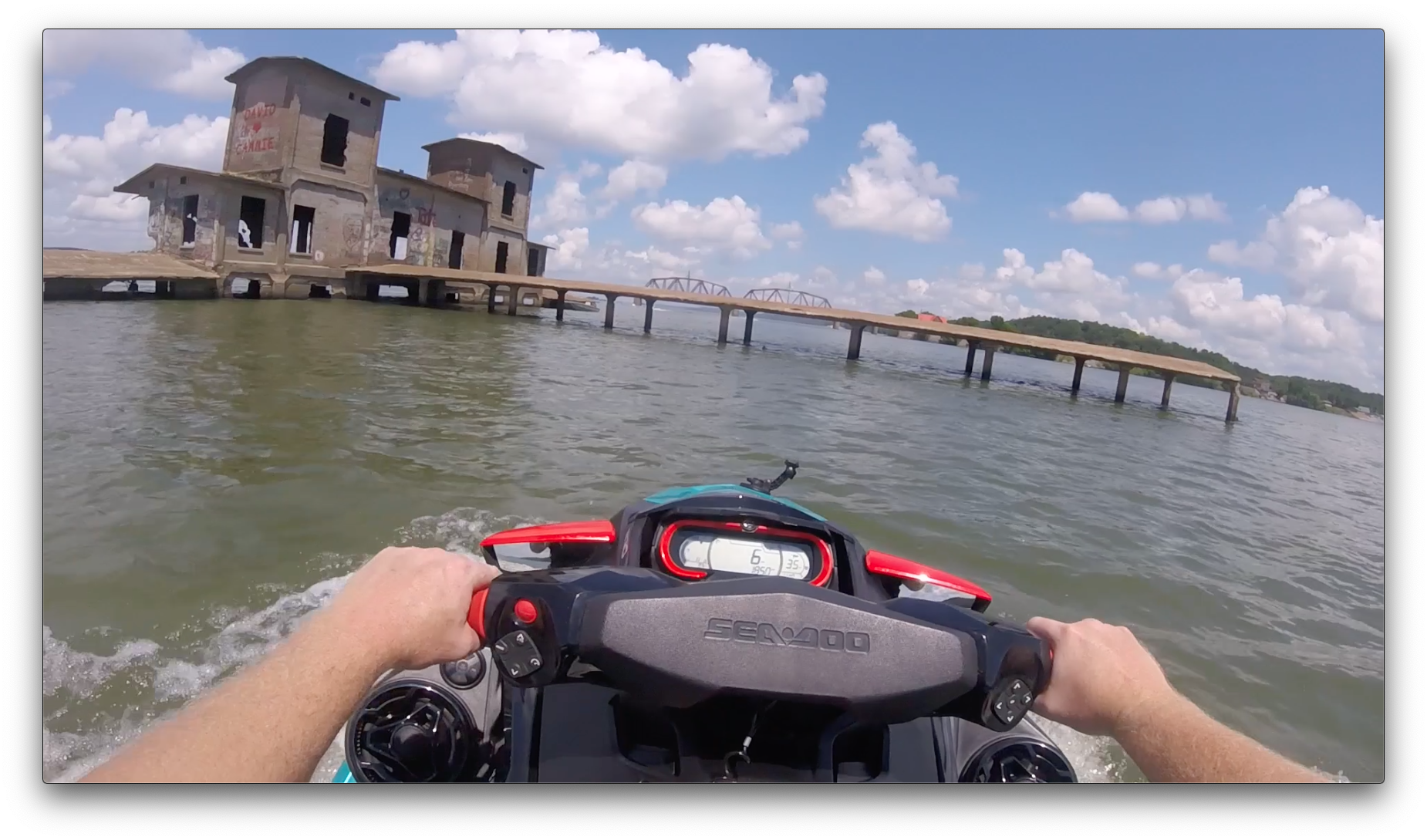
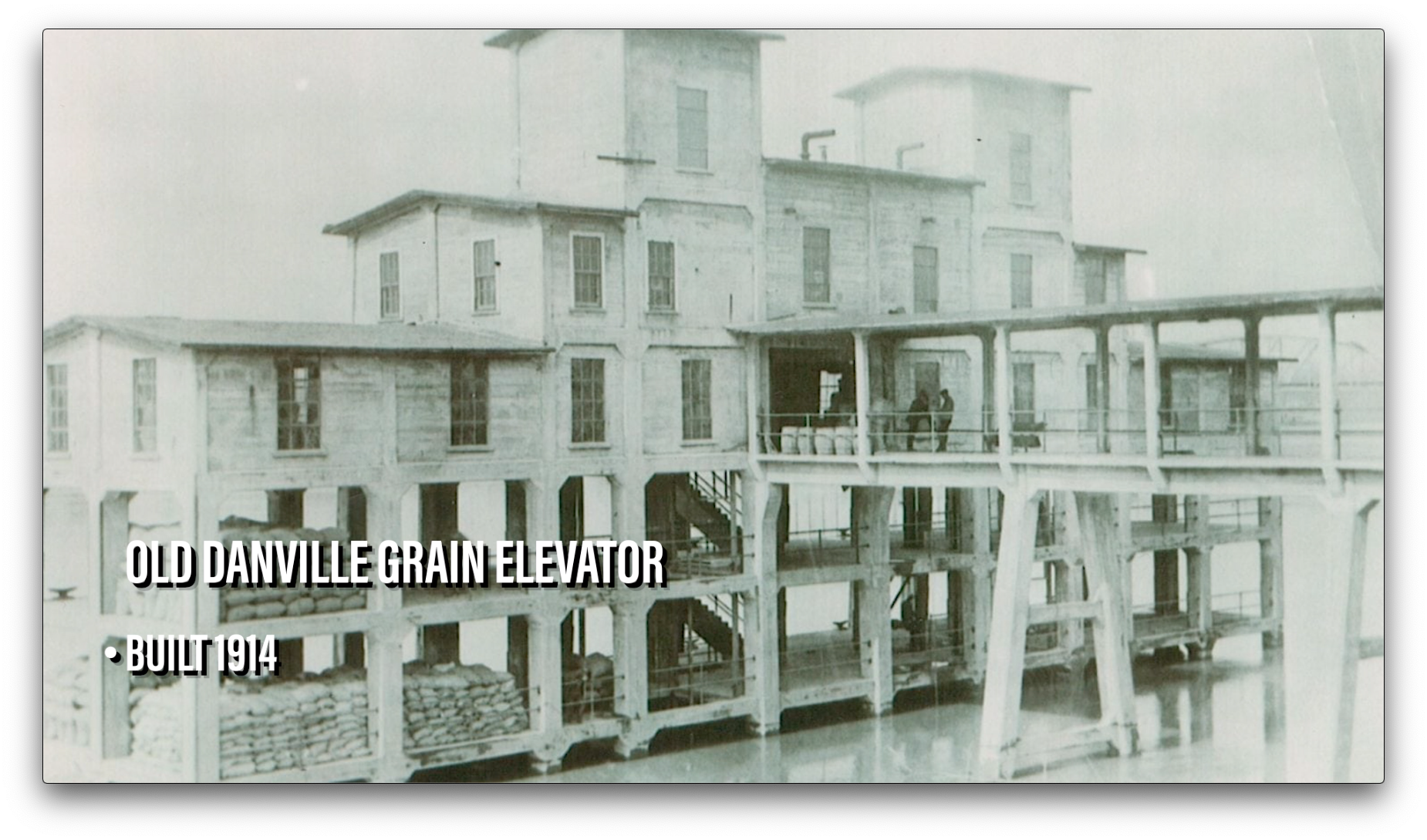
Passing by the Paris Landing State Park and under the Highway 79 bridge we continued south until the remains of the Old Danville Railroad Bridge came into view. Originally built by Louisville & Nashville Railroad in 1860, the line connecting Paris, TN to Guthrie, KY was hotly fought over during the Civil War, but didn’t truly become the lifeline it was until the Danville Grain Elevator and Transfer Station was built in 1914.

The six story building was set at the foot of the Tennessee River long before the Kentucky Dam flooded the Danville valley back in 1942, raising the water level by 55 feet. Originally designed to transfer barges’ cargo from the river to railcars above, the station once houses two twenty-horsepower elevators carried cargo from the lower levels to trains docked at the fourth level, including thousands of tons of peanuts, grain, limestone, iron, and cotton. All that remains today is what can be seen above the waterline.

After a short break to reapply sunscreen (it was in the 90’s after all) and swimming beneath the shadow of the railroad’s stone bridge supports, we thought it best to double-back to Paris Landing for some lunch and to top off our tanks.

Entering into the national park’s marina we engaged the Sea-Doo’s slow speed mode, this time while in neutral. Doing so engages a sort of “No Wake Zone Mode” letting you bump the speed up from one miles per hour to seven. Engaged and adjusted like before, the operator isn’t required to hold the throttle down. Just steer accordingly – although its always smart to keep your hand on the iBR brake lever just in case.

After filling both our tanks and stomachs, we wanted to get a bit more riding in. By this time, the weekend boat traffic had swelled considerably, which churned up the lake into a bit of a bathtub. We still managed to find some cool scenic spots to go ride through as well as find another quiet cove to get some added swimming in (did we mention how hot it was?).

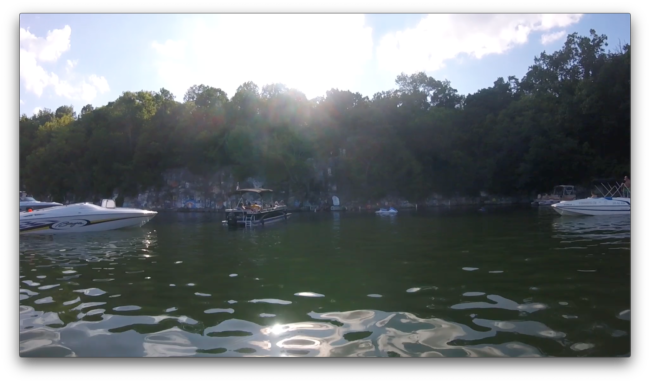
With the sun sinking low in the horizon, we had one last spot to check out – the Quarry. A hollowed out cove near Moss Creek, the quarry was densely packed with boaters looking to share the shade, listen to music, and watch as kids swung from rope swings and teenagers dared each other to jump from its sheer rock cliffs.

Onlookers cheered those who jumped and boo’ed those who chickened out at the last minute providing some entertainment before needing to turn back and make our way to the launch ramp. We had a two-and-a-half hour drive home and the weather reports weren’t looking all that favorable. Bidding so long to our newfound friends we loaded up our Wake Pro, cleared out its cargo and LinQ-mounted cooler and drove into the shadow of mid-summer storm clouds looming low ahead…

A Truly Stand Up Family: Meet the Kotaras Family

0

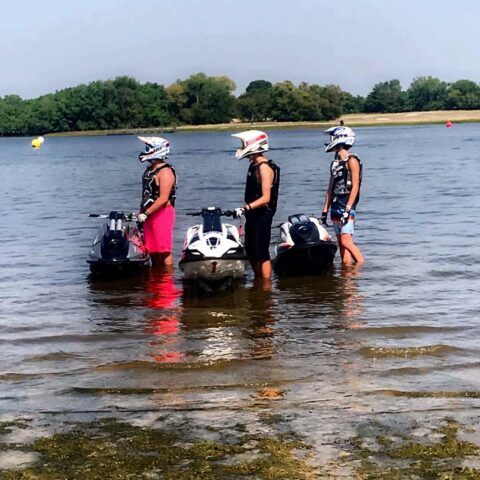
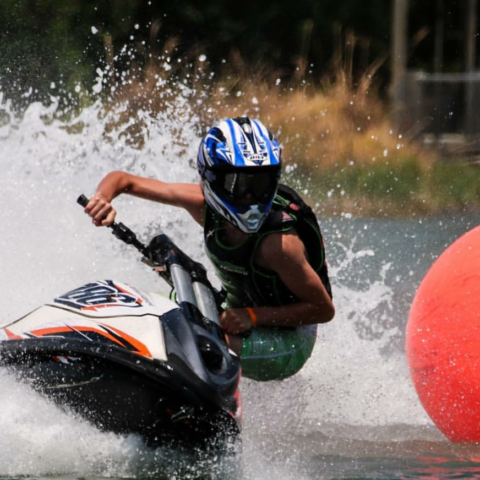
We met the Kotara family at my first Texas race in 2016 and was truly inspired by their positive attitude and entire family’s immersion in the sport of riding stand up jet skis. William, his wife Tracy, and his three sons, Ty, Mason, and Tanner, always had a smile on their face while racing and helping fellow racers. It was incredibly inspiring to see a tight-knit family held together by the strong bond of fellowship and motorsport.

Fast forward three years, and quite a few more races together, we had the chance to get each of their unique perspectives about the stand up jet ski community.

The Watercraft Journal: We’re excited to have you all on The Watercraft Journal! Let’s start at the beginning – when did you first start riding stand ups, what made you want to try, and how difficult was it to stand at first?
William: I bought my first one new. A 1993 Kawasaki 750sx which wasn’t too bad going straight, but I never figured out how to turn it. No one told me I had to drag a body part. But my first PWC was a 1985 wet bike, which I still have.
Ty: I was about 12-years-old when I first started riding. I learned on a Kawasaki 550 and it took me a while to be able to stand up. I used to ride back and forth on my knees until I felt confident enough to start standing.
Mason: I first started to ride stand ups around the age of 9, but even before then I would go on rides with my dad, who is the person who gave me the interest in riding them. Standing was definitely a huge learning curve from putting around on my knees, but with persistence it was not too hard to get the hang of.
Tanner: Jet skis have always been a part of my family’s life and they were usually around at every vacation. That being said, it wasn’t long before I tried to ride one for myself. The feeling came naturally and I felt like a professional in seconds. The rush of energy while riding is absolutely absurd.

WCJ: William, how did you involve your sons in your love of motorsports and PWC? 
William: They were naturally drawn. I had already exposed them to dirt bikes and when they saw me racing they naturally wanted to also. I felt it was much safer than motocross also. We’ve have our share of dirt bike crashes.

WCJ: Once you learned to ride, why did you choose racing stand ups, and when?
William: A friend got me to race a Texas Super Course Endurance race and I was hooked. Shortly after I bought a 2007 Kawasaki SX-R limited.
Ty: I started racing in 2008 and I choose stand ups because that is all we had at the time. A few years later my dad bought us a Sea-Doo HX and we raced that for a couple of seasons, then decided to sell it to buy to another stand up so we could all race in the same class.
Mason: My thoughts about stand ups were always about racing, once again because of my dad who introduced me to the racing scene at a very young age. He was always dragging me and my two brothers along to his endurance races he and his friends would compete in. As soon as I turned 10-years-old (the required age to being racing) I started to race alongside my older brother Ty in the Junior classes (2010).
Tanner: Racing stand ups allows for more of a skill gap than sit downs. You don’t need the fastest ski to beat someone (but it certainly helps). Being the youngest child, it was a no brainer that I wanted to start racing as soon as I became of age. Sitting on the shore (not of age to race) watching my brothers battle it out on the track was a kick in the gut. I couldn’t wait until the day I turned 10 and be able to join them on the starting line.
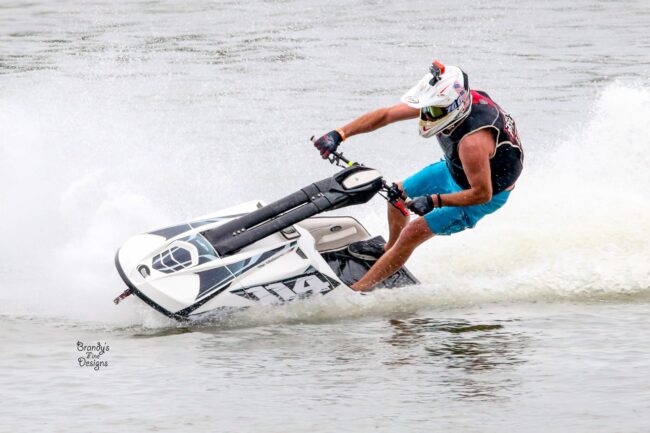
WCJ: With racing for nearly or over a decade, what are your greatest accomplishments while racing stand ups?
William: Definitely second place in Ski Limited in Region 5. One of my favorite seasons. Also several wins on the ProForce, but can’t remember my overall anymore.
Ty: My best accomplishment was taking sixth place in Amateur Ski Open at the IJSBA World Finals.
Mason: My accomplishments in stand up racing include many regional championships in multiple junior classes as well as being able to win a few races on the National Tour as a junior.
Tanner: Racing definitely came with many first place finishes, but the most memorable accomplishments are within the jet ski community that accepted me into the racing world. The friends that repetitively came to every race soon became some sort of second family to me. These accomplishments are, without a doubt, on a higher level than the psychical trophies you receive at the end of a season.
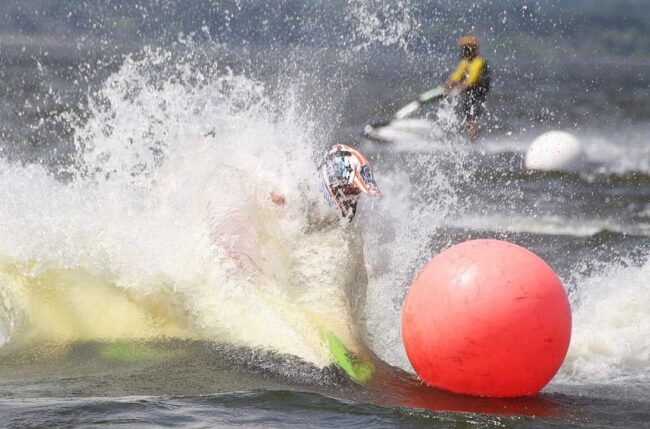
WCJ: What is your favorite ski?
William: The Pro Watercraft Racing ProForce. The low tray and handling works well for me being 6’4”. I can ride that ski faster than anything else I have been on.
Ty: My favorite ski is definitely the ProForce.
Mason: A favorite ski is a hard thing to pick because every ski has something unique about it, but my all-time favorite ski for both racing as well as leisurely riding would have to be the Kawasaki SX-R 800. The handling of this ski and how it allows you to really lay it over in the turns really gives a new rider a great foundation to build their riding skills off of, while at the same time being a great ski to go cruise on the lake.
Tanner: There are many different skis someone can choose from when purchasing a stand up. All my life I have rode and raced a stock Kawasaki SX-R 800. Although that doesn’t mean it is my favorite ski. From an affordable standpoint, my favorite ski is the Yamaha SuperJet. On this ski, you can easily control it as the haul of the ski works with you at all times. Whether you’re cruising in a straight line, or taking a sharp turn, the ski always maneuvers in the best way to help the situation.
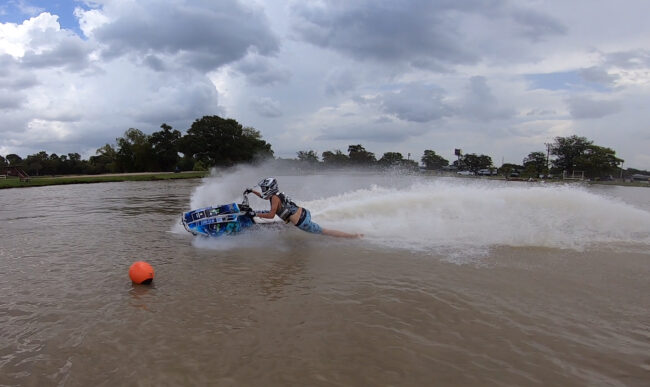
WCJ: Continuing with the favorites, what is your favorite thing about the racing community?
William: Great friends. People that will lend you parts motors whatever just so you can run that weekend. I have made some great friends over the years from all over, all because of racing.
Ty: The racing community is always really nice to everyone and always willing to help out. I’ve had friends let me borrow parts before a race just so I could line up next to them.
Mason: The racing community is full of great wholehearted people. The jet ski racing community is incomparable to anything but one giant family. Everyone involved will go out of their way to help you with anything you need no matter what, while also being your biggest competitors on the course. My favorite thing by far has to be the people in the community because they are all basically just one giant family.
Tanner: The racing community is very accepting and eager to get to know the rookies. It’s very hard to have a frowning face at the races. Even if your engine just blew up, there is always that one guy who will make a joke about it and in my opinion, that’s the best part of the community.
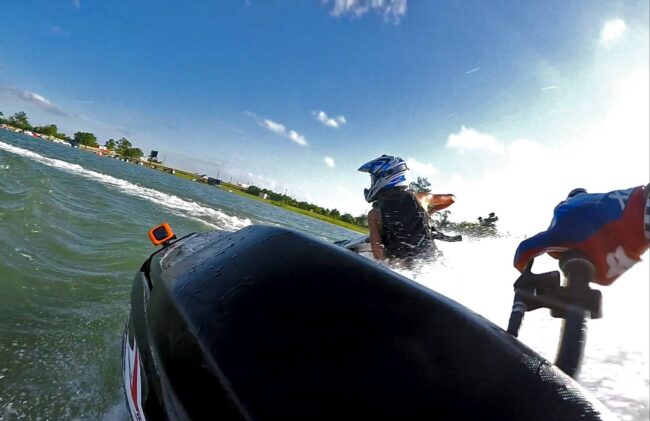
WCJ: Well said! The watercraft racing community is definitely tight-knit and that is the integral part that keeps us all coming back for more. When racing, what is your current ride and in what classes?
William: Haha, well, due to a lot of mechanical issues lately whatever ski is running. I’ve tried racing a few different classes for fun like X2, etc. My favorite class is GP. Next year I plan to be all in on a new ProForce 2.0.
Ty: I race the ProForce and my classes are Pro Ski Open. At IJSBA World Finals I race Expert Ski Open and Amateur Ski Open.
Mason: Currently I ride a Hydro-Doo; a Hydrospace S4 hull with a Sea-Doo 951 swapped into it. I race Amateur or Pro Ski GP as well as pro ski stock and occasionally vintage X2.
Tanner: I currently race Stock class on my classic Kawasaki SX-R 800 and Vintage class with a Kawasaki X2.

WCJ: Looking towards to future, what are your riding goals?
William: Next year I hope to ride more and wrench less.
Ty: Just to keep riding and racing, and hope to get a title soon at World Finals.
Mason: My goals for my future riding would have to be to race in World Finals, because after almost a decade of racing I have still yet to make that race.
Tanner: While riding, there is always room for improvement and I strive to learn and master those skills. Any racer’s goal is to be the best, but that doesn’t come easy. You need to be original and adaptable. The same techniques are going to get outdated and replaced with more efficient riding styles.
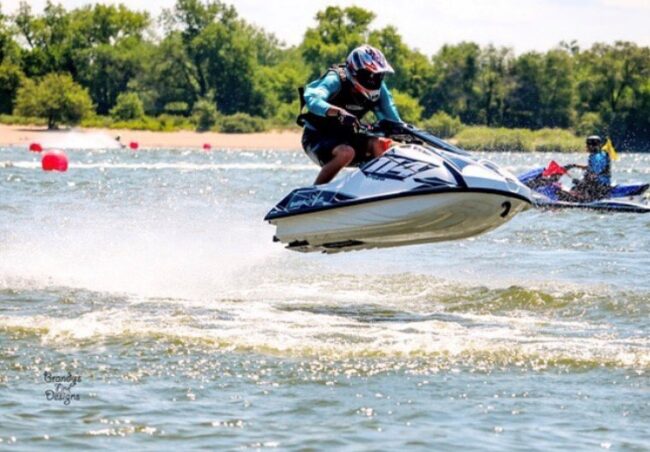
WCJ: Riding stand up jet skis takes skill so how do you train/practice to keep on top of your game?
William: I’ve tried lots of things and anything that helps your endurance is good, but riding a lot is the best for me.
Ty: I work out once every day by doing cardio and lifting weights. I also try to diet as best as I can and ride when I get to the chance to.
Mason: There is no better way to get in shape for jet ski racing than to just go out and ride. My family and I are extremely blessed to have land in Gillett, TX where we have a “private lake” in a sense. This pond/lake is moderately close to our house which makes it very easy for my brothers and I to go out and practice almost any time we’d like. We also ride a lot at Lake LBJ where the water is a lot choppier to really get that “race feel”.
Tanner: The best way to train is with, what I like to call, a “Mini Race.” That is when you set up a track and go ride with a group of friends until you can’t hold on anymore and eventually, doing it again. That will develop and mature the muscles needed for a full race.
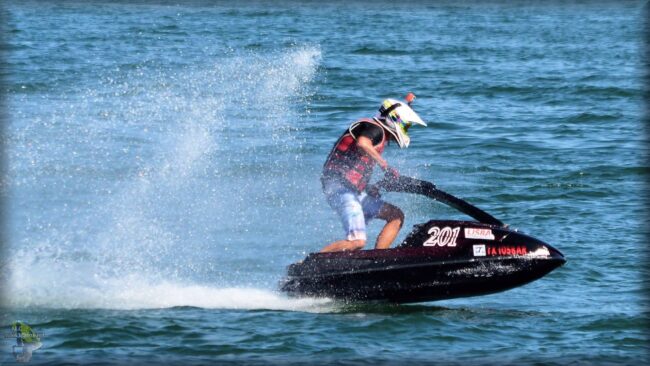
WCJ: With all of your racing experience is there anything you would like to see done differently in the racing world?
William: Consistent rules throughout the racing community.
Ty: I would like to see jet ski racing receive support like Supercross.
Mason: I would like to see the jet ski racing world really take off and grow to the size of Supercross or even bigger. I think it is an awesome hobby/sport that not many people know about, but many would support if they did.
Tanner: In the racing world, we need a more attractive way to market racing. Bringing in new racers is crucial to keeping the community alive.

WCJ: I could not have said it any better, sharing stand ups with the world is the only way to help grow this amazing sport! It could really change a lot of lives in a positive way, just needs more exposure. Curious to hear how today’s racing scene different from years ago?
William: I think most today race for fun and enjoy spending time with those with the same interest. It is more of a family sport for me. The Vintage classes have gotten more popular due to the low cost and even competition.

WCJ: Interested to hear who each of your greatest role models are?
William: My dad for his work ethics, Faith, and support. In the racing scene – all the guys in Masters that are way older than me and can still smoke me. It gives me the drive to keep going.
Ty: That would be my dad, always working on all of our skis, getting everything loaded up for the races, then driving to different states for us to line up.
Mason: My greatest role model is my dad. He has taught me almost everything there is to know about jet skis from riding to building them. He is the one who has given me the opportunity to race and ride, and I look up to him in every way possible.
Tanner: My greatest jet ski role model would easily be my dad, William Kotara. His knowledge of engines and ability to locate and fix a problem with swiftness is unlike anyone else. At least one time per race weekend, I see this cycle follow through, and it blows my mind. Just when I think my weekend is cut short, he is out on the water testing the ski and making sure the fix is viable.

WCJ: Outside of skis, what other things do you like to do?
William: Fishing and raising cattle.
Ty: When I’m not racing I’m either at school or riding my dirt bike.
Mason: Currently I am attending Blinn College in Bryan, Texas and hope to transfer into Texas A&M soon, but other hobbies outside of riding skis mainly consist of video games or anything involving a computer, and biking/running.
Tanner: During the off-season, my hobbies consist of maintaining a family farm, riding dirt bikes and four wheelers, and running hurdles in track. None of these compare to the joy that jet skis bring, but weather doesn’t allow for all year riding.

WCJ: Thank you guys so much for taking the time to share your family’s PWC story with us. It has been quite enjoyable to hear each of your unique goals, advice, and history. I’d like to end with a final question and that is what advice would you give to fellow racers and people interested in learning how to ride stand ups?
William: For beginners learn to ride with either foot forward. Switching feet is needed for carving turns. That’s the most common problem I see. Don’t be scared to come to a race. The jet ski community is one of the most welcoming groups of people I have seen.
Ty: To buy a stock ski and learn the basics before going out and buying a ski out of their means.
Mason: Stand up jet skis are a great hobby, whether you are racing or just riding. It may be frustrating to learn how to do it at first, but once you get the hang of it you’ll never look back.
Tanner: Riding stand ups is a feeling and skill set that is not easily described, but best learned from experience. There are tips and tricks that fellow riders may share with you, but it’s best to learn those for yourself through the joy of riding a jet ski.


Convert Your Standard Sea-Doo Spark Into A Trixx

1

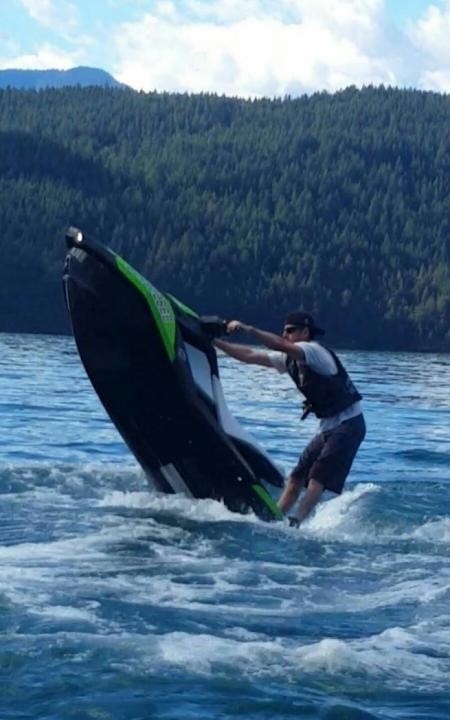
Are you tired of seeing your friends on their new Spark Trixx pulling stunts while you ride around on your regular old Spark? Maybe you are looking to add some spark to your 2014-2016 Sea-Doo Spark.
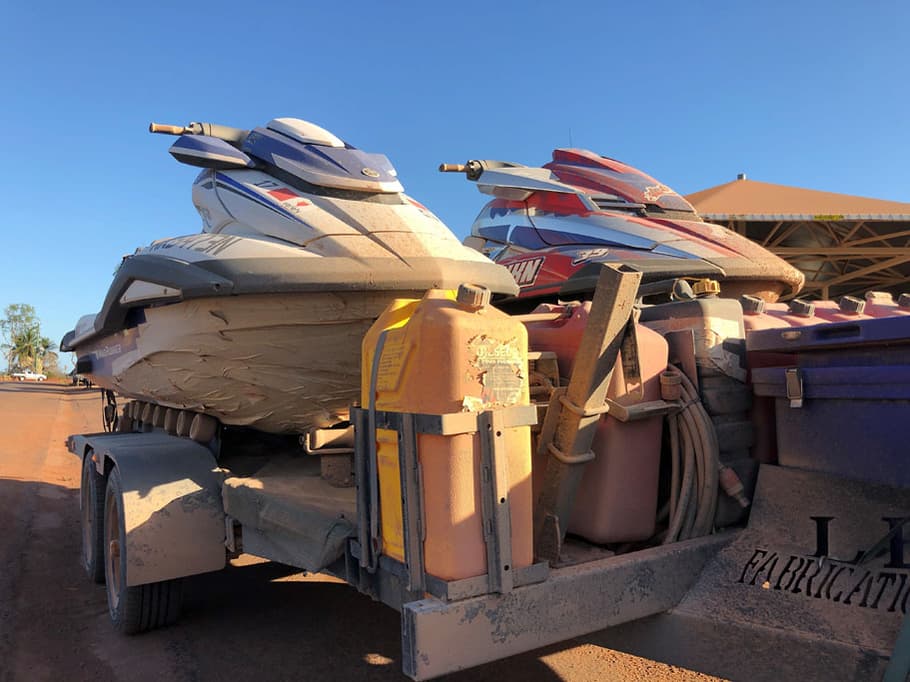
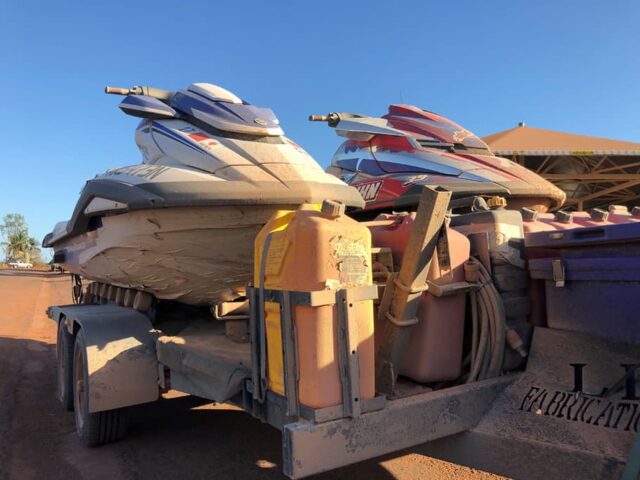
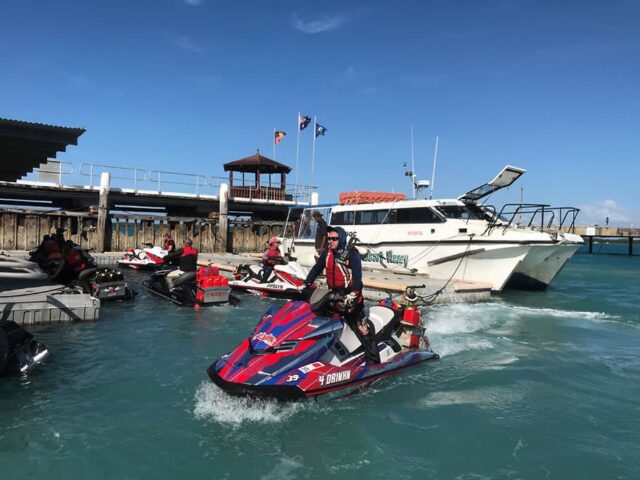
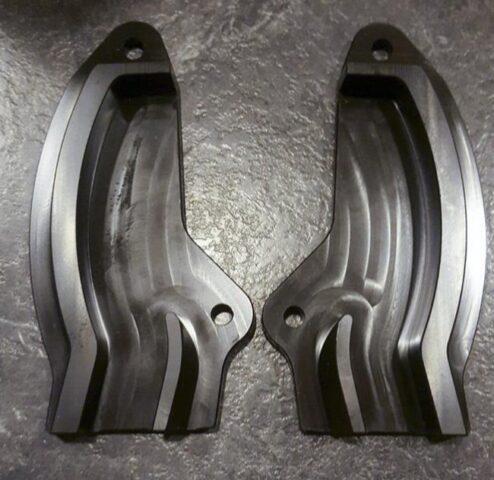
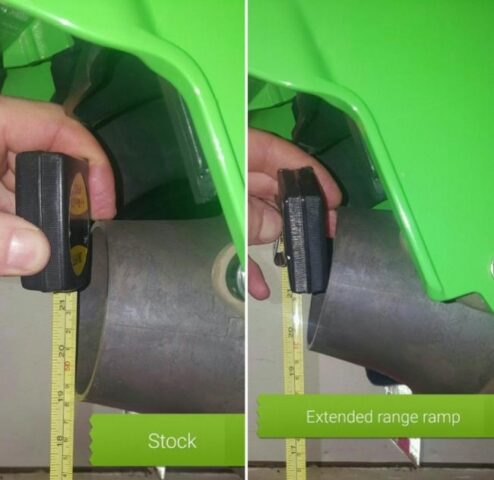
Well now you can convert to a Trixx with the extended VTS ramp kit from PWC Muscle. This new version of the product now allows you to fully match the variable trim angle of the Trixx models so you can pop those water wheelies with ease.

In order to install this bracket kit, you need to already have the VTS kit installed or purchase the VTS kit along with the brackets. In addition, there is a small modification to the venturi nozzle.

However, if you do not wish to modify your existing nozzle, PWC Muscle offers a nozzle that matches the design of the 2017 and up Sparks.

They are currently running a special price of one hundred ninety-nine dollars for the brackets alone.   With an easy five step installation process, they will have you stunting your well-used Spark in no time so head over to PWC Muscle to pick up your kit.

Australian Jet Ski Group Rides in Honor of Sarz Sanctuary Charity

0
Generated by pixel @ 2019-07-23T01:13:49.044417

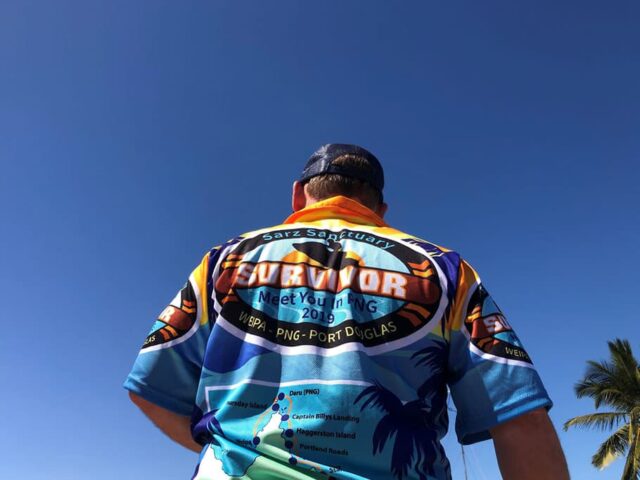
Throughout the course of history, tragedy has struck. While many times it is extremely devasting, it seems that we are able to come together stronger than ever as one. One jet ski group in Australia is doing just that. The 14 member group is riding from Australia to Papua New Guinea and back, to help raise awareness for Sarz Sanctuary charity that supports victims of the 2017 London Terror Attacks. One of the victim in the terror attack was an Australian.

The Sarz Sanctuary Charity is an organization that was created for 21-year-old Sara Zelenak. She was one of the 8 murder victims in the attack. Her family was a well-known throughout he jet ski community and especially for ocean riding. After he death, her family created the Sarz Sanctuary where they provide support for people who are suffering from traumatic experiences. Julie Wallace, Sara’s mother says, “We want to honor Sara’s life and give purpose to her loss by helping others who have, like us, suffered traumatic grief. We are motivated to find a greater good from what has happened. We keep a positive outlook and want to build this positivity in others.”

The riders knew this trip would not be easy but they were up for the challenge. They left from Weipa, which is a town on the west side of Cape York Peninsula. What started as a 14 member group went down to a 12 member group as one jet ski started taking on water and had to be towed to land. Throughout he ride, the group experience tough wind and sea but kept on riding in memory of Sara.

Mark Wallace, Sara’s Father says, “Sara is in our heart every day and she directs us in what we’re doing. This is an event where we feel that support of her and we can give back to others.” Losing a daughter is one of the hardest things parents could experience. However, through this tragic event the family is organizing events in memory of her and helping other families deal with traumatic events.

Video: Group Travels From Boyton Beach, FL To Abacos, Bahamas

2

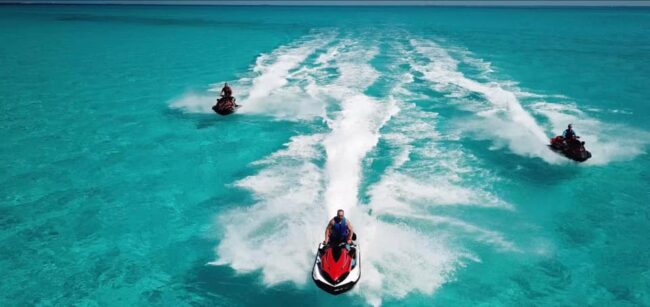
Chad Wheelock and a few good friends made the big trip from Boyton Beach, Florida to Abacos, Bahamas and back. The group consisted of three boats and five personal watercraft for the 400 mile round trip adventure. They had a safe trip there with absolutely beautiful weather. The water was crystal clear and they did not get caught in any storms. Once they had arrived in the Bahamas, one of the many things the group did was visit “Piggy Ville” to see the wild Abaco swimming pigs along with other marine life.

As many of you know, traveling by water allows you to see so many things you would not be able to see from traveling on land. Whether it be a coral reef, a particular fish or a beautiful beach, traveling through the Bahamas on a personal watercraft cannot be beat.

Michael King put together a video of the groups ride and their adventures through the Bahamas. Everything the group did, they looked like they were having the time of their lives. From good food, beautiful scenery and good friends, you really cannot ask for anything more.

Visiting the Bahamas is on many peoples bucket list. While getting their by cruise ship or plane is one option, taking a personal watercraft from Florida is pretty dang cool. The trip across is not easy and requires knowledge of how to operate a personal watercraft in big waves. Once you are in the Bahamas though, you can see some pretty cool places by traveling to many of the different islands.

Video: Woman Tossed From Jet Ski Spends 14 Hours In Lake Erie

0

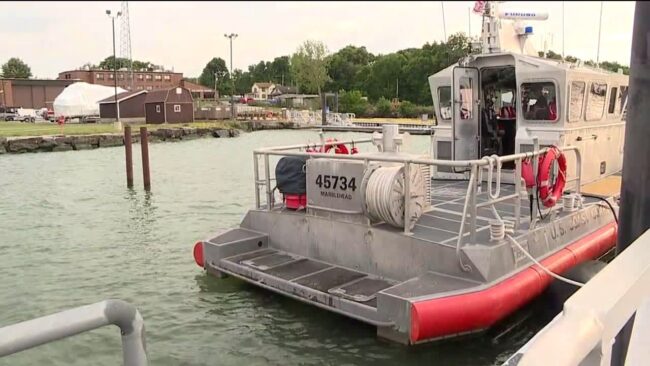
In Port Clinton, Ohio a woman was out riding a personal watercraft with three other jet skis when she was knocked off into the water of Lake Erie. The Coast Guard Station received a call that a woman had fallen off of her jet ski in 5 to 6 foot waves. Immediately, rescue crews from Canada, Michigan and surrounding areas began searching.

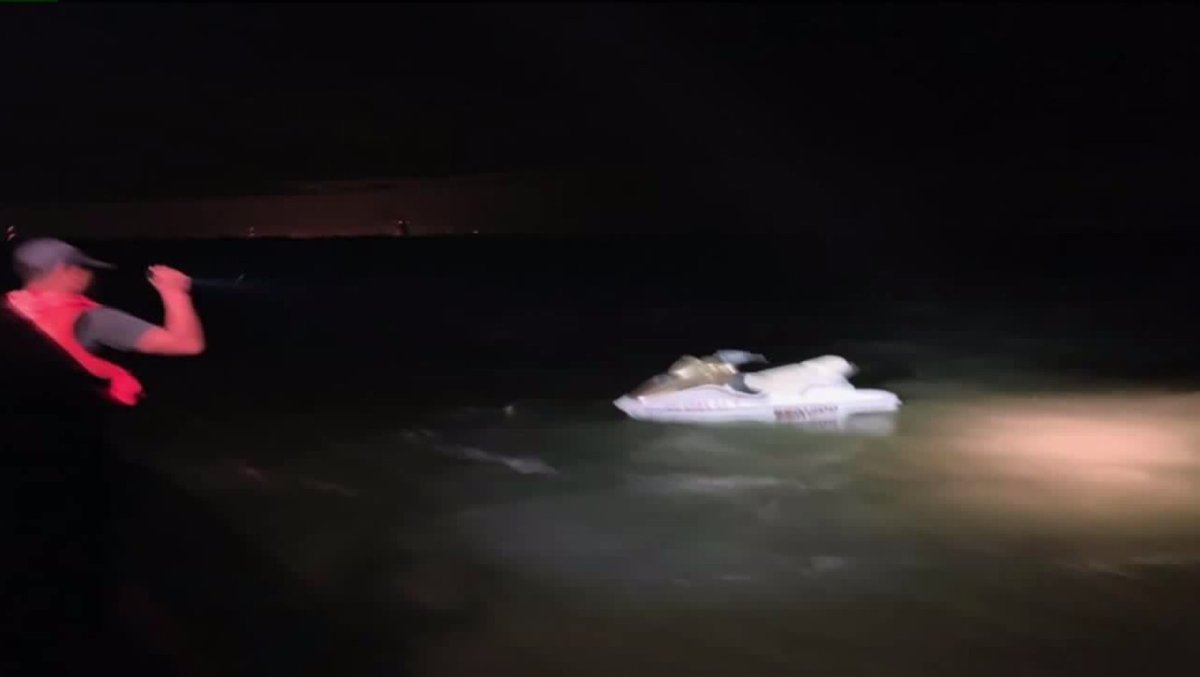
Around 1am, five hours after they had been searching, one of the rescue crews found the jet ski but she was not on it. It was not until 10am on Monday morning that a fishing boat saw someone in the water. They pulled right up to the woman and got her onboard. She was exhausted and hypothermic but the fishing boat was able to get to shore and have the EMS take her to the hospital.

Be sure to check out the video where Chief Warrant Officer Bethannie Kittrell talks about the importance of wearing a life jacket and how it saved this woman’s life.

The Coast Guard says that the woman was able to survive because she had a life jacket that was the proper size and was buckled in. While this woman’s life jacket was black, they do recommend using a bright colored life jacket as it makes you more visible in the water. She also had a whistle which is highly recommended. The Coast Guard estimate that she drifted about 4 and a half nautical miles in the 14 hours she was in the water.

An important thing to keep in mind that whenever you drive a car, you should use a seatbelt. If you are ever on a personal watercraft, you should wear a life jacket. Even if you are a great swimmer, it is so important to wear one in case you are knocked out or become tired from swimming. There are multiple companies who make affordable, good looking and function life jackets so there should be no excuse to not have one.

PWC Rental Outlet Leaves Tourists Abandoned At Sea

0

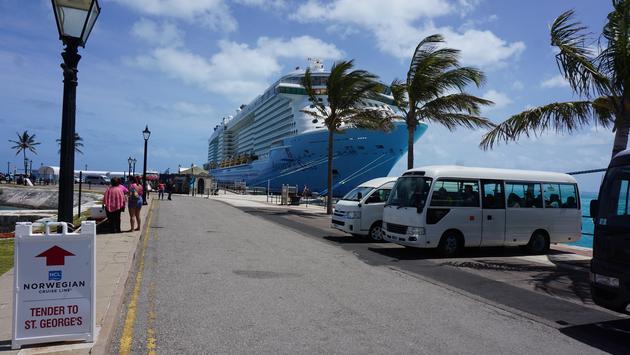
Towards the end of July, five tourists that had just docked in Bermuda decided to rent some personal watercrafts and venture out into the water. According to The Royal Gazette, the tourists contacted KS Watersports and made arrangements to rent three personal watercraft and go out with a guide. After being out on the water for a little bit, the tourists say that the guide became very frustrated with them and as a result took the keys from their watercraft. Leaving them stranded in the open ocean.

Luckily, Dr. Joseph Froncioni happened to be out on his boat that day and see the stranded tourists. After talking with the stranded tourists and understanding the store he said, “They had been there for quite a while and asked for assistance, which we gave. We affixed three tow lines and proceeded towards Dockyard.” Dr. Froncioni said that the tourists were not panicking or stressing out, however they were concerned that they may miss their cruise ship.

This incident was reported to the Maritime Operations Centre which then contacted the KS Watersports rental company. Once the tourists had been towed in close to the shore, a boat was sent out to take the tourists to their cruise ship that was just about to leave. Dr Froncioni says that, “I was truly embarrassed that this could happen here in Bermuda.”

He says that he understands how a guide could become frustrated with a group but cannot understand how a guide could become so frustrated that he takes their keys and leaves them abandoned at sea. He hopes that the guide is dealt with accordingly. Thankfully the tourists were able to be rescued and return to their cruise ship in time before it left.

P1 AquaX Reveals Lucas Oil World Ranking

0

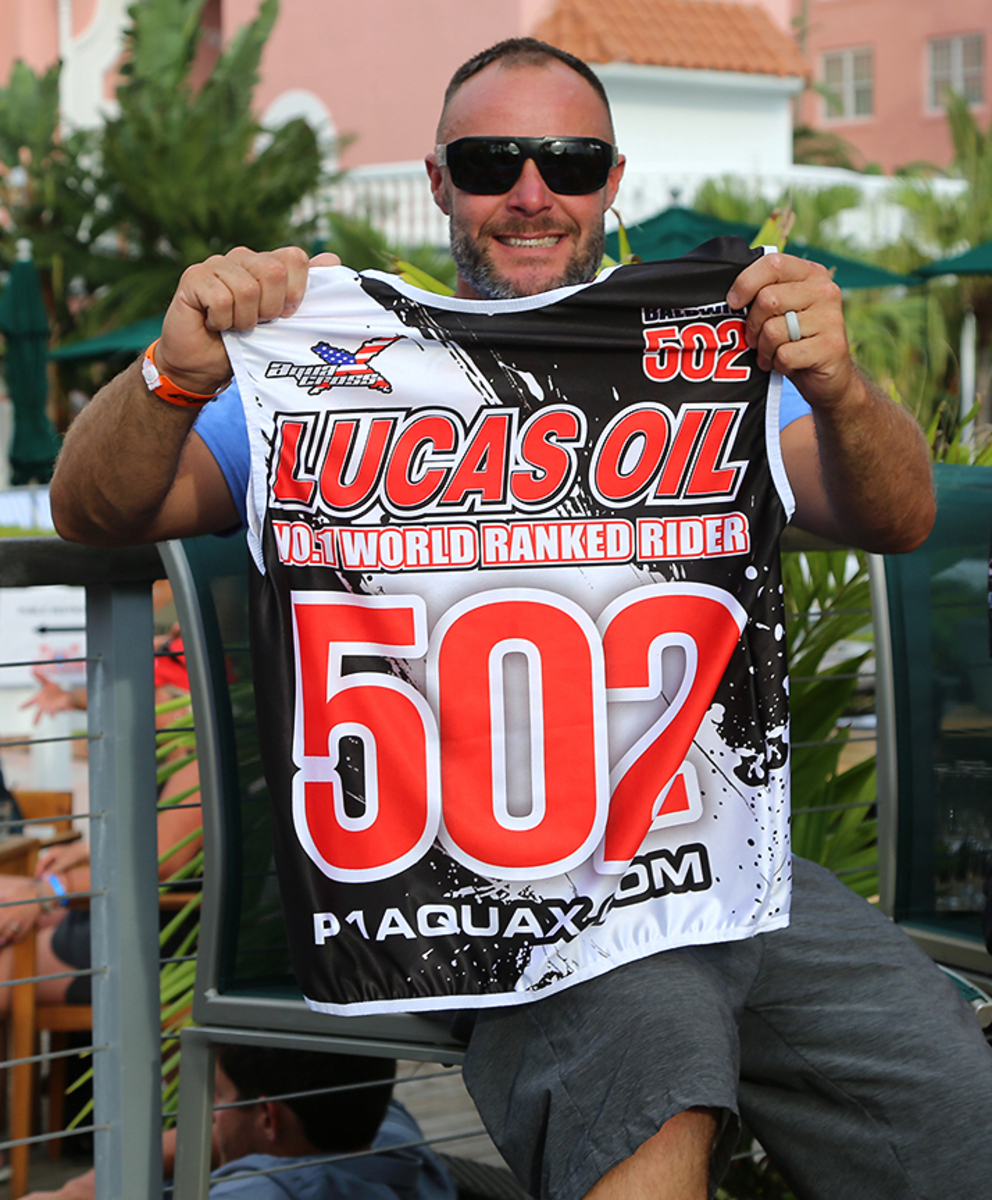
In June, the third round of P1 AquaX USA Championship was held in St. Pete Beach. The venue was held to announce the latest rankings of the Lucas Oil P1 AquaX World Rankings. For the American riders, it was a terrific event as the top four spots are now held by Americans. But the man who was the most excited was Brian Baldwin as he was given the #1 Jersey. Brian Baldwin has been a racer for many years and continues to improve his skills and find ways to keep ending up on the podium, no matter the race or conditions. Baldwin says that it has been his life long dream to race jet ski and be able to ranked #1 in the world. To find the list of the top 50 ranked riders, click here.

Just behind Brian Baldwin is Eric Francis and then Chris MacClugage. You have probably heard of these names as they truly are some of the best riders in the sport. The  P1 AquaX World Rankings was created in 2014 as a way to compile each riders profile and rank them on their consistency and talent they offer.
Lisa Barsby who is the Global Head of P1 AquaX says, “They have become an established and valued part of our racing and we are delighted to welcome on board Lucas Oil as the new title sponsor.” The World Rankings are concluded by using two years’ worth of data to evaluate each rider. The reason they use a two year mark is to ensure that a rider is continuing to race and prove they can perform at the top of their class.

Lucas Oil has long been involved in the automotive and marine racing industry. Lately they have been getting much more involved into personal watercraft races which has allowed many of these events to be held. Whether it be title sponsorships or sponsoring specific racers, Lucas Oil is helping the sport of personal watercraft racing grow.

In other rankings, Christian Daly earned the P1 AquaX Pro Rookie of the Year last year and was able to break through the barrier to be in the top 10 rankings. Among those top 10 riders are Phil Pope and Joe Harvey. Harvey is the only Kawasaki rider in the Top 10. Erminio Iantosca who is the only Sea-Doo rider is having a tough year and as a result has dropped from fourth to tenth place. The important thing is to never let one race determine your talent. These racers work hard on and off the water and you can expect them to be challenging everyone to get to the top.

Be sure to check out our coverage of the new Lucas Oil P1 AquaX World Ranking that come out in September!

Pro Watercross National Championships Are Around The Corner

0

Get ready to head to Lake Charles, Louisiana because the Pro Watercross national championships are being held there August 10-11, 2019. The league has posted some hotel information for those of you headed to the venue. For more information, check out the news flyer below and as always you can stay tuned to Pro Watercross for the latest details.

Over the next few days, we will continue to update the Lake Charles, LA – National Championship page…

Four Host Hotels are listed along with numerous other area hotels. This is going to be an epic event and you do not want to miss it, so make your hotel and travel arrangements now!

Tru by Hilton – Lake Charles | $109.00 | 337-564-6878
Best Western Plus Prien – Lake Charles | $99.00 | 337-477-5900
Comfort Inn – Lake Charles | $94.00 | 337-478-4650
Quality Suites – Sulphur | $85.00 | 337-626-7000
For more hotels and area information – click here!

Lake Charles, Louisiana right there in the heel of the boot. When you get to town just slip on your dancin’ shoes, and sway to the music. Everybody’s dancing and on their way to the Pro Watercross National Championships and we can’t wait to see you there!

Gallery: AWSA Lake Osoyoos Cup & Apple Pie Jamboree

0

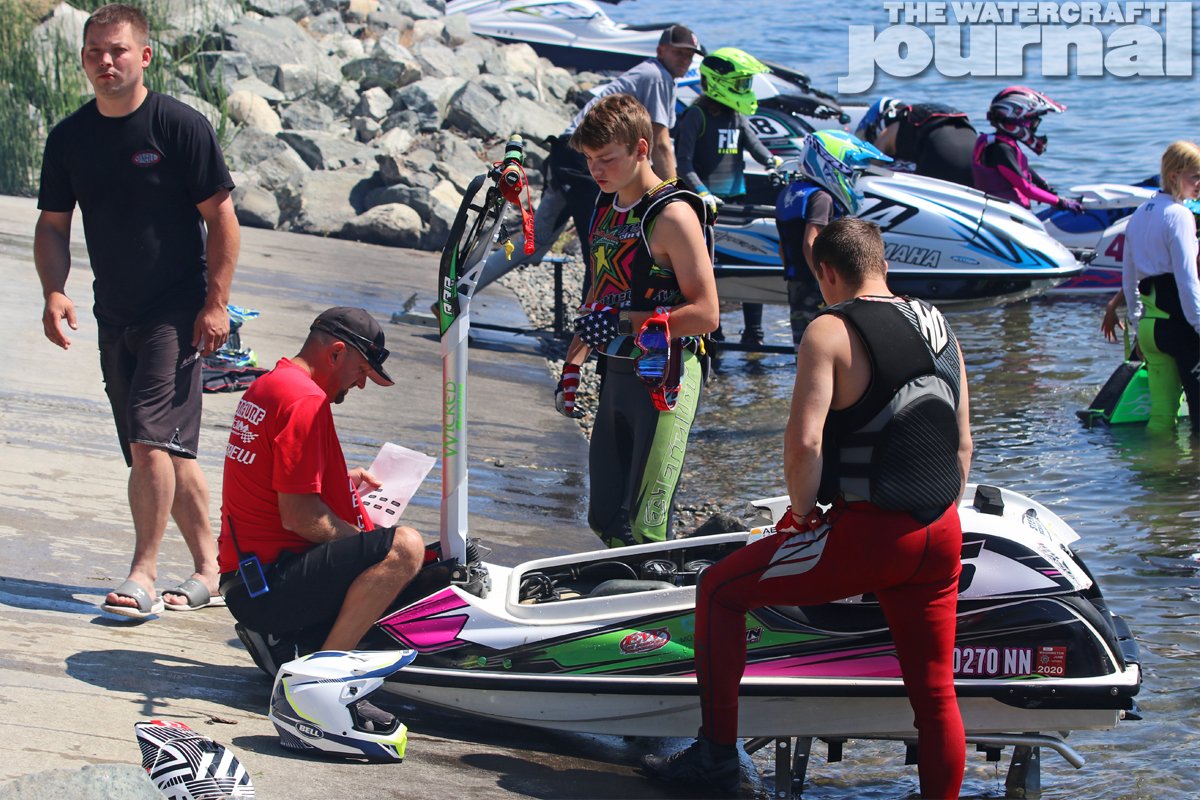
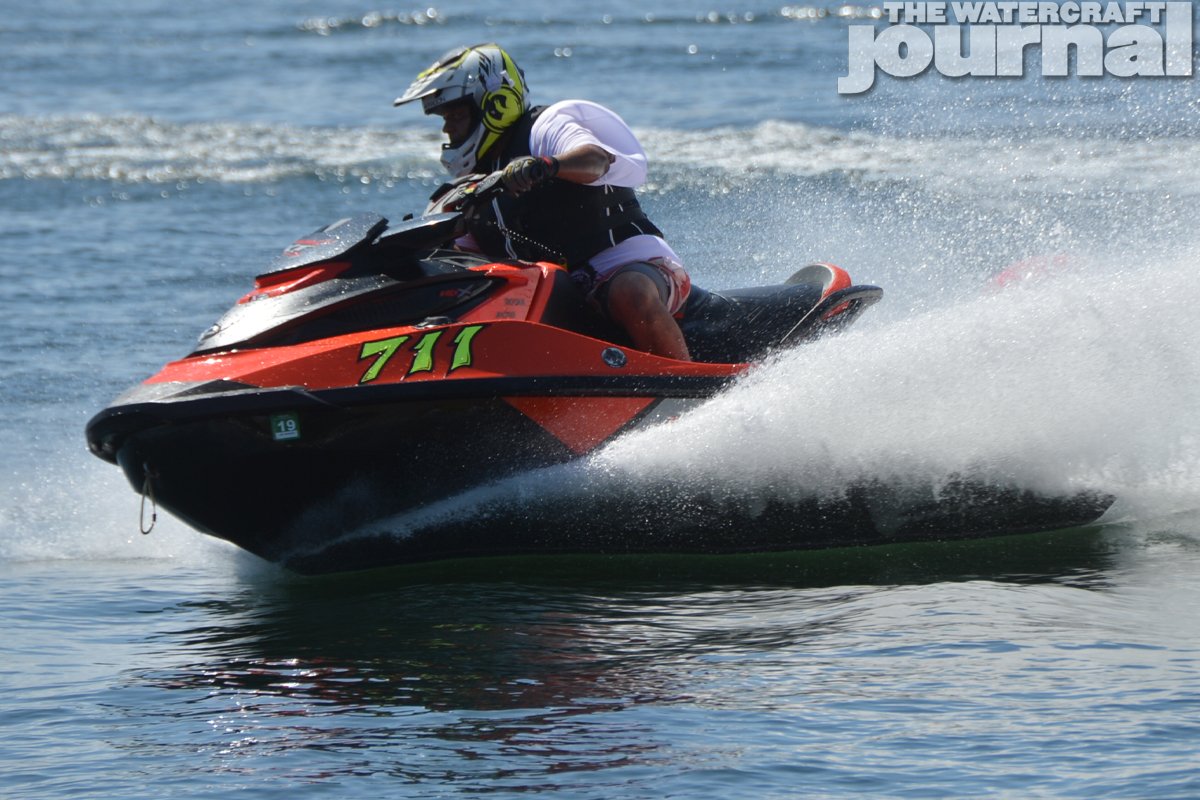
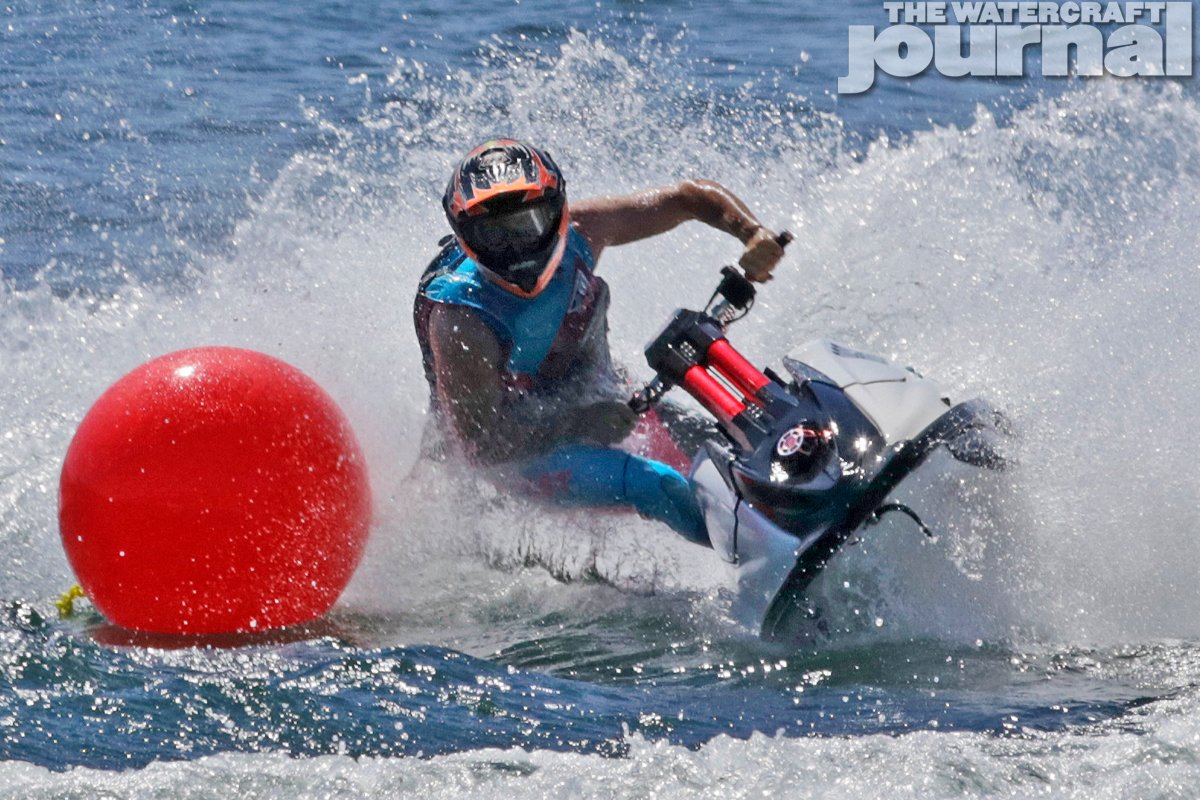
Northwest Jet Sports Watercross races into Rounds 3 & 4 this coming weekend as Lake Osoyoos Cup action hits Deep Bay Park. Competing under the American Water Sports Association this year, the Pacific Northwest tour includes the Lake Osoyoos Cup and the Apple Pie Jamboree, which took place July 20-21 in Pateros.

“We’re expecting one of our best turnouts ever at Lake Osoyoos,” promoter and race director Roger Harnack said. “We’re hoping the turnout exceeds our opening rounds on the Columbia River in Pateros.” Appearing on the OpenLine radio program last Friday, Okanogan County residents tuned in to hear about the upcoming race.

“We have classes for everyone,” Harnack said. “If you’ve never raced before, this is a great place to get into the sport.”

Indeed, Northwest Jet Sports had a solid beginner turnout at Apple Pie Jamboree, with three racing beginner ski, two first-time racers in the X2 class and four youngsters in the Junior 10-12 ranks. Another first-time racer was entered the women’s class. With seven racers on the line, Apple Pie Jamboree also boasted the largest women’s ski class in the region – which includes Oregon, Washington and Idaho – in at least a decade.

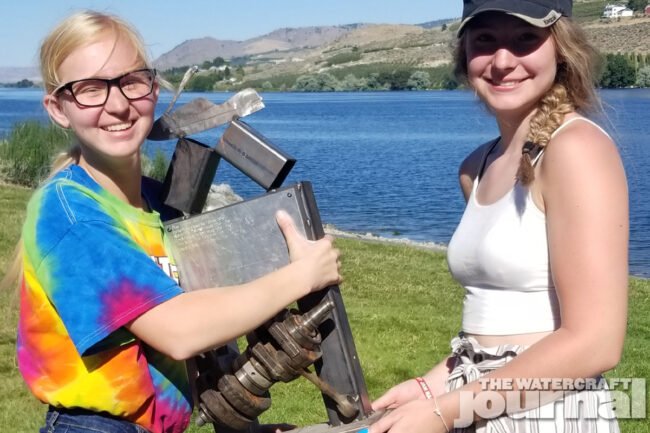
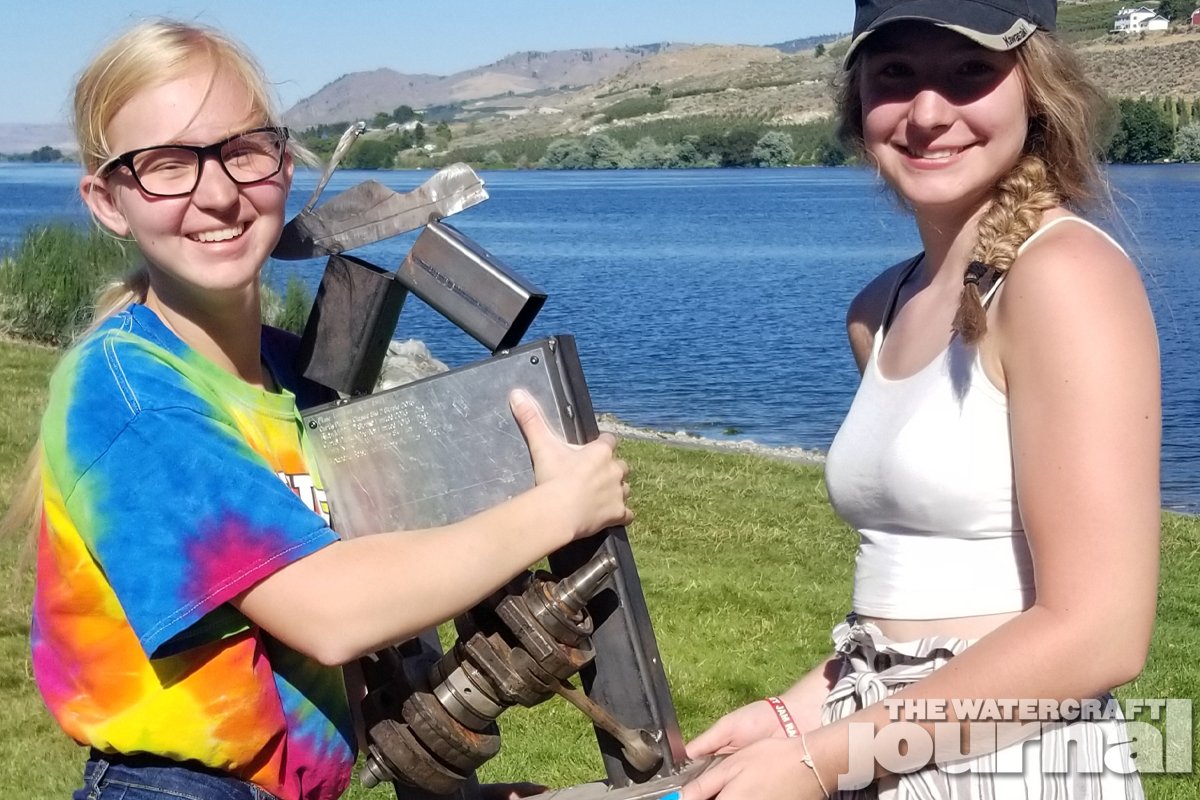
Alexz Benson of Hayden Lake, Idaho, would go on to dominate the Women’s class. And after the Jamboree was over, Trinity Klecker of Cathlament presented Benson a traveling trophy for being the Pacific Northwest’s best racer in the 2018 World Finals. Benson finished second last year and her name was etched into the trophy below Klecker’s and others who received the award in recent years. The trophy was hand-crafted by Curtis Pitman, now of Spokane.

Prior to the start of the festival, Washington Gov. Jay Inslee, a Democratic presidential hopeful, visited Pateros to see how the community is coming along after about a third of the town was destroyed by wildfire five years ago during Apple Pie Jamboree week. That 2014 fire, the Carlton Complex, remains the largest ever reported in Washington state.

This year’s Apple Pie Jamboree kicked off with a parade Friday night. Racers are allowed to enter their watercraft, but none entered. The community-wide event resumed Saturday with a bass fishing tournament launching at 4am, followed by a 5K color run at 8am. The festival also included food vendors, arts, crafts, a community breakfast, a book sale, music and fireworks.

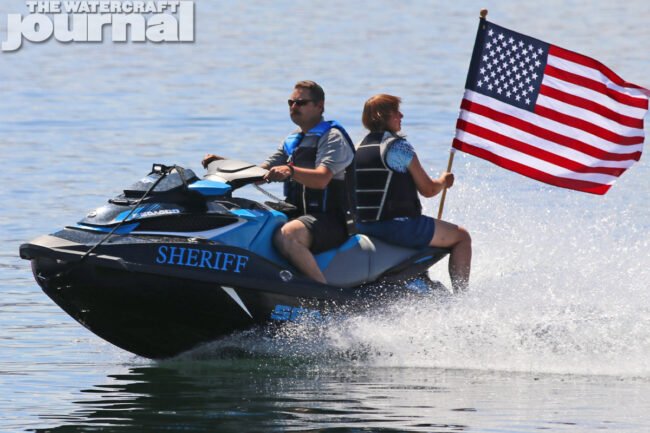
Proceeds from the different activities benefit the small community’s youth programs. Last year, the funds paid for every child in town to take swimming lessons if they so chose. The watercross action kicked off about 11am after the presentation of the National Anthem. Okanogan County Sheriff’s Deputy Dave Yarnell piloted a law enforcement ski while Apple Pie Jamboree Committee President Tracy Wilson of Pateros carried the flag, presenting the flag as the National Anthem played.

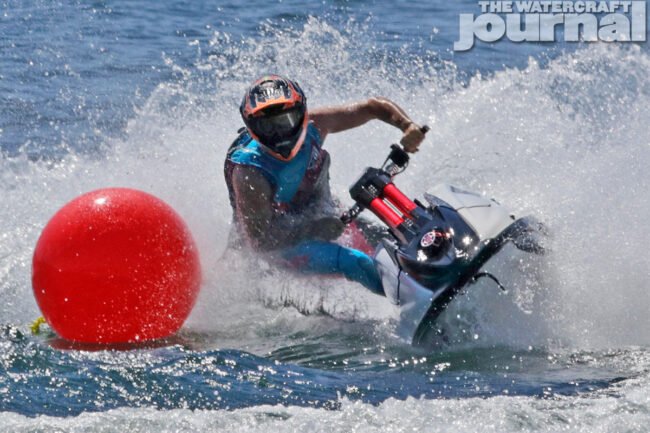
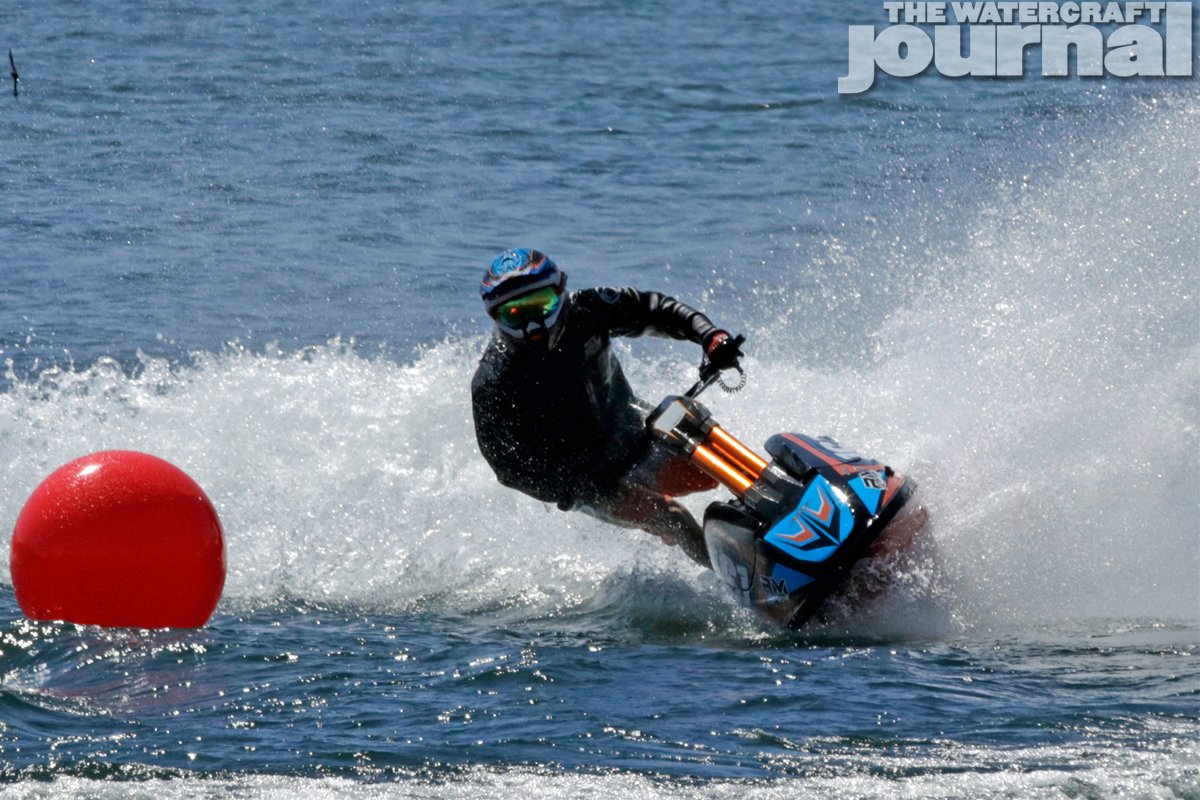
Other Apple Pie Jamboree activities, including a large 3-on-3 basketball tournament, paused as the anthem played. Doug Wolff manned the tower, and certified rescue diver Archie Dennis of Coulee Dam anchored nearby as about 40 racers hit the cool water on a weekend where daytime temps hovered in the mid-90s.

Angela Clements of Marysville and Jen Effrig of East Wenatchee handled registration, scoring and announcing as they have done in the region for years. Wayne Hilsinger of Sedro Woolley manned one of the course marshal skis while his wife, Katie, served as a spotter for Dennis. Jason Ward assisted Effirig on the mic Sunday.

Harnack manned the other rescue ski as Yarnell and Okanogan County Sheriff’s Office Deputy Josh Brown patrolled the Columbia River keeping other boats at bay. Racing continued throughout the day, with only a 20-minute lunch break to allow bass boats into the docks to weigh in fish. After 26 motos, racers pulled their skis and pit area, making way for pyrotechnicians to set up the evening’s half-hour-long fireworks display.

The action continued Sunday, with only one on-water incident as a minor collision sent the hood of 550 rider Seth McNeil’s boat flying. Sunday’s course marshal’s, Harnack and Mike Reynolds, quickly got to the area, with Reynolds tending to McNeil and Harnack towing the ski back to the docks. McNeil was uninjured; he pumped the water out of his boat and fired it up, returning to the line later in a later moto.

After an additional 26 motos, the racing concluded without any injuries. “It was a great weekend of racing,” Harnack said. “We’re ready to go again.” And go again they will. The Lake Osoyoos Cup gets underway Friday, Aug. 31, with course set up and camping opening in Deep Bay Park. Racing is set for 11am to 5pm Saturday and 11am to 4pm Sunday on Lake Osoyoos, which lies half in the US and half in Canada. Several Western Canadian Watercross Association members are expected to join in the action. “It’s going to be 90 degrees and the water is great,” Harnack said. “See you in Oroville.”

Photography: Katie Pedersen and Al Camp/Omak-Okanogan County Chronicle