
Home Blog Page 217

Hull Design: What Makes a Ski Good in Rough Water?

6

“Yeah, that’s all great, but how is it in the rough stuff?” came the reply. I had spent nearly an hour walking one of The Watercraft Journal’s readers through the highs and lows, the newfangled features and available accessories for the latest Sea-Doo’s hull design, addressing every question he could throw at me. It was exhausting. But apparently, all of that didn’t matter. Gathering a little more insight about his riding style, it was easy to tell that he had no interest in racing, little experience in open ocean conditions, and frankly lacked the physical ability to weather either. “It’s great for what you’re looking for,” I replied.

The hard part was understanding that my interviewer didn’t know exactly how to phrase the question that he had in his mind. “How is it in chop?” is a vague query because it doesn’t reflect the intended use of the machine. What attributes are you specifically looking for? What characteristics are you looking to avoid? Most people can’t answer these because they haven’t put enough thought into it – so a salesperson truly worth their salt is going to need to pose these questions in order to direct the customer towards a ski with the hull design that’s best suited to their wants.
Defining Terms

First, “rough water” and “chop” must be defined. Beginning with the latter, “chop,” by definition, is a “swift, short, cutting blow.” Often this water condition is 1-2 foot (from crest to trough), sharply cresting, crosshatching waves, most commonly brought on by wind or severe boat traffic. “Rough water,” typically, implies conditions far larger than “chop.” Rough water, for at least the purposes of this essay, is erratic, seemingly patternless waves exceeding 3-foot – although not solely restricted by height as large swells or “rollers” can be smooth – usually heavily influenced by prevailing weather systems.

Finally, in discussing the “rough water hull” behavior, I break down characteristics in to three categories: Tracking, Handling and Comfort. It’s important to understand the specificity of these three as they are uniquely different and, while a particular hull design can excel at one, that same hull design can fail at another. So let’s discuss each of these individually. First, here are some basic definitions of the terms that will be used in this essay:

  • Tracking: This is the watercraft’s ability to maintain a straight, consistent line despite water currents, surface conditions, and/or wave patterns; the watercraft’s ability to maintain side-to-side and front-to-rear balance in crossing through and/or over these conditions; and how well the watercraft can maintain plane or planing speed throughout these conditions.
  • Handling: This is the watercraft’s ability to execute a turn or maneuver despite water currents, surface conditions, and/or wave patterns; the watercraft’s ability to maintain side-to-side and front-to-rear balance while executing a turn or maneuver throughout these conditions; and how well the watercraft can maintain plane or planing speed while executing a turn or maneuver in these conditions.
  • Comfort: The watercraft’s ability to perform the aforementioned with the least amount of duress, energy or physical input from the rider despite water currents, surface conditions, and/or wave patterns; and the watercraft’s ability to absorb and/or deflect impact, reverberation and shock throughout these conditions.
Hull Design for All Shapes And Purposes

Moreover, it’s important to understand hull design, at least to a cursory degree, for the purposes of this essay as well as future discussions on the matter – either found here at The Watercraft Journal, in online debate or in conversation. At their core, hulls are designed to either displace water or ride on top of it (ie. “planing”), giving us planing hulls and displacement hulls.

Most naval architects (boat designers and builders) will agree on four major types of hulls design: flat-bottomed hulls, round-bottom hulls, V-shaped hulls, and multi-hulls (ie. pontoons or catamarans). Because nobody has properly executed a multi-hulled PWC, we’re going to leave that one out and focus on the prior three hull design types.

  • Flat-bottom hulls: These are characteristically very stable, great for fishing and other uses on calm, small bodies of water, but are the roughest riding in choppy waters.
  • Round-bottom hulls: These are characteristically “displacement-style” hulls designed to move smoothly through the water with little effort (ex: canoe, kayak). Round-bottomed hulls are less stable and can capsize more easily.
  • V-shaped hulls: These are characteristically “planing hulls” and are most commonly used for powerboats and PWC. V-shaped hulls are designed to plane on top of the water at higher speeds and provide a smoother ride through choppy water. V-hulls have a greater surface area (ie. resistance) thereby requiring more power to move.
Each of these have their respective pros and cons, and PWC hull designers try to combine the best features of each by creating a semi-displacement, modified V-shaped hull. This means that most begin with a sharp V-shaped bow and taper into a flatter, less aggressive hull by midships, ending with a near-flat hull in the rear. Altering these angles or “deadrise” greatly affects the behavior of the craft. As an example, take into consideration Sea-Doo’s GTI with its 16-degree deadrise versus Kawasaki’s Ultra platform and its 22.5-degree deadrise:

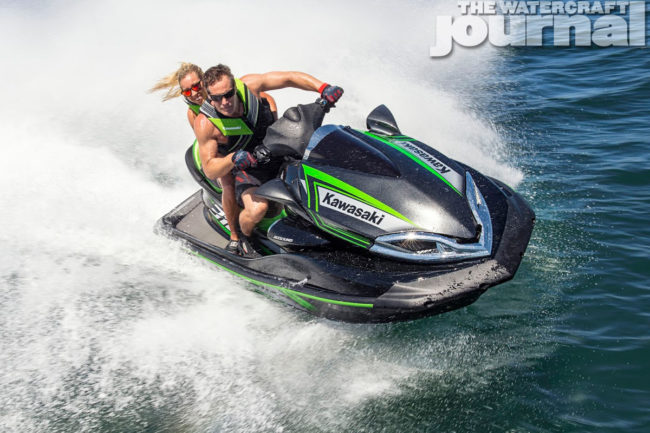
Flat-bottomed hulls are prone to “slap” or pound itself over waves – particularly at speed – and due to the minimal surface area, are typically “looser” or harder to control; requiring constant steering correction by the rider. GTI’s are marketed as being “loose” and “playful,” allowing the rider to freely “spin-out” on demand and generally goof-off far more than the Ultra. The Kawasaki’s aggressively-shaped keel only slightly tapers towards the transom. This gives the craft a faster rate to plane, a superior ability to maintain plane regardless of conditions, and a greater rate of deflecting shock or impact from waves.

The solution to maintaining the balance of a flat-bottomed hull while retaining the tracking and handling of a V-shaped hull has been found by reducing the deadrise and adding strakes to provide compensating lift. While chines can generate some lift, they are primarily used to manipulate how the hull will behave in a turn. As the vertical hull lines angle steeply inward toward the keel, the craft will behave accordingly. SBT Inc.’s wrote, “If this angle is soft and rounded, the craft will roll intuitively into a turn with a nice inside lean, but sacrifice a little stability. If this angle is sharp and severe, the hull will be more stable but not roll as easily into a turn.”

So Whose Got What Hull Design?

A recent conversation with a reader was particularly revelatory, he complained, “The [Yamaha] GP1800 handled terribly in the chop. It beat me up. I couldn’t take it anymore. So I bought a [2018 Sea-Doo] RXT-X 300.” Curious, I asked what he meant. I queried, “Did the GP1800 behave erratically?” “No,” he replied. “Did you ever feel like it was unpredictable?” He said he didn’t understand. I asked, “Did the ski feel like it was darting or hunting in one direction or the other?” “No,” he replied again. Then I stopped and asked, “Did it feel like you were being rattled and shaken apart?” Wasting not one second, he replied, “Exactly.”

I explained that first, he was talking about comfort not handling, and the discomfort he felt was because the GP1800 was extraordinarily lightweight, it’s minimalist insulation and NanoXcel2 hull and deck material offering very little in absorption. He came to realize that were the GP1800 a poor handling runabout, there would be no way possible for racers to pilot GP1800s to wins in offshore, endurance and closed course racing several times a month. Like the stiff springs and shocks and super-sticky tires of a racecar, the stripped-down, no-nonsense GP1800 couldn’t offer the insulated ride he was wanting.

Sea-Doo’s new ST3 prominently features flat hull surfaces running from sharply-angled chines that blend into large, flat-bottomed shelves flanking the craft. This is what gives the new full-sized runabout its exemplary stability, particularly while at rest (making the advent of the Fish Pro 155 all the more appropriate). These flat surfaces also account for the Sea-Doo’s tendency to turn flat, with little inside lean. It is also the widest hull Sea-Doo has produced, and wider hulls have greater surface in contact with the water, and therefore experience more resistance.

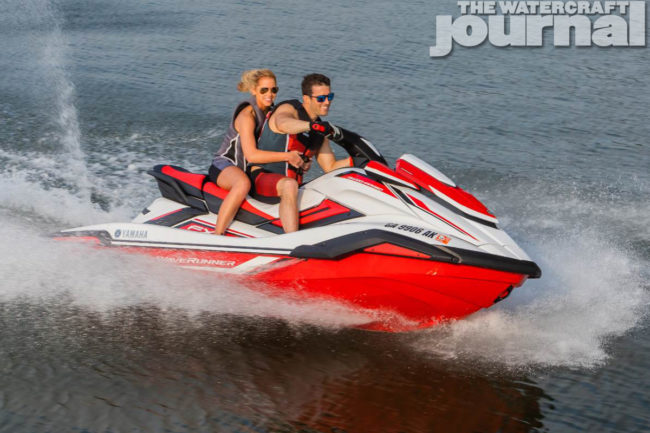
Conversely, a hull lacking these flat surfaces or sharp chines won’t react as abruptly to waves and usually rides much more softly — it also won’t “snap roll” in a turn like a hard-chine hull will (best exemplified by the RXP-X’s T3 hull). Yamaha’s current GP1800 and new 2019 FX platform, which shares a great deal of design DNA with the former, features round or “soft” chines, a shape that naturally generates lift (quicker to plane) and less resistance, letting the craft intuitively roll into a turn, providing the rider with a predictable inside lean. This may come at the cost of being as stable as say a stationary ST3.

Finally, the balance of vehicle weight and horsepower (power-to-weight ratio) plays a final component. Obviously, overall vehicle weight plays a central part in the watercraft’s displacement, as a heavier craft or one with a prominent deadrise will have a great (or deeper) draw. “Draw” is how much of the hull is physically in the water while at plane, and for many watercraft, this alone can delineate what makes a craft smooth and predictable in the rough, or jarring and unpredictable. A heavy, deeply-keeled hull will ride smoother and more comfortably, but will require more power to reach plane. A lighter-weight hull with less deadrise will reach plane far easier, but typically telegraphs more vibrations to the rider.

Currently, all Rec-Lite watercraft (Sea-Doo Spark and Yamaha EX) lack the weight and deep-V hull to track, handle or cushion a rider over aggressive seas. The added weight and subtle deadrise of the GTI, VX and even STX-15F provide improved rough water tracking and handling, but will still communicate turbulence concurrent to their particular weights and designs. Sea-Doo’s new ST3 hull (RXT, GTX, Wake Pro, Fish Pro) offer extraordinary stability while stationary and at cruising speeds, and excellent comfort at all times, but at the cost of predictable tracking and handling in tumultuous seas.
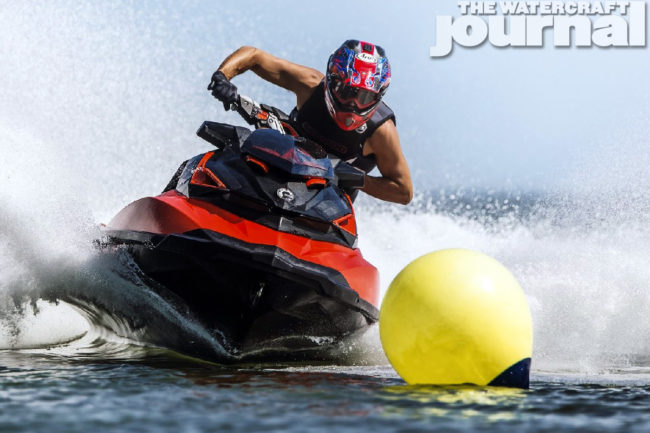
In chop, the hull design of Yamaha’s GP1800 gives it a ability to track and handle that is unmatched, but as noted, is intentionally light on insulation. The new 2019 FX platform shares much of its design and rough water talents with the GP, but manages to distribute and deflect vibrations far better, providing a smoother, more insulated feel. Finally, Kawasaki’s Ultra retains the industry’s most aggressive deadrise and the heftiest weight, giving the craft both incredible rough water comfort (ie. insulation) as well as instinctual handling and proven tracking. This all comes at a cost, and the 310-horsepower Kawasaki’s fuel consumption while getting the craft to plane is substantial.

So what of our curious reader at the beginning? Investigating deeper, he wasn’t so concerned with how well he could execute a hairpin turn around a buoy in bathtub-like water, but rather, how well the craft would soak up the bumps and jostles while he passed a busy stretch of lake. In other words, he needed a hull design more biased towards comfort. For the dissatisfied Yamaha owner, he too was looking for greater insulation while somehow retaining his supremacy at owning one of the quickest skis amid his friends. Racers and hot doggers will happily choose a hull design that gives up the cushy, insulated feel for greater handling and tracking prowess. Remember that when you start looking into purchasing a new watercraft. What are you really looking for? C’mon, be honest.


Gallery: Sea-Doo LRV Supercharged 4-Stroke Conversion

8

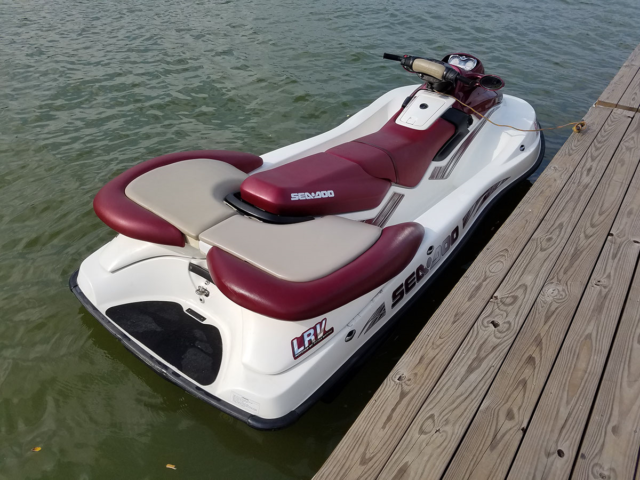
The early to mid-2000’s had a craze for 4-seater personal watercraft and the Sea-Doo LRV was one of them. They were big, heavy, and had a relatively huge payload capacity. Weighing in dry at 952 pounds, you could pile on an additional 745 pounds worth of passengers and luggage. It was not light by any means.

Additionally, it was powered by a Rotax 947, 2-stroke engine. By today’s standards of larger displacements and forced induction, the original engine was lacking in the power to weight ratio department.

It’s not hard to see why these 4-seater watercraft eventually went extinct. They took away from the light, powerful, and downright playful nature that are expected from personal watercraft.

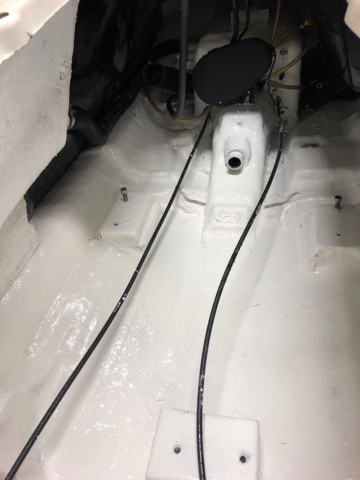
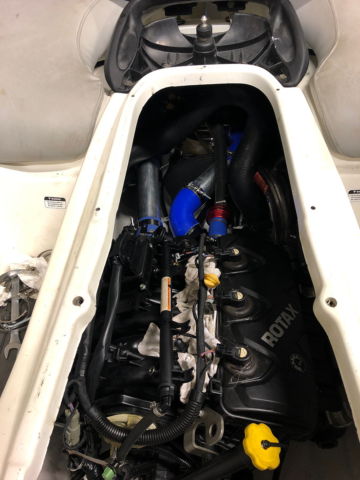
This does not stop some owners who evidently still have a love for their old LRV’s. Take for example this LRV converted over to more modern 4-stroke technology with a Rotax supercharged engine swap.

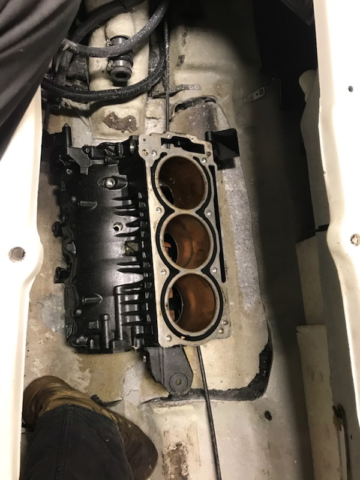
The build was completed by Lacey Power Sports (LPS) for one of their customers. The customer requested a top speed of at least 70 MPH so LPS decided to modify the 2006 RXP donor engine and transform it into a Rotax ACE 300.

The supercharger was modified, the engine received new fuel injectors, titanium valve retainers, and an ECU reflash as well as a modified intake manifold.

All of this provided the much needed top speed guarantee for this heavy ski. We are told the customer has been riding it for quite some time now and that they are happy with the build.

Video: The Ultimate Sea-Doo Ride Through Chattanooga, TN – Long Haul Ep. 31

0

Earlier this month, The Watercraft Journal published a full-length report of a 3-day trip we made to Chattanooga, Tennessee. The riverfront city has an amazingly rich history that predates America’s Revolutionary War, marks the westward expansion of settlers, was a central focal point of the bloody Civil War, and was central to the expansion of the American railway system which later gave way to the Transcontinental Railroad. Today, Chattanooga is much more than its history but yet retains strong ties to its roots, remains impressively unmolested in its natural beauty and is, for our review, one of the best riding locations we’ve found in the United States in recent years.

Below is the latest episode of “Long Haul,” The Watercraft Journal’s bi-monthly YouTube show – and frankly put, it’s one of our favorites. Even though we captured some of the most stunning footage we’ve managed to put on film yet, the gorgeous vistas and mirror-flat water still cannot properly represent how breathtaking this stretch of the Tennessee River is in person. So please, make sure to watch this video below, give it a “Like” and even share it with your friends for a little inspiration to get out on the water before the seasons change (actually, this ride is particularly impressive as the Fall foliage changes, so maybe plan it for an October ride).

Video: Adventuring Couple Spend a Sea-Doo Summer on The Gold Coast

0

Social media can be a dangerous thing, especially when you get caught up in watching what other people are up to. It can be a dangerous cycle of disheartening self-reflection, self-derogation and worse when you’re constantly bombarded with updates from friends, neighbors and complete strangers living a life that looks far too exciting for any normal person to be living. And that’s exactly the point. No normal persona lives a life so persistently carefree, so rife full of beautiful people, gorgeous locations and yadda, yadda, yadda. Seriously. It’s bogus, all meant to prey upon your insecurities and feed off of your envy.

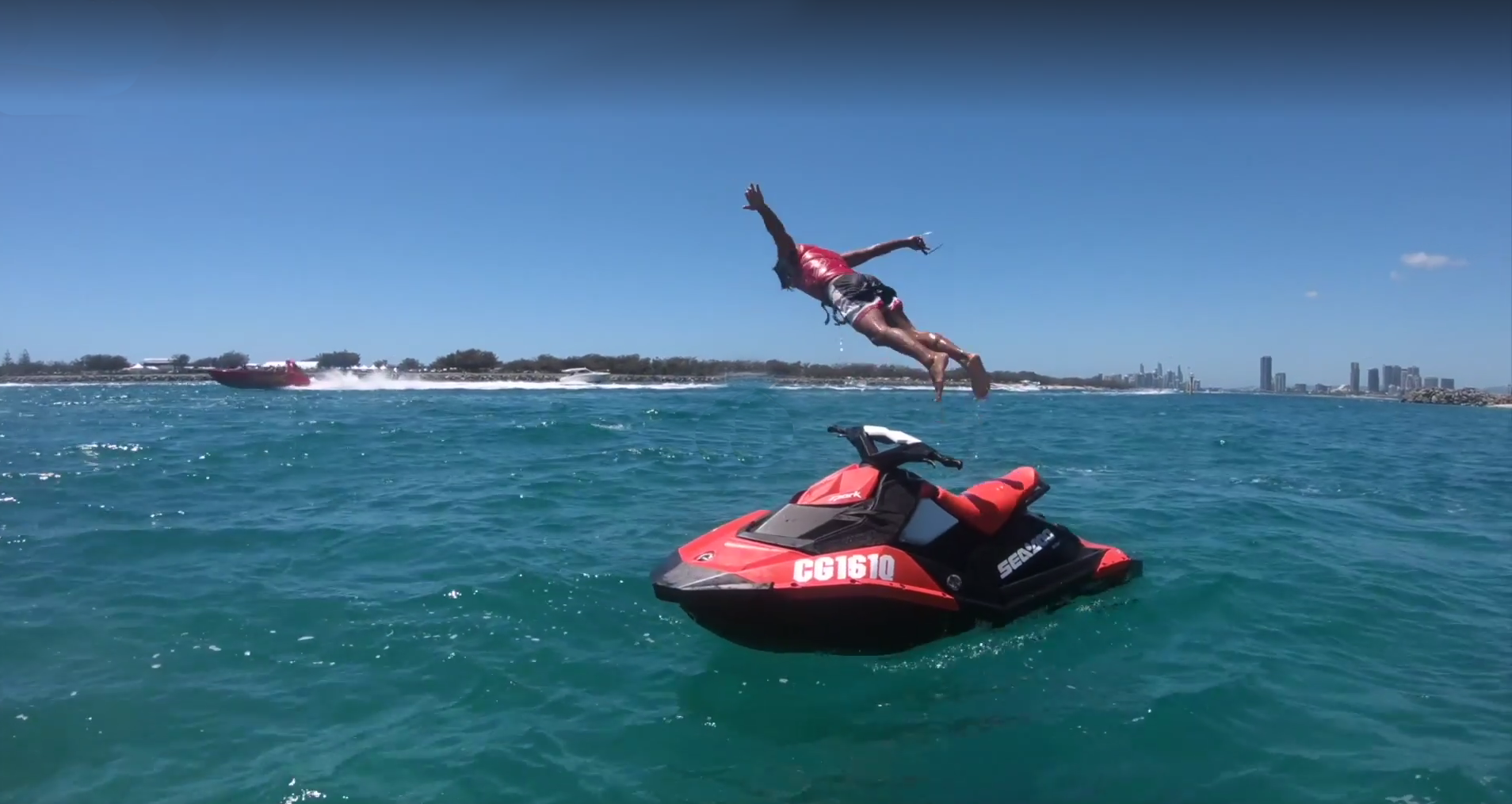
So when we see social media accounts for “Keeping Up With The Lanes” – a lovely little family traveling the world in search of adventure, we immediately called “Foul!” That’s right, this is a business, ladies and gentlemen. People and accounts like these are categorized by marketers as “lifestyle” niches or pages. They present a world that is otherwise unattainable, but looks oh so appealing. And thus with their latest video, “Summer 2018 – Gold Coast, Australia” we’re entreated to a video recapping the Lanes’ summer vacation trip to Australia taking in all the sights and sounds and galavanting around via Sea-Doo Spark. Yes, it’s a lot of fun to watch, but don’t let it get you down. It’s on the Internet after all. And we both know you can’t trust anything you read online. (wink, wink)

https://www.facebook.com/keepingupwiththelanes/videos/1965010767096097/UzpfSTI4NzI2MDc4NDc3MDQ0MDoxMDYwNTc2MDc3NDM4OTAz/

Cargo Wave Releases Pro Mod II The New Ultimate PWC Accessory

0

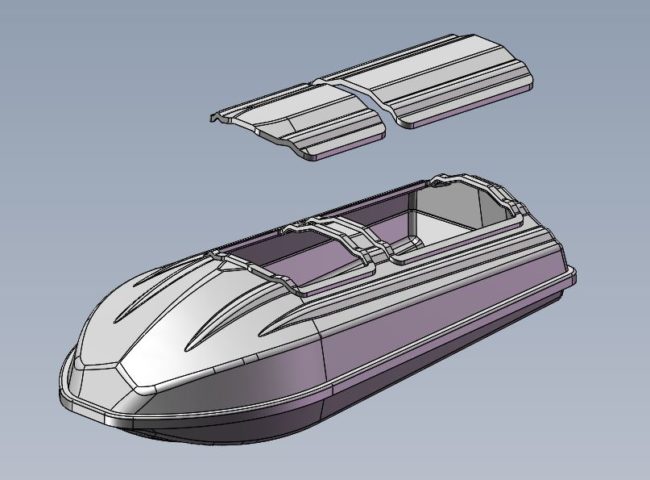
As all of the newest personal watercraft models come rolling out from the three OE’s, the world’s biggest manufacturer of towable personal watercraft trailers Cargo Wave LLC., has just announced its newest addition to the Cargo Wave catalog of products: the Pro Mod II. A totally new design with a bunch of smart features incorporated into it, the Pro Mod II is geared up to be the biggest thing in towable accessories for PWC. Check it out!

Cargo Wave LLC’s president Paul Thomas announced:
As the President of Cargo Wave LLC, I would like to introduce the newly re-tooled production design of Cargo Wave Pro Mod II. It incorporates 5 years of development to bring the best product possible based on consumer feedback and manufacturing capabilities.

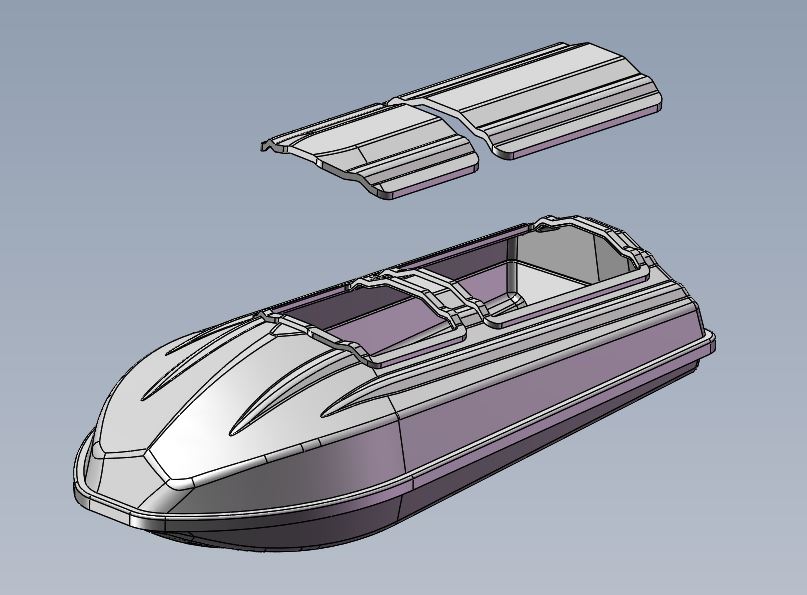
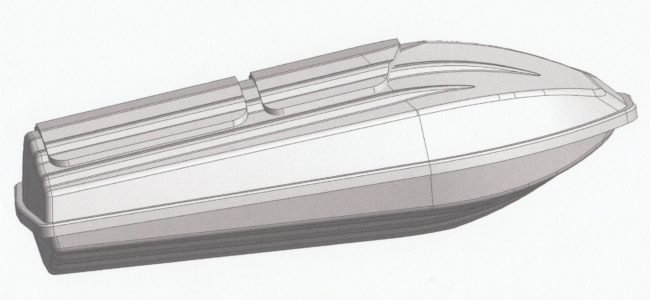
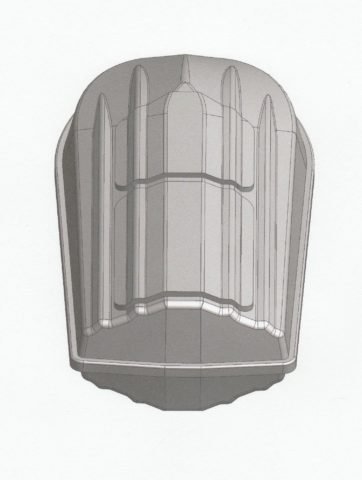
The Pro Mod ll starts with an increase in hull thickness to .27O, over Lf 4″ of hull strength, and a return to UV coated ABS vacuum formed material. Assembly also returns to two part epoxy bonding as well as SS hardware throughout. Best of all the Pro Mod ll provides two hatch cover openings, giving full cargo access throughout it’s 9′ length.

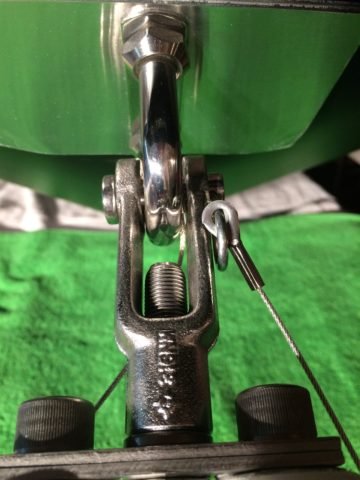
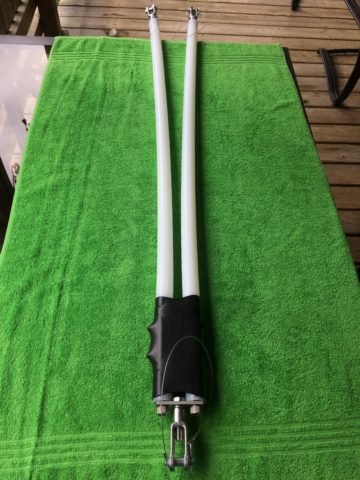
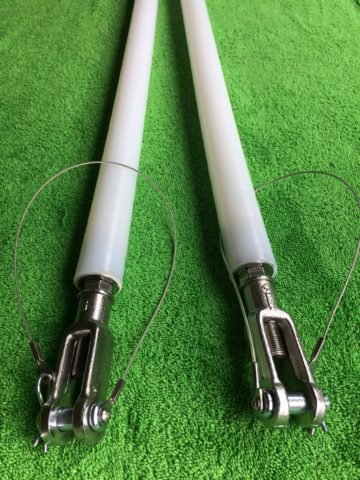
Another engineering marvel, the Cargo Wave LLC Heavy Duty Towing Arm is also re-designed. lt’s flexibility in corners and holding stiffness in emergency braking provides an ultimate connection between you, your machine, and the Cargo Wave. The HD Towing Arm is the key to the performance of the Pro Mod ll, keeping it exactly where it needs to be in all conditions. The Towing Arm now comes with the most simplistic connections available, three lanyarded pins and keys! The Cargo Wave’s capacity based on Towing Arm strength exceeds all previous models, it truly is PWC’s Ultimate Towable Accessory!

A new seal is introduced with the twin hatches providing a full watertight seal. Both hatches will be hinged and lockable. The Pro Mod II’s floor panel thankfull to it’s ABS properties, will be epoxy bonded also, enabling it to withstand flexing of the CW hull in rough water.

All these refinements provide a Personal Water Craft Ultimate Accessory, opening so many new avenues of recreation for it’s owners…The Cargo Wave Pro Mod ll.

Nuts and Bolts…
Production of the Pro Mod ll is planned for a early spring 2019 launch. Pre-orders are available now for dealerships wanting to expand their PWC customer base, getting back many sales lost to larger boats due to the capacity restraints of PWC. Now their new customer can bring all their gear for a day, weekend, or extended trip with them on a more efficient watercraft and, lets face it, a much more fun way to travel on the water!

Dealership minded retail pricing has been set as Cargo Wave LLC heads forward to a new chapter to provide the Cargo Wave Pro Mod ll throughout the US and Canada. interested dealers & customers are urged to contact Cargo Wave LLC through it’s website, cargowave.net or email [email protected].

Join the Cargo Wave Family and enjoy The Optimum Towable PWC Accessory, Cargo Wave Pro Mod ll! Paul Thomas / Cargo Wave LLC

Order Now From RIVA In Time For World Finals Pickup

0

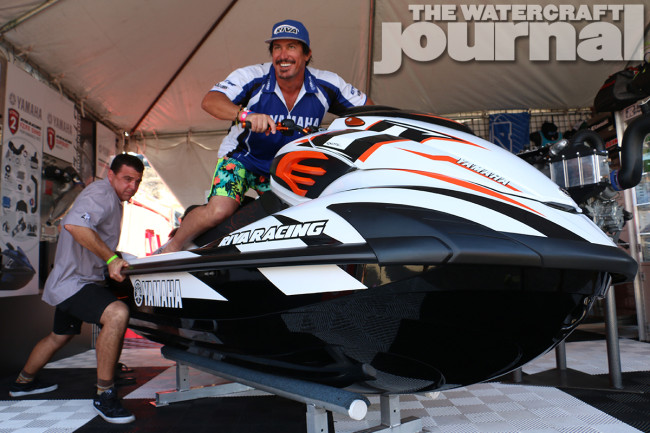
Attention racers and performance enthusiasts who are planning to attend this year’s IJSBA World Finals in Lake Havasu City! Now is the time to order your parts from RIVA Racing if you’re looking to have your ski up and ready in time! Many folks struggle to plan appropriately and continue to fail to realize that race skis go “boom!” more often than not.

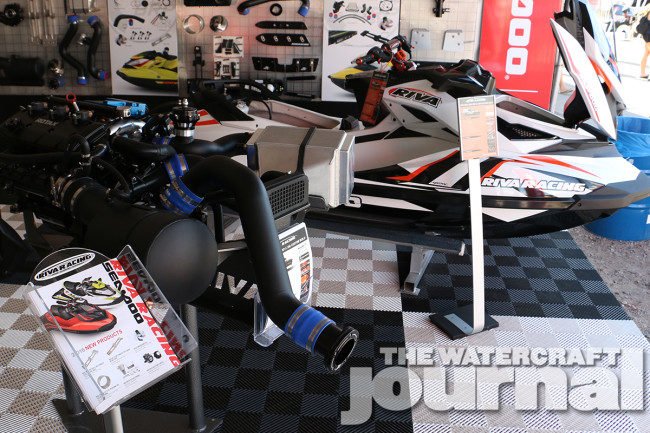
Because of this, the good folks at RIVA Racing (particularly those working the company’s massive booth space at the ‘Finals year after year) are flooded with requests for performance parts that they simple didn’t bring. Again, their booth isn’t a traveling Wal-Mart. They don’t bring the store’s entire inventory with them to Arizona.


So if you’re planning on putting the final touches on your racecraft while there, get on the phone or go to their store online and put in those orders right now! Otherwise, it’s very likely they won’t be packing that one oh-so-important part to keep you in the running. Think ahead!

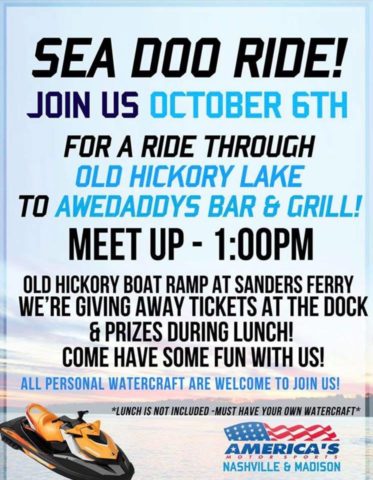
America’s Motor Sports to Host Old Hickory Sea-Doo Ride

0

It’s not often when a dealership takes such a personal interest in their customer’s ongoing enjoyment of their personal watercraft that they would host a end-of-the-summer cruise.

Well, that’s the kind of good folks that work over at America’s Motor Sports, Middle Tennessee’s leading Sea-Doo dealer and service department, and that’s exactly what they’re doing in just a couple of weeks!

In an event announcement posted on their Facebook page, it writes: “Join us October 6th at the Old Hickory Boat Ramp off of Sander’s Ferry for a ride along the water to lunch! We’re giving away some great prizes! Meet up at the Boat Ramp is 1:00pm!”

And do not worry if you’re not aboard a Sea-Doo – all brands and makes of personal watercraft are welcome to join the fun.

Found just northeast of downtown Nashville, Old Hickory Lake is a gorgeous winding lake fed by the Cumberland River. You’ll also be joined by The Watercraft Journal’s own Editor-in-Chief, who will be handing out free WCJ decals for those in attendance. It doesn’t take much to show how much you and your company cares, and America’s Motor Sports is doing it right. We hope to see you there!

Stand Up Skills: 180 Degree Slide

0

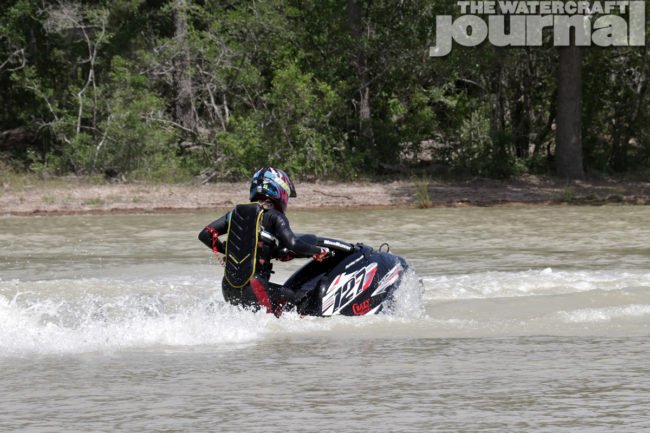
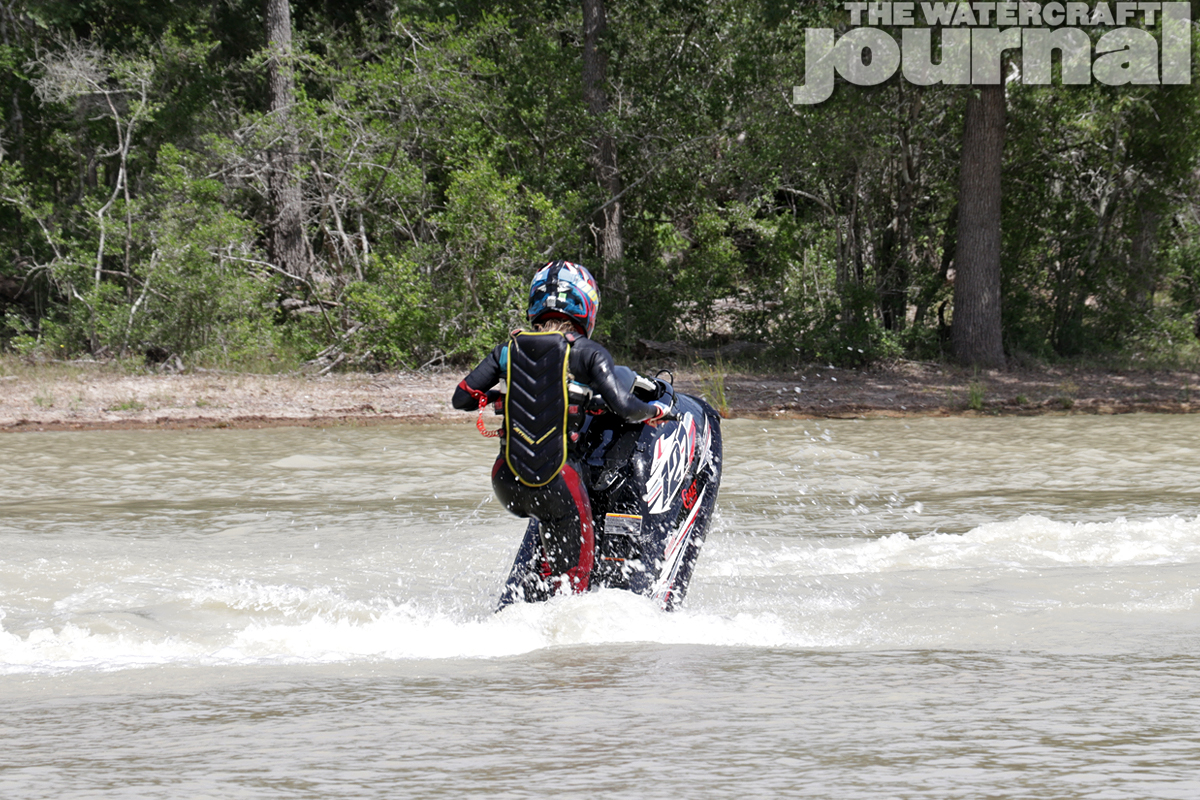
Hero mode engaged! The 180 Degree slide is both delicate and brutal, requiring precise timing and bodyweight motion, with the application of throttle many motorheads love.

Breaking it Down
Sliding a stand up, like most things in life, is not difficult on paper. Turn one way, add throttle while turning the other, chop throttle, lean forward, slide, add throttle for recovery. Done, end of article!

If only it were that simple. Ski design and set up changes the nuances of this flatwater trick, but the overarching steps remain a standard. Follow them, with tweaks to support your riding style and particular ski, to lay the foundation for this skill.

  • Try to find flat water, any kind of chop can lead to a high side if the hull catches traction moving sideways.
  • Start in a straight line with ample room all around you. This trick can take up a lot of water. Speed around 10-15 mph, or what feels comfortable to you with the ski stable.
  • Have your feet in split/surf stance with your preferred leg at the front of the tray (for this article we’ll call it the left leg) and your rear foot (again, for the article this will be the right foot) all the way at the back facing perpendicular to the tray.

The next steps will happen very quickly, some basically at the same time.

  • With steady throttle, slightly turn the ski to the right and lean a little right with your upper body. Keep your lower body’s weight centered over the ski. This will feel like you are initiating a toe side turn.
  • Chop the throttle to help begin breaking traction, but just a blip. You will need to add in throttle to help steer for the next step.
  • Abruptly turn the ski with throttle to the left to start what would be a heel side turn.
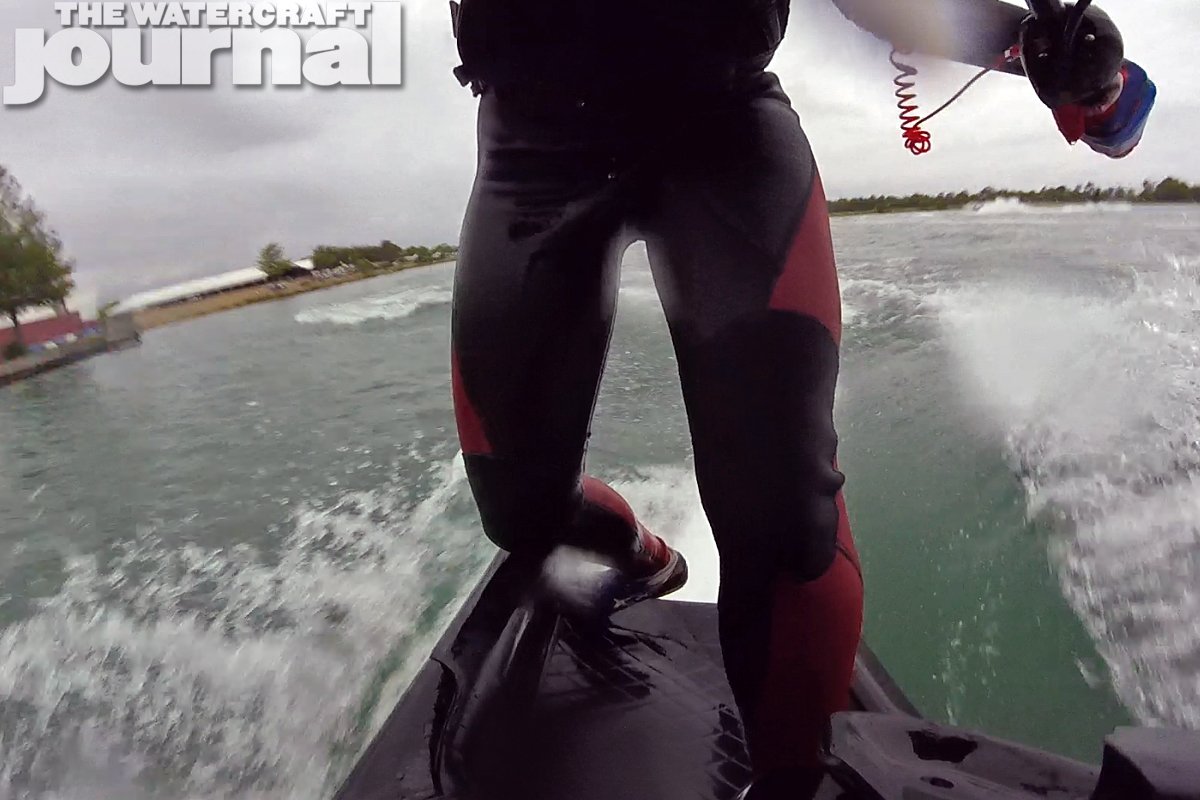
  • Lean forward onto your left leg while turning your upper body toward the left. This naturally gets the rear of the ski to lift and break traction.
  • Add throttle. The amount of throttle depends on how much power you have and how easy it is to get your hull to let go of traction. At this point the hull should be starting to slide instead of turn with traction.
  • With the momentum of your upper body twisting left and the weight off of your rear leg, press the energy outwards into the slide through your rear leg. Almost like you are kicking a ball with your rear leg, but not separating it from the ski at all. The rear end should pivot around the nose of the ski, with nose coming around to face against the direction you were originally traveling.
  • Chop the throttle as the ski pivots around to face the other direction. You don’t want the pump gaining traction mid-slide and the jet blast to start propelling you in whatever direction the nose is pointing.
  • Once the hull seems to be losing slide momentum, add and remove little weight onto your rear leg while adding in throttle to recover from the slide. The quick press of weight onto the rear leg will help the hull/pump get traction. Just have to remove it quickly if you do not want to initiate a tail stand – that is for a future article!
  • To begin moving forward for a full recovery, shift your weight onto your front leg, lean your upper body over the bars, and add throttle to plane.

Things to Consider
Even though the slide implicates the brutal idea of more power the better, the real skill lies in the finesse of bodyweight motion and timing. You honestly do not need a ton of power for this trick. Sure, the heavy application of throttle with the bars turned to initiate your turn is important to upset the hull and force the tail of the ski to pivot. However, the throttle chop before application of throttle is just as critical.

The throttle chop causes the pump impeller to quickly stop turning, but the ski’s momentum forward has not equivalently slowed. That throttle chop causes the impeller to act like a ‘wall’ that the water cannot get through, and the pump loses traction with no water flowing through it at speed. Once throttle is applied with the bars turned, the hull is primed to slide.

Work on keeping your body loose for both mid-slide balance adjustments and injury prevention. It is easier to pull muscles when they are overly tense and cannot absorb a bump or jolt. Always preform these in an open are free of debris and traffic. There will be times your hull will gain traction when you are not ready.

Most of the time this will result in a high side, but if you stay loose and drop your center of gravity down you might be able to save yourself from flying through the air. Always be cognizant of keeping your knees at least a little bent for better balance when riding a stand up, especially so when learning new skills.

Some hulls are easier to slide than others so don’t fret if getting yours to slide seems impossible. Hull design, sponsons, ride plate, impeller pitch, scoop grate, and even steering speed can change how easy or hard it is to slide a stand up. The guidelines above will get you part of the way there, but actually learning the skill in the real world may require setup tweaks, different timing and body movement for your personal ski. As always – practice, practice, practice!

Real Review: Slippery Wetsuits’ Flex Lite Glove

0

Admittedly, our personal preferences towards gloves have matured over the years. A decade ago, our gloves of choice were typically of a racier fare, featuring clunky rubberized molding over the knuckles and a great deal of design complexity that made them both thick and bulky; which if ever you tried to rub your nose or the sweat from your brow, would know how painful the act can be.

For the everyday personal watercraft enthusiast who isn’t interested in looking like a battle-ready Batman, the needs for a comfortable riding glove to satisfy are primarily simple: to provide continued grip, protect the skin from undue rubbing and guard it from the elements. That’s pretty much it.

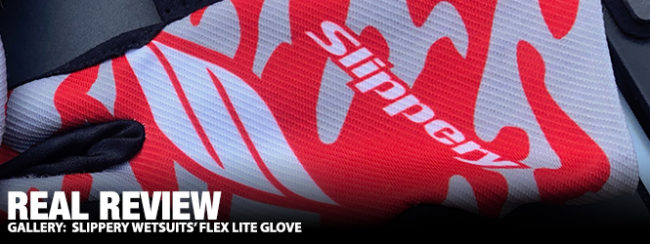
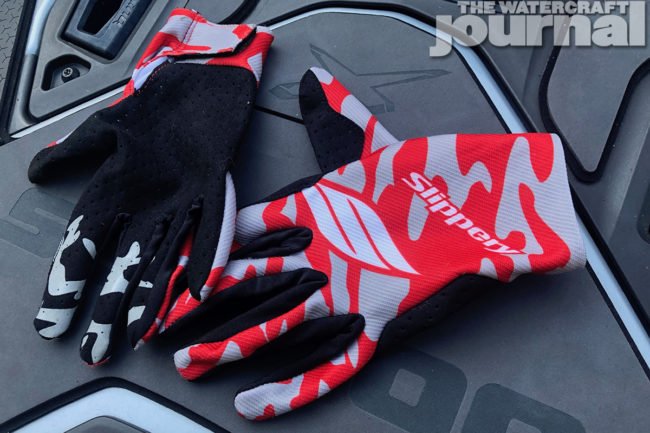
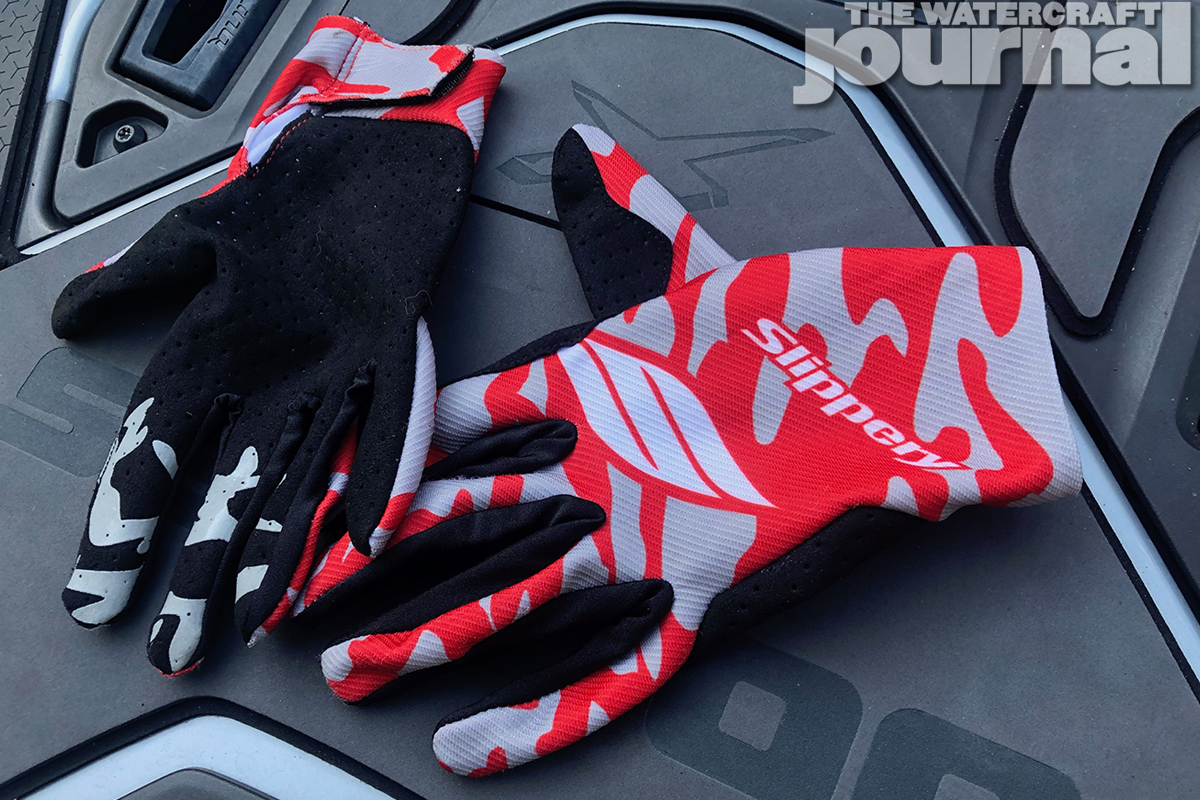
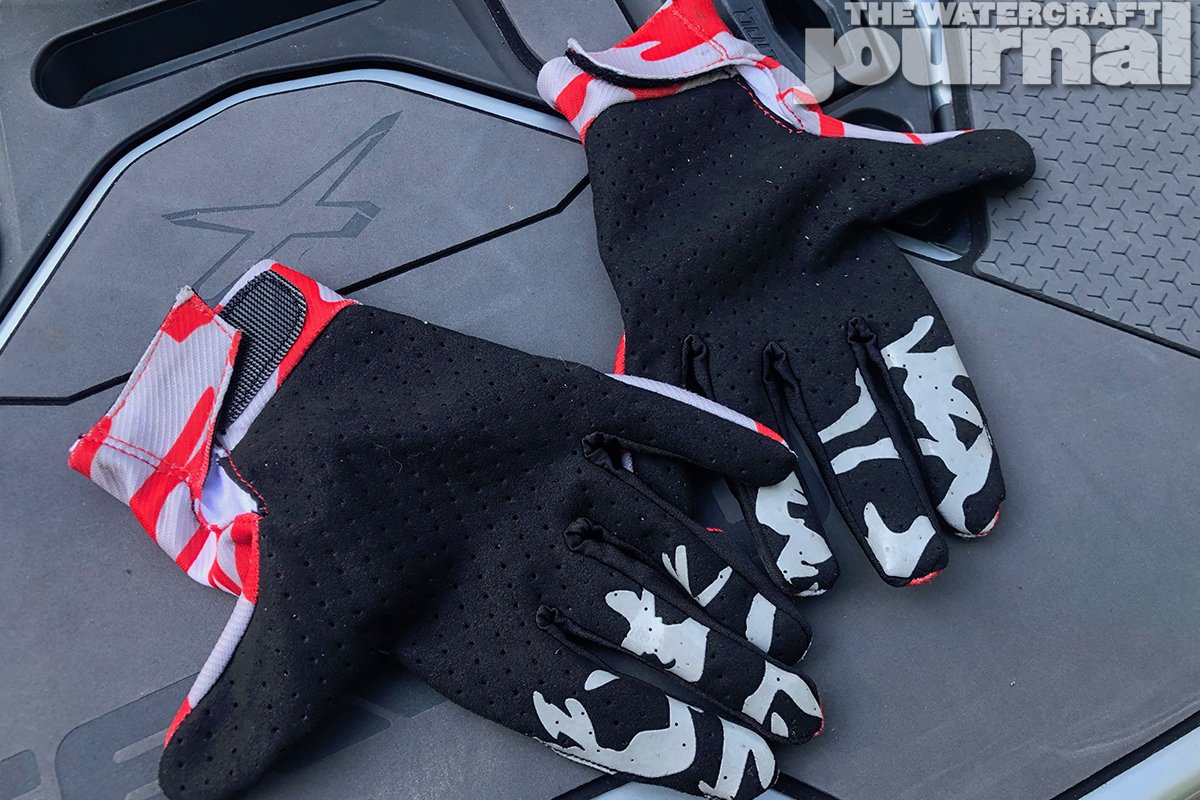
So while the flashy red-and-silver camouflage pattern of the new Slippery Wetsuits’ Flex Lite glove may be a little “much” for some, the superior fit and clean pattern makes it all worth it. At first blush, we weren’t convinced that the Flex Lites would have “what it takes” to meet our needs. The thin 4-way stretch mesh material appeared too thin, and the anti-slip gel print on palm and fingertips was sure to peel.

Well, that’s what we thought, anyways. Rather, the screened-on anti-slip material on the fingers have held up surprisingly well over the summer. The “barely-there” lining of the perforated palm gives the gloves the second skin-like feel, breathes easily and dries near instantaneously. And while being incredibly light, the gloves’ reinforced thumb overlay provides added protection from rub-induced blisters.

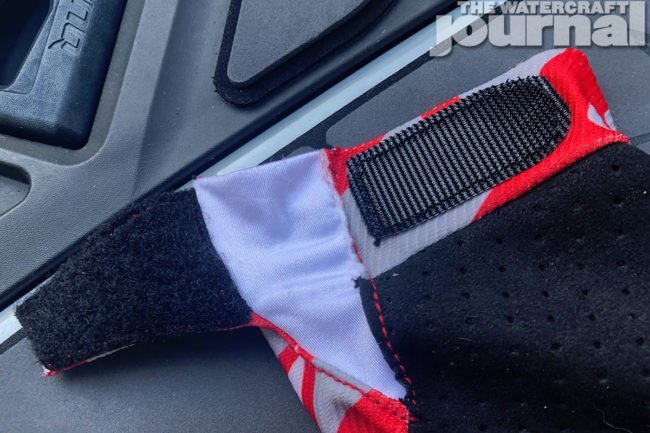
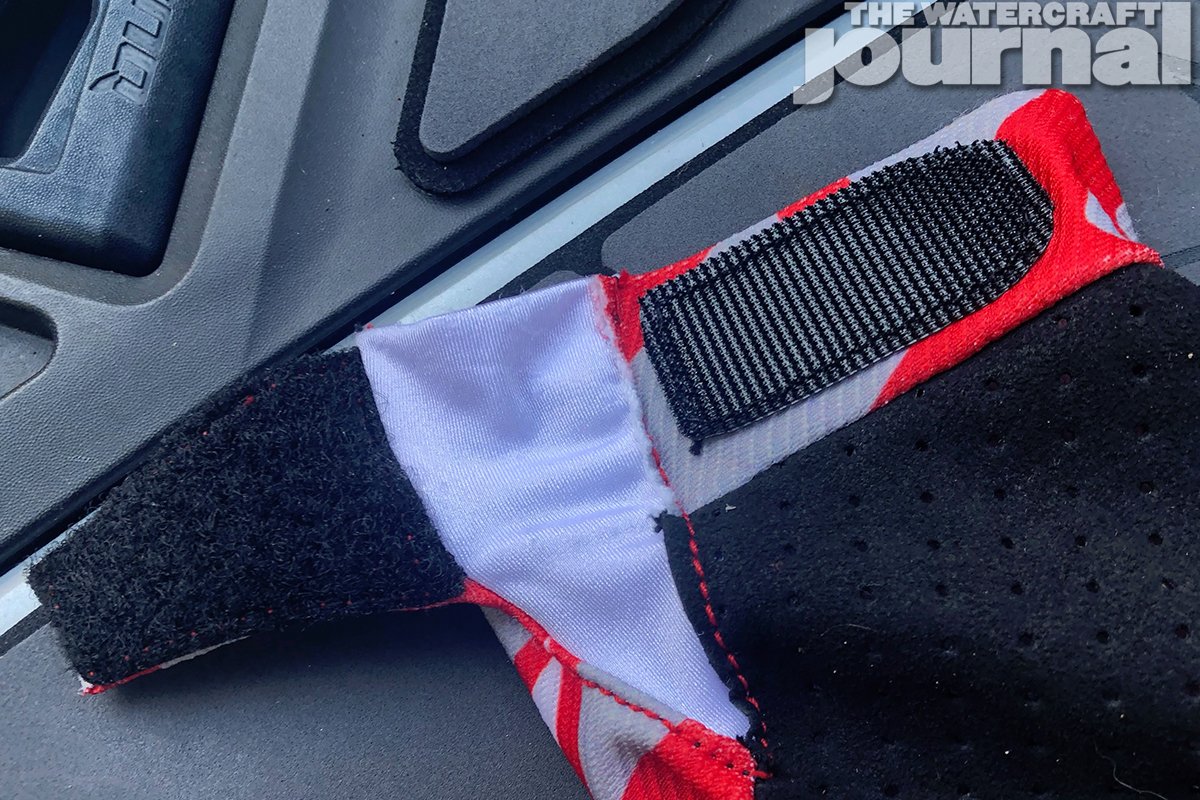
Our final and biggest critique of all riding gloves is found in the wrist feel and closure. We’ve got half a dozen sets of gloves that no longer strap tight, as the Velcro has loosened or the straps snapped. Not so with the Flex Lites’ hook-and-loop wrist closure. The strap is part of the pattern and has as much likelihood of tearing off as one of the fingers (ie. it’s very unlikely).

Super flexible with class-leading breathability, Slippery Wetsuits’ Flex Lite gloves are a great warm-weather glove (don’t expect much in keeping your hands warm in colder temperatures). Priced at $21.95, they’re a solid purchase for the rider looking for a little added protection from the elements without feeling like they’re bundling up for the Iditarod.

Belassi Burrasca Now Shipping – Just Not To North America

0

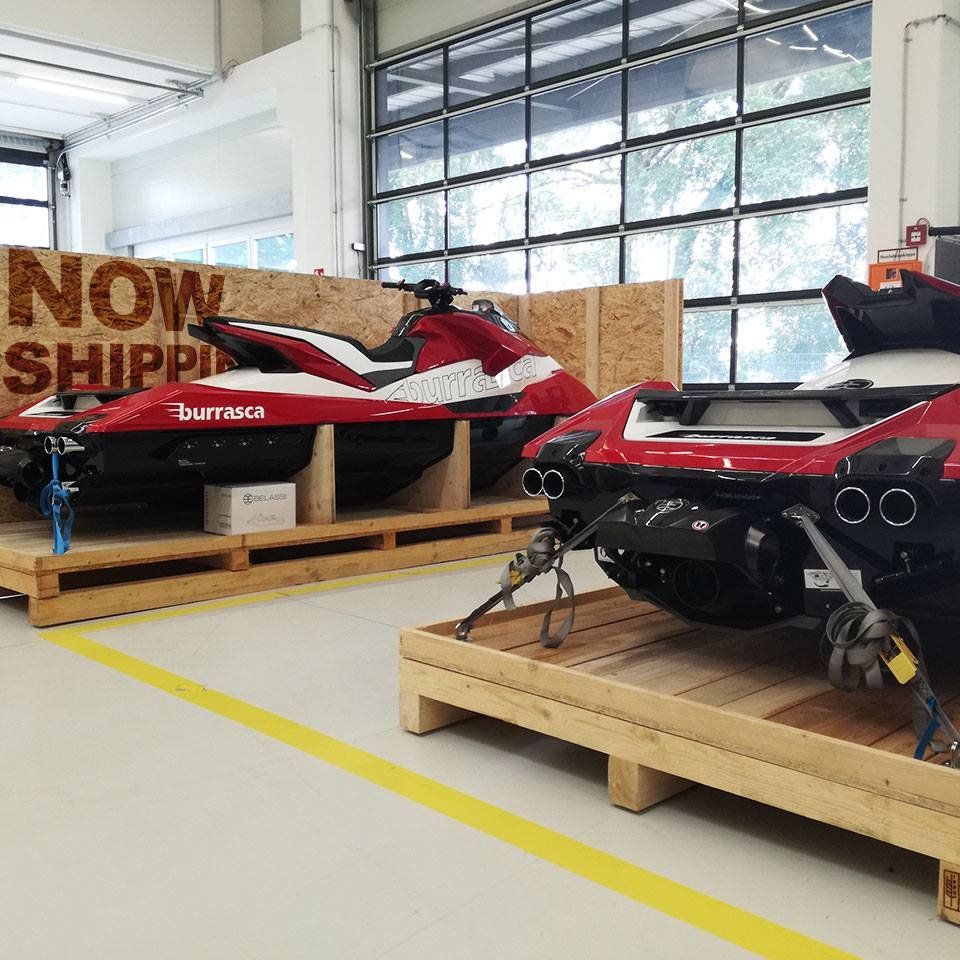
The 333-horsepower Belassi Burrasca units have now begun shipping out of their Austrian manufacturing facility to dealers worldwide. The exotic watercraft are already arriving at their destined dealers and eventually to their new lucky owners’ garage.

We will not be seeing any of these shipping crates arriving to U.S. shores just yet however. Most of the Belassi dealers are located in Europe and Asia and so that is where most of these units will first arrive to.

As we have already seen when speaking with Belassi representatives, the company is still deliberating its options in terms of expanding to the North American markets. Belassi is still attempting to navigate the waters of the US and Canadian markets.

Once a strong network of local dealers can be established, we expect that this manufacturer will be eager to start shipping their watercraft to the world’s largest market for personal watercraft.

For those who just cannot wait any longer, you can always check out the current worldwide belassi dealer network. Surely for the right price, you can find one somewhere. Shipping back home however will be on your own terms. Good luck and feel free to PM me for a demo ride.