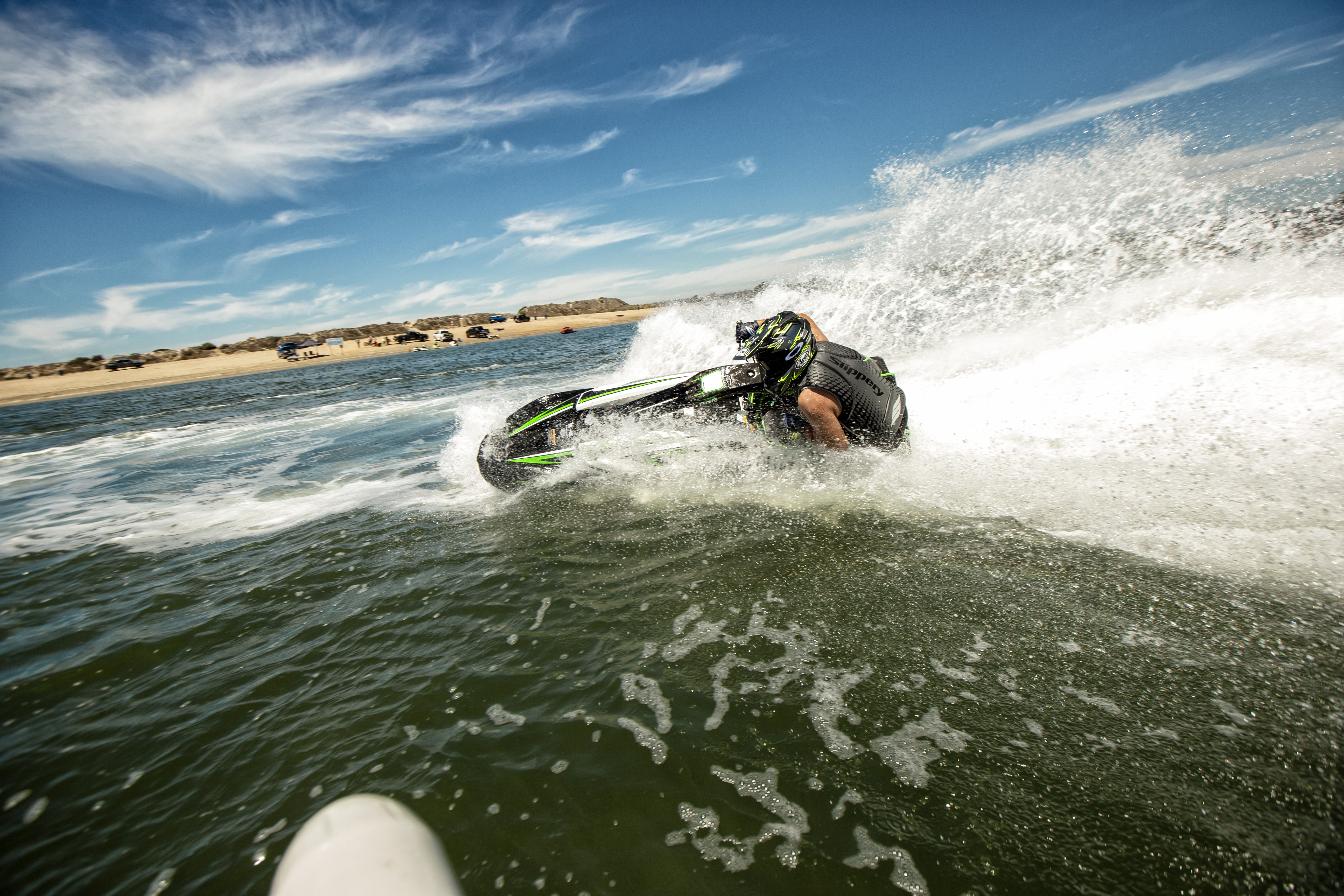
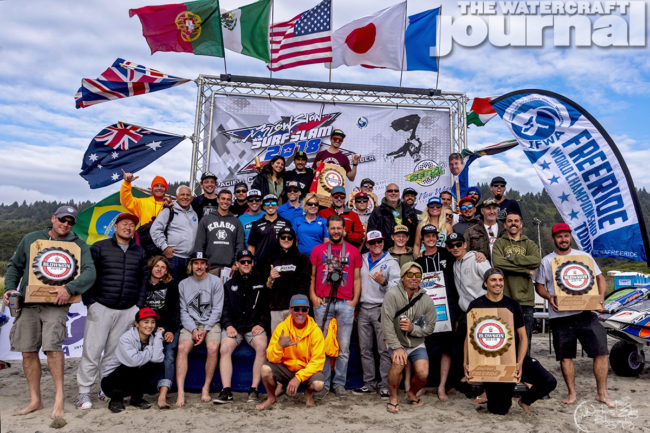
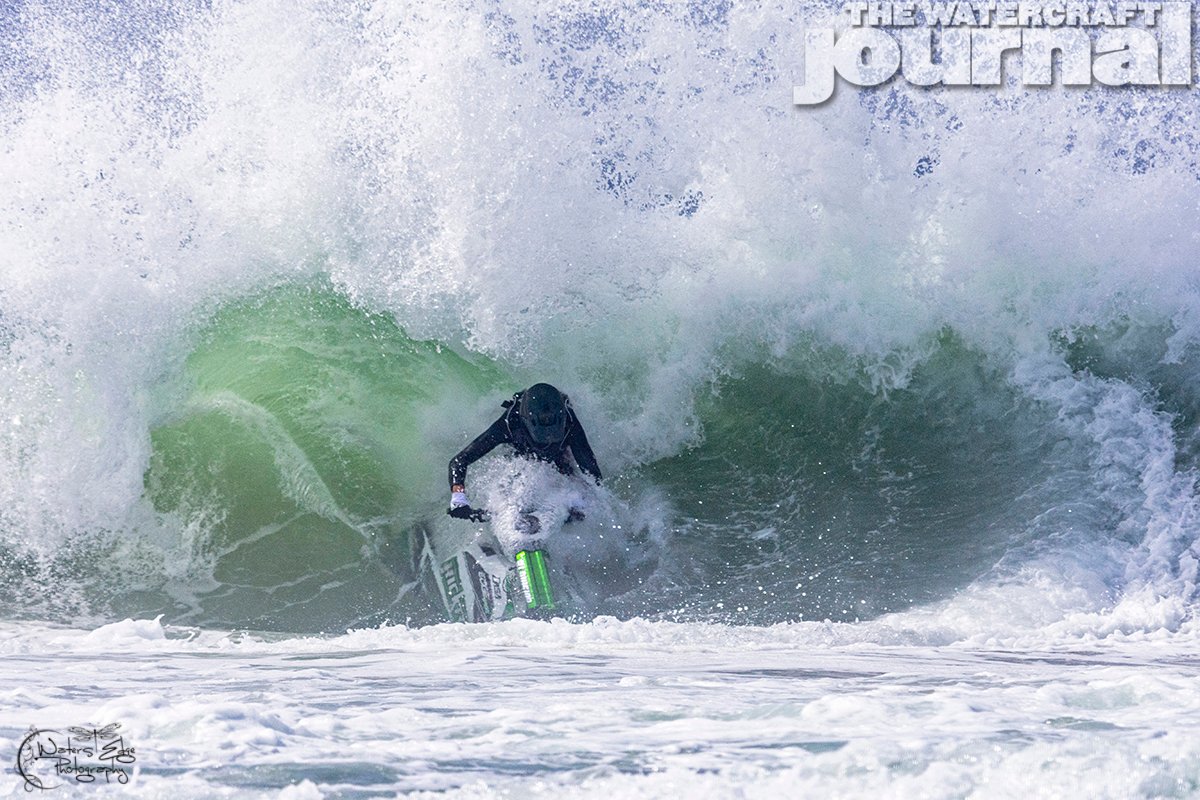
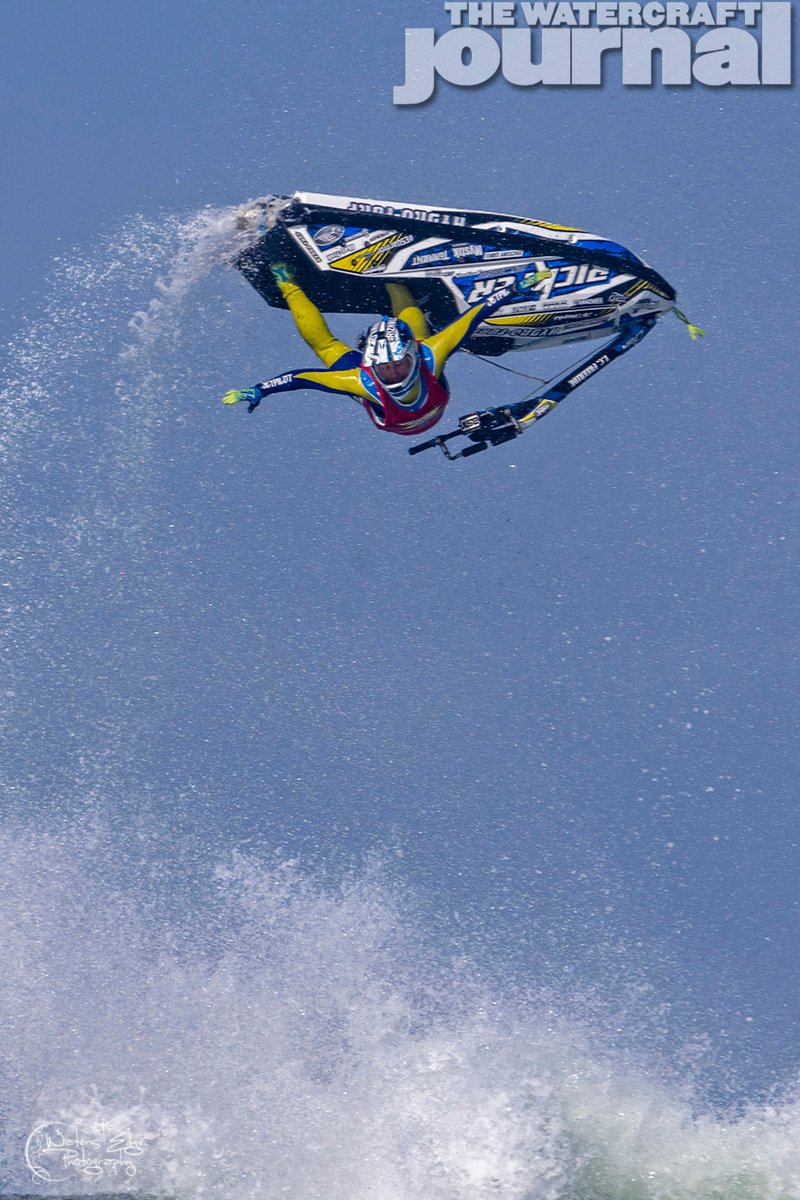
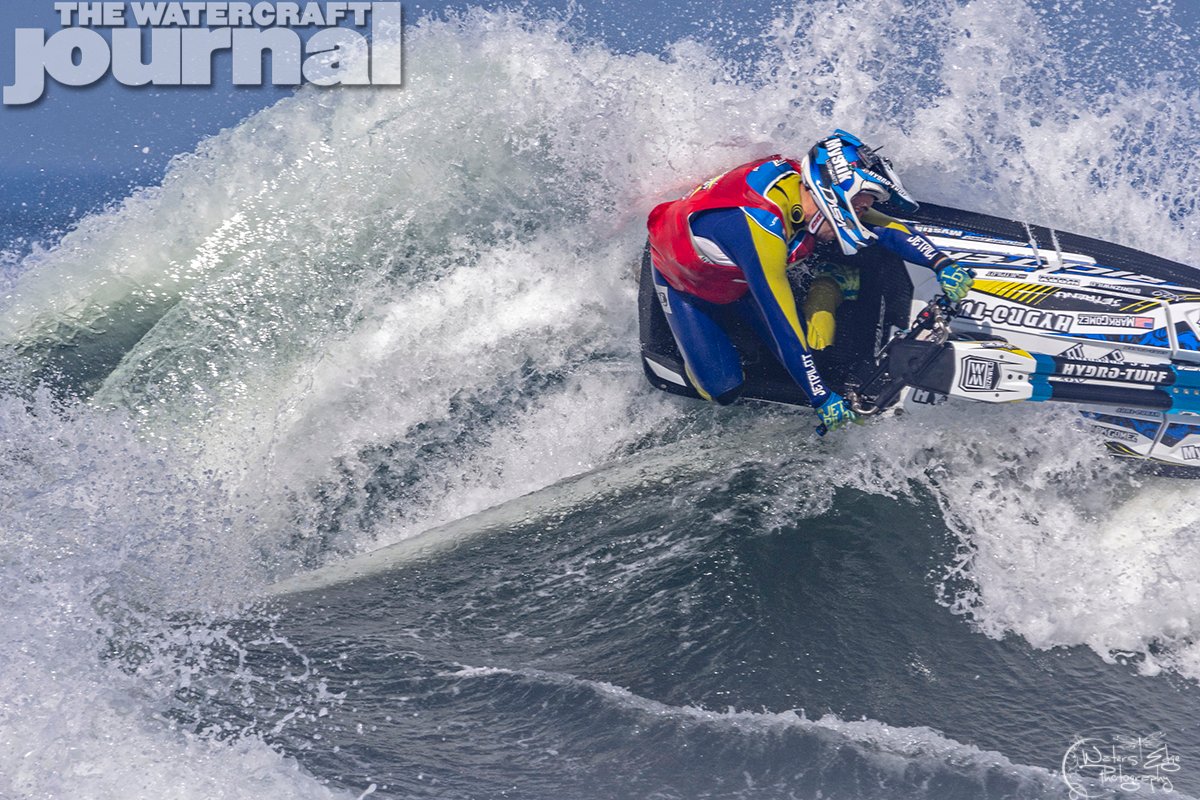
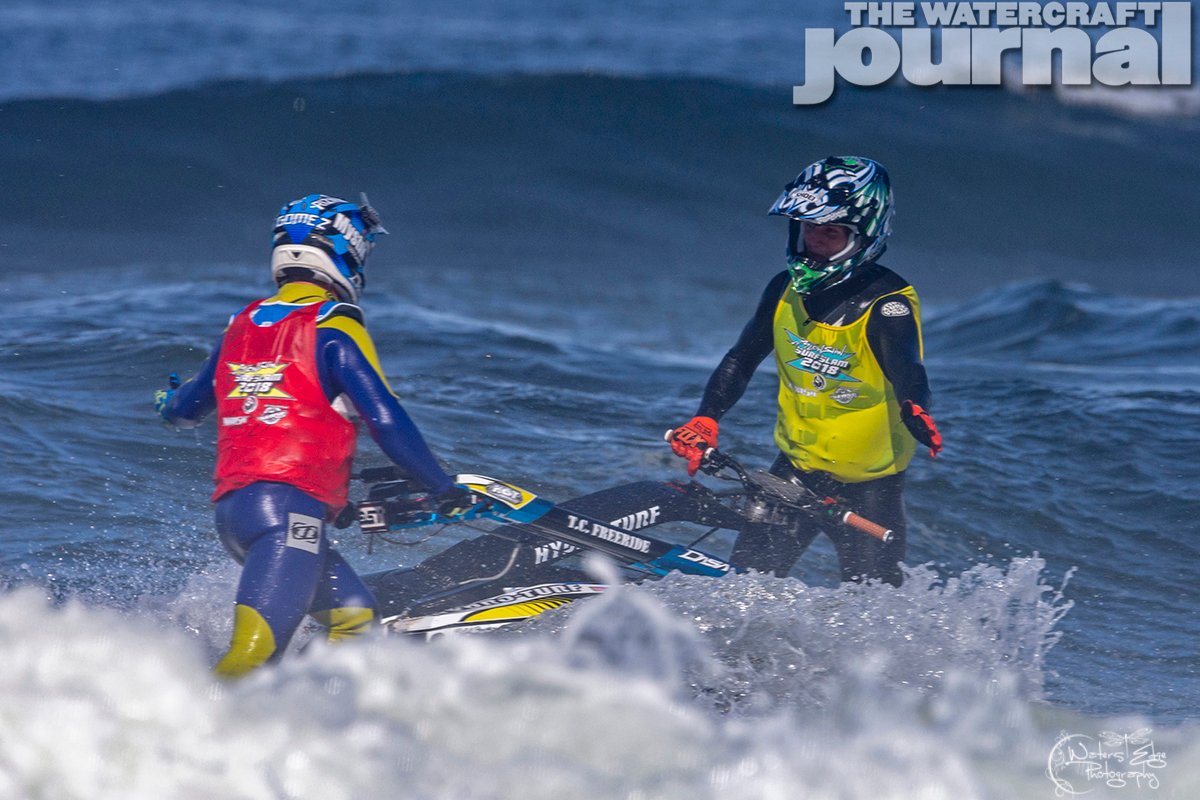
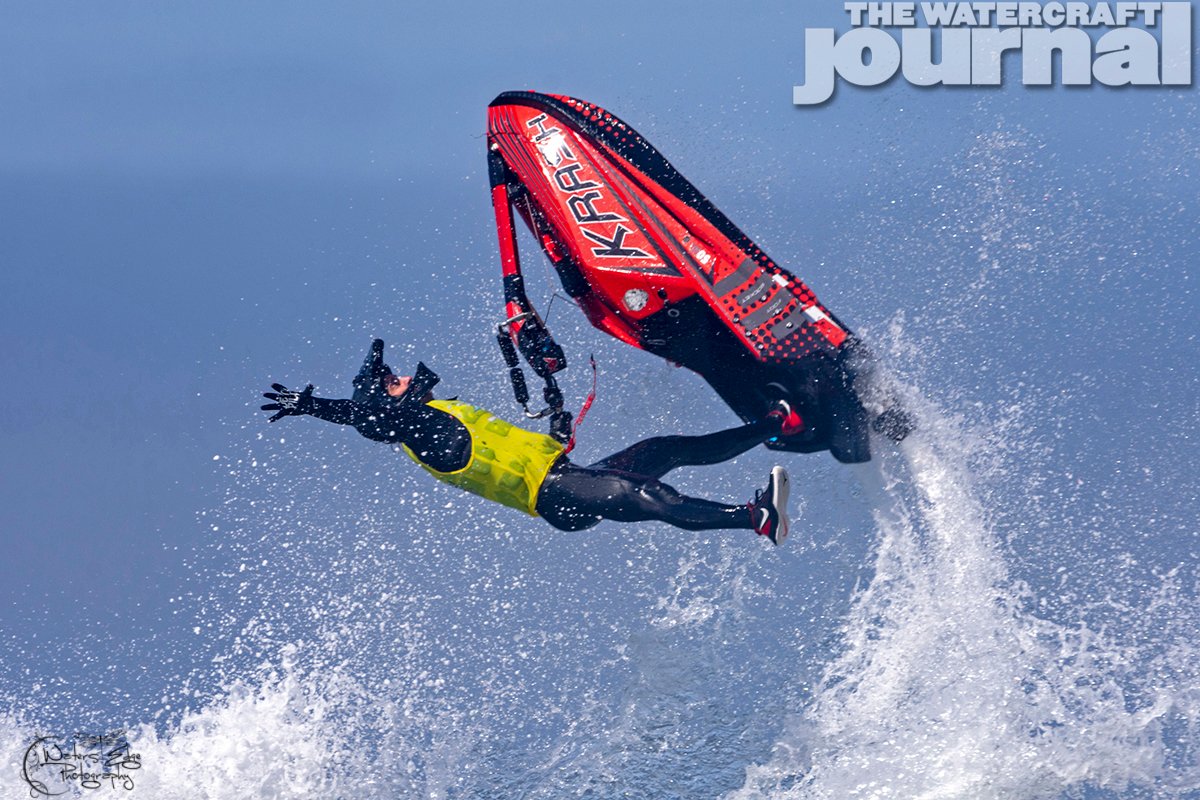
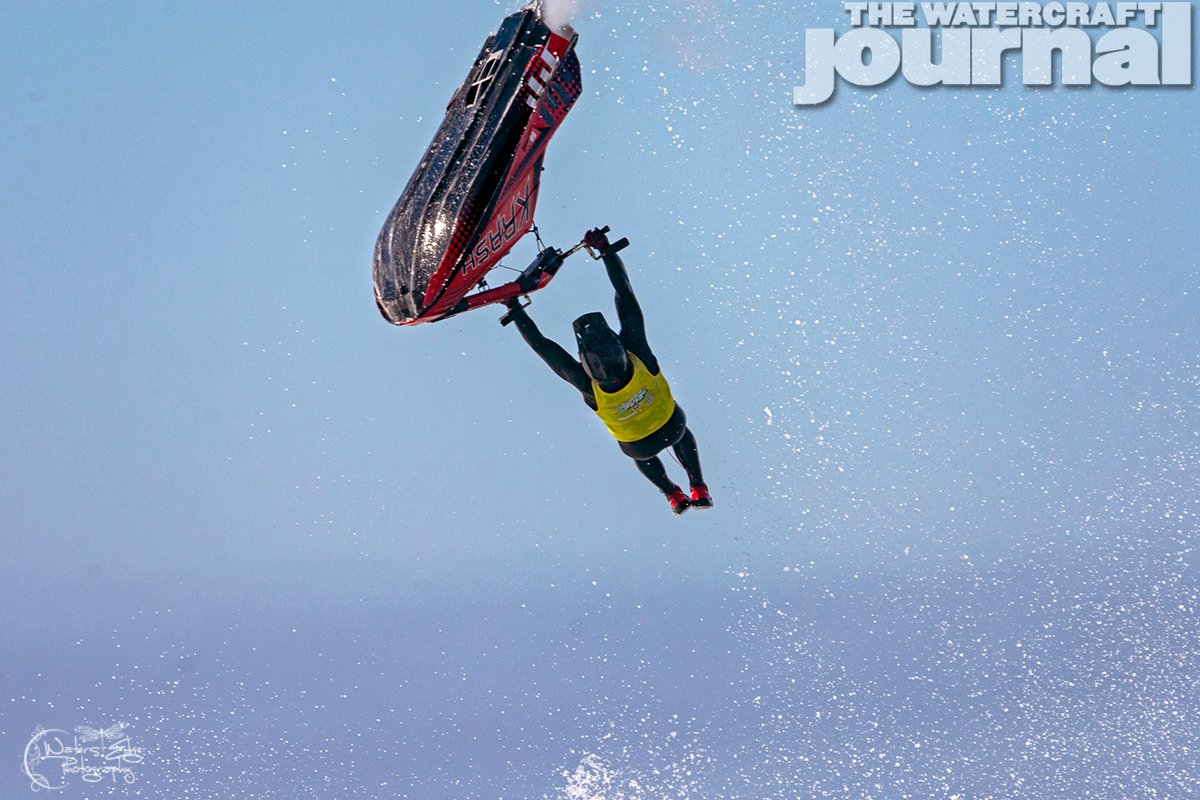
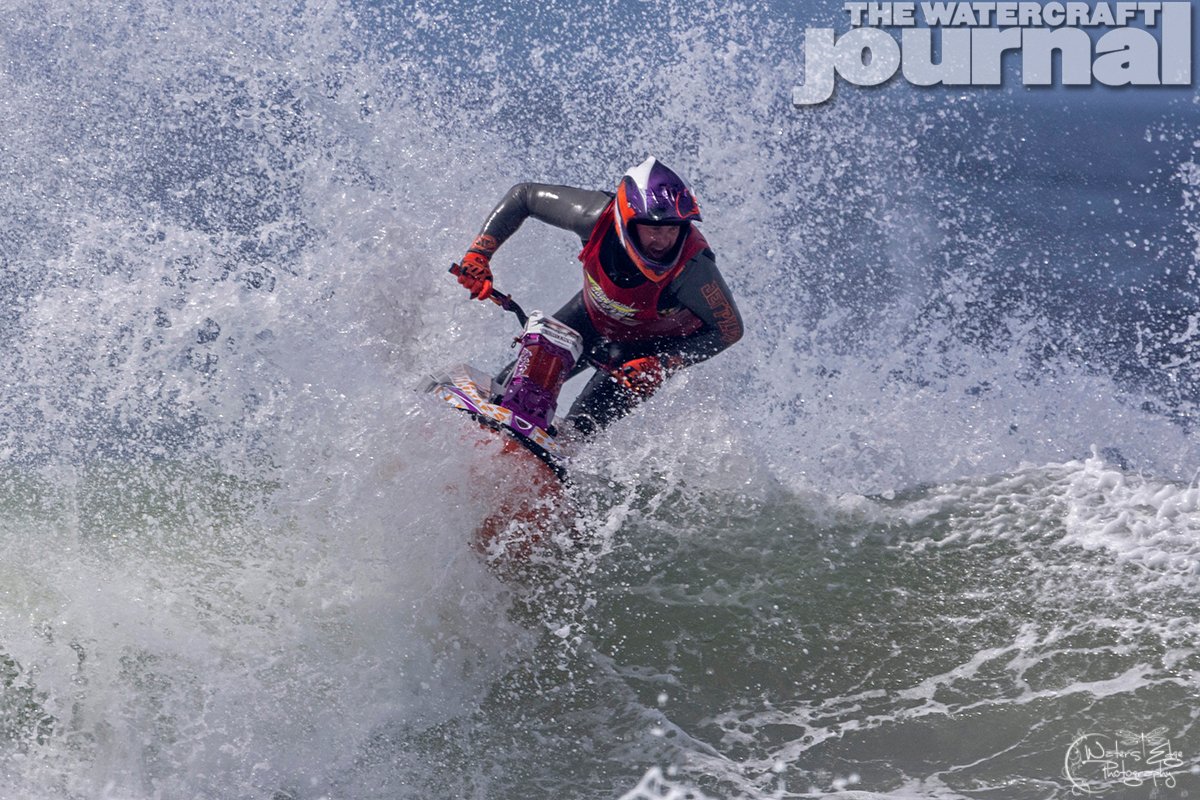
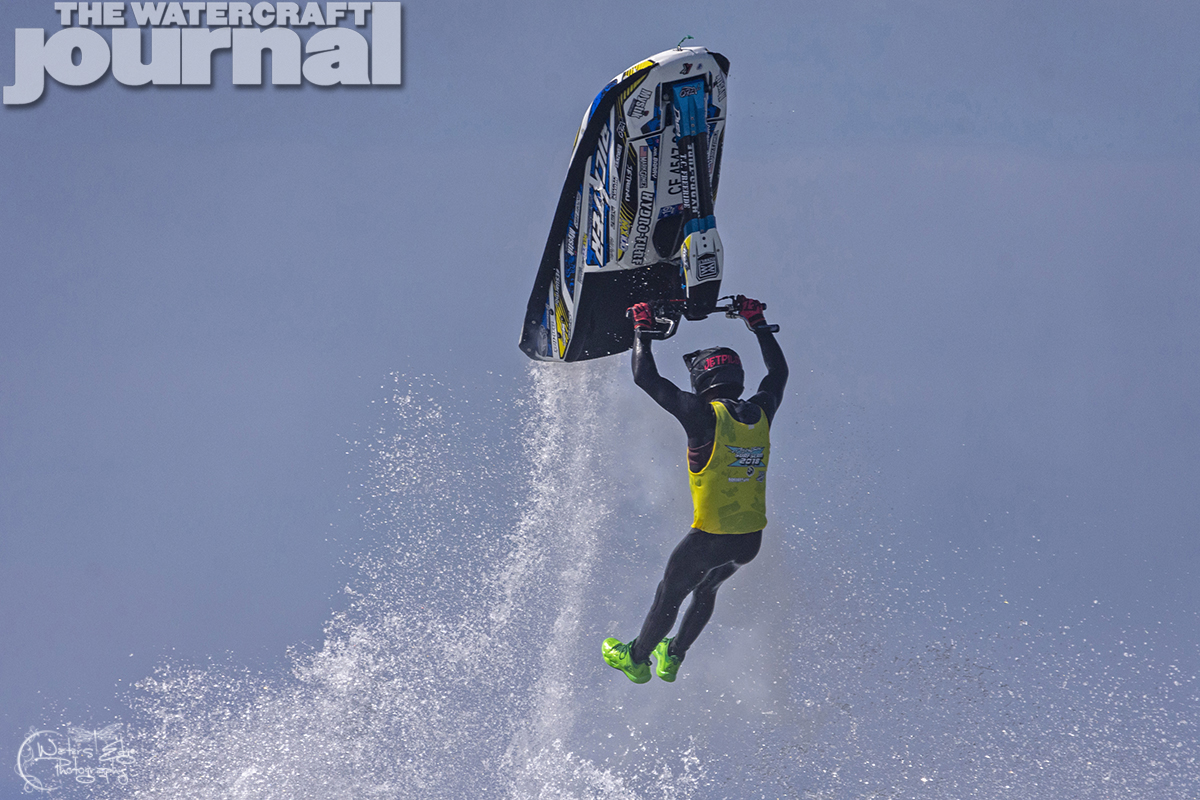
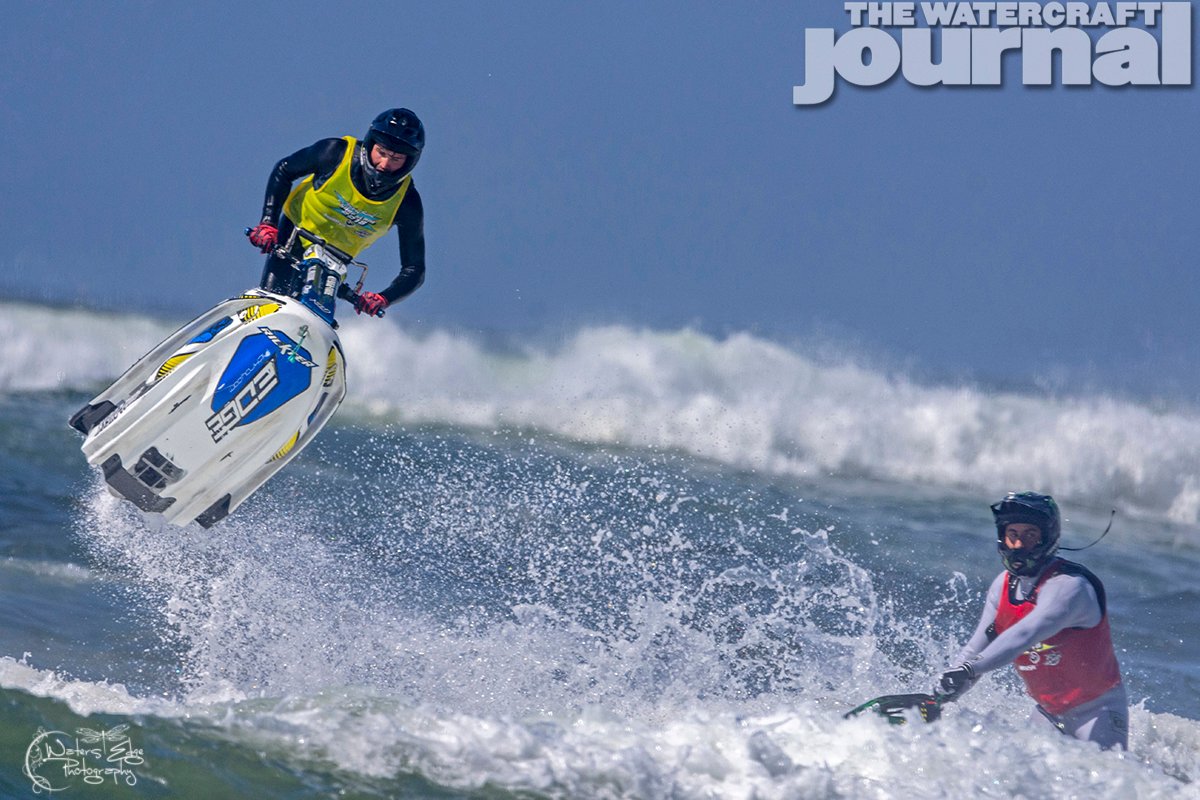
This article has gone through multiple headline changes – fitting for a weekend that included fickle weather patterns, capricious surf conditions, and sharp – and unexpected – shifts in the leaderboard at the 10th Annual Blowsion Surf Slam Freeride.
I started out with what seemed to be a logical headline: “Do it for Dady.” Those were the first words I heard Friday afternoon when I hit the Tierra Del Mar beach just outside Pacific City on the Oregon Coast. One of the competitors was standing with another competitor who was about to launch for his initial round in the chilly Pacific waters, and he clapped the young man on the back, and said “Do it for Dady.”
I heard that phrase often throughout the weekend; an honor to John Dady, the founder, driving force and inspiration behind Blowsion, and Surf Slam – and a man whose spirit was as palpable on that beach this past weekend as the morning fog that shrouded the rocky coastline.
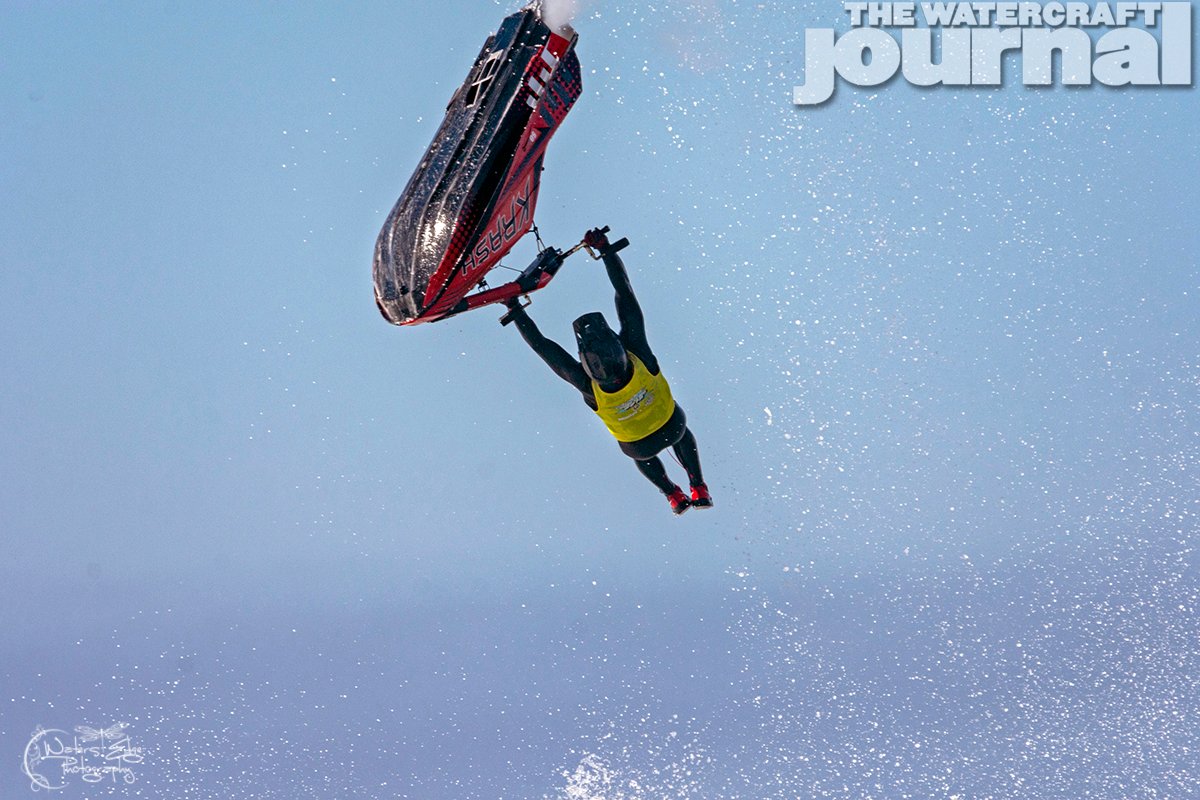
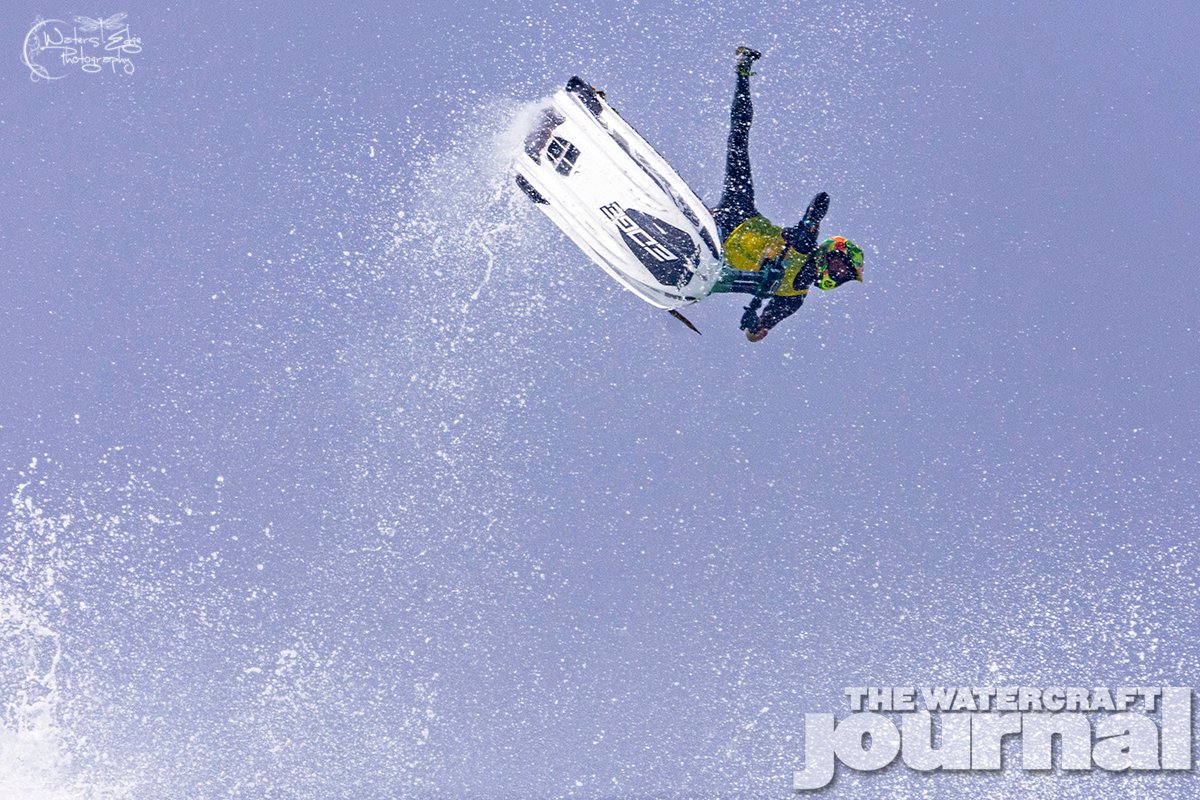
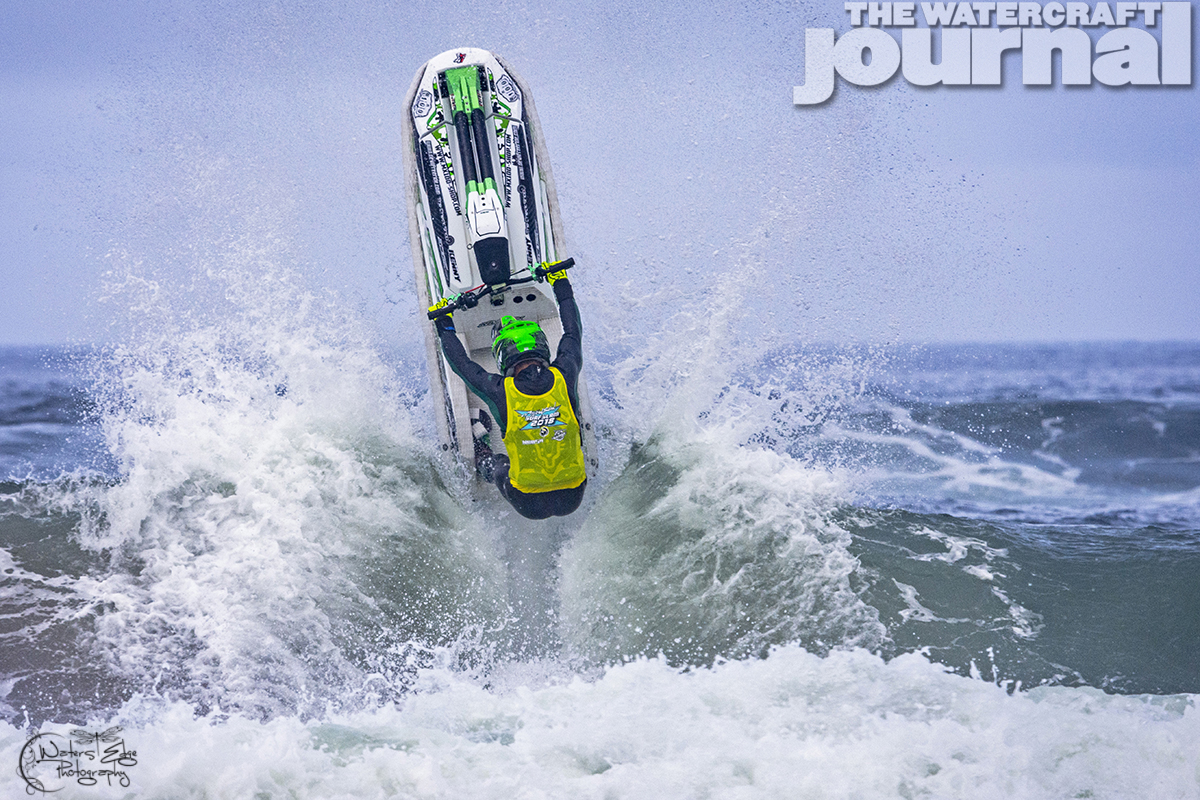
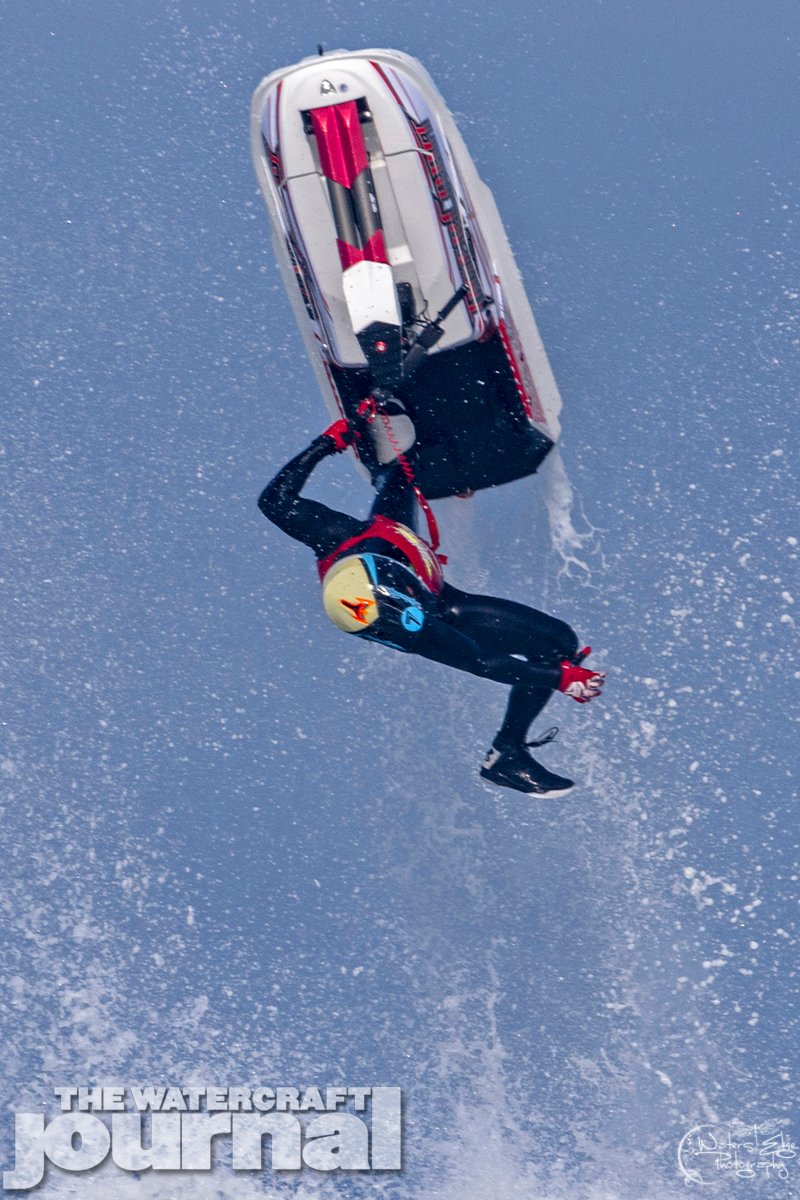
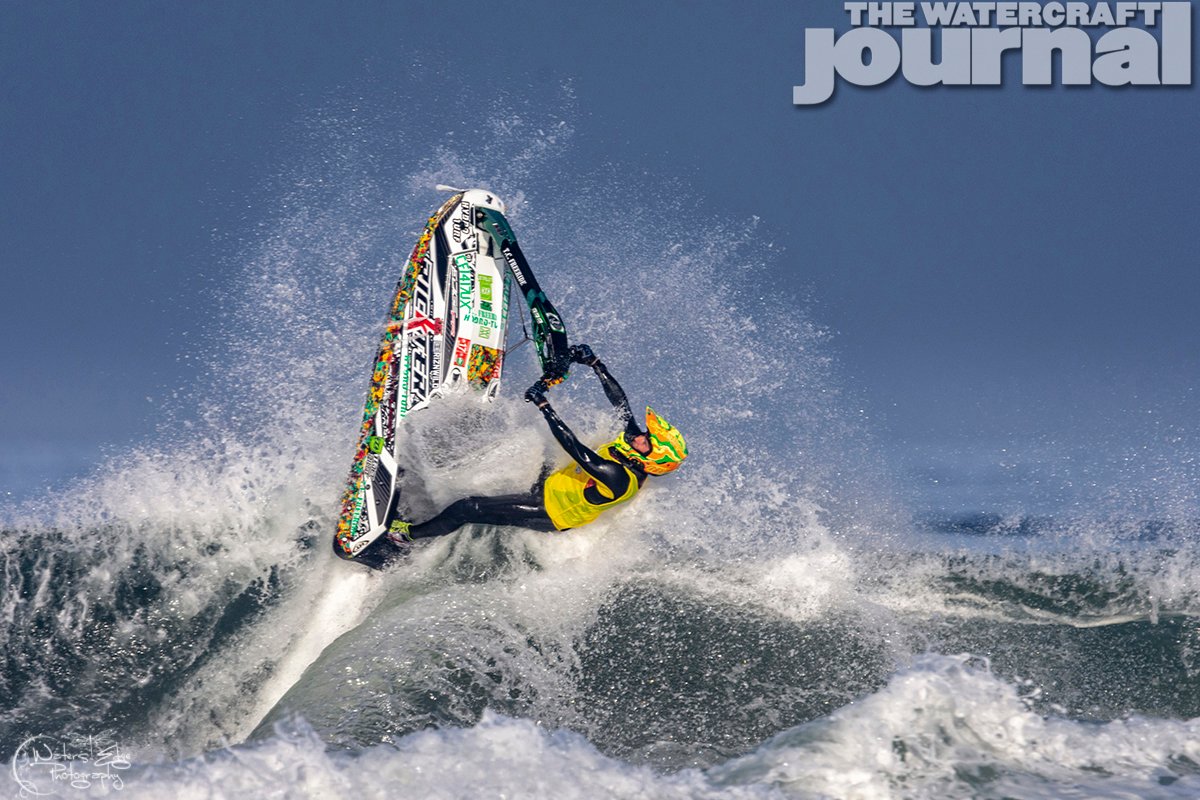
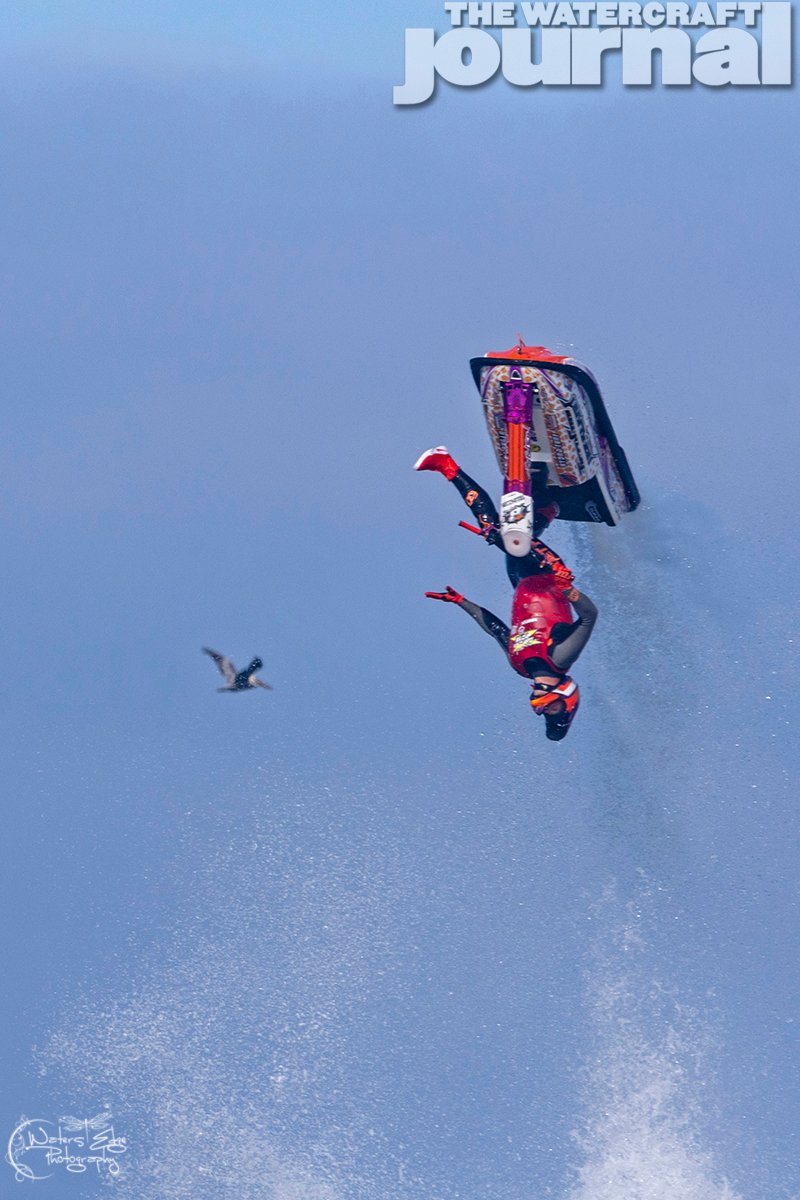
Saturday, as I watched not only the pro lineup of riders master the waves of the Oregon Coast, but amateurs and rookies alike put in amazing performances, and as I experienced the unique combination of laid-back, surfer-style camaraderie and the ultra-competitive, high-energy buzz expected of an extreme sporting event like the Freeride tour, I scratched the original headline in favor of the much less sentimental, and much more journalistic “Surf Slam brings full slate of competitors to battle for points and pride.”
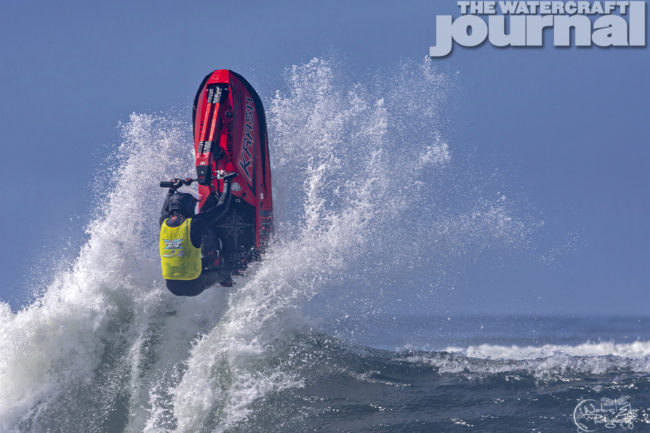
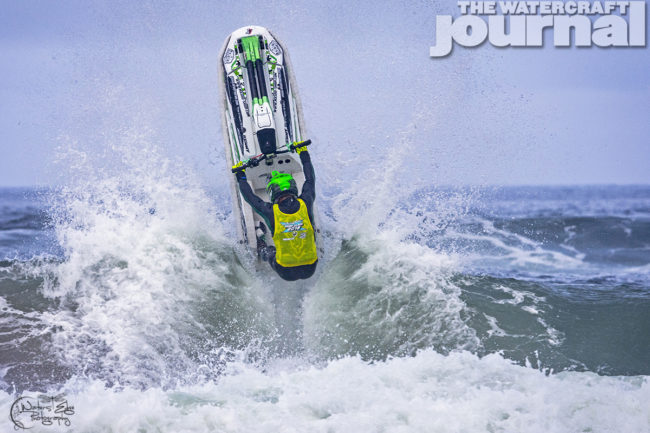
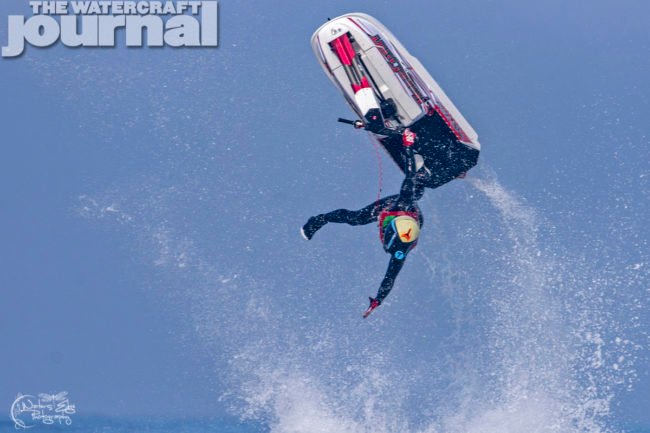
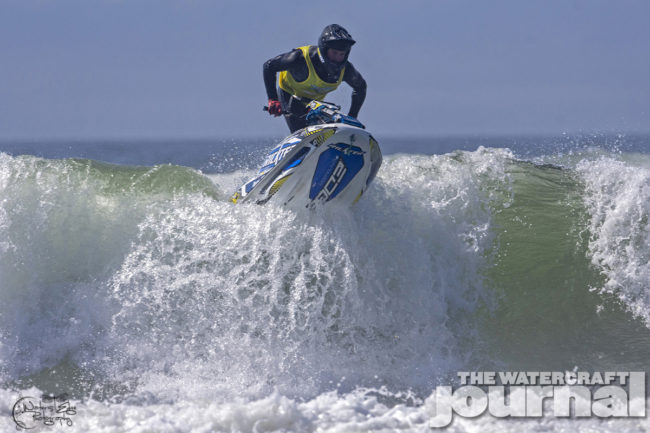
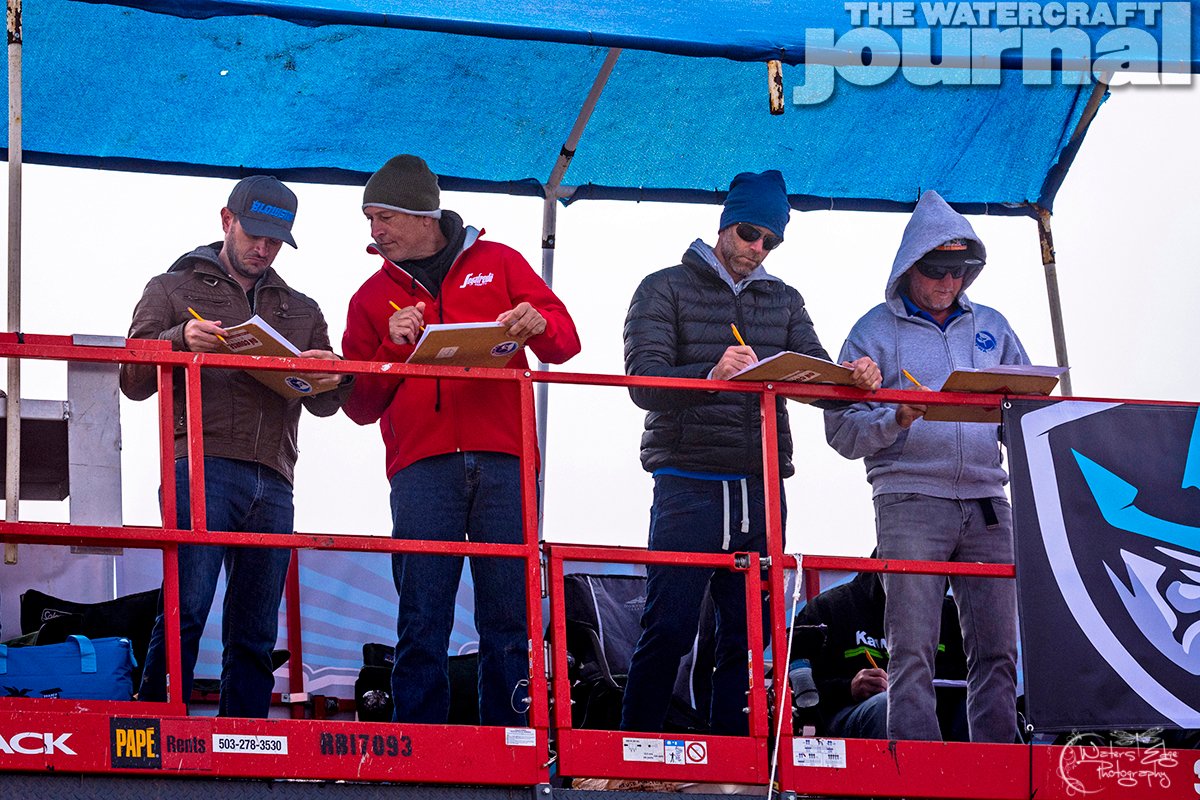
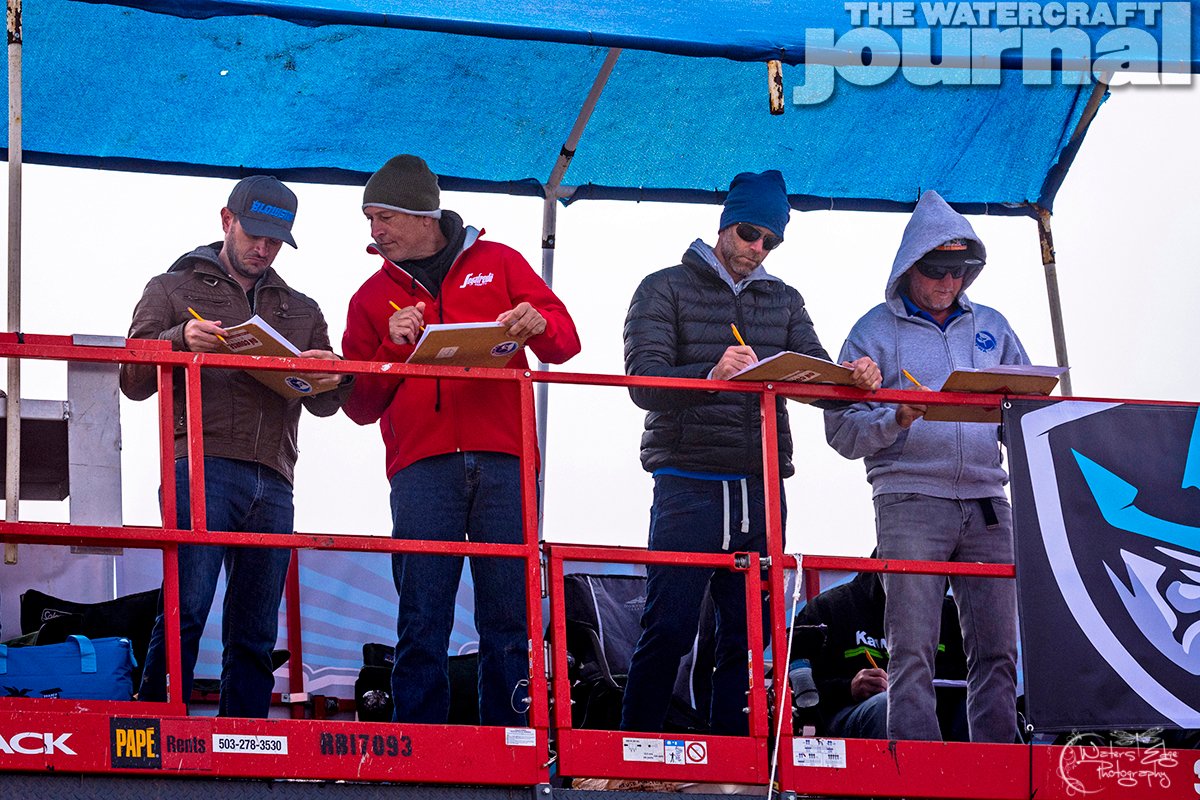
Sunday, I redlined that headline and penned in “Wild Waves and Wildcards,” as I watched unexpected winners written into the brackets on the pit board. From well before the start of the event, I had heard the talk of a “showdown” between Mark Gomez and Abraham Ho – and while the performances by these two champions were nothing short of spectacular, it was clear that there were plenty of other riders that did not come all the way to Oregon to go down without a fight.
And when the quarterfinal roster of Abraham Hochstrasser, Ryan Savage, Hugo Goirre, Takaaki Murao, Mick Anthony, Joel Barry, Brandon Lawlor and Mark Gomez was set on the pit board, it was clear that this was anyone’s game.
I am not conversant enough with the tricks, scoring, or terminology of Freerides to provide a walk-through or run-by-run replay of the weekend, and especially not the final rounds, but I would highly recommend checking out Rick Ignacio/LiveStreaming247’s coverage visit on YouTube (search for “Blowsion Surf Slam 2018”).
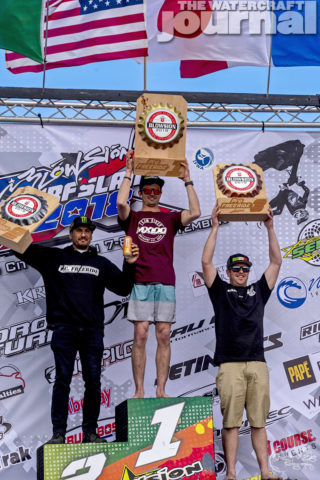
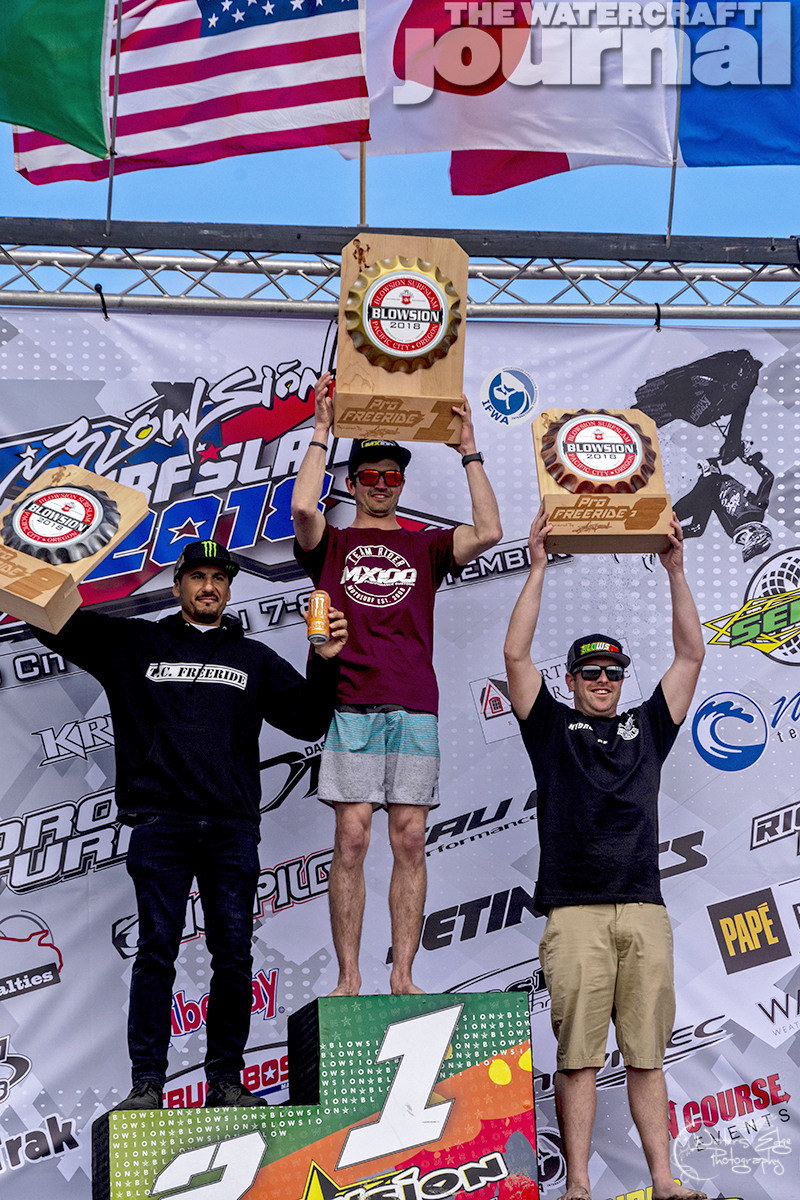
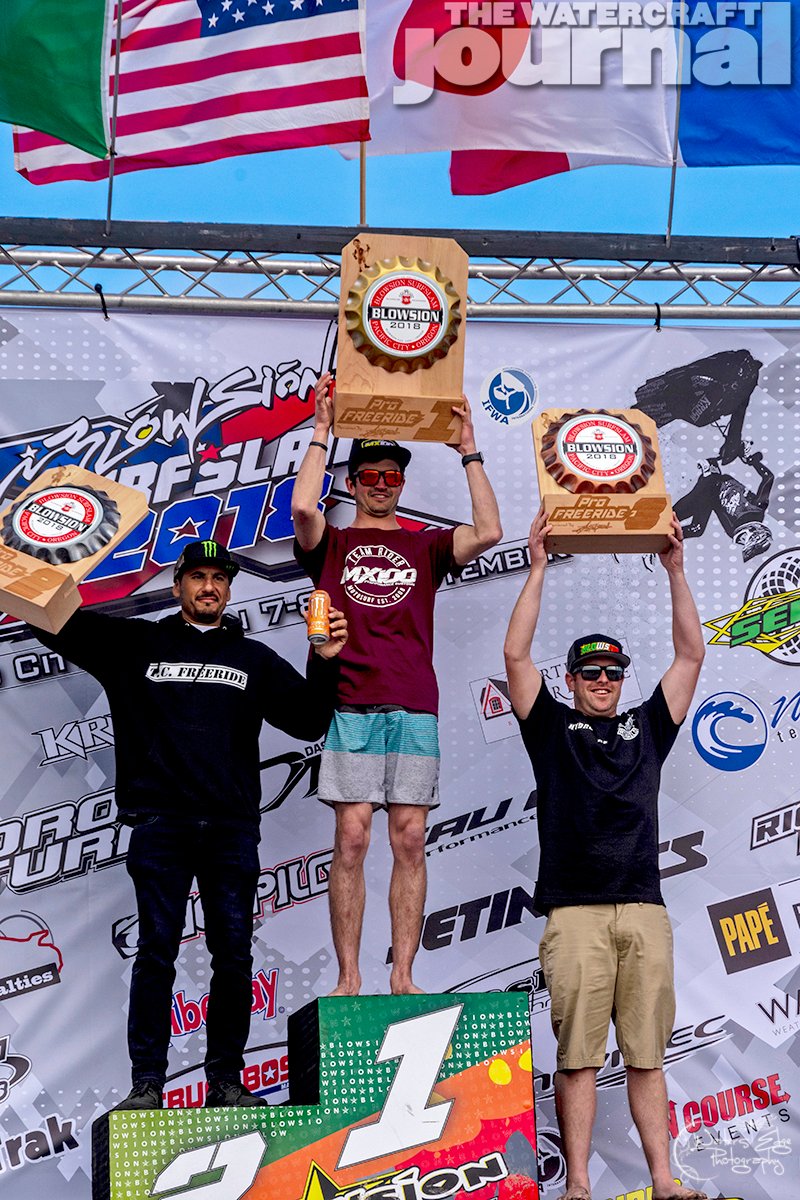
While I can tell you that Joel Barry ended the weekend standing on that top podium spot, followed in second by Abraham Hochstrasser and Brandon Lawlor in third, that does not do justice to the performances put in by each of the competitors in this last weekend’s battle – from rookie all the way to champion – it has to be seen, to be appreciated.
And on that note, I also highly recommend – if you ever have the opportunity – that you pack your bags, venture west, and come experience Surf Slam for yourself – you won’t regret it. In the words of Dawn Dawson (another reason to come to surf slam; Mikey Young and Dawn Dawson!) – “If you haven’t been to Surf Slam, and if you, like me, have a bucket list of things you want to do, I would definitely add Surf Slam to that list.
There is just no way that pictures and video and even audio does this justice unless you are here. If you love jet skis, if you love competition, come check this out. There are multiple components to what makes Surf Slam so magical, and I am going to say that, yes, because it is. It is the brainchild of someone we revere and have a huge amount of respect.
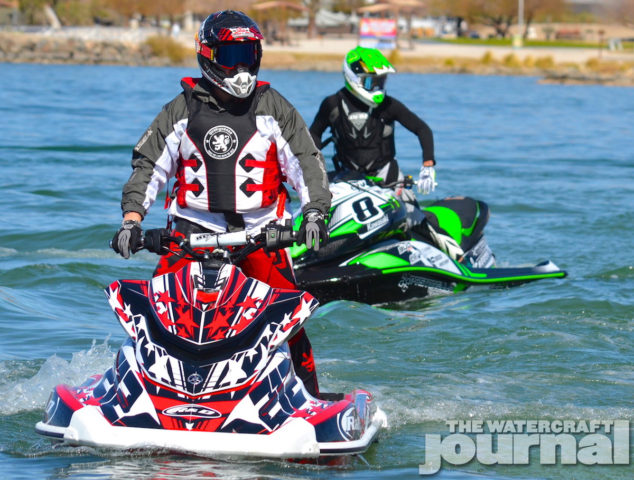
Entry forms are now available for this coming winter’s Mark Hahn Memorial 300 event in Lake Havasu. 2019 will mark the 15th annual Hot Products IJSBA event. Presented by Yamaha, this race is one of the most exciting events of the year.
For all of the details and to get your entry form, check out the full release below.
2019 15th Annual Hot Products IJSBA Mark Hahn Memorial Havasu 300
Shot Gun Start for the 2018 Mark Hahn 300 will be February 23, 2019,
Special Update for the 2019 Race from Jim Russell and Mike Follmer
Entries are open now for the 2019 Hot Products Mark Hahn 300 presented by Yamaha. Get yours’ in early and secure your place in the 15th annual running
of the longest PWC Endurance race in the world.
Team entries will be accepted until January 15, 2019 and must be prepaid (a valid credit card will suffice). Due to ever increasing costs to produce this historic and unique event we are forced to limit this race to a maximum of 50 teams. Entries (if accepted) after January 15 will have a $75 late fee added so enter early to ensure your place when the shotgun fires on Crazy Horse beach for the 15th time!
If we haven’t received 40 prepaid entries by the January 15th cut off date we will be forced to cancel the event and refund the entry fees received. |
For entry forms and updates please visit www.MarkHahn300.com.
The Mark Hahn Memorial 300 is not only one of the most exciting events of the year, it is usually the first of the major events to gather the major competitors and industry leaders together to show off the ingenuity and abilities of the PWC Racing Community. Pro racers, first timers, sportsmen, ironmen, and some very diehard Ski riders will challenge the longest single event race on the planet.
The winner of this race will have completed 300 total miles in a grueling single day race which seeks to test the limits of what man and machine can accomplish while honoring the legacy of a man who, while on this planet, showed deep dedication to Personal Watercraft Endurance Racing. One of the few people to match Mark Hahn’s love for the endurance circuit is Mike Follmer. Mike has continued Mark Hahn’s passion in the creation of this intense competition which gathers the best endurance racers in the world and rewards the winners with an awards ceremony with trophies that are well regarded as some of the best in the industry.
Hot Products is the sport’s leader in performance parts distribution ensuring that watercraft competitors and enthusiasts have access to the supplies they need when they need it. Hot Products rallies the top performance builders in the sport to support this great event. With Ross Wallach as the race director, Jim Russell as the producer, and Rich Boell as the technical director, competitors know that the event will be well organized.
The word is on the street that Gyorgy Kasza will not be competing in this year’s IJSBA World Finals. From the looks of it though, he still plans to attend Lake Havasu as a spectator.
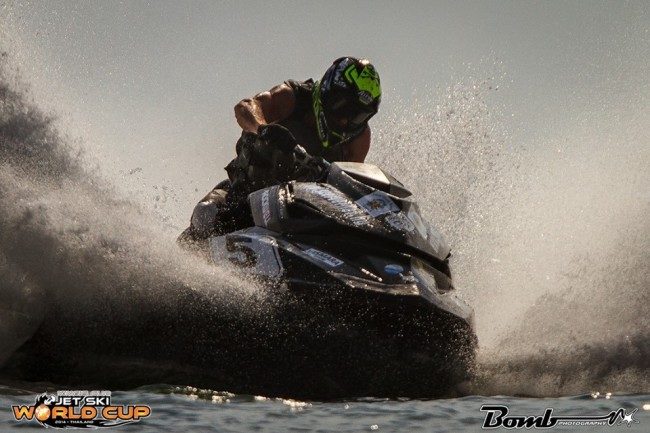
The World Champion and long-time Sea-Doo Team racer definitely elevates the competition with his racing presence and without him in the competition, it definitely opens the doors to other racers.
Kasza has a long history of top podium finishes. At last year’s IJSBA Finals, he placed first in the Runabout Open Slalom, as well as gaining top tier podium finishes in GP Runabout and Pro Runabout.
When he is not racing around on his numerous Sea-Doo Watercraft, Kasza has also been focusing his efforts in helping Belassi racing. He has been on the scenes at all major Belassi events helping out with testing and tuning for the up and coming watercraft manufacturer.
If we do not see Kasza on the water at this year’s World Finals, we will definitely be looking out for him in the crowd.
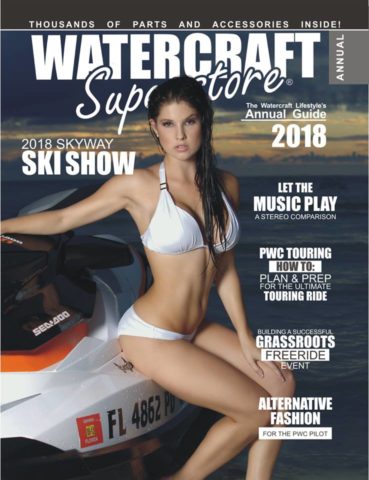
The 2018 Watercraft Superstore Online Flipbook is chock full of useful information. It’s not only a catalogue featuring products; it contains legitimate articles about everything from how to anchor your PWC to starting your own successful grassroots freeride event.
Staying true to their annual coverage of the Skyway Ski Show, the flipbook contains a huge feature on the 2018 Skyway Ski Show. This years event was named the Shootout on Tampa Bay.
The catalogue also features an array of products. A person could easily get sucked into the Watercraft Superstore’s digital book for hours. It’s big and it’s loaded with everything PWC.
It is also a great tool because it can be used to reference parts, “how to’s”, and so much more. All 212 digital pages can be accessed from your phone, laptop, tablet, or desktop. If you haven’t already taken a peek, we recommend that you do. You won’t be disappointed.
It costs nothing to pull up the online catalogue and peruse at your leisure and you can access it at any time. The book is user friendly with its easy to find table of contents and clickable links to all of the features. It has a pretty cool layout. We think that Watercraft Superstore put out a superb flipbook for 2018.
If you find some equipment or gear you like while browsing the lookbook, check out Watercraft Superstore online or hit the shop, located at 1401 N Myrtle Avenue in Clearwater, FL.
Share with the World I’m honestly surprised how many people don’t use cameras while riding their jet ski. Cameras are a perfect training tool to see where you can improve your form and riding position as well as catch what went wrong during a crash. The greatest reason, outside of personal improvement and sharing your awesomeness, to ride with cameras is to grow our amazing sport.
The more recreational, freeride, racing, and freestyle riding media that meets the masses – the more people will be exposed and potentially interested in becoming apart of the jet ski family. That means more room for innovation and products that improve the sport and potentially provide jobs for fellow riders.
Social media has completely revamped how information is distributed. Instead of sitting down at the kitchen table a few times a day taking in news and media through clunky, slow outlets like television programs and newspapers, we are inundated with quick bursts of direct media through Facebook, YouTube, Instagram, blogs, forums and other digital outlets hundreds of times a day. You can improve your riding by recording your rides, as well as become an integral part of growing the ski way of life you love.
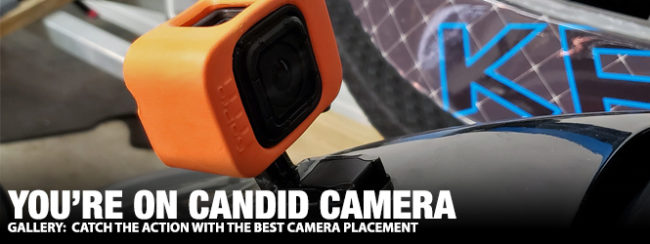
Hit the Spot Where is the best camera mounting spot? Starting from the front of the ski to the back and on to the rider, here are a few suggestions to get the shot. I have had good experiences with using the GoPro 3M sticky mounts for most of the angles below, but always use a floaty for whatever waterproof camera you choose!
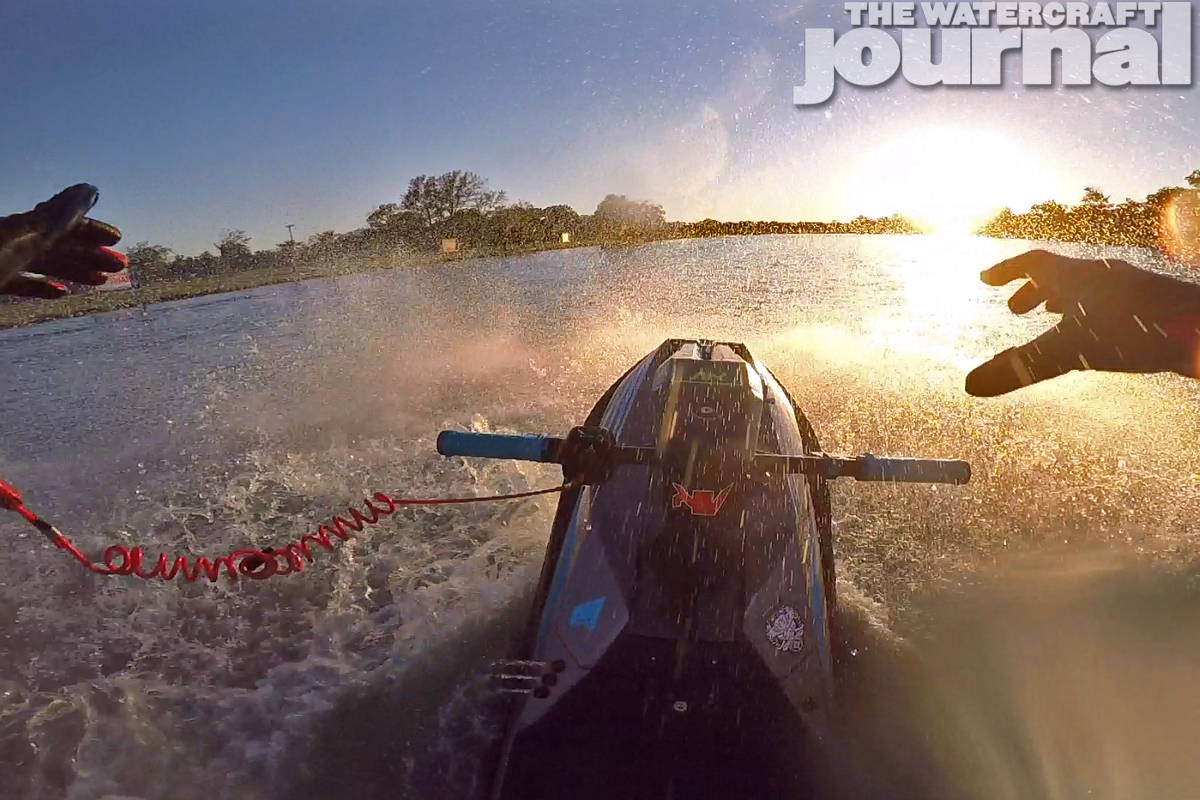
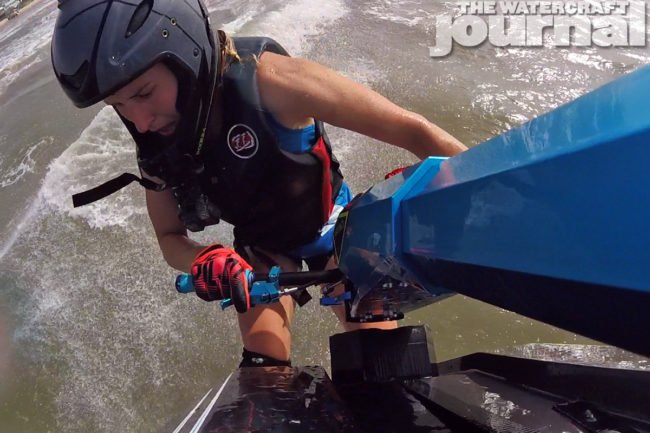
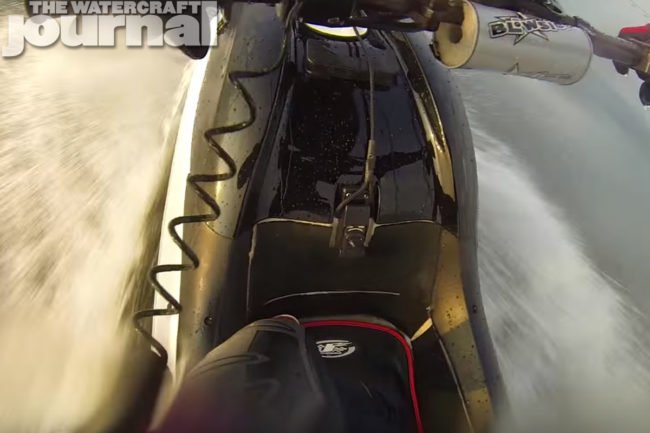
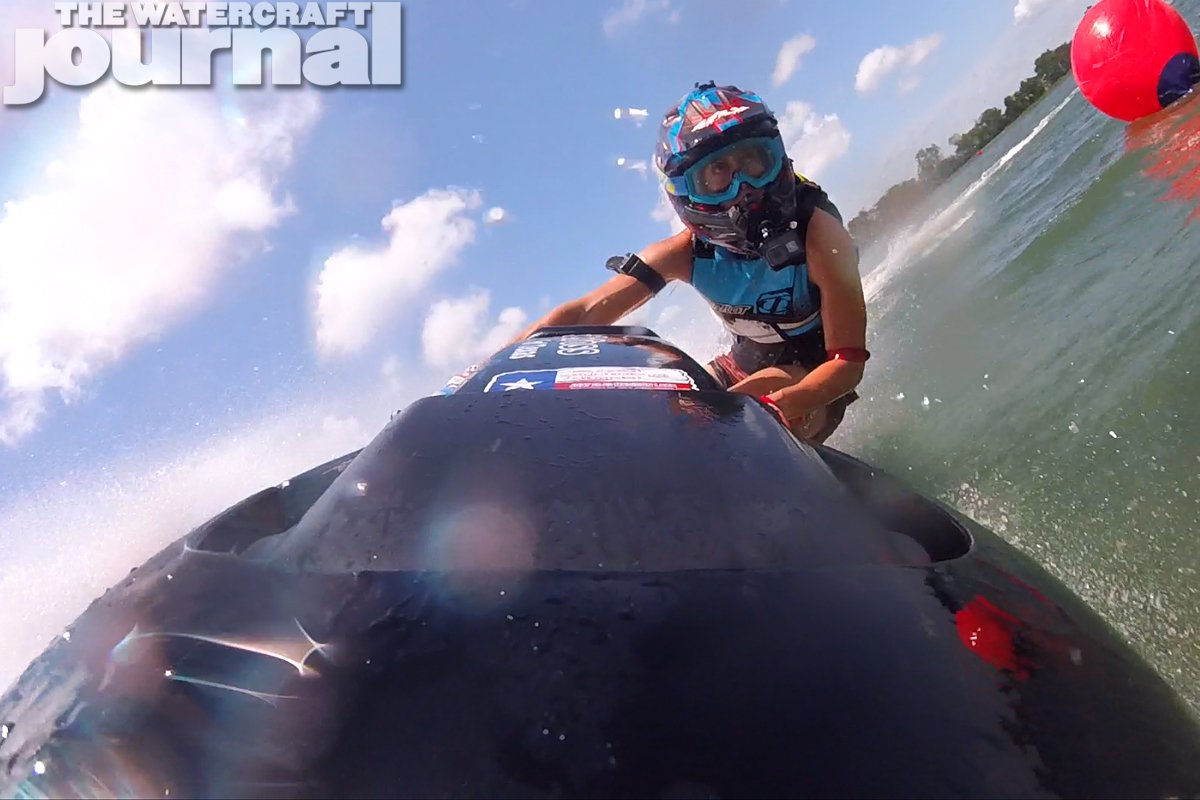
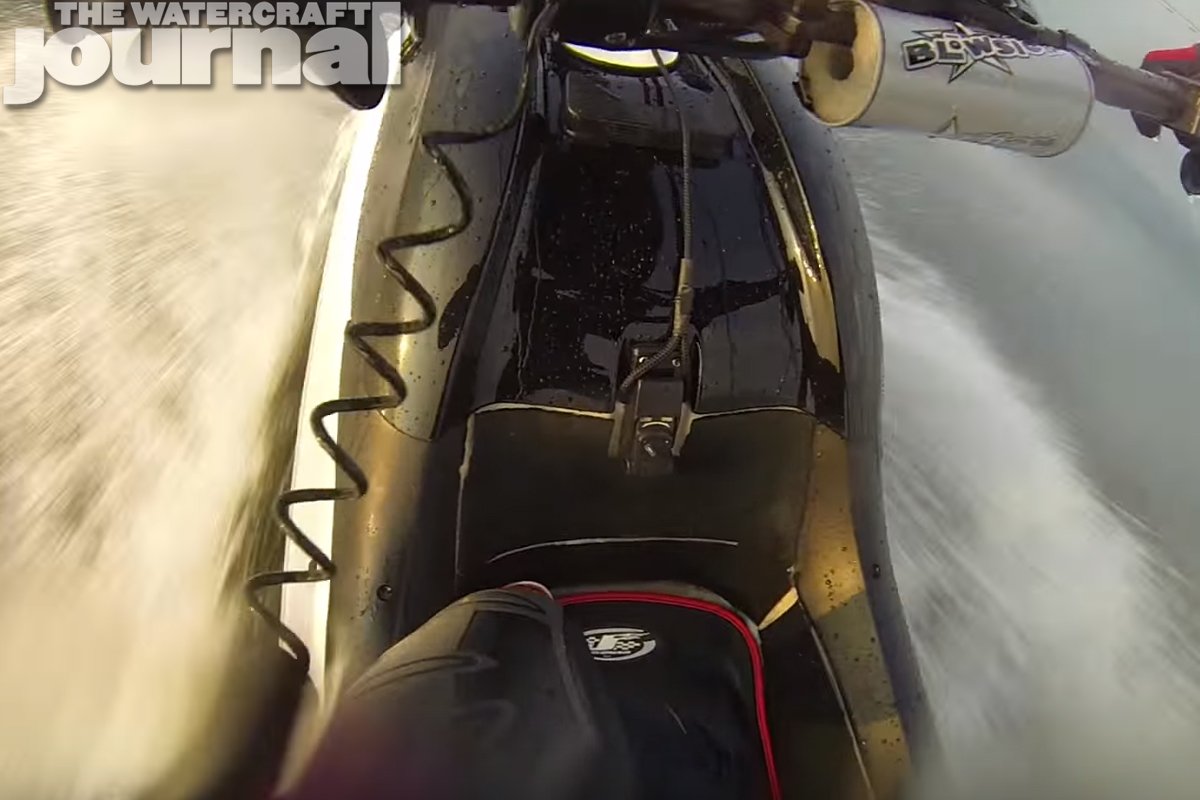
Nose facing back at the rider – this is a common camera angle to get the rider, ski, and background in the frame. It can help you study and correct body position issues. However, it does not show the tray for foot placement and the pole/hood/bars tend to take up a lot of the frame.
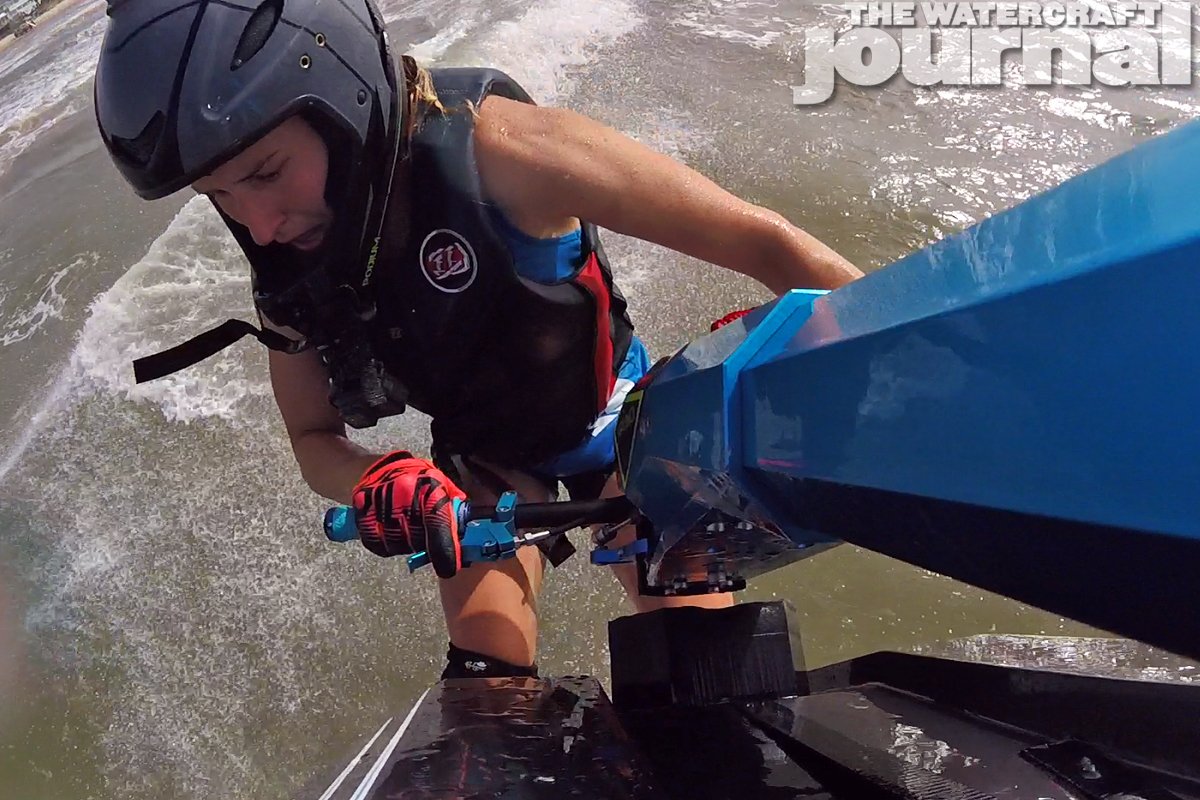
Hood facing back at the rider – a personal favorite, this camera angle does not have much of the frame blocked with unnecessary parts of the ski, yet shows the rider’s foot work as well as a lot of background for interesting video.
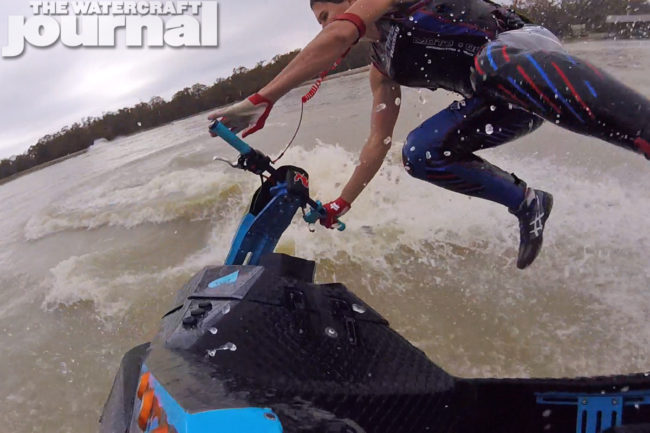
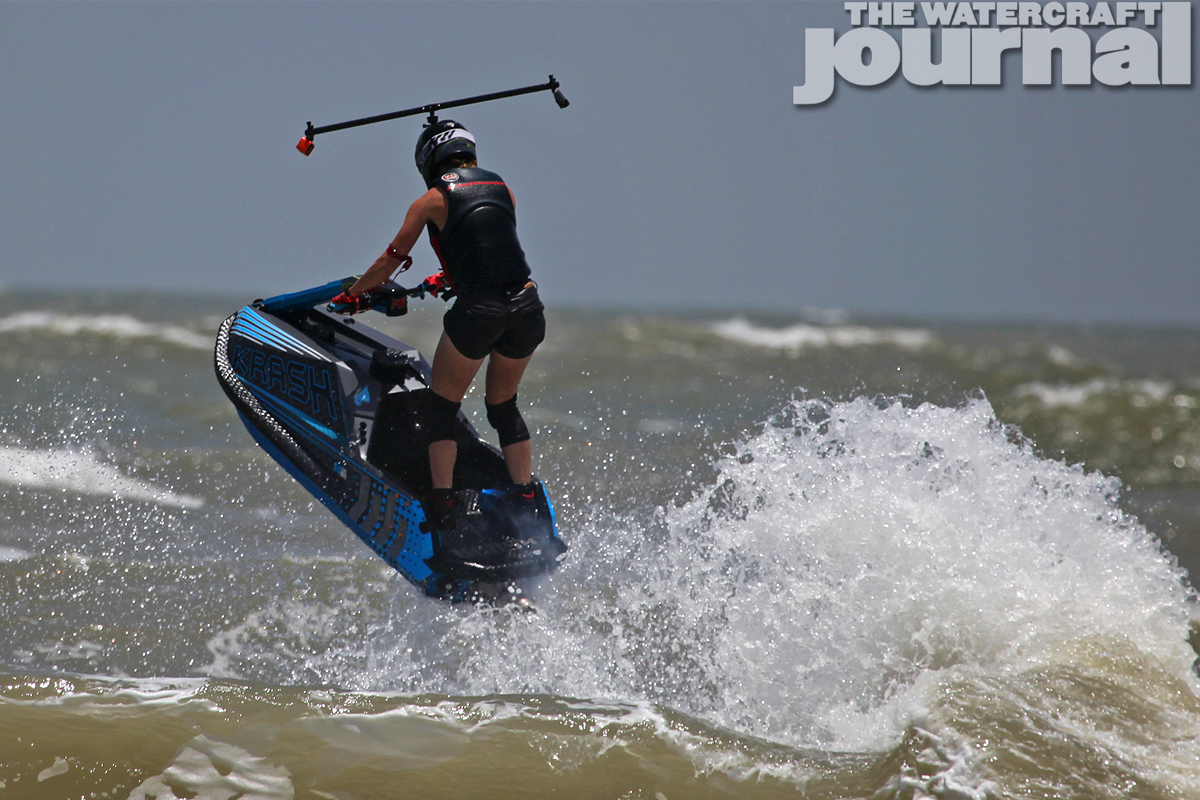
Mounted to the pole facing rearward – a popular dynamic view that moves with the rider. On the plus side it points where you move the pole so the view does not get stale with one fixed frame. This view can be unsettling to the viewer because it does not have a fixed reference point and often gets a lot of sky when the rider stands. Not a favorite of mine for racing, freestyle riding however suits this view well because of the amount of body English and pole movement needed for flips, spins, and other tricks.
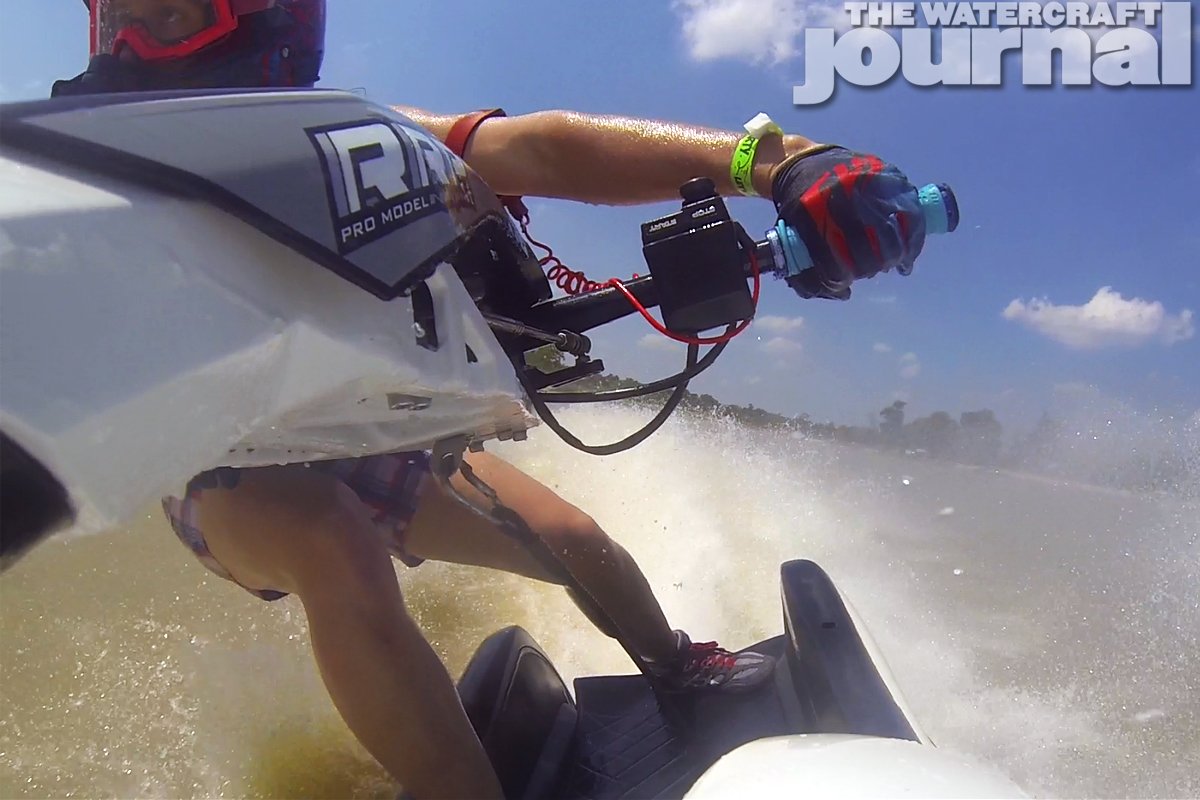
Back of the tray/deck facing forward – This view is the first one facing forward and for racing it is nice to see other riders in front of the ski negotiating for place. Freestyle also benefits from this view so show rider body English and the setup wakes, waves, and other interesting parts of the water landscape. With a stand up it can be a little dangerous for the camera compared to other views because most trays require the camera to be mounted on the outside of the tray rail where water can easily peel the camera off the ski. Use a camera flotation device! I have rescued my camera multiple times after it separated from me or my ski.
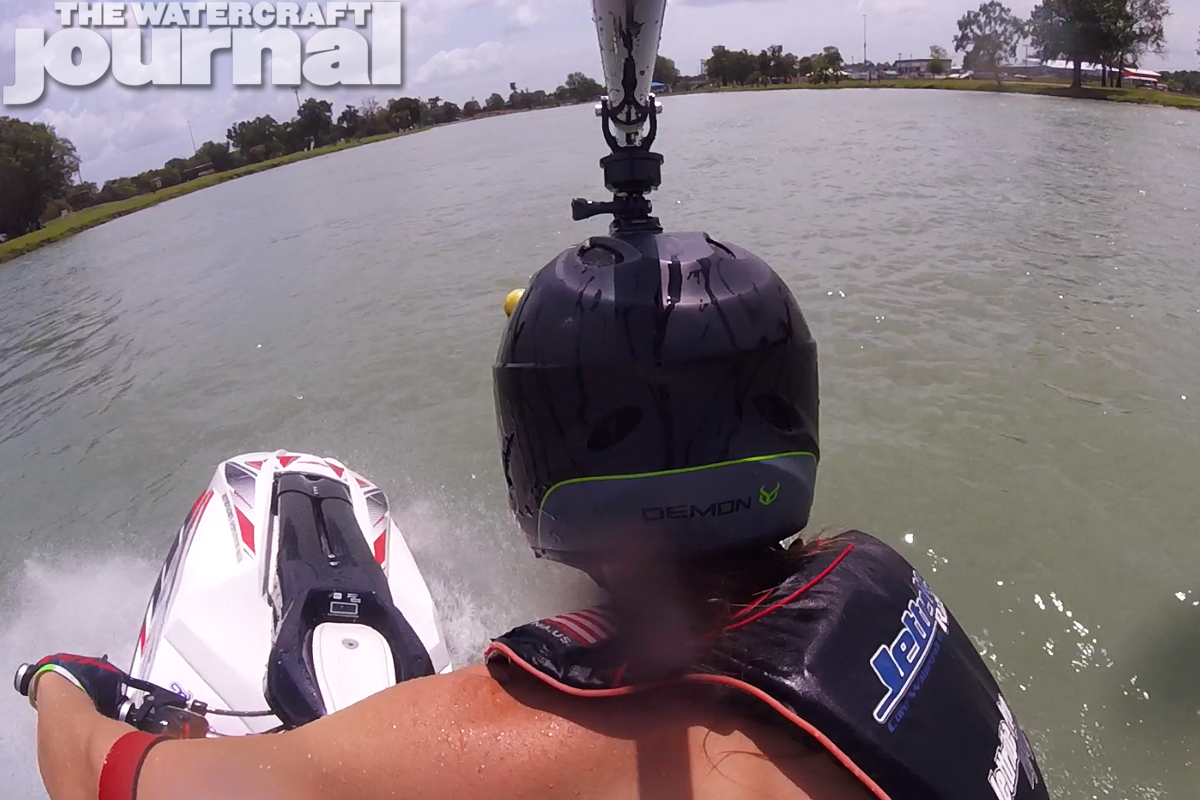
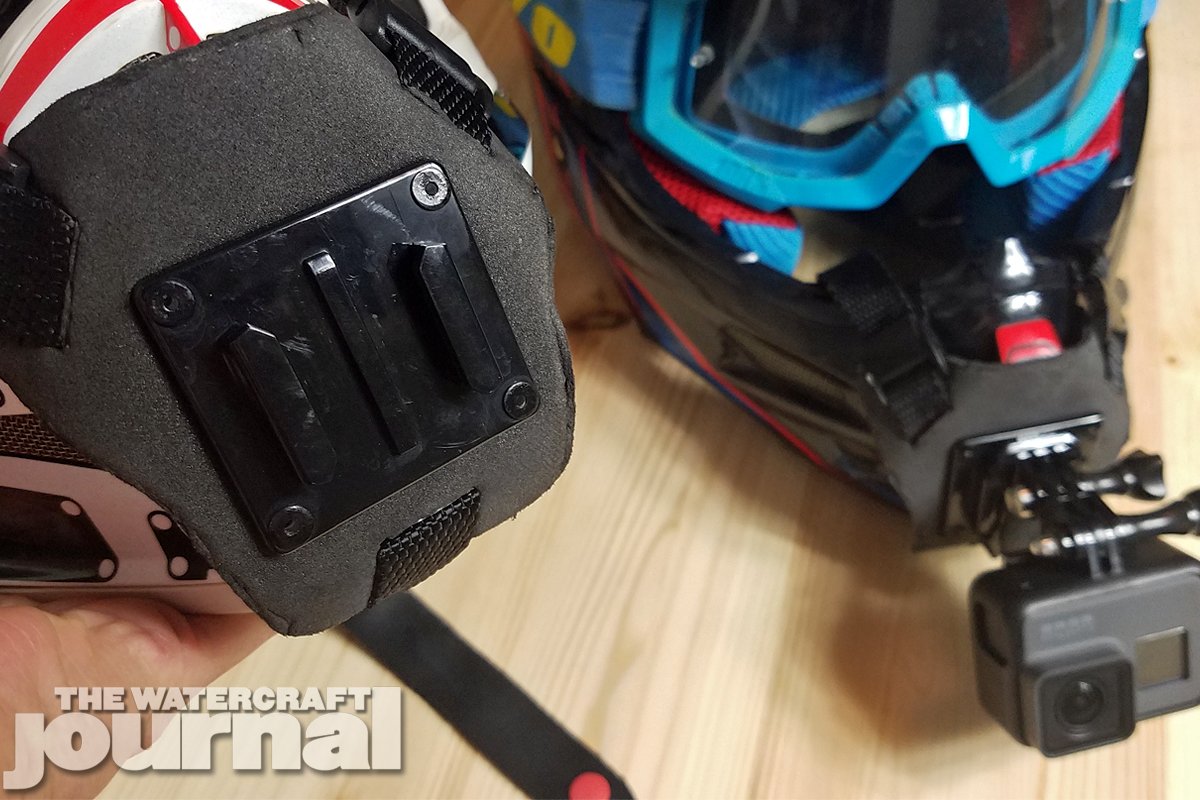
Helmet – Please refer to my SoPro mount review for a more in depth article about capturing amazing footage from the rider’s perspective. I usually ride with a camera on my helmet and on the ski. From my experience the best camera mounting spot on a helmet is on the chin mount of a motocross helmet for a truly first person view. The camera looks where you look. Next best would be side of the helmet, but depending on the weight/size of your camera this can weigh you down on one side and add wind resistance that can pull your head one way or another. The top of the helmet has less unilateral issues, but the visor of the helmet tends to block a lot of the frame and ski.
Chest – This is a neat ancillary view from the body that involves a lot of handlebar and pole movement. I tend to not recommend it as a main view because it can be limited by the rider leaning forward and the fact that your chest does not move like your head.
Experiment There are almost infinite places to mount a camera to both your ski and your body, but these six will get you started and sharing with the world. I’ve even used a rotary pole mounted to my helmet for a very unique, yet difficult to ride with camera angle! I urge you to experiment and see what works best for you and your ski, and always put a floaty on your camera. I have personally lost 4 GoPros and a waterproof gimbal to the dark deep of lakes. If you have suggestions from other successful views that I did not include here, please comment and share!
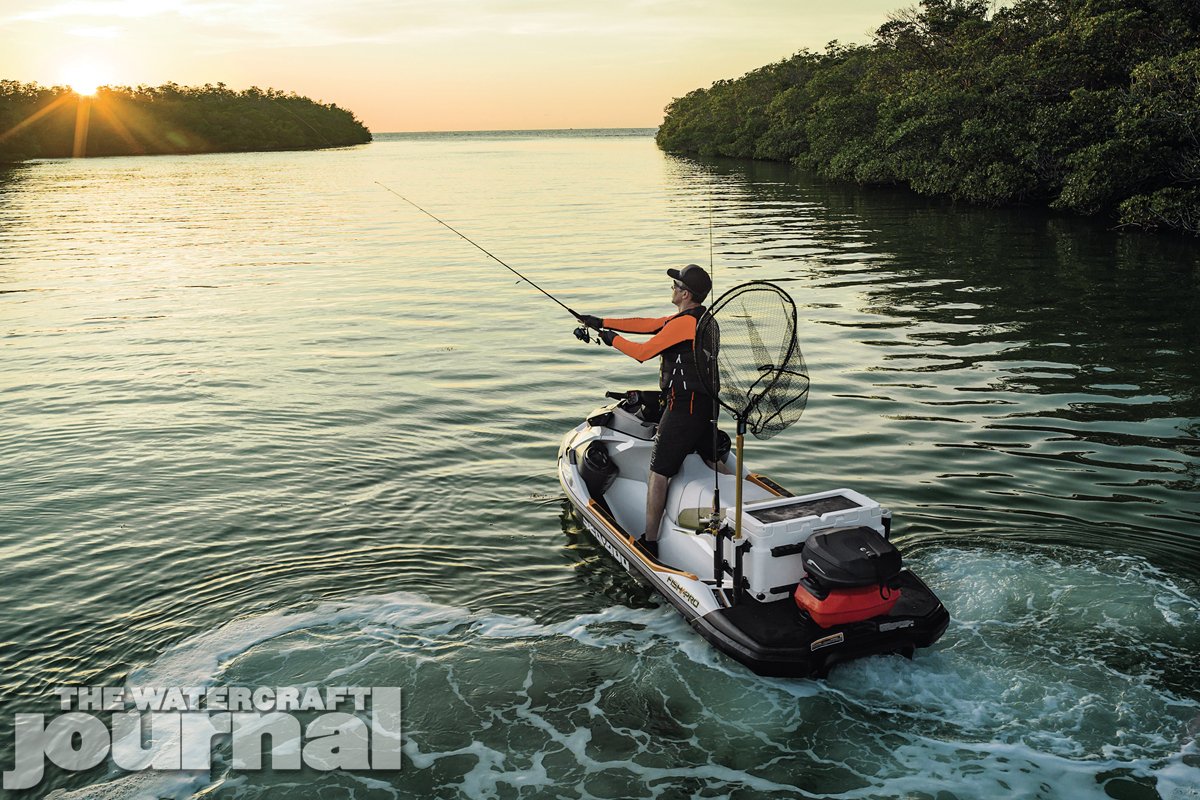
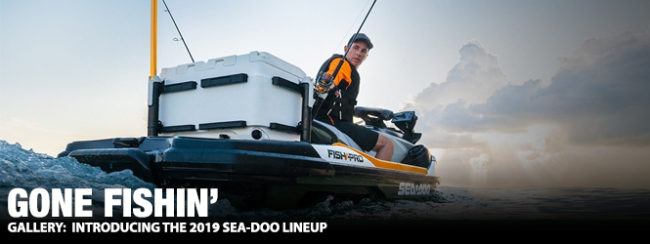
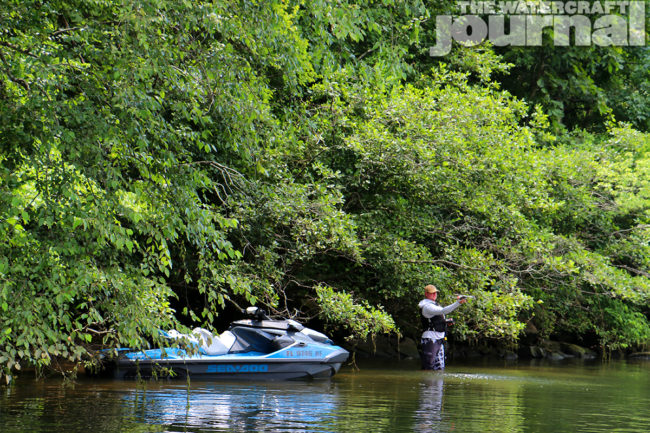
If you haven’t already heard, Sea-Doo‘s gone fishing. And we mean that literally. Yes, personal watercraft fishing has a massive worldwide audience – outside of the United States, that is. It’s a topic we at The Watercraft Journal have been belaboring for quite some time to any and everyone who will listen; we even managed to catch the ear of BRP’s own Corporate Director, Communications and Investor Relations, Pascal Bosse over a greasy cheeseburger at a Tennessee lakeside grill back in August of 2015. A few followup emails later and a bit of a nudge in the form of an April Fool’s Joke, and here we are. So with Sunday night’s reveal of the all-new 2019 Fish Pro, all we have to say is: You’re welcome.
OK, OK; all kidding aside, the revelation of the new ST3-based Fish Pro raises some questions regarding Sea-Doo’s intended trajectory for both the industry as a whole and the brand itself. A brief portion of last night’s presentation was focused on Canada’s “BRP Marine Division,” which recently was birthed from the acquisition of Manitou Pontoonas well as Alumacraft (both meant to emphasize Evinrude engines); and while a separate division unto itself, it was paralleled by the expansion of Sea-Doo’s line of personal watercraft. The 2019 Fish Pro looks to single-handedly segue the PWC maker into the multi-billion dollar world of recreational fishing, and features all of the right tools, features and equipment to successfully do so. And with an entry price of $14,799, it’s almost a sure thing.
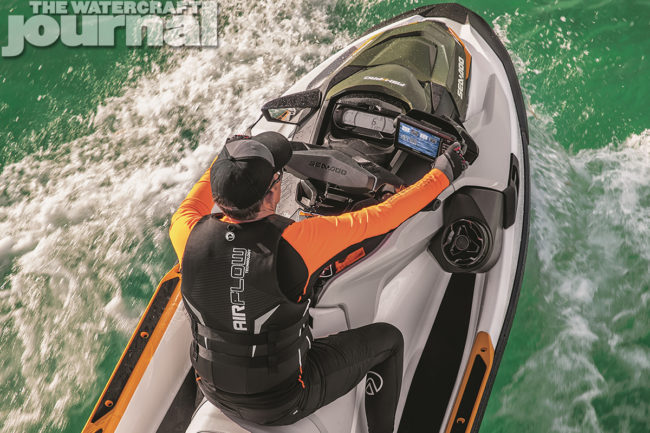
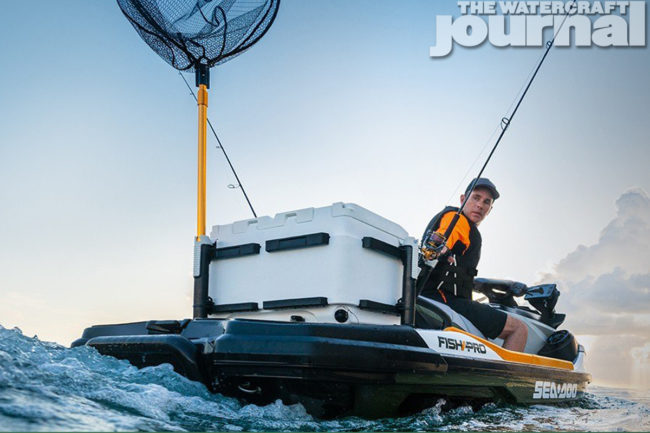
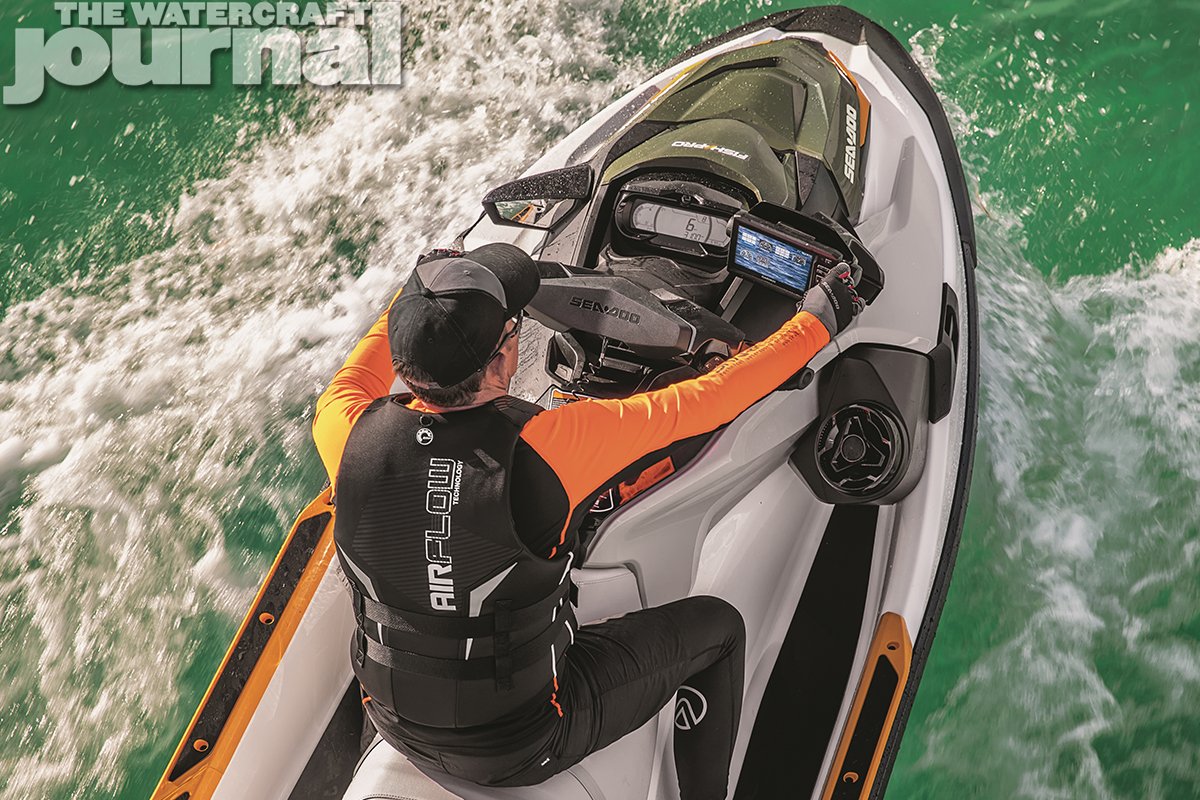
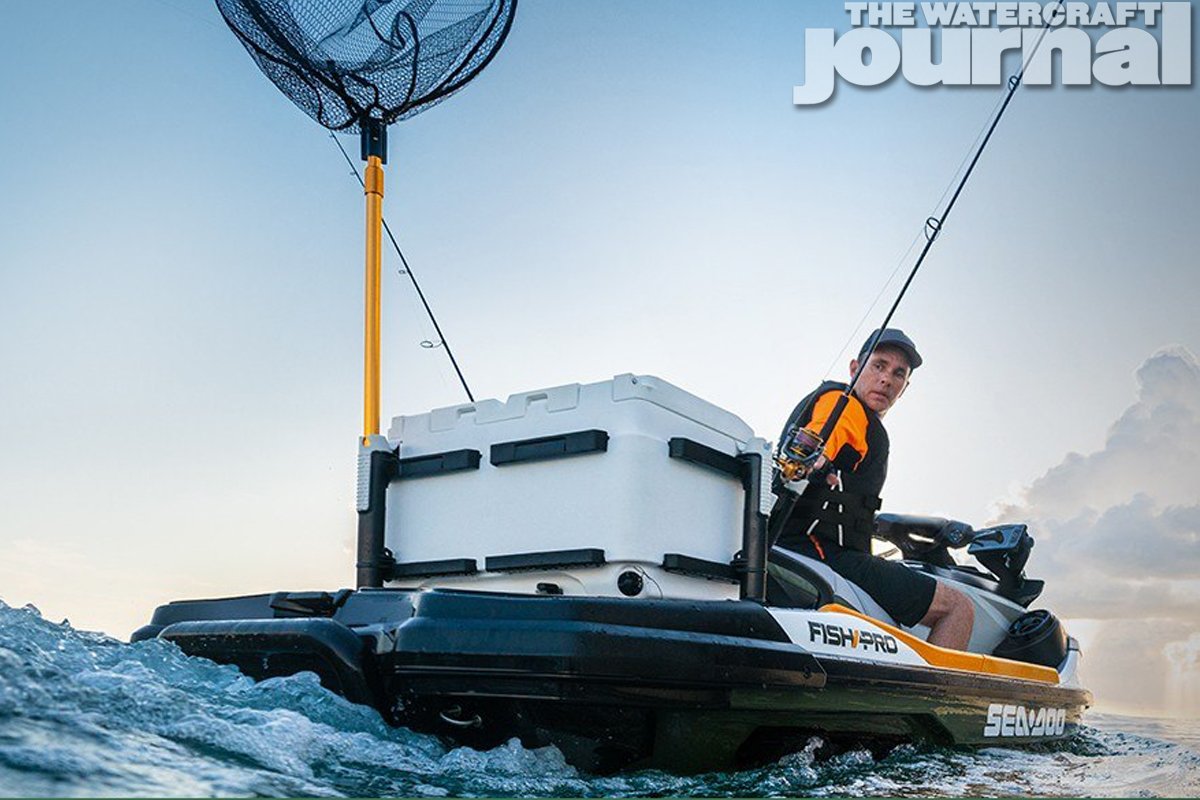
Hailed as the “first and only true personal watercraft (PWC) built specifically from the factory for fishing,” the Fish Pro begins with the aforementioned ST3 hull and deck made from BRP’s proprietary CM-Tech material. Prior to listing the new features, the craft’s wide and mile-deep footwells provide the fisherman plenty of room to maneuver around, and extended side strakes give the craft phenomenal balance and stability while at a standstill already. Add to that the addition of a 13.5 gallon LinQ Fishing Cooler (with a lid-mounted cutting board and 4 rod holders), a massive 6-inch Garmin EchoMap Plus 62cv Navigation and Fish Finder, and an extended rear platform adding 11.5-inches of length and a second LinQ mounting system.
But wait! There’s more! The Fish Pro is equipped with a larger 18.5-gallon fuel cell (the only ST3-based Sea-Doo equipped with this larger tank for 2019, FYI), a flat-based stiffly-padded bench seat, new angled gunwale footrests for leverage and comfort, and an all-new “Trolling Mode” available through the “Slow Mode” setting on the platform’s new 7.6-inch digital display. The new screen features an automatically dimming backlight that ensures high visibility in any light. Painted in a very Brass Pro Shop-esque White and Night Green, the craft is very subdued in its livery, almost militaristic.
“Recreational fishing is one of the top practiced activities in the world,” said Bernard Guy, BRP Senior Vice-President, Global Product Strategy. “And while it grows in popularity, more and more people are discovering the benefits of fishing from a PWC. The Fish Pro is a perfect choice, combining the capability they need with the versatility to be used as a recreational watercraft.” Powered by Sea-Doo’s naturally-aspirated 1,494cc 3-cylinder Rotax 1503 plant, the Fish Pro produces a fuel-friendly 155-horsepower. And yes, the Garmin transponder is mounted deed inside of the hull, not mounted outside.
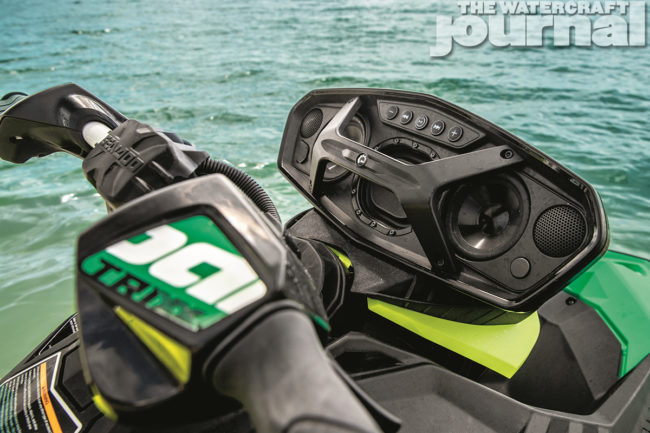
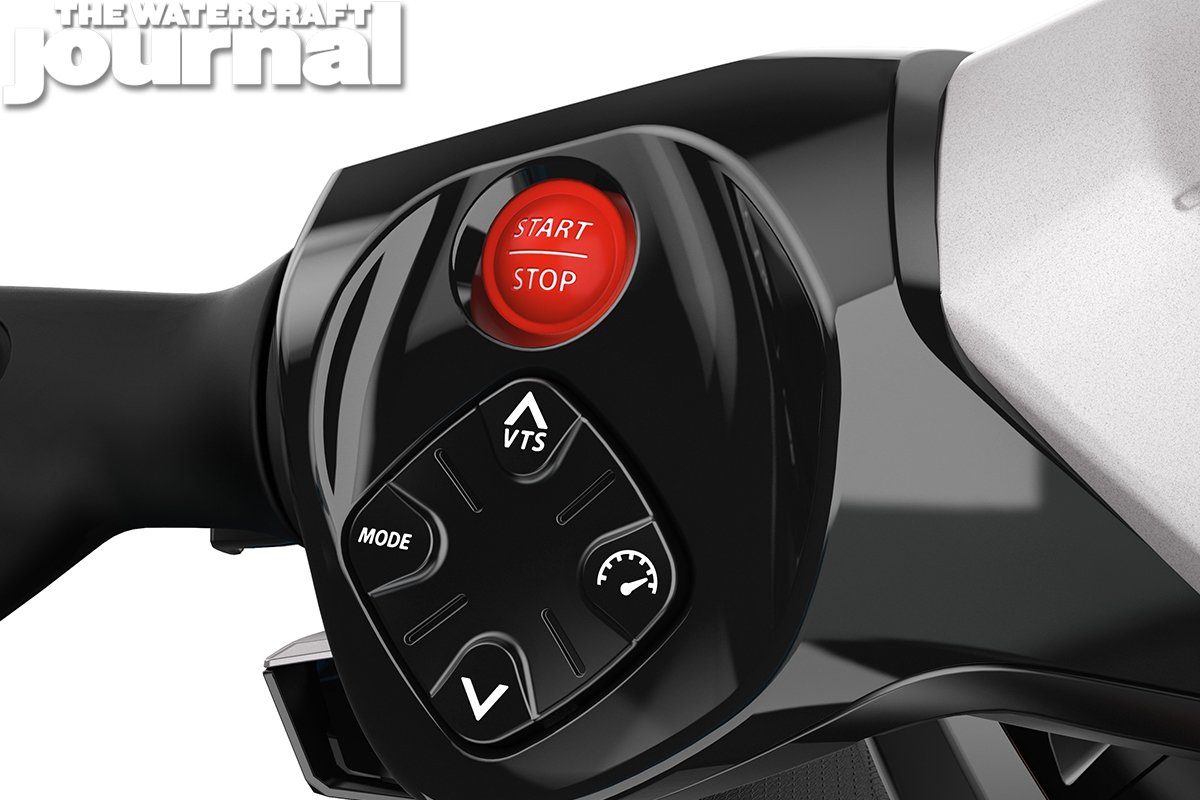
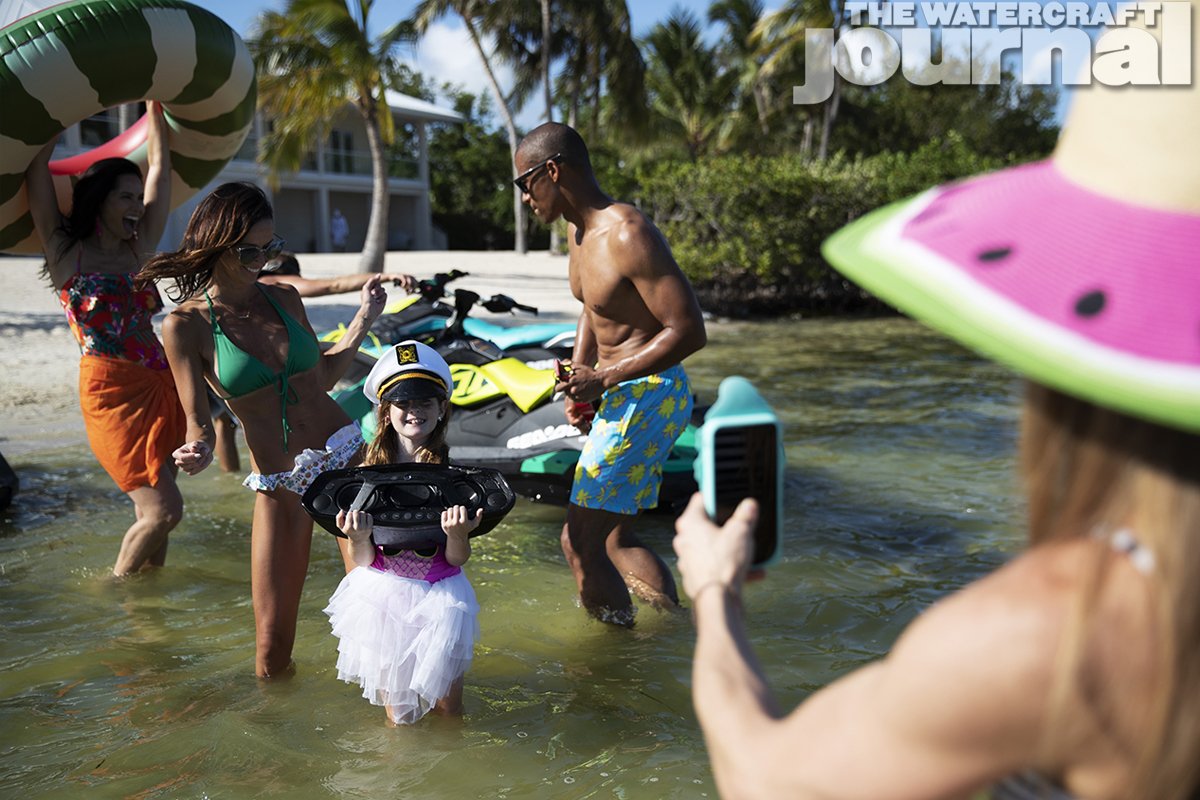
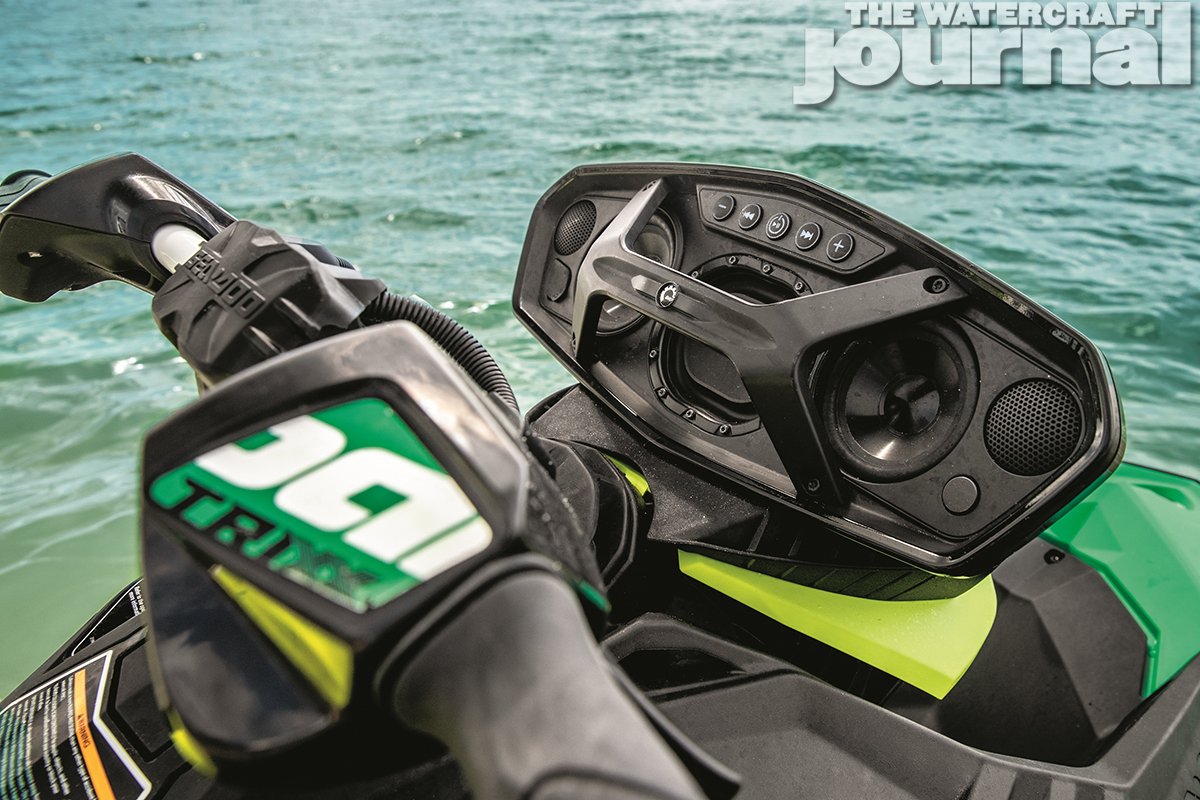
While we’re talking about new lifestyle accessories, it bears noting that Sea-Doo also announced a new Bluetooth-compatible audio system for the Spark. The completely portable, 50-watt audio system is “fully-submersible and removable, and can be used on and off the watercraft. Speakers are front-mounted and positioned toward driver for maximum sound clarity, and there is a convenient control pad on the speaker for volume and song adjustment.” Powered by a rechargeable lithium battery offing up to 24 hours of use, the new sound system will work on all Sparks – regardless of model or year – with the use of a quick attachment support base.
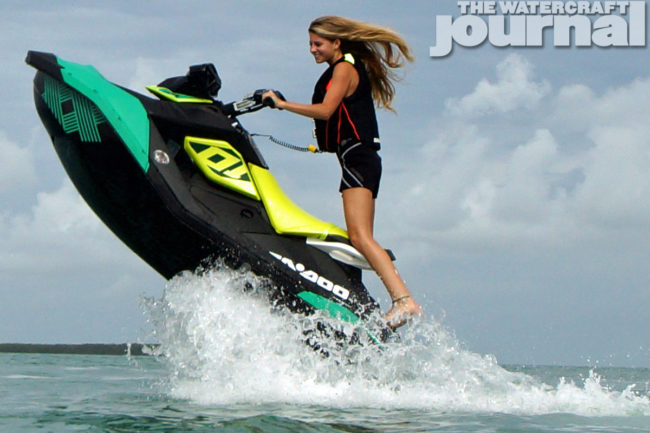
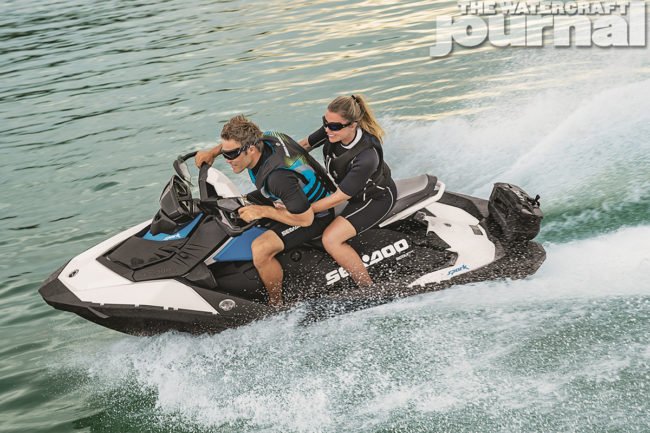
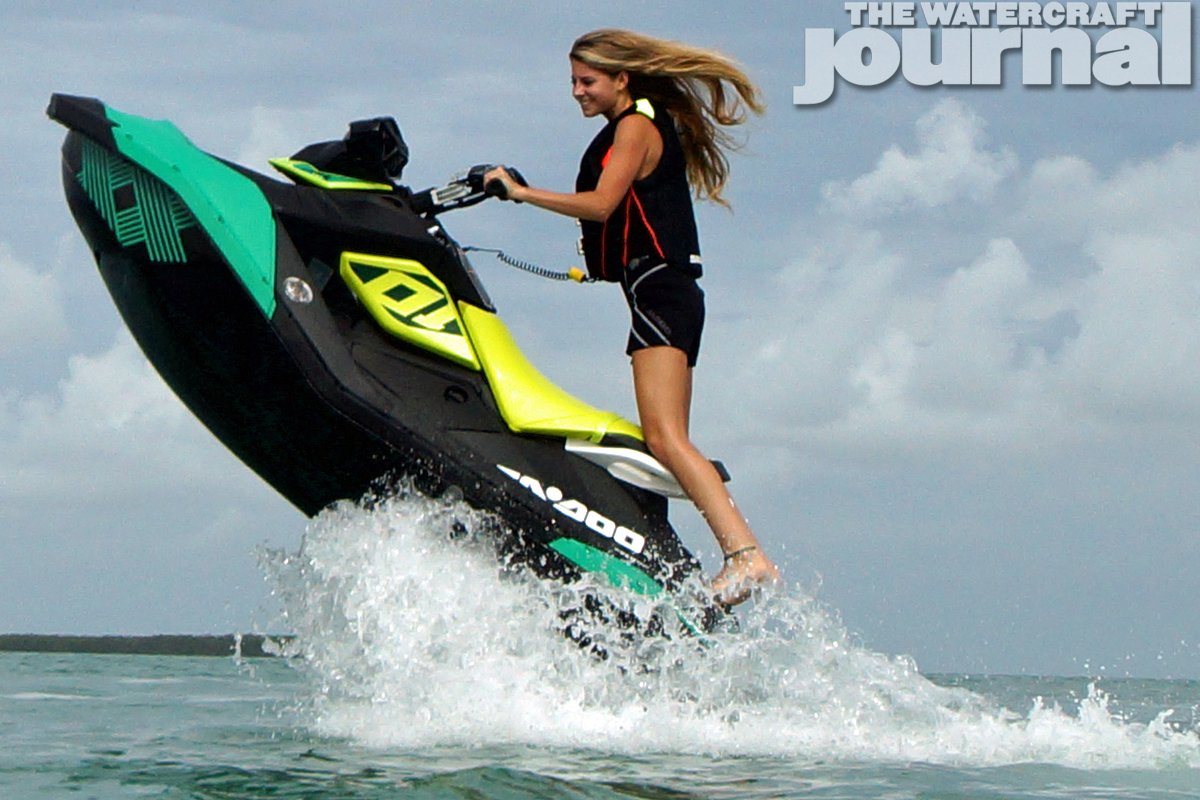
Moreover, Sea-Doo upped the ante with it’s accessory line with the availability of larger, more padded “Comfort Seats,” Wind Deflectors for the hand grips (more on those in a second), and side mirrors all for the Sparks. Color choices for the Spark include Licorice and Mango; Vanilla and Blueberry; and Pineapple and Candy Blue. For Trixx, Chili Pepper and Orange Crush return with Jalapeño and Pear being added.
The aforementioned Fishing Cooler features a drain plug and handles, a heavy-duty storage pocket, lid with recessed work/cutting surface, quick attach rod holders (sold separately), trolling slots, and an easy latch lid. Further additions to the accessory Linq lineup include the new LinQ Sport Bag; a 4.2-gallon capacity bag featuring a rigid bottom and a semi-rigid top. According to Sea-Doo, “a Marinized LinQ Hardware Kit protect the LinQ Bag from the erosive and corrosive effects of the harsh marine environment. It can be installed on top of the LinQ Fuel Caddy”; and the huge LinQ Box; a 5-gallon rigid-sided box built for durability that’s weather-resistant and has a sealed and lockable cover.
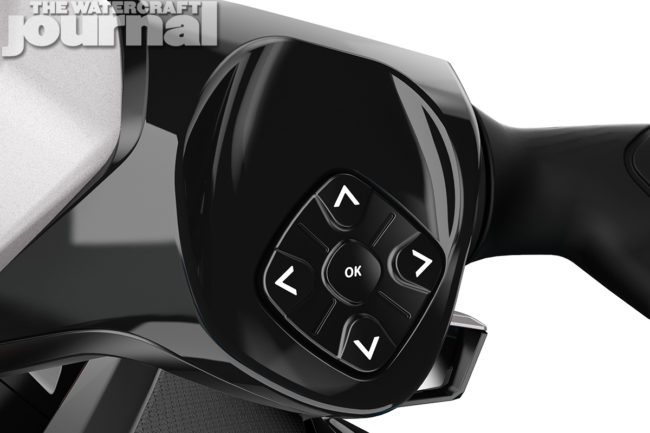
So how about the rest of the lineup? Well, we’re glad you asked: First and foremost, that gorgeous and super-innovative digital dashboard is now found on all ST3-based runabouts (RXT 230, RXT-X 300, GTX 155/230, GTX Limited 230/300, Wake Pro), as well as the RXP-X 300 and GTR-X 230. But don’t think that the GTI lineup is left out in the cold, either. For 2019, Sea-Doo has managed to retain its fiberglass hulls for the GTI 130/155 models as well as include the Linq accessory mounts. The base GTI 90 and 130 models are available in White and Krypton Green, while the SE-equipped 130 and 155 GTIs are available in Black and Krypton Green or Beach Blue Metallic and Lava Grey. Fuel capacity, storage and other features remain the same as last year’s lineup. Oh yeah, and the GTI Limited 155 is kaput.
For the GTX lineup, the color options are direct carryovers, the non-Limited GTXs return in Beach Blue Metallic and Lava Grey; while the Limited-equipped models remain in Equestrian Brown and Liquid Grey Metallic. Several images have shown the previously mentioned Wind Guards on the Limited models, but we haven’t seen whether these are standard equipment or added accessories. Equally, the two Wake models (155 and Pro) return in the same Teal Blue Metallic and Lava Red colorizations with no changes save for the addition of the LCD digital screen (to the Wake Pro only). The final Sea-Doos to not receive a new color option for 2019 are the 230-horsepower GTR and RXT, which return in Octane Blue and Black.
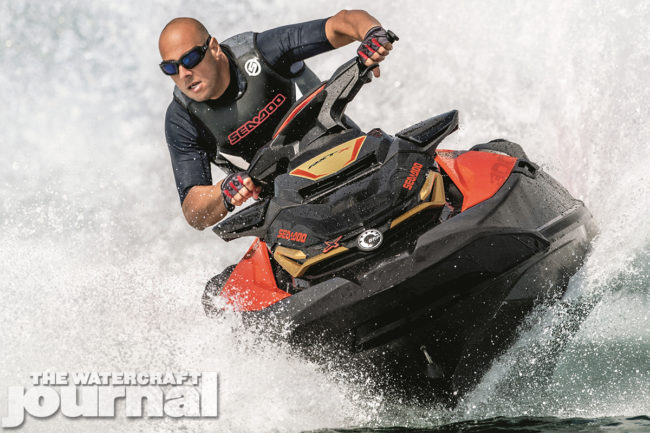
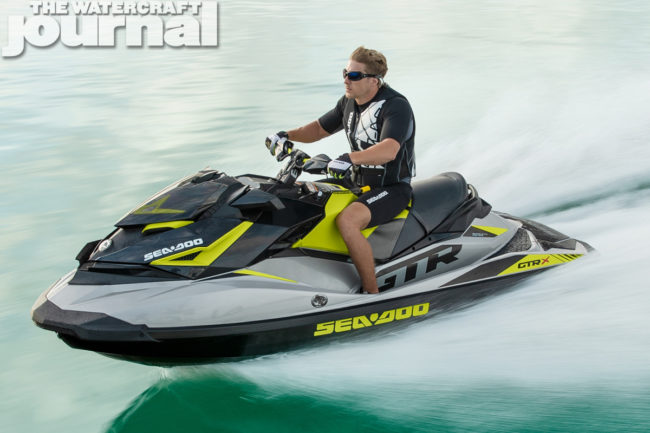
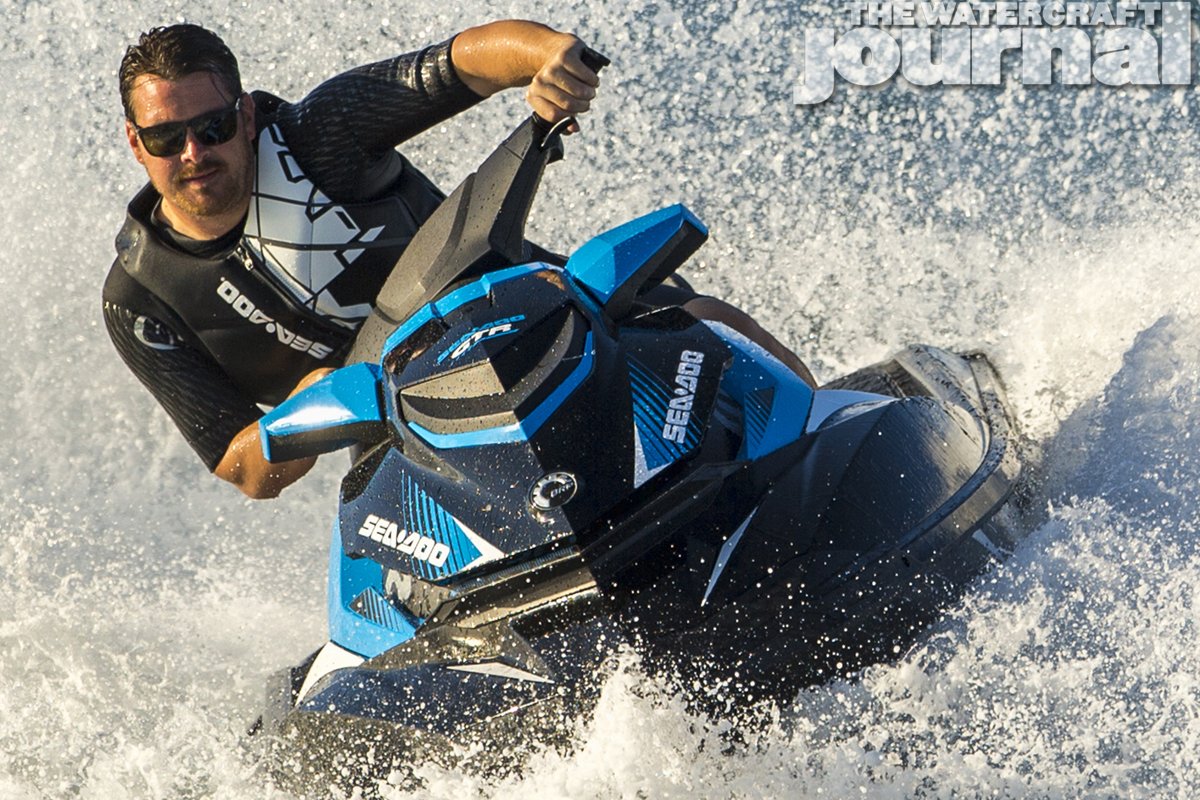
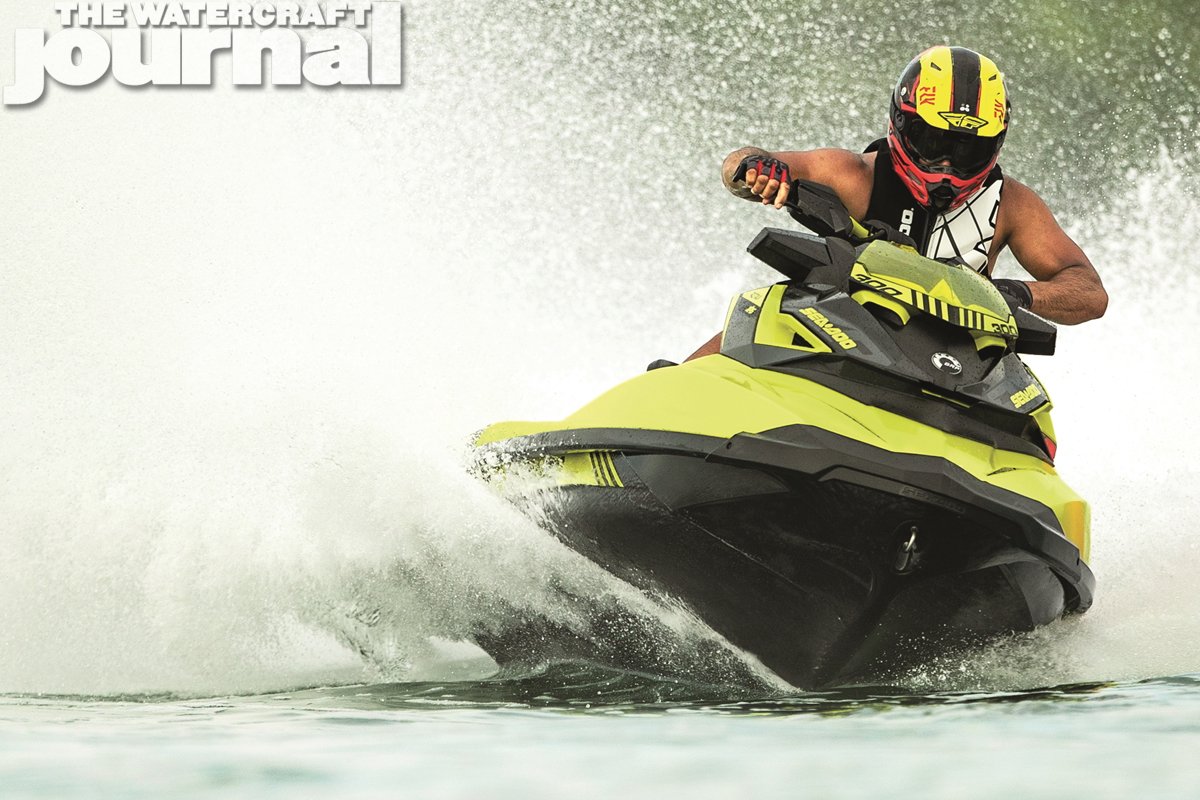
The remaining units yet to be mentioned are the GTR-X 230, RXP-X 300, and RXT-X 300. Both the GTR-X 230 and RXP-X 300 receive the new digital dash, Linq mounts, and an exciting Liquid Metal and Neon Yellow coating for the GTR-X. Changes for the RXT-X 300 are minimal: the 7.6-inch digital gauge display and (in addition to last year’s Neon Yellow and Lava Grey) a premium Eclipse Black and Lava Red with bronze highlights. The same second color option is also available for the RXP-X (whose standard coloring is Neon Yellow and Black). Interestingly, this new second colorization will set you back an extra $300. So if you’re dead set on your 2019 Sea-Doo looking like Ming The Merciless from Planet Mongo, you’re gonna be ponying up a few hundred bucks.
In all, the 2019 Sea-Doo reveal demonstrated where the company is pointing its bow on the horizon. In the same fashion that Sea-Doo blazed a trail for personal watercraft tow sports with its Wake models and all the innovations that came about through that, the Fish Pro has all of the trappings of a similar pioneer. For the rest of the lineup, it’s clear that Sea-Doo isn’t interested in upending the table when so many of their machines are either still completely new or, for the most part, working great as-is. While this article is being penned The Watercraft Journal has been alerted that whole new batch of images will be coming in shortly, so expect to see more pictures being added to the gallery below as well as future content personally handling the new Fish Pro coming soon.
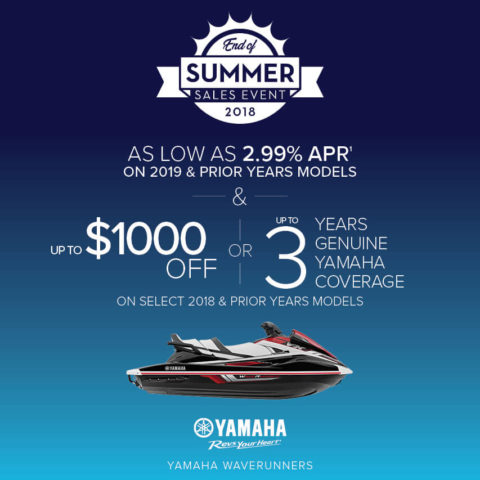
Yamaha‘s big End of Summer Sales Event is happening right now! You can get your hands on one of The Best in Every Class WaveRunners at a sweet price.
There are many options to choose from, such as financing as low as 2.99% on 2019 and prior year models plus up to $1,000 off or up to three years Genuine Yamaha Coverage on select 2018 and prior years models.
A stipulation of this particular offer is that the buyer must finance $6,500 or more on a new 2013-2019 WaveRunners. The 2018 model deal allows the customer to choose cash incentives or warranty offer at the time of purchase.
If you aren’t interested the above bargain, check out this one. Buy any two select 2018 and prior years’ models of WaveRunners and receive up to $1,000 off or up to 3 years Genuine Yamaha Coverage. Financing is as low as 6.49% for 96 months on two WaveRunners. This offer excludes the Yamaha EX and V1 machines.
A third enticing offer is to grab a PWC from Yamaha’s EX Series lineup for as low as $99 a month on 2019 and prior years models. Receive up to $350 off or choose up to 3 years Genuine Yamaha Coverage. Decide on the cash incentive or warranty at time of purchase. The EX Series is Yamaha’s Rec-Lite category and makes for a nice affordable entry level machine.
Yamaha’s final offer for the End of Summer Sales Event is financing as low as 5.99% for 72 months on 2019 and prior years models. The offer includes up to $1000 off or up to 3 years Genuine Yamaha Coverage. $6,500 or more must be financed to qualify for this offer.
All of the End of Summer Sales offers include quite a bit of fine print and subject to credit approval. If you wanna go fast and be included in the Best of Class, take advantage of this sales event! Yamaha is proud to offer the industry’s largest range of financing and purchasing options. This is why we mentioned the amount fine print. There are so many options to choose from, we could write a book!
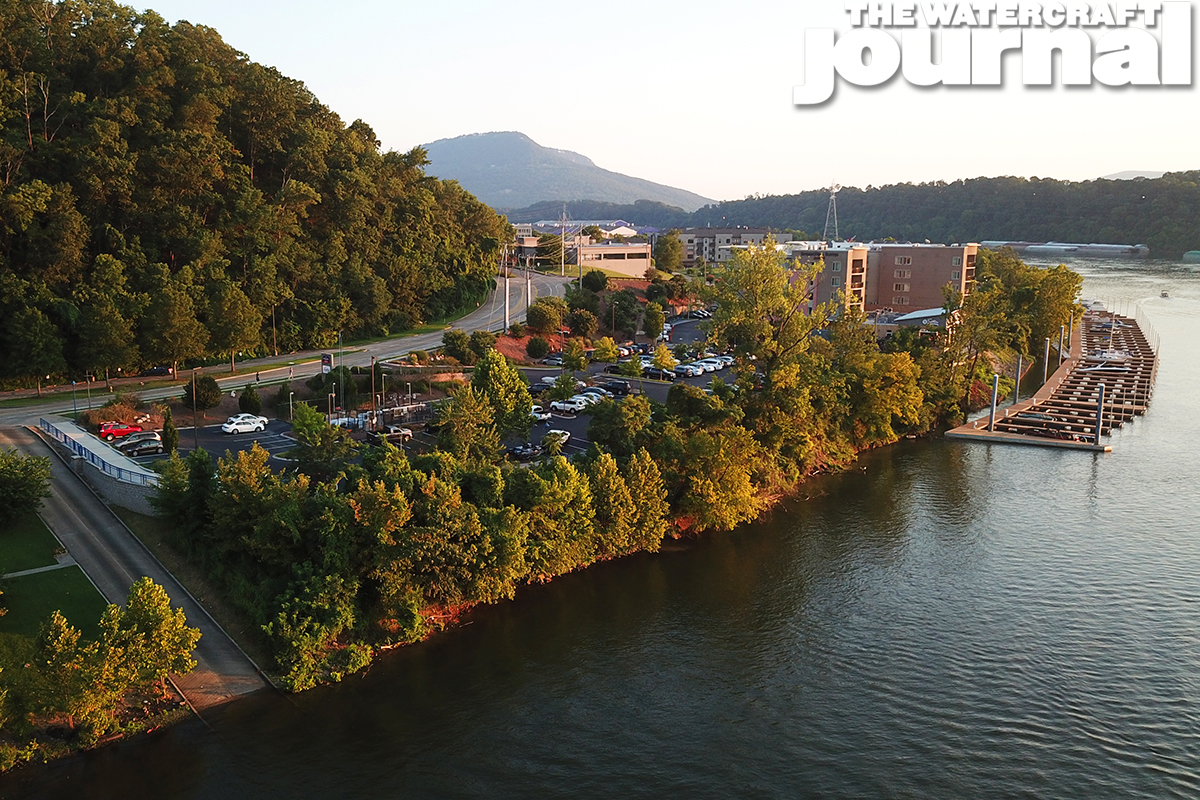
Long before there was such a thing as an interstate highway system or even the transcontinental railroad, there was the Tennessee River. And there, nestled between between the Appalachian Mountains and the Cumberland Plateau sits Chattanooga, Tennessee.
Once a home to the Muscogee and Cherokee Indians, Chattanooga was born from the 1816 settlement of Ross’ Landing that is, before becoming the central transportation hub for the Southern United States. It’s centralized location on the Tennessee River places it nearly equidistant from its neighboring cities, Knoxville (some 134 miles northeast) and Nashville (slightly over 100 miles to the northwest), as well as being 118 miles north of Atlanta, and 147 miles northeast of Birmingham, Alabama.
That made it a logical candidate to become the adjoining hub for several key Southern railroad lines, earning it the name of “the city where cotton meets corn.” A decade later, Chattanooga would become a hotly contested prize to keep during the American Civil War, as the Union Army battled Southern Confederates over the industrial artery. Chattanooga and the surrounding territory was the location of some half dozen major battles, with ownership of the city trading hands several times.
Today, Chattanooga still retains its place as a major hub of industry and commerce, as well as a welcome spot for site-seers, tourists, and vacationers. It’s fixture along the shores of the Tennessee River also makes it an ideal stop for boaters and jet skiers journeying along the historic waterway.
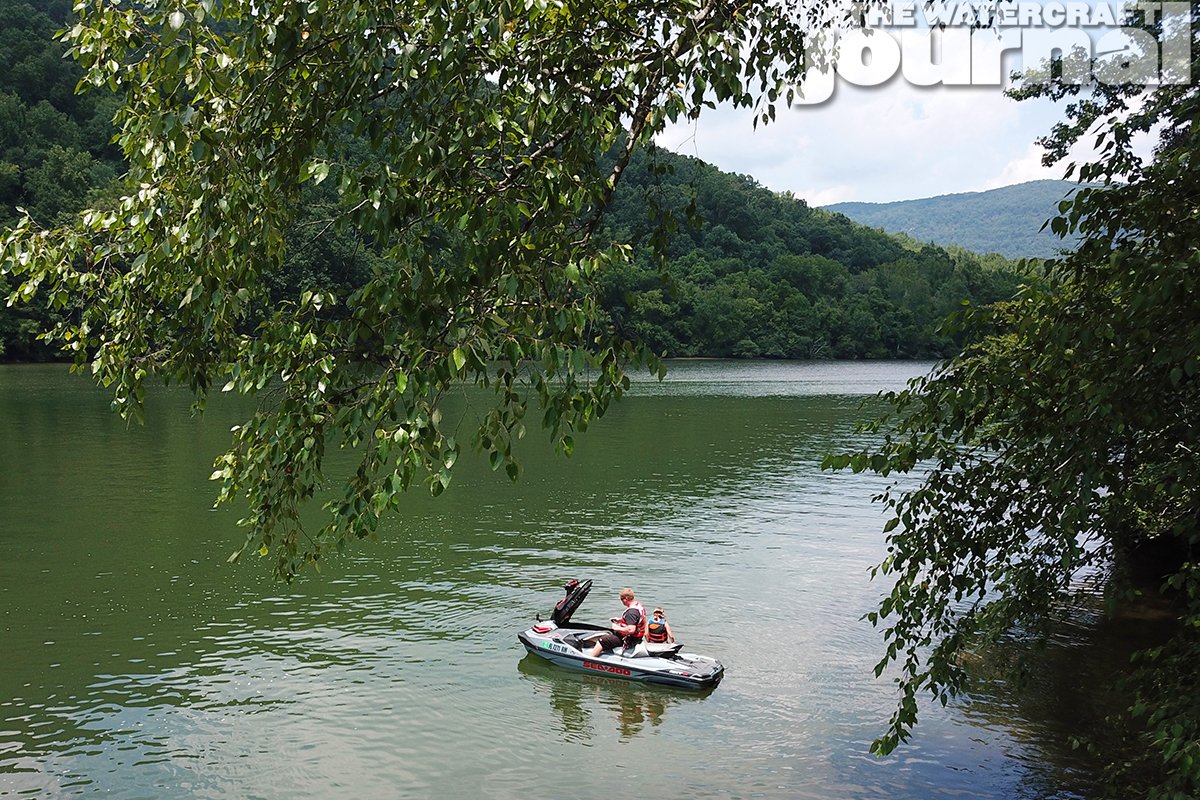
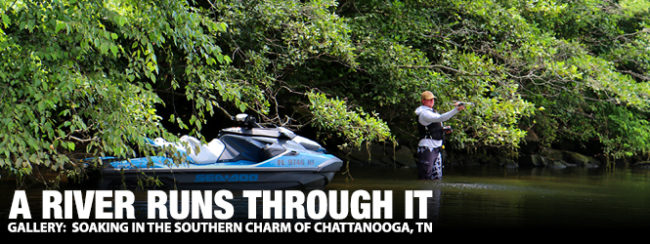
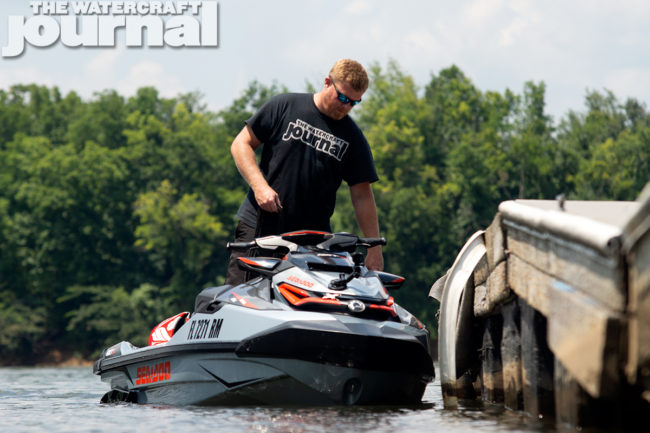
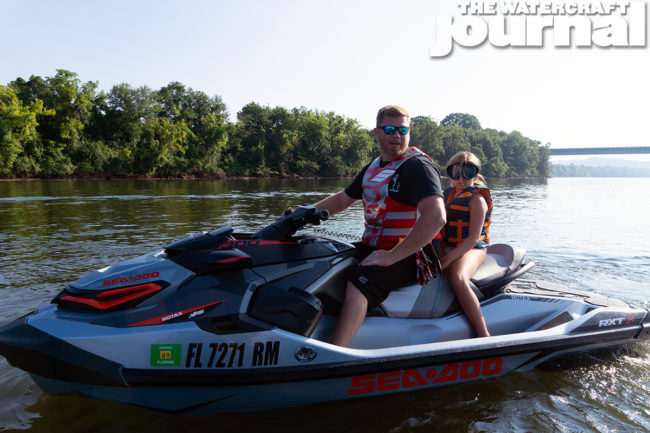
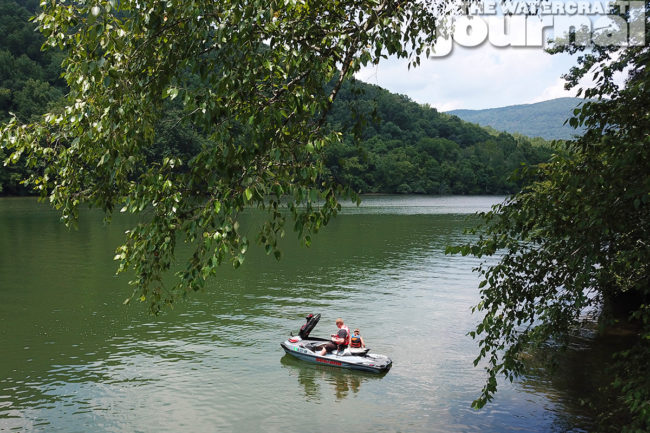
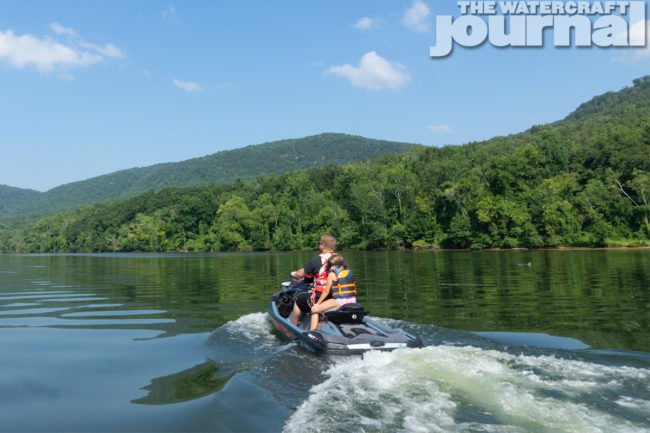
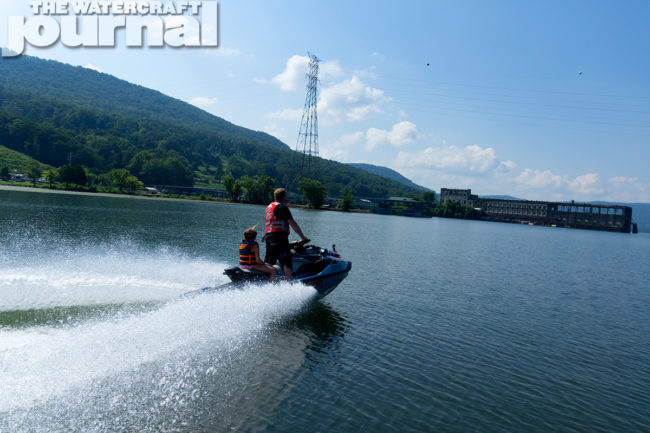
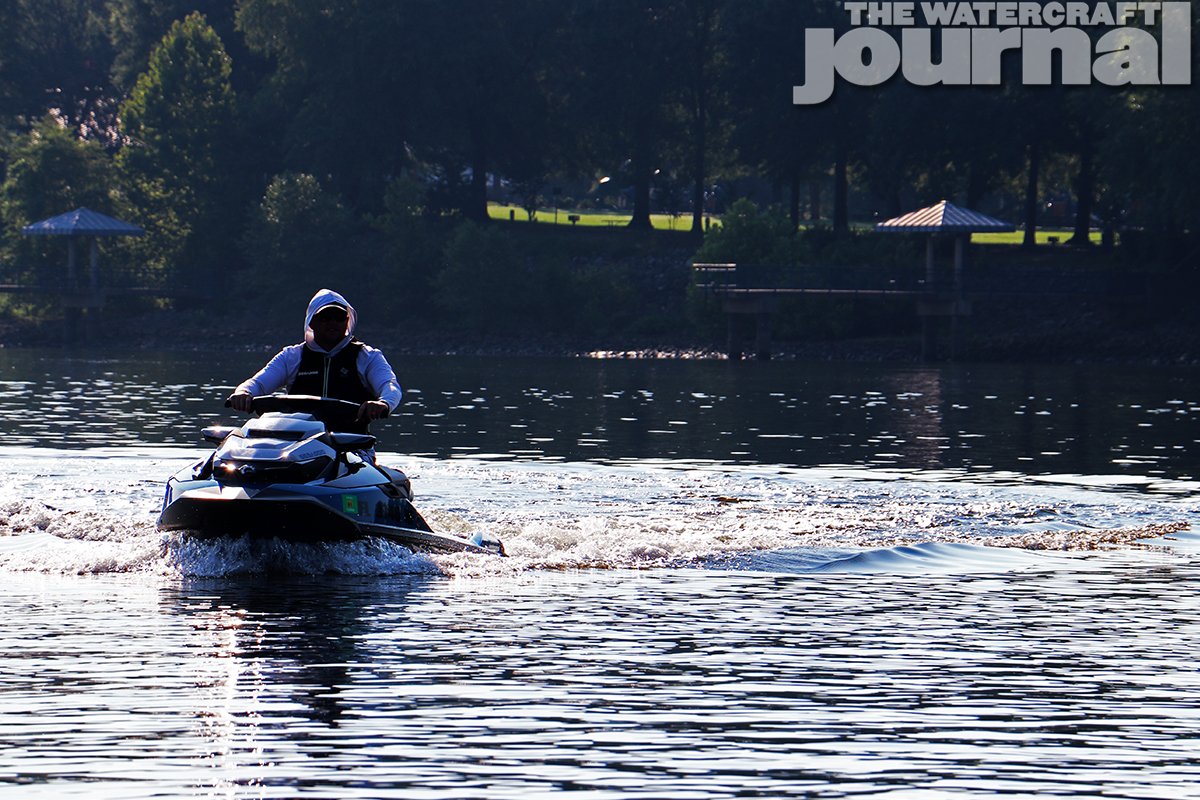
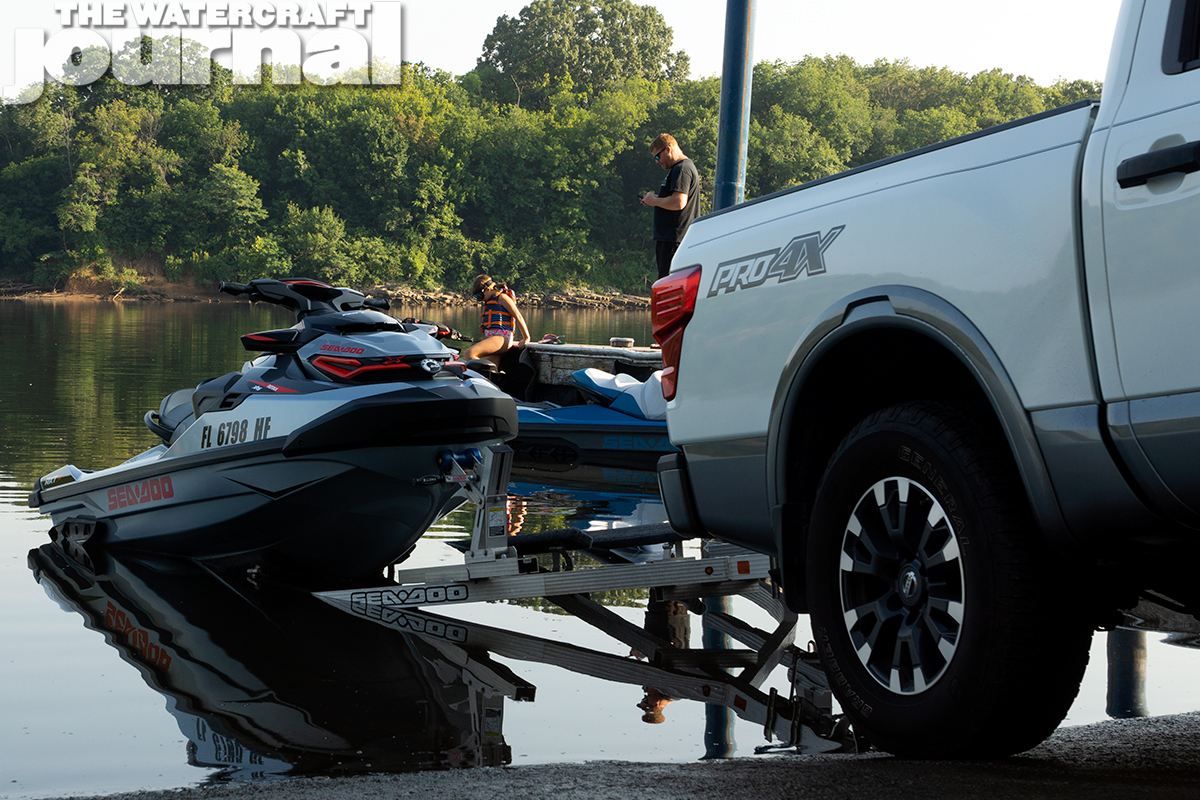
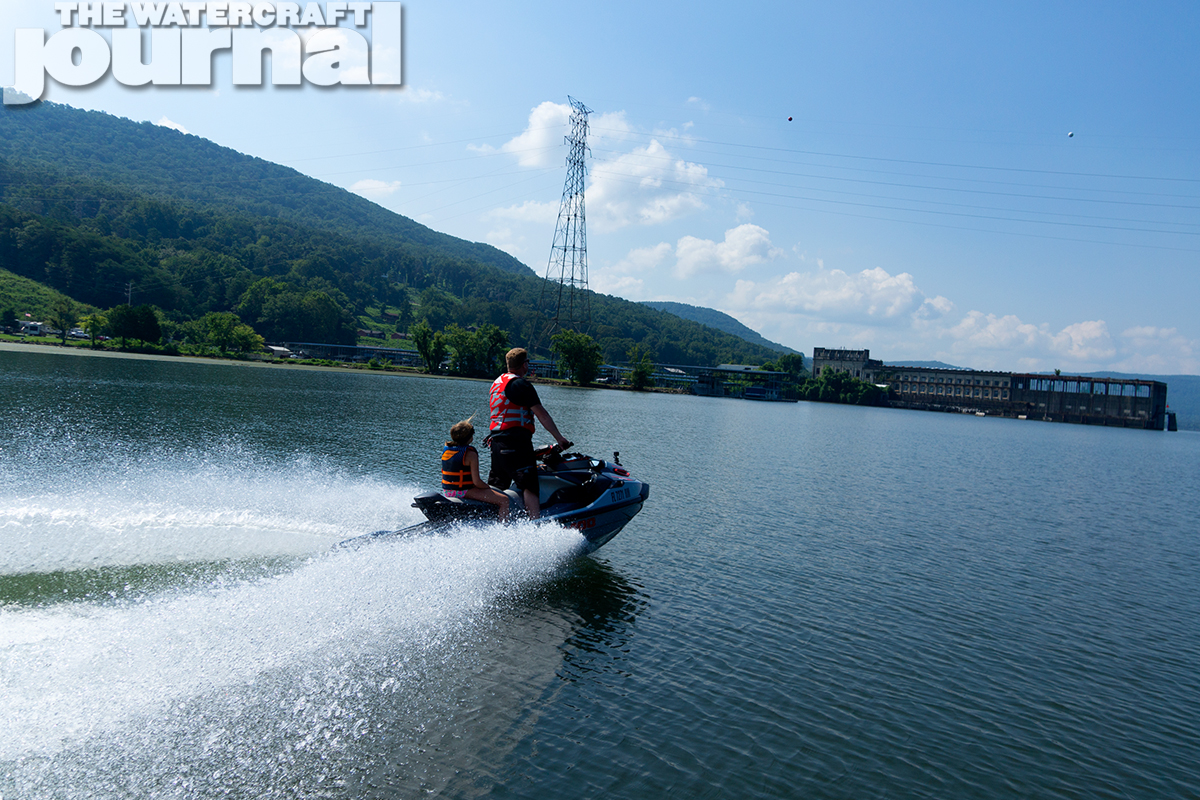
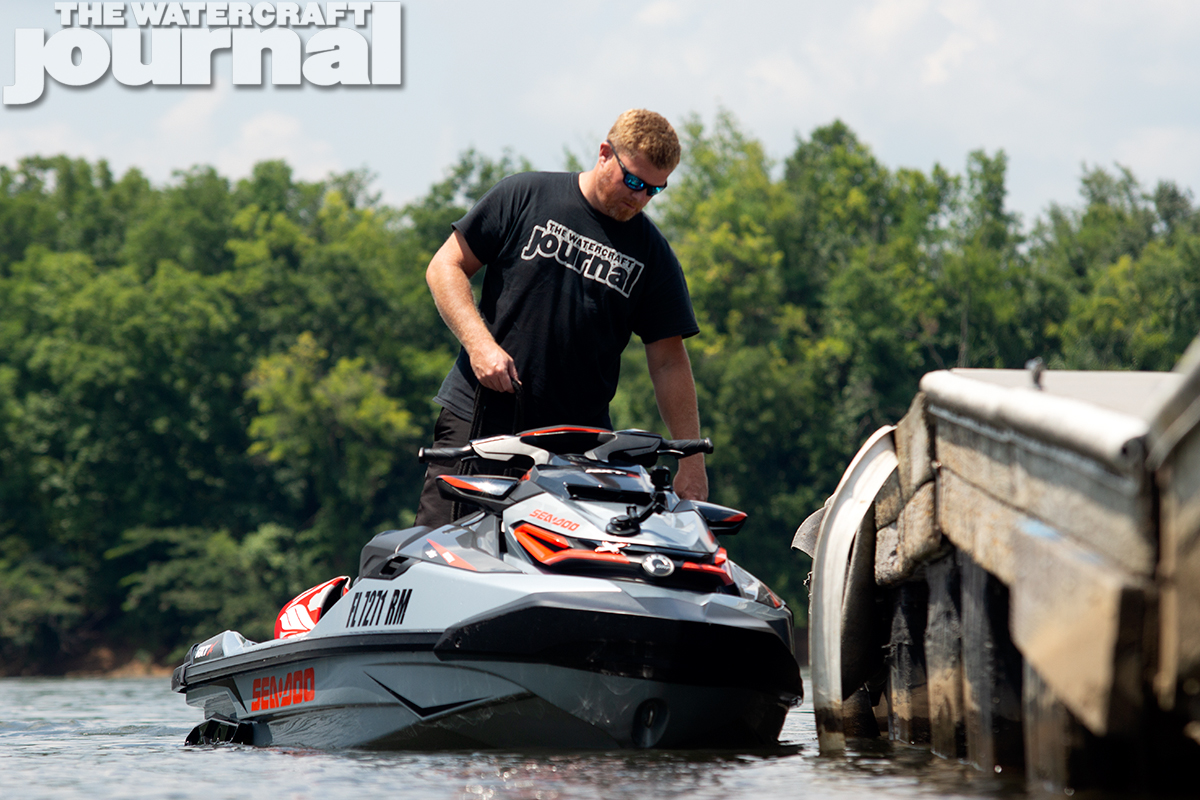
For our little “vacay,” we were joined with Tim McKercher of Sea-Doo to stop and soak in some of the hidden beauty of this American treasure; to check out the local flavor, put on our “tourist hat” and rack up a few hundred miles on a pair of supercharged 2018 Sea-Doos – we aboard our long-term test RXT-X 300 and Tim riding a 230-horsepower GTX.
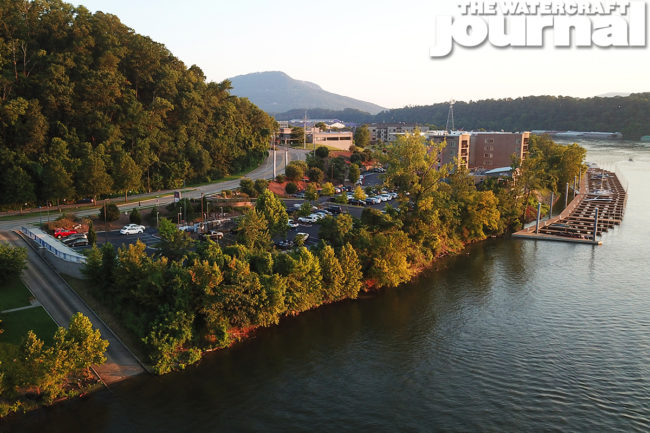
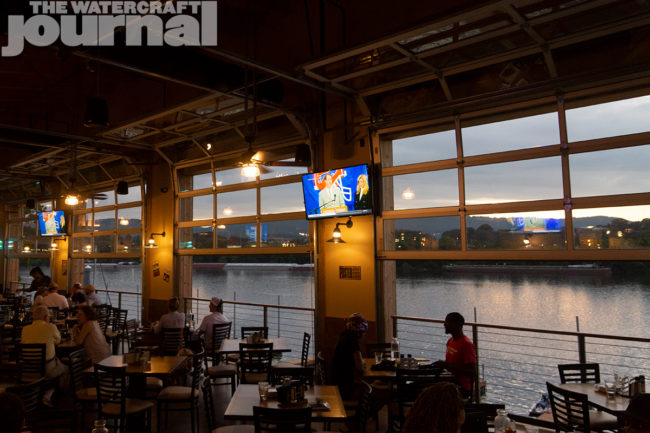
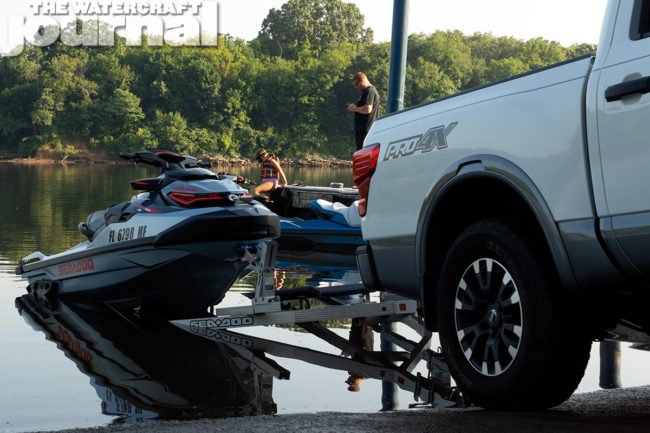
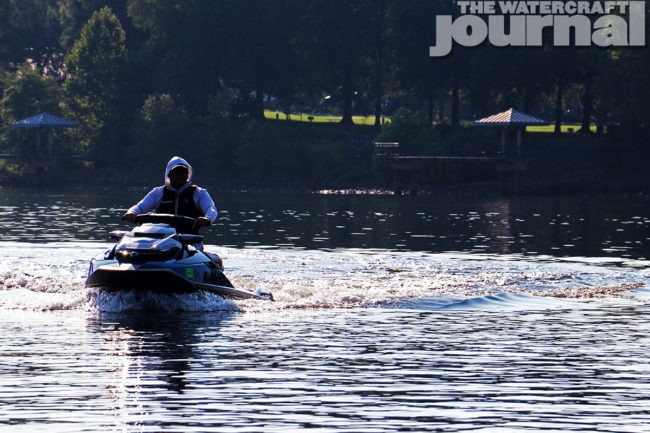
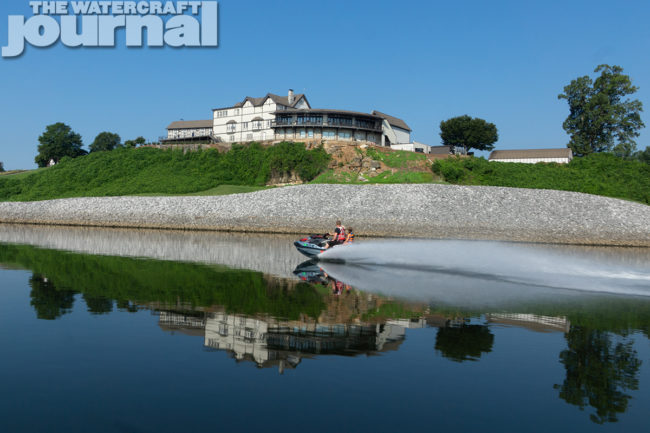
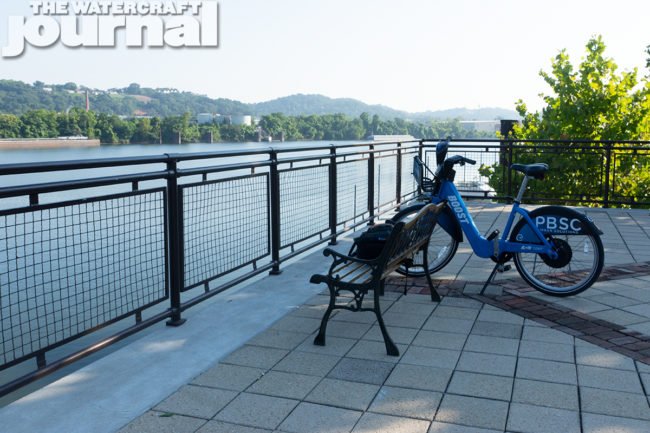
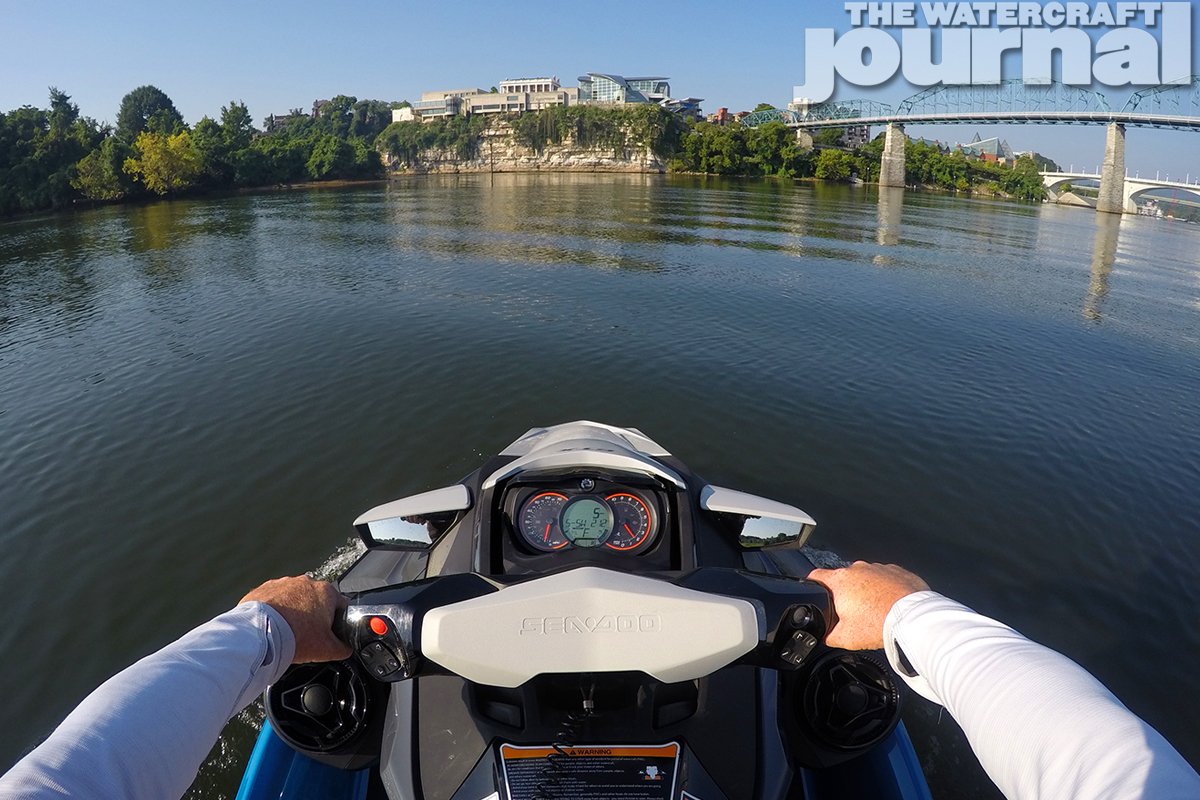
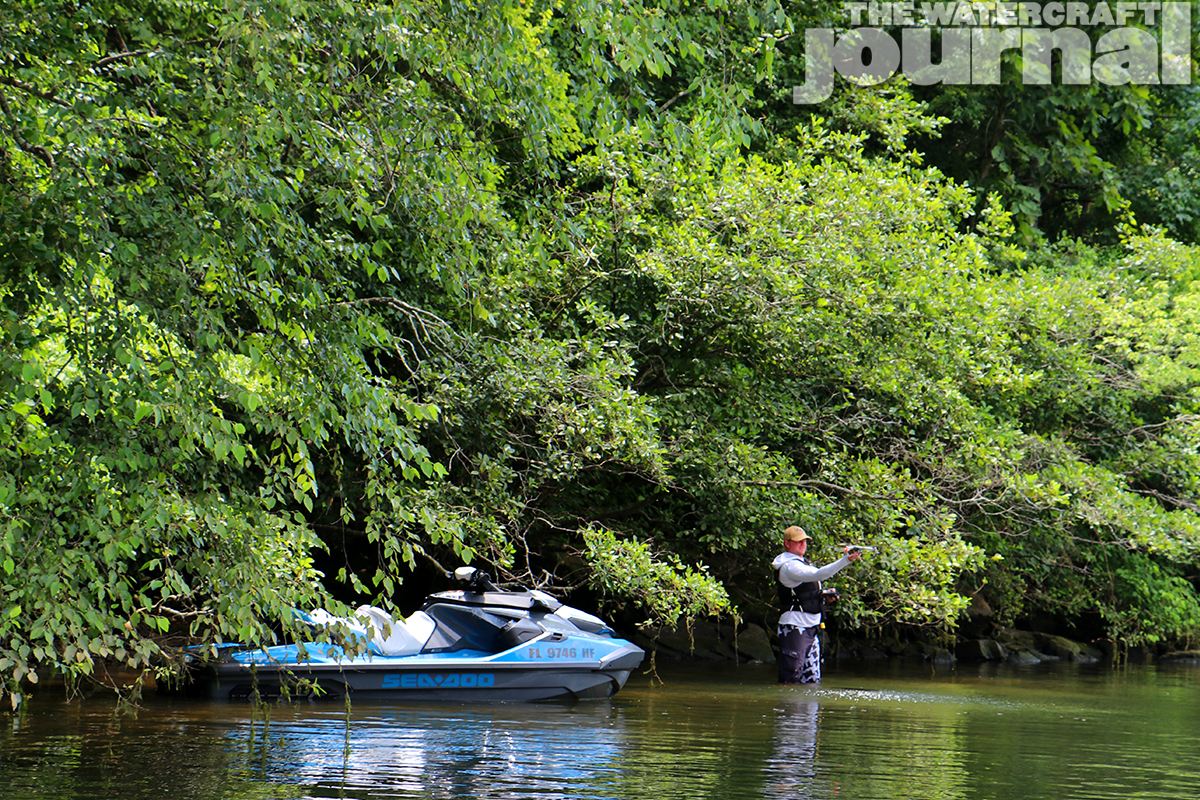
Our first of three days in the River City began with a jaunt north to the Tennessee Riverpark to launch our Sea-Doos early that morning. The beautifully manicured park stretches along the waterfront, dotted with jogging trails and well-kept gardens. With absolutely zero boat traffic to share the water with, the river was astonishingly smooth – clear enough to make out the lettering on the sides of buildings in the reflections as we passed.
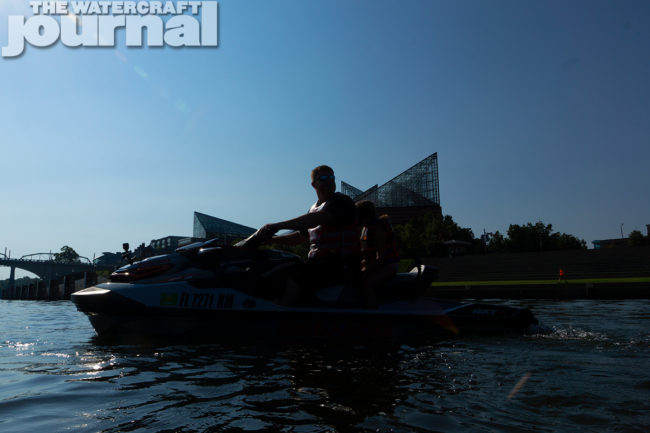
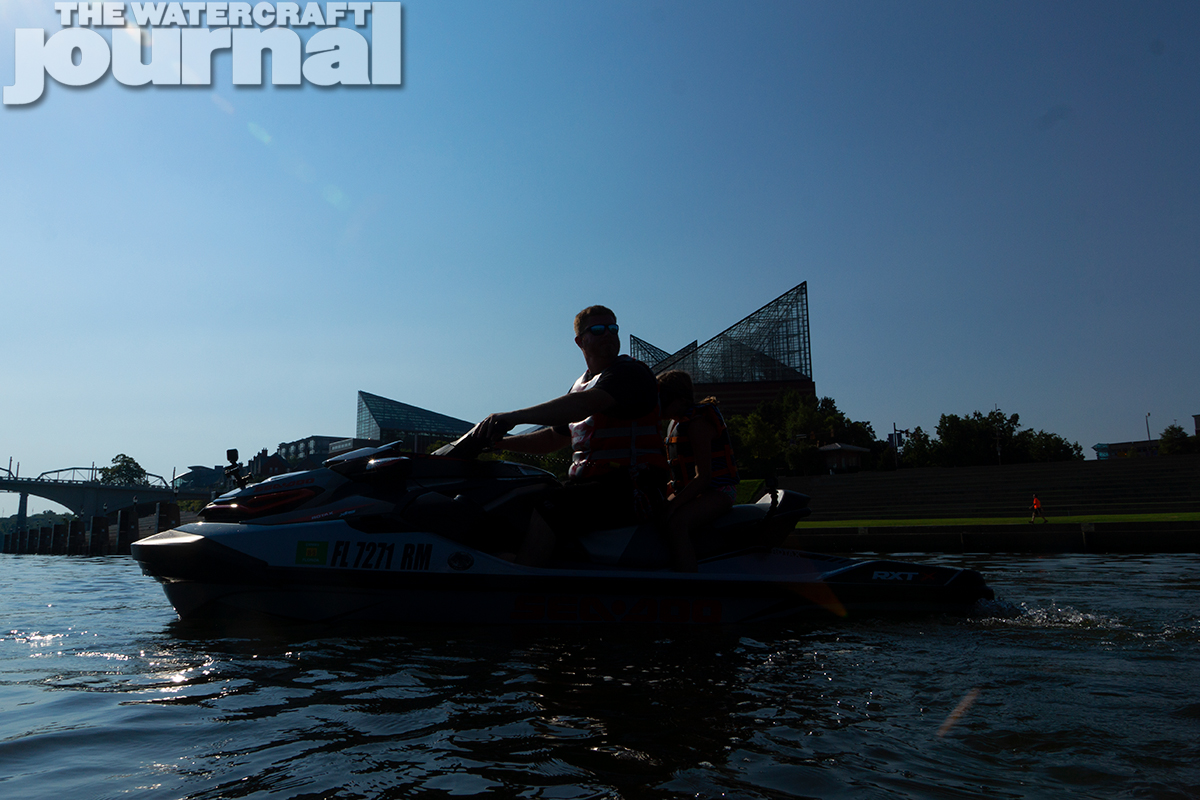
It took mere minutes before approaching Chattanooga’s towering waterfront. The downtown area is a blend of historic and futuristic, with the tall angular peaks of the glass-topped Aquarium looming high above while ancient smoke-stacked paddle boats sat parked nearby. The Hunter Museum of American Art is a smooth-sided contemporary edifice of glass and stone perched high on a cliff face overlooking the river. Facing the downtown promenade from across the historic Walnut Street Bridge is the North Shore district filled with locally-owned boutique stores and restaurants.
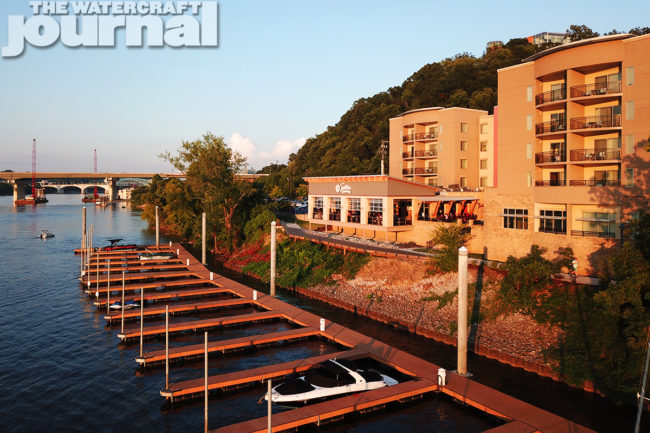
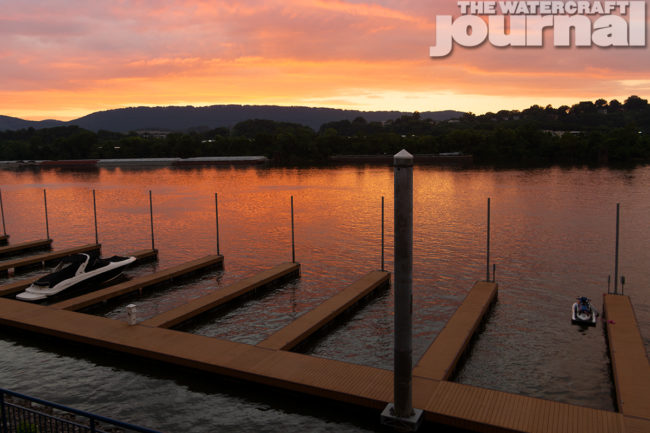
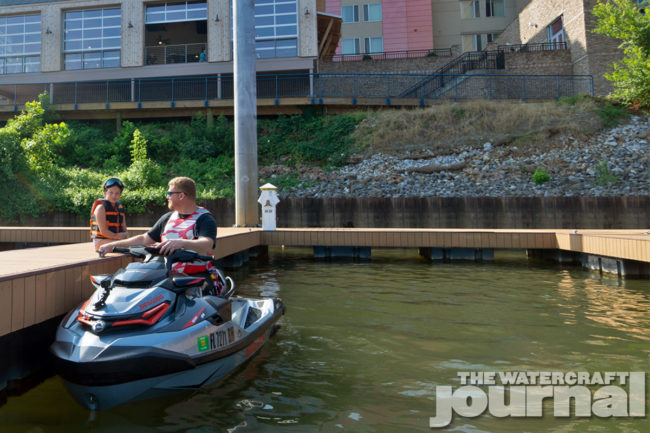
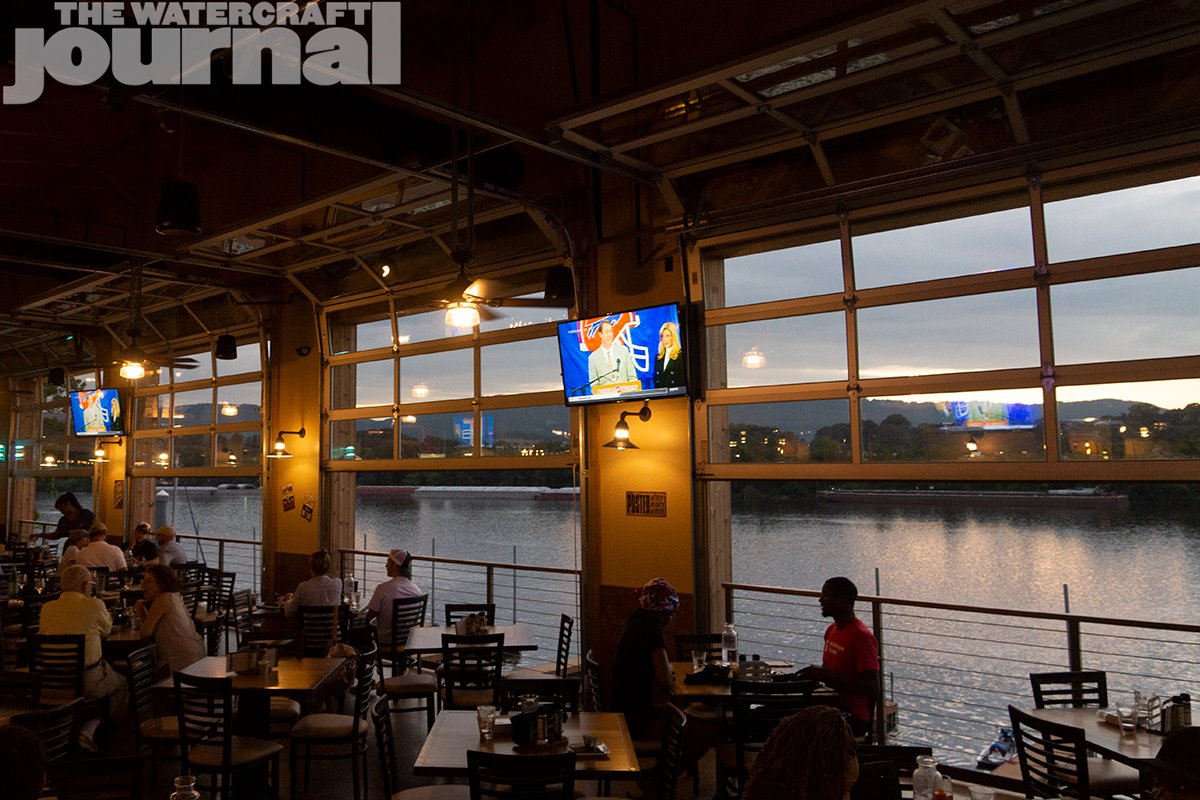
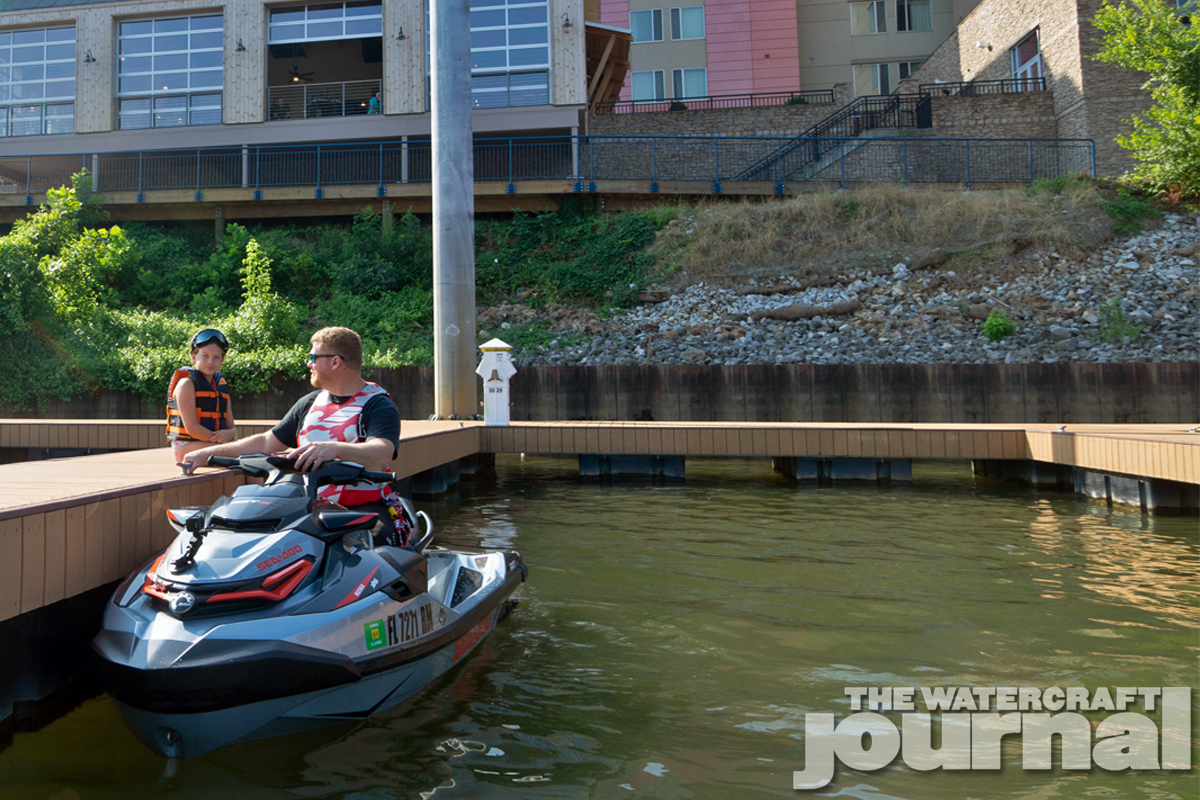
We continued our journey west, passing our shorefront hotel, Marriot’s Springhill Suites. Featuring its own dock and mooring services, as well as the fantastic Scottie’s On The River restaurant, it happily served as our home away from home for the few days we were here. Passing below the shadow of Chattanooga’s historic Martin Luther King District and around Moccasin Bend, we peeled right around Williams Island and entered into Cash Canyon – a lush green gulch blanketed with maple, sycamore and oak trees.
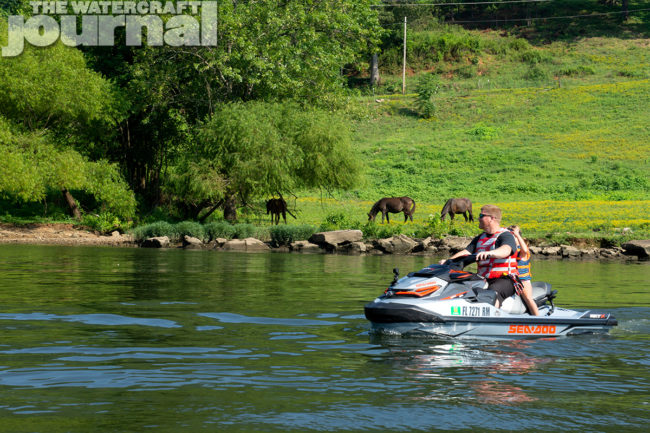
We eyed over a half dozen white-tailed deer sipping the river before spiriting away, frightened by the fast-moving Sea-Doos. These craft are nearly perfect for rides like these. Sea-Doo is absolutely unmatched in its attention to rider comfort and its ergonomic cockpit is unlike any watercraft on the market. The saddle is low, with pinched coves at the knees, allowing the rider to cruise casually, without the strain on ones hips like other brands.
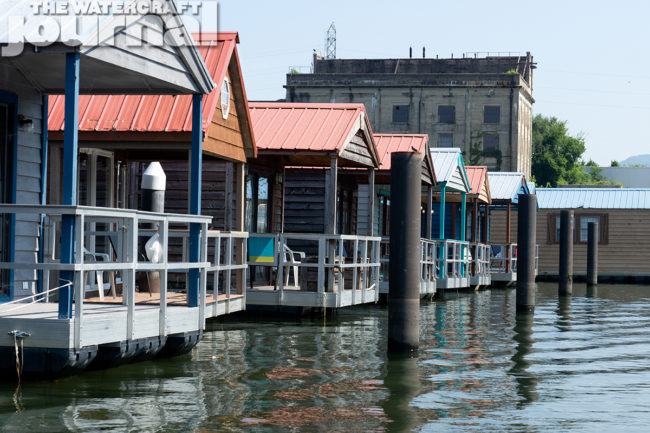
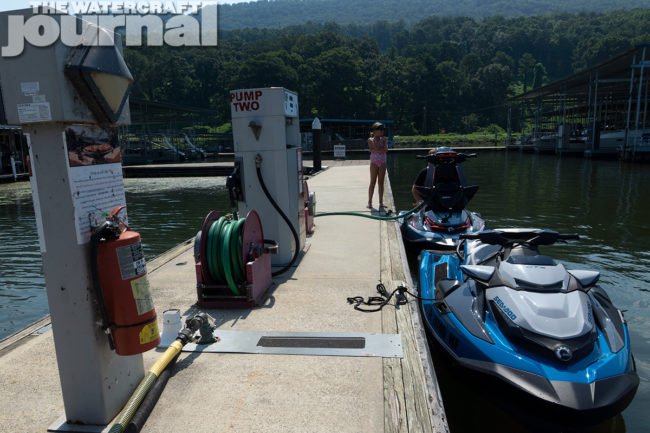
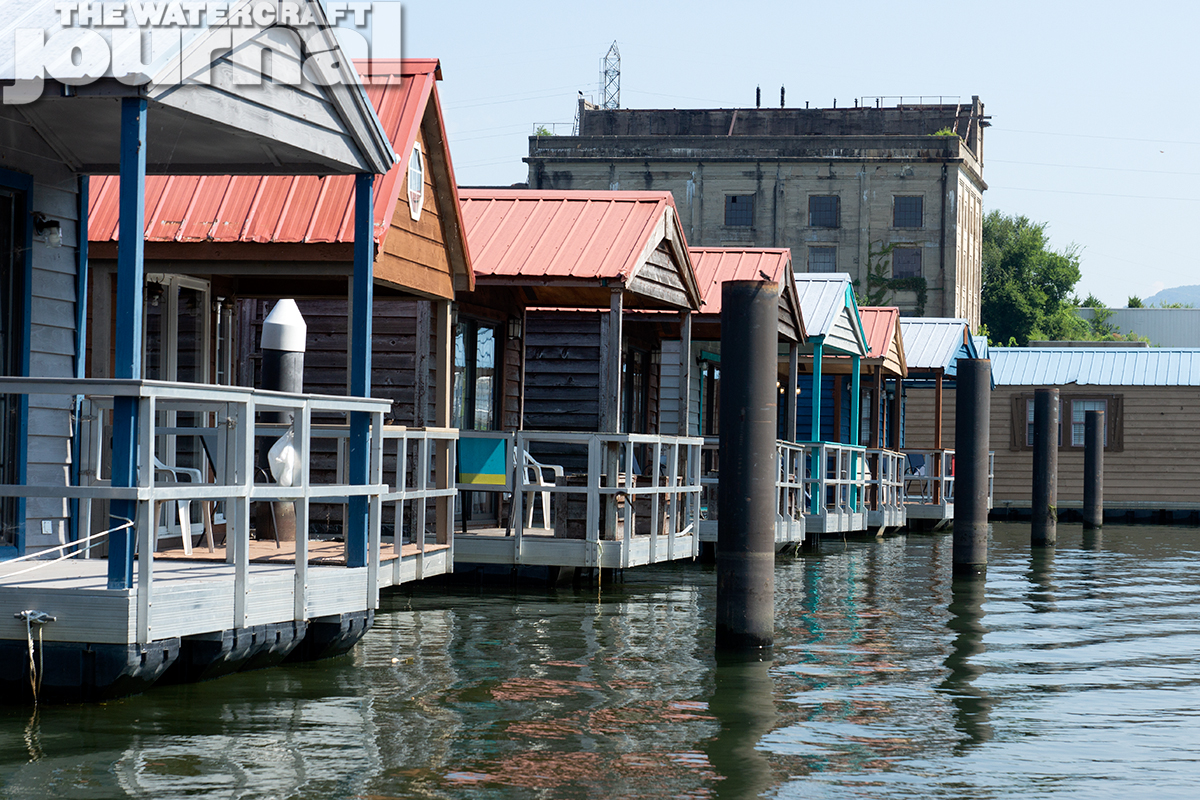
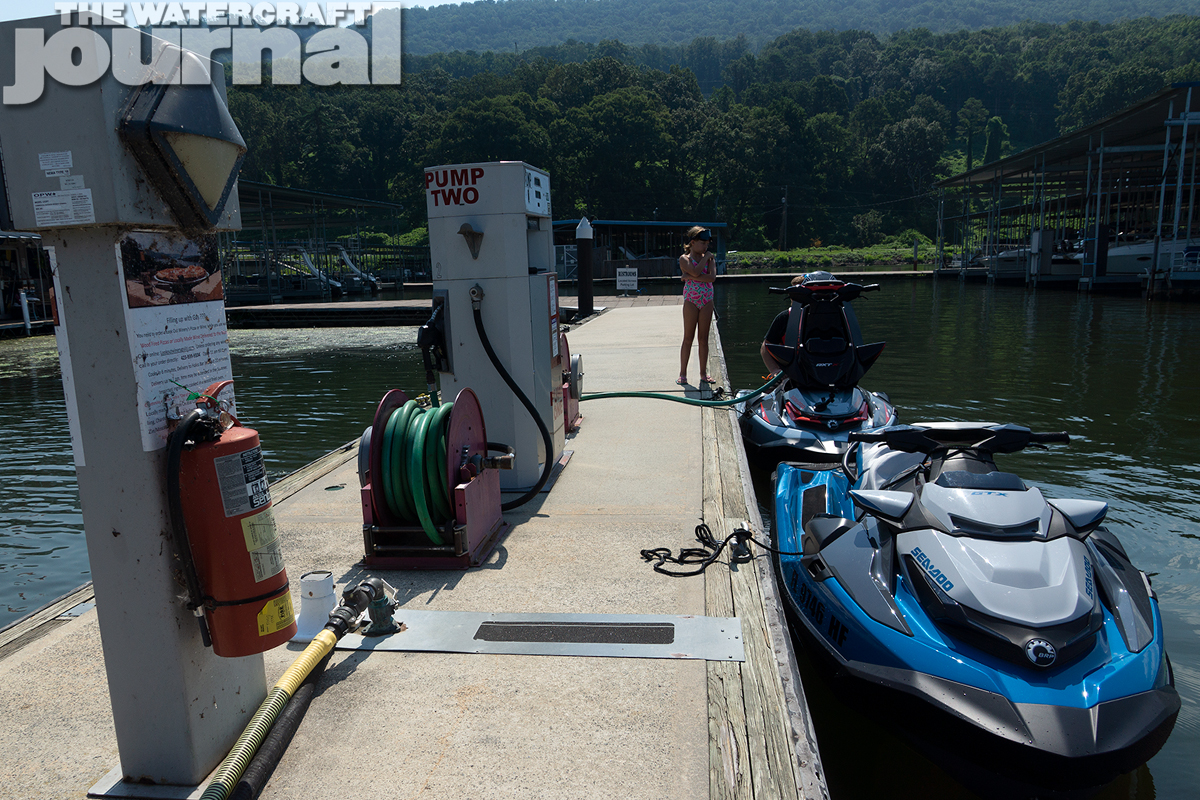
We consistently employed the BRP Premium Sound System, listening to our favorite tunes communicated via Bluetooth to my phone locked away in the RXT-X’s waterproof glovebox. We took our ride into Nickajack Lake, to the Hales Bar Marina, for fuel and refreshments. The site is the former location of nation’s first hydroelectric dam (now long since dismantled and abandoned). Today, the spot serves as a riverfront resort, welcoming visitors to rent a floating cabin and enjoy a worry-free weekend on the lake.
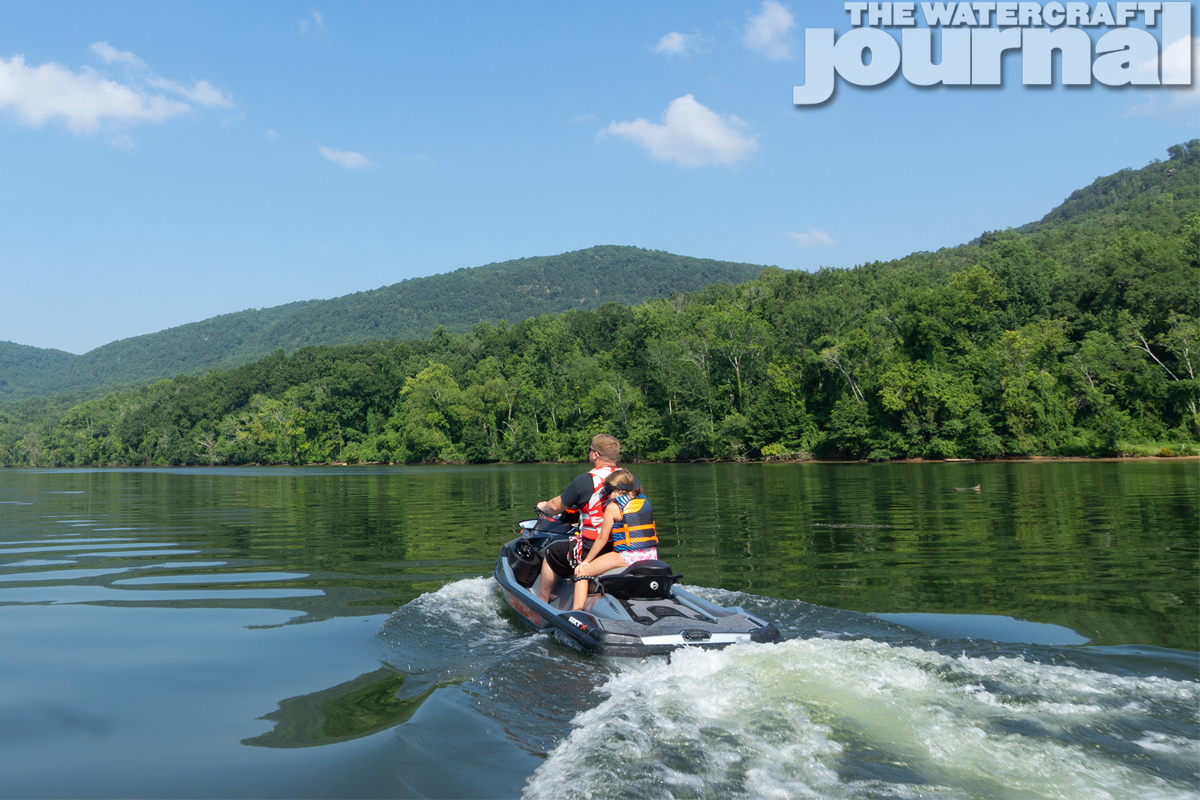
Properly fueled and recharged, we continued towards Nickajack Dam, past where Highway 24 arcs high above on a trestled bridge. Turning back towards Chattanooga, we took our time passing through the unbroken scenery of the Prentice Cooper State Park encompassing the Tennessee River Gorge, dwarfed by Raccoon Mountain, Signal Mountain and Lookout Mountain high above. With a day like today it would be easy to conclude our stay in Chattanooga, satisfied that we had made enough memories, but our trip wasn’t over.
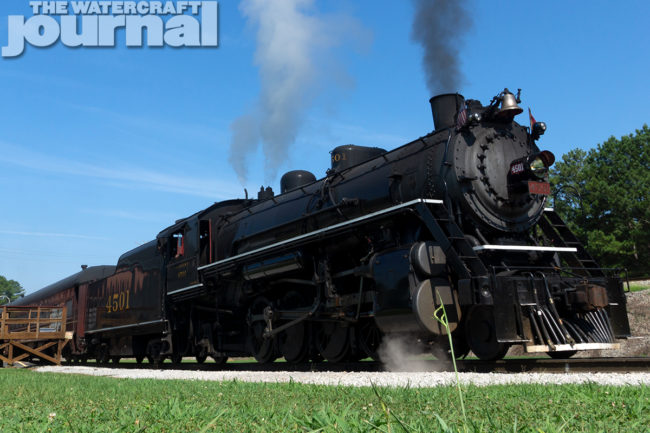
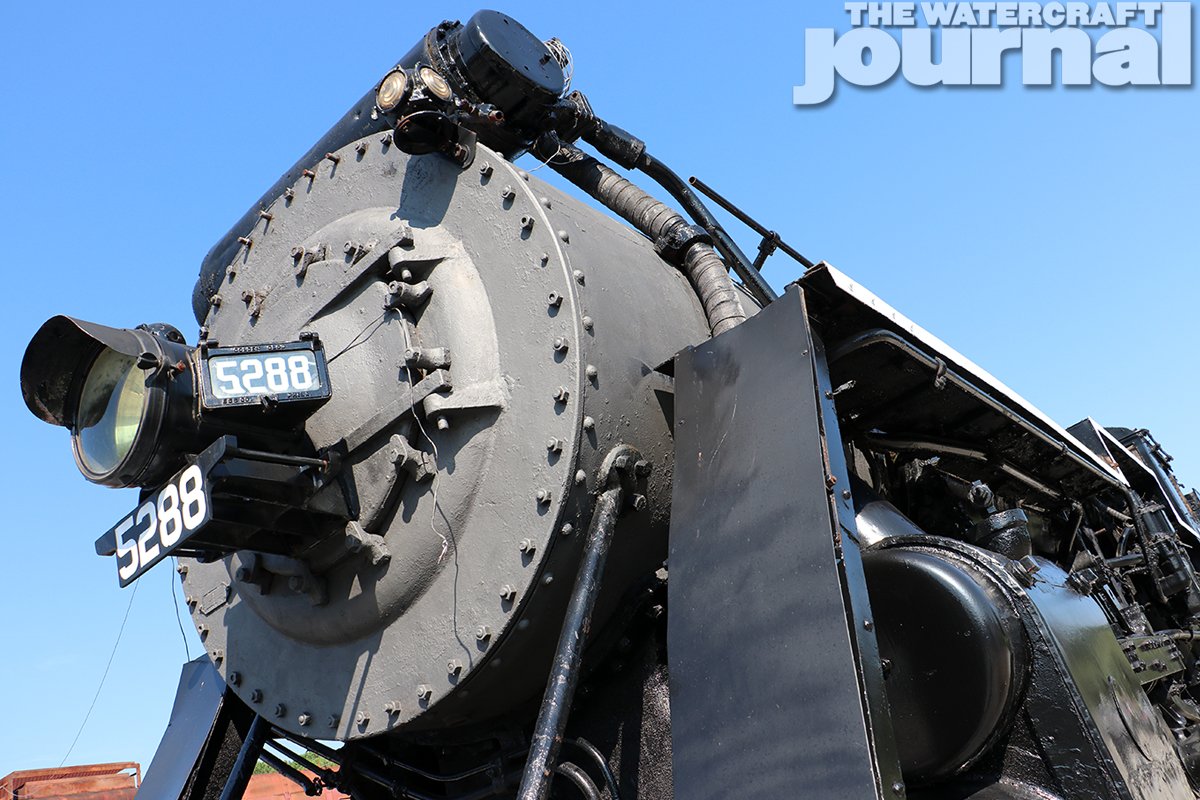
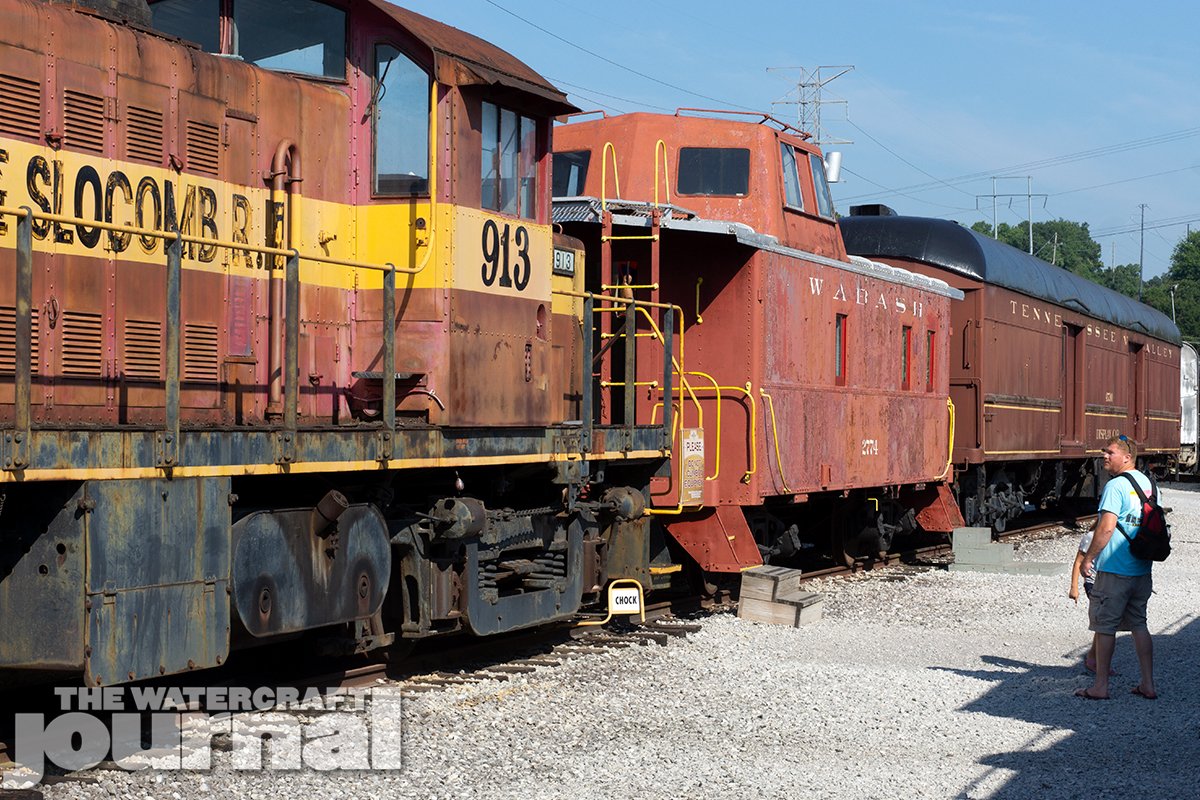
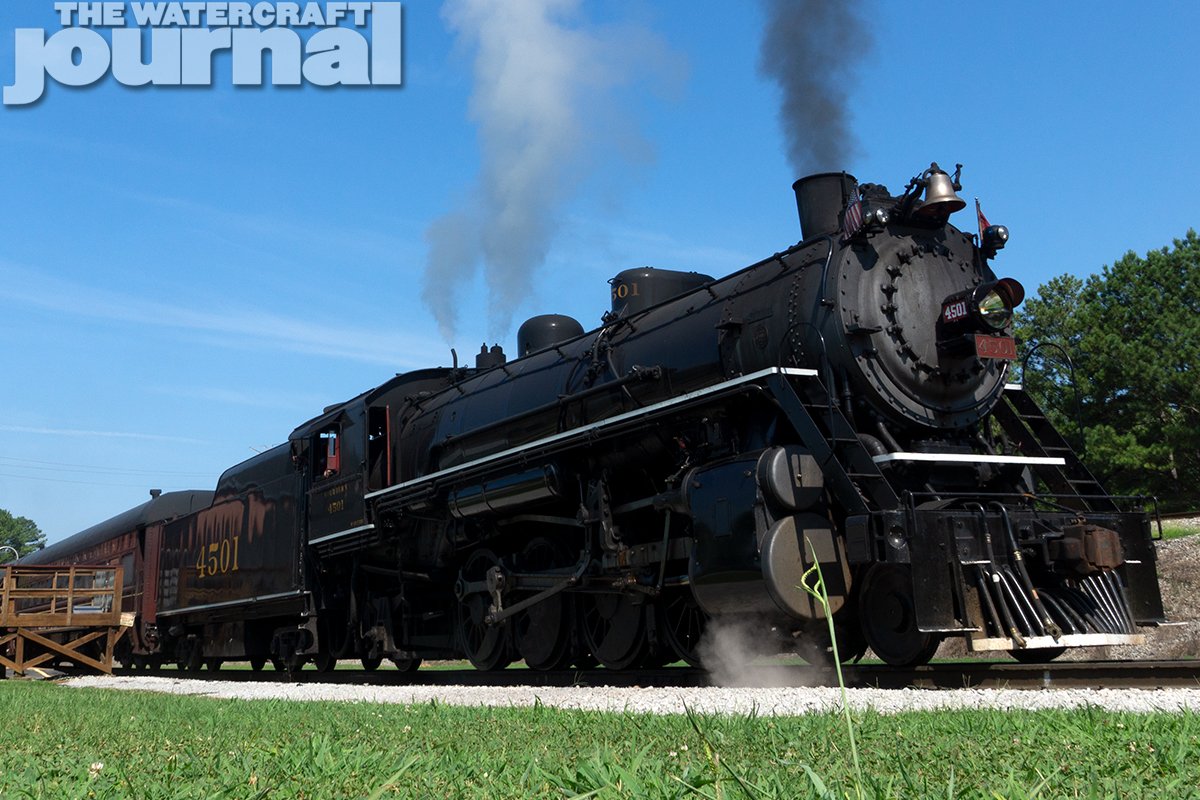
The next morning, we hailed a taxi and ventured off to explore a portion of Chattanooga’s storied history – beginning with the Tennessee Valley Railroad Museum. The largest historic operating railroad in the South, the Tennessee Valley Railroad Museum continues to offer railroad service for the Chattooga and Chickamauga Railways, transporting tourists throughout the Southern states as well as back in time, across rail lines once used and fought over by warring campaigns in America’s bloodiest war.
We hopped a ride aboard the Missionary Ridge Local for an hour’s ride over 6 bridges and through a pre-Civil War tunnel, dead-ending at a turn-of-the-century turntable before sending us back. The massive 4-8-4 steam-powered locomotive erupted smoke and embers, jolting and jerking passenger cars over the same stretch of narrow-gauge Western and Atlantic rail as The Great Locomotive Chase of 1862 (a great piece of American history that we strongly recommend you look up).
On the morning of our final day in Chattanooga, we opted to check out the famous Tennessee Aquarium. Recognized as one of the country’s top public aquariums, the Tennessee Aquarium is broken up into two major buildings: The Ocean Journey and River Journey.
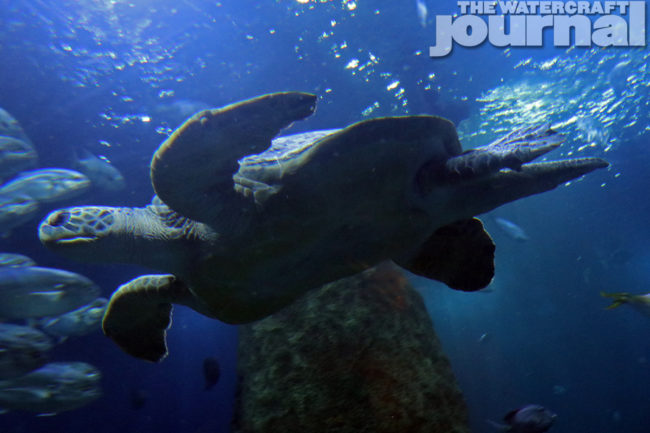
The Ocean Journey exhibit contains a huge 618,000 gallon tank recreating the environment of the Flower Garden Banks National Marine Sanctuary in the Gulf of Mexico – stocked full of sand tiger sharks, and green sea turtles as well as other notable fish. The tank also features a undersea cavern which you can walk-through as fish swim overhead. At the top level, there’s a touch tank of small sharks and rays, as well as a butterfly atrium housing several South American species.
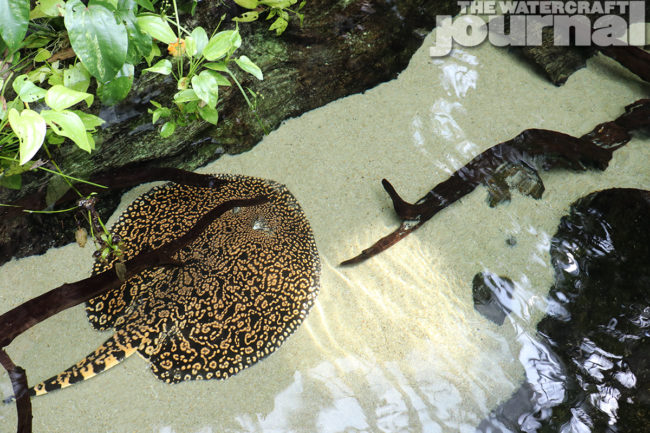
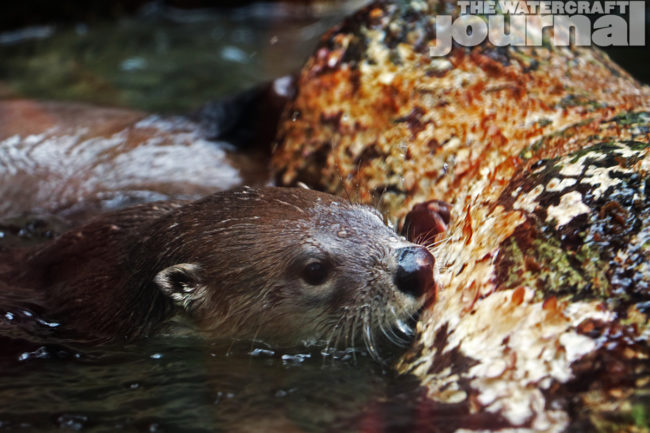
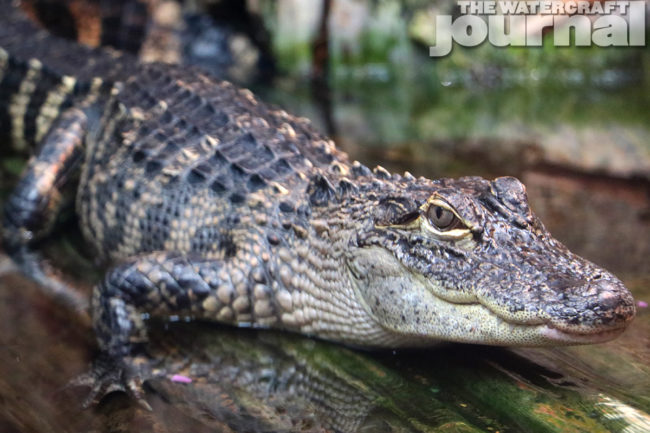
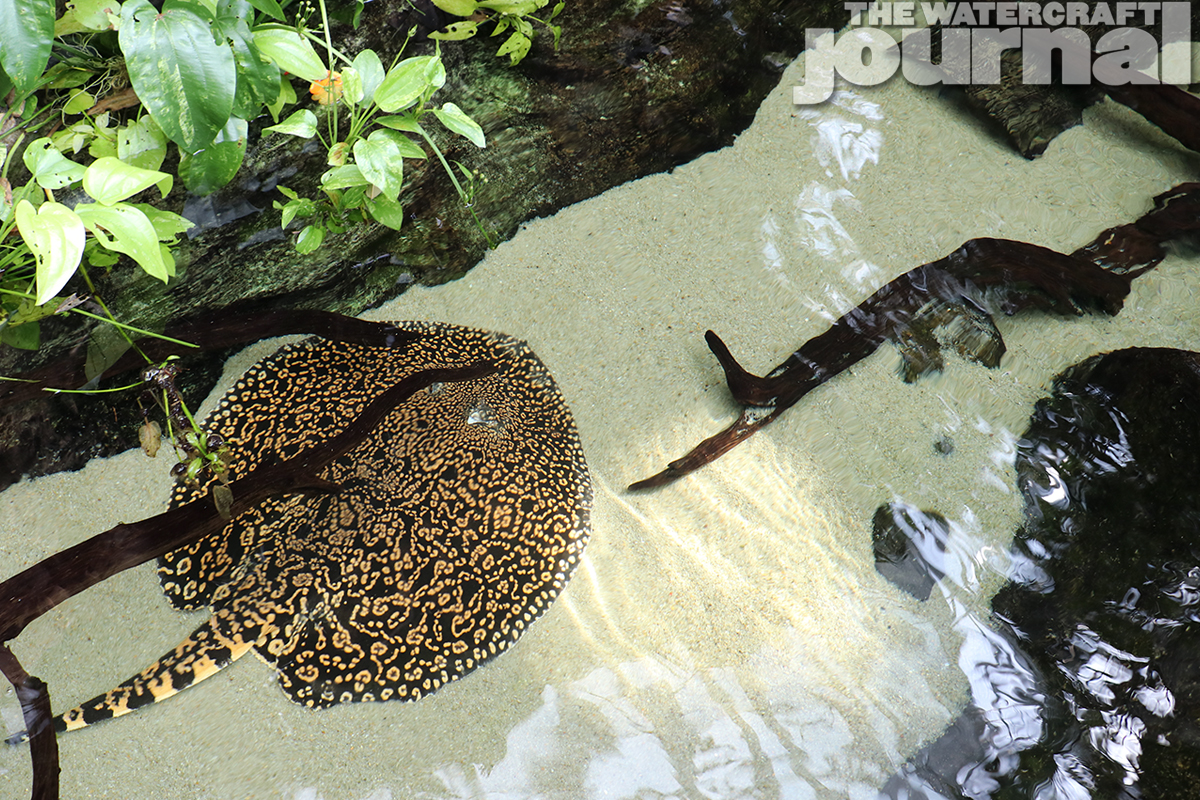
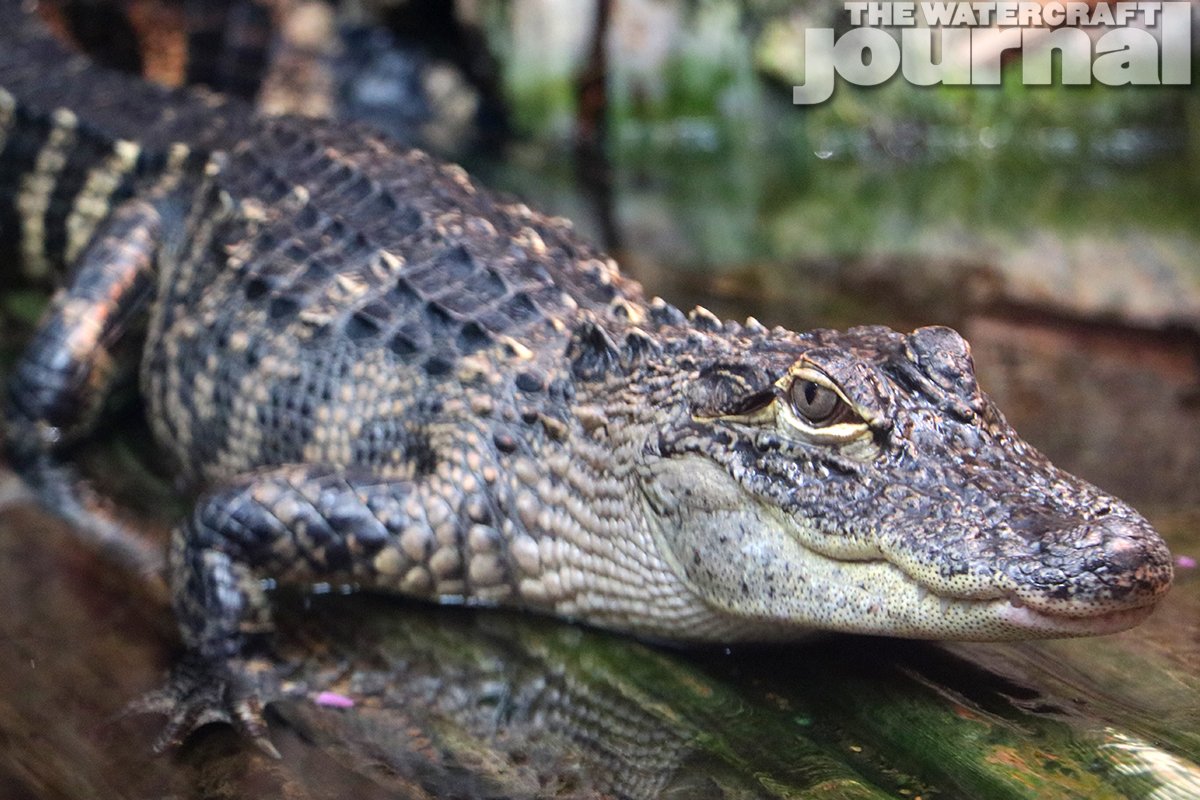
Across the courtyard is the River Journey exhibit, containing a 400,000-gallon tank, which what was the world’s largest freshwater aquarium in the world when it was built. Home to North American river otters, song birds, native fish species; an Alligator Bayou recreating the Mississippi Delta, populated with American alligators and a pair of alligator snapping turtles; and a River Giants exhibit, featuring giant freshwater fish from around the world, like alligator gar, redtail catfish and giant freshwater stingray.
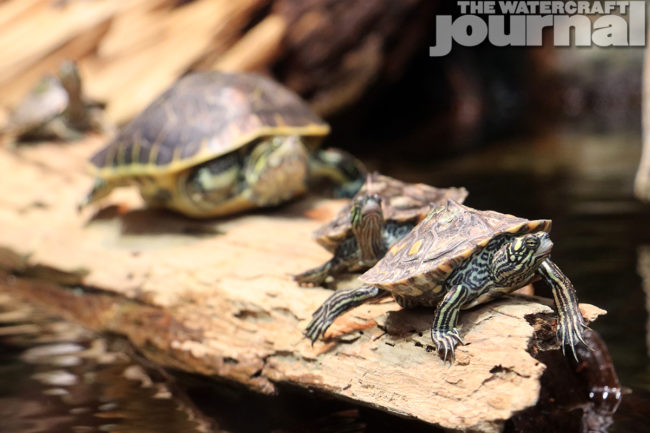
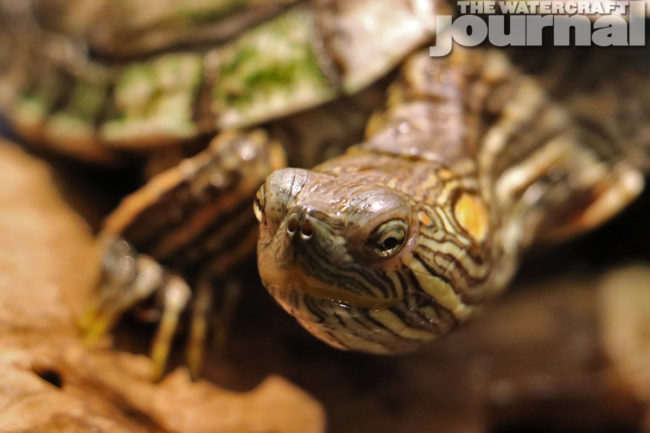
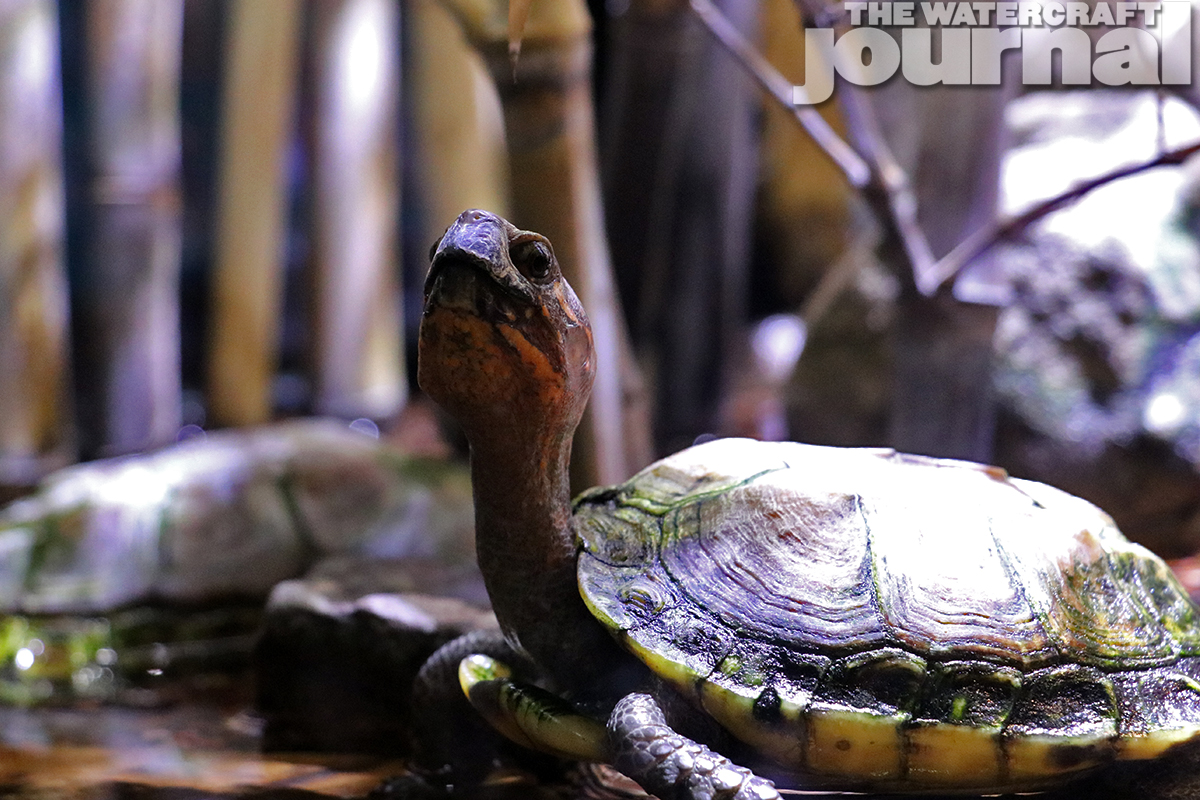
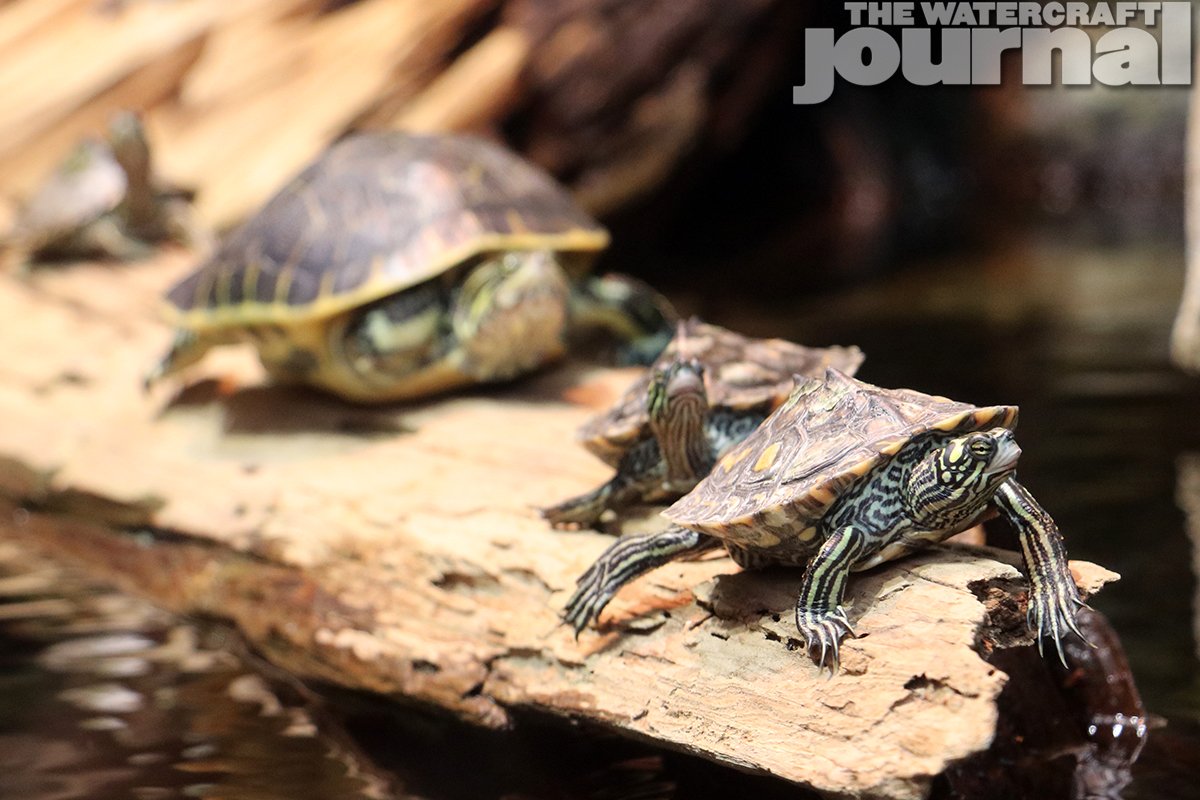
During our visit we were entreated by the newly added turtle exhibit displaying a vast variety of species from across the world – with turtles of every shape, size and color. In many cases, they were as curious of us as we were of them. While we certainly could’ve stayed another 3 days, our time in Chattanooga drew to a close. We are incredibly grateful for Tim and the team at Sea-Doo, and to the Chattanooga Area Convention & Visitors Bureau who welcomed The Watercraft Journal so openly.
If you’re looking for some absolutely unspoiled scenery, a trip back through America’s history, or a perfect spot to take the family, we cannot recommend Chattanooga enough. In fact, we’ve been back twice since this trip – and there’s still lots left to see.
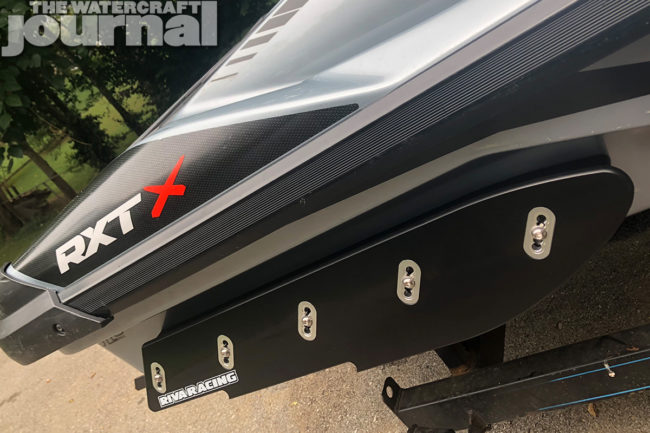
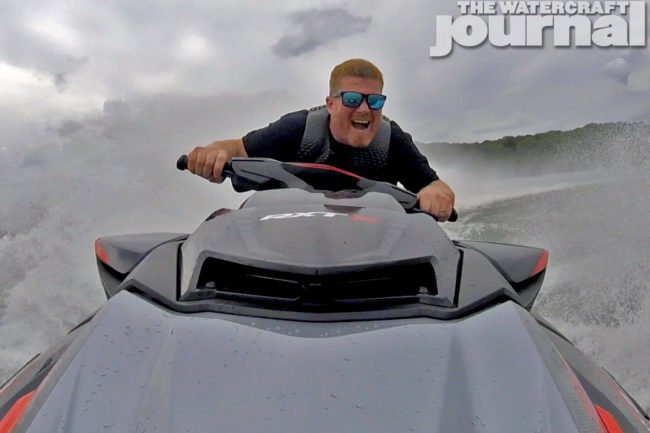
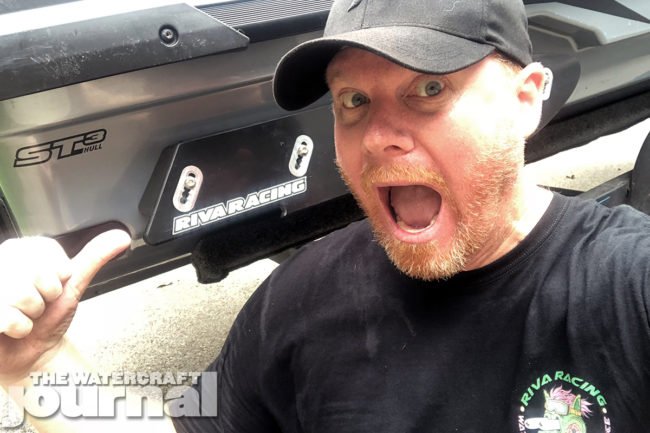
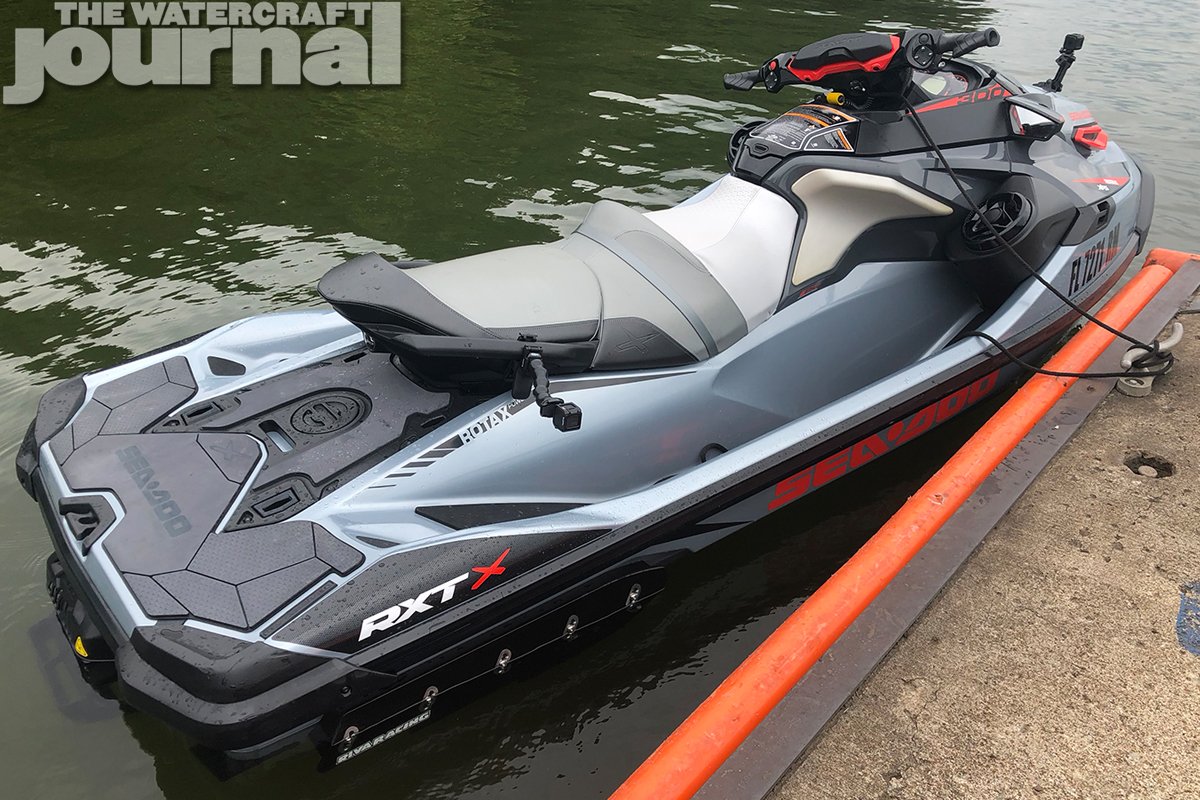
In a perfect instance of putting the cart before the horse, The Watercraft Journal managed to publish its full-length review of RIVA Racing’s Pro-Series Sponsons for the 2018 Sea-Doo RXT-X 300 long before getting around to publishing our installation guide (which is what you’re reading right now). We begin with a conundrum; that Sea-Doo engineers weirdly decided to make the sponsons for the RXT-X 300 entirely unique to the rest of the ST3 lineup.
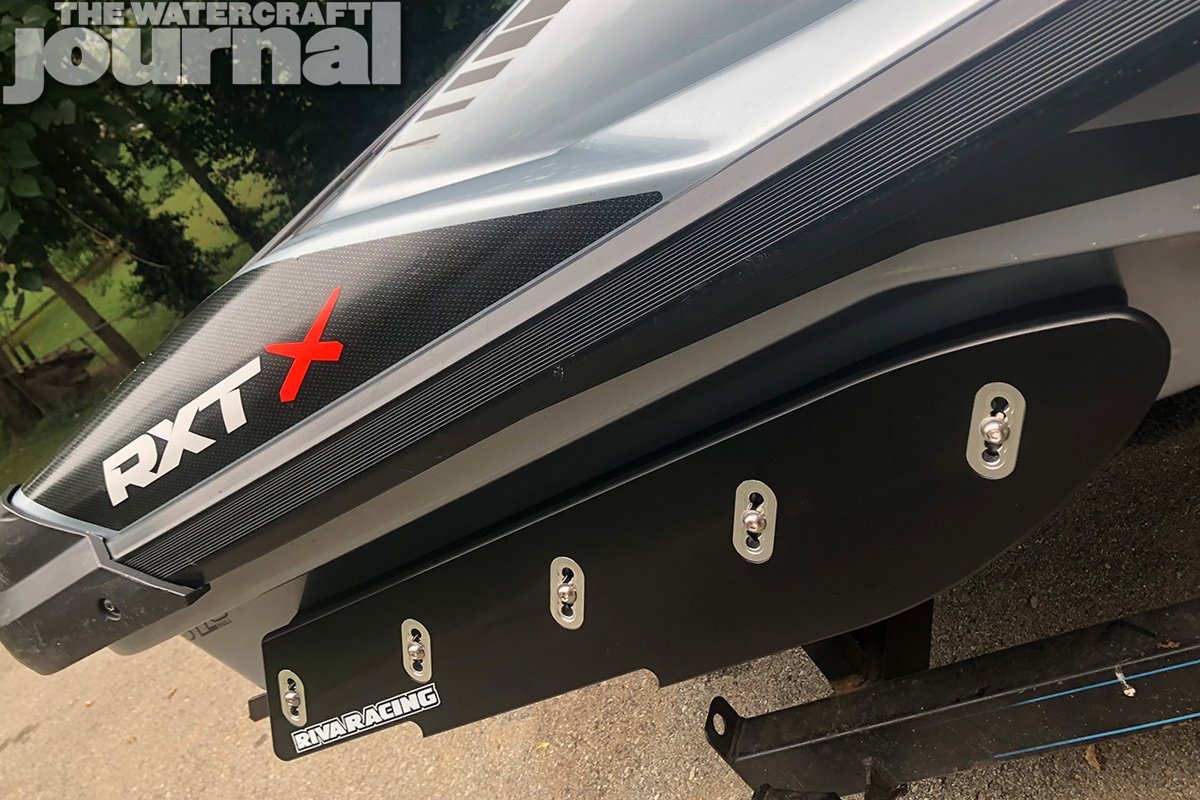
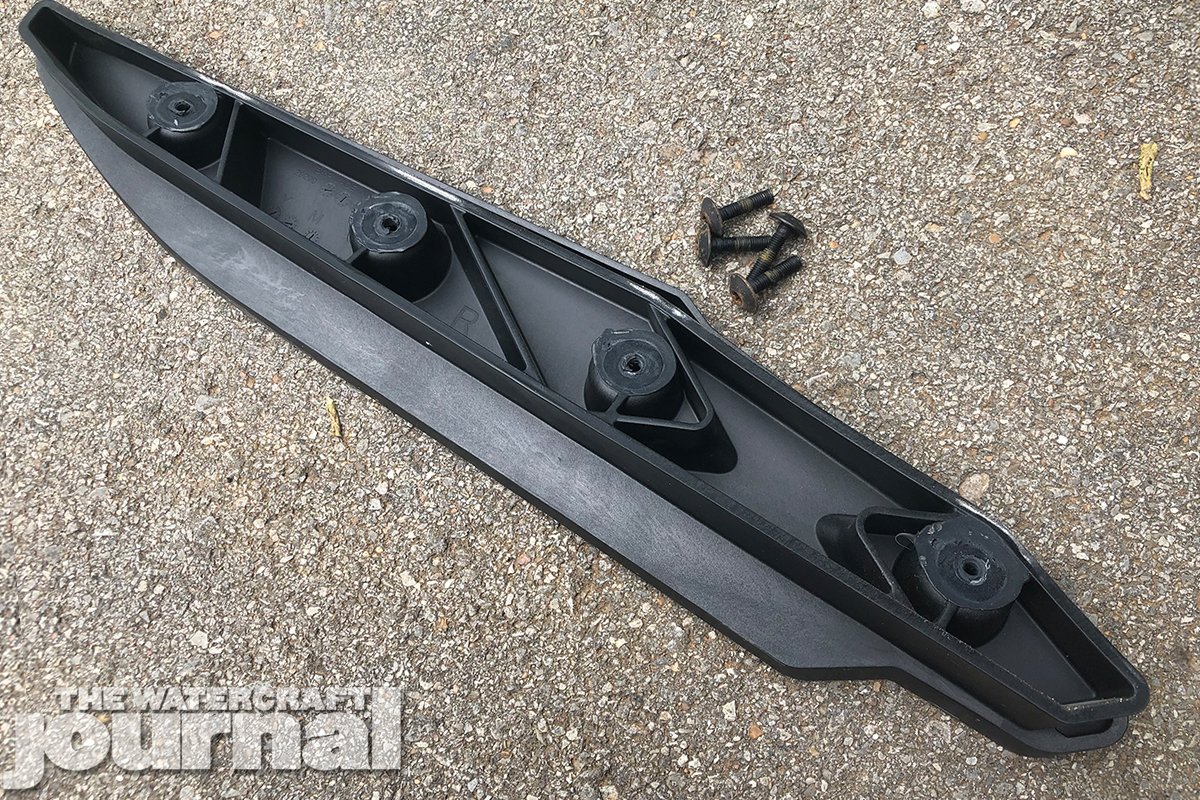
That’s right, the RXT 230, GTX 230, GTX Limited 230 and 300, and even the Wake Pro 230 all share the same one-piece plastic molded sponsons, while the RXT-X is entirely unique. Of course, the sponsons on the RXT-X are just as much a one-piece, plastic-molded sponson as the others, but has an entirely different bolt pattern and unique design all to itself.
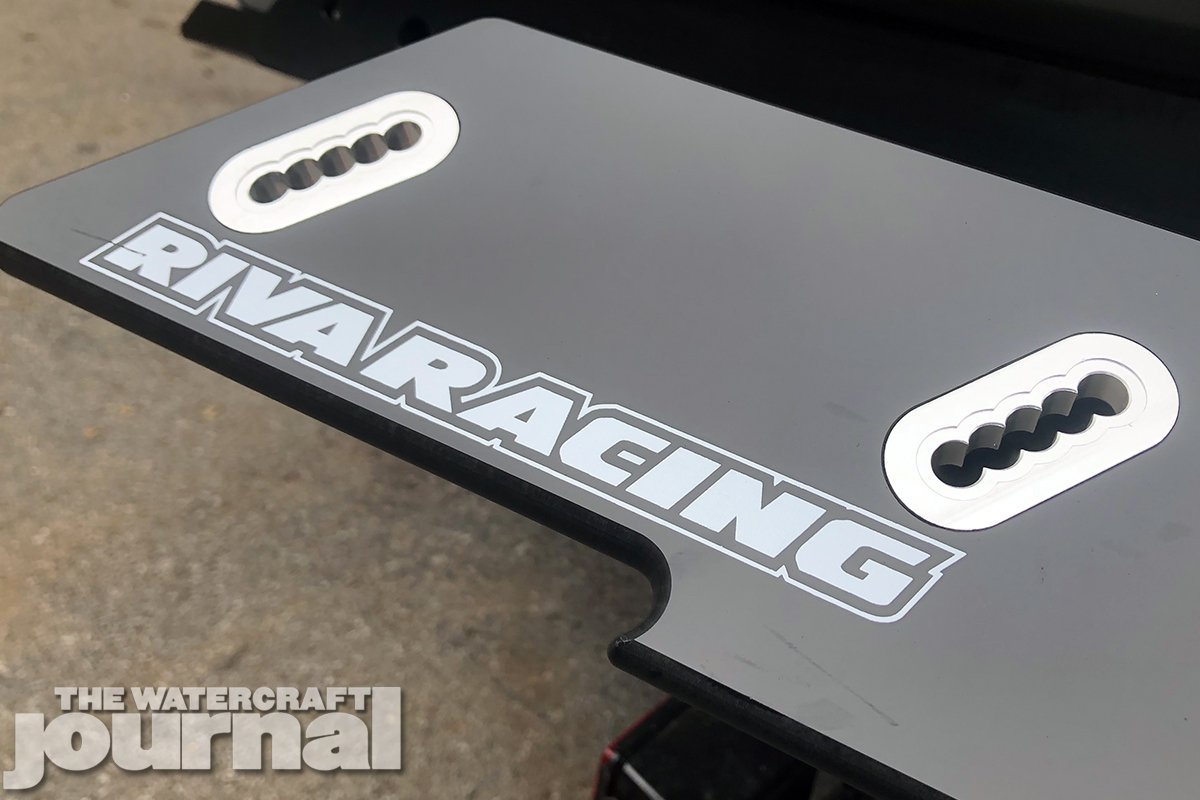
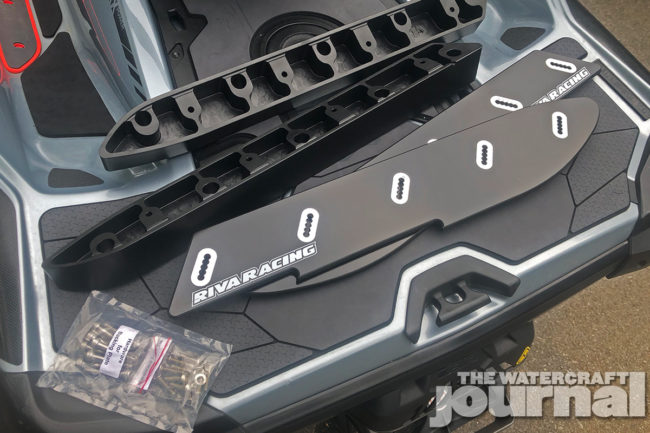
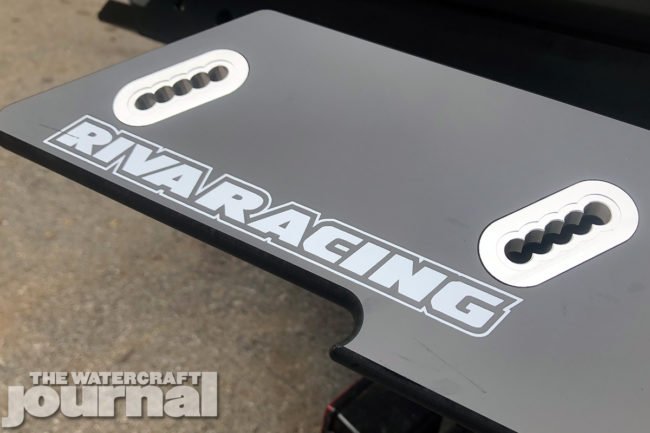
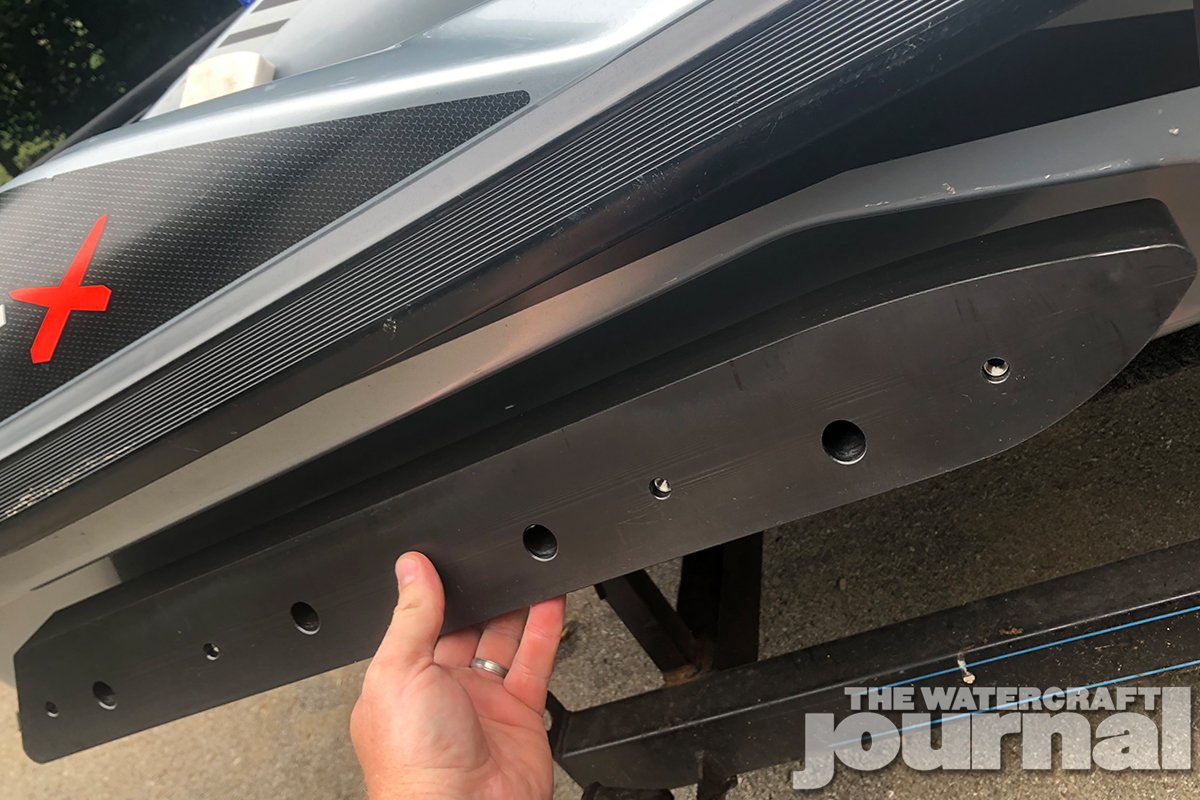
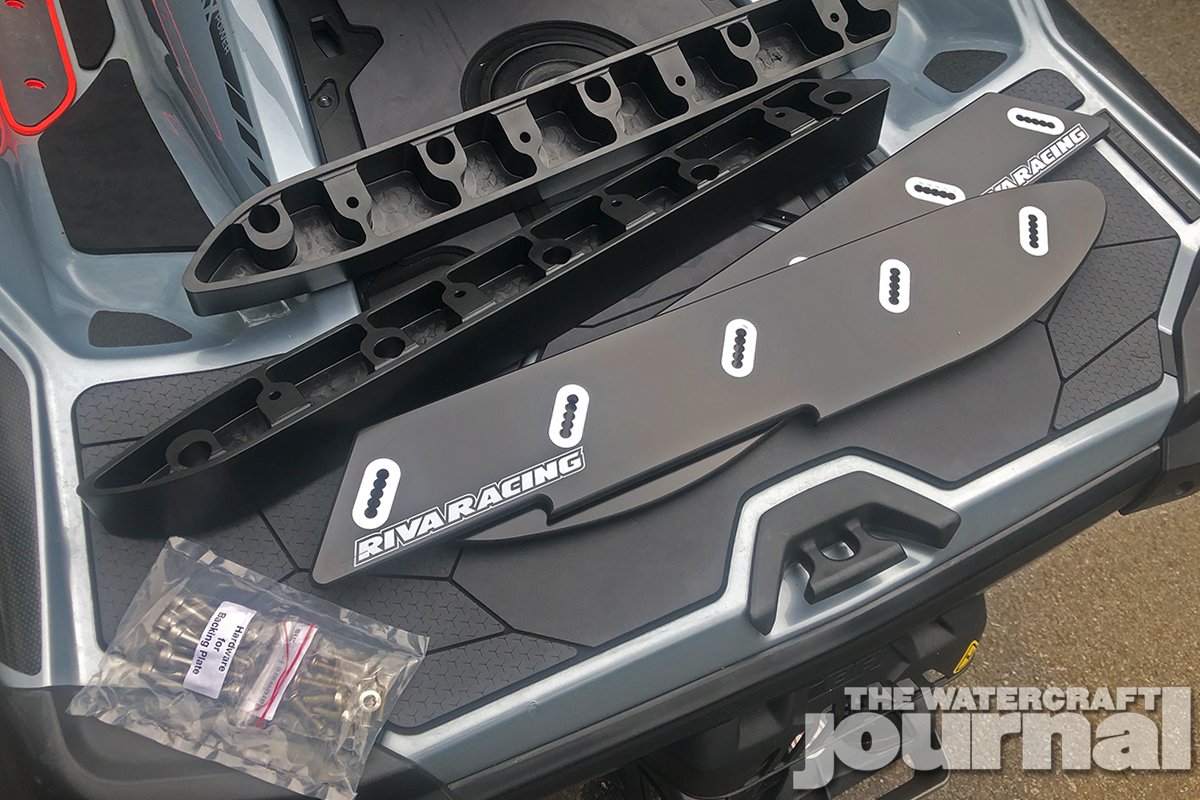
Above: The RIVA Pro-Series Sponsons are made out of a proprietary DuPont Delrin resin that makes them both incredibly strong and lightweight. The backing plates are marked “Left” and “Right” as they are not interchangeable. Both the backing plates and sponson blades include CNC’ed machine aluminum inserts to keep the sponsons attached firmly and corrosion-free. The kit also includes the hardware necessary to make the installation.
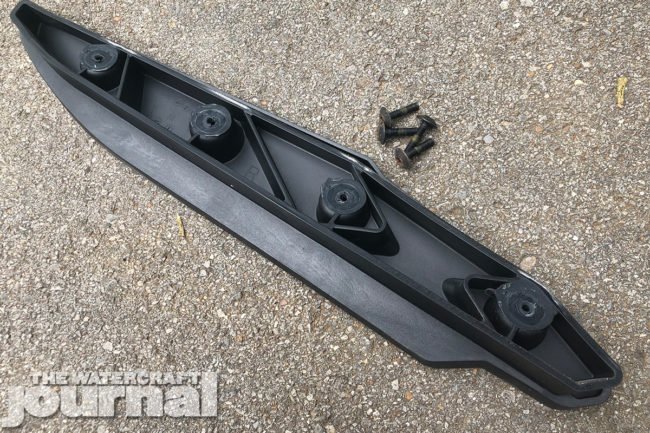
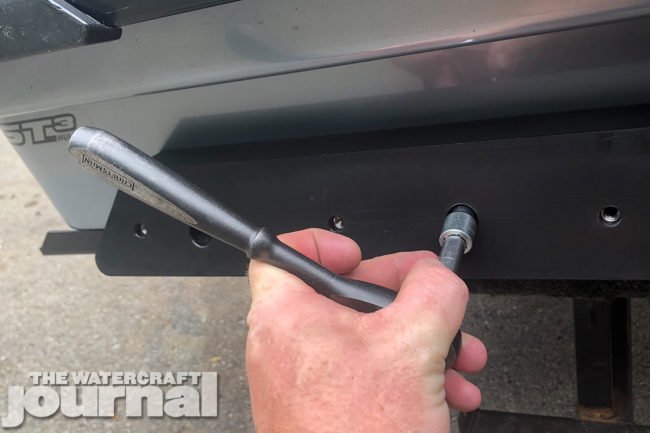
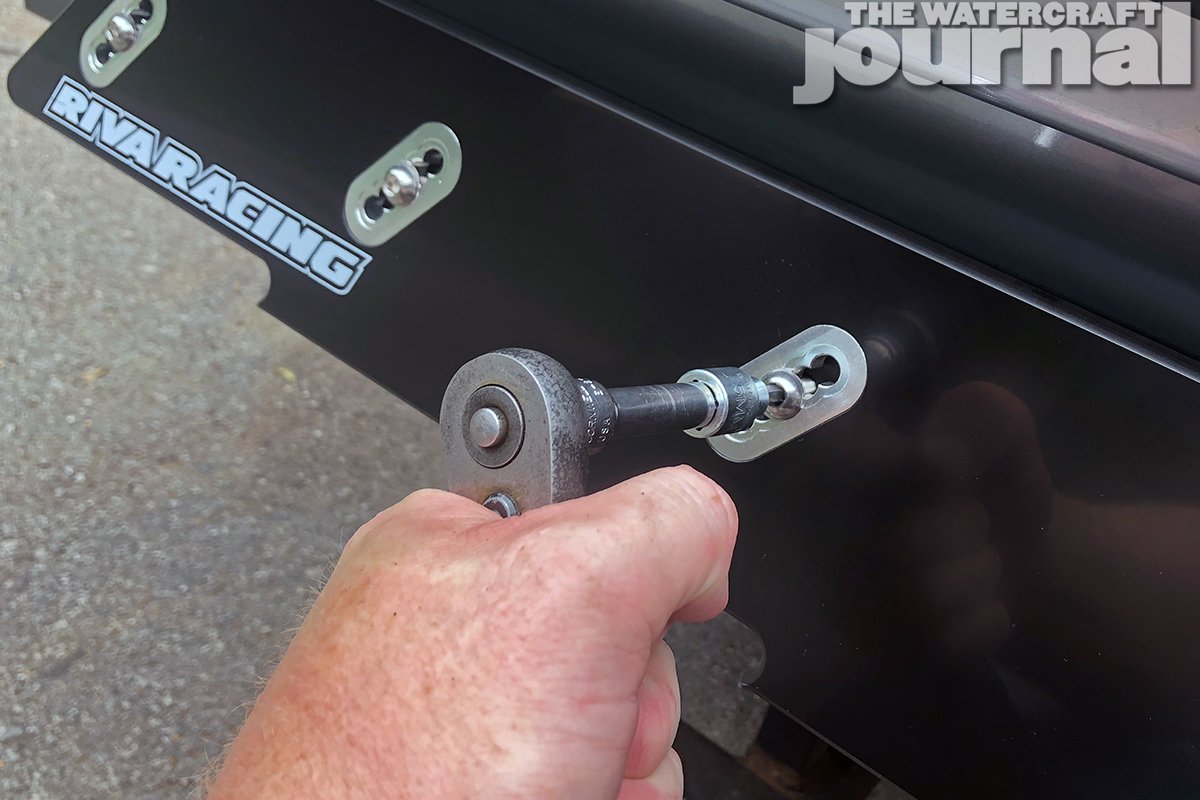
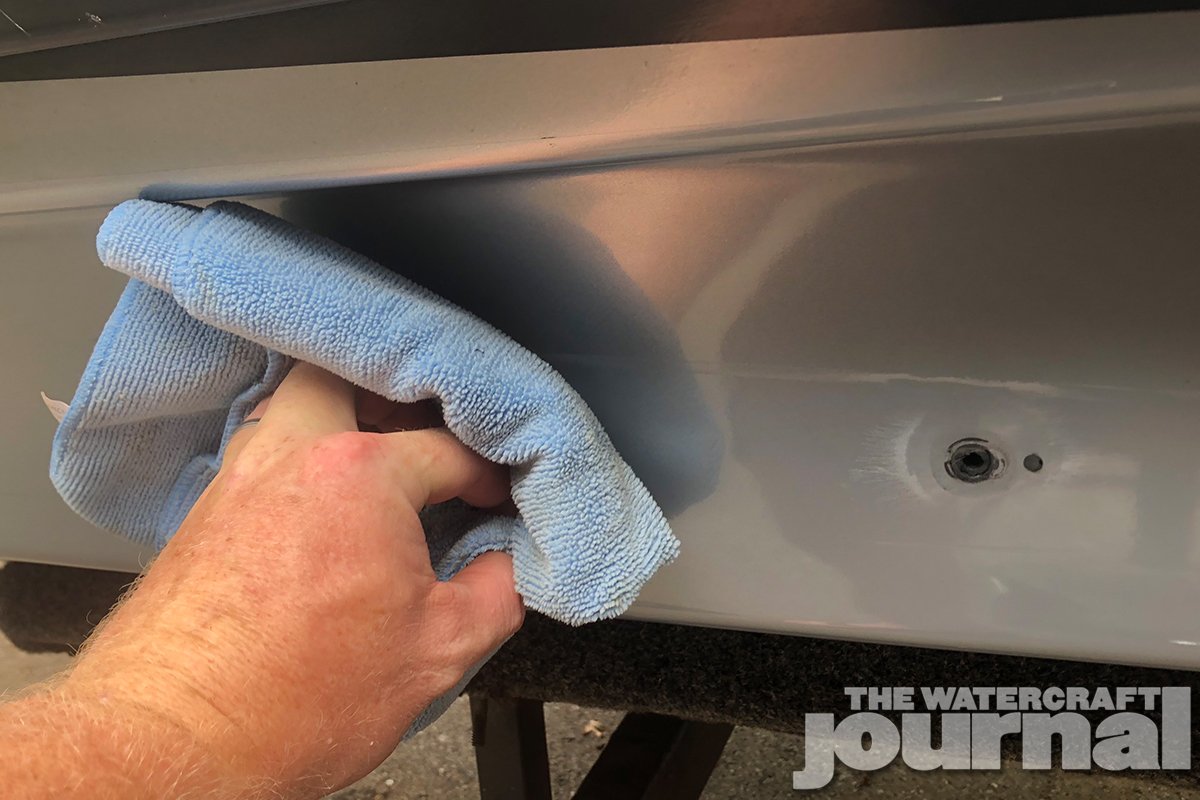
Above left: The factory mounting shoulder bolts require a six-point Torx bit, but we found a US standard 7/32-inch bit has enough contact to bite and loosen these. Above center: The factory sponson features a very mild blade both in angle and depth. Above right: Prior to any installation, we cleaned off our mounting surface of any residual silicone and grime.
That in and of itself, was a source of frustration for RIVA Racing who was looking to solve the handling woes of the entire ST3 in one fail swoop, but alas, life likes to throw curveballs. The result was a two-piece, 5-way adjustable sponson design with a forward-stepped blade that aggressively tracks even while sluicing through chop or making neck-snapping hairpin turns.
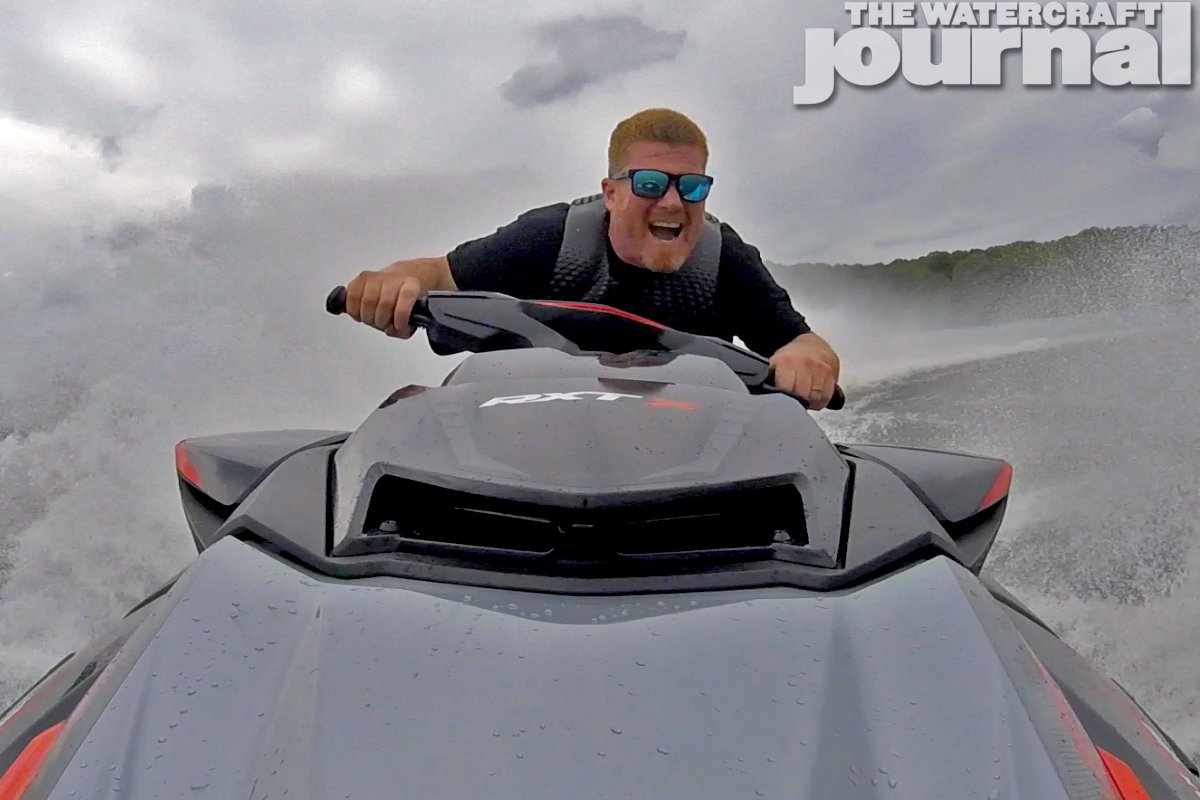
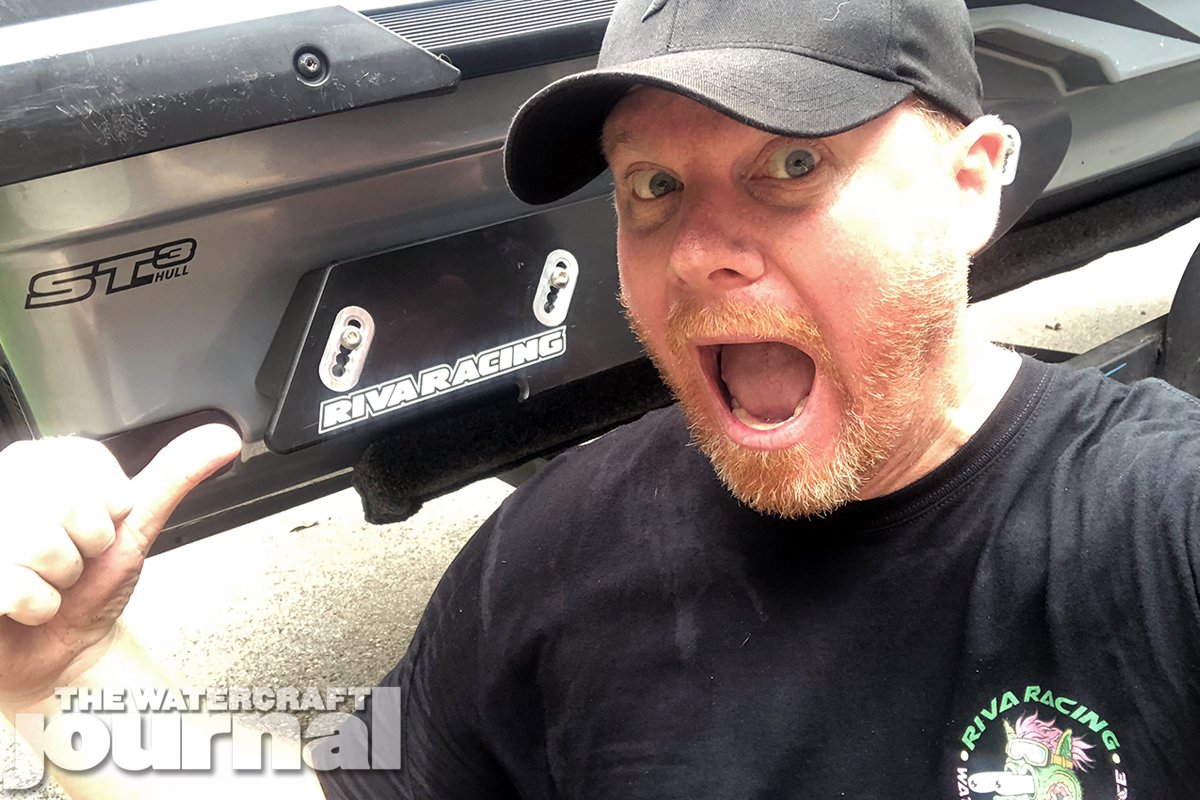
Our opinion is that the 2018 Sea-Doo RXT-X 300 is incomplete without RIVA’s Pro-Series Sponsons. Nearly all of the previous handling quibbles we’ve encountered with the new ST3 hull are resolved with the addition of these. Priced at $499.95, they aren’t what you’d call cheap, but they will make a significant improvement to how your 2018 Sea-Doo RXT-X 300 maneuvers when the water gets rough. And that alone is worth the purchase.
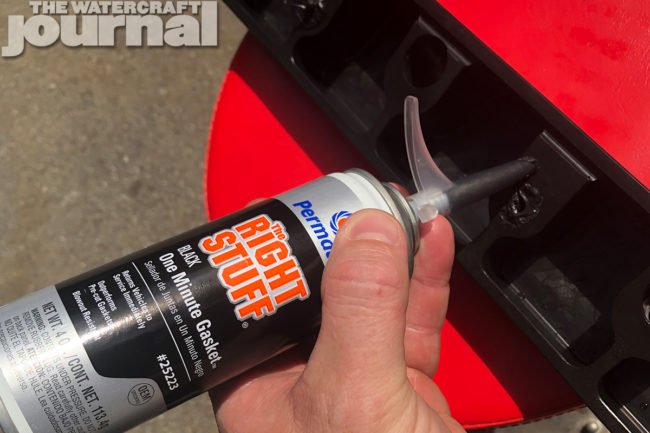
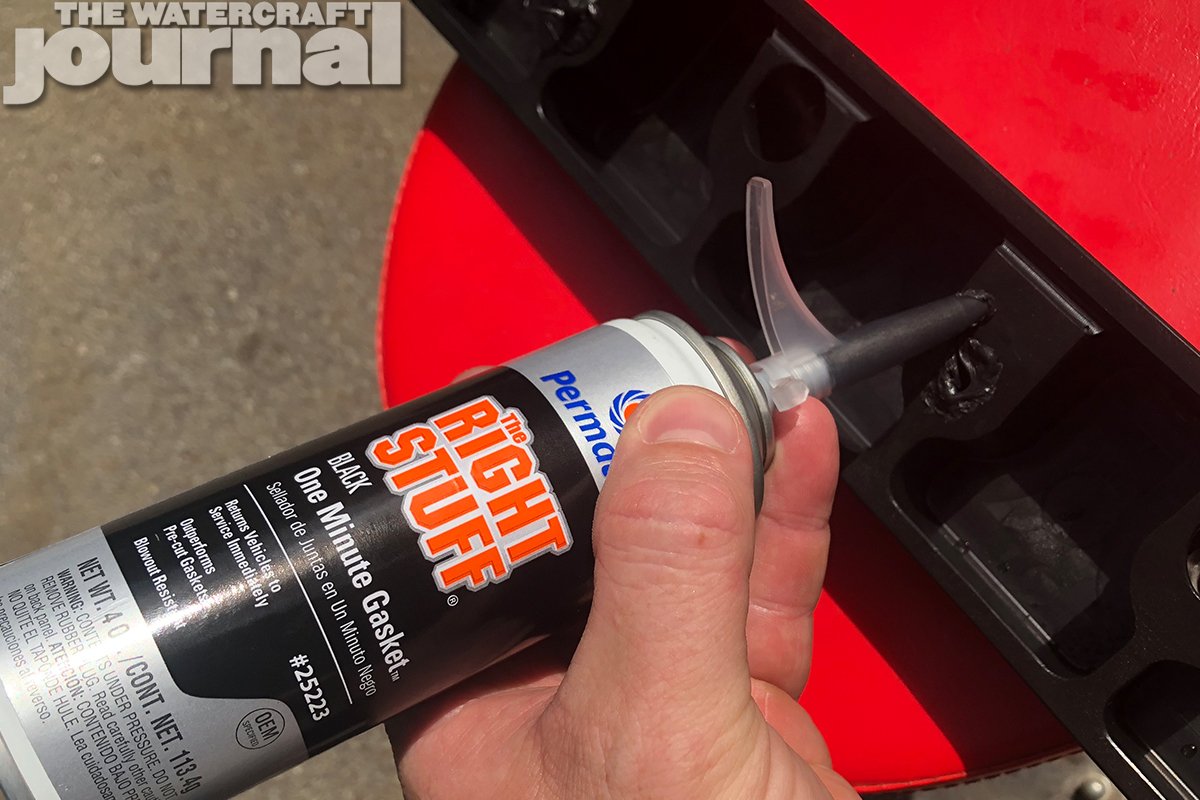
Above left: Because of the CNC machined surface, the backing plate doesn’t require gobs of silicone like sponson installations of the past. Rather, we used small beads of Permatex’s black, waterproof “Right Stuff” sealant around each of the bolt holes. Above right: Next, just align your bolt holes before threading in the bolts. Right Stuff cures in just over a minute, so don’t dillydally this step.
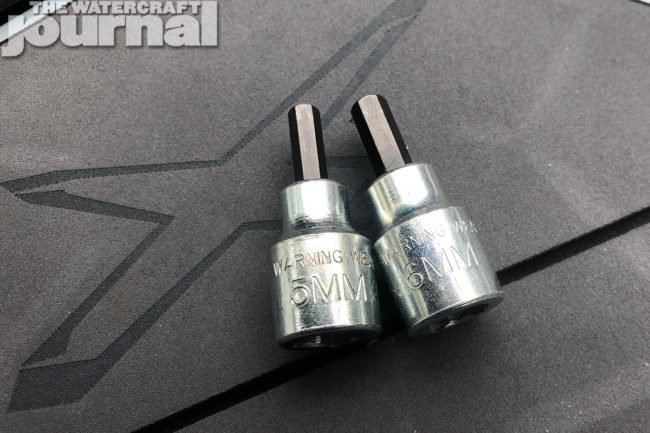
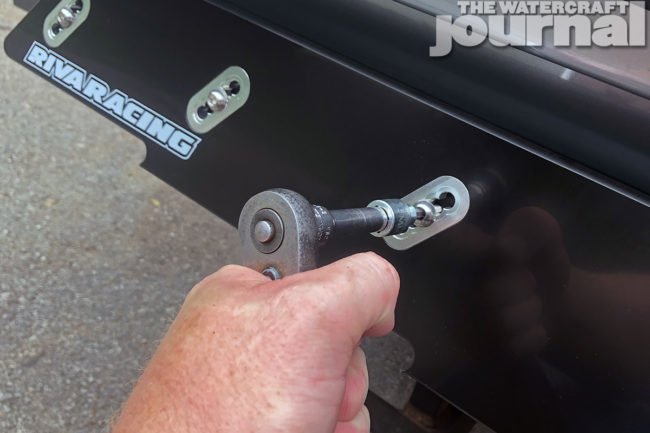
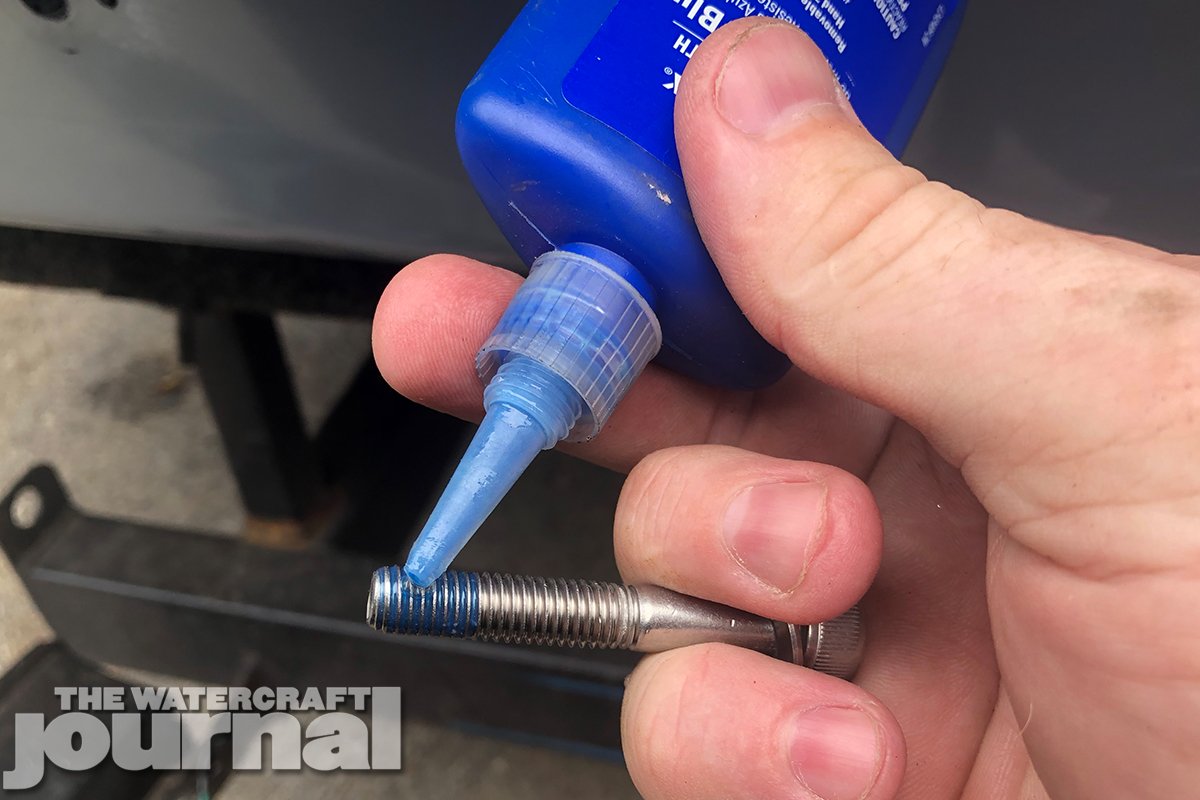
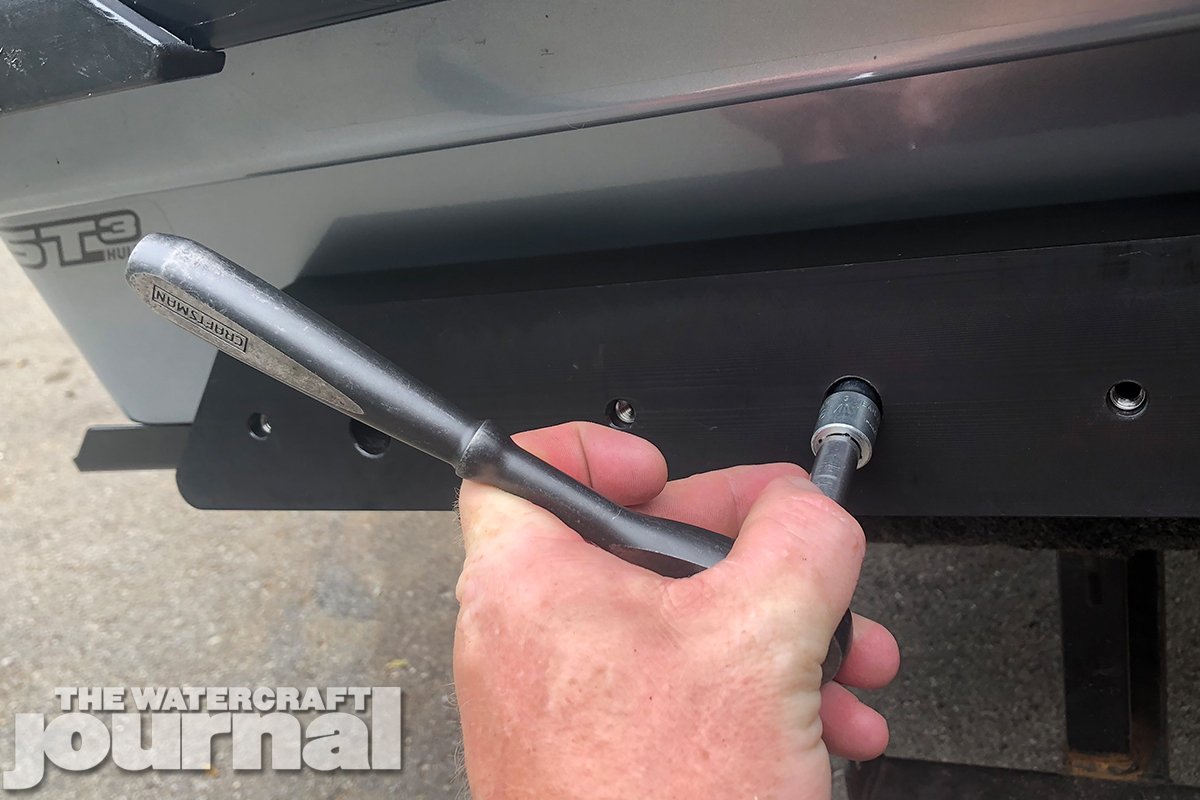
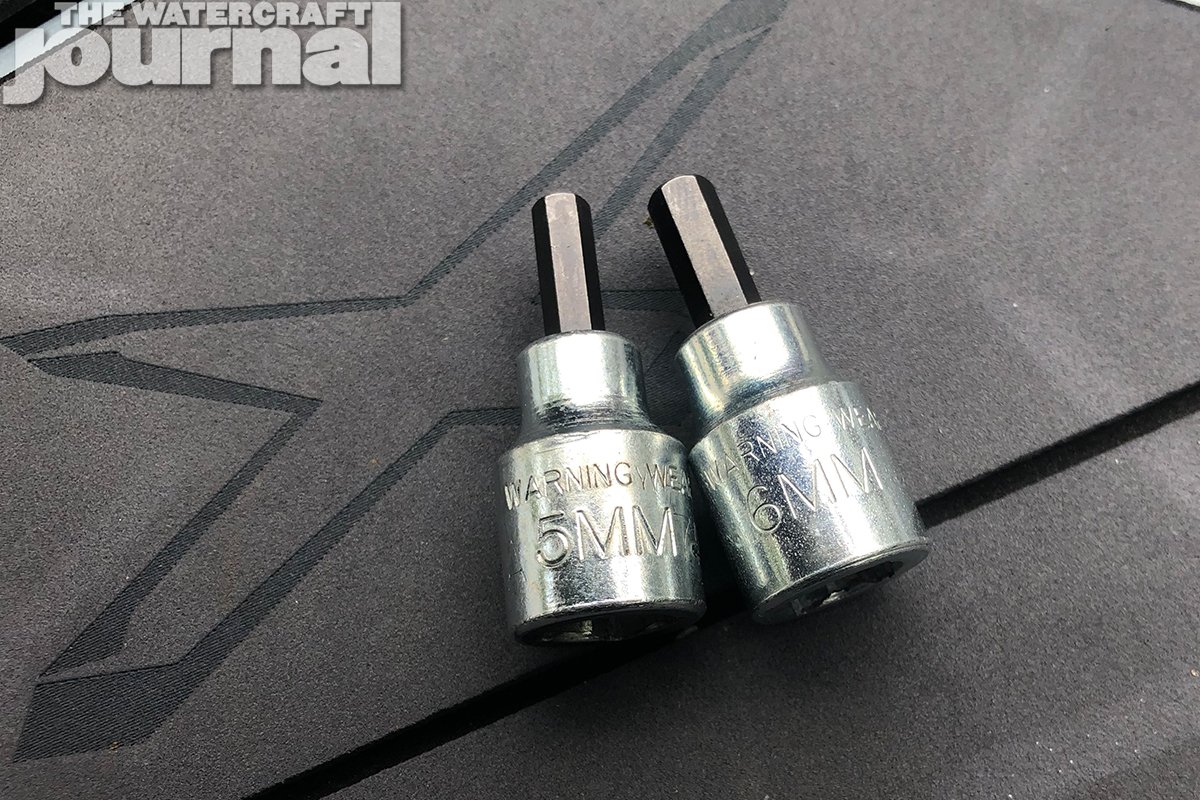
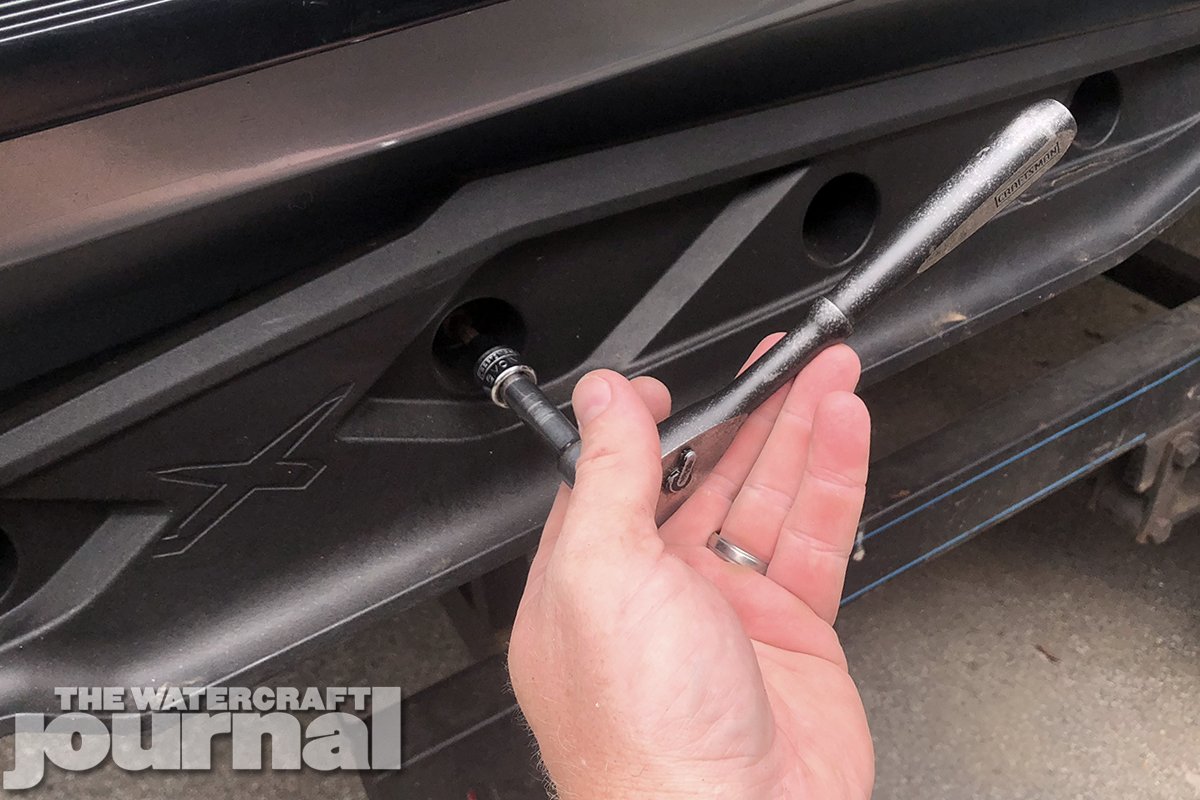
Above left: The only two sockets needed are a 5MM and 6MM Torx drive; the 5MM for the 10 8×25 MM button head screws for the sponson blades, and the 8 8×50 MM button head screws for the backing plates. Above center: Once you’ve done enough work under a car, applying blue Loc-Tite to threads one-handed becomes pretty easy. Plus, it’s a neat trick to show off at parties. (The ladies love it.) Above right: While these need to be tight, do not “gorilla” them down or use an electric socket wrench – you can crack the hull or worse. We recommend one half-turn past “snug.”
This article documents an incredibly easy-to-follow guide to installing your new RIVA Pro-Series Sponsons. These steps follow the instructions published by RIVA Racing itself, but includes a few “pro tips” and suggestions for how to set and tune your ski. Obviously, what works for us might not work for you, but we’ve found certain settings work better than others. You can adjust according to your riding style, environment and preference.
Above left: RIVA’s Pro-Series Sponson features 5-levels of adjustment, from an almost non-existent blade with minimal bite to a super-aggressive full-length blade. Above center: The 10 screws for the blades do not require Loc-Tite, and should be installed in an alternating pattern: 3, 1, 5, 2, 4, tightening incrementally for a flush, even surface. Above right: Having ridden a RXT-X 300 previously with the same Pro-Series Sponsons, we went with the middle-of-the-road #3 setting to begin with.
Above left: While our initial testing at RIVA’s test lake left us speechless, we found that the #3 position wasn’t enough to keep the tail of our Sea-Doo planted in our local lake’s chop – so we bumped it one down to #4. The stepped design of the blades provide the ST3 hull significantly more “lead” into a turn, rather than suddenly biting hard and snapping into a corner, unexpectantly. The RIVA sponsons offer far more predictability, which was something this ski lacked from the outset. Above right: Our ideal setting for our 2018 RXT-X 300 is 3-notches above zero on the VTS with the Pro-Series Sponsons on the #4 position. This places enough trim attitude forward on the ST3’s nose, where it likes to be, while keeping a long enough blade in back to keep the tail from breaking loose while cornering hard or turning in chop. These literally transform the overall handling of the RXT-X in nearly every aspect, and dramatically increase our total enjoyment of this machine. Seriously, if you’ve got a 2018 RXT-X 300, buy these. Do it now.
Racing ain’t cheap, and it really pays to have a few sponsors to help levee the costs of being a properly equipped personal watercraft racers. If you’re looking at stepping up your portfolio? Wanting to break into the world of the sponsored and fabulous? Then now is your opportunity to become a supported athlete by Slippery Wetsuits! Beginning September 1st and running through November 30th, Slippery will be accepting resumes for rider support. Make sure to check out what you need to apply below.
Here’s the original announcement made by Slippery Wetsuits: For the 2019 racing season, Slippery Wetsuits’ athlete support program is proud to continue our decades-long tradition of supporting athletes across all levels of the sport. We are now accepting resumes from dedicated watercraft riders to represent the Slippery brand proudly and to be true ambassadors for racing and/or freestyle disciplines.
Space is limited and not every rider will qualify for support. Make sure that your resume is up to date, include recent photos/videos and apply now for the Slippery Wetsuits support program. To get started, simply email your resume and supporting media to [email protected]. We will respond within 48 hours during normal business weekdays. This program is only open to athletes residing in the continental United States.
About Slippery Wetsuits Launched in San Diego, CA back in the heyday of watercraft racing and the explosion of the freestyle scene; Slippery has always focused on dedicated, purpose-built products for athletes with an aversion to staying dry. For 2019, Slippery is proud to celebrate our 30th anniversary and looking forward to another 30 years of evolution for the jet-driven masses.


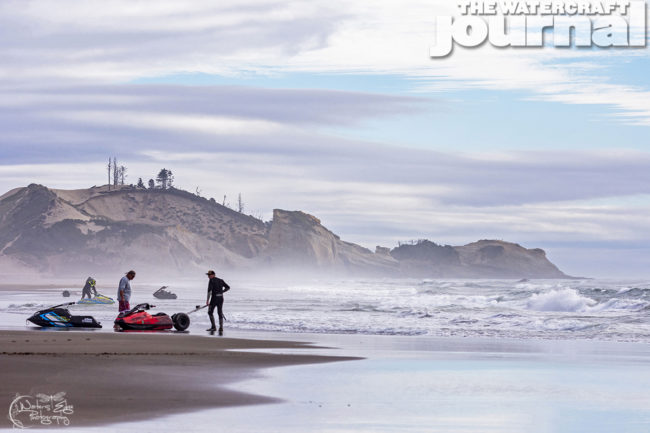






































 Entry forms are now available for this coming winter’s Mark Hahn Memorial 300 event in Lake Havasu. 2019 will mark the 15th annual Hot Products IJSBA event. Presented by

 The
The