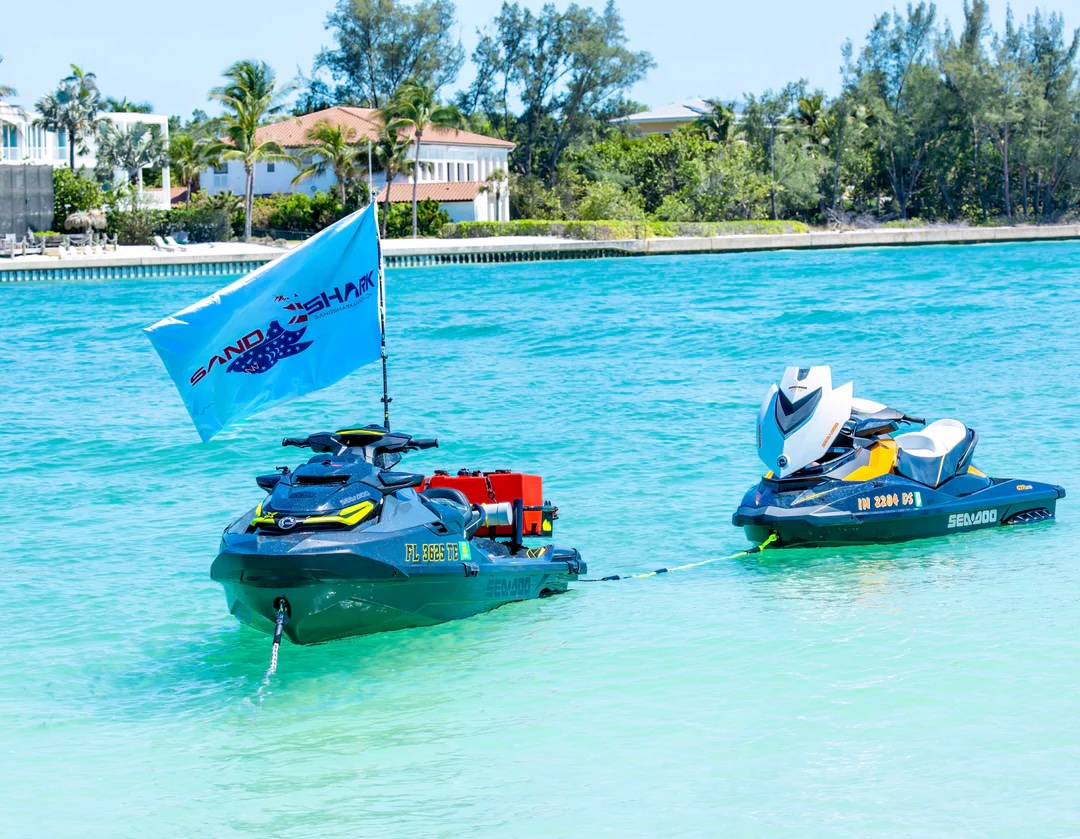
Sometimes, going fast is the easy part. Sometimes, it’s the sitting still that’s the challenge.
If that’s the case, GreenHulk PWC Performance Store has you covered with great prices on the ultimate PWC anchoring and docking kit, featuring the known quality of SandShark..
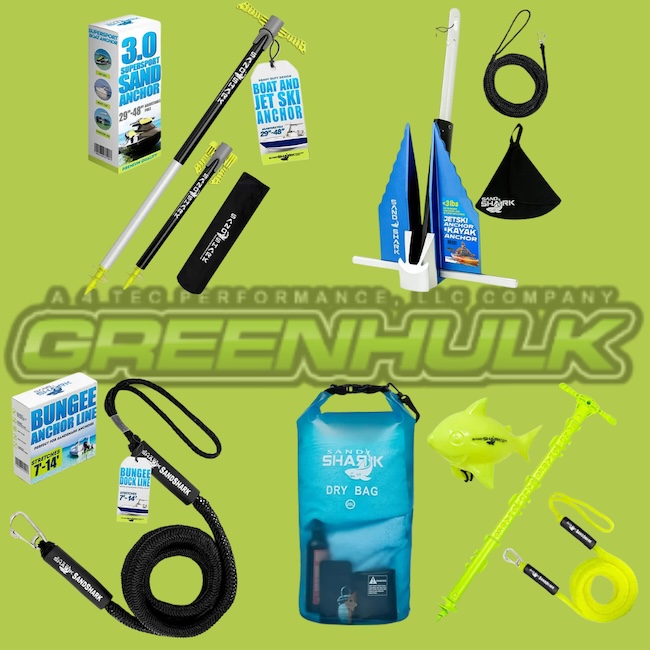
Whether you’re anchoring at a sandbar, docking at the marina, or just chilling on the water, when you upgrade your setup with a SandShark Jet Ski kit, you get everything you need to keep your pwc locked in place when you step away. And to sweeten the deal, GreenHulk carries the full line of SandShark kits, including:
SandShark Jet Ski Sport Kit for $169.99
Your all-in-one anchor solution. Includes the SandShark anchor, bungee dock line, and storage bag—compact, durable, and built to hold strong. With the Sandshark Jet Ski Kit you will have all the amenities needed to keep your watercraft secure, your anchoring experience stress-free and belongings safe. The Sport Anchor is the ultimate solution for securely anchoring your jet ski, no matter the conditions. The neon anchor is lightweight, durable, and easy to use. The 7-14ft Bungee Dock Line absorbs shock, reduces strain, and protects your vessel from docking damage. Designed for easy identification of your anchored position, the Shark Anchor Marker Buoy is durable and is a highly visible marker buoy. While the waterproof 20L dry bag is designed to protect your valuables from the elements, it also ensures that your essentials stay dry no matter what. Altogether, the Sandshark Jet Ski Kit will ensure your vessel will stay anchored and secure while you enjoy your time on the water.
Key Features:
Sandshark Jet Ski Kit includes neon sport anchor, neon shark buoy, neon 7-14ft dock line w/carabiner and (20L) Blue Dry Bag.
Neon anchor weighs 4lb. Compact, portable, lightweight and easy to handle design. Constructed with ABS plastic corrosion-resistant material, making it ideal for saltwater and freshwater environments.
The 7-14ft neon bungee dock line is constructed with shock absorbing, durable UV-resistant marine-grade material.
Shark anchor marker buoy features a bright, highly visible color and reflective elements, making it easy to spot from a distance. Resistant to UV rays & saltwater.
The 20 liter dry bag features a roll top design and is made from high-strength, tear-resistant PVC material with durable materials and welded seams that stand up to the rigors of outdoor activities.
SandShark 7–14ft Bungee Dock & Anchor Line for $32.99
The Sandshark 7-14ft Bungee Dock Line provides superior cushioned docking protection that stretches and flexes with the waves. No more harsh jerks or rope snaps. The shock-absorbing design prevents damage caused by sudden movements, strong winds, or waves. Designed with durability, and convenience, this marine dock line ensures that you can dock your vessel with ease. The durable construction is made with marine-grade materials that stand up to sun exposure, saltwater, and heavy use. Whether you’re docking at the marina, at the beach, or in a harbor, this high-quality bungee anchor line provides a smooth, stress-free anchoring experience for both boat, pontoon and jet-ski owners.
Key Features: Shock Absorbing Technology: The innovative bungee cord design absorbs shocks from waves and wind, reducing the strain on your boat or wave runner and preventing dock damage.
Adjustable Length: The 7-14ft bungee dock line is ideal for boats and jet skis of various sizes, offering a flexible length to accommodate different docking situations.
Durable & Marine-Grade: Made from premium, UV-resistant materials, this anchor line resists wear and tear from harsh marine environments, ensuring long-lasting performance.
Mini Fluke Anchor Kit for $129.99
The ultra-compact Mini Fluke Anchor by Sandshark is designed for jet ski and small boat owners who need an anchor to hold your watercraft securely in place that’s both portable and powerful. Designed for superior holding power in shallow waters, sandy beaches, and muddy bottoms, this compact anchor offers reliable performance without the bulk. With its corrosion-resistant construction, the anchor stands up to tough marine conditions, providing years of service and reliability. Whether you’re enjoying a day at the lake or securing your PWC at the beach, the Mini Fluke Anchor delivers the performance and convenience you need.
Key Features:
Compact & Lightweight: Weighing just under 3lb, this anchor is lightweight and portable, making it easy to carry and store without taking up valuable space.
Reliable Holding Power: The fluke-style design allows this anchor to dig into sandy, muddy, and soft-bottom surfaces, providing dependable holding power.
Built to Last: The corrosion-resistant construction and rugged design ensure that this anchor holds up to frequent use in tough marine conditions, providing years of service and reliability.
Comes with 25ft Bungee Line and Case this anchor kit is perfect for any PCW, JetSki, Kayak or paddle board.
SandShark SuperSport 3.0 Adjustable Anchor for $149.99
Whether you’re in calm waters or strong current—this all new patent pending 2025 Shandshark SuperSport 3.0 Anchor adjusts 29″ to 48″, making the Super-Sport Anchor by Sandshark one of the most reliable, durable, and easy-to-use anchors on the market. Its performance, portability, and durability stands out, and it’s ideal for saltwater and freshwater use. Whether you’re docking your boat, securing your jet ski, or enjoying a peaceful day on the water, this innovative anchor ensures your vessel stays firmly in place, no matter the conditions.
Key Features:
Lightweight & Portable: Designed for boaters and jet ski enthusiasts, weighing just 5lb.
High-Strength Construction: Constructed with corrosion-resistant aluminum, engineered to withstand the harshest marine environments.
Quick Setup: Screws into the sand and holds your boat or jet ski securely in place while the telescoping design makes it easy to retrieve.
Optimal Holding Power: The unique, patented design offers superior grip in soft or sandy bottoms, ensuring your boat or jet ski stays where you want it.
Here at The Watercraft Journal, we love the opportunity to highlight the many ways that our PWC community stays connected—which is what got us interested in a recent video on the “Andrew Hill Adventure Fishing” channel.
As we’ve covered before here, Hill is a Sea-Doo pro ambassador and content creator whose videos showcase some of the most interesting fishing spots and jet ski adventures out there. His latest video, however, is fully dedicated to showing off the community aspect of fishing, walking viewers through one of his recent social jet ski fishing trips.
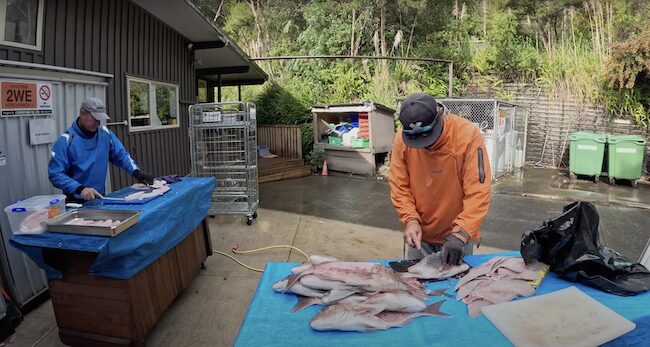
The video is set in Puka Park in Pauanui, a holiday town on the eastern coast of New Zealand’s North Island. It chronicles the full four-day social fishing trip—hosted by Hill and attended by 33 other guests—as they learn, fish, cook, and connect. Hill takes viewers through the full adventure, from the car ride out to Pauanui, to getting familiar with the area and the pre-trip briefing, to several days of fishing together, cooking together, and learning from each other.
While the video is partially promotional—showing off the kind of trip Hill organizes for jetskifishers—it’s also packed with useful information and great footage. Everything from the fishing process to preparing and cooking their catches is featured, and the beautiful backdrop of the Alderman Islands and surrounding waters provides the perfect setting to inspire even novice jet ski fishers to take on new adventures of their own.
If you’re curious about what goes into a trip like this, or if you just want to soak up the scenery and enjoy the impressive catches, be sure to check out the full video on Hill’s channel. You can also visit his website to see which upcoming trips are open for booking—who knows, it might just be your next big adventure!
One thing we’ve been loving getting to highlight lately here at The Watercraft Journal is the fun and engaging community which keeps us excited about PWC all year round. That’s why we’re jumping on the opportunity to highlight a new exciting event for those of our readers living in the Tampa Bay area: Cycle Springs Powersports’ “Sea-Doo Splash!” They’re hosting a major community event this Sunday, so if you’re in the area be sure to keep reading to find out how you can get connected with your local PWC network.
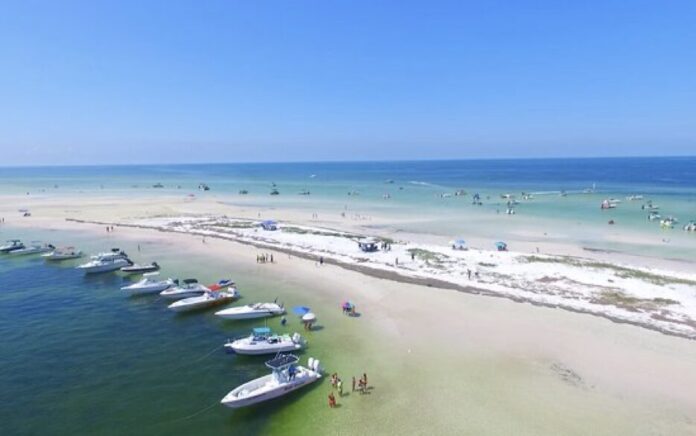
Set for Sunday, June 22nd from 10AM to 3PM, the Sea-Doo Splash event promises a full day of jet ski fun, community vibes, and good old-fashioned Florida sunshine. Riders will launch from Anclote River Park Boat Ramp in Tarpon Springs and head out for a group cruise to a sandbar before continuing on to Hernando Flats, where the real party begins. The main event? An “Inflatable Oasis Party” featuring free food, live music from a DJ, giveaways, and beach games—what more could you ask for?
Early birds launching between 8 and 10AM will be treated to free coffee and donuts, making it a relaxed and tasty way to kick off the day. After the initial meetup at the sandbar, riders will head out for a scenic cruise before anchoring at the floating party zone.
Don’t worry if Anclote fills up quickly–Cycle Springs has your back with overflow boat ramps listed nearby, including Sims Park Boat Ramp, Robert J. Strickland Memorial Park Ramp, and Hernando Beach Public Boat Ramp.
Whether you’re a long-time Sea-Doo enthusiast or just getting into the PWC scene, this event is the perfect way to meet other riders, show off your ride, and have an unforgettable summer Sunday. So, be sure to check out CycleSprings Facebook and YouTube posts for more information, and RSVP now to join in on what should be an incredible day of PWC community fun!
The enjoyment one gets from owning a personal watercraft (PWC) is not in question — what is often overlooked is the additional benefits, outside of fun, excitement, adrenaline and good company, that come along with riding a personal water. Proven benefits, according to a number of sources, include improved cardiovascular and mental health, reduced risk of premature death and chronic diseases, stress reduction and more.
As stated by the folks over at A2Z Powersports, “Jet skiing is not only a thrilling water sport; it is also a great way to improve your physical fitness. By hopping on a jet ski and gliding through the water, you can reap several health benefits. Firstly, jet skiing provides an excellent cardiovascular workout. As you race across the waves, your heart rate increases, improving your cardiovascular health and stamina. This enjoyable activity allows you to stay active while having fun in the sun.”
In addition to boosting your cardiovascular health, jet skiing also strengthens your muscles. The constant balancing and maneuvering on the jet ski engages a variety of muscle groups throughout your body. Your legs, arms, and core all work together to maintain stability and control, resulting in strengthened muscles over time. This full-body workout can lead to increased muscle tone and improved overall strength.”
Furthermore, jet skiing helps to enhance your coordination and balance. As you navigate through the water, you must use your body and balance to control the jet ski’s movements. The need for precise coordination and balance engages your brain and muscles, improving your overall coordination and motor skills. These benefits not only enhance your performance on a jet ski but also transfer to other areas of your life that require agility and balance.”
Action Watersportz adds, “Jet skiing is a great way to burn calories, especially when considering the activity’s fun. Some say you can burn up to 238 calories in a half-hour of riding a jet ski. This means you burn around 476 calories an hour; You can lose 1lb a week by riding a Jet Ski,” and Crab Island Watersports adds “Riding a jet ski requires continuous movement and effort to control the watercraft. This constant engagement of your muscles results in calorie expenditure that can aid in weight management and boost your metabolism.”
Over at Powersports Marine, they chronicled numerous benefits to getting out on the water on a PWC, including:
Full-Body Muscle Engagement A jet ski workout is a unique, whole-body experience. While you may be sitting, maintaining control over the jet ski requires using nearly every muscle group, especially as you steer through waves and maintain balance. Key areas that benefit include:
Core Muscles:Your core is constantly engaged as you stabilise yourself over waves, providing an intense abdominal workout that’s crucial for balance and posture.
Leg Muscles: Standing and adjusting on the jet ski forces your calves, hamstrings, and quads to work hard. You’ll feel the burn after a long session as these muscles help absorb shocks and stabilise you.
Arm and Shoulder Strength: Steering and manoeuvring the handlebars works your forearms, biceps, and shoulders, increasing upper-body strength. These movements can also improve flexibility in your arms and shoulders.
Back Muscles: Jet skiing also strengthens your back muscles as you adjust and lean to maintain balance and control, promoting better posture over time.
Enhances Balance and Coordination Balancing on a jet ski while navigating waves and turning requires coordination and quick reflexes. As you continue to ride, your balance and coordination skills improve, translating to better agility in daily life.
Improved Stability: Balancing on water challenges your core stability and enhances proprioception (your awareness of body position and movement). This can help improve balance for other activities, from running to yoga.
Hand-Eye Coordination: Controlling a jet ski involves simultaneous hand and eye coordination as you navigate water and respond to sudden changes. Improved hand-eye coordination benefits daily activities, from driving to playing sports.
Quick Reflex Development:Adapting to changing wave patterns or adjusting for a turn helps hone your reflexes, training your body to respond quickly and effectively.
Boosts Mental Health and Wellbeing Jet skiing is as beneficial for your mind as it is for your body. Being on the water offers a natural escape from daily stresses, allowing you to connect with nature and feel a sense of freedom.
Reduces Stress and Anxiety: The rhythm of the water, fresh air, and exhilarating ride create an ideal environment for reducing stress. Studies have shown that spending time near water can reduce cortisol levels, helping you feel calmer and more relaxed.
Mood-Boosting Endorphins: The thrill of jet skiing releases endorphins, the body’s natural “feel-good” chemicals, which lift your mood and contribute to mental wellbeing. It’s an easy way to enjoy an adrenaline rush while also benefiting your mind.
Mindfulness and Focus: Jet skiing requires you to stay present and focused, which can be a form of mindfulness. Paying attention to the water, handling your jet ski, and responding to changes in the environment help clear your mind of other thoughts.
Encourages Outdoor Adventure and Connection
One of the often-overlooked benefits of jet skiing is that it encourages you to get outdoors, explore new places, and even connect with like-minded enthusiasts.
Vitamin D Exposure:Jet skiing outdoors exposes you to natural sunlight, which boosts Vitamin D levels – essential for healthy bones and immune function.
Opportunity to Explore: With a jet ski, you can explore coastal areas, lakes, and rivers that you may not otherwise have access to. This sense of adventure can make your fitness routine feel more like a holiday, keeping you motivated to stay active.
Social Benefits:Jet skiing can be a social activity, allowing you to ride with friends or family. Social interactions and shared experiences are also excellent for mental health and emotional wellbeing.
Physical Benefits for All Levels of Experience
Whether you’re a beginner or an experienced rider, jet skiing is an adaptable activity that offers physical benefits for all fitness levels.
Adaptable Intensity: Beginners can start slowly and gradually build up their endurance and strength, while more experienced riders can tackle higher speeds and tougher waters for a greater workout.
Non-Weight-Bearing Exercise:Jet skiing is a low-impact activity, making it ideal for people who want to stay fit without placing stress on their joints. It’s suitable for anyone looking for a fun yet effective way to get in shape.
And it’s not just people in the industry touting the benefits of PWCs; Healthsite.com reviewed jet skiing in terms of its health benefits, saying riding PWCs “can help you to improve your overall well-being and also give you that much-needed adrenaline rush.”
It’s a given that times are tough for a lot of folks right now — paychecks don’t last as long, bills continue to pile up, and prices at the pump, the grocery store, the doctor’s office and just about everywhere else keep going up and up and up.
All the more reason to secure your sanity with a little down-time, some adventure, and just some plain old fashioned fun – and PWCs fit that bill to a T.
But — that paycheck thing might be standing in the way.
But, through the end of this month, Brisbane Kawasaki’s got your back with some red-hot deals on 2024 Kawasaki Jet Ski models – with prices that will take the pressure off your bank account — plus you’ll push away from the dock knowing you’ve got the assurance of a 5-year warranty covering you.
And this sale means savings no matter what your experience level, style preference or model loyalty, with sale prices on all 2024 models:
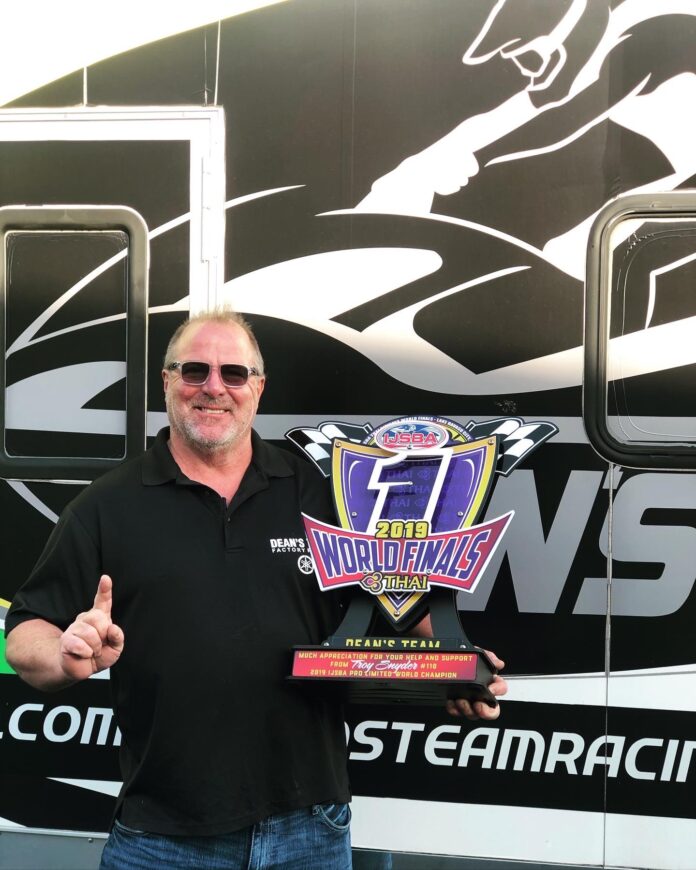
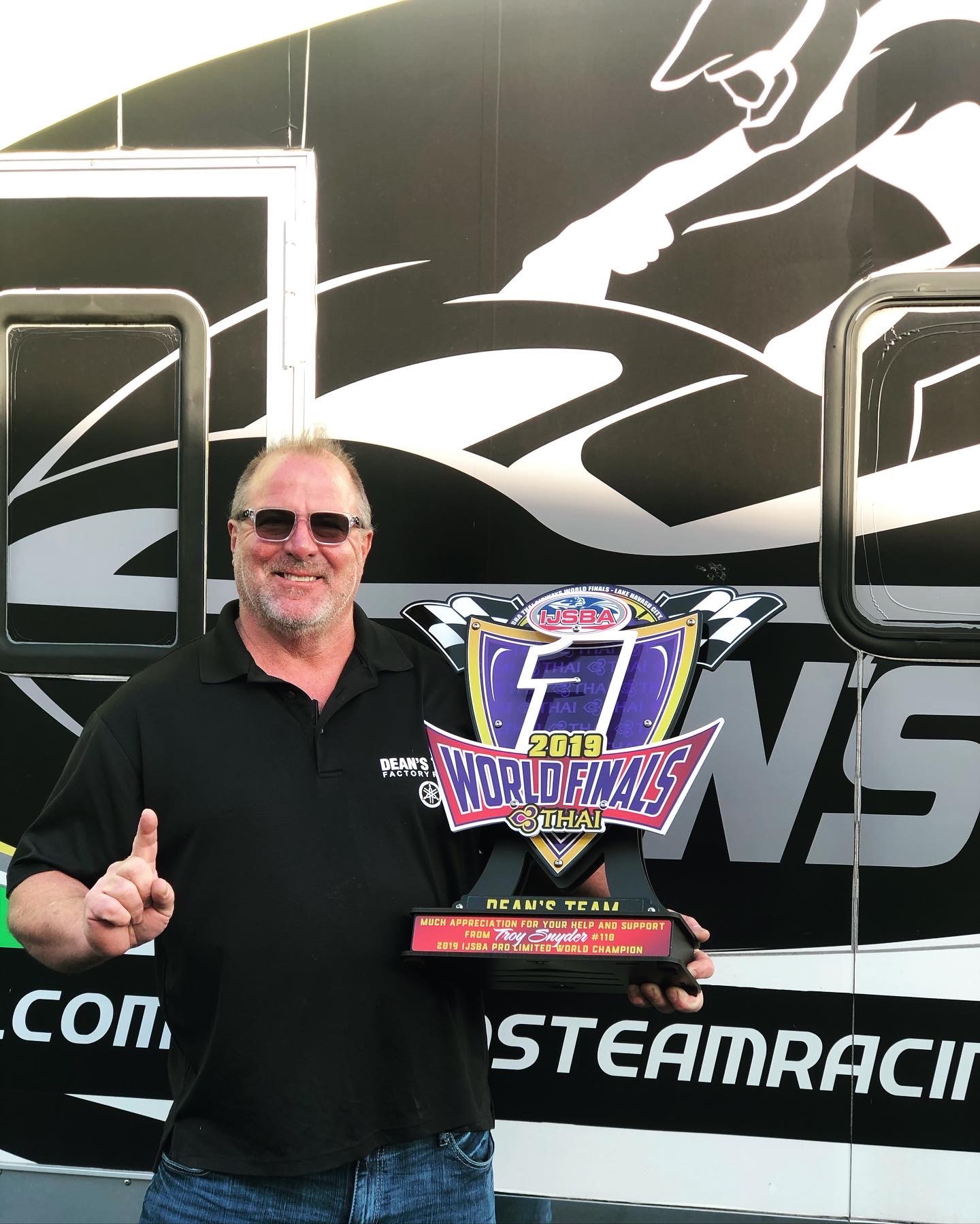
IJSBA fell silent yesterday, June 16, in honor of Dean Charrier — a man who played a significant role in many of the in many IJSBA World Final stories, successes and skis. And in closing the website down for the day, IJSBA Executive Director Scott Frazier shared a few memories the his interactions with Charrier over the years.
The IJSBA site will go dark for the next 24 hours to pay respect to the passing of Dean Charrier.
IJSBA was sent the picture posted above from Dean’s family for this occasion. We will be posting how IJSBA will celebrate his life later this week. I was asked to say words about Dean and would like to offer this recounting of my own journey knowing him. I became aware of a set of results being passed around that honored Dean and decided to build my words around it:
My first experience with Dean Charrier was in the final days of IJSBA’s golden era National Tour. There was a guy named Dean Mays who had run an operation building racing PWC and was rather successful at two stroke performance focusing on Sea-Doo PWC. Mays ran his business as Team Dean. In this year of meeting Mr. Charrier, Canadian Corey Rarick was the featured Sea-Doo Pro for Team Dean and Dean Charrier appeared on the tour as the backup quarterback for Dean Mays. I was on a Sea-Doo support package that I have always affectionately called the “Factory B Minus Team.” My PWC went to each tour stop in one of the Sea-Doo rigs and I came in to unload and wash the display watercraft and set them up in the spectator area. I raced on Saturday and did double duty Sunday as a holder for Sea-Doo Pro riders, which included Rarick, before loading the truck. My first bonding moment with Dean Charrier was at the last round of the tour when Mays and Rarick, having ended their contractual agreement, stood on opposite sides of a Runabout profanely expressing their personal opinion of each other. Charrier and I listened and quietly chuckled as to not instigate the situation further. I shook hands and exchanged pleasantries with Charrier not even sure if I would see him again. Mays retired from the business. Rarick manages IJSBA efforts in Western Canada. That is as close as I can come to taking sides. Of course, this minimal acquaintanceship is just the start of Dean’s story in PWC Racing and the beginning of a friendship that I would cherish.
Dean Charrier made an appearance at the 1999 IJSBA World Finals in the newly minted Runabout Stock class. He brought to the line a 1997 silver topped GSX Limited. This particular watercraft, with the white 951 engine, is not well regarded as Sea-Doo’s finest product (please don’t get mad at me Sea-Doo bosses, it is just a historical observation). With an under 50MPH hull design, which was engineered prior to even the famous 781 RAVE engine, this model GSX Limited had a rushed new engine package that seemed to be made for the purposes of a stress test on the Sea-Doo warranty program. Aside from being the absolute worse choice for a race craft, Dean, a very soft spoken person at this time in life, supplemented his presence with this sticker kit that looked like it came from a discount auto parts store. It was about the tackiest thing there (mind you this was the opinion of a few people who were dying our hair in ways that looked like a melted pack of skittles in the goal of attracting women) and had cartoonish print to look like battleship cannons were coming out of the top deck of his watercraft. None of us took Dean seriously- he was much older and clearly didn’t get it and was no threat.
Dean had the fastest watercraft, hands down, in the Amateur Runabout 1200 Stock Class. Not by a little….. by A LOT. He rocketed out of the hole shot like nobody else on the line. What he might not have been able to do in turns, the power of his watercraft made up for it. He was impossible to pass. You could get close to him in turns but he would just pull away on the back stretch. I thought I was closing in on him so I didn’t “blip” the throttle like I was supposed to on the back stretch so I could try to get a few boat lengths closer. I stuck a piston as a result and was just furious someone I had discounted had bested me so bad. Eric Lagopoulos, who was probably best favored to win that year, almost caught him but didn’t. We got schooled pretty good by the old man.
After this triumph, Dean Charrier became the first name to call to get that extra bit of performance out of a 951 engine that was otherwise unable to be found. How he found it was the subject of much debate and gossip as is always the case in this sport. But wherever he did find it, he found it and his riders won and made it through tech without a problem. By Y2K, Dean was running a touring team as good as anyone ever did. His resource management was top tier and his riders maintained regular success. When the sport transitioned from two stroke to four stroke, Dean transitioned and didn’t lose his edge as a top requested tuner. Along the way, he dabbled in distributing Craftsman tools and moved around locations finally settling in Florida to further expand his watercraft performance business. His kids raced, they made it a family affair and the riders that came next were looked after just as his own family. He became the first name in ECU reprograming. The list of Dean backed riders carries through many countries and race programs. This list of Dean’s Team Champions is probably the largest roster in modern racing. Endurance, closed course, and P1- Dean’s name is at the top of every winning list.
Make no mistake, Dean came from the ranks, worked in the trenches, and paid his dues to become one of the first call tuners and top names in our sport. I shared this anecdote because I wanted to make the public aware of it and understand what it was like to get to know him as a person in several different capacities for nearly 30 years and watch him excel in the sport as leader from starting off as a second man. Dean’s accomplishments do not need a back story to be amazing, but when you have the perspective of how he navigated through the sport then you really understand how much he earned the accolades being said about him in the wake of his passing.
As an administrator, I was lucky to have Dean as a friend and colleague. Dean’s incredibly vast technical knowledge was always available when needed. He always provided objective data and was able to offer advice on realistic outcomes if certain rules were to change. I cannot recall a time when Dean offered a rule change that favored only his program. I can recall plenty of times Dean offered a rule change that was solid, well grounded, and benefitted participants in the entire sport. He really did strive for the best of things. His contributions will be missed dearly. PWC Racing competitors and enthusiasts around the world have an impossible void to fill. Most of all, the PWC community has lost a valuable member and friend. We all offer our deepest condolences to the Charrier family.
It would be extremely difficult to say what success looks like – what physical manifestation it would take. The same can be said of talent, and of ingenuity — of persistence and indomitable determination. This is especially true in the context of a culture like that of PWC racing, where excellence is often a baseline assumption, and achievements just build from there. But if you ask just about anyone in the PWC racing world — and many even outside that race family — they will likely tell you that one name encompassed every one of those characteristics, and one man mastered each of those traits, and more — Dean Charrier.
It would take paragraphs — no, pages — to list all of Dean Charrier’s accomplishments, and to do justice to a biography that spans three decades of PWC race mastery. As a post on Deans Team Racing’s Instagram stated just three weeks ago, “ This year marks 30 for racing for Dean Charrier & Deans Team! Through thousands of motos and hundreds of racers, Dean has had his hands on more PWC than anyone. From the 2 stroke days with less than 800cc engines to work with, to the new age with 1900cc+ machines, Dean has won with each and every model he’s worked with along the way.”
In the words of Yamaha officials, Charrier was a “legendary figure in the world of personal watercraft racing and the driving force behind Dean’s Team Racing. Dean was instrumental in Yamaha’s WaveRunner racing success for over a decade, partnering with us beginning in 2009 to develop high-performance racecraft that would go on to dominate national and international competitions. His unmatched expertise as a tuner and mentor helped Yamaha secure its first Pro Runabout Open National Title in 2010, followed by a series of championship wins across multiple classes. Dean played a key role in testing and refining Yamaha’s supercharged 1,812 cc engine and was pivotal in the early success of the FX SVHO platform, helping riders reach speeds and handling standards once thought impossible.”
Given not only his unbeatable skills and expertise, but the close relationship he shared with so many, and the countless racers he helped through the decades, there is no question the PWC community collectively reeled when, on June 6, Charrier’s family posted that Dean had suffered a massive heart attack, and was, at that time, in an induced coma as doctors fought for his life. Well-wishes, prayers and memories flooded the various social media platforms, and stories of Dean’s unquestioned mastery when it came to tuning and engineering – and winning.
If thoughts, prayers, well-wishes and love could determine fate, the news that came just a few days later would have not carried the message that it did — but on Friday, Dean’s family, the race family, and the community at large lost a legend.
Once again, posts flooded social media as sorrow, prayers of comfort for Dean’s family blended with memories, success stories, anecdotes and smiles at the legacy that Dean Charrier left behind.
We, at The Watercraft Journal, join the PWC world in sending Dean’s family our love and wishes for comfort, and share in community-wide memory of the contributions he made to this sport and industry – and we know that our words would fall short of paying due tribute — so we leave those words to others:
Mikey Young wrote: My heart breaks for the Dean Charrier family. Dean was that guy that made us better as an individual, friend, and turned it up a notch when it came to racing. A great husband, father, and friend, to all of us. God bless the family as they go through this very sad time.
Brian Smith wrote: Where do I begin?? Where Do we all??
Well….A lot of people have said so much and I know we all have shed tears and ALL the good times food us all we remember and will never forget!
Being able to work alongside the best in the world as well as have you in my corner for a couple of races and top 3 championships has me k owing how lucky I was to have that friendship and expertise provided to me!
I learned so much by just watching and listening to what you would do and it’s not even a hair of knowledge one could imagine you had in that vast mind of yours!!
We would sit and giggle and laugh sometimes at races messing with Abdullah, Chris or whoever may have been the one we were targeting and most of the time they never even knew wtf was going on!!
From you telling people “listen..” and best part was I’d be damned if they would stop and listen no matter what even if you were mumbling we’d figure it out.
I will surely miss seeing you at world finals and getting that goofy look everytime we’d meet up and that crushing BIG DEAN handshake!
I remember one time you turned around and hugged me when Chris absolutely destroyed the field and won a title at Havasu!! We both felt the passion for what we love and those we do for and help! I’ll never ever forget that bear hug from you!
That was a special one! Thank you for everything Dean!!! So happy to have been a part of Dean’s Team Racing… Till we meet again Ice cream man…. Love you dean!!! The entire family is deeply in my thoughts and prayers…gotta go dry my eyes now…
Jennifer Nolan wrote: Dean Charrier, we are going to miss you so much Over the years we became family, and you truly were, and will always be one of my favorite people! I can’t begin to thank you enough for everything you did for my husband Victor Nolan and I when it came to jet ski racing. Your unwavering support, kindness, and the way you believed in us is definitely was a huge part of our success.
One of my favorite memories was when we were at your house for Dustin’s 21st birthday. You were so excited when that frozen drink/margarita machine was delivered lol! That weekend you and Donna treated us to our first crawfish boil, and Britney and I bonded and have felt like sisters ever since. You were so supportive when we had our son Maximus, and you always called to check on him and follow up with his motorcycle racing.
I’m going to miss your random phone calls filling me in on all the jet ski drama, and whatever new engine modification you were working on, even though half the time I had no clue what you were talking about lol! I would give anything to just talk to you on the phone one last time. Rest easy Dean, aka Papa Bear, aka the Jet Ski Whisperer. We love you and will miss you dearly, until we meet again.
Christopher Landis wrote: Man, this really sucks. Even though I competed and raced against his riders/skis,Dean always was there to congratulate me and always lend a hand if I needed it. When I went pro in 2019 he was the first person outside of my team to reach out to me and say that I could do it and belonged in the top 5. That meant alot to me that he would even think of me and go out of his way to message me.
This really hits hard for me, my family, and the Riva Family. The industry is going to feel a big hole from this one but his imprint will last forever. Make sure you hug your dads a little extra from now on. My heart and thoughts are with the Charrier family.
Dustin Farthing wrote: RIP Dean Charrier and my thoughts go out to the entire family. He and I would always talk shit at the races or if we got on the phone. I always laughed with him or Bill Chapin would call because I knew for the next hour I’d be on the phone. We both knew healthy competition is what pushed the sport. We always raced against each other but always gave me a compliment no matter the outcome. I can’t imagine what the family is feeling but I can guarantee they can see how much he meant to everyone’s life he touched. Dustin Charrier hug your family and know that you guys meant the world to him.
Sophie Francis wrote: Heaven just got hell of a lot faster. Genuinely lost for words with this one. Thank you Dean Charrier for winning me my first EVER World title. That I will never ever forget. Thank you for making Eric Francis last ever race to remember with his dominated win. Thank you for everything you’ve done for this sport. Your legacy will live on through us all. Party hard up there with E.
Deven Farthing wrote: RIP Dean Charrier, Thank you for all you did for me throughout the years, no matter what, you were always looking to help out. You were a big reason for my success my first year in P1 and gave me the opportunity to race my very first closed course runabout race. Never once with you did I have a bad result, and I’ll forever be thankful for all we got to achieve together.
Dom Lopinto wrote: Back in 2015 when I got into fast skis I called you so many times I felt bad. But everytime you where so helpful and such a pleasure to talk to.
In one of our conversations I said im going on vacation to Florida and before I could finish you said “come by the shop” so you bet your ass we went 2 hrs in the total opposite direction so I can meet the man him self of Dean’s Team Racing after hanging out for a while you said “want to come by the house” and dam right we did. Spent hours talking skis and managed to talk about horse and life lol.
The ski community is truly a different group. You’re friends with people all over the country/world all chasing that mph and today we lost one of the best. We will remember you forever bud. Rip
Rachel MacClugage wrote: It’s very hard to put into words what I want to say. Dean worked with Chris for many years they accomplished multiple championships together.
Dean loved his family more than anything in this world . He adored his grandchildren, they clearly brought him so much happiness & joy!
Dean loved animals, he told me the story of the little pony they had who sadly passed after an accident, as he told me tears filled his eyes.
My heart goes out to Donna, I know how much you loved each other. Britney & Dustin your Dad was very proud of you both, I’m truly sorry for your loss.
He was a hero to so many.
Jordan JJ McLean wrote: Mr. Dean, thank you for the opportunity to live and achieve my childhood dream of becoming a World Champion. It wasn’t easy but you pushed me all the way to Pro Limited after losing out by close margins on World Titles in 2010 and another in 2011 in Expert Limited. Thank you for taking me in as a son, I held that in high regard – more than all of the trophies we won together.
You were my father figure away from home, you stood for what you believed in while carrying the experience of all you been through to make sure Dustin and I kept on the right path racing and in our personal lives. I will never forget all the good times on tour, road trips, dinners, Tonka hangs and howls, Crawfish cook ups, countless amount of good times and jokes.
Thanks for taking the time to be there for me, I will forever cherish the last two hour phone call we had about life, racing and everything else two weeks ago. I wish I told you about a surprise I had coming for you on that call.
I will hold on to some of your favorite skis that you built and gave me the opportunity to own. I appreciate the times you put full trust in me to tune, showing me steps along the way knowing I would never share copies of your tunes and files with anyone. You changed the whole racing scene in Cayman and all over the world, majority of the times they had to join us to beat us.
I was excited to see you so happy when I won 2023 Jet Around Cayman, I will keep the memories, phone calls and messages close. Sorry I couldn’t get it on the Turbo FX. I will one day for you. Can’t wait to ride and race the other Turbo FX you made sure I got. Thank you so much for everything legend!!
Life and racing will never be the same for me without your invaluable support. You lived a life so many could only dream of. Truly the greatest of all time!! I love you and miss you. My deepest condolences to my Charrier family. Mrs. Donna, Dustin and Brit. Always will be here for you all no matter what. Any day, anytime, anywhere
Paul Lehr Jr. wrote: I worked with Dean often as he came thru Tech. The Tru professional and Gentleman! Always did it right, never any “Grey area” always Clean. Met with a Hand Shake and politely asked what I would like to see. No gruff or Bad words. Straight forward respect. I sat with him at an after party one race weekend in Canada. We just talked, mainly about life and family. He was genuine.
Rest in Pease Dean Charrier ! God bless you and your family. Such a loss to the race community. Your Legacy will remain forever!
Abdullah Al-Fadhel wrote: Rest in Peace, Dean Charrier
Today, I lost more than a coach — I lost someone who felt like a father to me. Dean, you have been by my side throughout my journey in jet ski racing, always believing in me, guiding me, and pushing me to reach the top. Your support and mentorship helped me achieve incredible milestones — including several podium finishes and unforgettable first-place victories.
To me, your family — your wife (Mom) Donna Tumminello-Charrier, children (Bro) Dustin Charrier and (Sis) Britney Hastings — are like my own. I send them all my love, strength, and deepest condolences during this incredibly difficult time. Please know that whatever you need, I am always here — today, tomorrow, and beyond.
Dean dedicated 30 remarkable years to the world of jet ski racing, and in a way that feels beautifully symbolic, I’ve raced with the number 30 throughout my career. This season will be my last — my final lap in this sport — and I will ride every wave in your memory. Thank you, Dean, for everything.
Whether you ride an upgraded, high-horsepower Yamaha or are just working with the stock builds, you have probably noticed that there can be some issues with managing the oil pressure on these models. It’s a pretty well-known fact that Yamaha engines can be quite inconsistent when it comes to oil management, and dropping to low pressure is more common than a lot of riders would like.
While this is true for most Yamaha jet skis, it is particularly noticeable in the high-horsepower engines, as that increased revving can cause a big drop in pressure.
Luckily, our friends over at FuelTech USA decided to tackle this problem themselves, engineering a pair of specially designed parts to ensure your Yamaha PWC maintains its oil pressure throughout even the most strenuous rides. The first of these products is the billet oil pan, which serves to increase the oil pan’s capacity by four quarts and incorporates a baffle solution that keeps the oil inside the suction tube. This works to ensure that the oil doesn’t escape, especially on those higher-powered engines.
Their second solution is the billet oil pump, a direct-fit unit engineered for the stock block on Yamaha 1.8L and 1.9L engines—including both supercharged and turbocharged jet ski models. This pump features an adjustable regulator that allows you to dial oil pressure above 100 PSI across the RPM range, offering robust protection for your engine.
As you surely know, having low oil pressure can result in some pretty nasty issues for your PWC. Without adequate oil circulation, critical engine components like bearings, pistons, and the crankshaft are left vulnerable to heat, friction, and premature wear. In the worst cases, it can lead to full engine seizure or catastrophic failure—so it’s definitely important to make sure you’re not putting your PWC at risk.
If you’ve got a Yamaha PWC and you’re looking to ensure that oil pressure doesn’t hurt your engine, be sure to check out the oil pump and pan from FuelTech USA now!
Yamaha Rightwaters marked its sixth anniversary on Sunday, June 8, World Oceans Day 2025. Launched in 2019, Yamaha Rightwaters continues to support programs that make significant progress in keeping waterways clean and promoting sustainability for generations to come. Several key metrics over the course of the entire program include:
More than 136,427 pounds of plastic shipping covers recycled through the Yamaha Rightwaters Recycling Program with Nexus Circular
More than 986 tons of debris removed from U.S. rivers and lakes through collaborations with clean up organizations including Keep the Tennessee River Beautiful, Keep the Golden Isles Beautiful and the Conch Republic Marine Army
Approximately 228,621 metric tons of carbon dioxide captured through the Ducks Unlimited Gulf Coast Initiative
Founded on four core pillars: restoring marine habitats, supporting academic research, managing invasive species and promoting marine stewardship, Yamaha Rightwaters delivers measurable, science-driven results that benefit both the environment and the marine industry.
“At its core, the Yamaha Rightwaters sustainability initiative exists to protect the very environments where our customers use our products,” said Joshua Grier, Sustainability Program Manager, Yamaha U.S. Marine Business Unit. “Whether it’s carbon reduction, plastic recycling, or habitat restoration, these efforts are driven by a long-term vision of sustainability. We believe cleaner, healthier marine habitats aren’t just good for the environment—they’re also essential to the future of the marine industry.”
From June 2024 through June 2025, Yamaha Rightwaters’ efforts also reinforced Yamaha’s overall goals to pursue carbon neutrality. Highlights from the past 12 months include:
Scientific Research and Marine Education
In collaboration with Bonefish & Tarpon Trust (BTT), Yamaha Rightwaters contributed to the tagging of 200 migratory tarpon as part of the Tarpon Acoustic Tagging Project. The data collected helps identify critical habitats and guides future conservation and restoration efforts. BTT also reached a major milestone in 2024, achieving its five-year goal to plant 100,000 mangroves in the Northern Bahamas. This large-scale reforestation project helps restore coastal ecosystems and supports marine biodiversity. Yamaha Rightwaters’ backing also expanded BTT’s educational programs in Belize, reaching more than 5,000 students and 400 teachers with lessons on marine science, sustainability and stewardship.
Yamaha Rightwaters also supports the International Game Fish Association (IGFA) through sponsorship of the IGFA Passports to Fishing Program and the IGFA Great Marlin Race. The Passports to Fishing initiative equips educators around the world with “Fishing Clinics in a Box” that promote ethical angling and conservation awareness. Since its launch in 2019, the program distributed 195 kits in 45 countries across six continents, reaching more than 41,000 children. Available in 17 languages and used by partners such as the National Park Service, the program is a key tool for cultivating the next generation of responsible anglers.
Furthering support of academic marine research, Yamaha Rightwaters partnered with the Pfleger Institute of Environmental Research (PIER) on two major initiatives: swordfish migration studies and sustainable white seabass fishery management. Yamaha Rightwaters provided a 175-horsepower V MAX SHO outboard engine for PIER’s research vessel, expanding its capabilities for fieldwork. To date, PIER has deployed more than 500 archival tags in white seabass and continues to track swordfish movement across the North Pacific, contributing critical data to help improve fishery management and conservation policies.
Habitat Restoration and Community Engagement
Yamaha Rightwaters remains a key sponsor of the Emerald Coast Open Lionfish Tournament, one of the world’s largest invasive species removal efforts. In 2025, 143 tournament participants removed approximately 20,500 lionfish from Florida’s coastal waters. The annual event includes community education and Destin Restaurant Week, where chefs featured lionfish as a sustainable seafood option.
Advancing Clean Energy Innovation
In 2024, Yamaha joined the Fuel Cell and Hydrogen Energy Association (FCHEA) to strengthen its commitment to clean energy and hydrogen-based propulsion. Yamaha began exploring hydrogen technology in 2003 and continues to work with partners to develop hydrogen-powered engines. These efforts support the company’s multi-technology strategy to cut carbon emissions while maintaining performance and reliability. Yamaha also contributes to U.S. clean energy policy and views hydrogen as an important part of a more sustainable marine future.
Yamaha Rightwaters is a national sustainability program encompassing all of Yamaha Marine’s conservation and water quality efforts. Program initiatives include habitat restoration, support for scientific research, mitigation of invasive species, reduction of marine debris, and environmental stewardship education. Yamaha Rightwaters reinforces Yamaha’s long-standing history of natural resource conservation, support of sustainable recreational fishing and water resources, and the Angler Code of Ethics, which requires pro anglers to adhere to principles of stewardship for all marine resources.
We’re all aware that it takes top-of-the-line equipment to build a top-of-the-line PWC; that’s why we spend so much time in this magazine highlighting some of our favorite aftermarket parts and performance upgrades to show our readers how they can really rev up their PWC’s performance.
Even still, while there are some incredible offerings out there for just about any make and model, sometimes it’s those small, custom details that can give your build not just more acceleration, handling, and adrenaline, but the truly special feel that makes it stand out from the rest. Lately, Impros has been going out of their way to highlight exactly those kinds of products—the special custom parts and limited-edition items that will make your PWC ride like nobody else’s.
Particularly, Impros is now offering custom drive shafts on their website, promising to not only improve the durability over a stock drive shaft, but also delivering perfect compatibility with some of the high-end performance builds out there. We got in touch with Impros to find out more about the kind of drive shafts they’re offering at the moment, and learned that they’re working with 17-4PH stainless steel, a high-strength precipitation-hardened stainless alloy which definitely promises strength and corrosion resistance for the parts.
They’re currently focusing on drive shafts for most GP1-style hulls using a Kawasaki drivetrain, ensuring smooth, reliable power transfer from the engine to the pump, even in the most intense of conditions. These custom pieces are a major reason that Impros has received so much praise over the years for making parts that aren’t just high quality, but that come perfectly suited to your individual needs.
On top of that, they’re still offering a few of the limited-stock items which we covered back in December, so there’s still time to get your hands on some of the more interesting parts in their catalogue this summer!
If you’re interested in getting your hands on a custom drive shaft, be sure to reach out to Impros for more information. And if you’re interested in any of their custom impellers or limited-stock items, check them out on the website now!


 Sometimes, going fast is the easy part. Sometimes, it’s the sitting still that’s the challenge.
 Mini Fluke Anchor Kit for $129.99