There is a new video out on Vimeo featuring all-around freestyle rider Tom Aiken and capturing some intense footage of his well-rounded riding capabilities. The video is actually one of the coolest I’ve seen in a long time as it is professionally edited with High Definition footage, spectacular views, music, and wrapped up in a package that explains the young riders’ wide range of skills.
As the Intro plays with a captivating aerial shot, showing the sponsors including Jet Pilot, we immediately see the young Aiken cruising down the beach pulling a Jet Ski behind a Jeep. We can only imagine that we are in for something pretty spectacular. He then begins by showing off his skills utilizing two huge 50-foot boats that create a V-Wake. We see him get some massive air performing back flips, barrel rolls, and other stunts. You can even see one of the boat pilots smiling so you know everyone is having a good time watching Tom do his thing. Just be sure to check your local laws if you wish to copy any of these stunts as jumping boat wakes outside of closed courses can be dangerous and illegal in many jurisdictions.
The video then showcases his show riding skills as well as flat water freestyle skills where we see him showing off jumps, nose dives, and back flip after back flip. Aiken then demonstrates some of his racing capabilities. He indicates that he currently races a Kawasaki SX-R 800 but eventually has a goal to build a Pro Ski and attend Lake Havasu World Finals.
Finally we see him demonstrate his Free Ride skills at the beautiful Point P. The amazing footage, beach views, and crystal waters give the false illusion that these insane air stunts are easy. We definitely foresee this young rider going a long way considering his goals in this arena are to expand his trick variations, make more films, and just have a good time. We definitely can’t wait to see more!
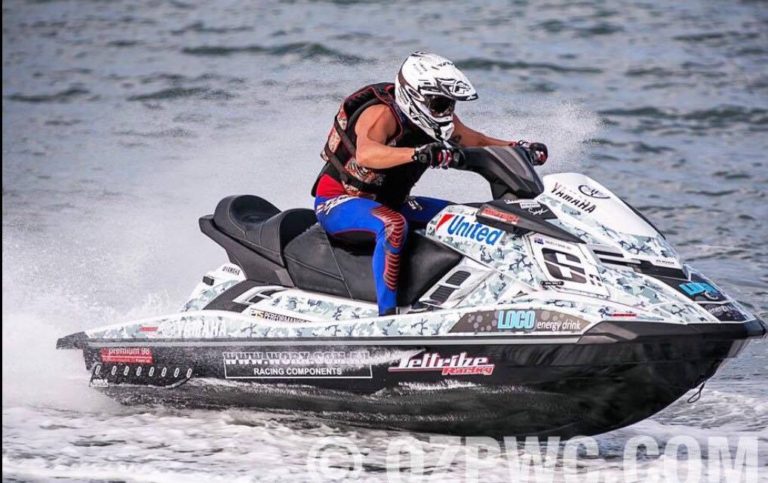
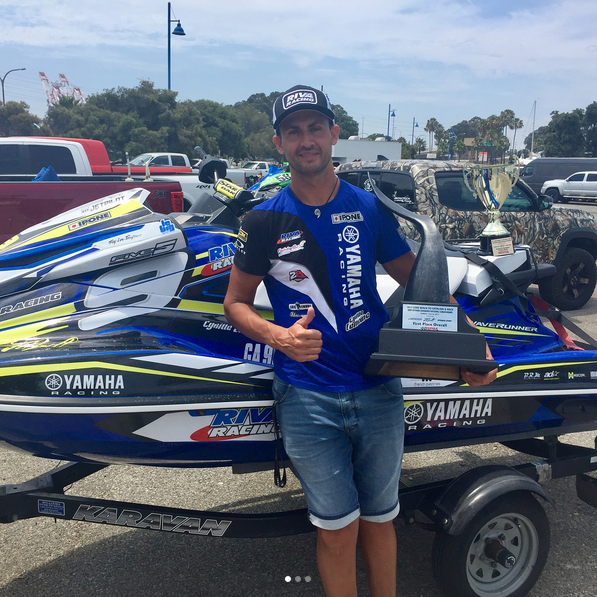
Last weekend’s LB2CAT marked the official transition of longtime racer Christian D’Agostin to the Factory Yamaha Team. We heard the good news out of D’Agostin’s native land and Australian network OZPWC. This partnership will utilize the 5-time Australian Champion riding for the U.S. Factory Yamaha Team in selected upcoming U.S. and World Championship events.
The first of these events has just taken place this past weekend in the famous Long Beach to Catalina Offshore race (LB2CAT). This 56-mile round trip endurance race is an ultimate test between man, machine, and the elements. It is a balancing act of rider stamina, machine mechanical reliability, fuel conservation, and dealing with mother nature’s harsh water conditions.
Although the new Yamaha-partnered rider did not make a podium finish, D’Agostin still made a solid 4th overall continuing to push Team Kawasaki further from the podium. In fact, 2017 is Team Yamaha’s second year in a row to take a full podium finish proving that the FX SVHO platform is an undeniable endurance machine. As sponsors of The Watercraft Journal, it is always great to hear such exciting news about Yamaha Factory.
The Watercraft Journal is also no stranger to Christian D’Agostin as we have followed his fascinating journey throughout the years and featured the lifelong racer two years ago in our Seven Deadly Questions. We know that this transition is an exciting one for D’Agostin. When you combine a Champion Rider with a Champion Team, you can expect nothing but great results. We will be excited to see what this brings for the King’s Cup and World Finals as well as the 2018 Season.
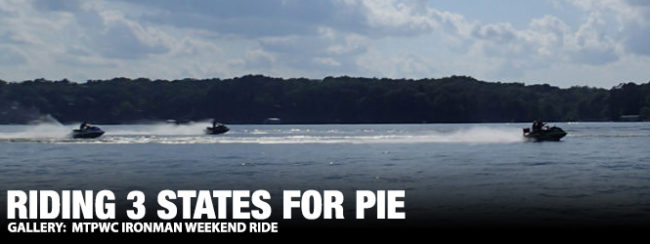
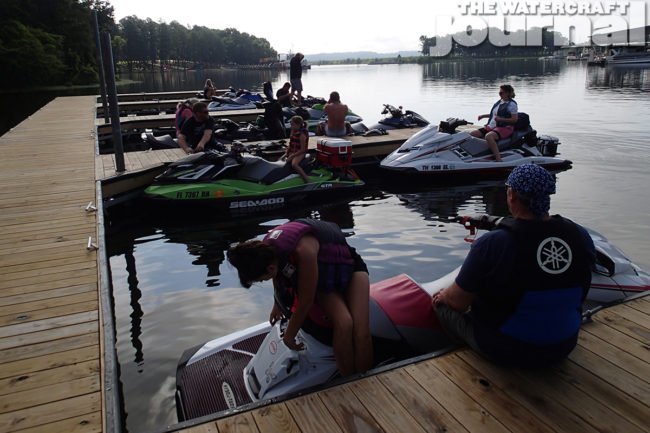
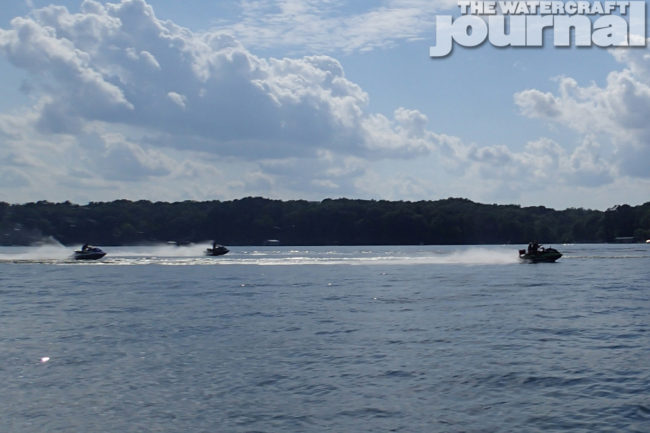
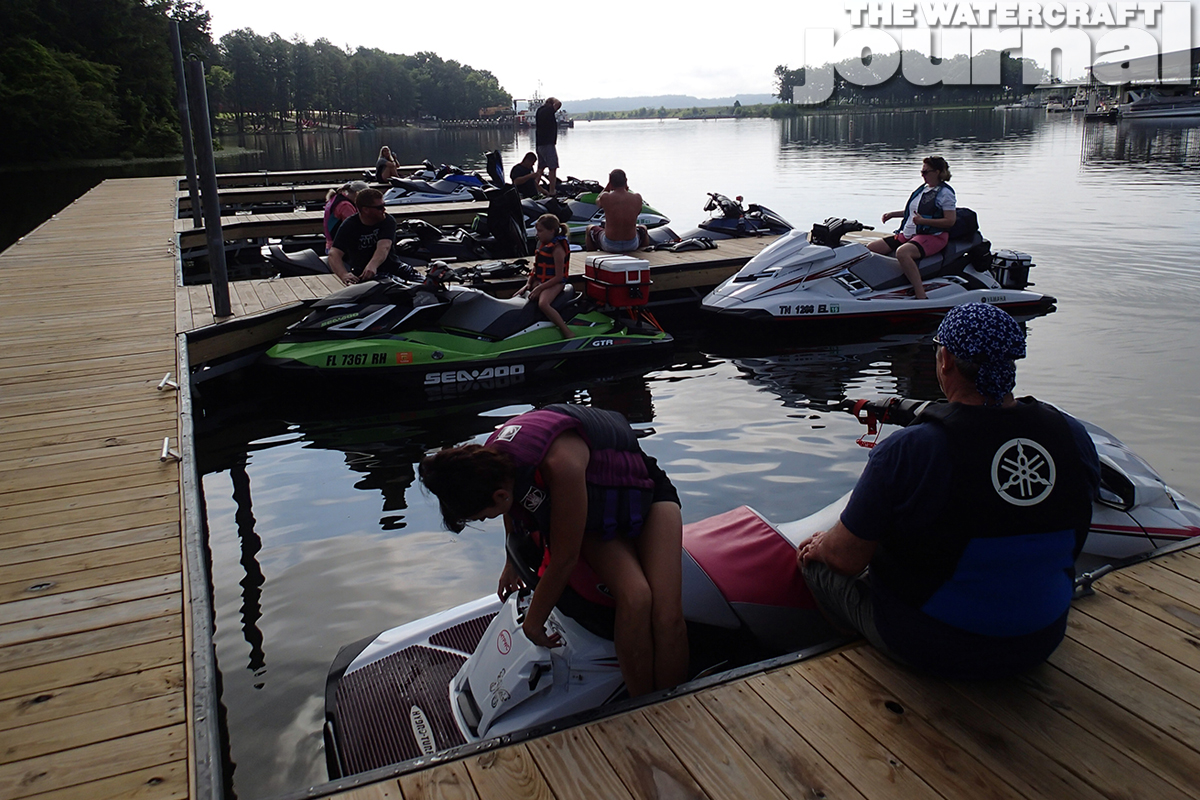
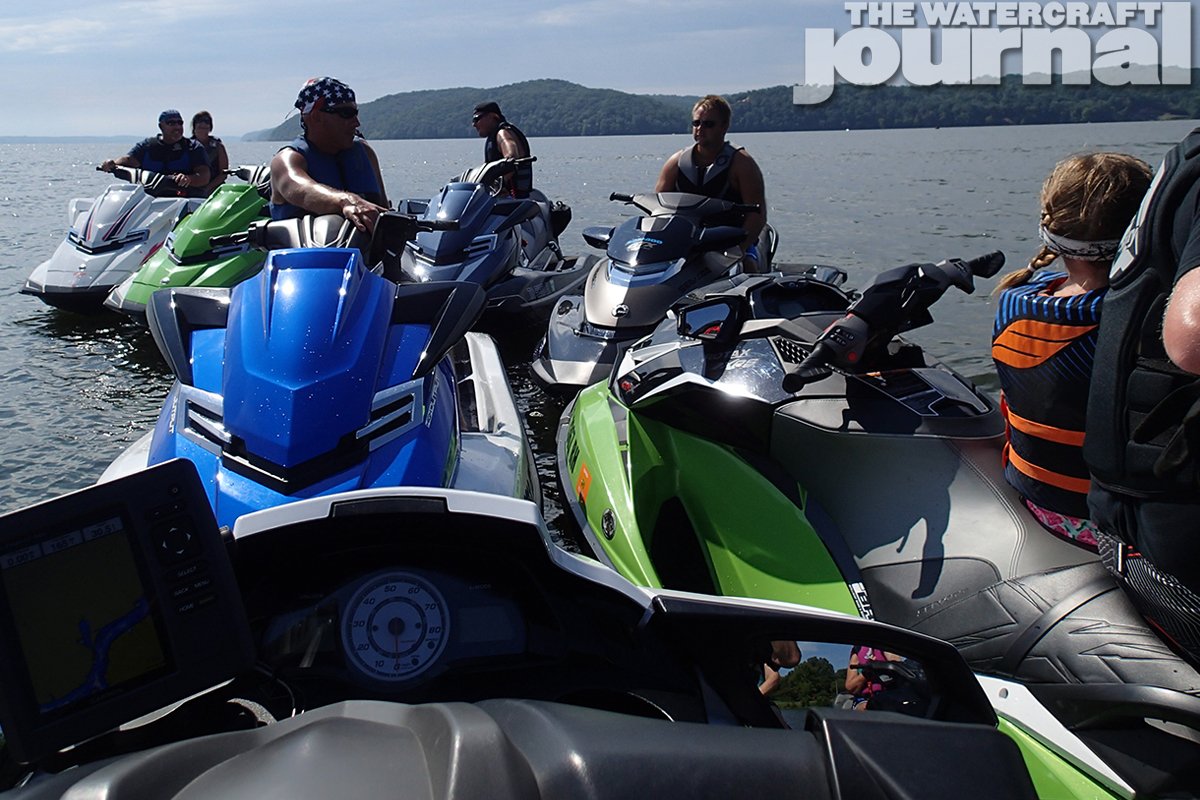
The Middle Tennessee Personal Watercraft Club (MTPWC) is our local club here in Nashville, Tennessee. Last year we did our first Ironman ride, wherein we cover a great distance in a single day. In 2016, we rode the Cumberland River, making three lock-throughs, and covered 253 miles. This year we chose not go for a single day record but a weekend event – the thought was to do a multiple day ride, 3 days and 400-plus miles. Starting from and returning to the same location, we picked Paris Landing State Park located in Buchanan, TN on Kentucky Lake.
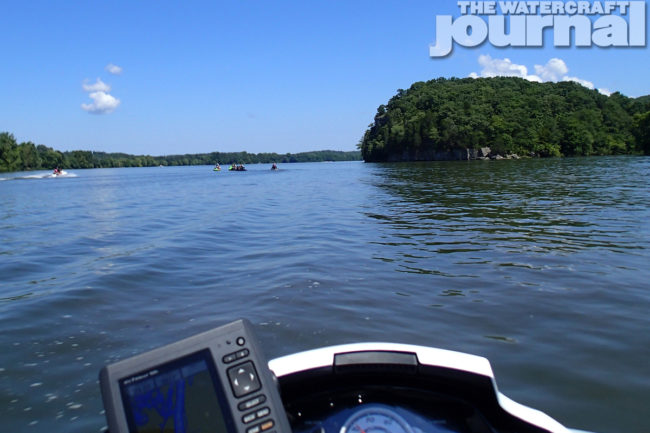
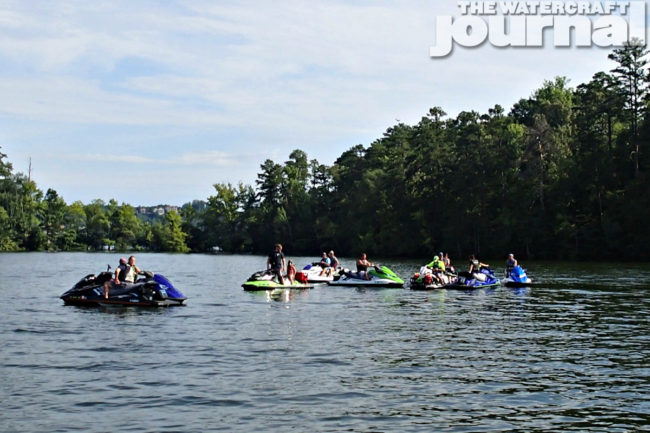
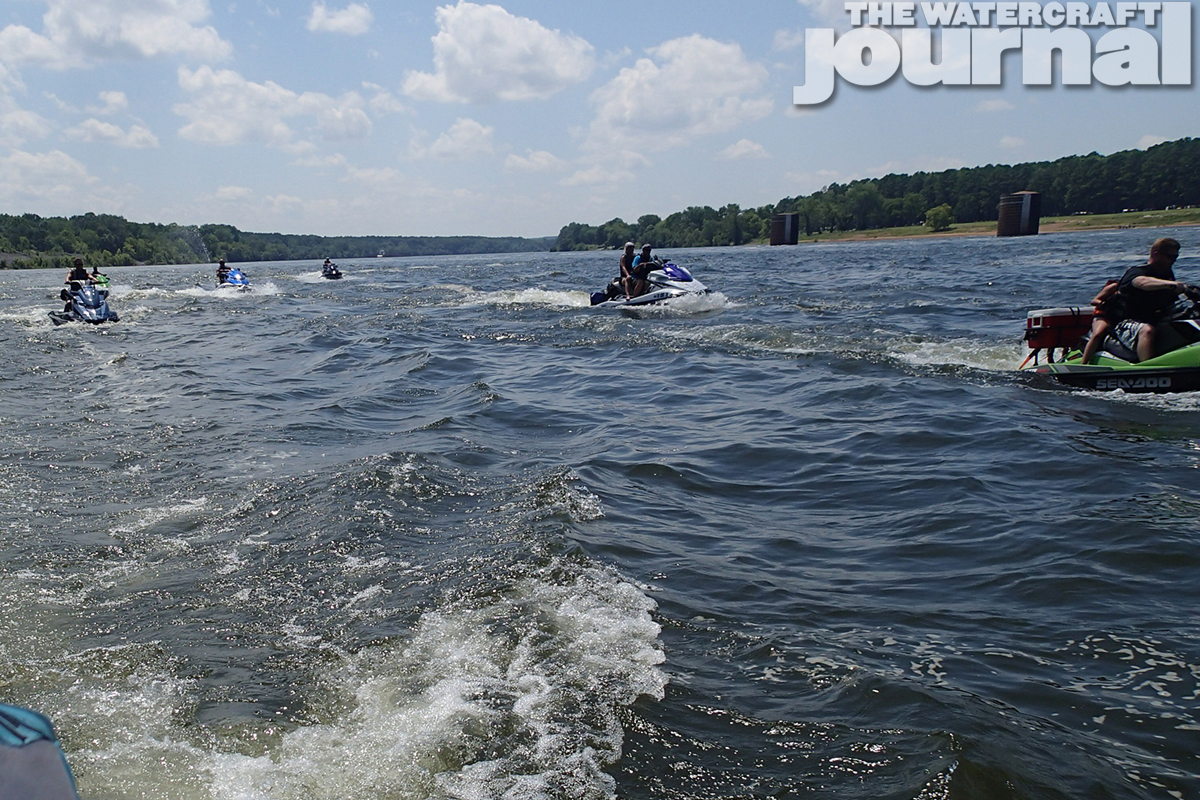
It had been raining here in Middle Tennessee for a solid week so we came prepared for the worst but hoped for the best. All of our gear, clothes, and refreshments would need to be carried with us as there would be no support crew for this ride. We carefully planned fuel stops approximately every 50 miles so all PWC’s would be able to make each leg, and we chose to pace ourselves at 45mph to conserve fuel and enjoy the journey.
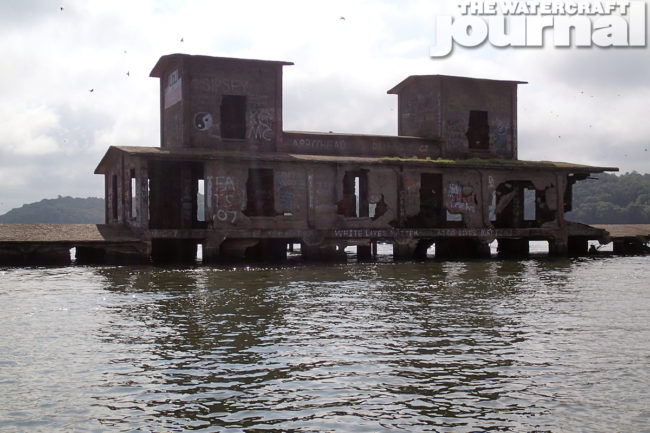
Day 1: We shoved off shortly after 9am from Paris Landing. It was a very cloudy day but no rain and temperatures hung in the mid 70’s – perfect for riding. The water was extremely calm but a stronger-than-normal current due to the rainfall the past week. Still, this was no concern with the scheduled fuel stops. As we headed upstream, we passed the Old Danville Grain Elevator in operation until the 1940’s when the TVA started clearing the land for the creation of Kentucky Lake. Now partially submerged, it is a very unusual sight.
Our first fuel stop, just a short 32 miles from our starting location, was at Pebble Isle Marina in New Johnsonville, TN. There we fueled the skis and took a short break. Afterwards we continued the ride upstream towards Clifton City Marina. This would be our second fuel stop and lunch break. We fueled our skis and our bodies – and who could leave without grabbing an ice cream? Back underway, the river is much narrower here with steep banks and rolling countryside marked with many elevated homes along the bank.
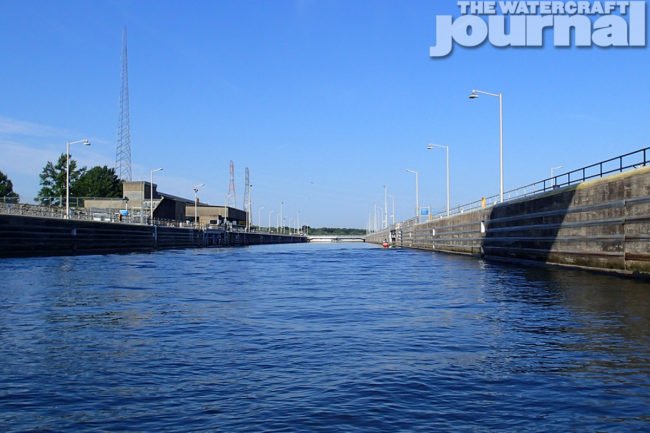
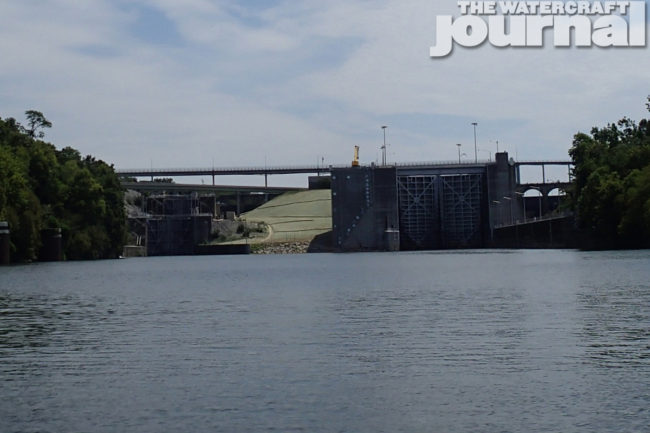
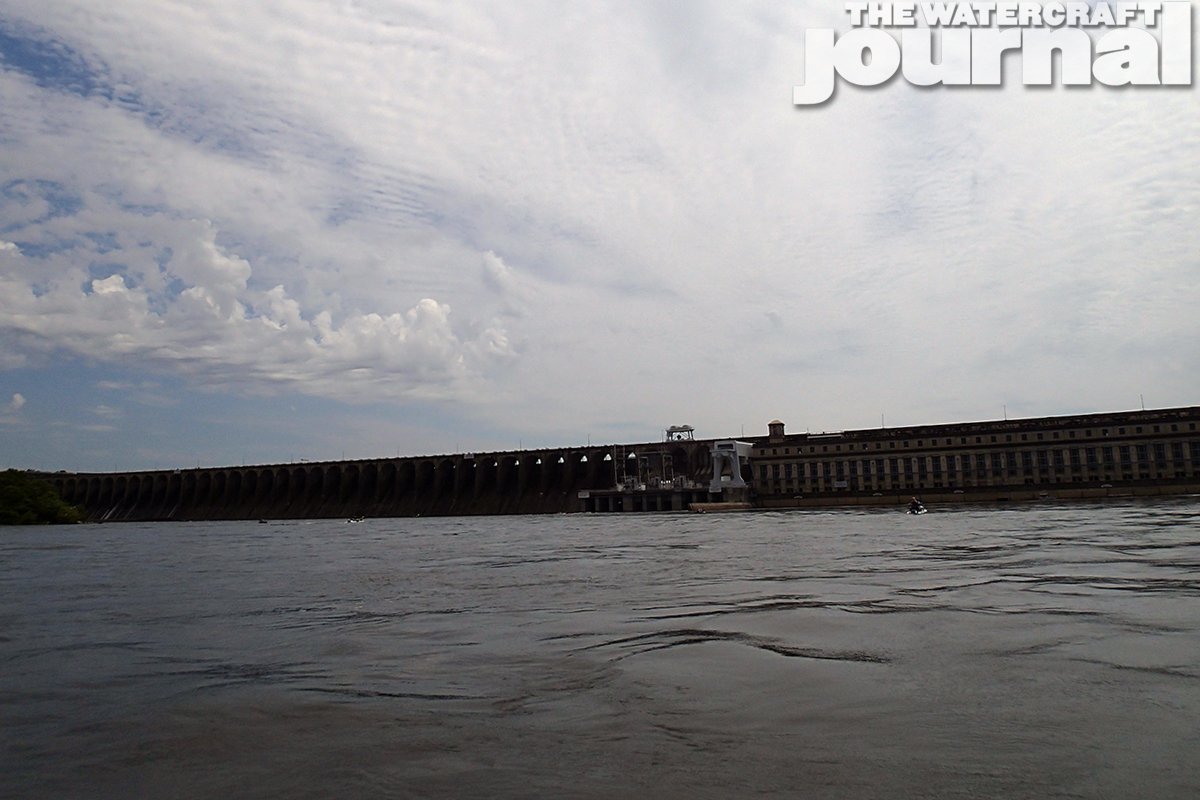
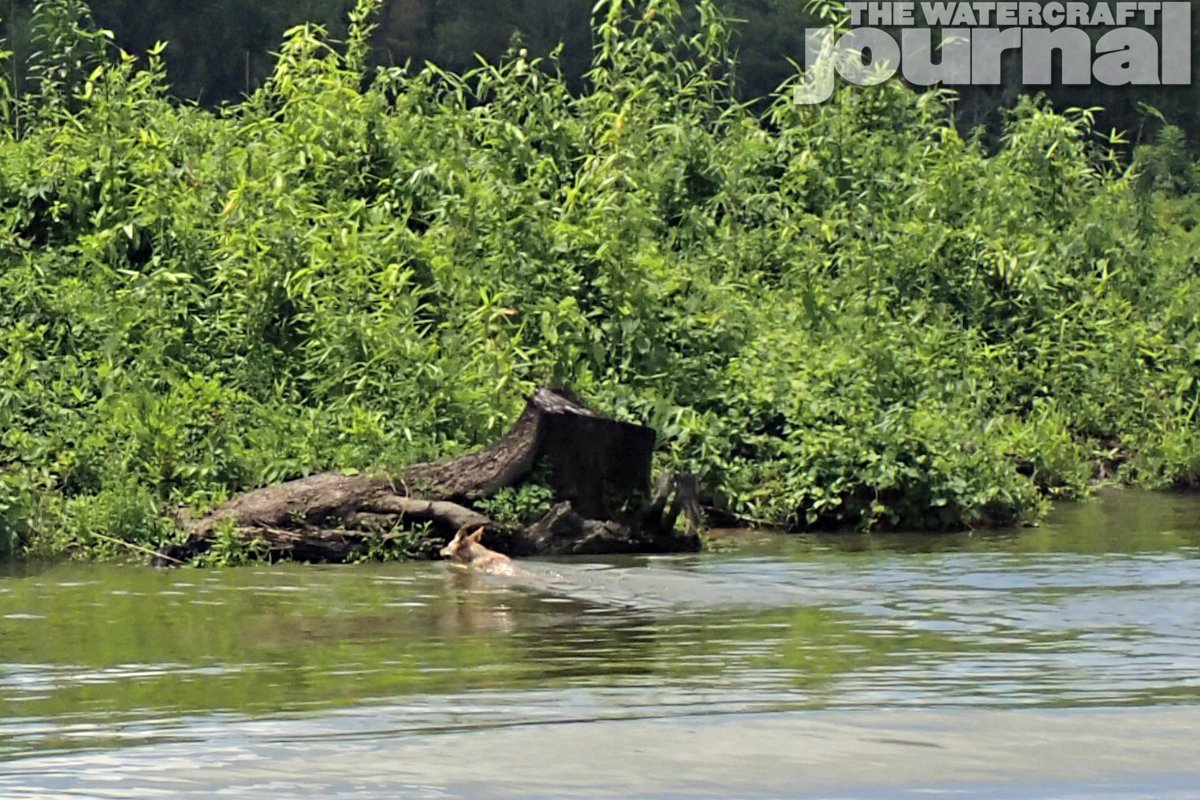
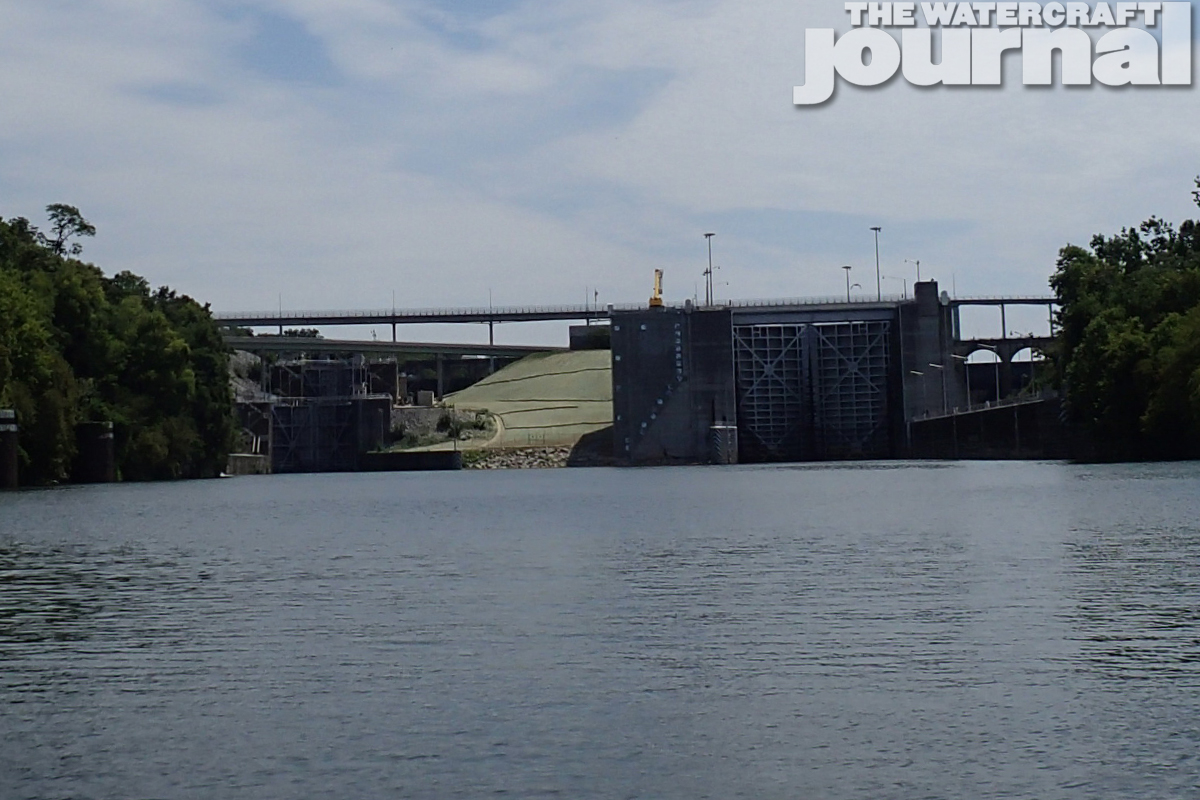
Spotting a head poking through the water, we stopped as a coyote was crossing the river and watched him until he made shore on one of the many river islands we passed. Afterwards we continued to Pickwick Lock & Dam. As we approached, the water was extremely turbulent as they had several gates open dumping water downstream from Pickwick Lake. Construction of Pickwick Lock & Dam began in 1934 and was completed in 1938. The dam itself is 113 feet high and stretches nearly a mile and a half across the Tennessee River with two lock chambers and a lift of 63-feet.
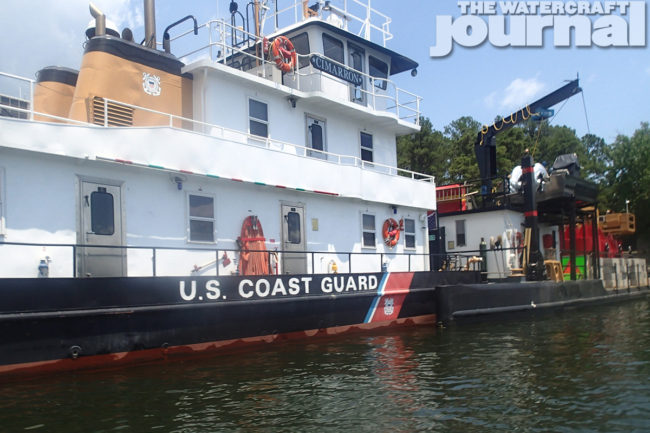
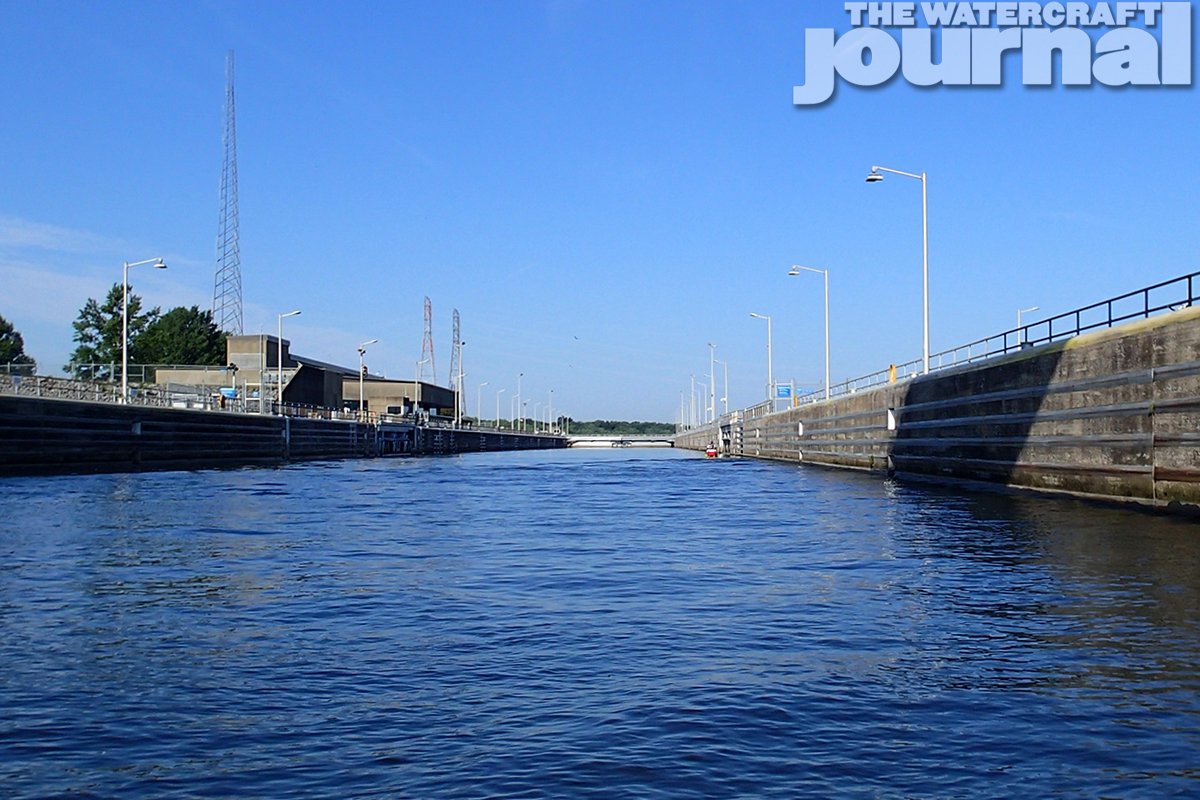
We timed our arrival just perfect as two cruisers were entering the lock. We let them proceed then entered behind them. Once inside, we tied multiple skis to the floating bollards for a lift up to Pickwick Lake. It takes about 20 minutes to fill the chamber. Once we were at lake elevation, the gates opened and we proceeded once getting the “go ahead” from the lock master. After leaving the lock, we rode upstream a short distance to go swimming in a cove and reflect on the ride. Afterwards we crossed the lake to Pickwick Landing Marina for fuel before docking the skis for the night in a friend’s vacant slip then shuttled over to the adjacent hotel. Mission accomplished: our ride today was 151 miles.
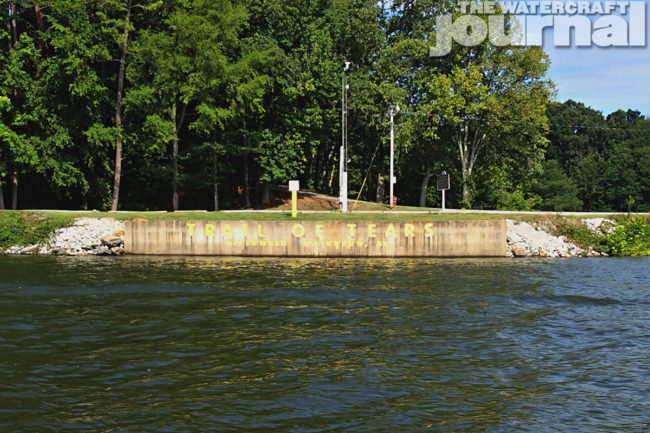
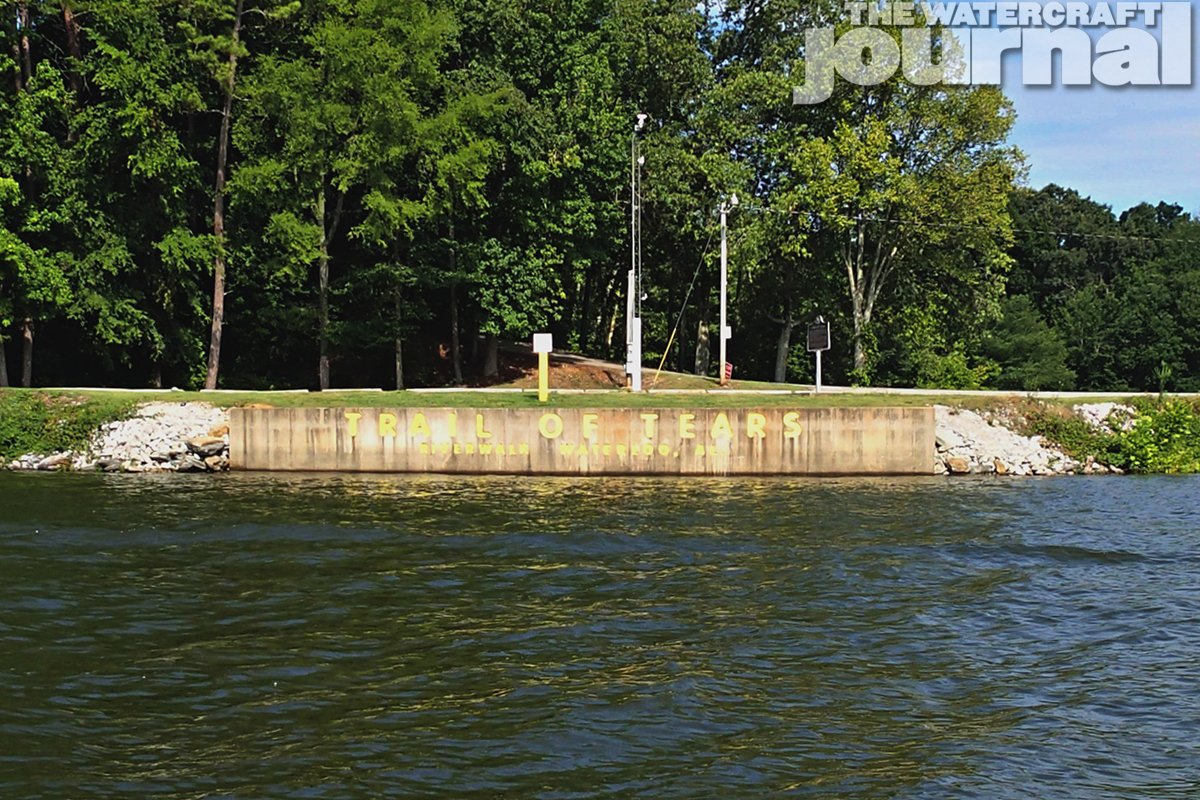
Day 2: We departed Pickwick Landing at 9am, heading upstream toward Wilson Lock – that would be the entire length of Pickwick Lake. We were joined by a few other friends bringing the PWC count up to fourteen. Our first stop was “The Trail of Tears” historical marker in Waterloo, AL. This was a departure site for the Cherokee who had been evicted from their homes by then-President Andrew Jackson and forced to head west to Oklahoma in 1838. Those leaving from this location would have been traveling the Tennessee River by steamboat.
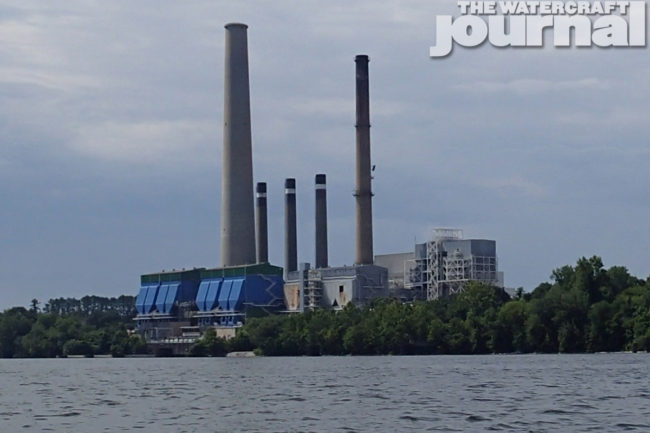
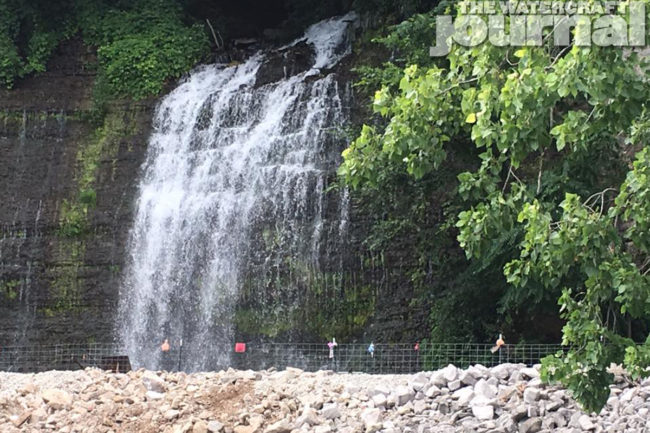
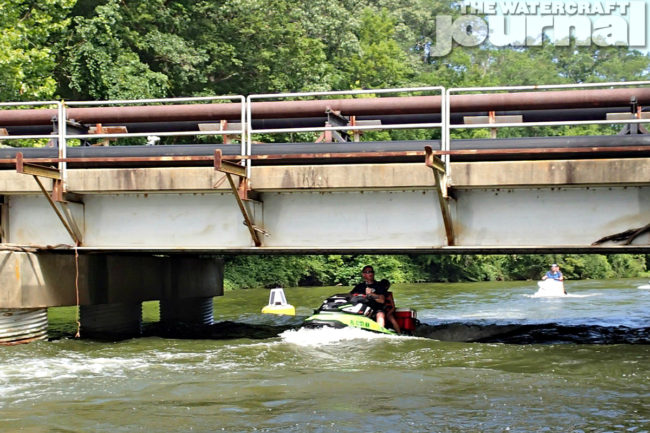
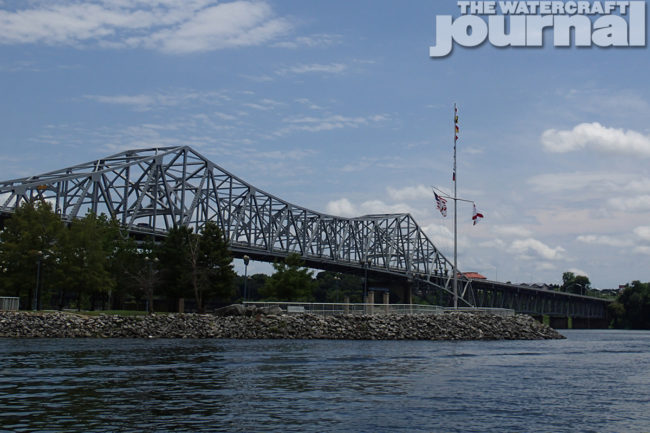
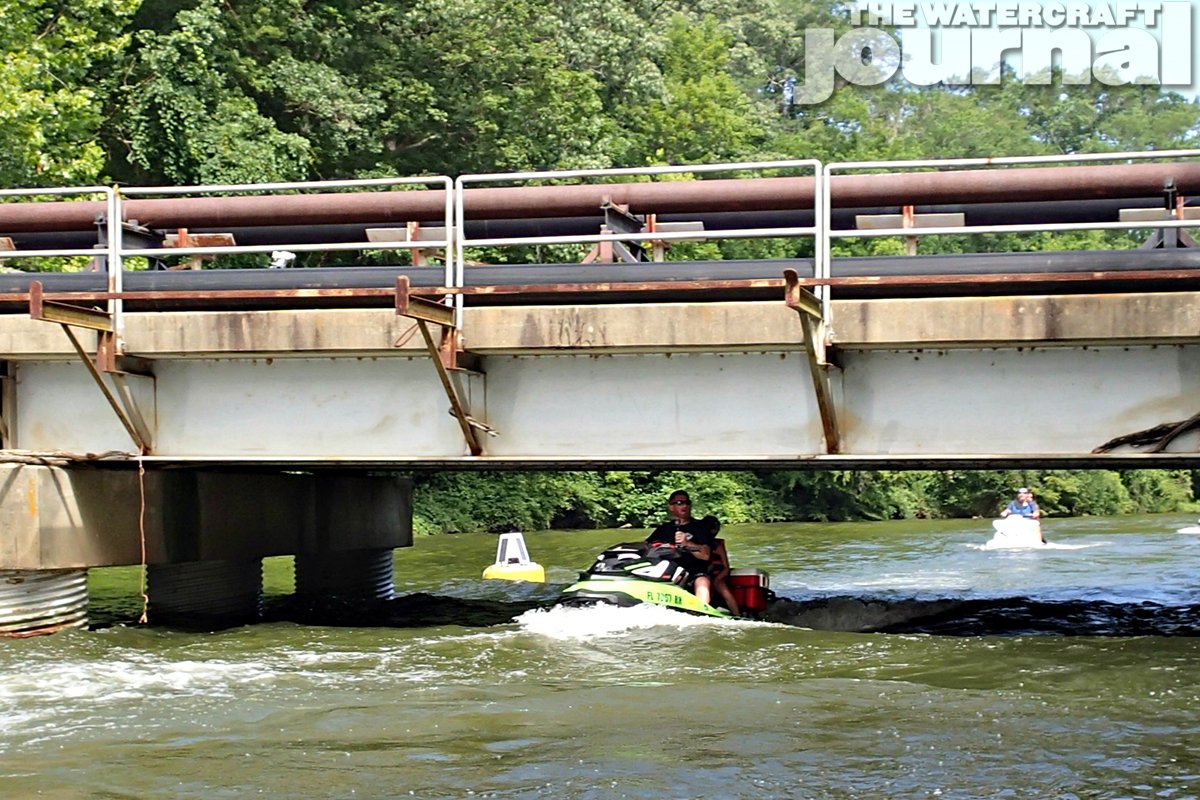
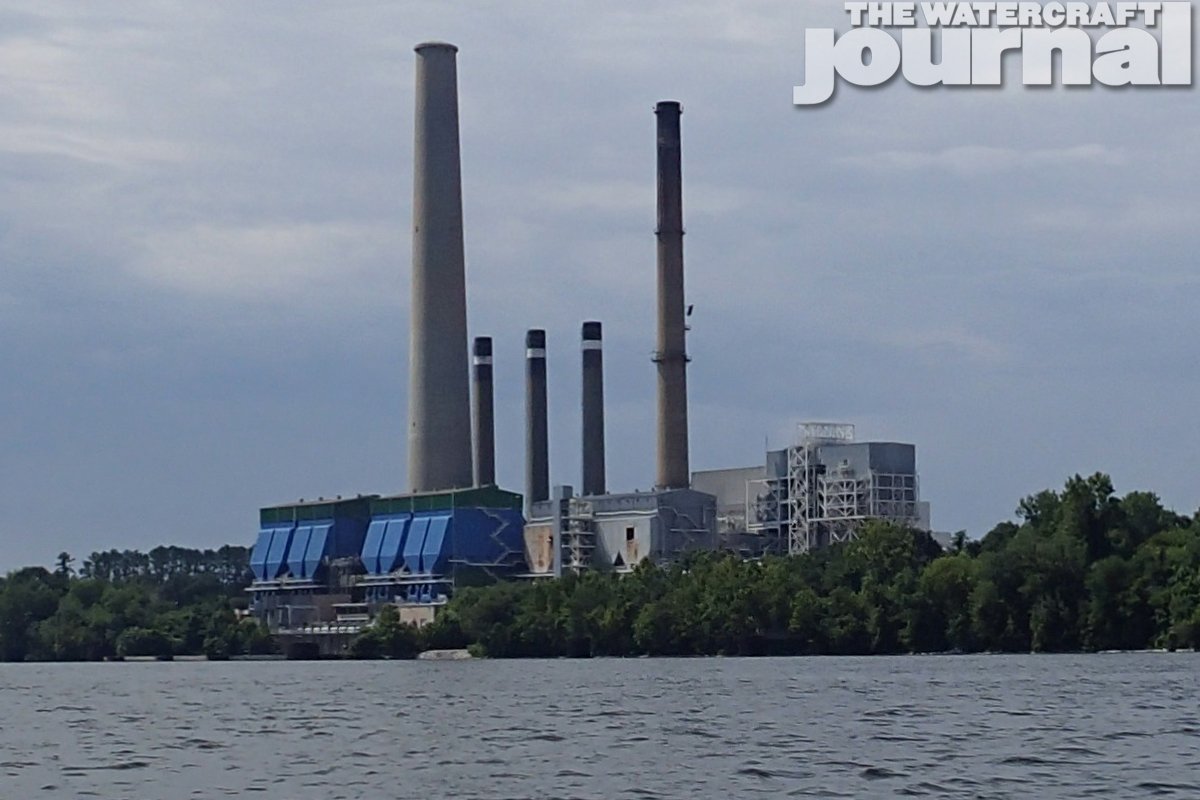
After a short break, we headed back upstream passing under the Natchez-Trace Parkway Bridge then up to Cane Creek. This side trip ran us up and behind the Colbert Steam Plant. The winding creek was narrow with many turns and three bridges. After the run up and back, we continued the ride upstream. After passing under the Highway 79 bridge, we veered left and up the Florence Canal to Wilson Dam Lock, then back to the Hwy 79 bridge up and across the Tennessee River to Wilson Dam Waterfalls in Muscle Shoals, AL.
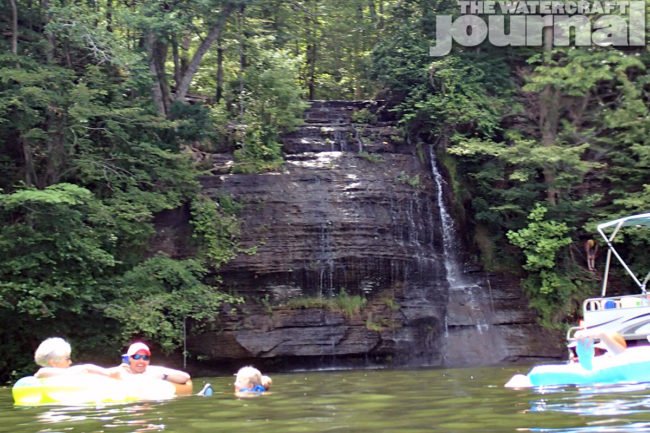
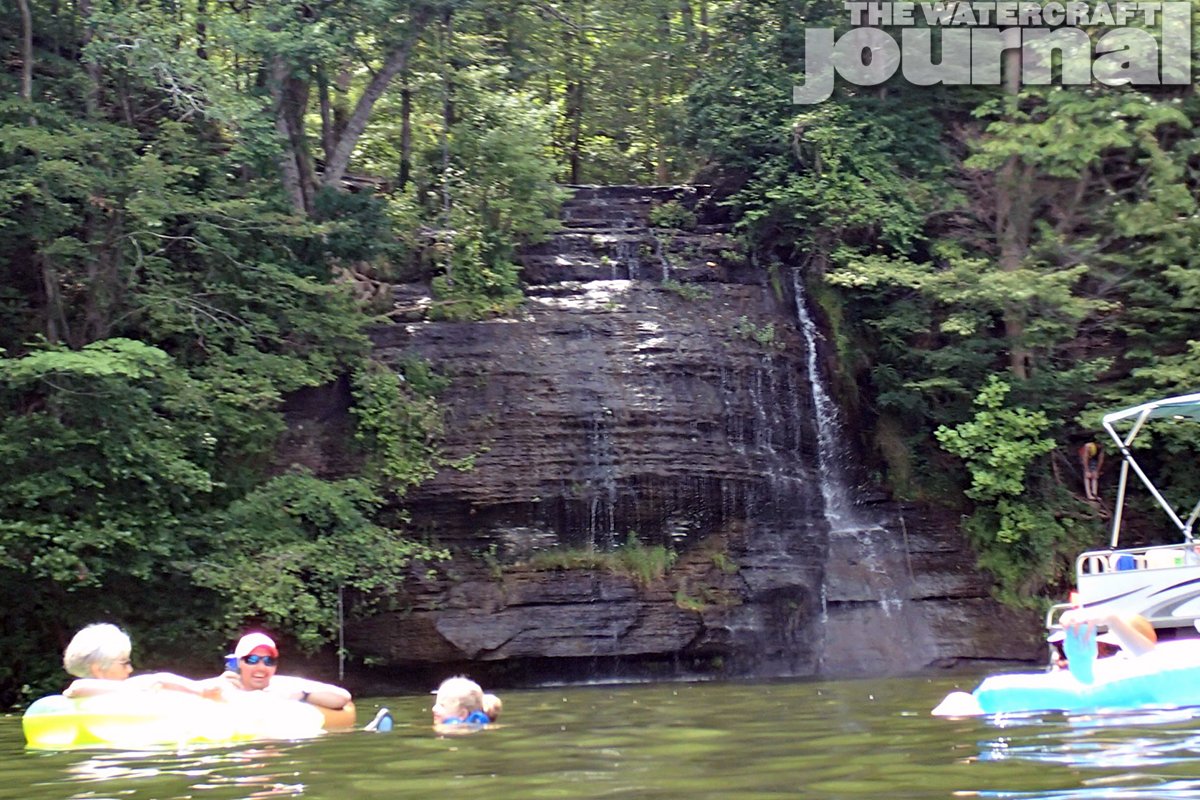
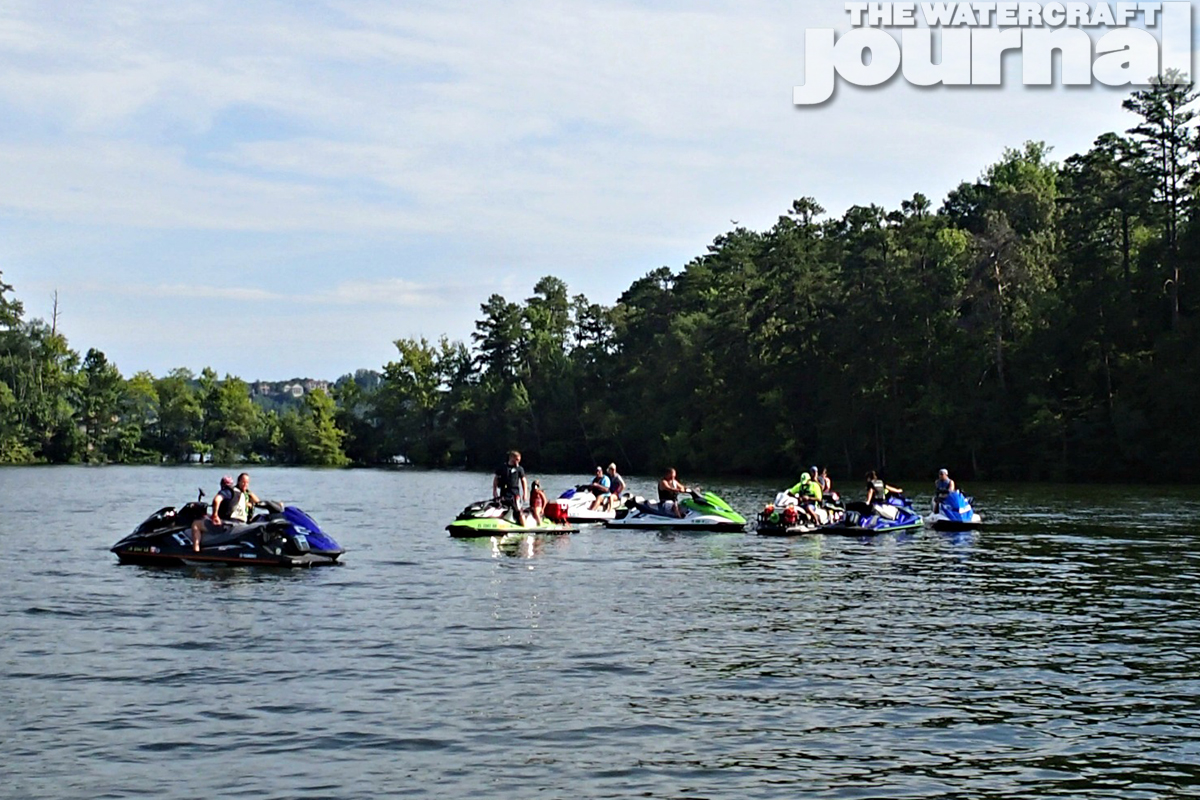
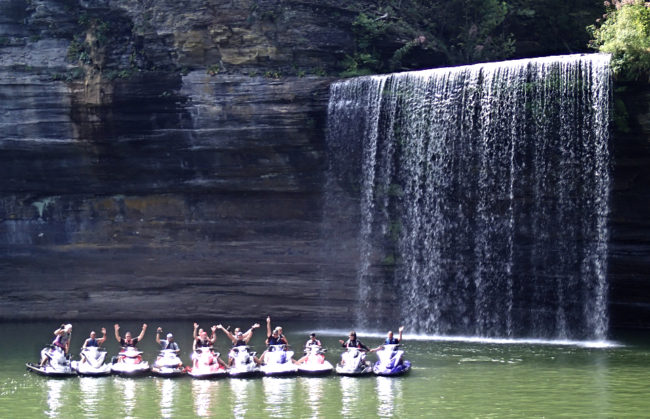
After a few photos, we headed downstream to Florence Harbor Marina for fuel and lunch. This is a favorite stop for local boaters and residents as the food was some of the best marina food we have ever had [including a peanut butter chocolate pie that truly is reason enough to return next year – Ed]. Next, we made a nonstop run back downstream to Cooper Hollow Cove through some increasingly worsening chop. In the back of the cove is a waterfall with plenty of shade, making it a popular hangout. There, we tied all our skis together from the bank and hung out for an hour or so, swimming and cutting up.
We were joined by a couple other friends that stopped to visit. Our next jaunt was down the Tenn-Tom Waterway into Mississippi as far as fuel would allow (and still get back to the marina without another fuel stop). We were able to ride about 15 miles down the Tenn-Tom before being forced to return to Pickwick Marina. We were all beeping upon arrival, our skis begging for fuel! Today’s ride an awesome 142 miles. Saturday night was spent at Freddy T’s Restaurant & Beach Club in Counce, TN for dinner and drinks.
Day 3: We all met in the lobby at 8:30am for a ride to the marina. It was a bittersweet moment as we knew we would be returning back to Paris Landing, our weekend ride was coming to a close. We were lucky that after a week of rain, all weekend we had a dry weather with temperatures in the 90’s and we all had the burnt skin to show for it. The goal today was to hit it hard and fast as we all knew from experience that the later in the day you hit the main body of Kentucky Lake, the rougher it becomes.
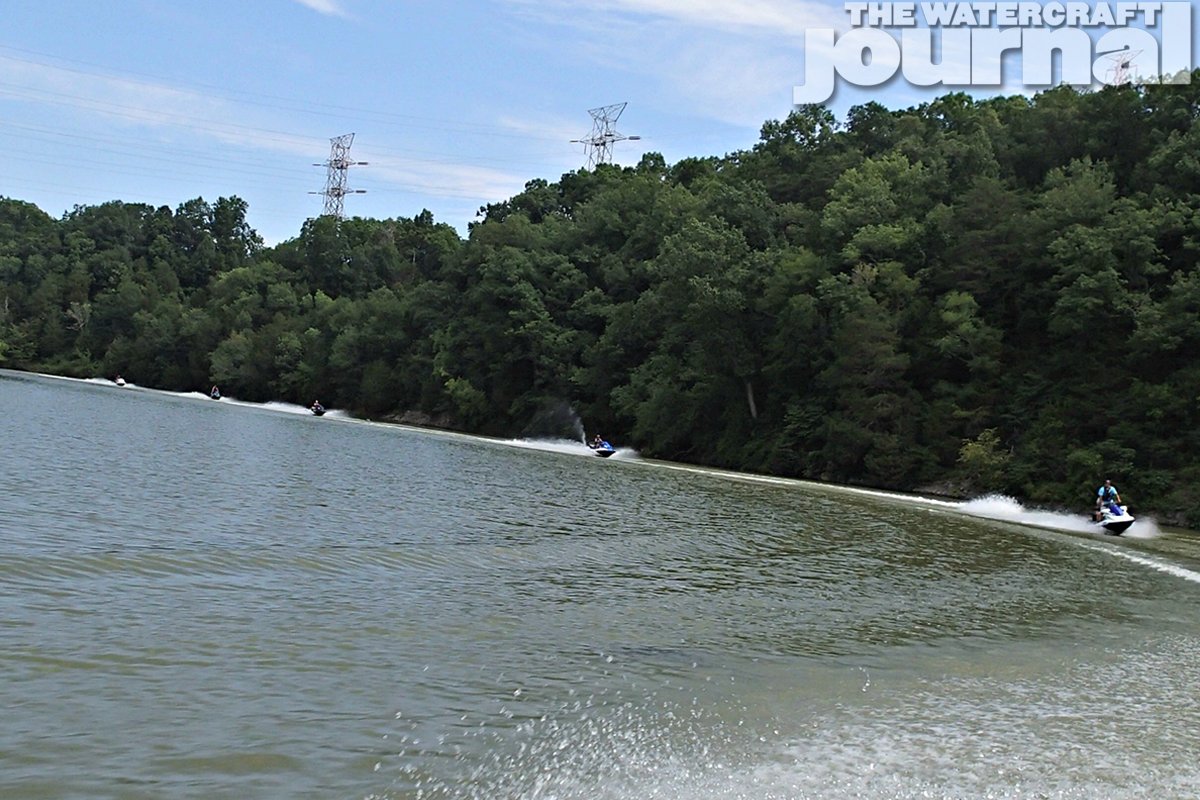
We arrived at Pickwick Lock around 9:15 and contacted the lock master. He quickly got us in and locked through. The return route would be the same as Friday but in reverse, stopping for fuel at Clifton City Marina, Pebble Isle and then to Paris Landing ramp. We had an impressively smooth ride back, gliding across unbroken glass (except for the occasional barge traffic), and passing through what felt like miles of swarming gnats, peppering all of our glasses, faces and skis. We arrived at Paris Landing around 1:15pm. With that we added another 137 miles, bringing our total to 430 miles – truly an Ironman weekend!
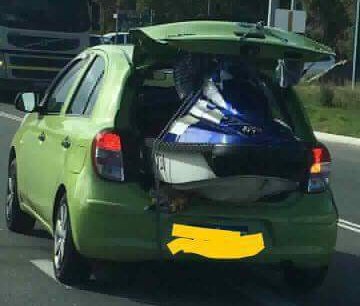
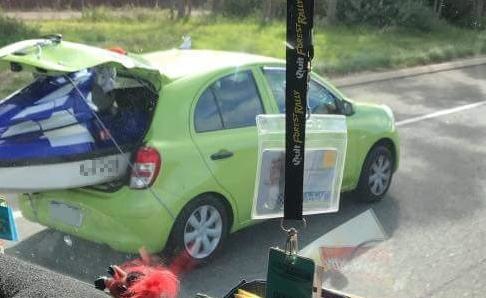
According to an article on The West Australian’s website, a determined driver in Perth shoved his Jet Ski inside his cars’ hatchback. A passing motorist on Roe Highway captured this image of a personal watercraft partially hanging outside the rear of a the very small car.
“I thought ‘it’s legitimately a jet ski in the back of a Nissan Micra, held in by one very thin ratchet strap, 10 points for originality but zero points for being smart,” said tow-truck driver Tristan Holland La-Haye. He did a double take when he saw the odd scene. La-Haye also stated that many motorists were doing their best to avoid the car. He was both shocked and appalled for the driver’s lack of concern for other vehicles and people on the road. The situation put many people at risk.
The Road Safety Commission clearly states: A vehicle must not be driven while carrying a load which makes is unstable or if the load projects in a way that could injure or obstruct other road users.“Failure to properly secure a load is an offense that attracts a penalty of $150,” the commission said in a statement.
We do not know if the wanton driver was busted. This makes for good fodder. However, we do not condone this recklessness. We know the desperation of wanting to get our watercraft to the water. There are better ways than cramming a ski inside a hatchback. Invest in a trailer or make friends with other personal watercraft riders.
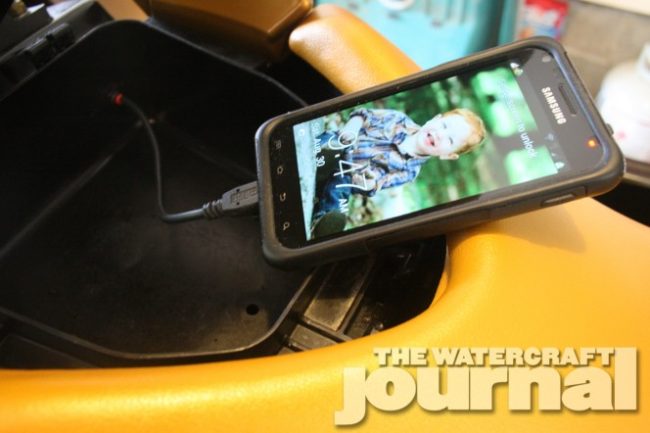
Like many of you, Steve Young regularly used his cellphone to keep updated on the weather or track his route while riding out on the water. And like cellphones are prone to do, his phone battery would quickly die, leaving Steve without communication when he needed it the most. And an exhaustive search of what phone chargers were available on the market for powersport vehicles, he soon discovered that none were as durable, weatherproof or reliable as what Steve needed. So he decided to develop his own solution.
It’s taken several years, a whole lot of experimentation, a few fried phones and a lot of determination, but Steve has come up with RidePower, a deceptively simple cable-style phone charger to be used for rugged mobile applications, be it a personal watercraft, motorcycle, golf cart, fishing boat, SxS or ATV. How? Because every RidePower system is resistant to water, snow, dust and dirt and will not short out your vehicle’s battery or your expensive devices.
Installation is as simple as attaching the tenders to your battery’s terminals and feeding the plug into the glove box or storage bin you wish to keep your phone as it charges. A fusable link ensures that your device will be protected, and unless you leave your phone plugged in while the engine is off, it won’t drain your vehicle’s battery either. Best of all, the RidePower is compatible with both Android and iOS devices. Now, make sure to check out The Watercraft Journal for more information, installation tutorials and more, as RidePower has joined the world’s most popular PWC magazine for 2017.
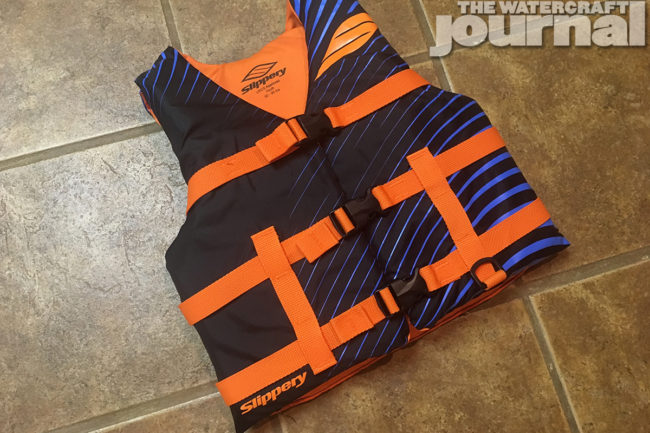
The battle of preferences over neoprene versus nylon rages on until this day. Many bemoan neoprene for sticking to their skin or causing undue perspiration, while other rile against nylon for being itchy, coarse and chaffing against their skin. The decision which is best is all but entirely preferential and something that simply cannot be finalized with a solitary written review. Unfortunately, the low cost of producing a nylon vest is much below that of a neoprene piece that almost all child and youth sizes are made from the cheaper stuff.
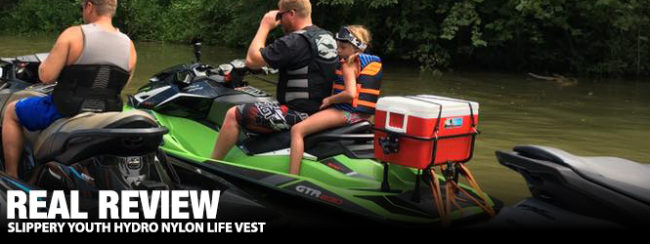
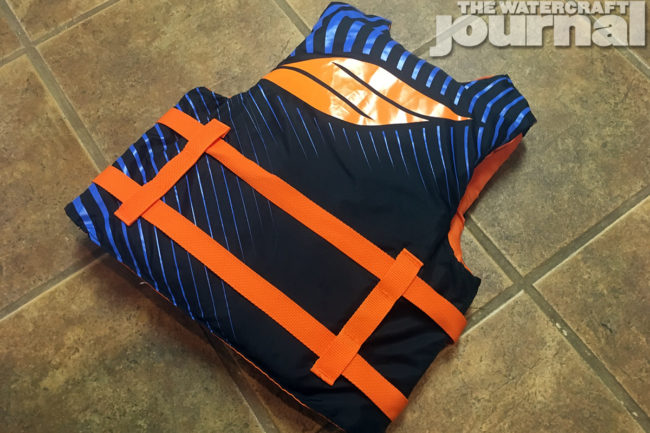
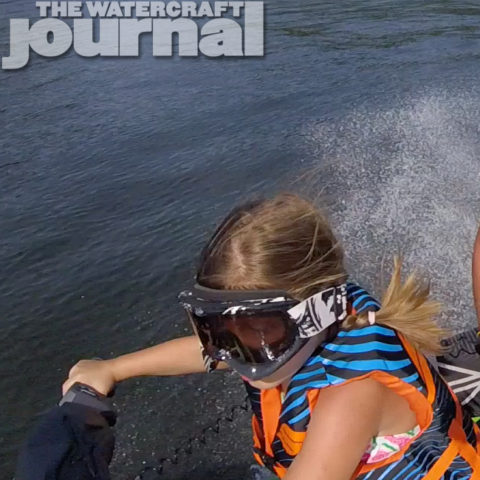
This made our decision to review Slippery’s new Youth Hydro Nylon Life Vest somewhat easier. The US Coast Guard-approved type 3 PFD is designed for children between 50-90 pounds (with a 26″-to-29″ chest). As per Slippery’s own description, “It is lightweight and provides a comfortable, secure fit.” This secure fit comes via three plastic snap buckles tightening a trio of woven belts. To be expected with all Slippery products we’ve tested, the fitment is stellar, without limiting range of shoulder, arm or neck motion.
Recently, we’ve found testing children and youth products to be a bit of a guessing game. Most kids are just happy to be at the lake or riding a ski, and won’t necessarily specify unique quirks or concerns about the equipment they’re using. Certainly complaints are common as is with most children, but sifting complaints from actual instructive criticism is a different matter entirely. We found that asking incredibly specific questions made our testers slightly hesitant as they didn’t want to come off as ungrateful; so much of our takeaways have been through observation and subtle questioning.
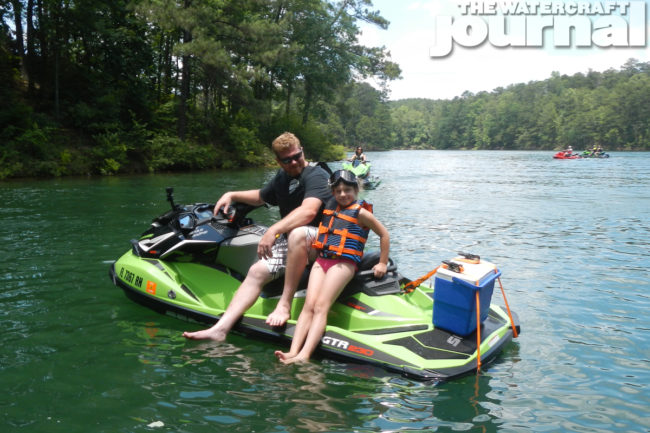
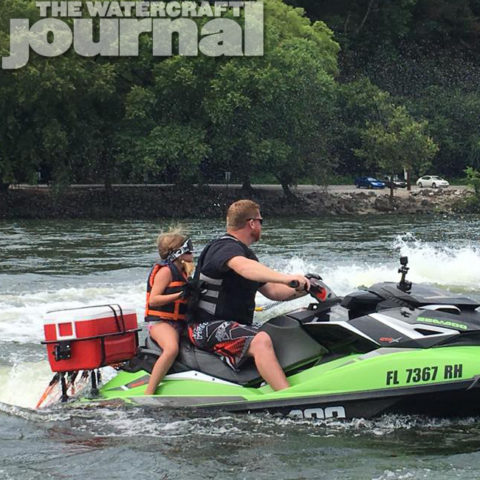
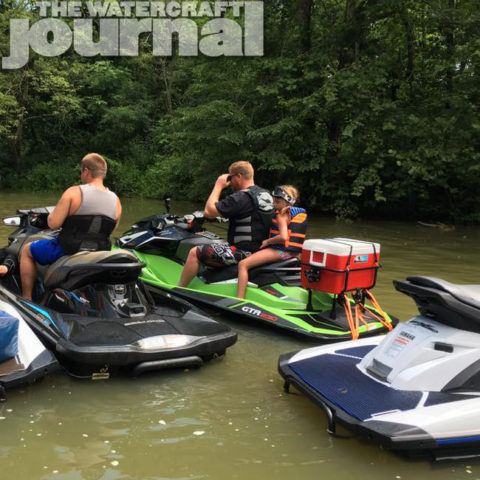
Unlike a neoprene vest, which is typically heavily contoured and molded, with segmented stitched-in panels, a nylon vest is essentially a nylon vest-shaped bag with loose foam panels inserted and stitched closed. We discovered this fact the hard way as our 7-year-old test subject regularly used the vest as less of a traditional personal flotation device and more of a “flotation assistant” during breaks between riding – a notably common thing for kids to do. Unfortunately, the foam panels themselves had a tendency to fold and bunch up inside of the nylon liner, requiring some creative coaxing to get them back into shape.
The Youth Hydro Nylon Life Vest also includes (albeit curiously) a D-ring for clip-style lanyards, although very few parents let their 8-year-olds operate a personal watercraft without adult supervision. Thus far, our test sample vest has held up to some tremendously rigorous testing, both aboard watercraft and in just playing in the water. So far, our designated test subject has preferred this vest over the others we have still pending review. Nevertheless, we found the Slippery Youth Hydro Nylon Life Vest both an attractive unisex option, a tremendous value (priced at $29.95) and a solid “all-around” vest offering for the kids!
There once was a time when the world of offshore racing almost strictly belonged to Kawasaki – and more specifically, the lauded Long Beach-to-Catalina Offshore Championship (LB2CAT), having been ruled by Team Green racer Craig Warner. The 56-mile round trip race used to welcome a field of 50-to-60 racers, but with the almost shut-out domination of Kawasaki over the previous decade, many simply opted not to go, dropping that number to less than half. And while the big, deep-V Ultra retains its offshore-prowess street credibility, this past weekend’s upset win turned the world of offshore racing on its head.
That’s right; not only did a non-Kawasaki take the win – namely Yamaha – but a GP1800, a craft otherwise purpose-built for closed course dominance, piloted by Karujet champion Cyrille Lemoine. Oh, and Lemoine wasn’t alone, 4-out-0f-the Top 5 were Yamahas, with a Kawasaki grabbing the 5th spot. The Frenchman turned Southern Californian is an accomplished RIVA Yamaha team rider, who bested the likes of billion-time IJSBA champion Mike Klippenstein of Canada, Australian Christian D’Agostin, SoCal local Mark Gerner, and Georgian-via-Californian Craig Warner.
The latter two suffered mechanical failures aboard their turbocharged Ultras that took them out of the running. Klipper blew in from the Great White North with little time to prepare – having suffered an engine failure the day before, requiring a 24 hour motor swap. Skies were clear (apart from the typical grey overcast Pacific marine layer) and ocean conditions were less than ideal – that is, depending upon who you ask – but that meant little to the honed athleticism of Lemoine who charged hard in his SVHO-powered GP1800 all the way to the finish line. So, what’s the take away? Just because you don’t own a Kawasaki doesn’t mean you don’t have a chance at winning. Run what you brung and enjoy it! Below are the unedited results:
Overall Results:
Pos. Name Number Mfg. Time Class
1st – Cyrille Lemoine, Irvine, CA #9 Yam 54 Mins 10 Sec Pro/Am Open
2nd -Mike Klippenstein, Ft. MacMurray, Al, Canada, #212 Yam 54 Mins 33 Sec Pro/Am Open
3rd- Cassius Sanders, Redondo Beach, CA #72 Yam 59 Mins 24 Sec Mfg. Stock
4th – Christian D’Agostin, Queensland, Australia, #1A Yam 59 Mins 36 Sec Pro/Am Open
5th- Paul Pham, Los Angeles, CA #99 Kaw 1 Hour 2 Mins 46 Sec Vet/Master Open
6th- Bill Scott, Lake Havasu City, AZ #102 Kaw 1 Hour 4 Mins 52 Sec 4 Stroke Stock
7th- Derek Diep, Canoga Park, CA #789 Yam 1 Hour 5 Mins 36 Sec 4 Stroke Stock
8th- Jeff Lane Anaheim, CA #83 Kaw 1 hour 6 Mins 21 Sec Vet/Master
9th – Santiago Kuan, Whittier, CA #30 Yam 1 Hour 6 Mins 30 Sec 4 Stroke Stock
10th- Sam Deluca, Huntington Beach, CA #13 Yam 1 Hour 6 Mins 50 Sec Mfg. Stock
11th- Brittany Behringer, Simi Valley, CA #805 Yam 1 Hour 9 Mins 42 Sec 4 Stroke Stock
12th- Akira Tanaka, Torrance, CA #470 Kaw 1 Hour 13 Mins 30 Sec Vet/Master Open
13th- David Palmer, Irvine, CA #13 Yam 1 Hour 14 Mins 10 Sec Pro/Am Open
14th- Arteem Kharatt, Yorba Linda, CA #55 Sea 1 Hour 15 Min 25 Sec 4 Stroke Stock
15th- Sean Conner, Sparks, NV # 711 Yam 1 Hour 15 Min 43 Sec Pro/Am Open
16th- KC Heidler, Irvine, CA # 2 Kaw 1 Hour 17 Min 50 Sec Pro/Am Open
17th- David Uhler, Mercer Island, WA #77 Kaw 1 Hour 19 Min 15 Sec Mfg. Stock
18th- Don Adams, San Diego, CA #18 Yam 1 Hour 28 Min 2 Sec Yam Mfg. Stock
19th- Frank Gavit, San Marcos, CA #75 Kaw 1 Hour 26 Min 48 Sec Mfg. Stock
20th- Dan Lingren, Aberdeen, WA #311 Kaw 1 Hour 35 Min 12 Sec Mg. Stock
DNF Michael Perry, Fallbrook, CA #27x Mfg. Stock
DNF Charlie Martinez, Buena Park, CA #9 Sea 4 Stroke Stock
DNF Tony Hoa, San Gabriel, CA #69 Yam Pro/Am Open
DNF Craig Warner Dallas, GA #7 Kaw Pro/Am Open
DNF Mark Gerner, Aliso Viejo, CA #58 Pro/Am Open
IJSBA Offshore National Championships
Results by Class:
Pro/Am Open
Pos. Name Number Mfg. Class Time
1st – Cyrille Lemoine, Irvine, CA #9 Yam 54 Mins 10 Sec
2nd -Mike Klippenstein, Ft. MacMurray, Al, Canada, #212 Yam 54 Mins 33 Sec
3rd- Christian D’Agostin, Queensland, Australia, #1A Yam 59 Mins 36 Sec
4th- David Palmer, Irvine, CA #13 Yam 1 Hour 14 Mins 10 Sec
5th- Sean Conner, Sparks, NV # 711 Yam 1 Hour 15 Min 43 Sec
6th- KC Heidler, Irvine, CA # 2 Kaw 1 Hour 17 Min 50 Sec
DNF Tony Hoa, San Gabriel, CA #69 Yam
DNF Craig Warner Dallas, GA #7 Kaw
DNF Mark Gerner, Aliso Viejo, CA #58 Kaw
Vet/Master Open
Pos. Name Number Mfg. Class Time
1st- Paul Pham, Los Angeles, CA #99 Kaw 1 Hour 2 Mins 46 Sec
2nd – Jeff Lane Anaheim, CA #83 Kaw 1 hour 6 Mins 21 Sec
3rd – Akira Tanaka, Torrance, CA #470 Kaw 1 Hour 13 Mins 30 Sec
4 Stroke Stock
Pos. Name Number Mfg. Class Time
1st – Bill Scott, Lake Havasu City, AZ #102 Kaw 1 Hour 4 Mins 52 Sec
2nd – Derek Diep, Canoga Park, CA #789 Yam 1 Hour 5 Mins 36 Sec
3rd – Santiago Kuan, Whittier, CA #30 Yam 1 Hour 6 Mins 30 Sec
4th- Brittany Behringer, Simi Valley, CA #805 Yam 1 Hour 9 Mins 42 Sec
5th – Arteem Kharatt, Yorba Linda, CA #55 Sea 1 Hour 15 Min 25 Sec
DNF Charlie Martinez, Buena Park, CA #9 Sea
Mfg. Stock
Pos. Name Number Mfg. Class Time
1st- Cassius Sanders, Redondo Beach, CA #72 Yam 59 Mins 24 Sec
2nd- Sam Deluca, Huntington Beach, CA #13 Yam 1 Hour 6 Mins 50 Sec
3rd – David Uhler, Mercer Island, WA #77 Kaw 1 Hour 19 Min 15 Sec
4th- Don Adams, San Diego, CA #18 Yam 1 Hour 28 Min 2 Sec Yam
5th – Frank Gavit, San Marcos, CA #75 Kaw 1 Hour 26 Min 48 Sec
6th – Dan Lingren, Aberdeen, WA #311 Kaw 1 Hour 35 Min 12 Sec
DNF Michael Perry, Fallbrook, CA #27x
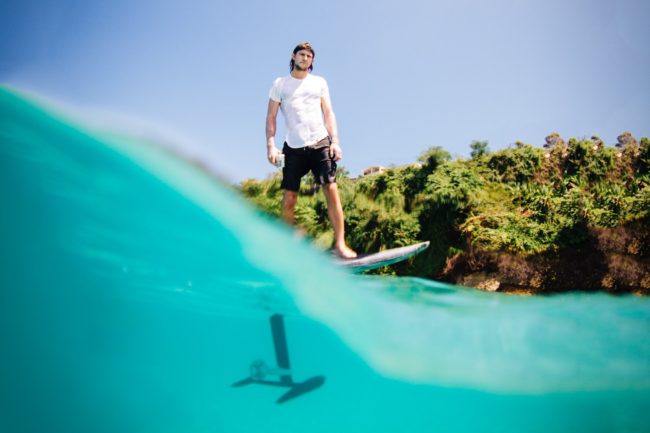
Have you always wanted to become a virtuoso of surfing but woefully lacked the talent, athleticism, or fortitude to fight off the crowds of kooks, groms and hodads? Yeah, us too. That’s why the Lift eFoil is looking like something we might be able to get into. Produced by Lift, the personal hydrofoil manufacturers who pretty much made the sport cool, the eFoil is what they’re calling “the next generation of hydrofoils.”
The Lift eFoil is a state-of-the-art hydrofoil board powered by a silent electric motor and controlled via a fully programmable computer and a wireless hand controller. So what makes it so cool in our eyes? The fact that it requires no waves, surf or wind to propel the foil – just saddle up and hit the trigger, the electric motor does all the work (you just need to keep your balance well enough to stay aboard).
The eFoil uses a custom lithium battery built for a rugged marine environment that can last up to an hour when ridden at 15mph (of course depending on rider weight/speed) and is enclosed in a corrosion protected, IP67 waterproof housing. The battery also requires a scant 2.5 hours to fully recharge, so you won’t be down long – and you can easily swap out the battery for a charged one. There’s actually quite a bit of information on the board to review, and while it’s not available yet, they are accepting pre-orders.
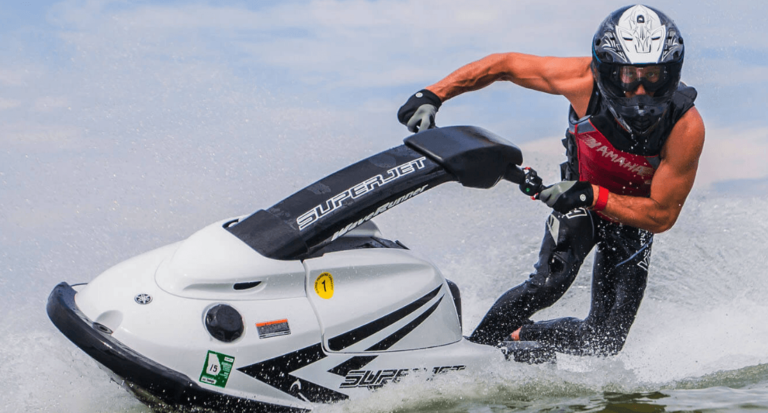
Cycle Springs Powersports takes pride in giving you the best deal as possible. With tons of PWC’s in stock, they usually have some killer deals on all types of craft. If you’ve been looking at getting into competitive racing, they got the ski for you! On sale for a limited time, you can pick up a 2017 Yamaha SuperJet for over $1,600 off! The folks there must be crazy because they slapped a sale price of $6,890 on these bad boys. With a MSRP of $8,499, you are saving a lot of dough!
The SuperJet is powered by a 701cc 2-cylinder, 2-stroke Yamaha engine that gives you some serious get up and go power. This one person ski is made to compete with the best weighing in at only 306 lbs dry. This thing will take whatever you throw at it. Come on down to Cycle Springs Powersports; as with prices like this, they are sure not to last long! Please note: as mentioned, these are for available for closed course competition use only.
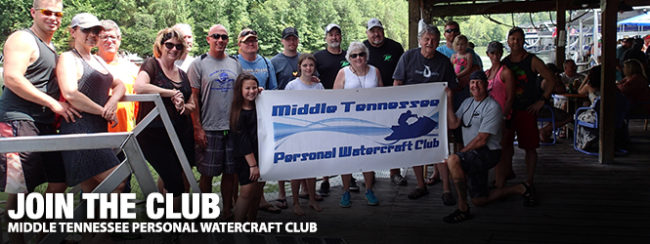
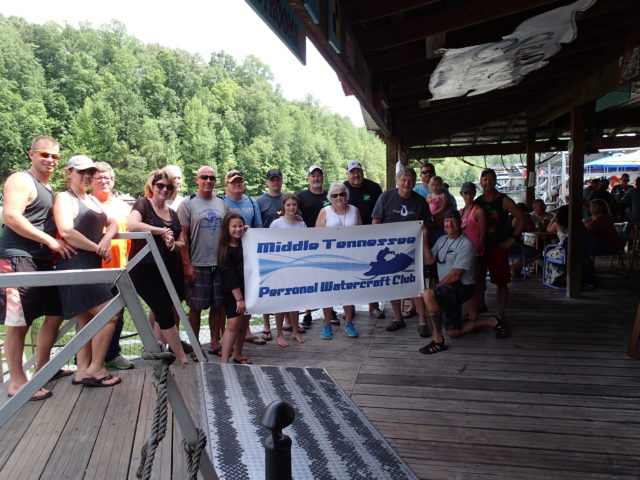
[For today’s installment of “Join The Club,” The Watercraft Journal welcomes Mike Majka, President of the Middle Tennessee Personal Watercraft Club. Formed back in 2010, the club is relatively new – but that hasn’t stopped them from being one of the most active groups we’ve encountered with at least one, if not two organized rides a month, with several being literally hundreds of miles. In fact, as you read this, The Watercraft Journal will be joining them for a massive 400-mile ride. -Ed]
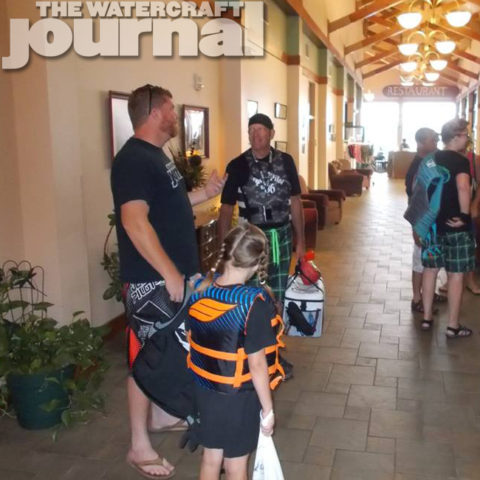
Mike wrote, “Middle Tennessee Personal Watercraft Club (MTPWC) meets every month of the year, starting each year off in January with lunch and attending the Nashville Boat Show. February is our planning meeting this is where each member brings ride ideas to the group, the rides are voted on and dates assigned to them. In March we officially start the season with a ride.
“Middle Tennessee Personal Watercraft Club prides itself on well thought out, well planned and organized rides. At each event, there will be a ride leader that paces the ride and another member picking up the end of the group. Our primary geographic riding area is the Southeastern United States; in a typical year, we ride our home waters and travel to all of the states surrounding Tennessee and usually one ride to an area we have not been to before.
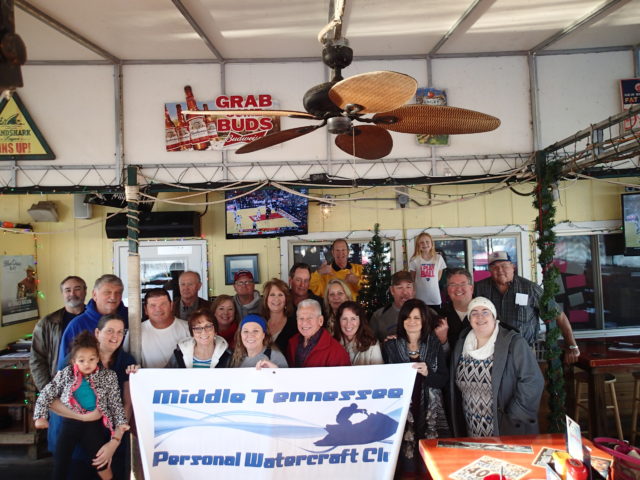
“The Club has one or two rides each month of the year through November in December. We hold a Christmas Party that is always a great time! The average number of skis attending MTPWC rides is twenty. If you travel to or live in the Middle Tennessee area we greatly encourage you to join us for an event, we are family friendly and treat each rider like they are family! We hope you can join us for one of our great ride adventures in 2017.
“For more information on Middle Tennessee Personal Watercraft Club (aka: MTPWC), check out our Facebook page, email inquiries to [email protected] or call (615) 428-4943″
MTPWC 2017 Ride Calendar
July 7th-9th Ironman Weekend, TN/AL/MS
August 11th-13th Lake Hartwell, SC
August 21st Dark Side of the Moon Ride, TN: (Monday ride Cumberland River)
September 23rd Farwell to Summer Run, TN: (Shute’s Branch-Ashland City)
Oct 14th Fall Colors Tour, TN River: (South Pittsburg, TN-Guntersville, AL)
Nov 11th Frostbite Ride & Cookout TN
Dec 16th MTPWC Christmas Party
If you’re a PWC riding club president, group and/or event organizer who regularly hosts rides and is looking for greater access to a larger audience of potential members, and would like to be featured in a segment of “Join The Club” please email 300-500 words about your group, a minimum of 3 high-resolution images, and hyperlinks to your social media pages to [email protected].