
Home Blog Page 333

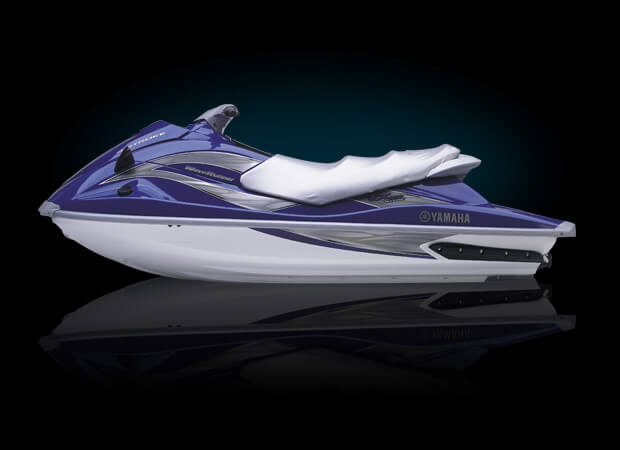
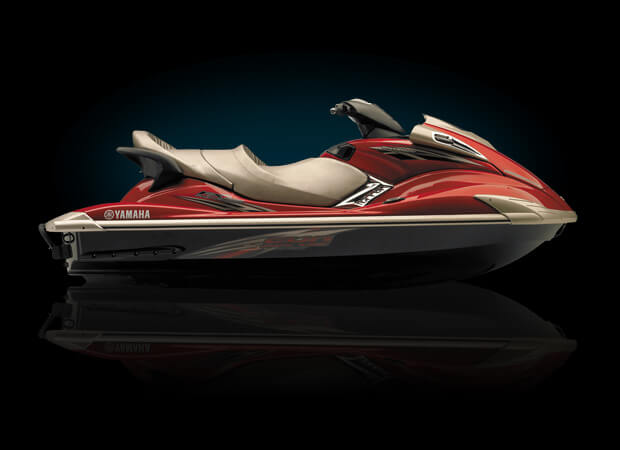
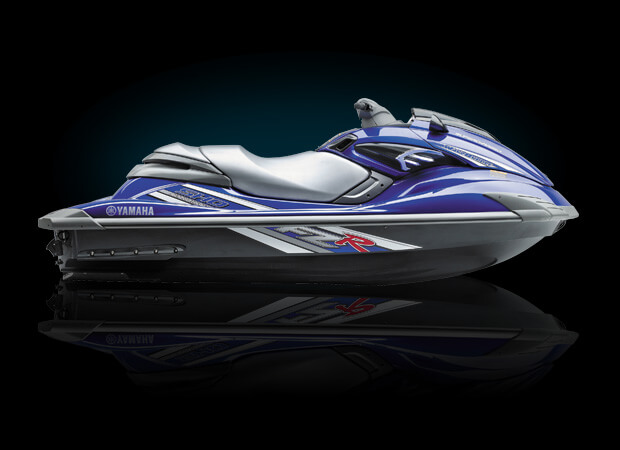
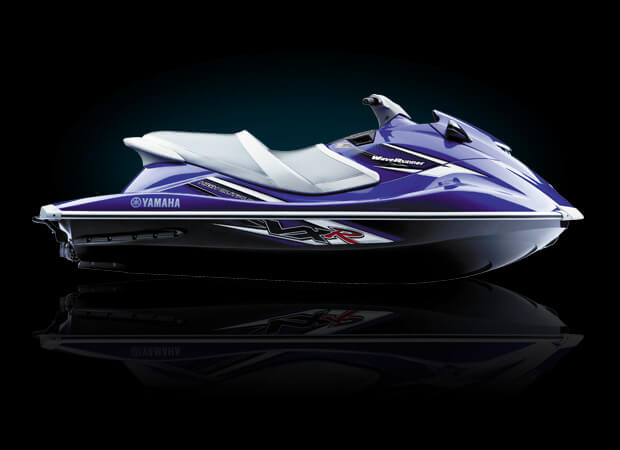
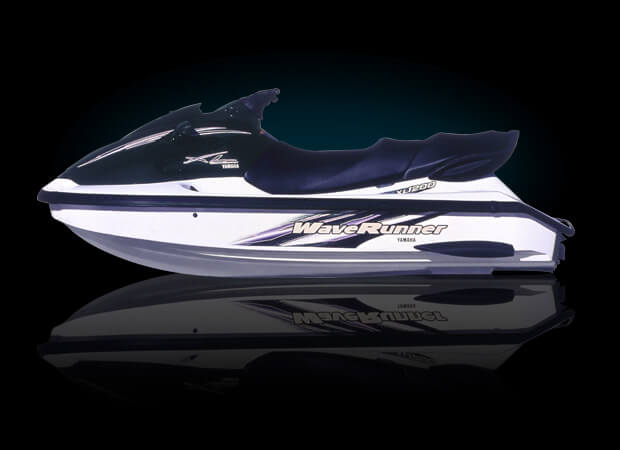
Gallery: Yamaha Celebrates WaveRunner’s 30th Anniversary (Video)

0

img_main

“It all began in the early 1970’s,” explained Yamaha chief designer of boats and water vehicles, and development manager at that time, Neil Kobayashi. “I was stationed in Shonan, the center of Japan’s marine leisure. At this time, as there was no need for licenses or certification on small watercraft, people were free to use the water areas how they felt taking responsibility for themselves… marine leisure was thought of not being available for everyone and really only the elite – I remember thinking about possibilities to provide this type of enjoyment in easier ways for the more average person.”

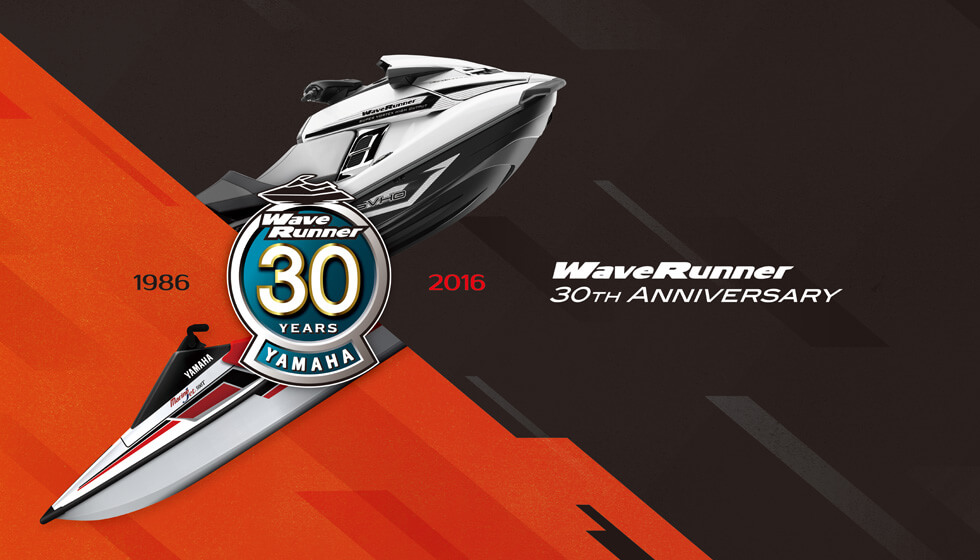
2016 marks the 30th anniversary of the industry’s longest running, two-person tandem personal watercraft, the Yamaha WaveRunner. “As I had only just joined the company, on a technical level, I was not in a position at which I could exercise any authority. Even so, I felt that I would one day like to make a craft of this type. This was the opportunity to create the WaveRunner,” Kobayashi prefaced.

At the time, the development of small, personal watercraft was already popular overseas, with only a few companies producing such craft. At the same time, Japan created the Ministry of Land, Infrastructure, Transport and Tourism who, in conjunction with the Japan Marine Industry Association, began requiring licensing and registration for such craft.
As a result, in 1980, Yamaha issued “water-bike special standards” to create the legal framework required for people to enjoy marine leisure safely, all in preparation for Yamaha’s development of personal watercraft. By 1983, Kobayashi had a prototype “Power-Ski” and received a request from YMUS (Yamaha Motor Corporation, USA) that they would like to see a presentation. He states in a celebratory website dedicated to the WaveRunner’s 30th anniversary:

“In September of 1984, with models from other companies using 15 horsepower pumps placed directly onto board models, Yamaha Motor revised the boat for the American market changing out the engine for a 25 horsepower option. However the results were varied and far less than expected. The power-ski with its small engine and the aim of being a small and lightweight model, just didn’t suit the American driver that exceeded 100kg (220lbs.). The 25 horsepower pump simply did not have enough power, causing most ‘would-be’ operators to give up while trying just to get on the craft, let alone use it.

“The weight of our power-ski was a lightweight 65kg. On talking with the locals, the general feeling was that the weight should not be able to be lifted up by hand, should be towed around on a trailer, and would be no problem if it was around the 130kg mark. Furthermore, in YMUS, on hearing the investigation report for placing the power-ski into the small boat category from the W/V, I remembered my time at Shonan and felt confident that I could handle the request from the Americans ‘with fun riding at one-up types as well as tandem types’.”

By February of the following year, Kobayashi was hard at work developing a single and tandem model in accordance with YMUS requests. “We thought that if we could get 50 horsepower, we could create a very enjoyable watercraft, however out of all the outboard motors that could function as the base engine, the upper limit was only 30 horsepower, so we started engine development under the framework of ‘We will have to make do with 30 horsepower’,” he continued.

Because the team were restricted to a 30-horsepower cap, development of a hull that could increase speed with less horsepower, Kobayashi and his group used a double chines at the optimum width on the inner side in order to cut through the water. A shallow V hull was created that would “simultaneously bring static stability to the hull through the fitting of outer side chines, would allow the thrill of controllable fast speed turns when the center of gravity moves forward,” he remembers. The shape was also the first of its kind to provide “sharp edge turning” when the hull leaned hard to one side.

Nearly daily testing sessions resulted in a new type of mobility that Kobayashi felt “could not fail.” In a return presentation to the YMUS heads, Kobayashi had selected a group of motorcycle and snowmobile riders that had also been part of the first test rides. “This time, the test riders that tried out the tandem models just wouldn’t get off,” he laughed. “Everyone was really excited, and lining up to test ride the different products. There was almost no time to get any other type of feedback.”
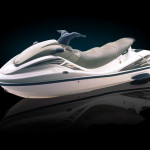
Surprisingly, of the two models for testing, the tandem model became a tentative production project, particularly after one motorcycle rider who had, after giving the previous prototypes a scathing review, had said, “This is what I’ve always wanted. It’s ideal.” And with that, the “Wave Runner” was chosen as the model name.

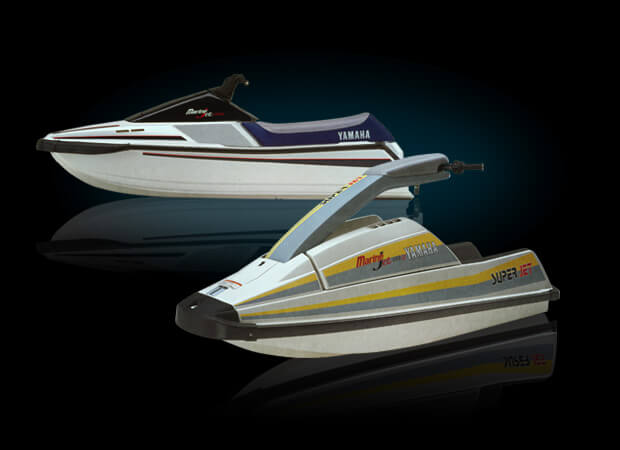
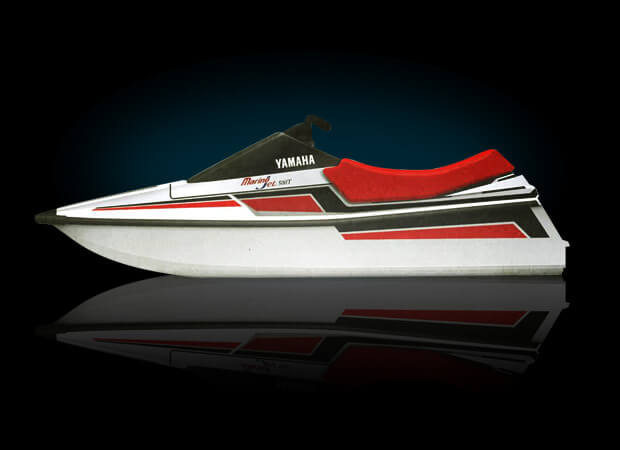
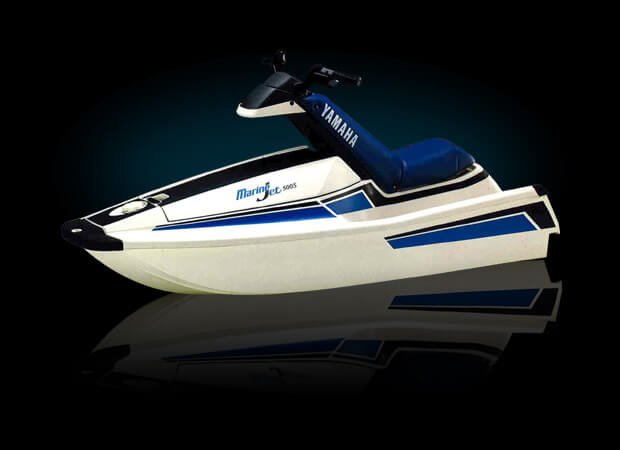
Kobayashi recounts, “From this point onward, with the need to improve marketability and reliability, we coordinated with the departments in charge of design, testing, quality assurance, service and creating manuals, and almost every day was a cycle of test rides and inspections.” After nearly a decade of concept, research and development, production began on the WaveRunner 500 (Marine Jet 500T) in October 1986, with the WaveJammer 500 (Marine Jet 500S) following shortly thereafter in February 1987.

Kobayashi, looking back mourned, “The thing I consider most unfortunate is that the fundamental concept of the personal water craft has not changed from what it was when I was involved.” Yet, positive towards the future, he pined, “It is my wish that Yamaha has and keep its traditional attitude, ‘Spirit of Challenge,’ and overhauls the concept that has been used until now and creates something new and enjoyable that excites people. I have high hopes of this happening.”
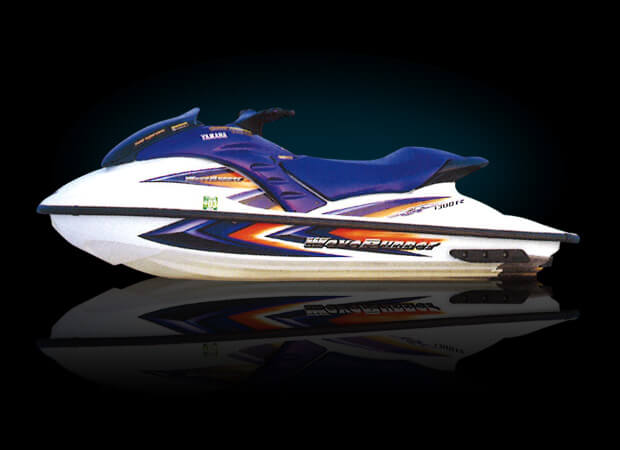
img_main img_1986 img_1987 img_2003 img_2014 img_2016 img_2005 img_2006 img_2008 img_1990 img_2009 img_2011 img_1993 img_1995 img_1997 img_1998 img_1999 img_2002 img_2012
<
>

Yamaha WaveRunners Australia Supports Terra Australia-Girt by Sea Record Effort

0

12821518_1719988841584237_540040206058555873_n

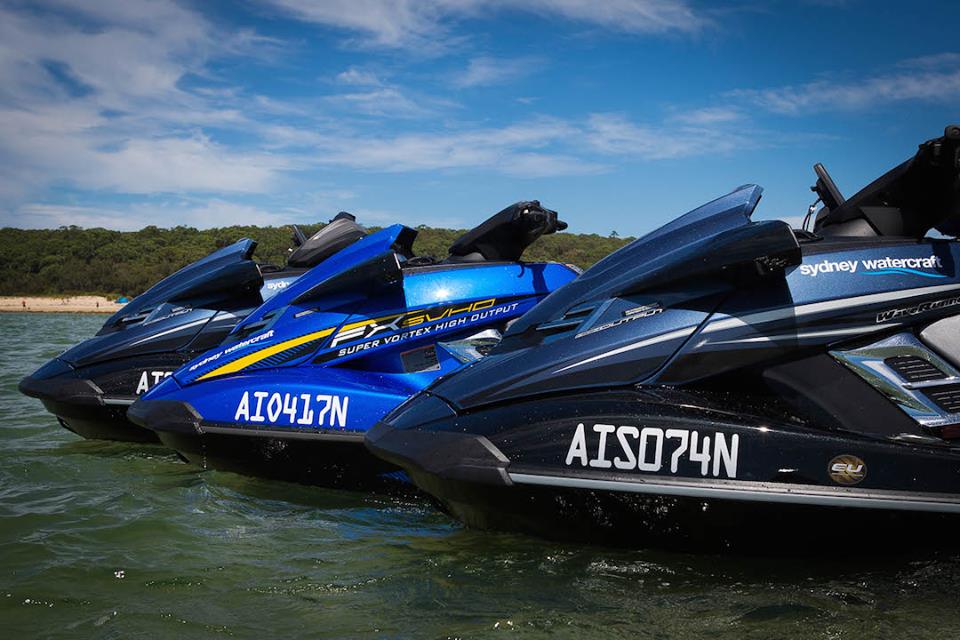
About three months ago we brought you the story of Lorraine and Glenn Keating, who, in April 2016 will set out on a circumnavigation of the Australian continent (including Tasmania) aboard a pair of Yamaha FX Cruiser HO WaveRunners. Together with the crew from Terra Australia-Girt by Sea, the couple will have broken the current world record for the longest distance covered by PWC, as well as being the only people to have circumnavigated the continent, including Tasmania.

Obviously, the task at hand is a big one, and worthy of being followed, so the Keatings have arranged to air weekly episodes on their YouTube channel and comprehensive information on their website, tracking their exploits all in an effort to raise money for the Cancer Council of NSW. Recently, Yamaha WaveRunners Australia, who announced that they would be sponsoring the Keating’s efforts by supplying the necessary watercraft, published an update by the Keatings:

“We had an excellent day down at the Port Hacking and Maianbar Beach area on Sunday. Rainey wasn’t so happy as she had too sit on the sand whilst someone else put some hours up on her Yamaha WaveRunners Australia FX Cruiser HO. We need to get the first service done at Sydney Watercraft Centre before we head off and with time running out we had no choice but to get one of the kids to do it for her, they weren’t complaining!”

Additionally, the couple were interviewed by Robbie Buck on 702 ABC on Wednesday 8th March:

https://www.youtube.com/watch?v=3thmZTkFHj0&feature=youtu.be

Quick Tech: Jet Renu Purple For Wetsuits & Riding Boots

0

1

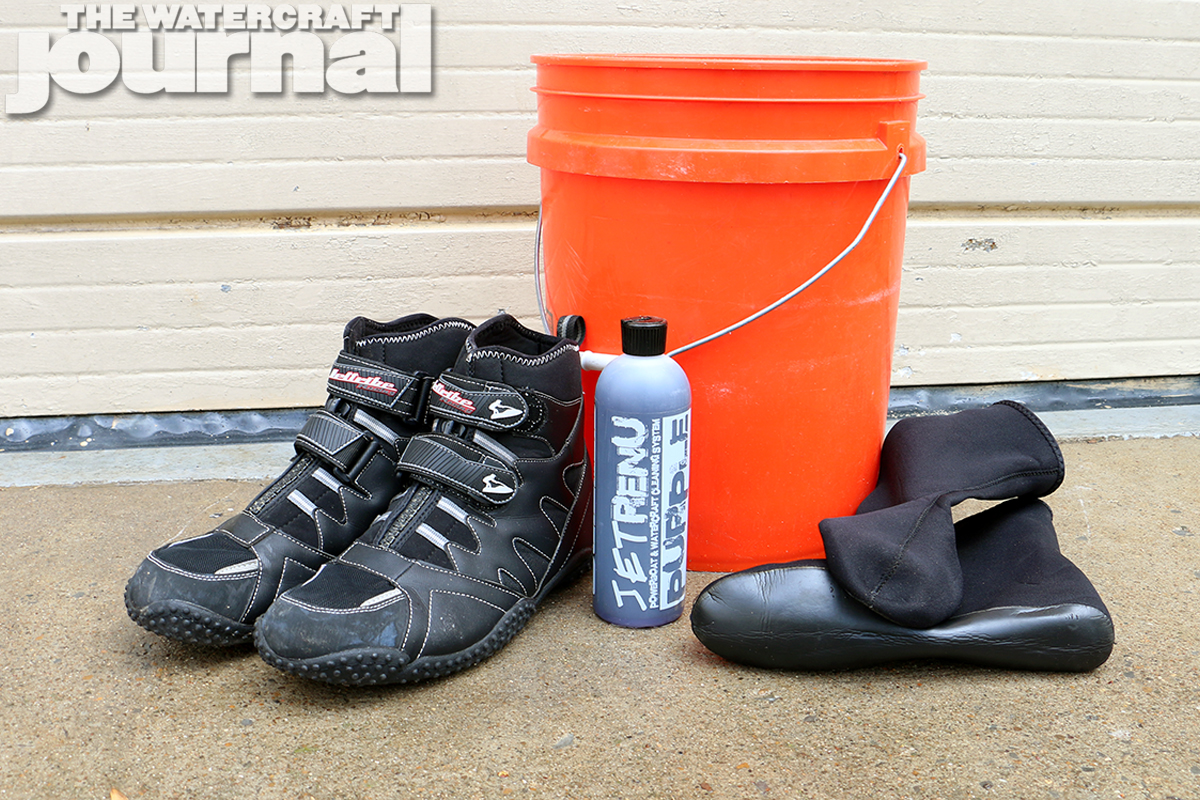
When pressed for ideas as to what their lineup of all-purpose powerboat and watercraft cleaning products was missing, we replied, “How about a wetsuit cleaner?” The voice on the other side of the phone giggled, replying, “Use the Purple. It’s perfect.” Admittedly a little incredulous, we thought we’d give the cleaner a try.

The Purple Wash & Wax in question is exactly that, intended for washing your personal watercraft and leaving it with a nice luster, not exactly what you’d consider to soak and clean your riding gear. Specially formulated as a “premium soap” that has been “fortified” with 100% Brazilian Carnauba Wax, the cleaner is Ph balanced and non-toxic, making it a environmentally-safe, biodegradable cleanser.

We’ve experimented with different cleaners for wetsuits, booties and gloves, all with varying results. Often we’ve found dedicated neoprene cleaners to be too mild, and offer very little in the way of mildew removal or scrubbing that briny ocean smell from our gear. Heavier detergents like dish soap or even degreasers are far worse, as they strip natural eslastics and oils from the neoprene and other softer materials, many times discoloring the fabrics.

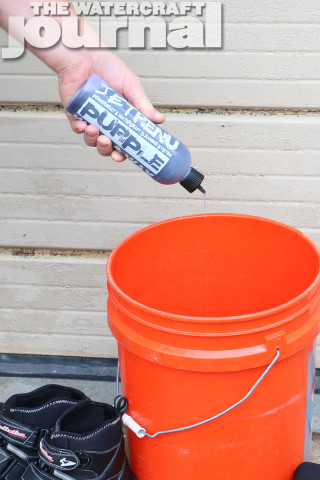
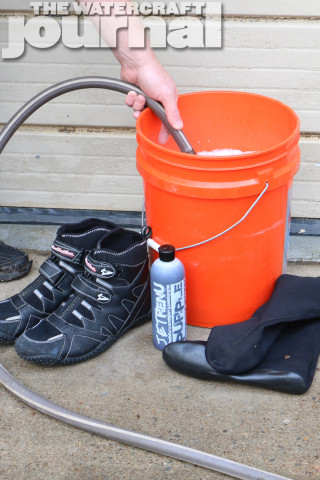
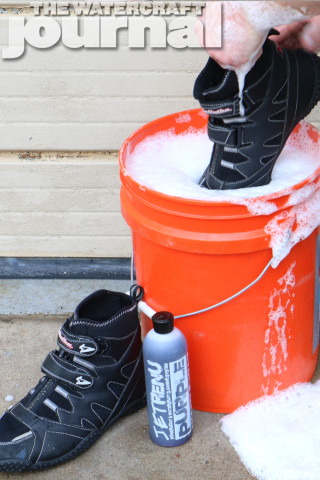
Above left: Only 1/2 ounce is all you need to wash a complete PWC, so we cut that down to a 1/4 oz. Above right: Next, Jet Renu suggests spraying the hose at high pressure to whip the soap into a froth to “activate the foam.”

Because Jet Renu has made its Purple Wash & Wax to leave a high gloss shine and a protective barrier from harmful UV rays, we thought it might be good to leave the neoprene booties and Jettribe GRB 2.0 Race Boots still soft and flexible without bleaching them out. Following Jet Renu’s instructions, we squeezed a half ounce into our wash bucket before filling it up, spraying the hose at high pressure to froth the soap as directed.

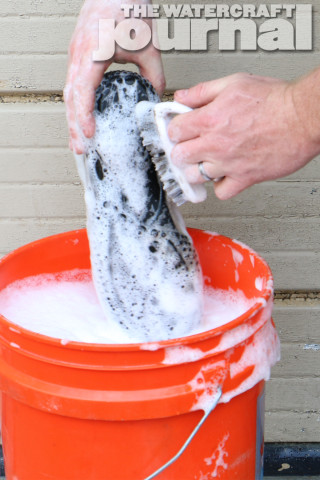
Because our neoprene booties were used to represent a larger, full-sized wetsuit, we opted to let them soak, while we washed down our Jettribe Race Boots first, before lathering and scrubbing them with a soft-bristled brush. Because other things got in the way, we left our boots and socks to soak a little longer before hosing them off and letting them air dry all day, stopping in to turn the socks inside-out once.

True to Jet Renu’s suggestion, the Purple Wash & Wax left our Jettribe GRB 2.0 Race Boots and neoprene socks looking fresh and clean, and smelling surprisingly pleasant. A 16-ounce bottle of Jet Renu’s Purple Wash & Wax retails for a budget-friendly $9.95 and lasts a lot longer than you’d expect, so it’s well worth the purchase, whether you use it to wash down your skis or clean up your riding gear after a day’s ride.

Above left: We soaked our neoprene socks a little longer than our boots, but gave them a good rinse before and after a fine lather. Above right: We also used a soft-bristle brush to clean our boots’ soles and edges.

Sign Up To Receive Your Free Copy of The Watercraft Superstore’s 200+ Page Catalog!

0

12805840_10154107270554474_6459099211731874551_n

It wasn’t too long ago that we ourselves were teased for being a “magablog,” an anachronism of both a website and a published magazine. Laughably, the people who mocked us are no longer in the business, and we’re the single largest, most read, and generally most popular PWC magazine in the Northern Hemisphere of the third planet orbiting the solitary source of life and heat in this particular solar system.

Clearly, today’s market is receptive to amalgamations, because The Watercraft Superstore is putting the finishing touches on its 2016 super-sized “magalog,” a giant 200-plus-page catalog/magazine hybrid, not only listing and categorizing the literally thousands of different accessories, tools, and bits of gear and apparel to get the very most from your PWC riding experience, but several dozen pages of fresh, unique and professionally-written content by the single-most talented writer in our industry who doesn’t work for us, Jeff Hemmel.

Fresh from hosting this year’s awesome Skyway Ski Show where all three manufacturers came together with a sampling of their latest water toys, six lucky participants were gathered to test ride, rank and review each unit on its individual merits and give you an overall winner of the shootout. The results of course, will be revealed exclusively in The Watercraft Superstore’s 2016 catalog, and you can get it for FREE! That’s right, just sign up by clicking this link before April 1st and your copy will be mailed out late April (or early May, there’s about 100,000 subscribers).

Blowsion Representing Truckboss Decks at Major Freeride Events

0

12509516_482944638572710_3247407180540461305_n

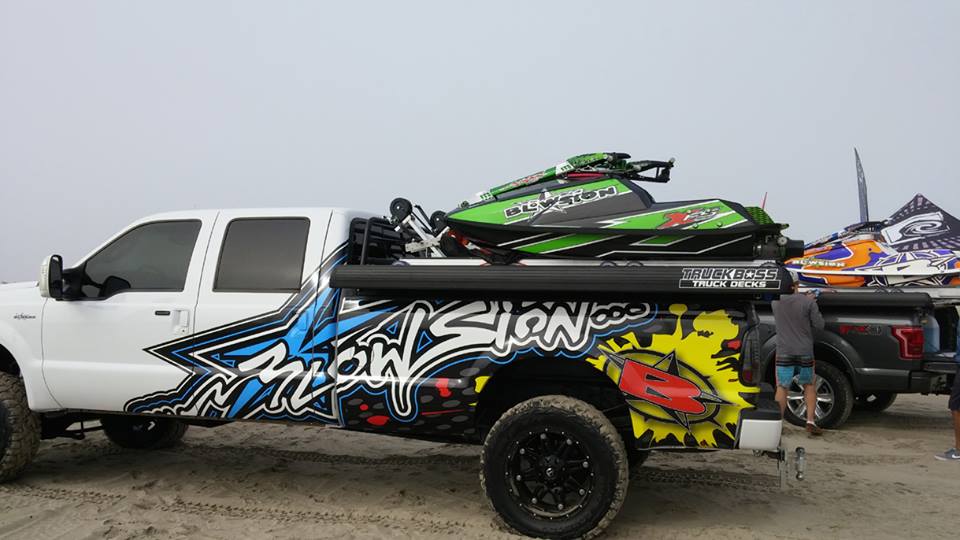
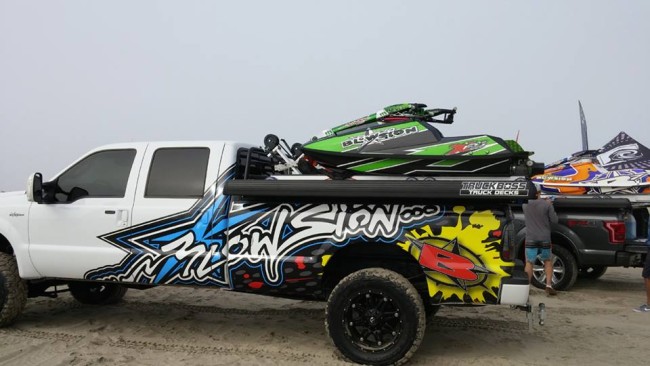
It might’ve gone unnoticed by many, but at last September’s Blowsion Surf Slam, the custom ski builder unveiled a very cool Ford F-350 wrapped in pretty cool livery, capped with an all-new Truckboss Truck Deck rack for personal watercraft. The Flexx Loader system not only winches skis up and down onto a secured bed cover, but also employs custom-made rolling cart that allows your ski to not only ramp up and down, but turn into a beach tote to access the water.

The freeride event was effectively its first foray into the sport, and come back smiling: “Surf Slam was a huge success!! Wanted to send a huge thank you to our new partner Blowsion for being such a great host and introducing us to the industry. Another big thanks to Dane Dials, our sponsored rider, was so great to meet you in person. We really appreciated all your feedback. Looking forward to seeing you all in Havasu!”

A few months later, the same wrapped Ford pickup hauled across the continental United States to Daytona Beach, Florida for the Daytona Freeride. The Blowsion crew beamed: “We made it! 2500 miles to this years Daytona Freeride. With help of @truckboss_decks we are able to bring 3 more custom skis to put on display. If you are gonna be in Daytona this weekend make sure and stop by and check the best jet ski hauling system for you truck bed.”

Truckboss is effectively changing how jet skiers carry, haul and launch their skis and we think you ought to check them out HERE!

12038024_448546985345809_3428018923427205882_n

Here We Grow Again! America’s Motor Sports Seeks New Sales Associates

0

12799010_952953774758386_6508146837938322590_n

Life’s too short to be working at a job that you hate. And chances are, if you’re reading this at work, it’s probably not the kind of job that is fulfilling in any sort of meaningful way. So why are you there? The money? Really? While exchanging hours of your life for currency is how one be’s an adult, why not get a job you like, work with people who are fun, and get to do something where your heart is in it? That’s right, there is such a thing.

Our friends at America’s Motor Sports, the biggest family-owned motorsports dealerships in Middle Tennessee, are looking for a driven, articulate and team-friendly floor sales associate and other team members. Sure, sales experience isn’t a must, but it does help, and training is part of the gig, so soon you’ll be up and running in no time. Best of all, you’ll be working for a company that takes care of its employees! There’s not a lot of those out there, FYI.

Here’s the original post from their Facebook page:
America’s Motor Sports, Madison location is seeking energetic, team players who are ready to sell fun. We are gearing up for the riding season and would love for you to join us. Please email your resume or any further inquiries to [email protected]

12809802_951919088195188_3379727622635422676_n

Case of The Mondays: WaveBlaster Knocks Quadcopter Out of The Sky

0

Screen Shot 2016-03-07 at 9.10.59 AM

Filmed by Guy Mac, a self-taught photographer and videographer, based in New Zealand who travels the world wide capturing amazing footage for a list of clients that’s sure to impress: Monster, RPM, DRAGON, Body Glove, Rip Curl, Catch Fishing New Zealand, Fishing World, Magic Seaweed, Damaged Goods Zine, Freerider MX, Yamaha, Sony, Downer Construction and New Zealand Wakeboarding just to name a few.

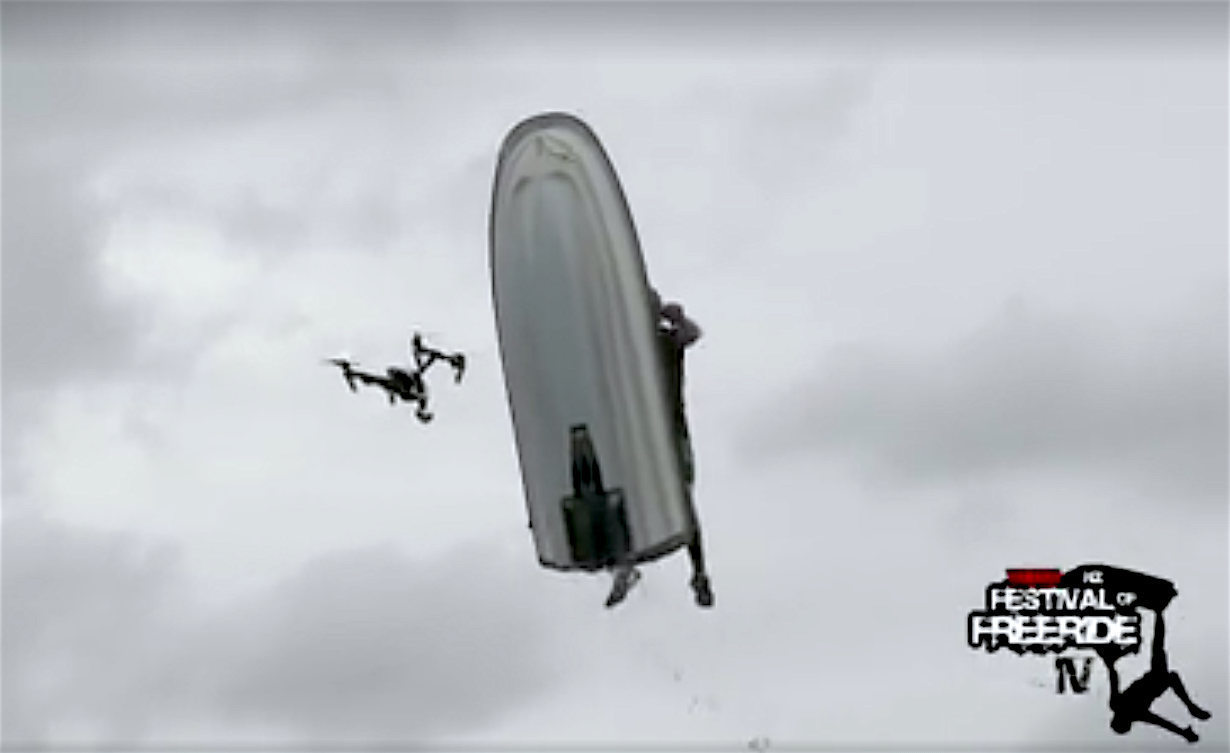
In a recent excursion featuring some freeriding WaveBlasters for “The Festival of Freeride TV” video for the New Zealand Festival of Freeride event held this past February 26th and 27th, Guy managed to capture the very painful demise of an estimated $3,000 quadcopter drone as one very airborne ‘Blaster managed to expertly knock it out of the sky and into the rolling surf below. Thankfully, the rider was unharmed.

The event, sponsored by Yamaha WaveRunners Australia and Thrust Innovations, welcomed some of the Southern Hemisphere’s most talented freeriders and featured some absolutely incredible action both in the waves and far, far above them. We look forward to seeing the final video recapping this year’s event, but until then, we’ve included both the footage from Guy showing the fate of the quadcopter and the recap from last year’s NZ Festival of Freeride:


Yamaha New Zealand Festival of Freeride 2015 from Guy Mac on Vimeo.

Video: Russia’s Jet Camp Festival Goes Off!

0

jetcamp4

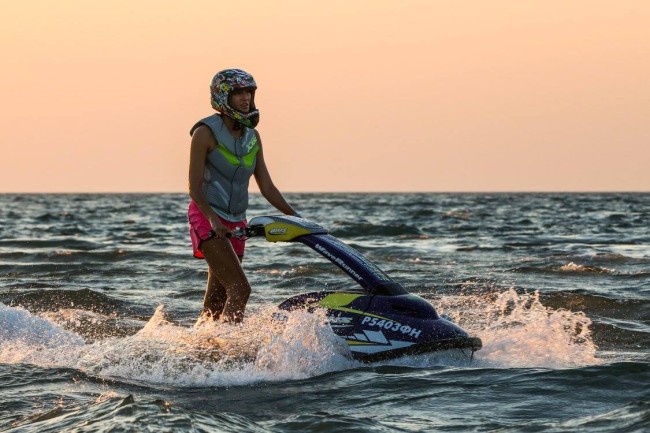
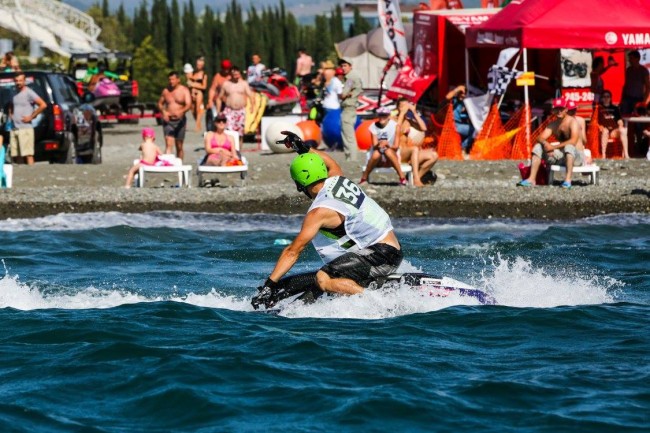
Bored with the same old sit-down jet ski races held by the Federation in Sochi, three Russian personal watercraft riders got together and organized the first Jet Camp Festival. The founders of Jet Ski Camp did not think the festival would attract so many entrants and spectators during its first run on the Mzymta River. They couldn’t have been more wrong, the event generated such great success, that a second one was held in 2015. Almost 100 people competed in 2015 and one of them was a woman.She enjoyed participating and showed her mad skills during the event!

Andry Kuligin, David Dzhalagoniya, and Mirkhail Krivosheev are the masterminds behind Jet Camp. They were ready to witness high performance jet skiing in their area so they added a free style event for stand up operators. The organizers needed clean water and a wave which they found at the Mzymta River where the river meets the sea. Pro, Junior, and Amateur Divisions were available to those who wanted to enter the exciting competition.

This high energy event brought progressive riding and a great vibe to the area. Kuligin, Dzhalagoira, and Ershov got exactly what they wanted; a fun powerful event with highly skilled freestyle riders, and an all around improvement within the jet ski world of Russia. One of organizers noted that the 1996 Black Sea Cup contest laid the foundation for stand up jet ski competition. Without it, Jet Ski Camp may not have taken place. The event organizers envision holding the event a third year.

Check out all the action here. You will be glad you did.

Gallery: RIVA Racing’s Limited Edition 2016 Yamaha FZR 350 #9

0

FZR9

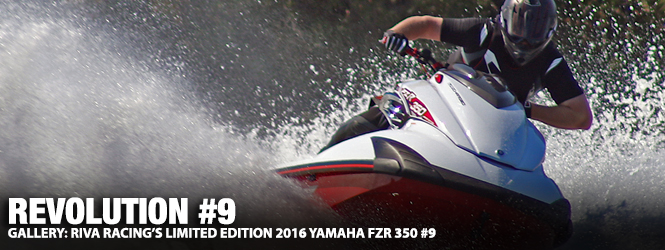
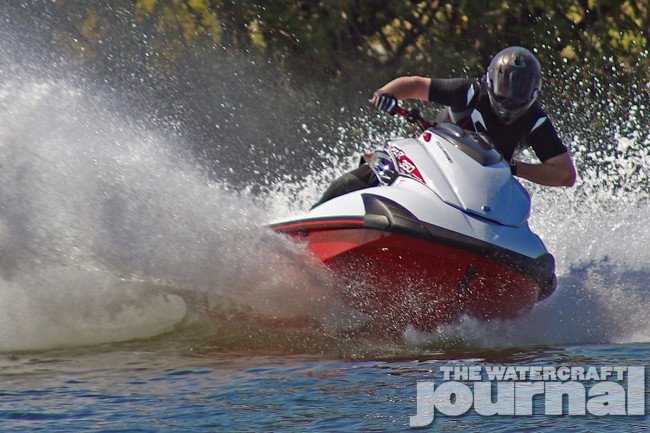
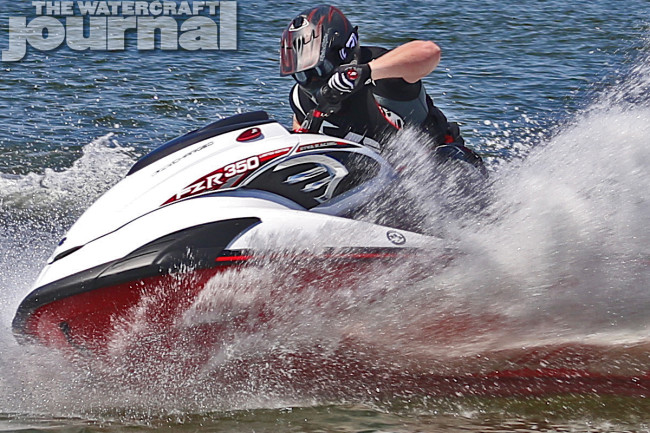
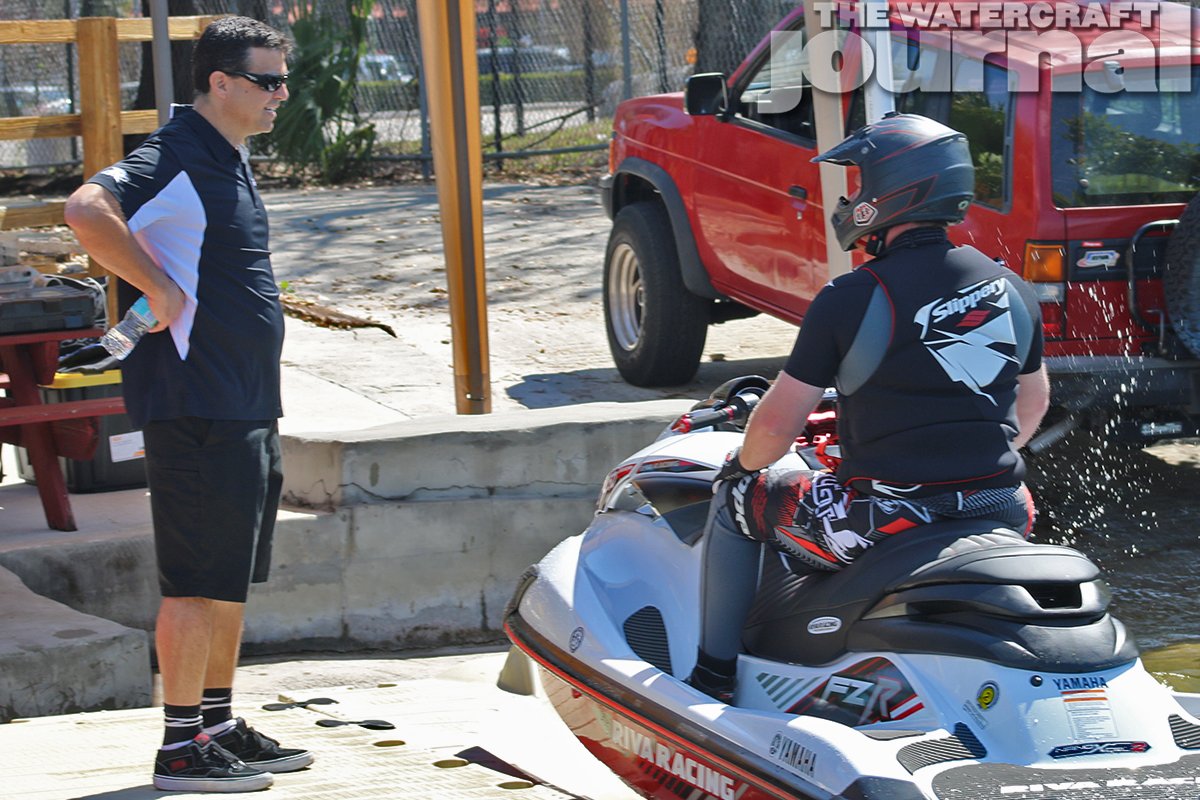
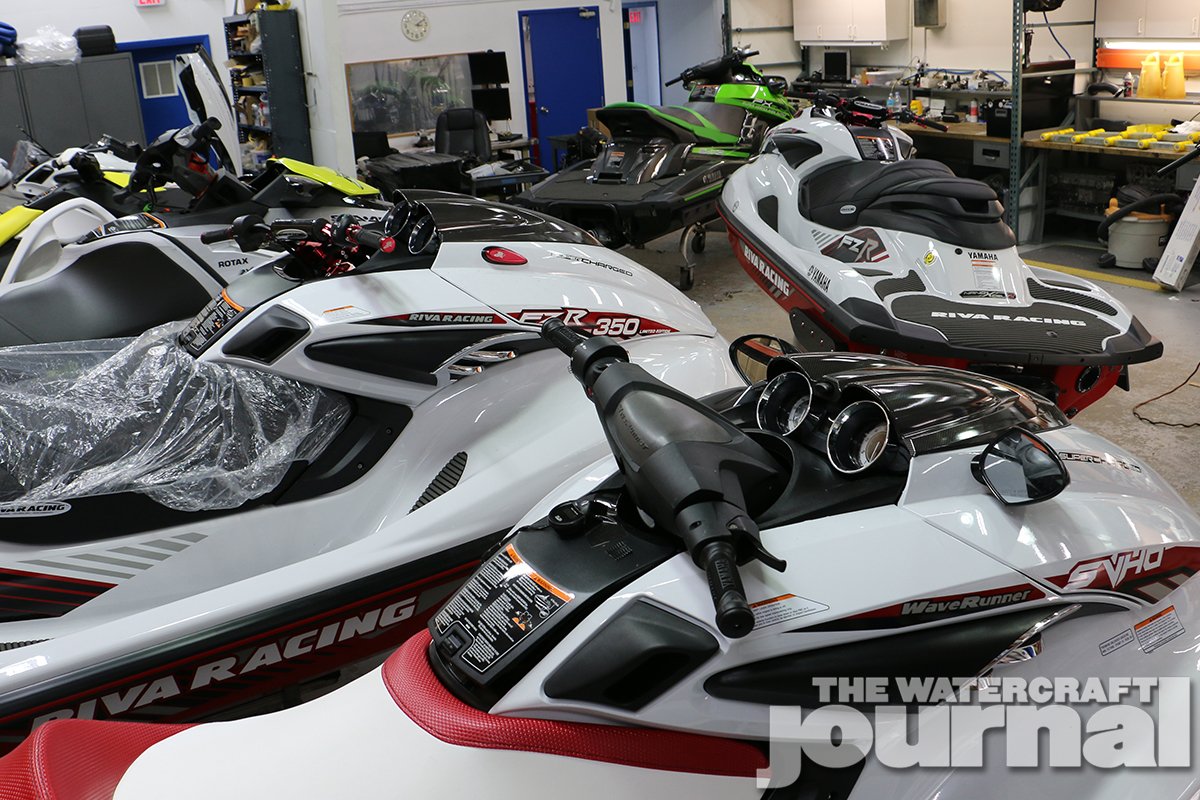
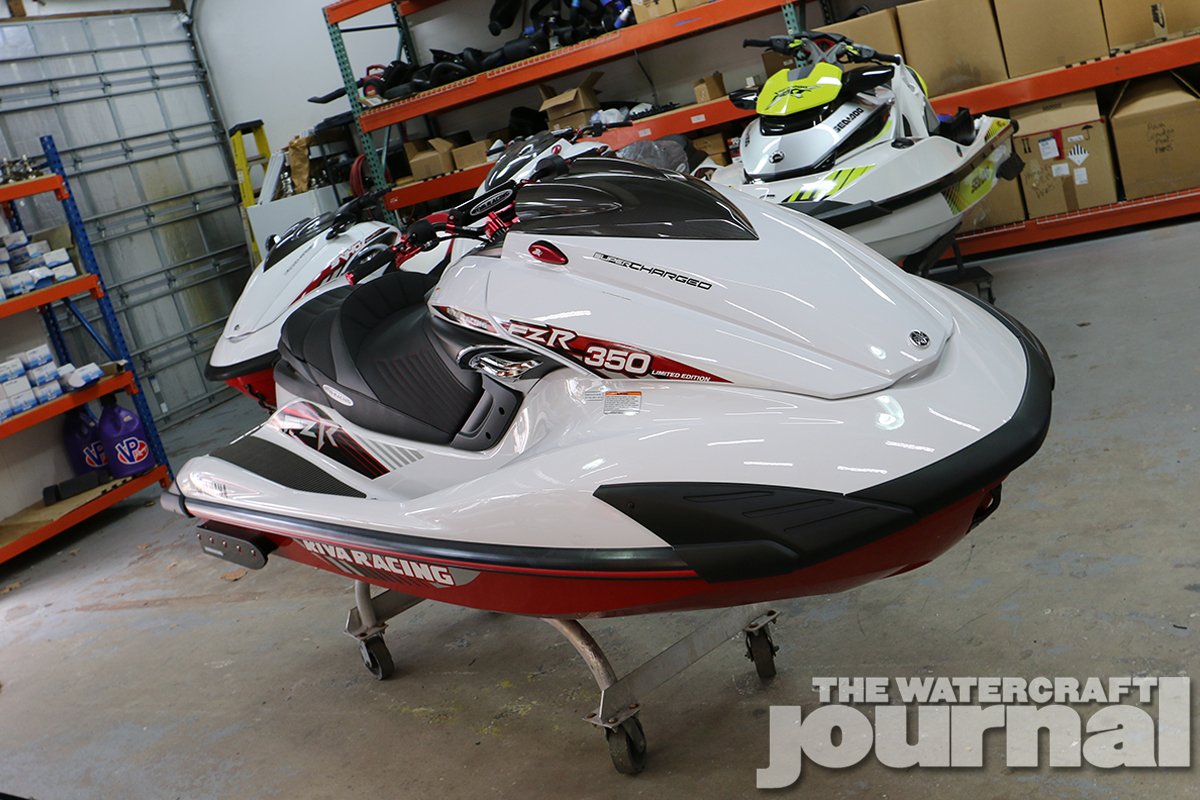
The laser-etched plaque mounted to the engine’s powder coated-red valve cover read “Serial No. 09 of 25.” Reading it aloud, I couldn’t help but do so mimicking John Lennon’s cacophonous track on the eponymous White Album. “We’ve sold 15 of the 25 thus far,” RIVA Racing’s Marcos Smith revealed, his voice echoing off of the high ceilings of RIVA’s Research & Development Center only a couple of blocks north of the Pompano Beach, Florida headquarters. “We build a handful at a time once enough orders come in. In saves time in both assembly and testing.”

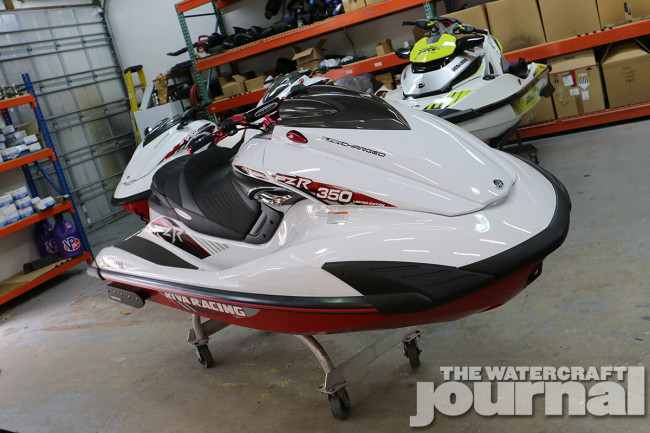
Although the Limited Edition Yamaha FZRs only officially went on sale at the beginning of the year, the public reaction has been impactful. The performance package was first revealed back in late August of last year. Differing slightly from the orange-and-black prototype displayed at the Yamaha dealer show, the true 2016 FZR proof-of-concept vehicle was only released to the public the first week of the new year. “We changed all the orange to red to match the FZR’s new red hull,” RIVA President Dave Bamdas explained.

16

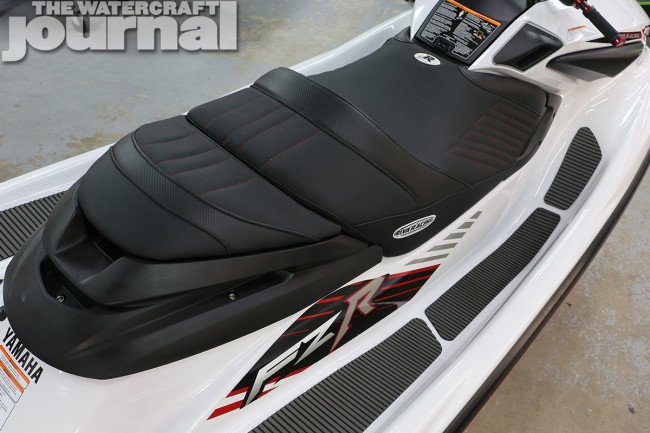
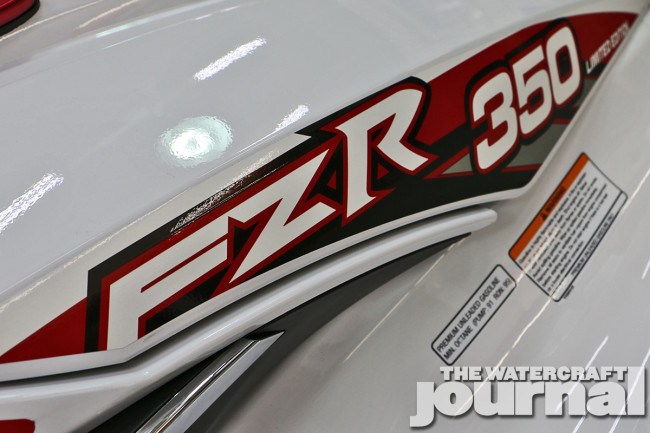
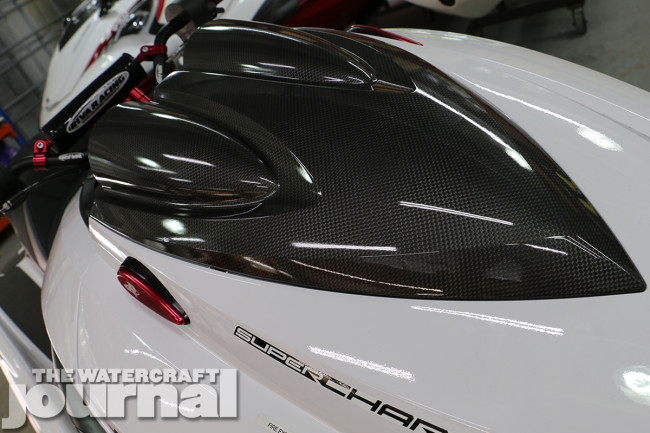
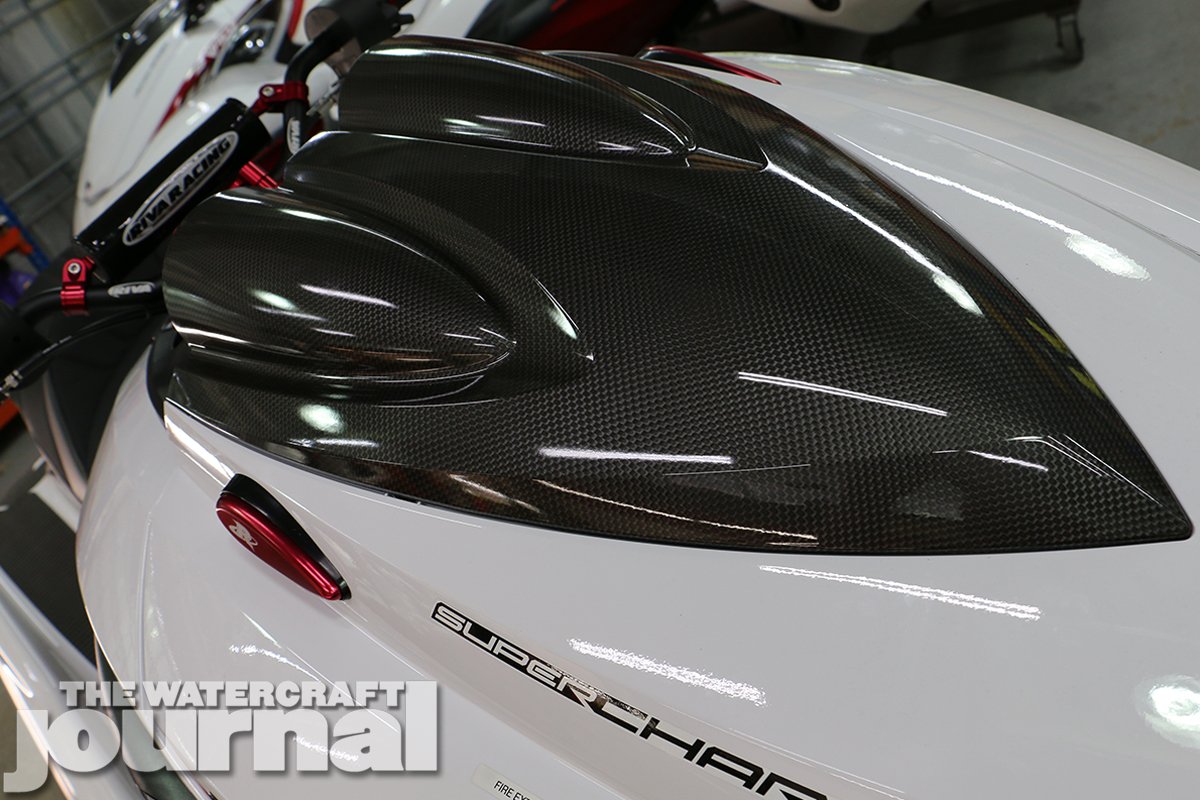
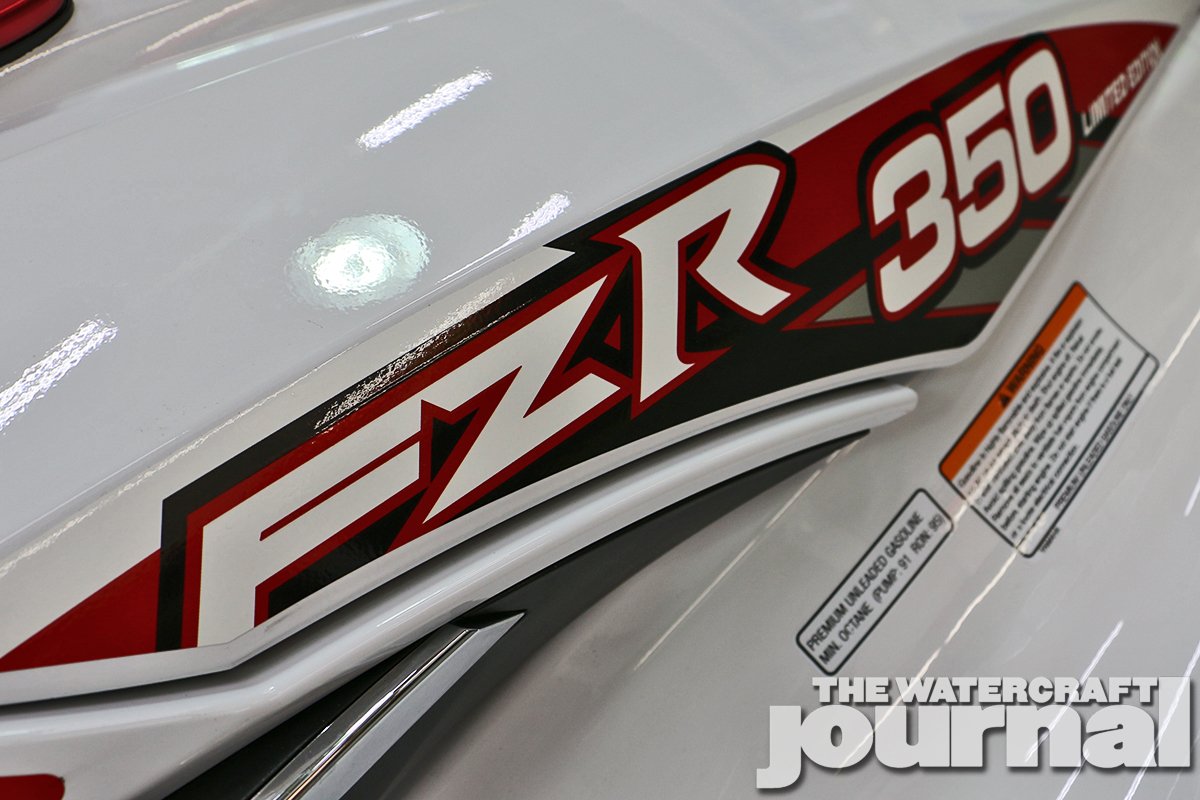
In addition to a bevy of performance and handling additions to the Limited Edition units, RIVA sends out nearly two dozen components to be anodized and powder coated to match the custom livery. Equally, RIVA took great effort to carefully recreate a graphics kit that would match both styling and font of the factory FZR graphics, making the package look all the more authentic. Even the red stitching in the custom-sown seat cover follows the graphics’ pattern.

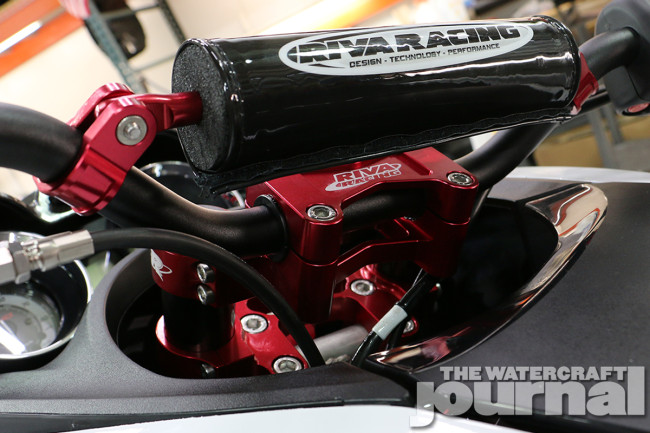
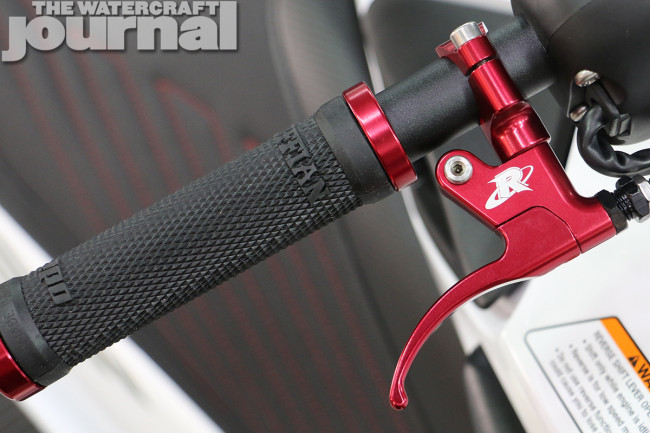
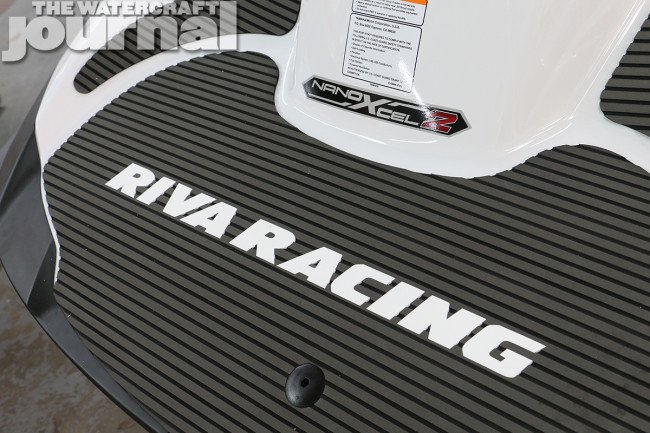
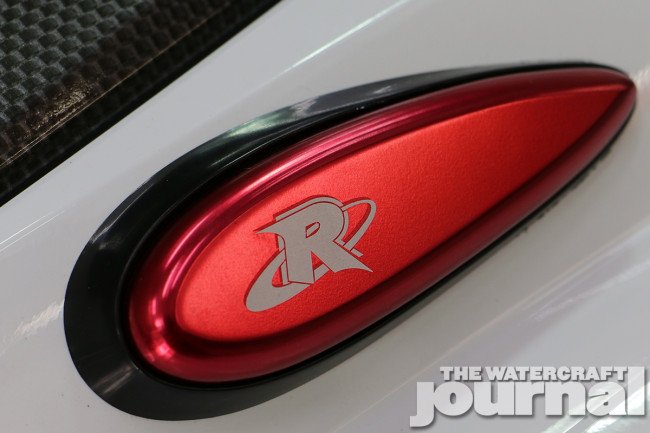
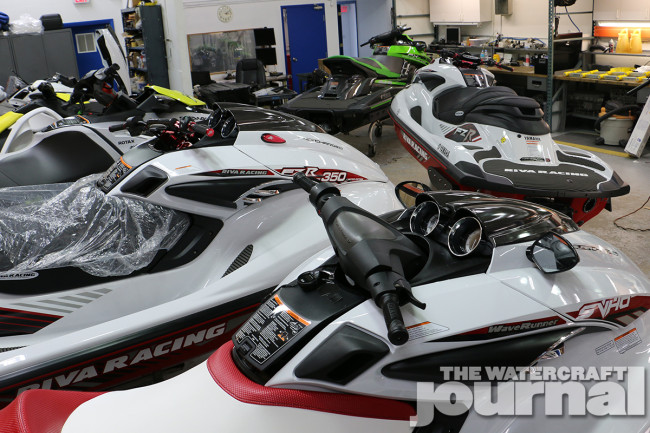
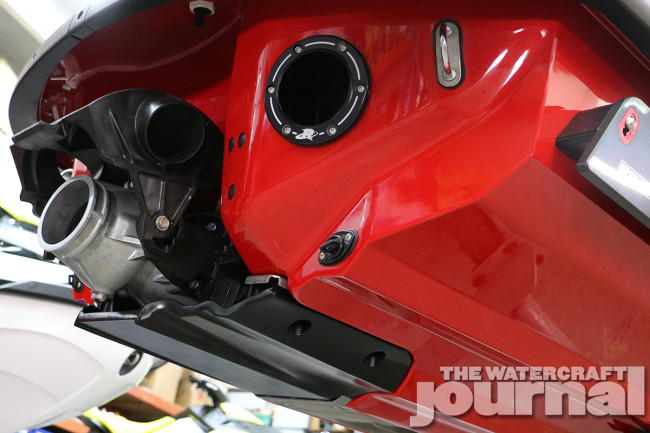
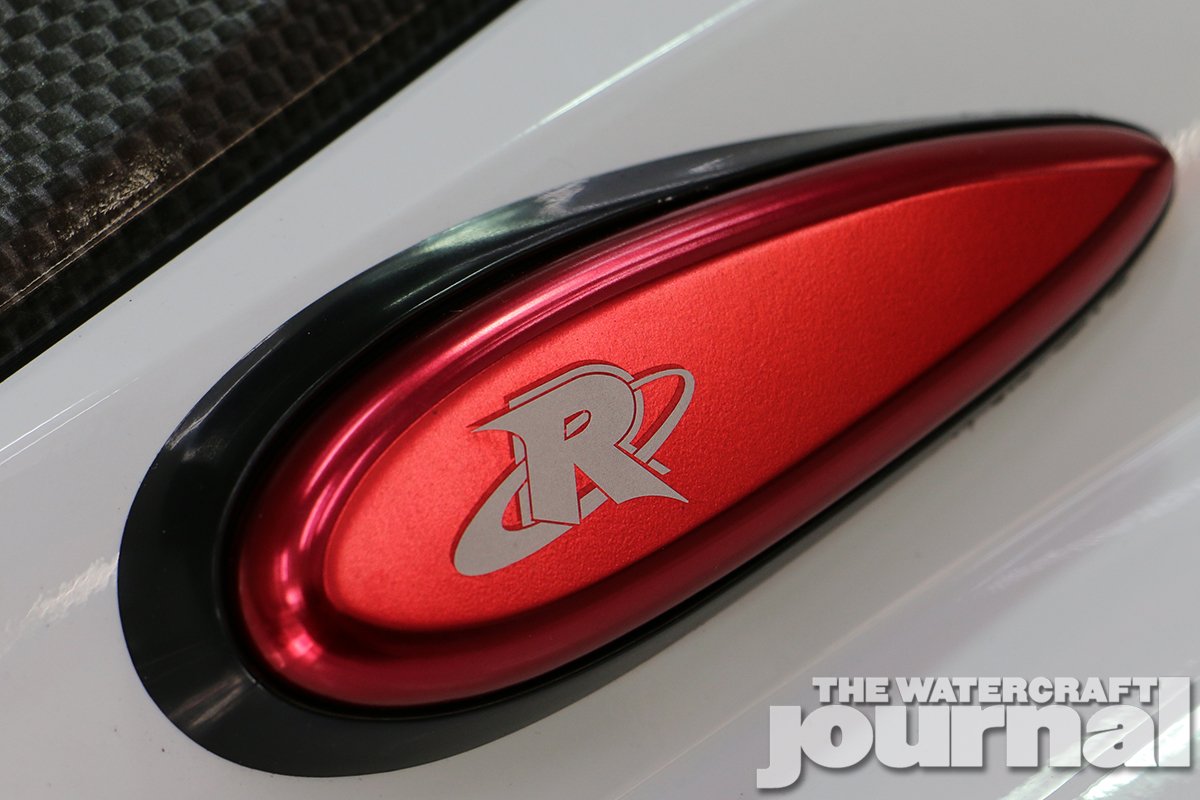
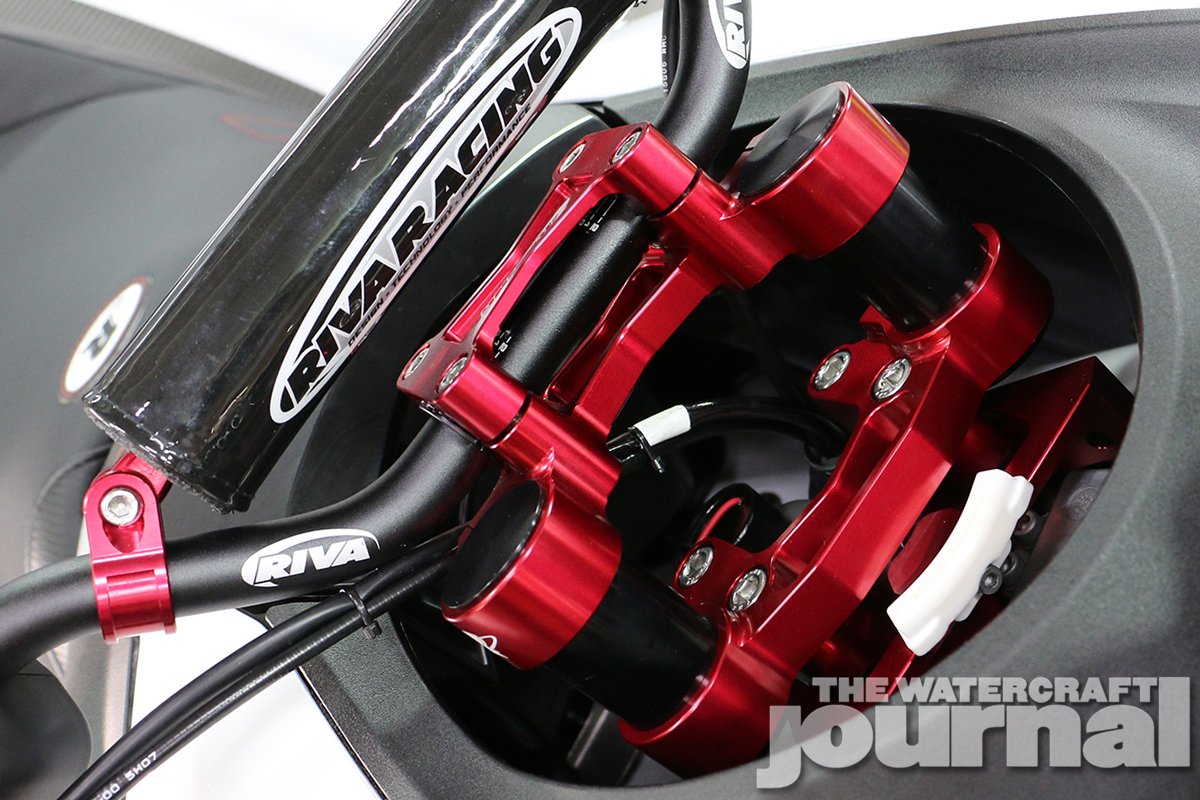
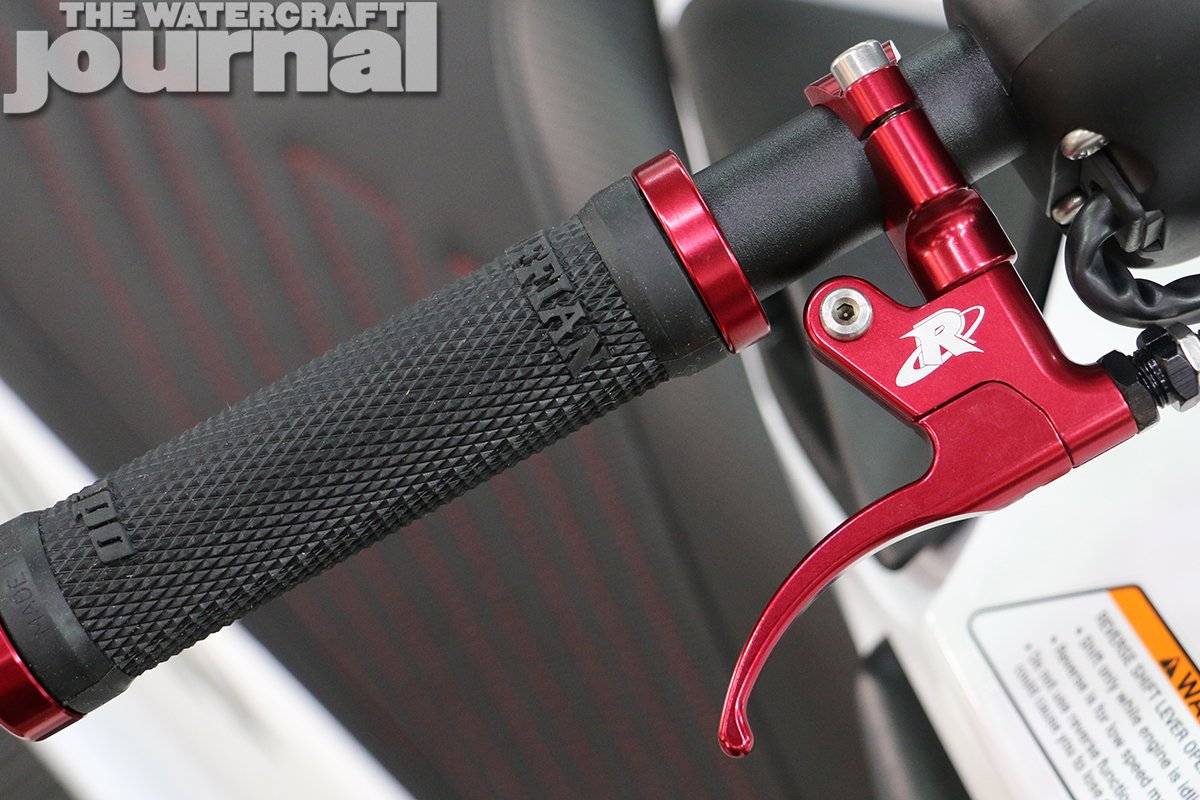
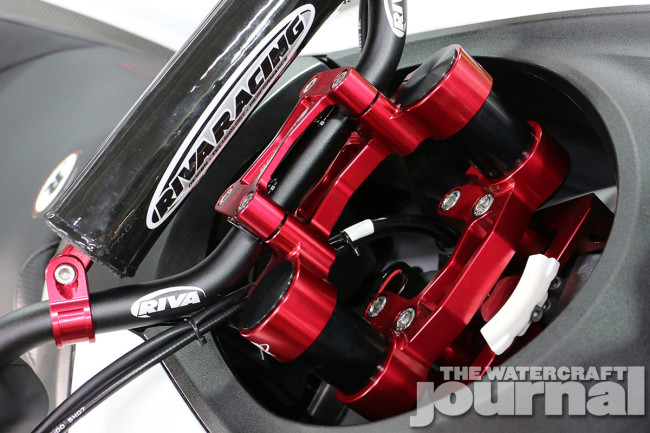
Inside of the otherwise nondescript R&D facility building, the floor is rife with white-and-red 2016 Yamaha WaveRunners in varying degrees of modification. As seats are removed and replaced with a RIVA-edition Jettrim custom seat cover, a special “RIVA Racing” edition Hydro-Turf traction mat kit is installed. A pair of red-anodized RIVA FZ mirror block-offs replace the side mirrors, as the factory steering system is removed. In its place is a RIVA FZ Pro-Series steering system, holding a Pro-Bar 32-inch runabout bar, and billet throttle lever, all in the same anodized red hue.

1

Although the FZ series Yamahas have already earned their stripes on the closed course, RIVA Racing ups the ante with a RIVA FZR/FZS Performance Ride Plate, FZ SVHO Stainless Intake Grate (and RIVA FZ SVHO Pump Seal Kit), and a pair of Pro Series sponsons, which the 5-position sponsons’ billet inserts have also been anodized red as well. Lastly, a new Solas Yamaha 160mm Concord 13/20 Impeller churns the water into usable thrust. “We had five or six guys from Solas here not too long ago, taking notes and spending a day at the test lake,” Smith added. “Those guys are seriously hardcore about this stuff.”
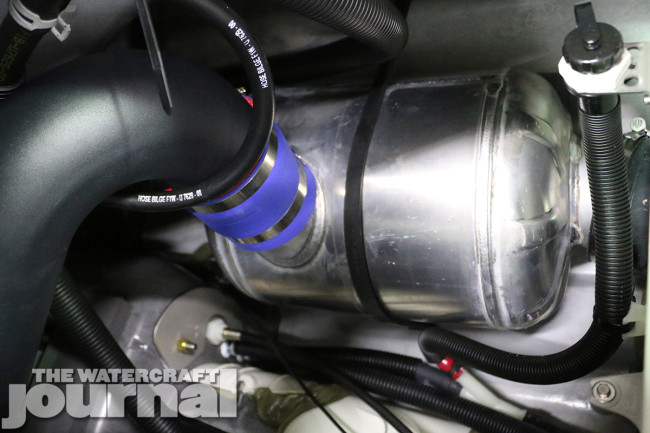
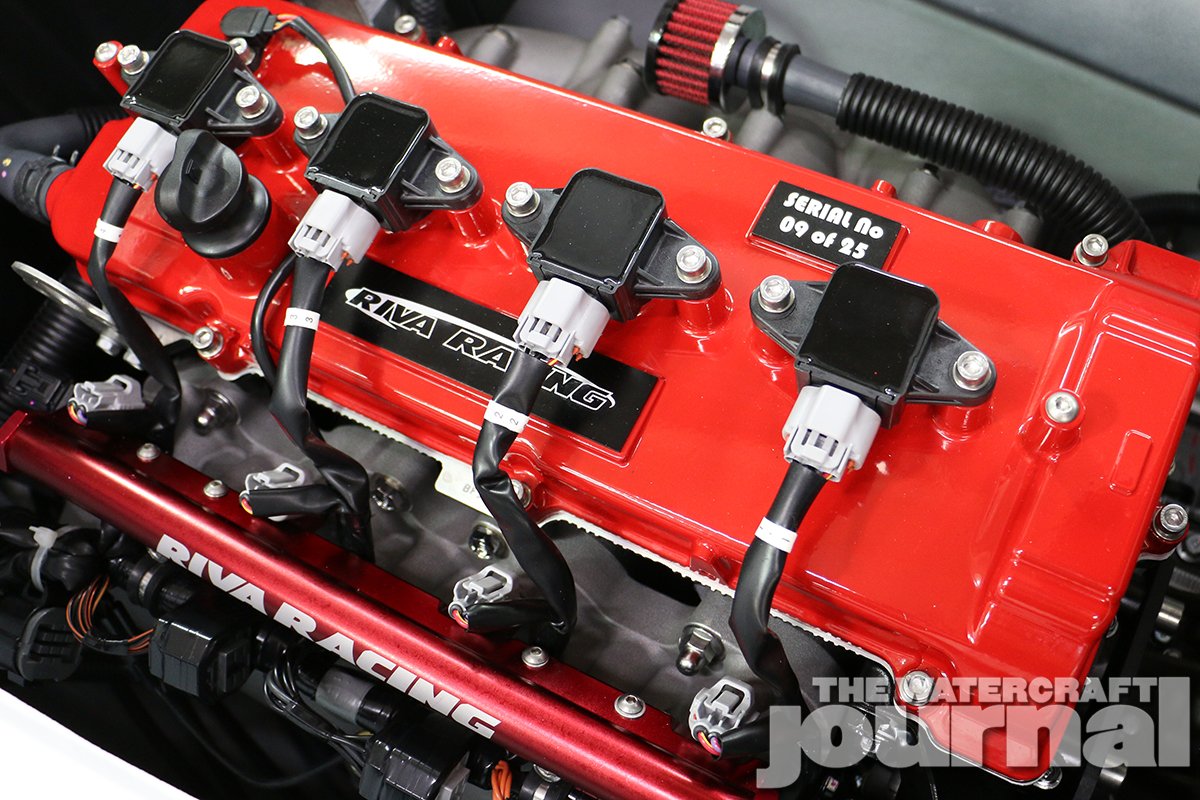
Beneath the seat, the Limited Edition FZR produces its dyno-proven 350 horsepower deceptively easily. The factory ECU undergoes a RIVA ECU Reprogramming Service, and is backed by a SVHO Intake Manifold Upgrade Kit, Valve Retainer Upgrade Kit, and Engine Breather Upgrade Kit, a Yamaha 1.8L SVHO/SHO Supercharger Shaft Upgrade Kit, a RIVA/HKS Yamaha Power Cooler SSQV Blow-Off Valve, Power Filter Kit, and a High Flow billet fuel rail. A RIVA Yamaha FZ & FX SVHO Power Cooler Kit, SVHO Pro Series Engine Cooling Upgrade Kit, and RIVA FZR/FZS through-hull rear exhaust kit complete the package.

This not only increases the FZR’s 1.8-liter SVHO 4-cylinder output to an aforementioned dyno-tested 350 horsepower (90 horsepower above the stock 260 horsepower at 7,500rpm), but runs a GPS and radar-proven sustained-not-peak 80mph at 8,300rpm (that is, with 1/3 tank of fuel, trim in neutral, sea-level elevation, air temp 80-degrees F, according to RIVA Racing). Interestingly enough, when it came time for us to test the #9 FZR 350, we did so with far more impressive results:

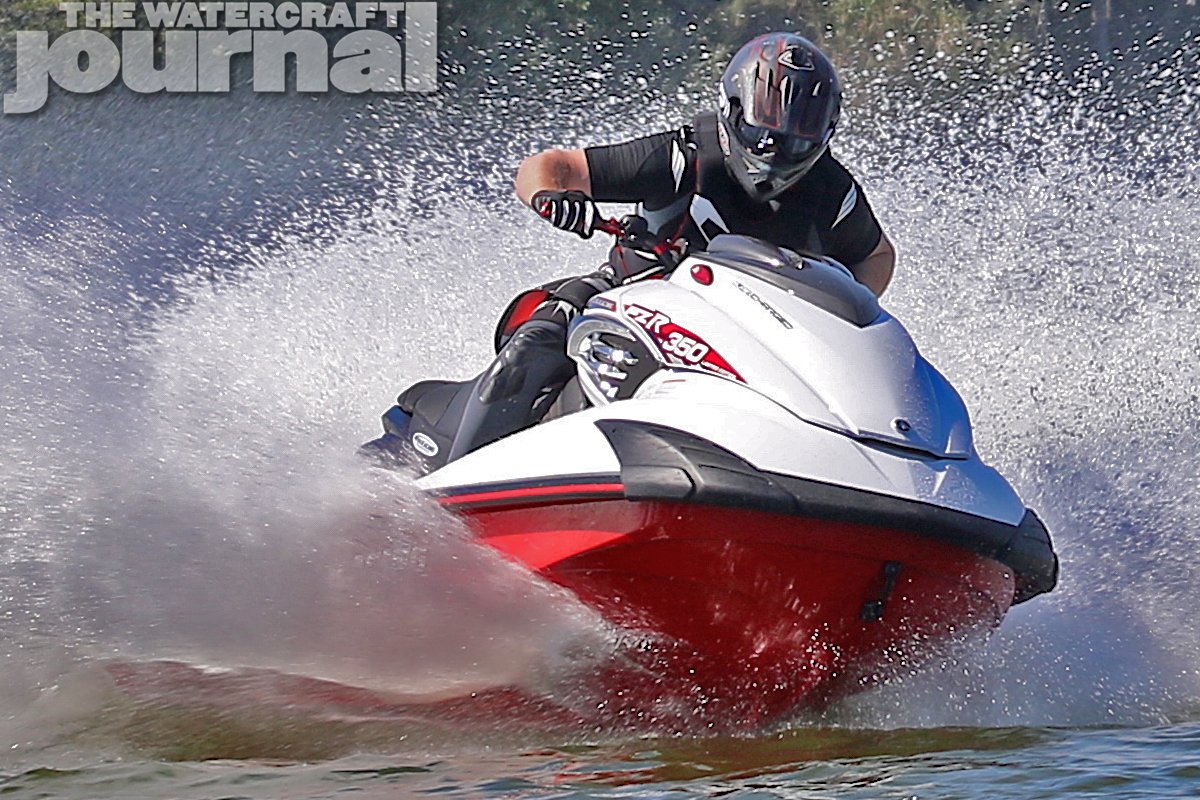
At RIVA’s private lakeside testing grounds, with air temps hovering at 82-degrees F, and nearly a full tank of 93 octane, we surpassed the conservative 80-mile-per-hour mark, to an impressive 83mph at slightly above the same RPM. Humidity was low for early March, so our barometric pressure had us at near sea-level conditions. Likewise, RIVA’s R&D team measured nearly 4gs of g-force at full throttle acceleration, hitting its top speed in just over 3-seconds.

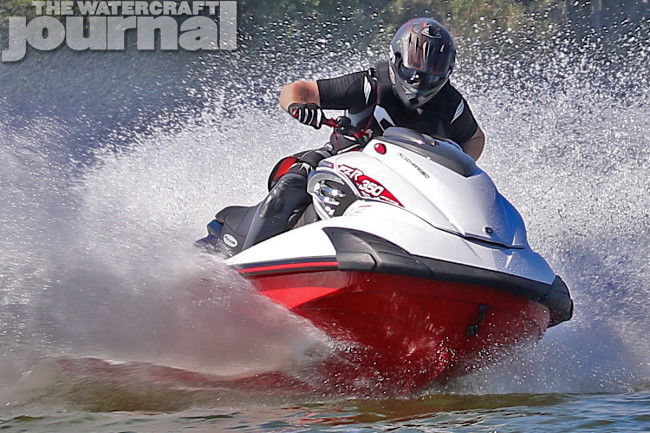
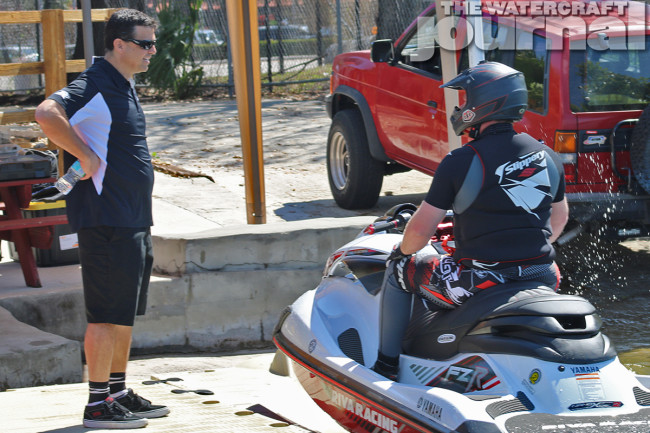
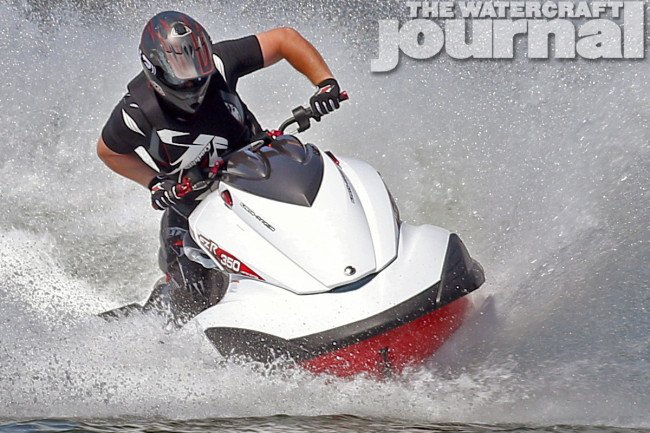
Trimmed down, the Limited Edition FZR 350 is brutally precise, almost punishing anyone daring enough to mount it. The cornering force produced by this FZR on the human body will peel anyone less than a professional athlete from the grip of the Velcro-like seat. I found that trimming the nose down was really the only way to ride it with any modicum of success, as even in the neutral position, it created so much boost that it would dislodge itself from the water’s surface when its throttle was pulled back to its stop.

Unlike the factory 310-horsepower Kawasaki, the FZR 350 doesn’t split the air with a banshee-like shriek, but rather whooshes in an airy whistle. That is, until the big RIVA/HKS blow-off valve pulls open. Even from across the lake, the ear-splitting hiss of the BOV rippled over the water, telegraphing when the rider had backed out of the throttle. The combination of so much power and incision-like handling is overwhelming and makes riding the RIVA Racing FZR 350 Limited Edition less cooperative (man and machine working together) and more adversarial (man vs. machine).

FZR1

Exhausted after my third bout with the 350 that day, laying prostrate on the cool, wet cement, I tried to come to terms with the first dealership-available jet ski to have beaten me so badly. Priced at $25,000, the sum of the Limited Edition FZR 350 is worth every dime when you consider its many parts: IJSBA Open class performance (in both speed and handling) on a surprisingly stock ski, a gorgeous, one-of-a-kind aesthetics package, an already-assembled race-ready craft that is cleaner and better built than most race craft, and the assistance of RIVA’s technical department.

While there are several World Championship-winning racers more than happy to build you a runabout that might weigh slightly less, go a hair faster or handle just a little sharper, the cleanliness of the build, the reliability (ie. longevity) of such a machine, and the surmounting cost (upwards of $50,000), the RIVA Racing 350 Limited Edition is by far the single-most impressive offering on the market today.

FZR2 13 12 4 18 19 15 14 3 17 11 6 FZR1 10 7 5 1 9 8 2 16
<
>

Video: RIVA Racing Sea-Doo 2016 Speed Control Override Module

0

Screen Shot 2016-03-02 at 8.41.50 PM

Peak speed isn’t the same as sustained top speed, so don’t let your friends bragging about how fast their new runabouts get you all confused. Today’s new 300-horsepower Sea-Doo RXP-X, RXT-X and GTX Limited all hit an impressive 71-72mph. But do so for a split second before the GPS-monitored speedometer dips back down to near-68mph (that is, for the US-tuned models).

RIVA Racing’s awesome new Speed Control Override Module (SCOM) not only removes the GPS-controlled speed limiter, thus increasing the top speed of the otherwise 100-percent stock ECU, it also retains all of the original dash functions, and even allows the system to start in “Sport Mode.” And what else does it do? How about delivers a sustained and consistent 75mph top speed on all 2016 RXP-X, RXT-X and GTX 300 models.
Oh yeah, and it’s less than $200. That alone should blow your mind considering what it used to take to push a brand new runabout to 75 mph just a few years ago.

Below, we’ve included RIVA Racing’s latest video about the SCOM, highlighting its features, its ease of installation and most importantly, the real-time speed numbers and radar graphs illustrating the differences between peak top speed, sustained top speed and the RIVA Speed Control Override Module. And you can always go to RIVA Racing’s own website to get all of the information on this amazing piece of performance hardware.