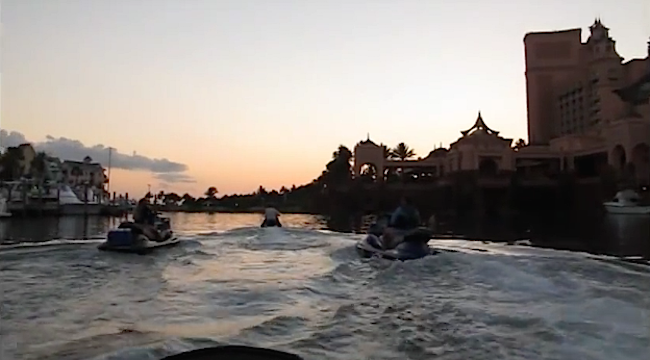
Today’s video starts off well, and then quickly goes downhill from there. Although we’re not posting this article to rail on the group who are featured in this YouTube video, we do have some serious grievances. The trip from Miami to the Bahamas – and consequently Bimini, Andros, Exumas – began well, with friends Adam Grocholski, Gabriel Grocholski, Kaitlyn Rejzer, Courtney Rejzer, and Shawn O’Connor leaving from Government Cut in Miami at first light, iridescent glow sticks marking the shadowy WaveRunners.
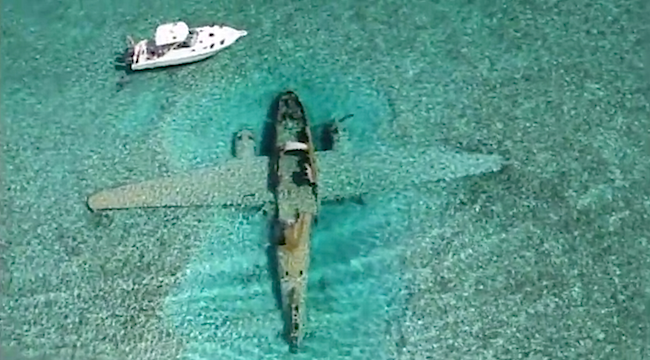
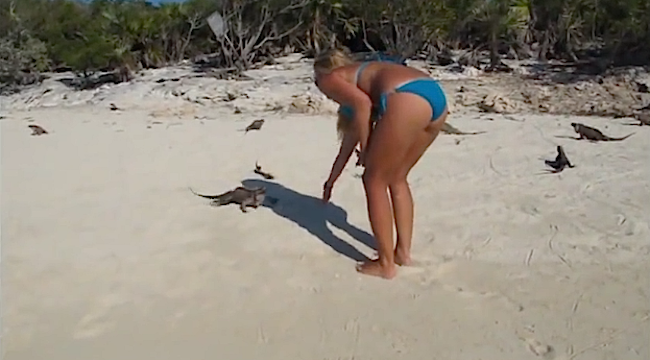
After encountering the first of many multimillion dollar yachts along their way, many of the riders shed their life vests, and only are shown wearing them again on their return route back to Florida. That’s cardinal mistake Number 1. Nevertheless, the video is fun, showing the group swimming with nurse sharks, feeding lizards and wild pigs, riding alongside stingrays, cruising past sunken airplanes, and para-sailing.
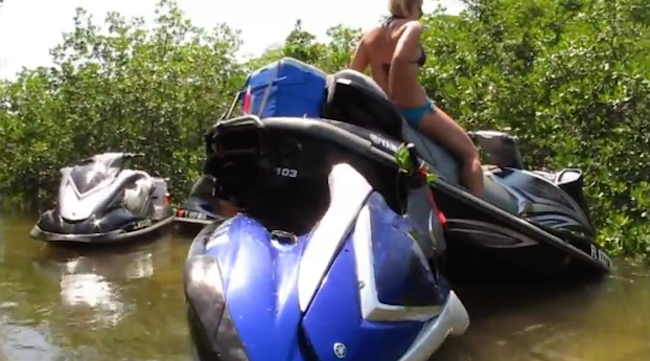
But, as the video continues on, and the soundtrack weirdly cuts out, the crew enter into Exumas and only into more trouble. We see a few close calls before the camera follows the last of the group blazing into the mangroves before ditching into the water. When we return, we see a tremendous pileup of all of the WaveRunners, several of the riders (still without lifejackets) dazed and still seated atop their skis.
Thankfully, nobody was injured (although one of the FX Cruisers looks to have taken quite a beating), but the lesson here should be voluminous. First, always wear a life vest. Always. Second, give plenty of space between you and the rider in front of you. Lastly, don’t ride beyond your capacity to negotiate situations. Fatefully, that last one is a little hard for most to navigate, but it’s still a good rule of thumb.
Enjoy the scenery and learn from other’s mistakes as you watch this video below:
The fact that there isn’t currently any racing in Texas isn’t the issue, it’s that there hasn’t been racing in Texas for this long. Texas is one of the largest markets in personal watercraft sales, and some of the best racers, tuners and enthusiasts hail from the Lone Star State. That is why it is so important that we share that the drought is over, and IJSBA’s newest promoter in Texas – TXH2O Racing – will be hosting the much anticipated World Finals Qualifiers this upcoming August 15th and 16th.
The Watercraft Journal talked with TXH2O Racing’s promoter, Heath Hoekstra who beamed, “I am very excited to be putting this race together. This has been a very big learning experience for me.”
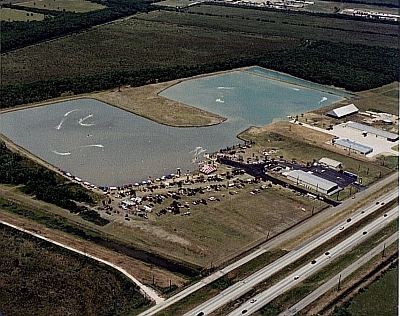
Of course, the venue is just as important as the race itself, and this August’s Qualifiers promises to be a good one. “The racers can expect a fun, friendly racing environment,” Hoekstra continued. Held at lake directly behind Gene’s Powersports Country that was specifically designed for personal watercraft racing – and was regularly put to use during Region 5 races in the ’90s. Featuring a concrete starting area, a built-in tower and a boat ramp, it’s very likely to see a return to greatness from Region 5.
TXH2ORacing presents their first racing event Region 5 racing will rise again due to the efforts of personal watercraft enthusiasts in Texas. The new Region 5 promoter, TXH2ORacing, will be at Genes Powersports for what is expected to be a weekend of action-packed personal watercraft racing on August 15/16.
This is an excellent opportunity for racers wishing to compete in the IJSBA World Finals this October. In light of the 2015 rule change, the IJSBA requires that racers compete in two IJSBA sanctioned races in order to qualify for the World Championships this October. This race was planned in collaboration with the International Jet Sport Boating Association (IJSBA) and will count as a two-round IJSBA World Championship qualifying race and IJSBA classes will be available for registration.
Racers can look forward to the perfect race site – the lake by Genes Powersports was designed for personal watercraft racing, and races were held here in the ’90s. This site features a concrete starting area, a built in tower and a boat ramp. Other amenities for racers include camping space (no hookups) and Port-O-Johns.
The team at TXH2ORacing has also put a lot of thought into their track design which will likely be a left-handed start followed by a tight track for intense rail-to-rail racing and fierce battles.
TXH2ORacing is excitedly completing the finishing touches for this event and information on race registration will be available as soon as the TXH2ORacing website goes live.
For more information on the first round of the TXH2ORacing series, contact the promoter, Heath Hoekstra at toy7521(@)yahoo.com or 817.680.9649.
Upon retreating from both battles at Lexington and Concord, Britain’s conscription infantry noted that the revolting colonists were alarmingly over-sized compared to the average “red coat.” In fact, the average American colonist outweighed the typical English soldier by two dozen pounds and stood several inches taller. General George Washington was notably intimidating, standing a hair above 6’2″ and weighing slightly over 200 pounds (not to mention wearing a size 13 shoe), when considering most men capped at 5’6″.
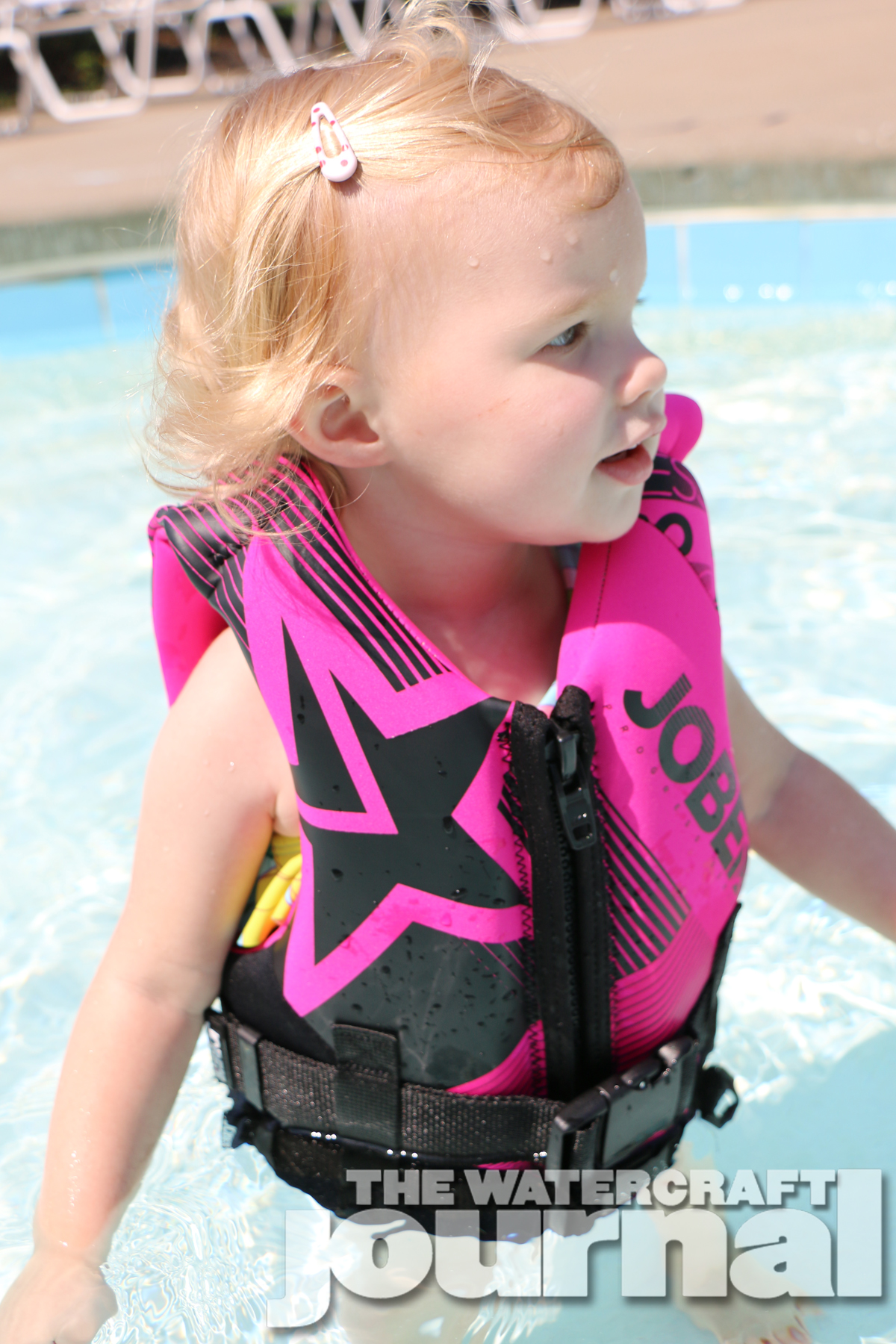
As a U.S. history fanboy, this tidbit of knowledge has been a tad appropriate as of late. And although the median weight ratios have swayed dramatically over the past 50 years, American vs. European sizing still needs some slightly better bridging. When ordering a new swathe of test product from Jobe Sports for 2015, we hoped to outfit our slightly taller-than-average 5-year-old a new Youth Progress Neo Vest. Our misreading of Jobe’s size chart resulted in a new Youth Progress Neo Vest for our year-and-a-half-year-old (not to mention a few other items requiring yours truly to shed some unwanted pounds to comfortably fit as well).
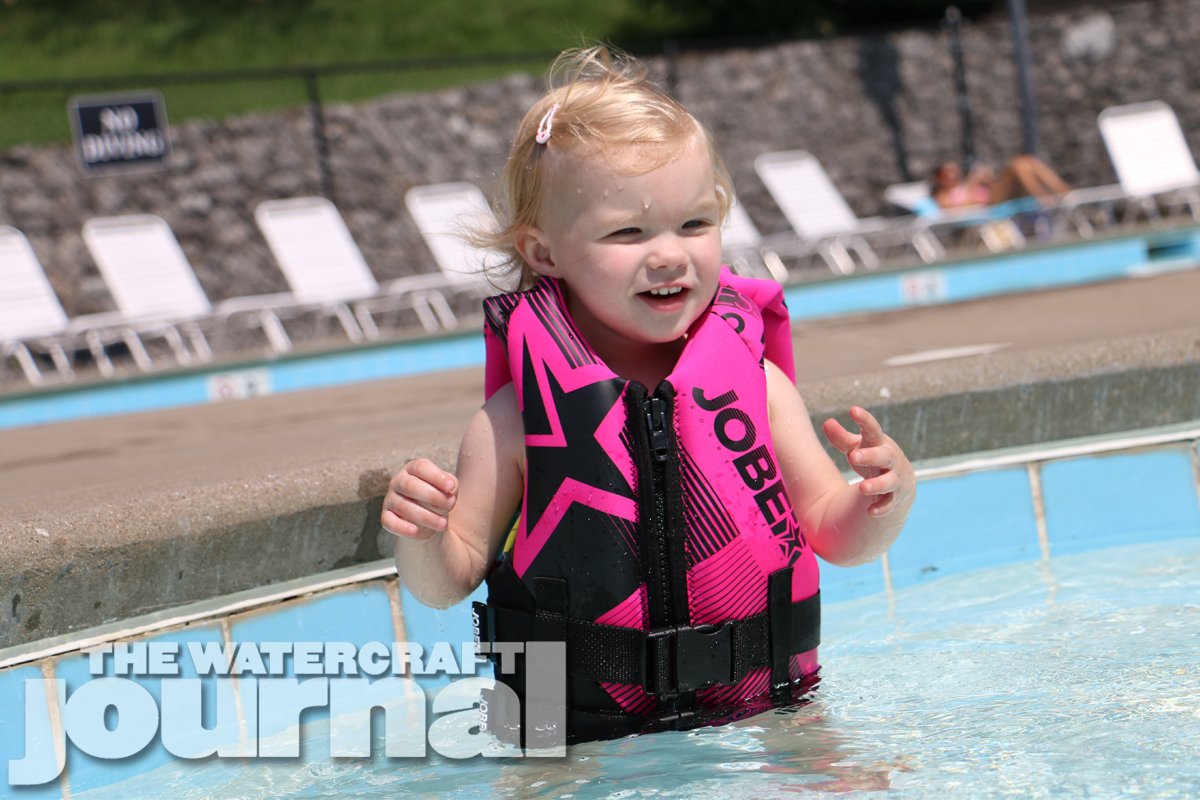
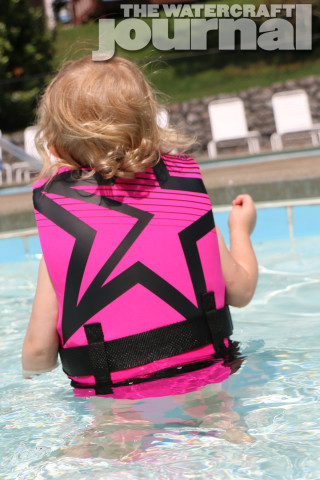
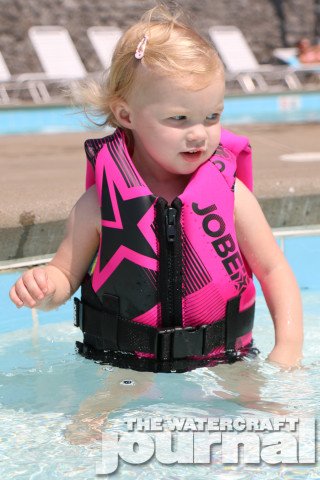
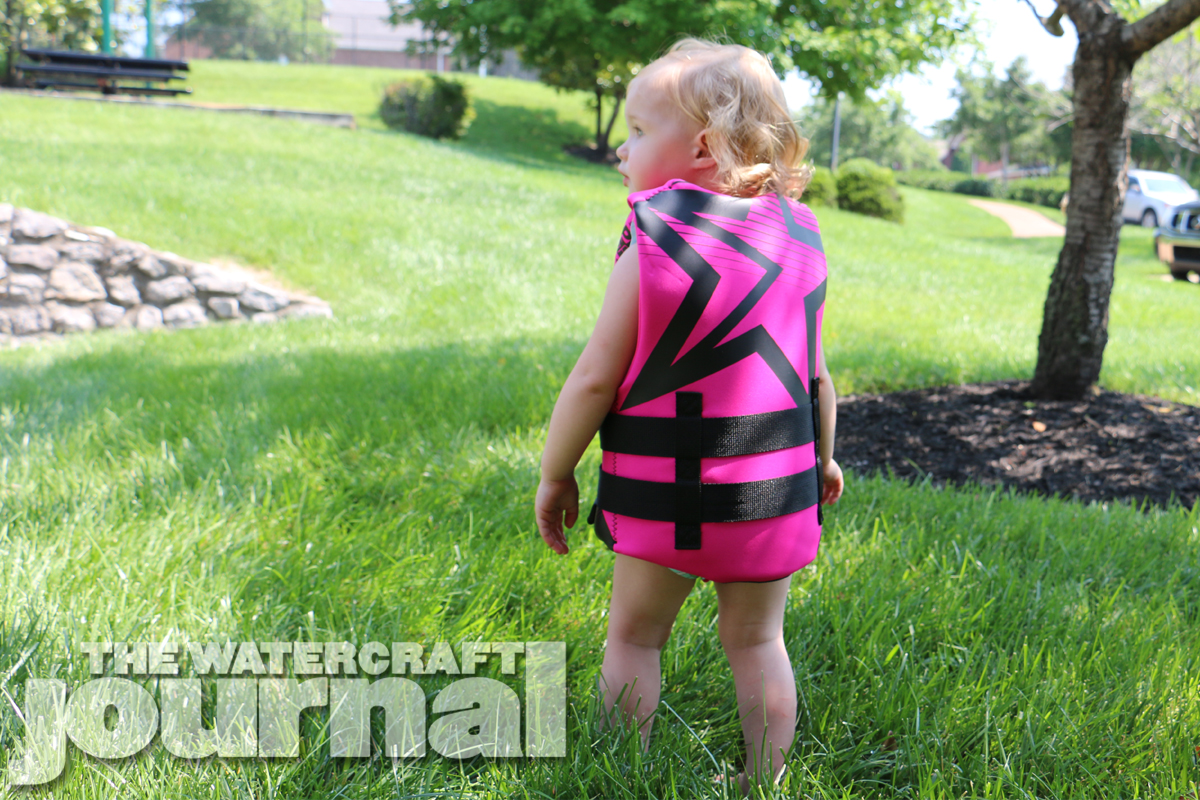
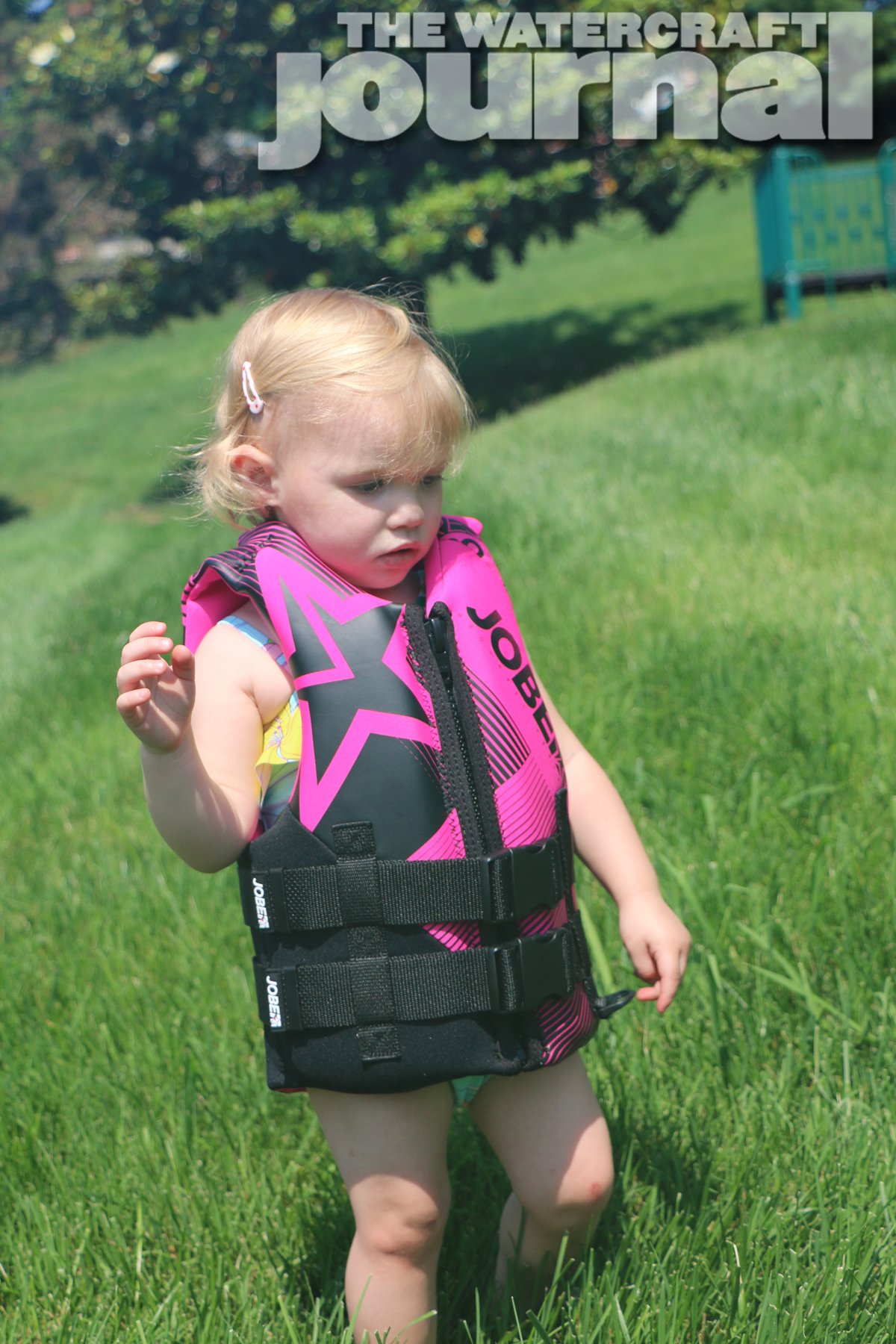
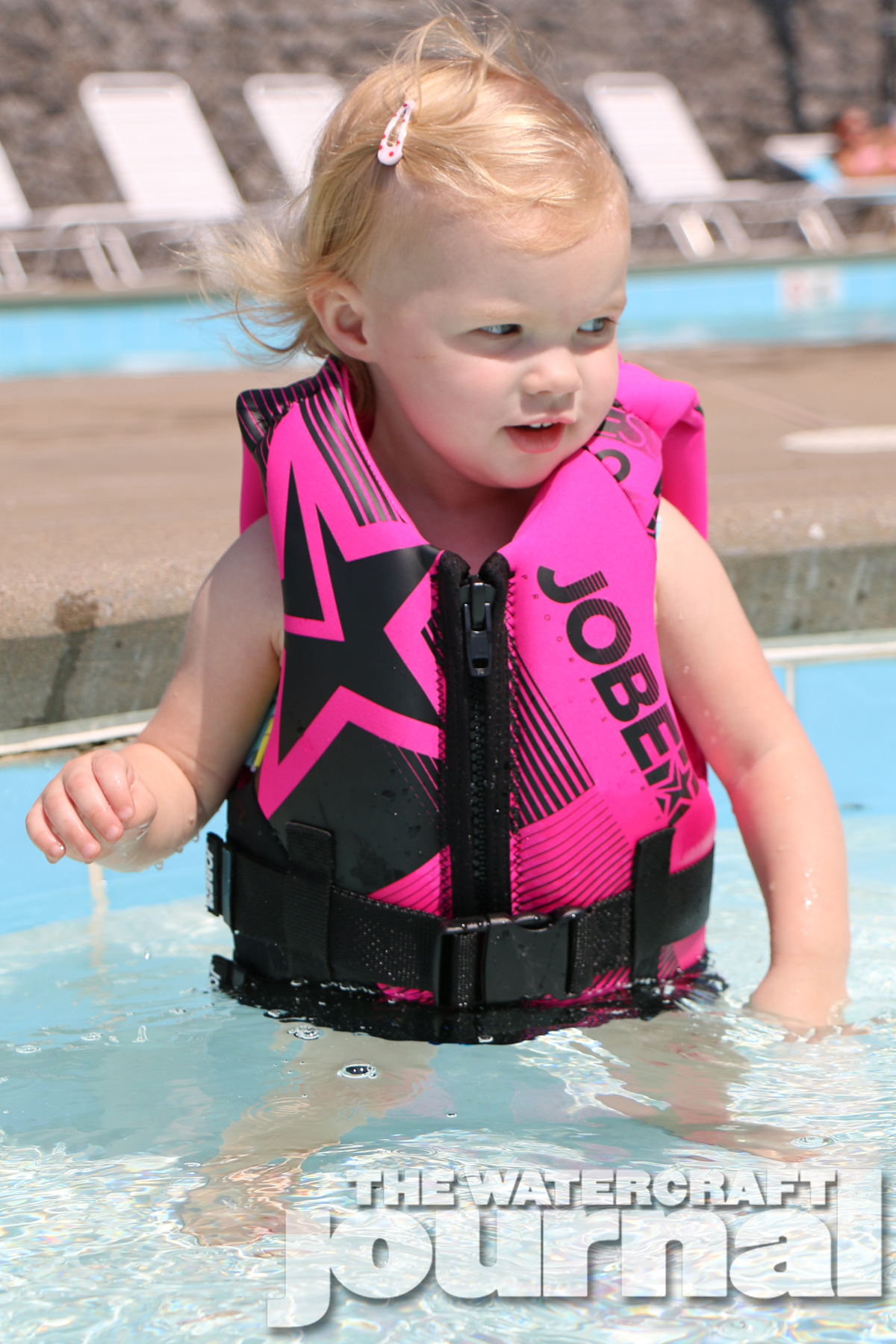
Our model Natalie has been using Jobe Sports’ Youth Progress Neo Vest for the past couple of months, providing us enough notes during this testing time to provide our assessment. As one can imagine, comfort is of the utmost importance for a child, and they will vocalize their discomfort without any modicum of hesitation. And we’ve received zero complaints from our toddler, whether bobbing in the pool, sitting on the saddle of a family three-seater runabout, or running through the grass.
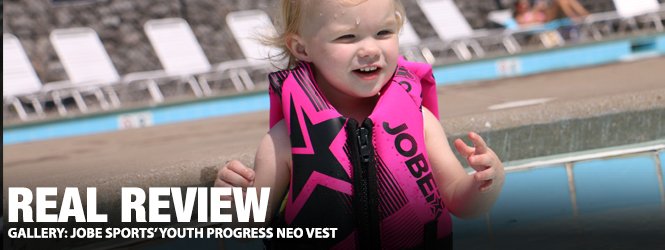
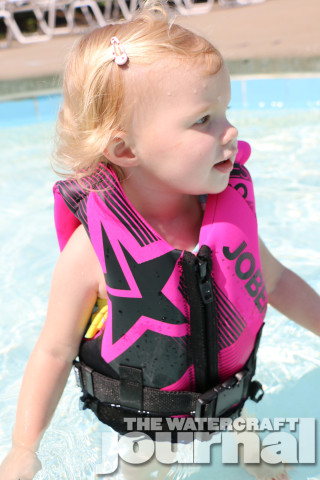
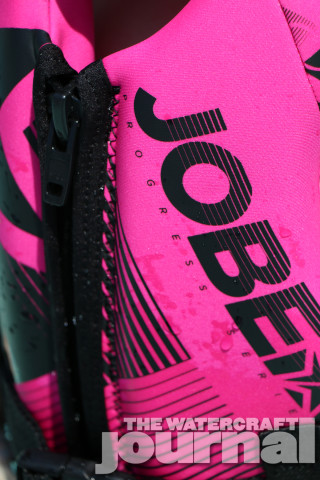
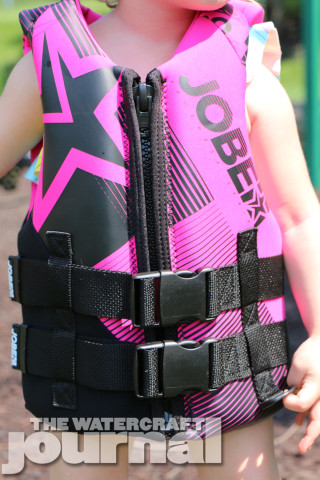
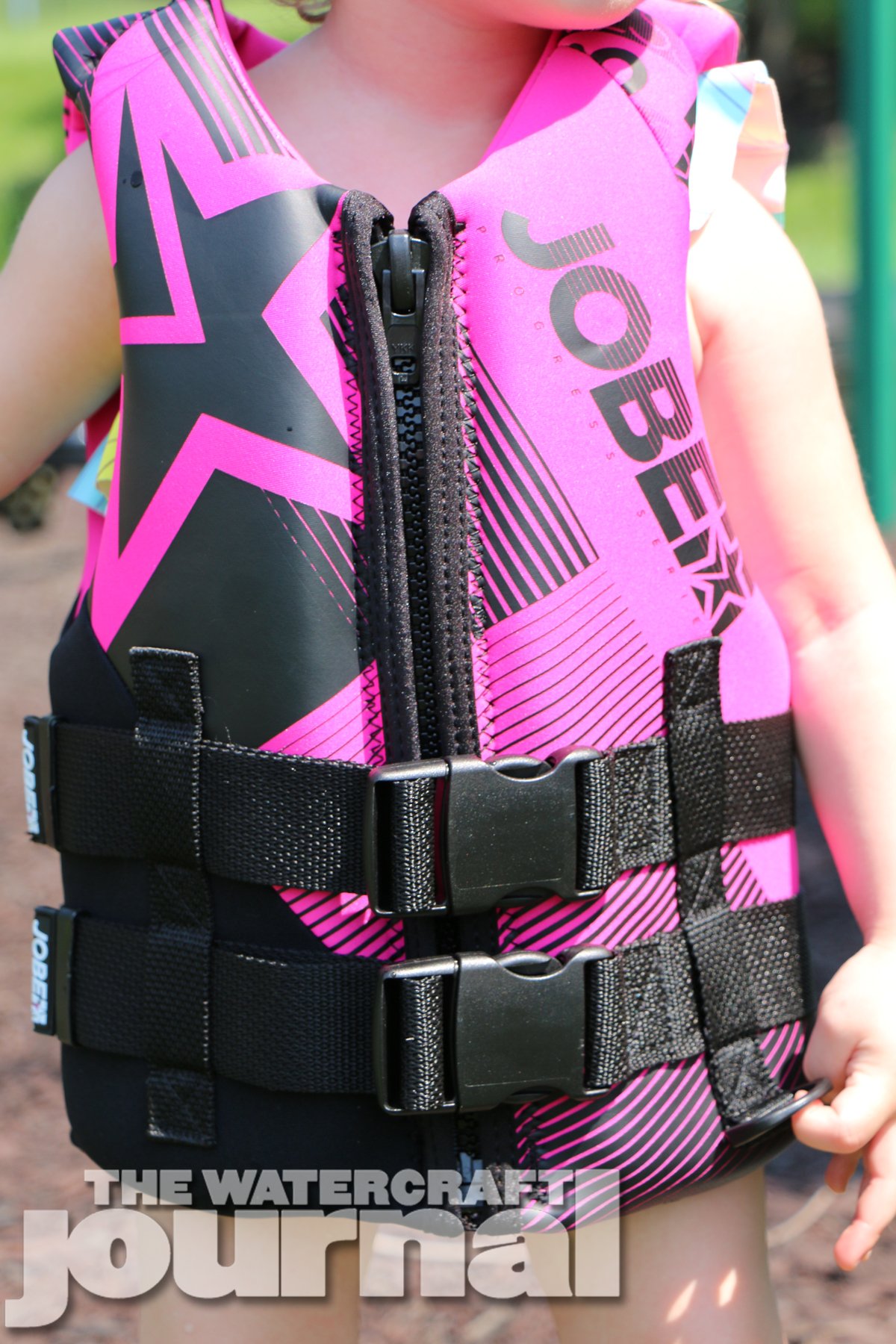
Wrapped in a very supple and flexible neoprene skin (that doesn’t heat up dramatically while under the sun) and formed out molded PVC foam, the Progress Neo Vest doesn’t rub or annoy children’s sensitive skin or restrict them from play. The bright pink vest is highly visible and features an attractive stylish star pattern. Attached by a thick-toothed front zipper (safe from pinching fingers or exposed skin) and dual buckles attached to thick-webbed belts, it cinches up snug and wraps your child safely.
The Progress Neo vest does include a D-ring, which is typically included for PWC lanyards and was a little curious as to its inclusion on a toddler’s vest, but laughed at the thought that many manufacturers of adult vests neglect this very convenient feature, yet Jobe includes it for children.
Besides the curious inclusion of a D-ring, there were a couple of notes that bear mentioning: Although the size for S/M vest fit a very average American 20-month-old, the length of the vest seemed a tad long. And priced at just over $100, it also isn’t cheap. Additionally, as vests tend to ride up on children, we wished their was a secondary buckle that looped up from the back to the front as many children’s vest do.
And for those paying close attention, Netherlands-based Jobe Sports does not submit their products for USCG-approval, which is worth noting. Otherwise, we have been absolutely pleased with Jobe Sports’ Progress Neo vest; it’s comfortable, flexible, and provides plenty of floatation while playing. We all want to let our kids have as much on the water as we do, but don’t want to sacrifice their safety, and Jobe manages to cover all the bases perfectly.
Ever had a pair of shoes that fit you perfectly? It turns out that proper foot support effects posture, vertebrae pressure and even mental acuity. When the science of ergonomics really started to take off in the early 1980s, many discovered that hand positioning had a similar effect.
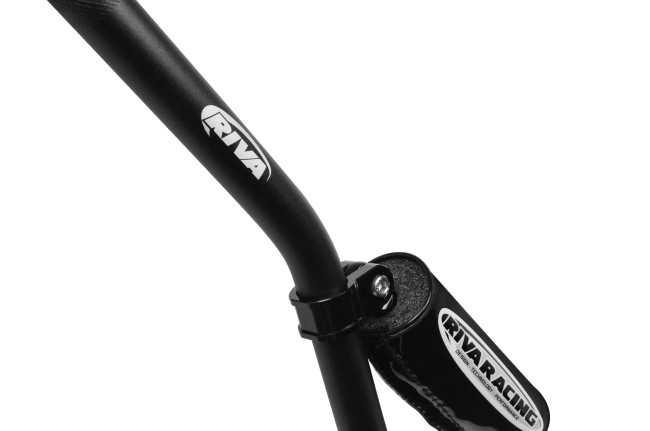
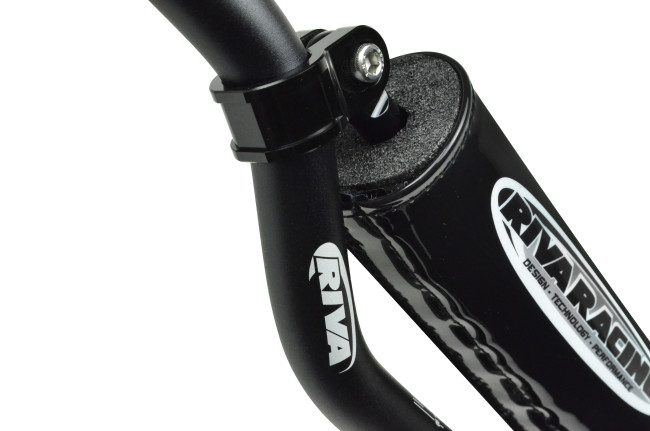
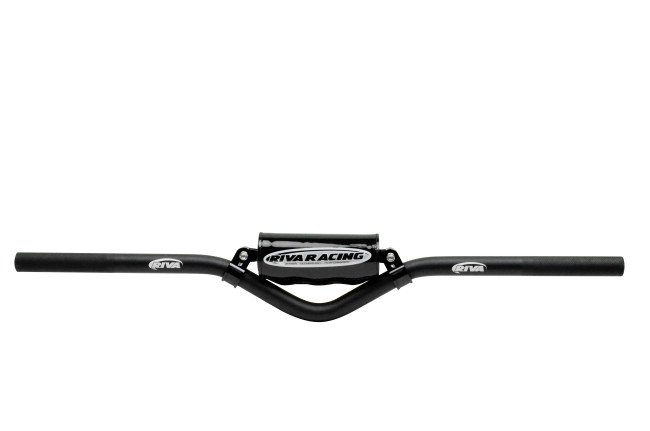
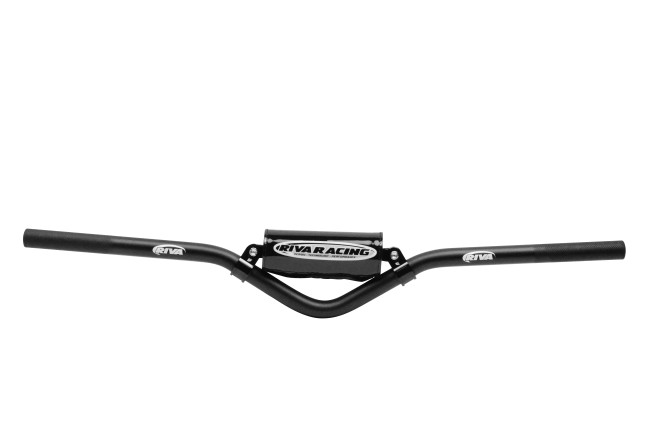
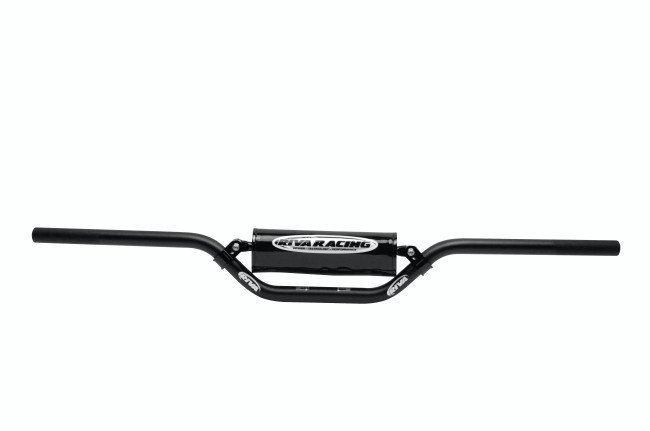
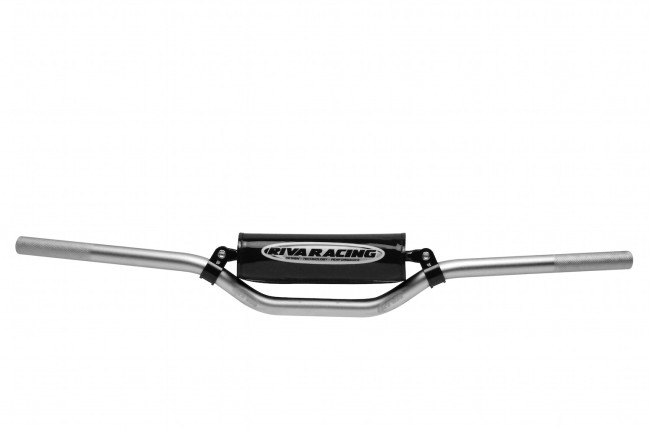
Now, we’re not saying that purchasing RIVA Racing’s new Pro-Rider Handlebars will make you smarter, but you will be showing some serious intelligence in doing so. But first, let’s get one thing straight: these are not some blank labeled repops. These bars are crafted specifically for RIVA, made from a lightweight T6 aluminum alloy that offers both durability and the right amount of flex.
This was done to give the Pro-Rider handlebars superior vibration dampening over competitor’s aftermarket replacement bars. RIVA Racing President Dave Bamdas stated, “We wanted to introduce a high quality handlebar for the PWC industry; a premium product built to RIVA’s meticulous specifications.”
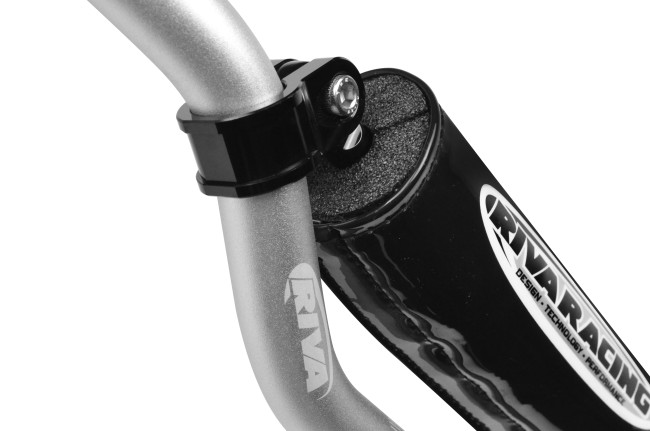
In fact, the angle, width and design of these bars came after fielding a significant amount of feedback from RIVA Support Racers and riders, designed for the utmost in performance, balance and rider comfort and input. And every Pro-Rider handlebar has been shot peened and anodized in one of two colors – black or silver finish. And all bars feature a lazer-etched “RIVA Racing” logo.
All runabout bars feature lazer-etched degree indicator markings for precise positioning. There are currently five different bends, three for runabouts and two for standups; for runabouts, available bends are 32-inch, 29-inch, and a 33-inch bar for Sea-Doos equipped with iControl using RIVA’s steering system. For standups, RIVA’s Pro-Rider Series are available in either 0-degree or 4-degree bends.
And each of the Pro-Rider series handlebars come with smooth, tapered ends that are flush-knurled so you can use any OE and aftermarket handgrips without cutting or tearing the rubber. The crossbars are all CNC-machined cold-forged aluminum with stainless steel hardware. A high-impact foam pad with an official RIVA Racing pad cover tops it off.
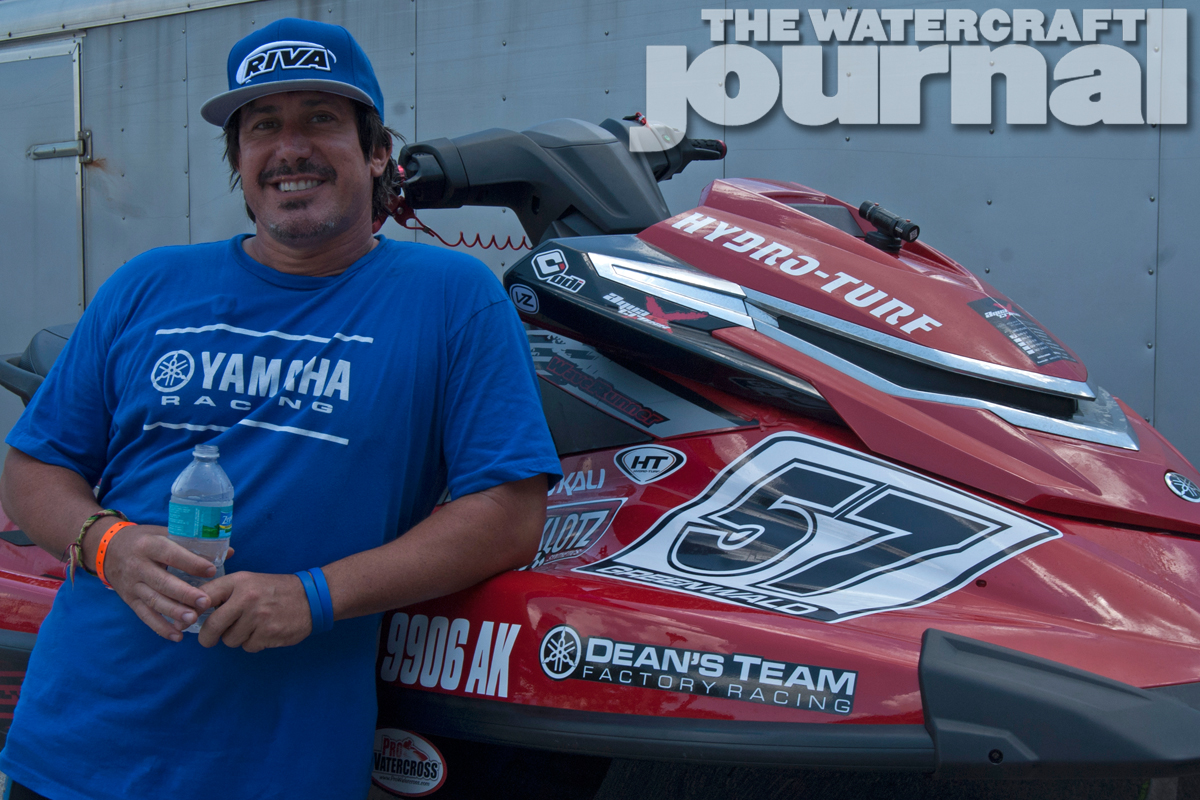
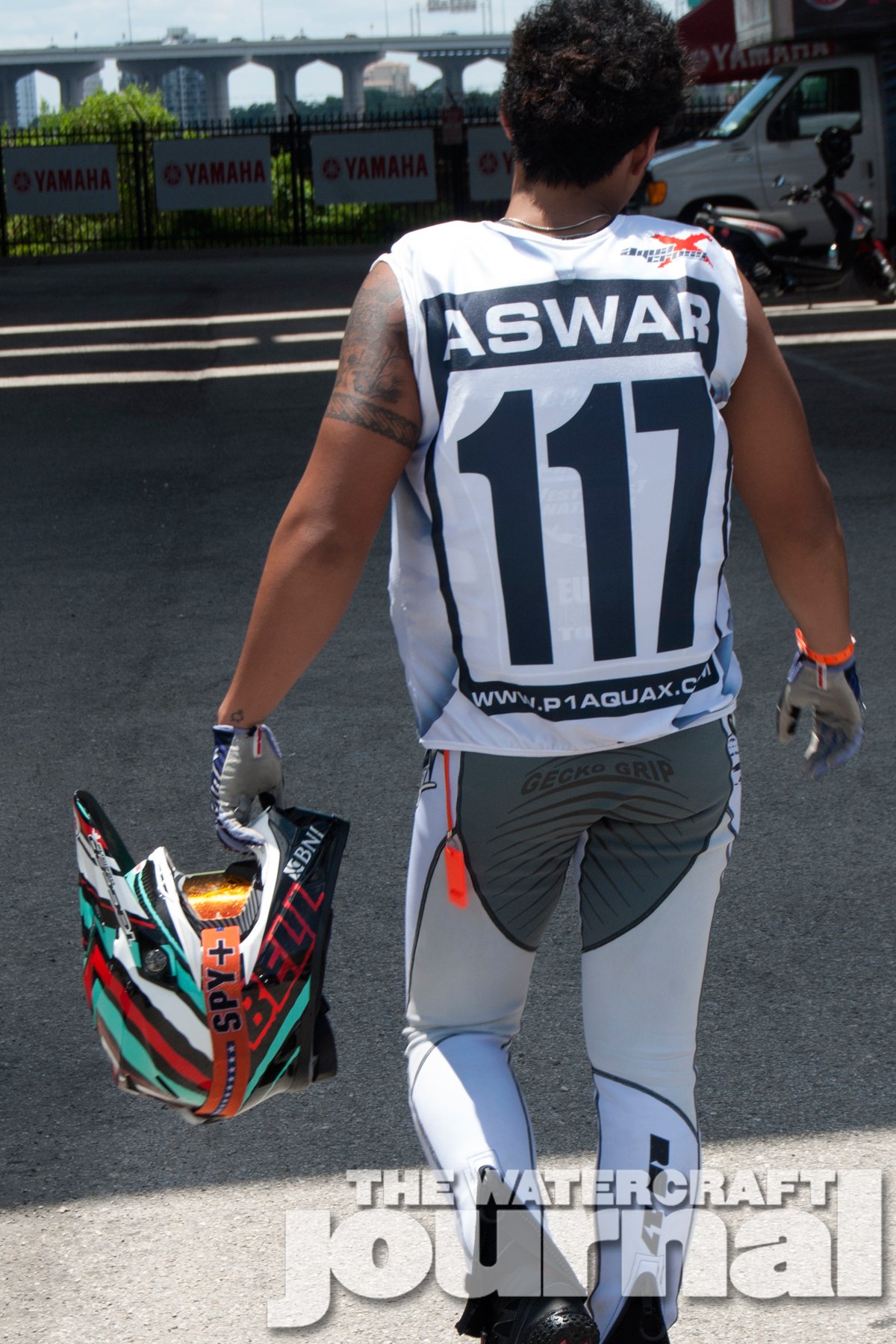
And you can bet that RIVA’s had these bad boys in the hands of all their RIVA-supported racers; both Aswar brothers prefer the narrower 29-inch Pro-Rider bars, Brian Baldwin and Abdullah Al-Fahdel opting for the wider 32-inch bars, and Erminio “Mr. Sunshine” Iantosca (shown above) loves the 33-inch iControl bars on his Sea-Doo RXP-X 260 Pro Open class runabout.
All RIVA Racing Pro-Rider Handlebar series bars are available for $74.95 and can be purchased at www.rivaracing.com today.
Let’s face it. You don’t have a lot of money. It’s OK, we won’t tell your friends. But, being broke doesn’t mean you can’t have nice things. You just have to be a little more creative. Take for example your favorite sport – jet skiing. It’s not exactly as cheap as say, jogging, but it is a whole lot more fun. Yet, if you’re starting from square one, finding a rideable, running ski is going to be a challenge.
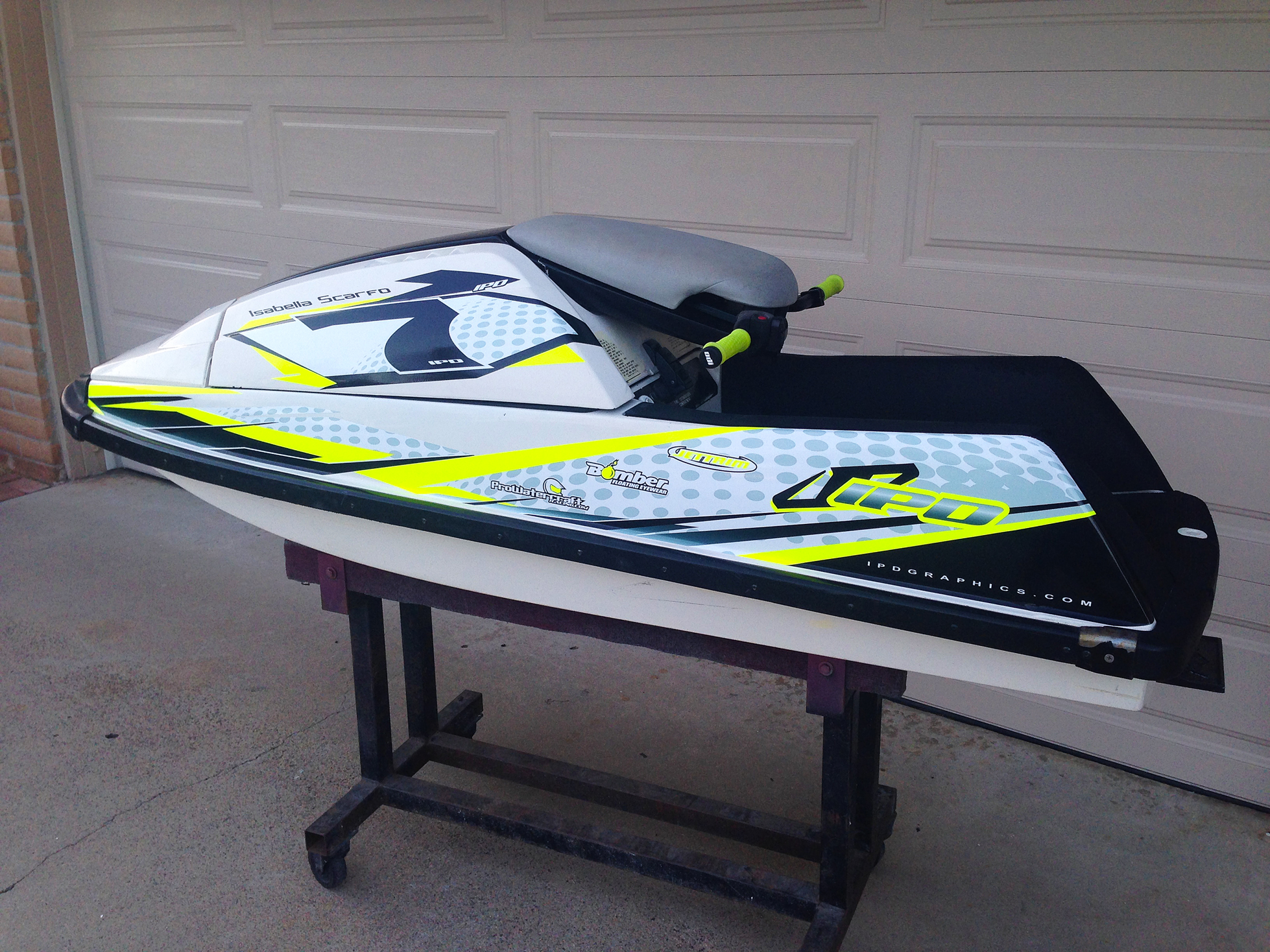
Actually, not so much these days. A cursory search of Craigslist brings up quite a few hits, particularly if you’re living in hot skiing locations like Southern California or pretty much all of Florida. Only yesterday we found a pretty wild custom Kawasaki JS550 for sale for $500. But in order to go from “Craigslist Cheapo” to a ready-to-ride, sexy-on-the-beach ski on an extreme budget does take some work.
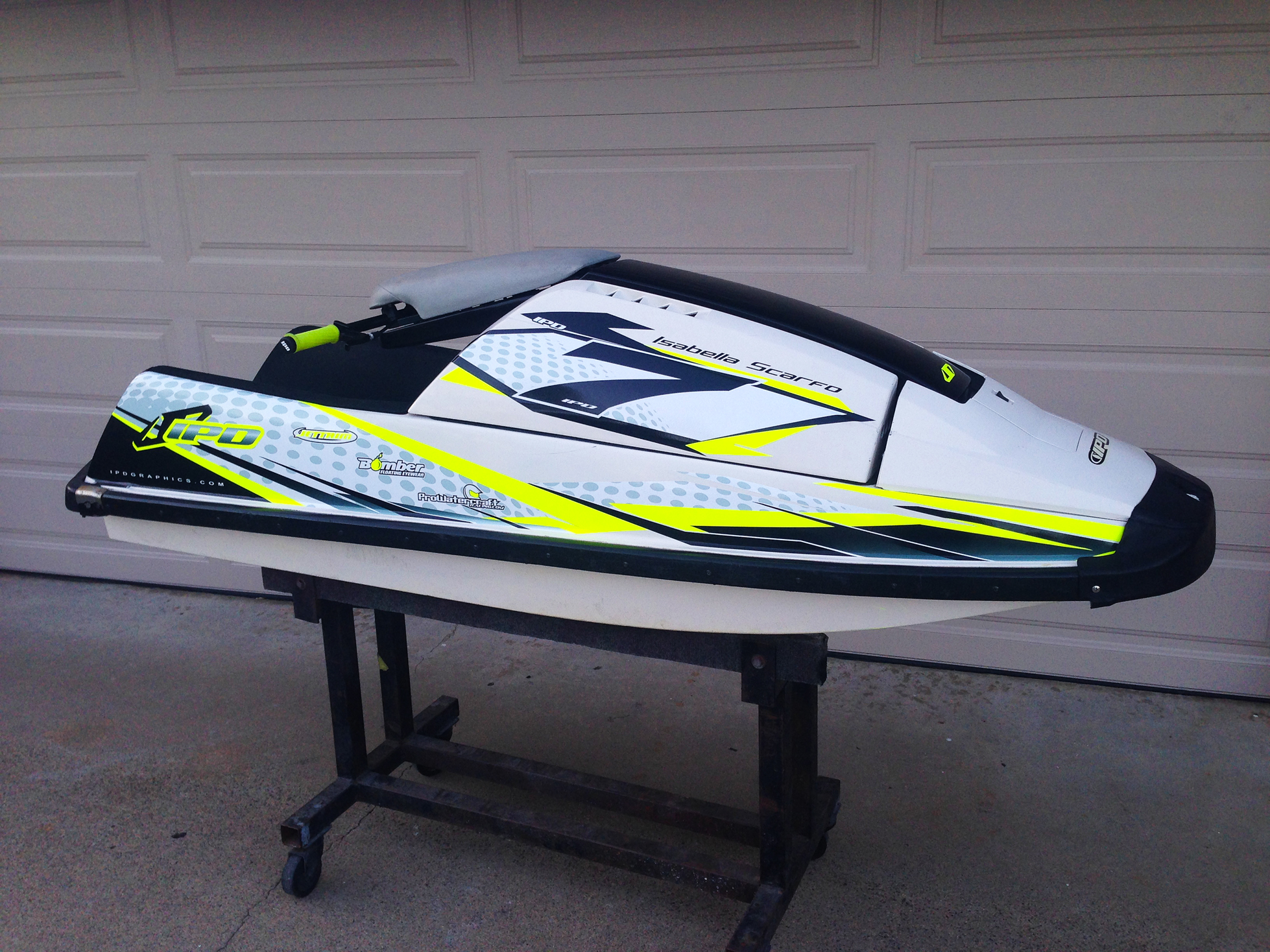
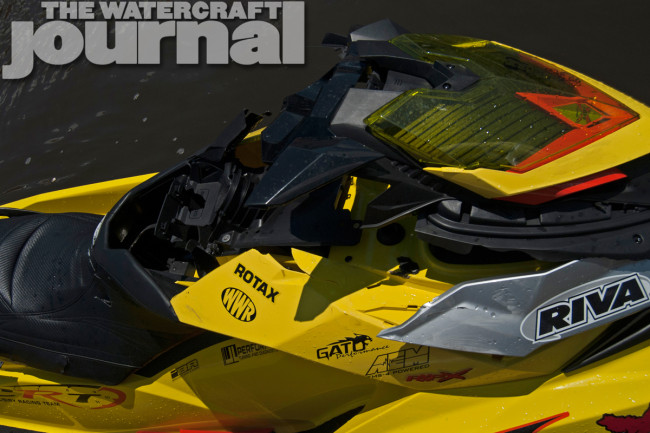
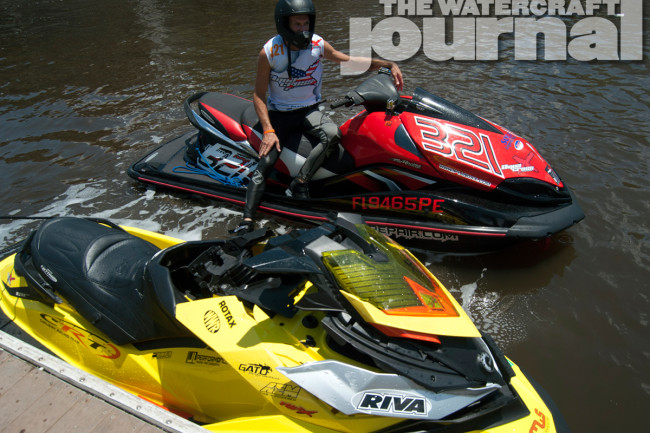
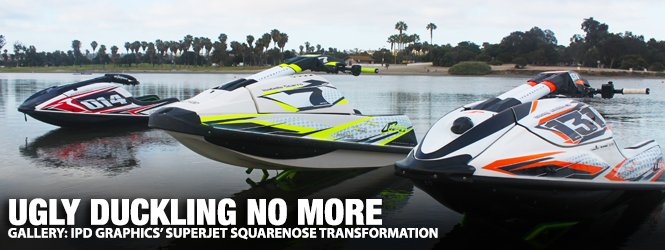
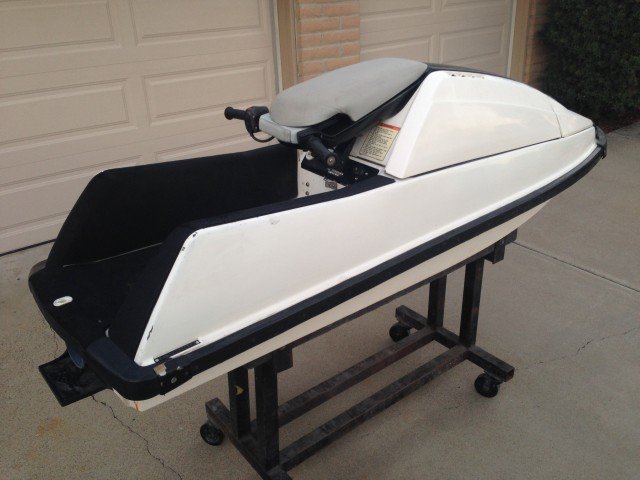
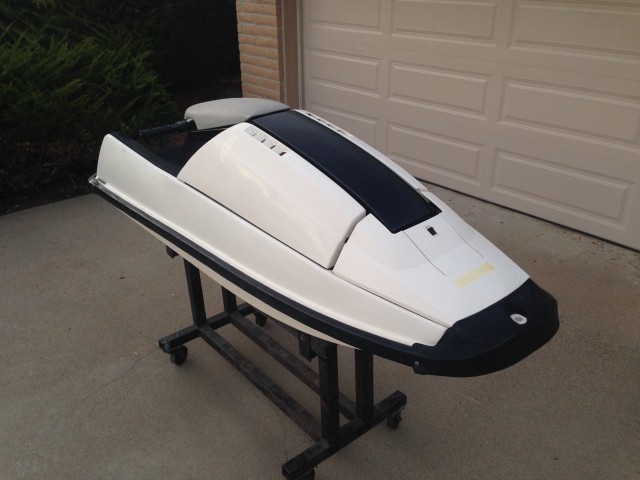
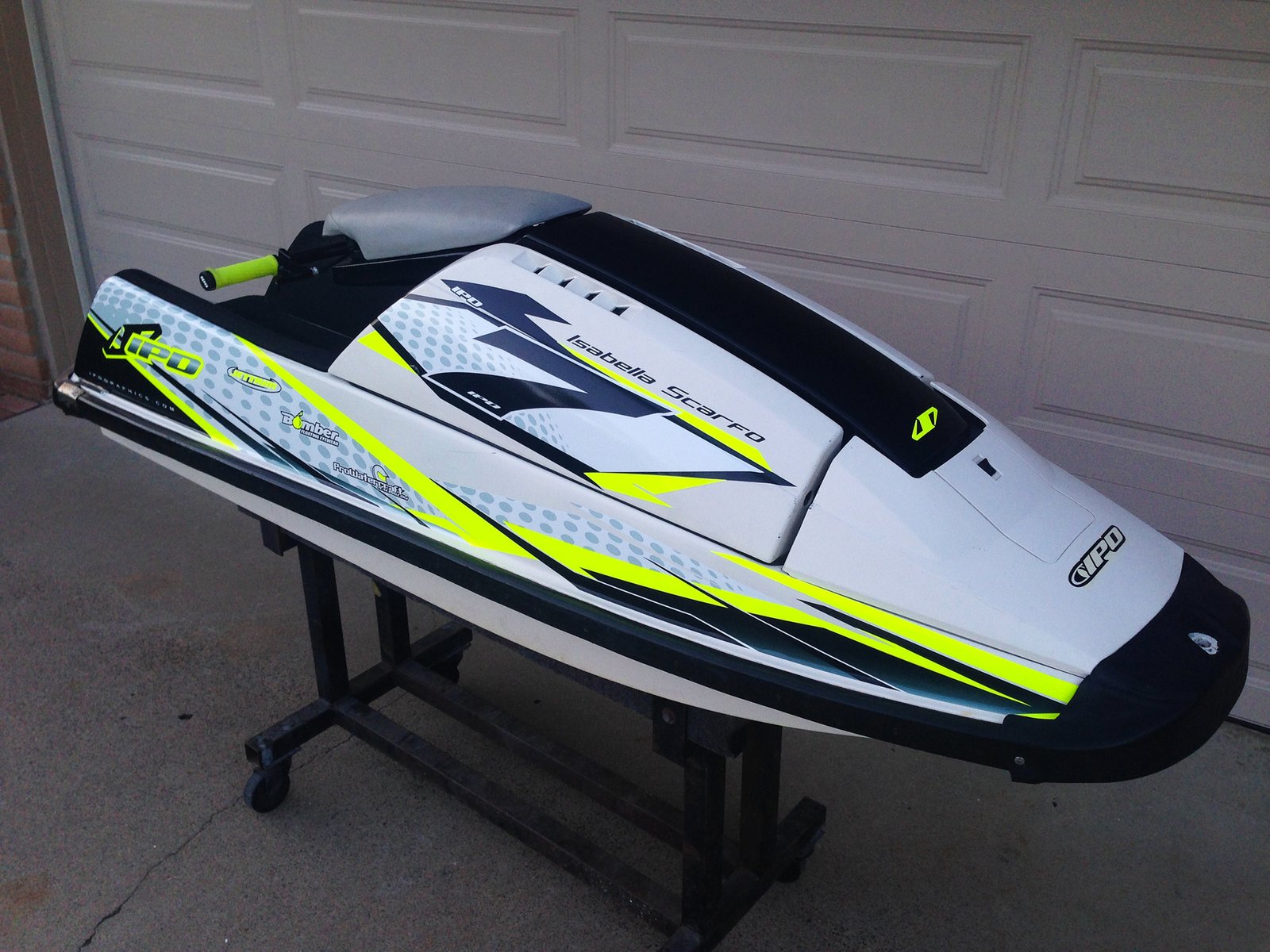
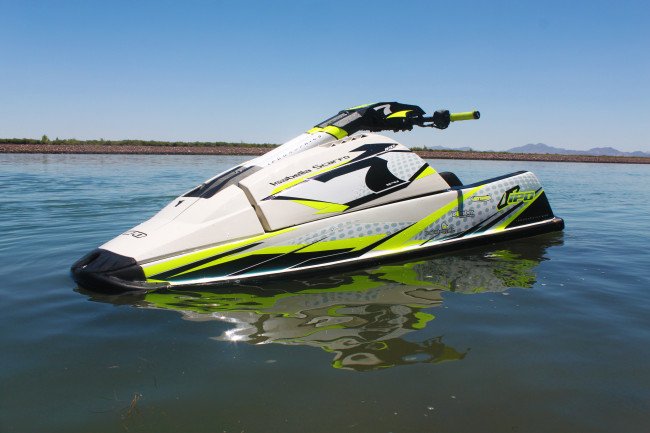
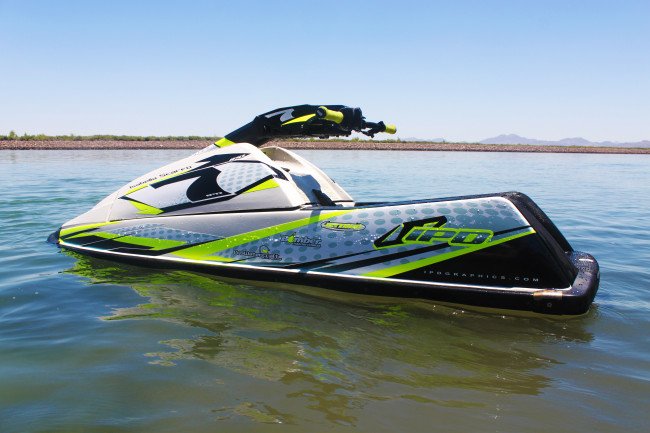
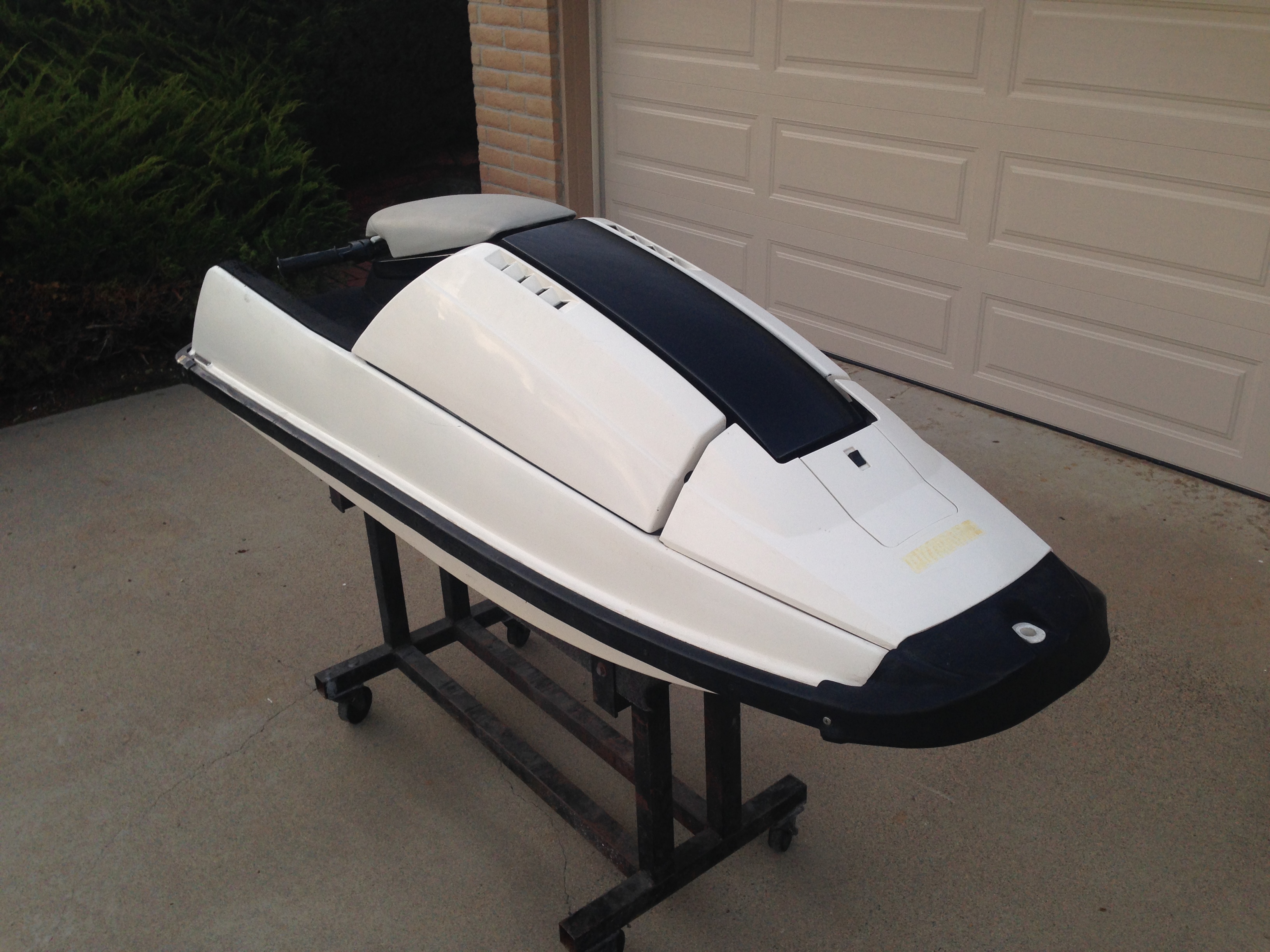
But the factory decals were heavily faded and oxidized, making the ski look far worse than it really was. IPD stripped the SuperJet down bare and cleaned up the original white gel coat. The big metamorphosis happened with IPD Graphics installed a digitally printed IPD Graphic kit (retailing less than $350), dramatically transforming the staid Squarenose into a ski that everyone always asks about. The retina-scorching iridescent yellows, bold race numbers, sponsors logos (for Jettrim, Bomber Eyewear and ProWatercraft Racing) and reflective silver shaves 20 years off of the ski.
But things just didn’t end with a vinyl kit: “We couldn’t resist installing an RRP handle pole, grips and a set of ProWatercraft Racing sponsons,” Mauldin admitted. The adjustable handle pole replaces the first generation’s heavy fiberglass pole, freeing up some weight from its original 287-pound dry weight.
Now a regular at Mission Bay, the ’90 Squarenose runs and handles as good as it looks, and as Mauldin states, “it could sell it for $2,000-2,500 with ease.” Vinyl decal kits and wraps aren’t anywhere as big in the ‘States as they are with European, Japanese and even Saudi racers for inexplicable reasons. Vinyl kits are significantly more affordable than a custom paint job and are quickly installed compared to the down time needed for paint.
Not only did IPD Graphics double the value of their otherwise stock 650 SuperJet, but also pumped many more years of life and use into a previously unwanted ski. If you’re looking to do the same, check out IPD Graphics’ massive lineup of vinyl decal kits for your PWC.
We’ve said it before and we’ll say it again, there’s just so much happening this year that it’s all but impossible to keep up. In addition to Round 2 of the AquaX series happening in Jacksonville, FL., we had the Dells Freeride as well as the first round of the North East Watercraft Alliance (NEWA) Region 8 racing in Milford, Connecticut.
Held on Walnut Beach this past June 6th and 7th, the Northeast brought out some incredible talent to battle it out. One such knock down fight was perfectly captured by Hydro-Turf racer Billy Beers Jr. riding at borrowed Sport Spec WaveBlaster from friend and fellow competitor Kevin O’Flaherty. In fact, Beers was supported all weekend long by fellow racers, showing all the true camaraderie found in jet ski racing.
Beers had this to report, “It was a great first weekend out on the water. I took first overall both days and Morgan took a 3rd overall on Sunday after bouncing back from a rough GP race. Needing a backup boat for Saturday, Kevin O’Flaherty gave me his #2 ski to run in Spec. A “thank you” does not begin to express my graduated to him.
“Sunday, we needed to do a quick fix (twice) and Matt Adalian Anthony Coursen and Bill Beers got everything apart and back together in time to get in the water for the two motos. And May Beers for telling me to fix the boat and get in the water instead of giving up.
“We are off to a great start on the year and have even more coming together for the next rounds. We can’t thank the people on and off the race site enough that make this happen. Our race family and our sponsors that make the dream all come together, good people like Hydro Turf, Z Force Racing, Optima Racing, Stone Pony Deli, Savona’s Trattoria, Frozen Rainbow, #hilltoptowing and everyone else that comes through to make it all happen. Without them and our father we would not even be able to imagine the success that we have had and what is coming”
The next NEWA race is scheduled for Savin Rock Beach, in West Haven, CT. this upcoming July 18th-19th.
“This could be big news for Kawasaki,” our source told The Watercraft Journal. “You know who Bruce is. He could radically pump some new life into Kawasaki’s racing effort.”
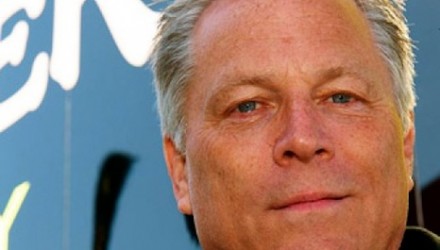
News broke yesterday that Bruce Stjernstrom, former Kawasaki Race Director and godfather of the Monster Kawasaki marriage has returned to Kawasaki as the racing manager for Team Green. Beneath the umbrella of Team Green includes all facets of Kawasaki performance, namely their off-road, ATV, flat track, JetSki, road racing and supercross/motocross teams.
While Stjernstrom can’t outright reallocate a major portion of Kawasaki’s race budget towards jet ski racing, his quarter century’s worth of experience in both directing Kawasaki’s jet ski team and helming the IJSBA during its heyday years (1987 to 1997), leads many to believe that new (and hopefully increased) emphasis will be placed on injecting new blood into the since dwindled PWC race team.
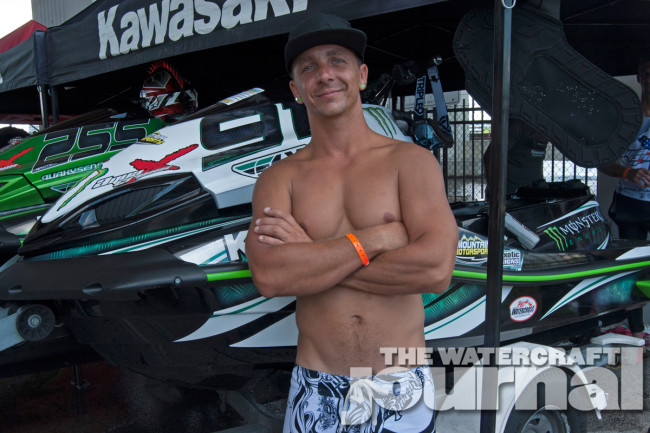
Currently, as indicated by who is housed beneath the awning of the Kawasaki trailer at last year’s IJSBA World Finals, only Craig Warner, Eric Francis and Minoru Kanamori’s wife, Emi and daughter are the only ones to be given any “official” representation as being welcomed in any way to Team Green. This, in despite of a great deal of up-and-coming Kawasaki-loyal riders and racers.
Following is the press release from Kawasaki:
Kawasaki Names Stjernstrom to Lead Racing Program IRVINE, Calif. (June 9, 2015) – Kawasaki has named renowned racing industry veteran Bruce Stjernstrom to lead racing operations, replacing senior racing manager Reid Nordin, who has left the company. Stjernstrom returns with 20 years of experience at Kawasaki, having previously led both the racing and marketing departments, and will report to Chris Brull, Vice President of Marketing for Kawasaki Motors Corp. U.S.A.
“Bruce brings a wealth of knowledge and business acumen to our racing program,” said Brull. “Bruce was a cornerstone of Kawasaki Team Green™, as well as leading multiple championship winning teams while directing our professional racing programs. We know he has a passion for the sport that is only matched by his passion for Kawasaki.”
Since joining Team Green in 1983, Stjernstrom has been instrumental in Kawasaki’s success over the last three decades. During his tenure with Kawasaki, Stjernstrom has led the Team Green, Off Road, ATV, Flat Track, Jet Ski, Road Racing and supercross/motocross teams.
“Kawasaki has a strong racing heritage that I am proud to be a part of once again,” said Stjernstrom. “I’m looking forward to working with Dan Fahie, Manager of Motocross Racing and Ryan Holliday, Supervisor for Team Green, together with their staff and our partners to keep Kawasaki as a championship winning program.”
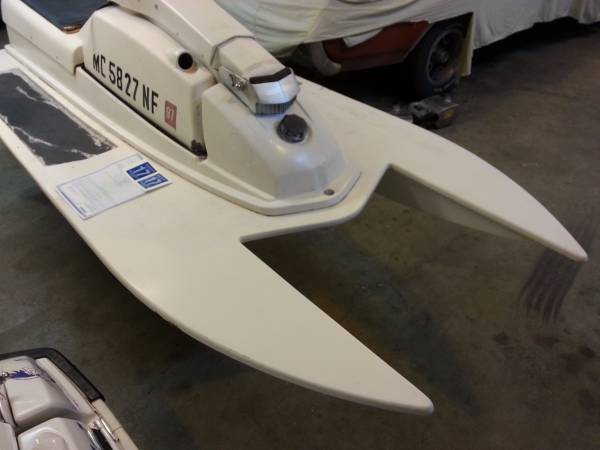
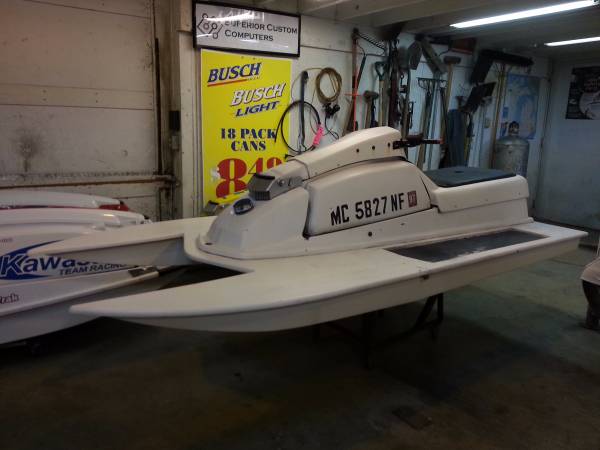
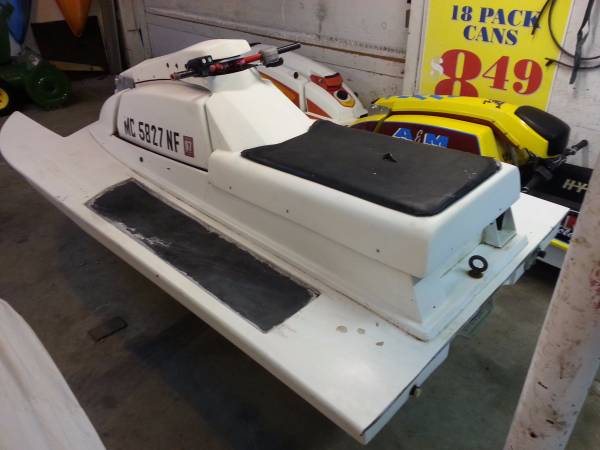
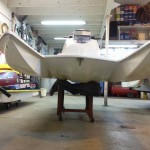
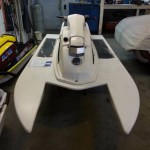
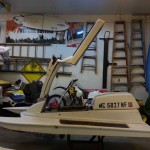
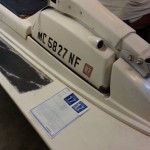
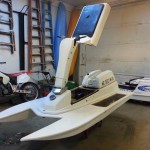
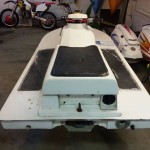
Two days ago, we brought you what we thought would be the most bizarre vintage Kawasaki we’d ever come across. As of today, we couldn’t have been more wrong. The unusual X2 with a custom sidecar is nothing compared to this Kawasaki hydrofoil jet ski. Noted as a 1987 JS550, the Bay Area Craigslist ad where we found this Frankenstein lists the ski for a paltry $400. We’ve seen completely bare JS550s go for more, so we’re a little surprised to see it so low. Then again…we kinda get it.
The listing states, “This is a 1987 JS550 with a custom hull built around it, Whoever did this must have spent a lot of time of it. I assume this is “a one of a kind” – I did have this running last summer but since then took the 550SX Reed engine out of it. So besides a barren engine compartment, the JS550 hydrofoil does feature some very unique modifications. The hull has been grafted to a genuine catamaran-style hull (rather than the mislabeled “hydrofoil” design), and has been significantly widened and lengthened.
The tray has been replaced with what looks to be a WetJet seat (although we can’t say for certain), which seat has been grafted to the handle pole that appears to remain fixed while under operation. The bench is wide and almost void of any form of padding, so expect a very rough ride. The seller does note that the ski has a clean title and new registration, and is a complete ski other than the missing engine, CDI and battery.
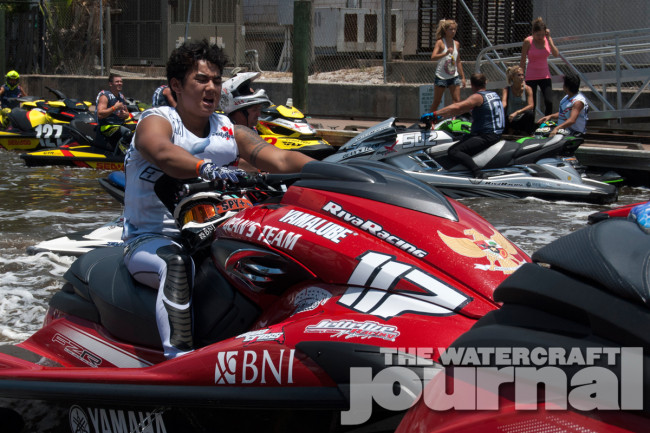
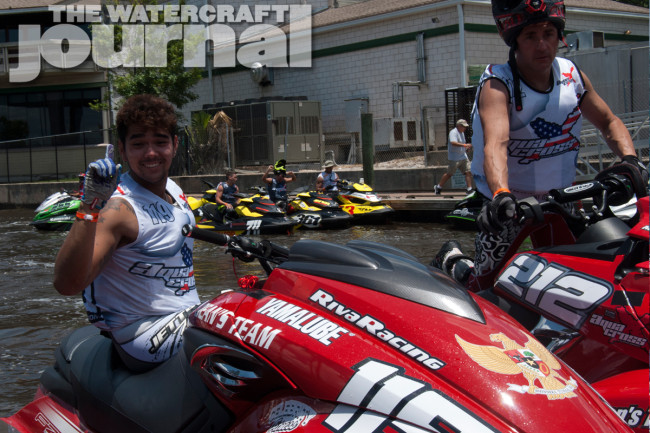
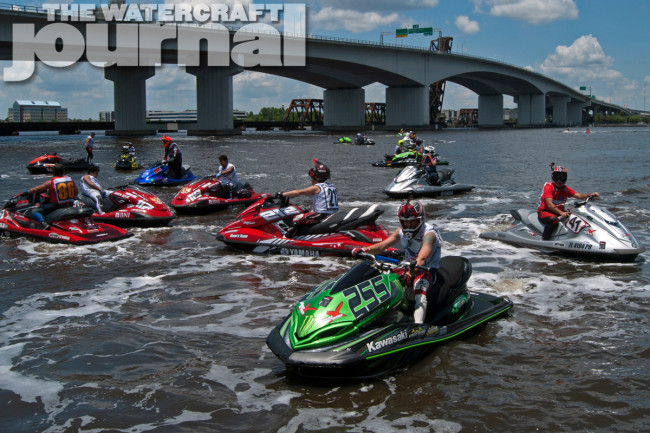
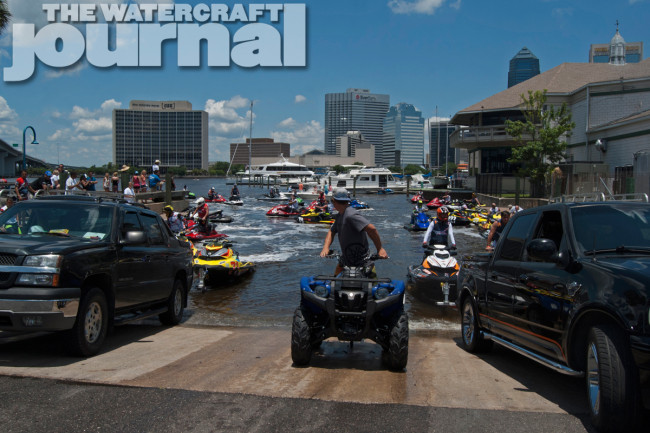
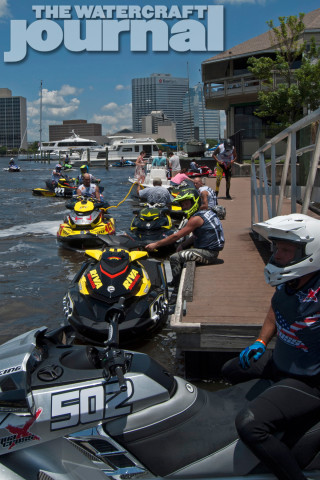
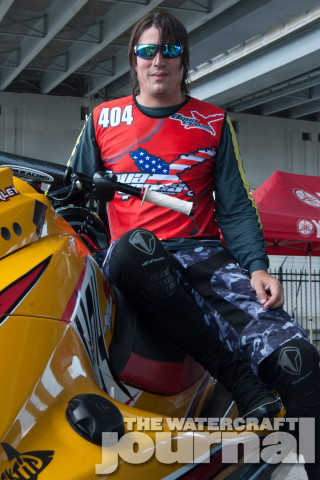
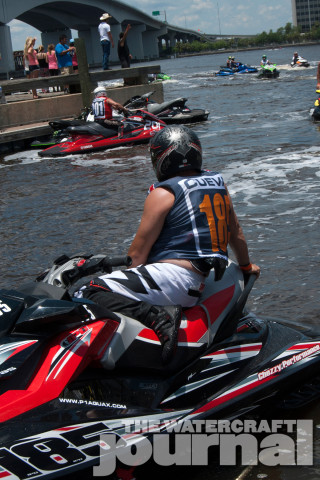
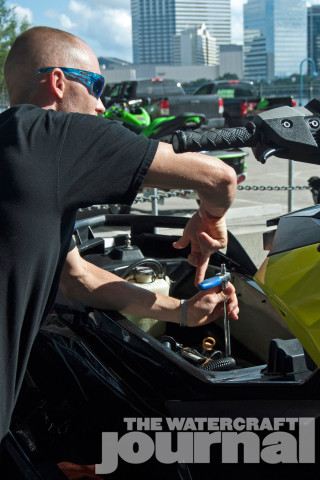
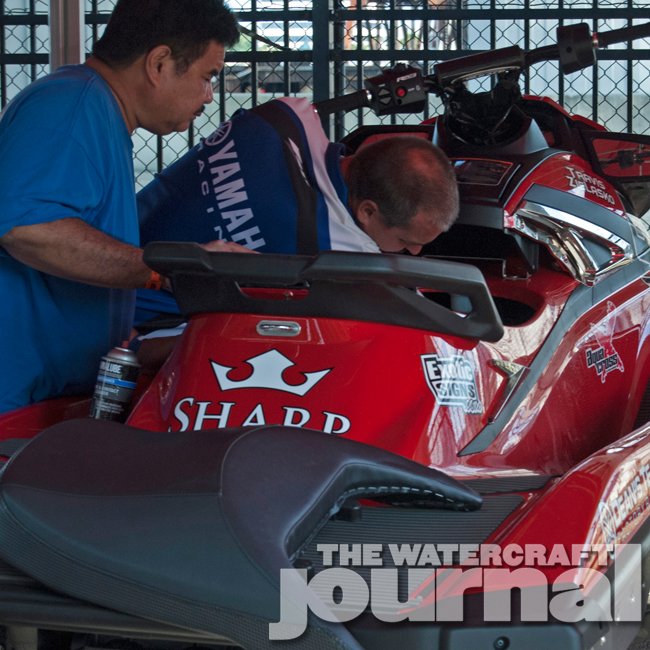
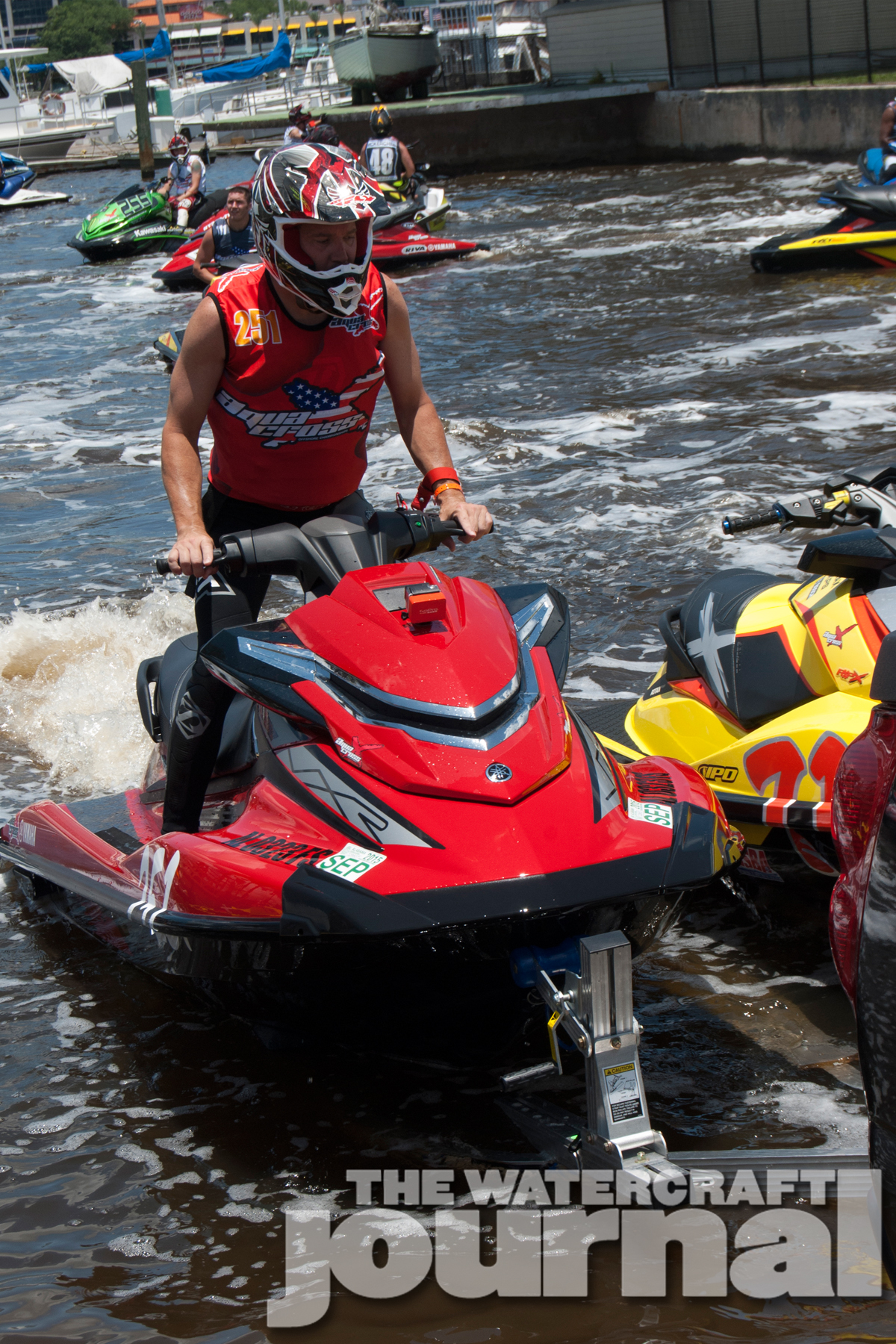
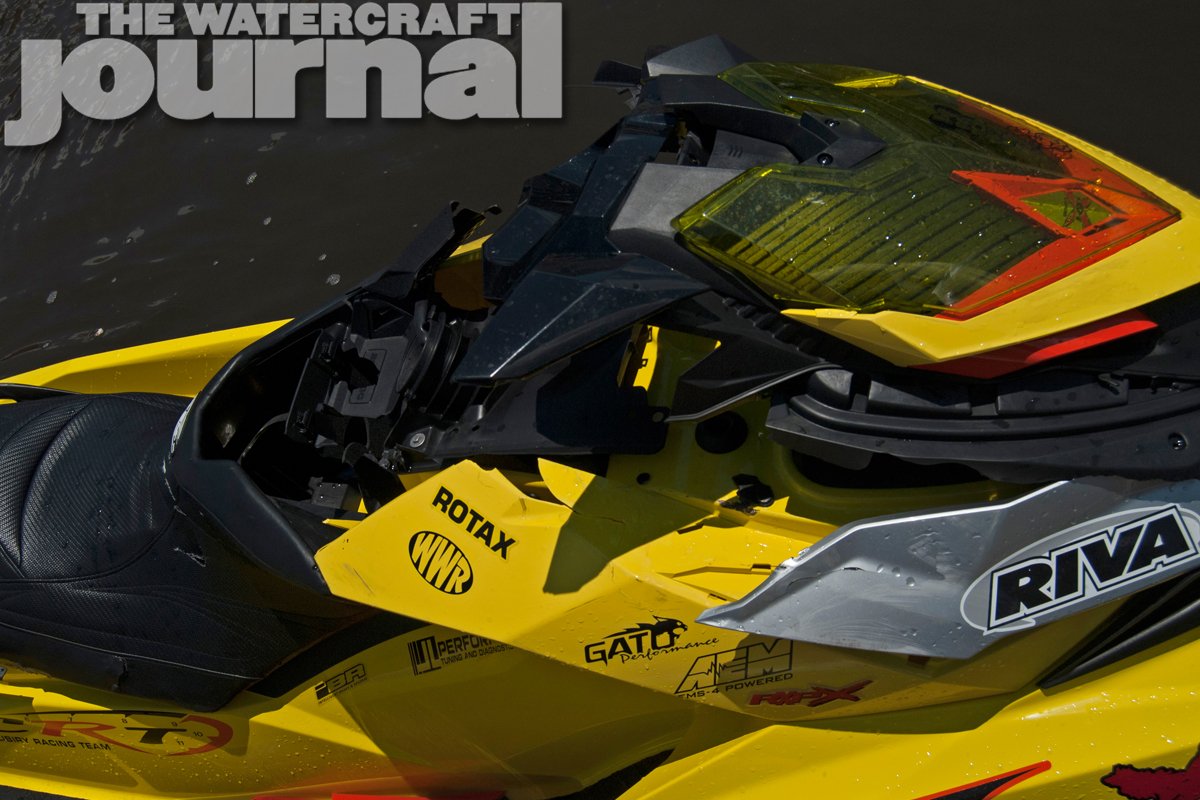
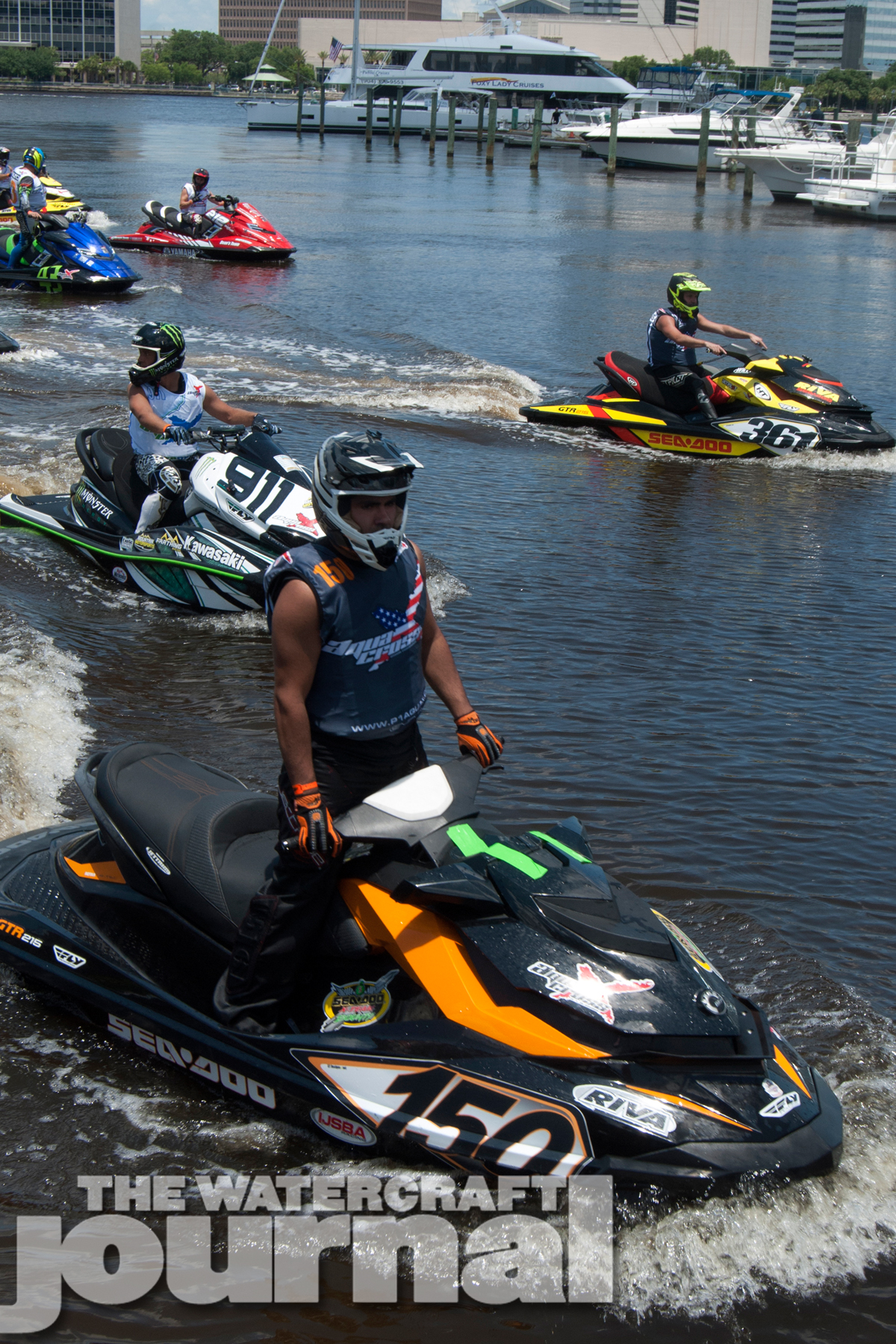
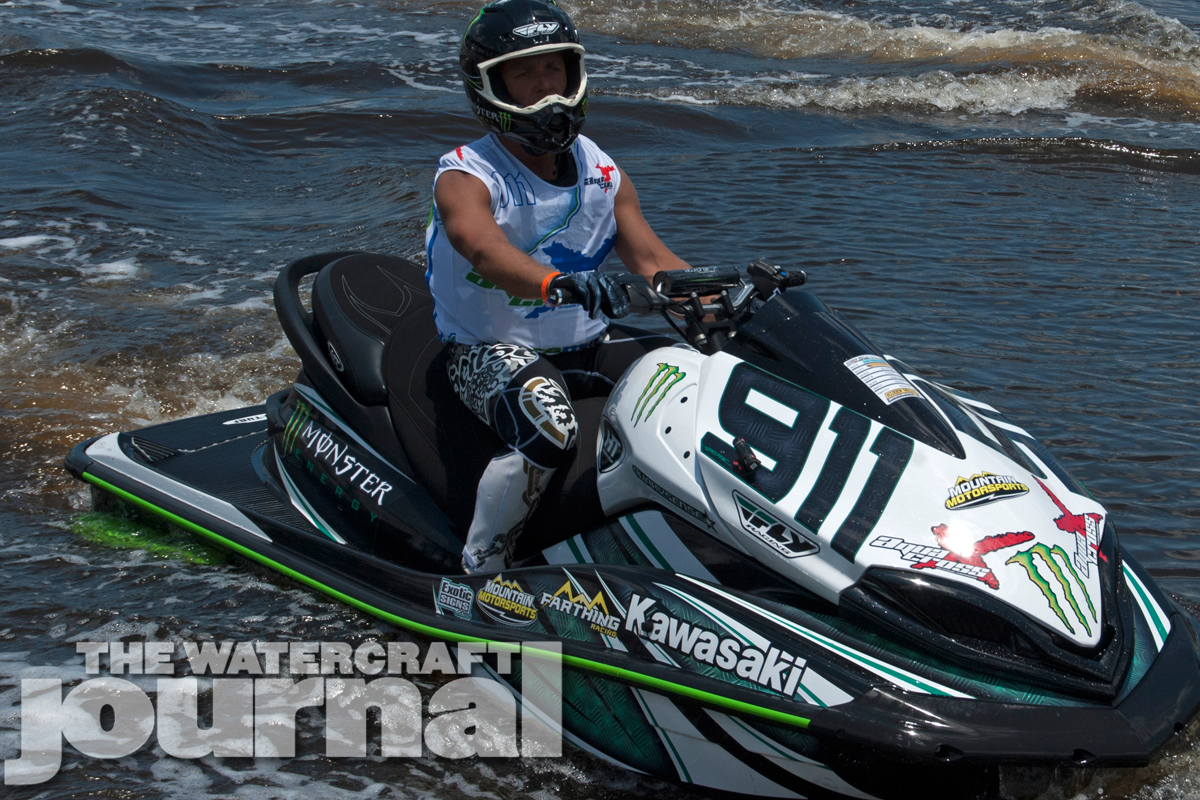
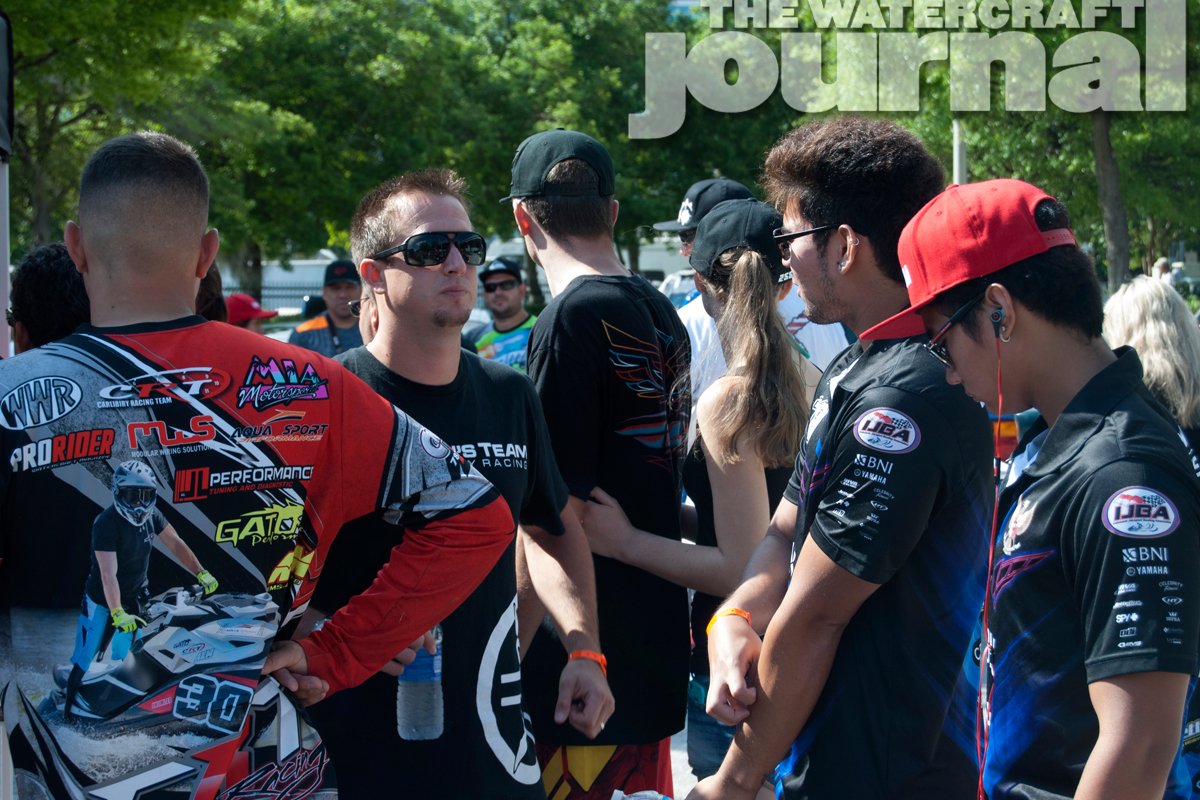
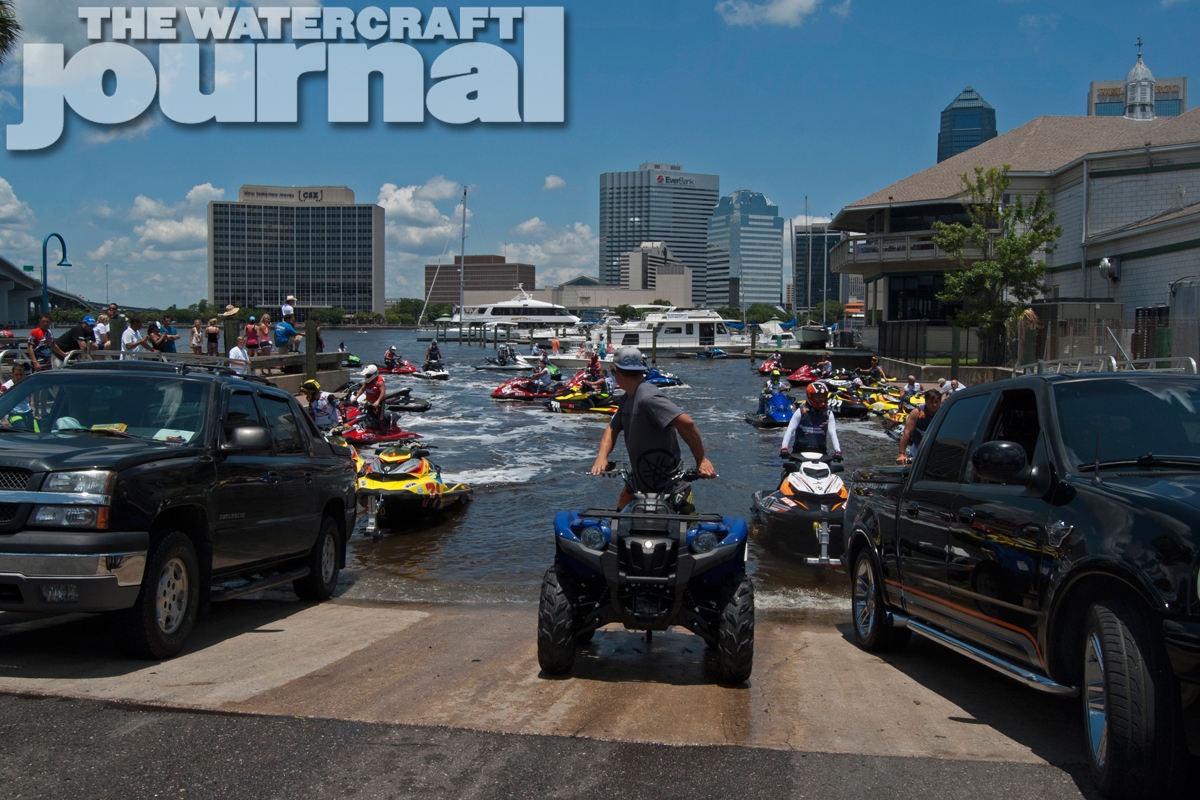
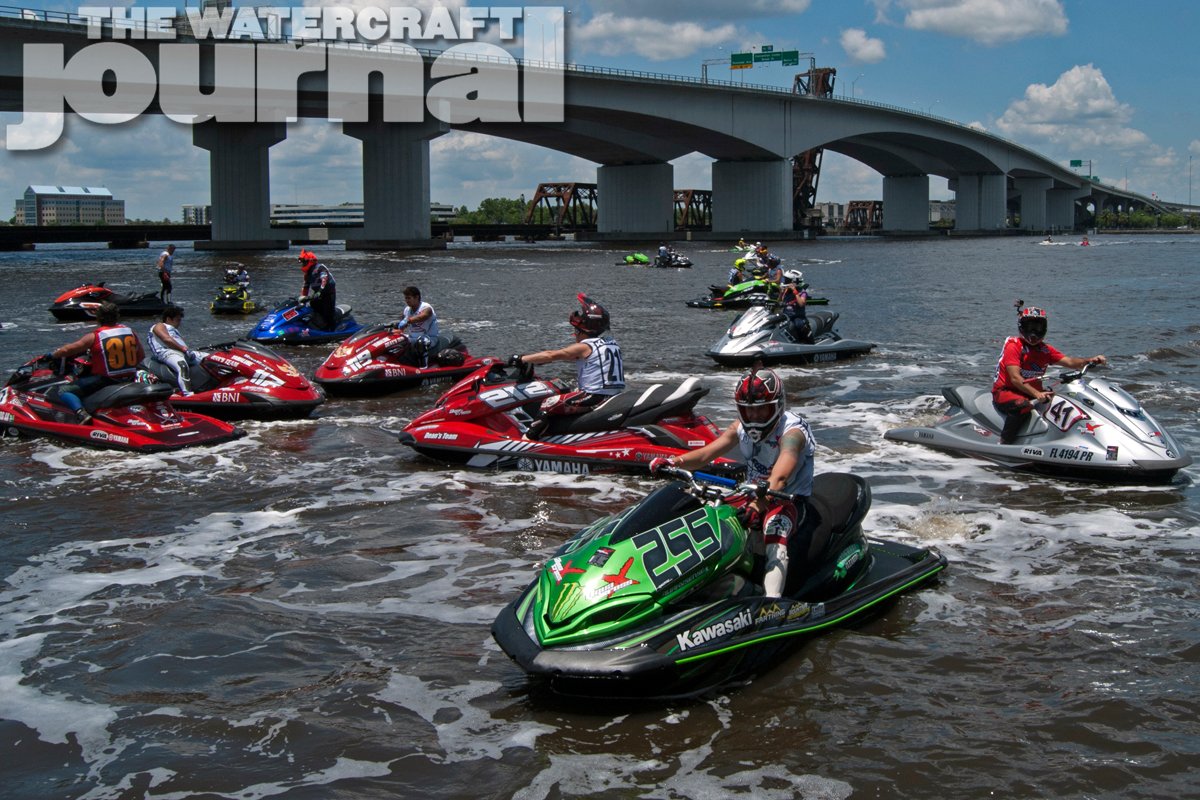
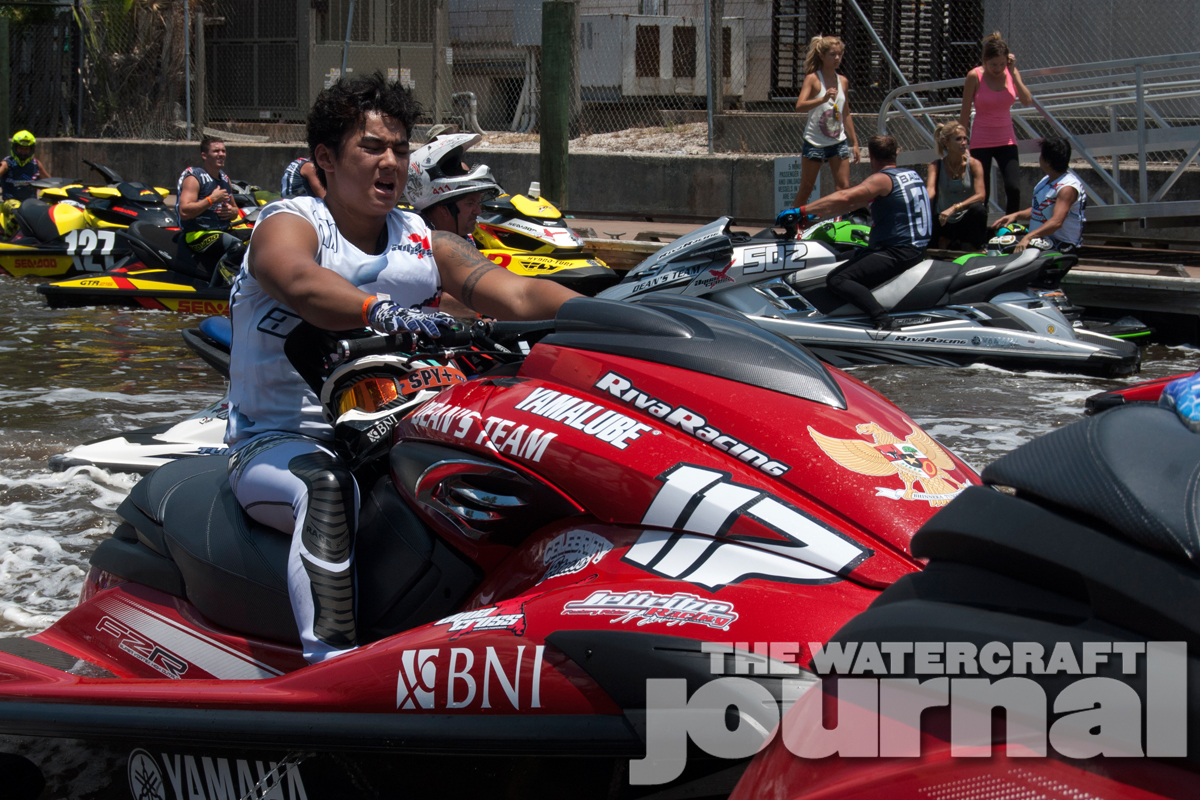
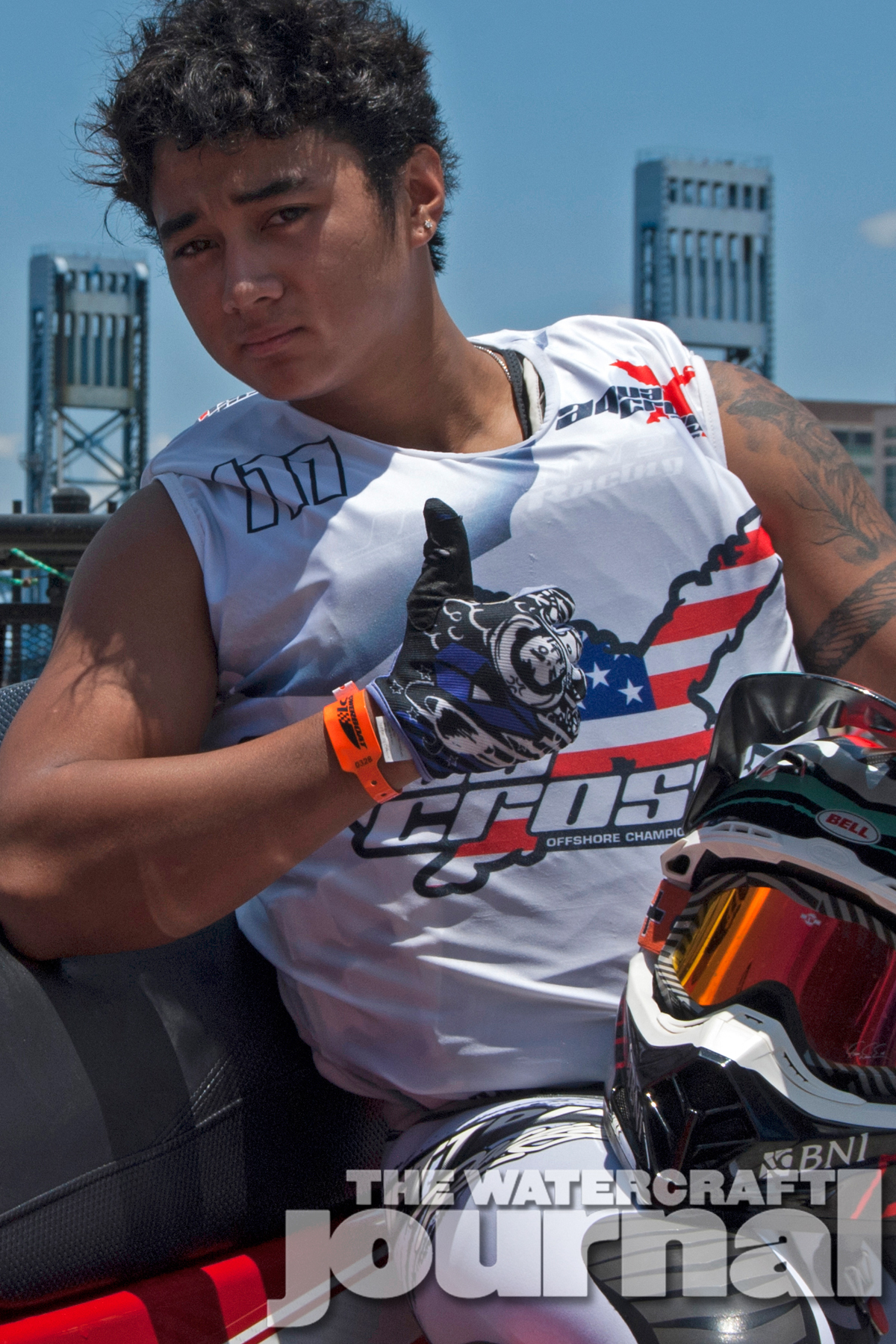
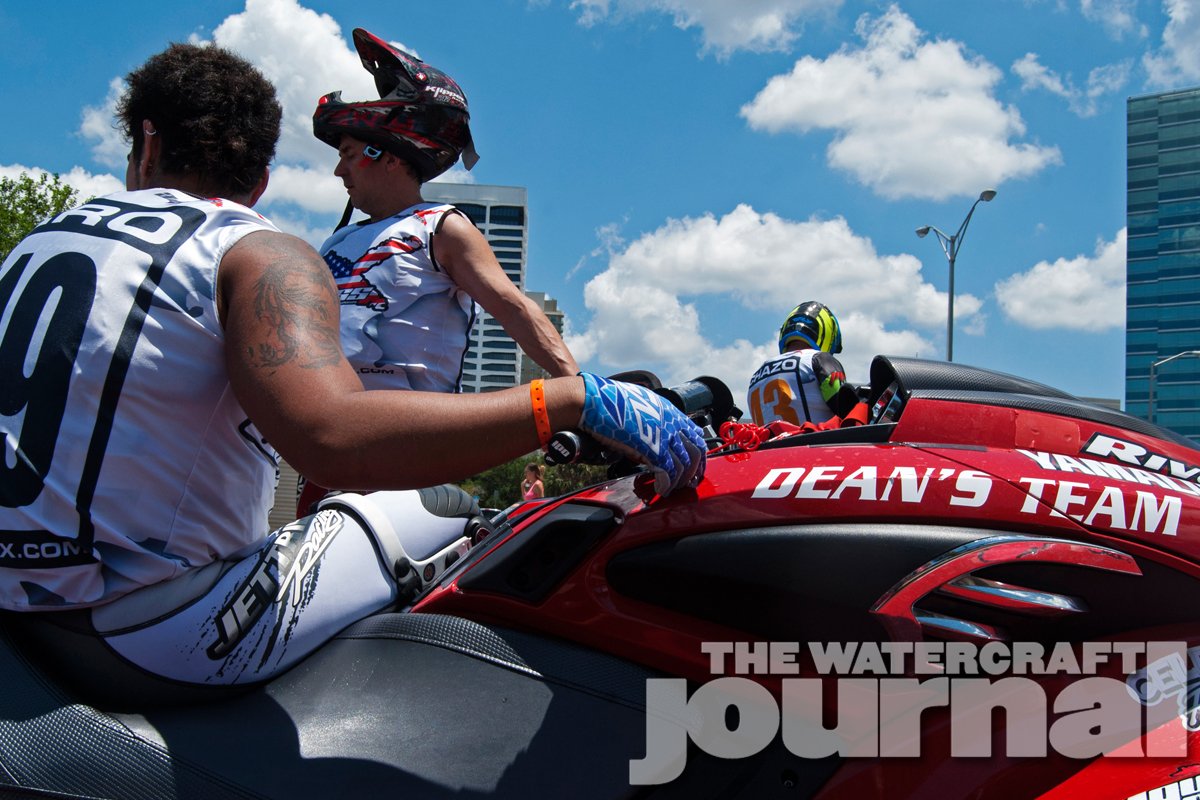
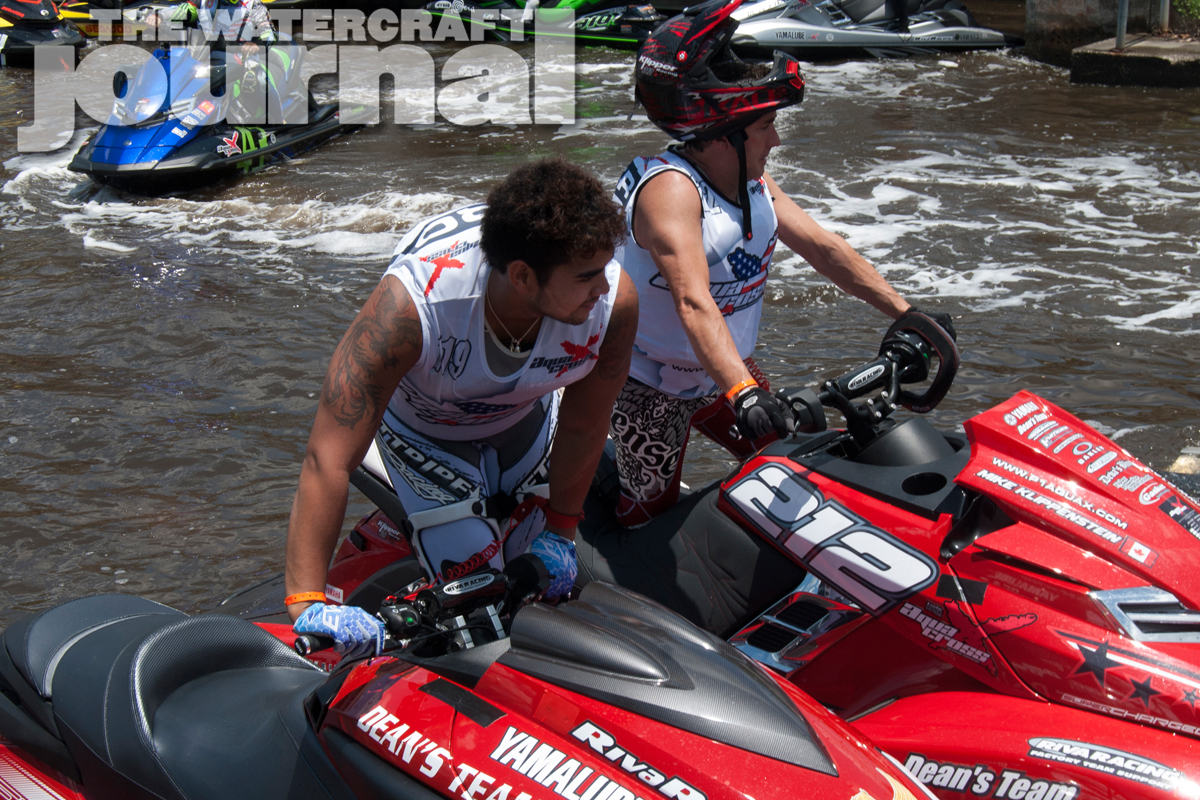
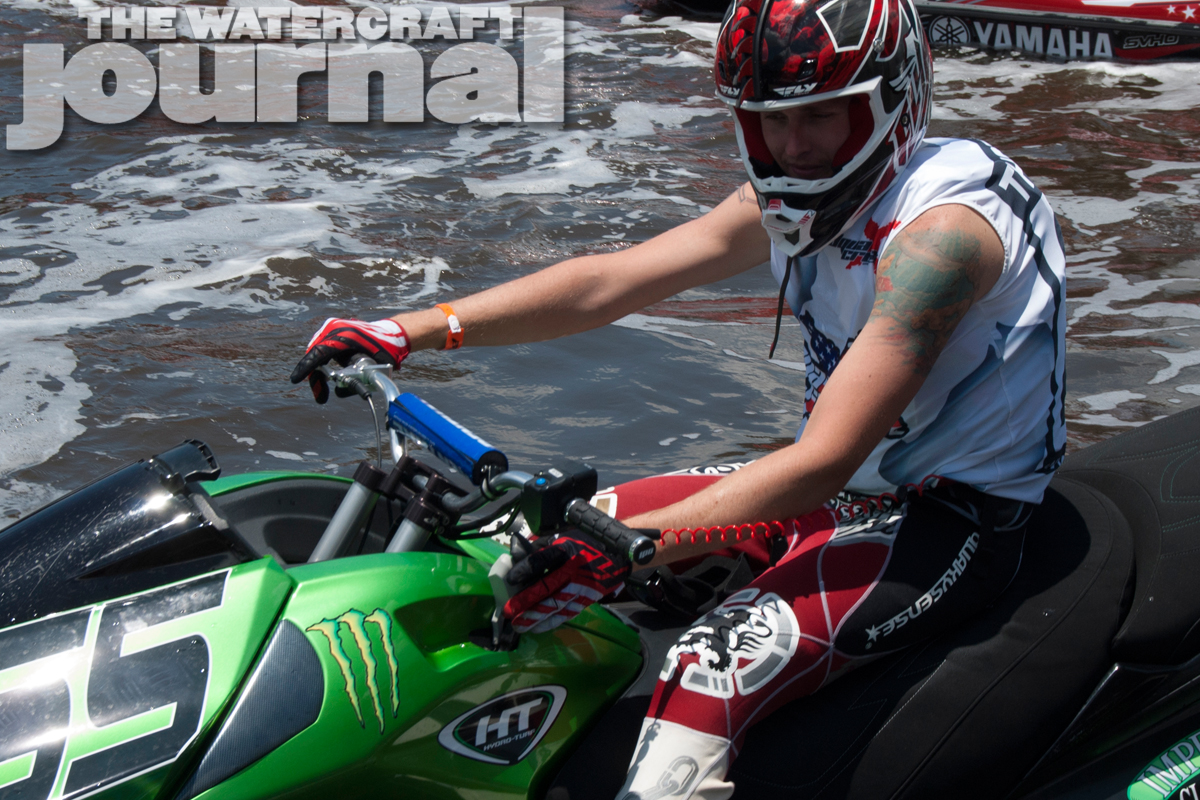
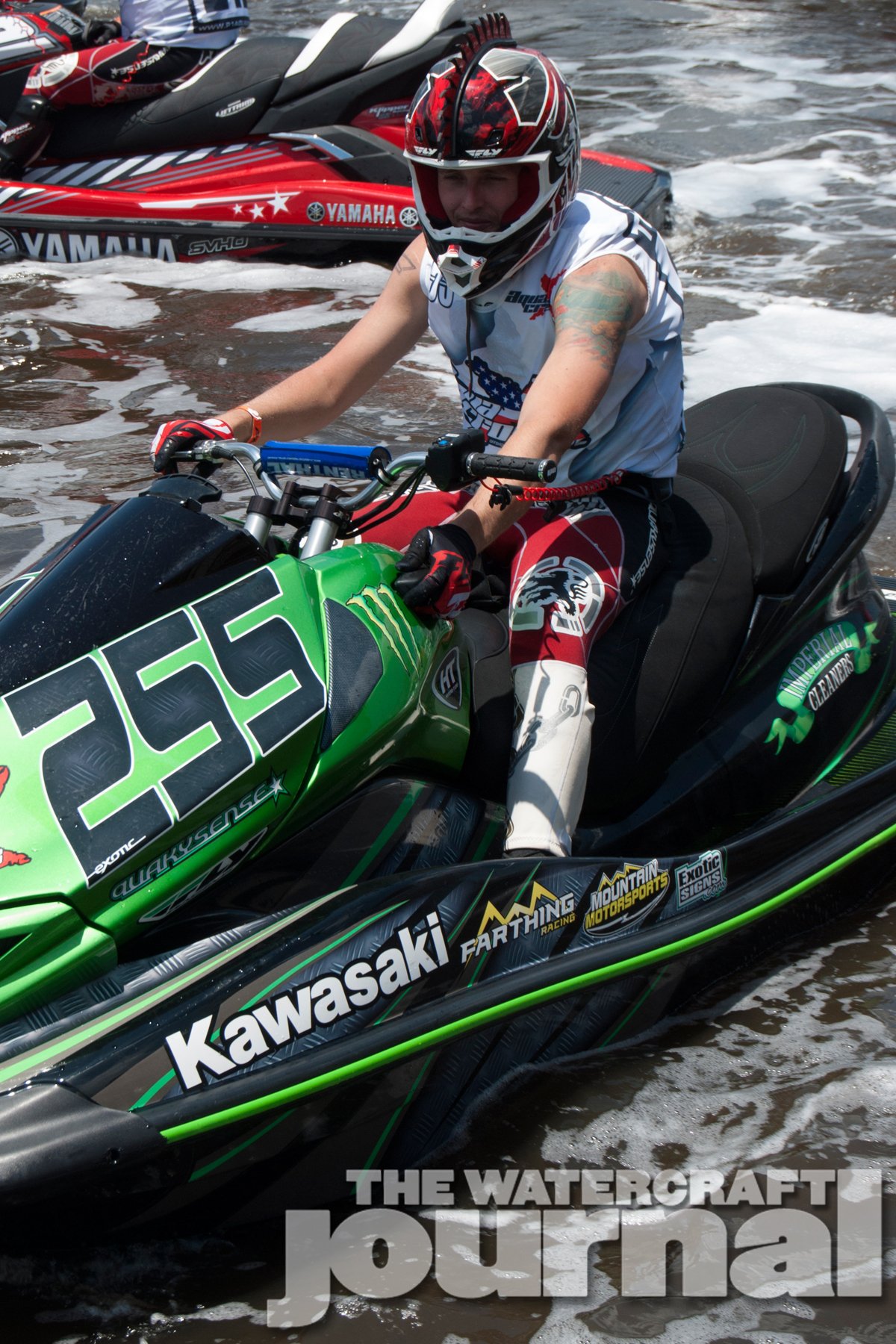
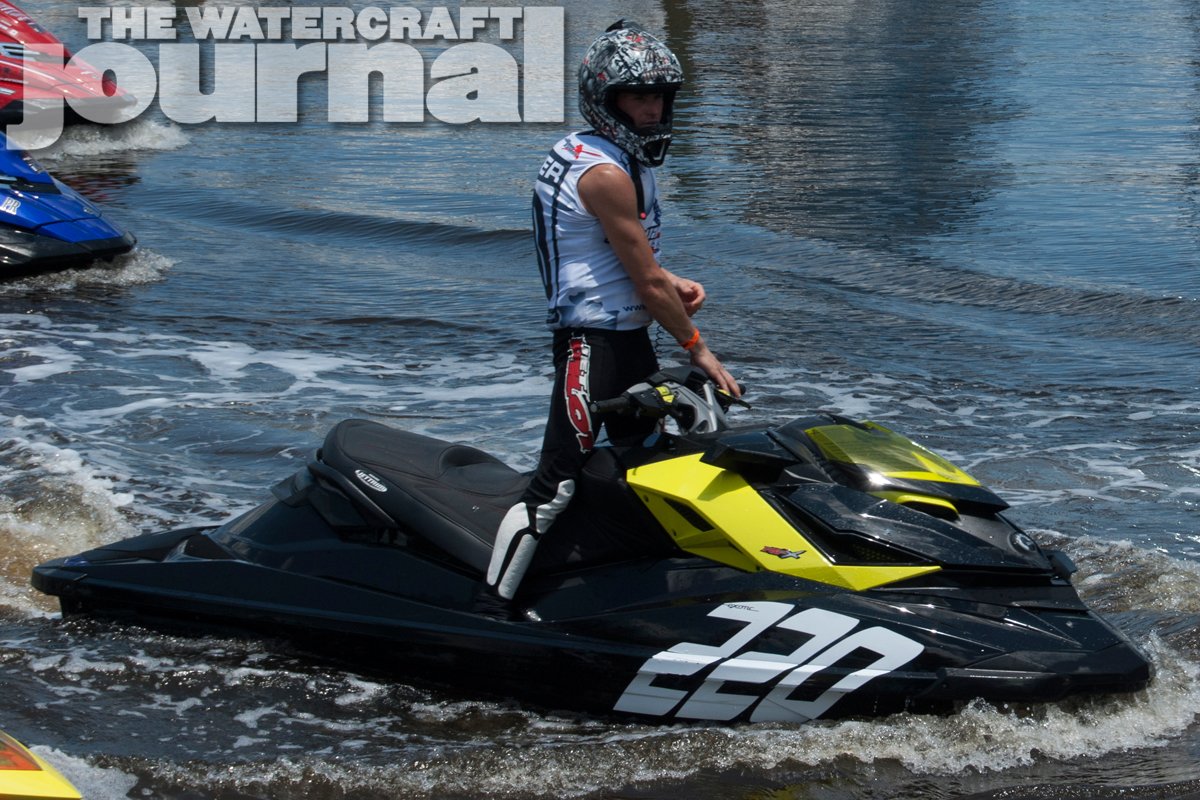
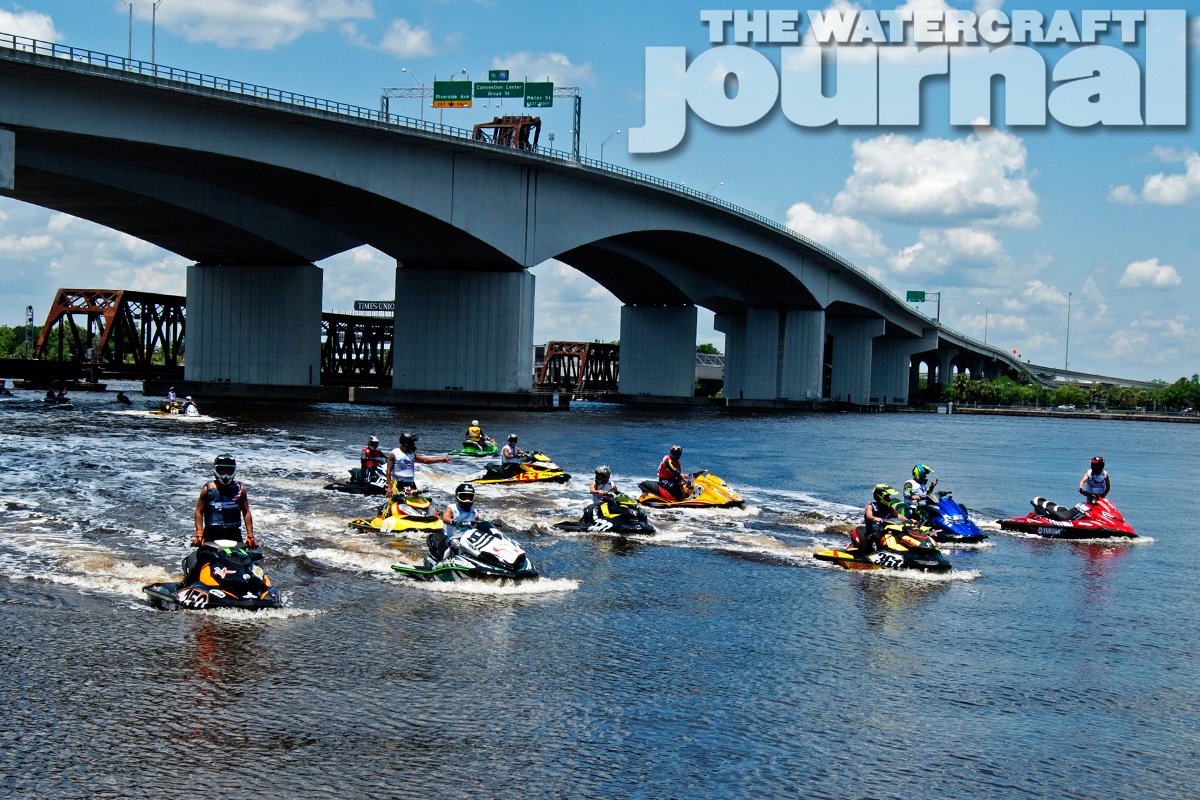
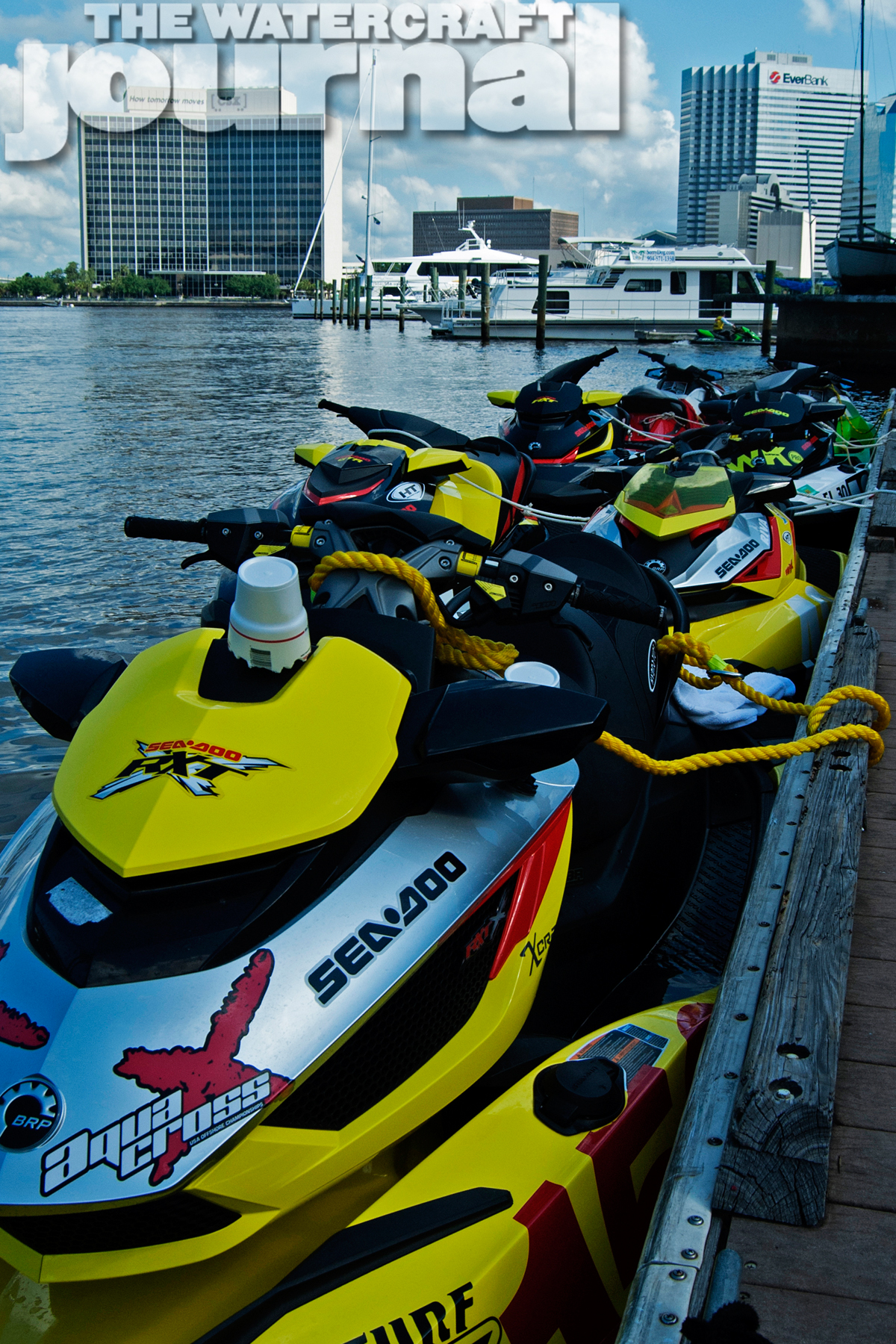
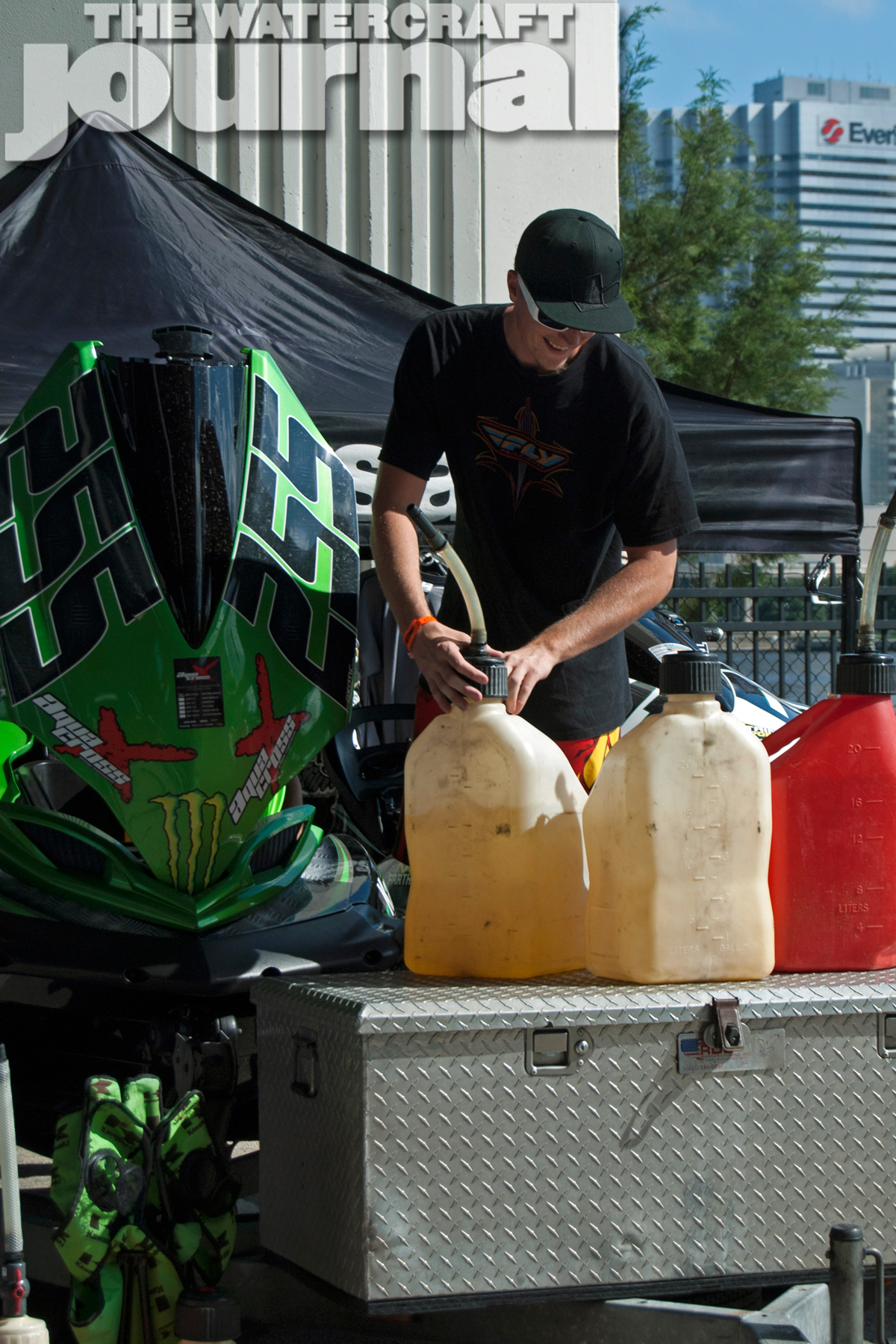
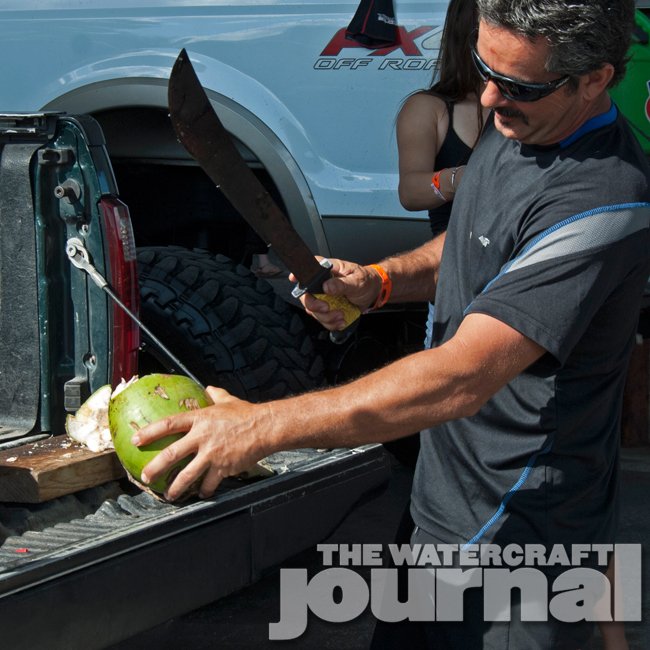
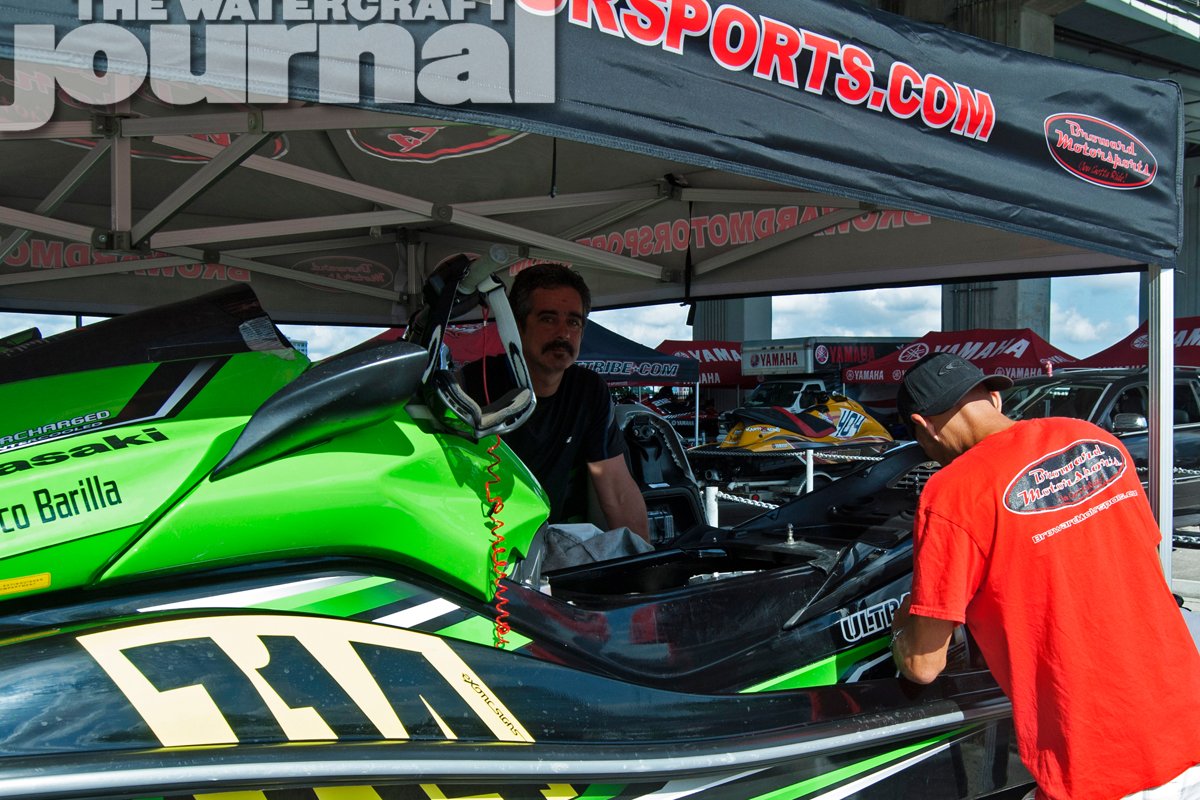
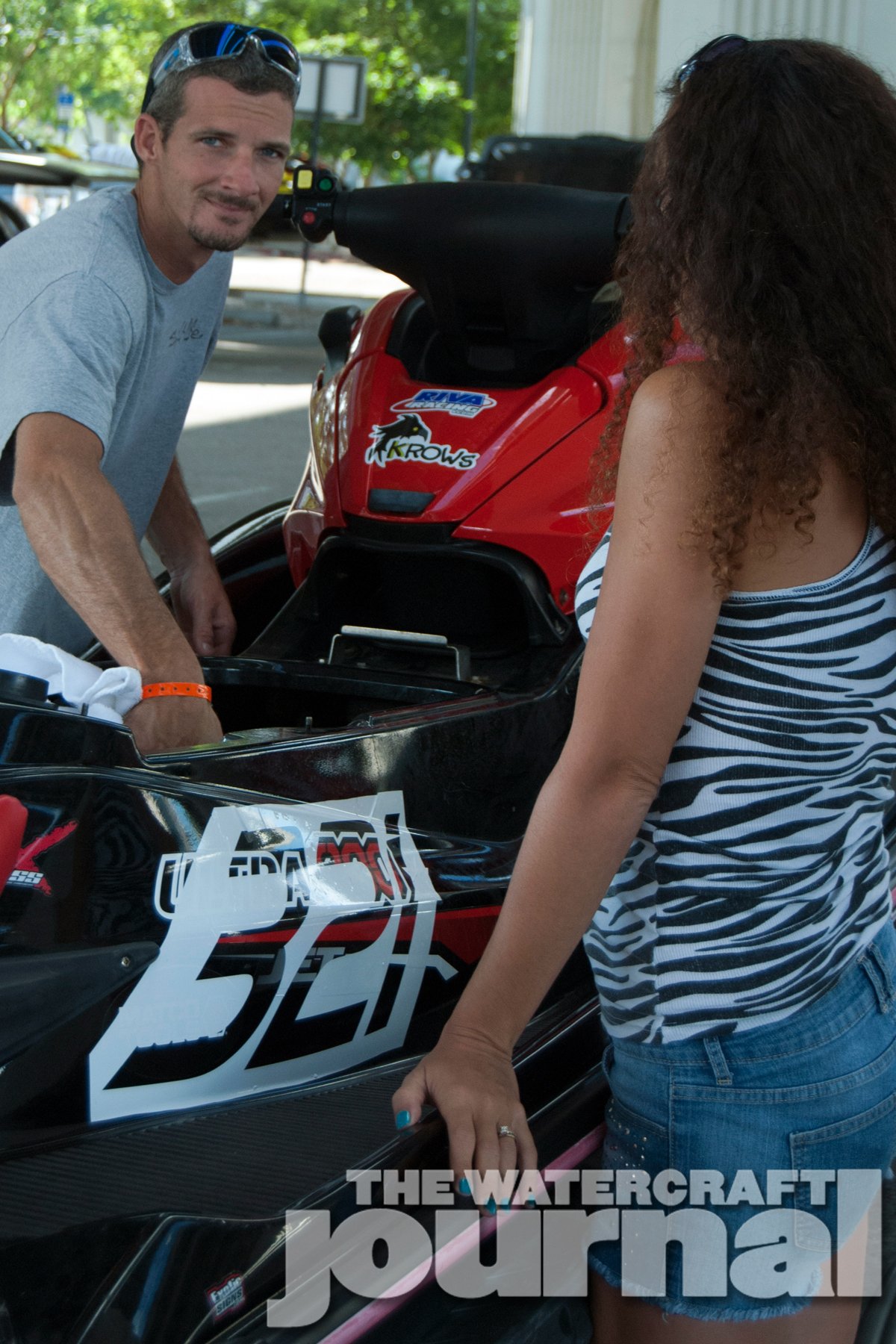
Because of the logistics in distance and AquaX officials inexplicably refusing our photogrpahers access to cover the racing action from the water, coverage from this year’s Round 2 of AquaX USA racing in Jacksonville, FL is somewhat different; The Watercraft Journal took the time to focus on the racers’ experience, concerns and thoughts moving forward in what is quickly becoming one of the sport’s most followed series.
Aqsa Aswar
Rough waters and a tight course on the St. Johns River in Jacksonville, FL, didn’t shake Aqsa Aswar from the early lead in the 300 class of the 2015 AquaCross Tour that he secured with a win in Round 1 at Daytona Beach in late April.
Aswar clinched the win in Saturday’s race, edging out Stuart Rasmussen. Saturday’s Moto saw a number of riders hit the water as the sheer mass of boats and the shallow waters of the river churned up a tough ride for competitors.
“It was rough, really rough,” Aswar said after the first Moto on Sunday. “It’s 60 boats out there, all at once, so it’s real rough.”
Sunday’s equally choppy water conditions and the pack of riders only left Aswar with more boats to pass as he pushed his Yamaha FZS to the top spot in Sunday’s Moto 1.
“In the start, I got off fast, then worked my way up,” he said. “I stayed second for a long time, then passed the first guy, then it was the checkered flag.”
Moto 2 failed to see anyone overtake his lead, and Aqsa took the top spot in Round 2 of the AquaCross series, with second place in the 300 class secured by Aero Aswar, mirroring the results of Round 1 in Daytona Beach.
“AquaCross is more endurance race, you have to have strong stamina and don’t fall off the ski,” Aqsa quipped as he headed to the pits after the race, saying he was already looking forward to Round 3 in July in Sarasota — a course he has never raced before.
Eric Francis
Team Kawasaki’s Eric Francis powered past technical issues in Moto 1 at Saturday’s AquaX Round 2 competition in Jacksonville to come back strong for Sunday’s races. Strategy, position and stamina play a key part in the AquaCross race, Francis said.
“Yesterday, I came out of the hole shot probably 20th. Today I probably came out about 10th, so I would say there is some advantage to having the inside line,” he said following the first race Sunday morning.
“Yesterday, we had some trim issues – the boat was bouncing around a bit,” he said. “But today we ended up getting it a little bit better and we’re going to make it a little bit more aggressive for the final moto — we’re making progress on every race.”
Finishing Sunday’s first race in fifth, Francis felt sure a few changes in the final Moto could still put a Round 2 podium spot in reach.
Francis finished out the top four in Round 1 of the series in Daytona Beach, falling just behind Craig Warner and the Aswar brothers.
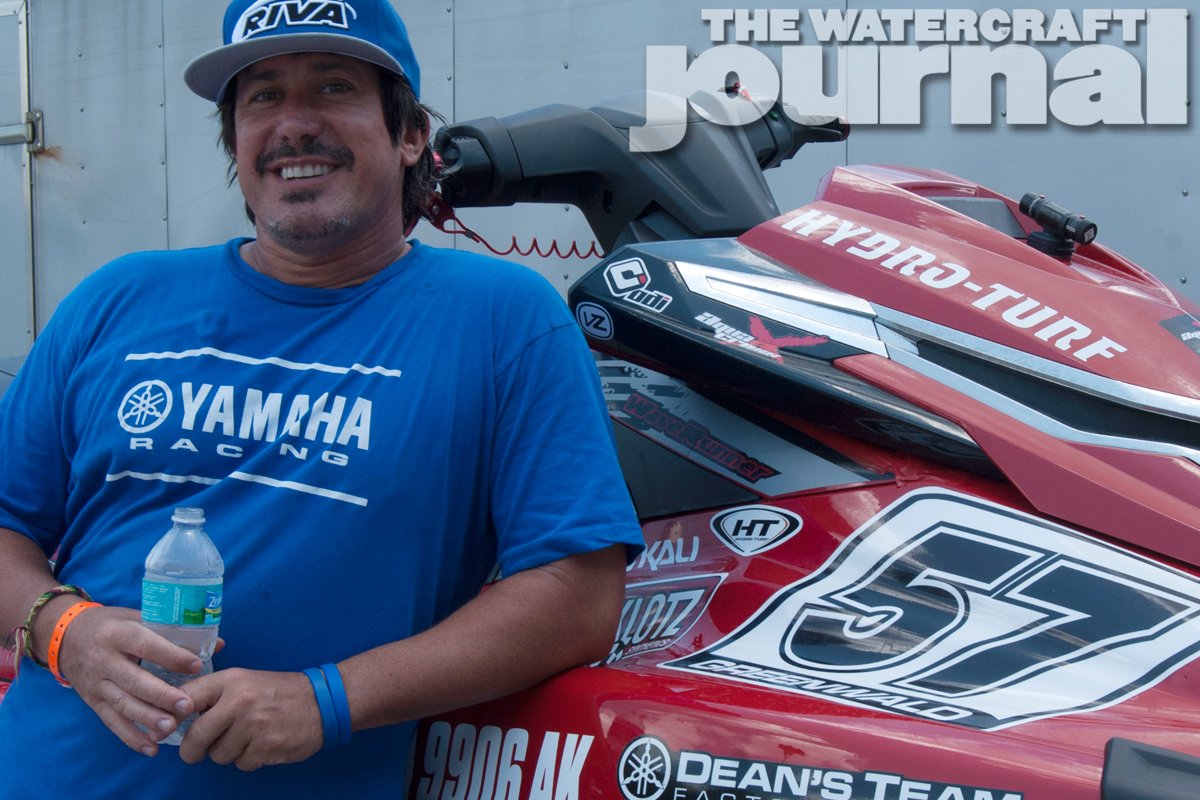
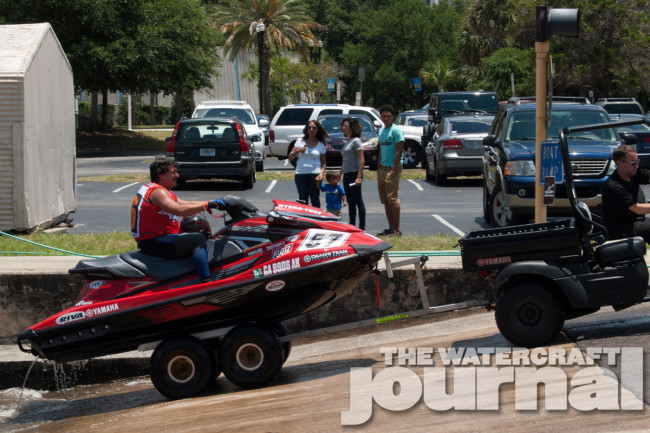
Rob Greenwald
Challenging race course conditions played to Rob Greenwald’s preferences at the AquaX Series Round 2 this past weekend.
“It was really rough, a lot rougher than it looked,” he said Sunday afternoon. “There was a heavy, tight cross-chop, 2-to-3 footers coming in from out of I don’t know where — it made it very erratic and I saw a lot of guys getting ejected from their ski. I, myself, had a few really good close calls that I had to recover from and it was a tough race, but I enjoyed it.”
The choppy waters changed the emphasis of the race, Geenwald said.
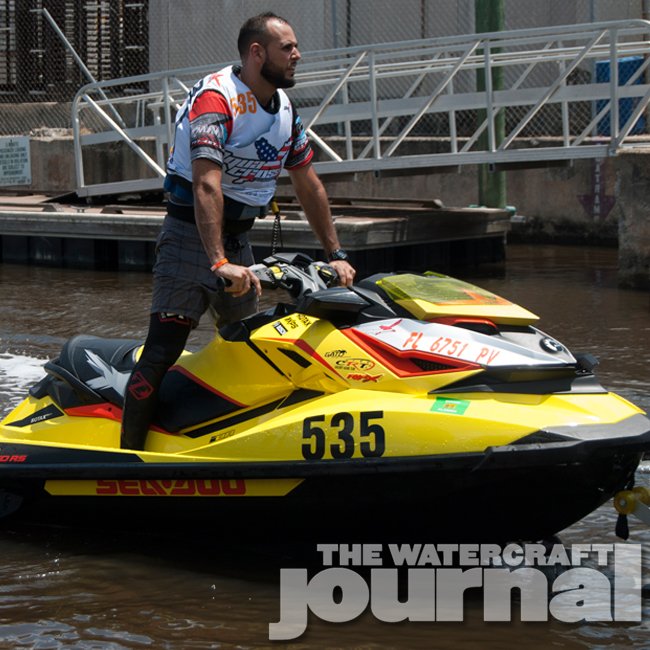
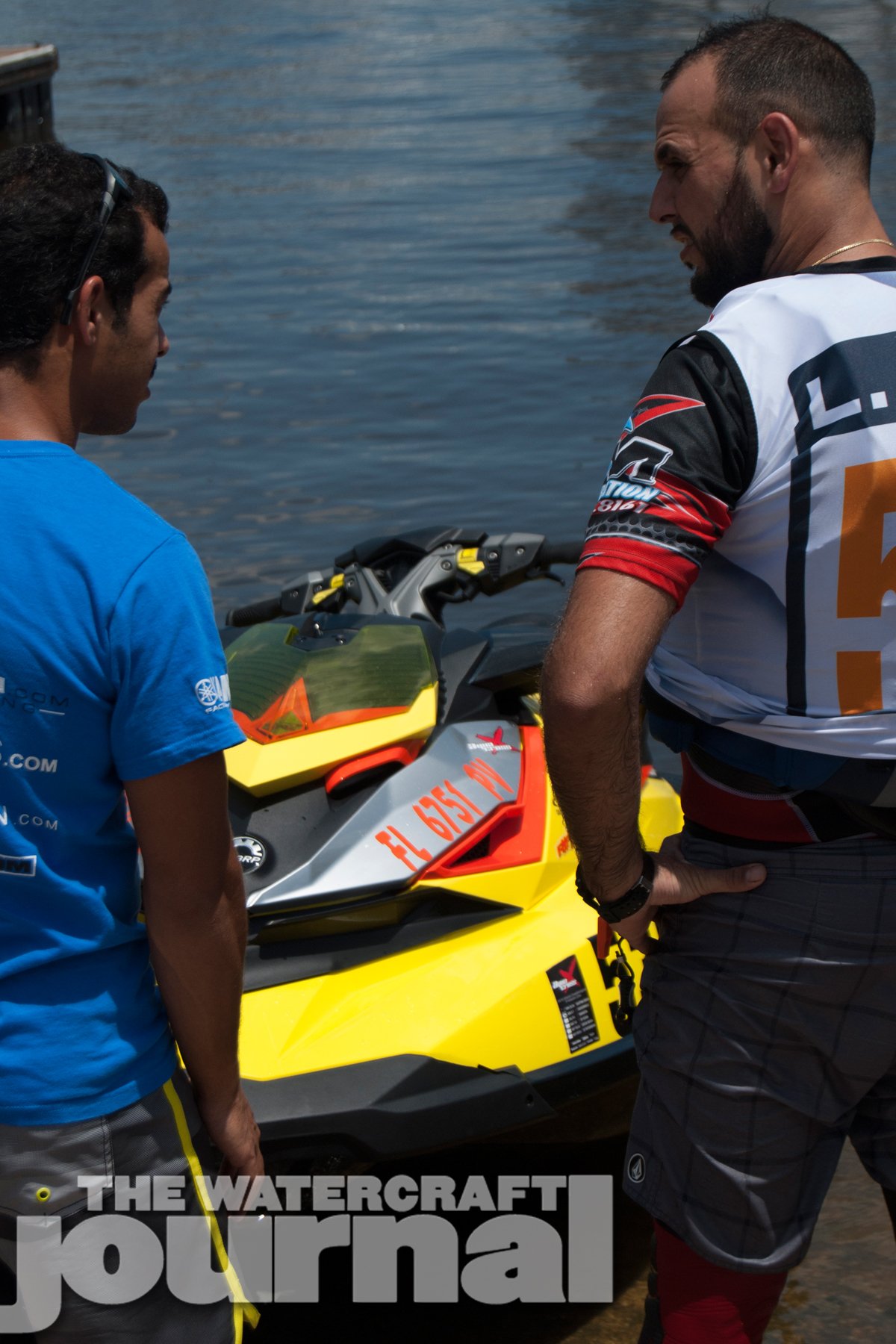
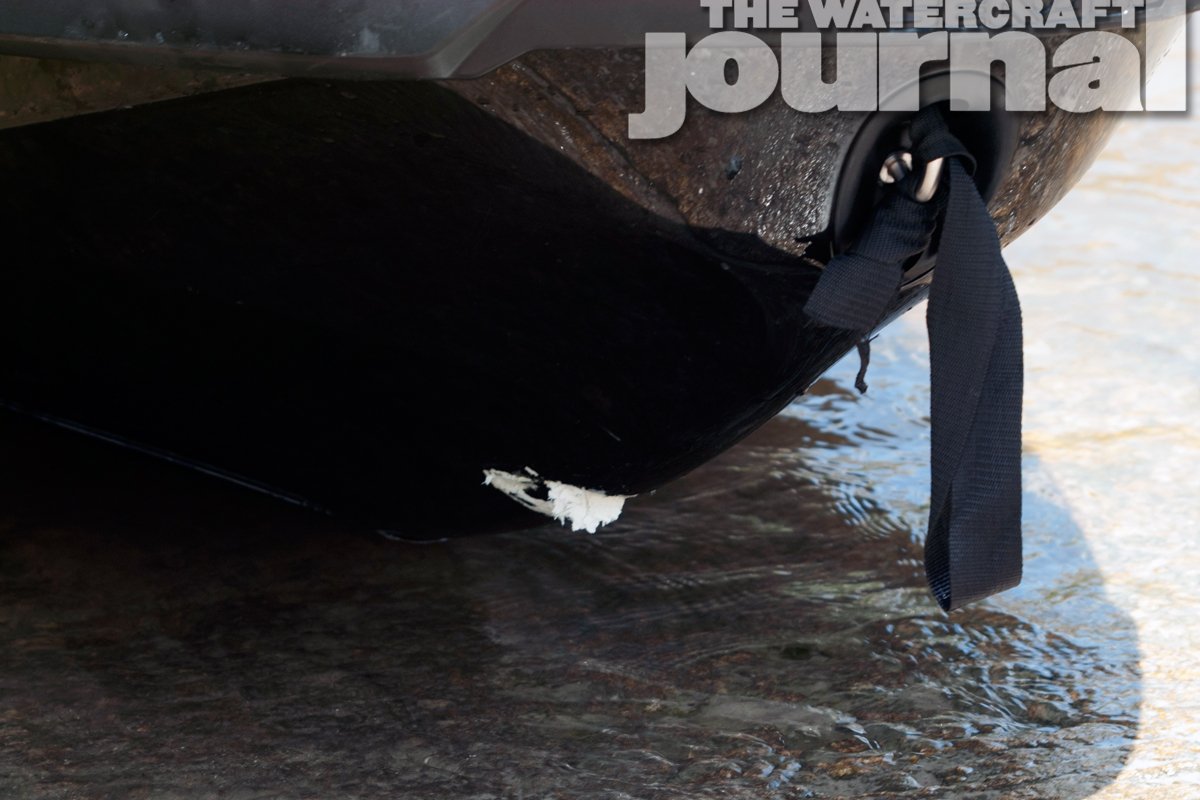
Above: A tangle between several boats going into the first turn of Moto 1 Sunday sent several riders to the pits, including #30 Carlito Del Valle and #535 Lazaro Diaz. Frank Silva, #555, also returned to the pits after the incident. Diaz’s boat suffered a gash in the hull, and the #30 boat showed significant damage after being towed to shore, and at least two riders were sporting bandages following the crash.
“I like it when the water’s rough because it makes it more about the rider and not about the ski,” he said.
Preparation for an endurance-based race like the AquaX differs from training for shorter-duration races, Greenwald said.
“It’s not so much about training on the ski as training off the ski; it’s keeping your strength and endurance up because whats going to happen is you’ll see guys start to fade,” he said. “It’s being able to keep strong, keep pushing and keep your tail up off the seat.”
Early Round 2 results for the 200 class of the 2015 AquaCross Series mirror Daytona Beach’s Round 1, with Factory Yamaha teammates Travis Zielasko in first and Greenwald securing second.
Brent Venderley
Brent Venderley — who rounded out a Yamaha-dominated podium at the AquaX Round 1 in Daytona in April, finishing behind Travis Zielasko and Rob Greenwald — looked set to up his ranking with the first race of Round 2 in Jacksonville this past weekend.
“I still haven’t seen official results yet, but I think I ended up third yesterday behind (Zielasko and Greenwald), but initially they said I had won,” Venderley said between Motos on Sunday. “I don’t know if there was some mix-up over the radio or what, but they pulled me over to do the interview at Memorial Park and then, coming back here (to the pits) and talking to these guys, I thought I was in second or so, but I think I ended up in third.”
Challenged by a packed field and tight finishes, officials struggled with scoring following the first race, as did racers themselves.
“Even when you’re in the race, it’s almost impossible to tell what position you’re in,” Venderley said. Relatively new to the AquaX race, Venderley said endurance and stamina play a large part of his training for the AquaX as opposed to shorter races.
“I’m just kinda starting to figure it out. This is my first full year racing AquaX. Racing closed course, we do practice buoys one weekend and then go take a long ride one weekend,” he said. “So what I’ve started doing is just getting more used to being on the boat for an hour or more, and just actually riding the boat for longer than 15-20 minutes,” he added, saying a 50-mile practice session was typical, helping to train muscles for the stamina needed for the AquaX race.
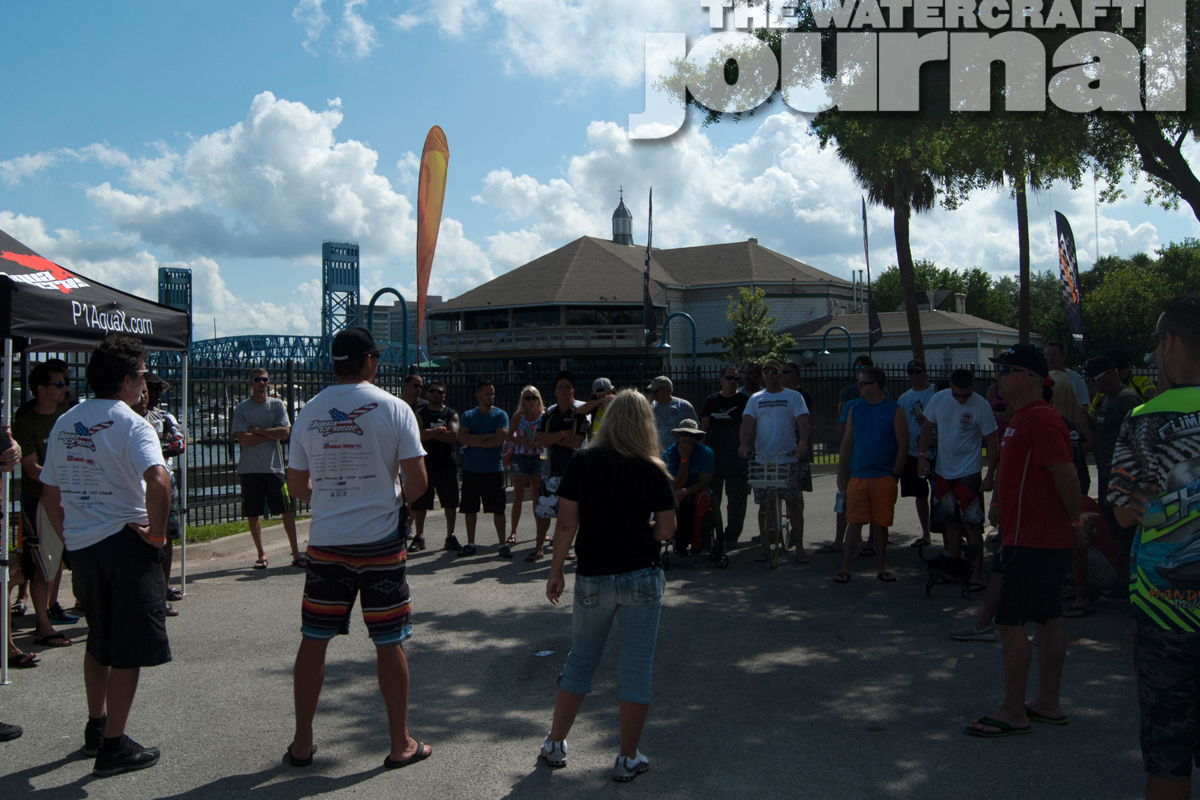
Official results from this weekend’s Round 2 competition in Jacksonville have still not been posted yet. Race officials stressed, during Sunday morning’s rider’s meeting, the difficulty of scoring with the amount of racers and often five boats crossing the line at once, and said tapes from each Moto would be reviewed before official results were posted.
Oh man, are we excited about this. No seriously, we’re likely ridiculously stoked on Kool PWC Stuff’s latest batch of cool gear, particularly their new non-invasive tow hook-mounted fishing rod holders. Normally, PWC fishermen have been forced to drill into their runabout’s fiberglass hull to mount a rod holder or two. These are typically plastic affairs with flimsy hardware that if it doesn’t break, will likely corrode after a salt water session or two.
Kool PWC Stuff’s tow hook-mounted fishing rod holder is unique in its design for a multitude of reasons, one of which being that it swivels the pole holder fore and aft to a desired position (not side-to-side) and locks into place. It easily installs in minutes to your personal water craft by replacing your rear tow hook – requiring zero drilling or cutting. Crafted from high quality saltwater-safe aluminum and powder coated for maximum protection against the elements.
The PWC Eye Hook-Mounted Rod Holder is available in either white or black powder coating, and can be purchased either as a single rod holder, or as a trio (show above). If you’re like one of the hundreds of thousands who love their personal watercraft, or one of the tens of millions of recreational fishermen, this is the next purchase for you. And priced between $159 and $259.98, this is, as Kool PWC Stuff states, “the only option for the those older jet ski’s with little to no platform!”












![IMG_5326 [EDITED]](https://watercraftjournal.com/wp-content/uploads/2015/06/IMG_5326-EDITED.jpg "IMG_5326 [EDITED]")
![IMG_5320 [EDITED]](https://watercraftjournal.com/wp-content/uploads/2015/06/IMG_5320-EDITED.jpg "IMG_5320 [EDITED]")
![IMG_5307 [EDITED]](https://watercraftjournal.com/wp-content/uploads/2015/06/IMG_5307-EDITED.jpg "IMG_5307 [EDITED]")
![IMG_5300 [EDITED]](https://watercraftjournal.com/wp-content/uploads/2015/06/IMG_5300-EDITED.jpg "IMG_5300 [EDITED]")
![IMG_5282 [EDITED]](https://watercraftjournal.com/wp-content/uploads/2015/06/IMG_5282-EDITED.jpg "IMG_5282 [EDITED]")
![IMG_5248 [EDITED]](https://watercraftjournal.com/wp-content/uploads/2015/06/IMG_5248-EDITED.jpg "IMG_5248 [EDITED]")

![IMG_5297 [EDITED]](https://watercraftjournal.com/wp-content/uploads/2015/06/IMG_5297-EDITED.jpg "IMG_5297 [EDITED]")
![IMG_5301 [EDITED]](https://watercraftjournal.com/wp-content/uploads/2015/06/IMG_5301-EDITED.jpg "IMG_5301 [EDITED]")