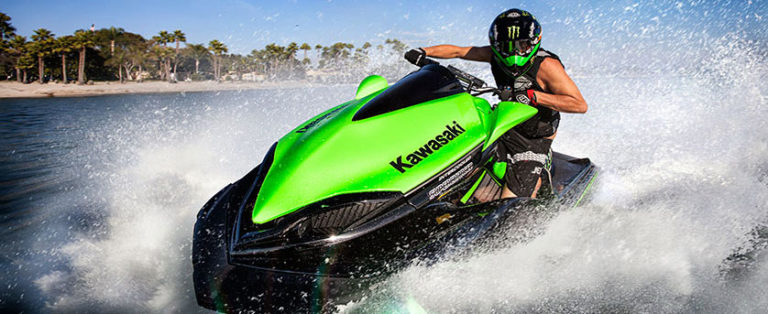
As this year is shaping up to be a wild one – at least as far as the future of personal watercraft racing is concerned – we’ve seen companies of all shapes and sizes scramble to decide where to send their sponsored riders. Of the three OE manufacturers, Kawasaki has remained the most withdrawn from the racing world. With fewer and fewer riders brandishing the iconic Kawi Green hue on the water, some have begun to fear for the worst.
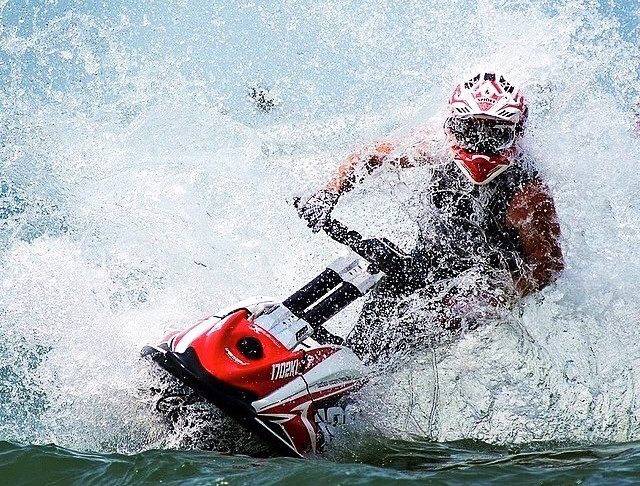
Kawasaki’s reported, “Craig Warner has flown the Kawasaki Jet Ski flag in competition with glowing results. The multi-time world champion is a force to be reckoned with in endurance racing as well, as he rides his Kawasaki Jet Ski Ultra 310R at peak levels.”
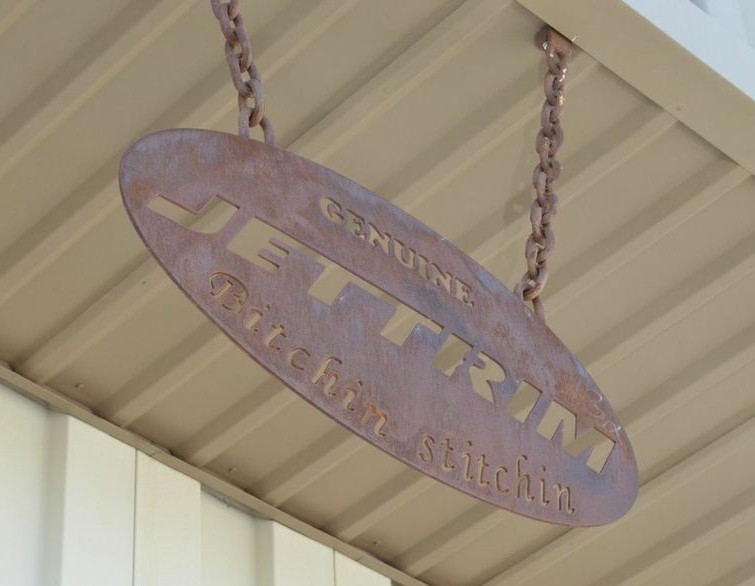
Jettrim. What comes to mind when you hear that name? How about custom upholstery, seat covers? Bitchin’ Stitchin’? Jet Ski Museum? How about the man, the face behind Jettrim, the one man with the largest heart, the Legendary Gary Hart, known to many as “Super G.”
Who knew back in 1979 that a small business that came about from a high school hobby would turn into Hart’s Upholstery and blow up into what is known today as Jettrim! It was Gary’s passion and dedication that made Jettrim a phenomenal success. His knowledge was so vast that it led him into so many facets of upholstery that even Gary i’m sure was surprised at times. Jettrim was not only the mecca for upholstered Jet ski parts, but you could pretty much ask for anything and a few bitchin’ stitches later, viola! A masterpiece!
Sadly, on November 13, 2014 the world lost an amazing person. Gary’s passing left his wife Kelly to run Jettrim came with challenges. Kelly has had to make some hard decisions, and has decided to turn the reigns over and pass ownership over Frank Walsh as of February 1, 2015. Frank knew both Kelly and Gary very well and is dedicated to carrying on the legacy of Gary and Jettrim. Frank brings with him the enthusiasm of many sports and will be adding new products as time goes by.
And although we can’t divulge any top secrets, we can let you know of an exciting change coming: the return of Dean Morton! Dean and Gary worked together for almost 20 years, and with Dean’s return on January 26th, he’s sure to be an instrumental piece to what makes Jettrim the best in their field! Oh, and don’t count Kelly out! Kelly will be staying on as the bookkeeper and working the phones and continuing the Jettrim sponsorship programs as usual.
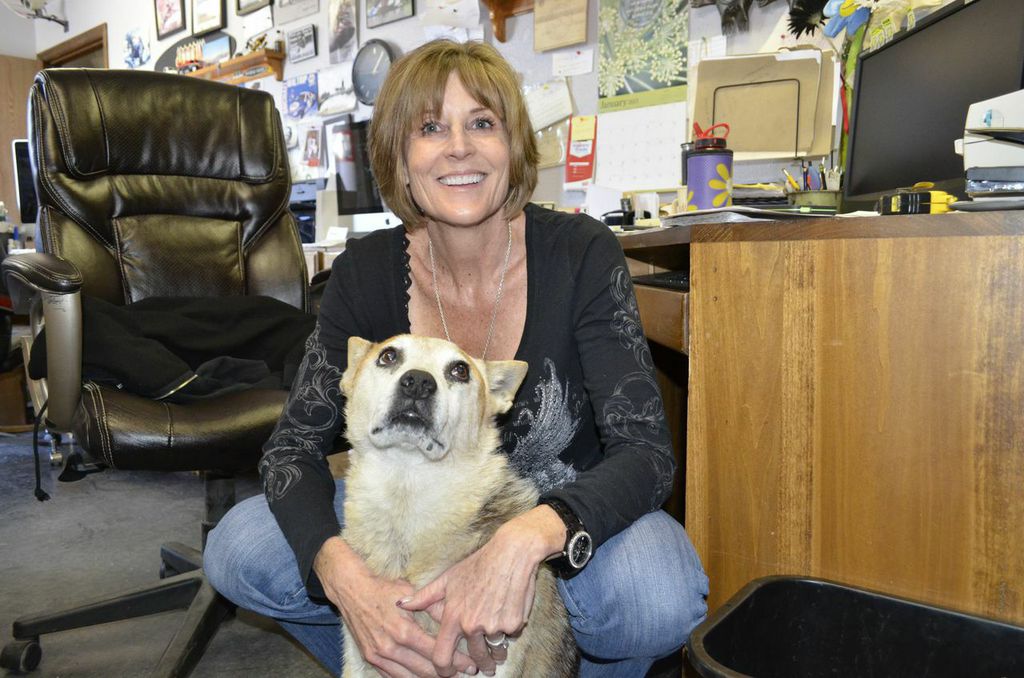
So if you find yourself in Havasu, stop by Jettrim and say “Hi” to Kelly, Nugget and give Frank your new ideas, he’d love to hear them!
The Watercraft Journal: Braden, thanks for taking time away from your classes to talk with us. Can you tell us how you first get into jet skiing and then, eventually into racing?
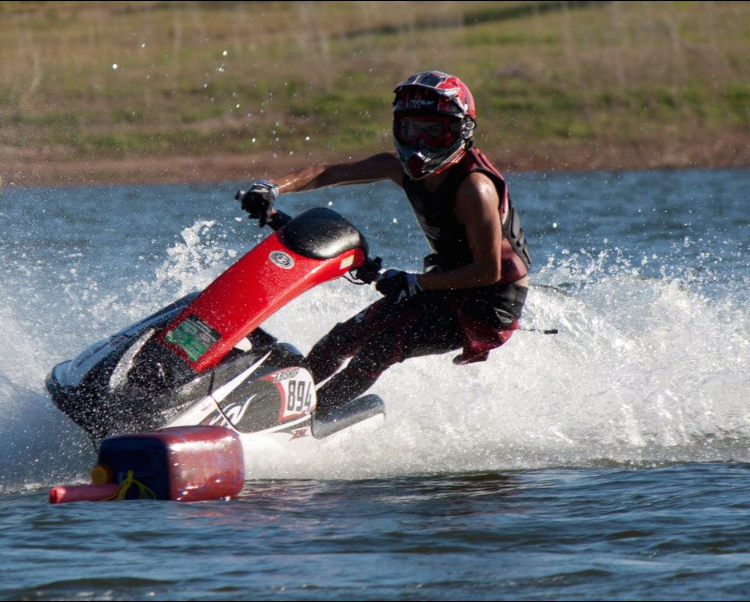
Braden Bishop: Both my parents raced before I was born, not on the Pro tour, just local Texas races. We have had jet skis my whole life; I can’t remember a summer that was not spent on the lake riding. My parents always shared stories of their race days and how much fun it was. So from very early on I knew I wanted to get out there and try. Every summer I would beg my parents to sign me up for a race, but due to other commitments my brother and I had, time just would not allow it.
It was not until my senior year in high school that I was able to devote the time needed to travel to area races. I got in touch with Brian Smith with [Region 5] and he invited me out to practice with him and his group. I then signed up for my first R5 race. I knew on the first ban snap I was hooked. I have always loved to ride but now racing was going to be my main focus.
I enjoy everything that goes along with racing: the travel, the competition, and the people you meet along the way. I also enjoy talking with the legends and hearing the stories about passed races. Most all the veterans of this sport are willing to help and support the younger generation of racers. I love how on race day how most everyone is helping everyone even their own opponents. A true racer wants to race the best; it is the only way to know where you stand. So if that means helping your competition make it to the line, that is what is done.
WCJ: You had a pretty whirlwind year of racing. How did 2014 go for you?
BB: Yeah, 2014 was crazy and fun. When I found out there was not going to be any races in my region I was frustrated, wondering just how many races on the Pro Watercross Tour I would be able to make. Little did I know my dad was going to buy an enclosed trailer that would carry all our skis, and when we pulled our skis out we could convert it into a place to sleep by hooking up the AC and flipping down the beds. I was blessed to make all the tour stops except one, and compete in a Nauti Water race in Kansas.
The first race in Pensacola was a hard way to start. I went from never ridding in the surf, to now facing 8-10 feet waves in race conditions. This was a great lesson for me and I was ready for the next week in Panama City. Then Panama was ready to give me another lesson in breakdowns! The rest of the tour was pretty smooth and I was able to gain ground in the standings and finish in second on tour in the Amateur Ski Lite class.
WCJ: And it was very well deserved! Tell us about your experience racing at your first IJSBA World Finals. How did it go?
BB: The 2014 World Finals was amazing, just being there would have been enough, but getting to race was a privilege. This was my first time at the World Finals and I did not do as well as I had hoped. It was a learning experience and an eye opener. I was faced with some difficulties I had a hard time overcoming like the water conditions, fatigue and just plain amazing competition. The best of the best are out there and everyone wants what you want and that is a win. I felt like I started out well but with every lap just lost steam. I thought I was in shape and had put in enough work, until I got there. WOW! I now know that it is not just skill that gets you to the finish line it is endurance, drive, heart and when you have given all that you have, you have to dig deeper and finish strong.
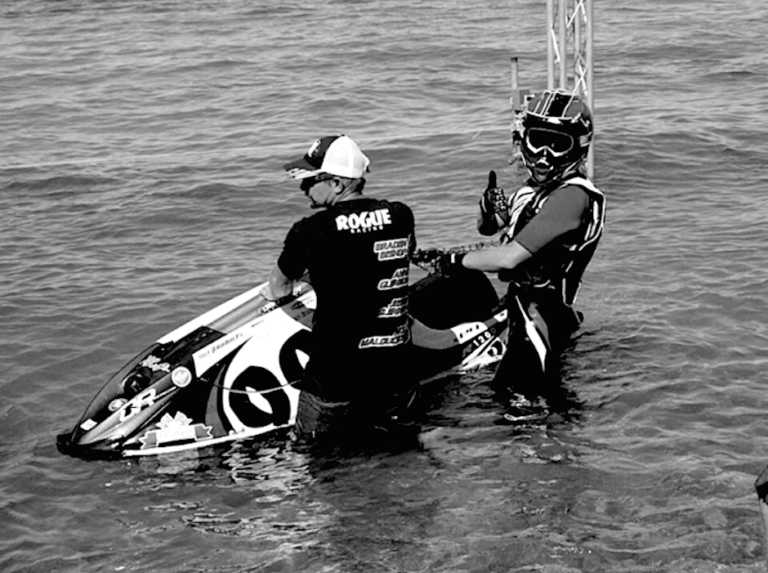
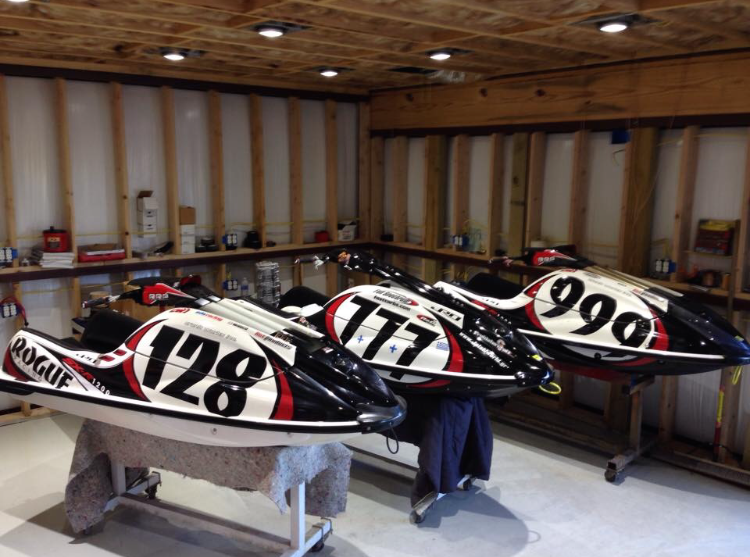
I raced in the Amateur Ski Lite on my Kawasaki SR-X 800 but I was also given the opportunity to ride and race a Kawasaki 1200 built by Rogue Racing. I had only been on the 1200 maybe 15 minutes before race day and it gave me a workout for sure. When I look back on that week I get excited, I can only get better at the sport that I thought I had all figured out. I developed a new found respect for it. It is like being the new kid on the block; it’s nerve racking at first than you find out everyone is there because they have the same dream you do and at the end of the day they put their wetsuit on the same way you do.
WCJ: What kind of ski are you building/riding this year? Can you tell us more about your relationship with Rogue Racing?
BB: I am in the middle of stripping down, patching up and painting my Kawasaki 800 all by myself; this is a first for me so wish me luck. I am also grateful to be working with Ron of Rogue Racing. He is teaching me a great deal about what goes into building a 1200 [triple]. We have rebuilt the practice boat. He is also working on something huge for the 2015 race season. Ron and his wife, Denise are just amazing with their support, which also goes beyond the race season. Rogue Racing is about becoming part of a family, and I am beyond blessing to be giving the chance to work with and ride for this group.
WCJ: That’s great news! So that leaves us wondering what your plans are for 2015?
BB: I will be working hard to get in race ready shape – both physically and mentally. I hope to hit all the stops on the Pro Watercross tour along with some races on the Nauti Water Racing Tour. I will be riding my Kawasaki 800 Stock boat in the Novice Ski Lite Class and in the Novice Ski Open class I will be on a Rogue Racing boat.
WCJ: Good stuff! What longterm goals do you have for your jet ski racing career?
BB: I hope in five years I will have worked my way up to the Pro level and to have obtained sponsorship to fund all my races. I want to be a racer that the younger generation will look up to, but most of all I hope my younger brother Brice is racing right by my side.
WCJ: Outstanding! OK, here’s your chance to make some gratuitous shout-outs; who would you like to thank for helping you get this far?
BB: I want to first say “Thank You” Don and Kristi Bishop who are my Dad and Mom without their continued support none of this would be possible for me. My dad for his countless hours spent in the garage working on my ski and being at every race fixing my stuff when it breaks giving me insight on what he sees that I am doing right or wrong. My mom who most of the time stays home because of my brother is still in high school and has had baseball commitments. But I know she is my number 1 fan and she never forgets to send words of encouragement via text before each race.
I want to thank Ron and Denise with Rogue Racing for their support and giving the chance to prove myself, I am looking forward to a great race season and finding some gold. To my best friends Chuckie Dobbs and Ryan Norris, both who have taken time away from their busy lives to travel to races no matter how far. Thank you Michael Sparks and Kyle Araiza for becoming part of my jet ski family your advice and support is amazing. Thank you to Brian Smith for getting me involved in your practices a few years ago.
Last but not least, a huge shout out to my younger brother Brice Bishop who will be joining me this year on tour and racing in one of the same classes as me. He called me after every race and always shoots straight with me, he holds me accountable for every move I make at on the course. He wants to know why I was so tired or why I let someone past me. He pushes me to be the best I can be because I know he will be right on my heels this next year. Glad to be finally getting to racing alongside him, this will be a great year for us both.
Many of us are doomed to learn life’s lessons the hard way. Y’know what we mean. You were the kid throwing sticks at electrified fences and taunting that one mean dog through the chain link fence. Well thankfully, you’re not alone. We spied this tragedy of Margaritaville-proportions over at late model Chevy-enthusiast site LSXtv.com (which yours truly once helmed for a short season) and just had to share in the fail-worthy joy.
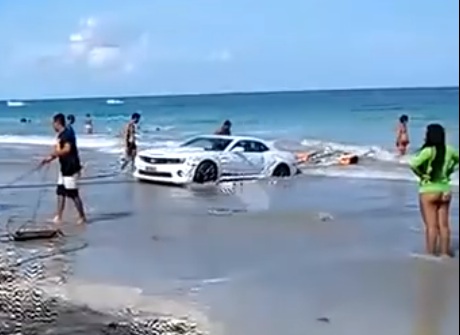
When faced with the task of launching a personal watercraft one must consider a few factors, particularly the state of the launch ramp in comparison to the type of vehicle you’re using to launch from. We’ve seen our fair share of unusual launch vehicles, but a trailer hitch tied to the back of a 5th generation Chevrolet Camaro is new, even for us. Add to that a miserable attempt to launch from a sandy beach, and you’ve got disaster on your hands.
Of course, the V6-equipped, slip-track Jeep Liberty doesn’t offer much in the way of help in digging the doomed Camaro from the oncoming surf, woefully digging into the soft, paradisaical sand. We don’t get much more than some rapid-fire Portuguese and a lot of bystanders watching the drama unfold – heck, we don’t even know if the Camaro makes it out. But, what we do see is a $35,000 Camaro earn a salvage title.
It’s always great to work with the best wherever you are (that’s why so many advertisers have come to recognize the value in working with us! Hardy har har). That is why all of us at The Watercraft Journal are so excited to welcome IPD Graphics as its newest advertiser for 2015.
The IPD team is assembled of some of the utmost professionals, producing not only some of the most attention-grabbing graphic kits in our industry, but to do so with a higher standard of quality for their clients. Employing the company’s 15 years of experience to appeal to the jet skiing enthusiast demographic better than any other, IPD continues to provide possibly the best way possible to customize the look of your ski than anything else.
Whether you’re a racer, a cruiser or just an enthusiast with a style of your own, IPD Graphics has the graphic kit to transform your watercraft – from a vintage JS440 to a modern Yamaha FZR and everything in between (no really, the absolute size of their application chart will astound you. We had actually forgotten several units until we saw them on their list). And if you are a budding racer, you can also find out more information about sponsorship, racers, and racing events at their website.
And one more thing: “Just because you might not see what you are looking for at IPDJetSkiGraphics.com, doesn’t mean we can’t create it. So please don’t hesitate to contact us and get in touch with one of our trained representatives to inquire about your needs. We look forward to servicing you and are ready to take on the task of making you look good!”
Admittedly, there are few projects that truly catch our eye enough to really croon over them. A few months back we peeled the layers back on Keith Salles’ 110-mph SHO-powered Yamaha GPR because it was one of the most amazing conversion skis we’ve ever encountered. Maintaining the same level of scrutiny, we struggled to find a freeride ski that truly stood out among a crowd of already gorgeously-built freeride skis swimming in hand-formed carbon fiber, billet-ridden and sporting hugely torquey engines.
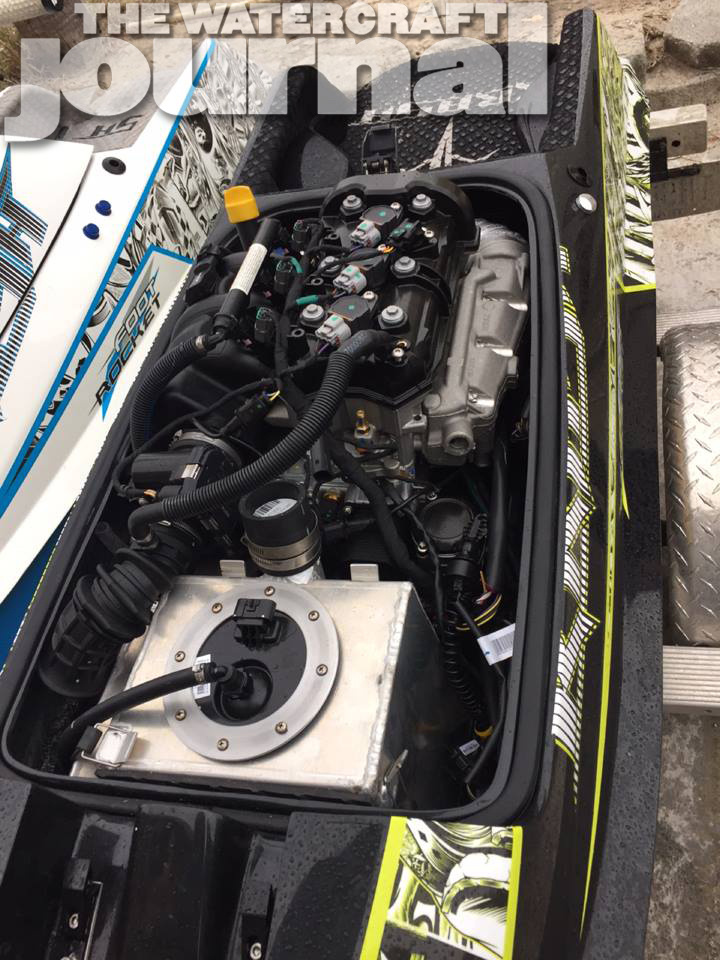
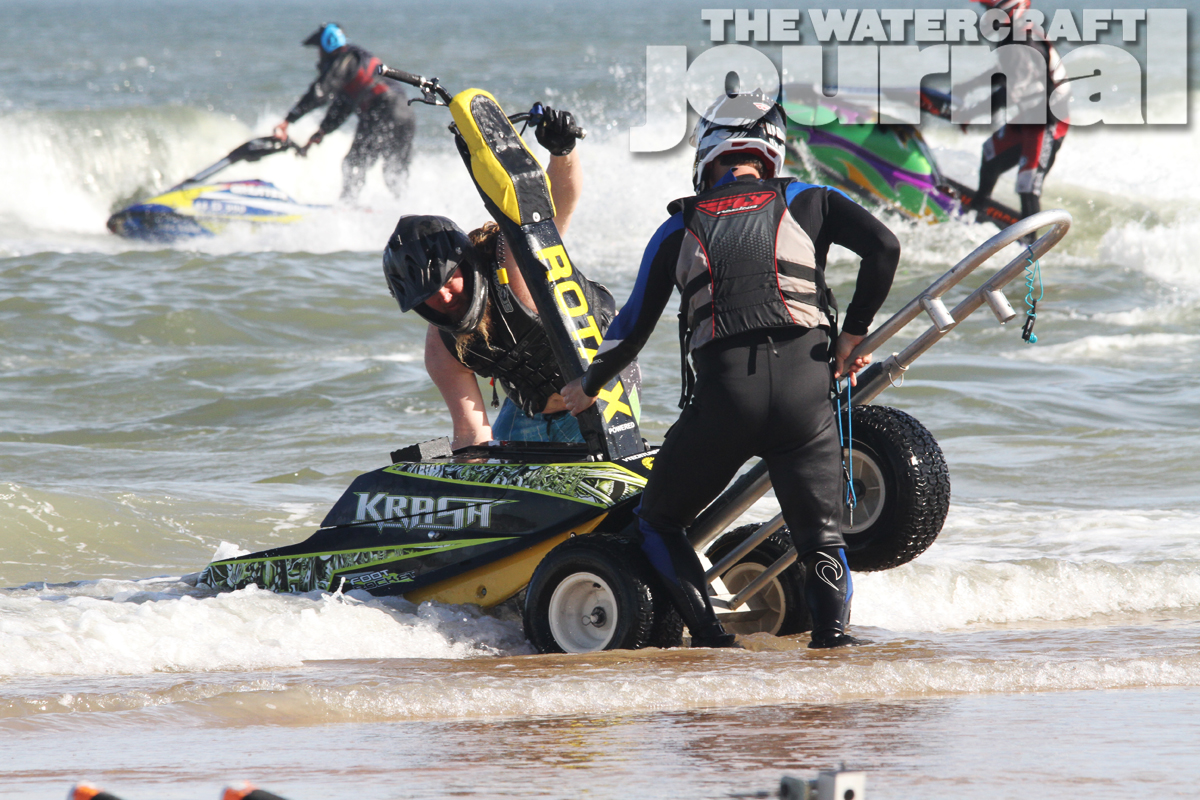
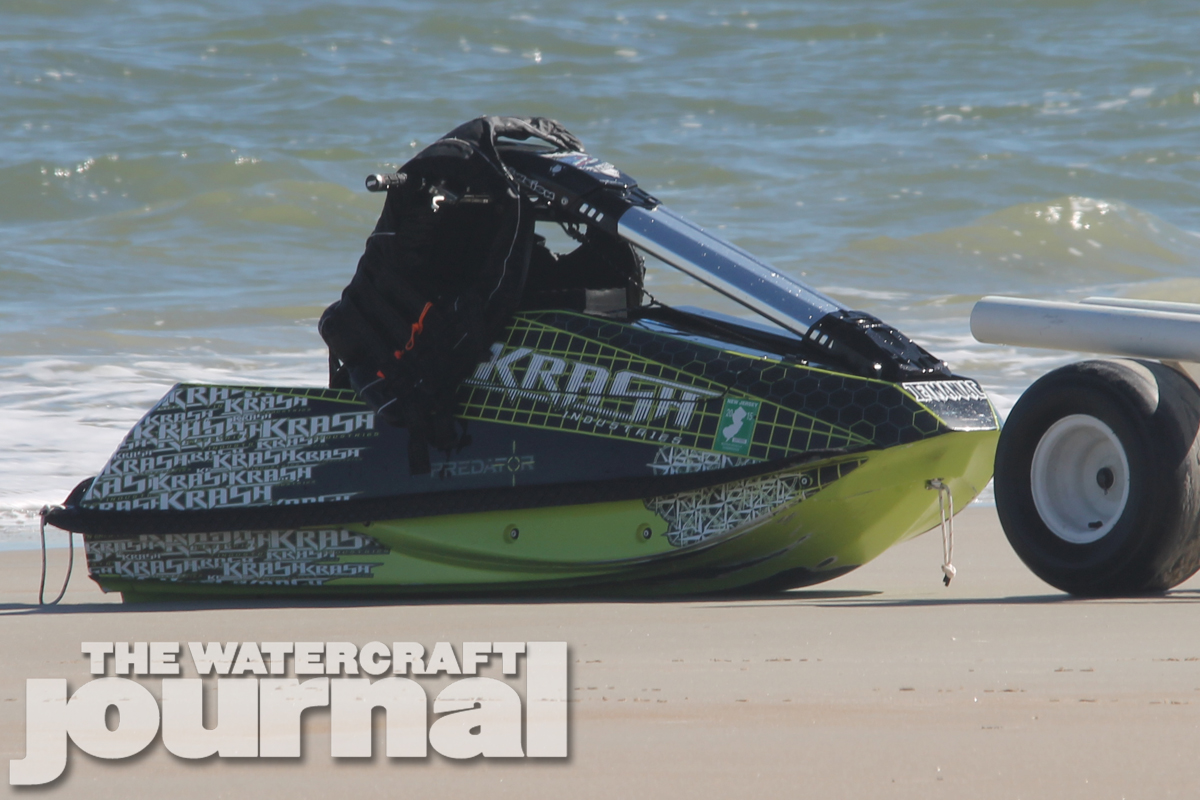
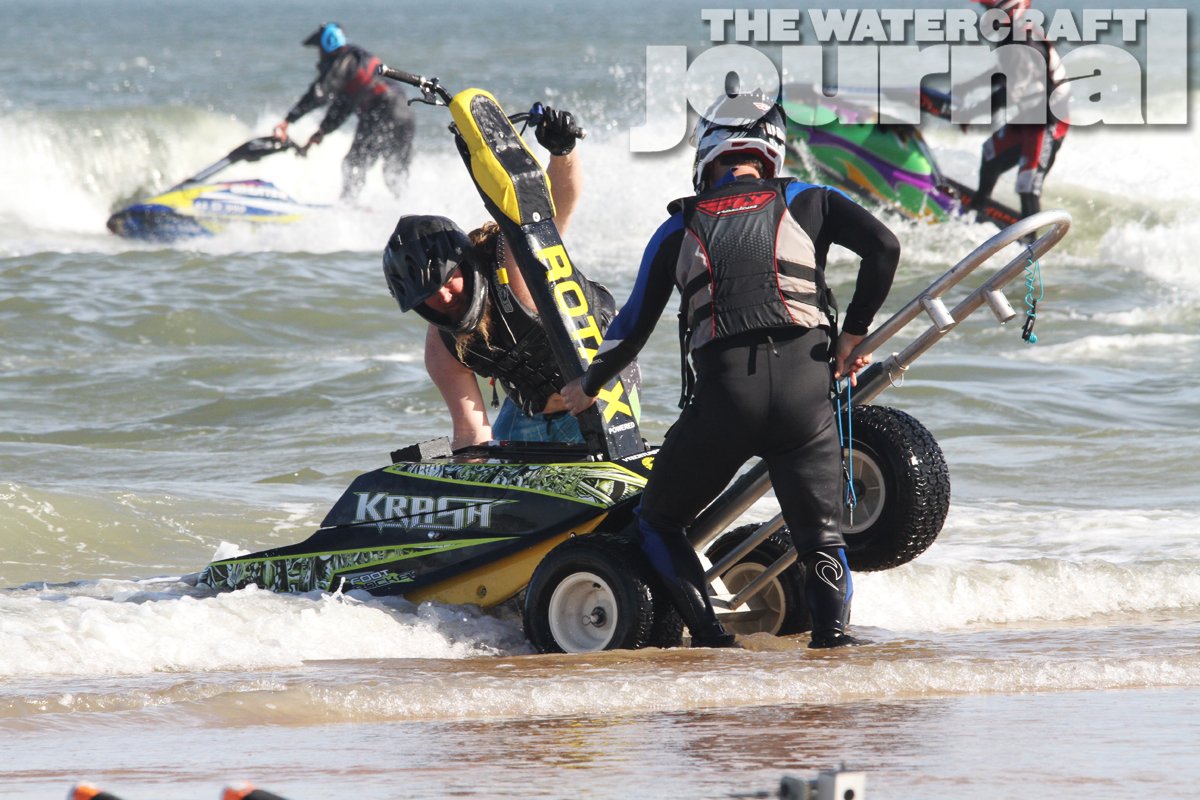
That was until we came across Chris Grace’s very peculiar Krash FootRocket. The Krash Industries’ ski is already a fine piece of equipment as it stands; weighing in at 88-pounds in the surf fiberglass version, and 77-pounds surf carbon version (and 66-pounds in the available flatwater carbon version). Krash designed the hull with dual purpose and maximum versatility by incorporating removable front sponsons, an adjustable rear tail plate and 6-inches of foothold adjustment.
Yet, this particular FootRocket had a far different destiny. Working with his other sponsors, TPE motors and Freeride Innovations billet parts, Chris and father Joe managed to get Krash involved with the build surprisingly easier than expected. “My son Chris is a freerider and team rider backed by Krash Industries,” Joe explained to The Watercraft Journal. “Chris was able to work with Nick Barton, owner of Krash Industries, to not only ride and promote his product, but to also become a Krash dealer on the East Coast. We have been importing and selling Krash hulls together for nearly a year now.”
A longtime rider and racer himself, Joe was no stranger to building his own custom standups “The first engine transplant I did was a Kawi 650 engine into a 550 hull in 1988,” Joe recalled. This eventually resulted in Joe owning his own dealerhsip – Wildwood Sea-Doo – for the past 16 years. So it was only natural when Joe first laid eyes on a Spark with the top deck removed to think that whole drivetrain looked narrow enough to fit into a stand up…potentially. “Since we’re Krash dealers,” Joe smiled, “we chose to try and make the motor fit into a Krash.”
The build required an impressive 300 man-hours between Joe and son to fit the Sea-Doo running gear into the ski. Consisting of “a 2015 Spark [900cc 4-stroke ACE] engine with a custom Yamaha wear ring that I pressed in an aluminum sleeve to fit the Spark’s prop, the rest of the running gear (pump, exit nozzle, internal electronics) is all [from a] 2015 Spark donor,” Joe explained.
Impressively, the gas tank is a custom-fabricated aluminum tank that Joe mocked and welded himself. The exhaust too is custom. Finally, Joe had to lengthen the standard Spark drive shaft to make it work in the Krash hull. He continued, “The Krash hull comes with engine plates that were modified to accept the [factory] Spark motor mounts. I welded a custom chin pad that hold the [Sea-Doo] factory LCD gauges in it as well.”
As for the instrumentation, Joe stated, “I didn’t have enough time to finish lengthening the wire harness at Daytona, so I rode with the digital gauge stored in the hull. The nice part about the Spark gauge is the speedometer sensor gets it’s data from a GPS receiver. No paddle wheel. Plus you get a tach and fuel level indicator. All the info from the Spark is retained.”
Getting the ski done in time proved to be its own challenge. “We wanted to have it fully completed and unveiled at the Daytona Freeride. However, we ran short on time and had to continue to work on it into the weekend at the freeride. [We] finally were able to water test it Saturday at the freeride. No unforeseen problems just simply ran short on time trying to complete the build.”
“The original test run was in the surf at Daytona Beach with the [factory] 60 horsepower setting. We jumped small waves and carved the surf, but the main emphasis was on monitoring the engine temperatures and exhaust to make sure they were in acceptable levels. The maiden voyage lasted 20 minutes in the surf with no issues,” Joe reported. “We found out later that the ski was filling with water. The trim cable tube was not sealed. The tube has a 5/8-inch inside diameter so water was coming in pretty fast.”
“We were super stoked that it ran so good with only 60HP,” he continued. “The Krash Industries FootRocket complimented the motor well as it carved exceptionally and the hull handled very well. The added low-end torque was pleasure for the surf and we are now working with VTech Tuned to get it tuned up to 110 horsepower, which we think will really set it off as a surf ski. We have not yet tested it in flat water, so we don’t know what the top speed is like yet.”
So what’s next for the Graces and their Rotax-powered “SparkRocket?” Wildwood will be reproducing the custom parts needed for the application and adding them to their line of Krash products (FootRocket, Predator, Reaper). “We believe this will be a truly international product. Our goal is to offer complete skis ready to ride in 90 days,” Joe beamed. Hopefully, crate versions of the Rotax ACE engine will be made available. Until then, for order inquiries contact either Joe at [email protected] or Chris at [email protected].
Did you hear that? That loud clang you heard over the weekend was the sound of Pro Watercross‘ AJ Handler throwing down the gauntlet. A little over a year ago, Handler acted upon a growing rift between the National Tour promoter and the leadership at the International Jet Sports Boat Association and put the wheels in motion to create a completely autonomous racing body, complete with its own separate National Tour, rule book, liability insurance and as of late Friday evening, a World Championship week.
Scheduled only a month after the Pro Watercross National Tour’s conclusion in West Virginia, the Pro Watercross World Championship will entice top level athletes from across the US and the globe to vie for the first place Grand Prize of $5,000 for Pro Ski GP and Pro Runabout Open, respectively. The Pro Watercross crew also promise to announce purse totals for all Expert and Pro classes prior to May.
The promised payouts should be enough to lure racers, as purses at the IJSBA World Finals have continually dwindled over the years. Equally, Pro Watercross vows that the venue – Marco Island, Naples, Florida – is far more accommodating and accessible than Lake Havasu, Arizona, with a major airport in Fort Meyers, only an hour north of the site; and a 2 hour drive from Miami, and 3 hours from Tampa.
You can read the original press release below:
We are proud to announce that the Pro Watercoss World Championship will be held on September 19-27, 2015 at Sugden Park in Naples, Florida.
Over the past several months Pro Watercross has visited five different potential venues from all over the United States; two on the east coast, one in the mid-west and two on the west coast.” Naples, Florida was the final site visit and had all the amenities for the making of a world championship venue” stated Nick Handler of Pro Watercross. “The venue is very consumer friendly and we will have the ability to not only bring in world class athletes but to also encompass all types of vendors and displays enabling us to create a world class experience for everyone involved.”
Rob Wells, sports marketing manager of the Naples, Marco Island, Everglades CVB stated today “The Naples, Marco Island, Everglades CVB is honored to host the Pro Watercross World Championships. We think the riders will thoroughly enjoy Sugden Park as a venue. I truly believe all the competitors, crews, families, and fans will find Naples and Collier County friendly, enjoyable, and a place they will want to return to again and again.”
Pro Watercross will be reaching out to international competitors to bring the world best athletes into Naples, Florida to compete against the USA’s best.
First place finishers in both the Pro Ski GP and Pro Runabout Open classes are guaranteed $5,000 for a 1st place win, in each of the two classes. The Pro Watercross World Championship will be working over the next eight months to offer the largest purse in the history of personal watercraft racing. A purse for all expert and pro classes will be determined before the start of the Pro Watercross Tour in May.
The event also means more international exposure, image enhancement and development opportunities for the area, placing Naples, Florida on the world stage. Along with Live Streaming and a one hour TV show that will be produced for the distribution, this event will viewed worldwide. Pro Watercross TV shows reach into to over 93 million households for each airing.
Pro Watercross is looking to take the sport to the next level, working to reinforce the positive image of personal watercrafts and PWC lovers around the world. If you are interested in more information about Pro Watercross, its Tour and World Championship visit Pro Watercross at www.ProWatercross.com or on Facebook under Pro Watercross.
Today’s Seven Deadly Questions, we sit down with Brock Austin, one of the fastest up-and-comers in the Pro Ski circuit and began to delve into what it takes to become a sponsored racer and more importantly, what it takes to keep those sponsors. It’s a business after all.
The Watercraft Journal: Brock, can you tell us what first got you into jet ski racing?
Brock Austin: I’ve been riding jet skis since I was about 8 years old, but didn’t start practicing until I was almost 10 years old. I had watched a race in Washington and there was a junior that didn’t ever standup the whole race and I told my dad that I could stand up the whole race and that’s when he got me a ski and started practicing for racing! We took a 4 year break from ages 12-16 and when I got back on a ski, practiced a bit and figured out that I could be competitive in Novice class, that’s when we came back and got serious with my racing!
WCJ: What first made you think you might be able to “go pro?”
BA: I took fifth my first year back in Novice Stock on a Polaris Octane and that’s when we decided to get me a Hydrospace. Once we got it, I practiced a bunch and jumped in Pro-Am Ski Stock and won my first race. That’s when I knew that if I trained hard and practiced I could hopefully be in the Pro class one day!
WCJ: Did companies/sponsors approach you first about supporting you, or did you have to reach out?
BA: Well, my dad raced before I started, so he had some experience in getting sponsors and had sponsors that started helping me out just because him. Over the years, we have learned a lot about sponsors and now that I’m turning Pro and going international I’m getting companies asking me to ride for them!
WCJ: What do most companies realistically offer a newcomer racer? What kind of support can you expect?
BA: Most companies that decide to sponsor a new racer will help them out in a small way (i.e. 25-50 percent off or a small discount like that) and the more you support them and get good race results the more they will support you.
WCJ: Brock, we spoke with Hydro-Turf’s Mike Bonin who shined a little light on how they came to support your efforts.
Mike Bonin: Brock has been part of the Hydro-Turf team since 2011, as most riders, Brock started out with a product discount in the beginning. Aside from what I saw of Brock online, or in the media, I really didn’t know him on a personal level. We hadn’t even met face-to-face.
WCJ: Brock, what do sponsoring companies get in return for supporting a jet ski racer? How do you feel that you make good on their investment?
BA: They get exposure through your ski, your trailer, shirts and hats, social media, basically anyway that you can advertise for them and get more people to support their brand. Once you become a racer on the national level or even international level you become a prime candidate for sponsors because you get them more and more exposure!
MB: Brock was very good about sending us pictures, race results, letting know what he plans were for the year. This allowed me to follow him and keep up with how he was improving. There was one thing happening for sure, Brock was consistently improving his riding skills, as he continues to do today.
WCJ: As a sponsored racer, have you found that you need to comport yourself differently? What have you seen others do that costs them possible sponsorships?
BA: A lot of people forget that you have to be professional on and off the track. You have to have a good attitude and make good decisions on and off the track and companies will be happy to work with you! A lot of people will not get sponsored or lose sponsorships for making bad decisions on the track or being arrogant to people at the races. Nowadays a lot of people post things on social media that they shouldn’t and sponsors choose not to go with them because of it. So just be nice to everyone and have a good attitude and you won’t have any problems!
MB: After that first year, I was able to build a personal relationship with Brock, along with his parents Bill and Kary. I would show up to tour stops, and there were the Austins, there pit set up, boats looking good, logos in place, and ready to race. Win or lose, Brock has always composed himself in a professional manner, even when not happy with his performance, he never blamed anyone, threw equipment, or stormed off. Brock would learn from his mistakes, and just strive to not make that mistake again. I can’t say enough to express, how great this family is, and how much I respect, and value their friendship.
WCJ: Tell us about the companies who support your race effort. What do they offer you that helps your program?
BA: I have a lot of companies now that help me out a ton! I get huge support from all of them and i can’t just single out one of them! My mechanic hooks me up big time, I get my gear and clothing for free, and I’m now getting salary pay from some sponsors and that helps out big time this year for shipping my ski around the world! I definitely wouldn’t be where I’m at without all of their help!
MB: Being able to watch Brock grow, and progress, has allowed me to see his true potential, and offer a higher level of sponsorship. Although it is not a large amount, I am happy that I am able to offer him something additional besides just product support. Brock has a lot of great years ahead of him, and there is no doubt in my mind, that he will be one of the greatest in the industry. Although he already is in mine, and quite a few others eyes.
Finding a decent jet ski shop you trust is tough enough, but finding a jet ski tuner/builder who can not only keep you up and running all season long but safely and smartly increase your runabout’s performance is almost impossible. While we in the States are waiting for the snow to melt, our Australian friends are in the midst of prime riding season. That is why it is so critical that shops like Melbourne, Australia’s Diptech Performance are around.
Offering some of the best service and skills necessary to install and test performance kits for supercharged 260-horsepower Sea-Doos, Diptech is regularly ramping up these Rotax-powered runabouts to a solid 300-horsepower (and considering that Sea-Doo’s notoriously dyno well below the advertised 260HP mark, that’s a considerable feat).
Their performance kits consist of RIVA Racing’s a reflashed ECU, an open-element cold air intake, through-hull exhaust with a high-flow waterbox, bigger injectors, valve spring retainers, and boost-boosting supercharger rebuild kit. Of course, big power doesn’t come cheap, as these kits start at $4,000 and up. And if you’re looking to get all that new found power to hook up, you’ll need one of Diptech’s specially-ordered Solas props.
As you can imagine, Diptech is busy with a few of these Sea-Doo installations, but there’s always room for one more! And if you’re looking to improve the ride and comfort (as well as add a radical new look), owner/operator Anthony DiPietro reminded The Watercraft Journal that Diptech is Australia’s number one supplier for Jet Trim seat covers and a major retailer of Jet Pilot products!
This year marked the 15th year of the Daytona Freeride.
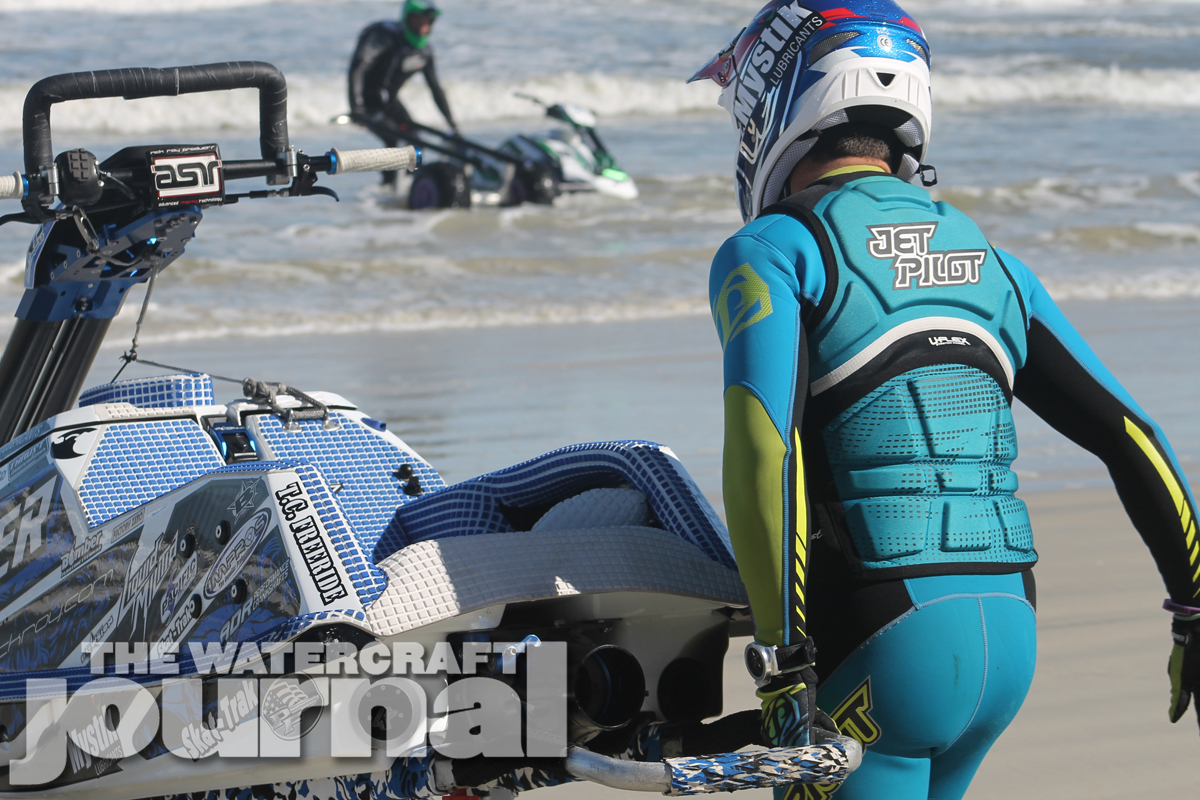
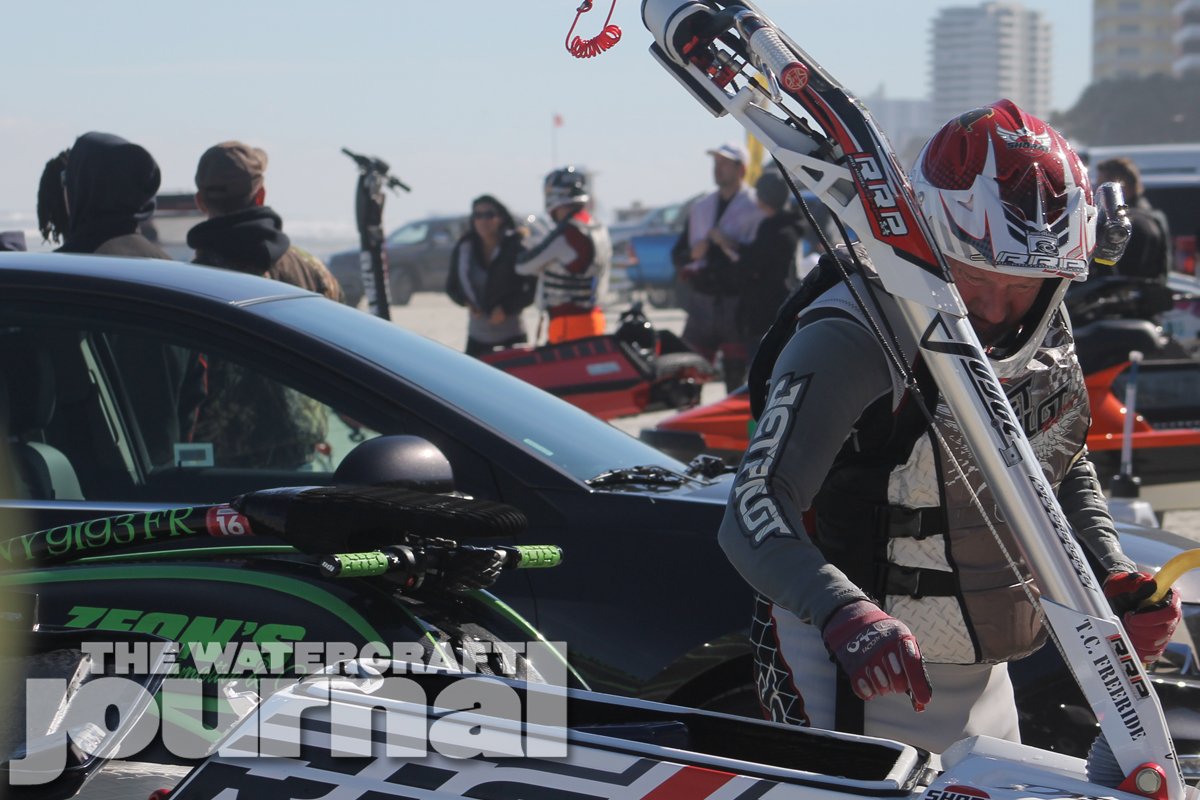
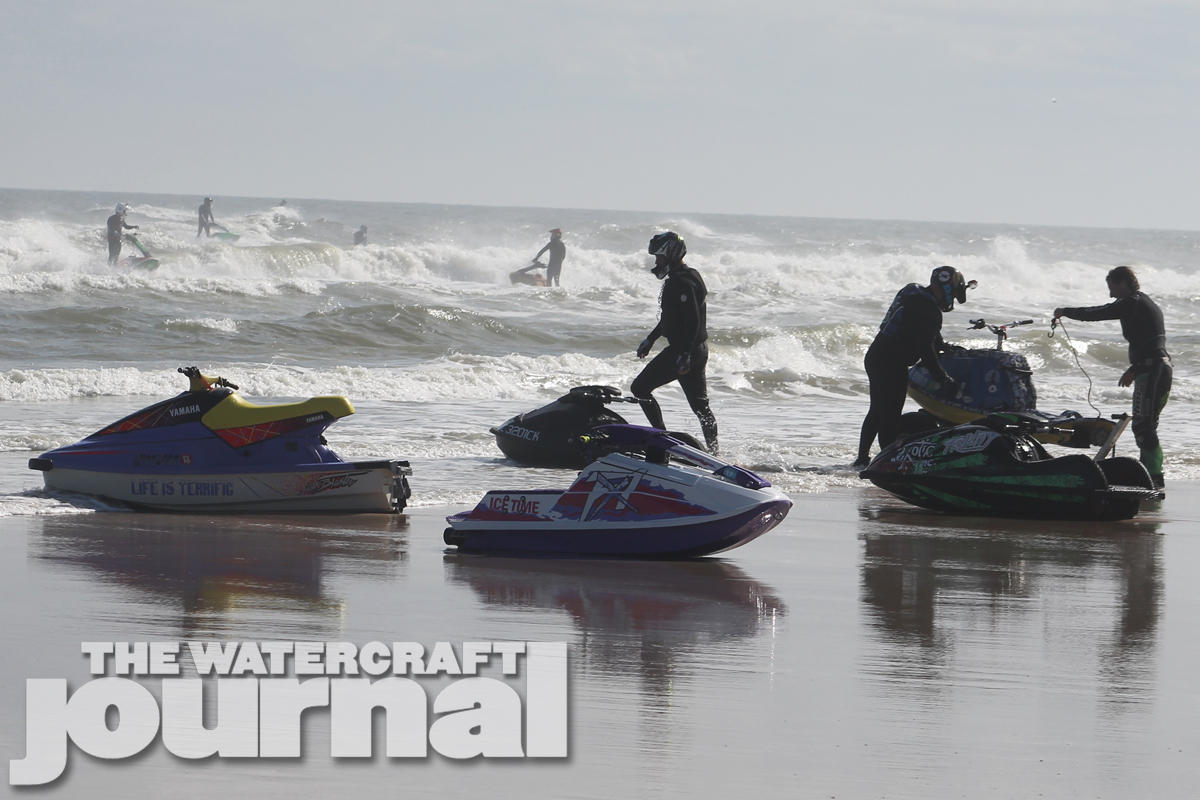
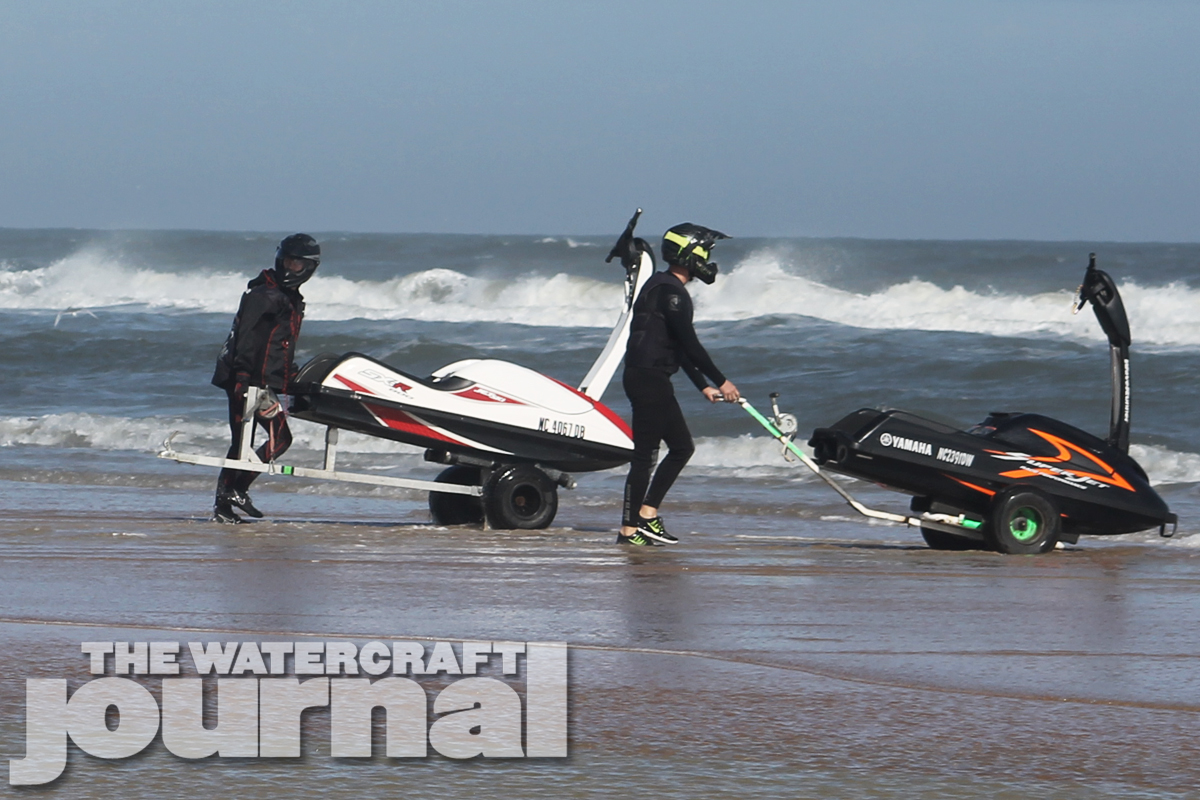
This year marked the 15th anniversary of the original party that ultimately became the Daytona Freeride, a jet ski surf riding event started by Nick Foederer. The official 2015 Daytona Freeride event, presented by Thrust Innovations, started on Thursday, January the 15th, and ran through Sunday, January the 18th.
The weekend before the freeride (January 10th through the 11th) is the unofficial start of the “Freeride PreRide.” The weekend before the freeride has grown every year into an event itself as many come to Daytona for a week of riding. It is a great time to ride and hang out without the hectic pace of the main freeride weekend. Many are just finishing or tuning freshly built or rebuilt skis at this time.
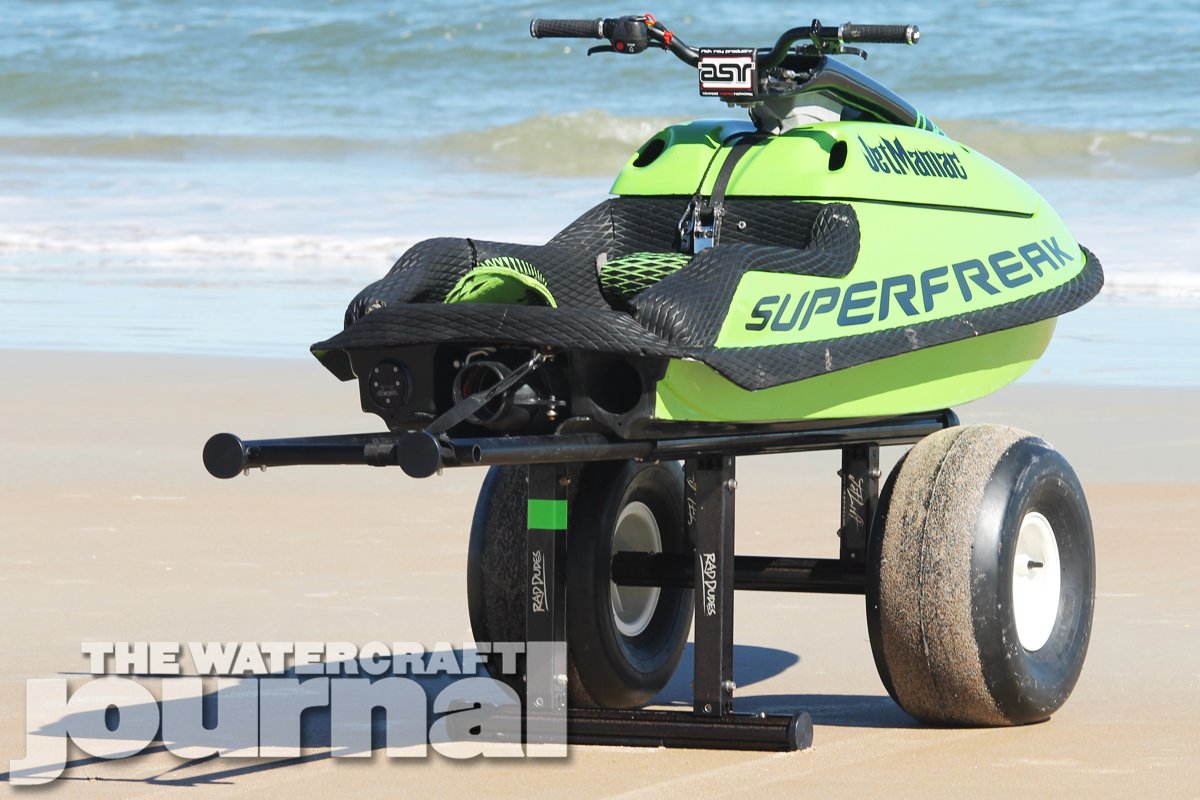
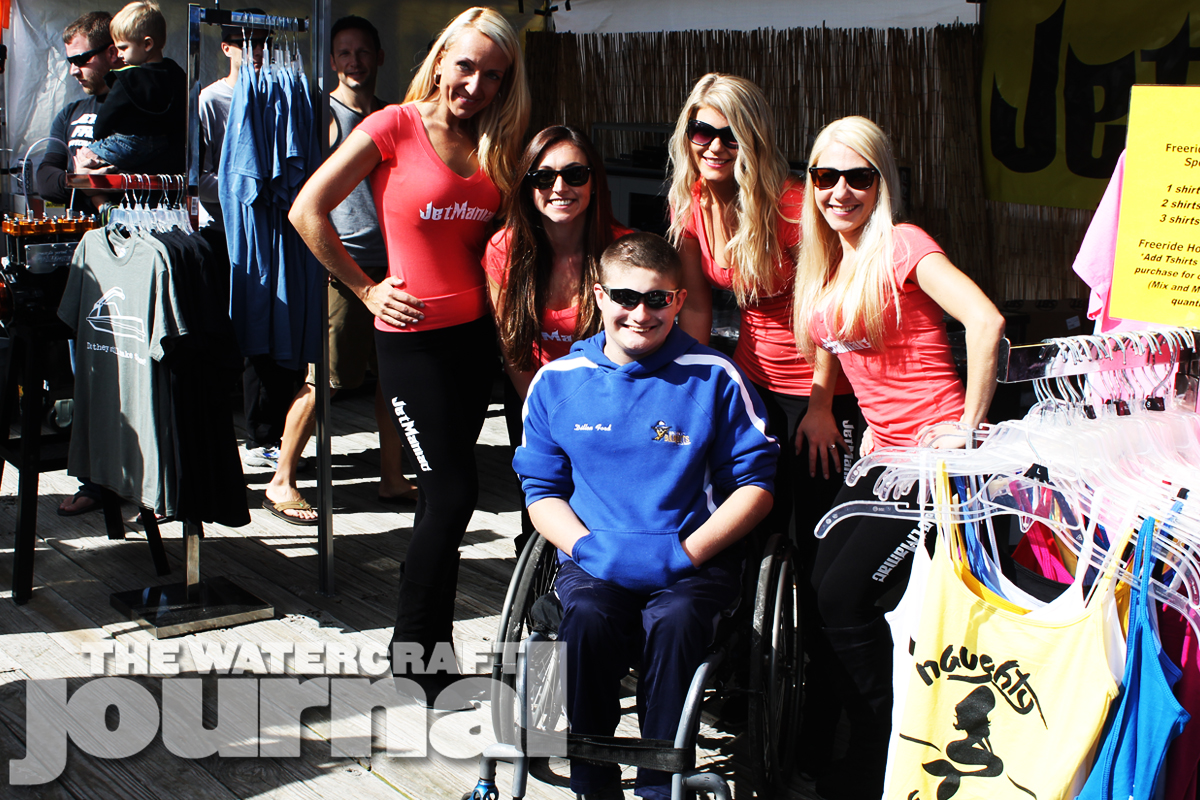
As mentioned, the title sponsor for this year’s freeride was Thrust Innovations with presenting sponsors including Aquamoto, Watercraft Superstore, SuperFreak Skis, Pro Rider, Exotic Signs, Hydro-Turf, Wamiltons Customs, Jet Renu, and MotoOption. Supporting sponsors included JetManiac, Rad Dudes Freestyle, Blowsion, and Jettribe.
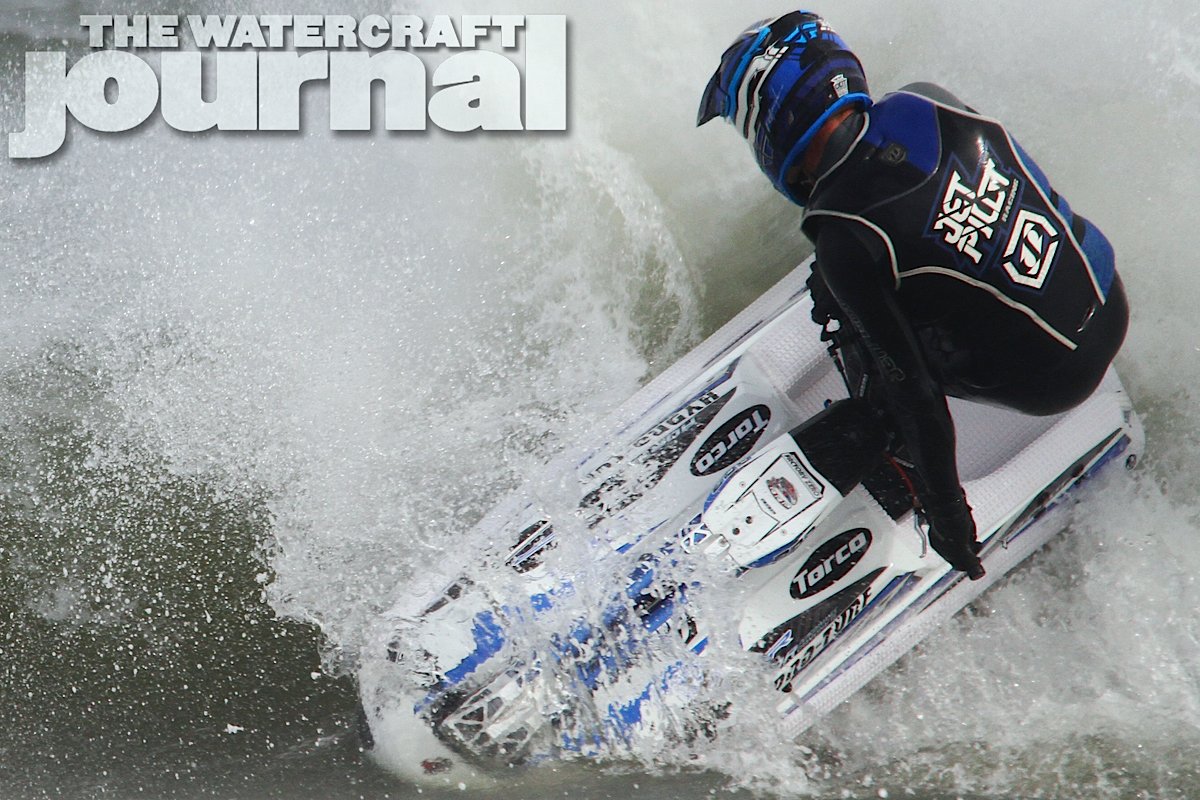
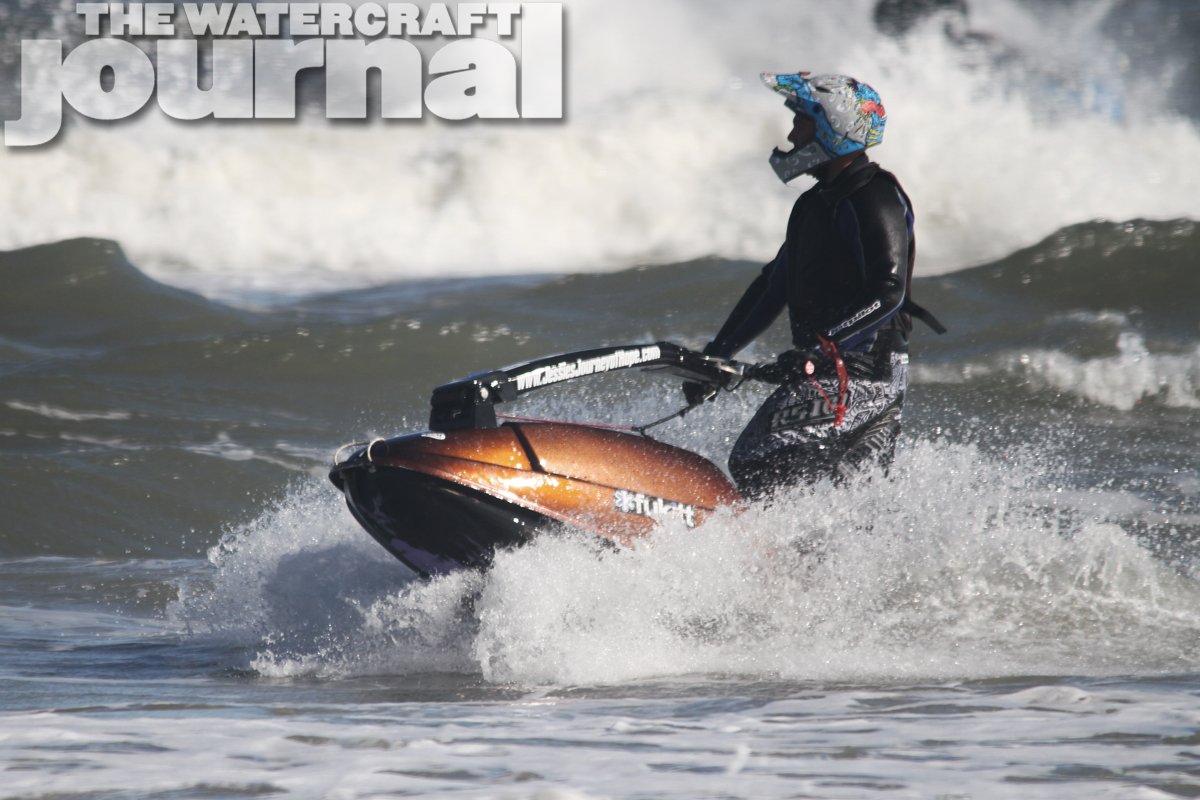
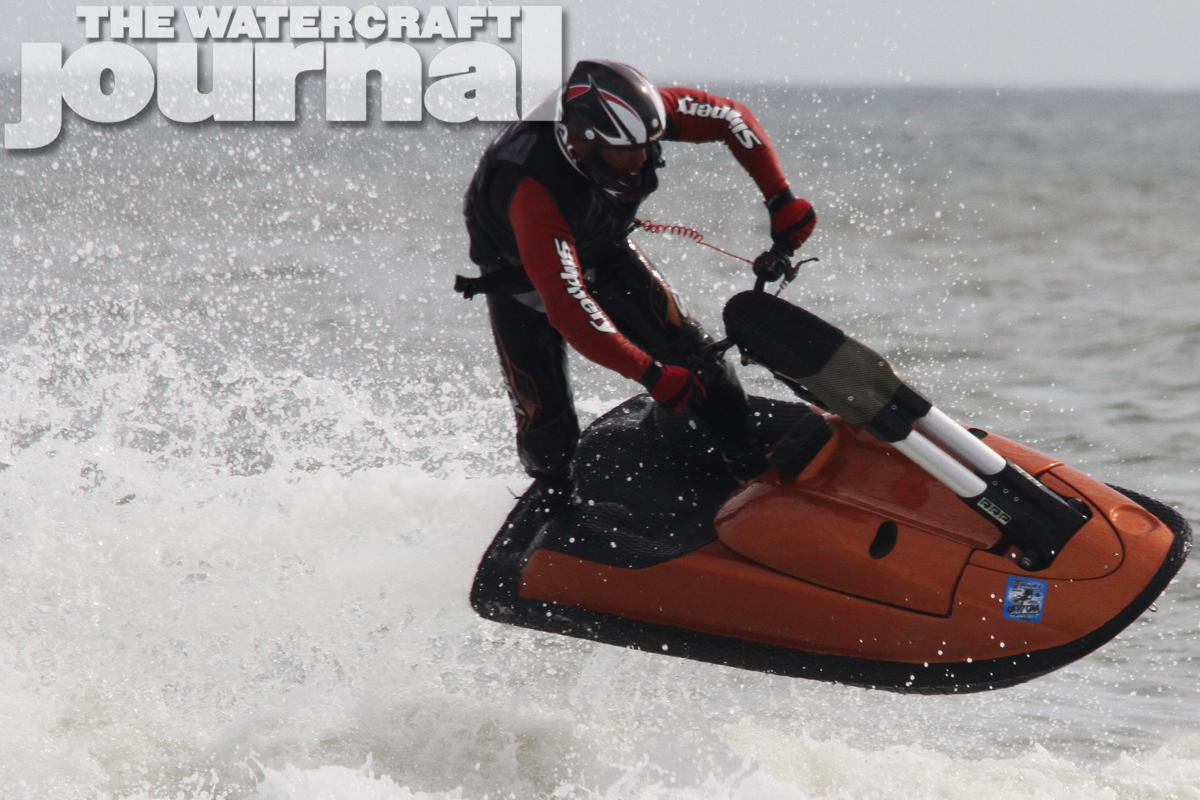
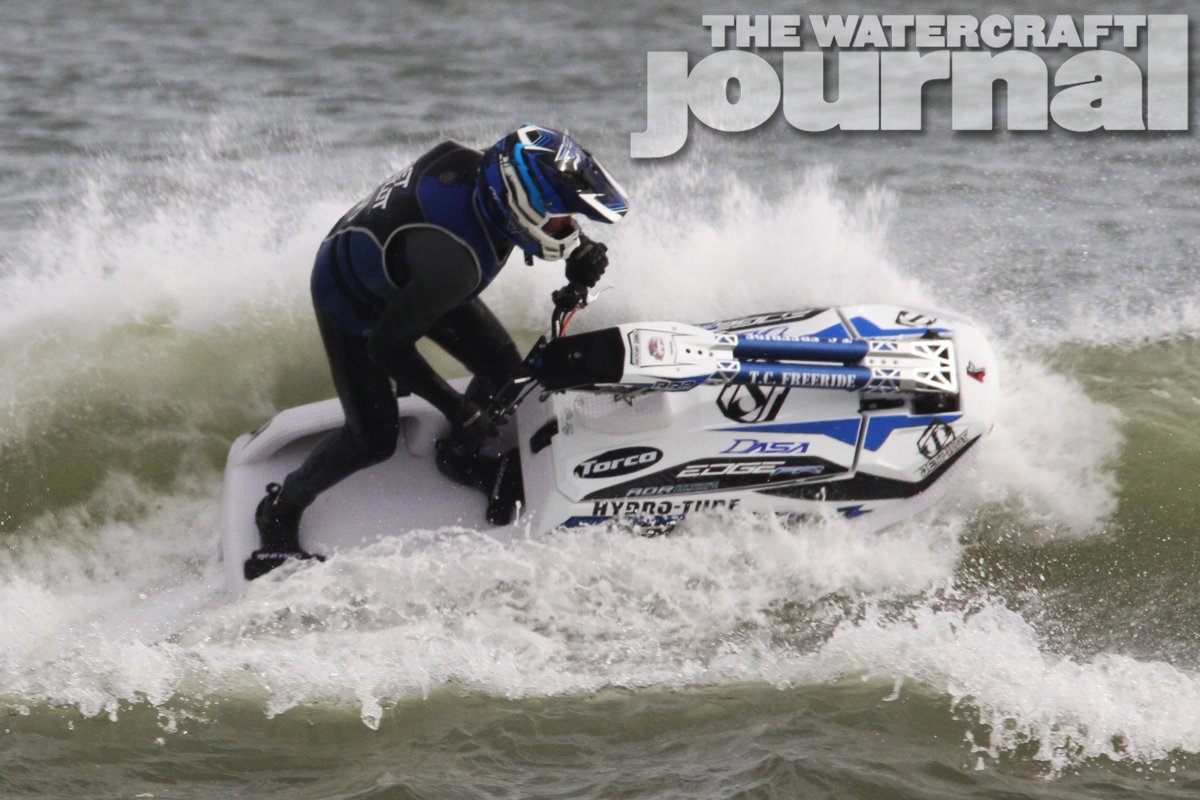
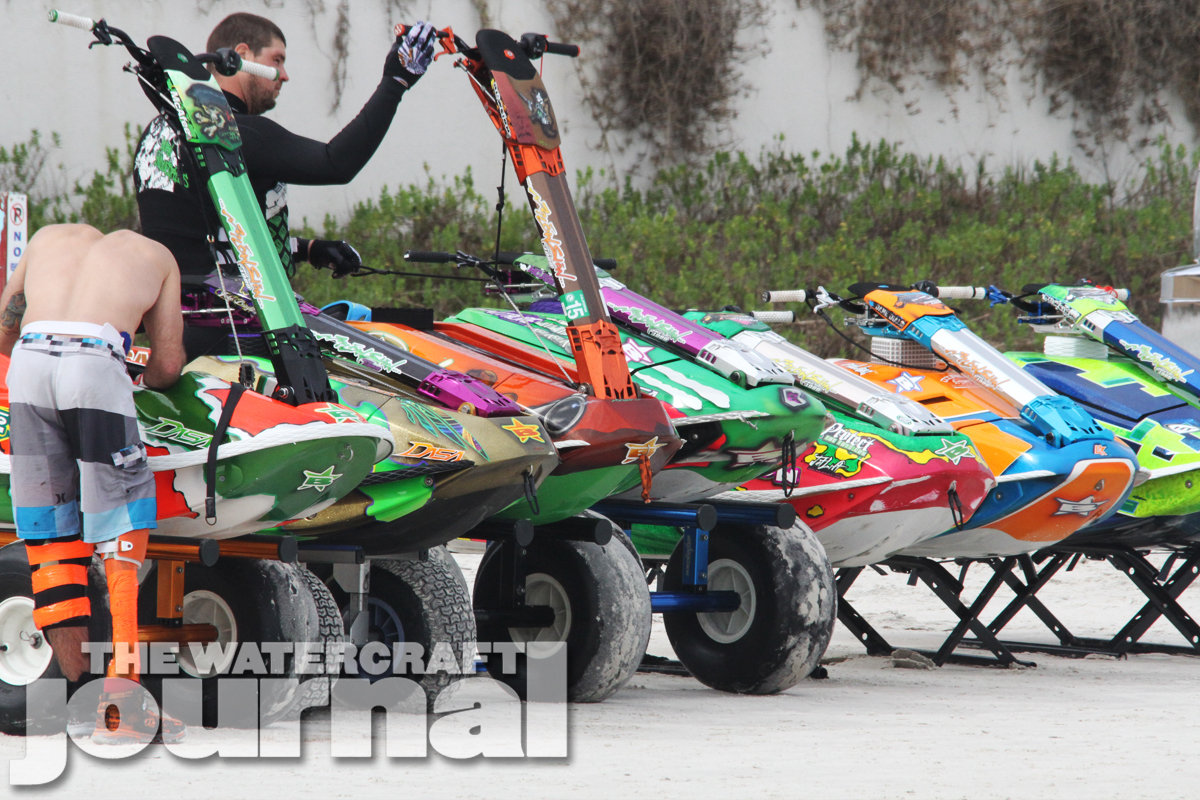
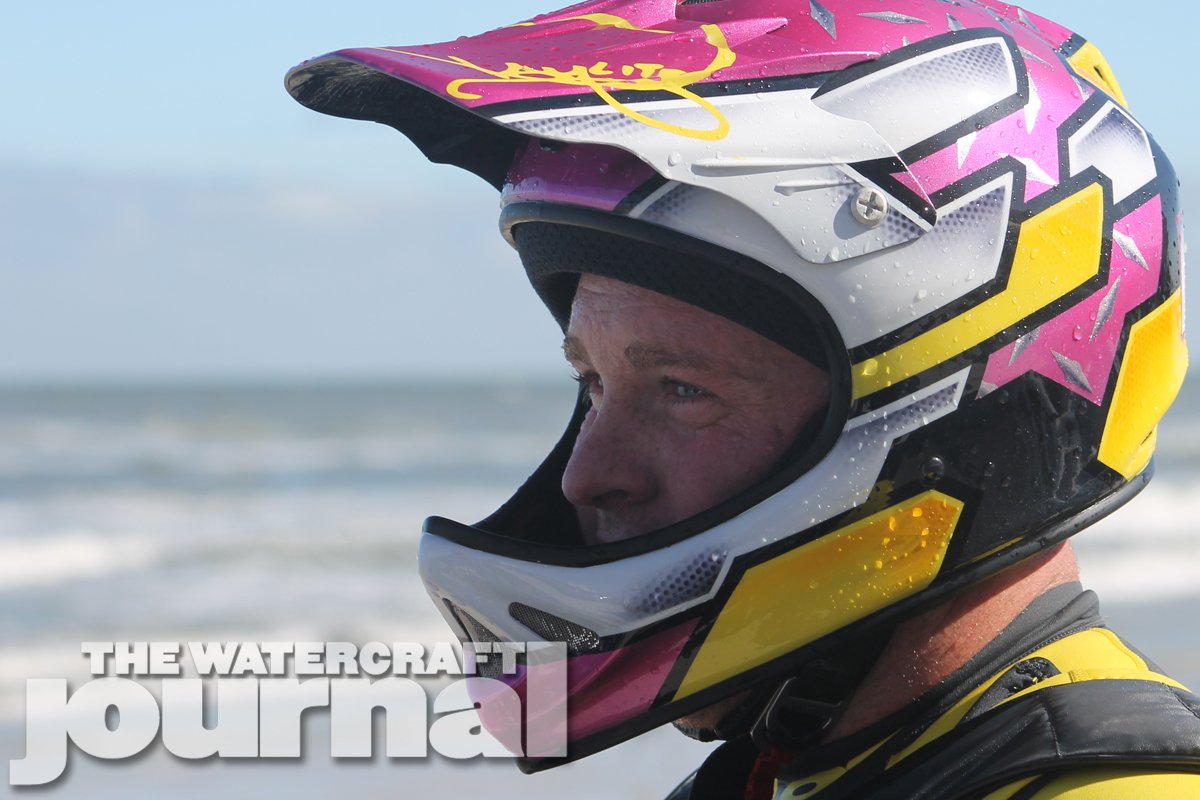
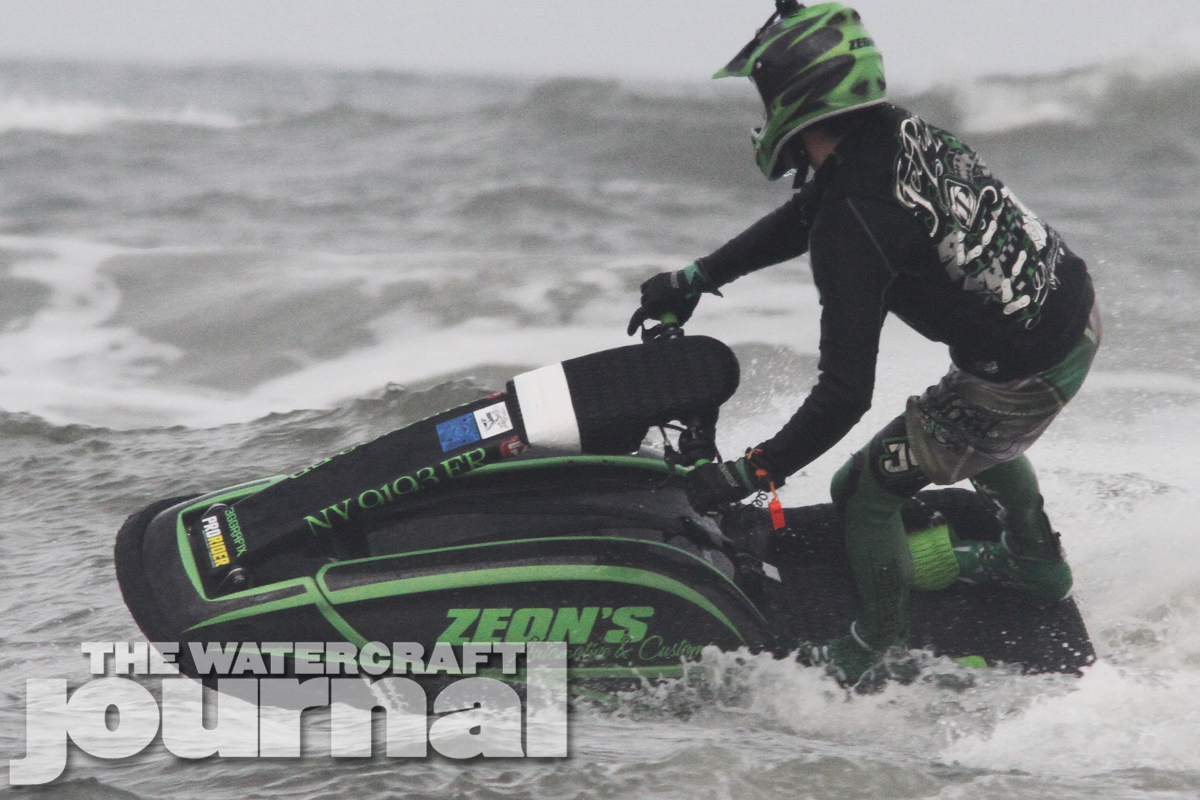
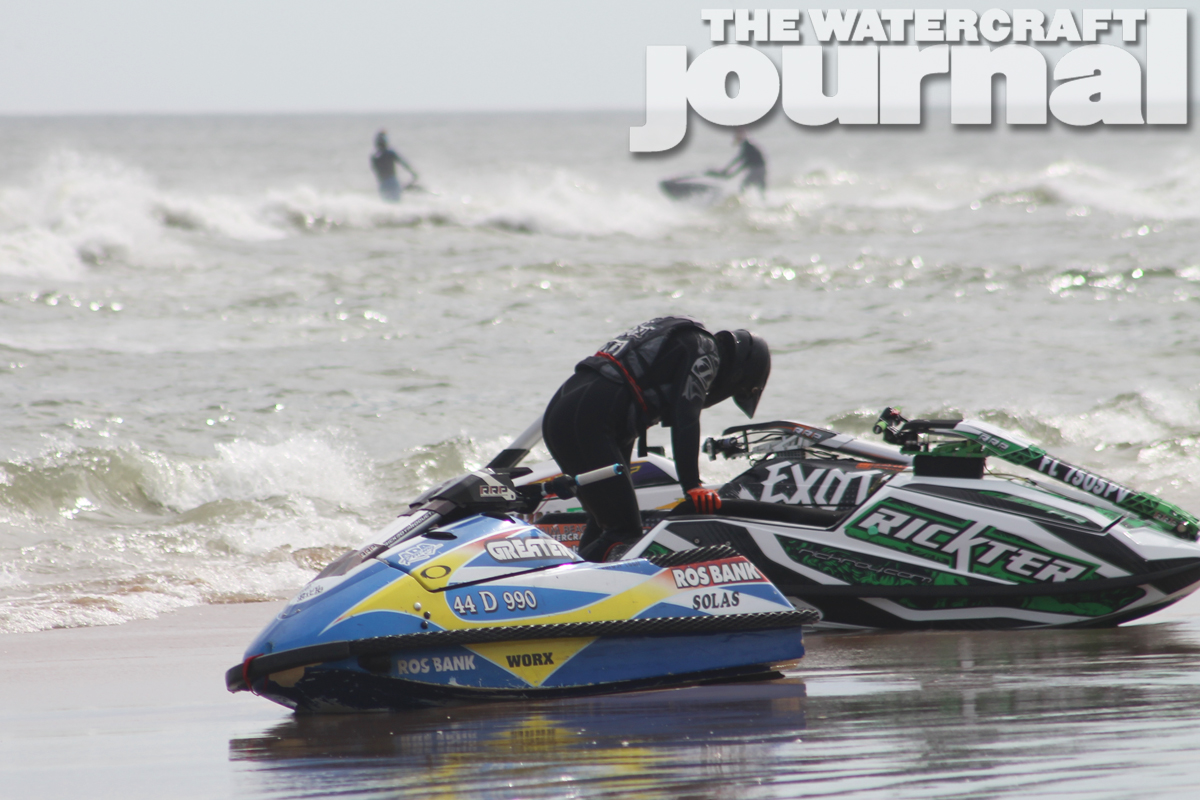
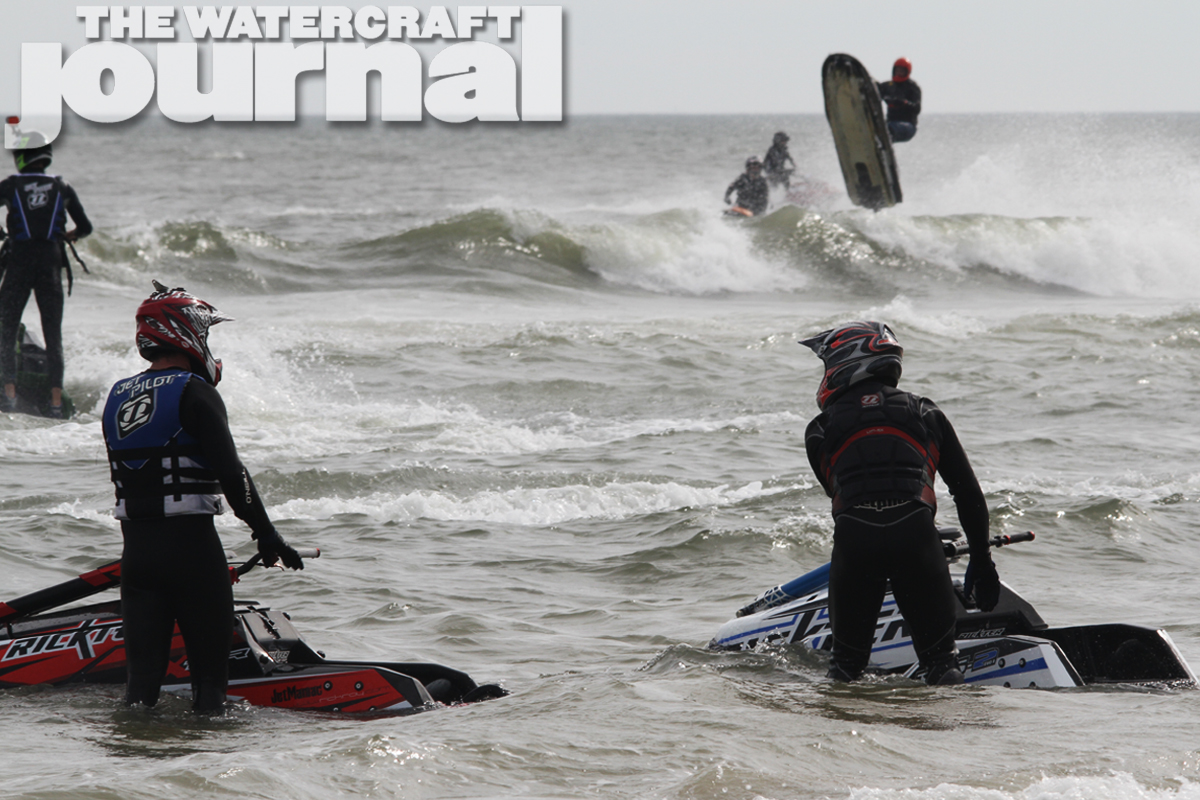
Hundreds of freeriders flocked to Daytona Beach, Florida for the annual event that was so graciously hosted by the LaPlaya Resort Hotel.Mark Gomez split his time between showing off his remarkable surf riding skills and bringing in podium finishes during Saturday’s King of Daytona Beach AquaMoto race.
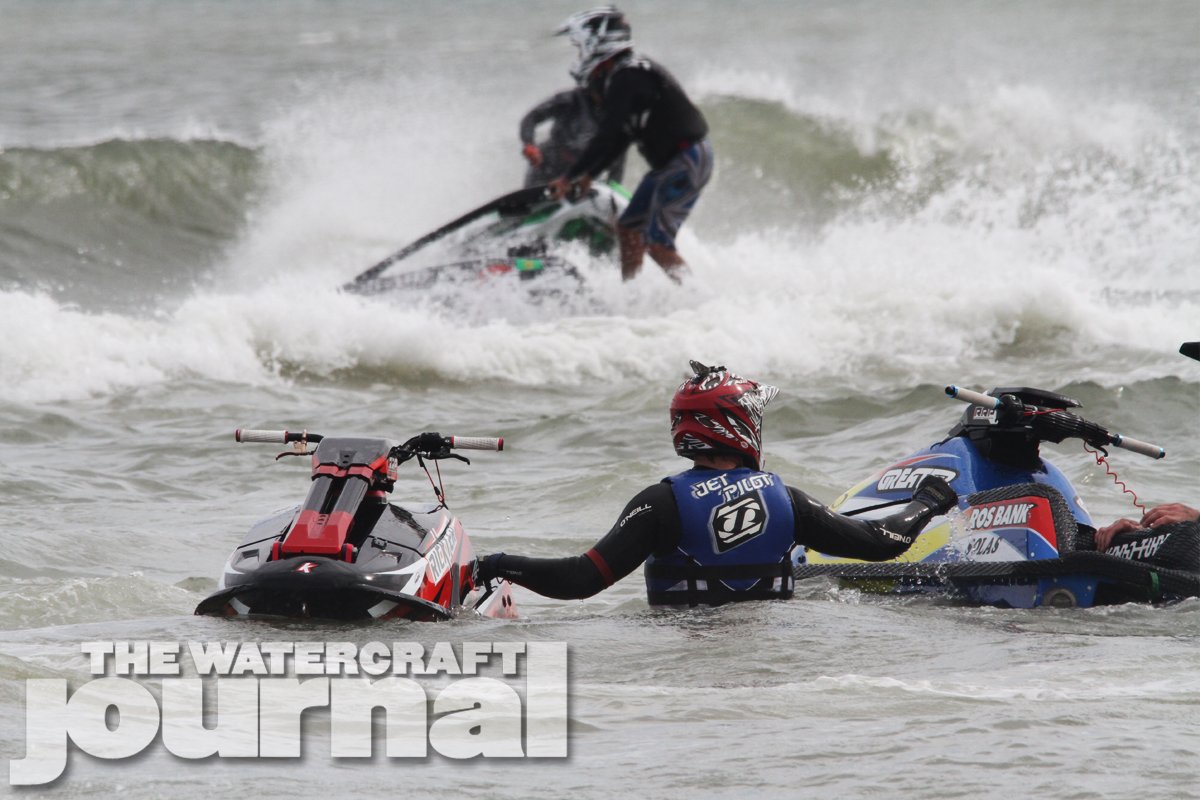
The event started on Thursday with some gnarly weather. A cold front settled in, bringing some wet and cooler weather. The weather began to improve on Friday and the freeride picked up with better surf as well. It is amazing to see how the freeride has changed over the years.
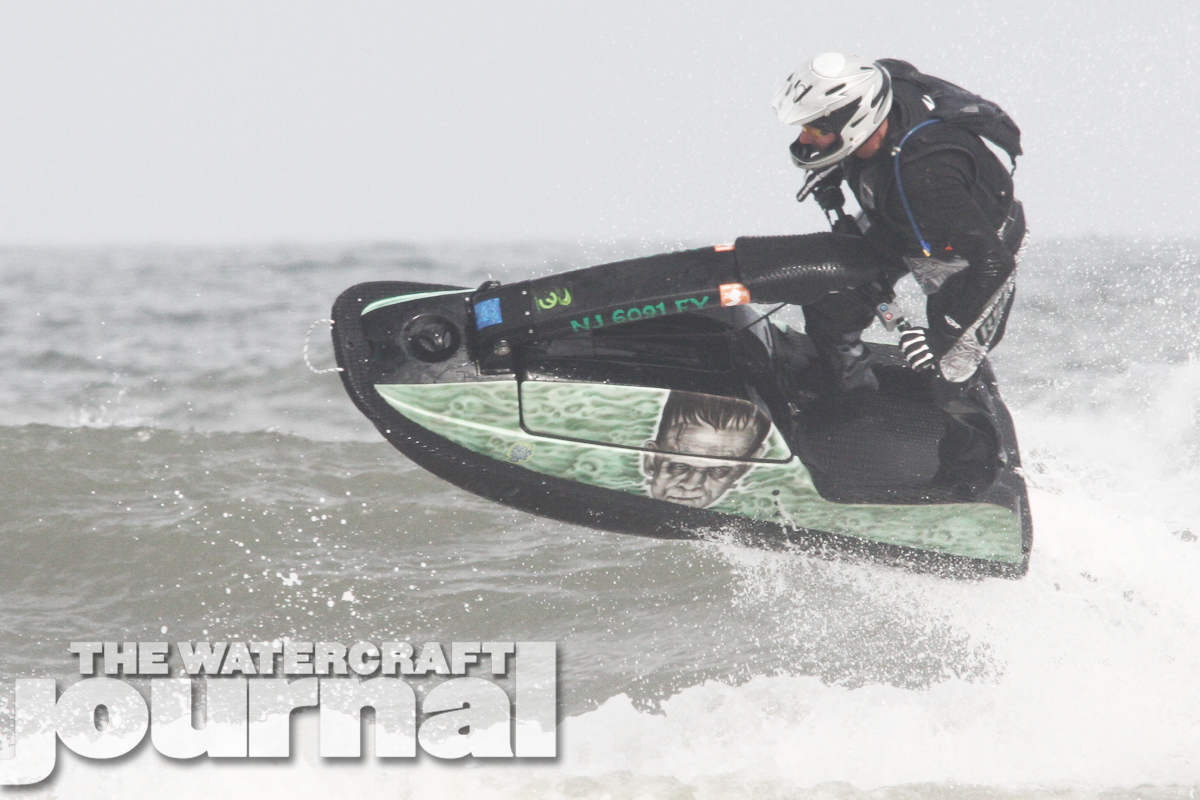
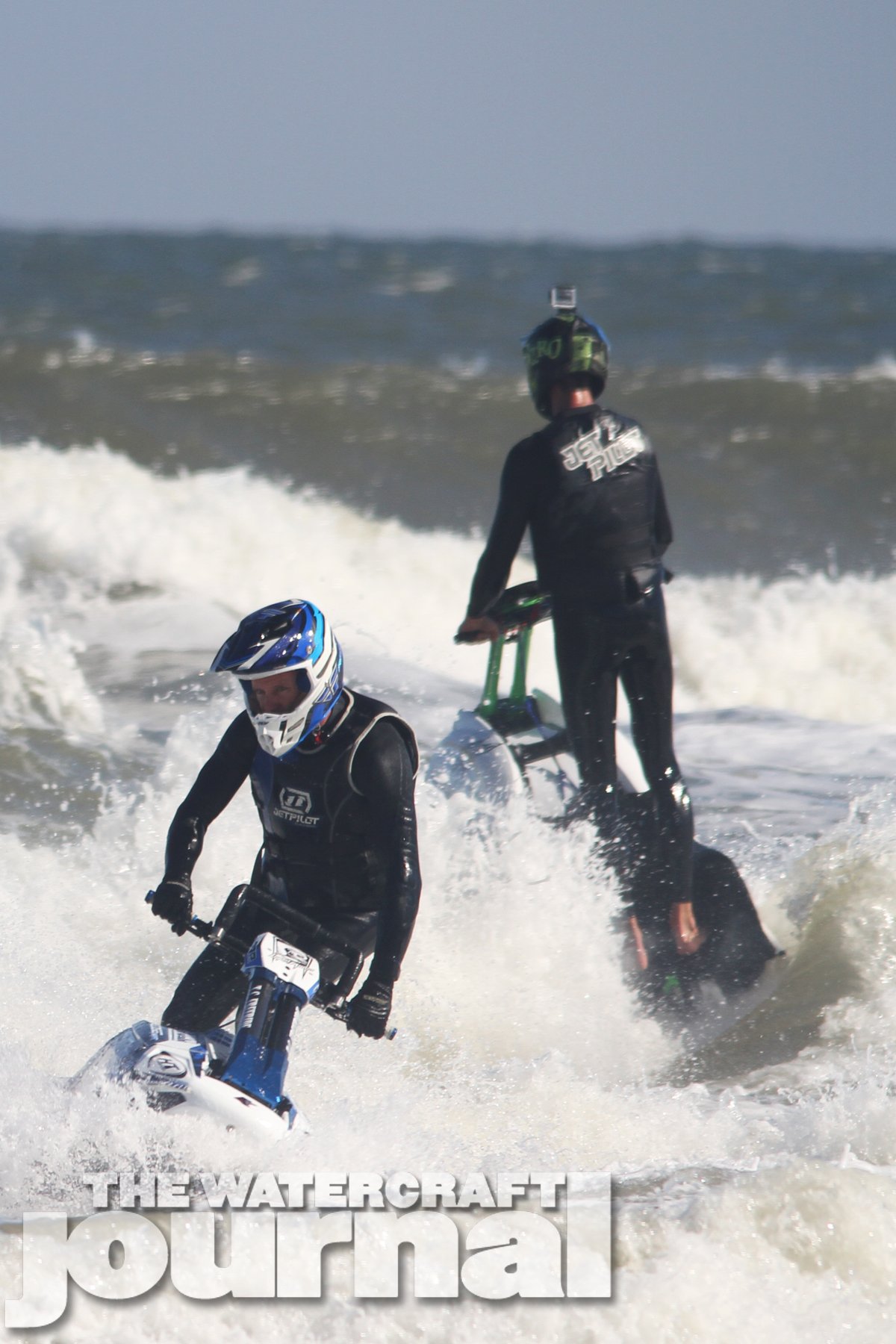
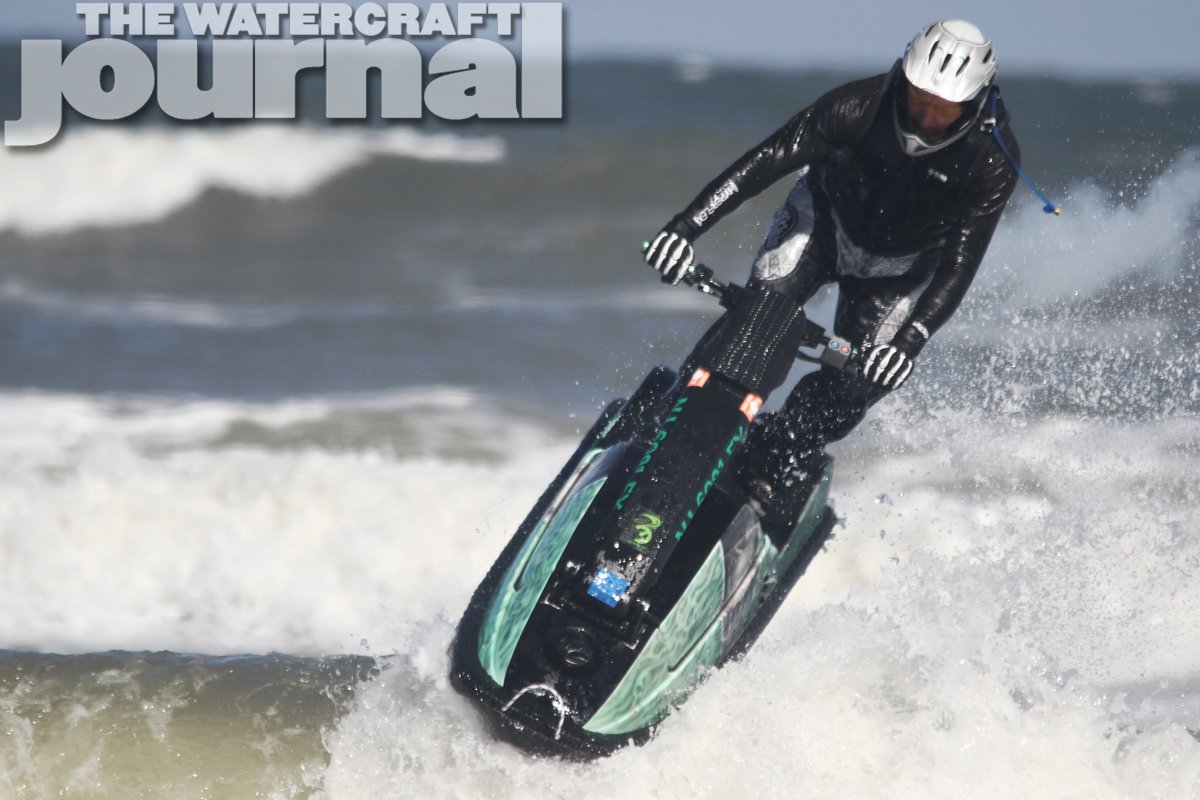
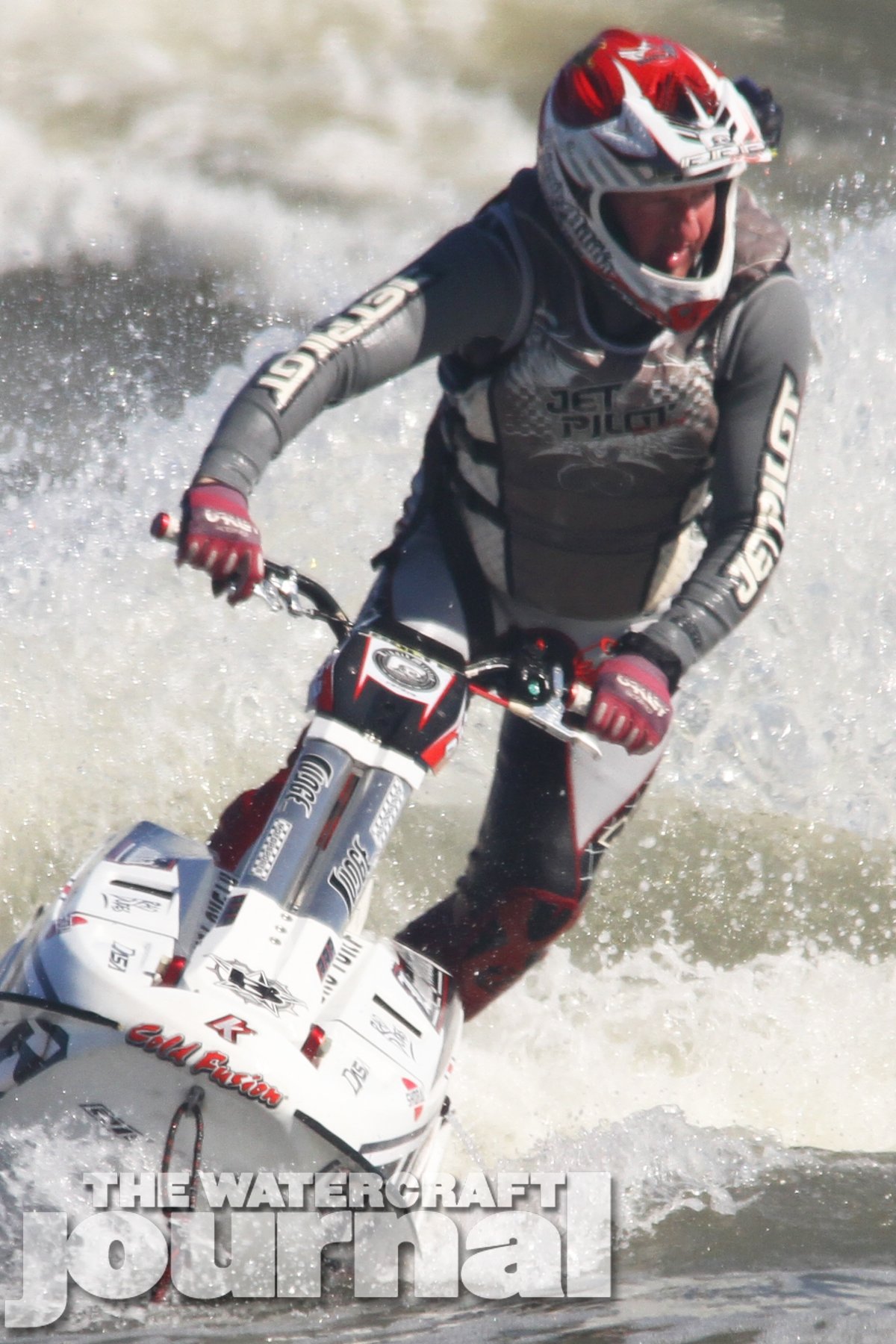
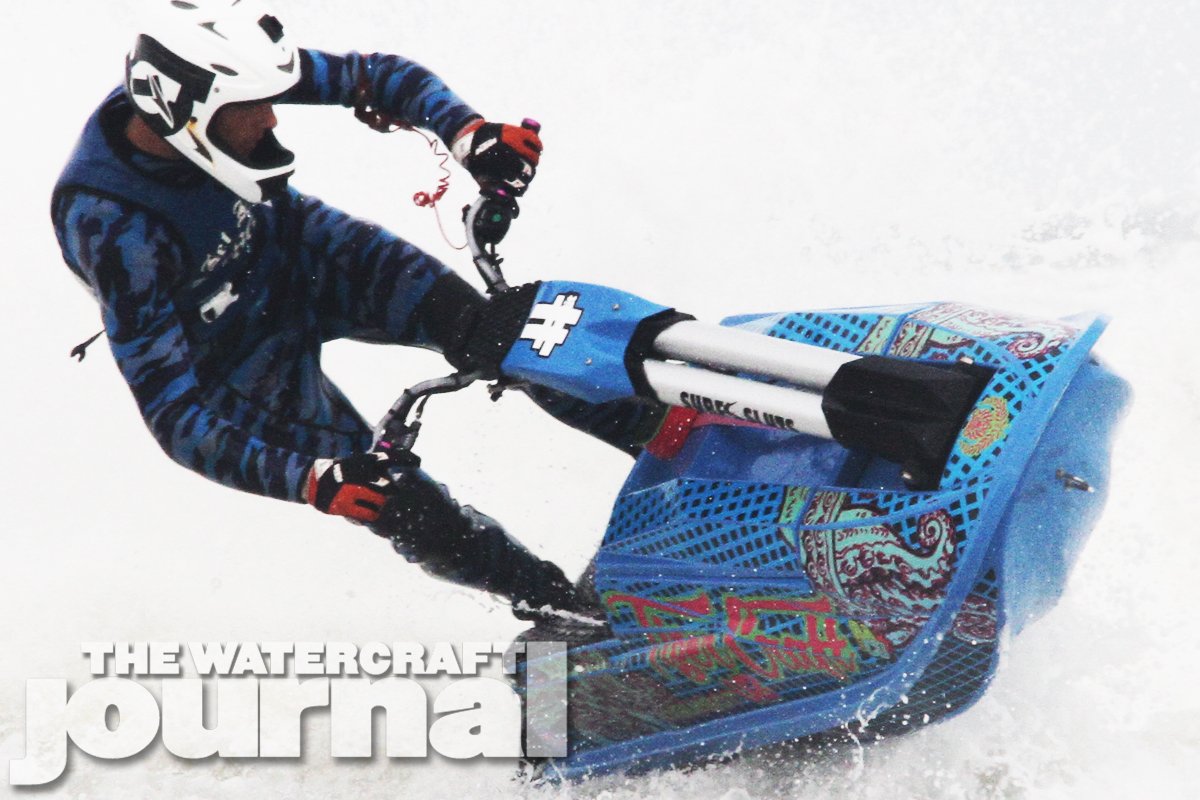
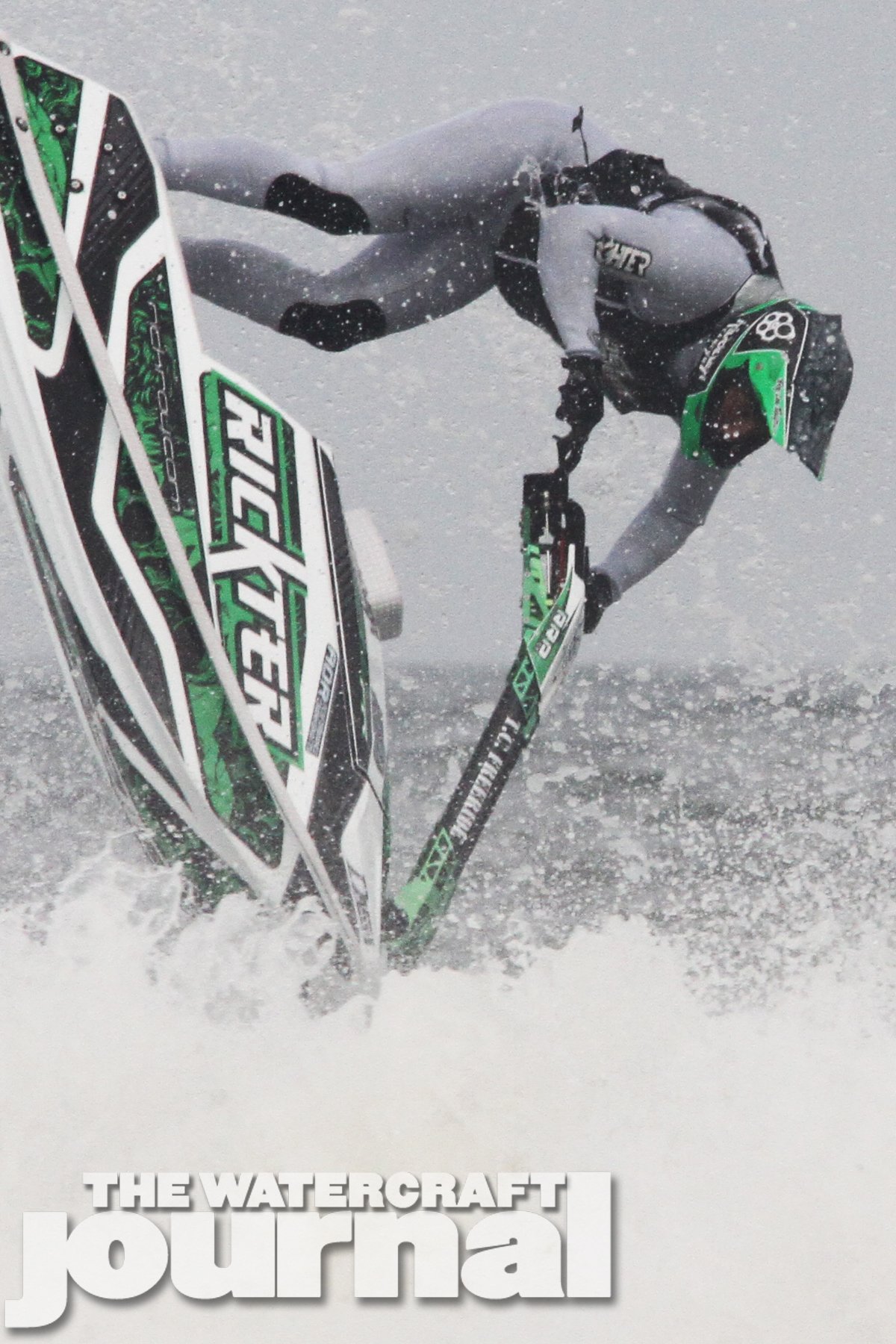
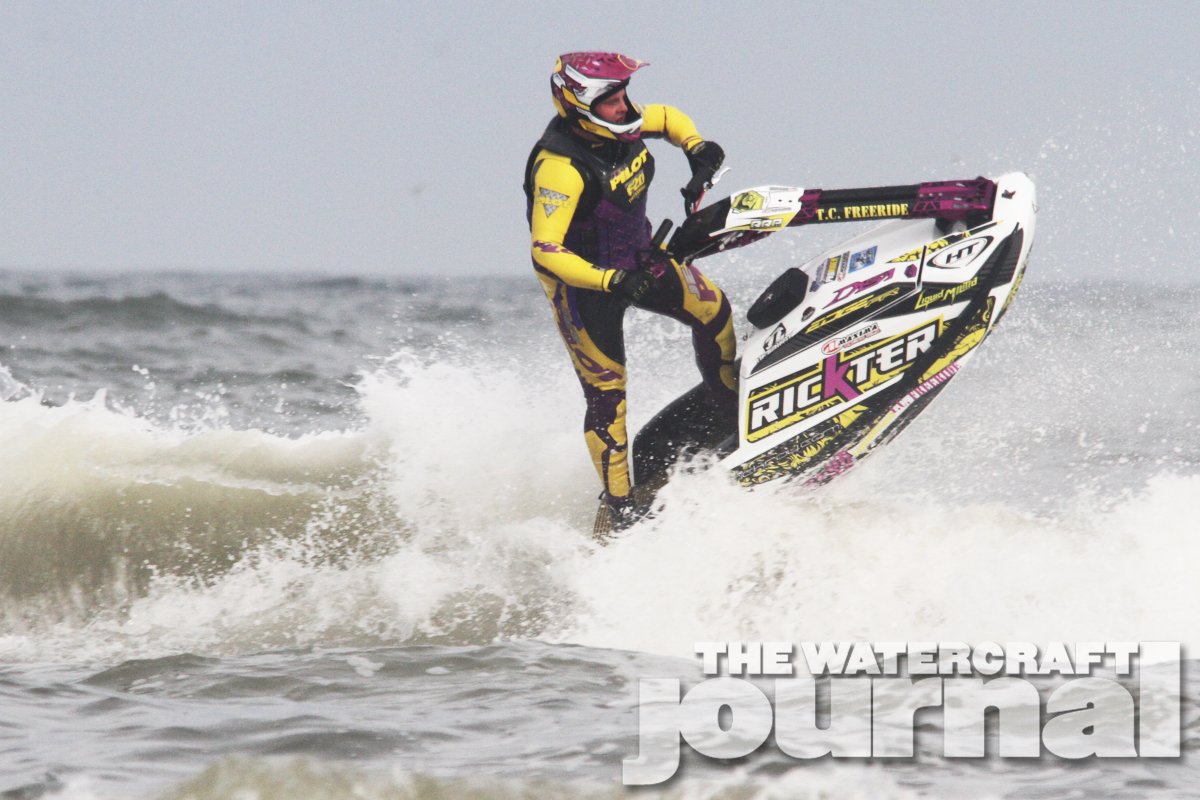
Just a few years ago, most skis were made by Yamaha and Kawasaki. Now there are so many aftermarket and modded hulls it is hard to keep track of them all. Similarly, inverts were mainly seen during expression sessions by the pro riders in attendance. Now you see backflips, barrel rolls, underflips, and other invert variations everyday of the ride performed by pros and amateur riders alike.
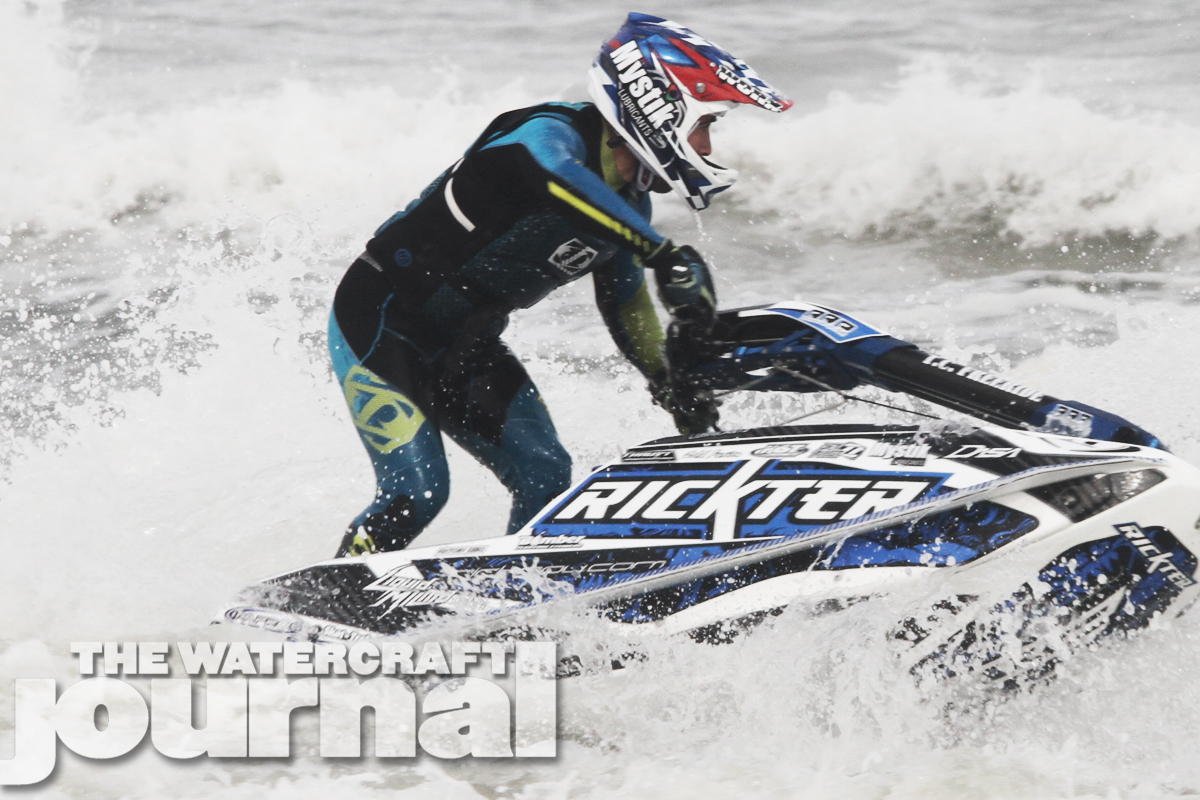
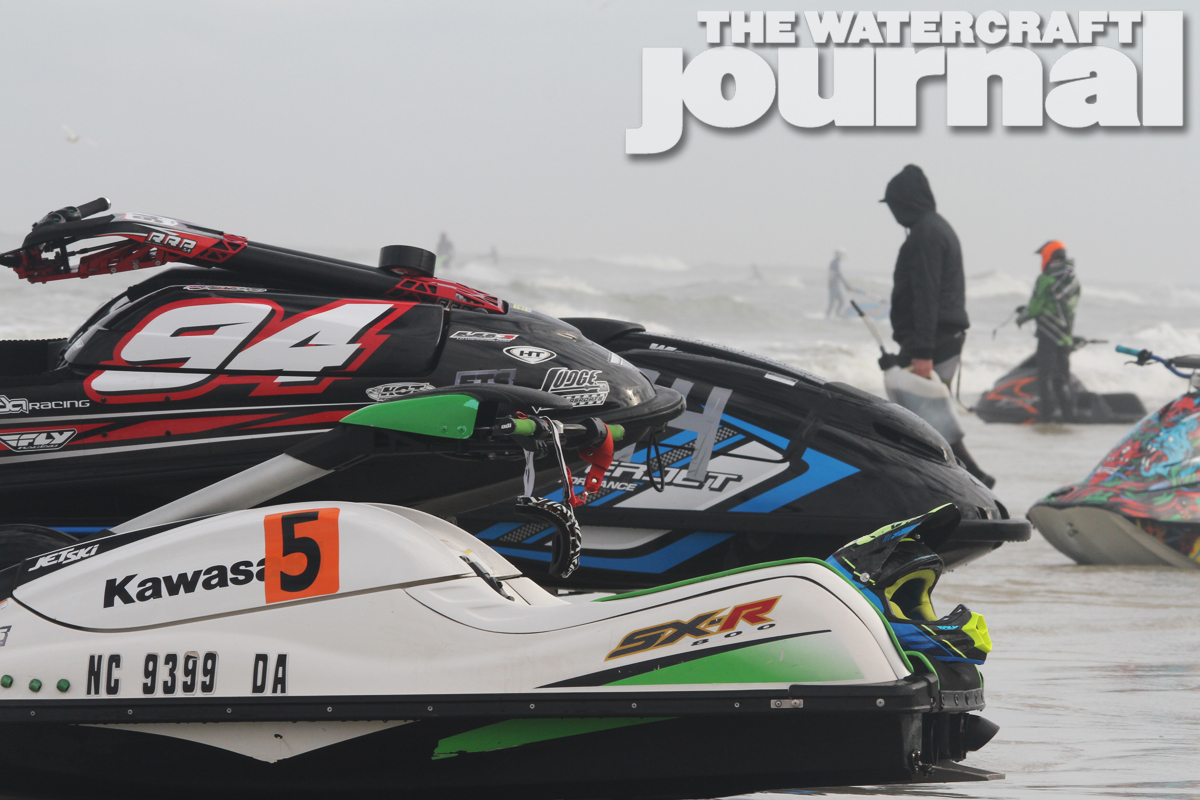
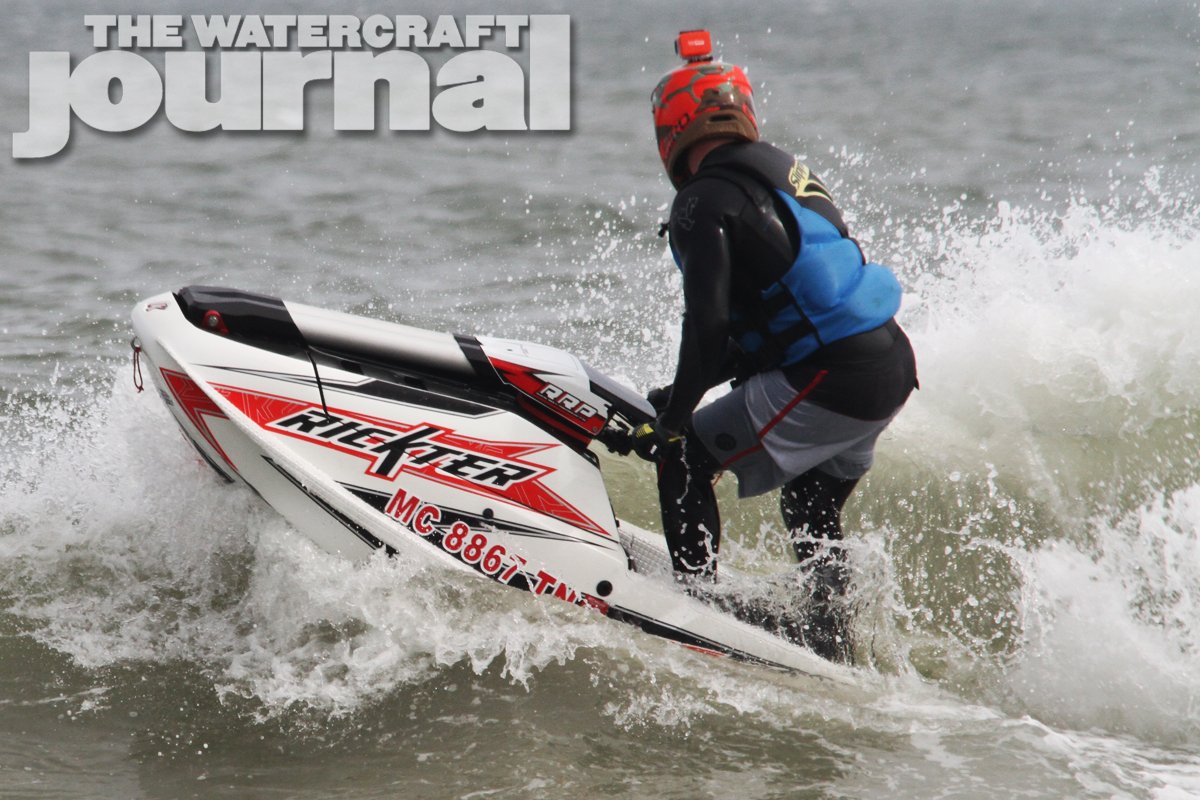
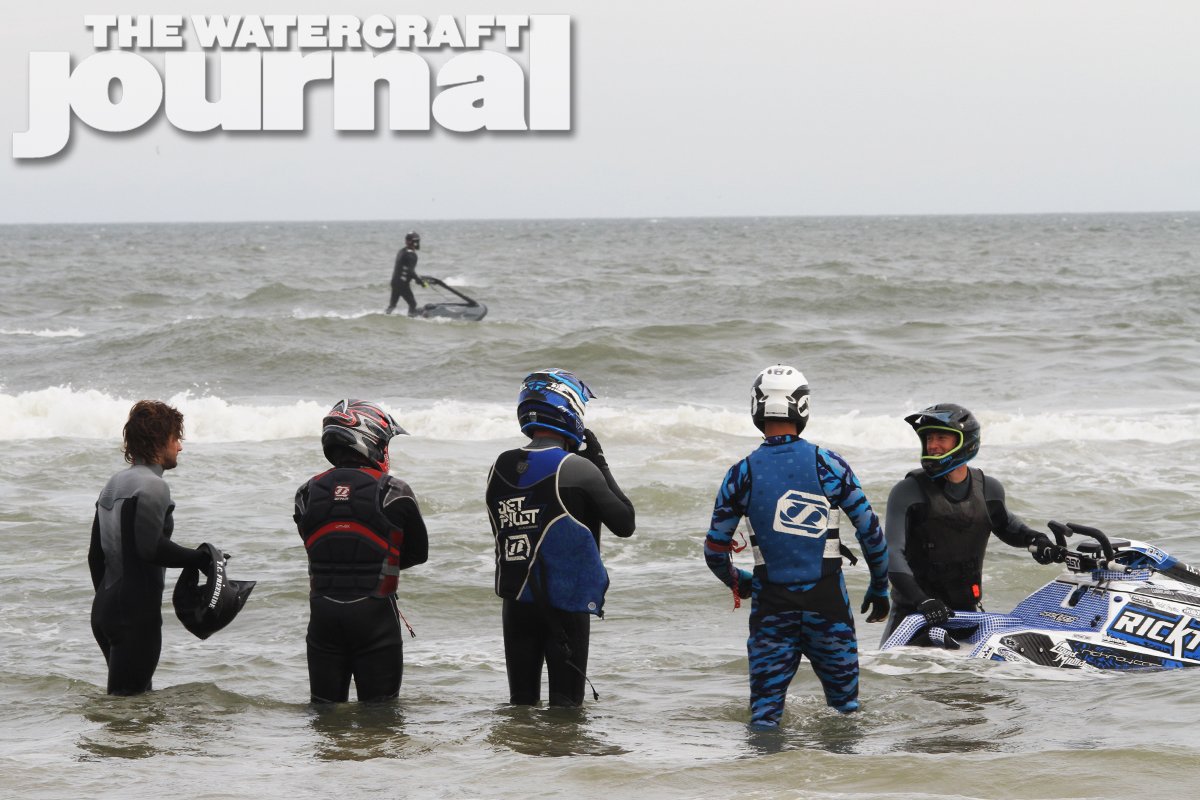
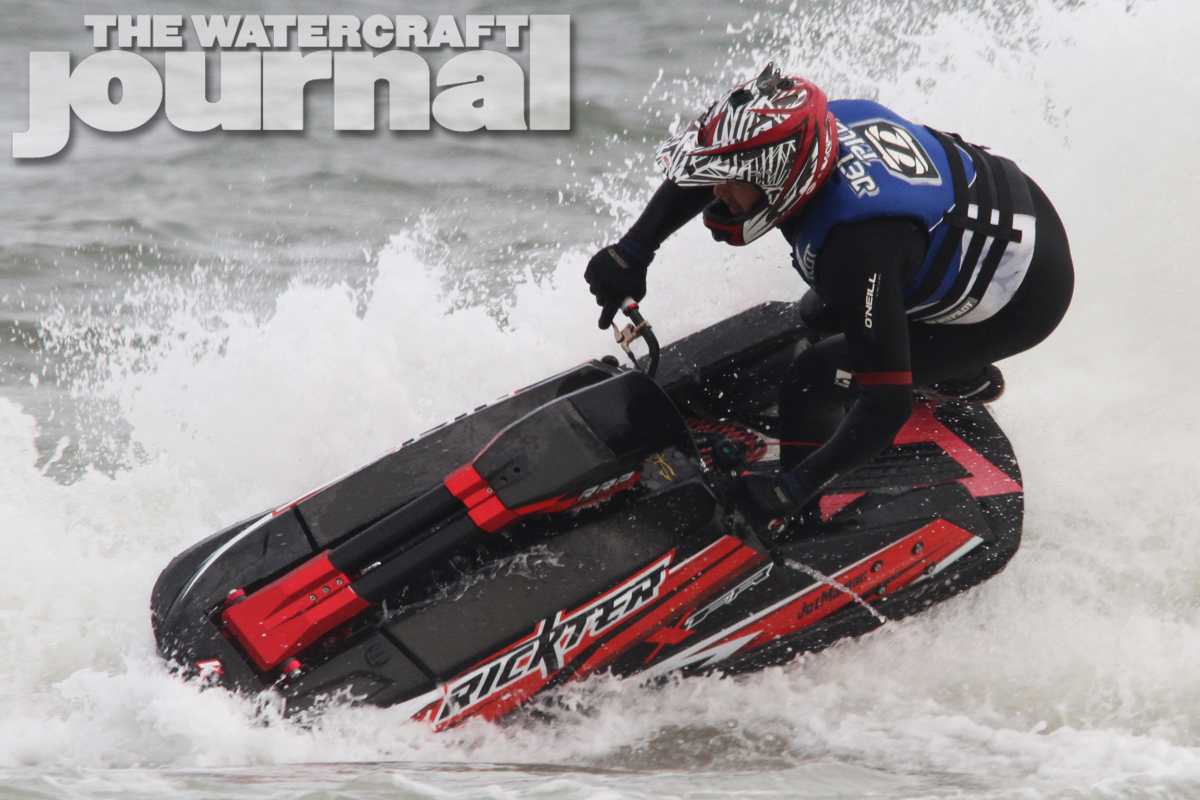
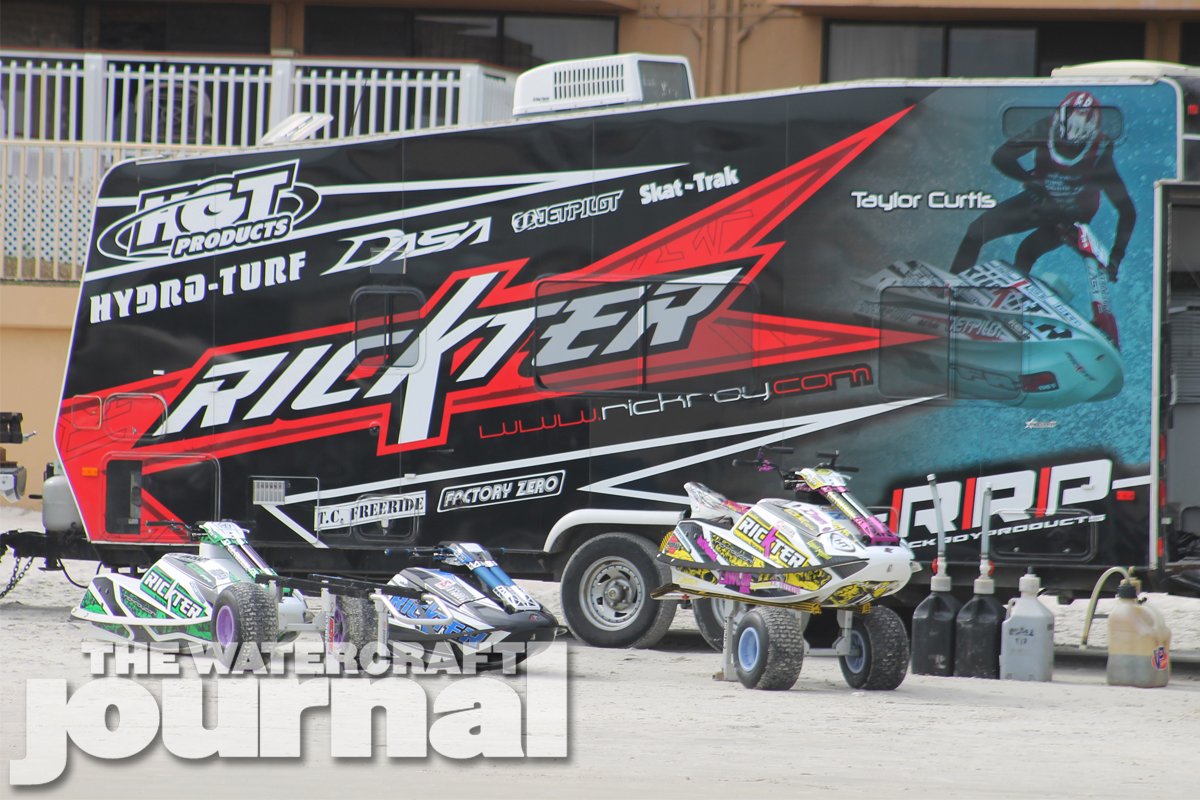
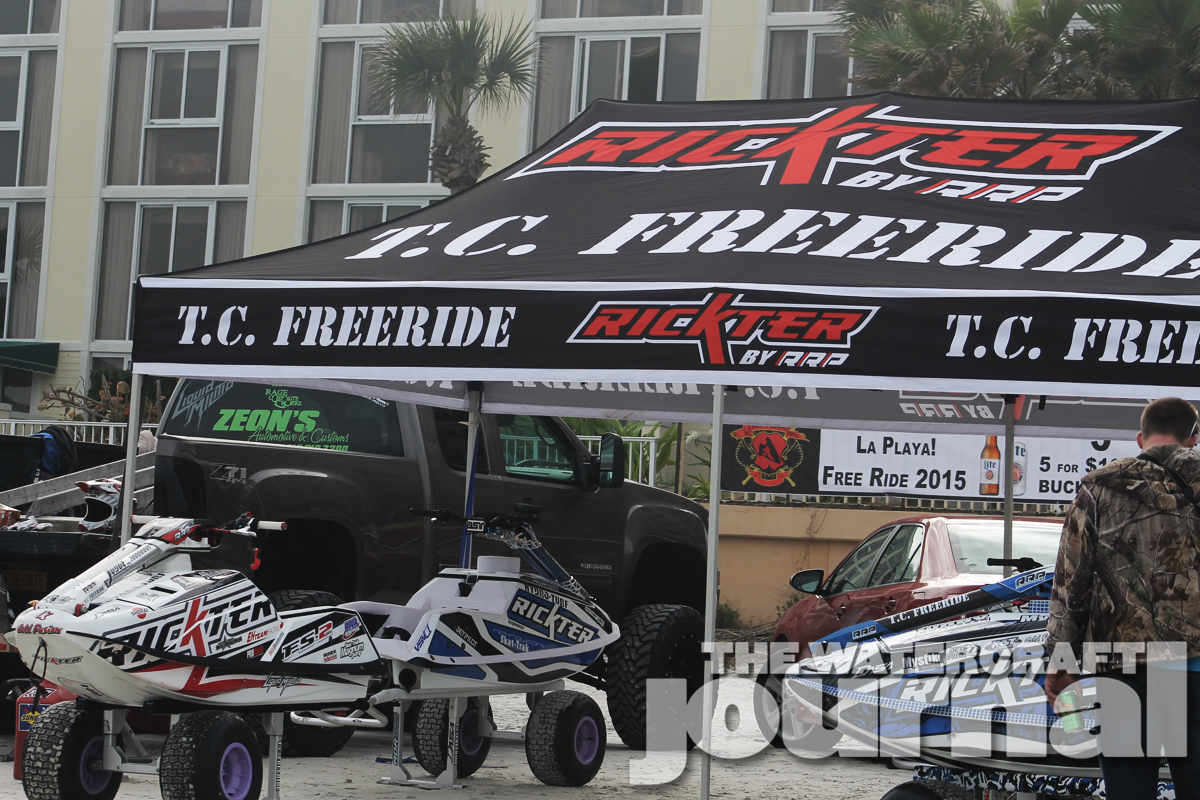
Friday also brought Flatwater Friday. This is an unofficial part of the event held on Friday at Lake Dias, which is about a 30 minute ride from Daytona Beach. Riders who prefer lake riding to surf gather to show off their freestyle skills here. This event is also popular with those who want try different skis. Rage Composite Works, XScream, SuperFreak, Rickter, TriXStar all had hulls on display or skis for demo. BOB, Trinity and Hydrospace were among the other skis at the lake.
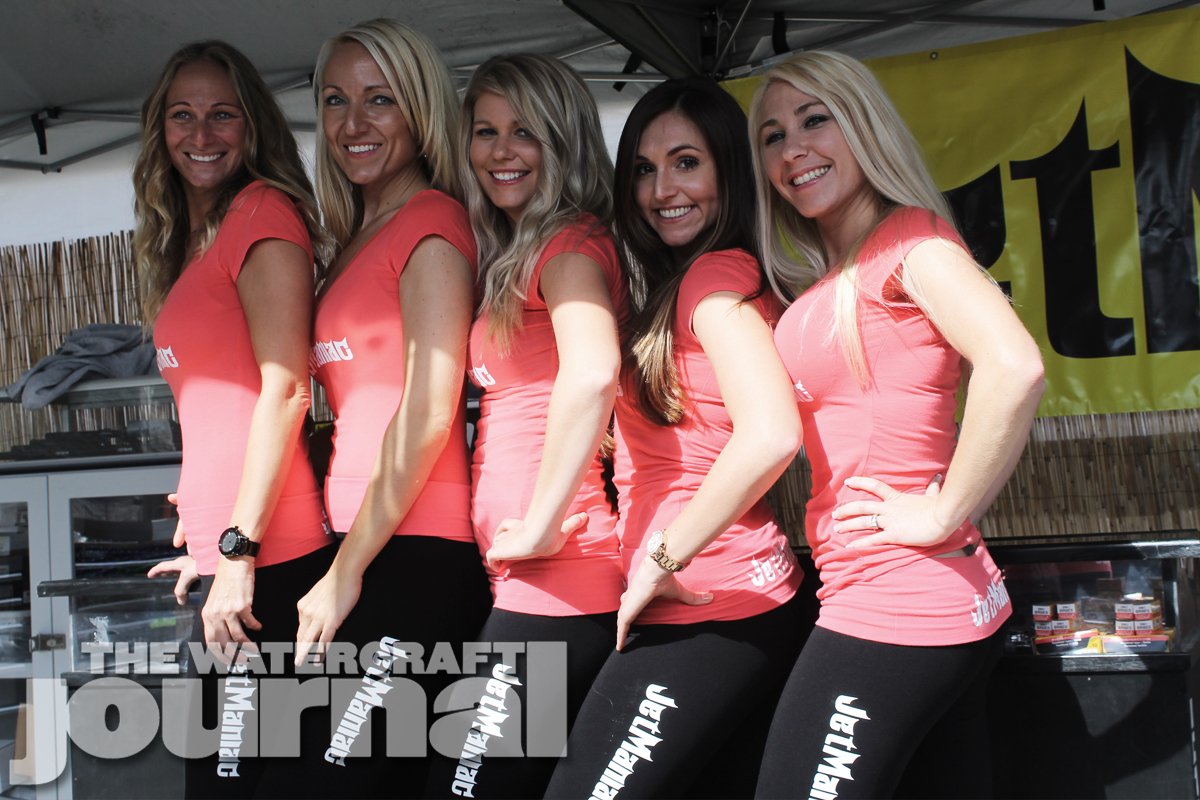
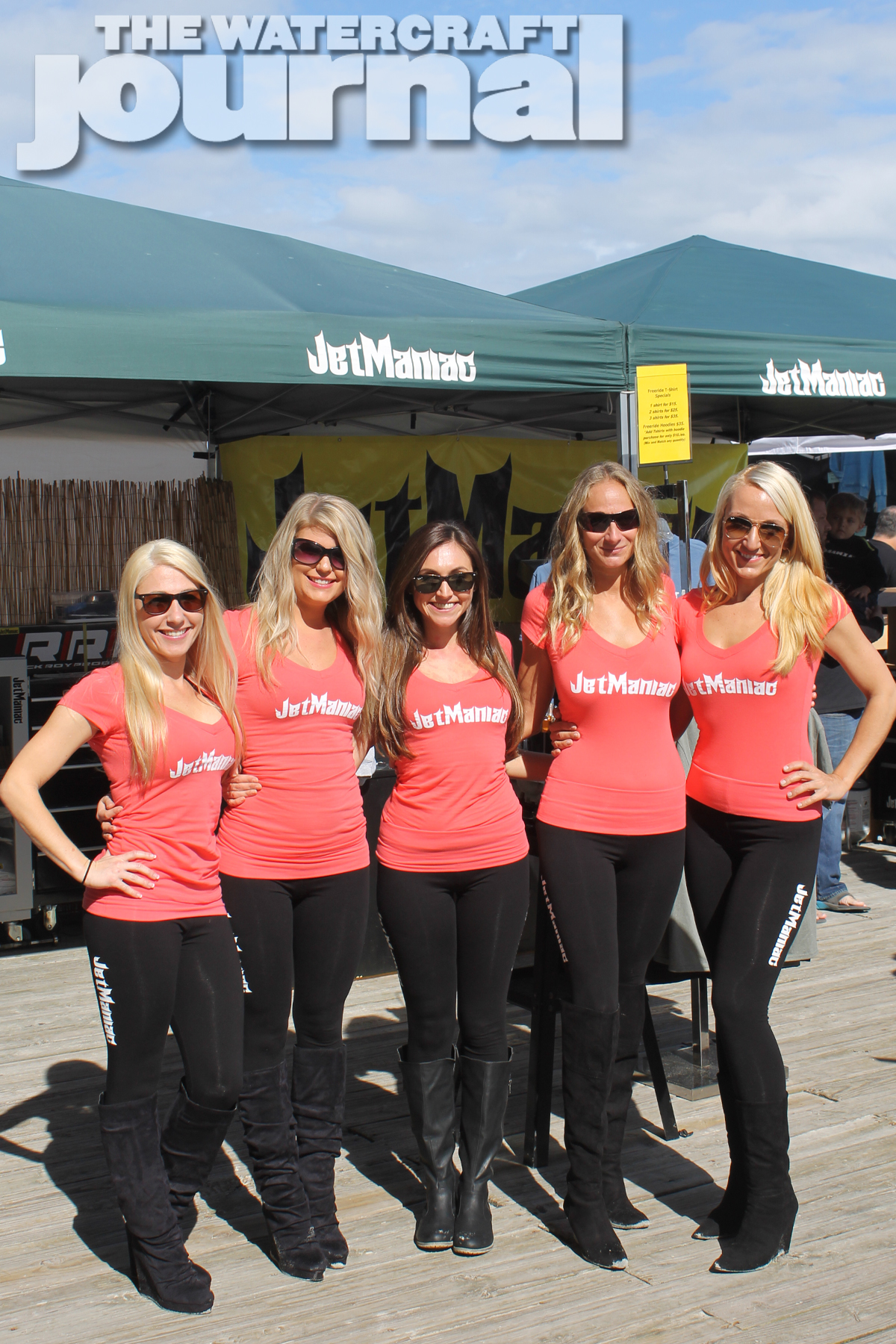
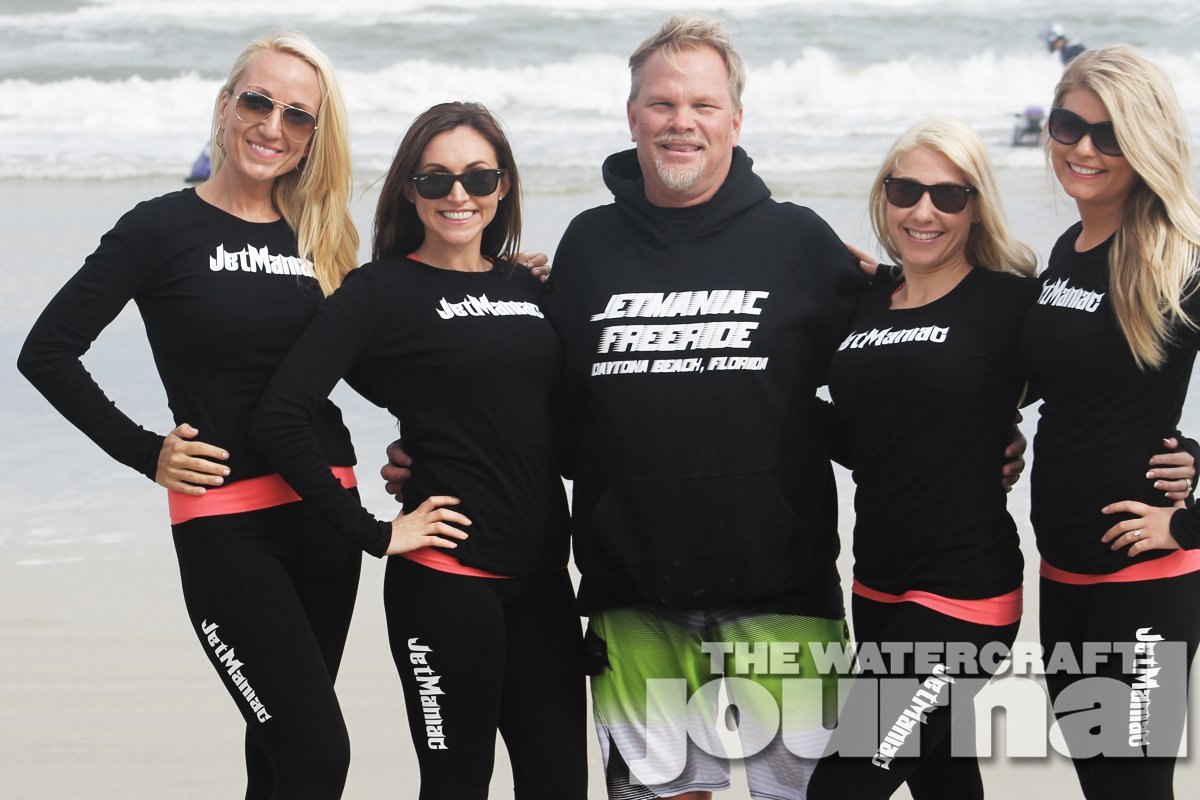
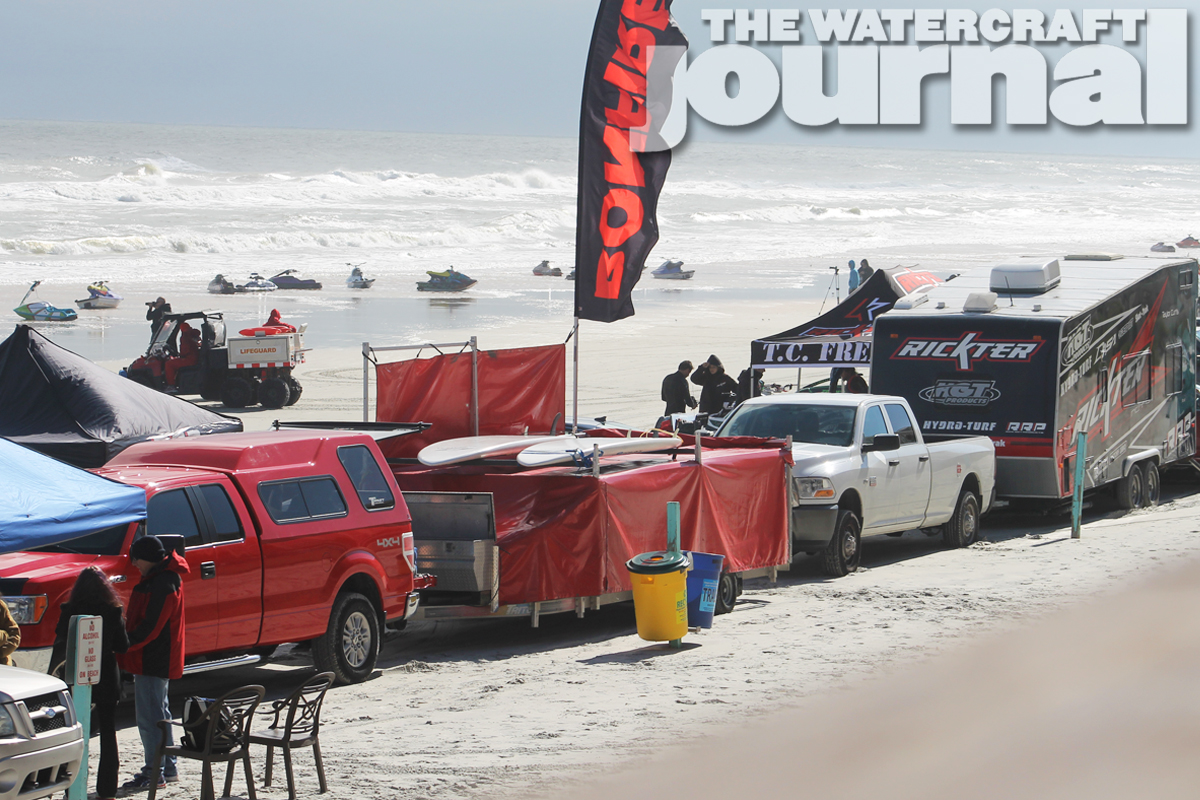
Surrounding the LaPlaya Resort pool deck, dozens of manufacturers and vendors set up their booths showing off their latest wares, including the folks from JetManiac, who hosted that Friday’s Meet & Greet party.
JetManiac hosted a Meet and Greet after party at the host LaPlaya Hotel’s ballroom after the riding concluded on Friday evening. This event was cosponsored by Rad Dudes, who are always down to party. They sponsored some free libations for the thirsty freeriders. Other sponsors included Rage Composite Works who sponsored the DJ and lights and Tigercraft for more drinks.
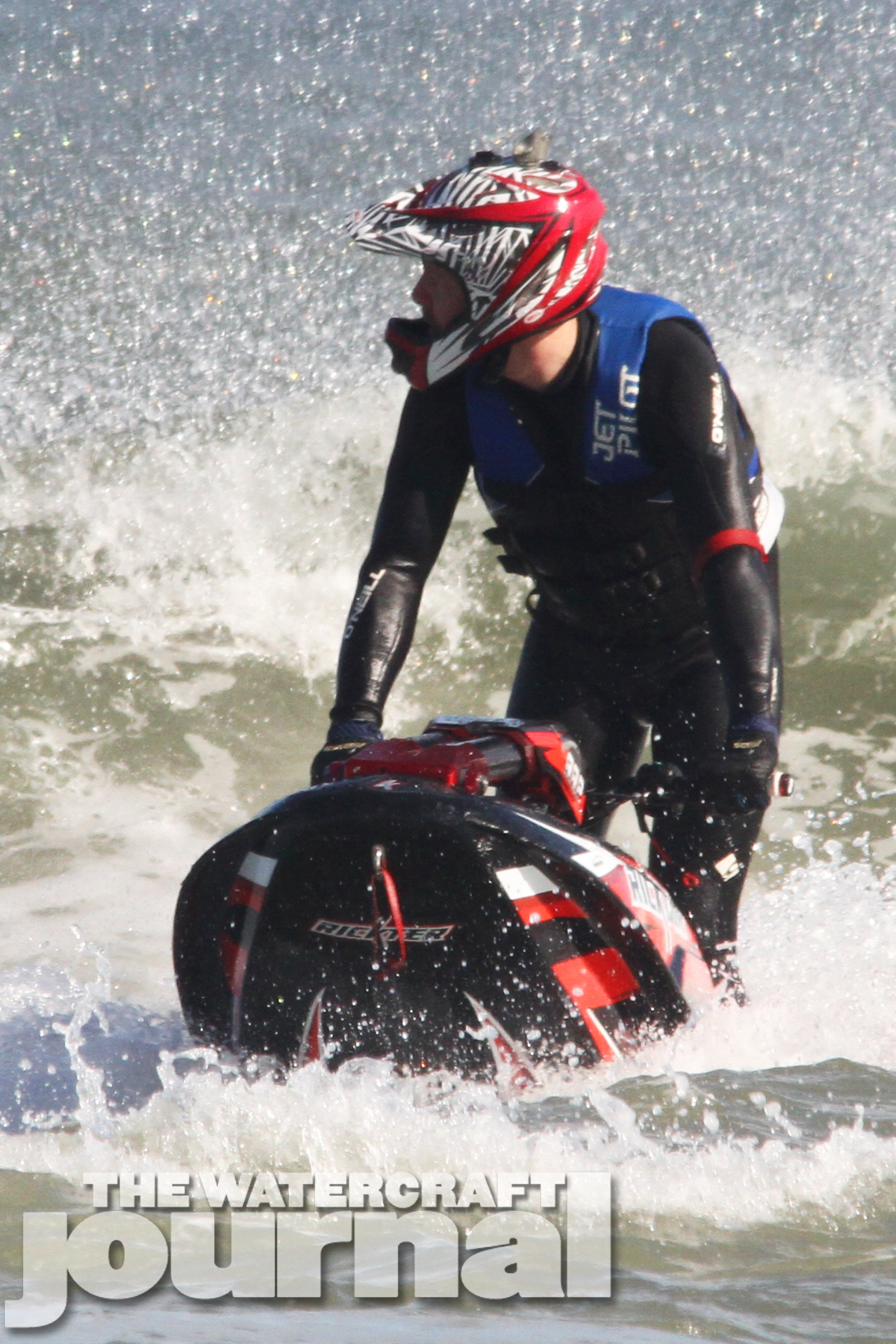
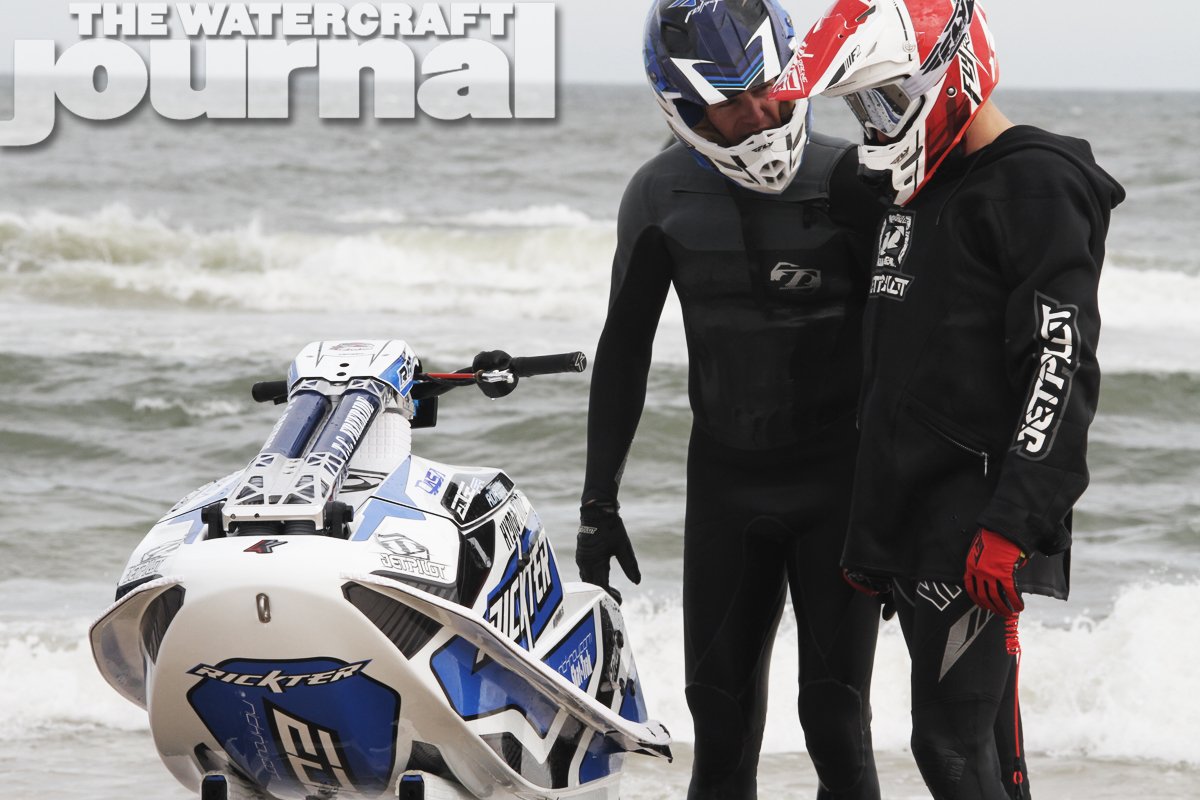
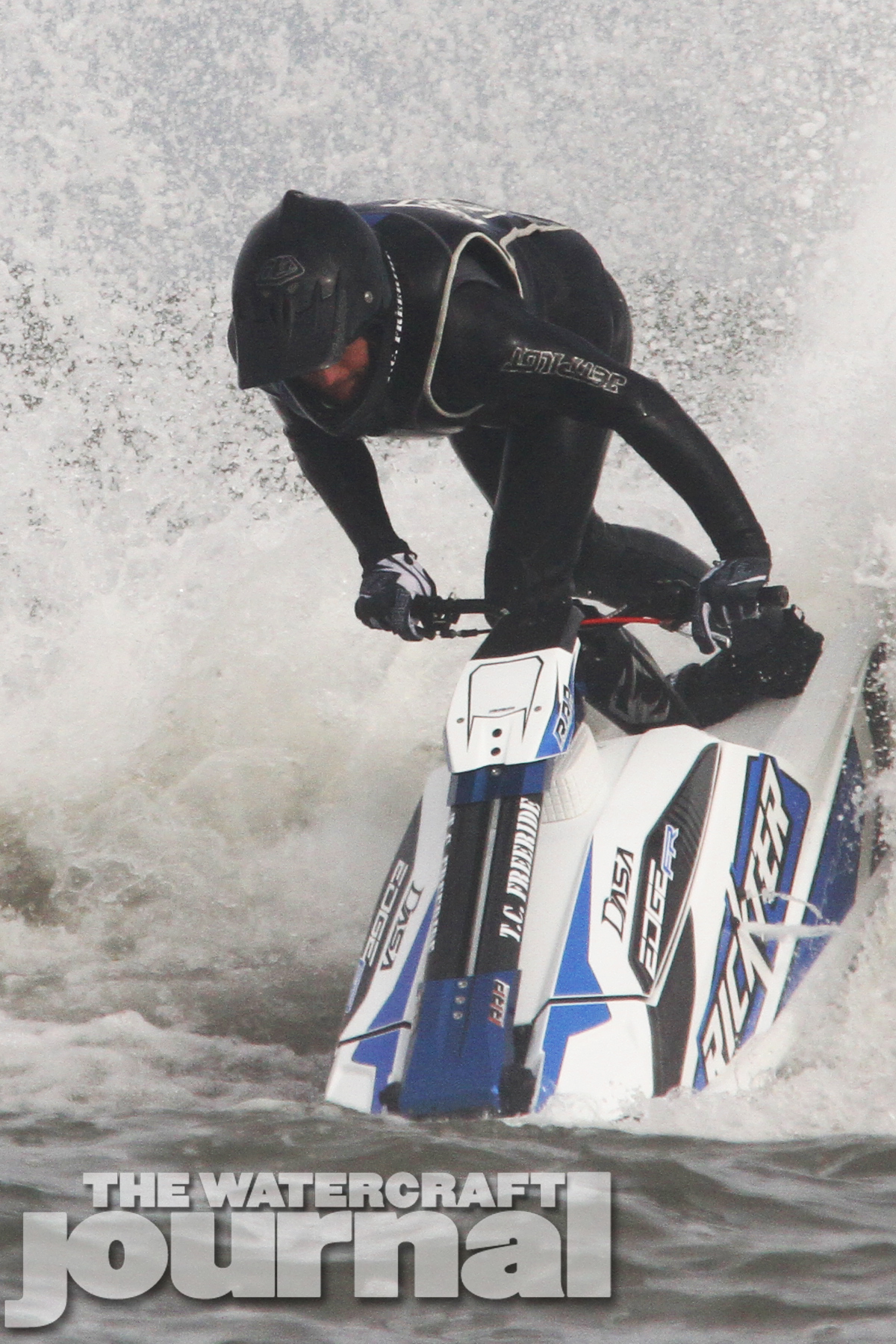
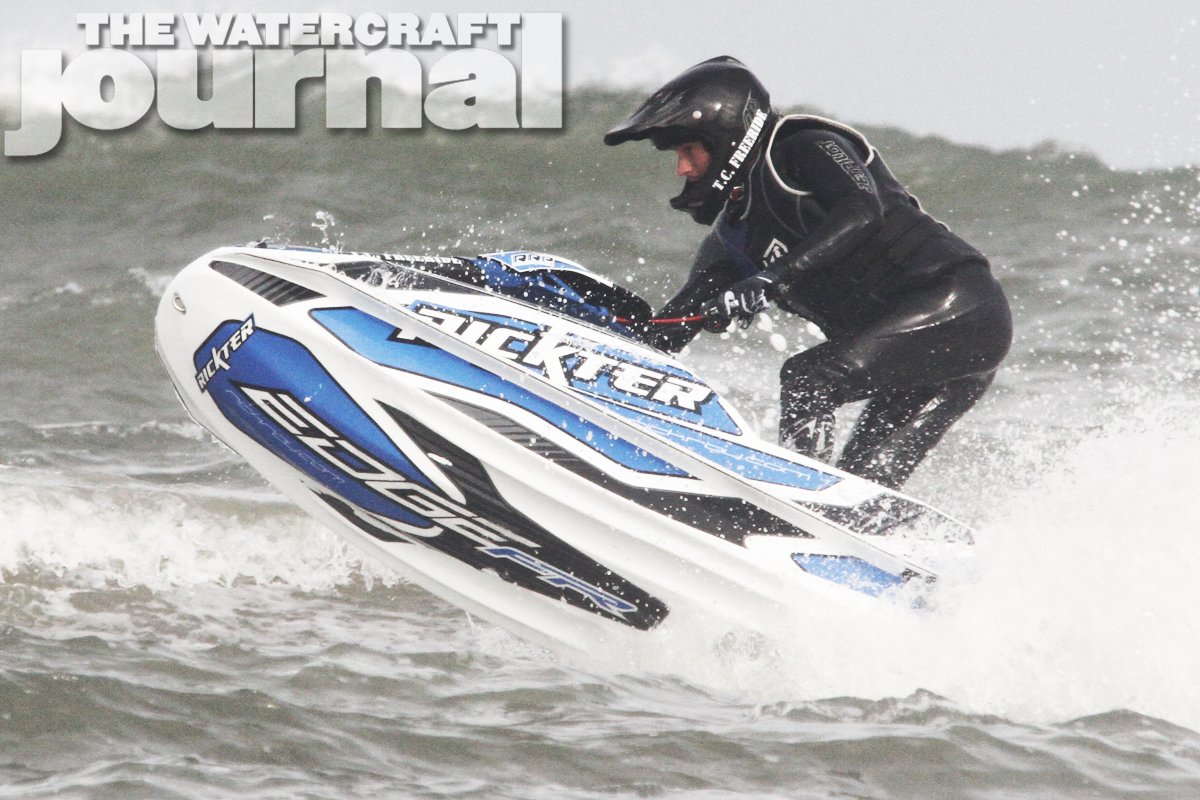
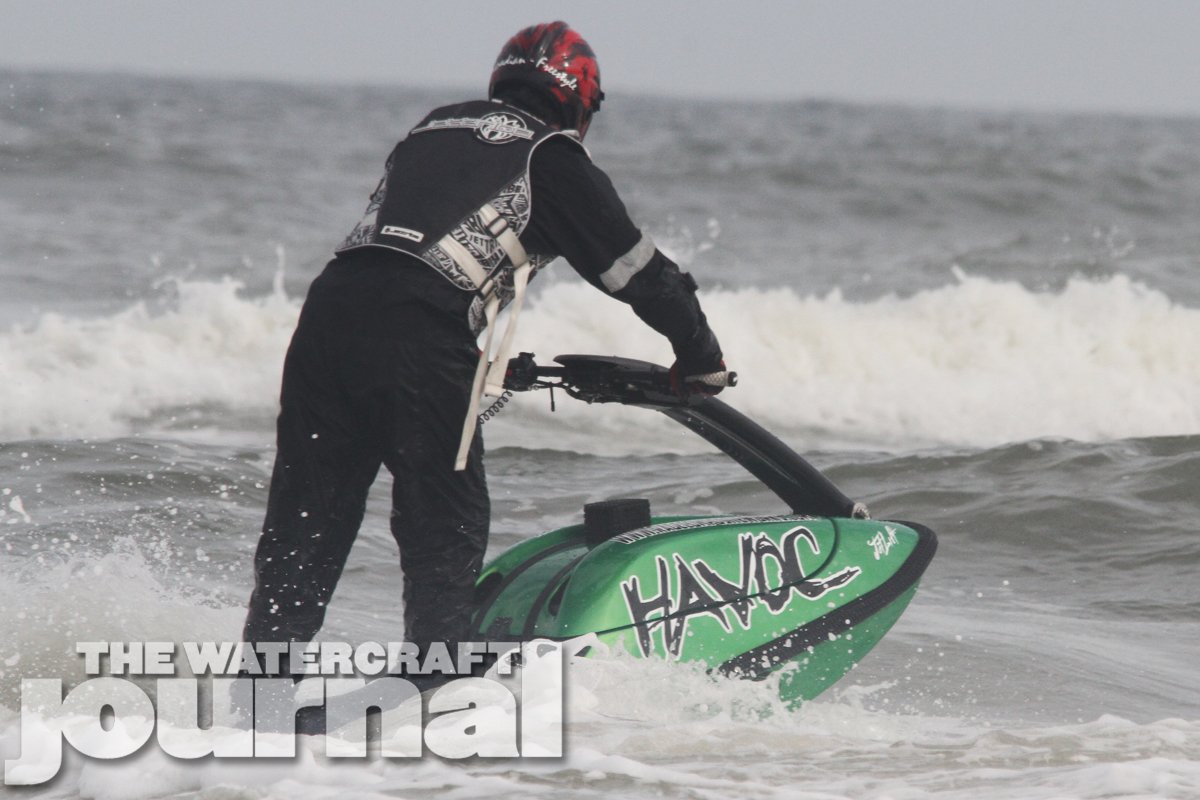
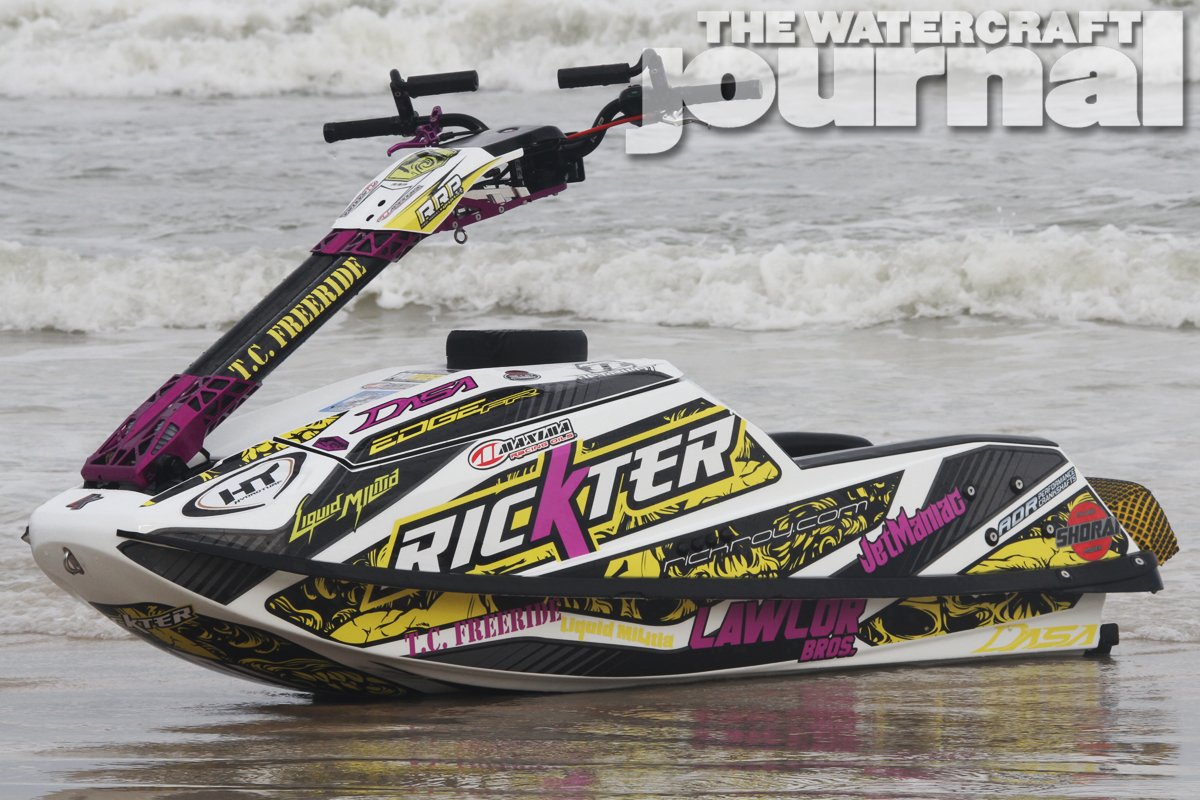
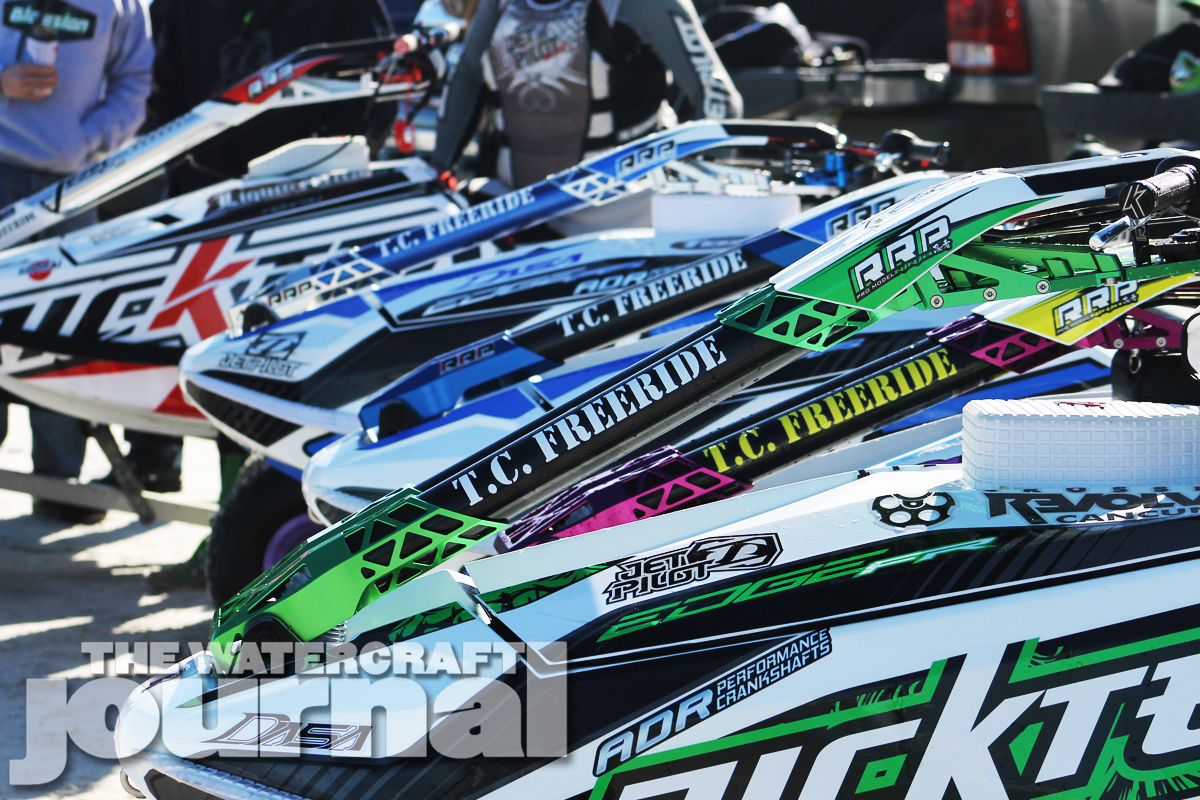
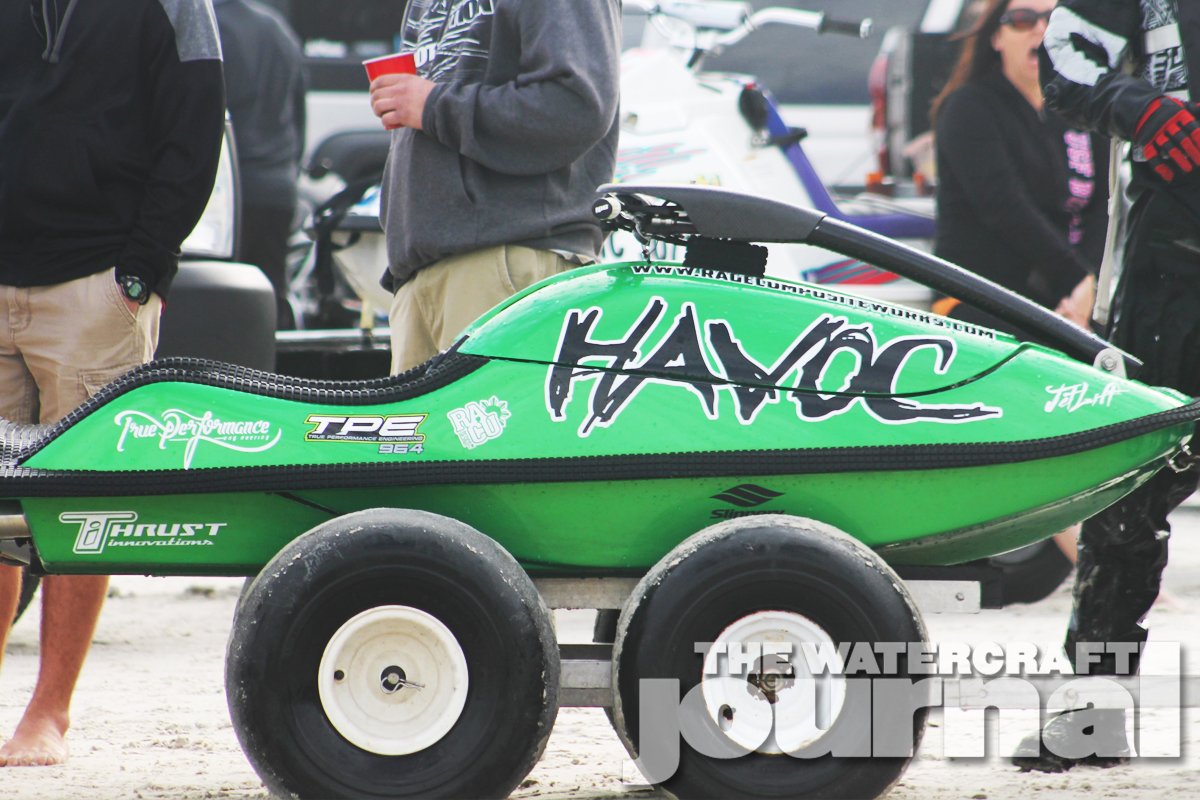
The aftermarket hull display area was a big hit at the party as well. Rage Composite Works featured their new Havoc hull and Tigercraft had a new Aquabot hull on display. Thrust Innovations displayed a Rickter Edge as well as several Superfreak hulls. The party was well attended with over 300 freeriders at the event.
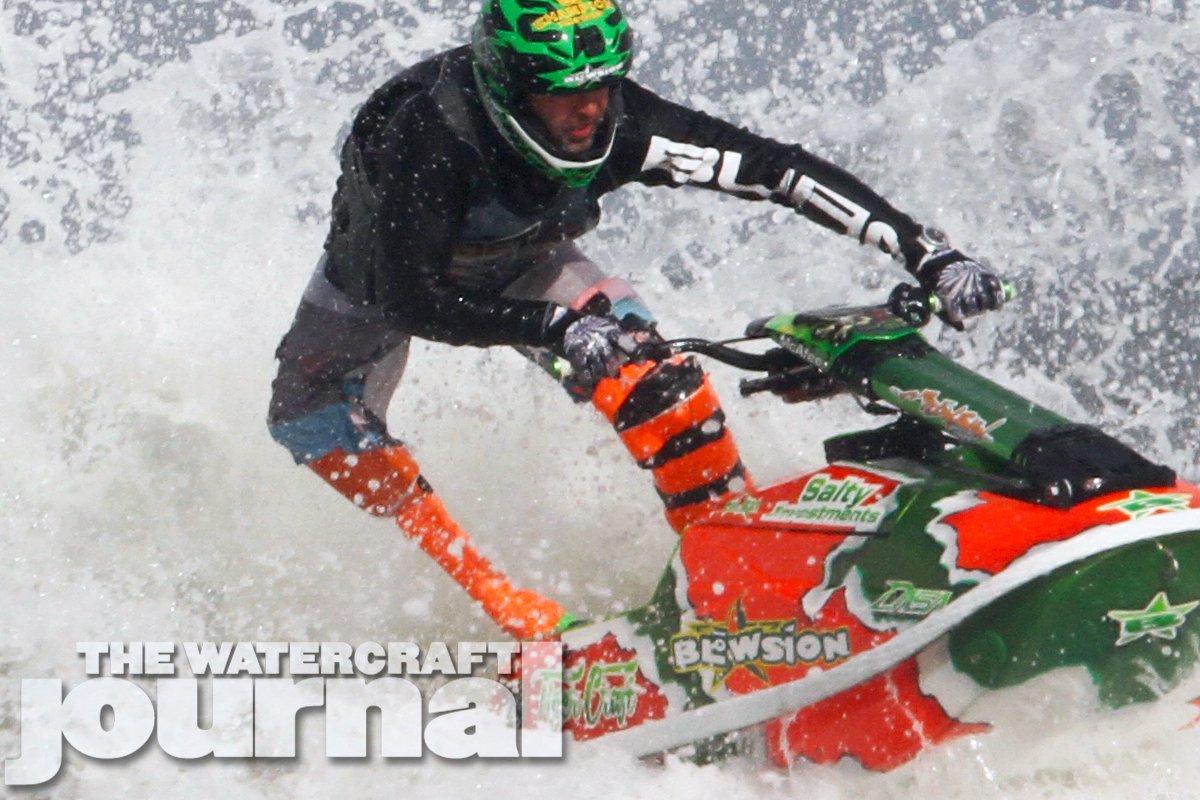
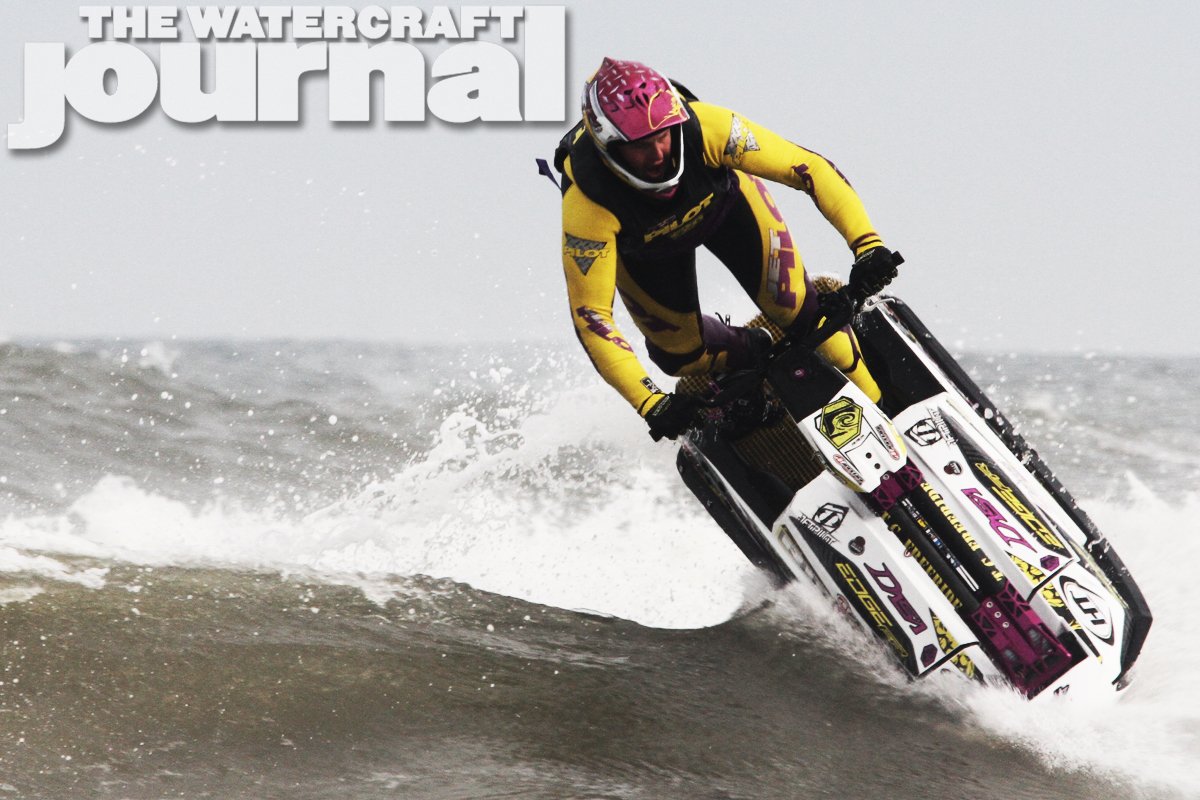
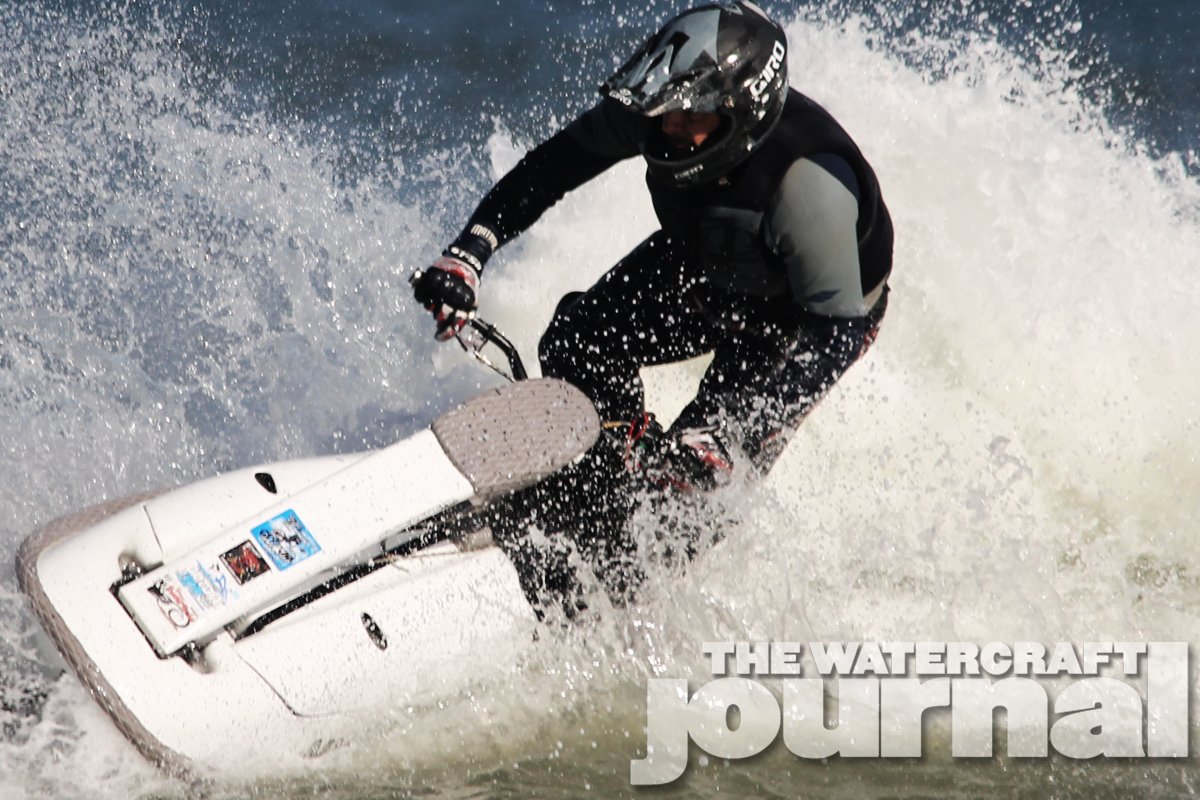
“Peg Leg” Pete McAfee traveled all the way from the Pacifc Coast to show off his surf riding skills on his awesome custom Blowsion painted TigerCraft.A variety of tricks were witnessed this weekend including backflips, underflips, Madonna flips, and other variants.
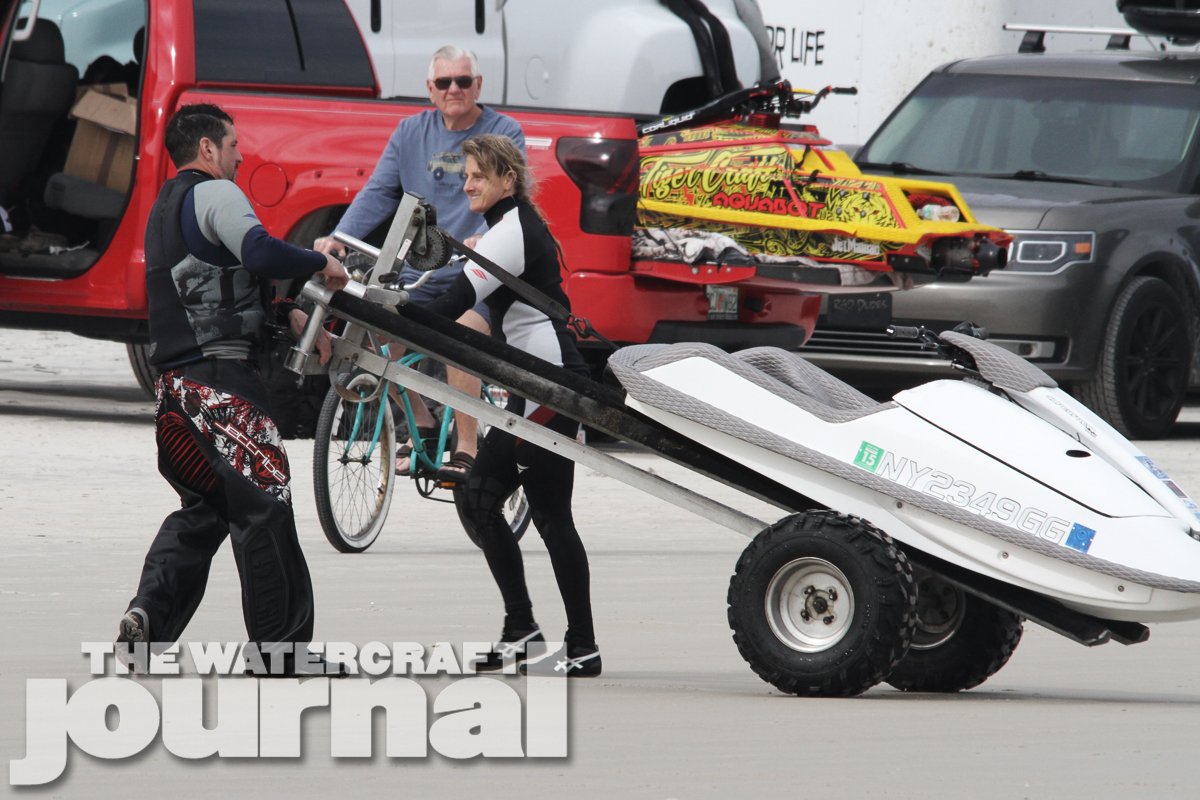
Saturday was the biggest day for the freeride. All of the vendors had set up their booths on the pool deck behind the hosting LaPlaya Resort Hotel and had all the latest in freeride skis and parts on hand as well as repair parts for freeriders whose skis would inevitably breakdown while riding in the surf.
New to the Daytona Freeride was the inclusion of the “King of Daytona Beach” Aquamoto race organized and ran by racing legend Chris “The Flyin’ Fish” Fischetti Saturday afternoon.
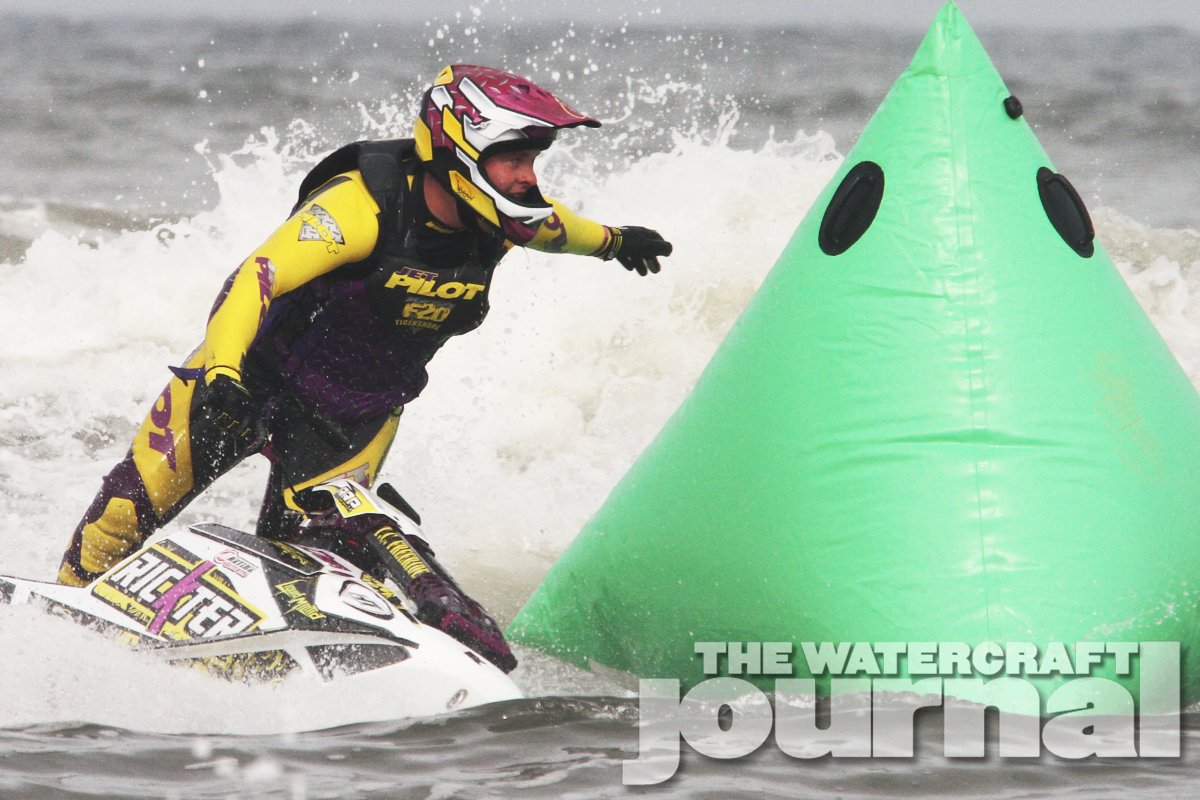
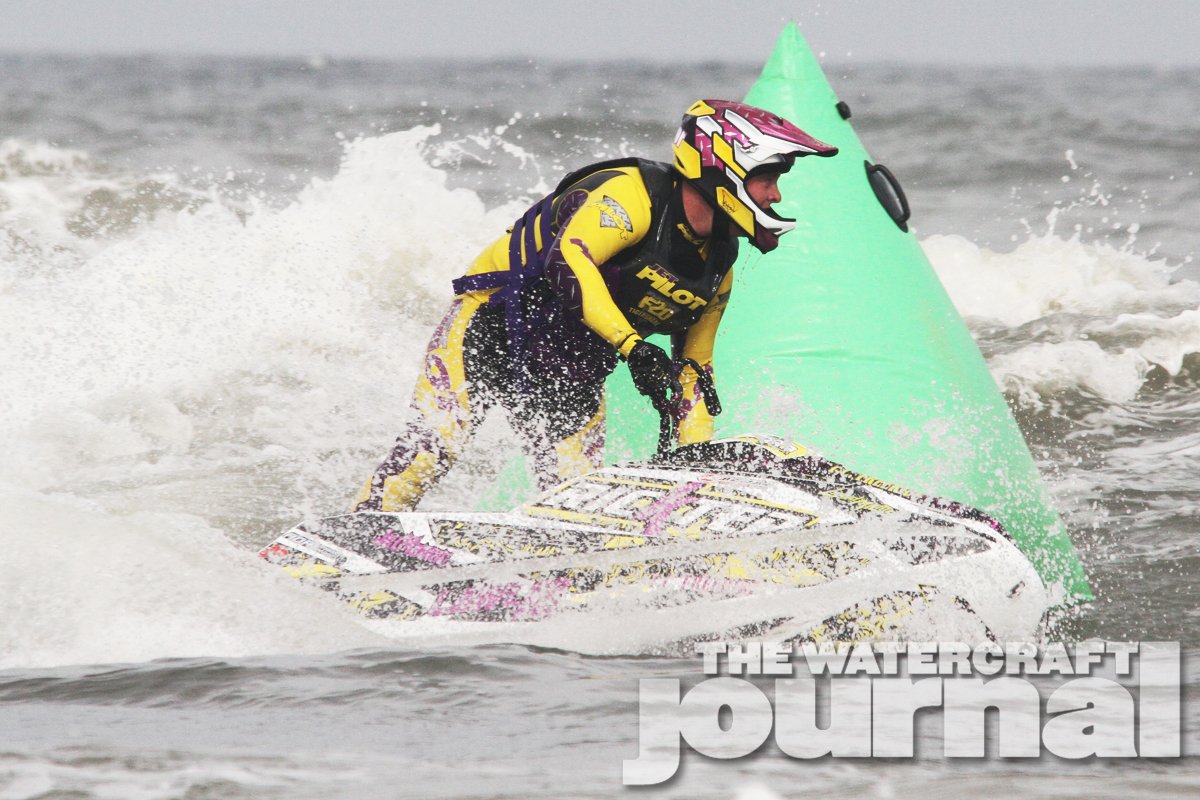
The race was a closed course surf race featuring a dead engine (LeMans style) start. Race classes included 800cc and GP Standup, and Sport/X2 Class Open. The racing was expectantly hectic as racers maneuvered around the tetrahedron buoys in and around the crashing waves, and provided a great show for those watching.
The 800 Ski results concluded with Bill Haig in first place, second place to Trevor Allred, and Shawn Mayo in third place. GP Ski resulted with Mark Gomez in first place, second place to Jordan Carroll, and third place Johnny Smith.
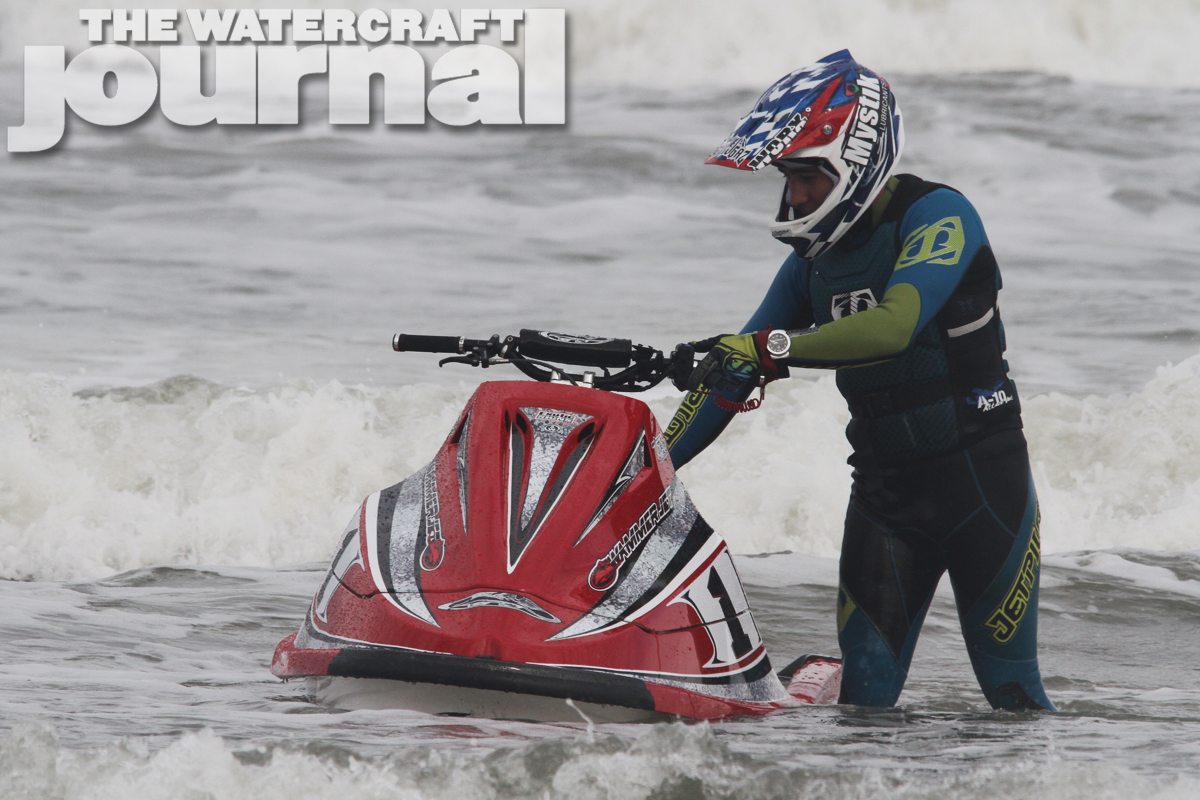
Sport class results were in first place Mark Gomez on a new Wammerjet, second place to normally-RIVA/Yamaha racer Brian Baldwin on a Kawasaki X2, and third place to David Gone on his Kawasaki X2. The Overall Top 3 were first place Mark Gomez, second place Bill Haig, and third place Trevor Allred, with the “King of Daytona” overall title awarded to Mark Gomez.
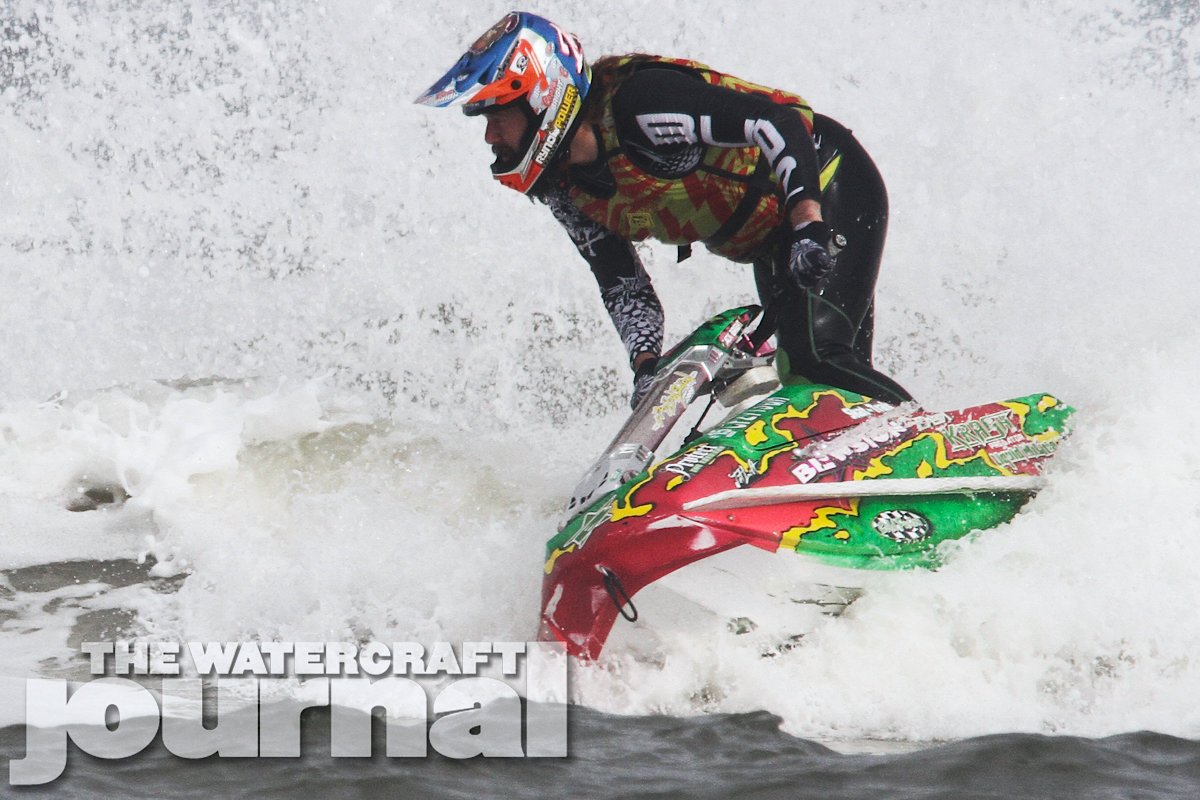
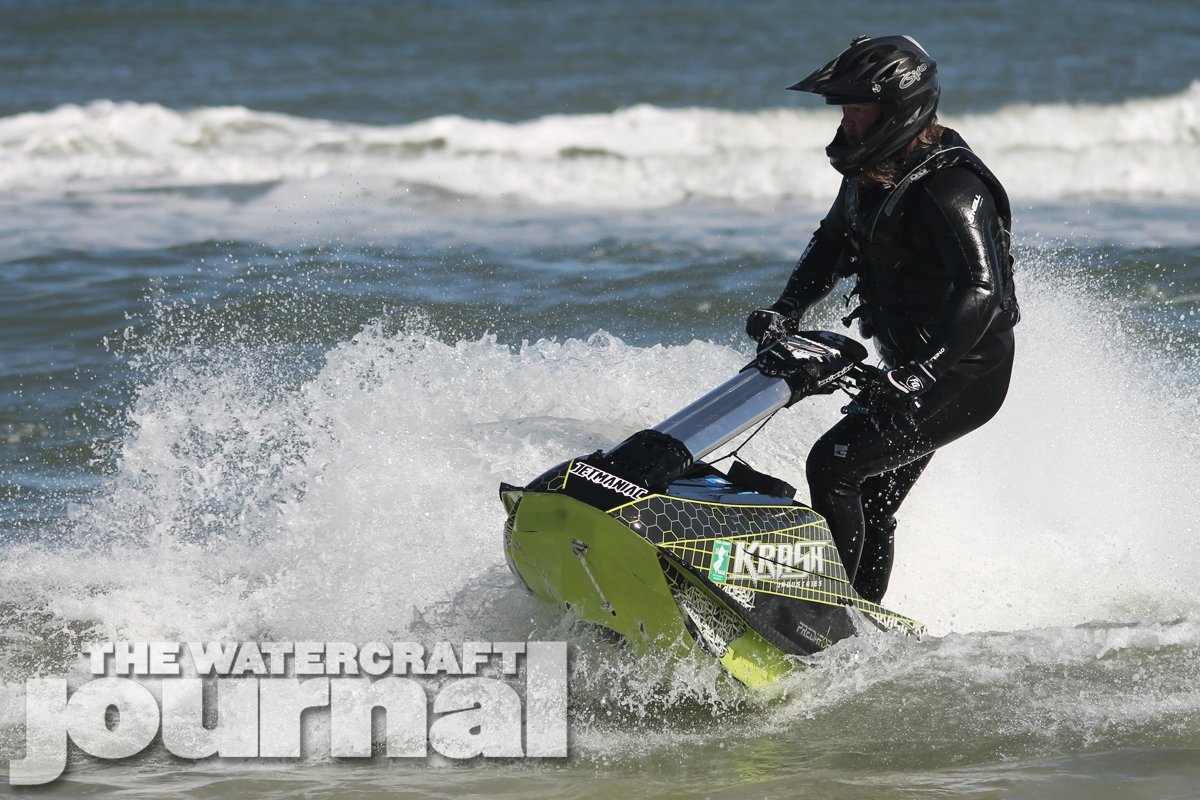
Oside Crew member and Blowsion posterboy Zack Bright handily maneuvered through the surf and showed his skills at making his Krash Industries’ ski fly.If anything can be said about the Daytona Freeride it is “expect the unexpected.” No matter the result, everybody had a great time.
Next was the Moto Option Surf and Style competition, and was the third year for the competition. This is a event where the main goal is to surf the waves and do tricks that you land back in the wave. No tricks out the back of the wave were counted. No “cockroach style,” no nose-high reentries. Riders must maintain speed and exhibit style and rip the hell out of the wave for 4 minutes.
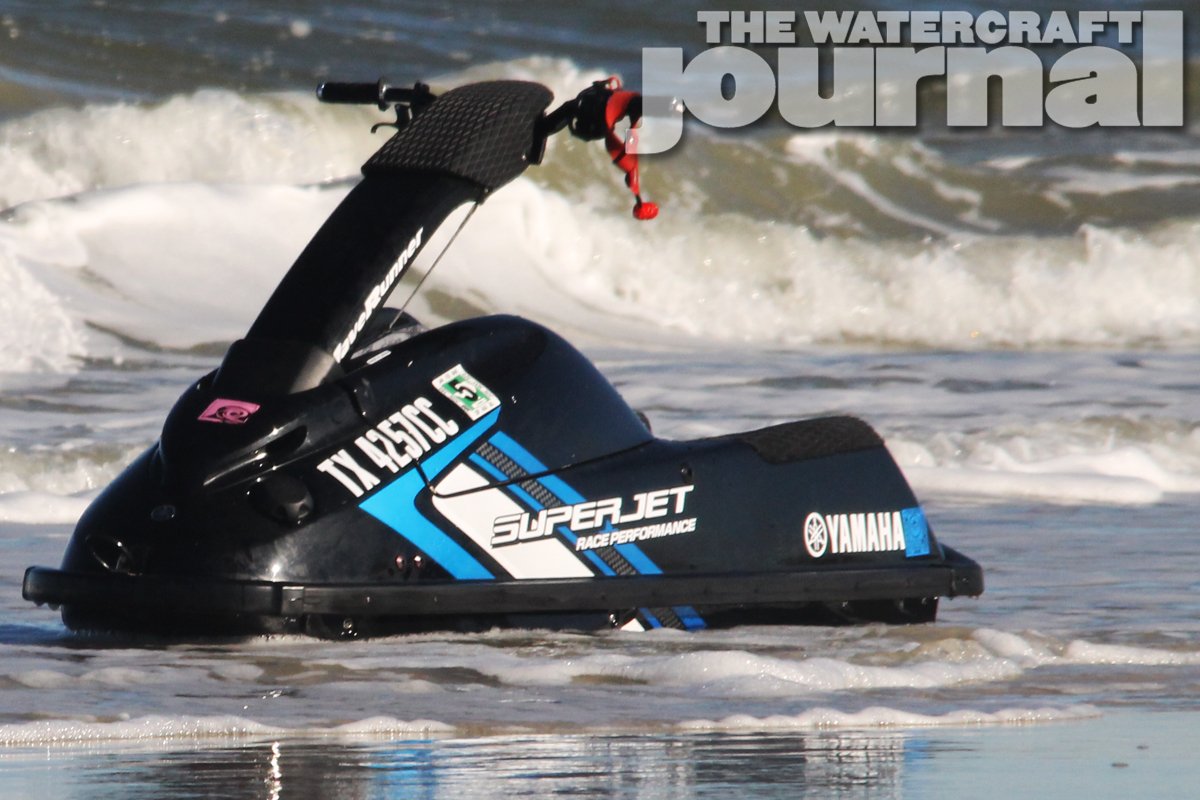
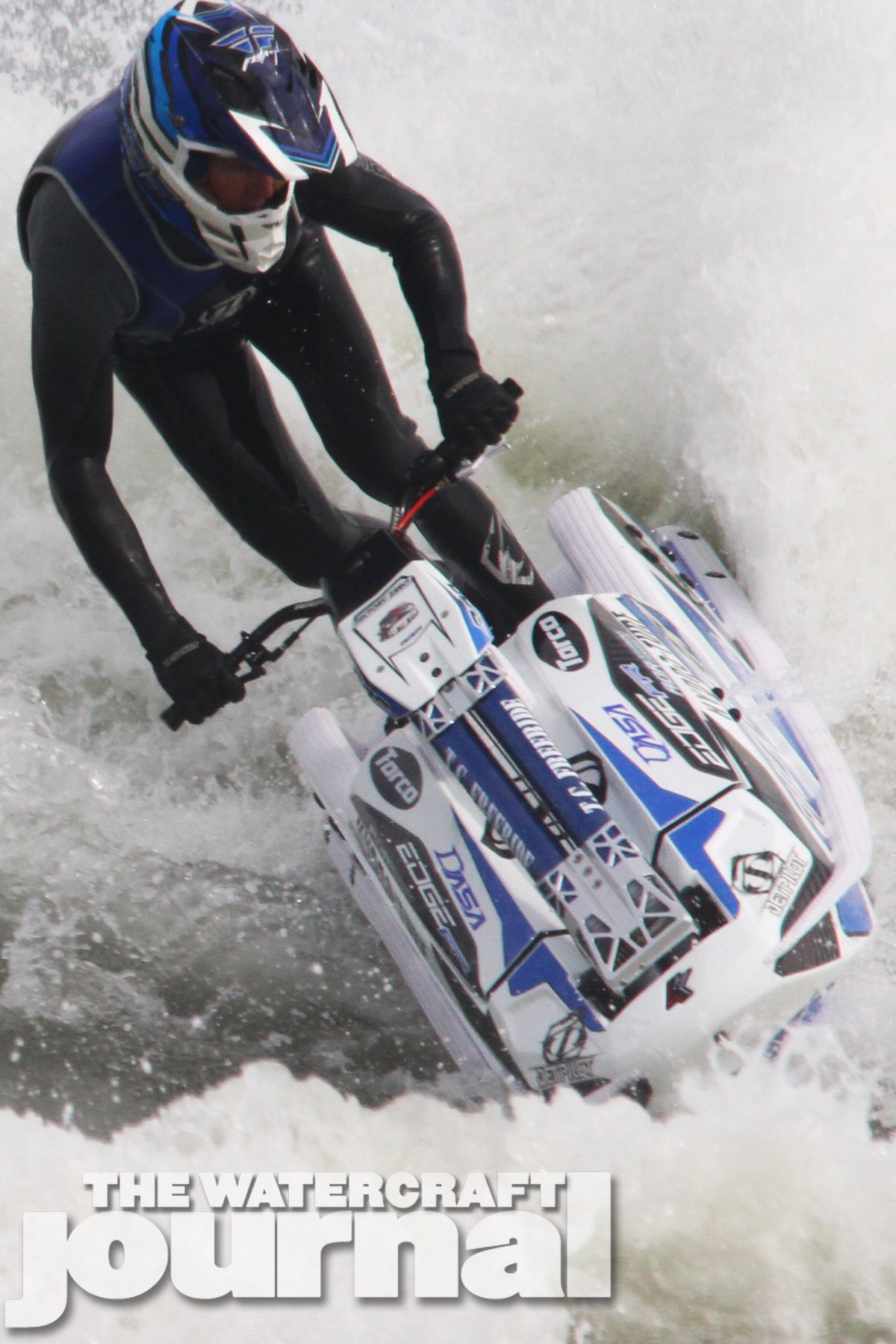
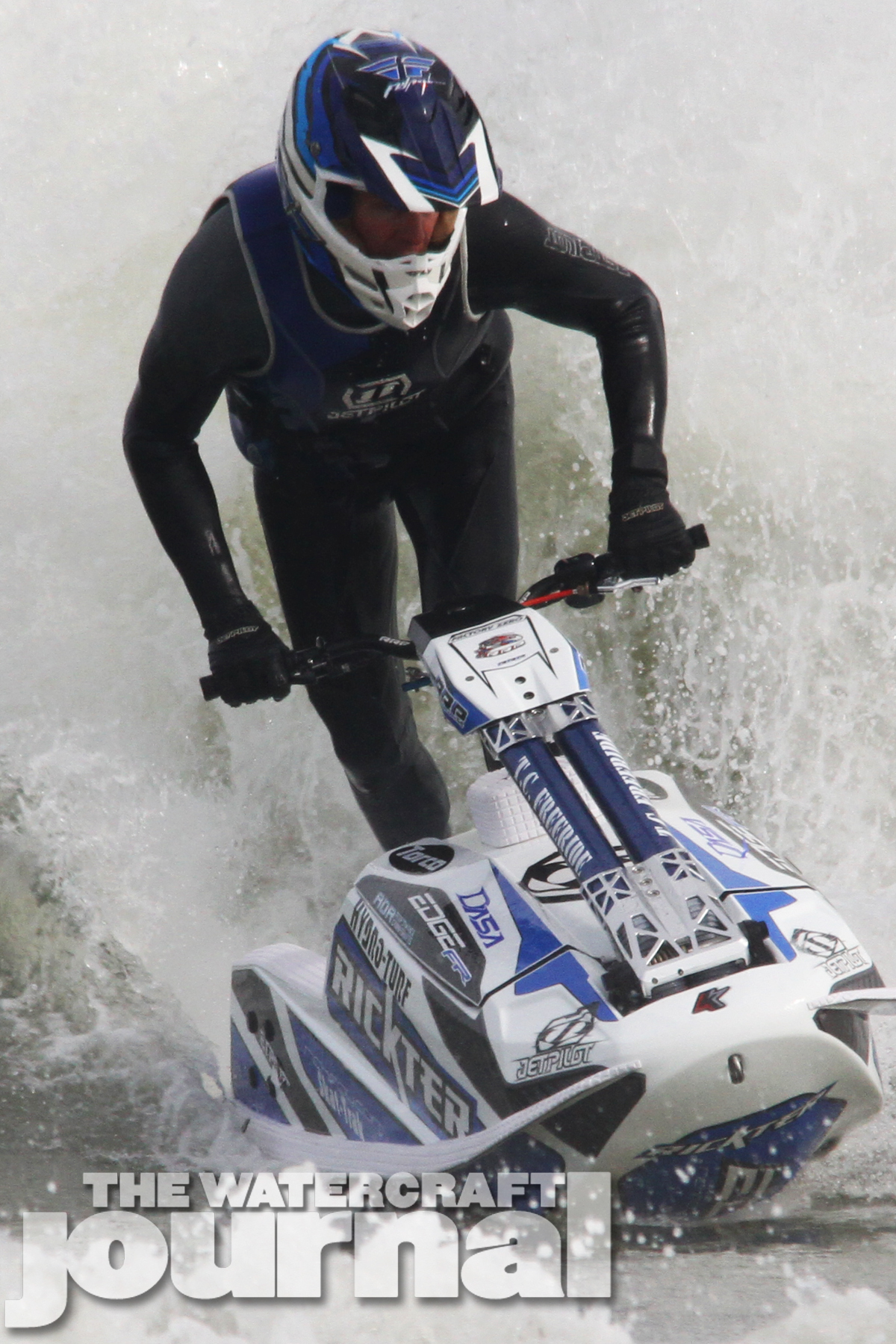
The best and most fluid riders win it. There are no cue times between riders. You ride your 4 minutes, and the next rider hits the surf and you come in when you see the next rider go. No head-to-head riding, either. The winners were as follows: first place went to JD Hunt on a modded Yamaha FX1, second place Mark Gomez on a Rickter edge, and third place Carter Brackett on a chopped and modded Yamaha SuperJet.
The freeride raffle was Saturday evening after the day’s riding and featured lots of great prizes donated by all the sponsors of the ride. This is always a good time and kicks off the partying that goes on well past Saturday night into Sunday morning. Sunday was the last day of the ride and was understandably a far more mellow time with many packing up for their long drives home. As luck would have it, the best surf conditions of the event were Sunday morning with glassy conditions and beautiful sunny weather.
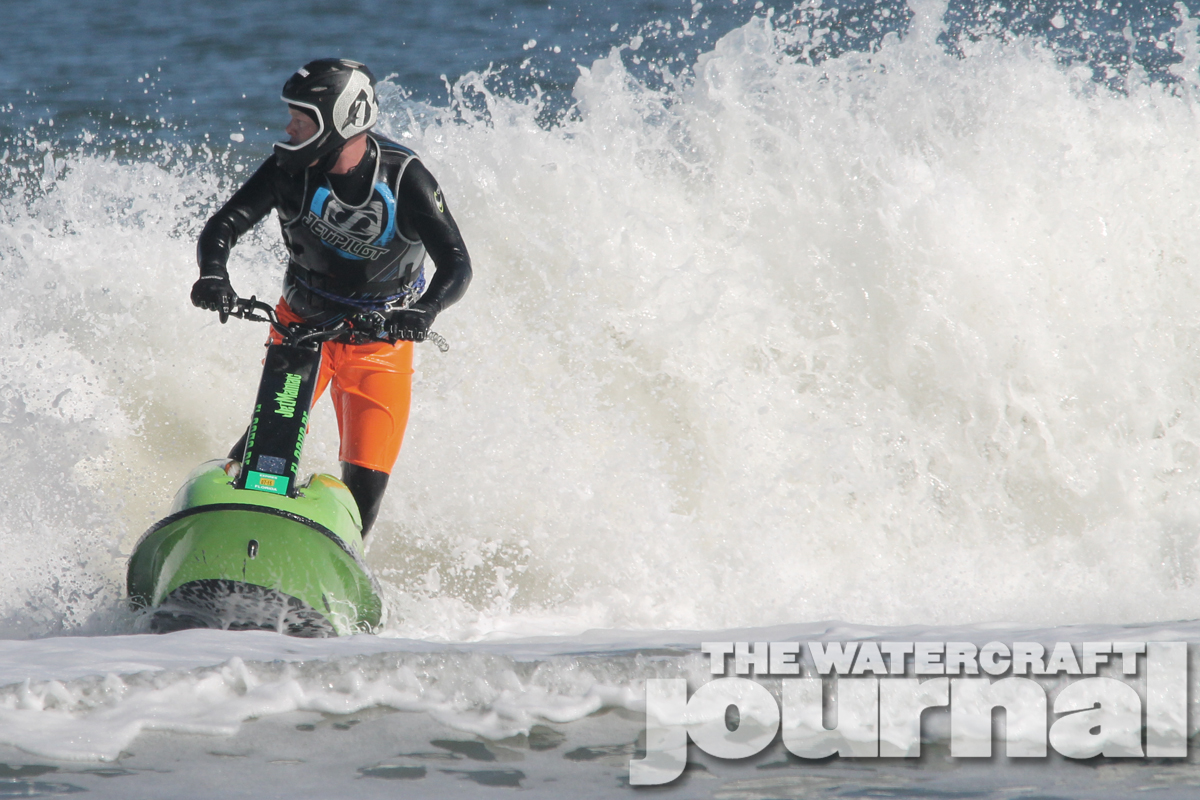
Supporting event sponsor JetManiac’s own Chris Williams took a break from the booth to get out into the surf and air out his Superfreak.
All images courtesy of Pavlina Machotkova. Original versions of all images can be purchased HERE.