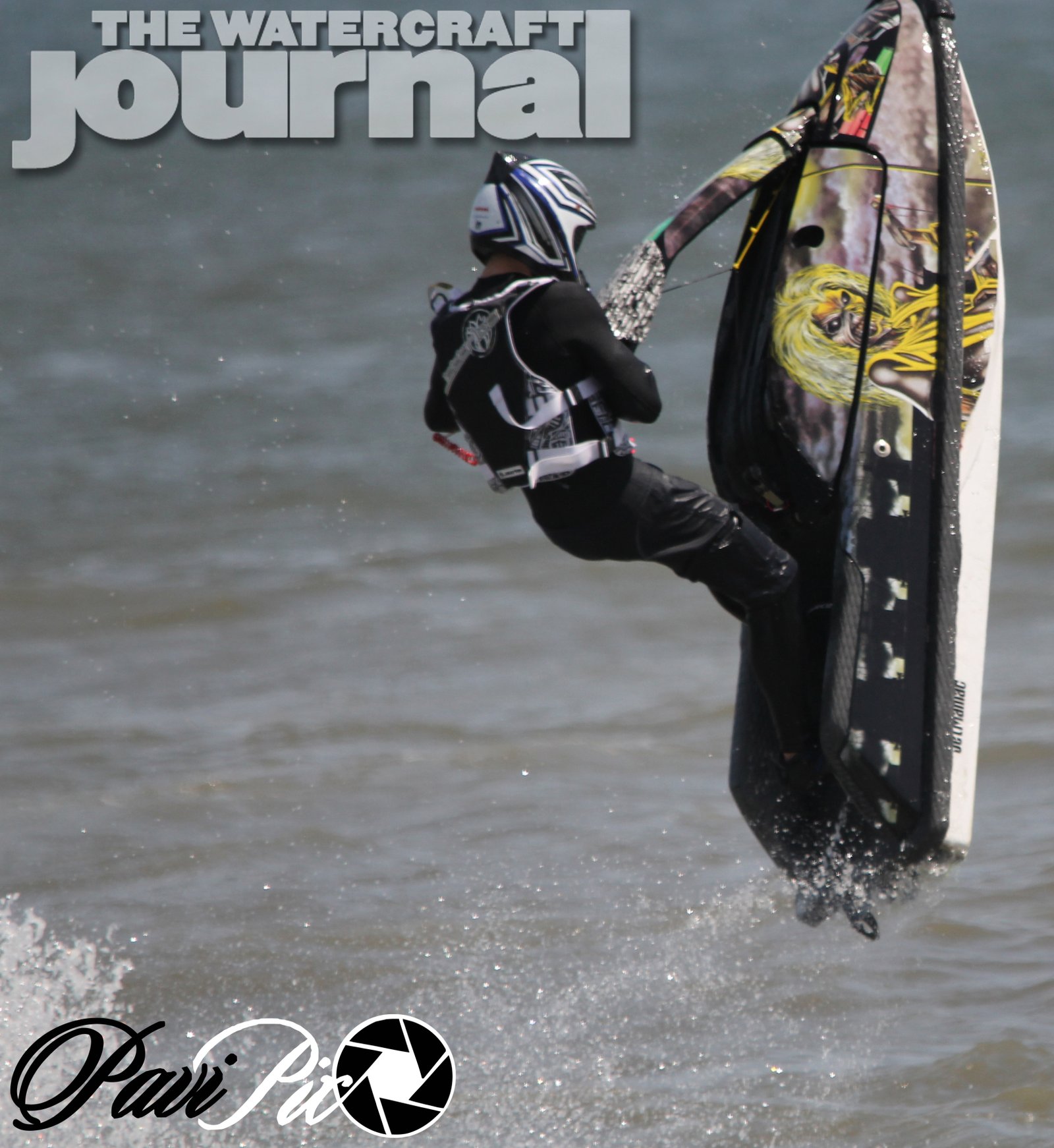
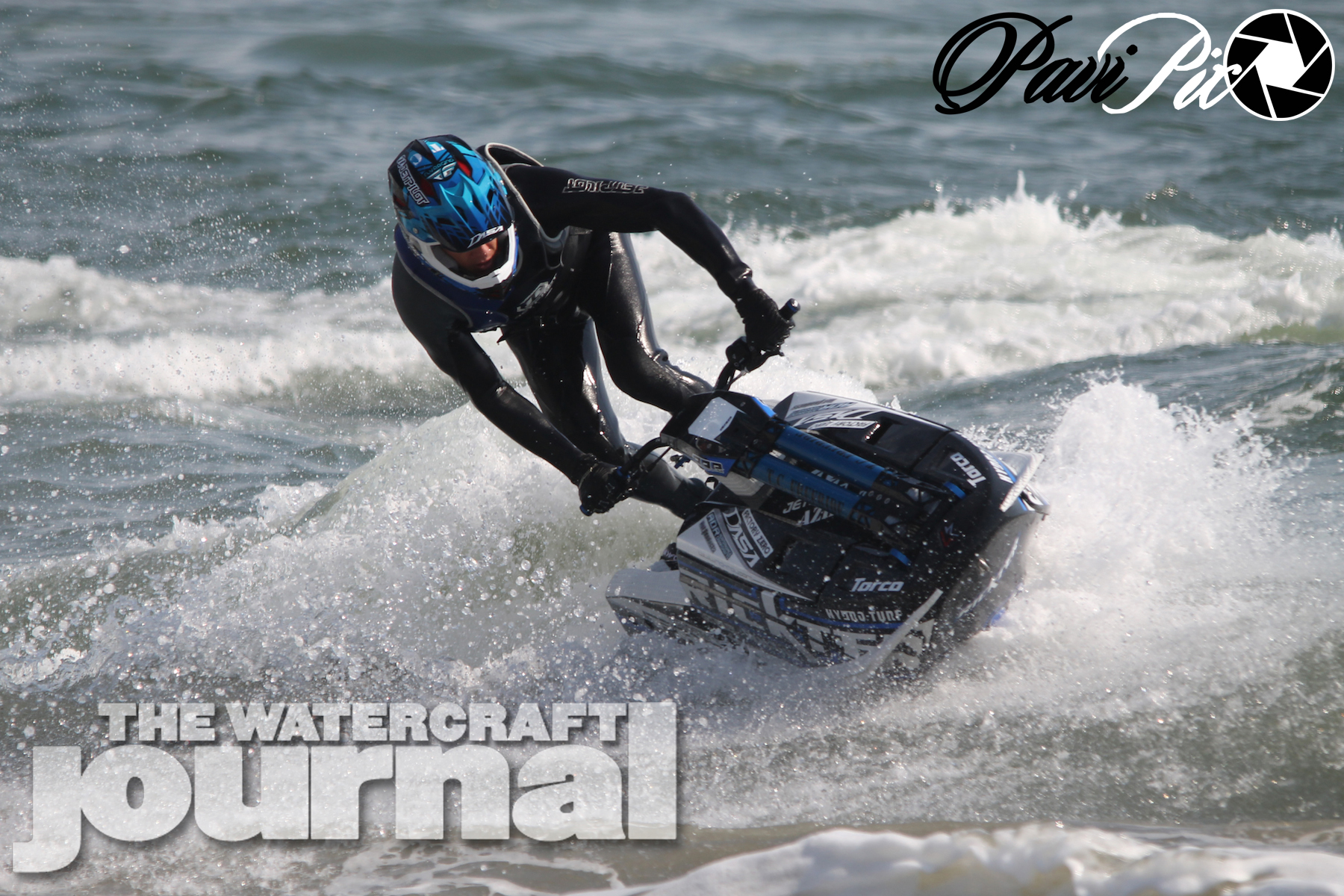
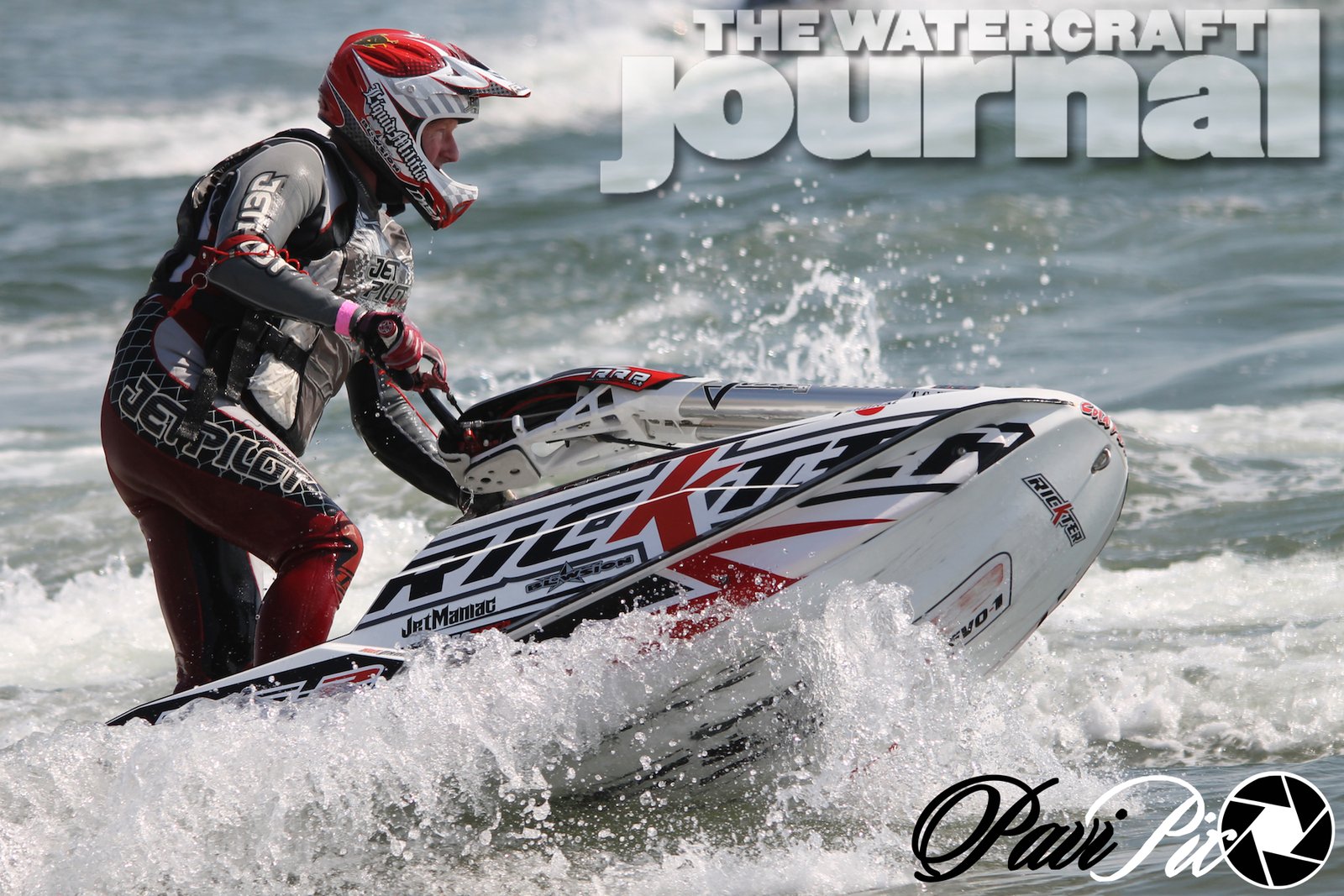
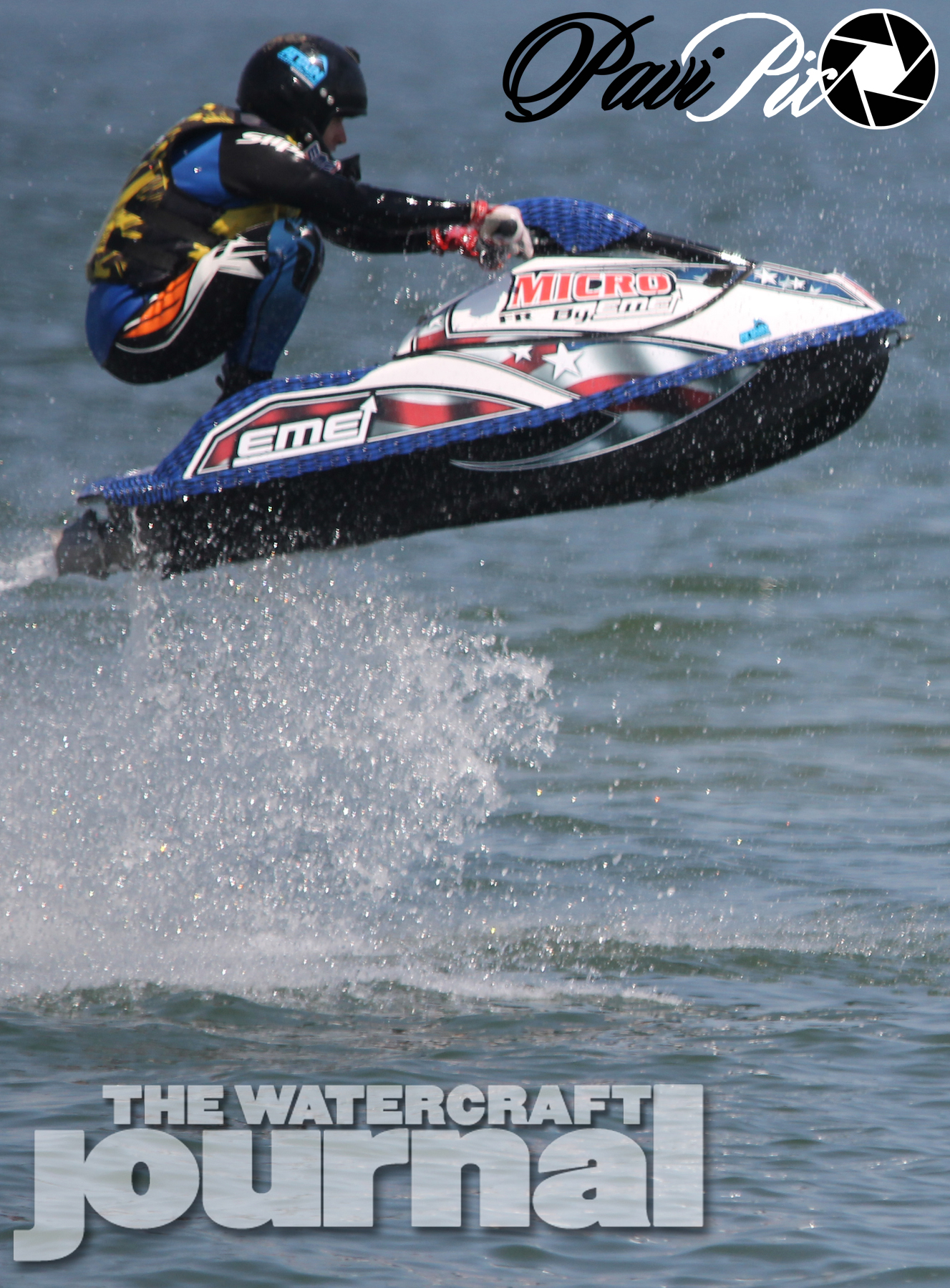
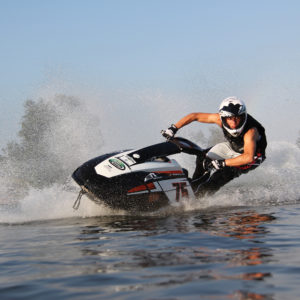
From the outside looking in, you would think that every Australian who loves riding personal watercraft in the surf is a professional freerider. More footage of amazing aerial action keep pouring out of the land Down Under than even America’s famed Oceanside, California.
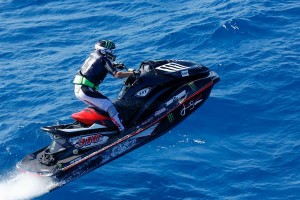
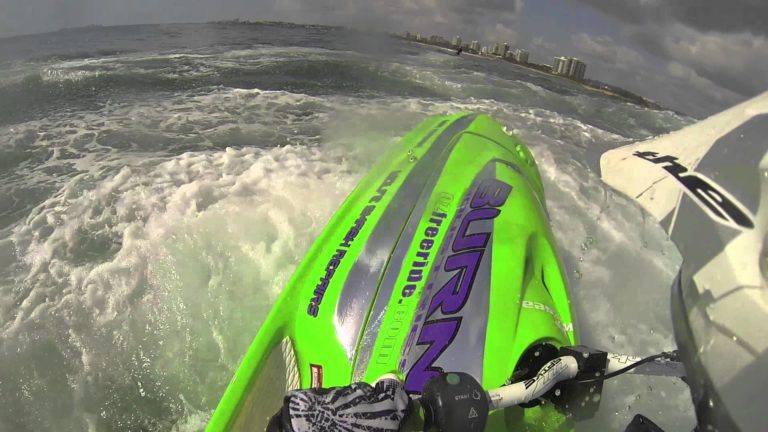
One talented athlete, Luke Rotolone, has been publishing his aquatic acrobatics on his YouTube channel, showing off his skills behind the throttle of him lime green DASA-powered Trinity-hulled freeride ski or his equally hued WaveBlaster.
Personally, we get a kick out of seeing freeriders grabbing sick air with the slightly larger, slightly heavier ‘Blasters – if only just to prove the “I’d rather sit than quit” guys wrong. But changing people’s minds is never one single logical argument away.
We learned that Luke had fractured his pelvis rather badly recently and is recuperating rather well despite the presence of some new screws and plates holding him together.
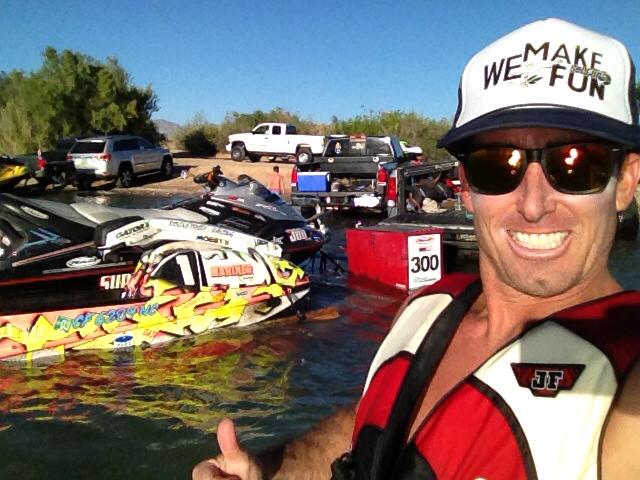
Who: Chris Fischetti
Age: 40-something
Hometown: Global Aqua Moto headquarters (aka Lake Havasu City, AZ)
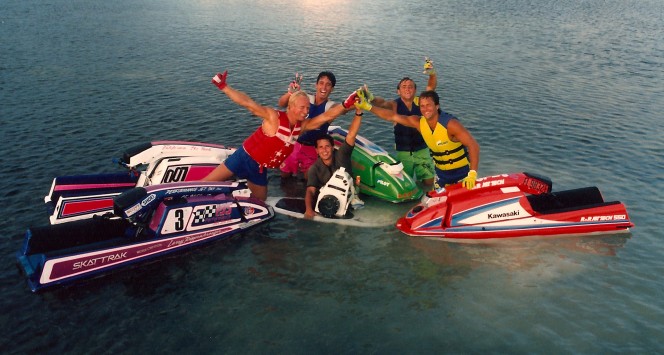
Years Riding: Before the words “PWC” or “watercraft” were ever mentioned. And when the only jet skis were JetSkis. When 440/550 standups were the only thing to ride.
Years Racing: Since “Stock 440” was a racing class and Pro Stock 550 could win you $1000 on a weekend!
Recent Races: SurferCross, WORCS Motocross, Hennesseys US Paddleboard Championships, Baja 1000, Barrettt Junction Downhill LongBoard race, Quick-N-Dirty MTB, and the 2014 Mark Hahn 300.
Weapon of Choice: 550 Limited
The Watercraft Journal: Fish, what have you been up to the past few years?
CF: I have been racing everything from standup paddleboards, surfercross, motocross, downhill skateboards, and mountain biking, but there wasn’t any jet ski races that had any rules that my skis could race in – or any that even wanting any of the sport’s veterans to come and be a part of the racing! So, I had to organize my own races, re-structure all the Vintage races classes, orchestrate a full promotional effort and a PWC expo all within two months just to race my standup! But this isn’t about me – it’s all about our cool sport!
WCJ: We noticed that you raced the Mark Hahn 300 race. How long has it been since you have been in a race?
CF: Seem like forever on a PWC or standup!
WCJ: Did this bring back some memories and spark something back in you?
CF: I raced a bunch of endurance races here in the States, but the Spanish Sea-Doo distributor flew me to race their two-day event in Spain, racing up and down the coast of Mediterranean Sea. It got so rough that one of the top guys bailed and couldn’t swim fast enough to get to his runabout. They found the ski, but not the racer. Luckily a sailboat picked him up – they found him down the coast in the other direction a day later! I broke way up the coast in really big, rough surf. There were no safety boats or rescue for miles. Luckily I limped the Sea-Doo into a small beach with a local cabana food/bar. Oh yeah, there was a topless beach too. Now that was a race!
WCJ: Tell us about the Aqua Moto Grand Prix race happening in Lake Havasu on May 3-4.
CF: We’re pairing up Lucas drag boats and vintage jet ski racing in Lake Havasu. It’s gonna be where tan lines meet the starting lines of high speed lake and beach action! It’s going to be a small, fun and professional race. I’ve got K38 as my safety team. We’ll have awards, prizes, and cool pre- and after parties. It’ll be in front of thousands of spectators. I know it is the same time as the Parker, AZ PWC race, but I had this opportunity to put the sport of jet ski racing in front of a large crowd with a professional and established racing organization and the chance of getting exposure outside our industry.
Chris beamed, “Many people came to Lake Havasu to see the world’s best racers, but they also came for the fun and lifestyle – just like a tailgate party at the big game. I helped promote the infamous desert party, which helped create the world’s best PWC race into an yearly destination world event.”
WCJ: What are you planning to accomplish with this one time event?
CF: This race will bring back old racers and bring some new local riders to the track that would never race the Parker race. The Aqua Moto Grand Prix is designed to rebuild the sport from the grassroots, and make it so any rider can now race under the class structure and race format I have put together anywhere in the world under any promoter. Hopefully some of the Parker racers will roll up so we can hangout and swap race stories. I have a lot of them!
WCJ: What do you think this sport needs to put it back on the main stage?
CF: I know what our sport needs to be back in the public’s eye. Without TV we can’t gain new racers, followers or sponsors. Without sponsors we can’t have purse money. Without a pro purse we can’t have real professional events.
“I had many other sponsors – clothing, sunglasses, wetsuit companies – all had me endorse their products and push and cross promote the watercraft lifestyle into many other action sports – including Snowcross! Now that was really crazy!” Chris recalled.
I just don’t know of any sport that doesn’t have any of it’s early leaders as a part of it. Motocross has MC, Emic, and Johnson. Ricky Carmichael is designing tracks for Supercross. Football, basketball, baseball has every player announcing, NASCAR looks to it’s history to make it more successful. Every major sport has a successful path that includes it’s history.
We need to show the extreme nature and radical action of racing. We need freestyle to showcase our riders on the level of all action sports. Standup racing needs more obstacles and a tighter track, runabouts need to be raced in a long course format with 30-minute motos and a huge backstretch with a giant safe Daytona first turn. Freestyle needs a man-on-man elimination format like surfing.
WCJ: Where do you see this sport heading and how are you planning to help grow it?
CF: I know that if this sport doesn’t get traction NOW it will never have the following or wheels big enough to get going. I know I can’t rebuild the entire sport myself either. When this sport was first evolving, I was there. And with the help of core riders, racers, and loyal spectators, we made this into one of the coolest watersports on the planet.
I put 25-plus years into building and promoting this sport worldwide, both on the track and off. I filmed, edited and produced my own tour video and “rapid ride adventure” that promoted the jet ski lifestyle. I raced every single class from Stock 440 to Modified big bore runabout, working with almost every aftermarket company and manufacturer to help promote and sell racing products from scoop grates to ignitions. With my pop’s determination and all my sponsors and support we won.
But again, this isn’t about me. So back to your question: can we all come together to regrow the sport? I have seen the sport’s history, I helped make it. Now we know what not to do.
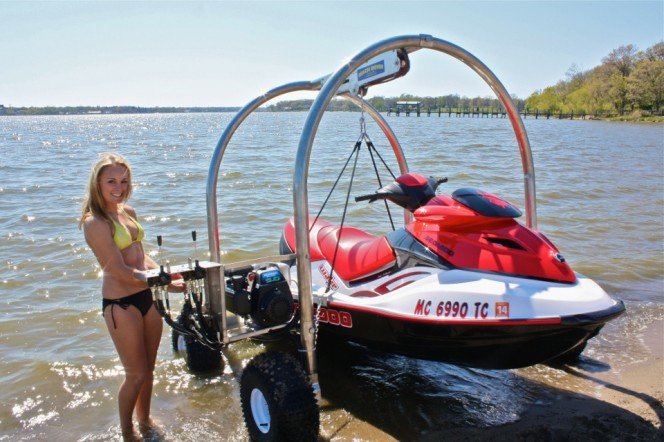
Are you a full-sized runabout owner who wants to enjoy the ease and accessibility of launching your ski from the beach like those toting smaller stand-up jet skis? Because of the massive weight difference between the two, imagining hauling a hand-pulled balloon-tired dolly with 1,000-pounds of runabout on it down the shoreline is all but impossible.
But now, you can with anabolic steroids! Ha, ha. No, just kidding. Rather than chemically-induced performance-enhancing drugs, you just need the all-new Beach Rover All-in-One Jet Ski Lift & Dolly. Built by Shoreline Manufacturing, LLC in Holland, MI, the motorized Beach Rover is available with a Honda 5.5hp electric start engine, battery, and solar charging system (for an extra $1,000) over its standard pull-start configuration.
Similar to those large industrial lifts used to dry dock boats during the off season, the Beach Rover can power up a 20-percent incline as easily as it can drive down a beach without any pulling, tugging or heaving. It’s motorized knobby tires ensure that you won’t get stuck as it automatically lifts over 1,500-pounds worth of personal watercraft.
Built from stainless steel, the Beach Rover is safe for salt water use, the Beach Rover is easily assembled and easier to operate. Universal lifting brackets work for all PWC models and are tethered to eliminate swaying or swinging. If you think it’s great, it is. But at $8,500 it’s not cheap either. Watch the video below to see the Beach Rover in action.
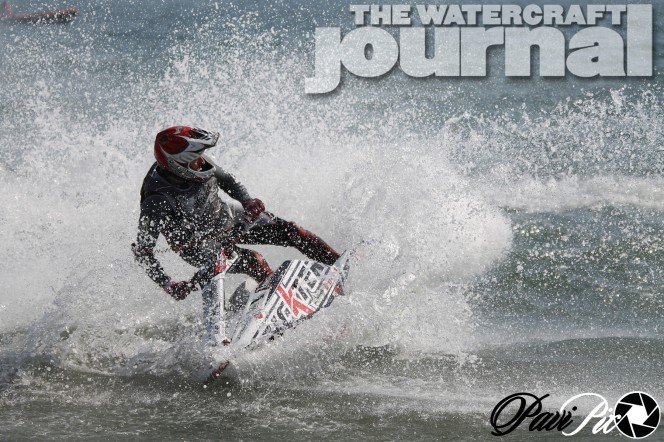
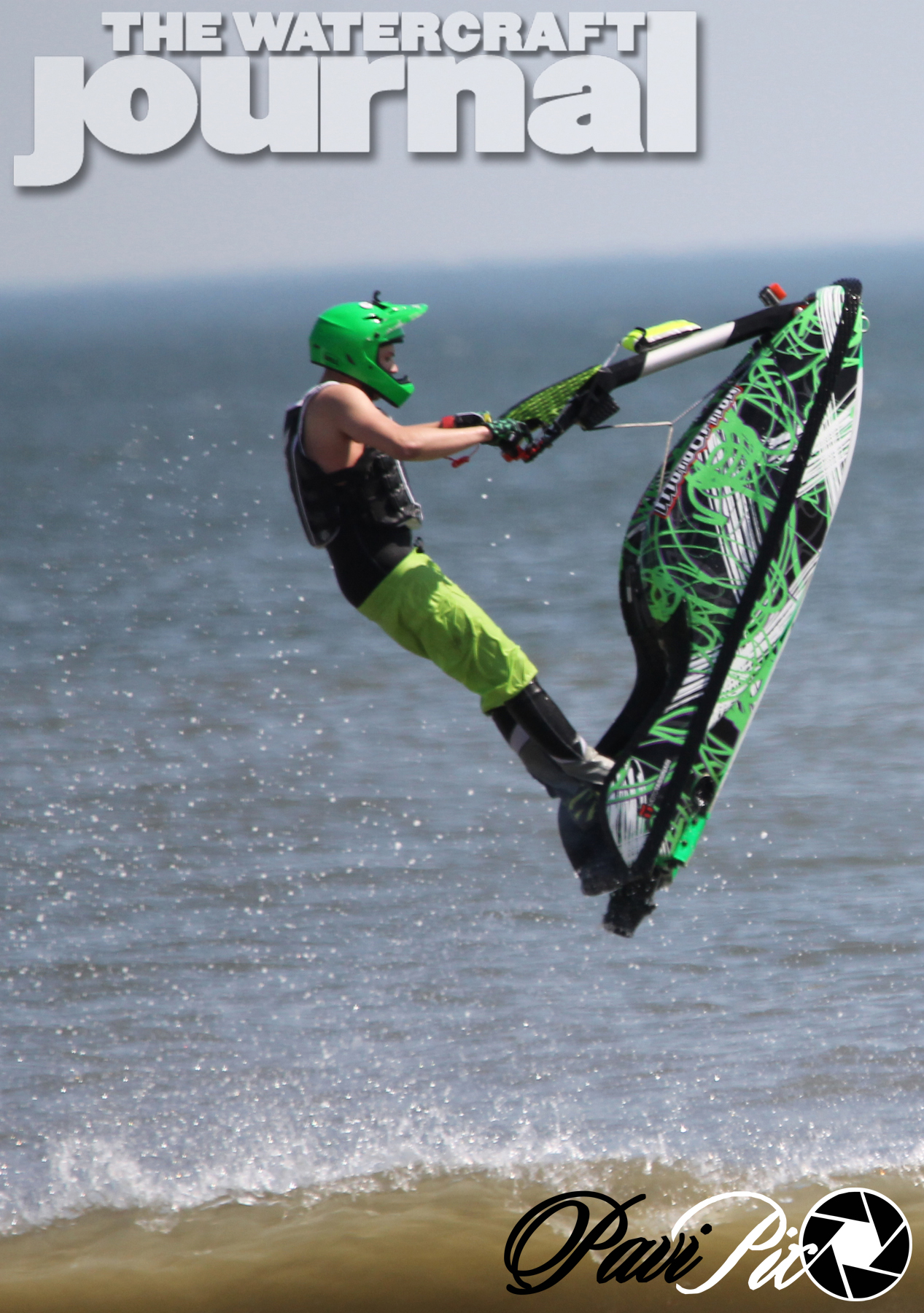
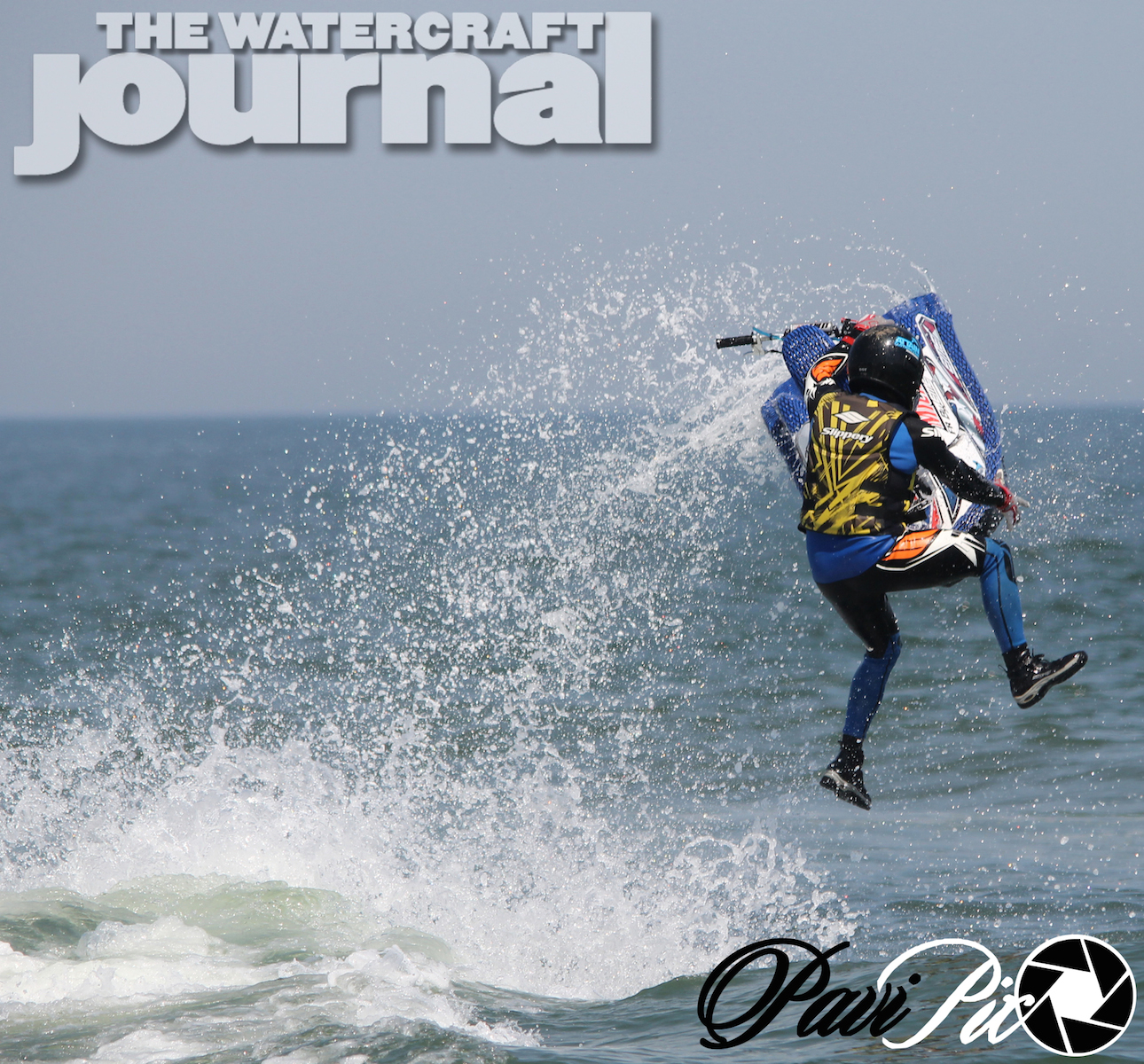
A dismal lack of surf couldn’t dampen the spirits of these freeriders, as many cracked open their bags of freestyle tricks.
This year Mother Nature was cooperative with beautiful, sunny and warm weather, possibly the warmest Wavedaze ever. Unfortunately, Mother Nature wasn’t so kind with the surf conditions. The swell was small and weak, and high winds created choppy water.
Wavedaze was moved two weeks earlier this year, but it didn’t stop people from coming; Dan Swartz and crew registered over 100 skis and welcomed many more spectators.
Starting seven years ago by a local group called the “Wavejunkies,” it has grown into one of the largest surf freeride events of the year, held annually on Virginia Beach, VA. Organized by Dan Swartz and the Wavejunkies, Wavedaze is very well organized event.
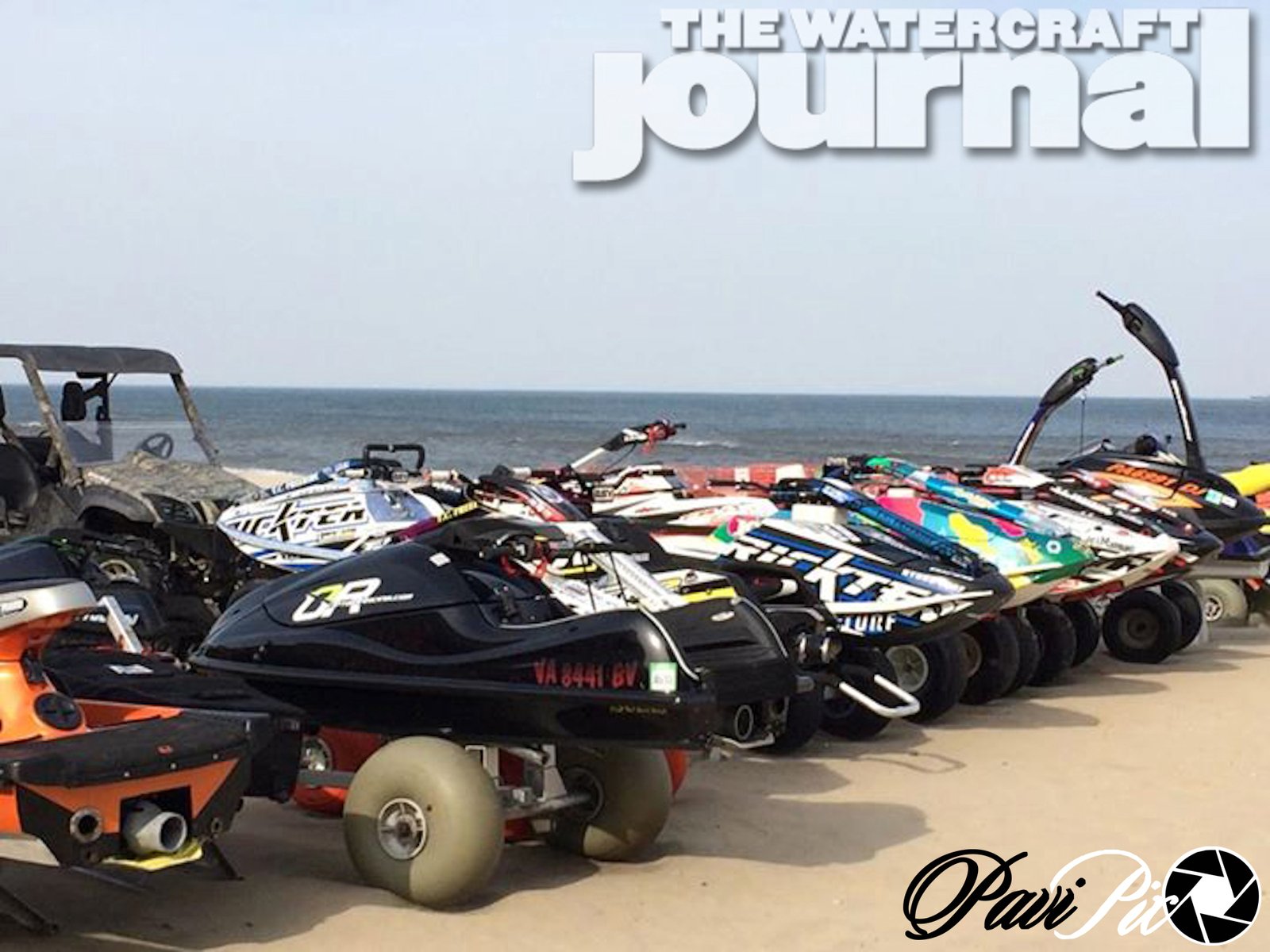
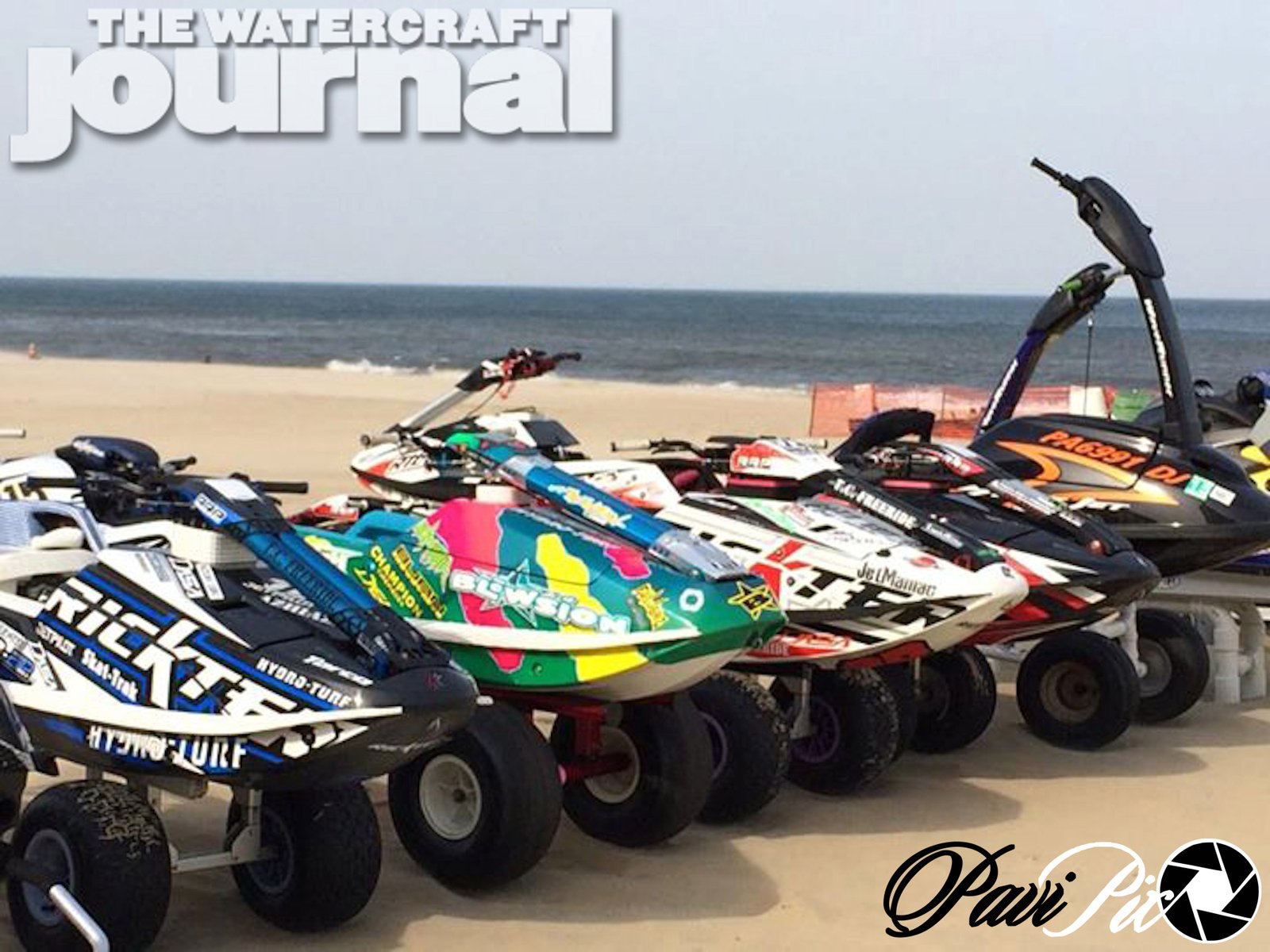
When you arrive, the Wavejunkies shuttle your ski from your truck or trailer straight to the water with provided ATV’s and beach carts. When you need to refuel, they will drive your ski to the beachside fueling station. Overnight security is also provided to watch the skis on the beach as well.
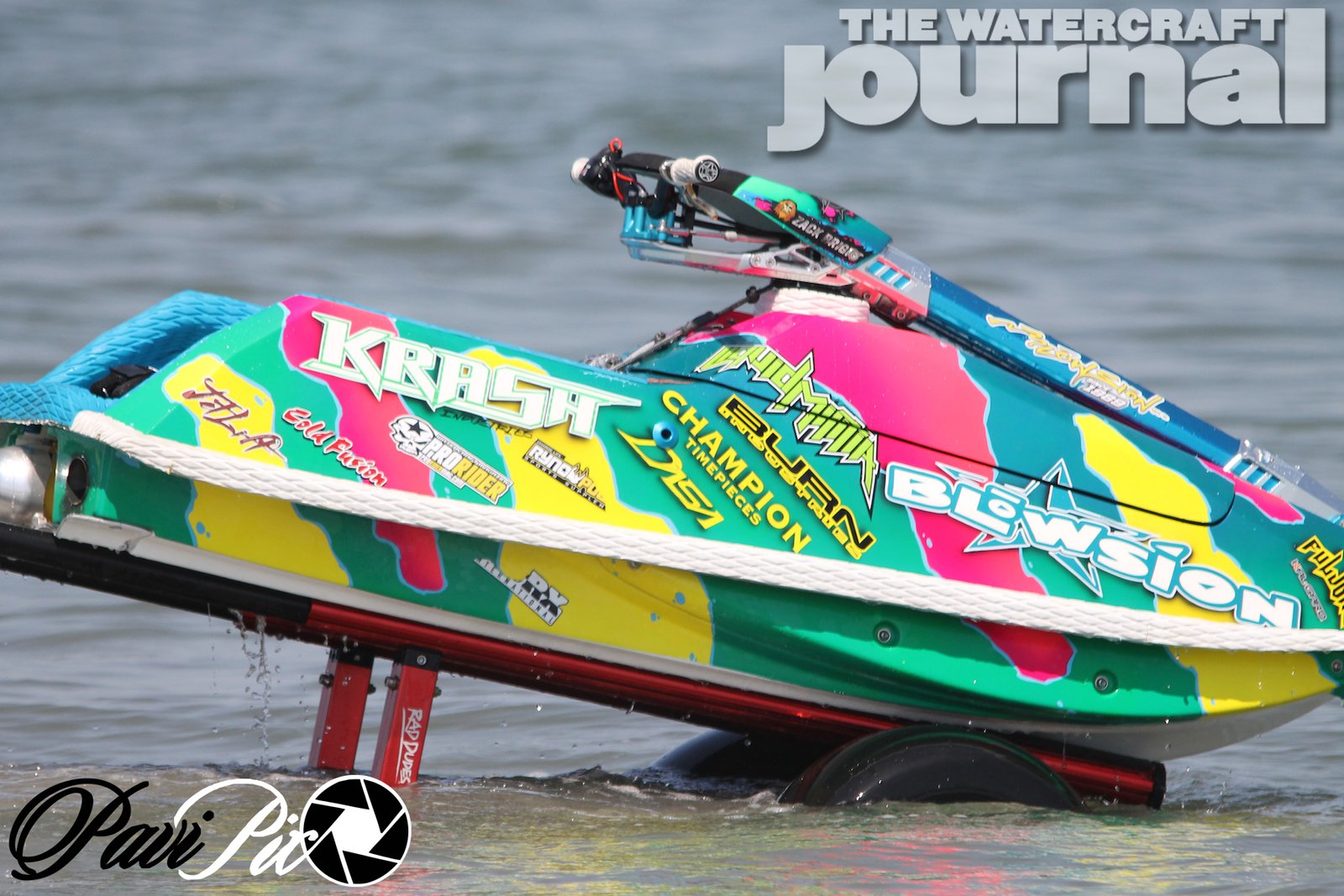
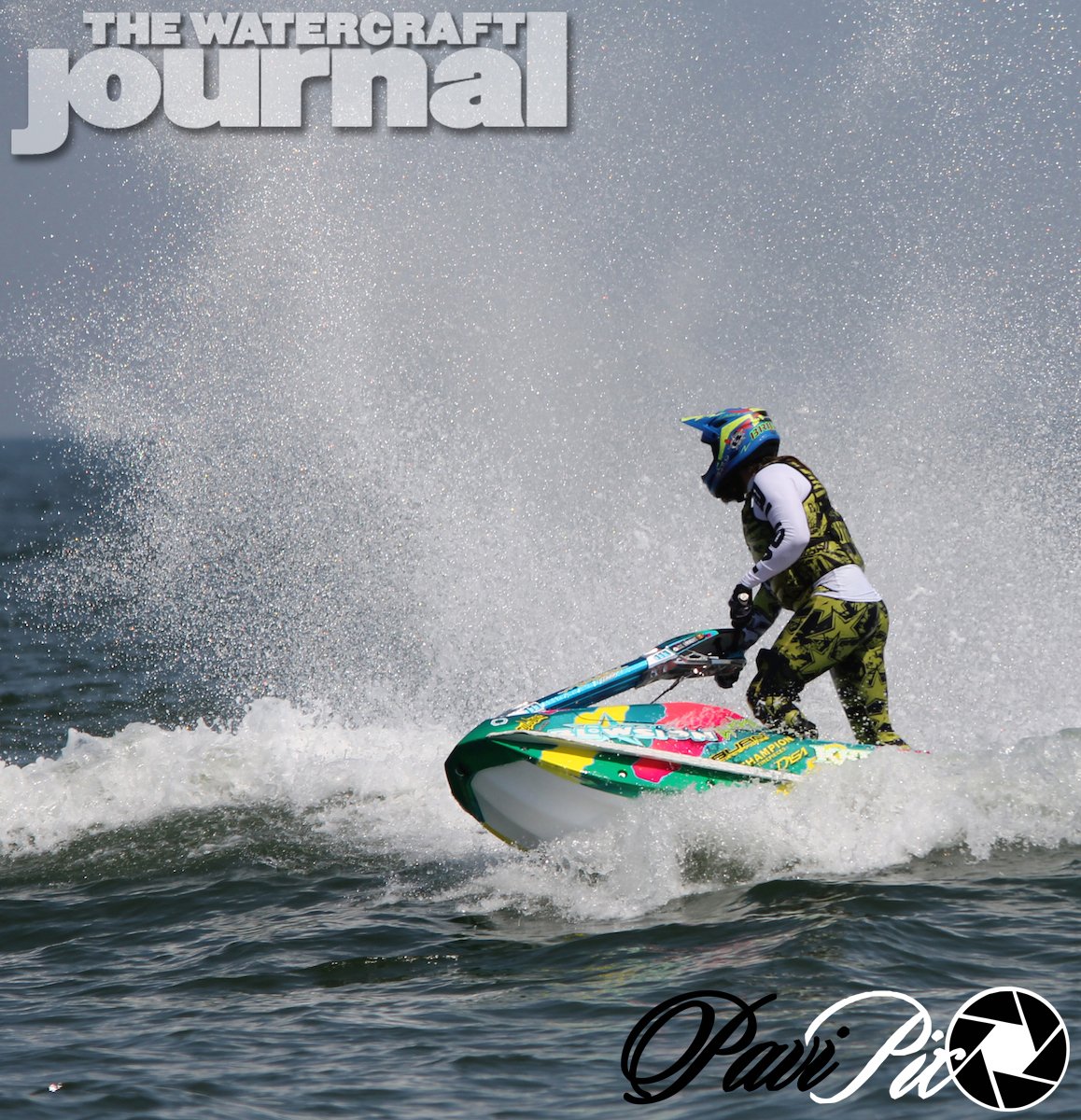
This year’s Wavedaze brought some of freeride’s best from across the nation, as well as from Canada, Mexico and France all the way across the pond!Burn Industries’ rider Zack Bright flew across the country with his iconic wildly-hued Krash Industries ski in tow for this weekend.
This has helped Wavedaze to attract international riders including Julian Herpsont from France, Abraham Ho from Mexico, and numerous riders from Canada.
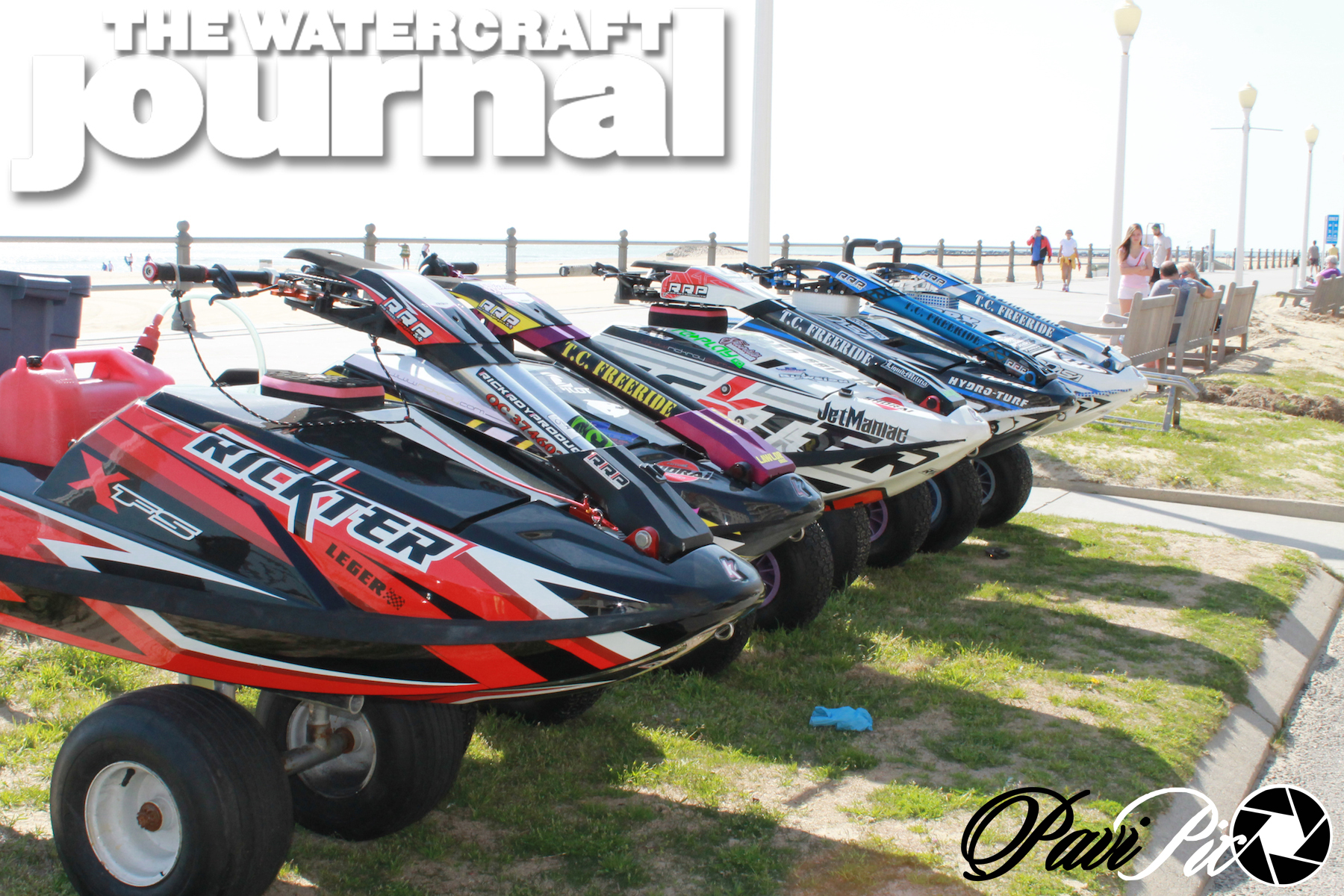
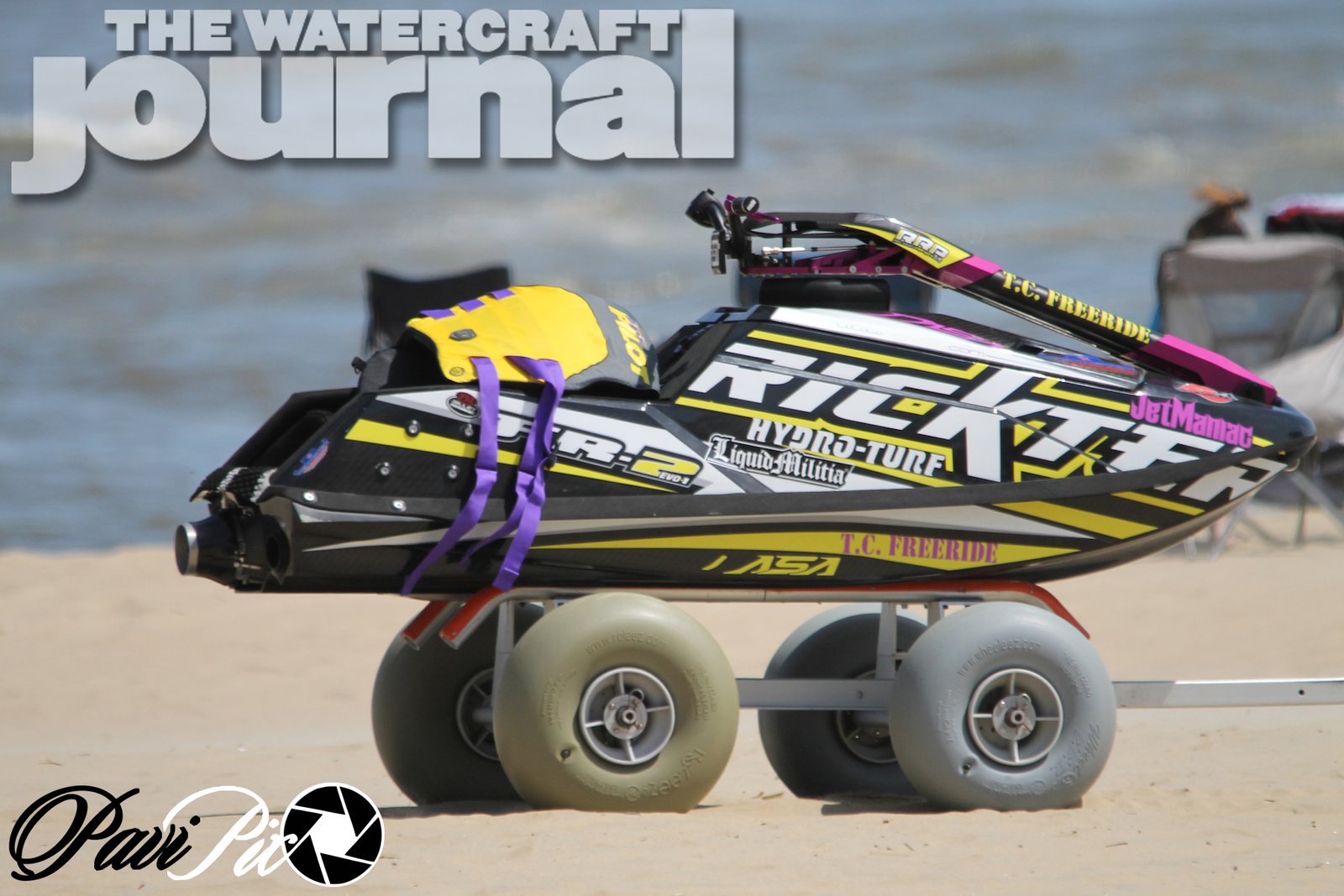
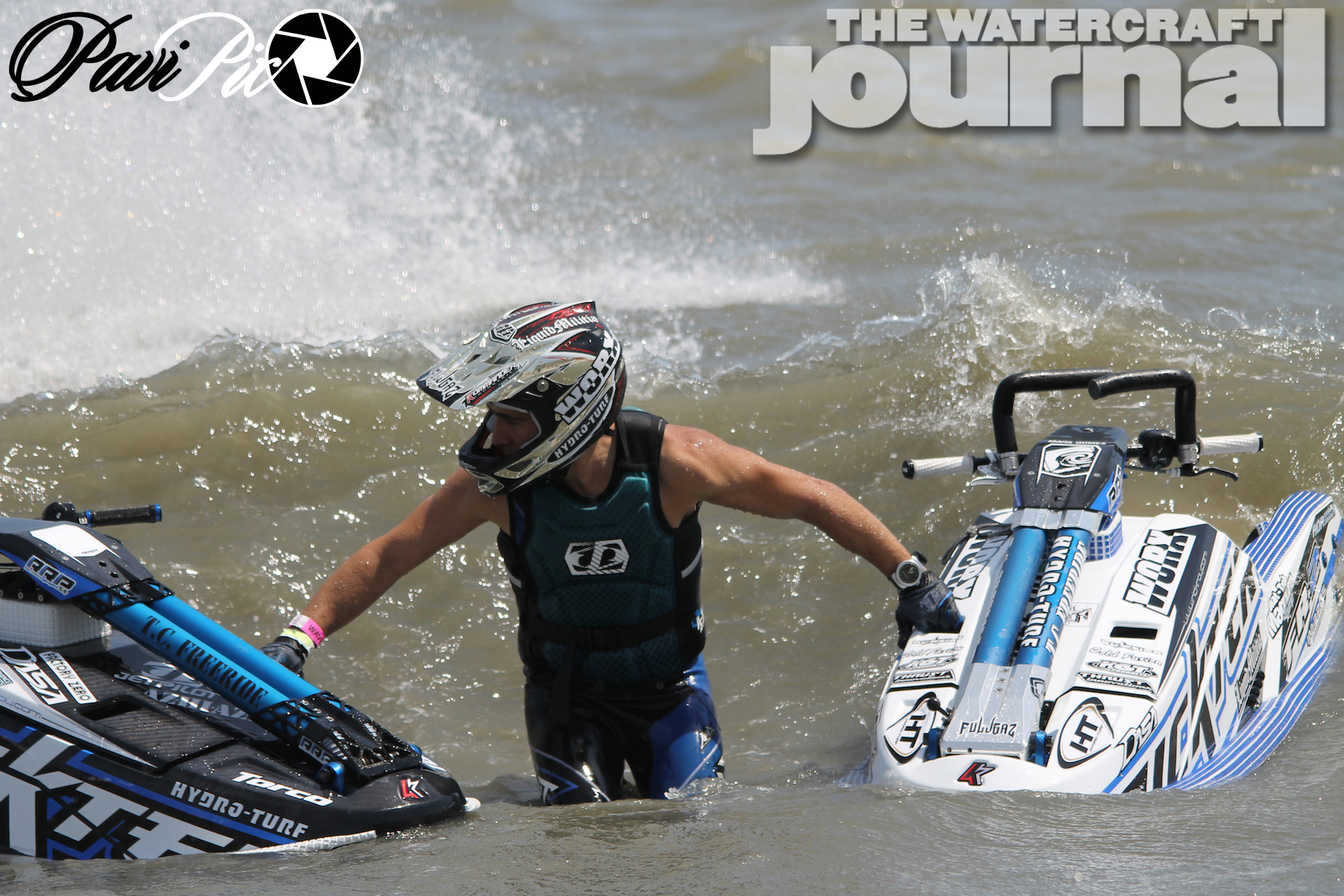
The West coast was well represented this year too. The TC Freeride team made the long trip from California including Taylor Curtis, Brandon Lawlor, and Mark Gomez, as well as Zach Bright as the west coast distributor for Krash Industries. They were all on hand to ride and offer demo rides on the latest hulls from RRP/Rickter and Krash.
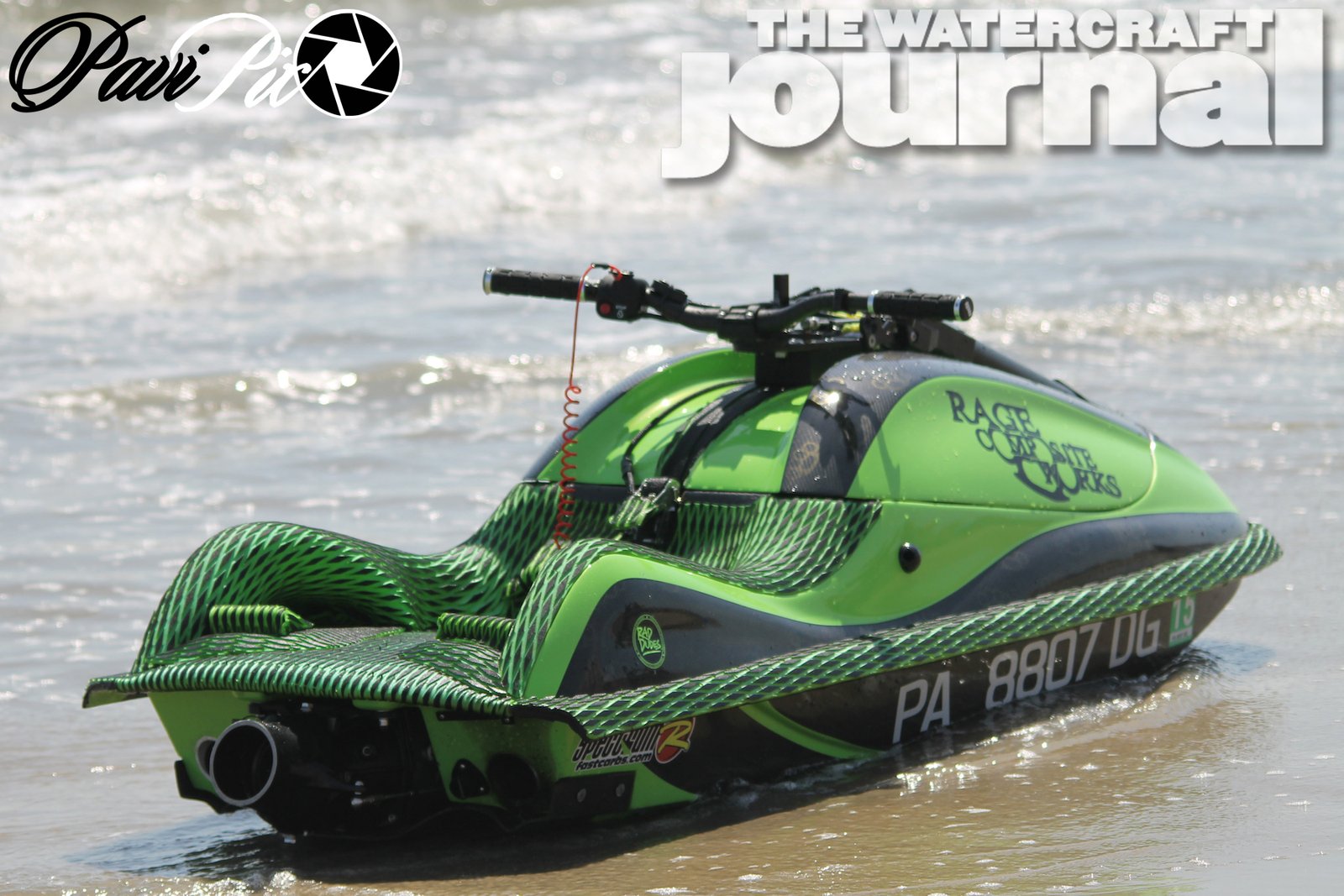
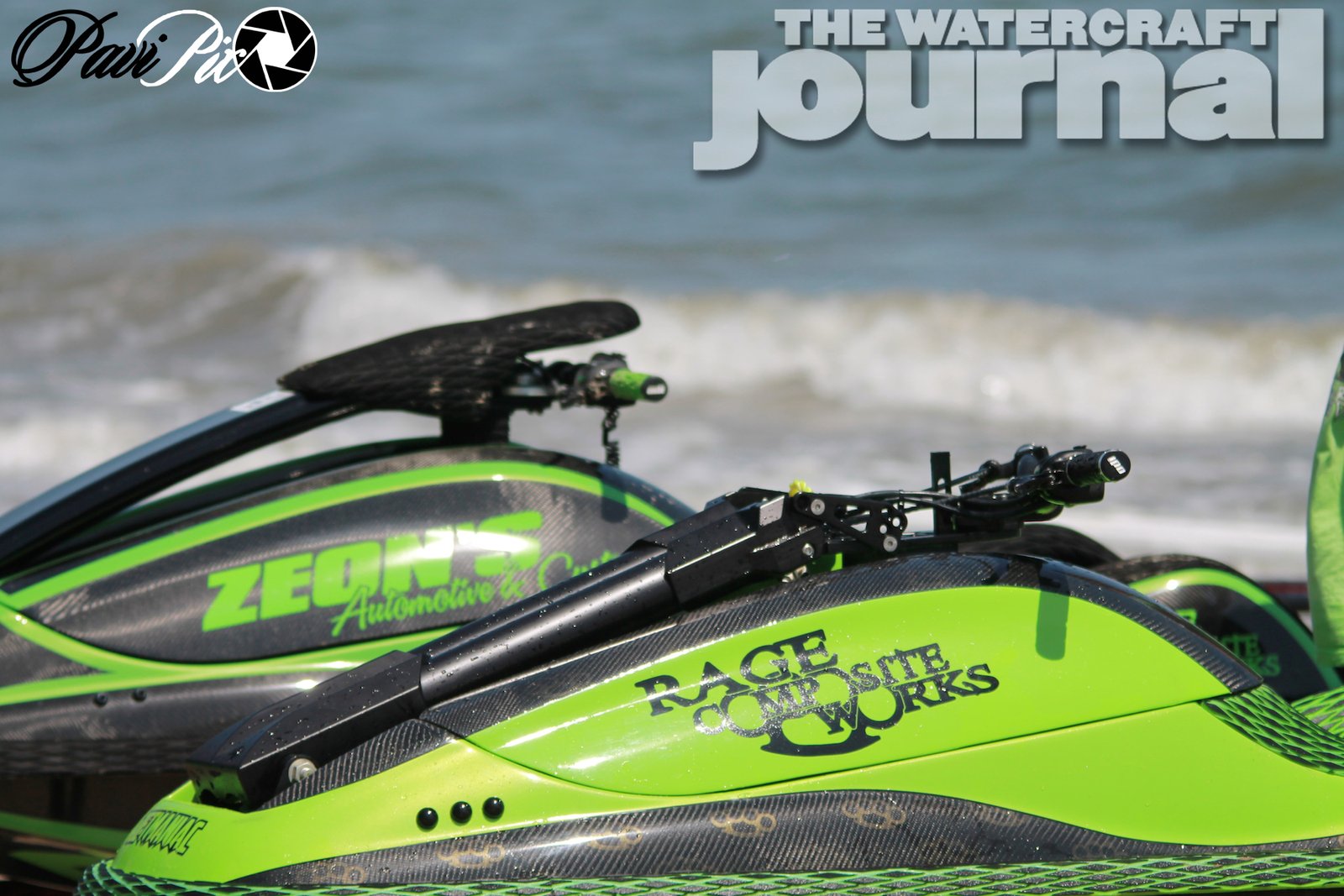
Additional hull builders Rage Composite Works and Aquabot were both set up on vendor row with their latest hulls on display and demo skis available to ride on the beach.
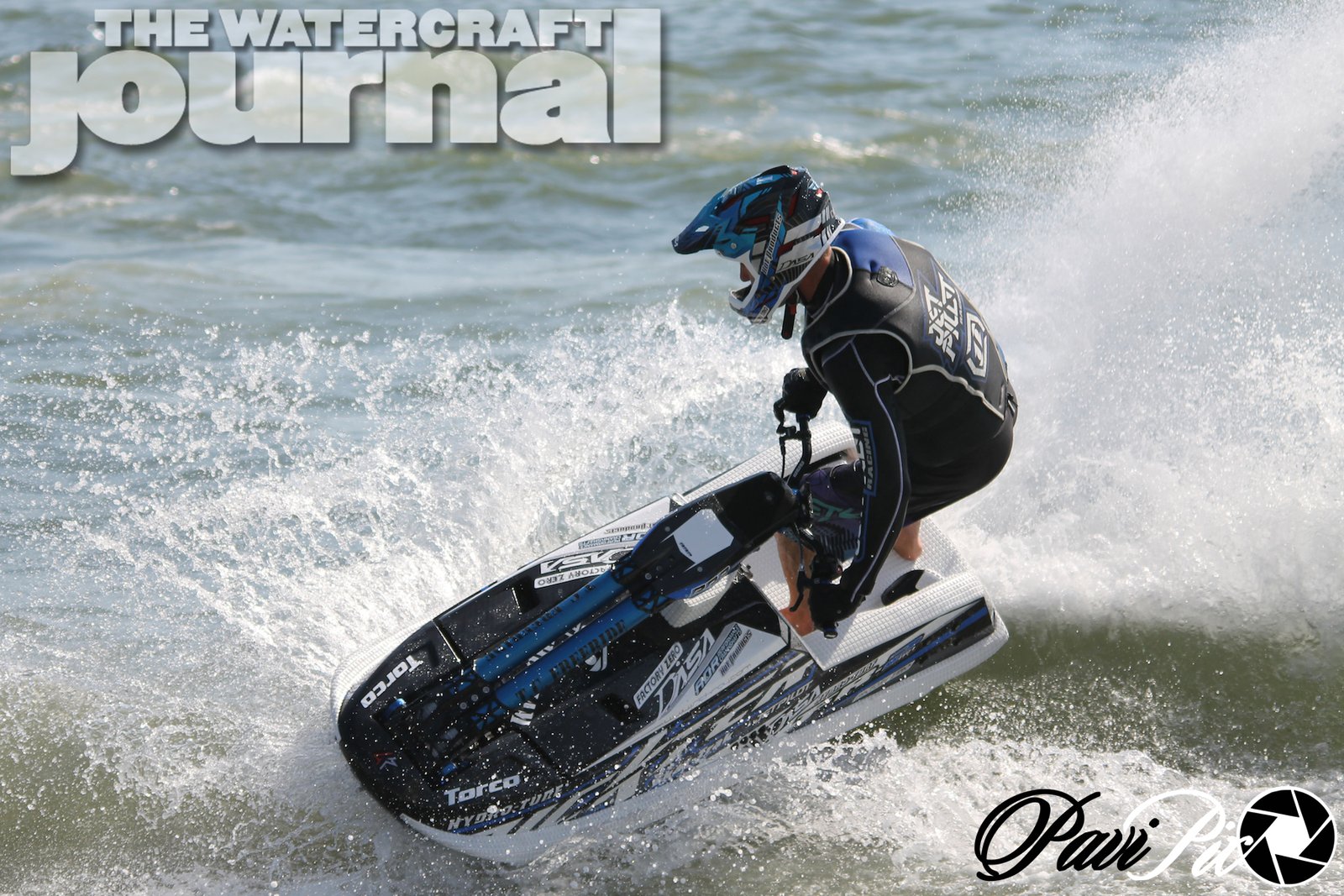
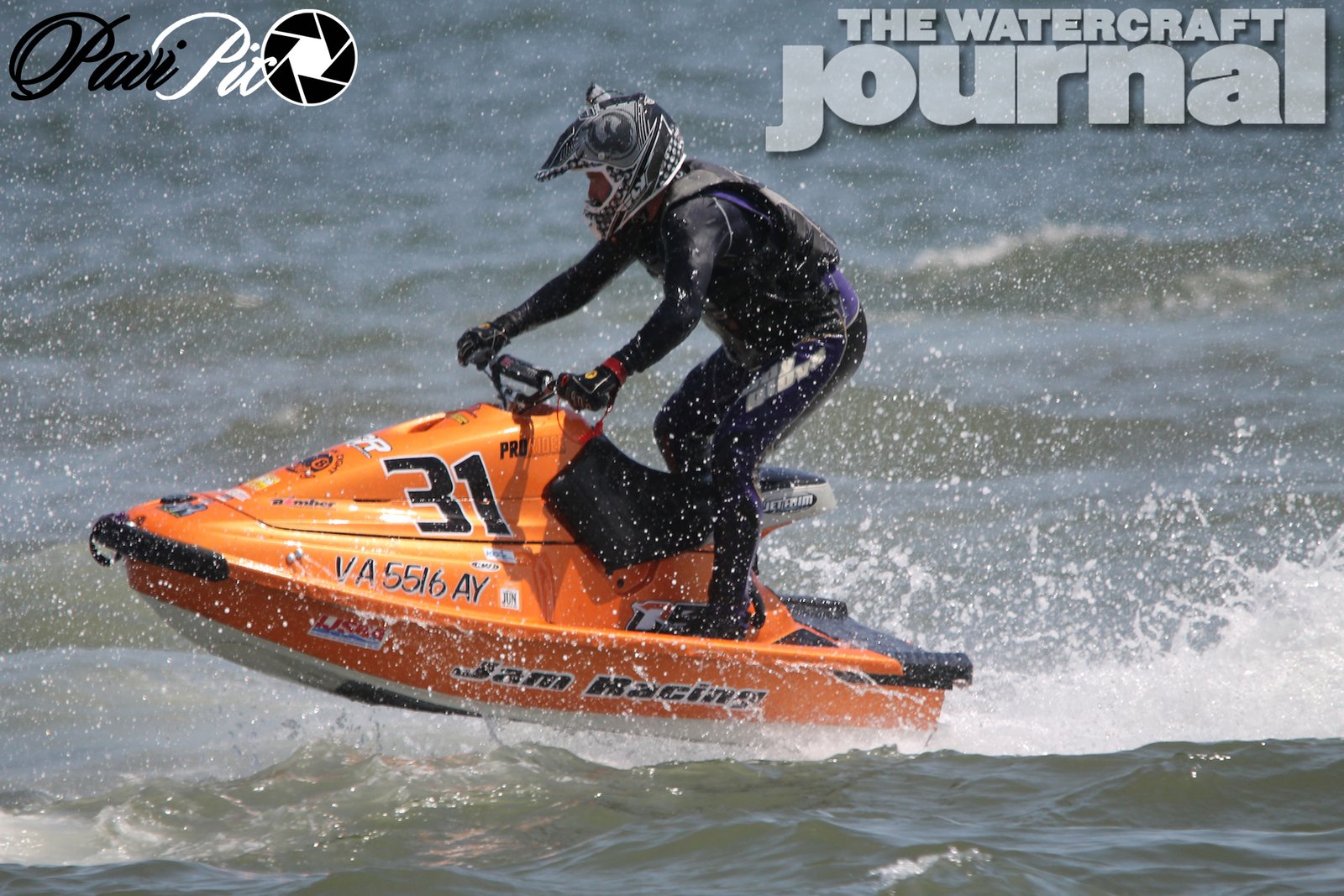
Jeff Bolte happily peels the lip off a small roller aboard his Rickter.
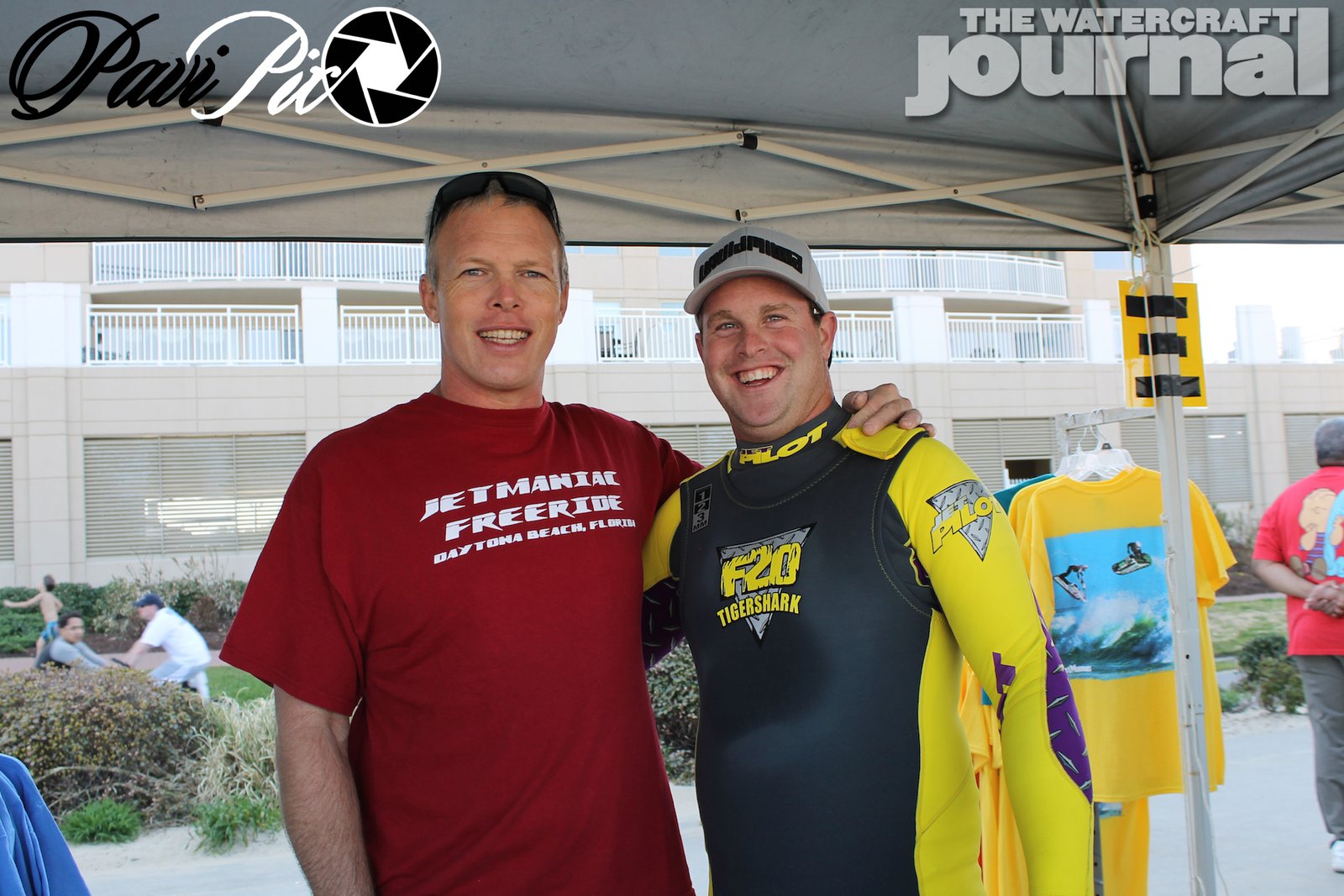
Other vendors present were title sponsor Rad Dudes and JetManiac with the latest in freestyle and freeride parts, helping to keep everyone riding all weekend. True Performance Engineering (TPE) had motors on display and Chris Rauen was selling shirts by RACU Design Co.
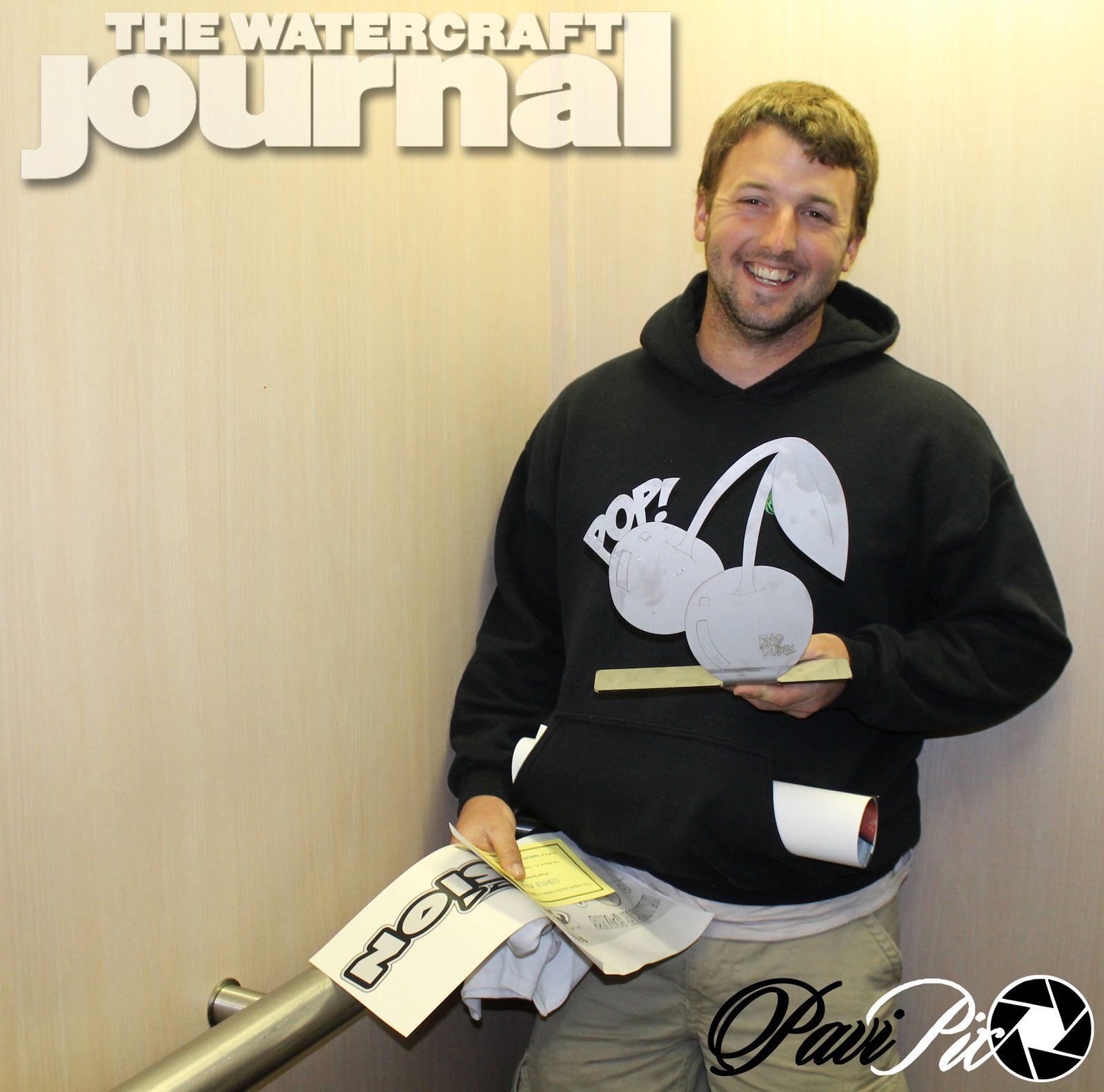
Travis Collette had a fantastic weekend, both winning the “Cherry Popper” award for completing his first backflip as well as getting engaged!
This year’s event included several classes of racing as well freestyle competition including Top Pro and Amateur riders. Mark Gomez won the “Sickest Trick for freestyle. Travis Collette won the “Cherry Popper” competition by completing his first backflip and also got engaged at Wavedaze with Crystal Cascarino. Congrats!
After the ride on Saturday evening, there was a raffle for great prizes donated by all of the sponsors. There were so many prizes that most who entered the raffle won something. This year, a separate raffle was held for a donated TPE 964cc cylinder kit with all of the proceeds were donated to the Virginia Beach Volunteer Water Rescue Squad and the AWA.
Although the skies were clear and the temperatures warm, the waves simply weren’t there. Many dusted off their freestyle skills and still put on a great show. Despite the low swell, everyone had a great time, proving that Wavedaze is always a great surf freeride and that everyone is exited for 2015.
For its seven year, the Wavedaze never fails to disappoint. Nearly 100 freeriders came to charge the water while many more were on hand to watch all the action unfold.
Today’s hyper-competitive world of freestyle jet skiing requires the very best in equipment. Long gone are the freestyle tricks that made Scott “Hollywood” Watkins legendary – 360s and headstands in the tray, fountains and nosestabs. If you’re not attempting a scarecrow or no-handed backflips, you’re not on the scoreboard.
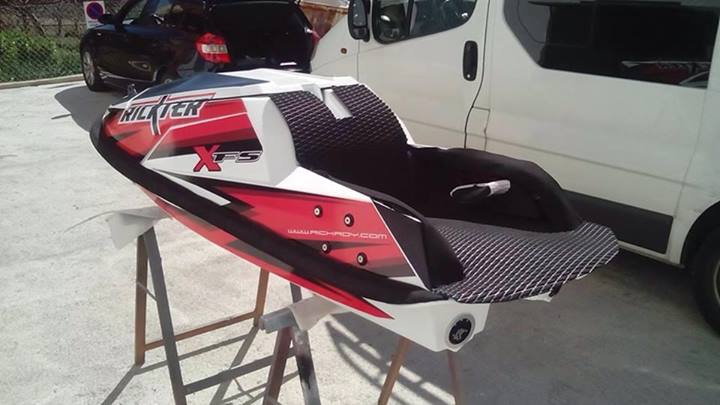
So when you fork over your hard-earned money for what you believe to be one of the finest machines available on the market today, you expect to be getting the best. Unfortunately, that’s not what happened to Marcus Marchant. Marcus sold his modified SuperJet to allow him to purchase what he thought to be a “resprayed 2012 Rickter XFS.”
Unfortunately, the counterfeit unveiled itself upon immediate reception. As one familiar with the build quality of Rick Roy Products, Marcus was dismayed to see the sloppy construction of a fake. Sold by a “Maurice” at Jetimport CUBILLAS, Rick Roy Products has been made aware of the knockoff and will be handling preserving the veracity of their fine products on their own (most likely legal) level.
To all my Facebook Jetski buddies, just to make you aware that there are fake, yes counterfeit RRP Rickter hulls out there! I have been conned into buying what I thought was a resprayed 2012 Rickter XFS that turned out to be a brand new counterfeit!
I have had my heart set on getting one of these for the last year and have put my family through hell to get it. I have sold my beloved SuperJet, all my spares and various other bits just to fund it and am totally devastated. Because of this crook I am unable to compete in the European freestyle championships this year and I’m going to be off the water for the foreseeable future.
RRP are aware of this guy and have been trying to help me get my money back but to no avail so I have been left with no choice but to name and shame him.
So if you want a counterfeit Rickter XFS give Maurice a ring at Jetimport CUBILLAS on +34619885968 or email him at [email protected] or if you would like some fake RRP footholds etc go to his website at www.jetskicubillas.com
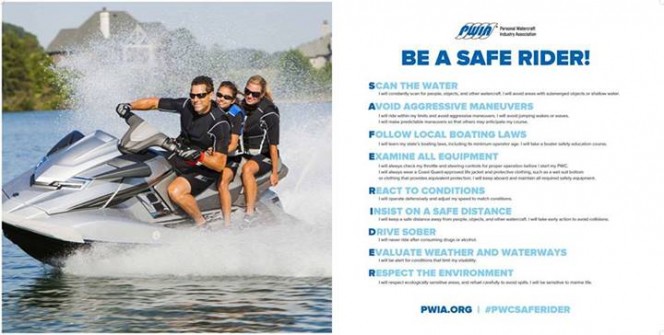
In an effort to help support safe boating practices, promote education and personal watercraft responsibility, the Personal Watercraft Industry Association (PWIA) has kicked off its second annual “PWC Safe Rider” program.
Sponsored by the PWIA and supported by its members BRP Sea-Doo, Yamaha and Kawasaki, the Safe Rider program encourages riders to take the “safe rider pledge” by going to www.pwia.org, and filling out the promise, as well as download additional safety materials and information about the “Safe Rider” campaign. For those who complete the pledge, an exclusive decal will be mailed out.
For those who don’t know, the PWIA was founded in 1987 to better promote the “safe, responsible and enjoyable operation of personal watercraft.” Advocates for PWC manufacturers Yamaha, Kawaski and BRP, the PWIA provides a “unified voice for the industry and represents the interests of personal watercraft manufacturers in legislative and regulatory concerns.”
Here’s the original press release:
WASHINGTON, DC– The Personal Watercraft Industry Association (PWIA) announced today that it is again promoting the responsible use of personal watercrafts (PWC) by encouraging safety and education.
Kicking off this Memorial Day weekend, the organization will launch its second annual Safe Rider program, educating users of PWC on safety and asking them to sign a pledge committing to the safe and responsible operation of their vessels.
“Our mission is to advocate for a safe and enjoyable experience on any personal watercraft,” said David Dickerson, executive director of PWIA. “Bringing the Safe Rider campaign to PWC users for a second year in a row will help us to continue to reach a larger audience with the message that PWC fun and safety go hand in hand.”
PWIA first launched the Safe Rider program in 2013 with an inaugural on-water event on Lake Lanier, Georgia in partnership with state legislators and local businesses. Following the local event, a nationwide call to action was initiated. Safe Rider’s pledge form asks that all PWC riders agree to the take the following steps towards safety and fun on the water:
• Scan the water for hazards and other boats • Avoid aggressive maneuvers • Follow local boating laws, including rules to prevent the transfer of invasive species • Examine your equipment • React to conditions • Insist on a safe distance from other boats, swimmers and fixed objects • Drive sober • Evaluate weather and waterways • Respect the environment by avoiding fuel spills and operating close to marine life
The pledge form can be accessed at www.pwia.org, along with more information about the “Safe Rider” campaign. Information on instructional courses and downloadable safety materials, including a brief handbook titled Riding Rules for Personal Watercraft and PWC Orientation Checklist can also be found at www.pwia.org.
“Responsible riding isn’t just about personal safety. Our pledge encompasses PWC etiquette for riders of every skill level in multiple locations or scenarios,” Dickerson added. “It includes being considerate of those around you. Being mindful of other vessels in your vicinity and how your rate of speed or wake affects them. And don’t forget about marine life, be sure to respect ecologically sensitive areas. Sign the pledge today, commit to its recommendations and start having fun on the water!”
Say, y’know what’s pretty cool? Winning. Y’know what makes winning even cooler? Getting paid for winning. And that’s what’s happening at this year’s Long Beach to Catalina Offshore Championship. Just recently, PWCOffshore.com’s Mark Gerner announced that he’ll be tossing in a $500.00 bonus payout for the winner of the 2014 LB2CAT Manufacturer Stock Class who has been joined by Dave Tew with another $500 and Scott McIntosh providing another $200 – totaling $1,200 for the class championship!
Mark feels like we do that bolstering attendance through making the Manufacturer Stock class more appealing to first-time competitors and others is the way to entice OEM support and a broadening of the entry field. For the IJSBA Long Beach to Catalina Race, the payouts are not sponsor supported, but supplemented by the racers themselves!
Mark Gerner echoed, “The manufacture stock class is a vital component of the growth of our sport, anyone can go by a stock PWC on Saturday, fill it up with fuel and race on Sunday – let the best straight out of the factory manufactured ski win the class with the best pilot, no modifications – just you and the ski you selected to pursue the win.”
Mark wrote on the PWCOffshore.com Facebook wall, “So which manufacture has the best stock offshore craft that can endure and win this race and the best rider to pilot their stock PWC? We’re going to find out on July 20, 2014. Last year it was Michael Perry on the Kawasaki ULTRA 300X. We shall see in 2014…? “
Y’know those ridiculous disclaimers at the bottom of car commercials saying, “Do not attempt?” Well, the reason they are there is because chances are that some knucklehead had already gone out and tried to reenact some stunt they saw in a Mountain Dew ad and ended up with a concussion or worse.
Unfortunately, when we see things like the Pro Watercross Tour adopting a new “Code of Conduct” for its athletes, teams and support crews, we know its because they’ve been forced to take such measures. And that’s really a shame…
As outlined in a statement by Pro Watercross Director AJ Handler, “A code of conduct is a signal to attendees that the Pro Watercross Tour organizers have carefully considered the issues involved with attending tour events, and that they want to make the tour welcoming and safe for everyone.”
He continued, “It is important for everyone to be respectful and when competing always compete in the spirit of fair play… understand that there are repercussions to negative actions and in order for the sport to move forward athletes need to be in control and behave in a professional manner.”
Sadly, actions both on and off the field of competition by athletes, their crews and teammates have forced organizers to insist that all agree to these statutes to ensure that only the most professional are present at Pro Watercross events. Fist fights, aggressive and even dangerous racing, drinking and lewd behavior has no place in professional racing – be it watercross or otherwise.
Seriously, folks. This a sad reflection on our sport. As AJ concludes, “We are all judged by our actions…”
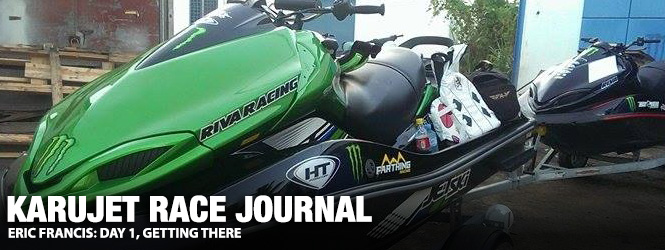
Getting to the Karujet was an adventure itself, with an early morning for Eric and Chris MacClugage.
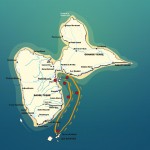
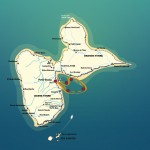
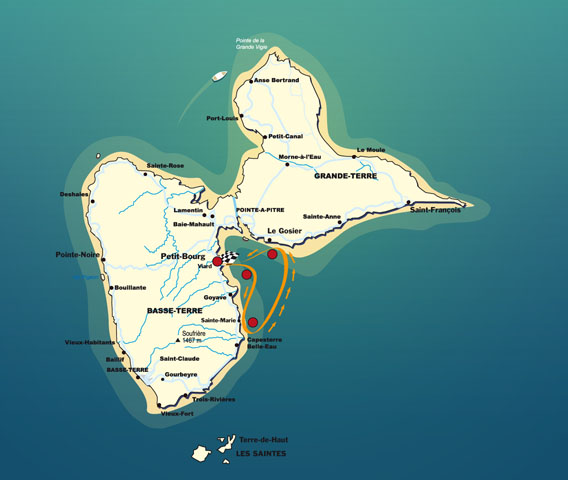
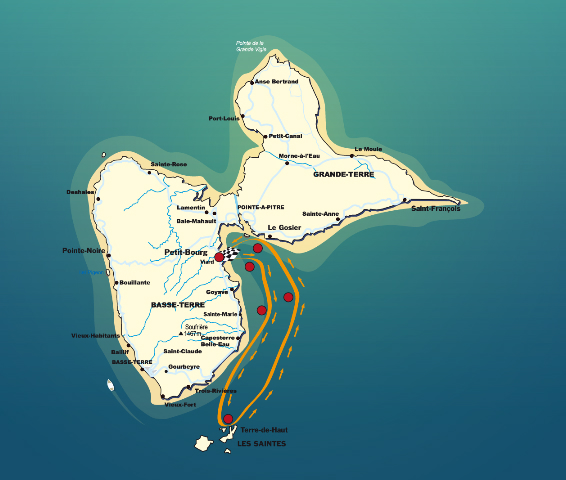
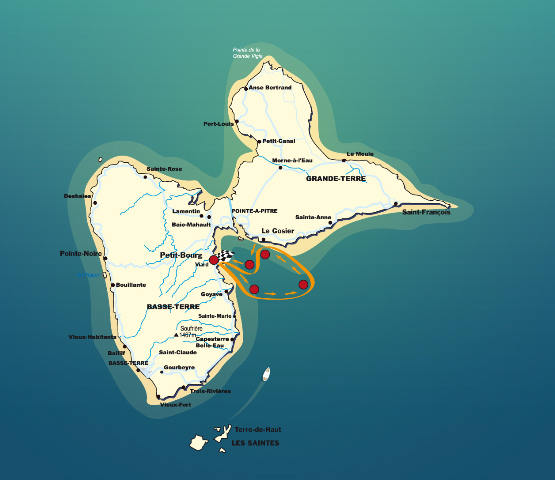
It’s possibly the most hardcore offshore race in the world. The Karujet is a four day race around Guadeloupe, the southernmost Leeward Island in the eastern Caribbean Sea. Well, not entirely. Guadeloupe is actually two islands: Basse-Terre and Grande-Terre, separated by the Salt River.
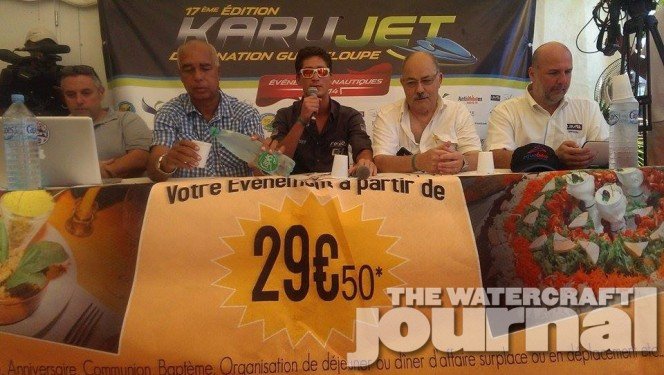
Welcoming some of the biggest names in personal watercraft racing in the world, we wanted to cover this year’s Karujet in a way that has never been done before: from the point of view of a competitor! All weekend-long, The Watercraft Journal will be providing you same-day event coverage from the Karujet exclusively from first-time racer and last year’s UWP-IJSBA National Champion, Eric Francis!
As you might have already heard, Francis is accompanied with other fellow Americans and legendary racers themselves, 18-time IJSBA World Champion Chris MacClugage and PWCOffshore.com and Mountain Motorsports racer Craig Warner. All three athletes will be piloting Kawasaki Ultra JetSkis.
Although Guadalupe is beautiful, technology comes at a premium. “Texting from here is like ten bucks a text. LOL!”Traveling from Lake Havasu City, Arizona to Miami, with a connection in Haiti and onto Guadalupe is quite a bit of travel. Macc is understandably exhausted.
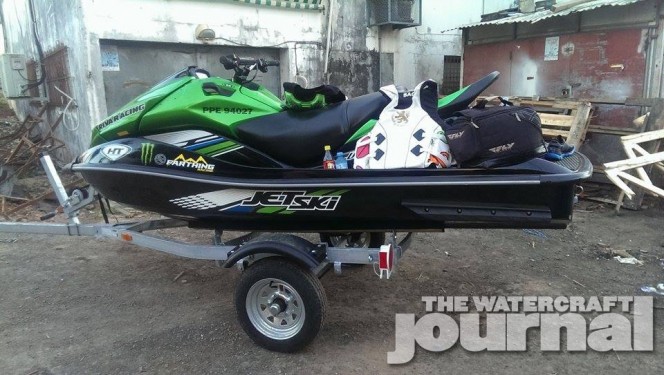
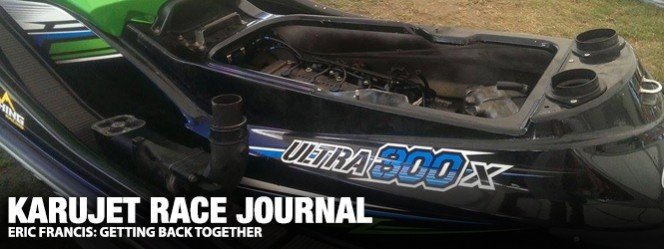
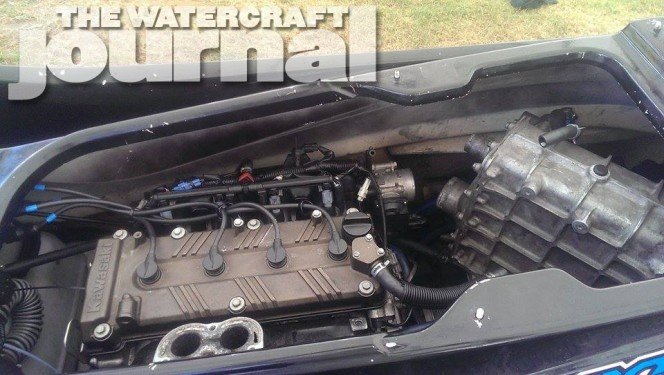
“The ski I’m riding is a 300X with a 310R head, free flow exhaust, Solas prop, and [aftermarket] steering with bars,” Eric explained. “Nothing too radical.”
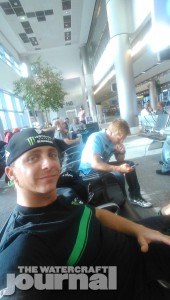
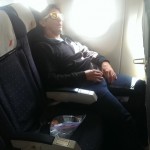
Getting to the Karujet was an ordeal in itself. “I’m sitting with Chris in the Miami airport,” Eric wrote early yesterday morning. For his teammate, Chris MacClugage’s travels started the day before. “Macc was up the whole time. He passed out right after we took off.”
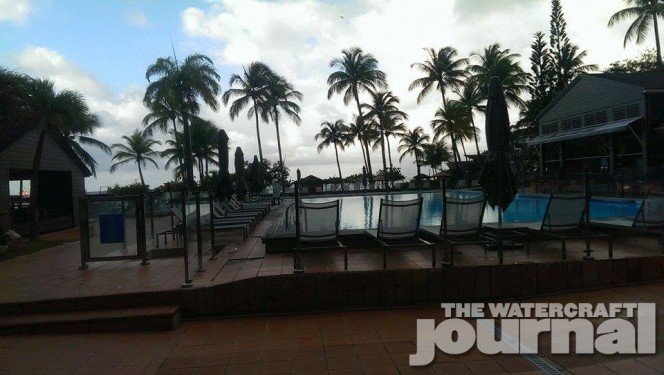
After a short stop in Haiti, the two arrived at their hotel, dropped off their bags and meet up with Cedric with their skis for a quick ride. “I’m supposed to hit the ocean today,” he explained. “I have been hanging with Macc the whole time. I need to make sure I am in top shape.”
“Macc has been helping me read menus and translate to people [who knew Chris MacClugage spoke French? -Ed]. I’ve been watching my diet, eating very well, and drinking lots of water.”
“Oh, and I’m very excited. I’m not really too nervous as I have grown up in surf racing. I feel very good and think I will be able to leave my mark in my first year out here. Luck has a lot to do with a race this long and hard, but I feel I’ll make America proud that I was chosen to represent our country.”
Eric notes, “We did a small test session yesterday and Chris and my skis are running very good. I’m on Cedric’s personal 300X with a few handling upgrades, such as steering and handle bars, free flow exhaust and a 310X head that has been cleaned up and a Solas impeller. I have been watching my diet closely out and and drinking lots of water to stay hydrated. Stretching and light running and work outs.”
As for the next few days, Eric wrote, “The rider’s meeting is tomorrow at 10am at the Beach Viard Restaurant. We took the skis out yesterday and will do a longer ride today.”
DAY TWO: GETTING STARTED
At the racer registration and tech inspection, Eric noted, “The UIM is very professional and check everything.”
After a long day of getting situated, a break-in ride and dinner, Eric finally made it back to his room. Despite waiting it out, grappling with technology outside of the States continued to plague him. “I just got WiFi. It’s crazy here, bro.” Eric laughs. “My phone is being weird, so I’m on a friend’s phone. I’ll try to get stuff straightened out.”
Wednesday was the last day before the first race, starting at midday. Getting ready for the first leg of the Karujet was nearly as stressful as racing it. “Yesterday was a busy day,” Eric recounted. “We were going over everything, checking clamps, the quick-fill systems, changing spark plugs, fueling the skis and going through the tech inspection.”
Being a UIM event, Eric had never experienced the rigors of the international sanctioning body. “Tech inspection is pretty difficult when you don’t understand the local language! But every one was very nice and helpful.”
The language barrier makes being in a strange place all the more difficult. Thankfully, he’s not alone. “Chris [MacClugage] has been a huge help with advice, driving me around and keeping me in the loop.”
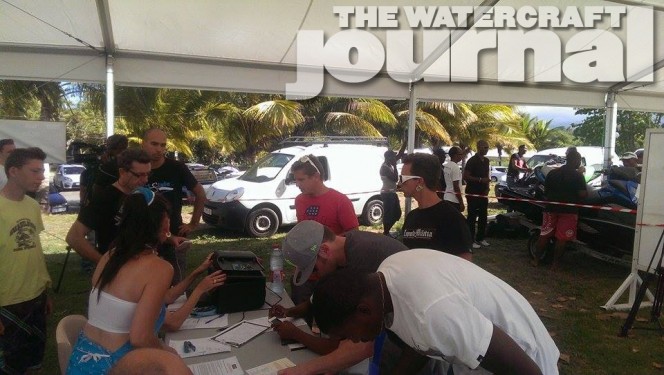
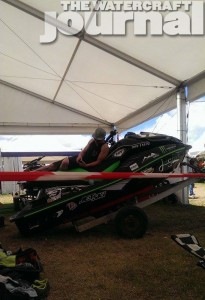
Chris MacClugage (in red), Eric Francis (black) and Craig Warner (gray hat) were all present together to sign in and register from the four-day enduro.Tech inspection under the UIM was surprisingly stringent for Eric, but found the staff very helpful in getting the first-time racer situated.
Eric continued, “After you tech the ski, they make you wrap it in cling wrap and put the ski in their impound so no one can change anything, and the ski returns to the impound every night after each day of racing.”
Because of the grueling nature of such an aggressive offshore race, safety is imperative. “Racing this event require lots of safety equipment such as a cell phone, search light, tow rope and transponders, as well as the usual stuff.”
With his ski wrapped up and in storage, all that was left was to wait. “I’m very excited to race tomorrow and plan to really test myself today against 80 of the best surf riders from around the world.
“Tomorrow’s race is about 50 miles with no pit stops and probably the easiest race of the week…although no race here is easy,” Eric joked, catching himself.
Prior to going in for tech inspection, the team of Americans meticulously went over their skis, double checking clamps, changing sparkplugs and capping off the quick-fill fuel system.
DAY THREE: GETTING A JUMP ON THINGS
After the day’s race, Eric sat down for the racer recap and daily awards. “Looking forward to the water tomorrow!”
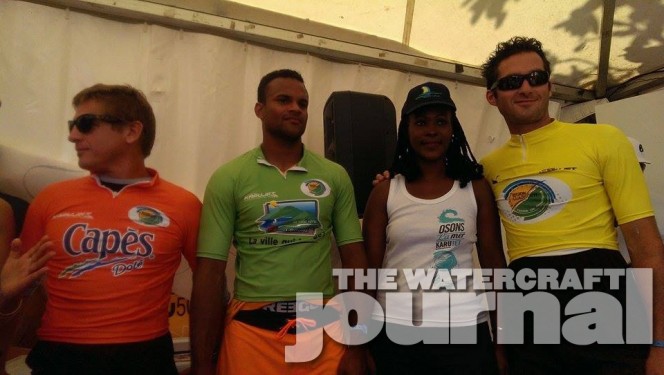
The first day of racing was the shortest, and saw it go to local Guadeloupean, Lucas Granger, who was followed by Martinique racer Hugo Fidelin and America’s own Chris MacClugage.
Previous Karujet winners Teddy Pons and Jean-Bruno Pastorello followed closely behind, with Craig Warner in 11th and Eric Francis at 17th place, respectively.
Although the course was brief, leaving from Viard to Saint Marie, then up to Ilet Gosier and back to Viard totaling 60km or 37 miles.
Readying for the day’s race, Eric donned his new Quakysence gear, which came on as a new sponsor for his 2014 season. Afterwards, Eric was in pleasant spirits and charged for the next day’s significantly longer heat, which will come in at just over 87 miles, requiring a pit stop.
As of Thursday night, the points are as follows: 1. Granger, Lucas, 2. Fidelin, Hugo, 3. MacClugage, Chris, 4. Medori, François, 5. Pons, Teddy, 6. Pastorello, Jean-Bruno, 7. Karam, Vincent, 8. Vaitilingon, Davy, 9. Gounouman, Pascal, 10. Thomas, Vincent
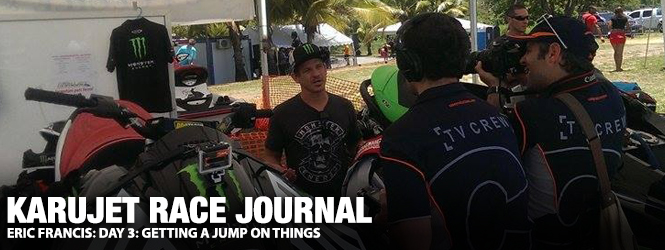
Prior to the race, Macc got some time in with the local media, where they asked about his 310X Kawasaki and his tactics in returning as a former Karujet champion.
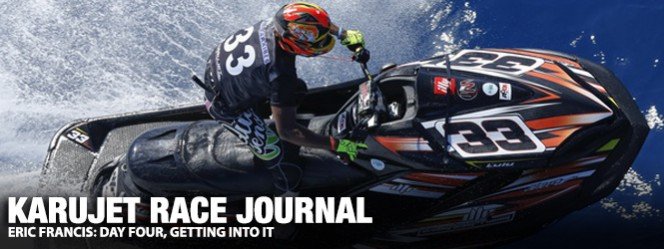
DAY FOUR: GETTING INTO IT
The first day took it out of Eric emotionally, “This is the hardest race I’ve ever done.” But has vowed to give it his all these next few days.
Although the fourth day into Eric’s Guadalupe adventure, yesterday marked the second day of official racing. The day’s challenge took the competitors the second-longest course of the four-day race, from Viard to Saint-Francois twice – what’s called the Viard Circuit a total of 87 miles.
Former Karujet champion Teddy Pons took the checkered flag this round, with a 1:38-lead over the pack, as Chris MacClugage battled yesterday’s winner Lucas Granger. In the final moments, Granger was able to eke ahead of Macc by five seconds. This rearranged the scoreboard, placing Pons into second place in the overall, 16 seconds behind Granger and slightly ahead of MacClugage.
Unfortunately, the day was filled with tough breaks both literally and figuratively, alike. Pastorello, who was in the top three during the early minutes of the race, was forced back and eventually having to back out of the day’s heat due to mechanical woes. Francois Medori lead the pack for most of the first leg but fell to an ignition problem. Medori eventually limped in at 17th place.
Officials at the Karujet take safety very seriously, and racers are expected to comport themselves with the utmost professionalism.Speaking about his first day at the Karujet, Eric explained, “Yesterday I just freaked out and overrode, I didn’t do well. I took a very hard shot to the stomach and just stressed out, and never caught my breath.”
Mountain Motorsports Kawasaki racer Craig Warner fared worse, coming in at 34th place, with our own Eric Francis coming in four places behind, having received a four minute penalty.
“So today I focused and rode way better,” Eric recalled. “I started dead last due to water in the ski. I got it all out and past about 20 riders but then broke the belt and had to lip home. If the ski didn’t break today I would have been in the Top 6 no problem. Tomorrow is another day.
When asked about the penalty, Eric admitted, “I beached my ski too far up the beach after I broke.” Concerning how tomorrow is shaping up, Eric beamed. “The ski’s all fixed now and tomorrow will be my day.”
But Eric’s confidence wasn’t as solid last night. “This race is by far the hardest race I have ever done in my life. After Day One, I wanted to give up. I slept on it and came back much stronger.”
The toils of the grueling nature of the Karujet are playing on everyone, be them emotional or physical. Chris MacClugage was quoted as saying, “age was catching up with him and that he really felt all his 40 years of experience, and his knees, which have gone through a few operations, were really hurting. But that he’s having a lot of fun out there and in a good position,” according to Aquabike.net.
Eric concluded, vowing, “I’ll prove myself on the water tomorrow I’m sure of it.”
The final remaining days of racing will shake out the rest of pack, as fatigue and mechanical weakness will separate the men from the boys.Macc’s consistency has kept him on the podium for the first two days.
Craig Warner fought fuel pump issues the day before and decided to sit out the day’s racing.
The longest and possibly hardest day of the four-day marathon Karujet offshore championship, today’s action saw some serious highs and lows, shaking out some of the most talented racers, elevating others and drastically rearranging the points structure. Fatigue, mechanical trouble and soul-crushing exhaustion filtered the field of competition by nearly half.
With a considerable lead over the pack, French racer Teddy Pons continues toward a second Karujet title as he leads Martinique rider, Ugo Fidelin and Alexandre Barret. Racing for two hours over 144km (89.5 miles) over “very choppy conditions,” Eric Francis climbed back from his rearward position over the previous two heats to an impressive 8th place.
“It was a crazy day today. It took every ounce of my soul to push through and finish. I had to dig deeper than ever. This race is by far the hardest thing I have ever done,” Eric said, exhausted from the day’s racing. “People were giving up today because its so hard, and these are the best from around the world!”
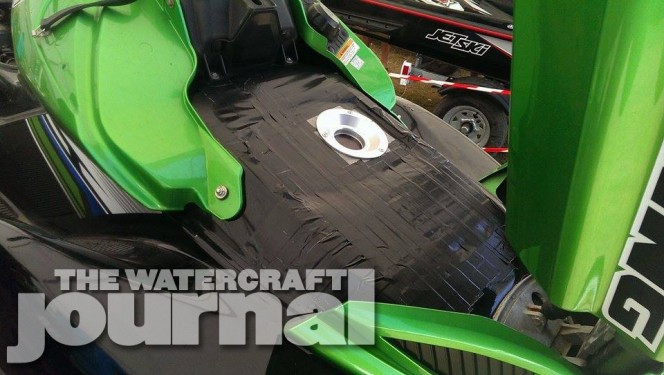
Water seeping into the engine compartment caused Eric’s supercharger belt to slip the day before. Some preventative measures (and a few pounds of duct tape) resolved that.Stress isn’t only effecting the riders, but the causing fractures in the hulls of skis as well.
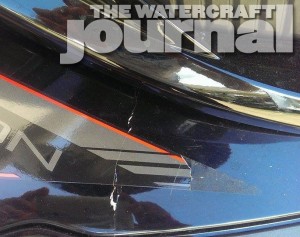
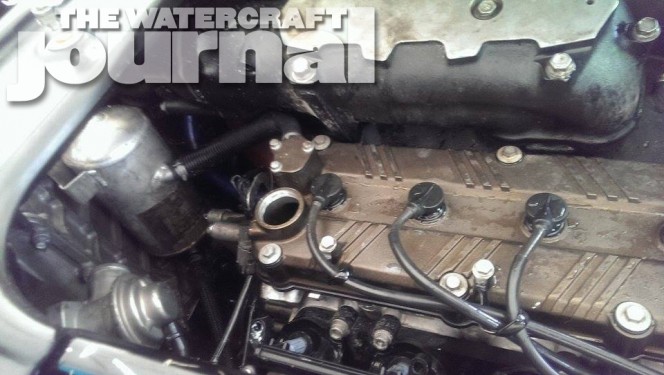
Thankfully, the gremlins that plagued Eric the day before stayed away. He laughed, “I lost my oil cap sometime during the race. I don’t know how!” But he did note, “The hull’s cracking from just riding. It’s crazy.”
He continued, “I felt really good about today before the race and my team told me they would love for me to finish in the Top 10, so pushed with everything I had to make them proud to have me.”
Eric’s success unfortunately wasn’t shared with his fellow American racers. Up until today, Chris MacClugage was the steadiest performer on the field, coming in a tight third place in each heat.
Unfortunately, Macc wouldn’t complete the day’s event. Eric shared, “ECU issues. His ski would only idle.”
Remembering tighten everything down as much as possible is becoming a valuable lesson as Eric’s oil cap unthreaded during the day’s racing.
Likewise, Craig Warner would be down, choosing not to enter in today’s race. “He broke yesterday with fuel pump issues and didn’t was to risk the ski today. He is gonna run tomorrow on the final race,” Eric noted. But that didn’t stop Craig from helping out. “Craig held for me today and did my fuel stop. It was awesome to have a pro help me so much.”
Eric continued, “Actually, he and Chris have helped me so much and I feel truly blessed to have them here to show me the ropes.”
Thrashing the previous night and the morning before racing, Eric and team were able swap out supercharger belts and repair the damage done the day before to help Eric cross the finish line in the Top 10.
DAY SIX: GETTING OVER IT
If you thought yesterday’s race tossed the Karujet standings on its ear, you haven’t seen nothing yet. Sunday marked the final day of racing, consisting of two heats of four laps around the Viard inlet, totaling a combined 78.5 miles for the day. Challenging sea state combined with riders looking to put it all out on the line made for some heated competition.
Chris MacClugage came back swinging alongside teammate Craig Warner and grabbed fifth, as Warner crept ahead with a best of fourth place.
Eric Francis’ luck seemed to have been used up by yesterday’s 8th place finish, as the native Floridian suffered technical difficulties during both motos. Mountain Motorsports and Monster Kawasaki’s Craig Warner’s strategy to hold back from yesterday’s racing paid off, as the California-to-Georgia transplant performed his best for the week, coming in just behind Jean-Bruno Pastorello, in fourth place.
Pastorello came back swinging this final day and dramatically rearranged the scoreboard, as he grabbed a second and third place finish during the two motos, but it wasn’t enough to place the venerable racer up in rank enough to grab a podium spot.
Macc Racing’s Chris MacClugage picked himself up after a frustrating race the day before to come in behind his teammate in sixth. Unfortunately, the rebound wasn’t enough to hurdle the gap in combined time between he and the pack leaders, resulting in Chris earning a 15th place overall (five places above Francis’ 20th and Warner’s 30th).
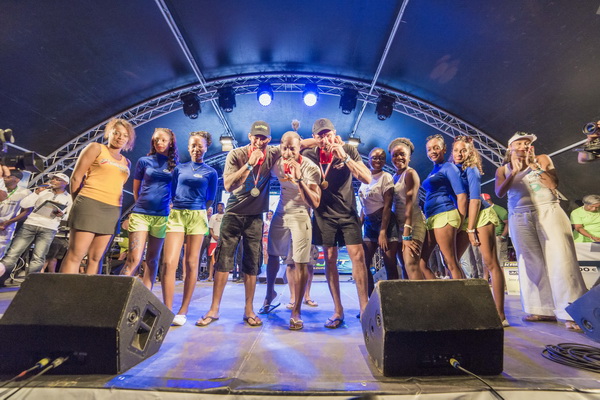
As for the winner of the 17th annual Karujet Championship, the maxim “slow and steady wins the race” might actually apply – at least, as far as the “steady” part is concerned. Martinique’s Ugo Fidelin, who never once finished first on a podium the whole week (earning a 2nd, 3rd and two 6th places), rode strong and consistently all weekend. And that proved enough to push him ahead of Guadalupe local Vincent Karam and France’s Alain Tarzia.
It wasn’t but last week that we helped announce the Miss Ruthless 2015 contest (which, if you’re looking to enter, you’re running out of time), and now we’re happy to share Jobe’s PWC Movie for 2014. Although it’s not much of a movie, but really a fun teaser of their new 2014 “Ruthless” personal watercraft line of swimwear, wetsuits, life vests, helmets and other needful riding gear and apparel.
As it states on the official Jobe website, “One month from now and it’s officially Spring! Temperatures will start to rise and taking your PWC to your local lake will become a common habit again. No better time to take two minutes and check out our all-new PWC range in the Jobe PWC Movie 2014!”
Although not a common choice among us Yanks, Jobe holds a major international presence in both professional racing and recreation markets across Europe, Australia, New Zealand and elsewhere. We’re hoping to see more Jobe products here in the States and on the backs of more professional and amateur riders throughout the 2014 season.


 From the outside looking in, you would think that every Australian who loves riding personal watercraft in the surf is a professional freerider. More footage of amazing aerial action keep pouring out of the land Down Under than even America’s famed Oceanside, California.