If you’re in the market for a new deckmat, check out Unlimited PWC’s Deckmat Simulator to perfectly visualize your new purchase before placing the order.
These days, just about everyone knows the difficulties of online shopping. After hours of browsing through options, you eventually pick out the product you like, wait a few days for it to arrive at your door, and when you finally open up the box… disappointment. All too often, the product doesn’t fit like you had imagined or doesn’t even appear like the image you had seen online, so you return it and have to wait even longer.
Well, when it comes to shopping with Unlimited PWC, you’ll no longer have to face these struggles. Using their deckmat simulator, you can envision how a new deckmat will look on your jet ski before even making the purchase!
The simulator lets you choose between a variety of Kawasaki and Sea-Doo models on which you can visualize your deckmat. You then proceed to select between a wide selection of patterns, top layer colors, and bottom layer colors so you can find what combination would work best for your watercraft. The on-screen visualizer updates in real-time, so there is absolutely no hassle while you browse the options available to you.
After using this great tool to pick out the style you prefer, you can go on to purchase one of Unlimited PWC’s high-quality Traction Mats, knowing that the product you see is the product you’ll receive! Check out the Unlimited Deckmat Simulator now.
On Monday, IJSBA announced that ten Sea-Doo models will now be eligible for competition for the IJSBA 2024 season, nationally and internationally.
According to a press release by IJSBA Executive Director Scott Frazier, “Bombardier Recreational Products has provided sufficient documentation to homologate the following 2024 Sea-Doo units for competition in the 2024 series: Spark, Spark Trix, GTI, GTI SE, GTX, GTX Limited, GTR, GTR-X, RXP-X, and RXT-X.”
On the same day, IJSBA announced that all 2024 Yamaha models are eligible in all IJSBA sanctioned competitions.
Frazier noted that “Competitors are reminded to carefully review IJSBA guidelines, especially HOM.1.6.”
Specifically, HOM.1.6 states “For four-stroke watercraft to be homologated for competition in the Runabout division, the watercraft must not exceed 1800cc as furnished by the manufacturer. If a Runabout, as furnished by the manufacturer, exceeds 1800cc then the maximum displacement shall be the OEM displacement plus 1mm overbore on all cylinders. The maximum displacement that may be achieved by any Runabout PWC is 2000cc.”
Frazier specified that the 2024 Yamaha VX Limited HO is furnished with an engine exceeding 1800cc, making this rule applicable to this specific model.
Models identified in the announcements are immediately eligible for competition worldwide.
Regarding Kawasaki models, in a comment on September 25 of 2023, Frazier noted that “2024 model year Personal Watercraft are generally not allowed homologation until the day after World Finals and after IJSBA has determined that 500 units have been built and are available for purchase. There is an exception where a 2024 model year unit is an exact reproduction of a previously homologated unit with allowances made for colors and aesthetic features. At this time, the only units meeting that criteria is the 2024 Yamaha SVHO and all Kawaski units that have been shipped to date. IJSBA will post any updates as we learn them in order to keep competitors fully informed.
A scroll through IJSBA’s official news releases showed no announcement of Homologated models prior to the 2023 race season; prior to the September 25 note reference above, the last official IJSBA announcement of new eligible models was posted on February 24, 2022, when IJSBA posted the following notification:
IJSBA is announcing the first update regarding homologation of 2022 models. Due to supply chain issues, IJSBA is taking a measured approach to homologation of units for competition. This update covers all models of all OEM units and is effective immediately.
Supply chain issues continue to cause severe disruption to the production and delivery of new OEM Personal Watercraft. IJSBA has been making concessions to the competition community to allow for flexibility in the repair and modification of OEM units for use in competition. These concessions will remain for the 2022 competition season. As part of balancing the needs of the community along with the obligations for ensuring uniformity, IJSBA can tentatively homologate new 2022 units and the parts and repair manuals as follows:
Kawasaki: All Kawasaki units for 2022 are either the same or substantially the same as all previously homologated models with the exception of the Ultra 310 line. Therefore, aside from the Ultra 310, all 2022 Kawasaki models are now homologated for both US and international competition and the contents of the parts catalogs and repair manuals are now included in the homologation. The Ultra 310 line, having met the minimum production numbers at the factory but having the product count diverted globally is eligible for only provisional homologation at this time. Therefore, the Ultra 310 is eligible for Open Class competition only and may not be used in any Stock Class or Limited Class categories until such time as sufficient distribution has taken place at both US and international dealerships. IJSBA will continue to monitor dealer deliveries and will provide news of complete eligibility for all categories at the appropriate time.
Sea-Doo: All Sea-Doo models for 2022 are either the same or substantially the same as earlier homologated models. Therefore, all Sea-Doo models and their corresponding parts catalogs and repair manuals are homologated for both US and international competition.
Yamaha: All Yamaha models for 2022 are either the same or substantially the same as earlier homologated models. Therefore, all Yamaha models and their corresponding parts catalogs and repair manuals are homologated for both US and international competition.
Anyone with questions about the IJSBA homologation process is asked to email [email protected].
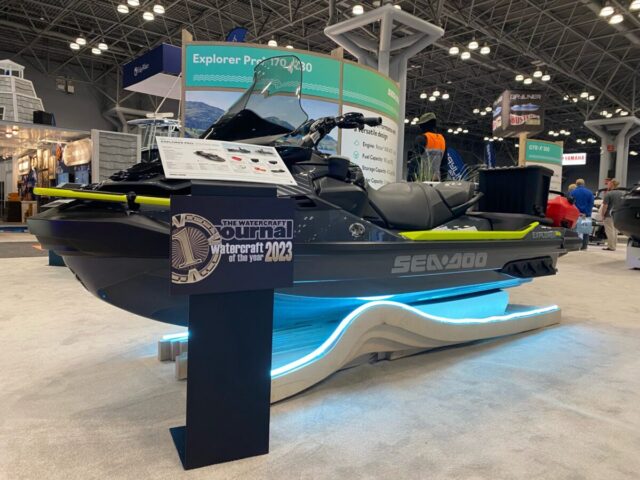
For 2023, the winner of The Watercraft Journal’s lauded “Watercraft of The Year” award went to the 2023 Sea-Doo Explorer Pro 170.
Exhibiting unique and innovative features targeting a burgeoning market segment, the Explorer Pro bested a dozen other units to earn this accolade.
In celebration of winning the WOTY award, Sea-Doo placed the 2024 Explorer Pro 170 and its supercharged 230-horsepower sibling on display at the 2024 Discover Boating New York Boat Show held in the Javits Center on Manhattan this past weekend.
Tens of thousands of attendees visited Sea-Doo’s sprawling booth, perusing the 325-horsepower RXP-X and RXT-X and observing the podium displaying the Watercraft of The Year announcement.
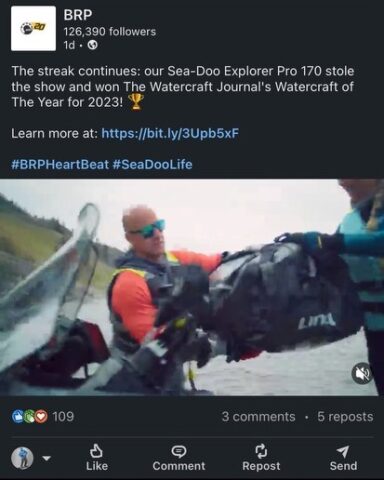
Social media posts from BRP’s corporate accounts as well as that of Sea-Doo both shared the news of the Explorer Pro’s success in winning the hard-fought praise, particularly in light of this author’s rather critical review of the machine.
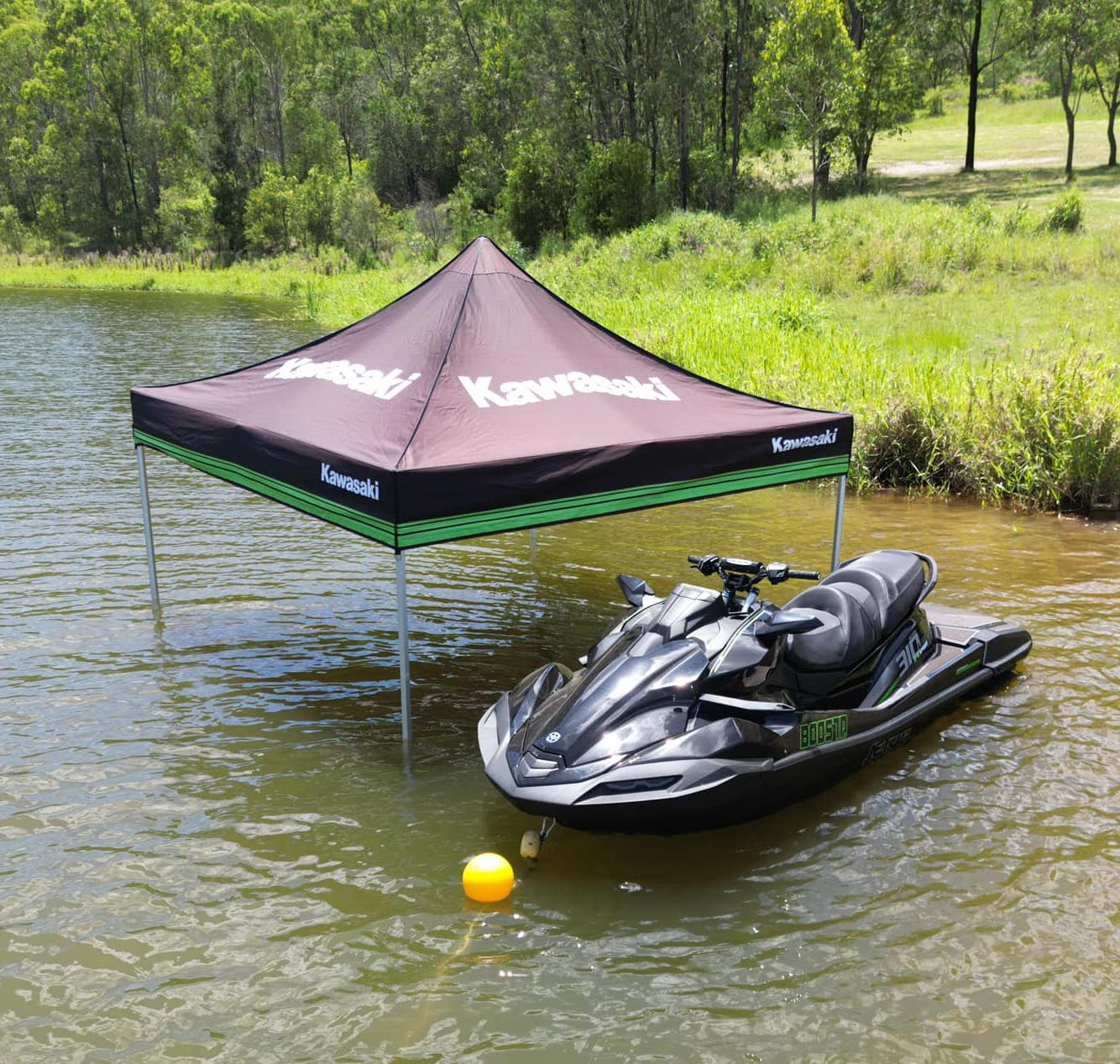
For those who know already, the Kawasaki Ultra JetSki remains the preferred weapon of choice for most offshore/rough water riders. It’s dramatic 22.5-degree deadrise makes its deep-V hull a wave splitter, allowing the craft to piece a swathe through chop unlike lighter or less aggressive hull designs that might skip or slide over the turbulent water’s surface.
Unfortunately, the Kawasaki’s heft and displacement hull also makes it considerably slower than its competitors. Yamahas and Sea-Doos require much less thrust to reach competitive racing speeds than the Kawasaki, so what is to be done? Kspeed has been hard at work solving said issue and not solely in getting the supercharged JetSki to produce more power.
In a recent Facebook post, Kspeed wrote the following: Final test of the production KS3 plate. Holy Moly! You’re gonna want to jump on this fast. Instant 3+mph gain even on a full tank and this has been repeated time and time again on several skis in a multitude of conditions and with numerous test riders.
Goes over light chop faster, flies straighter and doesn’t lean over. Point and shoot and make going fast look like child’s play. It’s the GOAT of ride plates. You can buy it today and see it in 3D glory on our website. It will ship in April 2024.
The revised ride plate helps reduce drag, elevates the bow higher up out of the water (when used together with the 3-degree pump wedge) and gets the JetSki to planing speeds faster – all necessary in getting modern Kawasakis back into competition with the other guys’ skis. We look forward to seeing updates on the KS3 ProRace Plate as they come.
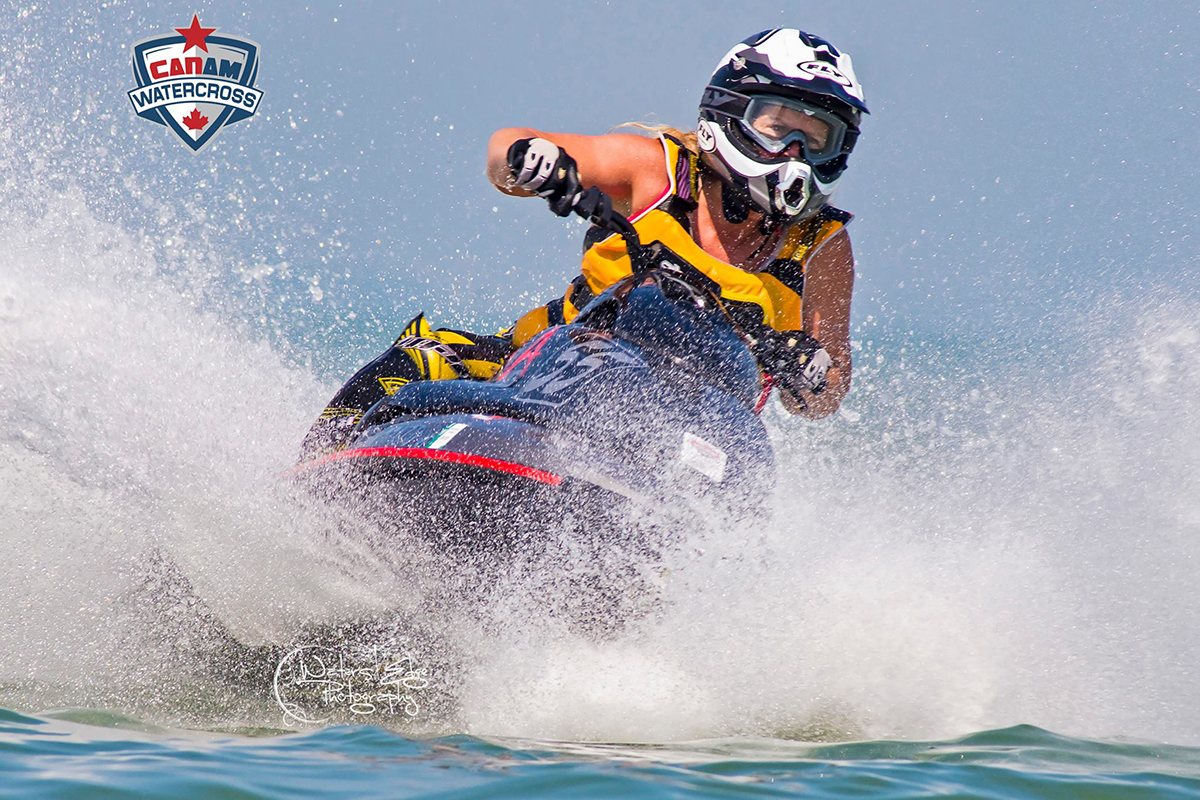
Keeping up with the sport of PWC racing can be a challenge – especially during the slow, dreary down-months of winter, with every racer – from novice to world champion – eager to get the next season rolling, and tour promoters, sanctioning bodies and race directors scrambling to lock down race sites and dates.
With the 2024 season still a “few” hard freezes, winter storms and frigid mornings away, it is shaping up to be a race-packed season, with even more race events than the 2023 season, which in and of itself was a busy year. But as much as that may be viewed as (Very) good news by both racers and fans, it also exacerbates the aforementioned challenge – keeping up with race schedules.
Luckily, thanks to the dedication of one racer, that challenge is significantly reduced.
For more than five years now, Kirsten Hasty – a Region 8 Sport and XPL racer – has managed, updated and maintained the PWC Racing Schedules Facebook page, and it is easily the most accurate, up-to-date resource for the When and Where of PWC competitions.
From the day the page launched, its purpose was clear, stated in the page description
This group was created for the sole purpose of sharing information concerning PWC Racing schedules in the US and Canada. This page will include all sanctioning bodies in the US and Canada. Announcements at the top of this page will have all known US and Canadian racing schedules and will be updated as more information becomes available. Feel free to post information about upcoming races in the US and Canada. This site is for INFORMATION related to US and Canadian race schedules only. Any post that is not information related to race schedules in the US and Canada may be deleted.
Despite the clear boundaries stated in the description, with nearly 3,000 members, one would expect a fair amount of drama on the page, especially with some of the recent shakeups in the competitive PWC status quo. One would be wrong, in this case, however; PWC Racing Schedules remains an informational clearinghouse, not a free-for-all discussion forum. There are plenty of those around, and it is refreshing to know that there is still a place to turn for a reliable, up-to-date compendium of race announcements, schedules, rules and related news, free from the debates and dissension that can dominate many PWC pages and discussions.
As PWC racer and 2020 Women’s Runabout World Champion Renee Hill stated about Hasty, “She’s pretty accurate on all the dates because she gets them right from the promoters. I used to race against her at the World Finals. Always had a smile on her face and loves PWC racing like so many of us.”
For Team Reckless Abandonment’s Ryan Stevens, the reliable information from Hasty’s Facebook page helps him put together a detailed schedule to keep himself and his daughter on track for their races.
“I absolutely love what Kirsten does for us. I am able to see the whole list of races in order; I then take that list and use ChatGPT and add distance traveled and stops needed per race, then I make up my mind what is going to work out best for me and my daughter,” he said. “Kirsten makes it easy and simple. When someone asks about racing, it is always so simple to just direct them to the page and download the file.”
Following is a simplified roundup of race dates for the 2024 season – for details and a consistently-updated source for new announcements about the coming race season – visit, like and follow the PWC Racing Schedules Facebook page – and drop a thank you in the comments to Kirsten for the countless hours she puts into keeping this resource available for the PWC family.
P1 AquaX April 19-21 – Daytona Beach, FL May 10-12 – Kissimmee/St. Cloud FL July 12-15 – Michigan City, IN July 26-28 – LaPorte, IN Oct. 18-20 – St. Petersburg, FL Nov. 1-3 (Tentative) – Clearwater FL Possibility of one more round.
2024 Mark Hahn 300 – Saturday, Feb. 24
AJSA (American Jet Sport Association) April 20-21 – Season Opener in Chattanooga, TN May 24-26 – Guntersville, AL June 7-9 – Smith Mtn Lake, VA July 5-7 – Spindale, NC July 12-14 – Johnson City, TN Aug. 2-4 – Chattanooga, TN Aug. 16-18 – Pulaski County, VA Aug. 30 – Sept. 1 – AJSA US Open (location not provided yet)
NautiWater Mid-America Series June 8-9 – Hillsdale Lake, KS July 13-14 – Altus, OK July 26-28 – OKC, OK August 1-2 – Lake Lavon, TX August 3-4 – Lake Lavon, TX August 17-18 – Clinton Lake, KS
NautiWater LoneStar Race Series March 15-16 – Orange, TX May 25-26 – Paris, TX July 13-14 – Altus, OK July 26-28 – OKC, OK Aug. 1-2 – Lake Lavon, TX Aug. 3-4 – Lake Lavon, TX Aug. 31 – Sept. 1 – Paris, TX
IJSBA Best of the West Series March 16-17 – Parker, AZ April 20-21 – Lake Havasu City, AZ May 4-5 – Huntington Beach, CA May TBA – Lake Havasu, AZ June 8-9 – Lake Havasu, AZ Aug. 10-11 – Parker, AZ Sept. 14-15 – Lake Havasu, AZ
East Coast Watercross
June 1-2 – Webster, MA
June 22-23 – Sylvan Beach, NY
Aug. 3-4 – Plattsburgh, NY
Aug. 24-25 – Watkins Glen, NY
Sept. 7-8 – Sylvan Beach, NY
Great Lakes Watercross
June 8-9 – Nekoosa, WI
June 22-23 – Prairie Du Chien, WI
July 6-7 – Nekoosa, WI
July 20-21 – Harbor Beach, MI
July 27-28 – La Porte, IN
Aug. 10-11 – Racine, WI
Aug. 24-25 – Nekoosa, WI
2024 SBT WGP-1 World Finals (IJSBA) IJSBA’s Junior program will begin Sunday, October 6 as normal. Competition will begin on Monday, October 7. The last day of scheduled competition is Sunday, October 13. October 14 is a reserved overflow day in the event of weather issues.
2024 is already shaping up to be an exciting year for the world of watersports, as FLITELab entered January swinging with its brand new line of innovations to change up the prone foiling arena.
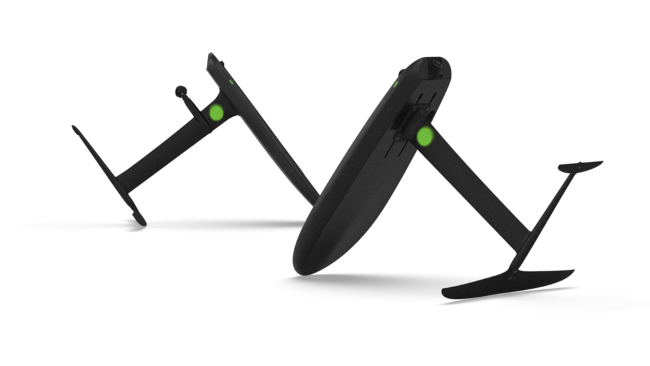
FLITELab, the new E-Foil brand launched by Fliteboard, looks to break the industry out of its previous limitations. Instead of being limited to mostly flat water like lakes and rivers, FLITELab’s AMP line moves into the wave space with its cutting-edge assisted surf-foil boards.
Prone foilers– that is, eFoilers who take on waves– will be all too familiar with the challenges associated with the sport. While the boards can work wonders on all sorts of waves, the biggest problem is managing to catch them in the first place. The small, agile boards, which can provide the most exhilarating rides, often aren’t able to handle the heavy paddling needed to catch a good wave.
That’s where Chris Reynolds, the project manager at FLITELab, comes in.
To hear Chris tell it, “The AMP system is our solution, the AMP Jet is integrated into the board and delivers the perfect amount of boost exactly when you need it, and is safely out of the way when you don’t.”
By concealing the AMP Jet within the AMP board itself, FLITELab allows prone foilers to avoid added drag while getting an optimal boost just at the critical moment, letting them catch waves on a still hyper-responsive board.
After three years of development, the AMP line seems to have achieved a major upgrade to the world of prone foiling. Even their LAUNCH Pad, a piece of technology designed to offer hands-free control of the board, includes state-of-the-art software allowing riders to control the strength and timing of the AMP Jet’s boost, while also sensing automatically when to cut off so the rider can keep his or her attention on the waves.
FLITELab refines the distinction between the prone surf foil and an Efoil, such as the Fliteboard Marc Newson wave, saying “the Marc Newson wave is an Efoil designed for permanent riding. It’s by far the best Efoil on the planet for waves, where this is a different concept, being a prone surf foil setup with a jet in the board. The jet helps you catch waves but doesn’t power you continuously like a Fliteboard eFoil does.”
So, whether you’re an experienced prone foiler or just looking to try out a new activity, it’s worth considering one of FLITELab’s AMP boards for a truly revolutionary experience. Check them out at the Fliteboard website and see the FLITELab in action in their latest YouTube clip.
On the morning of Thursday, November 16, many jet ski enthusiasts near Homer, Alaska, woke up to disappointing news: the two-year-long lawsuit to reinstate the ban on personal watercraft (PWC) in the area had come to an end, and the ruling had not been in their favor.
The ruling follows a lawsuit filed by conservation groups in the Kachemak Bay area, challenging the 2021 ruling that permitted jet ski use in the Kachemak Bay and Fox River Flats Critical Habitat Areas.
The region, covering nearly 230,000 acres of bay, mud flats, and marshlands, had been protected since 1972 as “especially crucial to the perpetuation of fish and wildlife,” according to the Alaska State Legislature. In 2020, however, the Fish and Game repealed the ban on jet skis in the protected area, with Commissioner Doug Vincent-Lang arguing that PWC were no longer a danger to the protected zones.
As quoted in Alaska Public Media’s article on the ruling, the Commissioner claimed, “We didn’t see any potential impact from allowing jet skis.”
Shortly after the decision in 2021, conservation groups, represented by Scott Kendall of the law firm Cashion Gilmore & Lindemuth in Anchorage, challenged the ruling. After a two-year-long hearing, Judge Adolf Zeman ultimately ruled in favor of the plaintiffs.
Zeman’s ruling was based largely on a 1999 literature review conducted by the Department of Fish and Game, suggesting that erratic movements and increased noise in shallow water areas have a negative impact on the protected ecosystems.
While seen as a victory for inlet conservationist activists, many water sports enthusiasts living in the area are unhappy with the ban’s reinstatement, and the Department plans to challenge the decision in the near future.
Never before have personal watercraft been better adapted to variety of tasks and a multitude of applications. From vital lifesaving equipment employed in shoreline and big surf rescues to innovative storage and cargo applications to maximize travel distance, today’s modern PWC are light years beyond the single-rider water scooters of decades past.
Although innovative fishermen have been adopting watercraft for fishing since the first runabouts, only recently have manufacturers embraced this demographic – and to tremendous acclaim. Sea-Doo’s 2019 Fish Pro and subsequent Scout, Sport and Trophy models have all been received warmly by displaced fishermen by escalating boat costs and disenfranchised kayak fishermen seeking greater accessibility.
Although declining to offer a dedicated fishing model, Yamaha delivered a pair of Jet Fish accessory packages that could be equipped on all full-sized FX WaveRunners with some considerable cost [a branded Jet Fish model was offered for Australian buyers in 2023 –Ed.]. Meanwhile, aftermarket brands had already began kitting units with cargo racks, rod holders, coolers and GPS units.
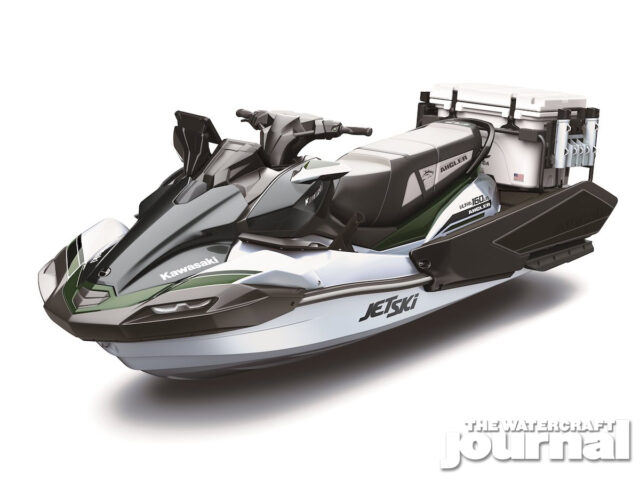
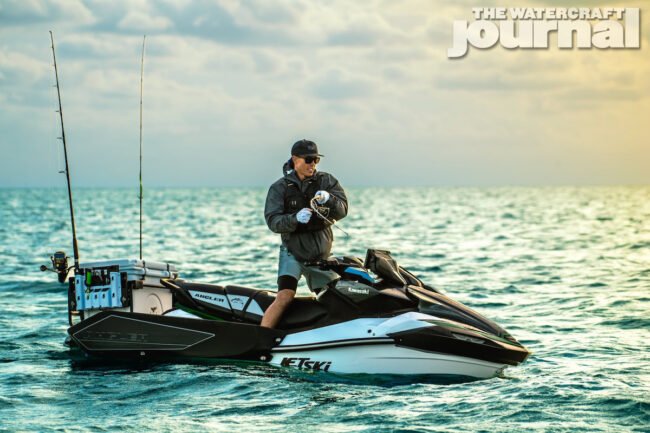
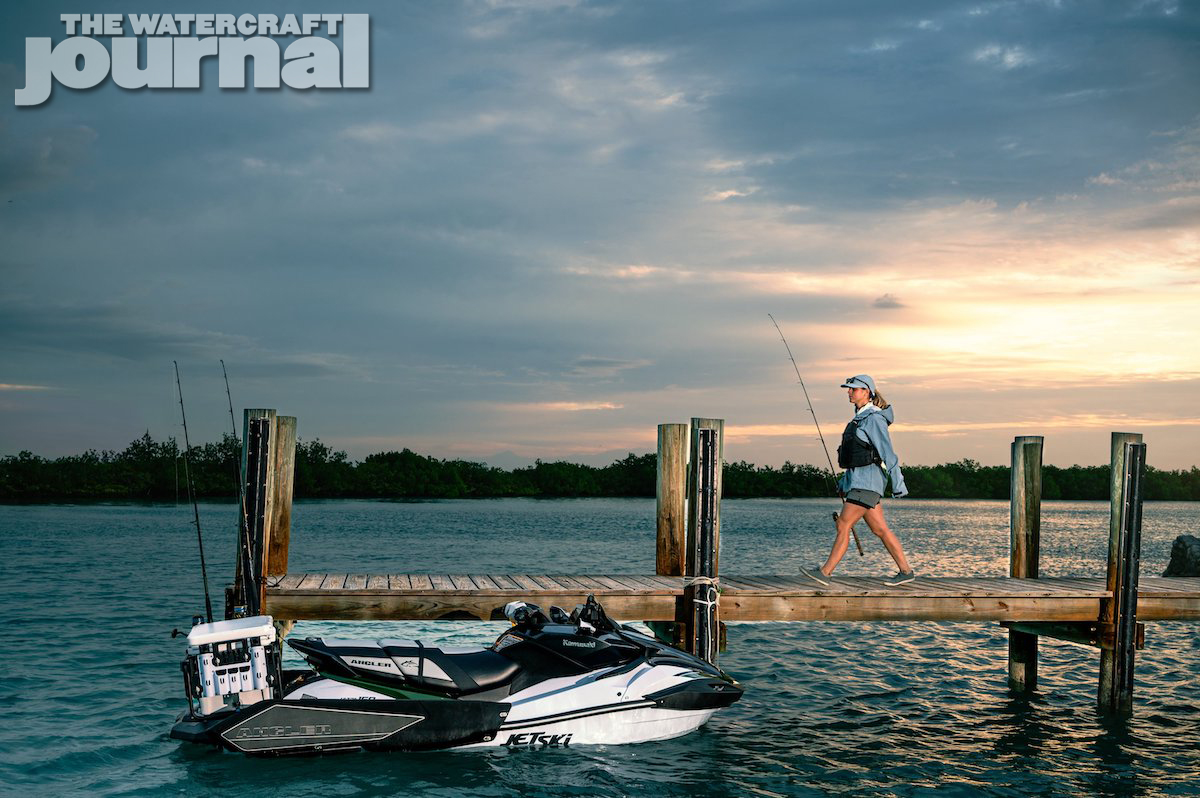
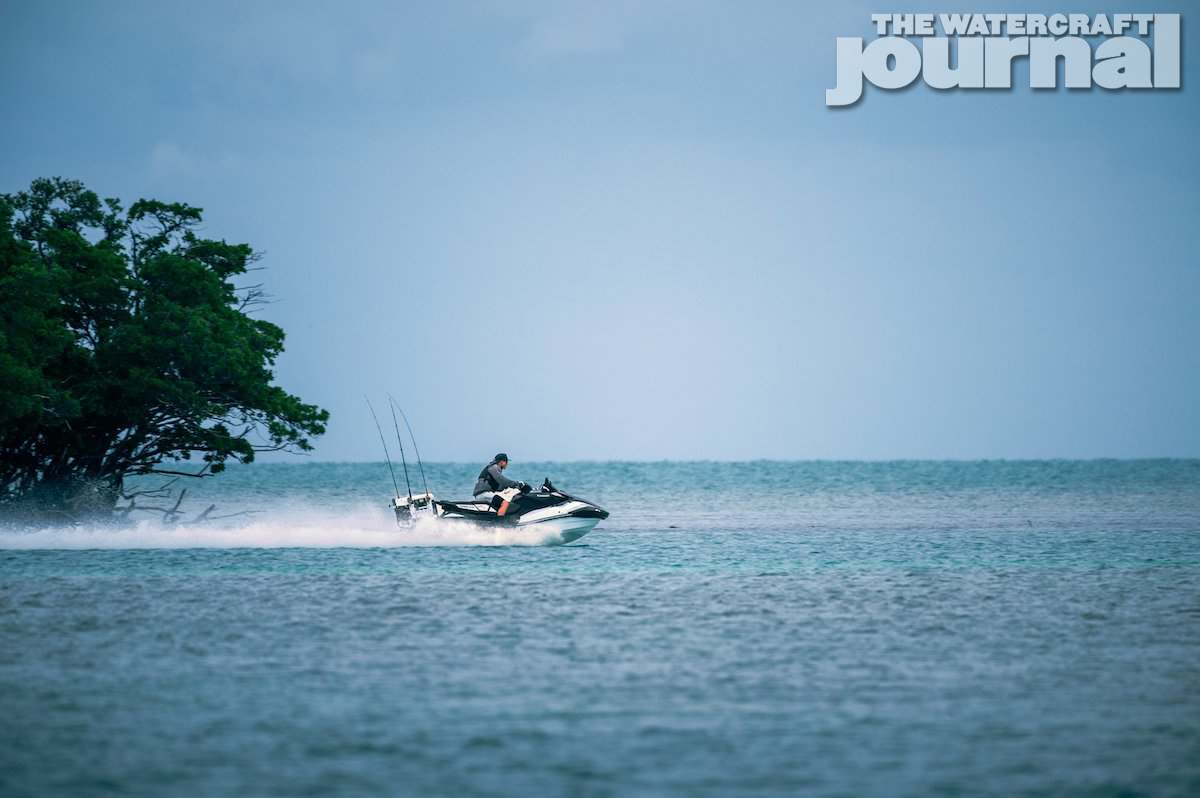
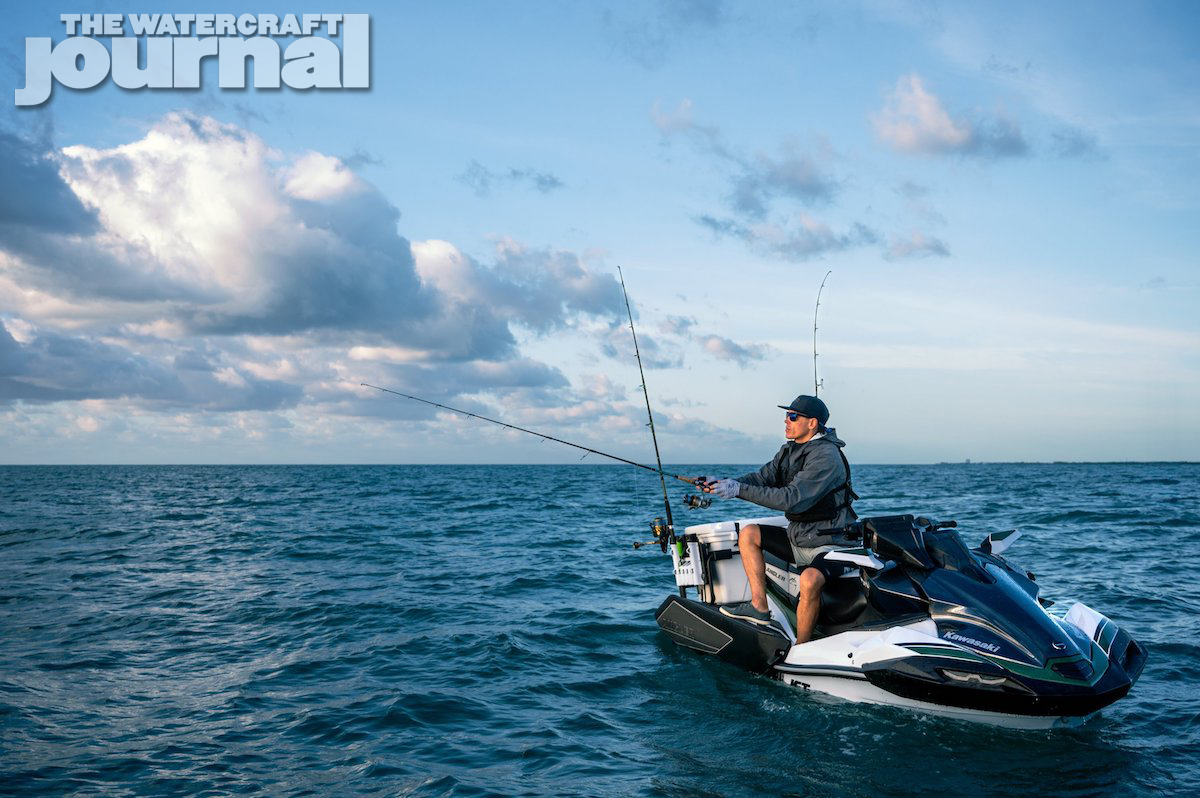
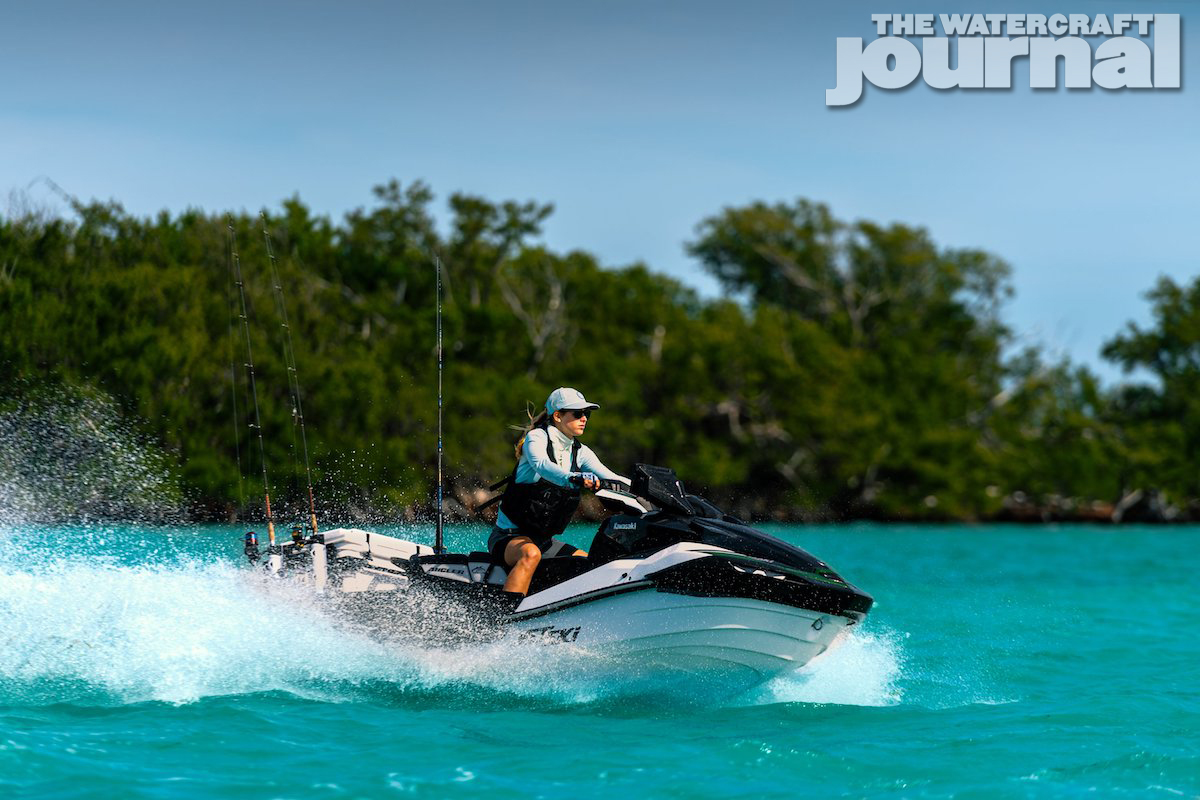
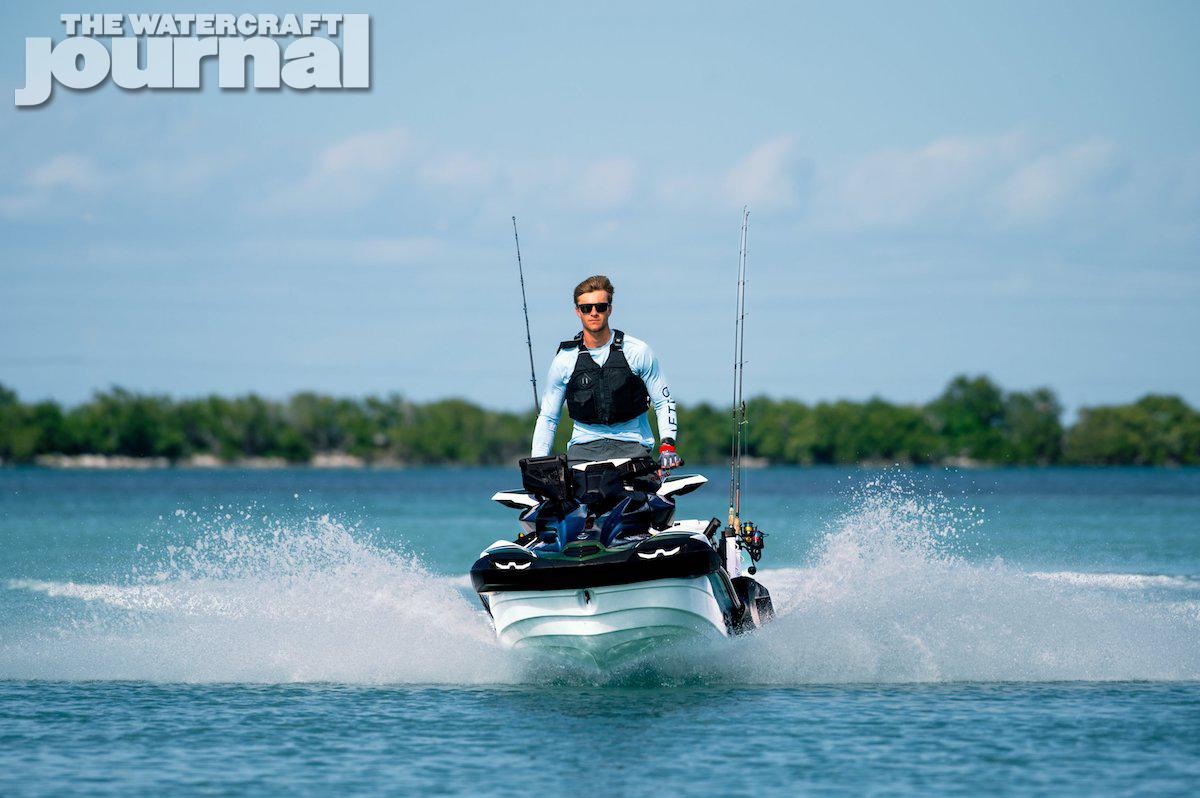
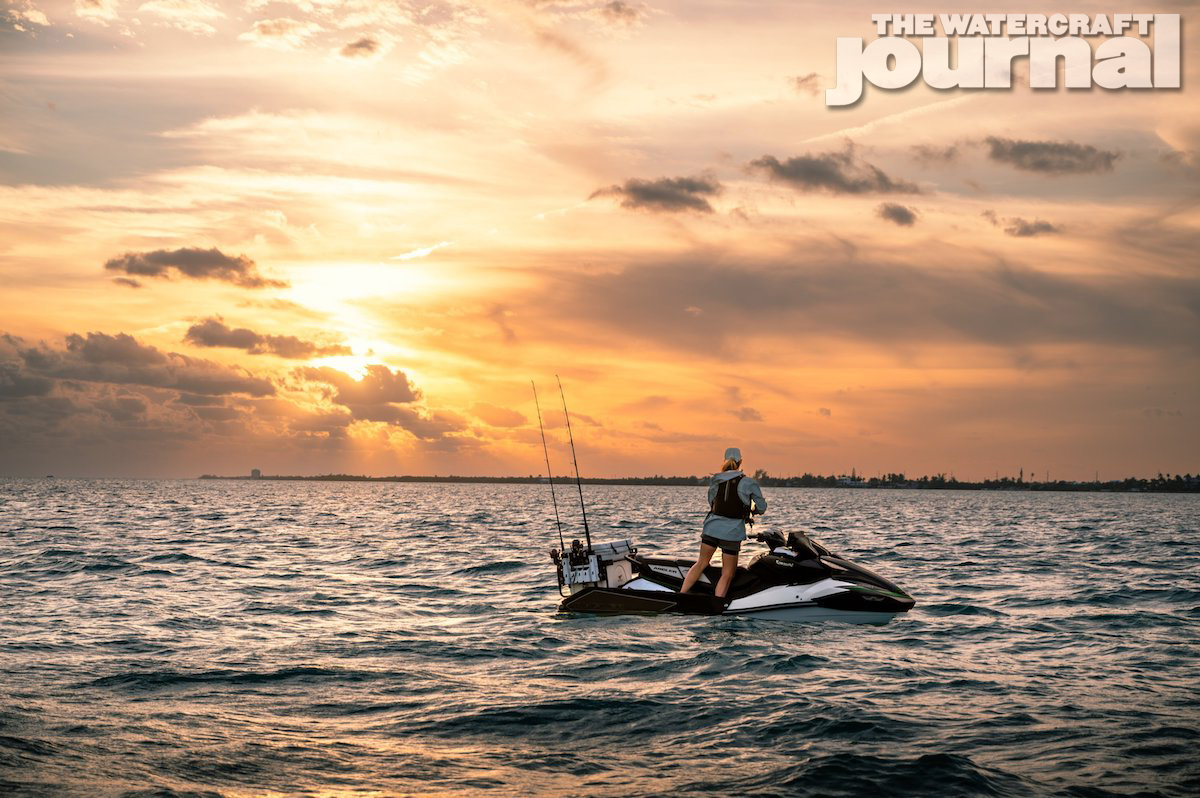
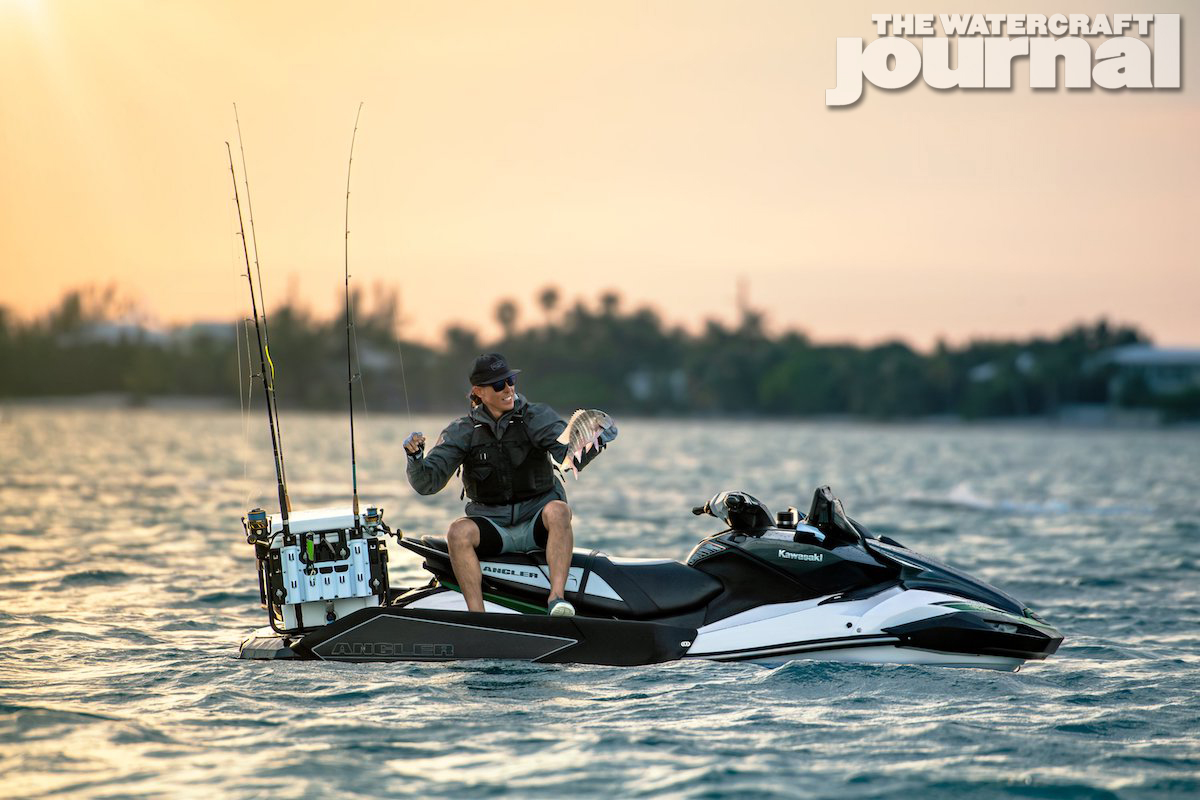
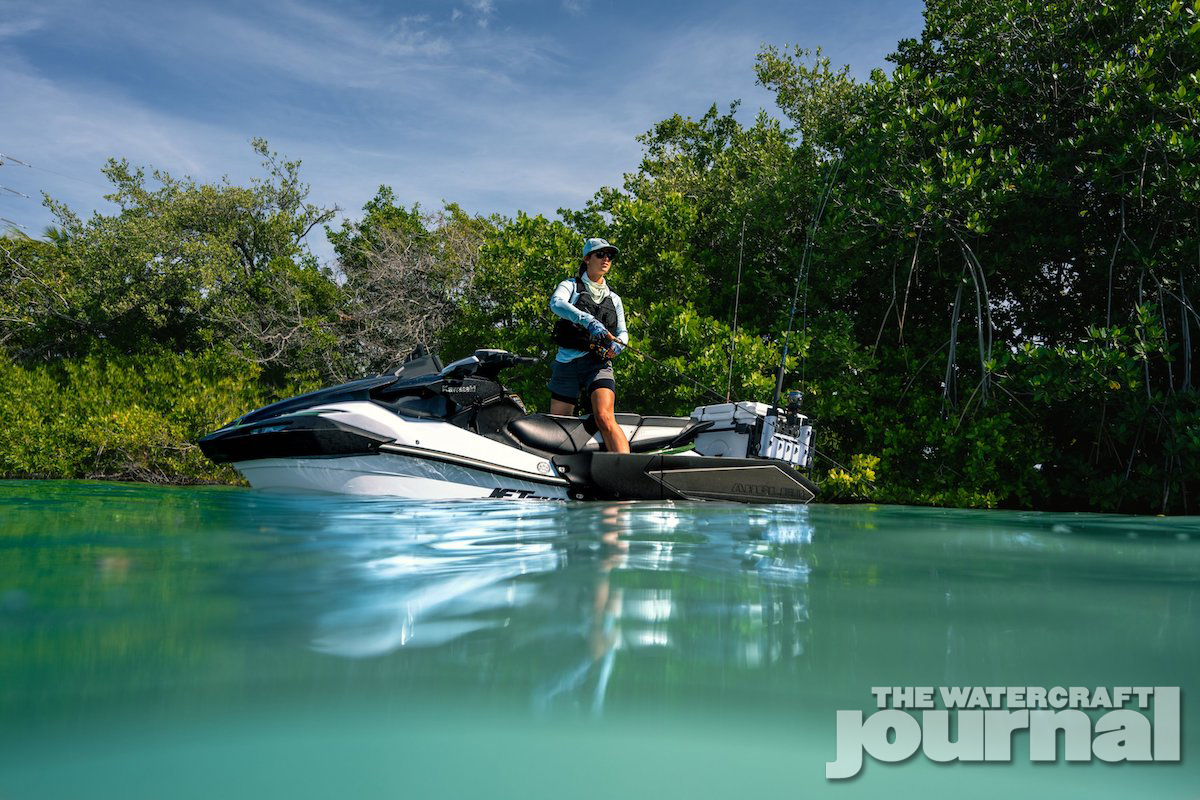
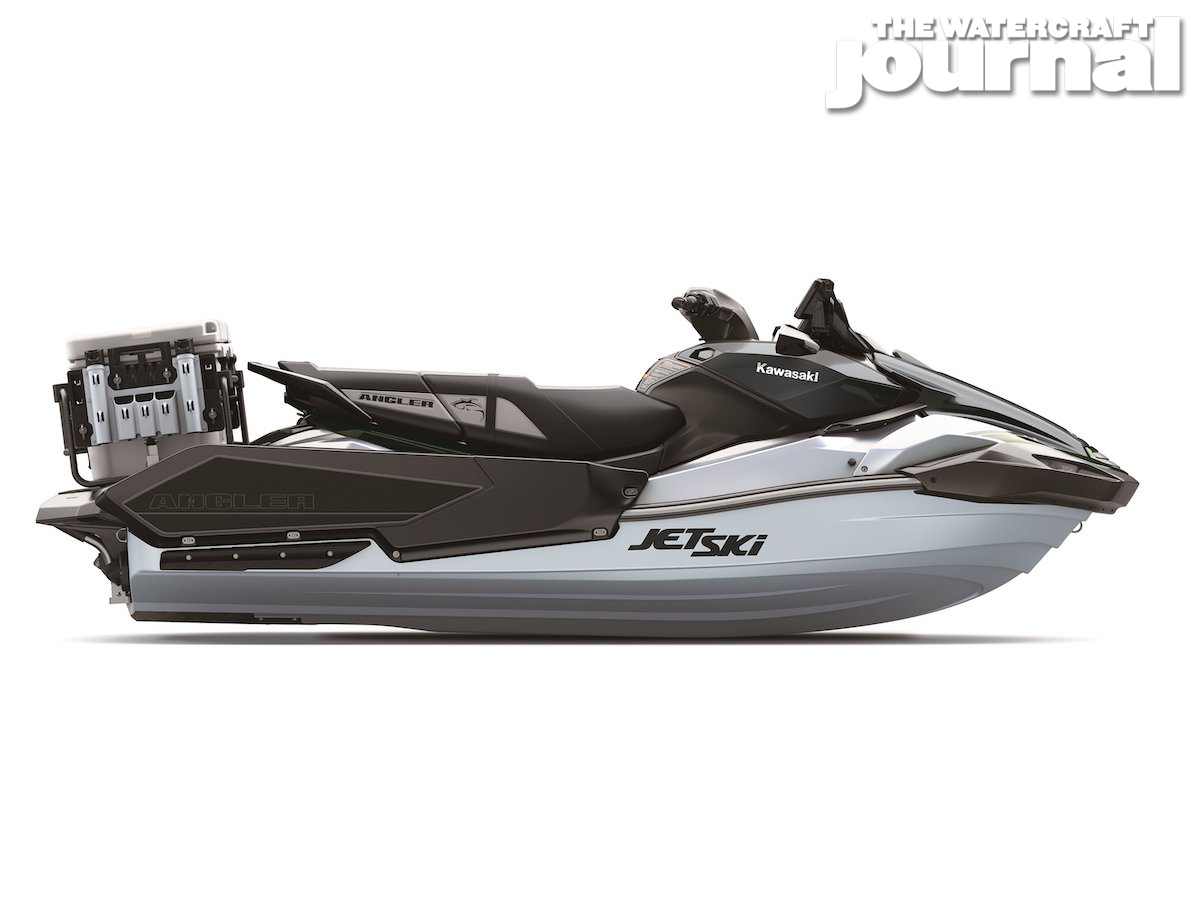
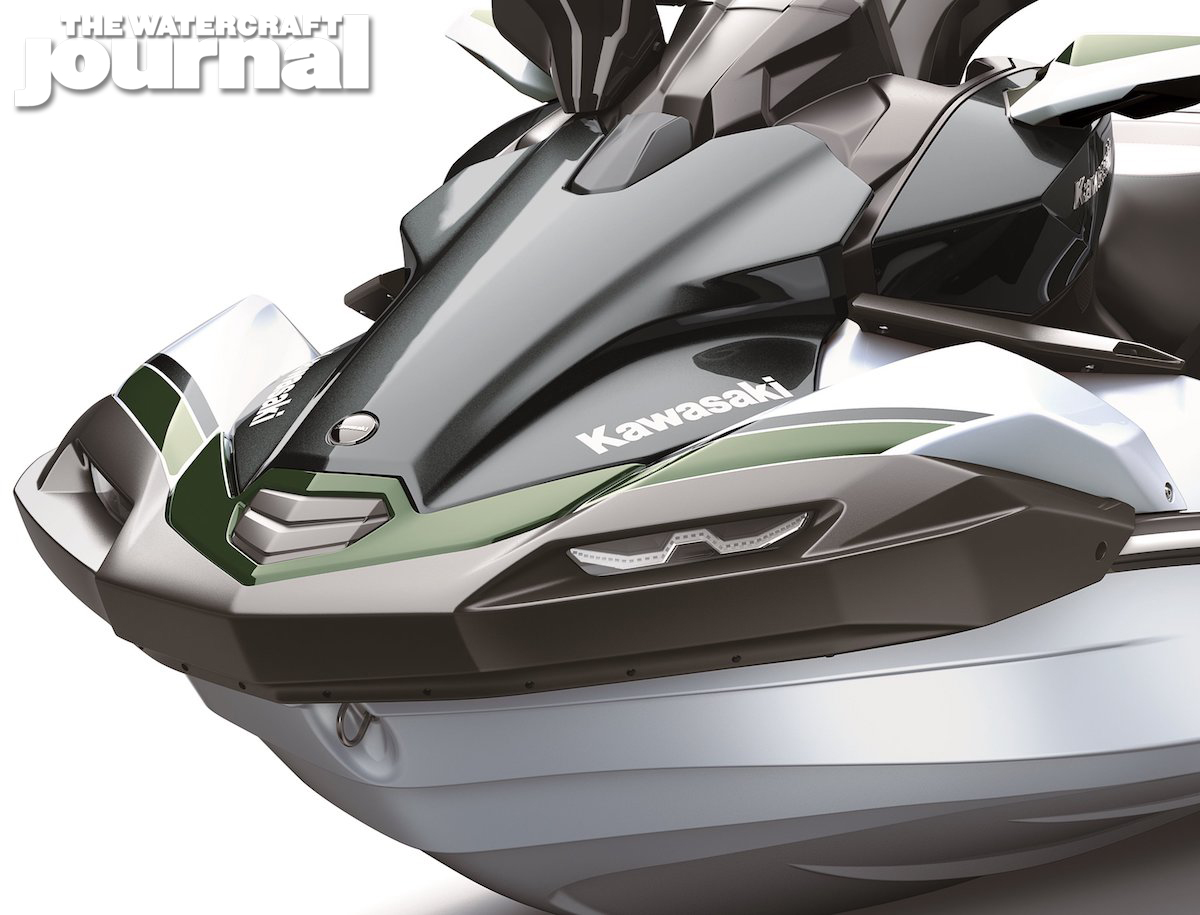
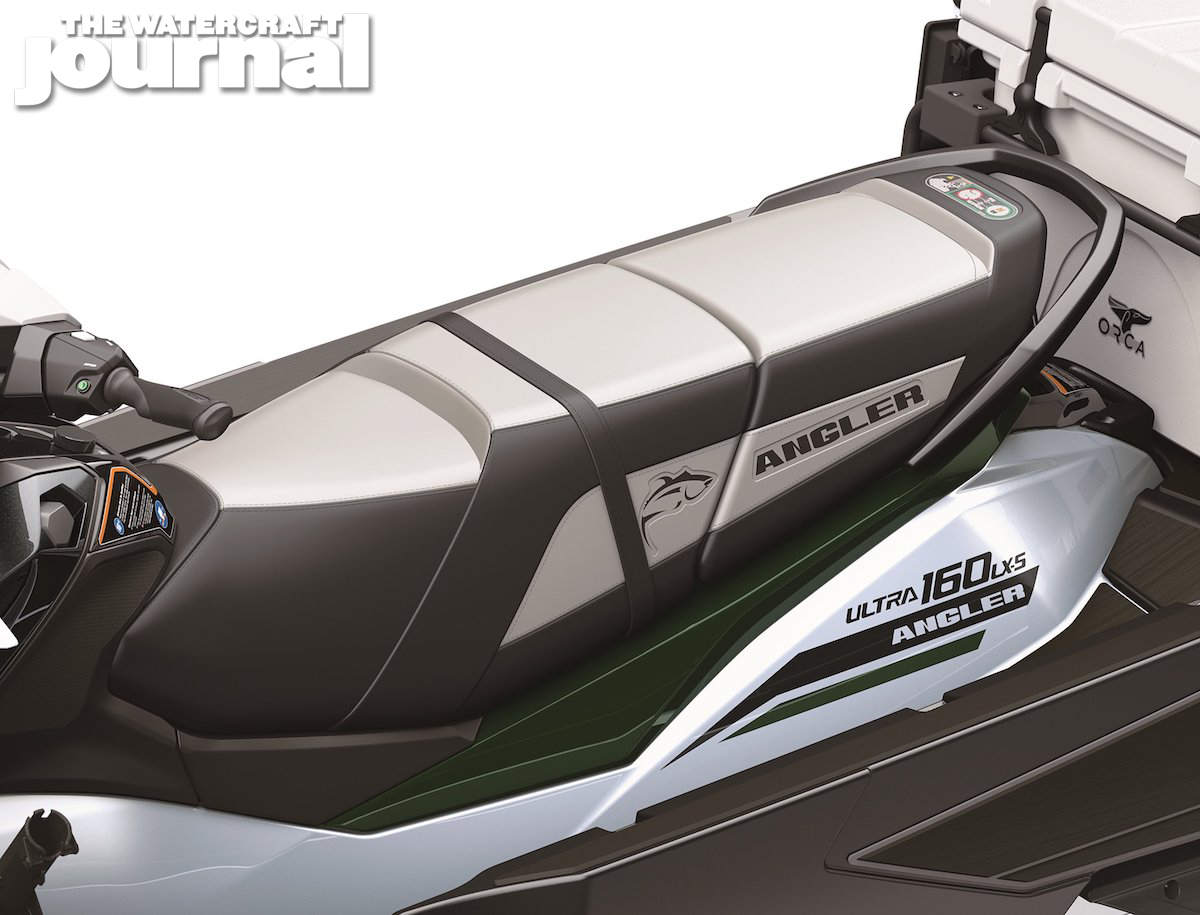
Seeing a viable audience that hadn’t otherwise been addressed directly, Kawasaki revealed its 2025 model year entry into the PWC fishing market – the Ultra 160LX-S Angler. Built from the naturally-aspirated Ultra 160LX-S JetSki, the Angler’s hull and deck is smartly coated in highly visible Crystal White with metallic Timberline Green accents. The standard LED headlamps increase the Angler’s profile.
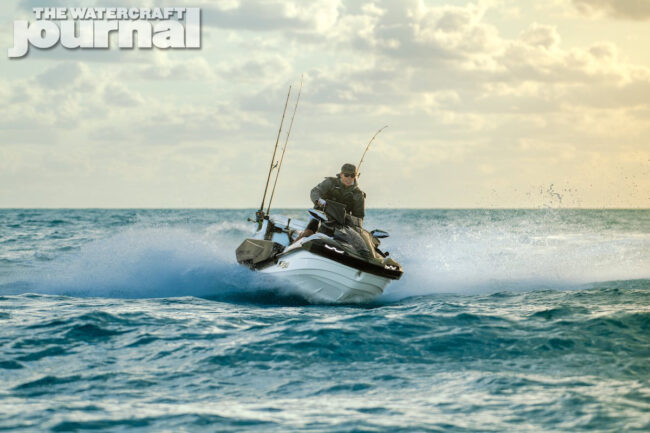
Employing the Ultra platform provides the Angler a unique advantage over its competition: offshore and rough water superiority. The Ultra’s 22.5-degree deadrise and true Deep-V hull permits the JetSki to track smoothly through cresting 5-footers at speed without nose-plowing, erratic bow hunting or unhooking the pump. Above 15-20mph, the Ultra can sluice through chop unlike any ST3-based Sea-Doo.
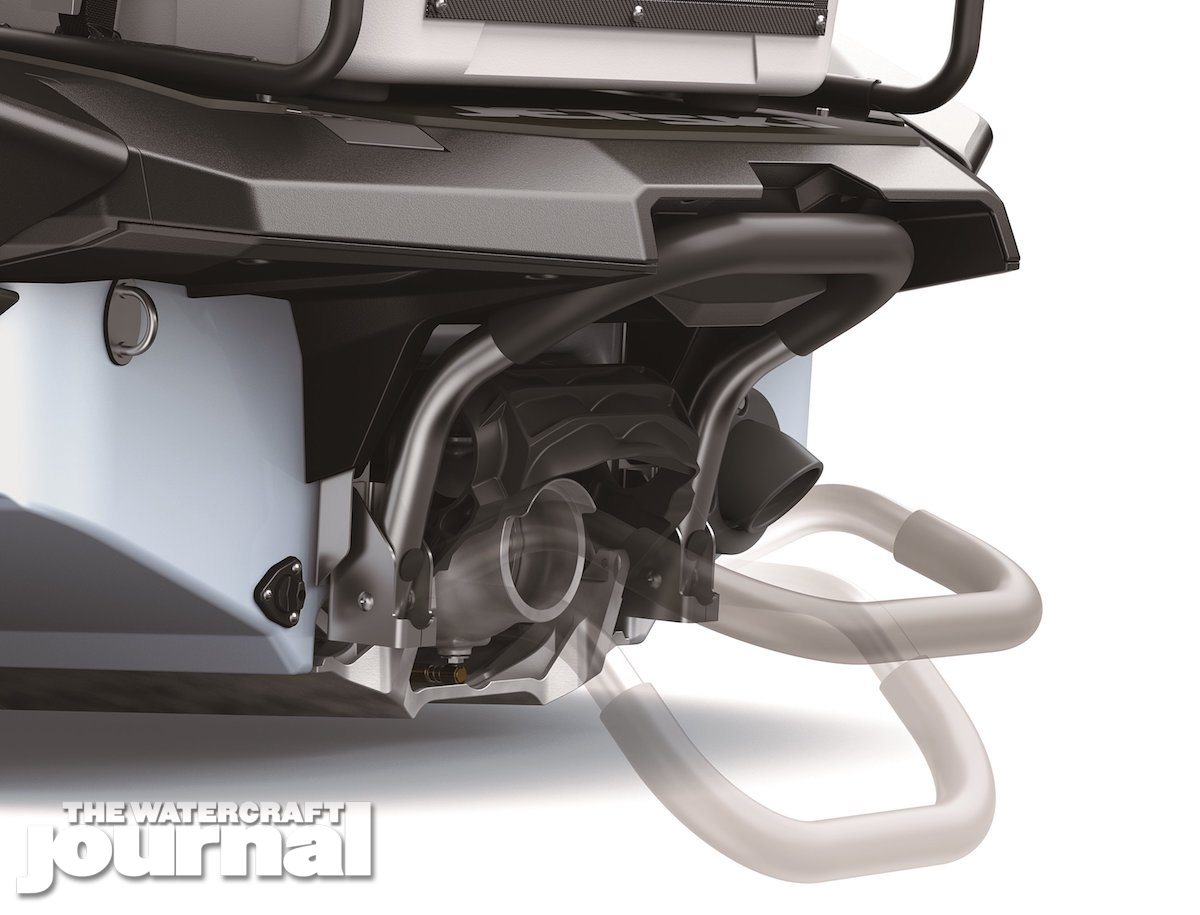
Fitted with electric trim control, the rider can adjust the angle of the jet pump nozzle up to seven positions (STD and +/- three positions), permitting the rider to manipulate the attitude of the hull to best fit water conditions and riding style. The Ultra also includes Kawasaki Splash Deflectors (Quattro KSD) to deflect water splashing forward from underneath the hull.
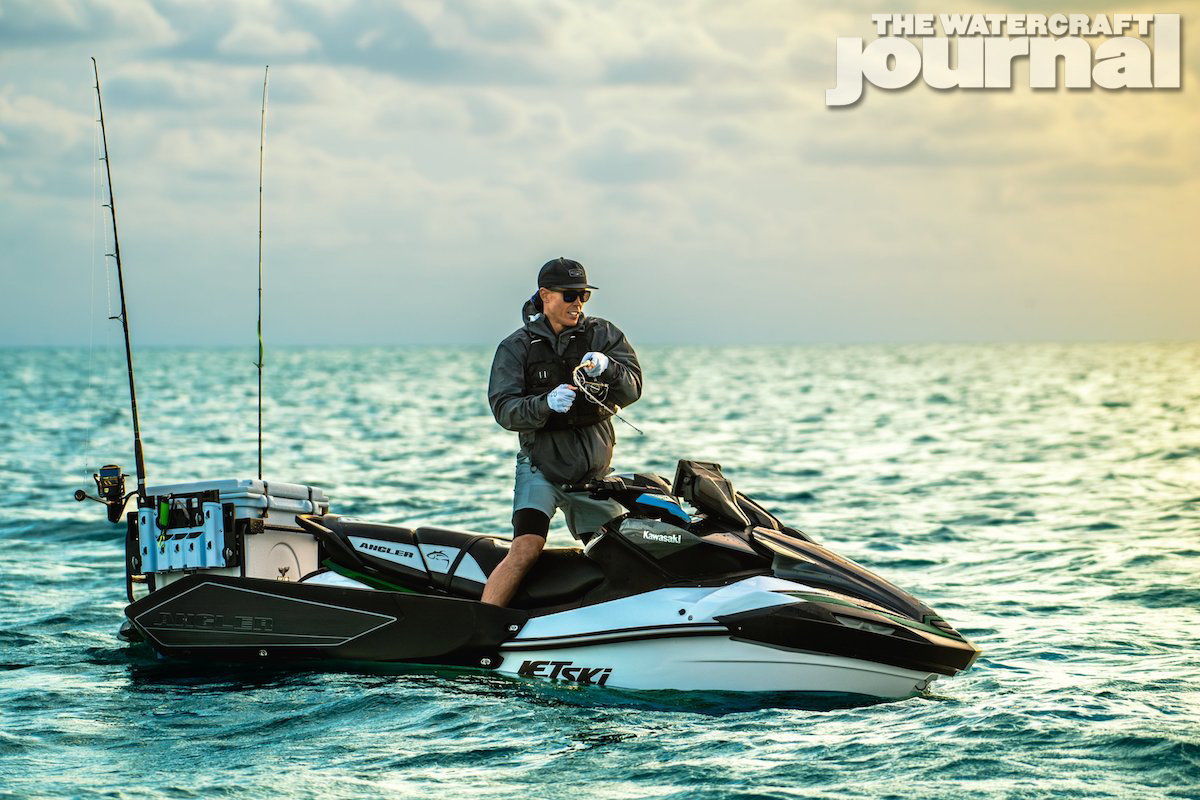
Unfortunately, the steep angle of the hull gives the standard Ultra a “tippy” sensation at lower idle speeds. While this characteristic is ideal for sportier, fast-paced cornering, it’s less desirable for low speed trolling. That’s why the Angler includes a pair of axillary stabilizers on each side, increasing flotation and stability when drifting. These outriggers assist in balancing the Ultra as the rider moves around the deck.
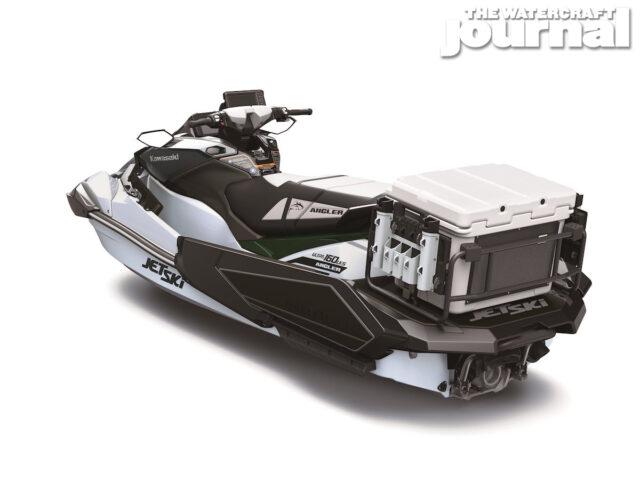
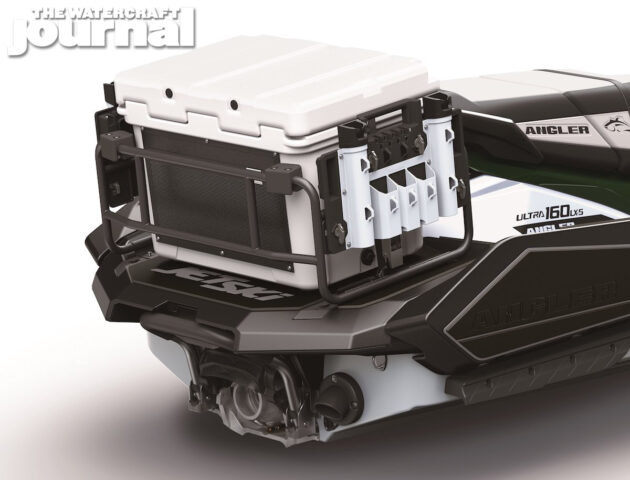
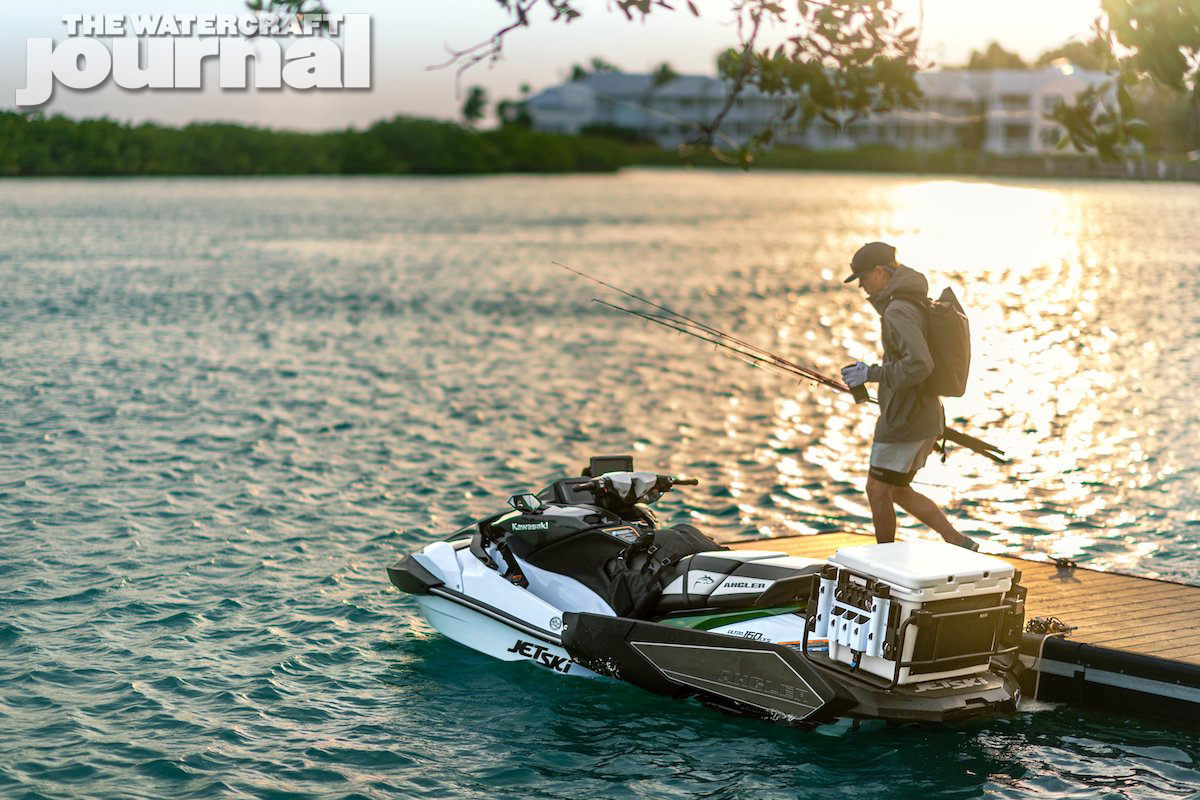
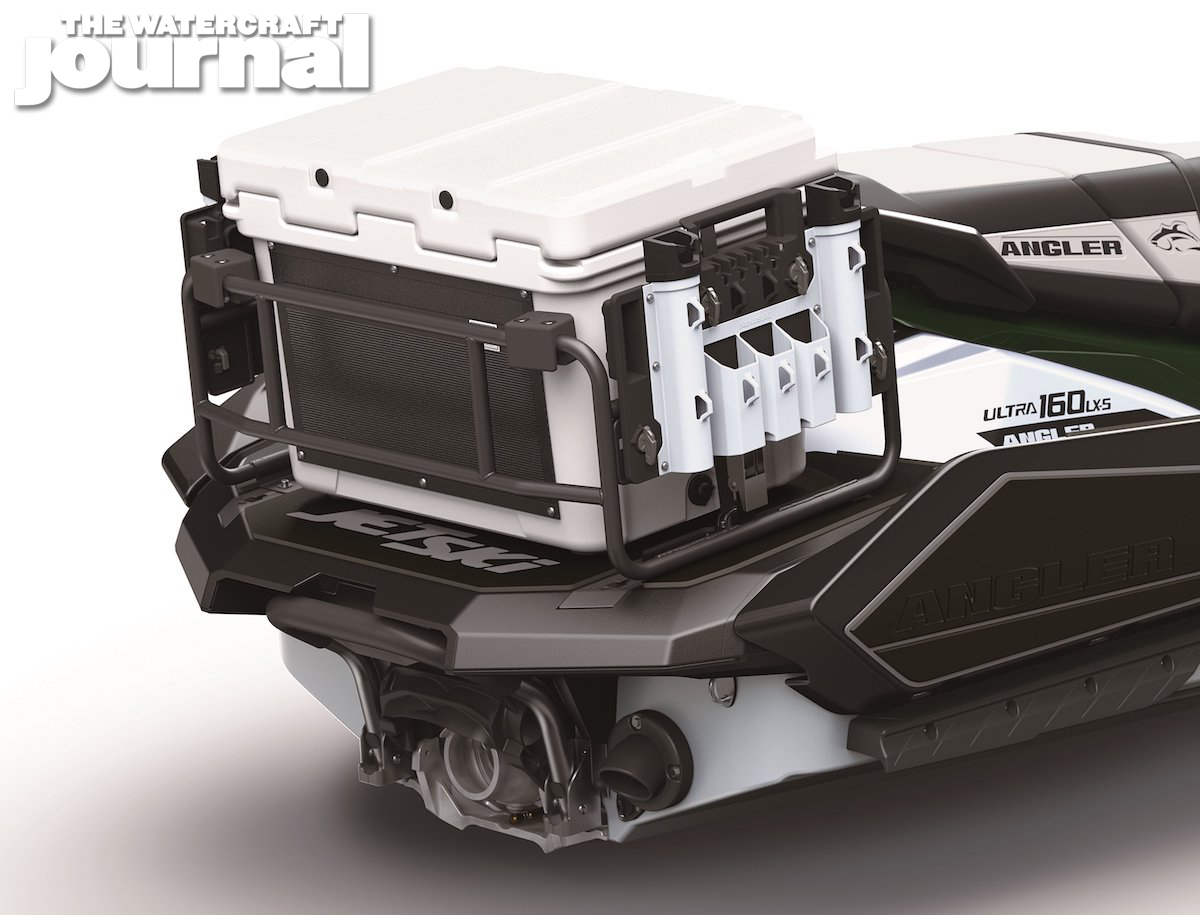
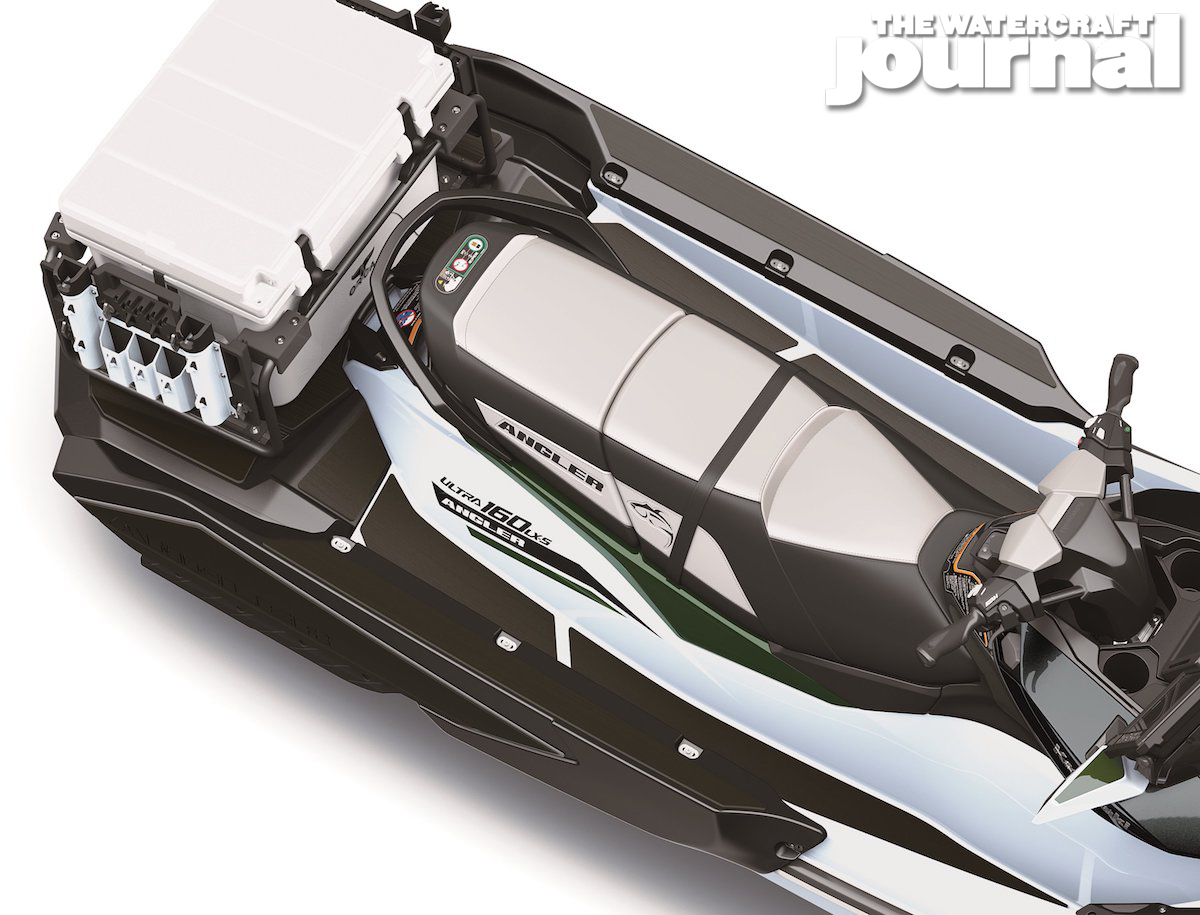
The roto-molded stabilizers are integrated into the JetSki’s bondline and blend into the Ultra Deck that adds over 6-inches in total length and include the built-in Multi-Mount cargo rail system and an extended folding swim step. The Angler outfits the Ultra Deck with a hydro-formed and TIG welded aluminum rack that’s hard-mounted to the deck and is equipped with versatile (and easily removable) side packs.
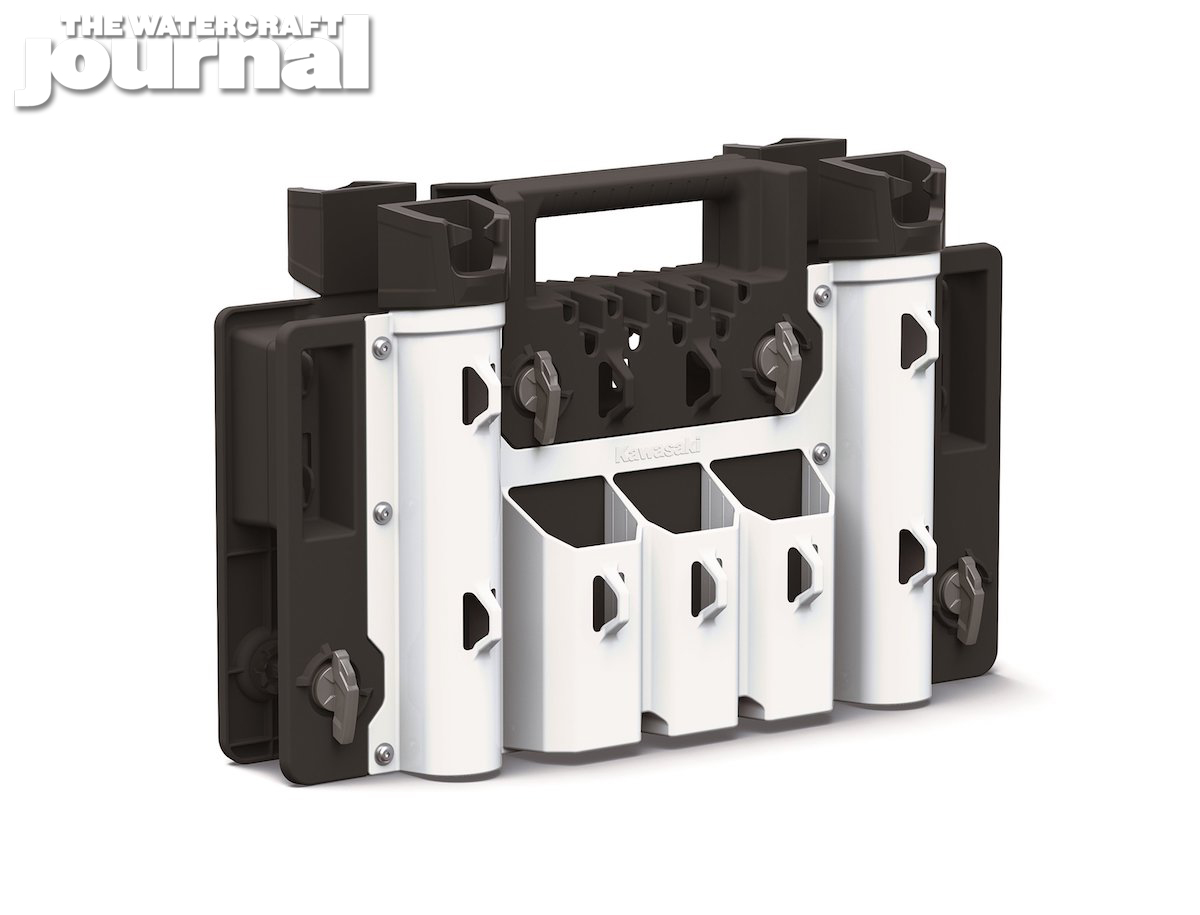
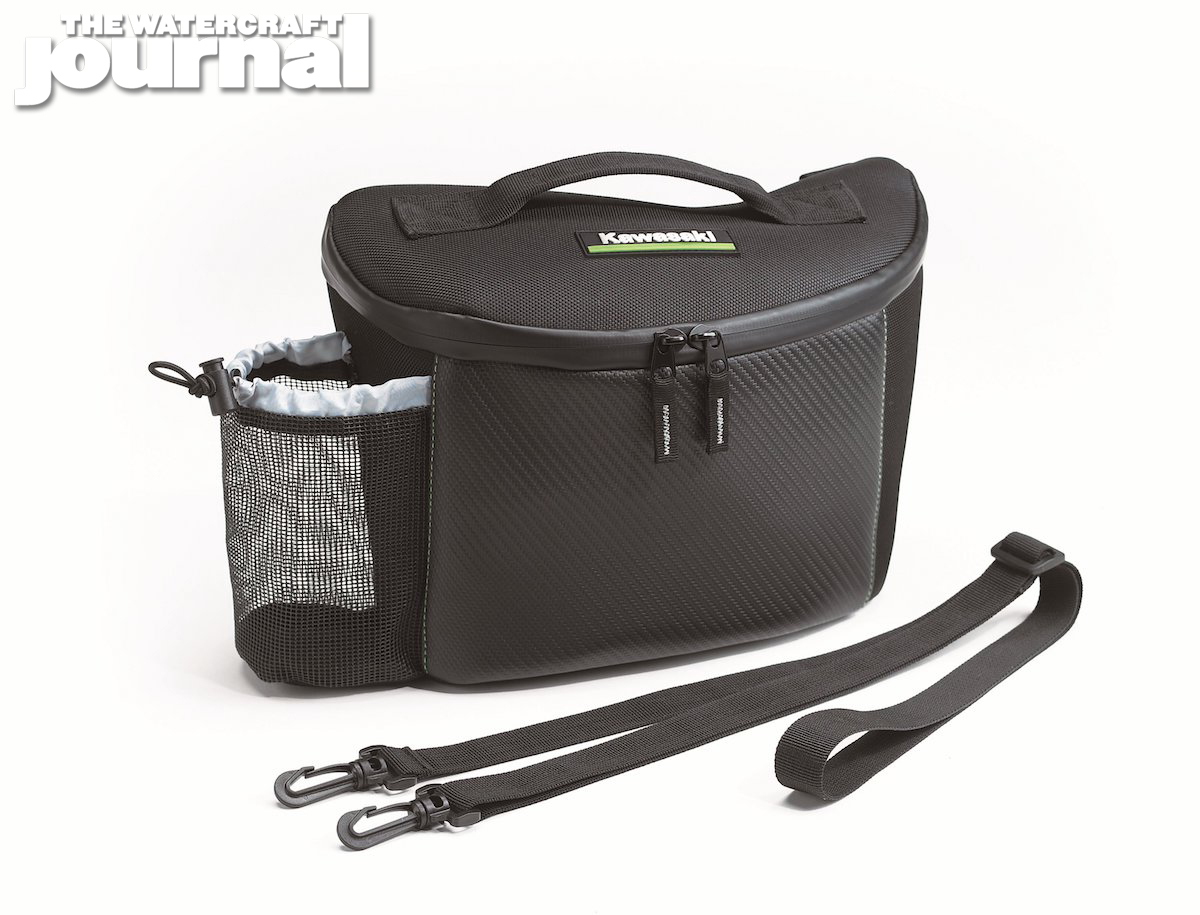
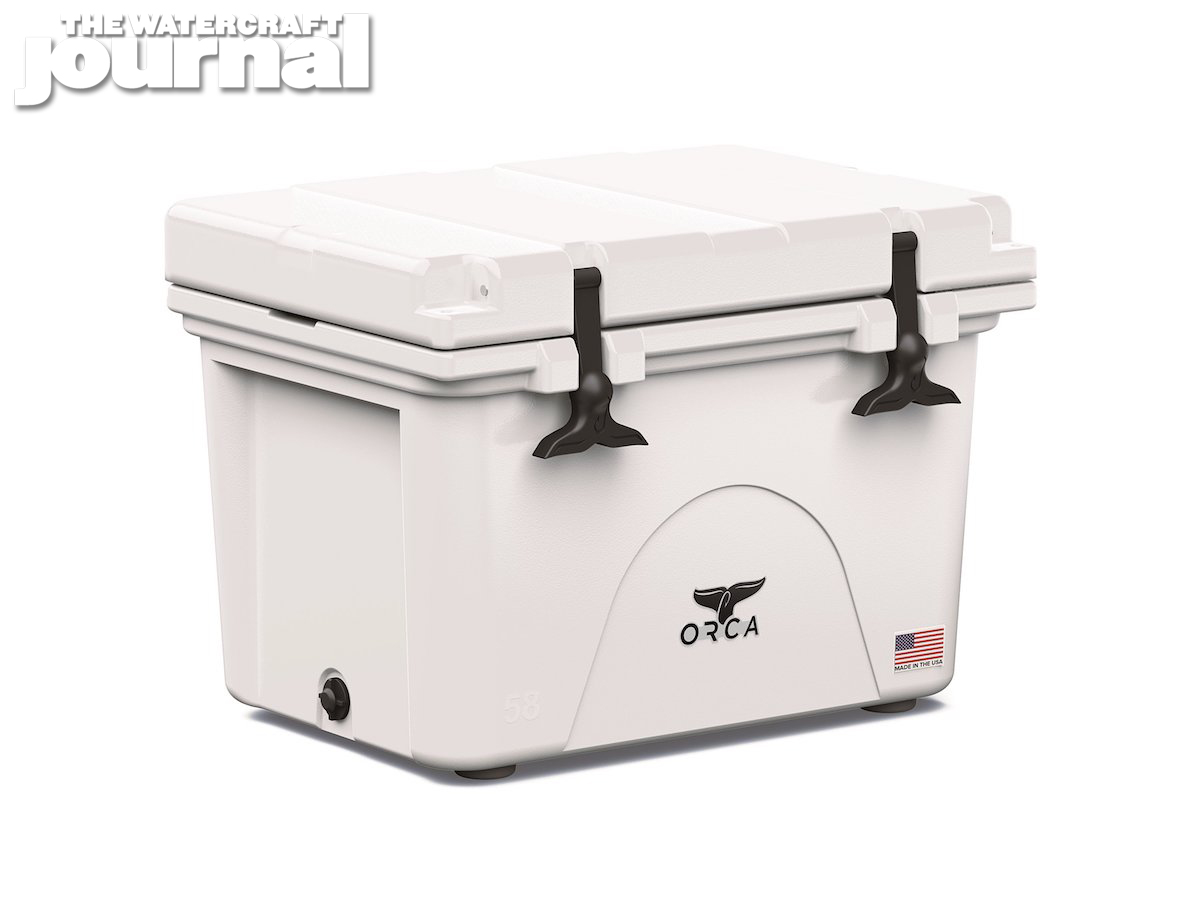
These two packs slide-and-lock to the sides of the Angler rack and include two rod holders (totaling four) and include a trio of pockets and mounting eyelits. Inside of the Angler rack comes a massive 14.5-gallon Orca hard cooler that’s held snug in place by four rubberized isolators. The rack’s upper rail is low enough to allow the cooler to be opened freely; but thus far, we see no solution to securing the cooler during heavy seas.
As the four aft-mounted rod holders will stow your gaff, net and rods while underway, a fore-mounted rod holder is smartly angled outward (attached to the left-hand gunwale) ideal of trolling at low speeds. And low speed trolling is made easy using the Angler’s one-touch 5mph mode. This optimized “No Wake Mode” is adjustable three times, increasing rpm and speed from 5 mph to 6.2 mph.
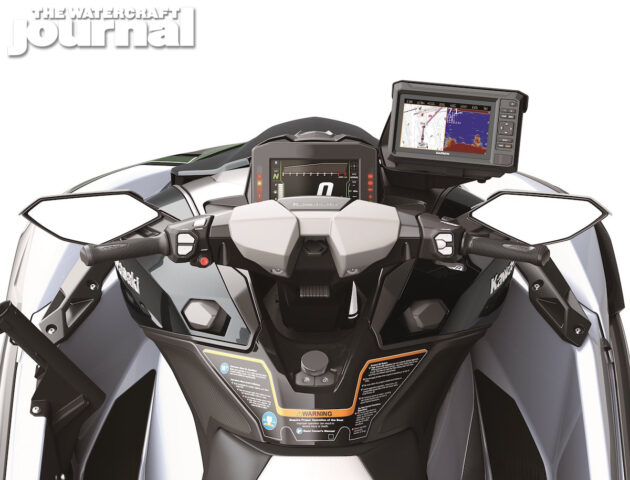
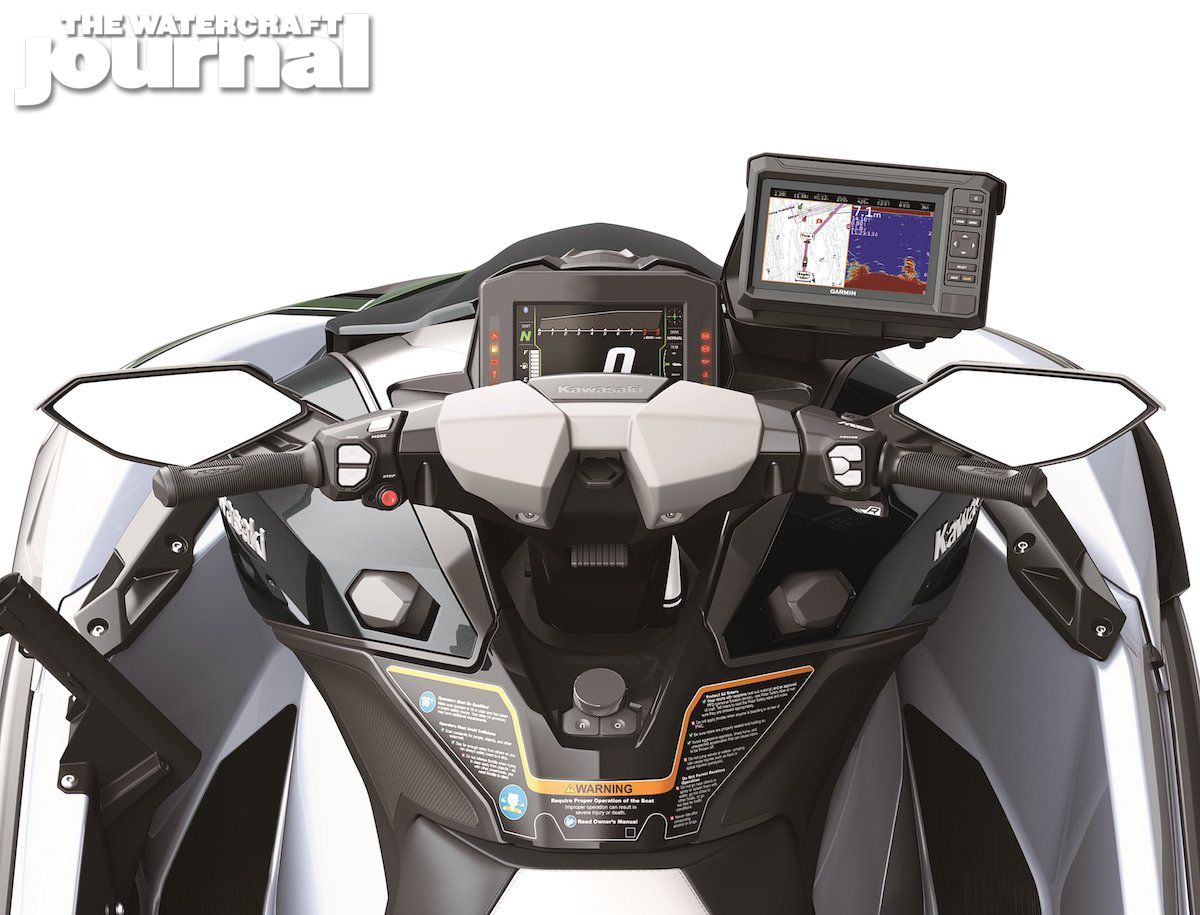
Any speed above that, the electronic cruise control will be ideal. With responsive toggles that give an audible “click”, the up/down buttons are within reach of your thumb even as you operate the throttle. Of course, the Angler includes Kawasaki Smart Reverse with Deceleration (KSRD) braking system, which integrates the thumb-activated brake into the throttle trigger keeping all controls within the right hand’s reach.
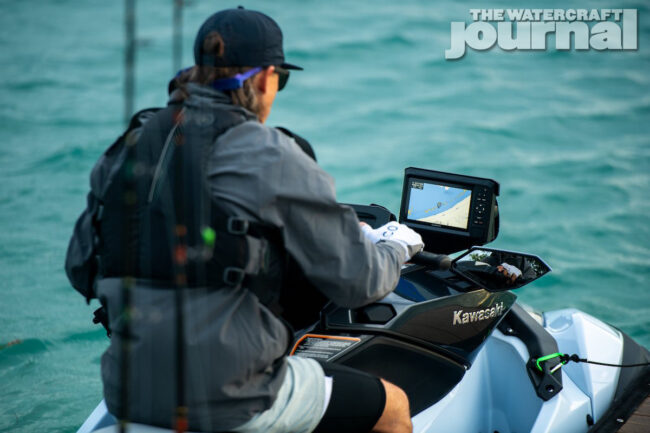
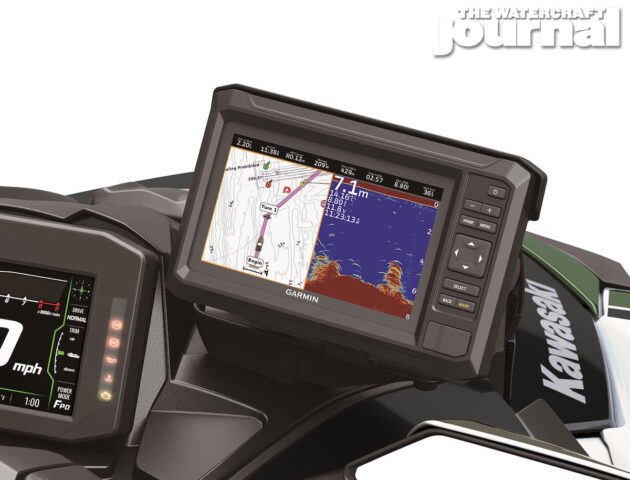
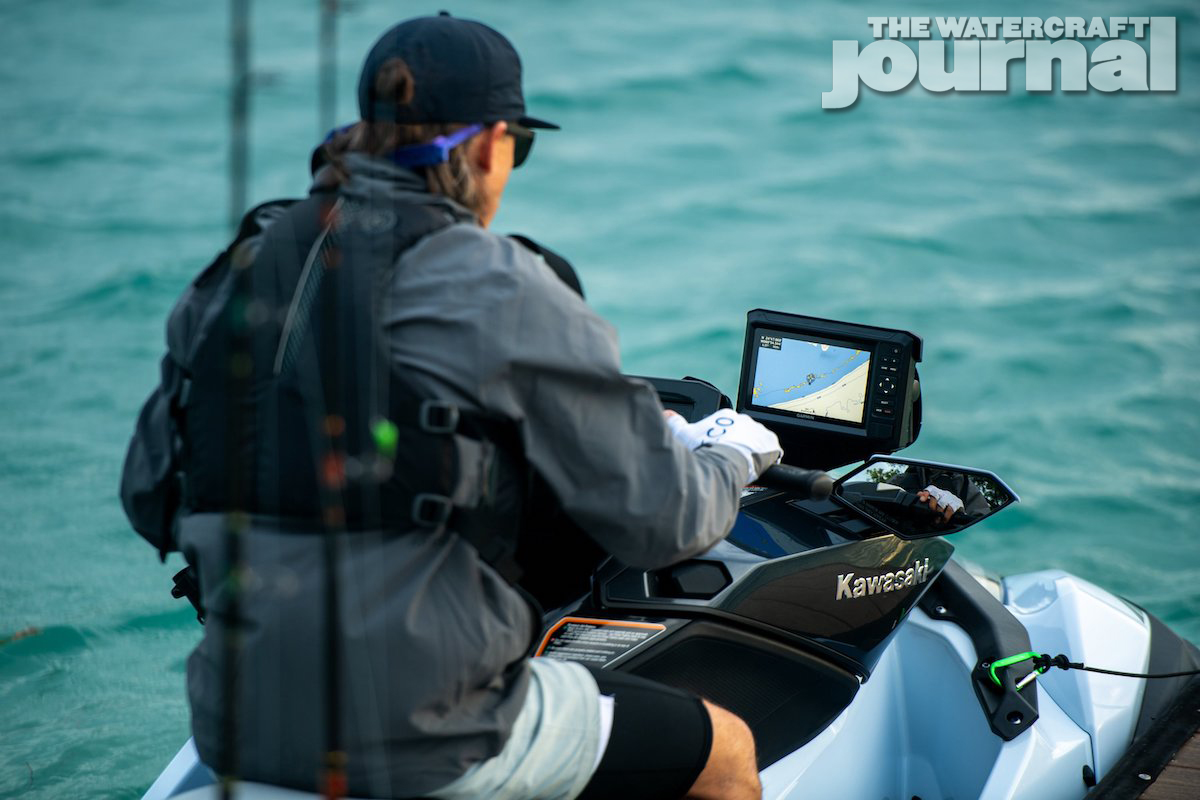
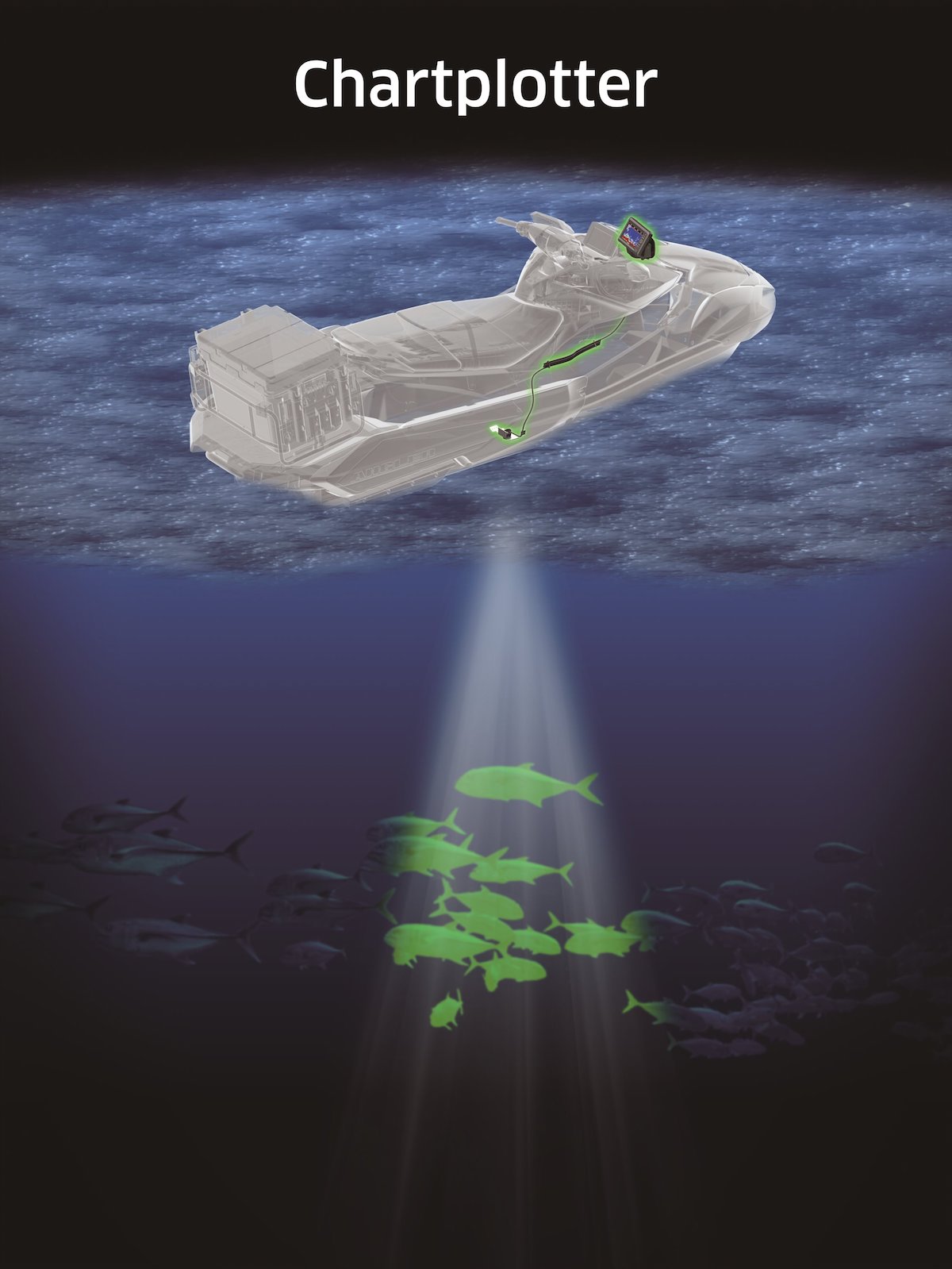
Smartly placed above and forward of the throttle is the new 7-inch Garmin Echomap UHD2 7cv chartplotter. Offering a highly visible, glare-free interface designed for seamless navigation and fish finding, the chartplotter offers all of the options that have made Garmin a “must have” for jet ski fishing including high definition GPS mapping, cross view fish finding pages, depth sounder and much more.
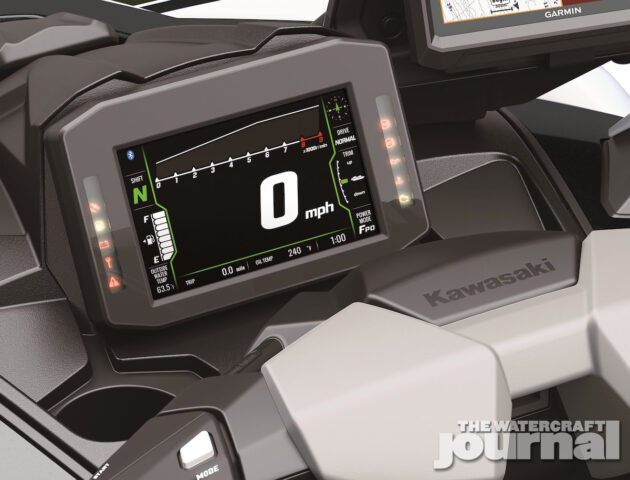
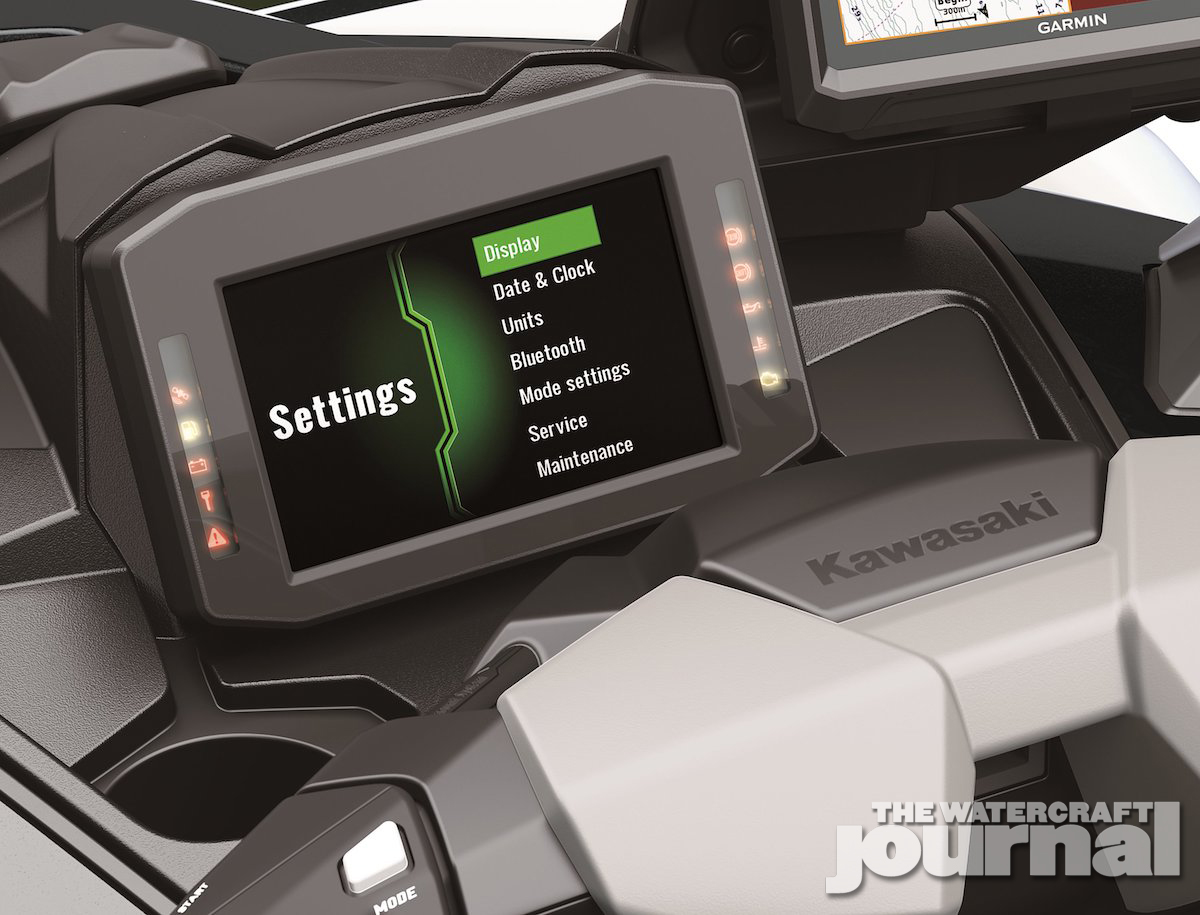
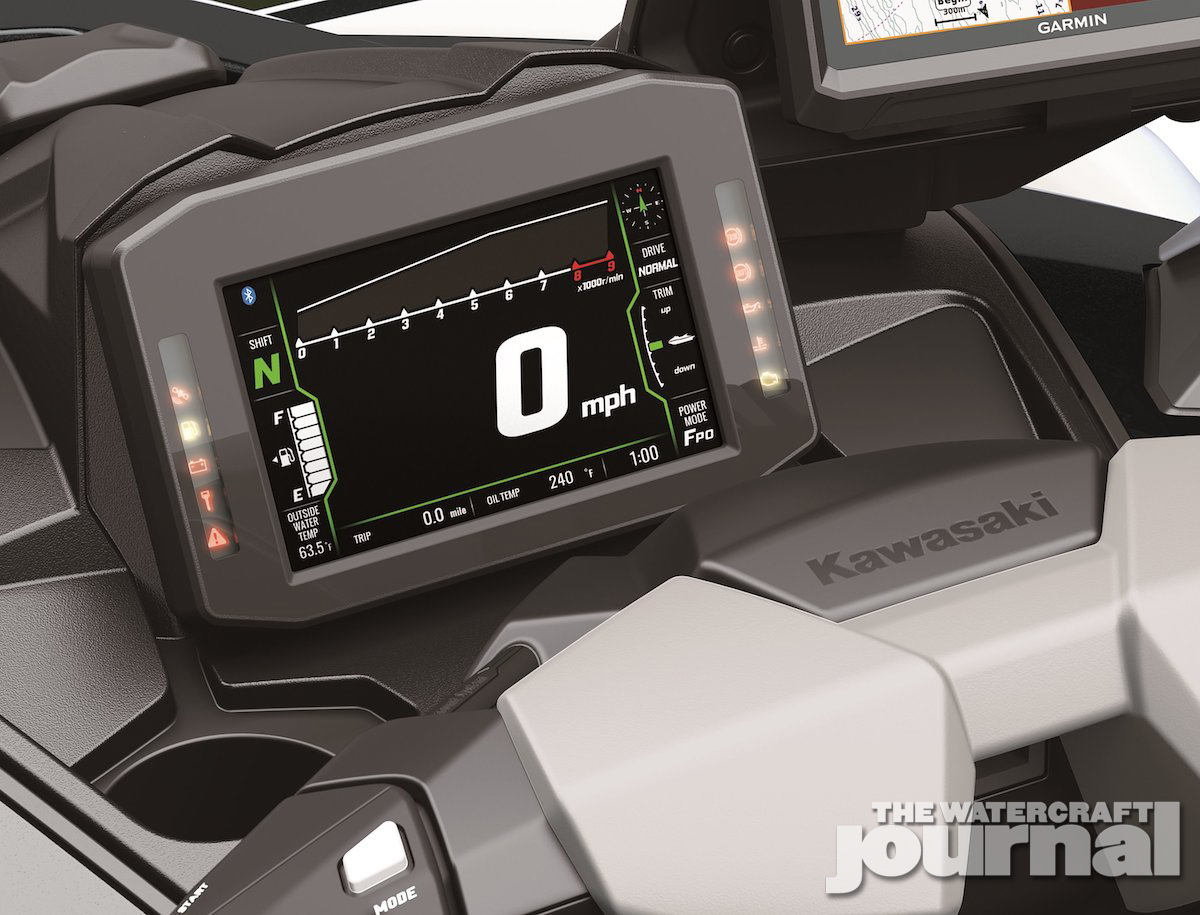
Carried over from the standard LX-S is the full-color TFT digital dashboard. Rife with multiple display modes, a jog-dial controller, Bluetooth connectivity, and a bunch of features like a GPS waypoint indicator, vehicle information, rear-view camera monitor and audio track display (although the Angler does not appear to include the rear-facing camera or Jetsounds speaker system as standard equipment).
Rider’s ergonomics are a high priority thanks to Kawasaki’s new Angler fishing bench seat, a firmer, flatter seat that allows for unrestricted movement and better resistance to staining and discoloring (fishing can be a messy job, after all). The Angler also enjoys 5-way adjustable tilt steering and optional adjustable seat tracks available through Kawasaki’s Parts & Accessories department.
Beneath the seat is Kawasaki’s tried-and-true 1498cc DOHC, 16-valve, 4-cylinder engine. Being naturally-aspirated, Kawasaki upped the compression ratio to 10.6:1, producing an 87 octane-friendly 160-horsepower. Fed by a large diameter 60mm throttle body, electronic fuel injection system and an engine speed limiter and K-TRIC (TPS) sensor, the 1.5L engine features a liquid-cooled double-walled exhaust manifold, dual water boxes and dedicated cooling circuit for the cylinder block.
Storage on the Angler dwarfs that of the Sea-Doo Fish Pro with 44.5 total gallons of storage split between the full-sealed 32.8-gallons of bow stowage – ideal for items you don’t plan on accessing while underway – and the innovative 10.6-gallons of wraparound storage tucked behind dual gull wing-hinged fairings. Accessible from either the left or right hand side, the mid-storage compartment includes a 0.5-gallon watertight phone cubby with an optional USB port. A 0.7-gallon pocket in back is ideal for dock lines.
Of course, the same 21.1-gallon fuel cell found on all Ultra JetSkis carries over for the Angler as well, giving this JetSki the leading fuel capacity of all fishing-class watercraft. While several “firsts” place the Angler ahead of its competition, Kawasaki needs to prove the Angler as a viable fishing platform. Announced as a 2025 model, the Ultra 160LX-S Angler is due to his showrooms by Fall of 2024, therefore pricing has yet to be formally announced.
Corporate marketing images we’ve included below illustrate the Angler moored off of mangroves, fishing the channels; we at The Watercraft Journal contend that the Angler – more than any other – would be better suited to the Pacific kelp fields and the open sounds of North Carolina. While we’re certain it can handle each of these environs aptly, we can attest that the Ultra is a proven ocean-going vessel above others; now its time to demonstrate its mettle as a superior angling platform.
If you’ve been riding jet skis long enough, you’re certain to know this feeling: a beautiful summer day, you’ve got everything ready to go out on the water, and just in the moment when you’re ready to start it up… nothing.
What do you do now? If you’re like most people, you may decide to load it up and take it to the nearest mechanic, but what if you didn’t have to?
Well, with this guide, based on the how-to posted to WatCon’s Watercraft Talk Youtube Channel, we’re going to show you how to test and clean your start/stop switch on your own. So, with just a little bit of work, you may be able to get right back to the water in minutes!
This guide addresses the process for checking and cleaning both Yamaha and Kawasaki start/stop switch models. The design is relatively standard on all models of their jet skis, so just scroll to the section for your particular manufacturer and follow the steps listed below!
Note: If your jet ski won’t start, the first step should always be to check your battery voltage under load. Even if a battery is new or freshly charged, never take it for granted that this isn’t your problem. Start with the basics, and if this doesn’t work, move on to checking your start/stop switch.
How to Check a Start-Stop Switch:
Testing Kawasaki Models:
On Kawasaki models, orange and white wires should indicate start, while blue and black indicate stop.
Switch your volt meter to Ohms.
Connect both leads from the volt meter to the terminals on the start switch, press the button, and if it zeroes out, your switch is functioning. Do this for the stop switch to be sure. If either end doesn’t zero out, you can move on to the cleaning section of this guide.
Cleaning Kawasaki Models:
Note: You’ll want to have a tray/clean workspace while cleaning, as there are many small pieces that could be lost in the process.
Begin by pulling one switch out of the casing, then twist the end off to open it up (you may need a wrench for this).
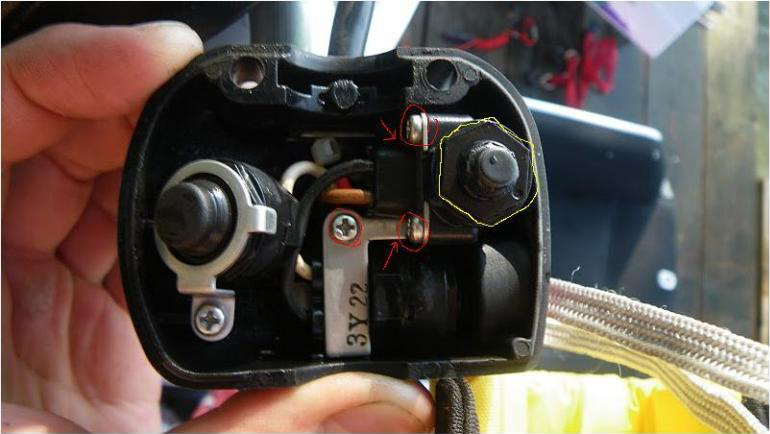
Drop out the two posts and the spring, then, using a small fiberglass brush, remove any crust and polish off both posts to ensure a clean connection.
Repeat this process for the other switch, reassemble, and replace both in the casing.
Checking Yamaha Models:
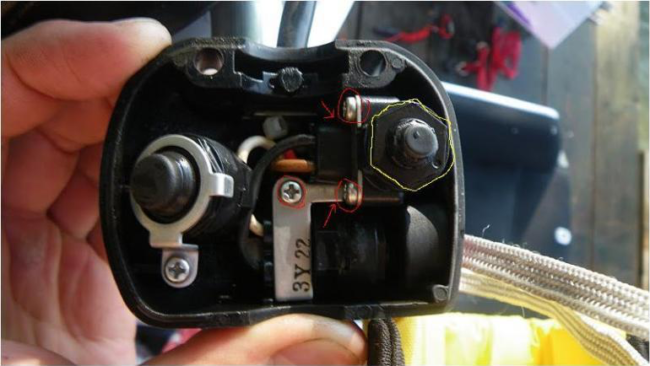
Use a screwdriver to disassemble the switch. Yamaha models have a start switch, a kill switch (red button), and the tether kill switch. Black and white wires indicate stop. Brown and red wires indicate start.
At the end of the cords, depin the connectors and connect each terminal to the volt meter. You will need a special tool for this.
Connect both leads from the volt meter to the terminals on the start switch, press the button, and if it zeroes out, your switch is functioning. Do this for the stop switch to be sure. If either end doesn’t zero out, you can move on to the cleaning section of this guide.
Note: If there is corrosion on the terminals, it can be useful to clean by letting the terminals soak in CLR for a few minutes (no more than 5), then rinse, dry, and spray with an electrical contact cleaner.
Cleaning Yamaha Models:
Note: You’ll want to have a tray/clean workspace while cleaning, as there are many small pieces that could be lost in the process.
Remove the screw on the housing and pull the wire into the casing to release the switches from their slots.
Twist off the end of each switch to open it up (you may need a wrench for this).
Drop out the two posts and the spring, then, using a small fiberglass brush, remove any crust or corrosion, polish both posts to ensure a clean connection.
Repeat this process for the other switch and reassemble.
As for the tether kill switch (the small black button), remove the screws holding it in place, hold it level, and peel the cap off. Inside there will be H-shaped contact pieces as well as some attached connectors, all of which should be polished with the fiberglass brush.
To reassemble, return the small springs to the holes they fell out of, insert the copper H-shaped pieces on top, then reconnect the casing.
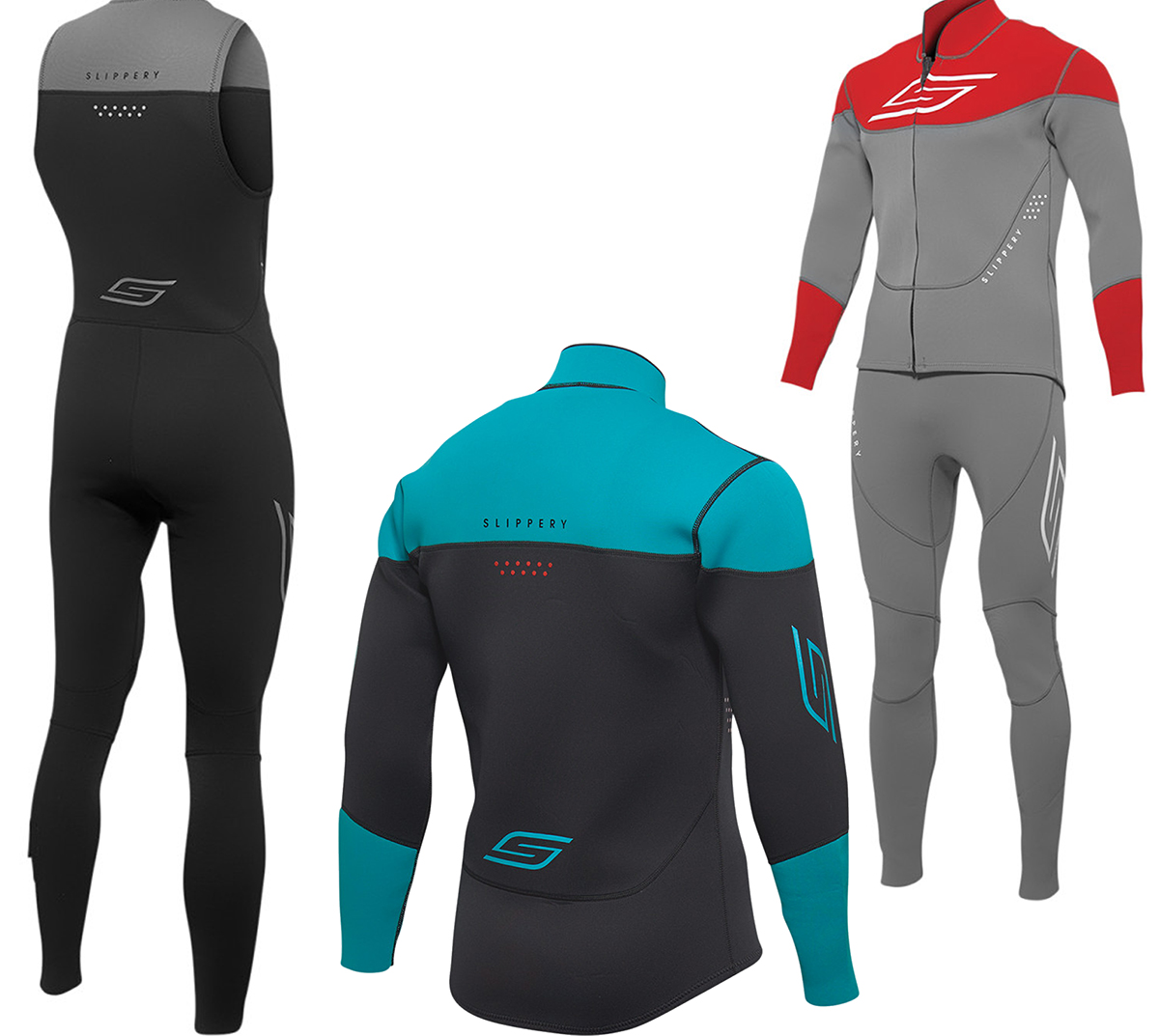
With clean graphics to match your style, the Slippery Wetsuit 2024 collection has what it takes to keep you on the go, like the Breaker John and Jacket combo, which was made for active riders, with durability, performance and mobility all designed into the set. Providing lightweight protection with 2mm Neoprene, the seat features flat-stitched seams for comfort, a front-zip jacket, and a john with 1.55mm airprene calf panels to allow water to drain, a keep-key pocket, convenient hook and loop shoulder closures and 1.55 mm Tatex at the knee for abrasion resistance. Add in the versatility of a set that you can use together or individually for maximum warmth and protection, and you can’t go wrong – especially with three style choices: black and charcoal, charcoal and red, or black and aqua. The set comes in a full range of sizes, also, from small to 3x, all for $159.95.
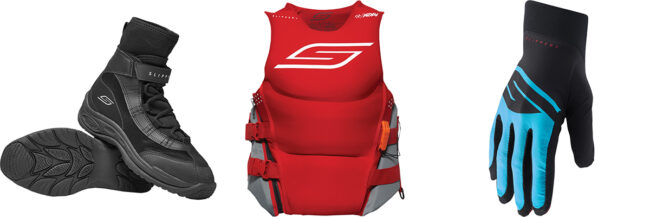
Also on Slippery’s featured list right now is the Array Side Entry Neo Vest in Red/Charcoal, Black/Charcoal or Aqua/Charcoal and available in sizes ranging from small to 2xl. At $99.95, the easy-on, easy-off vest with a full zip side is an unbeatable deal. Features include multiple hinged points for flexibility, hidden 1 ½” belts with buckle closures for a secure fit, wide armholes for a full range of motion and a low-profile design for comfort.
Next on the current set of featured products is the Flex Lite Gloves that combine a stylish design in a choice of five color combinations, with the ideal fit and functionality. With a single layer perforated palm and anti-slip silicone gel print on the fingertips for increased grip, the Flex Lite gives you 4-way stretch on the backhand for increased mobility and control, and a lightweight neoprene cuff with hook and loop wrist closure for convenience, and the graphics are sublimated and fade-free – all for $24.95.
And just to make sure you’ve got all the extremities covered, last on the featured list is the Liquid Race Boot. Finish off your look with this redesigned race boot in black to coordinate with any of the Slippery pieces. Completely redesigned to exceed the performance demands of racers and riders alike, the Liquid Race Boot has a molded outsole that provides superior traction, support, and stability that can’t be found in lightweight soles. Features include a removable 1.5mm neoprene booty, pull-tabs & lacing system for fast and easy on/off, airmesh and perforated chassis for ventilation and drainage, an anti-abrasion heel and toe and an internal heel and athletic sole structure to provide stability. Currently priced at $99.95.


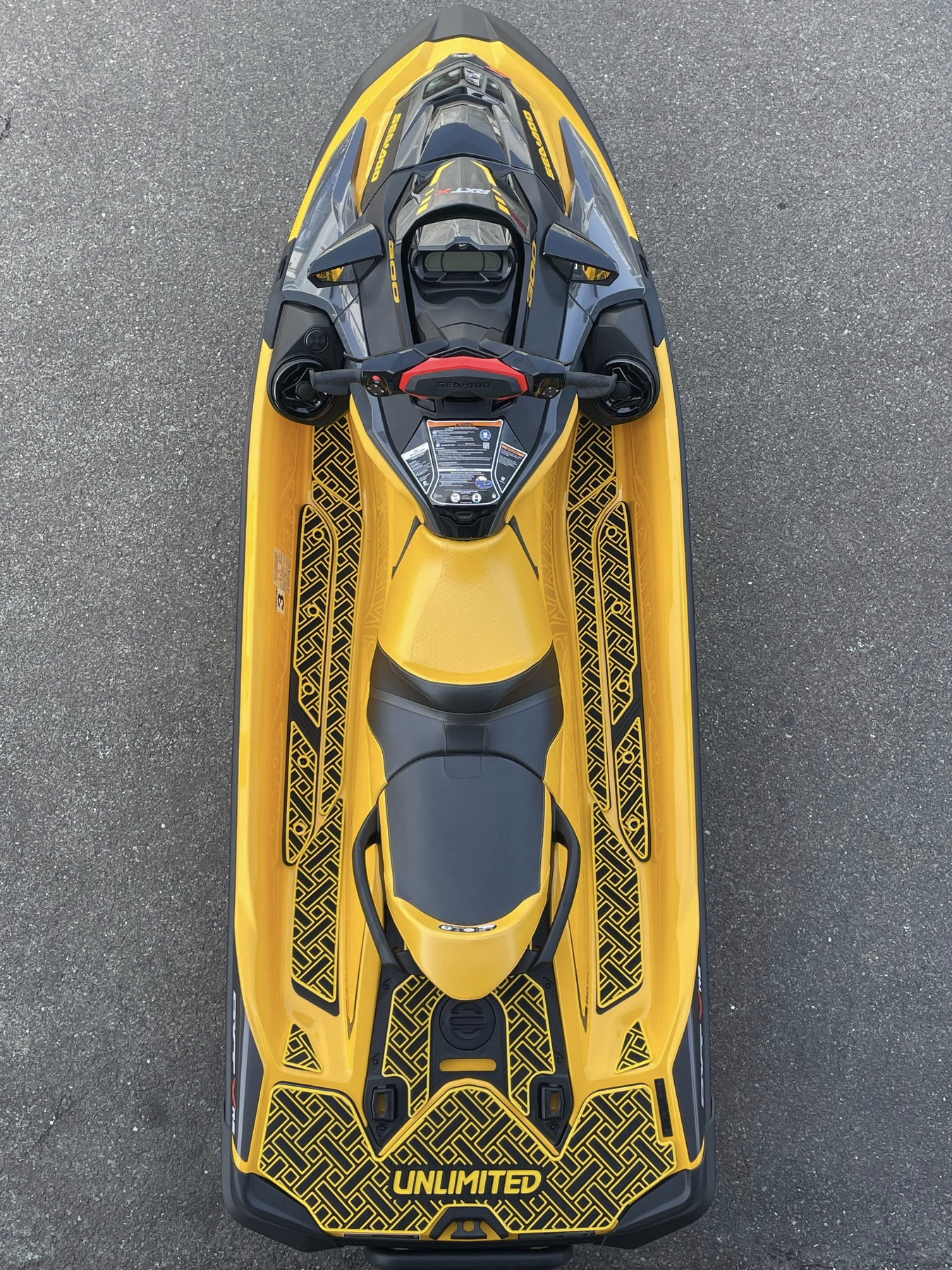
 If you’re in the market for a new deckmat, check out Unlimited PWC’s Deckmat Simulator to perfectly visualize your new purchase before placing the order.
 The simulator lets you choose between a variety of Kawasaki and Sea-Doo models on which you can visualize your deckmat. You then proceed to select between a wide selection of patterns, top layer colors, and bottom layer colors so you can find what combination would work best for your watercraft. The on-screen visualizer updates in real-time, so there is absolutely no hassle while you browse the options available to you.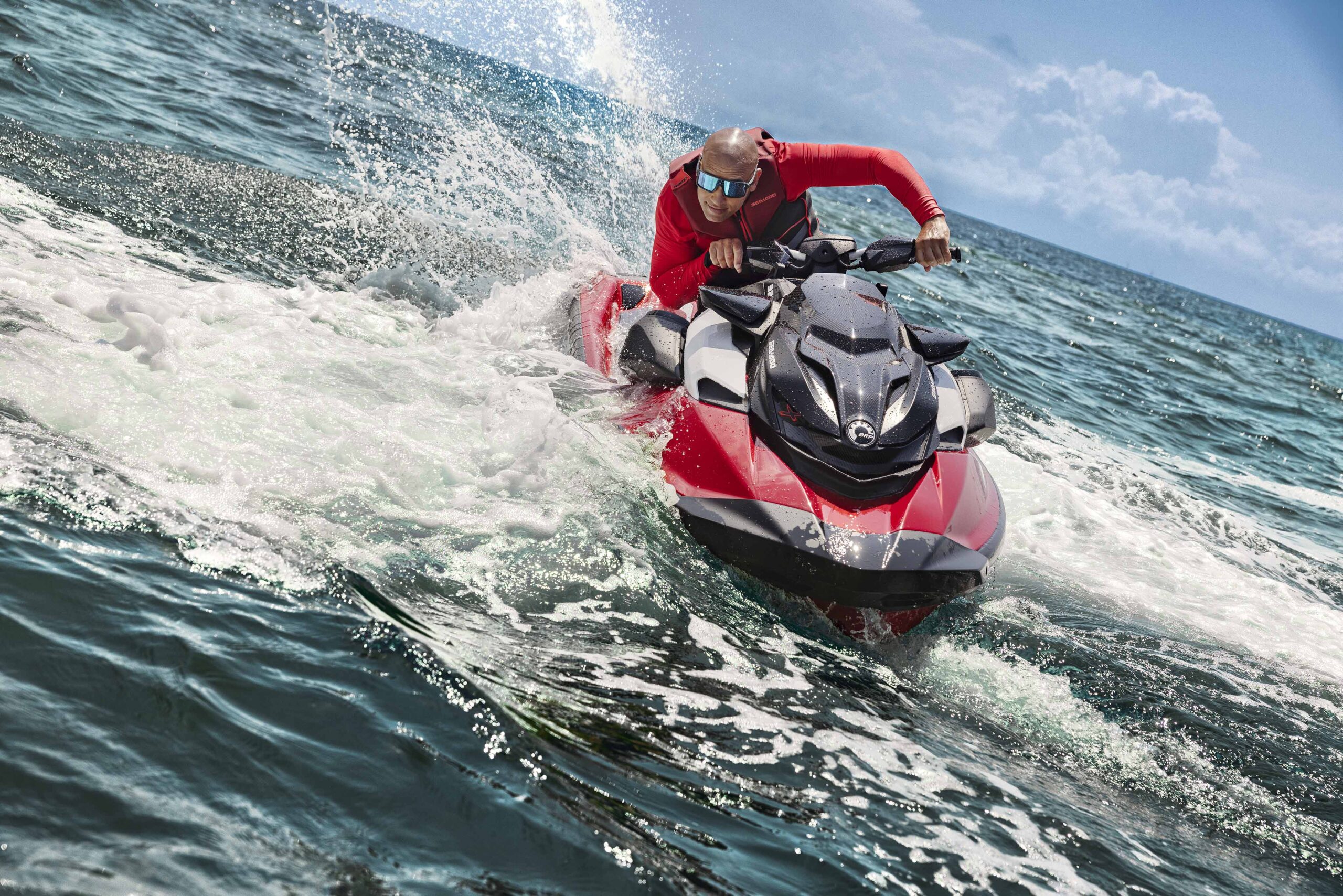
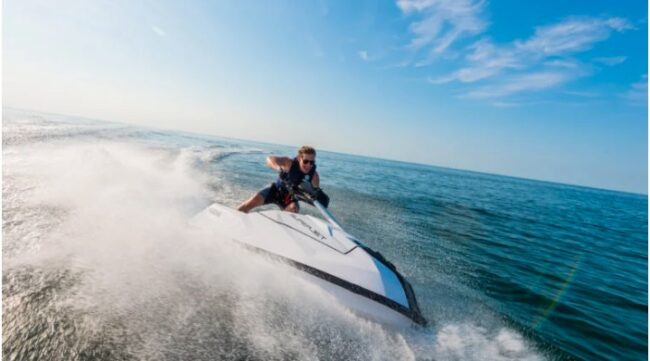
 On Monday, IJSBA announced that ten Sea-Doo models will now be eligible for competition for the IJSBA 2024 season, nationally and internationally.
 On the same day, IJSBA announced that
  Regarding Kawasaki models, in a comment on September 25 of 2023, Frazier noted that “2024 model year Personal Watercraft are generally not allowed homologation until the day after World Finals and after IJSBA has determined that 500 units have been built and are available for purchase. There is an exception where a 2024 model year unit is an exact reproduction of a previously homologated unit with allowances made for colors and aesthetic features. At this time, the only units meeting that criteria is the 2024 Yamaha SVHO and all Kawaski units that have been shipped to date. IJSBA will post any updates as we learn them in order to keep competitors fully informed.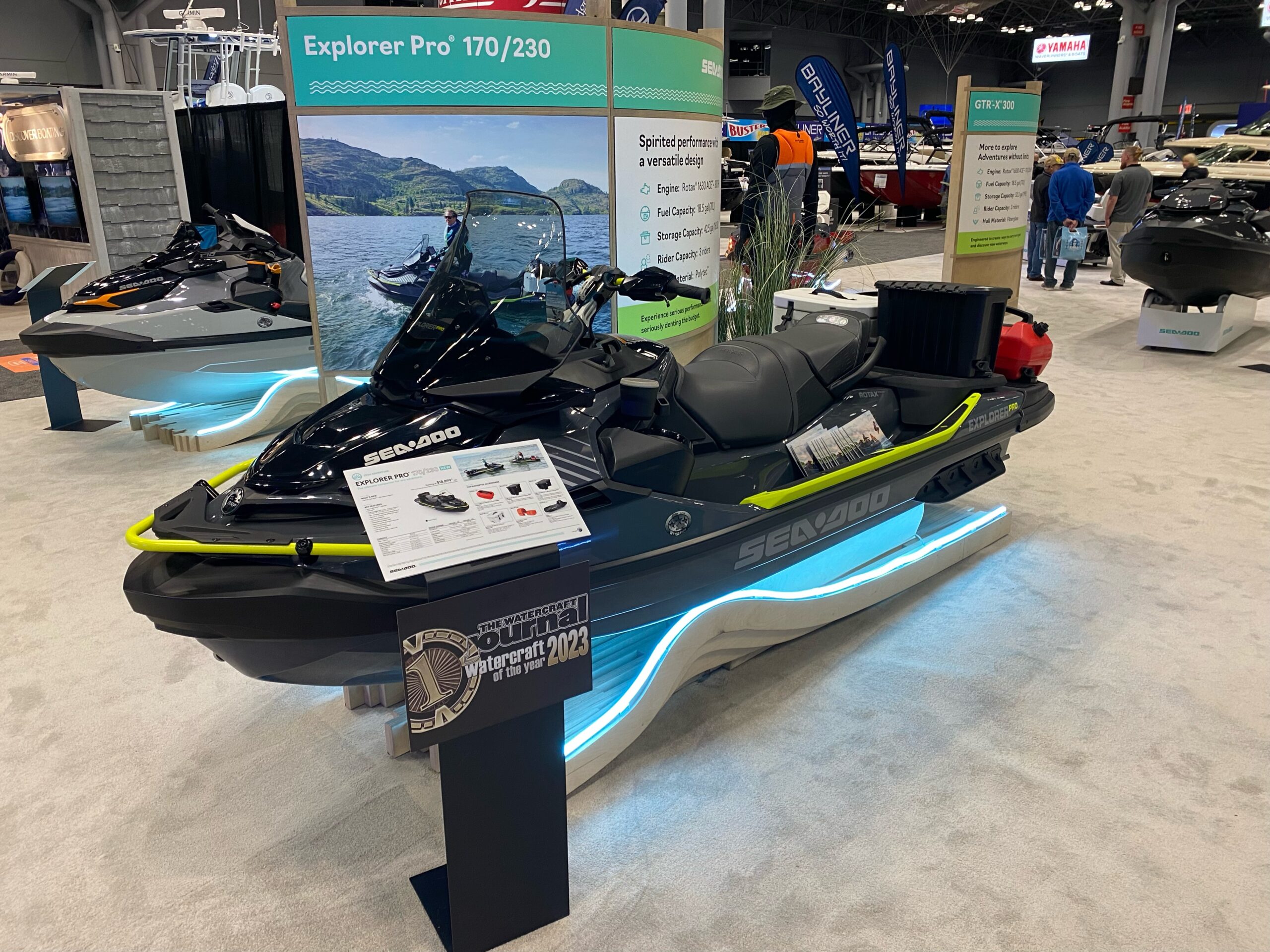
 At the end of each calendar year, we re-evaluate the new PWC units we’ve reviewed for that model year and deliver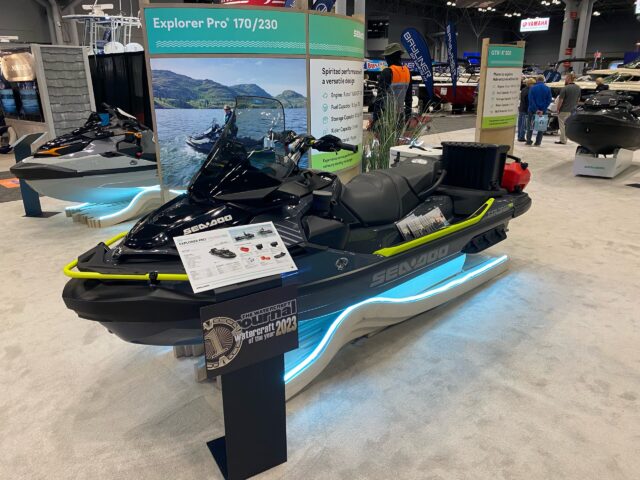
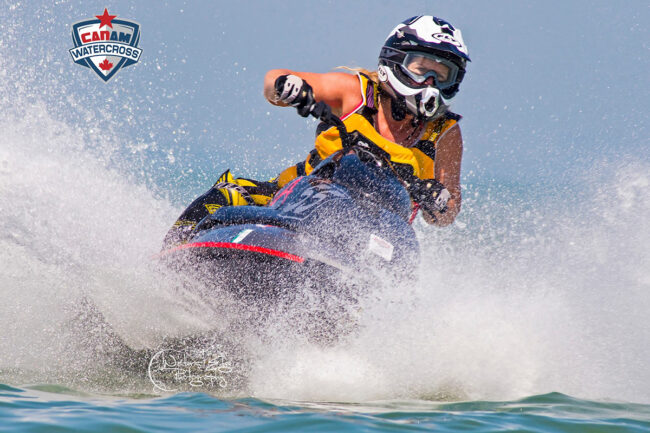 Keeping up with the sport of PWC racing can be a challenge – especially during the slow, dreary down-months of winter, with every racer – from novice to world champion – eager to get the next season rolling, and tour promoters, sanctioning bodies and race directors scrambling to lock down race sites and dates.
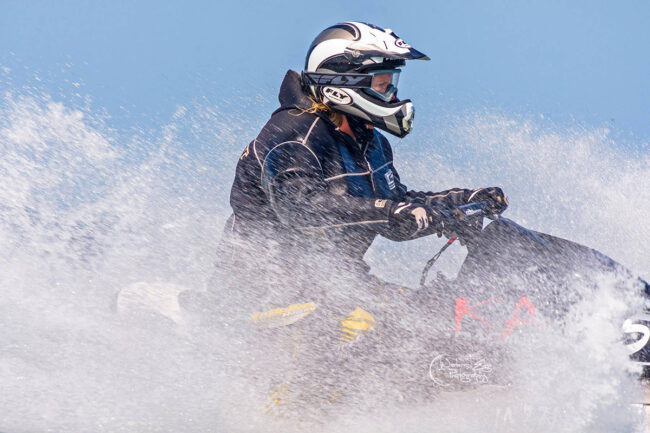 For more than five years now, Kirsten Hasty – a Region 8 Sport and XPL racer – has managed, updated and maintained the
 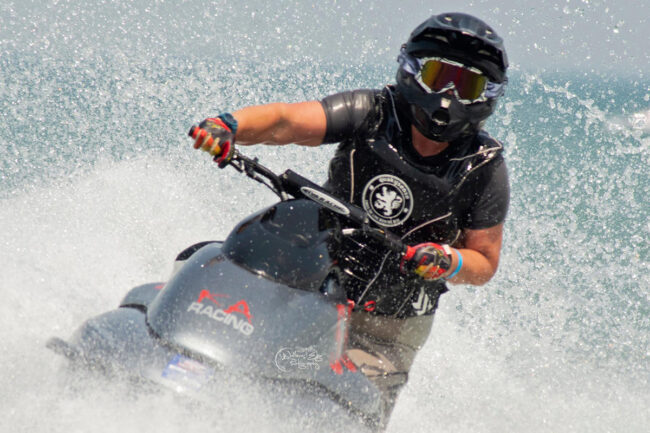 As PWC racer and 2020 Women’s Runabout World Champion Renee Hill stated about Hasty, “She’s pretty accurate on all the dates because she gets them right from the promoters. I used to race against her at the World Finals. Always had a smile on her face and loves PWC racing like so many of us.”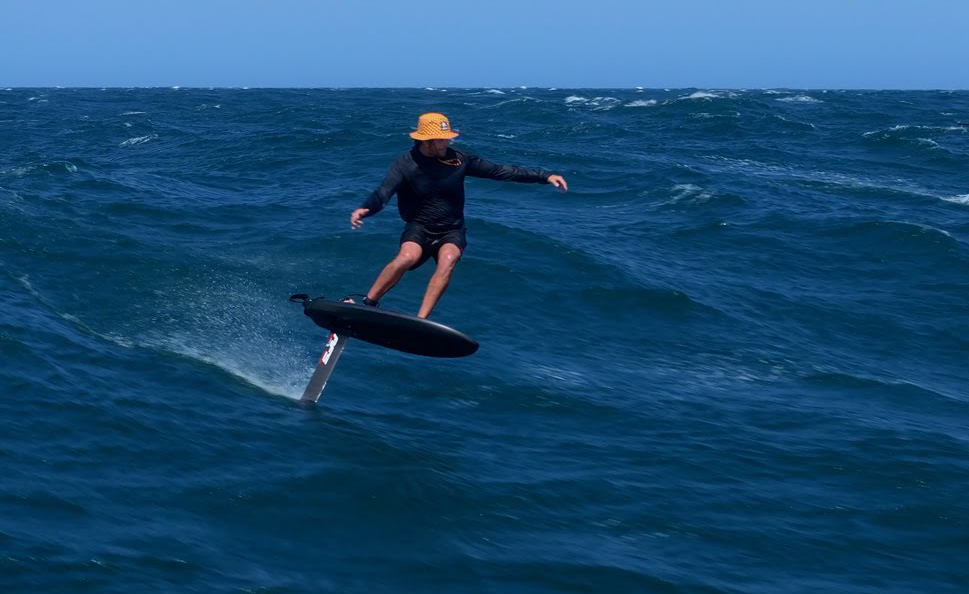
 2024 is already shaping up to be an exciting year for the world of watersports, as
  Prone foilers– that is, eFoilers who take on waves– will be all too familiar with the challenges associated with the sport. While the boards can work wonders on all sorts of waves, the biggest problem is managing to catch them in the first place. The small, agile boards, which can provide the most exhilarating rides, often aren’t able to handle the heavy paddling needed to catch a good wave.
 By concealing the AMP Jet within the AMP board itself, FLITELab allows prone foilers to avoid added drag while getting an optimal boost just at the critical moment, letting them catch waves on a still hyper-responsive board.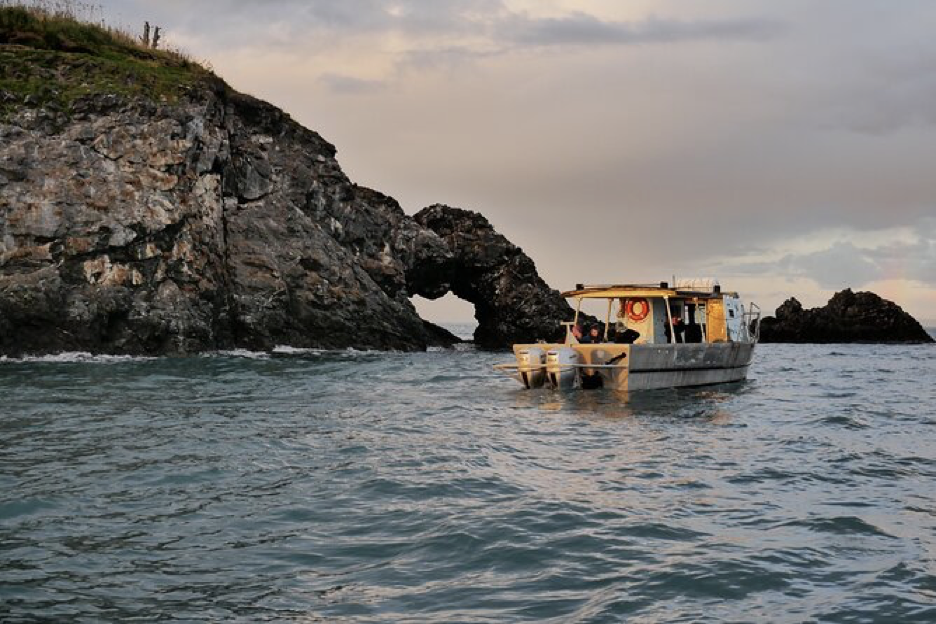
 On the morning of Thursday, November 16, many jet ski enthusiasts near Homer, Alaska, woke up to disappointing news: the two-year-long lawsuit to reinstate the ban on personal watercraft (PWC) in the area had come to an end, and the ruling had not been in their favor.
  Zeman’s ruling was based largely on a 1999 literature review conducted by the Department of Fish and Game, suggesting that erratic movements and increased noise in shallow water areas have a negative impact on the protected ecosystems.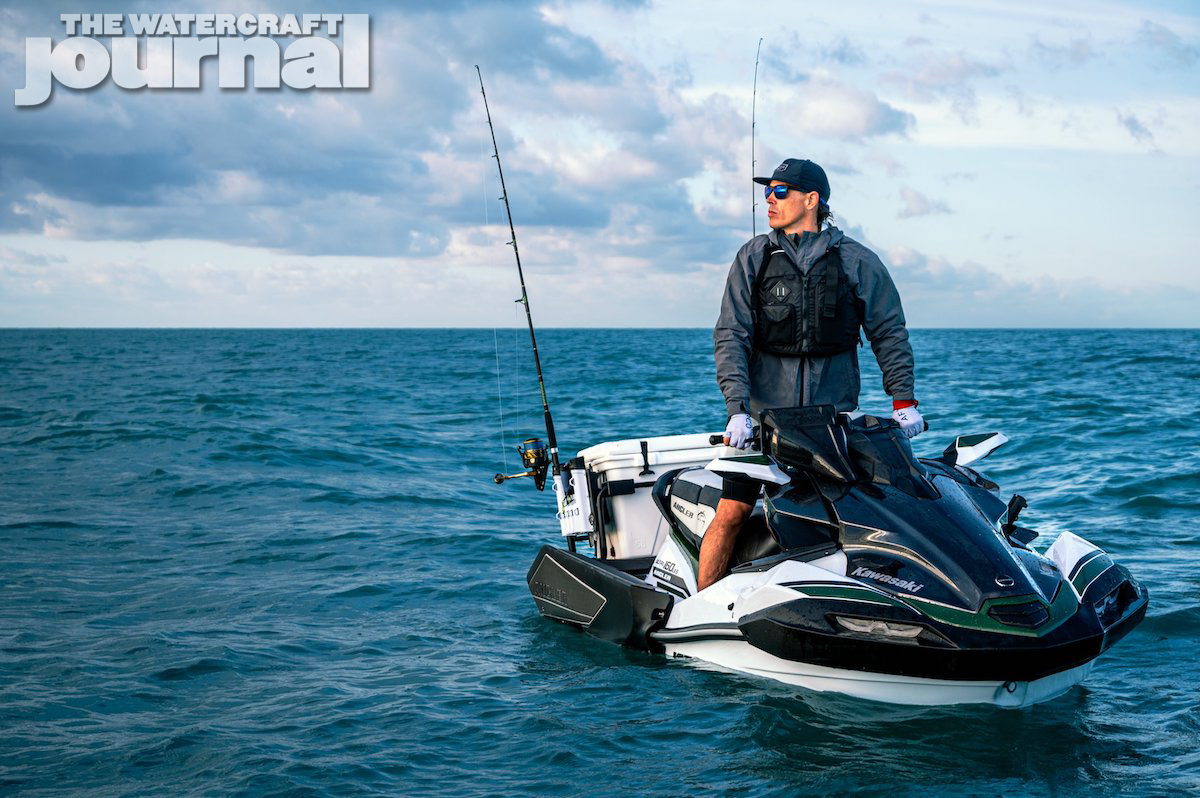















 If you’ve been riding jet skis long enough, you’re certain to know this feeling: a beautiful summer day, you’ve got everything ready to go out on the water, and just in the moment when you’re ready to start it up… nothing.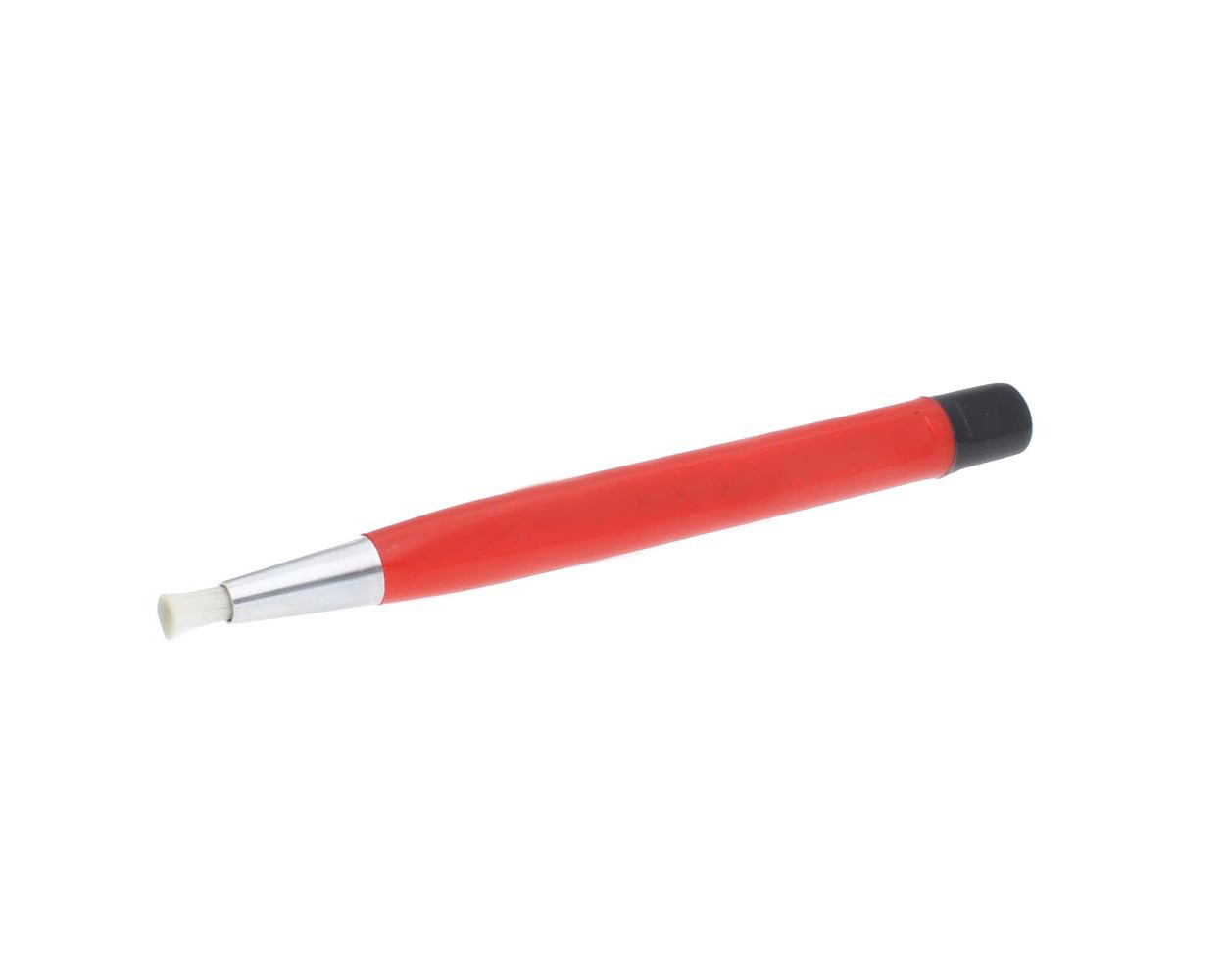

 With clean graphics to match your style, the
  Next on the current set of featured products is the