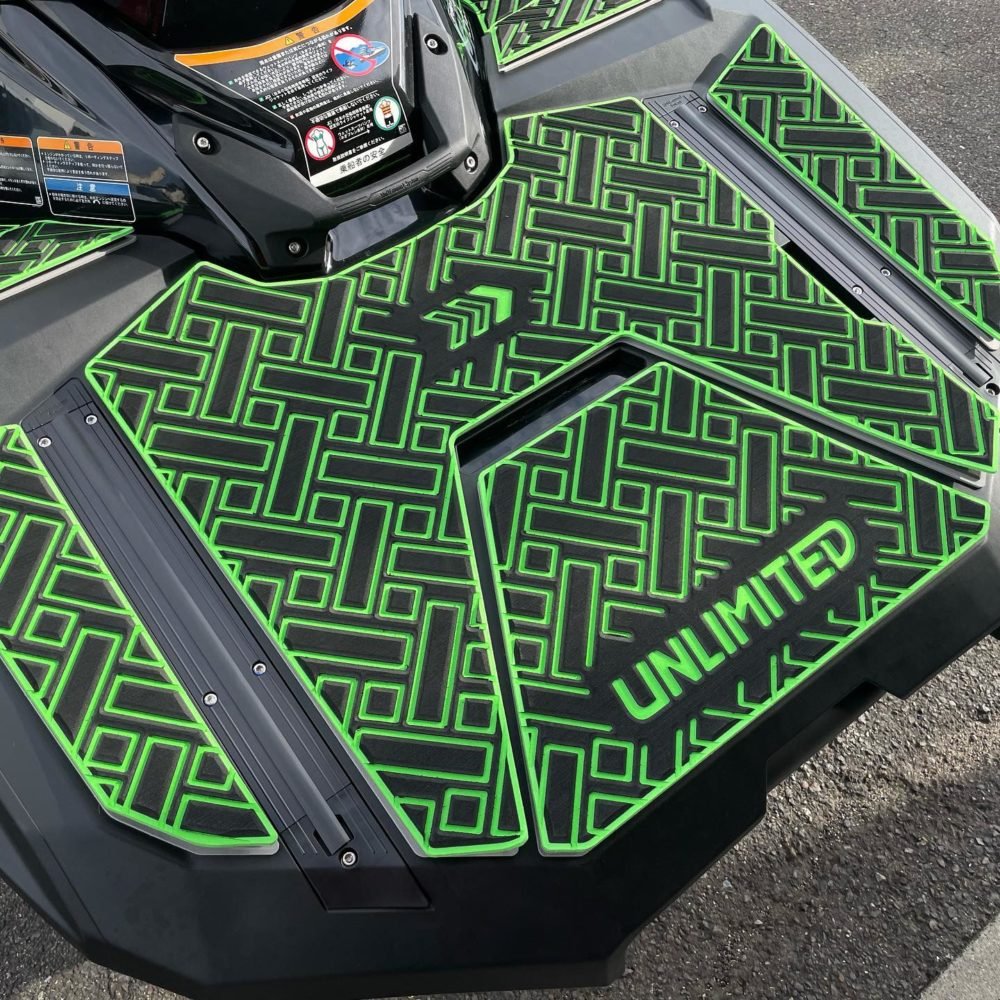
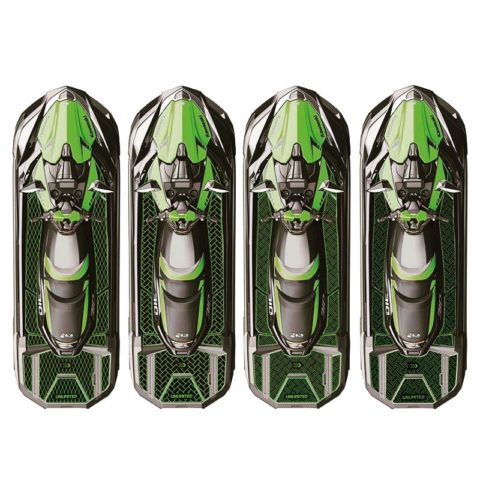
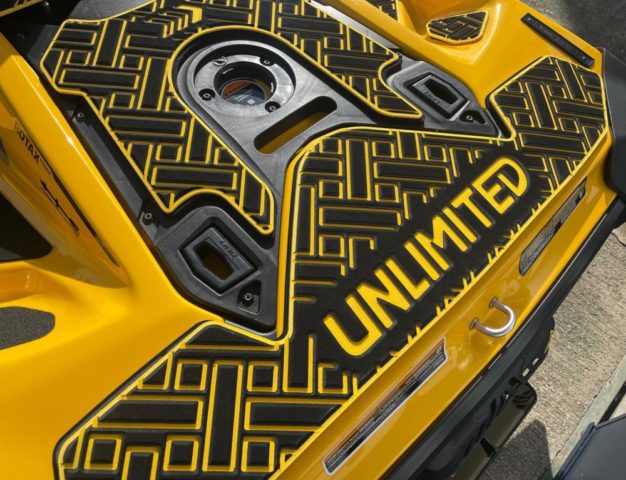
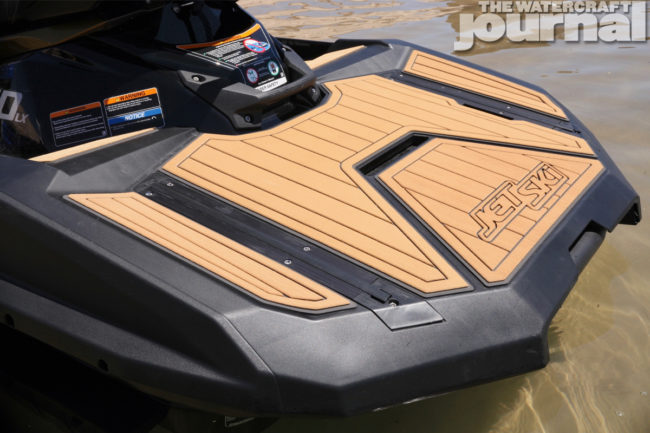
The wait is over and Unlimited PWC has traction mats available for the late model (’22 and newer) Kawasaki Ultra 310LX and the LX-S watercraft. These mats look great in the different styles of cuts. Get them in bricks, checker, rectangles, or diamond cuts.
They come in 12-piece sets with the newest super durable and sticky 3M tape. The tape is double sided and has excellent wrinkle resistance. We know what a pain it can be to apply these products, so we welcome this type of tape.
The Ultra mats are the same high quality as the other mats in stock. They have outstanding cushioning properties, and the same precision laser processing is used in designing them. The mats are grippy when wet so you’ll slide less when making those high-speed turns.
The mats are available in 10 different color combinations and can be made to order if your colors aren’t available. A set of traction mats for the Ultra 310LX and Ultra LX-S will cost you $285.
The traction mats for the Sea-Doo RXP-X 300 models from 2021 are also ready. They are also available in 10 different colorways and have the same features as the traction mats for the Kawasaki Ultras. The Sea-Doo RXP mats also feature a cool checker, brick, diamond, or rectangle pattern and cost $285.
If the colors you desire aren’t in stock, Unlimited will make your mats to order. They also remind us that the traction mat colors may fade over time and prolonged use. Check out the traction mats now and all the other goods Unlimited has on offer!
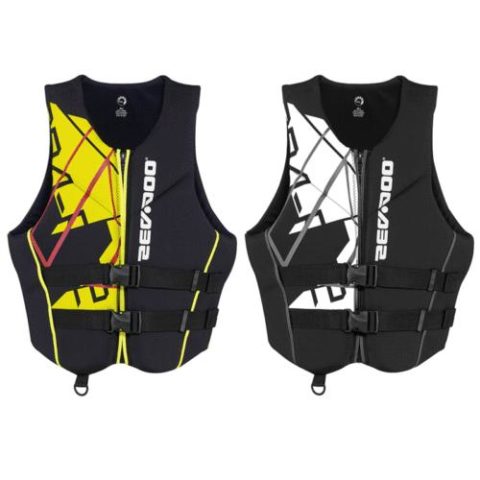
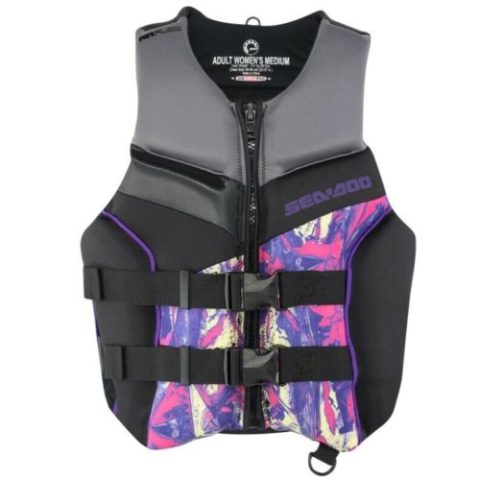
There is still time to grab some delayed Christmas gifts from Sea-Doo. You will cut it close if you order online though. They don’t offer expedited shipping, so your choices are 3–7-day shipping to your home or in store pick up. However, you can go to your local Sea-Doo dealership and get in on the ongoing 30% off select apparel and life jackets. You can always shop for other holidays as well, or even for next Christmas. That’s what my mom does.
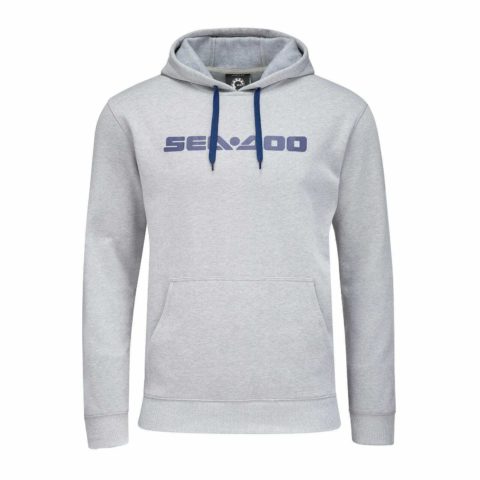
Anyway, Sea-Doo has a section dedicated to gifts under $100, which includes a wide array of products ranging from hats to LinQ accessories. They have some nice beanies for under $25, which would make perfect stocking stuffers. We like for them for those cool morning surf checks and when paired with the new Sea-Doo Signature Hoodie, you can’t go wrong.
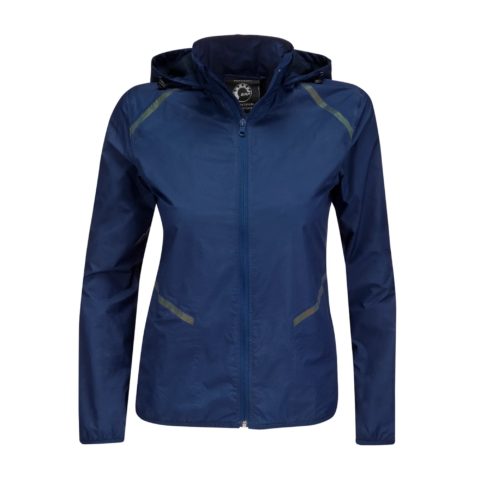
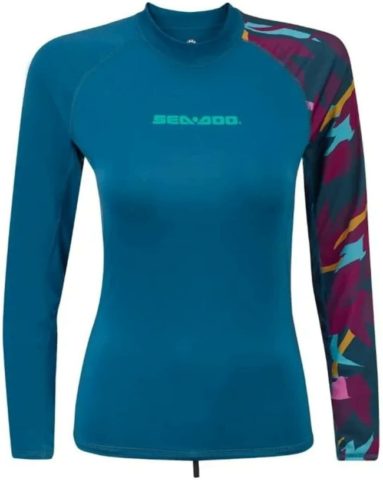
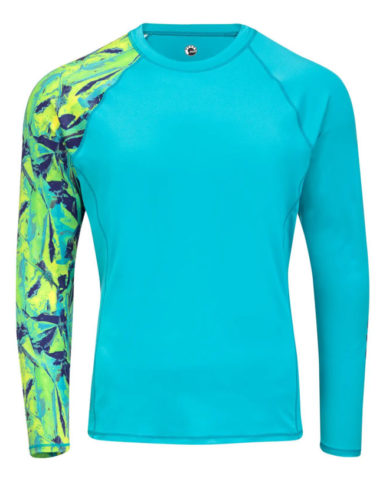
The Women’s Windproof Jacket is another great buy and is designed for fishing, touring, and performance. The jacket is 100% nylon and water resistant. It is marked down to $69.99. In keeping with the winter theme, long sleeve rashguards are must haves for an extra layer on those cold winter rides.
Sea-Doo has several different styles on offer for everyone. A new shipment of the Men’s Neoprene Riding Jacket has come in as well. The 2mm jacket is designed to be worn over your life jacket and it will make those winter rides a little more bearable. You might have to gift this to yourself!
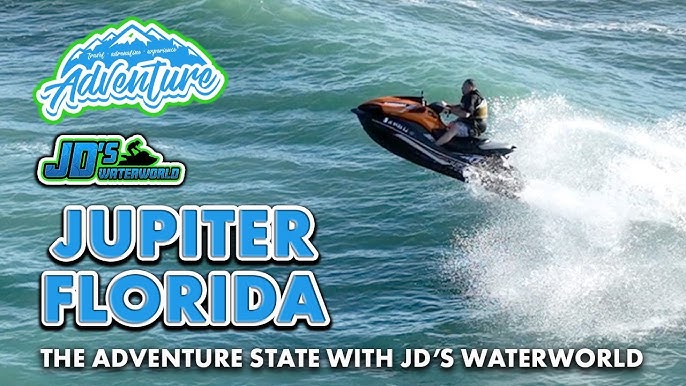
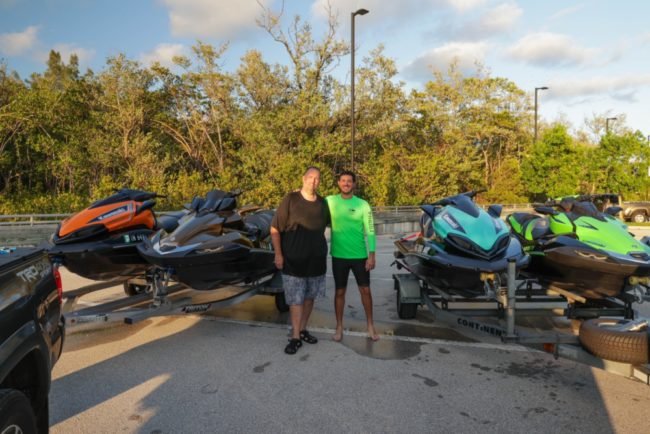
This industry can create rivals or friends. In most sports, rivalries can be created quickly and many times they can be fierce. But in the PWC industry, we see many people build great friendships. The Watercraft Journal has a number of contributors and generally speaking, most of them never meet. Two of our contributors are JD from JD’s Waterworld and Chris from The Adventure State.
The Adventure State team were in Florida and their 2022 Kawasaki Ultra 310LX was having an electrical issue. Luckily Chris and Rish still had the 2020 Kawasaki Ultra 310X so were able to continue to enjoy their time on the water while in Florida.
During a random conversation, JD was told that the guys from The Adventure State were having an electrical issue that resembled the same issue JD had just a few weeks prior. JD immediately called Chris and invited the team to come to JD’s house to troubleshoot the issue.
When Chris and Rish arrived, JD was full of smiles, introduced the guys to his family, showed them around and then dove heard first (literally) into the bow of the ski testing every wire. JD took the time to teach the guys stuff they did not know and was patient with them. They were finally able to locate the issue and decided to let the shop do the repairs.
Immediately afterward, JD told the guys to follow him to a boat ramp and even offered for the guys to use his second Kawasaki Ultra since the 2022 was down. Rish declined as he wanted to drone and enjoy some photography of the local area, but JD and Chris were off! They went through the river and out into the ocean.
JD showed Chris all around Jupiter, Florida and the other local areas from the water and they even were able to enjoy some pretty intense wave jumping. On the ride back they rode at no-wake speeds and just enjoyed 45 minutes of conversation. They are now lifelong friends.
We hear story after story of someone needing assistance, having questions or looking for new friends and someone else in our industry steps up with an outstretched hand. Remember if you need help, just ask. If you see someone that you could help benefit their circumstance, reach out. You may have just gained a life long friend.
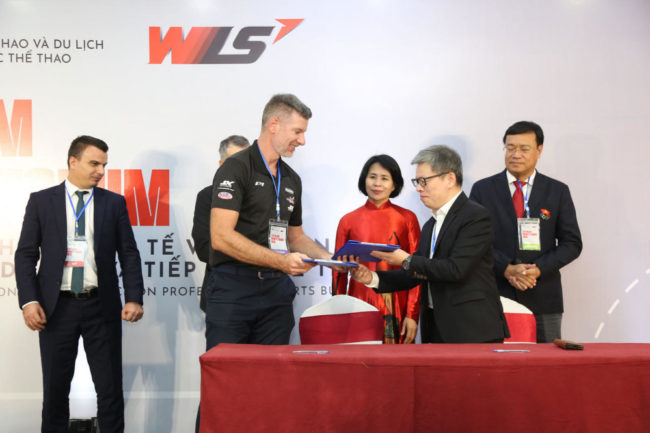
Powerboat P1, the premier international powerboat and personal watercraft sports promotor, has announced they will be joining forces with Hanoi-based WLS Corporation to host a world-class personal watercraft racing event by 2024, and ultimately, establish a “marine motorsports hub” in Vietnam.
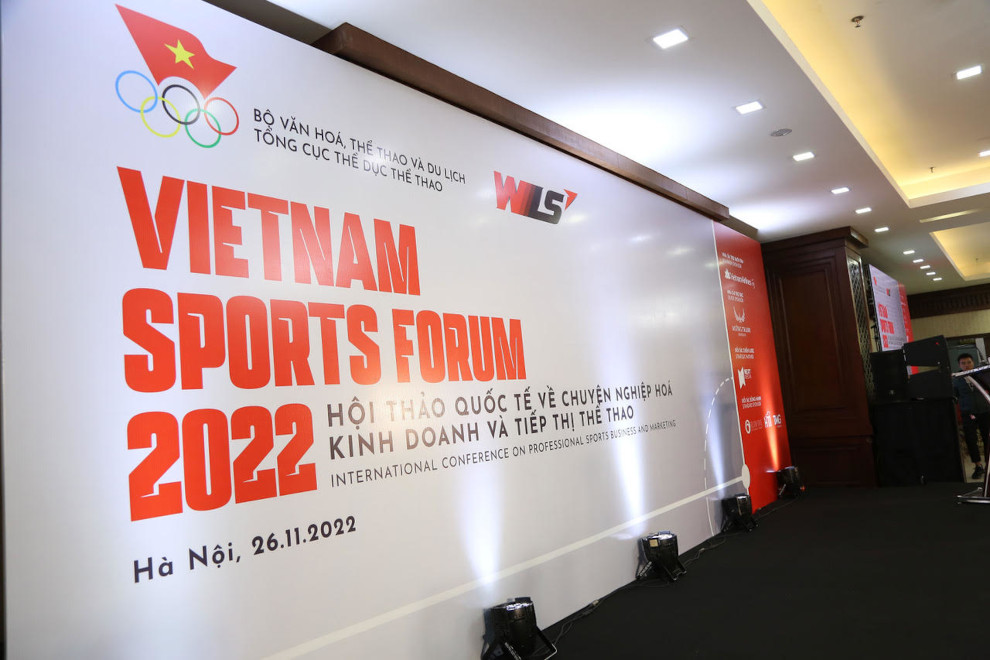
The new partnership between the two organizations was forged following the Vietnam Sports Forum in Hanoi – an international conference with the theme ‘professionalism in sports business and marketing’ organized by WLS and sponsored by the Vietnamese Government and Ministry of Sport.
“Focused on sports marketing and management, Hanoi-based WLS organizes sports events in Vietnam aiming to make the country a world-class sports destination” according to a recent press release. Through the new partnership, P1 also aims to establish a personal watercraft academy for Vietnam’s emerging youth racers.
Head of International Business Development at Powerboat P1, Julien Bastien, explained, “Pursuing exciting opportunities and taking on new challenges is at the heart of our P1 business, and the shared goal in our partnership with WLS is for the sport of personal watercraft racing to help drive the business growth of Vietnam’s sports industry.”
The Executive Chairman of WLS Corporation, Le Quoc Vinh, said: “We organize the Vietnam Sports Forum with the aim of turning sports into a real economic industry that brings high value benefits to businesses, professional athletes and the Vietnamese sports industry in general, and we were delighted to have P1 participate in the event.”
The partnership between Powerboat P1 and WLS will streamline the process of identifying and selecting potential venues where future personal watercraft racing events like P1 AquaX and Jetcross racing could take place- as well as establishing the necessary facilities and infrastructure needed to host such events.
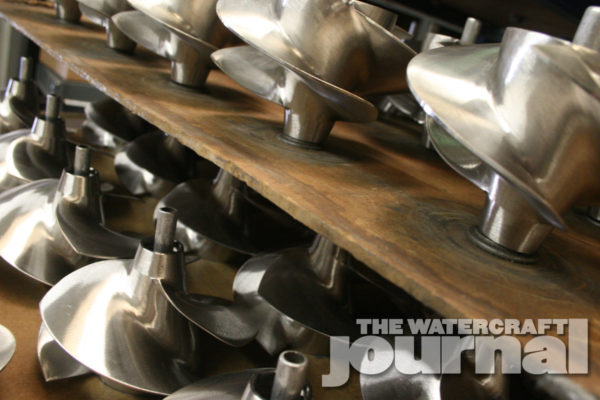
Like the passing of an old friend, we at The Watercraft Journal are saddened to announce the conclusion of industry mainstay Skat-Trak’s watercraft division. The company has been a major participant in the development of impellers and pumps since the 1980’s, assisting in propelling the OE’s and aftermarket further and faster than one can imagine. Skat-Trak pioneered far too many technologies and experimented with too many cutting-edge designs to list here.
Fatefully, the cost of continuing business in a dwindling economy, the nature of the personal watercraft industry and legal pitfalls of operating a foundry in California all played a role in strangling one of the most iconic brands in personal watercraft racing to death. After the closure of R&D Racing and untimely passing of Bill Chapin, the acquisition of Hydro-Turf and today’s news, it’s a particularly difficult pill to swallow for this Southern Californian.
I’ll just leave it with that. Skat-Trak isn’t closing its doors as it will still produce its paddle tires. And that’s some silver lining in an otherwise stormy announcement.
In a letter Skat-Trak’s President Greg Stuart wrote: It is with heavy hearts we inform you that Skat-Trak has decided to stop the production of our Personal Watercraft impellers, pumps, nozzles, intake grates, and accessories. Our last day of sales for Watercraft product will be on Friday December 9th, 2022.
Fortunately, we will continue to offer our Skat-Trak line of Paddle Tires for sand use. The decision to close this portion of our business was not easy, but due to lack of sales, over seas production, and the poor economy, we could no longer justify the continuation and cost of production.
Over the years, Skat-Trak has enjoyed the relationships with our customers, racers, sponsored riders, and the sport of Personal Watercraft Racing.
We are extremely proud of all that we have accomplished and could not be more grateful to those who believed in us. Skat-Trak could not have been as successful as it was without your loyalty and business. We wish you all the best for your continued success.
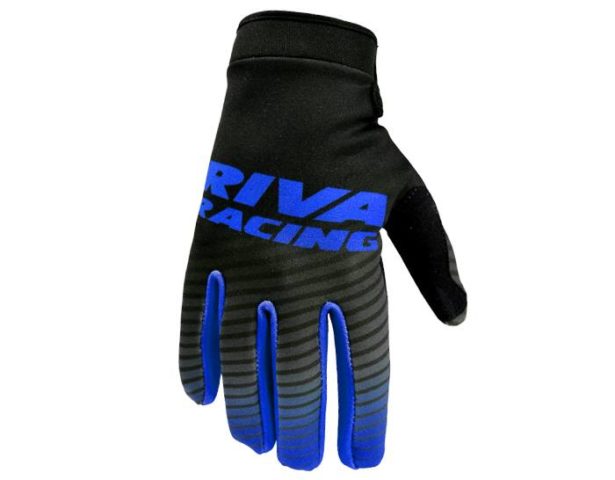
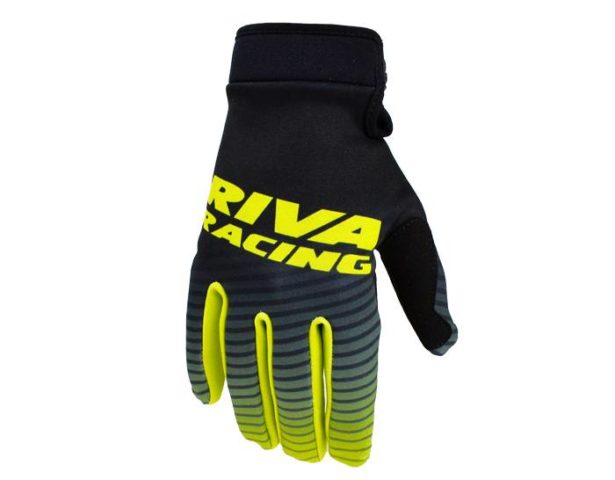
Things are starting to get cold out there, and it’s important to keep your hands protected – as losing heat through your hands is one of the quickest ways to sap your energy. That’s why it’s a smart idea to pick up a pair of RIVA Prolite 2.0 Gloves available through the Greenhulk Performance PWC Store! These gloves are touchscreen and phone compatible, well-ventilated, and made with ultra-plush lightweight material providing maximum comfort, dexterity, and functionality to your hands.
Designed for all-around performance riding, these gloves feature a super-tacky palm and finger silicone print for maximum grip and texture, and include a durable lightly padded palm with reinforced thumb to protect where your hands make the most contact to the handlebar. Each glove comes with adjustable Velcro wrist closure system to keep them tight without cutting off circulation – offering a a comfortable classic fit; not too tight, not too loose. Pick ’em up for $39.95 a pair HERE.
Typically, The Watercraft Journal issues its annual Watercraft of The Year award a little earlier in the month. Yet, this year’s results resulted in so much deliberation, debate and re-evaluation that judging spilled over an extra two weeks until a consensus could be made. And since we do not include vehicles that we at WCJ have not personally tested, there were a few contenders that simply weren’t eligible due to lack of access.
The process in determining what qualifies a particular model for the Watercraft of The Year award is rather straightforward: each model is weighed against a specific scale indicating excellence in all categories – and must be done so without imposing any personal bias. A number of our judges’ personal favorites were routinely voted out; making of each of the finalists shown below a unilaterally balanced result of intense scrutiny.
The scale from which we evaluate each entry by is called the IDEA score, an acronym standing for Innovation, Design, Execution and Affect. These categories breakdown a personal watercraft’s achievements in Innovation; overall Design aesthetic; the final Execution of the production vehicle; and finally, the model’s lasting Affect on the marketplace and/or industry. Previously, each category was worth a maximum of 10 points totaling a combined 40 possible points. We’ve doubled that.
Previous years have resulted in increasingly closer judging results, which has made our role as judges all the more difficult. Increasing the total possible points to 80, which each category valued at a maximum of 20 points each, made the winners far more salient. This change became particularly valuable in the categories of Innovation and Design, as all three of the finalists demonstrated unique features and aesthetics that were significant in their respective regard.
2022 Watercraft of The Year 2nd Runner-Up: 2022 Kawasaki Ultra 310LX JetSki Innovation: 18; Design: 16; Execution: 17; Affect: 15; Total: 66 points
Brandishing possibly the most polarizing redesign of any established unit in years, the top offering of the refreshed Ultra JetSki, the 310LX was not the preferred choice of two of this year’s judges. Rather, it was in spite of these judges that the 2022 310LX entered the pantheon. Kawasaki took what many believed to be a staid model and leap-frogged the competition in a variety of ways – both in innovation and creature comforts. If evaluated on this alone, the 310LX could earn top honors.
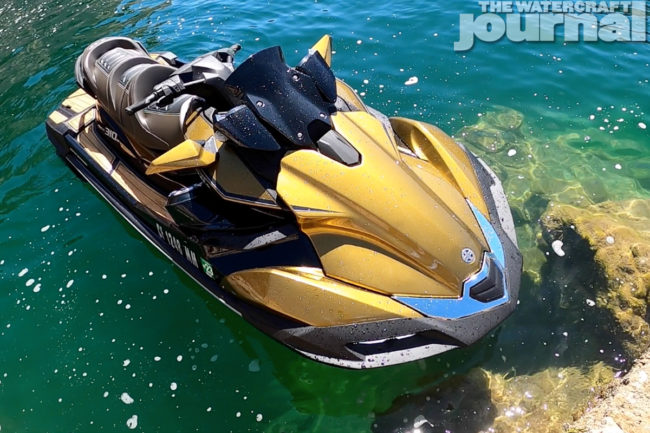
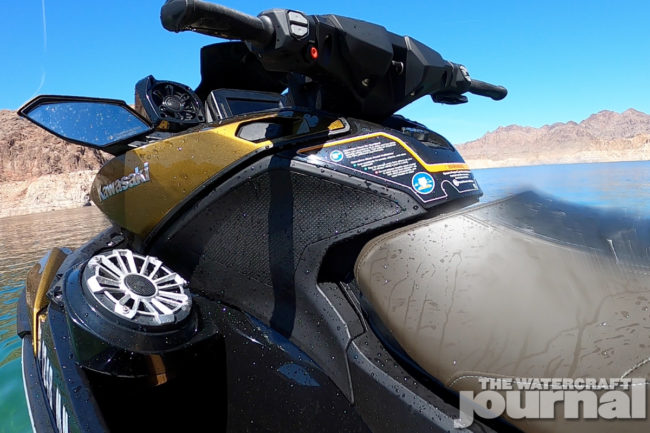
Aesthetically, the new Ultra is a bit of an acquired taste. The gold requires seeing in person under natural light. The “chunkiness” can leave many longing for the smooth lines of its predecessor. Yet, it’s when you’re seated behind the bars that it begins to feel “just right.” Ergonomically, the cockpit fits comfortably; its dual gloveboxes beneath the fairings swing up on gullwing hinges. The center jog dial scrolls effortlessly, and the new buttons are responsive and click satisfyingly.
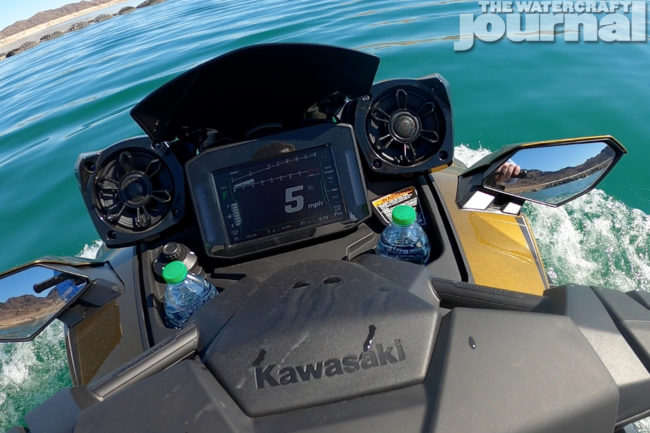
Kawasaki’s new KSRD braking system may take some getting used to as well, particularly if you’ve been using RiDE or iBR for some time. The quad-speaker 100watt Jetsound4S is the only factory sound system that we found that could go “too loud”, and the phone interface was the least cumbersome of all three OE’s (although still not great). The 3-way adjustable seat and 5-way tilt bars allow the Ultra to fit nearly all types and sizes, and yeah, the reverse camera is pretty nifty too.
While sales are strong, the Ultra didn’t catch fire in the court of public opinion at first. Only as firsthand reports came trickling in and tuners discovered the Ultra’s new engine management allowed for greater speeds that enthusiasts began catching on. Nothing matches the sound of the Eaton TVS supercharger at full fever pitch or its gel coated, SMC fiberglass hull’s talent at tracking straight in rough; and now with a low center of gravity, the Ultra’s ability to carve a corner too.
2022 Watercraft of The Year 1st Runner-Up: 2022 Sea-Doo Fish Pro Trophy 170 Innovation: 18; Design: 17; Execution: 17; Affect: 17; Total: 69 points
Seemingly always the bridesmaid and never the bride, the Sea-Doo Trophy has remained in The Watercraft Journal’s Watercraft of The Year podium since its introduction in 2019. So the Trophy – being the brand’s most advanced, most comprehensive offering – being included on this list was, by most all accounts, a given. The Trophy has, by nearly every paradigm, full right to this title, except for the fact that it’s sooo specifically tailored for a single group of buyers. It did it’s job too well.
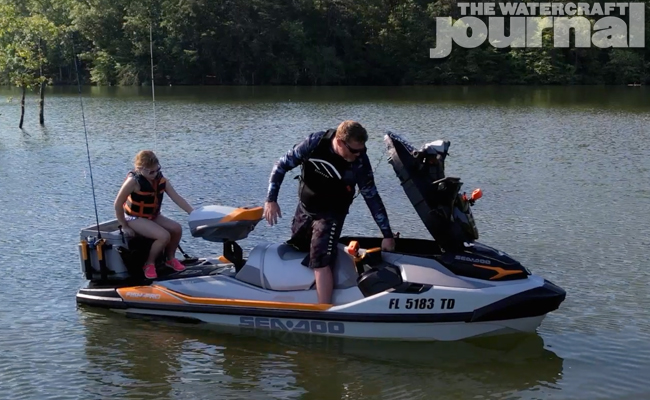
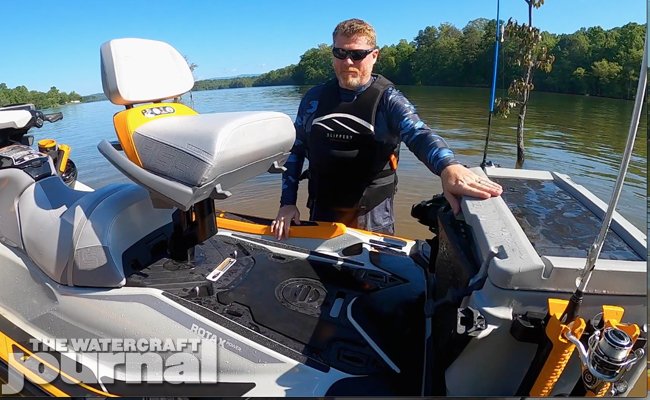
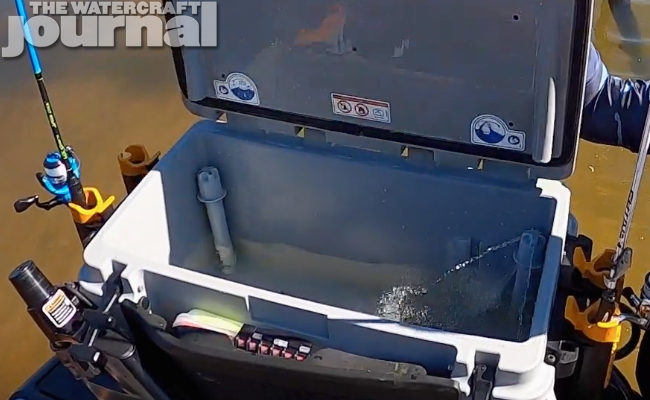
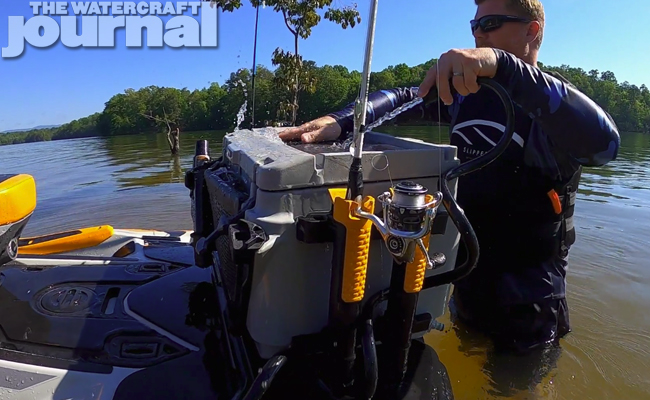
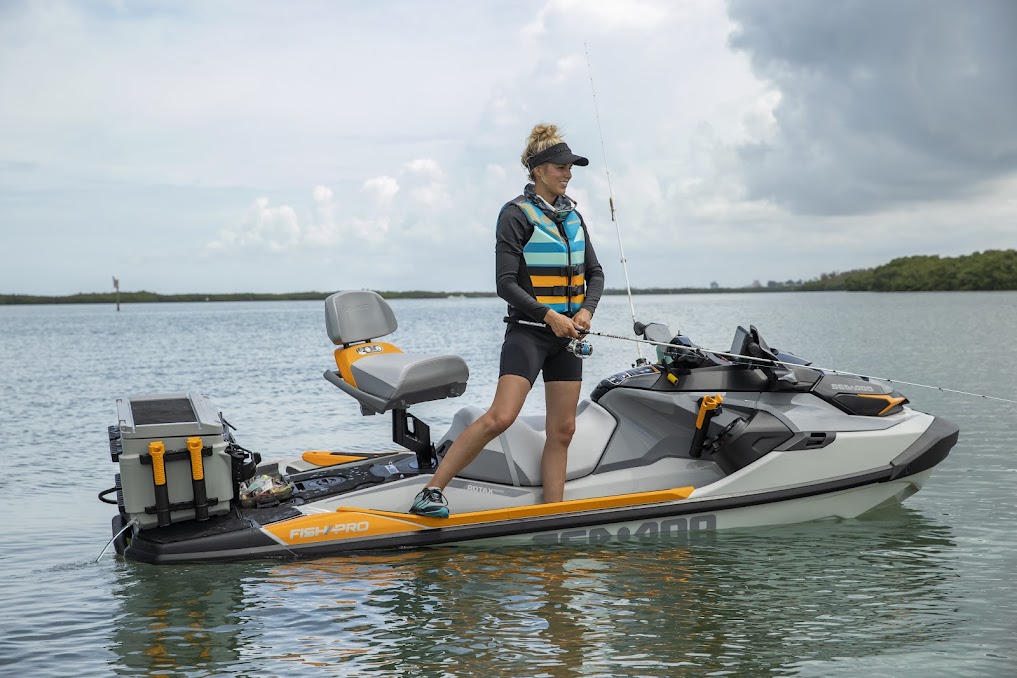
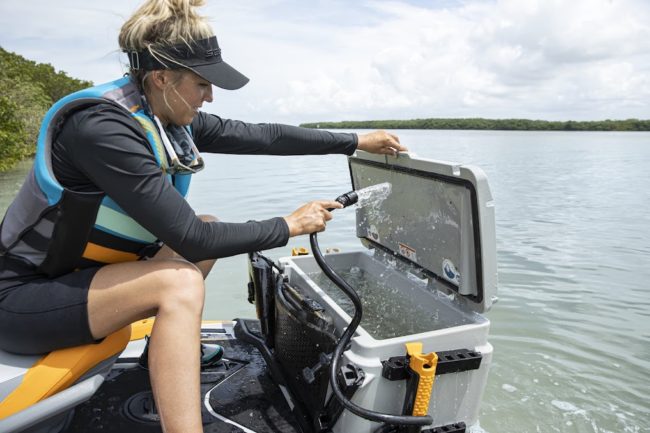
After dedicating massive resources to cater to the every imaginable whim of the PWC fisherman, the 2022 Sea-Doo Fish Pro Trophy 170 offers tournament-level amenities never seen on a watercraft before. Sea-Doo co-opted its 13.5-gallon cooler into a functioning live well with a quick detachment for washing down the deck and cutting board. A hard-mounted anchor with a dedicated cleat is within arm’s reach. Added LinQ mounts for a cup and extra rod holders are standard too.
A larger 7-inch Garmin full-color touchscreen paired to a through-hull transducer gives fishermen a full view of the area around them and pages chocked full of mapping and waterways. A unique mount in the engine cover permits the rear passenger seat to be attached to a fixed stilt becoming a true swivel seat with a backrest. (An electric trigger in the mount alerts the ECU not to exceed 18mph when the swivel seat is assembled.) And all of it breaks down and stows neatly away.
All criticisms attributed to other ST3-based Sea-Doos diminish in this application. When this platform used outside of fishing is falters, but here it shines. The balance and stability are second to none. It’s dry ride allows the rider to don jeans and a flannel (expect your feet to be wet). In our assessment, we cannot fathom a better equipped Sea-Doo dedicated to the sport of PWC fishing. It bares all of the touchstones of something designed by enthusiasts intending to use it themselves.
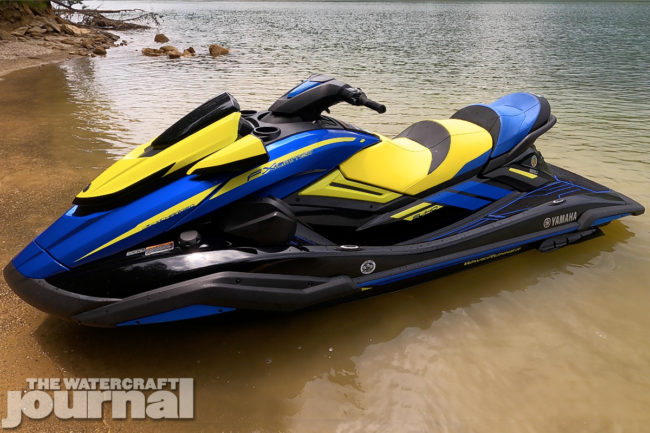
2022 Watercraft of The Year: 2022 Yamaha FX SVHO Limited Innovation: 18; Design: 18; Execution: 17; Affect: 18; Total: 71 points
Albeit highly praised, the Limited accessory package is not what earned the FX SVHO Limited the title of The Watercraft Journal’s Watercraft of The Year. Rather, this was a result of a culmination of changes, improvements and subtle tweaks made over the years resulting in what could be Yamaha’s crowning achievement in the full-sized performance runabout segment; recognizing the FX’s sportiness being impressively balanced opposite its mature, adult mannerisms was key.
For 2022, Yamaha took a studied look at its current FX platform and adjusted wisely: the aggressive GP-inspired hull retained its shape but was cast in heavier, more forgiving SMC fiberglass giving the FX more resistance to vibrations, jolts and impacts. It also muted a lot of the chatter and heavier jostles that comes with rough water riding. Yamaha elevated the planing bow by resculpting the ride plate for a dryer ride, while giving the craft better bite in hard corners by relocating the sponsons.
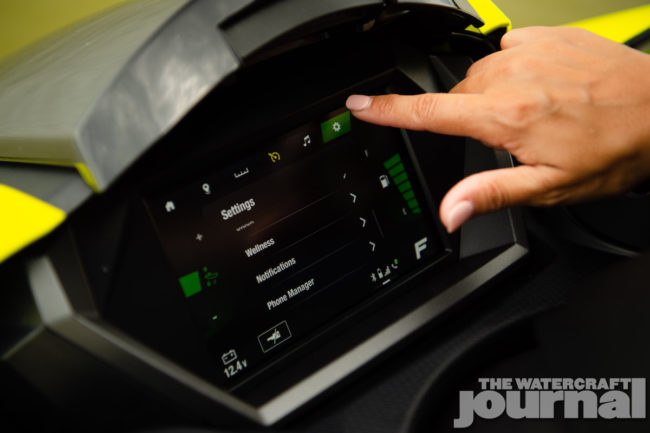
As all of this equated to a superior, more enjoyable ride, Yamaha equipped the FX with a wider (7-inches), more responsive Connext touchscreen offering full smartphone integration, GPS mapping, geofencing, and a GPS speedometer. Below the handlebars are audio controls with a noise-reducing microphone to allow riders to make and receive phone calls – and even call in sick for work from the water. (Although we don’t recommend it. Human Resources checks your social media posts.)
Beneath is voluminous, padded and rubberized glovebox equipped with dual charging ports, a phone holder and LED lighting topped with a spring-loaded waterproof lid – easily the best, most accessible bin offered today. Certainly, a lesser equipped FX SVHO or FX Cruiser SVHO will share the same performance attributes and creature comforts – especially a 2023 unit, as all come standard with sound and the larger dashboard – but for 2022, the FX SVHO Limited has earned our vote as the 2022 Watercraft of The Year.
There’s still time to score a new Sea-Doo with financing as low as 0% during the Sea-Doo promotion on all 2022 models. Make 2023 the year you get into fishing from a jet ski. Cycle Springs Powersports has all three 2022 models of the Sea-Doo FishPros in stock, so you don’t even have to wait for one to arrive. They have the FishPro Trophy 170, FishPro Sport, and the FishPro Scout in stock.
The FishPros aren’t just for fishing. They are versatile machines and equipped to carry a lot of gear with their large storage capacity. This makes them ideal for loading up gear for overnight camping trips or even weekend getaways. Throw your drinks and sandwiches into the cooler, stash your tent, and sleeping bag. Stow your other gear into one of the large compartments or lash it to the cooler, slip your rods into the holders, and head out for the weekend.
The FishPros are powerful machines and made to get you to your secret offshore fishing hole or into the grassy flats where the big bass like to hide. Cycle Springs has two packages for the 2022 FishPro Trophy 170. The tech package includes a livewell, a high-tech fish locator, trolling modes, and more. It is priced at $18,999 and the other package is $17,999. It doesn’t include all the tech Package.
Check out all the other Sea-Doos in stock. Cycle Springs has most of the 2022 models with the Sea-Doo Deal of Financing from 0-1.99% and pay no interest for 60 months. That’s a great deal in this economy! if you decide fishing is not for you, grab a killer new Sea-Doo GTX Limited and enjoy the ride in style!
Ross Wallach, president of RPM Enterprises, announced that his organization will be replacing DSM Events as the promoter for the 19th Annual IJSBA Mark Hahn Memorial 300- known as the “toughest, longest most challenging PWC endurance in the world!” The event is scheduled for Saturday, February 25, 2023 at Lake Havasu in Arizona.
Wallach announced that the event would be moved from Crazy Horse Campground to Point Beach in the Lake Havasu State Park. The decision to move the event was based on a number of reasons, but the change will likely alter the course layout, and how pit stops and launches made.
Rising costs coupled with a drop in race attendance has “taken its toll,” and for the 19th Annual MH300 to become a reality, Wallach has conveyed that a minimum of 40 committed (paid) entries must be received by January 20th 2023. Read his statement below:
Mark Hahn Memorial race teams, DSM Events, the promoter of the MH300 for the past 18 years has asked me to take over as promoter of the 19th Annual MH300 in 2023 and beyond.
Both Mike Follmer & I would like very much to see continue as this event, as this event is especially near and dear to our hearts, but we need to get a firm commitment from the racers as waning attendance and rising costs to promote the longest PWC endurance race in the Country has taken its toll.
Ross Wallach and his team are still working on finalizing all of the event details, but team move-ins are expected to start Saturday morning at 6:30 AM. Pit spots will be organized with sponsor/advertiser teams and preferred pit parking is available for an additional fee.
RPM Enterprises is still working on an online entry form where payments can be submitted. Although this form is not yet operational, Wallach has conveyed that payment will be due by the 3rd weekend in January, 2023. The company plans to release an announcement once this new form is operational.
Wallach offered the following statement regarding new rules that have been instituted due to the location of the event being changed from Crazy Horse to Point Beach.
One note, all racers will be on their boat, lanyards out, dead motor start in the water due to new location. This will be a modified Le Man’s start (no running to the boat).
All runabout race teams will use the Windsor boat launch ramp (see attached map) to enter and exit the course/pit stops/etc. once race has started.
Still working on final decision for stand ups regarding pit stops/refueling (ramp vs. tote out) on Point Beach. Will announce when final decision is reached from AZ State Parks.
Lake Havasu State Park fee is $20/vehicle (towing a trailer or individual vehicle) with up to 4 people for the day use. Additional people are $3/adult. Fee is paid at main gate upon entrance to the park.
Note: Lake Havasu State Park Annual Passholders get in free. Camping may be available at Lake Havasu State Park at www.azstateparks.com. No noise ordinance in effect until 8:00 am Saturday morning.
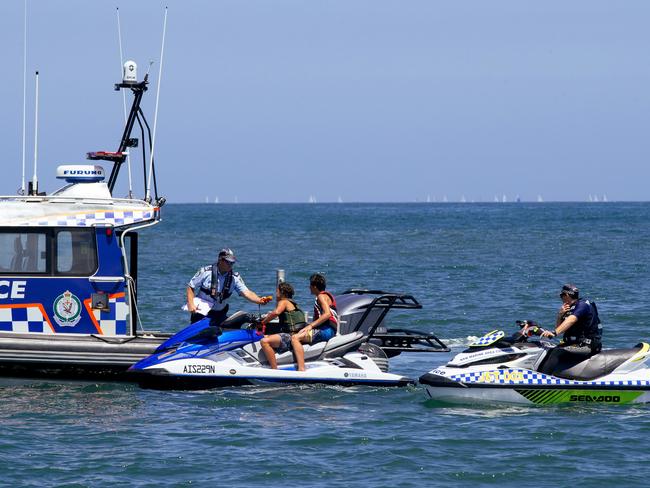
New South Wales Maritime units started the summer off by giving a plethora of tickets and fines to jet ski riders during Operation Ride Smart. Hundreds of riders were checked out and lawbreakers were fined for speeding and other infractions. The crackdown by authorities in Botany Bay saw maritime officers stopping riders and checking their licenses and registrations. They were also on the water making sure everyone was riding safely and following the rules.
The officers performed over 700 checks over the weekend, handing out only 22 fines and most of those were for speeding. It sounds like the lockdown years saw an increase in the number of licensed riders. The area recorded an uptick of 24% more PWC licenses and registered jet skis. Of note, young women between the ages of 12 and 27 are the fastest growing group of riders. Most riders follow the law and ride safely as shown by the number of tickets written by maritime officers during Operation Ride Smart.
The fines are hefty though and generate a good amount revenue. It will cost $500 if you’re caught on an unregistered jet ski and $750 for speeding. If you’re busted without a license, that’s $500 for the rider and another $500 for the owner for the first offense. Those are seriously painful penalties. Check out the video for all the details and to read the comments. There are some good ones! The NSW Maritime Unit reminds us to wear our lifejackets when cruising on the waterways! We’re good with that.













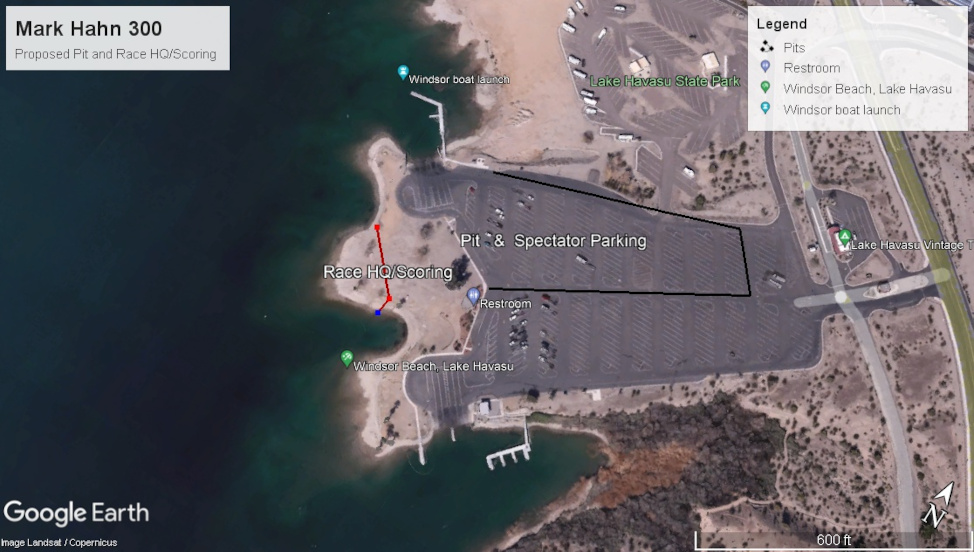

 Wallach announced that the event would be moved from Crazy Horse Campground to Point Beach in the Lake Havasu State Park. The decision to move the event was based on a number of reasons, but the change will likely alter the course layout, and how pit stops and launches made.