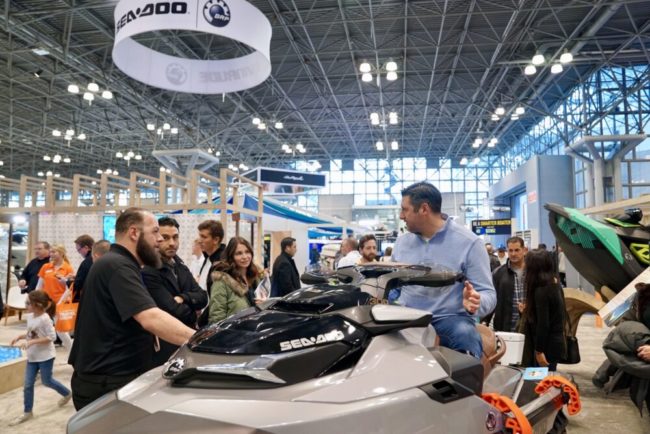
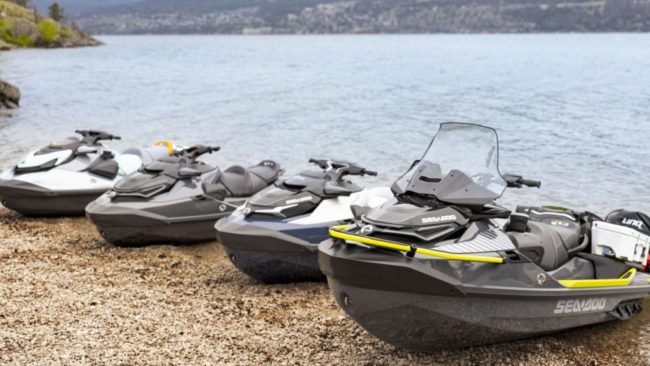
The Sea-Doo Boat Shows for 2023 have been announced and the Sea-Doo crew will be there to answer all your questions regarding the all new 2023 models. A lot of new gear and accessories will be on display as well. They have some a new line of life jackets and LinQ accessories coming out. We hope everything is ready for the shows.
The boat shows kick off in Chicago on January 11th with the last one ending on March 5th in Atlantic City. January is jam packed with boat shows for Sea-Doo. Atlanta, Detroit, Minneapolis, New York, and Houston are all going on. February sees Seattle, the Mid-Atlantic, New England, and the huge Miami International Boat Show happening.
The Sea-Doo Boat Shows are great for getting a hands-on experience and getting a good look at the new gear and accessories. They have some great new products coming out for 2023, so don’t miss out. You can also enter to win a new Sea-Doo and more at the Miami show.
If you are on the fence about purchasing a new PWC, this is a good time to check out all the different models and do some comparison shopping. Plus, boat shows are fun and it’s cool to see all the new watercraft. Head over to a show near you and get in on the Sea-Doo Life.
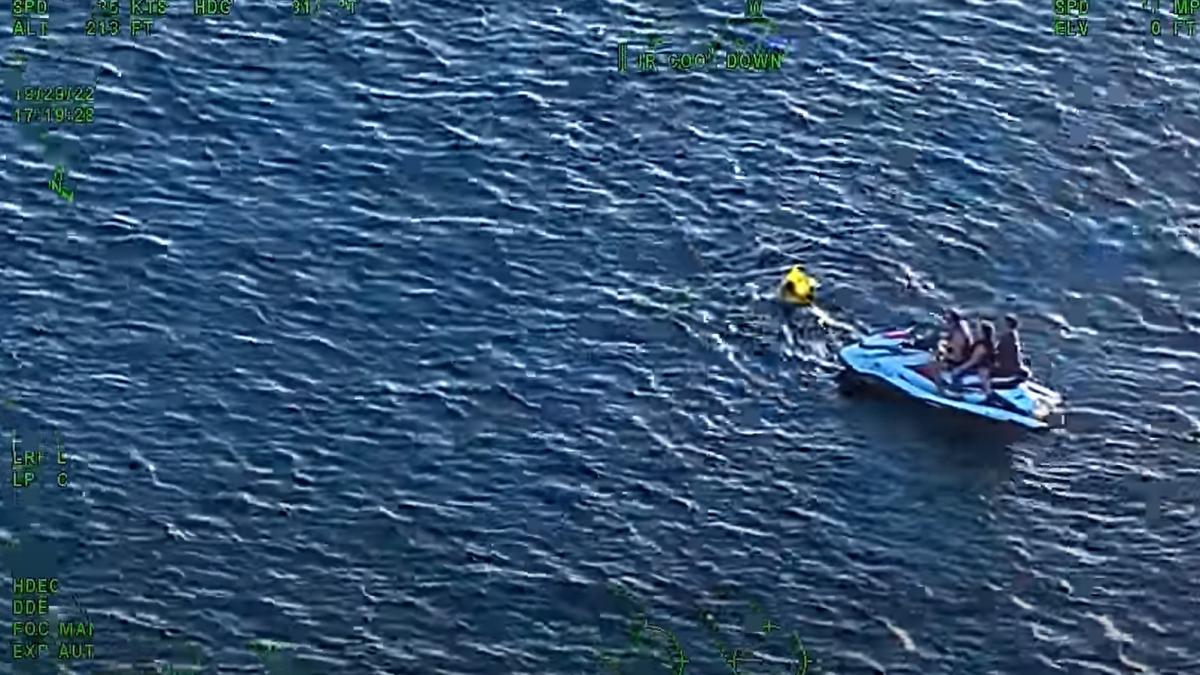
Well, it wasn’t Tom Brady to the rescue, it was backup quarterback Blaine Gabbert and his two brothers. They were jet skiing in Hillsborough Bay when they heard a noise to the south. They headed toward the sound and came upon a sinking helicopter with several people in need of rescue. Gabbert pulled two people out of the water and put them on his jet ski. His brothers helped a third person and when the authorities arrived, they saved the fourth person.
The crash occurred during a tour of the areas. They heard a loud bang and the helicopter lost power and the young pilot made an emergency on the water. Tampa Bay police officer Dan Spears was impressed by the rescue and even made Blaine Gabbert an honorary member of their marine unit.
“It was a pretty impressive feat, no doubt,” Spears said. “They were very calm — great job on that … One of the most dangerous circumstances on an aircraft is a water landing just due to the inversion of a helicopter, and trying to escape that, and not get trapped in, so it was a very amazing circumstance that everybody got out.”
Buccaneers Coach Todd Bowles thought the rescue was outstanding and said: “Any time you can find a guy to drop everything and go help somebody else that that he doesn’t even know without even thinking about it and take their life into their own hands and helping somebody else save their lives, that says a lot about the guy,” he said. “And Blaine did that.”
Check out the complete story and videos on cbsnews.com.
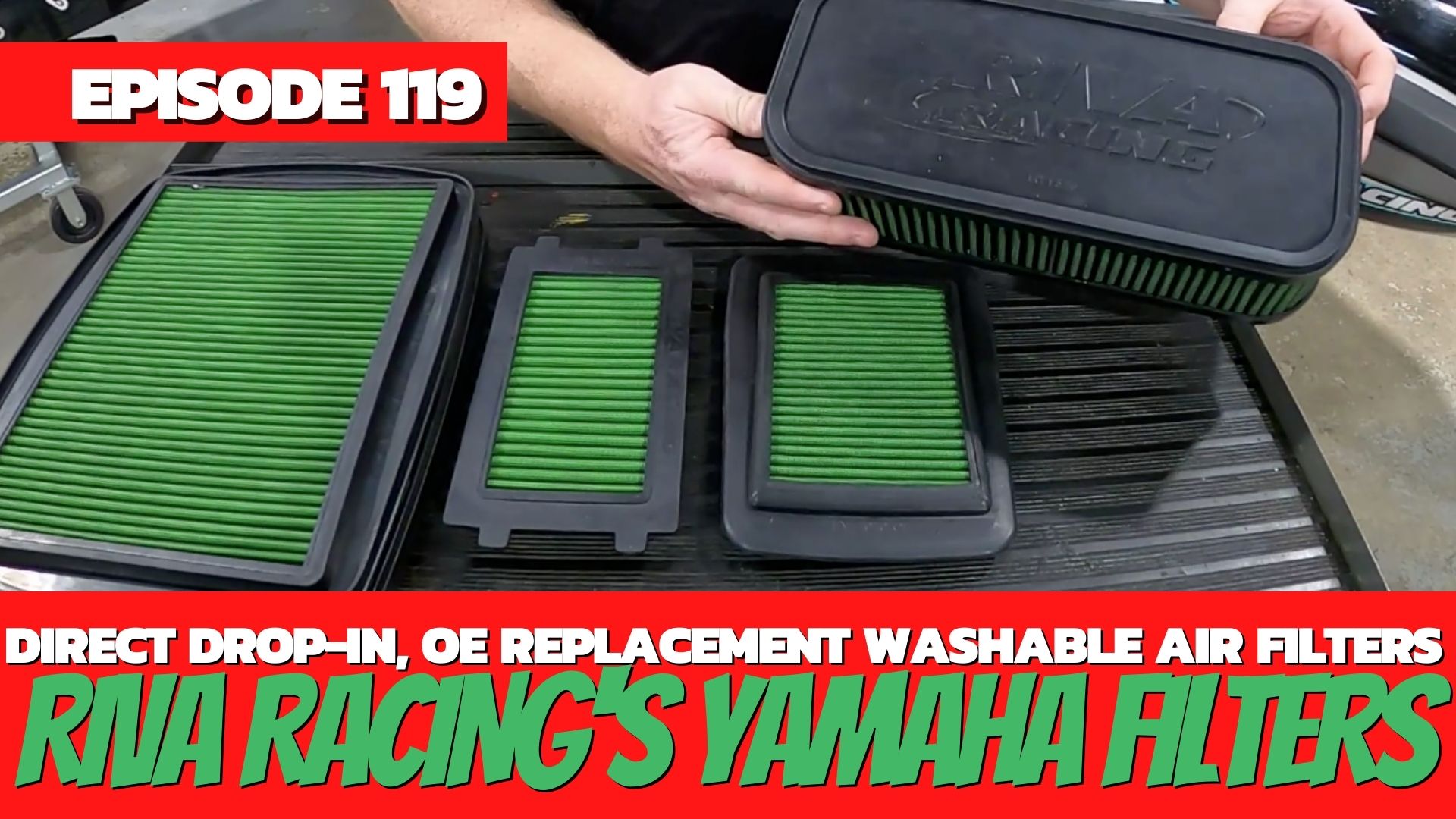
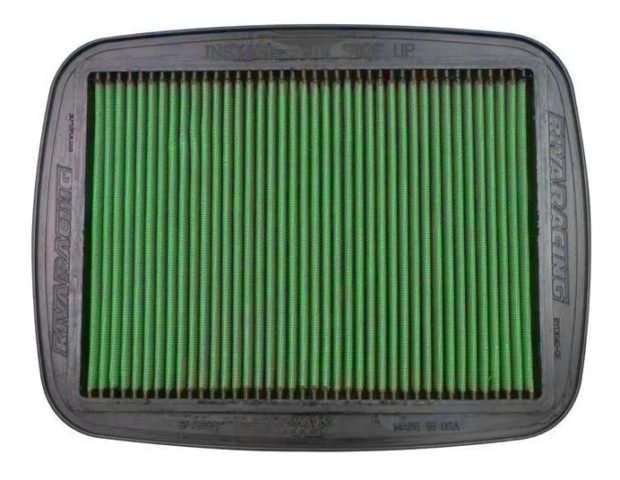
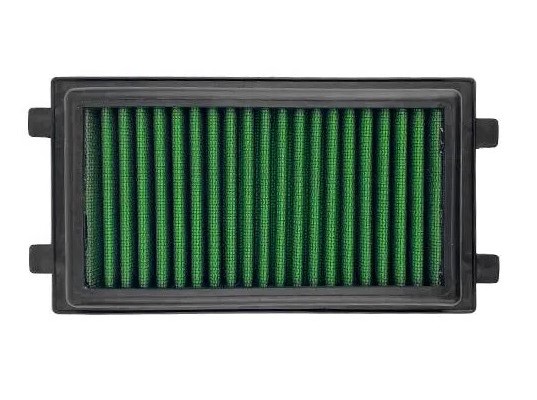
RIVA Racing’s new Performance Air Filters for both naturally aspirated and supercharged Yamaha WaveRunners are in stock for most models! RIVA partnered with K&N to produce a high-performance, reusable air filter that fits right into the stock airbox on all TR-1 and 1.8L SVHO, SHO and HO WaveRunners.
Since these new filters are a direct replacement for the OEM paper elements, no modifications (or tools) are needed for installation. A one-piece seamless sealing bead ensures a perfect fit in your ski. RIVA Performance Filters are 100% washable and reusable, and are designed to last for the life of your machine.
The pleated filter element is composed of epoxy-coated aluminum mesh and oiled cotton gauze media; this proprietary design provides increased water resistance and greatly improved air flow over the factory paper element. Improved airflow translates to an increase in horsepower and acceleration- without sacrificing filtration or reliability.
All of RIVA’s new filters serve as USCG-approved flame arrestors. Riders who performed a “Ribbon Delete” (removal of the flame arrestor ribbon embedded in the intake manifold) on their engine will definitely want to consider purchasing one of these filters/flame arrestors to remain compliant with USCG and international safety laws.
At $128.95 the RIVA Performance Filter for Yamaha’s 1.8L SVHO, SHO & HO WaveRunners (Part# 6S5-E4451-10-00 – superseded from 6AP-E4451-00-00) increases air flow by as much as 40% over the stock filter. This is a pretty big deal for the guy who doesn’t want to modify their ski, but wants to increase engine longevity and performance.
The filter for Yamaha’s TR-1 powered skis is available for $64.95 (Part# 6EY-14451-00-00). The three-cylinder TR-1 engine has proven itself in Yamaha’s rec-lite and freestyle genres, and serves as the backbone of the PWC rental industry. Improved airflow and filtration over the stock paper element translates to an increase in horsepower and acceleration.
When it comes to new filters for Yamaha’s MR-1 powered models, it appears that RIVA does not yet have a new Performance Filter available for these skis. RIVA does continue to offer their screen-type MR-1 Power Filter for $104.95 – although it is currently out of stock and will not ship until late February 2023.
The bottom line is that RIVA’s Performance Filters provide riders with a great way to improve their stock performance without sacrificing reliability. Since installing RIVA’s filters requires no permanent modifications to be made, riders need not worry about voiding their warranties.
RIVA Performance Filters are designed to last for the life of the machine- which reduces waste and eliminates the need to change out paper elements at scheduled maintenance intervals. With many OEM Yamaha paper air filters retailing at over $100.00 each, the RIVA Performance Filter is a smart choice.
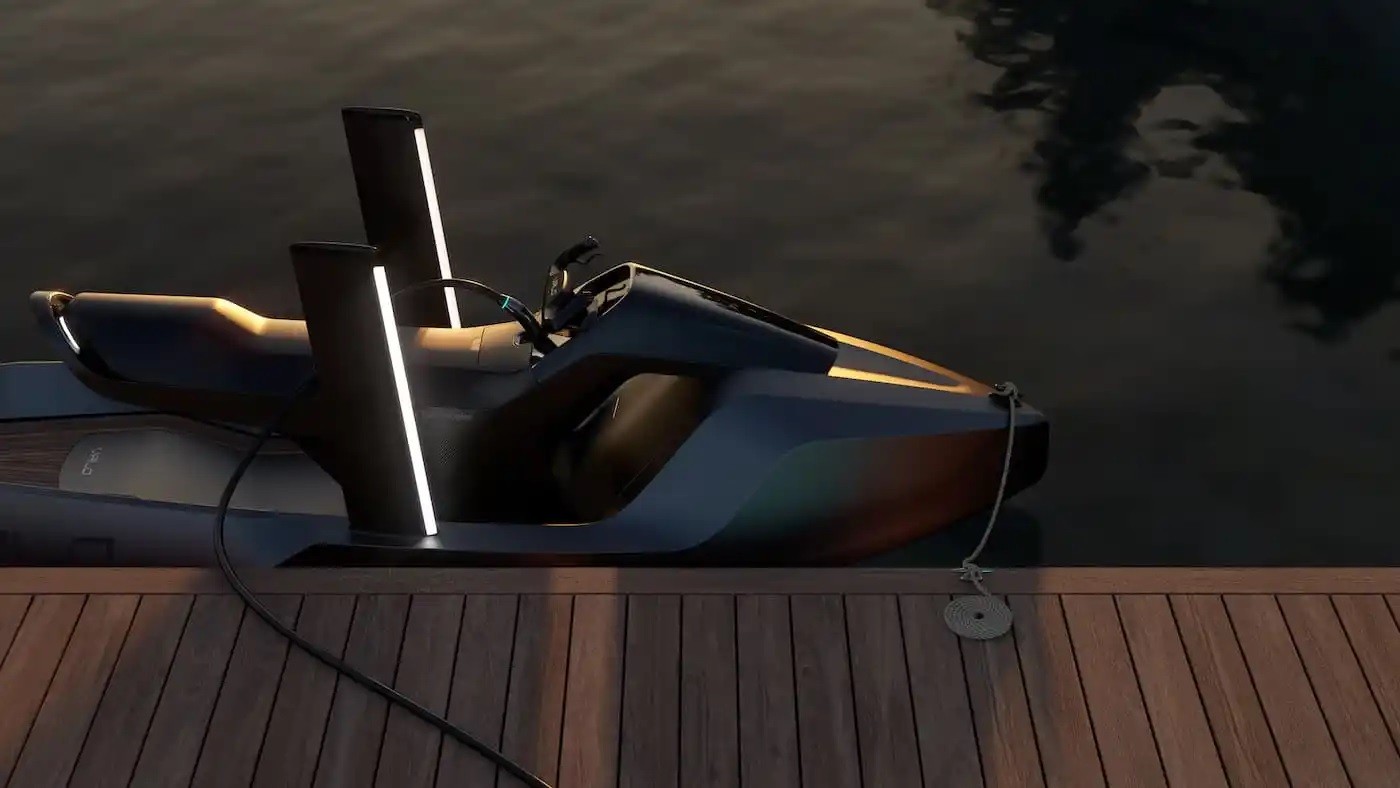
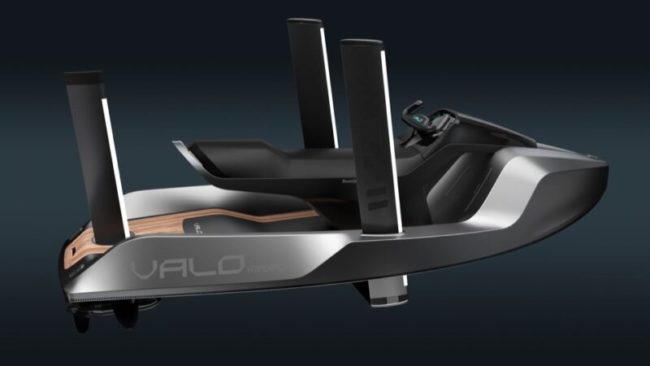
We have a follow up to the early December article on the Valo Electric Hyperfoil Personal Watercraft with the retractable hydrofoil blades. Boundary Layer, the company responsible for designing the Valo, has received a little over one million dollars in preorders for its hyperfoil. Boundary Layer has been working on a series of electric hydrofoiing vessels capable of transporting light freight and they have electric hydrofoil passenger ferries in development.
After raising $90 million in funds for those projects and placing them on hold, they moved into designing the Valo to grab a piece of the consumer market for PWC. According to Boundary Layer’s CEO and founder, Ed Kearney, the company has received a little over $1 million worth of preorders for the $59,000 luxury watercraft. The company charges a $1,000 refundable deposit to get on the waiting list for a Valo. Kearney says they are on track to produce a prototype in early February-
“After being live for just three weeks we have slightly over $1 million worth of vehicles reserved, mostly to folks in the US, and one customer in Kuwait,” Kearney tells me, adding that the company is “on track to demonstrate the prototype in early February.” We’ll see if Boundary Layer will stay focused on the Valo long enough to roll out its “Founders Edition” watercraft.
Sea-Doo is still taking pre-orders on brand new 2023 PWC and Switch Pontoon Boats. You have until March 31,2023 to take advantage of the Pre-Order Sales Event. You will receive up to 2-year coverage to cover your ride. This includes a 12-month BRP Limited Warranty plus up a to 12-month B.E.S.T. Coverage.
Florida residents receive a 24 months BRP Limited Warranty. Get that new 2023 model Sea-Doo watercraft you’ve been eyeing. Sea-Doo recommends pre-ordering due the continued high demand on PWC. This way you have the best chance of getting the watercraft of your choice. The deposit must be paid and confirmed by your dealer to make it official.
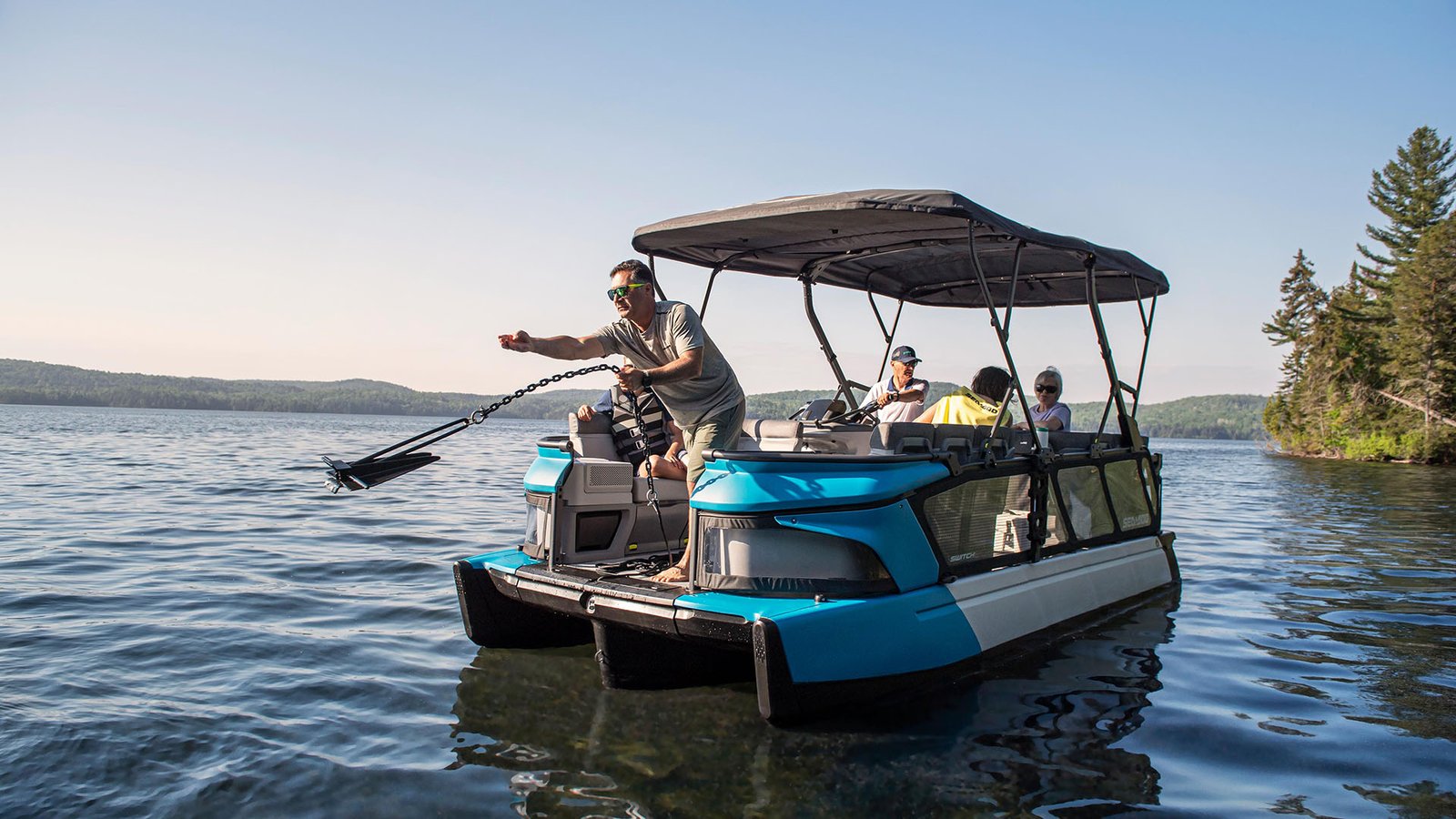
If you’re looking to take the family out or a group of friends, a Switch is the way to go. Choose from 11 models of Switch Pontoon Boats. If you want to go big, they have the new Cruise 21, which holds up to 9 people. It comes with a trailer and is outfitted with BRP Audio System, swim platform with LinQ attachment points, and a Garmin 7-inch touchscreen GPS. You can even add an accessory bundle to make your experience even better.
If you’re looking to ride solo and go on expeditions, the 2023 Explorer Pro 170 is for you. This machine has the Rotax 1630 ACE-170 hp engine, which has the power to get you where you want to go while maintaining high fuel efficiency. It has the cargo space to hold all your gear for an extended weekend or longer. Check out these models and all the other Sea-Doo models you’ve come to know. Build and customize yours today!
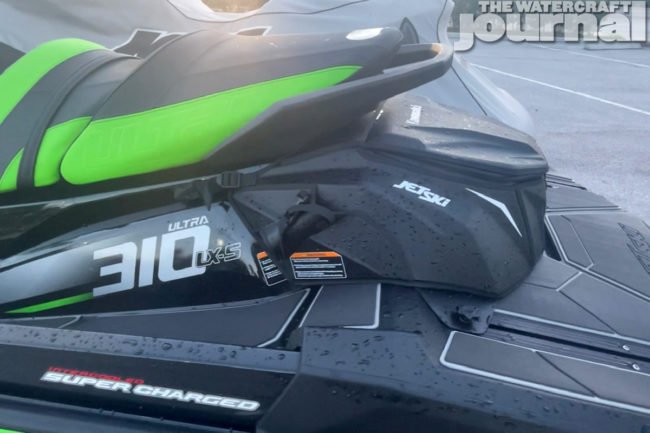
Kawasaki never really “led the charge” when it came to accessories for its JetSki lineup, especially when compared to Sea-Doo or Yamaha. For 2022, however, Kawasaki stepped up their game and launched a full line of new accessories designed accompany the latest generation of Kawasaki Ultra 310 Jet Skis
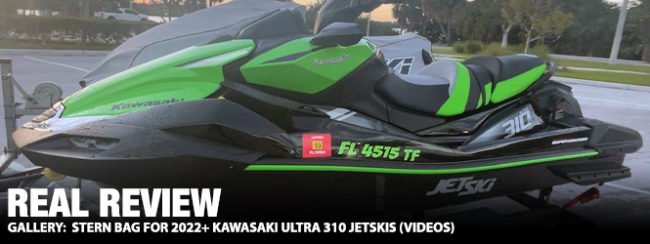
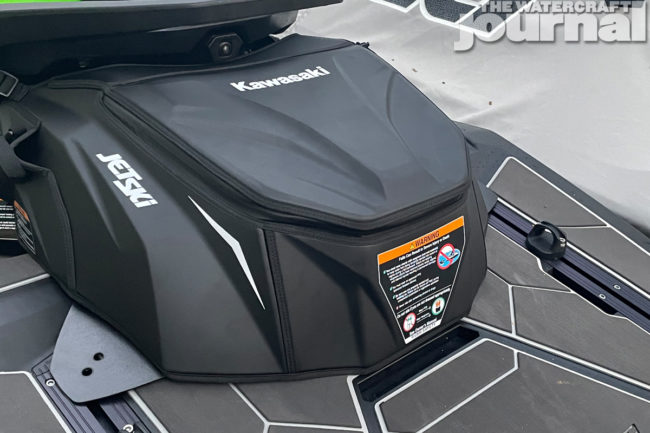
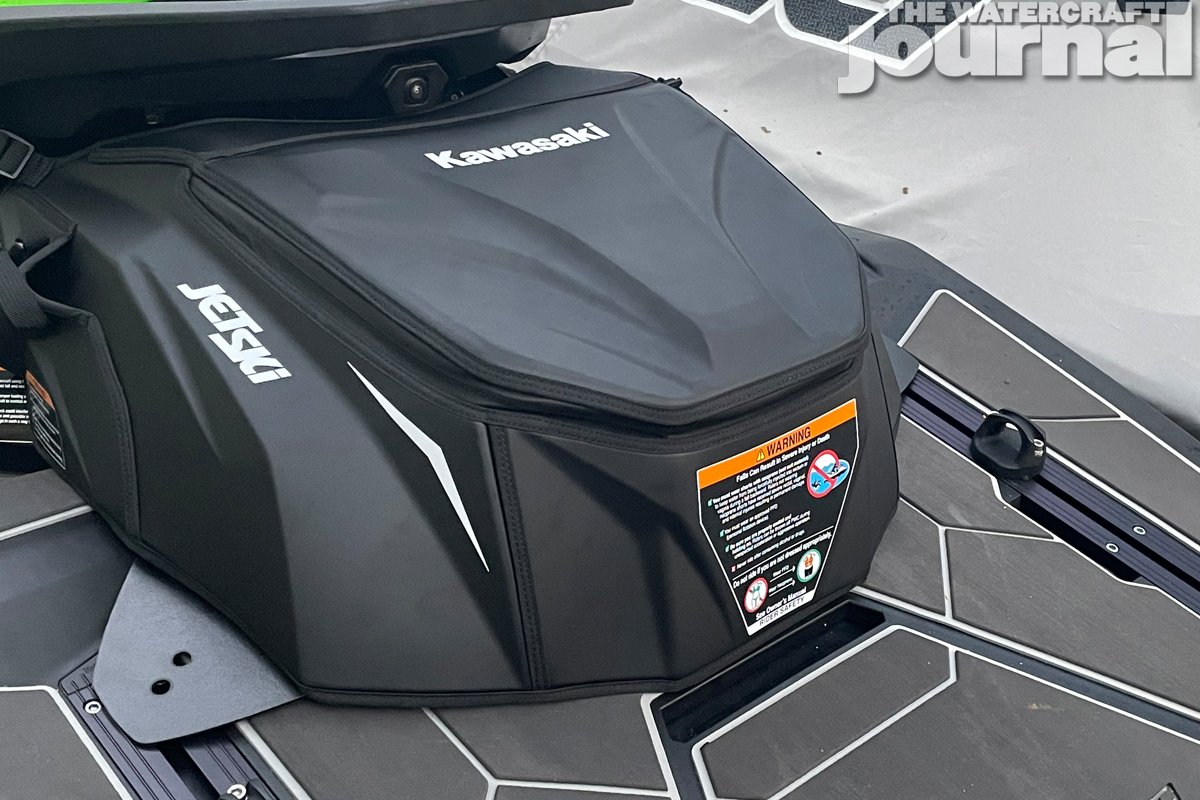
The 7-gallon Stern Bag accessory ($309.95) is compatible with all three Ultra 310 trims, and can be installed whether or not your ski features an Ultra Deck. The bag is made of soft yet rigid material, has a “flow-through” design with a mesh-like bottom that allows the bag to “breathe,” and seamlessly accommodates Kawasaki’s optional 1.3-gallon Soft Cooler ($110.95).
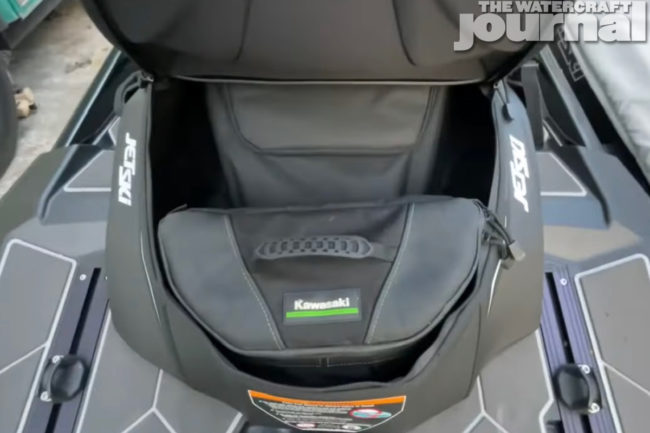
Upon unboxing the Stern Bag, the quality of the accessory was immediately apparent. The bag has a satin sheen, with a soft yet rigid texture. Dual zippers- protected from the elements by a canvas sheathe- provide easy access to the bag’s main pocket. Inside, the bag features a mesh-lined bottom, reinforced with a rigid plastic stiffener.
Since the Ultra 310s feature a small storage pocket on the stern, just below the passenger seat, the Stern Bag features a zippered pass-through pocket inside so that this compartment and the ski/tow hook can still be accessed with the bag mounted to the ski.
The Ultra 310 has more than enough storage, but adding this bag to the rear allows you to easily access anchors, fishing gear, or drinks that might be too deep in your front compartment to conveniently reach while on the water. With the Ultra Deck, there is still room behind the Stern Bag to board the ski from the water or jump off the back.
The bag is flanked by a dual fishing rod holders- molded right into the sides. The holders are complete with adjustable nylon straps to securely lash your rods in place. The rods are held at about a 45 degree angle, and not straight up and down.
The optional 1.3 gallon Soft Cooler fits like a puzzle piece inside the Stern Bag- with room to spare for lines, anchors, supplies, or gear. Keep in mind that the Stern Bag is not waterproof nor does it claim to be. The bag’s design does allow its contents to dry out fairly quickly when stored, so that items in the bag don’t get moldy or musty.
The Soft Cooler has a durable canvas texture and features Kawasaki branding. It does provide decent insulation and does accommodate a 64 oz stainless water bottle and an ice pack pretty well. It would have been great if the Soft Cooler was included with the Stern Bag, as the $110.95 price tag seems pretty steep for something this small.
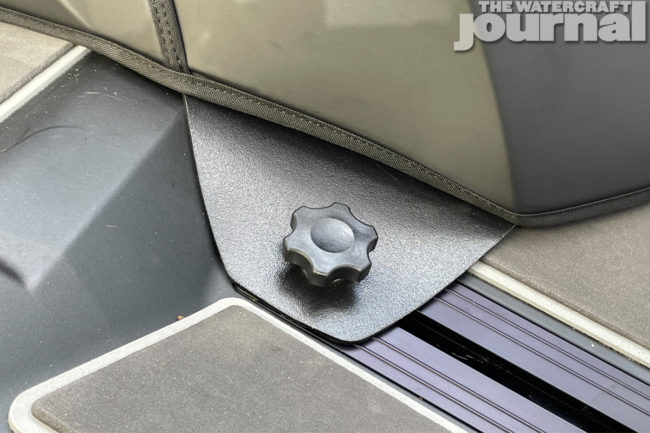
The plastic base of the Stern Bag serves as the primary mounting point, and is held securely to the rear of the ski via two plastic knobs and stainless-steel t-nuts. These t-nuts are installed in the Multi-Mount Rails embedded in the Ultra Deck. 310X models without the Ultra Deck feature pre-threaded pilot-holes for the purpose of installing this bag.
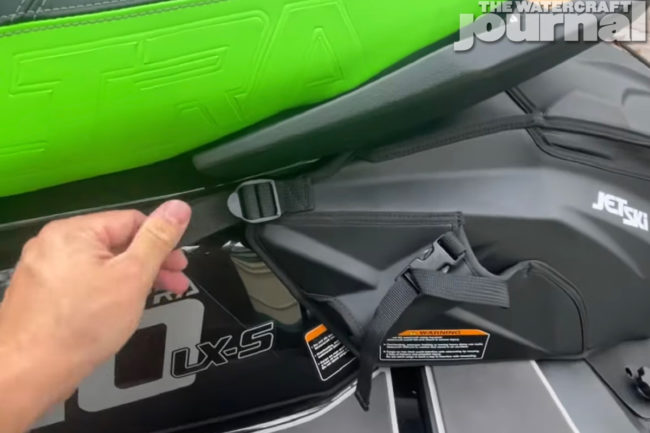
The primary mounting point on the plastic base of the Stern Bag does not require that any modifications be made to the ski. When it comes to the secondary mounting straps, however, Kawasaki’s factory installation instructions instruct installers to drill two 3/16ths holes on either side of their ski in order to mount the “Stayput knobs” that hold the bag’s upper straps in place.
While the video below does cover basics of the factory installation methods, this author had ZERO interest in drilling holes in his ski, so an alternative method utilizing industrial and water-resistant Velcro was devised. Speaking with other 310 owners, it seems that everyone is in agreement about the aversion to drilling holes in a brand new $20,000 JetSki.
Before advising others that this “Velcro Method” was a viable alternative, JD’s Waterworld took to the seas, and spent a few hours out on the water (in fairly rough conditions) testing the limits of the drill-less installation method.
The Stern Bag was loaded up with dock lines, 2 foam fenders, an extra pair of riding boots, a small Danforth anchor with line and chain, and the Kawasaki Soft Cooler filled with a few bottles of water and an ice pack.
Throughout the ride, the Stern Bag maintained its structural integrity, remaining attached to the ski at both the stern and upper Velco attachment points. While Velcro’s tensile strength is much less than a physical mounting-point secured by a 2” 3/6 stainless nut and bolt, the Velcro does provide the necessary tension to keep the upper straps secured to the ski when riding in moderate chop.
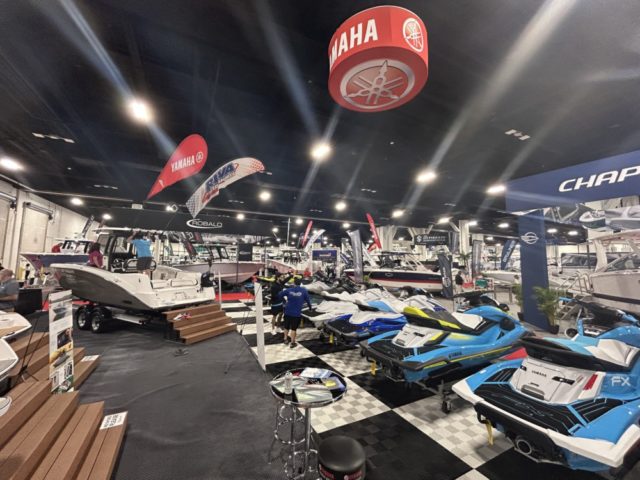
The 2023 boat show season in the US is only days away, with many shows launching during the first week in January. COVID-19 restrictions over the past few years were responsible for the cancellation or postponement of many boat shows across the country – leaving consumers unable to actually see the newest WaveRunner models in-person. Visit officialboatshows.com to find a boat show near you.
This year, COVID-19 restrictions are a thing of the past, and Yamaha will be back on deck in Nashville, followed by shows in Chicago, Atlanta, Detroit, Minneapolis, New York, and Louisville. There will be plenty of opportunities for enthusiasts to get out and see their favorite WaveRunner models in person before placing pre-orders or putting down deposits.
If your New Year’s Resolution involves purchasing a new 2023 Yamaha WaveRunner, then look no further than the 72-page high-resolution, full-color brochure now available directly from Yamaha HERE. This publication features detailed specifications on every model in the 2023 lineup, as well as product photos and comparison matrices that help consumers stay informed about the capacity, sizing, and capability of each model.
In looking back over 2022, the world of jet ski racing was pummeled by two deaths and several injuries that could’ve have been if not wholly avoidable, possibly assuaged. The PWC community mourned the loss of Eric Francis and Sung Won Kim this year, and left many contemplating how, if possible, such tragedies could be prevented.
This led many to begin voicing suggestions and recommendations that could be made to increase racer safety. This author even dedicated over a hour of The Watercraft Journal’s weekly live podcast to this topic providing a short list of basic safety equipment requirements as “low hanging fruit” offerings. While the entire podcast is linked below, here’s an abbreviated list:
While our podcast was circulated through some inner circles of the personal watercraft industry and among some racers, it does not serve as the end-all of this conversation (nor should it). Thankfully, the IJSBA board members, which are primarily OEM manufacturers, are equally concerned for rider safety and have asked that participants submit safety recommendations to [email protected].
Equally, the IJSBA is interested in racers submit any suggested rule changes separate from these safety recommendations as they are, in most aspects, separate topics to be addressed. The IJSBA provides a detailed step-by-step guide for submitting such changes to the 2023 rule book that should be followed. Any positive change must begin somewhere and this is a good step in the right direction.
After a couple of difficult years as far as keeping shelves stocked and supplies at the ready, RIVA Racing pulled ahead of the curve and now is enjoying quite a bit of surplus in a bunch of categories. Right now, RIVA is hosting a massive End of The Year Sale (or New Year Sale, as they show it) offering double-digit discounts on all major categories.
Here’s what Mike Hodges told The Watercraft Journal, “This is our biggest holiday sale yet! We’ve discounted practically all RIVA Racing parts and accessories, including 15% off all RIVA Performance Kits. Availability of raw materials and sub-components continues to improve and we’ve filled all open positions. The RIVA Crew is working full throttle building up inventory and most orders ship out within 1~2 business days.”
Right now, you can cut 20-percent off of select JetPilot riding gear and Yamaha FX Sound Systems; 15-percent off of select official Solas impellers; 15-percent off of Cold Air Intakes, Exhaust Kits and select fuel injection systems; same for ignition kits, towables and more. Honestly, if you passed on getting yourself anything for Christmas, you’re gonna want to reconsider because this is a huge deal.
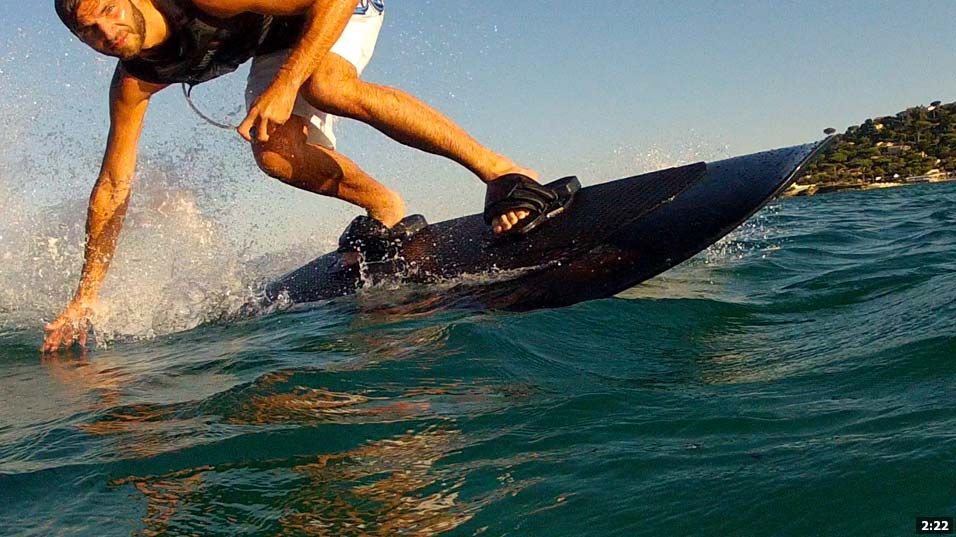
The Radinn crew had a huge year in 2022 and their partnership with Red Bull topped things off. As a winner in Red Bull’s second Project Swell surf forecasting contest in 2004, I experienced how Red Bull puts on events. Everything is huge and everyone is treated like royalty. They spare no expense. The same can be said for the events Radinn took part in this year. The events were epic as expected when it comes to doing things with Red Bull.
It all began with the at the Red Bull Headquarters with some of the Red Bull athletes on hand to try out the boards. Alex Zika, Global Head of Event Marketing for Red Bull was there making sure the athletes were taken care of. He gave them Radinn Jetboards and said it was all about sharing the stoke and fun the boards provided. Zika wanted to see the Radinn crew at other events to see what possibilities they could bring to everyone in the extreme sports industry. Cliff diver Rhiannan Iffland was in the water on a and having a blast on a jetboard.
Next stop was Red Bull Wake the City where they met with Massaimillano Piffaretti, a Red Bull Wakeboarder. He and the other athletes on hand raved about shredding on the Radinn electric jetboards. The Radinn crew even took a trip to Nazare and hung out in the Red Bull Athlete Zone with some of the top big wave surfers. Some of those guys made waves with Radinn Jetboards. Check out their YouTube for more about the Radinn X Red Bull Experience 2022. We think it will be a thing for years to come with bringing electric innovation to all the events.