Here’s this week’s WCJ Weekly Racing Roundup, where we break down what’s happening across the major PWC race series, look back at recent results, and set the stage for what’s coming next on the water.
wXgp
One of the most interesting developments in the PWC racing world this season isn’t a championship battle or a record-setting run. It’s the launch of wXgp, a new racer-driven series that aims to blend traditional watercraft competition with a full festival atmosphere. The inaugural wXgp event, the American Spirit Festival, is scheduled for June 26-28 at Altus Reservoir in Altus, Oklahoma. In addition to closed-course racing, organizers are planning a full weekend of entertainment, including freestyle exhibitions, slalom competition, live music, fireworks, a drone show, family activities, and a variety of festival-style contests as part of America’s 250th birthday celebration.
Series officials have also emphasized accessibility for newcomers, recently spotlighting several first-time racers preparing to compete at the opening event. The promotion reflects one of wXgp’s core goals: creating an entry point for new participants while maintaining opportunities for experienced competitors.
On the racing side, wXgp has announced more than $16,500 in payouts across multiple classes for the season opener. The series is partnered with the IHRA Pro Watercraft Series and currently has three events scheduled for 2026, with stops in Altus, Oklahoma; Little Elm, Texas; and Paris, Texas.
Western Canadian Watercross Association
The Western Canadian Watercross Association (WCWA) is counting down to the start of its 2026 season, with Rounds 1 and 2 scheduled for June 13-14 at Rattlesnake Lake near Medicine Hat, Alberta. The six-round championship will continue with stops at Stafford Lake near Lethbridge in July and Alberta Beach near Edmonton in August.
As preparations continue for the season opener, WCWA recently announced Conlon Motorsports St. Albert as the title sponsor for the 2026 tour, joined by a strong roster of supporting partners helping to grow watercross racing across Western Canada.
Perhaps the biggest story heading into the new season is WCWA’s aggressive push to bring new riders into the sport. The organization has introduced a series of incentives for the Medicine Hat opener, including 50 percent discounts on beginner and vintage race entries, reduced family registration rates, and a first-time racer subsidy that allows newcomers to try a day of racing before committing to a full membership.
WCWA officials say the program is designed to make racing more accessible while encouraging families and first-time competitors to experience the sport in a welcoming environment. Beginner classes are open to all personal watercraft 800cc and under, with organizers emphasizing a supportive atmosphere and opportunities to learn from experienced racers.
Pre-registration remains open for the Medicine Hat event, while racers planning to attend the July stop at Stafford Lake are encouraged to reserve campsites soon, as a limited number of discounted racer sites remain available.
Nauti Water Racing
Nauti Water Racing’s busy 2026 schedule shifts into high gear this weekend as the Mid-America Watercross Series opens its season June 6-7 at Hillsdale Lake in Kansas. Organizers are expecting a strong turnout as racers begin their pursuit of regional championships and Road to Havasu qualification opportunities.
The Mid-America series is one of several programs operating under the Nauti Water Racing umbrella, alongside the Outlaw Water Series and Lake Havasu WaterX. Together, the series form part of a broader competitive structure that feeds into the Liqui Moly Pro Watercross National Tour and the organization’s ongoing “Road to Havasu” championship initiative.
Registration for the Hillsdale opener closed June 3, with late entries subject to additional fees. Organizers are promoting the event as a welcoming environment for both veteran racers and newcomers looking to gain experience in regional competition.
Beyond Hillsdale, racers are already looking ahead to a busy summer schedule that includes upcoming stops in Lubbock, Texas; Grand Lake, Oklahoma; Norman, Oklahoma; and Lake Havasu, Arizona. Many of those events will serve as combo races, allowing competitors to earn points toward regional championships while simultaneously advancing their national Pro Watercross standings.
Great Lakes Watercross
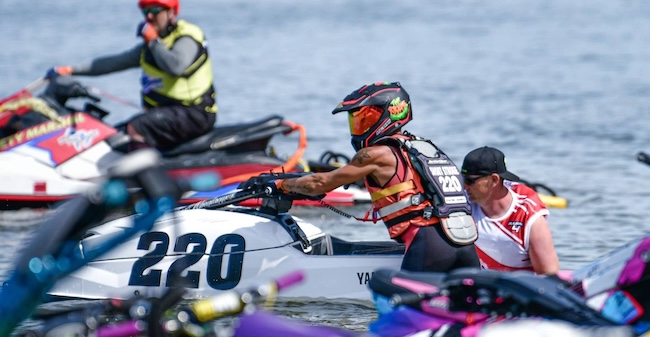
After completing its opening two rounds at Bixler Lake Campground in Kendallville, Indiana, Great Lakes Watercross is already seeing several tight championship battles emerge across both individual and team competition.
The closest contest may be the 2026 Team Points Challenge, where RNR and Ignite’s 2 Wicked Racing are tied atop the standings with 480 points apiece. Jet Stars remain within striking distance at 466 points, while Jet Jockey and Milwaukee Motorsports round out the top five heading into the next stop of the season.
Several classes also produced early-season deadlocks. In Ski GP2, Camden Powell and Jay Finlinson are tied for the championship lead with 113 points each, while Justin Treder and Jack Eidt are locked at 113 points in Vintage Ski 550. Other current class leaders include Dustin Voss in Pro Am Ski Lites, Jason Seeley in Naturally Aspirated Runabout, Kyle Niquette in Runabout GP2, Justin Eblin in Sport Spec, Kali Bohat in Junior Runabout Lites, and Madison Elders in Women’s Runabout Lites.
The series now turns its attention to Janesville, Wisconsin, where Rounds 3 and 4 will take place June 27-28 at Traxler Park. Great Lakes Watercross continues to draw strong local support throughout the Midwest, with tourism organizations and host communities already promoting several upcoming race weekends, including the series’ August stop at North Beach in Racine, Wisconsin.
That’s a wrap on this week’s WCJ Weekly Racing Roundup. From regional championships to national tours, the 2026 season is already taking shape fast. For continued coverage across all major PWC series—including IJSBA and IHRA—stay tuned to The Watercraft Journal.
A few years ago, The Watercraft Journal took a closer look at BRP’s Uncharted Society program and the unique opportunities it offered riders to experience destinations from the water. Rather than focusing solely on selling personal watercraft, the program encouraged participants to explore coastlines, waterways, and destinations around the world aboard BRP products through organized adventures and rentals.
Recently, while revisiting the program, we noticed something unexpected: the Uncharted Society name had seemingly disappeared.
As it turns out, the concept itself hasn’t gone away. Instead, BRP has expanded and evolved the idea under a new platform known as BRP Experiences — a global network of 225-plus destinations across 14 countries that continues the work Uncharted Society started, putting riders of all levels on BRP products in some of the world’s most remarkable places. Since 2021, the program has logged more than 2 million rides.
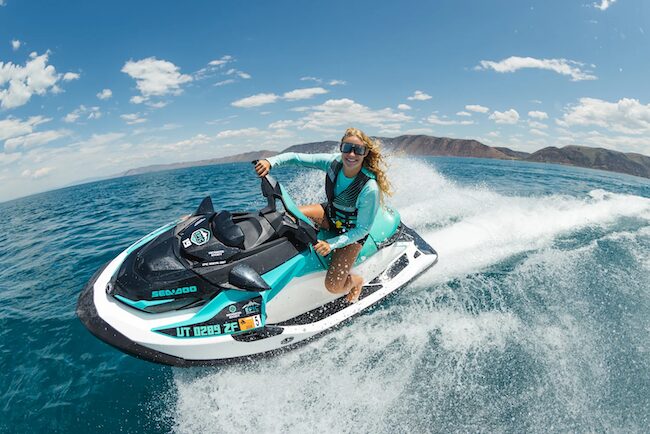
As part of the broader powersports universe that is BRP Experiences, Sea-Doo Adventures encompasses the watercraft category — giving WCJ readers the ability to zero in on water-based adventures or expand their search across snow, sand, and open terrain.
Same Mission, Bigger Stage
At its core, the mission of BRP Experiences holds true to the Uncharted Society – to connect riders with memorable experiences, whether they’re longtime enthusiasts, first-time riders, or prospective buyers looking to spend time aboard a Sea-Doo or other BRP powersports model before making a purchase of their own.
BRP Experiences still encompasses adventures across Sea-Doo, Ski-Doo, Lynx, and Can-Am — but with a more unified platform that makes it easier for participants to discover and book outdoor adventures while introducing new riders to the wider BRP ecosystem.
BRP Experiences also appears to place a greater emphasis on guided experiences. While guided tours existed under Uncharted Society, they now occupy a more prominent role within the program. Many adventures are led by local experts who provide insight into regional waterways, landmarks, and points of interest that visitors might otherwise overlook.
For participants, the appeal is easy to understand. Instead of simply renting a watercraft for an afternoon, riders gain access to curated experiences built around exploration and discovery.
Whether the experience is fully guided or self-directed, the current lineup spans a wide range of riding styles and destinations, from remote Arctic waters to relaxed lake cruising and even short-format skill-building sessions designed for newer riders.
One of the more striking examples comes from the far north. In Mehamn, Norway, riders can launch into the Arctic waters on a guided Sea-Doo tour to Cape Nordkyn — one of mainland Europe’s northernmost points. The ride combines fjord crossings, steep coastal cliffs, and secluded bays, all led by local guides who share regional history and insight along the way. It’s the kind of experience that leans heavily into storytelling as much as riding, with full immersion in one of the most dramatic environments a Sea-Doo could possibly access.
At the other end of the spectrum, BRP Experiences also leans into accessible, self-guided exploration. On Flathead Lake in Montana, riders can spend several hours cruising calm, clear water aboard a rented Sea-Doo, stopping for swims, shoreline exploration, or simply enjoying the freedom of open lake riding at their own pace. It’s less structured, but no less memorable, especially for riders looking to experience a Sea-Doo in a relaxed, low-pressure setting.
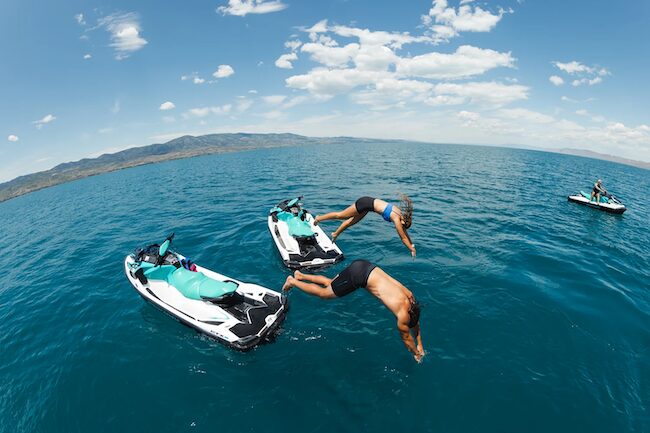
A similar approach can be found on Bear Lake, straddling the Utah-Idaho border, where riders can explore turquoise waters often referred to as the “Caribbean of the Rockies.” Here, the experience is built around flexibility — ride the shoreline, stop for photos, take breaks, or simply enjoy a casual day on the water with family and friends.
Rounding out the range is a very different kind of experience in Fort Myers Beach, Florida, where short-format “skills rides” focus less on destination exploration and more on rider confidence and control. These 30- to 60-minute sessions aboard Sea-Doo GTI models are designed for beginners and first-time riders, offering a chance to get comfortable on the water, practice basic handling, and enjoy a quick burst of coastal riding in a controlled, approachable environment. While the emphasis is on learning, the setting still delivers the kind of Gulf scenery and occasional wildlife encounters that make Florida riding so distinctive.
Taken together, these examples highlight the range of PWC-focused adventures covered under BRP Experiences, from high-latitude guided expeditions to skill-building sessions and easygoing rental experiences on some of North America’s most scenic inland and coastal waters.
The approach also benefits newcomers to the sport. For many prospective buyers, a guided adventure can provide far more meaningful seat time than a brief dealership demonstration ride. Spending several hours on the water in real-world conditions often gives participants a much better understanding of how a particular model fits their needs and riding style.
In many ways, BRP Experiences feels less like a replacement for Uncharted Society and more like the natural evolution of an idea that was already working. The branding may have changed, but the underlying goal remains familiar: helping people create memorable experiences on the water while showcasing what today’s personal watercraft can do.
For those who remember Uncharted Society, the name may be gone, but the spirit behind it appears very much alive. If anything, BRP Experiences suggests that BRP sees even greater potential in the concept than when it was first introduced — expanding it into a larger platform designed to help more people discover life on the water.
On a related note, BRP’s growing focus on connected experiences isn’t just happening in structured tour environments. During a recent trip to Lake Havasuto test the new 10.25-inch display system and the BRP GO! app, we saw firsthand how integrated navigation, route planning, and on-water information can enhance a day on the water.
When it comes to storing and launching a personal watercraft, most owners focus on convenience. But protecting the hull itself can be just as important, especially as modern PWCs continue to feature more aggressive designs, premium finishes, and painted surfaces.
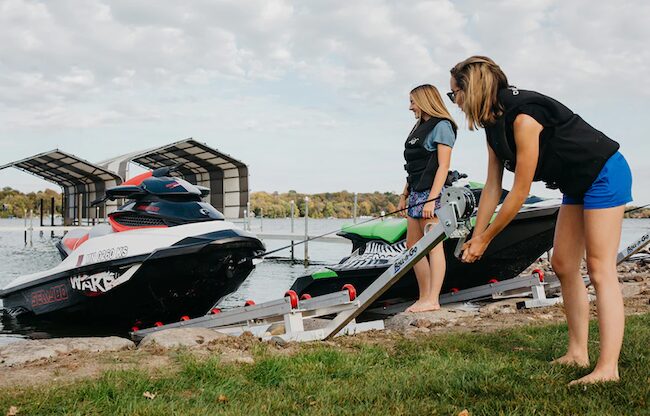
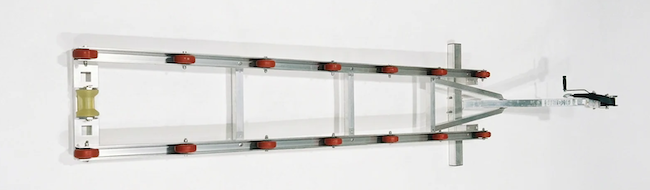
That’s one reason ShoreDocker incorporates urethane-coated roller systems instead of traditional carpeted or nylon bunks found on many docks and lifts.
Traditional bunks support a watercraft by allowing it to slide across carpet or synthetic surfaces during loading and unloading. While effective, repeated contact can create friction over time. Owners of painted hulls and premium finishes often pay close attention to any surface that regularly comes into contact with their watercraft.
ShoreDocker’s roller design approaches the challenge differently. Rather than dragging across a fixed surface, the craft rides on a series of urethane-coated rollers that rotate as the watercraft moves. The softer urethane surface helps cushion contact points while allowing the craft to roll smoothly into position.
The system also utilizes sealed bearings within the rollers. Because the bearings are encapsulated, they do not require routine oiling or greasing, reducing maintenance requirements for owners who simply want reliable access to the water.
The result is a docking system designed around both convenience and long-term ownership. Easier loading, reduced friction during retrieval, and lower maintenance demands all contribute to a more user-friendly experience.
For many PWC owners, especially those looking to protect their investment while maximizing time on the water, details like the roller system can make a significant difference in everyday use.
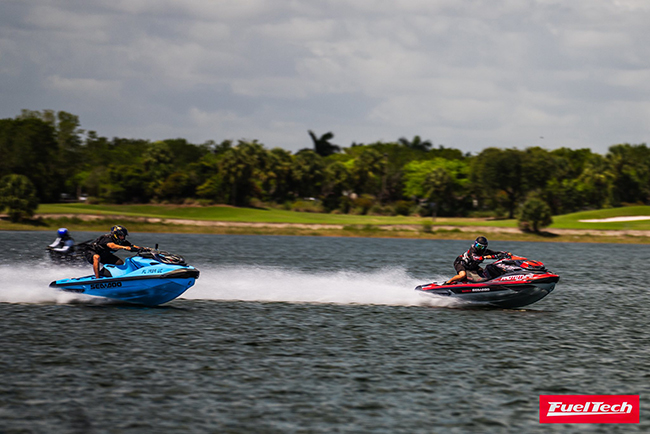
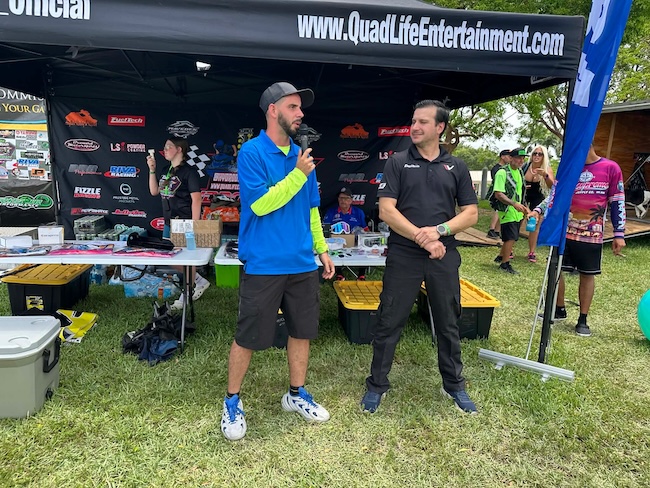
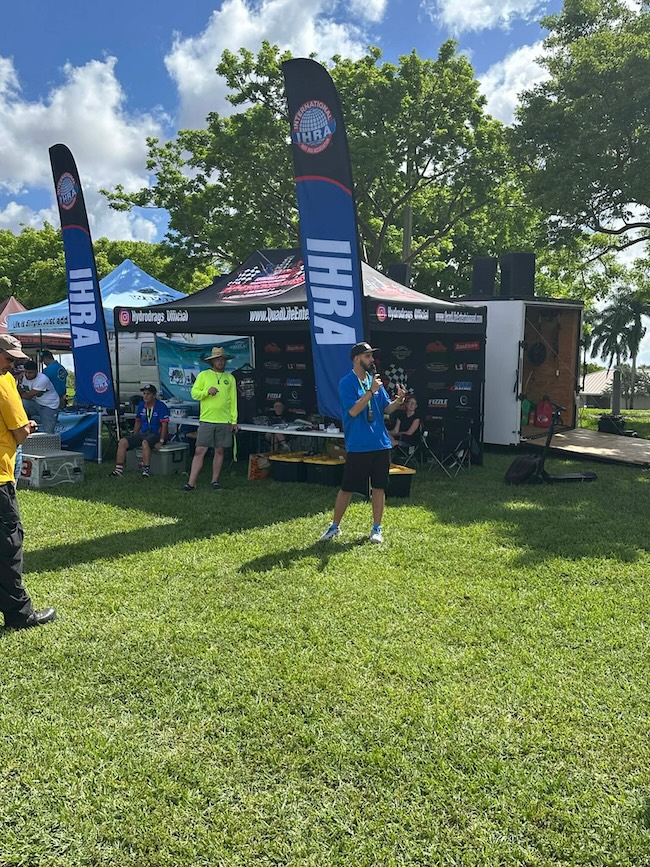
Billy Tew didn’t ease into the conversation. Before the formalities were even out of the way, the HydroDrags showrunner had already summed up his assessment of the Memorial Day weekend event at Sunset Cove Amphitheater in Boca Raton, Florida — a weekend that delivered record-setting performances on the water, but came with significant logistical and operational challenges behind the scenes.
The event, part of the IHRA Pro Watercraft Series HydroDrags program, was impacted by a combination of holiday weekend traffic, regional recreational boating activity, extreme heat, and venue coordination issues that Tew said made execution far more difficult than anticipated.
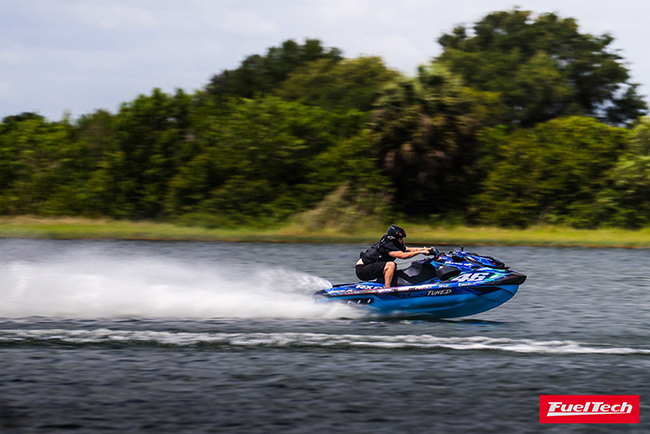
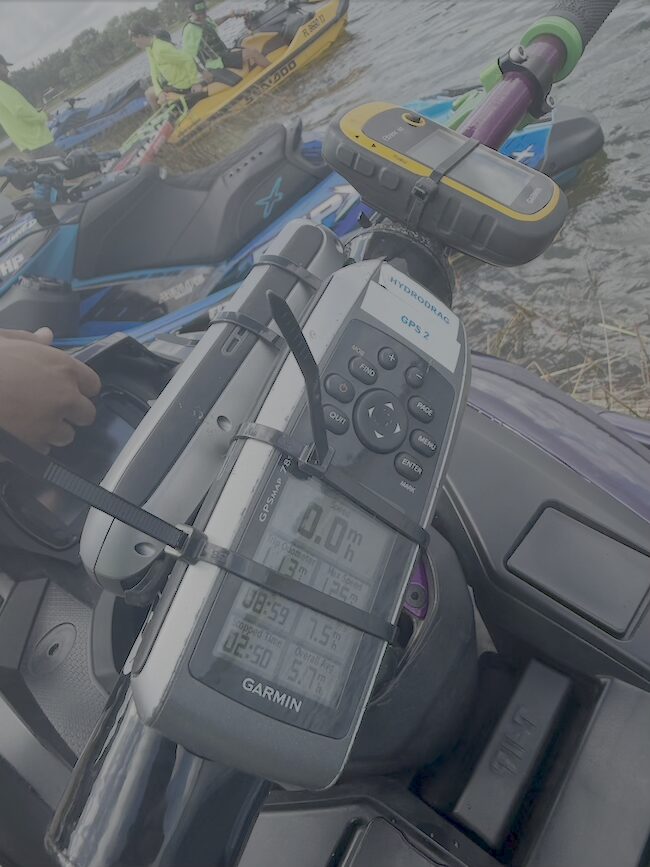
Despite the challenges, competition still pushed forward at a high level, with multiple records set across several categories and a compressed run format that accelerated the pace of Speed Alley competition. Officials confirmed all results were properly teched and validated.
Records and results highlight competitive weekend
Even with operational difficulties, the on-water action produced standout performances across multiple divisions.
Speed Alley also saw notable benchmark performances, including Jose Luis Hernandez reaching 119 mph in Super Stock, Robert Perez topping 125 mph in Turbo No Nitrous, and Tin Man posting 94 mph in the Sea-Doo category. The Unlimited benchmark remains 147 mph, held by CRT Racing from a previous event.
1 of 14
Safety incidents shape discussion moving forward
The weekend also included multiple on-water incidents that prompted renewed discussion around rider safety and equipment use, including neck and back protection. Tew noted that while racing incidents are an expected part of high-speed competition, the events underscored the importance of continued safety development as the program grows.
One incident in particular required emergency attention on-site, with medical response teams transporting a rider for further evaluation. Tew later confirmed the rider sustained injuries but was conscious and in stable condition.
Even amid the challenges, Tew pointed to moments that cut through the frustration.
At one point during the weekend, a young fan came up to him after racing had wrapped for the day.
“When you’ve got a four-year-old girl that comes up and hugs the side of your leg and says she had a great weekend, that’s what counts,” Tew said.
For all the logistics, heat, and operational strain, he said moments like that served as a reminder of why the effort continues to matter beyond lap times and results sheets.
From sound tech to series promoter
For Tew, the weekend carried a deeper personal reflection beyond results and logistics. Once known primarily for working behind the scenes as a sound technician, he gradually moved into racing, then organizing, and eventually assumed full responsibility for the HydroDrags program.
That progression, he said, ultimately led to a difficult realization.
“My head is not there when I race my series,” Tew said, reflecting on a run where mechanical issues ended what would have otherwise been a routine pass. “It was my mistake… I didn’t need to push it.”
Following that experience, Tew confirmed he will be stepping away from competing in HydroDrags events to focus fully on promotion, logistics, and continued development of the series.
“It hurts,” he said. “But I’ve got a lot of people to take care of now. I need to focus on putting the show on.”
IHRA support and operational improvements
Tew credited the responsiveness of sanctioning support under the IHRA structure, noting that last-minute insurance and venue adjustments were resolved quickly in the days leading into the event. He contrasted that responsiveness with previous experiences, saying the streamlined communication helped prevent more serious disruptions.
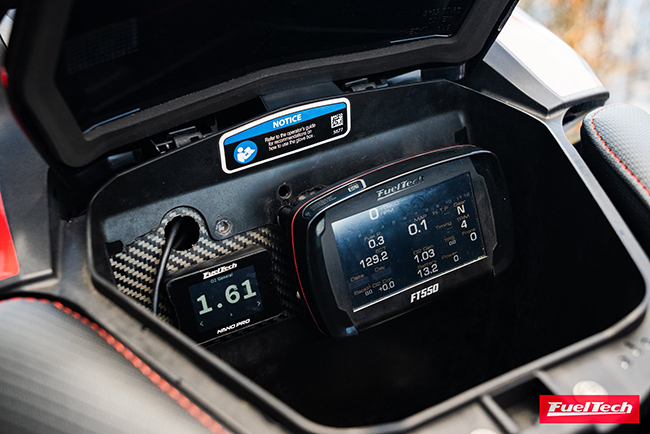
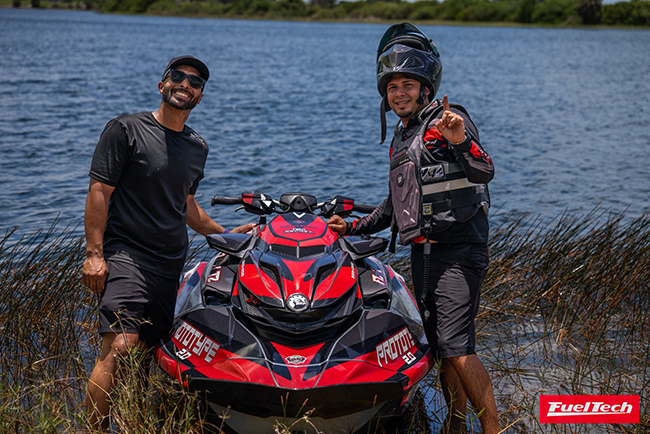
Additional support from sponsors and partners, including FuelTech, also played a role in maintaining event continuity, particularly in technical and infrastructure areas.
Looking ahead to November
Despite a difficult weekend, HydroDrags is already preparing for its next event, scheduled for November 21–22 at Sunset Cove Amphitheater. Tew said the offseason window will be used to refine logistics, adjust scheduling considerations, and incorporate lessons learned from the Memorial Day event.
“We’ve got six months to make changes,” he said. “We’ll be better next time.”
For Tew, the weekend ultimately reinforced both the challenges and the growth of the program — a reminder that even as speeds increase and records fall, the foundation of the sport still depends on execution behind the scenes.
Complete class results and additional coverage from HydroDrags and other PWC racing series are available in this week’s WCJ Weekly Racing Roundup.
Here’s this week’s WCJ Weekly Racing Roundup, where we break down what’s happening across the major PWC race series, look back at recent results, and set the stage for what’s coming next on the water.
Best of the West Series
The 2026 Hot Products Best of the West Series continued to tighten up following Round 4, with several championship battles beginning to take shape as racers now turn their attention toward Round 5 at BlueWater Resort & Casino in Parker, Arizona on June 13-14.
Promoted by NautiWater Racing and RPM Racing, the western series continues to draw strong participation across junior, amateur, veteran and pro classes heading into the heart of the summer schedule.
One of the closest title fights currently sits in Jr. Ski 10-12 Lites, where Travis Billings holds a narrow seven-point advantage over Lincoln Schuyler, 173-166, while Chase Lynch remains within striking distance in third with 139 points.
The Jr. Ski 13-15 Lites category is equally competitive, with Mark Queen leading Tanner Haig by just 12 points after four rounds. Parker Toth currently sits third overall as the season approaches its midway point.
In Runabout GP/Open, Margus Keskula continues to lead the standings with 173 points ahead of Cesar Olivares at 166, while John Kennedy remains in contention with 144 points.
The Ski Expert GP class has seen Cooper Schexnyder establish himself as the current rider to beat with 209 points through four rounds. Thomas Boucher sits second with 161 points while Lucho Senestari rounds out the top three.
Meanwhile, Alain Wyss continues to control the Ski Expert Vet GP standings with 233 points, opening a sizable gap over Martie Wells and Todd Haig, who are currently tied for second at 175 points each.
Several other divisions remain extremely close entering Round 5, including Ski Pro Am Lites where Brice Chambers holds only a seven-point advantage over Ryan Poper, and Sport Spec where just 23 points separate the top three riders.
Registration for Round 5 officially opened this week, with organizers reminding racers that pre-registration discounts end Sunday, June 7 at 11:59 p.m. PST. Entries submitted afterward will incur a $25 per class late fee. Organizers also noted that no payment is required to pre-register.
Additional race information, current standings and event updates are available through the Hydro-Turf Best of the West Series public Facebook group.
American Jet Sport Association
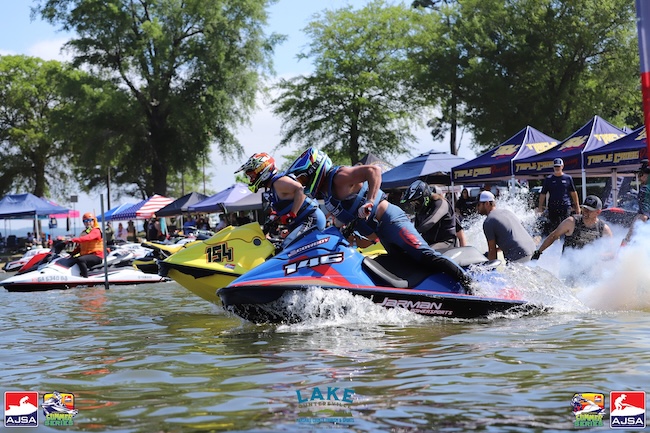
The American Jet Sport Association is preparing to head to Knoxville, Tennessee for Round 2 of its Southern Summer Series, with racing scheduled for June 12-14 at The Cove at Concord Park.
AJSA officials opened registration last week while encouraging racers to pre-register early, particularly in traditionally smaller turnout classes where advance entries help organizers build stronger lineups and more competitive racing throughout the weekend.
The Knoxville event will feature AJSA’s four-moto race format along with SuperCourse competition, freestyle exhibitions, shoreline and boat spectating, and dedicated practice opportunities for both experienced racers and newcomers entering the sport.
The weekend schedule begins Friday with registration and practice sessions before racing shifts into full swing Saturday with motos one and two, followed by the opening freestyle showcase. Saturday evening will also include a live concert from The Deep Fakes, with additional freestyle action scheduled during intermission.
Racing resumes Sunday with motos three and four before the weekend concludes with more freestyle competition and the event awards ceremony.
AJSA also released an updated 2026 rulebook last week, including revisions to its public communications policy following feedback received after Round 1. Officials said the rewritten section, now titled “Public Communications and Professional Conduct,” was designed to clarify expectations regarding respectful communication while still allowing racers and teams to voice constructive criticism and disagreement without fear of disciplinary action.
On the water, several standout performances highlighted Round 1 competition earlier this season. Matthew Richuk opened the year with a win in Pro Ski 1050 ahead of Jeb Zarzour and Sophie Francis, while Schyler Tiedemann captured Amateur Open Freestyle honors.
In the junior ranks, Logan Fleming took the victory in Jr. Ski Futures while Pierce Baucom topped the Jr. Sport Spec 12-15 class. Kylie Meier also had a strong opening weekend, earning victories in Ski Womens Stock and Ski 1500 Stock Pro Am competition.
Additional Round 1 class winners included Jax Rowe in Sport Spec, Tyler Lester in SuperCourse Pro Am 300/200, Kelly Myhan in Pro/Am Runabout 1100 Limited, and Jonathan McCreary in AR 1100cc Runabout Stock.
More information on upcoming races, complete class results, and registration details can be found through AJSA Racing on Facebook and at ajsaracing.com.
HydroDrags IHRA Pro Watercraft Series
HydroDrags action under the IHRA Pro Watercraft Series banner hit Sunset Cove Amphitheater in Boca Raton, Florida, where promoter Billy Tew oversaw another round of speed-focused competition.
According to event notes shared May 26, the latest HydroDrags session produced a series of standout performances, with organizers reporting new speed benchmarks and multiple world records across several categories. Officials described the runs as being completed in significantly reduced time compared to previous benchmarks, with all results teched and confirmed on site.
The event continues to build momentum as part of the IHRA’s evolving HydroDrags format, which blends controlled drag-style racing with structured technical inspection and record certification under sanctioned oversight.
WCJ is scheduled to speak directly with HydroDrags showrunner Billy Tew ahead of the next coverage cycle, with a full interview and additional context expected early next week. Final results, official commentary, and expanded reaction from the Boca Raton session will be included in that report.
Wild West Watercross
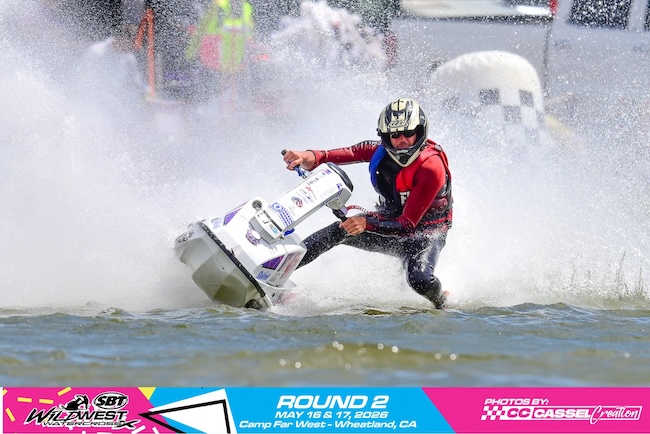
The Wild West Watercross continues its 2026 season with momentum building out west following Round 2 at Camp Far West, held May 17-18, and attention now shifting toward Round 3 at Rio Vista on the Sacramento River.
Round 3 will mark the series’ debut at the historic Rio Vista venue, with organizers positioning the event as a major West Coast race weekend and festival atmosphere. Promotional material highlights a “Road to Sparks” storyline building through the season, with Rio Vista serving as a key stop ahead of championship rounds later in the year.
Round 2 results reflected tight competition across multiple divisions, with several classes producing close points battles heading deeper into the season.
In Ski Jr. 10-12 Lites, Travis Billings leads the standings with 240 points, ahead of Del Cox at 212 and Koltyn Gruenwald at 192, keeping the junior championship picture firmly in contention.
The Ski Womens Lites class also remains competitive, with Elif Baydar leading at 226 points, followed closely by Alexis Chen at 202 and Arianna Chen at 182.
Runabout NA saw Leonord Gibson set the pace with 226 points, narrowly ahead of Leilan Gibson at 216, while Kyle Celillo sits third at 202 as the field begins to separate slightly entering the next round.
In Ski Grand Prix, Patrick Parker and Harley Ritchie are tied at the top with 226 points each, setting up what could become one of the tighter championship fights of the season, with Anthony DeCarli remaining within striking distance at 182.
The Ski GP2 (1200) division is similarly close, with Erik Gruenwald leading at 212 points, just ahead of Ryder Bliss at 206 and Deegan Newton at 164.
Sport Spec sees Patrick Parker also leading that category with 240 points, followed by Brandon Curtis at 202 and David Garcia at 166, giving Parker a strong dual-class presence in the standings.
Additional class leaders include Nolan Glock in Run Whatcha Brung, Uncle Paul in Ski Stock, and Bryson Olson narrowly leading Ski 550 Modified in one of the closest margins of the weekend.
Full results and updated standings for all classes are available through Wild West Watercross official channels and wildwestwatercross.com.
PNW Water X Monster Watercraft Jet Ski Series
The PNW WaterX Monster Watercraft Jet Ski Series has officially launched its 2026 season, with Round 1 in Aberdeen, Washington on May 9-10 setting the tone for what is shaping up to be a busy Pacific Northwest campaign.
Organizers announced the series’ new official website went live on May 17, positioning PNWWaterX.com as a centralized hub for schedules, rider registration, standings, results, and ongoing news throughout the season. The update is aimed at streamlining access for racers and fans while providing a more structured view of the championship chase.
Round 1 opened the season with strong regional turnout as riders began collecting early points in multiple classes, establishing the first leaderboard trends heading into the summer stretch.
Attention now shifts to Round 2, scheduled for June 6-7 in Sutherlin, Oregon. The event marks the series’ return to one of its key regional venues and is expected to draw another competitive field as riders battle for positioning in the early championship standings.
A press release ahead of the Sutherlin round emphasized the continued growth of the series and the importance of the Pacific Northwest racing community, highlighting the course design and competitive structure aimed at testing both seasoned pros and developing racers.
With Round 2 approaching quickly, teams are now focused on refining setups and building momentum following the opening round in Aberdeen, where early season form began to take shape across the fleet.
Full schedules, registration details, and updates are available through official PNW WaterX Monster Watercraft channels and PNWWaterX.com.
PWC Sprint Racing
The new PWC Sprint Racing season is set to launch June 19-21 at Voice of America MetroPark in West Chester, Ohio, marking the opening round of the series’ sprint-focused race format built around tight courses, short motos, and rapid-fire competition.
Organizers confirmed that the West Chester Watercross Challenge will serve as the first round of the season, with multiple race classes scheduled across the three-day event. The lineup includes Ski GP3, Junior Sprinters (Ski GP3), and Sport Spec, with additional potential classes such as Ski Open, Sport Open, Vintage Ski/X2, 1100 Small Runabout (no log jump), and Intro to Sprint Racing.
Beyond the racing action, officials highlighted ongoing course preparation and safety development, including testing of a new course marshal boat ahead of the season opener to ensure racer safety across all events.
The series is also leaning into event atmosphere and branding, with “Winner” and “Iron Man” T-shirt awards featured at the podium—tagged with the slogan “Earned, never given,” and not available for sale, reinforcing their status as earned recognition rather than merchandise.
Adding to the production value, Aerial Flix from Orlando, Florida will be on-site covering both rounds of the West Chester Watercross Challenge, providing high-quality land and drone footage of the action throughout the weekend.
With a mix of sprint racing intensity, expanded media coverage, and evolving class structure, the opening round in West Chester is set to establish the tone for the new PWC Sprint Racing season.
East Coast Watercross
The East Coast Watercross is introducing a major championship format change for the 2026 season, shifting to a “best 4 of 5” scoring structure designed to give racers more flexibility across a demanding travel schedule.
Announced May 27, series officials confirmed that racers will now count their four highest-scoring weekends out of five total events toward the championship standings. The adjustment is intended to help offset rising travel costs, fuel expenses, and the financial strain associated with a full national-level race schedule, while still maintaining a competitive title chase throughout the season.
Under the revised format, competitors will be able to drop their lowest-scoring weekend, helping keep championship hopes alive even in the event of mechanical failures, travel conflicts, or missed rounds.
Series leadership also highlighted a significant media milestone for 2026, with the season finale scheduled to air nationally on CBS Sports in partnership with Pro Watercross, giving racers, teams, and sponsors a larger broadcast platform as championships are decided on one of the sport’s biggest stages.
The 2026 East Coast Watercross Tour will feature five IJSBA-sanctioned weekends, including the season opener set for June 5-7 in Laconia, New Hampshire. Organizers also noted continued support for the 8 Ball Cup payout program in the two-stroke 800 Runabout classes, with over $20,000 in prize money available.
With its revised scoring structure and expanded media exposure, the East Coast series enters 2026 with a format designed to balance accessibility for racers with a high-profile championship finale.
Liqui Moly Pro Watercross National Tour
The Pro Watercross has already delivered a fast-moving 2026 season, with four rounds in the books and championship pressure beginning to mount as the series heads deeper into the summer stretch.
Round 1 opened in Orange, Texas (March 6-8), followed by Round 2 in Sebring, Florida (April 24-26), Round 3 at Lake Havasu State Park (May 8-10), and Round 4 in Paris, Texas (May 22-24), forming a cross-country schedule that has tested both logistics and consistency early in the year.
Heading into the Paris round, series officials announced a significant championship rule adjustment aimed at easing travel pressure and reshaping title strategy. Under the updated format, only a racer’s top three scores will now count toward qualification for the National Finals in Lake Havasu City this September, where the finale will serve as a tie-breaker round and mandatory stop for championship contention.
The change immediately shifted the competitive landscape, effectively turning every remaining moto into a high-stakes sprint where racers can no longer afford to leave points on the table. With dropped scores now in play, consistency becomes less about survival and more about maximizing peak performance across select rounds.
Organizers noted that the adjustment was made in response to rising fuel costs and travel demands, particularly for independent teams traveling across long distances throughout the national tour. The goal, they said, is to keep the championship accessible while preserving intensity at the front of the field.
With Round 5 scheduled for June 19-21 in Lubbock, Texas, the series now moves into a critical midseason phase where championship contenders will begin to separate from the pack as the Road to Havasu intensifies.
Full standings, schedule updates, and event coverage are available through Pro Watercross official channels and prowatercross.com.
That’s a wrap on this week’s WCJ Weekly Racing Roundup. For more information on these series, plus updates from the Western Canadian Watercross Association, the latest from the IHRA Professional Watercraft Series, all the action at Nauti Water Racing and the Road to Havasu, along with wXGP and Great Lakes Watercross news, stay tuned here at The Watercraft Journal.
Spring riding season arrives every year with the same ritual: pull the machine out, fire it up, and feel out whether it’s the same animal you remember.
This year, that ritual came with more questions than usual.
Forum threads, group chats, and shop conversations have been filling up with variations of the same observation — ski feels a little soft, tow rig feels a little sluggish, something’s different. Not broken. Not dramatic. Just off enough to notice.
And this year, there was an easy suspect: the gas.
It wasn’t an unreasonable instinct. Fuel has been a legitimate news story. EPA regulatory changes have expanded the availability of E15 — a higher ethanol blend — into more markets, and seasonal blend changes were already happening in the background the way they do every spring. If you follow the industry at all, fuel has been in the conversation.
So we went and asked the people who actually build, tune, and sell high-performance watercraft: is the fuel actually changing things?
The short answer is: probably not in the way many riders think — but the reasons why are worth understanding. And buried underneath the forum noise is a more practical concern that has less to do with performance loss and more to do with knowing exactly what you’re putting in the tank.
A Changing Fuel Landscape
Fuel in the United States is not a static product. Blends shift seasonally, ethanol content varies by region, and recent regulatory changes have expanded the availability of higher ethanol blends like E15 into more markets.
These changes are designed to improve supply flexibility and reduce fuel costs at the pump. But they also introduce a reality most riders don’t think about:
Not every tank of “premium” fuel is exactly the same as the last one.
That doesn’t mean fuel quality has suddenly dropped nationwide. Variability in ethanol content, additive packages, and seasonal formulations has always existed to some degree — riders are simply becoming more aware of it as fuel policies and availability continue to evolve.
And for performance-minded riders paying close attention to how their machines feel, that variability is worth understanding.
What the R&D Side Is Seeing
From a development and tuning standpoint, Dave Bamdas — part of the long-standing performance development and race-focused R&D efforts behind RIVA Racing — says the concern is largely manageable within normal operating parameters.
Modern PWC calibrations are designed with real-world fuel variability in mind. Most performance watercraft are tuned to safely operate on pump fuel within expected ethanol ranges, including up to approximately E15.
Still, Bamdas emphasized that fuel quality remains critical, noting that “most of the high performance supercharged PWC engines require good quality fresh premium pump gas.”
The more pressing concern isn’t ethanol percentage itself — it’s fuel quality overall. Modern high-performance supercharged engines are often more sensitive to low-octane or degraded fuel than they are to ethanol fluctuations within the normal range. Fresh, high-quality premium pump gas remains the baseline recommendation.
And for performance builds or race-focused setups, consistency matters perhaps even more. The more aggressive the tune, the more sensitive it becomes to variation — which is why racers running dedicated products such as VP Racing Fuels rely on controlled, consistent blends designed specifically for that environment.
What the ECU Is Actually Doing
From the engine management side, Jacob Gaddis — Motorsports Support Supervisor at FuelTech — explains that modern closed-loop systems are designed to handle exactly this kind of variability.
When ethanol content shifts from tank to tank, the O2 sensor reads the air/fuel ratio in real time and the ECU adjusts fuel delivery to hit its programmed target. Small seasonal changes in blend are typically corrected for automatically.
Where things get more complicated is inconsistency — not necessarily ethanol content itself. Gaddis said that “if the fuel isn’t consistent then it will for sure make the tuner chase their changes they are making,” describing how fluctuating blends can turn tuning into a moving target rather than a stable baseline.
For race-oriented applications, he noted the standard recommendation is fuel from a drum — a known, controlled blend that removes much of the variable entirely.
For everyday riders, he suggests a simple tool: a basic ethanol content tester. It doesn’t change anything mechanically, but it provides real data instead of guesswork.
What Riders Are Actually Feeling
From the customer-facing side of the industry, Mike Hodges — who works directly with customers, builds, and performance products at RIVA Motorsports — says early-season performance concerns are familiar every year.
The bigger factor is temperature.
As air and water temperatures rise into summer, even perfectly healthy supercharged engines lose performance. It’s basic physics. Hodges noted that “as we reach the peak of summer, top speeds can drop by as much as 2–3 mph for those in really hot and humid climates,” he said.
For riders coming out of winter downtime, that subtle change can easily feel like something mechanical has shifted.
Layer on memory differences from season to season, and much of what appears in online discussions starts to make sense without pointing to any mechanical or fuel-related fault.
Hodges reports that fuel concerns are not currently a major talking point among customers, and that performance parts and build activity remain strong heading into the season.
The Part That Is Worth Paying Attention To
While the evidence suggests that normal fuel variability within expected ranges isn’t meaningfully hurting most modern PWCs, there is still a legitimate concern the marine industry and the U.S. Coast Guard have warned about for years: accidental misfueling.
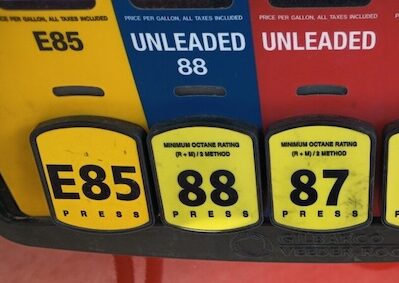
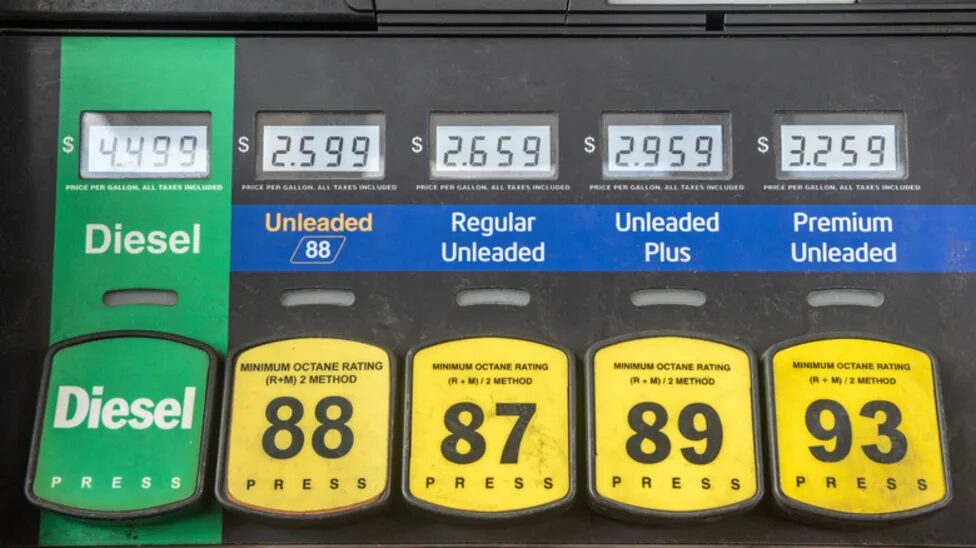
E15 — the higher ethanol blend now more widely available at roadside pumps — is not approved by many marine manufacturers for recreational marine use, including PWCs. Depending on the platform and usage, repeated or improper use can create long-term reliability, tuning, and warranty concerns.
The challenge is that E15 is not always clearly labeled in ways casual consumers immediately recognize. At many stations it may be marketed simply as “Regular 88” or similar labeling that can easily be mistaken for standard gasoline.
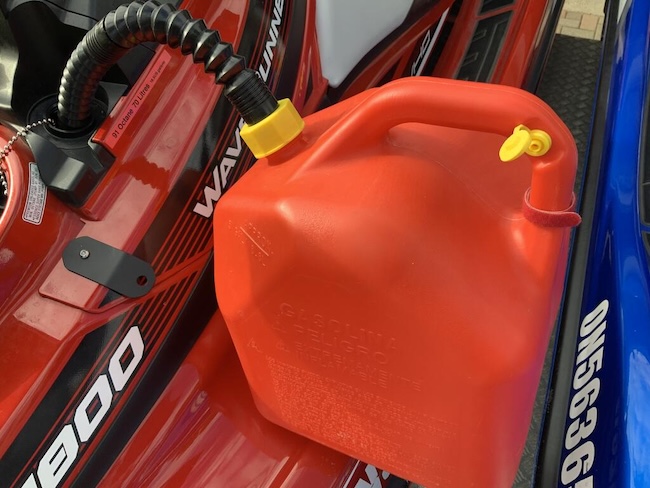
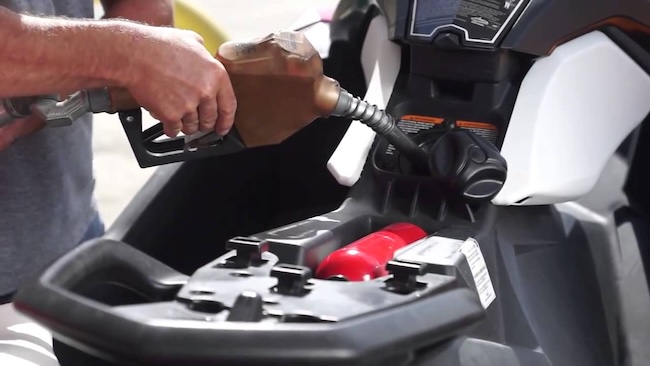
In its advisory, the United States Coast Guard warned that “the convenience of filling a tow vehicle and boat at the same time may cause boaters to overlook this potentially dangerous detail,” and further advised boaters to ensure they are using fuel containing no more than 10% ethanol (E10).
The Coast Guard and marine advocacy groups such as BoatUS have continued to push for clearer labeling as E15 availability expands nationwide.
This is the real fuel issue — not that modern blends are suddenly damaging performance, but that riders may unknowingly introduce fuel into marine engines that was never intended for them.
The Bigger Picture
Taken together, the picture from the shop floor, the R&D side, and the engine management world is consistent: modern PWC engines are designed to handle normal fuel variability, closed-loop systems compensate for ethanol fluctuation in real time, and much of what riders are feeling is more likely tied to temperature, humidity, seasonal conditions, and perception than any major fuel-related change.
That doesn’t make fuel irrelevant. If ethanol blends continue to expand beyond current expectations, tuning strategies will evolve alongside them. And for high-performance or race-focused builds, consistency in fuel source will always matter.
But for most riders, the gap between “something feels wrong” and “everything is operating normally” is often smaller than the conversation suggests.
The forum chatter isn’t baseless — it’s what happens when real regulatory changes meet seasonal riding conditions and a performance-minded community that pays close attention. The instinct that something changed isn’t entirely wrong. It just isn’t changing in the way most people assume.
The practical takeaway is simple: know what you’re pumping. If you’re filling a ski or any marine engine at a roadside station, check the label carefully. “Regular 88” is not the same as standard “Regular.” And if you want actual data on what’s in your tank, a simple ethanol content tester is an inexpensive way to remove the guesswork.
Because in this case, the difference between “everything is fine” and “something feels off” may come down to what’s coming out of the pump.
Sources
Sources: Mike Hodges, RIVA Motorsports; Dave Bamdas, RIVA Racing; Jacob Gaddis, Motorsports Support Supervisor, FuelTech. Additional reference: U.S. Coast Guard Sector Detroit advisory on E15 fuel use in recreational vessels; BoatUS.
For Kawasaki owners still relying on aging paddlewheel speedometers, a long-awaited modern replacement has finally arrived. After months of teaser videos, testing and development updates, Kawi Performance (KP) has officially opened pre-orders for its new plug-and-play GPS Speedometer module designed specifically for Kawasaki personal watercraft.
According to KP, the new system works with any Kawasaki model equipped with the factory rear speedo wheel setup — offering a clean GPS-based solution without the wiring headaches typically associated with aftermarket conversions.
What makes the KP unit particularly interesting is how integrated the system is. Rather than requiring separate power connections or tapping into the diagnostic port like some existing GPS speedometer options, the KP module draws power directly through the factory harness connection. Installation is designed to be fully plug-and-play: disconnect the stock speed sensor wiring, plug in the module, mount the GPS antenna and ride.
KP says one of the biggest development challenges was overcoming the limited power available through the original Kawasaki speedometer circuit. In a launch video posted May 15, the company explained that it ultimately developed an additional inline display connector solution to supply sufficient power to the GPS system while still maintaining a factory-style installation process.
The system also addresses one of the longtime frustrations with Kawasaki’s factory gauges: the infamous 67 mph limitation. According to KP, the GPS module will display speeds beyond 67 mph while remaining in MPH rather than automatically switching to kilometers per hour. The display format uses reversed digits once speeds climb past the stock limit — meaning 71 mph displays as “17,” 72 as “27,” and so on.
Other listed features include:
True plug-and-play installation
No calibration required
Ultra-fast GPS lock times
Advanced high-performance antenna design
Worldwide functionality
Kawasaki-specific programming and development
In earlier teaser footage posted back in March, KP showed the internal prototype hardware while explaining that the system was designed from the ground up specifically for Kawasaki applications. The company says the module was engineered, programmed and developed entirely in-house.
Fitment reportedly includes a broad range of non-KSRD-equipped Kawasaki models, including the Ultra 250, 260, 300 and 310 platforms, STX-15F, STX-160 and other machines using the traditional rear speedometer wheel arrangement. KP notes that models equipped with Kawasaki Smart Reverse with Deceleration (KSRD) are not compatible because those systems already utilize GPS functionality within the factory display.
At $129.99, the KP GPS Speedometer targets a niche that continues to grow within the Kawasaki community: modernizing older skis with updated electronics while preserving factory-style functionality and appearance.
Pre-orders are available now, with KP stating initial shipments are expected within the next couple of weeks.
Over the decades, I’ve personally grown exhausted of testing mediocre or half-assed products. That’s not to say that said items aren’t clever, innovative or even inspired, but the final execution leaves much to be desired. So often have I been asked to review a lackluster product in hopes of giving it my personal blessing and ergo, boosting its sales, that I’ve merely declined the money upfront. (I know, I know. It’s not a very lucrative business model.)
Four years ago, Strapinno’s marketing team reached out with a similar idea: let’s get the jet ski ginger to promote our ratchet straps. The initial pitch was entirely unappealing: we’d like you to be an ambassador and we’ll pay you on clicks. “Yeah,” I wrote back. “No thanks.” But they were persistent and offered to supply The Watercraft Journal podcast with a handful of kits to giveaway to our listeners and a few sets for me to break…er, I mean test vigorously.
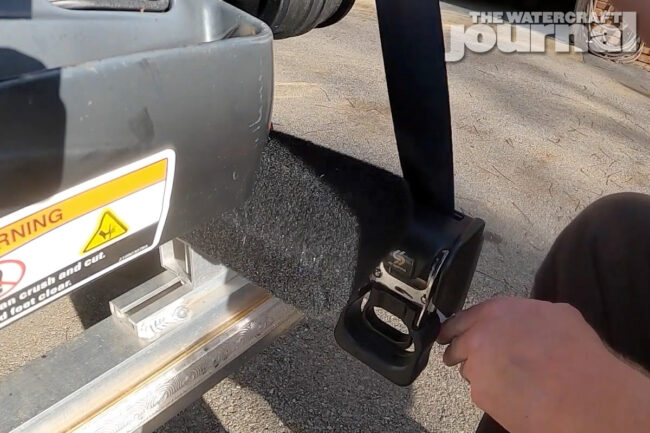
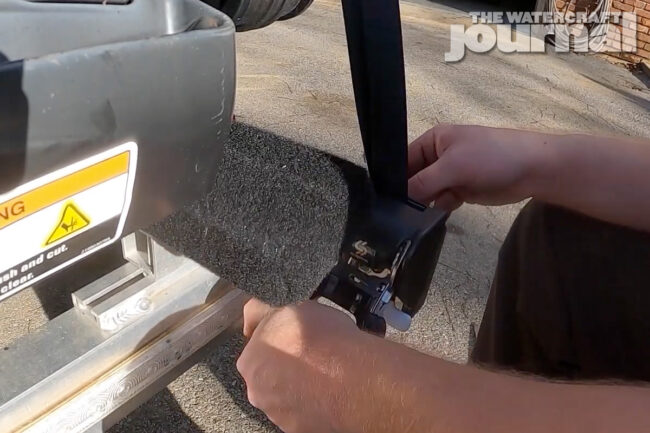
Well, I’m just gonna get to the punchline: I’ve had two pairs of Strapinno’s stainless steel 1 7/8″ x 4 ft. Dual Lock Transom Retractable Ratchet Straps hard-mounted to my aluminum dual bunk trailer for the past four years and they inexplicably have held up almost exactly as the day I installed them. Now, that’s not to say that I haven’t been smartly maintaining them over these past few years, but it’s to say that they have held up far, far better than I could’ve expected.
First, my maintenance schedule is pretty lax. I rarely hose down my trailer; but that’s in my freshwater lake here in Nashville, Tennessee. When dipping into salt or even brackish water, I at least try to splash some fresh water on it – if not dip into a coin operated car wash and blast it down with a pressure washer and soap. But what about the straps themselves? First, their stainless, which is a godsend. (Kawasaki Motor Corporation could take notes here.)
Second, they’re pretty damn stout. All of the ratchet mechanisms are cast heavy duty, and the thick nylon weave straps haven’t dried out or become brittle (although the color is beginning to fade in the Southern sun). Admittedly, I’ll douse the ratchets in WD-40 or some other penetrating oil that I have on hand (I’m not terribly brand specific). The locking mechanisms still have the rubberized latch covers too, which is frankly, flabbergasting.
OK, so are Strapinno’s Dual Lock Transom Retractable Ratchet Strapsflawless? Well, not totally. The dual-locking mechanism is a little clunky – but it’s always been from the jump. You’ll just have to get used to the release mechanism. The straps like to fold over themselves a bit, so you’ll have to be mindful that they don’t tangle up or bind. I do think the oil helps, so a more permanent solution like a heavy dollop of white lithium grease could be in order. But for less than a $100 a pair, you could do so, so much worse.
The International Hot Rod Association has officially named Dustin Farthing as President of the organization, a move that further cements the longtime racer and businessman at the center of IHRA’s rapidly expanding motorsports ambitions.
The announcement comes just months after Farthing helped launch the new IHRA Pro Watercraft Series, a racer-focused national watercraft racing platform that has quickly gained momentum heading into its inaugural season. Since January, the organization has unveiled a national tour schedule, aligned with multiple regional promoters, introduced contingency programs and sponsor initiatives, and attracted nearly 150 pre-registered racers for its opening event in St. Petersburg, Florida.
Now, Farthing’s role inside the organization is growing well beyond personal watercraft racing.
According to IHRA, Farthing will oversee the continued growth and strategic direction of the company across multiple divisions, including drag racing, offshore powerboat racing, personal watercraft, stock car racing, pulling, snowmobile competition, concerts, and future motorsports ventures.
For watercraft racers, the appointment represents another sign that IHRA’s involvement in the sport is not a short-term experiment, but part of a much larger long-term vision.
Over the past several months, Farthing has repeatedly emphasized a racer-first approach centered around professionalism, stronger sponsor relationships, national structure, and creating larger opportunities for racers and promoters alike. Under the new IHRA Pro Watercraft banner, the organization has already partnered with groups including Great Lakes Watercross, HydroDrags, AJSA, and WX-GP while building toward a national championship format culminating at the Lake Havasu World Cup.
Farthing’s background in the sport stretches back decades. A former factory-supported racer and multi-time world champion, he has spent much of his life around motorsports, both on the water and in business operations tied to the industry. That combination of racing experience and large-scale business management appears to be a major factor behind IHRA’s decision.
“This organization has the opportunity to become one of the most powerful motorsports platforms in the world by uniting multiple disciplines under one vision,” Farthing said in the official announcement. “Our focus moving forward will be growing the sport, supporting racers and tracks, building stronger sponsor partnerships, and creating world-class experiences for fans, competitors, and communities across the country.”
IHRA Owner Darryl Cuttell
IHRA owner Darryl Cuttell pointed to Farthing’s racer-first mentality, operational experience, and industry relationships as key strengths as the organization continues expanding its footprint across multiple forms of motorsports.
The timing is significant for the watercraft world, as the IHRA Pro Watercraft Series continues building momentum through its inaugural national tour season. Following successful opening rounds in St. Petersburg and New Orleans, attention is now turning toward Round 3 at Lake of the Ozarks on June 12-14, an event many expect to be one of the largest and most anticipated stops of the season. With growing sponsor support, expanding racer participation, and increasing international interest, the new series has quickly become one of the sport’s biggest storylines of 2026.
Watercraft Journal hopes to speak with Farthing directly in the near future for a more in-depth conversation about the appointment, the future of the IHRA Pro Watercraft Series, and the organization’s broader plans moving forward.
See the full official press release below:
IHRA Names Dustin Farthing President of the International Hot Rod Association
FAIRFIELD, OHIO — The International Hot Rod Association (IHRA) is proud to announce the appointment of Dustin Farthing as the new President of the organization, marking a major step forward in the company’s continued expansion across multiple motorsports disciplines.
Farthing brings decades of experience as both a world champion racer and successful business leader. Widely recognized as one of the most accomplished personal watercraft racers in the world, Farthing has earned more than 30 professional world championships throughout his career while also competing across multiple forms of motorsports including offshore racing, snowcross, and Lamborghini Super Trofeo competition. Beyond racing, he has built and operated multiple successful businesses nationwide, including powersports dealerships, motorsports operations, sponsorship programs, and large-scale construction companies.
As President, Farthing will oversee the continued growth and strategic direction of the IHRA across all divisions including drag racing, offshore powerboat racing, personal watercraft, stock car racing, pulling, snowmobile competition, concerts, and future motorsports expansions.
“IHRA has an incredible foundation, an iconic brand, and some of the most passionate racers and fans in motorsports,” said Dustin Farthing. “This organization has the opportunity to become one of the most powerful motorsports platforms in the world by uniting multiple disciplines under one vision. Our focus moving forward will be growing the sport, supporting racers and tracks, building stronger sponsor partnerships, and creating world-class experiences for fans, competitors, and communities across the country.”
Founded in 1970, the International Hot Rod Association has long been recognized as one of the premier sanctioning bodies in North American motorsports. Originally built around drag racing, the organization has rapidly expanded in recent years into offshore powerboat racing, stock car racing, pulling, and personal watercraft competition.
Under the ownership of Darryl Cuttell, the IHRA has entered an aggressive growth phase with expanded national schedules, acquisitions of additional racing properties, and the continued development of new motorsports divisions designed to bring racers and fans together under one unified championship platform.
“Dustin is exactly the type of leader this organization needs as we continue building the future of the IHRA,” said Darryl Cuttell. “He understands racers, sponsors, promotion, operations, and the business side of motorsports at the highest level. More importantly, he brings energy, vision, and a racer-first mentality that aligns perfectly with where we are taking this company. We believe Dustin will play a major role in helping elevate IHRA into one of the most recognized motorsports organizations in the world.”
Farthing has already played a major role in helping expand the IHRA’s presence in powerboat and personal watercraft racing, where the organization has experienced rapid growth through new national events, major sponsor partnerships, increased racer participation, and expanded media exposure.
The IHRA continues its 2026 season with events across the United States spanning multiple disciplines and championship series. Additional announcements regarding future expansions, sponsorship initiatives, and upcoming event properties are expected throughout the year.
The lightest ski in Sea-Doo’s lineup just got a serious upgrade option — and it tops out at 63 mph.
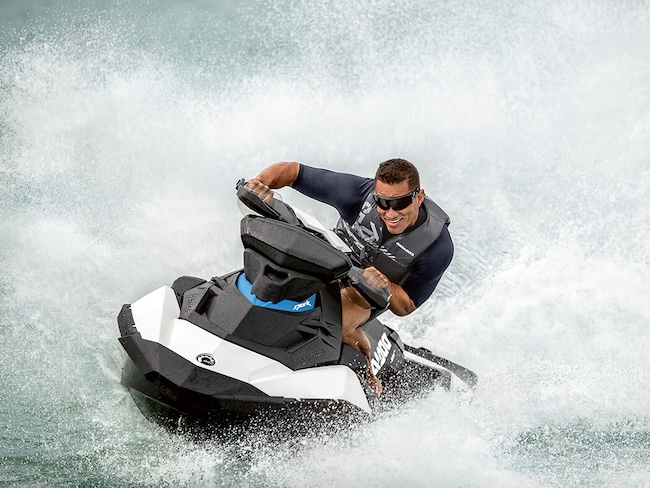
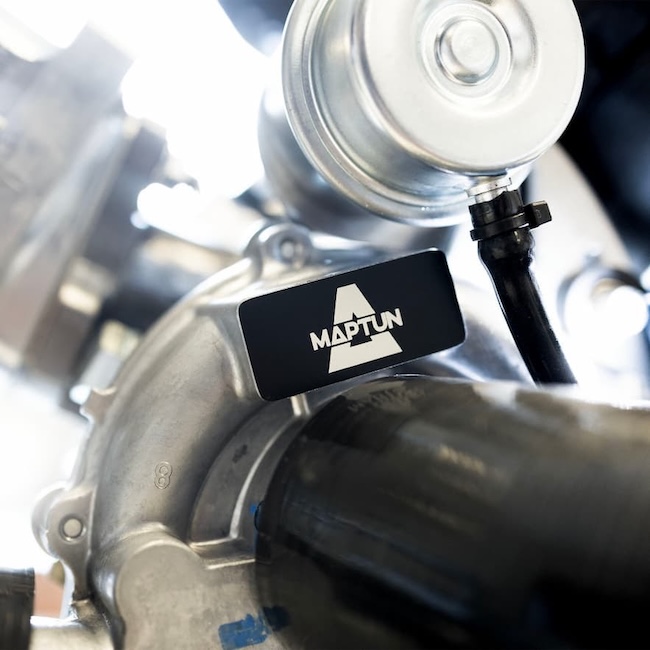
The Sea-Doo Spark has always occupied a specific lane in the PWC world: light, nimble, affordable, and genuinely fun — but never fast. At roughly 400 pounds dry, it’s the featherweight of the lineup, and for a lot of riders that’s exactly the point. But modest power has always been the trade-off, and anyone who’s pulled up next to an RXP-X at a sandbar has felt that gap. MAPTUN’s Spark/Trixx Turbo Kit REV3 is a direct answer to that frustration, dropping a complete forced-induction system onto the Spark’s 900 ACE engine and pushing the ski to a claimed 63 mph.
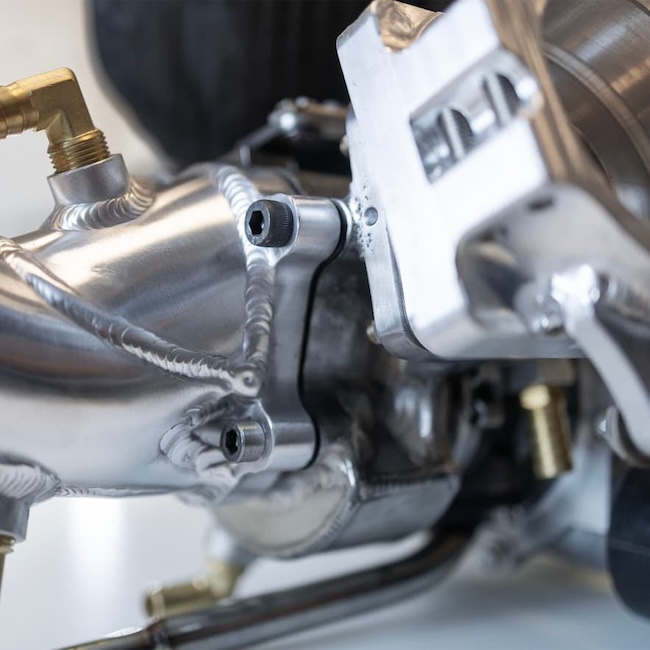
MAPTUN is a Swedish performance tuning company with a long track record in the Sea-Doo space, and the REV3 designation matters — this isn’t a first-generation experiment. Earlier versions of the kit taught them real lessons about heat management, installation complexity, and long-term durability in a saltwater and freshwater environment. The third revision reflects all of that, with redesigned components aimed at a cleaner install and improved longevity. Black powder-coated hardware throughout gives the finished product a look that’s closer to factory performance than anything cobbled together in a garage.
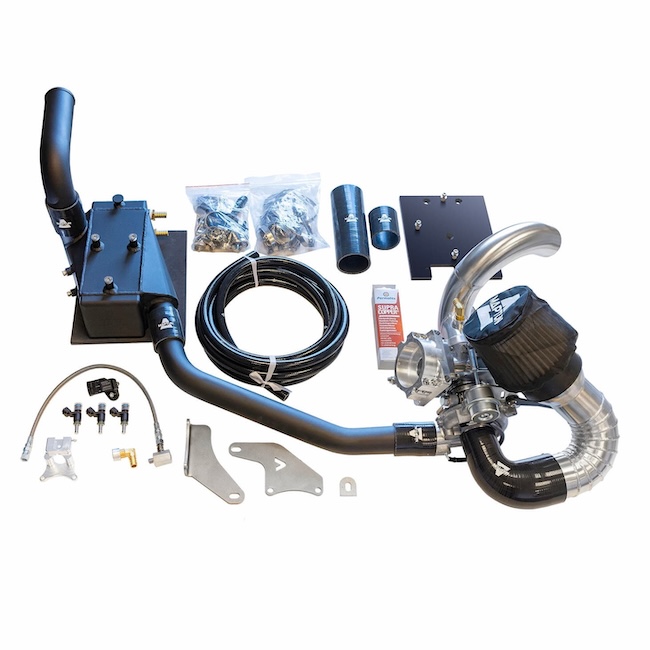
On the performance side, the kit targets 8,800 to 9,000 RPM with boost pressure in the 0.55 to 0.60 bar range — roughly 8 to 9 PSI for those of us who think in imperial. That’s a conservative tune by forced-induction standards, and intentionally so. MAPTUN isn’t trying to destroy your engine; they’re trying to give it a reliable second life with substantially more pull. The IHI turbocharger at the heart of the system is a proven unit, matched with a 7.5 PSI wastegate to keep boost in check and protect bottom-end components. Upgraded injectors handle the additional fuel demand, and an intercooler piping and silicone hose kit manages intake temps under load.
The full kit is genuinely comprehensive. Beyond the turbocharger itself, you’re getting a complete turbo mount and exhaust system, stainless hardware and clamps throughout, and a water-resistant four-inch air filter that won’t panic the first time you take a wave over the bow. Everything is engineered to work as a system rather than a collection of mismatched parts, which matters more than it might sound — intercooler sizing, injector flow rate, and boost pressure all need to be in conversation with each other for a turbo build to run cleanly.
The ECU side of the equation is where this kit separates itself from a basic bolt-on. MAPTUN integrates the REV3 with their Maptuner system, which handles ECU flashing, engine monitoring, data logging, and fault code management. Running a turbo on a stock map isn’t just inefficient — it’s a recipe for detonation and premature wear. Having a purpose-built tune that was developed alongside the hardware, rather than retrofitted after the fact, is a genuine advantage and a sign of a mature product. MAPTUN also recommends pairing the kit with a Solas 13/18 impeller, which properly loads the pump under boost and keeps the engine in its intended power band rather than spinning free.
The broader appeal here is easy to understand. The Spark and Trixx weigh substantially less than Sea-Doo’s RXP or GTX platform machines, and that mass advantage doesn’t disappear when you add a turbo — it multiplies. A lighter hull accelerating harder means the gap off the line versus heavier performance skis closes fast. At 63 mph, a turbocharged Spark would hold its own against machines that cost two or three times as much at the dealer. For riders who have always loved the Spark’s handling and portability but wanted more authority on the throttle, the REV3 is the most refined version of that conversion to date.
It’s worth noting that a build like this still requires mechanical confidence or a competent shop — turbocharging any engine involves enough variables that cutting corners on installation tends to show up quickly and expensively. But for the right rider, the REV3 kit represents a well-thought-out path from entry-level fun to legitimate performance, without abandoning the qualities that made the Spark worth building on in the first place.


 Here’s this week’s WCJ Weekly Racing Roundup, where we break down what’s happening across the major PWC race series, look back at recent results, and set the stage for what’s coming next on the water.
 Western Canadian Watercross Association
 Nauti Water Racing
 Great Lakes Watercross