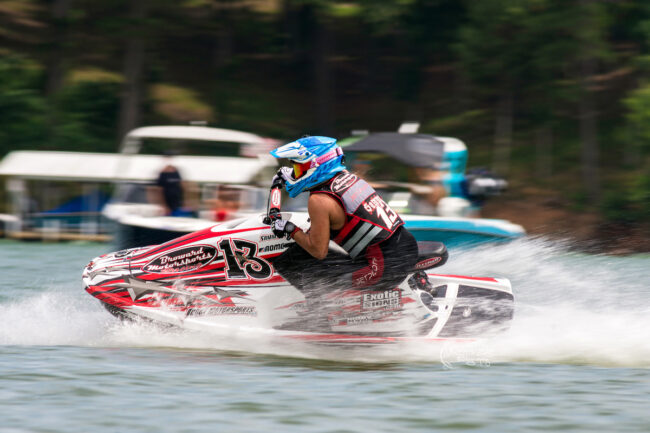
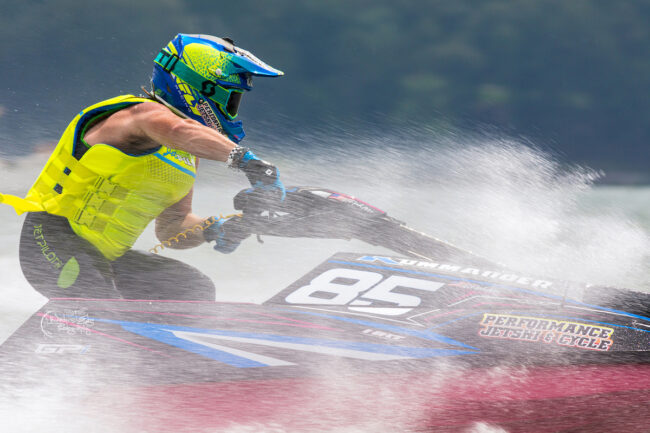
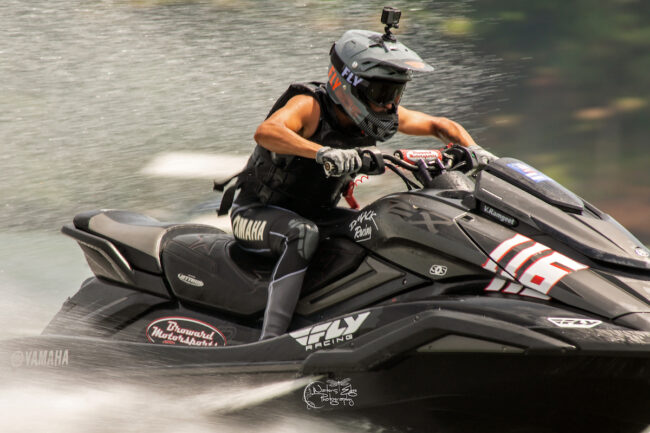
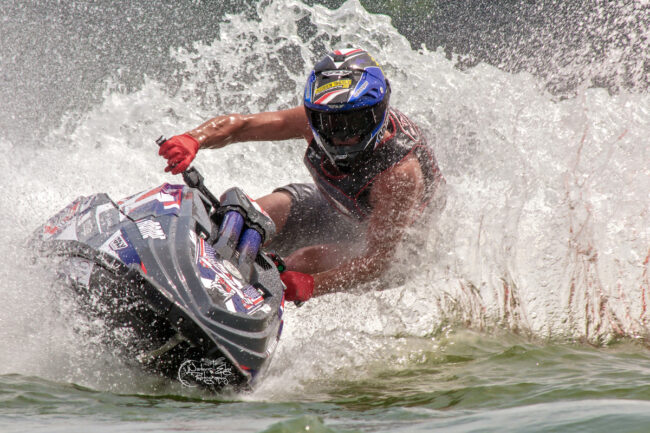
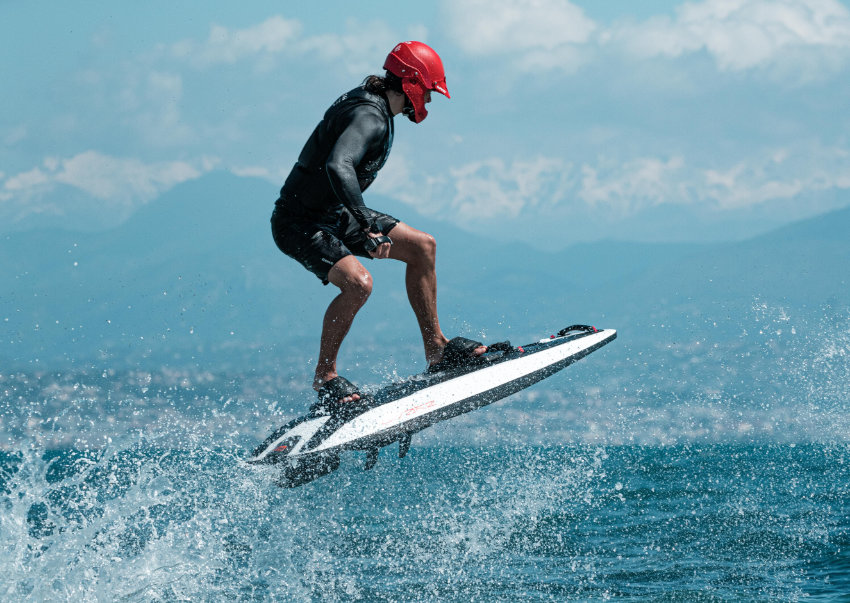
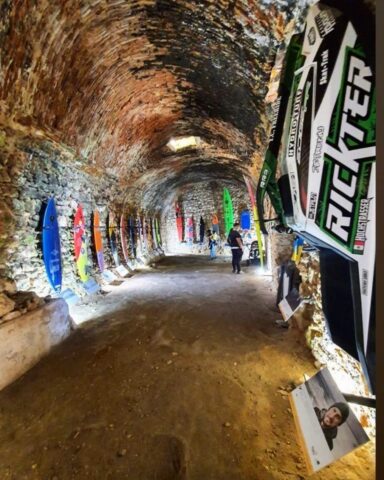
Image: Abraham Hochstrasser FacebookHochstrasser’s Rickter was mounted proudly among the many surfboards of the world’s most legendary surfers to combat the monster-sized waves of Nazaré, including one of its pioneers, Garrett McNamara.
Famed freerider and IFWA champion athlete Abraham (“Ho”) Hochstrasser follows in the vein of the world’s best surf-charging freeriders like Joe Kenney, Ross Champion, Pierre Maxient and Mark Gomez.
Hochstrasser has dared some of the biggest breaks around the globe, earning praise both in and outside of the personal watercraft industry. In May of this year, Hochstrasser was honored to be a part of “The Surfer’s Wall.”
Per a post on Hochstrasser’s official Facebook account, the “Surfer Wall” is a museological project, created in 2016, which aims to materialize the recognition of the village of Nazaré by surfers who seek to overcome the waves of Praia do Norte and, in this way, promote Nazaré throughout the world.
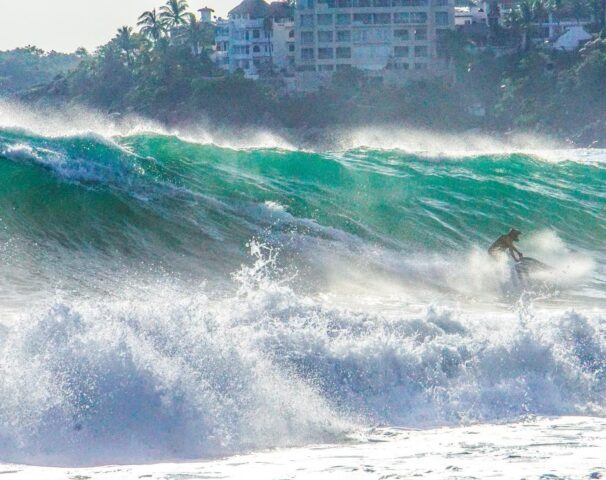
Nazaré, Portugal has become infamous over the last 20 years for one of the most violent, massive surf breaks in the world.
Hochstrasser’s post continues to explain the Surfer Wall Room, stating, the project consists of the permanent exhibition of the boards, offered by the athletes to Nazaré, at Forte de São Miguel Arcanjo. Along with a short biography, each structure in the collection allows the visitor to have a more complete idea of one of the greatest spectacles on a planetary scale.
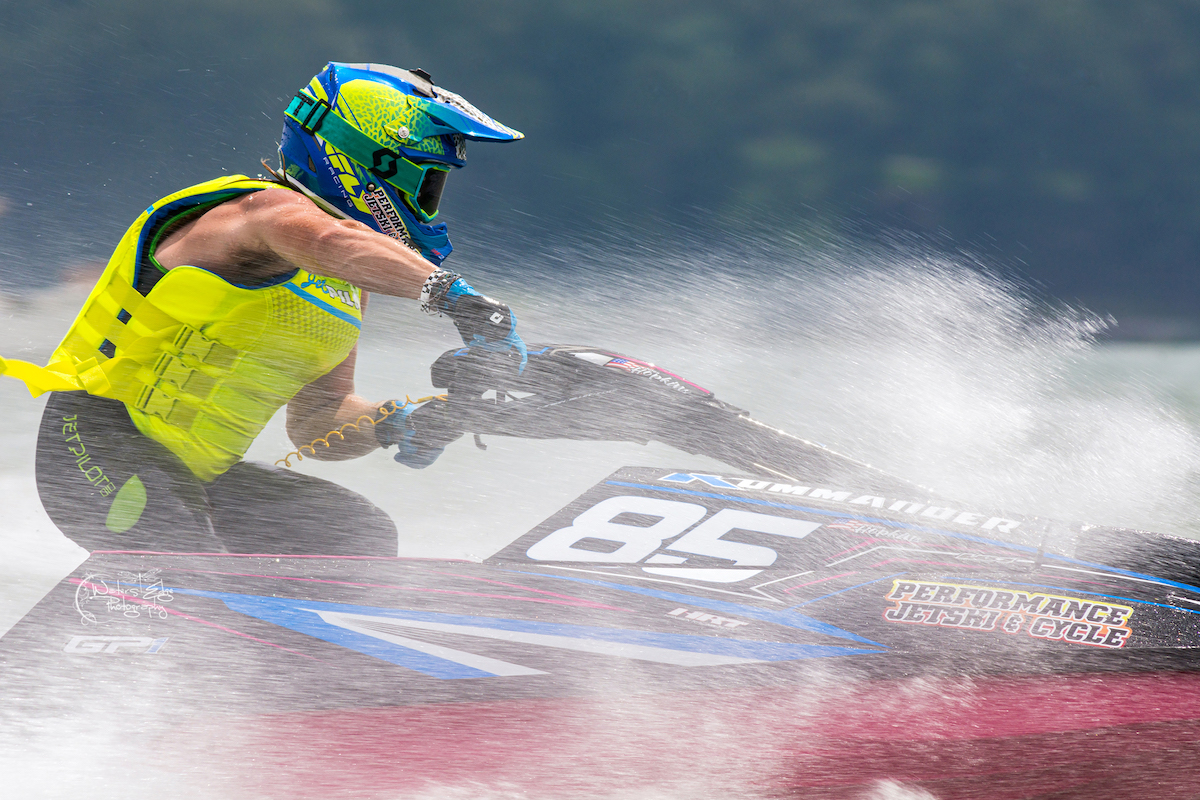
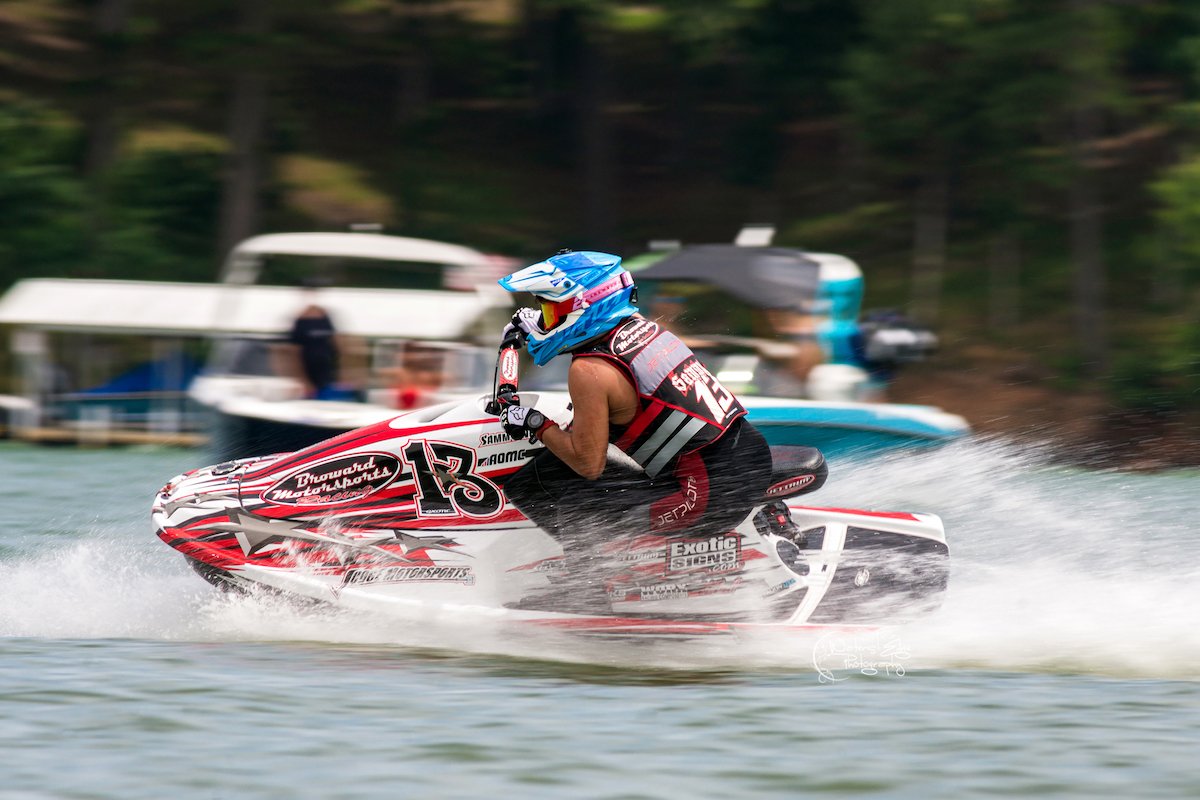
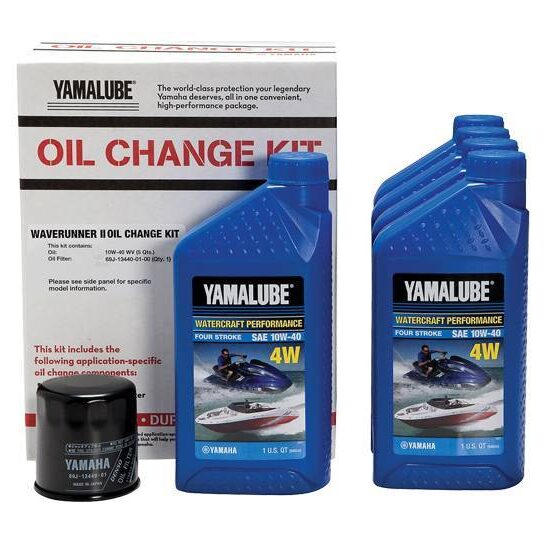
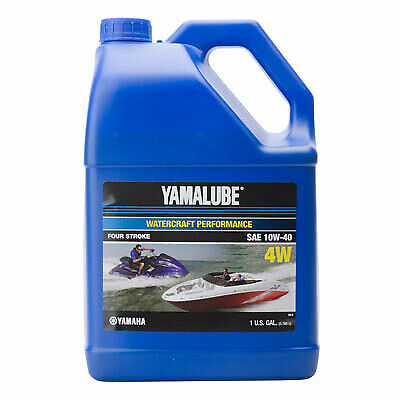
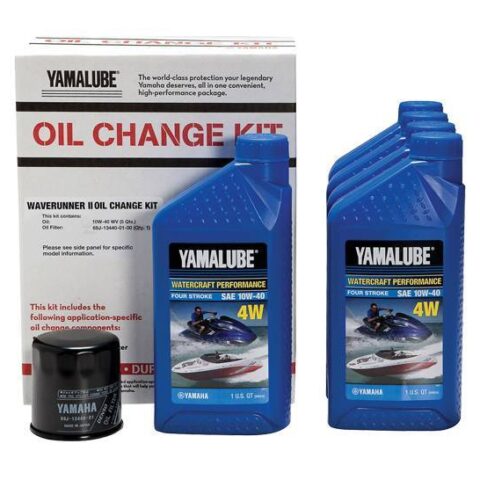
Check out Broward Motorsports Racing before you go anywhere else to get products for maintenance. They have the Yamahalube Oil Change Kit for 4-strokes on sale for $43.99. It comes with 4 quarts of oil, filter, and the drain gasket. Grab it and go! There is also a kit for the Yamaha 3-cylinder watercraft. If oil is all you need, Broward Motorsports has the gallon sized Yamalube 10W-40 on sale for $20.99 and the quarts are on sale for $8.99. A couple of different sized aftermarket filters for Yamaha WaveRunners are also available.
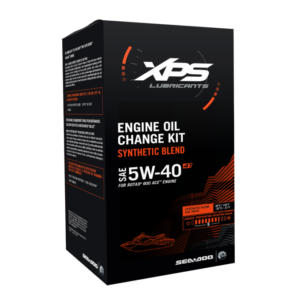
For the Sea-Doo owners, you are covered as well. Put an “all-in-one” oil change kit in your cart. It includes oil, oil filter, o-rings, and washer. BMS has XPS kits for the ROTAX 900 ACE engine and the ROTAX 1500 cc or more.
Oil filters for several different Sea-Doo models are available. A Sea-Doo Spark oil filter will cost you a little over $10. If you need jet pump oil, BMS has the XPS Synthetic Jet Pump Oil. They also have XPS Synthetic Blend Oil in gallon and quart sizes.
If you prefer Liqui Moly, Broward Motorsports has you covered. It is available in a 4-liter jug and by the quart. Don’t forget to use discount code “BMS10” at checkout to receive 10% off your entire order. Stock up now and save and if you spend at least $99, you can get free shipping the continental USA. If you’ve been putting off an oil change, now is the time to get on it!
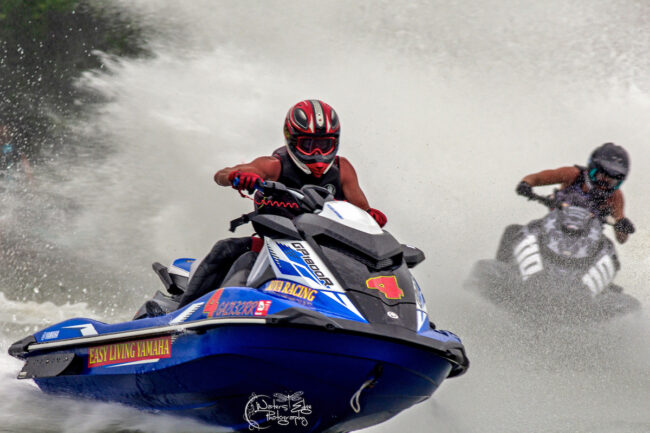
Since making the leap from Sea-Doo to Yamaha, Naples, Florida native Erminio Iantosca has been having a heck of a season. The Dean’s Team and RIVA Racing athlete started strong at the first round of P1 AquaX racing in Daytona Beach, earning the second spot on the podium between Tory Snyder and Chris MacClugage.
Iantosca enjoyed another great weekend at AquaX’s Sarasota Grand Prix, bringing his Yamaha FX SVHO across the finish line in the Pro 300 class ahead of fellow Yamaha riders, Tory Snyder and Brian Baldwin. This weekend’s performance places Iantosca within 5 points of Christian Daly for the overall points win.
The Watercraft Journal reached out to Iantosca who shared, “My Dean’s Team/RIVA Racing Yamaha FX ran awesome this weekend, helping me to a wire-to-wire win in Moto 1. We did a lot of testing between rounds and [I’m] really happy with the [combination] we found.”
Iantosca continued, expressing gratitude to his sponsors: “I can’t thank Yamaha, Dean’s Team, RIVA Racing, Jettribe, Jettrim, JetX and Tattoo Rich enough for everything they do for me to make this possible.”
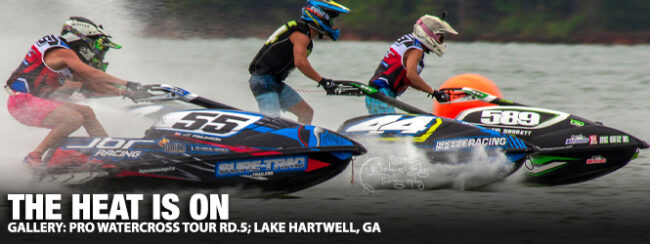
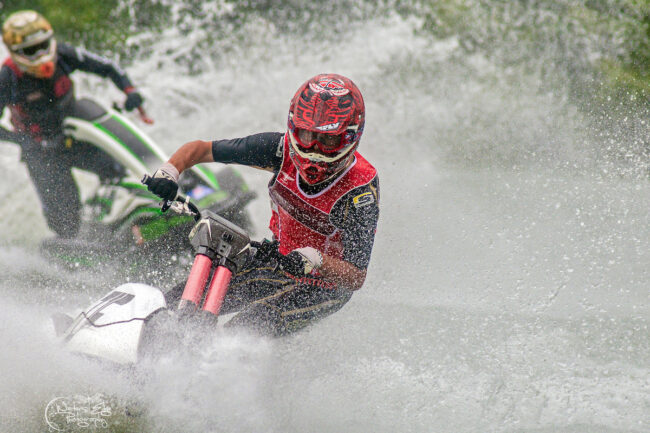
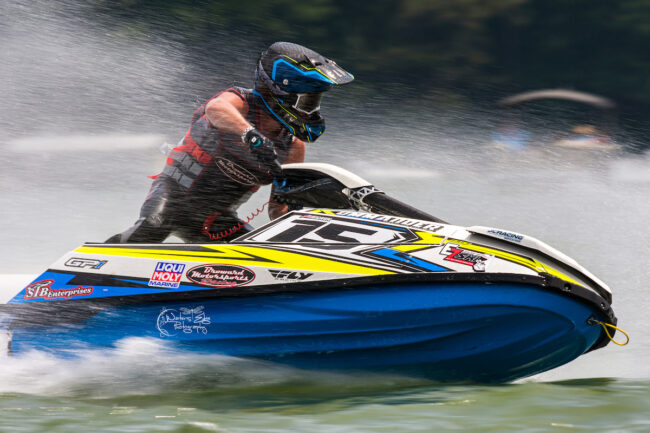
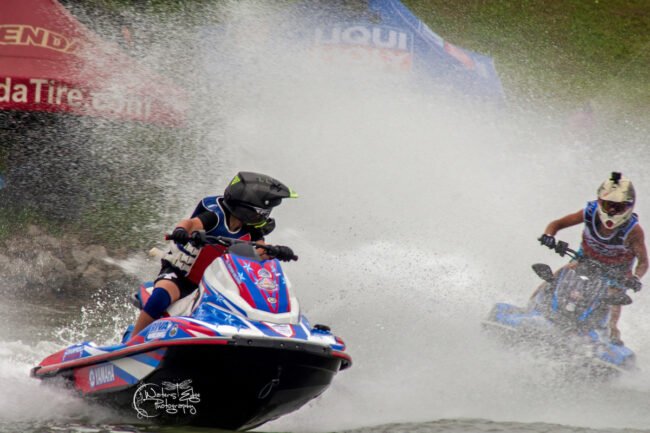
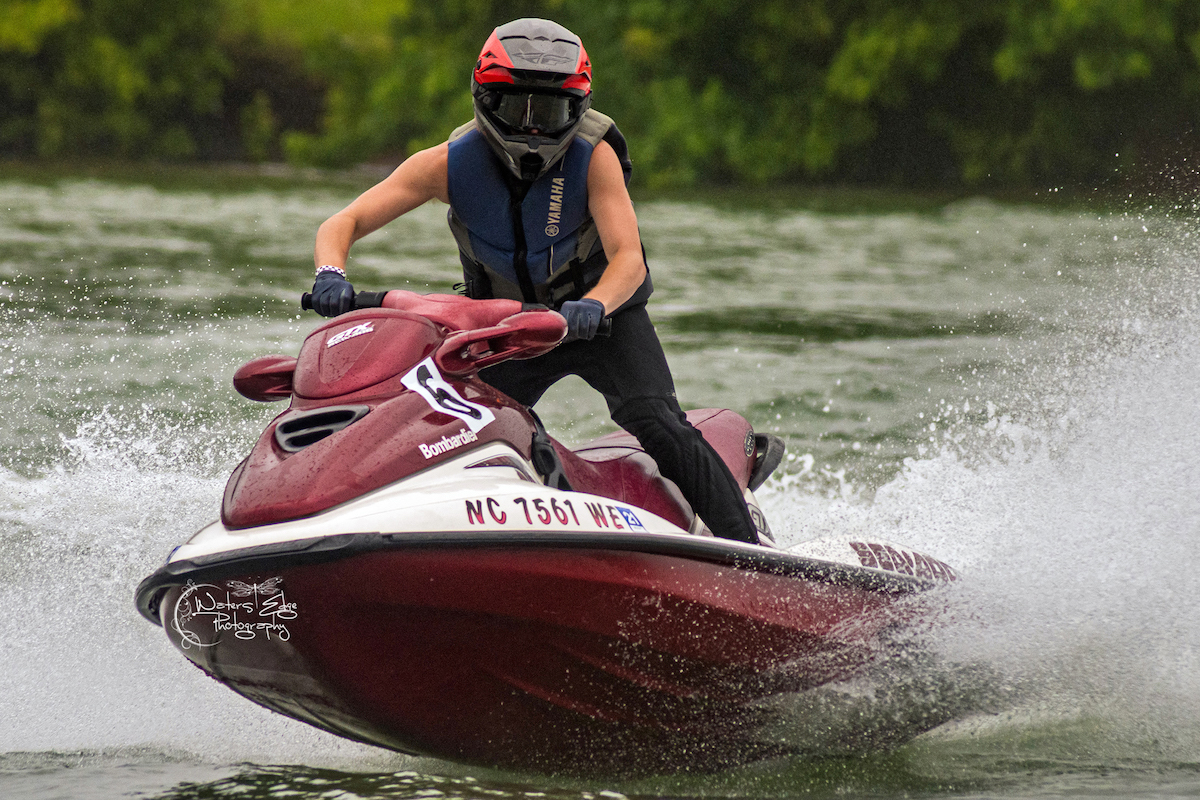
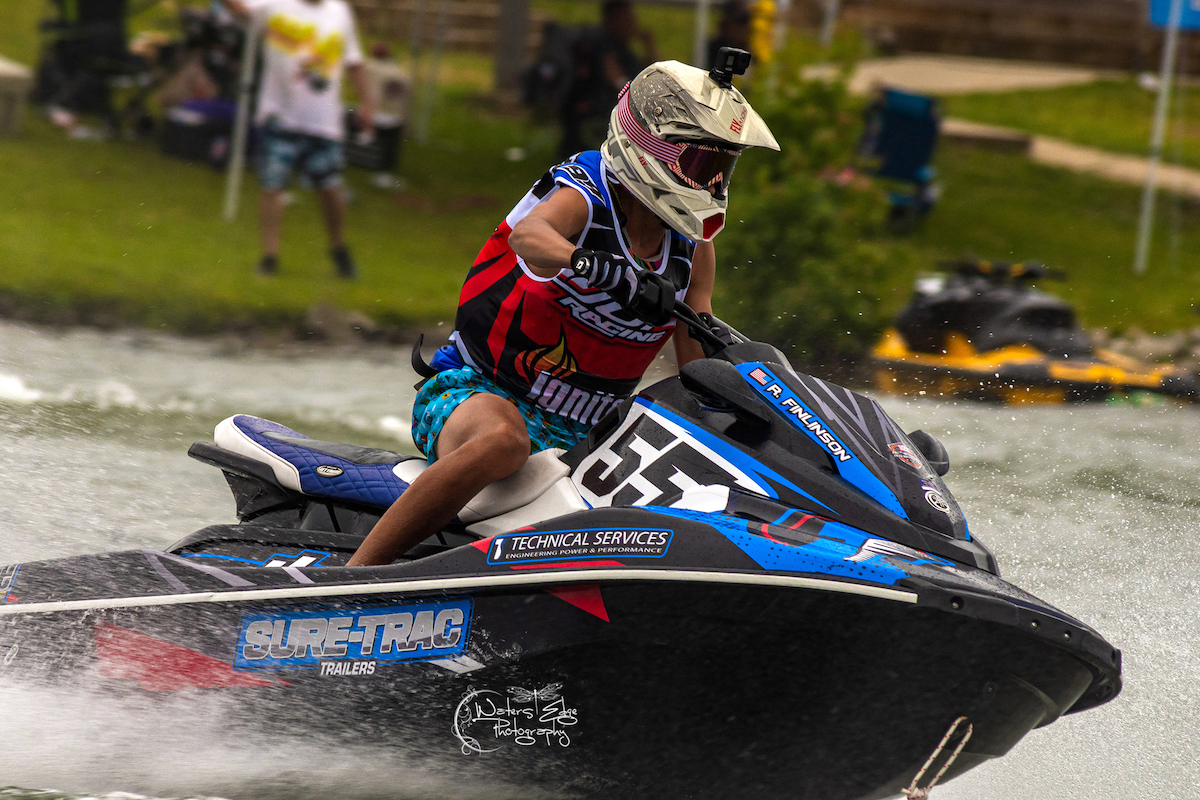
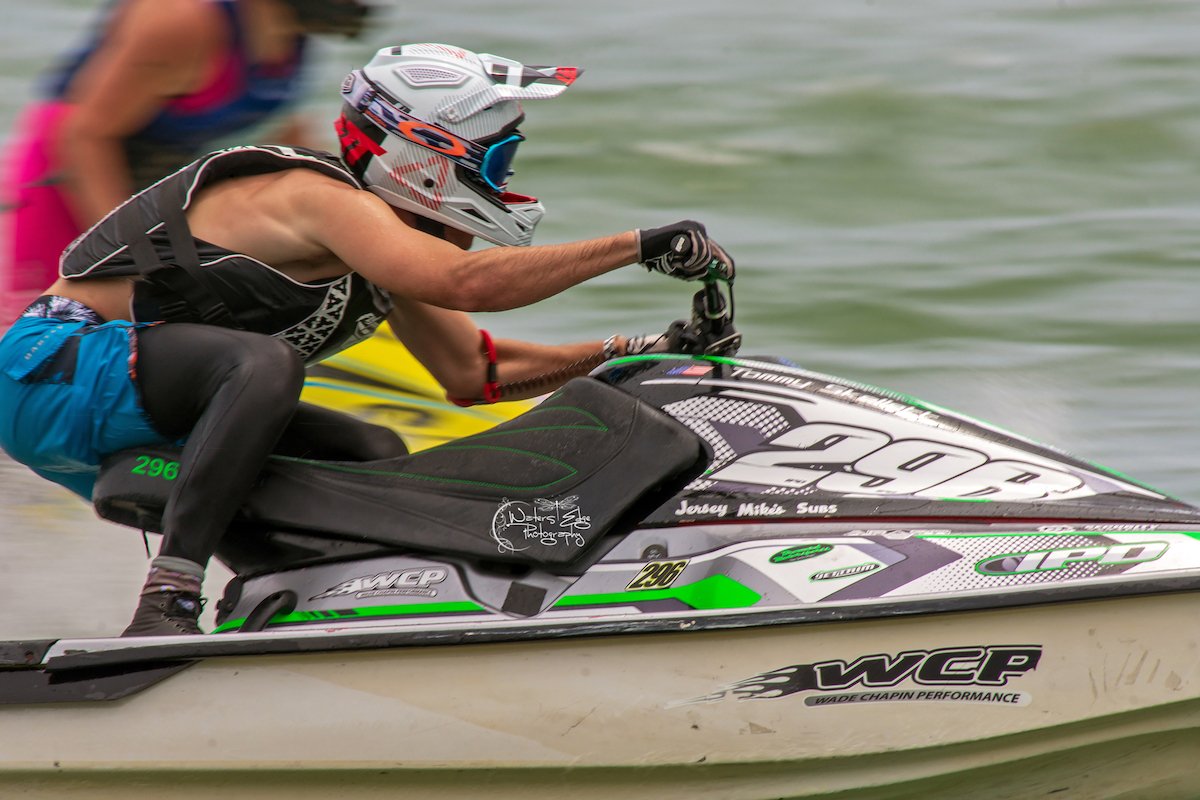
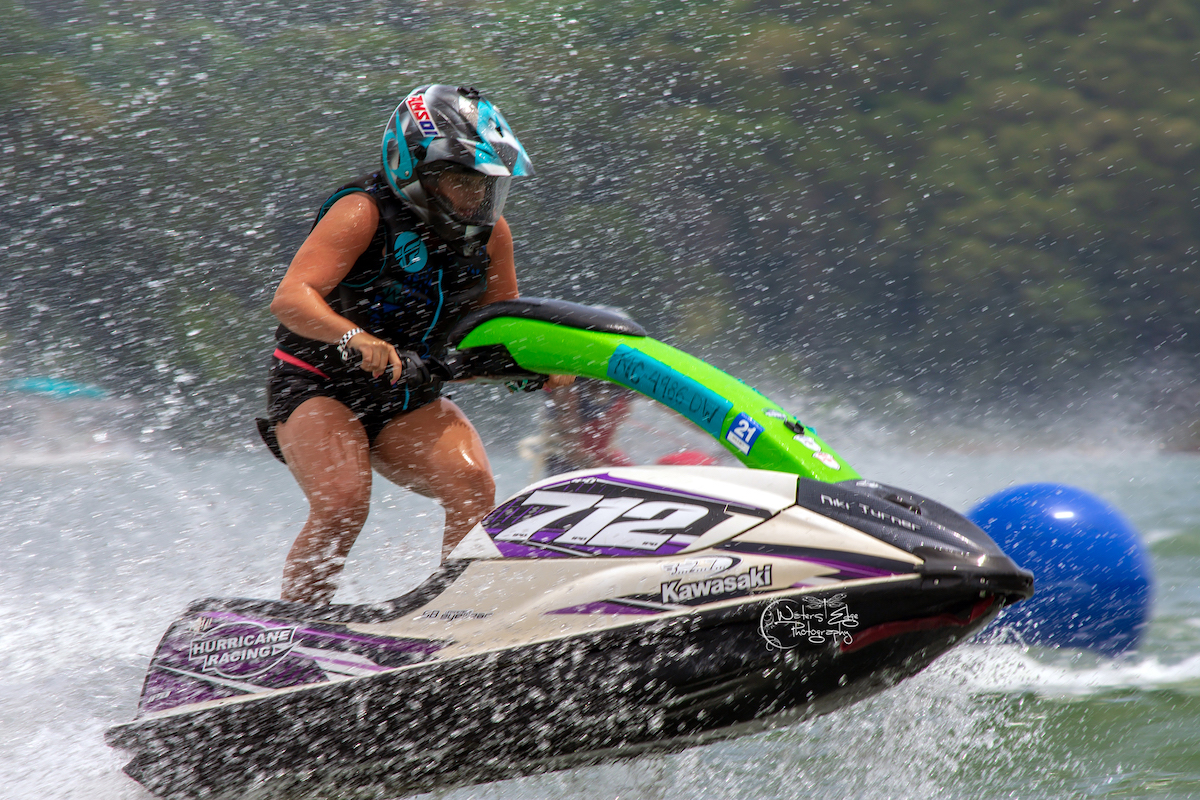
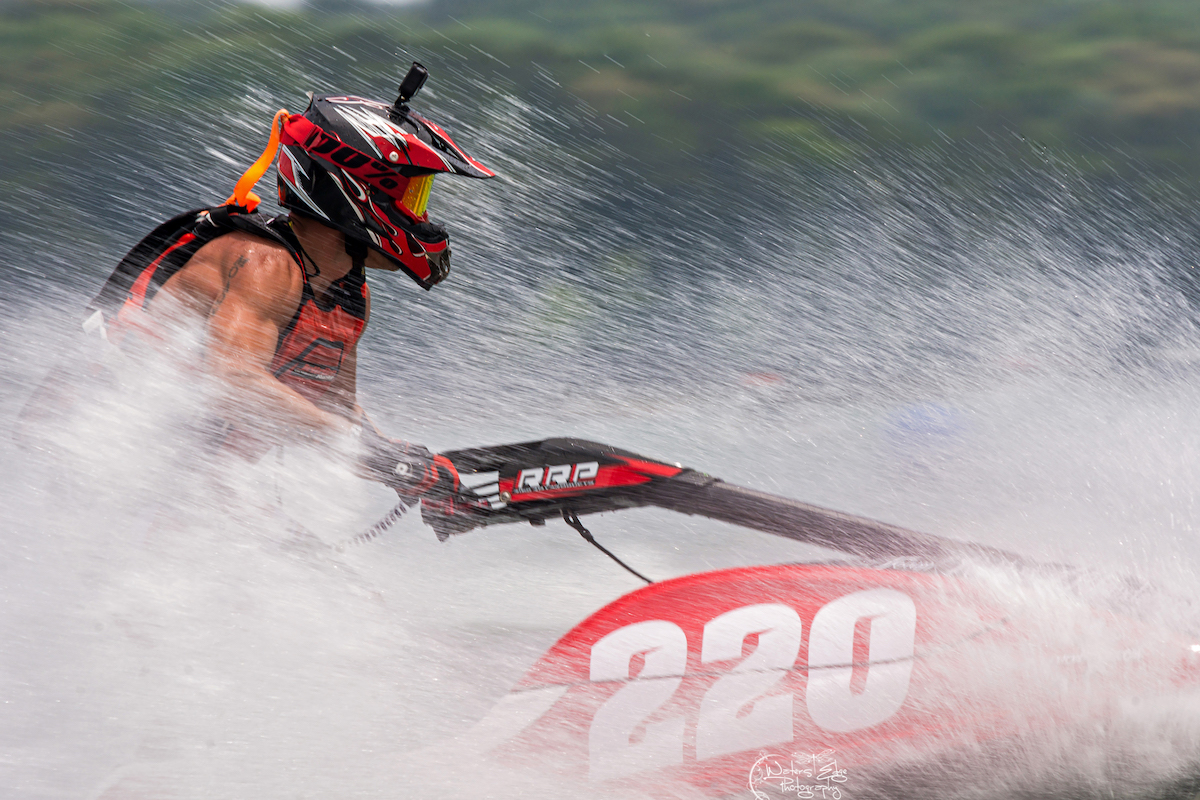
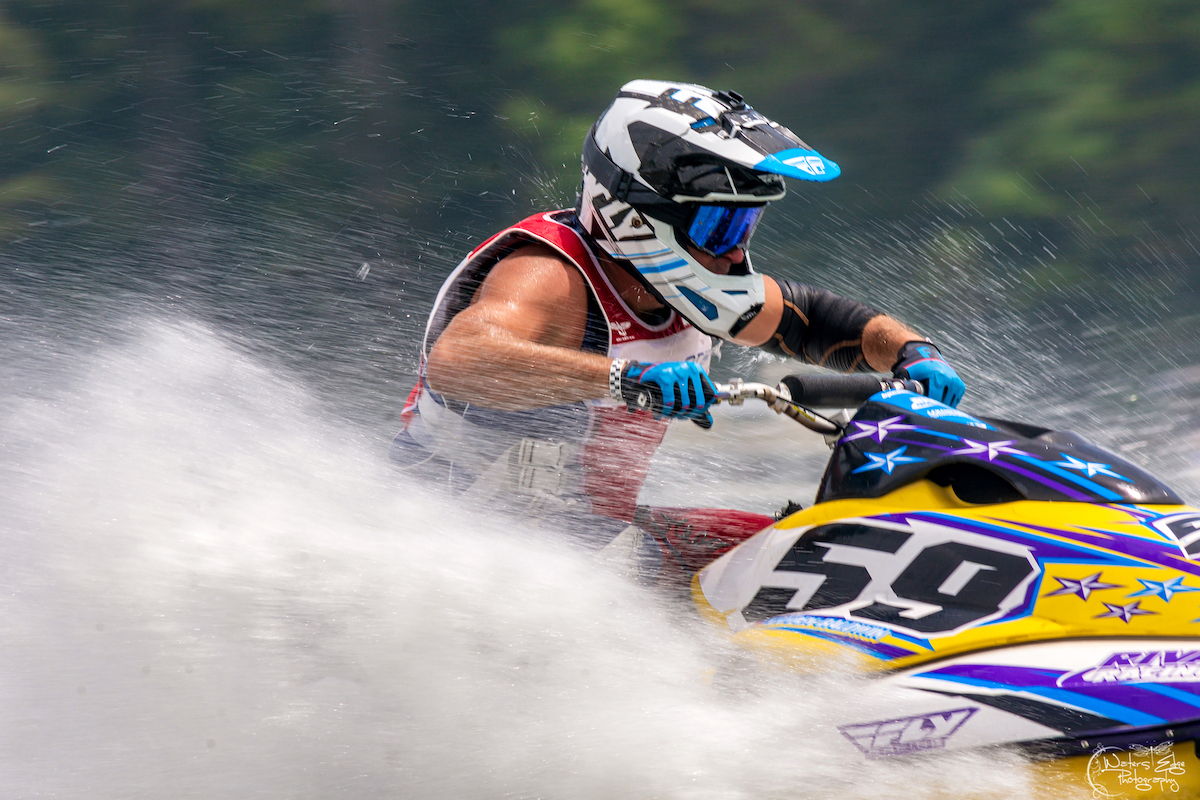
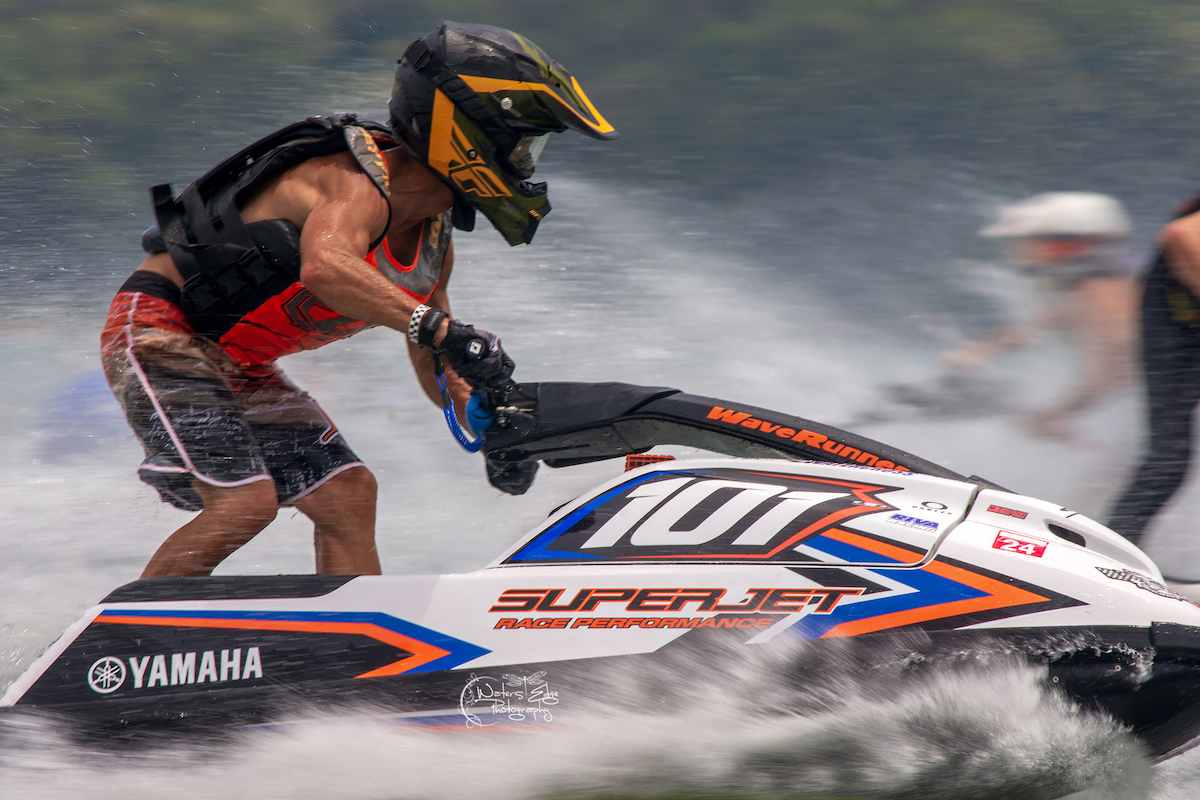
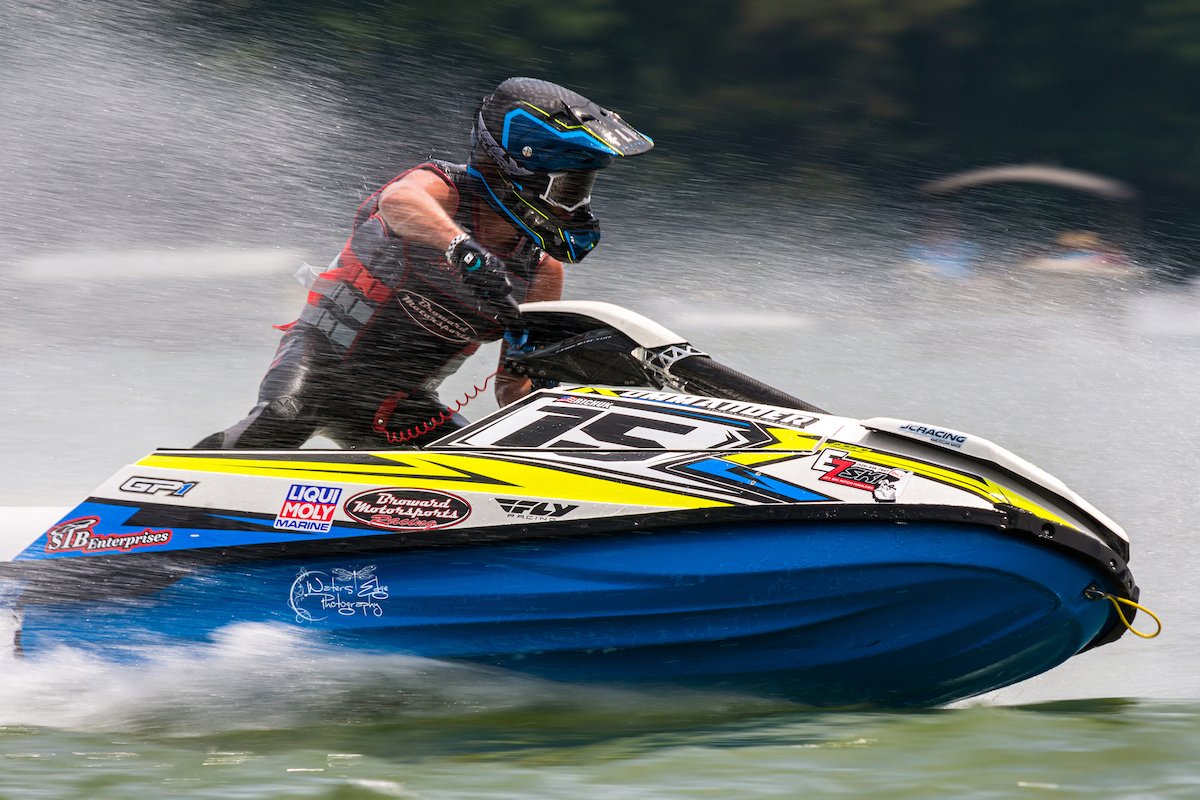
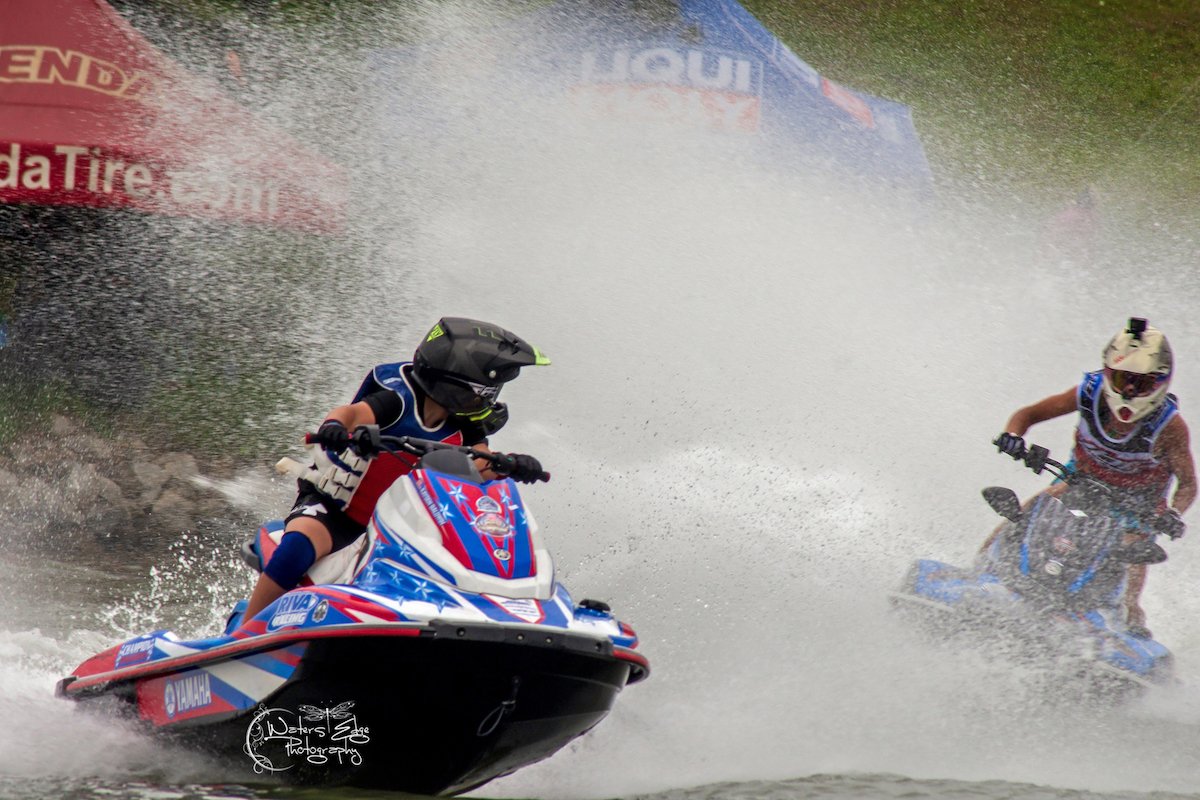
Round 5 of the 2021 Liqui-Moly Pro Watercross Tour rolled into Georgia under blue skies and temperatures edging into the “sweltering” range. But by the time the last checkered flag dropped on Sunday, racers were navigating through rain-pelted waters, grey, overcast skies and a steady drizzle occasionally interrupted by torrential downpours.
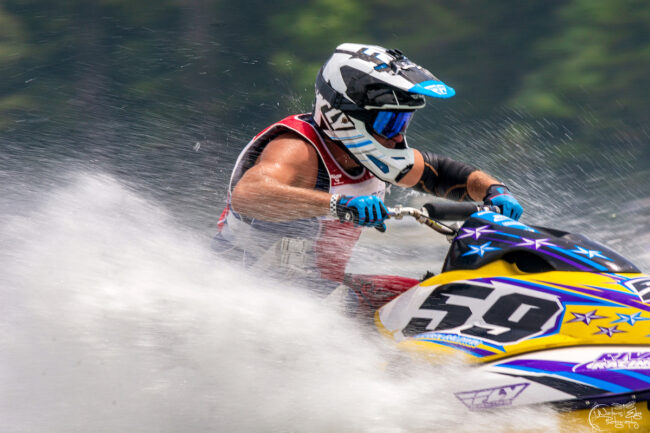
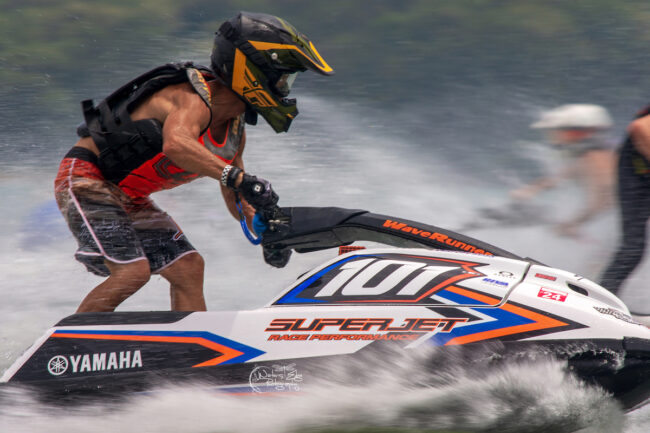
The inclement weather might have taken the edge off of what promised to be some of the fastest racing of the season on the fresh, flat waters of the expansive Lake Hartwell, but both Saturday and Sunday motos provided ample speed, action, strategy, mishaps and down-to-the-wire battles for racers and fans alike.
And fans and racers were both plentiful at Hartwell – traditionally one of the most popular stops on the tour, with some of the fullest lines, and large numbers of spectators both lining the shore, and anchoring pontoon boats, speed boats, jon boats and even kayaks just outside the course to watch the competition close-up.
Tour title sponsor Liqui-Moly even arranged to video the Round Five races from the air, renting a helicopter for the weekend – unfortunately, the weather forecast, which promised even worse weather than the rain that materialized, prompted the rental company to cancel the flight.
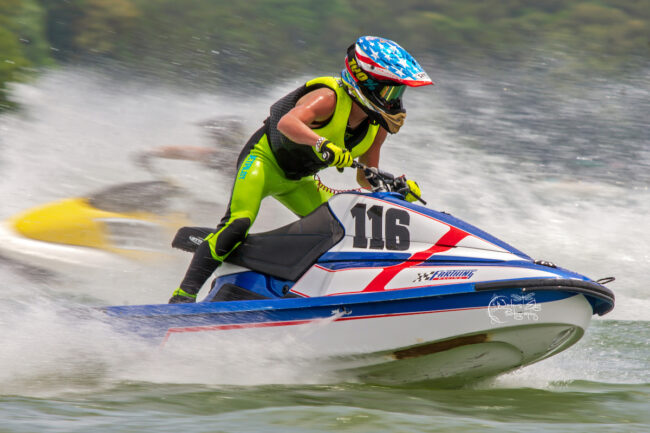
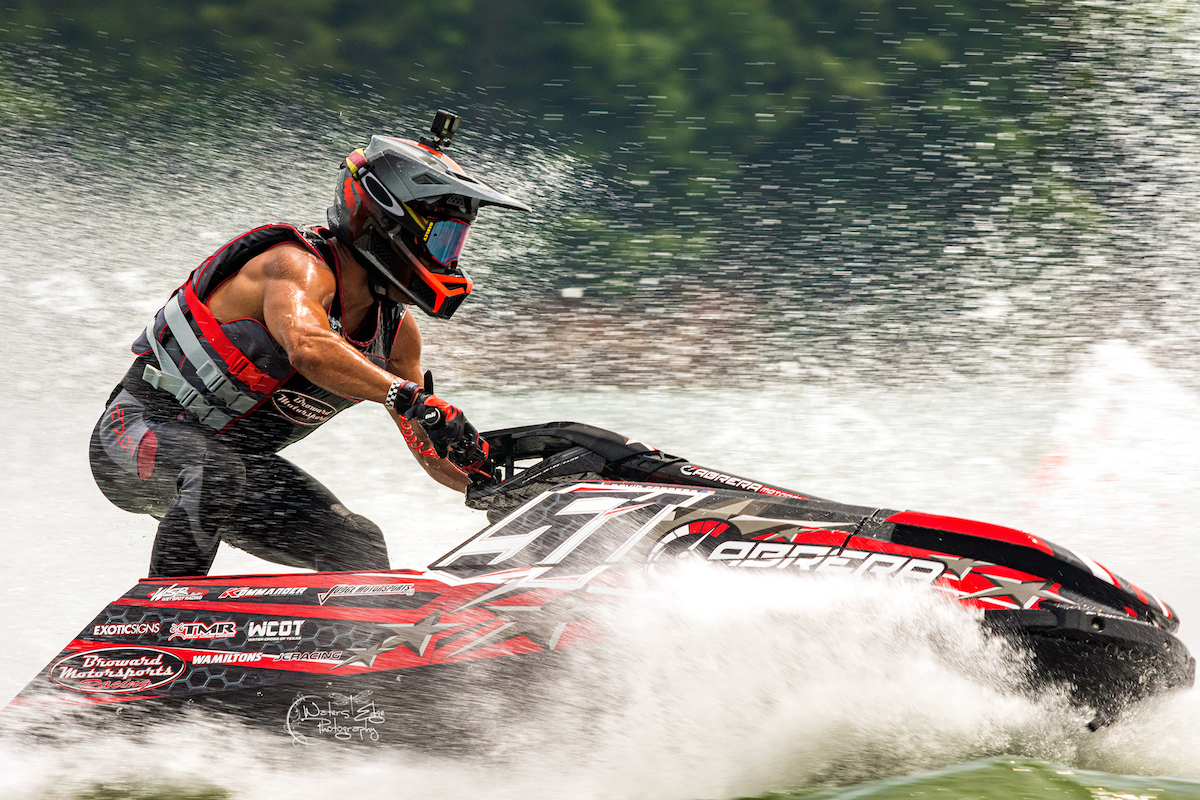
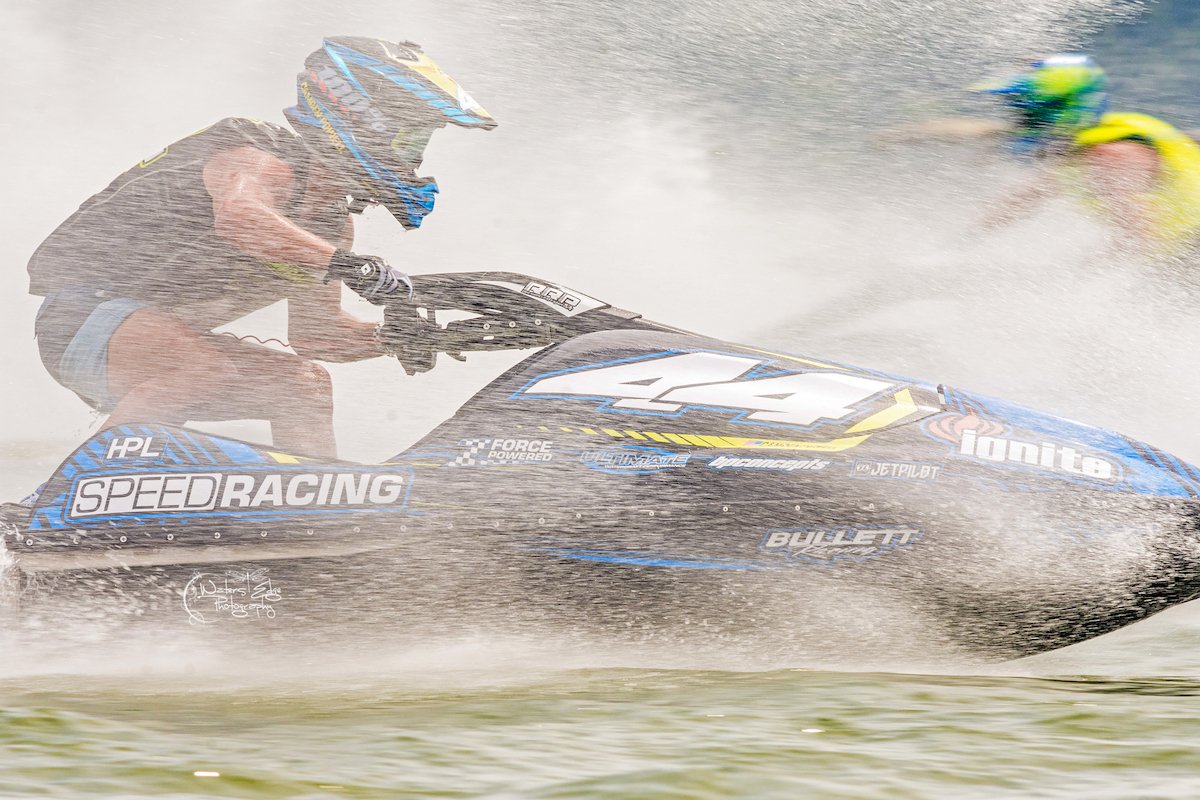
Following now-standard protocol, Pro Watercross packed the Pro Action into one day, with all three motos stacked back to back on Saturday, with one moto of amateur racing peppered throughout the pro show.
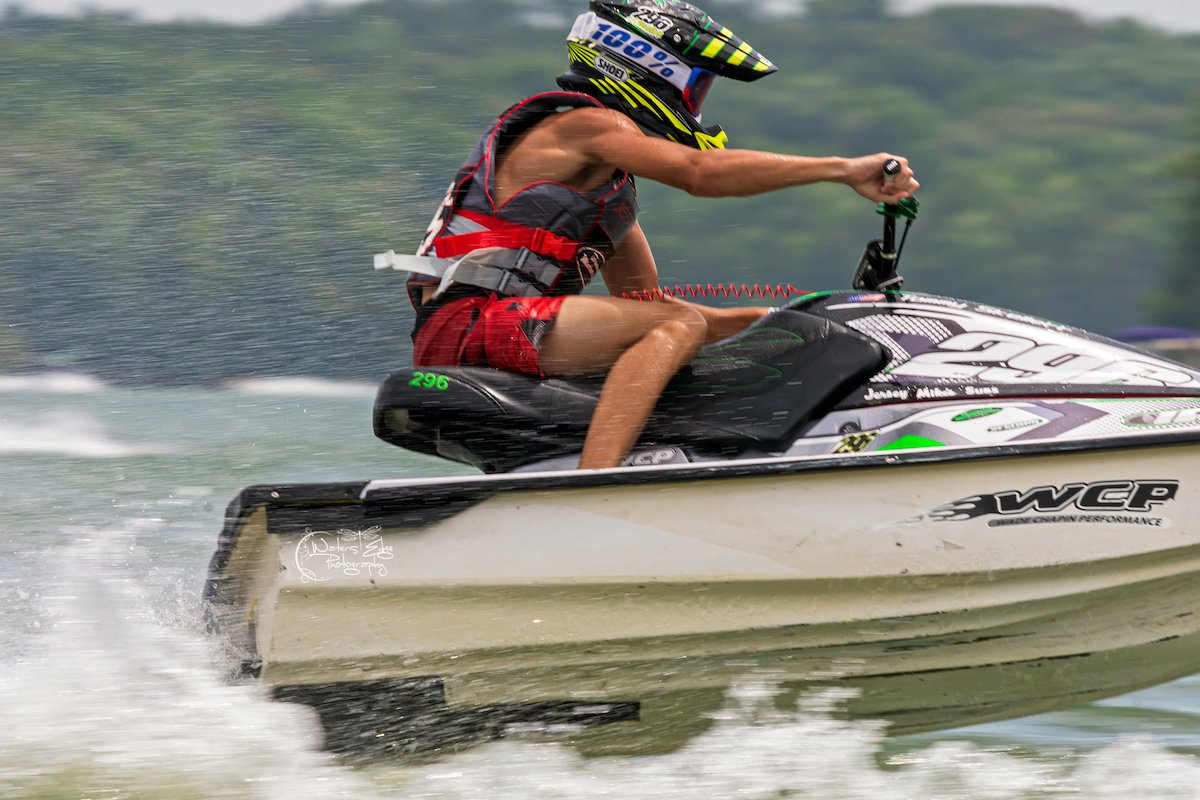
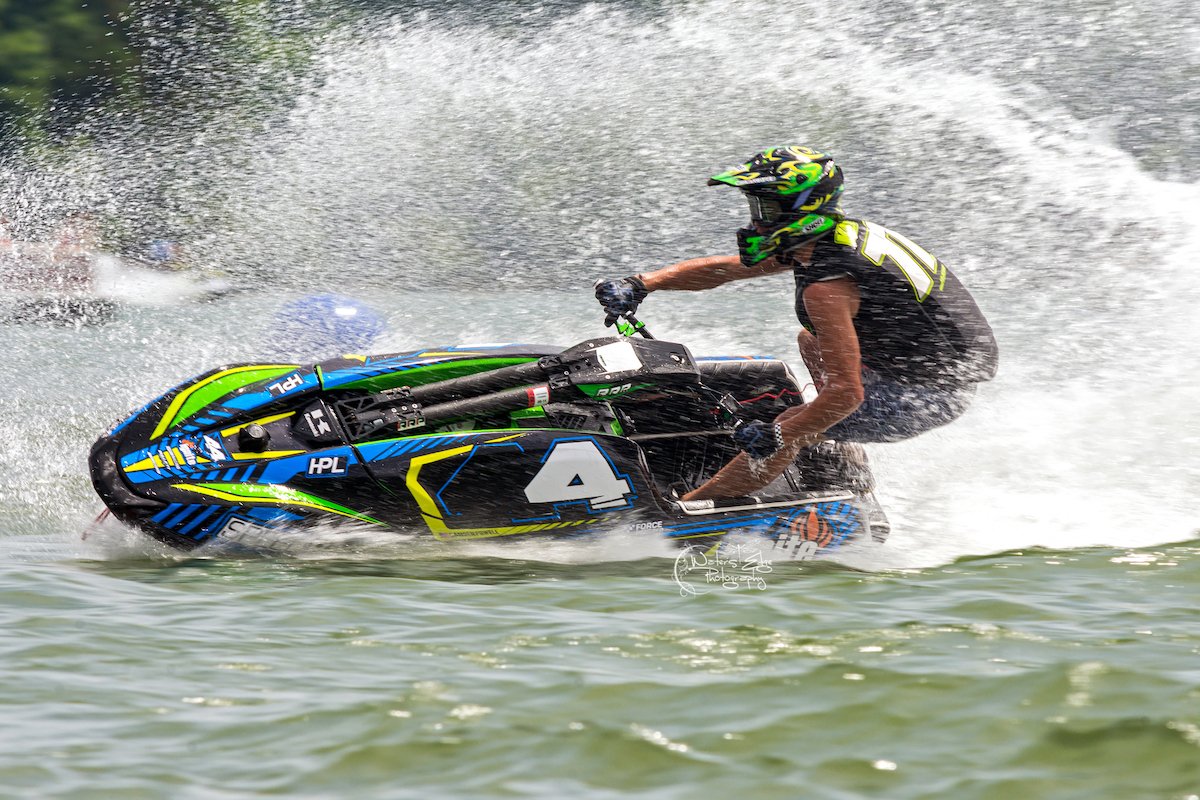
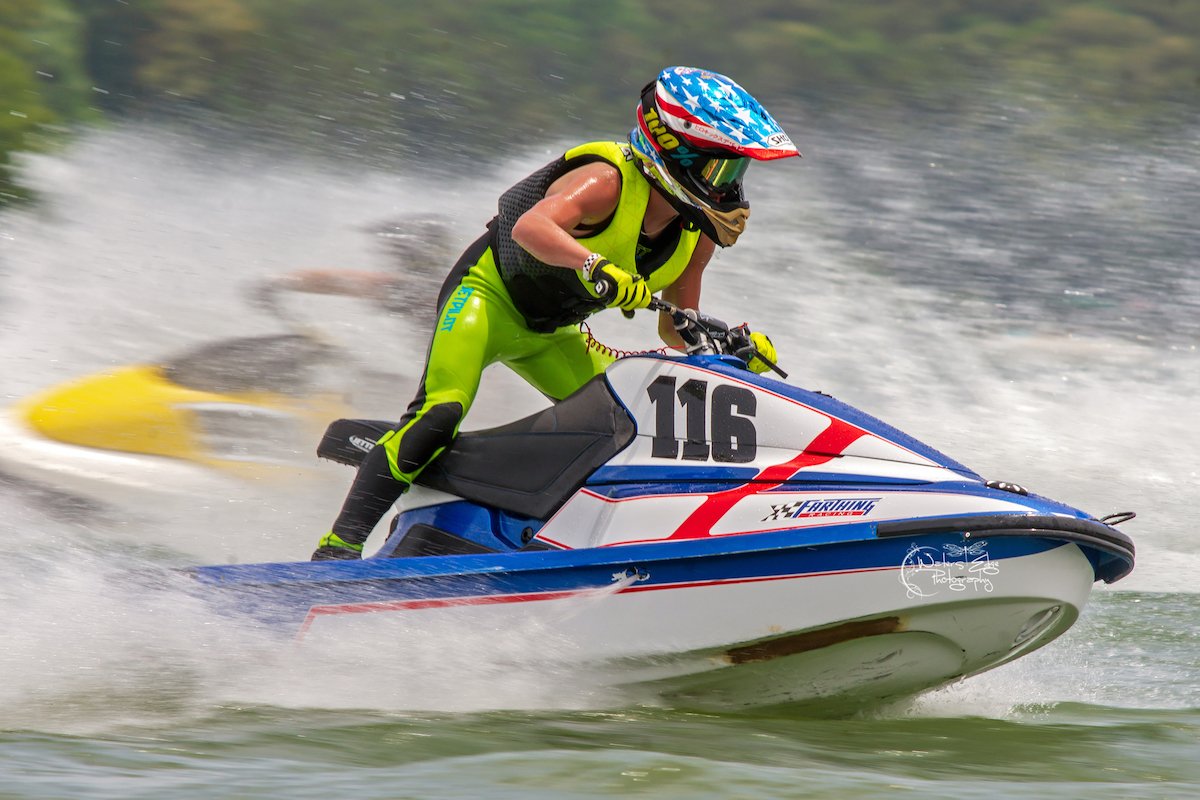
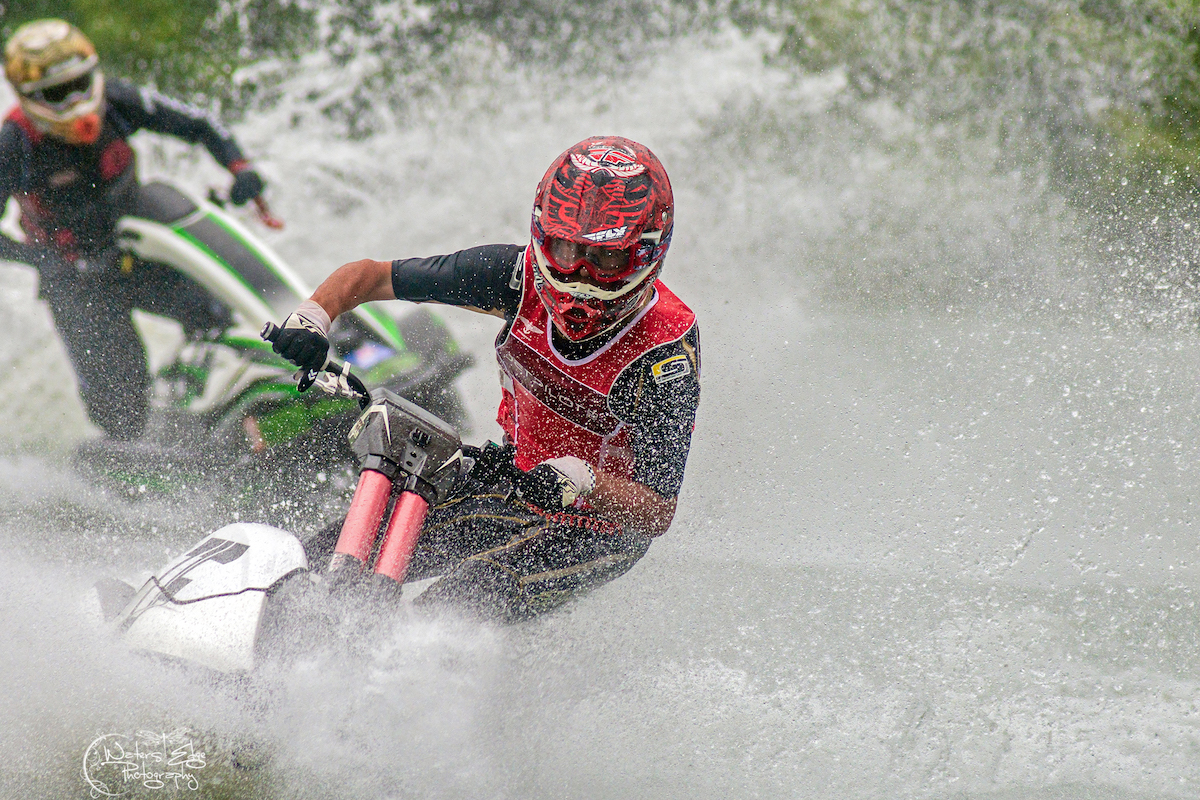
Pro-Am Ski GP, arguably one of the toughest and most intense battles of the season, brought 11 to the line at Hartwell. Tour points leaders heading into the weekend were Matthew Richuk (146), Jimmy Wilson (144) and Camden Powell (128), but Hartwell stirred up that lineup a bit with some tough races, and with a Moto 3 wire-to-wire win by Jules Hopkins (4, 4,1) and his K1 that had everyone on their feet.
Each moto of the weekend in the class posted a different winner, and with a Moto 1 win by Devin Farthing (1, 2, 3) and moto 2 taken by Matthew Richuk (5, 1, 2), the weekend’s podium was Farthing (1), Richuk (2) and Hopkins (3). In tour points, Farthing now holds the top spot with 208, followed by Richuk (199), Hopkins (190) and Jimmy WIlson (187).
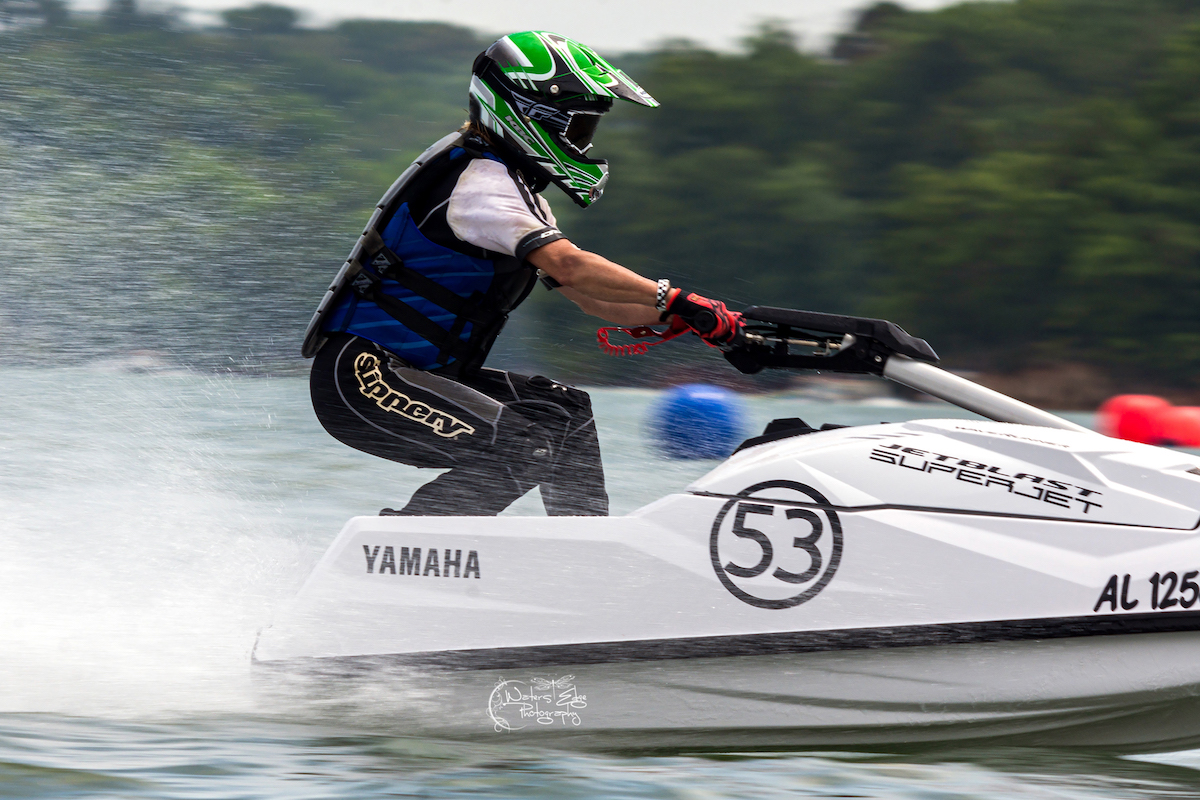
In Sport Stock, Matt Johnson (1, 4, 2) walked away with the overall win, beating out tour point leader Deven Farthing (5, 3, 7), who took second overall, but walked away from the weekend with a strong hold on the tour points leadership with 276, followed by Tory Snyder (184) and Sammy Nehme (162). Chris Landis (2, 2, 12) snagged the third podium spot for the weekend out of a line of 14.
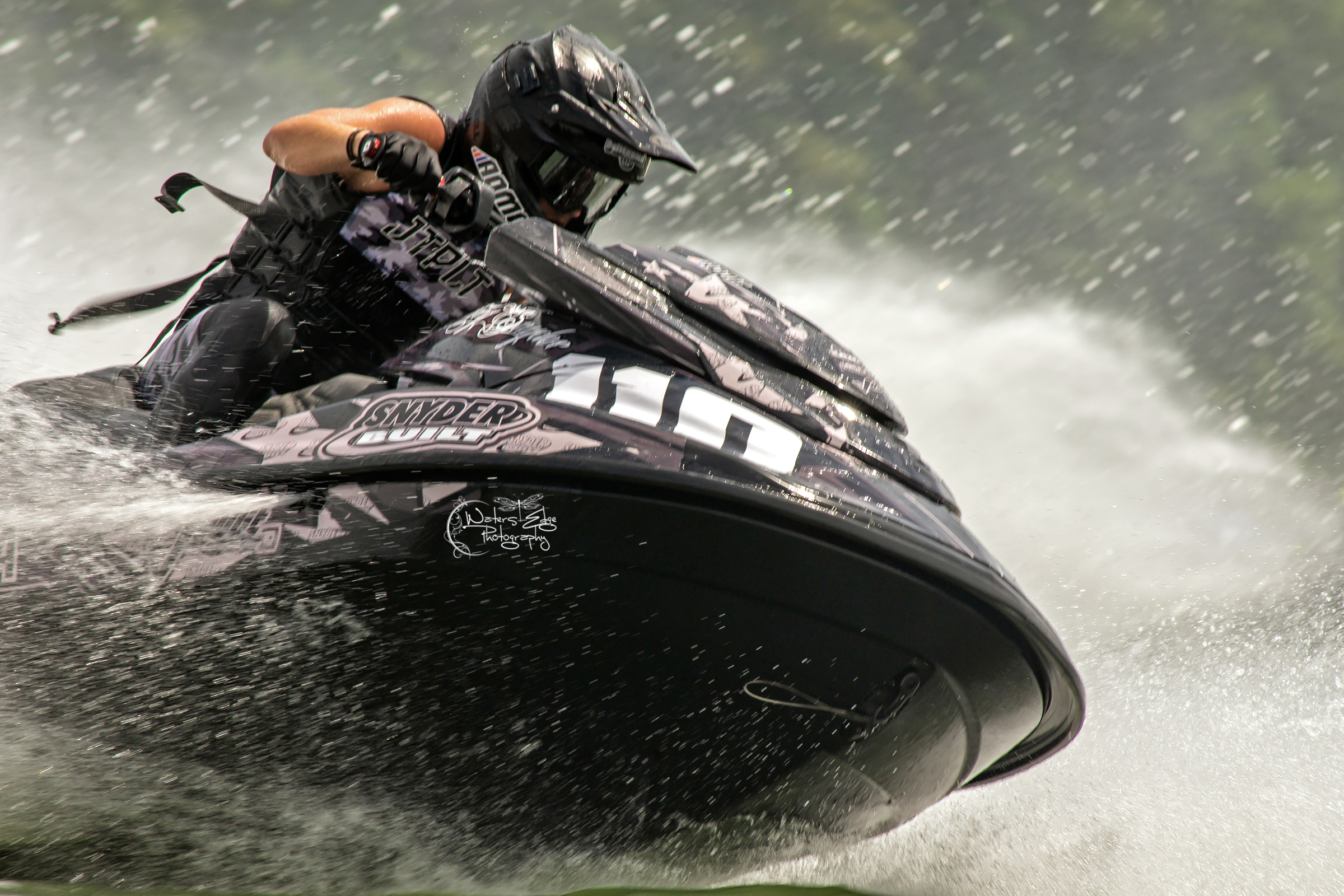
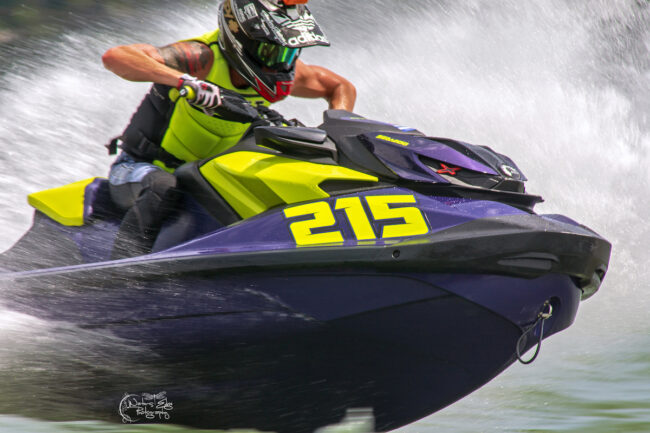
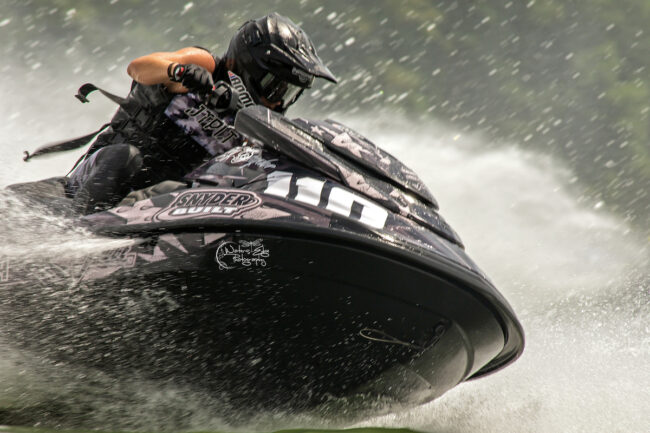
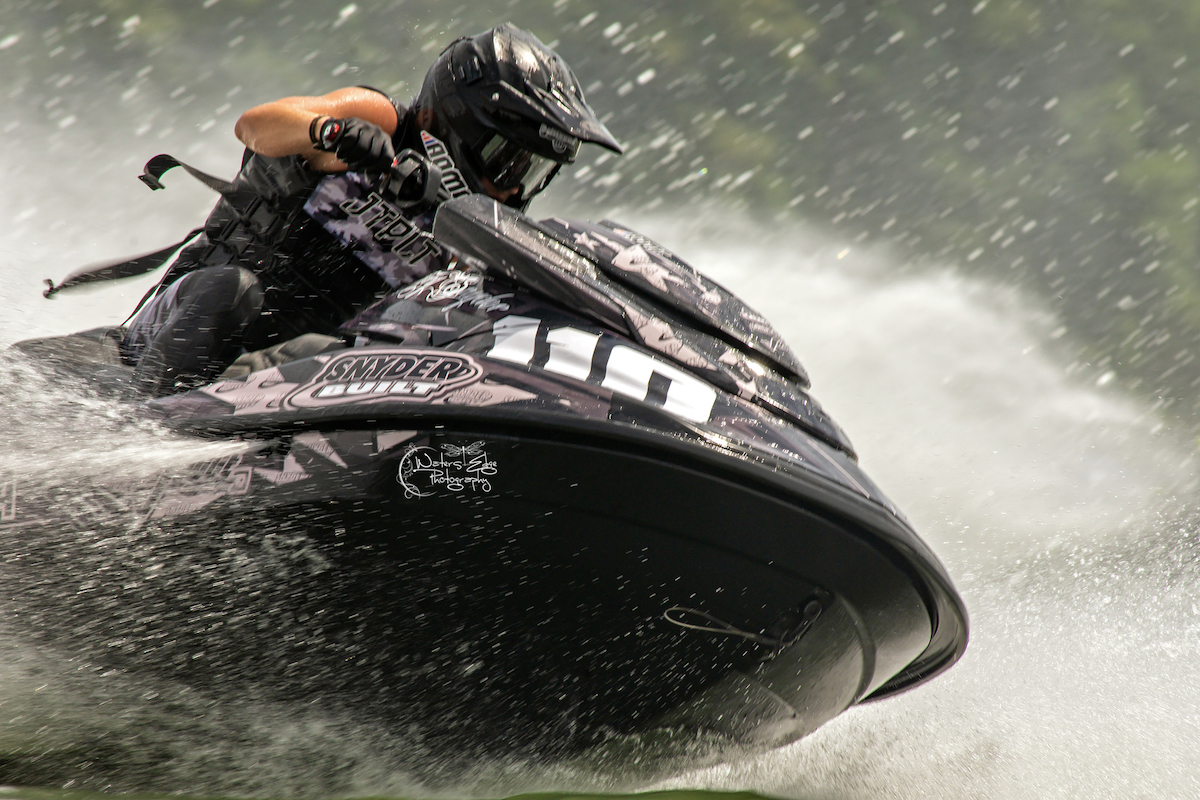
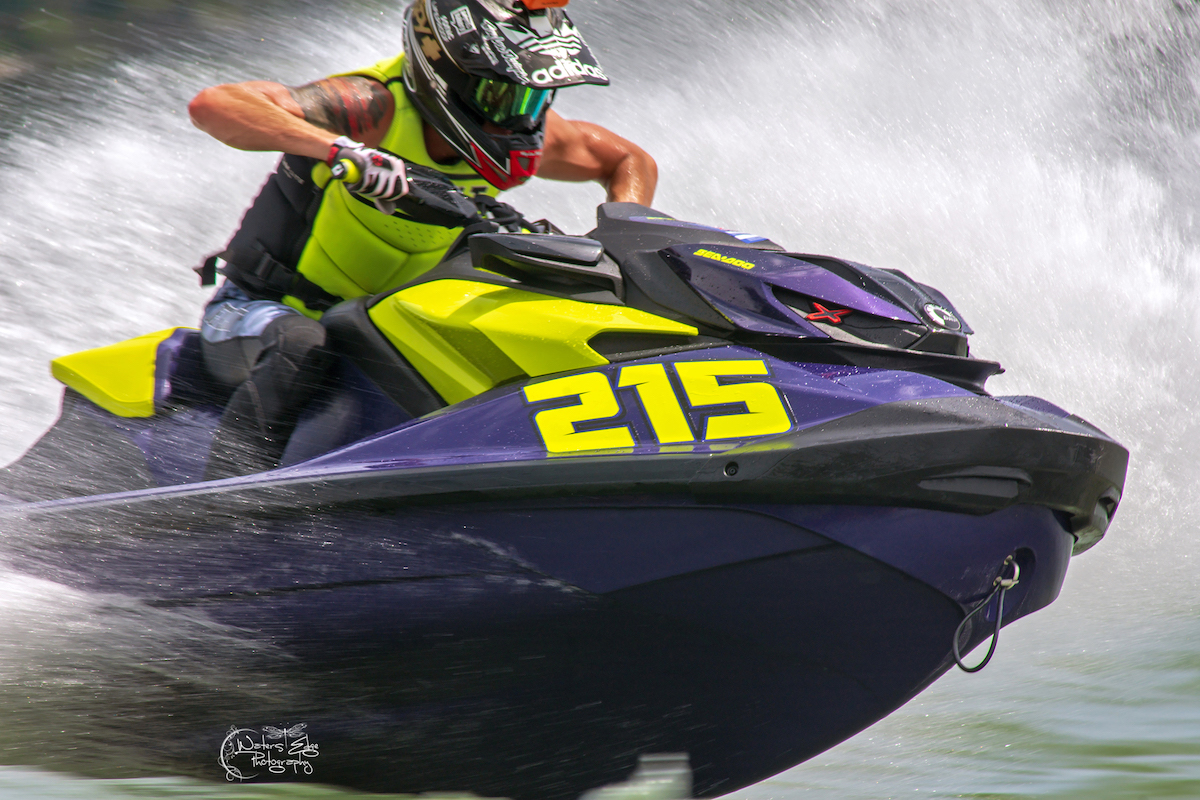
The Pro-Am R/A Box Stock class pitted five of the fiercest competitors of the tour against each other, and brought the entire race site to a breathless standstill for moments following a mid-race front-stretch mash-up between Seth Nama’s #215 SeaDoo and Tory Snyder’s #110 Yamaha as they came out of the split – an impact that sent Nama cartwheeling through the air, left both riders in the water, and left Nama’s boat cracked and in pieces.
The impact could be heard, and felt, by those on the nearby shoreline, and it was a breathless few moments until the air cleared and both riders signaled that they were OK as the course marshalls quickly took control of the scene.
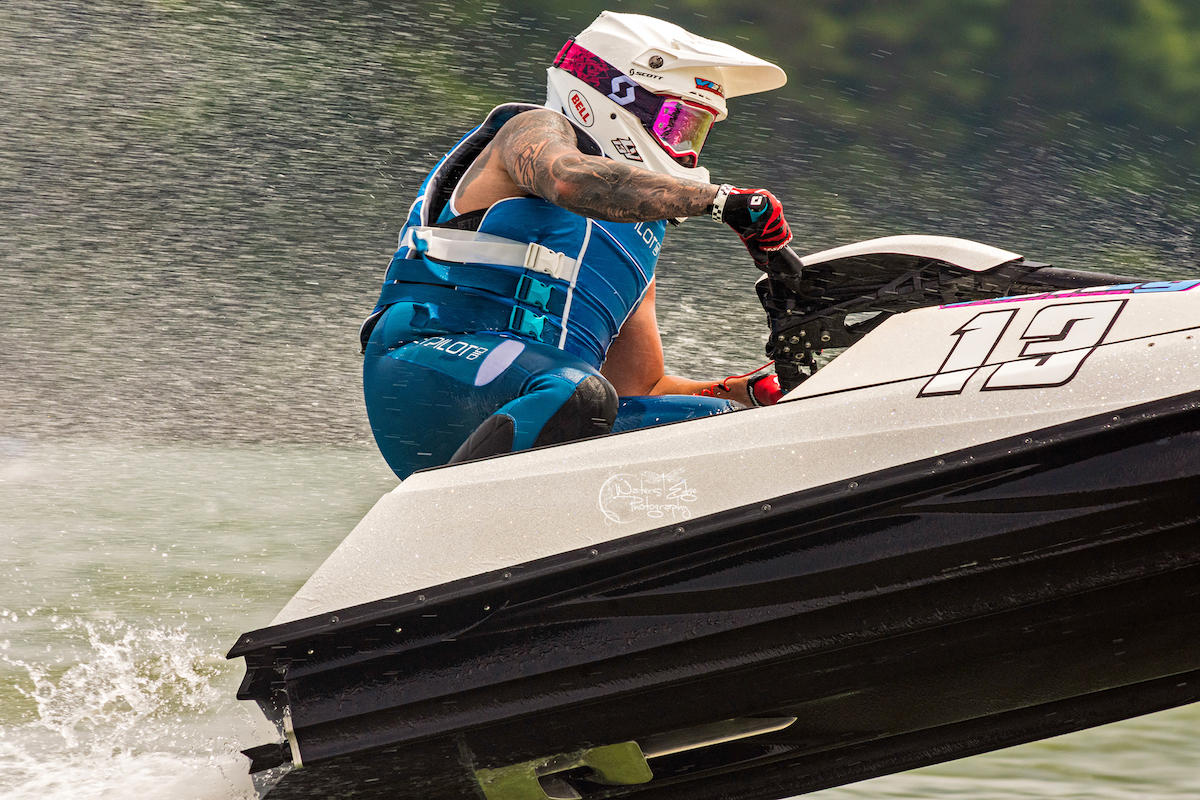
Repeating results from earlier rounds, Tory Snyder (3, 1, 1) took first overall, a step above his father, Troy Snyder (2, 2, 2). Vanjae Ramgeet (1, 3, 3) put in solid performances all three motos to take the third podium spot for the weekend, and the tour points leader order remains unchanged, with Tory Snyder (300), Troy Snyder (260) and Seth Nama (140) holding the top three spots.
For full results Round 5 results and up-to-date tour points standing, visit prowatercross.org, and check out more photos from the tour at watersedgephoto.online, and stay tuned to The Watercraft Journal for a wrap-up of the July 24-25 Round 6 in Racine, Wisconsin.
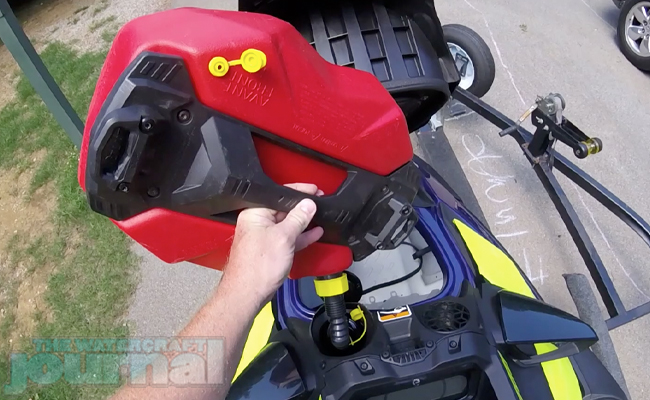
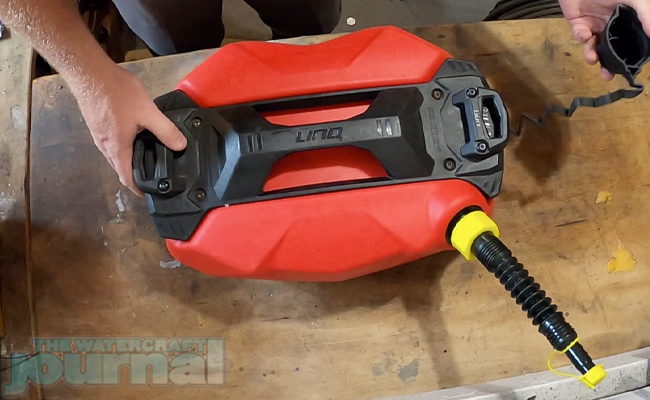
Sea-Doo effectively opened up a world of convenient, easy travel with the introduction of its LinQ accessory system back in 2018. The collapsible mounting system allows the personal watercraft enthusiast an array of options to maximize the enjoyment – and utility – of their Sea-Doo.
Whether its storing an extra change of clothes or a large beach blanket in the soft-sided storage tote; loading up plenty of drinks and snacks in the 4.2-gallon floating cooler (that’s right, it floats!); or packing an extra 3.8-gallons of fuel to push your day’s ride just a little bit further; the LinQ system is easily one of the brand’s best additions.
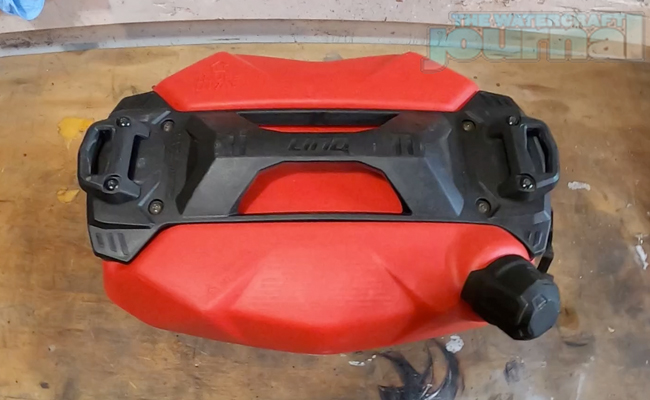
Unfortunately, when it came to Sea-Doo’s Fuel Caddy, certain concessions were required to be made in order to be sold worldwide. Of those was incredibly restrictive filler neck. The locking sleeve filler neck is one of those infamous CARB-legal impositions foisted upon the consumer market, which renders the product itself nearly inoperable. Trying to use the caddy’s filler neck is a chore on dry land; trying to unlock the neck and refill your ski out on the open ocean is all but entirely impossible.
Admittedly, we broke off the restrictive collar and spring-loaded snout early last year and haven’t regretted it since. (Well OK, maybe a little.) Thankfully, since we don’t live in California we’re not concerned with complying their draconian rules – so we’re going to show you a very easy – and CHEAP – upgrade for your LinQ Fuel Caddy that most anyone can follow; it won’t spill a drop of gas on your Sea-Doo, and best yet, transfer fuel from the caddy to your ski twice as fast.
From the factory, the LinQ Fuel Caddy is pretty great. The US Coast Guard-approved marinized tank mounts snuggly to all models equipped with the LinQ mounting brackets, carries 3.8-gallons of fuel, and even allows the LinQ watertight bag to stack on top for added storage. A rubberized boot on a durable tether caps the filler spout when not in use and all hardware is treated to resist corrosion from salt water. Unfortunately, the locking spout just plain sucks – it’s hard to use (particularly out on the water) and is absurdly restrictive.
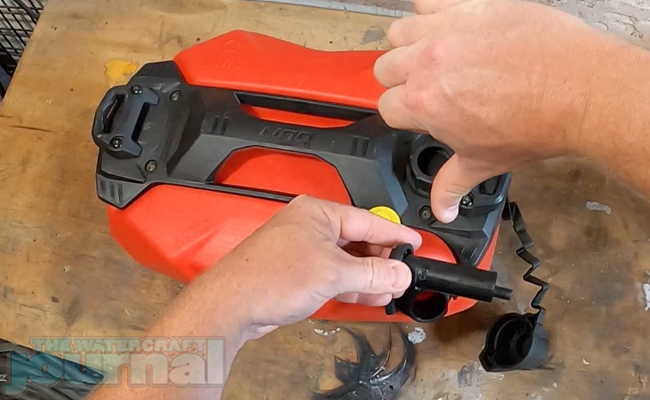
For a mere $10 dollars at EZ-pour (www.EZpourSpout.com) we picked up their flexible Fuel Spout and Vent kit. The EZ-pour spout itself includes a built-in flame arrestor, as well as a screw-top cap and strap, and a push-in 1/2-inch vent and cap. The EZ-pour spout also came with two different screw-tight caps; the yellow cap is coarse thread and typically used for jerry cans and racing jugs – exactly what our Fuel Caddy required.
(As a bit of legal disclaimer, EZ-pour asks that its replacement fuel spout be used on gas cans prior to 2009. Again, this is to comply with hyper-restrictive CARB outlines. This modification should really only be used by those of you not living in states and regions complying with these decisions. Check with your local authorities and parks departments to see what kind of fuel spouts are acceptable.)
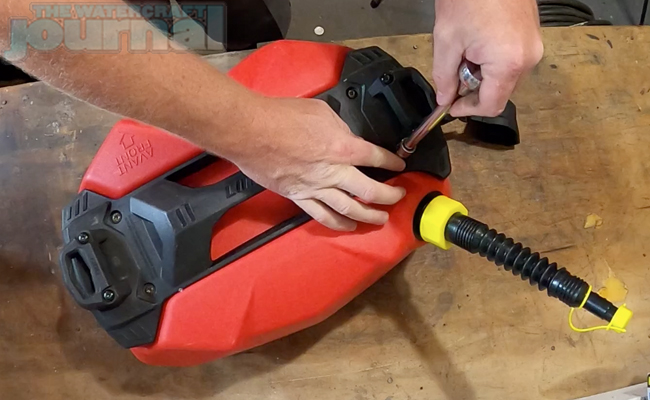
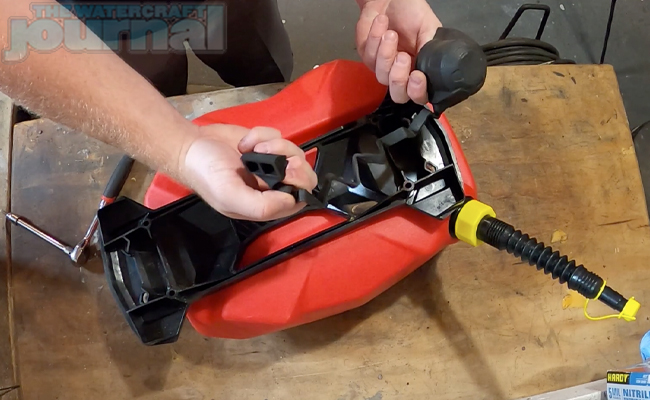
Installing the EZ-pour spout is as simple as removing the rubber cover, unscrewing the old cap, and removing both it and the locking collar from the caddy’s threaded neck. The new spout installs easily, simply slide the yellow cap over it and tighten it down. The spout’s cap also screws on snug; threading on the strap requires looping it around and sliding the barbed end into the cap’s tab.
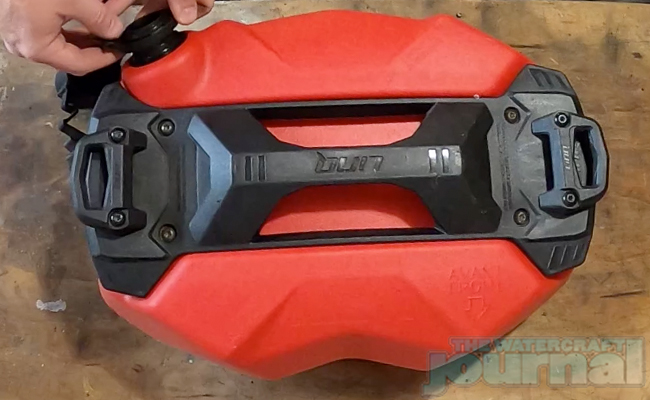
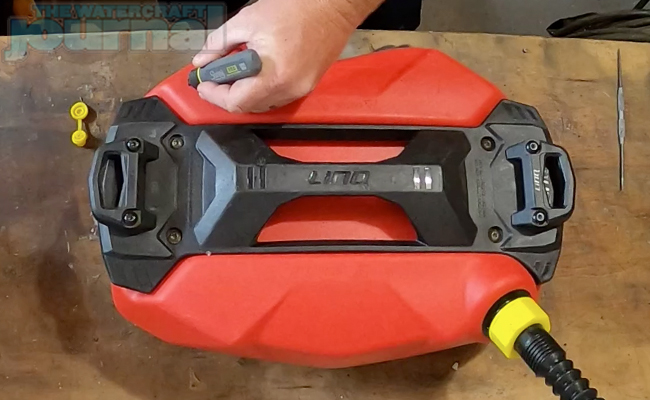
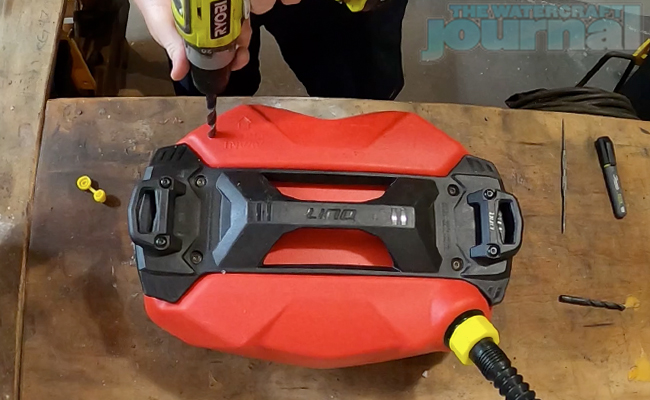
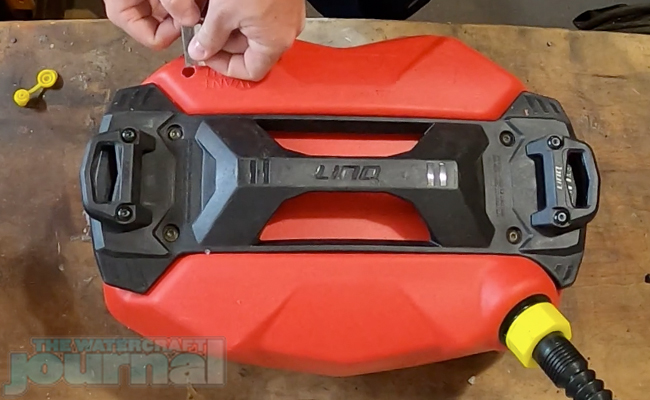
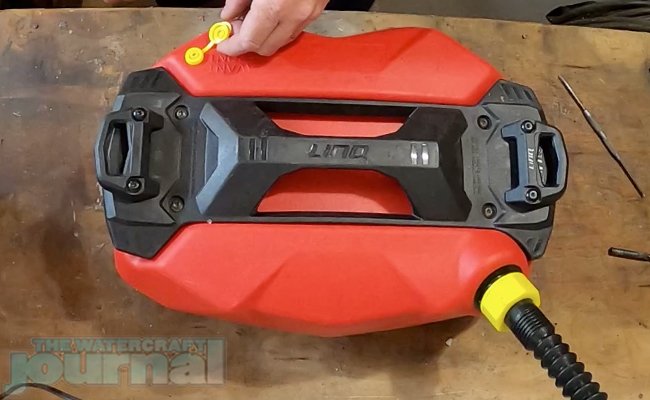
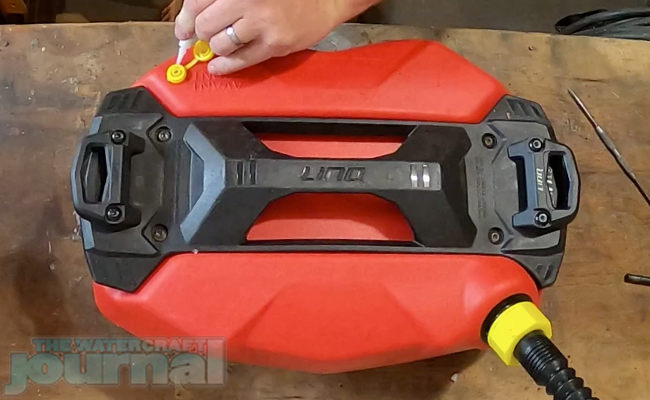
Since we didn’t require the rubber cap anymore, we removed the top panel using a Torx 30 wrench or driver. The the end tab of the rubber cap simply slips off of the base plate, allowing you to tighten it back on. The final step was installing the vent. As you’re pouring you want the cap to be as opposite from the spout as possible; equally, we don’t want fuel to be able to spill out easily, so we chose to drill our hole on the furthermost corner of the top of the caddy.
We first made a mark where we wanted to drill; then we drilled a small “pilot hole” before running the half-inch bit into the tank. Next, we cleaned up the edges with a razor blade allowing the vent to be pressed in with a little grunt. For added measure, we ran a bead of Super Glue around the edge. Not so much as a sealant, but to keep the vent from wiggling loose. From there, our modified Fuel Caddy was ready to go.
Of course, the LinQ Fuel Caddy attaches to the back of our 2021 Sea-Doo RXP-X 300 without the need of tools or any effort at all. Aboard the RXP-X, removing the caddy and pouring its contents into the fuel tank is just as easy. The flexible spout makes positioning the caddy much easier, and the open vent allows the entirety of the fuel caddy to transfer 3-gallons of fuel within 35-seconds, literally two-to-three times faster than the CARB-compliant spout. It’s now one of the easiest – and fastest – fuel cans we’ve got.
Again, this might not be for you – particularly, if you live somewhere that is uptight about the kinds of filler necks your jerry cans have. So please make sure to do a little background checking to make sure you won’t be issued a hefty fine just for swapping out your Fuel Caddy’s spout.
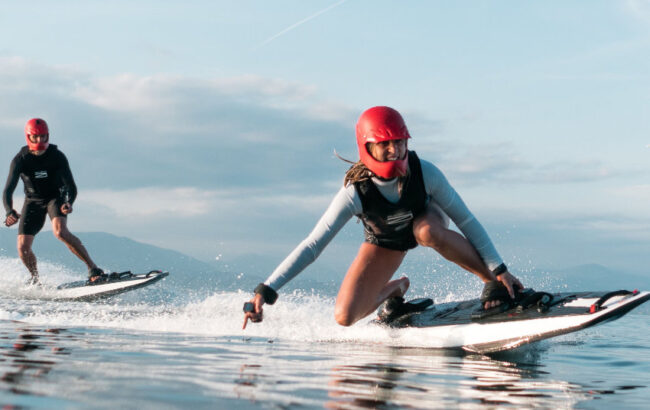
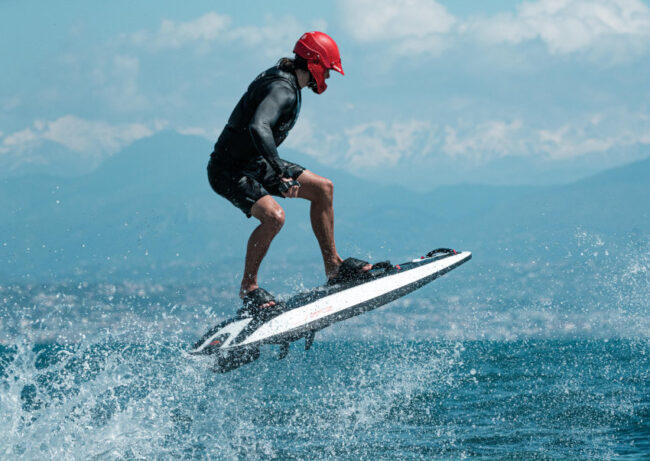
If you haven’t noticed, we at The Watercraft Journal are really enjoying reporting on Awake Electric Surfboard company. The jet-driven electric surfboard allows enthusiasts from grom to the seasoned ripper to enjoy carving the water, whether there’s waves or not.
To make this experience all the better, Awake have teamed up with the Maui Fin Company (MFC) and Kai Lenny. This partnership ensures that Awake’s Electric Surfboards are outfitted with a high quality, high performance product. Some of the best riders in the world use these fins because they know they can count on them to hold the line.
MFC fins provide the stability you need for riding the RAVIK 3 at a top speed of 35 mph. Thirty-five miles per hour is blistering fast on a surfboard and feels even faster when reached in under 5 seconds. With the MFC fins, you know the fins will hold the line and keep you stable at high speeds and when carving some drawn out lines on the RAVIK S. It’s up to you to stay upright.
The AWAKE x MFC collaboration produced a light-weight carbon fiber fin, built to fit into Future fin-boxes. Future fin-boxes are standard on AWAKE electric surfboards. The fins are easy to mount with the included fin key. A couple of turns to tighten them, and you’re good to go! The fins come with a bag to use for storage or travel.
Check out the RAVIK models on their website and find out which model suits you best.
There’s little denying the fact that Kawasaki’s Ultra platform continues as the weapon-of-choice for rough water/open ocean riding. It’s aggressive deadrise and true deep-V hull permits the big JetSki to sluice through white caps like it was a calm, glassy day. Although the Kawasaki isn’t as flashy or riddled with bells and whistles as the other guys, it’s traditional SMC fiberglass-and-gel coat construction has made it a favorite of hardcore rough water riders worldwide.
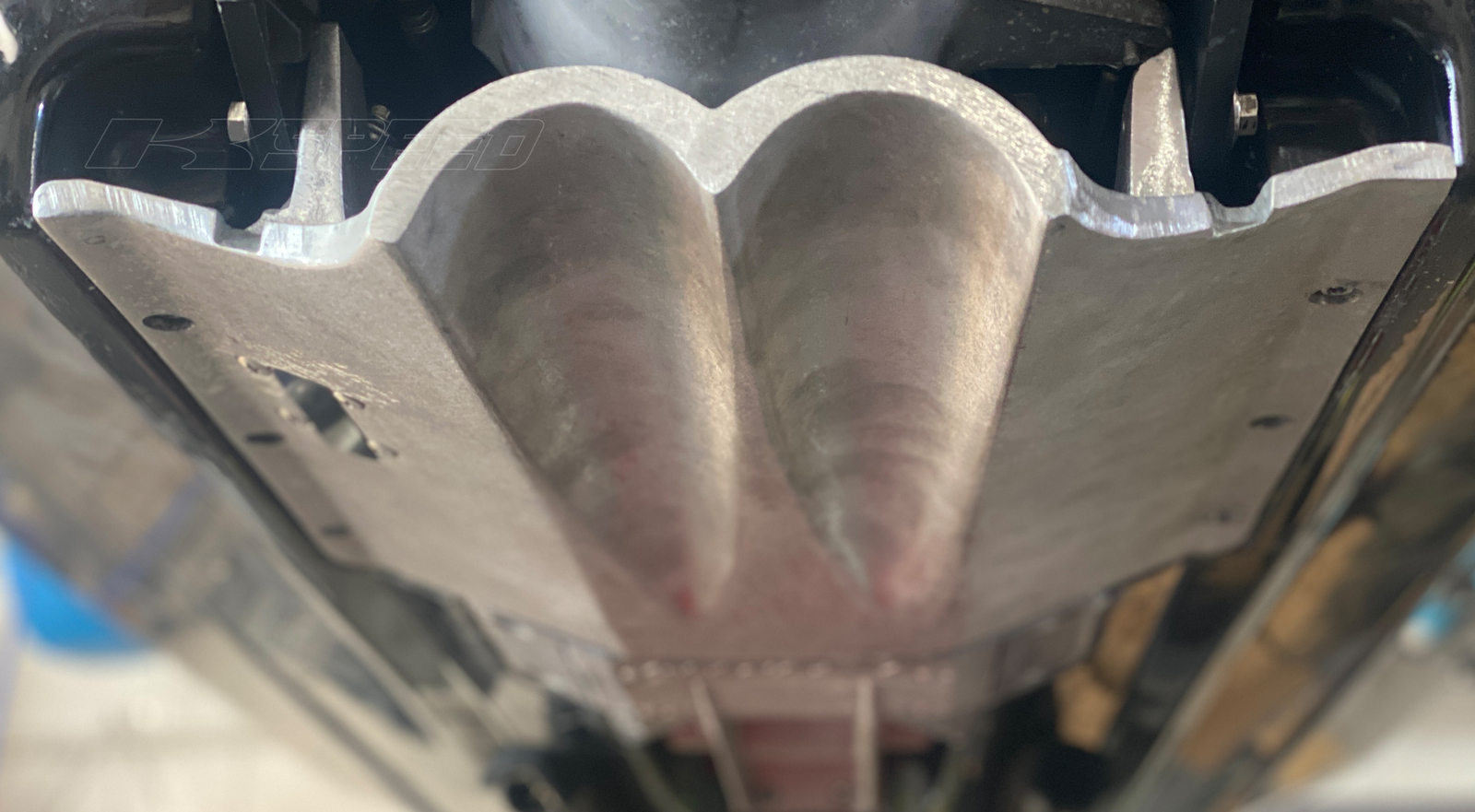
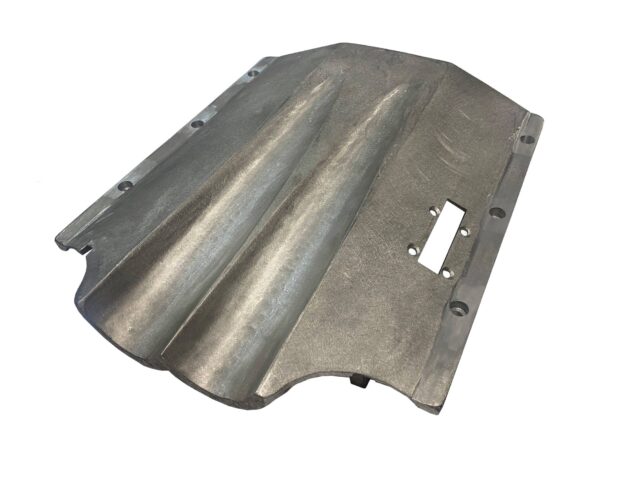
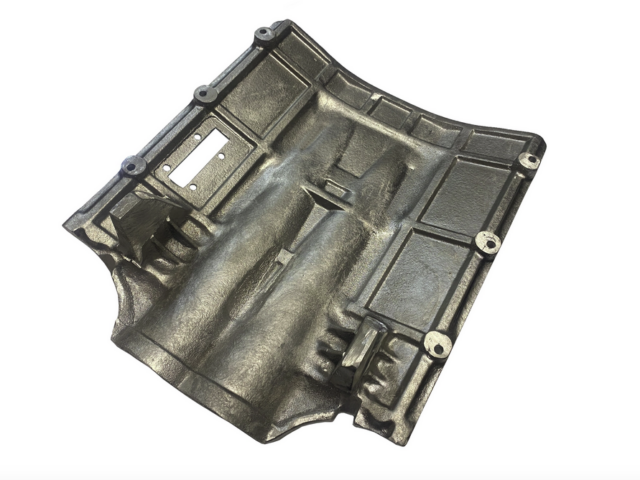
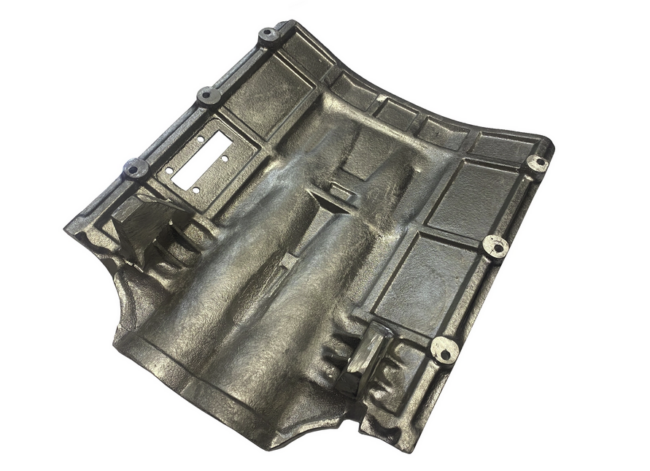
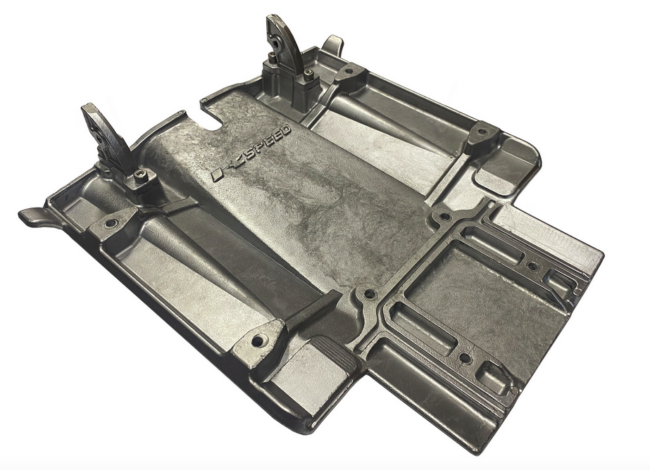
The team at Kspeed are no strangers to this, and have been slaving away to fine tune the Ultra platform even to this day. To whit, they’re chipping on the smaller STX platform as well, announcing a pair of new ride plates, as well as teasing another yet-to-be-released plate, all in a recent Facebook post, stating:
“We’ve been busy. 2 of 3 ride plate designs now available. Our offshore ride plate to suit the Ultra 300 & 310 is now available to purchase as well as the STX plate. For those waiting, our top speed plate is still in production, but isn’t too far. (No photos yet, we are keeping it under wraps)”
For the Ultra 300/310 Offshore Ride Plate Kspeed states, “We have found a way of keeping the ski stuck to the water and hooked up 99% of the time in the choppiest conditions. […] You expect to get airborne over the crest but it just absorbs the wave hooks up and goes again. Less air time, more time spent with the pump loaded up pushing you forward.”
When it comes to the STX Ride Plate, things get really exciting: “Our ride plate will make the ski faster in all conditions, but you will be able to fly over heavy chop with much more speed and predicable handling. (It can be used with or without our Kspeed pump wedge.)” And more importantly, it can be used on STX-12f, STX-15F, STX-R, STX-160, and even the STX-1100.
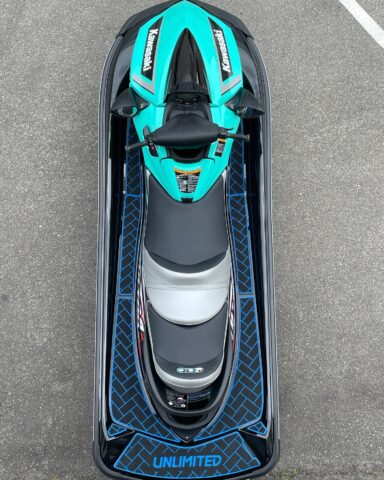
Unlimited PWC Parts recently released some spicy new eye-catching traction mats. A set of these mats will get you noticed on the water, so if you are in the market for new mats with some flair, these are for you. Unlimited PWC uses a two-layer mat structure to give riders extra cushion. The new design also incorporates the latest laser processing to eliminate water surface tension and to assist with deck drainage.
The mats are durable and have excellent grip even when wet. The mats come with a new double-sided tape from 3M, which has exceptional wrinkle resistance, durability, and adhesiveness. This way you won’t have to worry as much about not having a smooth finish when applying the tape to your ski. The new tape should eliminate most of the issues that sometimes come with applying new grip.
The new deck mats are available for several Kawasaki models including the Ultra and the SX-R. The new Sea-Doo mats really freshen up the jet skis, giving them a bold new look. These stylish new mats from Unlimited PWC are available in red, black, green, blue, and white with quite a few different geometric patterns. The lines appear sharp and crisp, thanks to the new laser printing process that Unlimited PWC has put in use.
Head to the PWC Unlimited website and grab a set of deck mats and as their tag line says, “look fast and go fast.”
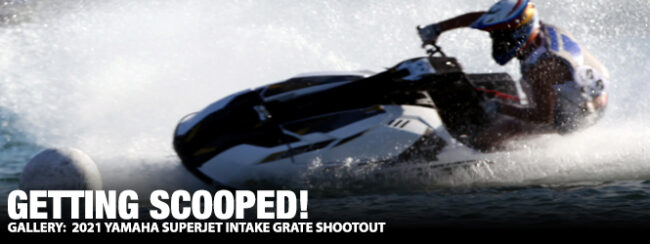
Over the last few months, IPD Racing has spent plenty of time on the new Yamaha four-stroke SuperJet. One thing we know is that we love new jet skis. Another thing we know is that this new jet ski has some glaring handling flaws. The first challenge with this ski, that any rider will notice, is that it cavitates in rough water. It does it going in a straight line and it does it when leaned over in a turn.
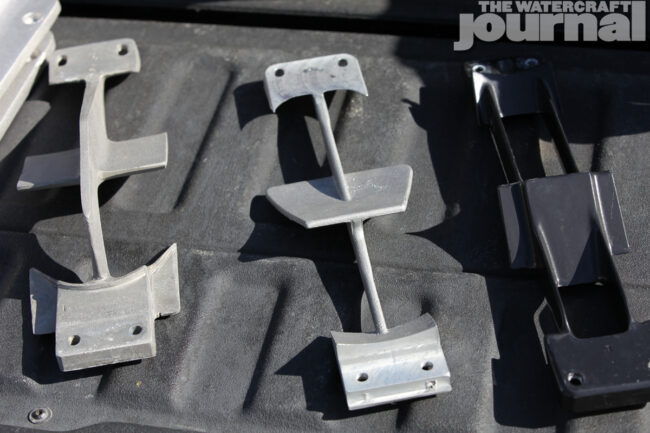
The handling traits of this ski are all related to its unique hull design. [The ’21 SuperJet is in NO WAY a Deep-V hull. –Ed.] While we can’t easily change the hull design, one of the first modifications that should be done is to choose the right intake grate. This hull needs an intake grate that will allow the most amount of water into the pump area to help keep the pump loaded.
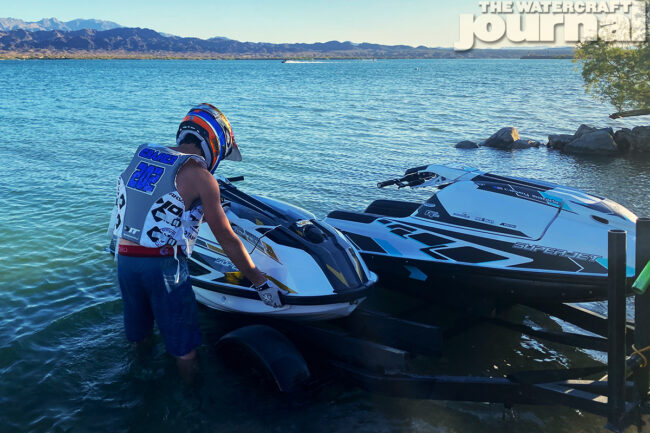
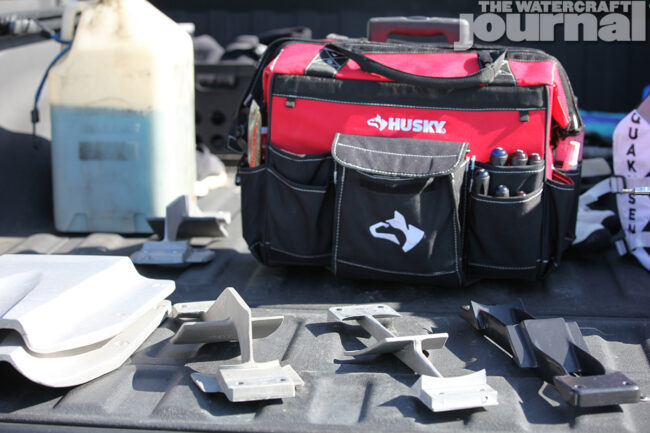
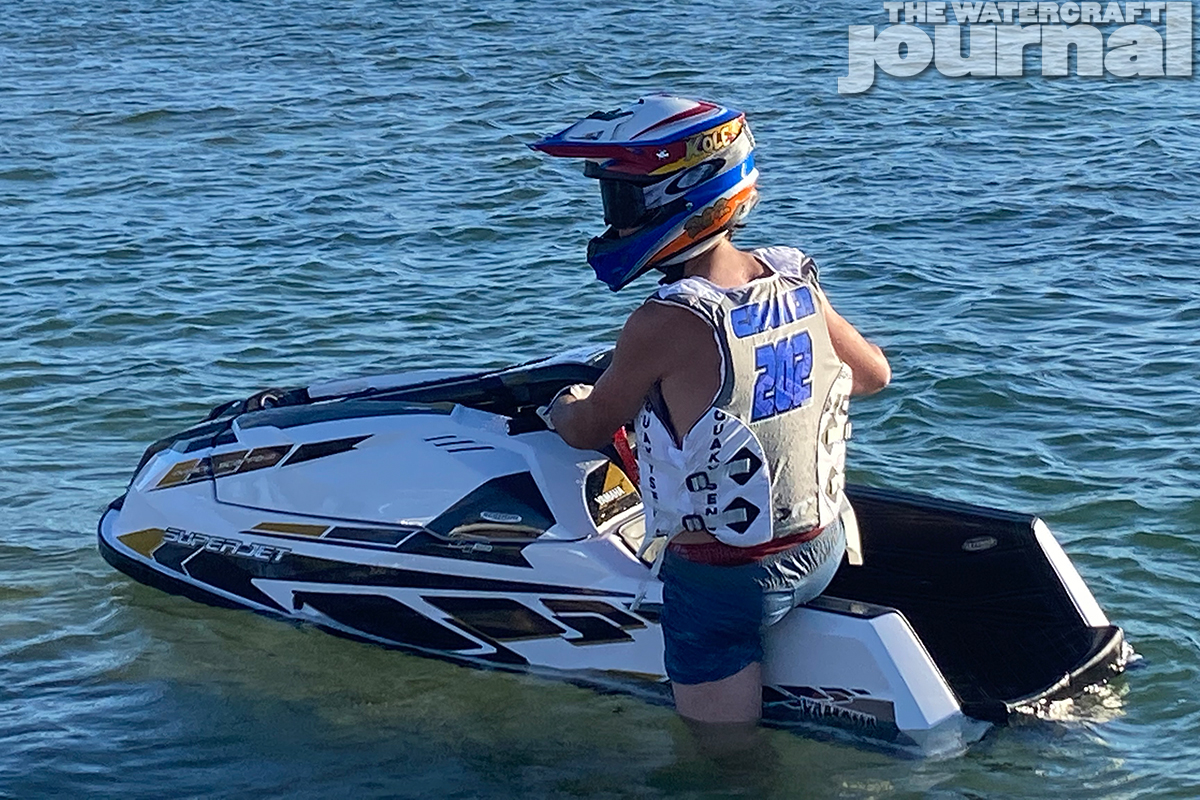
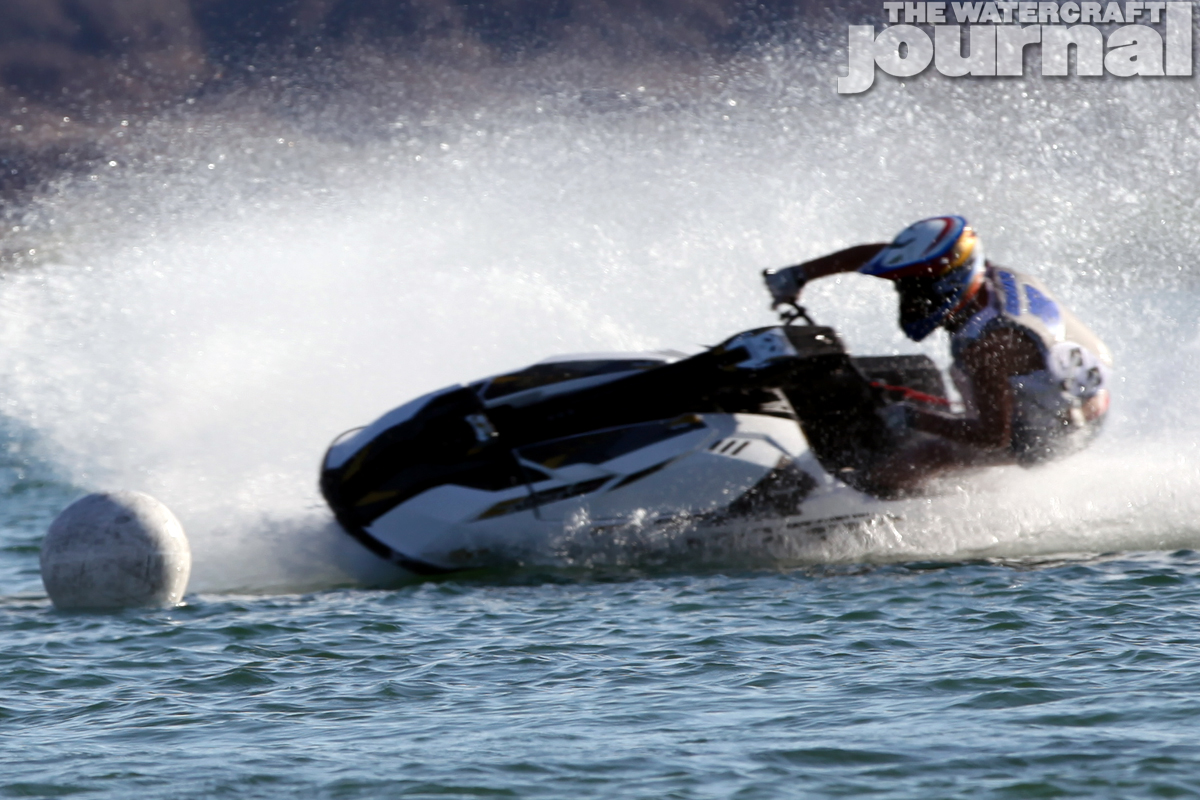
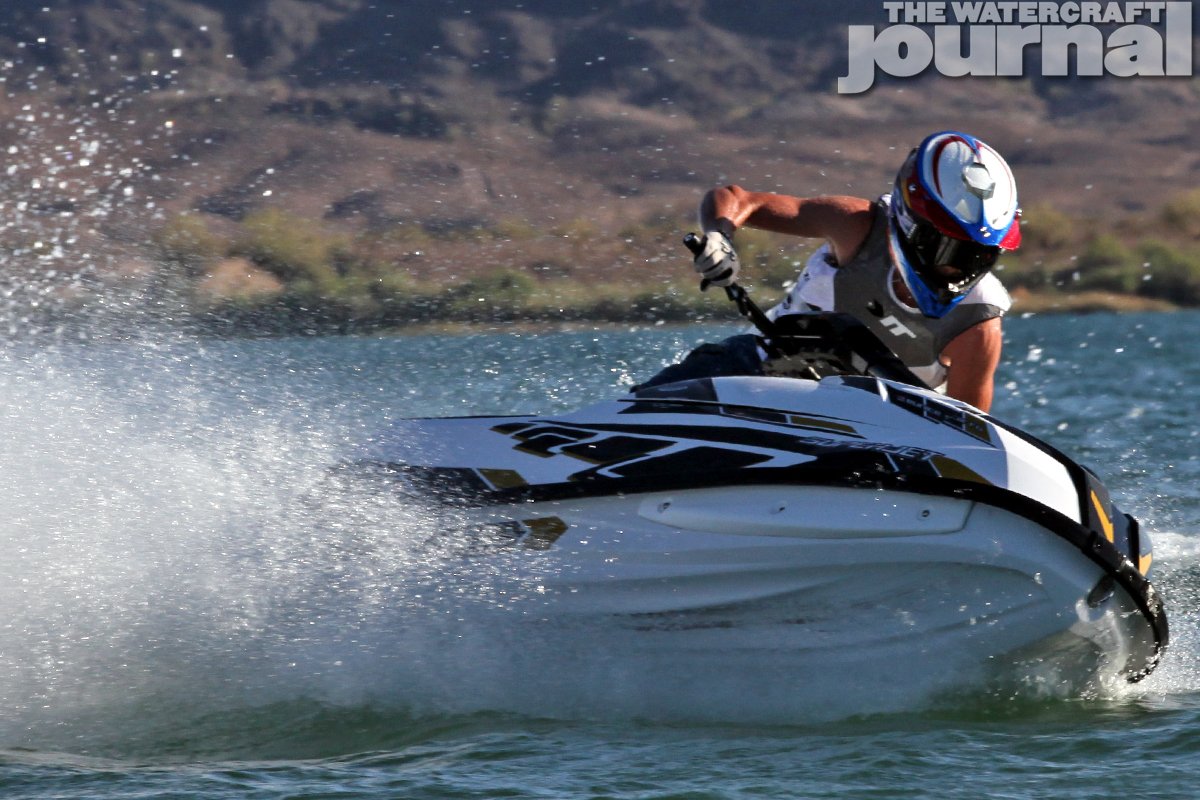
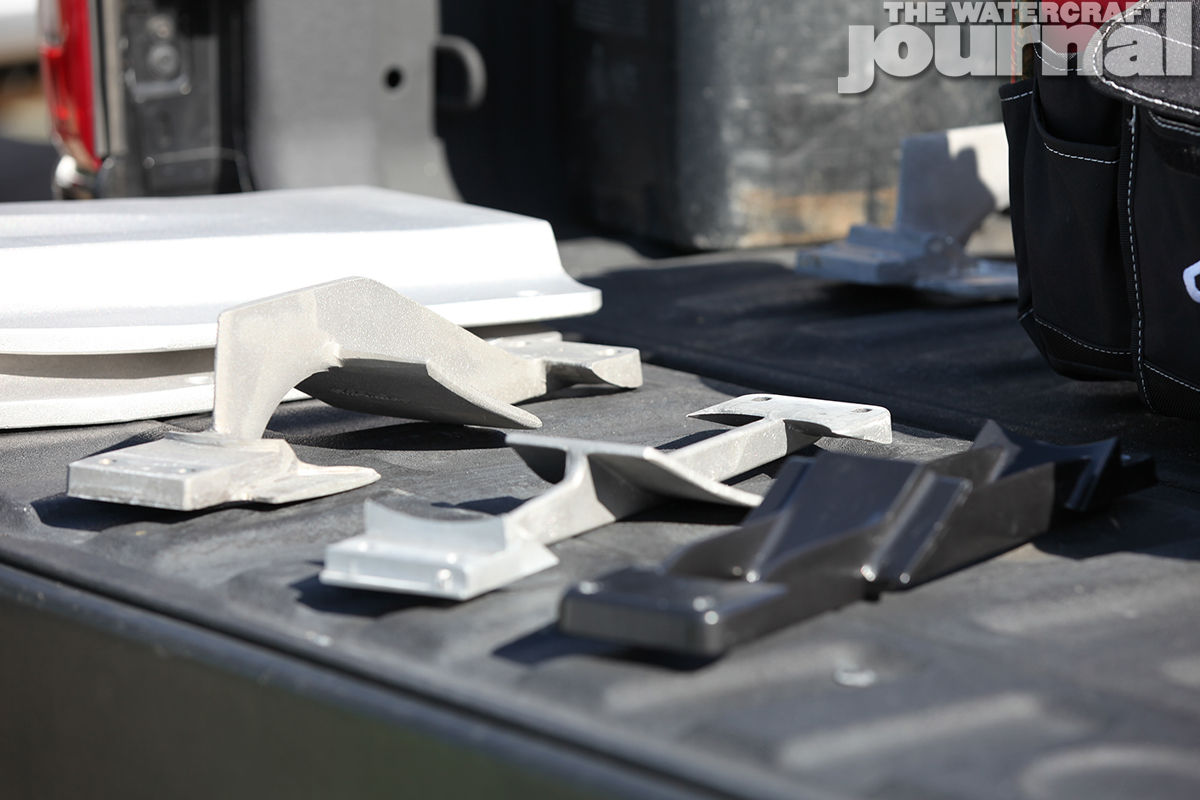
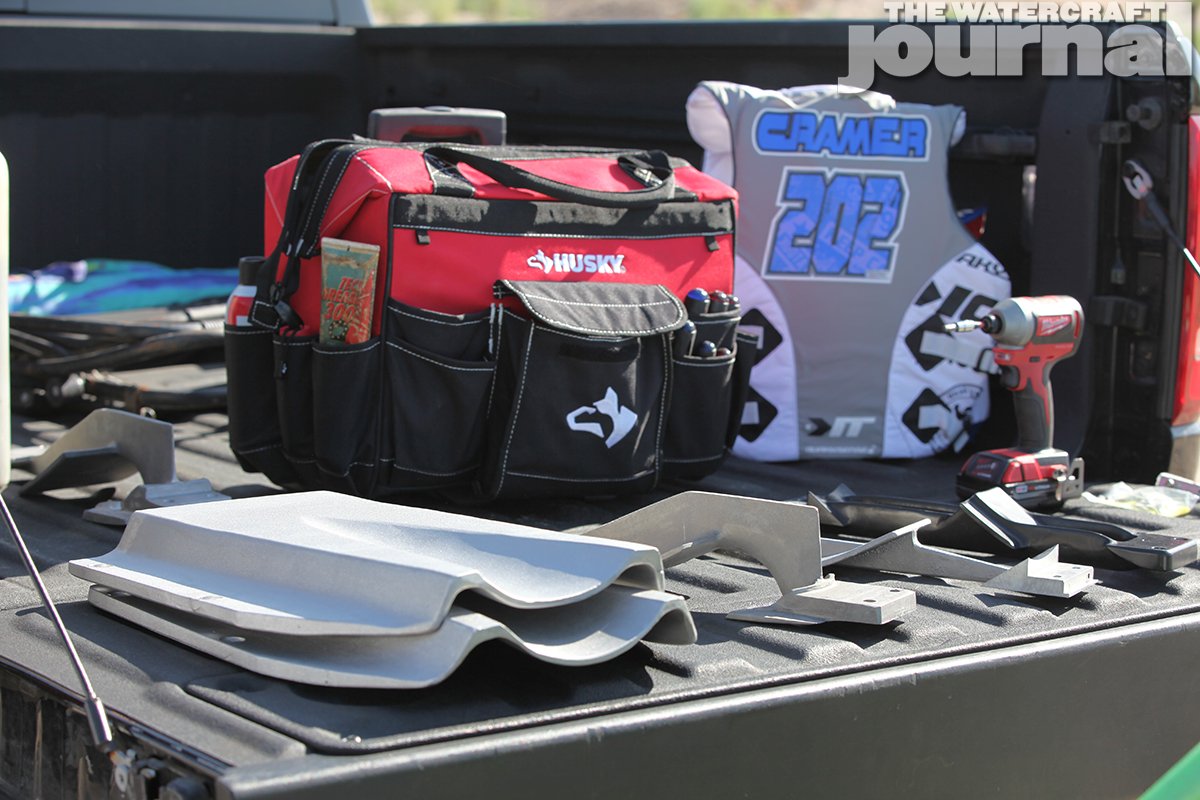
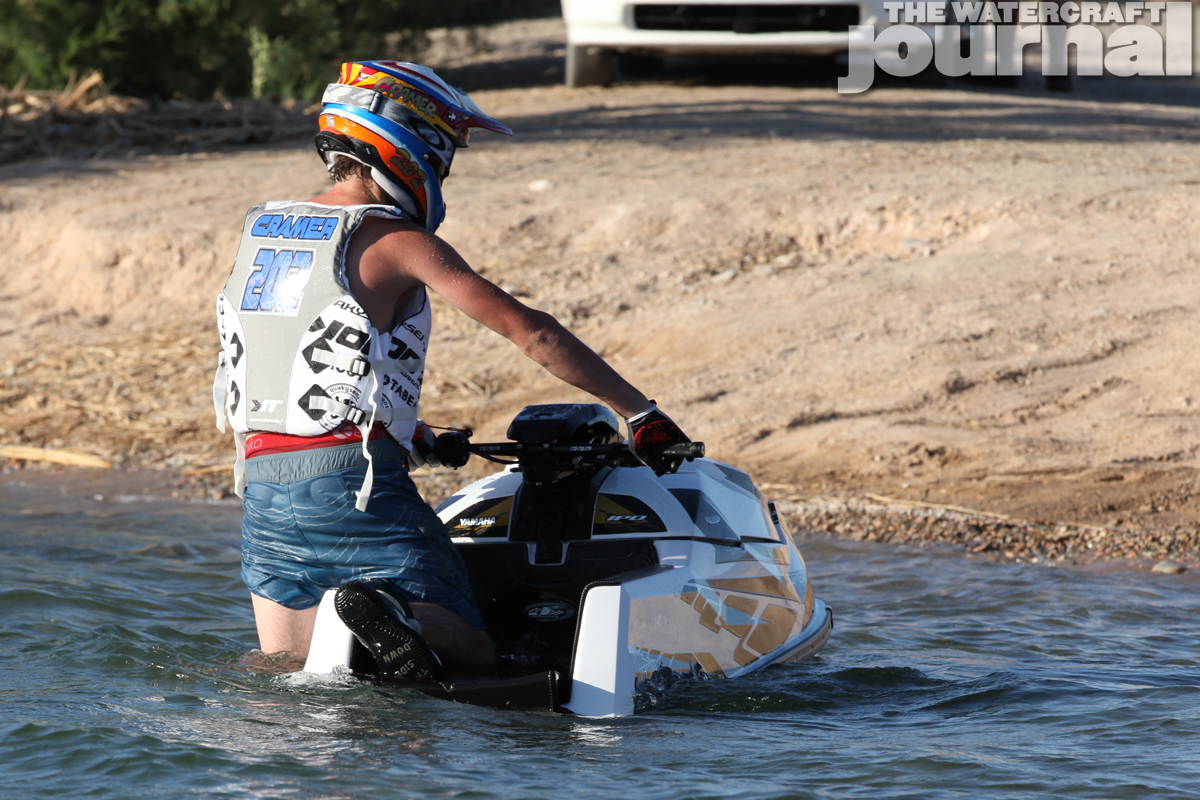
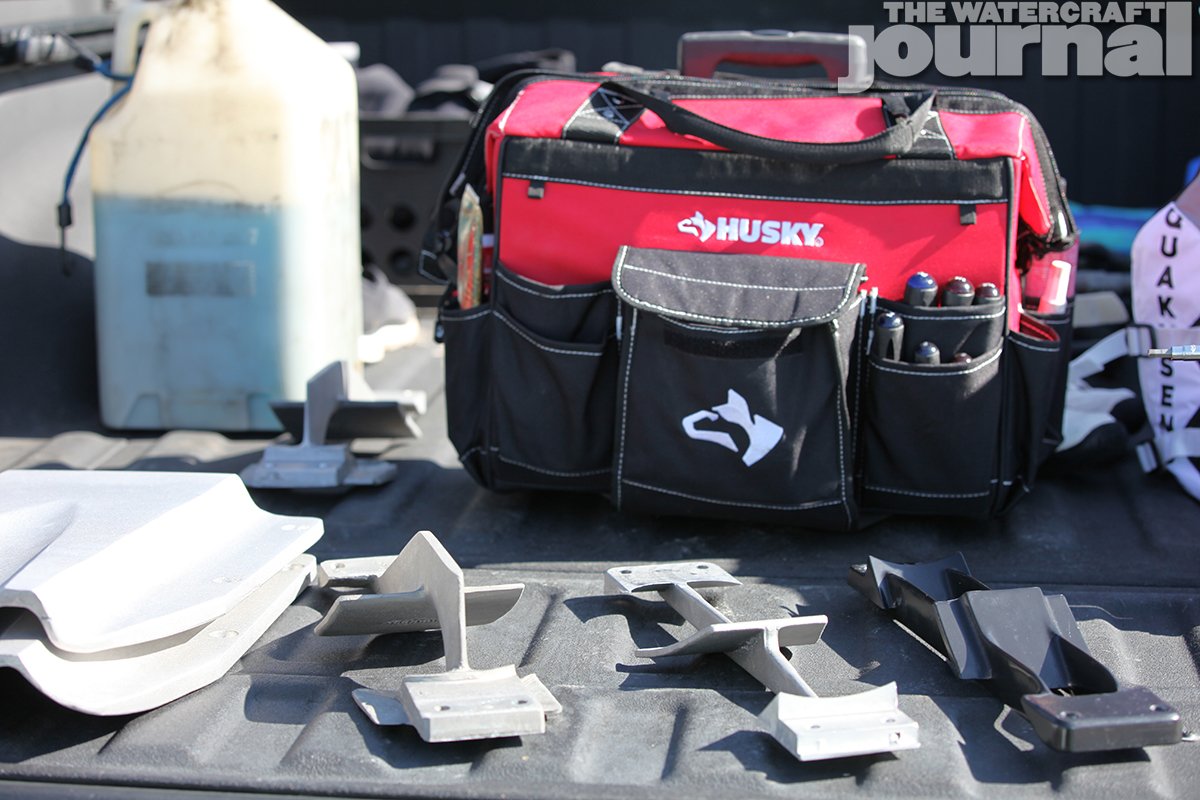
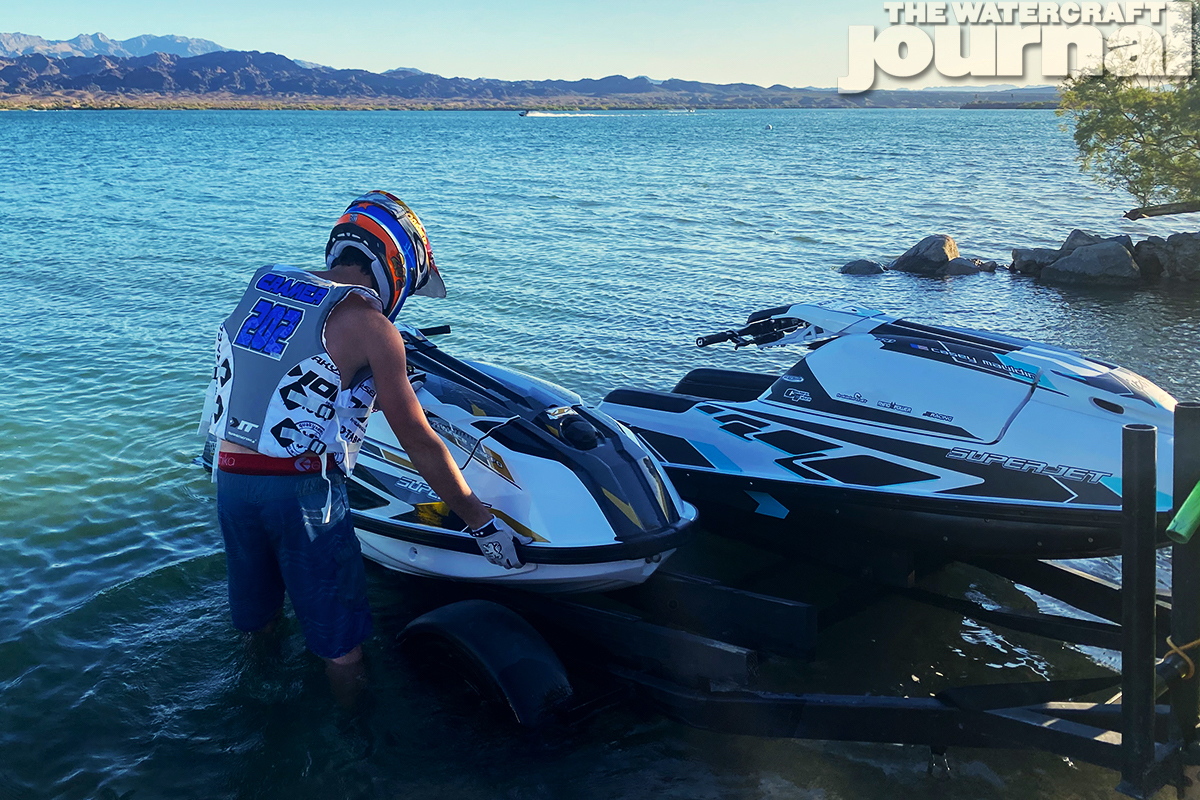
IPD Racing chose to compare three intake grates on the new SuperJet. We tested each of these plates on buoy courses and in race conditions. We tested on smooth glassy water in a bay, mild race chop on a lake, and in the rough, windblown, boat rollers of Body Beach in Lake Havasu City. We had riders of all skill levels, from older vets to Kole Cramer, a professional world champion jet ski racer. In this comparison, we tested grates from Jet Dynamics, RIVA Racing, and WAX Racing Products.
The RIVA grate was the first to hit the industry and was best in two categories. It is the fastest grate in smooth water and has an excellent fit and finish. It looks nice and fits perfectly. If you are looking for straight speed, this grate wins. While this is a good grate and an improvement over stock, it falls short of the other two in this comparison in all other categories.
The Jet Dynamics grate is a single-bar design from a company that has been in the industry for a very long time. This cast grate offers the best hook-up in rough water as well as the best drive out of the corners. With its aggressive scoop, it also offers the strongest deceleration when entering the turn. Overall, this is a very high-performing grate. The Jet Dynamics fit and finish leaves a little to be desired and seems to be the trade-off for the excellent performance.
The newest grate offered from WAX Racing Products is also a single-bar design. This grate offers the best hook-up in the turns and is close to the Jet Dynamics grate in every category. While not the fastest, It offers strong braking on deceleration and a much-improved hook-up in all conditions compared to stock. In addition to performance, the fit and finish are on par with the RIVA grate.
All of these grates are improvements over the stock grate and all are IJSBA race legal. A grate alone will not solve the handling characteristics that are a result of the hull design. There are other handling modifications that we recommended that will also make big improvements to the ability of this ski to be ridden quickly on a racecourse.
IPD Racing is working closely with WAX Products to develop the best intake tract possible for the new SuperJet. Look for more articles on the specific modifications we recommend for this boat or give us a call and speak to us directly.
2021 Yamaha Four-Stroke Superjet Speed Data:
This data was gathered on smooth water, at sea level on a 72 degree day. The SuperJet used in this comparison had the following modifications: RIVA tune, RIVA air intake, free flow exhaust, Blowsion front sponsons, stock plate with an IPD Racing modification, and a Solas 12/17 impeller. These are the average speeds of 6 passes with each grate.
When planning for a day on the water with a group of riders, launching a PWC is rather easy; simply have another rider back down the trailer while you are on the ski for entry into the water. However solo riders might find this task more difficult; we have all struggled with using engine power to reverse off of the trailer. Many of us have engineered our own solutions after facing frustration at the boat launch.
Some of these solutions have ended in defeat, whether it be having to swim to an astray ski or slipping on the boat ramp when attempting to give the ski a good shove off the trailer. The last thing any of us want is to be injured when trying to launch a PWC or even worse: finding yourself on the latest ‘JetSki Fails’ YouTube video. Yamaha has a simple solution to safely and efficiently launch your WaveRunner time after time.
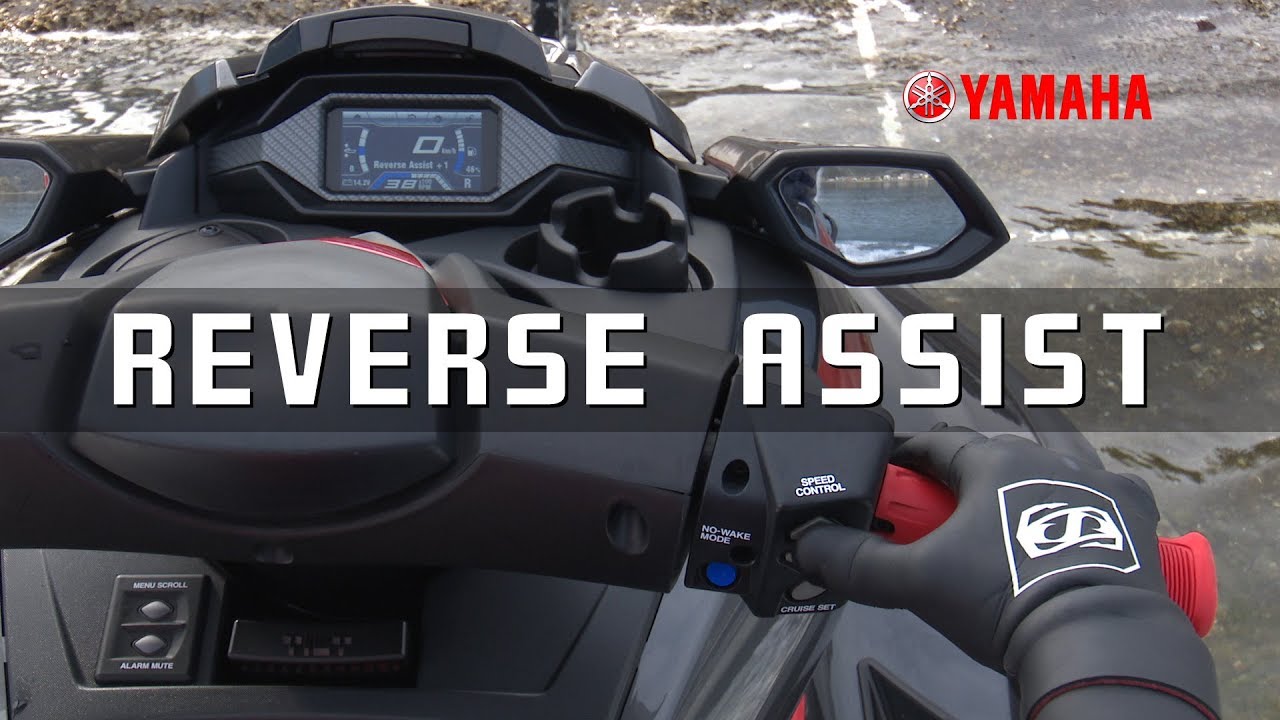
Yamaha’s video showing off their reverse assist feature on RiDe equipped WaveRunners offers a simple solution. Yamaha’s reverse assist temporarily offers increases engine RPM for the extra thrust needed when backing off the bunks of a trailer. With two speeds, it is as simple as holding down the RiDe lever and pressing the up arrow on the speed control switch.
When only pressed once engine RPMs are increased from 3,500 to 3,900; for whatever the case may be and you still need additional power, a second press will increase to a maximum of 4,300 RPMs. The higher RPMs offer plenty of power for a smooth entry into the water at all times. The reverse assist is a a result of Yamaha’s keen interest in providing features for safe, fun, and a hassle-free experience whenever you chose to ride a Yamaha WaveRunner.



 For the Sea-Doo owners, you are covered as well. Put an “all-in-one” oil change kit in your cart. It includes oil, oil filter, o-rings, and washer. BMS has XPS kits for the