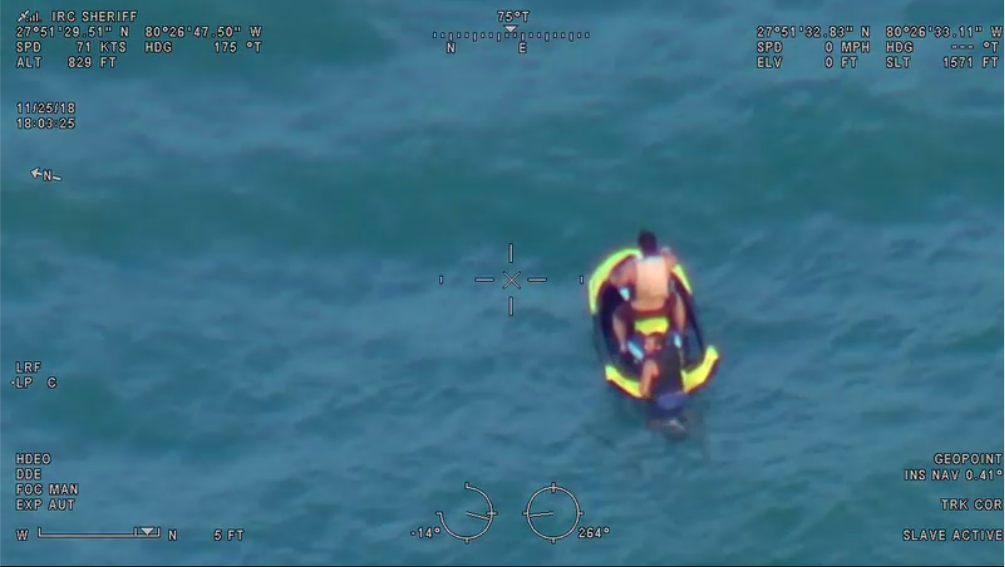
There’s no quicker way to be humbled than to venture deep into the open ocean woefully unprepared for what what Mother Nature can throw at you. It’s happened to many (if not most of us in one way or another), and for two friends riding aboard a yellow Sea-Doo Spark, today was that day.
According to a report televised on WPTV, West Palm Beach syndicate of ABC news, “The Indian River County Sheriff’s Office said two people were rescued on a jet ski this weekend near the Sebastian Inlet. Deputies received a report of a jet ski that was carrying two people was adrift and headed out to sea in the Sebastian Inlet. The sheriff’s office said a nearby boater responded and assisted the jet skier back to shore.”
Thankfully, the two skiers who were adrift for some time, were rescued by a nearby boater, according to the Sheriff’s Office. Prior to their rescue, the two were slowly headed out to sea in the Sebastian Inlet. While no report as to the cause of the two’s precarious situation was given, it is known that the two did not suffer any injuries. The lesson that should be learned is, 1) respect the ocean; and 2) always go prepared for the worst scenario.
When the skies are clear and the weather warm, it’s easy to slip on a pair of flipflops and head off to the launch ramp. Footwear is often the topic least on your mind while setting off to spend a day on the water, and in many cases, rightfully so. Just chuck those sandals in the storage bin and off you go, right? But that story changes when the wind chills and the water temperature plummets and you’re still hankering to hit the lake. Suddenly, keeping your toes warm starts becoming a priority.
Now, that may be the case with most of us recreational riders, but the performance-minded of you who either compete over the weekends or are busy pushing both man and machine to their respective limits, foot protection is as important as a helmet, gloves and PFD. That’s why we’re big fans of Slippery Wetsuits’ Liquid Race Boot. Years ago we reviewed a pair of black-and-grey Liquid Race boots that we had for over a decade. And over that time, the only things to go bad were some broken laces, one torn heel strap and a little discoloring around the sole. Not too shabby.
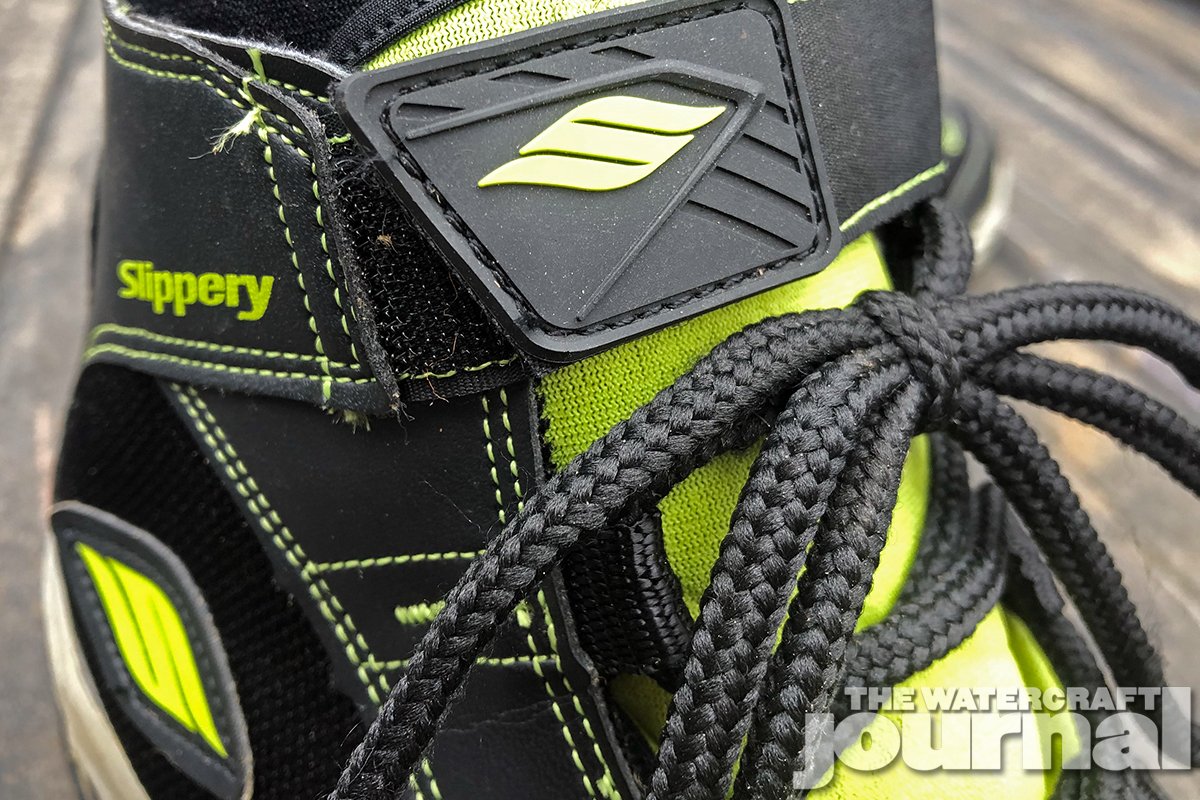
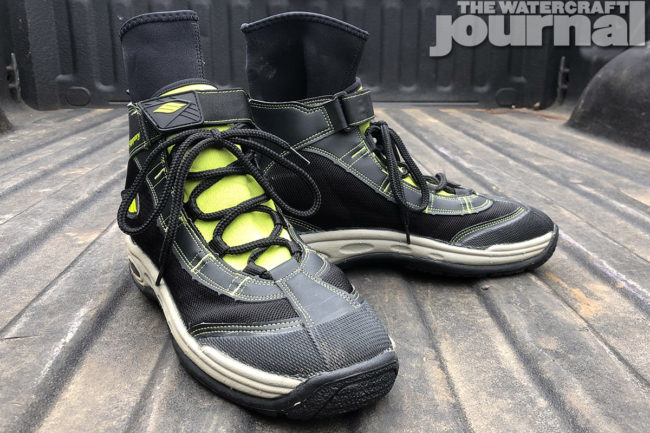
So when Slippery joined The Watercraft Journal as the official riding gear of our YouTube show “Long Haul,” a new pair of boots didn’t come to mind. “We’d like you to try a pair,” the wetsuit manufacturer urged. “We’ve made some improvements that most folks wouldn’t have noticed, that we think you will.” We agreed a fresh pair of black-and-lime Race Boots arrived shortly thereafter. Unlike a previous pair of riding boots, which we reviewed rather highly, Slippery’s boots come with their own 1.5mm neoprene inner booties. No extra purchases required here.
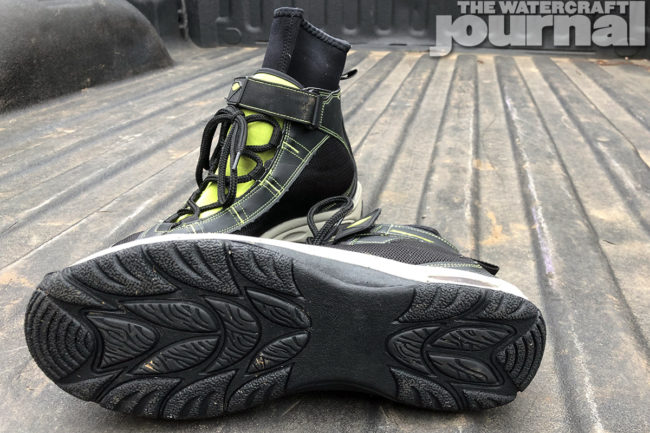
Similar to their previous design, the lace up boot features heavy duty loops and a thick shoestring to draw the boots taut. Above the laces is a large velcro strap that cinches the boot closed above the ankle. Above the heel is the aforementioned pull tab to help pull the boot on or off. While the boot’s “chassis” is thick and durable, it includes perforated “airmesh” on both sides for increased ventilation and drainage. Slippery added super-durable anti-abrasion traction pads at the heel and toe, protecting the foot from shock while increasing grip while moving around the tray.
Slippery also keeps the design features at a minimum: no big clunky silicone labels or unnecessary screen printing to be scuffed up. Rather, they let the boot’s performance speak for itself. A window in the heel reveals a air pocket cushion for comfort, while the black rubberized sole wraps high up around the edges for increased traction, support and stability. The sole is thick and doesn’t flex as easily as a soft bootie or water shoe, which is intentional as racers and aggressive riders often pivot off of their toes and heels.
Any points lost during our scoring were minor. We do find that although sized for up to 11.5, the XXL boot does run a wee bit tight on our size 11’s, so we keep a wooden shoe stretcher in them while stored in the closest. Also, the heel strap could benefit from being cut a little longer so we can loop a finger through the hoop, rather than just tugging on it. Priced at $79.95, Slippery’s Liquid Race Boot is a solid purchase at a fair price. Other boots with less breathability and lacking the inner liner cost quite a bit more. Again, if you’re going riding this Fall and Winter, keep your feet warm and protected. Wet socks and tennis shoes can be more miserable than an actual riding boot, and Slippery does it right.
Cycle Springs Powersports goes big when Black Friday is on the calendar. Their huge sale began November 16, 2018 at 1:30PM and will not end until December 1, 2018 at 5:00PM. We saw that this sale was already happening when we checked out the Cycle Springs Customer Corner drop down menu on their website.
We had to see what this was about and found that there are some great offers to take advantage of. Whether you ride in the dirt or on the water, many useful items are marked down. Customers can score a free Fly Jersey with the purchase of a Fox Helmet. The breakdown of the Cycle Springs Black Friday Specials include up to 50% off Fox Gear. Prices are also slashed on Alpine Stars Riding Jackets. All riding gloves are 25-75% off.
Speaking of below invoice, Cycle Springs is also offering some nice water toys priced to sell. Pick up a brand new 2018 Yamaha EX Deluxe for $7,390. These bad boys are closeout specials. They’re available in Azure Blue Metallic and Carbon Metallic with Electric Green. If you wanna be seen on the water, these colors are for you. Priced even lower is the 2018 Yamaha EX. It’s available in Pure White with Deep Blue. The closeout price is definitely on point at $5,590. Yamaha’s EX Sport is also on the closeout list. It’s ready to move out at $6,680.
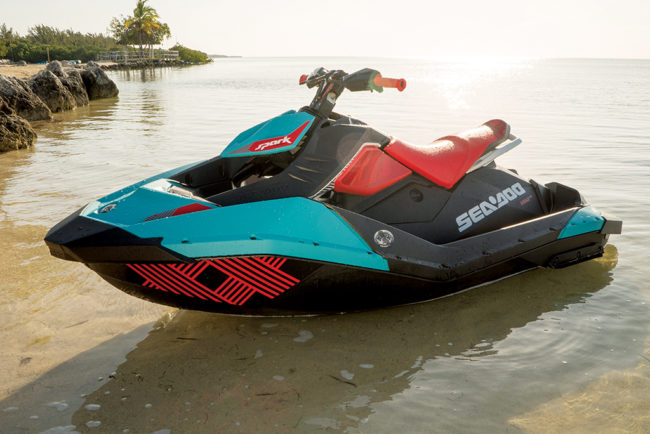
Quite a few models of 2018 Sea-Doo Sparks are priced to sell. They come in several colors and packages. Click the link to view all of them. You can also grab a Yamaha or Sea-Doo life jacket for a 50-75% discount. Grab a few to go with your new toys. The life jackets are available in several colorways and sizes. Head on over to Cycle Springs to get your new ride! Check them out online or visit the store located at 29703 US Highway 19 N. in Clearwater,FL.
“Nobody offers a ski for the kind of riding I like to do,” one reader messaged. He had expressed frustration that The Watercraft Journal wasn’t doing a good enough job representing enthusiasts of the smaller, 2-stroke runabouts of the 1990s. Curious why he favored these machines over today’s high horsepower models, we pressed. He emphasized that their massive size was a primary deterrent. “They’re boats, man. Skis are meant to be small, lightweight and fun.”
While his particular brand of fun is entirely subjective considering that we and tens of thousands have had countless hours of fun aboard the newest watercraft that today’s manufacturers offer, we could commiserate with our friend somewhat. Our earliest years riding personal watercraft were aboard primitive WaveRunners, WaveJammers and the rowdy WaveBlaster – all offerings from Yamaha Motor Corp. USA. And yes, all of these were notably smaller than today’s fare.
In 1993, Yamaha introduced the WaveBlaster, a brightly-hued 320-pound, 2-seater propelled by a 701cc two-cylinder 2-stroke producing a then-class leading 63 horsepower. For the three years it was produced (1993-1996), the ‘Blaster quickly became a fan favorite due to its lightweight and nimble hull and brappy, almost-instant throttle-response. Even today, the impact of the ‘Blaster upon the market is notable with a vibrant aftermarket continually producing performance and handling parts.
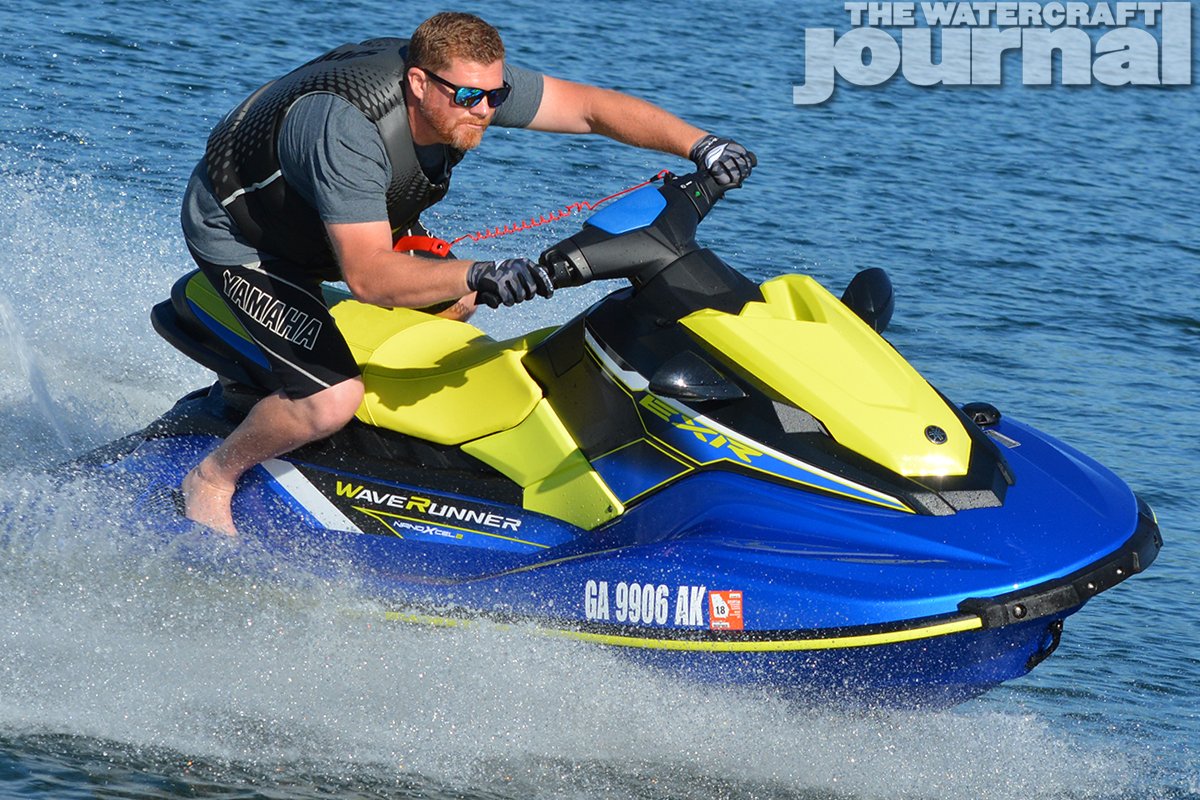
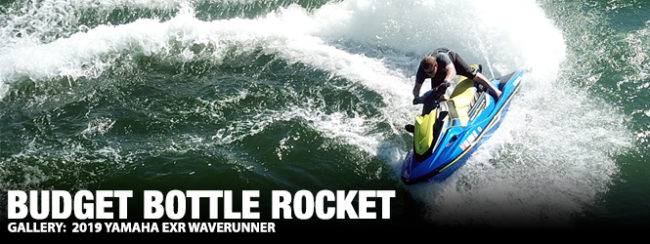
Interestingly, it was this very same machine that Yamaha’s product development team had in mind when creating the 2019 EXR WaveRunner. Based upon Yamaha’s Rec-Lite EX platform introduced only two years earlier, the ski had a long way to go before being comparable to its predecessor. In its basic form, the EX weighs 600-pounds, produces 102-horspower, and while certainly being a fun, well-balanced entry to Yamaha’s runabout lineup, is a far cry from the ‘Blaster of yesteryear. If the EXR was going to honor the 2-seater of the past, Yamaha knew it would need to step up their game.
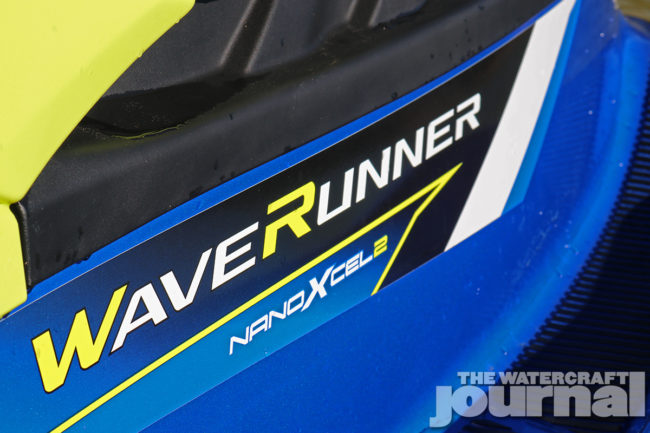
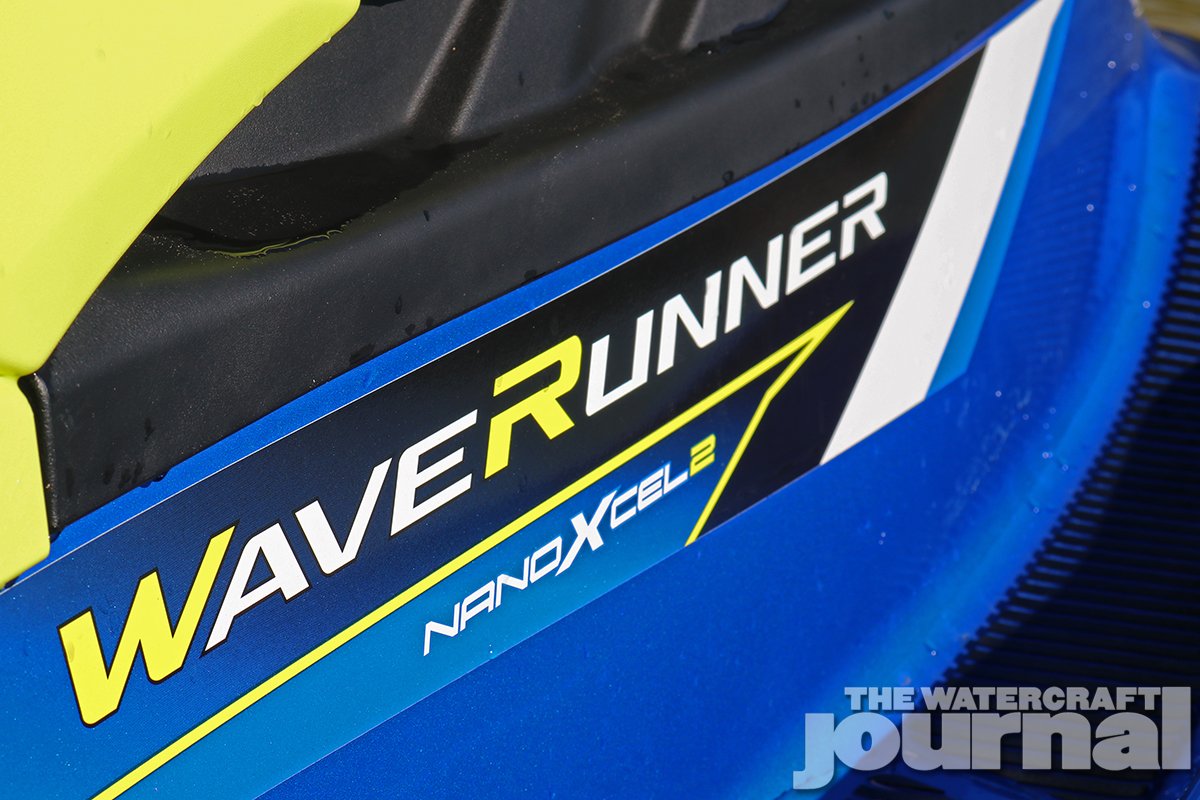
Yamaha’s team had decided early-on that the “R” designation attached to its performance-minded machines would need to have to carry much more weight than in previous years. The newly rechristened GP1800R and naturally-aspirated sibling, the VXR, both received aggressive top-loader intake grates and redesigned ride plates for 2019, as well as the VXR being cast from Yamaha’s weight-saving-yet-durable NanoXcel2 SMC (sheet molding compound) bonding material as the GP1800R. For the EXR to rise to the same level, NanoXcel2 would also be used here.
The change shaved a considerable 60 pounds from the machine, dropping it to 540-pounds (putting it 11-pounds less than Kawasaki’s 4-stroke standup SX-R). Equally, a new aggressively-angled top loader intake grate was installed to give the EXR greater hookup and traction in the turns. Additionally, a 40mm pump extension relocated the impeller further back, allowing the EXR superior hookup and reduced cavitation from its 144mm high-pressure pump, a thoughtful addition proving that Yamaha pays attention to what racers are cooking up.
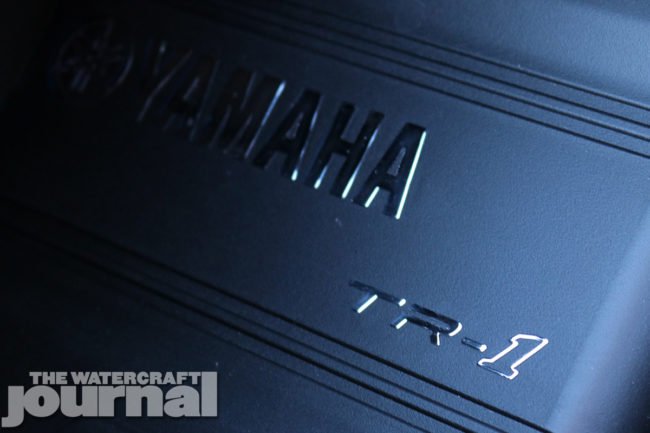
Equally, the EX’s TR-1 3-cylinder was given an ECU reflash, bumping the 1,049cc 4-stroke’s output to 110-horsepower (one of the few times Yamaha has advertised horsepower numbers with a new PWC) – dubbing it the TR-1 High Output (HO). A slight change was made to the EXR’s exhaust system as well, which we quickly noted when we first fired up the ski. It sounded…well, like a 2-stroke! Sure, you had to blip the throttle like you might a standup ski, but the tinny, mechanical echo of a 2-stroke was clearly audible.
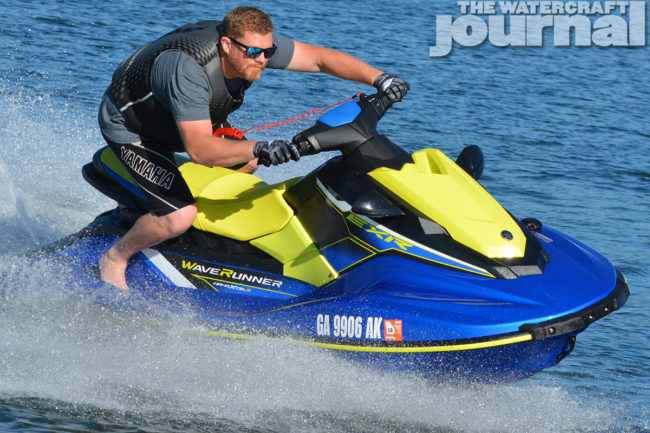
“Yeah, we did that on purpose,” Yamaha WaveRunner Product Manager Scott Watkins smirked devilishly. “We knew what kind of guys we were going after with [the EXR] and knew they’d want to hear that [exhaust note].” The final result of the above changes – particularly the lightweight and increased horsepower – is a throttle that is, in many ways, more responsive than ever the GP1800R. Power is immediate and the EXR responds in kind, leaping excitedly out of the water and sprinting up to a recorded maximum GPS-recorded speed of 54.6mph at 8,000rpm (nearly 5mph and 7,000rpm above the standard EX TR-1).
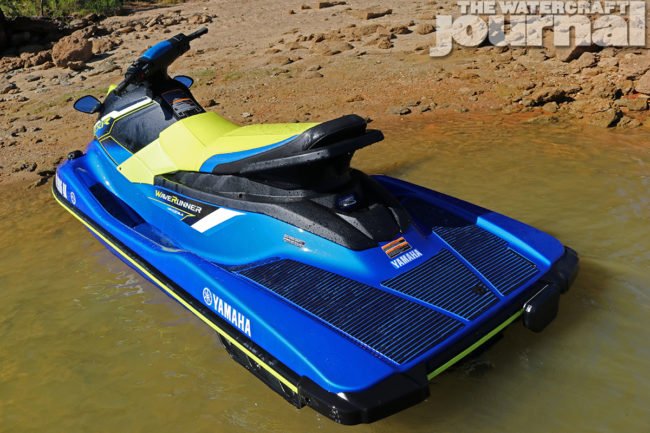
Unlike the ‘Blaster for which the EXR narrowly received the same name, the EXR is rated as a 3-seater compared to the WaveBlaster’s two persons. Additionally, the EXR benefits from a large 13.2-gallon capacity fuel cell, 7.7-gallons of storage, two-tone Hydro-Turf traction mats, a padded spring-loaded folding swim step, and of course, Yamaha’s RiDE dual-throttle brake and reverse system. To that point, the only two items that pilots are provided are the forward throttle and the RiDe left-hand trigger. No electric trim, cruise control or No Wake features are found on the EXR. And for most of you reading this, that is all you’d want anyway.
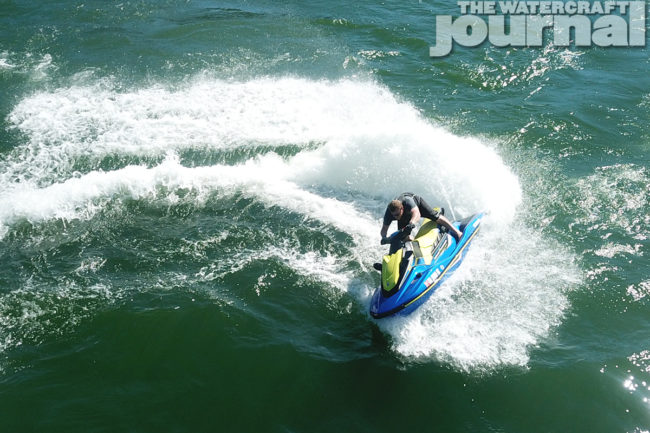
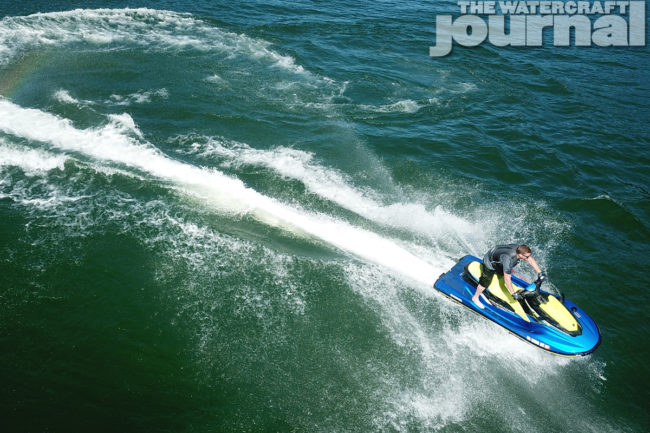
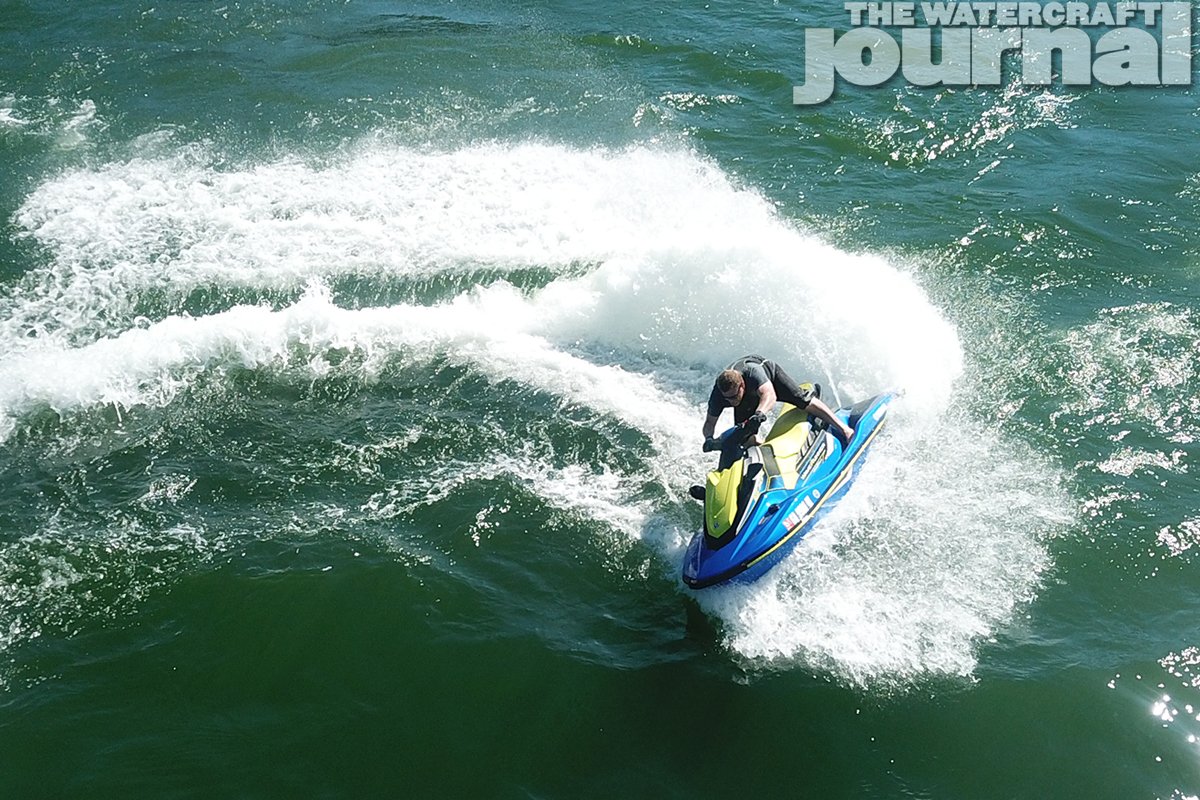
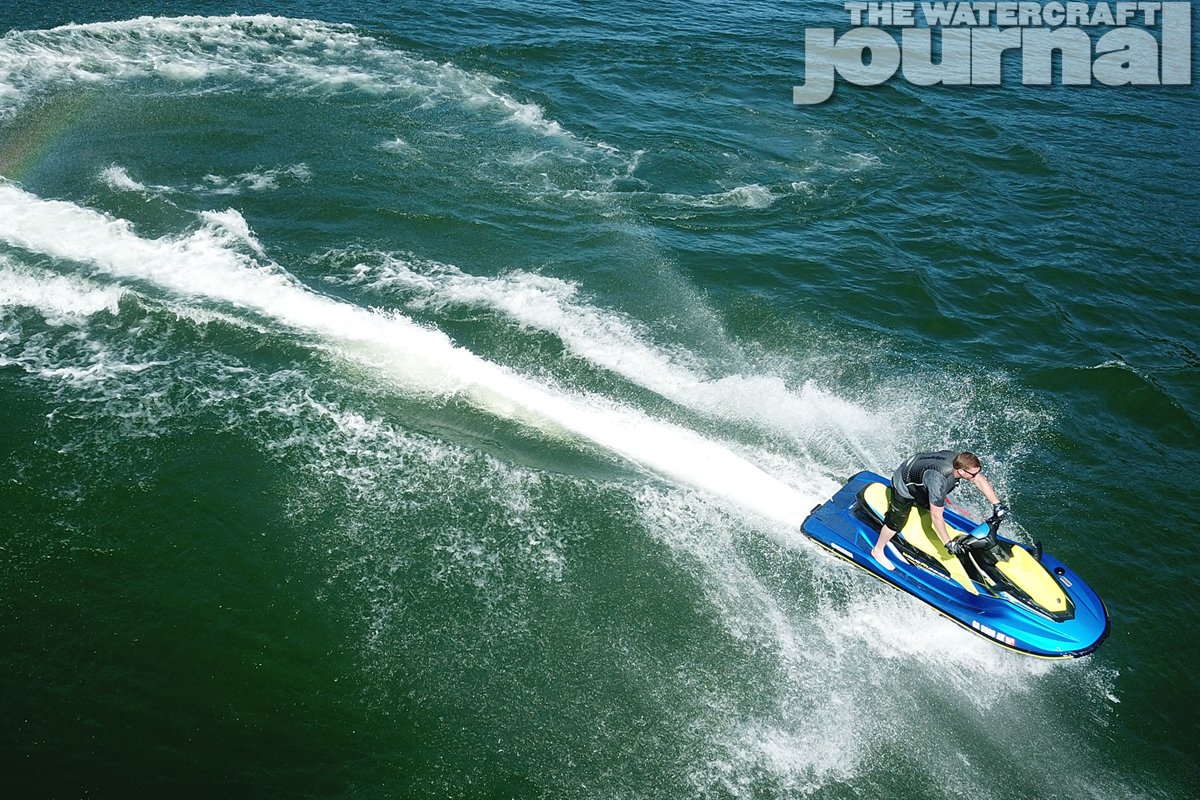
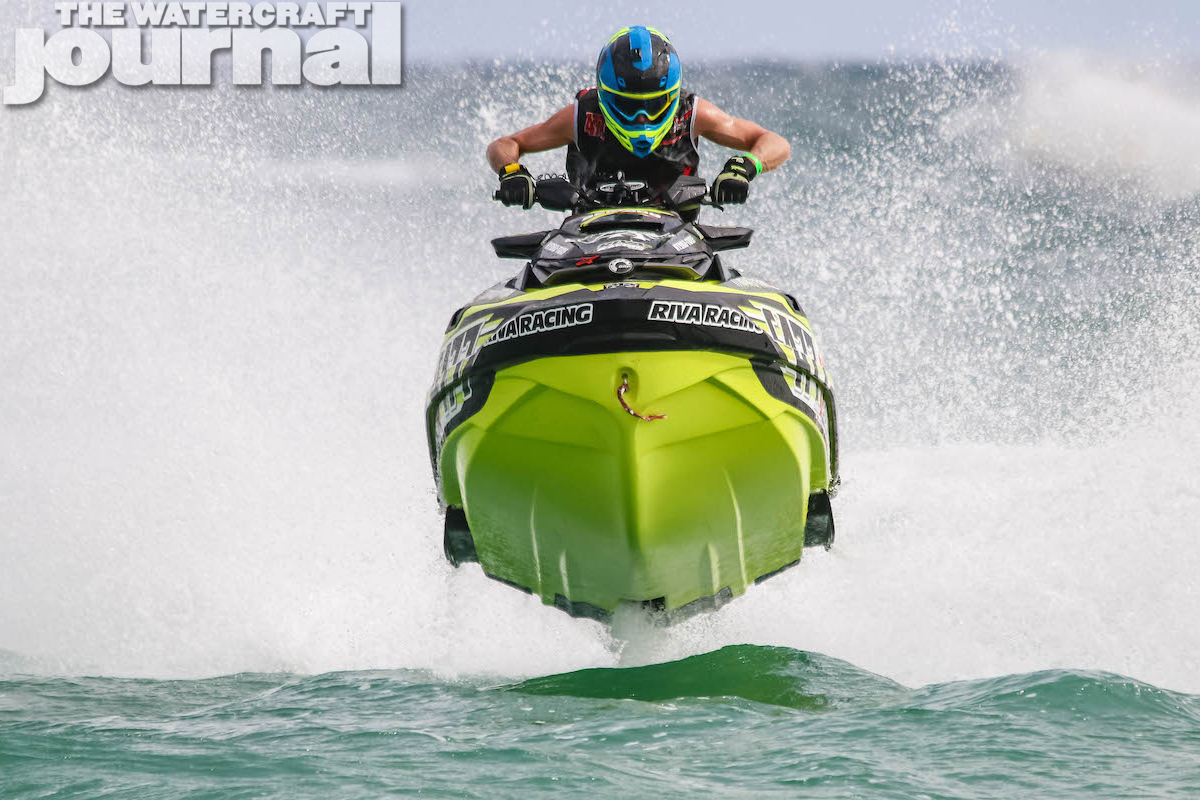
To date, we’ve had three separate experiences with the EXR, together totaling about 3 solid weeks with the machine – and without a doubt, it is easily the most excitable, exhaustive fun we’ve had on a runabout (particularly a Rec-Lite entry) in a long, long time. Pedestrian tricks like bunny hops, donuts, 360’s, wheelies, and even the harder-to-execute on-the-bondrail power slides from our youth are easily achieved. Wave jumping is an endorphin-rewarding experience, launching the tiny craft high into the air.
While cruising at speed, the EXR – like its EX siblings – is a relatively dry ride; its narrow bench seat and sloping footwells giving an upright but comfortable static riding position. But riding this way would be to wholly miss the craft’s purpose – like riding a standup ski solely upon your knees. Standing with your feet back and shoulders up over the handlebars is how the EXR wants to be ridden; responding to every shift in weight, every flick of the throttle and snap of the steering with immediate, excitable fervor.
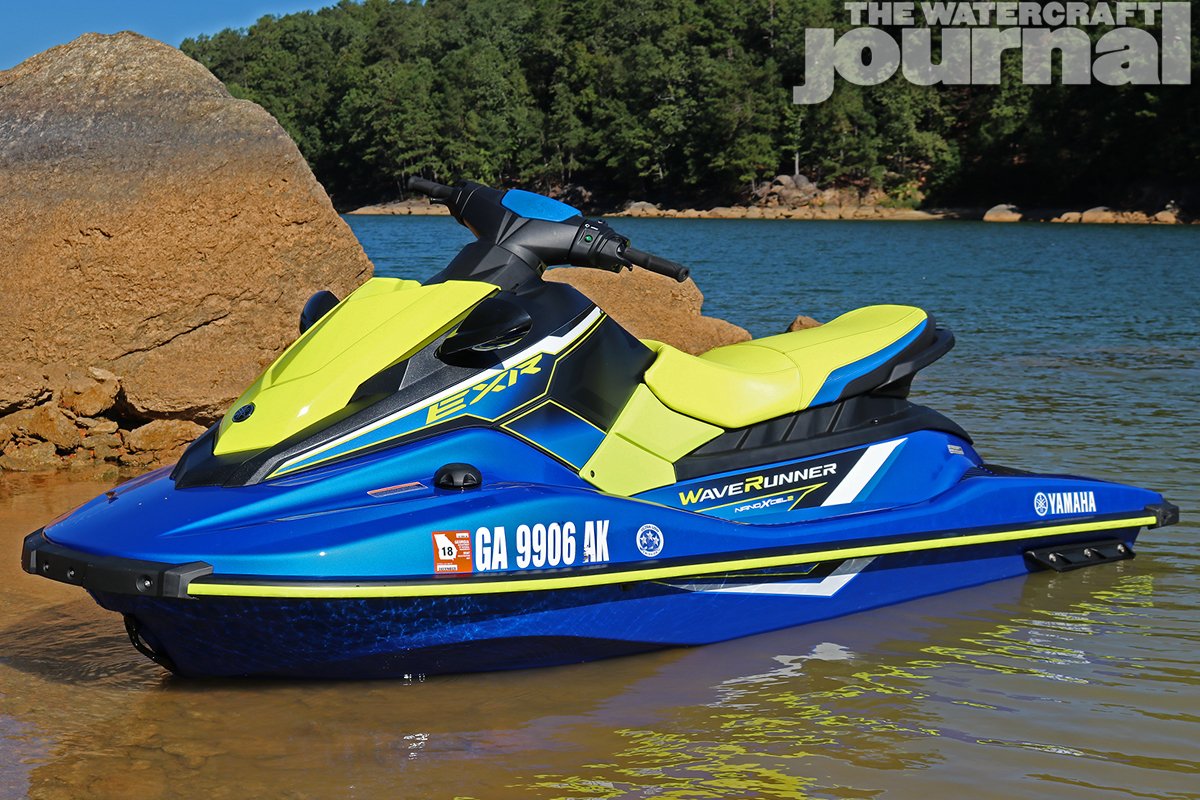
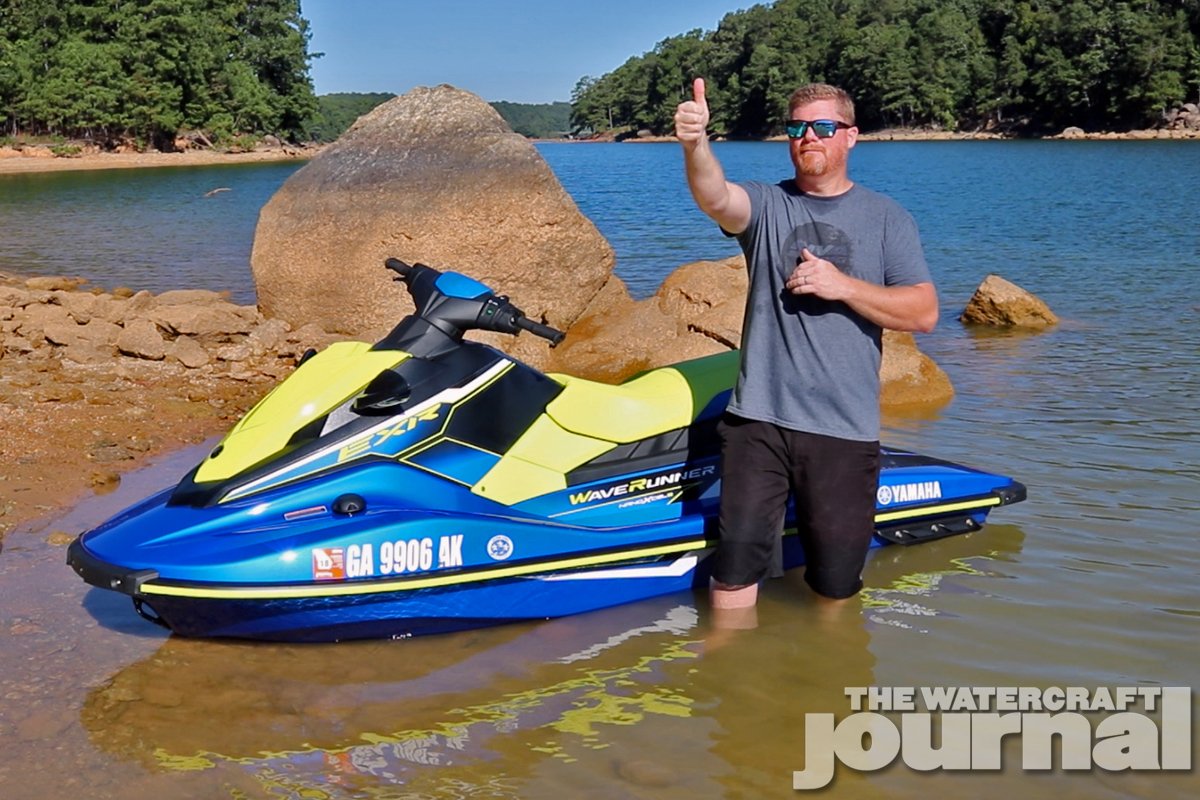
Bathed in a retina-searing Azure Blue with Lime Yellow, the EXR is wrapped in bright graphics, and a high quality cut-and-sew thickly-stitched one-piece bench seat. A stainless tow eye juts out from below the rear of the bench permitting the towing of a raft or knee boarder, although the EXR’s lightweight might result in a case of the “tail wagging the dog.” Priced at $9,299, the EXR is certainly the most expensive entry in the entire Rec-Lite category, but understandably so given its race-readiness.
And its this very idea – that the EXR is race ready – that is so unique. The EXR is the only Rec-Lite craft, that if equipped with a minimal amount of parts, could handily dominate its class segment. Rec-Lite racing is rapidly growing to include both Veteran and youth racers and for good cause – and the EXR is the perfect fit. Almost supernatural throttle and rider response, reduced weight and a setback pump producing superior hookup gives the EXR a superior edge over not only the competition but other EX models.
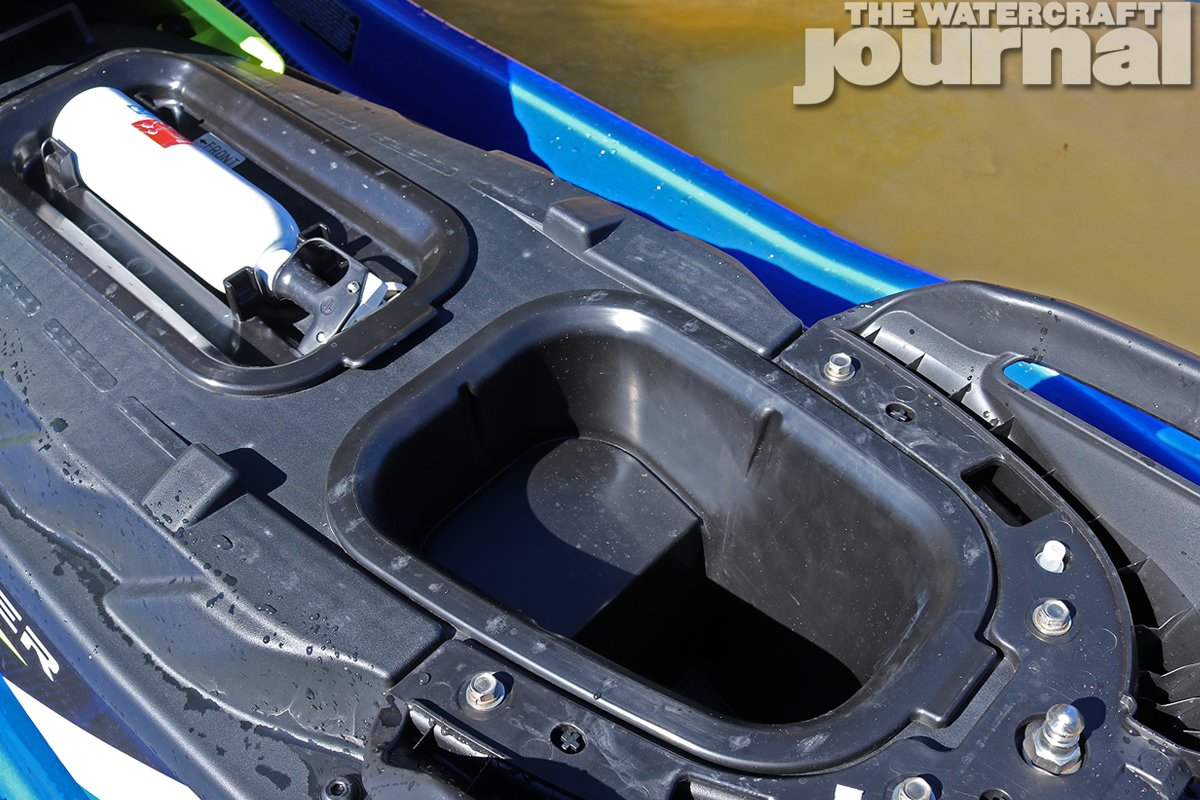
As is with all EX models, the LCD screen below the handlebars is a wee bit awkwardly placed for taller riders, requiring some stooping to glimpse quickly. The front wet storage is unusually shallow and can be clumsy to close if a wet rope or flipflops are sliding on the bin’s plastic surface. Thankfully, the EXR’s center console is cavernous. Narrow but insatiably deep, a can of spray sunscreen, water bottle or even flipflops slide within without much trouble. Beneath the passenger’s seat is a final (and removable) storage tub, as well as a fire extinguisher mounted to a removable tray.
The TR-1 HO marine engine is accessed by removing the bench seat and via two portals cast into the black plastic “sub-deck” to reach for the dipstick, oil filter, battery or other maintenance items. For full engine access, the entire sub-deck can be removed with 15 screws within a minute’s time exposing the entirety of the engine compartment. The more technically savvy will note that the flywheel and coupler are a single piece, as well as the composite molded pump stator and impeller housing.
Curious how well the new EXR stacked up against its famous predecessor, the WaveBlaster, we referenced our previous article, Weight Watchers: The Power of Power-to-Weight Ratios to evaluate the two craft’s respective power-to-weight ratios. Weighing in at 360-pounds and producing a total of 63-horsepower, the 1993 ‘Blaster earned a power-to-weight ratio of .20:1 (horsepower per pound). Interestingly, at 540-pounds and making 110-horsepower, the 2019 Yamaha EXR WaveRunner came in at an identical .20:1 ratio! While certainly the new EXR is larger (10’3″ long and 44.5″ wide), it’s power-to-weight ratio is equal to the 1993 entry.
In returning to our disenchanted friend above, we urged him to look into the 2019 Yamaha EXR WaveRunner. In our time with EXR we produced half of a dozen videos, including a full-length review episode of “Long Haul,” which we’ve included here as well as a massive hour-plus-long walk-around as a Facebook Live segment that is linked HERE, all of which reiterates the features and characteristics of this exciting little machine that we’ve shared in this article. So again, if you’re like our friend and are looking for something closer to what you grew up riding, the EXR is it.
Recent years have shown a continued upward trend of personal watercraft sales. Take for example some of the recent articles we have made on this subject. Or how about this one, or yet the one here. I think we get the drift; the PWC industry has been seeing some excellent growth in the last five or six years.
Recently we came across some additional supporting evidence to show that this trend has continued for 2018. A great article from Boating Industry earlier this year is proving that the market is ripe for first-time and return buyers of personal watercraft units.
According to the report, the National Marine Manufacturers Association stated that there was a 5 percent gain in PWC sales from 2016 to 2017 alone. The sales continue to climb every year so where is this growth coming from and why are so many new people interested in riding these days?
Well for starters, the article suggests more diversity and options when it comes to selecting a new watercraft. These days, we don’t have just one or two options to choose from. From the light Rec-Lite and standup units all the way up to the full size touring models, there are seemingly endless choices.
Add on to that all of the options and accessories from sound systems, Yamaha’s touch screen display and fish finders, Sea-Doo’s ingenious Linq and storage system and other options, there are so many ways to get exactly what you need out of your watercraft.
There are even new personal watercraft dedicated to specific sports such as fishing or wakeboarding. Whether you are a racer, watersport enthusiast, destination explorer, or looking for a getaway for the whole family, there is literally a personal watercraft out there to support any need.
So diversity is definitely one reason for all of the growth. Another reason stems from different price points. There are watercraft in the $5000 dollar range which newer, younger buyers are more likely to be able to afford all the way up to the fully loaded units in which parents or grandparents are purchasing for their family.
Additionally, the report shows that manufacturers are making efficiency improvements in the manufacturing processes which leads to cost savings that are passed down to the consumers. According to BRP Sea-Doo representative Tim McKercher, “The industry has adjusted to the new realities with a more focused, leaner approach and is built around being a healthier business for the long haul.”
New realities not only mean new manufacturing methods, but also new crowds of prospective buyers. We are seeing younger generations and Millennials beginning to buy these days.
According to Yamaha General Manager of Sales & Marketing Bryan Seti, Millennials are transitioning over to the purchaser category with a first-time buyer rate over 50 percent.
With all of the new offerings and options out there from all major brands of personal watercraft, I think we can expect to see a continued growth trend for sales.
For more information you can visit Boating Industry for a full article review.
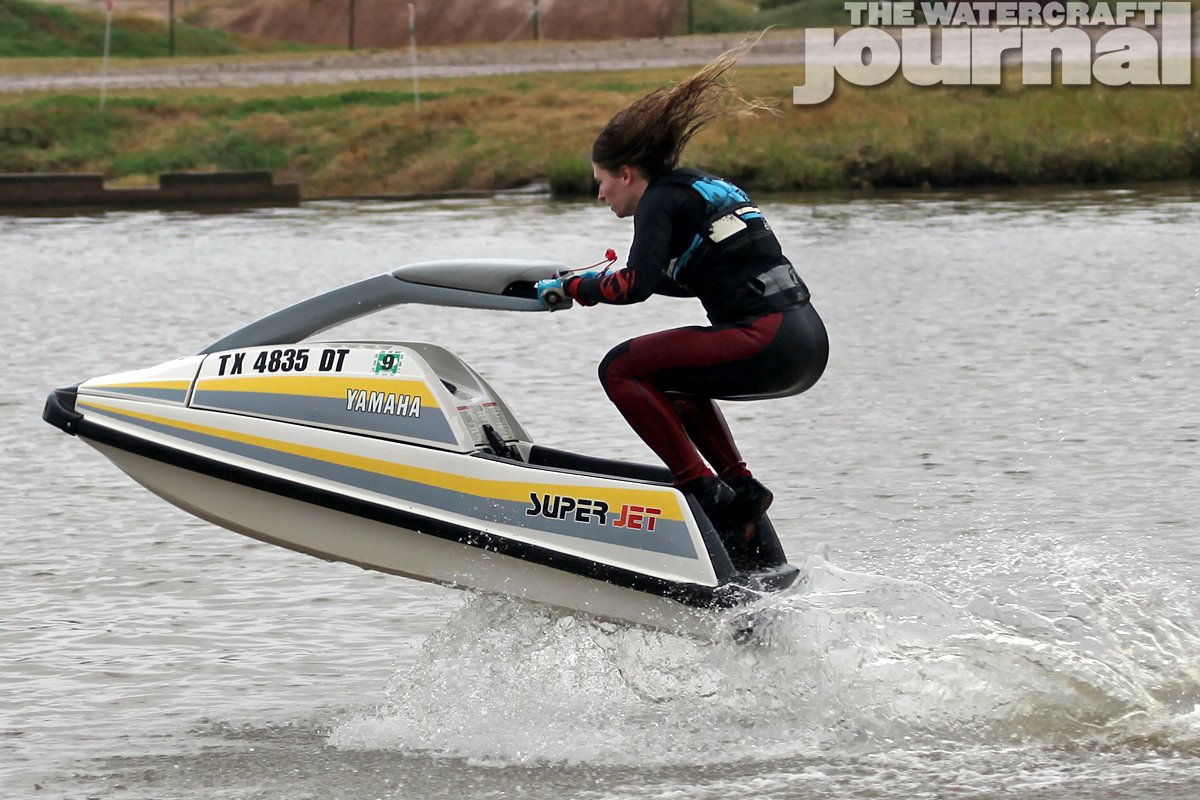
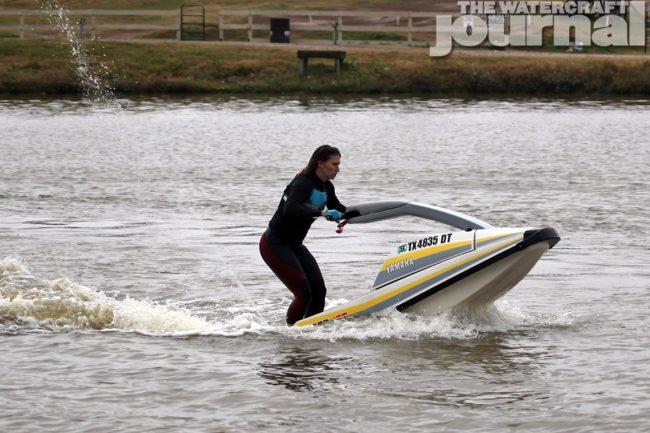
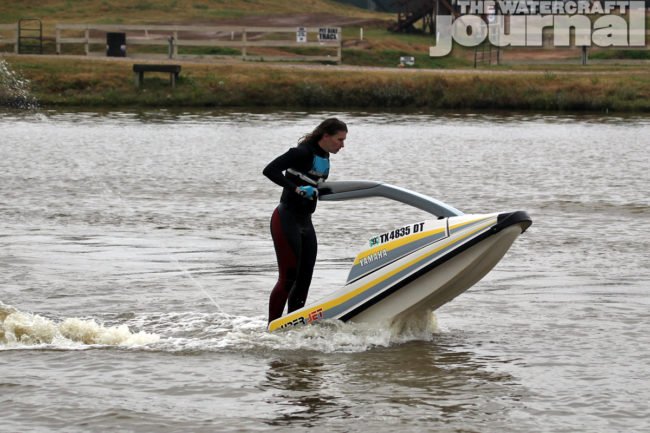
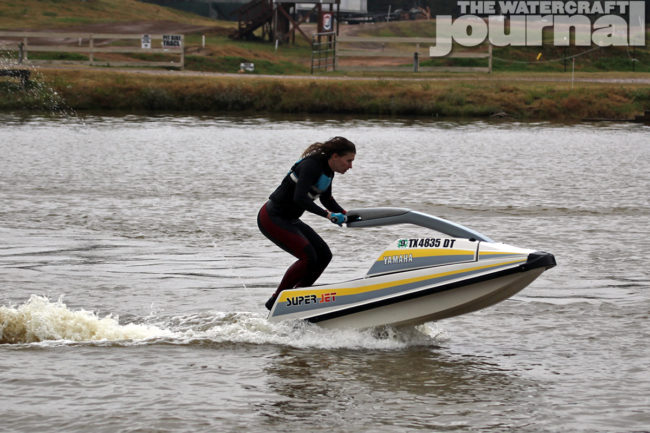
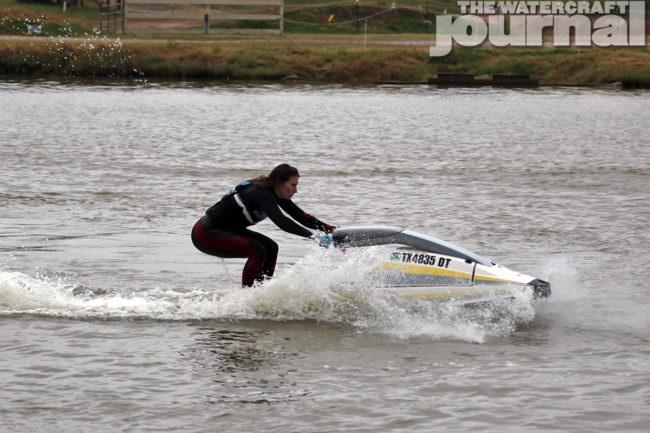
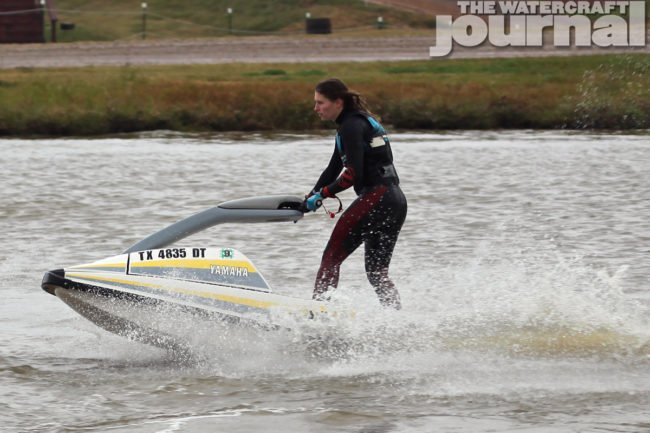
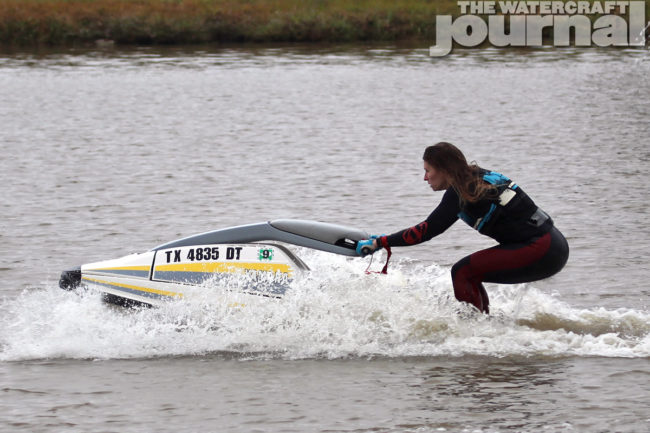
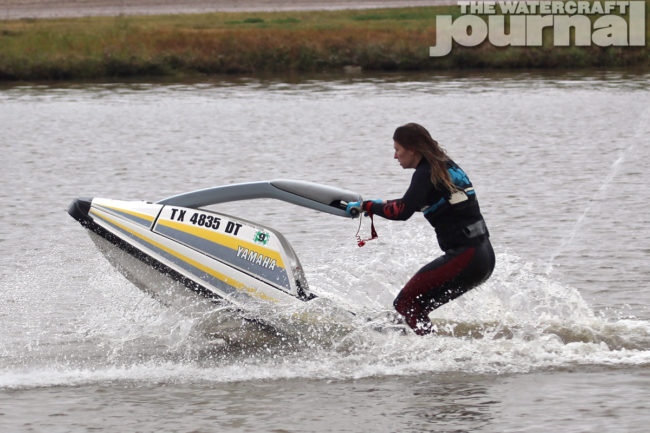
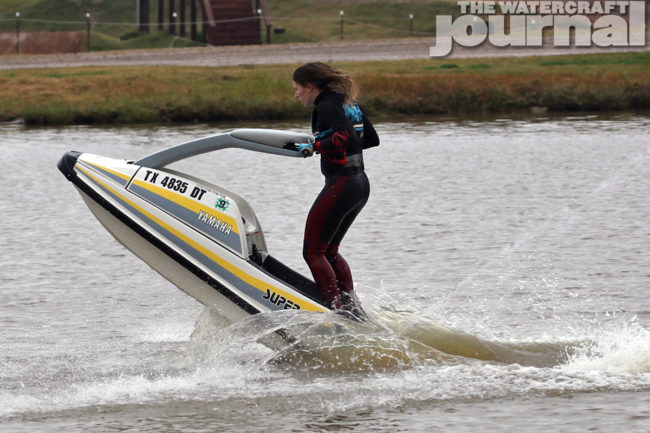
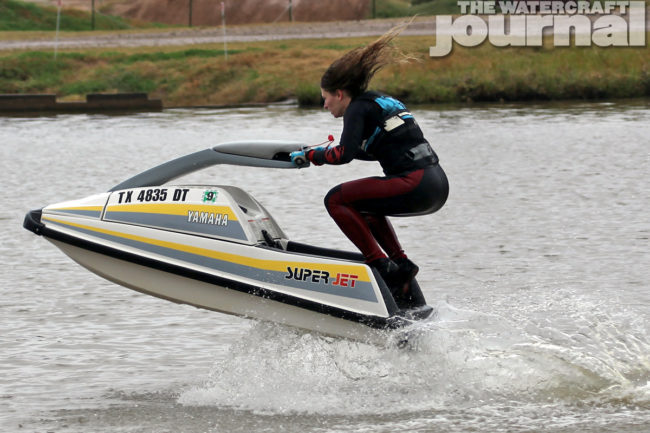
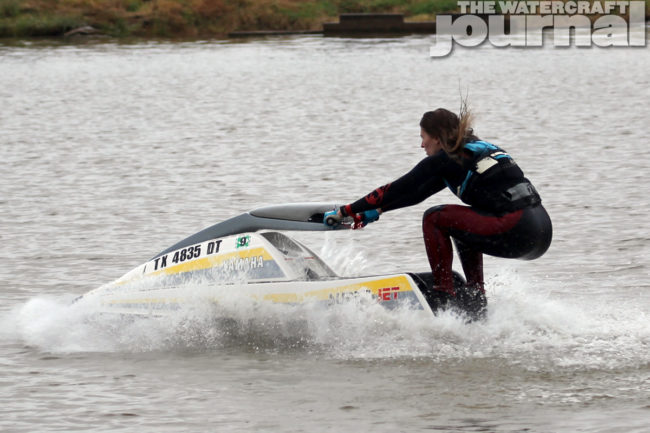
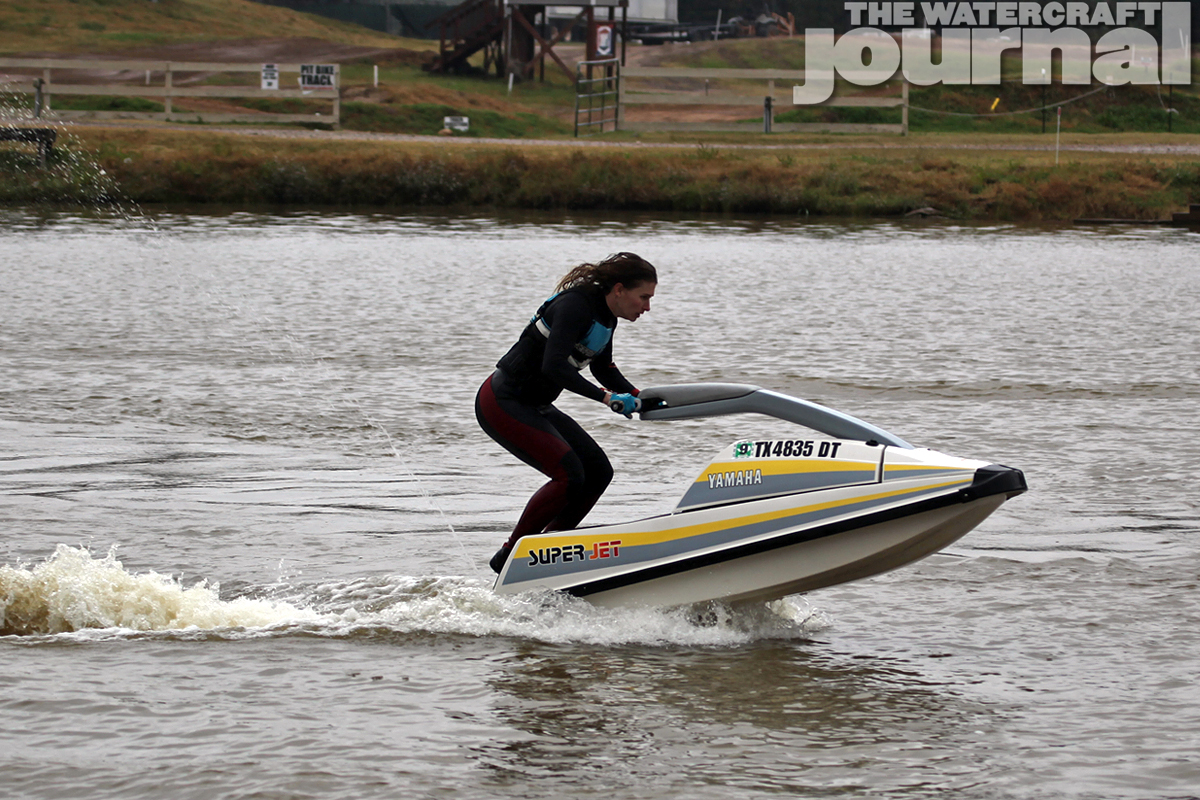
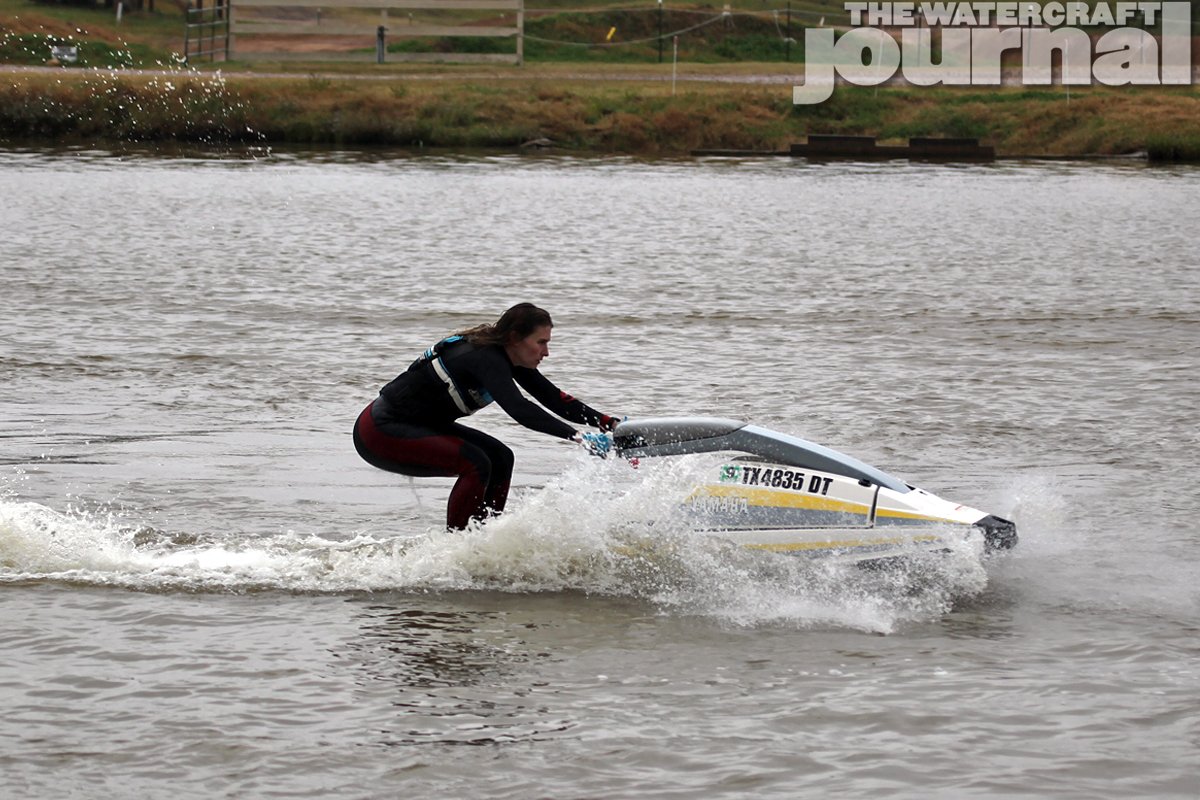
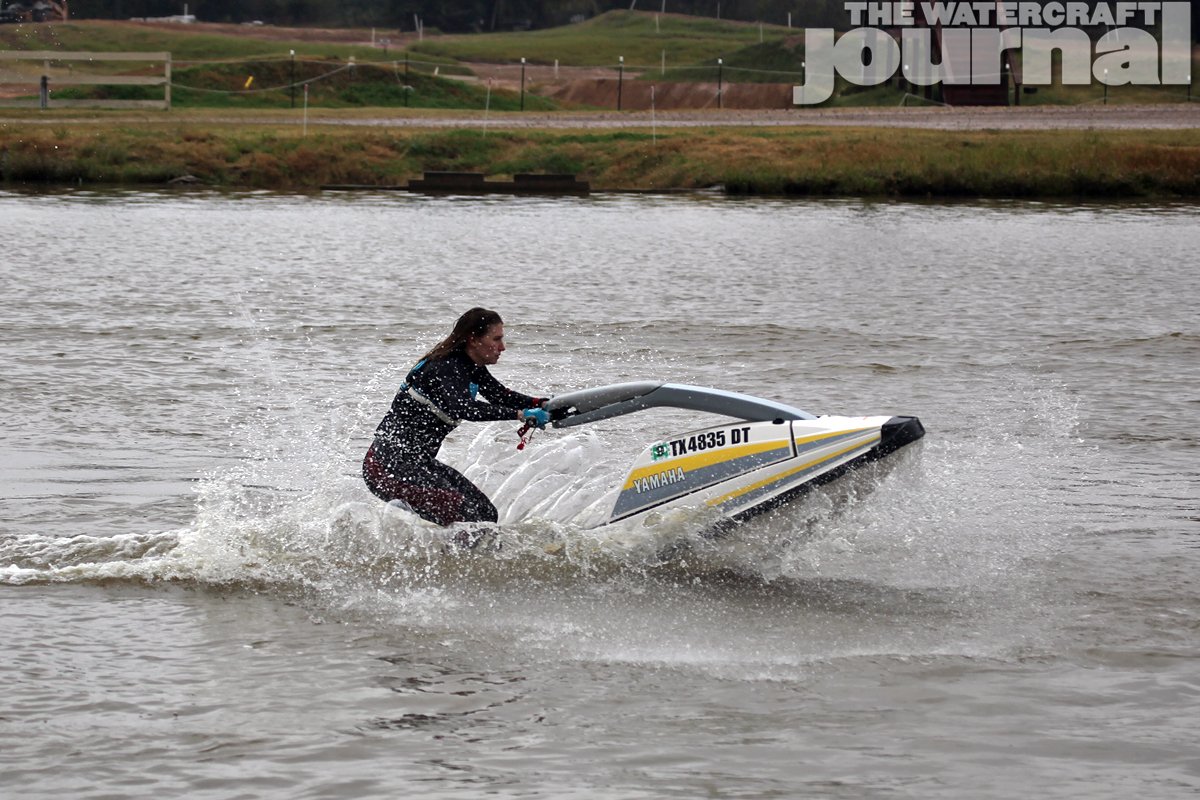
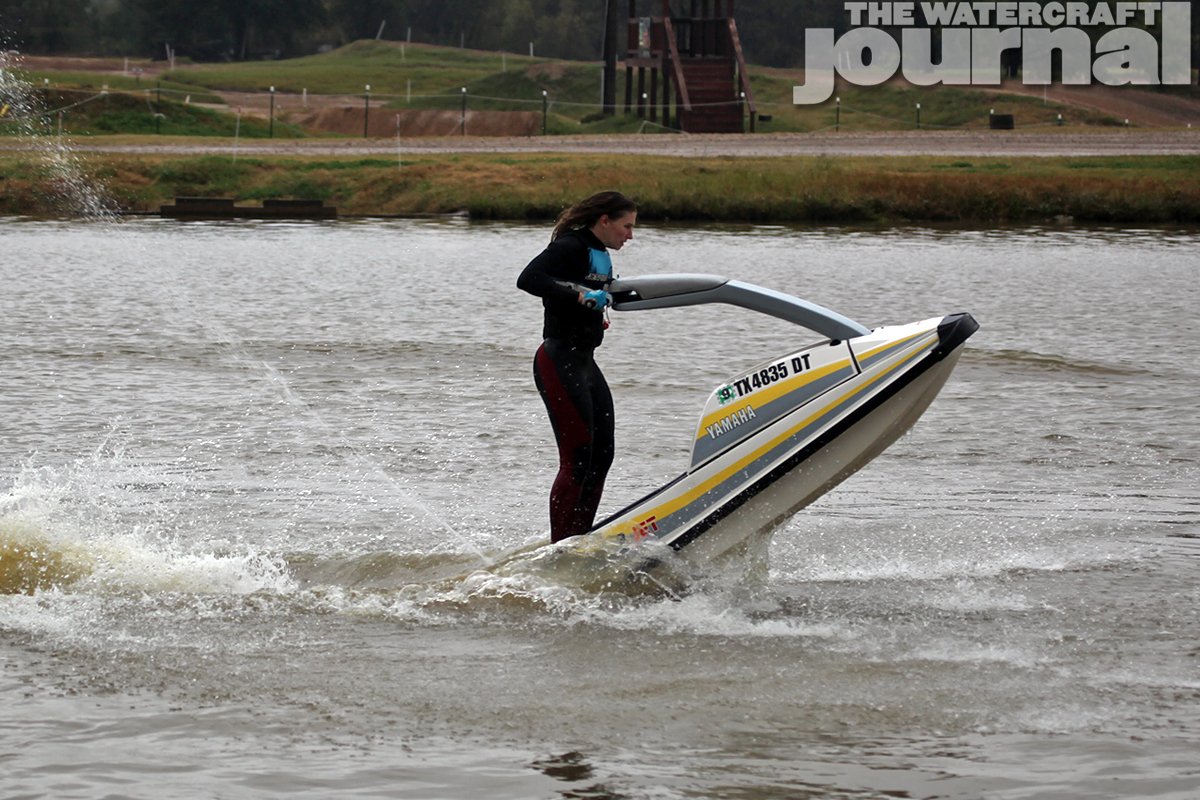
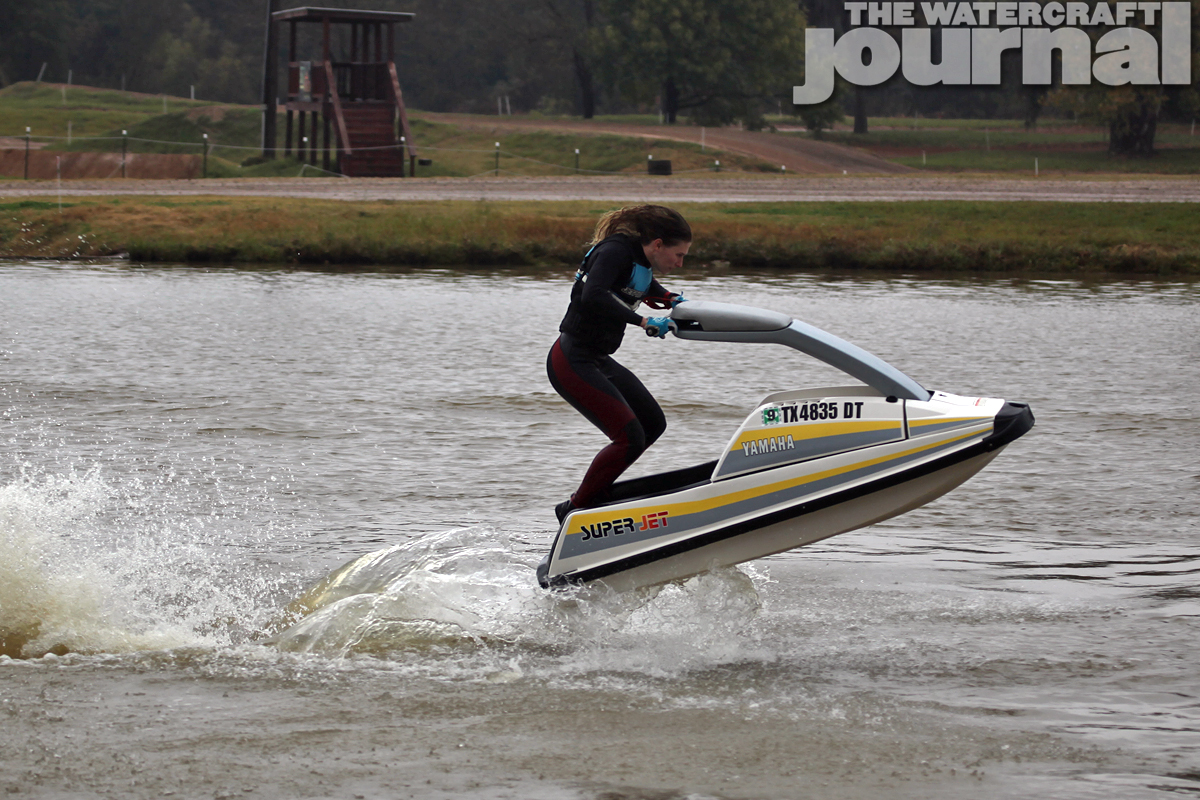
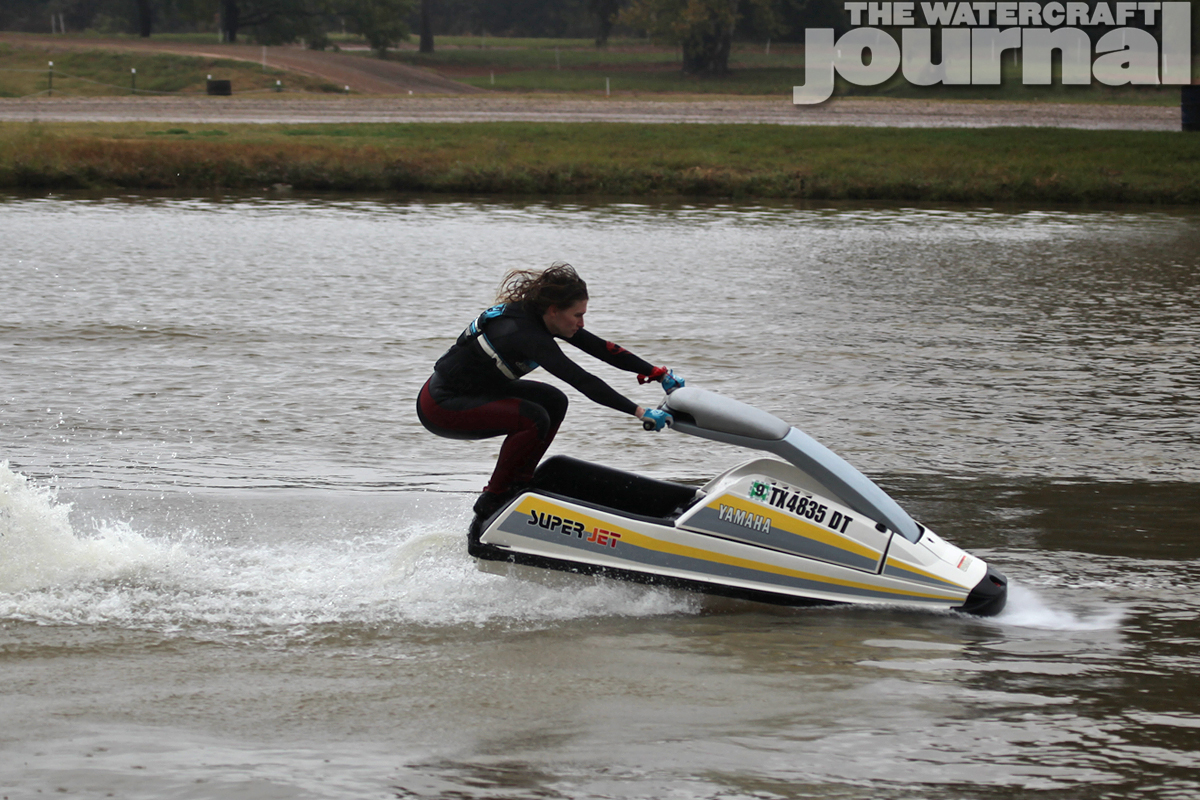
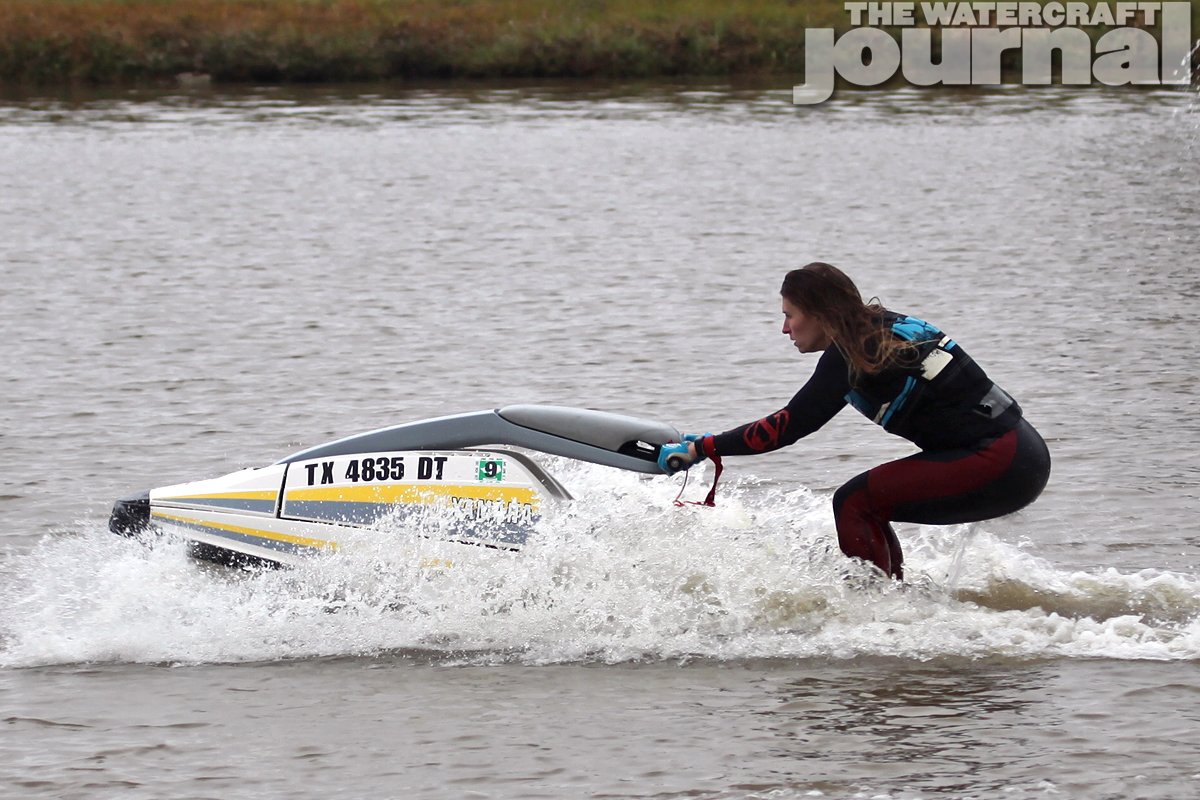
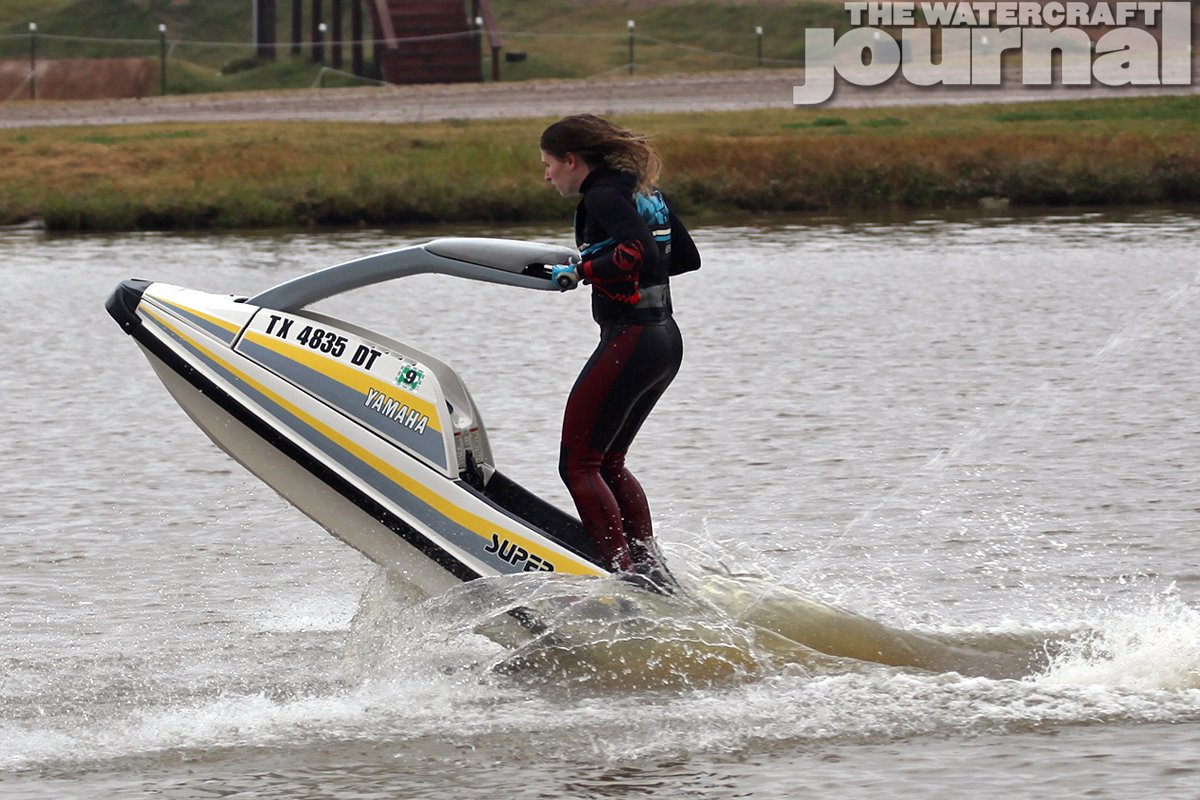
The Bunny Hop is a fan favorite! Fortunately, the bunny hop is a simple skill to learn and the base for future, more complicated tricks.
Breaking it Down Try to find a smooth spot to try your first hop. This way you can get the feel of how your ski pivots and launches into the air without the aid of a set up wake or lake chop. You can use a set up wake or random wave if you don’t have access to smooth water, but your timing will be based on the wave approaching your ski rather than just your body language.
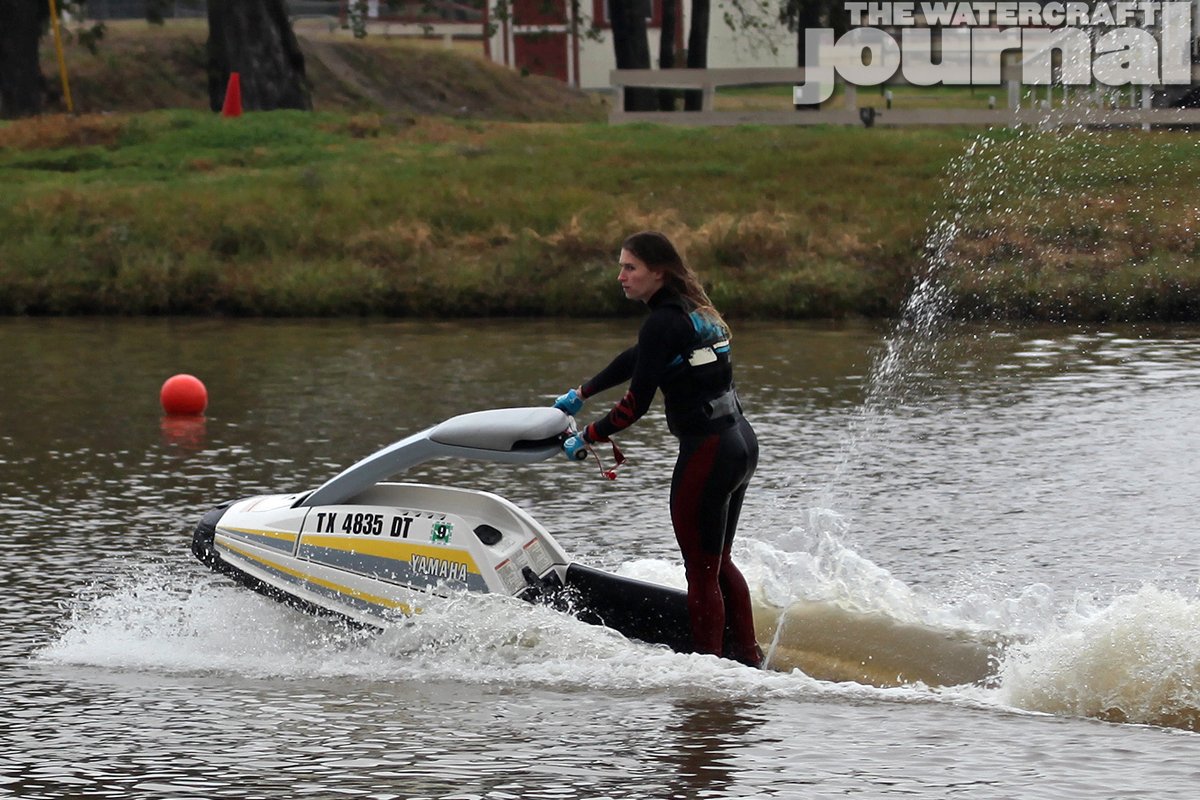
Start out moving in a straight line and low-mid throttle, I would guesstimate 10-15 mph or so. Enough speed for the ski to plane with no low-speed wobble. Once you are comfortable moving in your line, place both of your feet side-by-side at the back of the tray as far back as you feel comfortable. The farther back the better to initiate the hop.
Apply pressure with your feet toward the outside of the tray on each side, this will help ‘lock’ you in with your ski as you bunny hop and not just jump off of your tray without your ski moving with you. You can also have a quazi-hop where your feet are not quite locked in enough and they hover inches over the tray as you and you ski arc through the air. The more outward side pressure you apply the better you will be able to control the rear of the ski.
Once your feet are set up at the back of the tray and pressing out, it is time to initiate your hop. These steps will happen in quick succession.
Pre-Hop to Full Hop One technique that helps gain more air is the pre-hop. This ancillary action adds a bit more complexity to body motion. The pre-hop is a less exaggerated version of the actual hop out of the water. It is not necessary, but the pre-hop helps to gain momentum, and therefore more air.
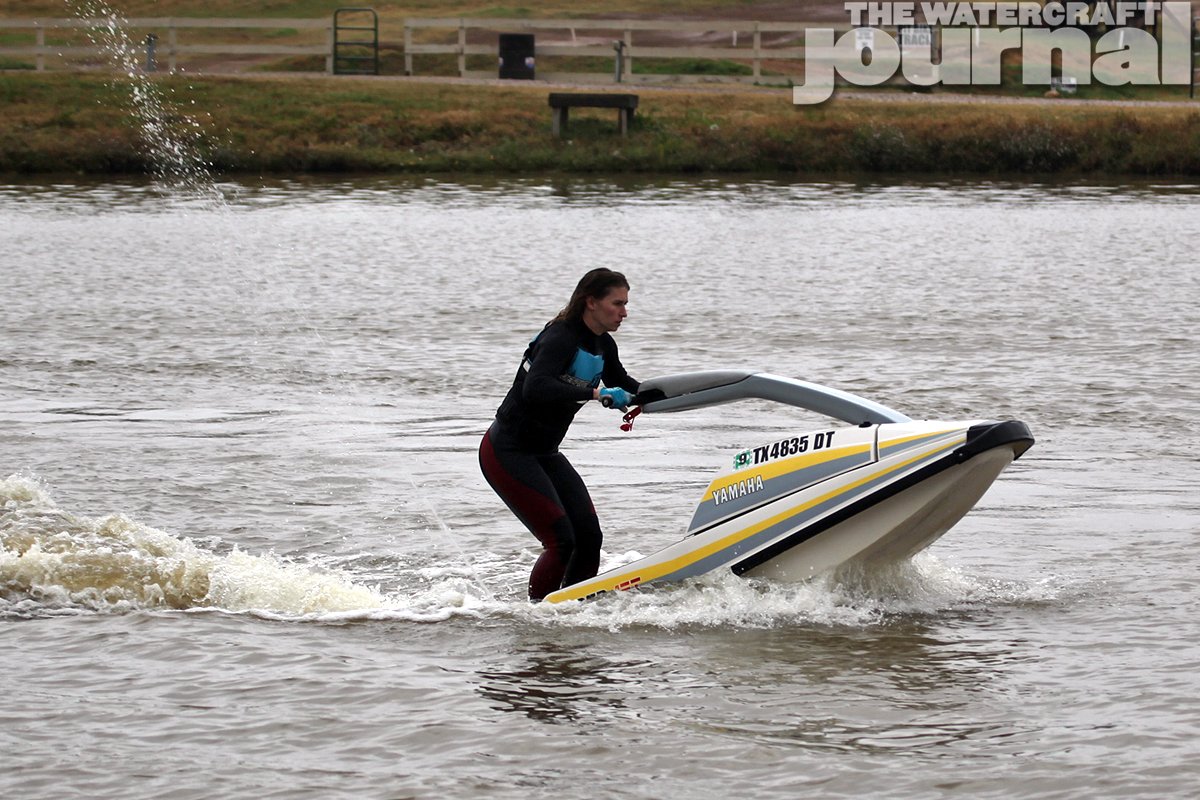
Let off the throttle some to allow the back of the ski to drop into the water and the nose to come up a bit.
For the pre hop: blip the throttle enough to lift the nose, but not have the whole ski come out of the water.
Bob your body up and down in quick succession – push your legs down when you blip the throttle to bring up the nose, pull back toward your body with the bars to further bring up the nose if you have an underpowered ski, pull up with your legs while bending your knees to bring up the rear, push forward/down on the bars with your arms to rock the front of the hull downward. This is the porpoise motion some of you might be familiar with from learning to ride on older hulls.
Once the hull is at the trough of the pre-hop ‘wave’ with the nose beginning to rise again, the actual bunny hop with will need the application of more throttle and more exaggerated body movement steps above.
As the nose rises from the pre-hop to start the jump out of the water, heavier application of throttle allows the jet of water to propel you up and forward. The amount of throttle will depend on how much power you have. Some skis need full throttle, some need half, etc.
Once in the air, while using the outward pressure, retract your legs toward your body to bring the back of the ski up and drop your upper body downward. Keep your elbows and pole up, with the momentum of your upper body coming down push the energy through the bars/pole to push the nose of the ski back toward the water.
Depending on height of hop you can extend your legs to absorb the impact when returning to the surface of the water or stay in a semi-crouched position. Never fully straighten your legs, keep a little bend of the knee.
Complete the hop and keep the ski planning by adding in throttle once the hull touches the water.
Things to Consider
The length, weight, and power of your ski will make a difference in timing and power application for your hop. The longer and heavier the hull, more preload, power, and body English will be necessary to pop it out of the water.
Choppy water adds complexity to the hop timing, but natural lake waves can provide a great launch point. For the best skill foundation try to learn the bunny hop on flat water with only the power of your ski to launch you into the air, then progress to using waves or set up wake if you want.
Congratulations on learning a skill that will be the basis for many more complex tricks to come!
A force to be reckoned with, the Yamaha GP1800R is simply that dominating. We have already seen the winningness of the GP1800 and team Yamaha in the last year and the new GP1800R has done it again.
The Yamaha GP1800R has just won the P1 AquaX National Championship with Yamaha racer Eric Francis at the helm. With that win, Francis claimed the overall title win for 2018.
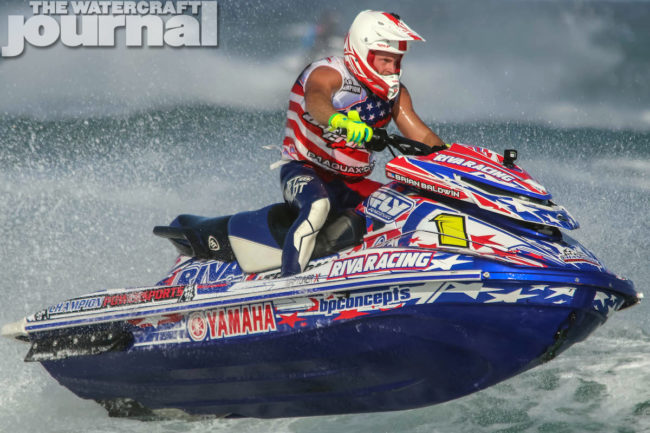
Not only did Francis take the top spot aboard his GP1800R, fellow Yamaha racers Brian Baldwin and Chris MacClugage finished 2nd and 3rd respectively aboard their GP1800R Waverunners. This goes to show the dominating force of this powerful watercraft.
For more info you can check out the full press release below. You can also see our re-cap of the race here.
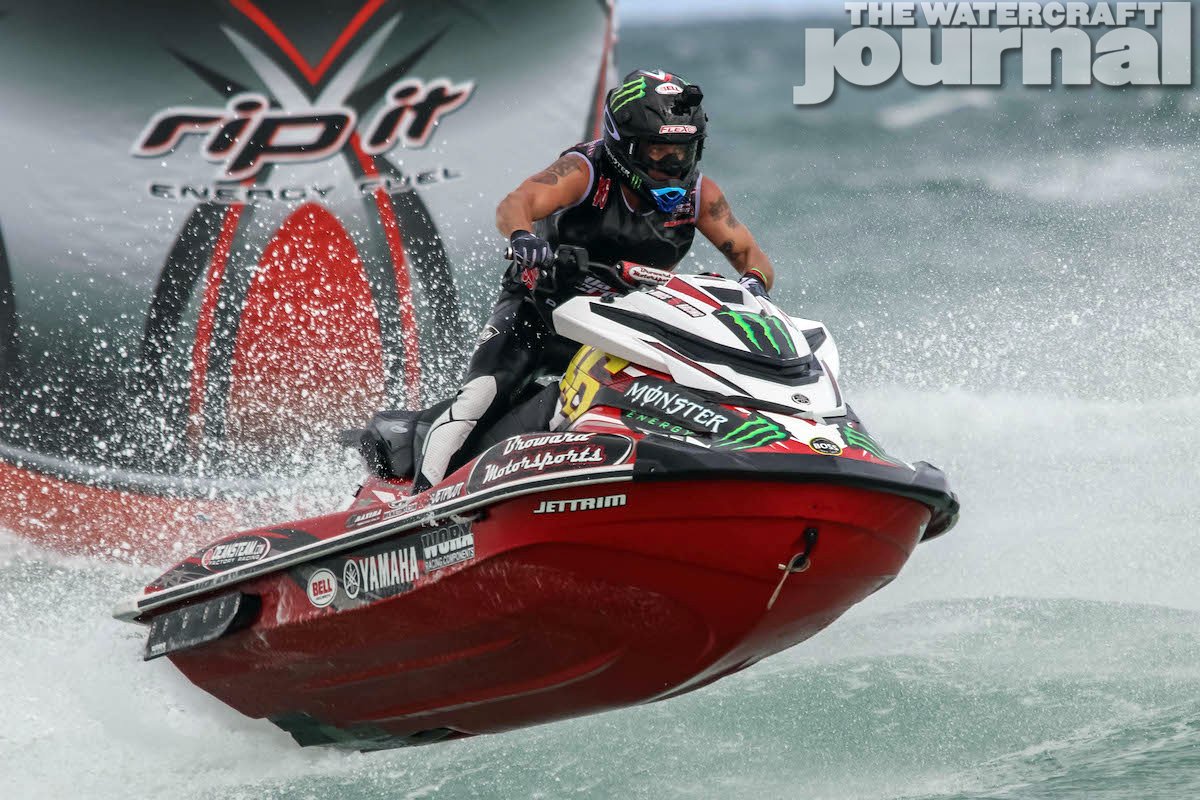
Yamaha GP1800R WaveRunner pro racer Eric “The Eagle” Francis took the overall US national championship title after an action-packed weekend at the final round of the P1 AquaX Tour in Fort Lauderdale Beach, Fla.
Fellow Yamaha GP1800R riders Brian Baldwin and Chris MacClugage finish the championship 2-3 respectively.
It wasn’t a question of whether or not a Yamaha would win the National title going into the final event. It was more of a question of which Yamaha Factory team/rider would. Francis came into the weekend with a comfortable lead but not a clinch. Yamaha Factory riders Brian Baldwin and Chris MacClugage both had a chance at the title if things went bad for Francis.
Francis did what he had to do and finished second for the weekend behind MacClugage who completed the four moto event 1-1-2-4 for the weekend giving him the #1 spot on the podium for the event.
Yamaha GP1800R race Mike Klipppenstein finished third for weekend, but Baldwin came to Fort Lauderdale with enough points to secure second place in the points title.
“It’s been a long time coming,” said Francis who won the championship in 2014. “I’ve been at the top of the world rankings for several years without taking a title, so it’s great to be both #1 in the World and the United States.”
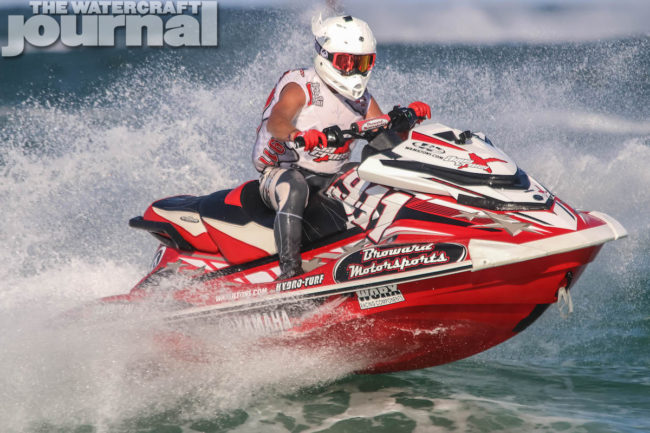
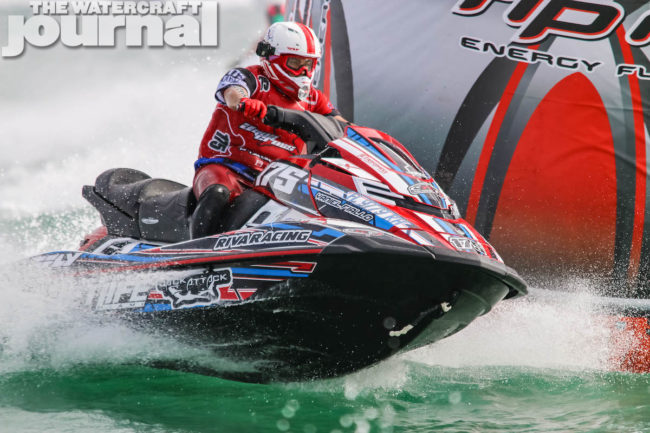
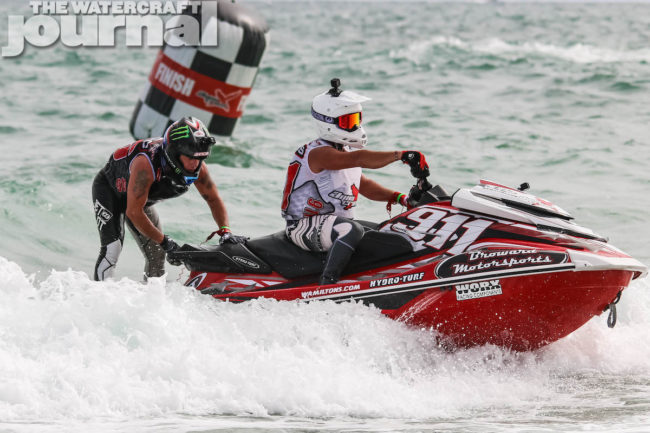
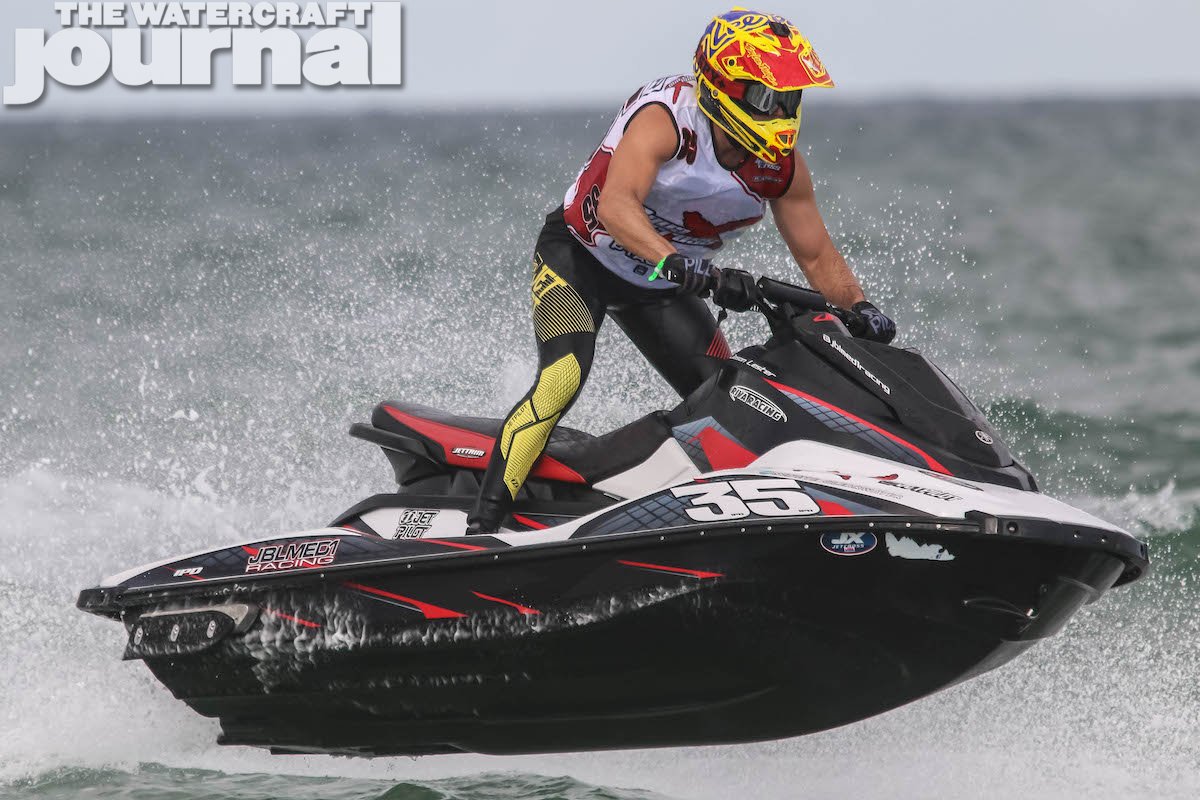
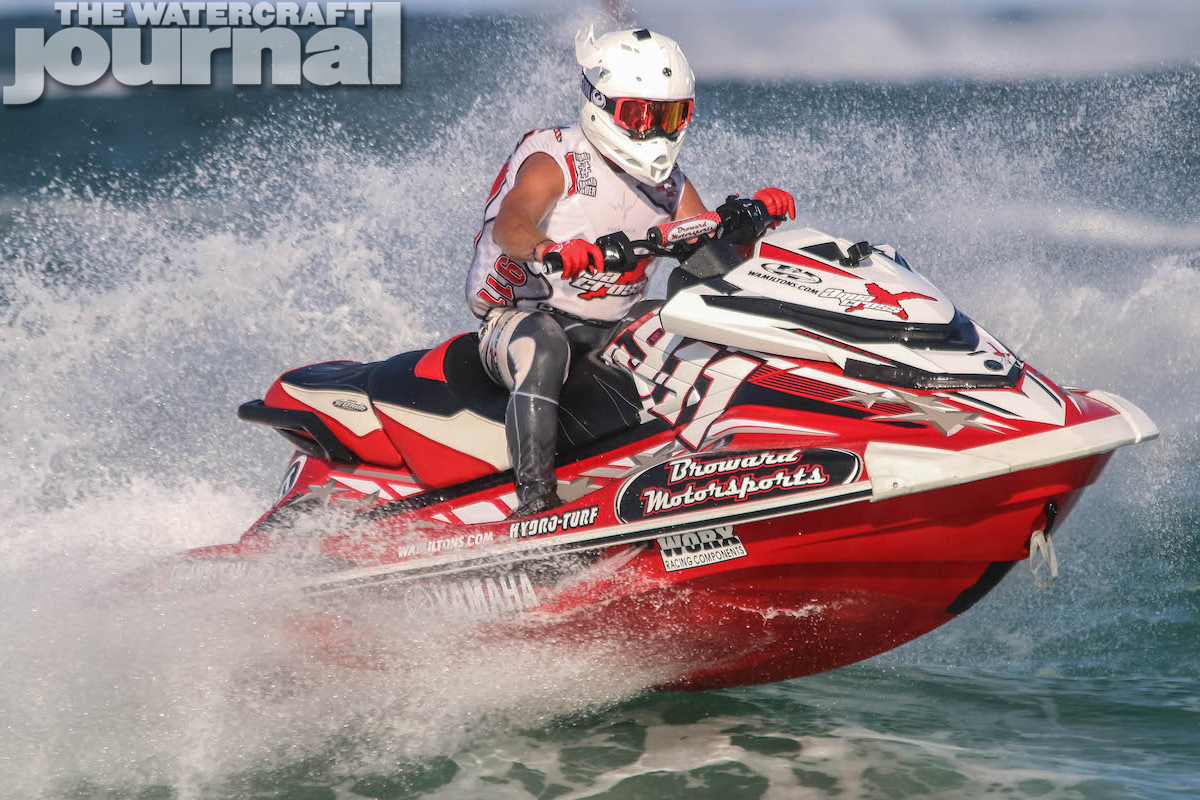
Yamaha racers dominated the P1 AquaX national tour this year with nine of the top 10 riders competing on a Yamaha GP1800R or FX SVHO. Congratulations to Broward Motorsports, Riva Racing, Dean’s Team, and to the families and friends that support personal watercraft racing.
If you haven’t learned by now, everything can be found on the Internet. If humans have learned it, it can be found here. While that can be either a horrifying prospect or one that fills you with hope depends upon your personal perspective and your private search history. (Ha!) Nevertheless, one thing that we find endlessly amusing is the innovations of the past as creators and innovators looked toward the future. One such creation is Ski Craft’s unique Ski-Tow.
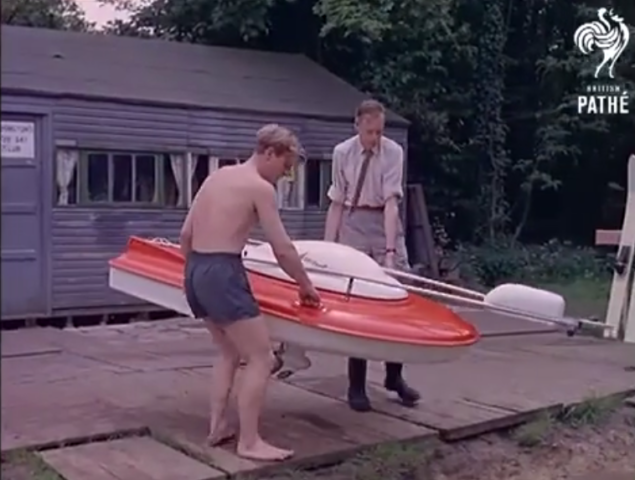
The Hamburg, Germany-based vessel-maker Ski Craft built its business around waterborne recreation and pleasure craft. By 1964, Ski Craft Boats had relocated to Seattle, Washington with a distributor in Los Angeles, California. The craft itself was a 6 1/2 ft fiberglass hull powered by a 24-horsepower NSU Wankel Type 61 rotary engine. Weighing in at 60-pounds, the vessel was rather lightweight given its heavier materials.
Designed for one-man use, the operator rode on water skis behind the craft, “grasping extended handles which include throttle controls,” according to the Wikipedia page. The operator steered via the skis. Ski Craft had innovated a type of “deadman” throttle which stopped the motor if the skier released their grip, but many States had legal requirements already in place requiring separate drivers and observers for water skiing, making sale and use of this vessel almost entirely illegal. See it in action HERE:
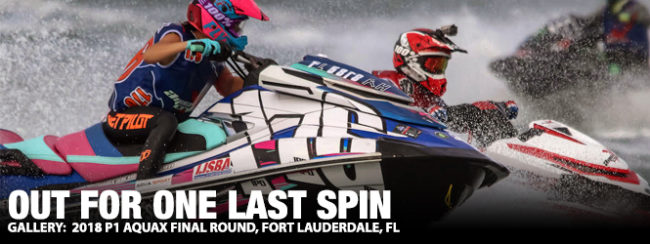
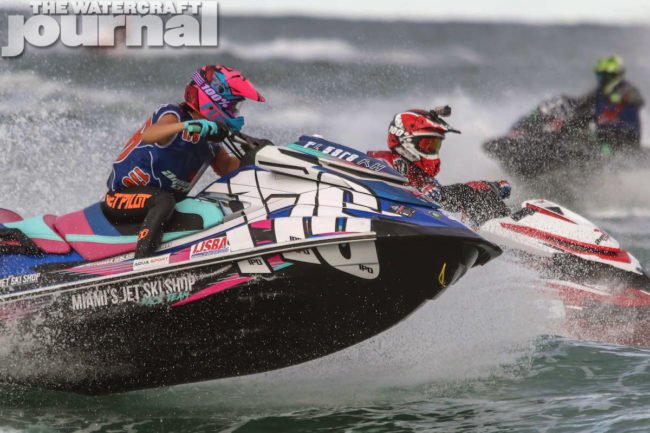
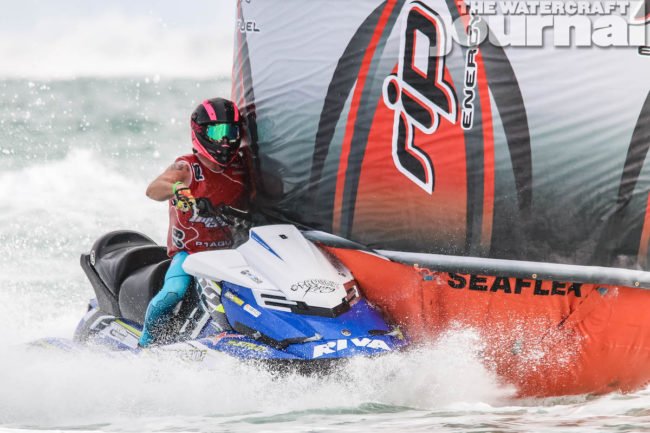
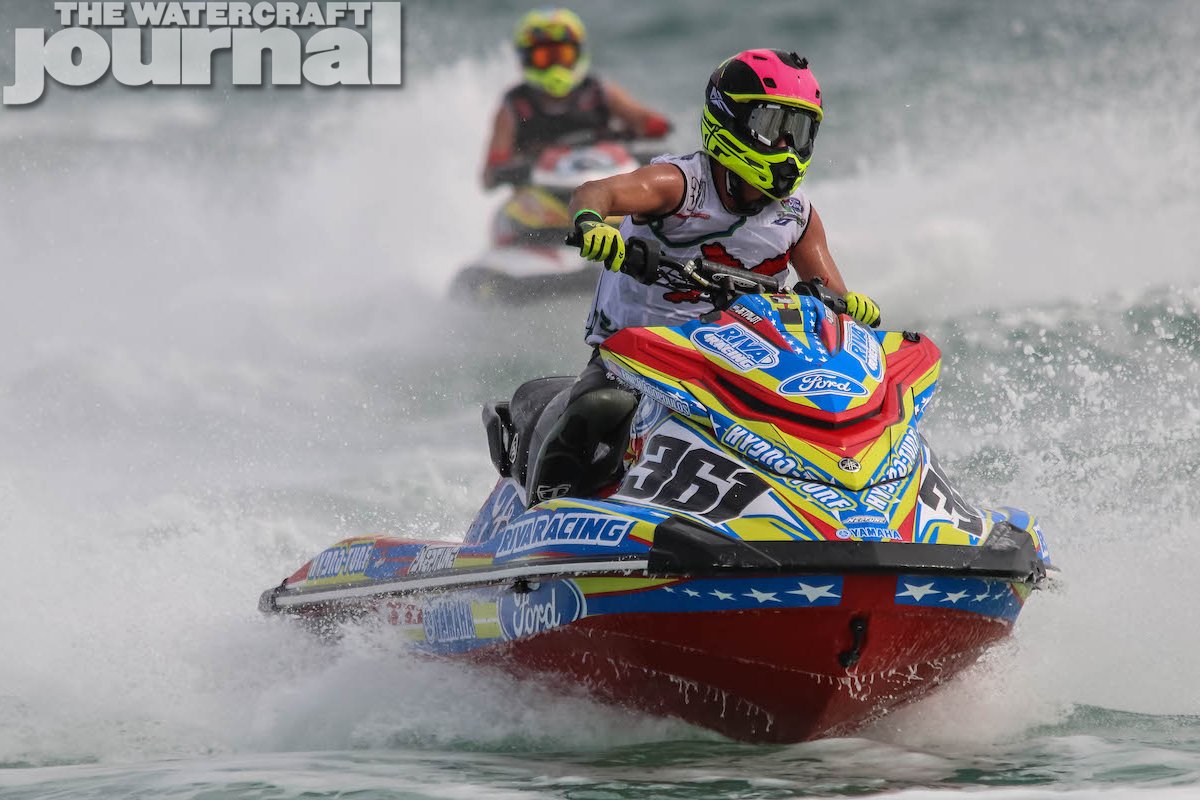
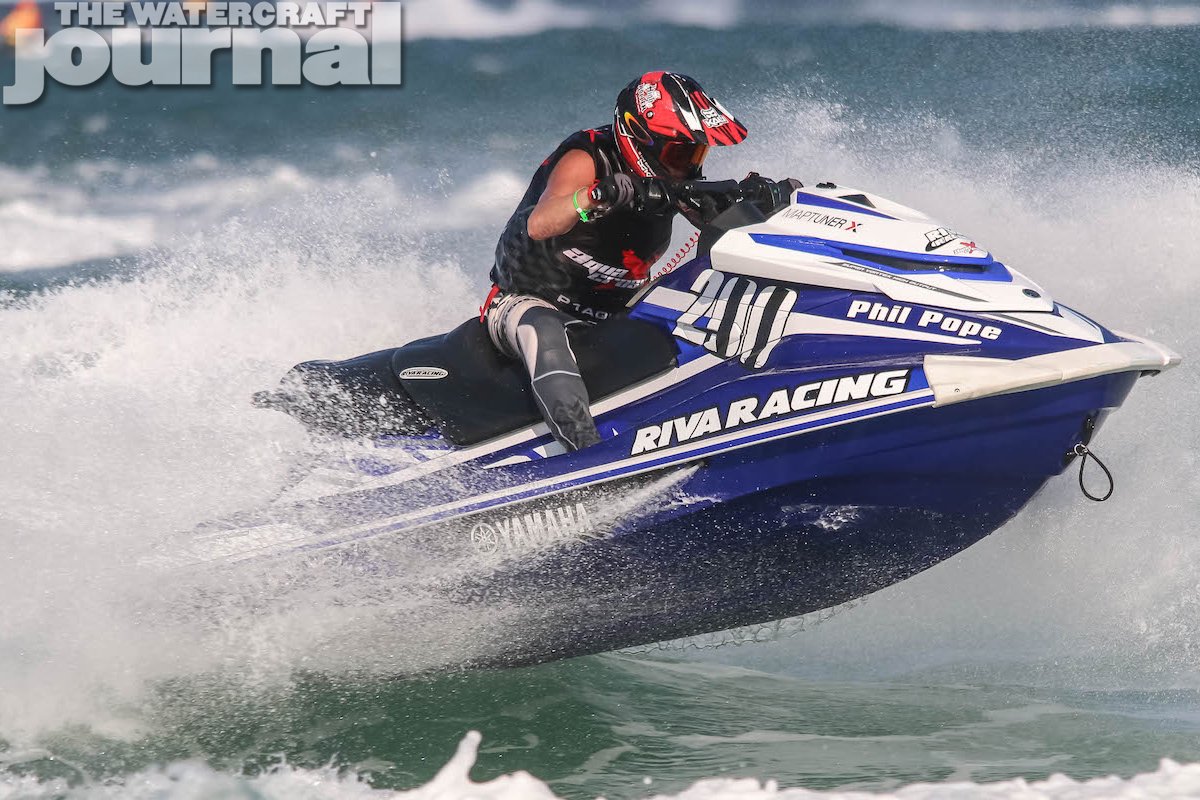
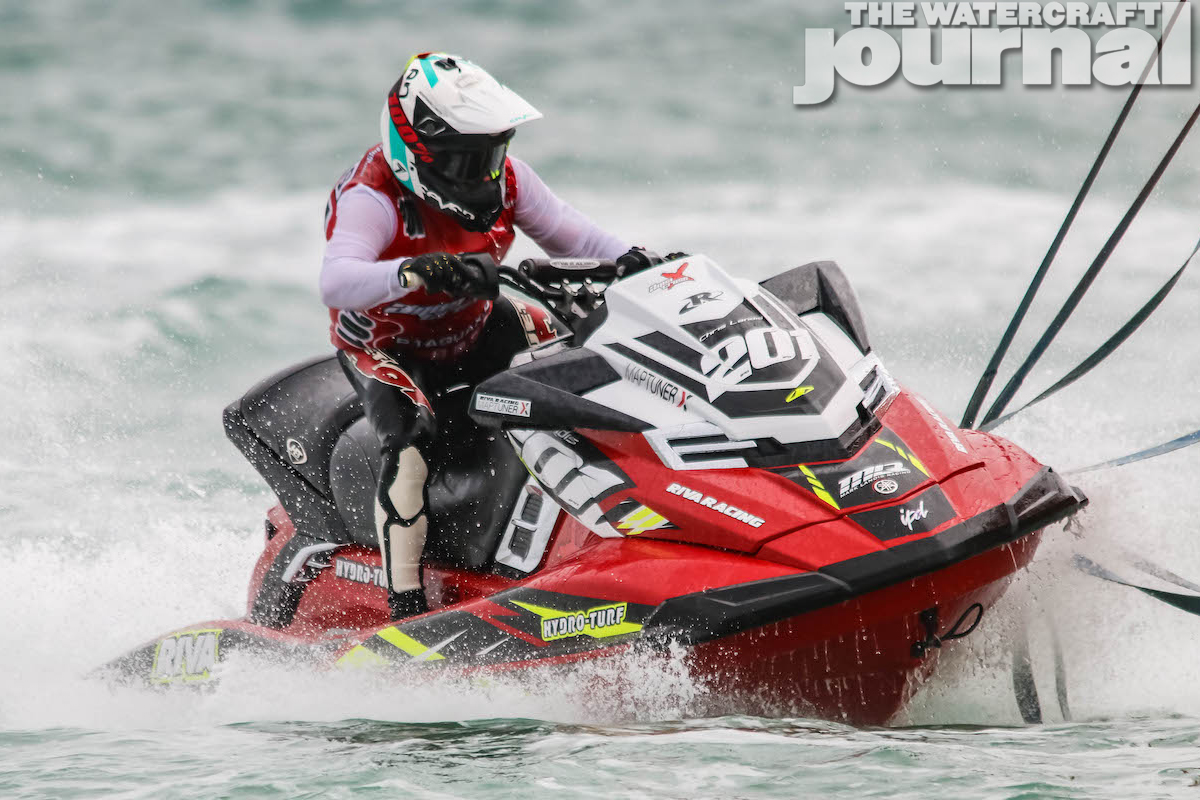
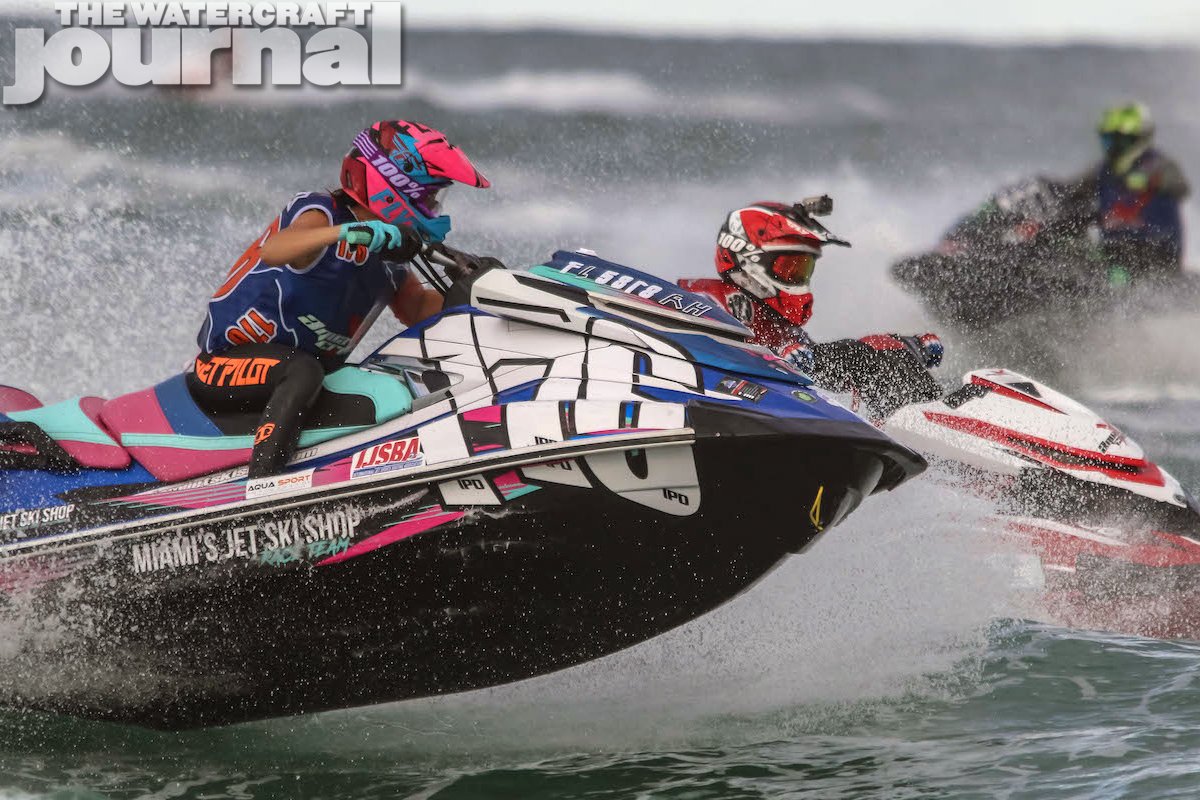
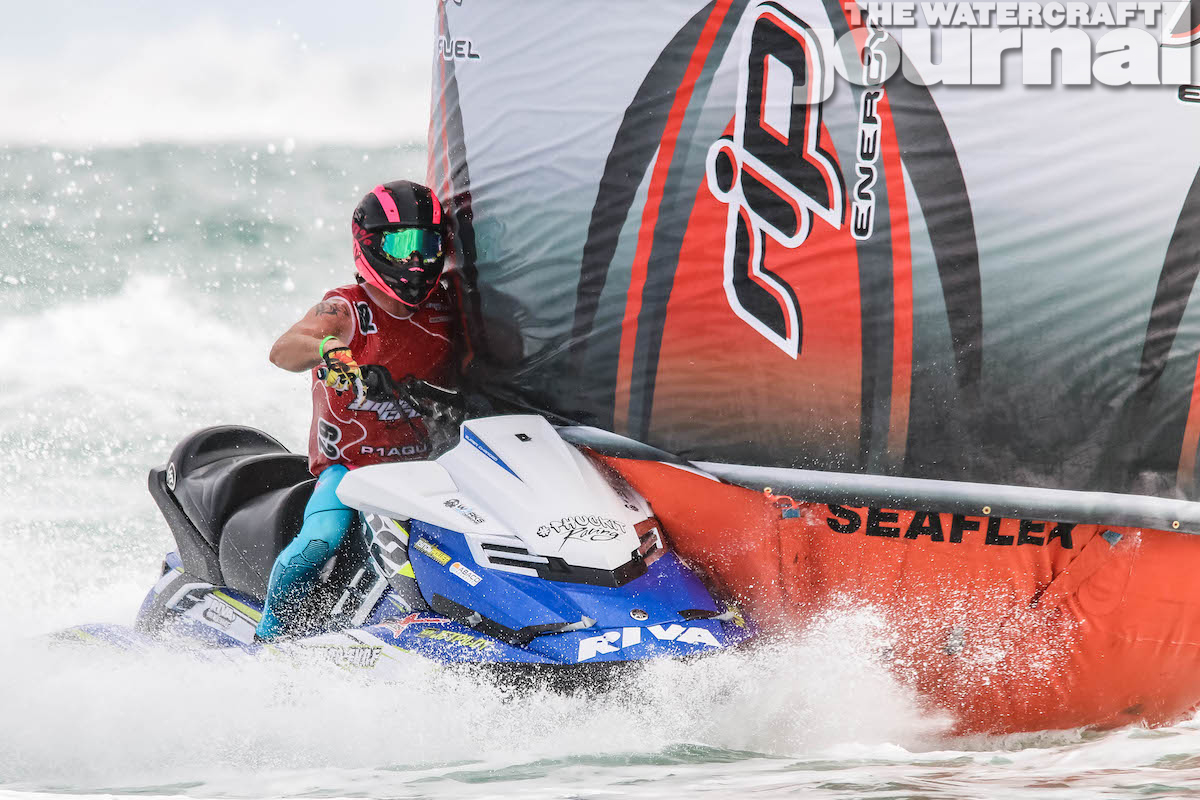
The P1 Aqua X race season kicked off their final round for the year in the city of Fort Lauderdale, Fl. This was a going to be a huge event, as many racers from across the world were planned to attend. Phil Pope made the trek from the United Kingdom, Mike Klippenstein arrived from Canada and Michele Colasanto came in from Italy. There were also be racers that attended from across the Pacific Ocean. Ronghua Wu and Dezhi Yue made the trip all the way from China. It was a total of twenty-one racers who would be on the staring line in the Pro Class.
A few months ago Fort Lauderdale was the scene of red tide and a fish kill that moved into the area from the Gulf side of the state. Fortunately things cleared up and racing was set to go. The racers received their mandatory safety briefing and were given instructions. The new marine observer team canvased the course from the helicopter above. Would this new team be more forgiving or would they put racing on extreme holds would be the question. They cleared the course for racing and the event started with Amateur Class athletes. The racers were pumped, as they wanted to prove themselves in front of the spectators on hand. The temperature was a little chilly with winds coming in from the east due to a slight cold front that had moved into the area earlier in the week.
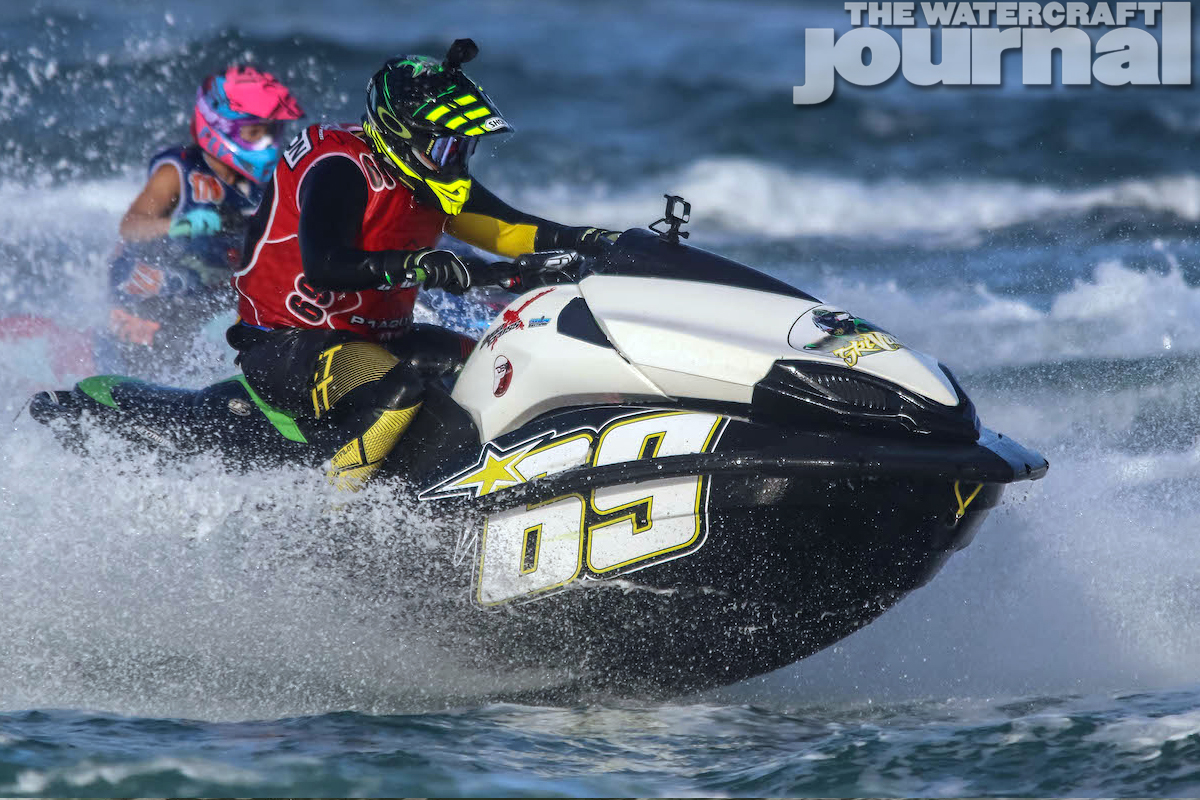
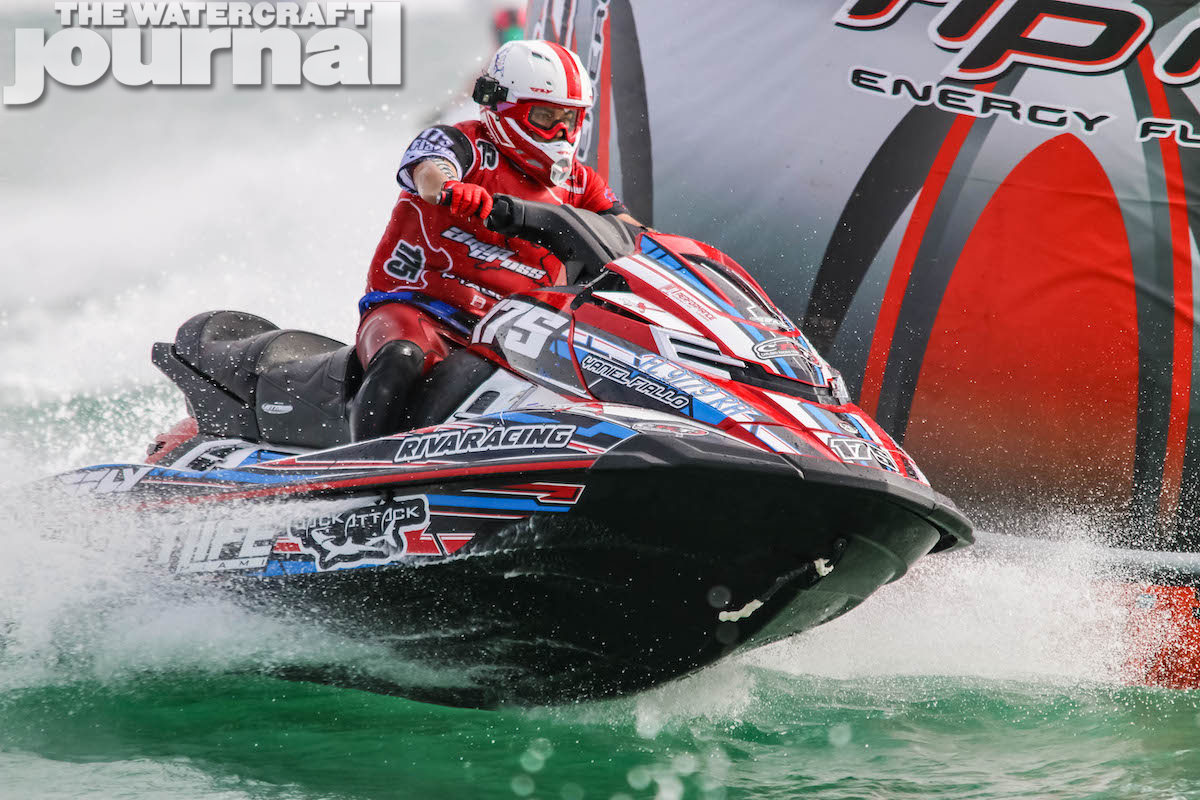
The thirty-four racers lined up on the starting line, the green flag dropped and racing had started. The points leader with 135 for the Amateurs coming into the weekend was Dave Davidson after a great showing in St. Cloud last month. Yaniel Fiallo was close behind by a mere 11 points and George Holmquist with 100. Fiallo got the holeshot for the start of the race. The water conditions were starting to pick up and it was definitely going to be a challenge for all racers on the water. Holmquist took the lead over from Fiallo. As he approached the final turn buoy close to the shore, Holmquist hit the buoy and was docked points if he didn’t take the penalty buoy. Luckily for him he did take the penalty buoy and was able to hold onto the lead and gained 25 points for Round One. Fiallo came in second and garnered 20 points.
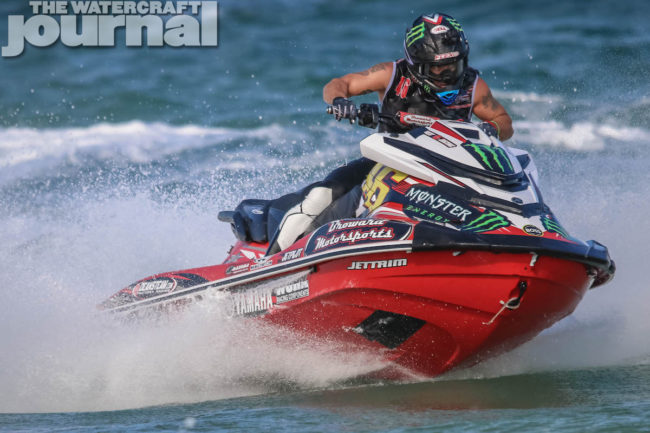
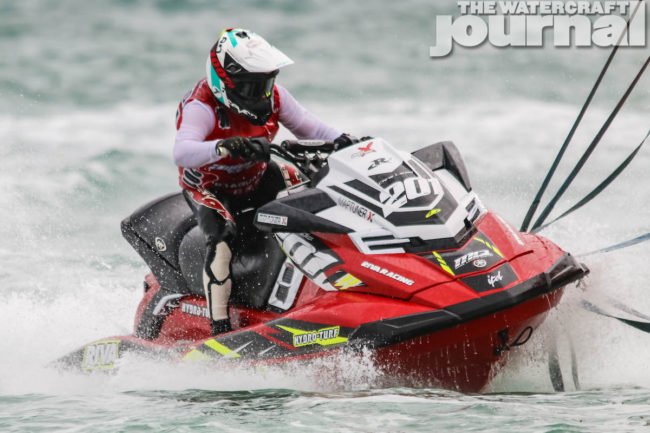
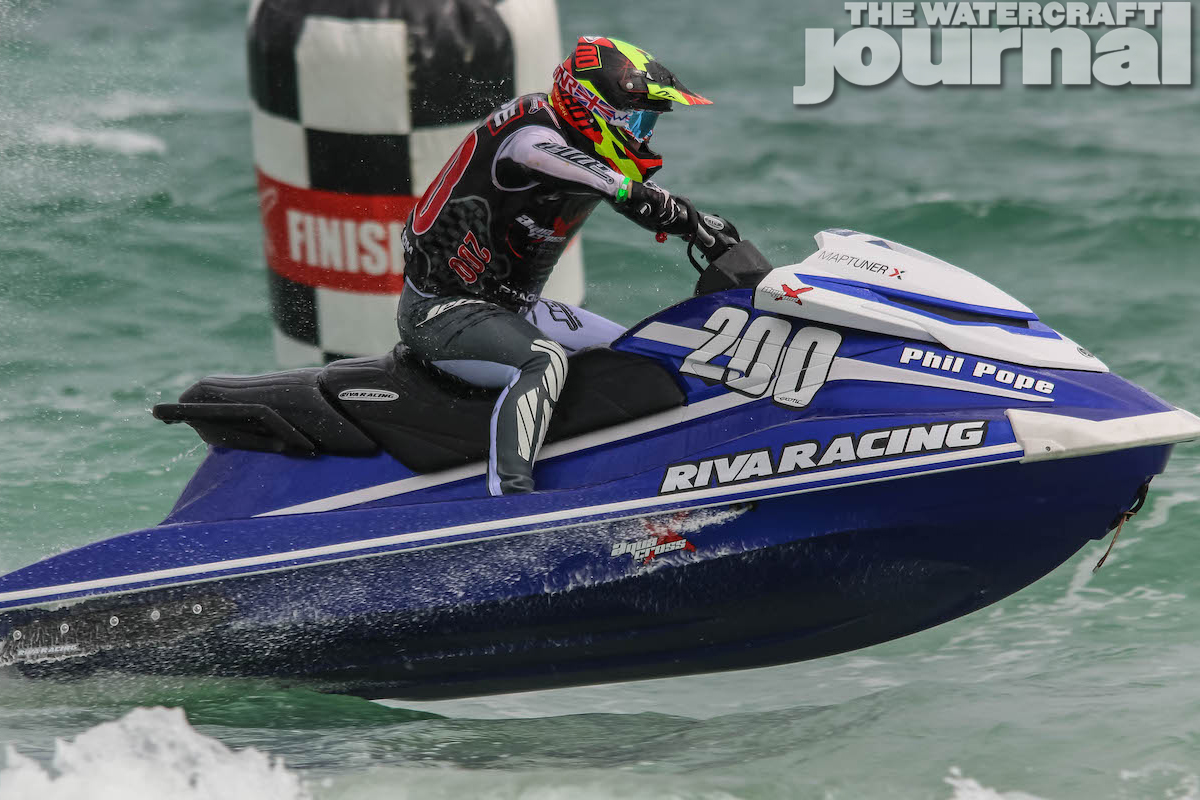
Next up was the first moto for the Pro racers. The overall points leader coming into the event was Eric ‘The Eagle” Francis. Francis was feeling pretty confident in his boat and would only have to place in the top three in two of his races for the weekend to solidify winning the championship for the year. His Broward Motorsports teammate, Chris MacClugage was aiming to catch up to Francis as he was currently in second place, followed by Brian Baldwin. As the first moto started, it would be the United Kingdom’s Phil Pope who took the holeshot and looked strong. It looked like he wanted to show the United States why Pope is the European series champion.
Unfortunately, starting fast and strong isn’t always the best course in an endurance race when it is more about pacing yourself. On the back straight, Pope came off his ski allowing MacClugage to take the lead. Half way through the moto, Macc also came off his ski close to the shore. Right behind him was Eric Francis. Francis, even with the possibility of giving points up to Macc, witnessed the dismount and stopped to pick MacClugage up prior to the safety marshals getting there, transporting him to his ski to continue on. It was a true act of sportsmanship for the two teammates. They finished the moto with MacClugage taking the win and Francis placing second. Brian Baldwin experienced some issues while out on the track and finish in the rear.
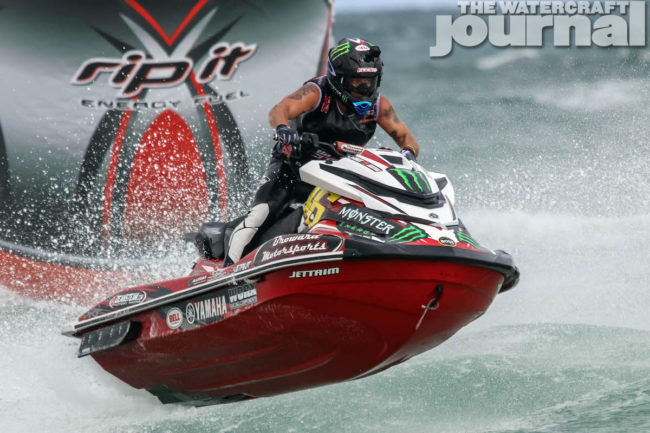
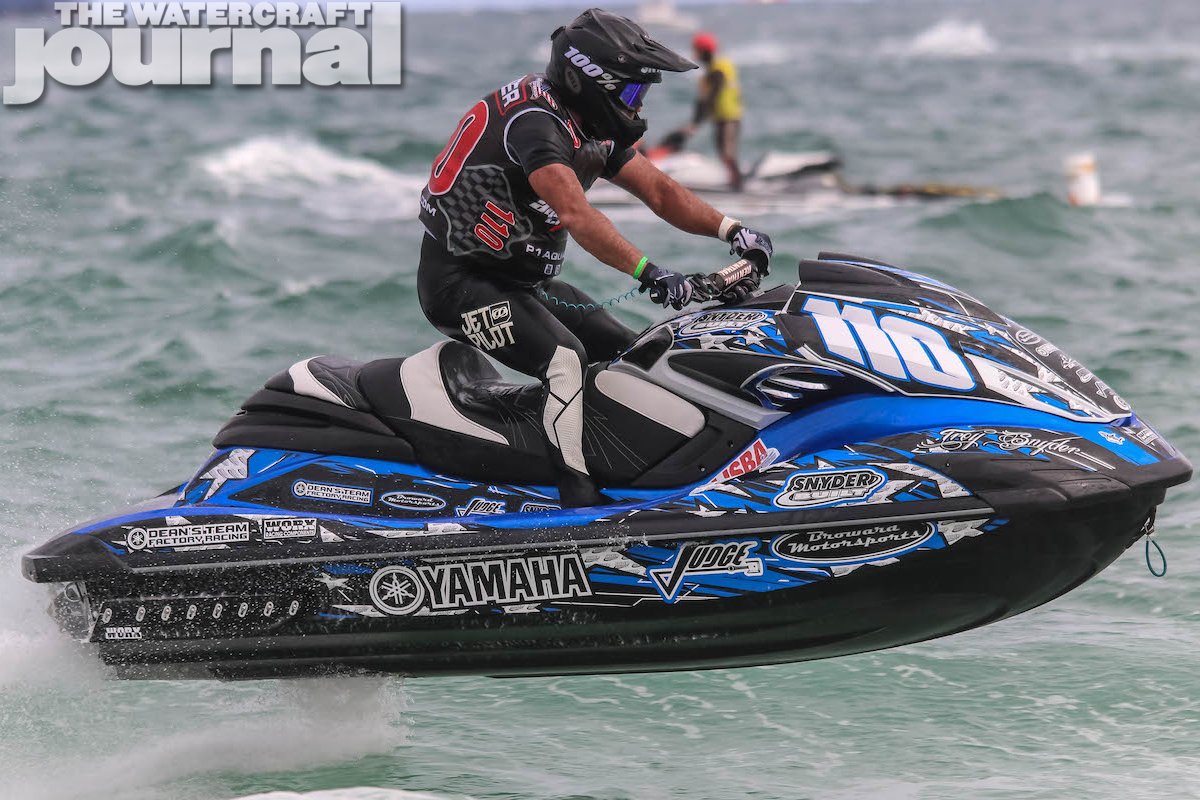
The rest of the day continued with the Sport/Spark race. The series welcomed Tory Snyder to the race scene and his parents Troy Snyder and Jennifer Senna Snyder looked on with pride. Winning the moto was Jason Lester followed by Jason Bellinzoni and Tory Snyder. Then the Pro Sprint Class followed. Things appeared to be going on without a hitch. Finally there was slight break in the action and Kristen Smoyer took to the air on her Flyboard for the crowd. The BMX team that performed jumps and tricks on the beach also entertained them. The fans were also supplied with refreshments from the series sponsor Rip It energy drinks. After the break was over, it was the Pros who again hit the water. This time though, the winds had picked up and there were some rollers out on the water. Again, it was Chris MacClugage who would take the win. Eric Francis finished in second place and sealed up the championship for the year.
The final moto of the day was the Amateur class. They definitely had to read the water conditions as they had seen what had happened with the Pros. The Amateurs hadn’t seen these types of conditions all year and it was definitely a challenge. Justin Taylor came away with the win just like he did in St. Cloud despite the conditions over Yaniel Fiallo. Scott Reeves took the win in the 200 Class. Everyone had a great time racing and was looking forward to the next day to wrap up the season.
The next day arrived with an early start. As is customary, the riders had their rider’s meeting where instructions and a review of the previous day were given. Afterwards, the Amateur racers launched their machines and prepared to race. The temperature had risen from the previous day and it definitely felt like typical Florida weather. Once the racers were lined up, the green flag was dropped but the moto was immediately red flagged due to a collision. The marshals quickly got the racers back to the start and again a start was made. The green flag was dropped and again, the race was red flagged due to numerous riders coming off their skis. The racers were marshaled to the start line once more. This time the green flag was dropped and racing was in full effect. Yaniel Fiallo took the win in his class.
After the Sport/Spark and Sprint races, it was time for the Pros to get on the water for their third race of the weekend. Brian Baldwin took the holeshot and he battled Chris MacClugage throughout the race. They went back and forth with the leader changing throughout, but it was Baldwin who got the win. Eric Francis didn’t finish the race because of a seat issue. This would not affect his championship as he had already won it from the day before. Mike Klippenstein came in third followed by Sophie Francis and Dennis Mack rounding out the top five for the moto.
Due to the complications of previous locations throughout the year, P1 Aqua X added a fourth moto to both the Amateur class and Pro class. Justin Taylor took the win in the final moto of the year for the Amateurs but it was Yaniel Fiallo who would get the overall top podium spot. In the Pro class, it was Eric Francis who would take the win in the final moto. Christian Daly and Brian Baldwin followed. Eric Francis was able to regain his crown after relinquishing it to Chris MacClugage the past two years and is now the number one racer for P1 Aqua X.
There were many ups and down for both the racers and series this year. Now with season over many are looking forward to next year and many are not. We shall see where the future takes them.
Oh boy! Here come the Black Friday sales. While the country is gearing up for Thanksgiving (or if you’re putting up Christmas decorations a month early, you heathen), most of the world is preparing for the madness of Black Friday. Huge discounts will be offered on existing merchandise taking up inventory all in an effort to clear the shelves to make room for next year’s products. Regardless of what you’re looking to buy, now is the time to whip out the ol’ check book and get writing.
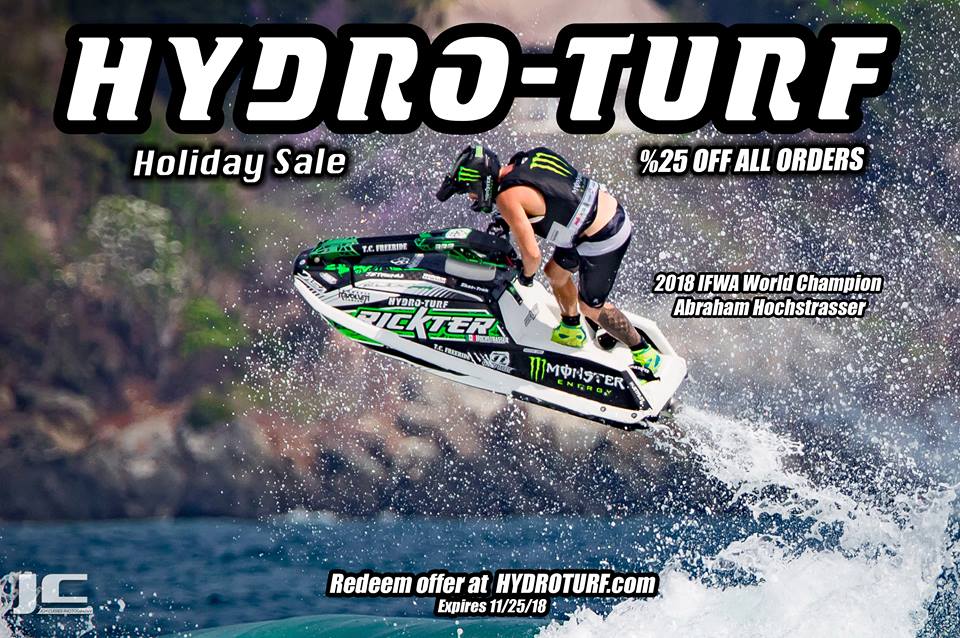
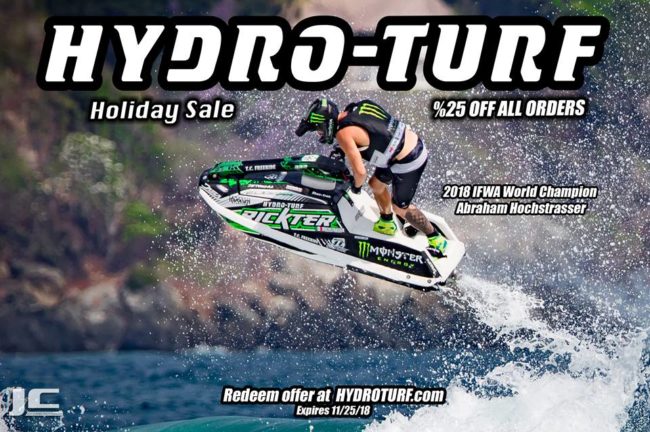
And getting in on this action is industry giant Hydro-Turf. They just recently announced their own Black Friday sale – a whopping 25-percent off of all website orders – from now until Sunday, November 25th. Here’s what they wrote:
Hydro-Turf is having a Black Friday sale of 25% off all website orders! (Not including shipping) Visit www.Hydroturf.com Offer Expires Sunday 11/25/18 Rider: #HTathlete Abraham Hochstrasser – 2018 IFWA World Champion – Photo Jon Currier Photography
No doubt there’s a new traction mat, seat cover, handlepole cover or even a T-shirt that you’ve been eyeing for a while now. Well, this is your time to act! Personally, we’ve used our massive Hydro-Turf Hydration rolling gear bag religiously since first picking it up nearly 3 years ago. When we first picked it up we thought, “Man, there’s no way we’ll need something this big” but have filled it more often that we can count. It’s a heck of a piece of equipment, and it too is on sale now!





 We had to see what this was about and found that there are some great offers to take advantage of. Whether you ride in the dirt or on the water, many useful items are marked down. Customers can score a free Fly Jersey with the purchase of a Fox Helmet. The breakdown of the Cycle Springs Black Friday Specials include up to 50% off Fox Gear. Prices are also slashed on Alpine Stars Riding Jackets. All riding gloves are 25-75% off.