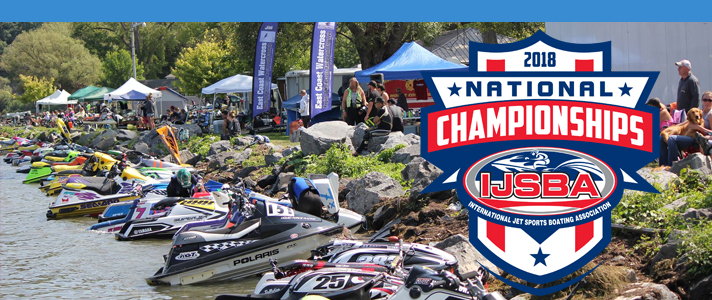
A July 18th press release from IJSBA reads that the organization is excited to announce that East Coast Watercross will host the 2018 U.S. National Championships on August 25-26 at Clute Memorial Park in Watkins Glen, NY.
The National Championships were slated to be held in Chicago. However, it became apparent that the location would not have adequate space for pit crews due to the venue reducing the space. IJSBA is thankful for P1 Aqua X bringing this flaw in the venue to their attention. East Coast Watecross quickly stepped in and took the reigns and got it together in order to host the 2018 competitors. The group was also able to give racers plenty of time to change their travel plans.
The competition will be comprised of some of the top Personal Watercraft racers competing in Closed Course and Freestyle events as they vie for the Number 1 plate at the 2018 Blowsion World Finals and the 2019 season.
Twenty-six categories are set in the contest and champions will be crowned in each one. Super Chicken ( Kawasaki SC650) will be recognized by the IJSBA for the first time as an eligible category for championship glory. IJSBA thanks P1 Aqua X for all of the hard work they have put into the last two U.S. National Championships.
According to the RIVA Racing site, the RIVA GP1800R Limited Edition was developed for the performance rider who demands a PWC that provides the ultimate in power and performance. Only twenty-five of these blistering fast models were produced and each one features numerous RIVA Performance Products precisely matched to the Yamaha GP platform. Each one features hull graphics and red anodized components exclusive to the Yamaha GP.
When you look under the hood…well, seat, you’ll find a powder coated red valve cover with it’s own engraved numbered plate from 1-25, denoting the number of the machine. The number is there to place emphasis on the limited nature of the watercraft.
The RIVA Racing Yamaha GP 1800R is equipped with a powerful 350 hp engine and will accelerate to 85mph. As a compliment to the PWC, it includes upgraded steering and handling components to give the rider complete control. It is built race ready, whether on the track or getting twisted on a buoy course.
This is a competition use machine only; definitely not meant for the weekend warrior nor the weak. It is way too much to handle for a novice rider. As a reminder, only a few of these limited edition watercraft remain for sale, so if you’re in the market for a high performance racing PWC, don’t hesitate getting in touch with RIVA Racing. One of the three Yamaha GP1800R Limited Editions can be yours for $25,995, which isn’t bad, once you breakdown the cost of paying full retail for the parts, and include installation. Call for availability: 1-800-241-4544. What are you waiting for? Go fast now!
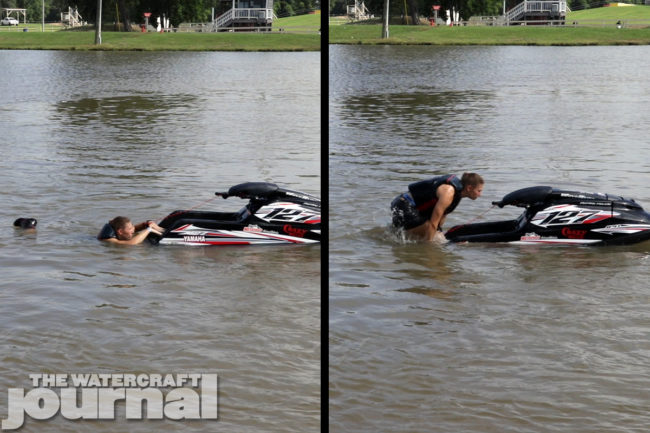
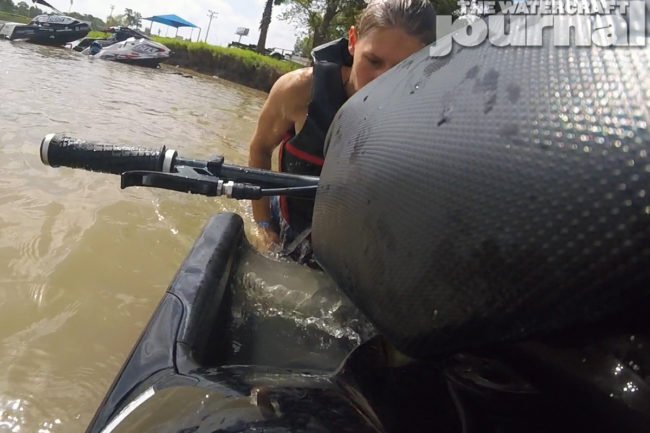
You’ve fallen off. You’ve made it back to the ski, treading water next to it you catch your breath, look up at the water sloshing around in the tray and wonder how the heck you are going to climb back in there.
The deep water start gets a full article because it can be a bear of a skill to learn early on. Unless you plan on swimming the ski back to the shore every time you fall off, you might want to put the deep water start in your repertoire.
Can’t Stand to Stand The main reason deep water starts can be difficult is because you have to heft your entire body weight into the tray (usually tired after a wipeout), get moving, and stand all while keeping the back of the stand up from sinking and you falling back into the drink. Just like shallow water starts you can follow the knee in the tray or body drag methods, just without being able to initially stand on firm ground.
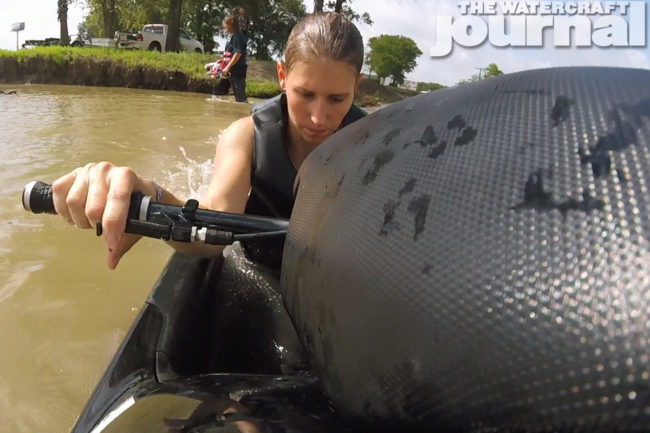
Knee Start Put your lanyard in while you are comfortably floating beside your ski. That limits the amount of time you sit unmoving, and wobbling, in the tray after spending all the energy clambering in there. Get to the back of the ski and place your hands in the back of the tray. You can also place one hand on the back of the tray and the other on the bars or side of the tray, whatever is comfortable for you. However you orient your hands, use one or two to press the back of the tray under water, simultaneously kicking up with your feet.
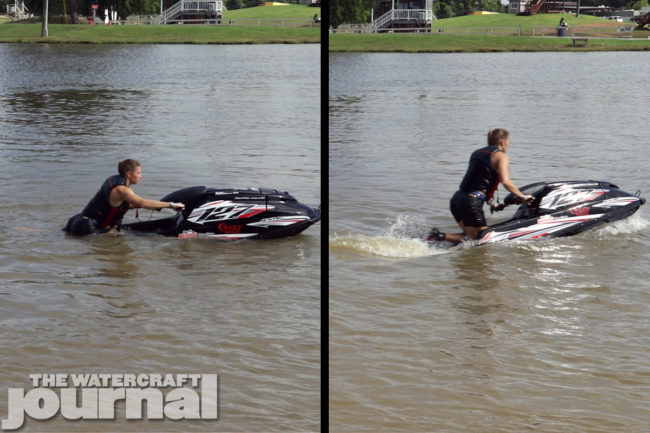
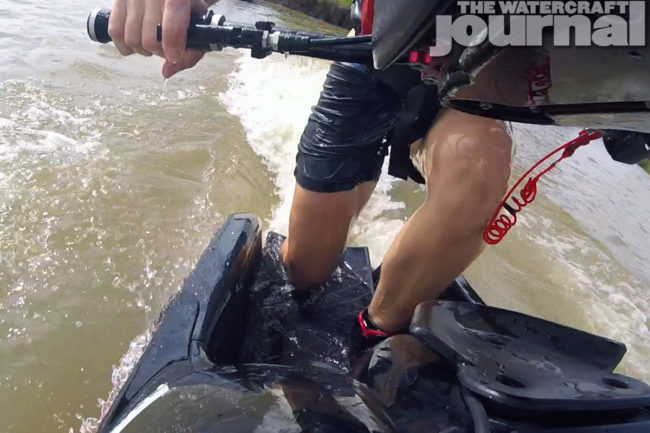
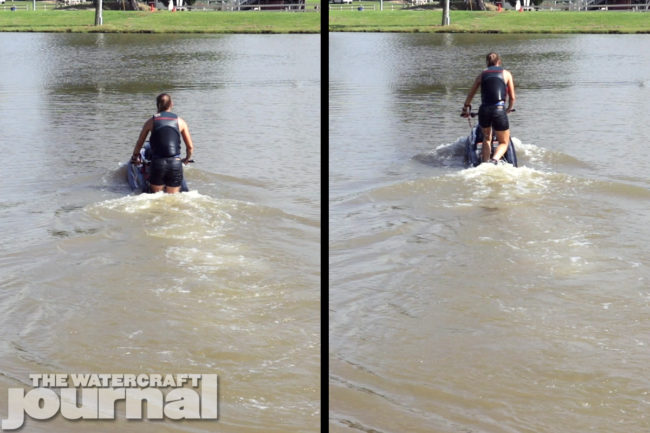
As the tray submerges and your body pops out of the water, bring your dominant knee into the tray and use the other leg to trail behind for balance. Grasp the bars, hit the start button, give the ski a little throttle to plane, and rise just like you would performing a shallow water start. This method takes some initial balance, but it is more natural to get to the standing position.
Body Drag Start
Once again, I prefer the knee start to avoid the awkward body drag, but sometimes the body drag method is a necessity depending on ski size, water conditions, and rider fatigue. This method fortunately does not differ greatly in shallow or deep water. Same as the knee start, put in your lanyard before getting in the tray. Submerge the back of the tray while laying down similar to a seal on the beach, your stomach or hips should rest in the tray as you grab the handlebars with outstretched arms.
Start the ski and once you feel like there is enough stability, pull your body forward and press down on the bars all while performing a strong dolphin kick to pop your knee(s) into the tray. From here you can continue kneeling or rise to a standing position. Strong upper body and core strength make the body drag start easier, otherwise the fish flopping on land image comes to mind.
Conclusion The deep water start can be daunting to new riders due to the fact that they usually have to be performed after a wipeout and the body might be resembling a limp noodle. With nothing to support your body to get into the tray strength, balance, and coordination are key players in the deep water start game. Get ahead of the curve, practice deep water starts near the shore to avoid the swim of shame if you wipe out far from shore.
Fox 10 reports that a group of six friends who are members of Minnesota’s PWC Adventures made a 1,600 mile journey aboard PWC. The guys finished their ten day journey in Spanish Fort, AL, raising money along the way to help a Disabled American Veterans Chapter in Illinois purchase a van. They called the trip, “Rocking the River-Minneapolis to Mobile.”
When the PWC Adventures team drew closer to their destination, they sent out a notice from the Mobile River via livestream to their followers.
“Alright, guys. Headed to Mobile,” one of the riders could be heard saying from the Mobile River Ship Channel. “Just pulling in here and I got a pipeline laying across the channel, so I’ll see what we can do to get by this and we’ll see you guys shortly at the welcoming party.”
Soon after sending the message and 1,621 miles later, the group pulled up at the Bluegill Restaurant. They were right on time for a celebratory lunch in support of their mission.Team leader, Joey Freeman said the trip was amazing and people on the river from Minnesota to Alabama gave them donations and asked questions about what they were doing.
The crew navigated many rivers and nearly 30 locks and dams to arrive at their destination. Lunch time diners were excited to ask questions of the riders and to find out what the trip was all about. The guys were happy to talk shop.
If you are interested in highlights from the Minnesota to Mobile 1500 adventure or want to donate, visit pwcadventures.com.
The IJSBA has just released the first entry form for the 2018 Blowsion World Finals. Classes at this point are contingent but include runabout open, women’s runabout 1100, naturally aspirated, junior 10-13 lites, and more.
Entry forms must be filled out, submitted, and received by September 4. You can email your completed entry forms to [email protected].
For more information, check out the full press release below and be sure to check out ijsba.com for the latest details.
IJSBA is pleased to release the first entry form for the 2018 Blowsion World Finals. This entry form consists of six categories that were either slated for removal from the competition program or were requested for addition to the competition program. These classes include:
Runabout 1100 Open: An unclassified category to provide an opportunity for the growing demand for aftermarket hulls in the small runabout division.
Ladies 1100 Stock: An unclassified category to provide an opportunity for female competitors to compete in the small runabout division.
Junior 10-13 Lites Challenge: Intended to provide entry opportunities for the Junior Class competitor which develops both Closed Course and Slalom skills in a combined overall score.
Naturally Aspirated Limited: An restricted unclassified category intended to meet the demand of competitors who wish to continue the use of classic runabout watercraft or who want to engage in the use of aftermarket parts on a modern watercraft without the use of forced induction.
Naturally Aspirated Open: An restricted unclassified category intended to meet the demand of competitors who wish to continue the use of classic highly modified runabout watercraft or who want to engage in the heavy use of aftermarket parts on a modern watercraft without the use of forced induction.
Amateur Runabout Stock: Intended to provide neophyte Stock Class competitors an opportunity to evaluate their skills in an environment against select Expert Class competitors before deciding to apply for an Expert License.
IJSBA will accept entry forms, today, but will not process the entry until the requisite number of entries as been received. To submit an entry in these classes, download the entry form, fill it out with a valid payment and email the completed form to [email protected]. 12 completed entries must be received by September 4 or the class absolutely will not be run.
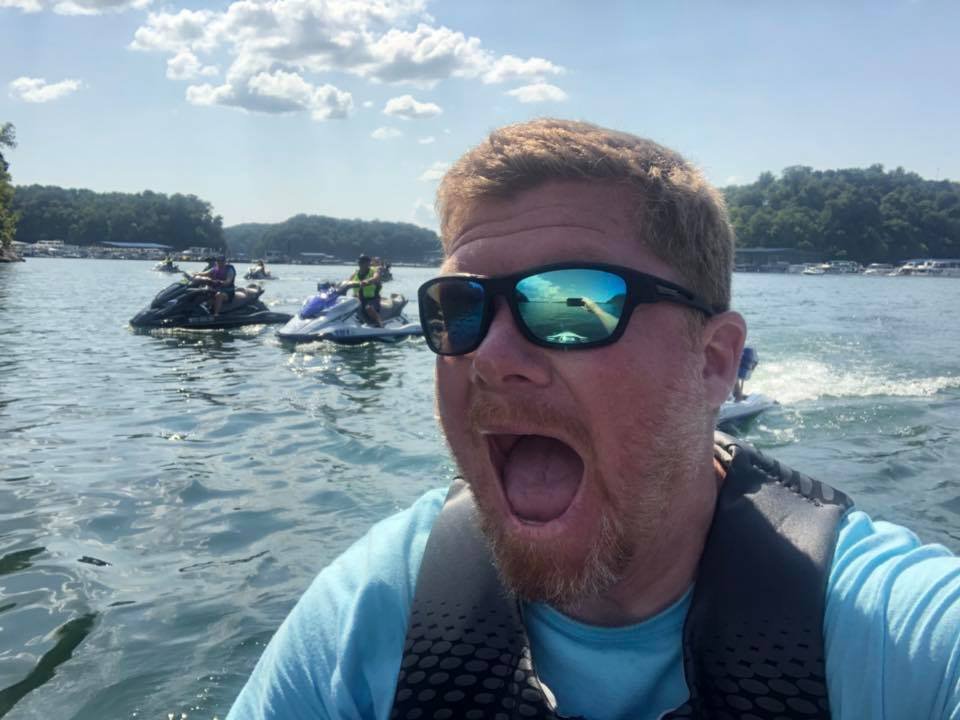
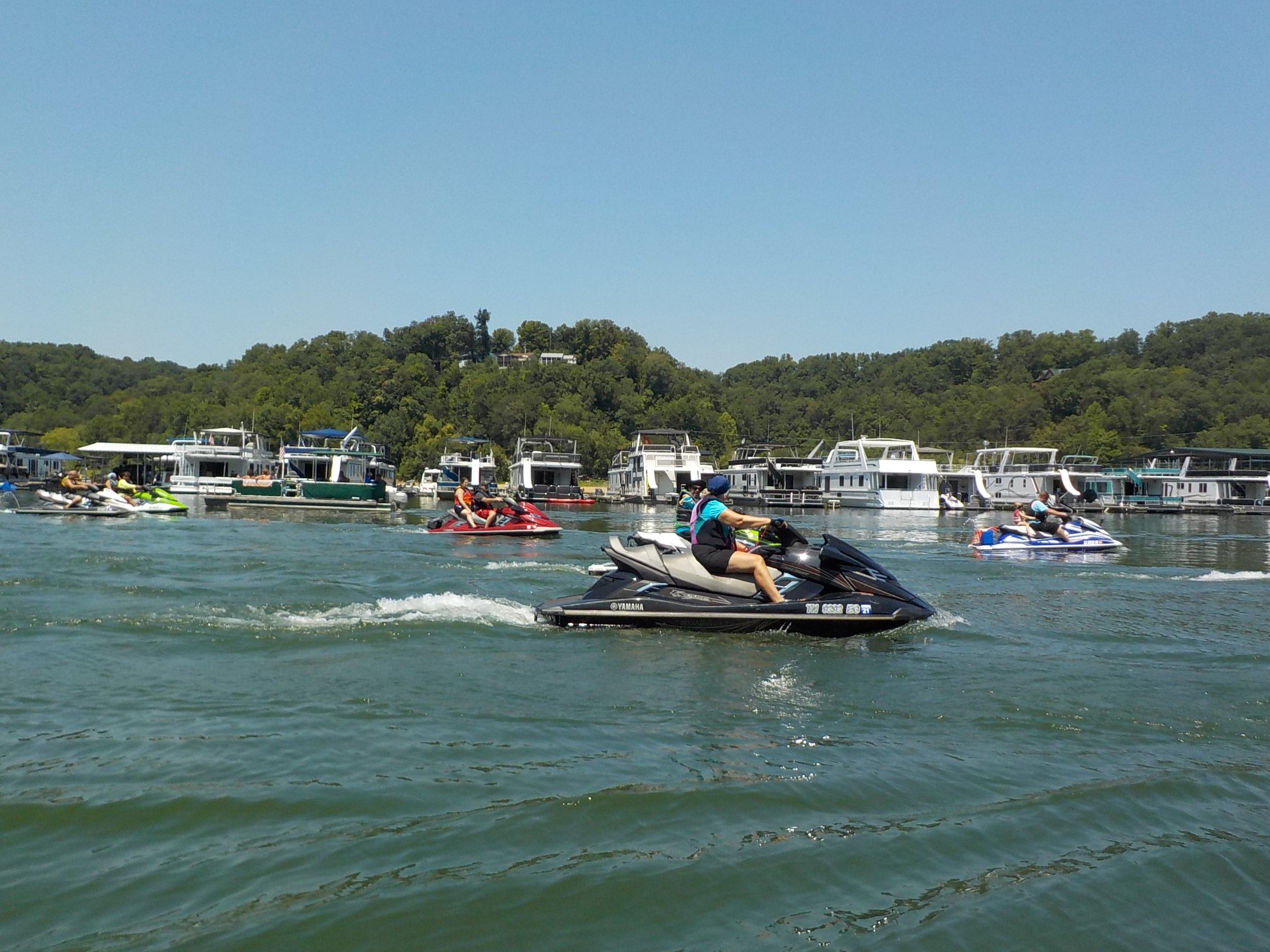
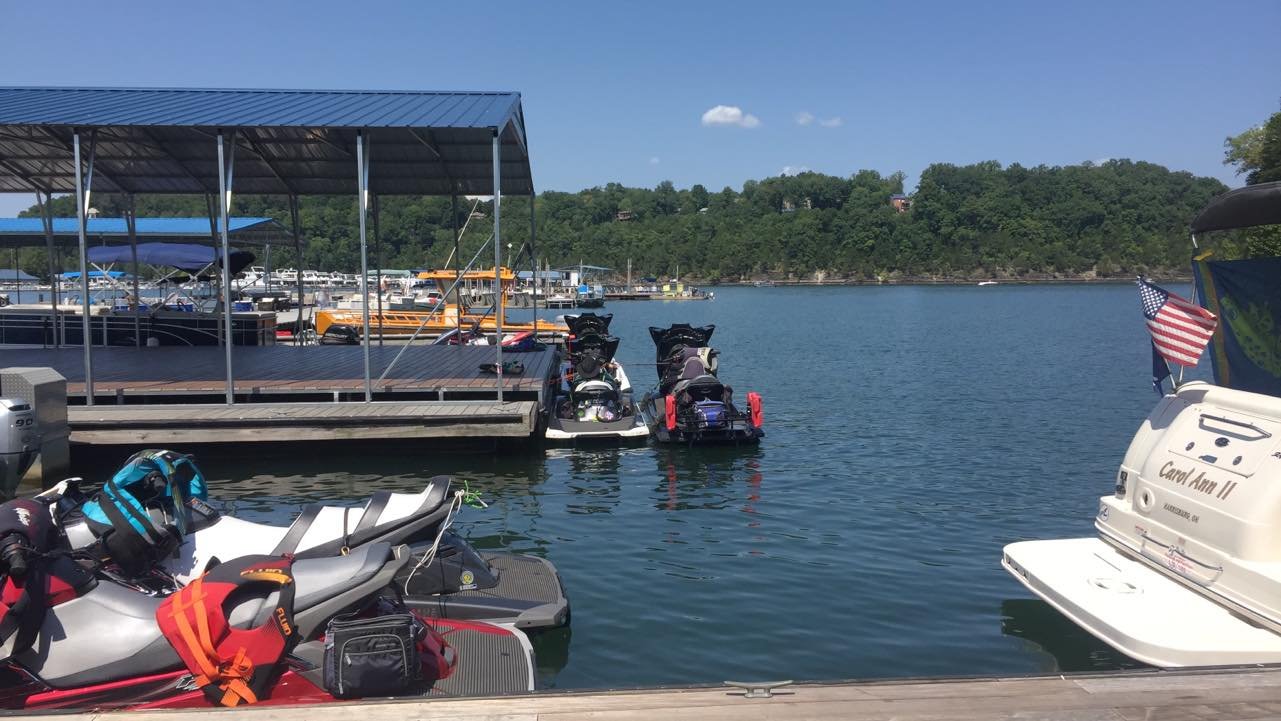
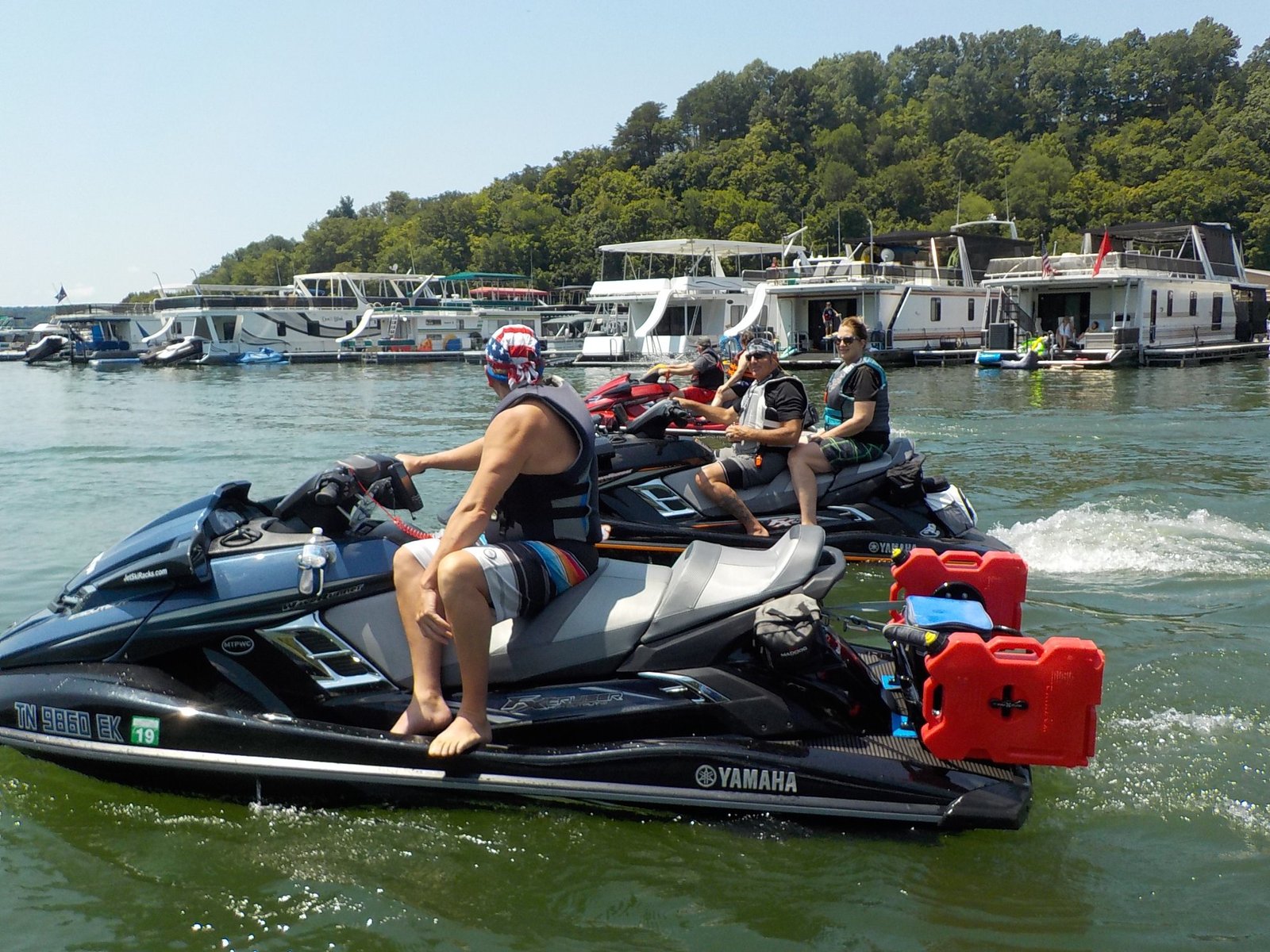
“Oh boy,” I croaked, just above a whisper. The line to the launch ramp was as tightly packed as the road descending to the marina was steep. The drive to Lake Cumberland, Kentucky was straightforward enough. We jogged north towards Bowling Green, past the Corvette National Museum and assembly plant and peeled East. At the southern end of Kentucky Highway 92, nestled at the bottom of a dangerously inclined base of a hollow was Jamestown Marina. Today was the annual Lake Cumberland Raft Up. Literally thousands of people swarmed the marina and the lake itself to bob around aimlessly, while drinking, grilling and listening to music. It was, as my first impression cautioned, a total and complete zoo.
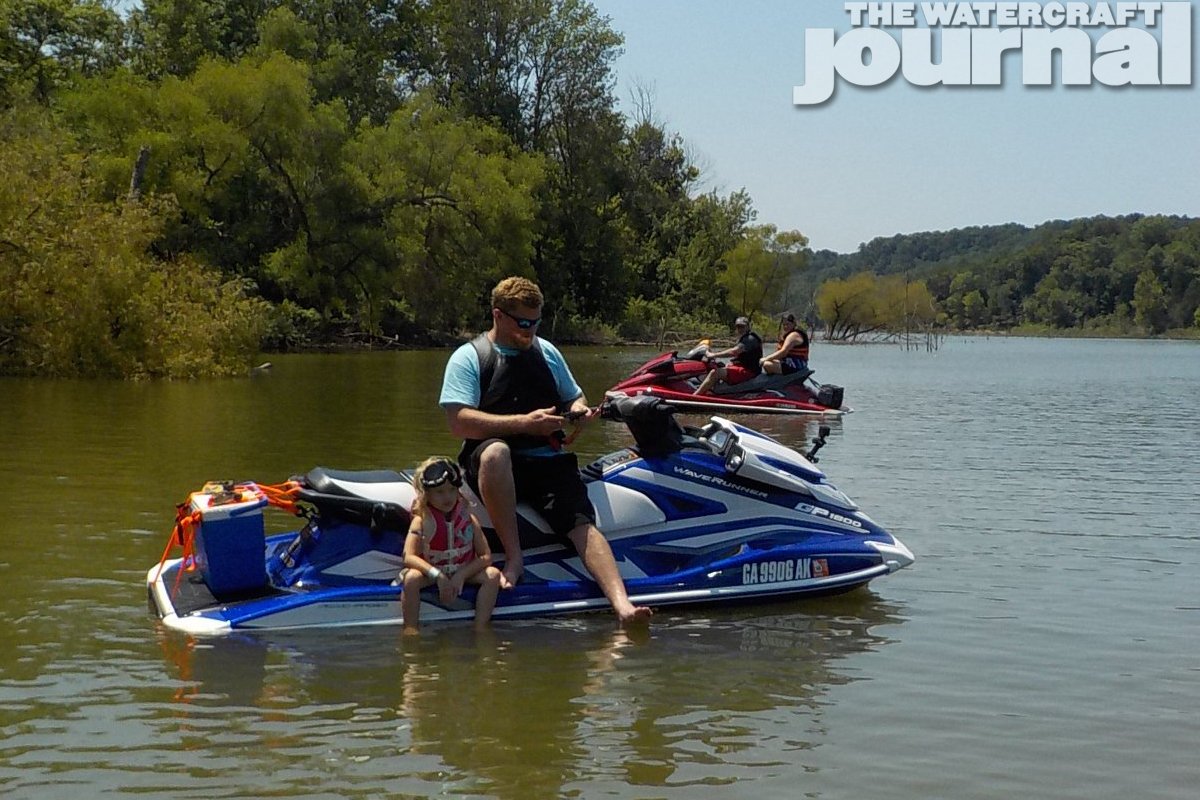
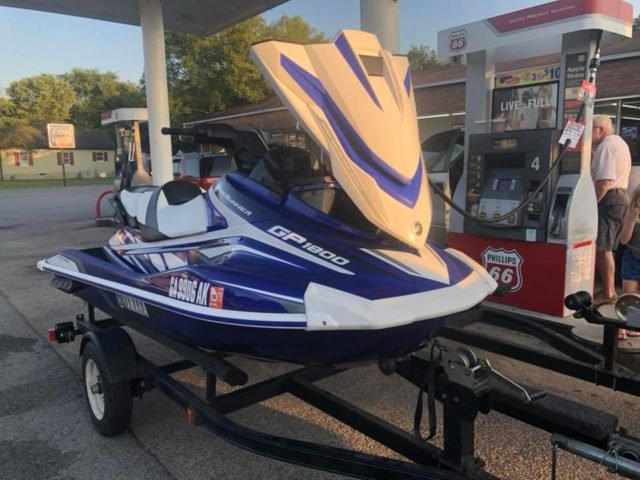
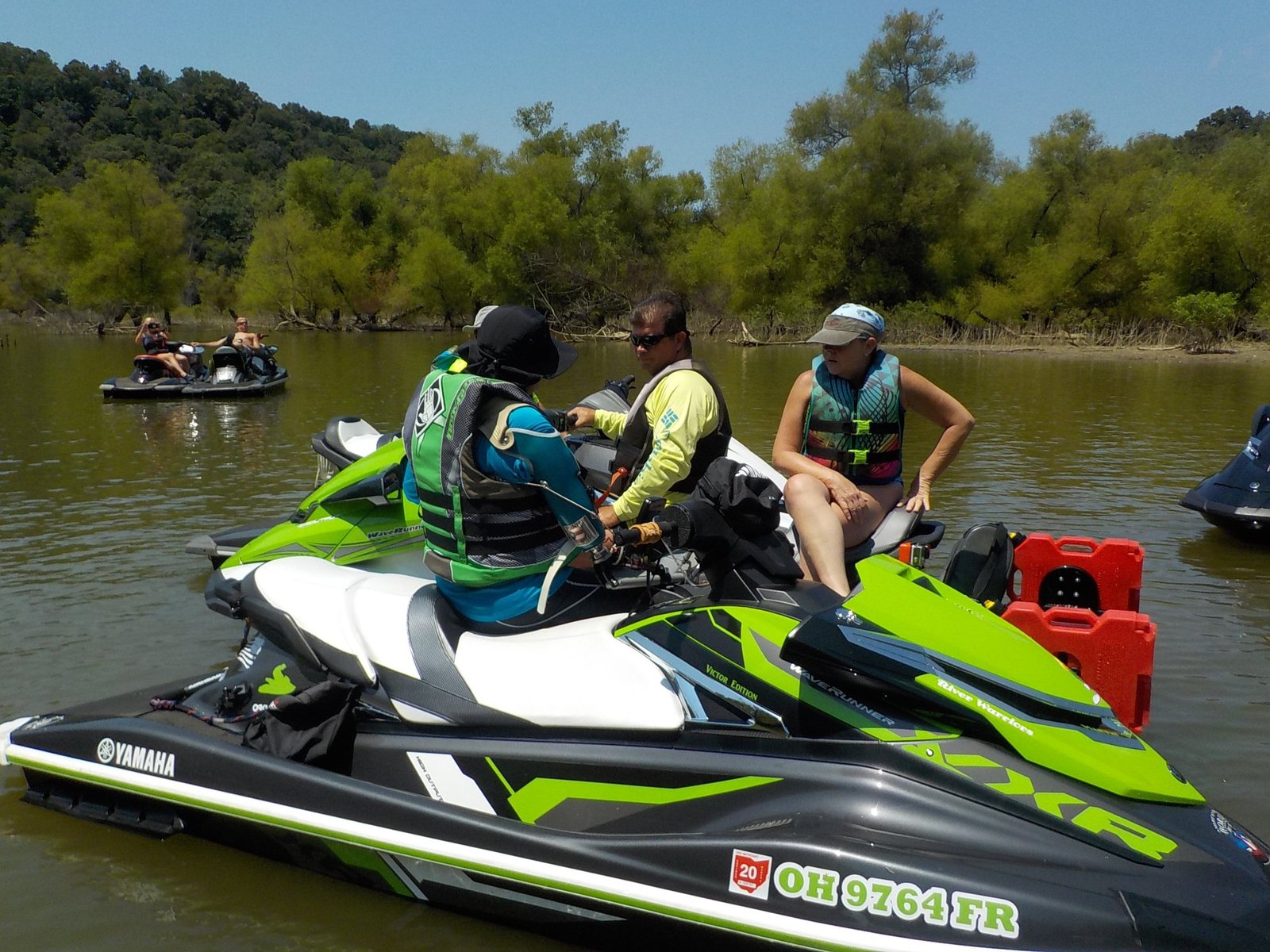
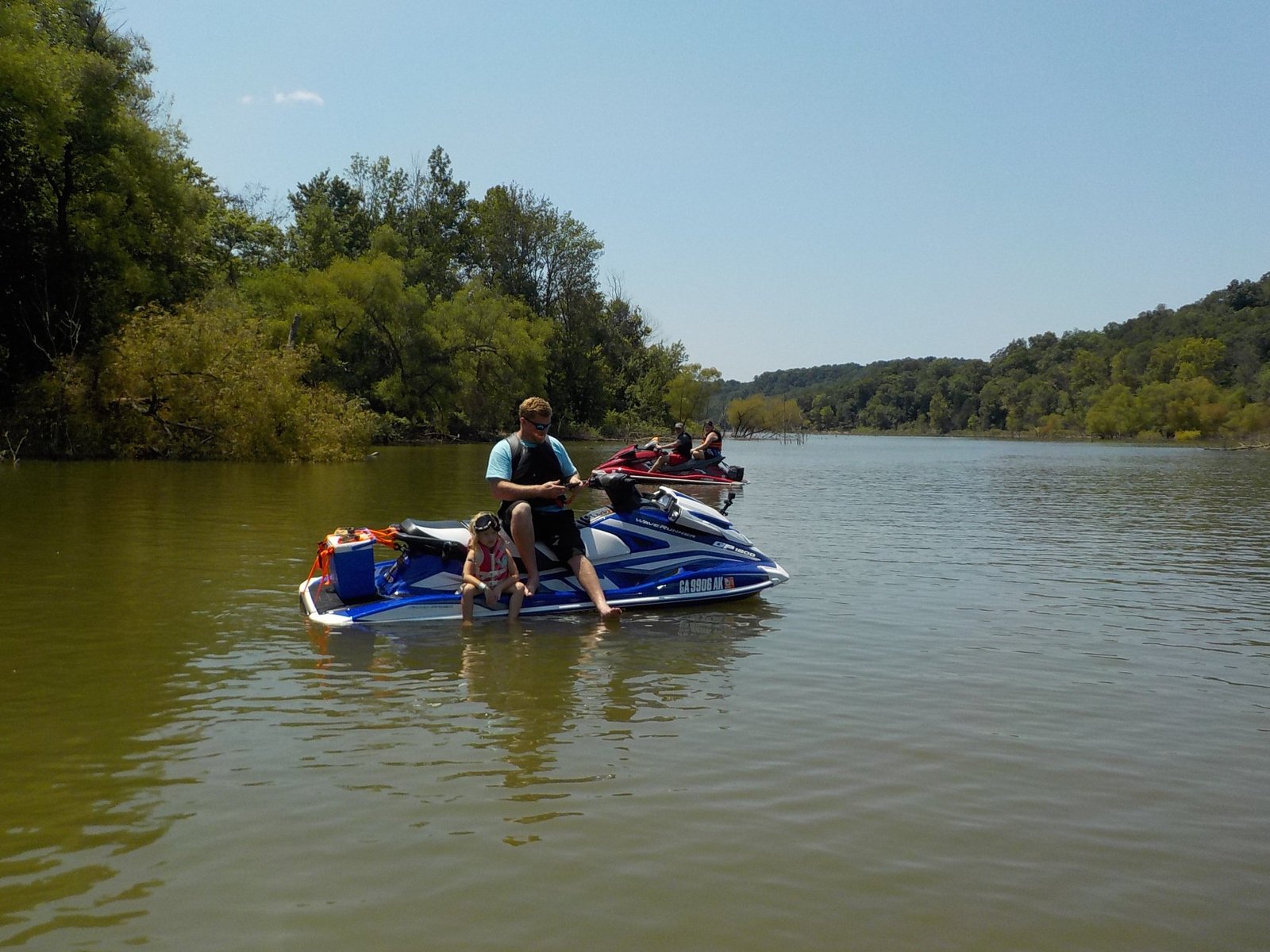
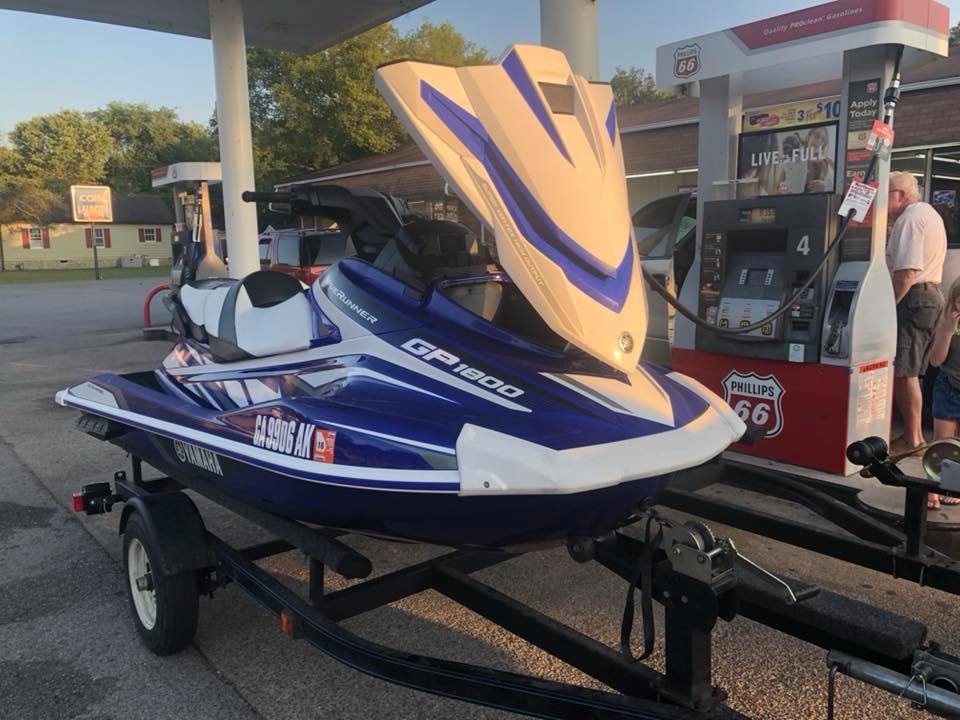
Joining the Middle Tennessee Personal Watercraft Club meant bringing a Yamaha, so I had offloaded the ’18 Sea-Doo RXT-X 300 from the trailer, leaving the blue-and-white GP1800 alone. This wasn’t my first time with the MTPWC and nearly every ride before I had been the lone Sea-Doo rider. Previous trash-talking sessions had bordered on intolerable, so I decided to play it safe by leaving the machine entirely out of the equation. The GP1800 of course, offered superior gas mileage as long as I stayed out of the higher RPMs and laid out of the boost. Plus, it’s 18.5-gallon fuel cell meant that I wouldn’t be needing to stop for fuel more than once in the day’s ride.
That isn’t to say that I didn’t miss certain aspects of the ‘Doo, particularly as I fiddled with my tie-downs securing my blue Coleman cooler to the rear platform throughout the day. I find that I typically always bring a cooler chocked full of drinks and snacks on rides like these, primarily because I bring one of my kids with me. Long distance and group rides have become family outings around our house, and the two oldest alternate between who gets to go with dad on a “jet ski trip.” Best of all, the groups are always welcoming to the kids and try to keep language and smoking to a minimum (or at a distance), which is both very considerate and greatly appreciated. (Again, the people who occupy this expanding hobby are simply another testament to why I enjoy my job so much.)
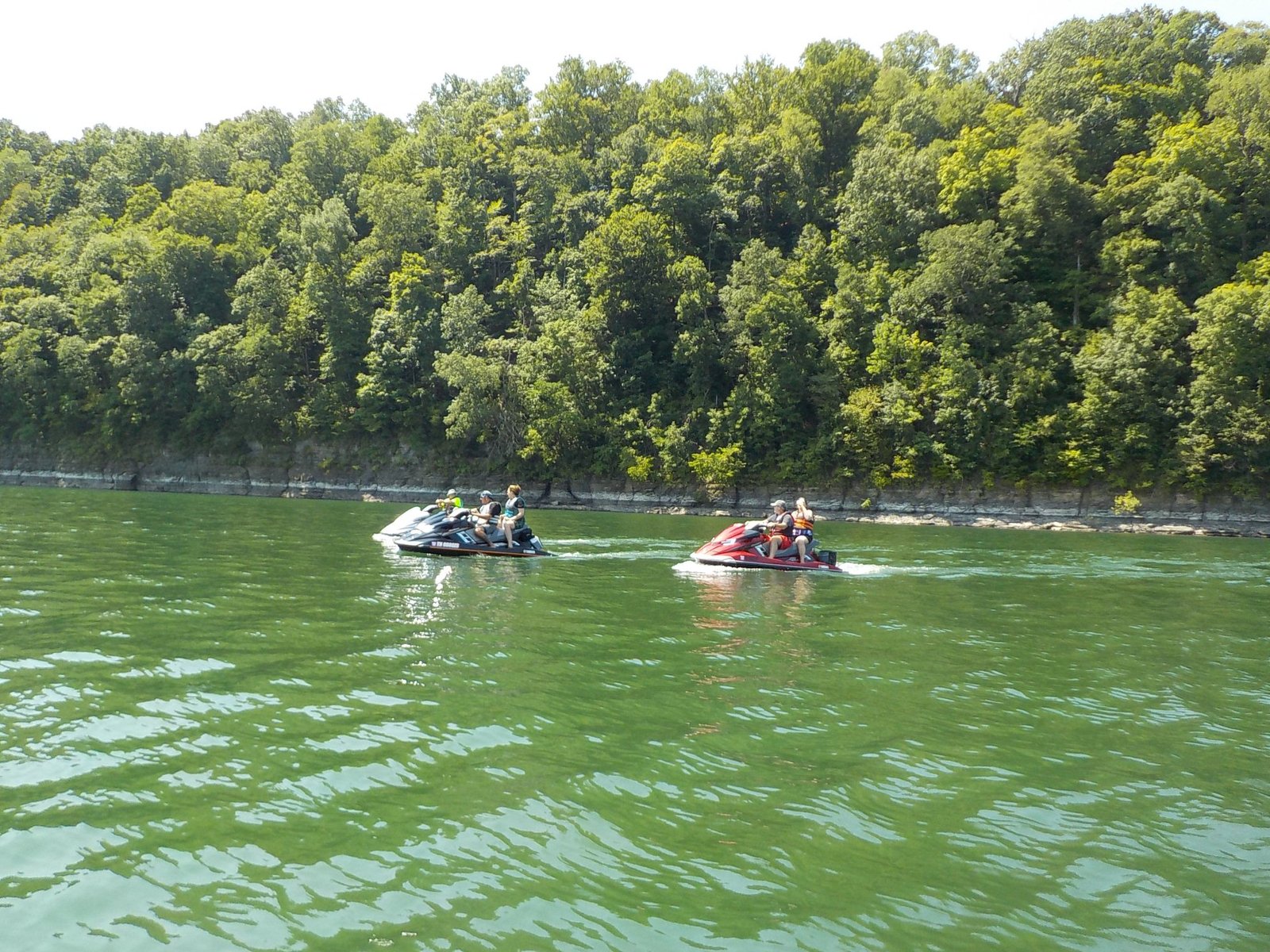
Although the mass of the riding group had arrived, launched and loaded up by 10am, we were still in a holding pattern. A last few stragglers were making their way through the crowded launch and finding a place to park. Nearing 11am, we had circled the wagons and slowly began our ride. Inching through the No Wake Zone west, we ventured northward into a winding finger before it tapered off into Jobbes Fork. Turning back around, we retraced our course and continued northeast into the upper bend of the Cumberland River before turning due north into Caney Creek. To the right, we idled past Wolf Creek Marina into Hughes Branch.
The cliffsides were an unusual pairing of typical Southeaster lush greenery and browning, almost high desert brush. Flat, rocky channels reflected our wakes, churning narrow channels into butch, bathtub wash. Then, the sheer sides would suddenly give to pebbly shoreline, and the river would calm to a glassy swathe. Undulating hills jumped high, carpeted with dense treelife and then give away just as abruptly. It was dizzying. We cruised up Ace Hollow to an isolated cove for a calm dip in the surprisingly warm water. As I waded around the Yamaha, small curious fish began nibbling at my exposed skin. What started as a single curious nip swelled into a near onslaught. I was being pecked by dozen of translucent attackers.
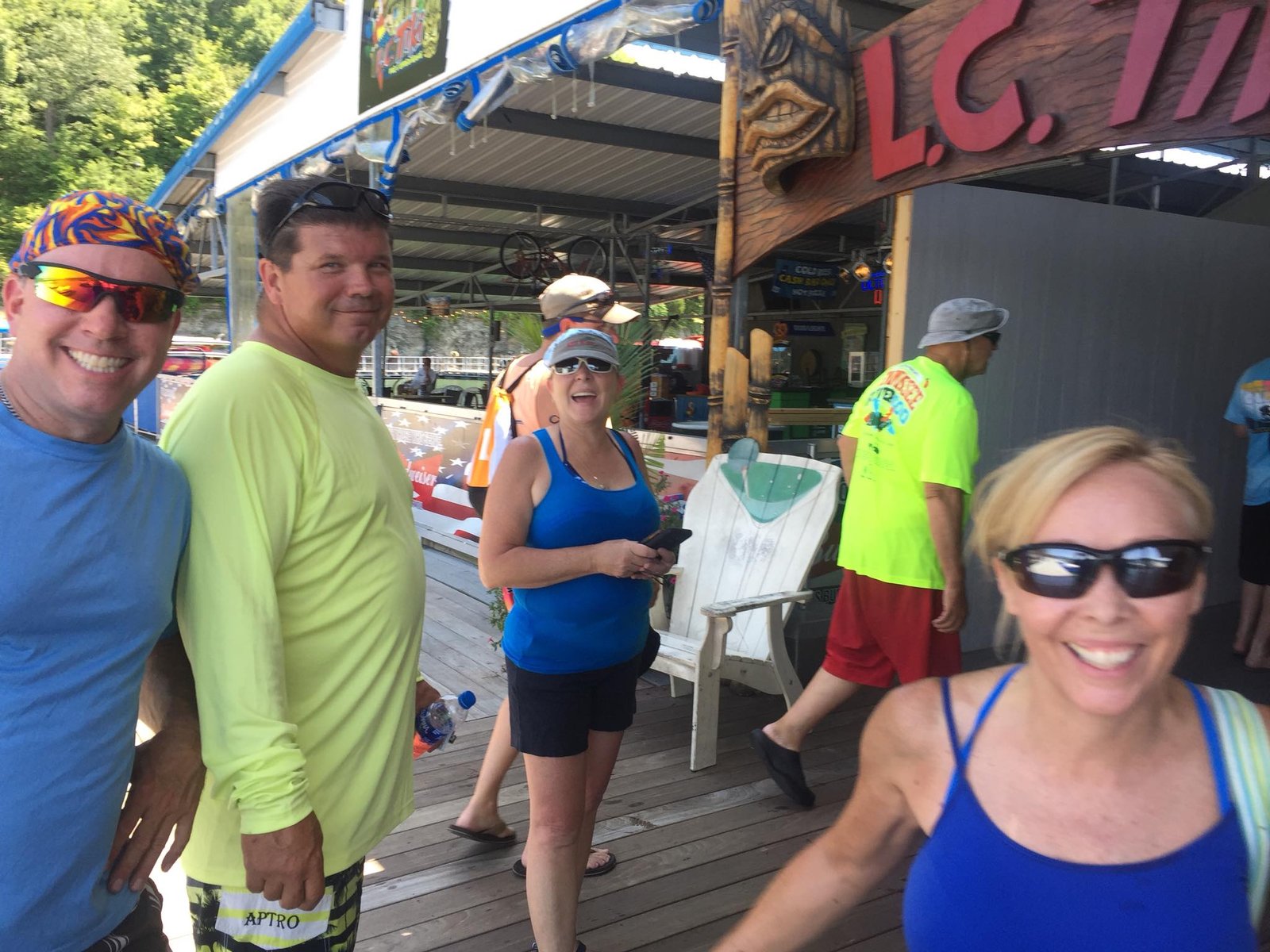
We returned back South towards the State Dock Marina and the LC Tiki Restaurant. Due to the influx of guests, the eatery was put on a special event menu limiting our choices. Nevertheless, the meal was fine, duly welcomed and all were satisfied – including the nearby turtles swarming the pylons hoping for the rare scrap of food to find its way into the water. With our bellies filled, we idled around the dock to refill the tanks in the watercraft. We joked that the fuel dock must be on a “special event menu” as the cost per gallon was…well, surprising. Nonetheless, we reboarded and moved as westward as possible to the Cumberland River dam at Long Bottom. The ride was an exhausting jaunt of battering cross chop of 3-to-4 feet at times. I feared my passenger (or even myself) might be revisiting our lunch at anytime.
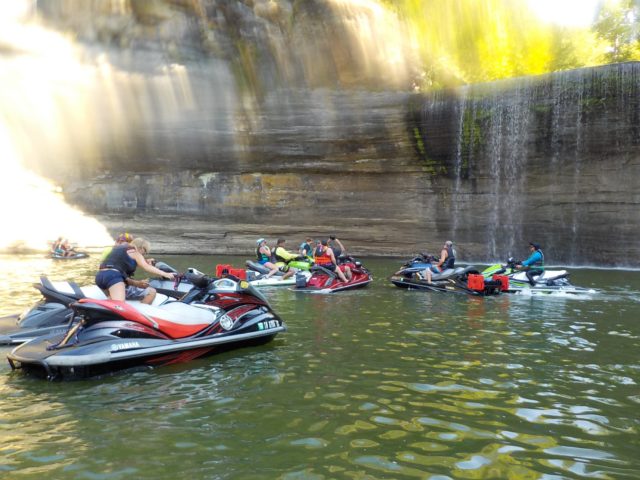
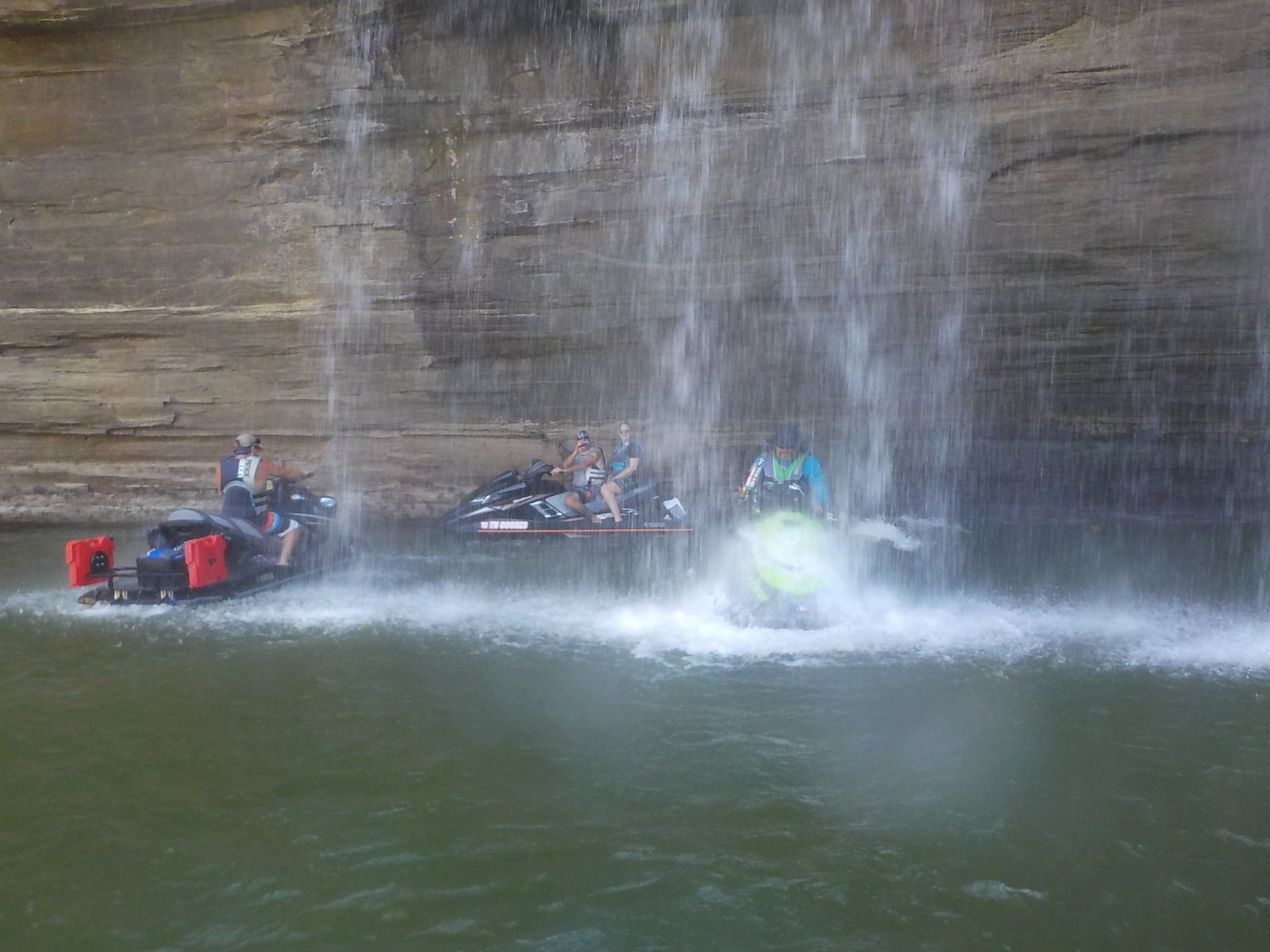
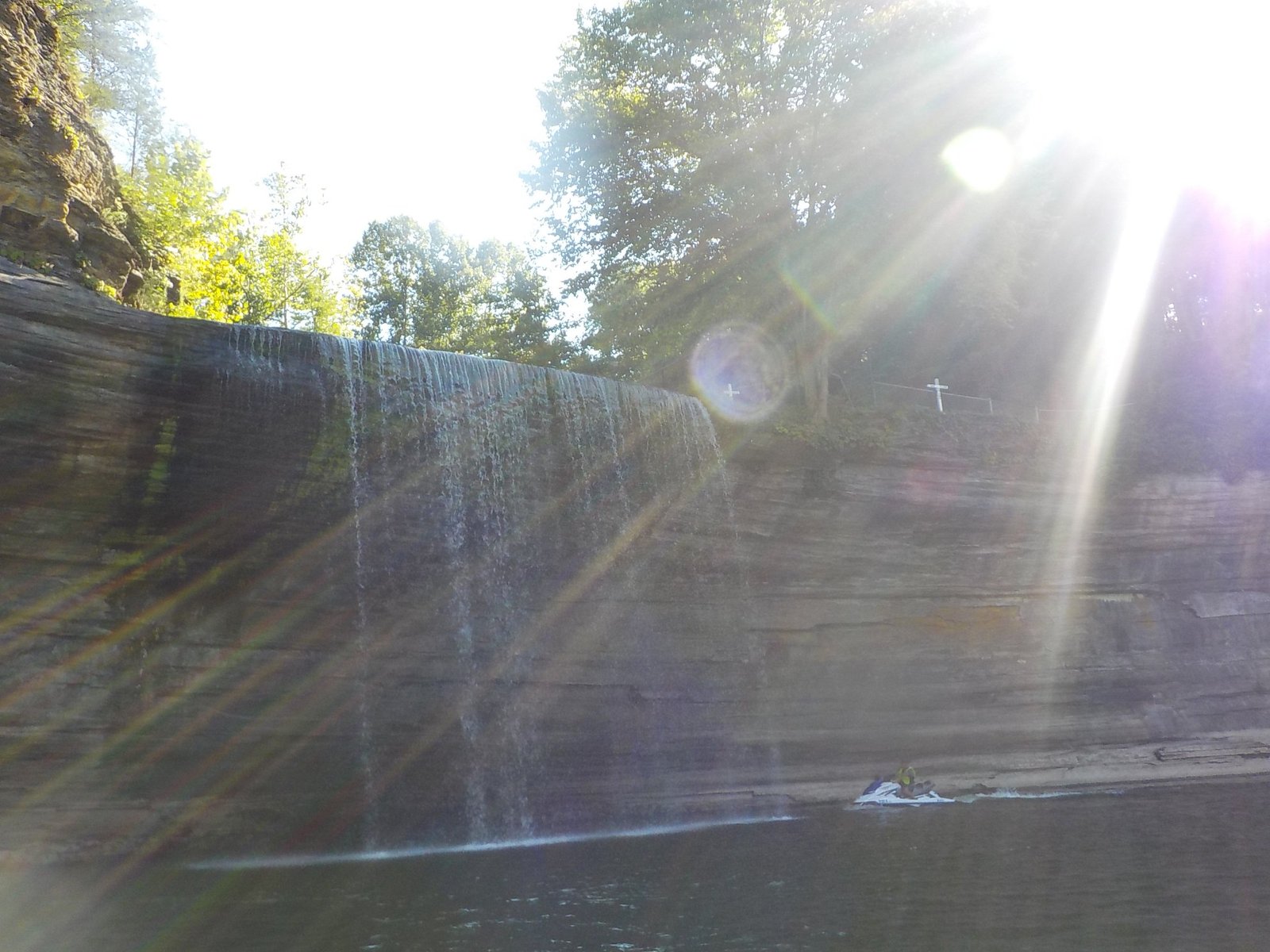
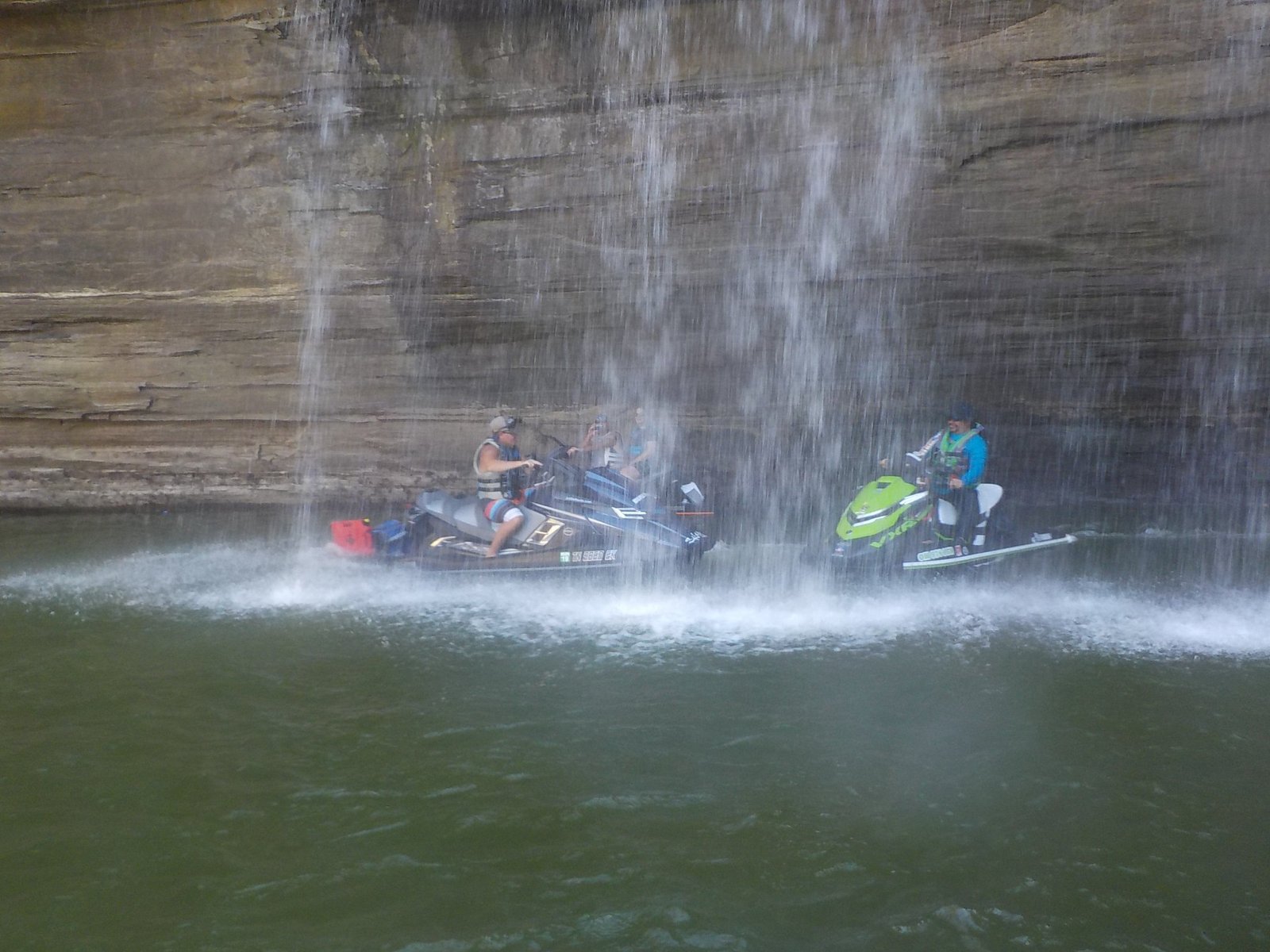
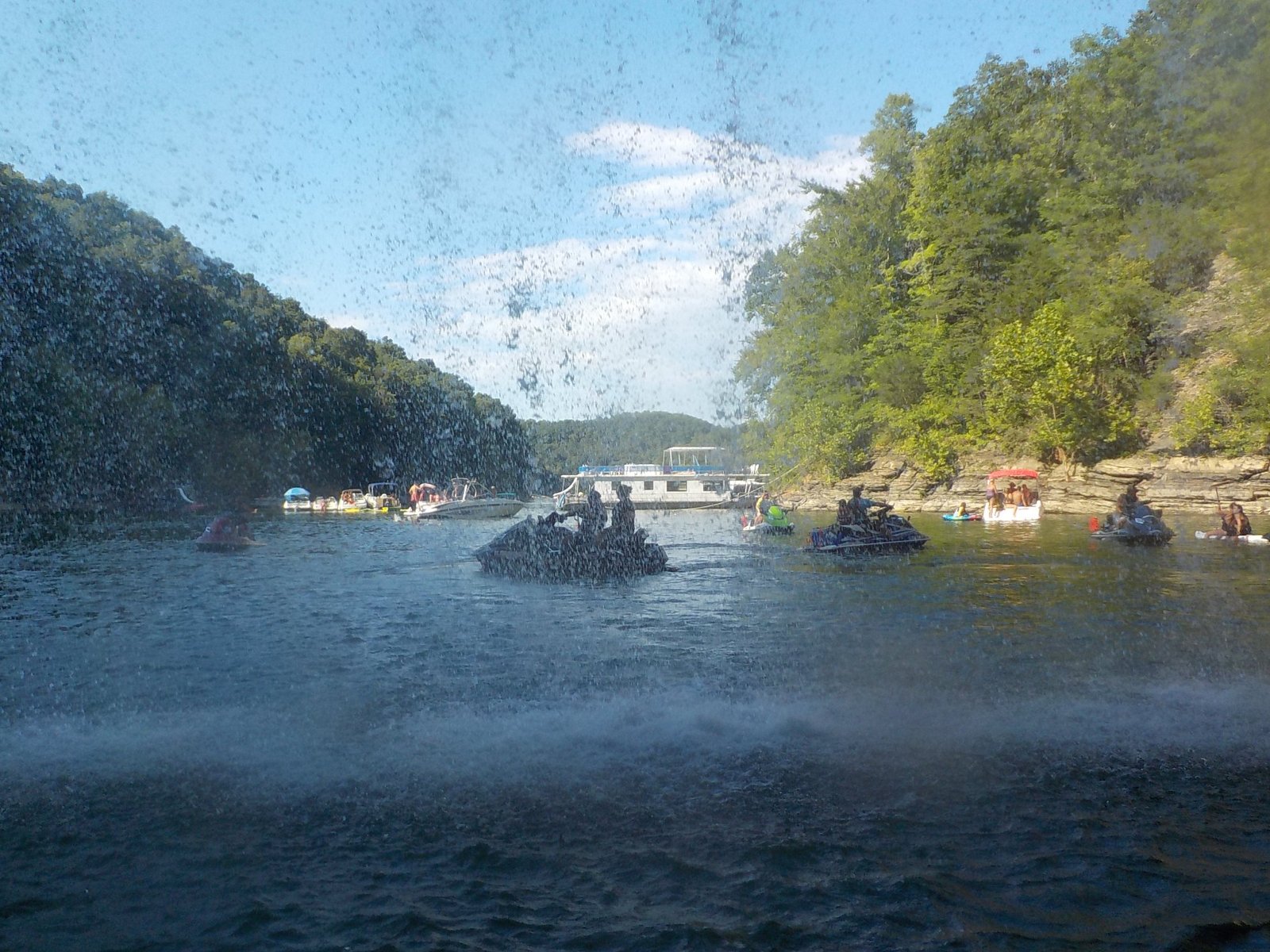
From the dam, we sped almost directly south to 76 Falls, the major attraction for today’s ride. The cove is cooled both by shade and chilled stream feeding the wide waterfall. We idled through the crowd of “floaters” and took turns idling through the brisk falls. Given the scenery, we each pulled out our various cameras, GoPros and smartphones and filmed each other being doused by the heavy showers. Content with our ride, and seeing the clock reading past 5 o’clock, I presumed we would be heading back to Jamestown Marina. Not so, cried MTPWC’s President Mike Majka. The final leg of our trip was easily my favorite and certainly worth the wait.
Club member Tom Hill called it “Raccoon Creek,” but the name appears nowhere on any map that I could dig up. Rather, the path was an ever-narrowing serpentine of near-perfectly undisturbed glass nestled deep in a valley of high-reaching hillsides. As the sun lowered in the west, the path was half shadow and half golden orange. Beginning with wide sweeping turns hastened into tight technical maneuvers, twisting the supercharged GP1800 around patches of reeds jutting vertical out of the water and around bulbous rocks pocking the shoreline. Inexplicably, I had managed to inch my way up to the front of the line, although having zero experience in the area (or knowing particularly where I was going).
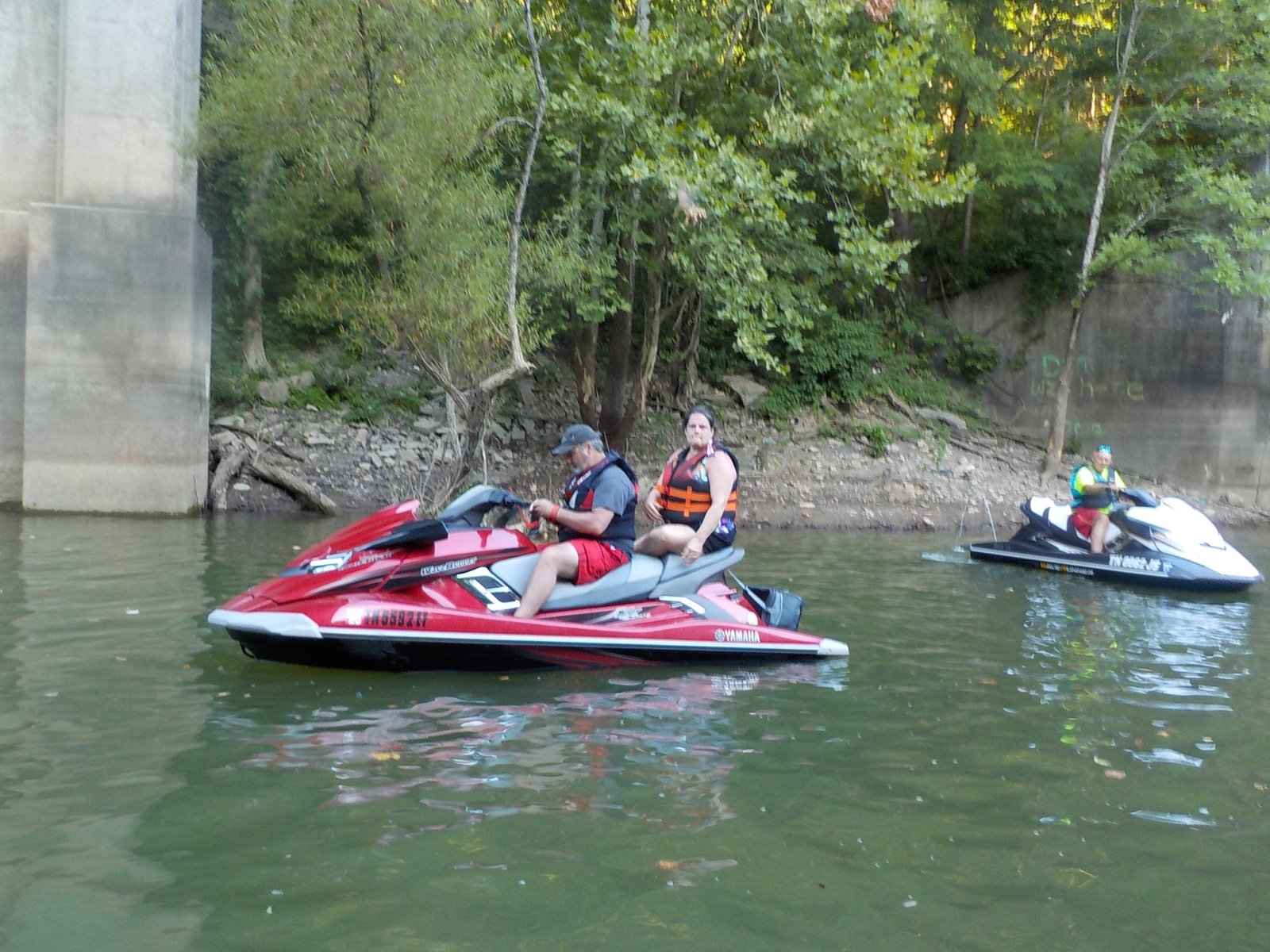
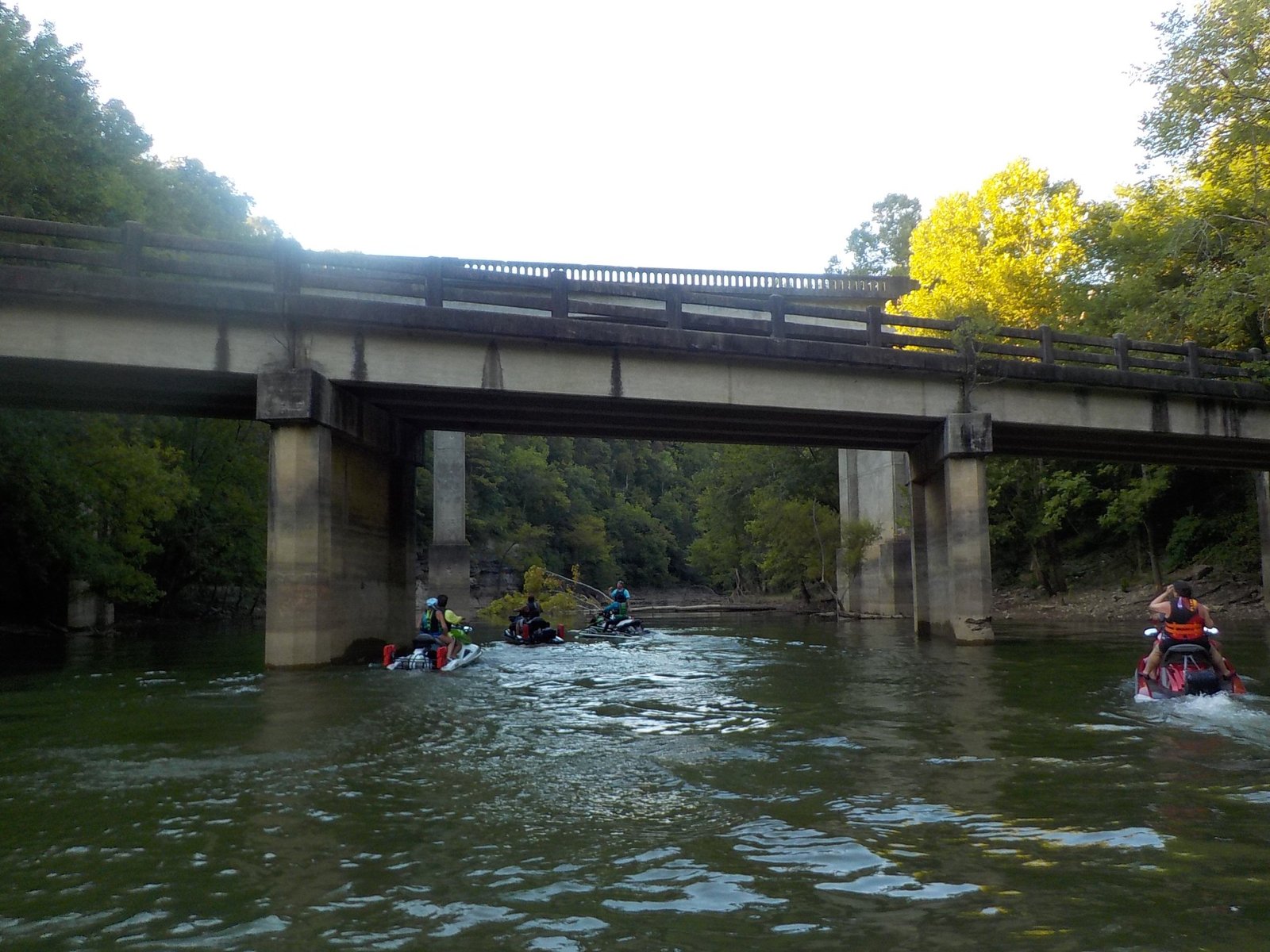
The path narrowed into a shallow creek ending my ride in the shade of Old Kentucky 90 Road and CR-1285 passing high overhead. A felled tree blocked two-thirds of the path, and with the water level already dangerously low, I opted to come to a stop here, the rest of the group pulling up quickly behind. There, we regrouped, enjoyed a short break, cracked open a bottle of water and waited for the water to settle down. MTPWC group member Rollie Pierson had his teenage daughter with him on his FX Cruiser HO and motioned to me, pointing to the horizon. “We’ve got about 15-20 minutes before the sun sets. I don’t know about you, but I don’t want to try to navigate my way out of here in the dark.”
Pointing to his widescreen Lawrence GPS mounted to his dashboard, I motioned for Rollie to lead the way out. By this time, we were riding directly into the sunset. Winding through the corners, the creek widened into the river and eventually gave way to the lake, which was a hull-busting broiling mess. Learning a lesson or two from my short stint racing in the Pacific, I pulled up close into the Yamaha’s whitewash, the fantail aerated water cushioning much of the ride back across. Only the rolling wakes of larger fishing trawlers and private yachts broke our pace. We weren’t half way across when the sun set behind the westernmost edge of the lake, and temperatures fell palpably.
As was in the morning, the evening’s launch ramp traffic was gridlocked – but only worse as visibility was reduced to dim dock lights and red tail lamps. Trucks were hurriedly backed into the water too deep, front-wheel-drive SUVs frantically spun their tires up the wet incline, novices struggled to back into the water in a straight decent. It was bedlam. Frustrated, exhausted and woefully sunburned, I quickly and expertly laced my Ram between a lifted F-250 Powerstroke “bro-dozer” and a cream Cadillac Escalade, careful to leave enough of my carpeted bunks above the water. Breaking all marina decorum, I wove through the drunken boat traffic and throttled the nimble GP1800 through the melee and up the bunks.
Winched down and locked, I nearly leapt into the truck before I noticed a fellow PWC’er struggling to keep his FX on his slick bunks. Hoping across my trailer, I loosened his winch, attached the hook to the boweye and motioned for him to goose the throttle and keep it revving as I winched the ski up the rest of the way. Within seconds I was sitting behind my wheel and throttling up the slope between the rows of trucks and trailers. And onlooker stood nearby gawking, having watched the entire scene play out. As I passed, he joked, “Not bad for a jet skier.” I leaned out of my window, smirking, “It’s bad for anyone who knows what they’re doing,” motioning towards the near-submerged bro-dozer spinning its comically over-sized rims, shooting flumes of water in the air.
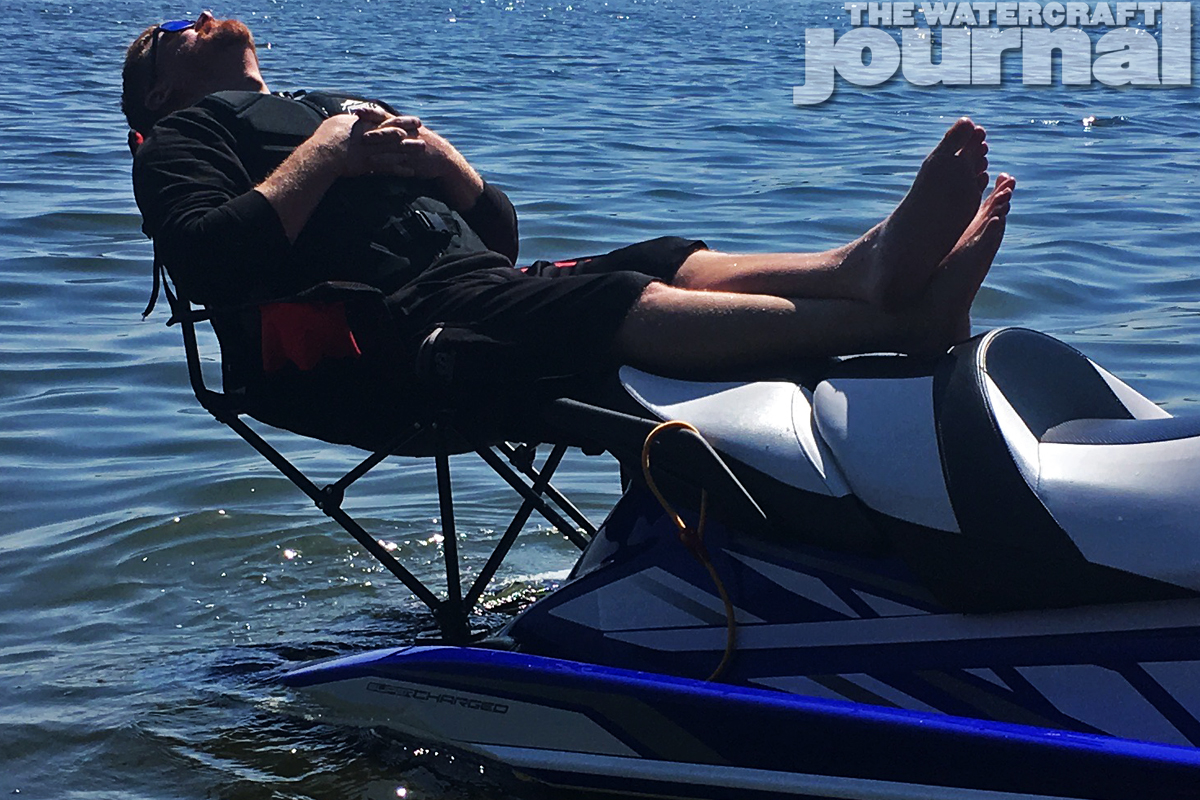
We at The Watercraft Journal have been singing the praises of what we think is the best (non-performance) aftermarket innovation for personal watercraft (PWC) in a long, long time – the Bopenski KickBack PWC chair – for quite some time now. Heck, even before we ever first tried it out, we saw something to the rugged design, sturdy execution and simplicity in its use. The folding chair was specifically and purposefully designed for PWC use. It’s meant to hold up to being outside, exposed to the elements, soaking wet and sprayed with salt water, and still operate smoothly, hold together and remain in use for years to come.
Now that we’ve actually gotten one, it’s hard not to take it with us on every ride we go on. The KickBack PWC chair is everything its creator, Joe Borden claims it to be. Moreover, per Joe’s insistence on building something “that really lasts” so much of the KickBack chair is over-build, or best of all, replaceable. That’s right. Bopenski Watersports wants you to keep this chair for as long as you own a watercraft, and has all of the replacement parts necessary to quickly and easily fix the chair in case something were to happen. (And it’ll take something big to break this chair. We’ve been trying to. It’s pretty dang stout.)
It’s taken a while of final prototypes and fine-tuning, but the commercial production run of the Bopenski KickBack PWC chair is in full swing, and the company has just nearly fulfilled all of its pre-orders, meaning that there KickBack chairs ready for ordering right now! As we’ve mentioned before, Bopenski has also cut 1/3 off of the asking price, dropping the cost down to $199.99 with free shipping to boot! That’s a heck of an offer and are excited to share it with you. Recently, Bopenski also released a quick video with real people (and us) trying out the KickBack chair. Watch it below:
These “solutions” (so to speak) immediately label PWC usage (as well as small marine craft) as a nuisance and includes five “Alternatives” to choose from that will govern PWC use within the GUIS. Of these, Alternative A is an all-out ban. This will be a nearly 20 year step backwards.
Per PWCTrailerfinder.com‘s Billy Crews, “The NPS is currently favoring Alternative D; unfortunately, this alternative closes the shores to PWC landings on Horn and Petite Bois Islands. I and a number of my PWC brothers & sisters will be lobbying for Alternative B, which mostly aligns PWC use with other marine craft.”
Crew continues, “Within the DEIS, I discovered that whatever the alternative the NPS decides is based, in part, on the following: As of 2014, there were (approximately) 7,500 PWC registered in 5 counties that border the GUIS. This does not include any skis in Alabama, or portions of MS or FL that do not border the GUIS or skis that travel from out of state to visit. Of just those 7,500 skis, on several survey missions, only 50 (approx.) skis made it to Horn or Petite Bois Islands.”
Albeit decidedly illogical that the NPS would dictate policy based on a study that includes less than 1% of possible visits even if only for a handful of observed days, the DEIS will be made available for public comment until September 17, 2018. The park will host three public meetings the week of August 20.
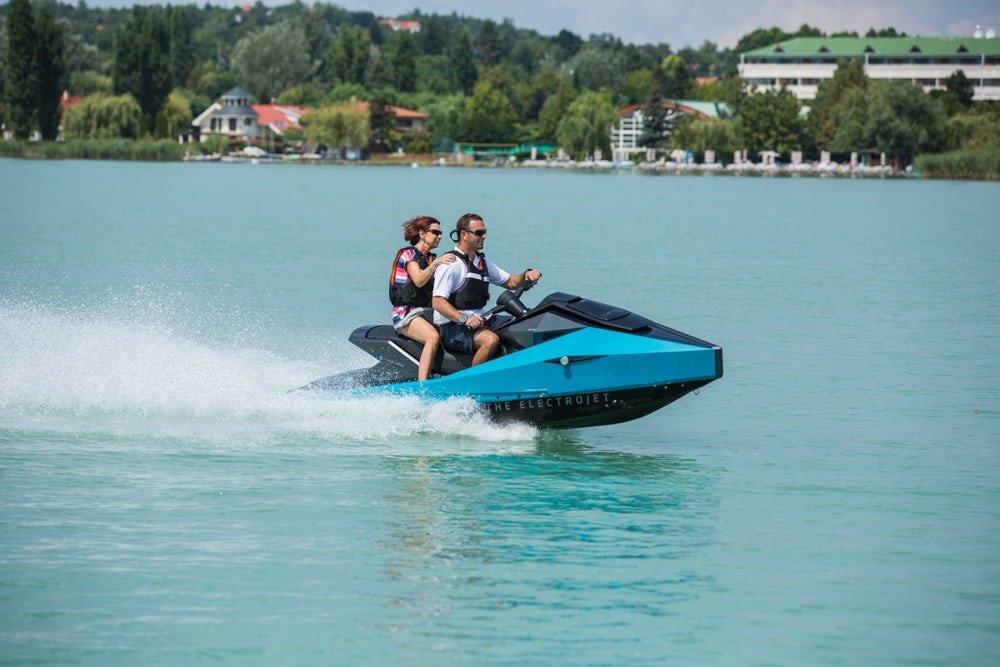
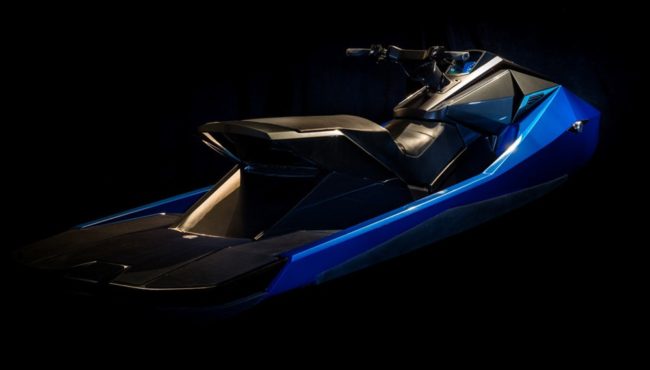
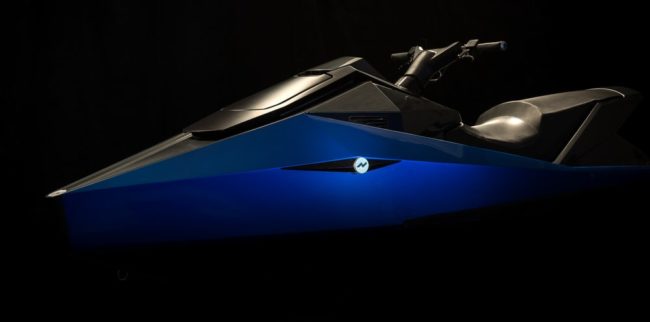
This isn’t the first time we at The Watercraft Journal have featured the Narke Electrojet. The Hungarian company has passed around the same pictures and video of it’s claimed “world’s first electric personal watercraft (PWC)” for more than half a year now and we still haven’t seen a working prototype reach the United States yet (being the world’s biggest marketplace).
Nevertheless, the Electrojet has been designed for general consumer production, and boast some respectable performance numbers given its size, weight and limited production run, namely 60-horsepower (45-kW) capable of doing 35 mph (55 km/h) in near silence. Now if you think that’s a little dogged, consider that the carbon-bodied electric runabout is filled with an in-house-designed 45-kW electric motor and a lithium-ion battery pack, which the company claims is good for up to 90 minutes of “normal” riding.
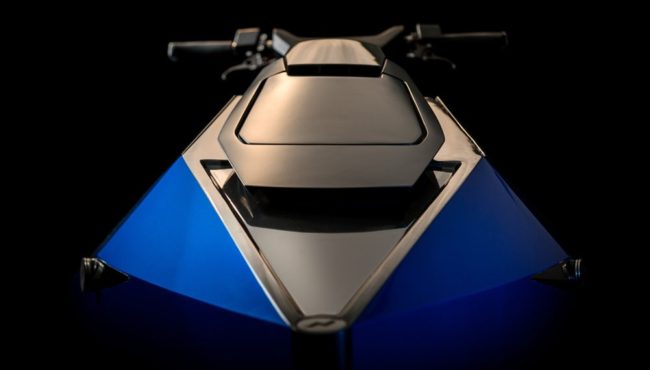
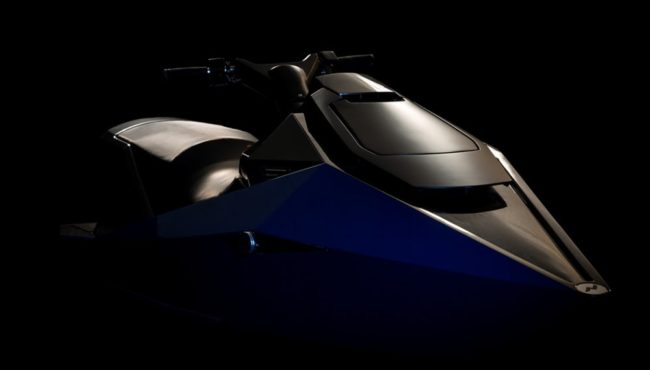
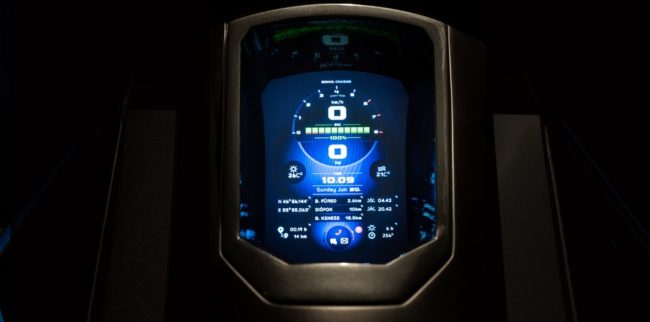
According to a report by New Atlas, “charging takes about two hours from 0-80 percent, and there’s talk of a removable battery you can swap out to keep the thing humming. The starkly angular shell is a carbon-reinforced composite design, targeting high strength and low weight, but no weight figures are available yet.” While an official list of features is absent, observation reveals a nice digital dash display with “what looks like some Bluetooth smartphone integration built in for navigation, weather and phone features.”
Thus far, Narke has restricted general access to the Electrojet to a handful of demo events at Lake Balaton, about half an hour southwest of Budapest. Equally, the company has not released any firm release dates or prices. New Atlas critiques, “The key problem we’re seeing is as simple as this: it might not be fast enough, or go far enough, for the average PWC buyer.
“Narke claims it’s ‘for special people who get attention not because they are louder than others … who know when to let off the gas and when to throttle back gently.’ Stereotypically, these descriptions would apply to approximately zero jet ski buyers.”
Dang, it’s been a while since we’ve done an installment of “Real Review.” It’s not that we haven’t had much to review (sheesh, the list is actually pretty substantial) it’s just that we’ve been too stinkin’ busy lately – y’know with producing new PWC content each and every day, all the videos and monthly episodes of “Long Haul” and such. So yeah, it’s been a frantic summer. And between that and trying to squeeze in some riding whenever we can, we’ve noticed that we’ve been needing to keep this year’s batch of loaner watercraft safe from the elements.
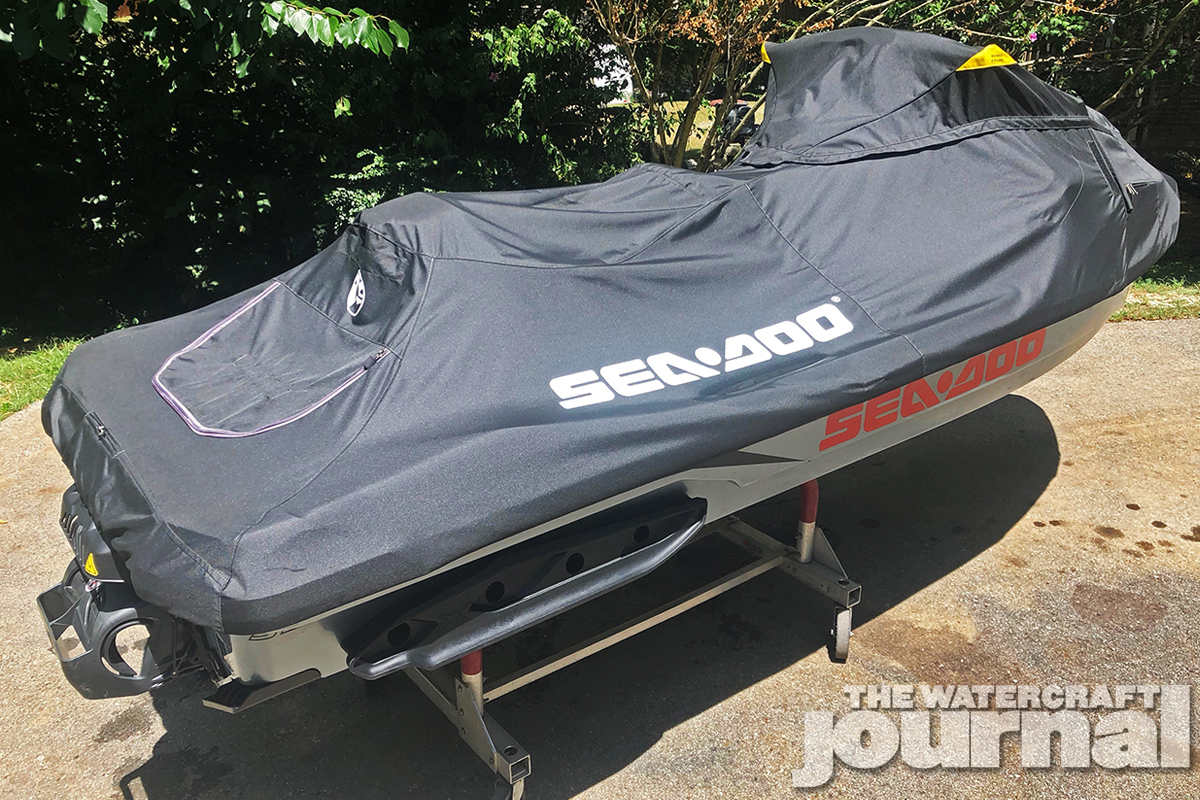
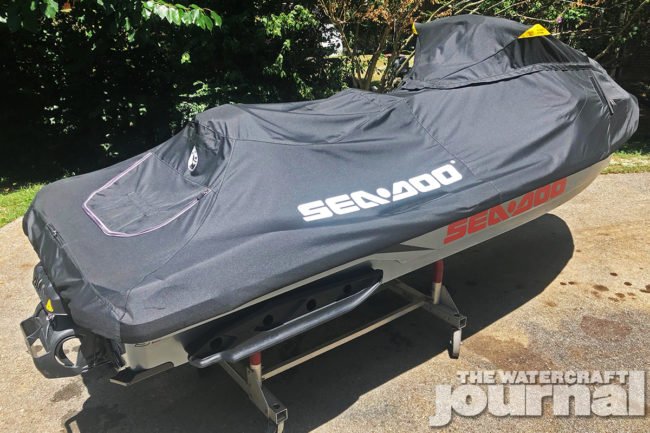
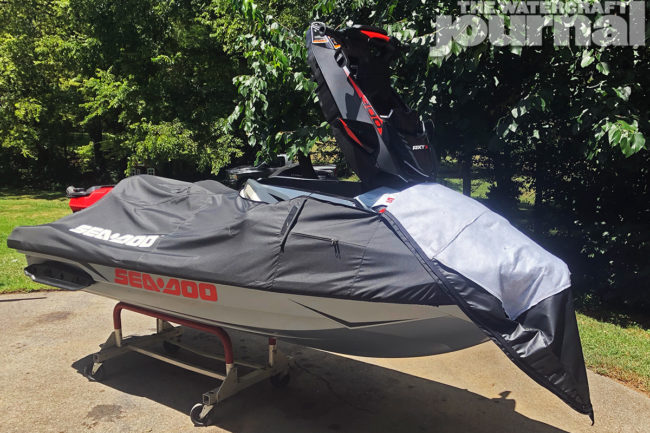
Thankfully, our 2018 Sea-Doo RXT-X 300 came on loan with Sea-Doo’s RXT, RXT-X, GTX & WAKE Pro (2018) Cover. Priced at $249.99, the weather-resistant cover has proven itself invaluable. Made from heavy-duty UV-resistant solution-dyed polyester canvas, the cover is smartly lined with a soft inner liner to prevent scratches and scuffing. This was particularly handy while trailering our RXT-X to the different locations we’ve traveled to thus far. And when we’re not on the road, the cover provides great protection stored outside.
Much like the new ST3 platform, the cover that is tailored to fit it is equally as innovative. The cover features quite a few smartly integrated items that makes it a “must have” for anyone who has purchased one of Sea-Doo’s latest full-sized runabouts. A major problem with many aftermarket PWC covers is the lack of ventilation, particularly while trailering. Without a way for the fast-moving air passing over the covered ski and the air trapped inside to properly vent, the imbalance will cause the cover to flap violently, scuffing and damaging your ski’s surface. Thankfully, Sea-Doo’s cover features two patented air-release mesh ports to alleviate this while trailering.
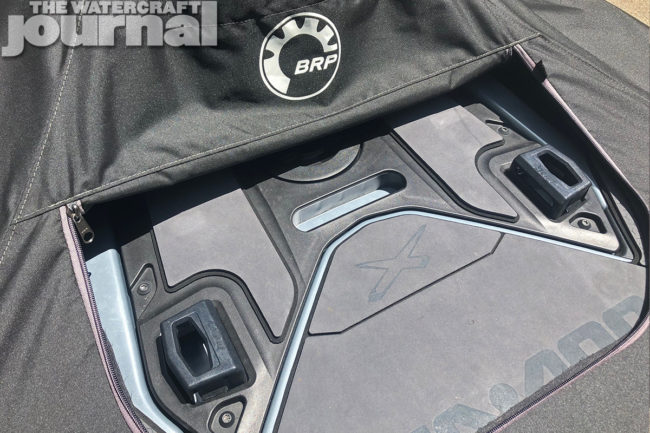
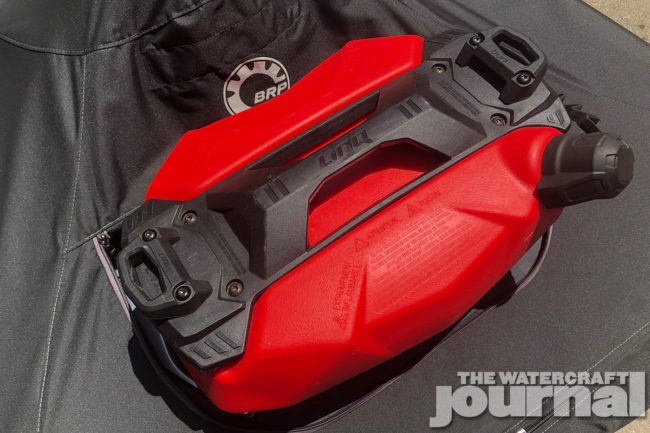
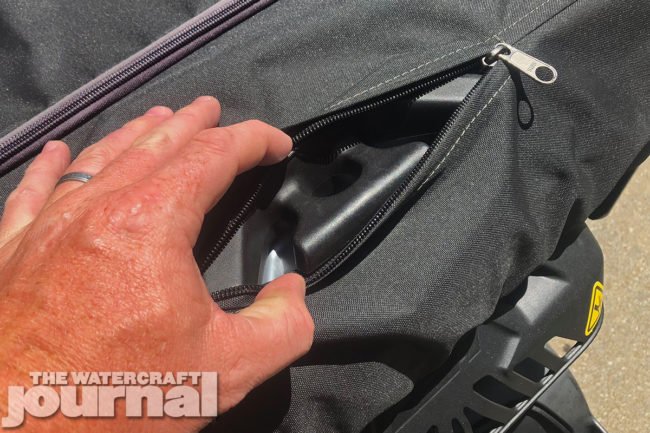
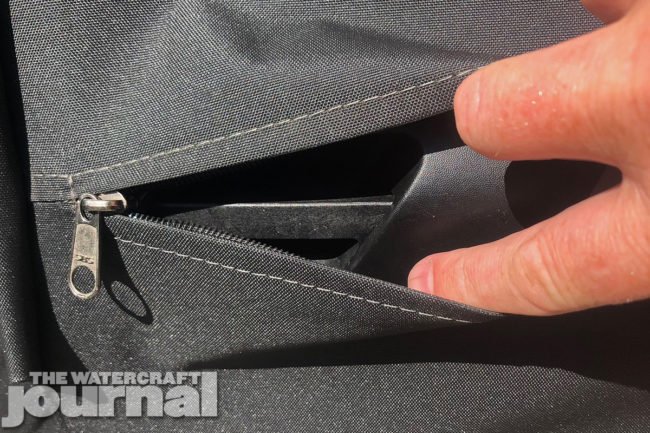
Additionally, the cover is held on by soft plastic side hooks that snap on to the inside of the bond rail, securing the cover even when trailering at highway speeds. So straps, cinches or ties required. But that’s not all! Sea-Doo incorporated several zippered openings to access the built-in tie-downs; the major eyelit in the back, and the two pseudo-cleats found up front, on either side below the mirrors. Moreover, a large zippered flap allows you to access and even attach any of the LinQ accessories with the cover on! We particularly liked that the zipper dongle has a Velco strap, as well as the flap being able to Velco inside of the cover so not to whip open while driving.
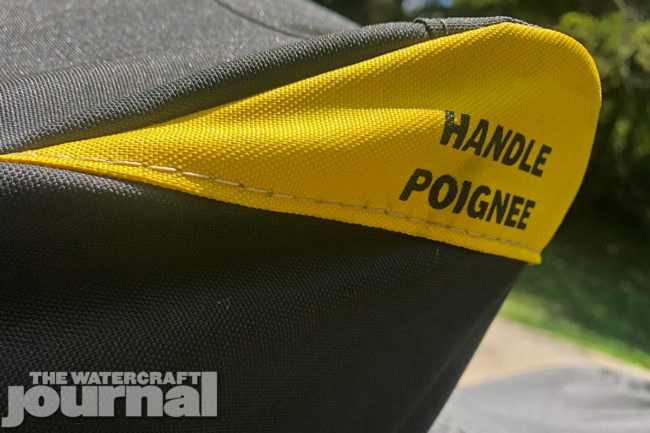
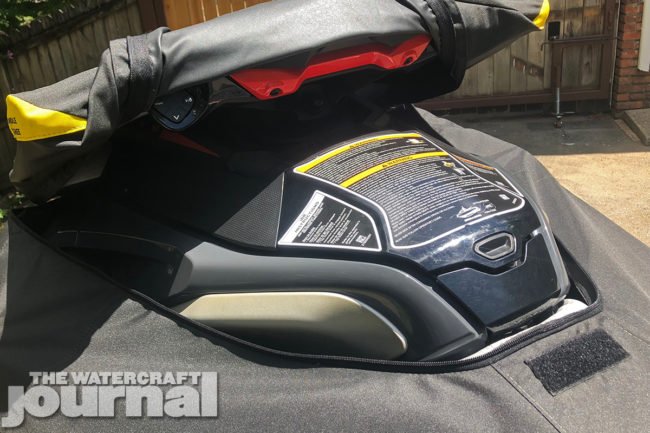
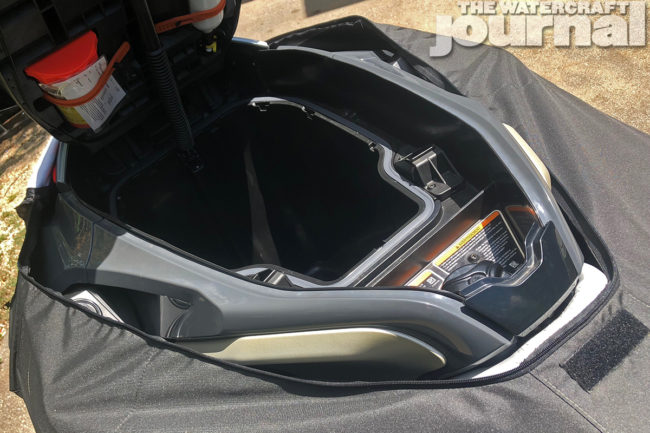
Finally, the most unique feature to this cover is also its most practical: a full zipper circumventing the entire top deck allowing for easy access to the glove box, central storage bin and for refueling. The zipper even has a Velcro’ed flap to cover the zippers when closed. The top of the cover has two yellow patches indicating where the handle bars fit. Simply fit the cover over the handle bars, tug snug, and begin working the cover around (from front to rear) the bond line. It’s surprisingly easy once you do it a couple of times. Again, start at the top and work your way down.
While the cover comes standard on all GTX Limited models, most who purchase a ST3-based Sea-Doo will have to order one separately. Frankly, we think its a must-have, even if you plan to store your Sea-Doo inside the garage, the living room or next to your bed at night. Personally, we’d like some numbered arrows printed on the inside of the cover showing us the best way to fold it up tightly (it’s like trying to fold a fitted bed sheet). Either way, it’s a smart purchase and a worthy entry to Sea-Doo ever-expanding accessory catalog.