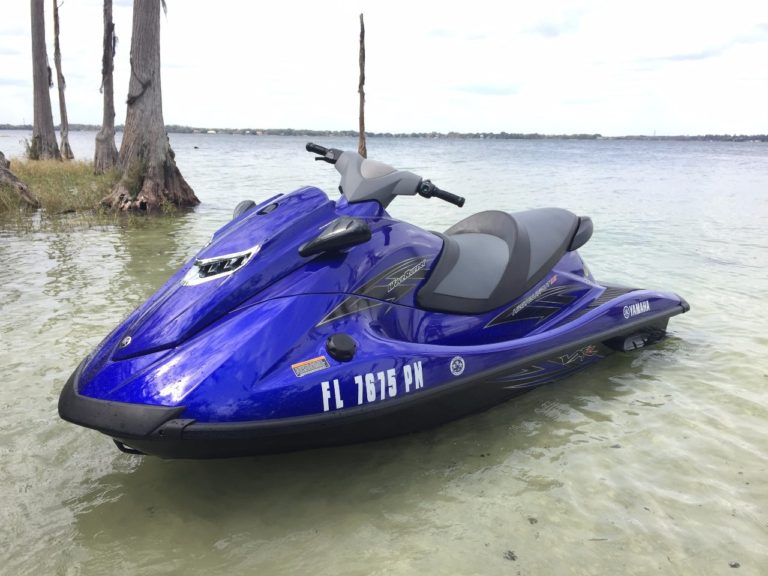
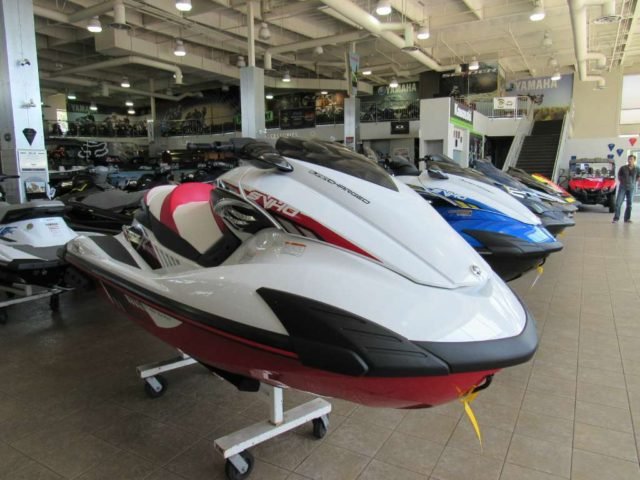
Where do you plan to go when you go out riding? Many of you ride your local rivers, lakes and larger bodies of water. While this does not require as much planning as some trips, it is important to know the body of water you will be riding in and the surrounding area. Depending on your location, there may be special destinations to go ride to and spend the day. Many states have islands and beaches that are great meet up spots to kick back and relax with your friends and family. Have you ever thought about going on a long haul? While riding a far distance may seem fun at first it can sure test the riders ability.
Odds are that you have heard about the famous trip riders make each year. Florida to Bimini via personal watercraft. This ride is not for the weak and inexperienced. It requires months in advance of planning, permission to enter Bimini, the right equipment to name just a few. While some have made the trip in a few hours others have been stuck out there for a whole day due to the water acting up. It is vital that you have the correct safety equipment in case you do become stuck out in sea.
Ask any rider who has made this trip and they will hands down tell you to go. The scenery, the beautiful crystal clear water, the sunken ships, and the islands. Everything is beautiful and with the sun shining makes it one of the most fun trips one can make. Sit back and watch this short video of that Michael King has put together of their trip this year. They had a total of 16 personal watercraft and 18 people. As the expression goes, “Bigger is better.” Make big plans for summer 2018 and book your trip. So round of your fellow riding buddies and start planning your trip. The more people you will have the more fun it will be!
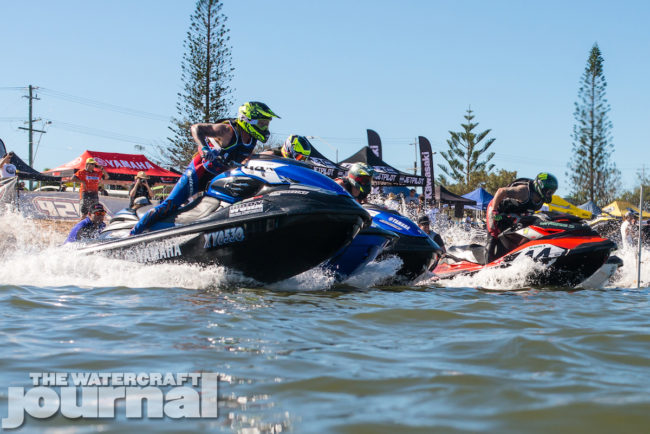
Yamaha Australia is very proud to announce that the 2017 AJSP Australian Watercross Championships were absolutely dominated by Yamaha racers! The championships were held at Redcliffe Beach in Queensland on the weekend of April 29-30th, 2017. Yamaha further shares that the racers did a full clean sweep of all six classes. Out of those six classes, three of them were dominated by a total of seven brand new GP1800 WaveRunners. These stunning GP1800s proved to be the most successful model used in the championship events.
In a statement from Yamaha Motor Australia’s Mark Harman, he says, “It’s pleasing to see the majority of Australia’s elite racers have chosen to fight for the 2017 Australian Championship on either the GP1800, FX SVHO or SuperJet. It’s the early days for the new GP1800 with it being a brand-new product, but we have had an exceptional result from the new GP1800, locking out three of the runabout classes.”
Early on in the events, it was made very clear that the new 2017 GP1800 was the choice weapon amongst competitors. Yamaha’s reigning Pro-Stock Champion Mitch Wayt once again brought home the gold winning both the Pro-Stock Championship Title and the Pro-Stock Endurance Title on his two GP1800s. Second place in both the Pro-Stock Champion race and the Pro-Stock Enduro went to Mitch Casey on his GP1800. Shane Stuart won the Pro-Stock-spec Championship Title on his GP1800. Second place went to Mitch Wayt on his GP1800 and third went to Sebastian Birch on his FZR. This was truly a strong class for Yamaha WaveRunners as the top five riders were competing on either a GP1800 or FZ.
Five-time Endurance Champion Christian D’Agostin once again showed why he’s the best as he won the Pro-Open Endurance Title on his Gold Coast WaveRunners FX SVHO. Yamahas dominated this entire group of events with Brett Douglas winning the first race on his FX SVHO before being beaten in race #2 by D’Agostin. SuperJet riders also brought home tons of hardware that weekend. Jordon O’Keeffe won the Pro/Am Limited Lites Title on his SuperJet. Another victory went to Jett Cavanagh with his winning of the Junior Lites Title on his Worx Racing tuned SuperJet.
Man, we’ve been publishing quite a bit of cool stuff about America’s Motor Sports these past few days here on The Watercraft Journal. And well, the good news just keeps on coming. As a way to kick off riding season, showcase some of the super-cool 2017 models filling the showroom and just say “thank you” to their family of customers, AMS is welcoming everyone to a complimentary pancake breakfast this upcoming Saturday, May 27th.
As published on the official AMS Facebook page, “Join us Saturday morning as we cook up a pancake breakfast for our customers! This is a free event open to all our customers. We invite you to have a bite and shop around.” Breakfast will start a little later in the morning than usual (9:30am) and will run all the way until 11:30am, so there is plenty of time to get dressed and shove the kids in the car to enjoy a free breakfast while perusing the latest powersport toys.
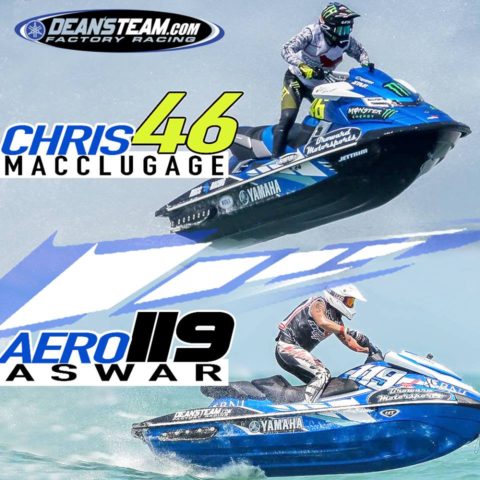
If there’s a “right way” to kick off the American AquaX race season, the crew at Dean’s Team Racing have figured it out. With a veritable “who’s who” of top billing racers all flying the DTR flag – Abdullah Al-Fadhel, Chris MacClugage, Aero Aswar, Dean Charrier, Mike Klippenstein, Aqsa Aswar and Marcus Jørgensen – the beaches of Daytona were flush with Dean Charrier-tuned Yamaha power.
As The Watercraft Journal reported late last month, Chris MacClugage performed a near-flawless hat trick, sweeping all 3 motos and fetching the Pro Open Runabout championship for the weekend. As Dean’s Team acknowledged, “Congrats to Chris MacClugage on sweeping the P1 AquaX USA: Daytona Beach opening round, and Aero Aswar finishing 3rd overall on his first weekend on the new Yamaha GP1800!”
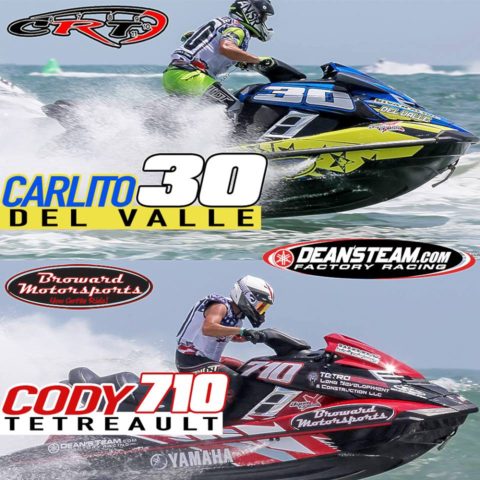
And it wasn’t just in the professional classes where Dean’s Team racers shined. Several other standings were dominated by Dean’s Team Yamaha racers, as they congratulated: “Carlito David del Valle of the CRT Racing Team, famous for his record breaking 110+ MPH watercrafts, proved he could do a lot more than go fast in just a straight line! He picked up his first Amateur 300 P1 AquaX overall win the first round in Daytona, with Broward Motorsports racer Cody Tetreault finishing 2nd overall his first race weekend on a Yamaha FX.”
And while Dean’s Team had much to celebrate, AquaX should be proud as well. The official Dean’s Team Facebook page noted, “The Amateur 300 class saw 28 entries, a step up from the usual ~20 entries we saw in the 2016 P1 AquaX season, and looks to be as competitive as ever this year!” And that’s reason to be excited!
Purchasing a brand new personal watercraft can be one of the most exciting moments in an enthusiast’s life. Yet, notice we said can be and not is always – and that is because of what many call “sticker shock.” Despite what the listed MSRP might say, or what you and your salesman agreed to after hours of haggling, many come to find quite a few expensive “add ons” tacked on to the bottom of their receipt. Contrary to a seemingly endless supply of Negative Nancys in chat rooms and forum threads, there are actually perfectly sensible reasons for many of these additional costs. No, there’s no “blinker fluid top off” or other bogus services, but actual, documented checklists that need to be satisfied by the dealership prior to handing the lanyard over to a new owner.
We talked to Chris Watts, President of America’s Motor Sports, who operates three stores throughout Middle Tennessee. “It’s actually the [hardcore] enthusiasts that are the hardest to deal with,” Watts joked. “They are the avid shoppers, the ones who come prepared with competitor’s pricing and are ready to nitpick every line item on the ticket.” And that is perfectly understandable as a conscientious shopper ourselves. “Unfortunately, there are only a very few things that we can do to make up any margin taken from us by BRP,” Watts commented. What he was hinting at is BRP’s “Equalized Shipping” cost, a $400 flat fee for all Sea-Doo watercraft, whether the unit is being shipped 5 miles or 5,000 miles away from the assembly plant.
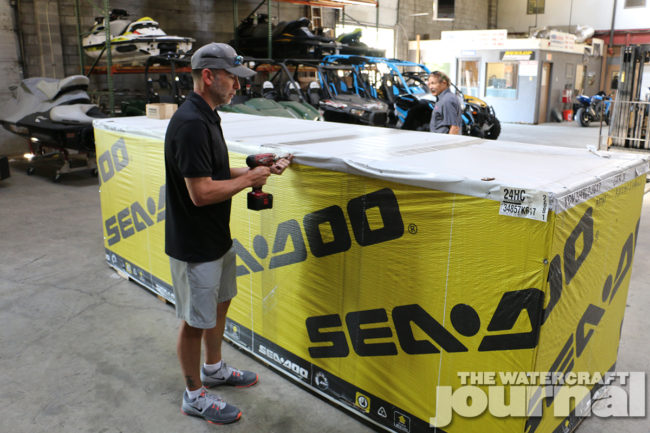
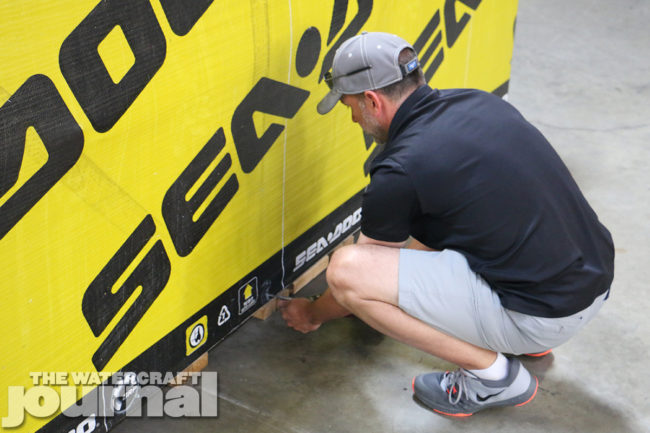
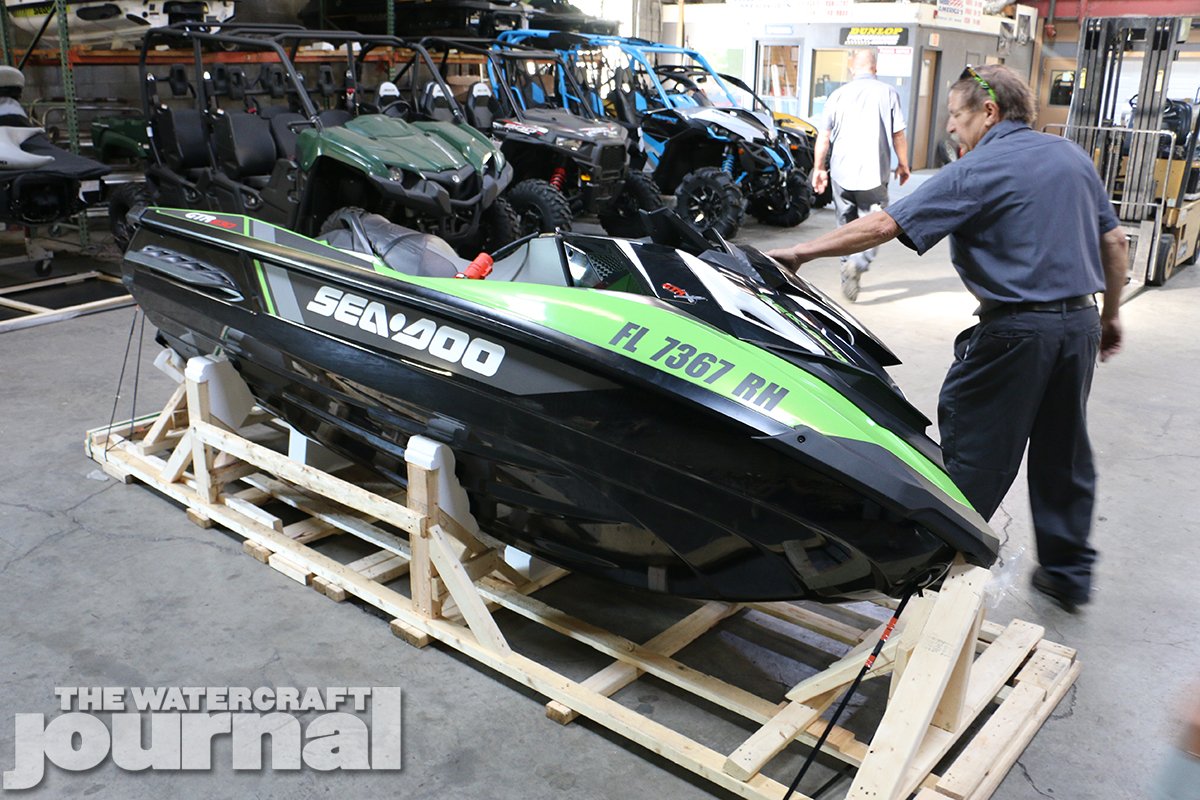
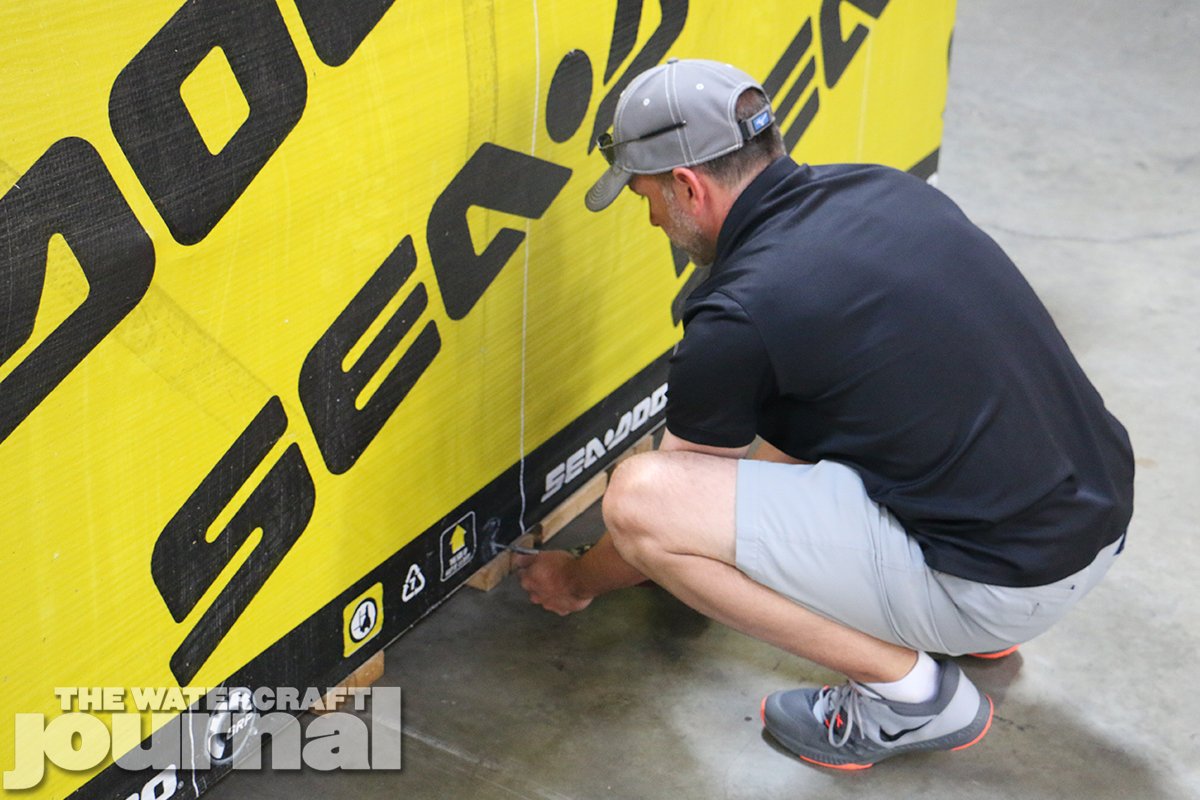
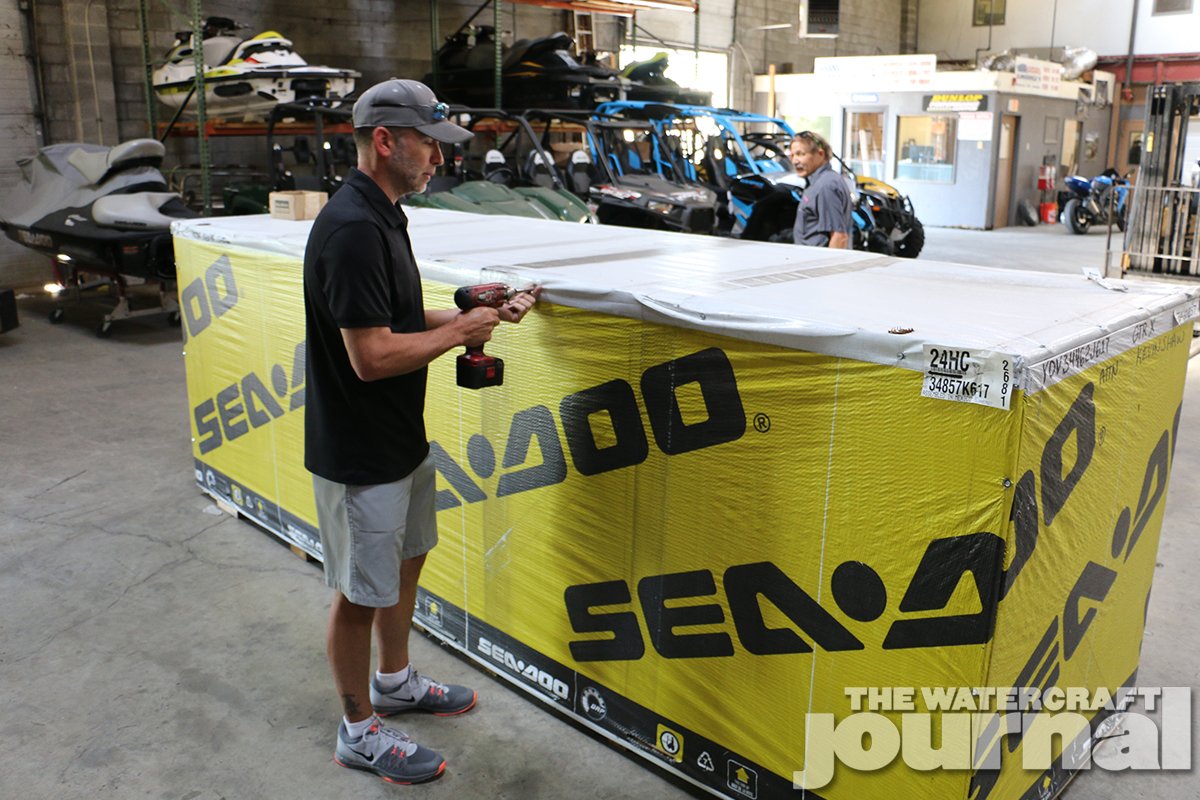
Above: America’s Motor Sports‘ Service Manager “Silky Smooth” Jeff Searcy begins by removing all of the screws releasing the top and surrounding walls of the crate.
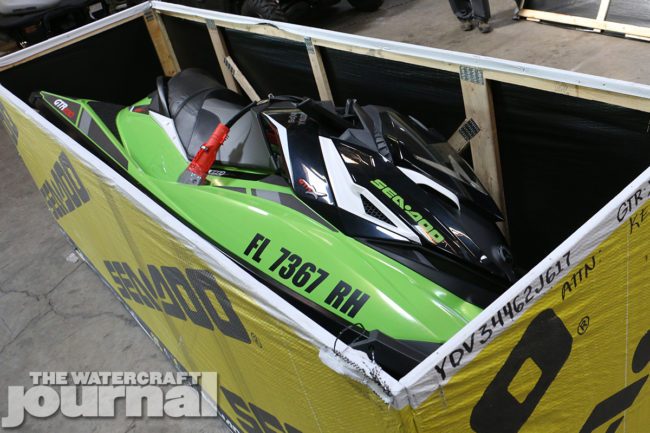
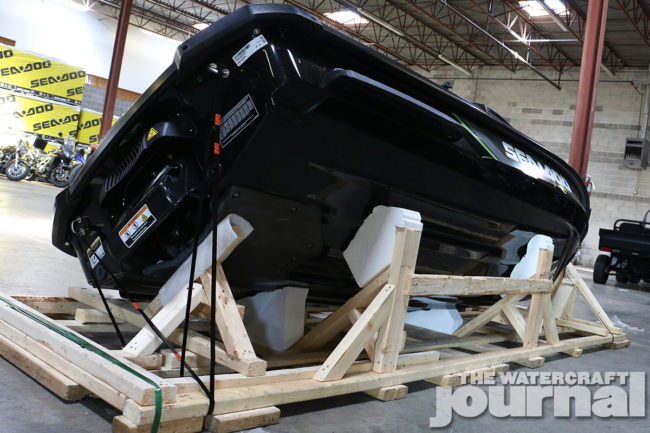
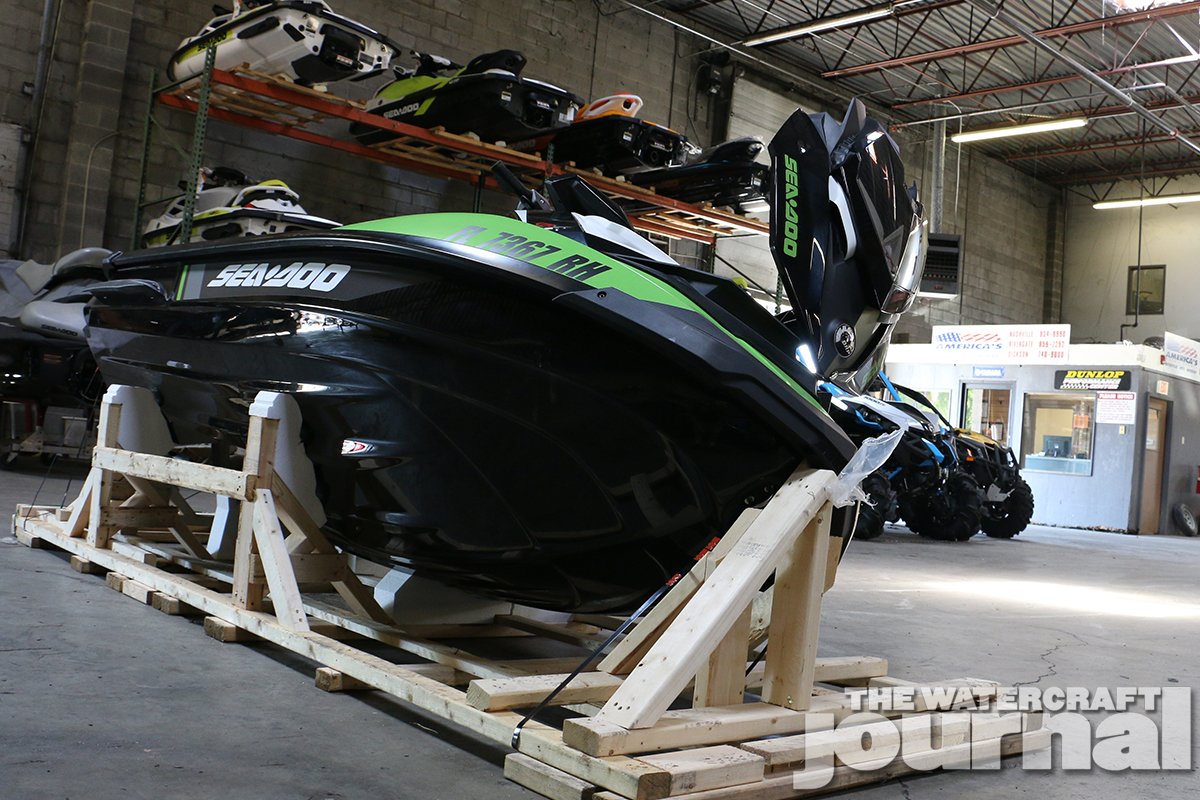
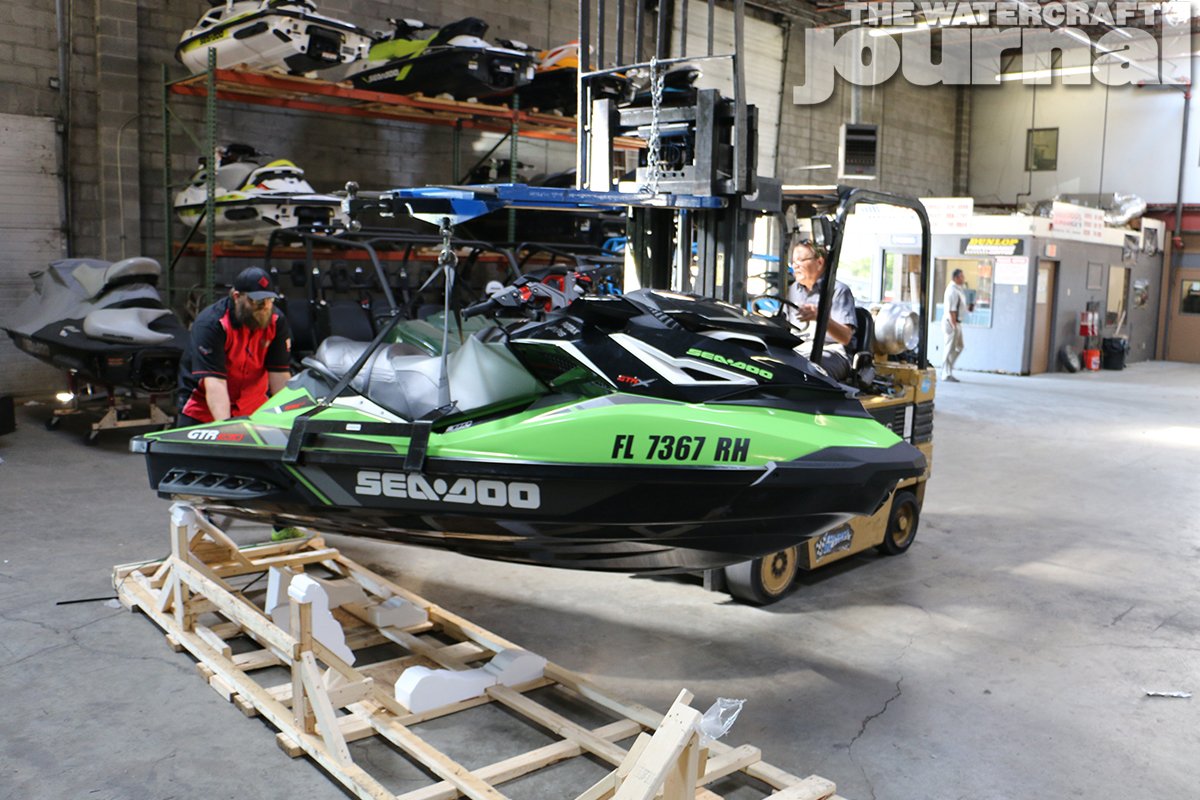
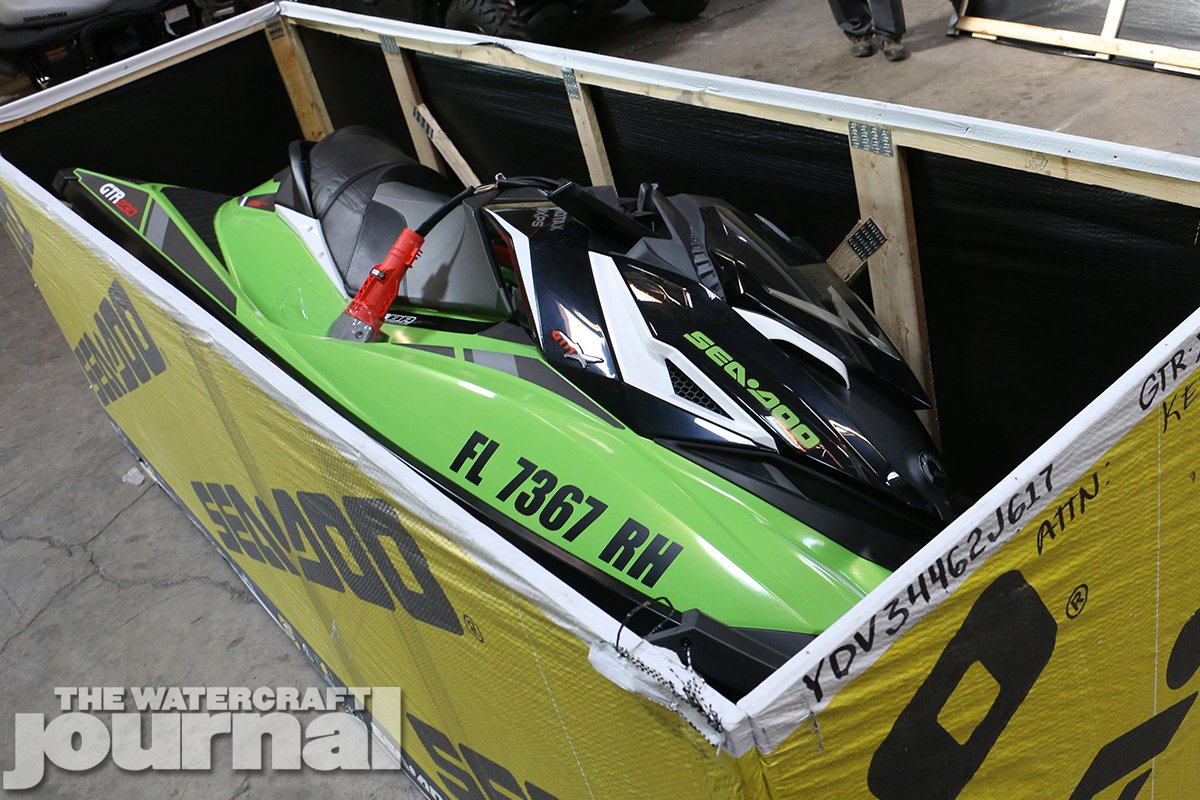
Above: Our brand new 2017 GTR-X 230 came to us pre-registered, but still requiring about 2.5 hours of assembly and preparation before we could take it out into the water.
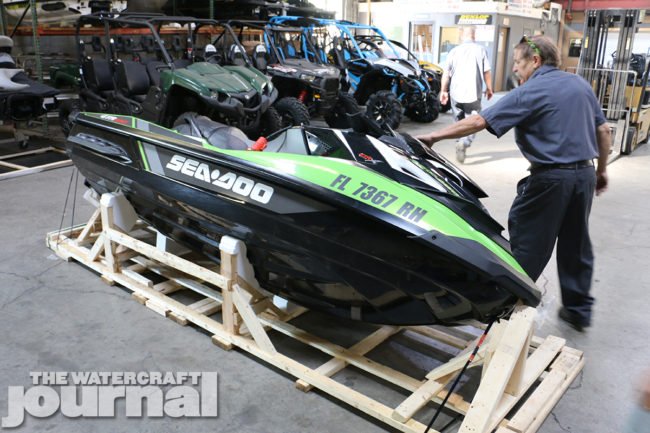
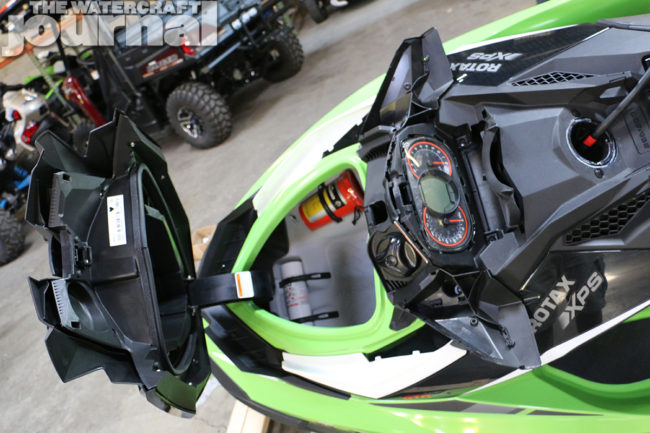
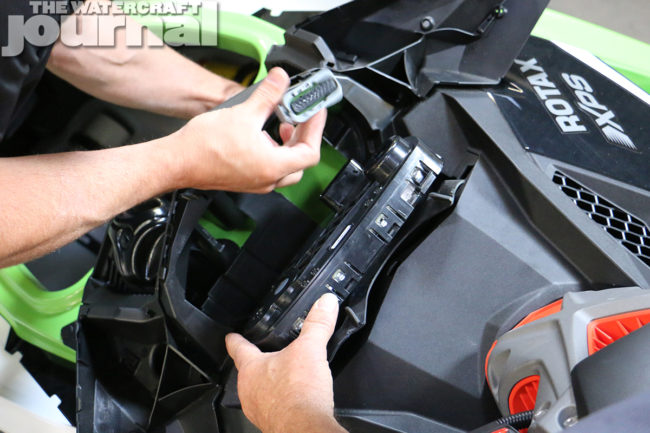
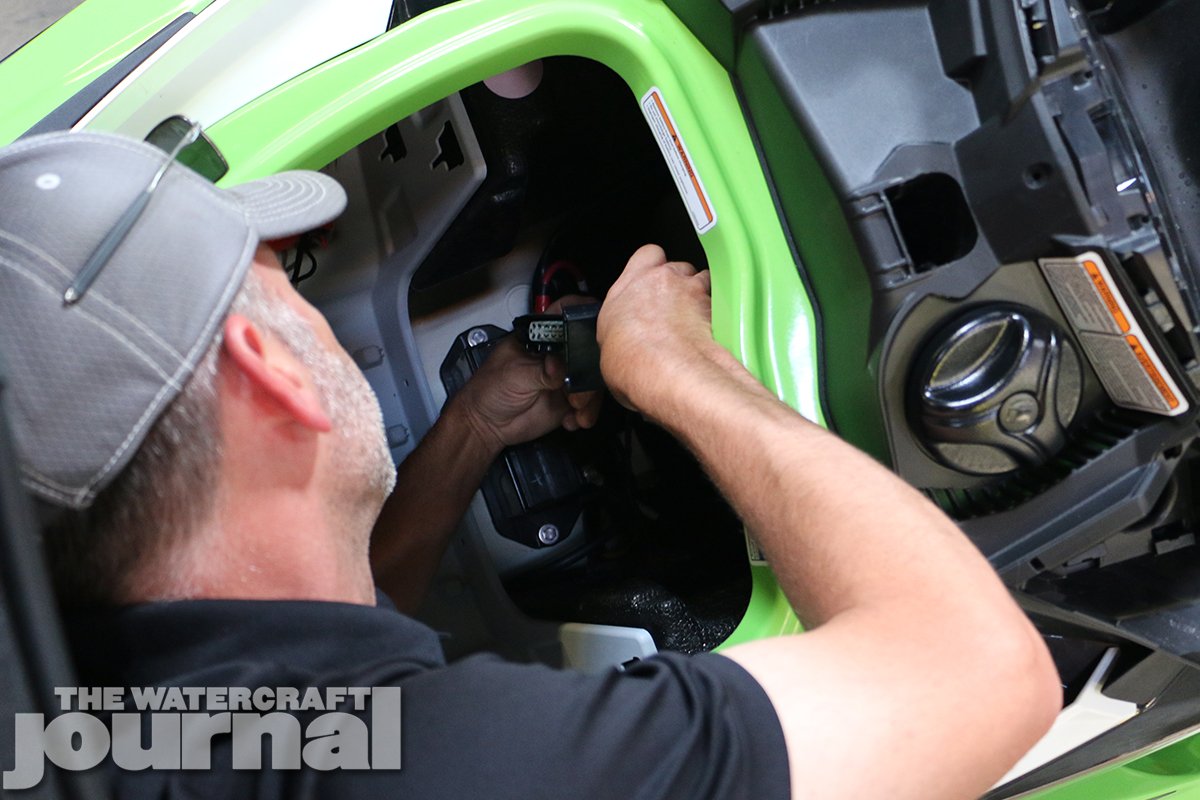
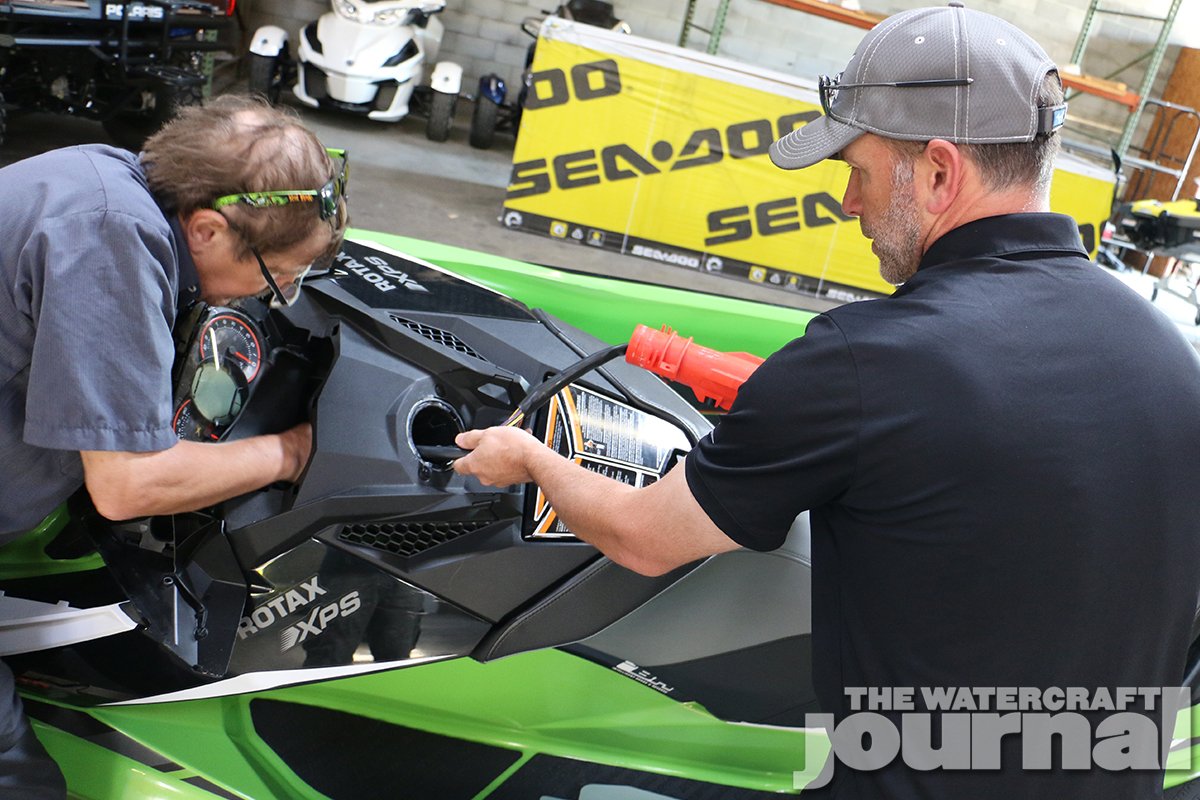
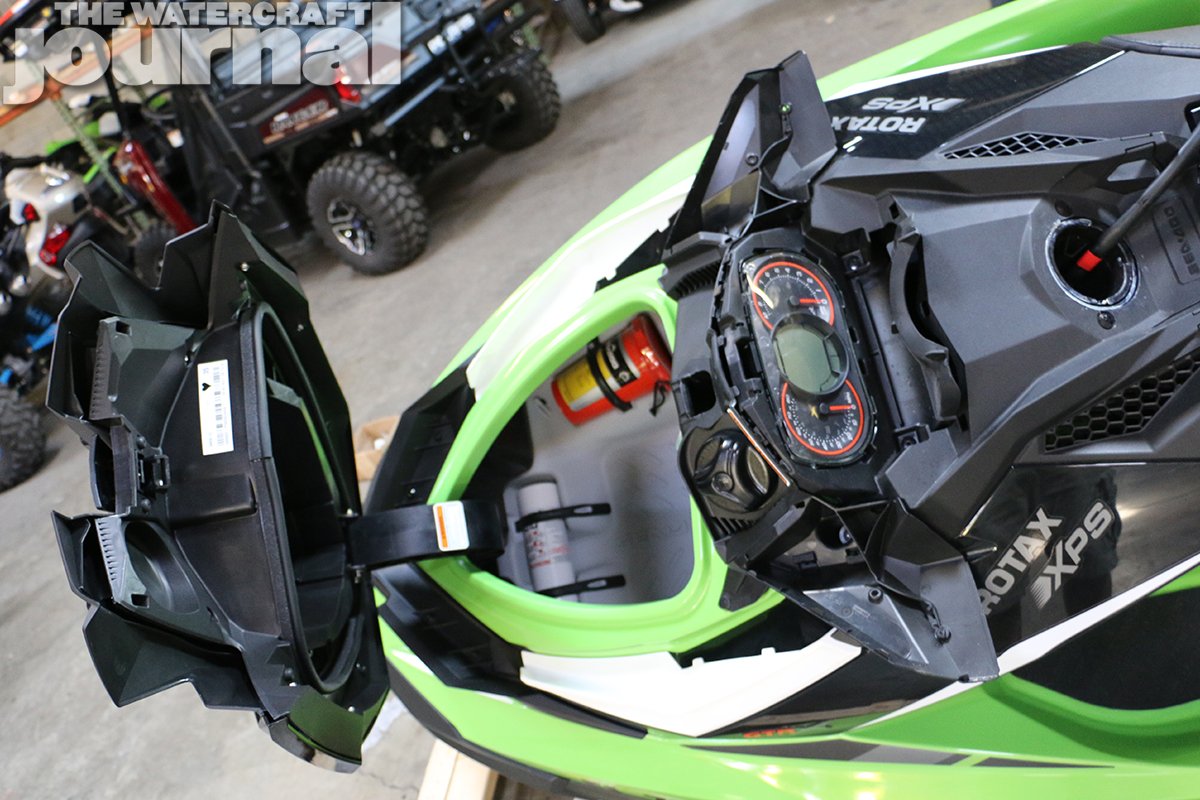
Above left: With the walls of the crate removed, we opted to keep the Sea-Doo in its cradle as access to the dash and cluster were far easier. Above right: The dash cluster would need to be plugged in, the dash surround and steering system installed, and battery hooked up before a diagnostics checklist could be ran.
“It’s important that people know that every new Sea-Doo comes crated in some level of disassembly,” Watts noted. “For [America’s Motor Sports] to verify that we sold you a properly assembled and prepared watercraft, we must submit a signed and dated checklist stating that 34 different operations and services were performed prior to completing the transaction.” That list, called a PDI (Pre-Delivery Inspection) also includes the final assembly procedure as well as checking off a page’s worth of operations testing. “The setup process takes about 2-to-3 hours when done correctly,” Watts concluded.
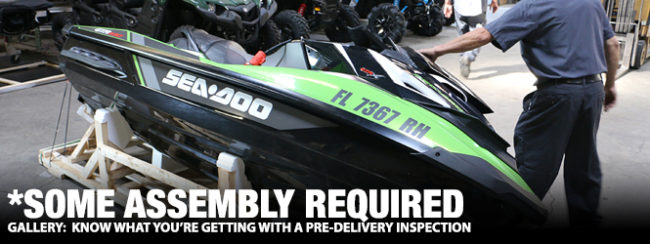
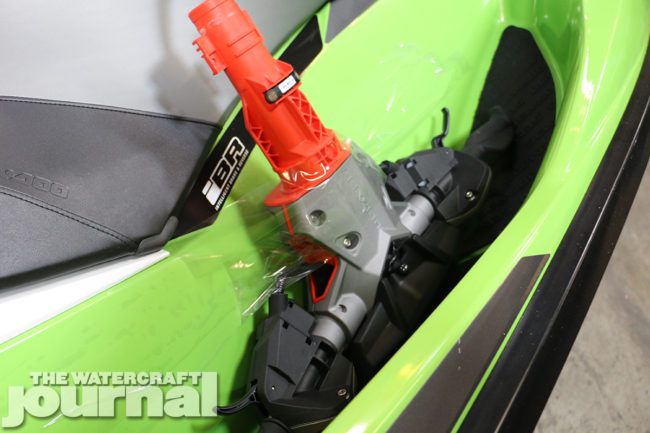
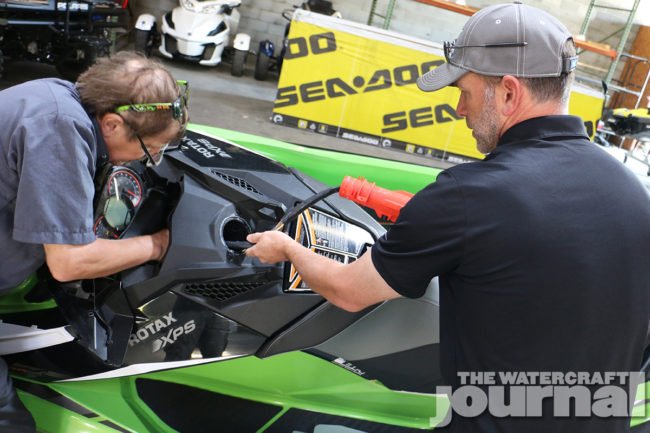
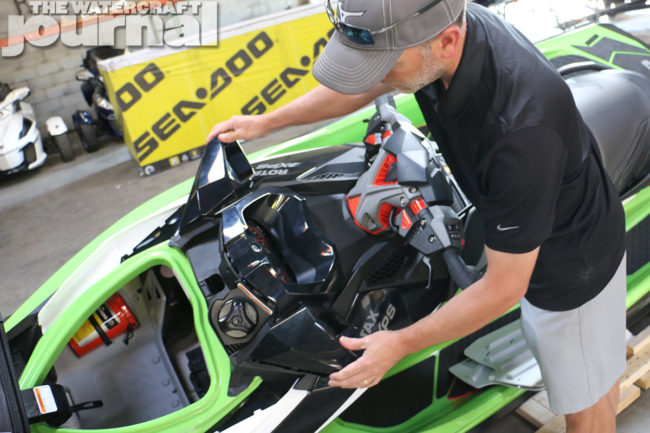
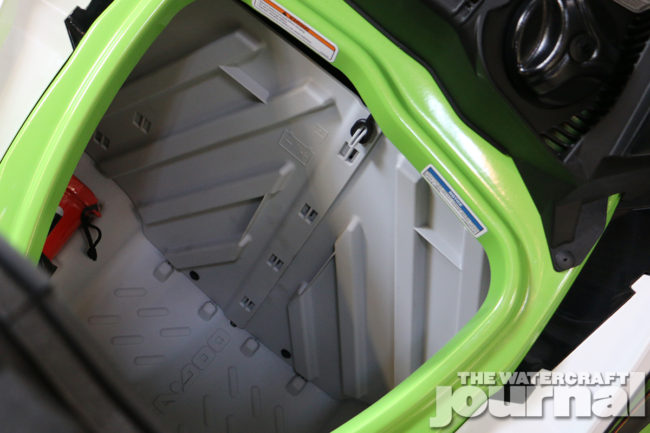
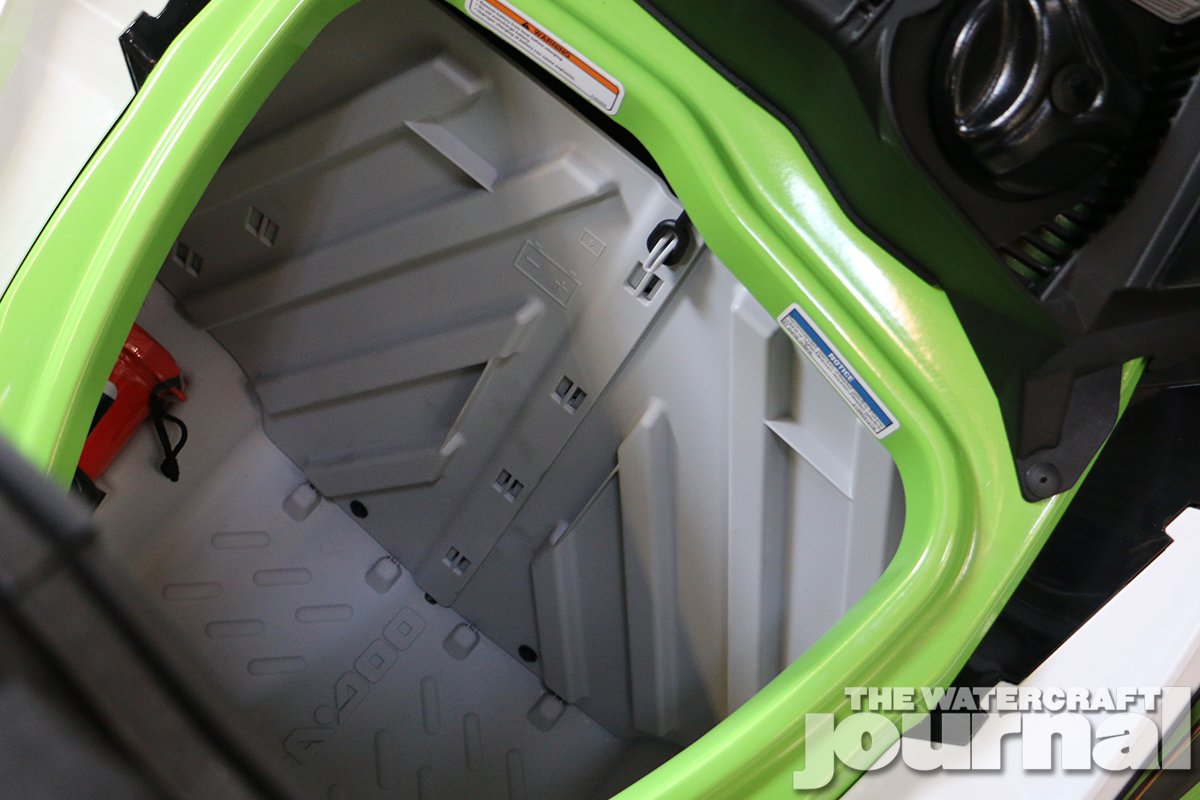
When Sea-Doo shipped The Watercraft Journal’s latest seasonal test mule, a 2017 Sea-Doo GTR-X 230, we shot over to America’s Motor Sports’ Madison, TN store to follow the uncrating and assembly process. Upon opening the crate, we found the dash cluster, steering assembly and front storage bin unfinished. The unit itself is securely strapped with steel cords to the crate’s foam-lined cradle. Store Manager Jeff Searcy walked us through the process, choosing to start things off a little unconventionally. “Normally, Sea-Doo recommends taking the ski out of the cradle, but we find it a lot easier to install the steering system with the ski at this angle than having to lean over it while it sits on a cart.”
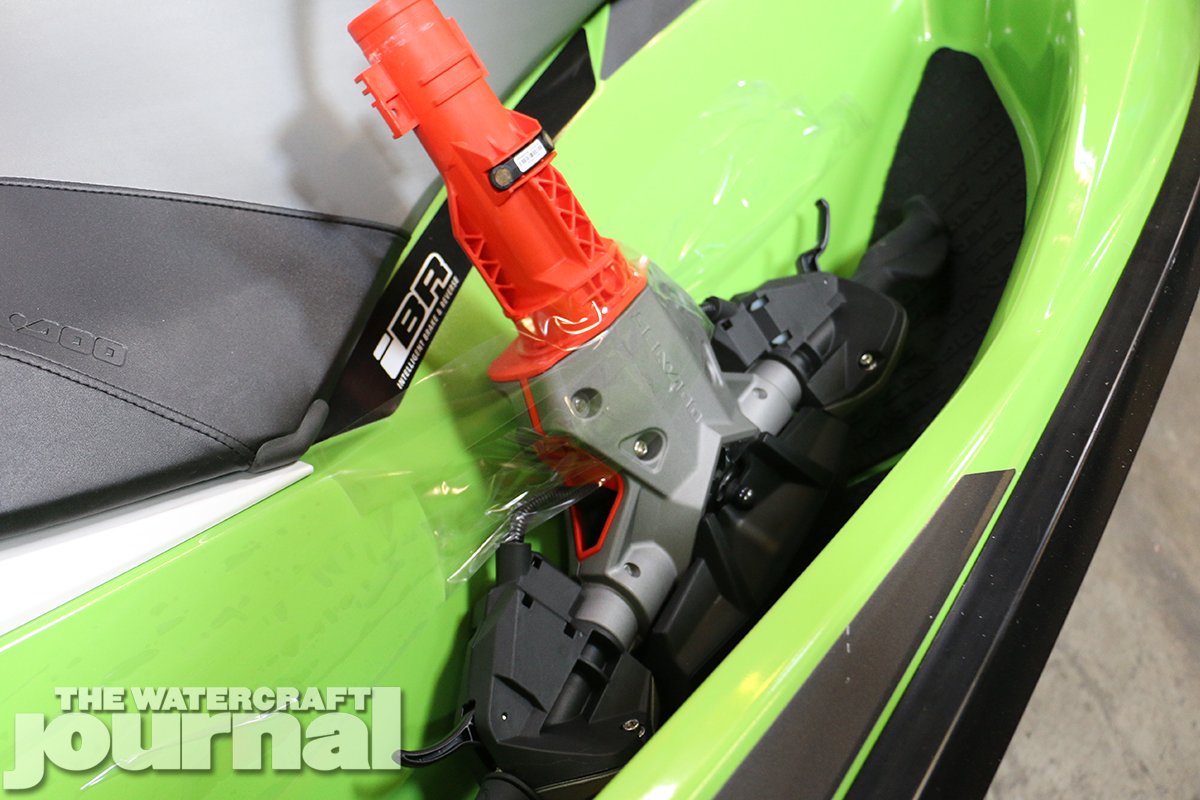
Above left: The steering system comes complete and ready for installation. Above center: Feeding the steering’s wire loom (operating all of the iTC controls) through the hole in the dash, the neck mounts to a bracket inside. Above right: The steering loom is plugged in and steering cable attached in minutes.
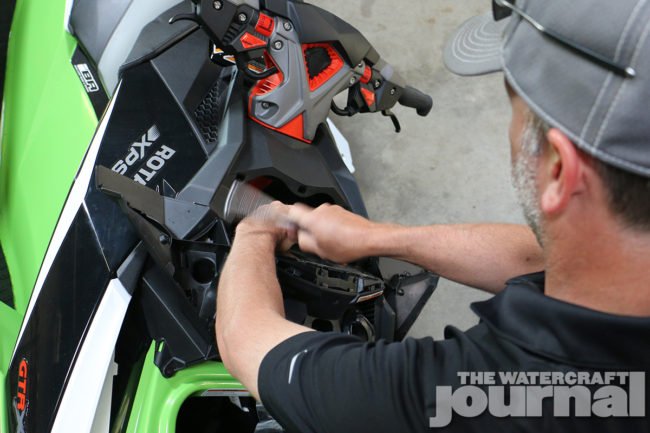
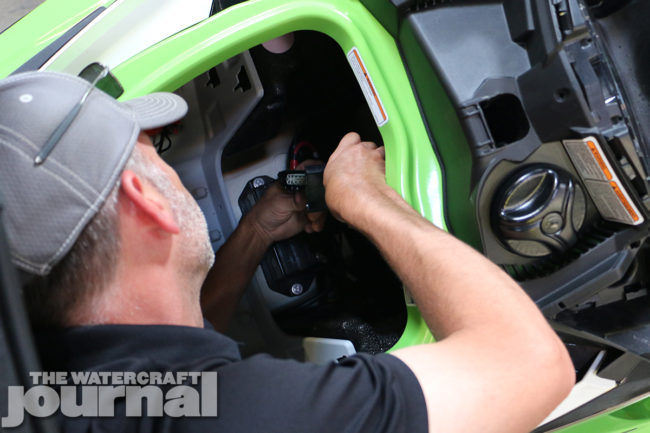
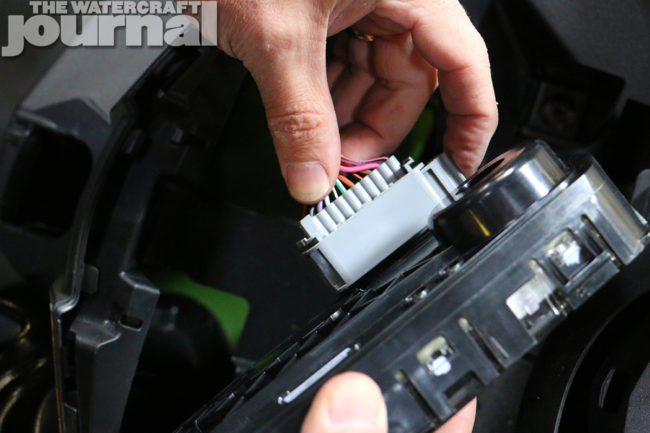
Above left and center: Searcy feeds the gauge control loom up through the base and to the gauge cluster. The cluster his held in with screws and snaps. Above right: The plugs and sockets for all Sea-Doo controls are specific to each other so no plug will insert into the wrong socket.
Above: With the steering system and gauge cluster properly installed and wired, the dash shroud can be installed, held firm by a series of snaps and two torx screws fixed beneath the side view mirrors.
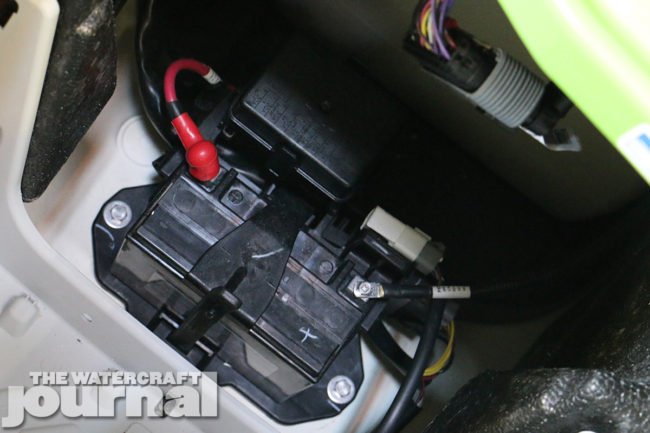
The steering system installs surprisingly easy, quickly attaching to the steering cable and required a few short twists of a socket wrench. The loom from the computer inserts directly into the analog gauge cluster and secures to the subframe prior to the dash bezel snapping to place over the cluster. It is secured by two torx fasteners each found on the underside of each respective side view mirror. Gratefully, there’s no confusing of where each plug needs to go, as each plug fits its respective socket specifically and cannot be forced into the wrong spot. Next, the battery is locked into place and wired to the positive and negative terminals before the bulkhead plates are snapped together and strapped into place.
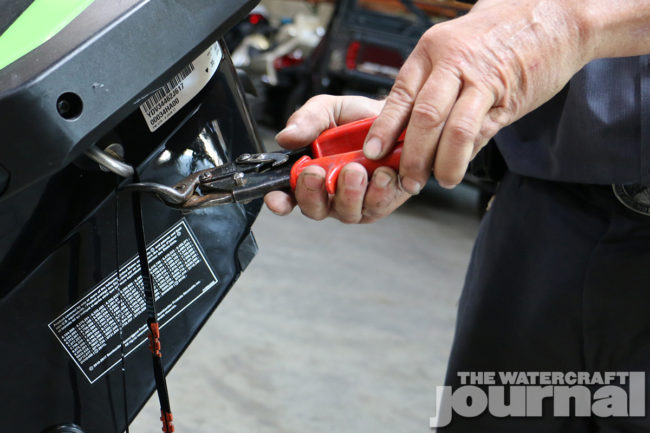
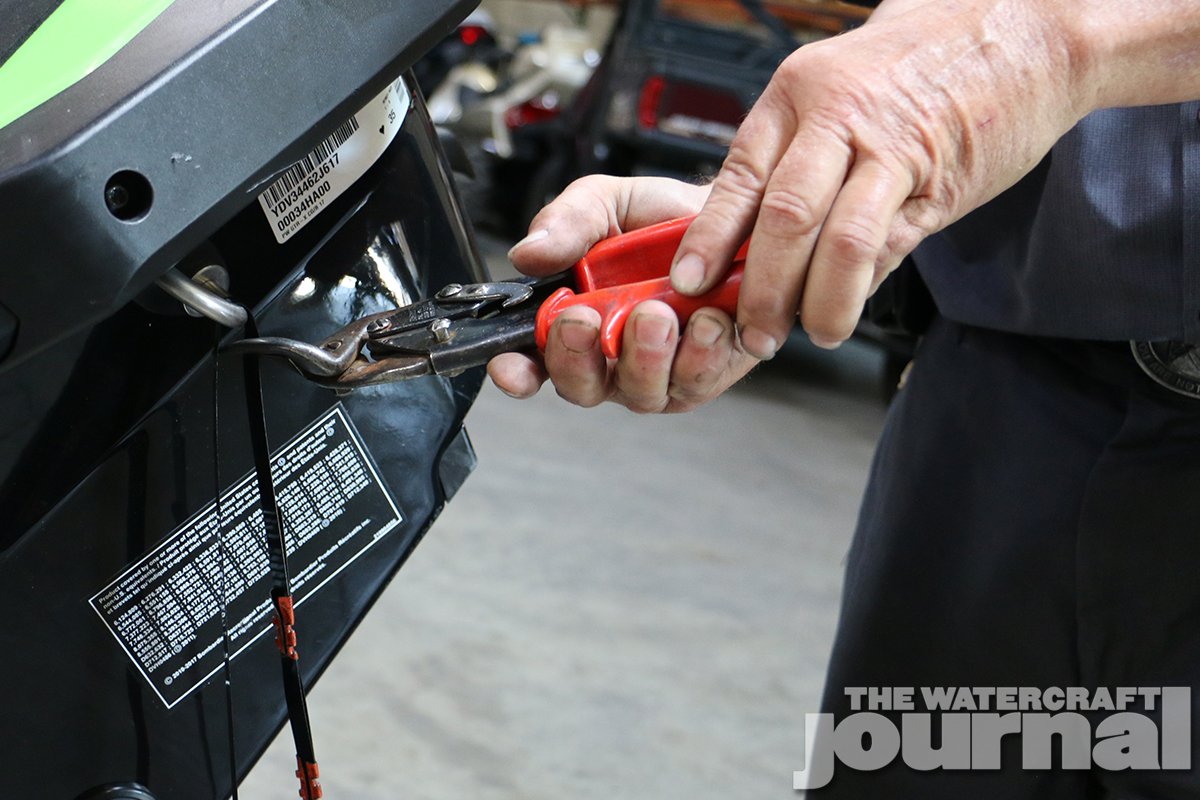
With everything secure, we snipped the steel bands holding our new GTR-X 230 to the crate. Using an Aquacarts watercraft cradle, the AMS crew hoisted the Sea-Doo up and over the crate and on to a four-wheeled cart allowing us to move the ski over to finish our pre-delivery checklist. Using a small electric pump, a few courtesy gallons of fuel were poured into the tank. Prior to turning over the engine, the oil and coolant levels were checked. With positive fuel pressure and our DESS keys waking the iTC computer, we fired up the GTR-X and let it idle softly. The final boxes were checked, marking off steering, VTS, iBR and all gauge functions were in full operation. Finally, the two remaining bar code decals were peeled off and we were free to head to the water.
Above left: As per Sea-Doo’s instructions, after securing the battery with the supplied strap, the terminals of the battery need to be coated in a thin layer of dialectic grease after attaching the ground and positive wires, then covered with the boot. Above right: The GTR-X 230 is based off of the GTI platform and thereby has the two-piece bulkhead plates that need to notched together before strapped in place.
Above: With the last of our installations complete, we snipped the steel straps holding the Sea-Doo to its cradle. These are looped through the factory tie-down D-rings.
Above: Once freed and set on a cart, the Pre-Delivery Inspection can take place; including verifying that the steering and OTAS, iTC, iBR, and VTS all work, that the information center reads properly, check the fuel system for leaks, check oil and coolant levels and verify that both DESS keys operate the ski.
Completing the Pre-Delivery Inspection checklist is essential to satisfying the contractual agreements for a factory warranty. Without this checklist completed, signed and filed, any claims made towards a new vehicle’s warranty can be voided, as there is no record of the ski ever being properly prepared in the first place. For the largest majority of enthusiasts in our industry, maintaining that warranty’s life is paramount. For a slim few of racers and performance enthusiasts who plan to violate their warranty, maybe your salesman will let you sneak out without it – but we kinda doubt it. It’s best to start off your new Sea-Doo’s life right – both for the security of your warranty and the peace of mind that your new PWC is ready to ride.
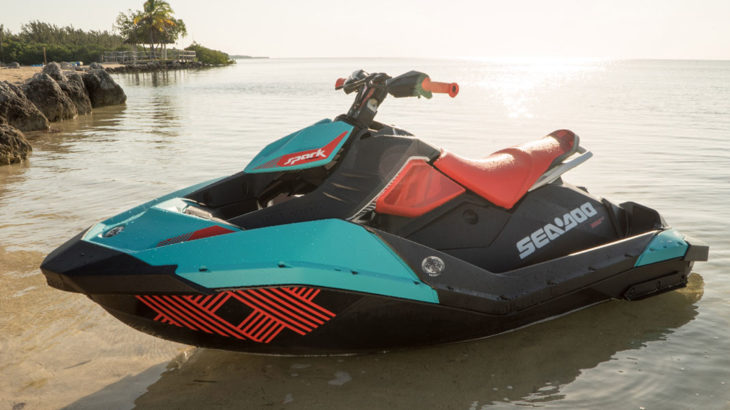
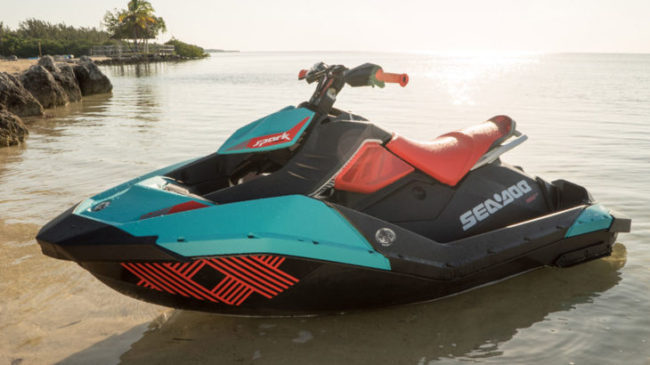
Middle Tennessee’s America’s Motor Sports (AMS) is offering 0% APR financing for 36 months on select Sea-Doo models, including the all new Spark Trix. AMS has also sweetened the deal with 3 year coverage which includes a 12 month warranty plus BRP’s B.E.S.T Coverage for 24 months. The offer includes select 2017 models and certain 2016 models. People in the market for a new Sea-Doo can take advantage of this deal until May 31st during the America Motor Sports “Ready to Ride” Sales Event. A buyer can also receive a $300 rebate on some of the new Spark models like the new GTI or GTX Limited.
The deals get even better with AMS offering brand new Sparks starting as low as $5,299 or you can score a $500 rebate on select 2016 new and used Sea-Doo models while supplies last. America Motor Sports doesn’t stop there; buy two Sea-Doo Watercraft and get financing as low as 6.5 APR for up to 96 months! Don’t forget to pick up $1,000 worth of accessories in order to pick up a free waterproof Cyclops 360 degree panoramic HD video camera valued $349.99. The camera comes from Cyclops Gear and looks really cool and has many nice features. So, not only do you get to leave with an epic deal on a fresh new Sea-Doo, you can record yourself as you launch and while you’re underway.
The Ready to Ride Sales Event is offered to those with approved credit and if you don’t qualify for this particular credit offer, others are available because America Motor Sports wants you on the water! Hurry in to one of America’s Motor Sports locations in Madison, Nashville, or Dickson, TN because the “Ready to Ride” sales event ends soon!
Let’s just begin by saying that the rider is safe and (for the most part) unharmed. With that being said, we need to take a moment to say that no matter what type of rider you are, one thing that must always be on your mind when operating a PWC is safety. These machines are pretty dang powerful and are able to commit some serious damage if not operated properly.
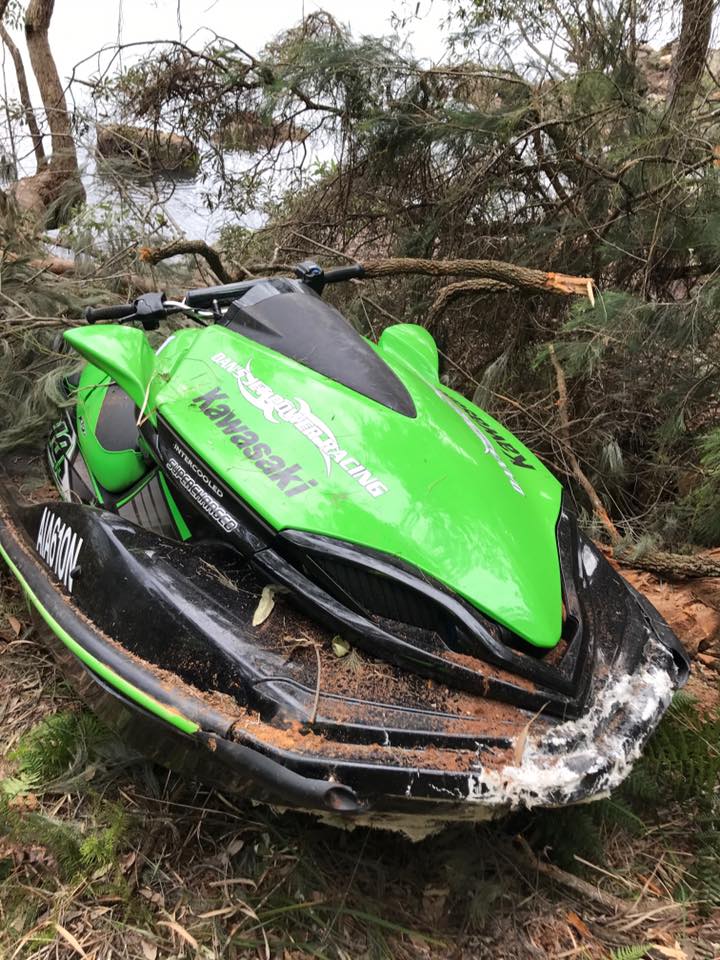
This past weekend a PWC rider managed to park his Kawasaki Ultra 310R JetSki nearly a football field’s length up the side of Cottage Point’s mountain slope. Located in Broken Bay, just north of Sydney on the coast of New South Wales, Cottage Point is a popular spot for all sorts of boating, and as illustrated, all sorts of boaters. Thankfully the rider was able to eject before running into the rocky shoreline and walk away uninjured, not such cannot be said for his bright green Kawasaki, which scaled the hillside, bouncing over boulders and snapping a tree in half.
While the JetSki was severely damaged, it amazingly was still intact (for the most part). Saw what you will about today’s hull materials, this proves that Kawasaki builds their products to withstand some serious contact. But there is only so much they can do. Wearing the proper safety equipment is a must. So again, let this serve as a reminder to anyone that no matter if you are going fast or just out for a cruise, stay aware of your surroundings and never ride if you feel the conditions are out of your riding ability.
Be sure to mark Saturday, February 24th, 2018 on your calendars! That’s the date that has been set for the 2018 Hot Products IJSBA Mark Hahn Memorial Havasu 300 Mile National Team Endurance Race Presented by Yamaha. The 14th annual event that has been described as the “World’s Longest Continuous PWC Race” was announced recently by the event promoter Jim Russell and Executive Producer Mike Follmer. The event venue has been chosen as well with Crazy Horse Campground in Lake Havasu City, Arizona hosting the event for yet another year.
“The race is returning to Crazy Horse Campground’s Main Beach site for this very important event”, said Jim Russell. He continued with, “the 10-mile course has been approved by the Coast Guard and will pit all the teams against the wind, rough water and long runs that this event has become synonymous with.”
“After the gigantic success and worldwide recognition received in the press of the 2017 Hot Products Mark Hahn Memorial Presented by Yamaha, it is expected that a new record number of entries will come out for the 14th annual event. We’re already in high gear making preparations so that the 2018 event will out shine what we did last year in 2017. We’re going to do that by getting more giveaway prizes and even nicer trophies for the massive awards banquet at the Aquatic. We have on the water still photography and magazine coverage to chronicle the event for the riders. The awards banquet will feature a sit-down dinner for over 300 people and over 50 award trophies to be presented too overall and class winners with a host of special awards that will once again surprise their worthy recipients,” says Mike Follmer.
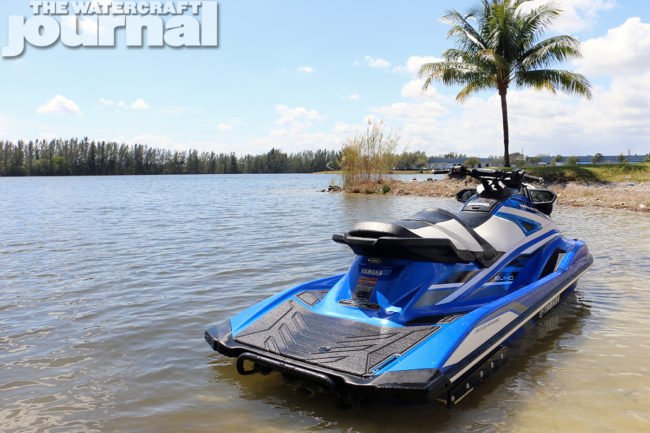
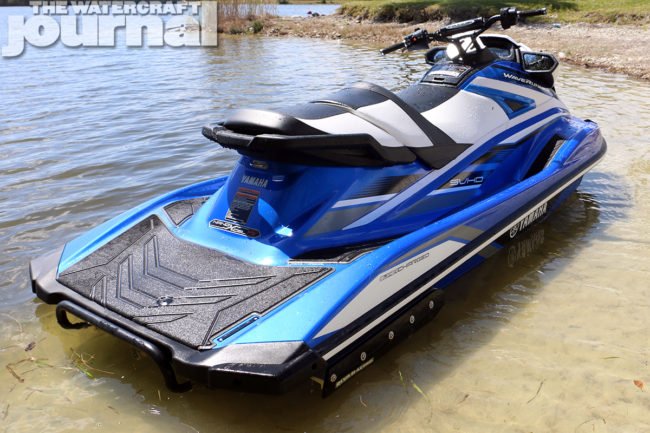
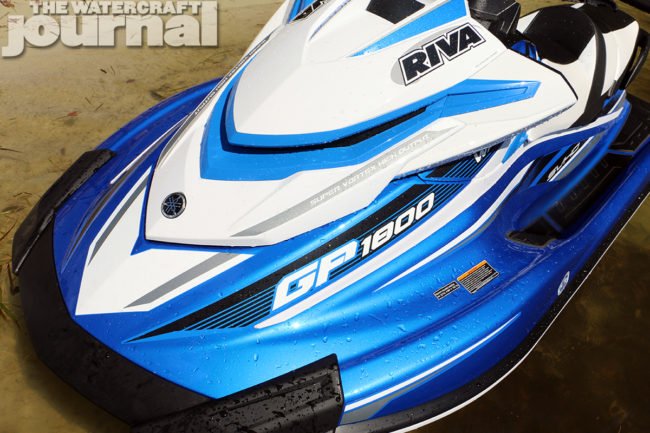
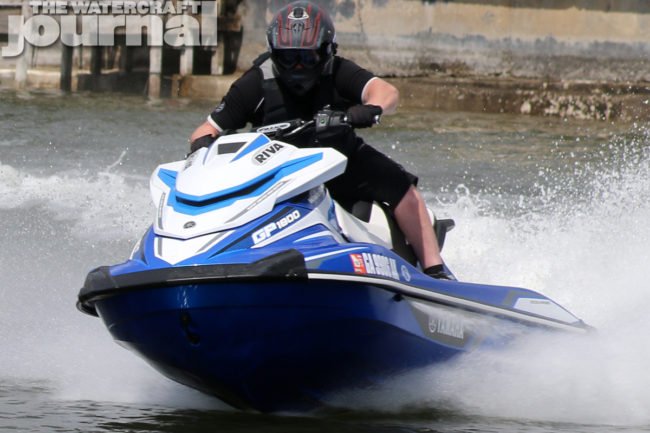
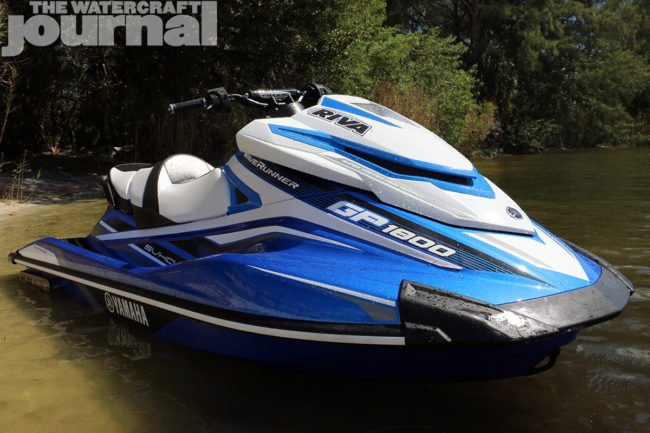
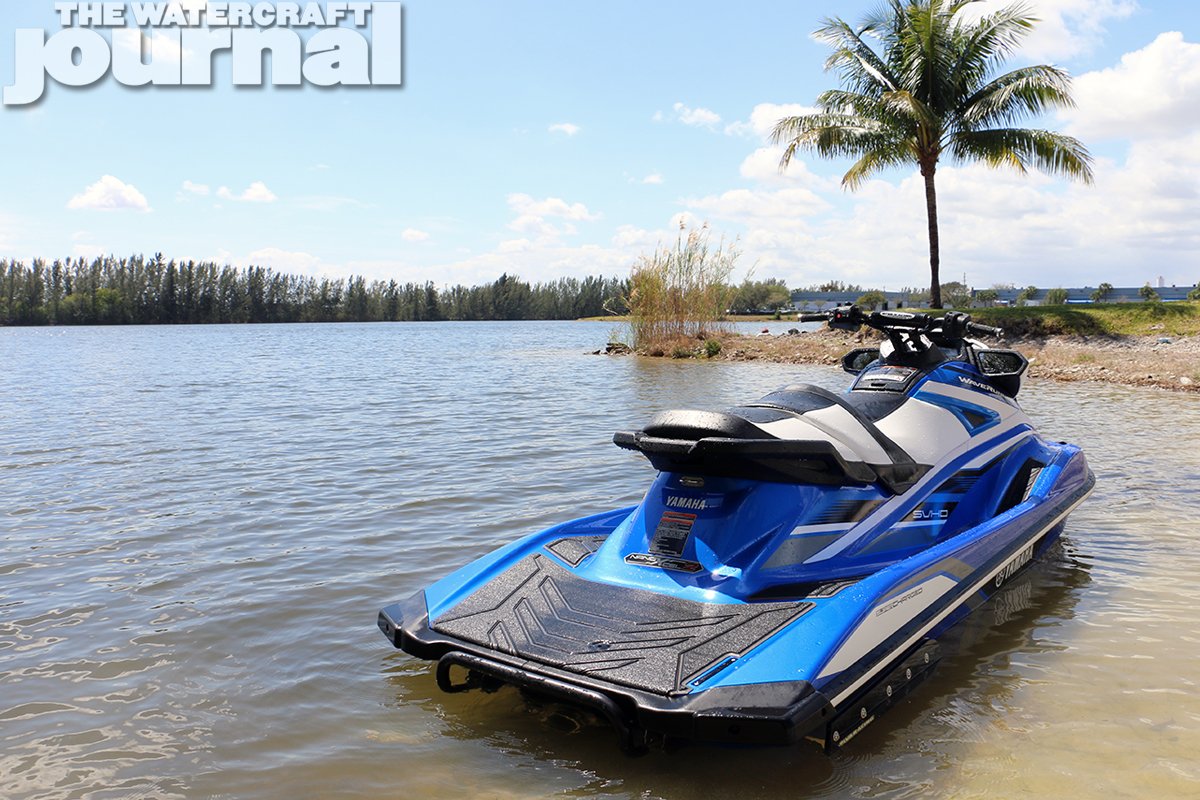
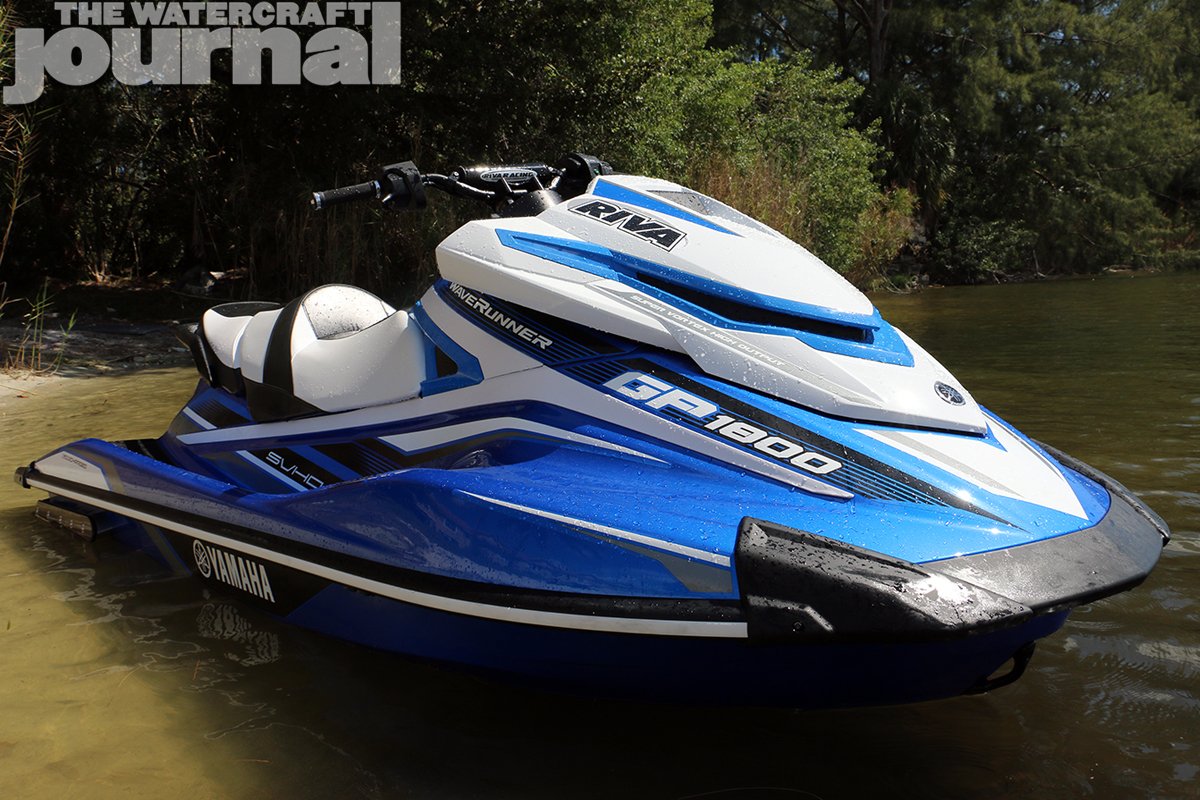
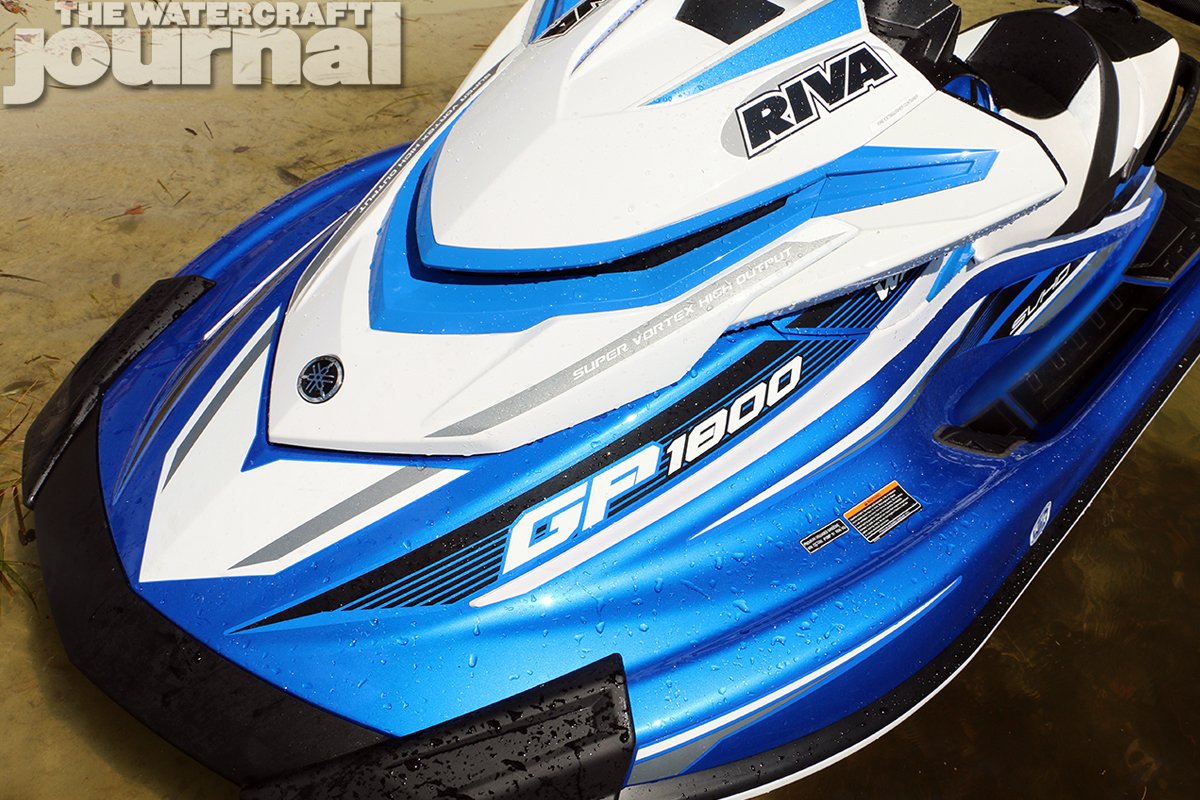
We’ll just get right to it: When we first rode the 2017 Yamaha GP1800 WaveRunner it was well, pretty darn-near perfectly balanced, both literally and figuratively. Yamaha kept the size and weight of the ski manageable by using its NanoXcel2 hull and deck material, which not only reduces total weight (totaling 769 pounds), but also strengthens the final mold’s bond and tensile strength over traditional SMC composites. With this, Yamaha created a machine 18-pounds lighter than the NanoXcel VXR and 22-pounds less than the retired FZR; and that’s including the SVHO supercharged 1.8L four-stroke, and 160mm, 8-vein impeller mounted in a 75mm hub, a quick-response electric trim system, a folding swim step and RiDE, Yamaha’s dual throttle braking system.
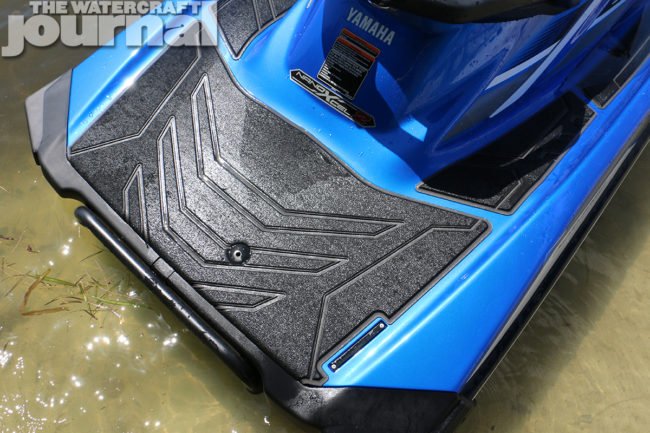
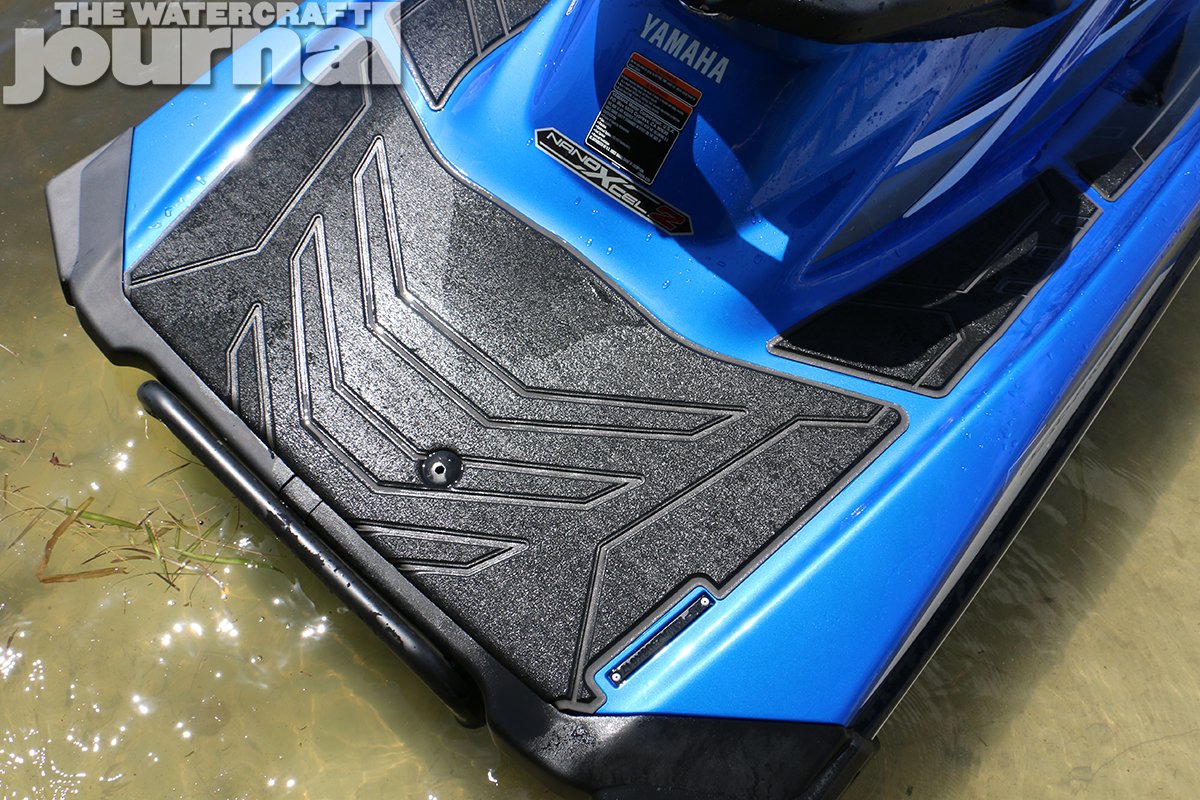
The ergonomics of the ’17 Yamaha GP1800 WaveRunner are simple, to the point and serviceable. The steering system is fixed with fun color-matched pistol-inspired grips, the two-tone “cut-and-sew” stitched saddle is notably narrowed at the knees. CNC-cut traction mats fill the footwells and cover the deck. The LCD “multifunction information center” (ie. gauge cluster) – although unique to the GP – is a little underwhelming in its lack of a boost gauge “and other high-end data that gearheads would love to see,” as we stated in our initial review. The two color schemes: Azure Blue Metallic or Torch Red Metallic, give the buyer an option of livery, but little else varies. Again, the GP1800 is a down-to-brass-tax kinda watercraft…
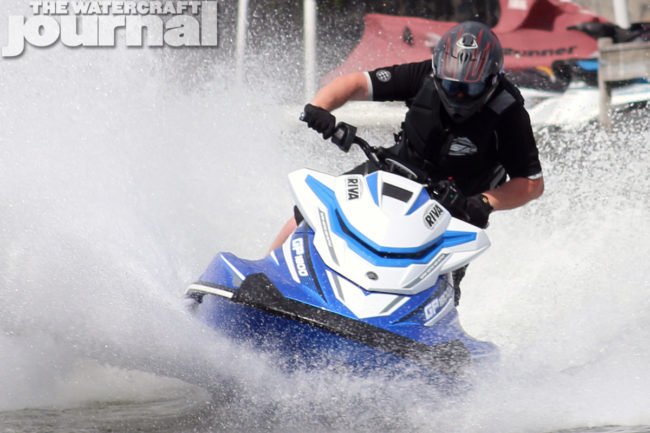
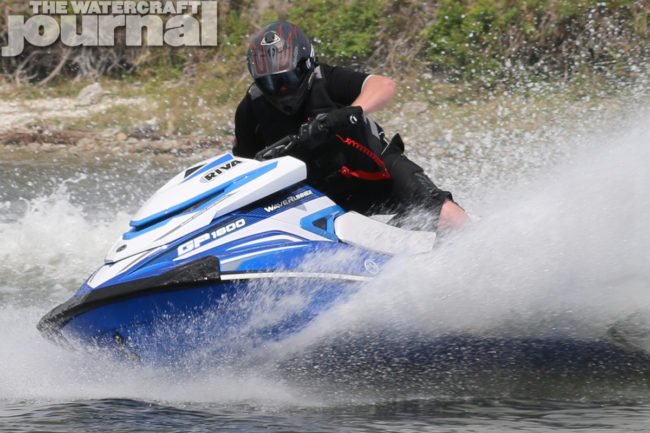
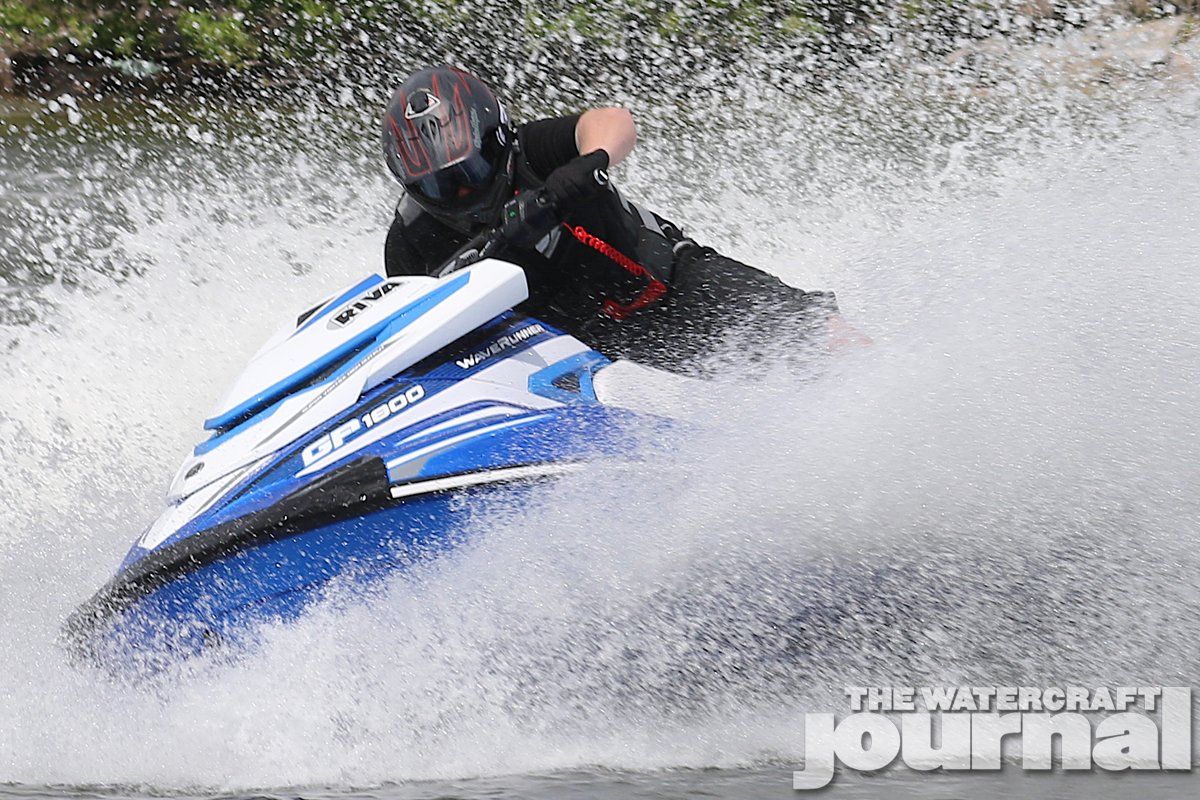
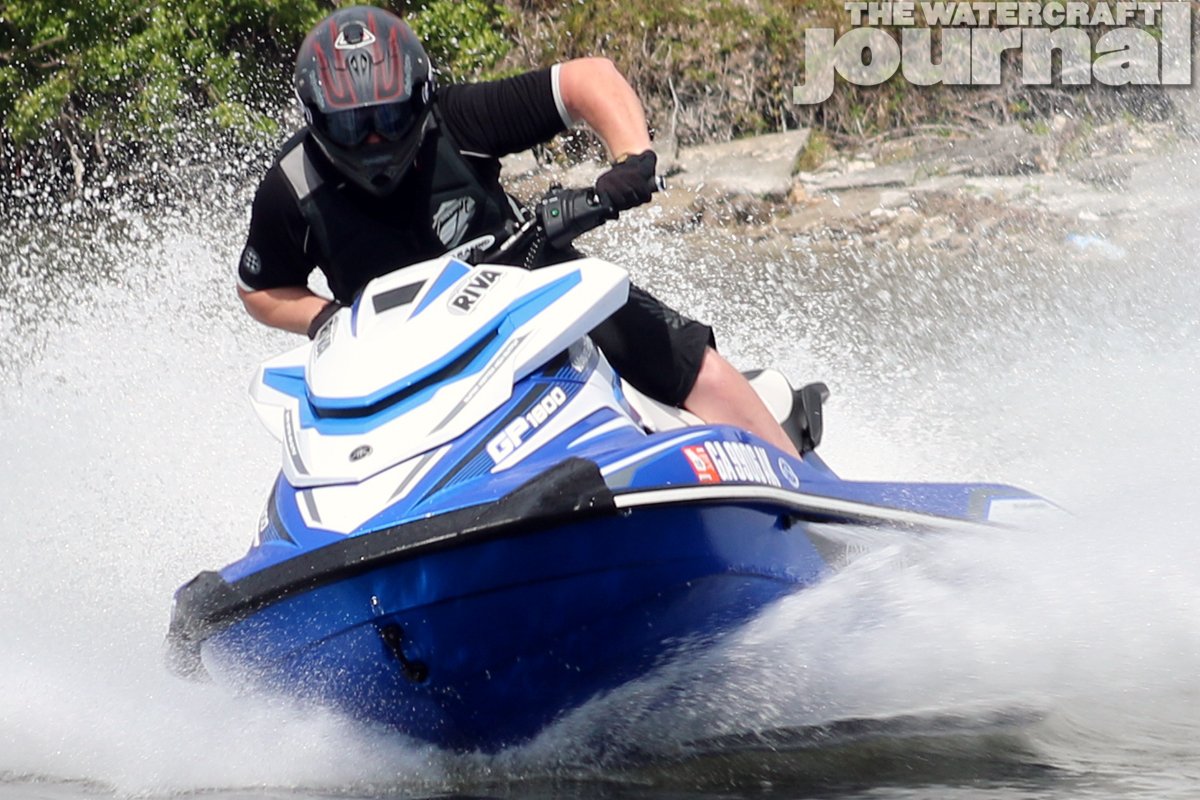
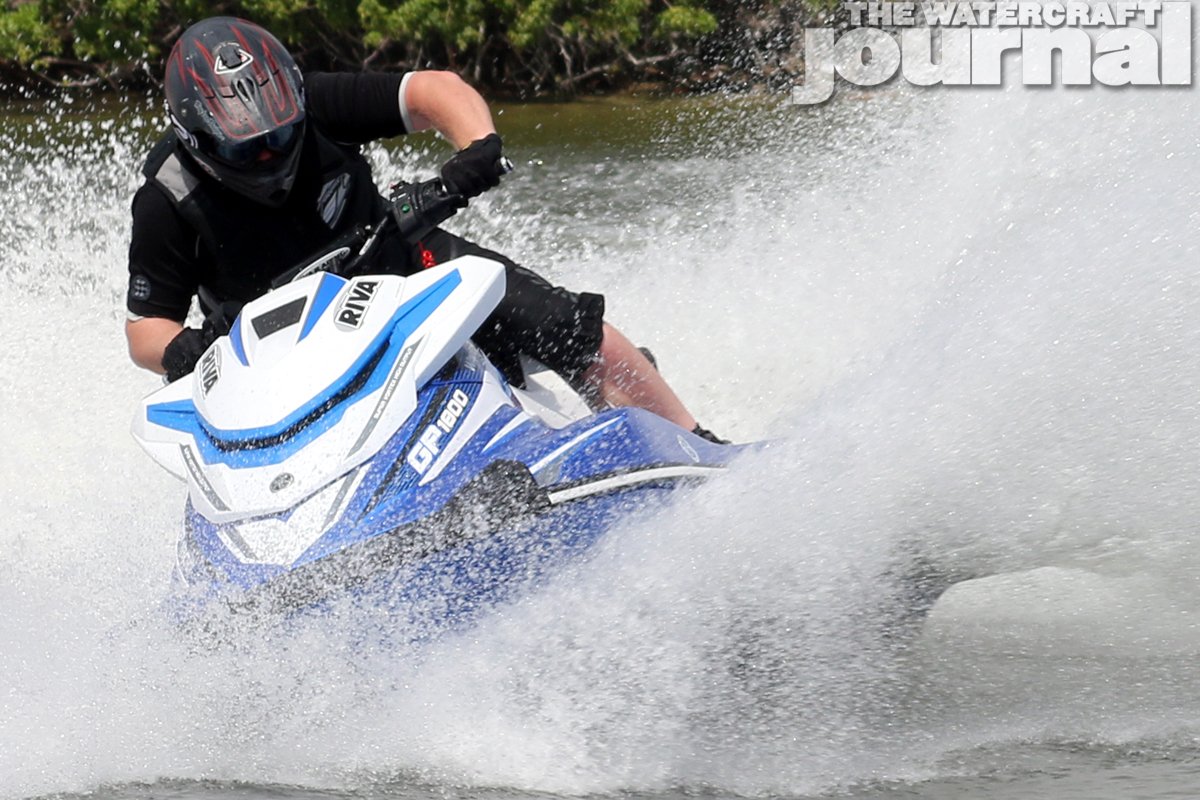
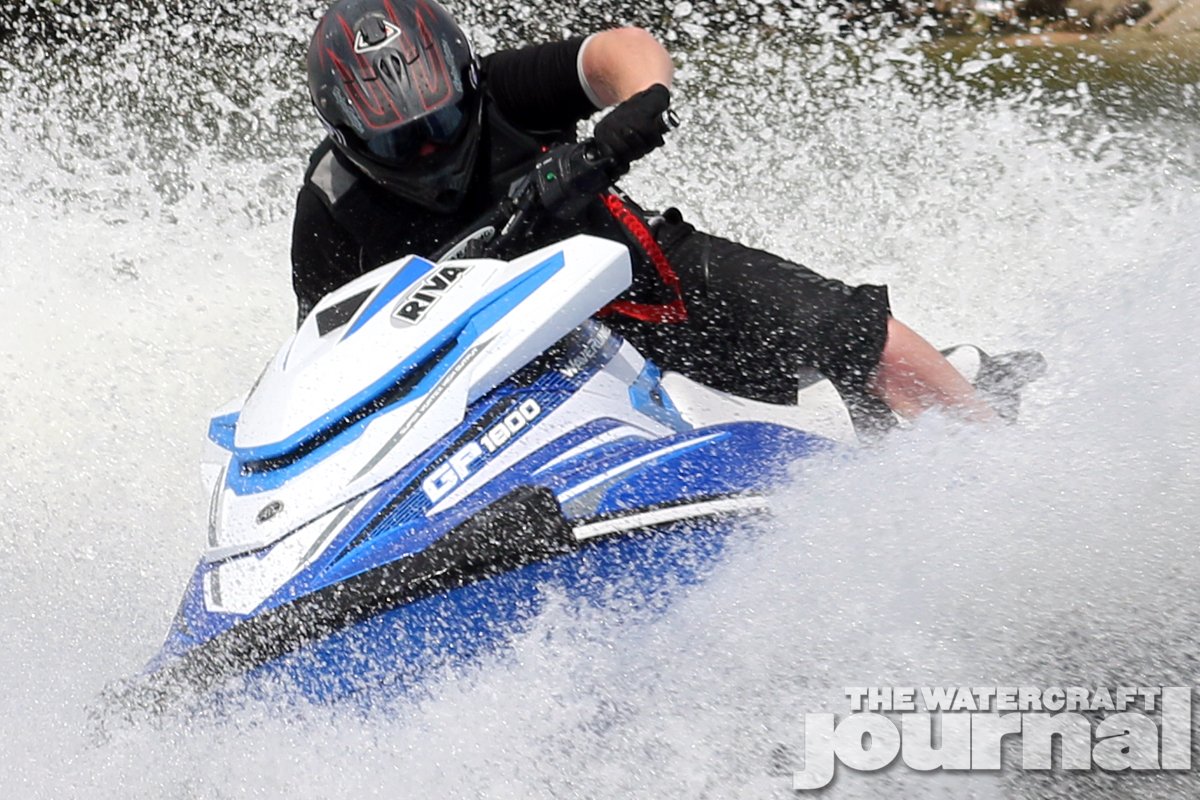
…And performance is what the GP1800 is all about. Acceleration is aggressive but not brutal, as the 265 brake horsepower, 1,812cc engine opens up wide and inhales a compressed blend of 92-octane and cool, dense air through its 54mm throttle body. At an open gallop, we reached a top speed of 68.8mph on a Garmin GPS (at 7,400rpm) that was rock solid. Yet, it is in the twisties where the GP1800 shines brightest. The WaveRunner rides high on the surface while retaining significant pump engagement even in moderate chop. For the most part, the GP1800 turns surprisingly flat, that is until properly coaxed. The narrow, scalloped seat allows for faster weight transitions from side-to-side, allowing the rider to drop a knee deep into the well and shift far over and low into the turns.
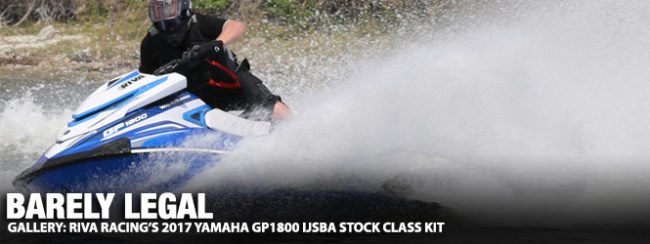
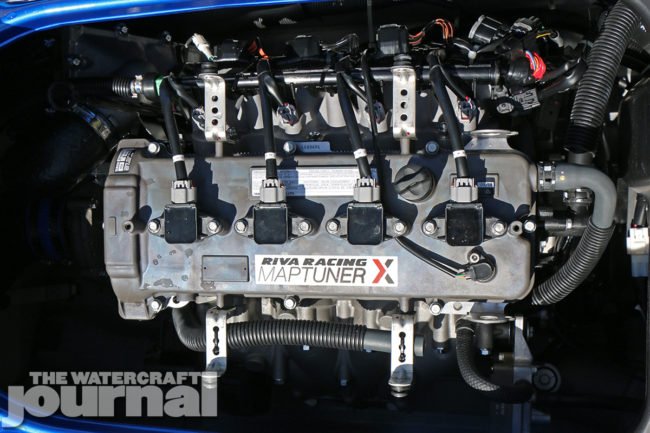
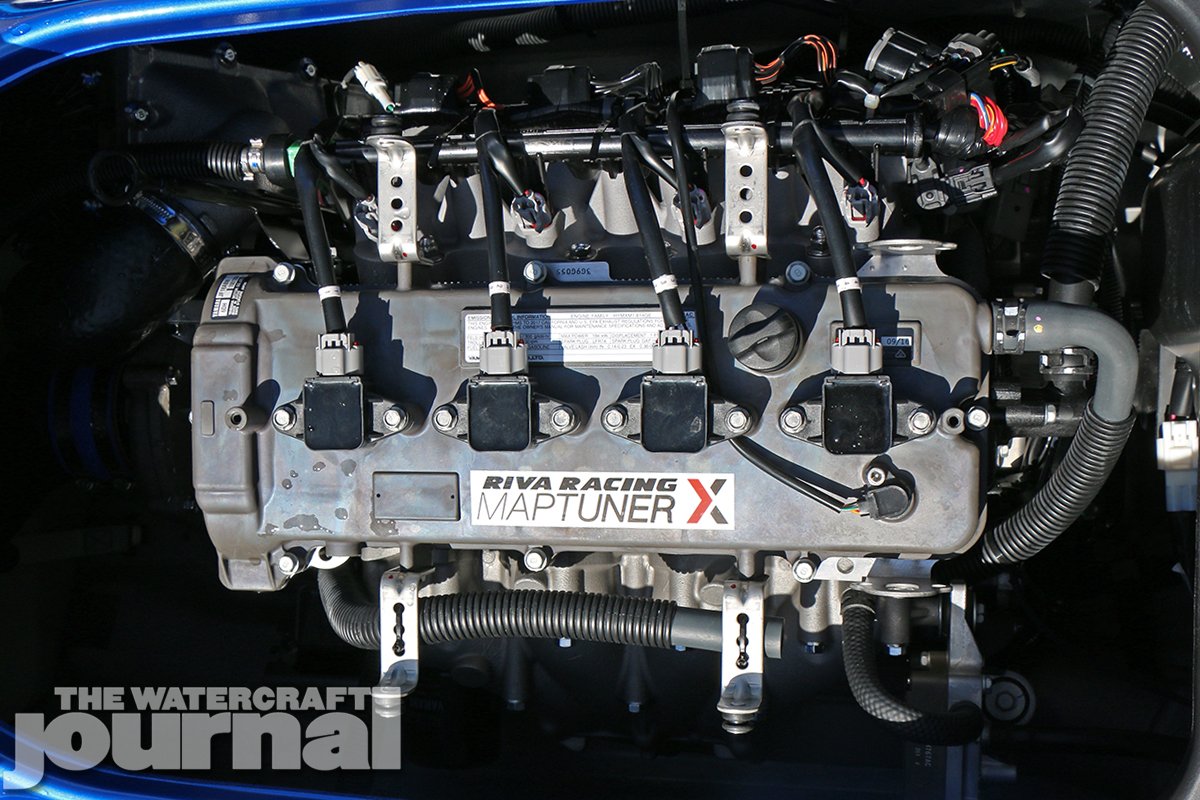
So what could RIVA Racing really do to improve upon such a machine? The world-leader in performance PWC hardware and engine management software was well-stocked with a slew of products to unlock the GP1800 from its USCG shackles. The newest member of the RIVA Development team, Jesus Garcia, who is over RIVA’s engine management development, specifically the MapTunerX, knew it wouldn’t be as simple throwing what they already had at it. To create a package that would comply with IJSBA (International Jet Sport Boating Association) Stock class runabout rules, certain specifics to the tuning software would need to be adjusted to compensate for the lack of permissible performance products. Stock class requires that factory exhaust remain in place as well as all internals concerning the engine. Constrained to almost entirely external handling items and an ECU tune, the challenge was on.
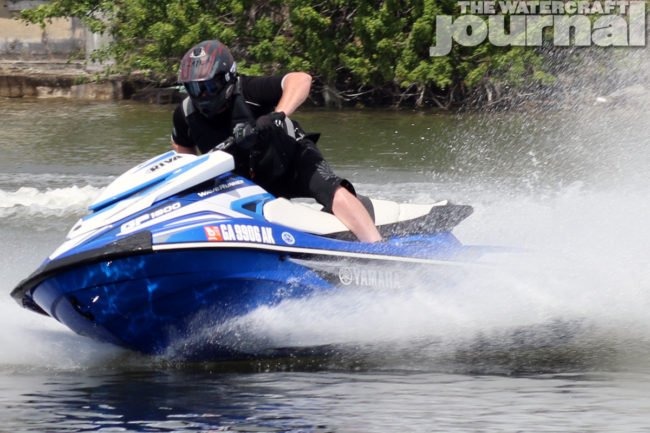
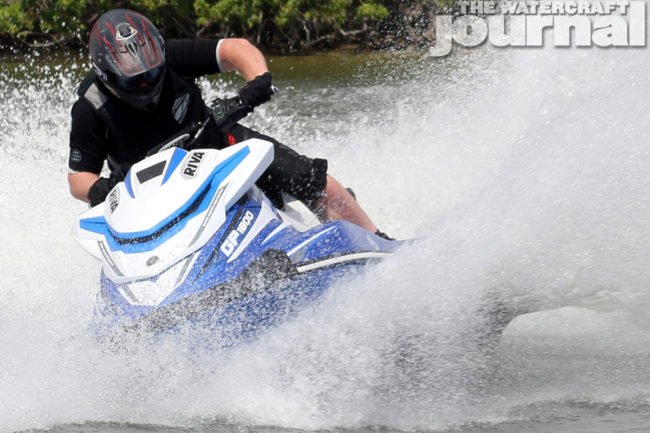
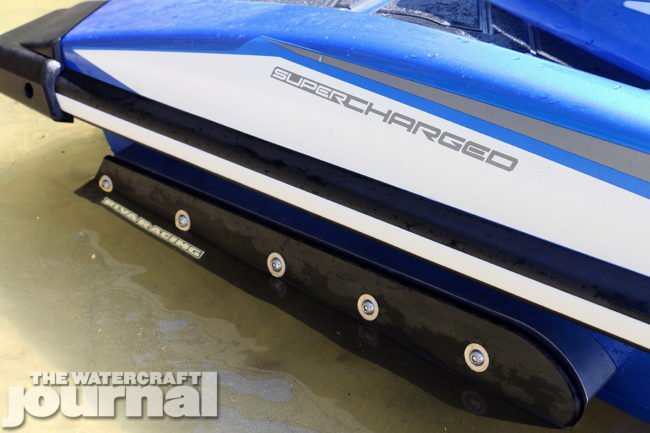
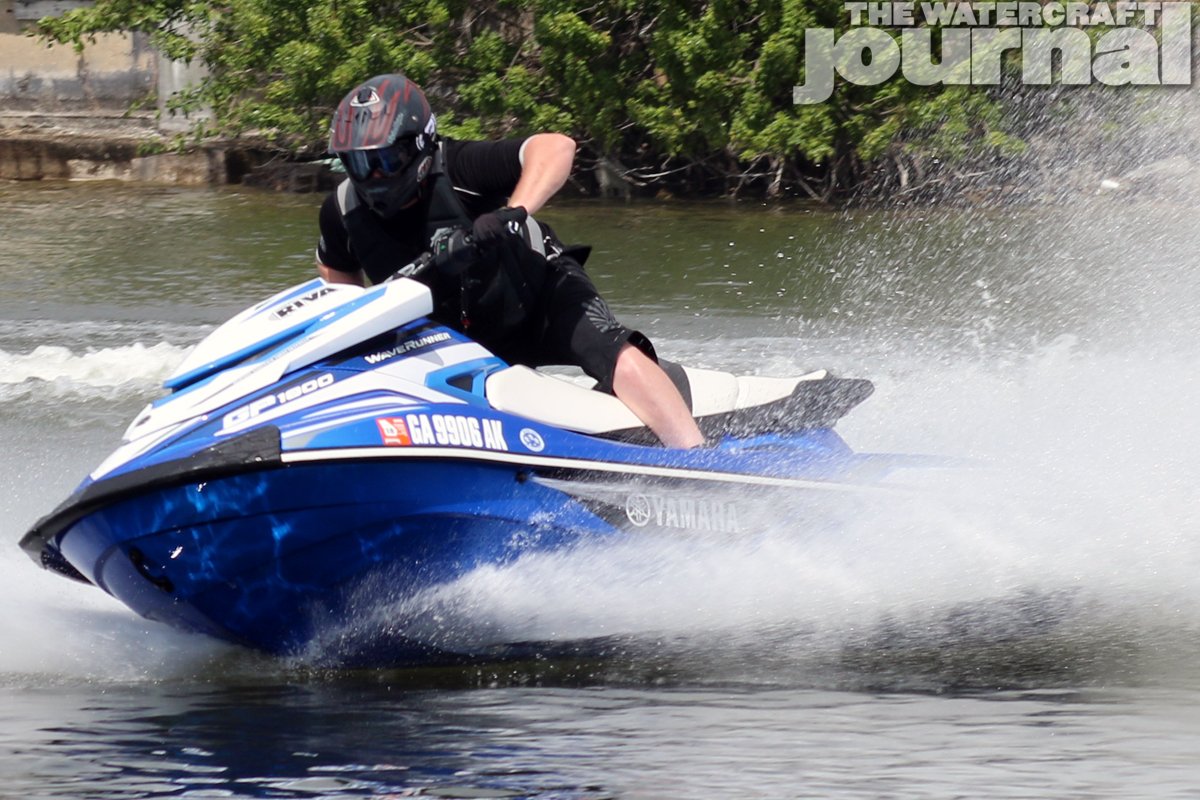
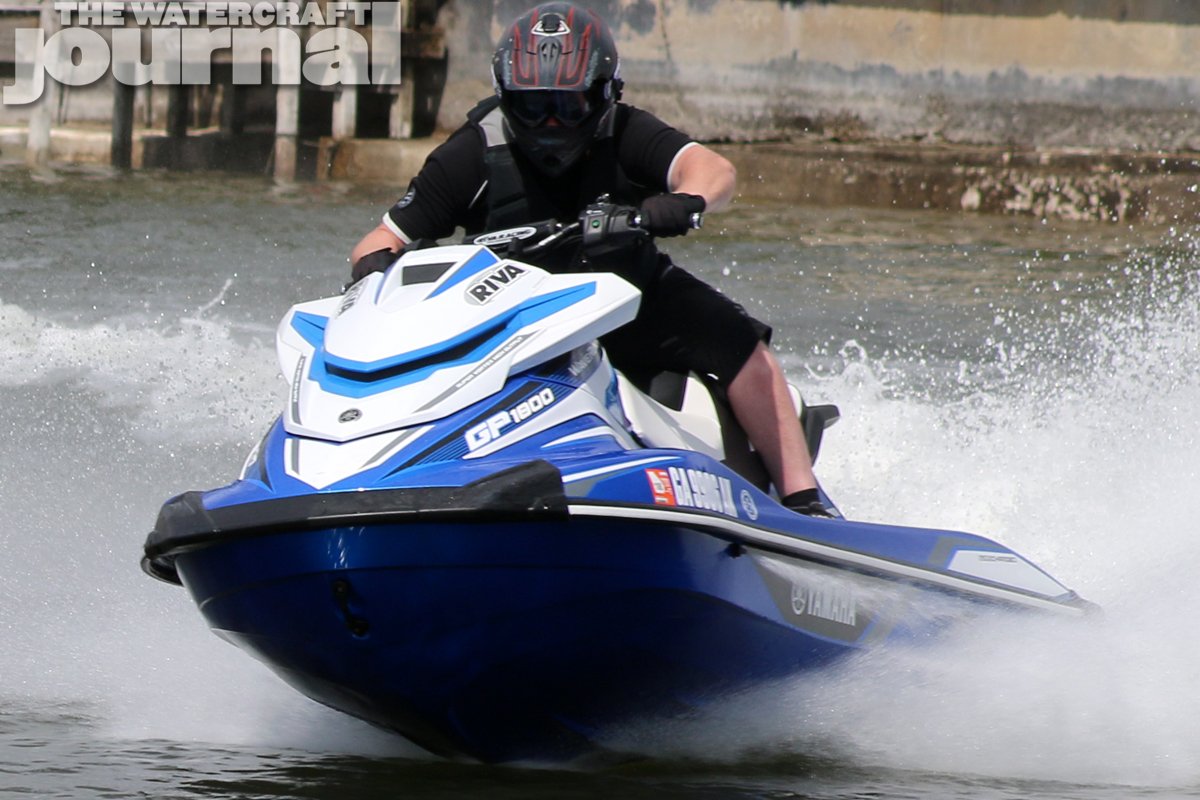
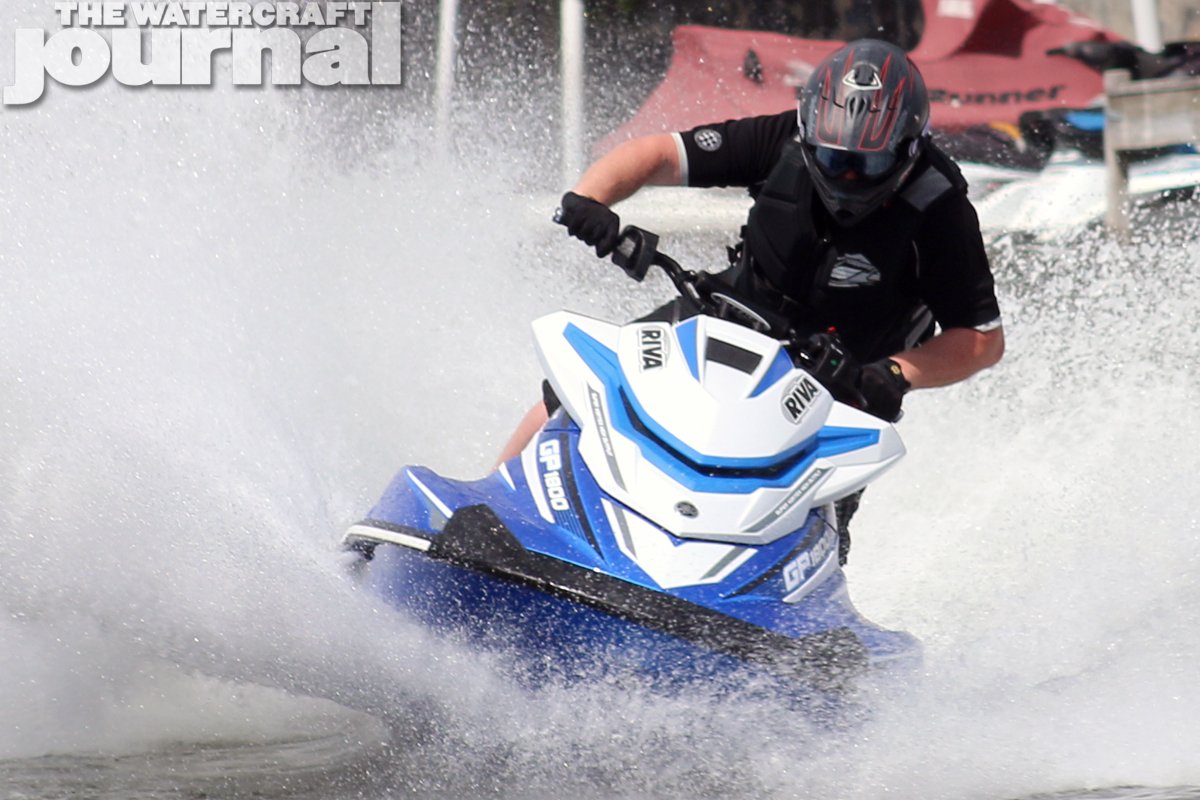
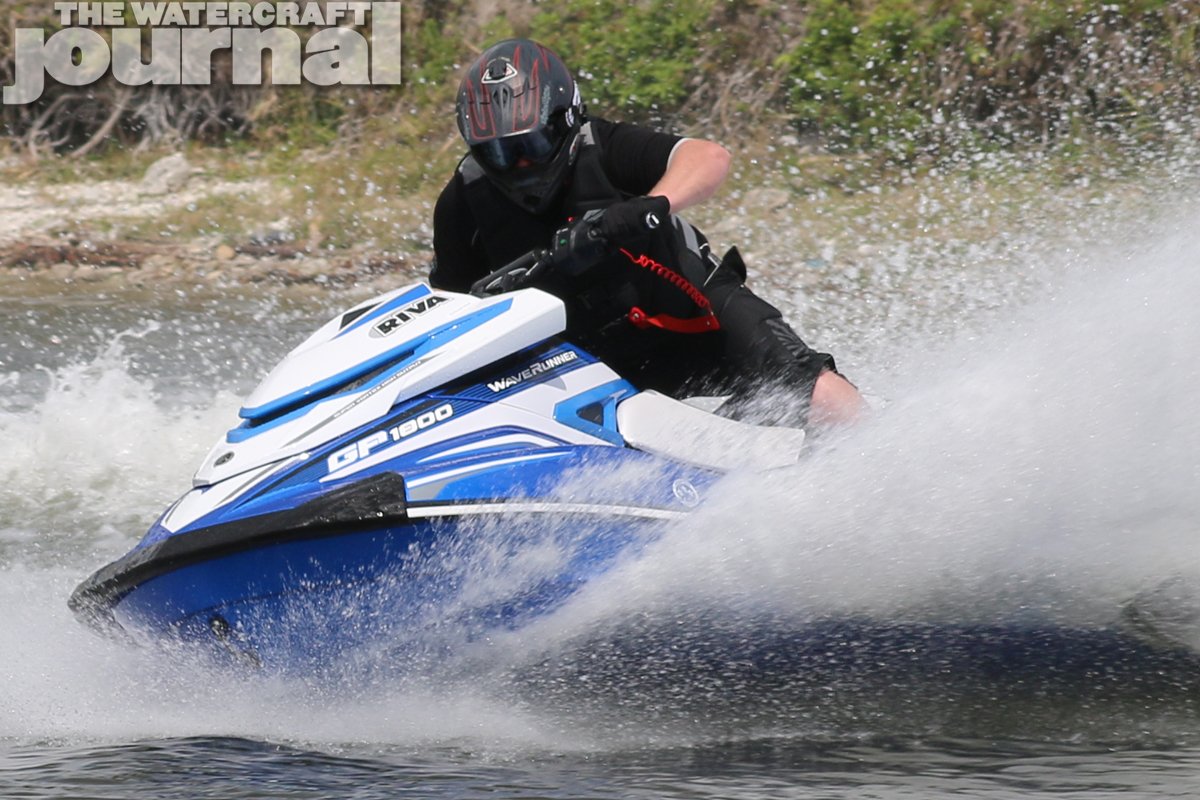
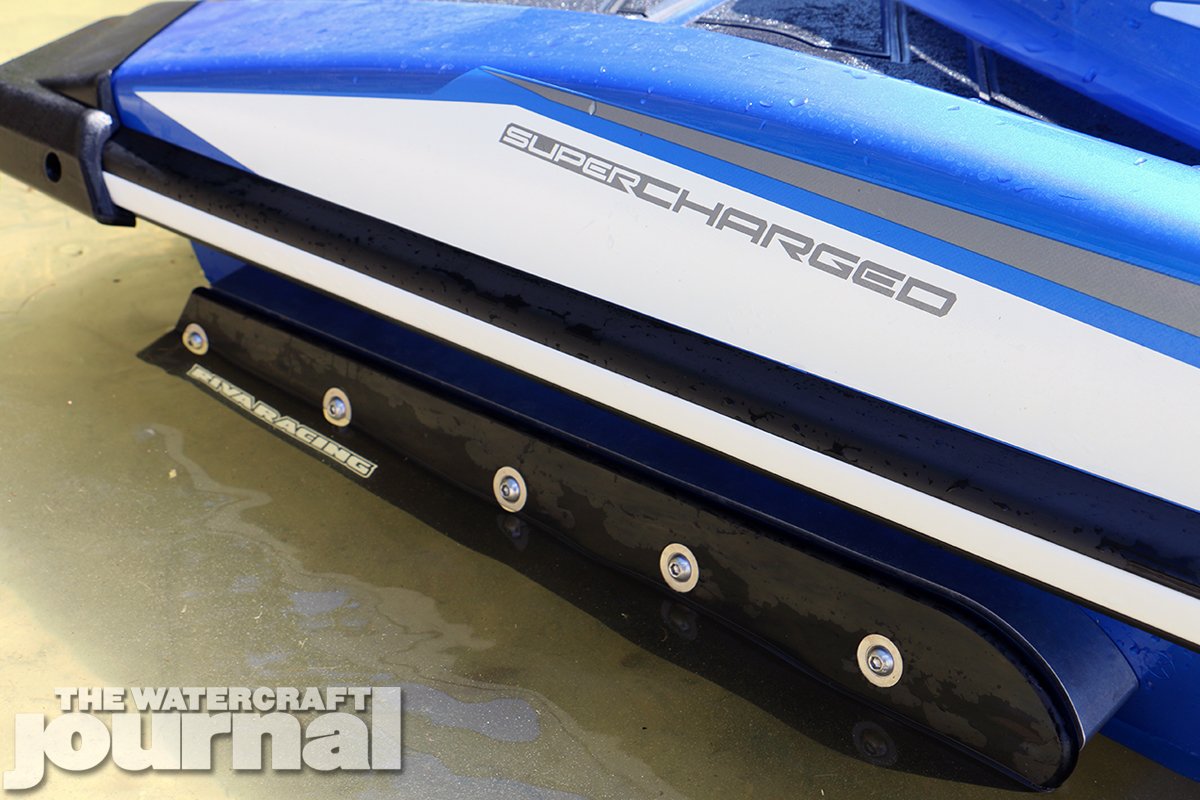
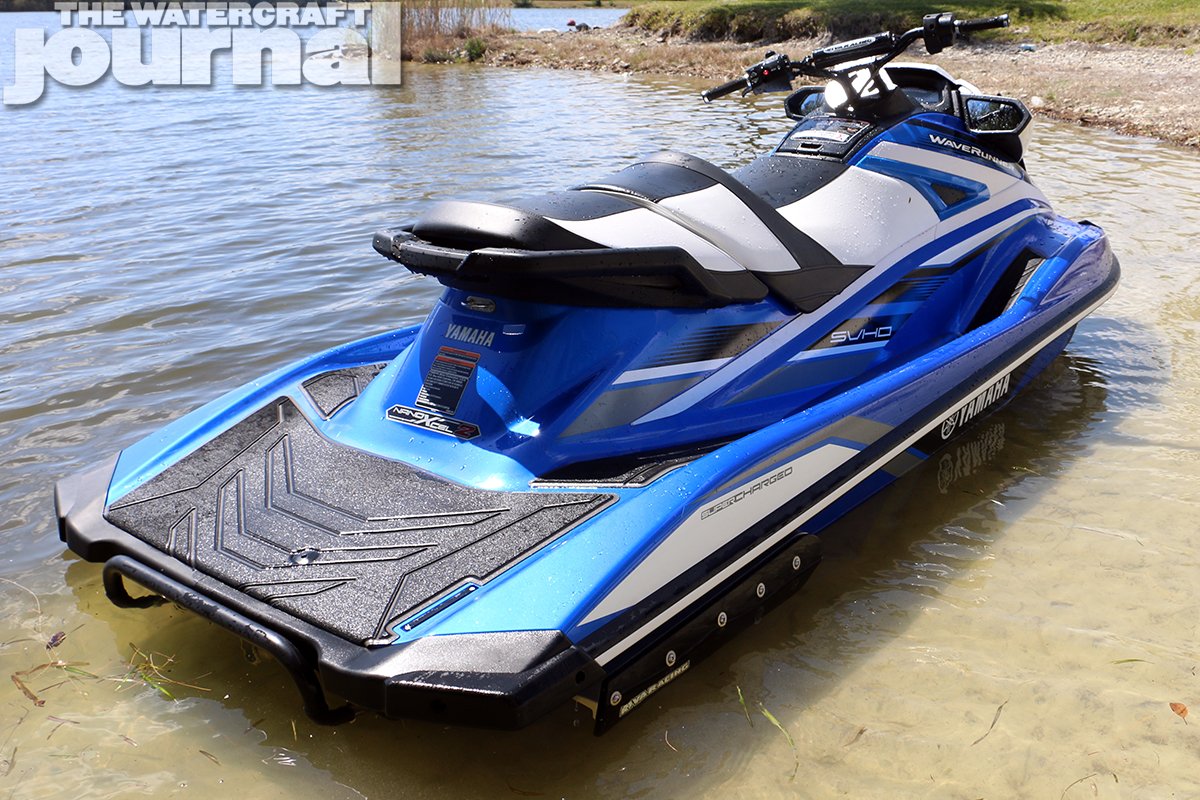
The end result (after months of tuning at RIVA’s private test lake) was a package that delivered a blistering 83mph at 8,650rpm. The RIVA Racing 2017 Yamaha GP1800 IJSBA Stock Class Race Kit consists of a RIVA MaptunerX Yamaha 1.8L Bundle (PT# RY110SC-B), a RIVA Yamaha GP1800 Power Filter Kit (PT# RY13110), RIVA Billet Pump Strainer for Yamaha SVHO (PT# RY1013-WS-80), a RIVA Yamaha GP1800/VXR/VXS Top-Loader Intake Grate (PT# RY22110), a Solas Yamaha 160mm Concord 13/18 Impeller (PT# YV-CD-13/18), a RIVA Yamaha GP1800 Pump Seal Kit (PT# RY25110), and a RIVA Yamaha GP1800/VXR/VXS Performance Ride Plate (PT# RY21110). And if you’re wondering about the sponsons, those aren’t quite done yet. The pair that we tested this day were prototypes, and while the pictures show a finished product, they were far from it. “These will be our most aggressive sponsons we’ve ever made,” RIVA’s Dave Bamdas beamed. “We’re still working on getting them ready for market, so it’ll be a few more months.”
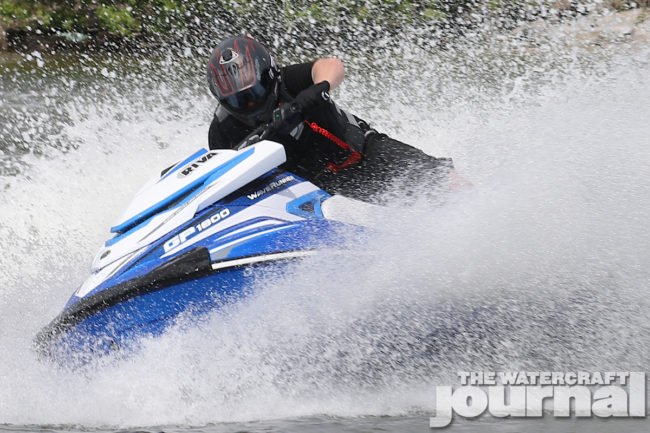
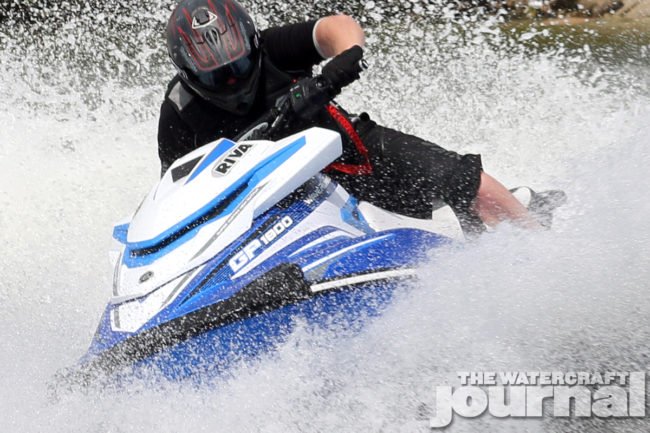
While the finished blades won’t provide the Stock class kit any more top speed, the promised gains in handling (particularly in ocean and severely choppy water) are substantial. “They’re pretty remarkable,” Bamdas continued to tease. “We’ve never made a sponson like this. We’re really excited to hear the feedback.” For what it’s worth, the “temporary” sponsons we tested with were stellar. Initial bite and full throttle lateral-g turns revealed a machine that leaned securely as if hard-mounted to a roller coaster rail, turning incredibly flat in corners, giving the rider a body-torsion inducing slot-car sensation. Regardless of body weight distribution, the tail refused to break free, and top speed through a variety of surfaces remained true and predictable – almost eerily so. It was, and with no need for hyperbole, more watercraft than we could handle.
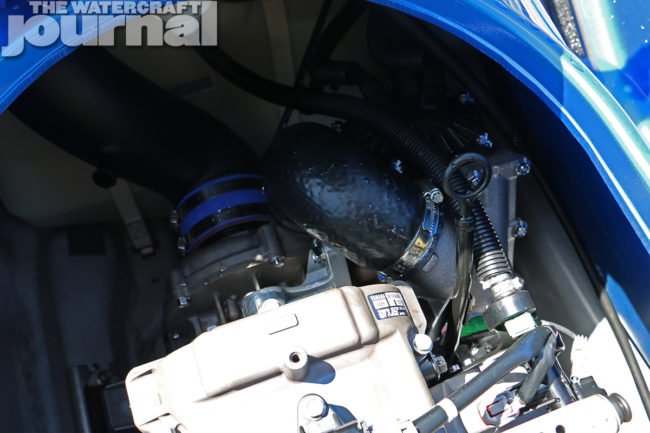
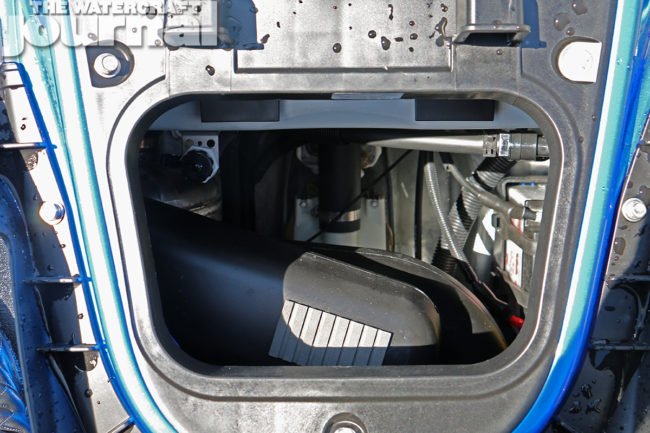
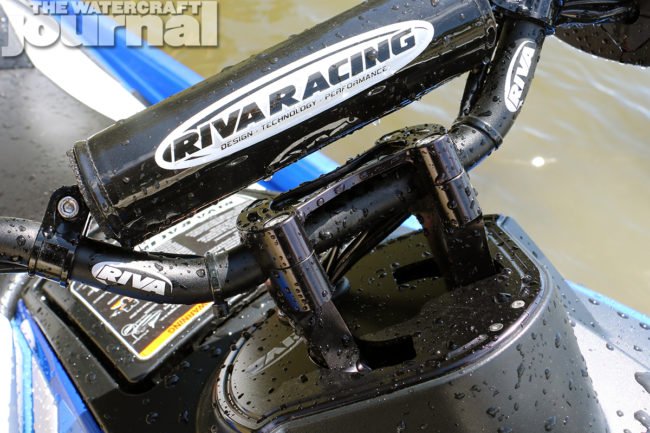
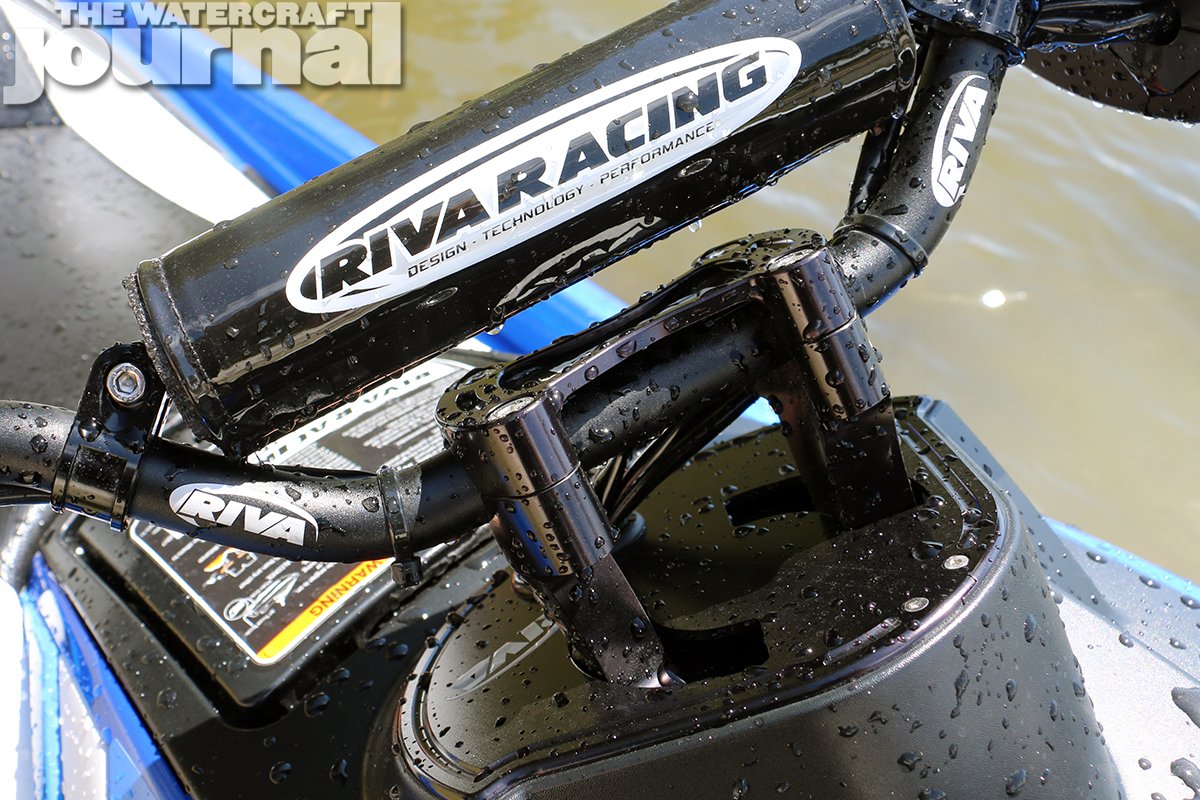
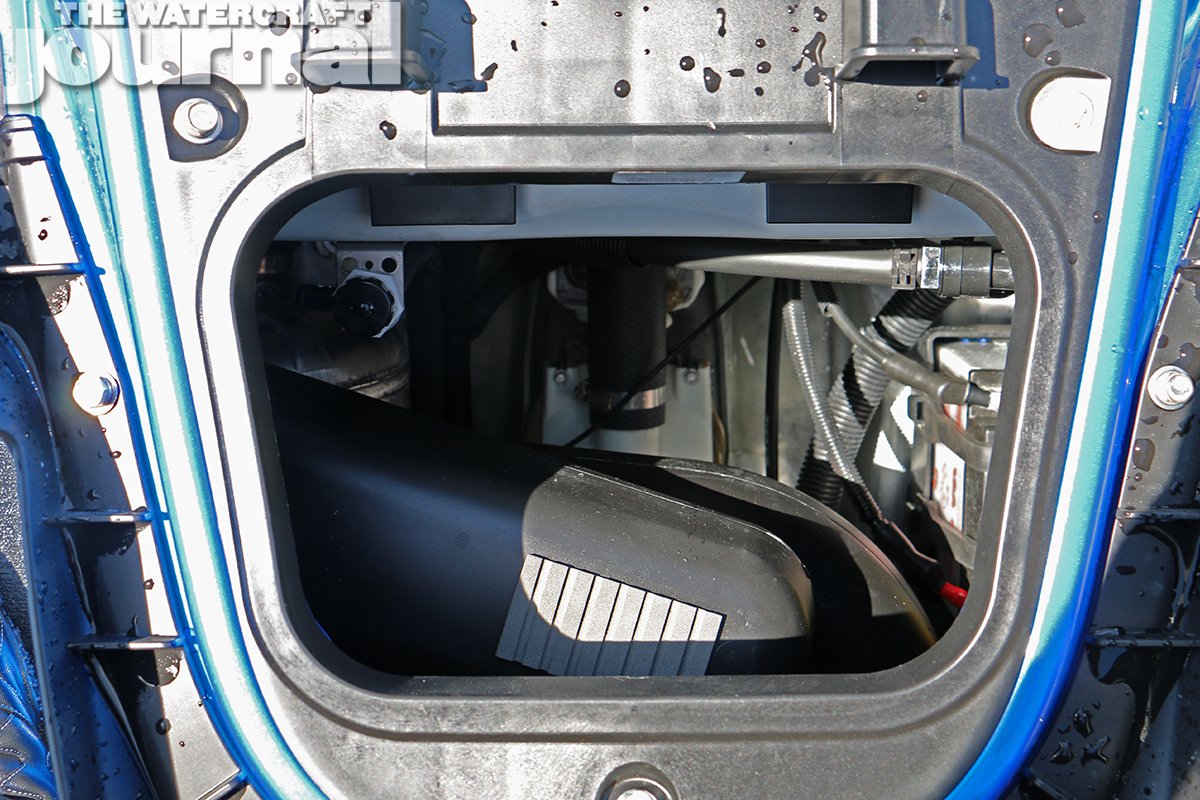
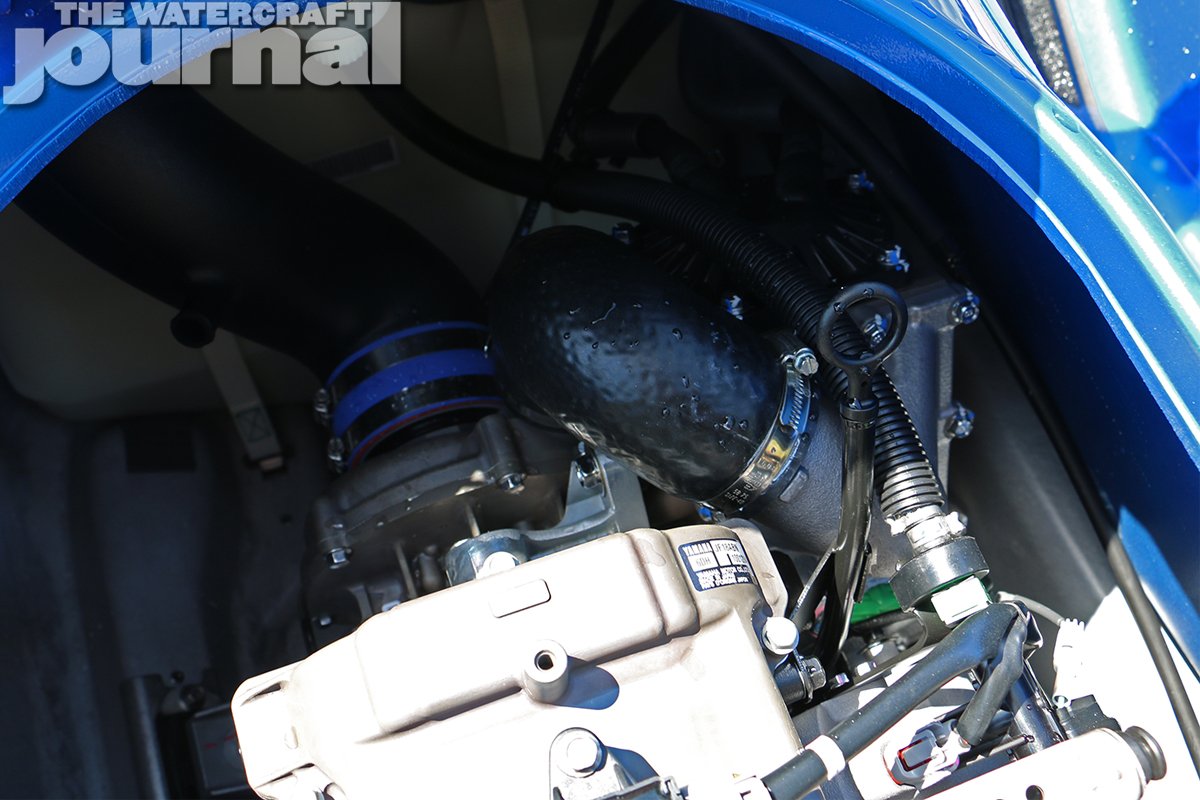
Beneath the seat, only the cold air induction kit and the reflashed ECU (via a MaptunerX handheld tuner)converted the once civilian-friendly GP1800 into an unbridled beast. Power response is immediate – not neck-snapping but linear, pulling up hard and consistent and climbing deep into the 80s. RIVA cautions that the limitations of Stock class prohibit the use of a RIVA SVHO Engine Cooling Upgrade Kit and RIVA Power Cooler Kit so the recreational rider will want to spring for these to ensure maximum engine life. Additionally, the eagle-eyed reader will note the RIVA Yamaha GP1800/VXR/VXS Pro-Series Steering System. That too isn’t part of the RIVA IJSBA Stock class kit, but makes a considerable difference in rider input and steering response.
Nearly a decade ago, we labored for 2 days under the blazing Arizona sun to push a then-new ’08 Yamaha FZR to 80 miles-per-hour. It took well over $8,000 worth of products, an excessive amount of trial testing and long nights of invasive procedures and fuel curve tweaking, but we accomplished our goal: 80.1mph. Today, with less than $2,300 in bolt-on parts that are easily installed on a Saturday in the comfort of your own garage, speeds handily eclipsing that ancient achievement can be had thanks to RIVA Racing. Considering the GP’s $13,999 MSRP (undercutting the FZR’s $14,799 price tag by $800) and RIVA’s listed kit price of $2,272.35, never before has a race-ready, world championship-worthy machine been so dramatically affordable to the layman. Arming civilians with such a weapon would almost be considered irresponsible were it not so much stinkin’ fun.
As The Watercraft Journal continues to grow in both readership and worldwide reach year-after-year, we have been able to provide its supporting advertisers the single-greatest access to self-identified personal watercraft enthusiasts, and with it new and returning customers that might not have come to purchase their products and/or services otherwise. (This is the exact premise to each of our updates of By The Numbers published on the first of every month.) And as we recently announced new and aggressive efforts to assist regional dealerships to reach local buyers, we also have big news for those on a far wider range:
Earlier this month, The Watercraft Journal partnered with the world’s largest online marketplace for PWCs – be them used or new – PWC Trader. Together, we now offer you, the readers of The Watercraft Journal our own customized access portal to PWC Trader’s massive selection of “new and used stand-up and multi-seat PWC models to experience the thrill of the water” through our all-new Classifieds section. The search engine is incredibly easy to navigate, providing users best service possible with immediate access to PWC Trader’s massive selection of watercraft and boats.
Last year, PWC Trader welcomed 1.7 million visitors and together we look to combine our total reach to help get more PWC enthusiasts out on the water! How? You can look forward to seeing many segments of The Watercraft Journal’s industry-leading editorial content on PWC Trader in the coming weeks and months, as well as in newsletters and email blasts. We at The Watercraft Journal are always looking for ways to make our publication a better resource for you and by partnering with PWC Trader we see a very bright future ahead of us! Make sure to check it out and give our new Classifieds section a look HERE!



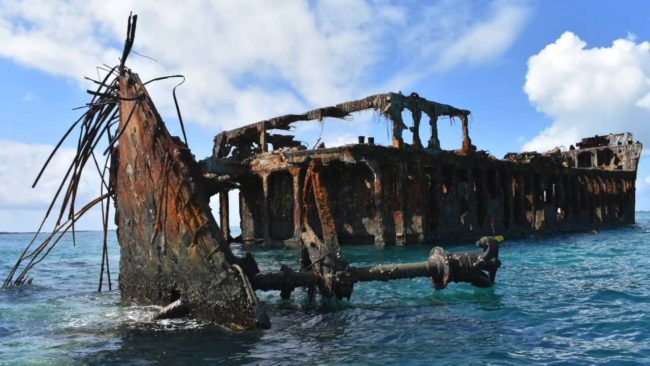
















 This past weekend a PWC rider managed to park his Kawasaki Ultra 310R JetSki nearly a football field’s length up the side of Cottage Point’s mountain slope. Located in Broken Bay, just north of Sydney on the coast of New South Wales, Cottage Point is a popular spot for all sorts of boating, and as illustrated, all sorts of boaters. Thankfully the rider was able to eject before running into the rocky shoreline and walk away uninjured, not such cannot be said for his bright green Kawasaki, which scaled the hillside, bouncing over boulders and snapping a tree in half.



 Be sure to mark Saturday, February 24th, 2018 on your calendars! That’s the date that has been set for the