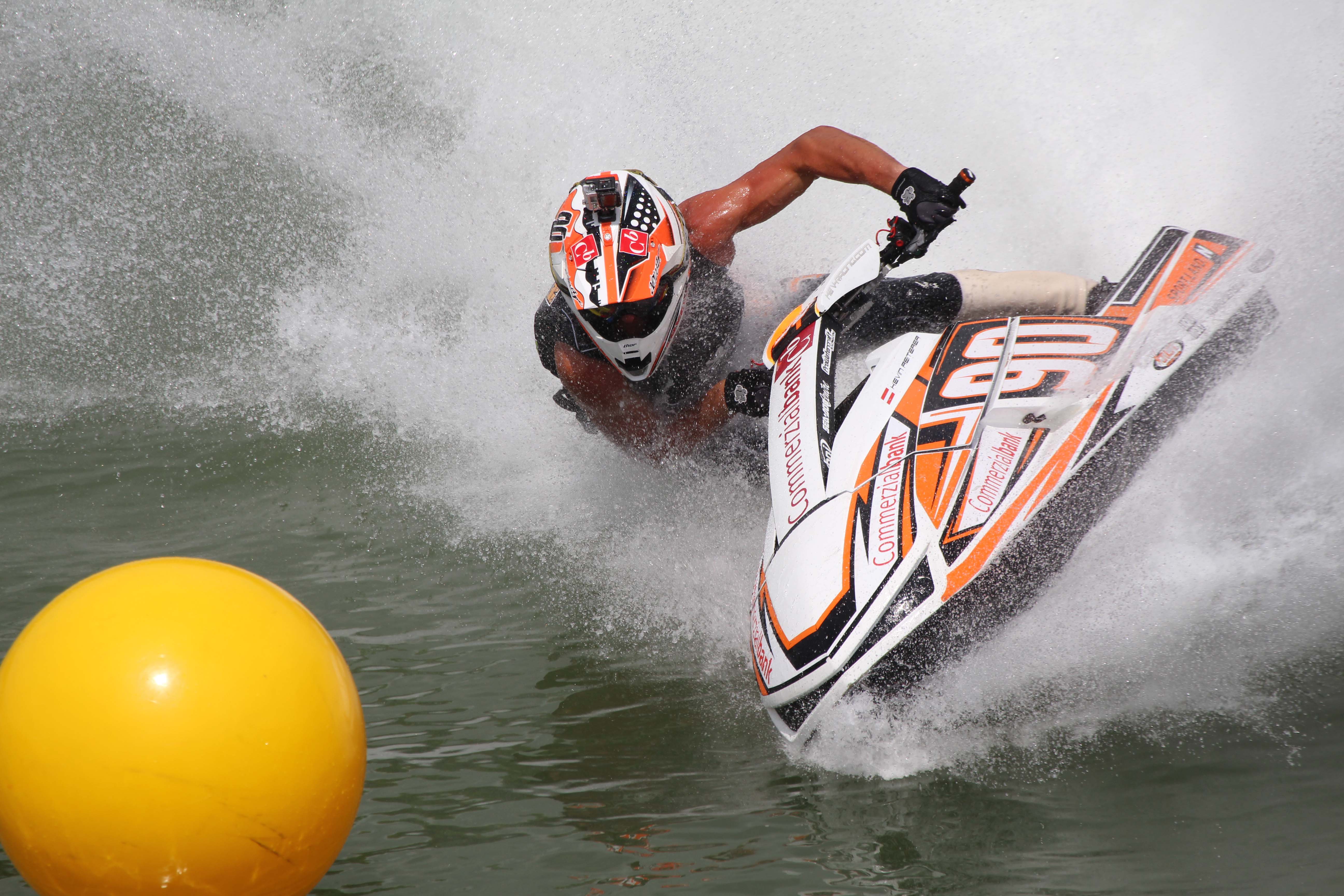
Scornaienchi was practicing for the upcoming IJSBA World Finals at Body Beach when his stand-up bucked, ejecting Scornaienchi over the handlebars about 60 miles per hour, landing on his head and upper-back. Almost immediately, he lost sensation in his limbs and struggled to float. “After managing to roll from his side to his back, the 55-year-old said he felt himself going underwater and thought he was going to drown,” wrote the article.
“About 20 feet away,” it continues, “Kole Cramer, a freshman at Lake Havasu High School, saw the accident take place and rushed to Scornaienchi’s aid. After using the sit-down PWC to reach Scornaienchi, Kole jumped in, picked up the 55-year-old’s head above water and stayed with him until help arrived.” Kole was onsite the same day by sheer coincidence, Amy Cramer, Kole’s mother, said. “Kole’s father Lance was fixing a friend’s personal watercraft and Kole decided to take it on a test drive. That was when he saw Scornaienchi fly off his PWC and hurried to help.”
Thankfully, 55-year-old Scornaienchi – who is currently at Havasu Regional Medical Center – has regained feeling in his legs and minimal feeling in his arms, and is continuing to improve. Although unable to compete as planned, Scornaienchi wishes to watch Kole, 14, who qualified for his third consecutive IJSBA World Finals in the Junior 13-15 Lites, Amateur Ski Lites and Amateur Ski Mod races.
Obviously, this was met with some curiosity if not outright displeasure as this move only narrows the field of competitive vehicles to participate in these growing classes; consequently prodding several vociferous forum members to question what exactly the sanctioning body has in store for the lauded standup’s return. Nevertheless, the IJSBA has yet to homologate the ’17 SX-R, so there’s nothing to give credibility to the conspiracy theory. Maybe we just like drumming up drama on a slow news day.
Here’s the original press release: IJSBA is giving notice that some previously homologated Personal Watercraft shall have their eligibility restricted effective December 31, 2016.
Beginning January 1, 2017 the following units will no longer be eligible for Ski Stock Classes: Polaris Octane Hydrospace S4 Hydrospace/Benelli S8
Beginning January 1, 2017 the following units will no longer be eligible for Ski Limited Classes: Polaris Octane Hydrospace/Benelli S8
Beginning January 1, 2018 the following units will no longer be eligible for Ski Limited Classes: Hydrospace S4
Hydrospace S4 and Polaris Octane PWC will remain eligible for Ski Modified categories.
For questions regarding this notice, please email [email protected].
Change is often met with resistance, especially big change. With the announcement of the 2017 Yamaha WaveRunner lineup, news that the FZ series (FZR and FZS, respectively) were being retired and replaced with a whole new craft based upon the existing VXR architecture was simply too much for many to handle. Surprisingly, the announcement spurred a rash of online backlash. And why not? The FZR is a well-established performance platform, with literally several hundred podium finishes over its illustrious 8 year run. Not only that, but aesthetically, the FZ models have remained some of the most favored on the market, with race car-inspired analog gauges, telescoping steering and muscular curves.
Unfortunately, the industry crash in 2008/9 was enough for Yamaha to prescribe a time of death for the FZ. Back at the revised VX’s introduction in 2015, Yamaha Product Manager Scott Watkins explained, “We made the new VX to do pretty much everything in case we had to reduce the line down to one platform.” At the time he also hinted at the future of the hull, saying, “We made the VX to accept all of our engines. We’ve even got one with a SVHO. It’s bad ass.” While the idea of a SVHO-powered VXR was tempting (we even published rumors earlier this year that the FZ series were to be phased out, replaced by a VX-based machine), we didn’t think to connect Watkins nod to what Yamaha revealed last month.
The central problem with the FZ series was that even in light of Yamaha’s use of its stacked composite bonded NanoXcel2 hull and deck material, the FZR (and FZS) came in at a dry weight of 791-pounds. Add to that the weight of a single rider, a half-tank of fuel and 5 pounds of gear, the FZR tipped the scales at 1,073 lbs. If Yamaha was going to secure future championships without introducing a 300-horsepower Super-Duper Vortex High Output (SDVHO) [and we want a commission rate for use of that name – Ed.], the route to take was improving their overall power-to-weight ratio. And anyone who has paid attention to Yamaha’s ad materials and T-shirts can attest, the company sure likes to win races.
Making sure that Yamaha’s replacement for the FZ maintained both a top level consistency in its manufacturing as well as superior weight savings is Yamaha’s proprietary two-part compression mold system that uses heat and pressure to compress the “High SMC Compression FRP” into a hull. Watkins detailed the compression mold process: “All WaveRunners are manufactured in a High Compression Molding process. That results in better fit and finish; a smooth, paintable finish (giving us those automotive-grade metallic finishes); controlled tolerances and consistent results each and every time. And the process creates no VOC emissions.”
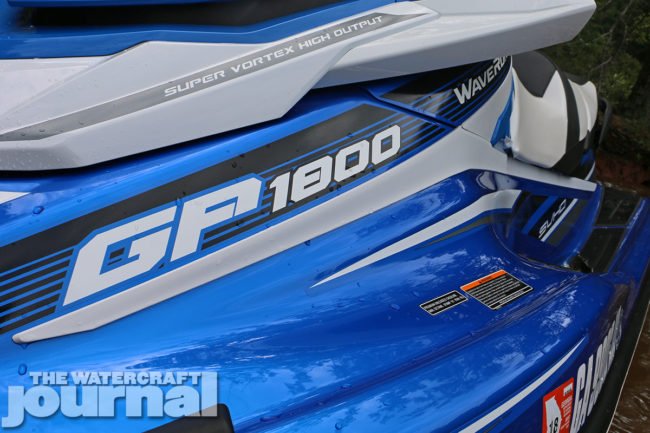
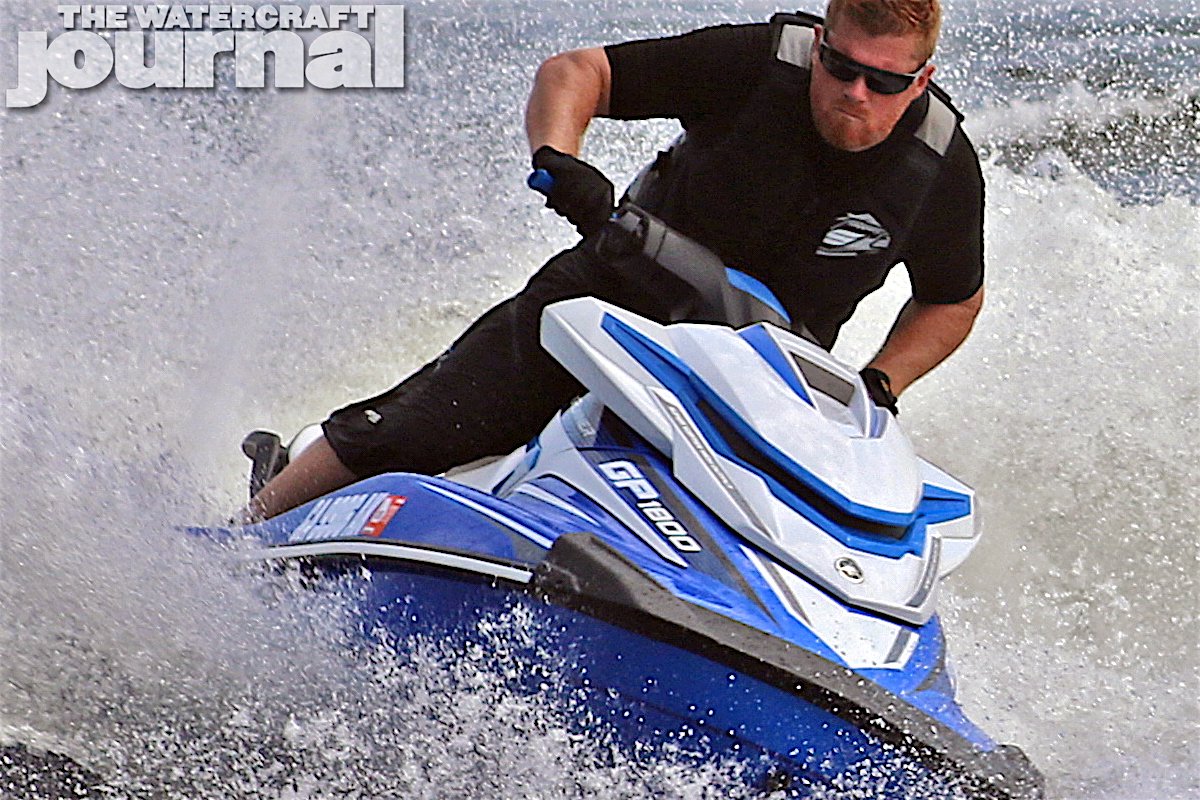
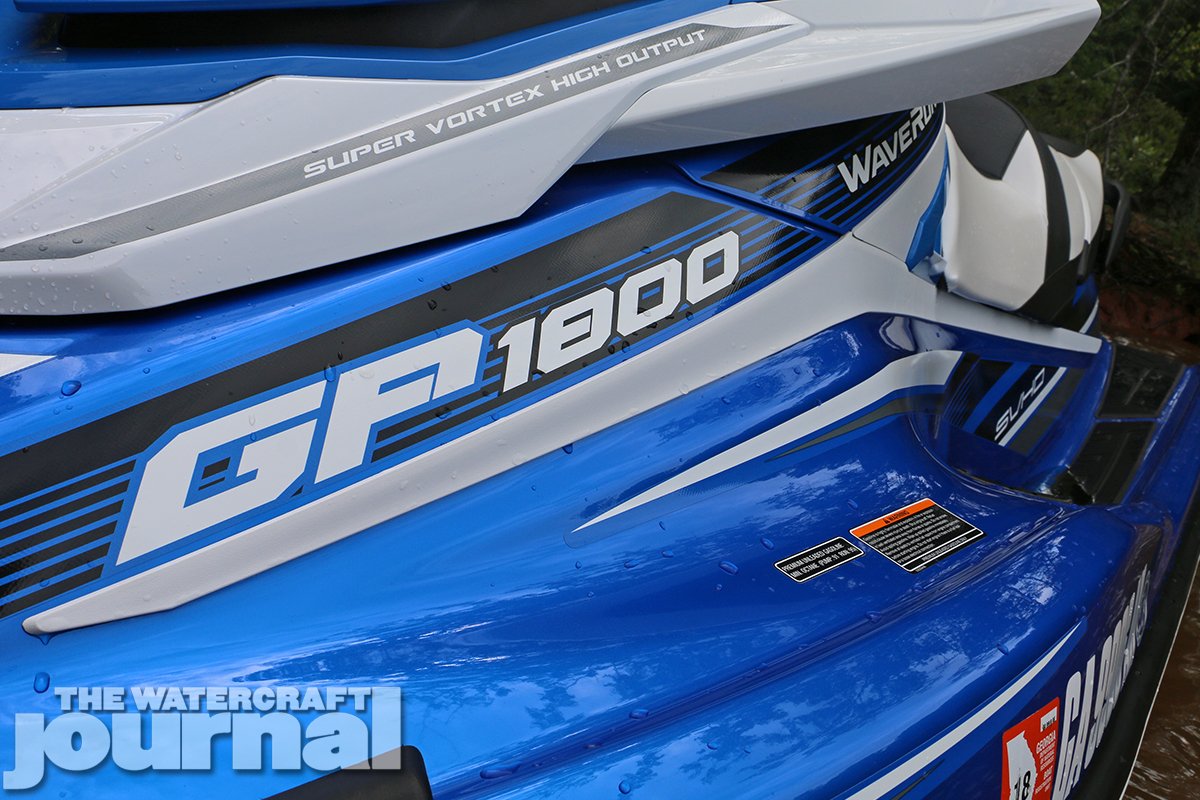
This process opened Yamaha to develop its NanoXcel2 hulls and decks (first introduced two years ago, supplanting its previous NanoXcel as the go-to performance level material), which not only reduce total weight, but also strengthen the final mold’s bond and tensile strength (that over traditional, or common SMC composites). With this, Yamaha created a lighter vessel (18-pounds lighter than the NanoXcel VXR), and added to it its SVHO supercharged 1.8L four-stroke, and 160mm, 8-vein impeller mounted in a 75mm hub, thus giving us the 2017 Yamaha GP1800 WaveRunner.
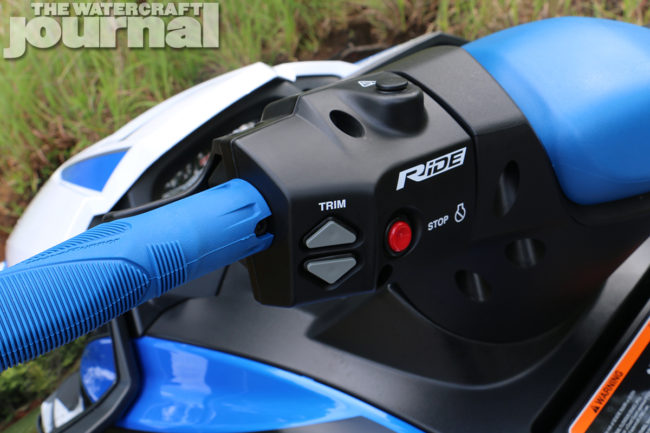
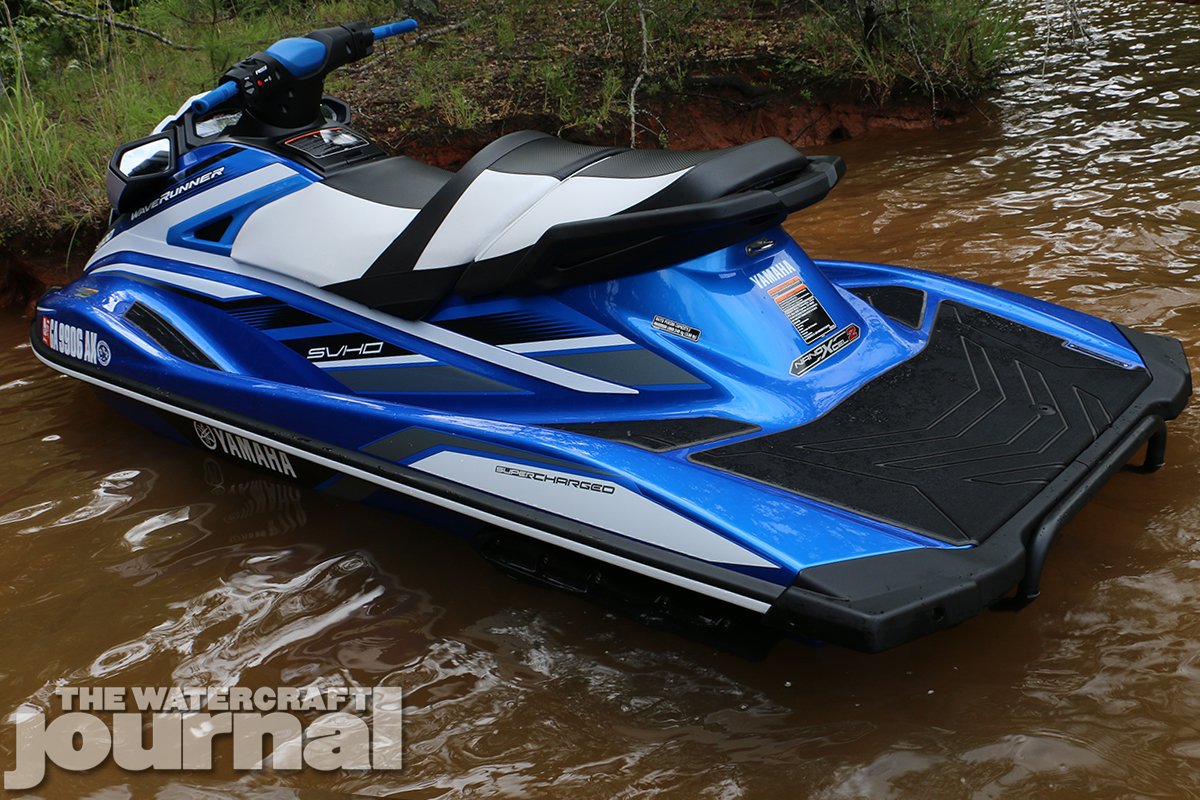
As per the plan, the GP1800 comes in at 769-pounds – 22-pounds less than the FZR – yet with all of the dependable power of the outgoing machine. And unlike the FZR, the GP1800 comes heavily-equipped with features previously unavailable to its predecessor: most notably RiDE, the brand’s own on-the-water brake-and-reverse dual throttle lever system. Next is Yamaha’s quick-response electric trim system, a welcome replacement to the antiquated lock-and-twist manual system that was all-but-impossible to adjust on the fly. Yamaha also tossed in its folding swim step for good measure. More importantly, the GP1800 comes in significantly more affordable than the outgoing FZR; the GP’s $13,999 MSRP handily beating out the FZR’s $14,799 pricetag. So to recap, dramatically improved power-to-weight ratio, more performance features, and $800 cheaper.
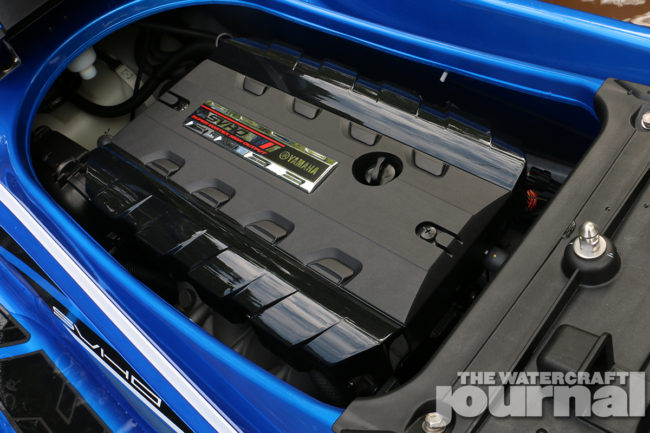
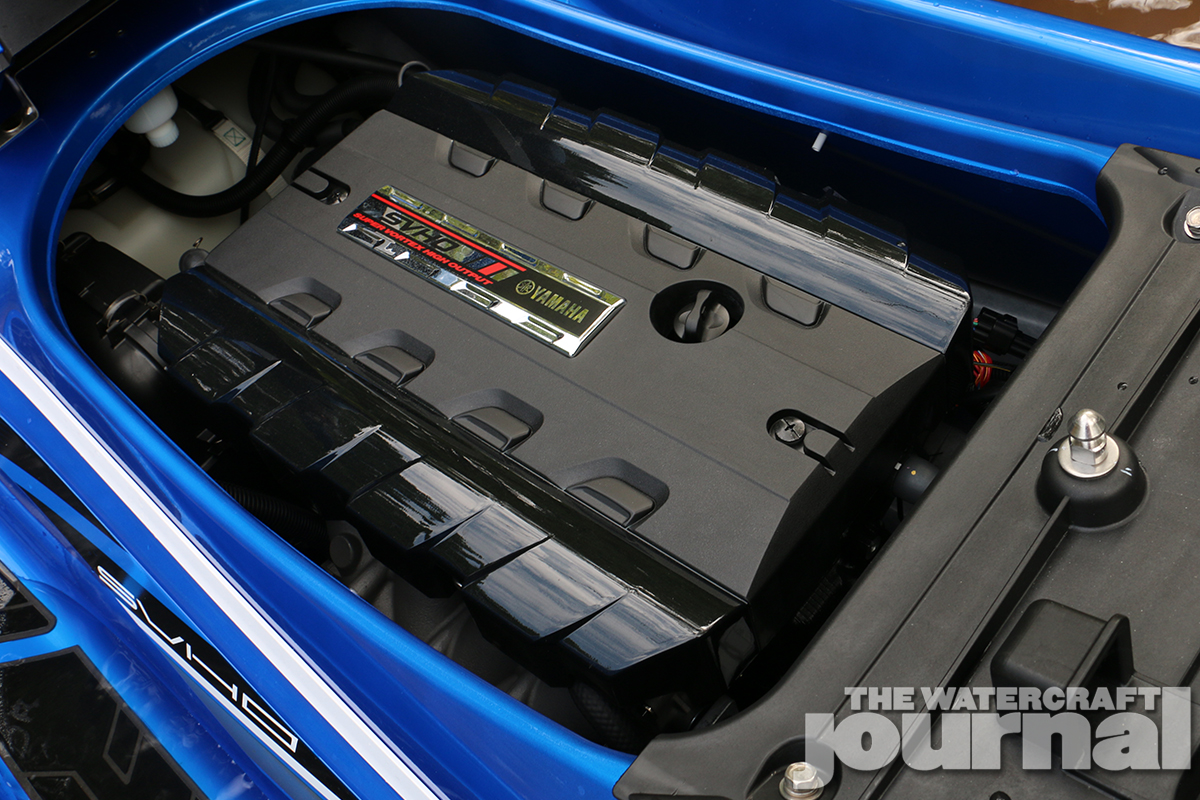
Beneath the race-inspired “cut-and-sew” two-tone, two-piece bench seat is the race-proven Super Vortex High Output (SVHO) supercharged, intercooled four-stroke. Although Yamaha still shies away from advertising official horsepower numbers, in private dyno testing, the powerplant was rated at 265 brake horsepower. No modifications were made to either the 1,812cc engine or intercooler to fit the SVHO into the GP1800 hull, so all of your performance parts that worked for the FZ will apply (save for some cold air kits and exhaust hardware). Although a knock-sensor will keep you from injuring the engine in case your brother-in-law fills the tank with 87 octane, the SVHO prefers the recommended premium fuel.
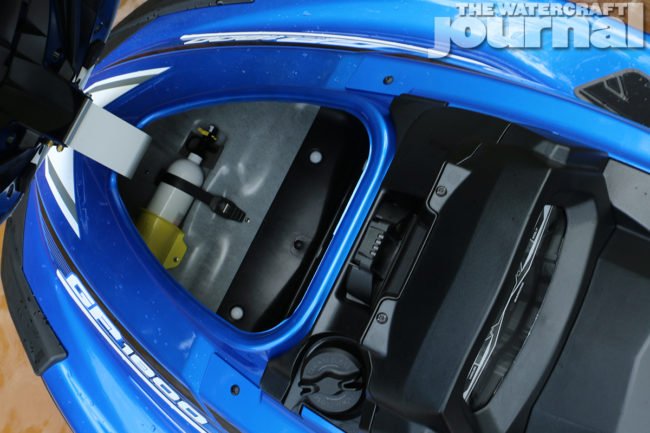
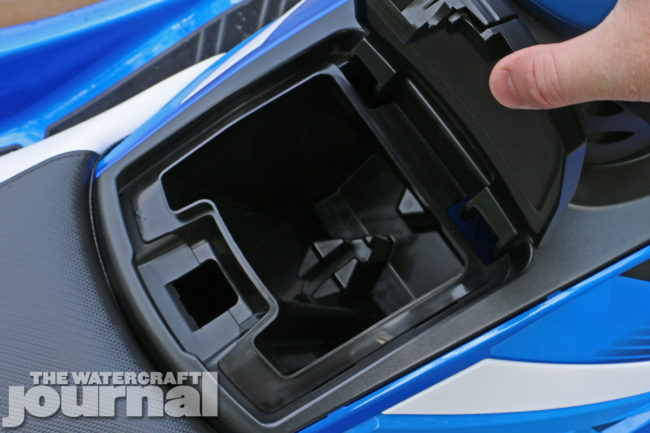
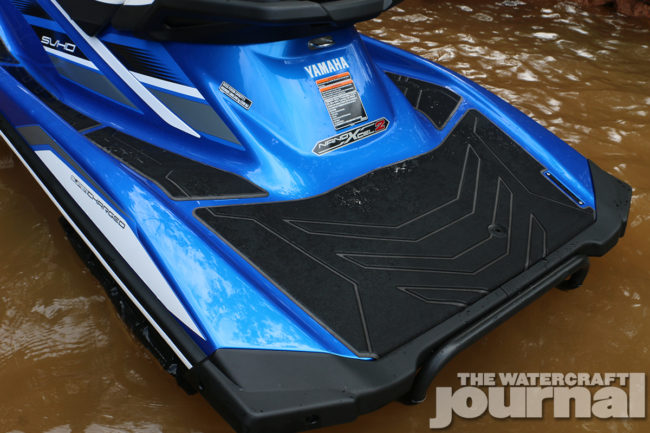
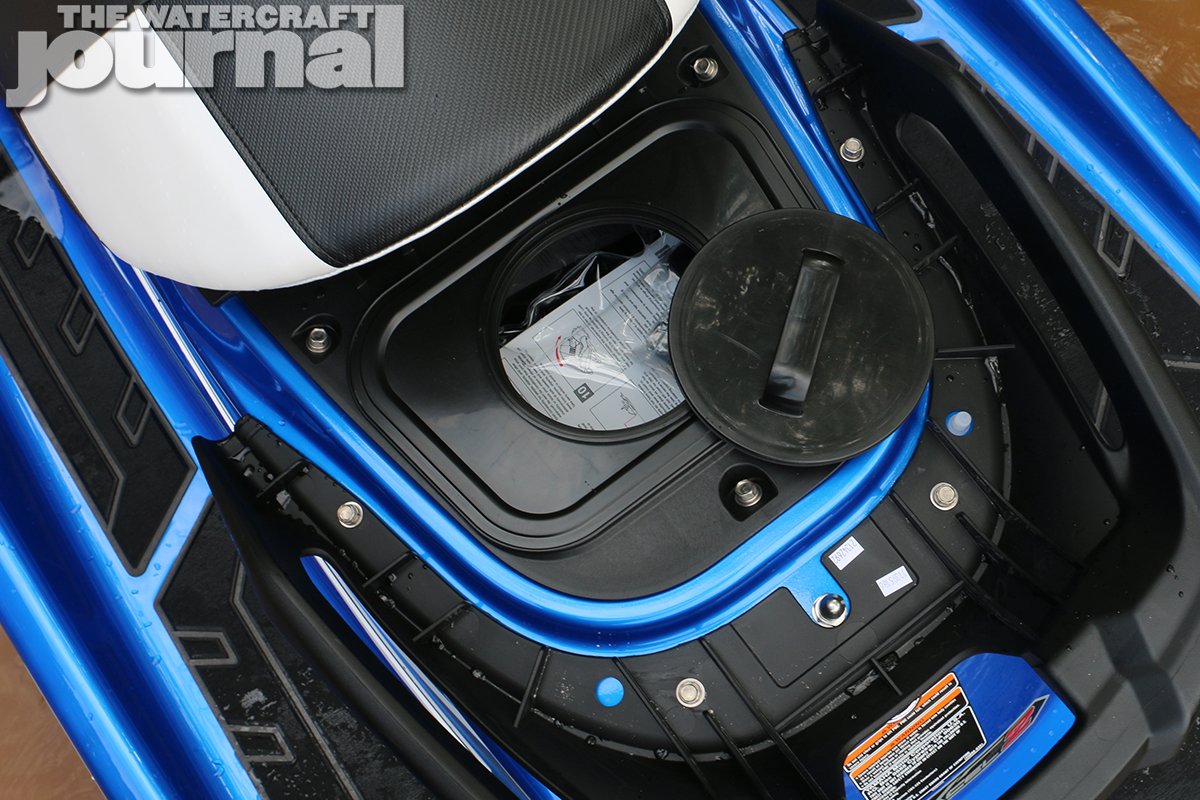
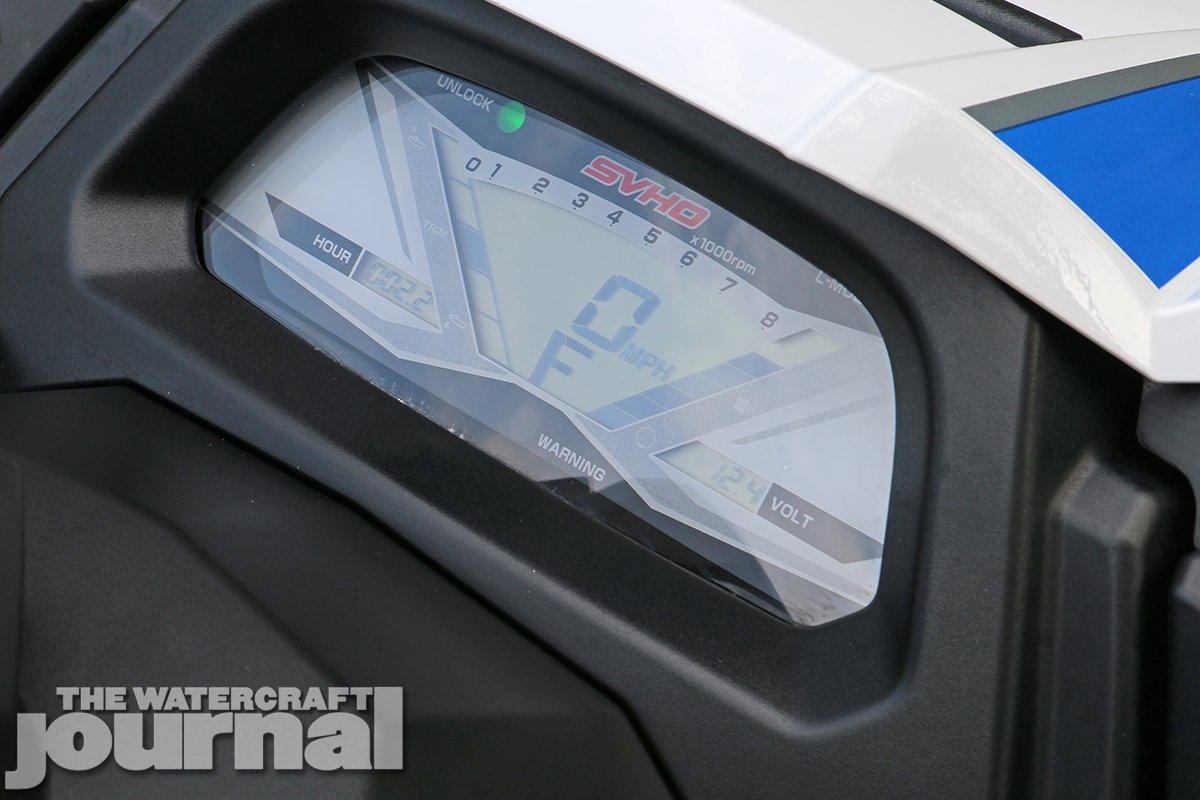
Aesthetically, the GP1800 distinguishes itself from its VX-brethren with two choices of livery: Azure Blue Metallic or Torch Red Metallic. The steering system is fixed like the current VX models, meaning no tilt or telescopic steering, but features fun color-matched pistol-inspired hand grips. New CNC-cut traction mats cover the tray and swim platform. As with all VX models, the GP1800 features a 18.5 gallon fuel cell, 24.6 gallons worth of storage (front stowage, glove box and a removable watertight bin beneath the rear seat), and an automatic bilge pump. Although the LCD “multifunction information center” (ie. gauge cluster) is unique to the GP, it’s a little underwhelming in its lack of a boost gauge and other high-end data that gearheads would love to see.
A slight and almost unnoticeable change was made to Yamaha’s RiDE system, as its features “Traction Control,” but not in the way many performance enthusiasts might want. Instead, RiDE’s Traction Control is a counter measure to ensure that when engaged it doesn’t come on too strong, especially with the SVHO-equipped models. Many found that RiDE – particularly with the supercharged units – packed a heck of a punch and could cavitate the ski even while backing off of a trailer. Now, reversing is smooth and concise, allowing for tight 180′ turns even in a crowded dock space. As a side note, while the GP1800 replaces the FZR and FZS, gone too is the VXS and the final SHO-powered FX models, the 9-year-old engine being retired.
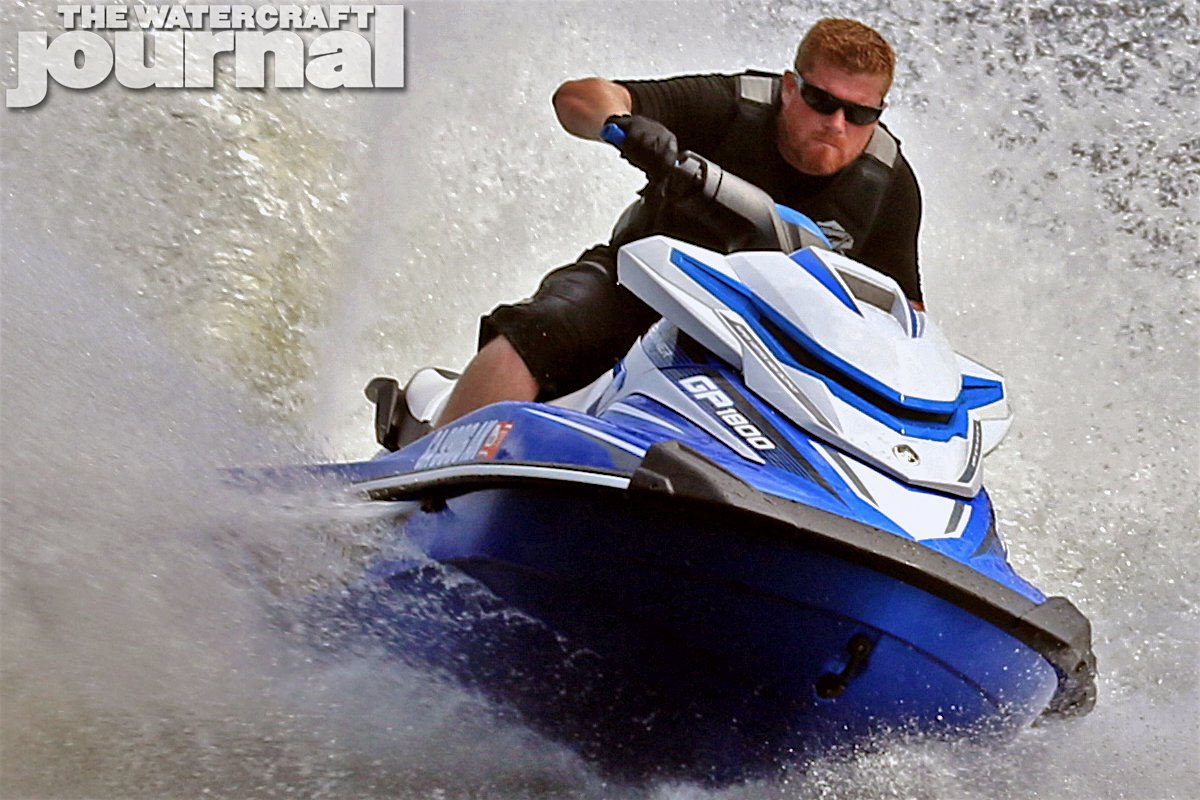
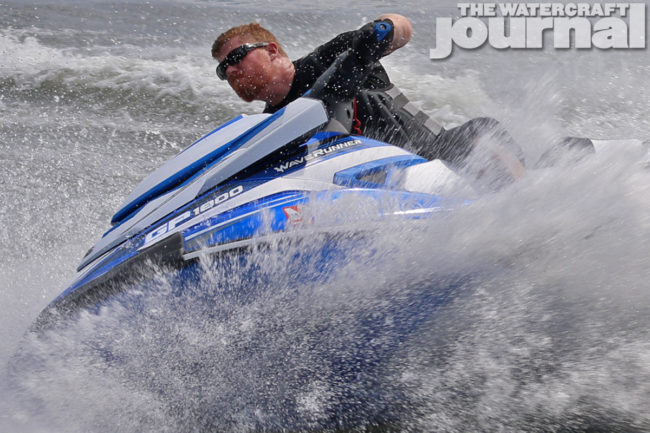
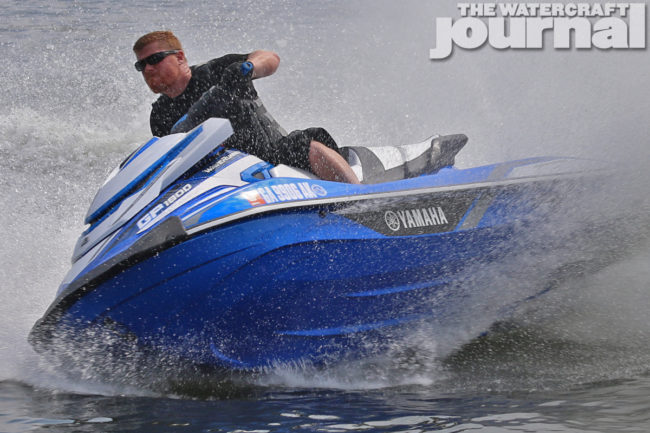
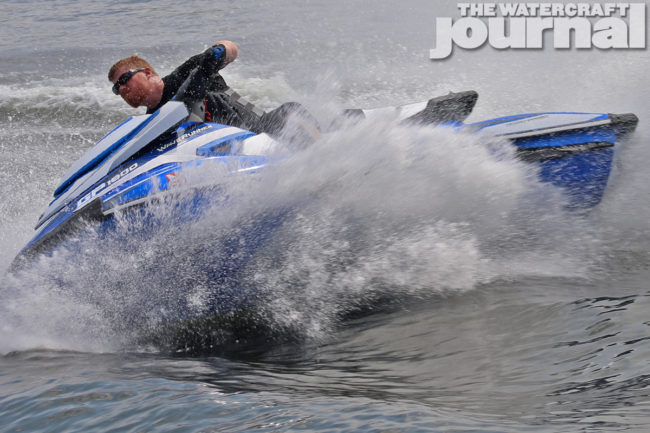
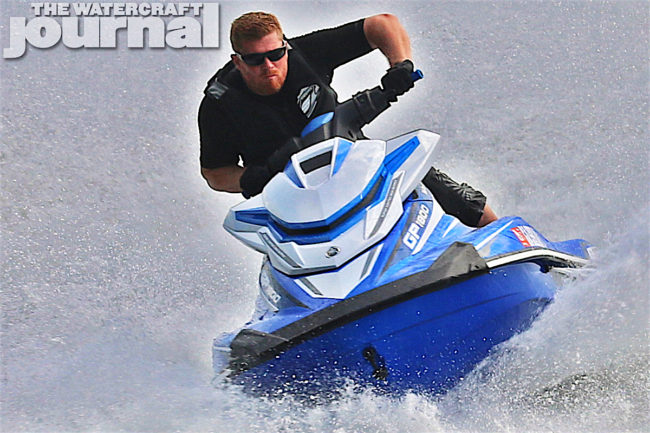
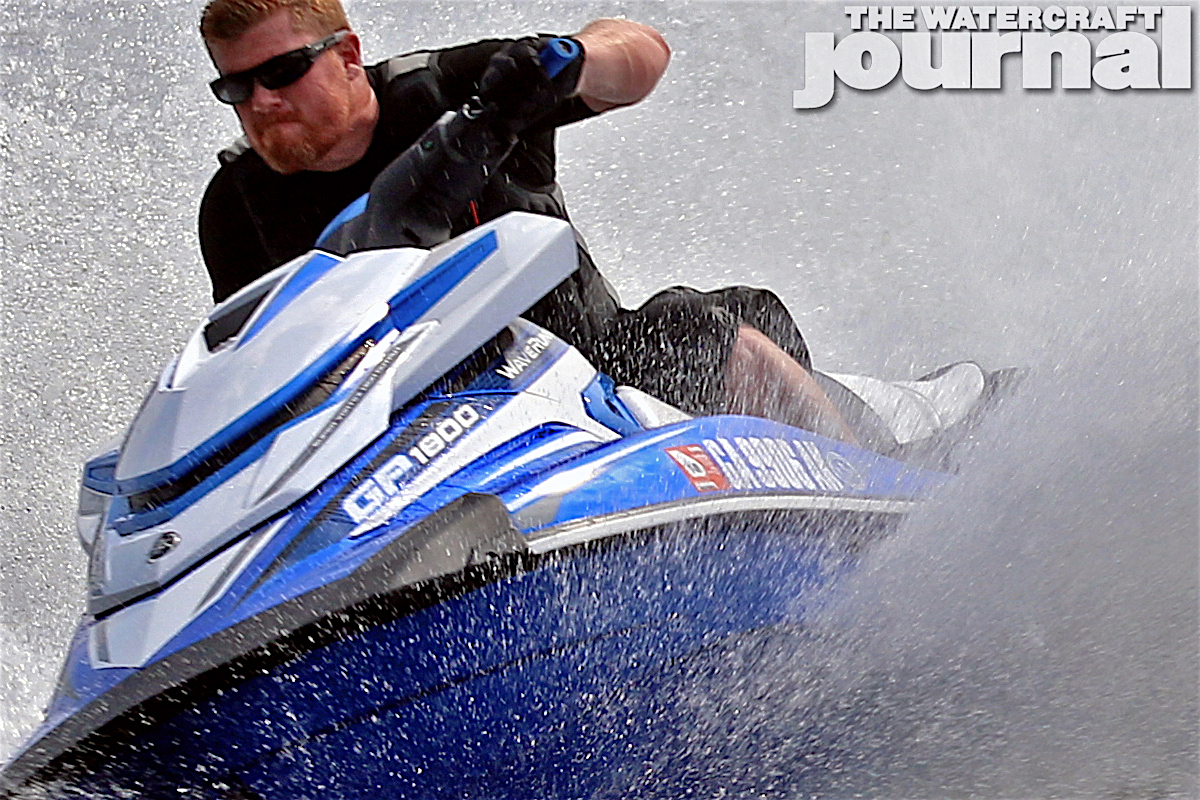
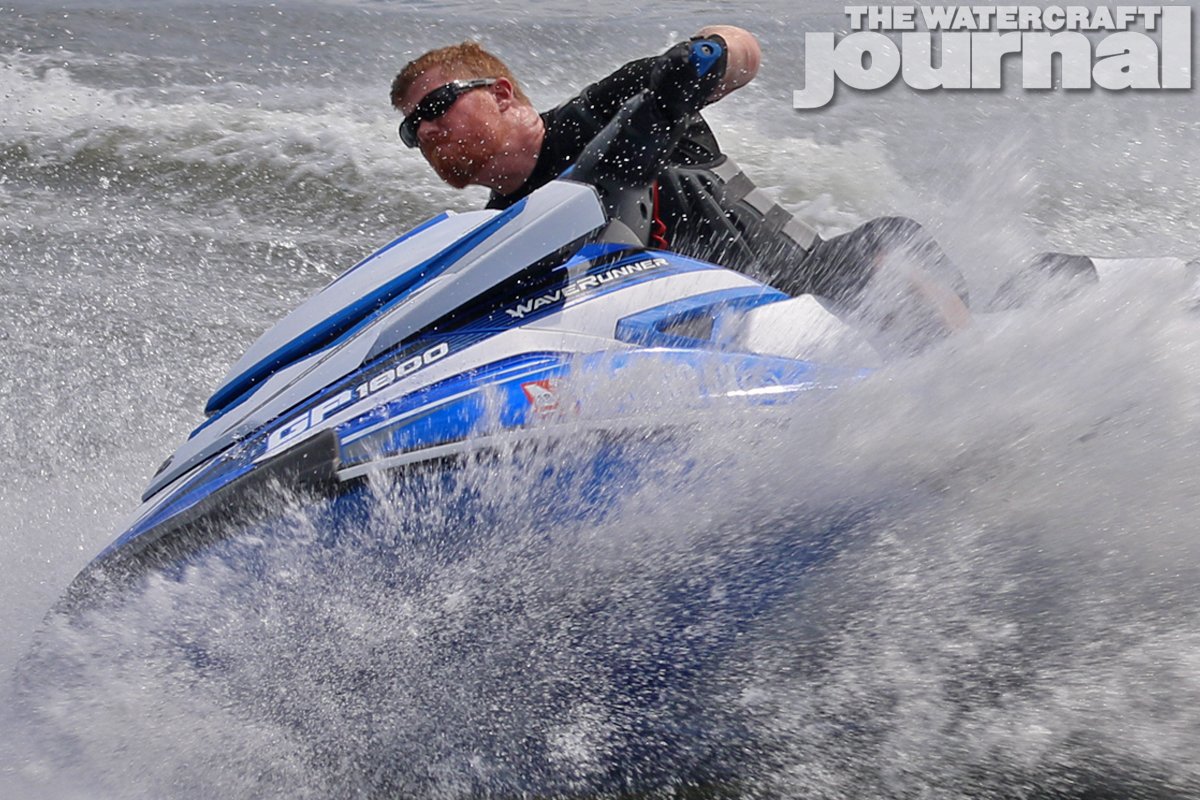
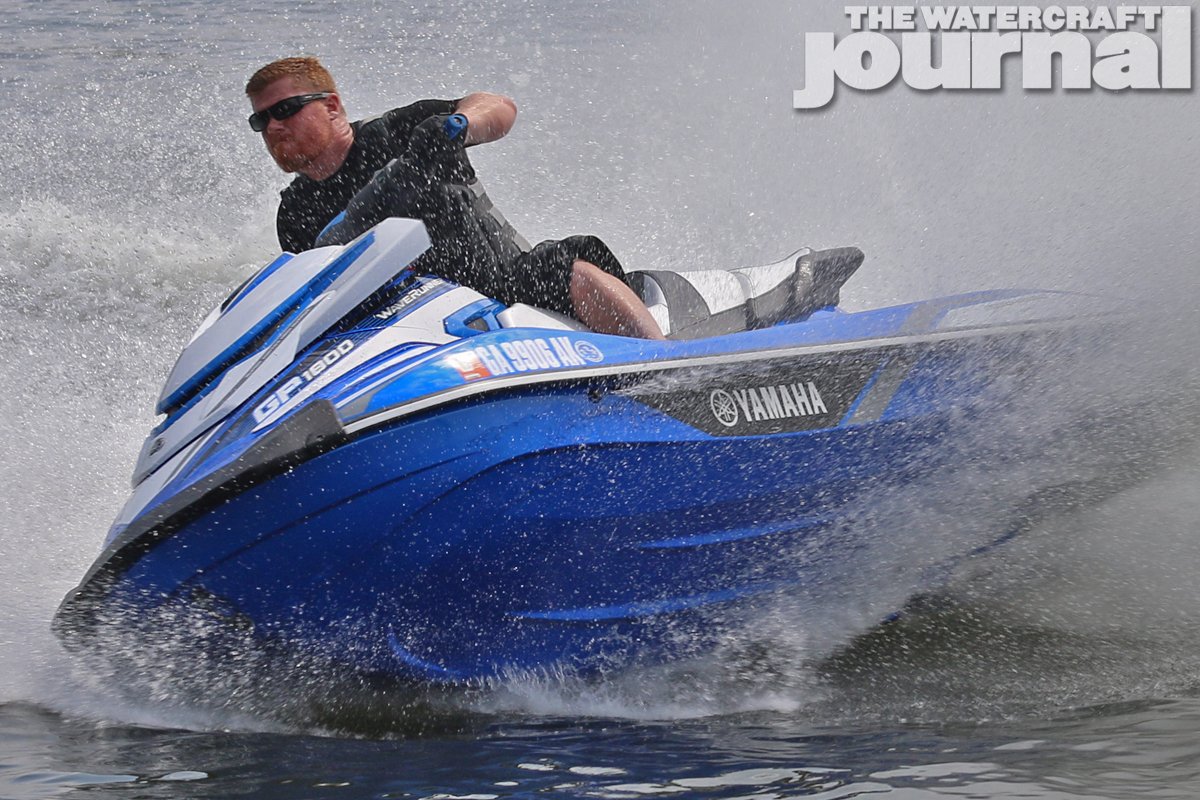
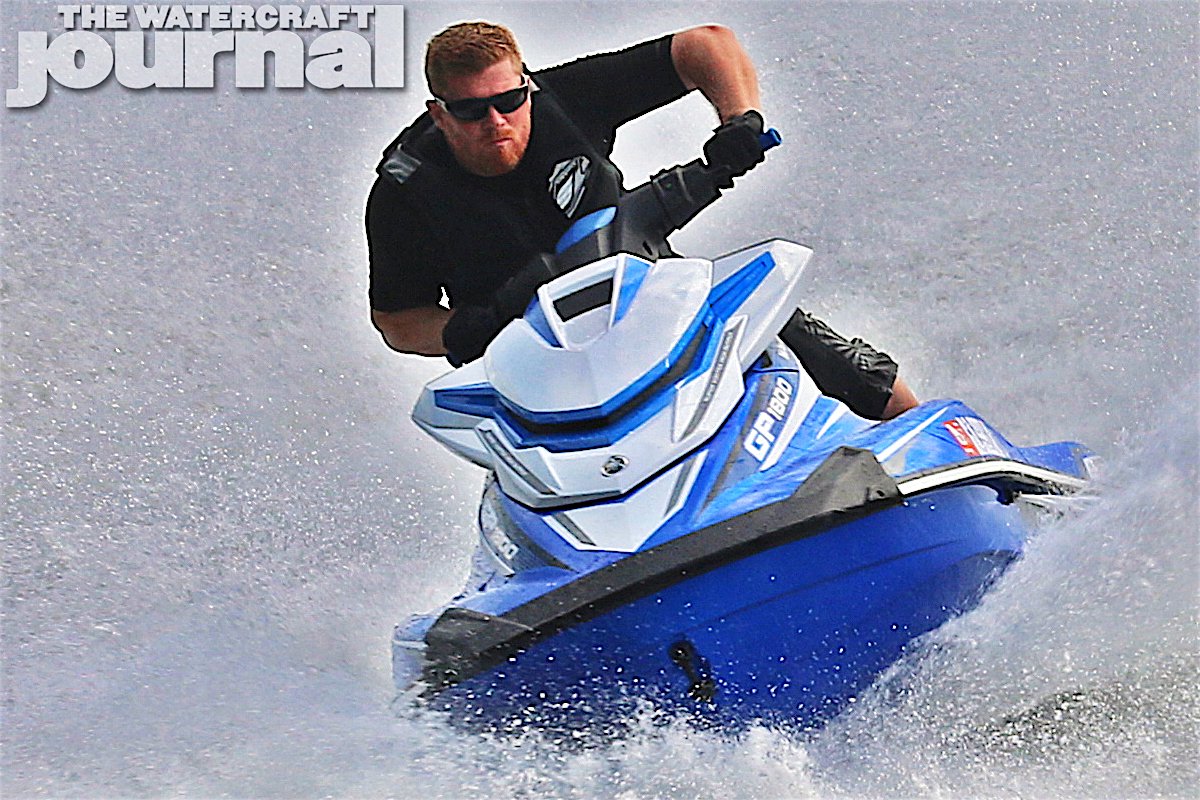
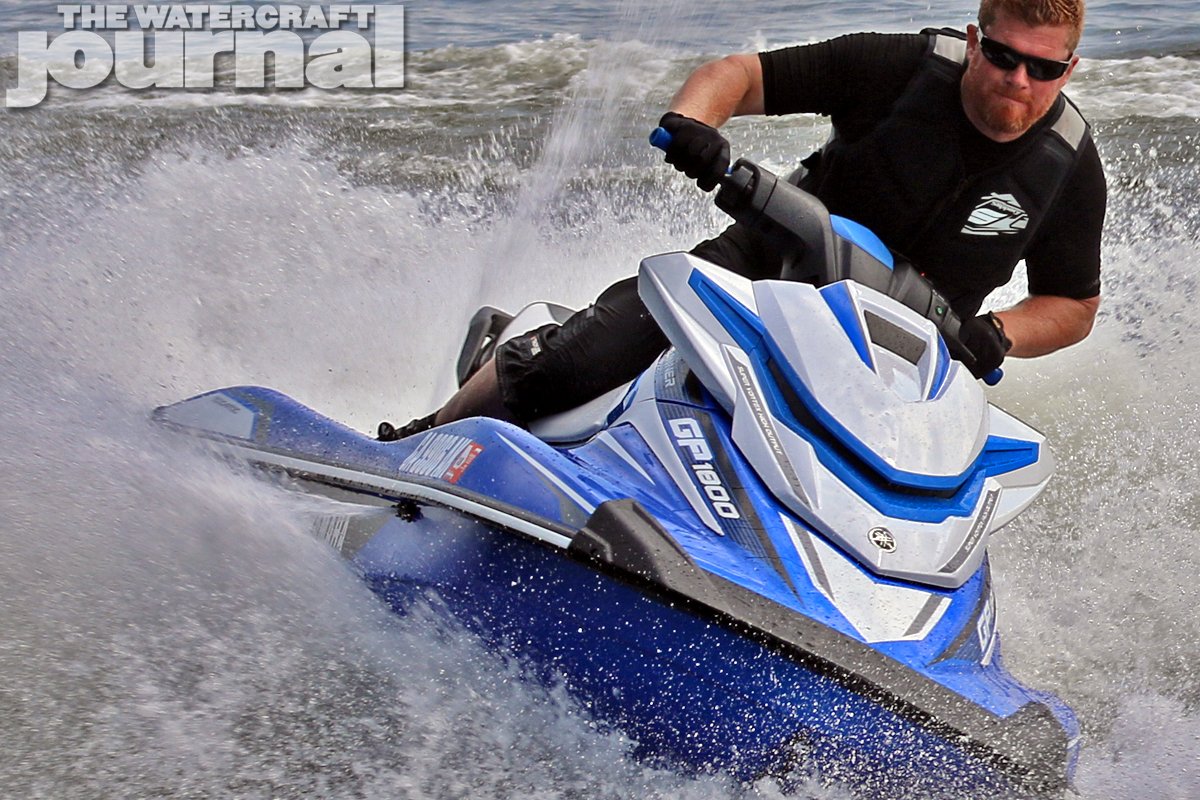
In our two-days’ worth of testing, the 2017 Yamaha GP1800 proved itself a worthy successor to the FZR. Being based on the VX, the narrow, scalloped seat allows for faster weight transitions from side-to-side. With the lighter hull, the GP1800 rides high on the surface, yet retains significant pump engagement, even in moderate chop. Top speeds were timed at 68.8mph on a Garmin GPS, but top speed isn’t what this machine is designed to do; snapping breakneck turns is, and it does so really well. Even when purposefully trying to break the tail loose, the GP1800 doesn’t want to let go. Rather, the GP leans hard on a sharpened, swooping outermost chine. Although photography shows it leaning securely on the rail, it feels incredibly flat in corners, giving the rider a slot-car sensation. Power response is immediate yet linear, so you won’t feel jerked around either.
In all, the GP1800 is superior to its forbearer in nearly every single way, which we know might be a very insensitive thing to say to those still in mourning. It is also worthy of its ancestor’s name, although any physical resemblance is negligible. Rather, the 2017 Yamaha GP1800 WaveRunner shows all the promise and potential of being the single-most dominant machine in the realm of closed course racing next year – not to mention countless friend-versus-friend drag races on lakes and rivers across the globe. As mentioned previously, the GP not only comes in at less overall weight (while retaining all of the same performance) despite being packed with more performance features, but also nearly $1,000 less expensive than the outgoing FZ. That alone is significant. If this is what you’ve been waiting for, then today you’re one lucky duck.
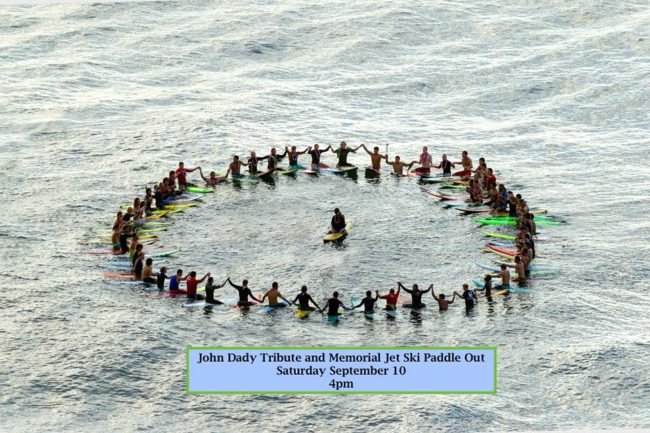
With the tragic and unexpected loss of Blowsion founder John Dady last month, this year’s Blowsion Surf Slam (happening this weekend, September 9-through-11th), in Pacific City, Oregon, will be missing quite a large piece of its soul. To honor the man who brought freeride so prominently into the spotlight, all jet skiers and persons willing to participate, have been invited to a special Memorial Paddle Out on Saturday afternoon, September 10th at 4pm.
To quote the IFWA Facebook page announcement, “We will take this time to honor our friend and fellow Freerider, John Dady. This will be a casual time to share stories and memories among friends. At the conclusion of the open mic session, we will join in the water just beyond the surf break and participate in a memorial “paddle out” on skis, boards, and kayaks. Those gathered on the beach can join in the celebration of life by throwing flowers in the Oregon surf and honoring this surfers tradition. We hope you will be able to join us in this time to celebrate the life of a man who meant so much to so many.”
The announcement also included a bit of history as to the tradition of the “surfer’s paddle out,” stating, “The paddle out is the way surfers around the world honor those who have passed on. Gathering on the beach to honor their friend – often at sunrise or sunset – surfers take to the water, paddling out beyond the break. They form a floating circle and hold hands in union with one another and their fallen fellow. Someone speaks words of remembrance, then the surfers send up hoots, whistles or chants. Clasped hands are raised, then lowered to splash the surrounding waters and/or boards. Leis, wreaths or loose flowers are thrown into the center of the circle, followed by a few moments of silence. Finally, pointing their boards to the sky the surfers turn slowly toward shore, flowers swirling in the wakes left behind them.”
It’s only been two weeks, and already the coals stoked by the teaser video released by Kawasaki (which The Watercraft Journal was first to have published) have begun to cool. Not because of a lack of interest (in fact, quite the opposite as we experienced the single-largest surge of readership in a solitary day), but because there is so little confirmed information concerning the machine. All that is discernible is that the Kawasaki is powered by a powerful four-cylinder 4-stroke and it heralds the return of the SX-R moniker.
But surely there has to be more information on the stand-up’s return out there, right? Well, there is, but you’ll have to don your swami turban and read the tea leaves to rightly predict the future. What we’ve dug up is a series of disconnected threads of information that may or may not weave together.
To begin, we turn to little-known Greek blog www.jetskiworld.gr who chatted up Masanori Inoue, Managing Director of Kawasaki Motors Europe, who stated, “The JetSki brand sends a powerful message about Kawasaki and our desire to create innovative and fun-to-ride products. Using technology from across our internal skill base – including the motorcycle division – we are confident that we will take stand-up personal watercraft to a new level when the new four-stroke SX-R is unveiled in October this year.”
In fact, Inoue has been rather chatty with the blog over the preceding months, giving the website far more information about the intended machine than we’d suspect Kawasaki top brass would care to have disclosed so early. The biggest reveal being the correction of intended powertrain; early reports had the new SX-R receiving the naturally-aspirated 1.5L from the STX-15F, when a blurb was posted that the SX-R will receive a marine-grade version of the H2 superbike’s 1-liter four-cylinder 4-stroke, only to have the report quickly removed altogether. Mysterious indeed! But it does add to Inoue’s heavy-handed “motorcycle division” hint.
Delving into the deep end of the rumor pool, the biggest batch of yet-to-be-confirmed information comes from a post on PWCToday.com. From Cody “cavemanX2650” Burton, who vows was given official insight that the new ski is “12-inches longer than an SX-R and approx 550lbs. Ski will be using a rendition of the 12F engine and a 148mm pump. $10.5k price tag. The two indicators on the handpole are low oil and overheat indicator lights. Slow key for newer riders. Water ingestion issues are being combated through a fully sealed engine compartment and pole breathers.”
This of course, sent anticipations into a tailspin, with many decrying the new SX-R as a “whale,” “barge” and “couch” before even seeing the machine in person. Thankfully, enthusiasts didn’t have to wait long to see it in action as a viral video sprung up of two black-and-white ’17 SX-Rs in action, circling the infamous island of Havasu hot spot Body Beach, taken during the official photography session for the upcoming release (scheduled for October). Through some digging, it’s believed to feature famous Kawasaki riders Victor “Slasher” Sheldon and Minoru Kanamori.
Many have tried to determine both size and riding behavior of the ski from the low-speed photoshoot, but seasoned riders and industry insiders have countered premature criticisms as many understand photos are typically clearer at slower speeds. Nevertheless, certain revelations can be culled from the video, as well as insider information gathered from the Body Beach filming: 1. The ski is significantly larger than the previous SX-R, an estimated 9-feet-plus long; 2. The ski is significantly buoyant, allowing a rider to stand stationary in the tray with the engine off; 3. The ski is significantly taller than the previous SX-R to accommodate the taller overhead valve four-cylinder multi-stroke engine; 4. Black and white is the color combination.
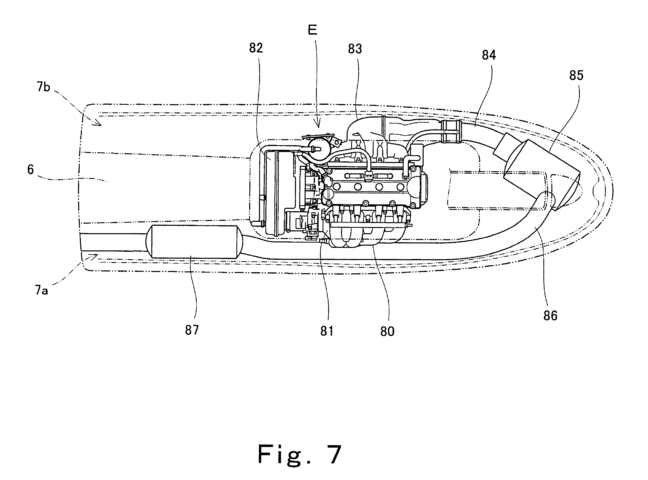
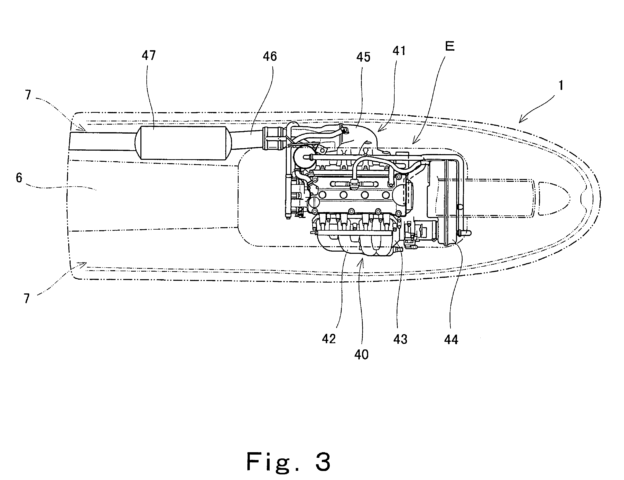
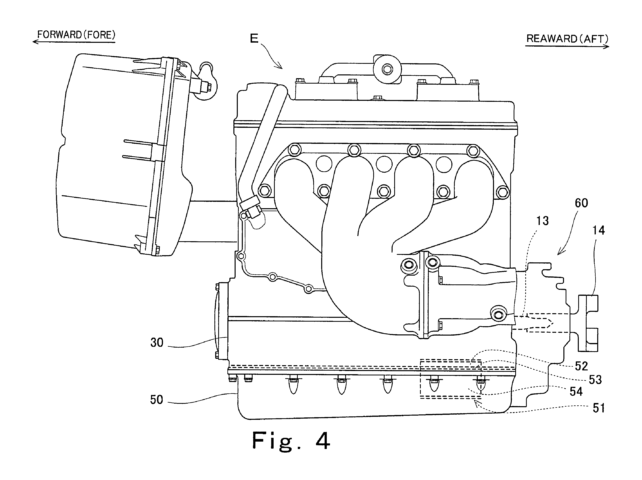
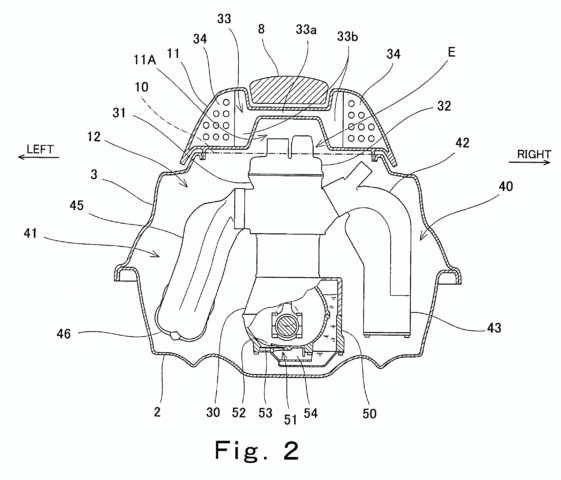
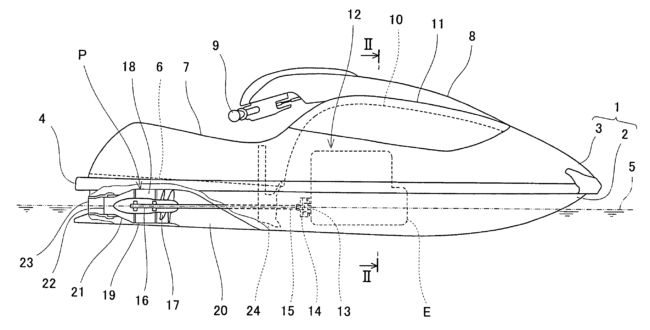
Claims of “a fully sealed engine compartment and pole breathers” also gain partial credence with the reveal of the Kawasaki Patent Application for the new ski found online. Although ZERO measurements are provided in the patent document, certain revelations pertaining to the ski’s weight distribution, unique engine oiling, chainless starter and oil pump drive system, and various configurations of the SX-R’s exhaust are outlined therein. There’s quite a bit of lengthy and indecipherable legalese to weed through, so we’ll share just the highlights:
Weight Distribution & Engine Placement
The stand-up type personal watercraft becomes more difficult to operate with an increase in distance between a center axis of a pump shaft of the water jet pump and the bottom of the watercraft. Accordingly, by mounting the multi-cylinder engine, a distance between the crankshaft and a bottom surface of the crankcase decreases, and correspondingly, a distance between the pump shaft and the bottom of the hull decreases.
Above: Shown are two possible configurations for the 4-stroke SX-R’s exhaust layout – one with a dual waterbox system, and the other with a single.
The four-cycle engine is generally heavier than the two-cycle engine of equal displacement conventionally mounted in the stand-up type personal watercraft. However, by disposing the four-cycle engine near the center of the body, weight in the longitudinal direction of the body is well balanced.
The engine may be constructed such that a cylinder head is located above a crankcase, and may have an air-intake manifold and an exhaust manifold each connected to the cylinder head and extending downward to a lateral position relative to the crankcase. In this construction, since a center of gravity of a combination of the air-intake pipe, the exhaust pipe, and the engine is located lower, the center of gravity of the body is correspondingly located lower.
Unique Oiling Collection & Pickup System
The stand-up type personal watercraft may further comprise an oil tank configured to reserve oil that circulates within the engine, and the oil tank may be placed on an opposite side of the exhaust manifold relative to the engine.
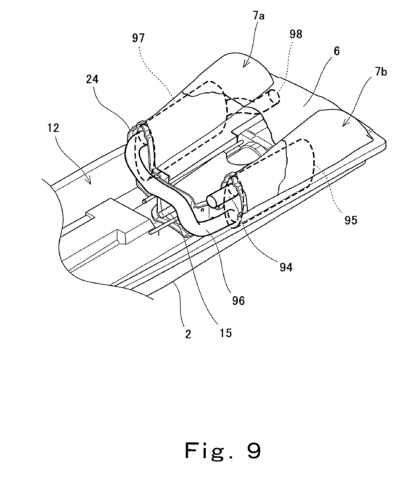
Above: Shown are a second pair of possible exhaust configurations, again one with a single and the other with a double waterbox/muffler system – this time with the mufflers being fixed into the gunnels of the standup, a very interesting proposal!
In this construction, the weight of the body is well balanced. More specifically, by disposing the oil tank having a relatively large weight on the opposite side of the exhaust manifold having a relatively large weight relative to the engine, the weight of the body is well balanced.
The oil tank may have a space elongated in a vertical direction of the body. Within the oil tank, the oil is inhibited from gathering at one side even when the stand-up type personal watercraft turns abruptly in an attitude peculiar to the watercraft.
A particularly detailed cross-section of the previously proposed twin-muffler exhaust system with both waterboxes/mufflers being inserted into the gunnels for better weight distribution.
The stand-up type personal watercraft may further comprise an oil-collecting structure disposed at a rear position of a bottom portion within the crankcase, and configured to collect the oil reserved in the crankcase of the engine and to deliver the oil to the oil tank. In this construction, the oil remaining in the inner bottom portion of the crankcase can be efficiently collected when the operator rides on the stand-up type personal watercraft to cause the watercraft to have an attitude with its fore part located higher than its aft part.
Water-Diffusing, Air-Intake Incorporated Into The Hood
The stand-up type personal watercraft may further comprise a deck hood covering the deck opening, and the deck hood may have a concave portion upwardly recessed and opposed to an upper portion of the cylinder head cover so as to accommodate the cylinder head cover therein, with the deck hood covering the deck opening, and an air flow space located laterally relative to the concave portion to allow air taken in from outside to flow therein. In this construction, an increase in the height of the body may be inhibited when the four-cycle engine is mounted in the stand-up type personal watercraft.
The air flow space may form a water separating chamber that serves to separate water from the air taken in from outside. By utilizing an extra space of the deck hood as the water separating chamber serving to separate water from air, water or unwanted substances contained in the fresh air taken in from outside the watercraft can be removed. Further, by vertically providing a plate within the air flow space, or forming a labyrinth structure within the air flow space, the water can be effectively separated from the air.
Crankshaft Gear-Driven Oil Pump and Starter Drive
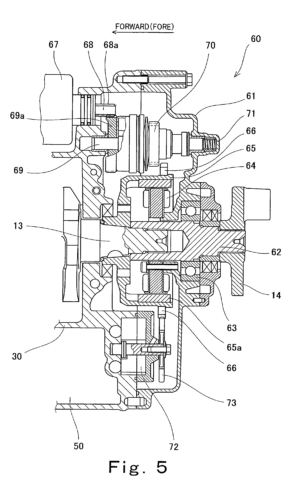
The stand-up type personal watercraft may further comprises a crankshaft contained within the crankcase of the engine, a starter gear mounted on the crankshaft and configured to rotate integrally with the crankshaft by an output of a starter motor for starting the engine, and an oil pump configured to deliver oil that circulates within the engine, the oil pump being provided with a pump gear for driving the oil pump, wherein the pump gear of the oil pump is configured to mesh with the starter gear.
Above left: Shown is a side view of the engine’s air intake box and exhaust manifold. Above right: A far more detailed cross-section of the proposed hood with the perforated screen integrated into the hood which acts as the first air intake.
Conventionally, the crankshaft of the engine mounted in the watercraft is provided with a crankshaft side pump gear (sprocket) separate from the starter gear so as to rotate integrally with the crankshaft, and the oil pump is provided with a pump side pump gear (sprocket) such that these pump gears are connected to each other through a chain. However, in the above-described construction, the crankshaft side pump gear and the chain are omitted. As a result, a lightweight and small-sized engine is achieved.
Shown is a cross-section of the proposed sprocket-driven starter, oil pump and drive system (sans chain drive).
Multi-Muffler (Waterbox) Exhaust Configuration
The stand-up type personal watercraft may further comprise a muffler provided in an exhaust passage of the engine, and an air cleaner box provided in an air-intake passage of the engine, and the muffler and the air cleaner box may be arranged substantially forward and rearward relative to the engine.
The muffler and the air-cleaner box having relatively large inner spaces may generate a buoyant force. In the above construction, buoyant forces generated in front and rear parts of the body are well balanced.
The stand-up type personal watercraft may further comprise a plurality of mufflers provided in an exhaust passage of the engine, and the mufflers may be arranged forward and rearward relative to the engine within the body. In this construction, also, the buoyant forces generated in the front and rear parts of the body are well balanced.
The stand-up type personal watercraft may further comprise two mufflers provided in an exhaust passage of the engine, and deck fins may be provided at right and left side portions of the deck so as to protrude upward from an upper surface of the foot deck, and the mufflers may be contained in the right and left deck fins, respectively. In this construction, buoyant forces generated in right and left parts of the body are well balanced, and a limited space of the stand-up type personal watercraft can be efficiently utilized.
Above: Proportionately, this cross-section image appears to show the previous generation SX-R, and not the new 2017 model. Pay particular attention to the size and placement of the engine. We understand that the 4-stroke engine will protrude above the hood/deck surface.
Finally, the weirdest news, which cannot be confirmed, pertains to Kawasaki USA’s involvement in the development of the new SX-R itself. Rumors have it that the new standup is based off of a prototype first developed in the Irvine, CA headquarters nearly half a decade ago, which was fitted with a 15F engine. Purportedly, the prototype was crated and rushed to Japan less than a year ago where the hull was stretched, widened and lengthened to not only accommodate the larger motor, but retain greater stability, all with the deadline set for this year’s IJSBA World Finals. It’s believed that the development, production, and announcement was all made without the Kawasaki USA team’s input.
Again, this is a puréed blend of internet chatter, leaked online documents and grainy cell phone footage, so take all of this with the prerequisite grain(s) of salt. Prior to October’s worldwide reveal, we doubt much more will seep out into the public arena. Until such time, don’t let the haters get you down or the lack of information make you too anxious to sleep at night. Kawasaki loves to string things out as long as they can for dramatic effect, so just enjoy the anticipation for now.
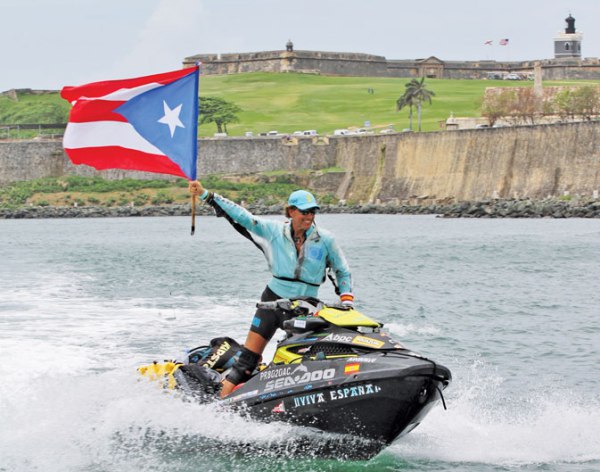
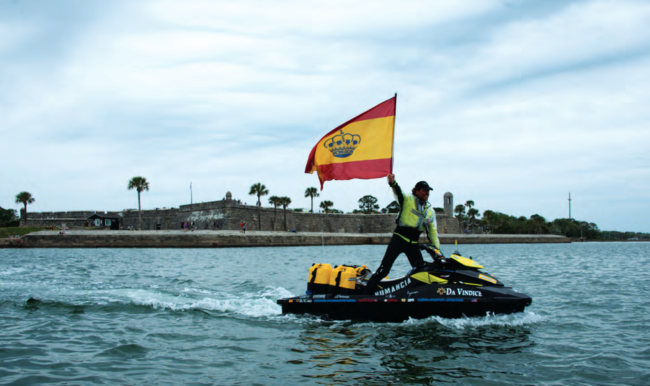
The name Alvaro De Marichalar might sound a little familiar to The Watercraft Journal regulars, as he recreated Balboa’s journey From Miami to Panama Canal. Recently, he completed a solo 8,000-nautical mile journey on a heavily-modified Sea-Doo RXT. With six extra gas tanks strapped onto the back he was able to travel 150-nautical miles per tank. Along with him he carried a GPS, compass, flares and radio in case he need to call for help. With no extra room onboard it left him to cook on land but he was able to kick back and rest his legs above the handlebars if needed.
One of Marichalar’s best memories was arriving in St. Augustine on April 2, exactly 500 years ago when Ponce De Leon did. His travels weren’t always easy, with currents so strong especially in the Gulf of Mexico, in some places Marichalar would be applying full throttle and be going no where.
As with any long endurance ride, the chance of having a mechanical failure increases. When Marichalar’s vessel broke down he was about 2 miles away from a remote, small fishing village. With the strong winds pushing him ashore he met some of the village kids playing. They viewed him as a man with a goal and took him in. Their families showed unconditional support and wished him the best for the rest of his long journey ahead. Marichalar states, “We will remain friends forever.”
Some of Marichalar’s best memories are meeting the local people, learning their way of living and giving motivational speeches to them about achieving their goals and not letting things defer their dreams. He was able to visit 28 different countries, meet hundreds of people and create thousands of memories.
Marichalar has been able to achieve many of his life goals and continues to set new ones. While many of your goals may not be to ride 1500-nautical miles, the time to start achieving your goals is now. Marichalar has plans in 2018 to attempt another world-record ride that will take him on a tour of the world following the commemoration of the 5th Centennial of the World’s First Circumnavigation by Portuguese Explorer Ferdinand Magellan.
We’re going to come right out of the gate with the biggest news that we’ve ever shared here in By The Numbers, and that is that The Watercraft Journal has eclipsed the total readership of its 2015 within the first 8 months of 2016. That’s right folks, the massive (and continual) influx of new and returning readers has pushed our total readership beyond last year’s incredible and industry-leading 230,000-plus readers and it’s only September 1st. That means we have another four months left to continue expanding its total readership to a projected 300,000 for the year. Let that sink in: three hundred thousand diehard personal watercraft enthusiasts choose The Watercraft Journal as their go-to resource for all things PWC.
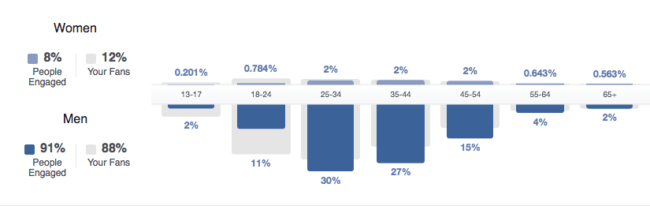
Amazingly enough, there are still companies struggling to expand their reach within this industry without a presence on The Watercraft Journal. Be it through hyperactive social media campaigns, diminutive advertising programs, or doubling down on other media outlets that fail so miserably to reach an active and engaged audience that their ad dollars are all but wasted. Or worse off, these companies fail to recognize the sheer power that advertising on The Watercraft Journal can bring. Our average reader is 44 years old, male, speaks English as their primary language and self-identifies as a watercraft enthusiast. All of that sounds pretty much like your ideal customer, right? And if you advertised your company on The Watercraft Journal they very much could be your next customer.
The purpose of our monthly By The Numbers performance reports is not to brag, browbeat or berate (yay, alliteration!) companies into spending their hard-earned ad dollars with The Watercraft Journal, but to clearly and boldly outline how this magazine – far more than any other in our industry – truly delivers each and every day, Monday-through-Friday, and in doing so has grown into the largest resource for industry news, product reviews, event coverage, technical how-to’s, and interviews. And while that’s all well and good for entertainment’s sake, know that every advertiser receives professionally-written, unique and engagement editorial content each month that is read by the single-largest PWC magazine audience in the world.
January-December 2015
January-August 2016
A Consistent Rate of Growth
Some might look at the two charts above and be a little confused, and that’s OK. While 2015’s chart shows a lot of peaks and valleys, this year’s chart appears predominantly flat (besides a steady climb until August’s explosive month), so how could it be better? A look at the vertical axis will show that last year’s biggest peaks never eclipsed 4,000 readers, with an average daily readership of less than 1,000 unique visitors. Compare that to this year, and you’ll see that the peaks surpass 10,000 and the average daily readership is 150-percent over the previous. Following our projections, we expect to reach over 300,000 unique readers for the year. That’s truly an astounding number for a content based web magazine within this industry. And as our end-of-year performance data will show, future charts will illustrate that our growth is a steady, consistent rise, not filled with sporadic peaks and valleys.
January–December 2015
Total number unique readers: 232,459*
Total number of articles read: 614,870
Percentage of new readers: 63.3%
January–August 2016
Total number unique readers: 238,215*
Total number of articles read: 552,963
Percentage of new readers: 64.6%
*This number is considered equal to an individual sale of a single copy of a magazine.
A Consistent Schedule of Publishing
Admittedly, we had one helluva a month this August. Not only did we have the fastest reporting from two major Pro Watercross race weekends (as well as plenty of other event coverage), but we also had the single-most comprehensive coverage of the new 2017 Yamaha WaveRunners, the entire 2017 Sea-Doo lineup, and, oh yeah, being first in the world to publish the teaser video of Kawasaki’s soon-to-be-revealed 2017 SX-R 4-stroke standup. Toss in some world exclusives like the first look at RIVA Racing’s one-of-one RXP-X 350 and soon-to-be-released Limited Edition GP1800R, and you’ve got the making for one popular month. Frankly put, PWC enthusiasts have come to depend on The Watercraft Journal for new and interesting content every single day. And as the numbers here prove, we deliver.
News articles published in July 2016: 25
Feature articles published in July 2016: 11
Total feature word count: 10,409 words*
News articles published in June 2015: 21
Feature articles published in June 2015: 16
Total feature word count: 15,676 words*
*When this number is translated to print publication standards, it equals a 168-page magazine. Please note that this number does not include an average of two uniquely-written news articles published daily.
Consistently Bringing WCJ Before The Masses
Many companies chose to use their social media accounts (be them personal or for business) as their sole outlet to accessing new customers. In all honesty, this isn’t working (and most know it). Why? Because the people following those accounts already know who they are, and unless they are feverish return customers, you’re not getting the influx of fresh, new customers that a company needs to thrive. You’re quite literally preaching to your own choir. That’s why these companies need The Watercraft Journal. By offering our content freely and easily – whether it’s via a desktop, a laptop or a portable device, anyone can read our content. And with our Facebook, Twitter, Instagram, YouTube, and weekly newsletters, we bring our content directly to them. And that’s a huge part of our success!
June Facebook likes: 18,045
Top Five countries: United States, Australia, France, Canada, United Kingdom
Isn’t it Time to Join The Winning Side?
OK, OK. That might be taking things a little too far, but in all seriousness there are many companies benefiting from advertising with The Watercraft Journal for the very reasons listed above. Yet, conversely, there are just as many (if not more so) yet to enjoy the ease of access, and the immediacy that working together with The Watercraft Journal brings them to a whole new audience of personal watercraft enthusiasts. Getting the word out about your product can be difficult, and relying on a few sponsored racers is only speaking to a tiny demographic. Put your products in front of more enthusiasts faster and easier by joining The Watercraft Journal as an advertiser today. To inquire more about advertising with The Watercraft Journal, please email [email protected]
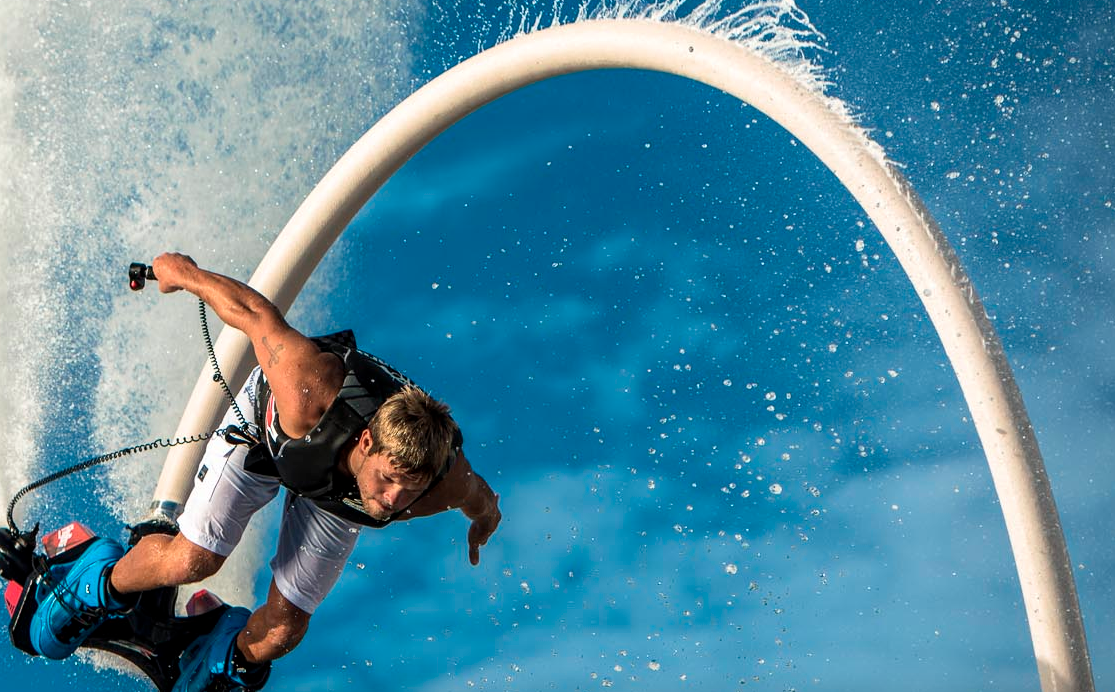
With the introduction of Flyboards in 2012, this new sport has become very popular. Rental companies are renting them out to their customers and people are buying them for their own collection. The amount of Flyboard sales has been growing drastically.
Zapata Industries is proud to announce that Pro Watercross and HydroFlight will be managing this year’s Flyboard World Cup Championship in Naples, Florida. This event will have tons of spectators watching the best 52 competitors who represent 16 different countries. This Championship is an invitation-only event so you are sure to see new tricks executed perfectly. Along with this three-day competition, the prize money for the Pro Rider Category is; First: $5,000, Second: $3,000, and Third: $2,000. The prize money for the Female and Veterans Category is; First: $1,500, Second: $1,000, and Third $500. These riders will be judged on 4 categories during their ride: Diversity, Technicality, Energy and Showmanship.
If you love flyboarding this is a must-see event, boasting the best riders in the world it will surely make you want to go try one out. Unlike other watercraft races, this competition will be a Zapata Flyboard sponsored only event. With their new patent assembly, the strength of this company will only grow larger. This company is backed behind Frank Zapata, who was a world champion jet ski racer who first started out inventing his own aftermarket product to create some of the world’s fastest jet skis ever. In 2012 Zapata introduced to the world the legendary Flyboard. In 2016 Zapata achieved his goal of creating the safest, lightest, most reliable, and least expensive with the unveiling of the Flyboard Air.
There’s few things more vexing than trying to plan for the future. That is where purchasing the proper maintenance insurance comes into play. While you can do your best to predict how things will go, chances are you’ll be wrong more than half of the time. That’s where Cycle Springs Prepaid Maintenance plan comes into play.
With the purchase of Prepaid Maintenance Card, Cycle Springs Powersports will “double your investment for scheduled maintenance.” That’s right, Cycle Springs will match what you put into your Prepaid Maintenance Card (up to $1,000), effectively doubling your investment. According to Cycle Springs, “The card may be used for all parts and labor related to maintenance or service required. Prepaid card is valid for 2 or 4 years from date of purchase. Prepaid Maintenance Plan is valid on any new or used vehicle and must be purchased the day of sale.”
This, combined with Cycle Springs’ “5/50/500” warranty program is a surefire way to keep your PWC on the water longer. Good for 50-percent off any repair for 5 weeks or 500 miles, whichever comes first, on any used vehicle purchased makes this particular warranty a way to hedge your luck in a big way. The 5/50/500 covers “any manufacturer defects that would normally be covered by any standard extended warranty. Wearable items, tune-ups, scheduled maintenance or cosmetic repairs are not covered. Personal Watercraft and Boats are covered up to 5 weeks or 5 hours of operation.”
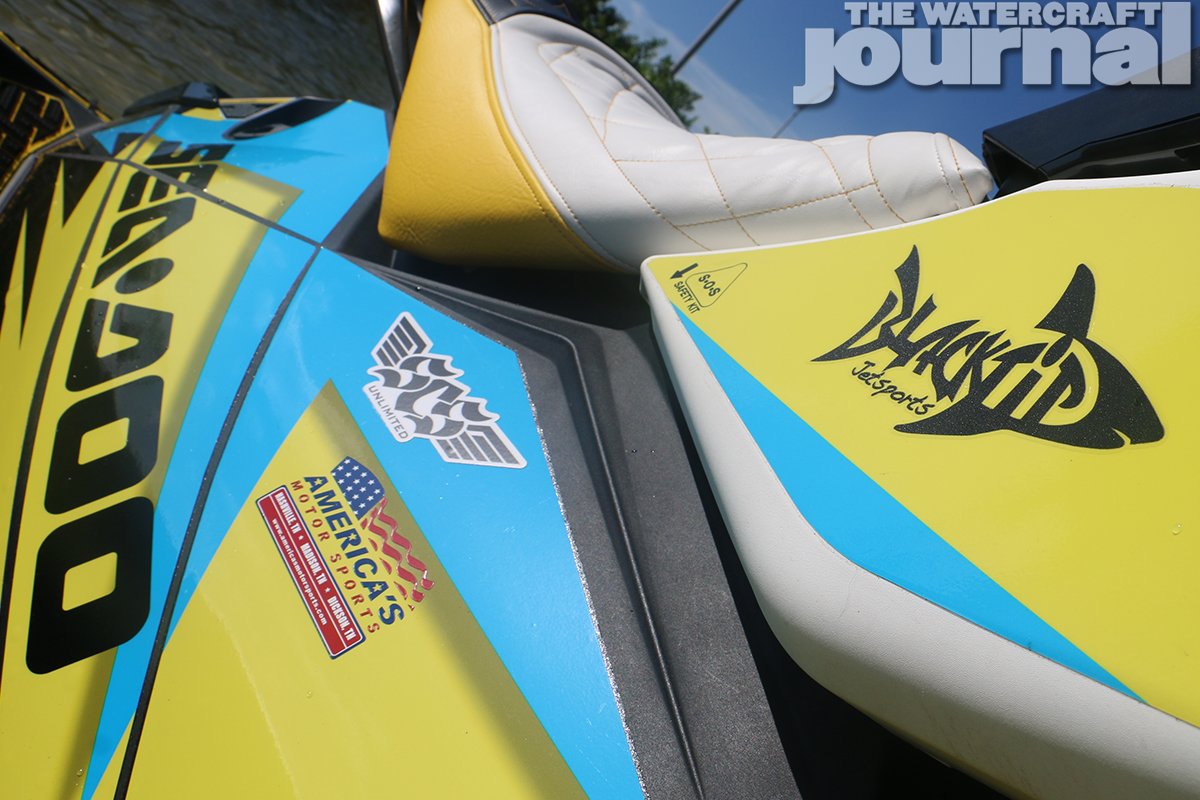
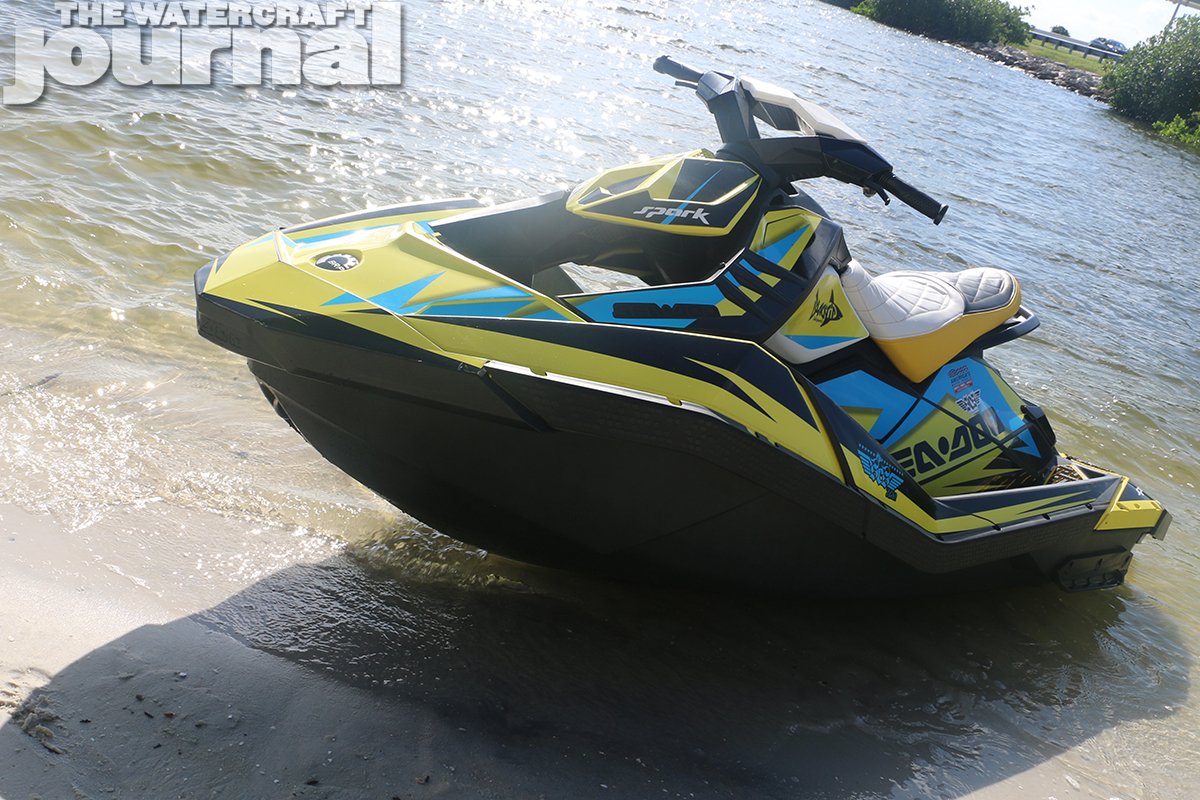
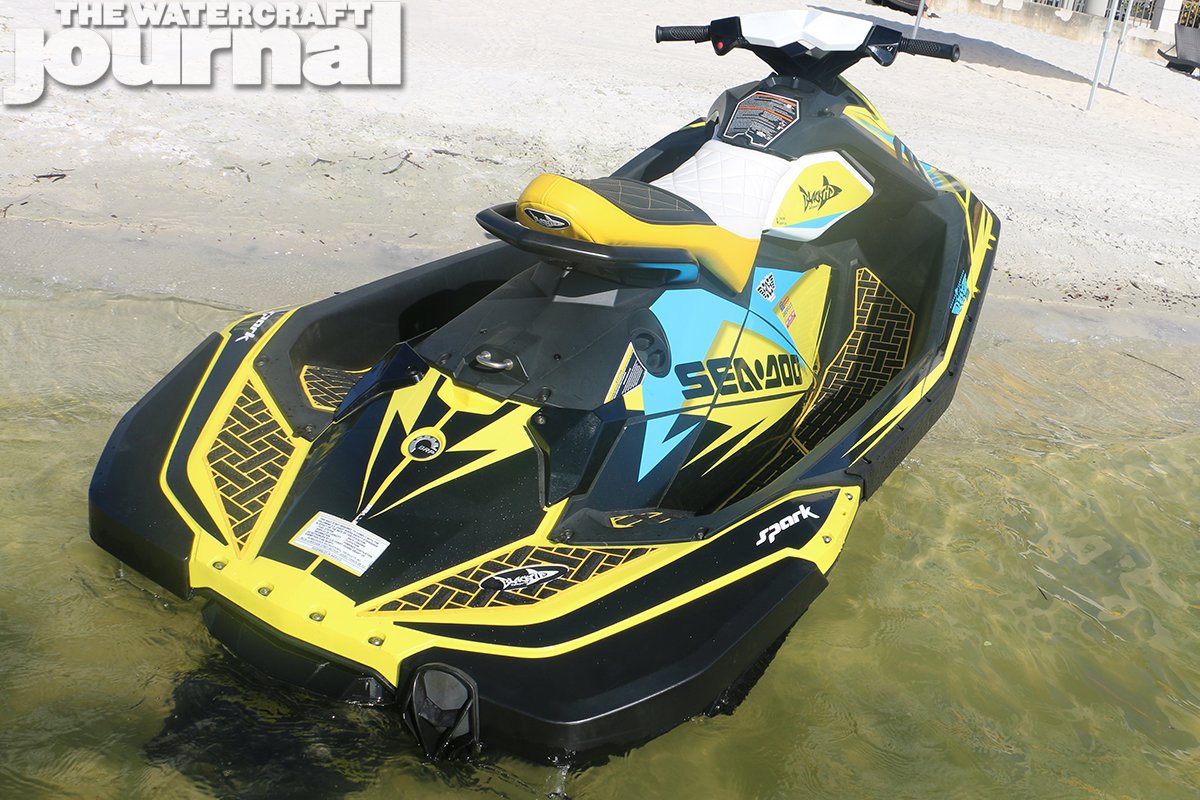
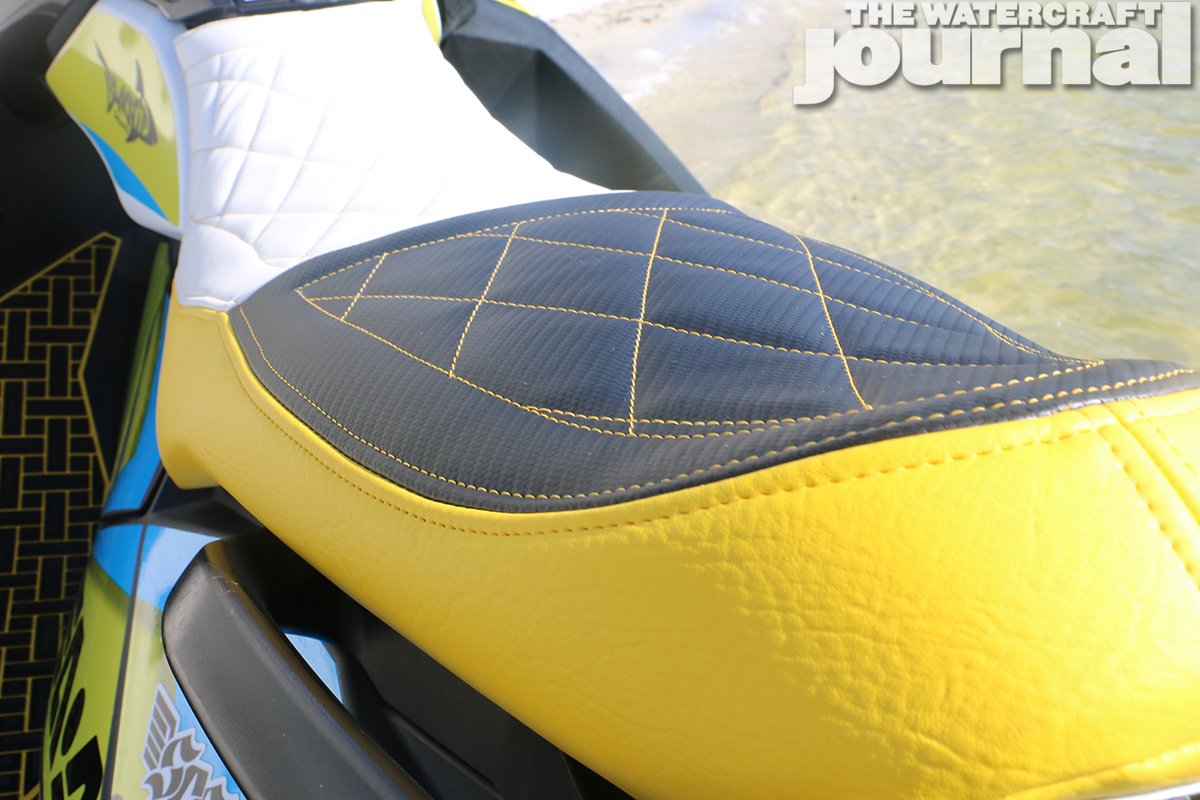
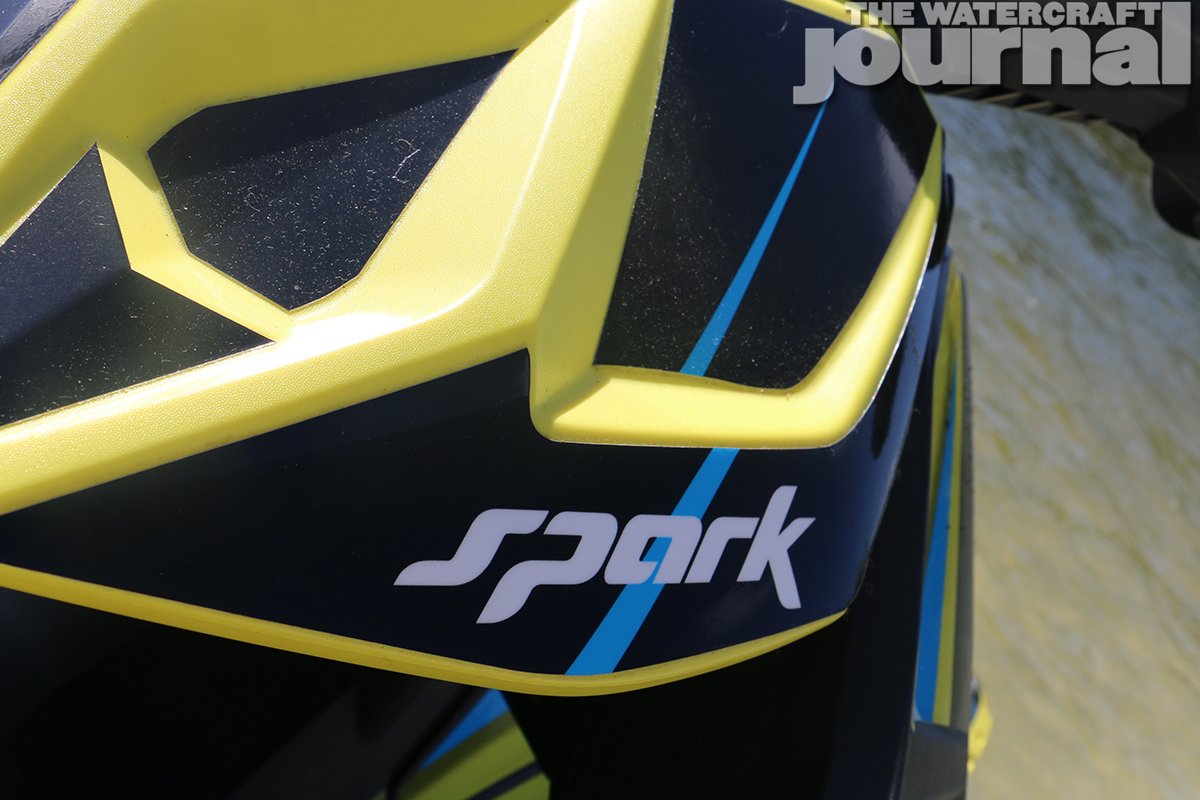
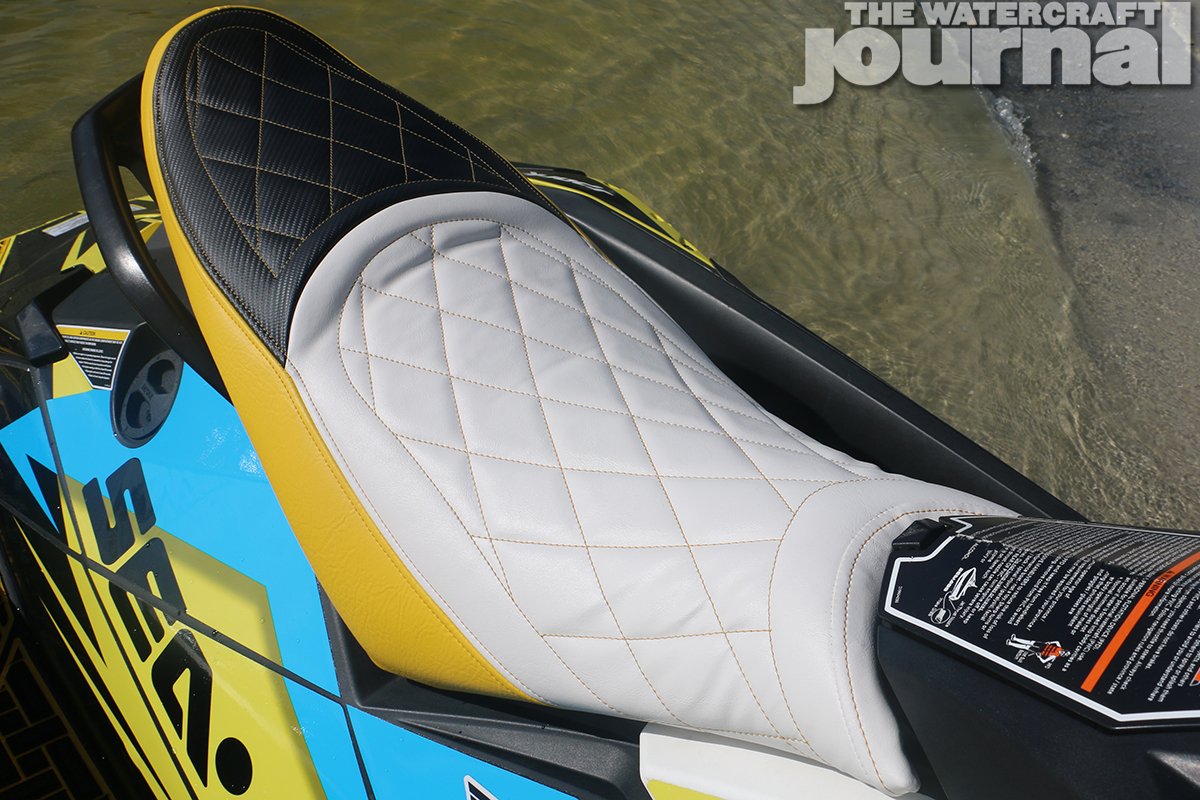
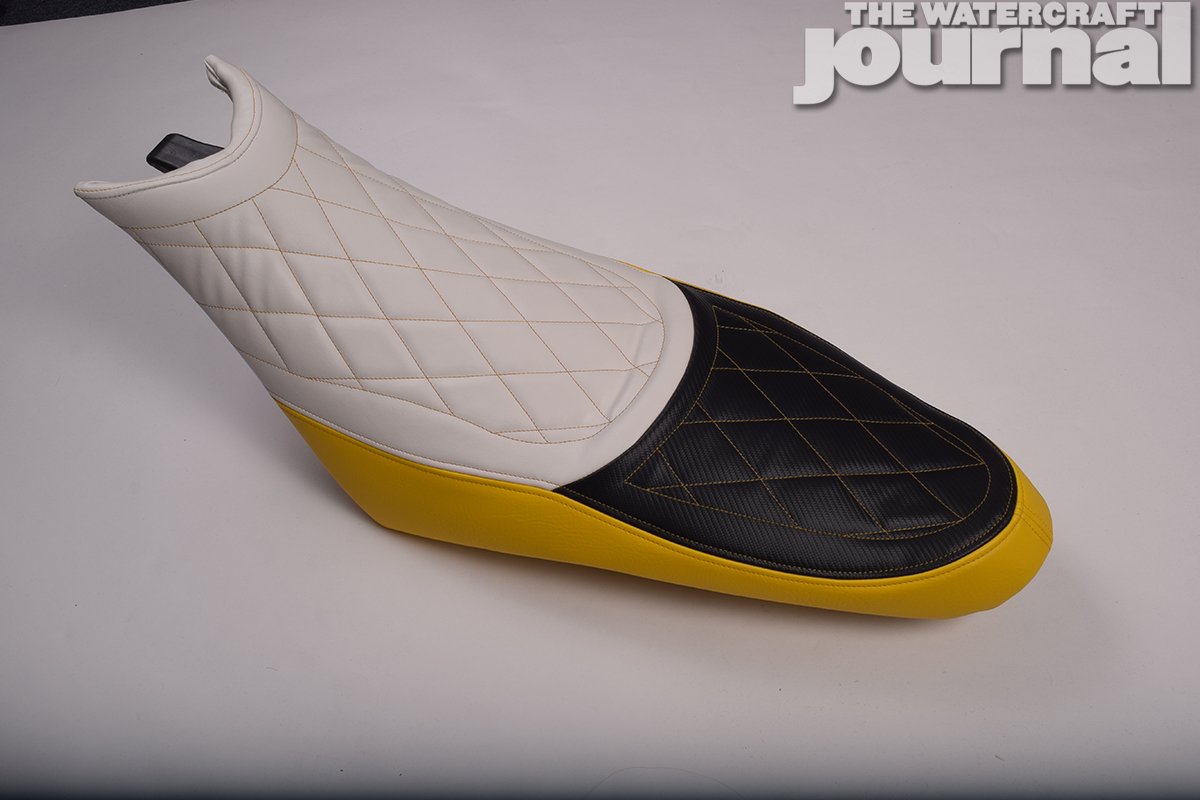
If we’ve learned anything, it’s that even our best laid plans typically go to pot about a quarter the way through them. It’s so common that we typically plan for a contingency for when things to awry. It’s not pessimism, but rather preparation. In the case of our two-year-old Sea-Doo Spark project, we initially had hoped to perform both the Blacktip Elite Traction Mat kit installation and the seat cover all in one Saturday morning. Such was not the case when we struggled into discovering that we had ordered the wrong seat cover. What would be a harmless mistake, and easily amendable by the customer-friendly staff at Watercraft Superstore, became a tangled mess that needed unraveling.
Our travel schedule made it impossible to perform the second half of our Blacktip transformation any time soon, and the next possible window would be literally a day before officially closing out our long term project for the year, and returning the Spark back into Sea-Doo’s hands. This meant we’d have to load up the Spark into our pickup truck’s bed and drive 11 hours down to Clearwater, Florida to perform the seat recover, snap all the pictures and hand the lanyard back to BRP. We’re never one to shy away from a “down-to-the-wire” scenario, but man, do we have to always cut these things so dang close?
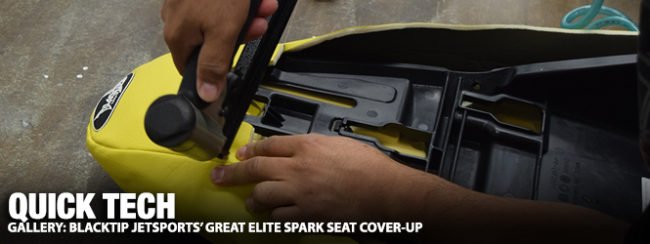
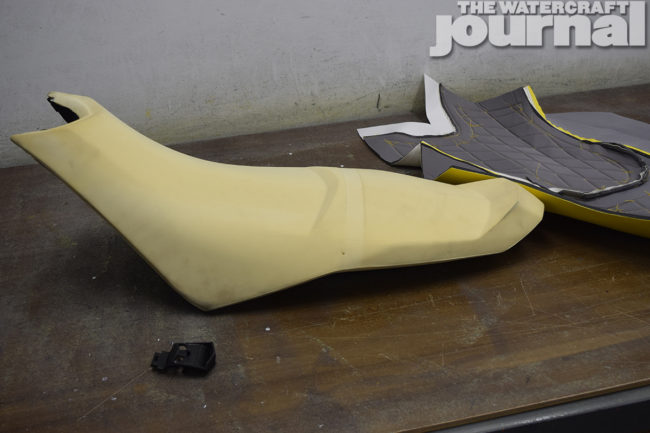
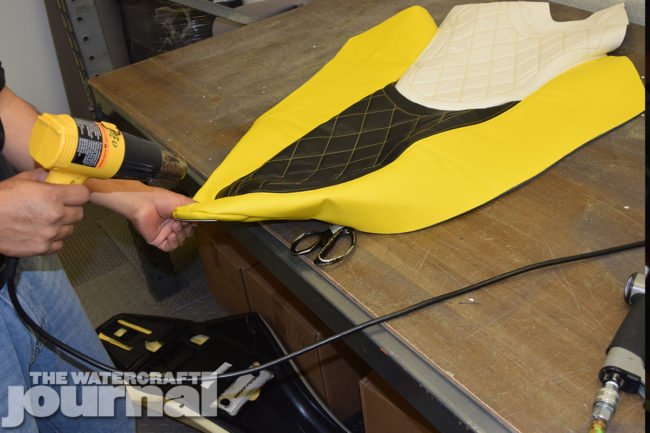
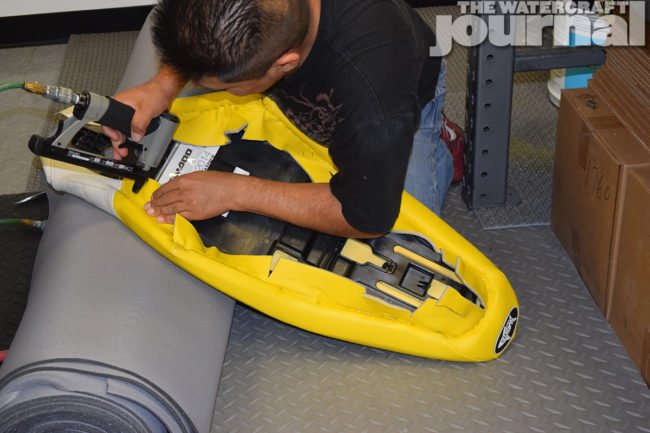
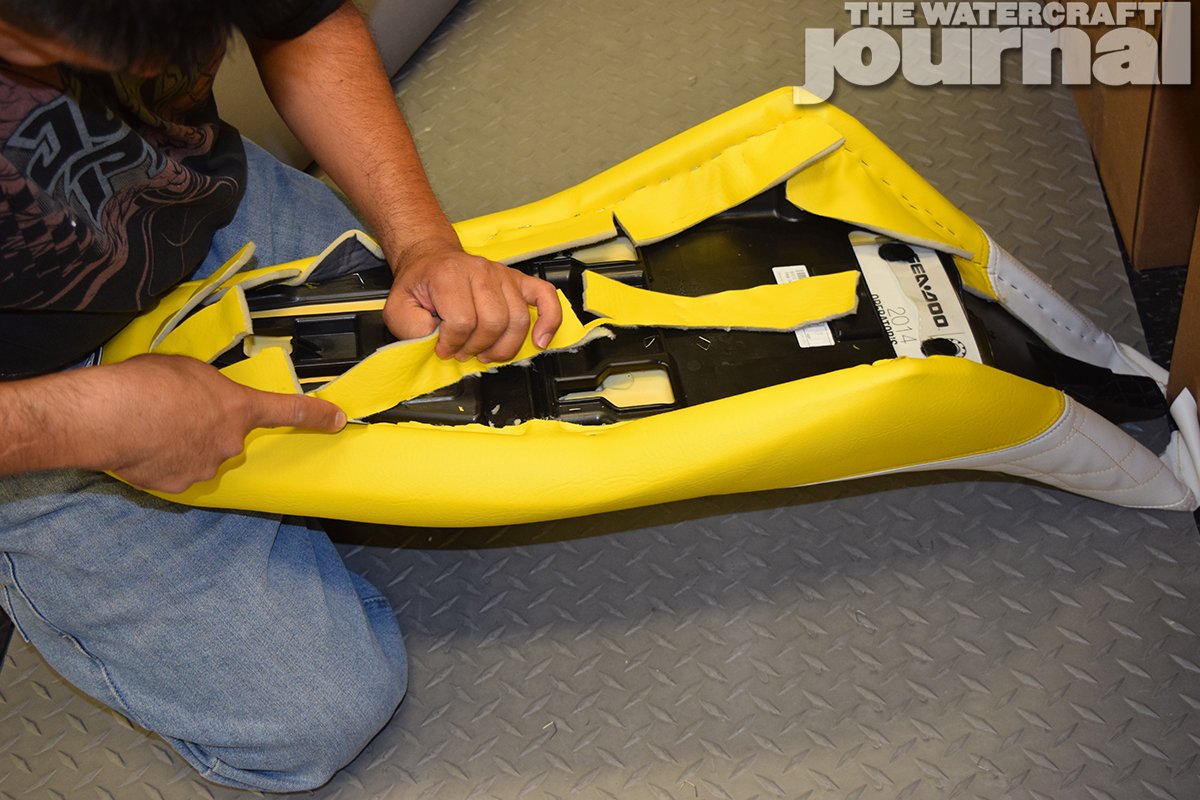
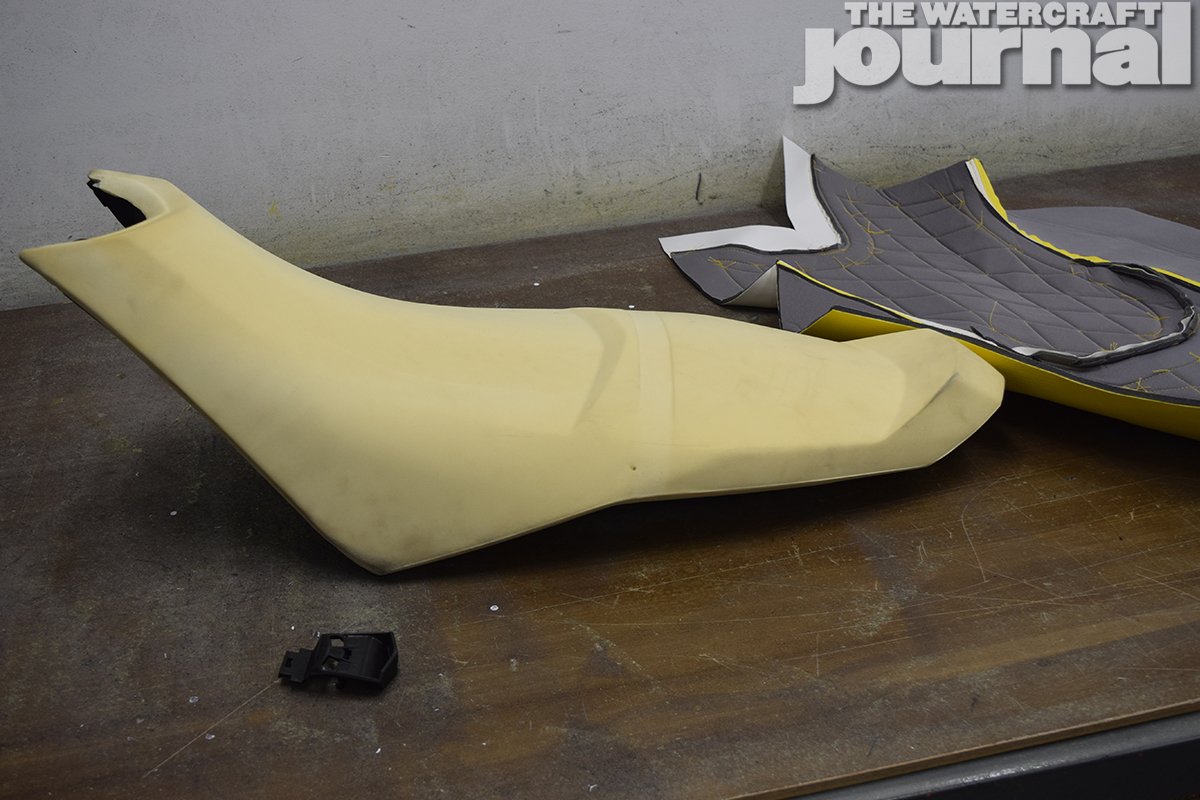
Above left: With our Spark’s original discolored and worn out seat already off and the foam left out to dry properly, we sought about preparing it for the new cover by flipping the seat upside down, wedging a screwdriver in-between and ripping out any lingering staples. Above right: WCSS used a heat gun to soften the thick seat cover material to allow it to stretch a little more freely. It also helps to work out any wrinkles that might’ve appeared while being shipped. We didn’t have such problems.
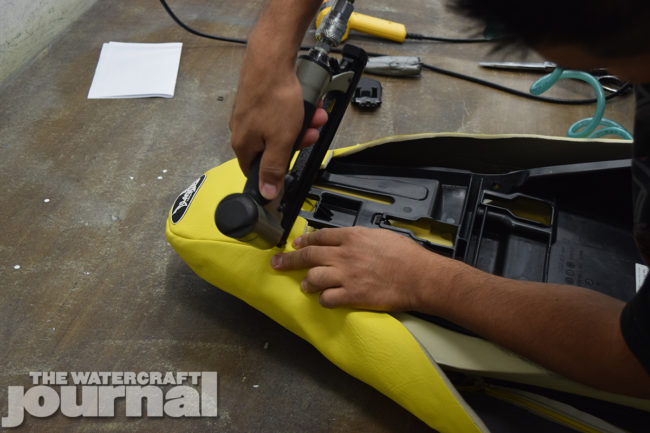
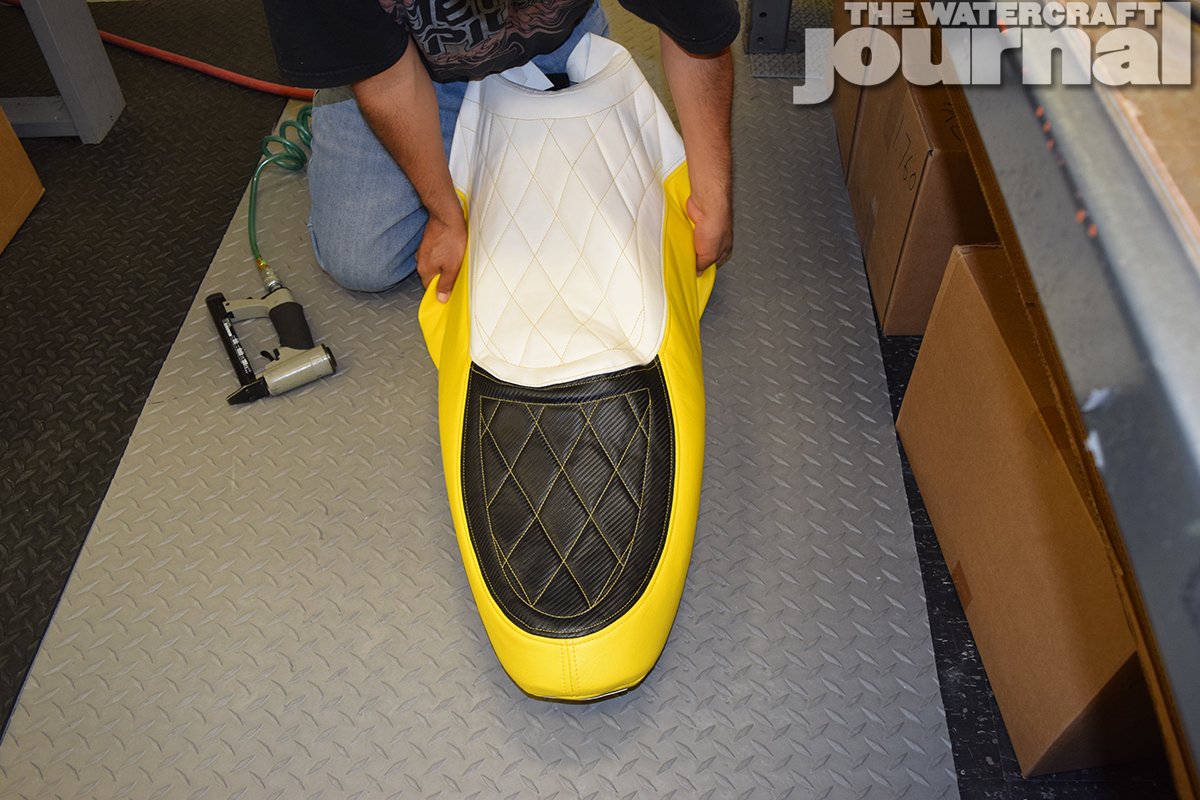
Above left: Stretching the cover over the seat by pulling it down by the edges is the only successful way to get the seams into the contours of the foam and around the edges of the seat base. Continue this process until it is aligned properly and lying flat on the foam. Above right: Spin the seat around, align the back center of the cover (marked by the customary Blacktip emblem) with the center of the seat base.
In an amazing feat of customer service, the Watercraft Superstore’s staff said that the Blacktip Jetsports replacement seat cover would be handled by their own staff (once I handed over the seat) and returned the next day. In talking with other satisfied customers and racers, we found WCSS’ commitment to delivering, even when under the gun, is absolutely flawless. Every. Single. Time. That is an incredible statement to be made and thus far, Blacktip and the WCSS has earned it many times over. So what began as a frustrating waste of a Saturday, became unexpected road trip, and a far more unexpected delivery of a gorgeous, hand-stitched seat.
Thankfully, ordering a Blacktip Jetsports Elite seat cover has been made sublimely simple thanks to Watercraft Superstore’s search engine optimization feature. By plugging in the year, make and model of your PWC, all of WCSS’ suggested parts and accessories will be automatically filtered for items specific to your vehicle. Once there, Blacktip’s page will provide you a predetermined template with a variety of color and texture options. Remember, Blacktip’s arsenal of materials is second to none, so you can go really crazy here. Once satisfied, submit your order and a confirmation will be sent back to you with an estimated time of shipping and arrival. It’s really that simple.
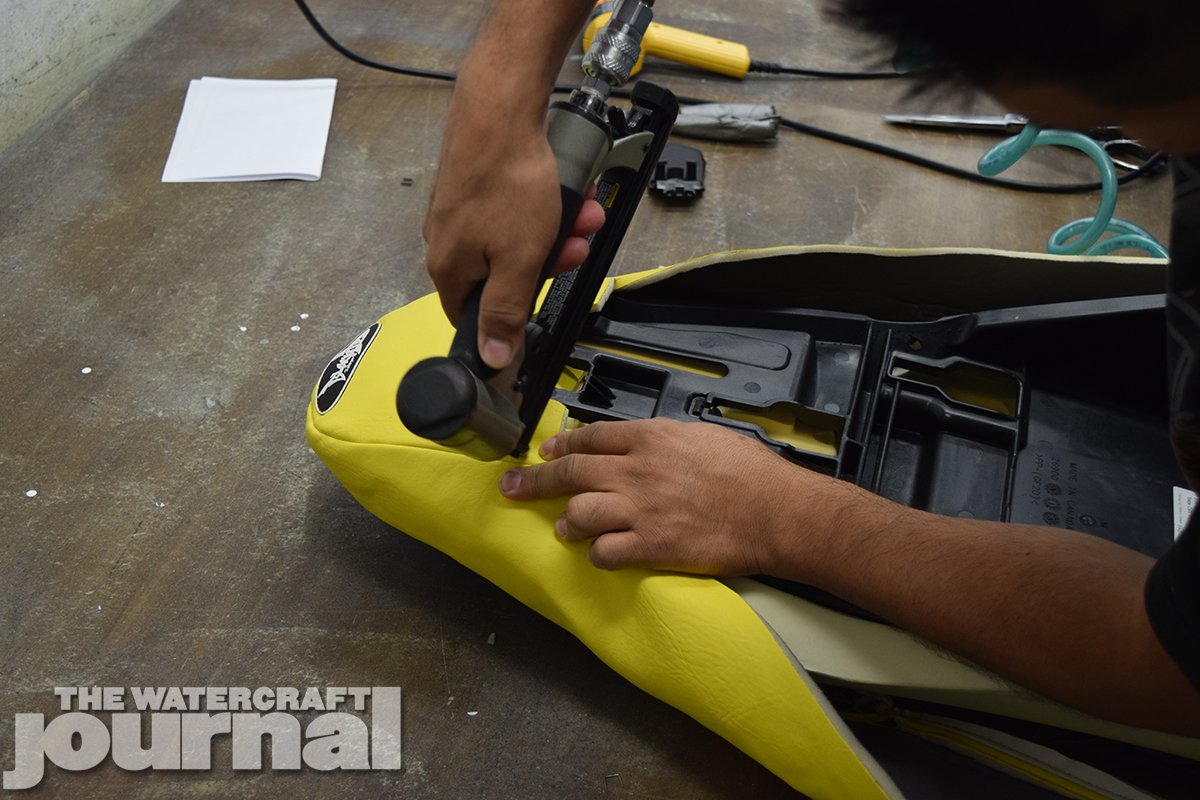
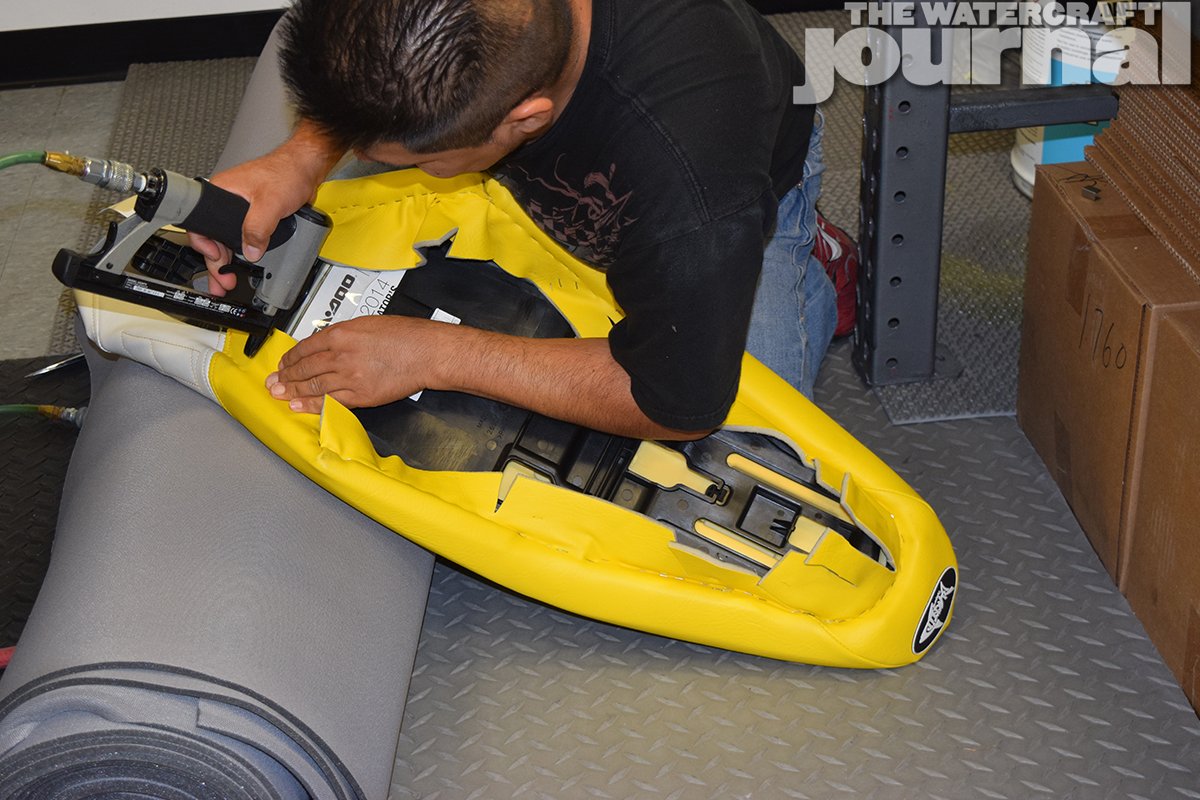
Above: Stretch the seams to the appropriate edges of the foam and base, and put a couple staples into the base. Again, repeat the process of lining up the seams and stretching the cover to match the edges of the foam and base, and stapling it. Turn the seat to the other side and repeat this process. Repeat the above steps of aligning, stretching and adding staples to your new cover while making sure everything is lined up properly with the edges of the base and contours in the foam.
Above left: Fold the corners of the cover together with the bottom portion of the cover under the top, and the top portion overlapping the bottom approximately a half an inch. Pinch the excess seat cover material together with your fingers and carefully trim it with scissors. After trimming off the excess material, staple the cover again on the corners with the top portion of the cover overlapping the bottom. Trim off the remaining excess material along the line of staples. Above right: The only thing left now is to install your brand-new, custom-looking Blacktip seat back on your ski and enjoy!
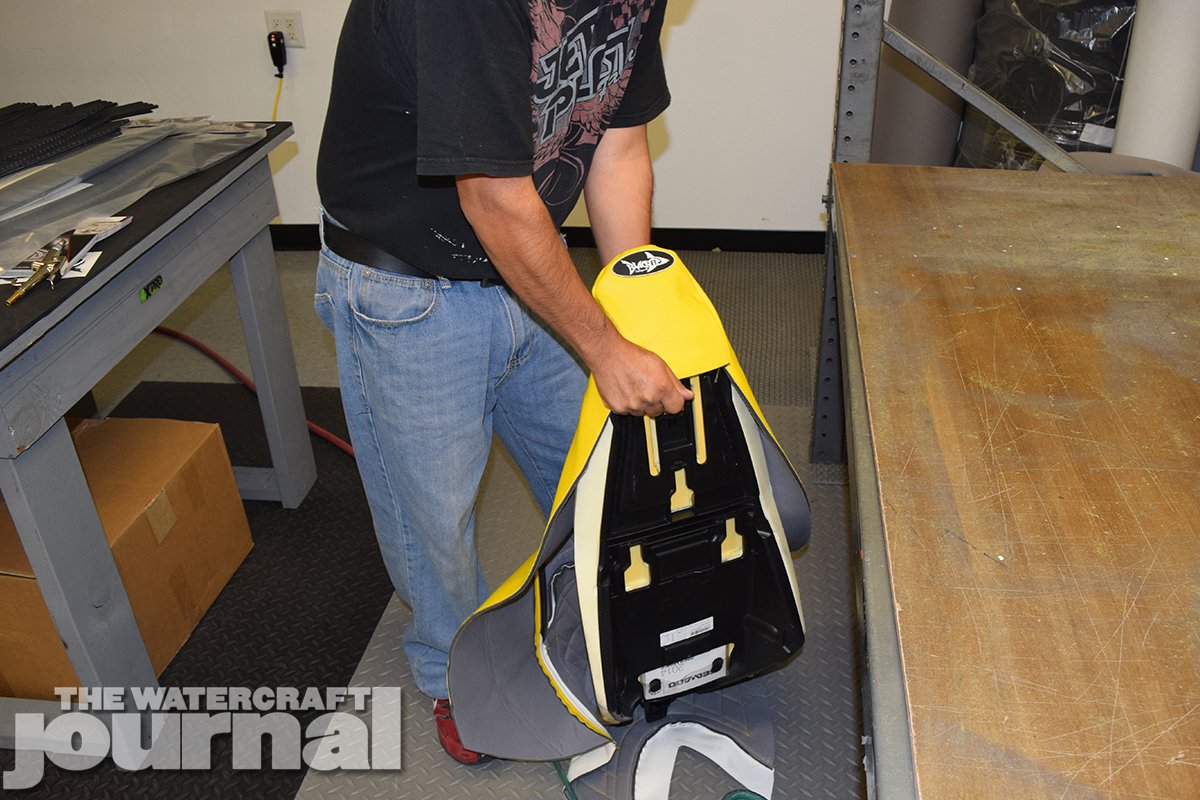
Although unnecessary, as installation is pretty straight-forward (especially as we’ve illustrated the process here for you), you can have WCSS simply ship the cover to you. Or, if you’d prefer a master’s touch, you can ship your seat to WCSS directly – and they will walk you through the process as well. Since we recently made a trip to Watercraft Superstore headquarters, we shadowed Blacktip’s expert installer who walked us through the process to help make your ski look its best when finished!
Above: Although we’re sad to see our Sea-Doo Spark HO 2-up go, we had to make room both in the garage and on our trailer for all of the new 2017 products we have coming for testing. We’re satisfied that our little bumblebee Spark will be in good hands back with Sea-Doo.