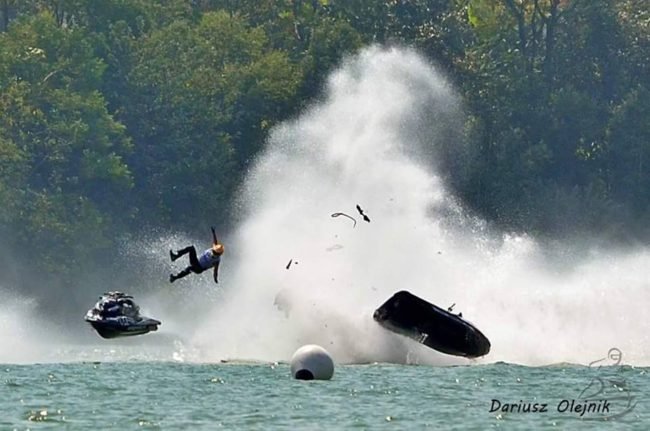
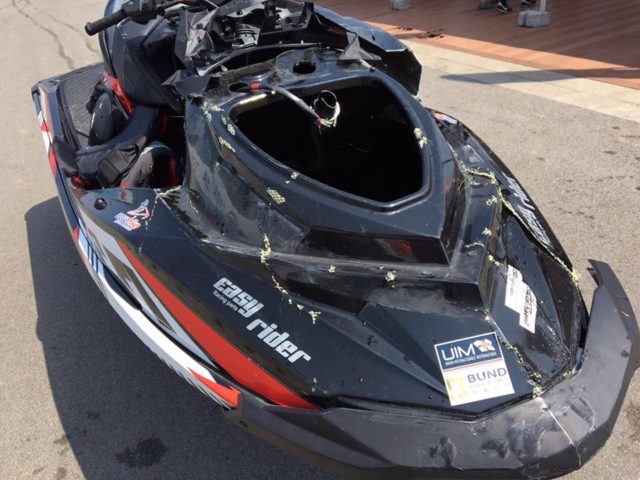
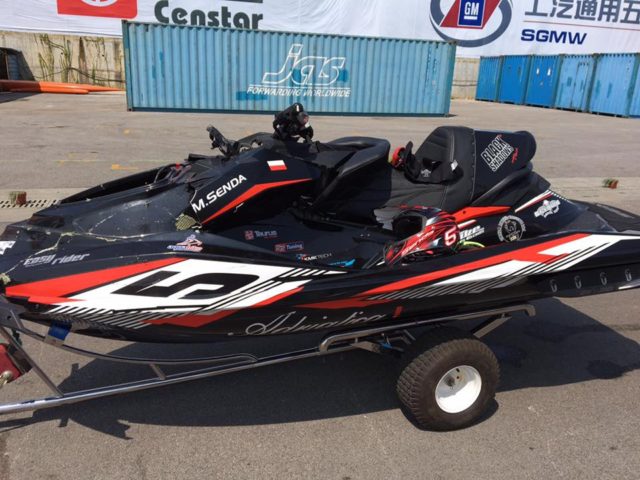
It’s a terrifying reality, but some accidents you simply don’t walk away from. Thankfully, two European racers, Johan Johansson and Marcin Senda sustained only relatively minor (non life-threatening) injuries during a high speed impact at the start of Moto 1 of the UIM-ABP Aquabike Grand Prix of Liuzhou.
Of the two, Senda walked away uninjured with Johansson suffering four broken ribs. The 42-year-old is currently mending in a Liuzhou hospital “for further precautionary scans and supervision” according to UIM’s media outlet, before being permitted to fly home to Gothenburg, Sweden in a few days.
The collision between three runabouts piloted by Mattia Fracasso, Marcin Senda and Johansson, occurring during the race’s “high speed rolling start.” Fracasso was shown clipping the back of Senda’s runabout which caused it to veer “violently into the side of Johannson,” according to UIM.
“The impact launched machines and riders skyward with Johansson immediately taken off the water to be assessed by Dr Pija Sumer and the on-site medical team, and then transferred to hospital. Senda and his badly damaged machine were towed back to the pits, with Fracasso able to continue in the race.”
Thankfully, all three racers involved will be back in competition soon enough with Johansson requiring a few more weeks before being able to suit up again. Until that time, new machines are being built and tested.
There’s a reason why you don’t tug on Superman’s cape. Nor should you ever pull the mask off that old Lone Ranger. And you never, ever mess with Macc. Chris MacClugage’s 19 World Championships prove that the Broward Motorsports/Dean’s Team/Factory Yamaha racer is a force to be reckoned with this year, and especially during the Pro Stock Runabout races at this year’s IJSBA World Finals.
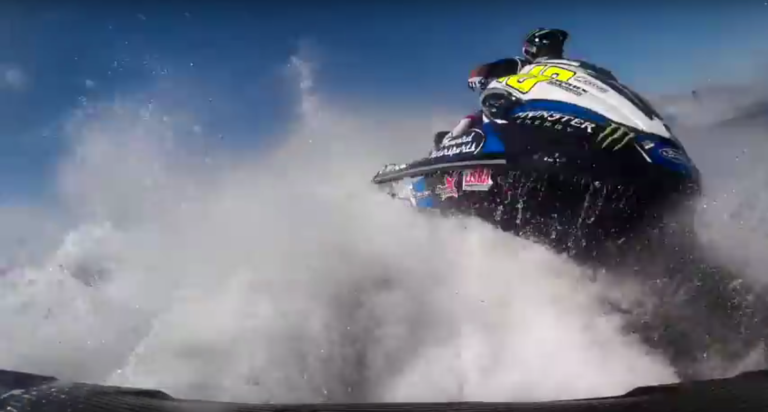
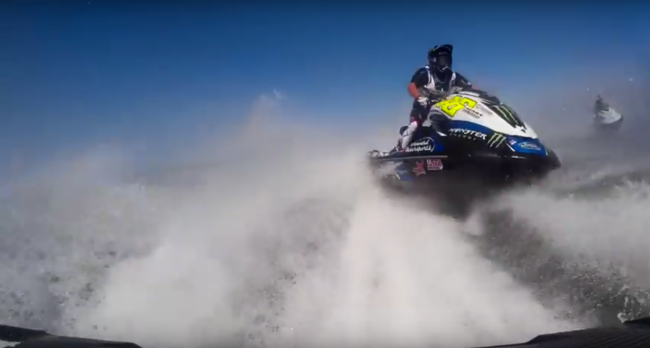
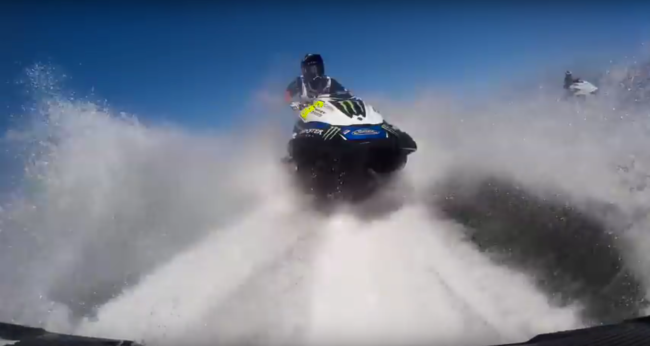
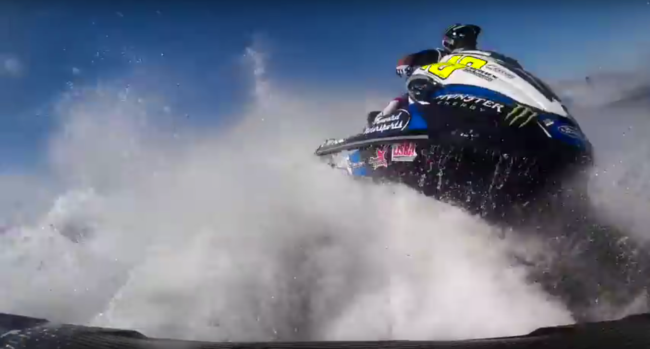
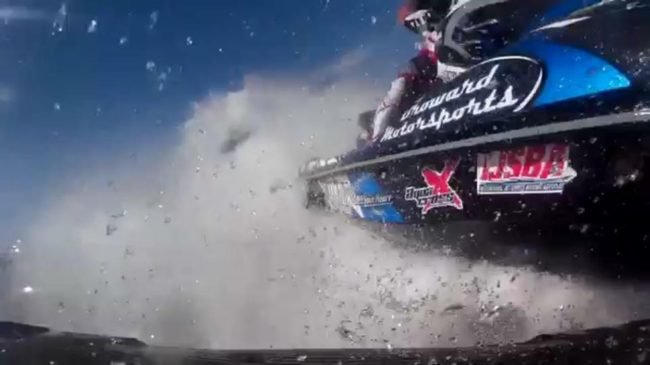
Macc met some resistance on his path to world domination aboard his Stock class Yamaha FZR SVHO WaveRunner, particularly during the second moto of the class’ two day weekend. Viewed from the back of fellow racer Pancho Marjak, Macc’s white-and-blue FZR (with the neon yellow #46 on the hood) can be seen closing in on Marjak’s tail more than once. In one daring move to overpower the Helsinki, Finland native, Macc not only closes in, but literally runs up and over the back of Marjak’s ski.
While nothing to get too wound up about, Macc did address his fellow racer (and friend) in a post on Facebook stating, “Sorry Pancho Marjak, but it was great to race with you again. Next time don’t use so much brake!”
Much of Marjak’s moto can be seen below including the hair-raising start where several racers nearly parked their machines on Marjak’s swimstep. But Macc’s persistence and dogged determination is what earned him the points overall win for his sponsors, which shared in his celebration.
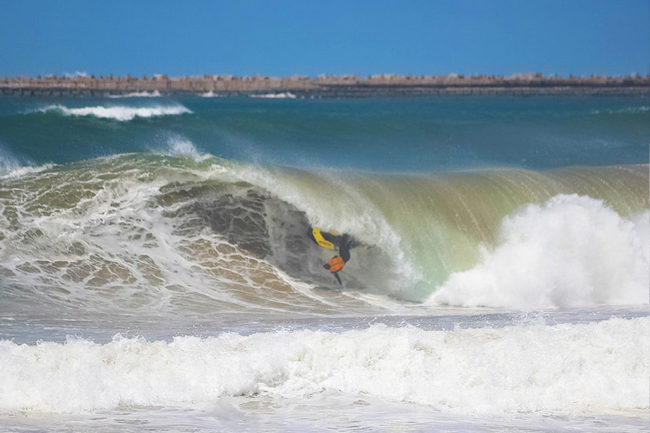
It is with great pleasure to have been the editor of Personal Watercraft Illustrated when we published Taylor Curtis (now of TC Freeride fame) on his honeymoon in Tia’apu when the daring freerider rode his custom built ski into the crystal blue waters of a 12-foot-high barrel on the cover. Curtis’ daring and his wife’s talent at snapping the pic gave us one of the magazine’s best images of what the perfect blend of surfing and jet skiing can accomplish.
Unfortunately, opportunities like that don’t come together often. In a segment called “Sequence of The Week,” ZigZag Magazine published a series of sequential images showing a monster swell pounding on the KwaZulu-Natal (a province of South Africa) shoreline, and a lowly Sea-Doo Spark daring to stick it in the greenhouse, so to speak. Pilot Sipho Ngwane charged the barrel and was photographed by Neil H Photography, but Ngwane wasn’t up to the challenge.
As the story goes, this was Sipho’s first time at tow-in, towing-in surfer Quinton Shabalala. Quinton is shown in the sequence (found by clicking here) above the wave and out of harm’s way, choosing not to ride it after all. Apparently Sipho wasn’t able to avoid the barreling wave, and attempted to steer clear of it, instead getting stuffed deep inside and eventually pulled over the lip. It’s a heck of a sequence and definitely worth clicking the link to ZigZag to see it in its completion.
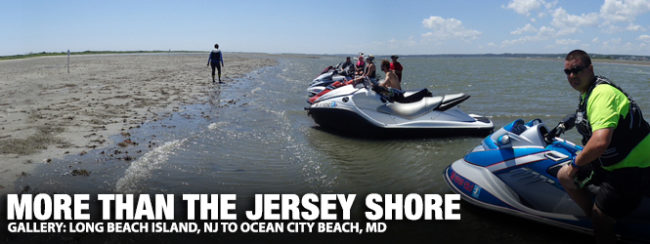
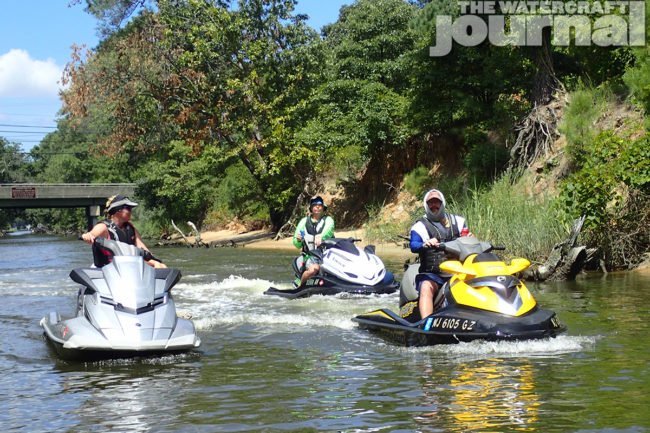
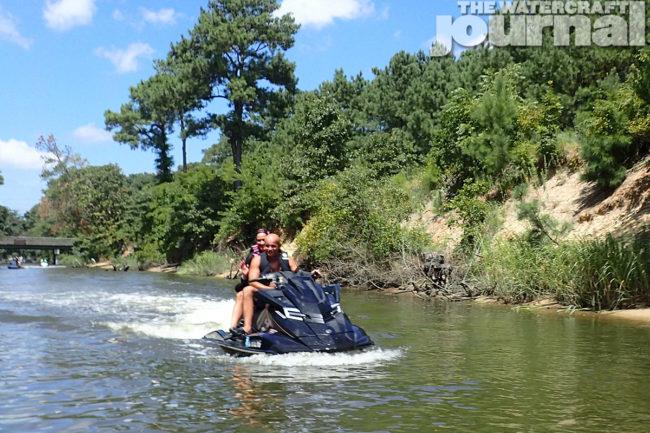
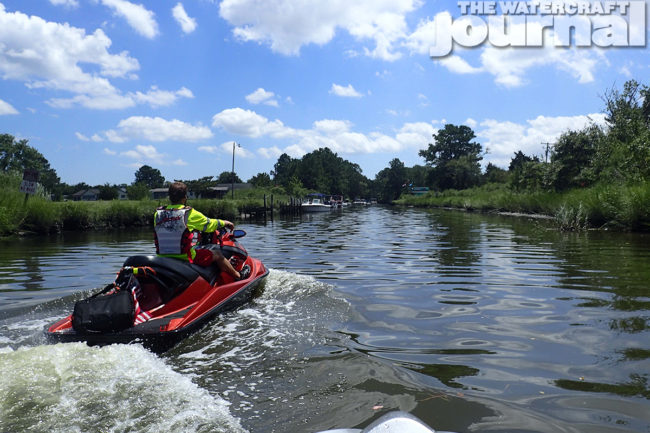
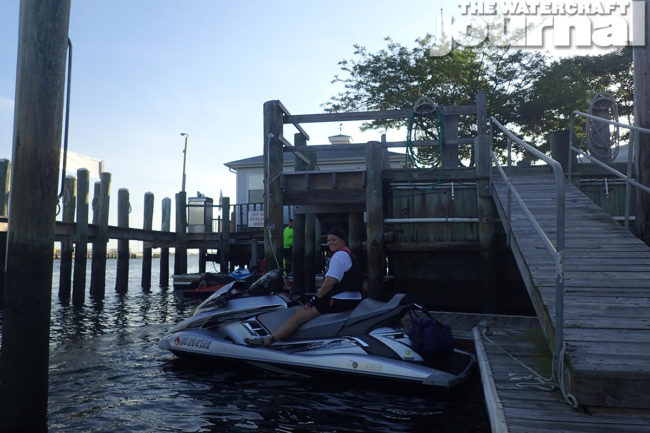
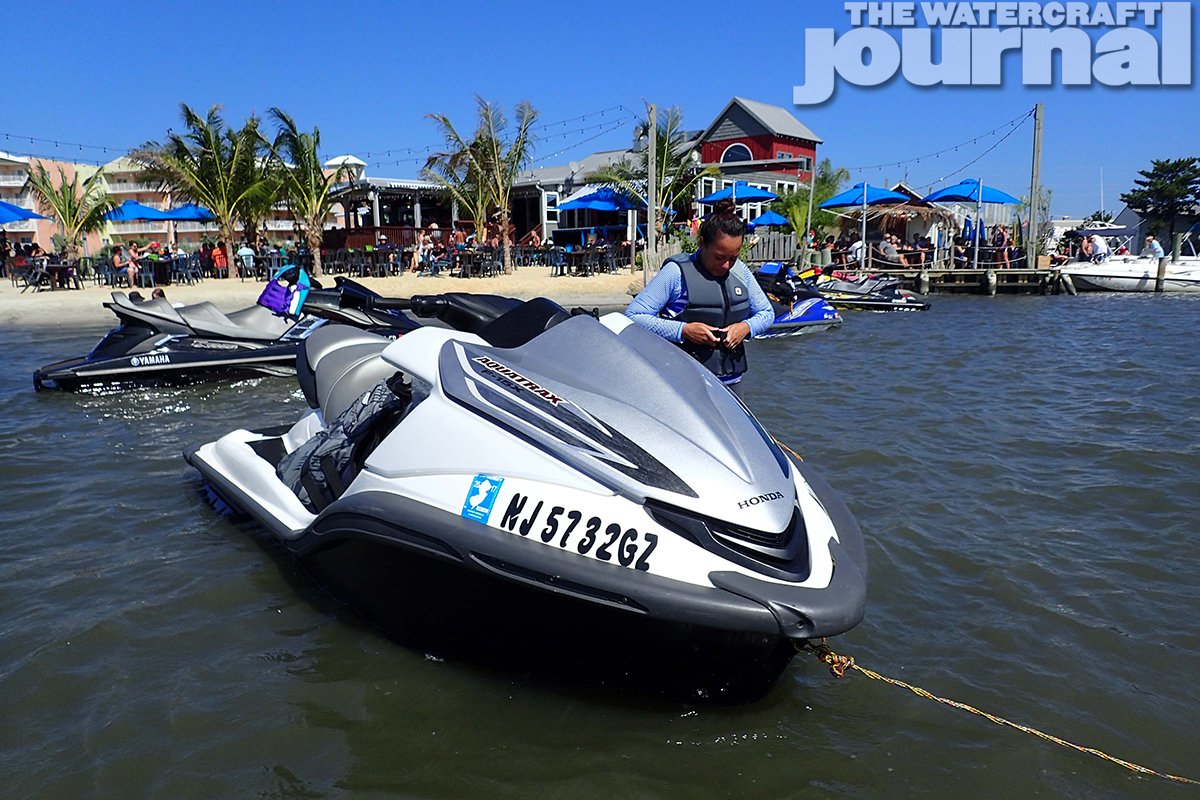
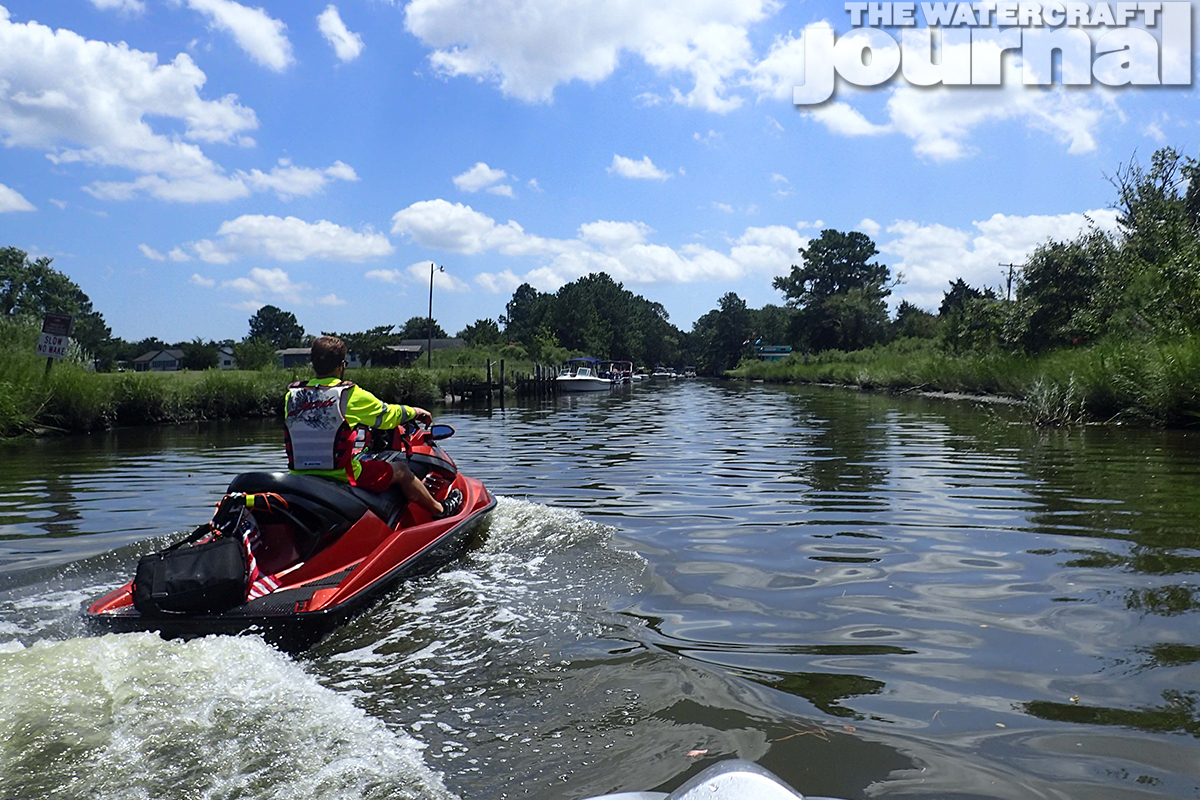
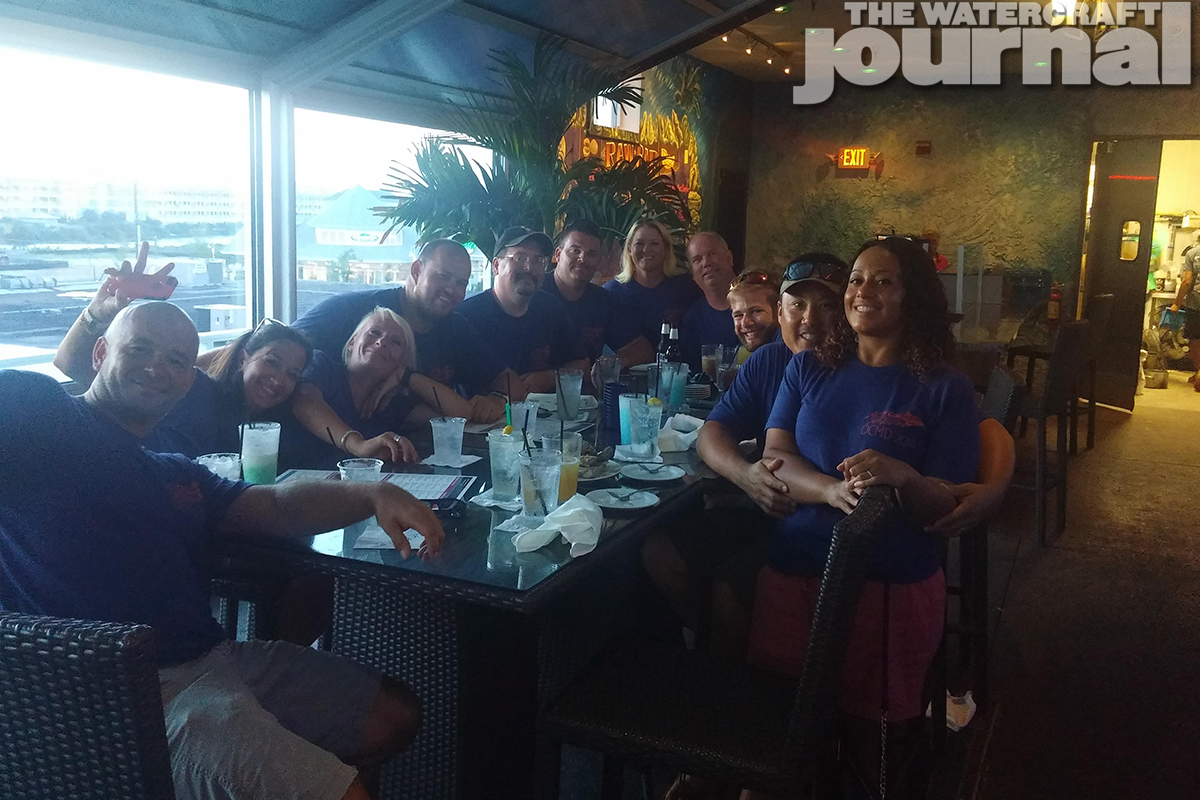
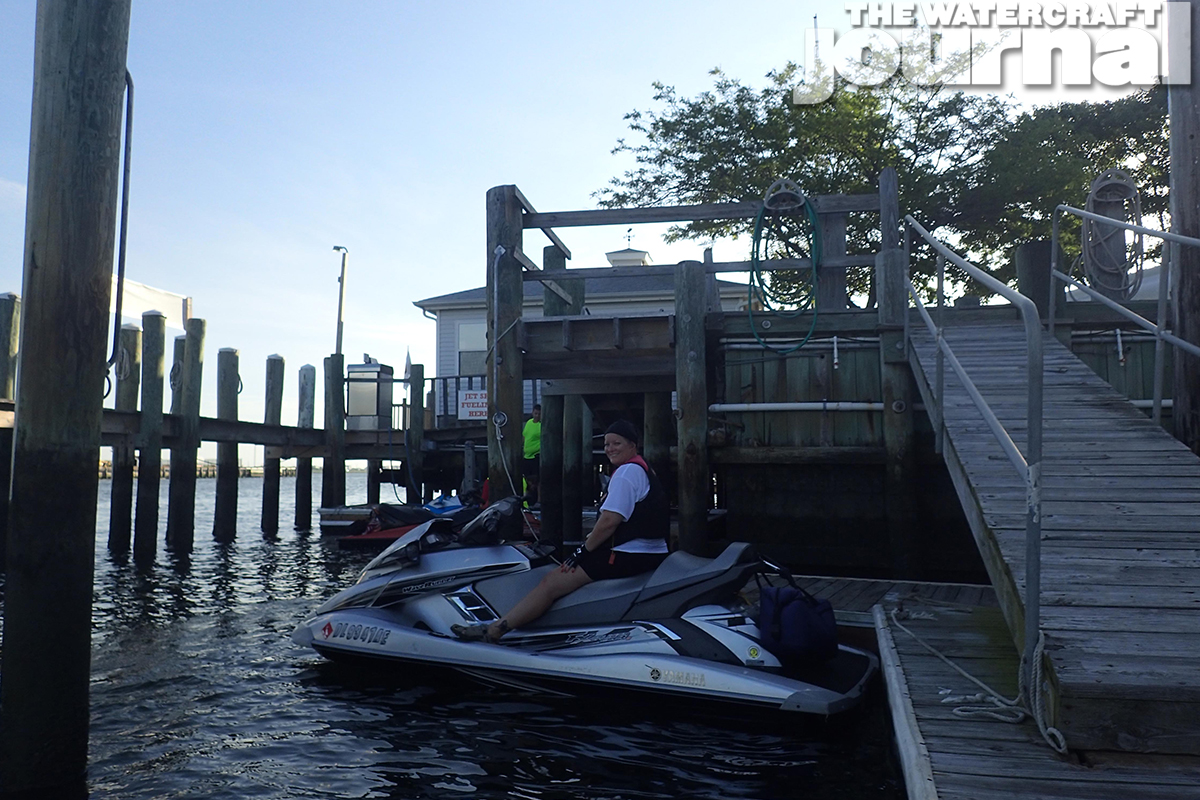
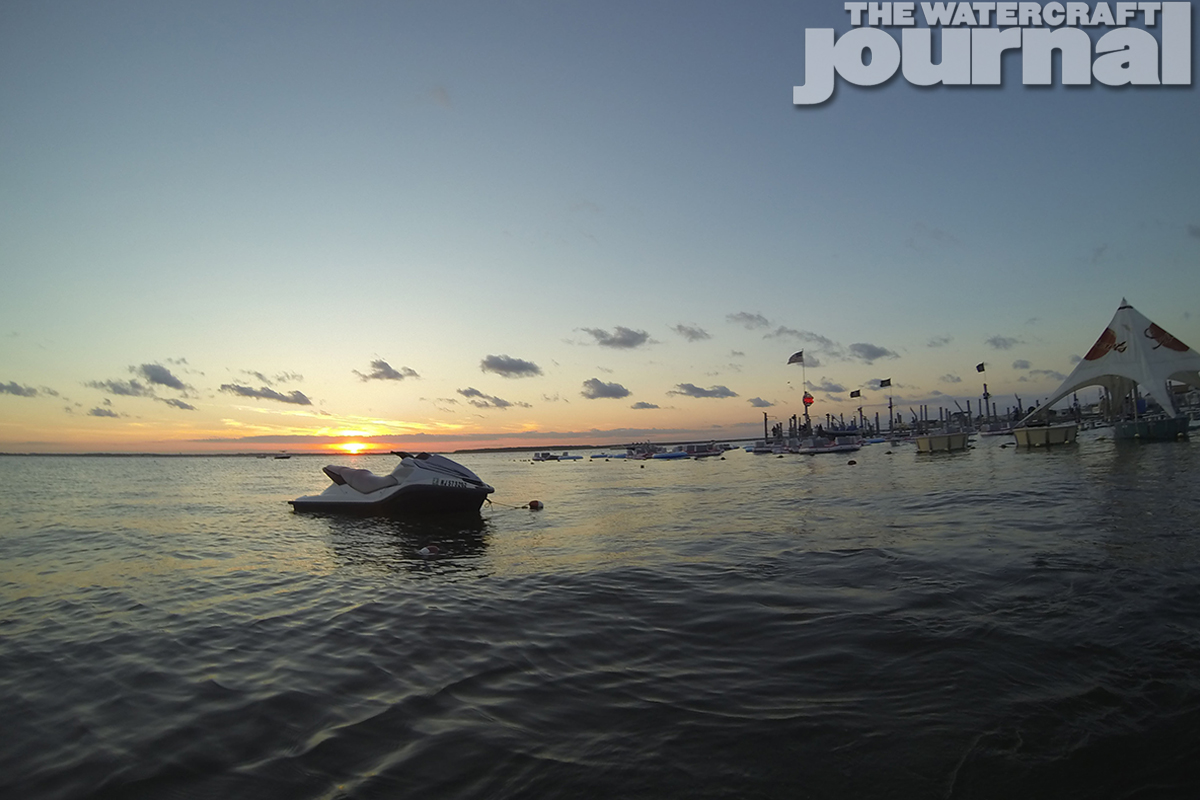
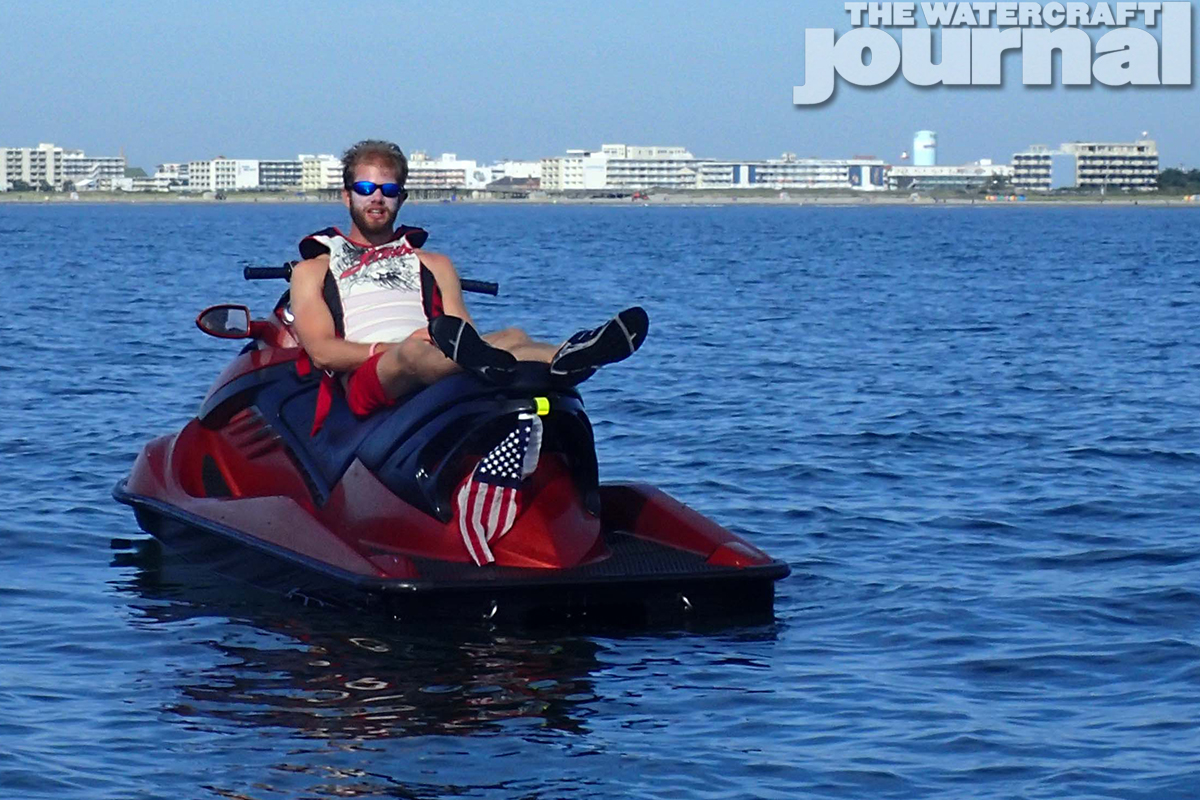
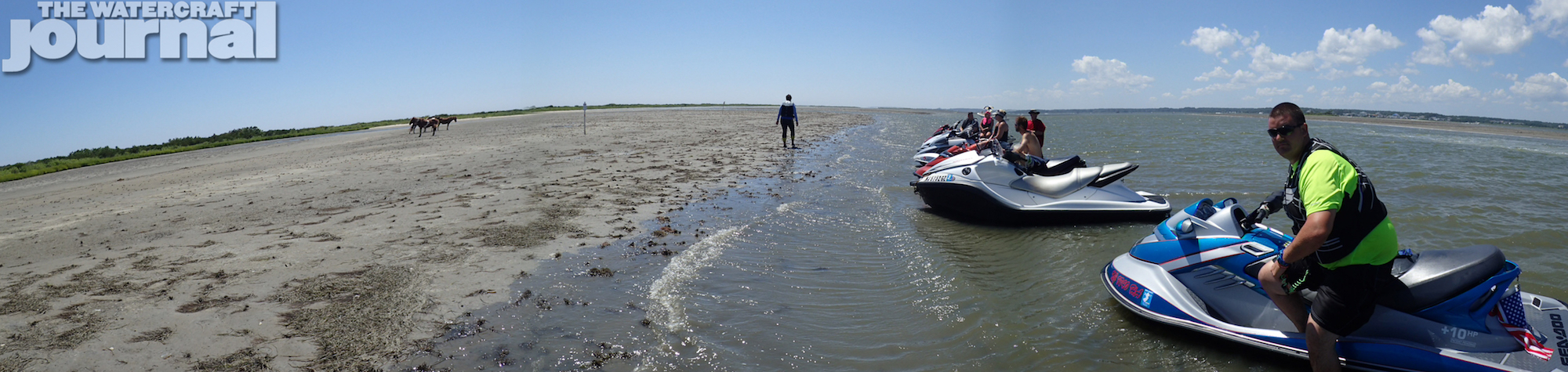
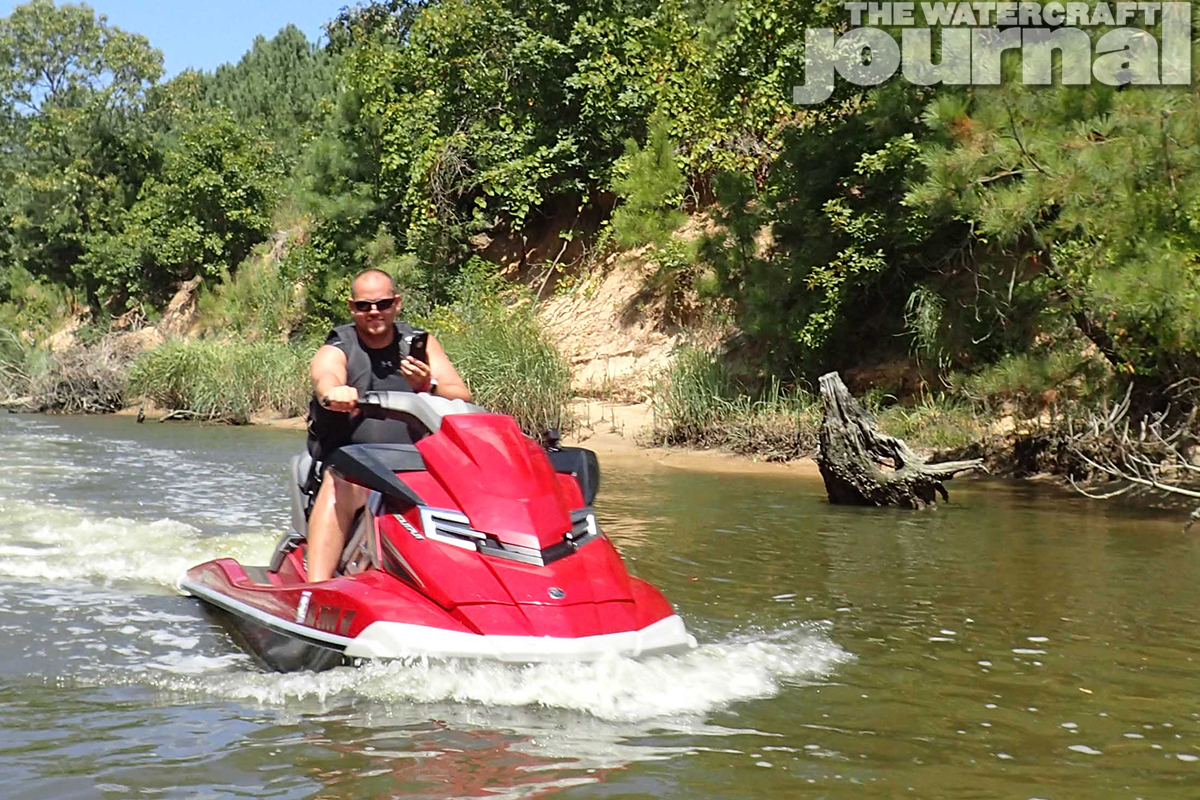
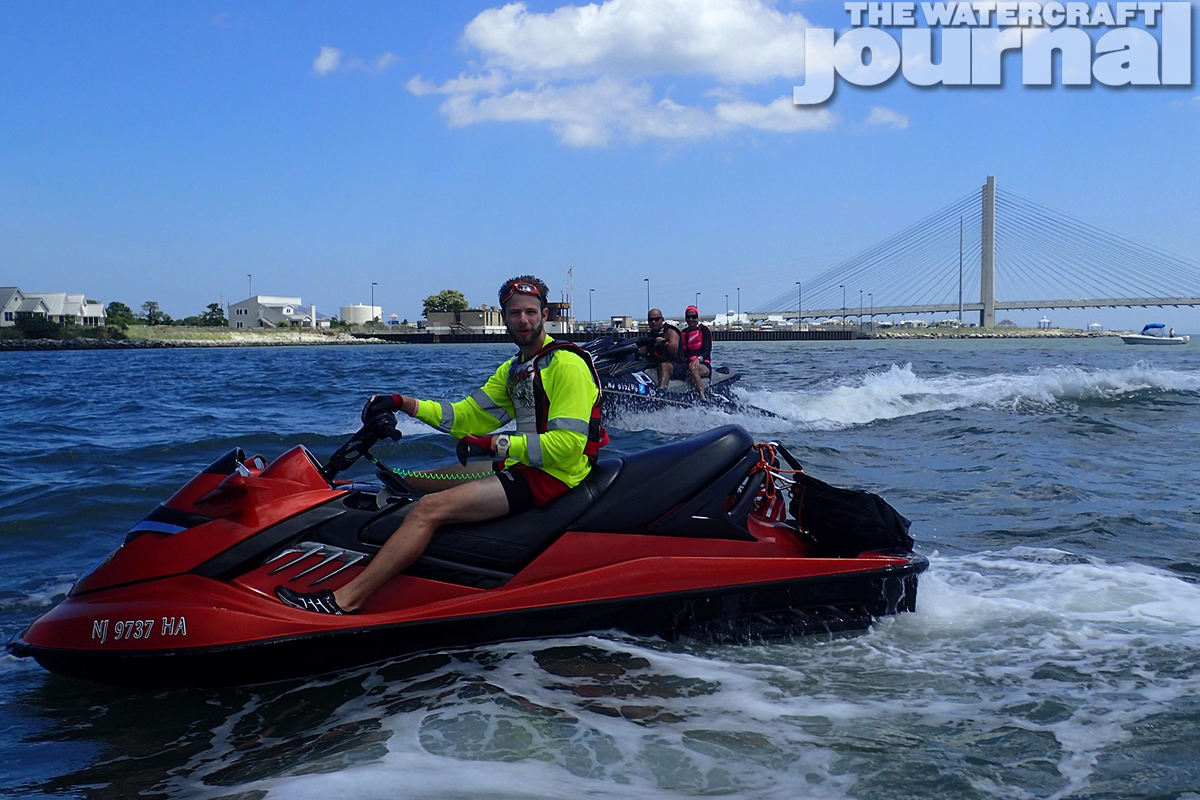
The love of being on the open water and creating lasting friendships is what our yearly trip from Long Beach Island, NJ to Ocean City, MD is all about. It’s 140 miles one-way and countless hours later we make use of our 3 day trip during the summer to cap off the joy of riding our PWC. It all started in 2009 with John’s adventurous nature. The pioneer has continued the tradition all these years. I joined this trip in 2010 with John and Nick, at which time Bar Bay Riders (Barnegat Bay, NJ) was formed. The following year, Alex joined us for the next adventure. John, Nick, Alex, and myself continue to spread the love of this sport by means of Bar Bay Riders.
Fast forward to 2013, the Northeast PWC group joined this trip. I’ve been riding with this group since 2009 and try to join as many trips that they have planned for the year as they always have a schedule of planned rides throughout year. As our group of riders has grown, so has the knowledge of staying safe and being prepared on the water to insure a trip no one will forget. Ed and Alan from NEPWC were a welcome addition to our group as they bring a lot to the table for the love of riding! Thanks to them, we decided to extend it to 4 days so as to enjoy our trip to the fullest instead of feeling rushed. (Or maybe as we get older we need more recovery time!) This year’s trip was by far the most epic ever.
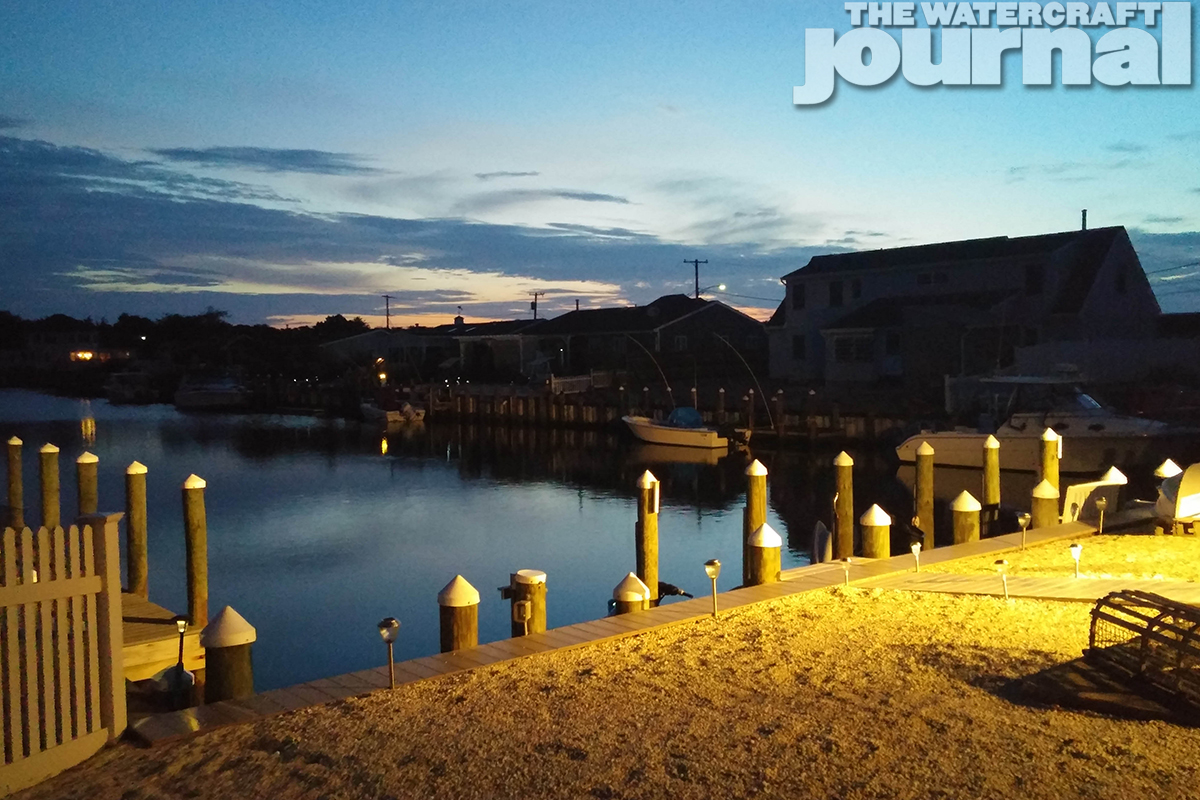
Six riders left at sunrise from Long Beach Island, NJ, riding through the bays in NJ afforded the opportunity to be sheltered from the winds (or the total opposite). Luckily the winds were in our favor and the bay was as calm as one could wish for. We took a chance and shot out to the ocean at Little Egg Inlet to see if we could shave some time off the ride – so we could avoid all the intercostal slow/no wake areas. Bad move. Our moving average was probably closer to 10-15mph in the ocean.
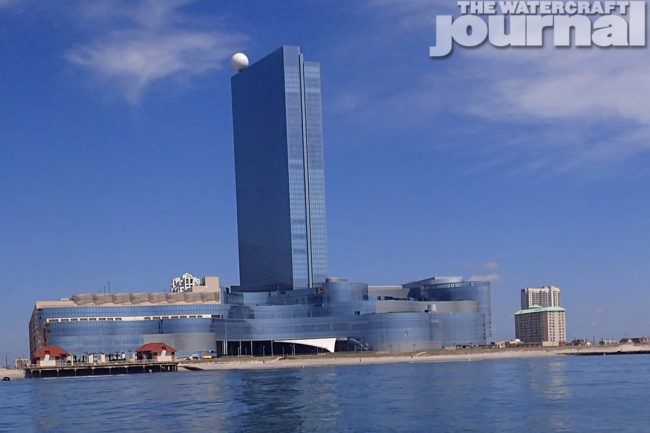
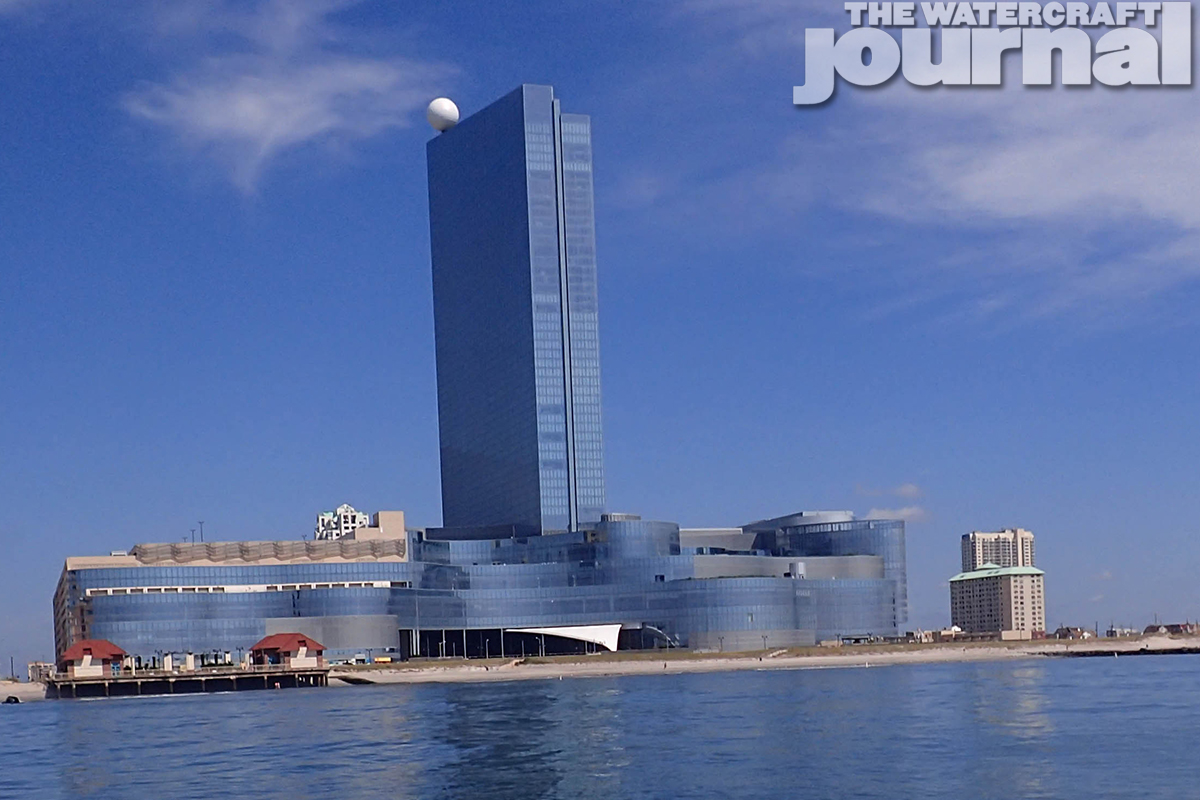
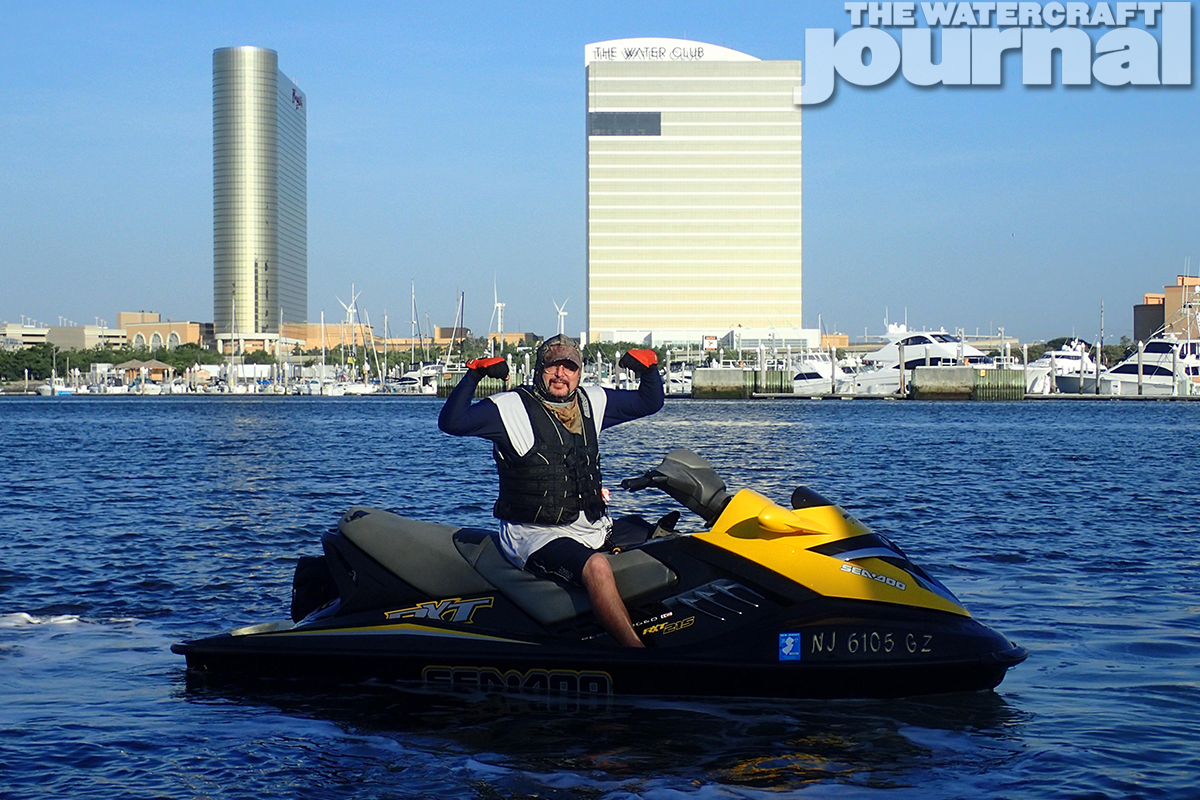
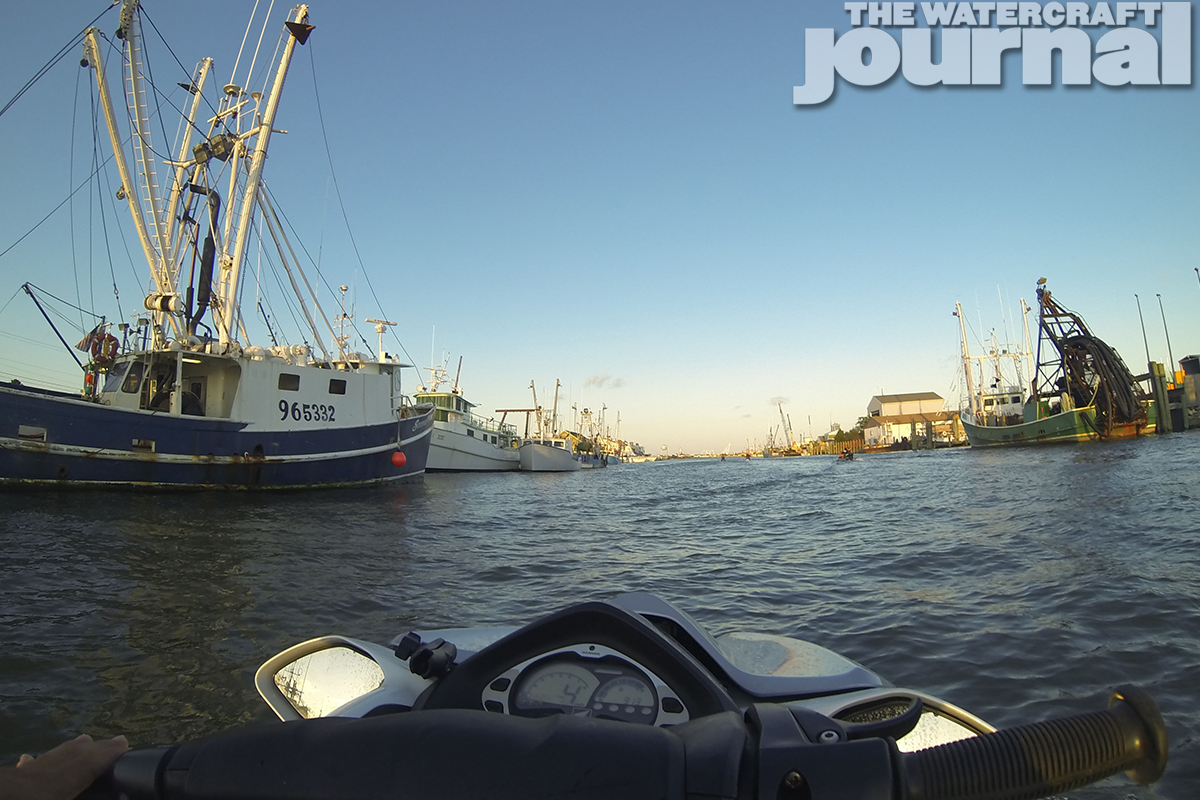
We shot back into the bay at Absecon Inlet, Atlantic City, NJ and enjoyed the calm waters that the bay offered. We coordinated a meet up with 2 more skis in Ocean City, NJ to extend our riding family. The more skis in our group the better! Our last stop in NJ was Cape May before we crossed the opening of the Delaware Bay into the ocean. Crossing the Delaware Bay is roughly 25 miles of open ocean before hitting land again in Delaware. We remembered what the ocean was like and were not looking forward to this crossing at all! Steady 20mph winds out of the south meant we were riding directly into the angry ocean. Slow and steady we went. I’ve been through worse but this crossing was up in the Top 3 for bad conditions.
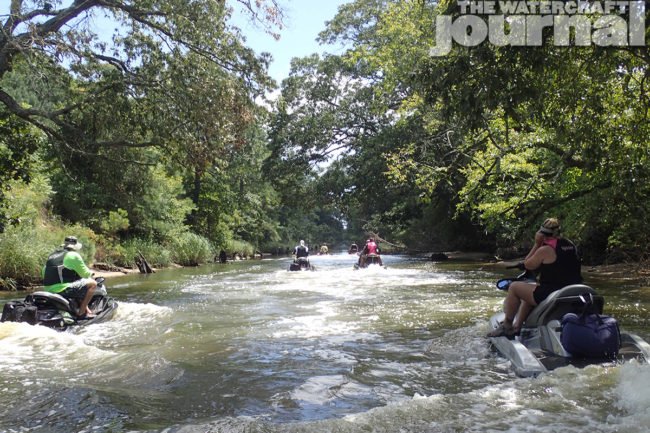
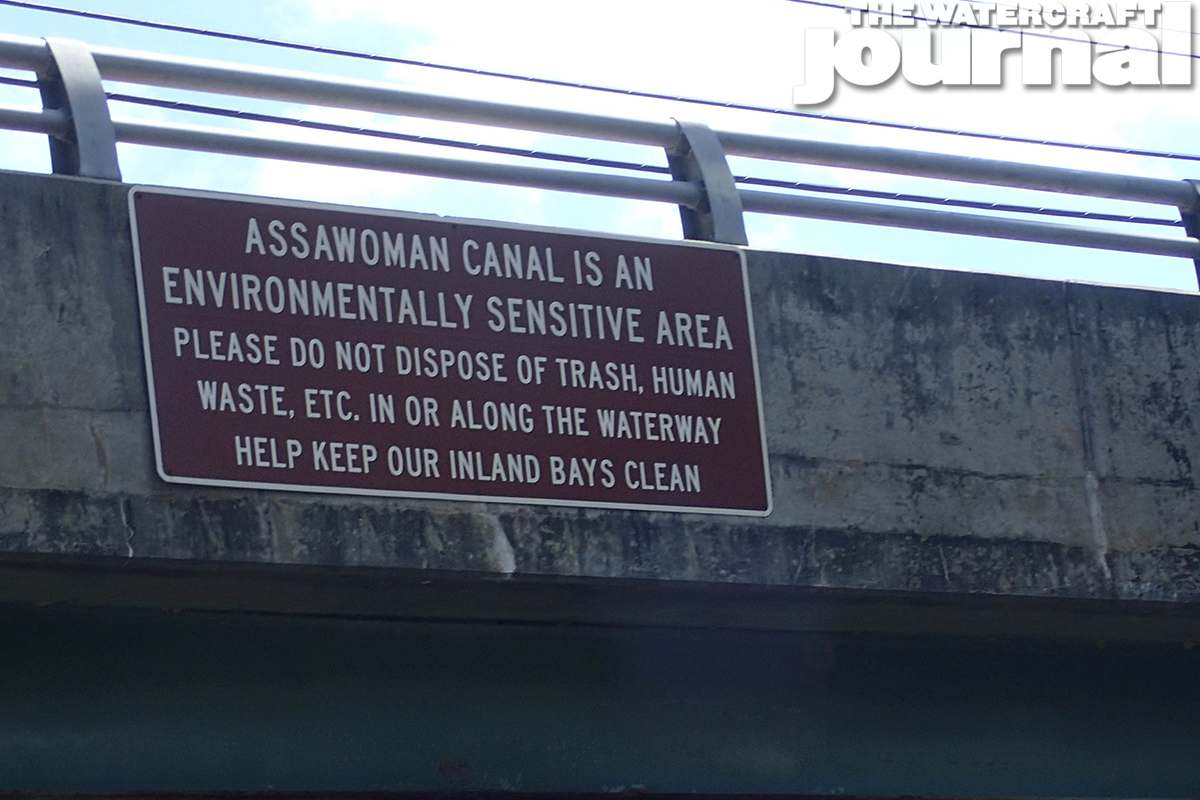
Luckily we all made it across with no issues and had a decision to make: stay in the ocean or tuck into the bay at Indian River Inlet near Rehoboth Beach, DE. No thought needed on that decision. We shot into the bay even though this route took us down the Assawoman Canal which is a 4-mile-long No Wake Zone. Riding 2mph-3mph for 4 miles. You do the math how long it took.
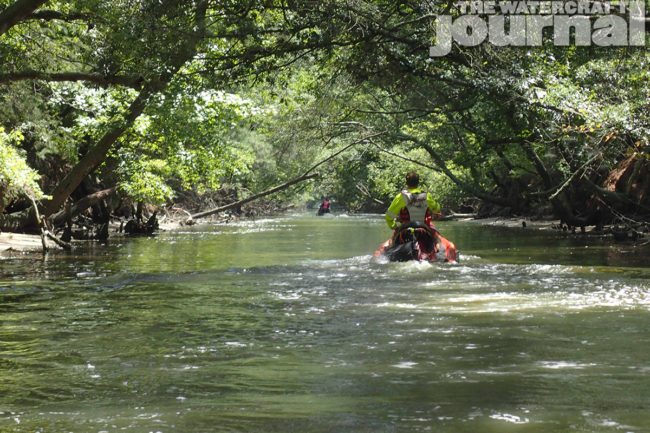
The tides were extremely low that week of the trip. We didn’t expect what happened in the middle of the Assawoman Canal that’s for sure. The water level was just above the calf/mid-calf in the middle of the canal for about 20 yards! Off the ski to push we went. It was barely enough water to push the skis at some points. Due to the low water a couple of skis ingested foreign material that required on the water surgery after we exited the canal.
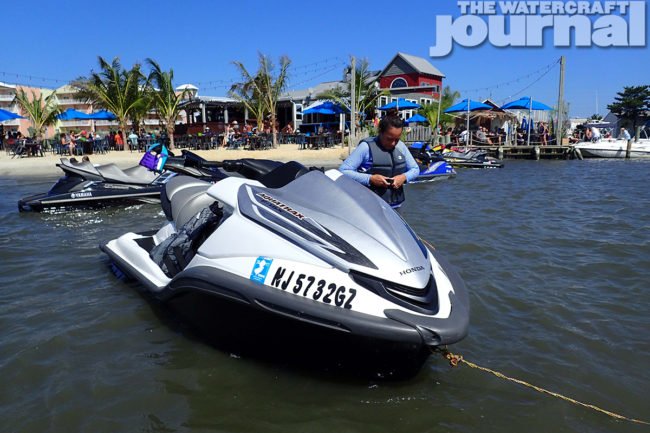
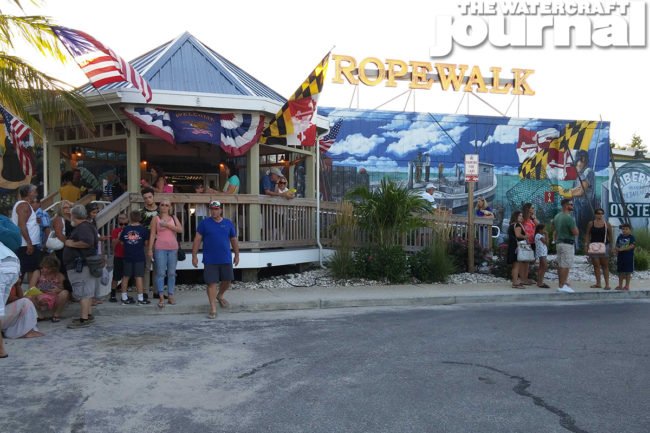
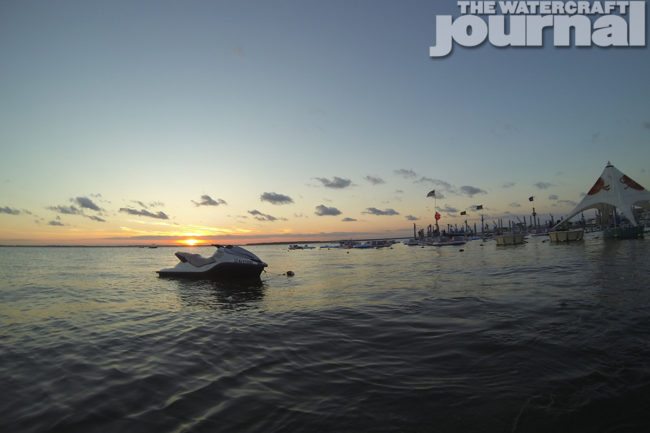
We all came prepared for the worse expecting the best. Being 140 miles from home I better come with everything I could need to pull the intake grate (and pump as well) as to deal with small mechanical issues. After performing open water surgery and clearing the pump, off we went to our final destination, Seacrets Ocean City, MD. Nine hours and 140 miles later we tied up to the mooring stations and rested from getting beat up on the ride down.
The ride home was the complete opposite in terms of water conditions. All ocean riding back to Long Beach Island with the flattest, calmest ocean we could ask for. Barely a ripple of a wave. A perfect way to end this epic adventure and to have memorizes for a lifetime.
That, and you can represent Kawasaki well before you take your new SX-R to the water thanks to Kawasaki’s new 2017 Apparel Collection! With pages upon pages of new items featured in the collection, you can browse the new digital catalog live on Kawasaki.com. It’s got everything from men’s and women’s, kid’s wear; gifts; officially licensed JetSki brand vests, items from the 3 Green Lines Collection as well as that from the World Superbike Collection – because let’s face it: if you’re gonna support Kawasaki, it’s a pretty good bet that you love their motorcycles too.
Before going forward, let’s take a minute and look back at how we got here, shall we?
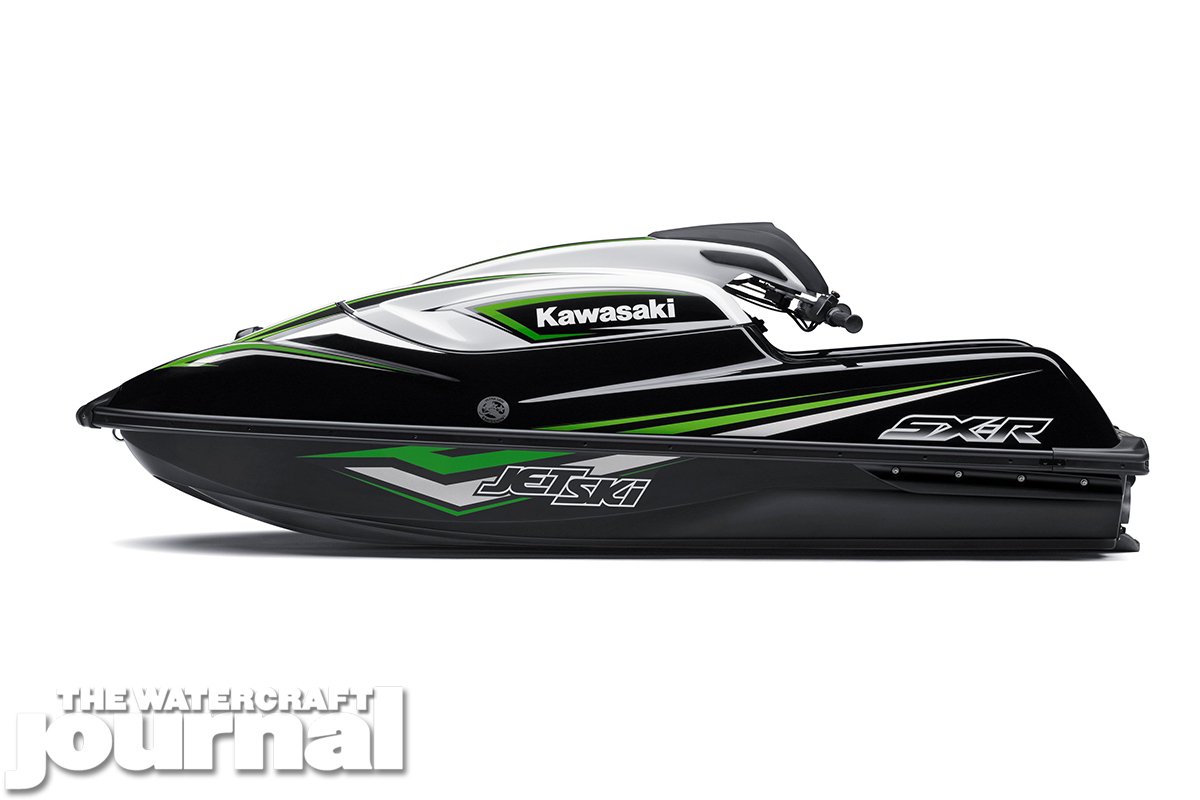
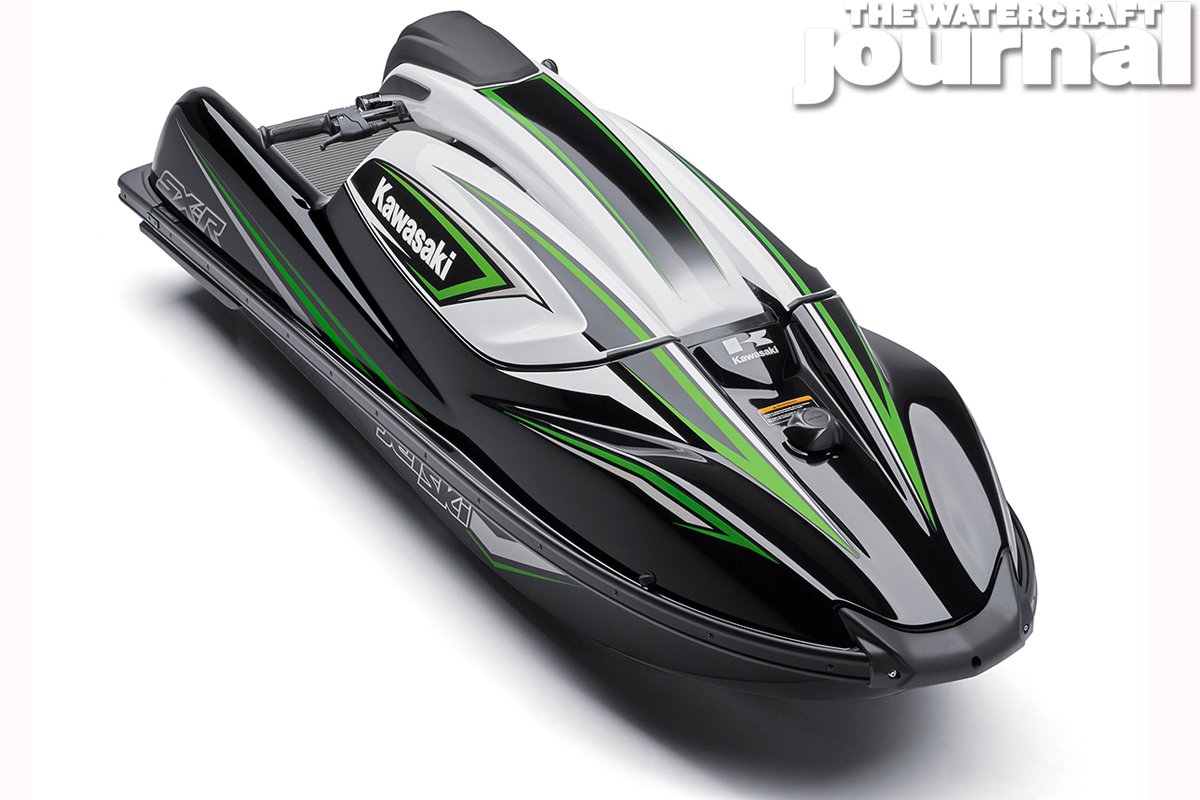
Just two years shy of the Kawasaki JetSki’s 40th anniversary, 2011 marked the last production year of the SX-R 800. The 370-pound (dry weight), 7-foot-long SX-R (which was considered large for the time), with its two-cylinder, two-stroke pumping out a respectable 80-horsepower, made the SX-R the most stable and powerful two-stroke standup available. Unfortunately, politically-connected environmentalists eventually outlawed the commercial sale of the SX-R 800 in California and other progressive States, wounding sales and deflating the company’s enthusiasm to continue the ski that had gone unchanged for several years.
Last October, The Watercraft Journal was informed via sources inside Kawasaki that a new hull was coming for 2017. That’s it, just “a new hull.” Well that, and it would be “something to get people excited about jet skiing again.” That’s all we got. Then, in January of this year, we caught wind of a hush-hush meeting between Japanese brass and a major OE parts vendor where the first images of an all-new SX-R JetSki were shared. We already had a strong inclination that the SX-R was coming back, but this all but confirmed it.
By late summer, rumors continued to fly – accelerating from just “swirling around” to a Category 5 hurricane. Then, we published the reveal video, and things went to DEFCON 1. It was official: Kawasaki was bringing back the SX-R. So what on earth spurred Kawasaki, with so much ground to make up in the PWC market, to make this play? Although unofficial, we have an idea:
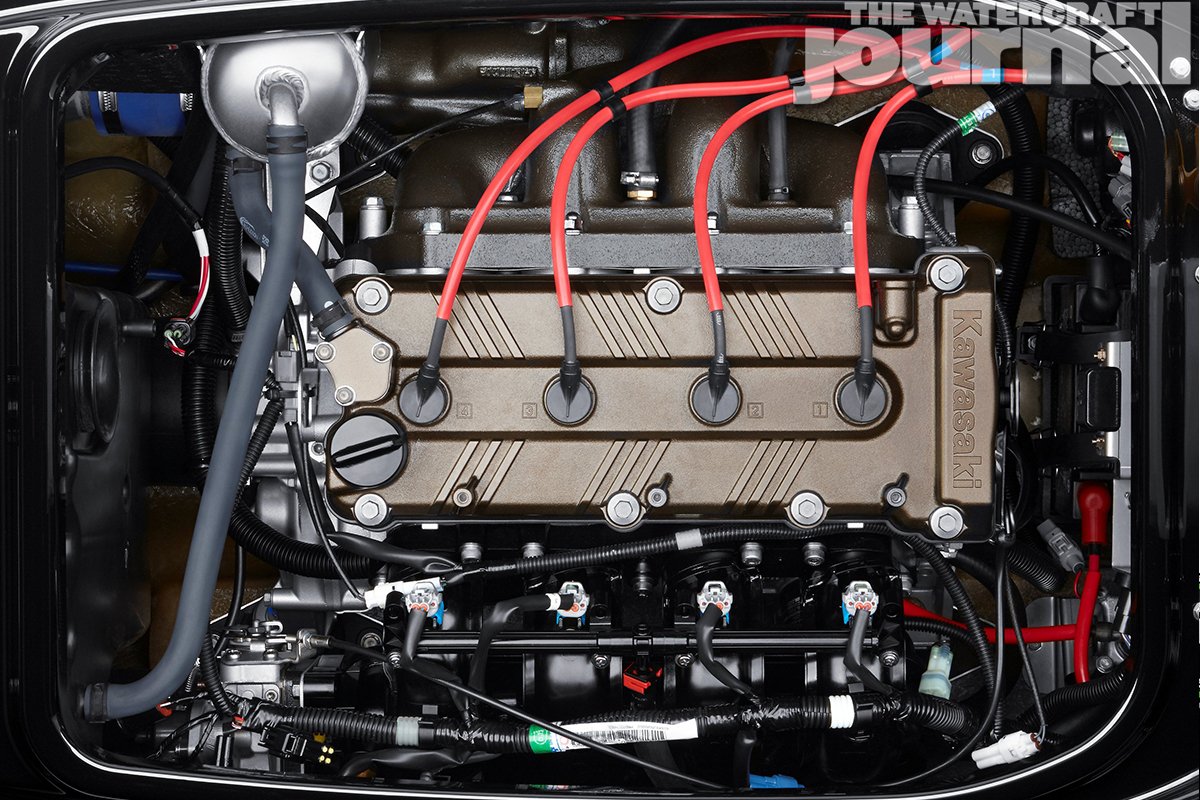
Surprisingly, very little was needed to make the new SX-R a reality, particularly as it uses many off-of-the-shelf parts. Take the engine for example: Directly lifted from the STX-15F, the new SX-R is powered by same digitally fuel injected 1498cc four-stroke, four-cylinder engine already in use for the past 13 years. Even its 60mm throttle body employs a mechanical throttle cable – no fly-by-wire here, folks. The oil collector/separator and composite resin-type intake manifold (taken from the supercharged 310X) are existing factory bits too. The waterbox though, is a narrowed piece that runs inside of the tray’s left rail.
Once inspired by the Ninja ZX-14R, the tried-and-true 1.5-liter weighs a spine-snapping 208-pounds when fully dressed, and accounts for much of the 2017 SX-R’s (unconfirmed) 550-pound heft. Inside information had it that hopes of the new 998-pound, 1,000cc four-cylinder, four-stroke from the new Ninja H2 could be re-engineered in time to meet the tight timeline imposed by Japan. Unfortunately, the SX-R was destined to be revealed at the 2016 IJSBA World Finals, and the new engine simply wouldn’t be ready in time.
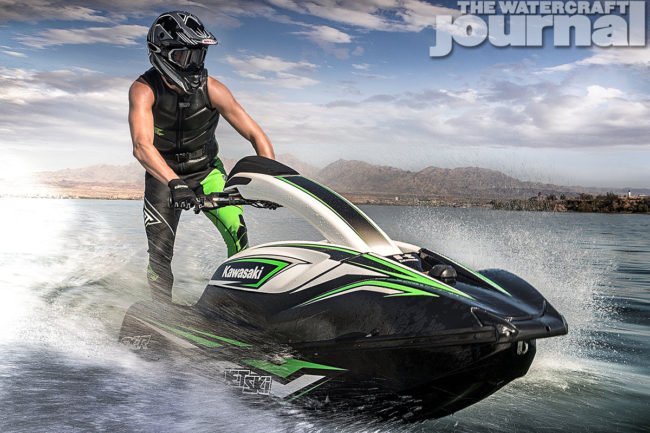
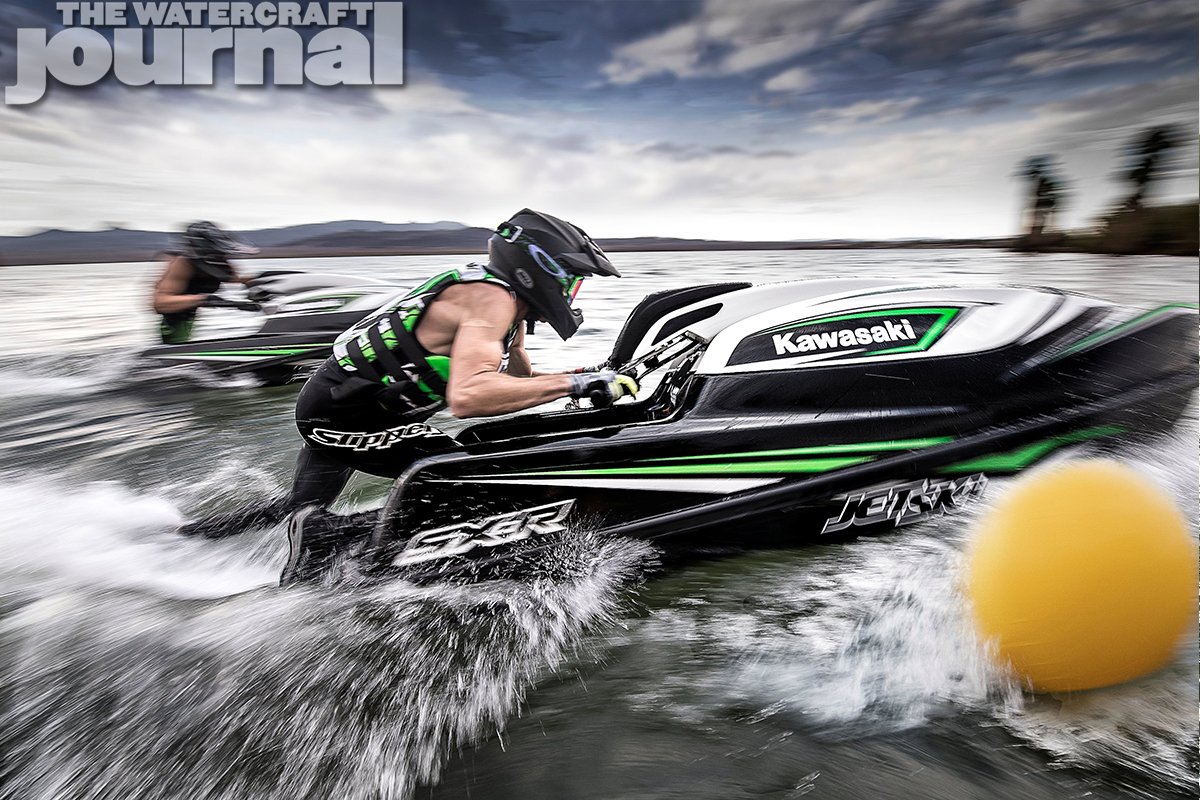
Nevertheless, the new SX-R produces a blistering naturally-aspirated 160-horsepower, exactly double that of the previous SX-R, making it “the quickest and most agile personal watercraft in Kawasaki’s lineup,” not to mention the fastest factory-built JetSki to date with an unconfirmed top speed of 63mph. Processing all of that horsepower into thrust is a slightly reworked intake grate and direct drive axial-flow jet pump. The grate is based off of the previous SX-R design but lengthened. The oval-edge, stainless steel, three-blade 148mm impeller is also pulled from the STX-15F, and the steering nozzle increased from 76mm diameter to 87mm and a total 102mm nozzle length.
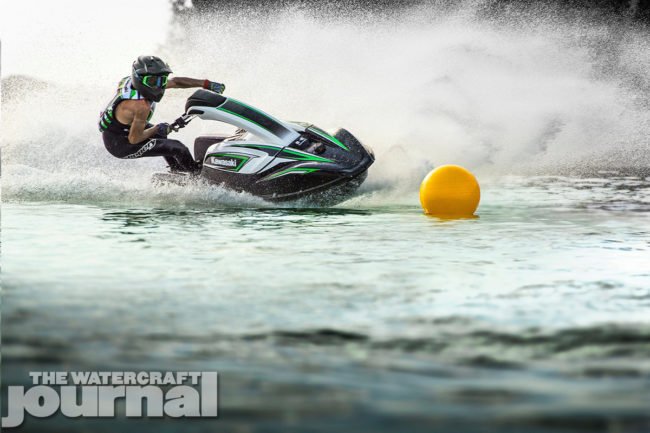
The 2017 SX-R was birthed in a surprisingly short amount of time. According to sources inside Kawasaki, the new SX-R is in some degree, based off of a prototype first developed by trusted Kawasaki standup designers Minoru Kanamori and Craig “Fuzzy” Boyd nearly a decade ago; stating, “one day the Japanese pulled [the prototype] off of the rack, crated it up and shipped it off to Japan.” Once there, a hull manufacturer was tapped to create a hull that could handle the weight and power, as well as be easy to ride, yet “capable of carving through a competition buoy course.”
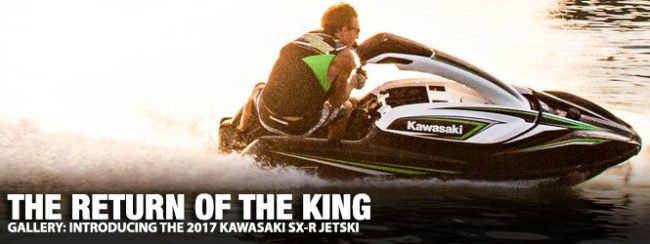
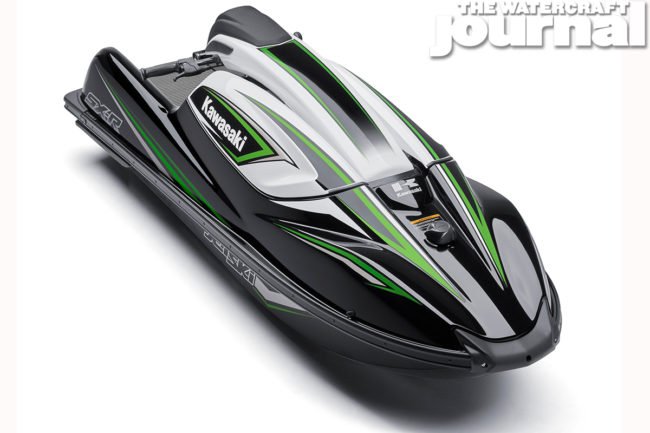
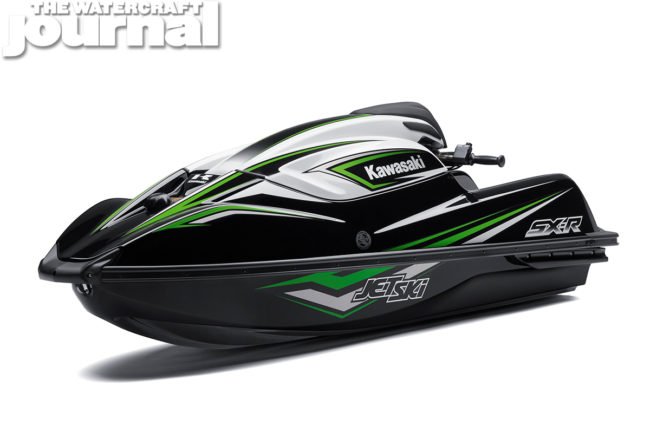
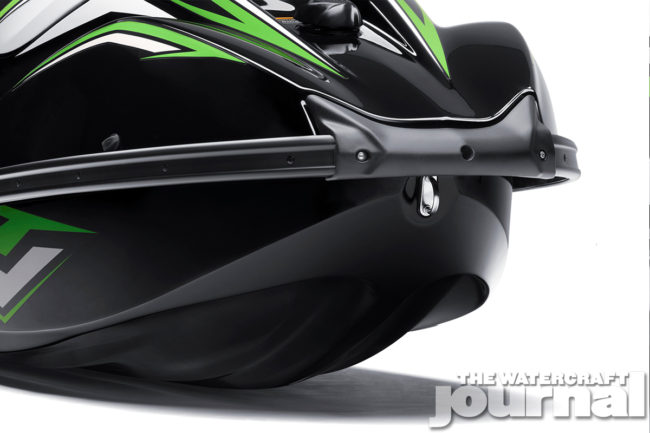
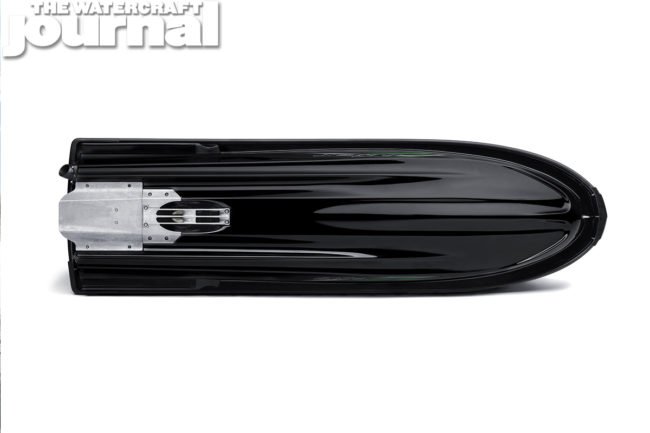
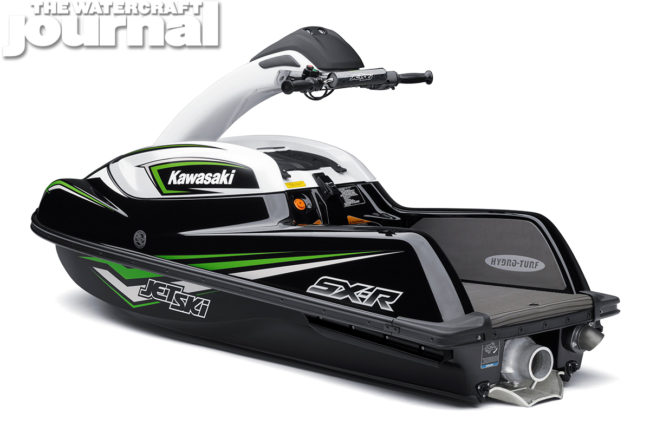
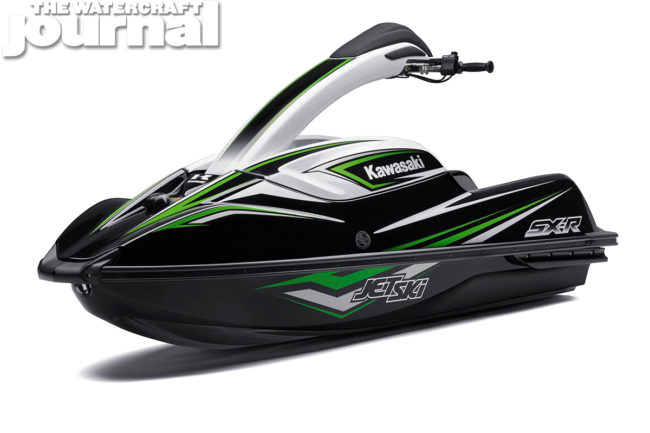
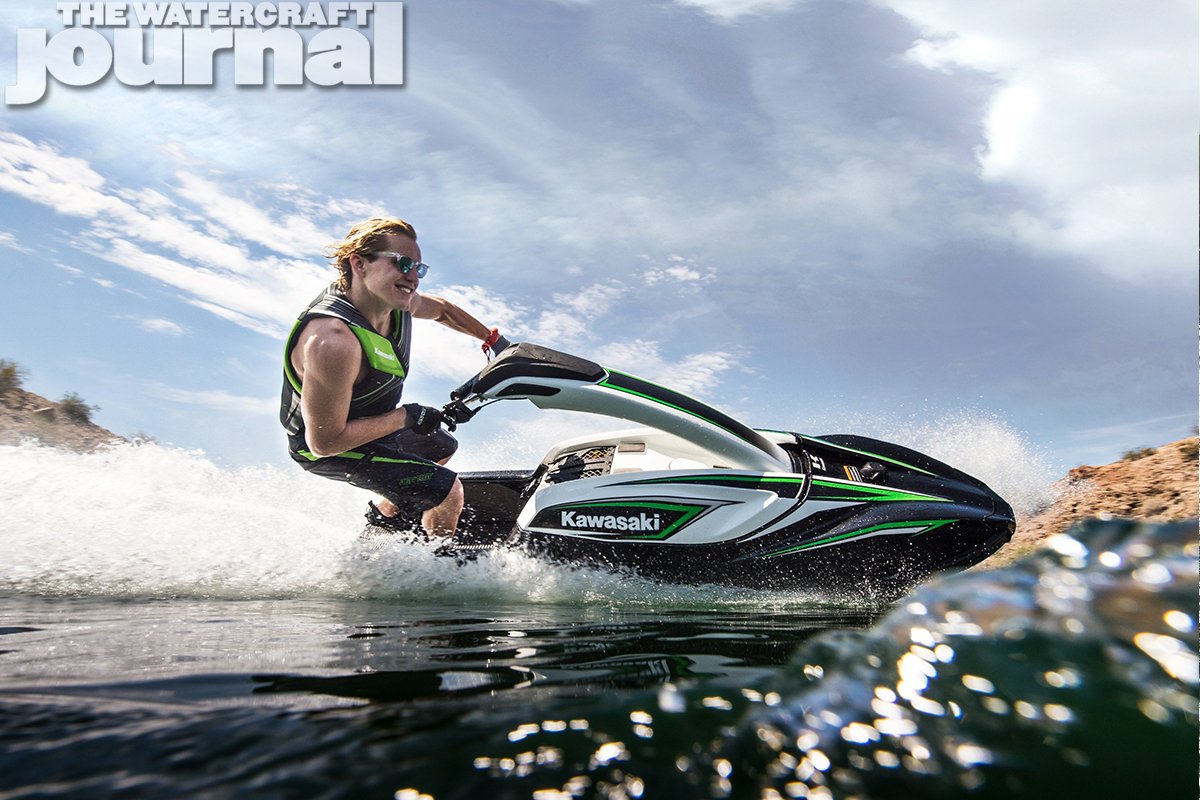
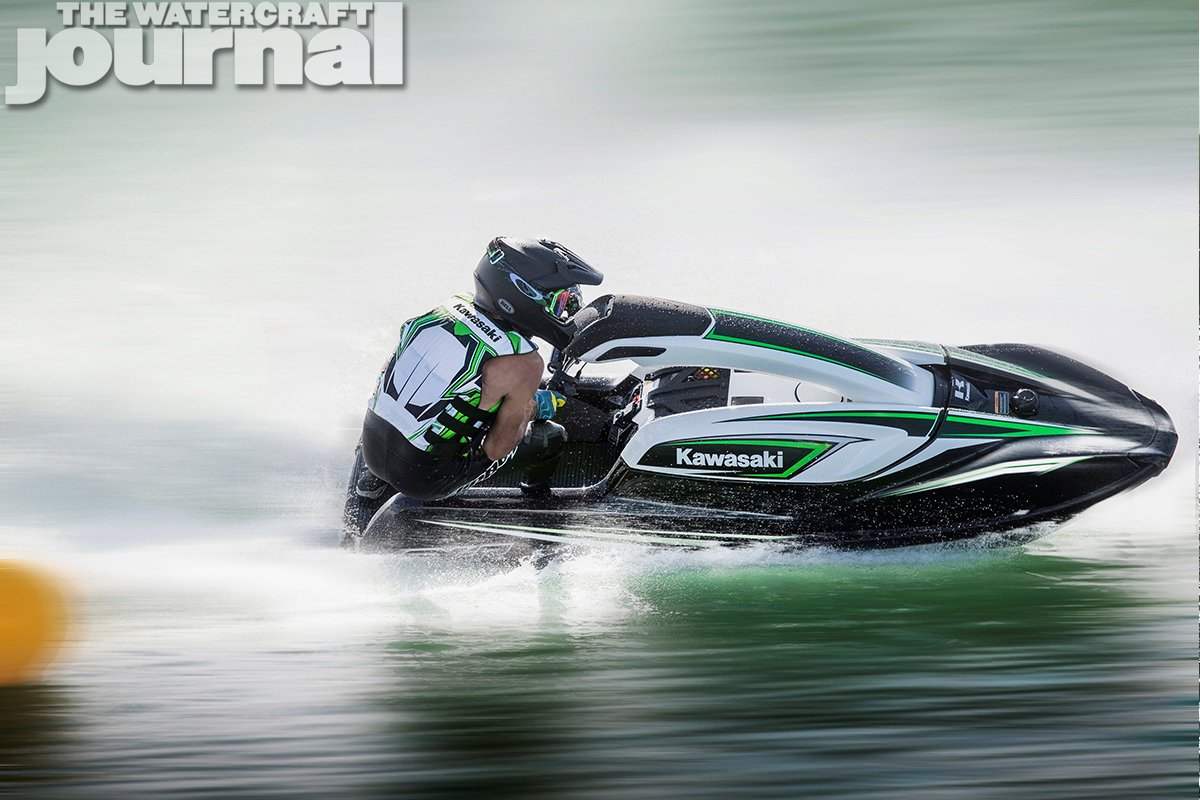
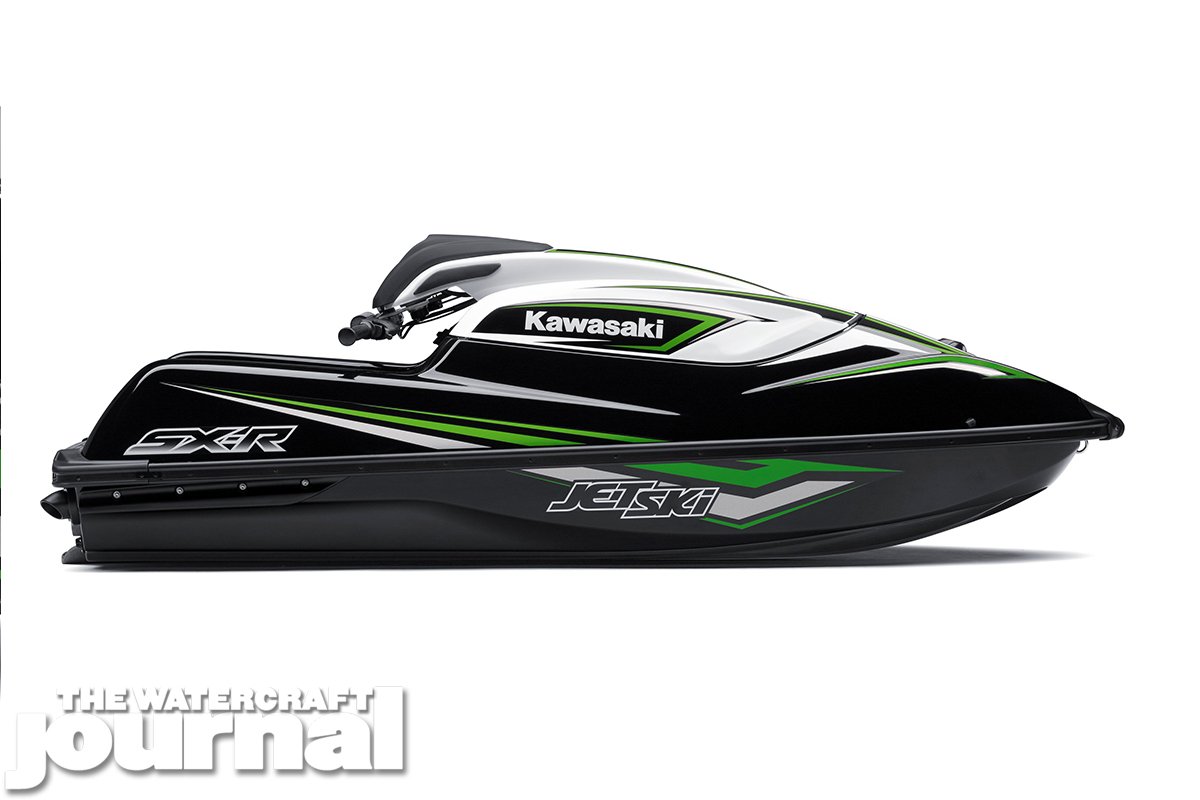
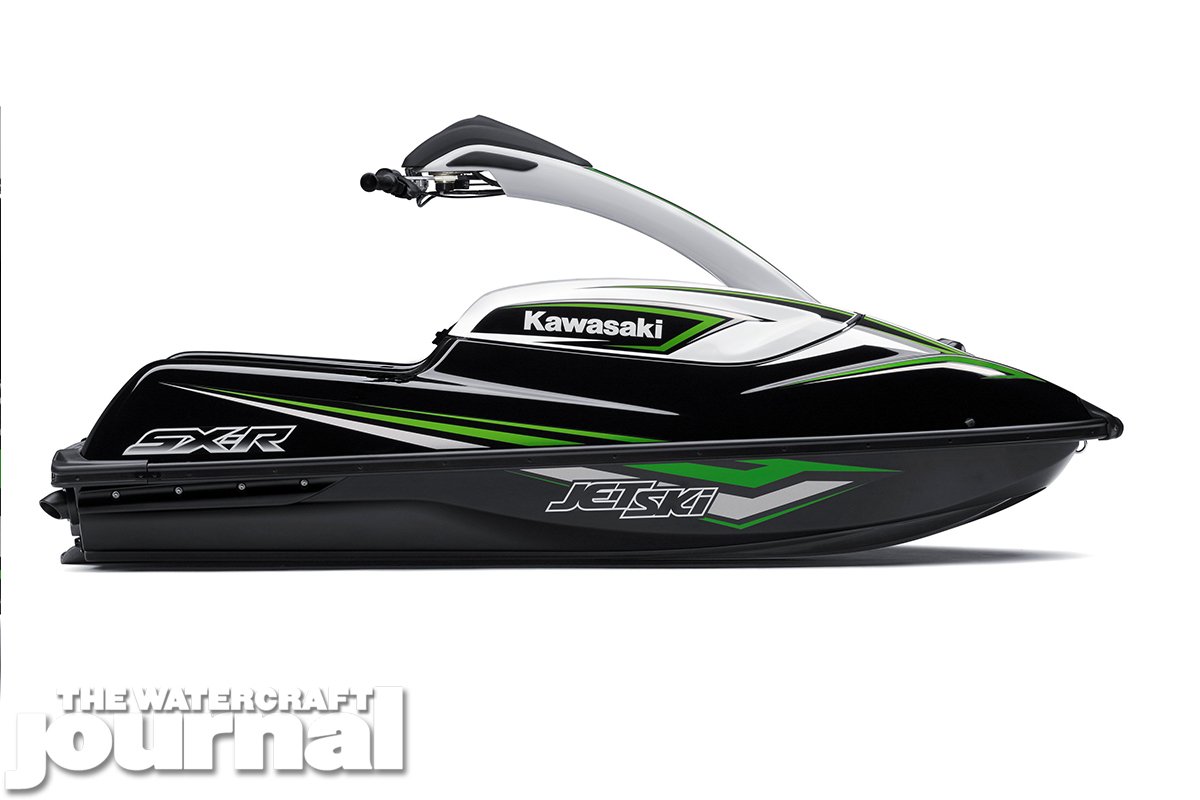
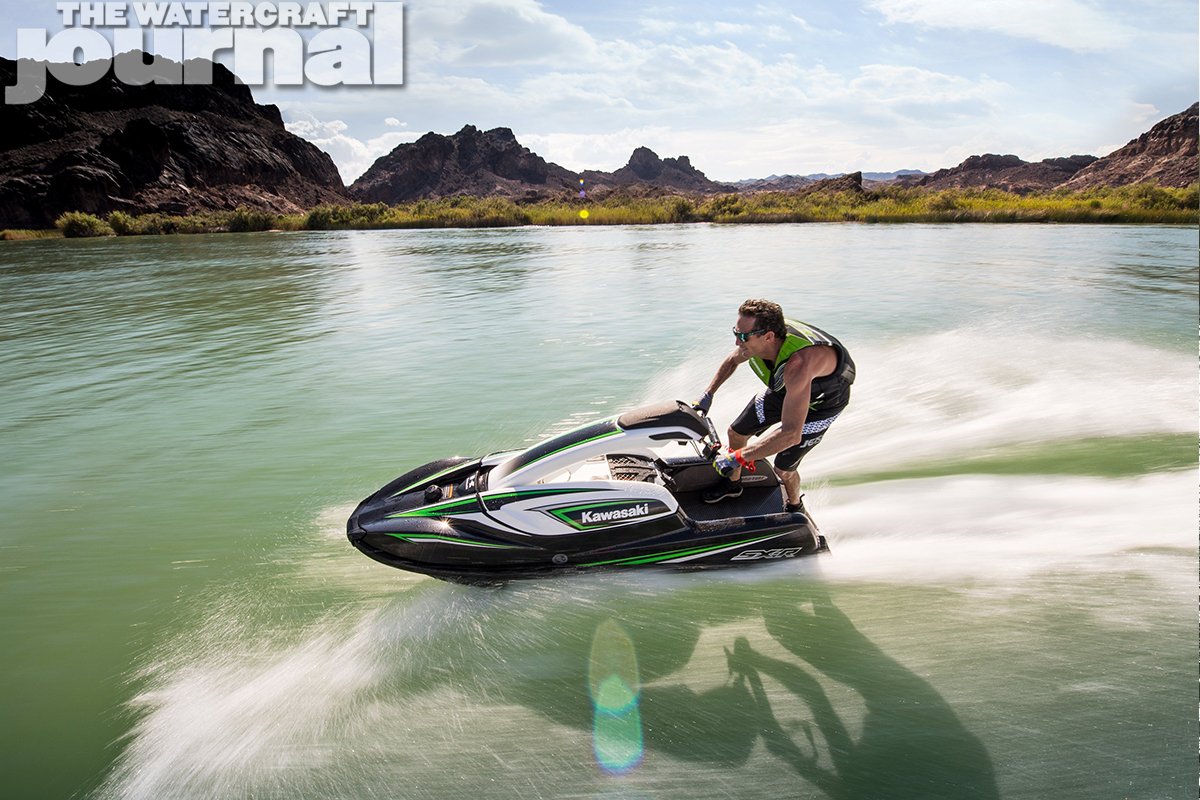
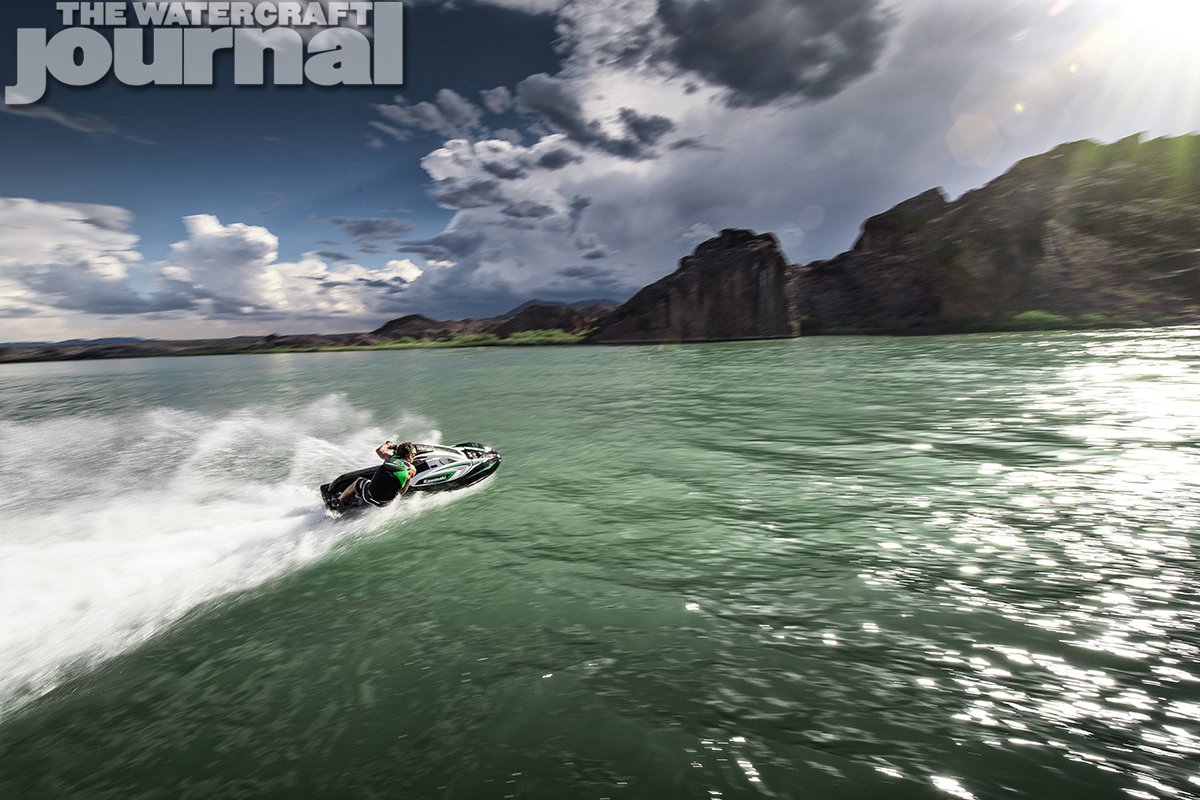
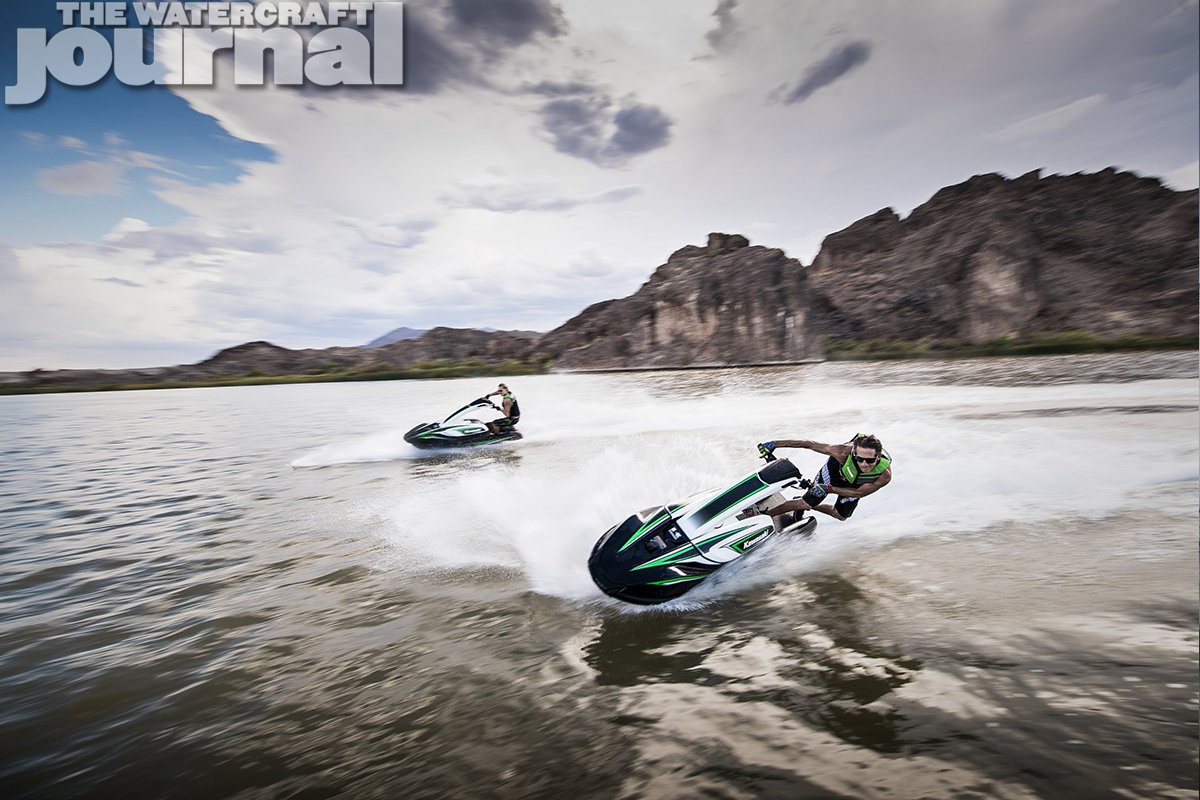
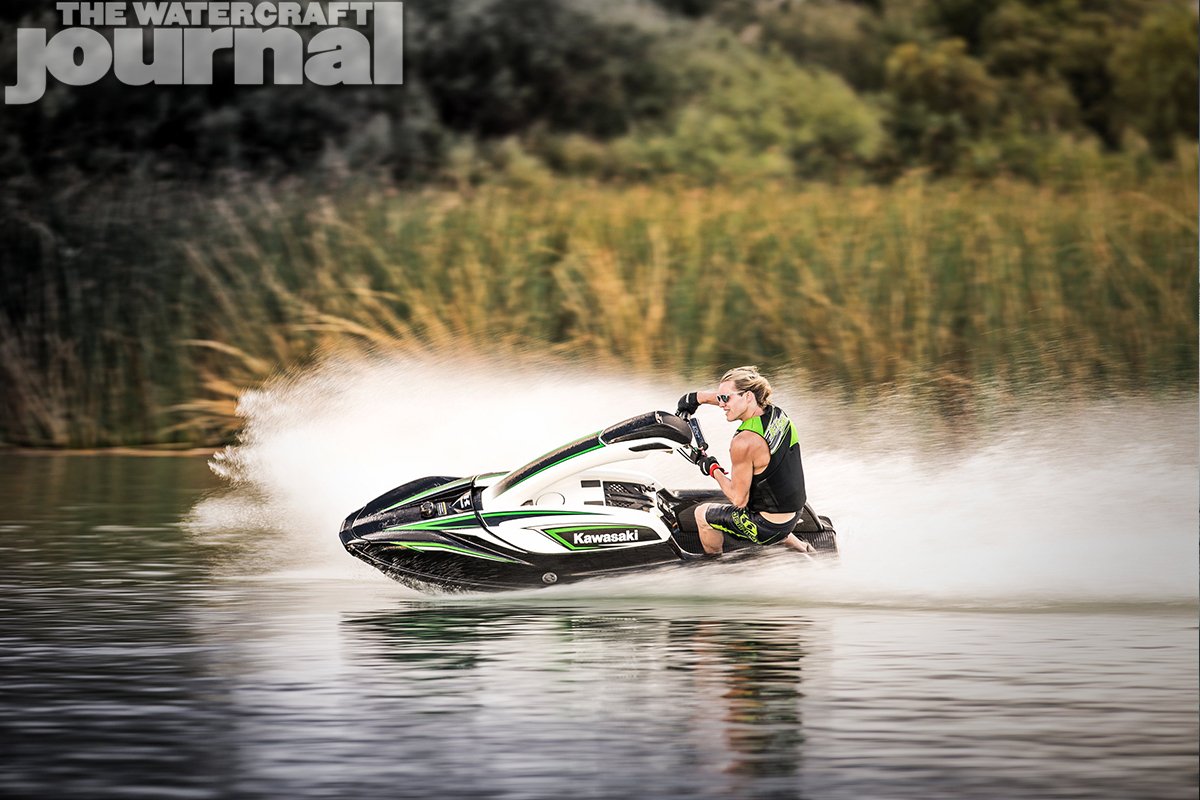
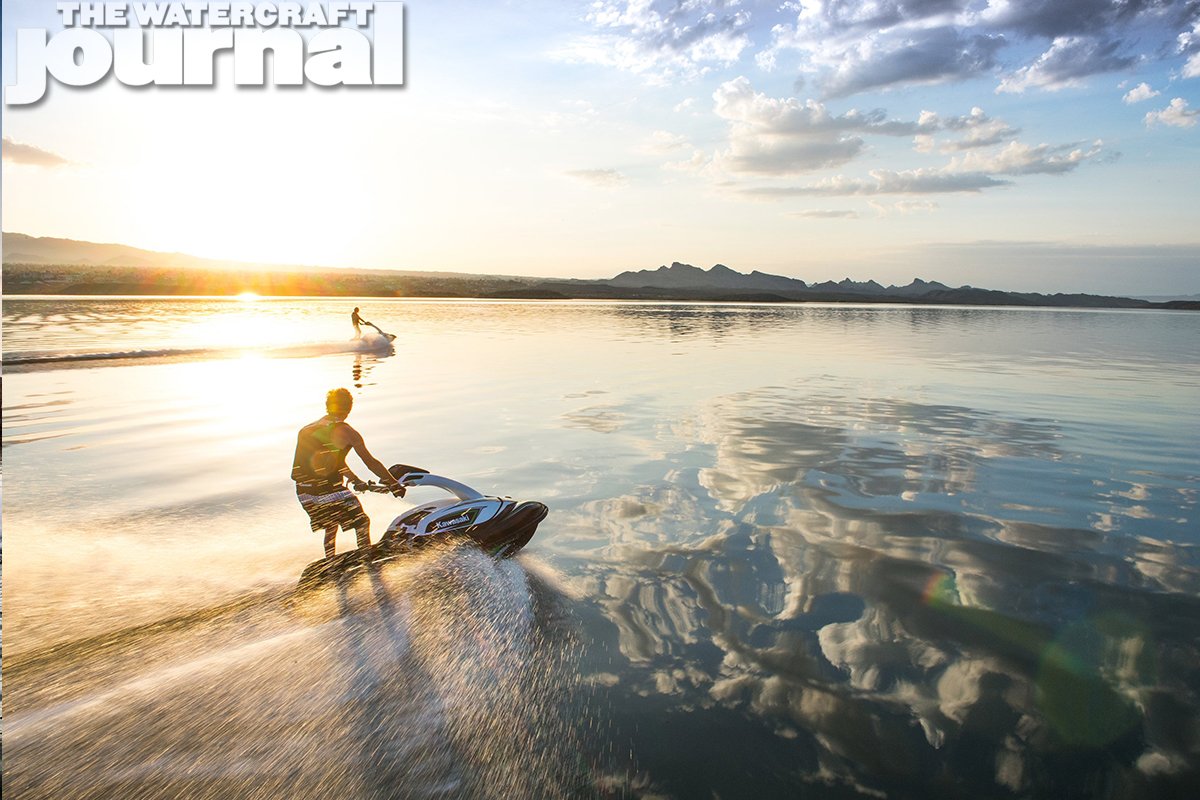
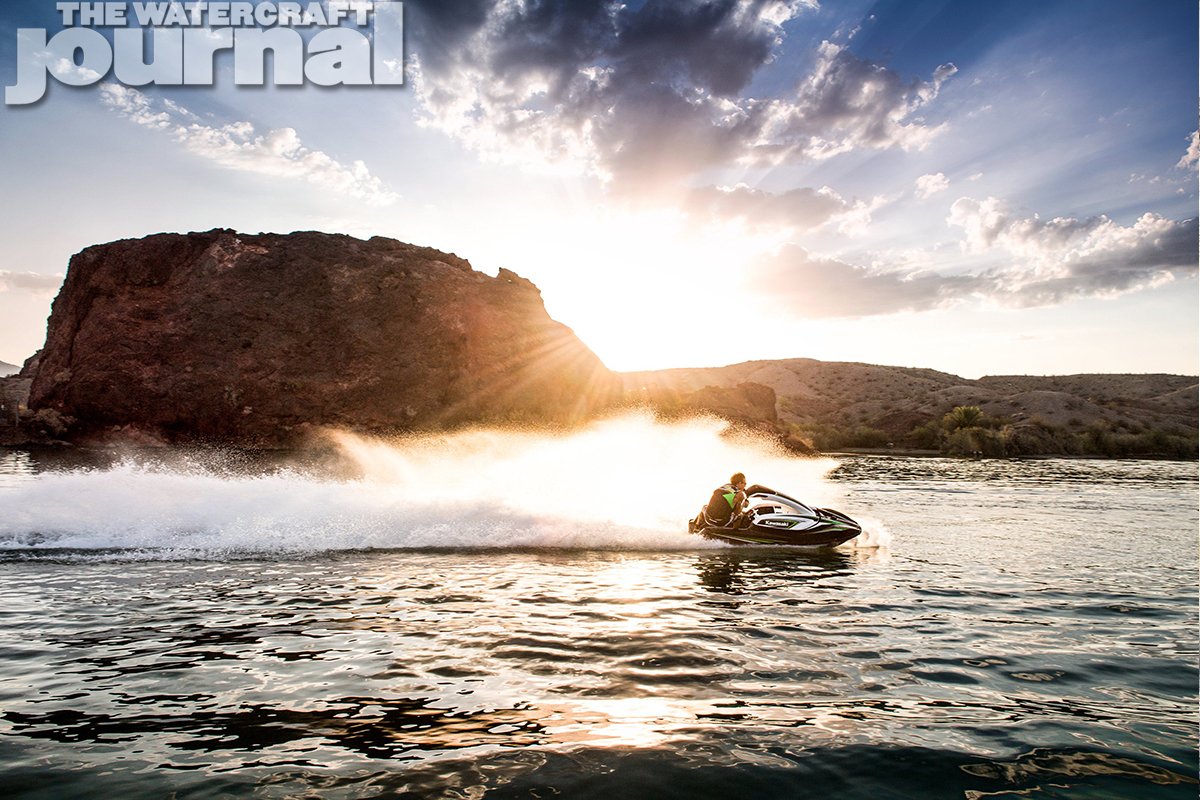
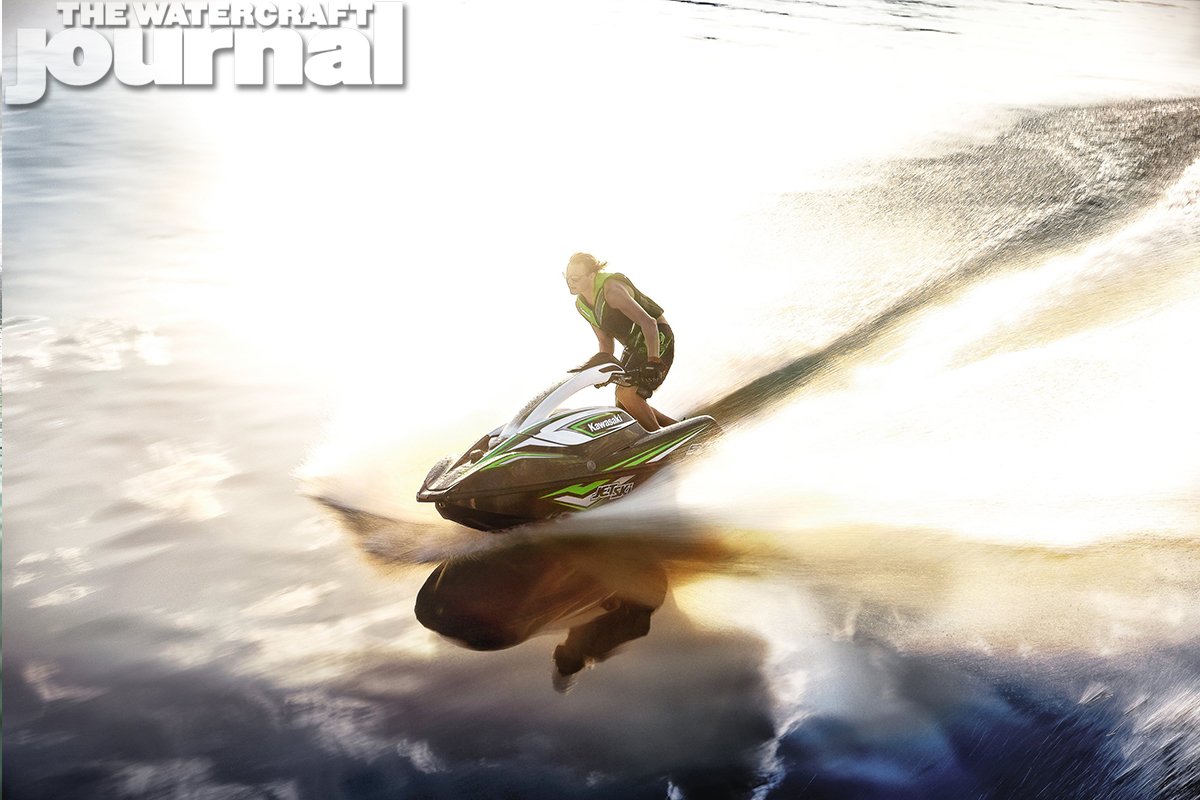
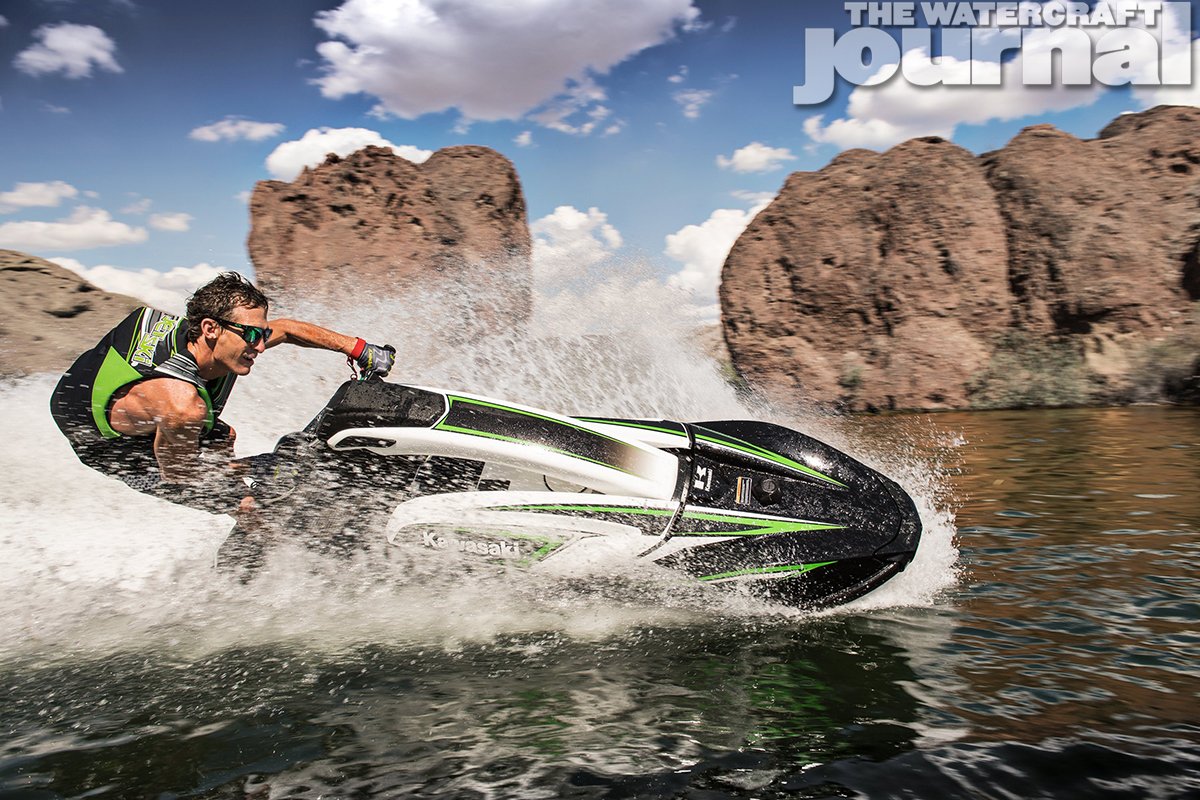
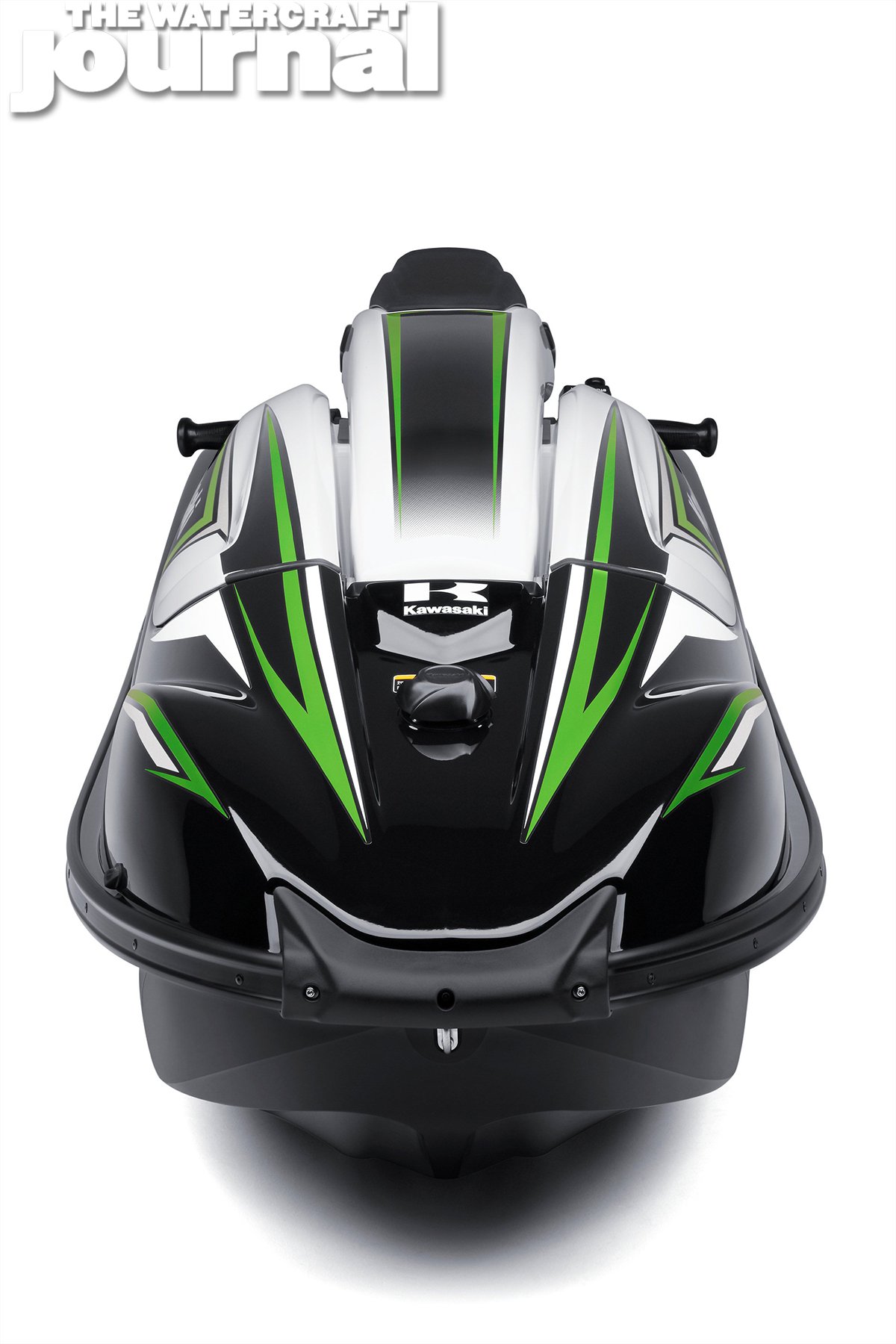
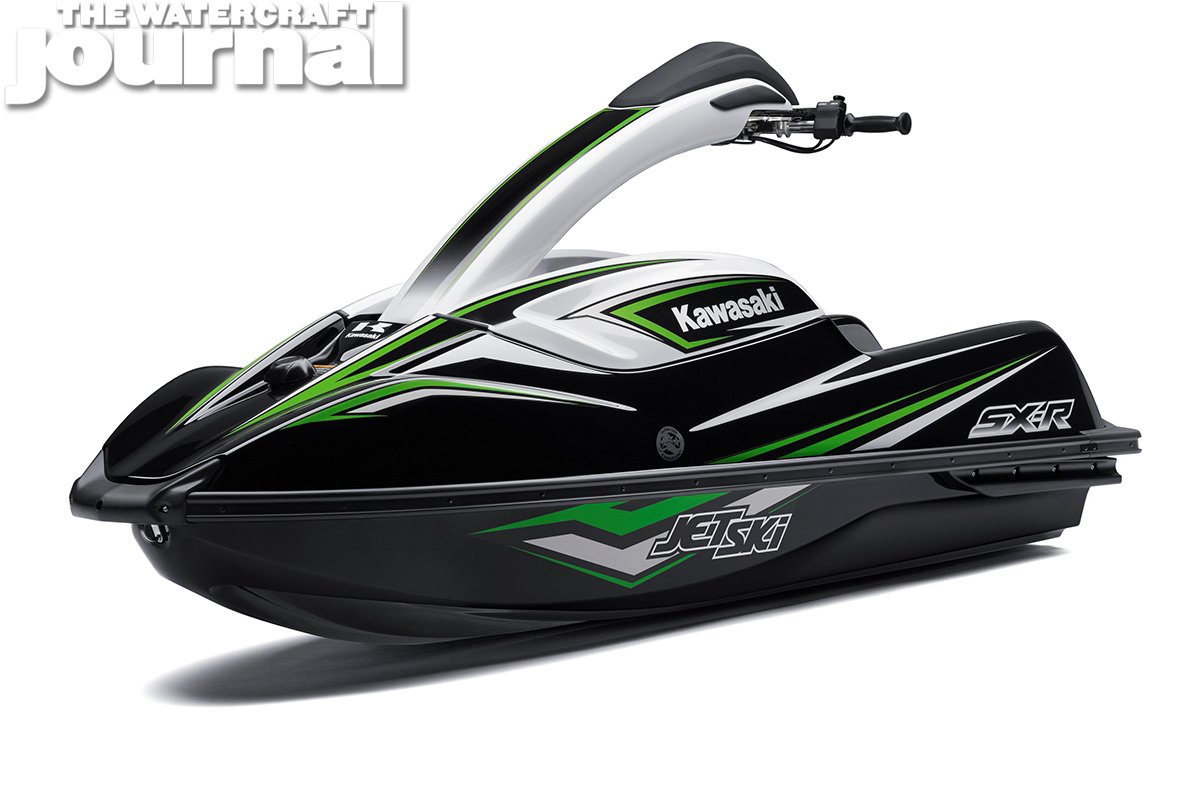
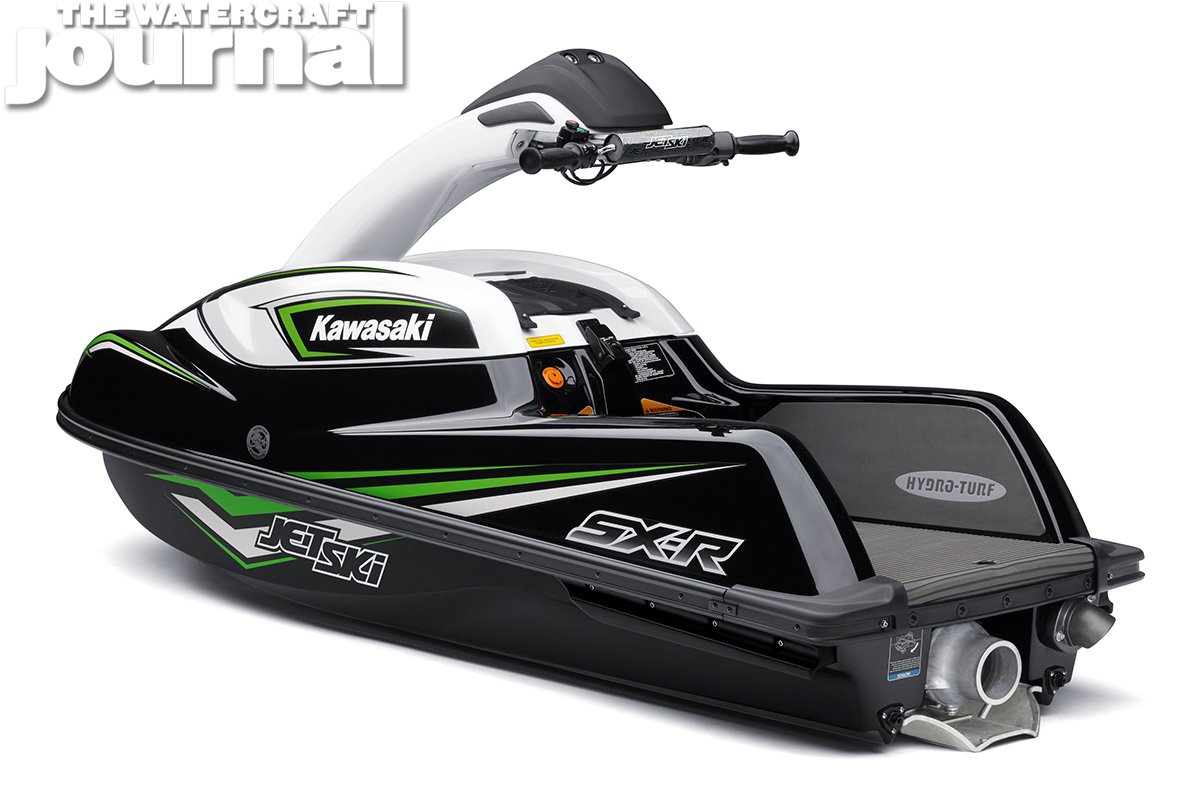
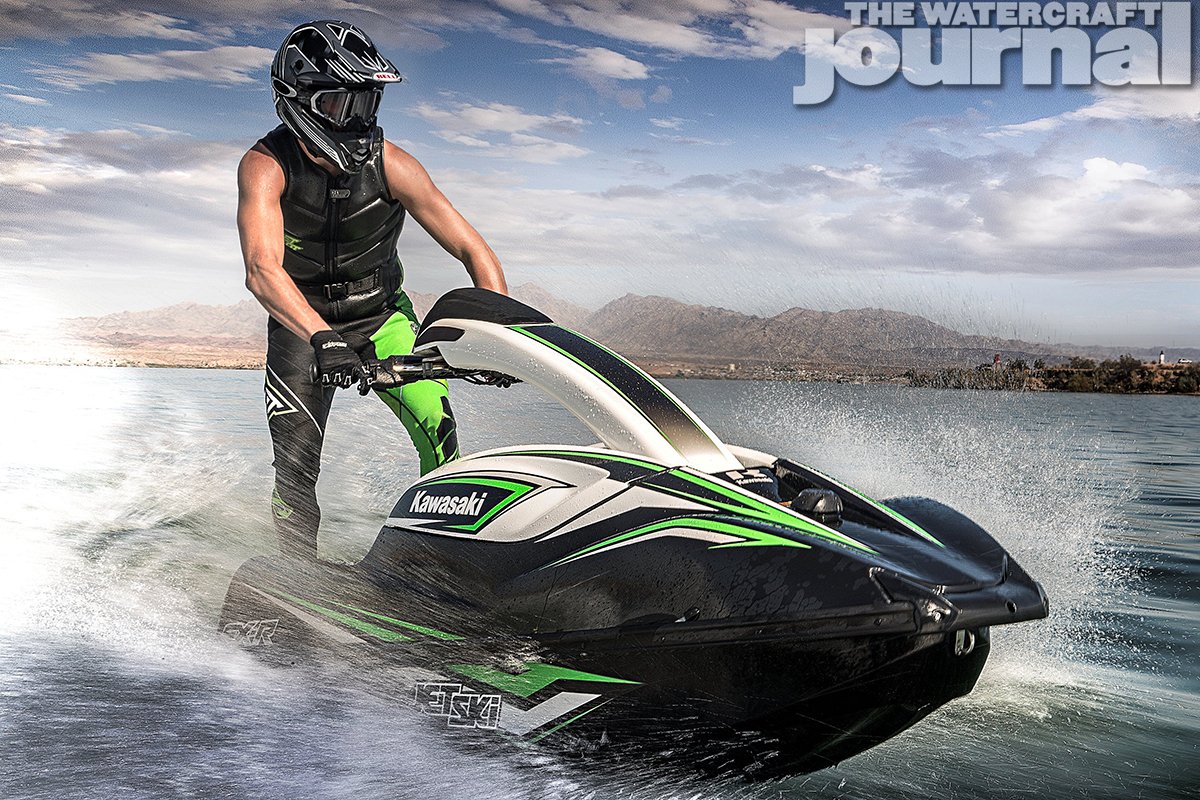
What resulted was a massive 8-foot, 8-inch long (a full 20-inches over the previous SX-R), 30-inch wide craft with a V-shaped hull to both accommodate the massive engine and allow for deep, on-the-rail cornering. Close up studio photography and action photos reveal a ski that rides high on the water on a deeply-straked hull that displays far more STX-15F family resemblance than that of the outgoing SX-R. Shapers even incorporated Kawasaki Splash Deflector (KSD) tiers into the nose to cut down on bow spray, akin to the Ultra. Due to its bulk, the SX-R not only features molded-in “tubbies” but near full-sized runabout rear sponsons.
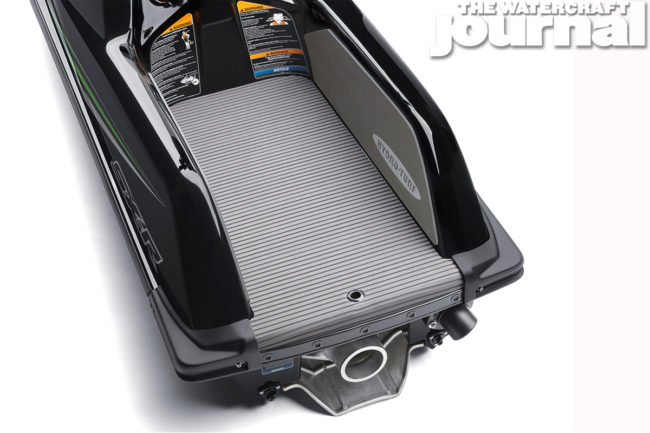
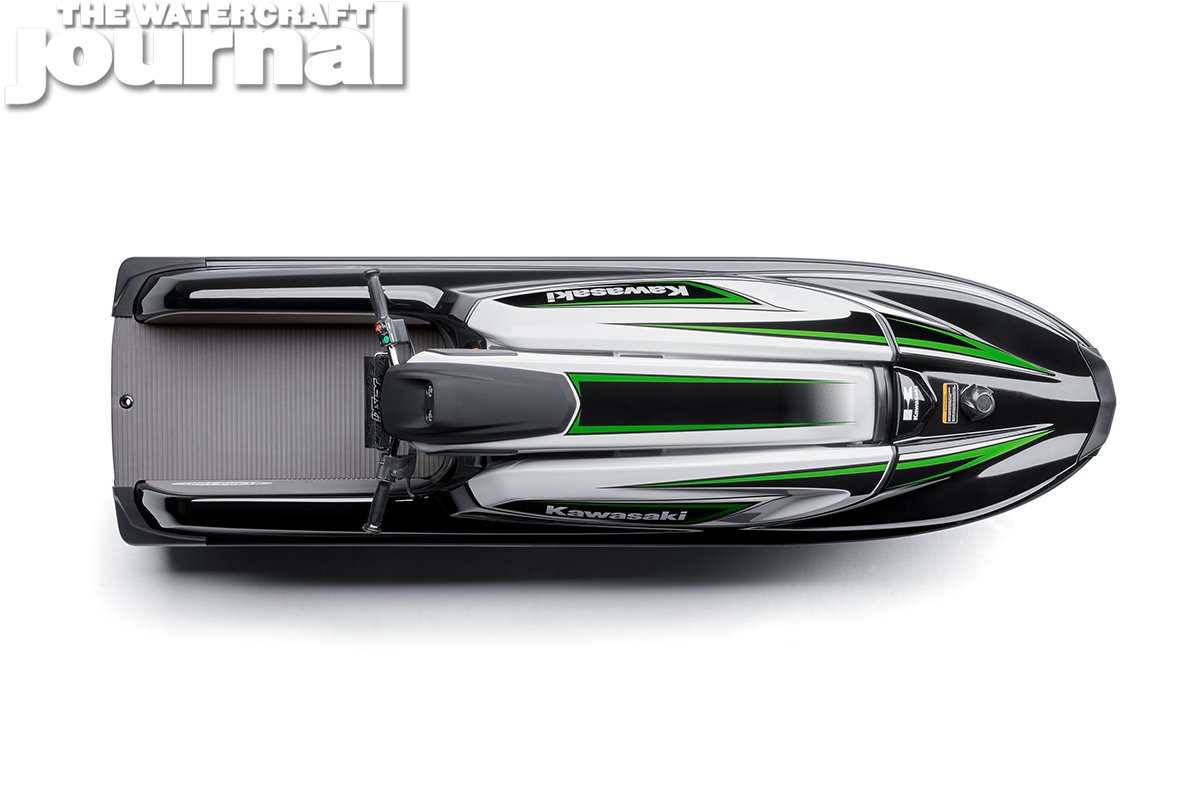
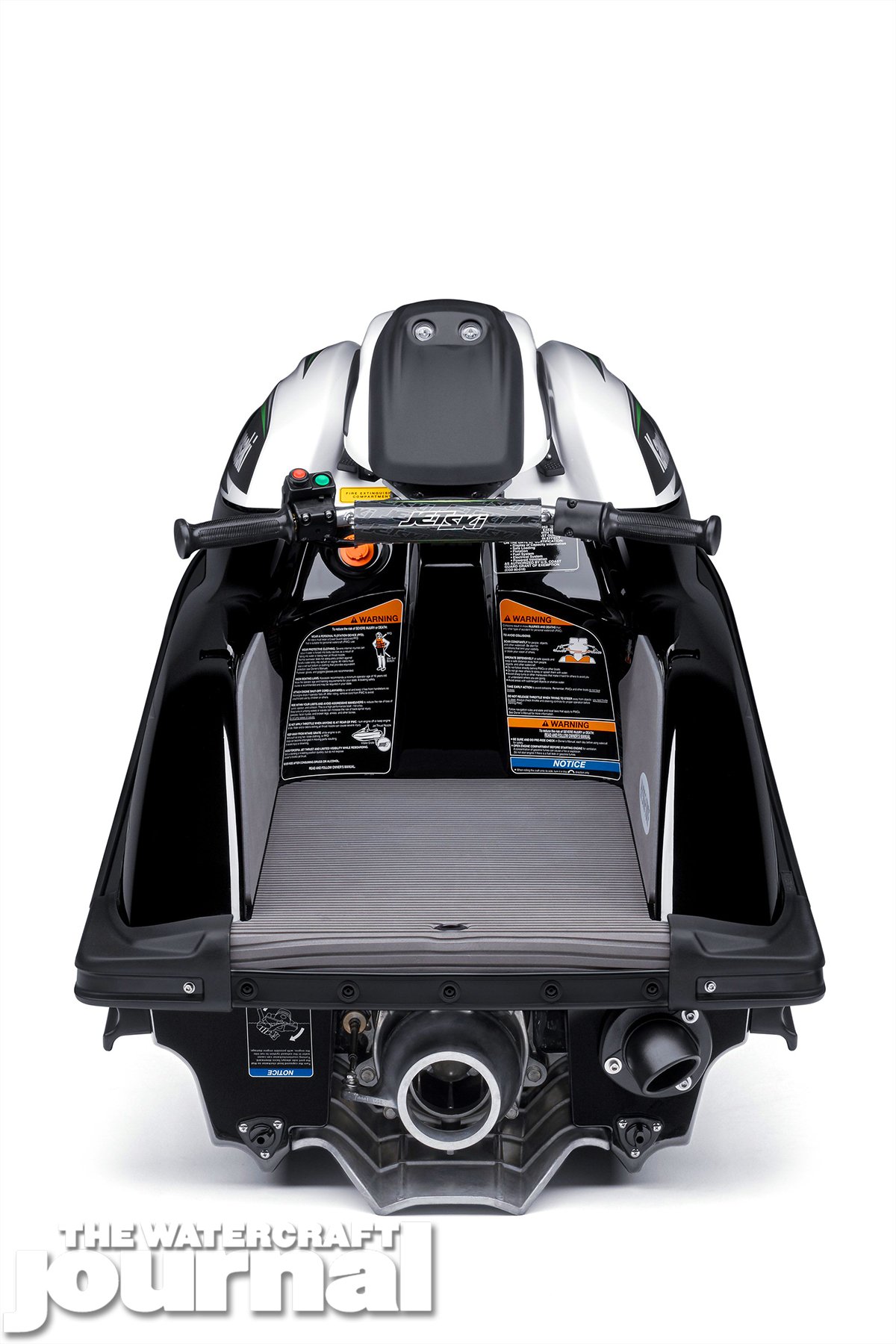
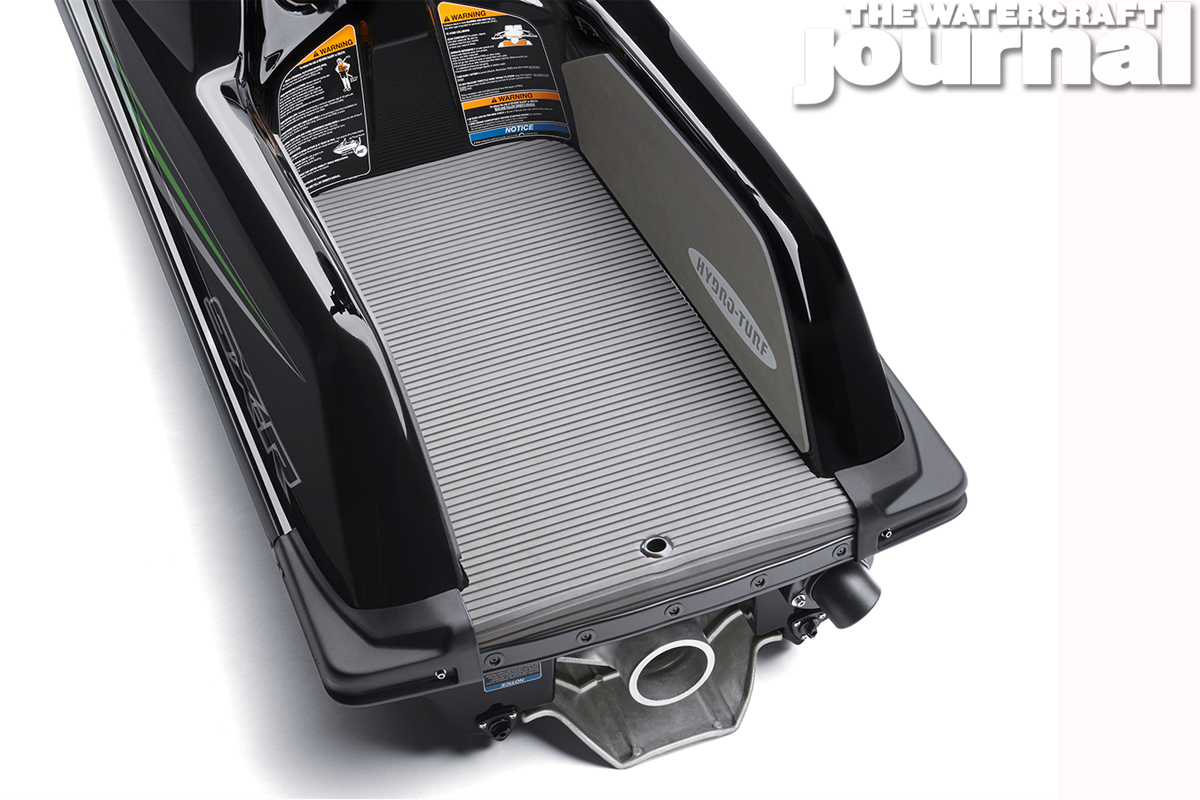
The ski itself is incredibly buoyant, allowing IJSBA Hall-of-Famer Victor Sheldon to stand comfortably upright in the greatly enlarged 16″ x 34″ tray with the engine off, according eye witnesses. The tray itself has been modified somewhat, with a 5-degree downward slope, angling the rider forward towards the bars. Soft, rounded edges at the tray’s opening and deck fins have the same Hydro-Turf traction padding on the inside as the tray’s floor, making for softer, easier reboarding too.
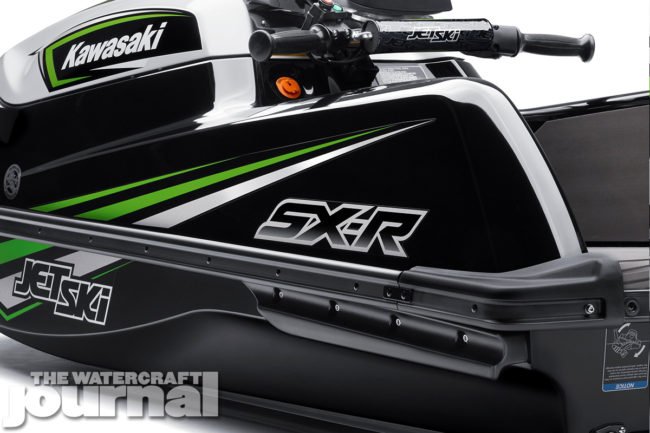
Fuel capacity has been increased from 4.5 to 6-gallons, as the new engine is significantly more thirsty. Another carryover is the in-tank fuel pump and the voltage regulator being shared with Kawasaki’s Teryx SxS. According to Kawasaki, “the engine is mounted as low and aft as possible to help the hull penetrate swells and waves with less shock to the rider.” For newcomers to riding a standup, this level of stability, comfort and ability to soak up bumps and chop will be welcome. Although the large Jaguar-esque front fender flares bespeak that of a larger runabout, the Ebony/Jet White and iconic “Kawasaki Green” livery shouts “JetSki” from the rooftops.
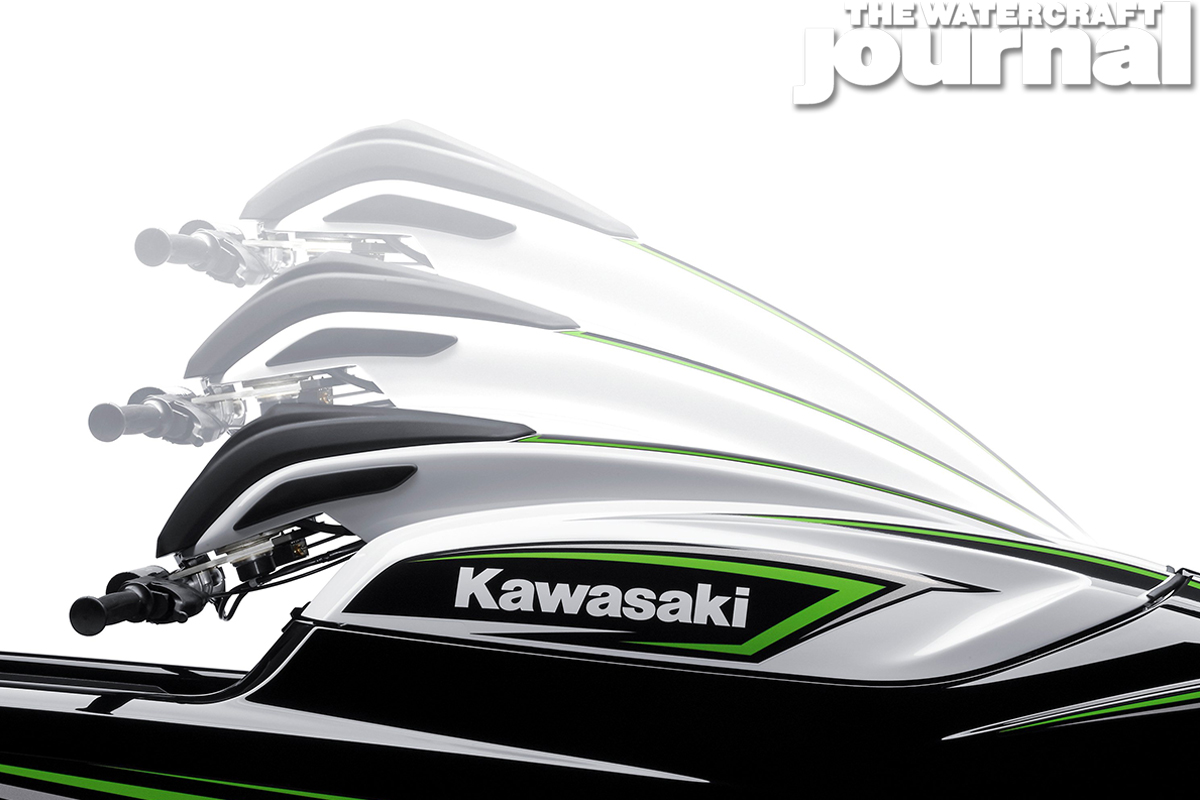
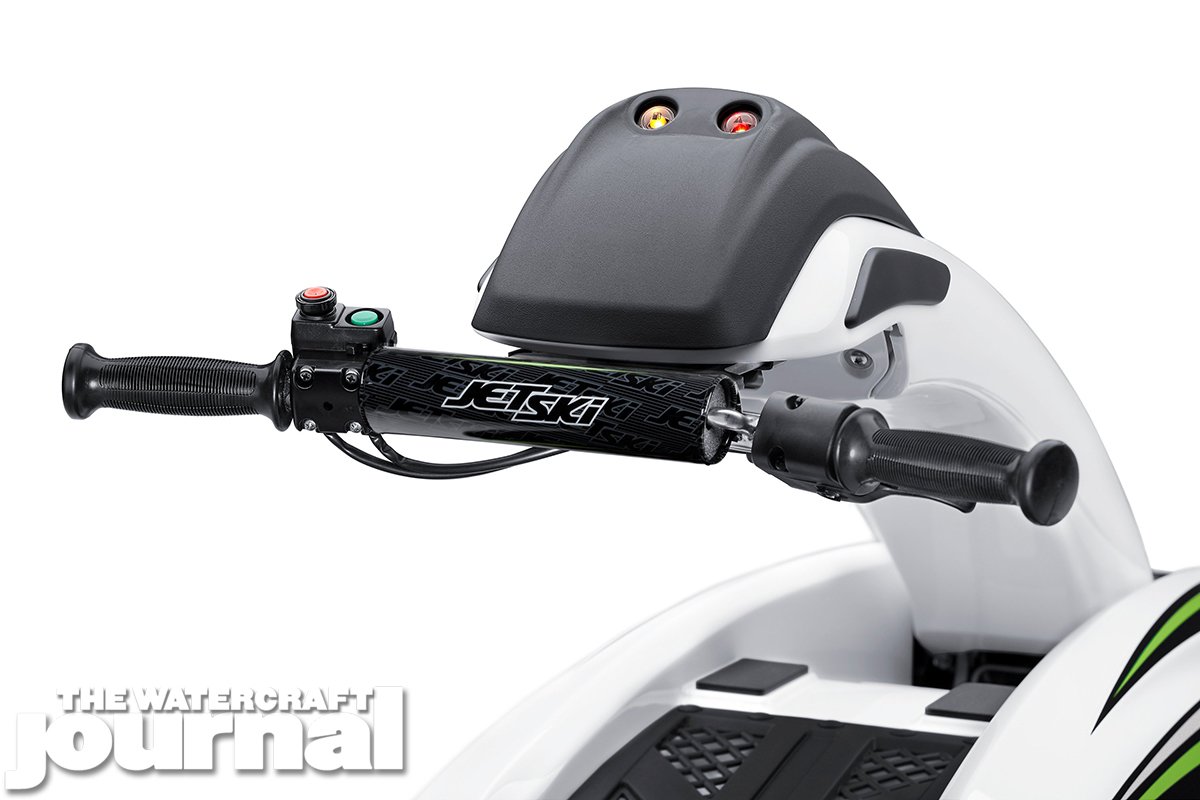
The final direct “parts shelf” carryover is the use of the same handle pole as the JetSki SX-R 800, but with what Kawasaki calls “additional reinforcements.” The handle pole chin pad incorporates amber and red fuel and engine warning lights (respectively) to “inform the rider when the vehicle is low on fuel or if there is a problem with the engine,” although there is no actual analog fuel gauge. The SX-R employs a pair of anti-corrosion motocross-style handlebars and a slim handlebar pad. In the tray, there is a keyed magnetic ignition switch allowing the rider to check the fuel warning light when turned to the “ON” position. It also serves as a handy theft deterrent.
Believe it or not, the 2017 SX-R also features non-waterproof storage located under the handle pole, attached to the hood. The rubberized netting is large enough to store a tow rope, GoPro camera, emergency flares, or other items. Further details such as the estimated MSRP (our guess of $10,995 was thankfully too high – so maybe $10,499) will be revealed after the 2017 dealer meeting scheduled for November 13, 2016; moreover, the media won’t be able to personally evaluate the machine until early next year, so until that time, we will have to wait and see if the resurrected 2017 Kawasaki SX-R JetSki is the returning king of jet skiing, or the emperor’s new clothes.
We got a first-person inside look at Freestyle champion, Tanner Thomas’ pre-World Finals prep recently, where he said:
“After some long days working on seemingly endless projects, ideas and maintenance that I have encountered, I am able to sit down and be proud of my path, my team’s path and our progress this year. I am excited to carry on into the future in this crucial short amount of time left before I compete for the 2016 IJSBA World Finals. With my mechanic Hiro and my teammate Mark Gomez here in Lake Havasu, it’s about time to put all the pieces together from the year and make some magic happen!
“We have been working hard are are fully prepared for anything and everything that comes out way. Between with three of us here in Havasu we have seen most every last minute challenge you can imagine and we are prepared for them to happen now. We have made an awesome shop space in the house that we rented that is very well organized with all of our tools, parts, riding gear, exercise and stretching equipment. We have done it this year like never before and I am very proud of it. Myself and my team I feel represent the true professionals of this sport and hopefully all of our hard work will pay off in the results.
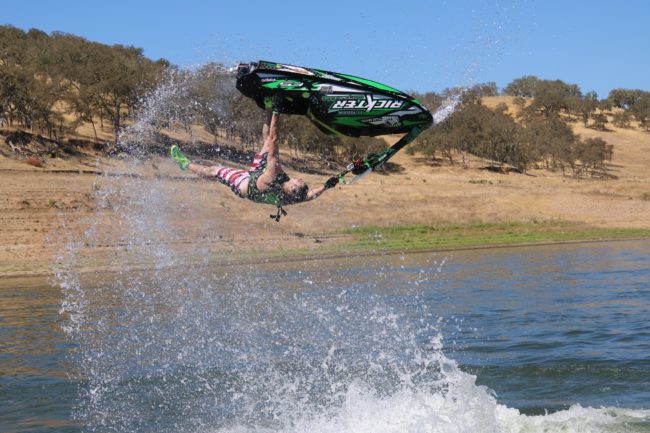
“Recently, I just set my ski up with special titanium bars built custom by AZ FMX Works that allow me to attempt the “Superman” backflip trick. A trick that I had played with before when I rode in the surf and had a bad experience years ago with. This time I had to learn it on a much more powerful jetski with much less time in the air. So far the results have been good. The ski is running strong and I am finding more and more small things to perfect my riding abilities in the chase for my best professional world class performance.
Now it is Wednesday and I would like to tell you that everything is perfect and that I am going to do great…
The reality is, I am tired, I am sore, with many bruises, cuts and pains. I have been on a strong healthy diet with supplements and things to aid with my body. I have never been in better shape in my whole life. But I am beat down. The good part is the next few days I am preparing my mind and body for everything that I am going to do and I will do my absolute best for myself, my sponsors, my friends and my family to perform like the professional that I am.
I am very proud of my team mate Mark Gomez and myself for everything he and I have gone through together recently. We have the most prepared we have ever been, thanks to our amazing sponsors but this has been a long steep road to run up. The best part is we have these few more days to dial it all in, I am ready to make them count. See you on the water for the “firework” show.
Back in August, The Watercraft Journal published the rumors of the new 4-stroke Kawasaki SX-R. The anticipation that has lead up to this moment has been huge and every watercraft enthusiast is dying to see the research and development that has gone into this revamped SX-R. While Kawasaki’s previous 2-stroke SX-R was a huge success and a great overall craft, they stop producing them in 2011. Since then, Yamaha has been the only major company still producing factory 2-stroke stand-ups.
Kawasaki will be officially announcing the 2017 4-stroke SX-R this Thursday, October 6th at 8AM (PST). This will be a huge day for Kawasaki and the stand-up riding community. They may even convert sit-down riders over to the stand-up side. The reveal will take place by the Kawasaki Semi-Truck near all the vendors at Crazy Horse Campgrounds and Resort in Lake Havasu City, Arizona. For the rest of the weekend, during the lunch hours, Kawasaki Team Racers Craig Warner and Minoru Kanamori will be running exhibition laps for the public to view.
If Kawasaki gets this right, they can see a huge increase in sales. They have been behind Sea-Doo and Yamaha in sales for many years now but with this reveal they could generate people to see the Kawasaki motor and see the different aspects that makes it stand out. With multiple rumors the new SX-R is sure generating a lot of attention.
And pay close attention to The Watercraft Journal as we have the world exclusive inside look at the SX-R and will publish at the same time as the reveal. So if you weren’t able to take time off work and head to Lake Havasu, we have you covered.
If fans are wanting to test ride the Kawasaki JetSki Ultra 310LX or Kawasaki JetSki STX-15F they will have the chance to by swinging by the Kawasaki Dealer and registering to test the demos. Registers ill also receive $500 in Kawi Kash.
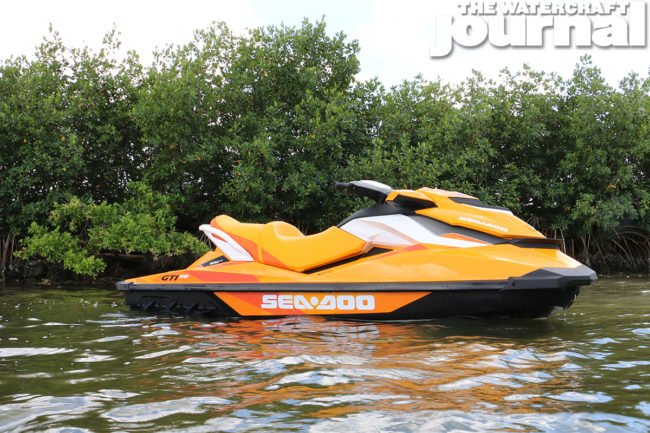
Slight of hand is the name of the game for Sea-Doo in 2017. While the wild and rowdy Spark Trixx is grabbing up all of the attention in the public eye, the brass at Sea-Doo slipped in two major changes into their runabout lineup that have gone predominantly unnoticed [except of course, by us – Ed], although their implementation are far more significant than what many would suspect. The first of those changes was the introduction of BRP’s all-new CM-Tech top deck process and material, found exclusively on the 2017 Sea-Doo GTR-X 230, which The Watercraft Journal was first to review late last month. The process is being tested through a limited run this year (hence the exclusivity particular to the GTR-X 230), and will be quickly be disseminated throughout the GTI lineup in the coming year(s).
CM-Tech is unique in that unlike traditional SMC, CM-Tech (Closed Mold Technology) is a molding process that reverses the goal coat process, as well as other key features. Sea-Doo Watercraft Global Product Manager James Heintz explained to The Watercraft Journal, “The main procedural difference is that instead of applying gel coat to the mold before injection, multi-layer thermoformed sheets of Acrylic and ABS are placed into the mold before the fiberglass is injected. This accelerates the process and also improves quality thus reducing the number of rejects. In effect, this creates a high gloss acrylic finish on the top deck that is more resistant to chipping and cracking due to the flexible nature of the acrylic sheets. In addition, the inside of the deck is now smooth, with no protruding sharp pieces of epoxy or fiberglass matting.”
This new process not only streamlines the manufacturing process, but reduces waste and produces a superior final result, being both smooth to the touch on the inside and leaving a high gloss, significantly more durable finish on the outside. Another aesthetic bonus to CM-Tech is Sea-Doo’s ability to lay down rich metallic paints on its surface. While visible in most photography, the GTR-X has an luminescent pearl beneath its California Green Metallic hue that shimmers in the sun.
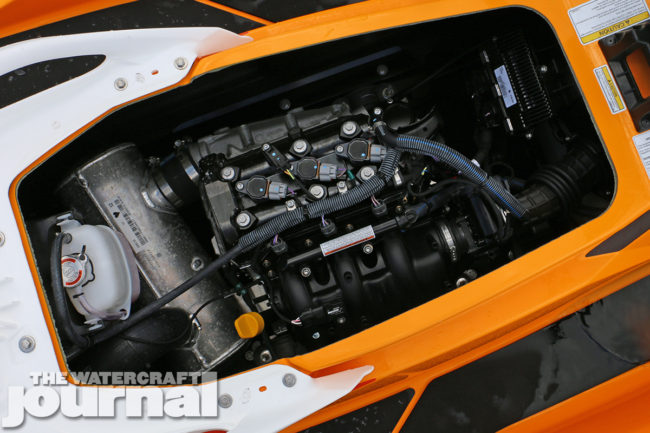
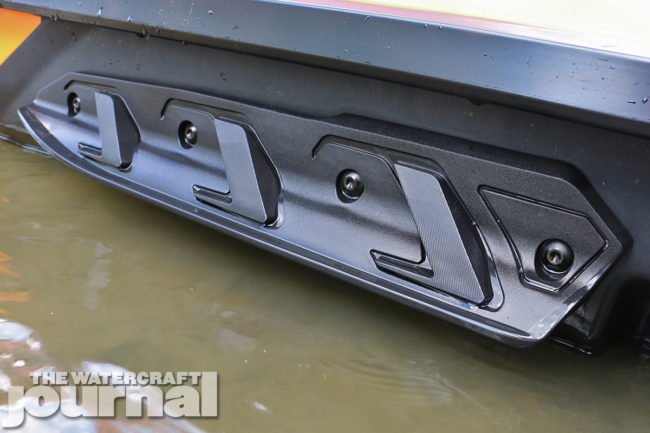
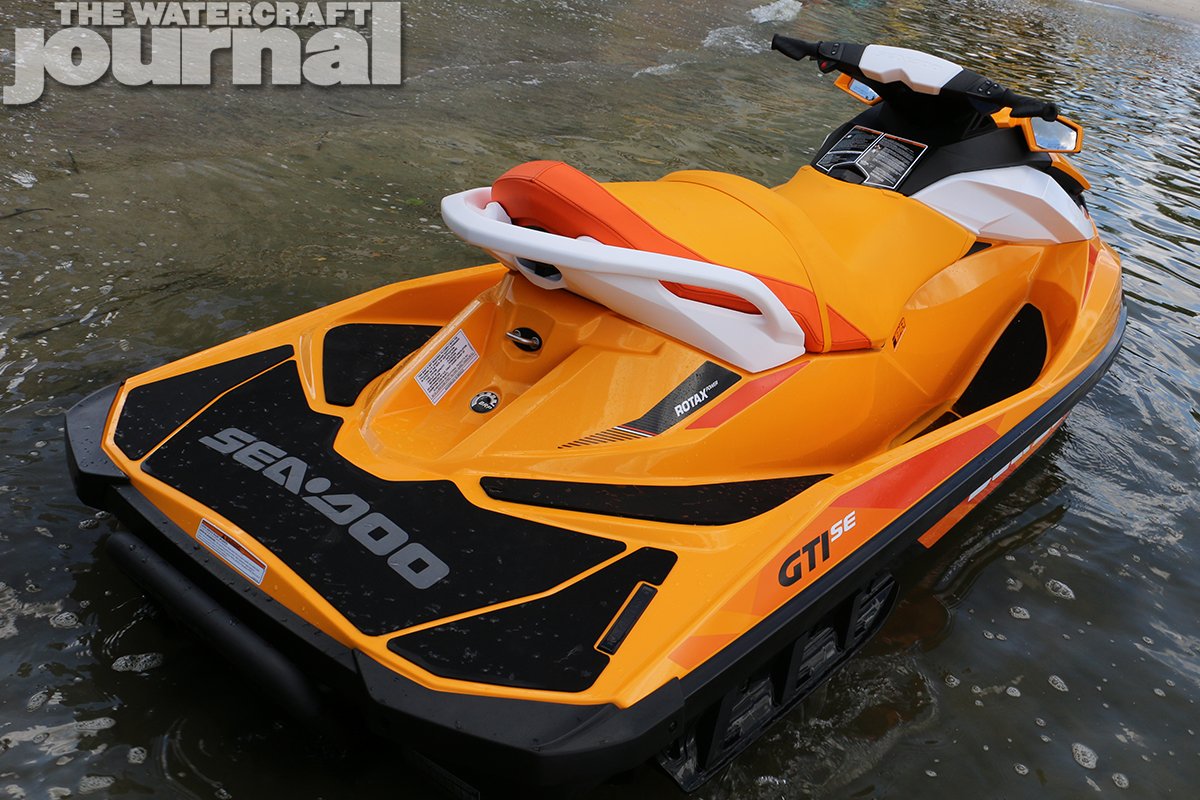
The second addition to Sea-Doo’s lineup is the very peculiar decision to make all base model GTS, GTI and GTI SE runabouts not only share the ACE 900 powertrain from the Spark, but a new Polytec hull as well. Made from “a recyclable, low density and high-impact composite material that includes polypropylene and long glass fiber reinforcements,” as per Sea-Doo’s own website; in the case of the 2017 Sea-Doo GTI SE, the move to a 90HP ACE and Polytec hull shaves off 150-pounds, dropping the machine from 790 to 640-pounds.
And like the Spark, the GTI top deck is attached to (or removed from) the Polytec hull via a series of 6-point star-shaped torx head screws found beneath the rubberized bond rail. We queried whether the differing rate of flex between the Polytec and FMC deck would place considerable strain on the seal between the two, but Sea-Doo officials felt confident that Polytec was up for the challenge. Of course, in the unique case of the GTI SE, a Polytec hull is merely an option, as are three engine options.
With the selection of the available 90HP ACE 900, the particular unit is equipped with a Polytec hull. Otherwise, if either of the carryover 130HP Rotax 1503 or a 155HP Rotax 1503 engines are selected, the GTI SE will ride on a traditional fiberglass hull. For now, the only engine that the Polytec hull is paired with is the ACE 900. Yet, it is difficult for us not to speculate whether this pairing doesn’t speak to the future of both Polytec and the rest of the Sea-Doo lineup.
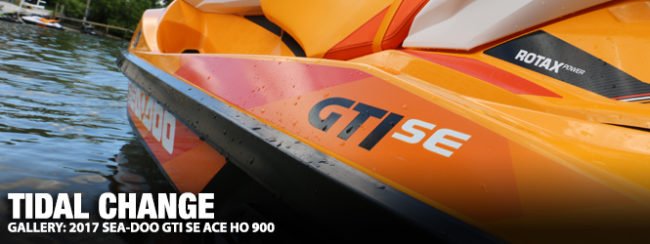
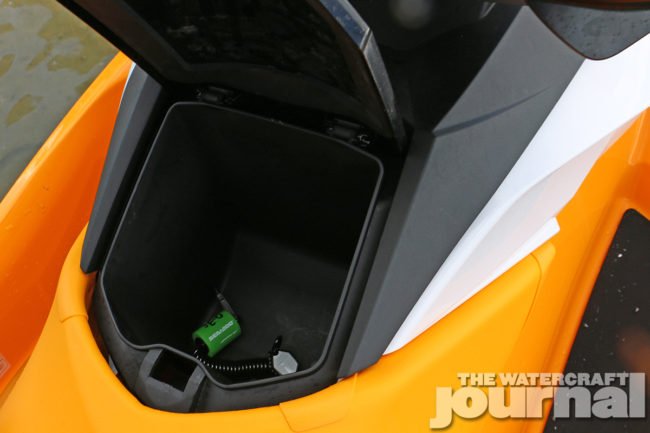
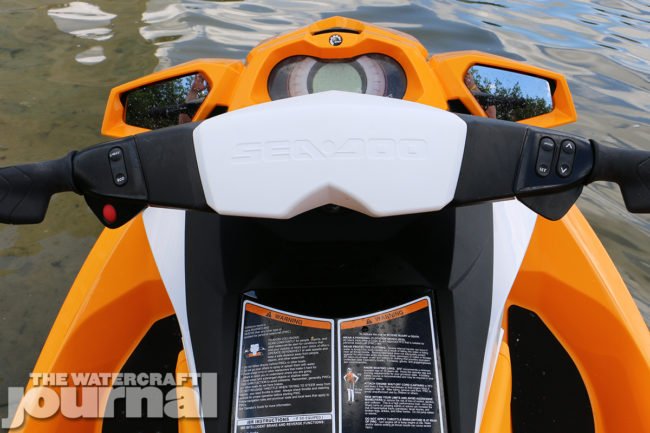
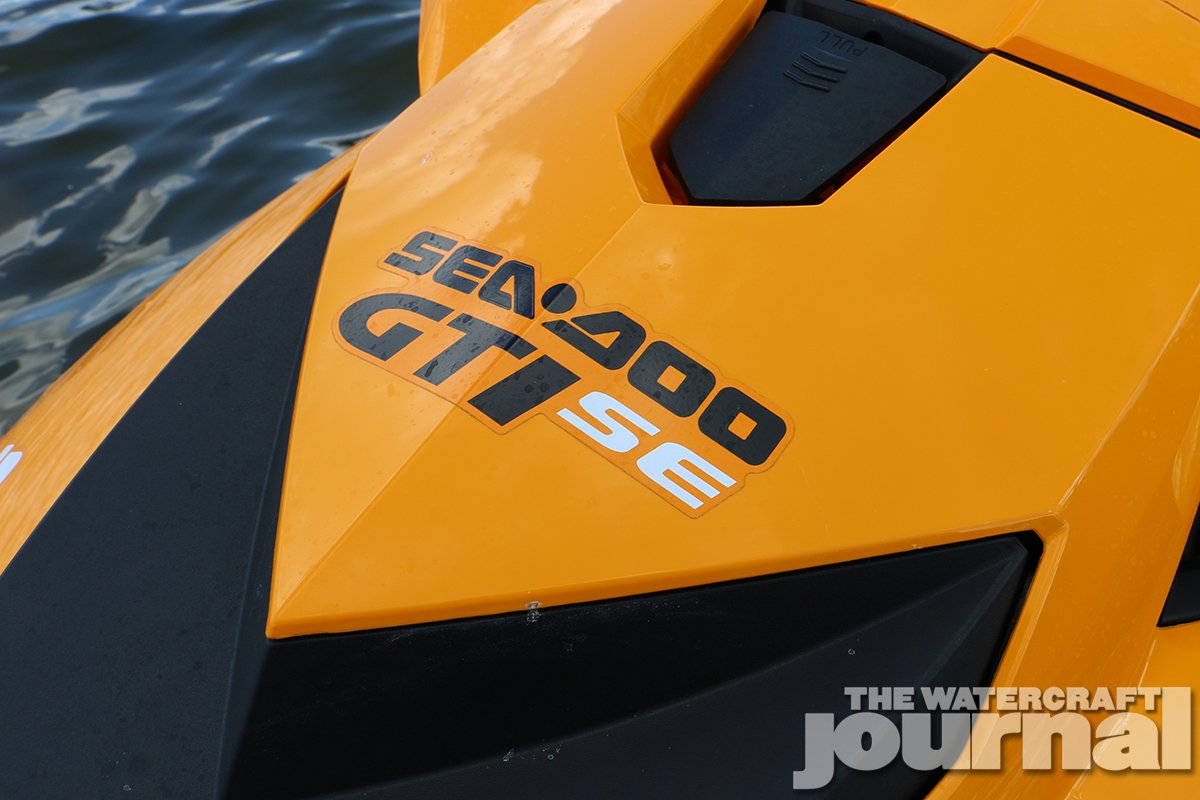
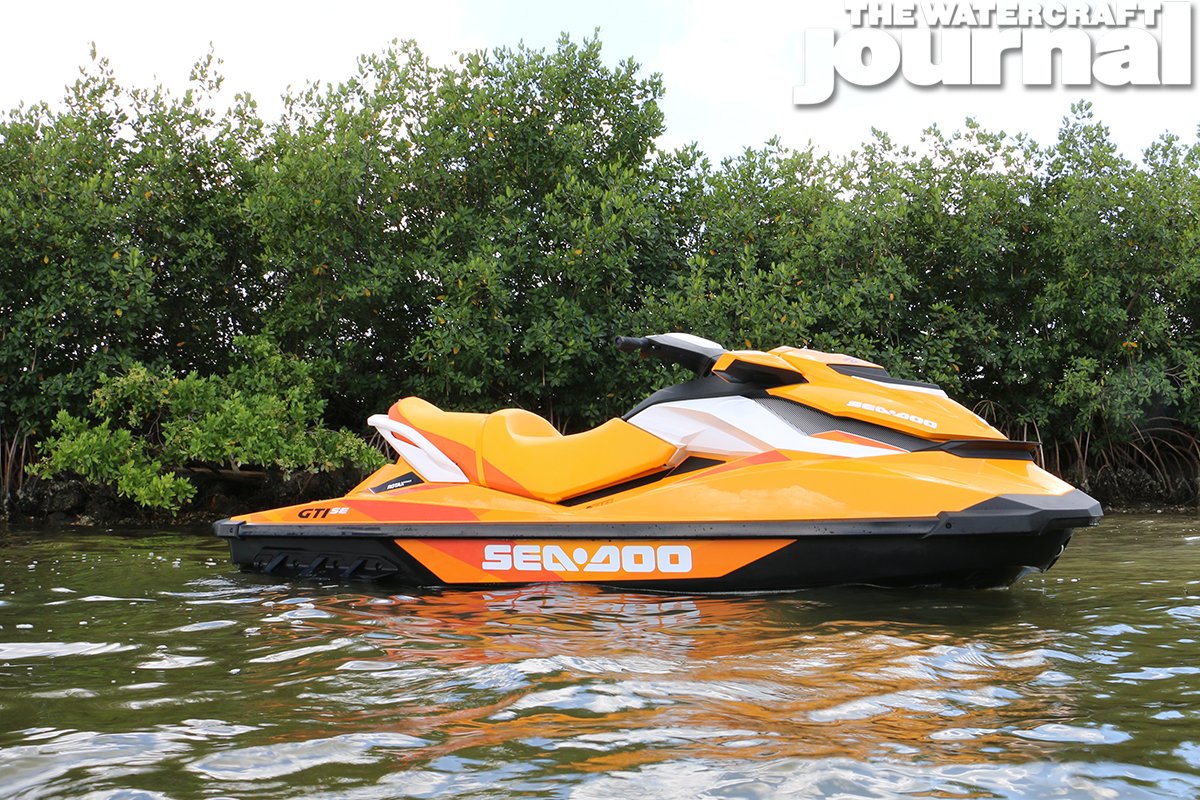
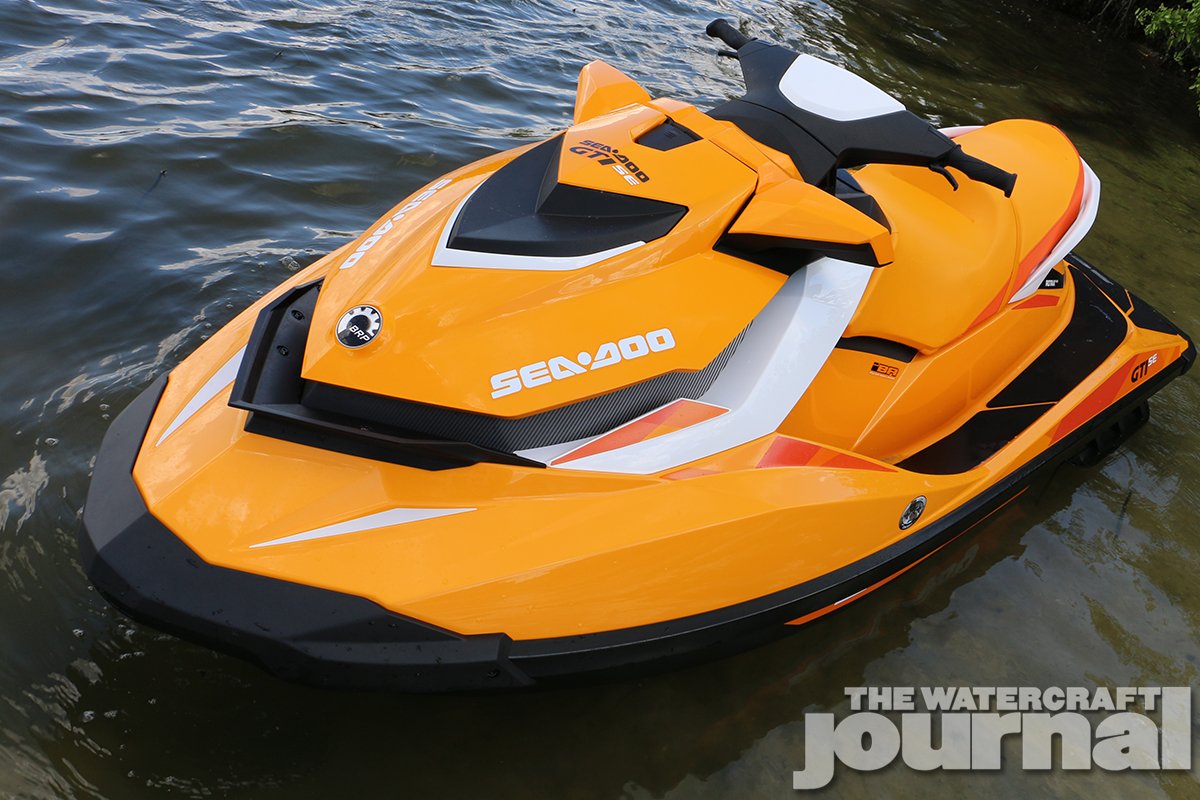
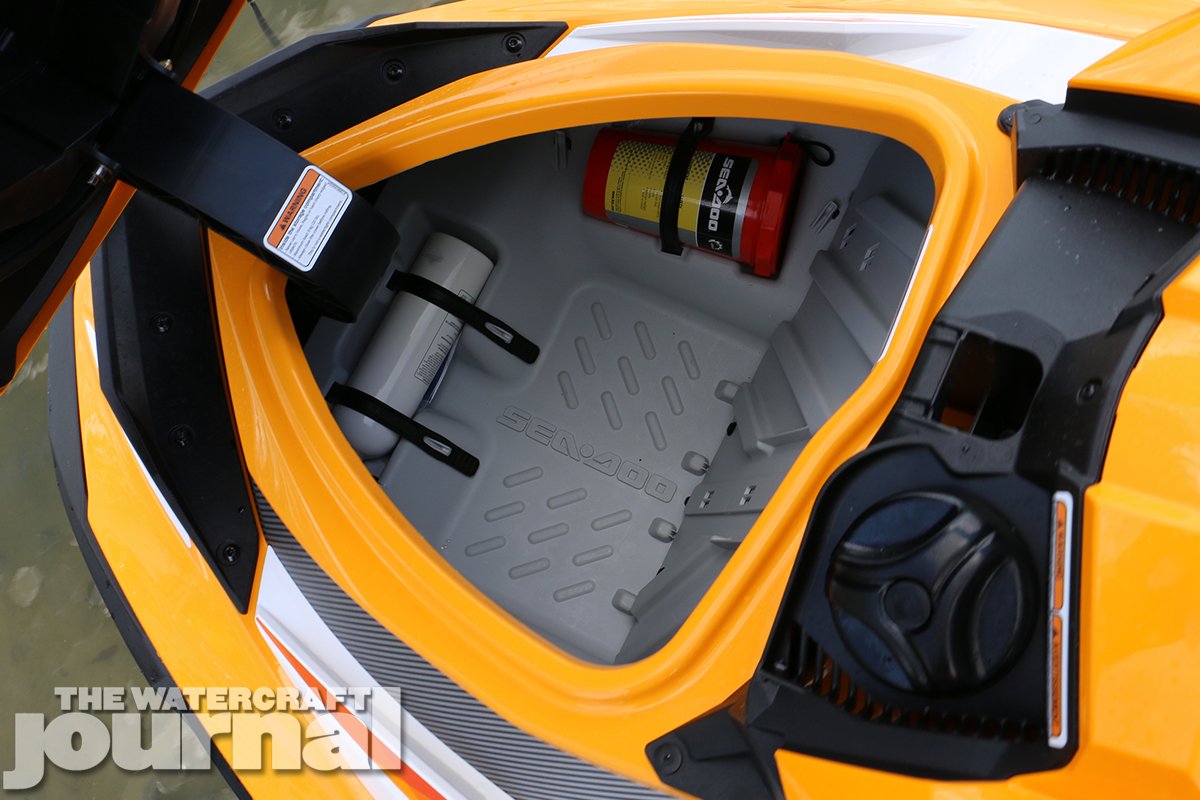
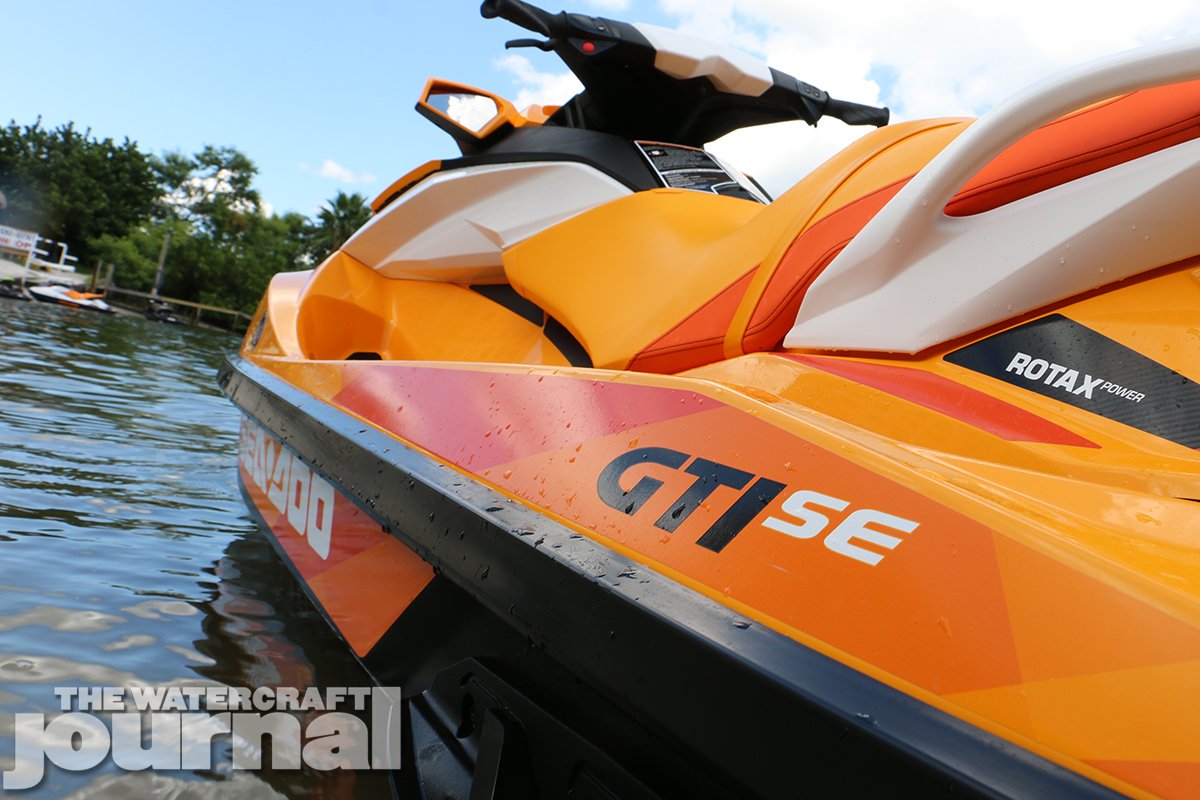
For this review, we eagerly selected the Polytec-equipped 90-horsepower ACE HO-powered GTI SE. Above of hull and powertrain, much of the GTI SE remains the same as before: stellar lines, a long Coke bottle-shaped single-piece saddle, well-placed instrumentation and adequate storage found both in the bow and in the glovebox (equaling a combined total of 30.8 gallons). This year offers the machine in either Black and White, or the eye-catching Sunrise Orange and White, which we absolutely loved and wished was the livery of choice for the entire X-Series.
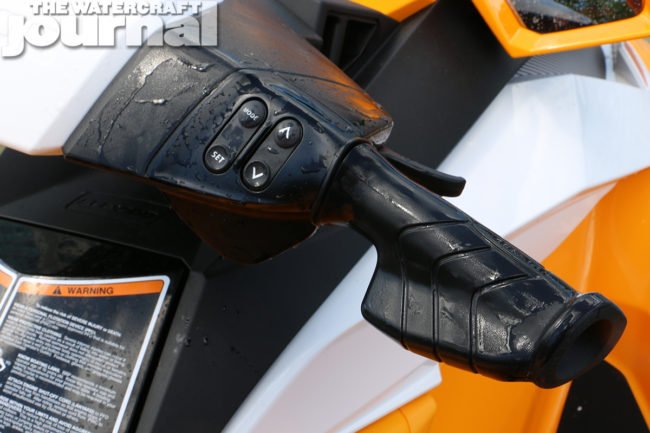
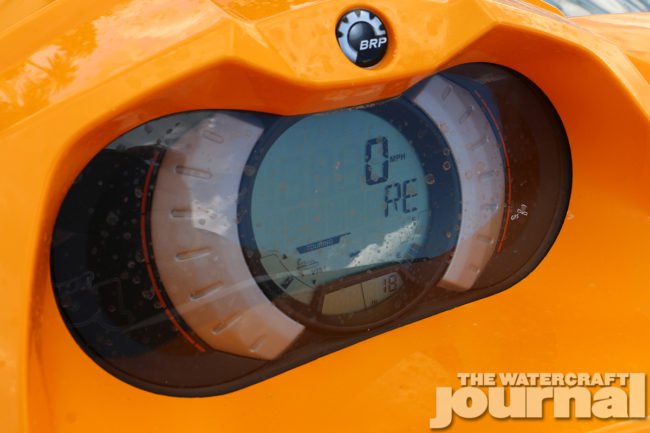
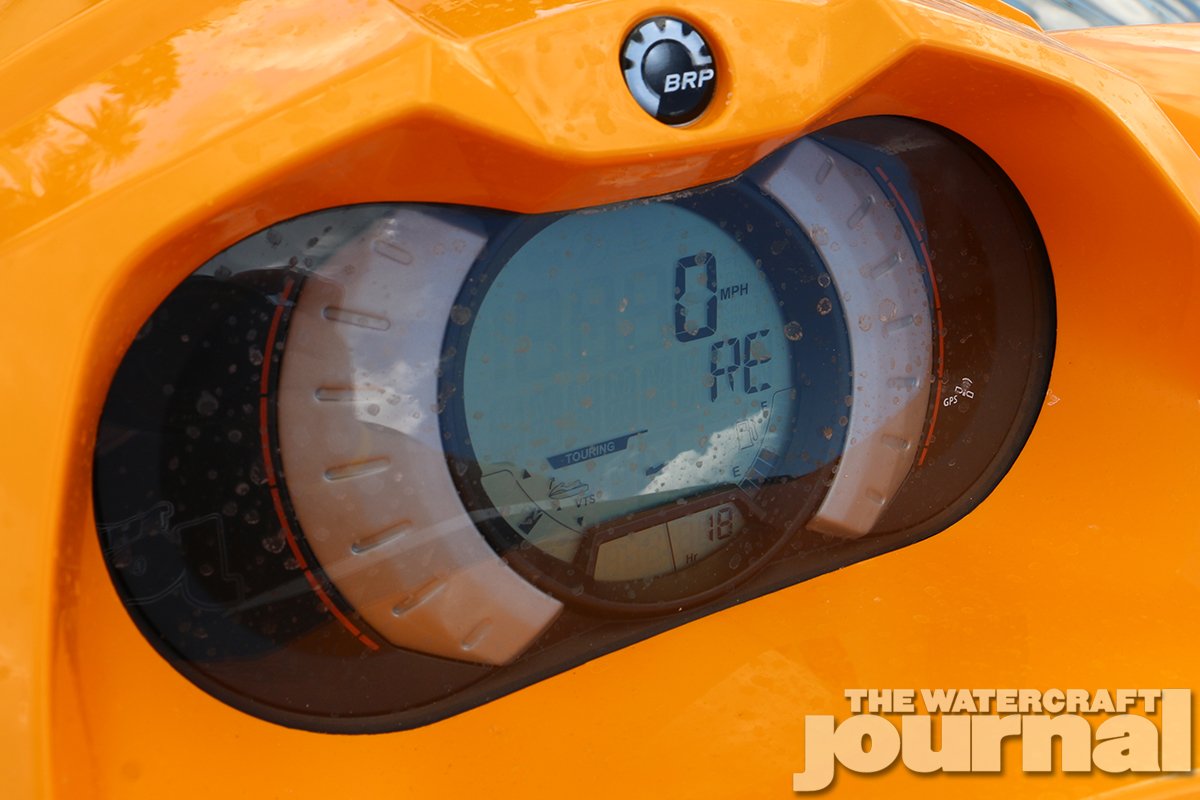
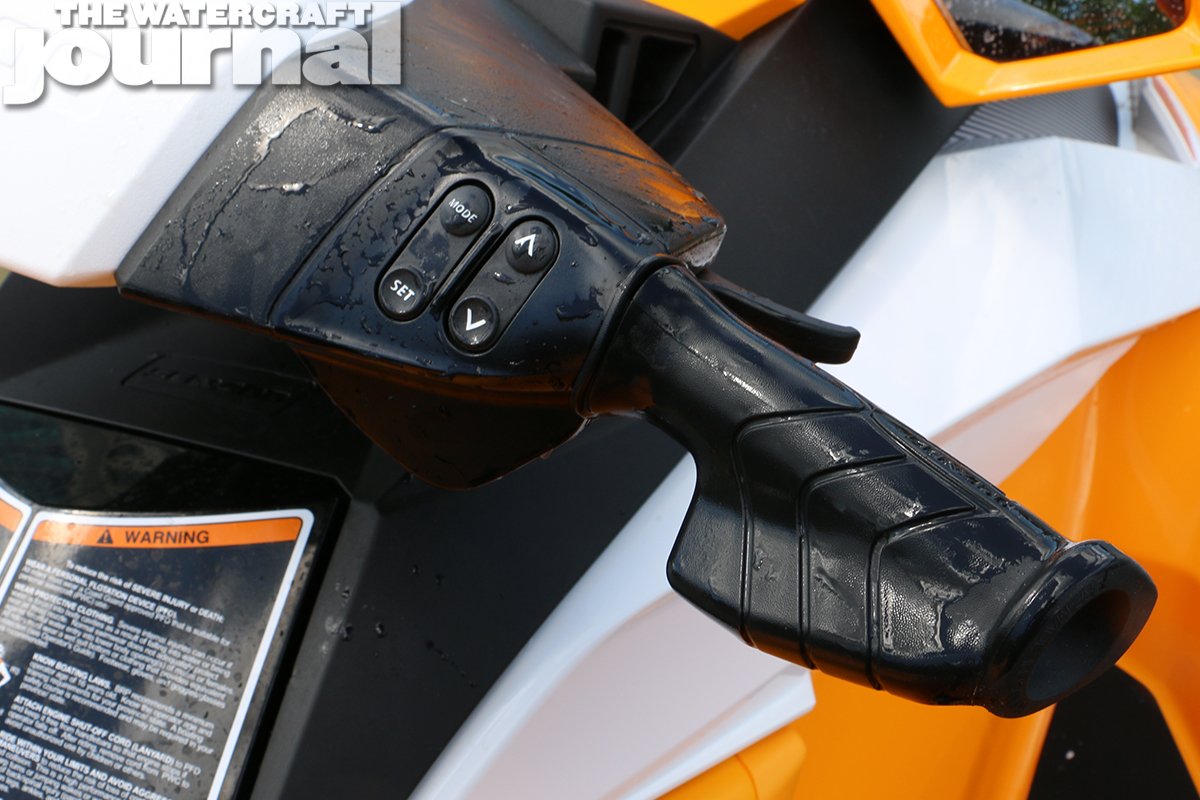
And of course, the GTI SE offers additional rider inputs in the form of a thickly-padded folding swim step, ergonomic “palm rest” hand grips, iControl toggles for Touring, Sport and Eco modes, as well as Sea-Doo’s electronic VTS (Variable Trim System) and scrolling through the various options on the LCD dash screen. Steering is fixed but well placed, and the footwells are deep and angled for reclined, seated or upright riding.
But the big changes to the GTI SE come from radically dropping so much weight. Although the design of the GTI remains identical to traditional FMC hull, the strakes, chines and lines remaining the same, the GTI SE rides higher on its keel without being tipsy or unsteady. We did find the GTI SE far more reactive to the water’s surface, as its lightweight releases it from impact-absorbing heft it once had. The ACE 900 is well intended and gives its all (particularly when engaged in Sport mode), but even then feels taxed. Throttle response is immediate, but again, just not enough to retain the playfulness of the 130 or 155-horsepower options. We eked out a top speed of 49mph, but did so under admittedly lousy conditions. Wind, chop and sweltering temperatures were far more to blame than the GTI’s powerplant. We pushed the GTI SE through a four-corner buoy course and still found ourselves grinning with glee, so there’s still plenty of fun to be found.
The 2017 Sea-Doo GTI SE isn’t significant because of its power or performance, but because of what it does to the manufacturer’s lineup. The GTI SE is less of a lower-end GTI, but a graduated, top-of-the-line Spark. For families looking for the lightweight and entry-level price point of a Spark (MSRP $9,599), but the comfort, stability and storage of a Recreation class runabout, the GTI SE bridges that gap expertly. Yet to us, the integration of so much Spark DNA into a full-sized runabout speaks to the manufacturer’s intent towards its lineup and the future. Although visions of supercharged 300-horsepower Polytec-hulled RXP-Xs seem afar off, remember this is Sea-Doo we’re talking about – and when they set their mind to something, it usually happens. The GTI SE might not be the ideal fit for you, but the innovation found here might just be found in all future watercraft from BRP.
For every watercraft enthusiast this is the best week of the year. Riders and fans come from all over to beautiful Lake Havasu City, Arizona to watch the some of the most exciting races of the year at the World Finals. This year with Sea-Doo announcing the all new Spark Trixx, it brings a whole new level of fun capable aboard the Trixx. The big news is that Sea-Doo is offering free test rides! This means that if you have time between races or are a huge Sea-Doo fan you can be one of the first riders to perform tricks on the Trixx.
While playing on the water, if you have tons of energy and show off some crazy moves you may be cast in a video by Sea-Doo. The trial competition will be held this Friday, October 7th and Saturday, October 8th at Crazy Horse Campground. The casting begins at 10AM and goes till 3PM but if you have what it takes to become a movie star you best be there early.
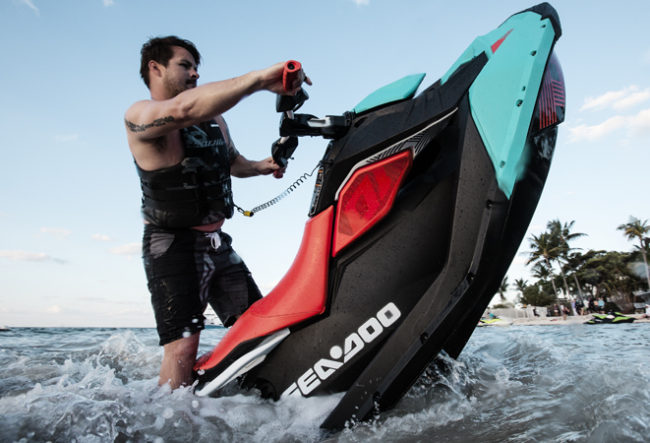
When Sea-Doo created the Spark it ignited the industry with having a smaller, lighter, less expensive craft capable of fitting up to three riders. This year with the introduction of the 2017 Spark Trixx, it allows the adrenaline junkies to really show off their moves with the new adjustable handlebars, step wedges for doing tail stands and the long-range variable trim system (VTS) to allow the craft to become more vertical. These modifications allow the novice rider to experienced rider to start doing tricks one could never even imagine aboard of a sit-down watercraft.
The Trixx Trial Competition video production will also be looking for other riders and craft that bring energy and a lively spirit to the film. This is your chance to ride the all new Trixx and become a video star. We know many of you riders have the skills and moves to make it up on the big screen. Head over to the Sea-Doo Beach Party Zone where you can have your shot. If you have any questions you can write to Sea-Doo via their Facebook page.