OK, first things first: this is not something you’d wear while riding, so let’s just get that out of the way. Rather, the UFloat is as the website officially states, “a flotation device designed for use in calm water.” Intended for lounging around your local lake, river or backyard pool, the UFloat goes on pretty much like a giant adult diaper (we really couldn’t think of a better way to describe it. Sorry).
Yet, believe it or not, the UFloat is in fact, certified by the USCG as a wearable PFD. Actually, there’s two kinds of UFloats available: a recreational model with a universal adult size (waist size 24″-48″) and the USCG PFD model with a universal adult size (same as previous).
Made of high quality components consisting of breathable neoprene, PVC foam, and polyester mesh, the UFloat was designed from the bottom up (zing!) for maximum comfort as the creators fully expect you to bob around for hours without rubbing your skin raw with traditional, cheaper materials.
Although UFloat really wants you to believe it can take the place of a traditional life jacket or PFD, the UFloat is not rated for speed or use on any sort of watercraft, so we don’t want to see a bunch of jet skiers ripping around in giant neoprene Depends. Got it? Good.
We’re entering World Finals week wherein The Watercraft Journal will be in full force, bringing readers the best and most comprehensive coverage from the annual IJSBA event happening in the desert oasis of Lake Havasu City, Arizona, as well as an in-depth look at some of the latest and most innovative products being introduced in the midway. Not only that, but we’ll be bringing you the inside scoop on Kawasaki’s all-new 1.5-liter, 4-stroke powered eight-and-a-half-foot-long 2017 SX-R, due to be revealed Thursday morning. So yeah, we’ve got a busy week ahead of us.
Yet, that won’t slow down what is becoming the single-most popular personal watercraft magazine in the world, with over 300,000 unique individuals reading over half a million articles in one year alone. These numbers aren’t trumped up averages or marketing spin, but legitimate performance statistics, which we share freely and openly every month since our launch in 2013.
And let’s not forget that building a reputation upon reliability, consistency and a continuing increase in top level industry content has been instrumental in continuing The Watercraft Journal’s massive growth. And we do it without subscription fees, passwords, log-ins, downloadable PDFs, using the magazine as a front for a store or directing you through a competing message board. We’re an informative and entertaining magazine first, and nothing else behind that. All of the OE manufacturers have come to appreciate The Watercraft Journal, as do many of the industry’s best and most competitive companies. And here’s why:
September 2015
September 2016
A Rising Tide Raises One Ship
Of the two charts above, you’ll notice that this year’s September doesn’t show any remarkable peaks and/or valleys, apart from one big ol’ spike (when we broke the news of extra information on Kawasaki’s soon-to-be-released SX-R). The reason for this consistent growth is easy to see, it’s that The Watercraft Journal is welcoming more and more readers, and at an accelerated, exponential rate because we’re the only reliable source for daily content. People have come to reply upon us, and that’s something we don’t take lightly, and that is why we grow like we do. We retain a responsibility to our readership that no other magazine does, and that is why The Watercraft Journal continues like it does.
September 2015
Total number unique readers: 31,504*
Total number of articles read: 81,373
Percentage of new readers: 55.5%
September 2016
Total number unique readers: 41,138*
Total number of articles read: 81,231
Percentage of new readers: 58.1%
*This number is considered equal to an individual sale of a single copy of a magazine.
A Reliable Schedule of Publishing
It’s not just enough to pump out more content than the other guy. Upstart competitors have drowned their readership in spammy posts and bloggish updates. Rather, it’s about producing top quality magazine-quality content regularly and consistently that sets The Watercraft Journal apart. Nowhere else can enthusiasts find more hands-on reviews (we don’t review a ski or product unless you see us using it. No stock photos for us!), more interviews, race coverage, and on-the-water ride reports. And at no time has The Watercraft Journal ever missed a day in its three-and-a-half years of publishing – we publish new content Monday-through-Friday. And unlike anybody else, The Watercraft Journal maintains a strict publishing schedule of developing and publishing new and informative content about its advertisers and their products, as well as the industry and sport as a whole.
News articles published in August 2016: 21
Feature articles published in August 2016: 16
Total feature word count: 15,676 words*
News articles published in September 2016: 25
Feature articles published in September 2016: 11
Total feature word count: 12,535 words*
*When this number is translated to print publication standards, it equals a 130-page magazine. Please note that this number does not include an average of two uniquely-written news articles published daily.
A Responsibility to Bring WCJ to Its Readers
Want to know our secret to successful marketing? Take your message/product/content to where the people are. The days of “If you build it, they will come” are long gone. If you’re trying to reach new customers with your Facebook page, you’re only reaching the people who already know you. That’s why The Watercraft Journal does things a little differently: we share our daily content via our Facebook, Twitter, Instagram, YouTube, and weekly newsletters, as well as with a stellar partnership with the single-largest PWC forum in the world: www.greenhulk.net. By offering our content freely and easily – whether it’s via a desktop, a laptop or a portable device – we ensure that we’re the industry leader.
September Facebook likes: 18,989
Top Five countries: United States, Australia, France, Canada, United Kingdom
It’s Time to Work With The Best
The companies advertising with The Watercraft Journal benefit from much more than the reasons listed above. Yet, there are still plenty of companies who either haven’t come to realize what working together with The Watercraft Journal can do for them, or do not see the value in having their brand, products and name regularly presented before the single-largest audience of dyed-in-the-wool PWC enthusiasts. For those, it’s a tough sell. For others who want to grow their customer base, we’re here for you. Getting the word out about your product can be difficult, and relying on a few sponsored racers is only speaking to a tiny demographic. Put your products in front of more enthusiasts faster and easier by joining The Watercraft Journal as an advertiser today. To inquire more about advertising with The Watercraft Journal, please email [email protected]
Last week, The Watercraft Journal shared a pretty interesting infographic produced by Yamaha Motor Corp. USA, providing a unique glimpse at the results coming out of the most recent P1 AquaX USA race in Chicago, Illinois. The data shared albeit accurate, only represented a snapshot of the weekend’s racing, and still leaves a lot left on the table to be discussed, particularly as the American AquaX series still has one final race left in Lake Worth, Florida.
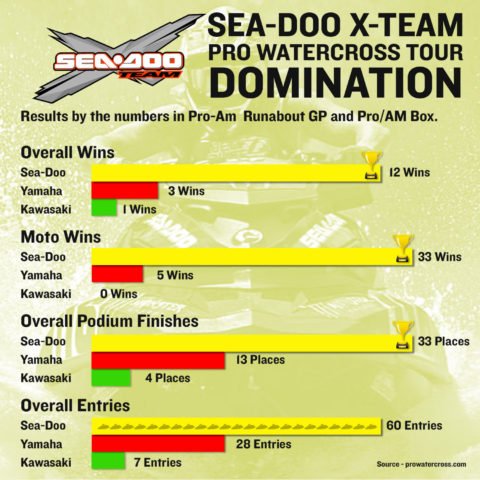
Undoubtedly, the team at Sea-Doo are proud of their racers, and whipped up this infographic documenting the overall and individual moto wins, as well as the overall podium finishes and entries riding Sea-Doo runabouts throughout the tour. In many instances, Sea-Doo racers came in 3-to-4 times more successful than the nearest competitor, Yamaha, with Kawasaki in a very distant third place. With some of the biggest innovations found on watercraft, and a focused attention to rider comfort and input, there’s little to question why Sea-Doo took this year’s Pro Watercross Tour by storm.
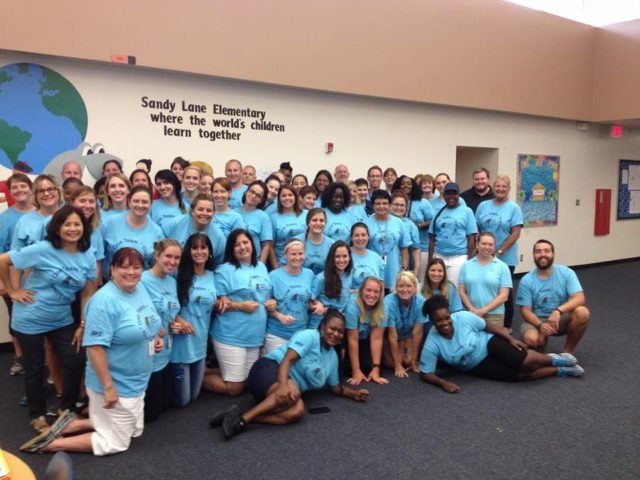
Recently, The Watercraft Journal talked with Sage Pickren, SBT, Inc. President Greg Pickren’s daughter, who explained their latest efforts to support local schools in Clearwater, Florida:
“SBT, Inc. has many new initiatives this year that focus on supporting teachers and education. This summer, SBT created a community partnership with four local elementary schools, Sandy Lane Elementary School, King’s Highway Elementary School, Skycrest Elementary School, and Calvin A. Hunsinger School. We selected Title 1, Pinellas County schools that were close to our factory and catered towards a wide range of student populations.
“Many SBT employees have students that attend Skycrest Elementary. I interviewed the Skycrest principal, Angelean Bing, to find out how we could help. She said that the school’s greatest need was supplying students with school uniforms. Clothes to Kids is a local nonprofit organization that SBT also sponsors. They provide families with clothes and uniforms for school. Sometimes families are unable to make their shopping appointments, so the principal and school counselor end up buying clothes for students out of their own pocket. SBT donated $500 worth of clothes to Skycrest Elementary including shirts, shorts, skirts, socks, and underwear.
“Sandy Lane Elementary is another school SBT has a partnership. This year we spent just over $1,000 to buy PE equipment like basketballs, soccer nets, and games that improve coordination. The Sandy Lane principal, Melanie Dedert, explained to me that they needed help expanding their PE program. They just hired two new teachers and they are focusing on improving physical education classes at the school. This was exciting to me because it was a donation that all the students at the school could benefit from. SBT also gave $500 to Sandy Lane Elementary to sponsor their ‘family nights.’ Ms. Dedert uses ‘family nights’ as a chance to bring the community together and educate parents on ways they can support their children in school.
“Calvin A. Hunsinger School is a special school that serves K-12 students with emotional and behavior disorders. The principal, Douglas Keimig, asked SBT to help by sponsoring teacher trainings. The $500 will be used to train teachers on educational techniques and provide those being trained with refreshments.
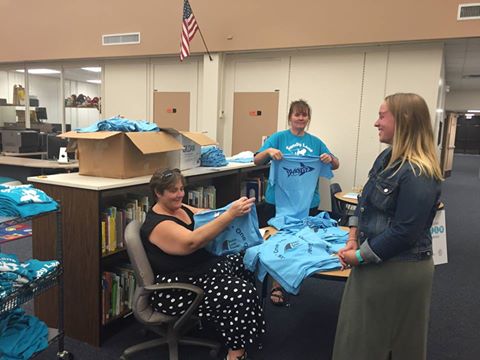
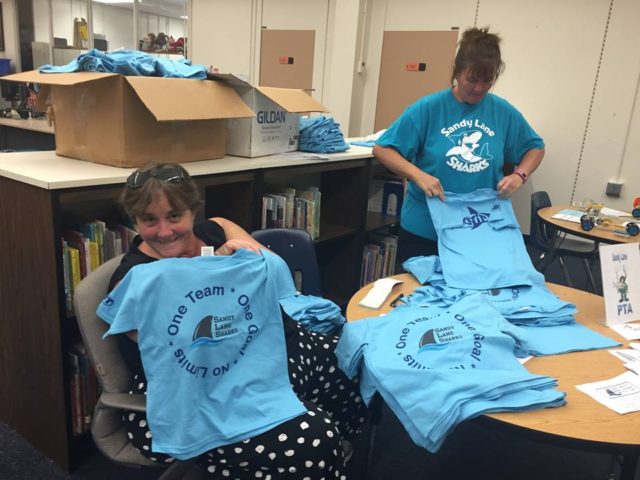
“King’s Highway Elementary is a magnet school that focuses on technology. I was excited about the school’s focus on character education and integration of technology across curriculum. SBT donated custom T-shirts to all four schools. Each T-shirt had the specific school logo on the front and then Blacktip and SBT logos on the back and on the sleeve. The T-shirts were donated to the faculty to wear on school spirit days. King’s Highway also received special student shirts to give to their ‘students of the month’ who displayed strong character. Sandy Lane Elementary was given 200 student T-shirts for the school’s PTO to sell as a fundraiser.
“In addition to our partnerships with local elementary schools, SBT gave away school supplies bags to all of our employees at SBT and SEI who had school-aged children. We also gave our employees $100 gift cards to Lakeshore Learning Store to bring to their child’s teachers on back to school night. Many of the Lakeshore gift cards were received by teachers at Skycrest Elementary, which was an added bonus.
“Our focus this year has been on supporting local public schools, but we also help our community by sponsoring little league football players and hosting an annual Thanksgiving dinner. Please let me know if you have questions about our programs. You can visit our blog to learn more HERE.”
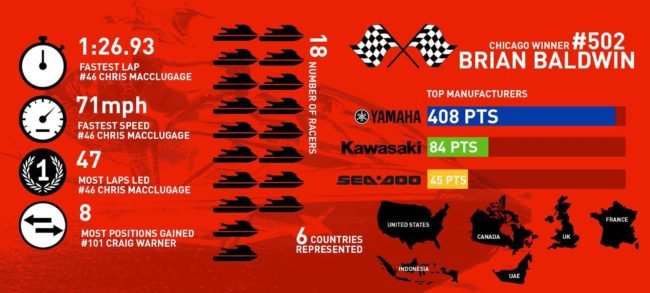
Recently, P1 AquaX shared a post from Yamaha’s Facebook page, offering some stats about the Pro’s racing in Chicago via an infographic made by Yamaha Motor Corp. USA. For all of the manufacturers present at the race, Sea-Doo earned 45 points, Kawasaki earned 84 points and Yamaha came in at a whopping 408 points.
While there are a few variables, the biggest factor towards Yamaha’s dominance is that with Yamaha continuing to stay in the United States and investing millions of dollars into building and revamping their existing factory, Yamaha has truly built a machine to last the rough abusive in an intense race.
Receiving 408 points is incredible but hearing the stats about how those points came about is what is truly amazing. The fastest lap (which was completed by Chris MacClugage) was 1:26.93. During that fastest lap, his top speed was 71mph, which is very fast considering the restrictions imposed by AquaX’s strict rules, and the brutal Great Lakes conditions.
One of the most amazing accomplishments was that MacClugage led in 47 of the total laps, which allowed him to read out each turn and give it his best. Sadly, it was not enough, as Brian Baldwin was able to clinch the win. Craig Warner did something very exciting too, which was gaining 8 whole positions when there was only 18 racers! This race had some of the best riders representing 6 different countries.
This year has been quite exciting as Yamaha and Sea-Doo have announced their 2017 lineups. We are still waiting to see what Kawasaki has in store, but as of this race, Yamaha has showed that they are building some very durable and fast machines. It makes us look forward to seeing how Sea-Doo and Kawasaki will bounce back in the last remaining AquaX races.
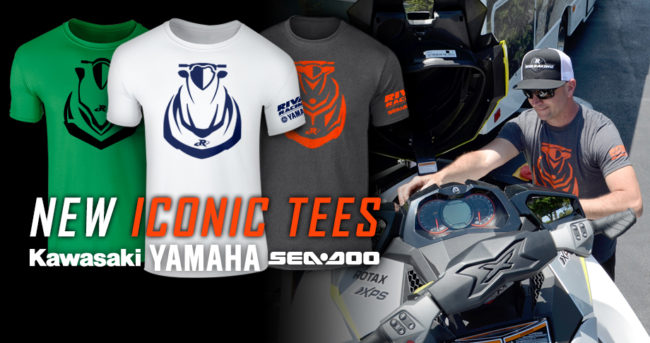
Sure, RIVA Racing is the industry’s biggest and most prolific manufacturer of top-of-the-line performance parts for all makes and models of personal watercraft, but did you know that they also produce a massive selection of awesome apparel? Whether you’re repping RIVA Racing itself, or your favorite OE manufacturer, RIVA’s got a cool new or vintage-looking shirt, hoodie or hat to show your pride.
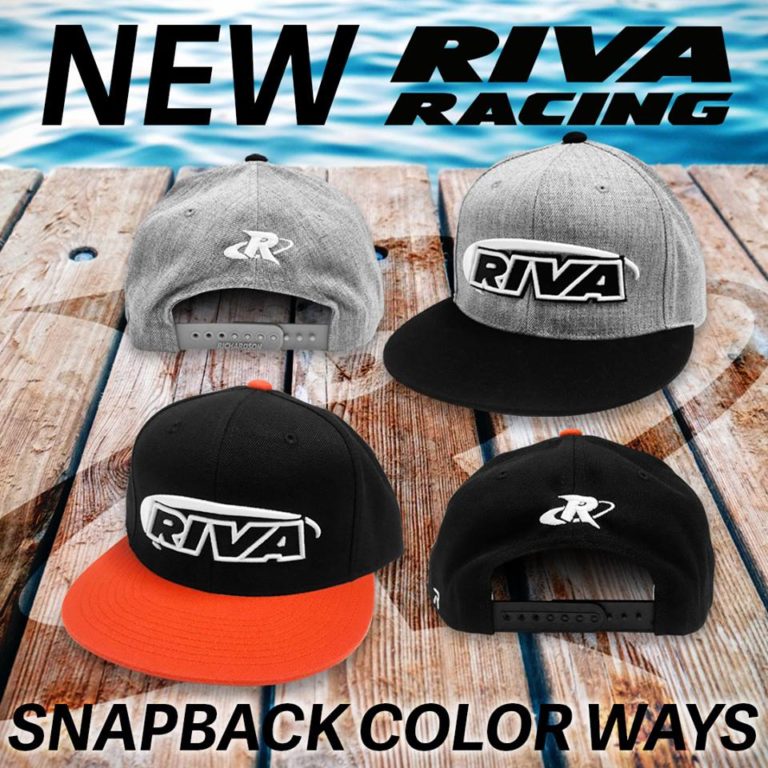
With sizes, colors and styles to appeal to both men and women, and even kids, RIVA Racing’s apparel line is just way too big for us to fully cover in this article, so make sure to take a look at their selection HERE. The latest addition to their catalog of clothes are their new embroidered snap-back baseball caps. Moreover, there are long-sleeved, water-wicking fishing shirts, tanks, riding shirts, rash guards, high quality pit shirts, water-wicking polos and tees, and sweatshirts.
Again, whether you’re looking to represent RIVA or your favorite OE (they’ve got apparel for Honda, Kawasaki, Sea-Doo and Yamaha), there’s a ton of sizes, colors and designs to choose from. Make sure to stop into RIVA Racing’s online store today and check out all the cool gear!
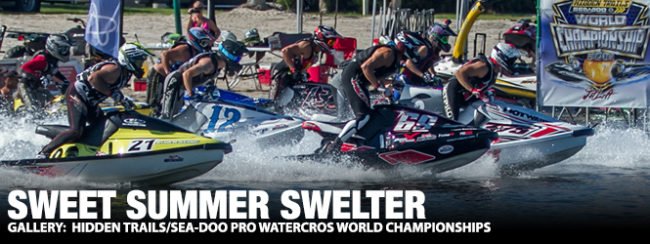
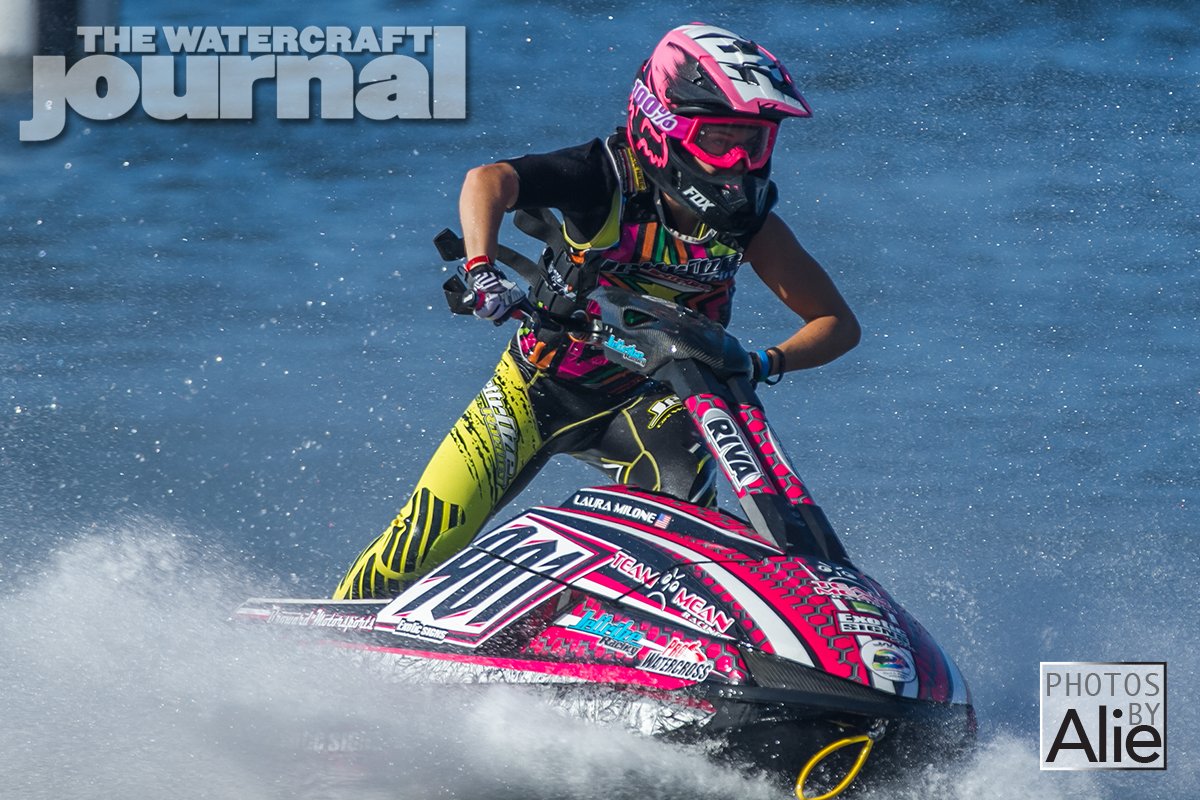
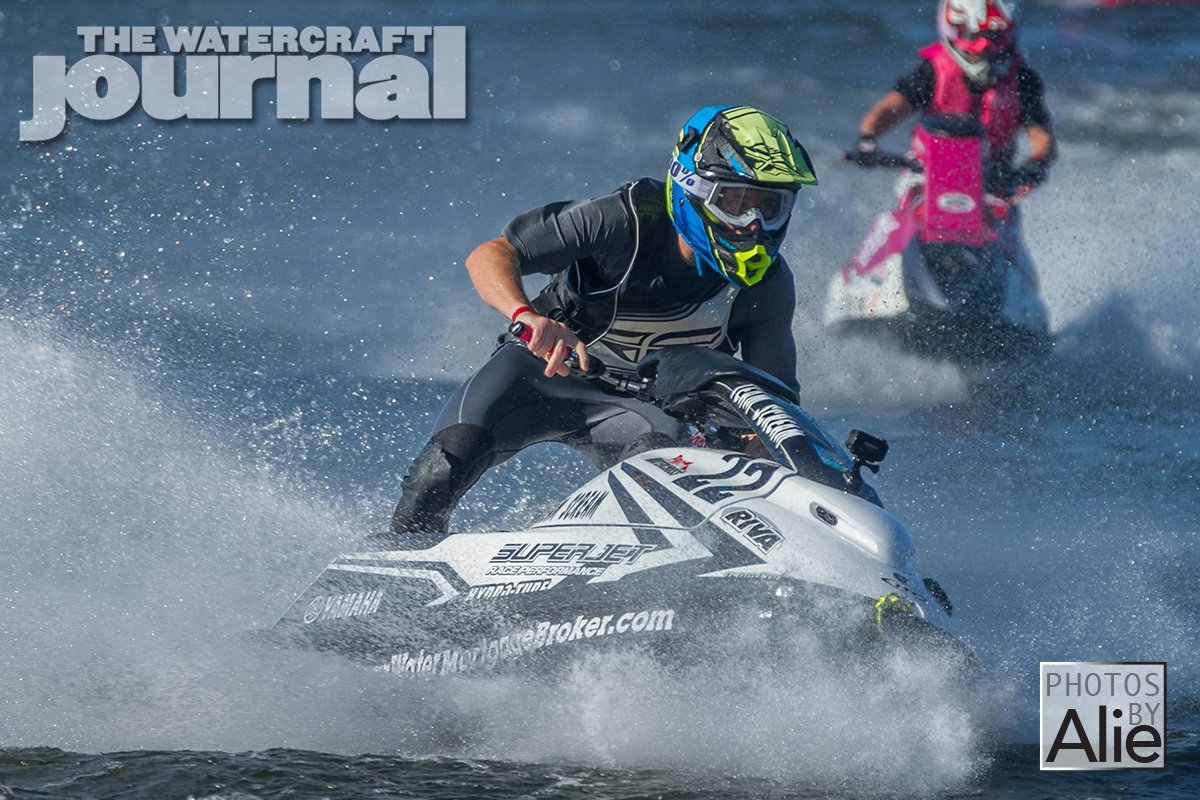
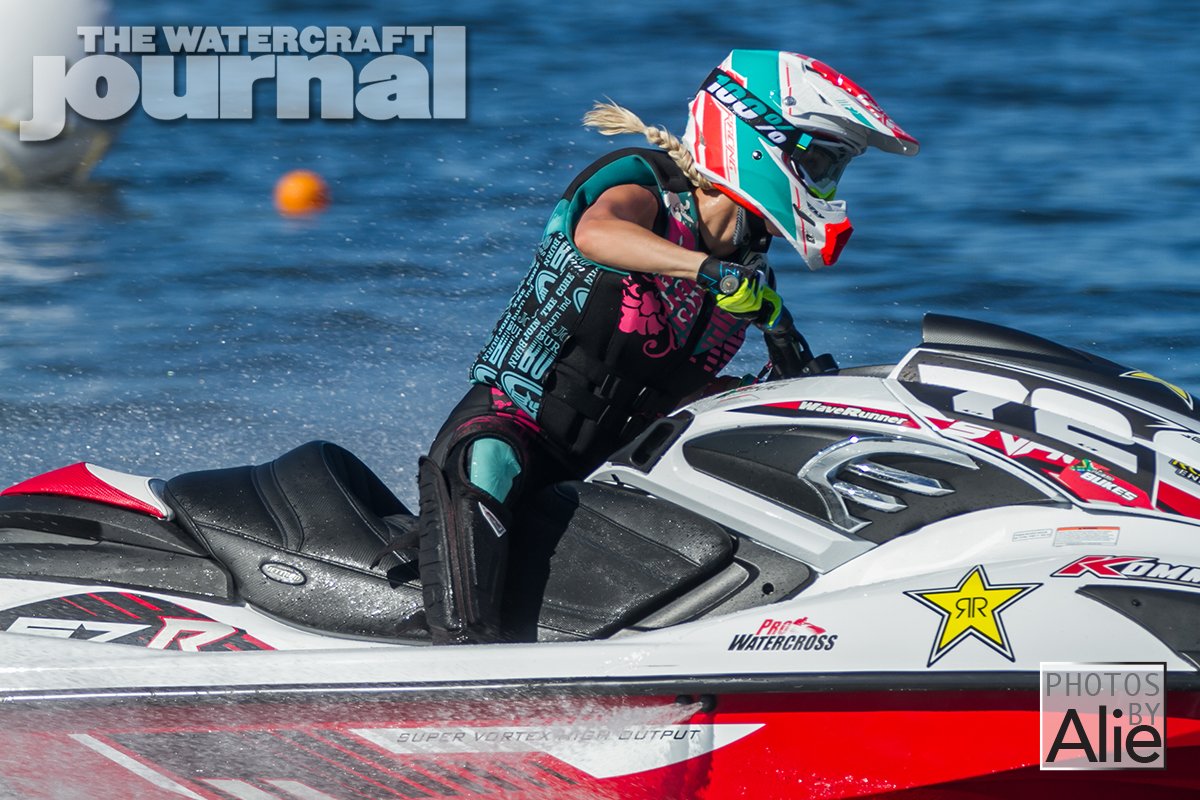
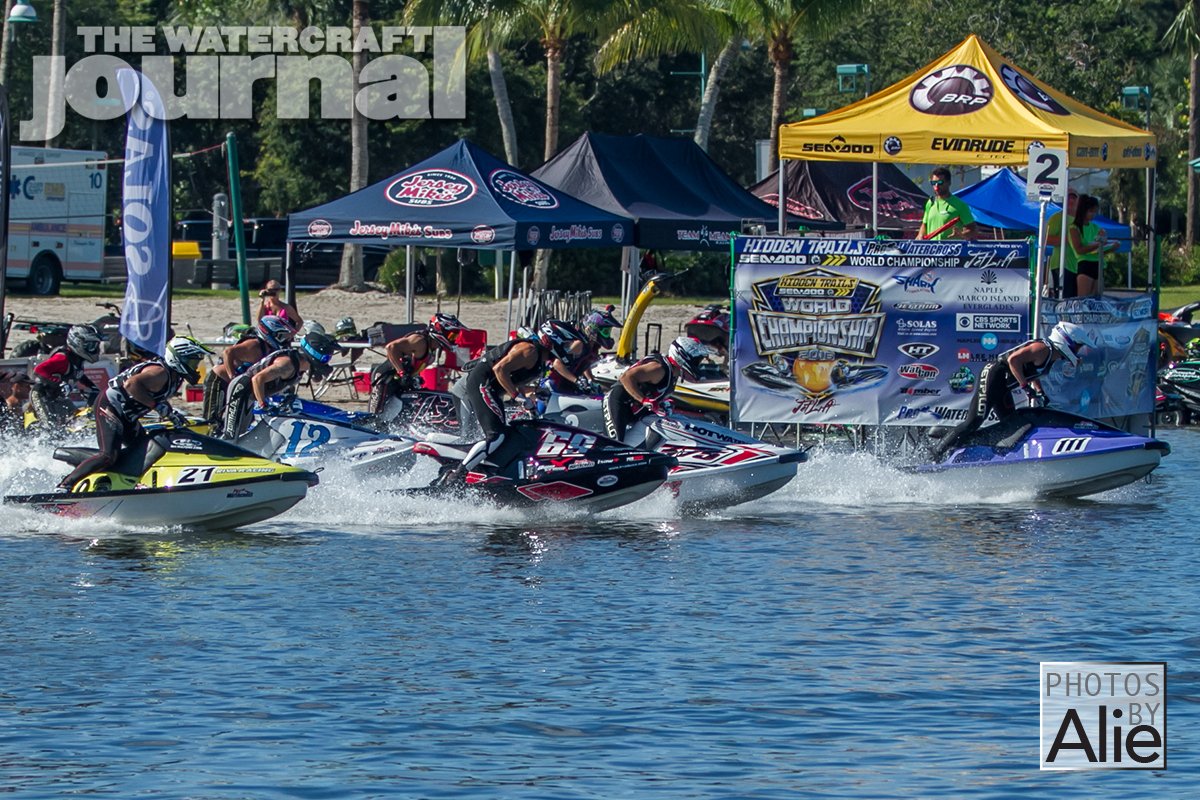
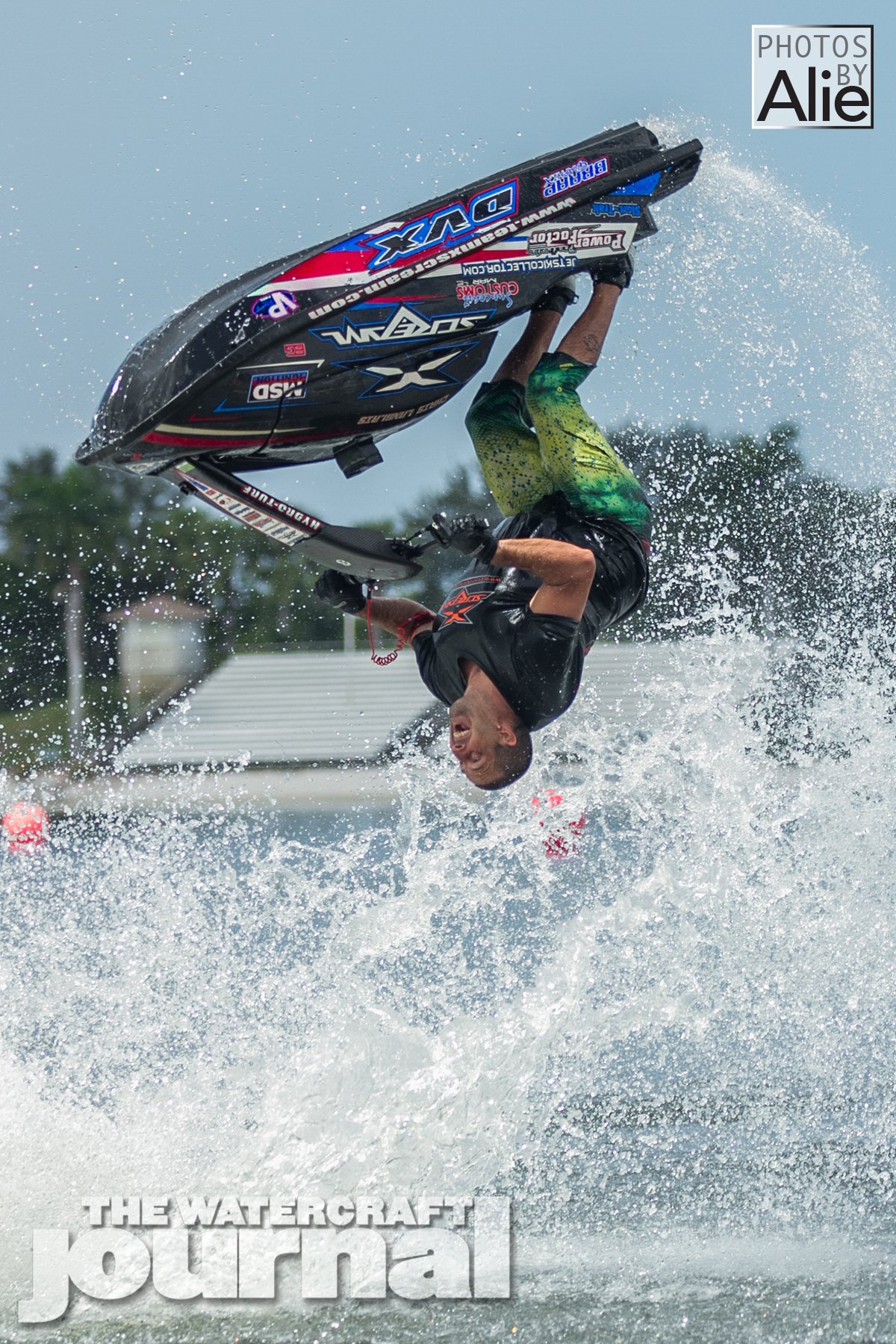
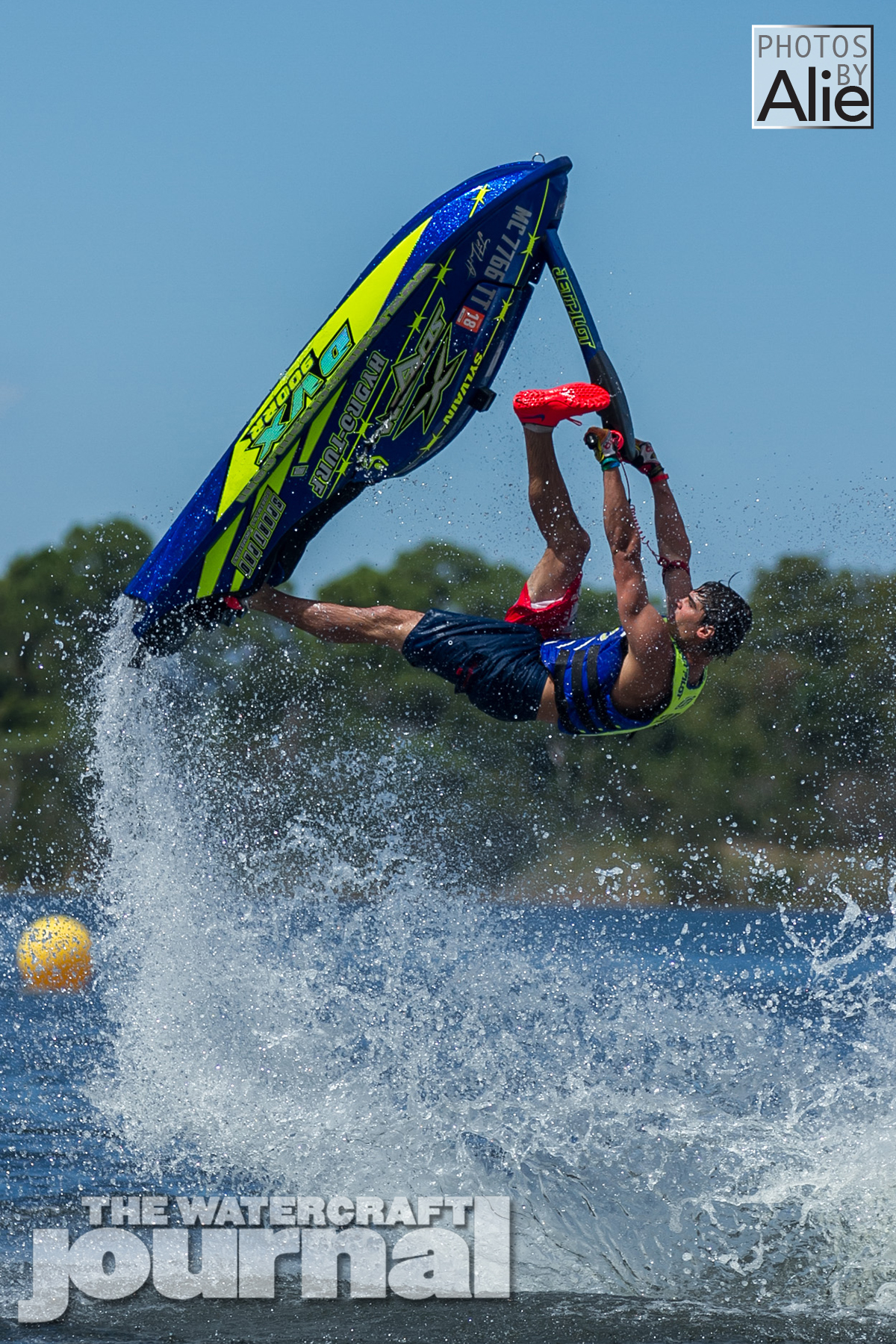
The Pro Watercross season came to an end after an exciting weekend in Sugden Regional Park in Naples Florida with The Hidden Trails/Sea-Doo Pro Watercross World Championships. The beautiful park played host to the Flyboard World Championships to begin the week and that was just the beginning to the high flying action. The extremely calm waters and technical track led to some top notch racing something we have come to expect from the pro show. The Hidden Trails/Sea-Doo Pro Watercross World Championships would not disappoint.
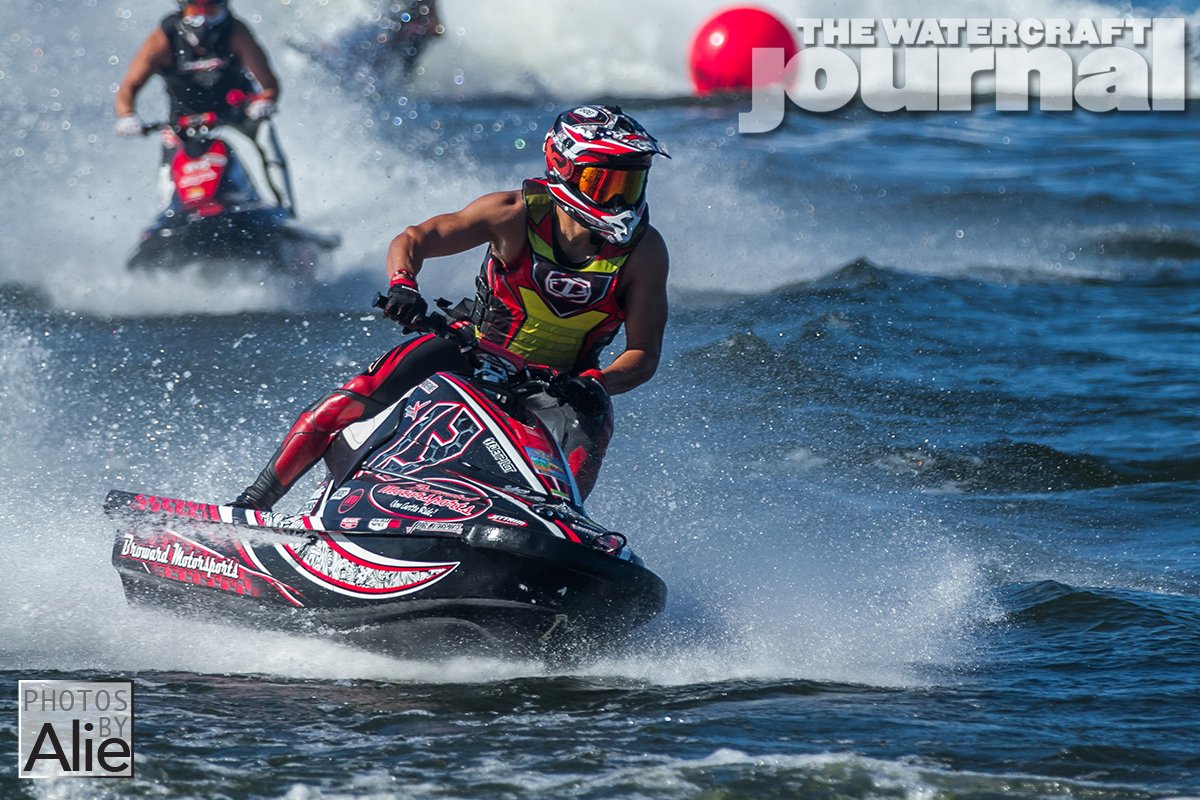
The first class to hit the water was the Pro Am Ski Stock class. Team Mean/Broward Motorsport rider David Cabrera has been staking claim on this class all season and nothing would change in the qualifier after grabbing the huge win setting him up great for the main. In the main, Cabrera jumped out to the early lead but that doesn’t mean there wouldn’t be some suspense. Cabrera thought the race was over with one lap left and young gun, Team Faith rider Gage Schoenher, made the pass for the lead as Cabrera backed out of the throttle.
Schoenher’s luck wouldn’t last long though as Cabrera made the exciting pass on the last corner to lock up the World Championship. Third place went to Apex, North Carolina’s own Callaway Turner after a great weekend of riding. On a side note the only female rider in the pro classes this weekend, UK’s own Sophie Perrin, had a great ride to finish up fourth.
In Pro Am R/A Box Stock, Yamaha FZR rider Jeff Dyckowski put in an amazing heat win after fending off Hidden Trails/Sea-Doo rider Tim Ducat for all ten laps. In the main, it was more of the same but Monster Energy/Kawasaki rider Eric “The Eagle” Francis was added into the mix. It was a three-way battle for 10 laps in the main with mere seconds separating the 3 riders but Dyckowski put in a rock solid performance and locked up the world championship followed on the podium by Ducat and then Francis.
The biggest class of the weekend out of the Pro classes was once again Sport GP. After dominating all season, Broward Motorsports rider Sam Nehme had a rough start to his weekend and red flagged in the heat race pushing him to 10th place. But that opened up the door for a big time heat race win for Rich Taylor out of Christmas, Florida. Nehme had different plans for the main after the rough start to the weekend.
Judge Motorpsorts rider Billly Dearman pulled an amazing hole shot with Nehme in tow. After a bobble by Dearman, Nehme took the lead and never looked back on his way to a world championship. After the bobble, Dearman got back on the gas to finish second. Third place went to heat race winner Taylor.
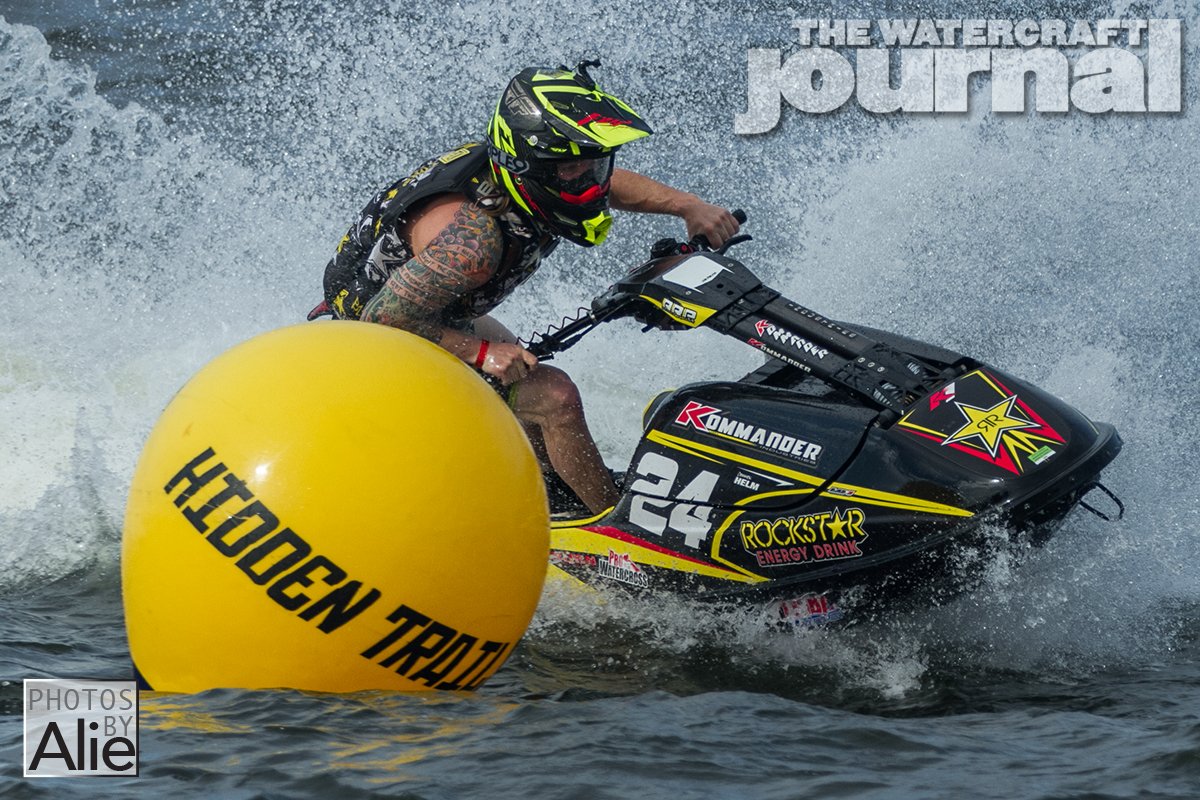
Pro Am Ski GP was as exciting as ever. Naples’ own Monster Energy/Broward Motorsport rider Chris MacClugage – aboard his K1 hull – grabbed the heat win to set himself up with great line position in the main. MacClugage was dominant this weekend as he has been for the majority of his career and won the main as well in front of his home crowd. Kommander rider Derrick Helm finished second behind Macc and seems to have really caught fire towards the end of the Pro Watercross season, so look out for him in 2017! Third place went to somewhat of a new name to the GP class podium for the year Jordan Carroll.
Pro Am Runabout GP class had another of Naples own and who seemed to be the crowd favorite, Jettribe/Sea-Doo rider Ermino Iantosca. Iantosca broke in the heat and that gave Dean’s Team/Factory Yamaha rider Brian Baldwin the big win in the heat. Iantosca would get his motor back together after a long night of wrenching and gave the crowd something to cheer about in the main on Sunday and he led from wire to wire taking home a world championship, which he dedicated to his hard working father.
Second place went to Baldwin who just couldn’t hunt down Iantosca in the last race of the Pro Watercross season. Third place turned into a battle late in the race after Kawasaki rider Eric Francis pulled his lanyard and gave life to Sea-Doo rider Tim Ducat’s quest for a second podium of the day. Francis missed a buoy late in the race to give Ducat third aboard his stock Sea-Doo RXP-X.
The second annual Hidden Trails/Sea-Doo World Championships was a major hit. There are rumors of a $100,000 purse for next year in 2017, we hope this brings out the brightest stars of the watercraft racing world and allows this to become the pinnacle of the racing season.
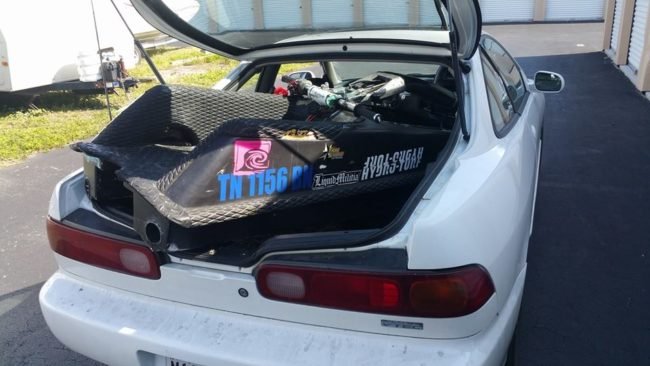
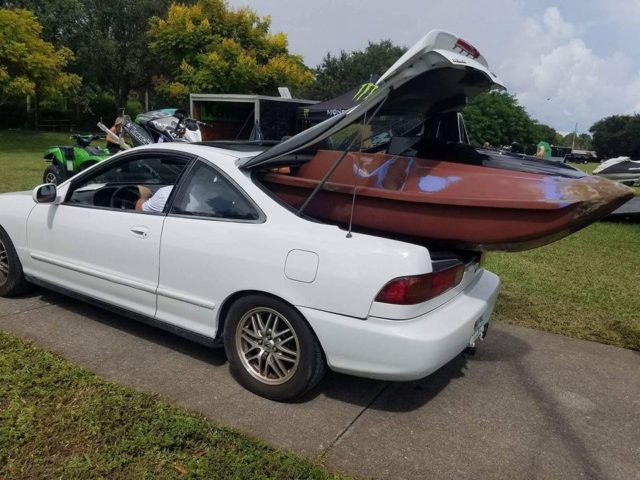
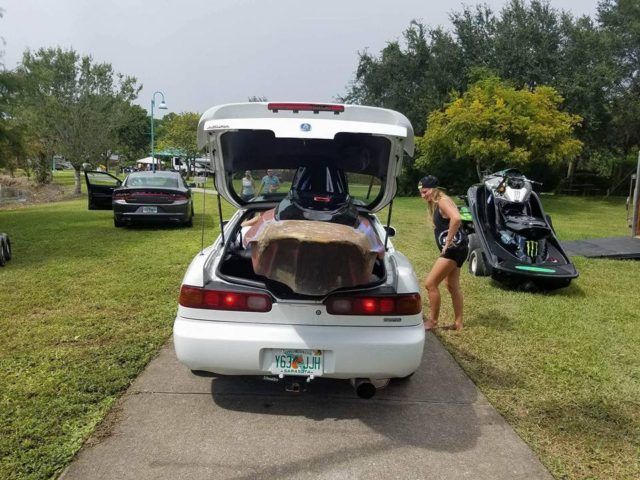
Recently Jason “Jay” Baxley published a post on Facebook touting his favorite “tow rig,” a ’97 Acura Integra GSR with over 250,000 miles on the odometer. Hanging out of the white Honda’s hatchback was a rough-and-ready Yamaha SuperJet, the next image, a white KLR. He told The Watercraft Journal, “I had [the GSR] for close to 6 years. A friend of mine had it for 10 years before I got it.”
Although Jay has towed with it, admitting, “It has a receiver hitch, and when I moved from Tennessee I put everything in the car and my KLR on a trailer and my SuperJet inside,” he hauls his standups in the car more often than not – and its been that way for some time. “When I first stared riding, I towed my two Kawasaski stand ups.”
An avid standup rider, Jay participates in freeride events and some races. “It is been to the Daytona Freeride. (That was the farthest trip – from Knoxville, Tennessee to Daytona.) It’s been to the Lake Hartwell race (Georgia). And it’s been to Naples twice for both Pro Watercross World Championships.”
His anti-trailer exploits expand beyond the Acura. “I also have put a square nose inside a CRV. I’ve also put ‘Blaster and a Backie Chan into the back of a Suburban. I hate trailers.”
It means quite a bit to earn Yamaha’s highest dealer satisfaction award several times over. It also speaks loudly when a dealership earns Yamaha’s White Diamond Dealer award for both watercraft and boats, the Kawasaki Ichiban Award and BRP’s Platinum Certification awards. In fact, the accolades continue beyond that, but we’re pretty sure you get the point.
Cycle Springs Powersports is one of the highest rated dealers in North America and for a very good reason. In addition to maintaining an inventory of your favorite brands, including Yamaha, Kawasaki, Polaris, Suzuki, Glastron, Sea-Doo and more, Cycle Springs has made a concerted effort to elevate the buying experience.
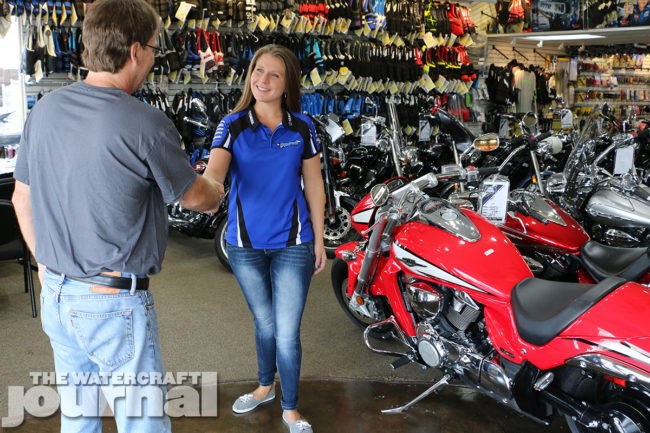
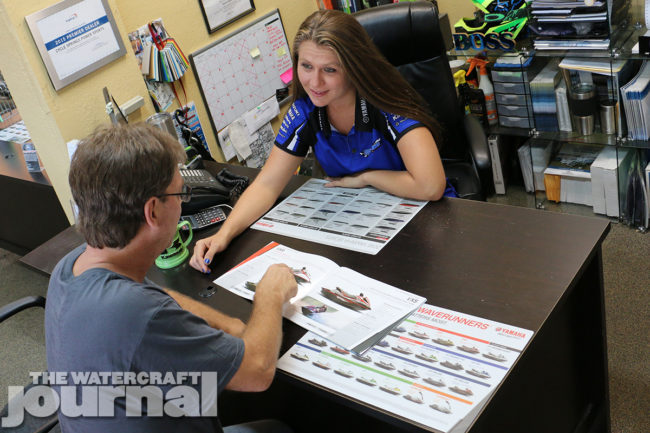
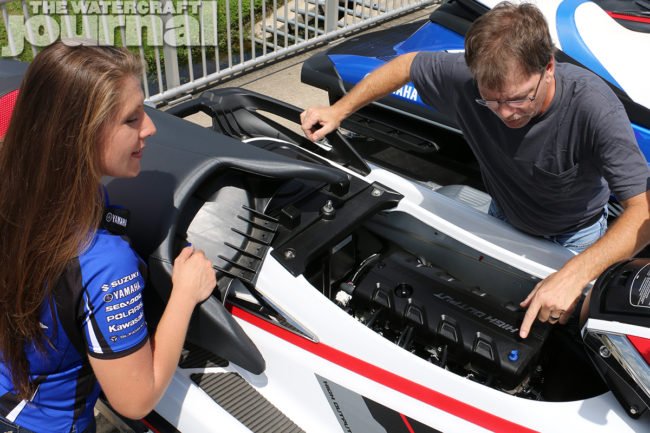
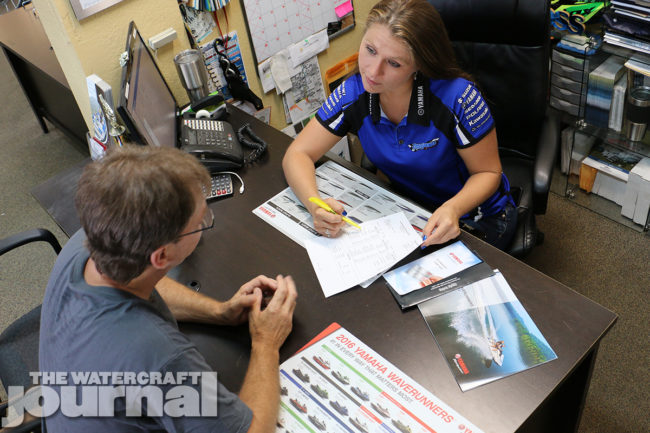
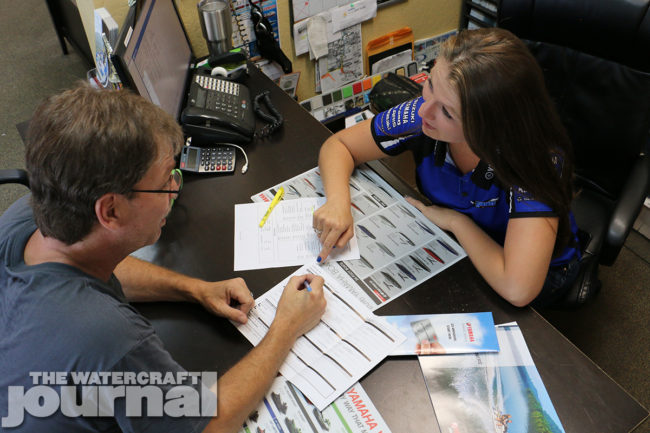
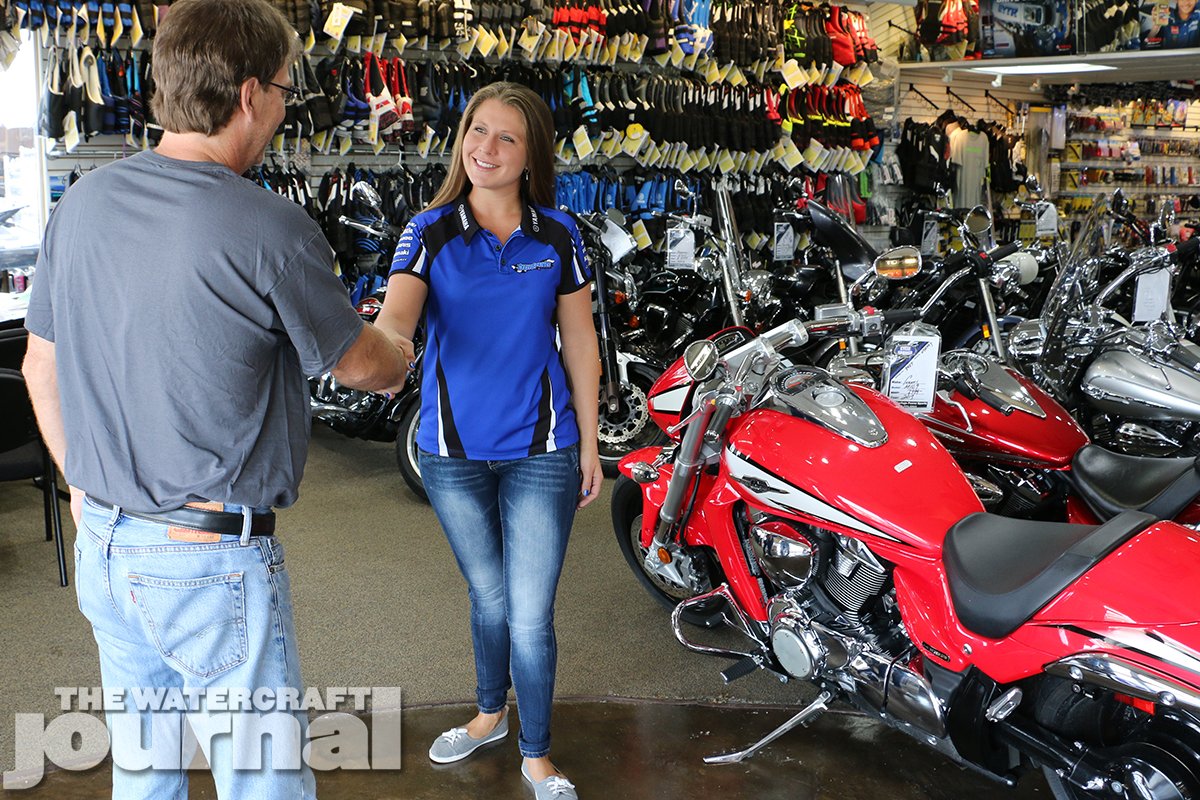
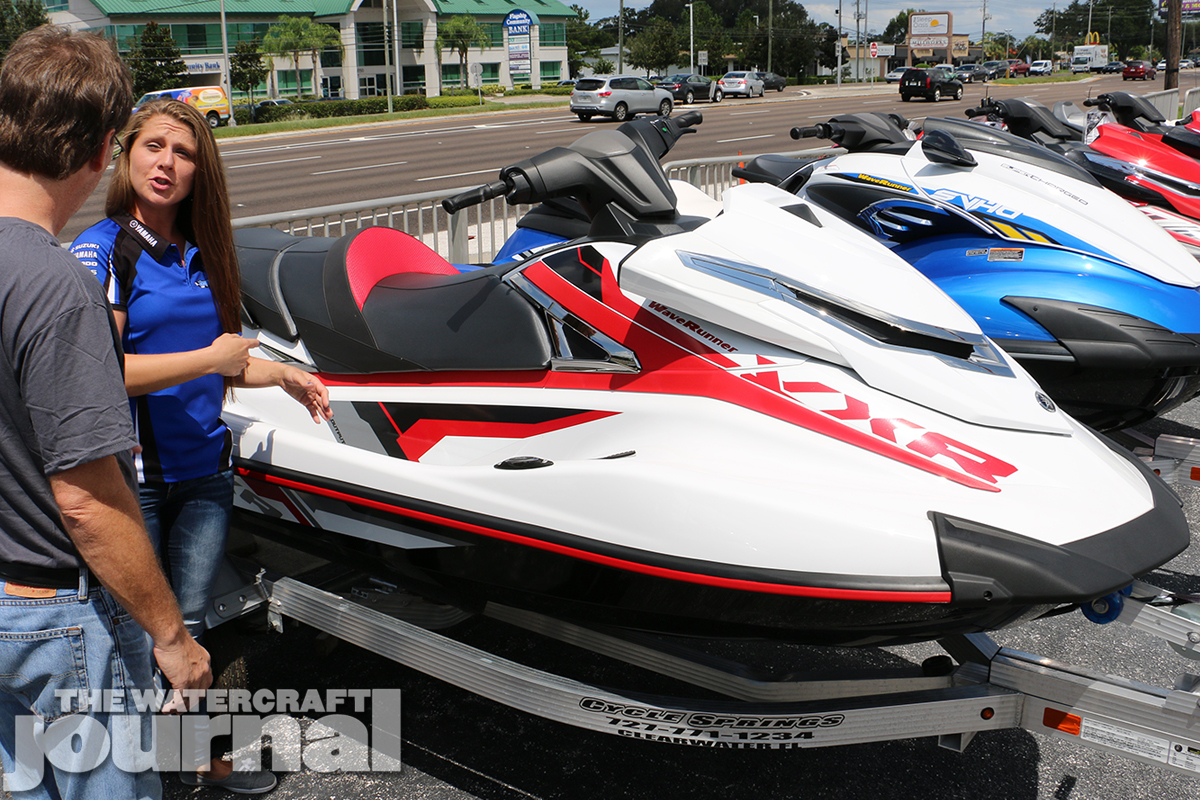
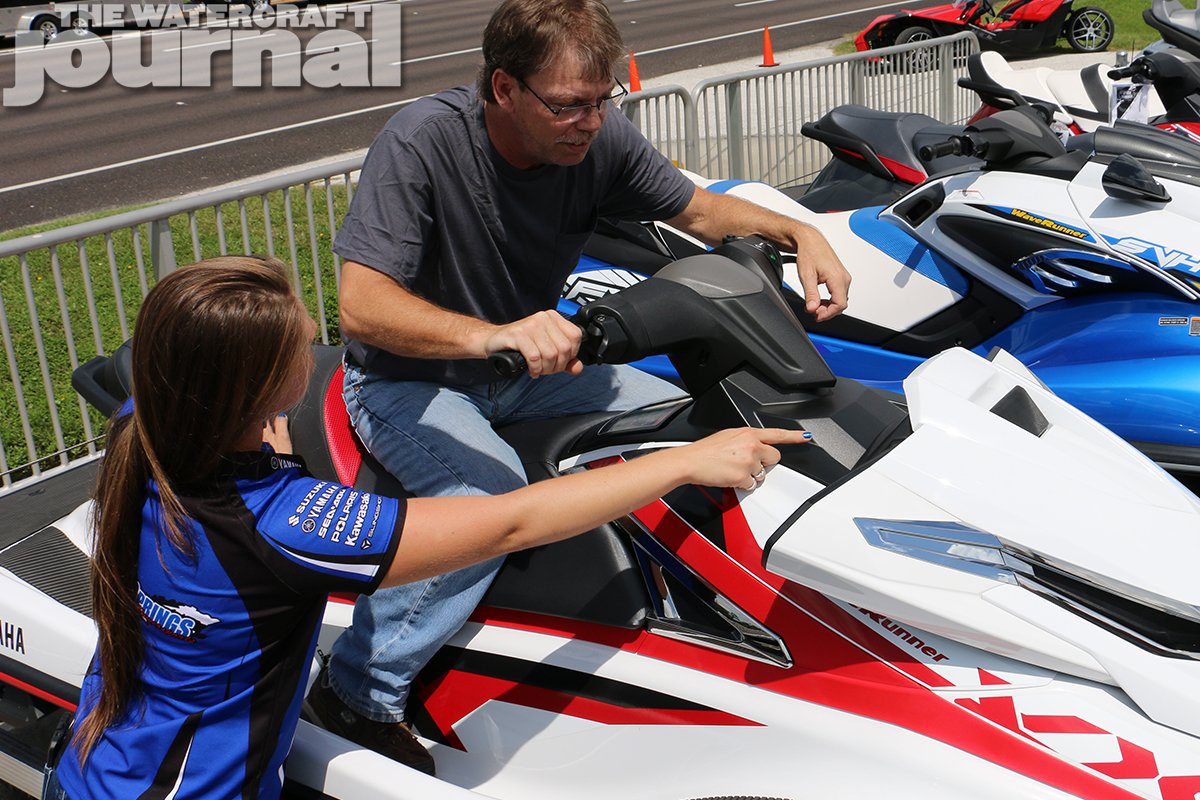
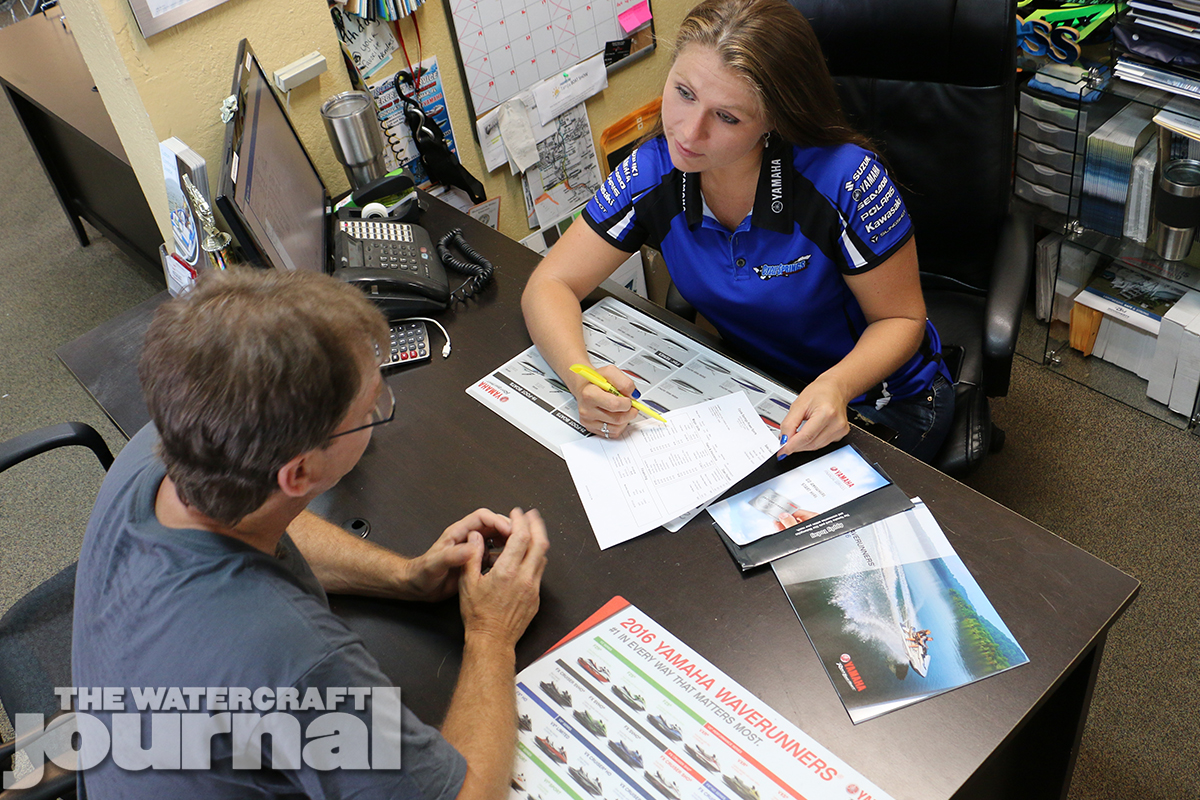
Above left: Every customer is personally greeted by a trained and helpful member of the Cycle Springs Powersports sales team. Above right: For an undecided buyer, Cycle Springs will question the customer about their wants, desired kind of riding, and more, showing various sales materials to help the customer get a better idea of what products are available.
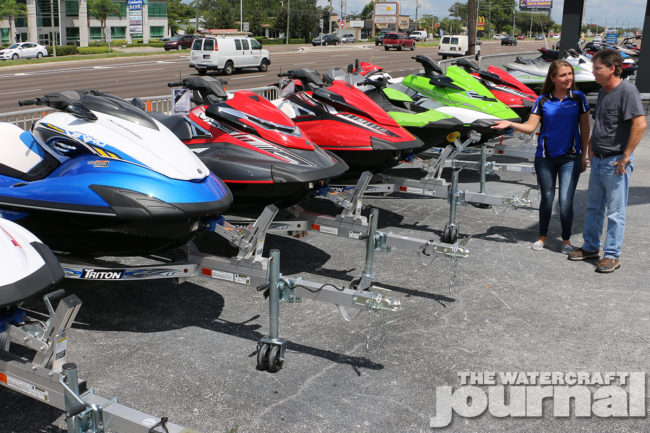
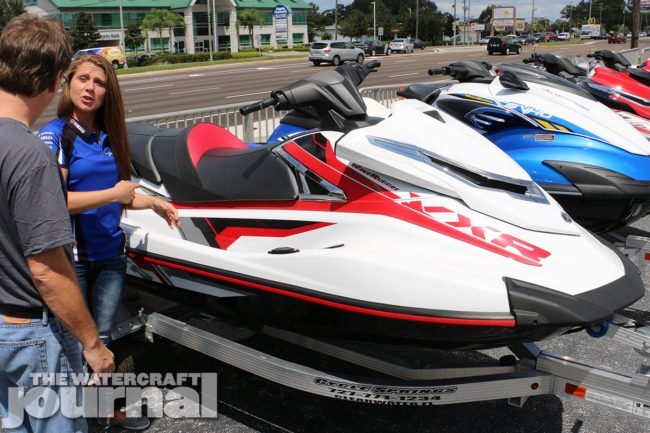
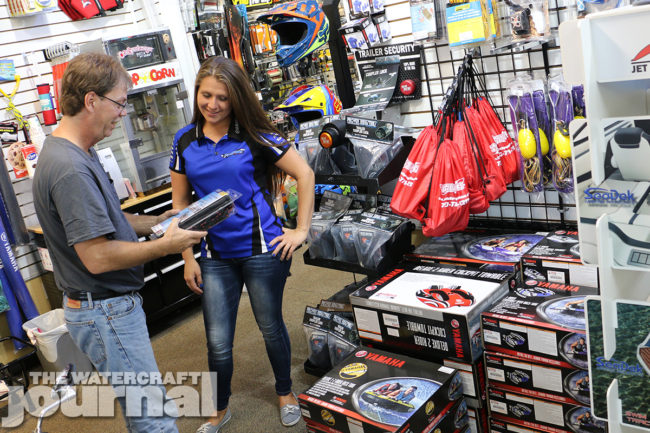
Above: With a general idea of what the customer is looking for, the sales associate will walk them through the inventory and help introduce the customer to various models, highlighting individual features and attributes.
In previous instances, The Watercraft Journal has documented the various ways Cycle Springs Powersports stands above other dealers, be it through their own Lifetime Engine Warranty, Money Back Guarantee on extended warranties, employee cost on accessories (on the day of sale), 50-percent off Pre-paid Maintenance, and no additional cost protection for 500 miles of pre-owned machines. But those are merely selling points.
We wanted to know what steps Cycle Springs takes to make the personal one-on-one experience all that more enjoyable, whether for the first-time customer, or the returning regular. For better insight, we talked with Cycle Springs’ Watercraft Manager, Dan “Smitty” Smith, who not only walked us through the process, but provided an inside look at the Cycle Springs process.
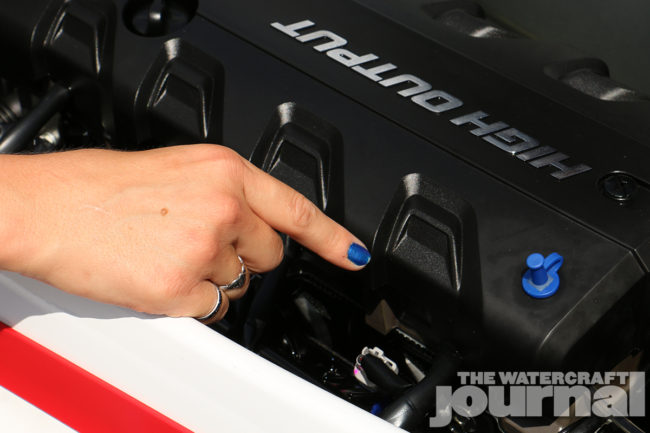
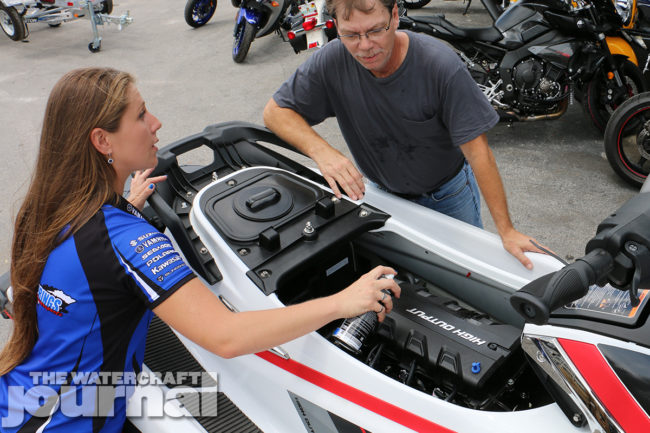
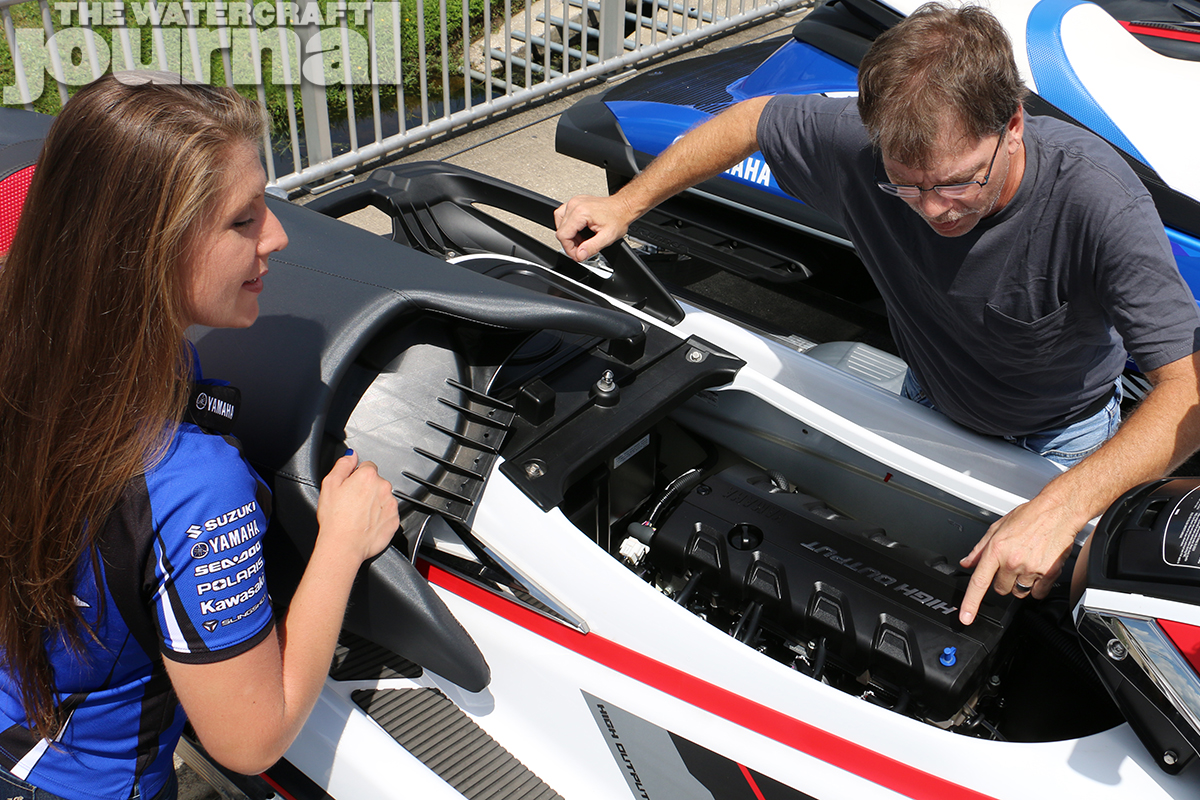
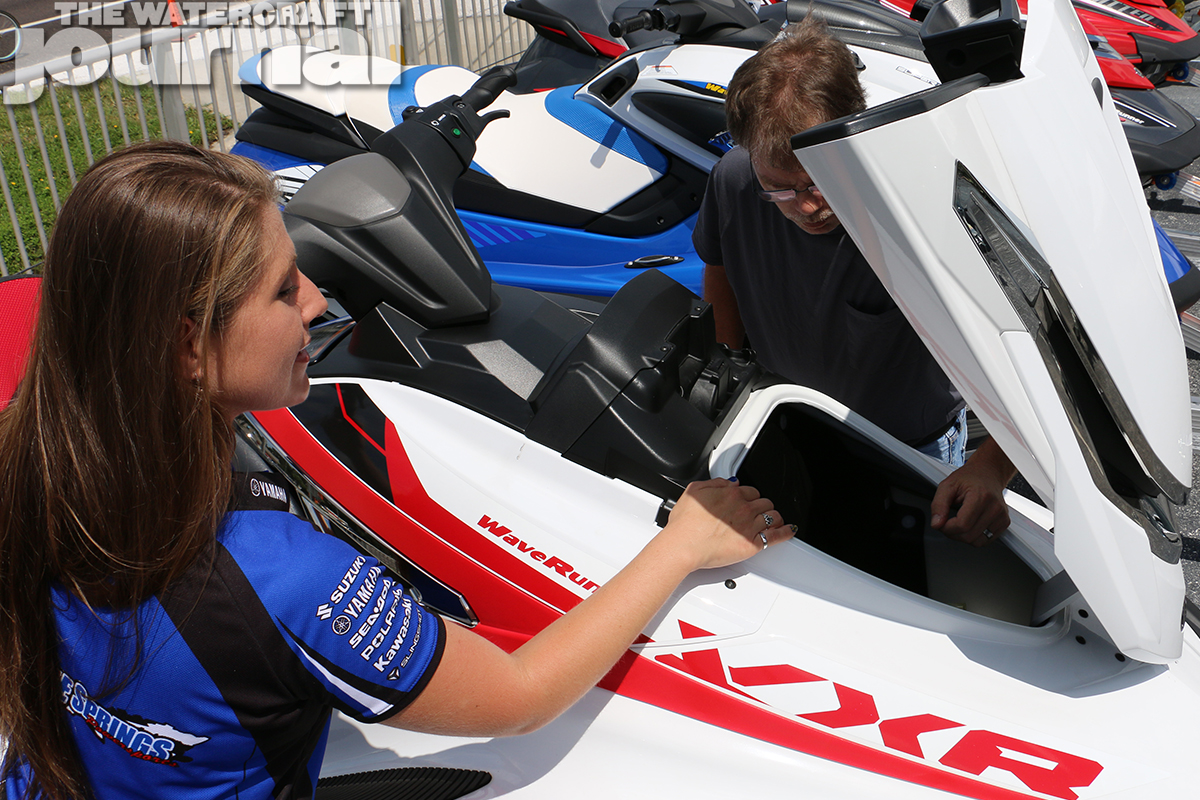
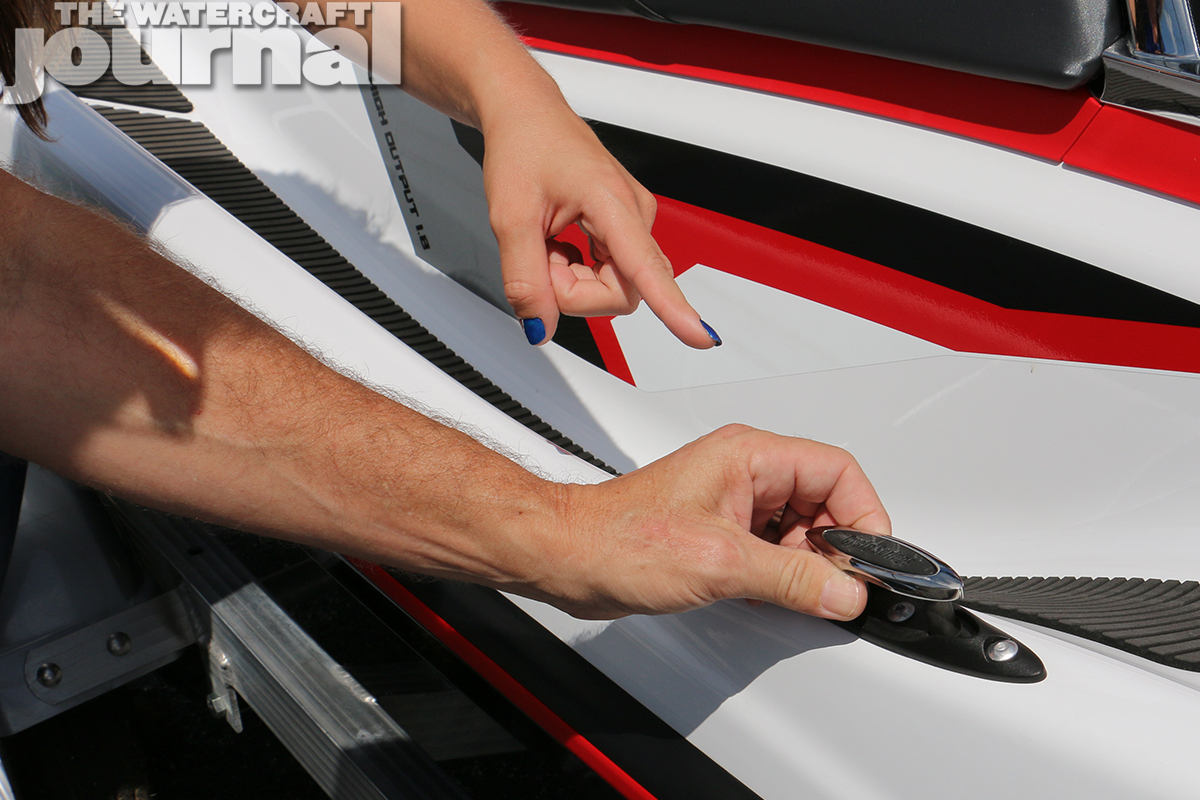
Above: Unique to Cycle Springs is their provision of added features to all watercraft, specifically the spring-loaded drop-in cleats and engine fogging kit; items that come at no extra cost and aren’t available through other dealers.
Above: The sales associate ensures that the customer’s questions are resolved, as well as permitting the buyer to familiarize themselves with the various features and options.
The Watercraft Journal: What efforts/steps are taken by Cycle Springs’ staff to welcome a new customer? Dan Smith: Our staff is built from powersports enthusiasts. People who enjoy coming to work and talking about their personal passion. This makes it a more personable, inviting, and informative place to walk into. Not just people filling a position at a job.
WCJ: Particularly for undecided buyers, how are Cycle Springs’ staff taught to best diagnose a customer’s wants/interest? DS: Part of sales process that other dealerships often ignore is they forget to probe the customer for exactly what they are looking for. A lot of sales personnel like to talk about what they like in a machine instead of trying to find out exactly what the customer needs. Simple questions like: Are they using it at the causeway or beach hopping in the gulf? Do they care more for performance, comfort, or a combination of both.
Above: Often in the case of a first-time buyer, the customer has none of the proper safety equipment to accompany their new purchase. Cycle Springs carries a wide variety of lifevest brands and styles, as well as a well-equipped accessory catalog in their Service Department.
Above: To remove the intimidation of meeting with a finance officer, all Cycle Springs sales associates also serve as the customer’s guide through financing the new purchase.
WCJ: How about those returning customers who might already have a brand their loyal to, or a predisposition already in mind? DS: Asking customers what they previously have owned is also a huge step into introducing them into their next machine. Some customers have had bad experiences with a certain product or feature of that product; however, on the other hand some customers are completely brand loyal because of an excellent prior ownership. Another huge advantage to Cycle Spring is that we are a dealership of all Personal Watercraft brands. This allows our staff to guide the customer into the right product without personal bias or product availability.
WCJ: We understand that at Cycle Springs, the sales person is also the financier. Please elaborate a little more as this is a unique feature to Cycle Springs: DS: Most customers come into a dealership with their guard up and it obviously takes a great experience with their salesman to bring that guard down. At this point, the salesman knows exactly what the customer is looking for and what kind of protection they are looking to add to their new purchase. In a general situation, most customers get anxiety having to go into the finance box and dealing with another member of the staff in his suit and tie hiding behind the glass door just waiting for you.
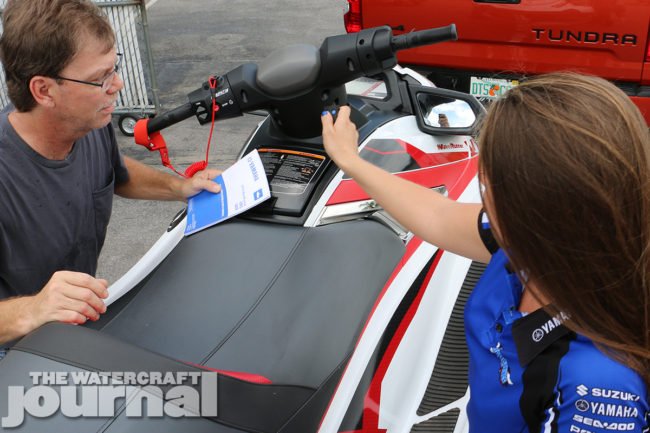
Above: Once the purchase and financing paperwork is completed and submitted, the customer is taken back out to be shown the proper process in hitching their trailer, as well as servicing and maintaining their new watercraft, as well as a final safety check.
WCJ: Once all of the paperwork is signed, the customer is ready to go with their new toy, right? DS: Once the customer has discovered which unit is right for their lifestyle and the purchase is made, our knowledgeable staff then goes out to the unit for a hands-on delivery experience. We show them everything, from hooking the trailer to the hitch, to how to properly operate the craft, to the flush and care procedure.
A hilarious video shows a rider in his underwear riding what appears to be a yellow ’97 Sea-Doo GTI that’s been converted into three-wheeled scooter. He was having a ball and so were the onlookers. Unfortunately, it was impossible to make out what anyone was saying because of the language barrier. It sounded funny though!
While such a Sea-Doo doesn’t actually exist (besides making your own), there is some information on such a vehicle that we’ve published before here, and it’s made by Gibbs Sports Amphibians; several different hybrid machines made for the amphibian in you. The trike is out there along with a two-wheeled hybrid and a Quadski, which we’ve reviewed exclusively before.
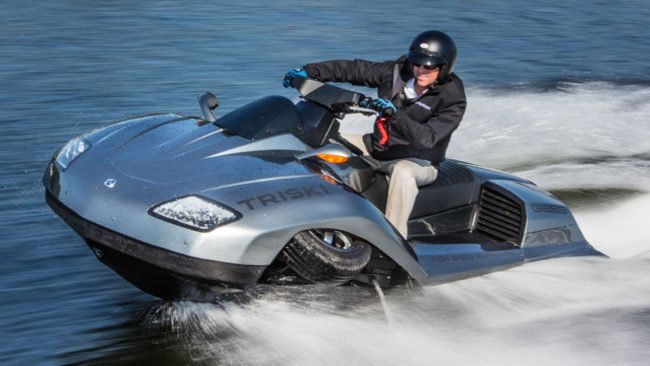
Gibbs manufactures its vehicles for excitement so they are built with speed and adrenaline in mind. The Triski is equipped with hybrid handlebars that work well on a motorcycle and a jet ski. These are used to steer its two front wheels. The Triski also has two powerful jets out the back. When the amphibious ski hits the water, the front wheels retract and the central rear wheel is pulled up into a nook beside the exhaust to allow the jets to function.
The Triski appears as though a passenger could come along for the ride. The machine has a 135-horsepower, twin cylinder turbocharged engine and can reach a top speed of 85 mph on land and 40 mph (64 km/h) on the water. The transition between scooter and ski only takes about 5 seconds. We like the idea of the quick change!
We aren’t sure if this is the model that underpants man was riding, however, it had a similar set up so we’re going with it.