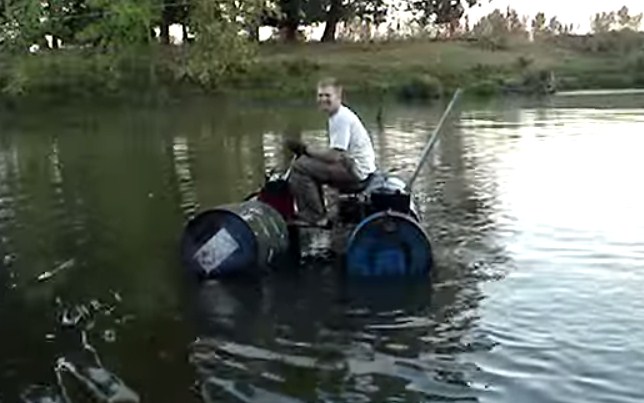
Wow, just wow! This is one of the most ridiculous contraptions we have seen, a lawnmower turned into possibly, the loosest use of the name “jet ski.” A YouTube video from Erik Moorhouse shows his contraption “built this from an old lawn mower using 55-gallon drums for the wheels.” Seated on the riding lawn mower surrounded by four big blue 55-gallon barrels at the axles, the machine sputters and coughs. It gives the video a sort of foreboding feel, like we know that the thing is going to eventually peter out, leaving Erik stranded.
And sure enough, that is exactly what happens. After Erik carefully backs the “ski” around using his steering wheel and one of his hands to guide the barrels so he can straighten out his riding machine,.he gets it moving very slowly for a few seconds and then finally bogs the engine in the middle of the pond. As Erik writes, “it worked pretty well until the welds broke on the barrels and the rear axle housing broke in half.”
In desperation, Erik can be heard asking, “Grab the toaster from my tool box and throw it to me!” No, not twine, not string, not even an extension cord. No, grab the toaster. The video is absolutely absurd. We guess creating fun toys are one of the many things that people in the country do when bored. At least Erik was innovative and the machine may have been successful if the he had his welds held together.
“God must love crazy people,” Masoud, the Afghani Mujahideen freedom fighter goads Sylvester Stallone’s John Rambo, “…because He makes so many of them.” If the Internet has shown us anything, it’s that there are far more crazy people out there than many of us would have expected. And in the case of high performance machines – from supercars to personal watercraft – there is no shortage of crazies who only want the absolute fastest machine they can get their hands on. And chances are, you’re one of them. And this review of the 2016 Sea-Doo RXP-X 300 is for YOU and why you are probably not the right person for the RXP-X 300.
So when we were first introduced to the most powerful machine ever built by Sea-Doo, we were understandably excited and equally cautious. Well, most of us that is. There’s a lot to be said for someone being able to master this level of performance. (Undoubtedly, we’ve seen our fair share of pictures of crashed Ferraris and totaled superbikes.) Step One in operating a machine of this caliber is respect. If you think you can just jump right on and let ‘er rip, you might want to think again.
Thankfully, many of us allowed to test ride the RXP-X 300 had no such misconceptions. In fact, you could say that it was more towards the opposite. As we could observe, only a handful were truly willing to push the new 300-horsepower Sea-Doos to their engineered limits, and for more than a single day at that.
And as it is our job to present a comprehensive, true hands-on review of the RXP-X 300 (with the RXT-X 300 to follow shortly), all of us at The Watercraft Journal want you to know that we truly beat on this machine as far as Sea-Doo would let us. This is no “general feel” review culled from after a few sparse minutes of moderate weaving and brief blips of the throttle, but hours of full-throttle flogging. Why? Because if it doesn’t scare you, you’re not going fast enough.
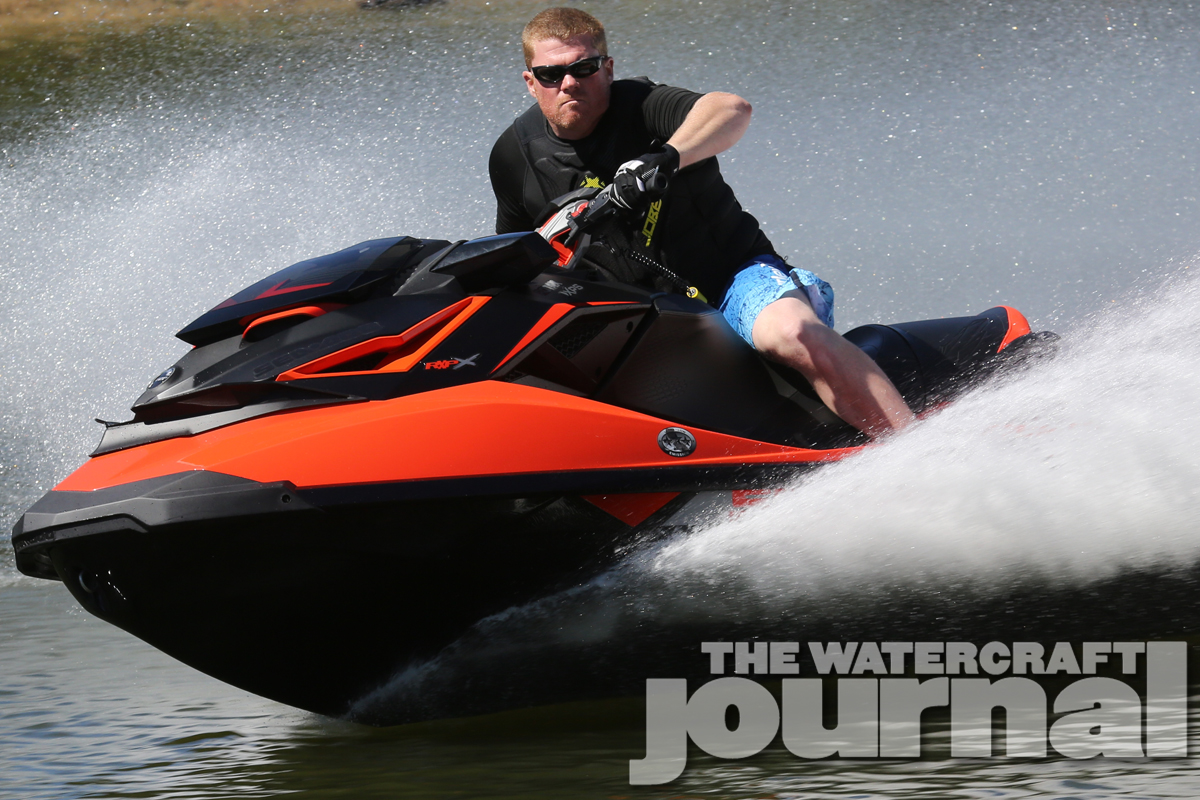
Now, there’s two kinds of scary: scary out-of-control, and scary beyond-your-ability. The RXP-X 300 is clearly the latter. In fact, the level of control imbued in this machine far surpasses anything – and we mean that with exaggerated emphasis – on the market today. Improvements made to the 2016 RXP-X are primarily internal, as its current external form is all but flawless for its purpose; and the RXP-X was built for a specific purpose: cutting a corner with X-Acto knife-like precision.
First introduced in 2012, the current T3-hulled RXP-X is a creation of years of competitive honing, refining and polishing. Riding on a tall center keel that enhances lean-ins and executes neck-snapping corners, the RXP-X’s multistage design features very pronounced chines aft and and progressively softer chines forward. Three-way adjustable sponsons feature canted winglets that only add to the RXP-X’s ability to dip in and carve with indignant prejudice.
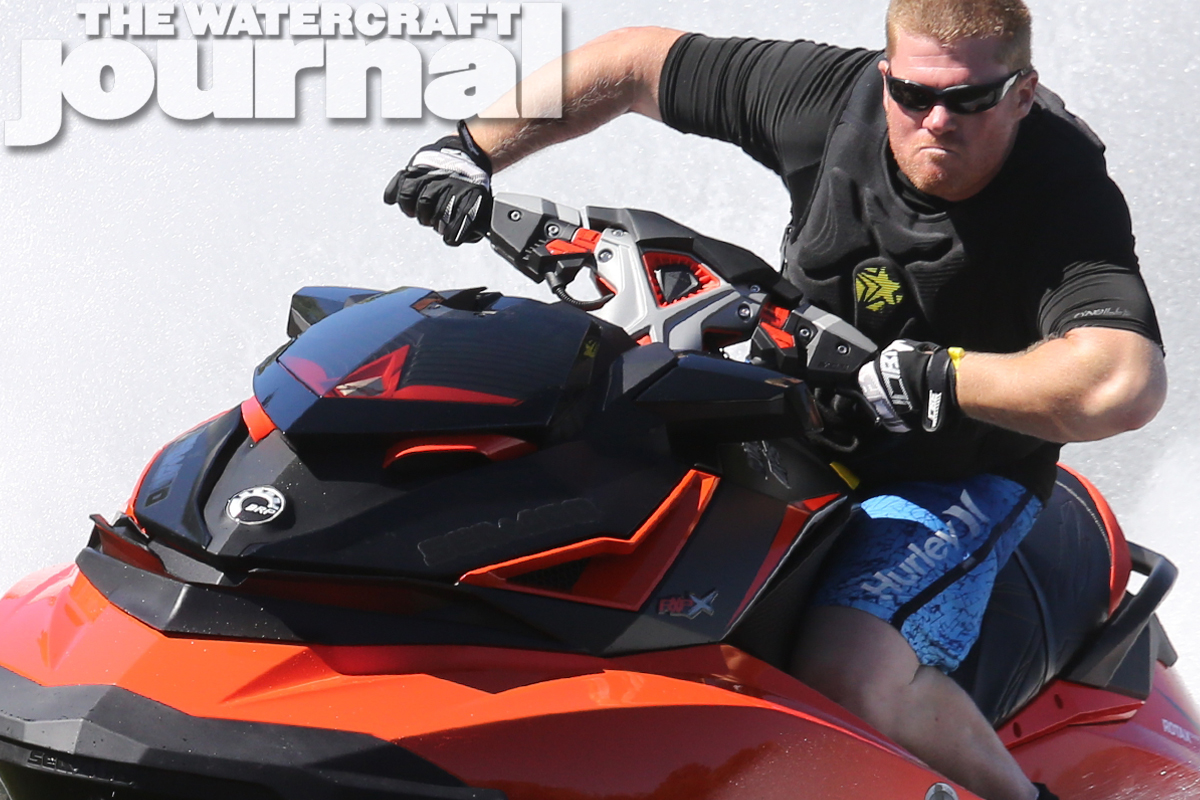
The total effect is akin to an aquatic sportbike, doggedly egging to lean hard and snap a hairpin turn, its rolled outer edges literally creating a surface-tension-borne vacuum suctioning the RXP-X’s rail to the water. This machine is not interested in slow, meandering cruises through the mangroves and will, in fact, actually rebel against lazy sweeps, bucking and twitching when ridden by a Sunday driver. The absence of Cruise Control should convey this message enough.
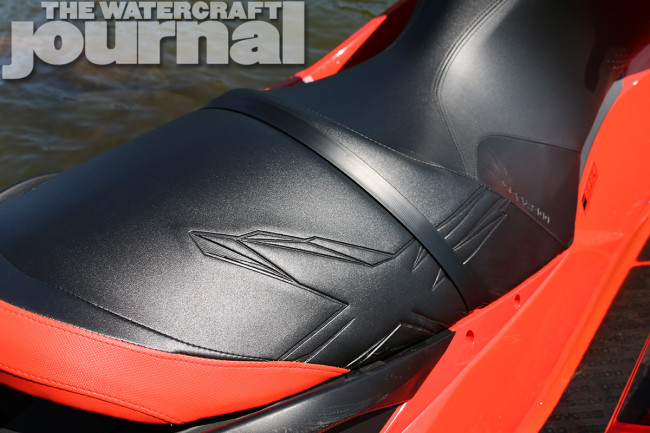
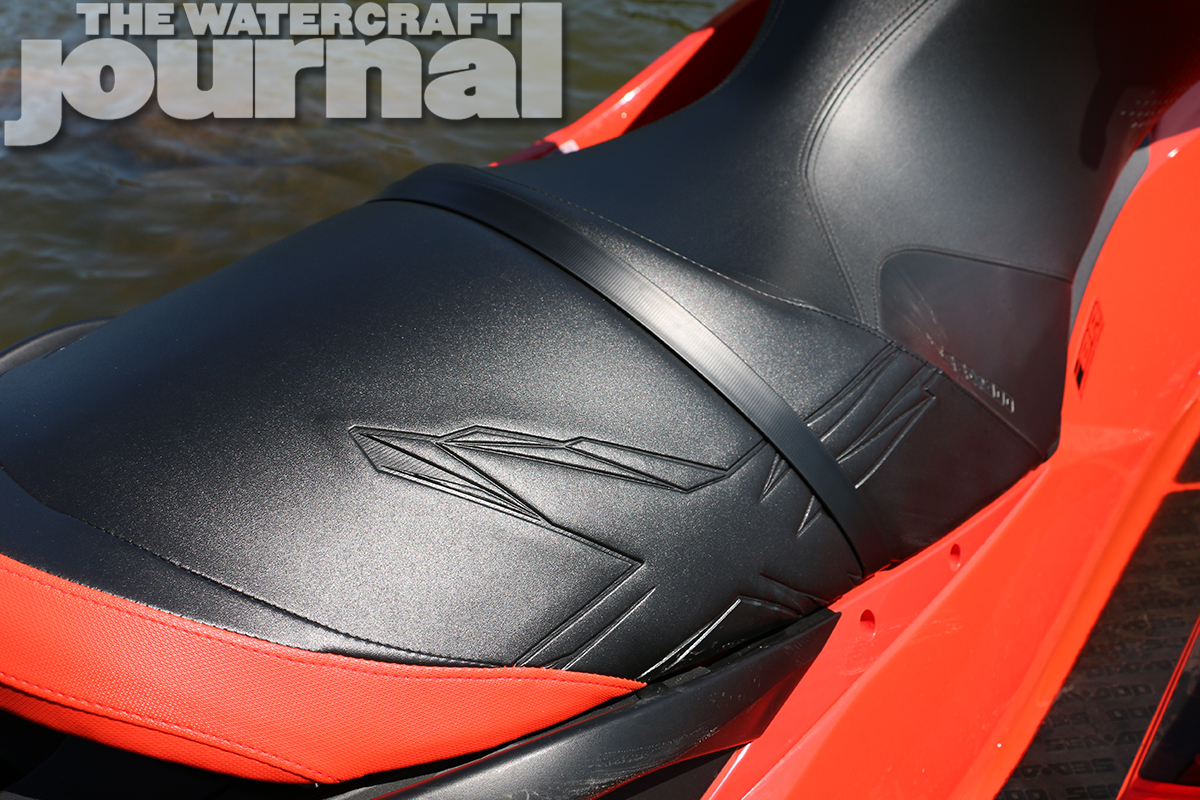
Appropriately first to receive Sea-Doo’s now across-the-S3 line Ergolock seat, the RXP-X prompts the posture of an aforementioned street bike, its foot wedges angling the rider’s knees inward, pinching the padded saddle. The narrow bench eases tension on the driver’s hips, allowing for a more aggressive, forward-leaning posture. The forward stance that the RXP-X 300 requires for maximum performance is contrary to the slacked “Easy Rider” cruising position we’ve seen so many RXP-X 260 owners take, so make note.
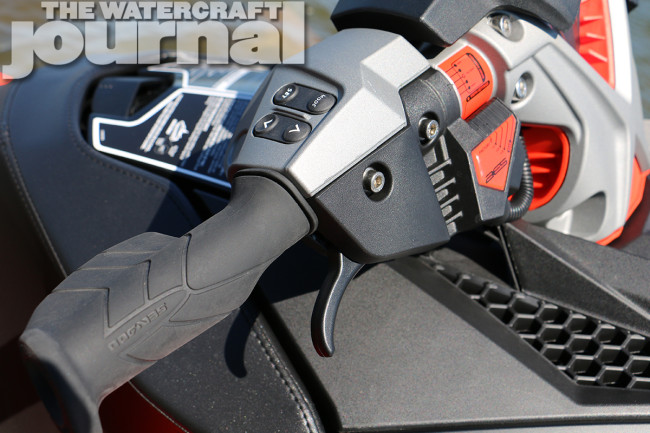
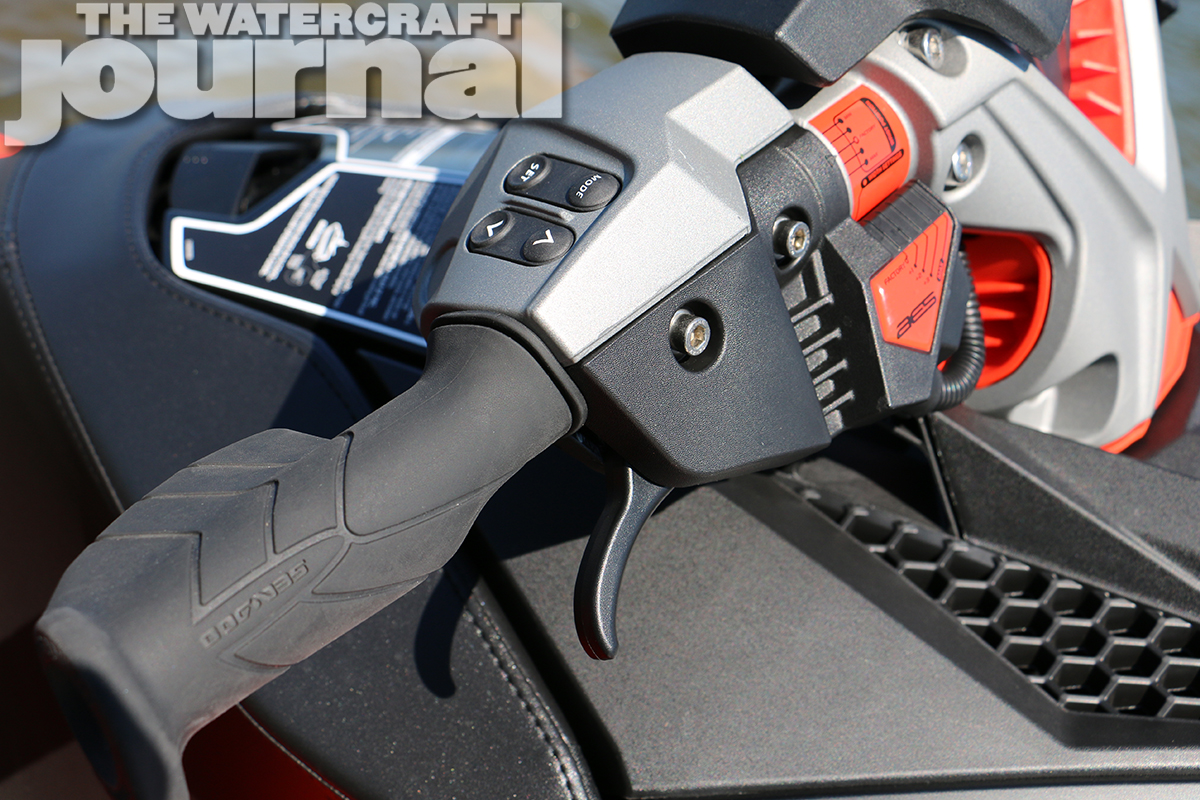
Bringing the rider’s chest and shoulders forward not only improves the craft’s weight distribution (and thereby, handling input), but also emphasizes the ergonomic engineering poured into the craft’s fixed-position AES (Adjustable Ergonomic Steering) handlebar. With eight points of adjustment allowing for dozens of configurations (to handlebar grip width and angle), the rider is placed in direct control of a thoroughbred performance craft. New palm wedges molded into the grips provide some ease to the wrists.
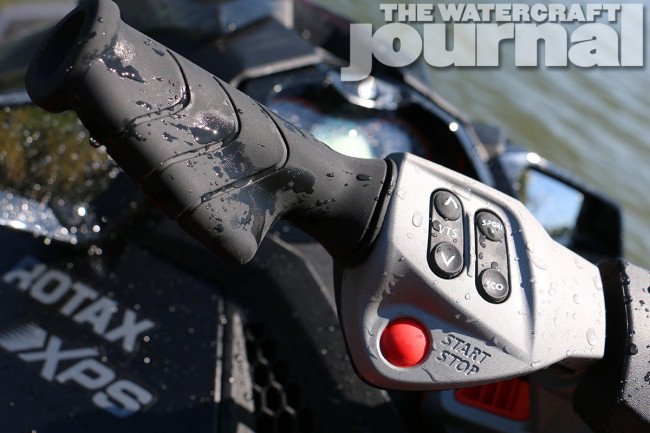
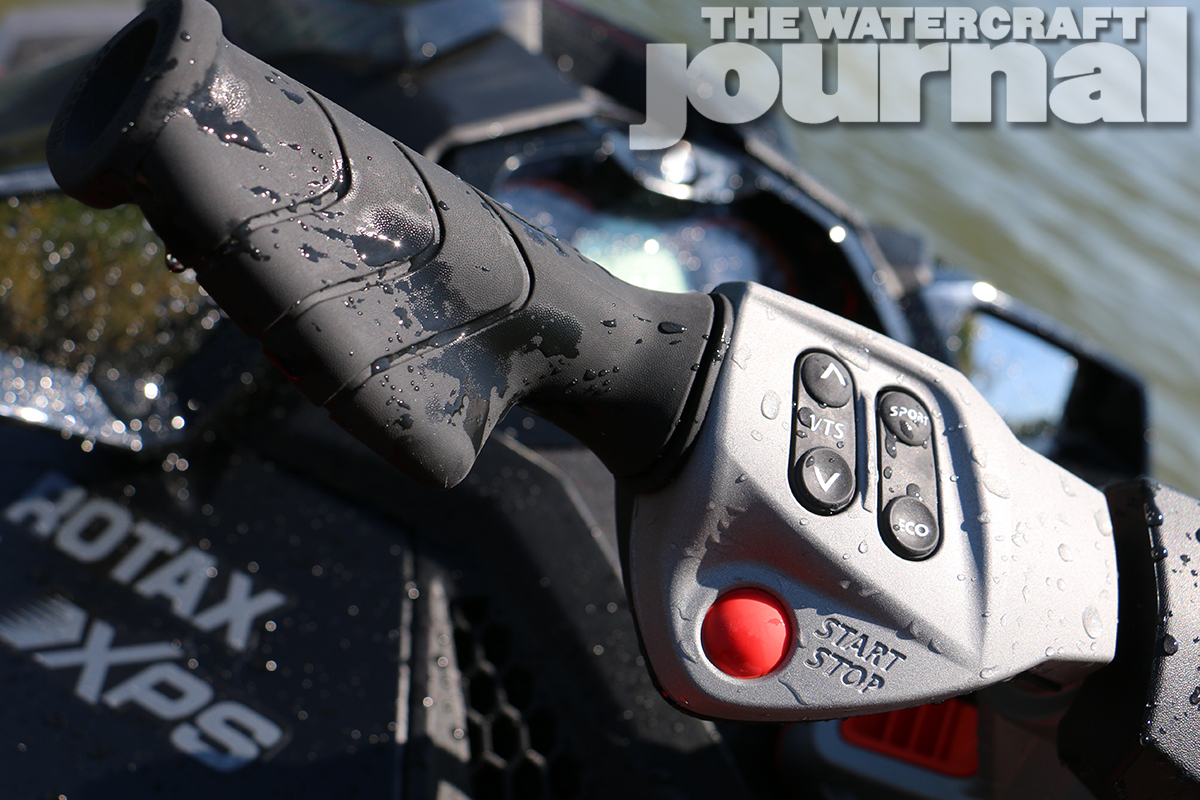
As is with all other Sea-Doos, the iControl controls are wisely integrated into the handlebars, allowing the rider to input iTC commands for Touring, Sport and Eco engine tunes, on-demand trim settings via the VTS system, and toggles for the in-dash controls (RPM, MPH, MPG, and fastest lap time counter). A linear boost gauge and digital compass fill out the rest of the LCD screen, flanked by an easy-to-read analog speedometer and tachometer. And with these controls, Sea-Doo continues to lead the industry with the best button feel and response, allowing you to never have to look down to confirm your input was received.
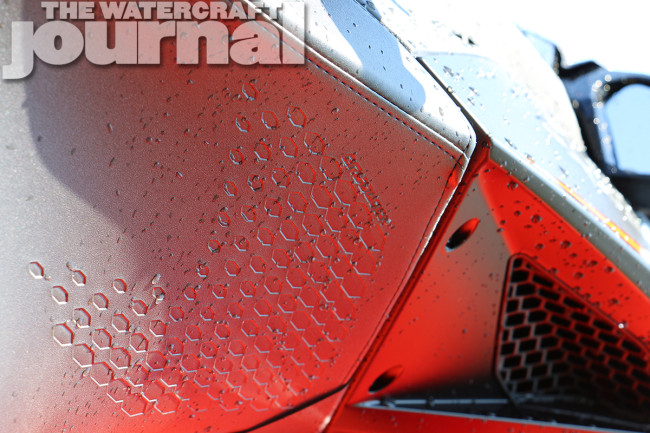
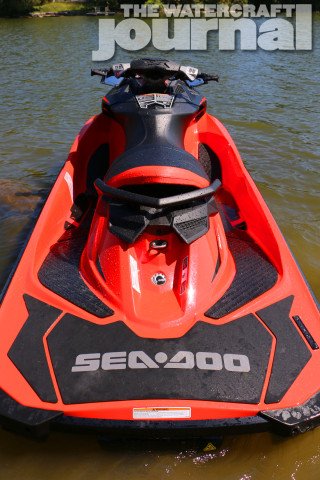
Besides an option of either Lava Red/Satin Black or White/Dayglow Yellow liveries, the outward appearance of the RXP-X 300 remains nearly identical to the previous models. Yet it is worth noting that the RXP-X 300 has packed on some additional weight over its previous iteration (850lbs. dry weight over the outgoing 812lbs.) due in part to the new FMC fiberglass material introduced when the manufacturer moved its full production to Mexico. The added weight is actually a boon to the RXP-X’s ability to cleave through chop and remain planted. Constant pump engagement is imperative to a craft of this magnitude, and the slight weight gain is principally a positive.
Below the transom, Sea-Doo’s engineers heavily reworked the already industry-leading iBR (Intelligent Brake & Reverse). Integrating into the pump, tunnel and ride plate, the new iBR rides on a beefier frame saddling the 10-vane stator, multi-diffuser venturi, new 159.5mm prop and larger diameter wear ring. A redesigned three-piece bucket system deploys to slow the RXP-X a staggering 160-feet shorter than conventional non-brake equipped PWC. Gone too is the nose-plowing characteristic to the previous iBR system as well.
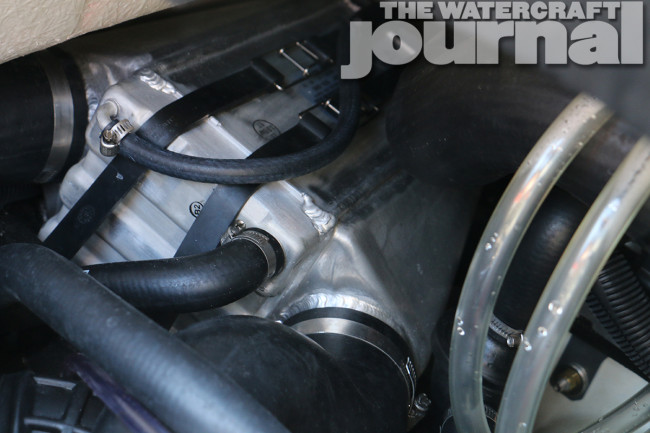
But alas, it is what lies beneath the saddle that is what matters most: As you’ve might’ve already read in our comprehensive unveiling of the complete 2016 Sea-Doo lineup earlier this month, BRP heavily reworked its 10-year-old 1503 4tec Rotax (which remains in all non-300HP 2016 models) into the all-new 1630 ACE 300. The re-engineering resulted in a deceptive package: Externally, much remains seemingly the same – apart from a larger heat sink and redesigned supercharger (more on that in a minute). Internally, the new 1630.5cc features the same 100mm bore but an increased 69.2mm stroke (over the previous 63.4mm), providing 9-percent more displacement, and subsequently, 15-percent more power.
The pistons are more robust, but are 20 grams lighter and feature longer, coated skirts, and spin on lighter, shorter connecting rods. Surprisingly, the pistons slide inside of a coated cylinder, not a pressed-in steel sleeve. A new plasma coating (applied via a proprietary thermal spraying process) was exclusively developed by Rotax’s team in Gunskirchen, Austria, to replace the heavy steel sleeves to not only cut engine weight, but to improve surface durability and heat transference and minimize friction. Combined with an additional cooling circuit, a hybrid dry sump oiling system, the aforementioned heat extractor, and a new, larger intercooler that is 2.2-times more efficient with over double the cooling capacity, totals up to 33-percent improved engine cooling.
The dramatically improved centrifugal supercharger produces an impressive 30-percent more boost (18psi) via a more efficient, compact wheel that spins 8-percent faster at 47,000rpm. The new wheel features double the blades of the outgoing design – increased to 32 – and features a revised drive system comprised of 8 steel washers and two composite bearing packs at either end of a near inch-thick shaft. As per Martin Lachance, BRP’s Engineering Director for the new powerhouse, all superchargers are dynamically balanced prior to assembly.
Final improvements to the new ACE (Advanced Combustion Efficiency) engine is in its a single-camshaft valvetrain configuration: The cylinder head has been improved with a new combustion chamber quench, new larger injectors, and new direct-ignition high-intensity coils that produce double the ignition energy for a hotter, cleaner and more efficient burn. The result of all of this is a dramatic increase in throttle response, assaulting acceleration and an ever-ascending torque curve that peaks at a United States Coast Guard-mandated 68mph (we reached a best of 68.6mph at 7,700rpm). As a rule of thumb, it doesn’t matter if the dang thing made 600-horsepower, it’s still going to be capped at 68.
The only gripes we had were minor: we felt that the new hand grips were somewhat limiting for standing upright or riders who move their grip during tight turning; and prolonged reverse (while under throttle) will noticeably submerge the transom of the RXP-X (and all 300HP models we tested). But our biggest concern was not for the ski itself, but the person controlling it. Days’ worth of testing revealed a craft that was not suited for all audiences. Of course, a Suzuki Hayabusa was never meant for general consumption either.
So, if you do think you’re good enough a rider to fully appreciate the potential in the 2016 Sea-Doo RXP-X 300, if you’re committed to riding this ski as it is meant to, then yes. This is RXP-X that you’ve been waiting for. In our view, there has never been a Sea-Doo to better blur the line between showroom stock and a full-tilt racecraft. The new 300HP model supersedes the outgoing 260 by $300, bringing the total to $15,199 MSRP (or an extra $100 per 100-horsepower).
There are plenty of folks who will read this article, watch our video below and start to salivate. Good. We hope so. But according to the law of averages, most of you just aren’t that good of a rider to fully handle what Sea-Doo has produced here. And that’s OK. But we hope that if you’re feeling up to the challenge, you ease into it. Be safe. Be smart. Because what Sea-Doo has built here is a Stinger missile with handlebars, and that’s all that’s need to be said.
We spend a lot of time on a couple of lakes around our Nashville, Tennessee office. More often than not, we reserve our testing days for during the middle of the week just to avoid other boat traffic and fishermen. Yet, on the rare weekend where we find ourselves enjoying some riding time, we try to pay close attention to what brands and models of other craft we encounter (actually, we do this almost always, but it’s worth noting).
And what we find more often than not is the majority of personal watercraft enthusiasts directly reflect the reported sales averages coming in from dealers across the globe: males averaging 46-to-50 years old, riding a naturally-aspirated three-seater runabout. Sure, while the supercharged 300-horsepower fire-breathing machines are sexy as can be, it’s the craft touting the most fuel consumption, stability and comfort for the best bargain that sees the most seat time.
This fact is more or less Yamaha’s modus operandi, and is evident in its efforts to continually improve their ever-popular VX Series of watercraft. While the current VX models ride on a new, dramatically redesigned hull (first introduced for the 2015 model year), the vehicle segment boasts the industry’s longest-running “best selling” model in the industry. For 2016, Yamaha has only improved on an already impressive machine, and looks to strike at the aforementioned core demographic with laser focus.
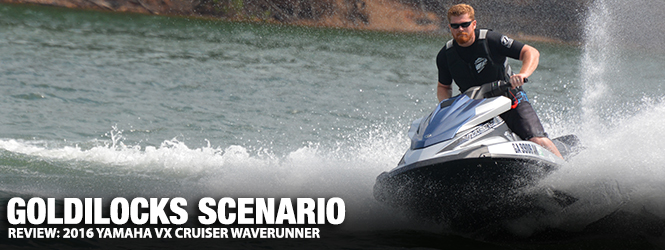
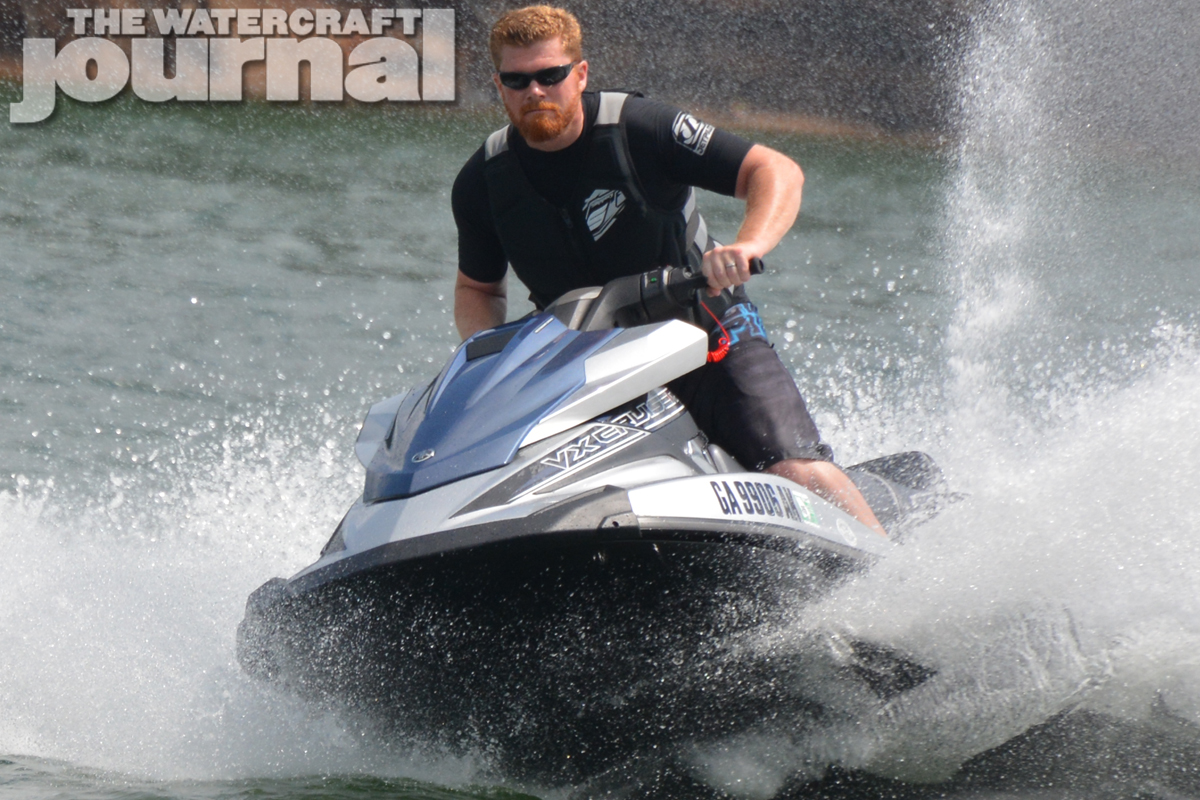
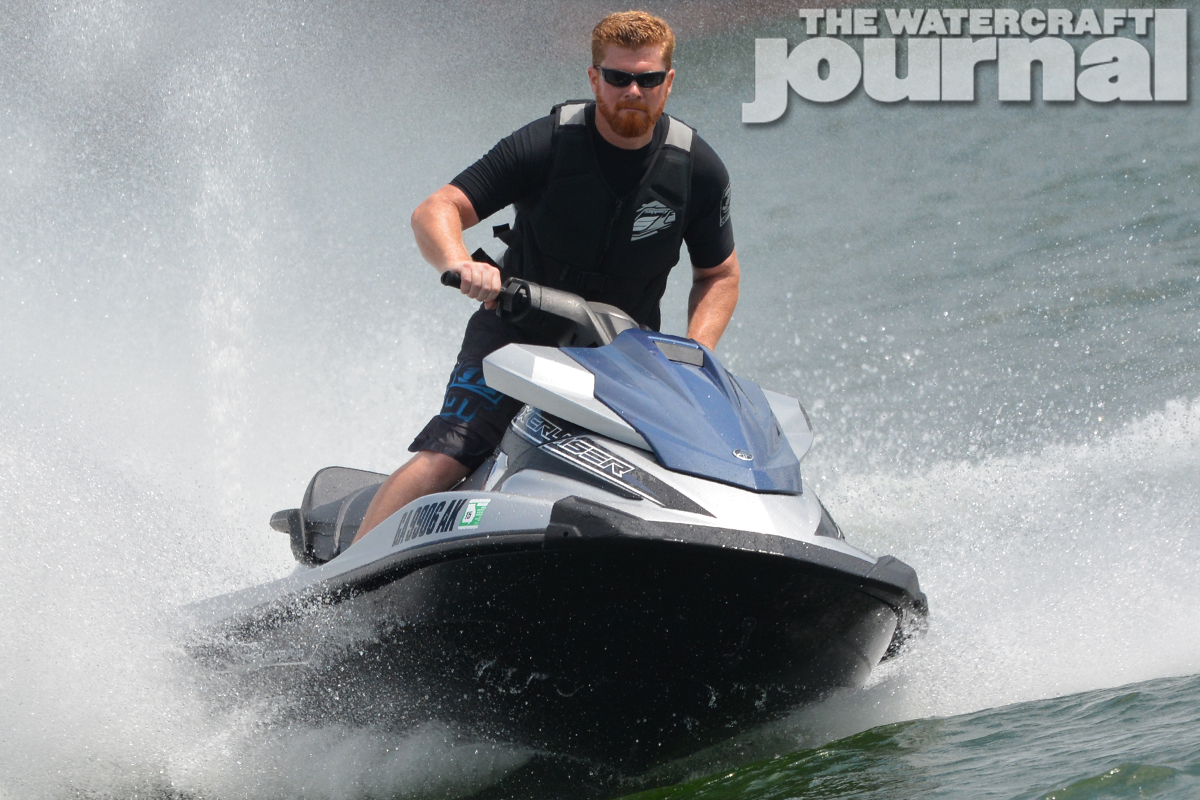
In getting our hands on the 2016 Yamaha VX Cruiser WaveRunner long before anyone else, we wanted to rack up some serious time on the budget-billed family cruiser. While the exterior of the VX remains the same – save for some gorgeous Silver Metallic with Slate Blue Metallic coloring (all international VX Cruisers are available in white) – the heart of the new Cruiser is entirely new.
Sharing the same all-new TR-1 1,049cc (1-liter) 3-cylinder 4-stroke powerplant, the TR-1 replaces the outgoing MR-1 4-cylinder. Not only is the new dual-overhead cammed 3-cylinder provide 13-percent more horsepower (an official 125 horsepower) than the old engine, it also shaves off 20-percent of the outgoing engine’s heft, and an impressive 40-percent of its overall size. So not only is the TR-1 more powerful but lighter, dramatically improving the VX Cruiser’s power-to-weight ratio. This gives the runabout a more nimble feel and noticeably sharper throttle response.
Of course, the TR-1 benefits from the use of Yamaha’s NanoXcel durable-as-it-is-lightweight hull material, giving the VX Cruiser crisp acceleration and a strong latitudinal torque curve. Its 668-pound dry weight allows the runabout to rise to plane quickly and continue to pull up to a GPS recorded 55.3mph. As the Cruiser shares the same hull as the National Championship-winning VXR and VXS, it also is apt at carving and twisting through the S-turns when so inclined.
Truly, the VX Cruiser is playful when directed as such, and can happily whip the tail out in terrific roost during horseplay. But, when under more docile control, the VX Cruiser spiritedly sluices through boat wakes, its thick, bolstered and tiered Cruiser seat absorbing small chop. Equally, the VX Cruiser is adequately powered to tow the kids on an inflatable or a single wakeboarder without bogging down.
Equipped with Yamaha’s dual-throttle braking system (RiDE), the VX Cruiser comes to a controlled stop without plowing the nose underwater, or the pump rising out of the water and disengaging. Yamaha has smartly arranged the VX Cruiser’s toggles within thumb’s reach – be it toggling through its Cruise Assist settings or engaging the No Wake mode. Ergonomic “pistol-style” handgrips are contoured but not overbearing, and the fly-by-wire throttle triggers retain a realistic feeling of a cable when there isn’t one.
The VX Cruiser’s steering system is fixed (no tilt adjustment) which is the same across the board for all VX Series machines, so the very upright position might irk either significantly shorter or taller riders, as might the “assigned seating” positions of the Cruiser seat. But then again, that it entirely up to personal preference.
The Cruiser does tout some serious storage throughout the runabout – a total 24.6 gallons spread between bow storage, a moderately-sized glove box (with two cup holders), and a screw-top watertight bin beneath the rear bench. The front hood hinge is not spring loaded, but can be locked in place by extending it all the way up until you hear an audible “click.” Until we learned this we had a couple of run-ins with a falling hood.
The LCD digital dash is simple and easy to navigate even as speed, and graciously resistant to glaring. Of course, the VX Cruiser comes with Yamaha’s Security Mode remote transmitter that locks the WaveRunner’s ignition when activated. Other goodies include a two-tone black-and-gray Hydro-Turf mat kit covering the gunwales and wide rear boarding platform. A broad folding swim step makes reboarding a cinch.
Priced at $10,499, we wish a few of bonus features of the equipped-to-the-gills VX Limited were shared (particularly the 12-volt charging port in the glovebox) with the Cruiser, especially as the Limited is only $400 extra. Nevertheless, the 2016 Yamaha VX Cruiser WaveRunner‘s new TR-1 fuel-efficient plant meagerly sips from its 18.5-gallon tank, and Yamaha’s record for quality control promises endless days of uninterrupted riding for the whole family.
Can you believe that the IJSBA World Finals is less than two weeks away? Let’s not forget that Fall “officially” began yesterday. Seriously. What happened to this year? Well, if you’re feeling the same as us and would like to squeak in some awesome last minute riding, then fear no more, because Sea-Doo is ending the year in a big way by invading the 2015 quakysense IJSBA World Finals in a big, big way.
There’s just too much awesome Sea-Doo stuff happening at this year’s IJSBA World Finals, so make sure you read the original press release published below:
Sea-Doo Planning to Take IJSBA World Finals to the NEXT LEVEL
Valcourt, QC, CANADA– September 23, 2015 – BRP is ready to take the 2015 IJSBA World Finals to the next level with the introduction of new 300-HP Sea-Doo watercraft models. The Sea-Doo X-TEAM is looking to forge the next chapter in performance history by adding to their four-year string of Pro Open and Pro GP World Championship titles. The X-TEAM is led by 2014 champions James Bushell and Jean-Baptiste Botti and joined by Sea-Doo rider Erminio Iantosca, who claimed the 2015 US IJSBA National Championship, all on RXP-X models.
The IJSBA World Finals is taking place October 5-11, 2015 in Lake Havasu City, Arizona and is renown as the largest watercraft specific event in North America where the best racers from around the globe converge to compete for World Championships. The event takes place at Crazy Horse Campgrounds in Lake Havasu City, AZ and draws 15,000 spectators every year. BRP is the leading supporter of watercraft racing through the Sea-Doo X-TEAM Bounty racer contingency program and the Sea-Doo X-TEAM Promoter support program.
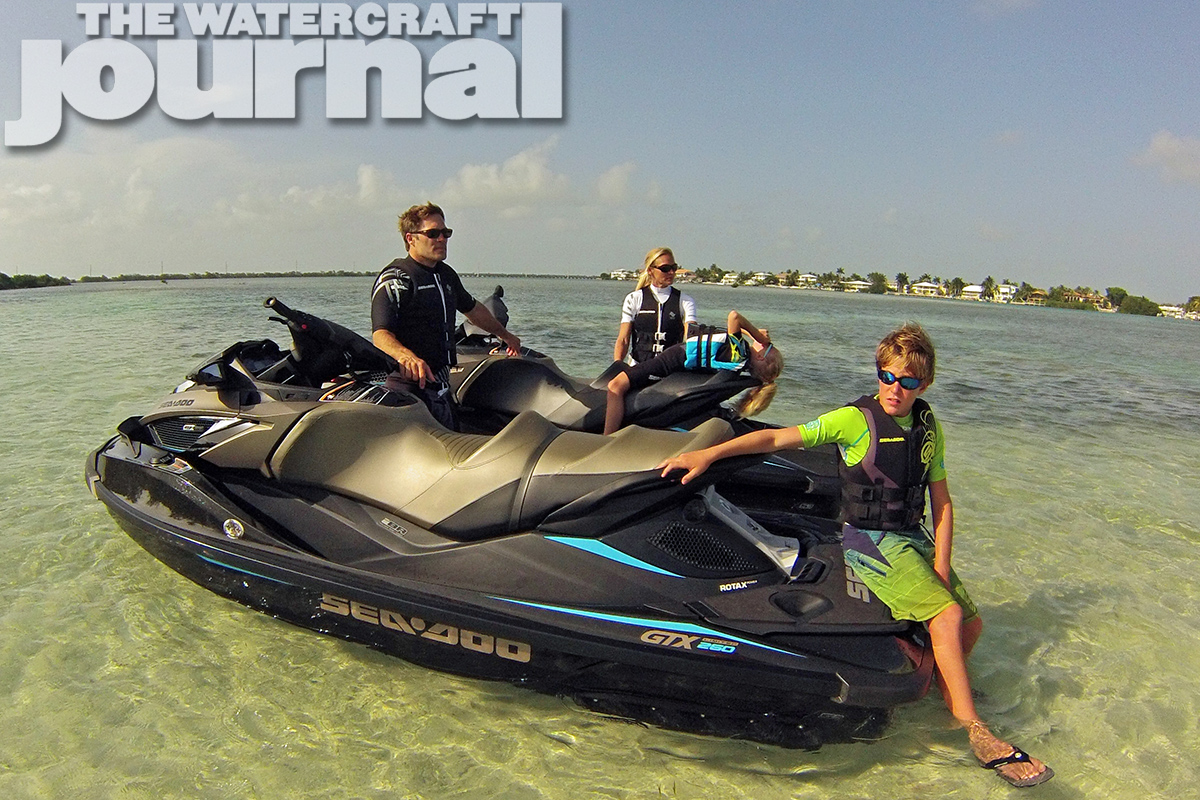
Following the unveiling of the 2016 Sea-Doo RXP-X 300, RXT-X 300, and GTX Limited 300 in Nashville, Tennessee the Sea-Doo Events Team comes to the 2015 World Finals with fun fan activities and special X-TEAM initiatives. Sea-Doo race fans and general enthusiasts alike will see how Sea-Doo is taking watercraft riding to the Next Level. 2015 Sea-Doo World Finals efforts will include:
#SEADOONEXTLEVEL ZONE – The Sea-Doo Next Level Zone will headline the IJSBA World Finals Performance Alley by showcasing the new 300-HP Sea-Doo RXP-X 300, RXT-X 300, GTX Limited 300 and new Sea-Doo SPARK models in Blueberry, Key Lime, and Chilly Pepper.
#SEADOONEXTLEVEL EXPERIENCE – The Sea-Doo Events Team will be offering test rides on the new 300-HP Sea-Doo models for a limited time on Friday, October 9th and Saturday, October 10th on the west end of Performance Alley at the World Finals event site.
SEA-DOO ULTIMATE OWNERS RIDE V – The world’s largest personal watercraft event will be joined by the premier Sea-Doo Ultimate Owners Ride V on Saturday, October 10th. Sea-Doo owners can enjoy an action filled Sea-Doo weekend by experiencing one of the most beautiful, one-day, leisure boating rides in North America, and watching the best watercraft racers in the world compete for Pro championships on Sunday. The ride will depart from Site Six Launch ramp at 8:30 AM and travel up the Colorado River to Pirate Cove Resort for a sponsored Sea-Doo lunch stop and exclusive VIP seating for the Sunday Pro Finals behind the Sea-Doo Next Level Zone in performance alley. Open to Sea-Doo owners*, participants will get a special owners ride event hat, food, and be eligible for Sea-Doo giveaways. For more information visit http://www.sea-doo.com/owners-ride.
#SEADOONEXTLEVEL BOUNTY CHALLENGE – Elite Sea-Doo racers (noted below) who have landed on podiums during the 2015 season are being invited to compete in a special competition aboard the new 300-HP Sea-Doo RXT-X 300. The invited riders will qualify Friday evening, October 9th, with the fastest two riders on the slalom course moving on to the next level, the final on Sunday, October 11th. The top two qualifying Sea-Doo racers will complete in a special competition simultaneously on the World Finals course with the winner taking home $1000 and the runner up claiming $300 of Sea-Doo X-TEAM Bounty money.
2015 #SEADOONEXTLEVEL Challenge Invitees include:
James Bushell Erminio Iantosca Jean-Baptiste Botti Eric Lagopoulos Blain Spooner Paul Green Dylan Osborne Additional international rider TBD
Visit www.facebook.com/seadoo for the most up-to-date information regarding BRP’s 2015 IJSBA World Finals activities.
For a look at the new 2016 Sea-Doo watercraft and riding gear, visit www.sea-doo.com
*All Sea-Doo Ultimate Owners Ride V drivers must possess a valid driver’s license and must be 18 years old or older and utilize a 2002 or newer, four-stroke Sea-Doo watercraft.
There is definitely a resurgence in the good ol’ standup jet ski’s popularity happening right now. Not only is Yamaha selling more SuperJets year-after-year-after-year (increasing from just over 500 units a year in 2013 to over 800 in 2015), but used standup sales are booming too. Just try to find a SX-R 800 on Craigslist. If you can even find one, chances are, it ain’t cheap. And don’t get us started on all the chatter coming out about 4-stroke standup. We’re already sick of the rumors and we’re responsible for half of ’em.
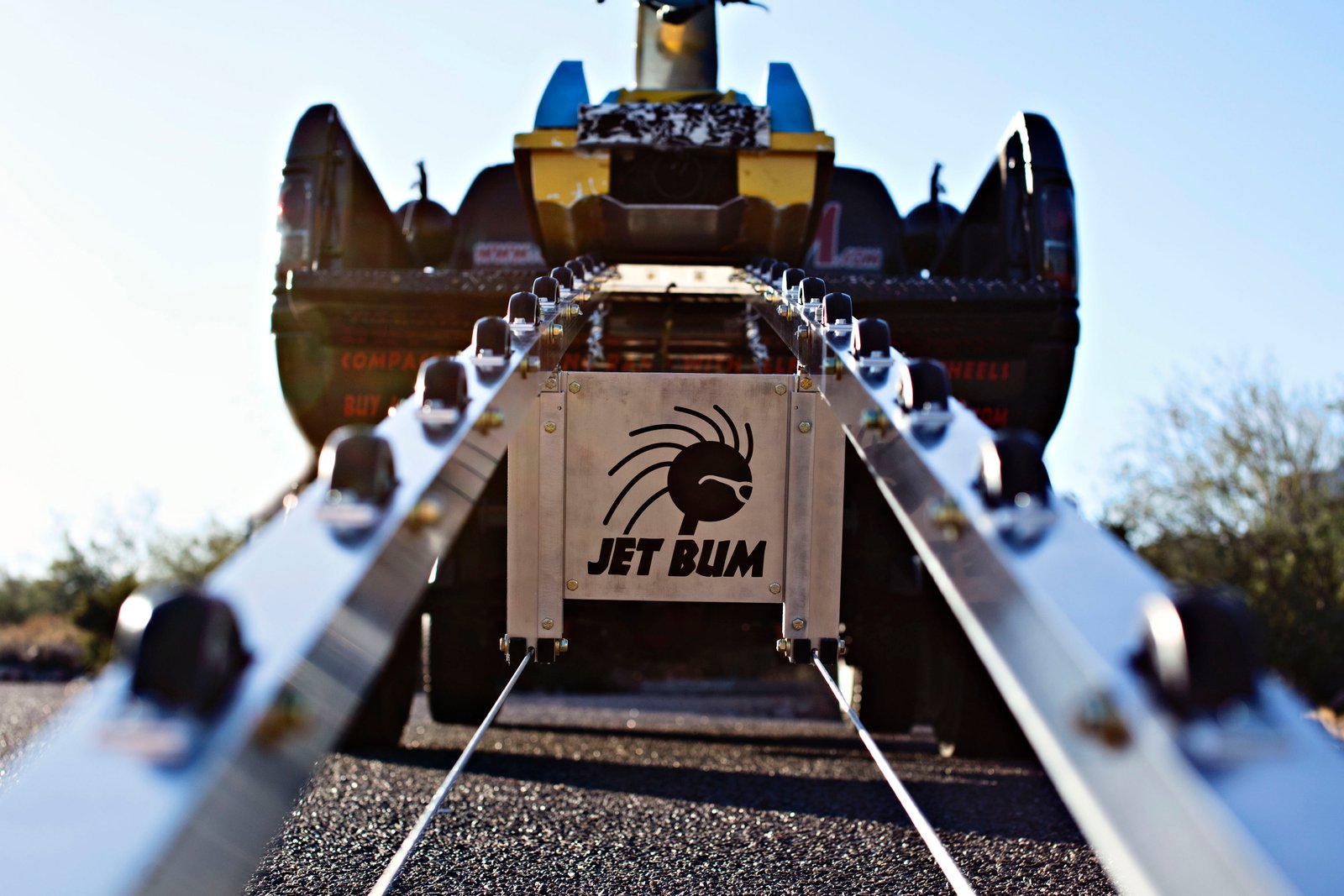
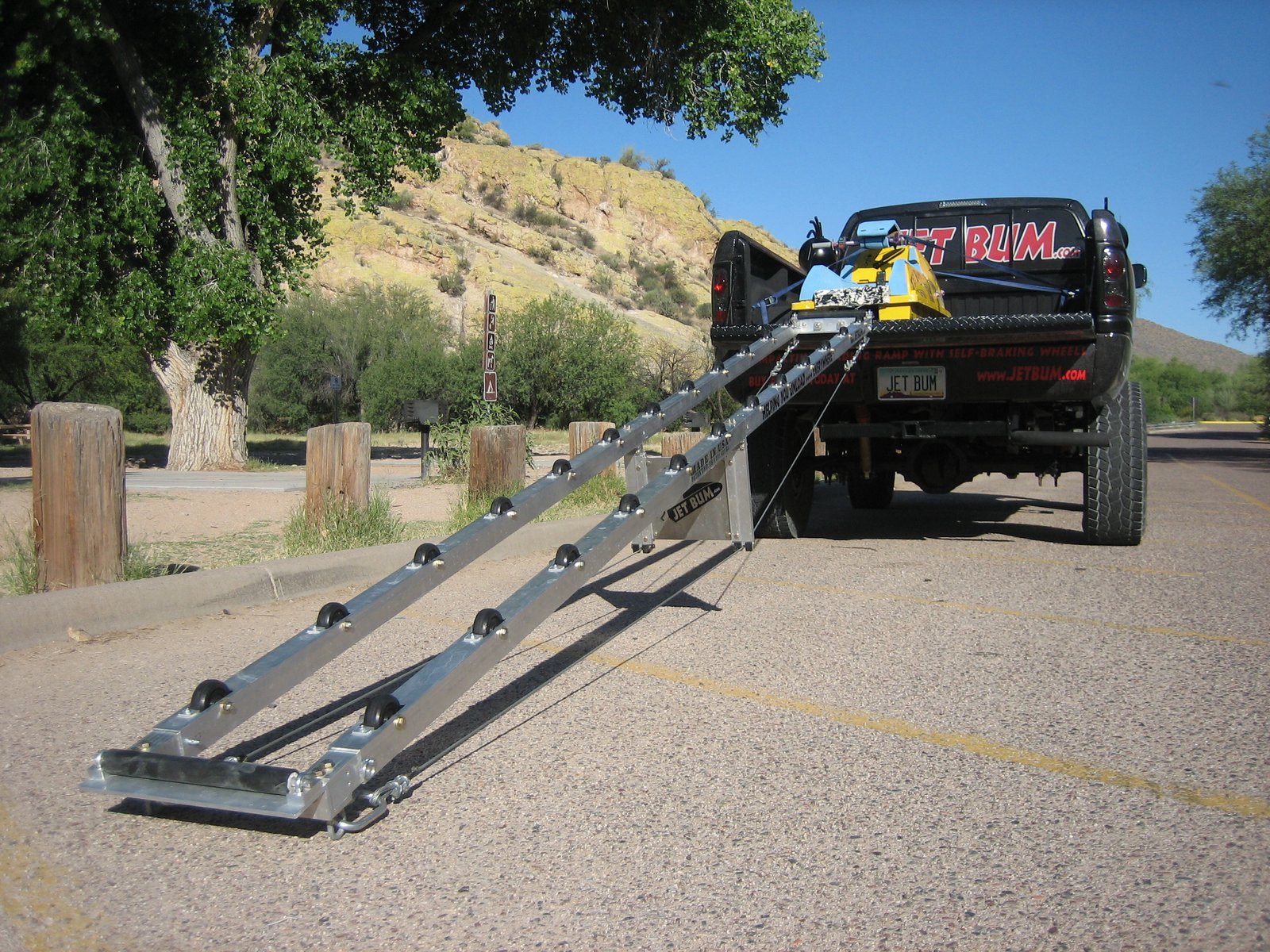
So it came to no surprise when we were introduced to one of the coolest standup ramps we’ve seen in a while. Called the “Jet Bum,” the billet aluminum collapsible ramp is a very new take on an old idea: launching a standup jet ski from the back of your truck all by your lonesome. The Jet Bum makes it entirely possible with surprising very little effort. Thanks to a succession of self-braking rubberized castors, your ski can roll up or down the ramp freely with only a small push. But when no force is applied, the rollers come to a stop, locking your ski in place.
This means no runaway skis, or fear of it sliding back down or worse. It also means no winches are necessary. The Jet Bum simply unfolds from its collapsed length to a maximum 14’3″ length, tethers to your truck’s tailgate and gently lowers your standup into the water. No more backing your truck up to the back bumper in water. No more strained backs heaving your two-stroke in and out of the lake. Let the Jet Bum do all the work for you.
Here’s the original press release:
Jet Bum didn’t invent the wheel or the ramp, but when we combined the two and added brakes, something NEW was born.
Jet Bum, LLC is pleased to announce the world debut of the most innovative loading ramp created at the 2015 IJSBA quakysense World Finals in Lake Havasu City, Arizona on October 6th-11th. It’s an honor to join the great group of supporters, sponsors, and fans at our sport’s premier event.
The Jet Bum loading ramp is improving the freedom you experience by allowing you to launch your personal watercraft from a truck bed safely and easily. The long length of the ramp reduces the slope angle while self-braking wheels slow the descent of the PWC. The ramp compacts in seconds to fit inside a standard pick-up truck bed. No more driving underwater and getting stuck in the mud. Your buddy will be happy to spend more time riding and less time helping you lift your PWC. Trailers and hitch-mounted haulers are great, but they won’t get you very far off of the paved roads.
What riders & professionals have to say about the Jet Bum ramp: “Thanks for saving my back, this ramp works great! Way less effort.” – Brad H., WaveBlaster rider “These units are solid. I’ve seen it in action.” – Jason C., JetSki rider “I’m impressed by the simplicity of it.” – Tim R., Civil Engineer “Very, very well done. I’d buy it in a second.” – Dean M., Landscape Contractor
The Jet Bum ramp weighs just 61lbs. and can carry up to 500 lbs. The ramp can be used in a 14’3″ long configuration or 7’7″ long configuration. Patented and made in the USA with a suggested retail price of $1,580. Free shipping to the lower 48 states. The ramp is proving to be very popular with contractors, landscapers, and movers.
CBS Los Angeles (CBSLA) reported that a father and his young son were pulled from the water and taken to a California hospital after the father crashed his new jet ski into a dock outside of Waterman’s Restaurant in Dana Point Harbor.
CBSLA’s video filmed by a bystander showed the child sitting in front of his dad while his dad piloted the watercraft. The short video also shows a man in a kayak paddling toward the scene where many people had already gathered to help and render first aid to the victims.
The injured parties were transported to a hospital and kept overnight for observation. It was amazing that neither sustained severe injuries.
The father was pulled from the water by Alex Pocock, a server from the restaurant, and several of the restaurants guests. “We hopped over the fence and another one of the guests that I was waiting on and also was the first person over the fence,” Pocock said. “The guest was actually the first person into the water helping the father.”
Pocock said the crash was incredibly loud and he bolted into action. Harbor Patrol said the man had lost control of the ski. He was said to have been going at least 25mph. The father was unconscious when Pocock and the guests pulled him out of the water.
“The father was right next to the dock so I held onto him and pulled him out of the water to keep his head up,” he said. “Other people came and joined and helped me pull him out while I kept his neck steady,” exclaimed Pocock.
According to Orange County Sheriff’s Harbor Patrol, when the father regained consciousness, he told them he had just purchased the PWC and took it out the day before for the first time. He also claimed that the throttle malfunctioned and accelerated. Operator error? You decide.
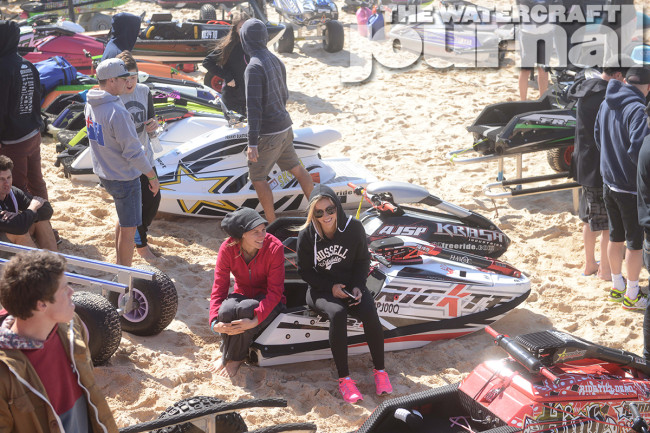
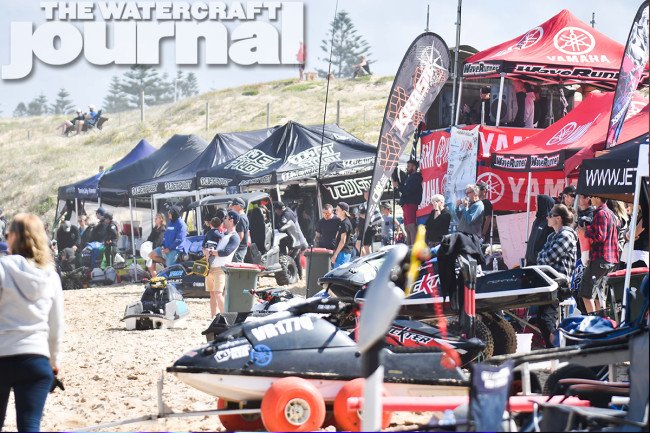
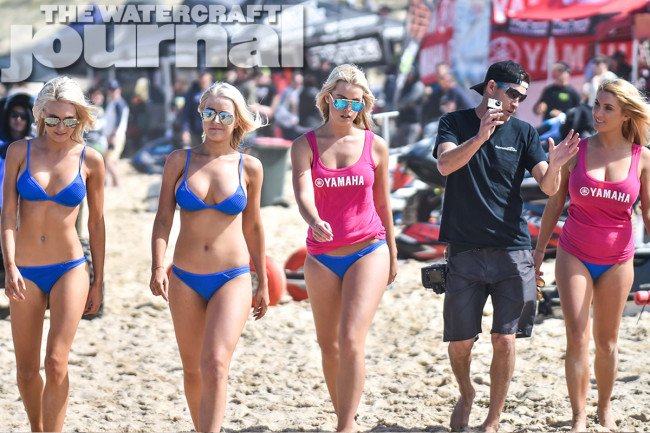
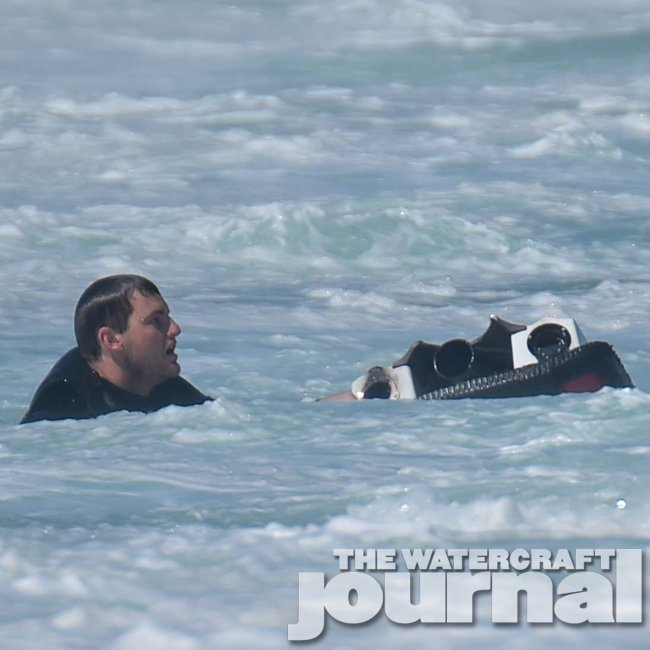
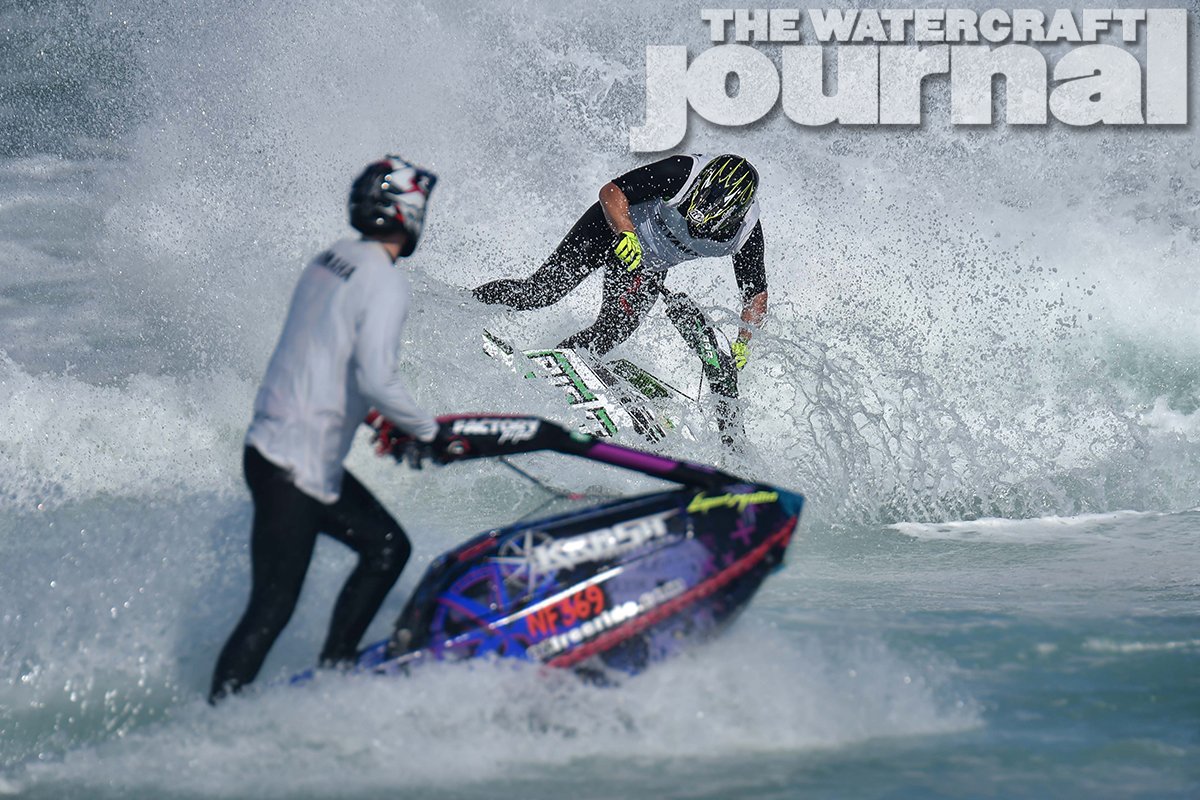
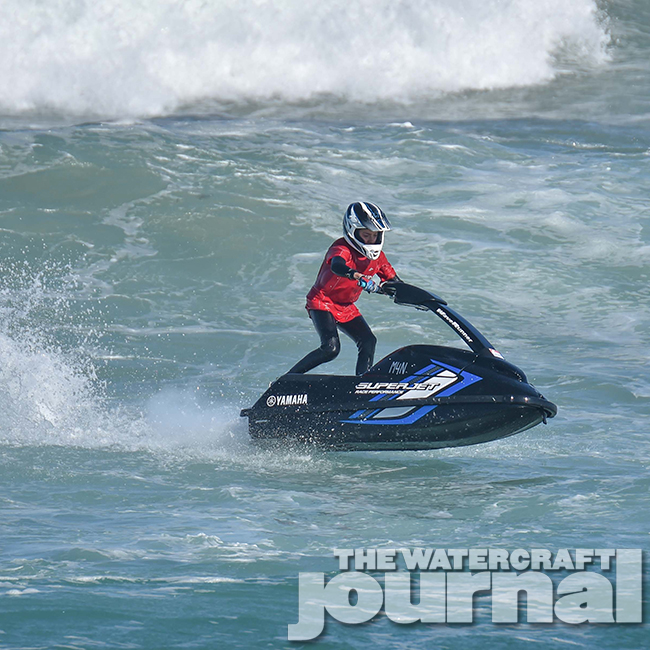
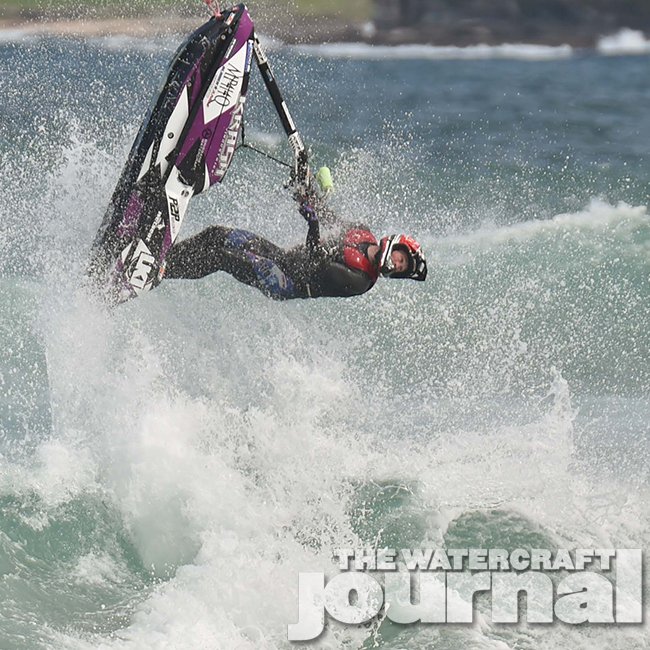
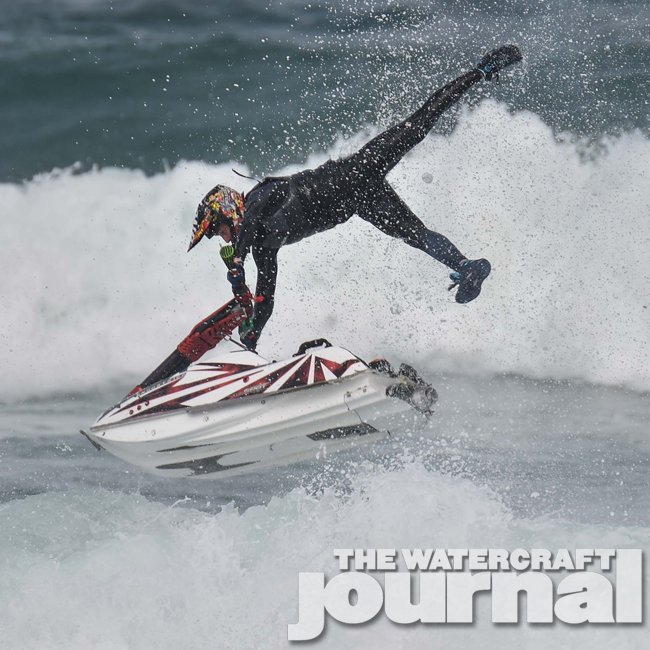
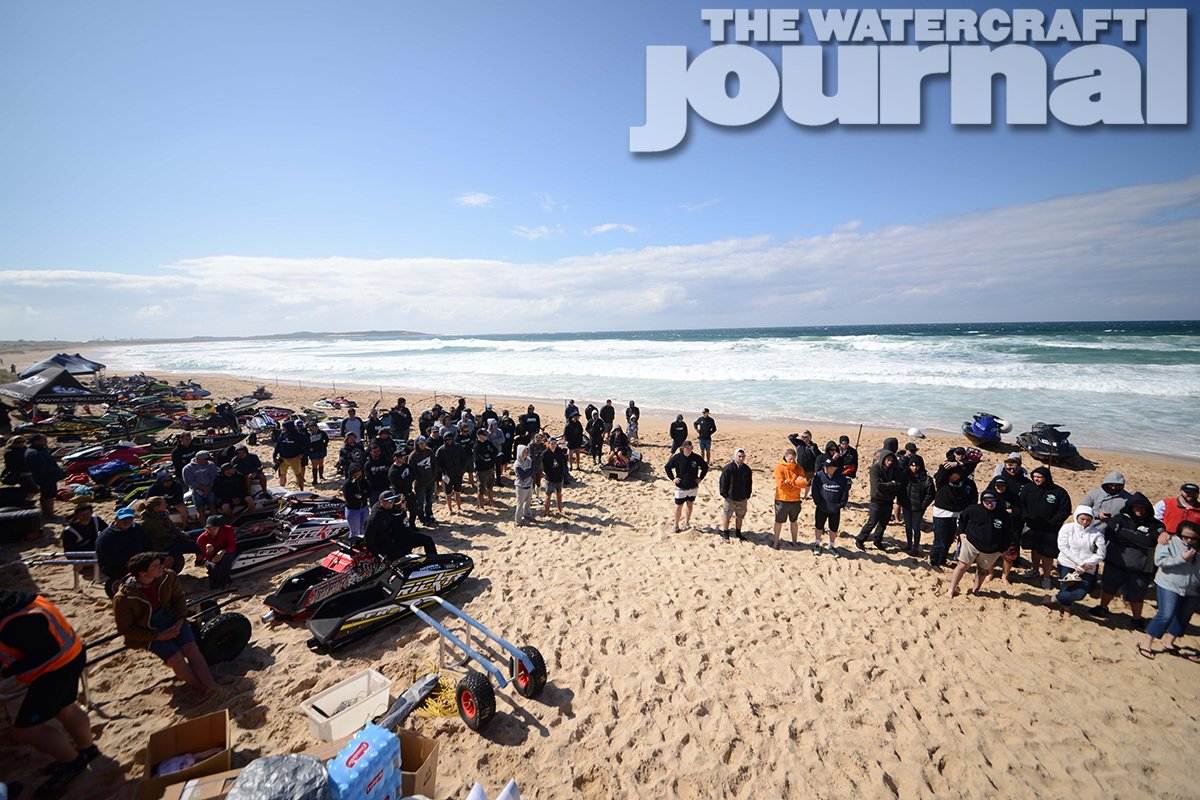
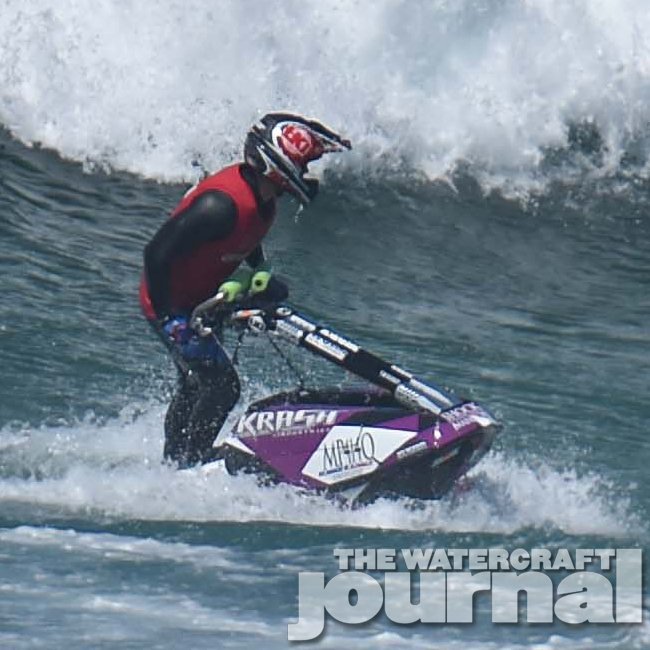
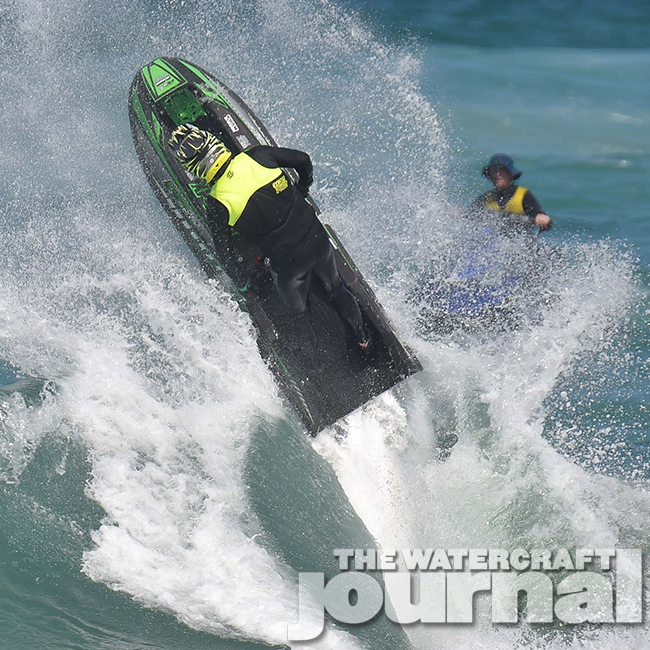
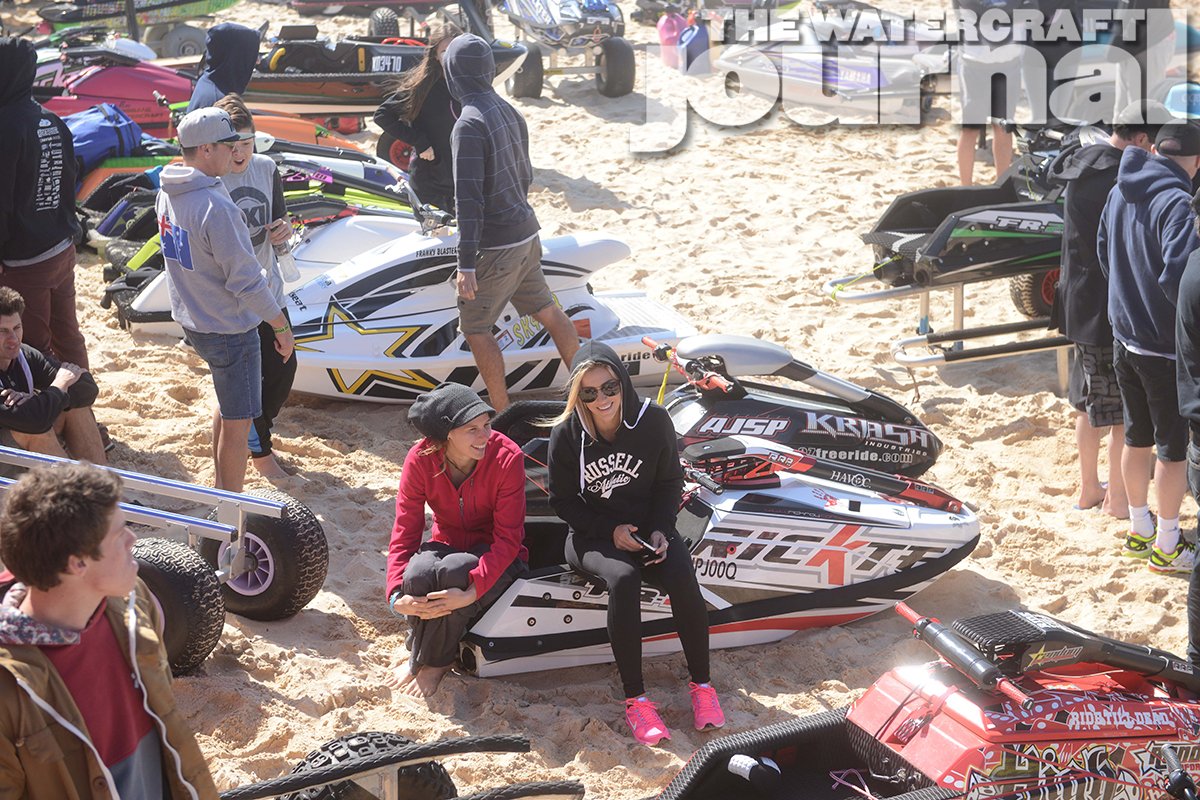
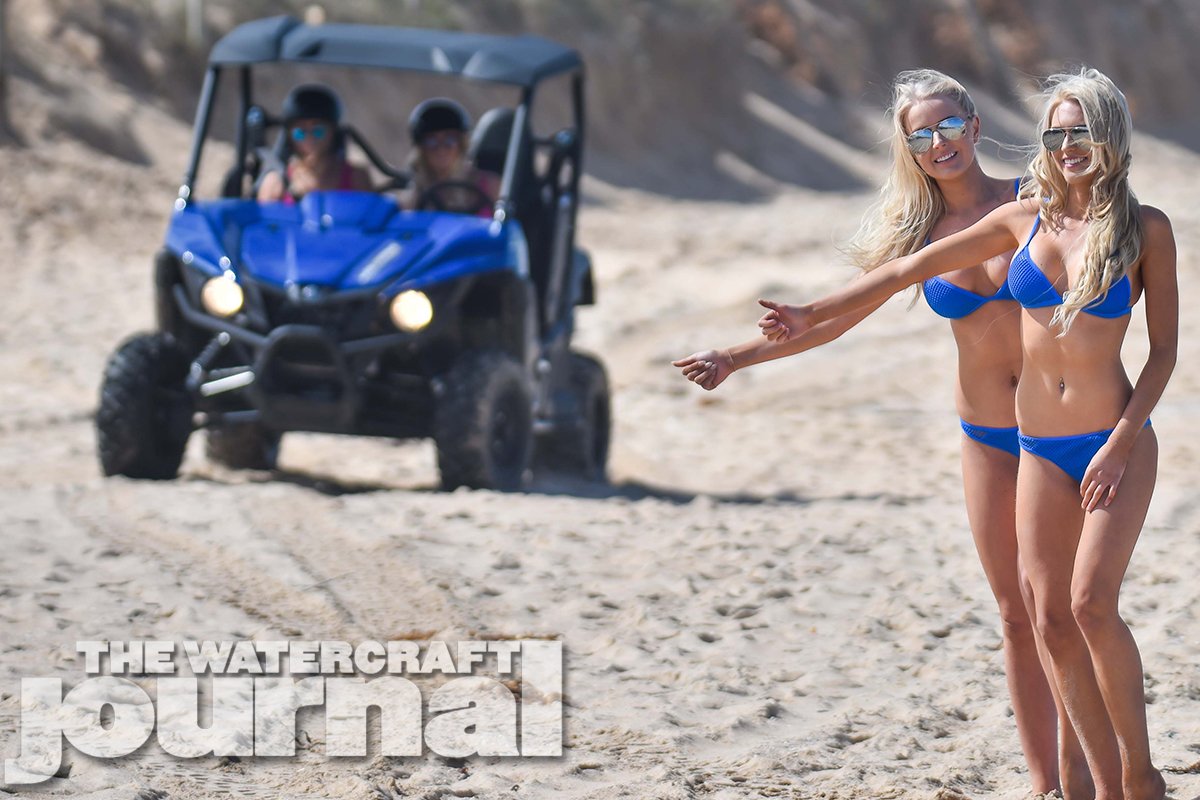
Just south of Sydney in New South Wales Australia, the annual Cronulla Rip ‘N Ride was just held. Two days of big waves, beaches and babes – not to mention 100-plus freeriders from all over Australia and the world. International riders such as Brandon and Randy Lawlor, representing Free Form Factory. Unfortunately, the boys’ skis didn’t make it from the last round of the IFWA tour in Oregon, USA. Thankfully, that wasn’t a problem as there were plenty of people putting their hand up to lend a ski. It was great to catch up with Brandon and his fiancée, Michelle again on their second trip to RNR. And it was great to see his brother Randy and wife Stephanie make the trip out to check out all the hype. There also was a heap of boys from New Zealand, and Stephen Foot from the UK and let’s not to forget all those that traveled interstate to attend this year’s RNR.
The “Rip ‘N Ride” was brought to life by OZFreeride.com (the only freeride jet ski forum in Australia) and the Cronulla Freeride Crew in 2008 with the goal of promoting the sport to rookies entailing a fun filled day with prizes, without the added pressure of a freeride competition. The event has been building year after year, from the inaugural Rip ‘N Ride, when an expected 25 riders welcomed 42, majority being males aged between 18 and 35. In 2009, it attracted 60 international and local riders. In 2010 and 2011 a repeat of 67 riders. In 2012, it was a total of 70; and finally to today having to cap the entries at 100, with dozens still on the waiting list.
Since the introduction of the Rip ‘N Ride, the New South Wales Freeride Association (NSWFA) has been formed as a freeride jet skiing body. Following that came the “Victorian Freeride Association “(VICFA) and Queensland Freeride Watercraft Association (QFWA) with the intention and success of hosting their own Rip ‘N Ride style events. Gunther “Butch” Pfrengle and his awesome wife, Julie are the brains and a lot of the brawn behind the event and without those two and their love of the sport none of this could happen. So on behalf of everyone that love this event, thank you!
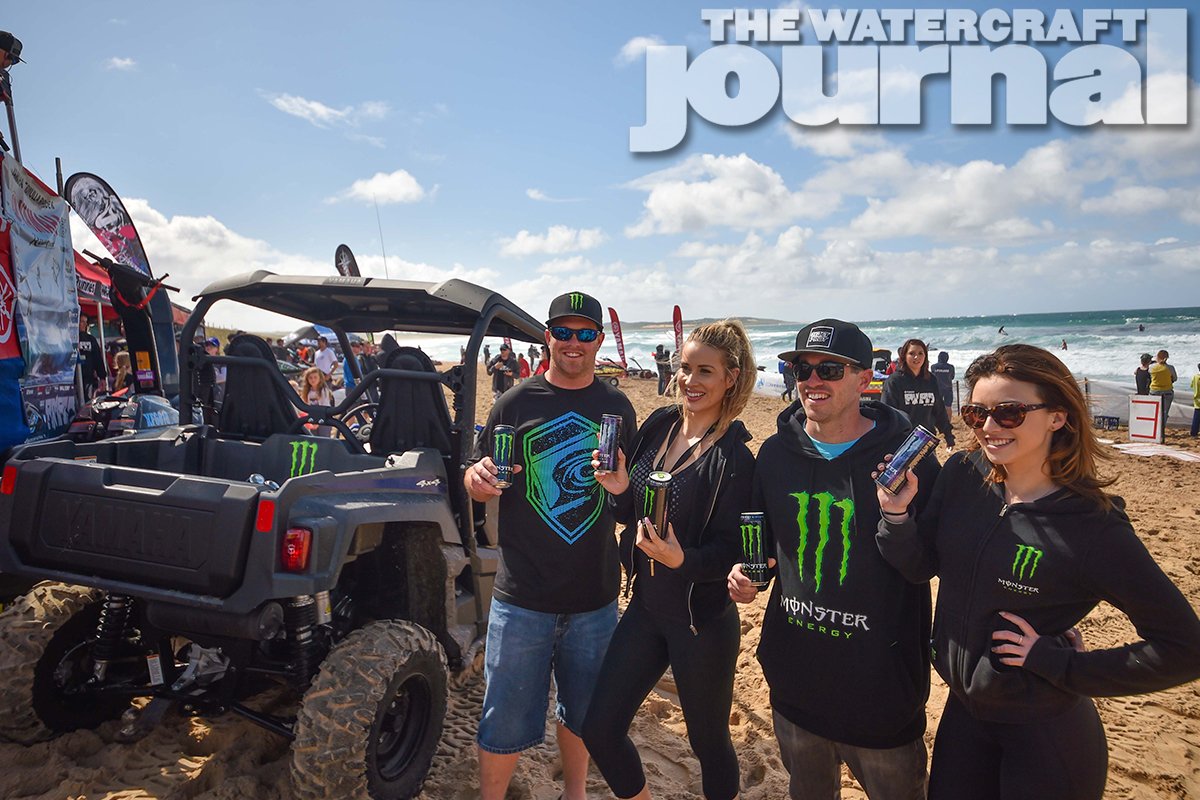
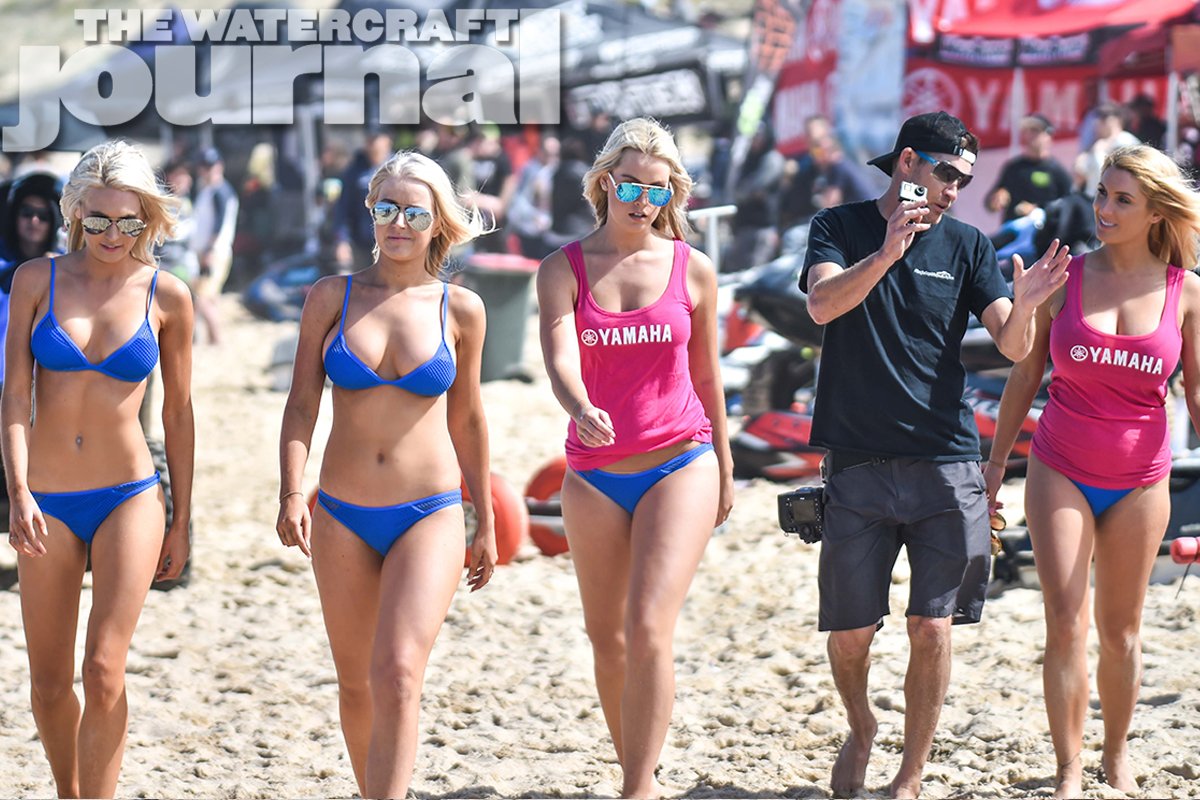
Speaking of people to thank, Yamaha Motors Australia really stepped up again this year with another awesome SuperJet as a Grand Prize prize, along with heaps of other gear – not to mention all of their help on the beach with safety skis, a Wolverine 4×4 buggy and plenty of hard yakka from Yamaha’s Mark Harman and Iain MacLeod. JetPilot came to the party as a major sponsor again with heaps of great prizes and even signed a new rider, Zane Taylor (the cousin of the infamous Brock Taylor). According to Zane, he taught Brock everything he knows so keep an eye out for Zane in the near future.
With about 40 other sponsors getting on board to help out, there was $30,000 in prizes up for grabs. With most of those prizes given out by luck of the draw, with everyone’s name in a hat. Also awards were give out for Sickest trick, 180 cup, “First to Sink,” and “Biggest Air” just to name a few.
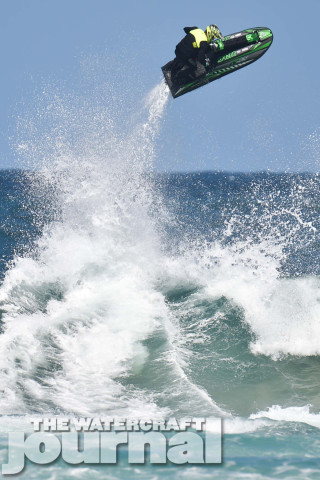
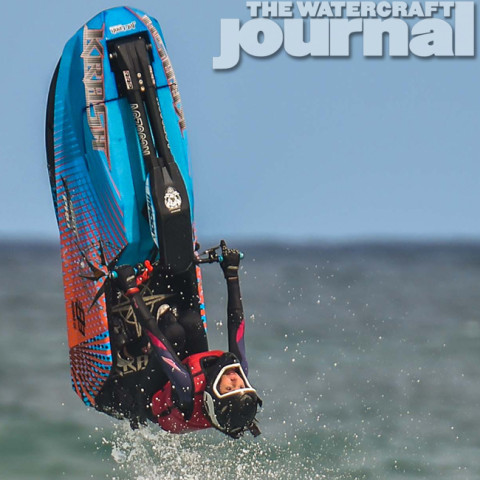
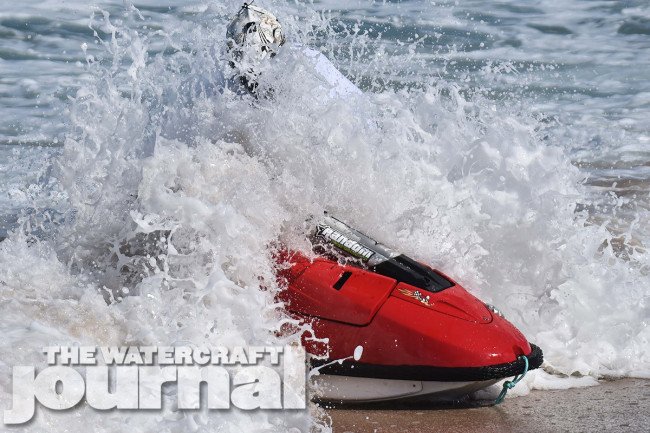
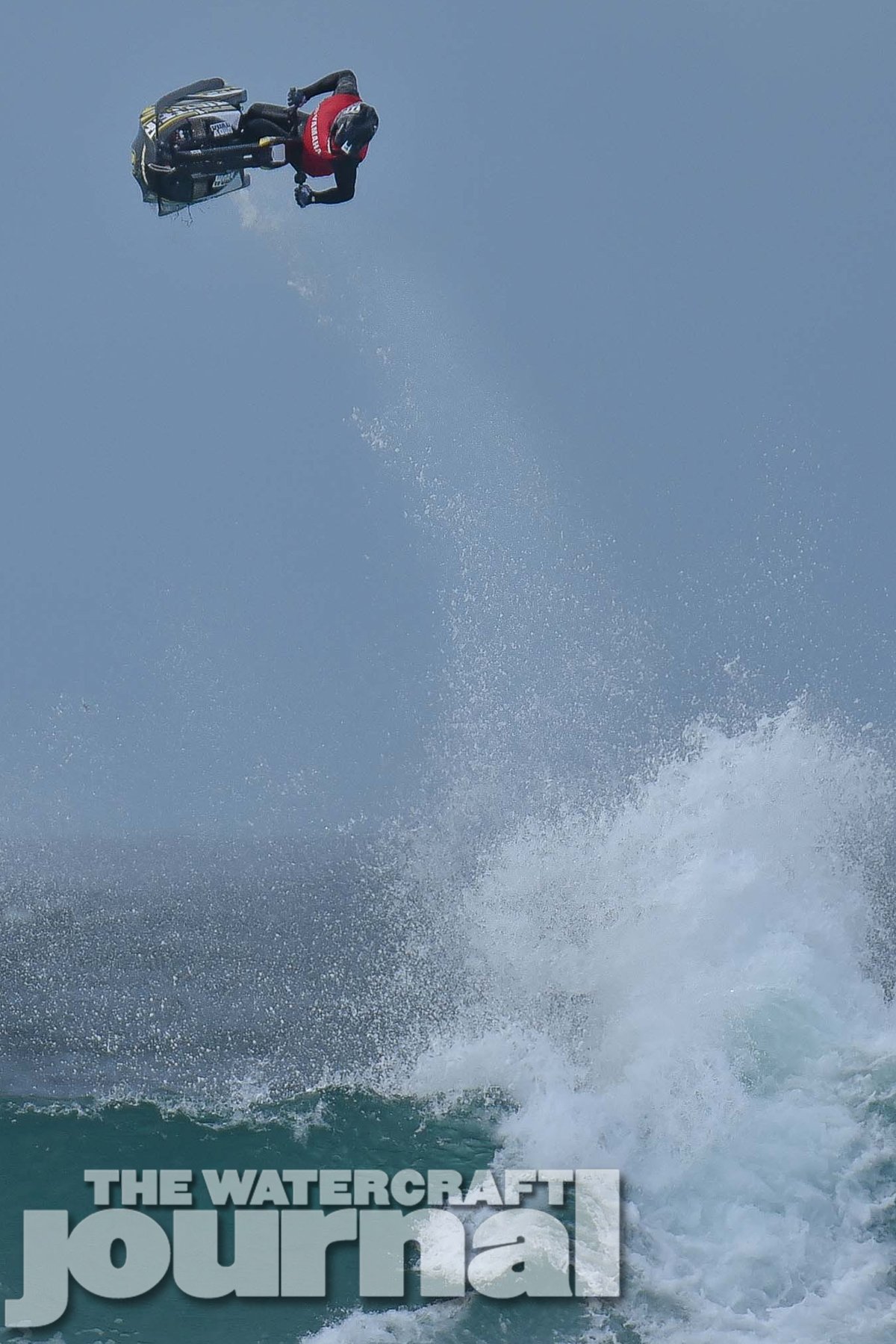
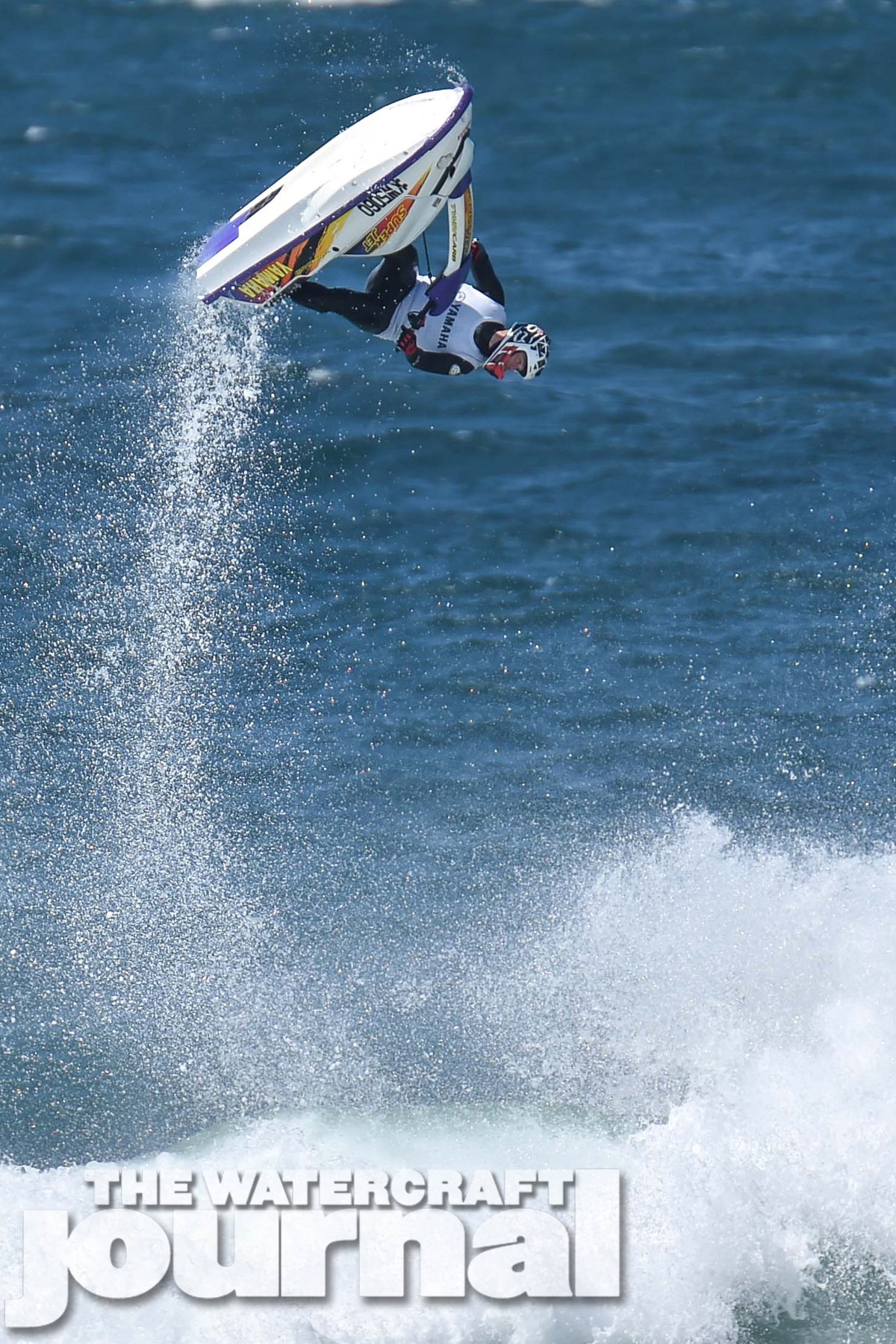
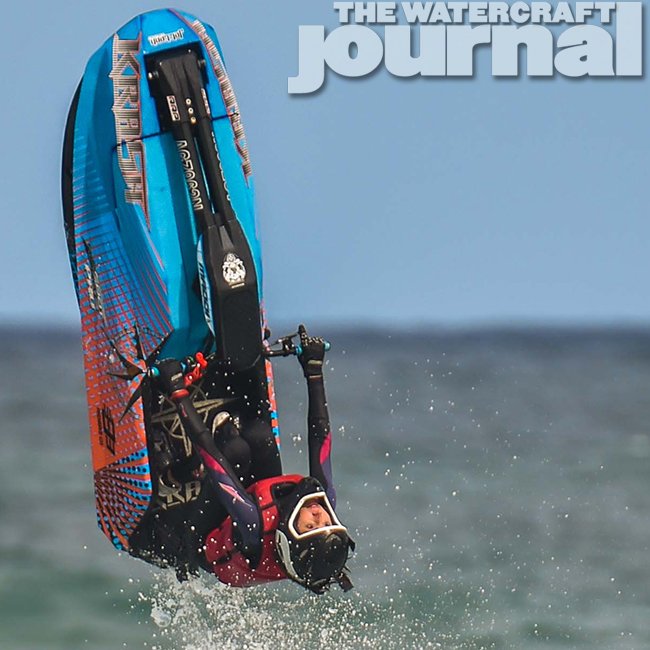
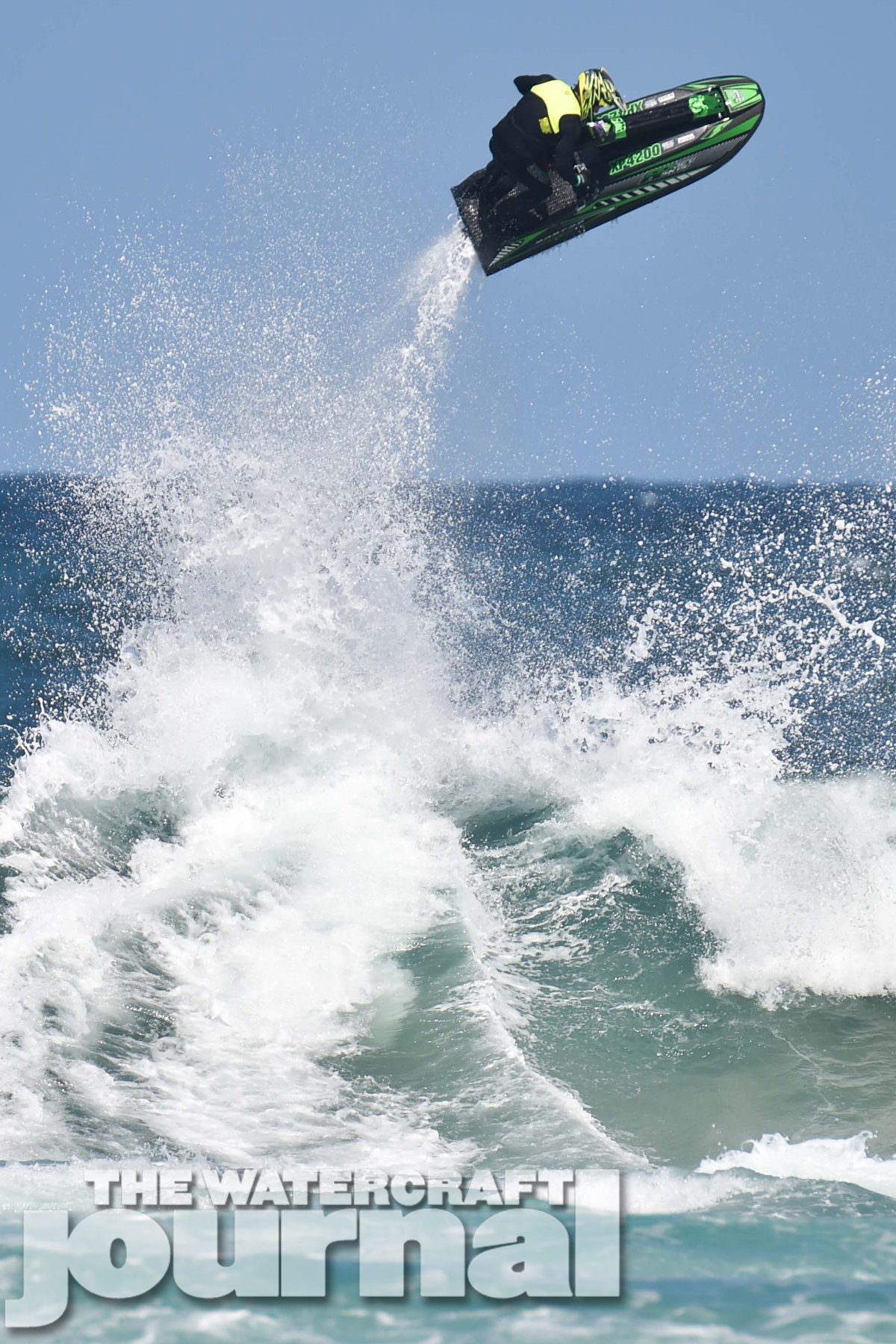
The weather this weekend wasn’t the best over the weekend with strong winds and the occasional shower, but that didn’t stop anyone from having a great time. The surf was a bit hit-and-miss with lumpy conditions and swell from 2-to-6 foot even bigger on the occasional set. This kept everyone out there hunting for the best waves. Some of the riders were really putting on a great show with massive air and some awesome combination tricks. Some of the height the boys were getting was amazing. You don’t miss much with all the cheering from the beach.
Luke Emmanuel came out of retirement for a ride on a mate’s ski doing massive 180’s and showing the style that he is know for. Maybe its time to get another ski, Luke. Not to be outdone, Freestyle Pete was ripping the ocean apart launching huge airs and his signature look-backs on his FP Raptor. Blaster Jay seemed to be pretty happy with his Krash Reaper. He went for a double flip but didn’t quite get the second one around. Good effort buddy. But Brock Taylor was putting on a great show after his second place at the Blowion Surf Slam. With super high Can flips and his one-and-only Ruler flips. One was even higher than the filming helicopter. That guy has no fear.
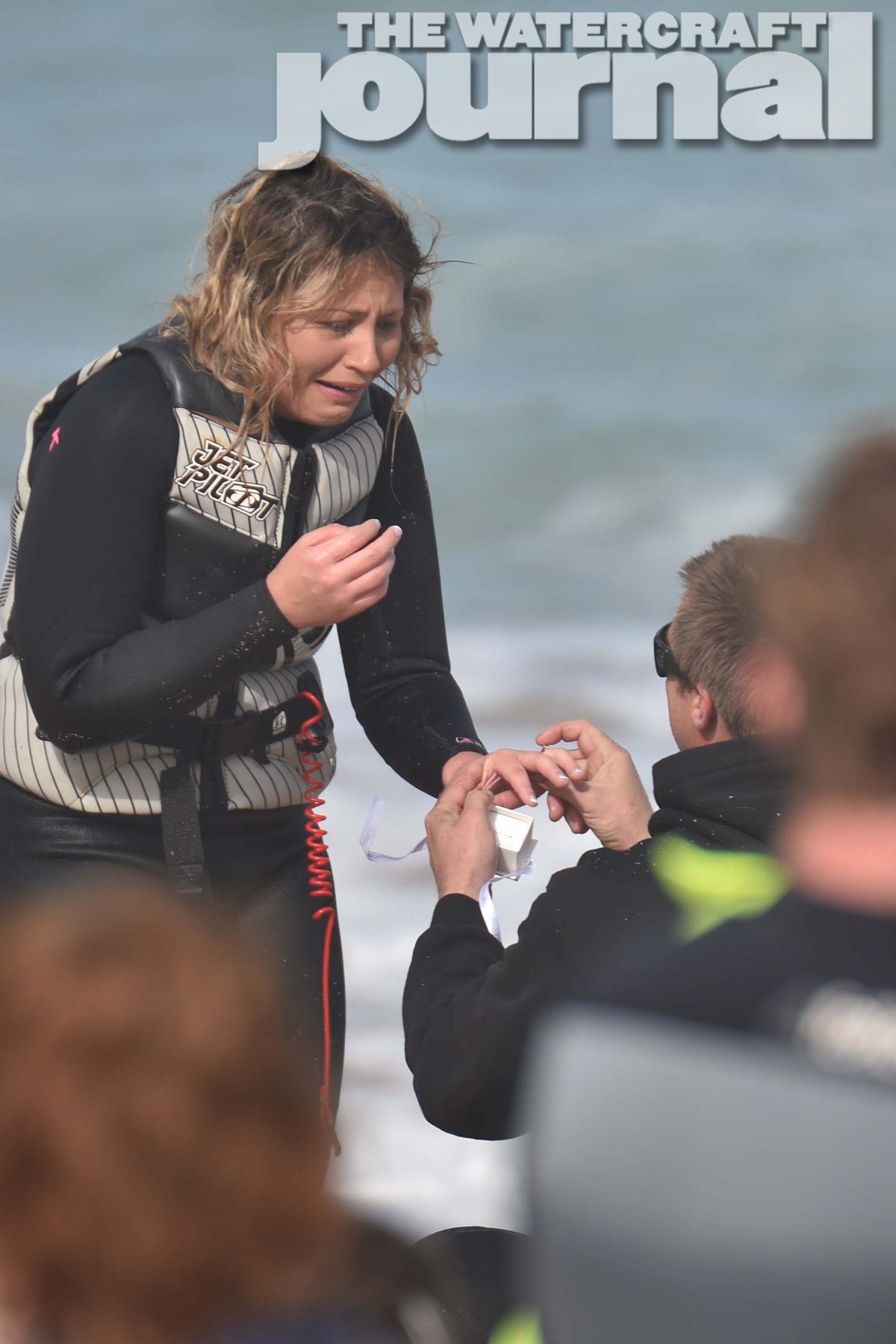
It was good to see plenty of girls out riding, with about five on the water. The Cherry-popper event saw Maddison Youngblutt, Kat Restifo and Samantha Beasant going for their first backflips. Due to the messy conditions they couldn’t quite get there. A massive effort for the girls and their coaches. Not getting around was not for lack of trying for Samantha, with three or four attempts. When she returned to the beach she was greeted by her boyfriend, Shane Holder on one knee with ring in hand. Samantha was in disbelief and tears of joy. Congratulations, you two.
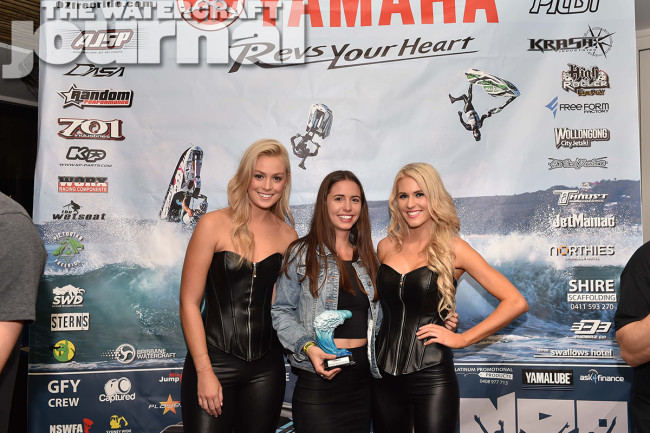
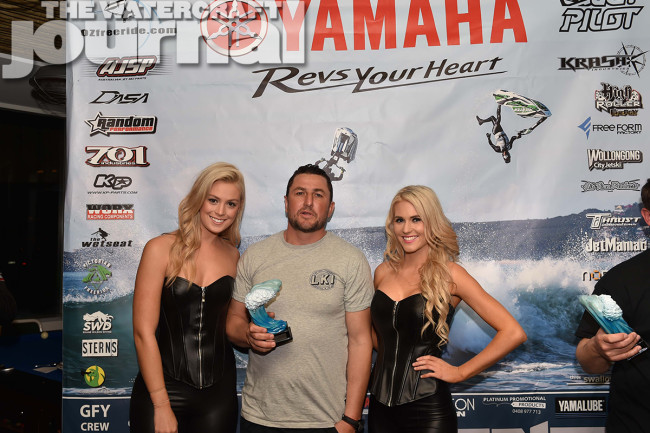
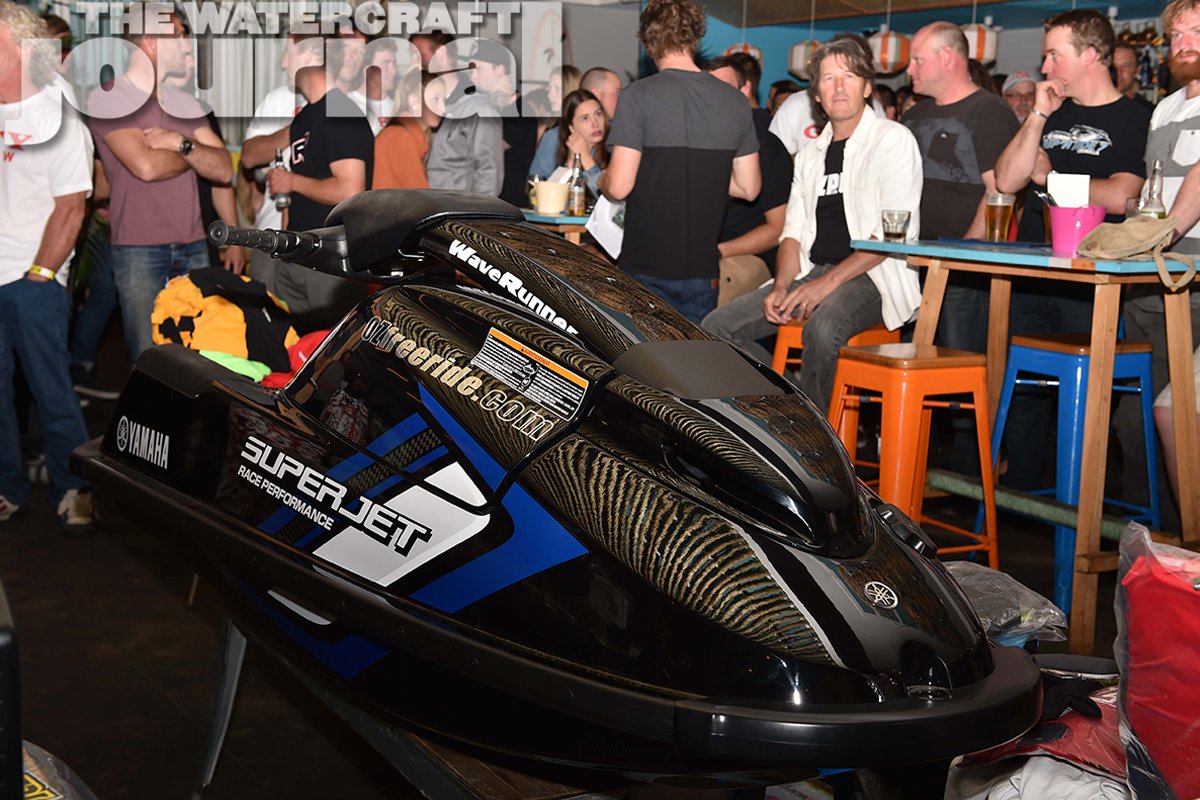
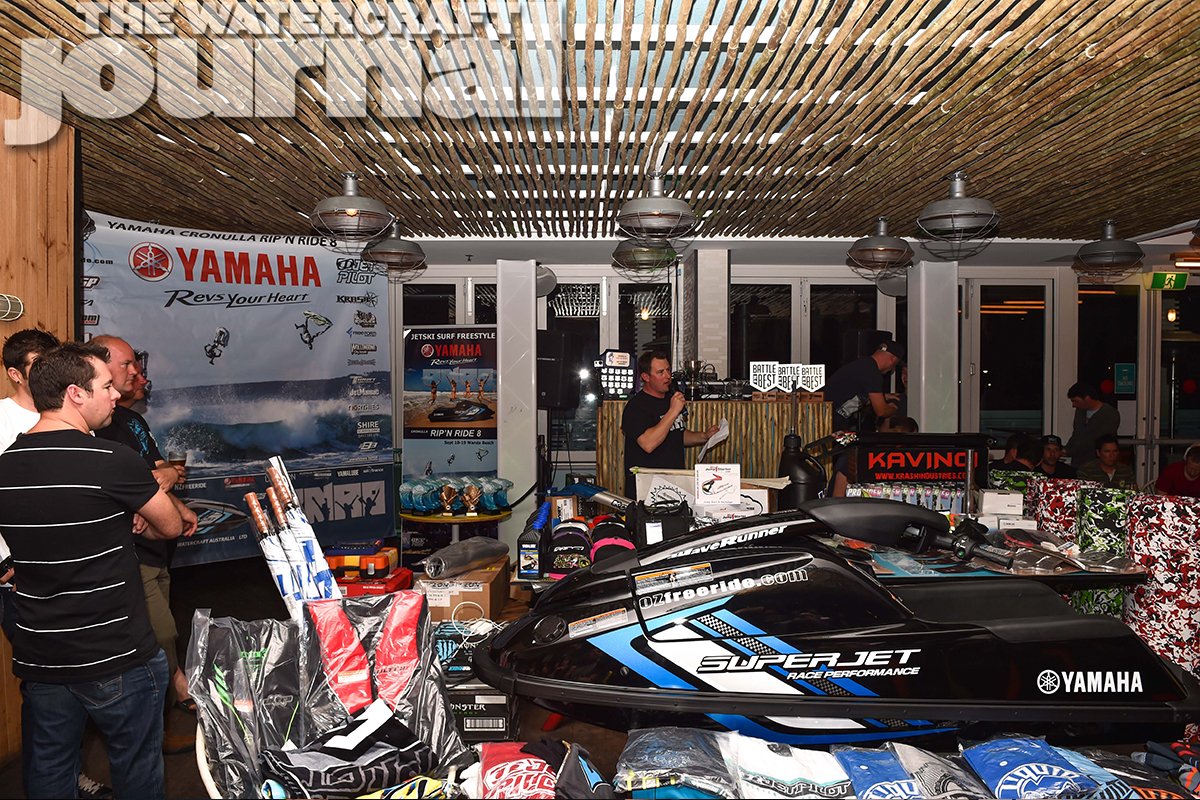
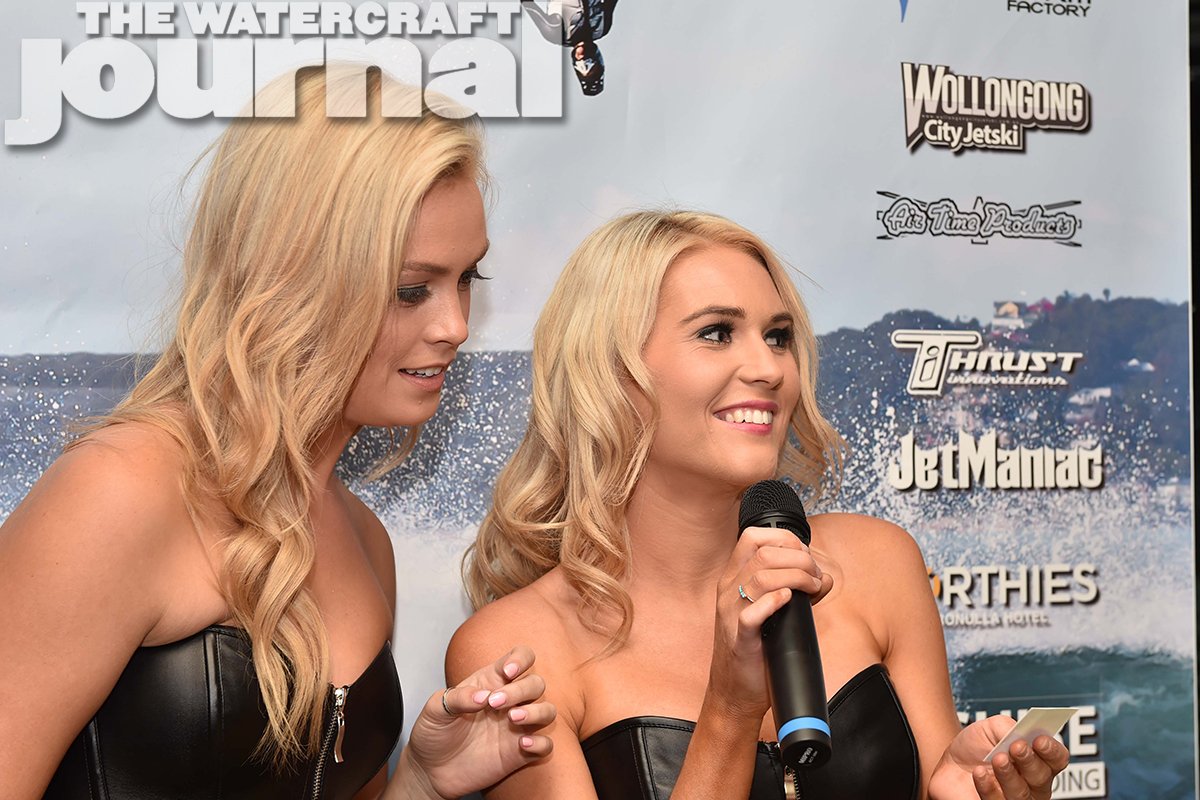
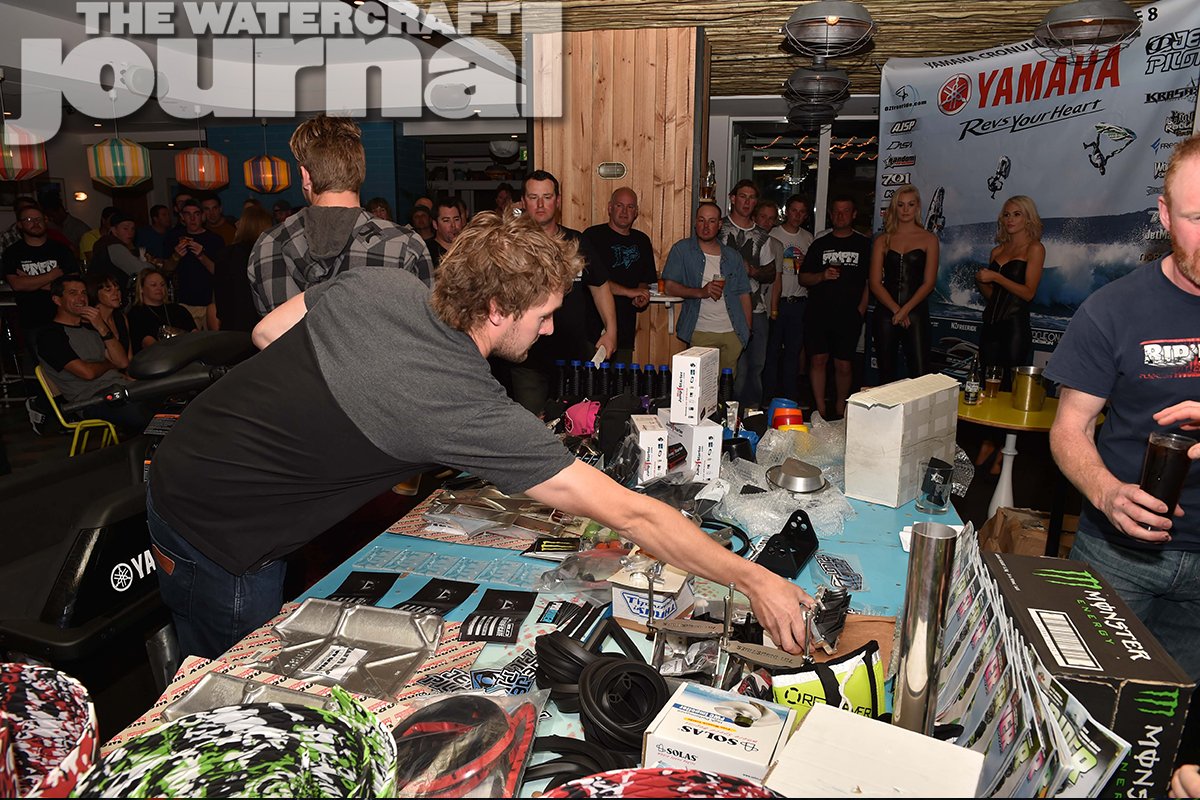
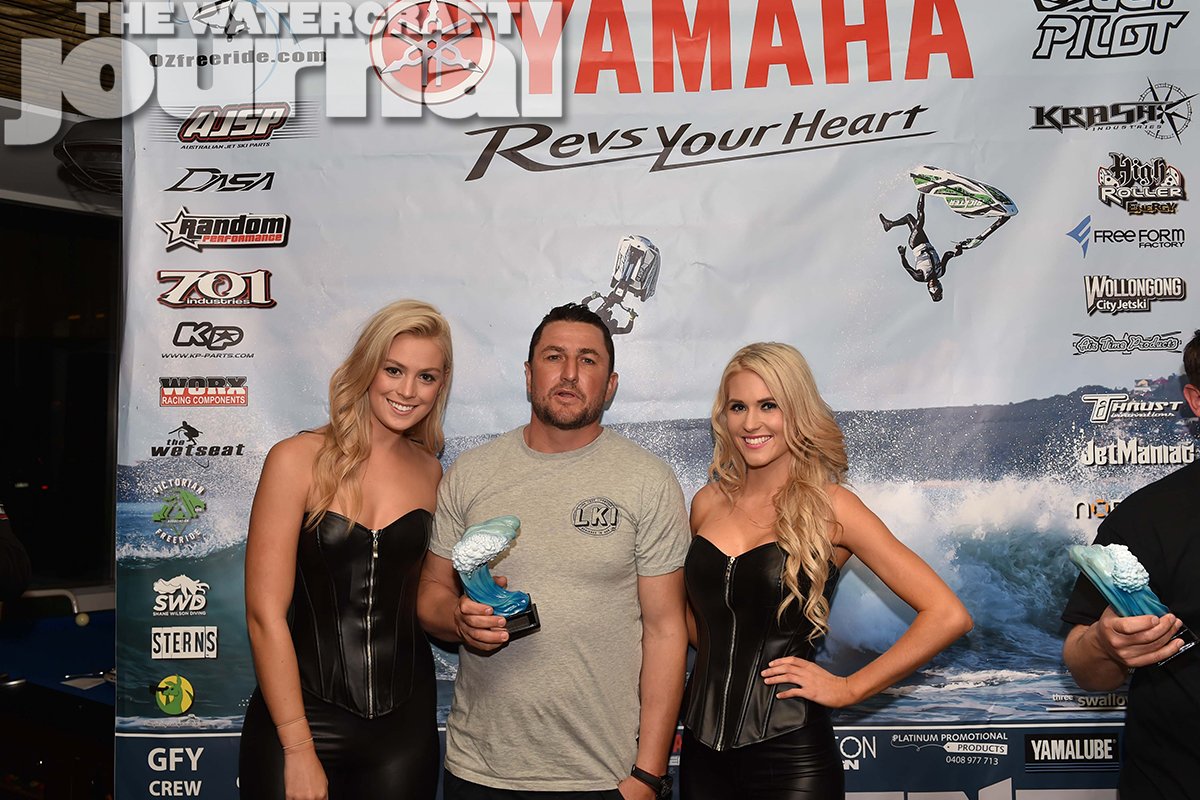
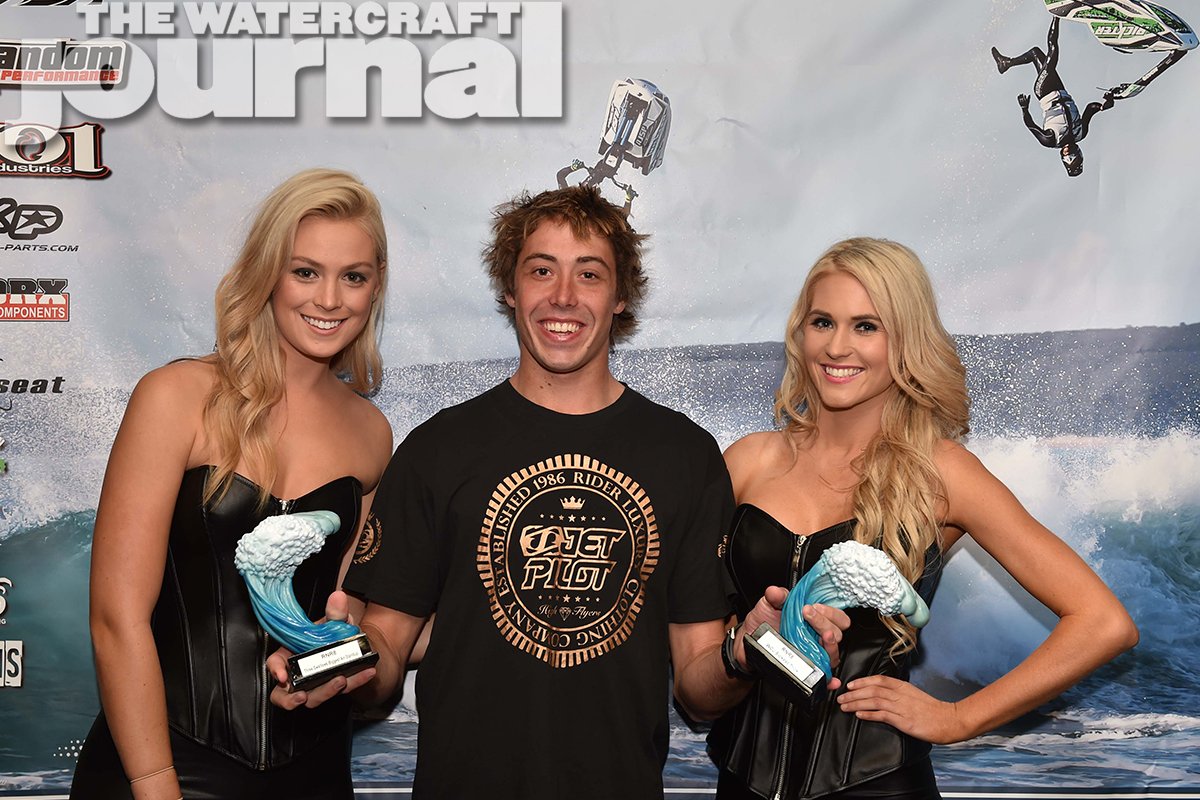
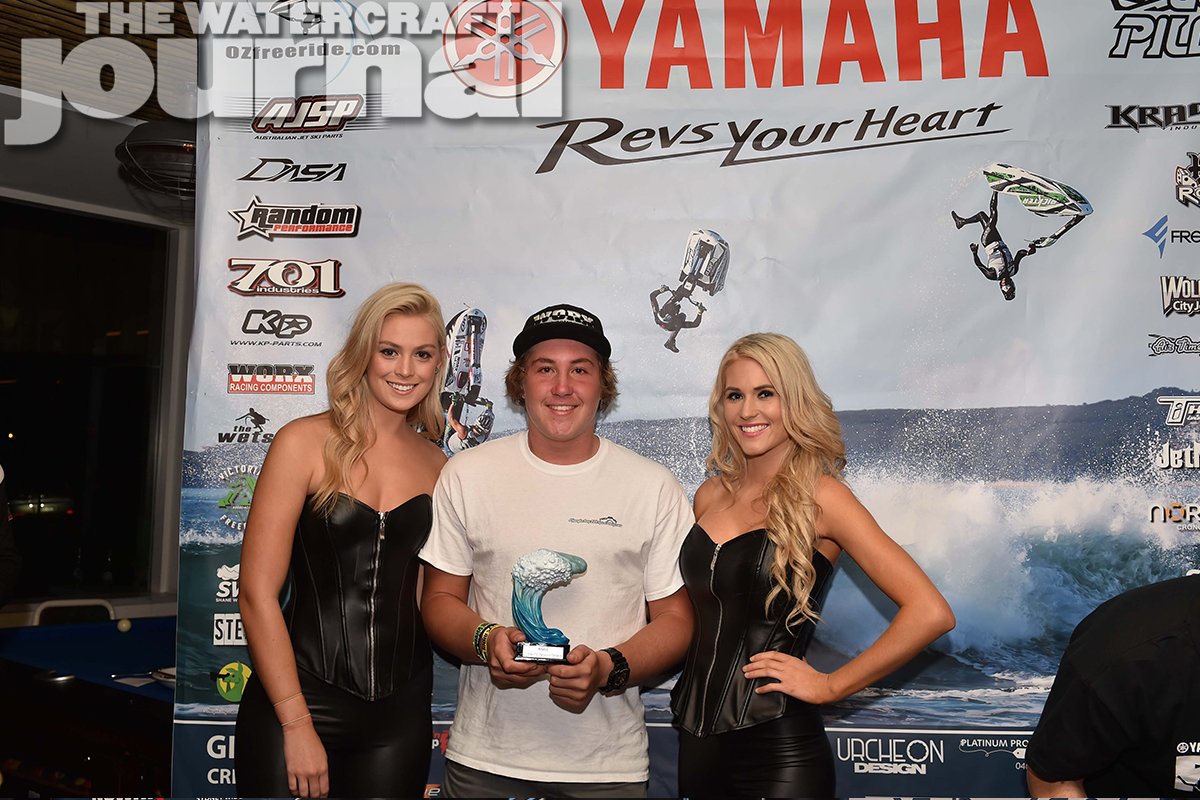
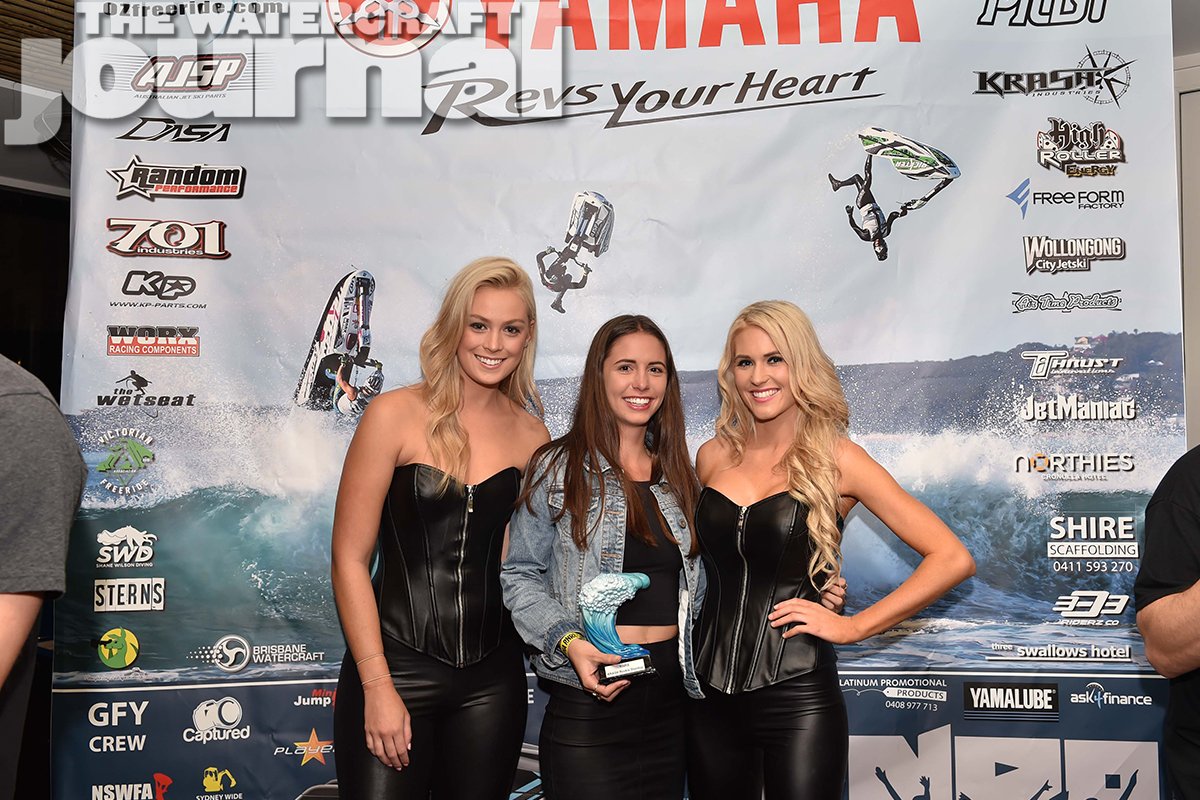
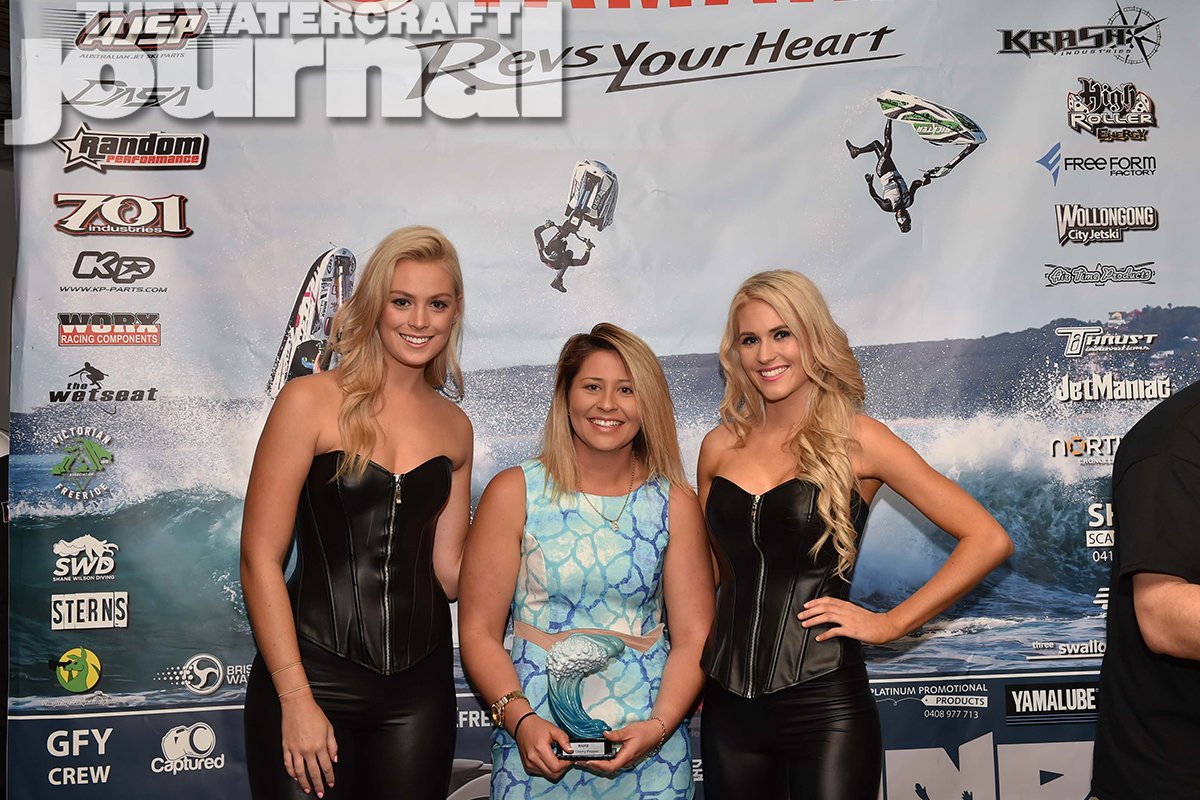
The presentation was held at Northies Hotel in Cronulla, a great place for a party. With a full room and beverages flowing freely, things got pretty wild especially when a new Yamaha SuperJet was about to be given away. There were tables of prizes that had to be given away first, prizes consisting of poles to props and shirts to a stator, everything was wiped up fast. Down to the last two riders, who would win? You could only imagine the feeling of knowing you could be heading home that night with a $10,000 SuperJet. And the winner was Luke Mifsud.
So if you want to come and check out the best freeride event in the world, and possibly take home a new ski, make sure you make it to Rip ‘N Ride 9!
In the first episode of Long Haul, we documented our attempt to set a world record at crisscrossing Florida from west to east and back west again. Although a pair of retirement-age state park workers deciding to skip out of work 10 minutes early thwarted our efforts, it was still a heck of a lot of fun to try (and don’t worry, we’ll try again soon. We’ll keep you posted). As we continue to push the boundaries of personal watercraft enjoyment, so are the mad scientists at Sea-Doo.
Recently, we drew back the curtain on the new 2016 Sea-Doo lineup, and dove in deep on all the details pertaining to the new Rotax ACE 300 engine powering the awesome RXP-X 300, RXT-X 300 and GTX Limited 300 runabouts. With a longer stroke, revised piston, cylinder head combustion chamber, dramatically improved oiling and cooling circuits, a completely redesigned supercharger with “maintenance free” clutch washers and bearings, not to mention a freakin’ monstrous intercooler, the new ACE powerplant is impressive to say the least.
But all the pretty pictures and studio shots just don’t give you a real feeling for how these machines look and behave. For that, we present to you the second episode of Long Haul where we look over the two most exciting skis of Sea-Doo’s 2016 lineup, the RXP-X 300 and RXT-X 300, yank the seat and show you the guts of these new machines before taking them out and carving up the lake. And it wouldn’t be Long Haul if we didn’t screw up something big, but that’s all the bait we’re gonna give to entice you to watch until the end.
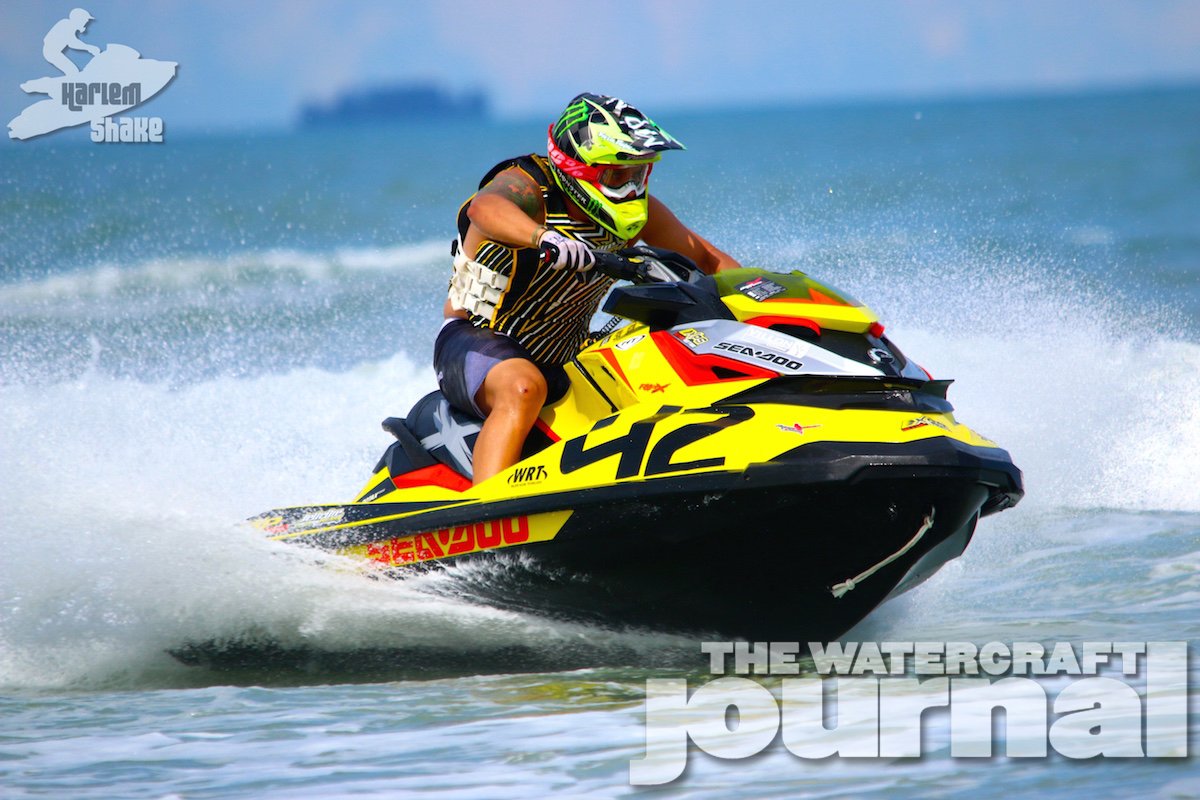
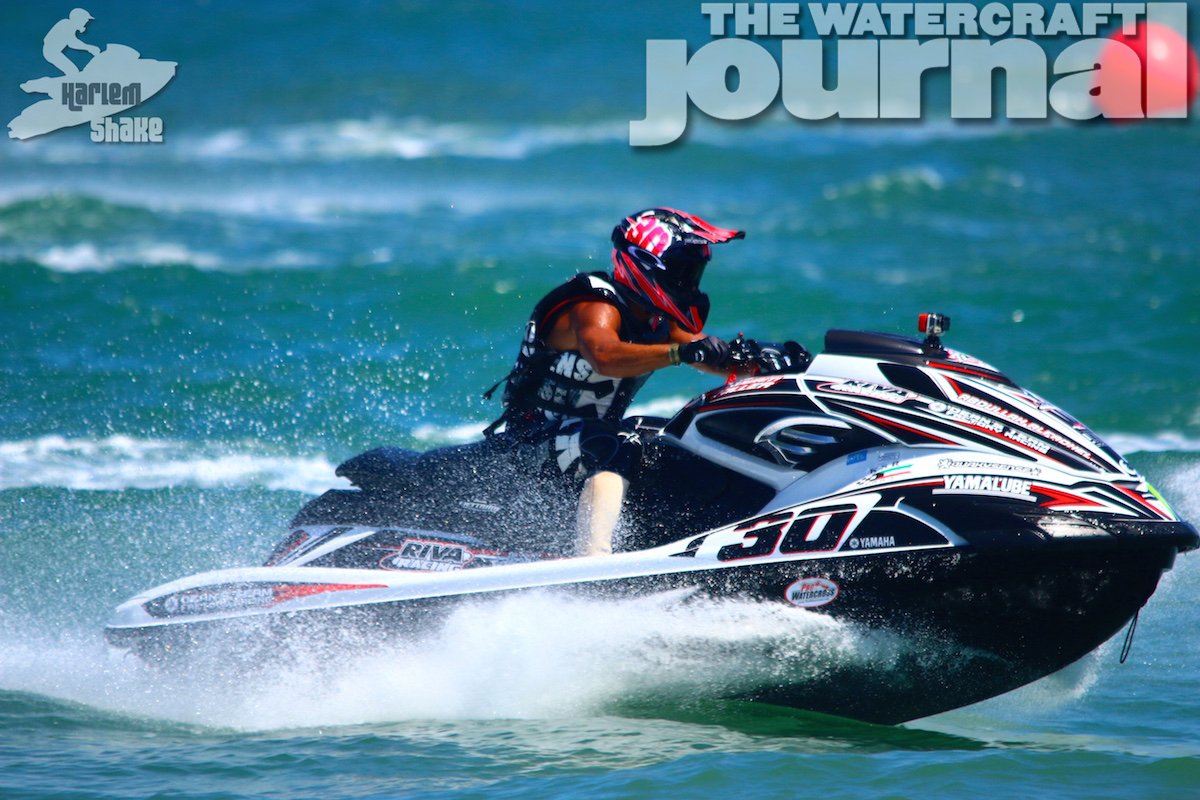
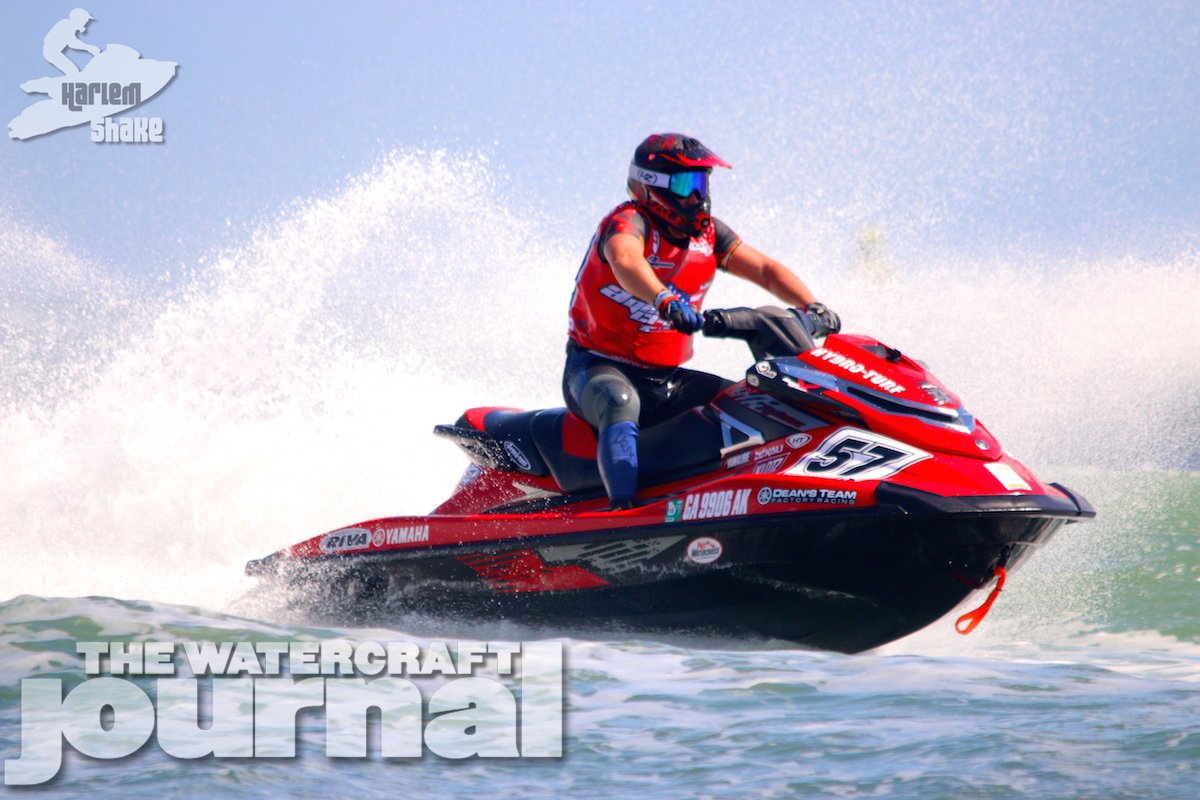
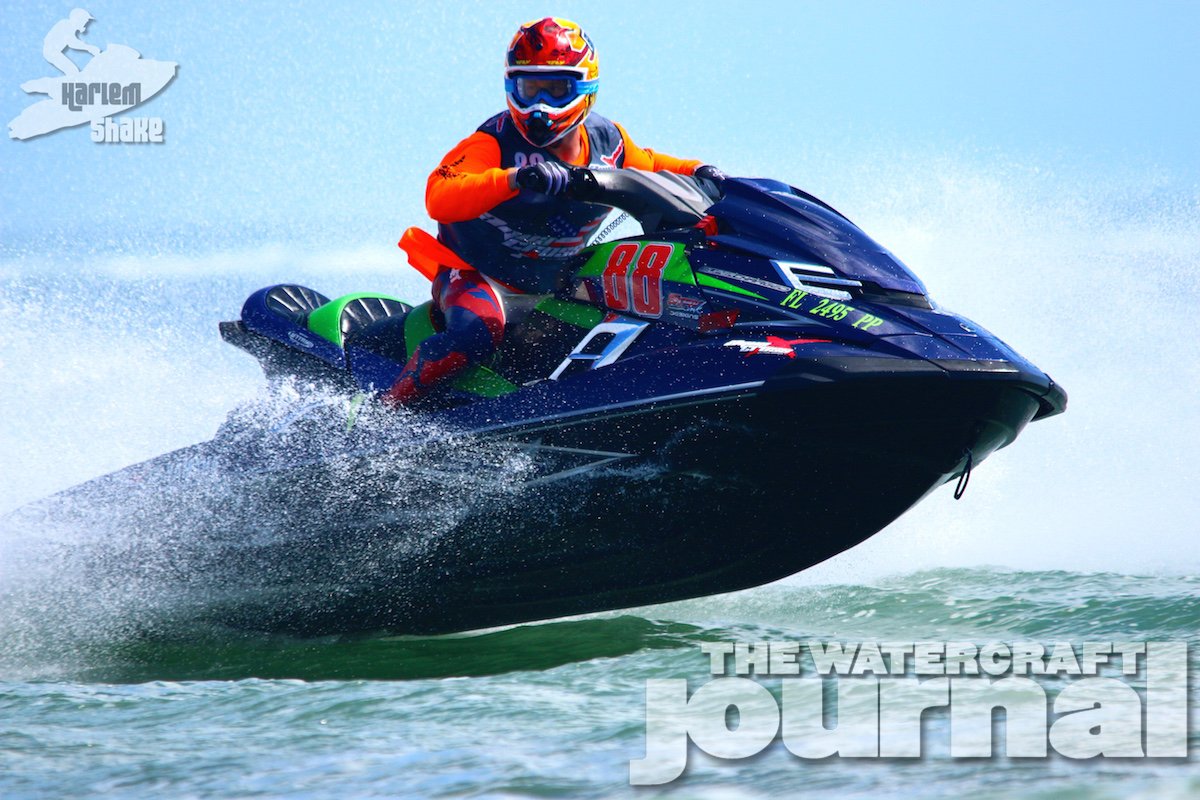
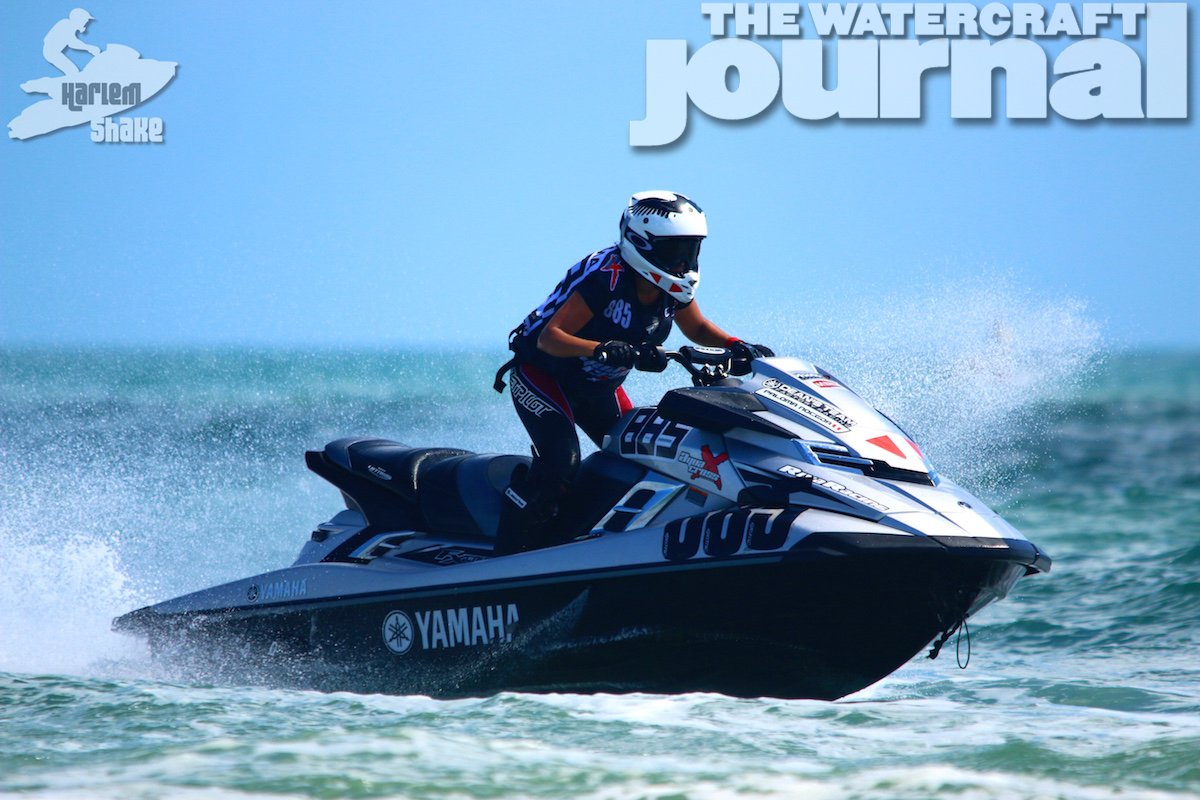
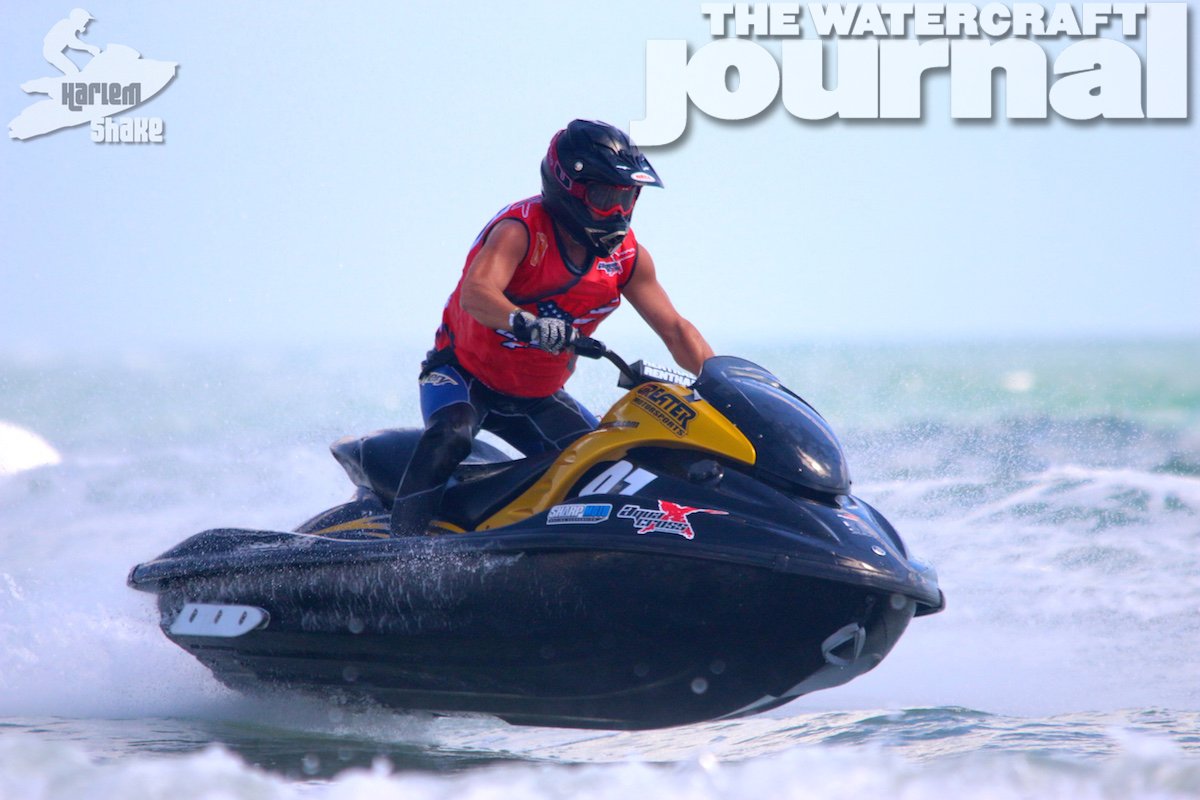
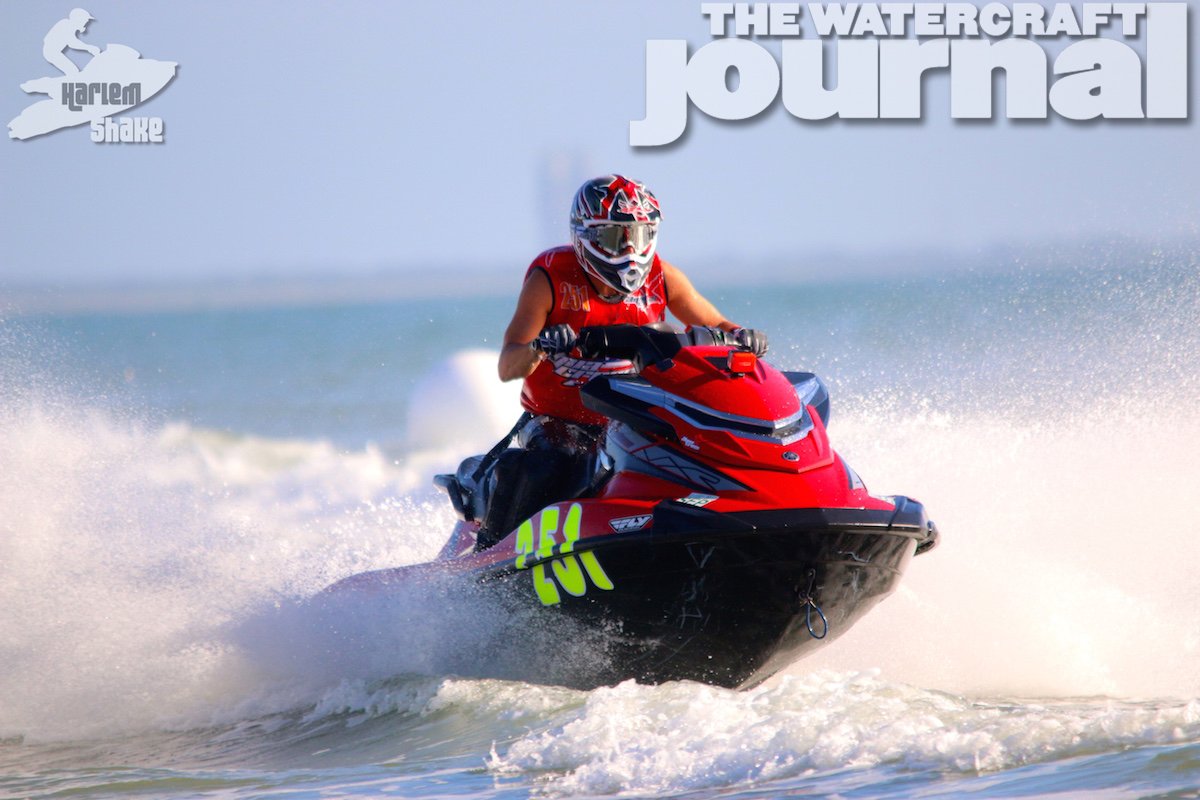
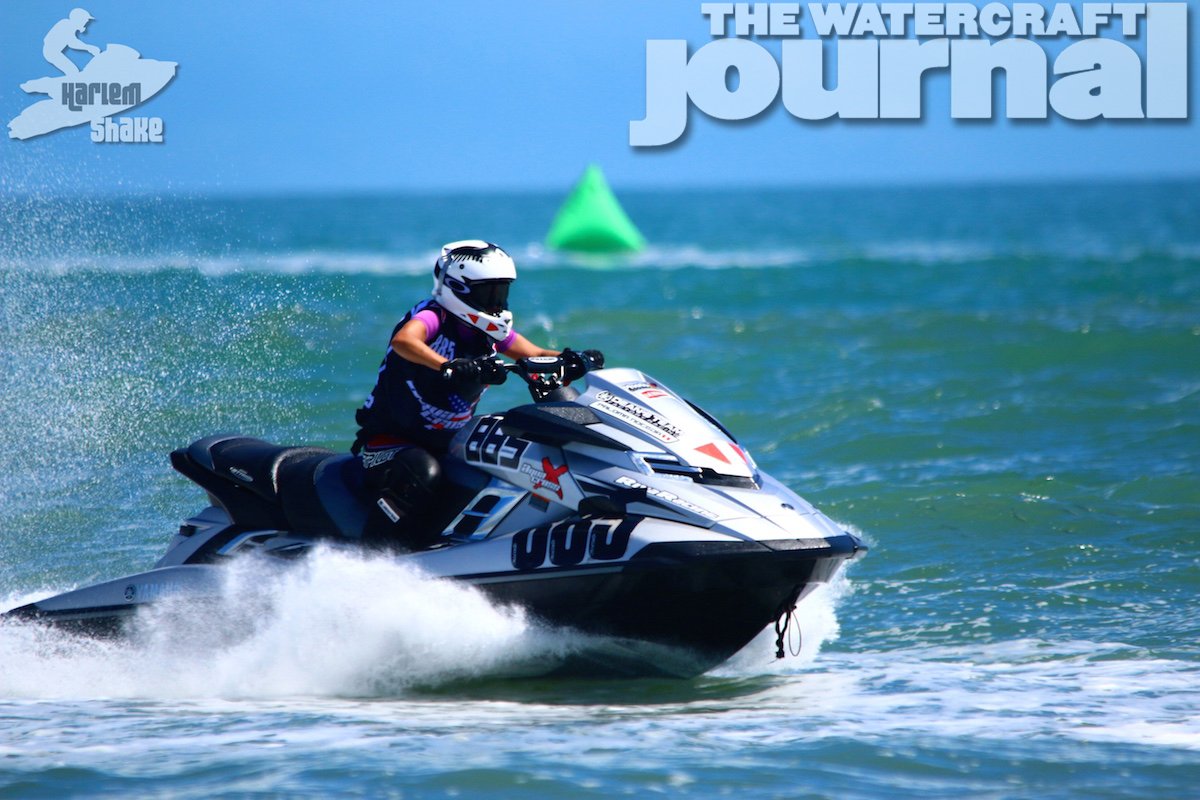
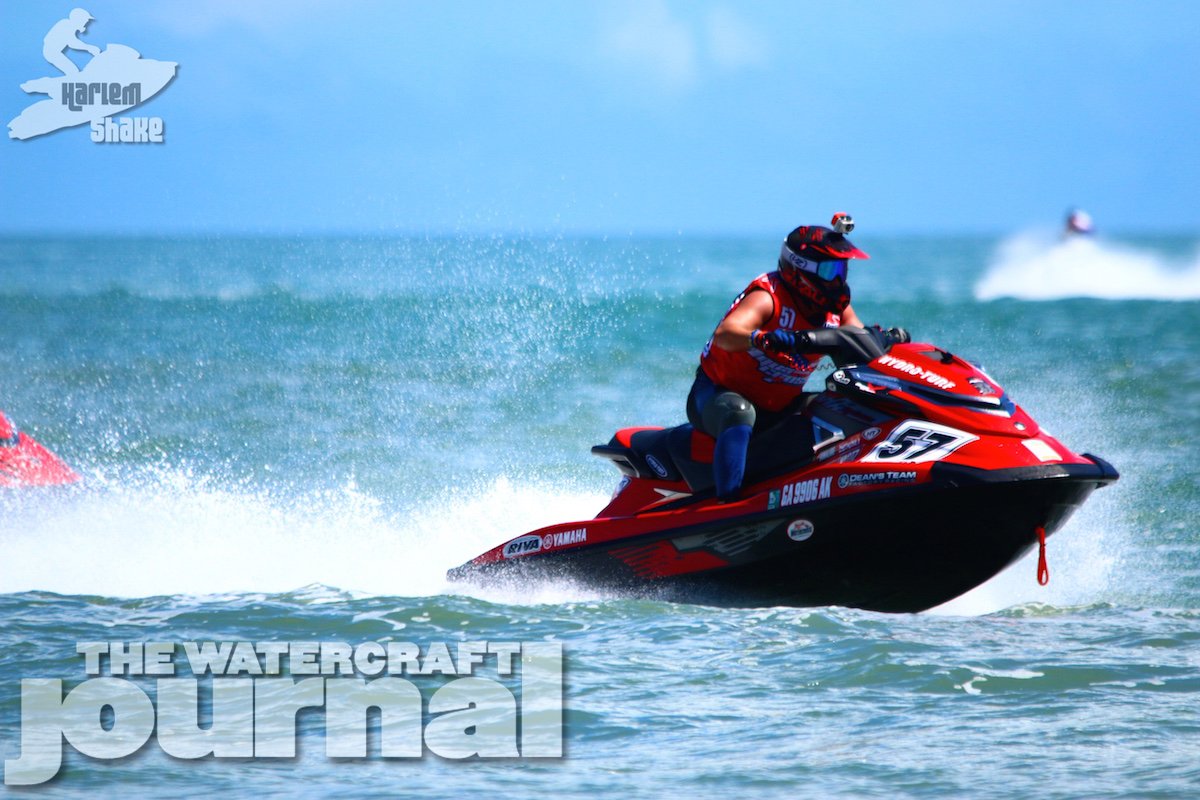
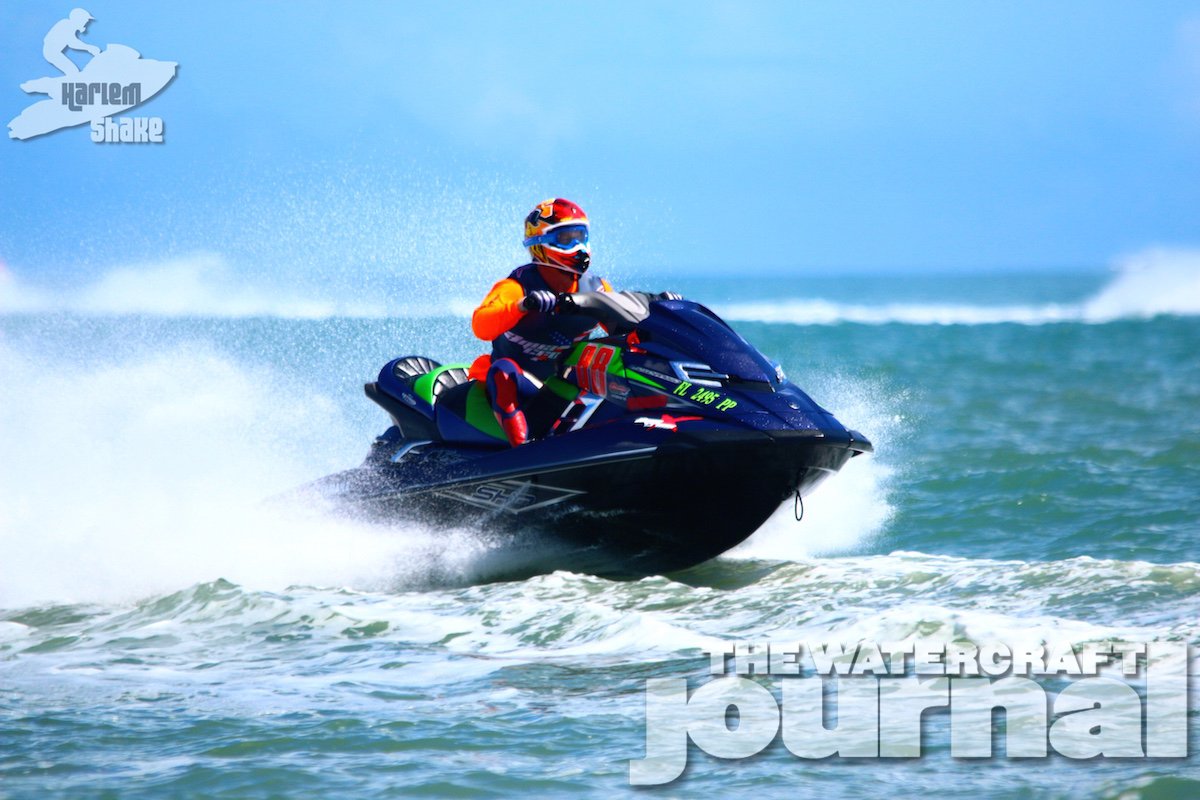
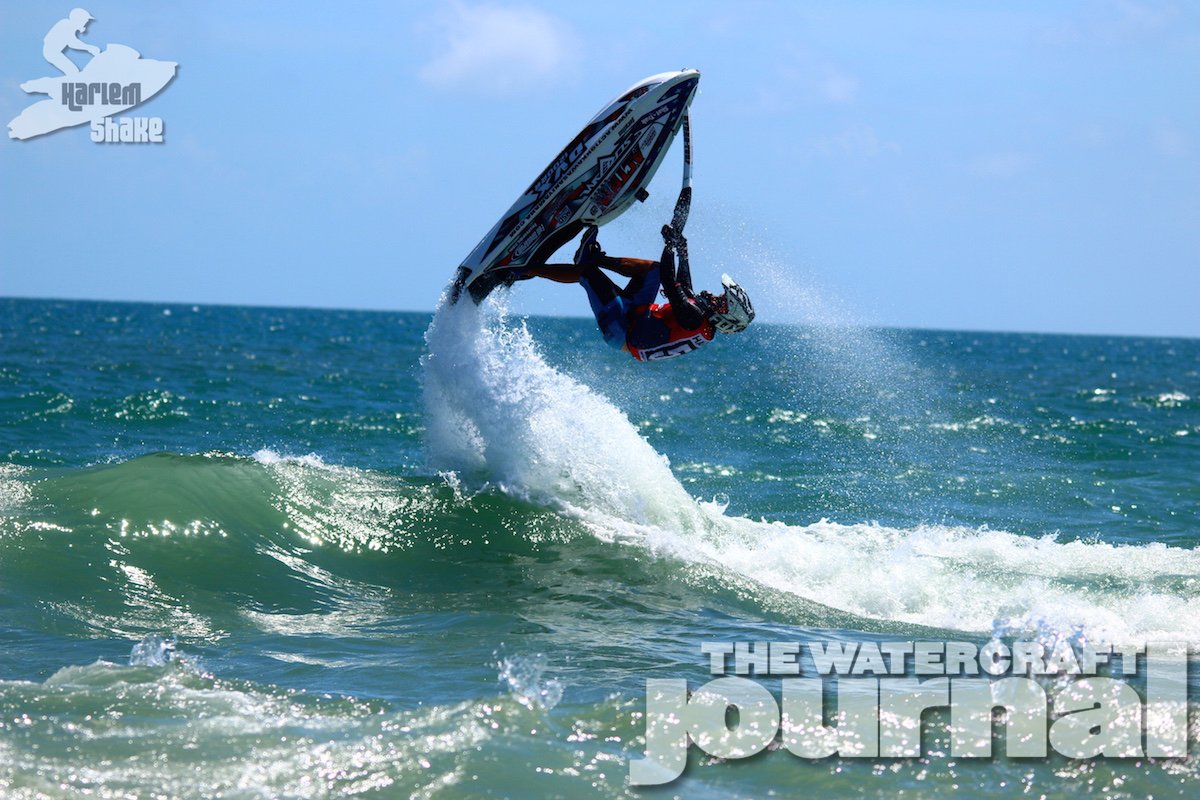
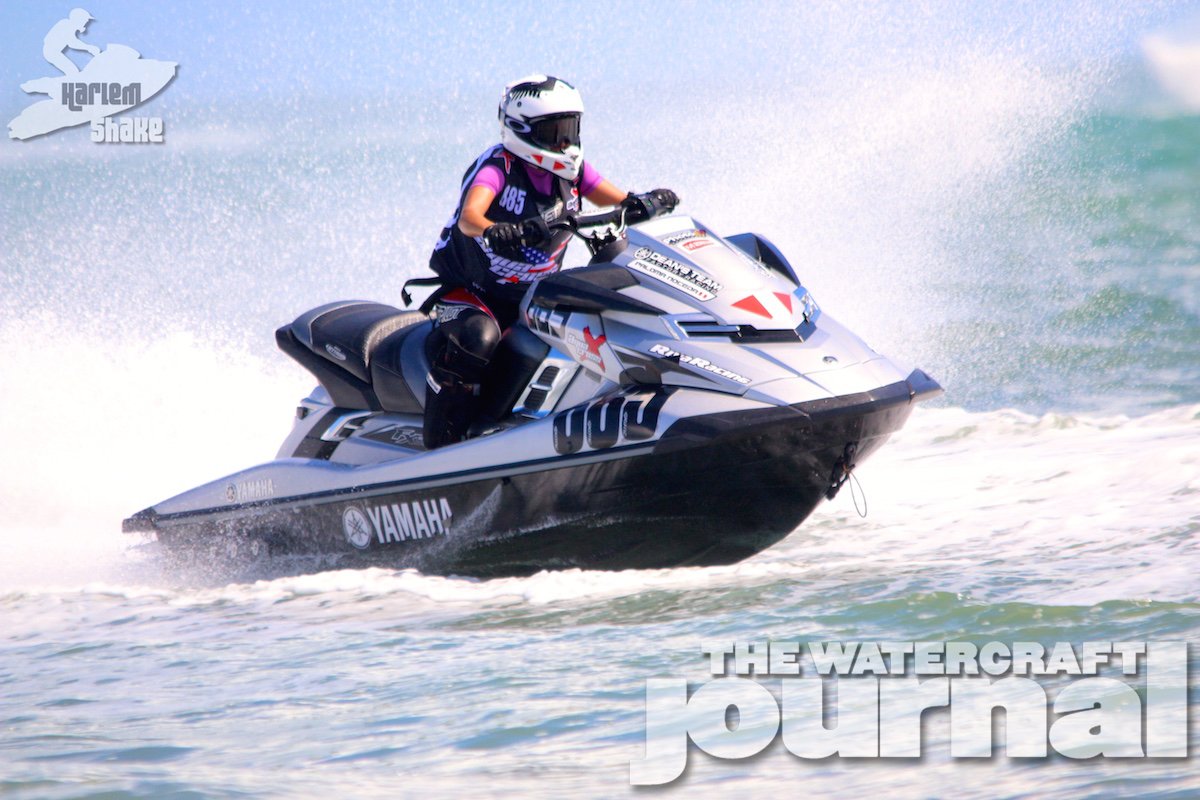
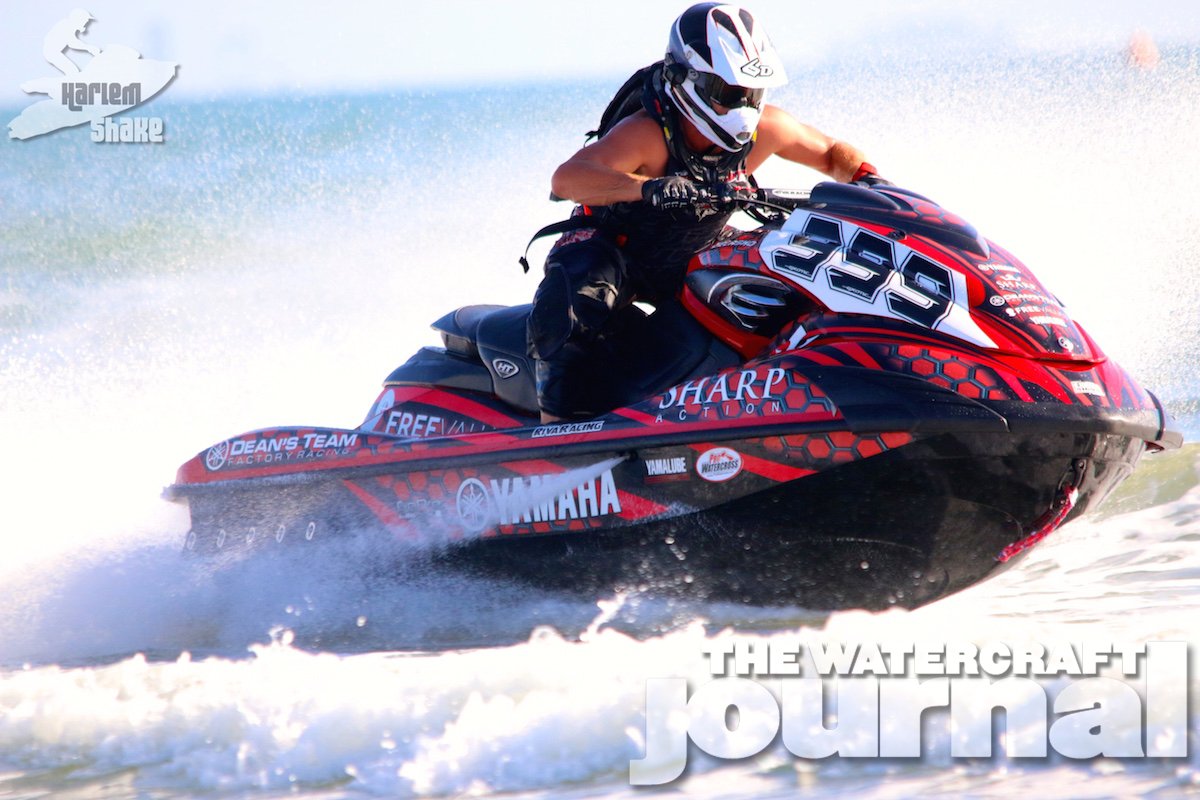
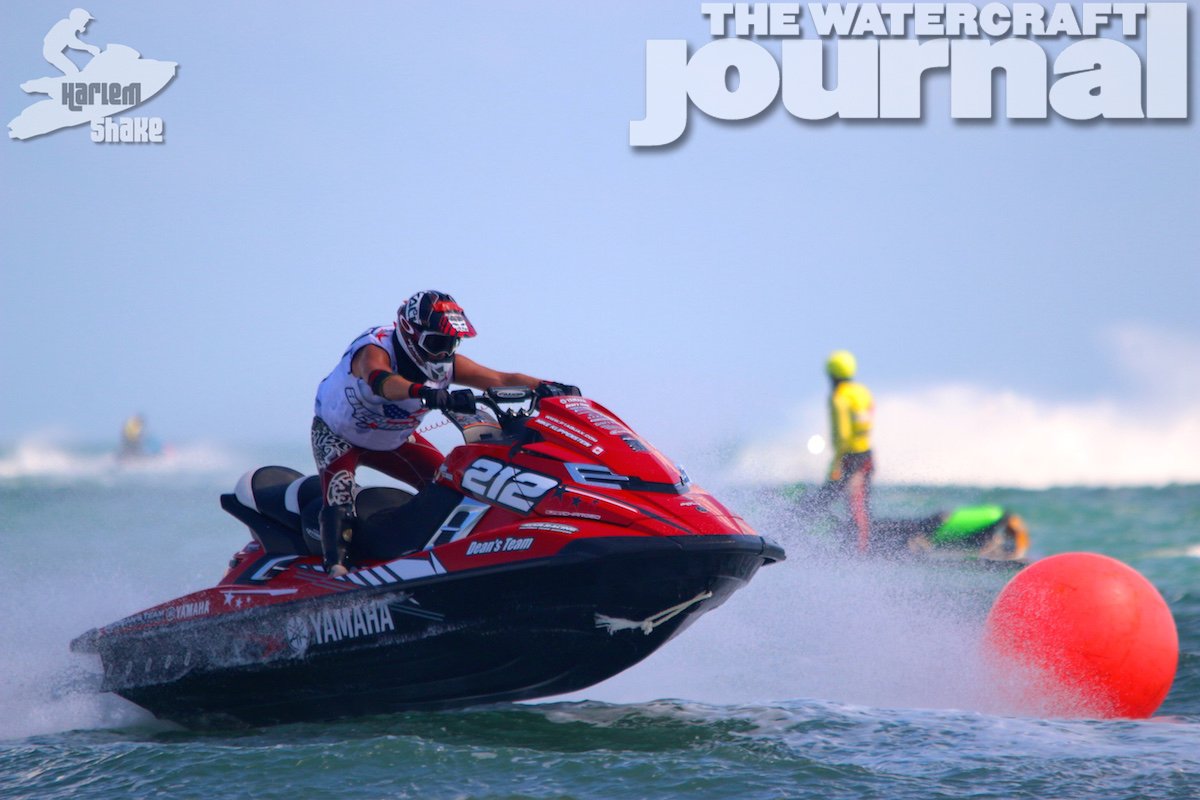
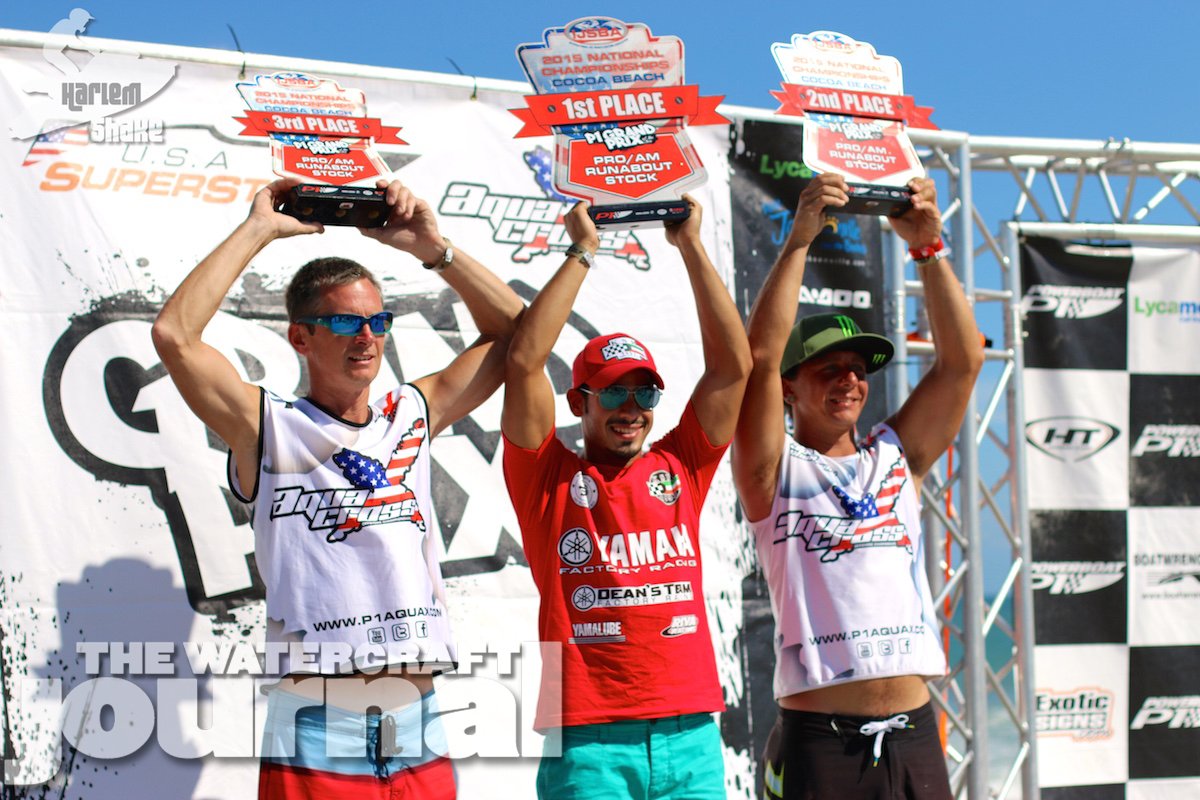
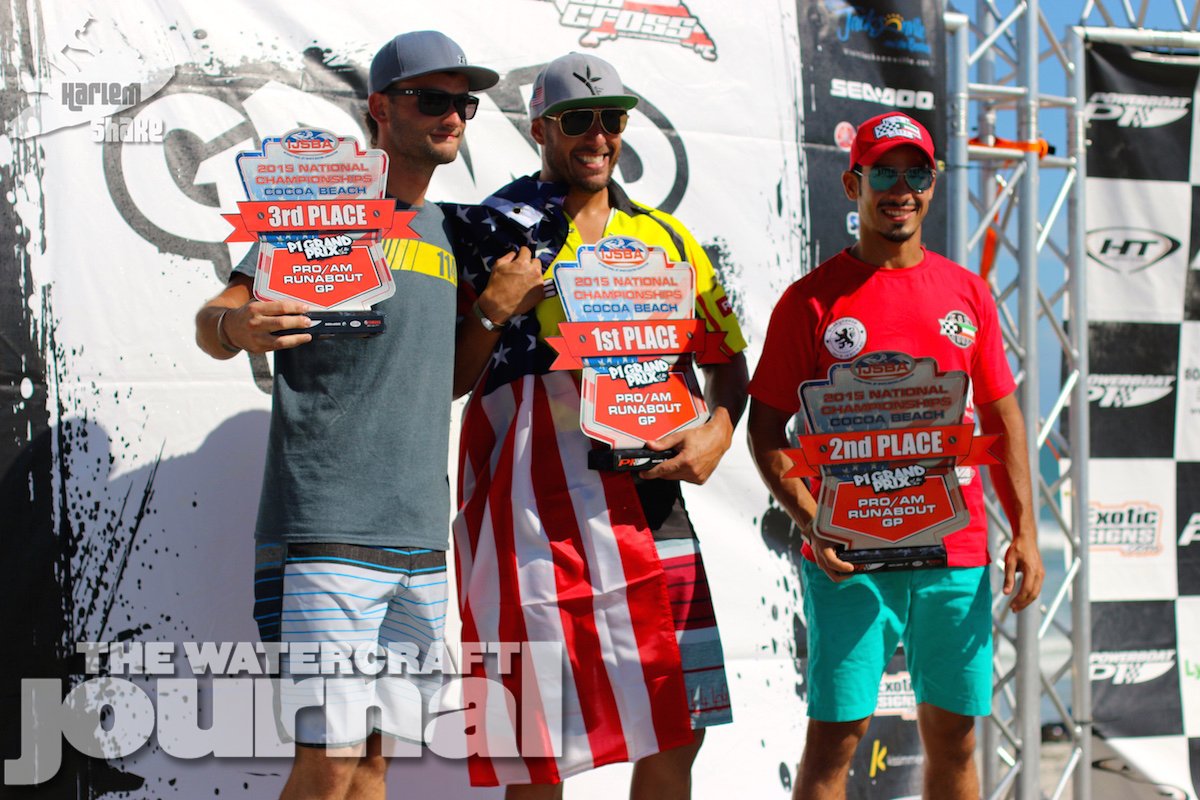
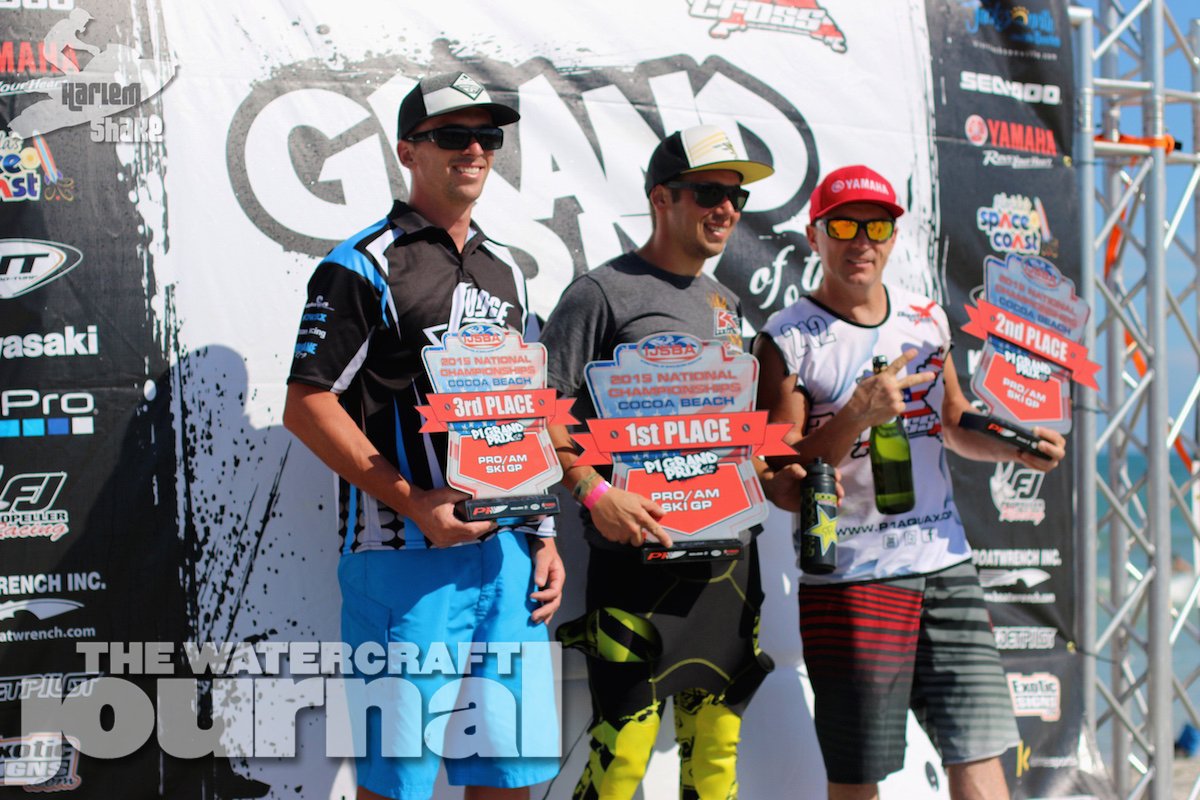
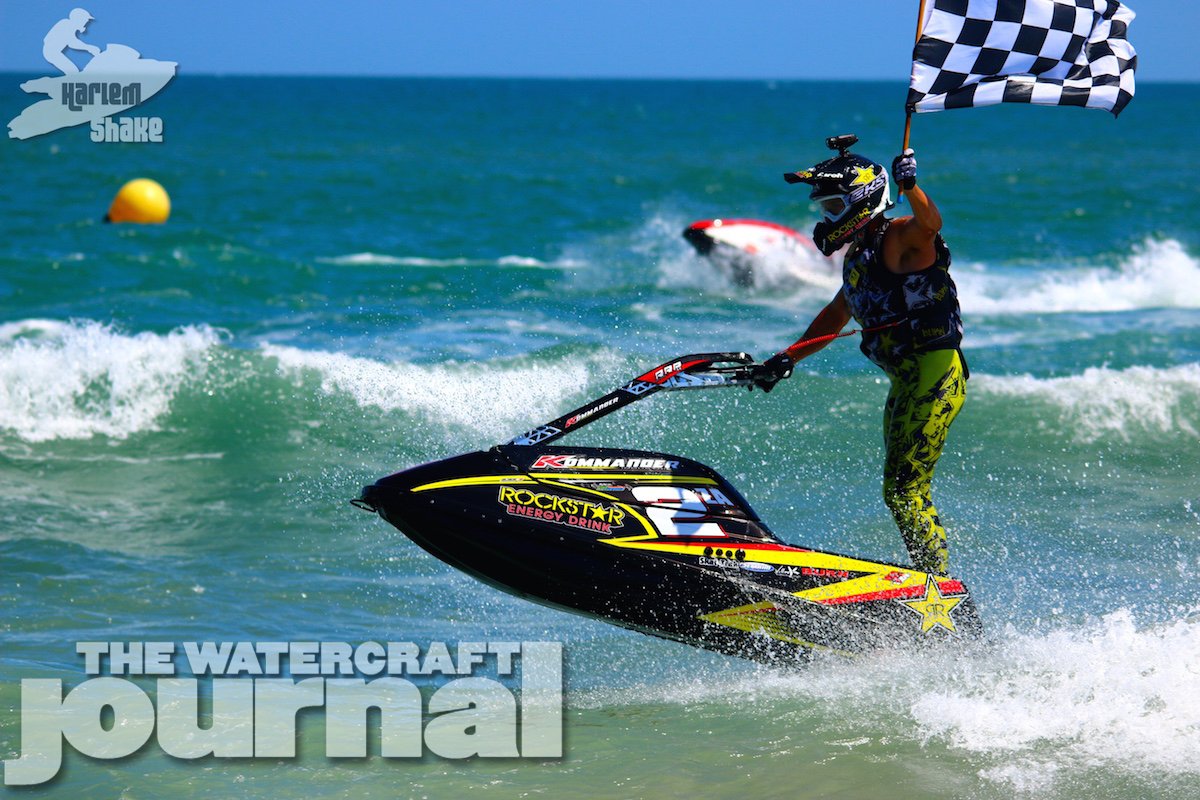
The signs along state road A1A all say “Welcome to Cocoa Beach,” and the town surely was in for some high speed action this weekend as the P1 AquaX Series came into town for the third consecutive year. Cocoa Beach is typically known as the surfing capital of the Eastern United States but it was transformed into a jet ski racer’s haven as the Grand Prix of the Seas event was going to showcase some of the most incredible jet ski riders from around the globe.
This weekend was going to be a huge event as not only was there going to be AquaX racing but also winner-take-all closed course racing. Why was this important, you might ask yourself? It was slated as the winners of the races in their respective classes were going to qualify to attend World Finals this year at Lake Havasu City, AZ.
Many of the locals were concerned if the recent Florida weather was going to play a factor in the weekend events, as it was rainy and gloomy the entire week leading up to this weekend. As Friday arrived, the weather gods decided that they wanted to shine on the beach and keep the sun shinning throughout the weekend’s events, as it was nothing but gorgeous sunny skies. The racers arrived throughout the day and got a chance to practice in Cocoa Beach’s unpredictable waters.
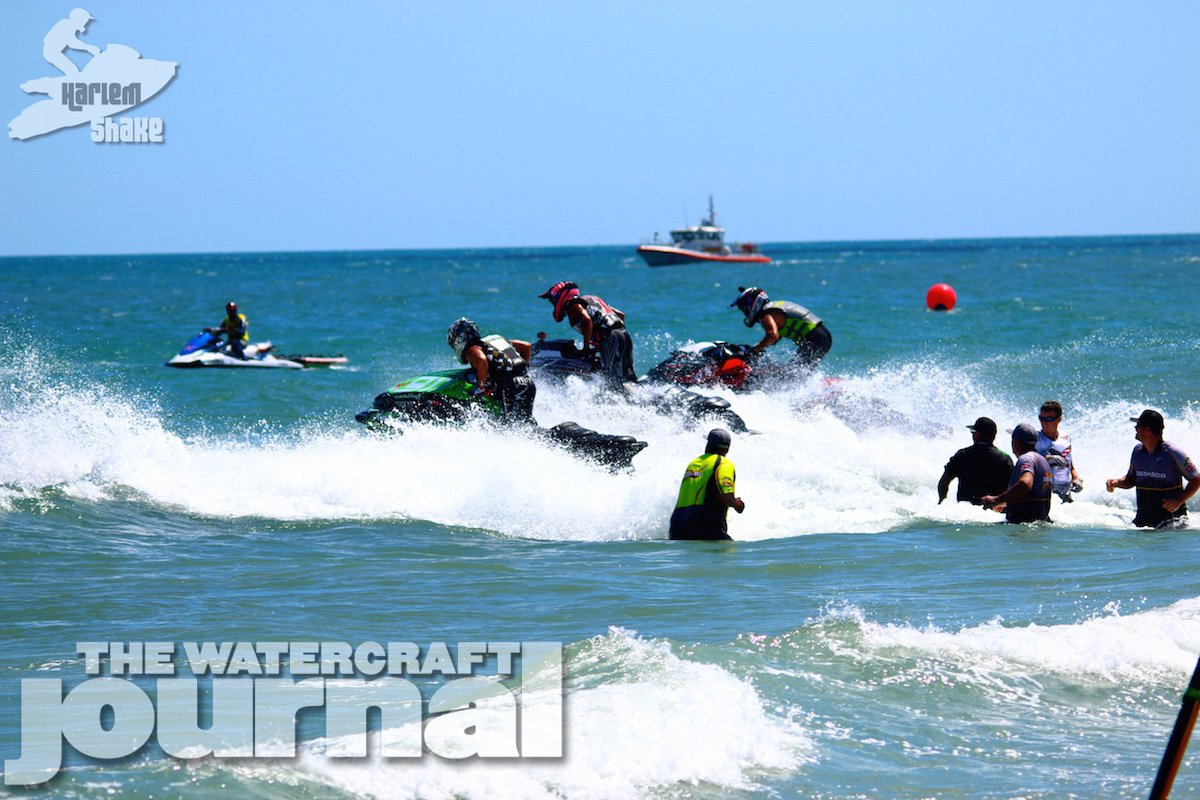
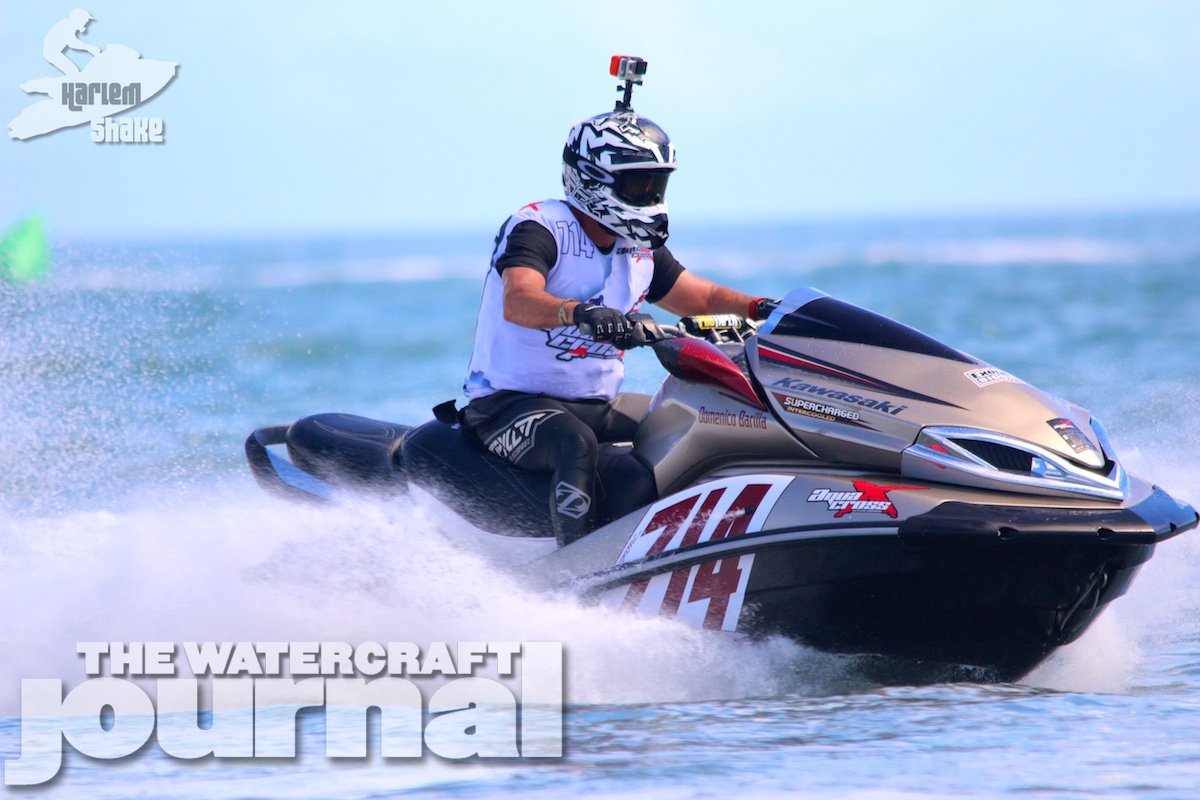
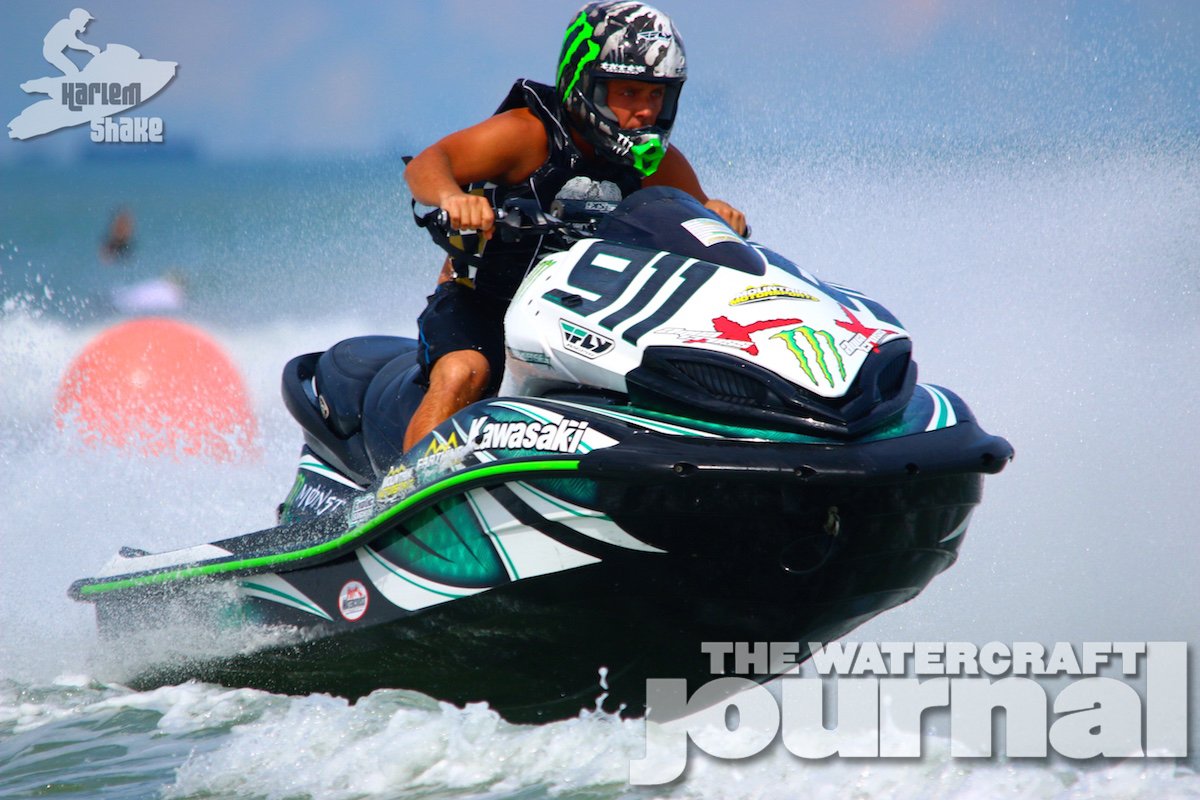
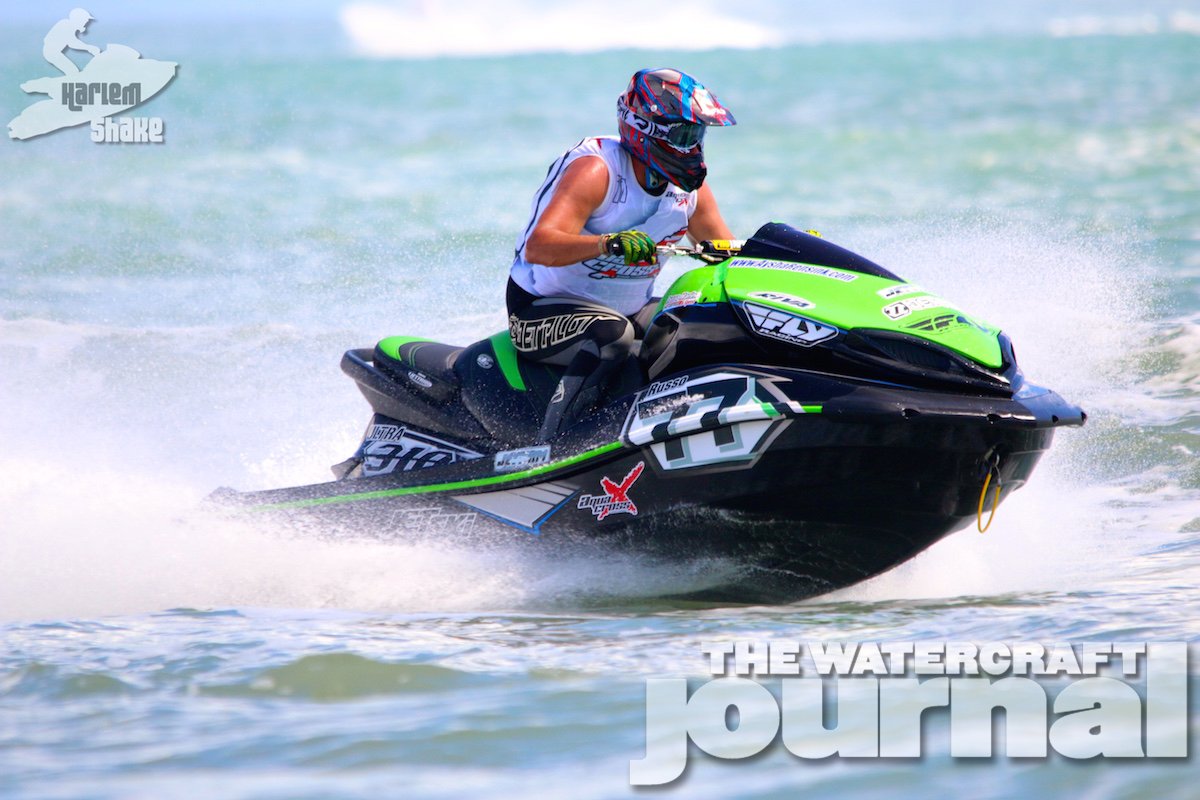
Saturday started off with Moto One of the AquaX Series with all three classes running at the same time. In the 300 Class, it was a battle with Mike Klippenstein taking the lead, with local rider Chris Leo at the start of the race and the other 300 riders were chasing him down. As the race continued, positions changed back and forth but Klippenstein maintained his lead and it was more a question of who was going to come in second and third. At the end it was world points leader Eric “The Eagle” Francis and Jason Russo who finished out the top three respectively.
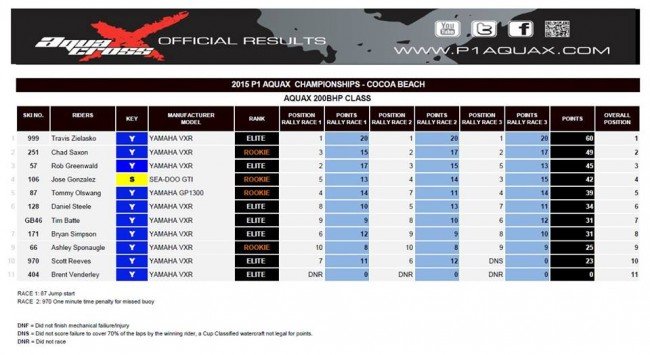
In the 250 Class it was Factory Yamaha/Dean’s Team Brian Baldwin who came across with the win in the first race followed by teammate Paloma Noceda. Rounding off the top three in the 250 Class was Rookie David Gorie. The 200 Class had its usual top rider Travis Zielasko on top for the first race as he has been accomplishing the top spot almost all season long. Tommy Olswang, who rode his GPR1300 to a second place finish followed Travis, and Rob Greenwald rounded out the class for the third spot.
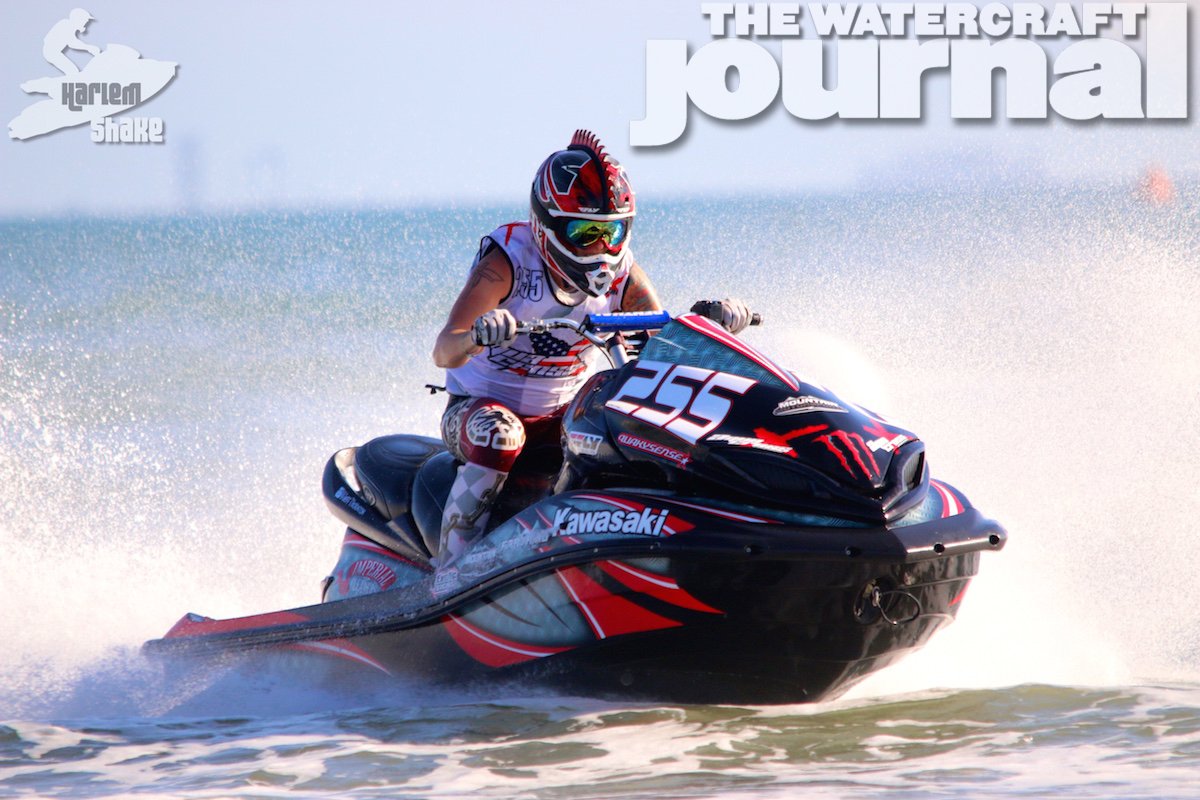
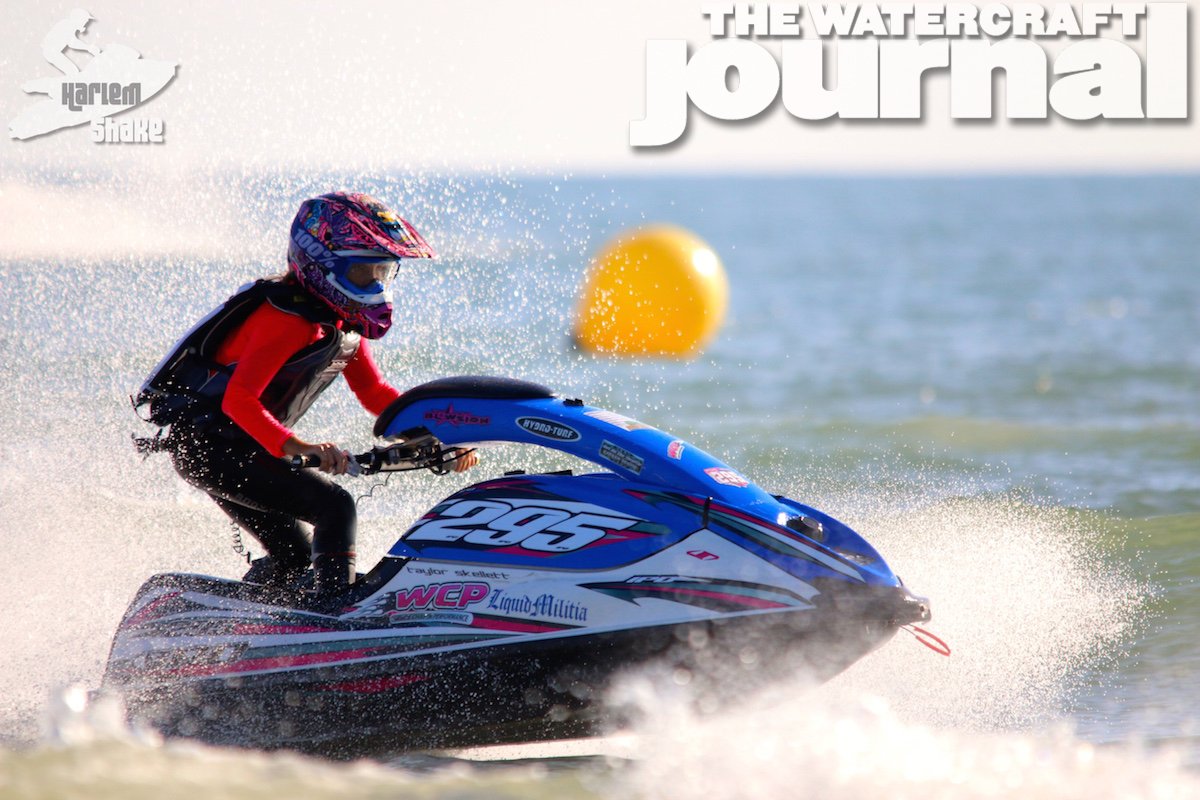
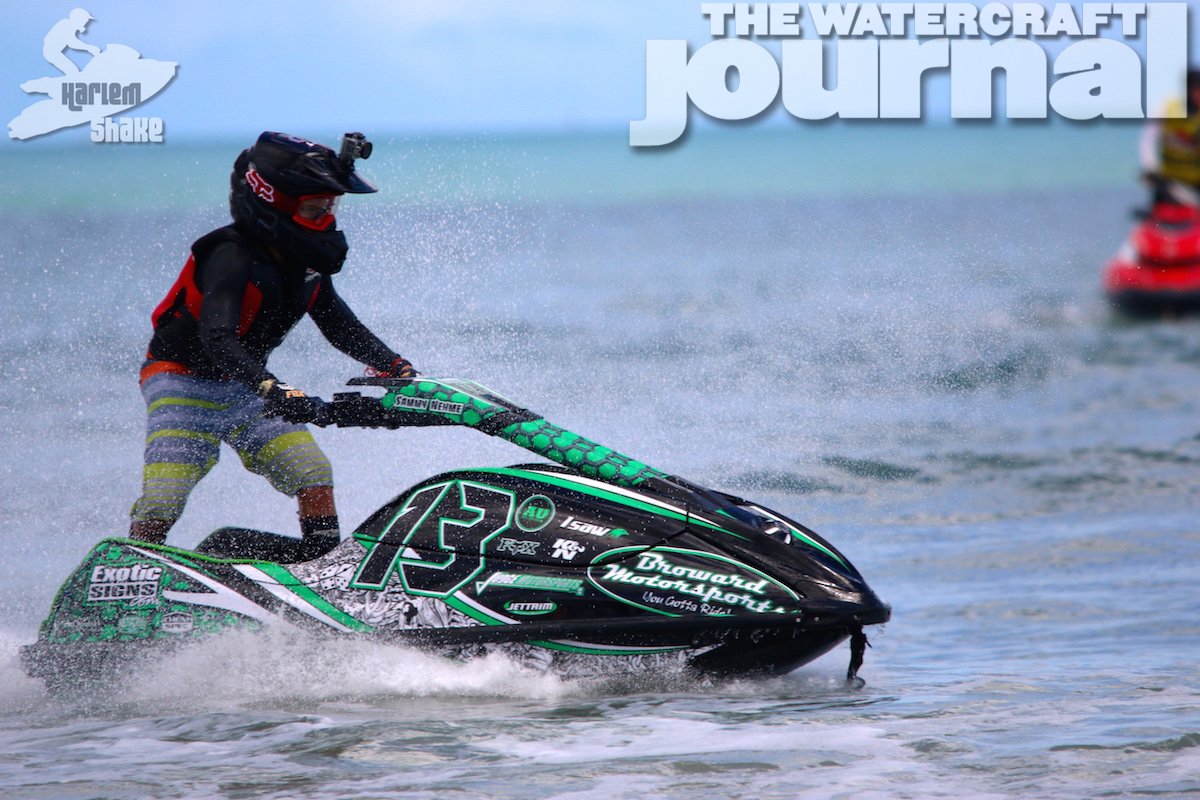
Following the first race of the weekend for AquaX, Cocoa Beach welcomed riders who were participating in the IJSBA races. The Junior skiers started the day of with their race, where Haden Skellet took the win over his sister Taylor Skellet and Sammy Nehme. The kids did an outstanding job and loved racing in the surf. It just shows that these kids are the future of racing.
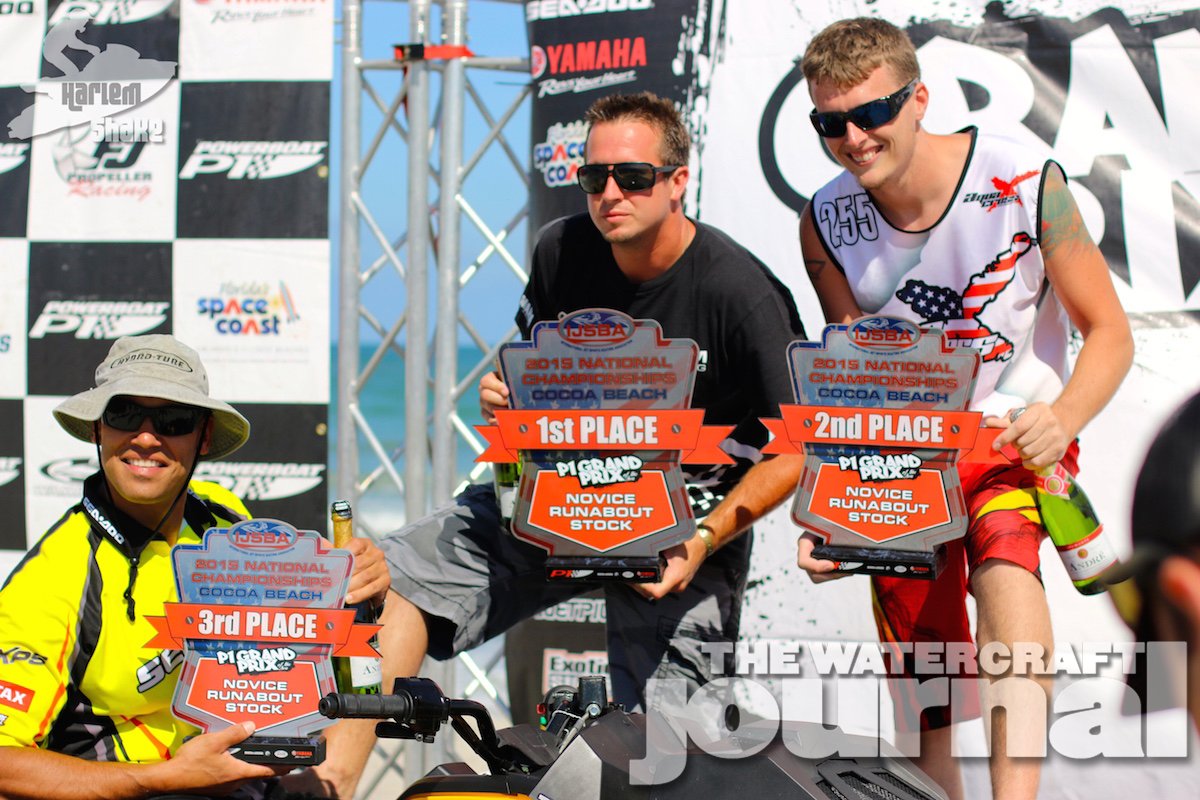
Following the Junior races, the riders competed in the Novice/NA Runabout where AquaX racers Anthony Radetic, Travis Zielasko, and Jeffrey Thorton were hoping to show off their riding capabilities in the closed course arena. The Sport GP Class, Pro-Am Runabout Open and Stock, and the Pro-Am Ski GP class races followed with familiar racers to the conditions of riding in the surf conditions.
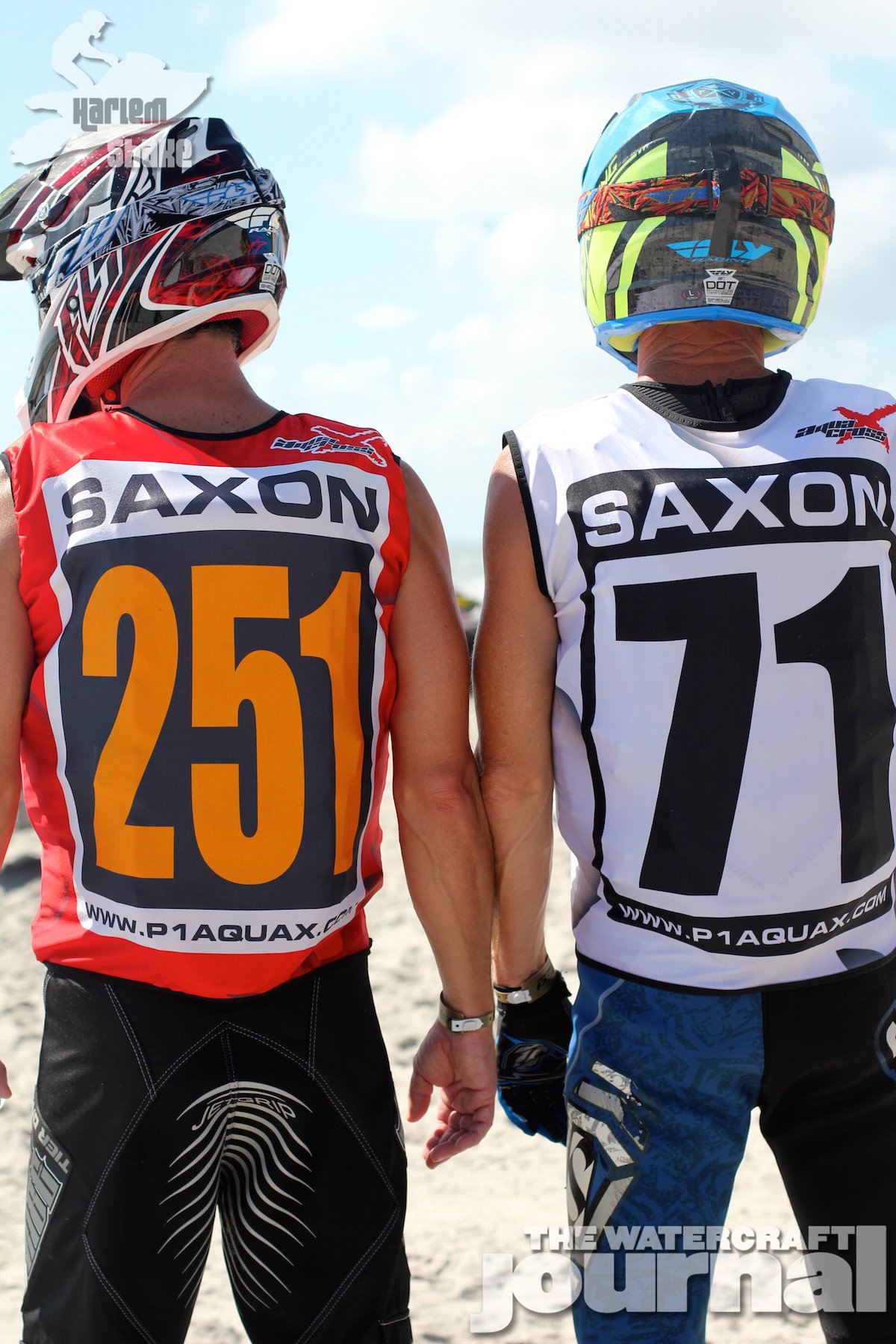
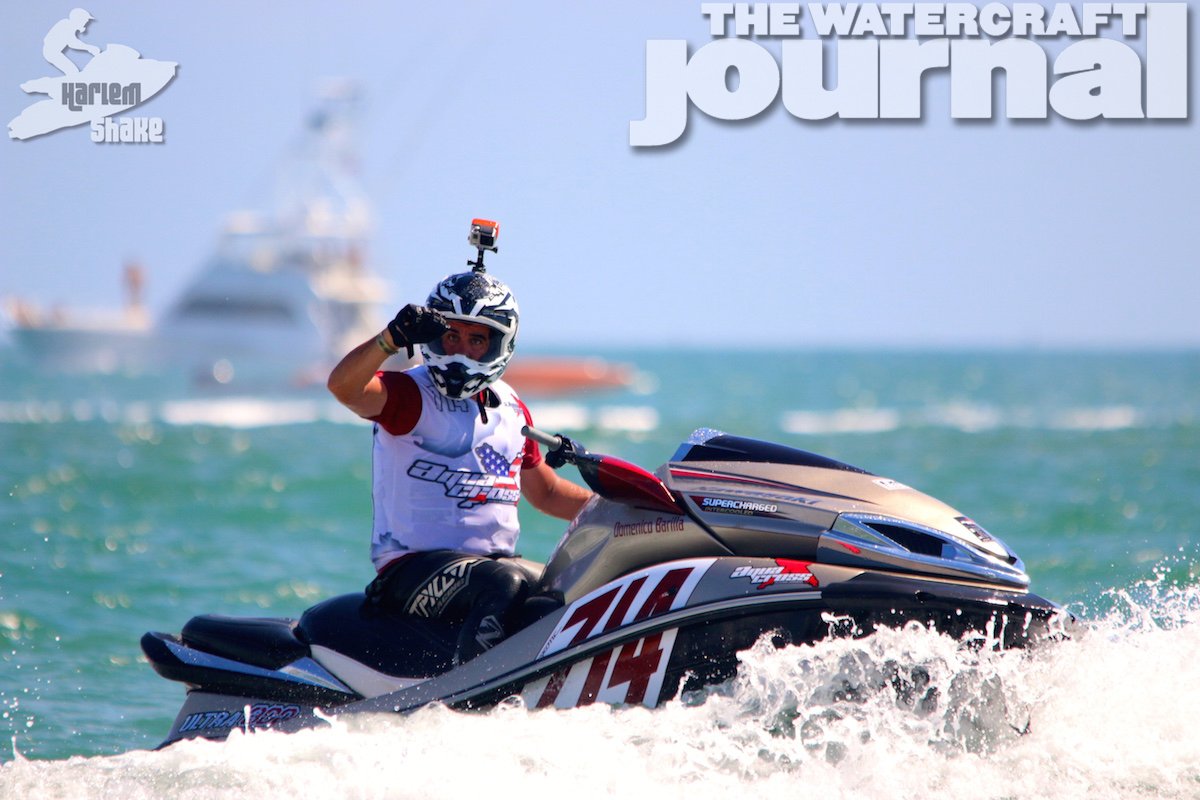
The final event for the first day of racing concluded with the second AquaX race. The 300 Class was won by Mike Klippentsein, and followed by Domenico Barilla and Enrique Chia rounding the top three spots. In the 250 Class Sea-Doo team rider Eric Lagopoulos came away with the top spot followed by David Gorie and Brian Baldwin. In the 200 Class it was Travis Zielasko, Chad Saxon and Rob Greenwald. All had a great first day of racing and everyone was already looking forward to getting back out there on Sunday.
Sunday morning arrived with sun shining bright just over the horizon and the riders getting their morning briefing before the racing began. The Juniors started the day of with their races and followed by the other races in the order that occurred the day before. The final race of the weekend for the AquaX riders then took place. The 300 Class was won by Klippenstein for a sweep of the weekend as Enrique Chia received an overall second for his first podium of the season. Jason Russo came in strong for a third place win to round out the top three.
In the 250 Class the overall winner was Dean’s Team Brian Baldwin followed by Paloma Noceda and Eric Lagopoulos . The 200 Class ended with Travis Zielasko taking the overall win and extending his overall lead for the series. The Class was rounded off with Chad Saxon and Rob Greenwald.
The final set of races for the weekend showed Mike Klippenstein that he was the ironman for placing on top in his races in AquaX and numerous classes in the closed course arena. The closest race of the weekend was the Pro-Am GP as Sea-Doo rider Erminio Iantosca leading the entire race followed by Factory Yamaha/Dean’s Team Abdullah Al-Fadhel and Team Kawasaki’s Eric Francis. The race finished with all three riders finishing within five seconds of each other respectively.
The weekend was a huge success. A lot of the riders focused their eyes on racing on the Gulf Coast of Florida in the city of Naples and the AquaX racers focused their eyes on the next and final round of the year. The final round will be on October 24th and 25th held in the City of Tavares.
IJSBA National Closed Course Championships Junior Ski: Haden Skellett; Women’s Ski: Bibi Carmouche; Amateur Ski Limited: Bibi Carmouche; Pro Ski GP: Tyron Motzouris; Novice Runabout Stock: Travis Zielasko; N/A Runabout: Chad Saxon; Pro/Am Open Runabout: Erminio Iantosca; Pro/Am Stock Runabout: Abdulla Al-Fadhel; Sport GP: Johnny Smith; Sport Spec: Glen Jung; Rec Lite: Paul Green; Freestyle: Chris Anyzeski
BlackTip has been around the PWC industry for years. Since their opening they have grown into many enthusiasts’ go-to brand for seat covers, traction mats, and even graphics! We are excited to announce their most recently released their latest product, handlebar covers are now available for purchase through BlackTip retailers!
If you’re looking to stand out on the water, BlackTip handlebar covers will surely get you riding in style. They have covers for nearly all PWC models, from the light, playful 2-strokes of the ’90s to the high powered watercraft of today’s market. They even have covers for a number of discontinued skis.
The BlackTip handlebar covers also come in a variety of styles and colors. They come in flat black for their standard covers. BlackTip also offers Elite covers, which feature an exclusive design as well as colored ends. You can choose the color of the ends; the options are black, blue, grey, purple and yellow.
BlackTip handlebar covers are also very easy to install. They should take all of 5 minutes to install if you’re taking your time. They have a simple, yet functional zip up design. They also offer a little protection from hitting the handlebars.
You can find more info on BlackTip handlebar covers as well as other products they offer HERE!