
Home Blog Page 363

Gallery: The Watercraft Journal’s 2015 Long Haul Record Attempt

2

HAUL1

Anything worth doing doesn’t come without the risk of failure.

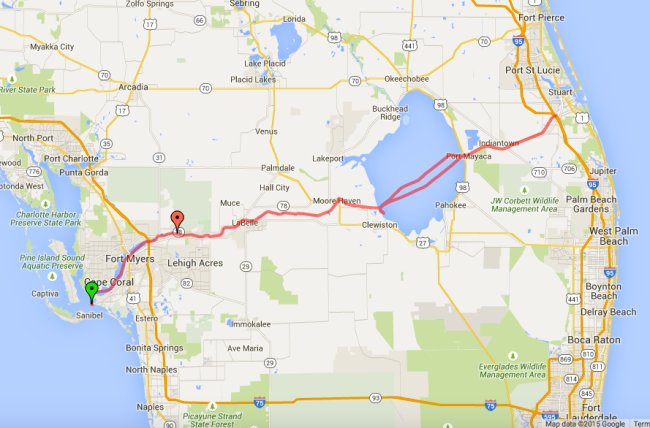
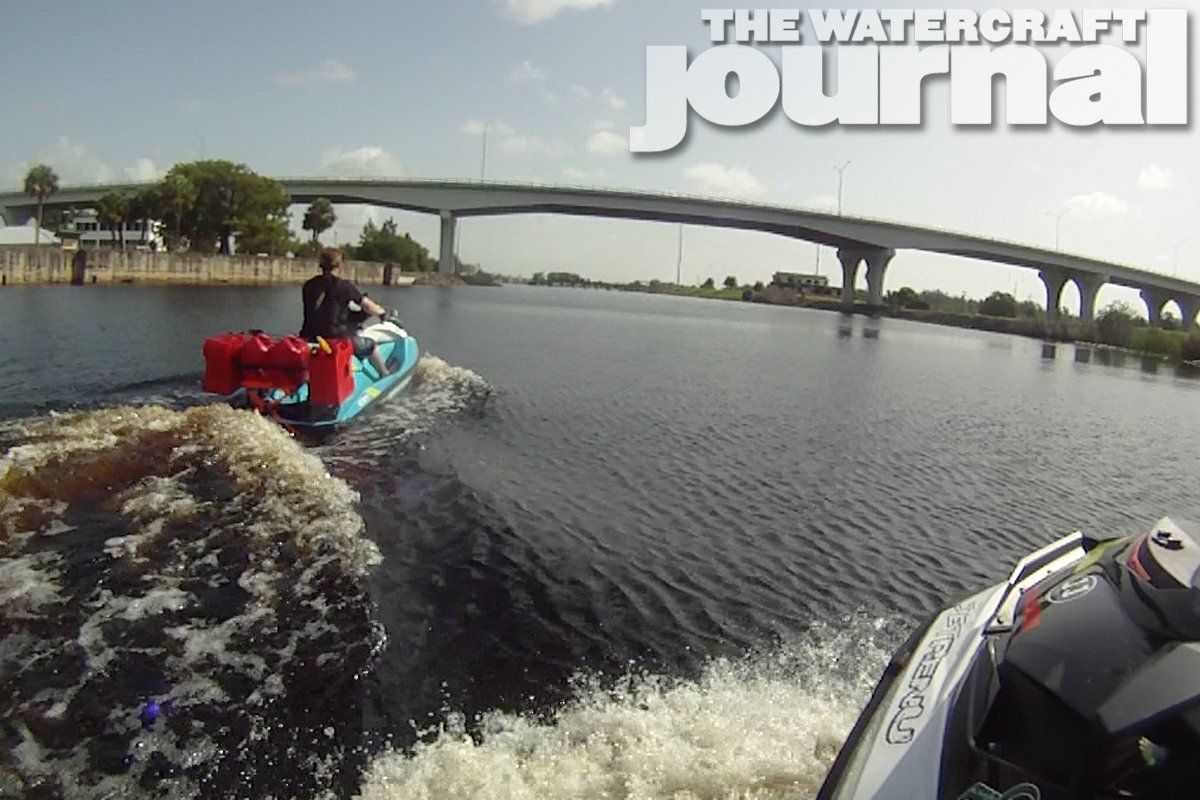
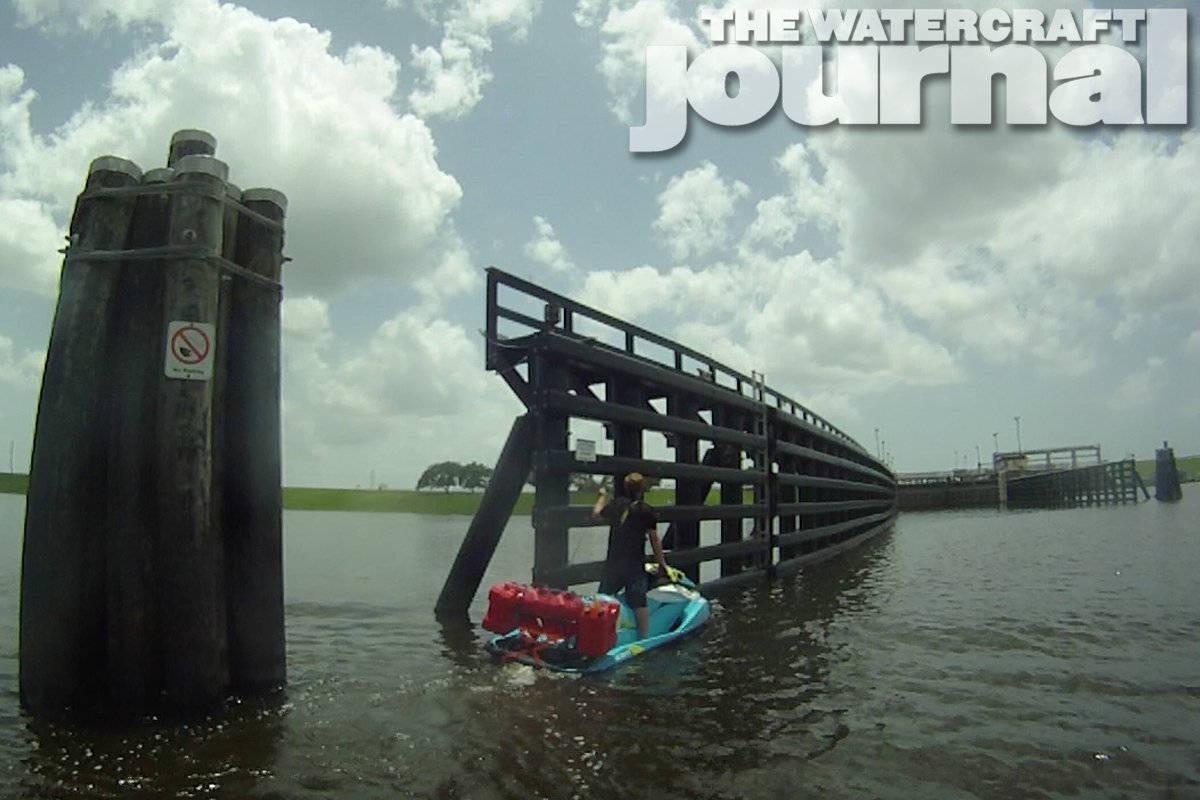
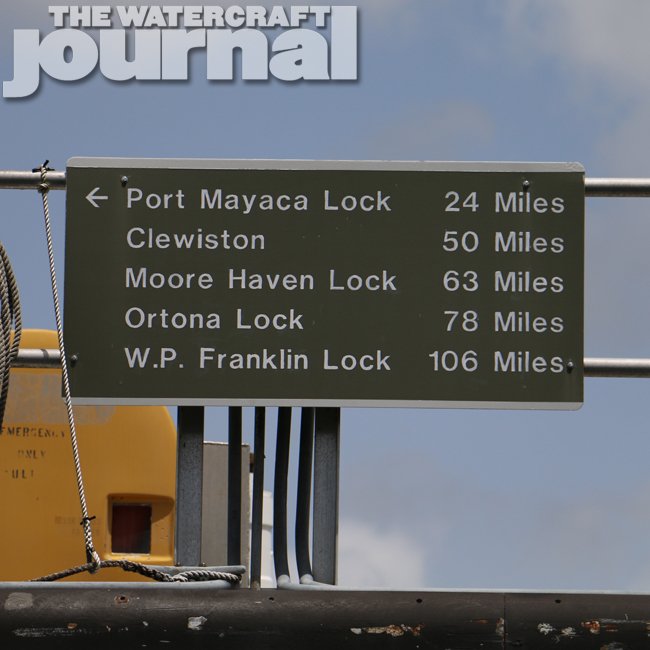
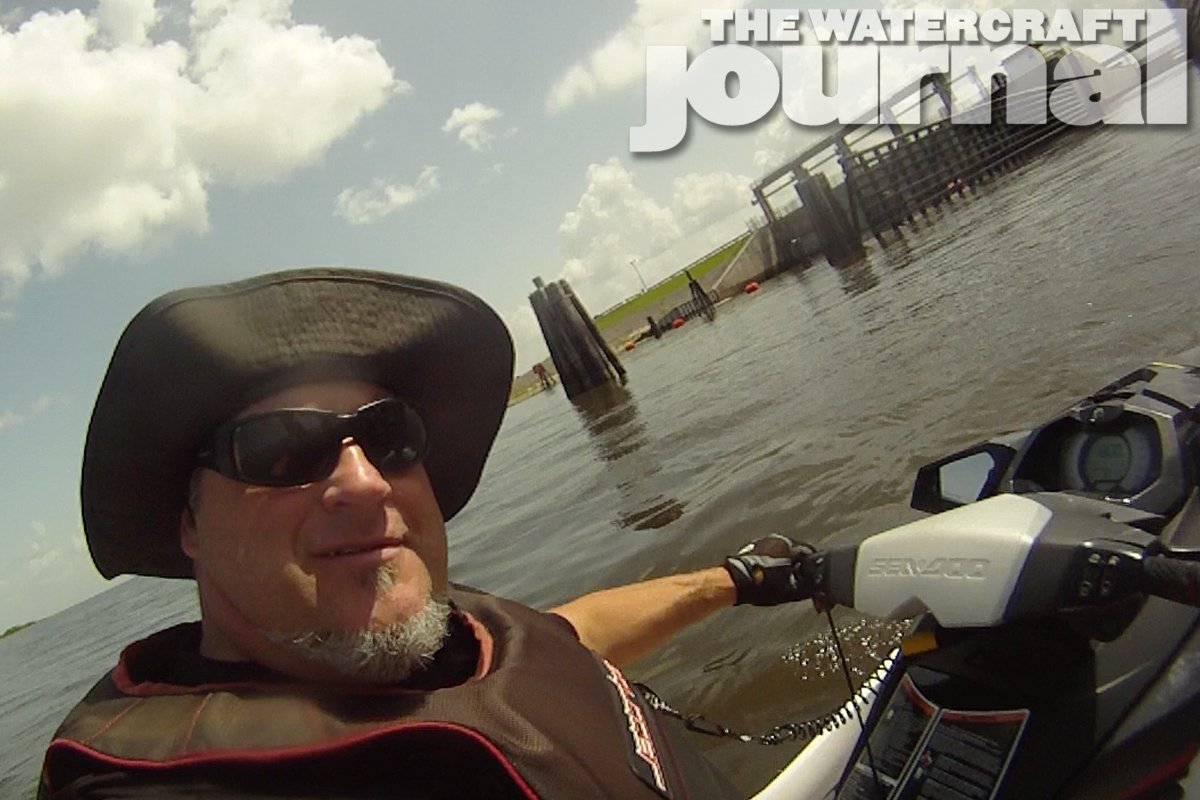
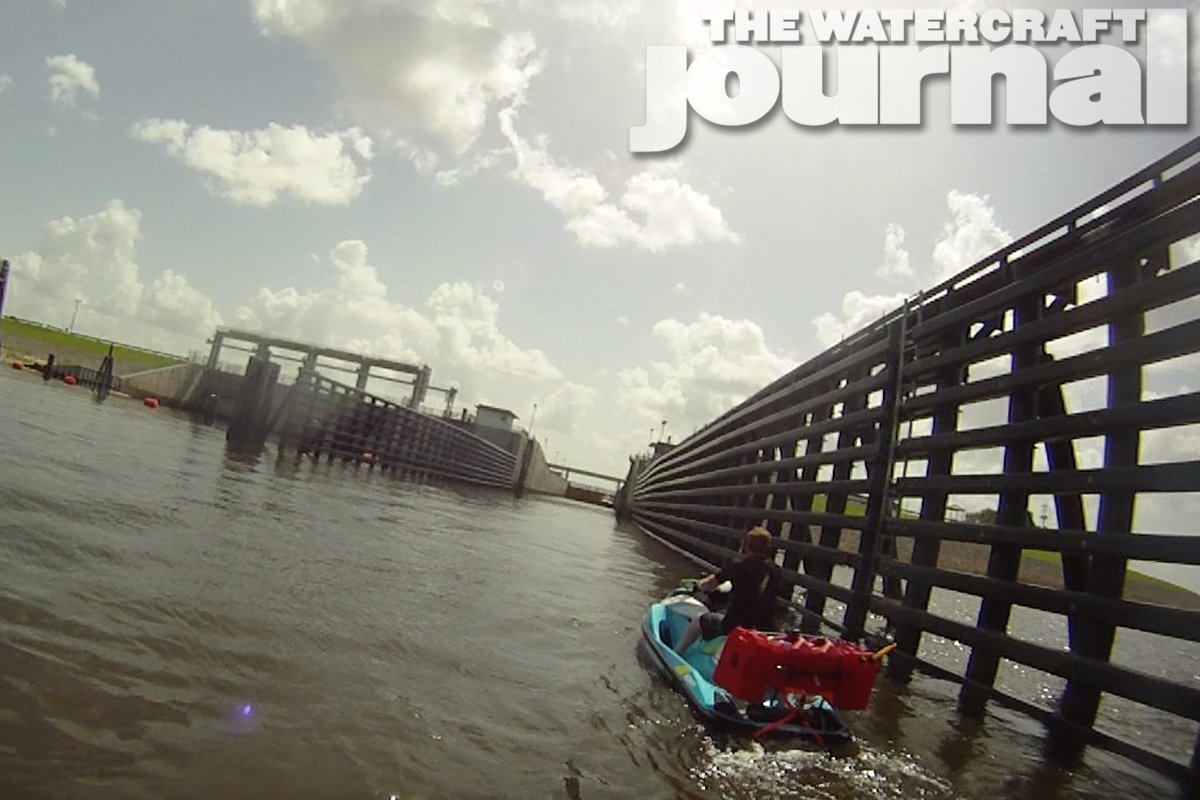
During the middle of the first week of July 2015, The Watercraft Journal attempted to crisscross the entire width of the State of Florida from West Coast to East Coast and back West in a single outing called the “2015 WCJ Long Haul.” This would tally over 280 total miles, require passing through five locks twice and all the while maintaining a strict timetable as the government-managed locks operate during specific hours. Stopping for fuel would be almost entirely out of the question (save for a single stop halfway through), and depending on the conditions of Lake Okeechobee, we could be ahead or behind schedule.

Managing the logistics of such a mission were far beyond our skill set, so we proposed this hair-brained notion to Jetski Junkies’ Kev Hemingway. Hemingway has guided his club (and others) over literally tens of thousands of miles of waterways, and is a stalwart navigator – a perfect fit for what we needed. Thankfully, it took very little convincing to wrangle Hemingway on board who quickly devised a timetable for our ride, and started mapping out our waypoints. Initially, the plan was to drive as far east as the Highway 1 bridge in Stuart, Florida, but realized that would require a second fueling stop, thus making reaching the westward locks in time impossible.

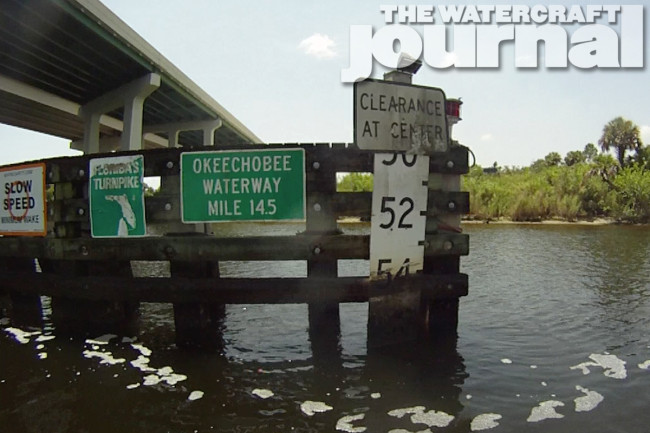
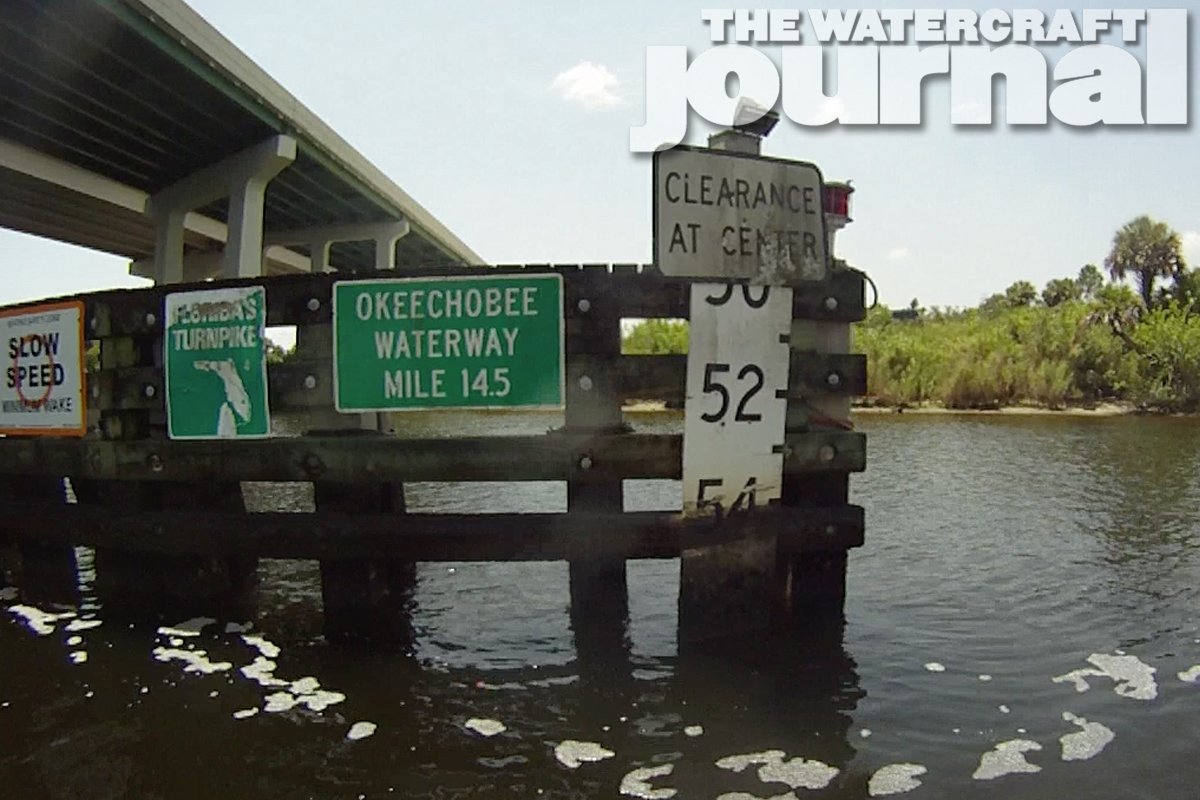
Rather, we opted to go “highway to highway” – from HWY 75 to 95 and back – starting in the Gulf of Mexico at Punta Rassa Landing, and riding beneath the HWY 95 bridge to Monterrey Marina in Stuart for fuel before turning back west again. Other constraints began to pile up: we had a start time for 6:30am because PWC cannot be operated as much as a half an hour before sunrise, how much fuel we could carry, and we had to abide by all the “no wake” and slow speed zones. Our GPS tracking app would show if we were speeding.
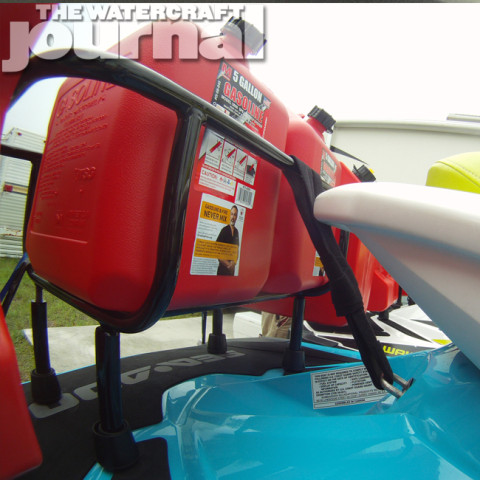
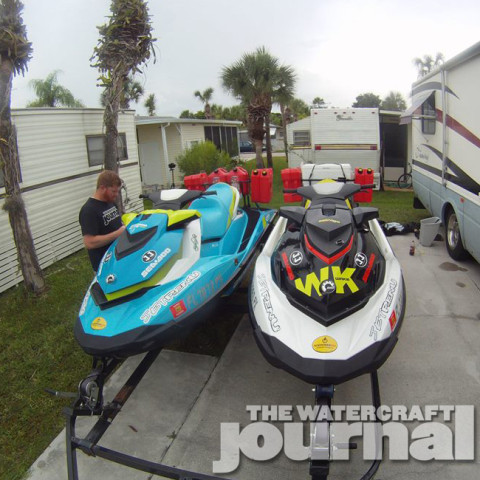
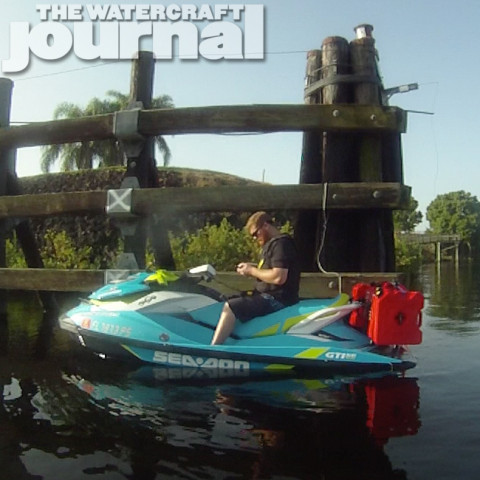
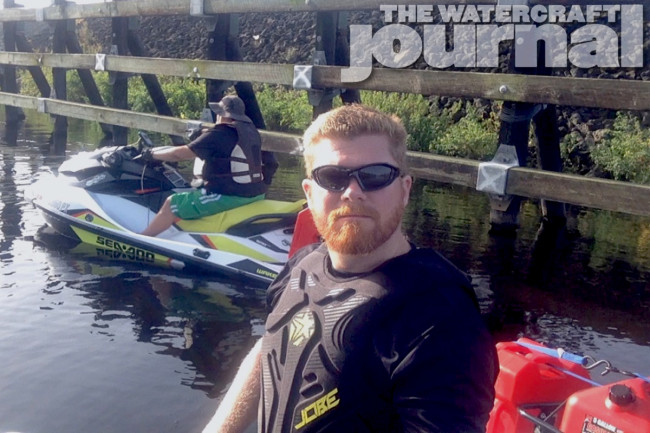
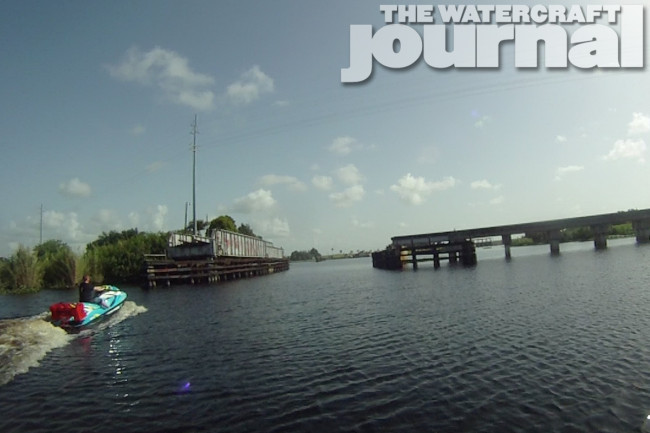
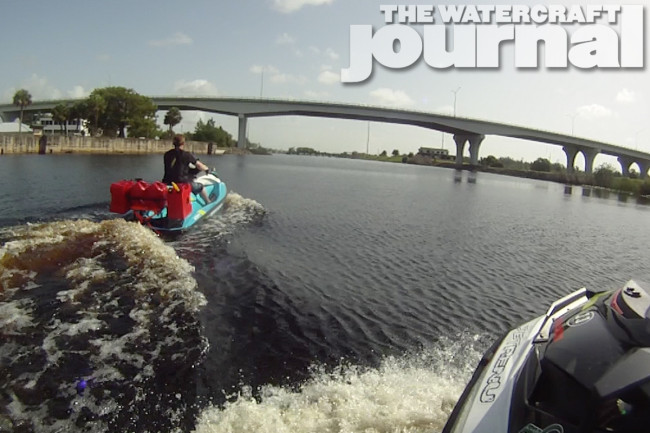
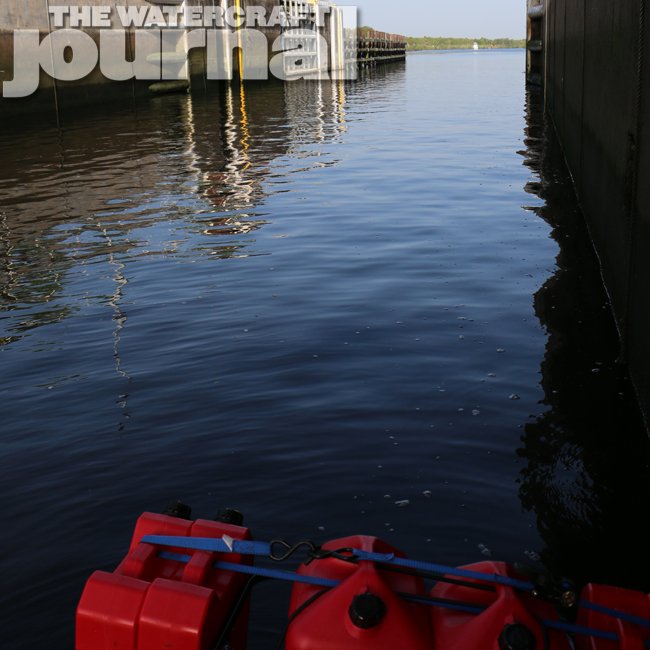
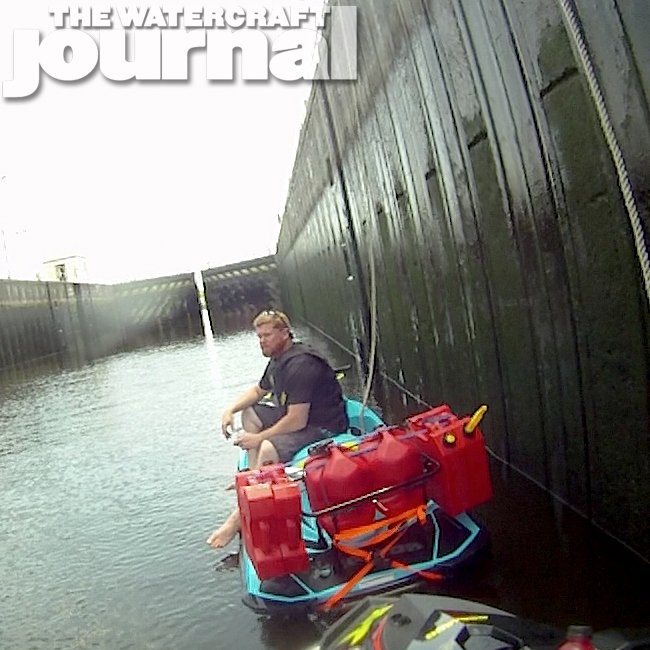
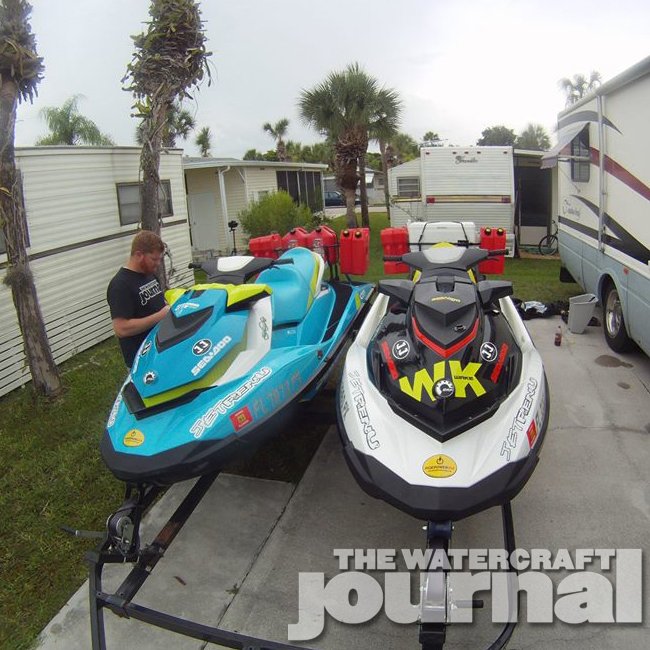
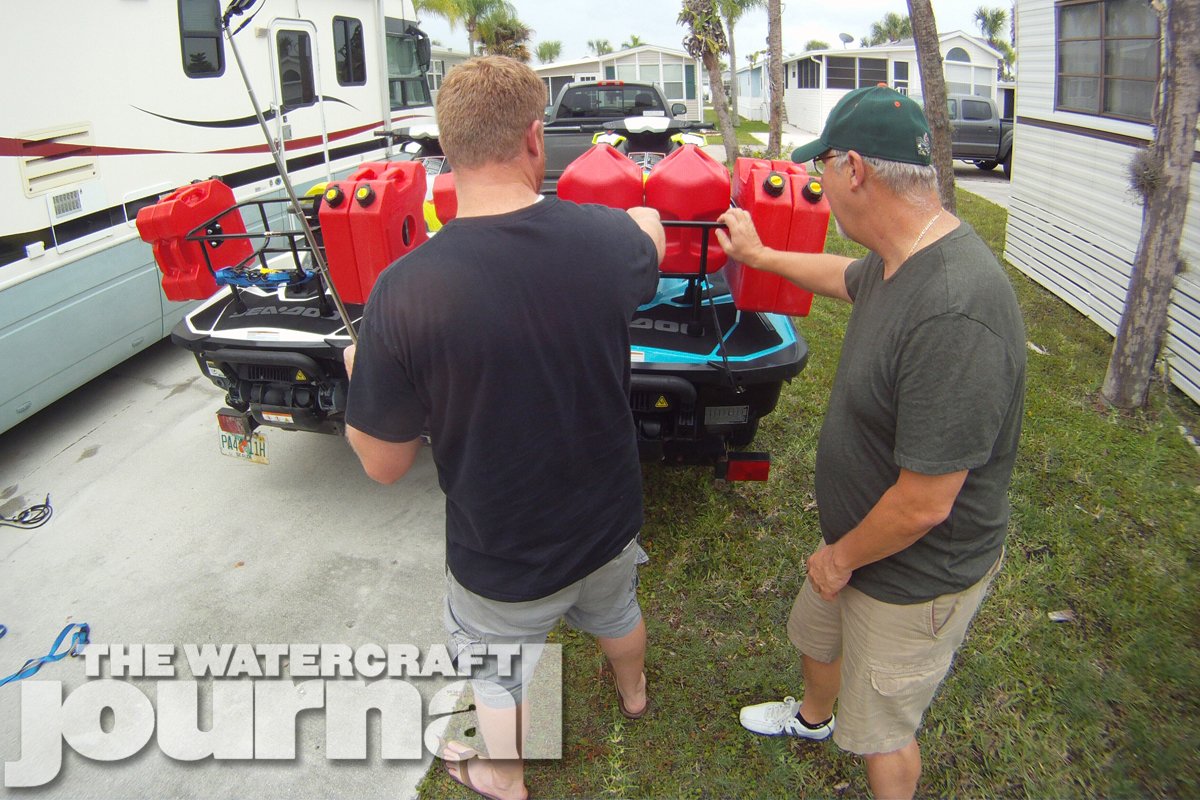
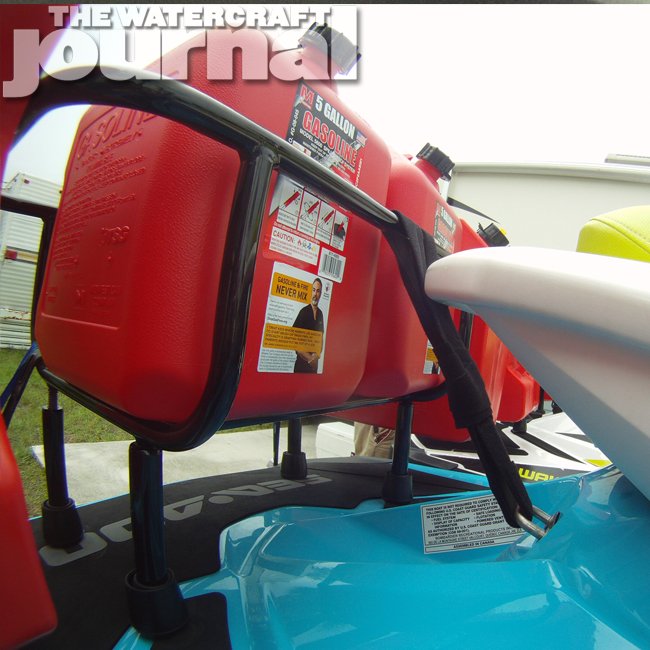
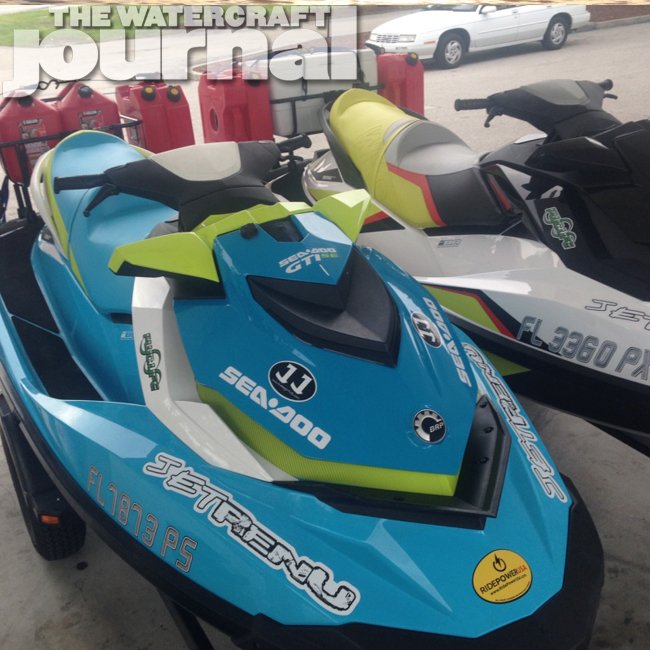
Early in our planning, Sea-Doo expressed immediate interest and offered up a pair of naturally-aspirated 155-horsepower GTIs. With 15.9 gallons of fuel capacity, we needed far more to carry us the distance. We reached out to Bob Chamberlain of Kool PWC Stuff who graciously offered the use of two of his versatile watercraft racks. Working with Rotopax, Chamberlain not only equipped our two skis with a pair of stainless steel, powder-coated racks, but each GTI with four 3-gallon Rotopax jerry cans. Tall and narrow, Kool PWC Stuff engineered an ingenious locking rack system that fixes two gas cans to each side of the rack with a simple twist-and-lock system. While we stocked one Sea-Doo with an Igloo cooler with drinks and provisions, the other received an extra pair of 5-gallon fuel cans for added measure.

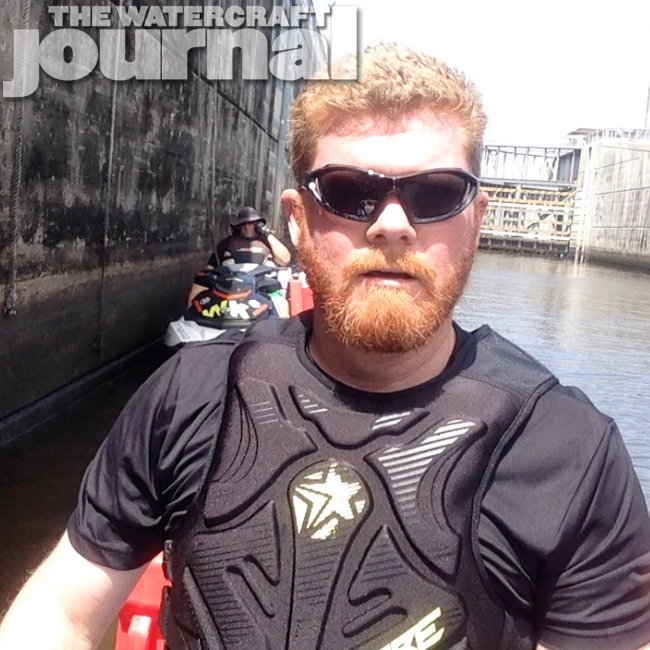
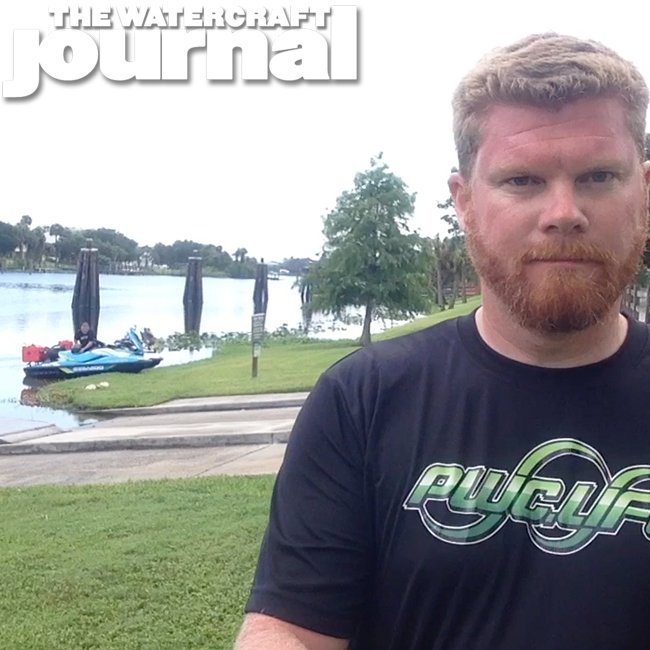
Hemingway brought to the table Ride Power USA who provided a pair of 12amp phone chargers. Fed directly from the battery, the chargers kept our smartphones alive, which was particularly helpful as we used them both for redundant navigation as well as for tracking our progress on the Glimpse app for our readers to follow live as we rode. We also received a pair of EZ Throttle trigger extensions that mounted easily to the iBR throttles with little fuss. Jerry Gaddis of PWC.Life provided us with a pair of their fast-drying jerseys, and JetRenu, who has been a faithful supporter of The Watercraft Journal, happily donated some decals.

Prior to launch, we topped off the skis’ tanks as well as all of the fuel cans. With well over an additional 130 pounds atop each Sea-Doo, we would be riding with the equivalent of a second rider for most of the distance. The marine forecast looked promising with only the threat of afternoon thunderstorms in select portions of Central Florida. Otherwise, temps would be typically warm but not unbearable, and the water-level slightly below average. Now the trick was getting through all five locks – Franklin, Ortona, Moore Haven, Port Mayaca, and St. Lucie – in time.

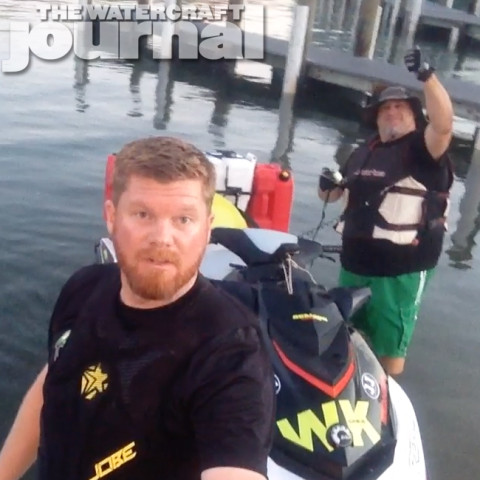
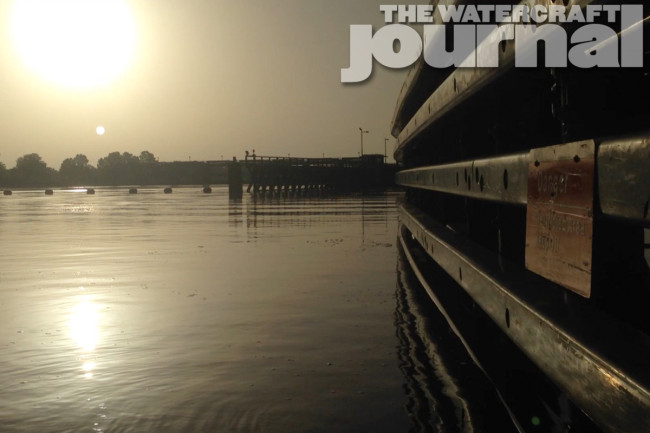
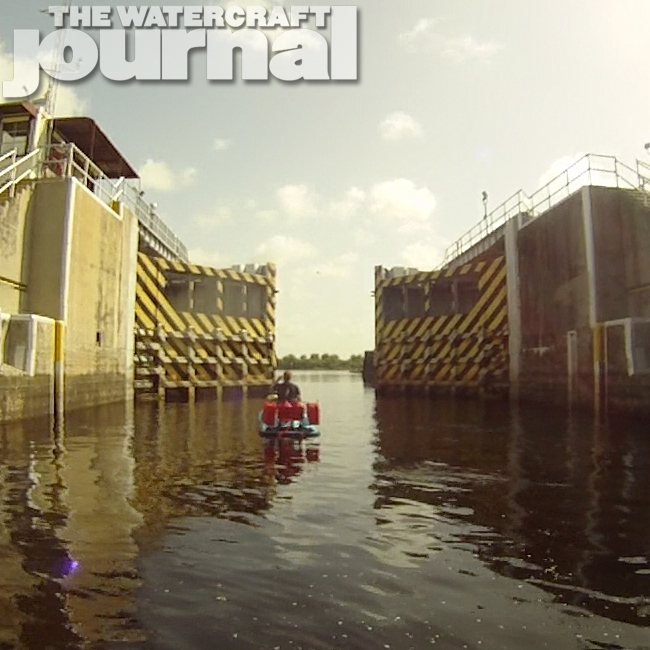
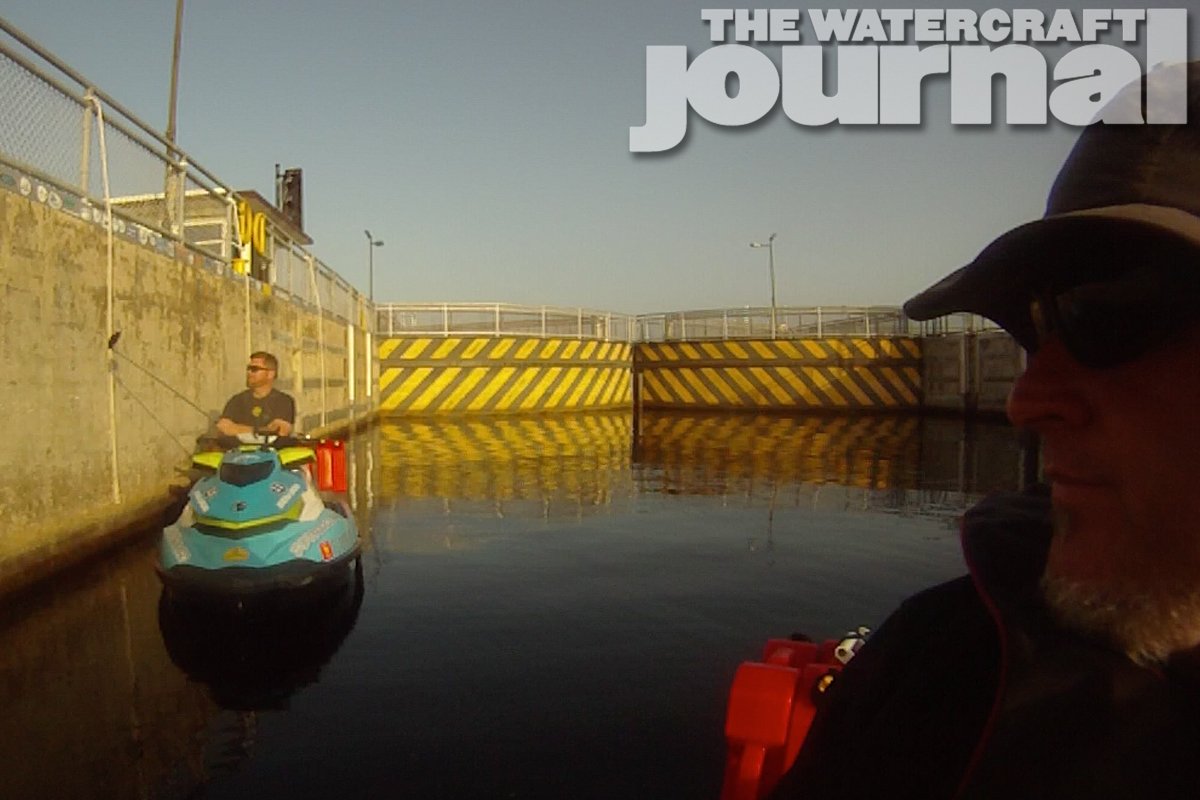
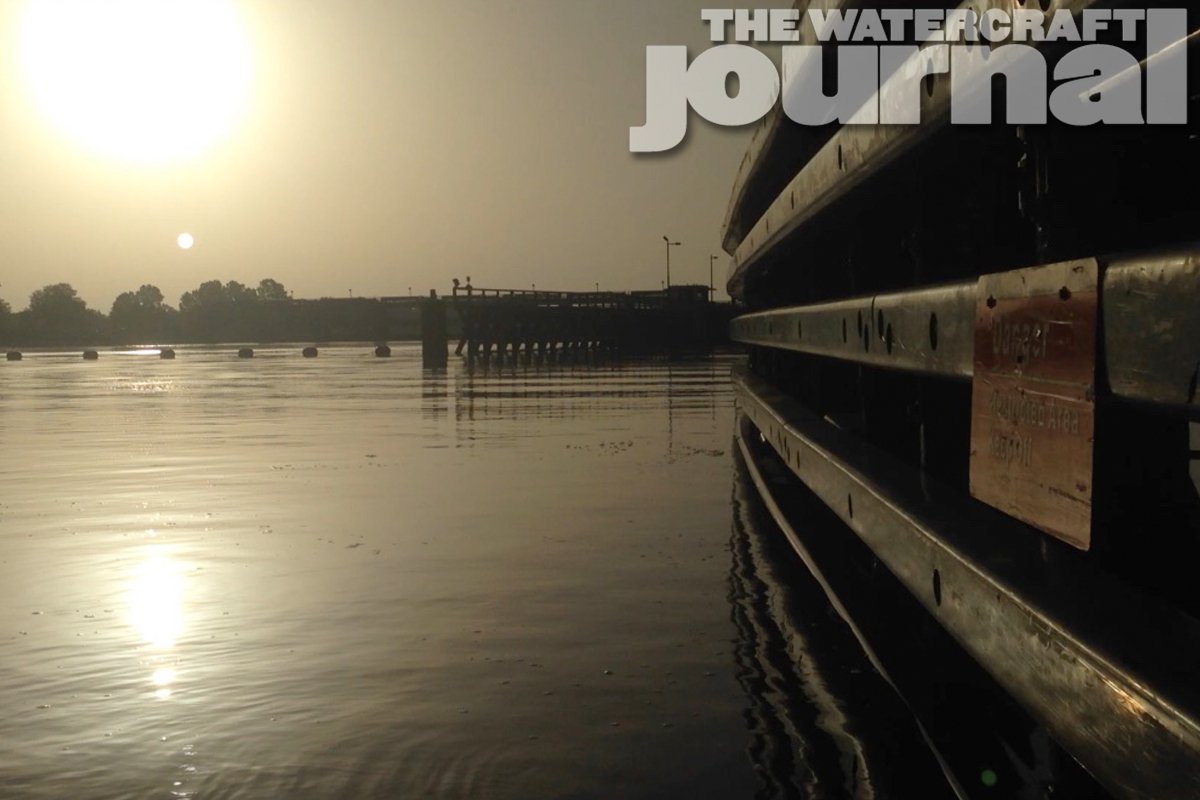
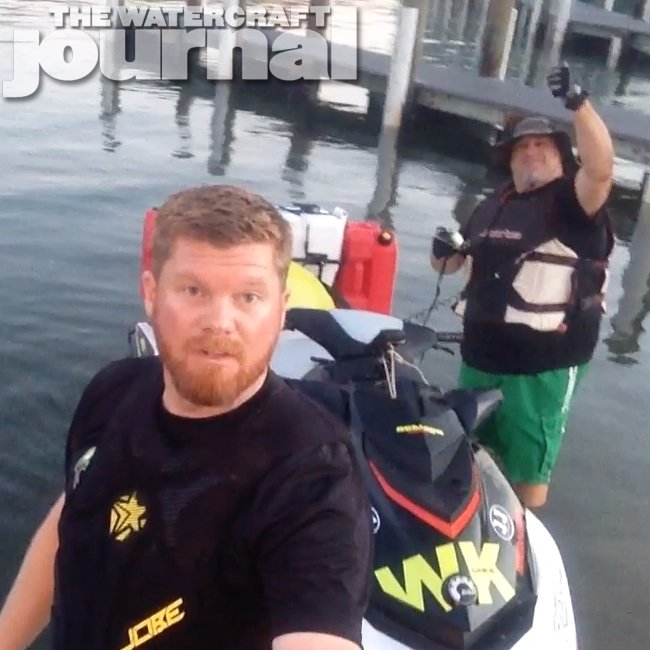
It was still dark on Wednesday morning when we backed the GTIs in the water. The bright hues of the Wake 155 and GTI 155 SE radiated next to the darkened landing, their transoms low in the water. With little fanfare and the eastern sun brightening the skyline, we set off. From Punta Rassa we immediately hit a slow speed zone through Cape Coral before passing through our first (and ultimately, our final) lock of the day,
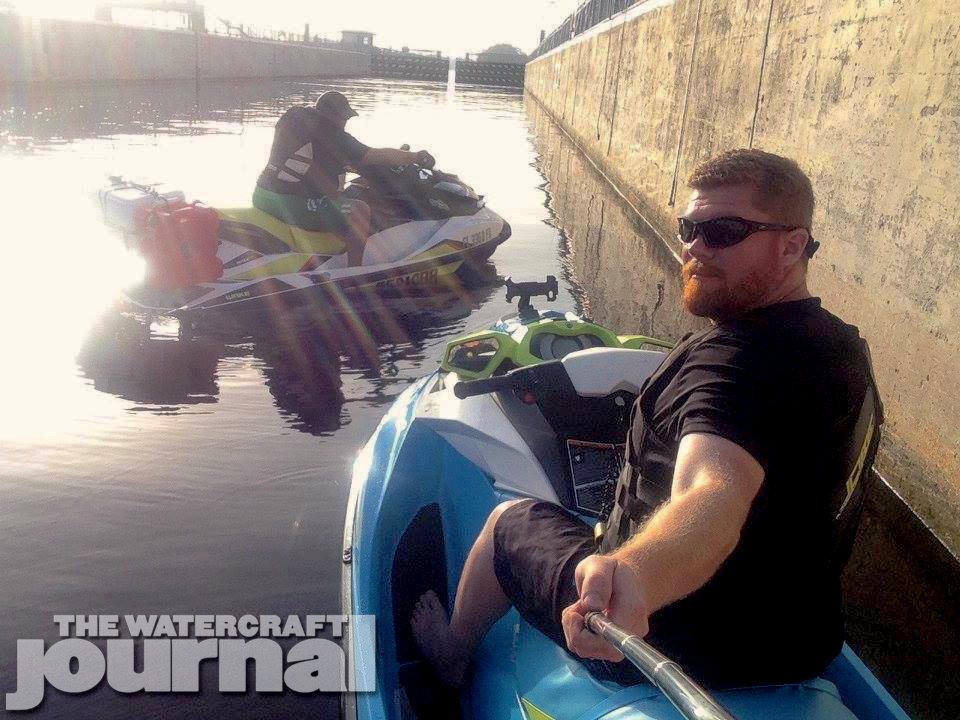
the W.P. Franklin Lock. As we waited for the water to rise, Hemingway immediately motioned to the lockmaster.

“We’re setting a speed record,” he bellowed above. “We’re hoping to make it back in time for your final lock-through at 4:30.” Scratching his head and puffing on a morning cigarette, the lockmaster shook his head, “That ain’t gonna happen. It’s too far to travel.” Hemingway began to plead, asking for the “absolute latest” that he’d let us through. The lockmaster paused, scratched his head again and replied, “You get here 10 ’til, and I’ll let you through.” We were golden.

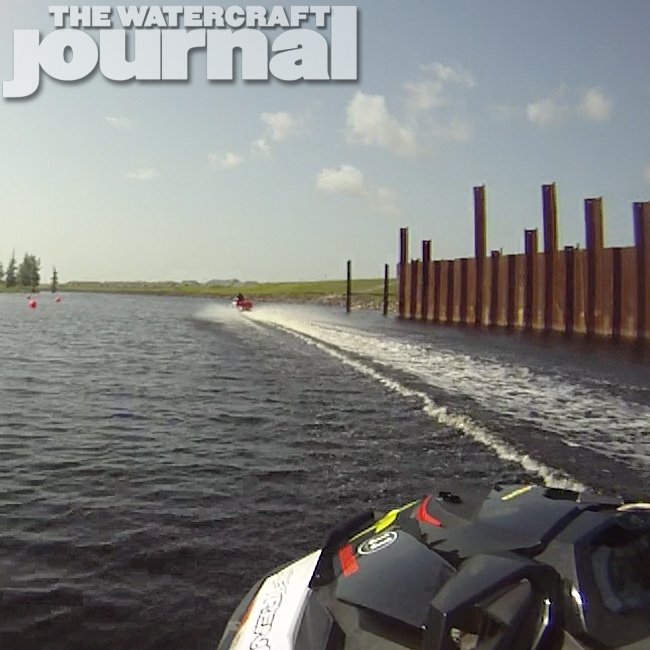
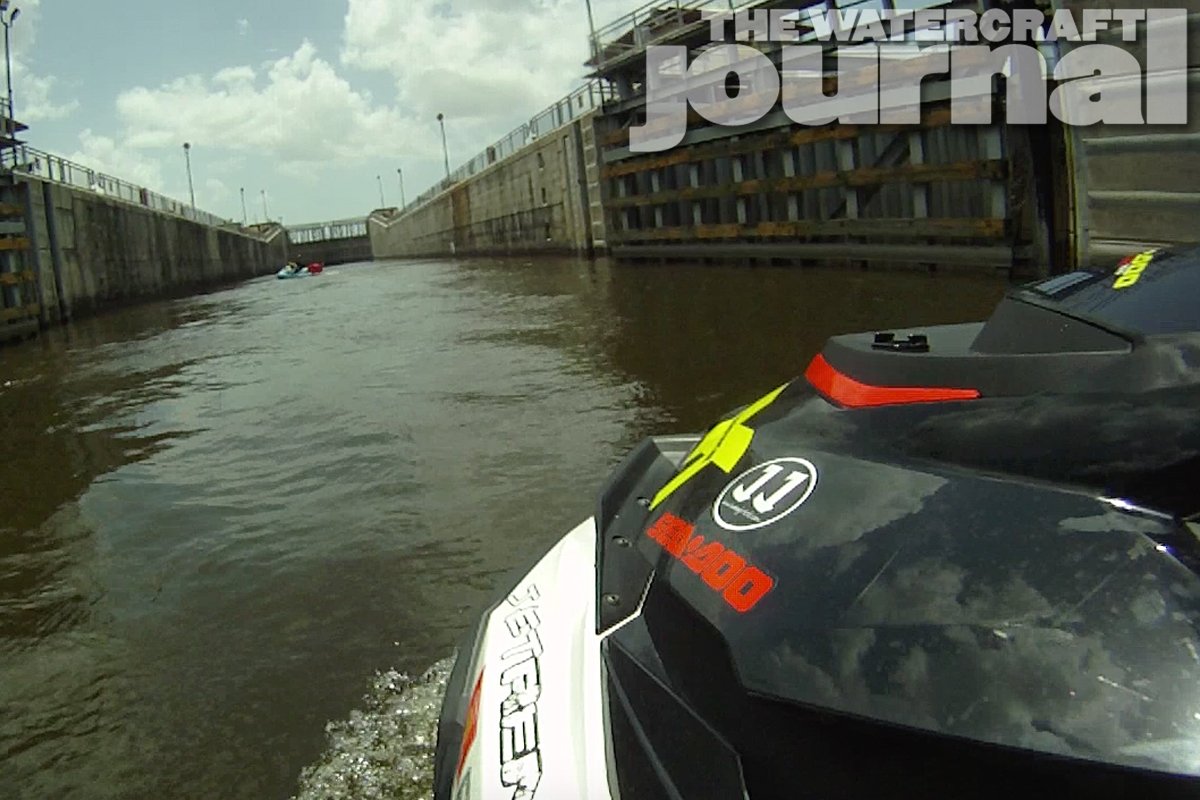
From Franklin to Ortona Lock was a breeze, and took little time to pass through the straight-and-narrow Caloosahatchee River cutting through La Belle, Florida. With only a few miles before reaching the Moore Haven Lock, and more importantly, Lake Okeechobee, Hemingway signaled to refuel. The stop ate up precious minutes, but seeing our GPS alerted us that we were nearly 30 minutes ahead of schedule, we didn’t sweat much. Unfortunately, we arrived as Moore Haven was already locking a large trawler, causing us to wait and nearly eating up our extra time.
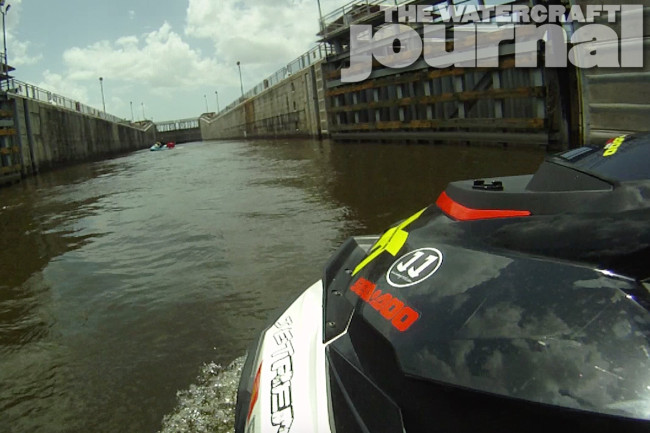
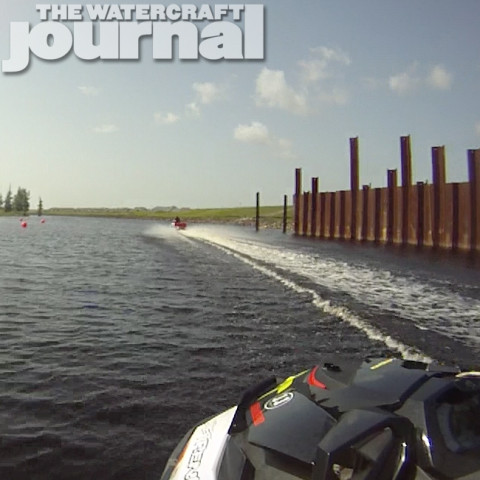
Construction alongside the cut running between Moore Haven and Lake Okeechobee slowed us somewhat prior to the lake. Okeechobee is the largest freshwater lake in the state of Florida, and the largest freshwater lake “completely within a single one of the lower 48 states.” Notably shallow and susceptible to high winds, Lake Okeechobee can be incredibly fickle. Alas, that is how we found her this morning. 14 mile-per-hour winds whipped the lake into a boiling pool of 3-to-5 foot white-capped chop that could hardly be read beneath a 10am sun. Our little GTIs were never designed to tackle such a sea state particularly overladen with so much fuel.

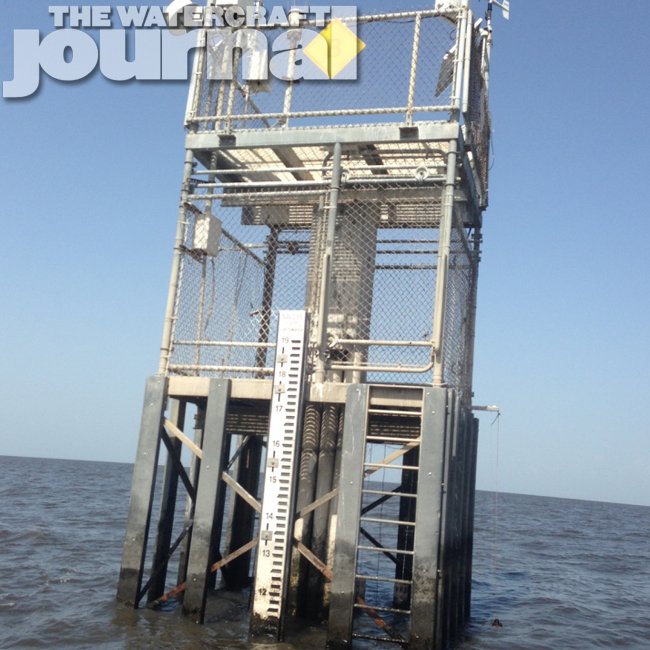
Our original aspirations for crossing Okeechobee in 20 minutes were long gone, as it took us nearly 40 to reach the halfway marker. Gathering our bearings, we spotted the distant towers of a powerplant only slightly north of the lock. With a bearing and a visible marker in sight, we charged through the second half of the lake that thankfully began to smooth the closer to neared the shore. With Port Mayaca Lock now within reach, our faithful GTIs pulled into the lock no worse for wear (unlike their riders).

With nearly an hour wasted battling Okeechobee, the expression on Hemingway’s face said it all, we weren’t going to make the St. Lucie Lock’s mandatory 11am lock schedule in time. Desperate, we waved over the lockmaster and plead our case. Deep craggy lines appeared in the old sailor’s weathered face as he smiled with a toothy grin, “You’re in luck boys. New matching orders came down saying that we have to lock through any boat that comes ’round. They’ll let you through no problem.”
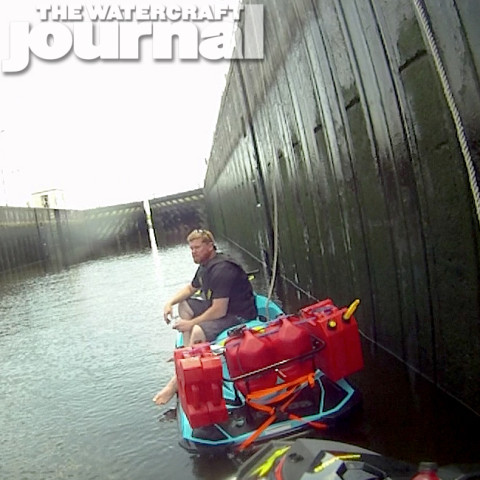
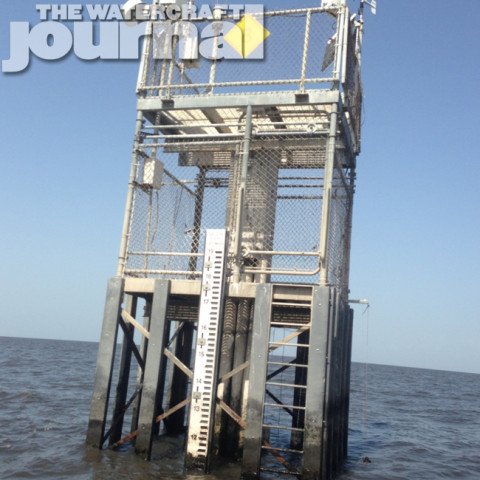
Re-energized, we charged hard knowing we had to make up lost time but elated that St. Lucie would let us through. The short distance between Port Mayaca and St. Lucie alternates between open everglades and residential, and becomes particularly populated as we pass into Stuart. Approaching the lock, we found the gates closed, and the chime unresponsive. Pulling the cord to alarm the bell, the lockmaster walked out with a bullhorn.

“We operate under a limited schedule,” he barked. Immediately, our joy deflated. We shouted back, “The lockmaster in Mayaca said you had to let us through.” The lockmaster apologized and reiterated their strict operating schedule before asking, “Will you be filing a complaint?”

Confused, we shrugged, “No, but we were told you’d let us through.” The lockmaster leaned in, “If you say you’re going to complain, I can let you through.” We shot each other a quick look and yelled in unison, “We’d like to file a complaint!” Immediately, the alarm sounded and the lock doors began to creep open. Once inside the lockmaster explained the woes of governmental bureaucracy and that some muckety-muck had complained to his buddies when he was turned away in his private yacht. Since that time, if you complain, the St. Lucie Lock would let you through anytime.
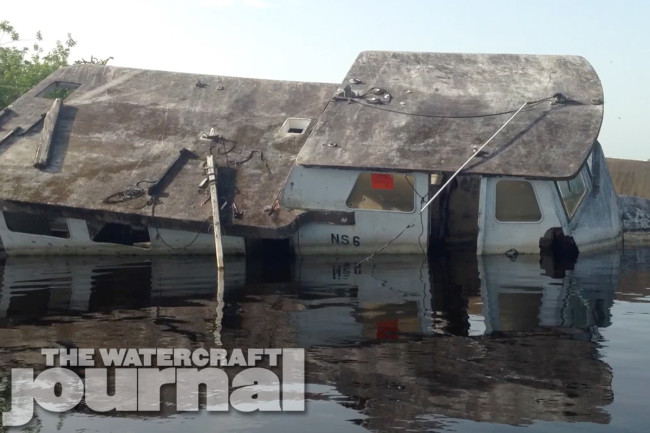
Racing to Monterrey Marina, we were forced to waste nearly an hour waiting for workers to finish their lunch and activate the pump. The pump was a high volume unit that is ideal for larger boats but quickly overwhelms the narrow filling necks of Sea-Doos and small gas cans. This meant that we had to tenuously hold the nozzle just outside of the fuel inlet and trickle a small stream into our tanks. The arduous process devoured precious time that we simply didn’t have to spare. With our tanks filled as best as we could, we immediately doubled back and returned to the St. Lucie lock, where the lockmaster had kept his gates open for us.

The journey to Port Mayaca was uneventful, and as we exited into Lake Okeechobee, we met with another fishing trawler who affirmed that the lake was smooth as could be (unlike that morning). True to their word, the wind had died, skies had cleared, and chop had reduced down to gentle 1-to-2 foot. By the time we reached Moore Haven, we had been riding continually for nearly 8 hours. Exhausted but enthusiastic, we visualized returning back to Punta Rassa victorious even as dark clouds gathered ahead.

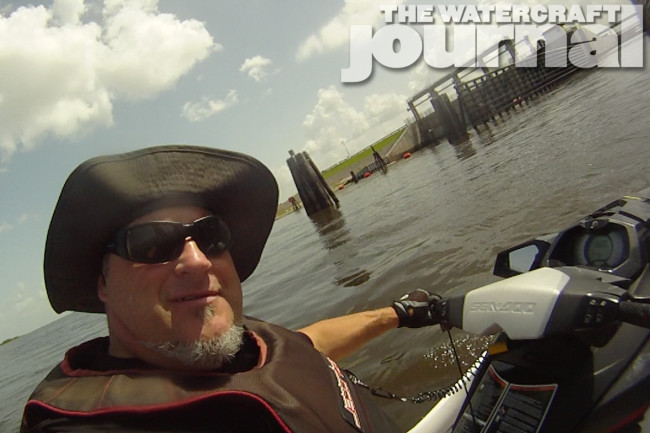
Returning to the same pebbled beach where we had refueled before, we topped off our GTIs and raced back to Ortana Lock. Before we could though, the skies broke and dumped a mid-summer rainstorm upon us. Pelting rain while traveling at 50-to-55 mph is brutal on any exposed skin, and Hemingway’s floppy hat and sunglasses did little to shield his face. We had packed a race helmet and goggles precisely for this sort of thing, and happily kept our face protected from the stinging rain that blasted our arms and legs pink.
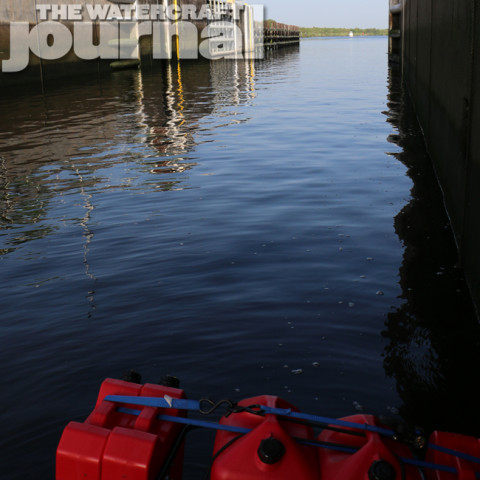

While locking at Ortona and realizing that our time was running thin, we begged the lockmaster to radio ahead to Franklin that we were on our way. He waved in affirmative and bid us good luck. With the rain behind us and with only one more lock to go, we were in the final stretch. A quarter past 4 o’clock came a went. We sped as fast as our GTIs would carry us, but 4:30 neared and passed. Every bridge in the distance fooled us into thinking it was the lock.

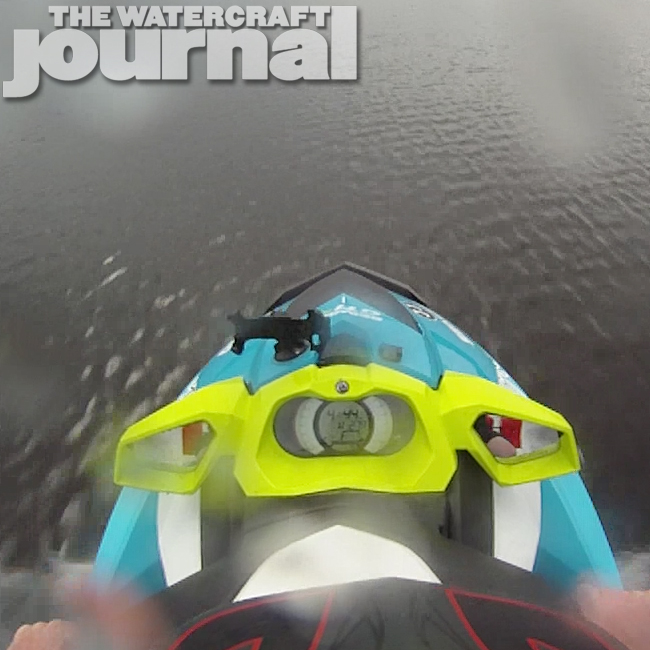
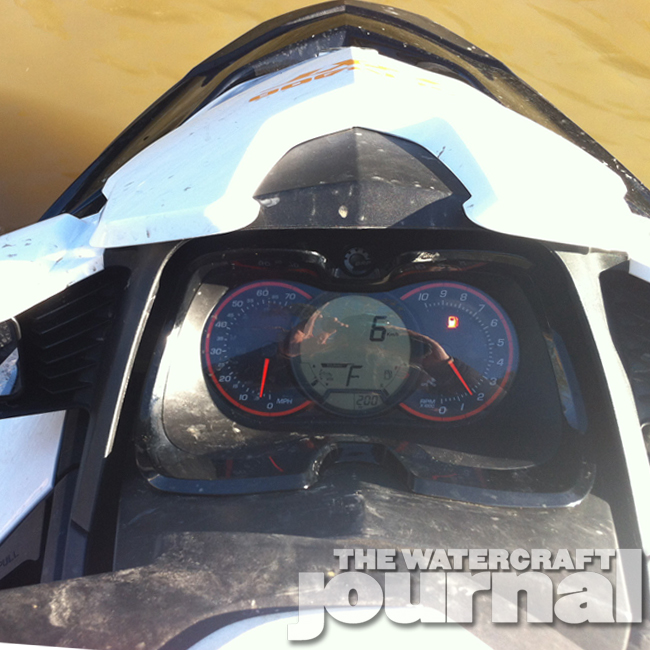
The Sea-Doo’s in-dash clock read 4:41pm when we pulled up to the lock. Hemingway immediately dialed the lock’s office on his cellphone as we yanked on the alarm cord. The office lights were out. The phone rang and rang with no reply. Desperate, we yelled to nobody present. Not only was the lock closed, but the workers had left early despite large 3-foot-tall signs reading “Open 7am to 5pm”. We were screwed.

To our right, we spotted a large camping ground. We devised a plan to beg any camper with a boat trailer to lift us from one launch ramp on one side of the lock to the other. Pulling up to the ramp, a park ranger hustled to meet us, clearly irritated with our rate of speed. We explained our situation and asked if there was anyway to carry our skis to the other side of the park, to which the answer was a resonating “no.” It was there – some 30 miles from our goal – that our first Long Haul attempt came to a close.
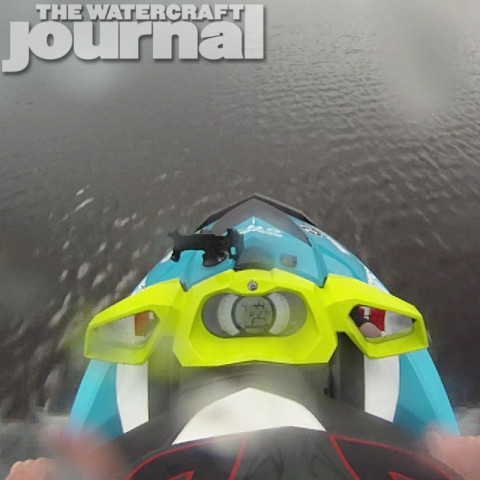
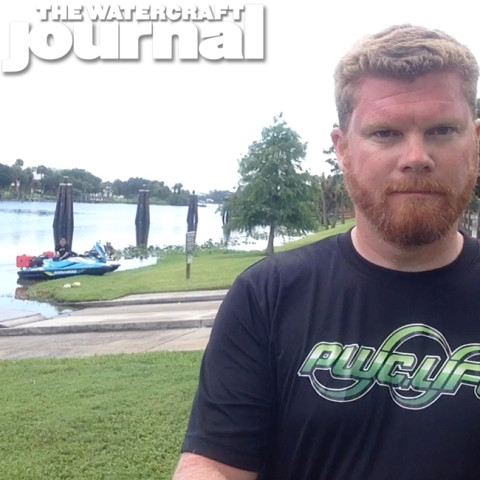
Hitching a ride with the friendly park ranger to the truck parked an hour away, we had plenty of time to reflect. In light of all of our delays, our miscalculation of Lake Okeechobee, two fuel stops and a finicky fuel pump, we were ultimately thwarted by government employees looking to get out of work a few minutes early. All in all, we crossed over 235 miles in 11:30-plus hours. We averaged just over 20mph with a max speed over just over 58mph, which isn’t bad considering we passed through 9 locks.

All of our sponsors – Sea-Doo, Kool PWC Stuff, EZ Throttle, PWC.Life, Ride Power USA and JetReny – rallied to cover our costs, and because of them, this was even possible. And for their assistance and support we are immensely grateful, as well as to our readers. Throughout the day, we had been swarmed with emails, instant messages and Facebook posts from riders wanting to join, upset that we didn’t invite all to participate. Exclusivity was not our original intent, but seeing if it was even possible was – to which we say emphatically YES! And we will be attempting the Long Haul again (hopefully this year). When we do, it will be an open invite so stay tuned!

[PS. Expect to see a full video webisode on the 2015 WCJ Long Haul in the coming month. – Ed.]
long 34 32 25 13 20 12 17 5 38 35 16 2 33 26 19 7 4 24 18 6 9 8 14 11 10 15 3 22 36 21 37 1 40 31 30 29 28 23 27
<
>

The Golden Ticket: Behind-The-Curtain of RIVA Motorsports & RIVA Racing

0

RIVA

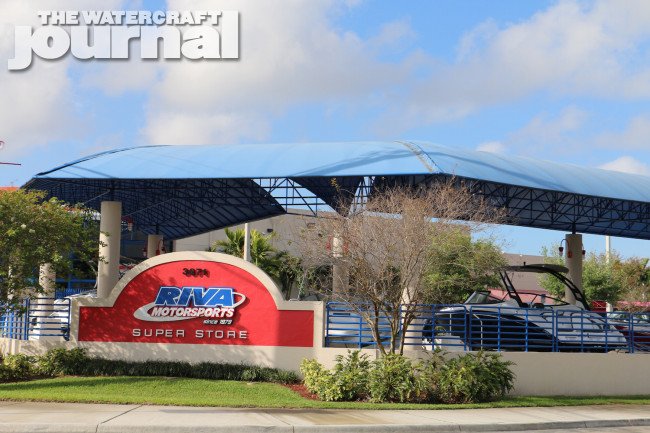
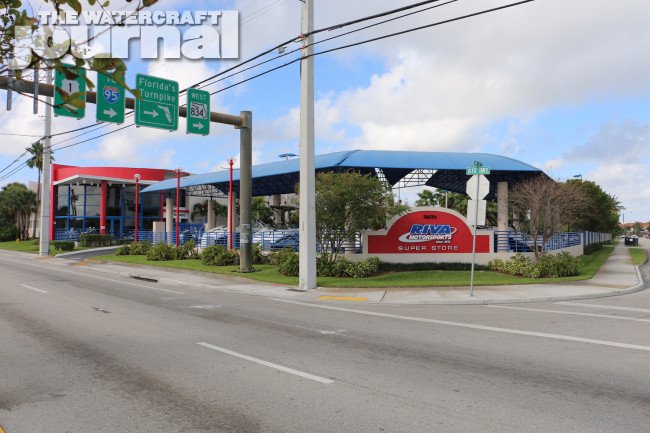
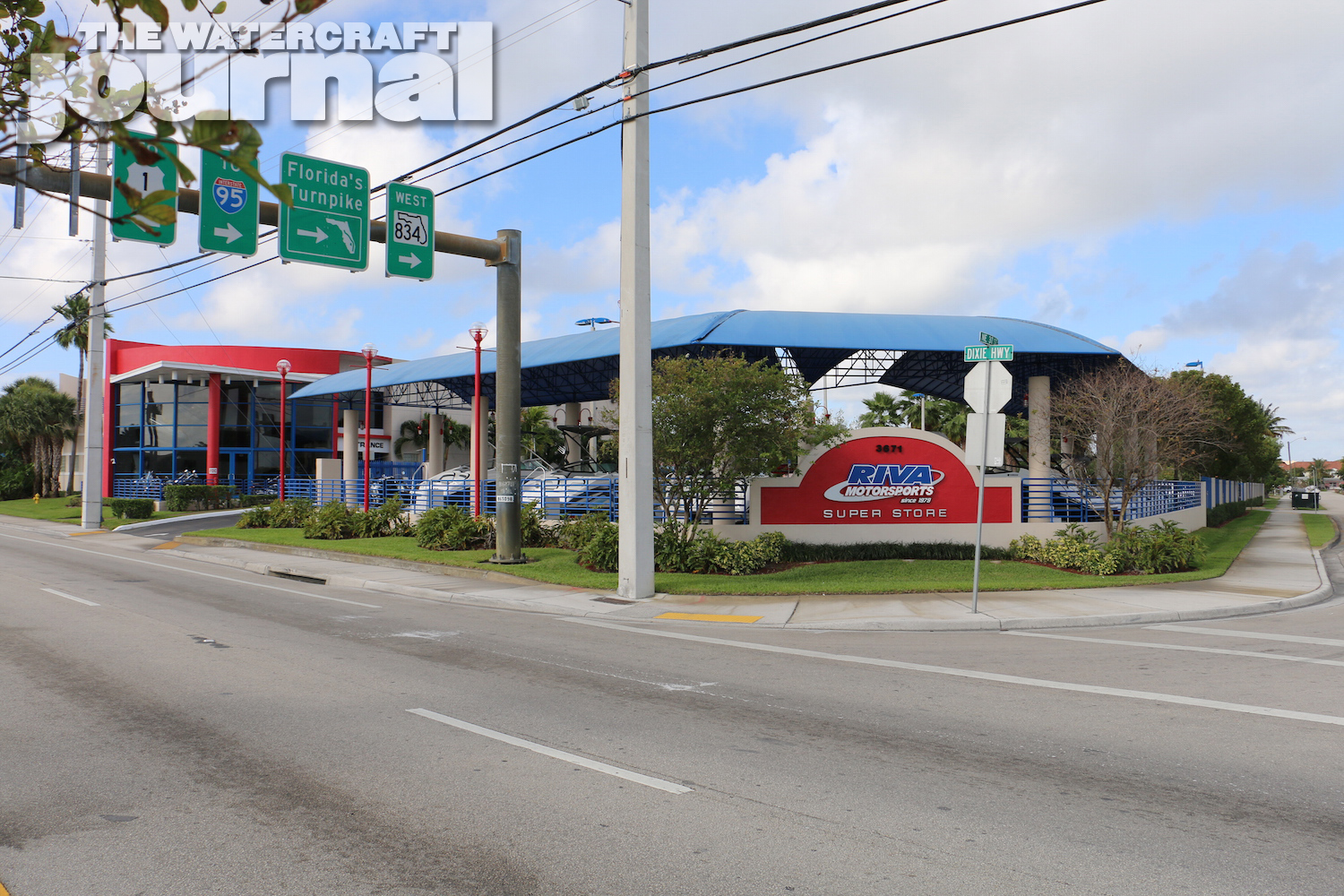
Unlike so many others, there’s few places considered “holy” in our sport. NASCAR has Daytona. Indy has The Brickyard. Le Mans has Le Circuit de la Sarthe. Many would argue the rough-hewn, pebbly beaches of Lake Havasu City, Arizona would stand as sacred soil as well. But we contest that equal to the racers, the performance enthusiasts hold one spot higher than others, RIVA Racing. The racing branch of the successful RIVA Motorsports family of dealerships is woven within the Pompano Beach, FL, dealership.

So it was with great excitement when The Watercraft Journal was invited by RIVA Racing President, Dave Bamdas to spend a couple days, tour the facility, see the inner workings of the single largest manufacturer and supplier of performance aftermarket PWC parts in the world, and even test ride a couple skis exclusive to the company, including a prototype Stage III Yamaha FZR WaveRunner (which we published HERE).

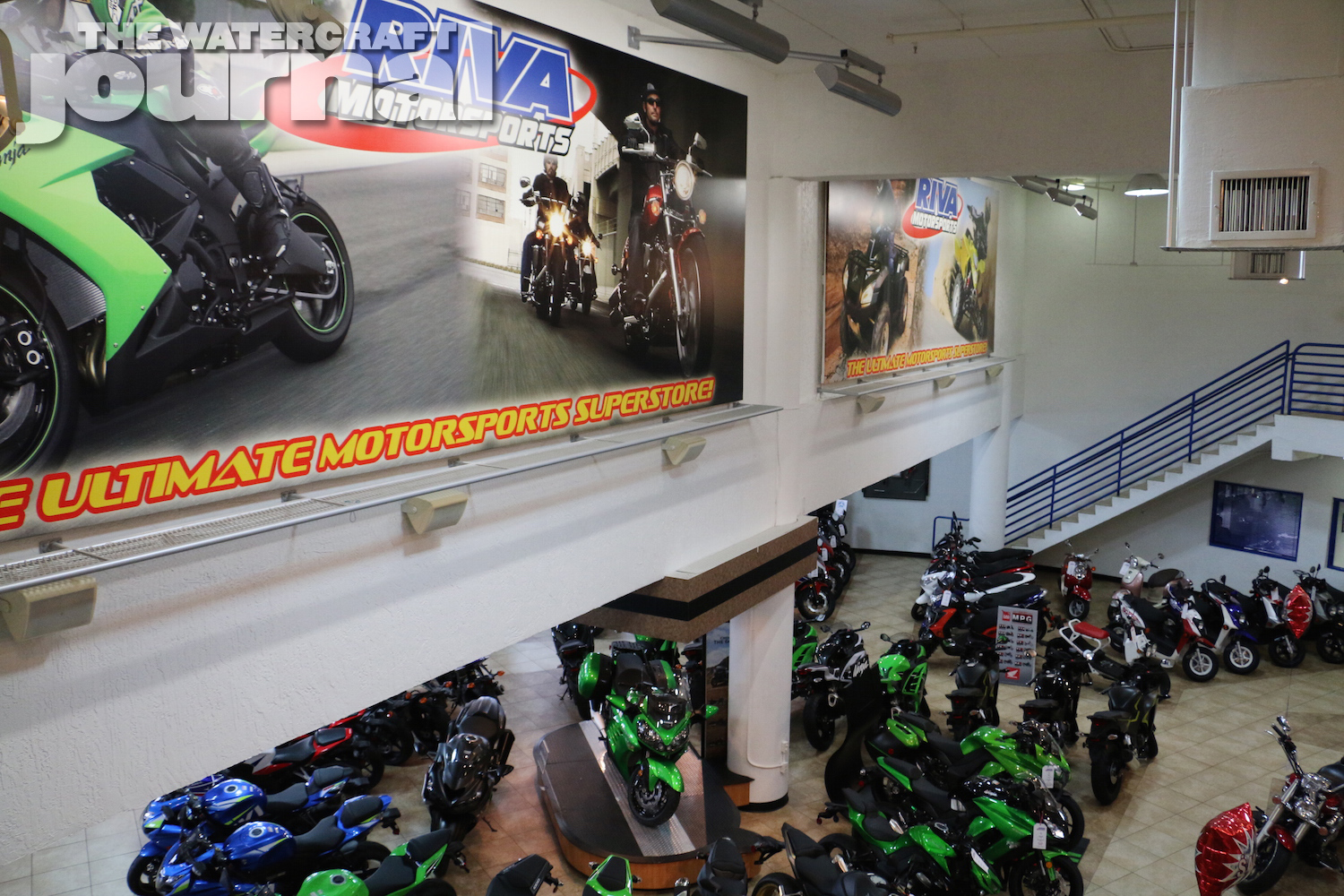
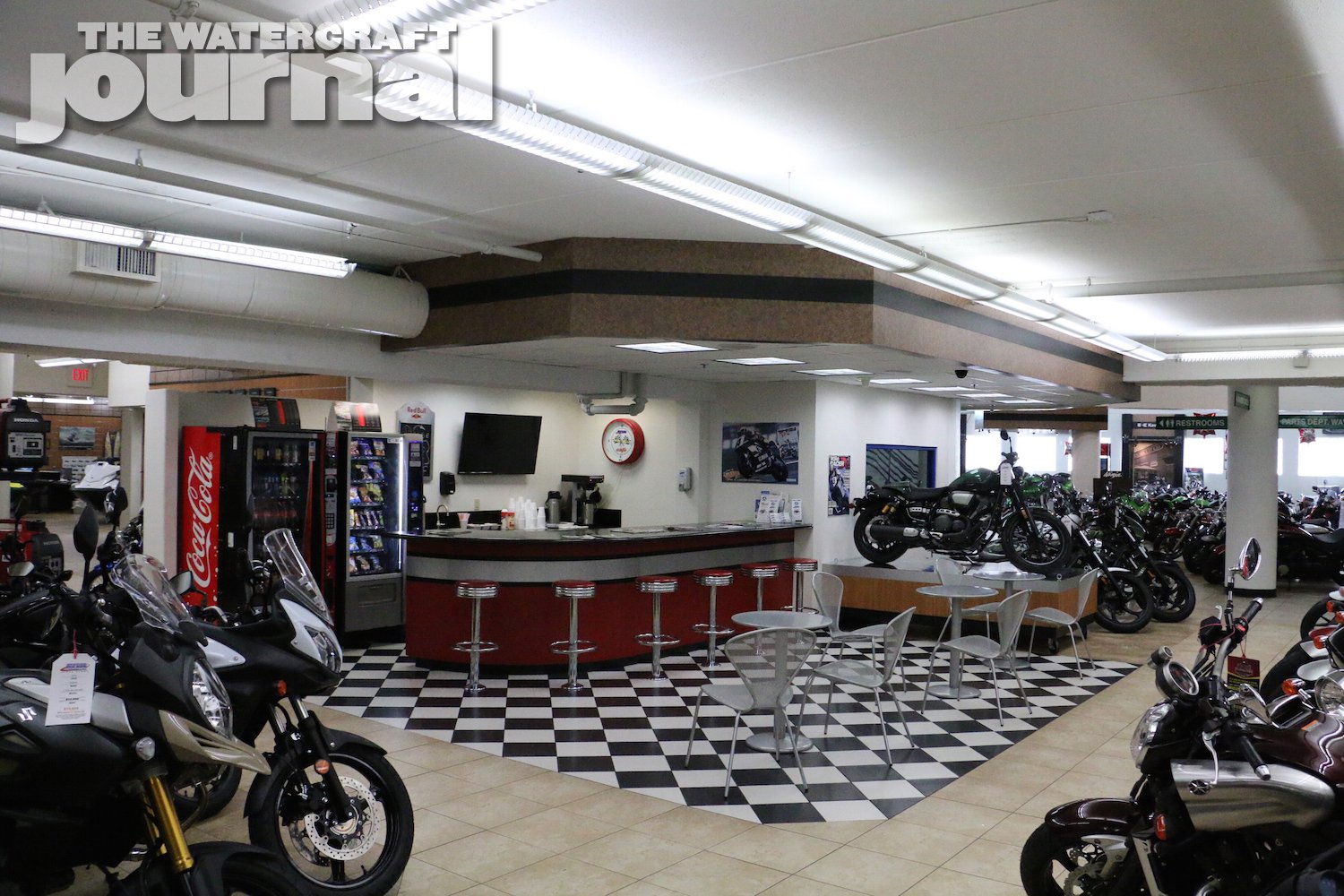
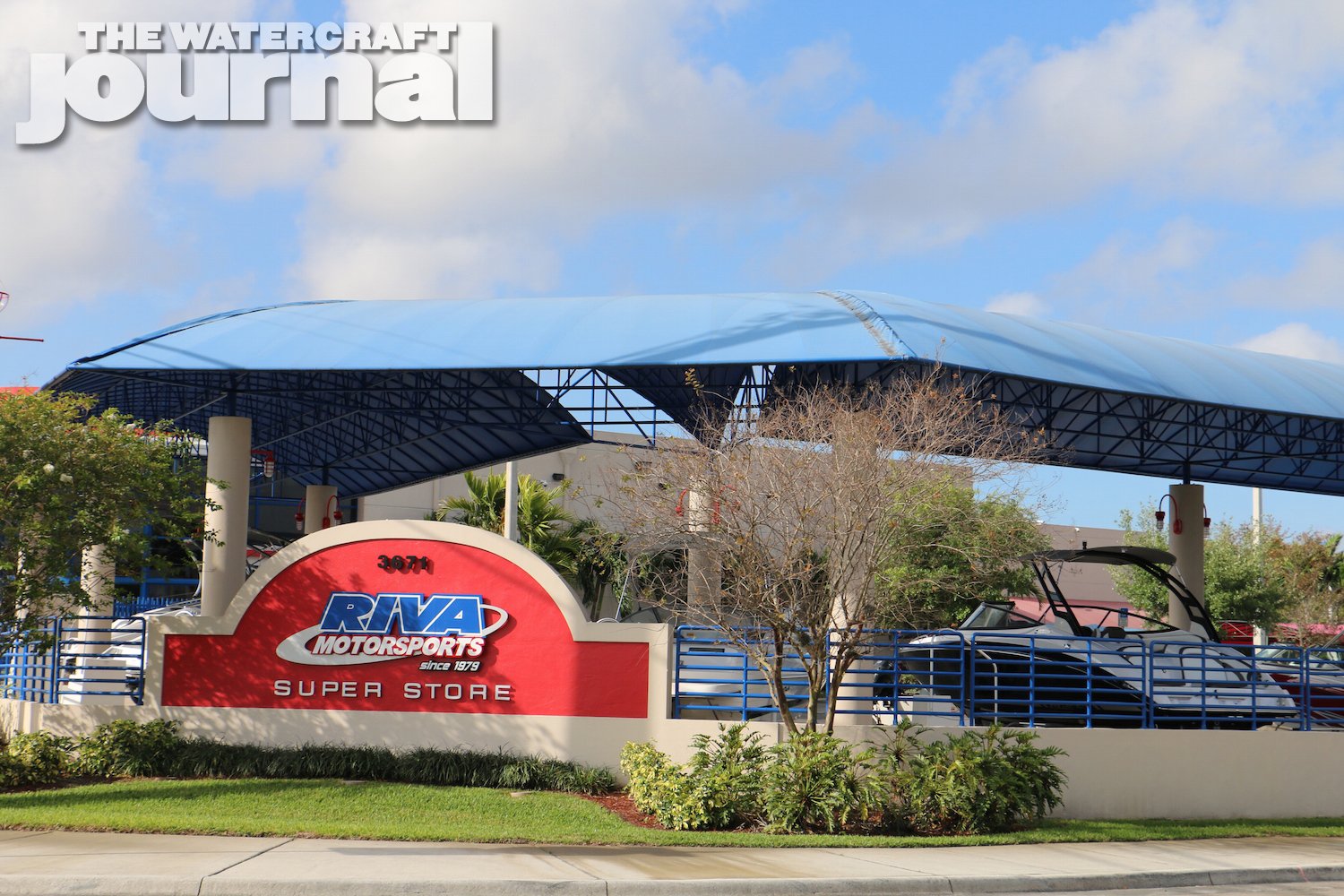
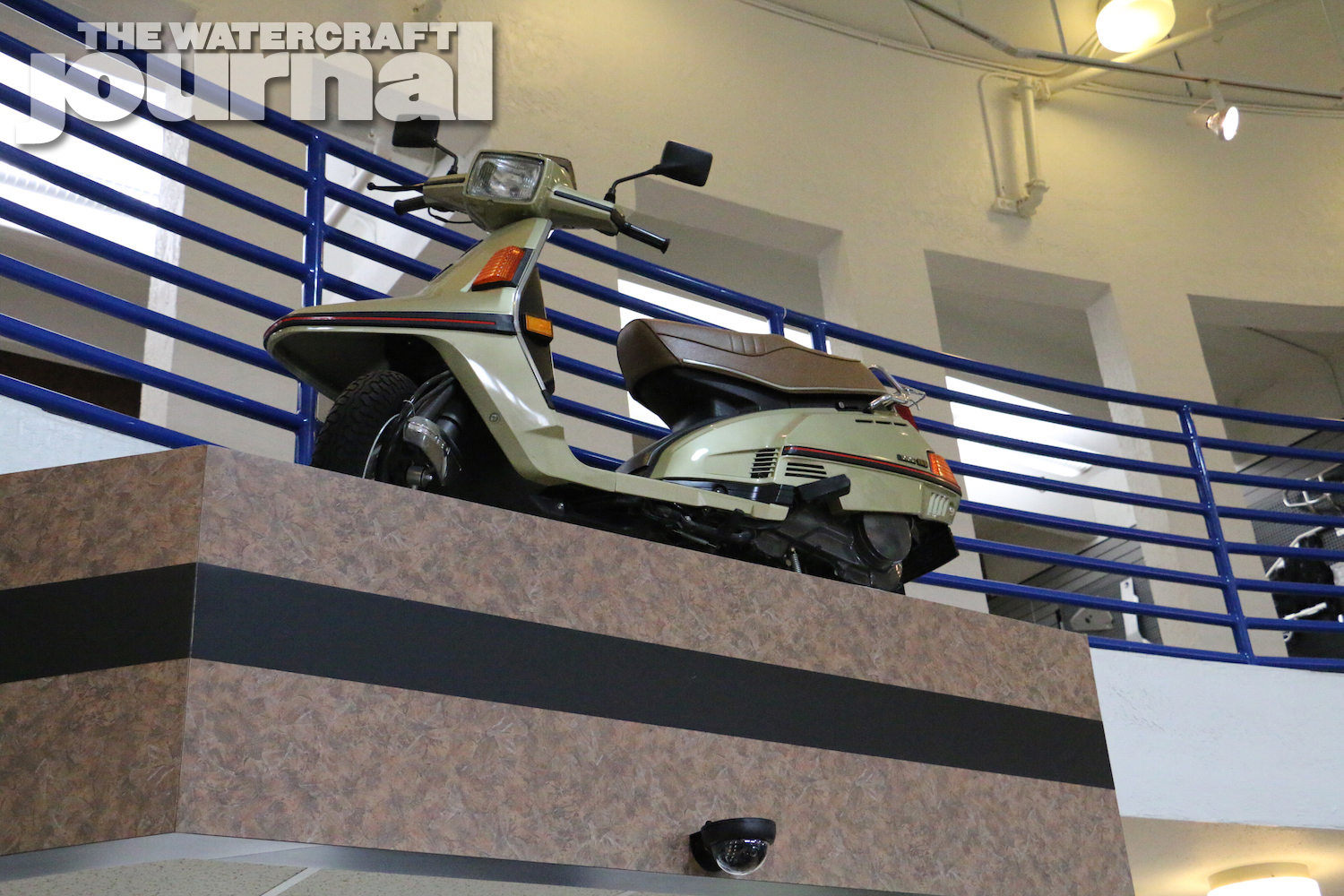
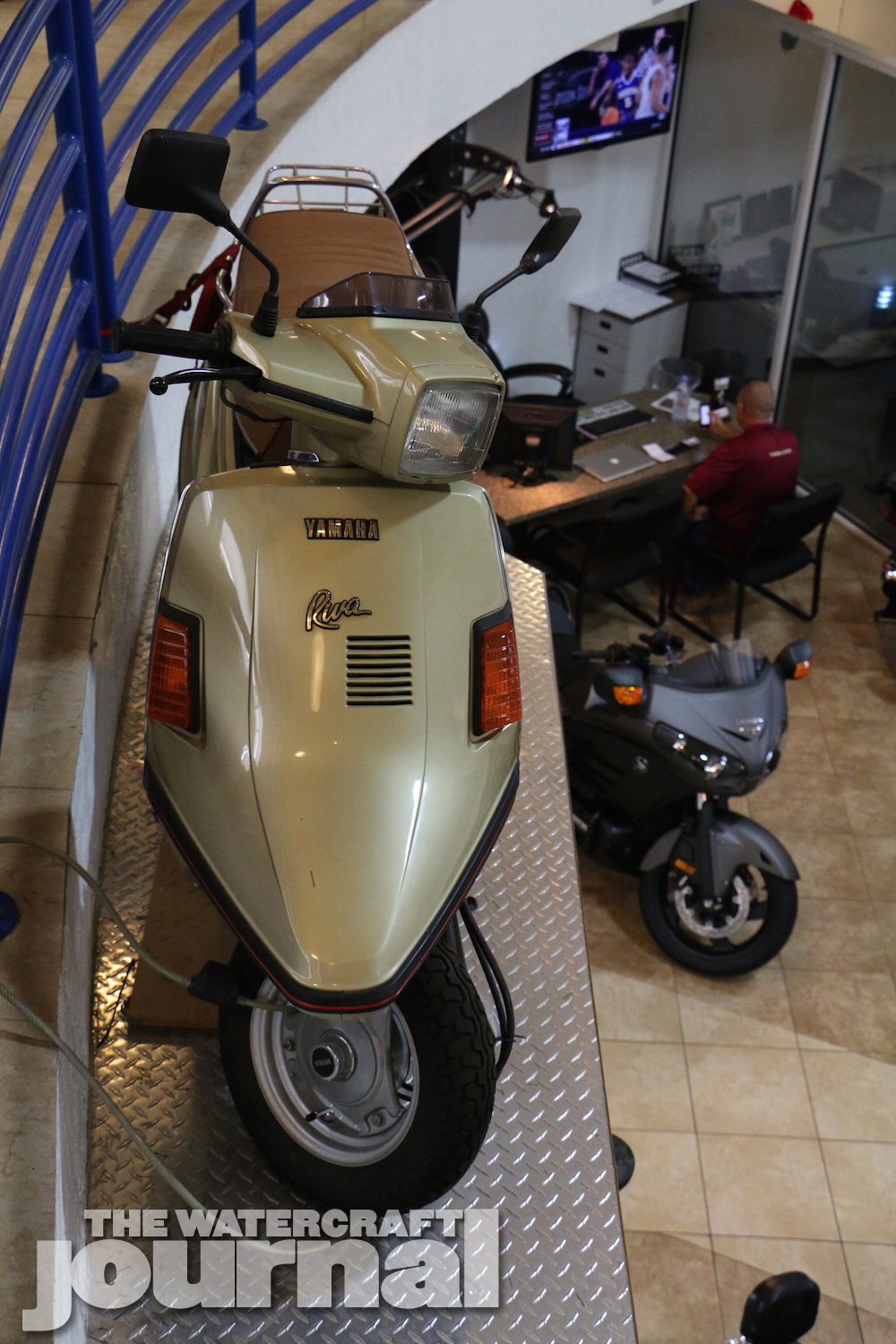
Long before the glassed atrium was erected, or the polished tile floors were laid, RIVA started as a humble “mom and pop” motor scooter dealer and shop. In 1979, Steve and Lynn Bamdas opted to leave their New Jersey home with their then-teenage son Dave and three siblings and move to Pompano Beach, Florida to start a small motorsports business – then known as Lambretta South – selling mainly scooters, mopeds and go-karts. Only a few short years later, the Bamdases acquired the new Yamaha “Riva” scooter line, and promptly renamed the business to “Riva World.” This not only led to the naming of the company we know today but cementing its affiliation with Yamaha motorsports.

IMG_4287

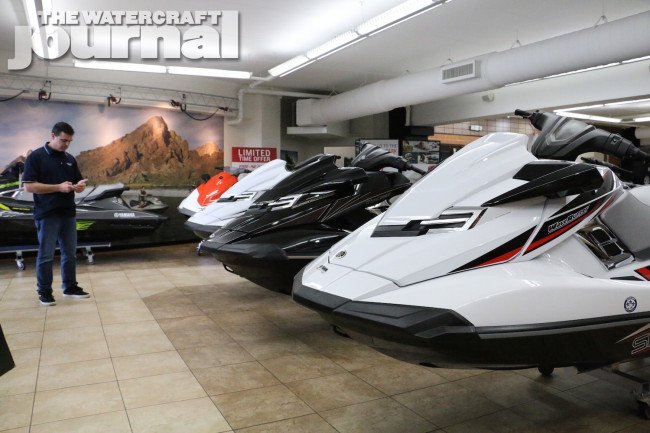
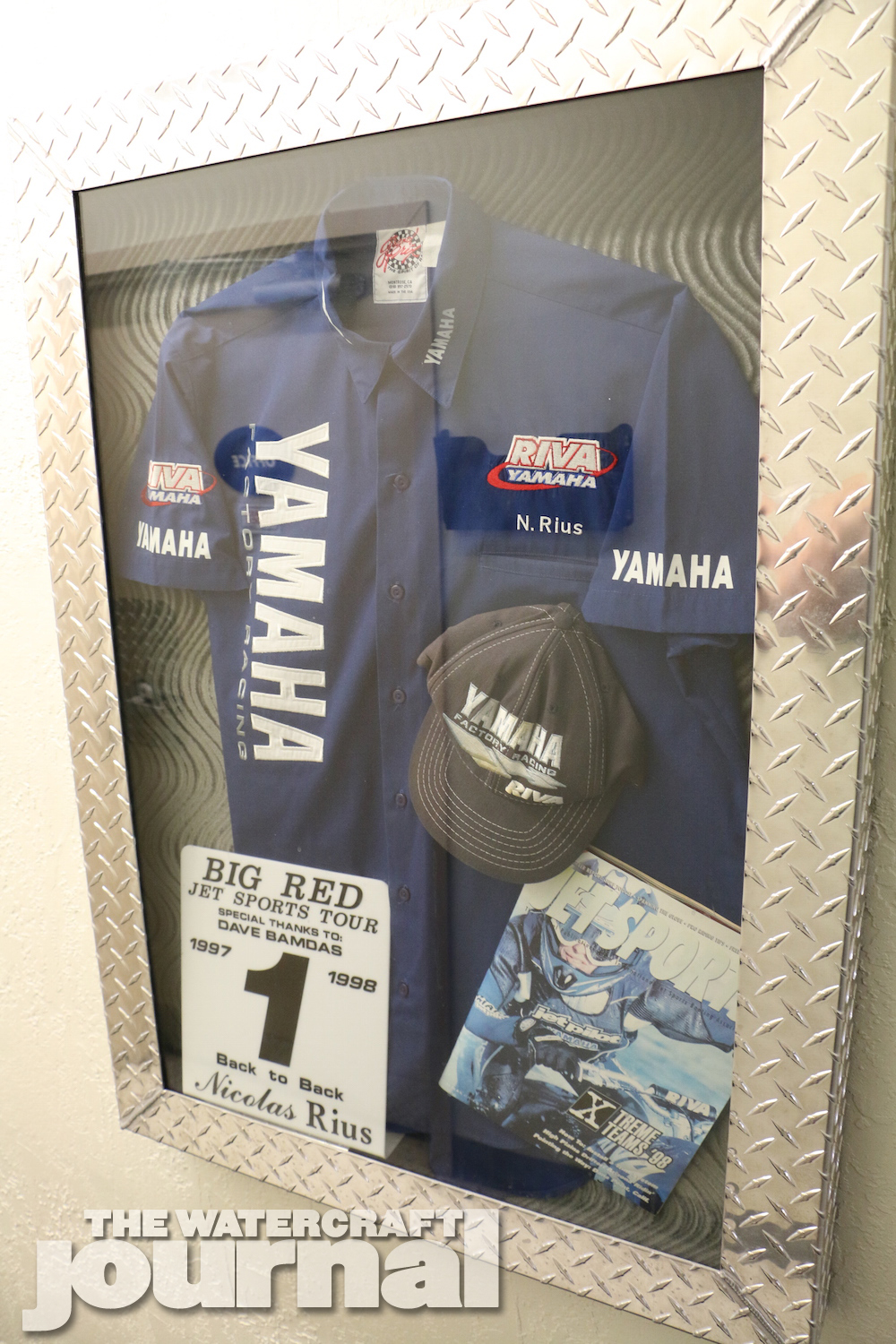
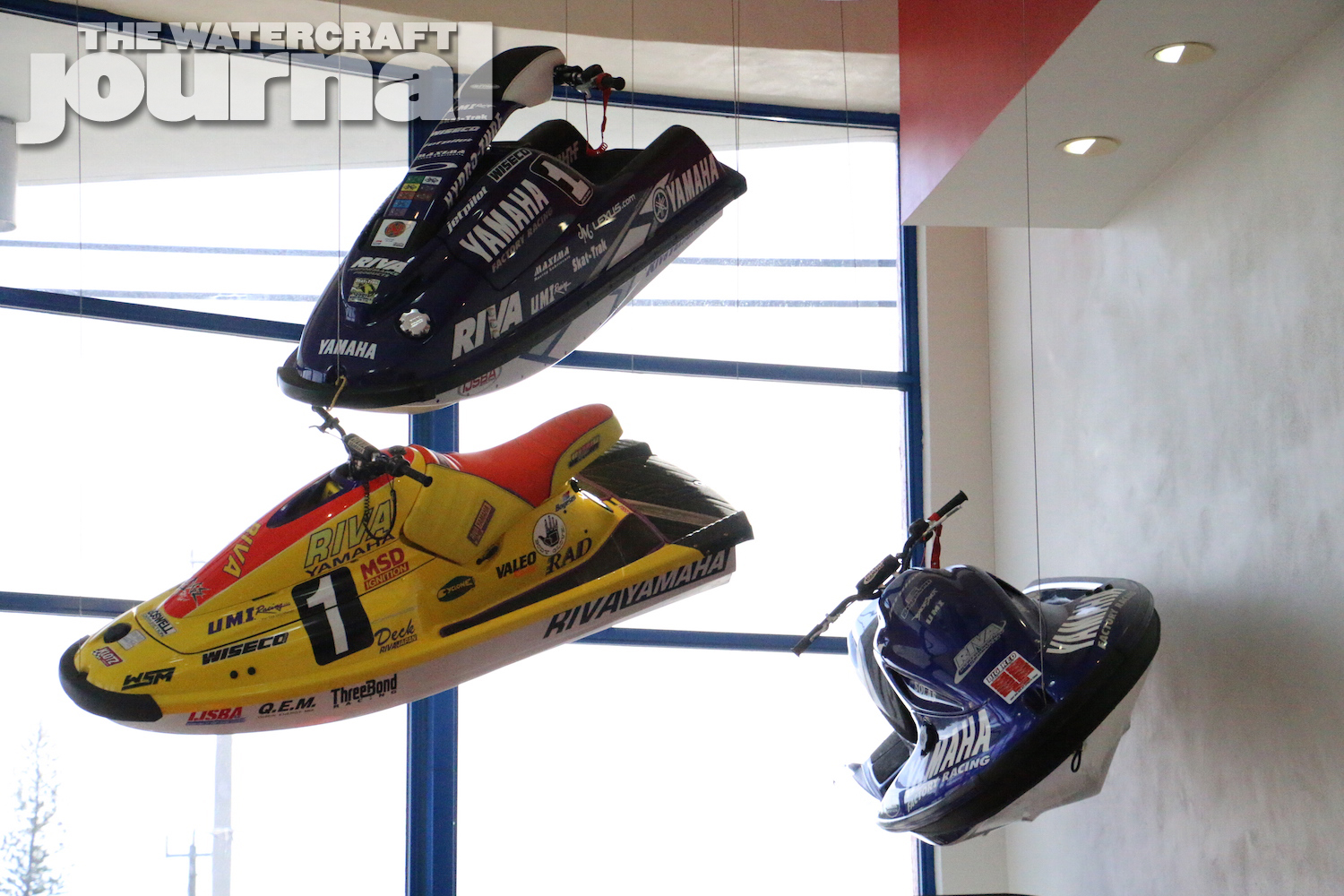
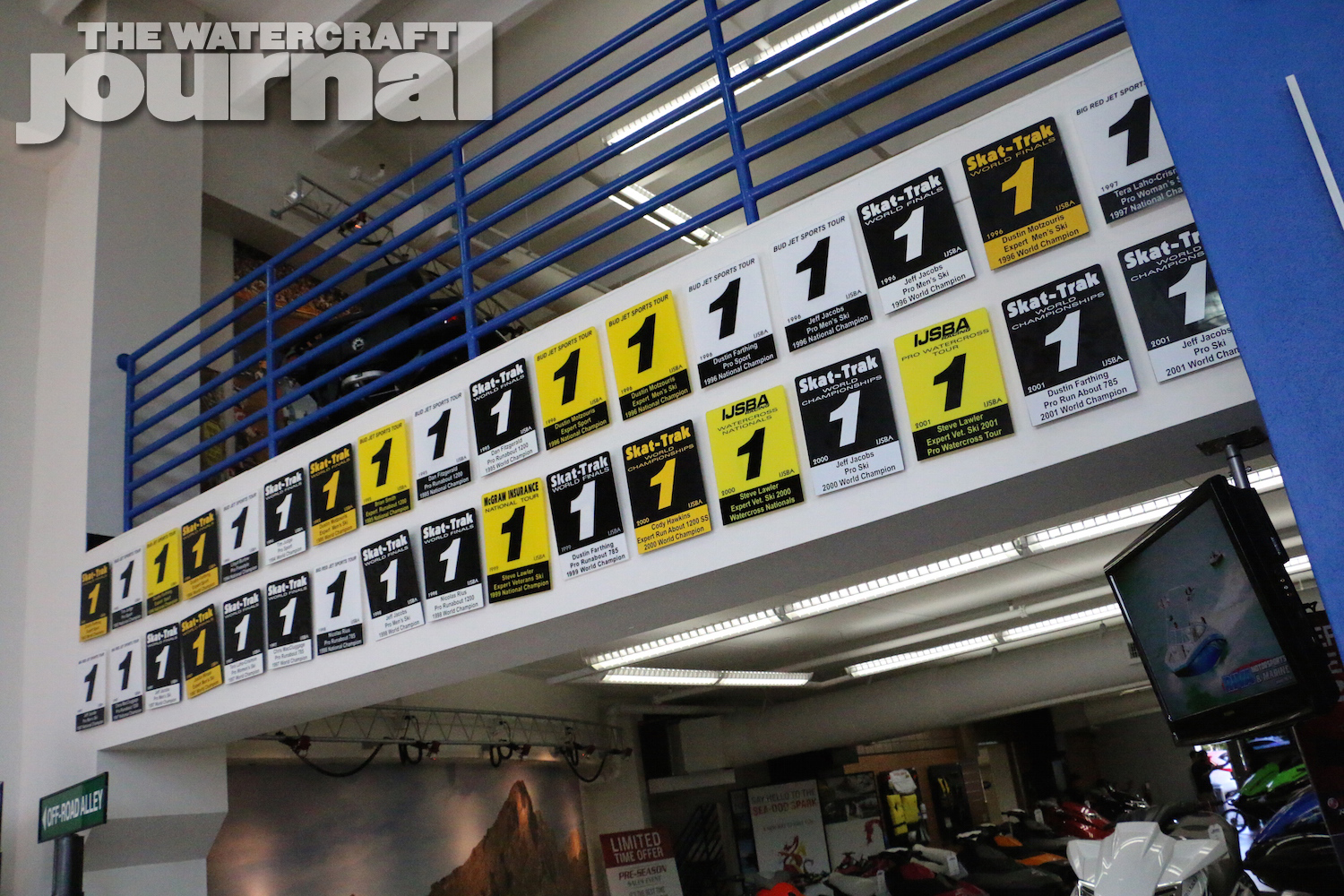
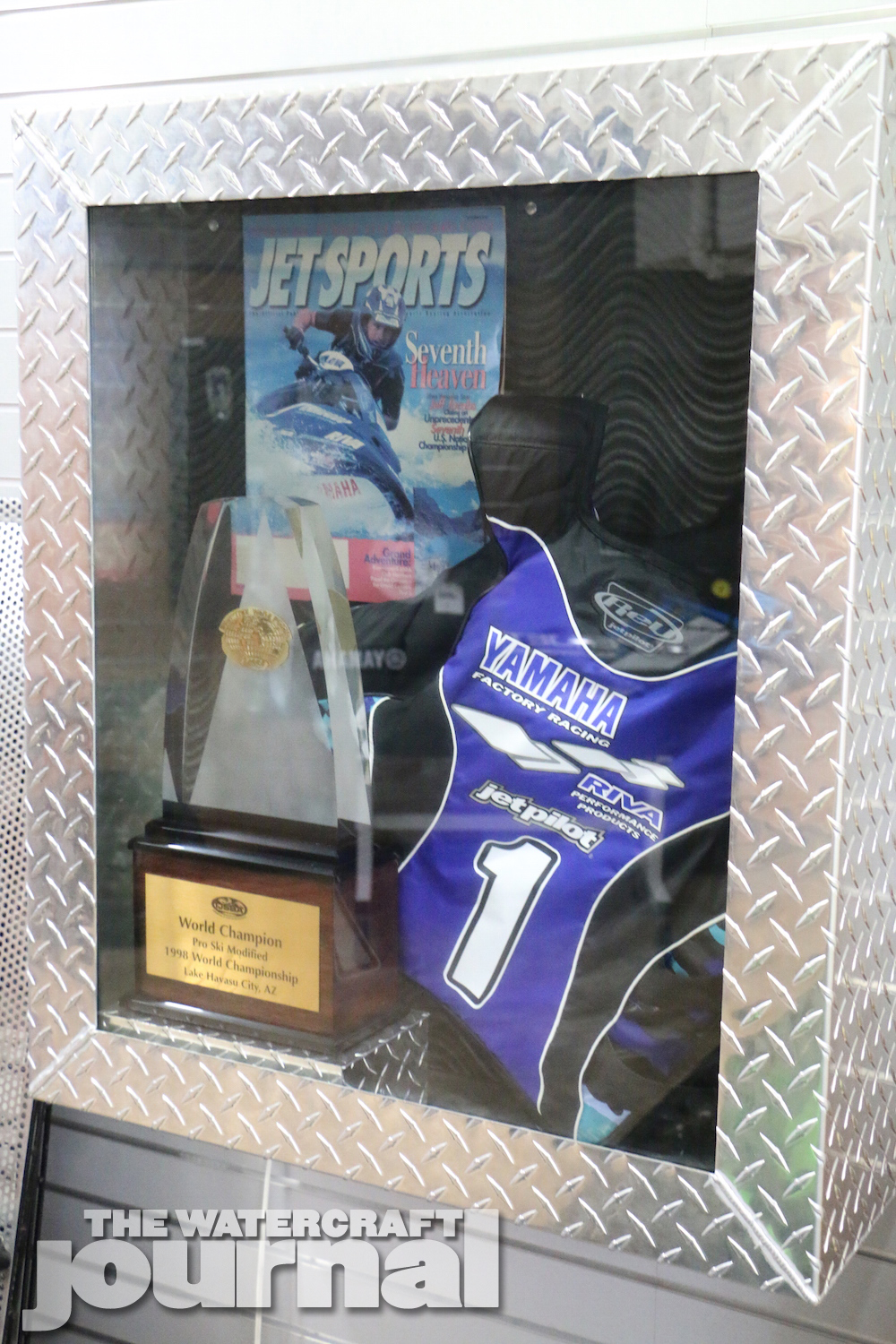
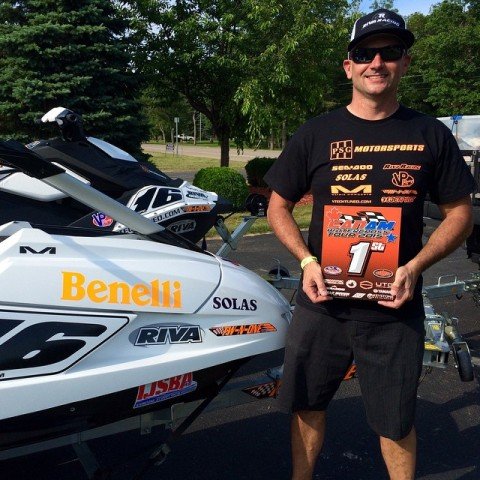
As Yamaha introduced their new watercraft – the WaveJammer and WaveRunner 500 – in 1987, so did Riva World expand it’s product line. As WaveRunner sales continued to grow, Riva World expanded as well, requiring a third change of the company’s name to the now widely recognized “Riva Yamaha.” Not only was Riva Yamaha now selling new WaveRunners, but a major dealer of OEM parts to racers and enthusiasts alike. Additionally, Riva had spearheaded an unprecedented championship race effort. The first team was led by Tim Judge, who fetched multiple titles – the evidence of Judge’s National and World number 1 plaques still hang proudly in Riva’s showroom today, beside other sponsored racers like Jeff Jacobs, Chris MacClugage, and Dustin Farthing.

The success of the team earned Riva the coveted position as the first-ever Yamaha Factory PWC Race Team. “Nobody had anything like it,” Bamdas explained. “Yamaha gave us one million dollars that first year. Not only did that cover the costs, the rig and trailer – but basically started our aftermarket product line and research and development efforts.”

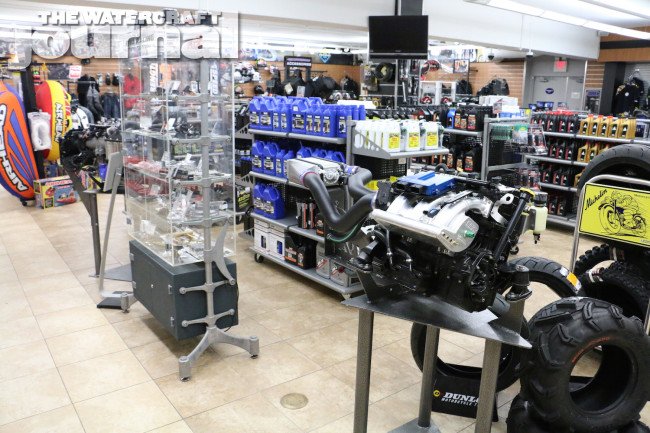
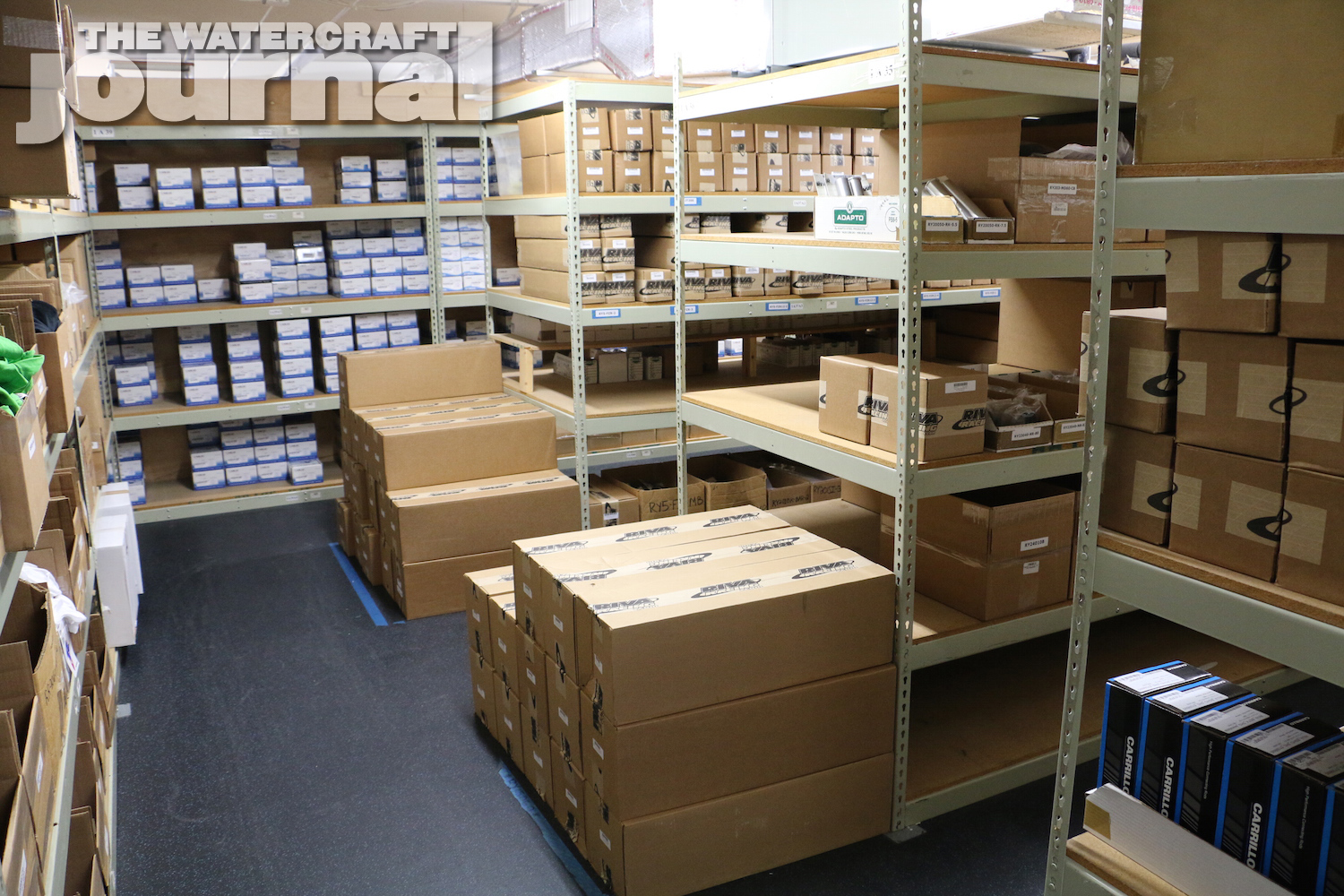
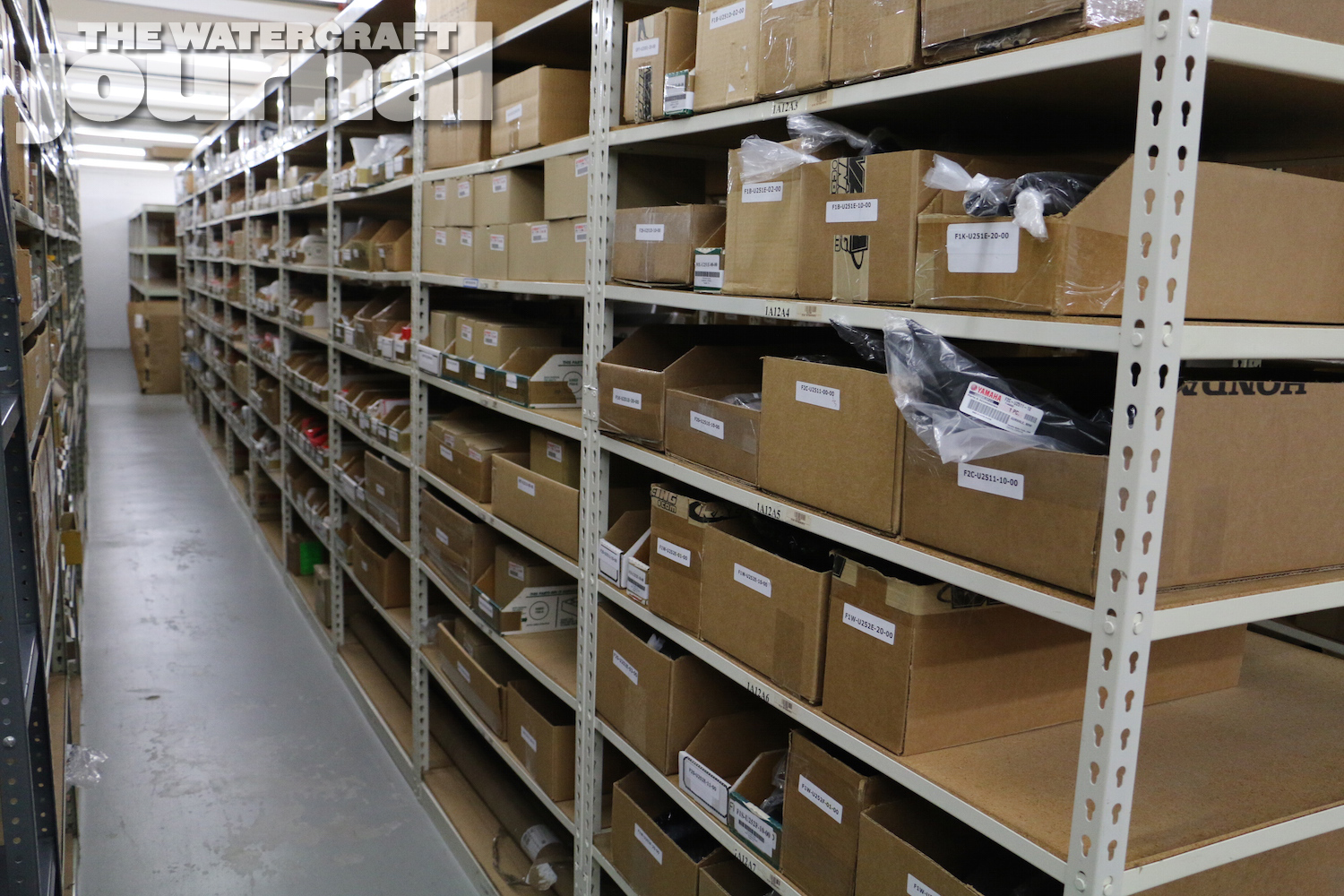
With such a large budget, Riva’s race team swelled to include names like Dustin Motzouris, Tera Laho and Nicholas Rius in addition to those legends listed before. Success both on the water and in the showroom spurred further growth for Riva, adding Sea-Doo, Honda and Kawasaki products. Likewise, Riva’s OE parts sales swelled to include its own and other aftermarket parts, which sales are received, processed, fulfilled and shipped from the level above Pompano’s dealer floor.

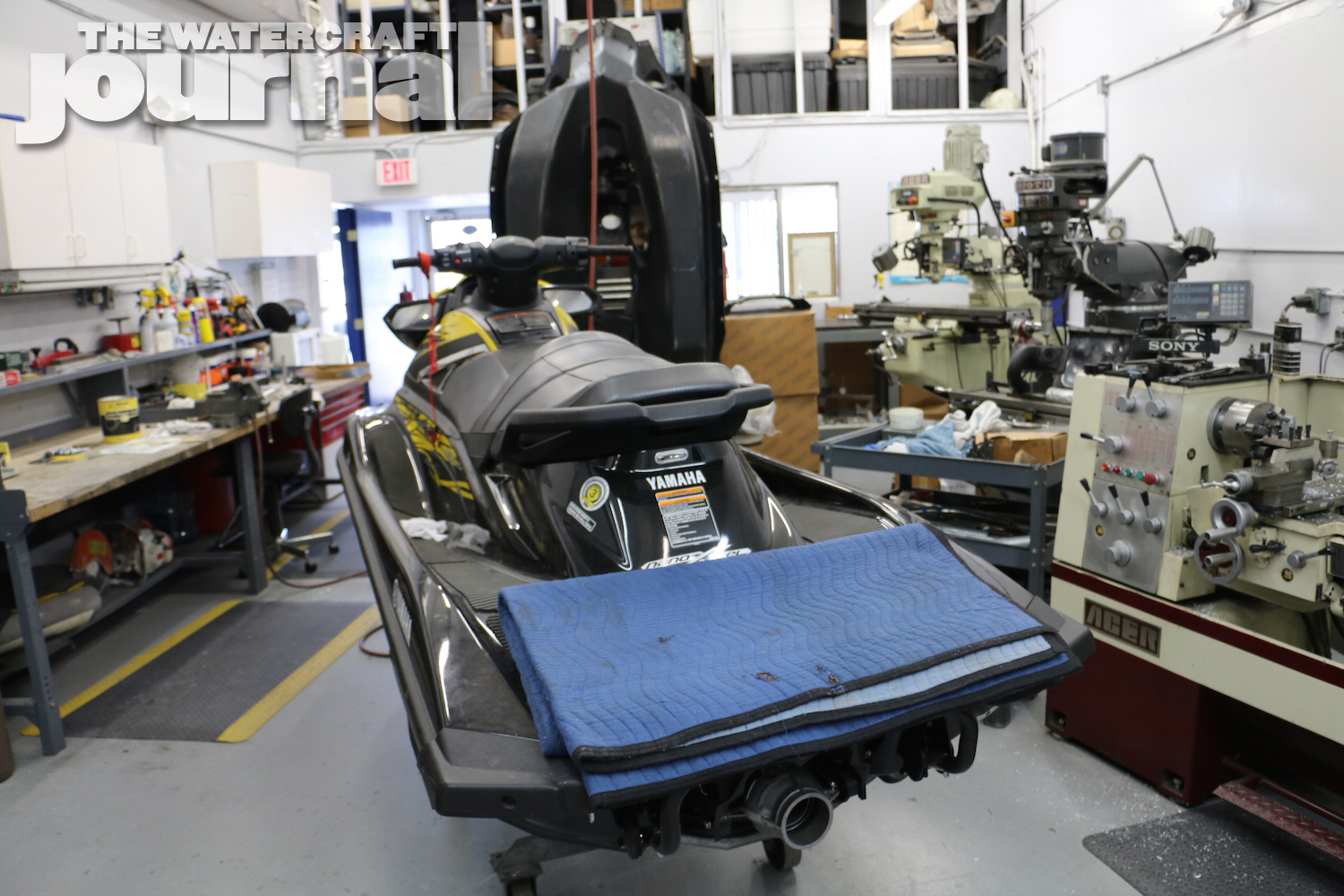
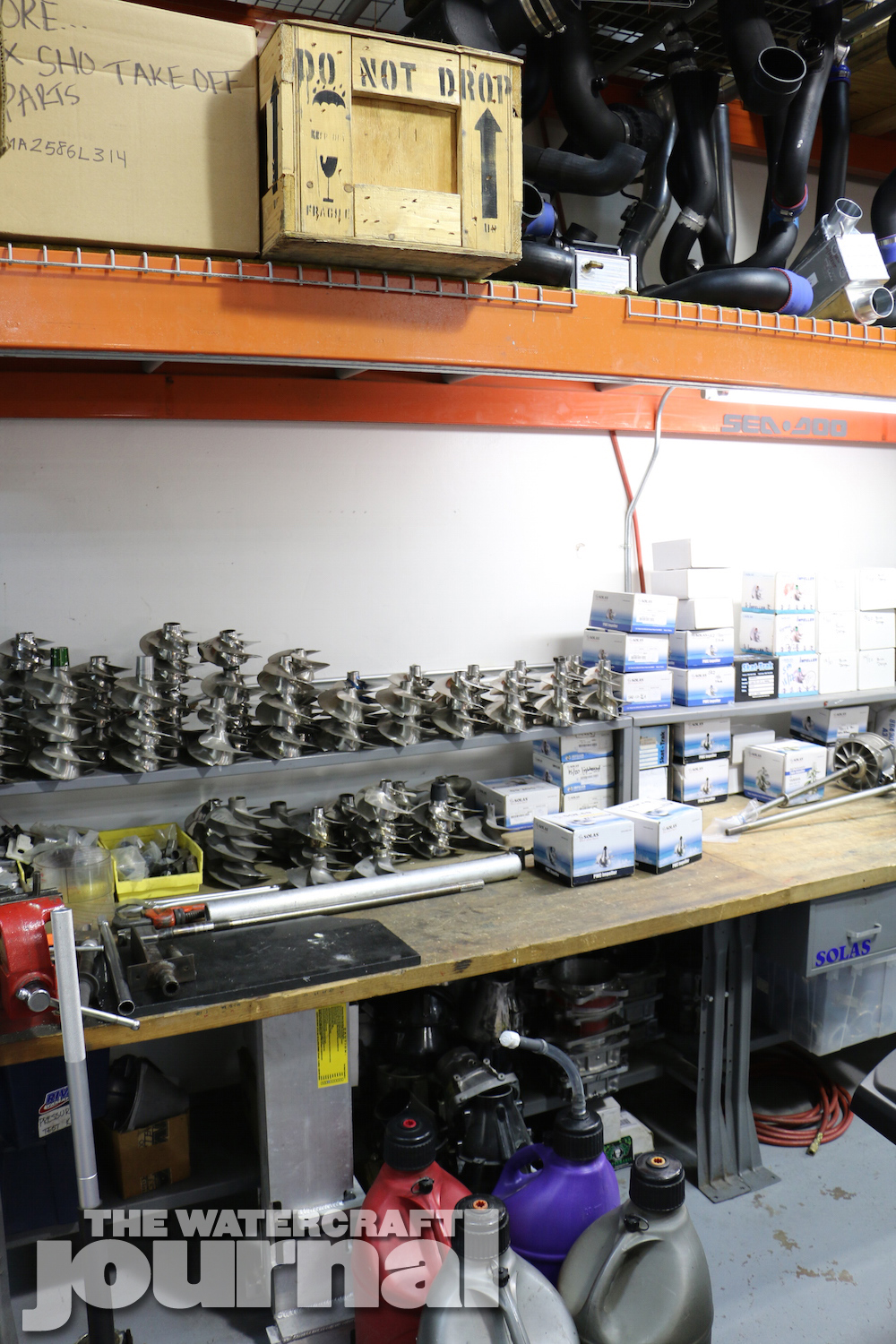
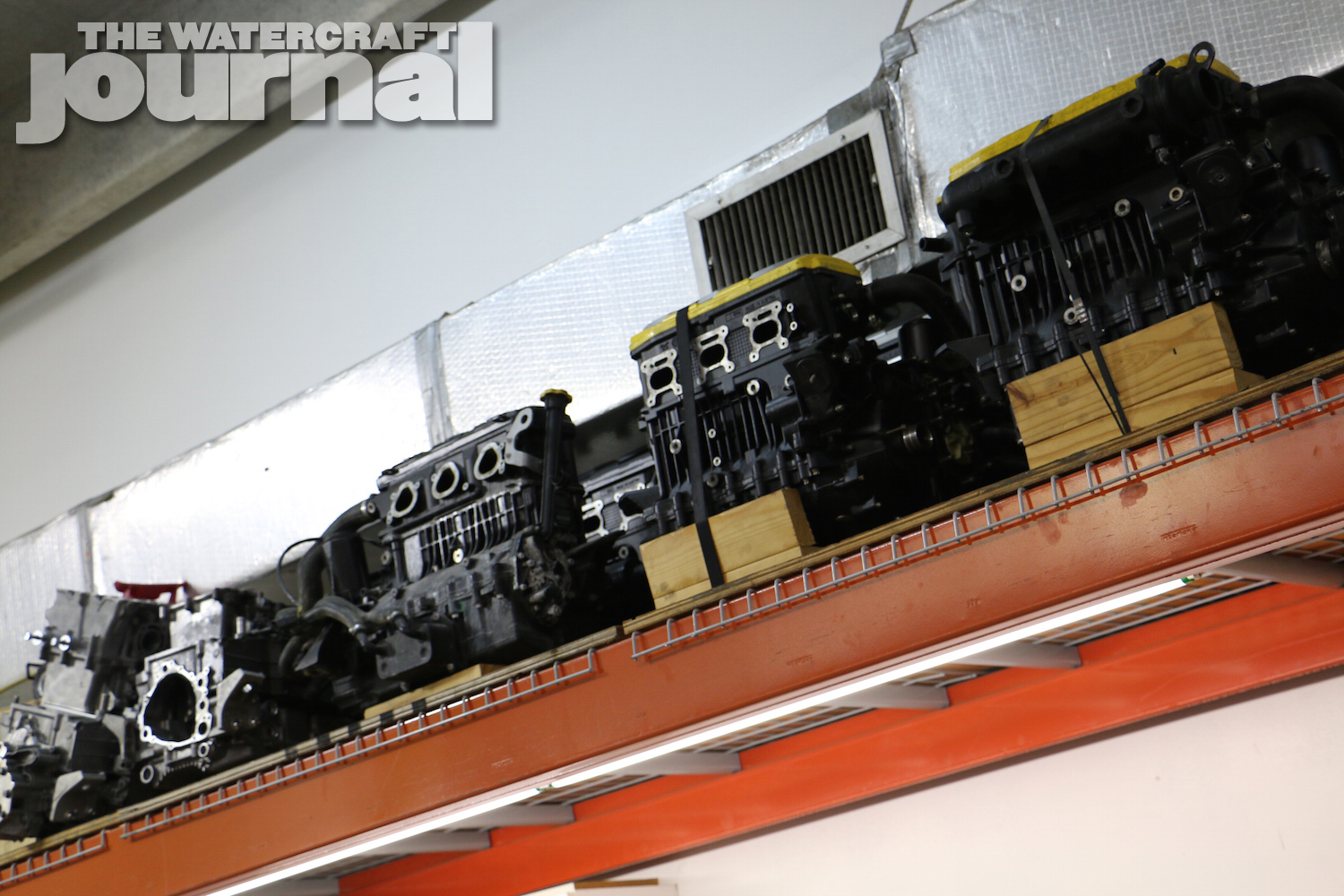
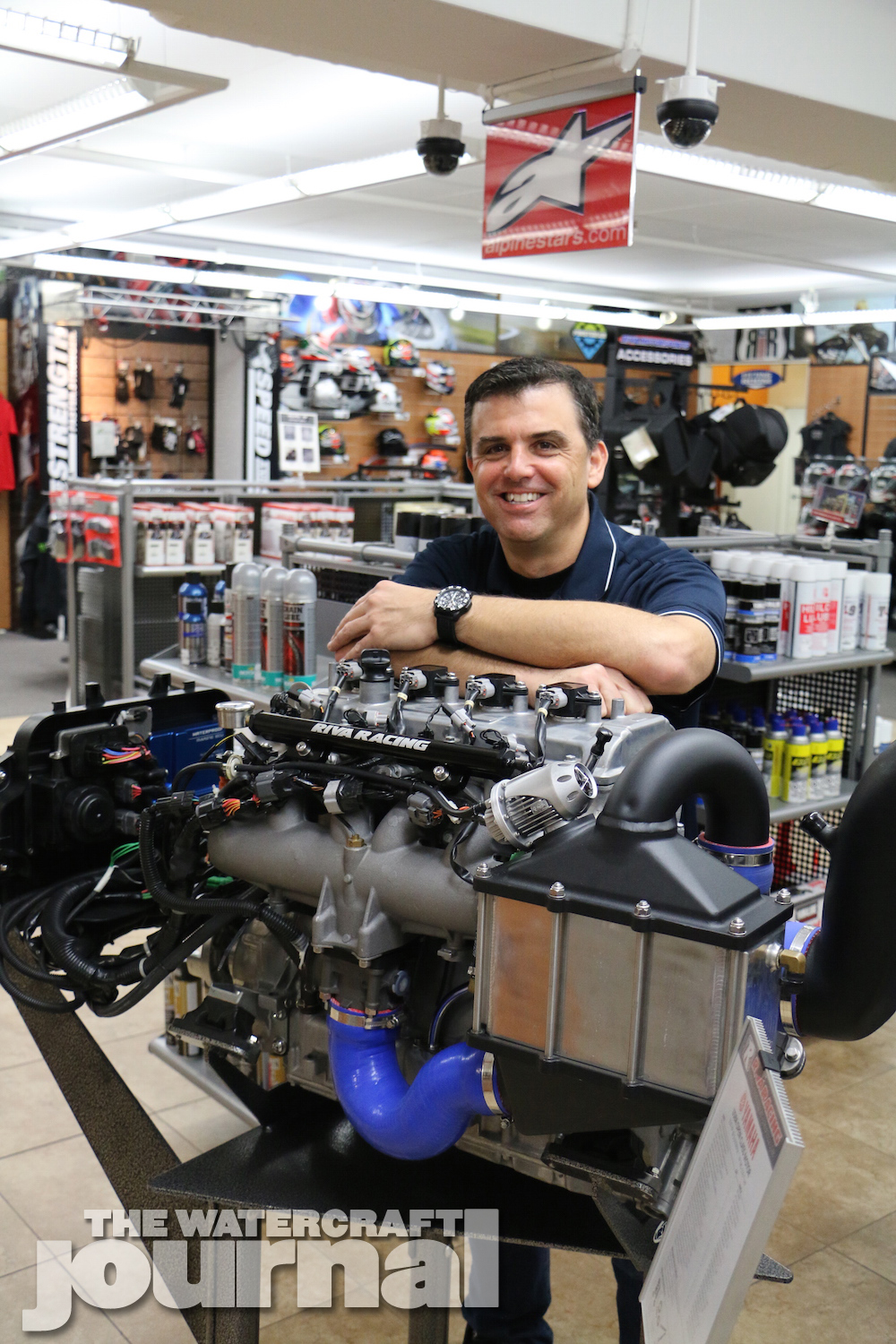
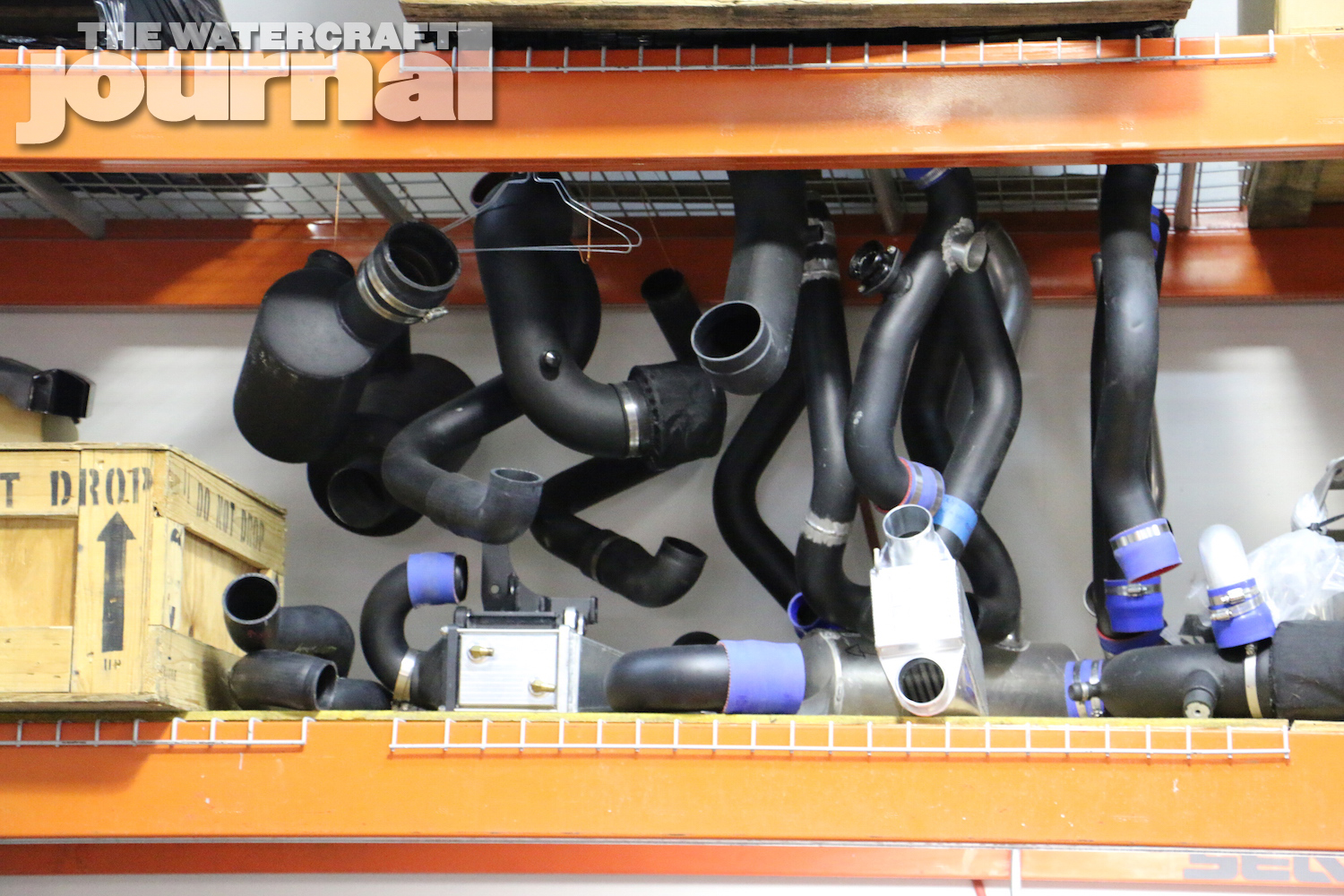
Yet as Riva Yamaha grew into RIVA Motorsports, the PWC industry took an abrupt turn towards new 4-stroke technology. A couple blocks away from the pristine stucco walls, painted steel and glimmering glass of RIVA’s Pompano headquarters lies a nondescript industrial building with a hidden secret – it’s research and development facility. Staffed with some of the brightest minds in engine tuning, mechanical engineers and fabricators, the skunkworks building is rife with engines, hulls, and projects too secretive for us to disclose.

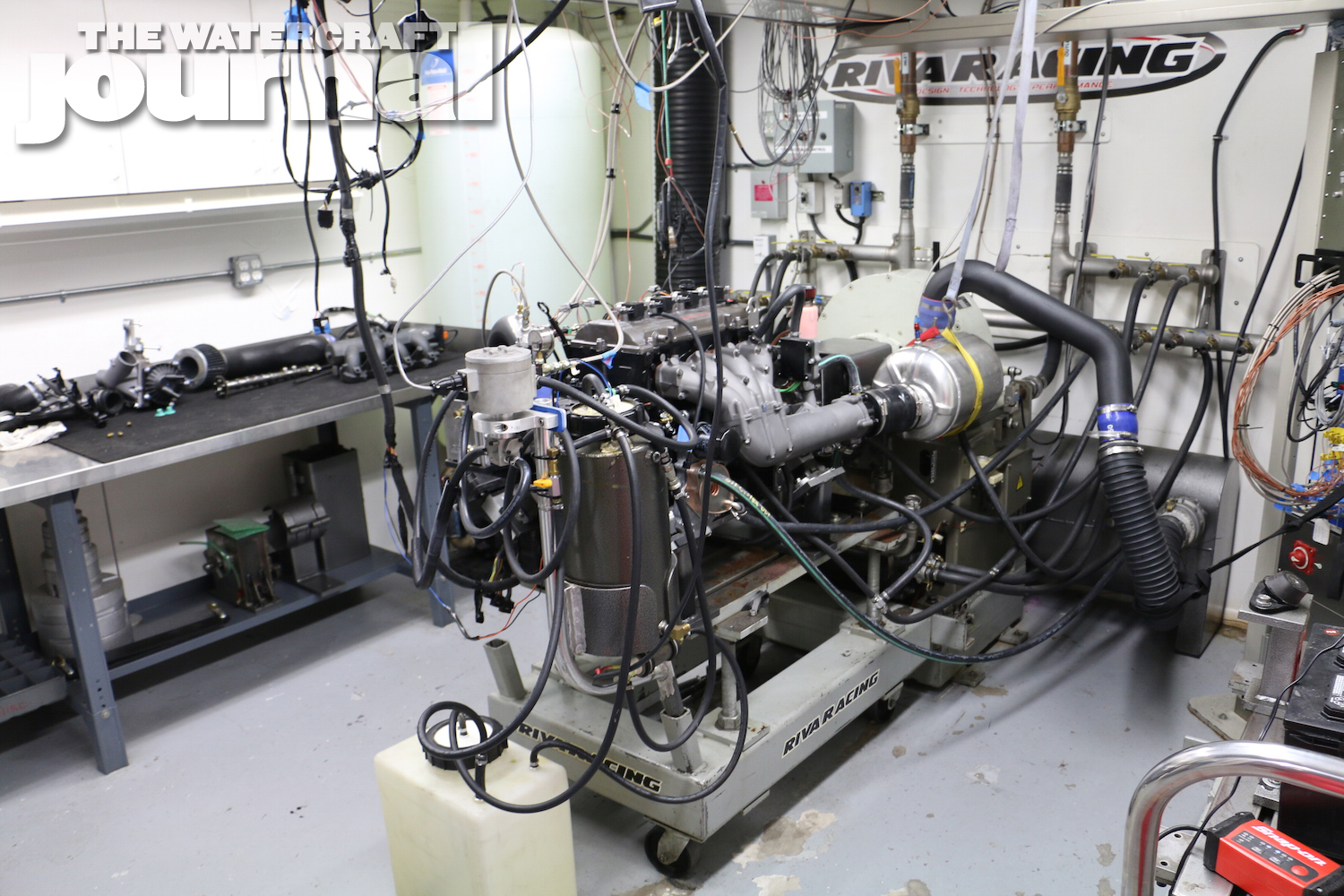
Beside a fabrication shop replete with a mill, lathe, various MIG and TIG welding stations, and the occasional woodworking bench littered with tools is RIVA’s jewel: a top of the line, atmospherically-controlled engine dynamometer. The computer-operated dyno provides limitless amounts of data, internal and external engine temperatures, knock readings, oil and water pressures and temps, and of course, coveted horsepower and torque numbers.

Each and every manufacturer’s engine is tested here for a baseline. Equally, as is every competitor’s aftermarket part. If you claim your doodad will up a Sea-Doo’s boost, RIVA knows if you’re lying or not. “The dyno was necessary with the introduction of the 4-stroke to watercraft,” Bamdas explained. “The technology going into these engines far surpassed that of the old 2-strokes and we needed to be on top, and really make sure that what we were selling not only did what it said it did, but didn’t hurt these sensitive engines.”

IMG_458016

“That’s why we’re so proud of our new Vi-Pec ECU series,” he beamed. “We’ve poured hundreds…thousands of hours into getting these tunes right. From bone stock, to just a few parts to full-on race mode, we’ve got tunes and the capabilities to modify a tune for our customers. Our guys have gone back-and-forth (between the R&D facility and RIVA’s test lake nearby) countless times – and still do. We’re dedicated to providing the highest quality ECU engine management system out there.”

And, as it were, the job never ends. “We pretty much know what’s coming out 5-to-6 months in advance. The manufacturers want us in on their new products so that we can be ready with performance parts when they announce their new units,” Bamdas hinted. “We’ll have products in time for both Yamaha and Sea-Doo’s dealer meetings this fall.”

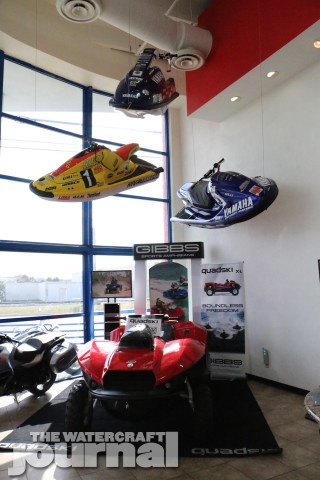
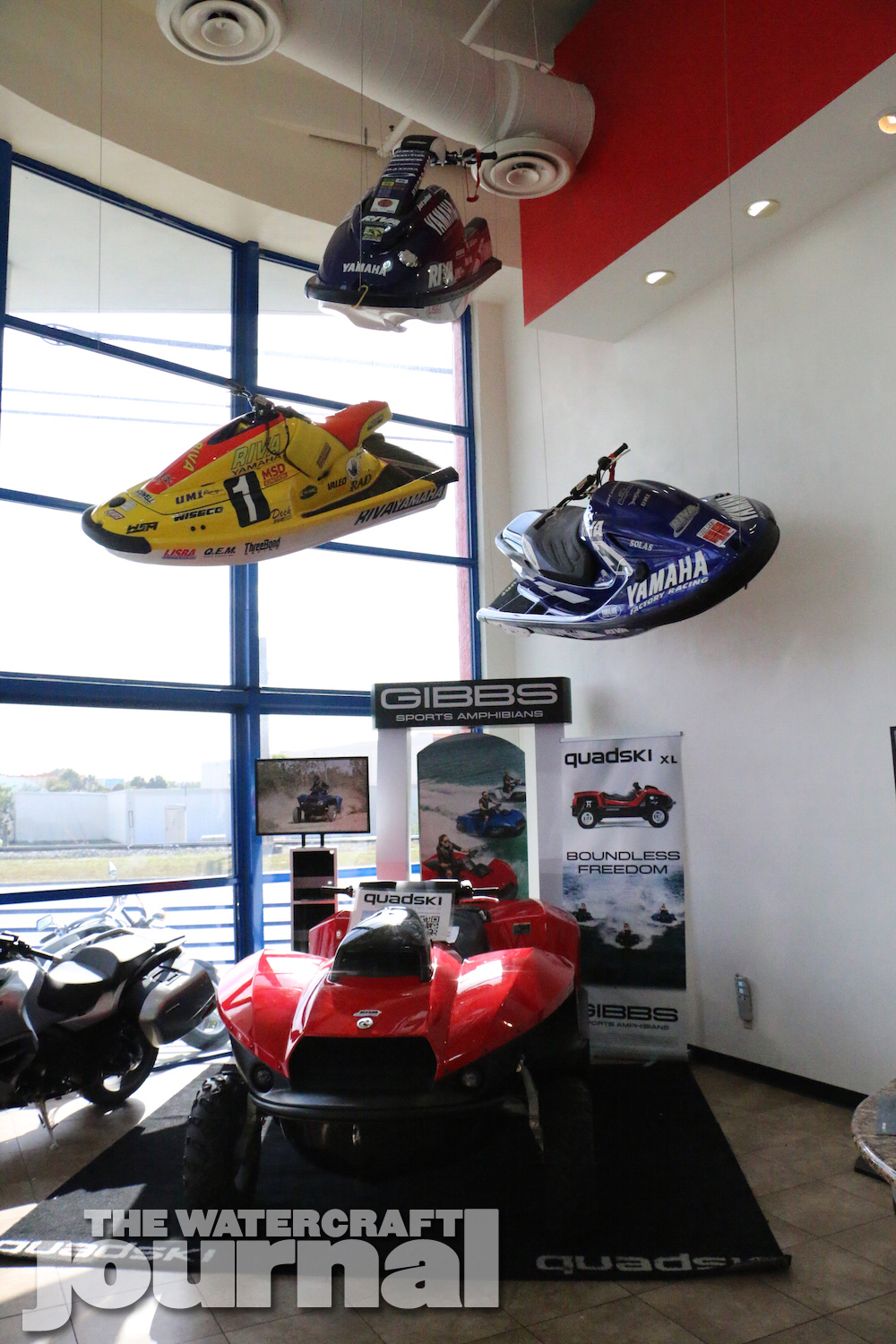
Today, RIVA’s racer support program is altered from its heydays in the 1990s. Racers like Aero Aswar and Aqsa Aswar, Erminio Iantosca, Troy Snyder, Rob Greenwald and Brian Baldwin wave the RIVA banner. A sprawling open booth is always found at every year’s IJSBA World Finals, and RIVA has taken a vested interest in the growth of the HydroDrag series. For the dealerships, RIVA Motorsports recently picked up Gibbs Quadski and quickly became the highest volume dealer for the brand in the nation. And to think all of this sprouted from a weathered South Florida scooter shop.

IMG_458517

IMG_423907 IMG_460523 IMG_460222 IMG_458709 IMG_458308 IMG_427305 IMG_458517 IMG_460021 IMG_459320 IMG_459119 IMG_423205 IMG_427212 IMG_426911 IMG_458016 IMG_428614 IMG_428213 IMG_425810 IMG_423004 IMG_423306 IMG_4287 IMG_426304 IMG_424502 IMG_422101 IMG_421602 IMG_420801 IMG_422903 IMG_424708 IMG_425003 IMG_425109 IMG_427906 IMG_428107 IMG_428715 IMG_458818
<
>


Seven Deadly Questions With Paul Green

0

GREEN

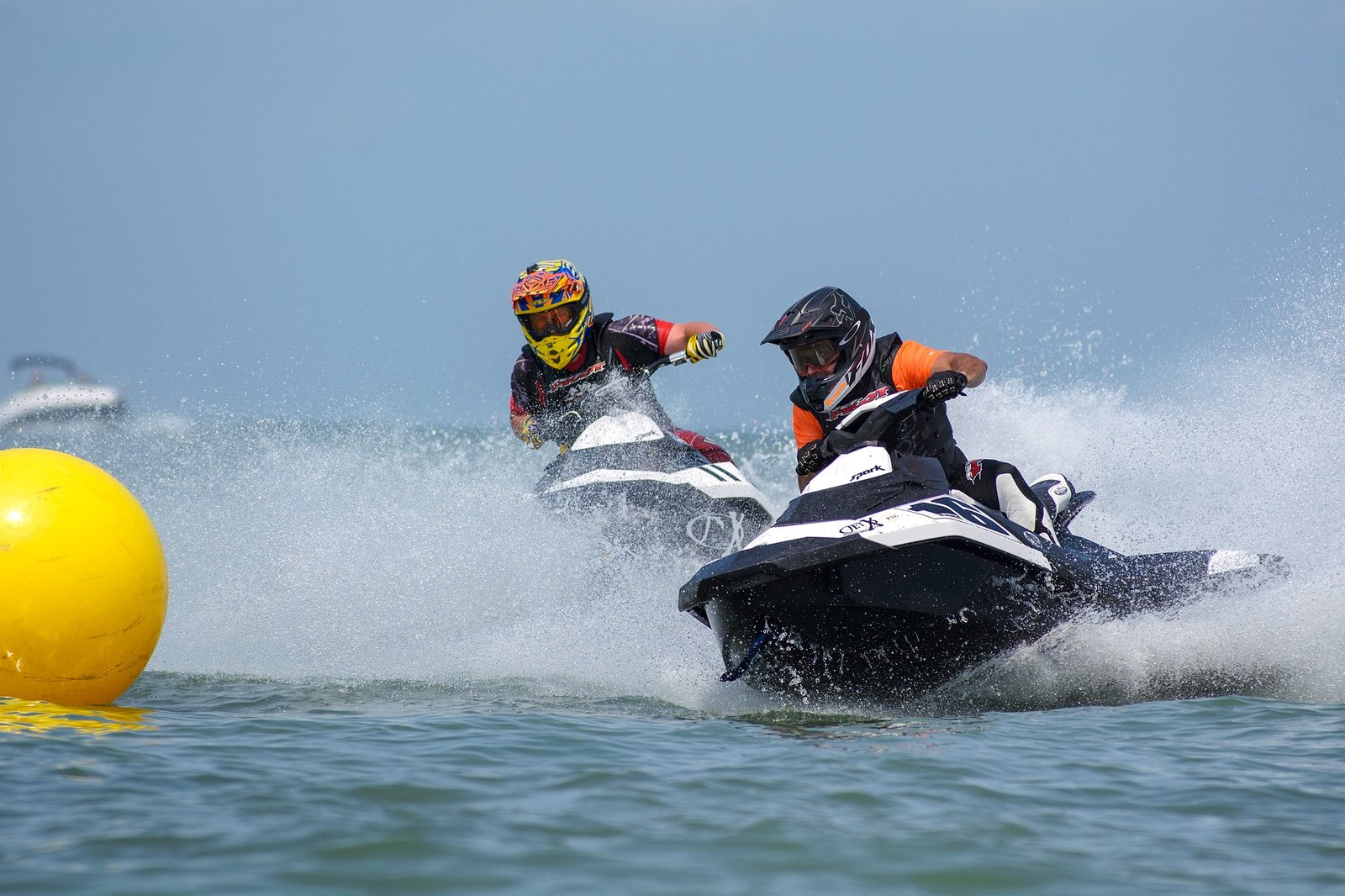
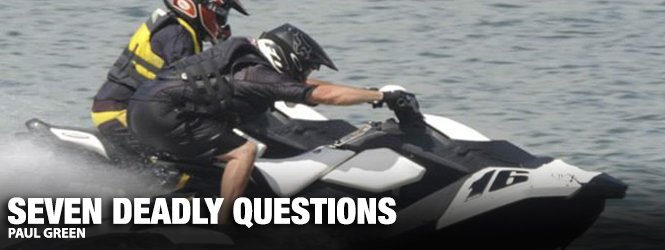
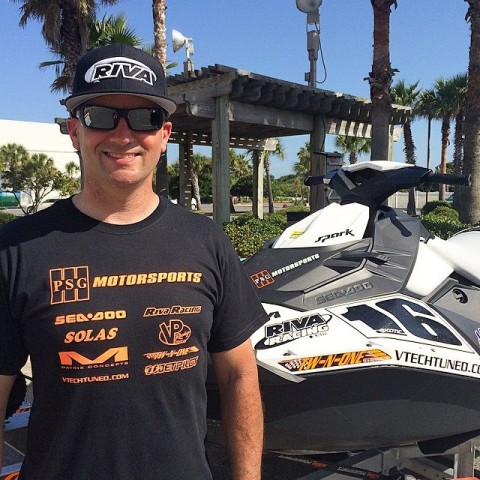
Fresh from a stellar weekend of racing in the CWA racing in Michigan, we caught up with RIVA Racing Team Rider Paul Green, who has been successfully campaigning a 2015 Sea-Doo Spark in the Rec Lites class. Paul offered some insight on why he chose to race the Spark for 2015, and what advantages the new craft offers:

The Watercraft Journal: How does a stock Spark handle compared to other traditional larger runabouts? What did you need to learn to ride it successfully?
Paul Green: The Sea-Doo Spark has a major power-to-weight advantage over any other Runabout on the market. At just over 400 pounds, the craft benefits from a light feel on the water with enough power to bring a smile to even the most seasoned rider. The first thing you notice when you spend a day with the Spark is that one person can move the boat around both on the shore and in the water with little effort. Once you sit on the craft in the water, it gives you a sense that you’ll be riding and controlling the craft and not the other way around like many of the larger platforms.

WCJ: What does the stock hull like to do in chop or while racing? What does it do well? What not-so-well
PG: One of the major advantages to the platform is the ability to choose the two or three person hull option. As many of you know, the three-seater version mainly consists of a bolt-on rear hull extension that lengthens the hull. The two versions of the hull handle very differently. In calm conditions, the two up version seems to benefit from a slightly higher mph over the three up. This fact changes however once the conditions rough up and you’re faced with chop on the race start or during the race.

The two-up hull tends to pop the front end up on a race start if you’re not standing over top of the handlebars. The three-up version is more planted on the start since the rear hull extension does not allow the back of the hull to sink down and raise the nose of the boat under hard acceleration. The adjustability of the base hull from a two-up to a three-up makes the package unique.

10989201_911747025553969_115662195184704538_n

WCJ: What do you do to get it to handle better? (body positioning, foot/knee placement, weight shifting)
PG: I usually tell anyone who plans on racing a Spark to purchase the three up version first in order to get the hull extension from the factory. They can simply remove the hull extension should they crave the livelier feel of the two up ride.

Personally, I ride a three-up hull as I feel the steady handling it provides on the course out-weigh the slight mph advantage the two up may provide in perfect conditions. The riding position on both the two up and three up encourages a forward riding style. The closer you are to the front of the seat, the better control you’ll have.

WCJ: What modifications/aftermarket parts do you use? How do they improve the Spark’s handling?
PG: I use the RIVA Racing Intake Grate, Solas impeller and RIVA Racing Stainless Steel pump liner. The combination of those three parts along with the RIVA Racing Pro Series sponsons takes the craft to a higher level of performance and handling. A RIVA Racing Seat cover also helps since the stock-seating surface can get a little slippery when you’re pushing hard under race conditions.

My race Spark has a reflashed ECU from VTECH which increasing timing, raises the RPM limit, and provides fuel mapping that makes the craft accelerate harder and reach greater top speed. The mapping I use is a one off file that I have designed along with VTECH to utilize the benefits of VP Race Fuel.

WCJ: What has been a major hurdle you’ve had to overcome while racing a Spark?
PG: One of the problems with the design of the Spark is that it suffers from limited fresh air intake to the motor area of the hull. The fresh air that comes in from the front of the hull meets obstruction from the gas tank and the flotation foam before it passes into the engine area. The hull is not equipped with any venting to allow hot air and gases to escape the engine area. This creates a problem for the tuner since the engine heat soaks under racing load.

The stock ECU recognizes the increase in temperature and immediately starts to take timing and performance out of the engine to protect it from overheating and damage. Running a Florite-style air vent in the oil inspection hole on the right side of the hull will help pull hot air from the hull. RIVA sells the round vents that are inexpensive and snap into the stock hole in seconds. Engineers at RIVA Racing are currently working on a solution to address the issue of fresh air supply to the engine.

We will be testing a new product from RIVA Racing shortly in that regard. Also running a high quality race fuel with higher-octane values will insure the stock antiknock sensor does not override the engine management and again remove performance from the engine.

picture-3

WCJ: Why is the Spark a good platform to race on? Why did you choose to race a Spark this year?
PG: I like the Spark for racing since it’s affordable to purchase, hull can take a bump and not break like traditional fiberglass, parts are affordable, speeds for racing are safe for newcomers to the sport (under 55 mph), the engine is trouble free with fuel injection and a clean burning 4-stroke that is the most fuel efficient engine I’ve ever seen in a PWC.

WCJ: Where do you see the future of Sea-Doo Spark racing?
PG: [As I see it,] the future of the Spark in racing will depend on three things: 1. Sea-Doo’s commitment to promoting the craft as an option for racing (ie. higher contingency payouts for podium finishes and better support for the class). 2. Promoters recognizing this as a craft that will potentially bring new racers to the sport of runabout racing due to the reasonable cost to purchase and safer racing speeds. 3. A second manufacturer building a craft that will compete directly with the Spark in the Rec Lites category.
“RIVA Racing Team Rider Spotlight – Paul Green” was first published on RIVAracing.com on July 15, 2015 HERE.

Gallery: EchucaFari Winter Group Ride

0

CHILL

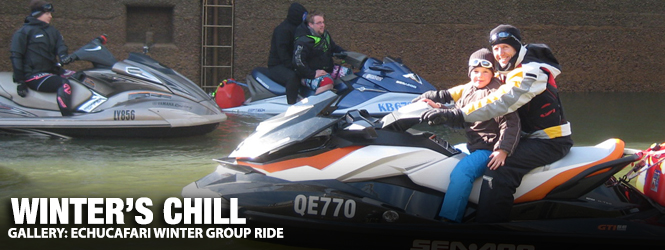
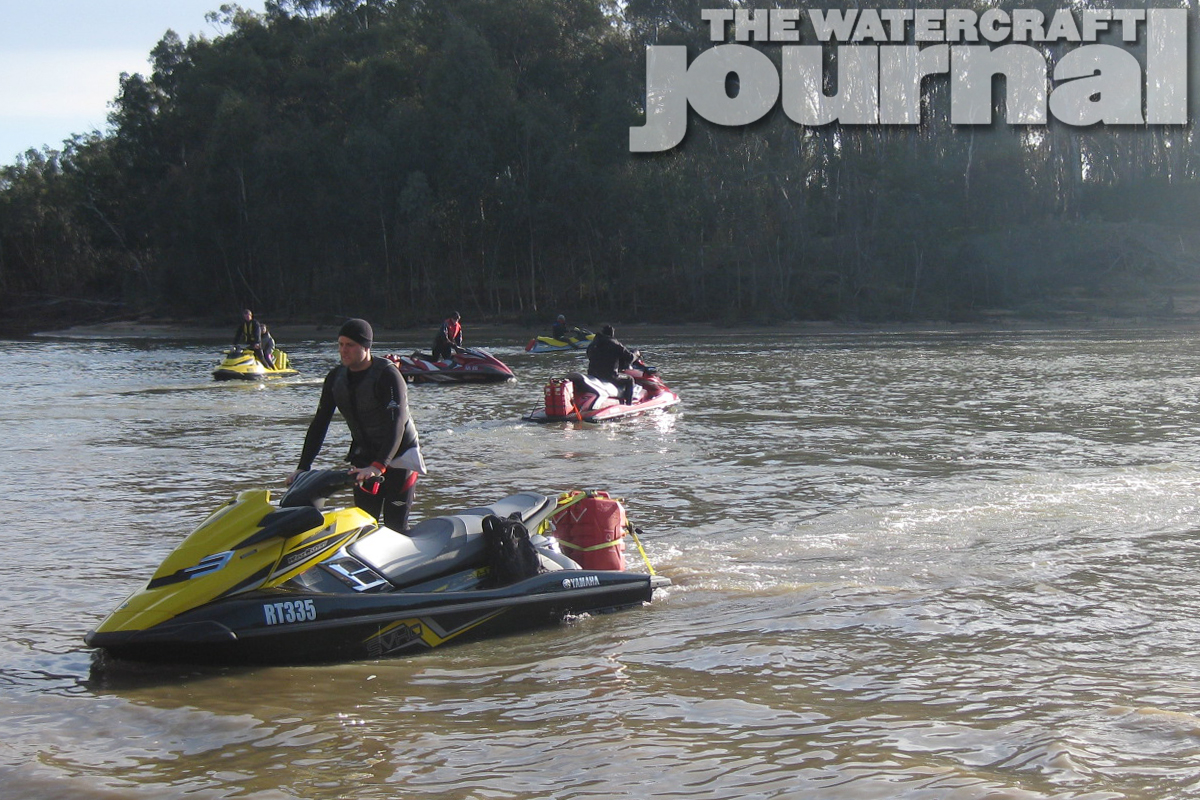
The EchucaFari is a social PWC ride that a group of friends have been doing for the last 7-or-so years. It is based from Echuca on the Murray River. The Murray River forms the border between Victoria and New South Wales (NSW) in Australia. Because June-through-August is winter in Australia so this ride is traditionally a very cold ride. Every time we have come back from the ride we get so many of our ride friends saying we wish we had gone.

This year Krazy Koika Nick decided to start the ball rolling by publishing the ride date back in February and selecting the middle weekend of the Victorian School holidays 3-to-5 July 2015. This was set and published on OZPWC.com.

Brett Carroll took the initiative and published the ride as a Facebook event in March. I then invited all of my Facebook friends who had an interest in PWC. The invited list grew to about 180. Of the total invited we had approximately 20 elect to ride in the first month. This grew to approximately 60 going from Facebook event 3 weeks before the ride and approximately 20 OZPWC.com riders who were not on Facebook. Prior to this year our biggest numbers for the ride had been 23.

16

We confirmed with all of the riders their intention to attend but as always, a big drop off occurs immediately prior to a ride as Life happens. To our friends not able to attend due to ill health we wish you a speedy recovery. By the Thursday before the ride we had 52 skis and 58 riders confirmed.

The River Murray has fluctuating river heights and one week before the ride the river was at its lowest point in years. Lucky for us the river authorities began releasing water into the river and by ride time the river was back to easily navigable levels.

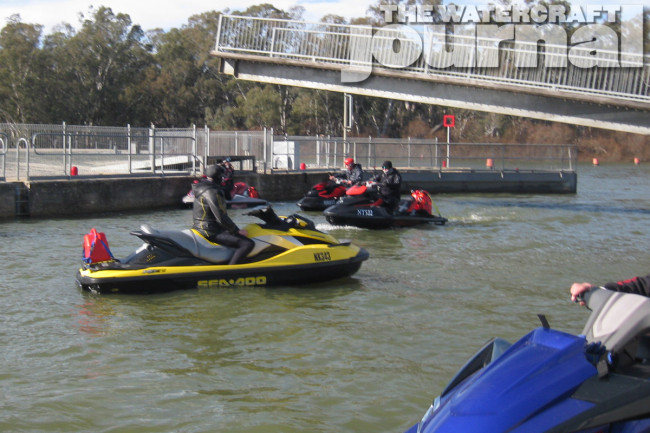
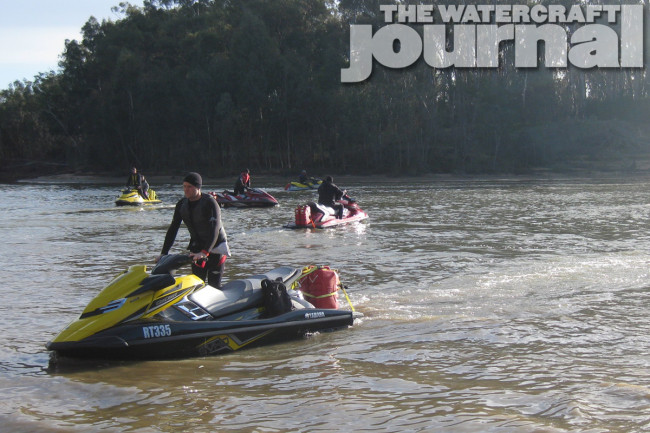
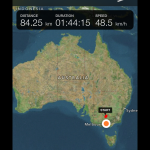
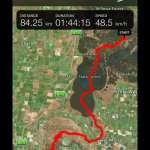
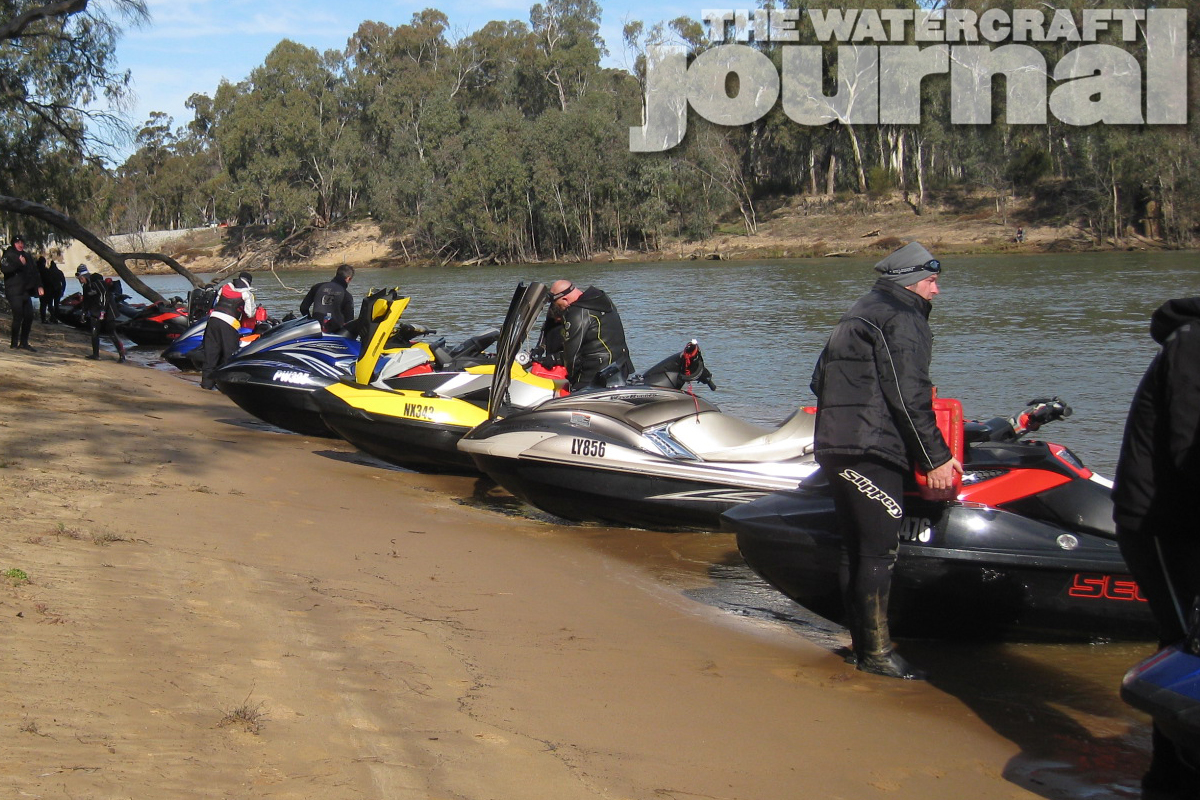
A smaller group headed to Echuca on Friday July 3rd, with riders coming from as far as Sydney NSW (8.5 hour drive) and Berri SA (6 hour drive). After some exciting rescues on the road for broken wheel hubs, we launched 10 skis and explored the Goulburn river branch of the Murray, rotating leaders so everyone had a chance to ride on the mirror smooth waters in the lead. There were lots of snags to navigate around and lots of fun was had.

22

We will ride more of the Goulburn in the future. As it started getting late we headed back to Echuca. We had covered 65k, with lots of zigzagging. It was great to be back on the water. One of the highlights of the ride was having Bella, the blue heeler dog that traveled all the way from South Australia, along for the ride. She had a barking good time!

Most of the riders stayed at the Neribo Motel and we headed to the Shamrock Hotel for dinner. Numbers grew as our friends who had to work that day progressively arrived. Dinner was served to approximately 50 people. The hotel had “a buy 1 meal, get 50% off a second meal” deal on Friday nights so we felt very looked after. Some riders proceeded to the Star Bar and had sore heads in the morning.

Saturday July 4th we woke to the full moon setting and very cold temperatures ( -1 degree Celsius). After heading to Maccas for a regulation jet ski breakfast, we met at the ramp at 8am for a 9:30am departure. We were riding upriver to Picnic Point. As usual we had people slowly arriving and some who decided to launch from another ramp. This played to our advantage as we were able to group the riders and allow time between group departure times which meant more space on the river.

8

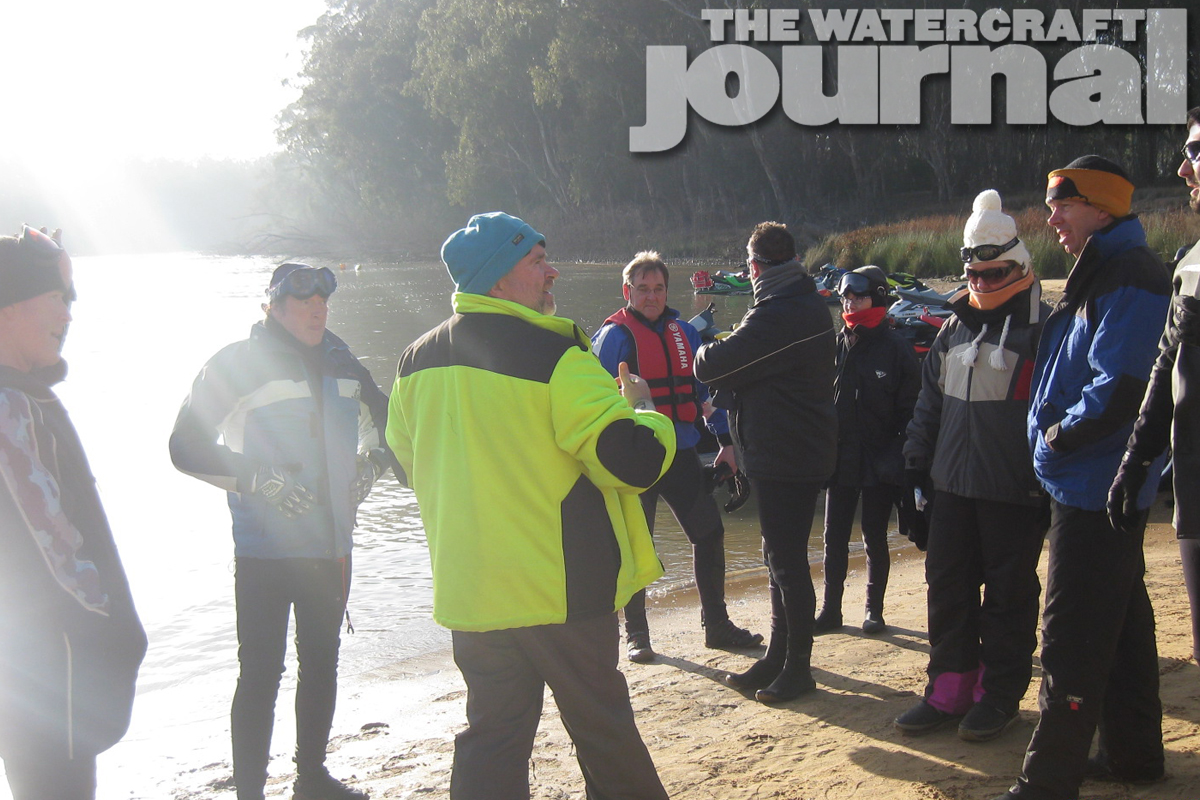
Hutch, Rebeldoo and Brett lead the first group; Anthony (Diptech) DiPietro and Tony lead the second group of mostly modified skis; River Rat Mike and I led the third group and Krazy Koika Nick and Ed led the stragglers. Corey even managed to get the faster skis to obey the slow speed zones. A big thanks to these guys.

It was a great sight to see all the skis out there having fun in the cold, especially the amount of wake generated by so many skis bunching up and obeying the 8 knot zone. We got to Picnic Point Caravan park for lunch with 38 skis on the river bank. Unfortunately not all of the skis made it. We believe eight skis turned back or did not make the distance. One of the modified skis pulled out with a broken fuel rail? The 46 skis that attempted the ride was a new record for the event.

Most of us had fish and chips for lunch and then refueled before heading back to Echuca. There were lots of opportunities for wide open throttle (WOT) after the slow zones had been negotiated. Several of the riders who still had fuel, continued up the river for another 10 km. We saw several wild horses by the riverbank and found a nice spot to tie up and have an ice cold beer. Heading back we did a sweep to check all riders were accounted for. I was especially pleased to see my ski clock up 200 hours since I had purchased it in September 2014 as we rode at WOT for most of the trip back to Echuca.

20

About 10 kms from Echuca we came across one of the skis being towed by NSW Waterways (state water police) after it had broken down. Thanks for the assistance. By the time we arrived at the ramp, everyone else had retrieved their skis and we were last off the water. 168 kms for the day.

Saturday night saw us back at the Shamrock Hotel for dinner and for swapping stories about the day. The American Hotel up the road put on a spectacular 4th of July fireworks. Some again went to Star Bar and this started the demise of our numbers.

Sunday was another cold morning and we had another Maccas breakfast to start the day. Assembly was scheduled at the downstream ramp at 8:30 am for a 10 am departure to Torrumbary Weir. We had 18 skis in the water as some of our core group was missing due to heavy celebrations the previous night.

4

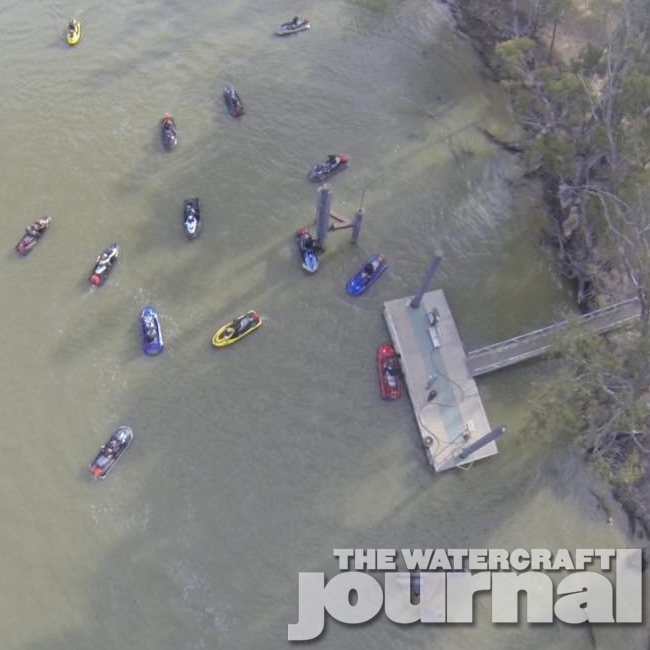
A few of the early arrivals ventured up passed the Port of Echuca in the slow speed zone to check out the Historic site with its still active paddle steamers (see photo of Emmylou). Ten o’clock arrived and we departed. Glenn Snashall had his quadcopter filming our departure from above. He then drove down to the midway point and filmed the skis as the group arrived. We can’t wait to see the video.

Not far from the start a skier’s modified Yamaha had clouds of smoke pouring from it and so they abandoned the ride. Five more latecomers caught up to the bigger group. There was lots of opportunity to ride with your mates and test top speeds while maintaining distance off. Glenn did some more quadcopter filming from Deep Creek, a marina complex on the river.

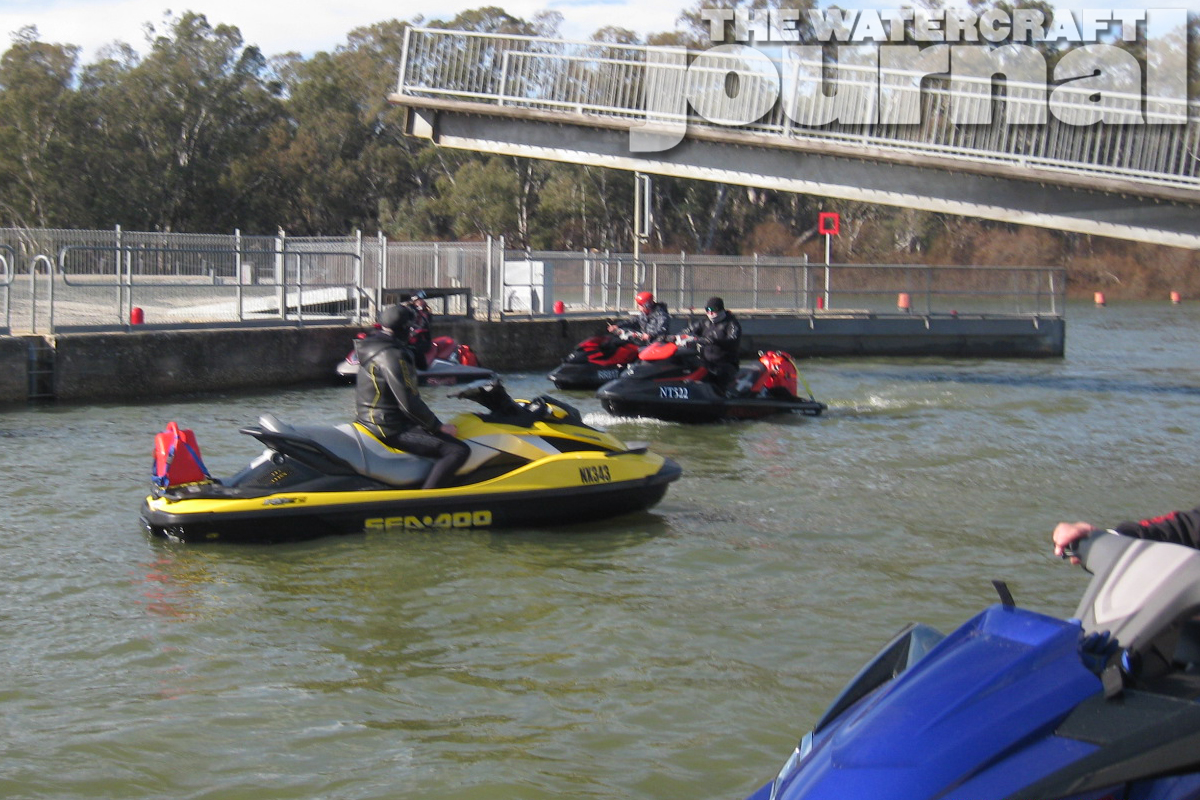
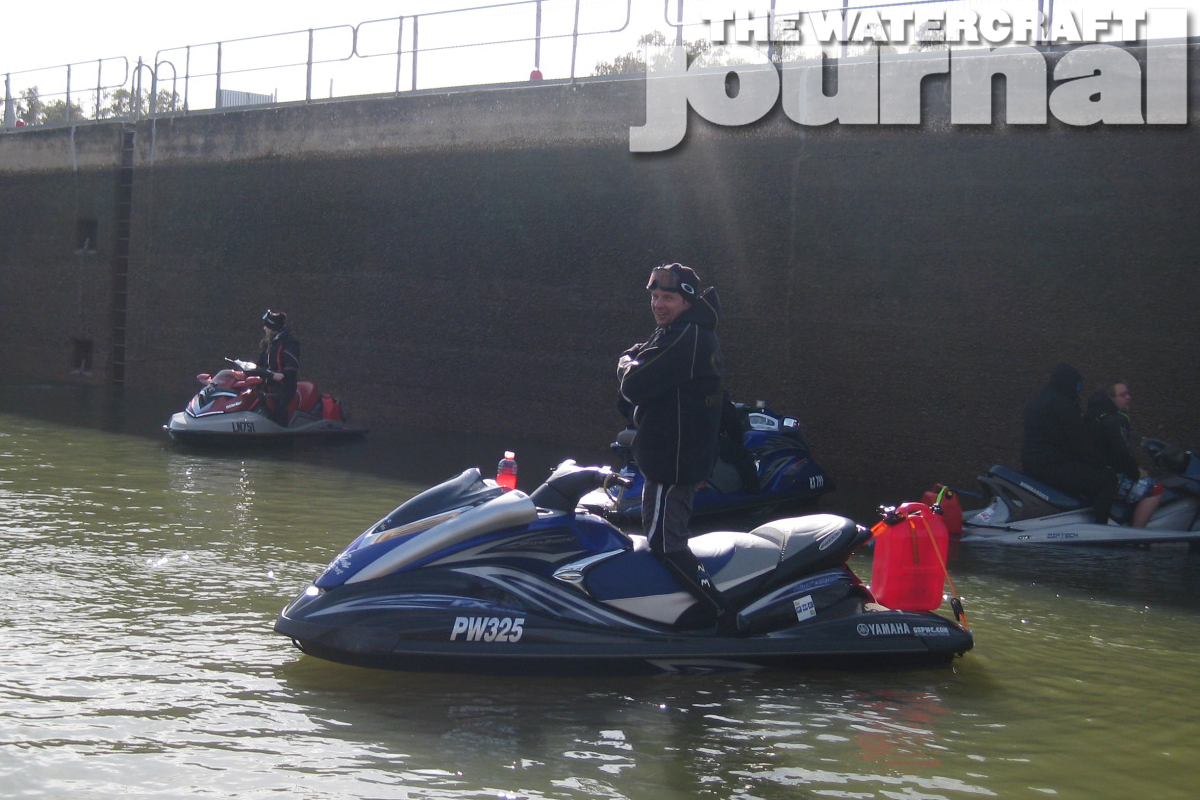
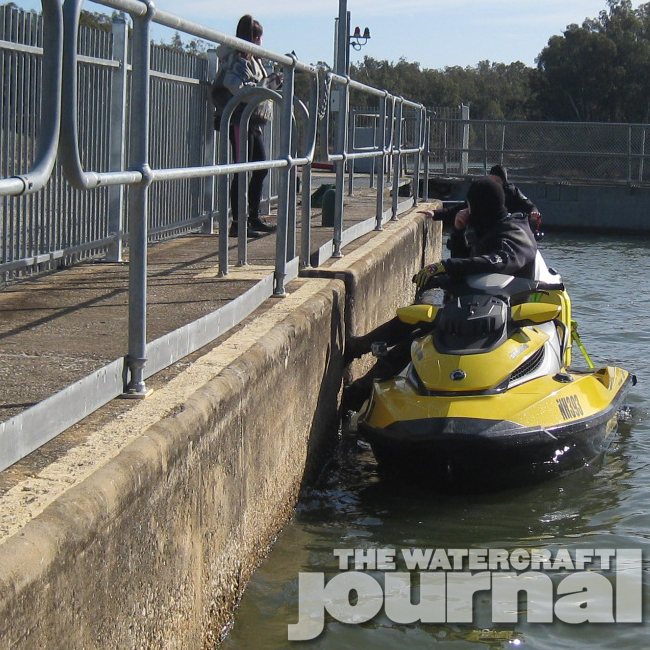
I called the Lock Master at Torrumbary Weir and arranged with him to open the lock for us at 11:30 am. The Lock is a chamber with massive gates on either end that allows watercraft to move from the higher waters levels above the weir to the lower levels beyond the weir. We moved 18 skis in the chamber and the upriver door was closed.

12

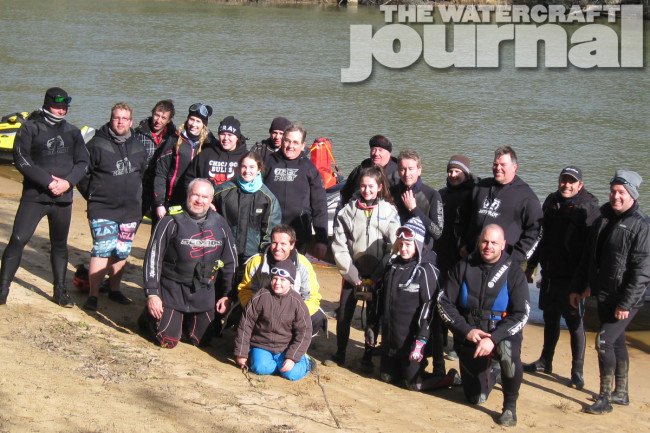
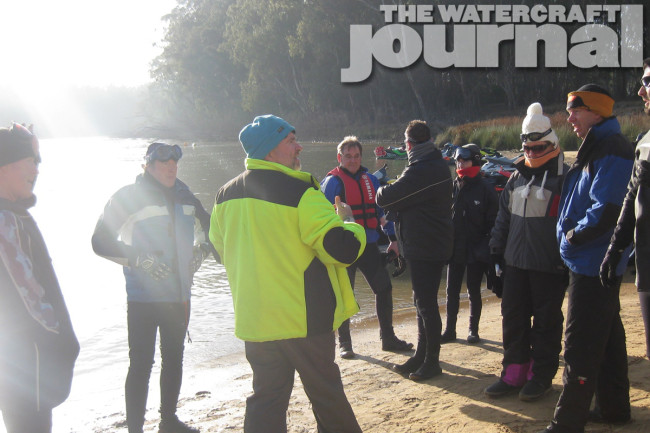
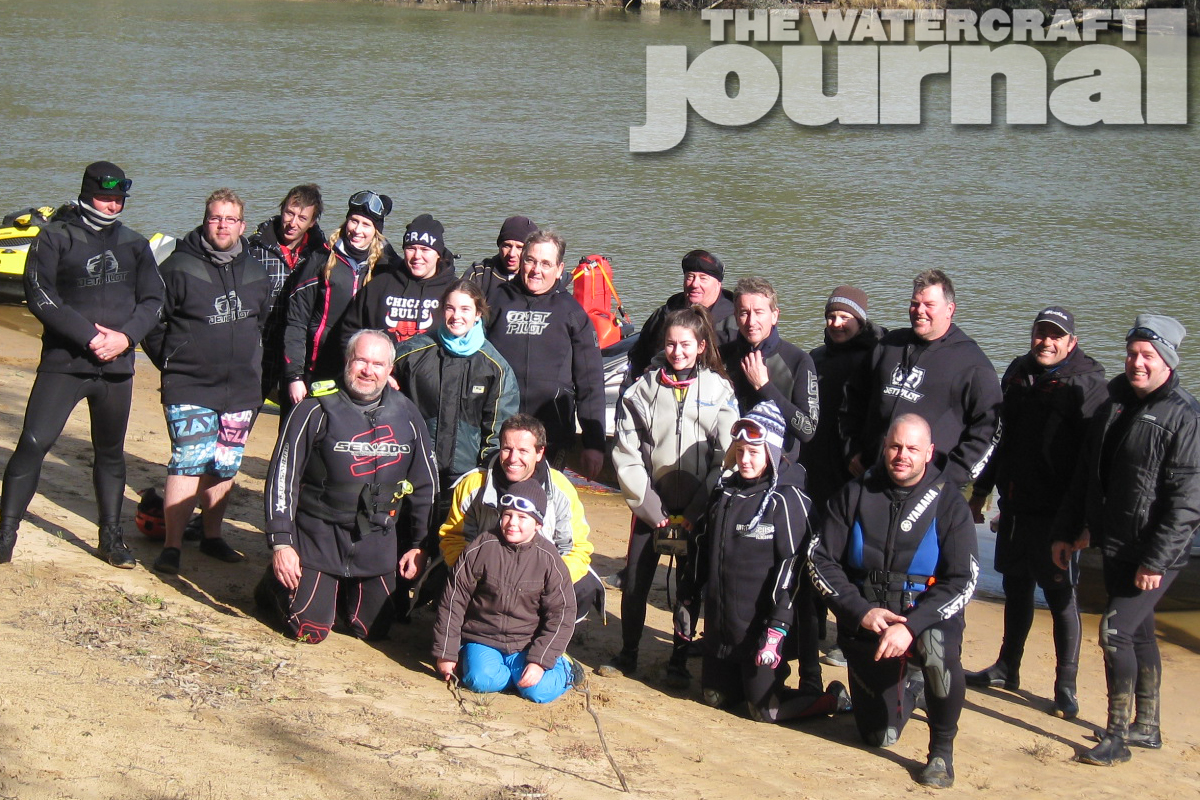
The water level then dropped in the chamber approximately 18 feet (from the photos you can see the high water waterline mark). When the low water level was achieved the downriver doors were opened. We filed out and headed to a nice sandy bank to refuel. Here we took the group photo. I forgot to organise the bigger group photos on Saturday. Oops.

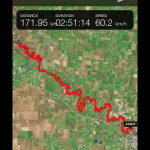
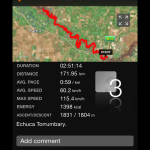
After our photo opportunity the skis reassembled at the lock and went back through the gates. Some riders decided to skip lunch and blasted at WOT back to Echuca. I heard stories of some skis running out of fuel in the last km. The other riders went to the Deep Creek Hotel and had yummy hamburgers and parmigianas. Afterwards we went WOT back to Echuca with Mark and Rebecca on Mark’s ski and Katie with me on my ski, sweeping the river to ensure all riders had been recovered. 172 km for the day. Total 404 km for the weekend. Last back to the ramp again. Another great ride.

I have been told that one of the riders was very tired on Sunday morning and accidentally filled his ski with diesel fuel. Lucky he did not start the ski but was therefore a non-starter for the day’s ride. The maximum GPS speed on my Seadoo RXT 260RS was 115km/hr on each of the three days, possibly assisted by some downstream river current. Thanks to everyone who came along and had fun.

7 3 21 2 11 12 4 17 18 20 14 13 8 1 6 22 19 15 16 CHILL 10 9
<
>

Video: Kiwi WaveBlasters Charge Narrow Creek, Crash & Sink

1

maxresdefault

All the video description says is, “2015 River Run displaying some pretty average riding ability and extreme lack of judgment.” And there could be no truer words spoken. This YouTube video is a fun one, with some pretty ridiculous footage from a trio of helmet cams as a group of friends hailing from Coatesville, New Zealand, charge a very narrow, winding creek (although they call it a river) that is crammed full of fallen logs, branches, moss and low hanging tree branches – making their helmets the smartest decision they made that day.

We’ll spoil the tension and let you know that there’s no heinous infractions of personal watercraft etiquette here, but we do wonder if the threat of being impaled on a snapped branch. Thankfully, the island nation does not share the threat of being bitten by one of the many, many vicious and poisonous snakes indigenous to Australia, which continent truly doesn’t want humans living on. But hey, that’s another story altogether.

Screen Shot 2015-07-14 at 9.07.50 PM

The festivities conclude with something we did like and wished to highlight: the evacuation of a swamped two-stroke. One of the ‘Blaster fatefully sinks when it collides with the bank. Immediately, the crew gather around to heave the ski out and get it fired again. Immediately the sparkplugs are pulled and the ignition turned over. The sprite two-stroke coughs up what water it has ingested and voila, it’s good to go again. It’s a little bit of nostalgia that made us smile.

Real Review: JetPilot A-10 Attack Side-Entry Vest

0

ATTACK

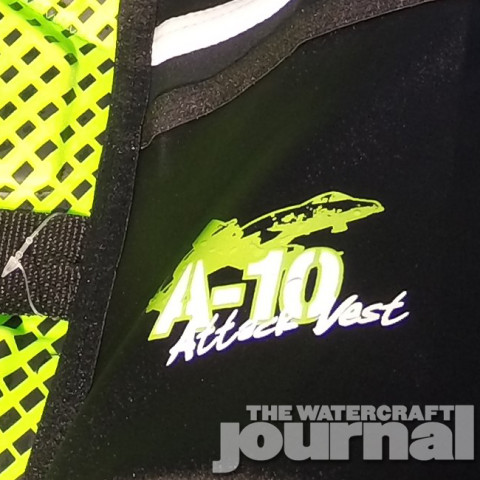
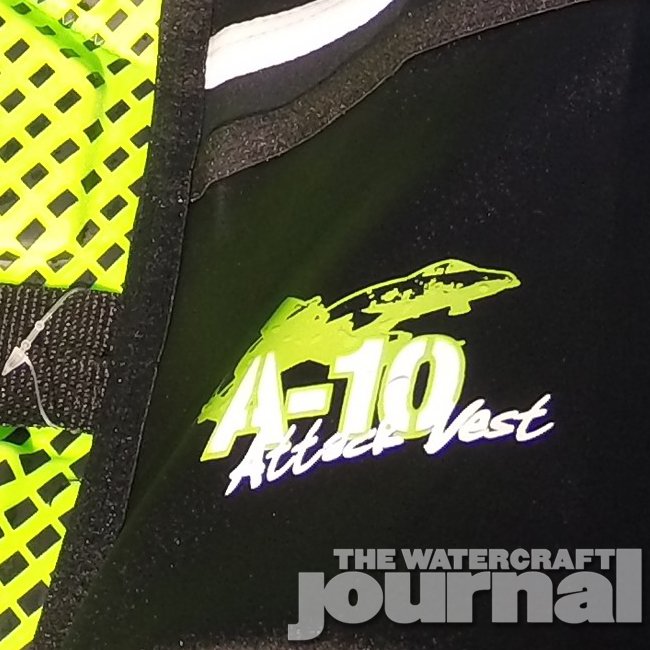
Since its original days of dayglow wetsuits and iridescent vest, JetPilot has become an almost inseparable part of the PWC racing community over the years. They carry a wide range of life jackets, gloves, wetsuits, and more extreme sports gear. We recently got our hands on a JetPilot A-10 Attack Side-Entry Vest and had the opportunity to put it to the test.

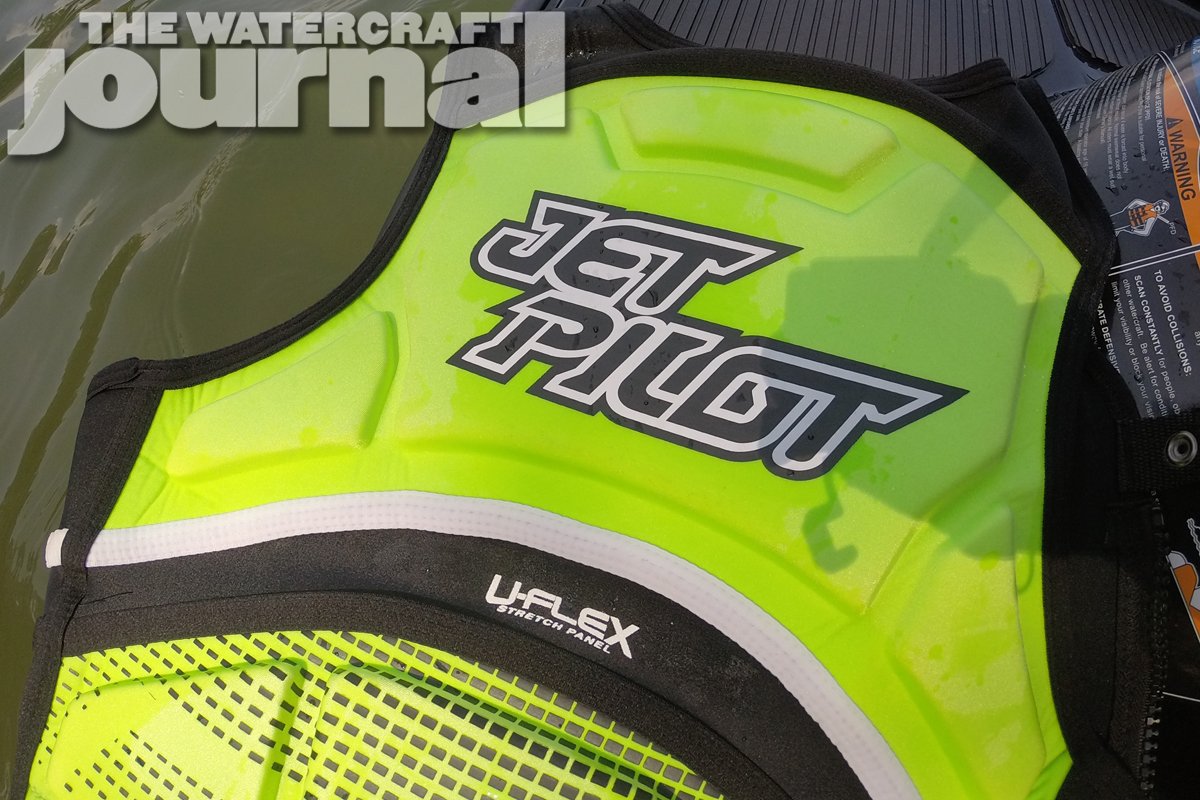
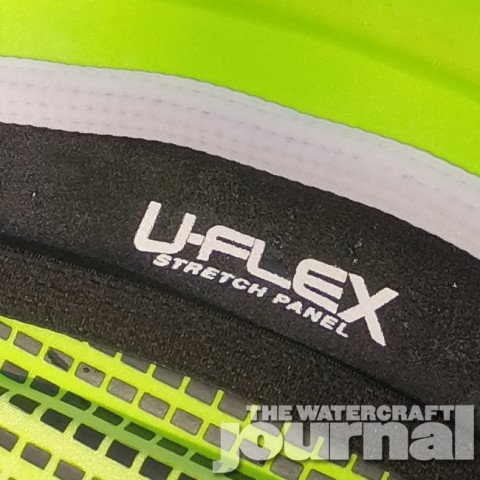
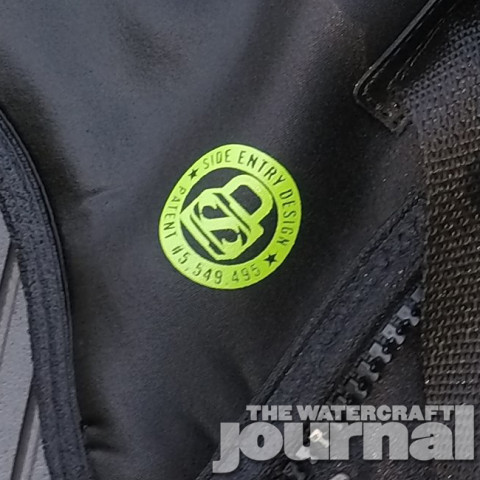
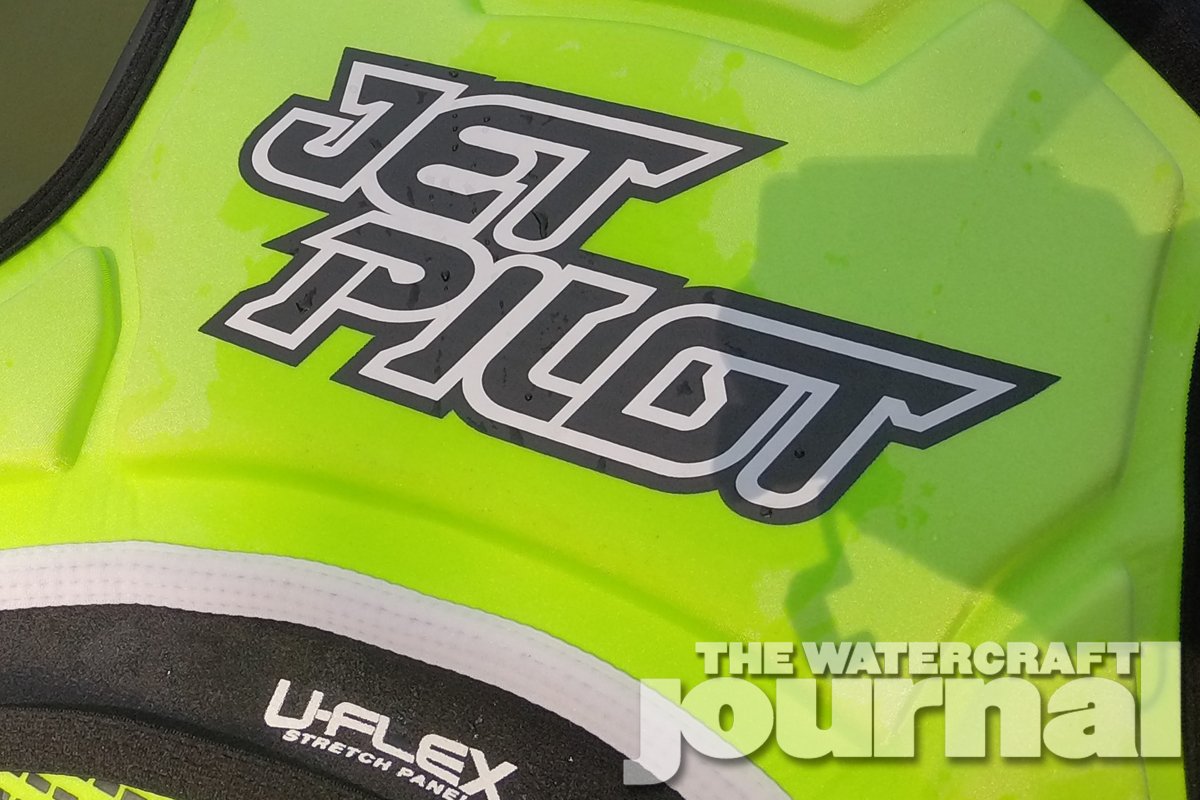
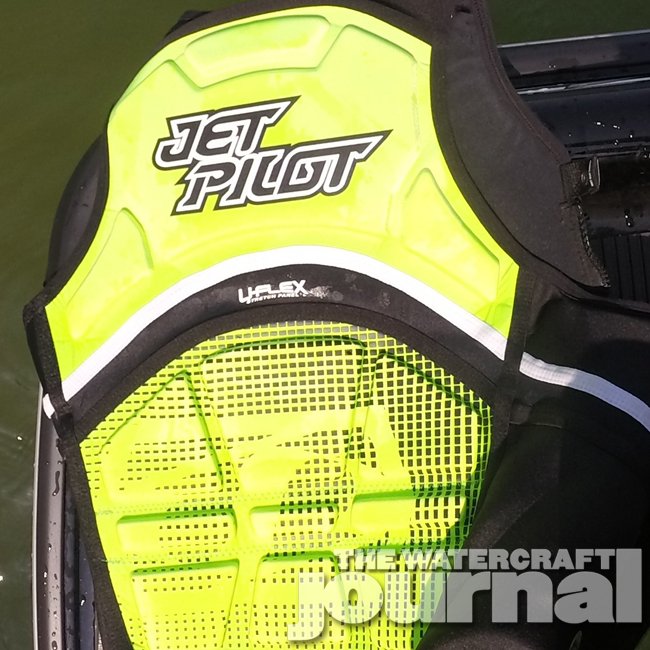
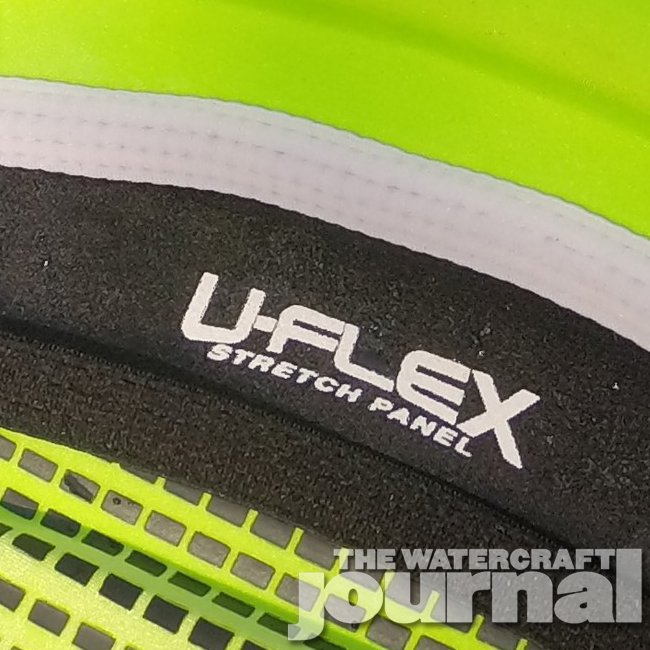
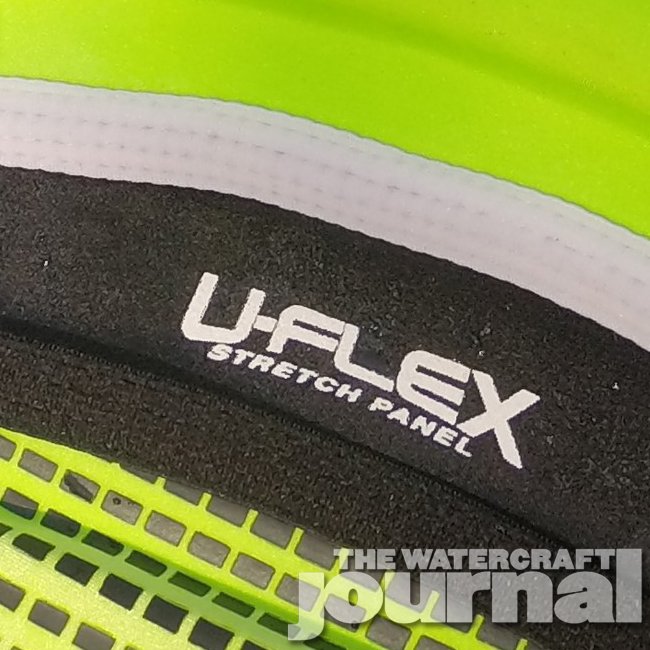
This is a product loaded with innovation. The patented side entry design, U-Flex stretch panels and lightweight foam construction make this a very unique and comfortable fit. So, how do they make a vest so light, buoyant, and comfortable? Constructing it of mostly lightweight 3D air foam cuts back on weight as well as making the vest so buoyant for its size (around 1-inch thick on each side). The 1/4-inch PVC foam on the inside of the vest contributes to making it so comfortable. A neoprene outer shell makes this vest much more comfortable than a nylon vest would be. And last but certainly not least, the foam panels make the A-10 mold to fit your body perfectly.

10

Like most high quality life vests, the A-10 is wrapped in neoprene, and there are several advantages to doing so. As stated above, it’s a big part in what makes this vest so comfortable. Neoprene is a softer and more flexible material than nylon. Neoprene also makes this vest a much more durable option compared to similar nylon designs. Also, being a water resistant material, it will not take in water like a nylon vest does.

You may be asking “What’s the difference between a compression vest and an average PFD?” There are several differences, but the biggest difference is the fit. A compression vest fits tighter to your body than an average life jacket does. Also, compression vests are usually much thinner than most PFDs, which make them lighter in most cases. The only downside, though, most compression vests such as the A-10 are not USCG approved.

7

It is designed to be as comfortable and light as possible for racing. And since there are several course marshals keeping a close eye on all the racers and responding when needed, a compression vest doesn’t have to keep you afloat for very long. So this isn’t exactly the ideal vest for a recreational rider, but is a perfect vest for one looking to race. Not to worry, though, rec riders, Jet pilot has a wide variety of life jackets that are USCG approved in their online store.

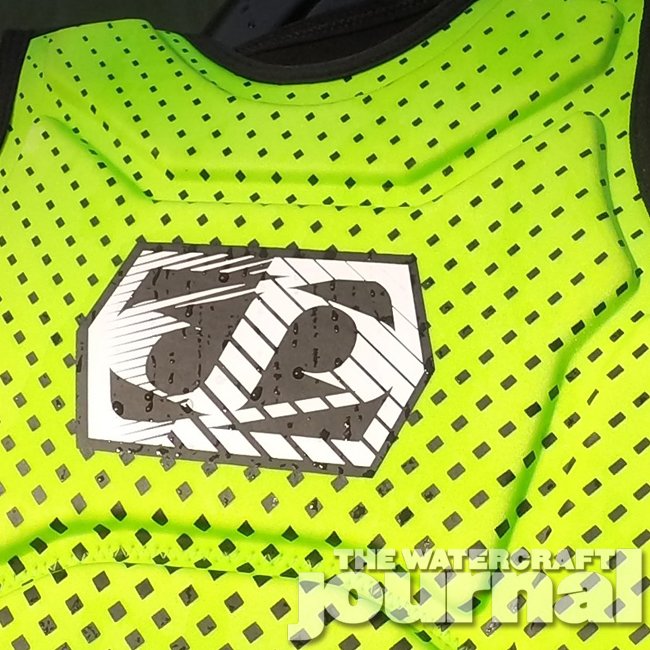
We know JetPilot takes a lot of pride in the quality of their products, but they also put pride in making their products look great as well. wrapped in JetPilot logos and graphics, we thought this was one cool looking vest! The A-10 comes in a selection of colors, such as green (shown) black, blue and orange.

Overall, we were very impressed with this product. The JetPilot A-10 vest can be found in the JetPilot online store for a price of $99.99. If you are willing to spend a little extra money, it’s a vest you won’t regret buying.

8 4 10 2 7 9 10 9 5 6 3 1
<
>

Inside Factory Yamaha Australia’s WPC Race Team

0

AUS

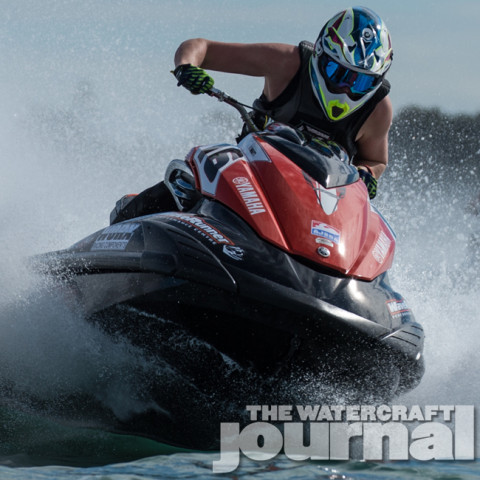
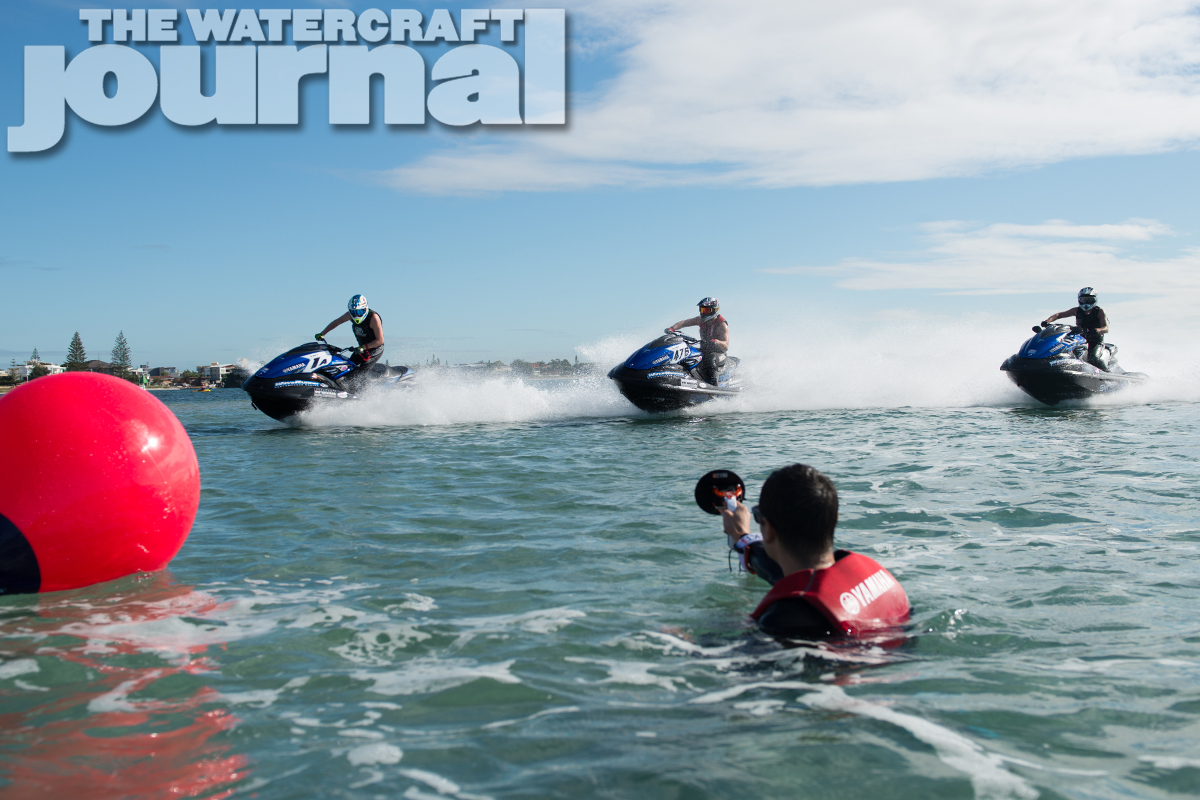
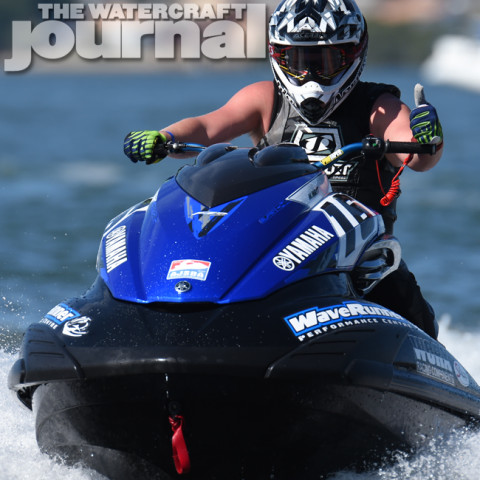
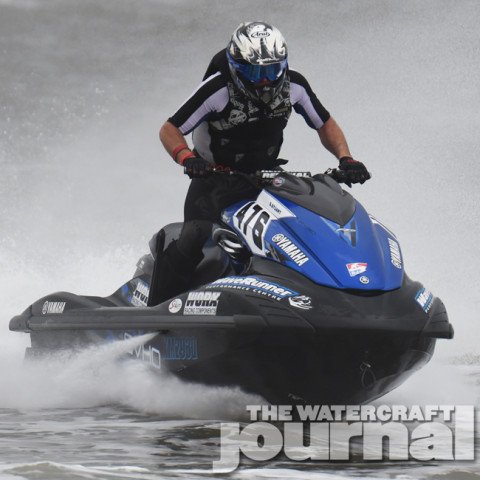
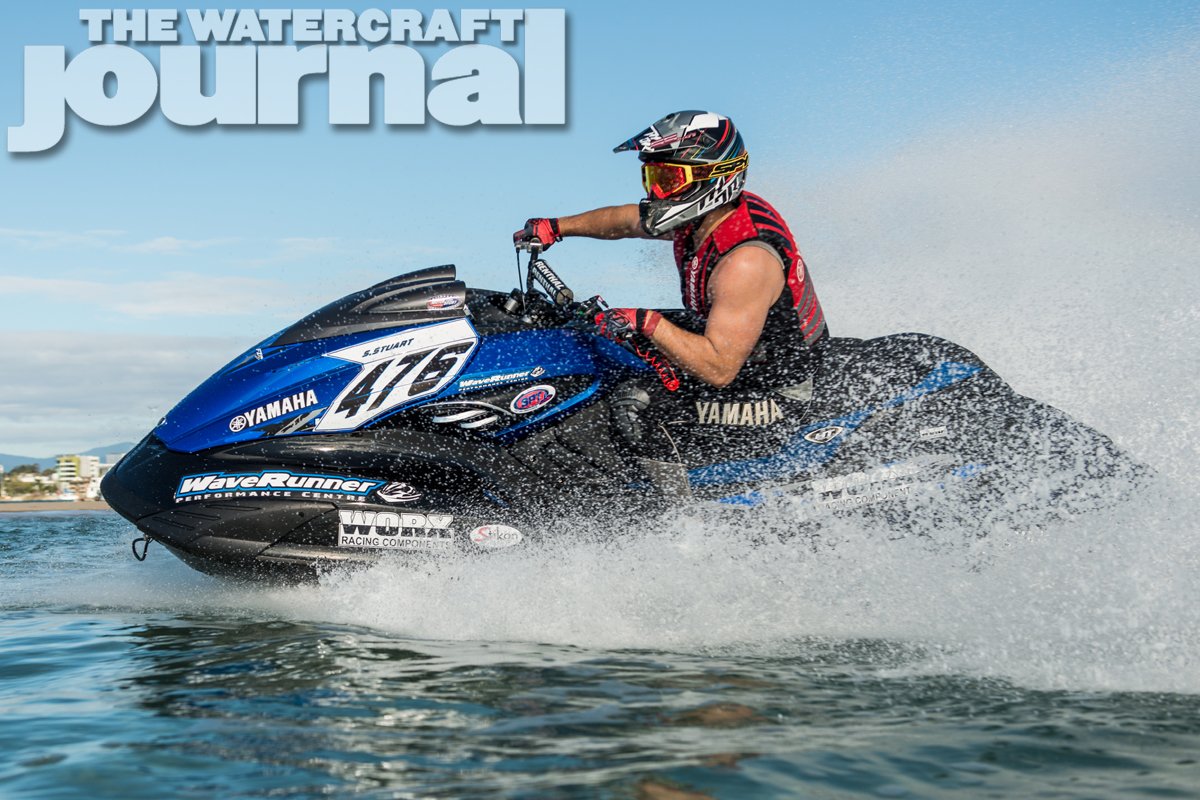
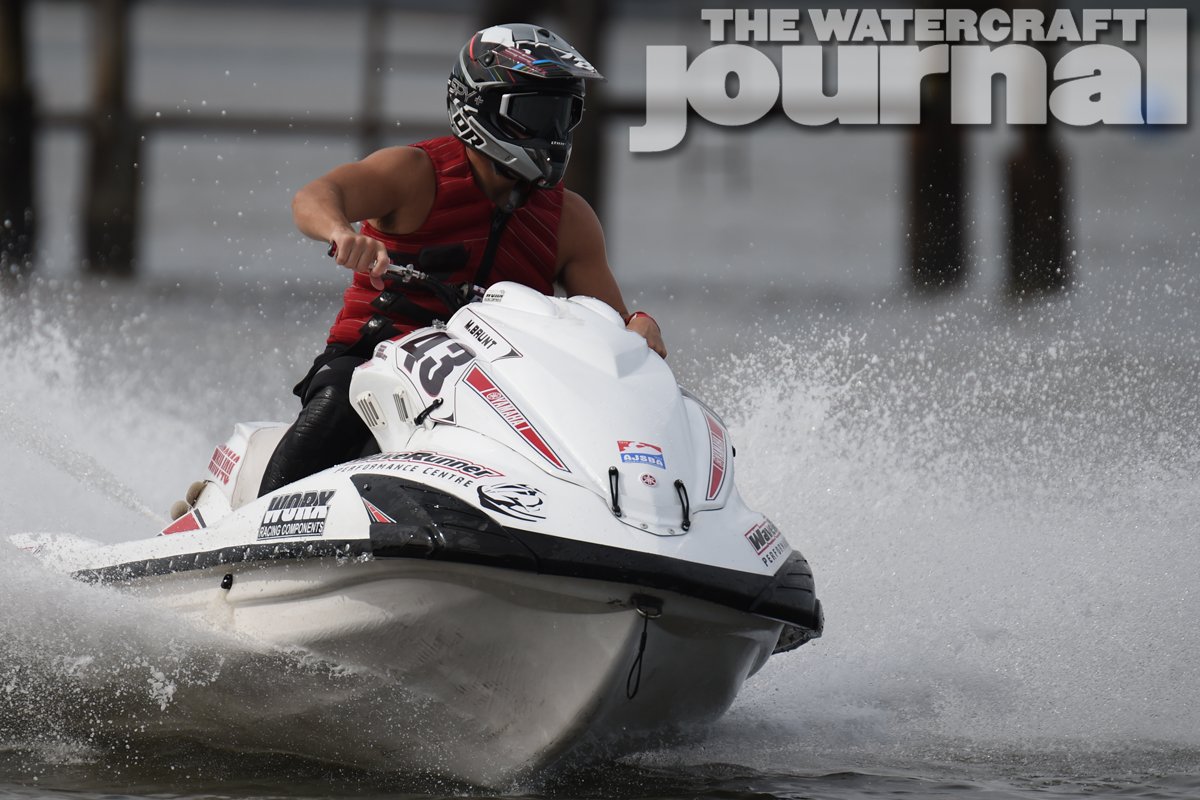
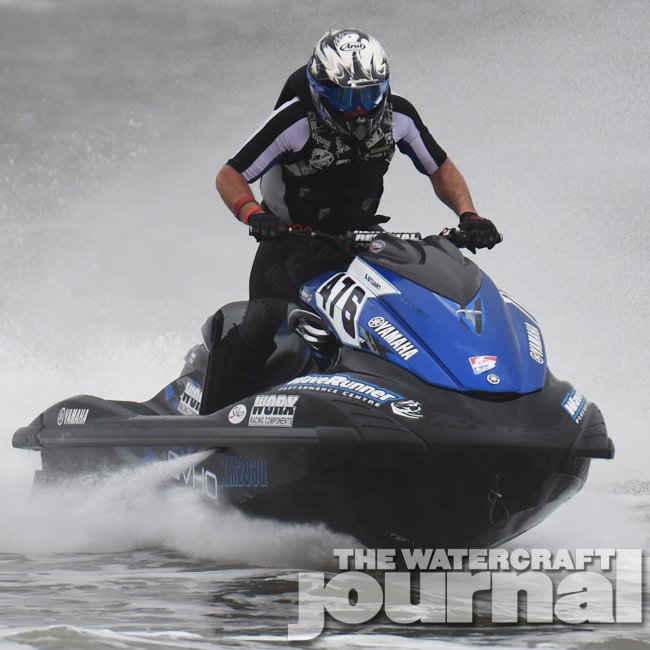
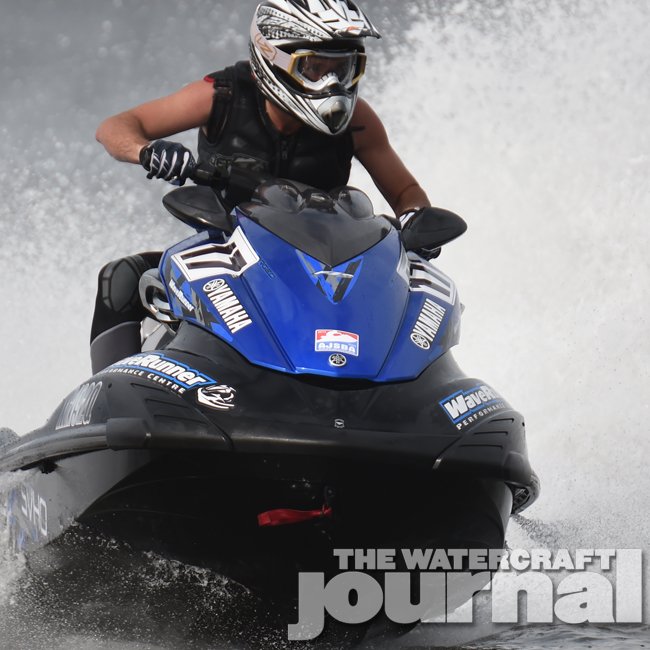
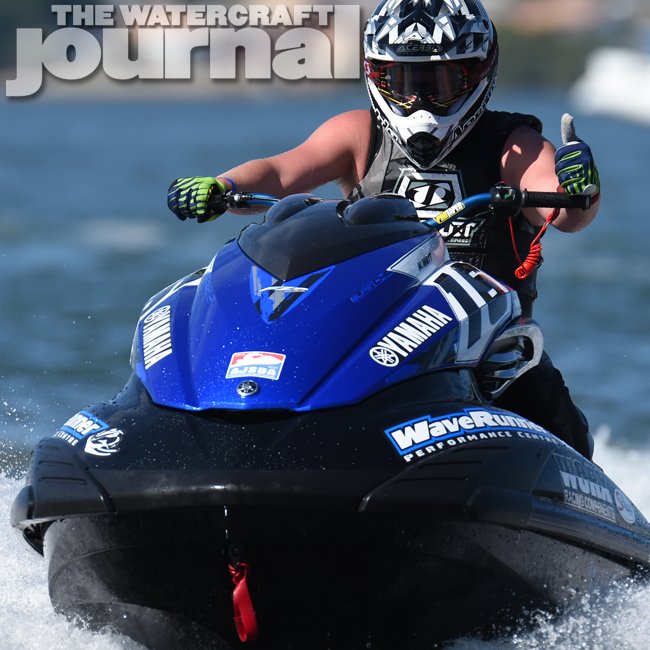
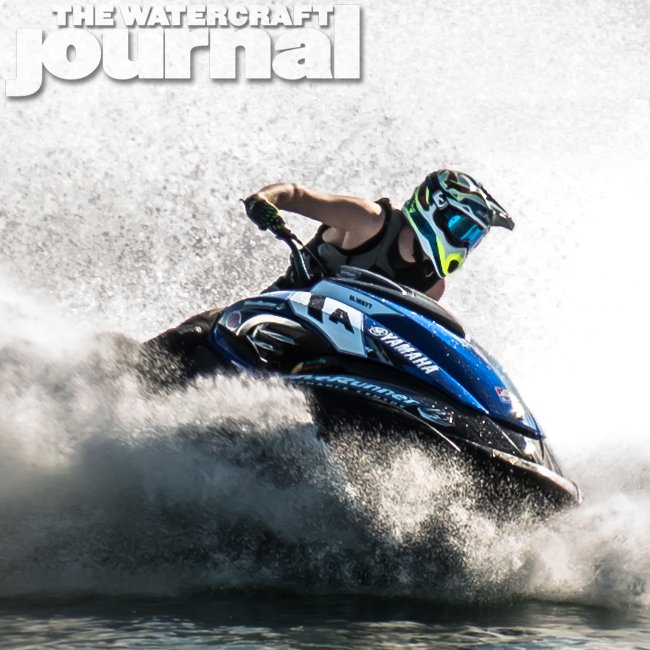
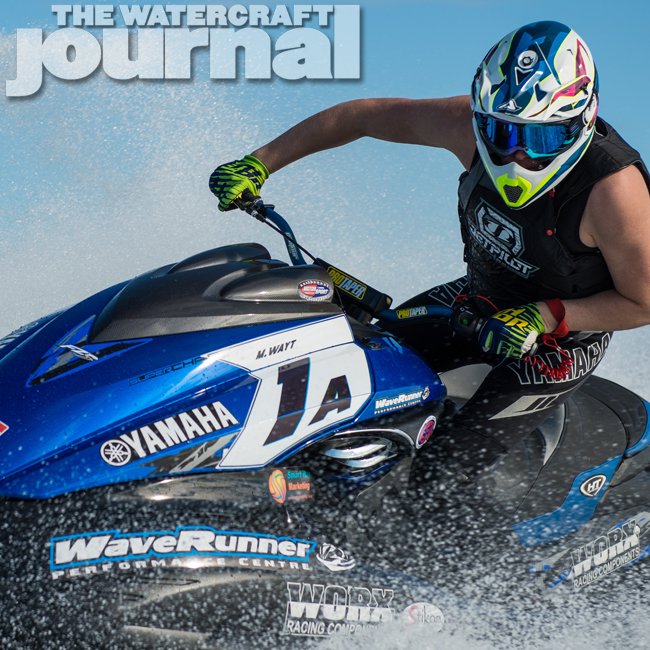
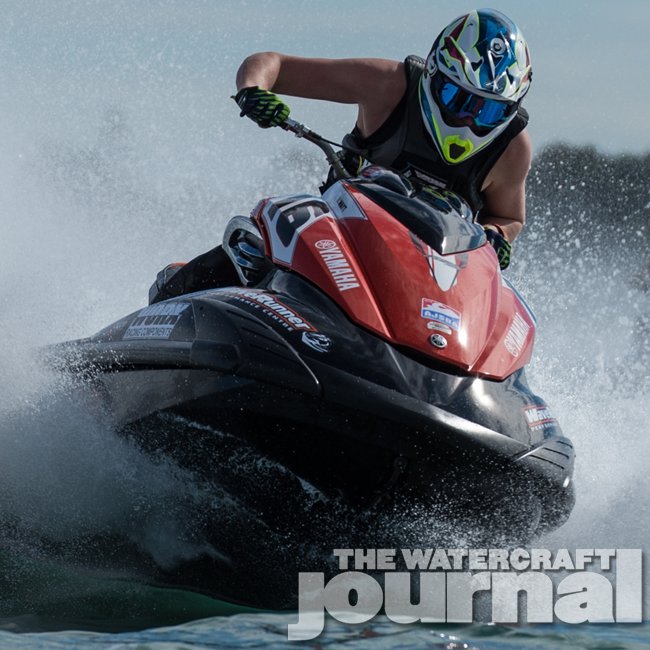
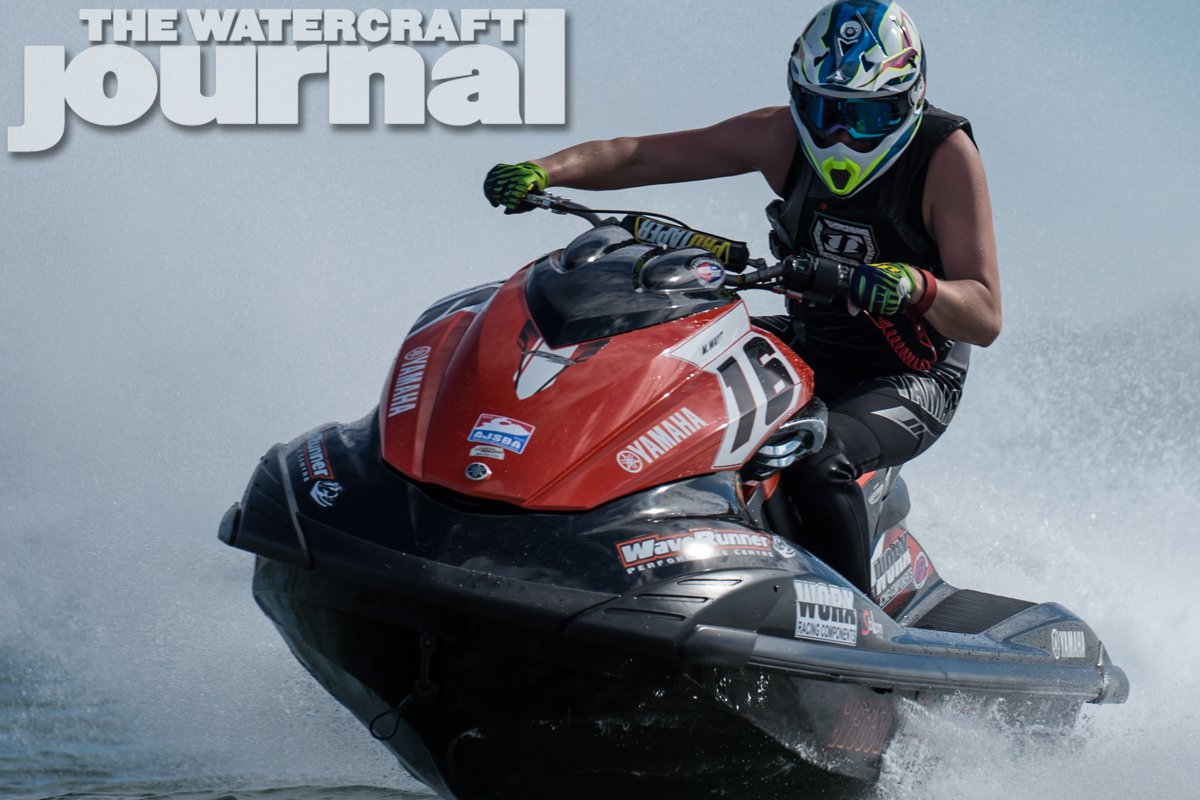
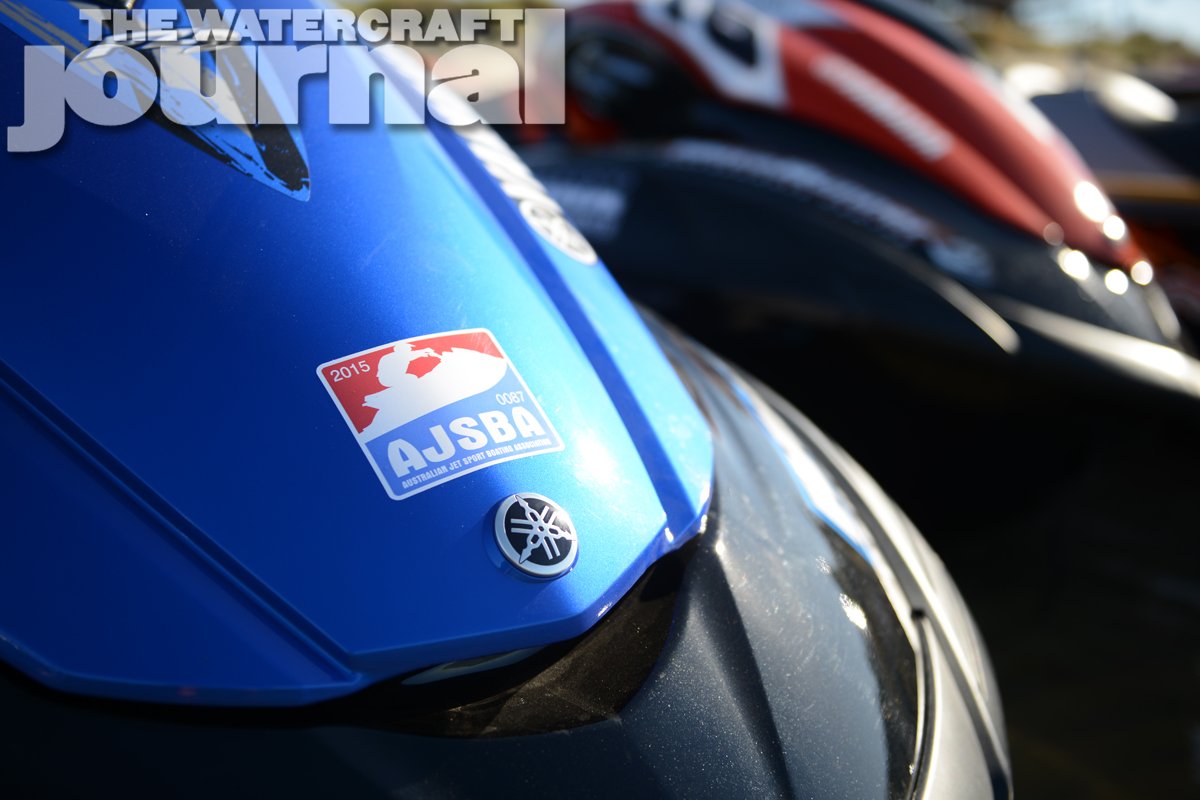
Since 2009, Yamaha WaveRunners have benefited from the expertise of the master Yamaha tuners at WaveRunner Performance Centre (WPC). Located on the Gold Coast, Jordan Ross and his tight-knit team have built a pathway for Yamaha racers to compete with the fastest equipment in the racing scene. For 2015, this year marked the second consecutive year where WaveRunner Performance Centre has dominated the AJSBA Pro stock title.

“Yamaha knew at the introduction of the new SVHO platform that they were on to a winner, and the results so far have proven the race pedigree of these new Yamahas,” says Ross. Yamaha selected WaveRunner Performance Centre to partner with when they decided the best way to demonstrate the performance level of the new SVHO was by racing it against other manufacturers in Pro Stock watercraft racing. This initiative paid off spectacularly with the Gold Coast-based outfit going from strength to strength.

7

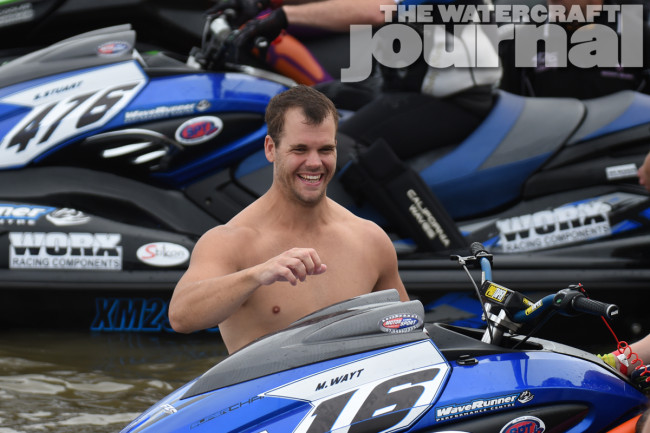
In 2014, Yamaha threw their full support behind the team at WaveRunner Performance Centre. Because of their united efforts, the Pro Stock Runabout title was dominated by Denis Mack, an American rider with links to WPC after riding for the team in 2012 at the Australian titles. During 2014, the team won all but one round, with up-and-coming rider Mitch Wayt also claiming third in the 4th round championship.

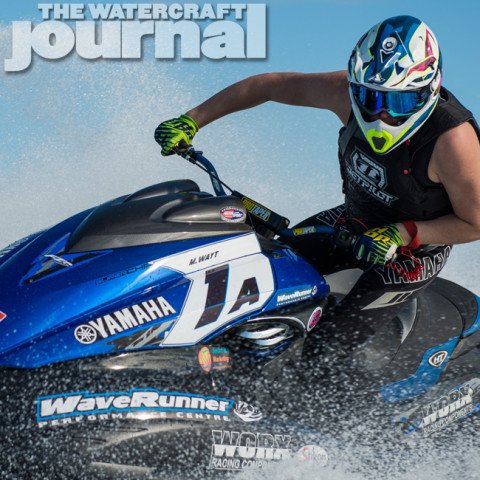
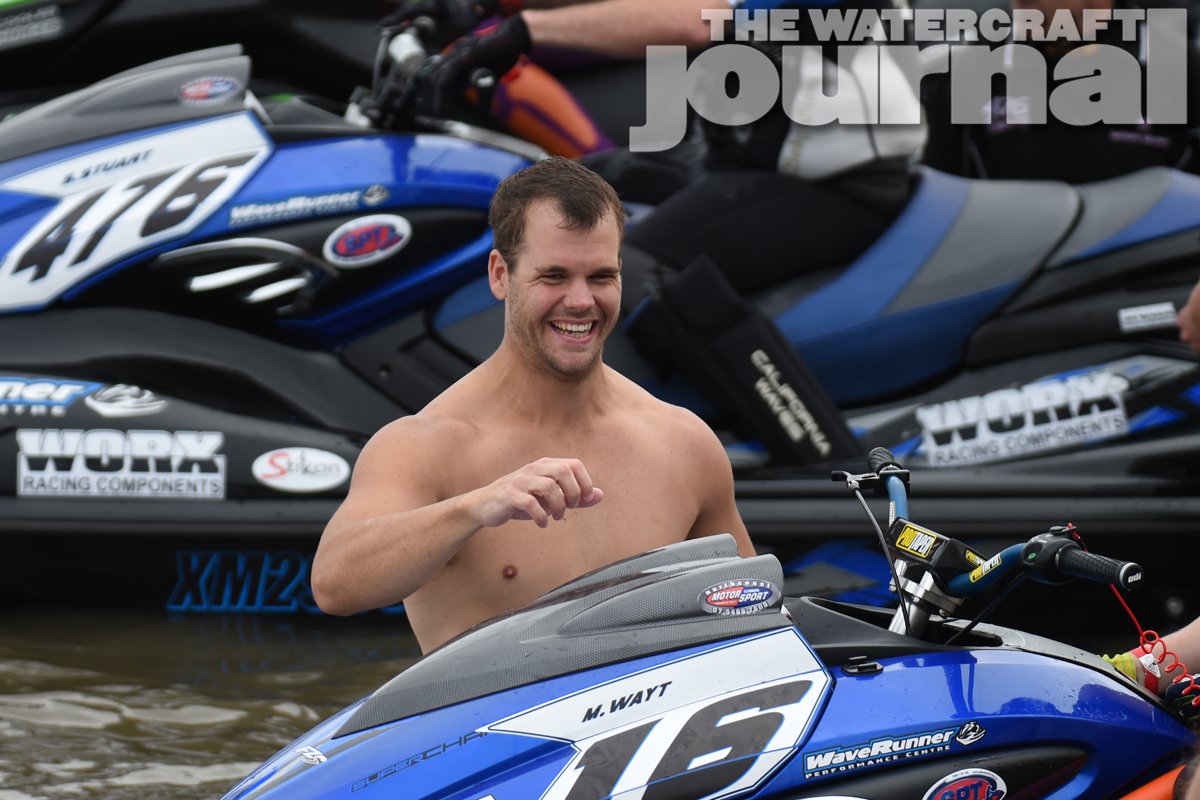
The success in 2014 was surpassed this year, with Mitch Wayt taking 18 of the available 21 race wins for the season, something unlikely to be repeated again. Along with consecutive Pro Stock titles, WPC also won the endurance championship in Pro Stock, reaffirming the all round performance edge of the Yamaha WaveRunner. Later this year, the riders from WPC will travel to the IJSBA World Finals in the USA and the King’s Cup in Thailand to compete against the world’s best with hopes of besting their third place finish at the King’s Cup in 2014.

6

After people have witnessed the performance level of the WPC Yamahas, they ask what is done to the incredibly fast WaveRunner, so The Watercraft Journal asked Ross to share some trade secrets with us:

“The difference between a race boat and something we will build for a social weekend rider is pretty dramatic. A race boat is probably not the nicest thing to ride around socially as the handling and acceleration is very aggressive and touchy; you really have to be paying attention. We spend so much time fine tuning tiny aspects of the skis performance, something that is not needed for a social ski”.

We pushed Ross to expose exactly what they do to make their WaveRunner so fast, “When the new Yamahas arrive, we already know what can and can’t be done in the rules, so we basically strip the brand new ski back to a bare shell and piece it back together.

11

“The engine gets built to the letter of the rulebook, and we modify things like cooling and water routing, everything that is allowed in the rules, but the big gains come from the engine management computer and the prop selection.”

Ross continued, “We spend hours on just mapping the computer for different conditions and different aims, as well as the effort to match the prop with water conditions. We use pretty much off-of-the-shelf WORX sponsons, as they are really the best handling product around and best of all, they are local and help out immensely, so it’s great to have WORX in our corner too.”


16

Ross also detailed how they make improvements throughout the season, “When we go testing, we will have two identical skis; they perform the same so we leave one the same and trial changes on the other to see the difference. Sometimes we will spend hours just working on a weakness we may have identified from previous races, this year we definitely made improvements with the race ski, not so much with top speed, but with drivability of the engine power delivery.”

Yamaha Motor Australia has also been excited to see their new performance flagship achieve the results over the past two years, and it has cemented the manufacturer’s ability to provide racers the best possible platform to go racing, and win.

15 20 12 5 3 2 18 16 1 4 19 11 6 14 13 9 10 17 7 8
<
>

Gear Up With $3000 of In-Store Credit on Selected Yamaha WaveRunners

0

Gear-Up-Banner-1080x394

OK, OK. Before we send you Yamaha fanatics into a frothing spasm, this deal is currently an exclusive for our Australian brothers and sisters looking to score up to $3000 of in-store credit on select Yamaha WaveRunner models. As Yamaha WaveRunners Australia’s announcement states, “For a limited time only, Yamaha WaveRunners Australia is offering customers the perfect opportunity to ‘Gear-Up for Good Times’ with up to $3000 of in-store credit on selected WaveRunners.”

YAM017-gear-up-210x297Whether you purchase a FZS, FX or SuperJet before the 12th of September 2015, customers will score an in-store credit relative to the WaveRunner purchased on products such as parts, accessories, lifejackets, services and even trailers! Yamaha WaveRunners Australia lists the credit-to-purchase scale as follows:

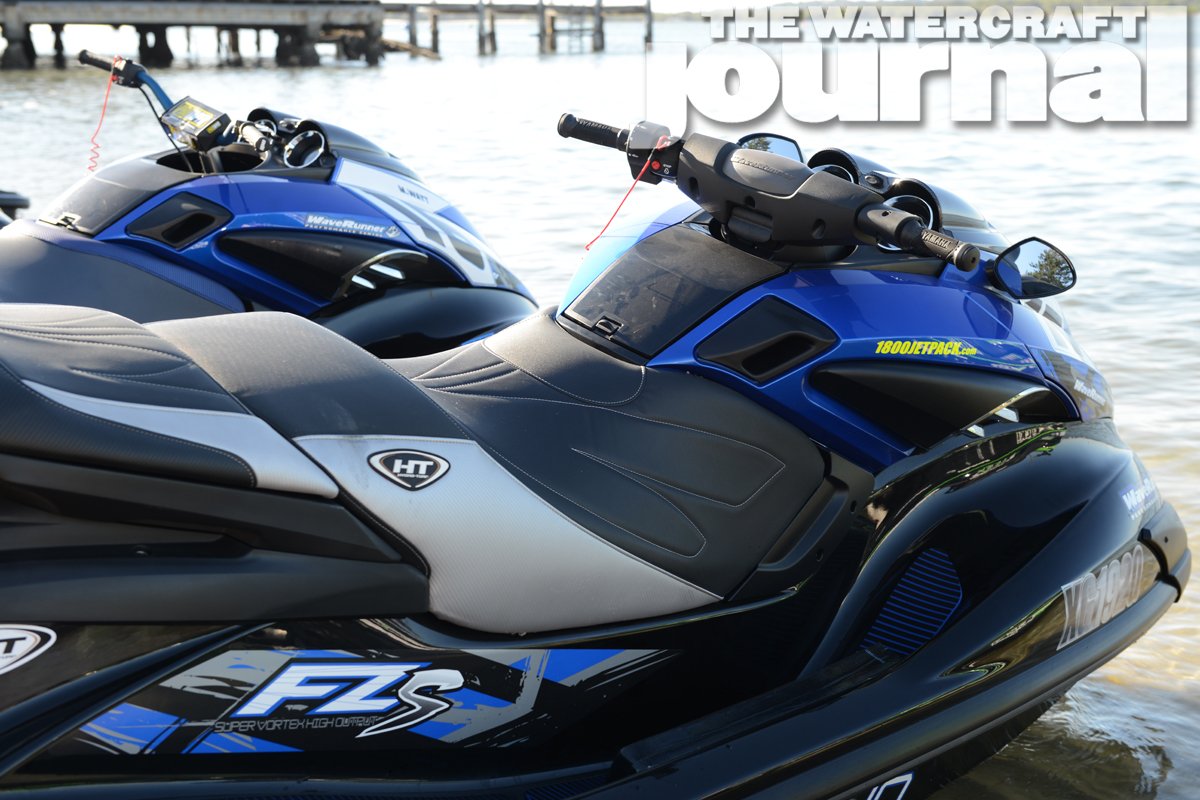
FZS $3000
FX SVHO Cruiser $2500
FX SVHO $2500
FX SHO $2000
FX HO Cruiser $2000
FX HO $2000
SuperJet $1000

“This sensational limited time offer of up to $3000 of in-store credit is the ideal opportunity for customers looking to purchase the complete WaveRunner package, with all of the extras. Customers can redeem their credit towards any products in-store, including accessories, services and even trailers.” said Iain MacLeod, National Sales Manager for Yamaha WaveRunners in Australia. “With this offer available in dealerships nationwide, now is the perfect time for customers to purchase the complete new Yamaha WaveRunner package.”

Contact your local participating Yamaha WaveRunner Dealership for further details and to secure Yamaha’s limited time offer on selected WaveRunners.

Enter to Win a Brand New Cargo Wave PWC Trailer!

0

index~~element106

So basically, today’s theme on The Watercraft Journal is everybody is giving everything away. Since just before the 4th of July and all the way it seems until the IJSBA World Finals, the PWC aftermarket industry is making it super duper hard not to walk away without winning some sort of free stuff. The latest to toss their hat into the ring is none other than Cargo Wave, LLC., the makers of the the watertight, and lockable Cargo Wave trailer that you tow behind your PWC!

CARGO  WAVE  TOWABLE  GIVAWAY - FINAL 2One hundred percent American made, Cargo Wave, LLC. recently introduced the second model in their trailer lineup, a dual opening, canvas-hatched lightweight (85-pounds) model that you can even sleep in (for those really looking to maximize their PWC camping experience, we suppose!). Of course, this comes in after the traditional (110-pound) single, formed-hatch Cargo Wave that stores a cooler, allows for hundreds of pounds of storage and features multi-position strap down cleats to tie down your wares.

Anyhow, Cargo Wave, LLC is now offering a free Cargo Wave trailer just by proving your membership in a PWC club or sanctioning body! All you need to do to enter the raffle drawing is send an email ([email protected]) or traditional letter (Cargo Wave, LLC, PO Box 827, Lakeland, MN 55043) with proof of your club membership and a brief description of how your club would use and benefit from winning the Cargo Wave. Next, “Like” Cargo Wave’s Facebook page to follow weekly giveaway updates and shared clubs’ info as the drawing will be held on August 31, 2015.

All entrants must be within the continental US for free freight/shipping of Cargo Wave trailer.

Get a FREE Pair of Pro-Series Sponsons With a RIVA Performance Kit

0

F138477220

Man, there’s just a TON of deals to be taken advantage of nowadays. Although not an extension of their stellar 4th of July sale from a week prior, RIVA Racing is literally giving away some serious performance parts. Right now, and for a limited time, you can score a free pair of RIVA Pro-Series sponsons with the online purchase of a RIVA Performance Kit. Literally enter the word “SPONSONS” into the coupon code at checkout, and BAM! you just walked away with some sweet handling gear.

RIVA’s “kits” are all-inclusive performance packages that wipe away any of the guesswork when trying to find the right combination of parts. Helping each customer to reach their individual performance goals, wants and needs, RIVA’s engineers have created several “stages” of their Performance Kits to help the PWC enthusiast achieve exactly what they want. As RIVA’s online store states, “our Performance Development Technicians have spent hundreds of hours testing numerous combinations of parts both on our in-house Dyno and on the water to maximize the performance and reliability of our kits.”

So if you’re in the market to seriously increase the power output of your Kawasaki, Sea-Doo or Yamaha watercraft, and love the idea of scoring some sweet free Pro-Series sponsons, you best act quick. This offer expires Sunday July 15th, 2015.