Recently, a picture of a woman with an awesome fishing set up on her Sea-Doo Spark was posted on greenhulk.net, which led to questions relating to how one sets up a Jet Ski for fishing. Her husband also had the same set up. Unfortunately, none of the guys who posted on the forum could reach the couple for comment because the two of them sped away to catch fish.
Intrigued, I did a search and found a little more information on how to set up a Sea-Doo for the purpose of fishing. The Jet Ski Fishing Channel on the SeaDoo.com forum provided several “how to” videos. Upon watching the videos, one of the main points noted was how fuel-efficient the skis are for fishing. There were claims that a person could get approximately 100 miles from a tank of fuel.
According to a video from New Zealand, to get started on this endeavor, one needs a reliable Jet Ski, bait station, stainless steel cable, and rod holders attached to the ski. The commentator used bungee cords to hold everything down. He had bait set up on top of his cooler for easy access. His landing net, gaff, and rods were attached with stainless steel clips and wire. He kept his reels protected from spray by using special covers when traveling in saltwater.
His glove compartment contained a small tackle box. Pliers and a Personal Locator Beacon (PLB) were attached to his life jacket. The host of the show reiterated how important efficiency is when fishing from personal watercraft. I truly appreciated his focus on safety as well as his fishing setup. He carried a VHS radio in a waterproof case, a cell phone that was also in a waterproof case, and his PLB as a last resort for rescue.
His personal watercraft was also equipped with a GPS and Sounder for fish locating purposes. Moreover, he believed it was best to purchase a Sounder that can withstand at least 30 minutes underwater due to the splash factor and possible submersion.
Some other good things about fishing from the Spark are the fact that it is versatile, easy to launch, retrieve, clean, and one can get underway alone. Fishermen can get close to the fish without spooking them and it makes for a fun adventure, as well as a challenge. Don’t forget your rods!
Jetcross series promoter, JX Sports announced the cancellation of the Jetcross France Cup has been scrubbed. The Vichy, France race was scheduled for May 16th and 17th of this year. The news of the canceled race was posted on jetcrosstournews.com in late March.
“Due to several issues beyond our control, it is a great pity for us to have to cancel the Jetcross French series, which would have been the only one event in originally birthplace of the Jetcross Series. We were greatly looking forward to taking the Jetcross to France as we are well aware there is a great following there, but this will unfortunately have to wait a little longer,” said Julien Bastien, Manager director of JX Sports.
There were no explanations given as to why the race would not happen, only the vague statement by Bastien. However, he did mention that JX Sports is working toward a solution to whatever problem or problems are holding it back from the 2015 event. He is optimistic about a 2016 competition being held in France.
Bastien proceeded to say that currently, they would focus on the first World Cup event that is taking place in Doncaster, England from July 24th through July 26th of this year. The England race is a first in Jetcross history which is very exciting news in itself and it may create a large following, helping France along as well.
Maybe 2016 will be France’s year, pending JX Sports can put a Jetcross event together.
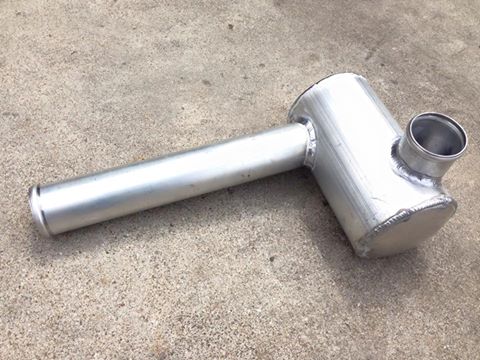
You’d never think so much thought and time could go into something so simple as a standup waterbox. Ronald Self, owner and operator of Rogue Racing put us straight: “In 2009 and 2010, I ran a rear-mounted exhaust set up. It was really short and simple but extremely loud – even with water injection.”
Since then, Ron has been playing around with his SolidWorks CAD design program. “You can do flow test in the software it’s really an extension on the imagination,” he recounted. “I sat down at the computer and drew up several on screen designs of which most were just deleted until I got one I liked.”
The unique, proprietary design is unlike anything on the market today. Starting with stamped domed end caps, Rogue’s 1,100cc SX-R waterbox does away with a lot of forward weight in the SX-R, be it a OEM, Trinity, or Bullett hull.
The Rogue Racing box weighs in at 2.2lbs. (compared to the OEM box that tips the scales at 7lbs. 8 ounces) and includes a built-in water bung, bead rolled-tube ends, and silicone 90-degree hose for the exit (which is a shorter route for the exhaust).
According to Ron, “Since there are so many different styles of 1,100cc installs out there, this leaves the chamber outlet at different positions in the different craft. The OEM 1100 rubber exhaust coupler can be trimmed to custom length and used to fit the box in place.”
Although demand is so high that the first four waterboxes have already been purchased, Rogue is racing to complete a second run of waterboxes shortly. With all it’s parts, the Rogue Racing SX-R waterbox will be sold at $350 plus shipping. Email [email protected] today!
When it came to adequately defining the experience of riding RIVA Racing’s Yamaha SVHO-powered FZR test mule, we kept coming back to one word: potential. But exactly did that mean? Webster’s sums it up rather well:
po·ten·tial (pəˈten(t)SHəl) adjective
1. having or showing the capacity to become or develop into something in the future. noun
1. latent qualities or abilities that may be developed and lead to future success or usefulness.
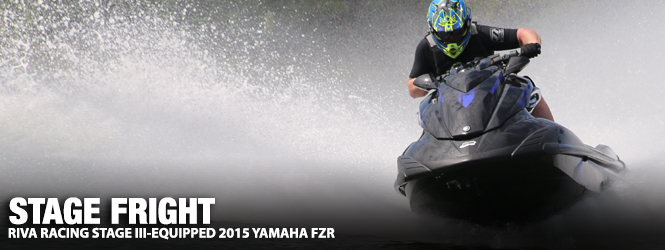
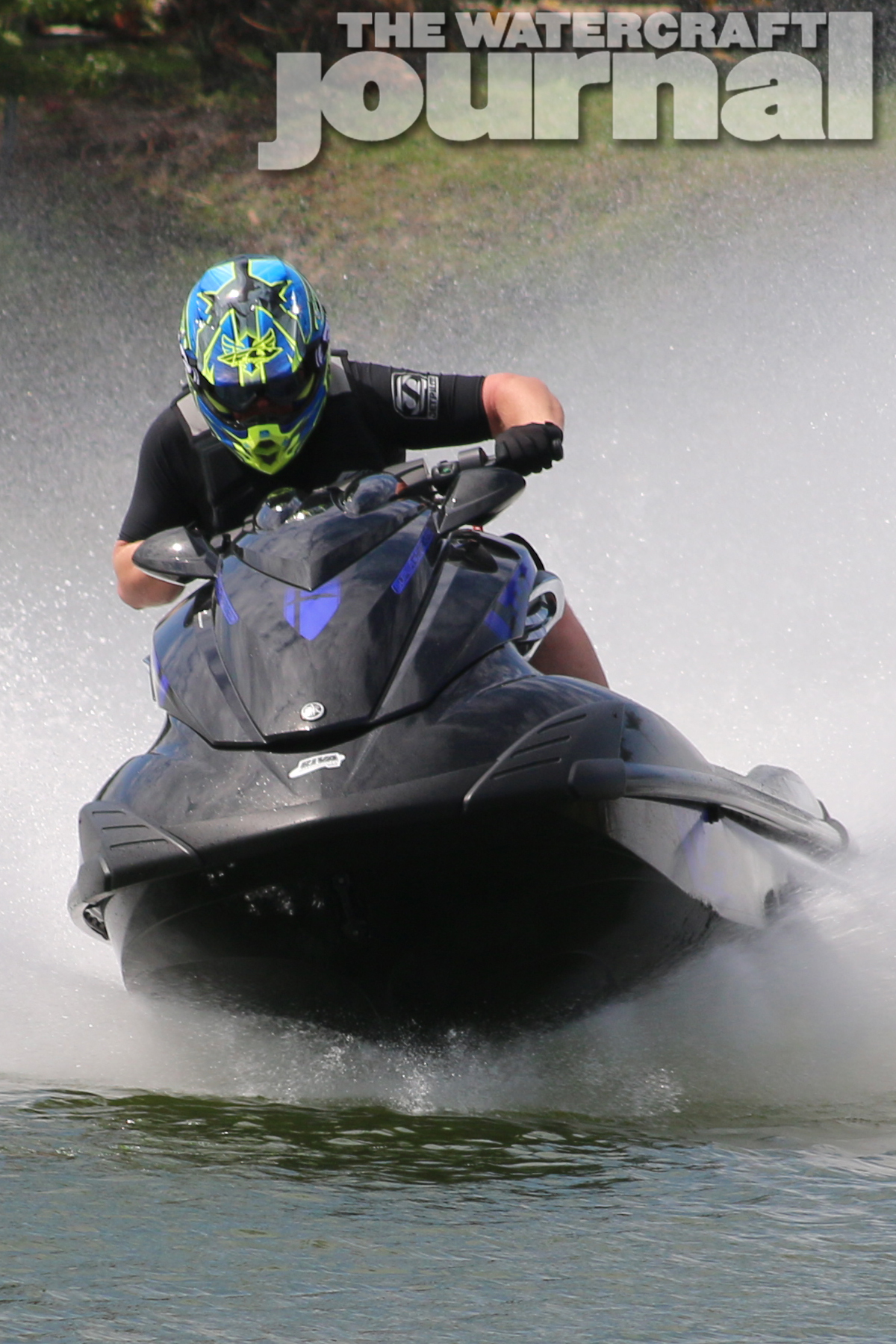
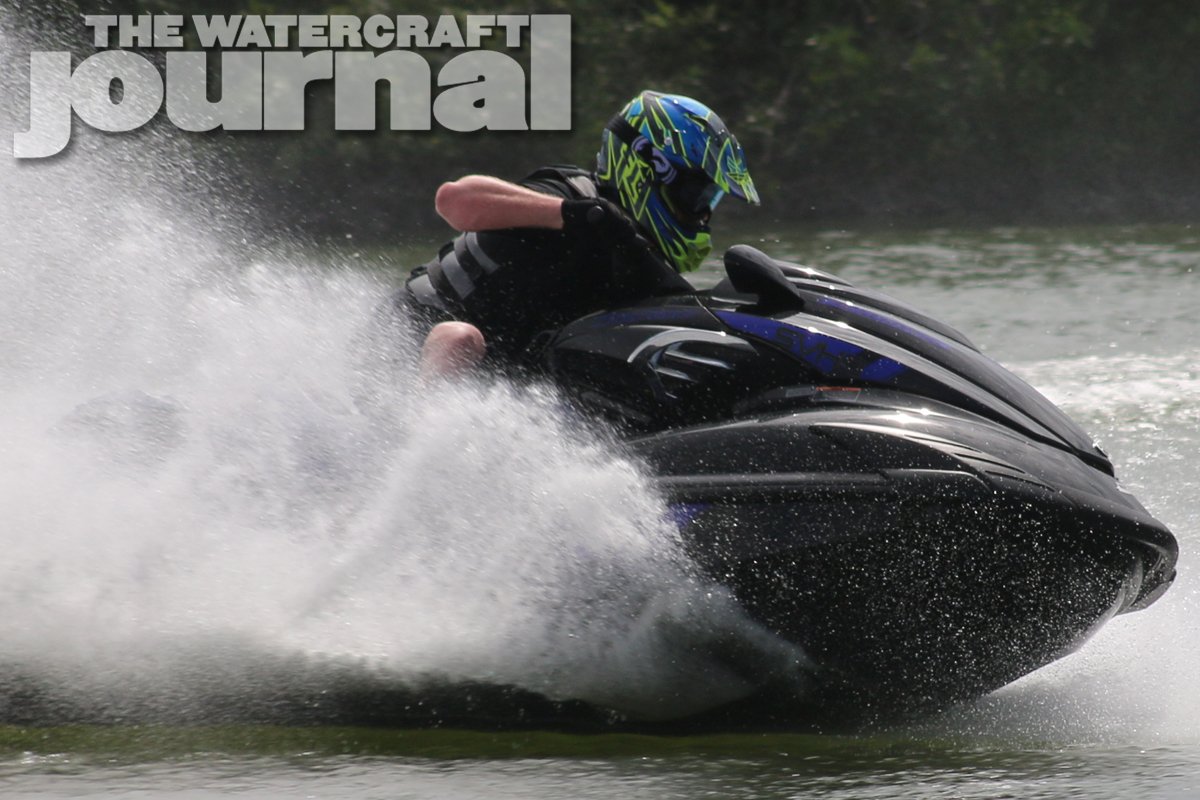
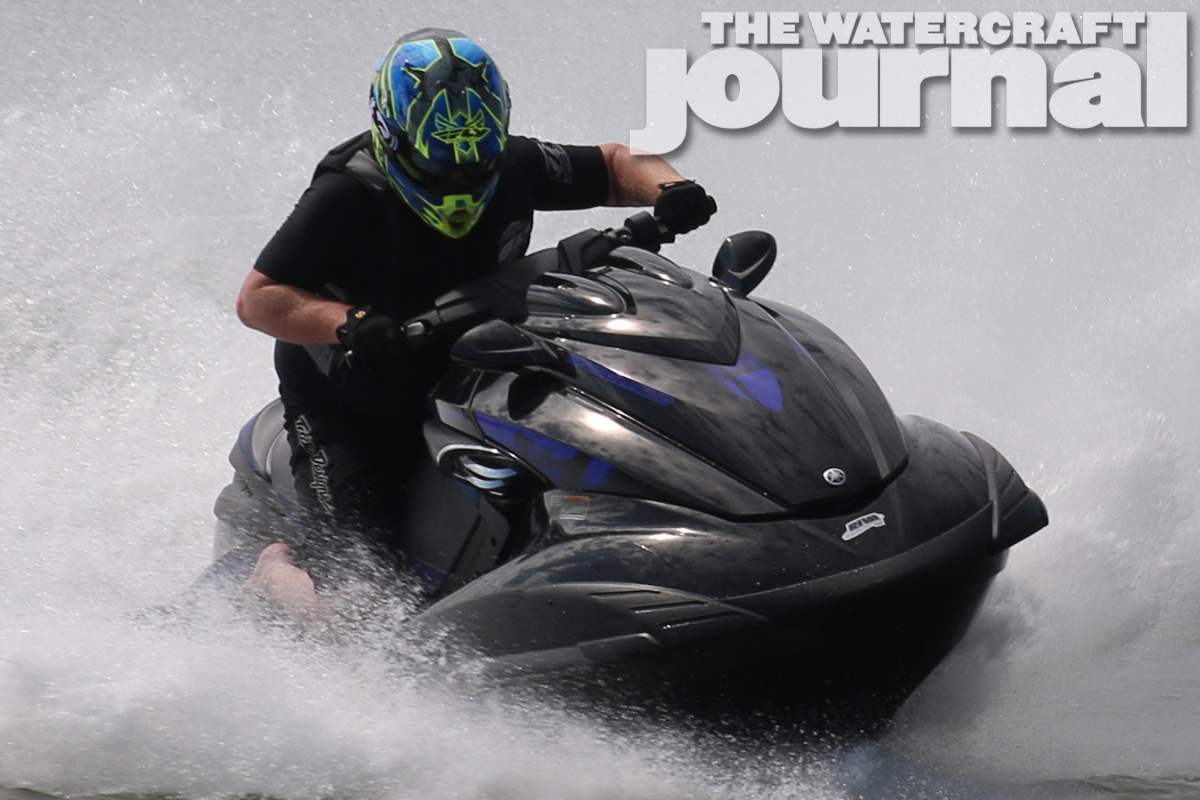
Although the unit itself is a 2014 model, and thereby slightly heavier than the ’15 model equipped with Yamaha’s NanoXcel2 hull and deck material, the test mule is extraordinarily fast given its deceptive stock look.
Yet, even aboard the as stock craft one can feel a degree of untapped potential surging beneath its seat. Even with last year’s swathe of FZR-mounted racers snatching up as many National titles as possible is a testament to the SVHO’s latent power, there’s still much to be mined. That is why RIVA Racing’s research and development branch has continued laboring to optimize their performance packages to unearth the most out of customers’ WaveRunners. The result are a series of “Stages” providing enthusiasts levels of excitement.
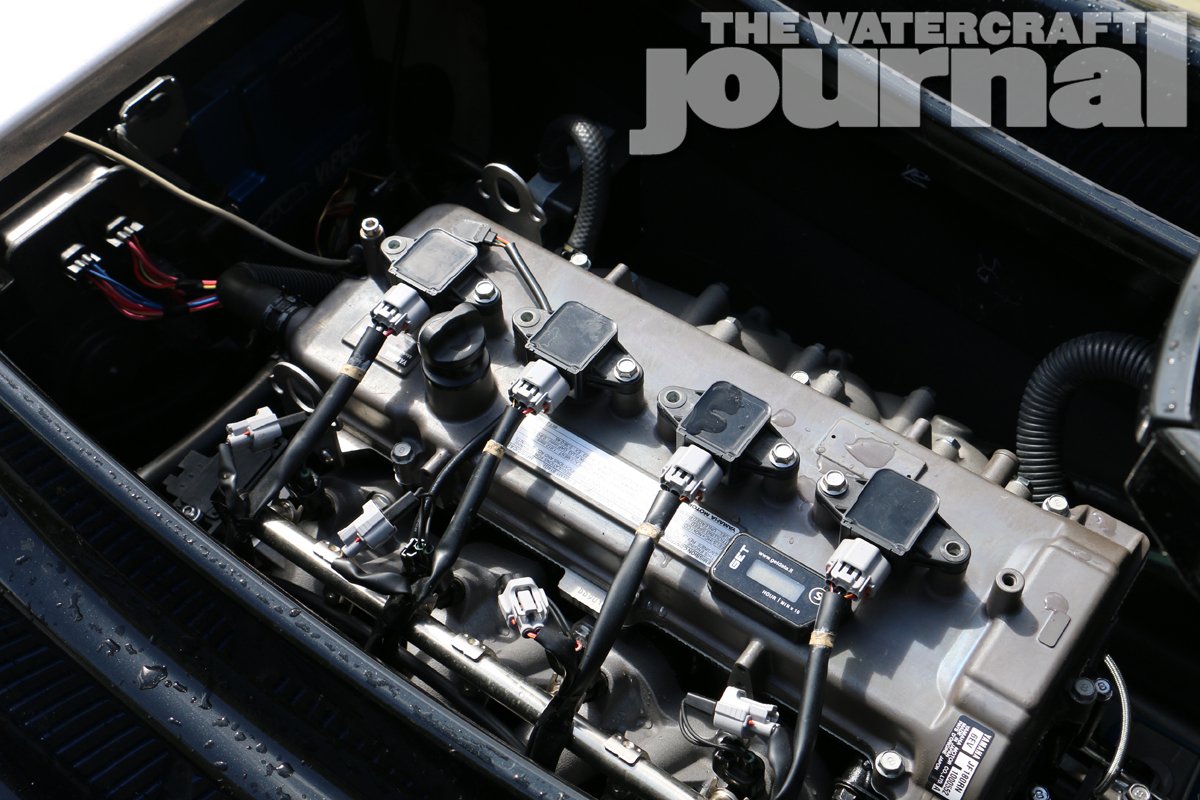
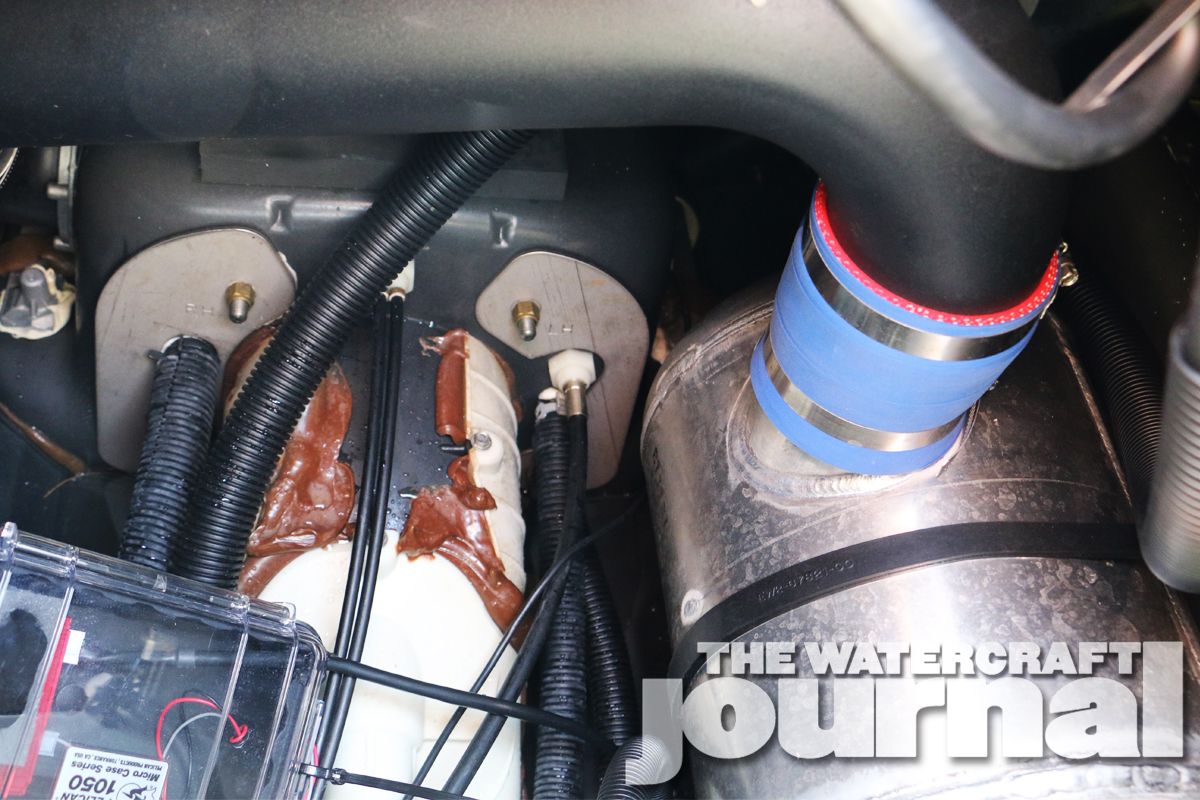
Beneath the saddle, the RIVA Stage III FZR featured almost exclusively bolt-on improvements: RIVA’s Power Filter, intake manifold upgrade kit, 1000cc injector set, 3-bar map sensor, a RIVA/Vi-PEC V88R3 ECU, F2 SC impeller, Gen 2 Powercooler, HKS blow off valve, billet fuel rail and fuel pressure regulator.
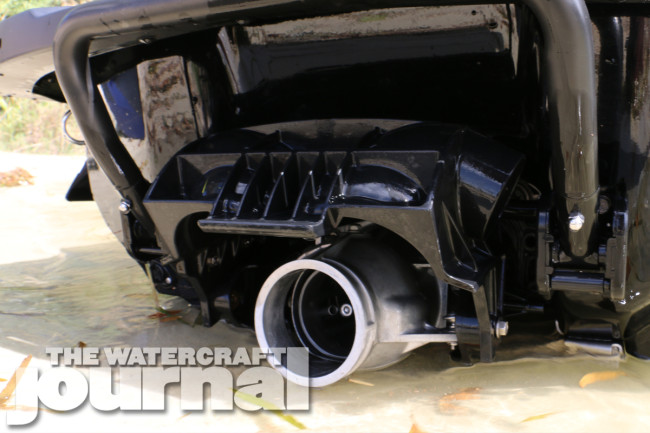
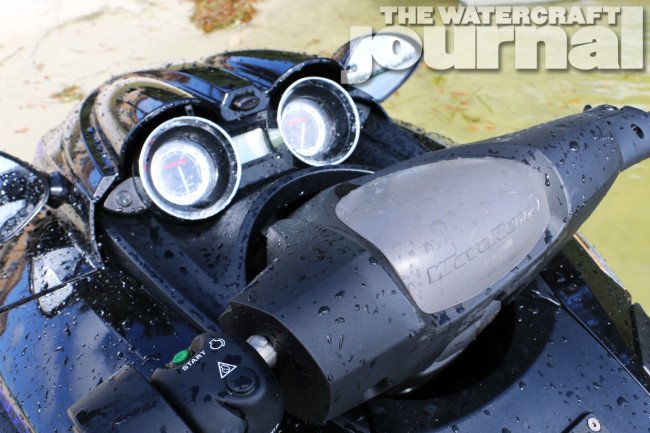
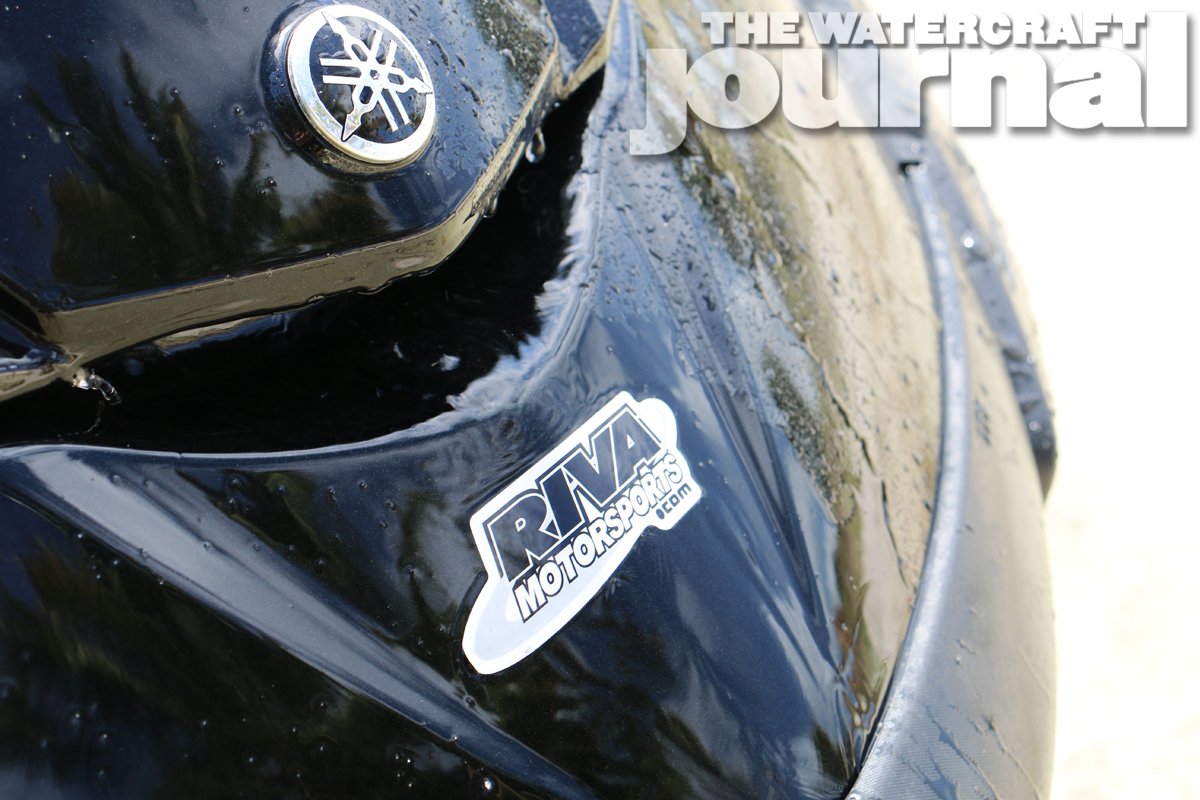
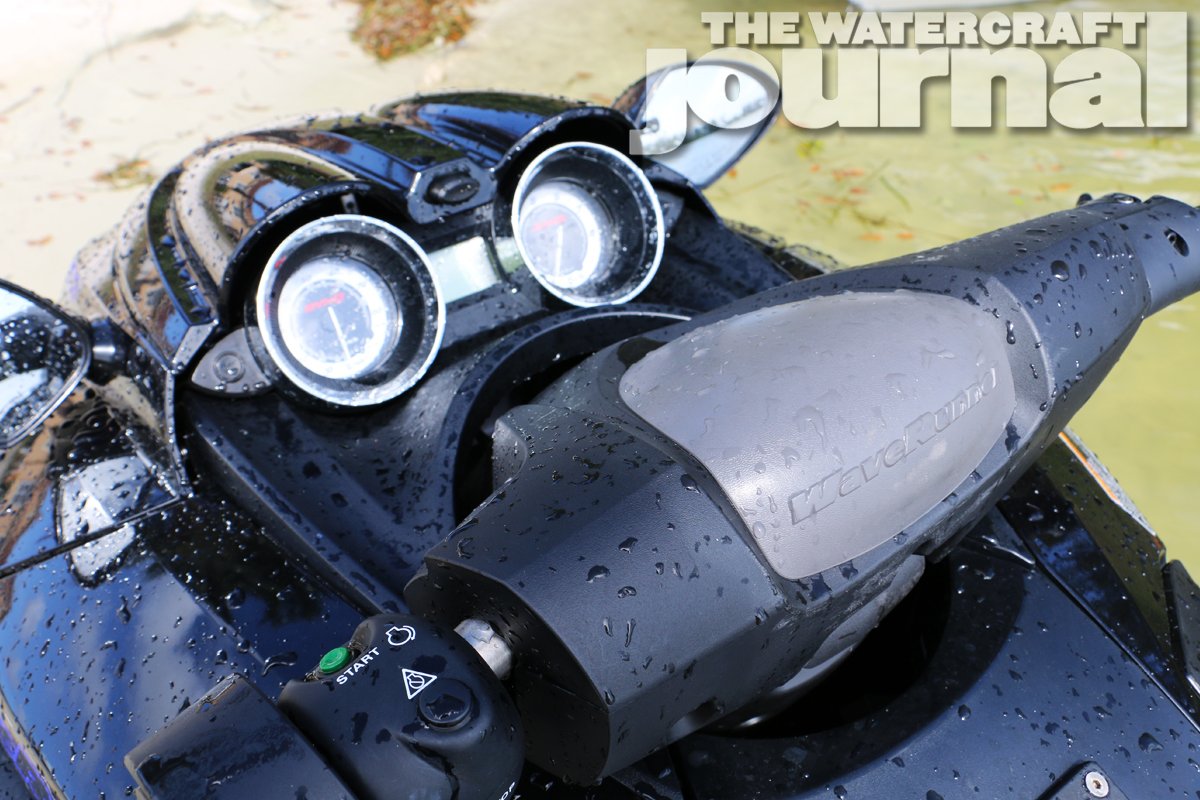
From the outside, the FZR was almost wholly indistinguishable from any model sitting on RIVA Motorsports’ Pompano Beach showroom floor. The stock sponsons, steering and nozzle were clearly visible. All that whispered that something was amiss were the presence of a GPS mount on the glovebox door and a lone RIVA decal on the nose. No external exhaust outlet, no two-piece sponson kit or aftermarket handlebar grips. Only the subtle burble resonating from the free flow exhaust hinted at what RIVA’s secret skunkworks had in store for us this day.
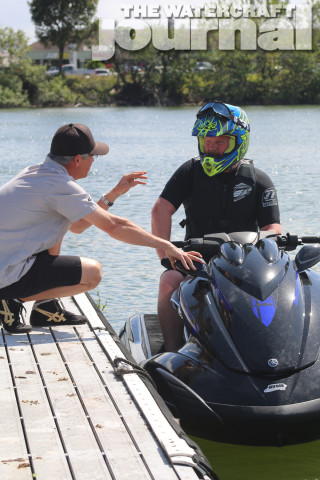
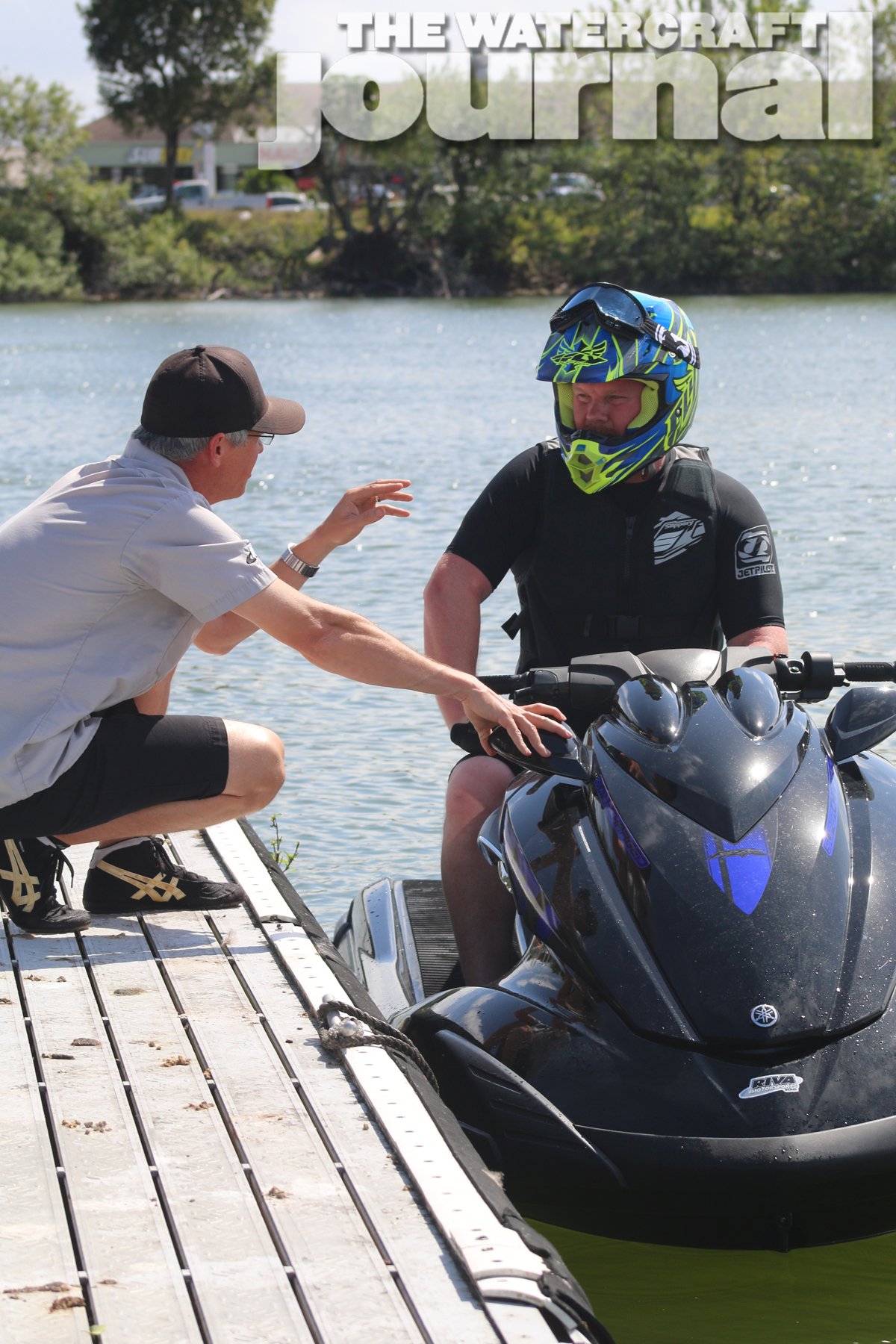
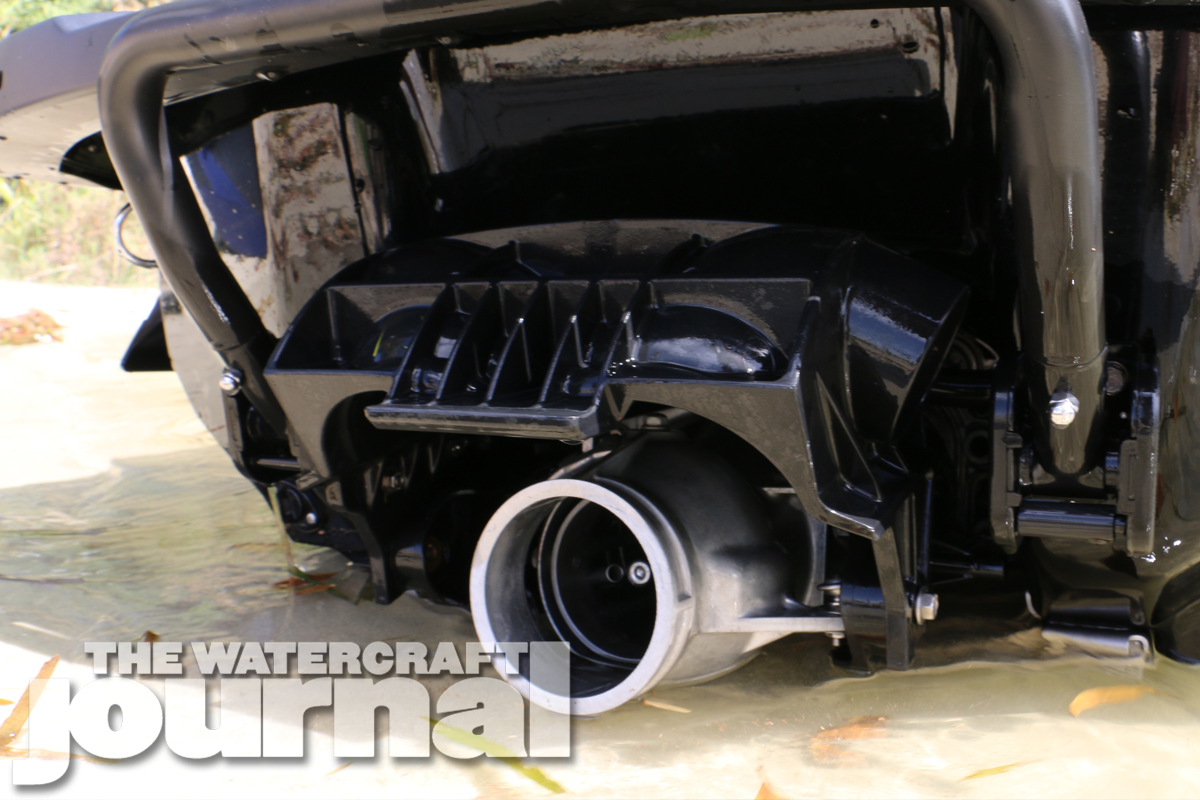
Although RIVA is currently testing impellers and pump combinations to best optimize the package, the primary purpose of the test unit we rode was to develop the engine/ignition portion of RIVA’s Stage III kit for the FZ SVHO. Currently, the setup recommends running this package on 100-plus-octane fuel. In spending the day with RIVA’ s R&D Mark Sheffield, we were made privy to a lot of the process poured into creating not only the ultimate performance package, but in the many hours spent water testing to optimize fuel tables and ignition timing on the Vi-PEC base maps.
Above left: In addition to the FZR, RIVA was hard at work on a Sea-Doo Vi-PEC test tune. Above center: Sheffield is one of the industry’s best minds, able to precisely isolate inconsistencies in air/fuel ratios and adjust accordingly. Above right: Acceleration achieved from the yet-to-be-complete Stage III kit is staggering, with 0-to-60 times averaging 2.75-seconds.
“With each map, we first start with the engine on our Dyno. The benefit of having the Dyno at our facility is we can pinpoint where horsepower is being made with the engines, as well as fully monitoring all aspects of the engine while developing these tunes,” Sheffield explained.
“When building these tunes we first verify target air/fuel ratios throughout the entire RPM range of the tune, making adjustments to the fuel tables as necessary. Once we reached targeted air/fuel values, we then focus on ignition timing. Again, we slowly go through the entire RPM range of the tune, monitoring ignition timing versus horsepower produced.
With all of the advanced capabilities latent to RIVA’s new RIVA/Vi-PEC V88R3 ECU, Sheffield and team are hard at work not only optimizing the ideal tune to match the current selection of performance parts within the Stage III kit, but additional tunes to cooperate with a wide variety of additional and customized packages.
“Once this process is complete, we then transfer the hardware and the file to the watercraft. Once installed we go through a series of ‘cold starts.’ This is to ensure proper starting and fueling when the engine is under colder-than-normal conditions. We’ll let it sit in a cold environment overnight, then proceed with cold starts the next morning. Once the cold starts process is complete, it’s time to hit the water.
“When water testing, we go through the entire RPM range of the tune in steps; first, running at idle for a few minutes, then 2000 RPM, 2500, 3000 RPM and so on, (holding the RPM for a couple minutes at each point) until we go through the RPM range of the tune. The test rider will monitor the engine data live as well as being recorded on the Vi-PEC data logging feature.
The power delivery throughout the torque band is impressive and will continue pulling in a linear arc as it reaches its growling crescendo. The power provided by the current package overpowers the stock sponsons through the apex, requiring the use of RIVA’s Pro Series sponsons.
“After each session, the data log is downloaded and carefully reviewed. Adjustments are made if necessary to optimize performance. Once initial water testing is complete and target values are verified, we go through a series of endurance testing and heat things up. Again, by monitoring data and reviewing data logs provided by the Vi-PEC, we establish limits and parameters to create safety margins with each tune.
“We log about 20 hours of endurance testing before any of these files are sent out for field testing. Files are sent to certain racers and dealers in different locations around the world. Using the customer’s Vi-PEC data logs, we can adjust and optimize tunes for these varying conditions. This way we have this information to support our customers in other parts of the world with different environmental conditions than ours. Once we complete this step, at that time we are ready to release this base map to the public.
Above left: The lack of a through-hull exhaust outlet or aftermarket nozzle, and the presence of the stock reverse bucket adds to the Stage III’s “sleeper” look. Above right: We enjoyed the absence of revealing handling components like a billet steering neck or aftermarket bars too. We loved the visual of burying the factory speedo well past the 80 miles per hour mark.
“A lot of time and effort goes into building these base maps for our customers. More so than most people are aware of. We want to ensure that when a customer purchases the Vi-PEC V88R3 system from us, they are getting both high quality, optimum performance and reliability.”
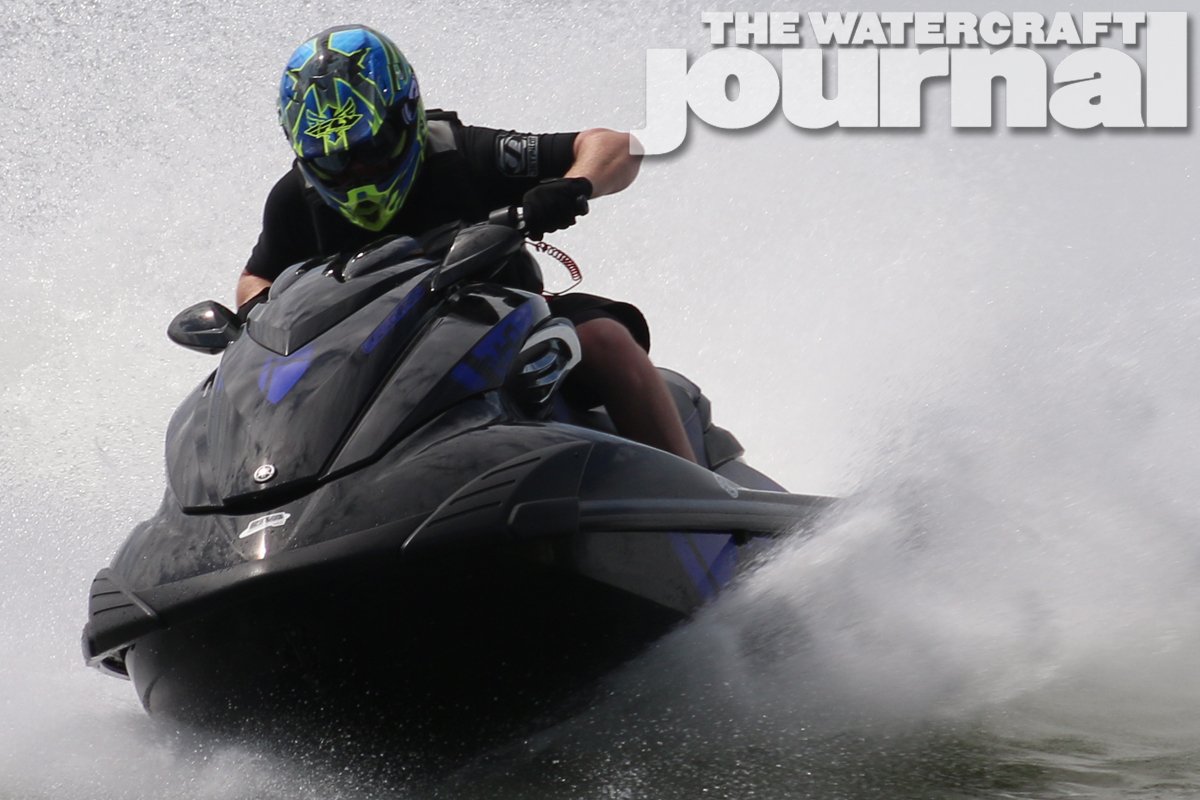
Even piloting the FZR in its current mid-testing process, the performance is nothing to sneeze at. Acceleration and mid-range pull is incredibly strong with 0-60 times averaging right at 2.75 seconds. We topped off at a maximum of 84.5mph, which Sheffield admitted was “lower than average.” Considering we outweighed Sheffield by 30 pounds, we kinda knew the reason why.
Again, this machine was only a test mule for RIVA’s research and development team and only illustrated a sample of things to come from RIVA Racing. Once finalized with the proper tune and pump/impeller configuration, and applied to the lighter 2015 FZR SVHO WaveRunner, the results are certain to impress.
If what turns you on is some seriously challenging open ocean competition off of the Pacific coastline, if what excites you is pushing yourself as hard (if not harder) as your personal watercraft’s ability to traverse rolling, cross-chopped and turbulent seas, and if you’re looking to race alongside some of the most dedicated, determined and fiercely competitive offshore racers in the United States, then the 2015 Hot Products Triple Crown of Offshore Endurance Series is tailored for you.
Kicking off the action in just over a month’s time with the Dana Point to Catalina & Back race (what once was the briefer Dana Point-to-Catalina one-way sprint), the Triple Crown of Offshore only gets hotter with the legendary Long Beach to Catalina IJSBA Offshore Endurance National Championship. The final round is the Dana Point to Oceanside & Back lap that has famously enjoyed glassy conditions – but isn’t always a guarantee.
Below is the brief three-stop series and the caveat that each event must have a minimum of 25 entries three weeks prior to each race. For more information, visit RPM Racing Enterprises here.
IJSBA PWC Endurance Hot Products “Triple Crown of Offshore Endurance” Series
Round 1: Sunday, May 17th – The Hot Products Triple Crown of Offshore- Dana Point to Catalina & Back (DP2CAT)
Round 2: Sunday, July 19th – The Hot Products Triple Crown Of Offshore -The IJSBA Offshore Endurance National Championships – Long Beach to Catalina (LB2CAT)
Round 3: Sunday, September 13th- Final Round of The Hot Products Triple Crown Of Offshore- Dana Point to Oceanside & Back)
(Note: Must have minimum of 25 entries for all Triple Crown races to move ahead three weeks prior to each race)
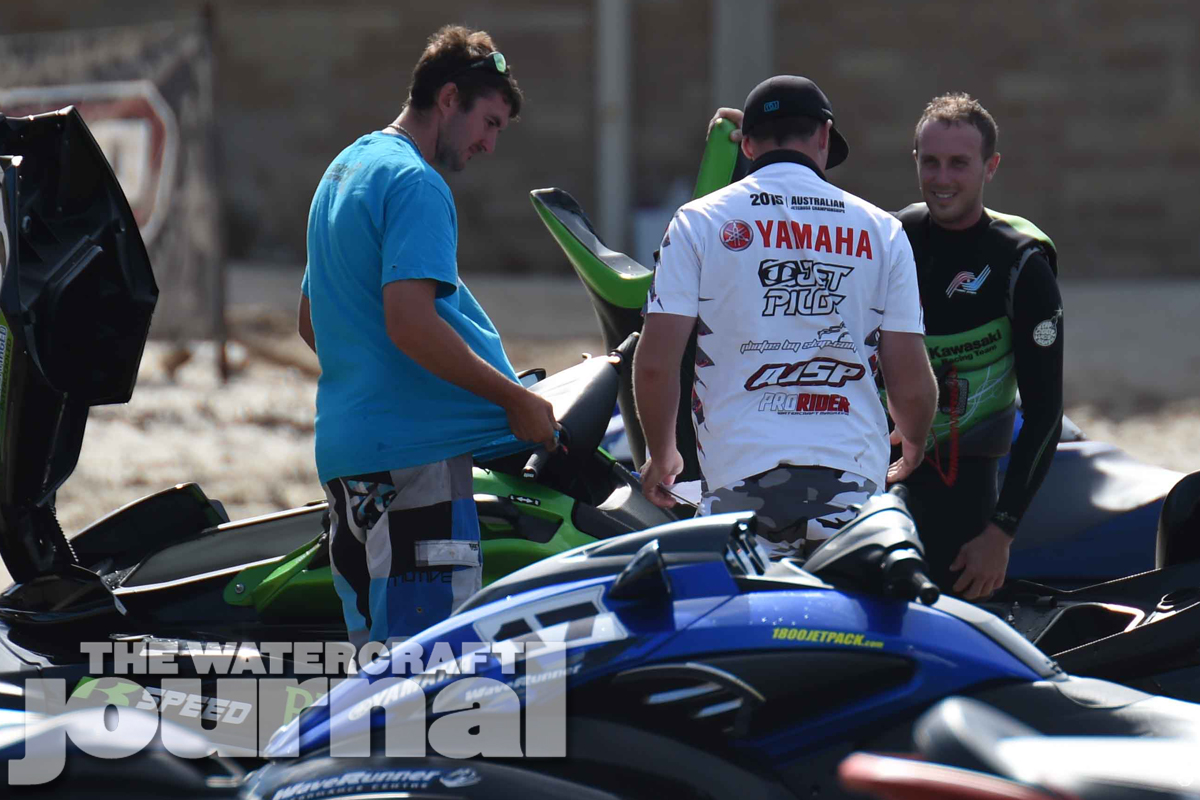
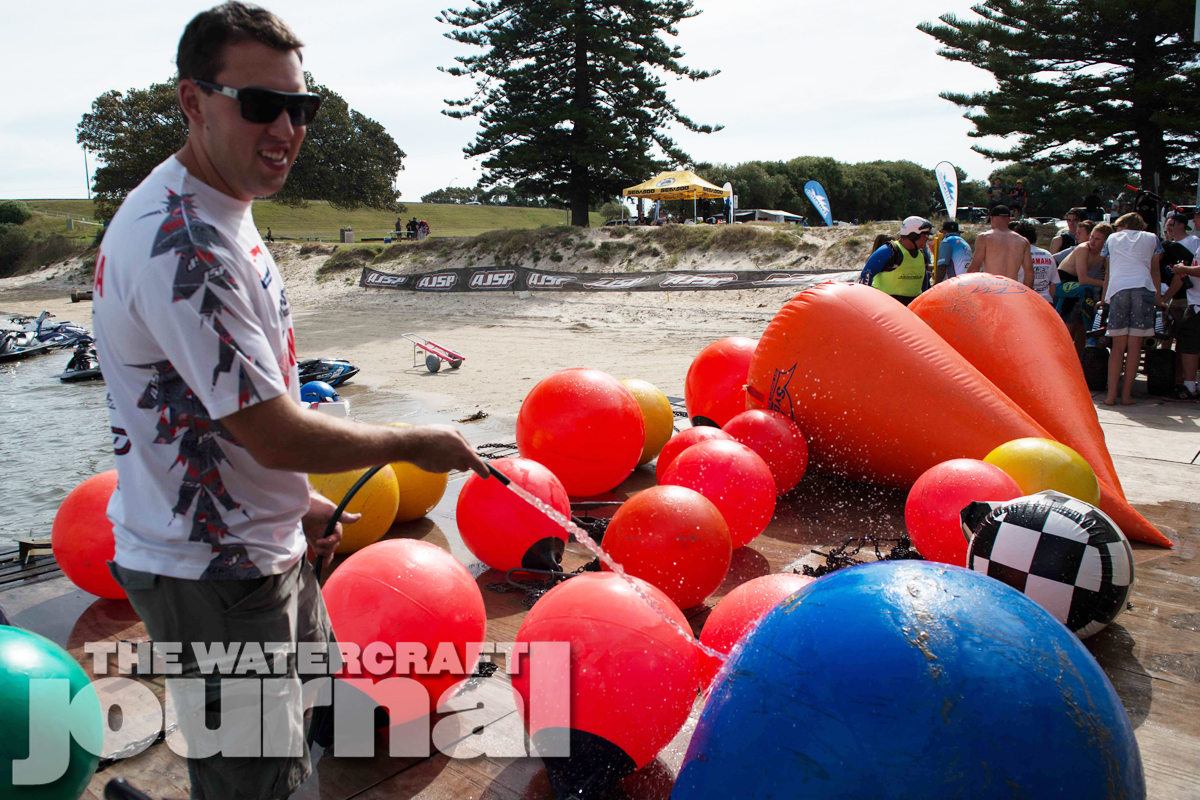
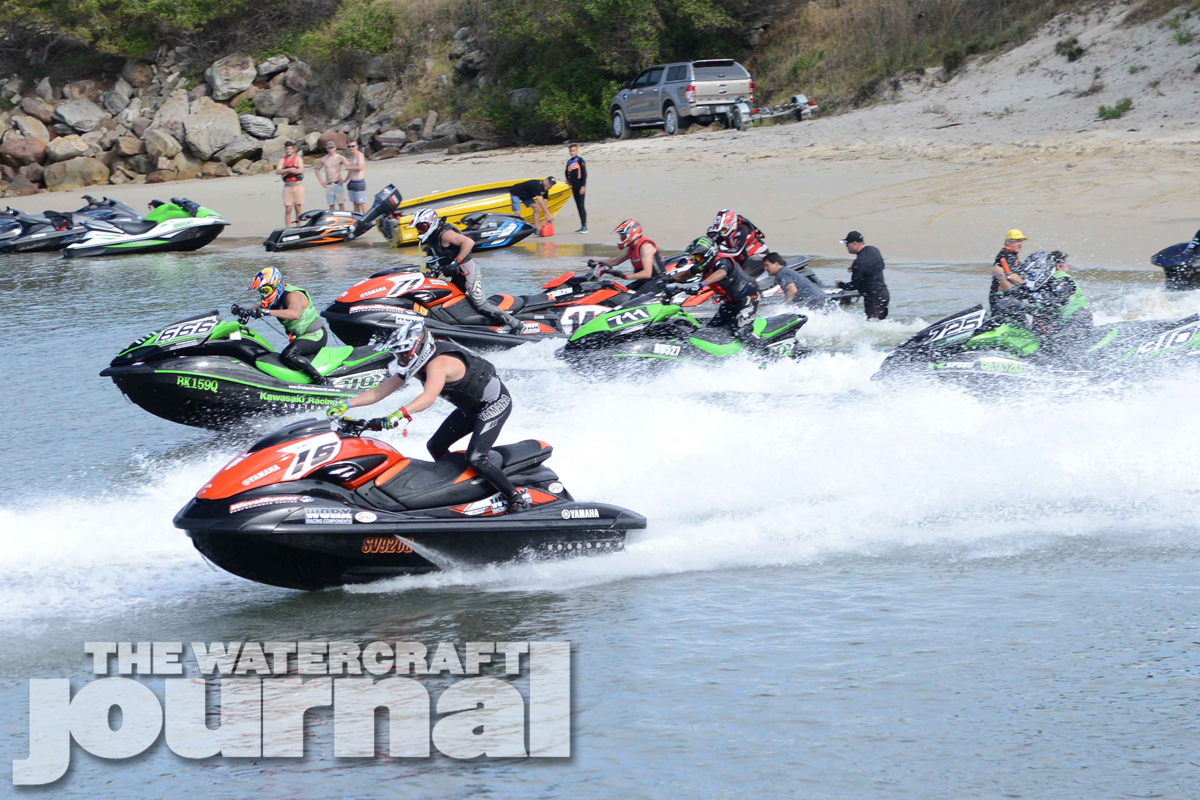
After a cyclone hit North Queensland last month, the two Redcliffe rounds were postponed and moved to the St. George Sailing Club in Sydney, with a return to Queensland for the final round at the end of May. The previous rounds in Perth, West Australia ended up a huge success with some great racing and plenty of action, on and off the track.
For this weekend, the New South Wales Personal Watercraft Association in conjunction with AJSBA put on the event, with the help of a few of the boys from Western Australia. That’s a bloody long way to come to volunteer your time. (Well done, guys.)
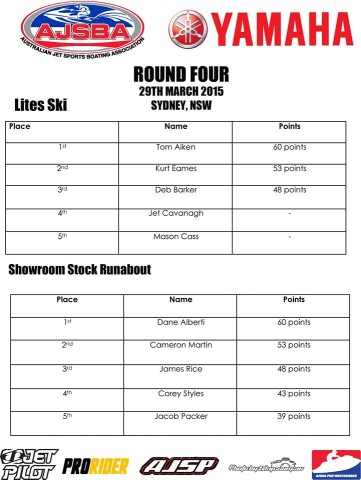
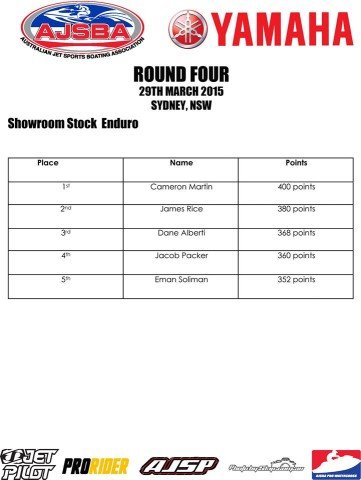
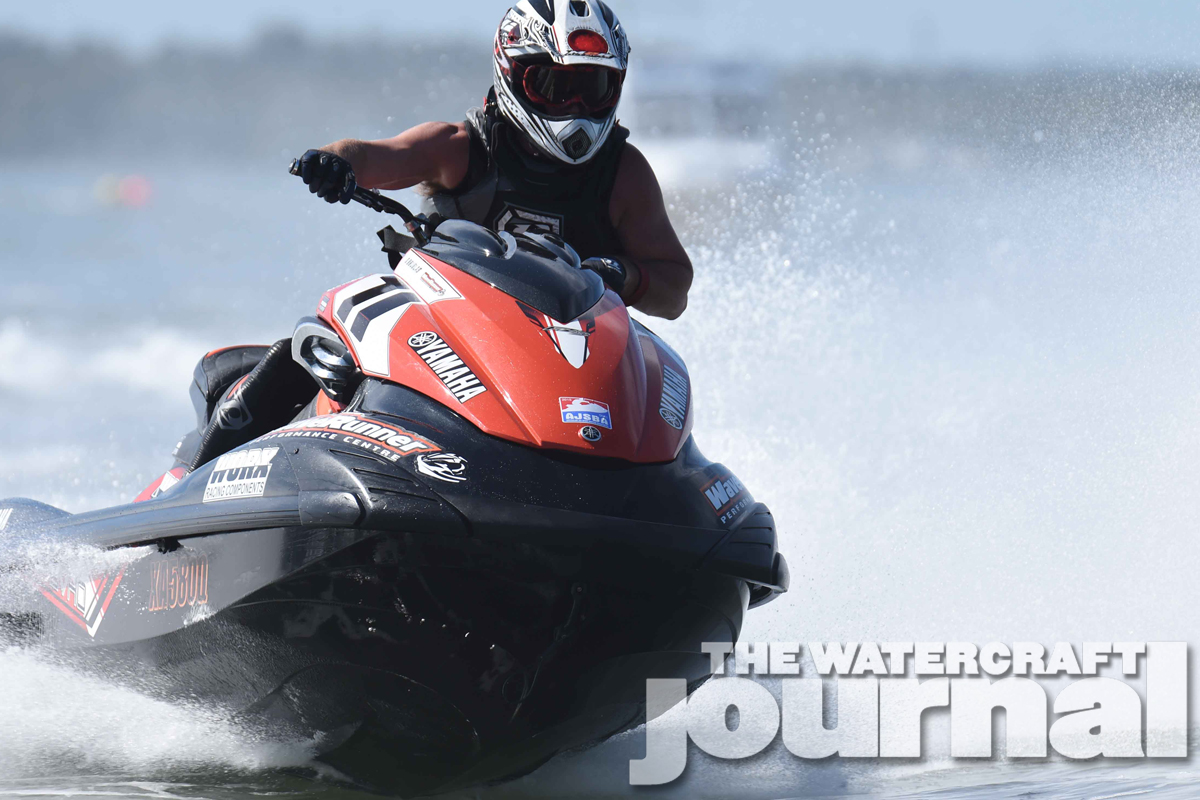
The first race of Round 3 on Saturday was the Enduro requiring riders to complete 30 minutes plus one lap. Most of the boats consisted of Stock Runabout and Showroom Stock. It was a great race with the likes of #93 Jacob Packer on his SHO and #300 Daryle Bone having a great race with some close calls after the splits. Daryle is pretty new to the scene and could do well in the future.
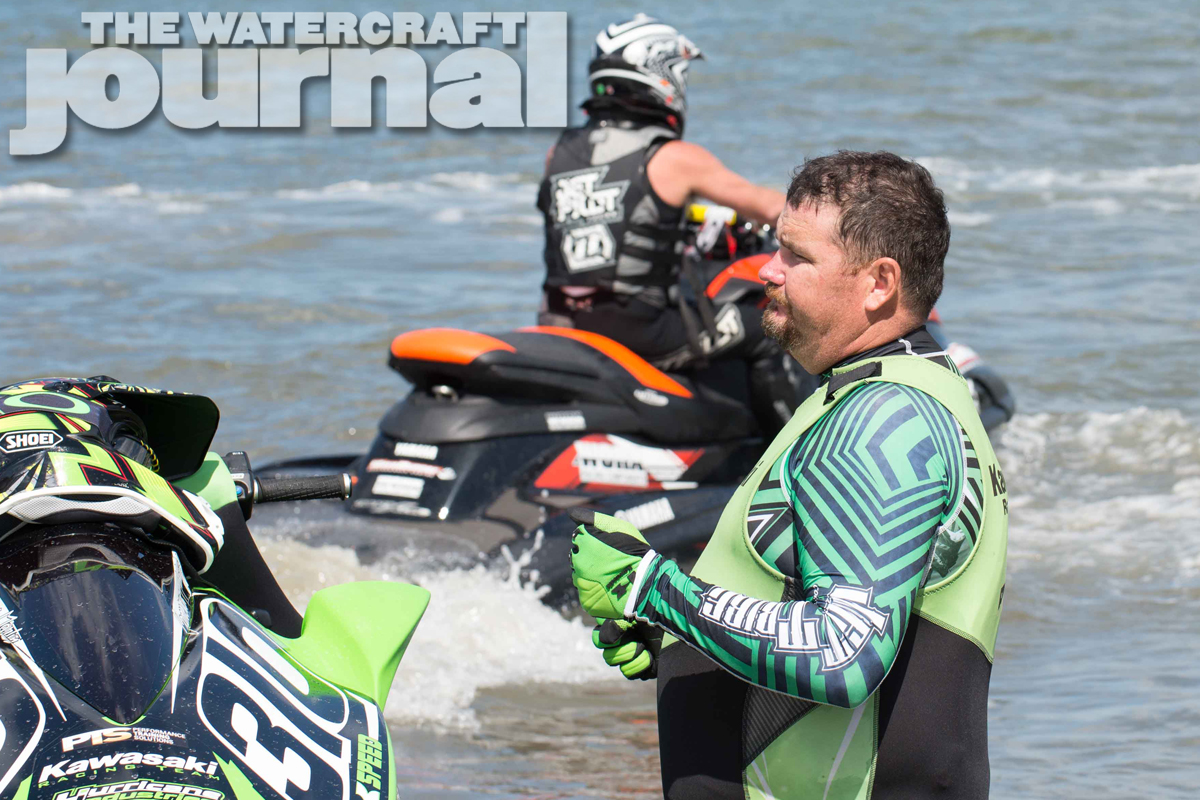
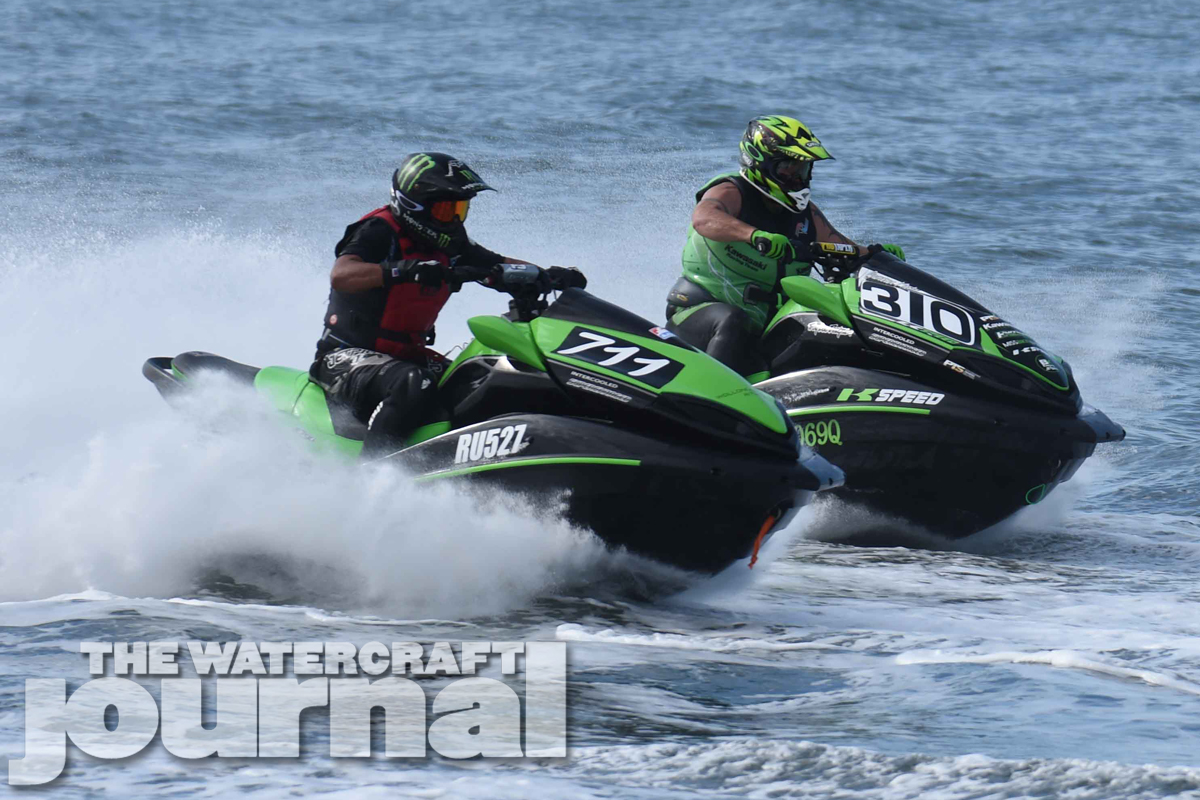
But #725 Dane Alberti and #310 Cameron Martin, both on Kawasakis who where to hard to catch. Close behind was #717 James Rice on his Yamaha, but no one could catch Cameron. He was in a league of his own taking out the Showroom Stock win.
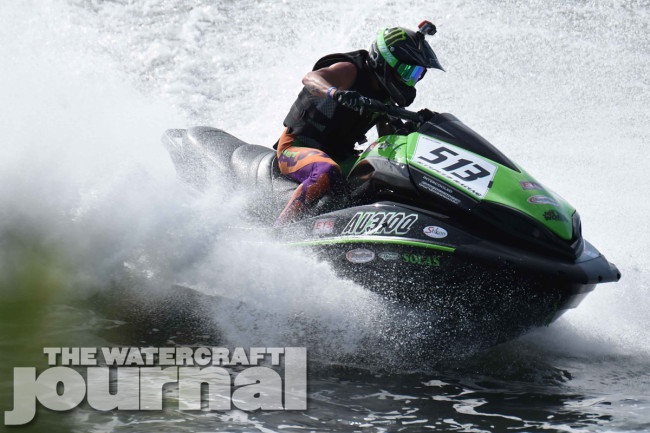
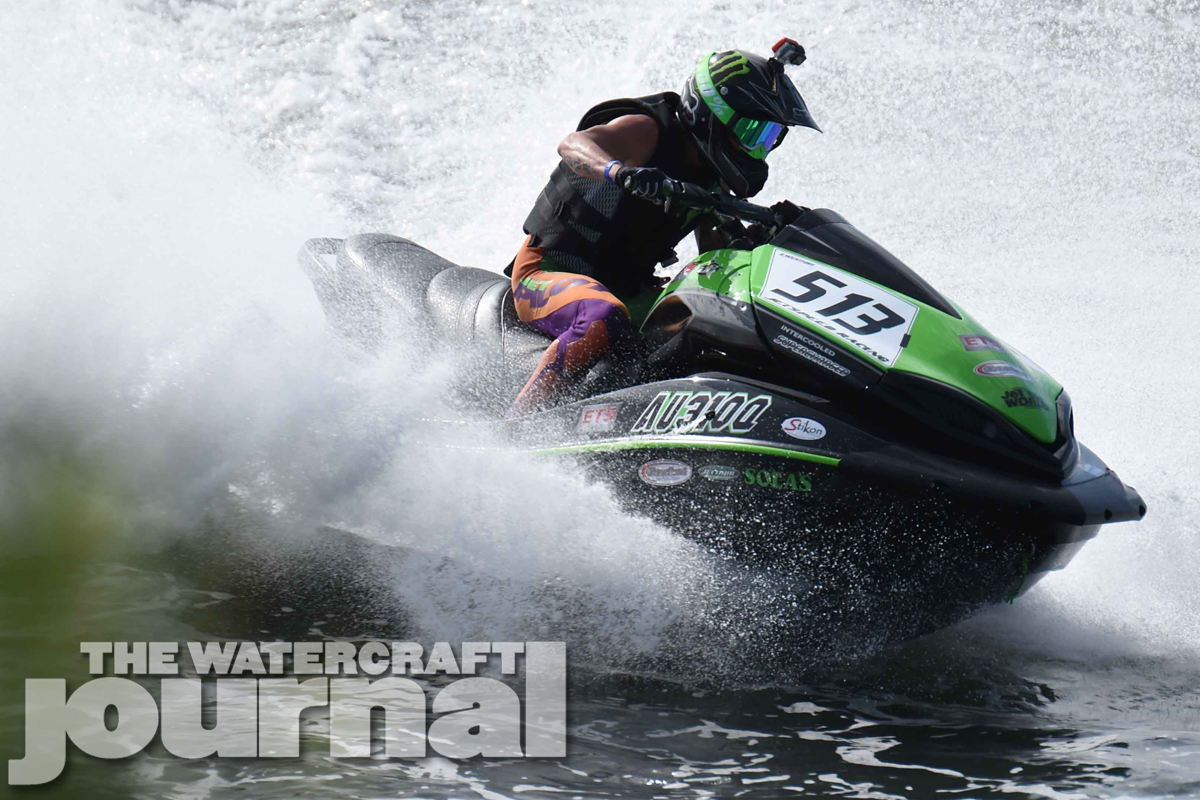
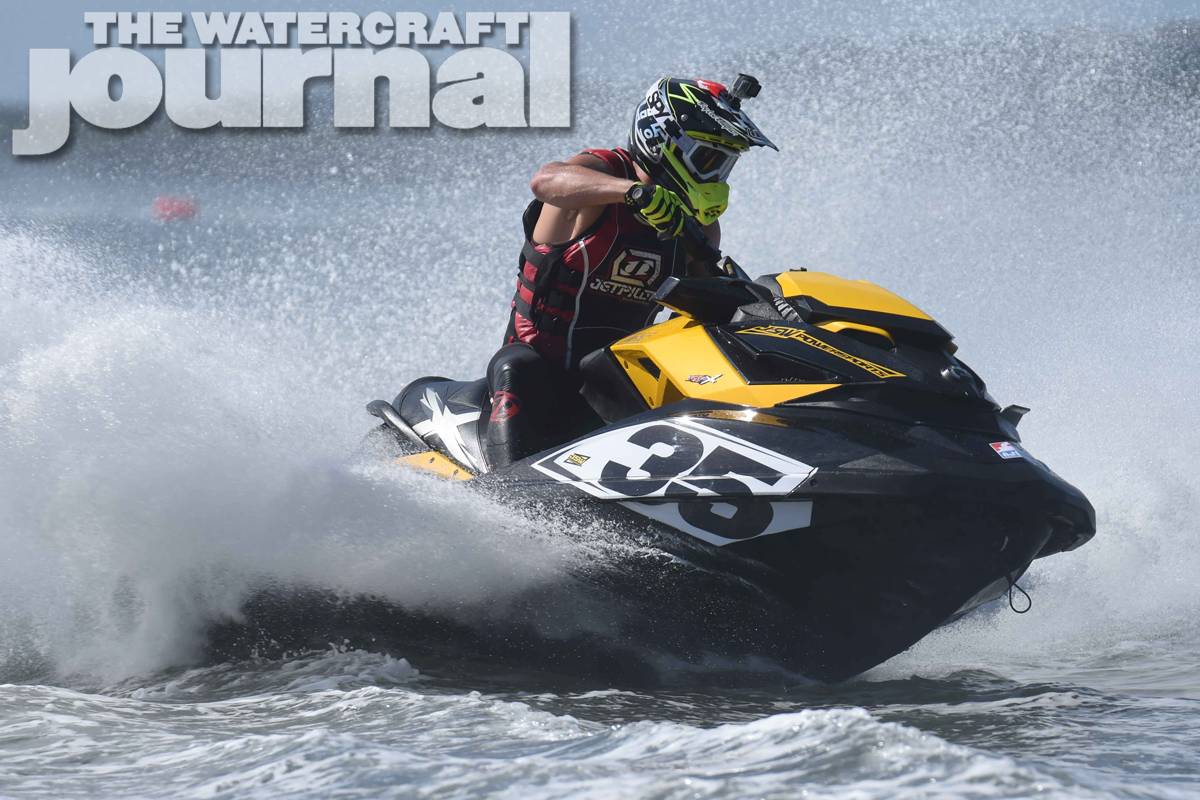
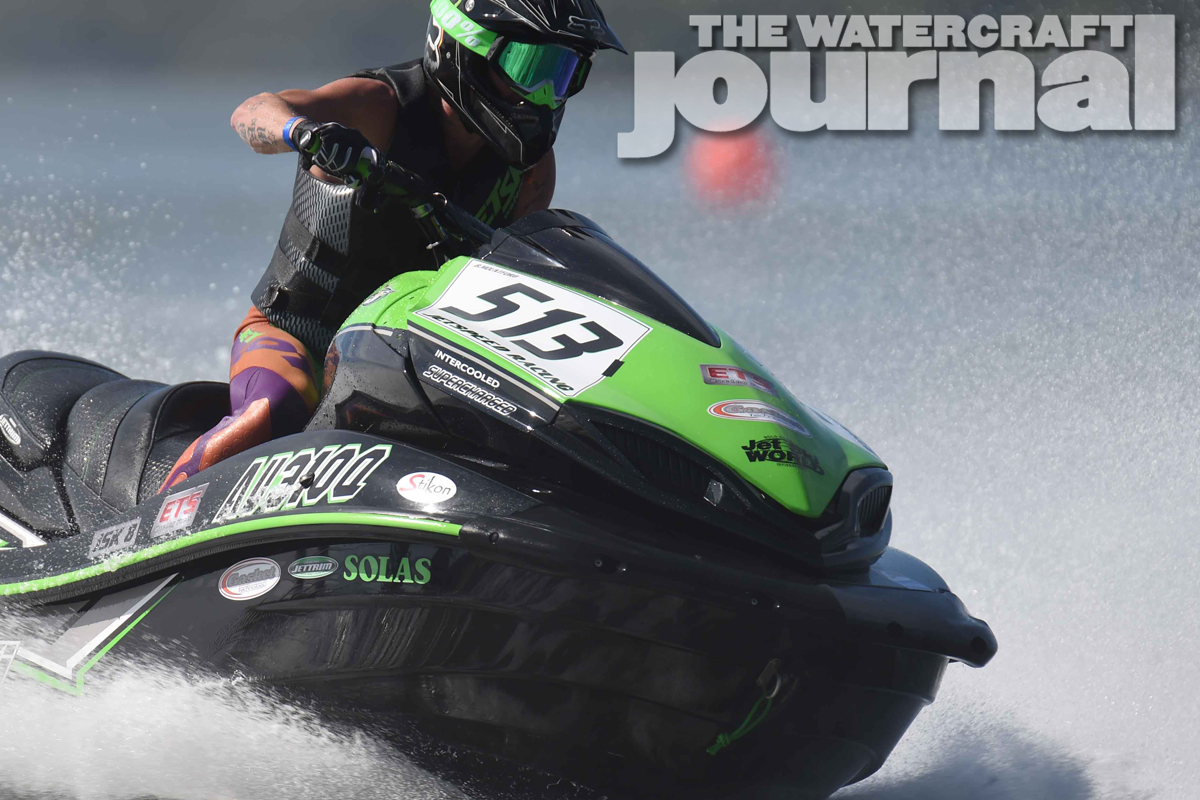
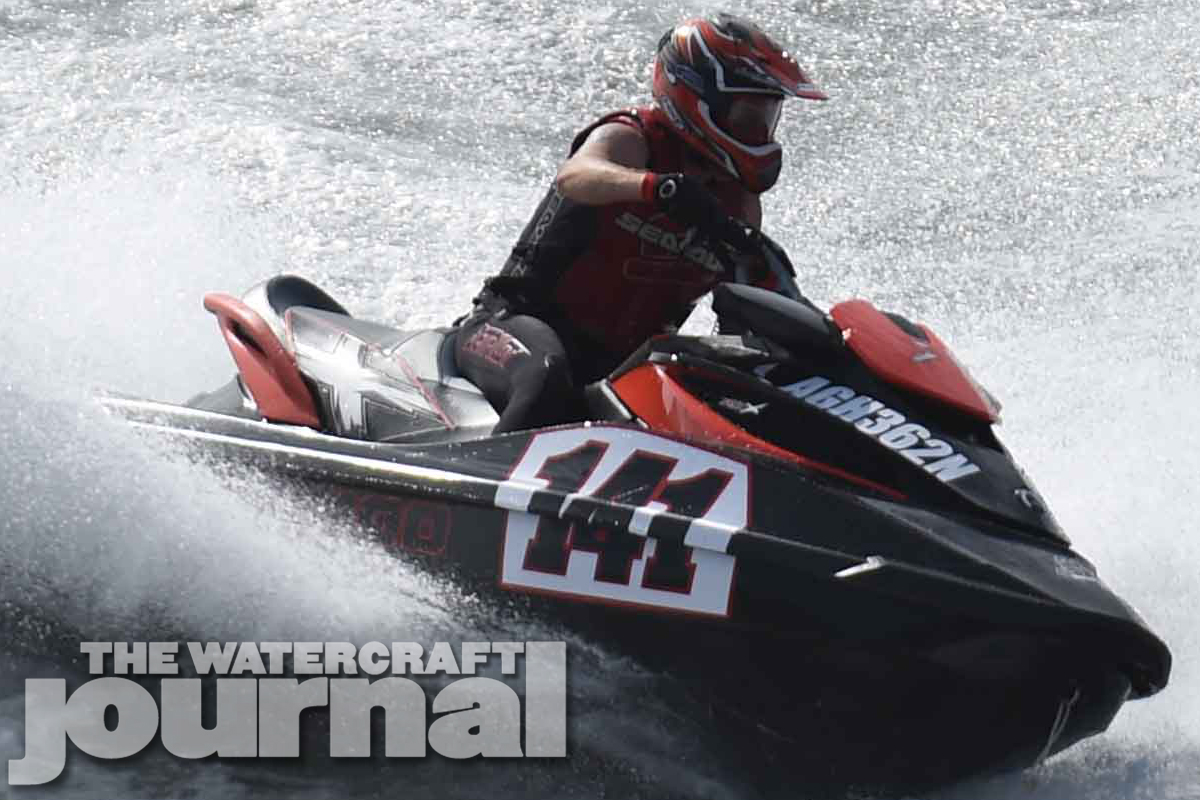
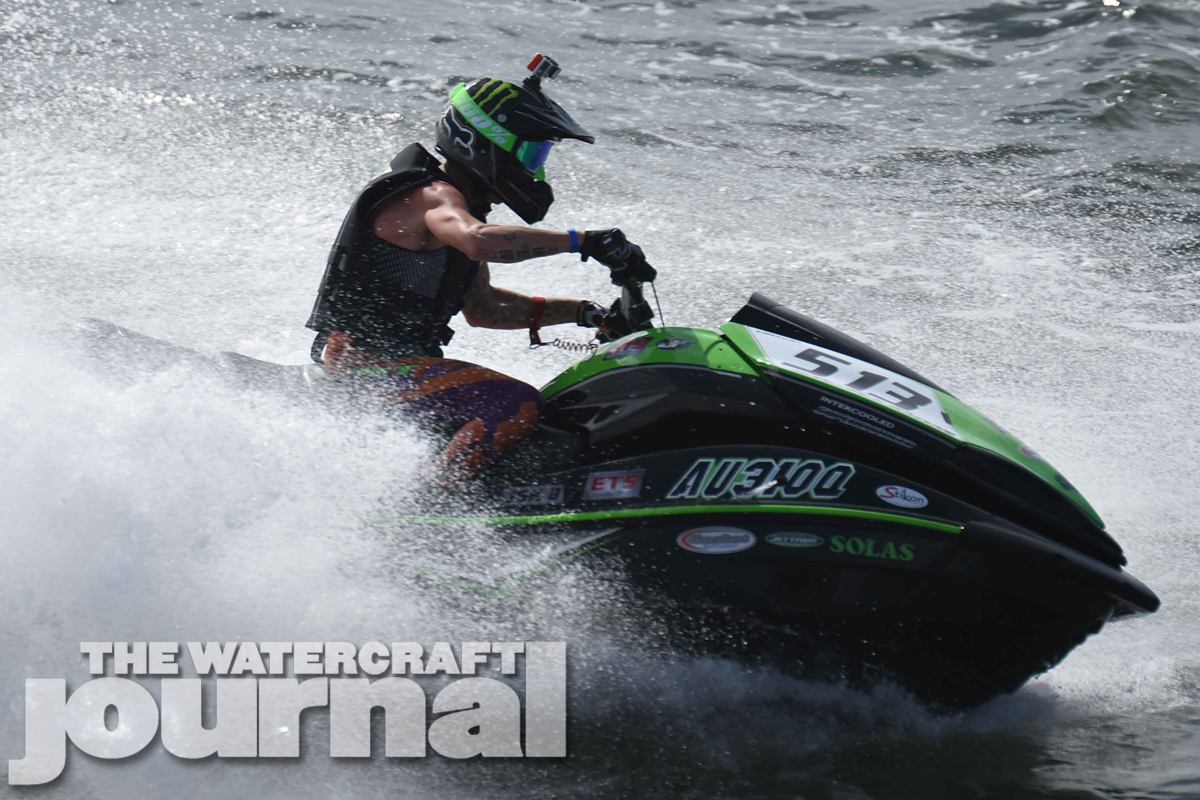
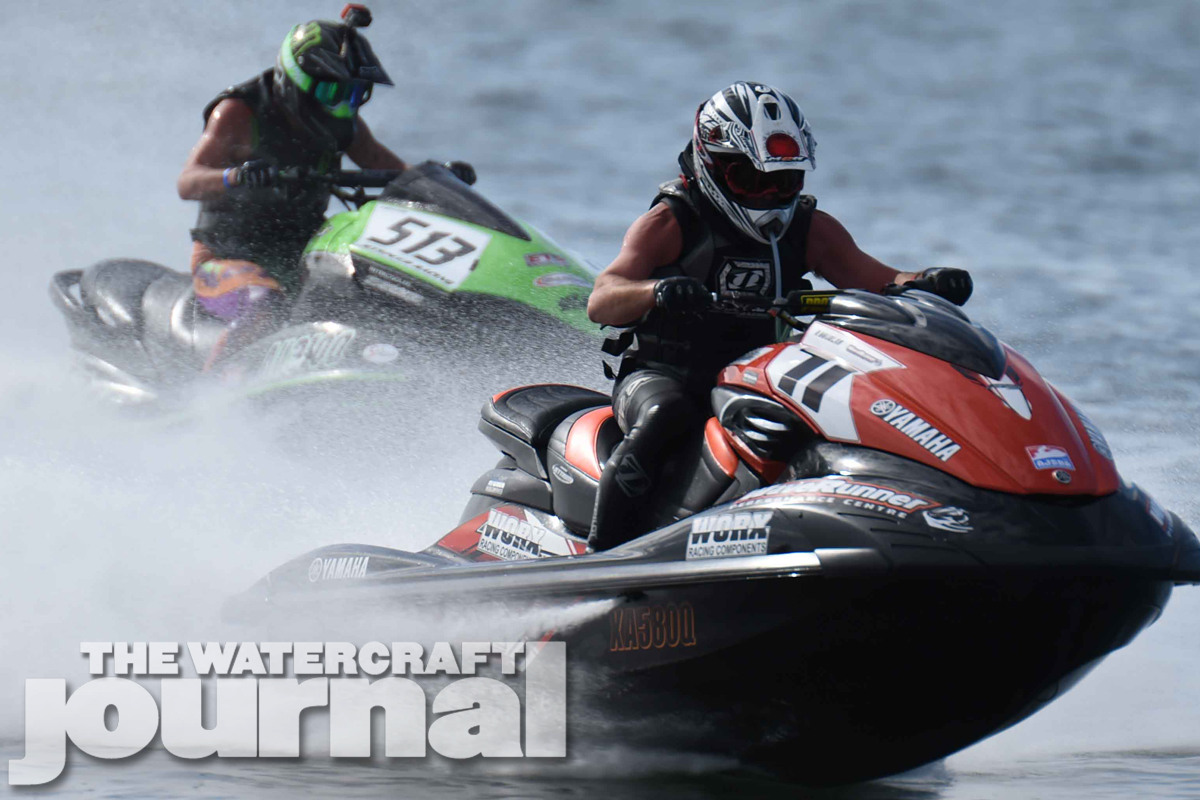
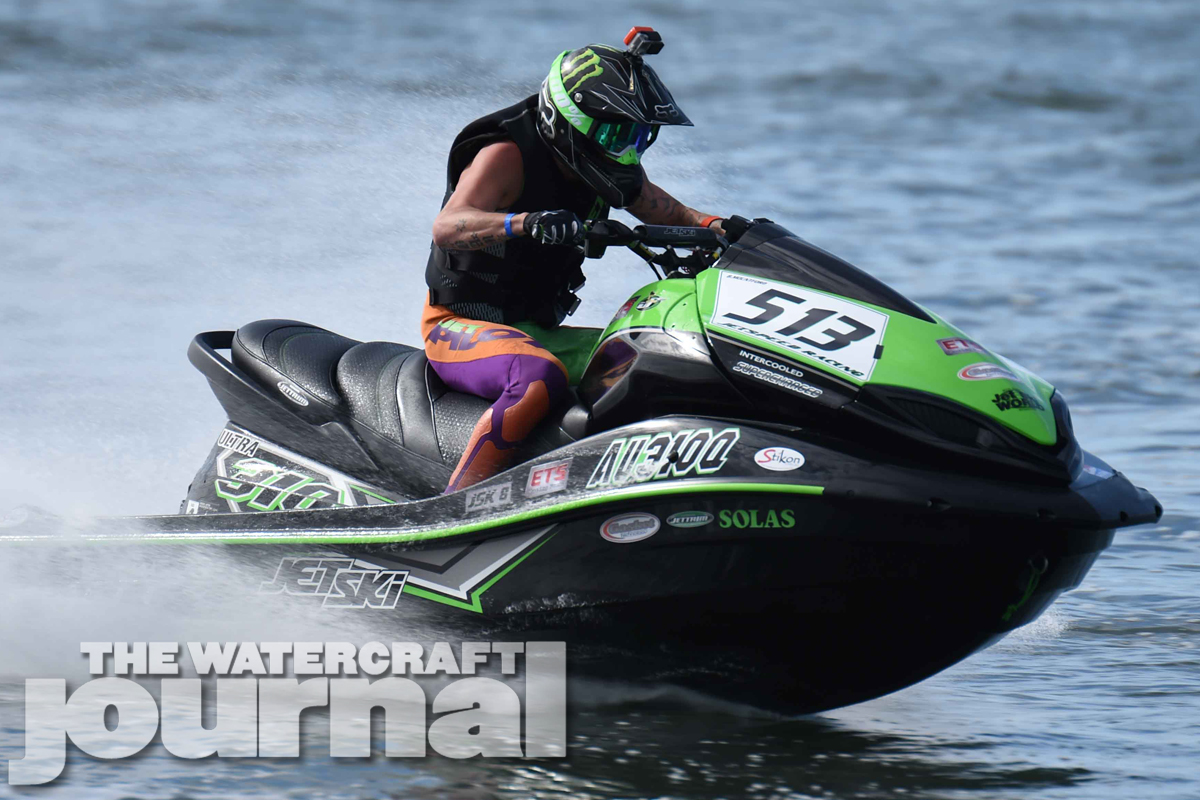
In Stock Runabout, #513 Ben Mountford had a great start and was going well until after about 4 laps in, he was informed he had missed a buoy and was DQ’d. A bit more clarity before the start of the race on the track layout might have been needed.
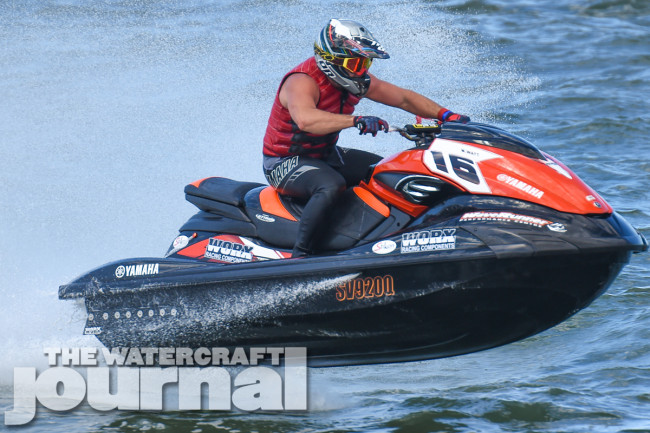
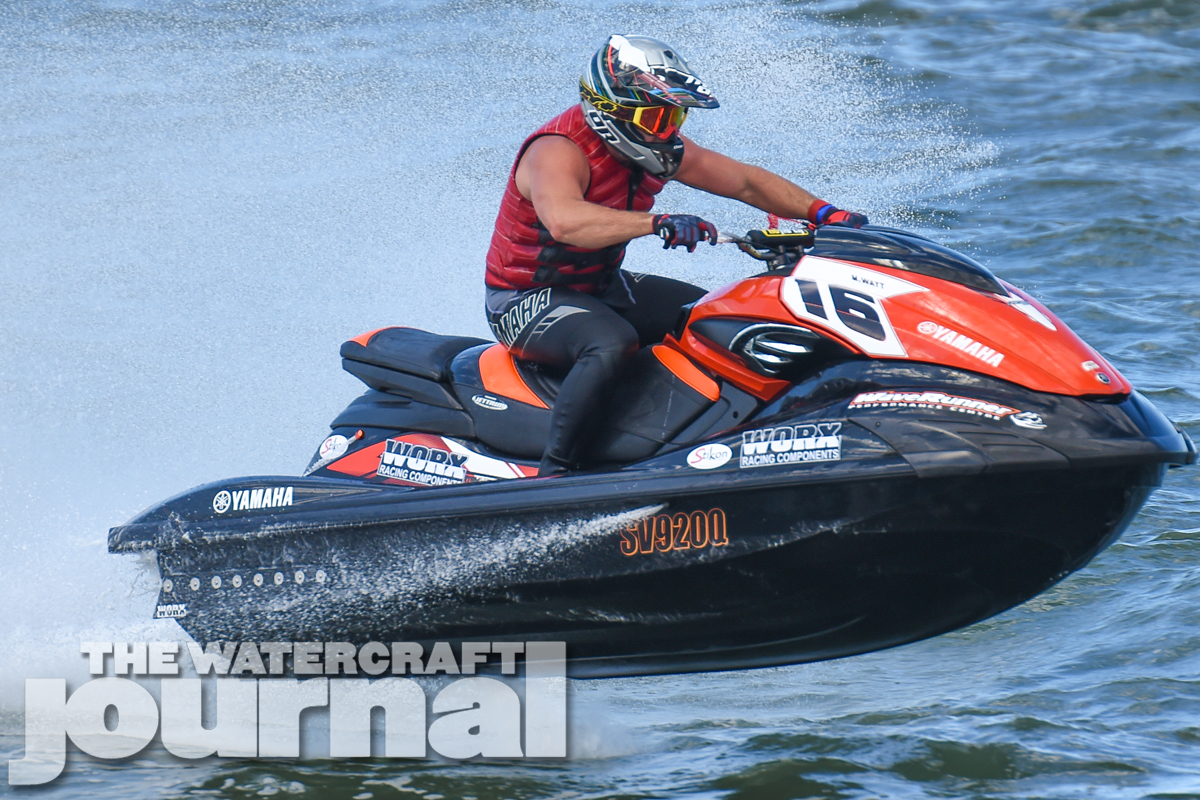
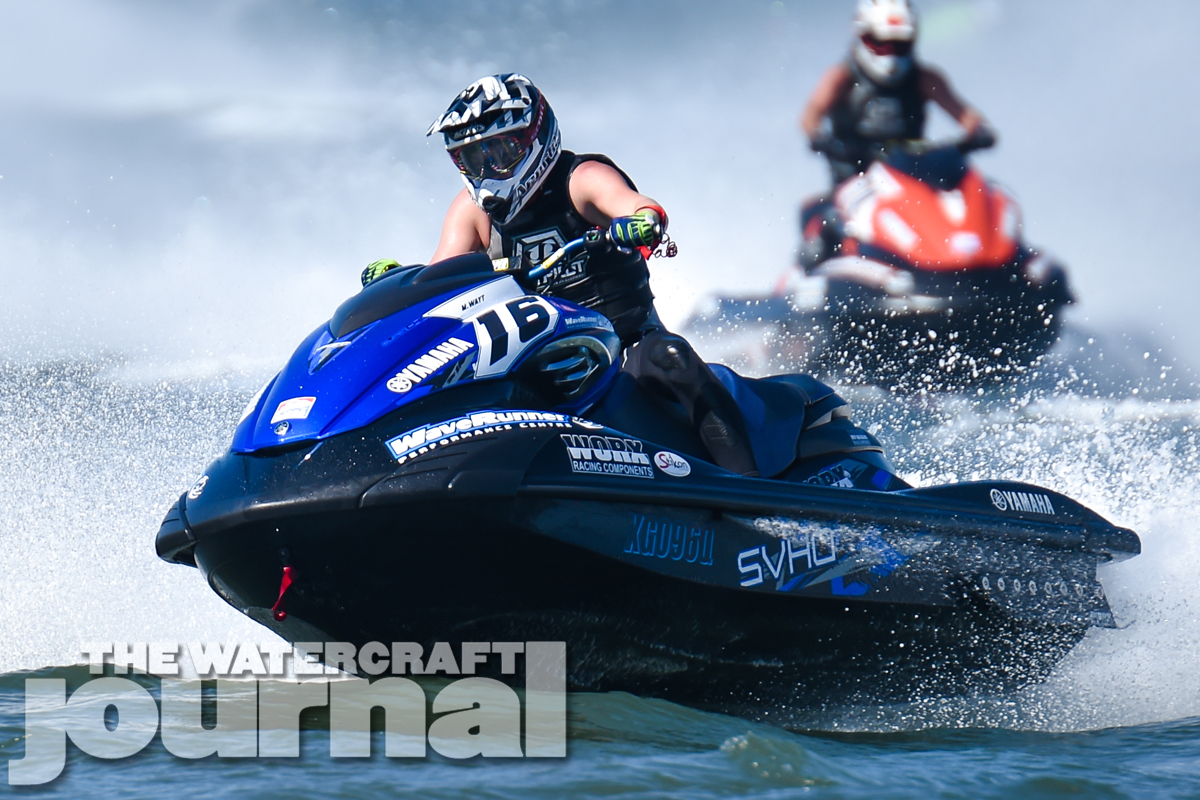
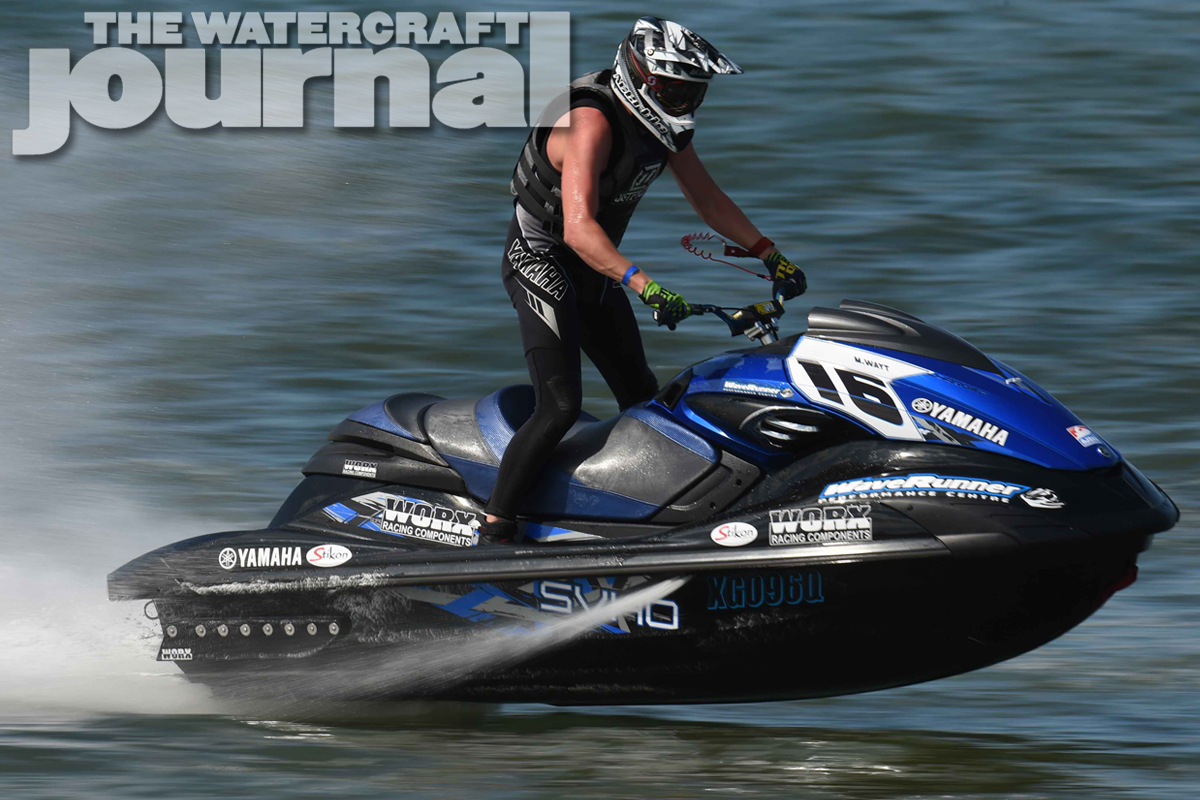
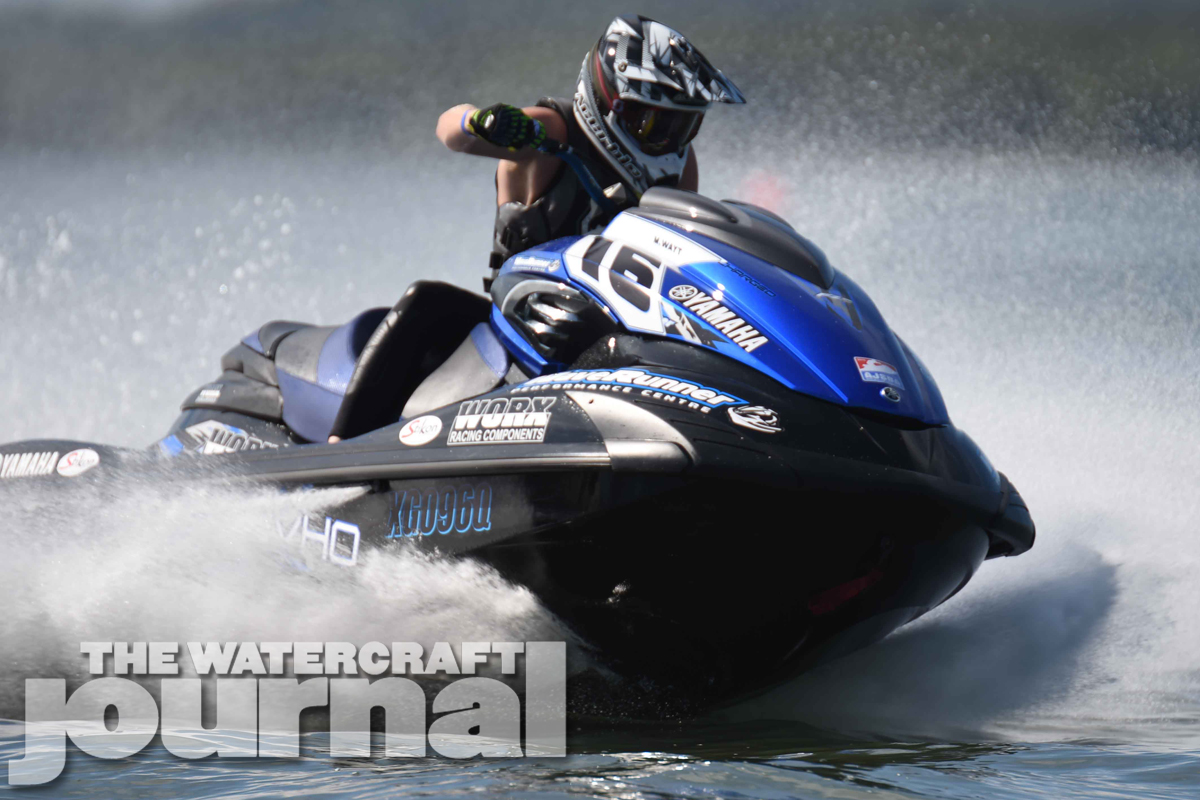
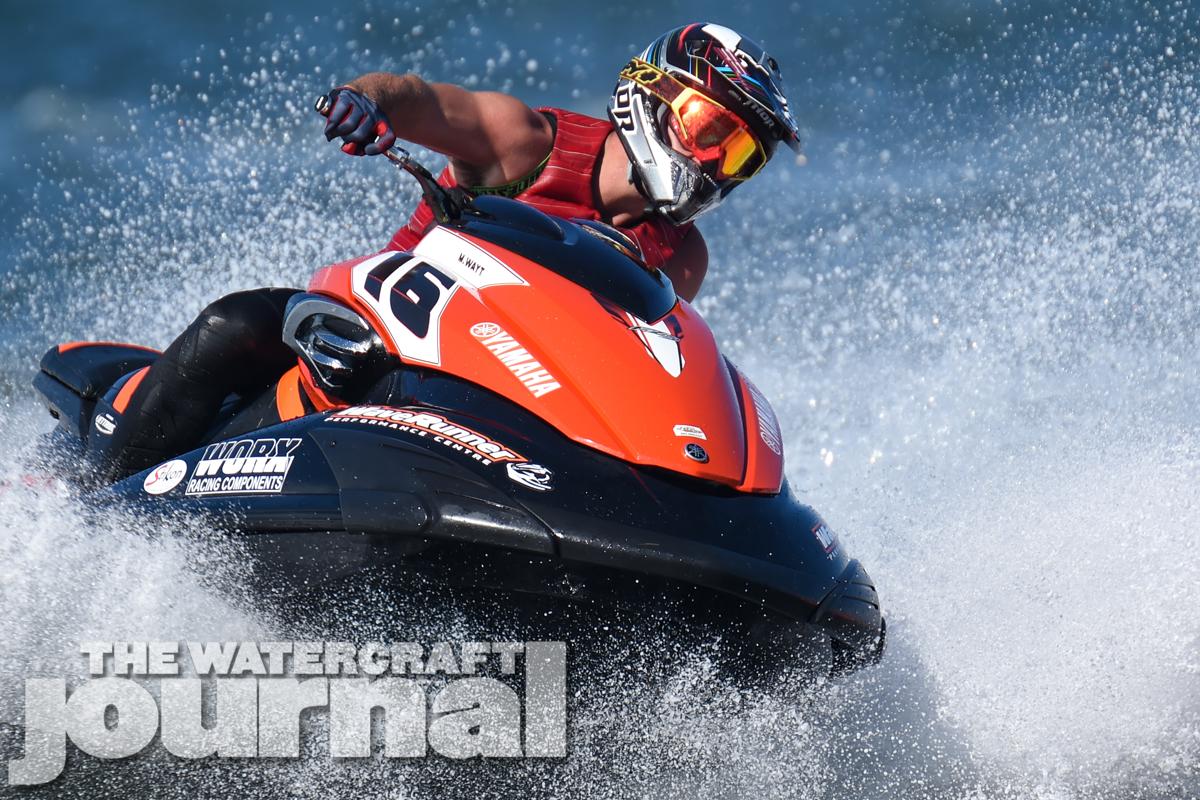
Mitch Wayt #16 is always a great performer and was the one to catch after that. With his aggressive style and great stamina it was not a surprise he took first place.
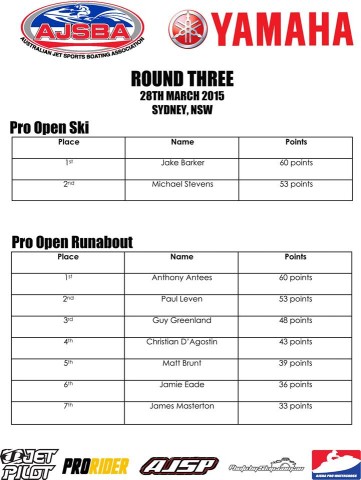
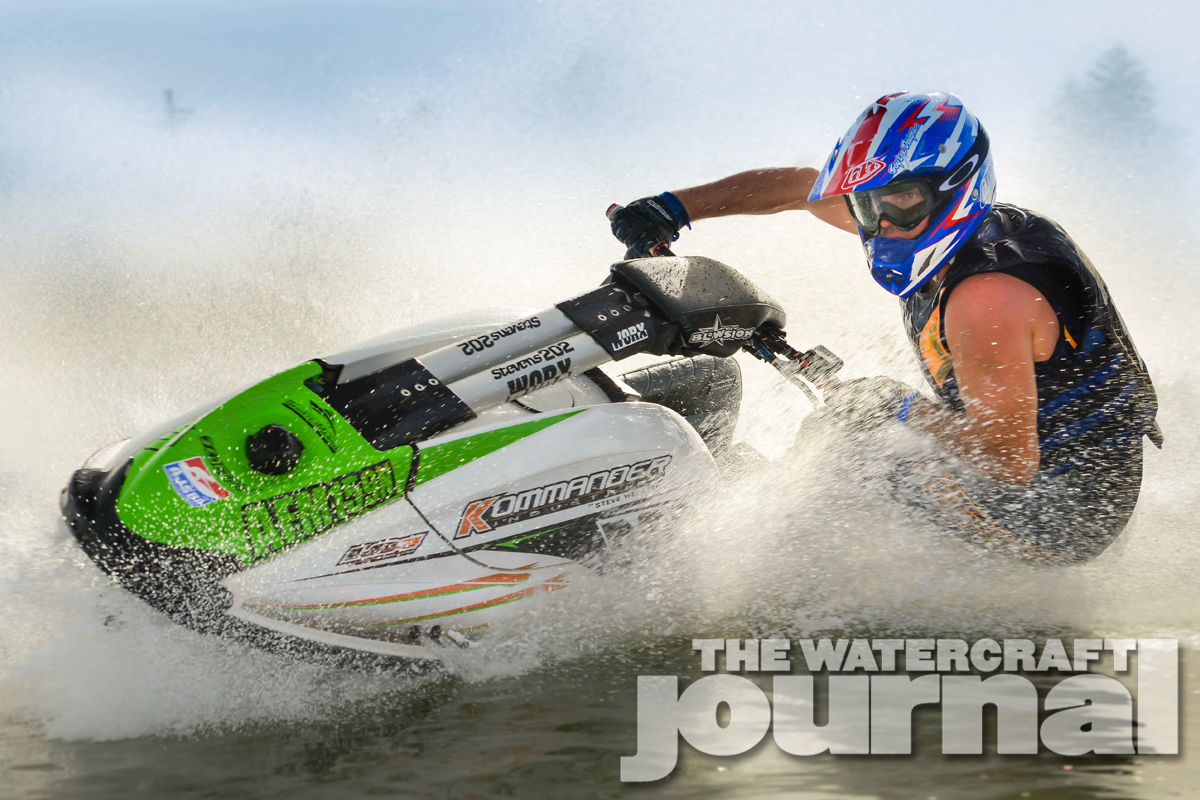
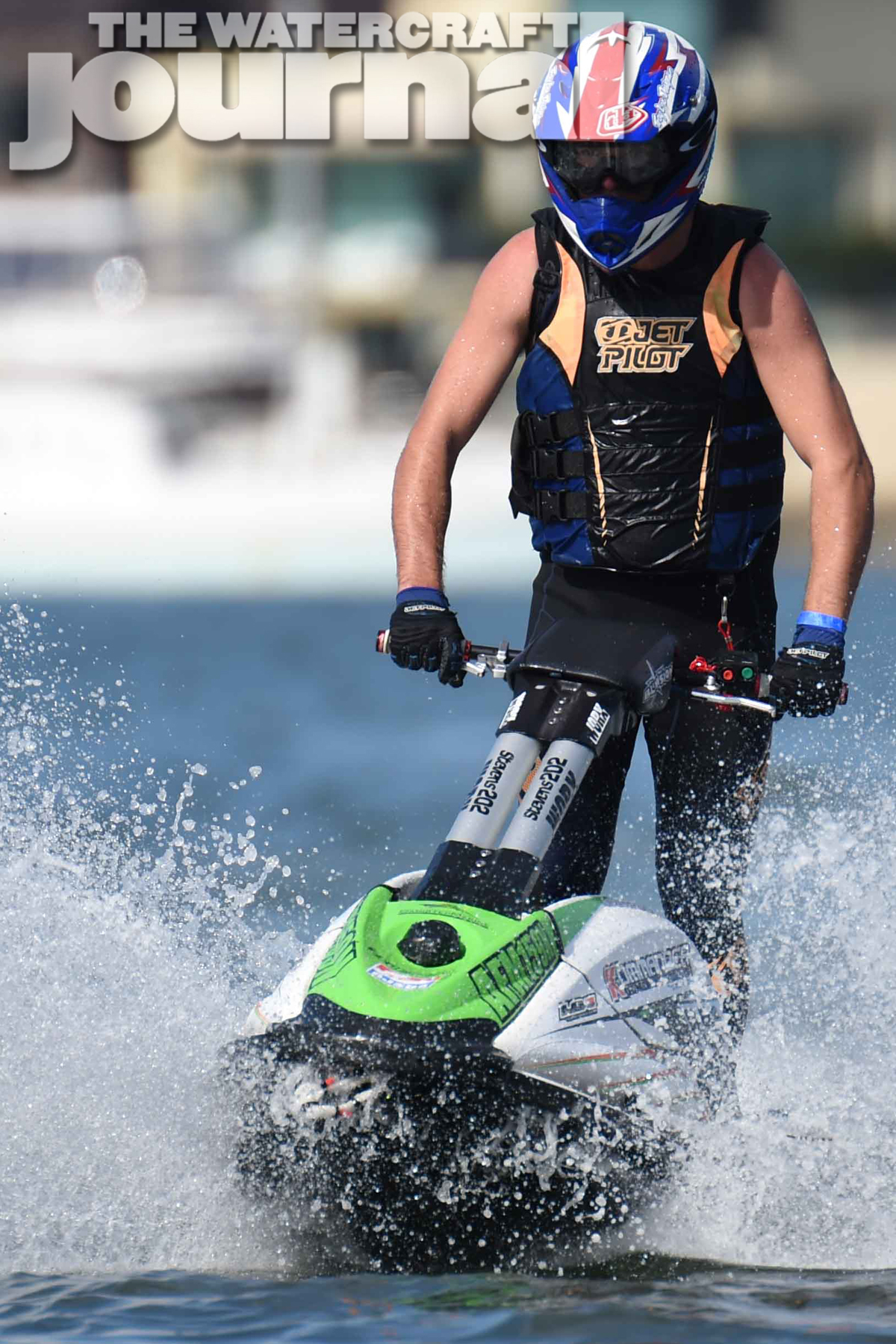
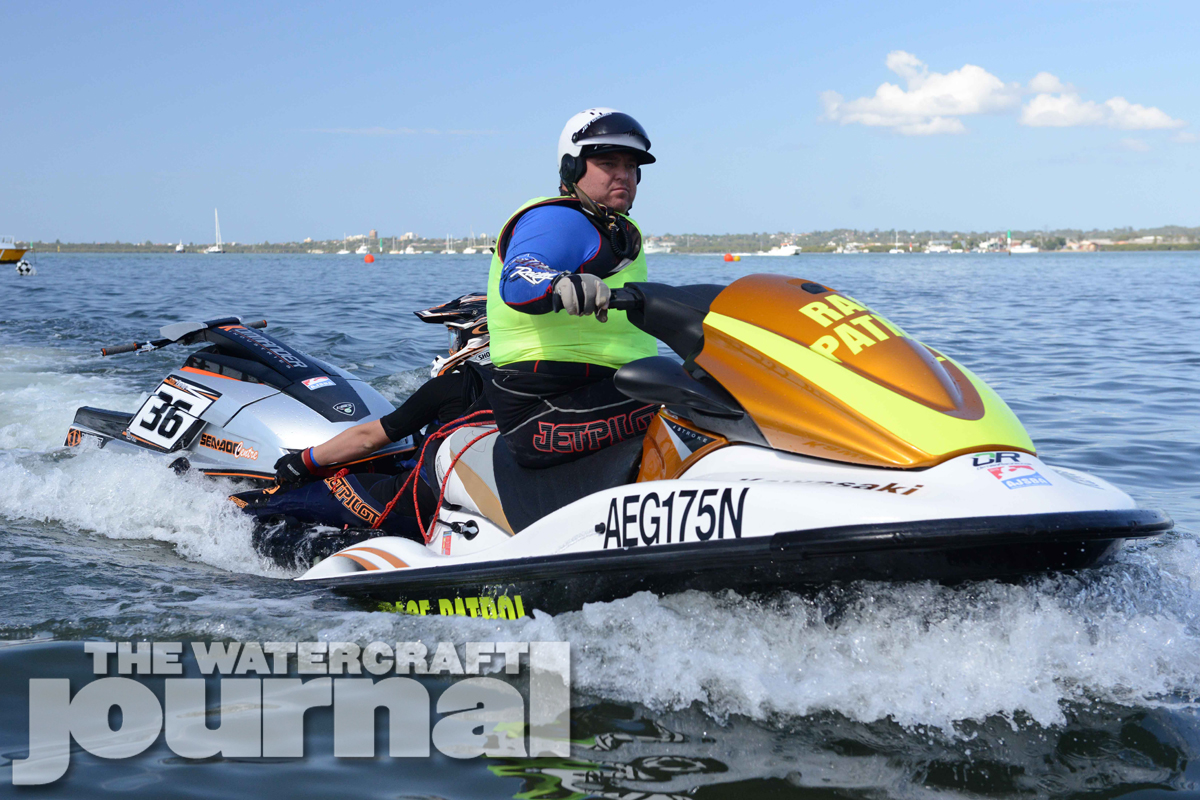
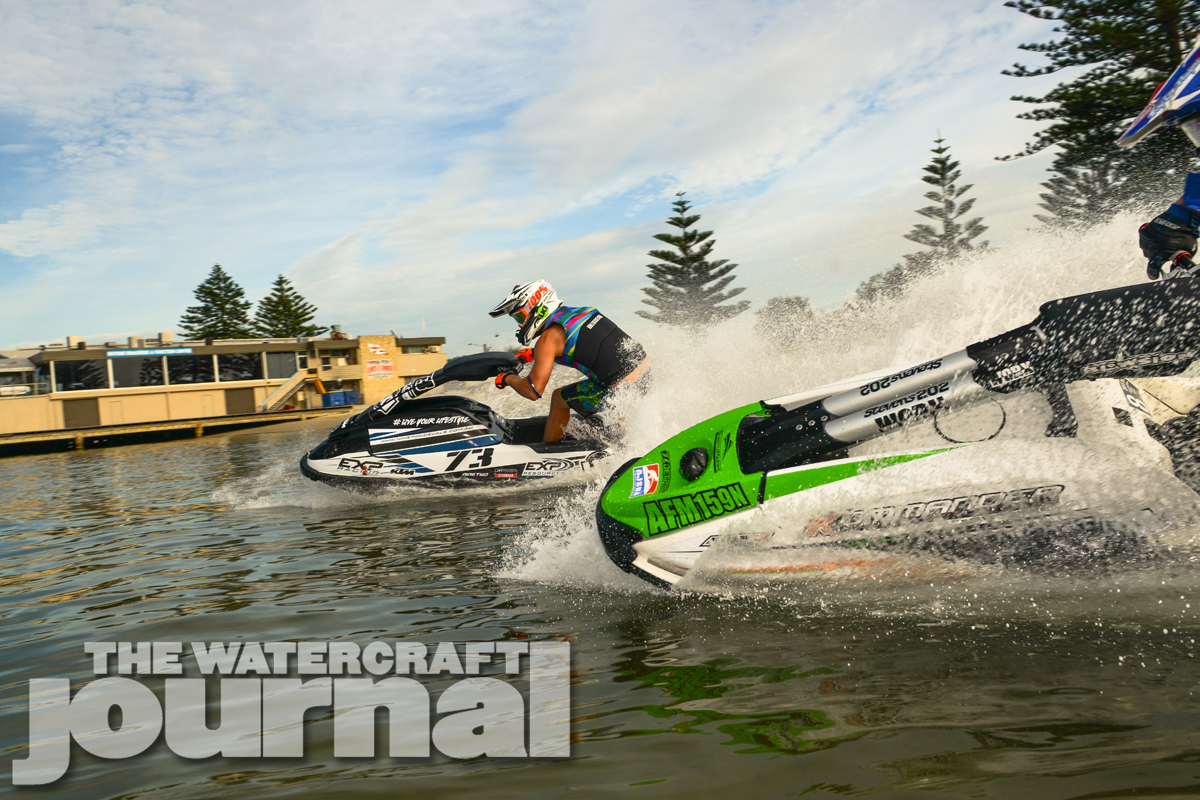
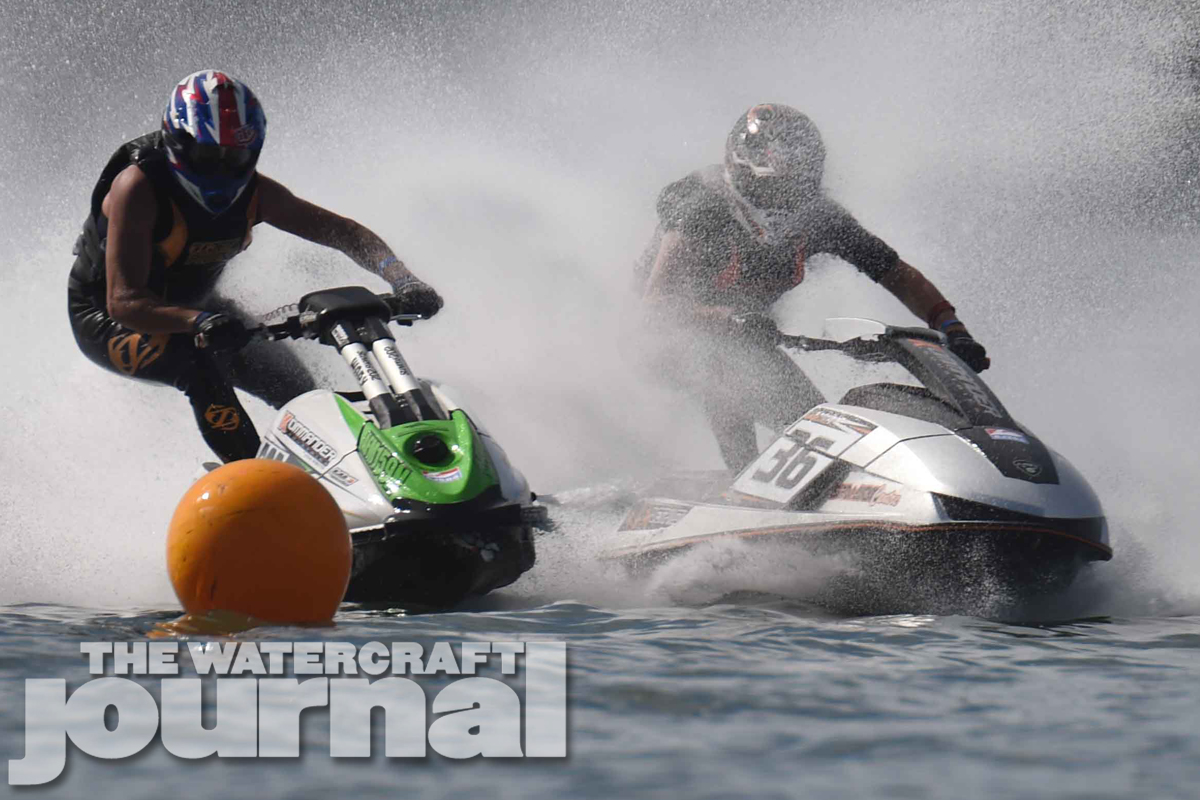
Open ski and Lites where put together as they were a bit short on numbers. It was #36 Jake Barker’s Open Hydrospace the ski to beat after taking out the last round in Perth. That ski is fast and he can throw it around as good as anyone. Michael Stevens’ #202 Kawasaki triple kept Braker on his toes. One slip up and the ever-consistent Stevens would have been all over him. Unfortunately for Jake in Sunday’s Round 4, Jake had ski issues that plagued him all day giving Mick the chance he needed to get ahead of that quicker ski. Mick Stevens went ahead take out Round 4, after Jake dominating Round 3.
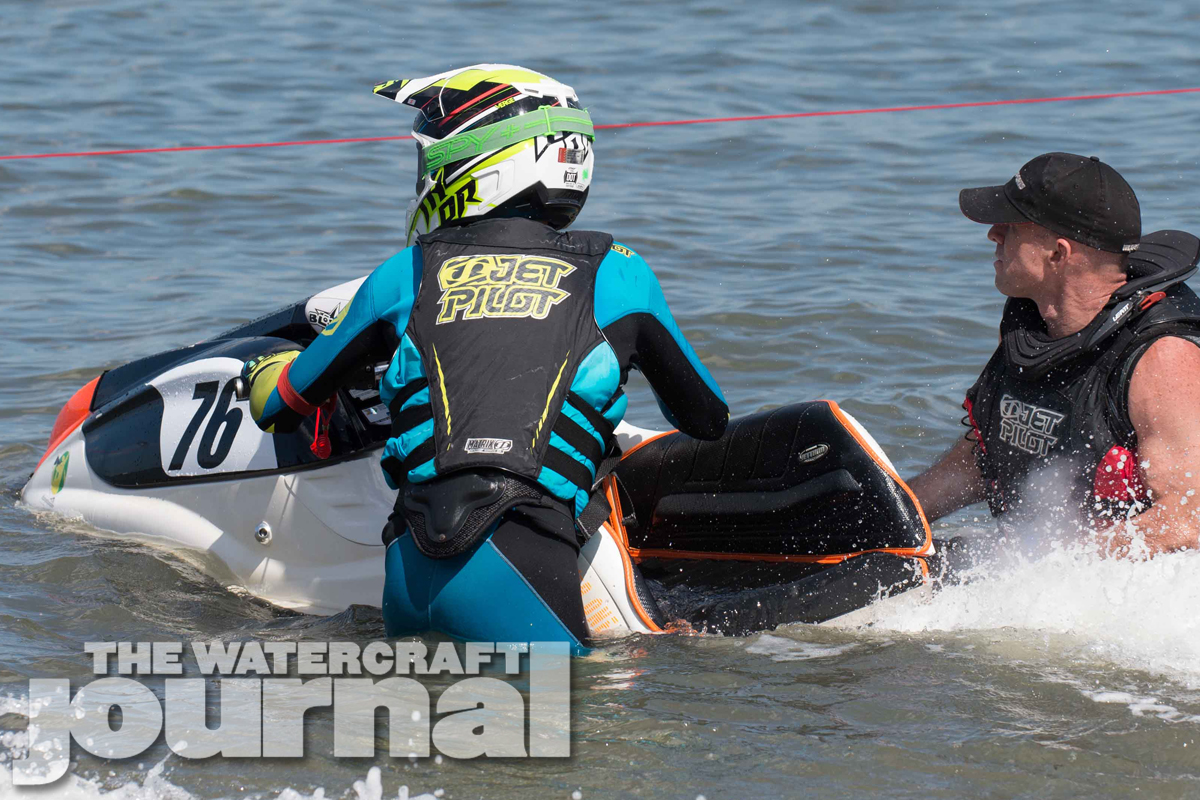
Young gun and good egg #76 Tommy Aiken was the one out in front in Lites Ski after his unique starting technique and all around ability led him to the win in both rounds.
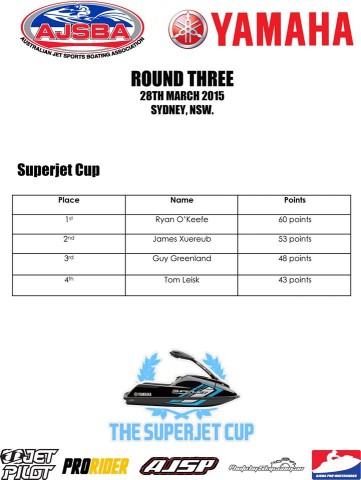
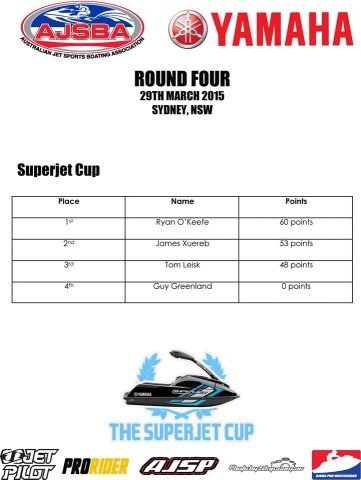
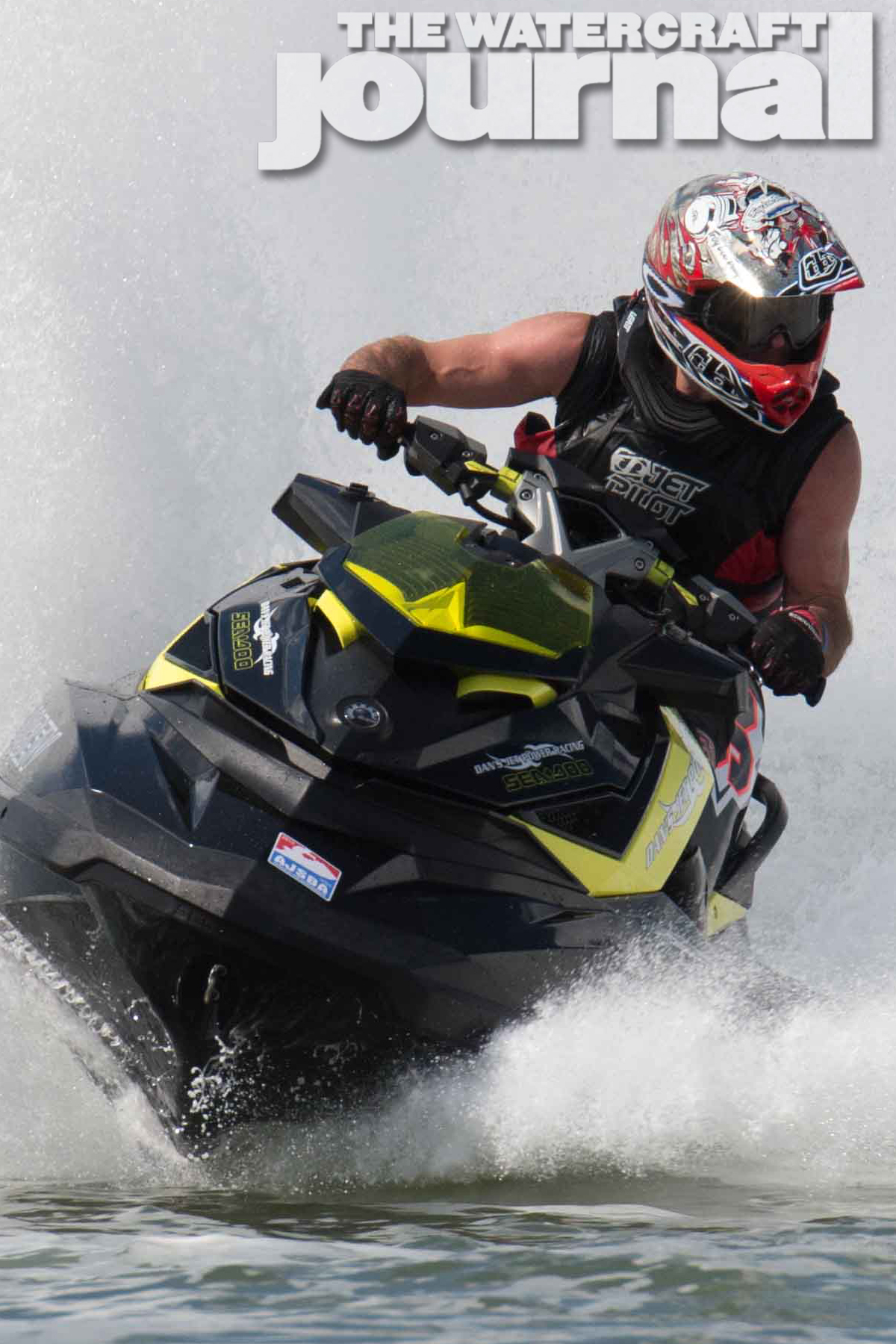
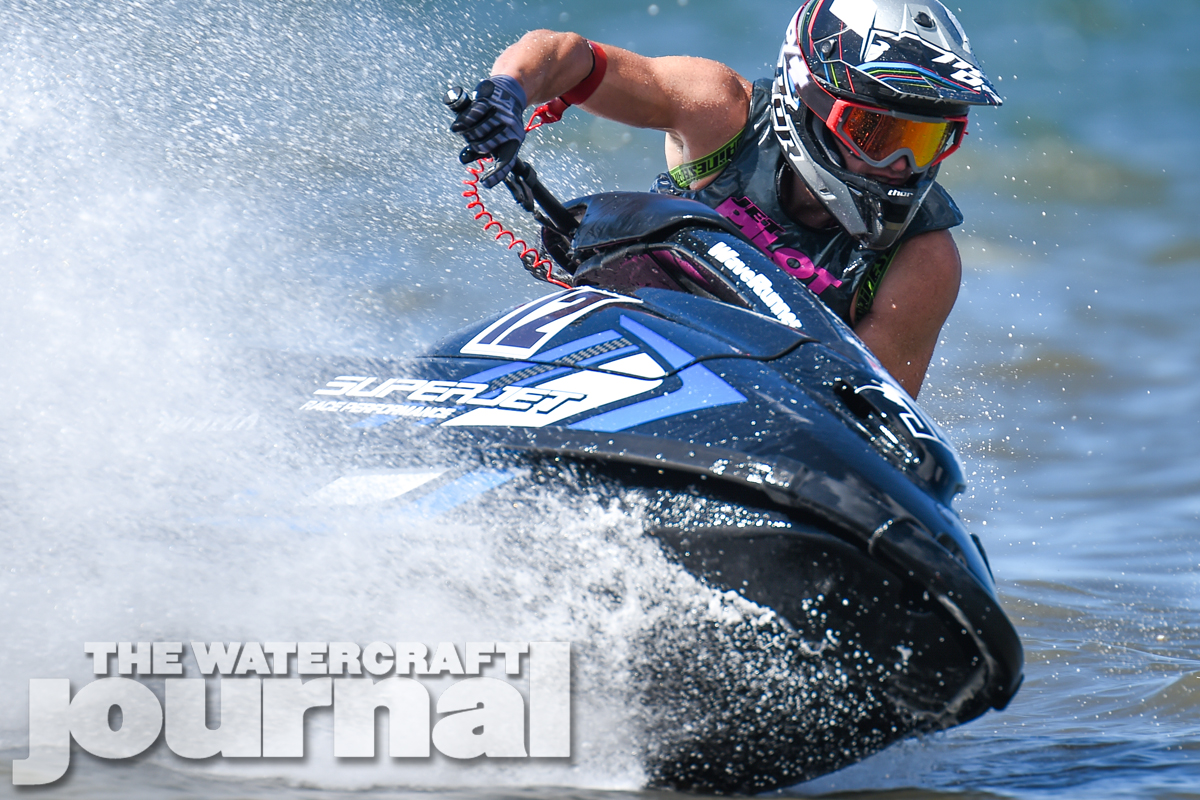
The new format of the Superjet Cup was some close racing. World Veteran Champion #45 James “X-man” Xuereb and clean sweep winner in Perth #12 Ryan O’Keefe who rides at Sea World on the Gold Coast, had a great battle on the large track. (Personally, I think too large. Keep it close and keep it exiting.) But all that riding Ryan puts in everyday must help, and ended up being two rounds closer to a brand new SuperJet thanks to Yamaha Australia.
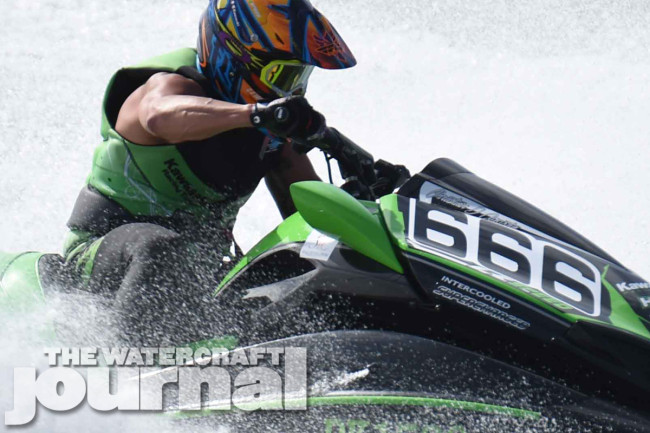
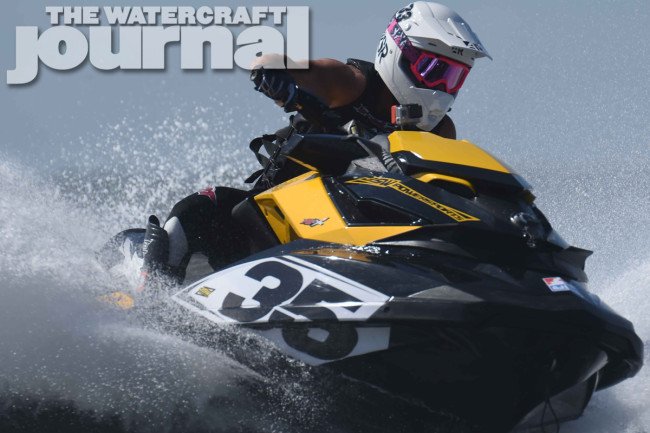
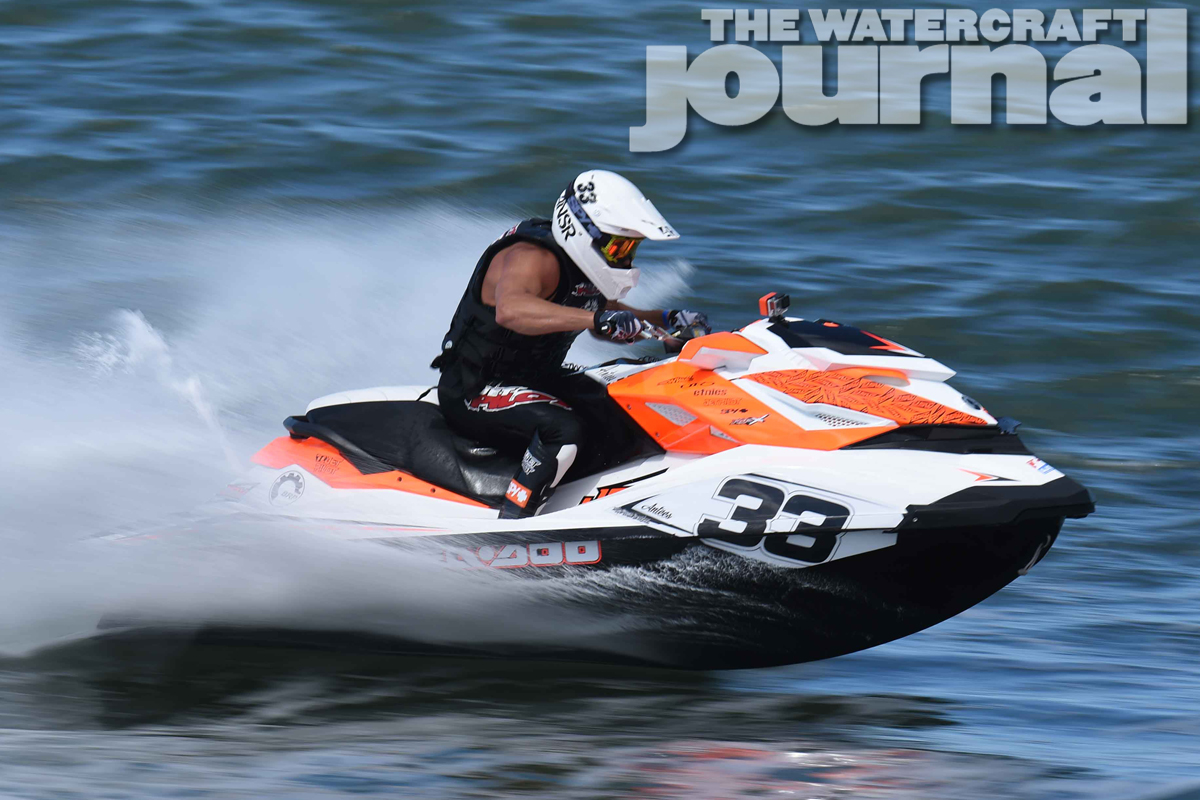
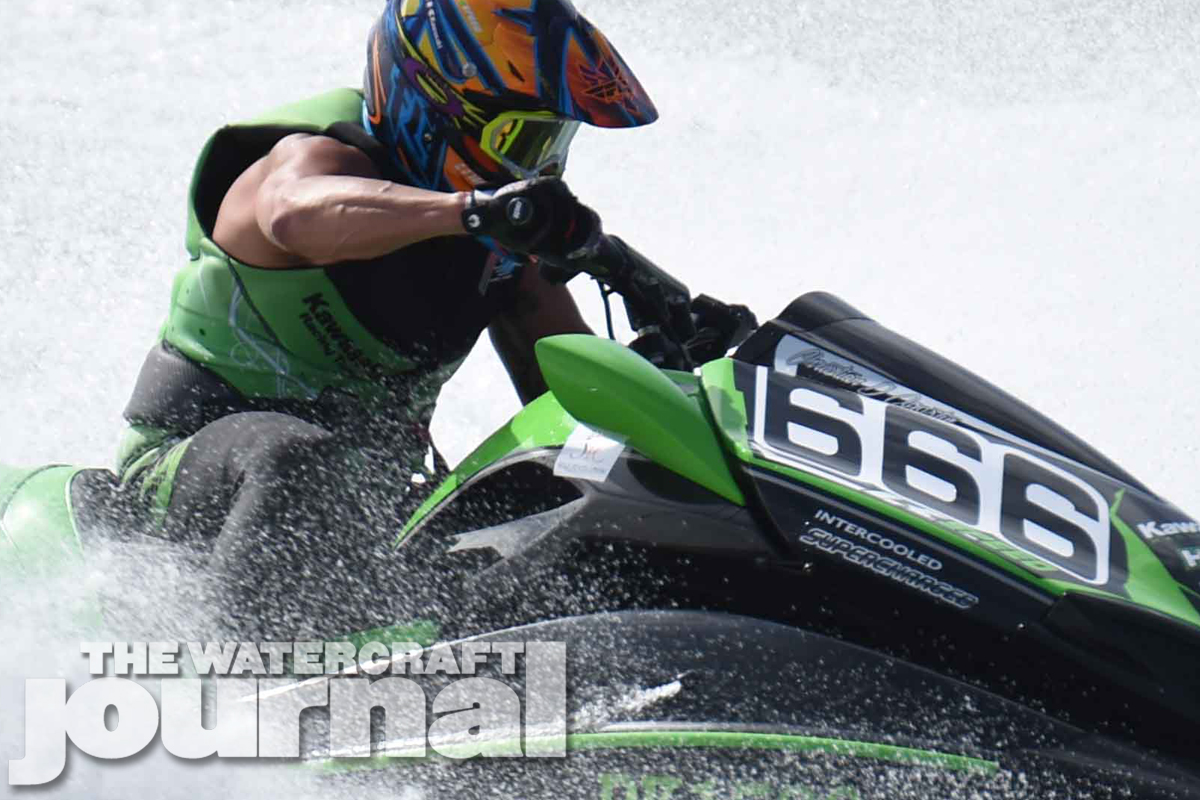
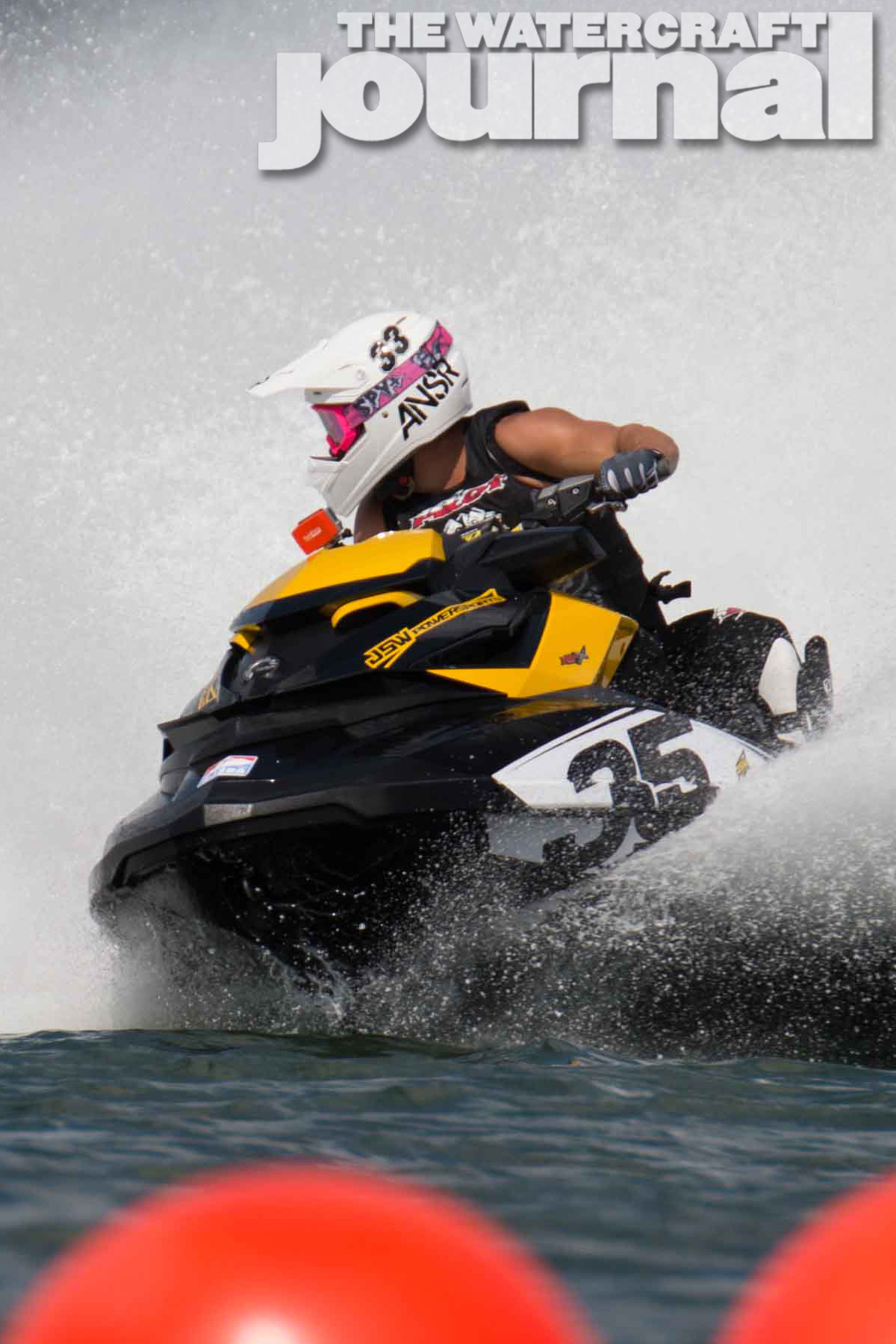
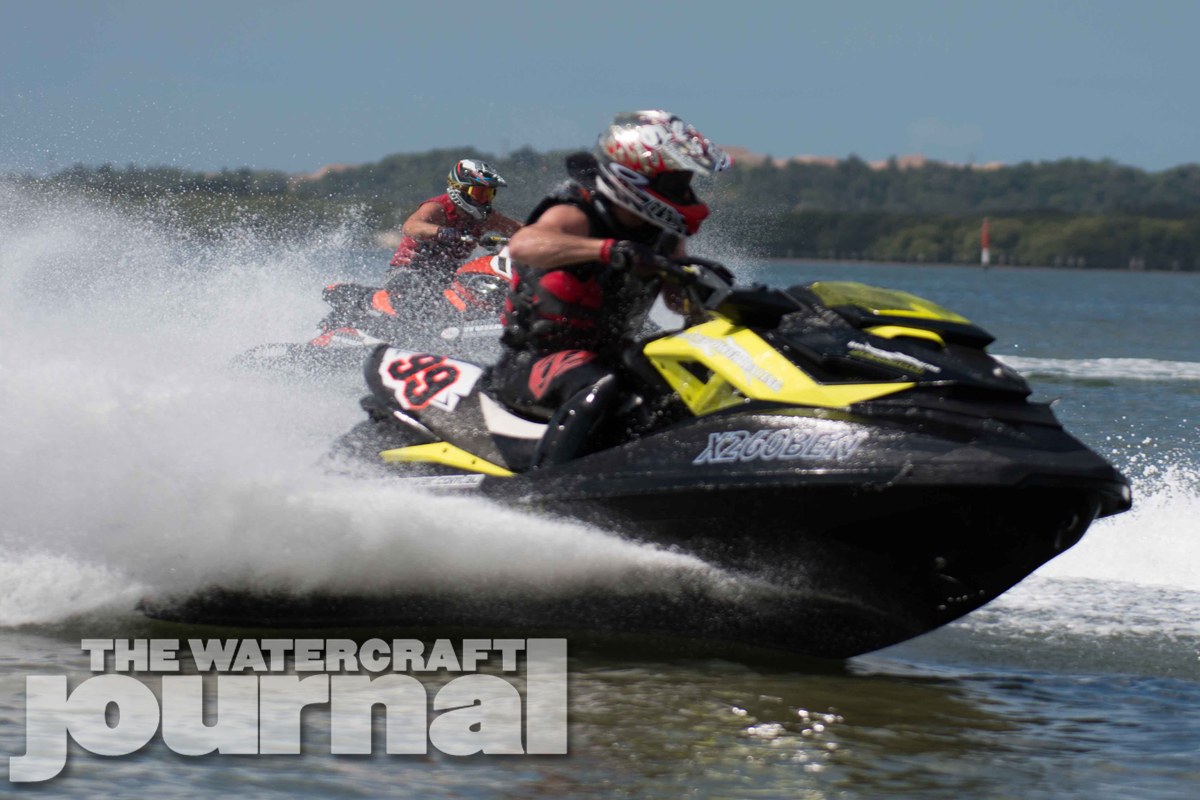
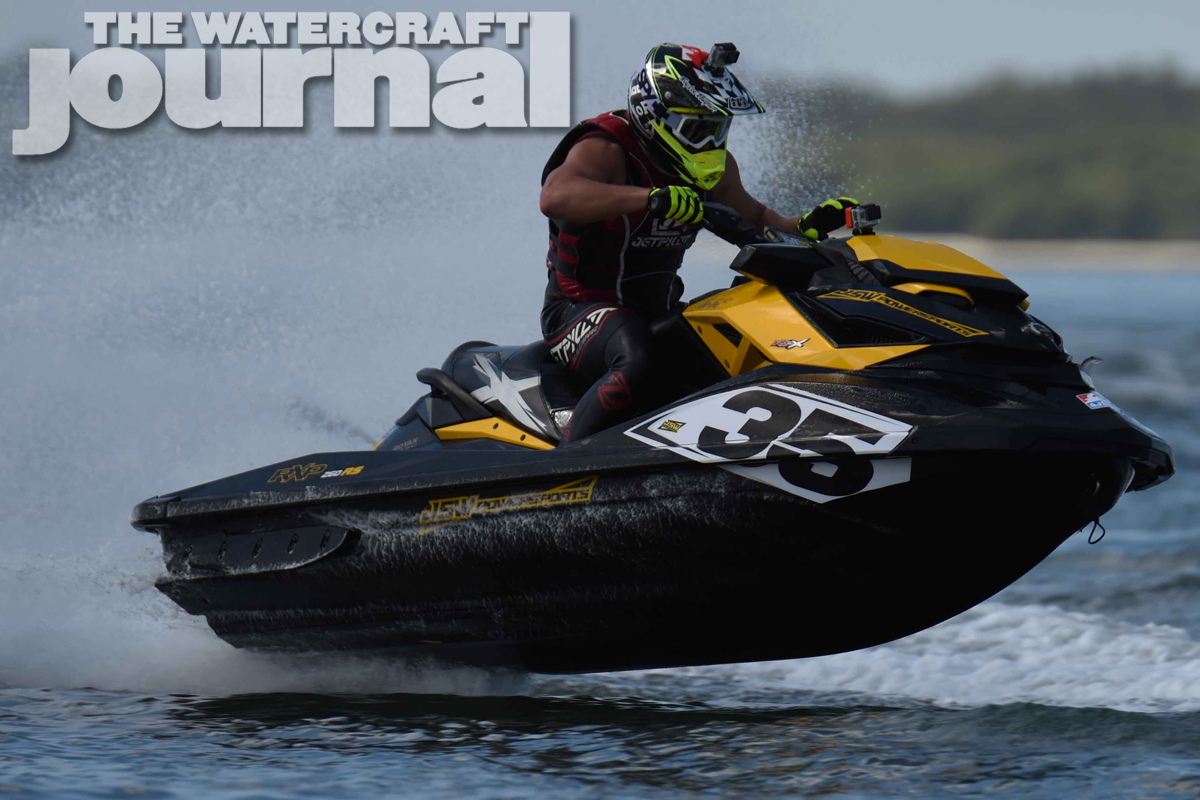
In Open Runabout, even with the combined talents of #1 James Masterton, #43 Matt Brunt and #666 Christian D’Agostin none could keep up with the #33 RXP-X of Anthony Antees. That orange JSW Powersports ski is amazing. It was also good to see #99 Paul Leven giving his Sea-Doo a hiding. That thing has a lot of potential.
As always with highly-tuned machines, they’re very temperamental. Almost all the Open boats had issues, so a lot of standby skis were filling the spots. Nevertheless, Antees was still the man to beat with Masterton a close second. Guy Greenland and Paul Leven also took a podium on the weekend.
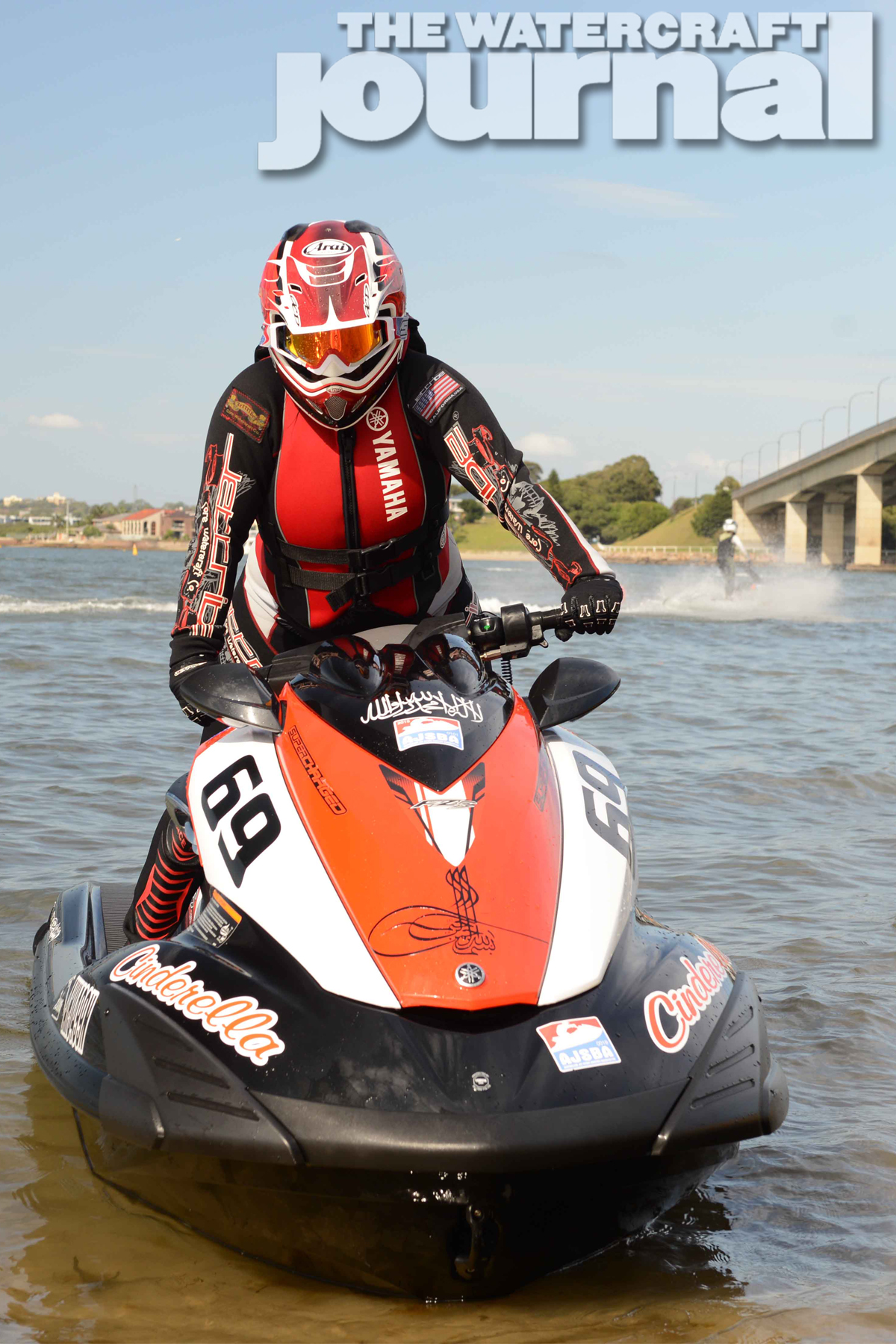
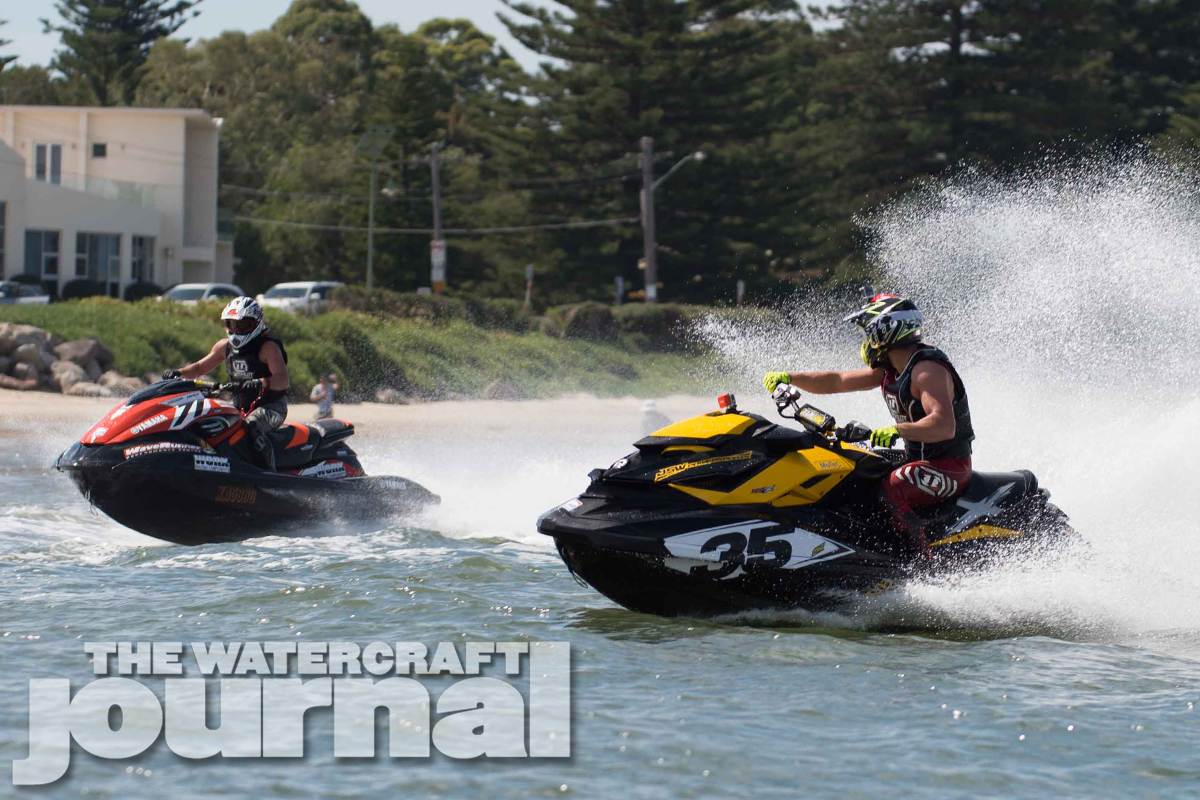
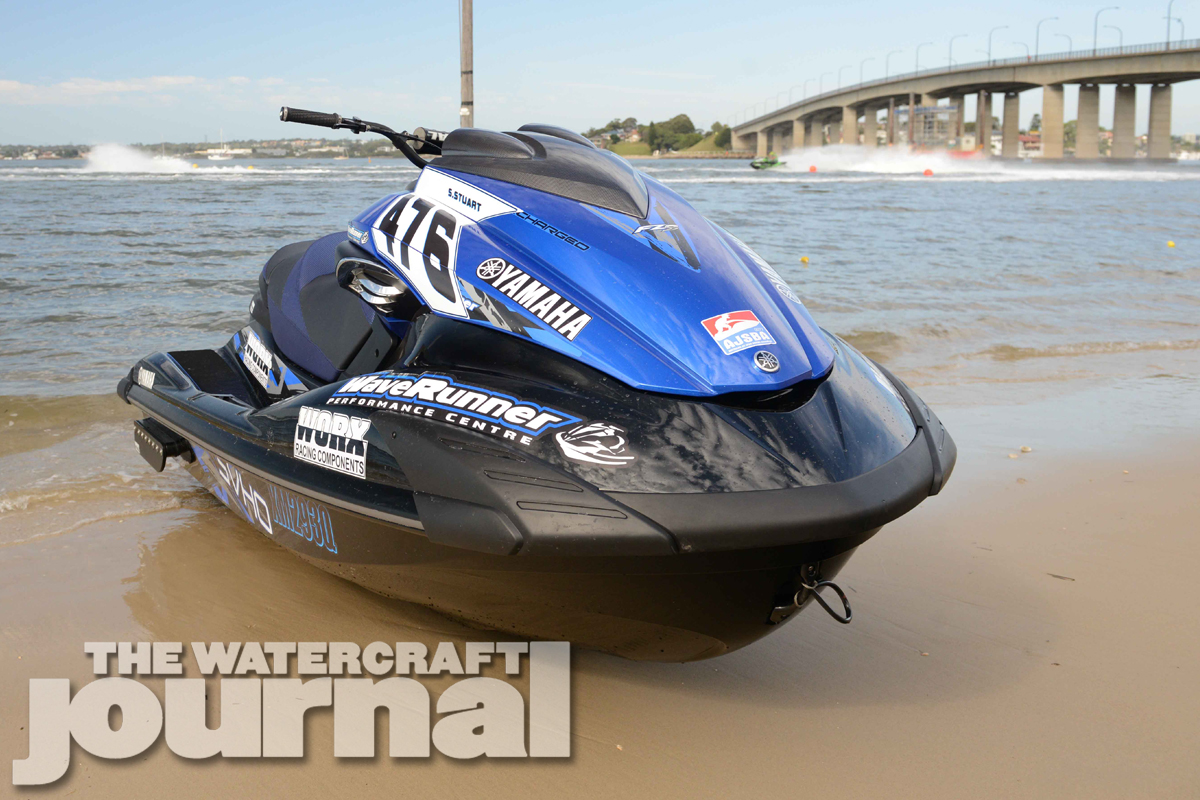
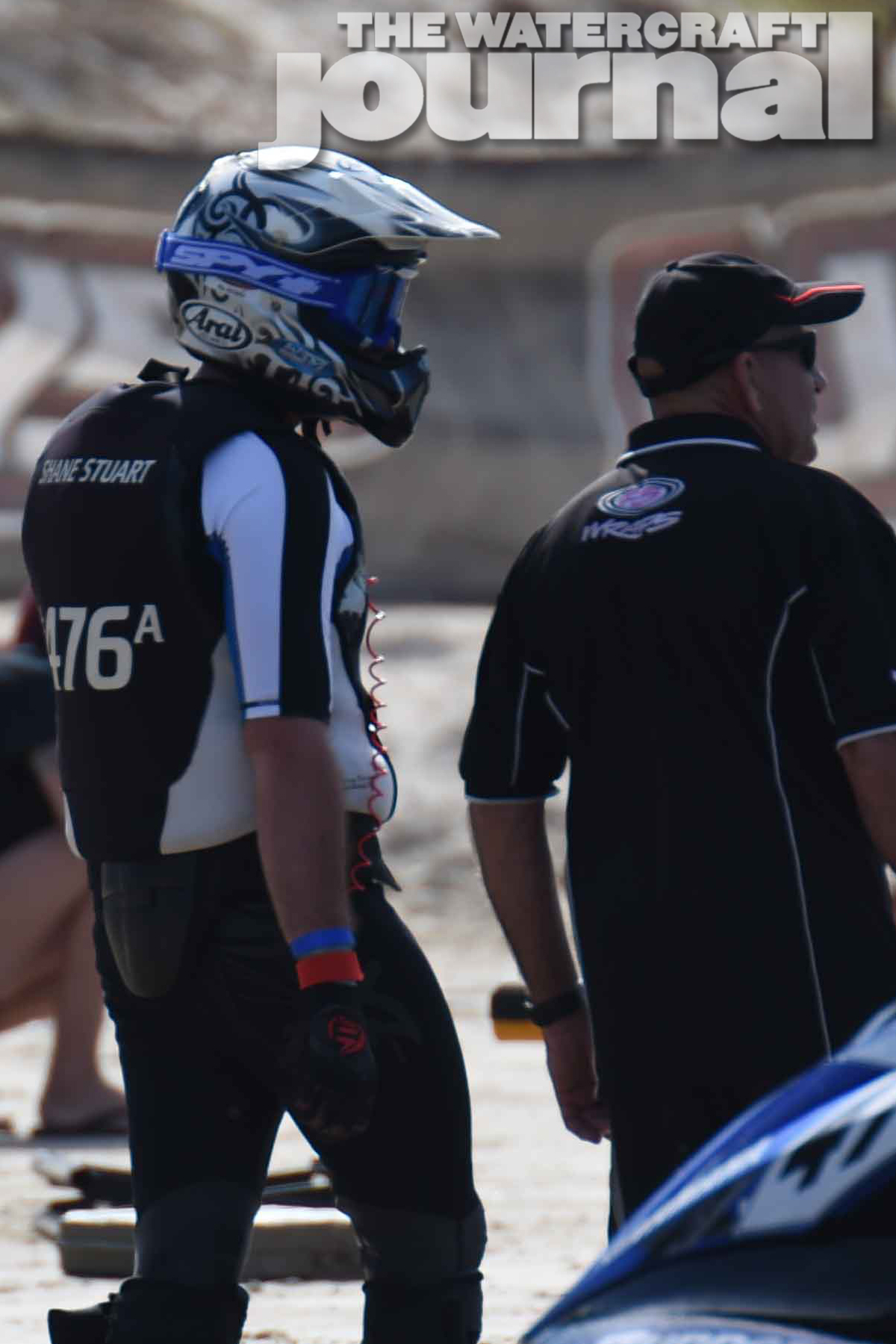
Stock Runabout was one of the biggest classes and Mitch Wayt, the winner of the Enduro also took out the class for the weekend. Frank Waite #35 also from JSW Powersports, was having a great weekend getting to the podium on both days. The AJSBA President and new Worx Racing products employe had an awesome weekend, making the podium also. That help from the boss paid off. And not to be outdone, #476 Shane Stuart – who recently changed from Sea-Doo to Yamaha – had a great day taking second on the only round he could attend.
So there’s two more stops to go until the 2015 Australian champs are named. Good luck guys and girls, see you next time.
Alright, there’s been a lot of hullabaloo about the turning of the seasons, but what is more important is that its the beginning of jet ski racing season! Already the Florida crew at P1 AquaX are readying for their first round in Daytona Beach, and now the West Coast is ready to rock with the first two rounds of the “Best of The West” Series happening in Lake Havasu this coming April 11th and 12th.
What makes this race particularly special is it’s new title, in addition to being known as the 2nd Annual Jettribe Lake Havasu Open Of Watercross will also be known as the annual Gary Hart Memorial Race. And as a final last minute reminder: Friday, April 3rd is the pre-registration deadline! All entries received after Sunday will be charged the late fee! Please email or fax your entries in to avoid the late fees.
Below is the original release:
“Best Of The West Series” Rounds 1 & 2 The 2nd Annual Jettribe Lake Havasu Open Of Watercross Gary Hart Memorial Race
Presented By Sea-Doo, Hydro-Turf, Bomber Eyewear, Jet Re-Nu, C57 Racing Products, Skat Trak, Oakley, Kawasaki, Pro Watercraftracing, Watercraft Rider, IPD Graphics, Pro Rider Magazine & The Watercraft Journal
Lake Havasu State Park, Windsor 4 Beach, Arizona
April 11 & 12
March, 2015 Redondo Beach, CA – Championship PWC racing returns to Lake Havasu in April! The 2nd annual IJSBA sanctioned event will see some of the best PWC racers from the Western United States and Canada show up to begin their points chase for the 2015 Jettribe “Best of the West” Series Championship Tour. This years event will be held in conjunction with the Havasu Boat Show. The action on and off the water is going to be intense with all riders vying for victory in their class.
In addition, supporting sponsor Sea-Doo has posted an impressive contingency program for the racers with the Sea Doo Bounty. Fans will be treated to two days of closed course (short track) racing on a tight multi turn race course. 16 plus classes of PWC’s will be featured including the Pro Ski GP, Pro Runabouts, Vintage 550 & 650 classes and up and coming stars of the sport in the Junior classes as well as the ever popular Freestyle competition.
“Lake Havasu is one of the best locations for PWC racing in the world” according to event promoter Ross Wallach or RPM Racing Enterprises. Wallach added “I am thrilled to be able to bring this event back again to Lake Havasu with it’s concentrated pool of talented racers living within it’s city, the racing should be outstanding!” Great weather and a great location make Lake Havasu a prime spot to hold a high caliber event such as this.
This year’s event will be remembered as the “Gary Hart Memorial” race, named for the legendary owner of Jettrim and supporter of PWC racing. Sadly, Gary succumbed late last year but his memory forever will live on within the sport that he gave so much to.
The Lake Havasu Open of Watercross event is great opportunity for the fans to get up close and personal with all the racers. Like the IJSBA World Finals in October, it is going to be an event not to be missed, so make your plans today to be a part of the all the action at Lake Havasu State Park at Windsor 4 Beach.
For more information please contact RPM Racing – (310) 318-4012
Email [email protected] or visit our website www.rpmracingent.com
Jettribe Lake Havasu Open Of Watercross Schedule Of Events
Saturday April 11th, 2015 – Schedule of Events – Round 1
6:45 am – 8:00 am Technical Inspection & Rider Check In/Late Registration
8:00 am – 8:30 am Mandatory Riders Meeting- Pits
8:30 am – 10:00 am Closed Course Practice
10:00 am – 12:45 pm Closed Course Qualifying
12:45 pm – 1:30 pm Freestyle
1:30 pm – 5:00 pm Closed Course Finals
Sunday April 12th, 2015 – Schedule of Events – Round 2
7:15 am – 8:00 am Late Registratino/Technical Inspection & Rider Check In
8:00 am – 8:30 am Mandatory Riders Meeting
8:30 am – 10:00 am Closed Course Practice
10:00 am -12:45 pm Closed Course Qualifying
12:45 pm – 1:30 pm Freestyle
1:30 pm – end Closed Course Finals
5:00 pm Awards Ceremony
The Duel Tracked Vehicle (DTV) Shredder itself is an outrageous looking machine. It is part tank, skateboard, and motocross bike. The DTV has two aggressive tank-treads, skateboard deck, and a powerful 4-stroke 196cc engine, which make it capable of traveling through sand, snow, trails, and even mountainsides at high speed, according to the BPG Werks website.
“The Shredder in stock form is very impressive. It has a lot of power and made it up every hill and every type of terrain we threw at it. We got really good at drifting and doing wheelies. [We were] even able to jump into the foam pit doing Supermans and no-footed can-cans off a 7′ tall ramp,” Zack Bright writes about how the idea of backflipping the Shredder came to fruition on the forum located at powerboardfanatics.com.
Bright, a professional stand up freerider for 5 years, considers freeriding 50-percent motocross and 50-percent surfing, knew he could make the backflip happen. He, “Streetbike Tommy,” and Ben Gulak have been friends for years, and Tommy is heavily involved with the Shredder. He is responsible for introducing it to the Nitro Circus Crew who was unsuccessful at pulling off the backflip.
Bright, Tommy, and Mark Gomez were at an event in Virginia and discussed attaining more exposure for the Shredder sport. They let the idea stew for a bit and then Bright got his opportunity to actually ride a DTV Shredder at a jet ski event in France. Later, he received an invitation to Pastrana Land. Tommy wanted him to come out and backflip that beast.
The guys arrived in Pastrana Land and were given a week to make the backflip happen. They spent the first four days just riding the Shredder in order to get a feel for it. The men were able to do wheelies, jumps, hill climb, and more with the standard model.
However, additional power was necessary to attempt a backflip so they got their hands on a Shredzilla, a 50 horsepower, 250-pound rotary-powered beast! When Bright was comfortable on that machine, he attempted a flip in the foam pit and nailed it. All three of the guys were flipping within an hour and even adding little tweaks to their maneuvers.
Shortly thereafter, Bright and crew were working on the ramp position and landing. Once they got the numbers hammered out, Bright was ready to leave the foam and hit the mulch. He launched and landed the backflip, which was phenomenal! Bright and his crew were totally stoked by making history and adding legitimacy to what they hope becomes a new extreme sport.
Something funny happened on the way to Spring. What could it have been? Well, since you asked nicely we’ll tell you: the combined readership of The Watercraft Journal over these past three months of 2015 (January, February and March) has eclipsed the peak summer months of 2014 (June, July, August) by literally thousands of new readers. Let’s repeat that: even though there’s still snow on the ground in some parts of the country, we’re bringing in more readers (new and old) than last summer – and we were still the most-read
This trending indicates quite clearly that The Watercraft Journal is poised for significant growth in readership throughout the prime riding season (April through September). This magazine’s audience, which reached over 150,000 unique views in its first year, is targeting a goal of 200,000-plus unique readers for 2015 – a number unmatched by any personal watercraft publication. And quite frankly, puts us so far ahead of our “competition” that it puts us in a category equal to some of the industry’s biggest forums
Why is this important to know? If you’re an advertiser or considering joining The Watercraft Journal’s growing family of supporting advertisers, you can rest assured that your investment will garner the single-greatest overall exposure to an audience of core personal watercraft enthusiasts than anywhere else. In today’s new media, readers want immediate content focused on their interests. General content magazines that publish a wide swathe of content simply are dying on the vine. PWC enthusiasts want a PWC magazine. End of story.
June, July and August 2014
January, February and March 2015
It’s a Consistency Thing
Inconsistency is equal to unreliability. If readers can’t count on you to produce fresh, entertaining and informative content each and every day, you’re sunk. That is why The Watercraft Journal excels. Not only do we publish the equivalent of a 100-plus-page print magazine each month, but also daily news from across the personal watercraft industry and promoting our supporting advertisers Monday through Friday. When you’ve never missed a single day in your two years of daily publishing, people have come to rely on you. And we don’t take that trust lightly.
News articles published in February: 17
Feature articles published in February: 19
Total feature word count: 12,350 words
News articles published in March: 28
Feature articles published in March: 12
Total feature word count: 11,650 words*
*When this number is translated to print publication standards equals a 108-page magazine. Please note that this number does not include an average of two uniquely-written news articles published daily.
It’s Not Just About Being Popular
Other PWC magazines have done a great job marketing their product, with nearly double the Facebook presence. Others have us beat on branding, getting their stickers everywhere and T-shirts on everybody. So why don’t they have more readers? It’s all about the content. The Watercraft Journal employs a dozen-plus years of publishing experience, decades of niche marketing know-how and applies of the latest social marketing and new media tactics to develop the best, most interest-specific content available today.
February
Total number unique readers: 14,834*
Total number of articles read: 34,372
Percentage of new readers: 64.6%
March
Total number unique readers: 19,134*
Total number of articles read: 45,044
Percentage of new readers: 62.1%
*This number is considered equal to an individual sale of a single copy of a magazine.
We’re Everywhere You Are
Chances are, you’ve either visited our Facebook page, liked one of our posts or shared one of our daily pictures. We love our social media friends, and are the first to thank those who follow us, share and like our posts and leave comments on our Facebook, Twitter, Instagram, YouTube, and weekly newsletters. Without all of you, we wouldn’t be where we are today – the single-most popular personal watercraft magazine in the United States of America, and soon to be all of the industry worldwide.
March Facebook readers: 12,687
March Facebook weekly reach: 10,078
Top Five countries: United States, Australia, Canada, France, United Kingdom
Full Throttle Into Riding Season
There’s no time to waste! As the winter has finally given way to spring and summer, and temperatures are finally rising, personal watercraft enthusiasts across the northern hemisphere are getting their skis ready and planning their weekends. If you’re looking to get your company in front of more eyes than any (and we mean any) other PWC magazine, The Watercraft Journal is the resource you’re looking for.
In late 2013, Kawasaki Heavy Industries, Ltd. set the motorcycle world on fire with the unexpected unveiling of an all-new and centrifugally-supercharged 998cc inline 4-cylinder at the 2013 Tokyo Motor Show. Although reminiscent of the larger 1,498cc (1.5 liter) DOHC 4-cylinder four-stroke found in current Ultra 310X model JetSkis, the new motor was revealed later through a dynamic campaign as the future powerplant for the soon-to-be-released track-only H2R superbike.
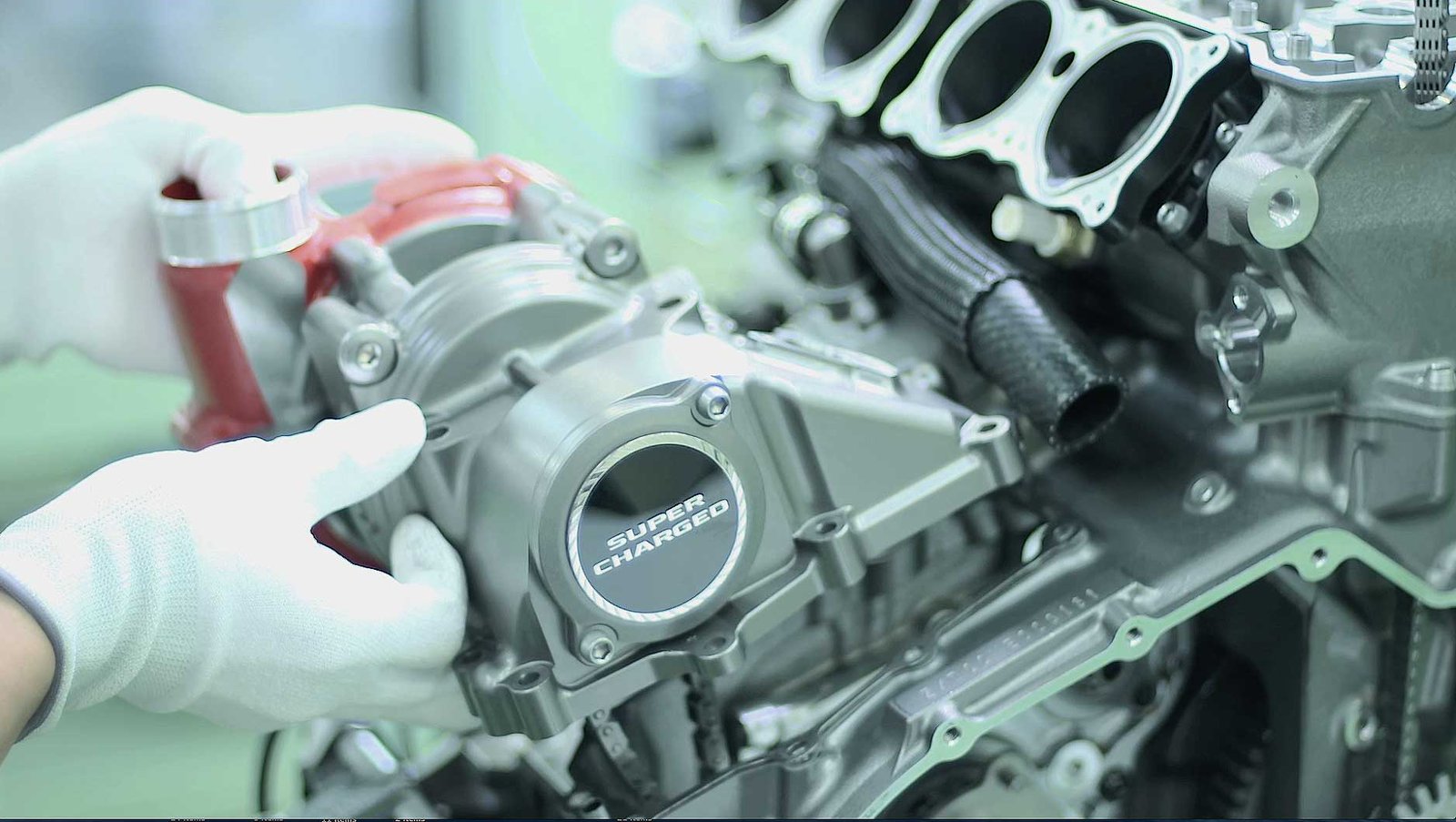
The announcement of the H2R engine’s production of a world-leading 300 horsepower shook the powersports industry. Tipping the scales at just over 100-pounds, the compact, lightweight 4-stroke powerplant features a four-valve, dual overhead cam (DOHC) cylinder head force-fed by a dog-shifted two-speed, gear-and-shaft driven centrifugal supercharger (designed with assistance from the KHI Gas Turbine & Machinery Company, Aerospace Company, and Corporate Technology Division).
Until now, this engine was only available in the Ninja H2R and more recently in the slightly tamer street version, the H2 (producing a 197-horsepower via mildly boosted at 5 psi (34 kPa), versus the 20.5 psi of the H2R). Only in the past two weeks have dealerships started receiving units, making the announcement that Kawasaki Heavy Industries, Ltd. has introduced two marine-approved applications of the 1-liter H2 engine through its Gasoline Engine/Power Products division so surprising.
The Watercraft Journal reached Usagi Yojimbo in the Kawasaki Heavy Industries, Ltd. Chūō-ku, Kobe headquarters, who explained, “Kawasaki recognized the potential of the [H2] engine in a variety of applications during its development. In wanting to secure its leadership role in all divisions of motorsport, Kawasaki arranged for two marine applications of the 998cc 4-cycle engine to be built. Both the motorcycle and marine engines share the same supercharger and many other components, with the exception of the head gasket, cam profile and timing, and exhaust system.”
“Both a 200-horsepower supercharged and normal aspirated [estimated to be rated at 160-horsepower – Ed.] version will be made available to select [custom jet ski] builders,” Usagi continued. When asked concerning eventual domestic (United States) availability of the two marine grade engines, Usagi responded, “We anticipate the program will be well received locally, thereby permitting a wider distribution in following years.”
Kawasaki has yet to officially release the names of the custom ski builders pre-approved to receive the H2 engines.
Because of the limited nature of the availability, word of this program had yet to go widespread. American and Australian custom hull builders – specifically, Krash Industries, Bullet Racing, WWR and Trinity Composites – have expressed public interest in the lightweight 4-stroke powerplant, but with the decision to provide only a select few Japanese boat builders with the opportunity to build custom standup jet skis with the new Kawasaki engine leaves them searching for alternatives.
Even the naturally-aspirated, 100-pound, 160-horsepower 4-stroke engine could – in The Watercraft Journal’s assessment – radically tip the scales for future Pro Ski Open and Pro Ski GP classes, as conventional triple-cylinders weigh more than the current motorcycle plant. And considering the recent IJSBA rule changes, it is also very likely that H2-powered skis would qualify for Pro Ski Stock classes.
Either way, unveiling such a program is a tremendous gamble on Kawasaki’s part, but we all know that the industry leader in over-the-top performance isn’t one to shy away from a challenge. There are still a lot of questions left unanswered and await further details on this groundbreaking program. For the original announcement and some additional information on the new Kawasaki H2 marine engine, click HERE.



 According to a video from New Zealand, to get started on this endeavor, one needs a reliable Jet Ski, bait station, stainless steel cable, and rod holders attached to the ski. The commentator used bungee cords to hold everything down. He had bait set up on top of his cooler for easy access. His landing net, gaff, and rods were attached with stainless steel clips and wire. He kept his reels protected from spray by using special covers when traveling in saltwater.