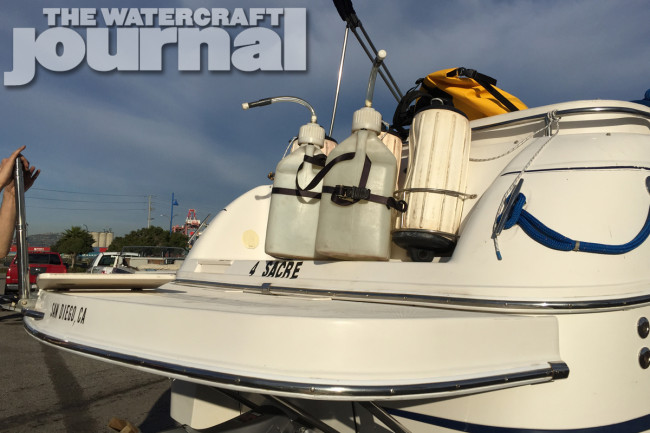
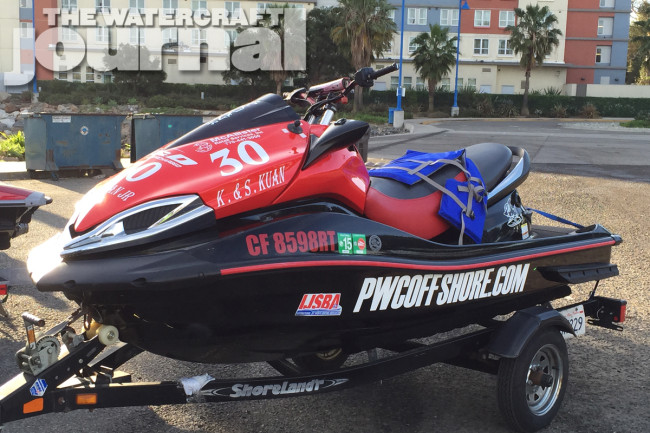
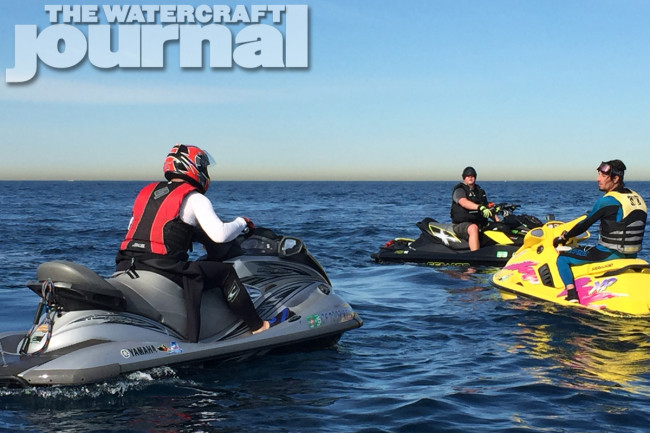
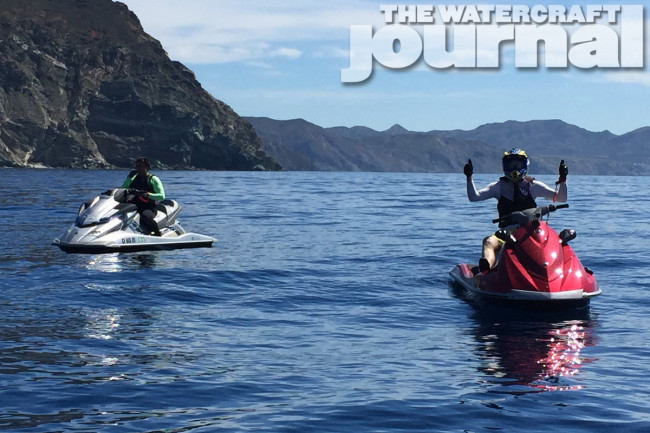
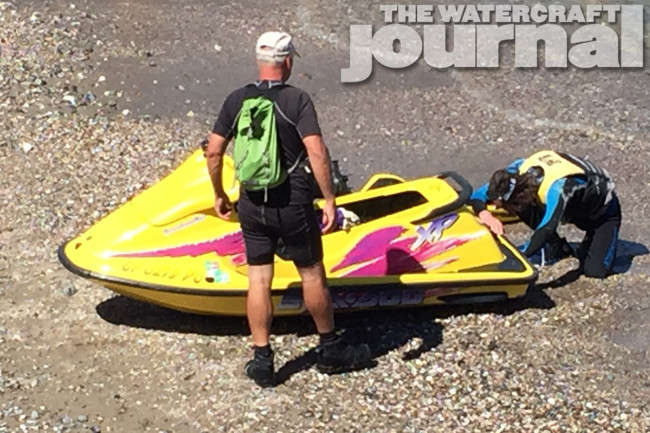
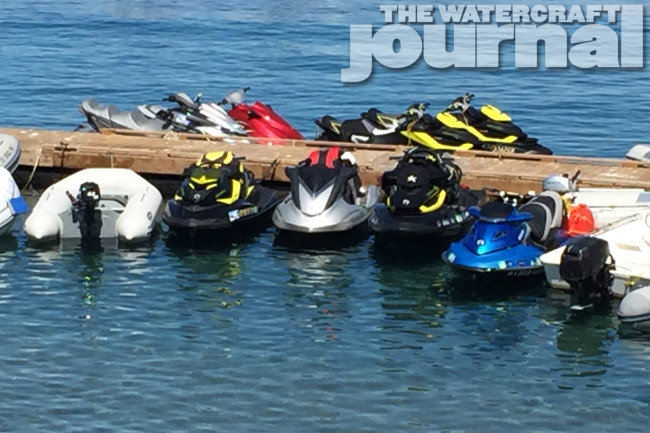
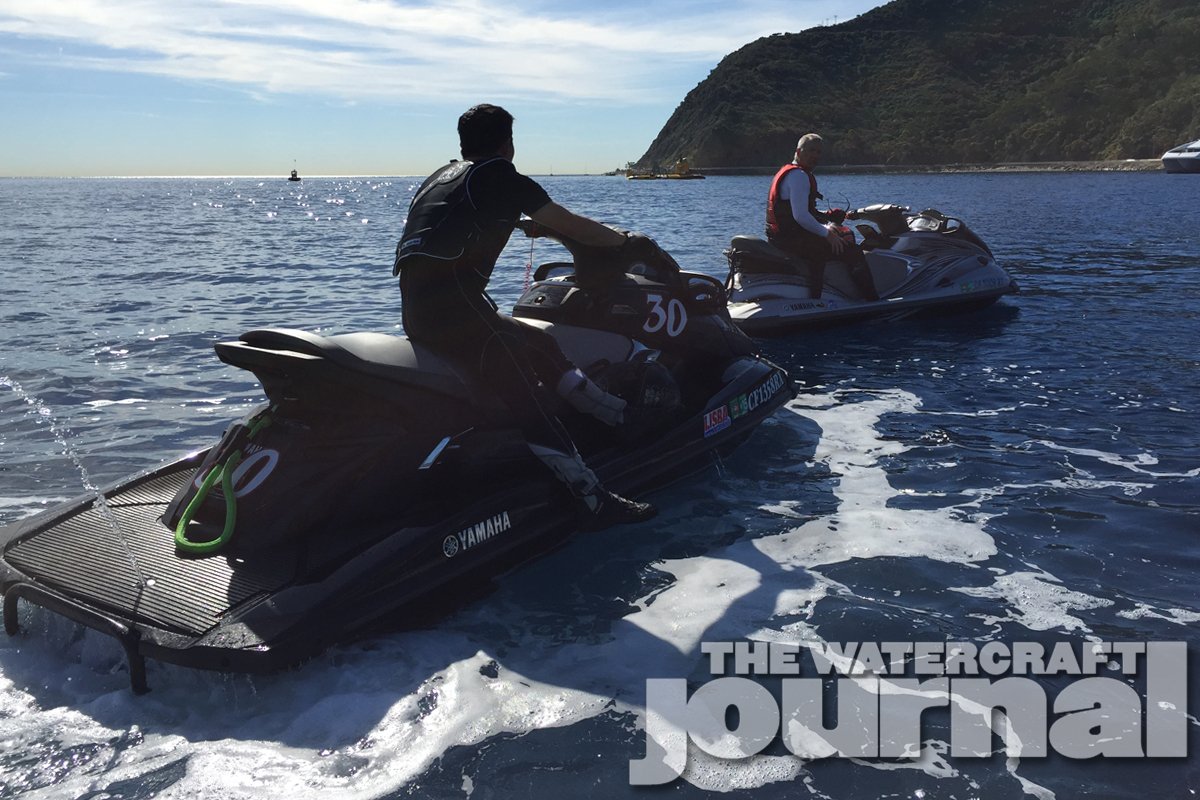
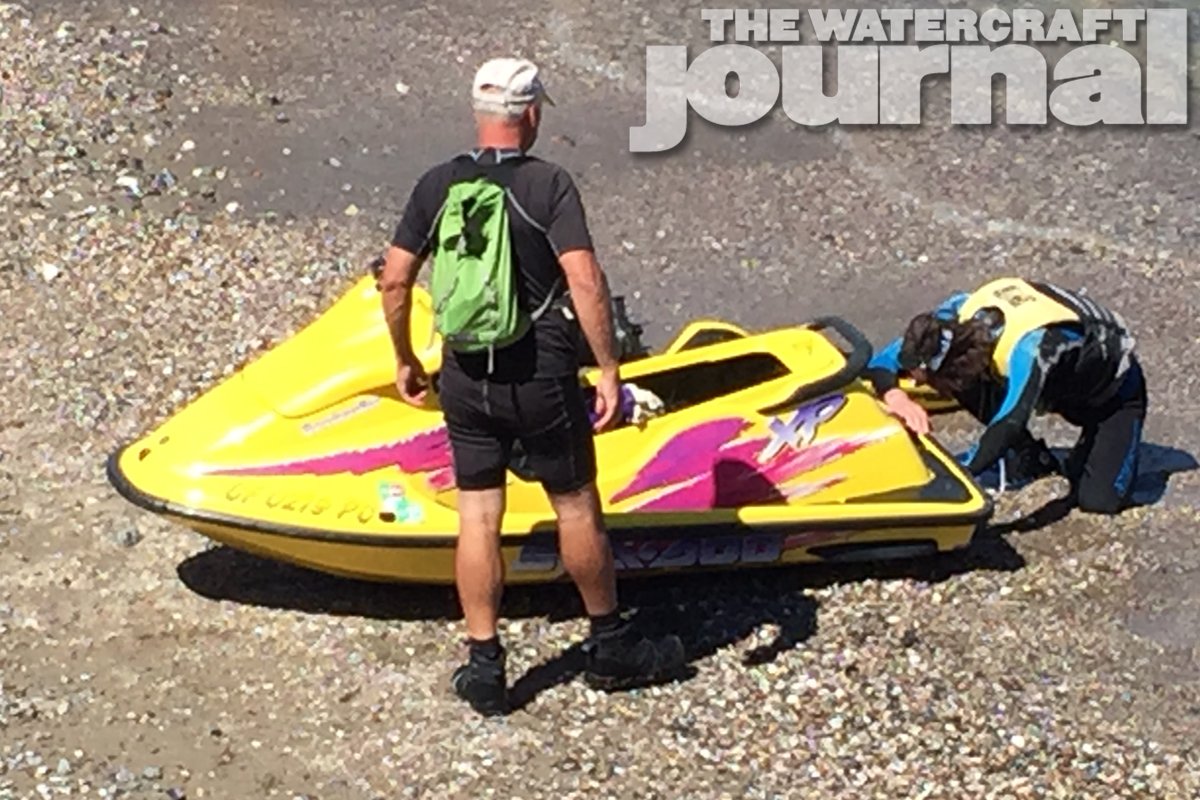
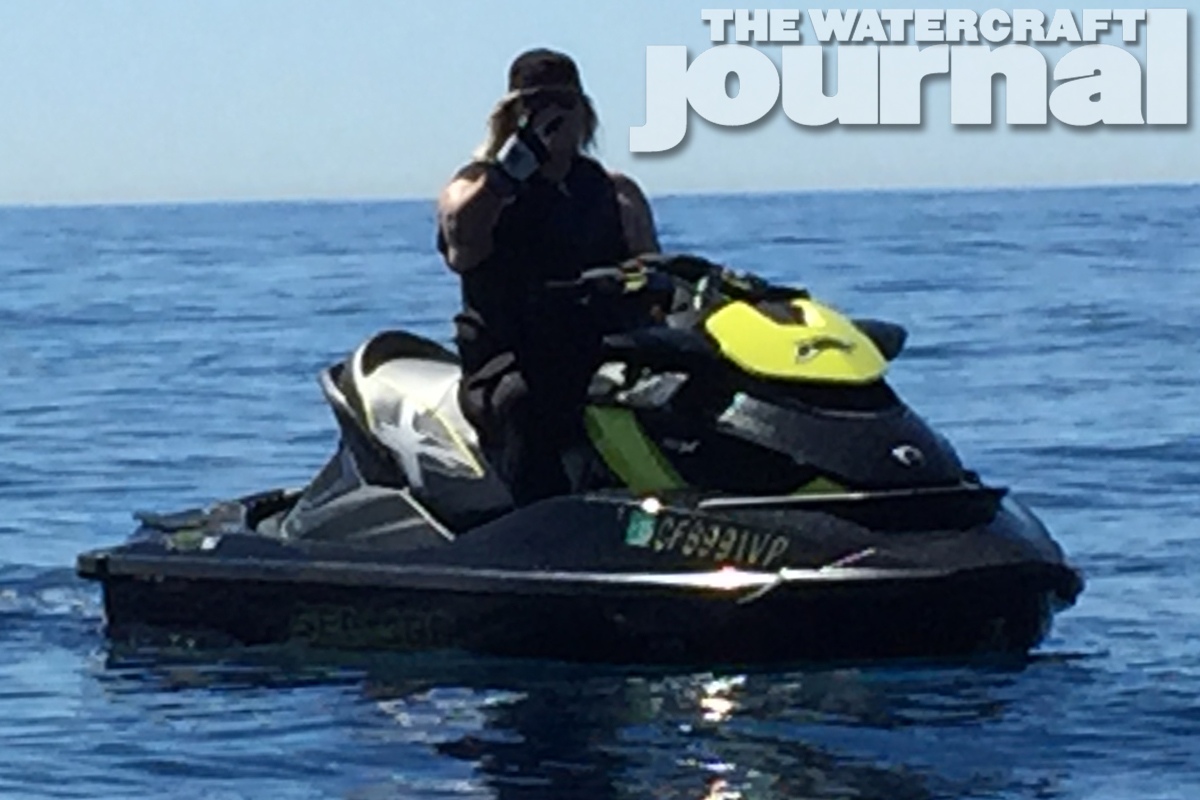
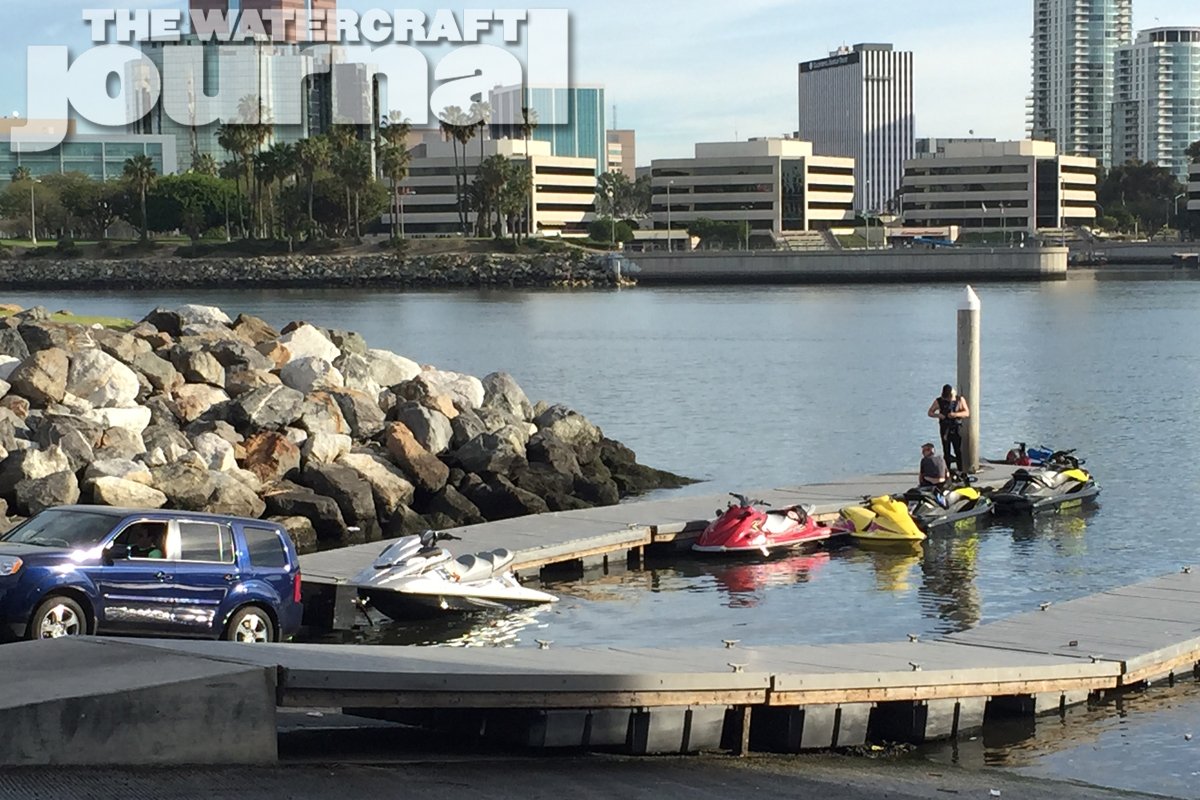
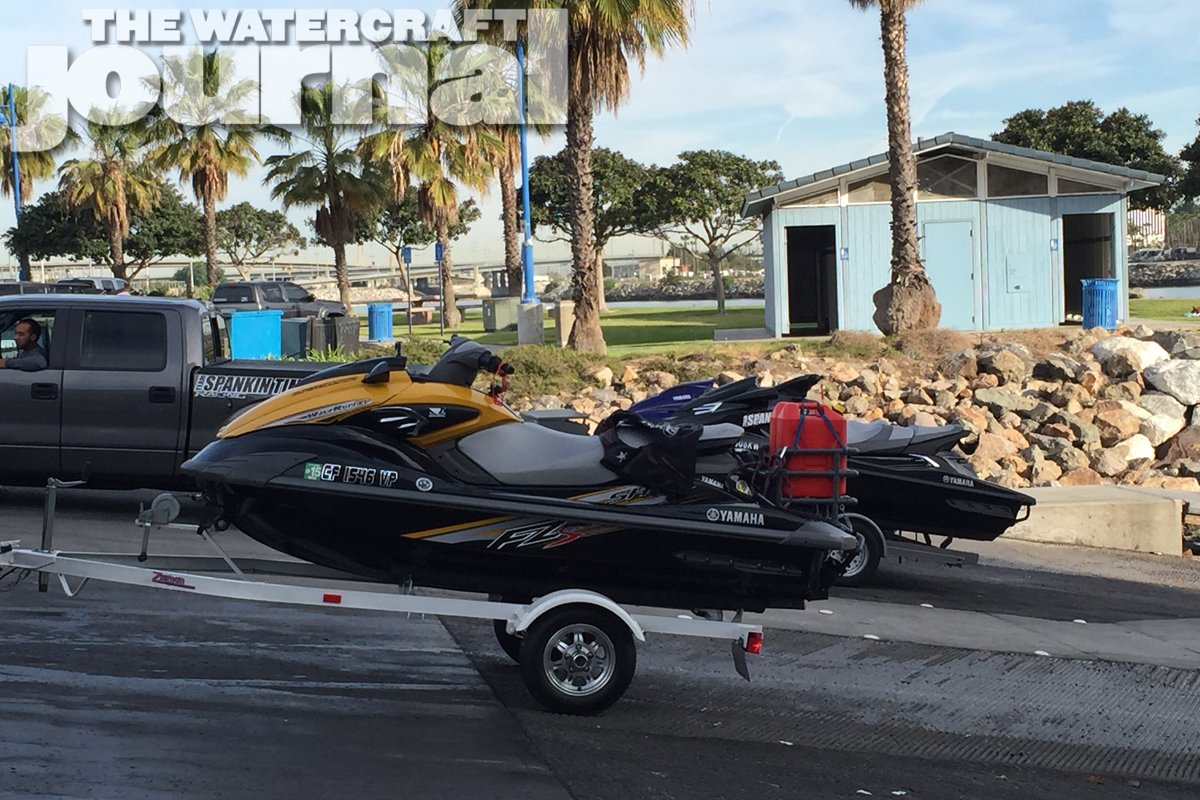
Jet skis have become a preferred method for the transport of illegal immigrants, drugs, and weapons from Mexico and into the United States of America. Personal watercraft are launched from Tijuana and then landed on the beaches from the border up to Point Loma.
According to a report by UT San Diego, some jet skis are stolen from San Diego rental companies and used for the nefarious purposes described above. The cargo is usually human. However, they’ve been known to move drugs or weapons, according to Coast Guard Captain John Spaner.
“It’s become a routine conveyance of organized crime. Because of that, and because 50 to me is a high number, I see that as a security threat,” said Spaner, the Coast Guard’s San Diego sector commander.
During fall of 2013, 50 smugglers on personal watercraft were apprehended over a course of three months. The Coast Guard, United States Border Patrol, and other federal agencies contributed to this number of captures. This figure dropped significantly in the fall of 2014. Only ten criminal transporters were caught and the Coast Guard claims that low number is due to increased vigilance.
“I think our system of sensors is very good, and we’re very good at detecting when this happens,” Spaner said.
The pressure along the border has caused a spike in the cost of transporting potential immigrants. The cost of illegal transports by non-law abiding Jet Ski drivers has increased exponentially. Undocumented immigrants are paying 40% more for a potential ride to the southern California Coast.
Law Enforcement Officers claim that migrants are paying thousands of dollars to cross the border by personal watercraft.
He went on to say that a person can rent a ski for a mere $500 deposit in San Diego. This makes it easy for smugglers to pull off their illegal actions. The ski can transport up to 2 people per trip at the cost of near $7000 per person. That is good money and gives smugglers incentive to continue.
Unfortunately, there is no reputable data publicly available to let us know when the human smuggling began although since 2012 there has been a decline in the use of pangas for human smuggling. This means it’s possible that is when jet skis came on the scene as the new watercraft of choice for smuggling.
“With the fall off of pangas, we saw more of an uptick in Jet Skis. I’m not sure what’s driving it,” Lavergne, a Border Patrol agent, said. “We still have pangas coming, but for the most part pangas have gone toward carrying narcotics.”
Federal agents say that drug pangas head farther out to sea and land north off the San Diego coast to keep from being captured.
It’s a different game for smugglers and their cargo since they don’t usually have high tech equipment. Typically, smugglers on jet skis don’t even use GPS so they only have their eyes to rely on when figuring out their route.
Lights on the coast are the only things visible at night and U.S. officials say that they worry about the immigrants arriving on skis due to safety concerns.
As the mercury in the thermometer continues to climb and the snow finally begins to ebb, hope for warmer days on the water begins to spring as much as the grass. But, that’s not to say that our friends in Canada are zipping up their lifevests just yet. Unfortunately, much of the Great White North continues to be well, white. Yet, that’s not to say they’re not scratching their PWC itch.
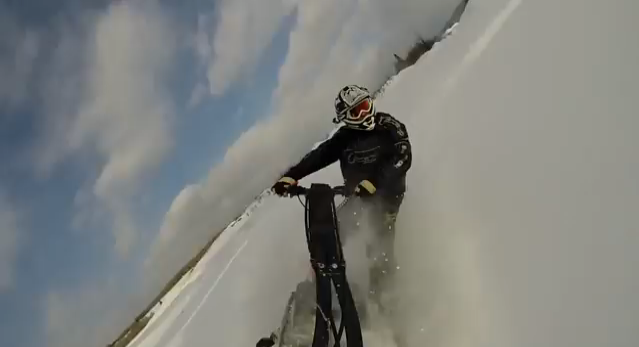
One such enthusiast is inventor Christophe Paquin who figured out possibly the best marriage of a standup ski and a snowmobile. The Québec resident reapplied a Rotax 670 motor to a repurposed snowmobile, employing the same traditional twin skis and tread platform. While the prototype is a little rough around the edges, it’s still impressive how well the rider input works so well with the snowmobile’s format.
If you live along the coastlines, then yeah, enjoy your eternal summer. But for so many other PWC enthusiasts, this might be one way to keep on riding even when the white stuff is still covering most the earth.
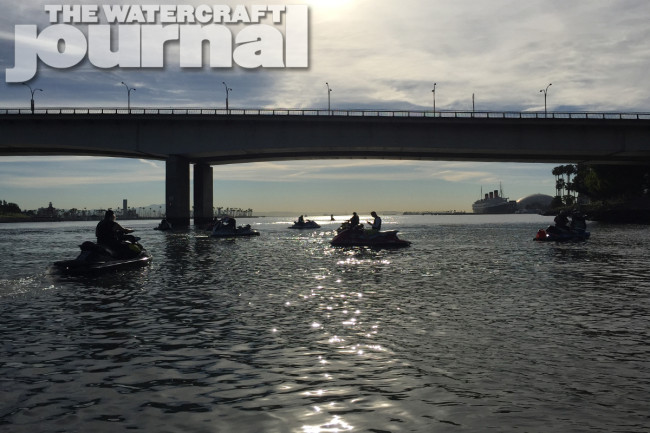
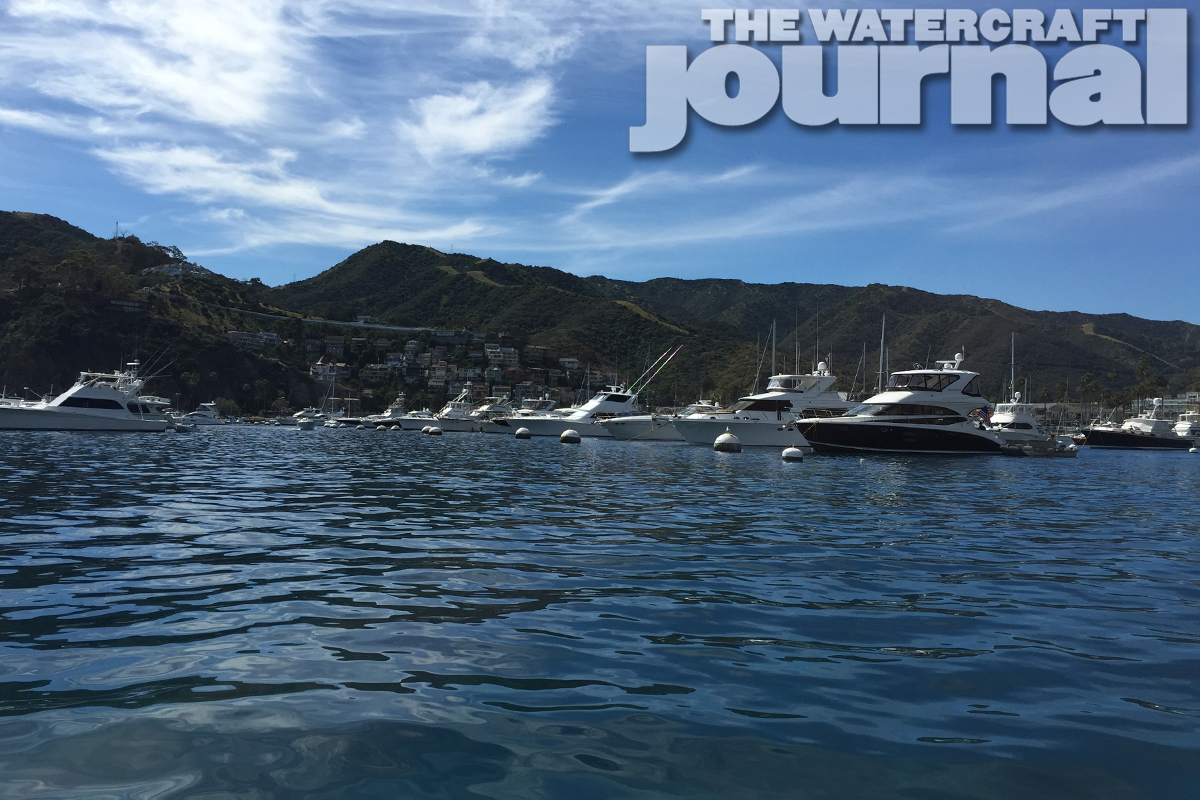
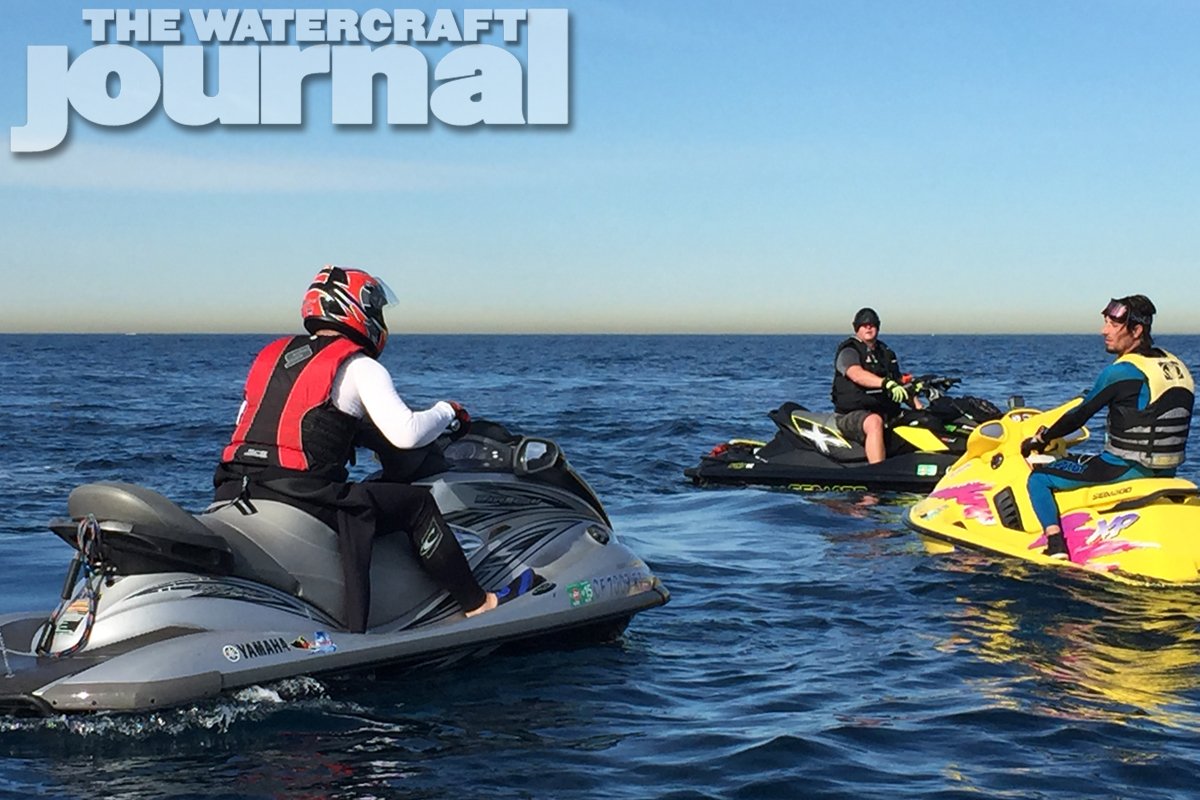
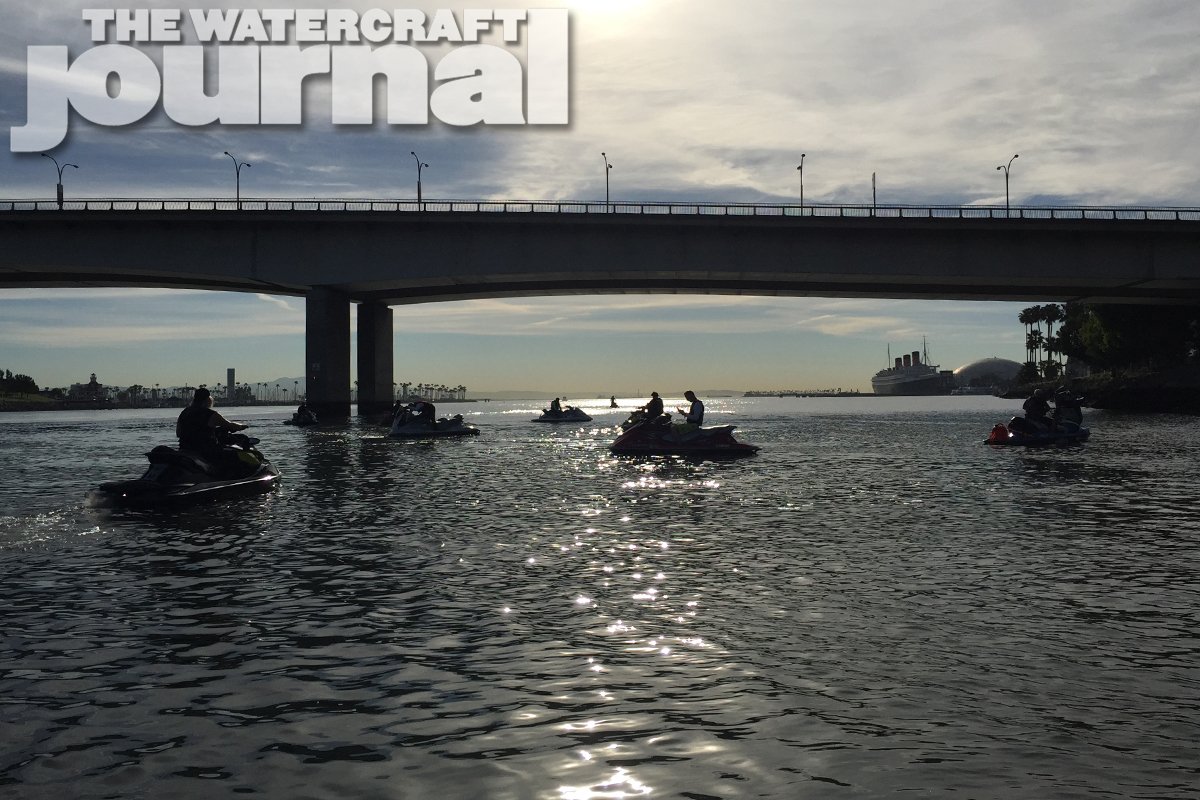
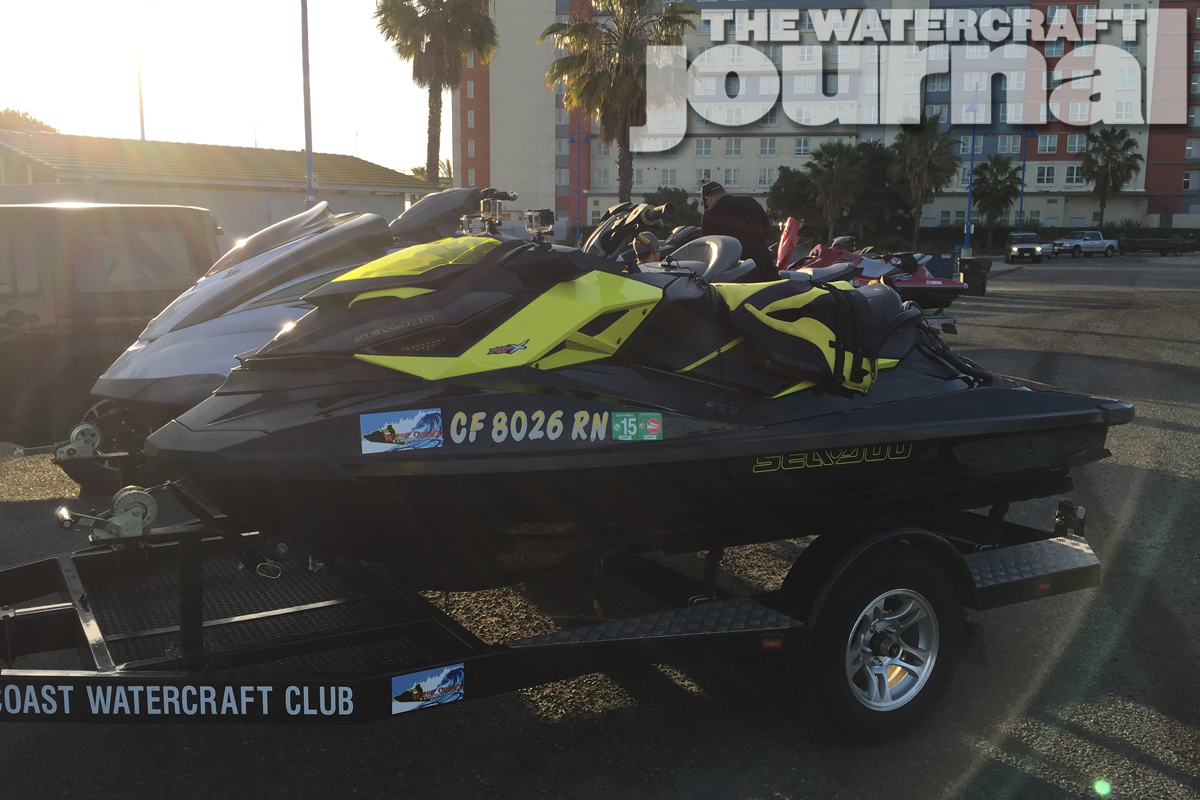
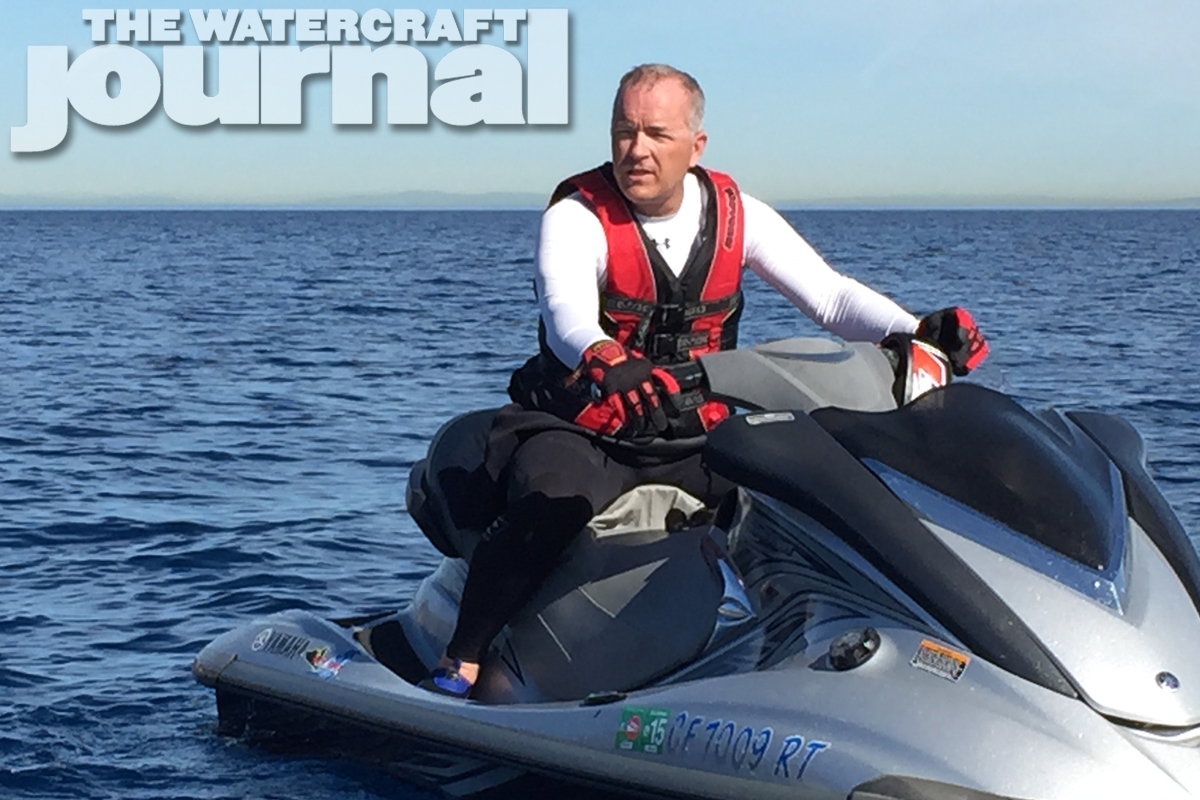
Last Saturday, March 14, 2015, Southern California’s newest PWC club, West Coast Club rode from beautiful Long Beach, California (start of the LB2CAT PWC Offshore race) to and around Catalina Island. West Coast Club President, Lewis Lipstone surprised some at the breakwater opening when he suggested that, though advertised on our Meet Up group as a ride to Avalon, Catalina Island; current conditions favored an around the island ride. Some feared committing this early, as offshore blue water conditions can and do change, but not today. Great call, Lewis!
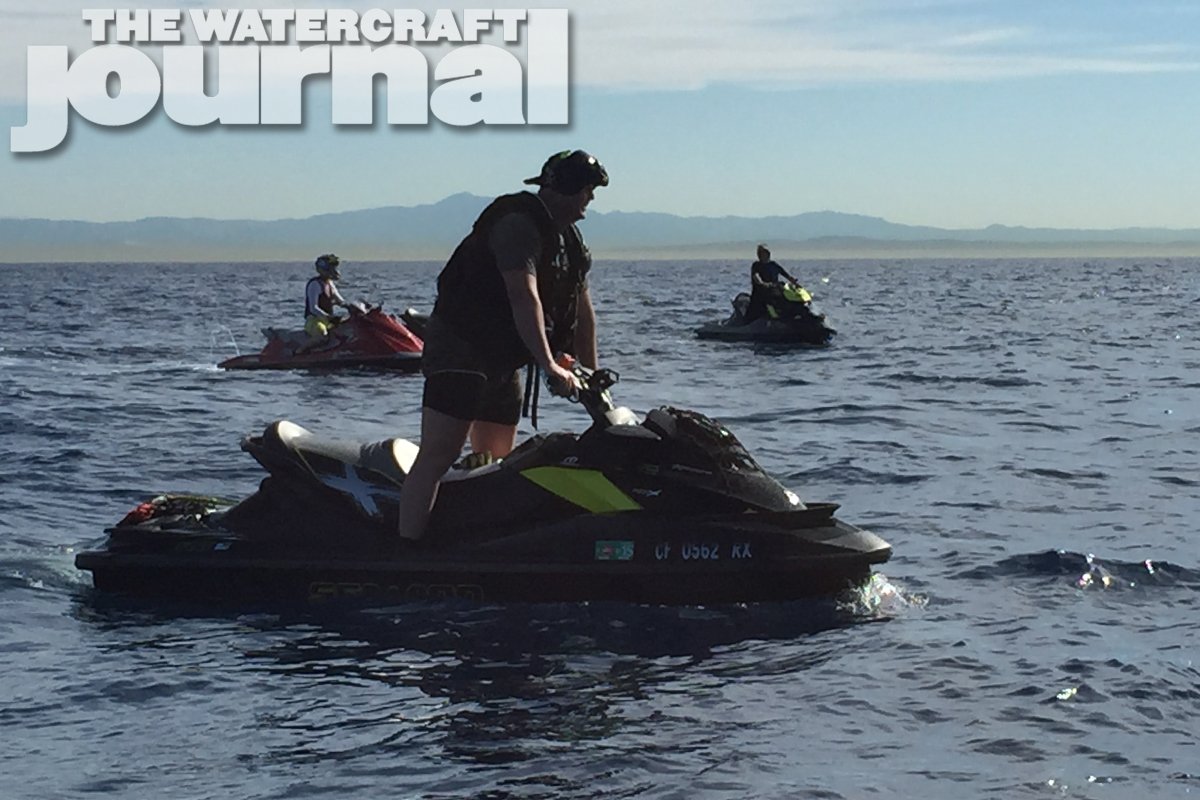
They say that skillful pilots gain their reputations from storms and tempest. Fourteen riders today, did so with total immunity. Eight PWC chose to go around the island and then enjoy lunch at Two Harbors, the more laid back, less commercialized part of the island. Troy on the Sea-Doo “Bumblebee,” and Jay and Fadi on the chase boat headed to Two Harbors while Tony, Santiago, and Caccius raced back on lake like conditions to the launch ramp at Long Beach.
Today, there was no piper to pay for a perfect run to, around, and back to the launch ramp. The ride to Avalon on PWC surprises most Catalina Island boaters, as most will never see the backside of the island for fear of the unknown. Don’t expect to find the same conditions on the back side of the island as you do the front side. Several years ago my front hood exploded as I came off a huge swell, early on in the ride.
Since then, I refer to the backside of Catalina as Jurassic park, due to eerie clouds and sudden fog, jagged protruding rocks, and irregular coastline encountered. Today, once rounding the east end it felt like Bahamas weather as we start seeing a clear, coastal white sandy bottom. The nearby islands of San Clemente and rarely visible San Nicholas, though inaccessible by PWC looked invitingly visible and close.
Recent Mojave Desert winds calmed any wave and swell action today creating near perfect conditions for riding offshore. Extremely dry 70’s air temperature and 64 to 68 degree water temperatures led most everyone to forgo full body suits and opt for shorties. Tony was even sporting a new Jettribe vest.
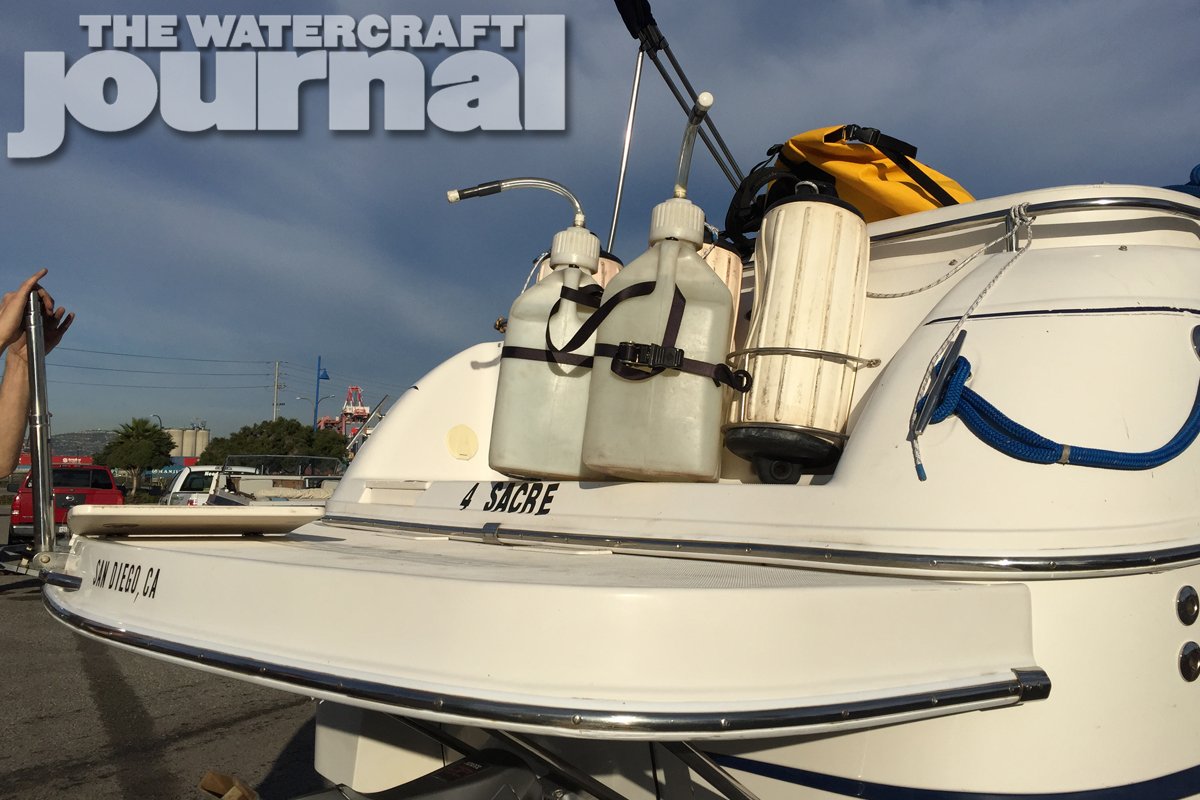
Our offshore run to Avalon was pretty uneventful, except in mid-channel when we all stopped to look at a USCG helicopter that dropped down on the group for a closer inspection. Several of us filled up at Avalon at $6.10 per gallon for 89 octane. All made it around the island and back home with a blaring low fuel alarm. One club rider, who today showed up with a home-built version 2.0 PWC fuel rack became our first casualty several miles into the ride. The rack will need another upgrade and further testing. Stay tuned for Version 3.0. Surprisingly, his version 1.0 PWC homemade fuel rack made it on the clubs recent ride from Long Beach to San Diego and back ride.
Our second casualty, Troy on an early-era Sea-Doo started sinking at the dinghy dock at Two Harbor. When the bumblebee was beached a hairline crack above the waterline was found to be the culprit. Fortunately for Troy the souvenir, ice cream, liquor, and boat marine parts store at Two Harbors also carries quick bonding epoxy. Ironman Troy was able to fix his ski, ride over with the chase boat to Two Harbors and return safely back to the launch ramp at Long Beach.
Today’s island ride reminds me of a book I once read about time. As children every second counts; because we want to do something exciting that counts, similar to our around Catalina Island ride. As we continue to grow our time becomes altered, because now we are calling our own shots, on a day-to-day basis. Suddenly adulthood and a job, sometimes a job we don’t enjoy. Time now is altered once again between the things we enjoy, like PWC riding on weekends.
Our years are no longer 365 days they are now 52 weekends a year. Weekends just fly by. Six riders today were recently at the 2015 Mark Hahn 300 mile race at Lake Havasu, Arizona; with three racing. Three riders including yours truly also recently rode from Long Beach to San Diego and back, on the same day. Before long spring has sprung, and you are in the middle of the San Pedro Channel, riding with whales and dolphins. Almost half a weekend is now gone and most like me, will likely spend Sunday recuperating. Several in our group see new PWC’s in our future. Clubs like West Coast PWC club are manufacturer’s new best friend.
How does one go about getting ready to ride offshore? For some, living less complicated lives, it goes similar to this. Back up the truck to the trailer, unlock things, and plug things in. Haul your tote box of PWC riding gear to the truck’s cab, take inventory. Now check that you also have the electronics, camera, iPhone, wallet, and money. Next go fill up with fuel and then show up at the appointed launch ramp with a crisp $ bill for the automatic gate or gate-keeper. Sounds simple, you say.
For some. Others have shown up forgetting their life vest, or two left-handed gloves or forgot to fuel up. Could we do this day in and day out, and then work on the weekends? Why yes, you might say. Then we could come up with a business jargon sort of approach to riding like adding action items and task lists. Next you would see deliverables and new vocabulary terms like in sailing. Further thought says no. Let’s keep this PWC riding as the freedom machine that it now is.
Our weather may not be the same next weekend, so when we ride on days like today, rest assured that we rode an ultimate ride. If you joined us, then you too would know or as Louis Armstrong once said, “If you have to ask what jazz is, you’ll never know.”
This year is shaping up to be one of the most transformative in the personal watercraft industry. A recent uptick in consumer confidence has fueled a dramatic increase in new vehicle sales, which in turn, is supplementing an already burgeoning aftermarket, giving us a landscape rife with waterways brimming with new and returning PWC enthusiasts. The industry is the healthiest it’s been since 2008, and to this, 2015 is seeing more aggressive moves from many of its biggest and savviest players.
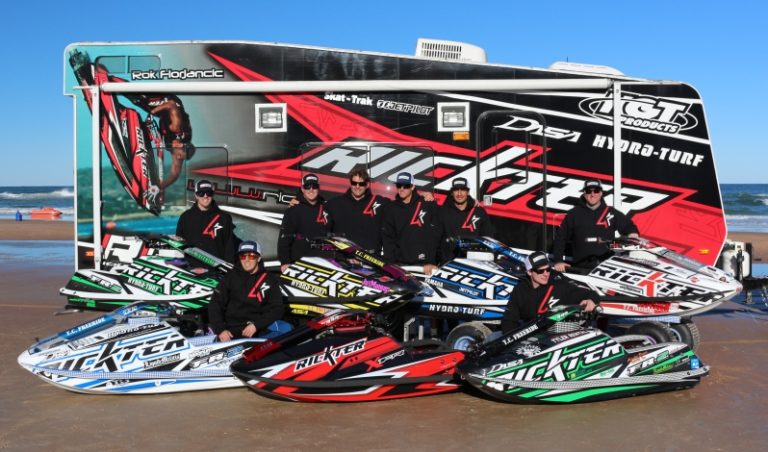
Rick Roy and his Rickter RRP team are easily one of these key players, and never one to let the fiery iron cool. Signaling what they deemed “a new adventure in ski freeride,” the whole roster of the RRP Team – consisting of Mark Gomez, Pierre Maixent, Brandon Lawlor, Taylor Curtis, Brodie Copp and Abraham Hochstrasser – will travel the entirety of the IFWA Freeride World Tour; from Australia, Portugal, France, England and USA.
Not only representing Rickter RRP, but acting as ambassadors for the sport of freeride, the Rickter RRP Team riders will be promoting the “sport’s true hard core freeriding and wave competitions.” Accompanying the press release was an equally-professional teaser trailer which we’ve included a link below:
Until the IFWA Tour begins, we invite you to prepare for an influx of coverage by following the Rickter RRP crew via social media, to gain “a taste and a feel of the countries visited by the Rickter RRP Team.” Likewise, “Events videos will be produced and published on our website and a wrap-up video of the complete tour will [be produced] at the end. Come and join us on the locations; dont miss the chance to meet and ride with the Rickter RRP Team Riders.”
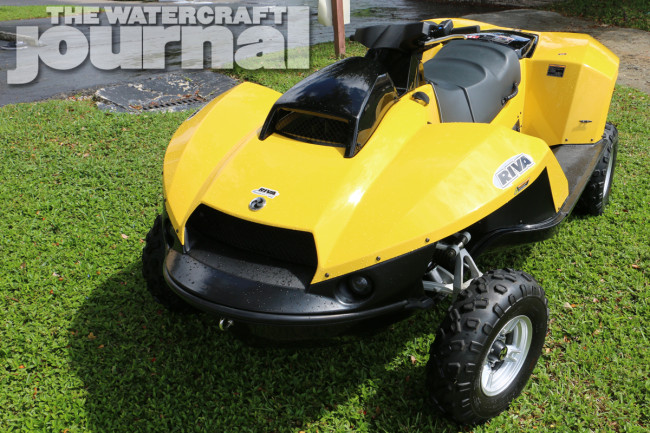
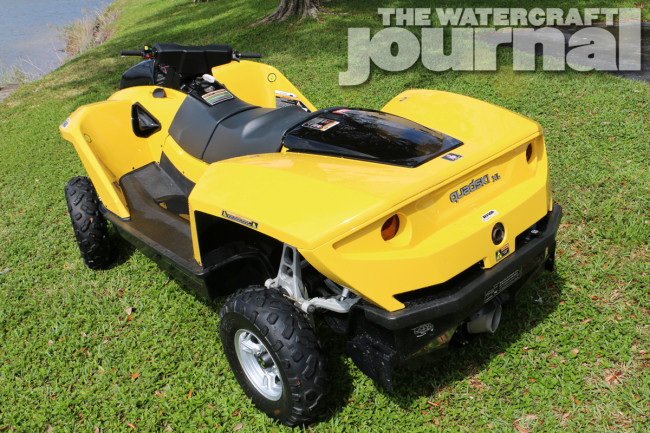
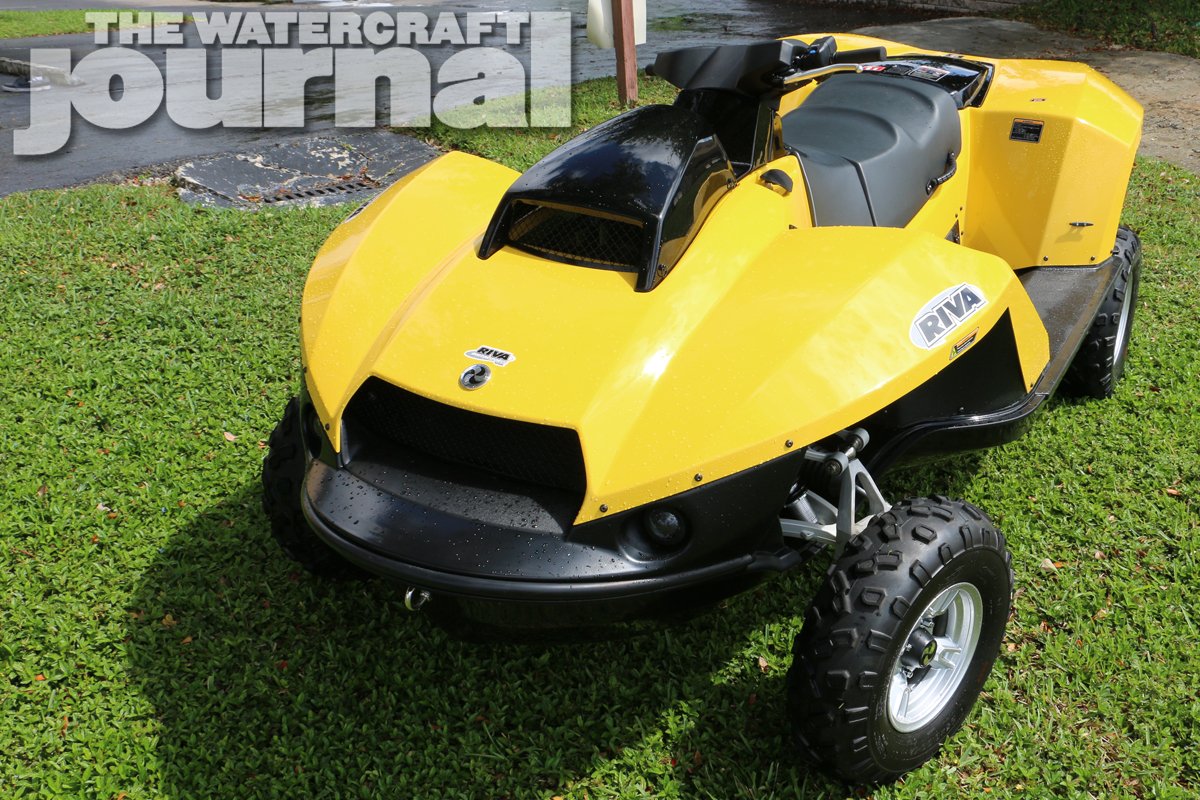
At first blush, it’s almost too much to take in. High reaching fender flares jut out at aggressive angles. A broad trapezoidal grille gapes open like a hungry maw. The footwells are deep enough to use as park benches and the wide tail could be mistaken for that of a small sport coupe if driven on the highway. On land, it stands 53-inches tall with over eight-and-a-half inches of ground clearance.
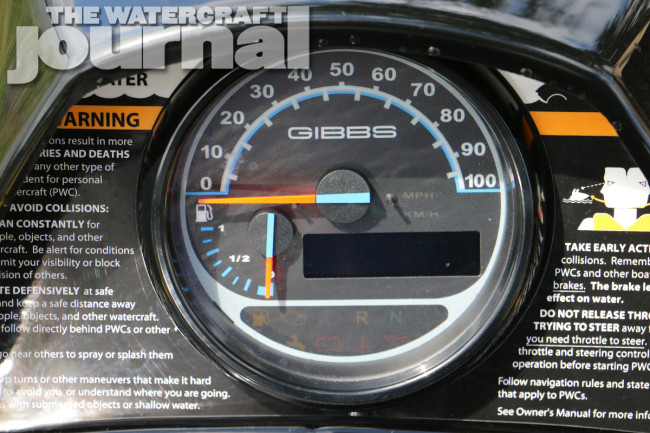
Dwarfing any personal watercraft available today, the 2015 Quadski XL is humongous. Built by Gibbs Sports Amphibians out of Auburn Hills, Michigan, the massive 140.2-inch long two-seater ATV/runabout bests its smaller one-seater sibling – the Quadski – by a full 12-inches, and is only outsized by Yamaha’s legendarily-massive 151.6-inch-long SUV 1200. Oh, and the Quadski is wide too, 62.5-inches wide in fact.
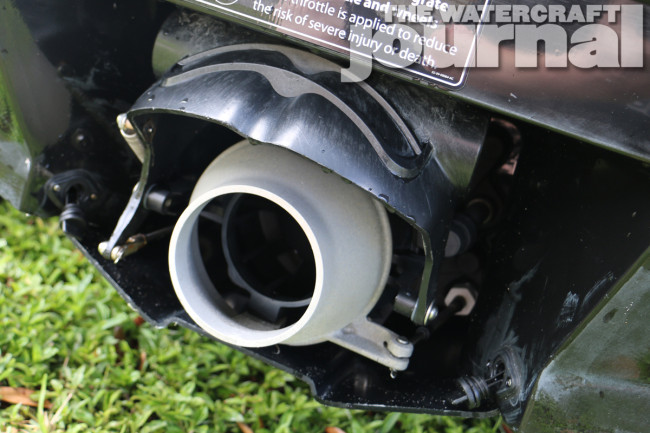
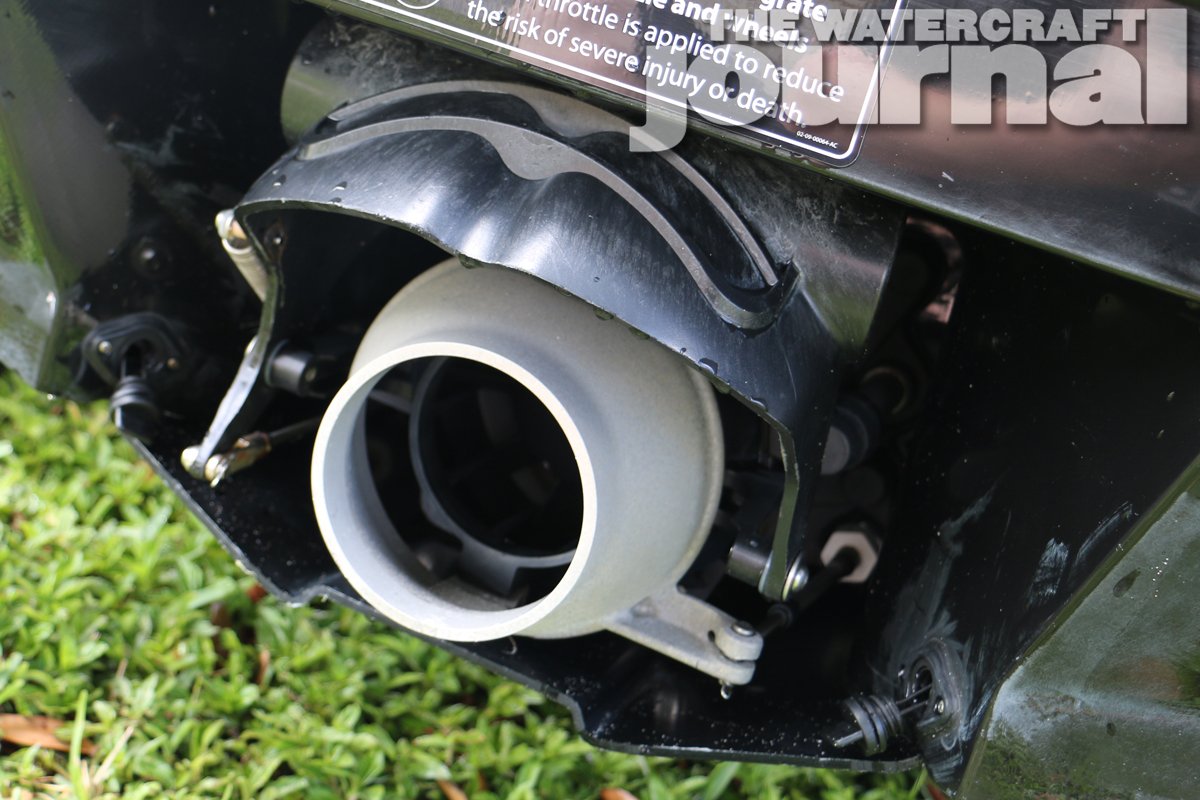
Whether shifted through a sequential, electronically-controlled gearbox with a centrifugal clutch (with an electronically-operated land reverse gear), or propelled by a proprietary lightweight jet drive pushing thrust through an 11-vane stator via a stainless steel 5-blade impeller, the BMW’s 140-horsepower K1300 (1293cc) water-cooled 4-stroke in-line 4-cylinder brings the Quadski to a maximum of 45mph, be it on land or at sea.
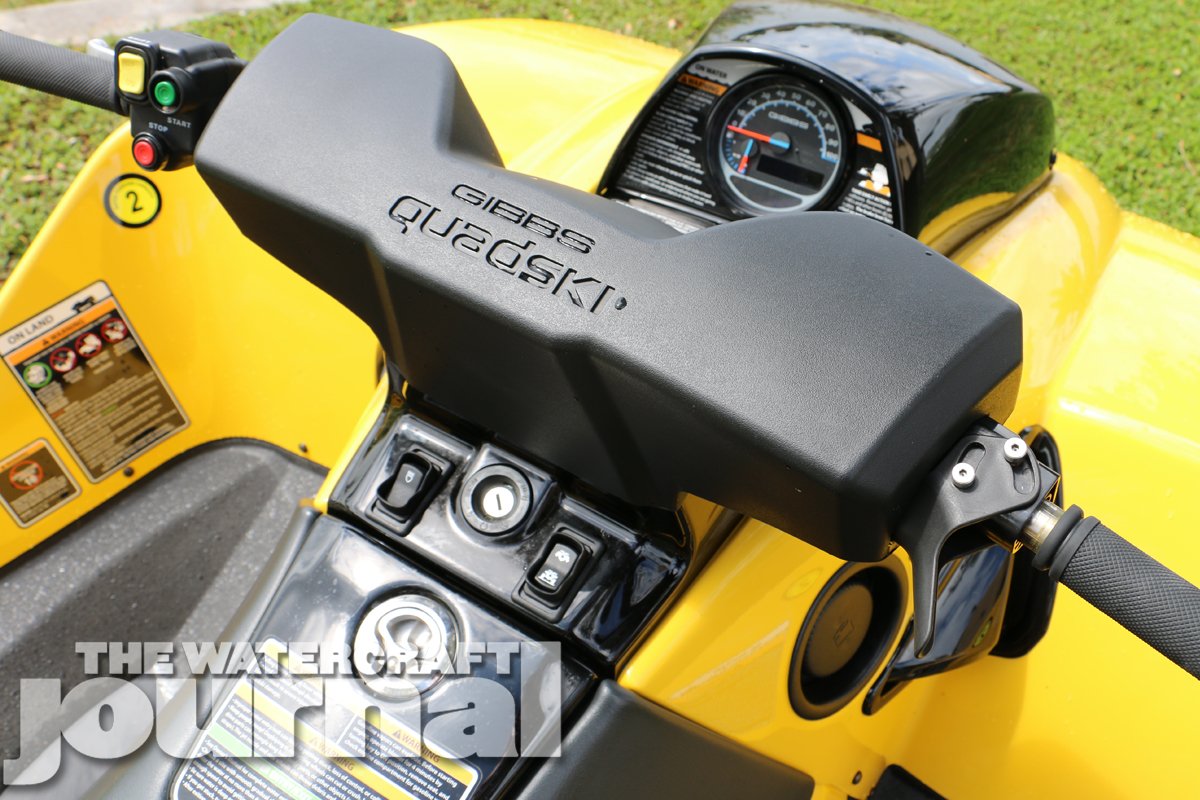
On terra firma, the Quadski XL is manageable, handily responding to inputs given through the wide, fixed steering. Controls are a blend of traditional ATV and PWC, which are both familiar and a little confounding, only because you find yourself forgetting that this machine is both. In fact, Gibbs instructs that the Quadski be registered as both an all-terrain vehicle and a personal watercraft.
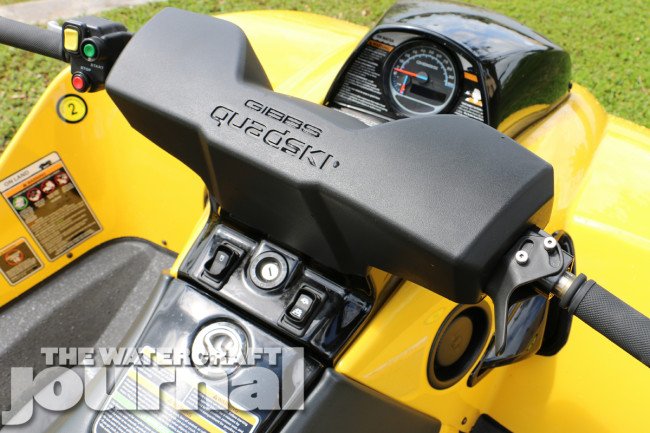
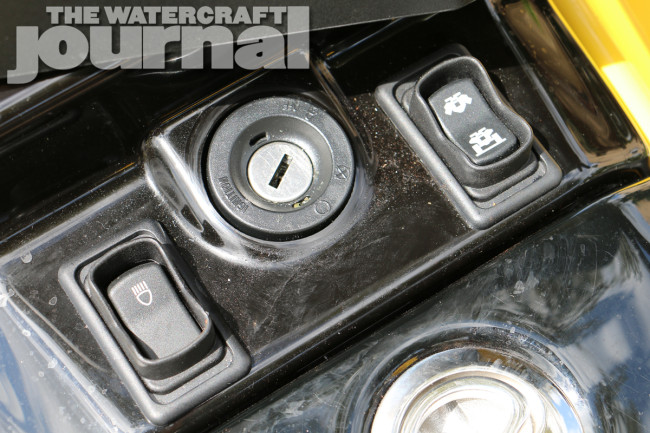
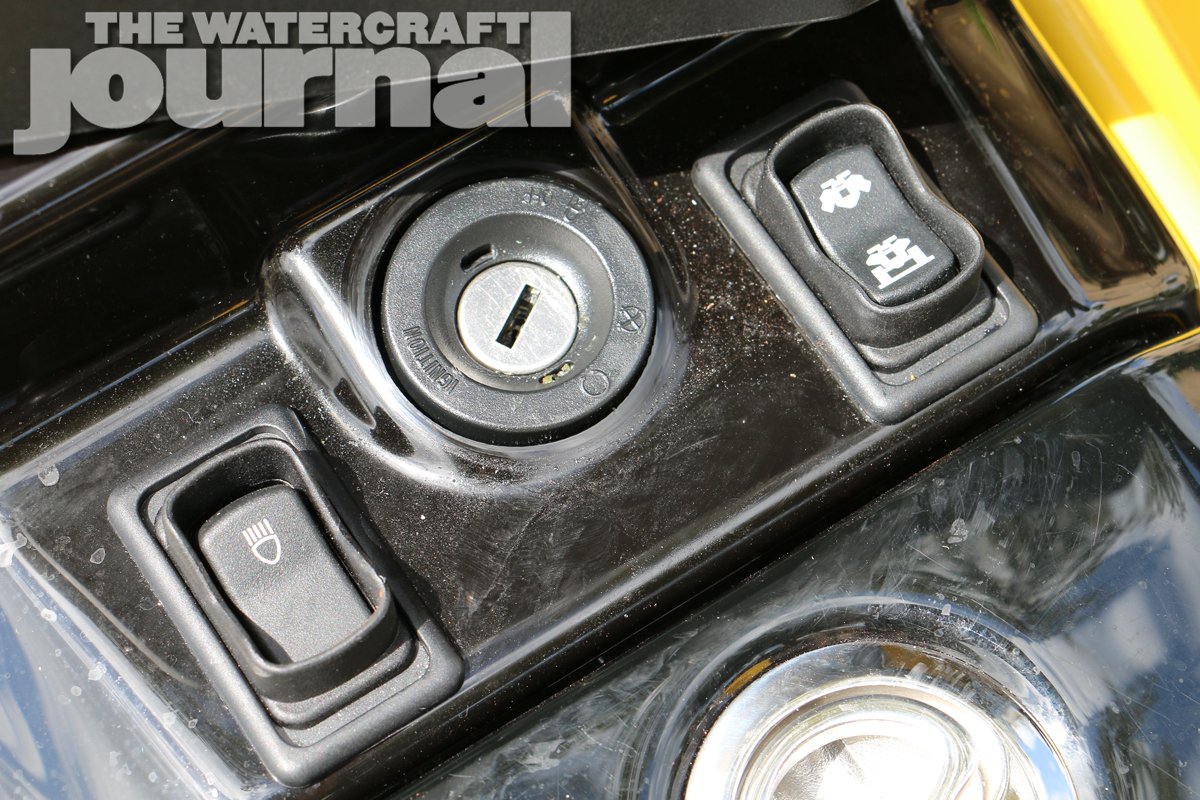
Gas is applied through a thumb throttle, and while on land, brakes are applied through a traditional left-hand lever. Gear shifts (be them up or down) are inputted through a yellow toggle switch (very similar to current Kawasaki Ultra models’ trim control), and ignition is sparked by first turning the key to “On” in the center console, and then pressing the green start button.
As mentioned above, an electric reverse wakens the starter and propels the Quadski backwards, but only for short 10-to-15 second internals. The toggle for the driving lights are found to the left of the keyed ignition tumbler, with the High Speed Amphibian (HSA) switch to retract and deploy the suspension to the right of it (more on that in a minute).
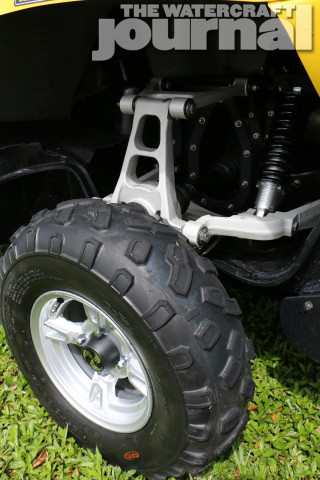
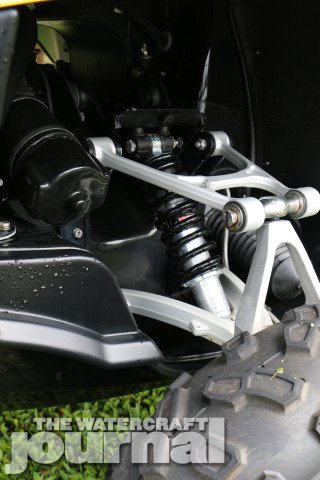
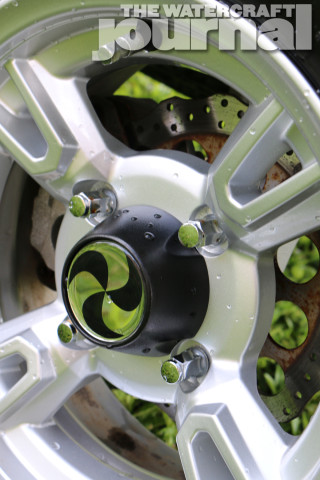
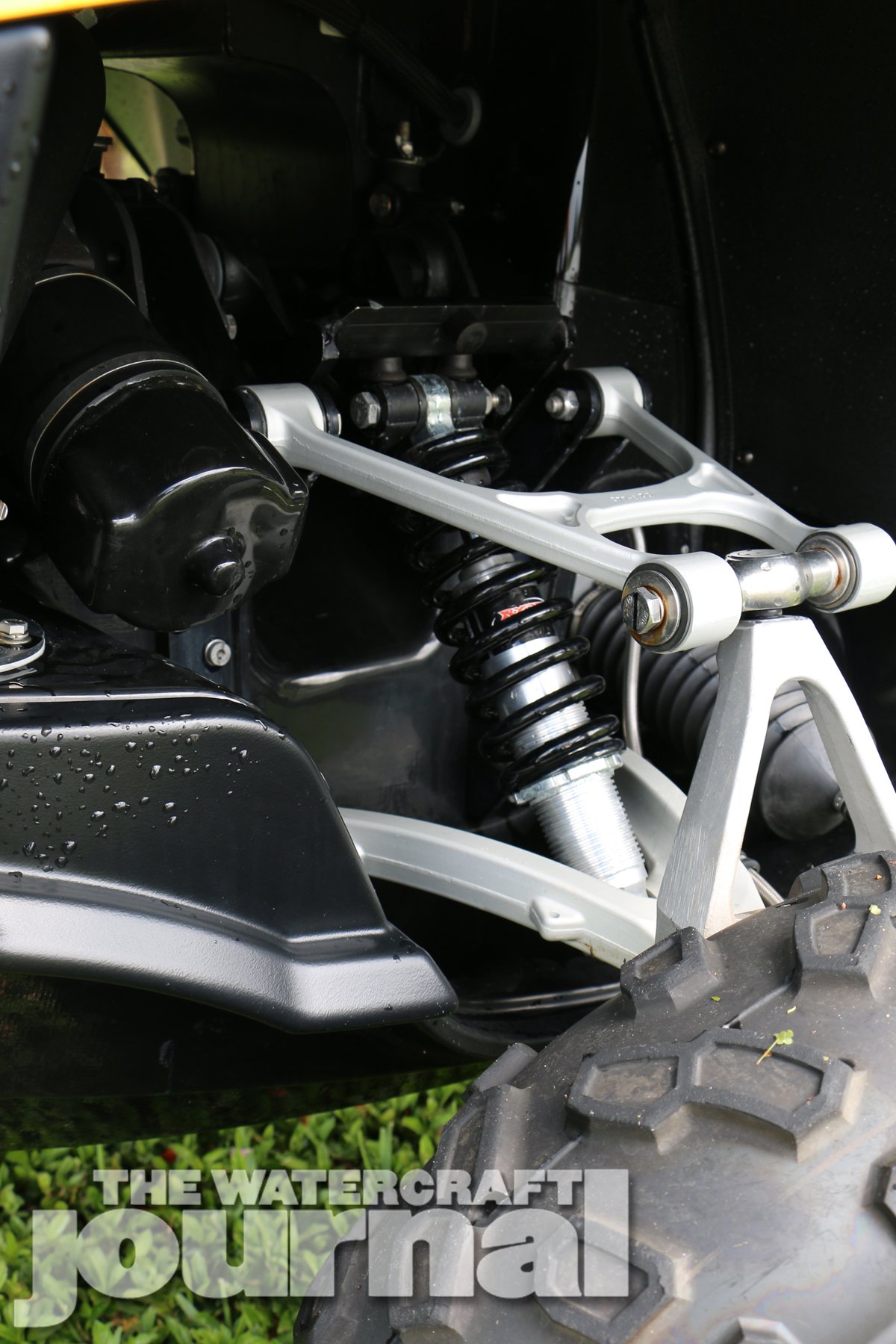
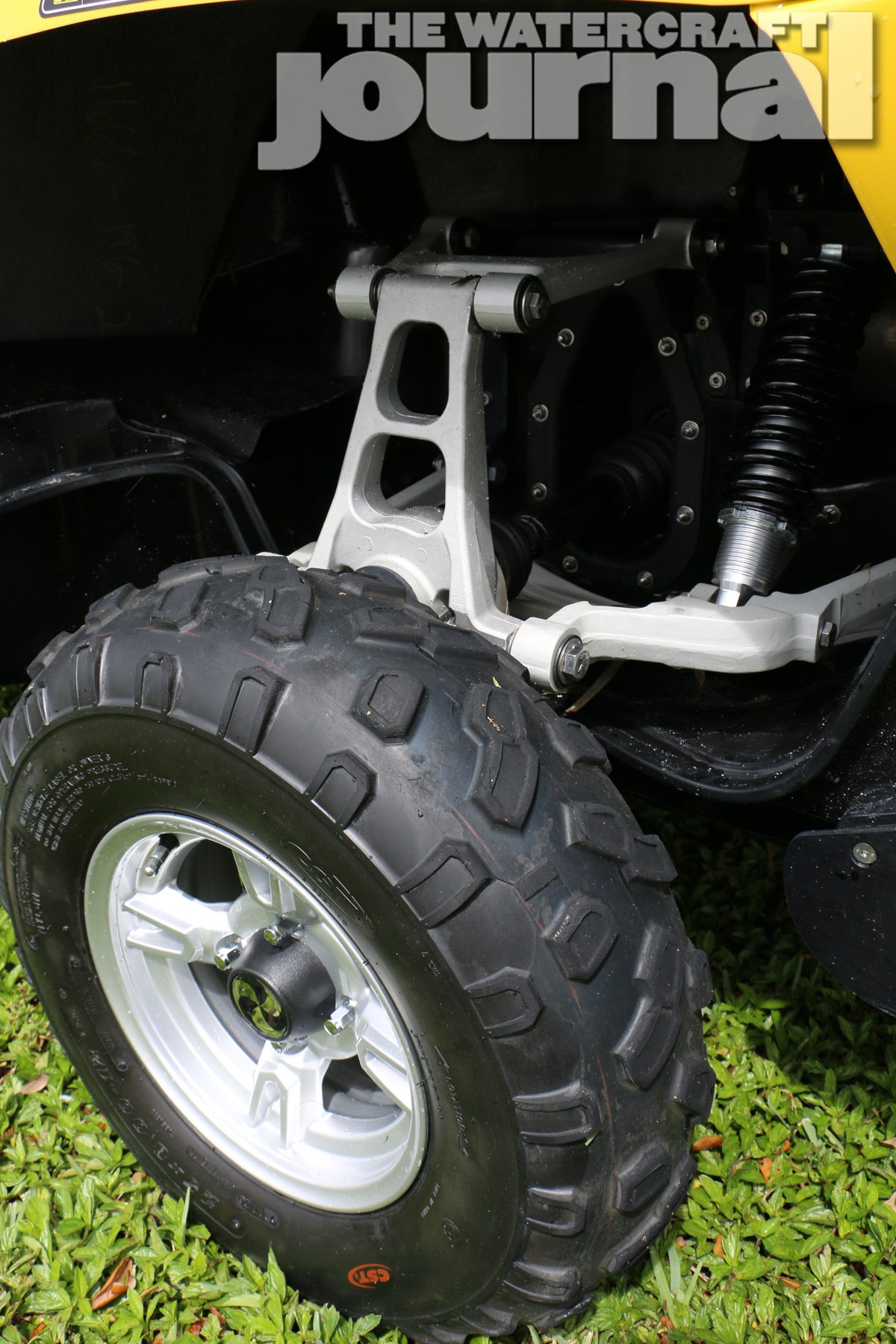
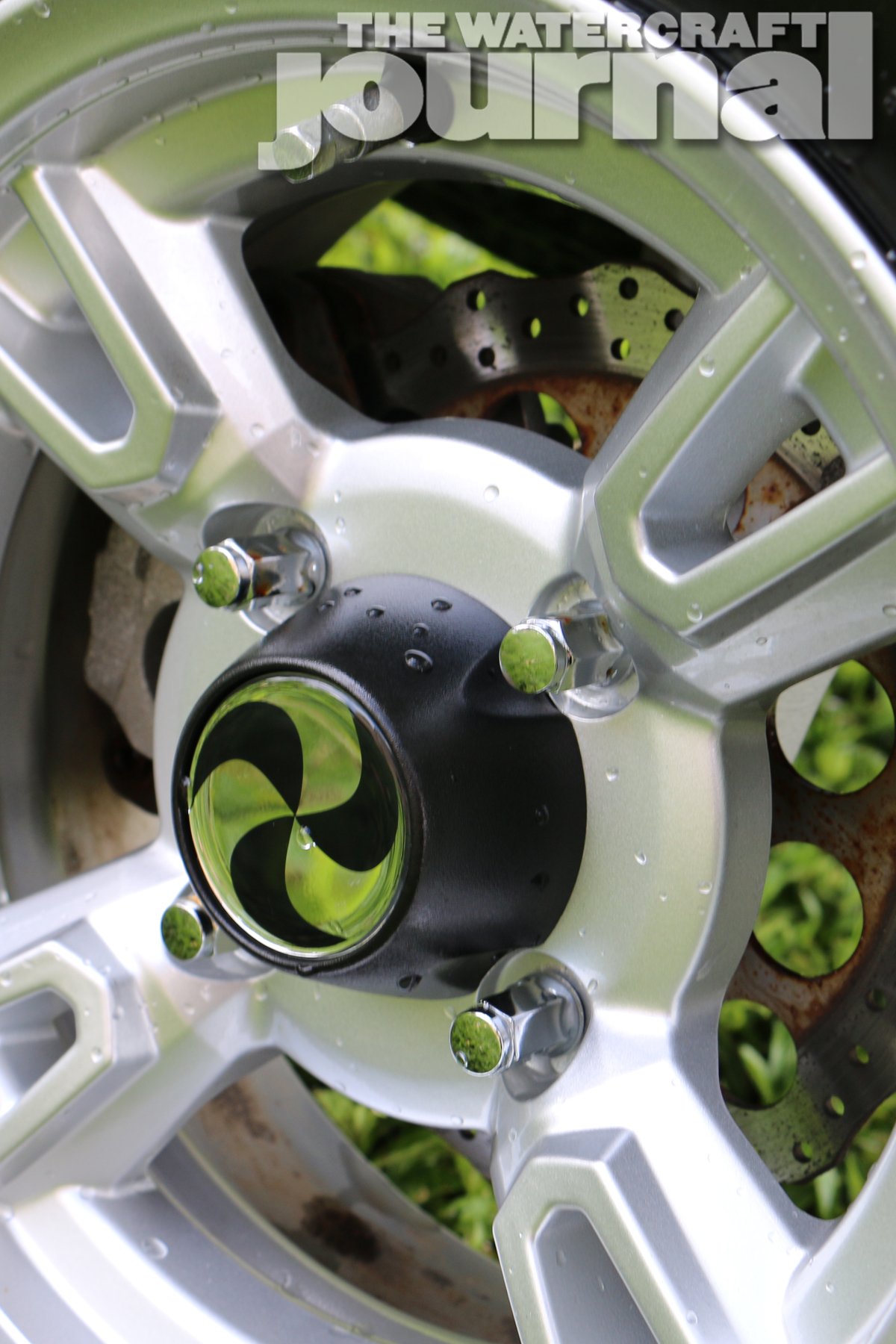
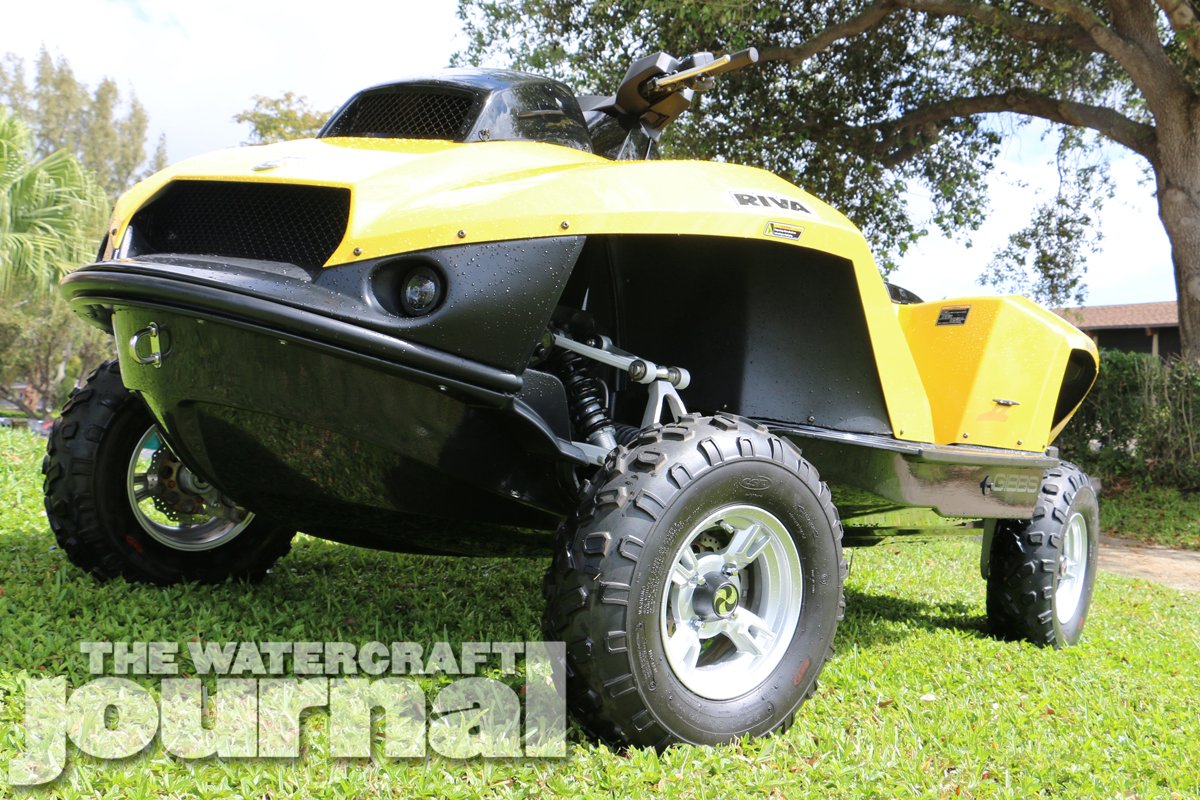
Both the Quadski and two-seater XL ride on 12-inch-tall aluminum four-spoke rims with 25x8x12 all-terrain nobbies, halted by four-wheel disc brakes and suspended on independent coil springs and hydraulic dampeners. More so than anything else, the Quadski’s innovative and entirely unique suspension is what makes this duplicitous machine so extraordinary.
Somewhat limited by it’s RWD platform and heft (an astounding 1,437lbs.), many have found the Quadski to be less than adept for off-road. We find this somewhat subjective as lifeguards and emergency services employing the Quadski regularly traverse obstacles without incident. Nevertheless, the BMW’s 87 ft. lbs. of torque adequately pulled us up the launch ramp and out of the water every time.
Our time ashore was limited to the parking lot and launch ramp (with a little bit of driving on the lawn, but don’t tell the superintendent), but once we hit the water, the lake was all ours. Our initial fears of submarining the nose down the ramp were staved by a slow initial decent. The BMW breathes through a baffled air box (similar to a Jeep snorkel), making it incredibly difficult to swamp the motor.
Even while on land, the prop never disengages from the gear-driven transmission, making launches instantaneous. The Quadski wades out into the lake naturally, but won’t engage full throttle until the suspension is fully retracted. Pressing the two-way toggle to “wheels up” takes 4-to-5 seconds, a chime pinging until the conversion is complete. Likewise, once the transmission is shifted to 1st gear, the Quadski is ready to rip.
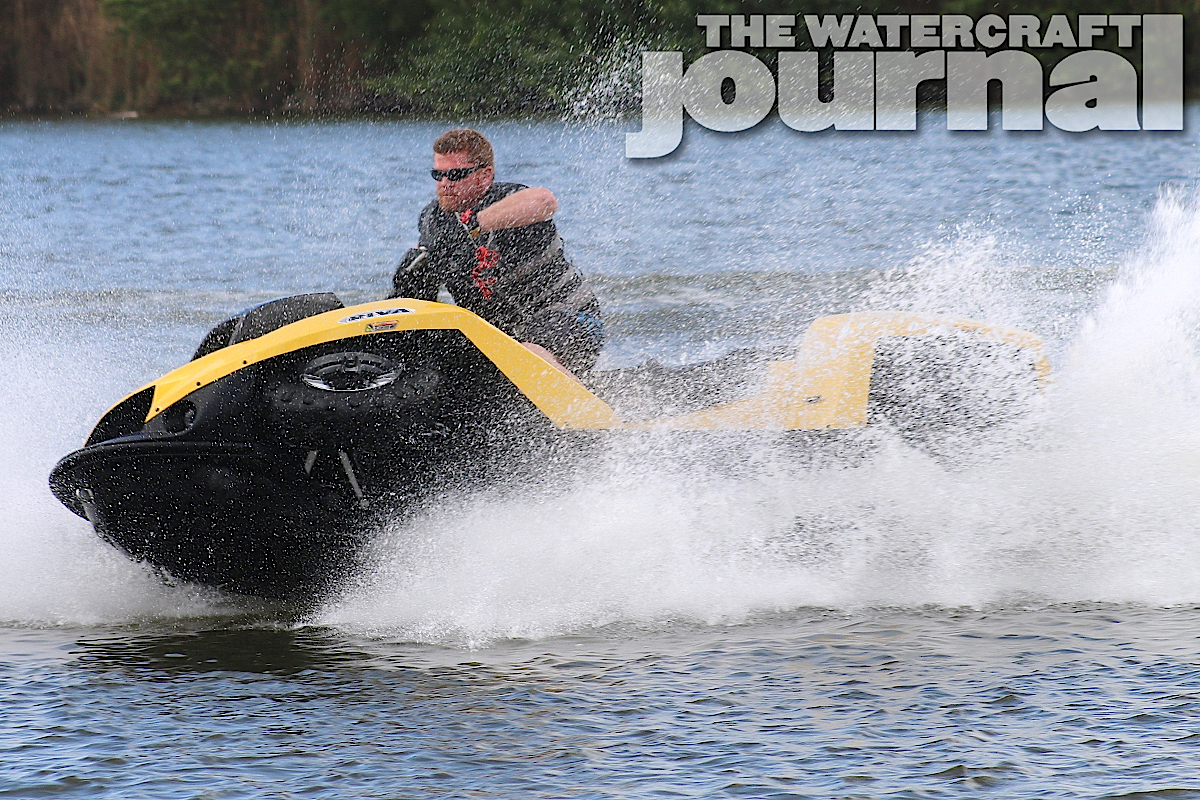
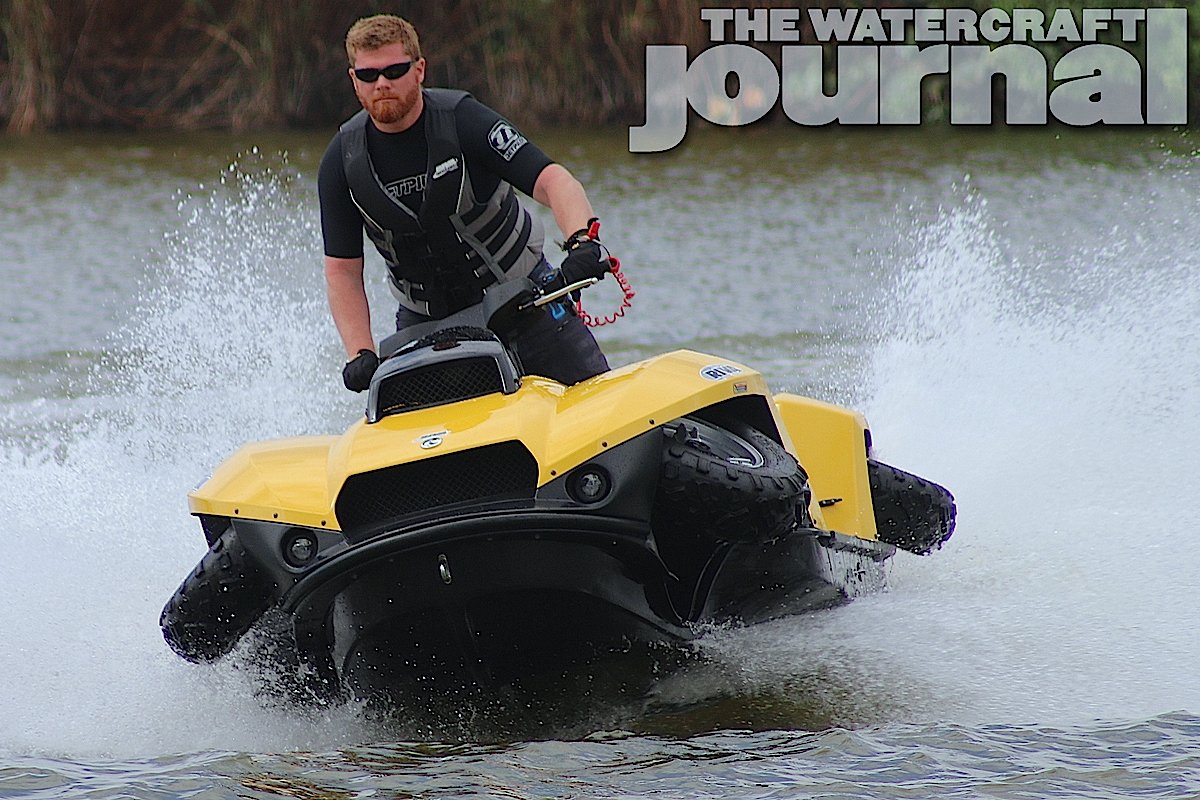
With the wheels neatly tucked in beneath the fenders, the Quadski XL quickly rises to plane. Responsiveness to throttle and cornering is muted, requiring a much more coaxing than what modern sportier watercraft provide – but again, that is to be understood given the Quadski’s bulk, weight and dual-action abilities. The ride is a wet one, and sacrifices all playfulness for Rock-of-Gibraltar steadiness.
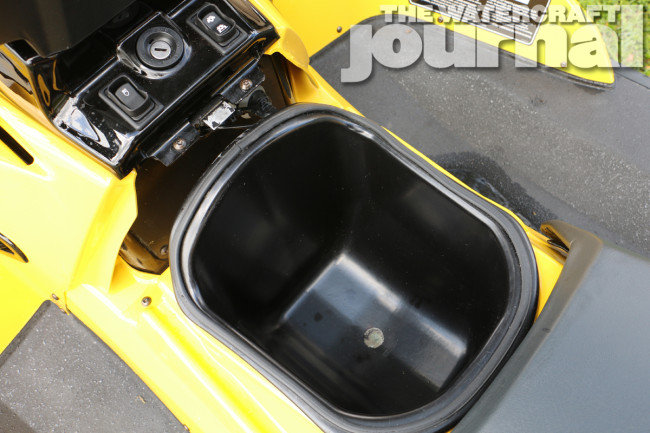
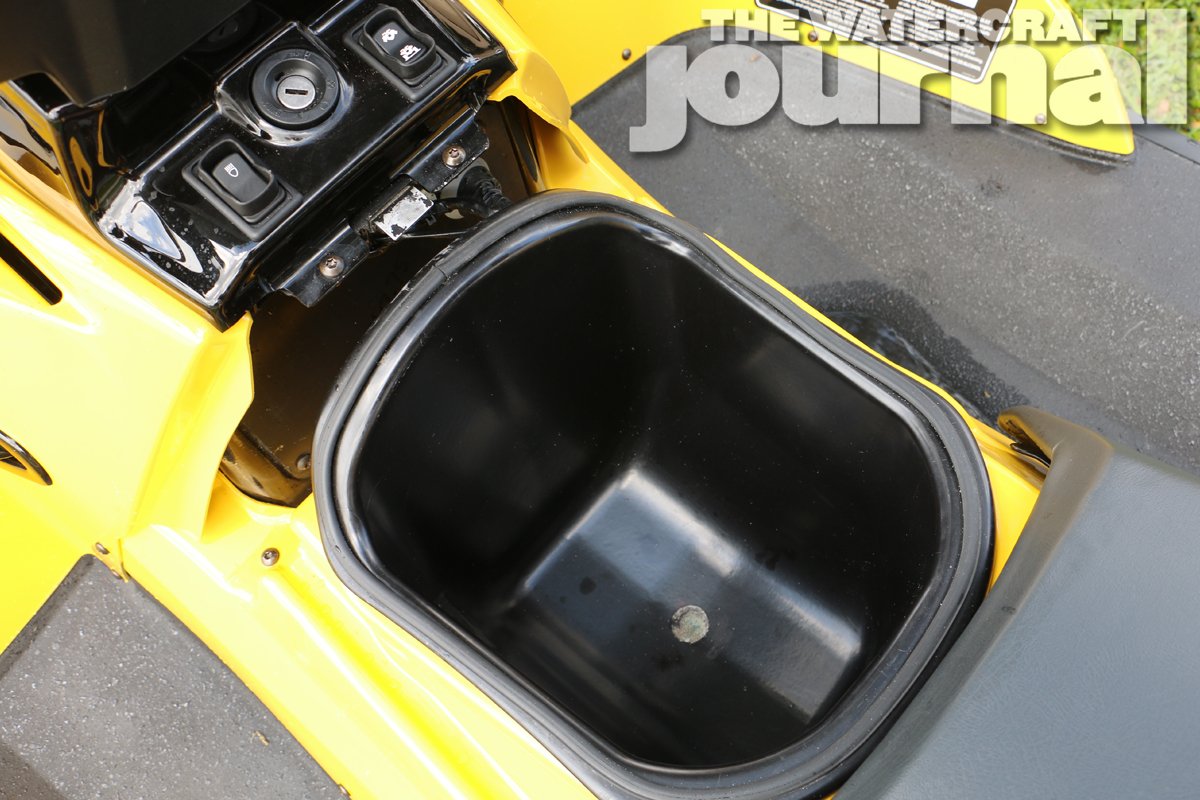
The slightly tiered seat is wide and rigid, and is split covering a deep storage tub in front and conservative engine access behind. Rearward of the seat is a secondary storage compartment also housing the battery and fire extinguisher. Below the left-hand grip is a long-throw reverse lever that we found is better that keeping the Quadski stationary than actually reversing.
We noted some of the hull’s design to be reminiscent of previous Yamaha hulls in some degree, but wondered if the larger, deep-V of a Kawasaki might be better suited. The Quadski rode predictably and never wandered, but could benefit from a little more pep in its step. Large stainless steel sponsons are found behind the back wheels, and planted the tail firmly in a corner.
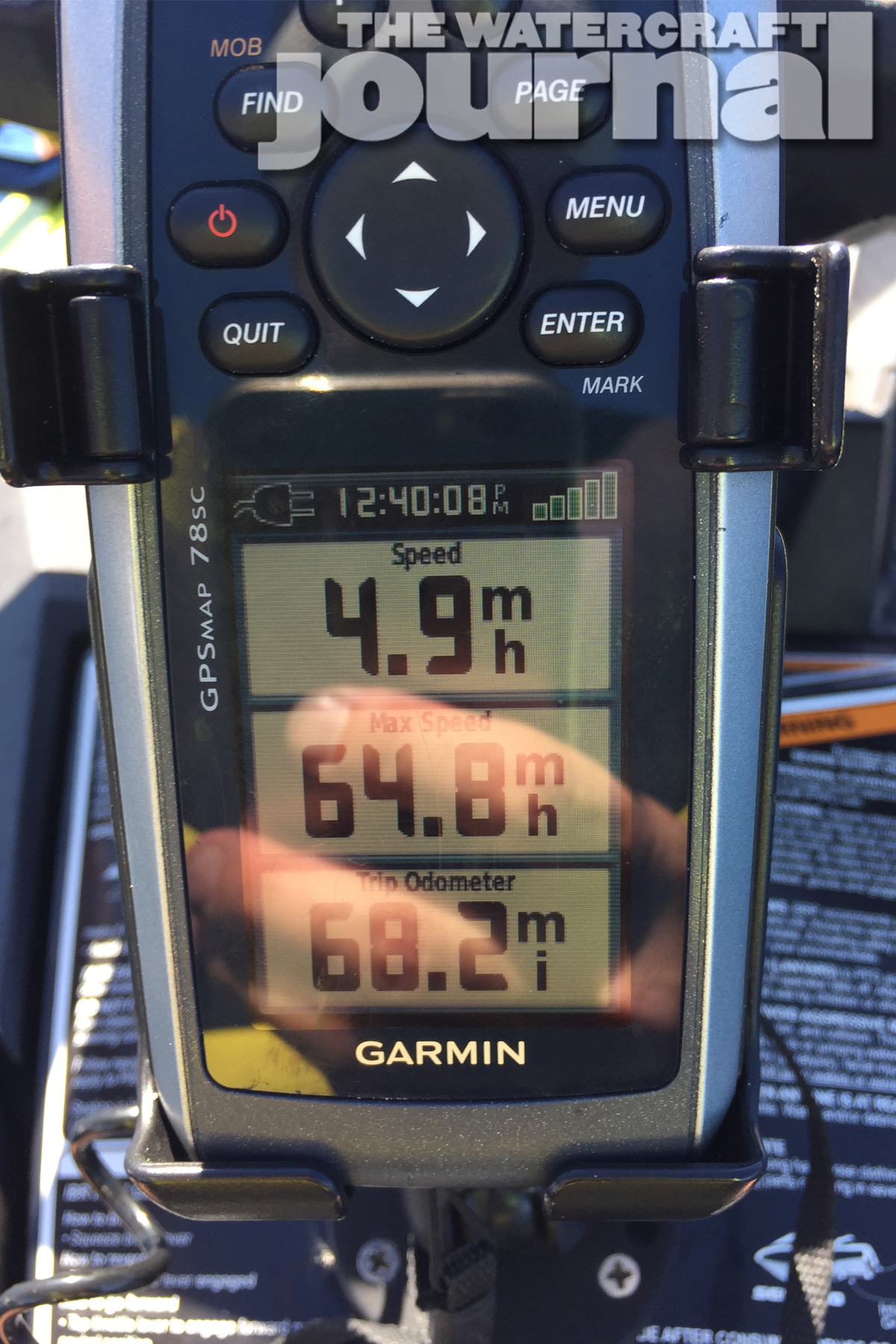
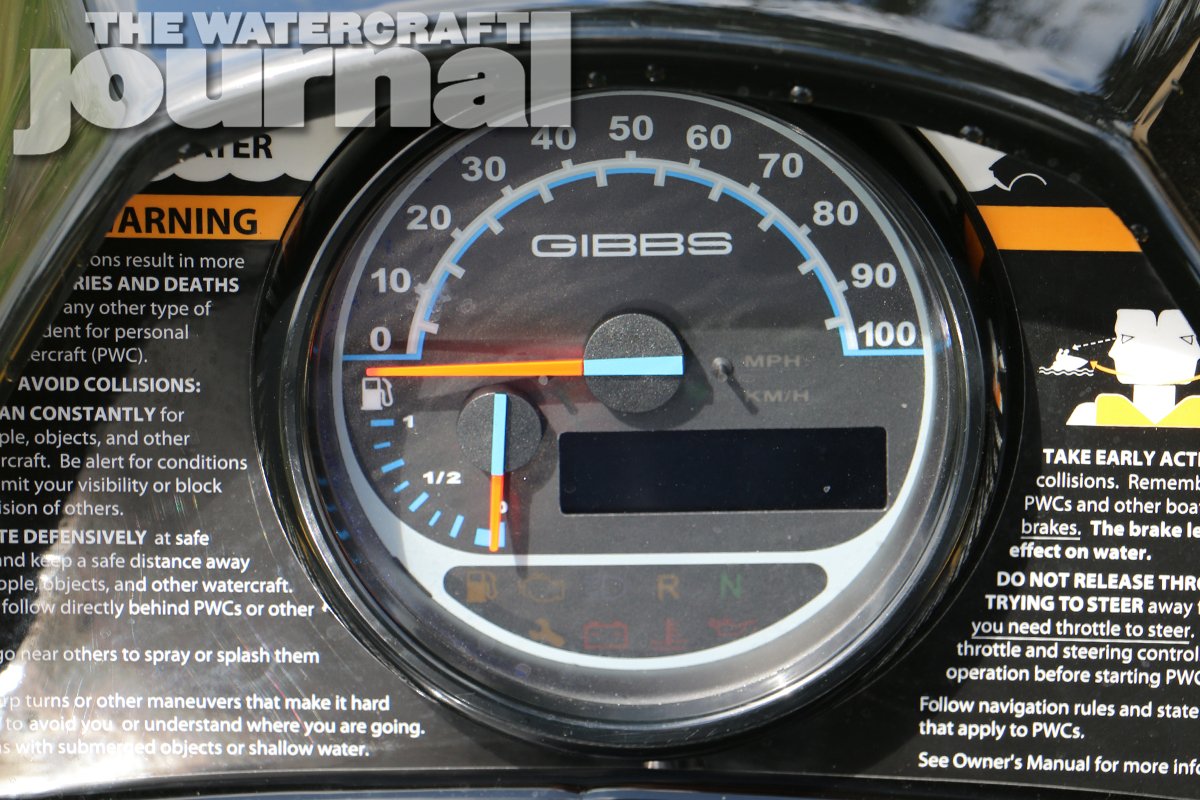
Ultimately, the Quadski XL is meant to traverse both land and water and it does so admirably well. According to our Garmin GPS, we ticked a maximum of 41mph with a 225lbs. rider and a full tank of fuel, pushing the XL’s overall weight closer to 1,800lbs. All things considered, that’s pretty dang good. Of course, the audience for this craft aren’t interested in cutting buoys or reaching break-neck top speeds, but something else entirely:
“The people who buy [the Quadski] don’t worry about the price,” RIVA Racing’s Marcos Smith explained. “[They] want to sail to the Bahamas, launch from their yacht and drive up the beach and back.” That might make several bristle with budgetary envy; yet even at close to $50,000 a piece, RIVA Motorsports manages to sell nearly two units a month. There’s a market for the Quadski and they love it. Frankly, we did too and see this culmination of engineering and ingenuity have created an impressive product.
OK, admittedly once you come to learn what the new Jobe Omnia actually is, simply calling it a “kneeboard” is doing this awesome new product a big disservice. Why? Because it not only works as a kneeboard, but the Omnia is also a waterski, wakeskate and wakesurf board! (We should’ve guessed, right? It’s got “omni” in the name itself.) Designed with input from Jobe’s own professional watersports team riders, the Omnia takes the place of three or four different boards in your boat’s storage or the footwell of your PWC.
The lightweight board is compression molded out of PU foam and fiberglass making it incredibly durable and strong while keeping down the weight. The Omnia also includes an innovative feature for both beginners and more advanced riders: a handle hook, allowing riders to begin without needing to hang on to the rope itself, but the board. This also allows riders to hold on to the side grips while kneeboarding, or standing up into position.
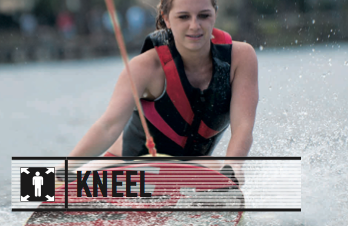
According to the video below, no other board of this kind offers riders six different riding positions, the use of a handle hook, or the ease and accessibility of riding and enjoying the water in this fashion! Kneeboards and wakeskates have already caught on with PWC owners, and we’re certain that Jobe’s new Omnia board will be a homerun with those looking to enjoy their watercraft with friends and family.
Josh Wood was born in Melbourne, Australia in 1981. He was riding bicycles before he could walk, skied at two years old, and rode dirt bikes when he was five. These activities led him into a life bursting with adrenaline-fueled sports.
In an interview with OZPWC, Wood was quoted saying; “We lived on 80 acres, dad built me a little moto track which I rode every night after school, and all day over the weekends, I was never off it. Around 1992, snowboarding came into my life, I found a sport that was an equal in my life to dirt bikes. As they are two very expensive sports I was forced to make a decision, we lived close to the mountains so snowboarding became my priority. I honestly feel I would have gone further with dirt bikes but we didn’t have the financial backing nor the time my parents needed to put into traveling to races.”
At the age of 15, he was given an opportunity to spend four months in the Swiss Alps as an exchange student. After graduating high school he became a professional snowboarder. Wood was between jobs at 18, living off savings, and all he wanted to do was ride and live the party lifestyle.
He was scheduled for a job interview on June 25th, 2000 and he never arrived due to a horrendous accident. Wood and his buddies built an 80-foot jump on a mountain that only had an asphalt road below. A mistake could have proven fatal; instead, lack of commitment caused Wood to sustain a terrible accident. One rule to live by is to never hesitate, a person must be fully committed when participating in extreme sports. Unfortunately, Wood hesitated as he was speeding toward the ramp and he almost lost his life because of a rookie error. He launched, rotated upside down, and landed head first onto the road below. Fortunately, he was calm, conscious, and able to tell his friends that his neck was broken.
Wood was transported to the hospital where x-rays showed C5, C6, C7, and T1 were crushed. He was a quadriplegic at this stage, paralyzed from the neck down. His doctor gave him a 3% chance of recovery, insisting he would never get out of bed because his spinal cord was so damaged. Wood felt like he had died and went on to say, “The doctors didn’t think I’d survive the 4th day”.
Wood and his mom knew that doctors could repair him, yet not heal him so they worked extremely hard to prove them wrong. Five months later, Wood, walked out of the hospital.
He had not gone for any mainstream rehabilitation; instead he trained with a physical therapist three times a week and swam everyday. Two to three years later, he was no longer using a wheelchair and within 7 months of stepping out of the chair, he rode his dirt bike. Three years after riding the dirt bike, he rode his snowboard again. He definitely proved the doctors wrong even though less than 5 % of his spinal cord functions. It is hard him physically as well as mentally.
He tells his story to groups hoping to reach at least one person whose life might change as a result of listening and hearing Wood’s words. He envisions helping people find their inner strength as a gift that he is able to provide. This gift may give someone else second thoughts about giving up and just keep pushing through life’s struggles.
“I make a big goal then I break that big goal into small goals, steps to get me to where I want to be, I celebrate every milestone and never take it for granted, mentoring 100’s of injured people over the years I’m constantly reminded to be grateful, it can always be worse off, there’s people out there that would love to have my “problems”, I don’t have much time for self-pity”, said a grateful Josh Wood.
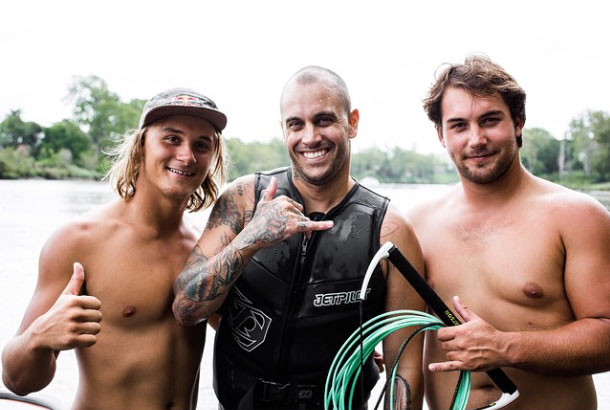
He shared his power of self-will and resilience of the human spirit in his book “Relentless: Walking against all Odds”. This is a book about not giving up nor giving in. Jet Pilot teamed up with Wood and made him an ambassador through mentoring and providing speeches, which may help people who struggle with direction and goals.
“We are going to do a collaboration T-shirt, which I will be handing out to kids to help make them feel they are a part of something. Many kids these days are dropping out of school, fighting, rebelling, turning to drugs and alcohol and unfortunately suicide, simply because they may not feel they are a part of something, their community, school, home etc. It can only take a simple gift, gesture to change a life.”
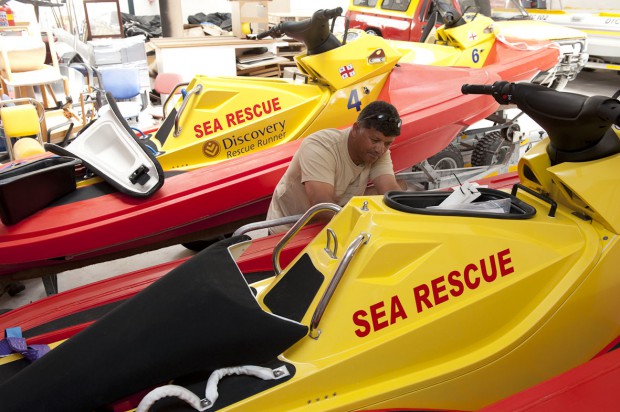
Last April, The Watercraft Journal was proud to announce the addition of the SAR (Search and Rescue) runabout to their selection of Commercial and Government vehicles. Based off of the successful GTI platform, the SAR is a capable and reliable resource for search and rescue operators across the globe. We’ve personally seen the SAR in action and applaud the purpose-built execution of the craft…but only today did we learn that the SAR is not alone.
Although not a factory-built Yamaha, rather merely employing the use of already tried-and-true Yamaha components; the boat builder Safe at Sea out of Kungälv, Sweden, designed, assembles and sells the RescueRunner. Built out of tragic loss of six crew members of the Swedish Armed Forces SuperPuma rescue helicopter H99 that crashed in 2003, the RescueRunner was designed to perform waterborne lifesaving techniques capable of saving those original six crew members.
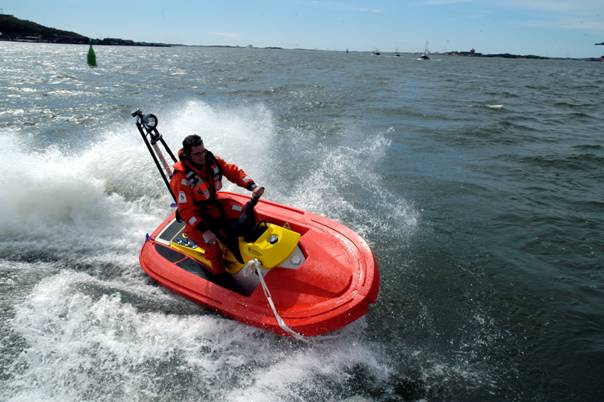
Gathering techniques from across the globe in beach and surf rescue, the RescueRunner builds upon these and implements them in its design. Designed by Fredrik Falkman and working in development with the SSRS (Swedish Sea Rescue Society), a Yamaha WaveRunner FX140 four-stroke 140HP engine and drivetrain are used on a custom-designed hull, featuring a low aft deck for fast loading and unloading, a safety tower housing a light and enabling the RescueRunner to be transported and launched from a helicopter, and an incredibly rugged polyethylene hull that can be quickly interchanged.
You’ll notice the seat is similar to a WaveBlaster, as it only seats one, but can accommodate a larger crew when two persons are standing aft of the driver. An inspection hatch permits for quick clearing of the jet, and can be equipped with underwater search lights, an AIS-transponder, and much more. Top speed caps off at 40 knots and holds up to 70 liters, or 18-plus-gallons of fuel. All in all, the RescueRunner weighs in at 771lbs. which is impressive given its sturdy deck and reinforced hull.
If you’re looking for a “permitted, loosely structured gathering for all types of personal watercraft enthusiasts to enjoy a weekend at the beach,” then the 2015 Watcon 2015 Lake Michigan Surf Ride is exactly what you’re looking for. Planned as a recreational ride set on the shore and waters of Lake Michigan; while it is referred to as a lake, it “really is an inland ocean.” For those who know, wave conditions can be large, which would be ideal for a surf ride of course.
As you might or might not be aware, this is the first ever Lake Michigan Surf Ride. “The weekend is open to all to come out and play in the waves like you can’t legally most of the time.”
Scheduled for Friday, August 28 through August 30th, the beach will be open to participants from 7am until 8pm each of the event. They ask that there be no noise before 7am out of respect the neighbors. All boating laws will be in affect for all riders outside of our area of operation. This will be clearly marked with event buoys. Additionally, all riders must be off the water 1/2 hour before sunset.
According to the official press release, “All watercraft will need to have an event identifying sticker on it to be in the area of operation, all riders will need to have an event wrist band on at all times with in the area of operation. This is necessary because of insurance and Coast Guard requirements. You will be able to get these at registration.
“On site weekend overnight parking is limited to RV’s, Trucks and Cars with Trailers. No tent camping. No open fires. This is a City Park located on the shores of Lake Michigan. Event Parking is located directly behind the beach parking lot in the grass area. You may use your four wheeler to bring your watercraft to the beach area, no other riding of ATV’s is allowed. Site speeds are 5 mph.”
Information for host hotel and other lodging in the area will posted shortly. “We will have a number of items donated by event sponsors for a raffle. We will contribute a portion of the proceeds of the raffle to charity, this charity will announced in the coming weeks.”
While some of you might be enjoying the endless summer provided by the southern latitudes, most of the world are still praying for the snows to ebb and the cooler temperatures to give way to some Springtime warmth. Yes, we’re all pretty much sick of winter. Thankfully, not all of us are content to be confined in our homes, hiding beneath the covers until summer comes.
We spotted a pair of daring Frenchmen bold enough to brave the cold and charge what looks to be a very chilly shallow river (dare we even say a stream?) not too far from Normandy, France. On a pair of modded Yamaha SuperJets, Emmanuel Jules and fellow skier Boris Micharoff swerve through low-hanging bows and reaching branches, exposed roots and other obstacles to come out the other end unscathed.
Boris’ GoPro provides us a unique point of perspective that was almost impossible a decade earlier. Now we get to share in the two’s exploits as they make short work of this quick jaunt. Of course, this isn’t the first of videos showcasing many of Emmanuel’s exploits, and after watching the video below, we strongly suggest you follow the above link and check out the rest of what these ski enthusiasts have been up to.