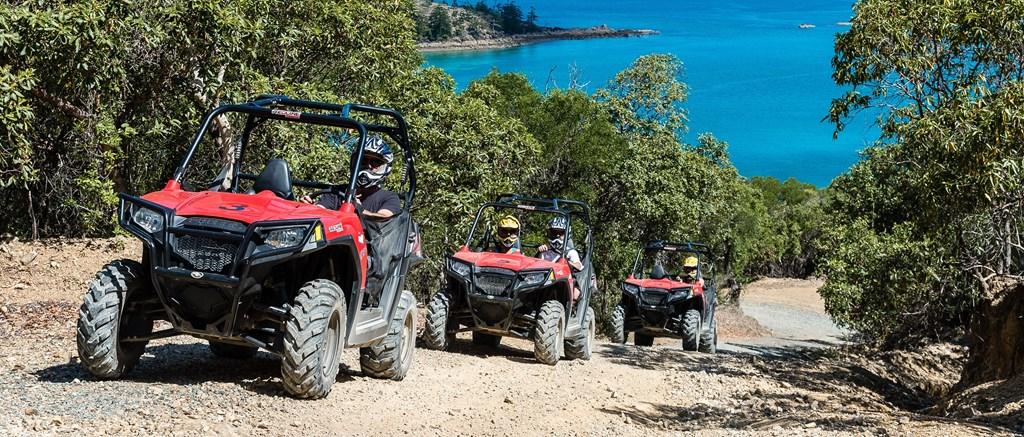
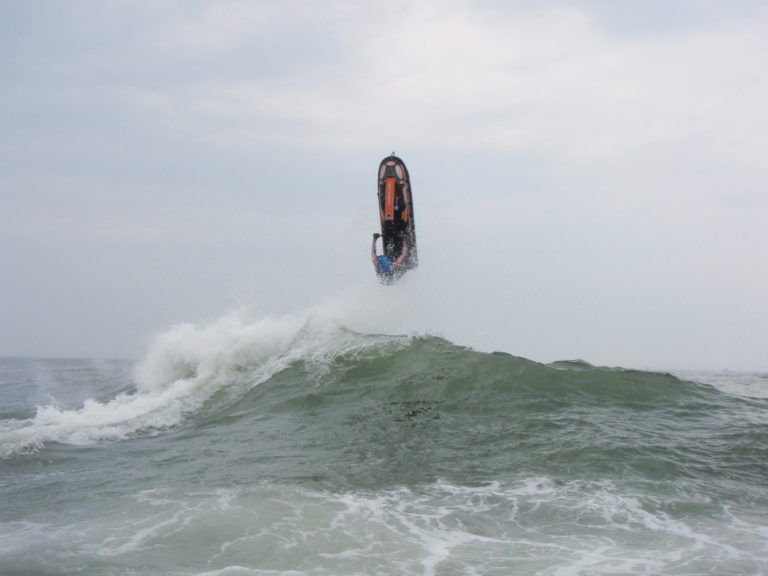
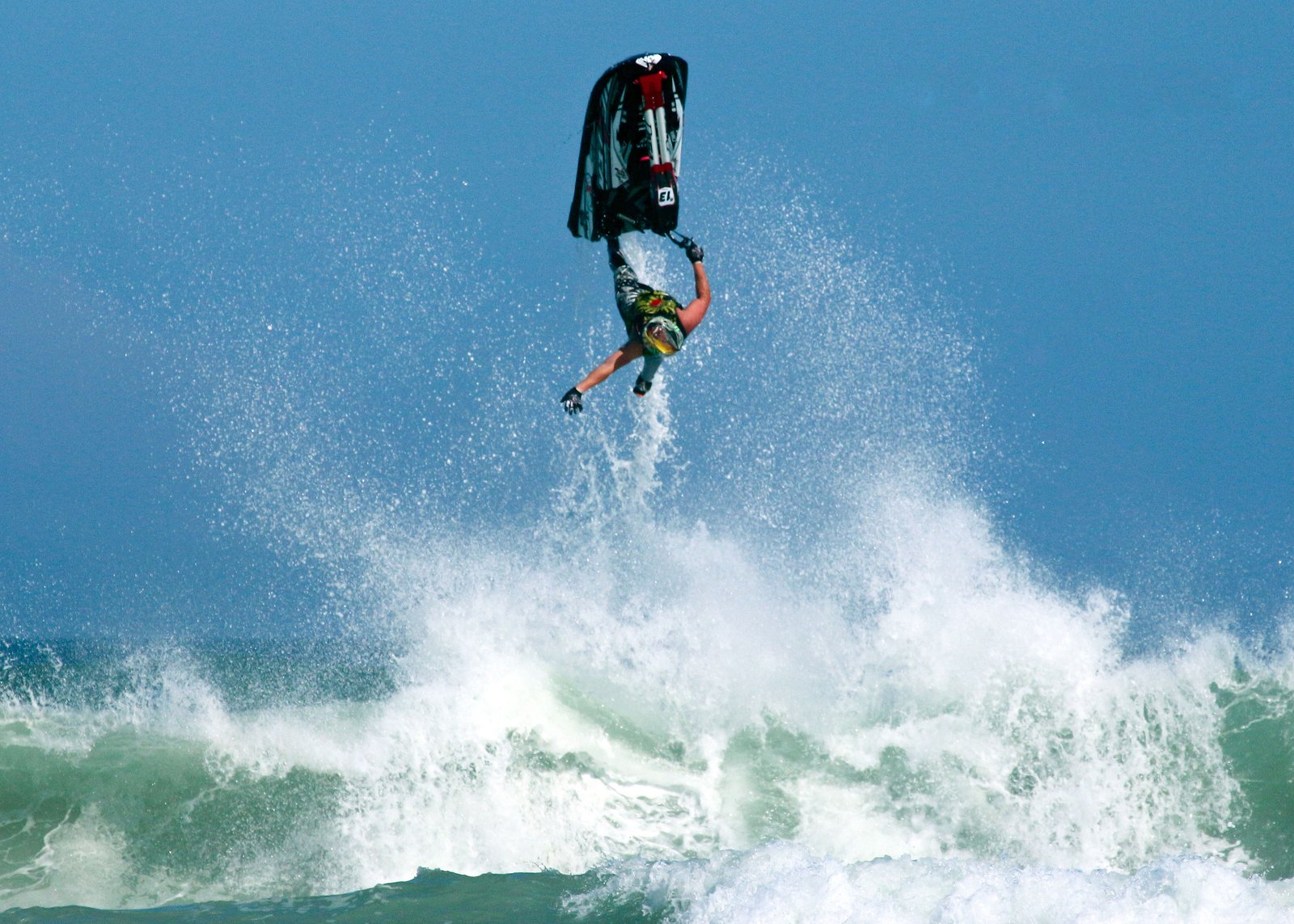
We think we’ve found the next big thing: a land-and-sea relay race where competitors have to lap a complex ATV course only to cross the finish line and run down the beach to their teammates aboard a PWC for additional laps around a closed course. Debuting in Kuwait, the first annual Red Bull Bar Bahr was organized by Club Basil Salem Al-Sabah and sponsored by Ford Middle East, Kuwait Kawasaki, Rhode Aamrzinsa, Sabah Al-Ahmad City Marine general for Youth and Sports and DFI in Kuwait.
Participants were divided into three groups and only the three fastest teams graduated to the final round. The winning team came home with a brand new naturally-aspired Kawasaki Ultra LX JetSki and some serious bragging rights. At the end of the day, once the sand and sea spray had settled, duo Mohamed Al Khalji and Mohamed Burbaya took championship in the first ever Red Bull Bar Bahr.
In the video below, you’ll see that the teammates controlled the final bracket race – both on land and sea – from the start, leaving the other teams battling for the remaining podium positions. The owner of the winning Mohammed & Mohammed team, Al Khulaifi Purbaa Qaúlaan said, “We are very pleased with this result, it was a fun race. Races were not easy, but the competition was very strong but we were able to win thanks to our efforts and perseverance. Were not only our participation in order to win, but in order to encourage this kind of sports. We thank the curators of the event and we hope to provide more activities, whether on land or at sea.” [pardon the incredibly crappy Google translation – Ed.]
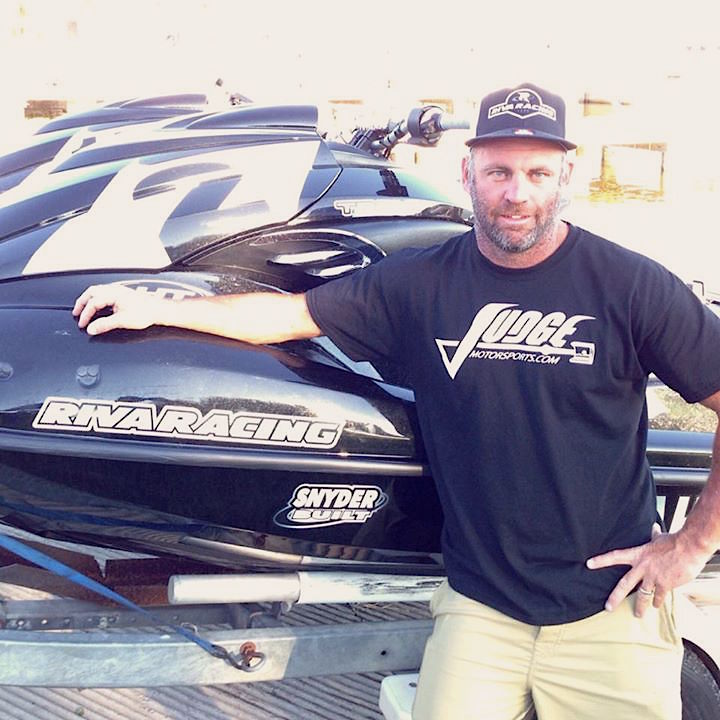
When one door closes, another opens. RIVA Racing Support Team rider Troy Snyder had a tremendous and turbulent year. The one to give fellow Factory Yamaha racer Aero Aswar the toughest competition for the Pro Watercross National Tour title for Pro Runabout Stock class, Snyder bounced back from defeat and managed to clinch the Expert Veterans Runabout World Championship at this year’s IJSBA World Finals in Lake Havasu City, Arizona.
Not only did Snyder grab second place in Hydro Stock class (bested only by Stan Hightower), but took home the world championships in Hydro Spec, Hydro Super Stock, and Hydro Unlimited drag classes on his #2 and #110 Yamaha FZRs. Although Snyder won’t be exchanging the National Tour for drag racing, it does keep him and his skis sharp, giving him an edge when the band snaps next year.
Congrats go to Troy, Yamaha WaveRunners, RIVA Racing, Judge Motorsports, Dean’s Team and everyone involved!
As of this writing, it’s 38-degree outside of The Watercraft Journal offices. And with a week left to Christmas, we’re still a ways away from de-winterizing our skis and venturing into the water. That is why this video from our friend James Tod at the JetSkiShop.com is so delightfully painful. We loved watching this group of adventuring jet ski enthusiasts tour Australia’s picturesque Hamilton Island, but also really, really resented those guys. Seasonal sports suck.
The JetSkiShop has made a name for themselves – in addition to being Australia’s “Number 1 jet ski shop” for Honda, Sea-Doo, Kawasaki, Yamaha WaveRunners – by conducting these monthly trips throughout the Gold Coast. Located in Ashmore, Queensland, the JetSkiShop and staff recently added new Yamaha WaveRunners to its showroom floor (as seen above).
“This was our trip last year,” James wrote us. “I can’t wait to get in the water for this [next] year’s trip!” The week-long trip to the Whitsundays in the Great Barrier Reef, took this group through some of the most pristine riding locations imaginable. “We were based on Hamilton Island for the week. Each day we made a trip around the tropical waters, which included watching migrating whales with their calves. The week’s onshore activities featured bonfire castaway night on a deserted island, some off-road touring and, of course, lots of jet skiing.
It struck us as being incredibly premature to make an announcement as to which new personal watercraft model would be the best for the year until say, the end of the year. That is why we waited until today to unveil The Watercraft Journal’s top pick (and runner-up) for the title of “Watercraft of The Year.” Of course, this decision didn’t come to us six months ago and we’ve been simply waiting things out, but comes after hours of deliberation, days of testing, and weighing all of the factors that make a vehicle stand out among the rest.
Mind you, there are several characteristics attributed to specific models that cannot be scored against another. To be fair, you can’t score a budget-friendly Yamaha VX Sport against a fully-loaded GTX iS 260 Limited, and expect the outcome to be fair. Rather, we had to evaluate each of the craft The Watercraft Journal personally laid hands on throughout its publishing year on its own merits, its impact on the industry and its overall reception by the market. Ultimately, it’s not a matter of simply being our favorite, but your favorite as well. So with that being said, here are our runner-up and 2014 Watercraft of The Year.
2014 Watercraft of The Year Runner-Up: 2014 Yamaha FZR Super Vortex High Output WaveRunner
It’s actually difficult to write this knowing how close the 2014 Yamaha FZR SVHO was to taking the coveted position as the first-ever 2014 Watercraft of The Year award. Ultimately, it was the FZR’s steeled position as a closed course turn-and-burner that fatefully bumped it from the top of the podium. But as history would show, very, very little was able to best the ’14 FZR from grabbing the top spot of any podium this year. In fact, it was this race-ready craft that dominated more motos in more races across the Pro Watercross Tour, the IJSBA World Finals and the 2014 Jet Ski World Cup than any other personal watercraft before it.
Replacing the existing Super High Output 1,812cc 4-stroke plant, the Super Vortex High Output package supplies the Yamaha with larger fuel injectors, redesigned lightweight pistons, increased oil and coolant volume, and 22-percent-more efficient intercooler, but a redesigned, larger (86mm) supercharger housing and 6-vein compressor wheel producing 60-percent more boost. The improvements coax an honest 260 (plus) horsepower from the SVHO. But the changes are not only to the engine: A performance-bred 8-vein pump and 160mm impeller pushes significantly more thrust through a new 3-degree nozzle (with cast-in diffuser veins) with a large 85mm exit diameter.
Combined with a new top-loader intake grate, a redesigned ride plate and longer, more aggressive sponsors made it very clear the SVHO’s intentions. The changes made to the FZR unveiled the brilliance in the WaveRunner’s 6-year-old hull’s soft-edged design. For those taking count, the appeal of the new SVHO spurred the defection of 11 top level racers from Sea-Doo to Yamaha. And at the conclusion of race season, the new Yamaha had three Pro Runabout National Titles in Pro Open, Limited and Stock, as well as IJSBA World Championships in Pro Stock, Limited, Expert Runabout Veteran and Women’s Runabout.
The 2014 Yamaha FZR SVHO is arguably the most aggressive, thoroughbred musclecraft that Yamaha has built since the two-stroke GP1300R. Although the GPR hull has gained new life as the darling design for HydroDrag racers, the FZR will likely affix itself as Yamaha’s most unapologetic closed-course-racer-from-the-factory that the PWC manufacturer has ever built to date. And that is why it has been one of our favorites for 2014 and the single-strongest contender for the title of 2014 Watercraft of The Year.
2014 Watercraft of The Year Winner: 2014 Sea-Doo Spark 2-up HO
You cannot argue with how popular Sea-Doo’s little-runabout-that-could is, and frankly, neither could we. Even with manufacturers spending thousands of dollars to throw some pretty nasty shade at the entry level machine, Sea-Doo dealers across the nation sold out of these things. Sure, with it’s bargain basement starting price of sub-$5,000, dealers barely made enough off of the sale of each unit to pay for the breakroom’s morning box of donuts, but that didn’t stop dealers from clawing over themselves to place orders when BRP reopened production mid-year.
According to Sea-Doo’s Tim McKercher, the Spark was “the number one reason the industry saw double digit growth last year.” Although we’ve received conflicting numbers over the past months – reporting that domestic Spark sales ranged anywhere between 8,000 to 11,000 – the sheer demand of orders placed by Sea-Doo dealers is enough to quantify the Spark’s popularity. Earning the position as the 2014 Watercraft of The Year isn’t weighed solely on total sales, although in this case it definitely helped a lot.
Rather, the Spark is also a winner because of its spirit. It’s a callback to years that many of us feared the manufacturers had forgotten, when an HX, a couple of buddies and a well-stocked cooler could provide a full-day’s worth of laughs. The two-seater (or “2-up”) Spark with the available High Output 90-horsepower tune is frankly, the only way to go, as lesser 60HP and 3-up units failed to stir the same smiles as the other. When equipped smartly, the Spark is fun, loose and playful, returning us to the days of powerslides, nosedives and other forms of aquatic mayhem.
Sure, the Spark is not without its faults, and detractors will site the polymer construction, nearly non-existent storage or its “tipsy” hull feel. But again, that’s not what the Spark is all about. It’s meant to be rowdy fun, not a long distance, pile-on-the-whole-family cruiser – there’s plenty of others that will do a better job. Even with its 48-different variations, the Spark is little more than a banana seat, a jet pump and a throttle. And that’s OK. In fact, it’s why we like it. It’s the ultimate waterborne go-cart. And it’s that spirit why Sea-Doo’s 2014 Spark 2-up HO is our winner for The Watercraft Journal’s 2014 Watercraft of The Year. Congratulations!
As you’ve might’ve noticed, there’s a whole lot of holiday specials springing up as we inch closer to Christmas. Although only 8 days away (as of this publishing), there’s still plenty of time left for your holiday shopping. And if you’re looking for a great Christmas special for the personal watercraft lover in your life (or you’re looking to treat your favorite toy), our friends at Diptech Performance have just the thing.
As an official dealer for JETSKI.XXX products, Diptech is offering a whole set of cleaning products (with a bucket and sponge) for $100. This package is usually priced at $114.75, so you’re saving nearly 15-percent off of regular price on what Diptech calls “The perfect cleaning products for your jet ski, trailer, car and riding gear.”
Besides the aforementioned bucket and sponge, the Christmas Special also includes JETSKI.XXX’s Extreme Clean Jet ski wash ($19.95), Extreme Tow wash and wax ($19.95), Extreme Condition ($24.95), Extreme Polish ($29.95) and Extreme Fresh wet suit wash ($19.95). For those of you unfamiliar with the JETSKI.XXX brand, it’s only a small part of the larger JET SKI CLUB and JET SKI TV group out of Australia. Including Financing, Insurance, Deals and nearly every other imaginable service, the JET SKI group of sites is working to improve all PWC enthusiasts’ riding experience.
Flatwater Freestyle is the basic starting point for most “average” guys, but covers a wide range of skill sets. This area of Freestyle consists of riding in a lake or river, with no available waves. Tricks can be performed on smooth water, or off of a small wake (called a setup wake) made by the rider. In the beginning, you can start off with your basic standup ski, some of which can be found as cheap as $1,500 in a ready to ride state.
As your riding improves, you will be able to learn new tricks, such as riding backwards, small wave jumping, diving under water (the submarine), and many others. From this point, if you’re hooked, (and you will be), its time for some equipment upgrades. Handling modifications usually come first, and not long after, the engine upgrades. These can go from mild to wild, and can run upwards of $40,000 for a pro level, high powered, lightweight carbon fiber hull.
Boat chasing is another common form of Freestyle jetskiing, and is similar to Flatwater, except that the riders go to areas frequented by large boats. Some serious riders build skis with this specific purpose in mind. These riders can be found in lakes, rivers, and the Oceans and bays, chasing large boats for that big air opportunity. Because of the large waves that some boats put out, riders can get great air time with a more economical powerplant. These skis run from stock to modified, but usually don’t get built to the level of the pro flatwater boats, because less power is needed, making them very economical.
Lastly, there are the surf riders (sometimes referred to as Freeriders). These guys live for the large waves that can be found in the ocean. Some have even been know to call in sick on a clean surf day. These riders can do sick things on mostly stock skis, but lately, the trend has been for these guys to build some very big and powerful skis for this type riding.
Reliability is key in the surf, and riders should never ride alone. Small issues can become very large ones in the surf. Bilge pumps, hood straps, foot holds, and handling mods are the starting points for these skis. These can also run from stock to pro level, and the prices can mimic those of the Flatwater skis, although surf skis are typically not built quite as light, and usually not with the top of the line power Flatwater requires.
The common denominator in all of these areas is the support of the fellow riders. Freestyle riders, in almost all cases, ride for the pure excitement and enjoyment of riding. There are no secrets to keep, no team loyalties (at most levels), and no money to be won (except in some pro level events).
This leads to a very helpful and supportive community. The popularity of social media has helped riders create larger groups, and stay in touch better. Internet forums are full of information on ski setup, engine tuning, what parts to buy, where to buy them, etc. There has never been a better time to enter in to the realm of Freestyle jet skiing.
Let’s face it, most of the US has packed up their skis for winter (except for you insufferably gloating jerks in Florida. Yeah, we get it. It’s like 68 degrees all the time. Great. Enjoy your love bugs). But when it comes to the off-season, it’s actually the best time to swoop in and make a killer deal or two. Why? Because people look at that big thing taking up space in their garage or sideyard (that they probably didn’t get to enjoy this summer as much as they had hoped), and wonder if they can’t drum up a few extra bucks for Christmas presents.
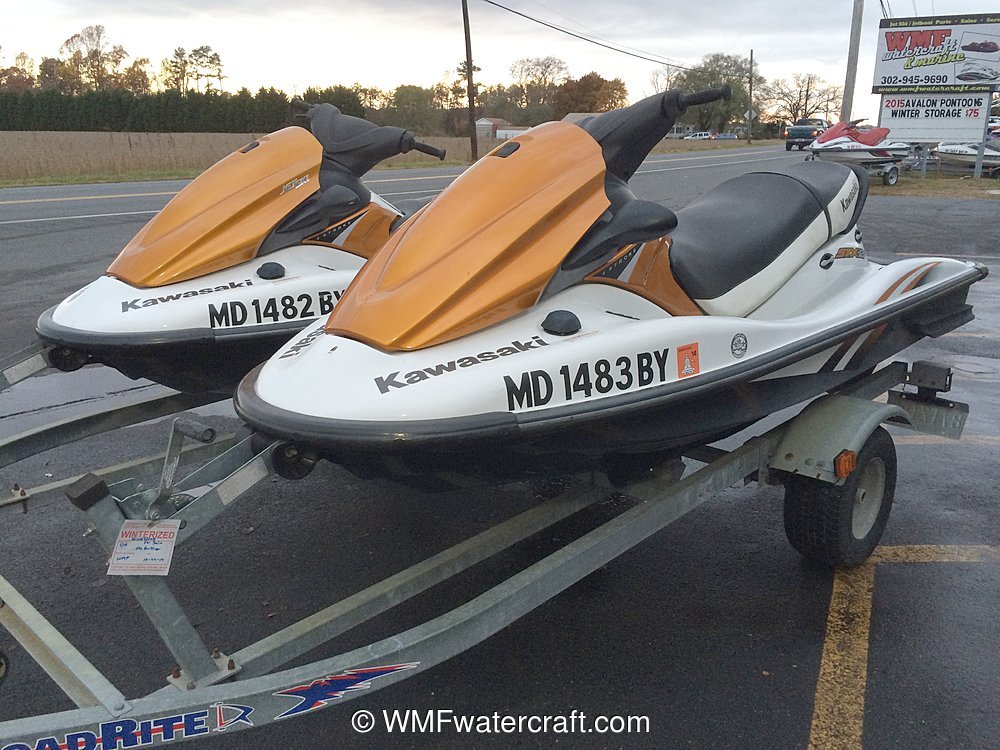
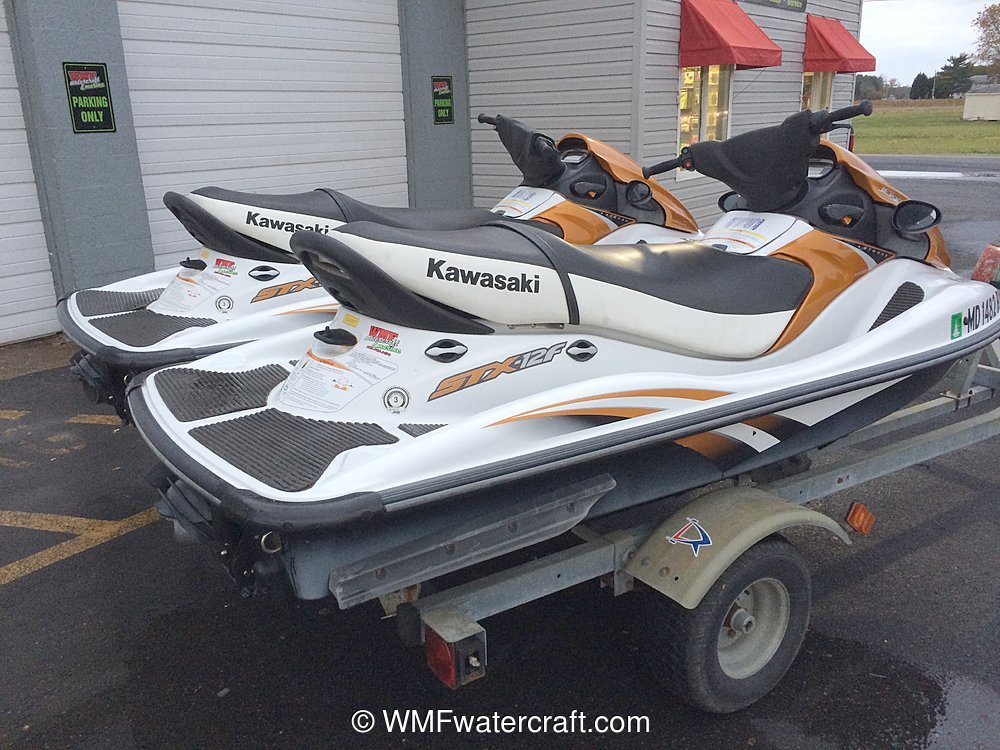
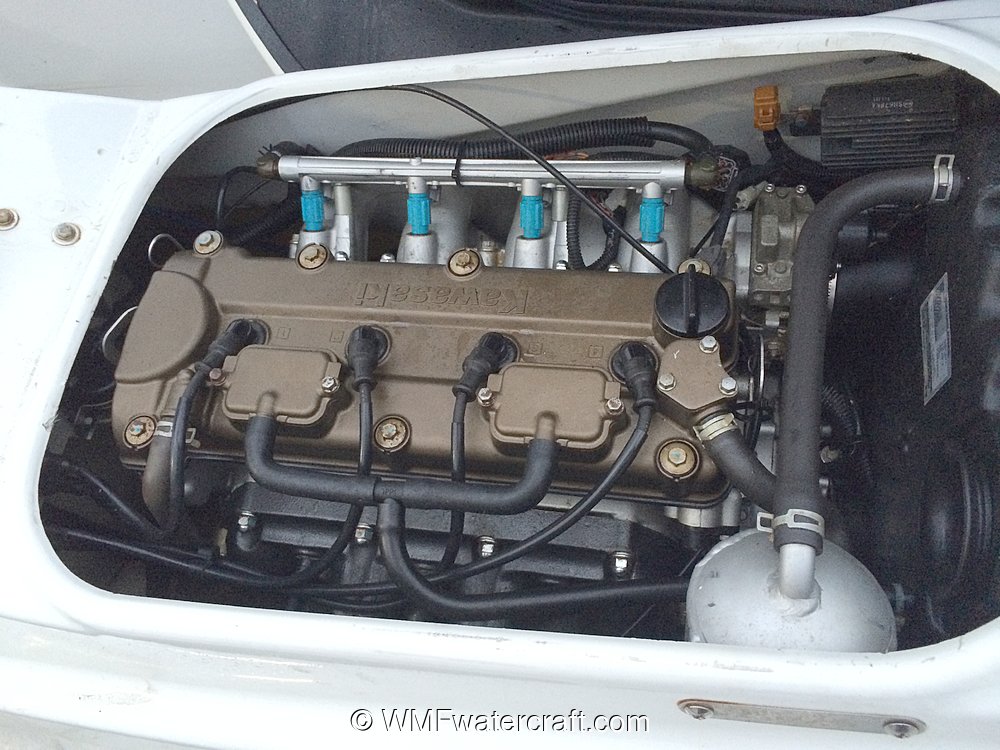
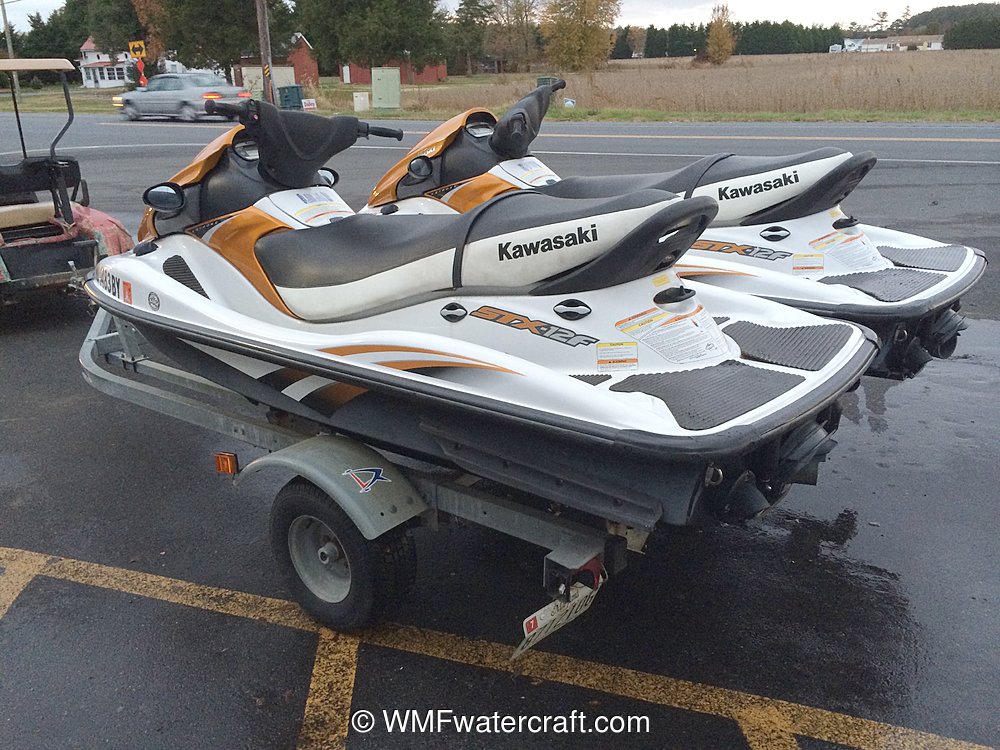
That’s why we liked this pair of 2005 Kawasaki STX-12F JetSkis, for sale over at WMF Watercraft. Yes, this pair of identical 3-seaters are powered by the previous 1200cc 4-stroke motor that preceded the current naturally-aspirated 1.5L. The duo have a documented 110 hours on both, and comes with PWC covers and the trailer (shown). The team of master technicians also performed full servicing and promise both skis are in excellent condition. Clothed in metallic orange and white, and including right-hand reverse and Kawasaki’s security key, these were once the flagship of Kawasaki’s JetSki lineup.
Prior to the introduction of the larger Ultra 250X in 2007, the STX platform was once the darling of the closed course, and earned Kawasaki several IJSBA World Titles. Now in its 12th year, the current STX-15F is waaay overdue for a redesign (if not just major facelift – the hull design is still pretty dang good). Until that day, these two orange-and-white STX-12Fs can be yours for $10,999 today!
As our friend Ross Champion quipped about the season, “Commerce, the true meaning of Christmas.” While the true meaning of the holiday has been buried under metric tons of tinsel and blowout sales at the mall, we’ll do our part to dilute the sanctity of the season by offering our top ten favorite items that we’ve been lucky enough to test throughout the past year’s worth of Product Reviews. And yes, there’s still plenty of time to get your orders in and have these goodies in time to have wrapped and stuffed under the tree.
1. Kool PWC Stuff Jet Ski Fishing/Cooler Rack – $390
It’s no coincidence that the top of our list is Kool PWC Stuff’s Fishing/Cooler Rack. It’s literally one of the coolest items we’ve had the pleasure of testing. Many storage/fishing racks sway heavily in quality as they do price; those on the cheap side are exactly that, usually flimsy and plastic. Then there are those that are so expensive they better be made out of space-age titanium (which they’re not). No, we found the Kool PWC Stuff rack to be pleasantly affordable, stout and accommodating.
Of course, the outstanding feature of the Jet Ski Fishing/Cooler Rack doesn’t require any cutting or drilling to your personal watercraft. Throw in that the Cooler Rack can also store a pair of really cool custom saddle tanks outside of the rack space itself, you could literally pack an additional 40 gallons of gasoline with you if you felt so inclined. Now, for you PWC fishermen, the rack touts more than a handful of rod holders and can house a cooler large enough to store plenty of life bait, or your most recent catch with no problem.
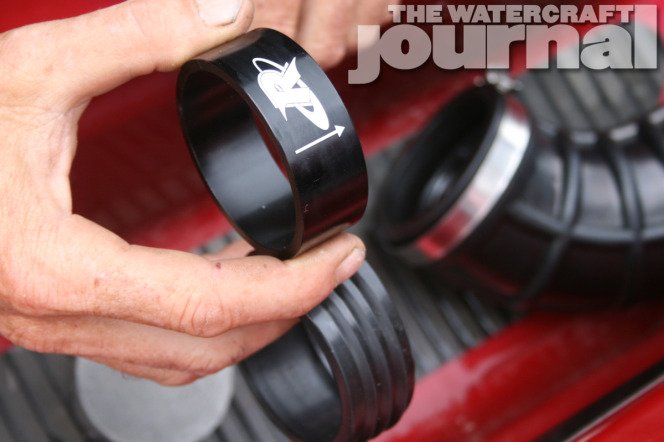
2. RIVA Racing’s Intake Manifold Upgrade Kit – $39.95
If you own a 2008-up Yamaha WaveRunner with the 1.8L 4-cylinder, be it a SHO or SVHO, this is bar none the single best performance item you can purchase. Regardless if you’re a weekend cruiser or a closed course competitor, the RIVA Intake Manifold kit – which is merely a precision-crafted billet sleeve to replace the mesh element (or “flame arrestor”) in all 1.8-liter four-stroke Yamaha engines’ intake manifolds.
The tapered collar is effectively opens up the Yamaha’s airways, allowing a greater volume of air and fuel to be ingested at a higher rate by removing the restrictive mesh element in the intake manifold and replacing it with RIVA’s Intake Manifold Upgrade Kit. It takes less than an hour to install and the gains are immediately noticeable. No changes to your ECU or engine setup are required. It’s a must have if you want to go fast with a Yamaha these days, so trust us. You want one.
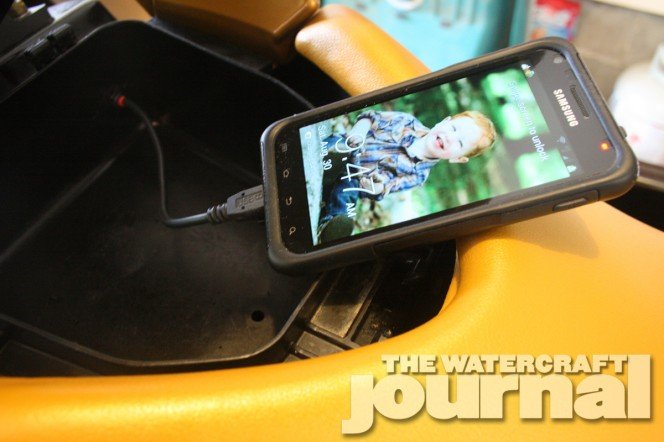
3. Ride Power USA’s Android Phone Charger – $69
We first got our hands on Ride Power USA’s Android Phone Charger about this time last year. It took us a couple of months to get around to installing it, and man, were we mad we waited so long. The Ride Power USA kit is possibly the most useful tool we’ve installed on our ski…ever given how often we bring our phones with us – be it for pictures, GPS mapping or just never being able to go anywhere without our smart phones. The simple design is so straightforward that the only reason it shouldn’t take longer than the suggested hour to install it to any runabout.
4. EZ Throttle Ergonomic Throttle Trigger Extension – $19.99
The EZ Throttle Ergonomic Throttle Trigger Extension simply slips over your existing finger throttle taking it from approximately two inches to about five inches, which just about mirrors the length of your PWC hand grip. All you need is 20 minutes with minimal tools – a small socket wrench with an adapter and 1/8-inch hex driver (or Allen wrench) and a 5/64” Allen wrench – and you will have radically improved your ski’s hand grip ergonomics; allowing the rider to use four fingers instead of just one or two, using less effort to squeeze and hold the original throttle.
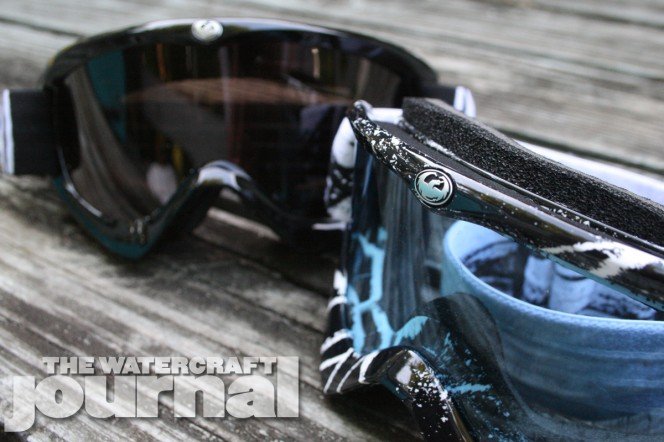
5. Dragon Alliance’s MDX Hydro Goggles – $49.95
If you buy these, you will wear them. In fact, you’ll find yourself wearing them more than you think that you would. Seriously. The Dragon Alliance’s MDX Hydro Goggles are that comfortable. Designed specifically for watersports (i.e. riding your personal watercraft), these beauties feature waterproof tri-layer neoprene face foam that not only is designed to survive prolonged exposure to water, but also keeps out unwanted water from entering.
The Dragon Hydros float and the 1 1/2-inch strap features a silicone bead that grips firmly to your helmet (if you’re wearing one). The frame is made from polyurethane, which keeps it lightweight and flexible. But it’s the Dragon’s lenses that shine most. The frames allow for wide, panoramic lenses opening up your range of vision and are 100-percent UV (UVA/UVB) proof and coated in a proprietary anti-fog treatment.
6. Hydro-Turf’s Hydration Roller Bag – $50
You might thinking, “A bag? Really?” Seriously, we use the Hydro-Turf’s Hydration Roller Bag all the time. Let me repeat: ALL. THE. TIME. It’s huge. It’s strong and surprisingly affordable (more on that below). Made from heavy-duty nylon, it’s tough as nails, and comes in at an impressive 29”x17”x14”. That might be more bag that you think you might need, but trust us, you’ll find a use for all that real estate.
Featuring large wheels with sealed bearings that glide smoothly, the Hydration Bag can be pulled along by its molded handle grip. Three thick nylon skids on the bottom provide added rigidity and durability not found in competitor’s bags. Lastly, heavy duty zippers seal the main area and full-width front pouch as well. If you want to score a deal, use code “CODE-TWJ” in the comment section at the end of the ordering process, you will not only get the Hydration Roller Bag for $50 (that’s a $30 savings) and also earn a 15% discount on all mats, seat covers and sheets of Hydro-Turf! Yeah, you’re welcome.
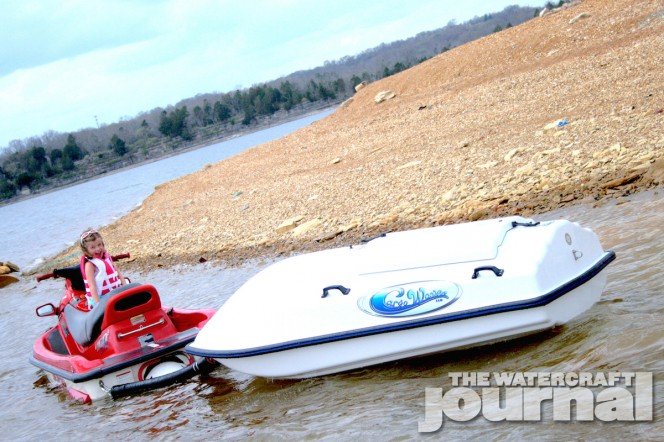
7. Cargo Wave PWC Trailer – $1599
There are certain kinds of people who will LOVE the Cargo Wave PWC Trailer, and there are those who will never see a use for it in a million years. Fatefully, the first group of people are the ones who have been waiting for a quality, durable and functional towable trailer for decades – and we’re telling you, the Cargo Wave works. Made of two specially-molded fiberglass clam shells, and bonded together in a fashion similar to your watercraft, even with a rubberized bondrail, the top deck features a flip-up hatch with steel-braided tethers, and held down with rubberized latch straps, providing a watertight seal.
A one-way vent allows air circulation without letting in water, helping to keep mold from collecting inside. Inside is 28 cubic feet of storage, with a reinforced platform with non-slip matting and railings to strap your cargo down. Each Cargo Wave comes with its own full sized Igloo cooler (tied down with a pair of crisscrossing bungee cords). Towed via a pair of heavy-duty capped and steel-braided, rubberized 3-inch diameter hoses, the trailer mounts with the tightening of two C-rings into the cables’ stout cast O-rings, and to the trailer itself with a T-handle pin (for easy removal at the end of the day). The rubberized hoses allow enough flex to allow the trailer with naturally sway through your ski’s wake.
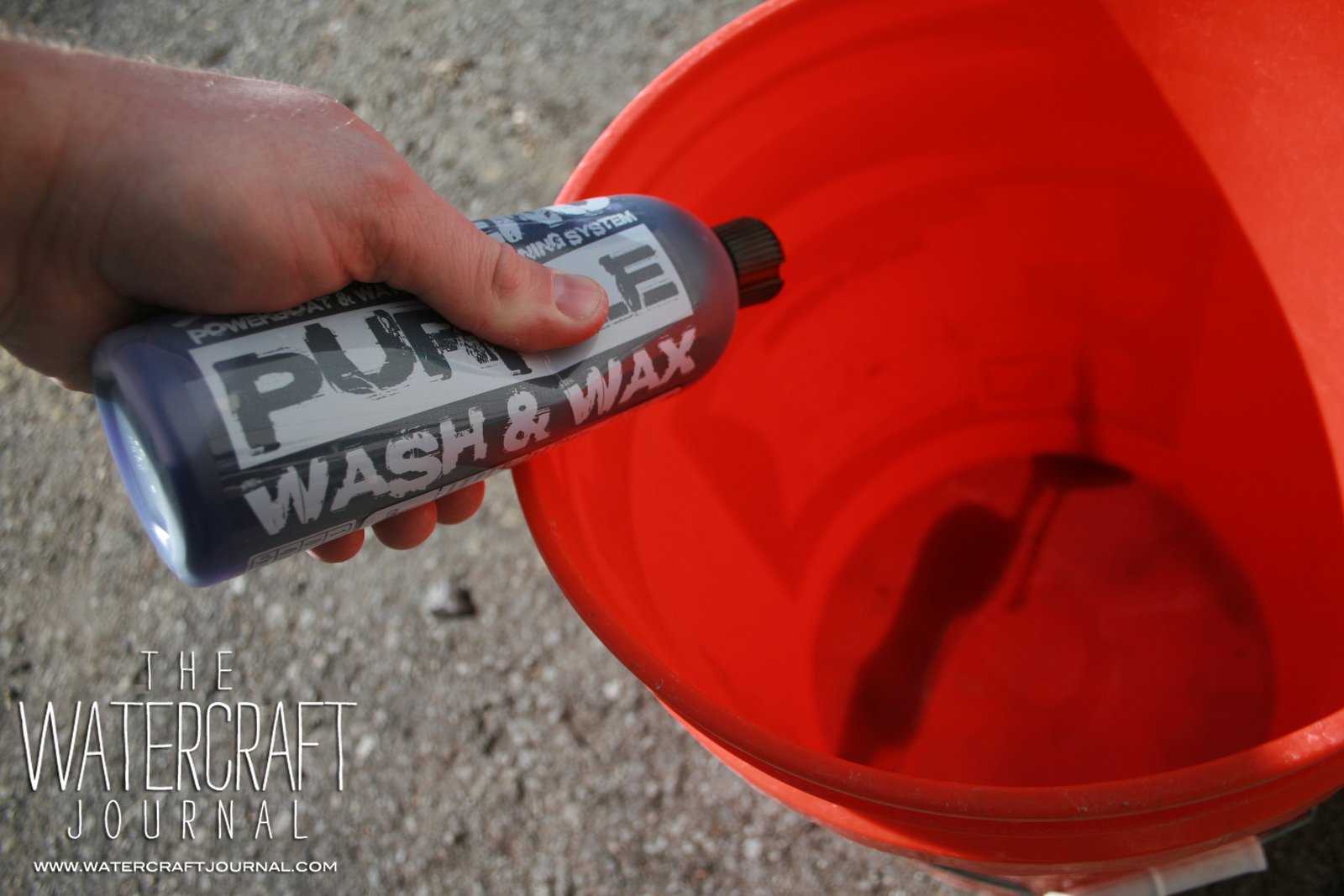
8. Jet Renu “Purple” Wash & Wax – $9.95
A few months back, we asked Jet Renu if they had a possible wetsuit washing soap on the drawing board. Their reply was, “We already have it. Purple.” Sure enough, Jet Renu’s Purple Wash & Wax premium soap was a fantastic substitute for using harsh dish soap or expensive wetsuit cleaners. Fortified with 100-percent Brazilian Carnauba Wax, you wouldn’t think that Purple would clean neoprene as well as it penetrates deep down into the gel coat to lift away caked on dirt and grime.
Purple Wash & Wax left behind no residue and provides a protective barrier from the sun’s harmful UV rays. A bottle of Purple comes in a super concentrated formula, providing a high-foaming soap that is Ph balanced, non-toxic and biodegradable.
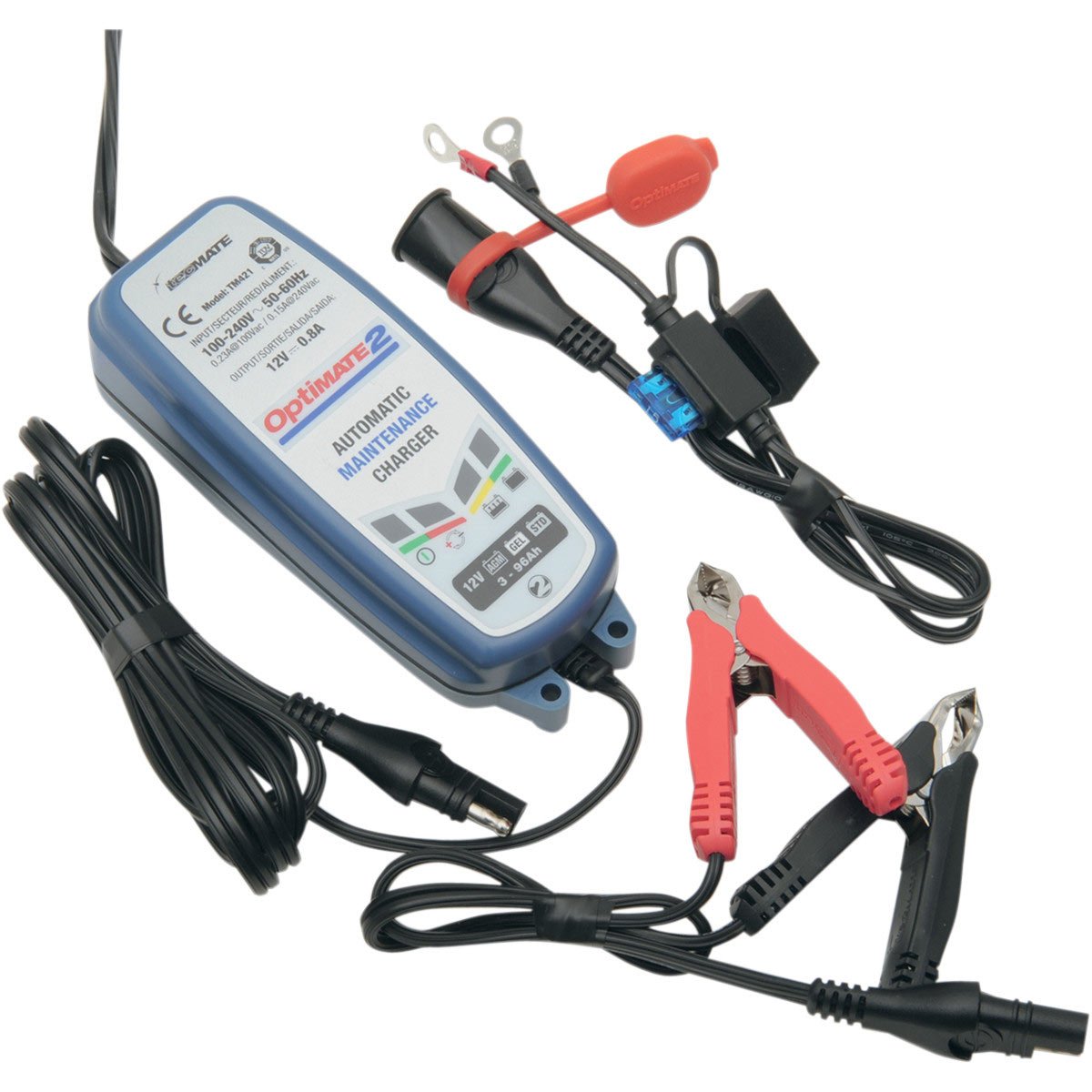
9. Watcon’s Battery Charger Optimate 2 – $50
Available through our friends at Watcon, the Optimate 2 “smart” battery charger-maintainer is “a cost effective solution for long term maintenance of 12v batteries.” By supplying 0.8A constant current, the Optimate 2 automatically brings the battery to full charge and then switches to a “unique battery-saving maintenance charge mode” to keep battery at 100-percent, be it ready to run or preserving the life of the battery of long periods of sitting. It’s recommended for standard (with removable caps) Sealed AGM (absorbed glass mat), and sealed gel 12V lead-acid batteries up to 50Ah. Again, it’s fully automatic, and includes safety features such as “no spark connection,” and reverse polarity protection.
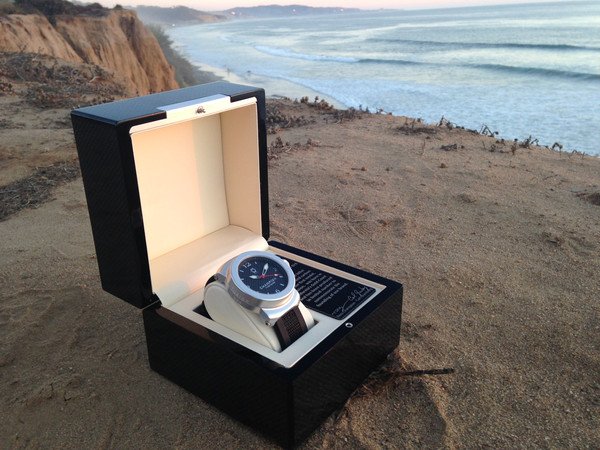
10. Champion Timepieces’ Fusion – $350
Finally, the coup de grace of our Top 10 list for personal watercraft enthusiasts is this absolutely gorgeous watch from Champion Timepieces. Featured last week, the Fusion comes in a unique box with a custom engraved plaque (containing a personalized thank you note from Carl and Ross). The limited edition Fusion contains a big, bold billet aluminum 46mm case, raw carbon fiber 36mm face with brushed aluminum features, a strong and comfortable 24mm nylon and co-molded silicone rubber strap from Reactor Watches, hypoallergenic stainless steel back, 10mm screw-in crown, 2mm K Glass scratch-resistant crystal, Miyota Quartz movement, super luminescent hands and is 10 ATM water resistant.
Just so you know, “The limited edition Fusion has been created to commemorate the founding of Champion Timepieces and the forming of a partnership between the founders Ross Champion and Carl Gramberg,” according to the official release. “The Fusion is a real authentic representation of the culture that so much of our lives revolve around. We used many of the same materials and manufacturing techniques in building the Fusion that have made our world of high performance watercraft what it is today.”
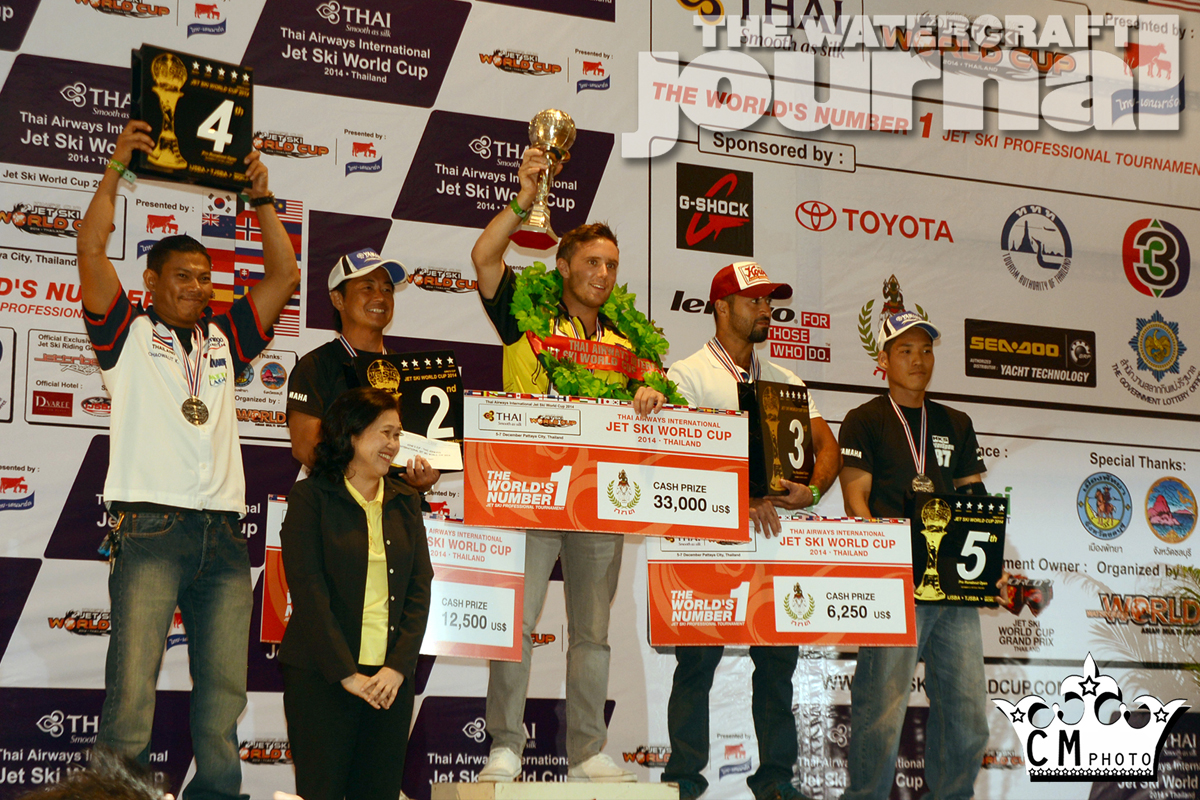
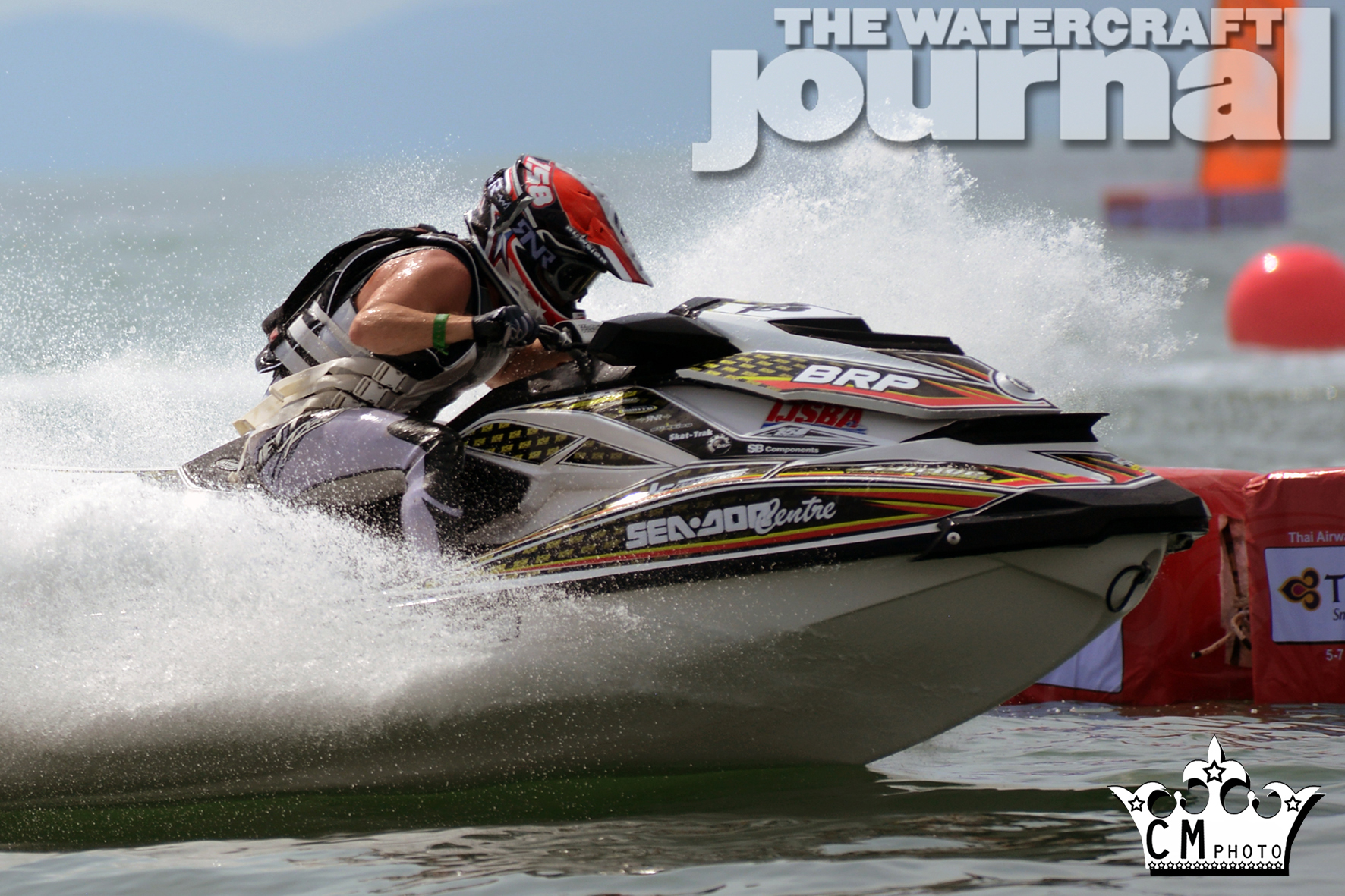
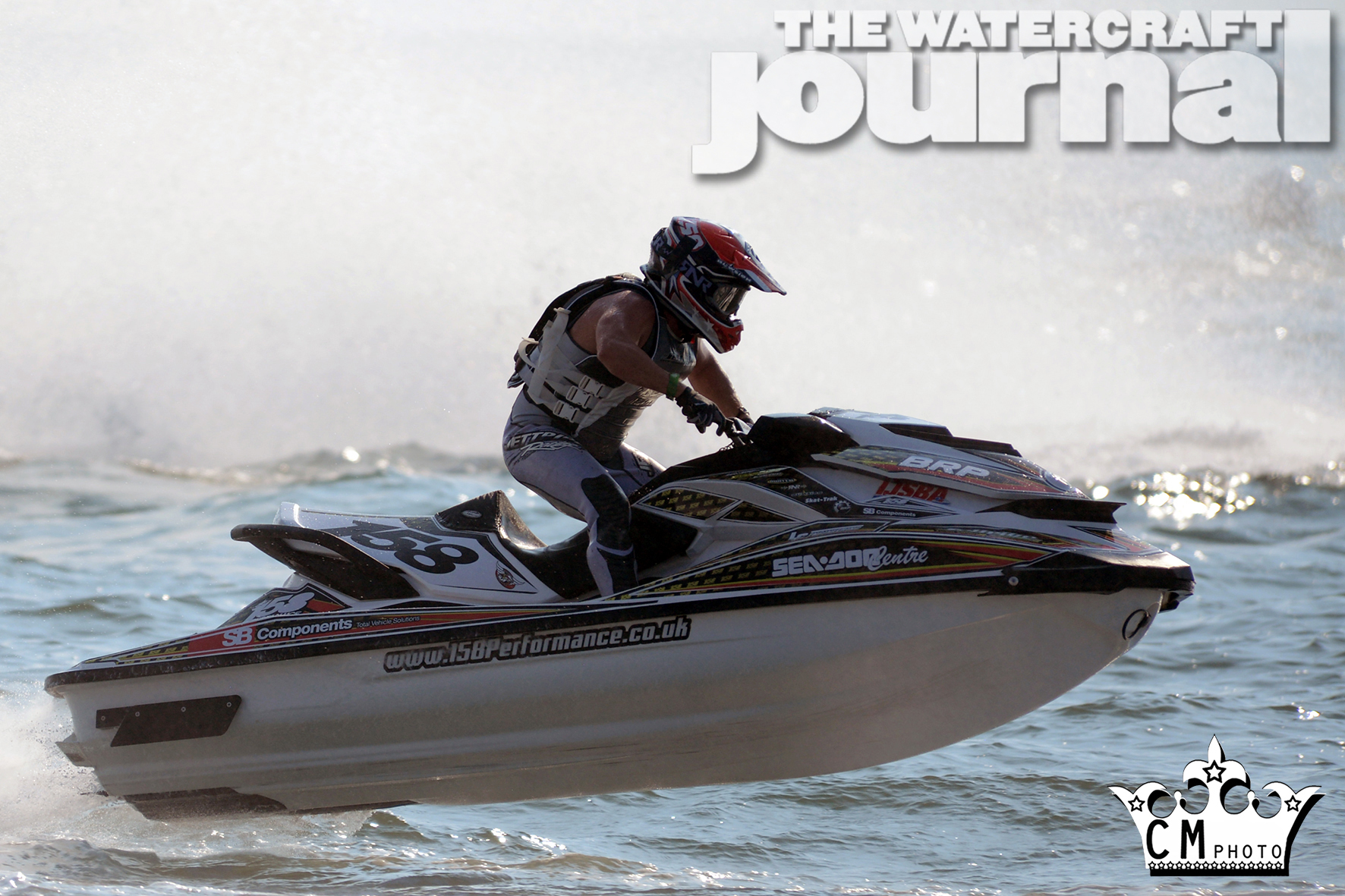
There was a major milestone in the world of personal watercraft performance that has gone for the most part completely ignored: how two athletes from the United Kingdom decimated two of the biggest classes. Lee Stone and James Bushell put on such powerful performances in Pro Freestyle and Pro Runabout GP and Open, respectively, that the standing watermarks will likely remain in places for several years to come.
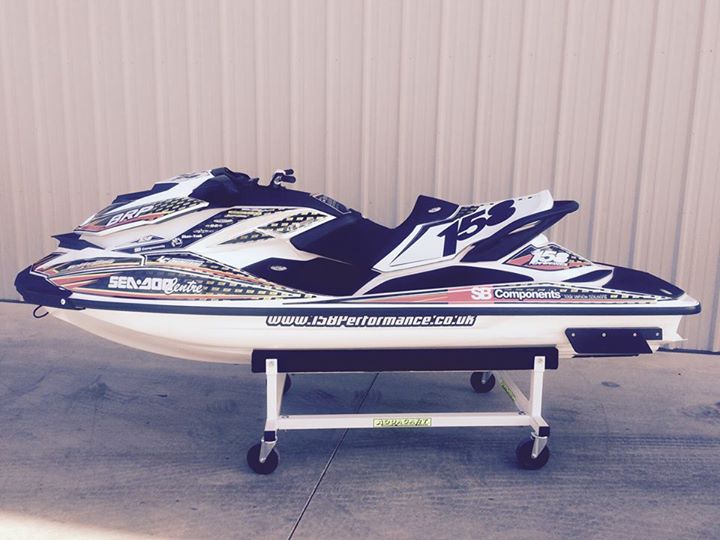
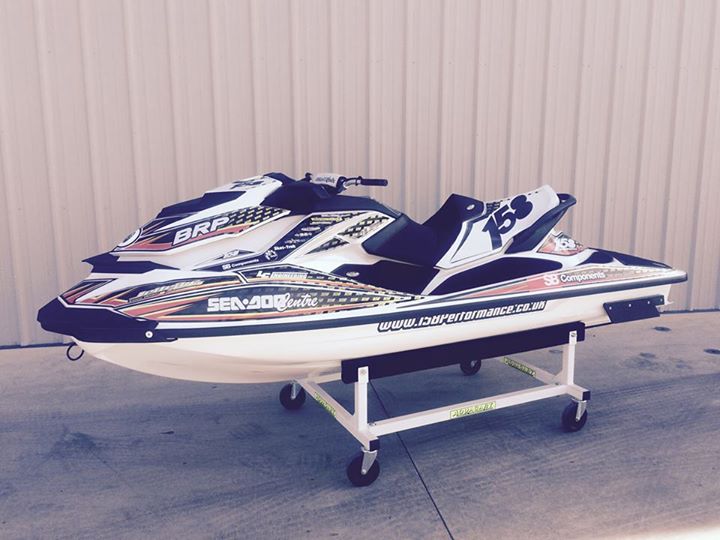
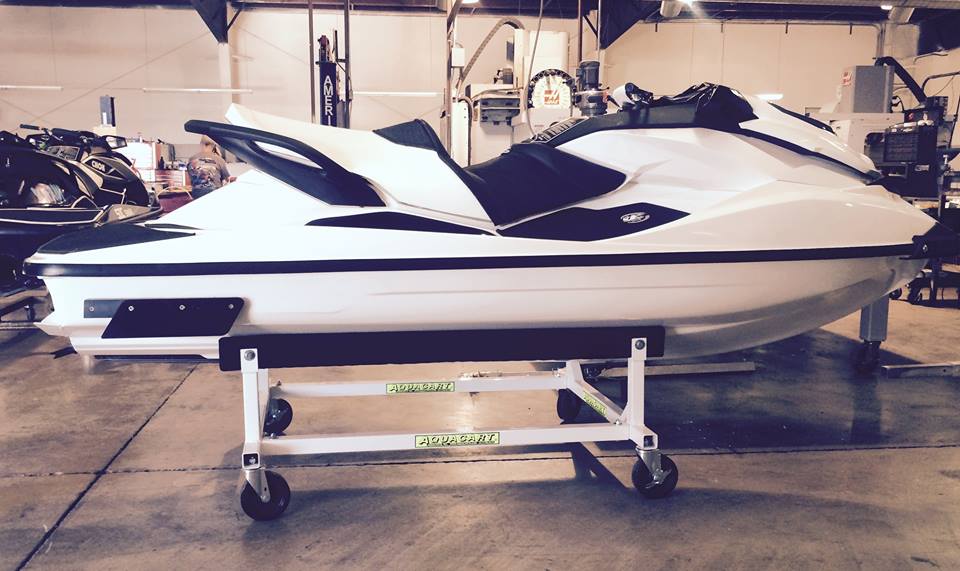
The win not only earned Bushell the coveted King’s Cup, but a fat sum of $33,000 for his win. His 2014 season not only bumped the champ’s count to IJSBA 11 world titles, but the first Briton to bring home a King’s Cup. The feat of course, has been hailed by fans of jet ski racing worldwide and rightfully so. But none have been more congratulatory than the crew at Aquacarts, who published a gallery of James’ world-winning Sea-Doo’s being built while rest on a set of custom one-off shop carts built specially for the World Champ!
Below we’ve included some of Aquacarts’ cool build pics as well as plenty of action of James at this year’s King’s Cup.
Many of us ride for different reasons. Like myself, who enjoys historical rides, a group of northern PWC adventurers set out to commemorate the 400 year old historic journey of [1]Samuel de Champlain, in his birch bark canoe, on the Ottawa River in Canada. Samuel de Champlain was a French Navigator, among many things, who founded both New France and Quebec City in Canada and the Ottawa River separates the Quebec and Ontario Provinces.
This group of explorers utilized the on road support of a tow vehicle and flatbed trailer to assist, not only in the transfer of fuel but also for the groups luggage, any breakdowns or mechanical issues that could have arose and for portaging the three dams along the journey. I can personally attest to the time in planning such an adventure. This group has provided a wonderful ride report, along with all the info and navigational points needed for one to do this awesome ride.