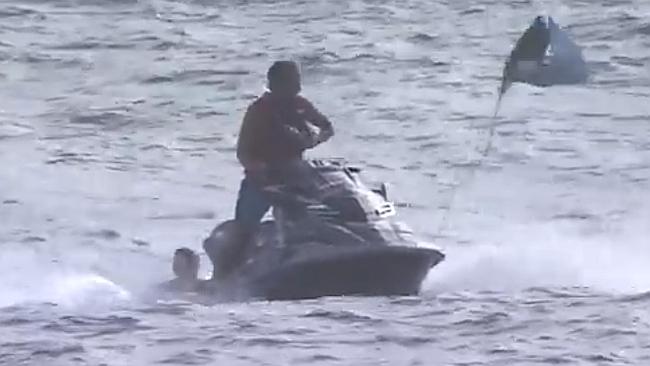
One very close call between a high flying stingray and professional surfer Stephanie Gilmore and her Yamaha FX thankfully resulted in little more than a acrobatics show rather than something far worse.
As reported by The Australian, the altercation was captured during the Quiksilver and Roxy Pro held at Snapper Rocks in Australia’s Gold Coast, cameramen captured the short second-long encounter between the female surfer and the ski’s pilot aboard her tow-in runabout and the stingray.
Gilmore was being pulled out for her quarterfinal showdown at the Roxy Pro when the winged stingray leaped several feet in the air, it’s barbed tail whipping in the air close enough for the rider to raise an arm to shield himself before the stingray dove back down into the water.
Personal watercraft riders have had countless encounters with wildlife while riding. Thankfully, nobody was hurt, but this close scrape is a reminder of how to always remain vigilant while riding. You never know what’s going to jump at you.
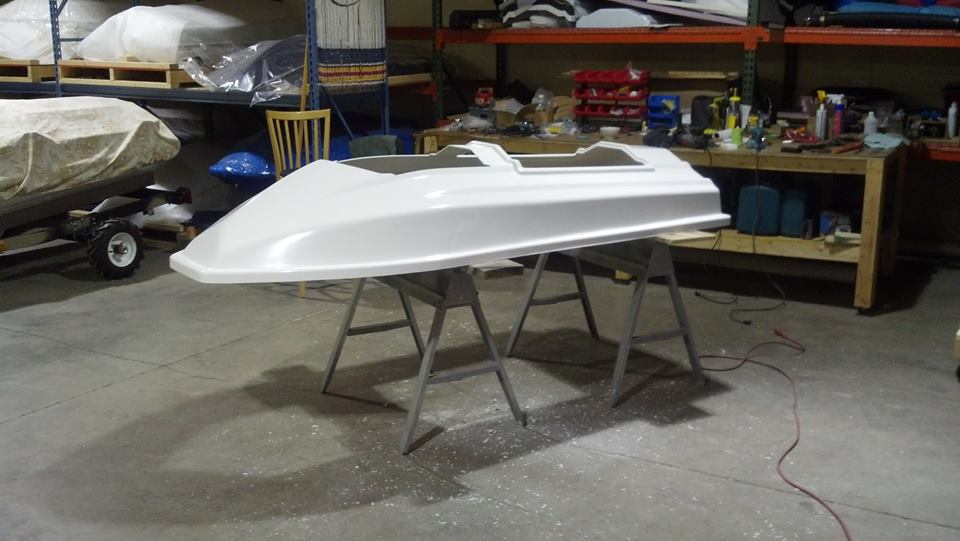
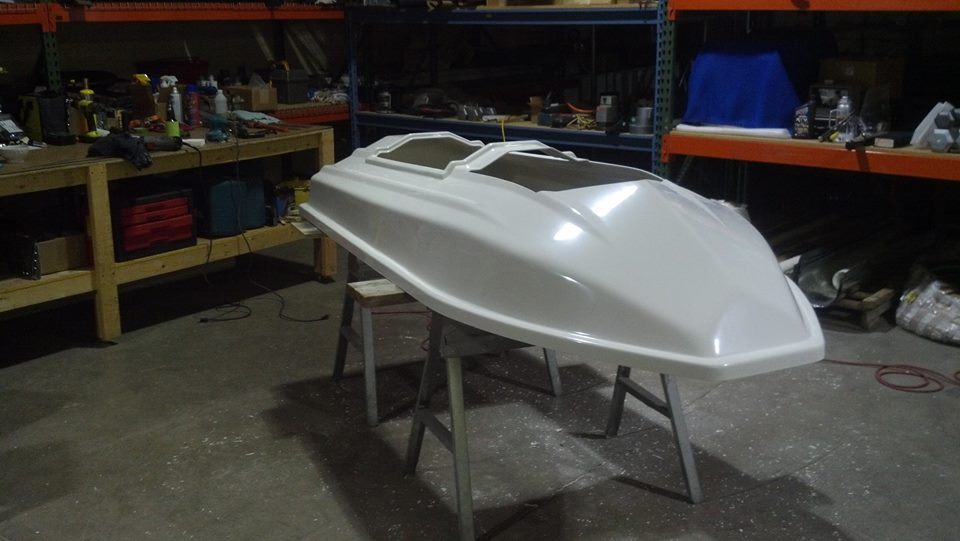
When discussing the Cargo Wave with Paul Thomas, he explained that the goal behind the Cargo Wave was to develop unmatched durability so that rescue, life support and even military organizations would want to put the Cargo Wave to use. Now, as the seasons finally drift into some suitable riding weather, Cargo Wave has leaked out the next generation of PWC trailers.
In a recent Facebook post, Cargo Wave published a handful of images showing a new design in the development stages: “A little boat building going on today at Cargo Wave. Two new prototype “Dual Hatch” units going together. One unit set up for Commercial – Search and Rescue / Red Cross use, the other dialed in for personal use / marketing. Plans completed already for tooling mods. There will also be a single “Full Access” model as well. Here’s some pics!”
Rest assured, when the new dual hatch Cargo Waves hit the streets, The Watercraft Journal will be one of the first to test it out. Until then, stay tuned!
Today’s top-of-the-line personal watercraft come from the factory performing at such levels that could outpace the craft that competed in the World Finals less than a decade earlier. It’s astounding the rate of progress we’re receiving from “out of the box” runabouts these days. The handling, cornering, acceleration and added amenities of modern runabouts are truly amazing – but that’s not to say that there isn’t room for improvement.
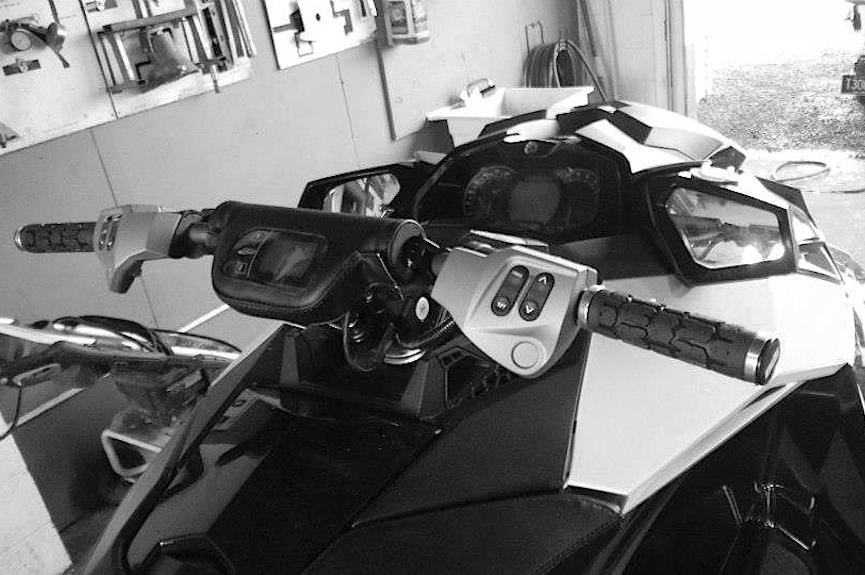
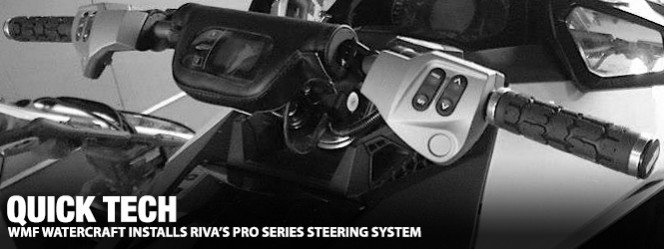
RIVA Racing’s Pro Series steering system not only replaces factory plastic with billet aircraft-grade aluminum and stainless steel, but improves steering response, stiffness, durability and adjustment.
RIVA Racing’s Sea-Doo RXP-X 260 Pro-Series Steering System is designed as a direct replacement for the factory OEM steering neck and shaft, as well as the handlebars and grips. The system replaces plastic system with a significantly stronger piece providing variable tilt positions, precision feel, and improved dependability.
The replacement steering shaft is constructed of aircraft grade aluminum tubing for maximum strength and rigidity, and stainless steel construction ensures no rusting or discoloring in fresh or salt water. The engineers at RIVA made sure that the hollow steering column would accommodate the OEM wiring harness, tucking away the sensitive wiring. Additionally, the bar clamp accepts any 7/8-inch handlebar or 1 1/8-inch bulge bar.
Altogether, racers and performance lovers have cheered RIVA’s inclusion of the factory “Off Throttle Assisted Steering” system and the adjustable “quick-turn” settings on the billet aluminum steering arm. And as one has come to expect from RIVA, all of the aluminum parts have been anodized to further prevent corrosion.
Installation of the complete Pro Series Steering System took only a couple of hours and required a handful of basic tools. The certified technicians at WMF made short work of the project and you should too. The steps are easy to follow so we made it a point to break them down in an easy-to-follow format:
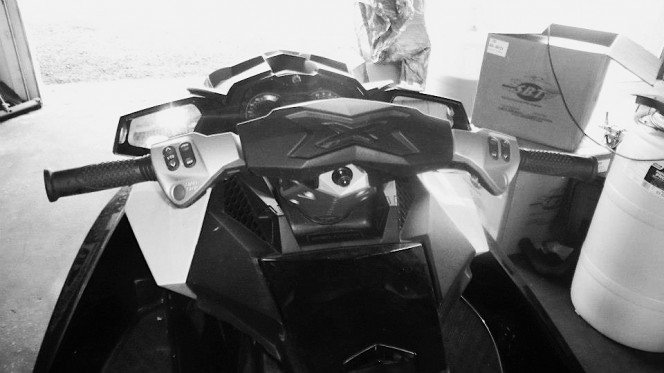
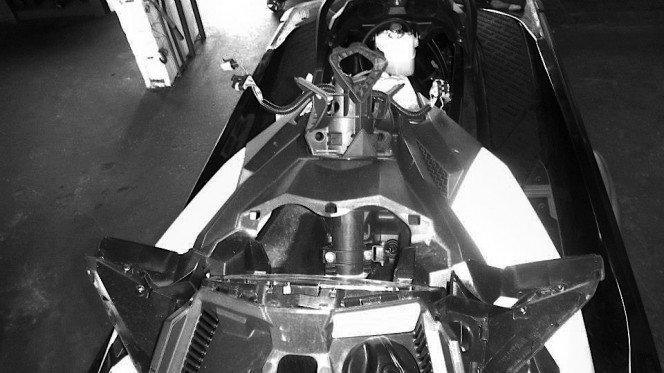
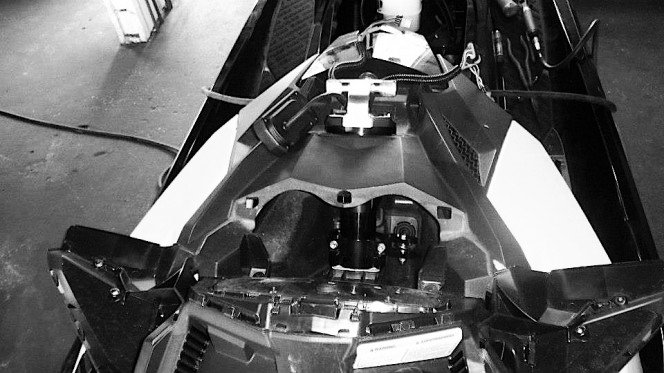
Step One: When dealing with electronics in any form, always disconnect the battery first. Next, organize yourself to have your tools, lubricants, and instructions from RIVA nearby.Step Two: With an Allen driver or wrench, remove the iTC and iBR control panels from the handlebars.Step Three: Removing your handlebar pad next will allow you access to move the handlebars themselves.Step Four: Accessing the complete steering neck and linkage requires removing the fixed gauge pod bezel.Step Five: Removing the factory steering neck is made easy once you disconnect the steering linkage and feed the factory iTC and iBR loom through it.As a quick comparison, you can see how the RIVA Pro Series steering system is far superior to the plastic factory unit. The Pro Series also allows for quick ratio turning adjustments.Step Six: Because the Pro Series system is designed to be a direct replacement, there is no cutting or modifications required to install the new aluminum neck.Step Seven: RIVA’s engineers thoughtfully designed the new neck to be hollow, allowing for the factory loom to be fed up through just like the factory.Step Nine: The new billet head unit attaches effortlessly to the neck, and allows the use of any 7/8-inch handlebar or 1 1/8-inch bulge bar.Step Ten: With a pair of new ODI grips, the direct replacement RIVA Pro Series Steering System radically changes the look and feel of your RXP-X 260 with only an hour or so’s worth of time.Bonus: Because WMF Watercraft always goes the extra mile, the crew had a custom Athena cover made so adjustments to the aftermarket Athena computer could be made on the fly.
Over the weekend, Yamaha Watercraft USA released a pair of upbeat YouTube videos comparing the all-new Sea-Doo’s Rec Lite Spark watercraft to Yamaha’s decade-plus-year-old VX runabout.
In light of the whimsical tone and lightheartedness in the videos – titled, “Sea-Doo Spark: How Much Does It Really Cost” and “Sea-Doo Spark: How Durable Is It?” – they pose a strong comparison between the new Sea-Doo budget watercraft and their tried and true VX three-seater. In the videos, Yamaha’s host points out the Spark’s polypropylene plastic construction, modular design and pricing structure, and other characteristics that ought send up red flags, according to the clips.
Upon their release on YouTube and immediately thereafter on various social media channels, the court of public opinion took the ball and ran with it. There were plenty who sided with Yamaha’s claims as well as those who voiced concern or displeasure with Sea-Doo’s latest entry, while others challenged the comparison claiming the two models aren’t “apples to apples” and even biting back at Yamaha.
Either way, it’s a bold move for Yamaha. Admittedly, The Watercraft Journal’s review of the Sea-Doo Spark was enthusiastic, but in as much as the lightweight, entry-level craft was used and operated within its limits.
Because of the heated nature of this ongoing debate, we are not taking an official position, but rather would present the two videos and let you make your own decision:
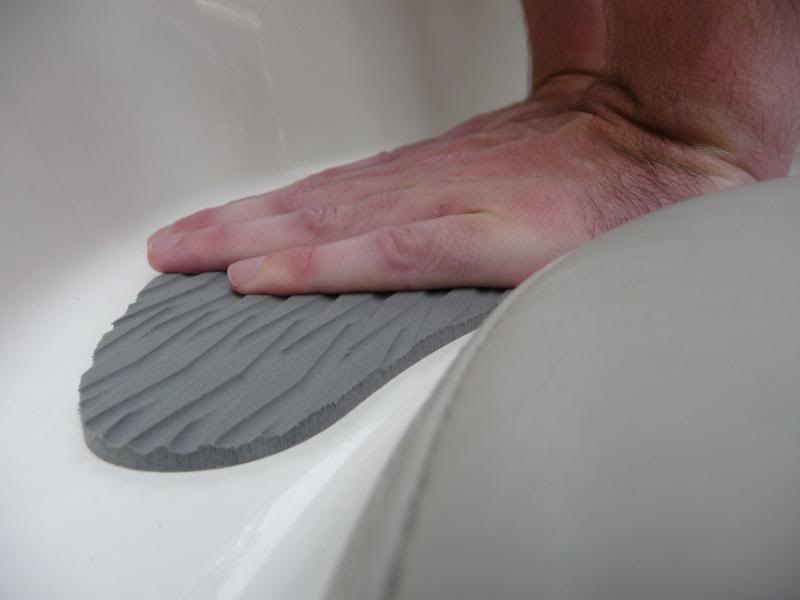
Here’s something you might not have considered: improving your personal watercraft traction mats. It’s literally a Saturday morning project that not only adds some very nice aesthetic beauty to your runabout or standup ski, but also significantly improves your footwell and swimstep traction. It’s one of those “you won’t appreciate it until you do it” sort of things that you just have to take our word for.
Prior to only a few years ago, factory traction mats were thin, slick and often flimsy – that is, of course, if they even had mats! Many runabouts didn’t have mats, but just textured gel coat. No exactly comfy stuff to rest your feet on. That’s why a new foam traction mat kit from HT Premier is such a smart decision.
HT Premier has been around for over 25 years making custom seating and coverings for a variety of motor and powersport vehicles. Owned by Hydro-Turf the biggest name in personal watercraft traction mats and seat covers, HT Premier put together this great little video showing how surprisingly simple and fast a new traction kit can be installed, replacing your faded, cracked and weathered factory kit.
From the “We Promise We’re Not Making This Up” Department, Austrian company E-Volution has introduced what they are calling the “jet ski on wheels” – the Jetflyer. But don’t get your hopes up too high. From what we can see, there’s little to no DNA linking the two.
The single-seater cart seats the driver high off the ground over an electric motor and battery array that touts a 50 mile range on a single hour and a half charge, with a top speed of 30 miles per hour. That’s right. There’s no jet pump further distancing the Jetflyer from its jet ski familiar claim. Rather, the steering console pivots akin to a runabout, but that’s where most of the similarities end.
But before you pass judgement, know that E-Volution has been purportedly “flooded with requests – and are now working round the clock to meet demand.” Company manager Michael Ritt said, “This year we are going to increase production of the Jetflyer up to 700 vehicles, most of which will be going to customers in Switzerland, Spain, Austria, and also with significant numbers going to Germany and Turkey.
“One of the popular things is our promotional offer ‘Move my own vehicle’ where the customer gets to help with the building of the machine by making all the individual requirements that they might need.” The latest numbers state that production of Jetflyer vehicles now will be as high as 1,700 units.
In addition to the Jetflyer, E-Volution offers the Jetflyer Mooove, a customized company vehicle idealized for courier and deliveries, looking much like a four-wheeled Vespa scooter with a pizza delivery rack on the back. Other clients have included golfers, the German Post Office, the Vienna airport and even local firemen.
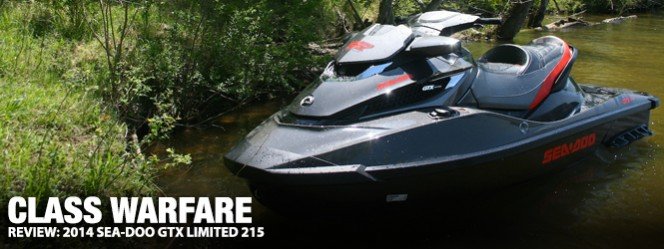
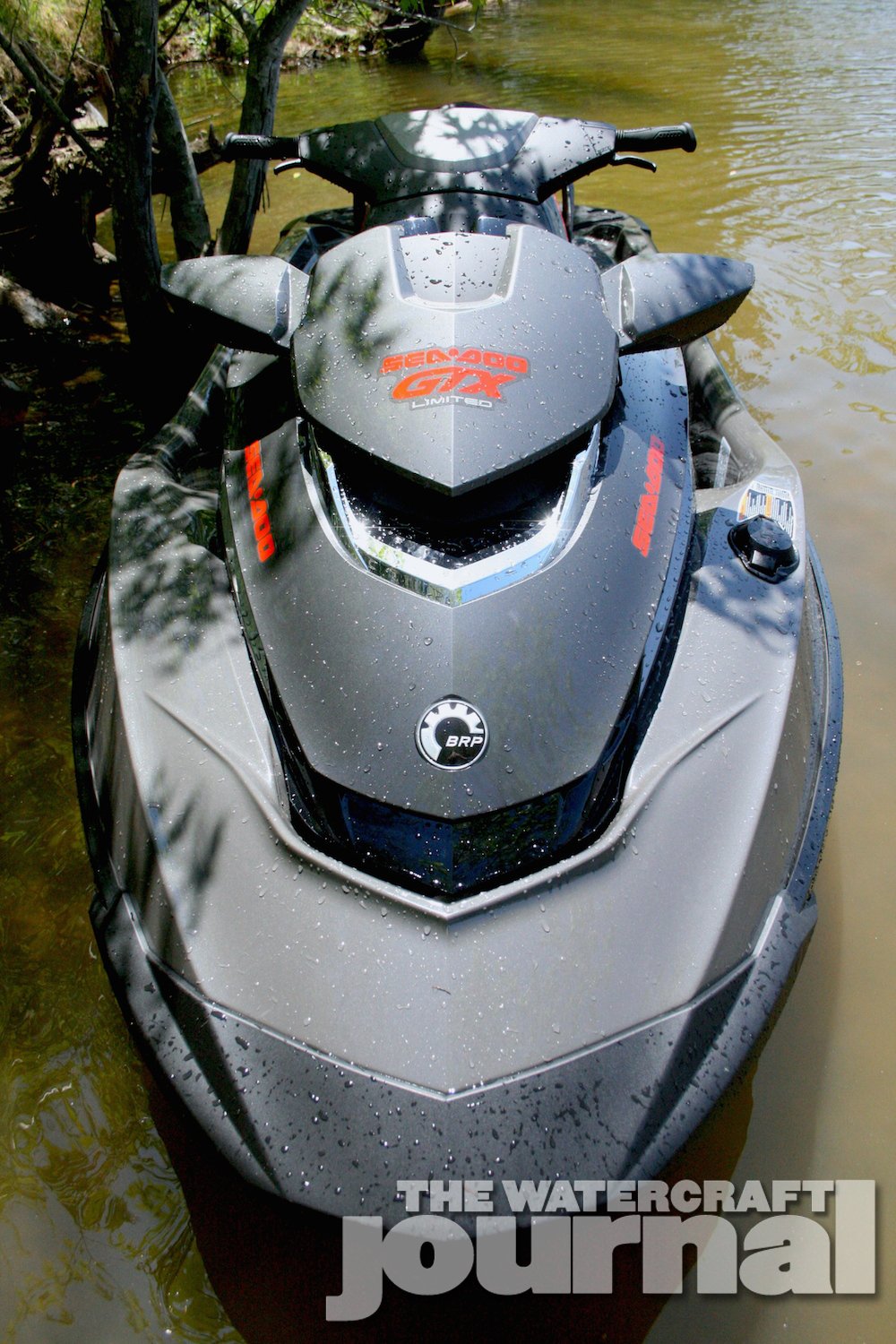
New for 2014 is one more addition to the Limited lineup, the supercharged GTX Limited 215.
Right now, Sea-Doo is literally giving away features that other manufacturers would sell their own grandmothers for. Even those individuals with personal brand biases who stop their nonsense and honestly evaluate their favorite three seater versus a comparable one from Sea-Doo will admit the same.
With the advent of the S3 hull in 2008, Sea-Doo has provided personal watercraft enthusiasts with a virtual cornucopia of bells and whistles, innovative safety features and downright enjoyable creature comforts that are not found elsewhere – and if they are, they’re often executed in a lesser fashion.
At their core, personal watercraft are designed for the maximum amount of fun and enjoyment. And for most, horsepower plays a huge part in how much fun there is to be had. Sea-Doo of course, has excelled at offering the most features and creature comforts for the buck, but fell a bit short in the “thrills” department in their “Luxury” segment.
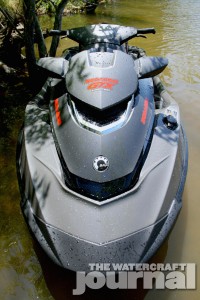
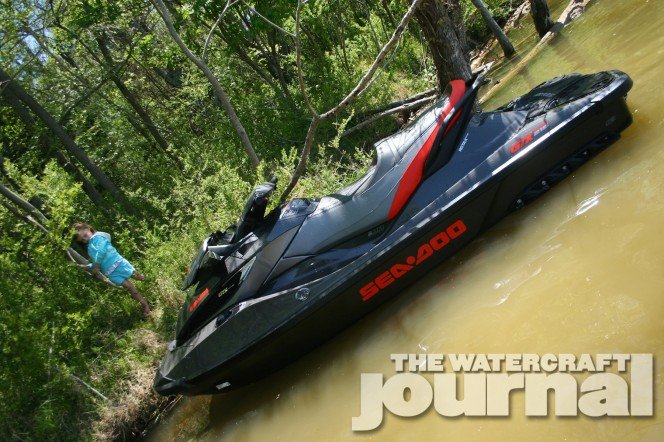
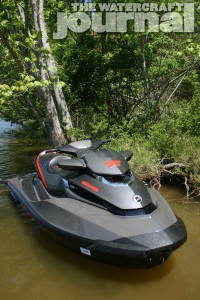
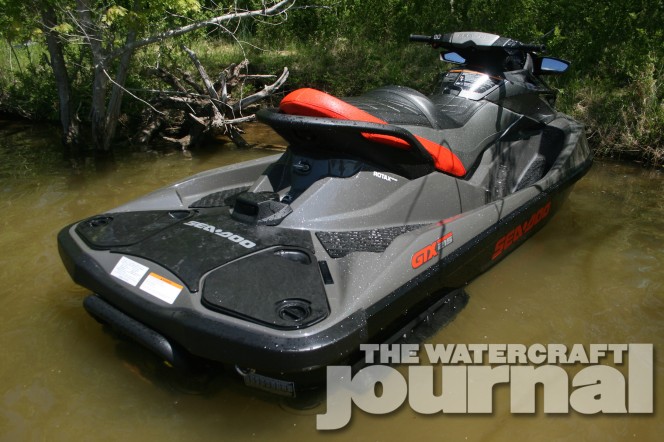
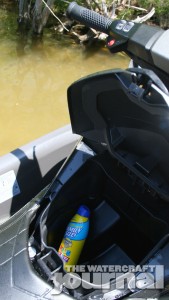
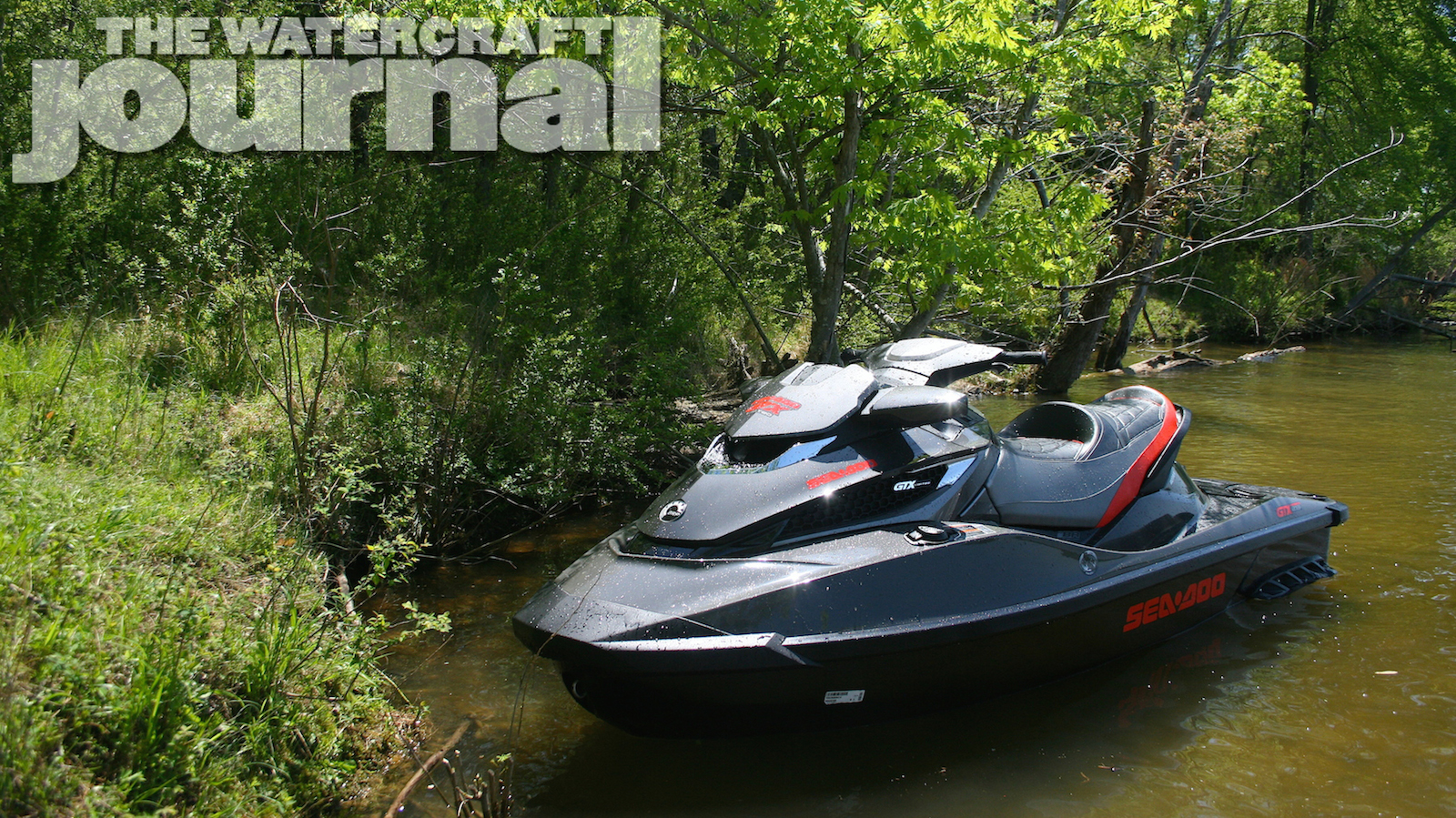
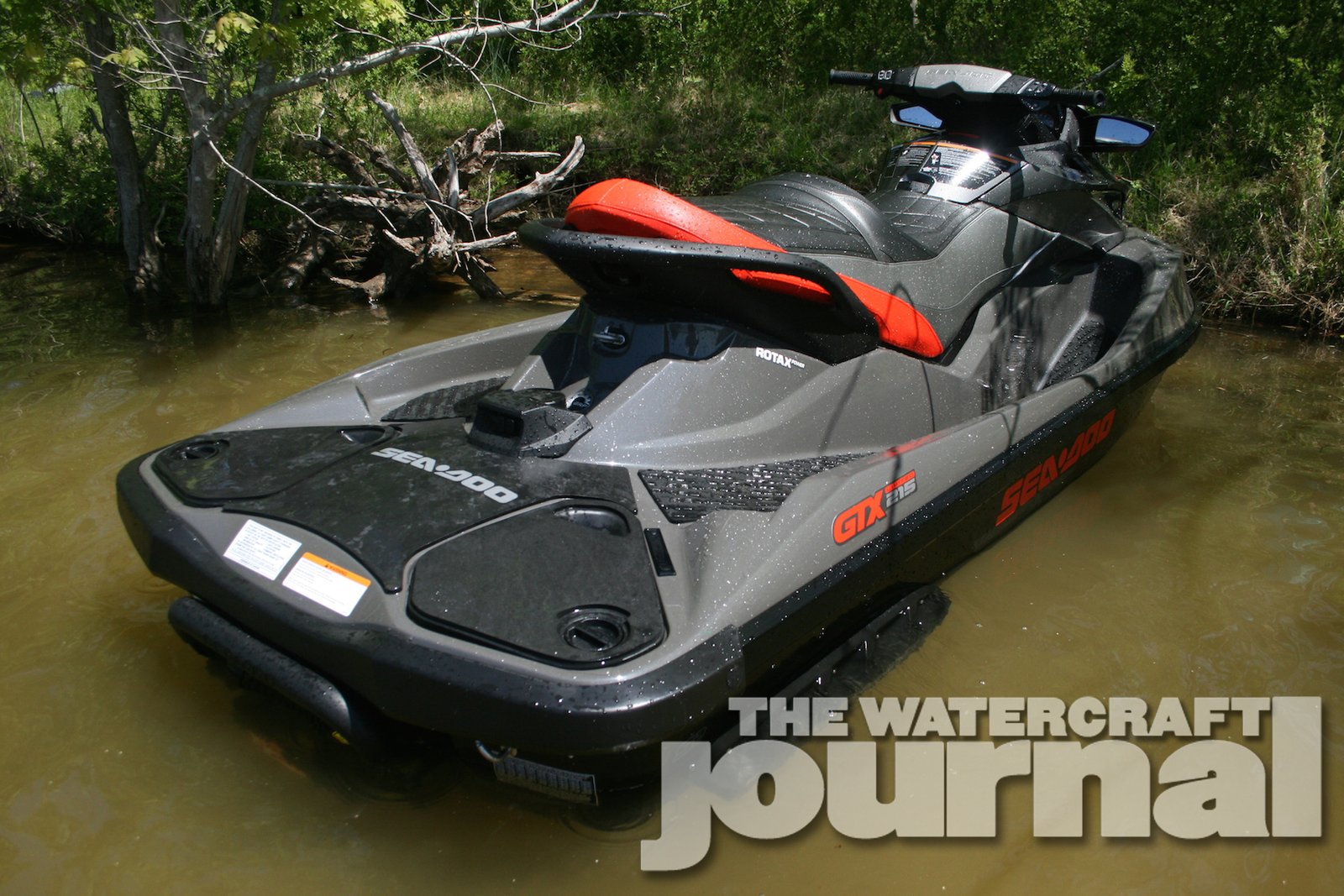
The GTX Limited 215 is low and angular, yet never deviates from its luxury branding. The deep scalloped touring seat is narrow at the knees and broad in the rear making it a fantastically comfortable cruiser bench.Included in its Limited packaging is a list of goodies including a custom PWC cover, Sea-Doo’s spring-loaded Speed Ties, watertight front storage bin, a glovebox organizer and much, much more.
That is, until now. For 2014, Sea-Doo added one more sibling to the front-of-the-class Limited family, the 2014 Sea-Doo GTX Limited 215.
The 215-horsepower supercharged and intercooled Rotax powertrain is nothing new, and can be had in Sea-Doo’s stripped-down hot rod, the GTR 215, which oozes coolness. But the 215HP configuration is all but absent from the larger S3 hull (only found elsewhere in the Wake Pro 215). The large 159mm pump carries over, as does the rest of the jet setup.
In fact, the savvy enthusiast will notice that the standard GTX 215 is gone from Sea-Doo’s lineup. Well technically, it’s not gone, it’s just “leveled up” to the glossier Limited packaging.
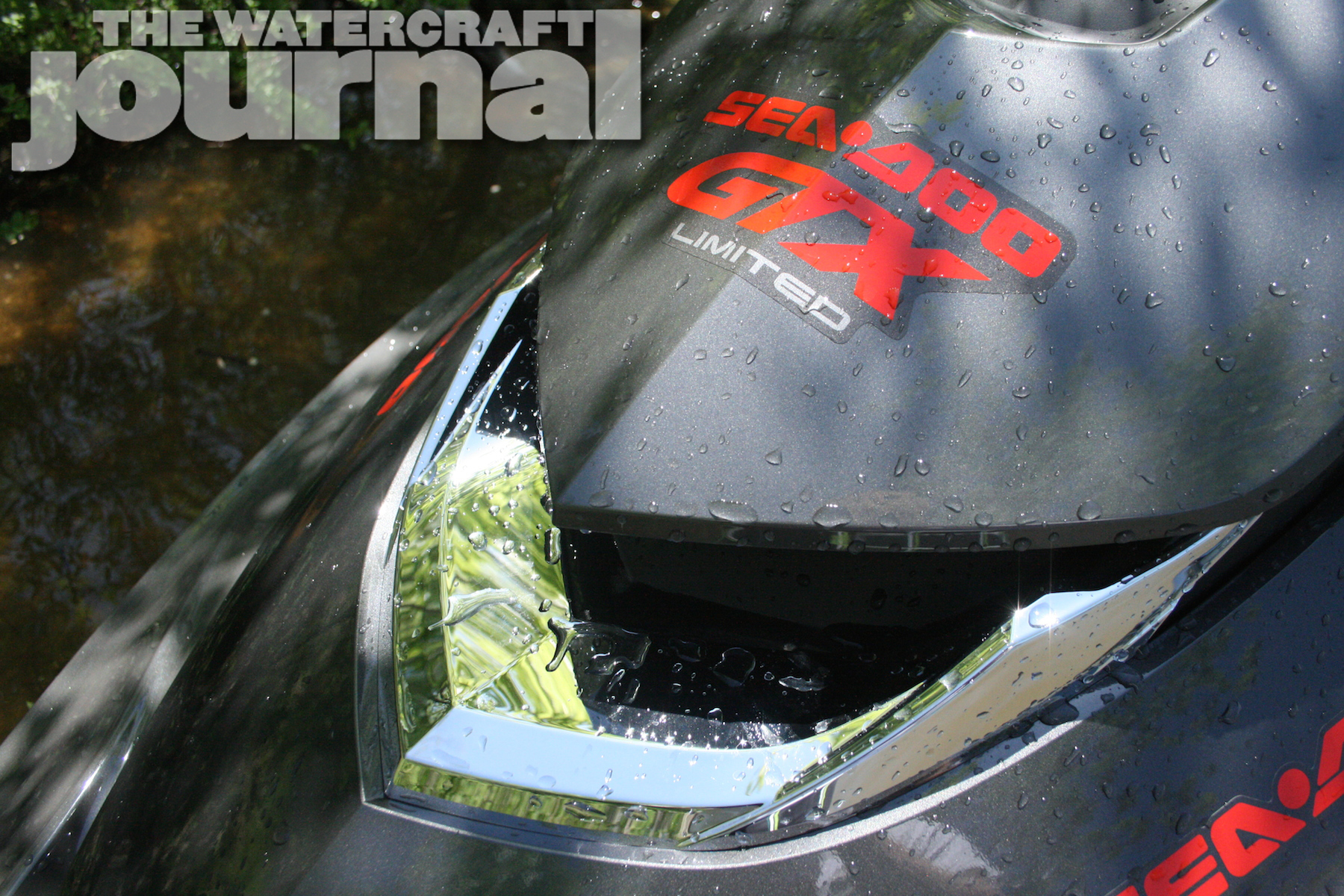
Not only does the Limited livery give the GTX 215 the moniker’s signature pleated seat, custom PWC cover, Speed Ties, depth finder, glove box organizer and removable dry storage bag but its iconic Anthracite Grey-with-red highlights paint scheme and chrome accents.
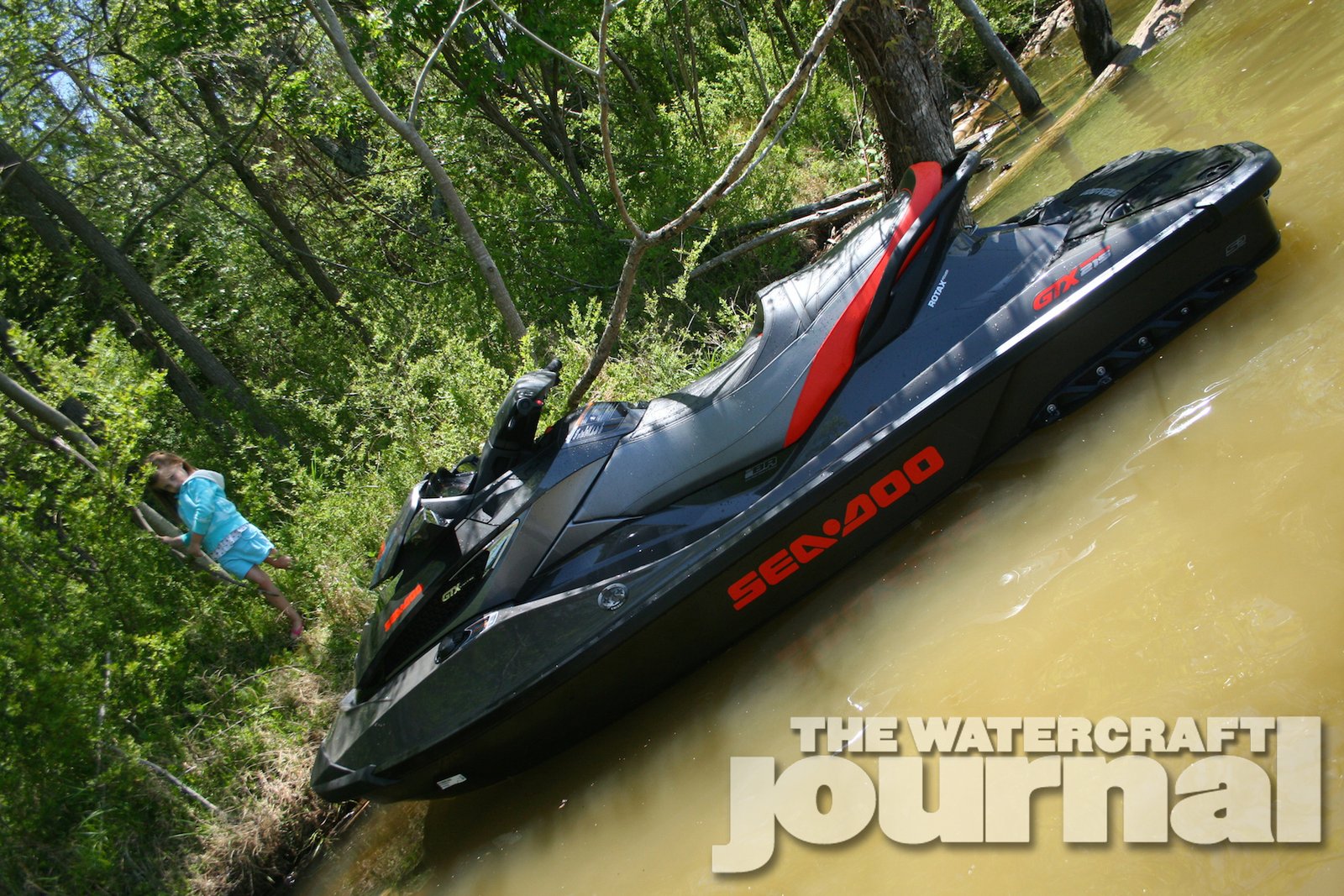
Additional to the newly minted GTX Limited 215 is the inclusion of a depth finder, which we used religiously during our photoshoot as we navigated the shallow shores of Old Hickory Lake, TN.We already loved Sea-Doo’s iBR brake and reverse system, but have come to a whole new appreciation of the brand’s iTC multiple engine tune software.
The S3 hull has been proven time and time again as a stable and true-tracking design and needs very little praise that it already hasn’t already received both from this magazine and elsewhere. Whether plowing through wind-whipped chop, progressing up and over rollers or skimming over eerily reflective glass, the GTX Limited 215 is a smooth operator.
Rather, we feel it necessary to touch on something far more important: The more Sea-Doos we ride, the more we’ve come to accept that BRP’s Intelligent Throttle Control (iTC) is the single most under-appreciated feature in any watercraft in the past decade. So much so that we suggest all other manufacturers get cracking on ripping it off as soon as possible (OK, OK not really. But a close facsimile would be nice).
The ability to cycle through three different engine tunes on the fly radically changes the game for ALL watercraft. For those who’ve never enjoyed this feature first-hand, scrolling through Touring, Eco and Sport modes elevates the riding experience of any iTC-equipped Sea-Doo to a whole new level.
As part of the premier Limited packaging, the newly rechristened GTX 215 also includes Sea-Doo’s stellar Speed Ties (the small attachment beneath the tow hook). Located on the rear swim platform and on the forward cowl, tying to a dock cleat is made quick and easy without needing to fish out a soggy rope.All runabouts employing the S3 hull (non-suspension) feature the same cavernous glove box. Those Limited models include a glove box sealable organizer (not shown).
Trading between Eco and Sport mode is like Dr. Bruce Banner willingly switching between he and the Incredible Hulk on demand! And Sea-Doo offers iTC on all of its watercraft – even on the 90hp Spark!
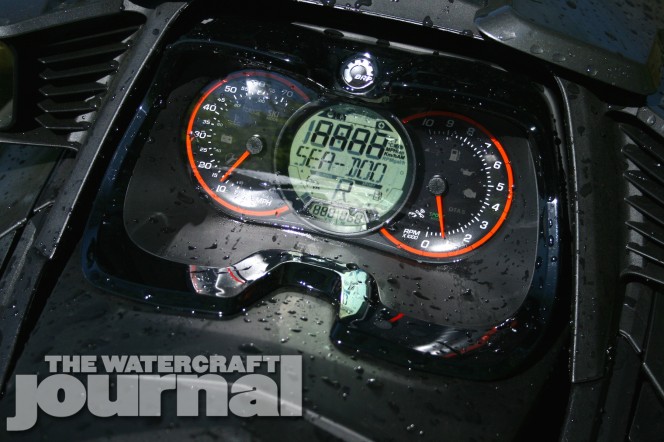
Likewise, Sea-Doo’s Cruise Control is the easiest to operate of all three manufacturers, with soft and responsive buttons that react instantly. Other handlebar toggles include BRP’s VTS trim control and digital dash display options (including the much desired depth finder and water temperature gauge).
A thickly padded folding swim step, polished tow hook, and five-place tilt steering round out the features that only make this a fully-equipped machine. Even at a healthy asking price of $14,499, the GTX Limited 215 over-delivers again and again and again. Heck, even in light of its supercharged powerplant, the GTX Limited 215 is not as thirsty as you might expect, and can happily run on either regular or premium octane gasoline.
Although tipping the scales at 824-pounds (dry weight, add another 90-pounds for gas, oil and coolant), we were happy with a maximum speed of 67.3mph and estimated a little less than 5mpg during our testing.
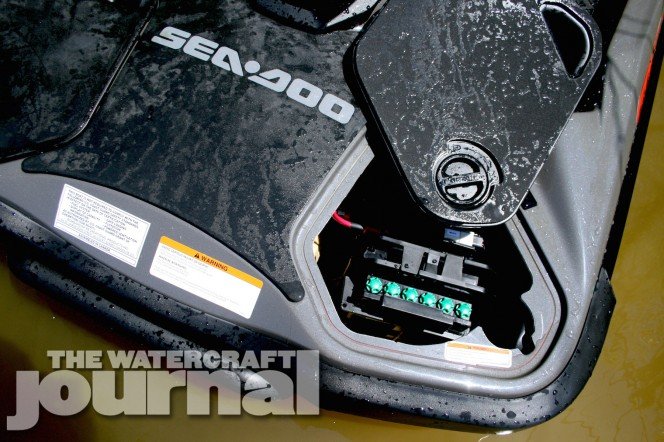
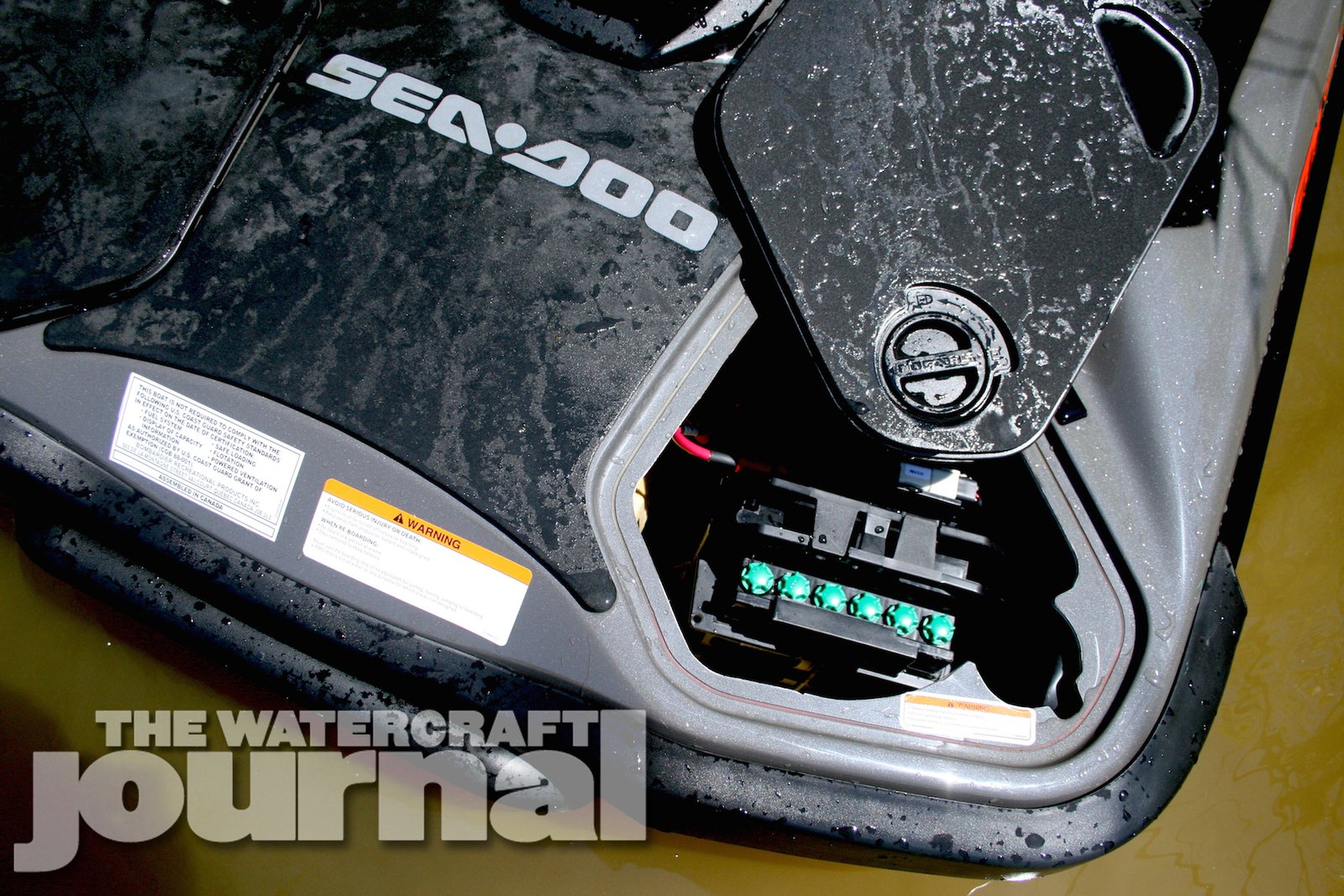
The fixed deck S3 platform leaves ample room in the engine compartment as well as access to the rearmost portions of the interior via two screw-locking utility panels.
Admittedly, we still prefer the lowest member of the Limited clan, the GTI Limited 155 but wished it touted the oomph of its rowdier brother, the GTR 215. Yet, that’s where we came to appreciate the GTX Limited 215. With the performance grunt we craved and all of the sophistication you could throw at a Sea-Doo, this machine over-delivers when others struggle to make the grade.
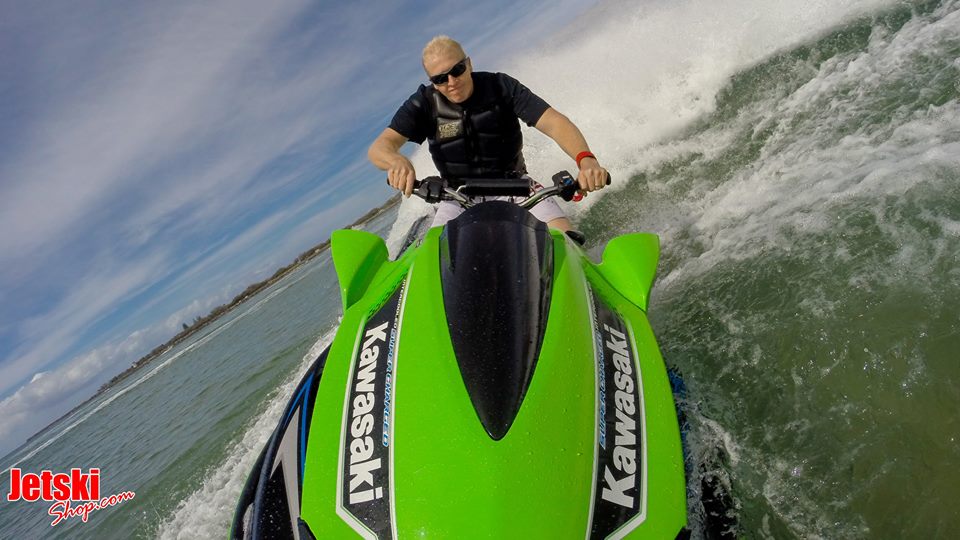
The one thing that can be counted on from our friends below the equator is that they won’t let a good moment go by that can’t be squeezed for the maximum amount of good times as possible. In such fashion, we weren’t surprised by James Tod and the rest of the JetSkiShop.com taking the day to take a half day jaunt in the water.
This also marked another opportunity for James to break in his new 2014 Kawasaki Ultra 310R, which has him swooning over the hard-hitting acceleration and offshore characteristics.
Not the thing of legend, but a nice day on the way, James and crew due a fine job in the video below capturing the good natured fun that took place just a few weeks ago on April 12th. A pack of a few dozen left in the afternoon to enjoy a great sunset ride that ended with a BBQ and bonfire on the beach. That is, if you’re into that kind of paradise.
Those few club members whose skis are equipped with LED and neon lights took the water after the sun dropped below the horizon and enjoyed a short night ride as well. Make sure to click the video below and enjoy the view:
Quite frankly it happened on a lark, with a quip made between The Watercraft Journal’s Editor-in-Chief Kevin Shaw and Kawasaki Product Manager Bret Snider during our test ride of the new 2014 Kawasakis, challenging him to race the intimidating Long Beach-to-Catalina Offshore Championship happening every year in Southern California in late July. Little did we know that Kawasaki would call us out.
With that, we want to announce with great aplomb our supporters: First to the bat was Western Power Sports, the fastest growing distributor of powersports products in the nation, with over 120,000 products including off-road and street motorcycle, ATV, snowmobile, and watercraft parts and accessories.
As today’s modern runabouts become more and more advanced with electronic throttle controls, engine management systems and draw closer and closer to the watercraft that were once the things that won world championships, owners are finding ways of making their new purchases all that more personalized. In fact, we at The Watercraft Journal are big believers in making something “your own,” and we’re excited to share what we think is the best – and easiest – way to do it.
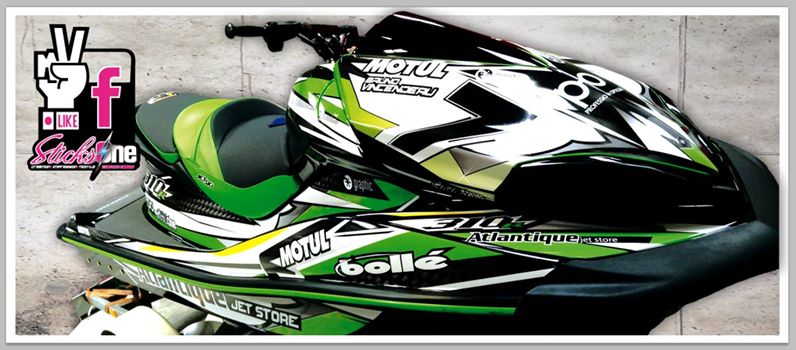
The performance aftermarket is rife with a variety of go-fast parts that can eke out all the more horsepower from your stellar-running machine. But when it comes to giving your ski a little bit of a personal touch, many are reticent to alter their ski’s appearance. Frankly, that’s ridiculous! Sure, you could cough up some serious cash for custom paint job and pray it comes out the way you envisioned it, or you could do something easier, faster and completely unique: a custom wrap!
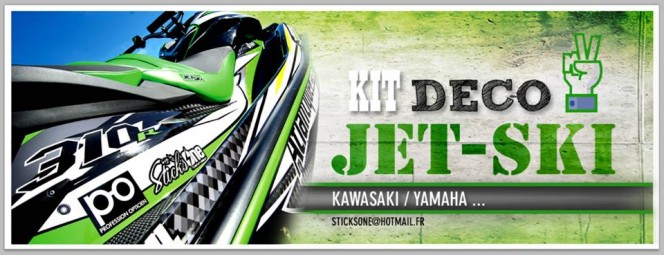
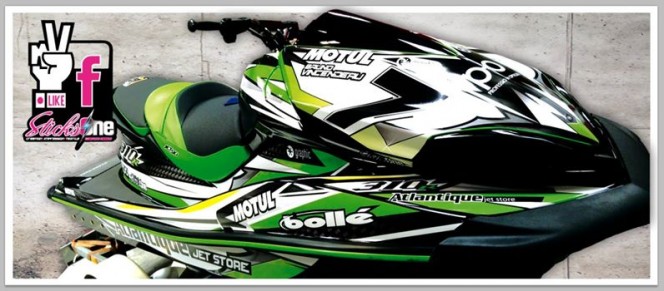
Vinyl wraps are becoming incredibly common these days; from trucks, sportscars and personal watercraft, vinyl wraps can radically change the appearance of your ski without pulling it apart and repainting the various panels. Best of all, each panel can be quickly replaced if scratched or torn! Try that with a trick paint job! We spotted French graphic designer and graphics printer Sticksone on his Facebook page and loved the aggressive and eye-catching designs.
And it’s been said for some time now that the Europeans are the best at looking like professional racers on the water. Color-coordinated helmets, wetsuits, and riding gear all matches their skis. Even the Amateur racers look sharp and more importantly professional. If watercross is ever to step up to to grab the attention of a larger audience, a little bit of presentation will work wonders.