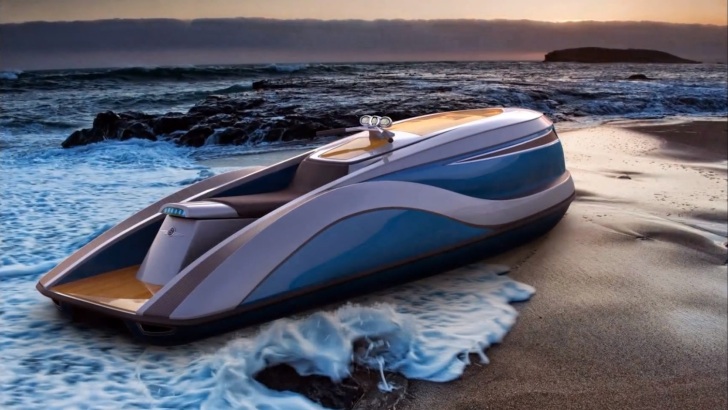
Of course, this is so new it doesn’t exactly exist yet but that’s not stopping the online blogosphere (and us, for that matter) from chatting this thing up. Designed by California-based Strand Craft studios, the bull-nosed personal watercraft is not quite near ready for production, and whether there’s demand for personal watercraft with a teak-lined tray, leather seating and y’know, a 5.7-liter (350ci) V8 engine is still up in the air.
Christened the “V8 Wet Rod,” this opulent machine is no run-of-the-mill runabout. Designed as a true luxury watercraft, or better yet, a miniaturized motorboat for two, the V8 Wet Rod is a robust 16-feet long, featuring a carbon fiber-and-epoxy shell. Beneath the hood is the aforementioned V8 churning out 300 horsepower.
There’s not much stated in the way of the usual amenities found on modern watercraft, like cruise control, brakes, reverse, or even fuel capacity, on that the design house estimates their craft reach a speed of 65mph. Not exactly groundbreaking stuff. But there is a waterproof luggage compartment and an ice box under the seat.
Currently, the V8 Wet Rod comes with a variety of optional features, including a chrome engine dress up kit, wood and carbon fiber inlays, special custom paint or vinyl wrap, an on board sound system, GPS and even a custom trailer! Until it hits production, all we have to enjoy is the video below:
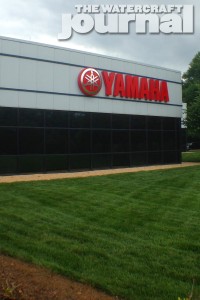
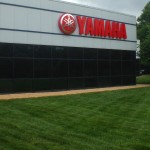
Yamaha’s lobby has got some great stuff on display.
It all started with one of the rare moments my wife and I get to sit down and watch some late night television. With two young daughters determined to tear our house down to the foundation, these moments aren’t often. One episode of Comedy Central’s pop culture game show, “@midnight” I was immediately intrigued when guest comedian Kurt Braunohler showed off a t-shirt with the outline of a jet ski.
“I think I might have figured out the dumbest way to make the world a better place,” Braunohler quipped. “I’ll be jet-skiing from Chicago to New Orleans (seriously) in order to raise money to provide 500 goats and 1000 chickens for African families in need. I’ve got the jet ski, I’ve got my route – I just need YOU to donate money so we can help change people’s lives.”
Wanting to learn more, I googled Braunohler, which brought me to the official IndieGoGo.com fundraiser page. True to his word, Braunohler would be partnering with Heifer International to send 500 goats and 1000 chickens to impoverished villages in Africa. It was up to the lanky comedian and Comedy Central to generate the $50,000 necessary to do so.
It’s always a fun feeling to pick up a brand-new supercharged Yamaha SVHO that doesn’t belong to you for a couple of days. It’s a shame we had to give it back so soon!Although they don’t give tours, Yamaha’s Kennesaw, Georgia headquarters is a place all PWC diehards need to see.
The charity, Heifer International is more about empowering impoverished families than merely addressing their immediate needs. By supplying these rural communities with the animals necessary to generate prosperity, Heifer brings “sustainable agriculture and commerce to areas with a long history of poverty. Their animals provide partners with both food and reliable income, as agricultural products such as milk, eggs and honey can be traded or sold at market,” according to their website.
Thinking it a noble cause, we published an announcement on the effort on The Watercraft Journal in late May. Curious for more information, I had sent off an email to Braunohler’s publicist with little thought of hearing back. Literally within two hours, I was on the phone with a board of television producers in Beverly Hills, California.
The challenge was set for The Watercraft Journal to rally its readers to join the Comedy Central team in their penultimate day of filming, in Pickwick Lake, Tennessee. The episode called for a group of fellow jetskiers to join Kurt in a mock biker gang as the terrorized the lake straddling the border between Mississippi (and the river namesake) and Tennessee.
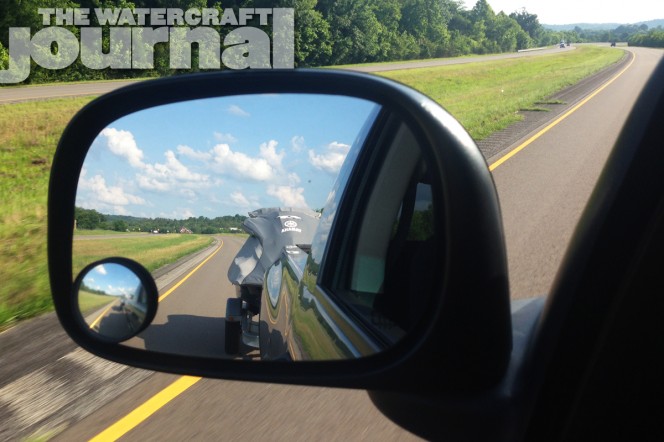
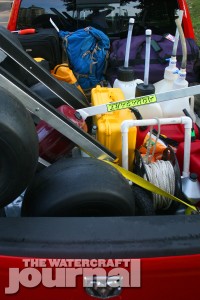
They say “getting there is half the adventure,” but too many times we just wanted to pull over in any body of water and take the supercharged SVHO out for a ride.Apparently, this is only some of the gear needed to keep a comedian afloat.
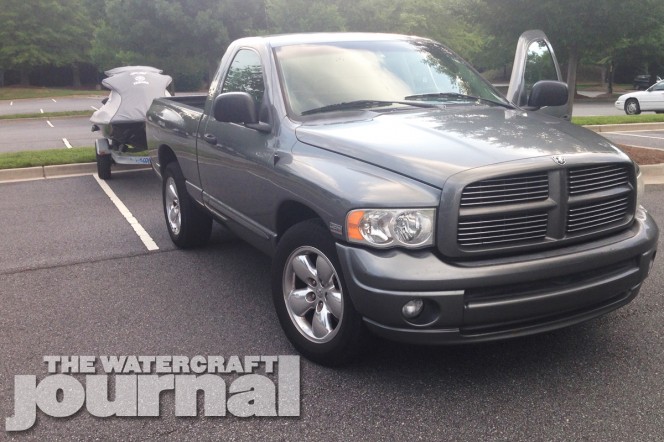
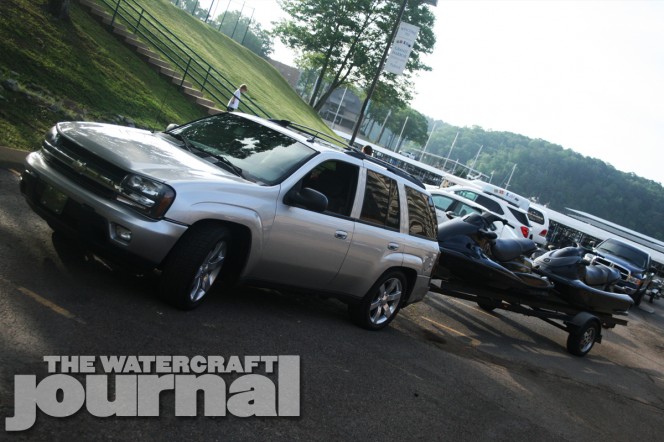
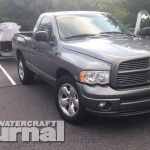
Immediately, I went to work publicizing the opportunity. It’s not often personal watercraft get this level of broad exposure and we wanted to really pull out all the stops. A couple of emails into Yamaha secured the use of a brand-new ’14 FX SVHO, but there was a catch: I would need to drive down to Yamaha’s Kennesaw, Georgia headquarters to pick it up the day before – nearly doubling my mileage.
Next, I reached out to Sea-Doo/Slippery Wetsuit racer Claude Clayton. Clayton lives less than tour hours from where we’d be filming and I attempted to lure him into bringing his insane turbo-powered GTR and his tuned Spark for the filming. Unfortunately, both skis were incapacitated for that week and couldn’t land another Sea-Doo to use. We even tried to hook the traveling Spark Some Fun Demo Tour into driving down for the day, but their ironclad travel schedule made that impossible as well.
I left home in Nashville, Tennessee exceptionally early the Tuesday before and made it down to Yamaha in record time. Snatching up the SVHO, I doubled back up to Chattanooga and darted west determined to reach Counce, Tennessee by that afternoon. Wide-open grassy pastures, emerald rolling hills, and dense treelines reminded me how I fell in love with this state only a few years earlier.
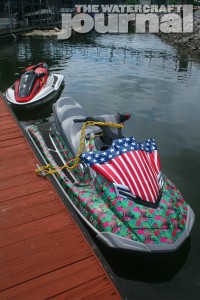
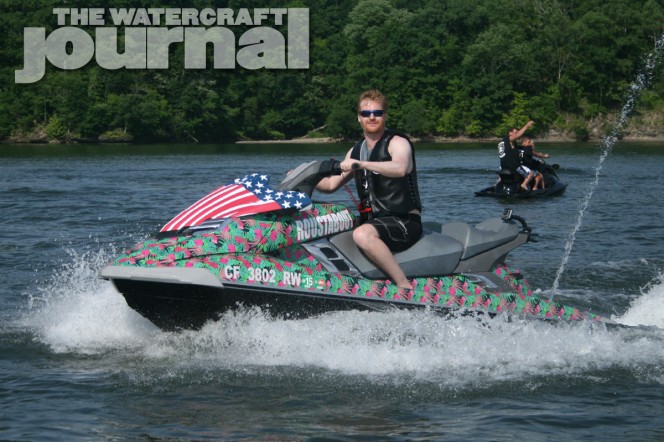
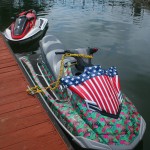
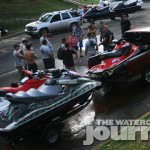
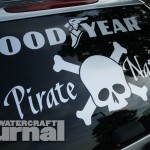
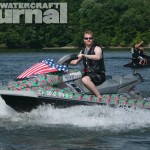
Hailing from Mississippi, the Pirate Nation PWC club showed up in force with a trio of murdered-out runabouts.Kurt Braunolher’s FX HO was unmistakable in its American flag-meet-Hawaiian shirt wrap job.
Unfortunately, the Volunteer State’s rural highway system leaves much to be desired, and it was dusk by the time I reached the miserable little Quality Inn I had booked online. Staffed by a spherical bridge troll who clearly applied her makeup via paintball gun, my room was a dank, unlit cave with zero cellular or internet service. Despite my protests, I would have to remain overnight or pay for cave I didn’t want.
Little did I know that Braunohler and his crew were experiencing quite the same turmoil. During the first day of filming, both Kurt and the chase boat ran out of fuel. The next day fared no better as they were forced aground as the crew were dispatched to find more fuel for the second safety boat. Neophytes to both personal watercraft and the Mississippi, none expected the sheer level of debris, garbage and runoff that littered the nation’s largest river.
Traveling by water quickly proved far too problematic for the Hollywood crew who were caught completely out of their element. The decision was made to have Braunohler “hopscotch” from location to location, pulling the skis and boats out of the water and traveling to specific locales before relaunching and riding for shorter distances. In his podcast on Nerdist.com, Braunolher bemoaned the decision but relented. By the fifth day, the 6’3″ comedian was frustrated, somewhat defeated and exhausted, exclaiming, “Man, this trip has be $%$-ed from the beginning.”
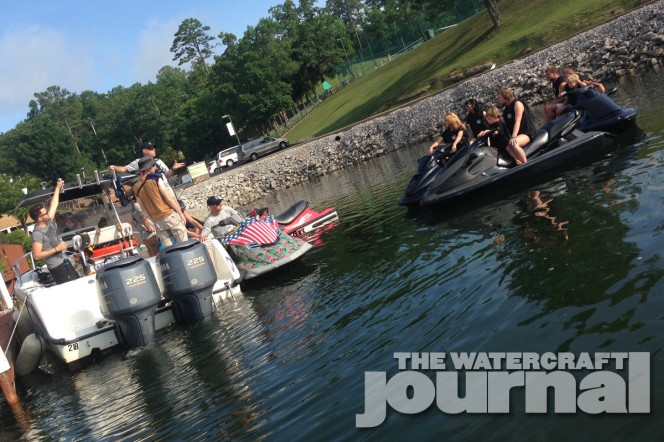
Dubbed “The Wet Ones,” the jet ski gang to be portrayed in the webisode were quickly briefed on the day’s planning.Braunolher had plenty of assistance from Cinemarine, a professional service of boaters, captains, lifeguards and stuntmen specifically trained in boating.
As I stood in the parking lot of the Grand Harbor Marina the next morning, my heart began to sink. Seeing that filming would take place early Wednesday morning, there simply weren’t many who could take the time off and make the trek on such short notice. Besides Braunohler and his guest comedian, Kyle Kinane and a third “backup” runabout, I was the only PWC on hand.
But, it was then that the skis, the beautiful, beautiful skis started to show up.
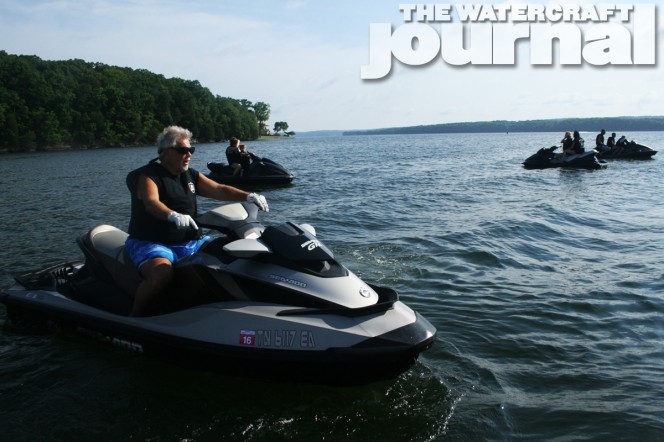
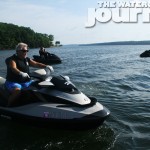
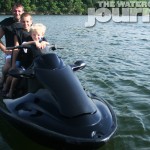
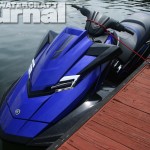
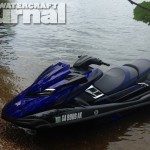
Hailing from Mississippi, the Pirate Nation PWC club showed, bringing a trio of smoked-out flat black two-stroke runabouts – a Kawasaki, a Sea-Doo and a Tigershark. Pulling up to the dock was a very clean 2009 Sea-Doo GTX iS Limited 255. With the ink black-and-electric blue SVHO, we had ourselves quite the crew.
From local residents to out-of-towners, we thankfully brought in plenty of enthusiasts to fulfill Comedy Central’s casting call.This freshly painted Sea-Doo SPI was only completed a few days prior to showing up.
Each of us were provided a black sleeveless t-shirt with our “jet ski gang’s” insignia and motto: The Wet Ones: Live Free, Die Moist. Sliding the shirts over our life vests, all we had to do was wait for Kurt. I fielded a few questions from the Pirates concerning the Yamaha and even put it through the paces showing how a runabout as large as this could carve a corner with such aggression.
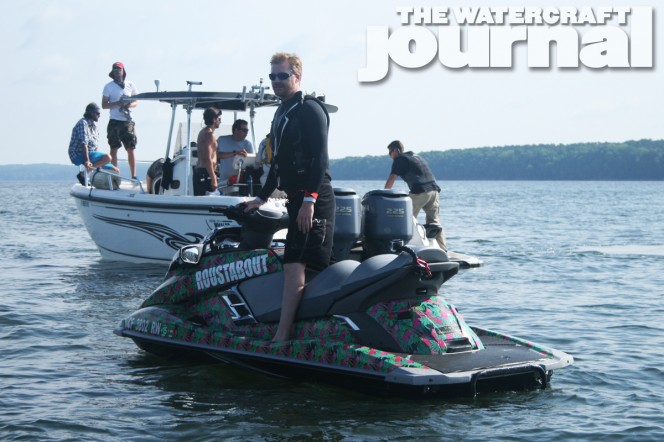
Finally, Braunohler and Kinane arrived, Kurt aboard a wildly-wrapped FX HO, the ski looking like a tourist wearing an American flag t-shirt over a hideous pair of Bermuda shorts. We were greeted quickly by the comedian who thanked us for coming out and then directed to stay far off camera as they filmed some A-roll for the webisode.
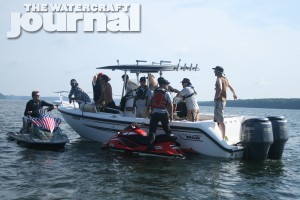
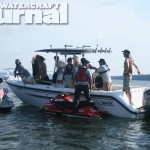
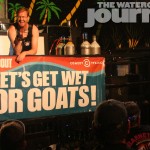
Gracious and charismatic, our host Kurt Braunohler was enthusiastic and fun enough to make us want to join him for the rest of his journey to New Orleans.Unbeknown to many, much of filming a movie or TV show is “hurry up and wait.” We spent much of our day with this view, as the crew discussed shots and resets.
In the skit, Braunohler played up his frustrations that the fundraising wasn’t generating the money needed, so he intended on forming a “jet ski gang.” We were quickly ushered into a v-formation and filmed streaking across Pickwick Lake. A few takes later, we were lined up and filmed some additional A-roll between Braunohler and Kinane deciding it would be best if our gang distributed wrapped Christmas gifts to strangers on the lake.
Sure enough, we were handed bags of wrapped gifts (random items purchased at a local boating supply store) and encouraged to approach fishermen and boaters to get their reactions on camera. Unfortunately, as the camera boat followed Kurt and the others, I noticed one of the Pirates adrift far behind us. Turning back, the father and son duo were trying to encourage the Tigershark’s stuck starter.
Selected for its fuel mileage and comfort, Braunohler’s FX HO proved worthy of the five-day adventure.It would be a week of ups and downs (for both myself and comedian Kurt Braunohler), but it was all for a good cause in bringing some much needed help to those in need.
I pulled my tow rope from the SVHO’s rear storage, I jumped in and looped the two-stroke to the big Yamaha’s tow eye. Cruising back at 20mph, we made it back to the marina to applause from Braunohler, the film and safety crew and our fellow Wet Ones. We had missed much of the filming in the rescue but felt good helping a fellow rider out.
After loading up our skis and changing out of our wet clothes, we were invited to a free standup comedy show to be performed at a bar nearby, Freddy T’s. The bar also seconded as a nightclub which open its doors to the production crew at noon. After a disturbing amount of midday drinking, the audience, which included a legitimate biker gang, were properly lubricated for the two comedians.
With a tight schedule of filming to do later that day, as well as some additional riding further down the Tenn-Tom Waterway, the show had to “go on” as it were, as did I. Again, I ventured east to return the SVHO to Yamaha, only to turn north the next day and return home, 1,100 miles in three days later.
To date, the “Jet Ski For Goats” drive is still underway, as it has yet to meet its goal, so there’s still plenty of time to donate and make somebody’s future just a little bit brighter. And while the webisodes have yet to air, Braunohler has documented his adventure in the aforementioned podcast.
It’s hard not to be impressed with a dealership that not only offers some seriously comprehensive sales and service coverage but also hosts a full season’s worth of exciting personal watercraft ride events! James Tod, owner of the JetSkiShop in Queensland, Australia recently let loose his ride event schedule for 2014.
While the JetSkiShop will be hosting the below monthly rides, there will also be plenty of “popup” rides between the listed dates, so make sure to check-in with the dealership’s “Breakfast Club” event listings. Oh, and make sure to check out The Watercraft Journal, as JetSkiShop will be filming and documenting each of these trips for full reports here!
July 20th
A day trip from Gold Coast to Tangalooma Island resort, it is about 2 1/2 hours’ ride time each way.
August 4th
A week trip to the Whitsundays in the great barrier reef, we will be based on Hamilton Island for the week. Each day we will do a trip around the tropical waters, which will include watching migrating whales with their the calves. A featured Bonfire castaway night on a deserted island, and lots of jetskiing.
September 13th
A two-day adventure, with overnight stay at the Sunshine coast’s 5-star resort, Rumba. It’s about a three hour ride each way. We get exposed to all conditions, from bays, mangroves, ocean, and surf.
November 15th
Another two-day camping weekend at Lake Moogara Dam. It’s very rare here when we get to ride in fresh water. We get to have green grass, a camp fire, tents, and lots of socializing. Oh, and some jetskiing too. It takes about 1 hour and 45 minutes to drive from the Gold Coast to this dam, and then its just hanging out with the family and friends. Plus they have a waterfall that you can jetski upto.
It’s been since 2009, that yours truly has participated in the grueling open-ocean 56-mile dash from Southern California’s Queensbay in Long Beach to Santa Catalina Island’s Avalon Harbor and back. That year, we raced the then all-new 2009 Sea-Doo RXT iS 255 and earned first in the Manufacturer Stock class and 10th place overall.
While this year we’re not expecting a repeat of such a performance, we will be competing in RPM Enterprises’ Manufacturer Stock class, meaning only seat covers, handlebars and an aftermarket bilge pump are allowed. We won’t be doing any of those as we’ll be aboard Kawasaki’s offshore racer-in-a-box Ultra 310R JetSki.
But what we’re very excited to announce here is the final hood design from Hurricane Industries. Learning that we were clear to race this year, we reached out to Derrick Kemnitz Jr., owner of Hurricane who immediately jumped at the chance to design a very cool one-off hood wrap for our 310R.
Taking time from his hectic schedule of designing and building insanely cool carbon fiber standup skis in his Antioch, California shop, Derrick designed this sweet custom hood wrap. With the measurements on hand, Derrick says he can create any number of custom designs for those racers looking to step up the look of their Kawasaki Ultra 3oo or 310 series JetSki.
Expect to see a full how-to tutorial on installing this custom decal kit in the next coming weeks. Until then, if you’re interested in your own custom designed hood kit, contact Hurricane HERE.
Undoubtedly, the topic of illegal immigration is becoming the biggest news to hit the press as border patrol agents apprehend over 1,100 persons (including an average of 205 children) each day. Notable among these apprehensions is the percentage of whom hail from Central American countries like El Salvador, Honduras, Nicaragua and Guatemala.
Obviously, political pundits are having a field day with this, as many who have been decrying the lack of federal support are using this recent surge as evidence of a failing policy, while others on the opposing side of the aisle are looking to redefine the definition of “illegal” into a slanderous term, thus up-heaving the political debate.
Last month, NBC witnessed and filmed one such illegal immigrant as he boarded a Kawasaki’s STX-15F and sprint across the Rio Grande River only to casually walk up the shore of Anzalduas County Park in Mission, Texas as a border patrol agent’s SUV drives by. The individual was noted as being part of a small group who used the JetSki to traverse the river and deposit a dozen or so immigrants a day into the county park.
The NBC report states, “Ten minutes was all the time needed on Saturday for a man to jump on a jet ski in Mexico, cross the Rio Grande River into Anzalduas County Park and hop in car that nonchalantly bypassed police vehicles and park gates.
“Sgt. Dan Broyles, who patrols Anzalduas County Park, said his job has never been easy, but recently, “it’s like digging a hole and throwing the dirt up a hill.”
“Broyles said he feels like he is “on the front lines in a non-violent invasion,” as 1,200 people cross this strip of the Rio Grande every day, including up to 400 unaccompanied children.”
Undeniably, south Florida is the Mecca of PWC’ing; abundant waters on the inside and out, well over a thousand miles of trails, and a riding season that last all year long. Unfortunately, for some enthusiasts, location, travel time, and the expense it takes to get there can be a trip-killer. For those not so inclined to travel quite that far, a great alternative are the waters along the northern rim of the Gulf of Mexico. And, at the center of it all, on Mississippi’s “Gold Coast” lies Biloxi.
In the early 1990’s, when coastal Mississippi saw gambling legalized, the city of Biloxi had no trouble attracting major players of the gaming industry. Even after the destruction left in the wake of hurricane Katrina, the casinos came back in full force adding elaborate hotels with a full compliment of amenities. Of these amenities, important to those of our kind are oversized parking facilities (ie – your truck and trailer), proximity to water, and in some cases, the ability to dock where you’re staying.
Over the last three years, I’ve dragged my pair of Sea-Doo RXTs back and forth along the rim of the Gulf from Southeast Louisiana to the Florida panhandle. Each trip resulted in tracking navigable waters from the swamps to the gulf, making notes, and taking pictures – all the while shredding water with family, friends, and other enthusiasts. Having just completed my most recent excursion – thereby scratching off the final trail from my list – I’ve compiled a list of five “must do” rides. While the trails are not ranked – each is certainly worth the effort – they are listed from west to east. Also noted with the customary attributes will be the approximate travel distance and time from Biloxi. So, without any further ado, let ride!
Although technically two separate trails that do share some “common” water, the Honey Island venue has become a favorite of mine. Since both trails share the same drop-in facility, the La France Marina, it was impossible to omit either one. Ramping aside, the two trails are nothing alike.
The Honey Island Swamp tour, which includes quite a bit of travel across the border into Louisiana, is a cruise throughout the lower Pearl River drainage. Cruising this trail includes travel from the large open waters of the lower Pearl, through the estuarine marsh, to the hardwood swamps. Bikini Island will serve as the main area for a beach break while Carey’s and Friday’s “ditches” will require skilled navigation as you traverse the multiple branches of the Pearl River.
The Inside-Out trail is just as the name implies: Half of the travel occurs in the marsh – and hang on! You’ll need to bring your “A” game as you carve your way through the Campbell Inside Bayou, Campbell Outside Bayou, and Grand Prairie Bayou. Even with your GPS marked, wrong turns with the likelihood of parking your bike are distinct possibilities for trail rookies. If the wind is down, you can circle around the outside, across the Mississippi Sound, and back in to complete the loop.
Trail Tip: Pack your own lunch and make this trip only between Memorial Day and Labor Day as LA Wildlife Management Area PWC laws apply.
Bay St. Louis
Launch: Bay Marina & RV Park
Travel Distance/Time: 32 miles/45 minutes
Total Trail Miles: 100
This trail consists of bay crossings and the out-and-back runs of rivers and bayous that feed it. Open views of the marsh will contrast with the hardwood-lined banks in the upper reaches of each run. Likewise, the trails will become a bit more challenging the further upstream you travel. Tide and local rainfall amounts will likely determine how far you push the trail.
On the east side of the bay lies the Wolf River. Care should be taken to follow the channel markers that line the river bed as you enter the river’s mouth. Traveling upstream, the river winds its way northeast from the marshy bottom to the pine-lined banks. The going is fairly easy, at least as far as the rail bridge, but reaching I-10 may not be attainable depending on water depth. Cautious navigation is required.
Back on the bay’s west side is where most of the fun lies: Both Bayou LaCroix and the Jourdan River will each become more remote once you get west of Hwy 43. As far as a beach break goes, the lower and upper Jourdan will have more to offer. Rotten Bayou will offer a small side trip, but you may not travel too far before the bayou resembles more of a creek.
Trail Tip: Run the west-side trails first, then return to the marina for a refuel. Now head across the bay for the east side runs including the open waters to Pass Christian and a late lunch break at Shaggy’s.
Biloxi’s Back Bay
Launch: Gulfport Lake Boat Ramp
Travel Distance/Time: 15 miles/25 minutes
Total Trail Miles: 104
What Bay St. Louis lacks in sights (excepting Mother Nature), Biloxi’s Back Bay and the trails that surround it will more than make up for it.
By launching out of Gulfport Lake you’ll get a grand and NWZ-free tour of the stately homes residing along the waterside and leading into the bay proper. If the wind is down, the bay can be easily navigated but take care to follow the channel markers to stay out of the shallows. Once you near mid-bay, near the I-110 span, the bay really opens up and the view is quite amazing.
On the bay’s east side lies Old Fort Bayou. The initial run up Old Fort Bayou appears a little sketchy as you’ll travel over some shallow water shoals but it isn’t long before the deep water shows up. Travel ten miles in and you’ll find the I-10 overpass and the wonderful aroma of BBQ drifting through the pine forest. The Shed BBQ in Ocean Springs is north of the interstate and just around the bend – and certainly worth the stop.
The Back Bay’s west side is more about R&R. Both the Biloxi and Tchoutacabouffa River will offer opportunities for beach breaks – it’s really just a matter of how far you want to ride or need to ride to find a patch of sand to claim as your own. Near wear both rivers meet the bay is the ever popular Grasshopper Island – party central for most weekends on the water.
Trail Tip: Make the long Back Bay crossing before noon to avoid wind and chop and grab an early lunch (while beating the crowd) for some Shed BBQ.
The ‘Goula Glades
Launch: Tucei’s Fishing Camp
Travel Distance/Time: 18 miles/26 minutes
Total Trail Miles: 77
The Pascagoula River is a single entity that a few miles above I-10 seeks two avenues on it’s way to the Gulf of Mexico. In between the east and west branches lie miles of intersecting bayous, the occasional sandbar or beach, and trails of plenty meandering through the “‘Goula Glades.”
Travel through the P’goula drainage, is a bottom-to-top and counter-clockwise “ugly” loop. Heading north on the eastern branch you’ll find some impressive sand dunes that will make for a more than adequate stop. Just before traversing over to the western branch and heading south, you’ll have the opportunity to go north on the P’goula’s main route.
On the western branch, the trail south returns you to your starting point but the venue offers skilled riders the opportunity to test their mettle: The Whiskey & Creole combo bayous will take you off the main route, but it is so worth the fun. Taken at speed, oncoming traffic and the trees lining the route will demand your A game.
During our visit, we went “off the grid” as we explored the small, twisty bayous and sloughs that meander through the marsh. Although the occasional patch of grass and spots of low water were inevitable, we found the unmarked routes both challenging and fun. Wrapping up the ride, we finished our day at Huck’s Cove, the local burger & beer joint right on the water.
Trail Tip: Starting on the southwest end of the trail has you ending at Huck’s Cover for R & R.
The Mobile & Tensaw River Loop
Launch: Battleship Parkway Ramp
Travel Distance/Time: 65 miles/60 minutes
Total Trail Miles: 68
Here’s yet another true loop that offers a change in scenery as well as a few historic waypoints that are certainly worth the effort.
Leaving the very north end of Mobile Bay behind, the trail goes north on the Tensaw River. The first waypoint is Gravine Island, easily ten acres of piled up sand and an easy anchorage for summertime mariners. Heading further north via Big Lizard Creek, the trail crosses the drainage to the west side where you’ll find the Mobile River just below the I-65 “Dolly Parton” bridge.
Heading south from the bridge, Big Bayou Canot will offer you a much more scenic ride, while taking you out of the way of commercial traffic. Once you make the rail bridge – the location of one of Amtrak’s worst passenger rail disasters – try to spot the track-side memorial on the east side of the bayou.
Further south, you’ll find the side trip into Chickasaw Creek and then the state port adjacent to downtown Mobile. Of interest here, you’ll cross over the I-10 tunnel while the vehicles traveling it commute nearly sixty feet below you. Finally, and saving the best for last, passage around the southern tip of Pinto Island will bring you back in Mobile Bay and alongside the mighty WWII era battleship, the USS Alabama.
Trail Tip: Pack a lunch or plan to be off the water before the crowds mass their troops at the restaurants located along Battleship Parkway.
And there you have it: Five different venues, three states, and nearly 500 miles of hydro-trails waiting to be shredded, and all within a one hour drive of Biloxi. And, if that isn’t enough, you really don’t have to look far; chances are you crossed some trails just getting to Mississippi’s Gold Coast. Here, along the Gulf’s north rim, the water never really ends and the trails go on forever…
All of these trails and others can be easily found via pwctrailfinder.com
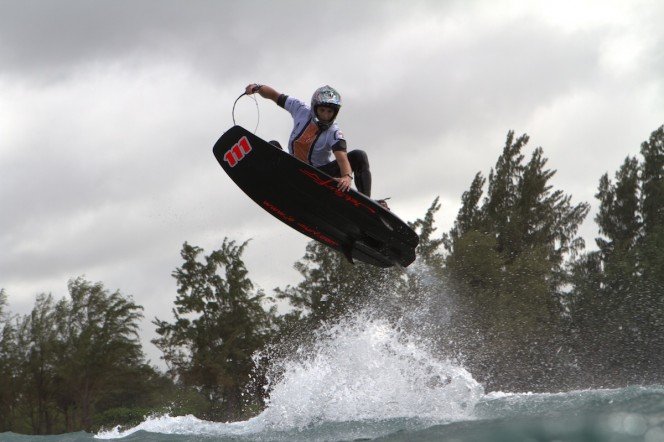
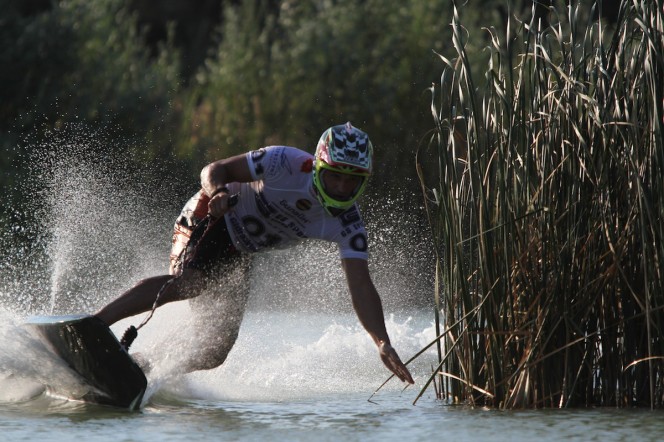
If Franky Zapata’s parade of jet-powered boards and toys haven’t already hammered down the point, not all watercraft are created equal. We caught word of the next big thing in water jet-propelled fun, the Jetsurf. It’s pretty self-evident by the name and the pictures, but as you can imagine, it’s a strap-in surfboard that – you guessed it – is ran with a jet pump.
While motorized surfboards have been around since the 1960’s, Dr. Martin Sula perfected his 8-year project as – Jetsurf – in 2008. According to the press release, “all power boards are produced in one factory using the highest standards of production technology and utilizing the best materials and components currently produced in the EU to guarantee maximum precision and efficient service.”
To prove that the Jetsurf isn’t just a flash-in-the-pan, the FIDSM (Fédération Internationale du Surf Motorisé) organized the Moto Surf GP in 2012, hosting the first Moto Surf GP race in Brno, Czech Republic that same year. Possibly one of the most unique and affordable motorsports in the world, Jetsurf’s Raceboards are lightweight high-tech machines, with the ability to be transported by hand, car, boat, and plane as personal luggage!
Now part of this weekend’s Swatch Free4Style, the Moto Surf Grand Prix (MSGP) will be hosting its next race in picturesque Estavayer-le-Lac in Switzerland, this July 4, 6 and 7.
As the release states, “The high-energy aquatic race, which has thousands of devoted fans around the globe, is going to be presenting a strong line-up of international riders ready to battle it out during the three-day event. Offering true thrill and excitement to more than 28,000 action-thirsty spectators, the first and only international Moto Surf competition will feature 24 athletes testing their limits, strength and endurance by riding high-performance motorized boards powered by Jetsurf.”
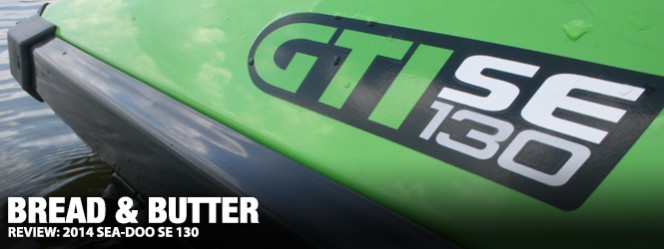
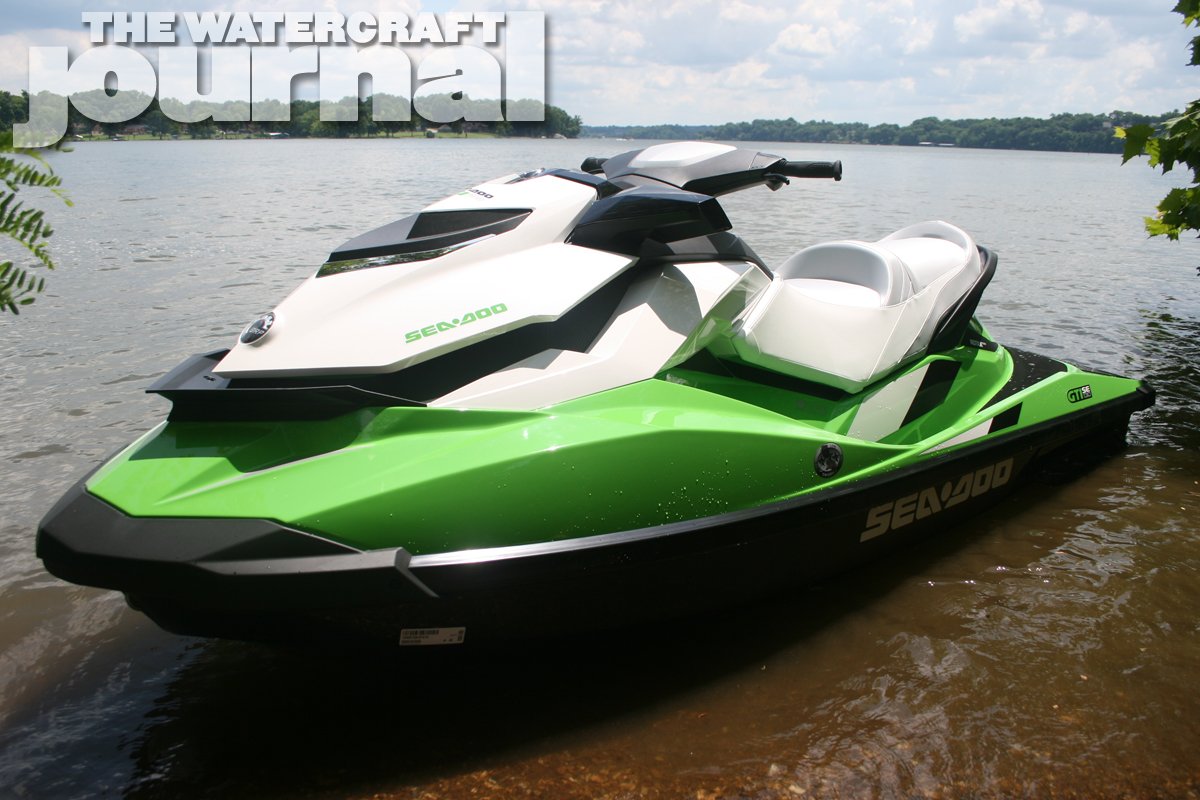
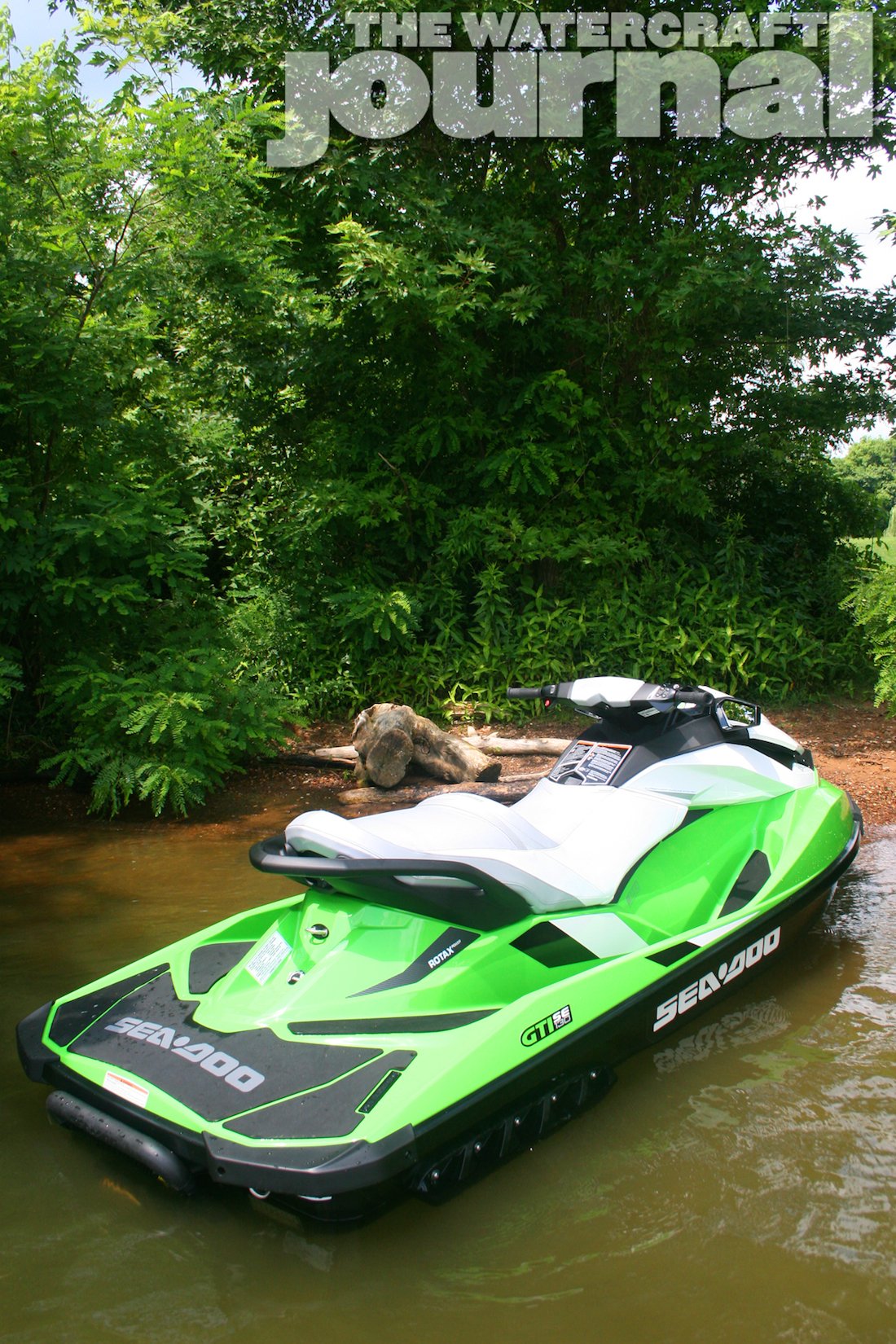
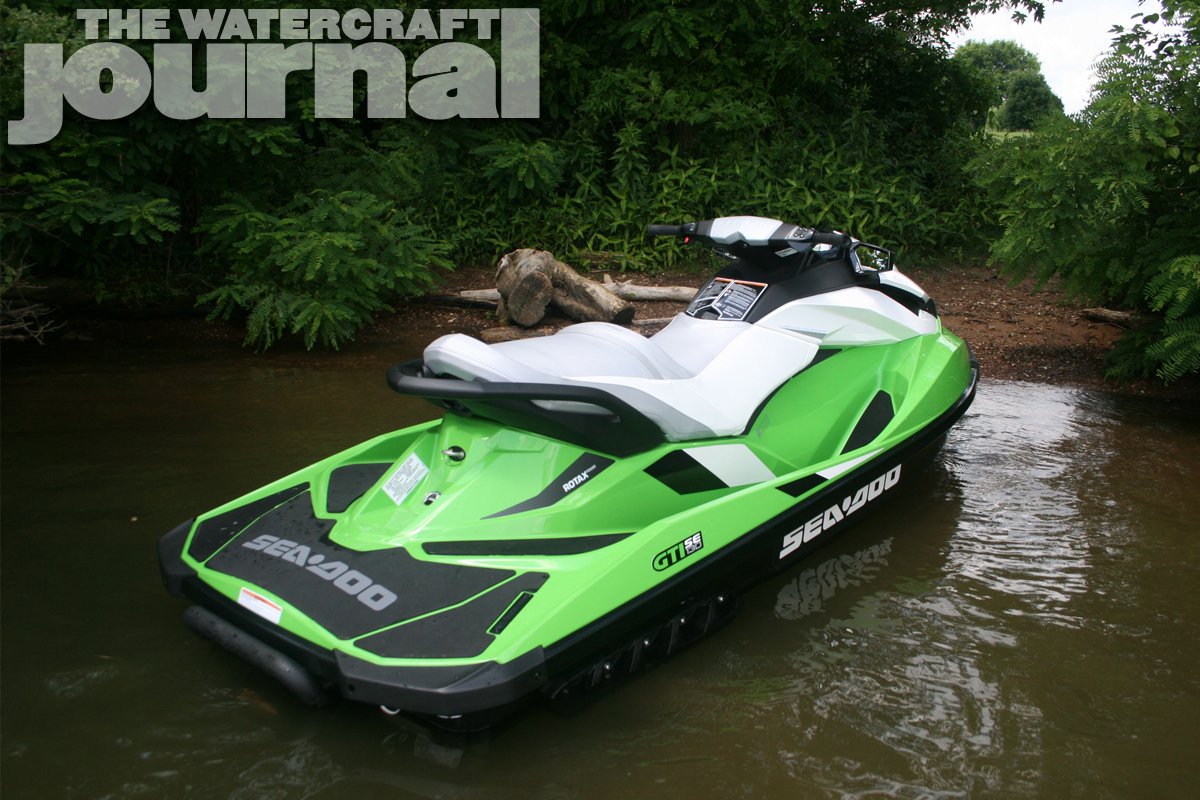
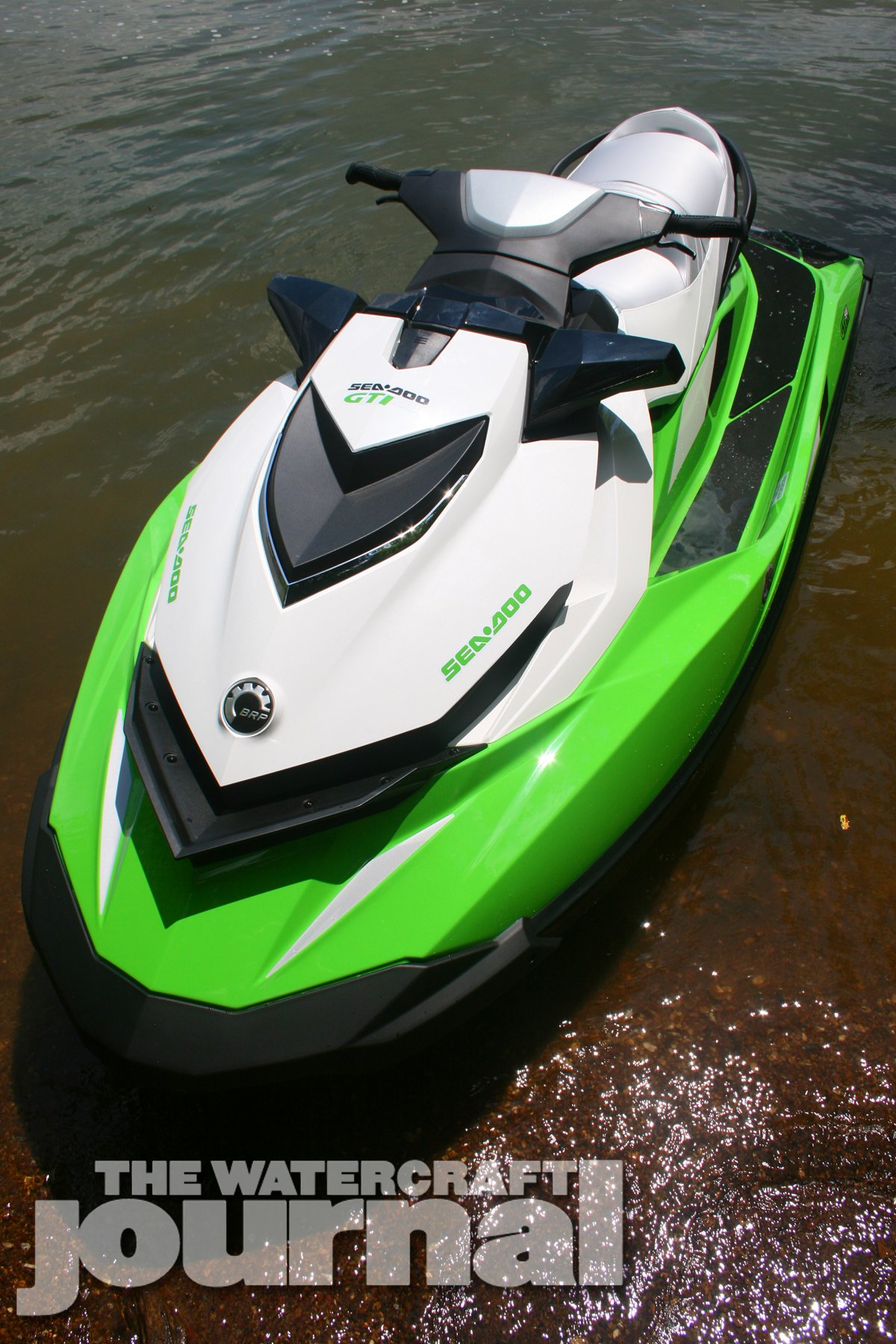
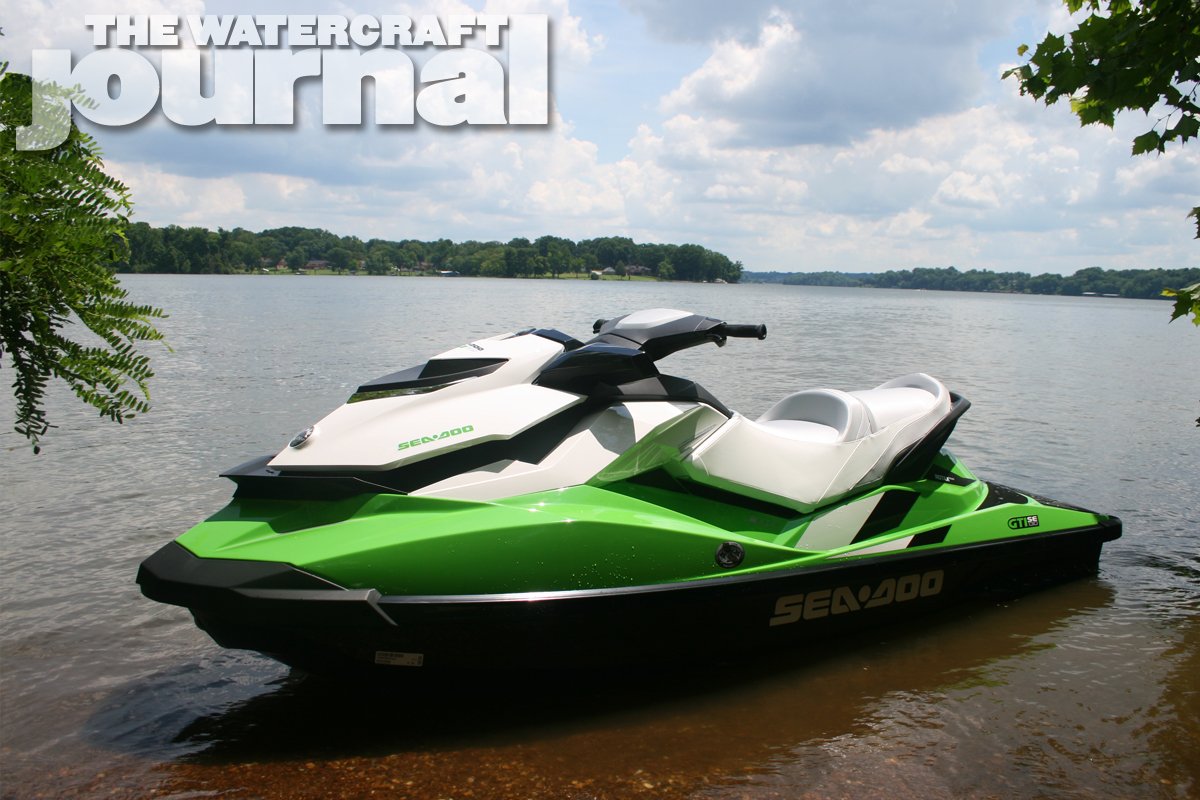
The GTI SE 130 is the highest-selling PWC in Sea-Doo’s lineup and deservedly so. We found it equally fun and fuel friendly.
There’s often a disconnect between what is a good choice and what is the best choice. A noble maxim unto itself, it can be applied to a lot of life – including purchasing a new watercraft. Among auto dealers, there’s a saying, “The sports car might get you into the dealership, but you’ll drive home in a new minivan.” While the sports car is definitely an attractive option, it might not fit your budget or intended use. Equally, the same can be said of shopping for a PWC.
For us, it’s easy to get spoiled when testing riding one or two new personal watercraft a month. Having access to the sport’s most well-optioned, high-powered machines rife with creature-comforts and innovations, it’s easy to forget that people actually have to pay for these things! That is why we new it was important to get out and ride what people are really buying.
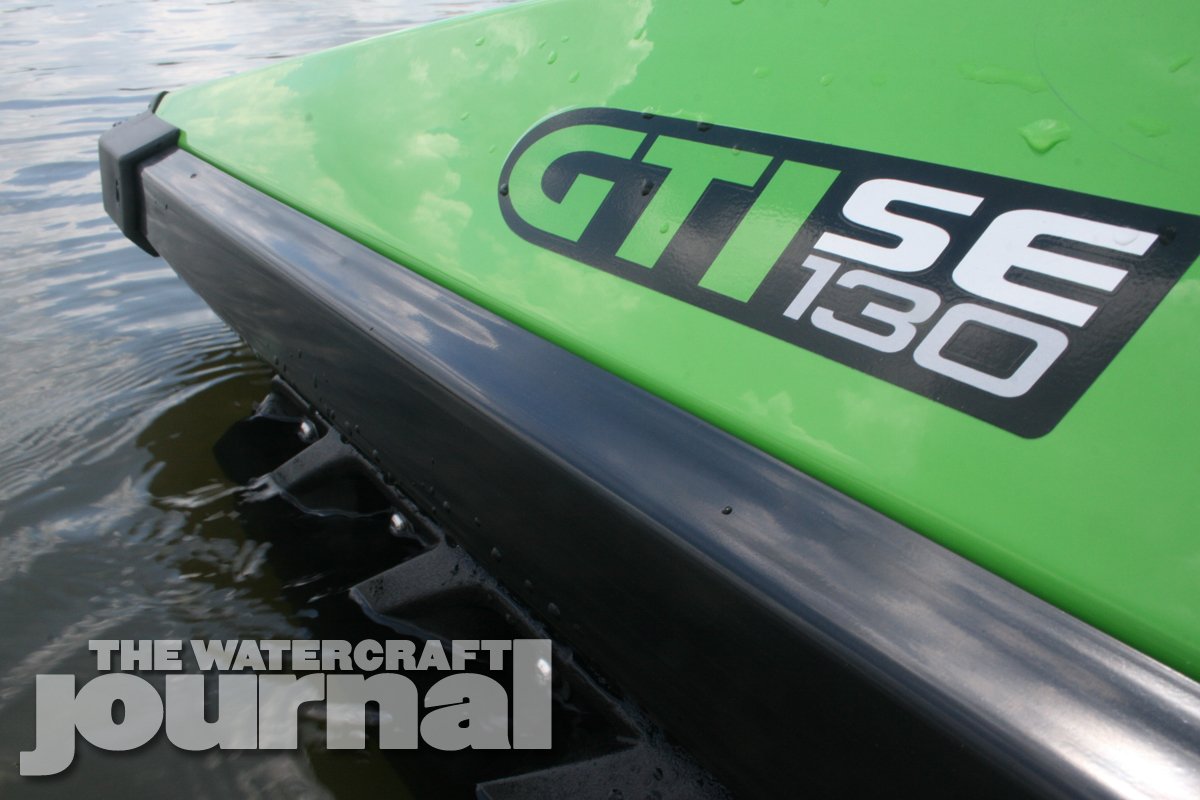
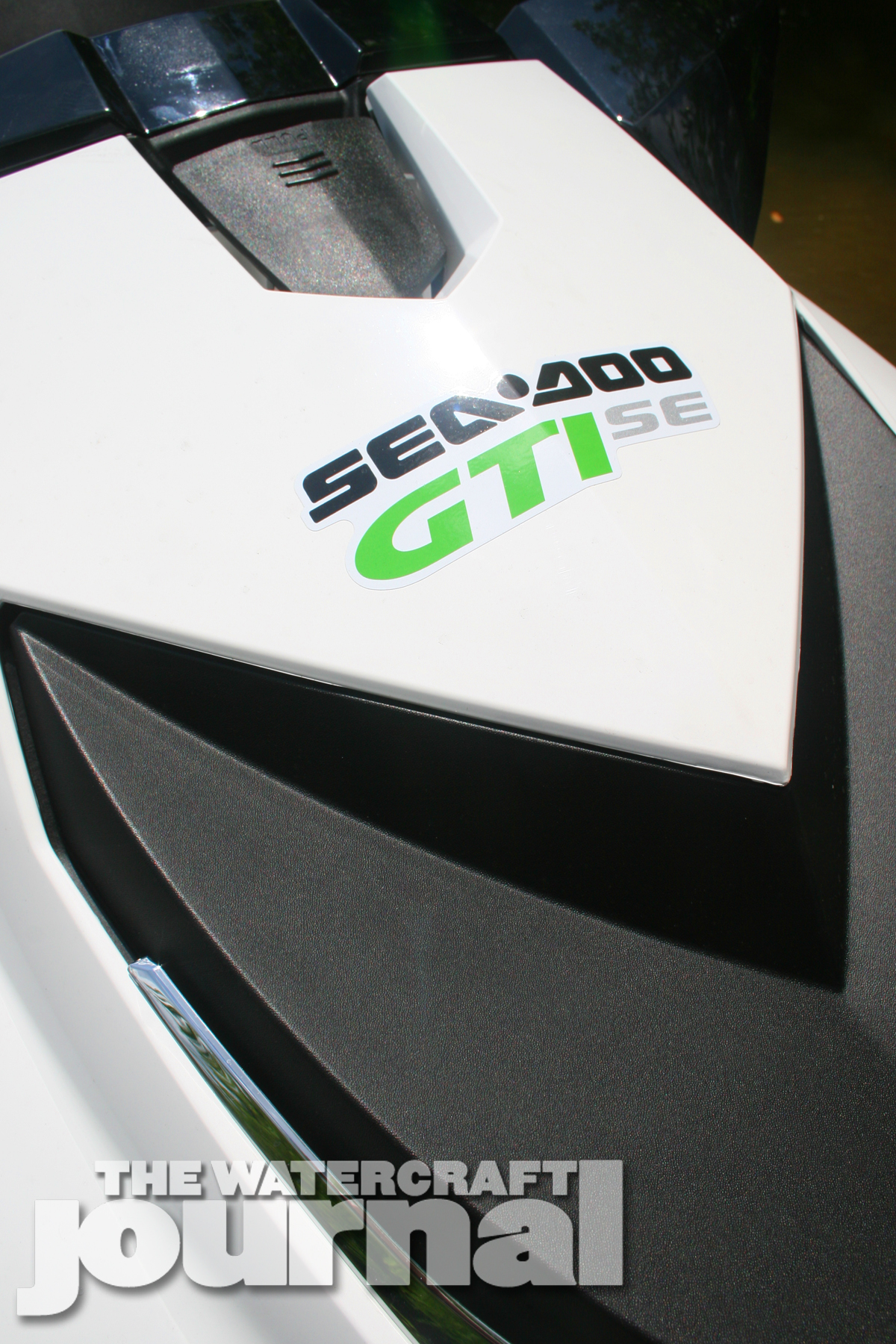
Enter the 2014 Sea-Doo GTI SE 130. Believe it or not, you’re looking at the single-most popular Sea-Doo today. In fact, sales of the GTI and GTI SE (in both 130 and 155 horsepower configurations) are what allow things like the RXP-X and GTR to exist.
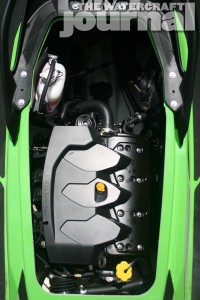
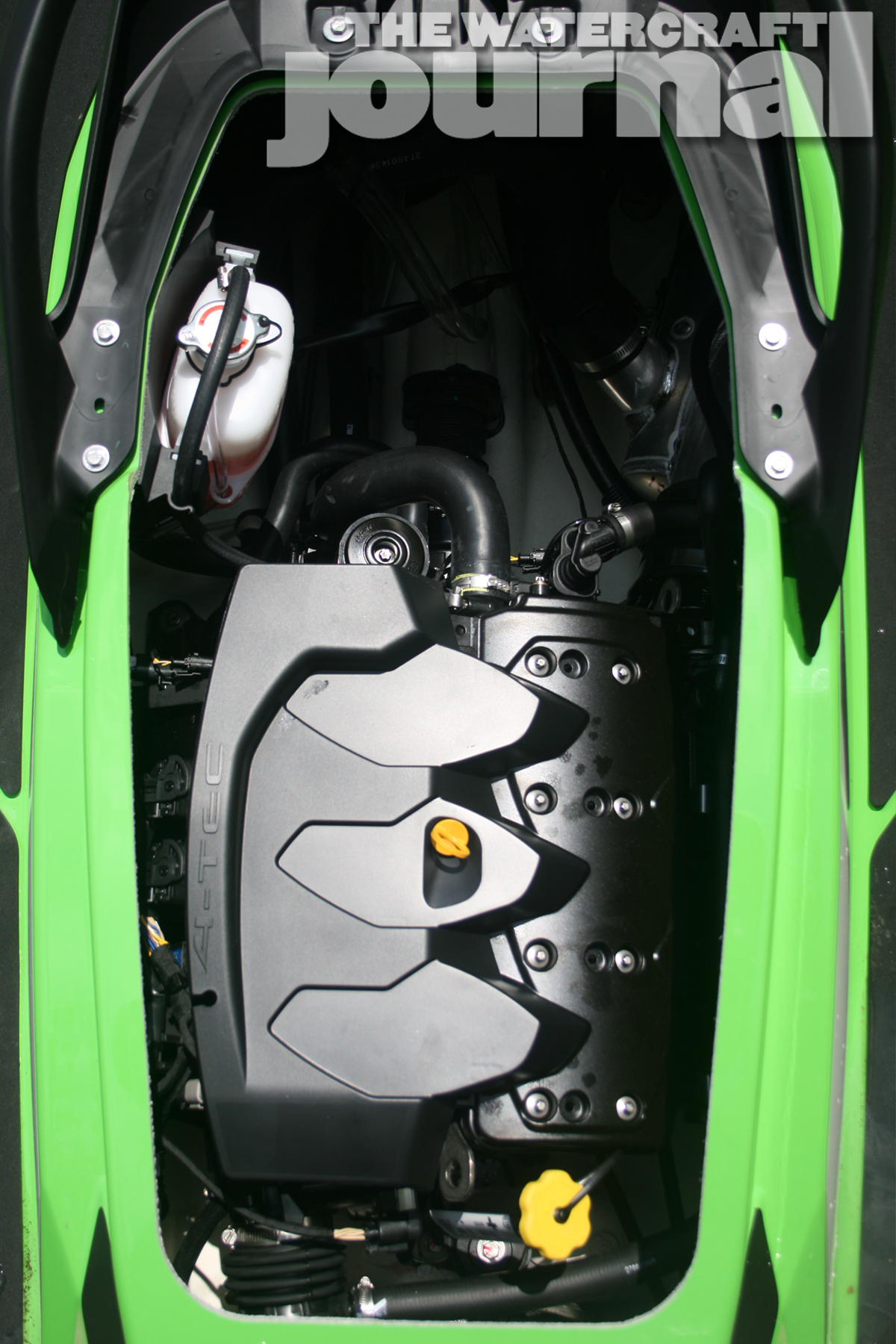
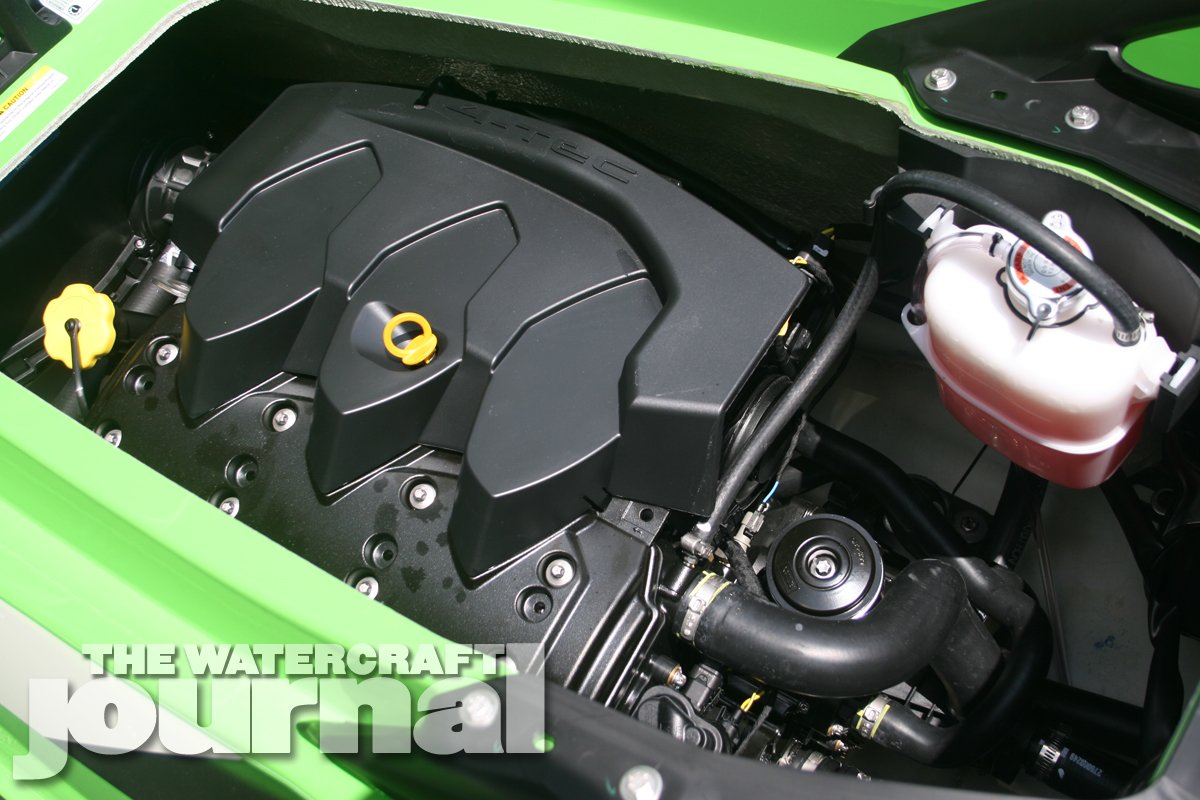
Sharing the same platform as the rental-level GTS, the luxurious GTI Limite 155 and the rip-snorting GTR, the GTI is a capable machine in a variety of conditions.Displacing 1,494cc, the naturally-aspirated Rotax 1.5L produces a modest 130HP.
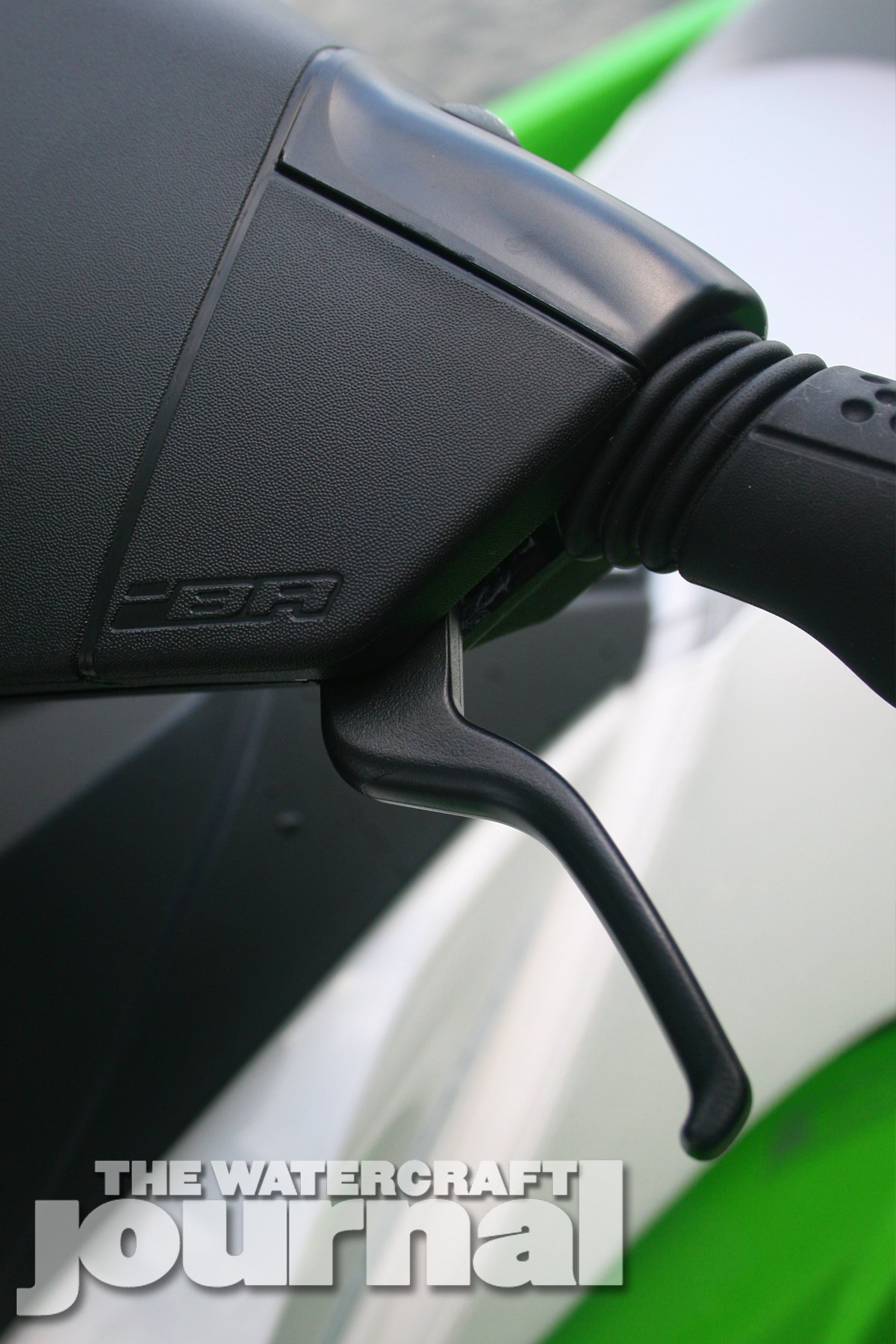
Priced at a dollar under $10,000 (MSRP), the GTI SE 130 is no stripped down rental. All GTIs (as well as all other units besides the GTS and base-model Sparks) comes standard with Sea-Doo’s Intelligent Brake & Reverse. Not enough praise is given to this feature we think, as all new BRP runabouts come stock with it, and people take stock equipment for granted.
The brake/reverse level safely overrides the throttle applying a low-slung grate that drag-brakes the Sea-Doo to a stop in nearly half the distance of skis without. Equally, the iBR starts you in Neutral and allows docking – be it loading or offloading a trailer, or pulling up to a dock – a worry-free exercise. No finagling with wonky reverse levers or off-throttle assistance.
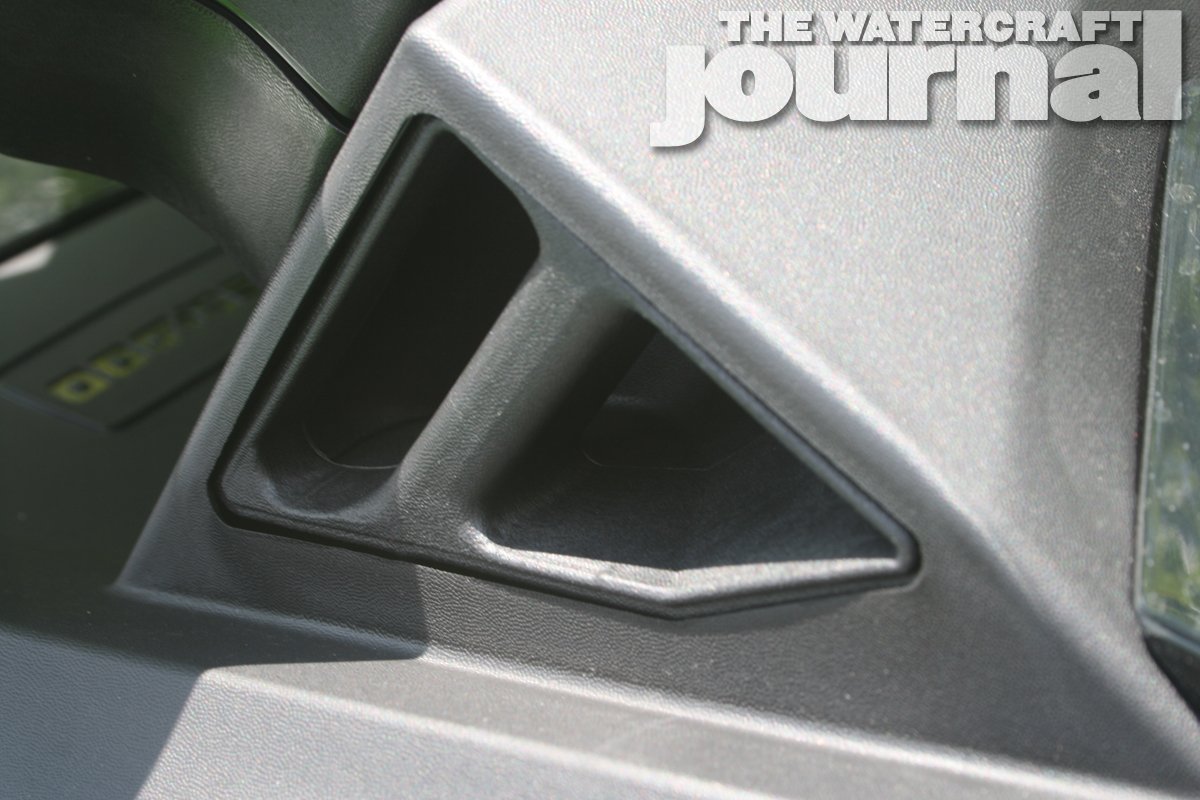
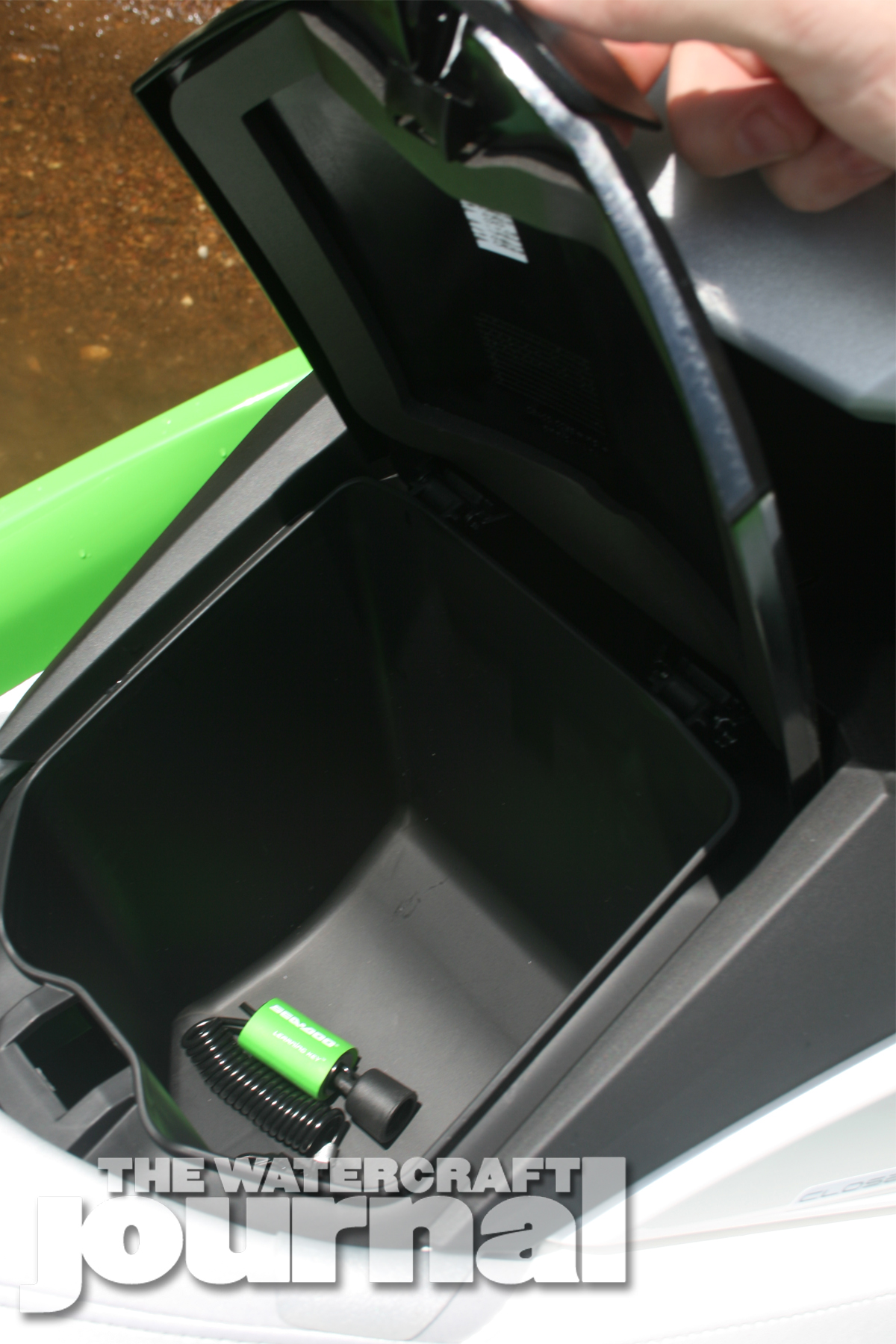
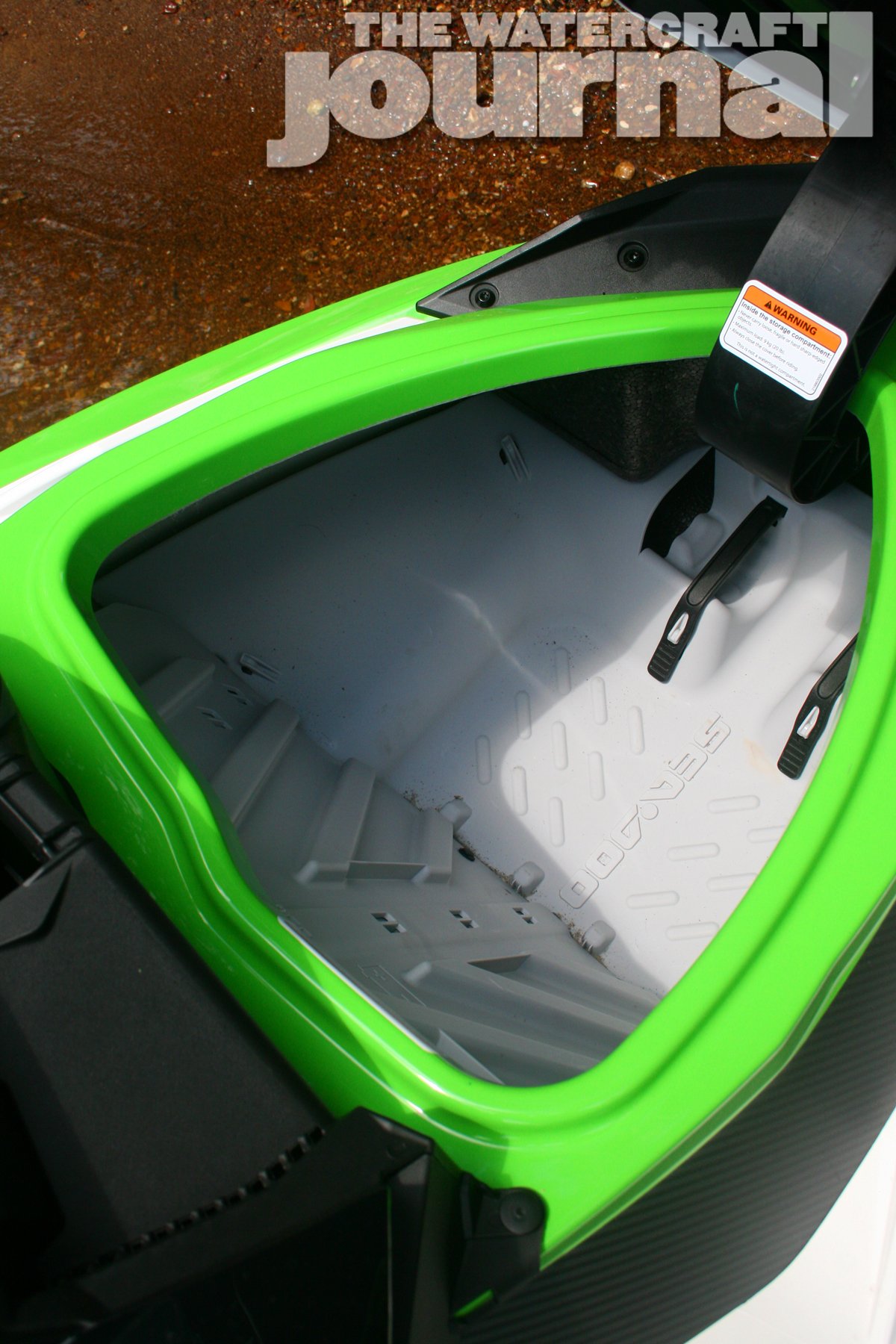
Storage is slight but sufficient, providing 30.8 gallons between the bow stowage and glove box. All GTI-hulled runabouts have the same collapsible bulkhead separating the storage from the engine compartment and can be easily removed or installed.
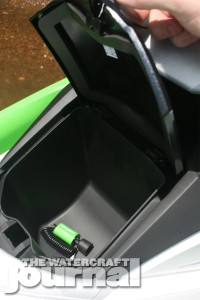
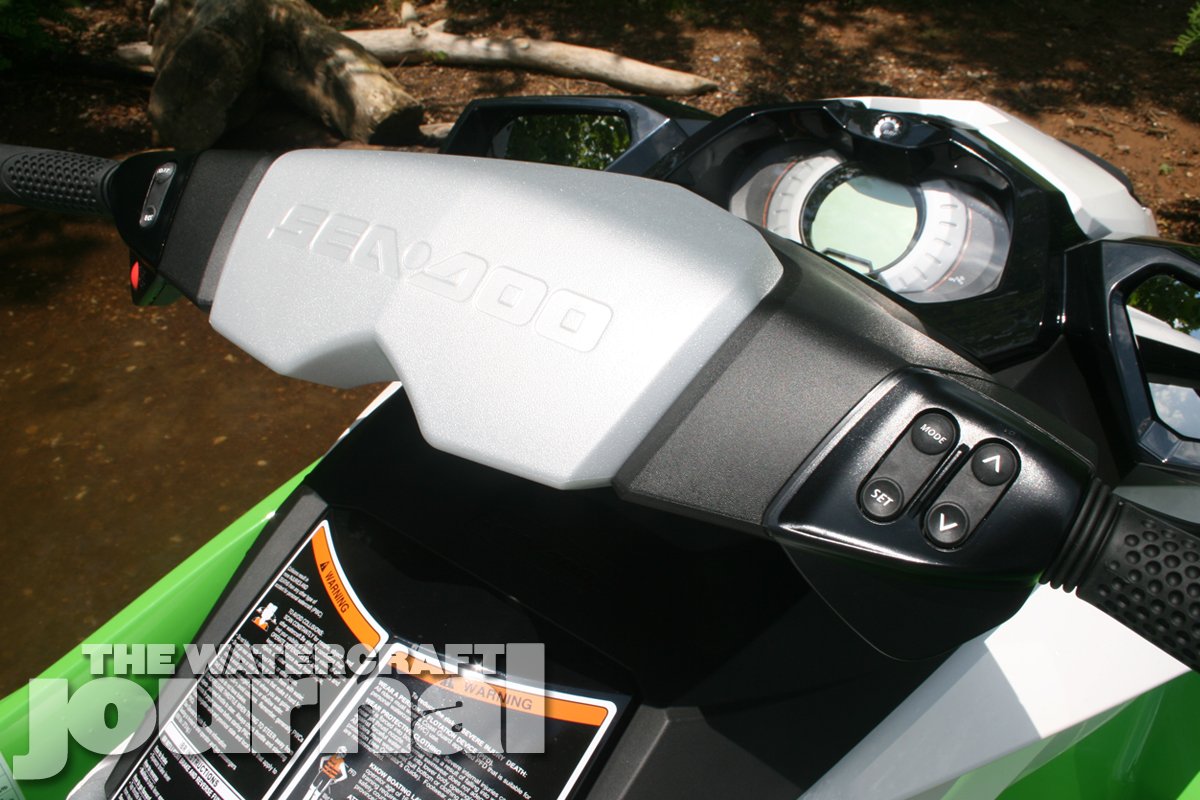
Steering on all GTI-based units is fixed, but benefits from the iTC and iBR ergonomic toggles featured on the handlebars.The glovebox is deep and can fit a couple of 20 ounce bottles of water in addition to a pair of sunglasses and your wallet and keys. Unfortunately, none of the GTi’s storage is watertight, so be wary of your more precious cargo.
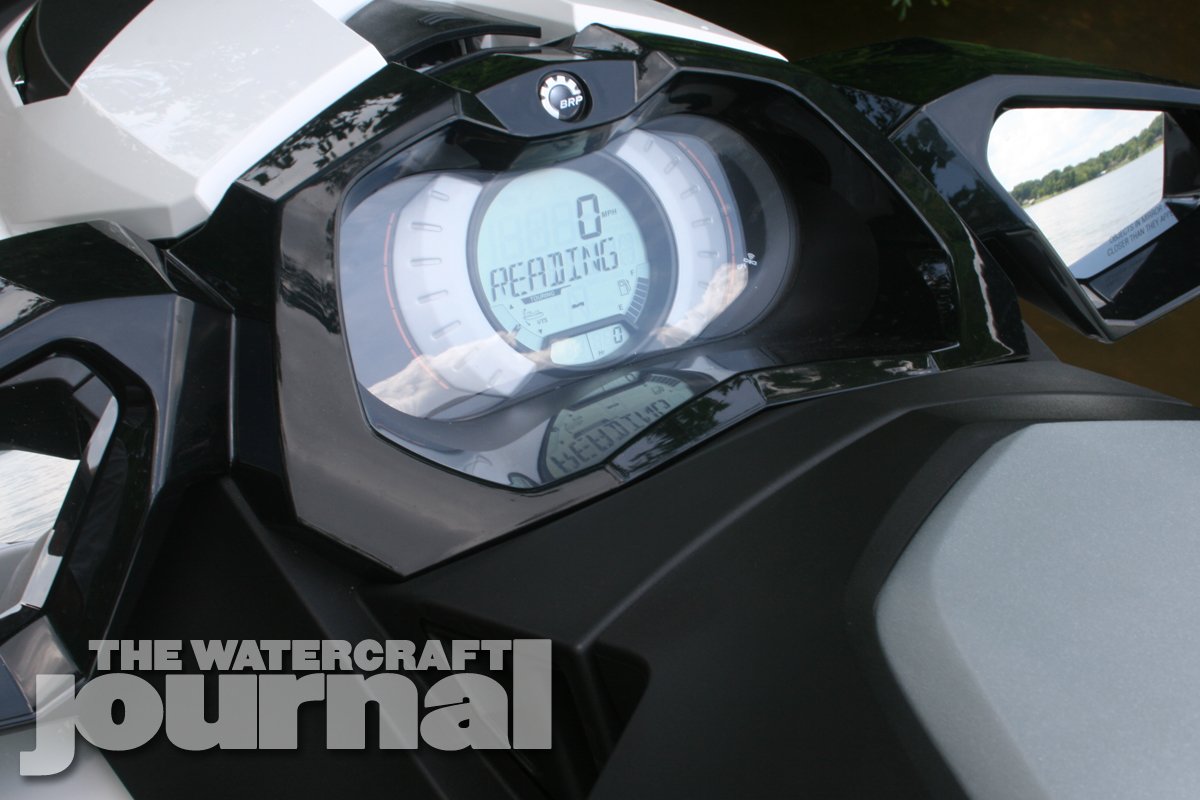
The gauge cluster is clutter-free and easy to read with a center LCD screen reading vitals in real-time. The speedometer is fed by GPS, so you’re actually going as fast as it tells you, and the Mode toggle allows you to cycle through speed, tachometer or clock displays. As with a SE, we also enjoyed Sea-Doo’s VTS control, allowing us to adjust the trim setting at will.
The medium-sized runabout (132.6-inches) rides on a medium-V hull that comes to plane quickly and rides smoothly through wind-whipped chop. The gently stepped hull remains stable while being playful and a little loose in tighter turns when provoked. We could perform aggressive S-turns without fail as well as a wild snap turn when throttled hard, and always with nary a fear of rolling too far on the rail.
Even at Sea-Doo’s lowest available horsepower setting, the 1.5-liter Rotax engine produces enough grunt in Sport mode to stretch a smile across your face. The combination of lightweight (790-pounds dry) and the snappy Sport tune available through BRP’s Intelligent Throttle Control (iTC) toggle, makes for a great package. But again, the people who buy the GTI SE 130 aren’t looking for end-all performance. Quite the opposite, really.
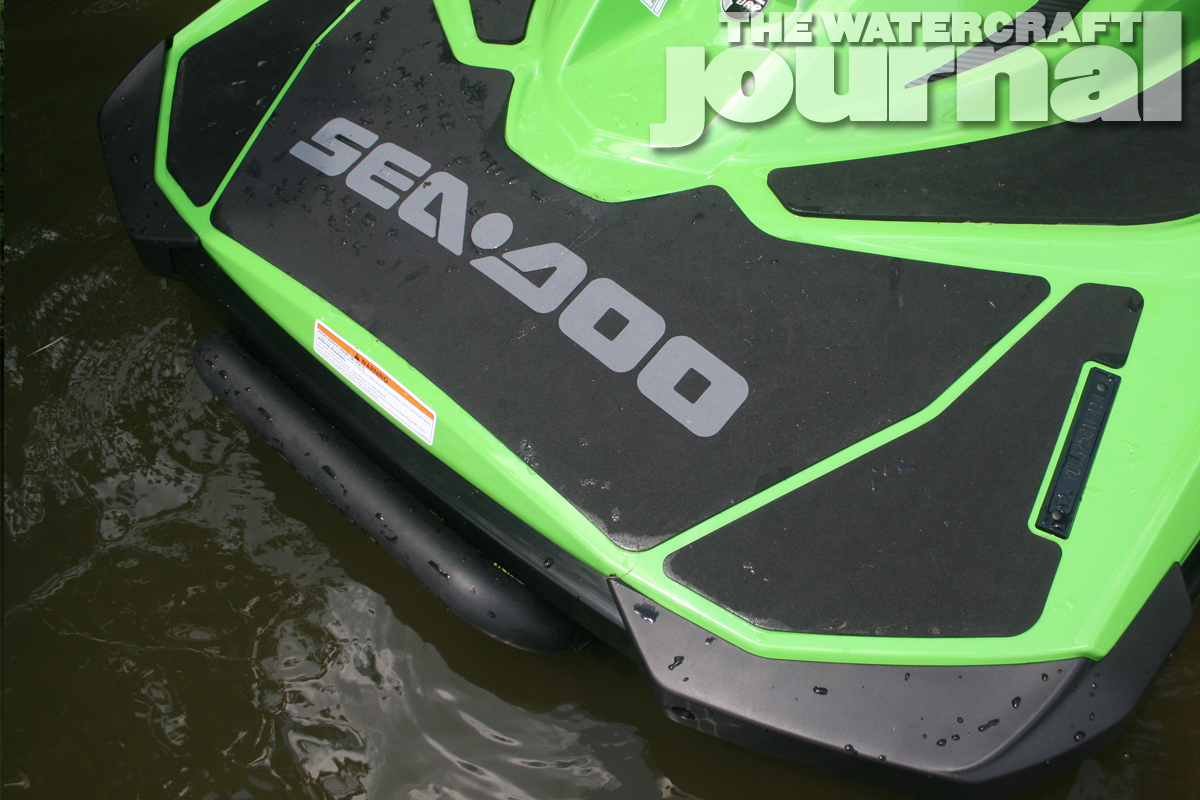
Included in the SE package is Sea-Doo thickly-padded folding swimstep and wide boarding platform.First introduced in 2009, the Intelligent Brake & Reverse technology remains unchallenged.
Capable of running all day on 87 octane, the GTI SE 130 is the quintessential gas sipper. Holding 15.9 gallons of fuel in its belly is almost more than enough. Long distances are bridged with hardly the gas needle dipping. When set in ECO mode, the GTI is even more of a gas miser, stretching out every gallon further and further. A full day of riding failed to use up a whole tank, even as the hour clock ticked by.
The GTI SE 130 also proved itself as the ideal test mule for beginner riders. Although available with a Normal and Learning Key, we found ECO mode worked just as well. Our novice rider quickly picked up confidence as they maneuvered the runabout around boat traffic and careening riverbeds. We intentionally spent a significant amount of time as the passenger and found the rear of the bench seat quite comfortable. The rear hand grips are wide-set, the seat narrow enough to keep knees from rubbing.
For us, it’s all about the fun factor. The import hybrid-like fuel mileage is a plus, but ultimately, is it fun? And the answer is yes. The GTI SE 130 is a great platform that allows for a lot of enjoyment. No this isn’t the supercharged sports car that still whispers our name from across the showroom floor, but this ain’t no soccer mom’s minivan either.
Even with the Spark in all of its variations cannibalizing a small portion of GTI sales, the 3-seater entry-level craft remains the backbone of Sea-Doo sales – and for good reason.
It’s been a week of ups and downs, as we’ve been very fortunate to have been contacted by some very worthwhile organizations wanting our help in promoting their charitable events. A couple of days ago, we brought to you the heart-wrenching tale of four-year-old Emerson Meredith’s struggle with leukemia and the Van Beek’s Flip for Emerson GoPro Weekend to help offset her surmounting medical costs.
Today, we want to alert to the annual Ride for Dad charity ride happening this July 12, 2014. Targeted at collecting donations for prostate cancer research and education, the Ride for Dad rides (there’s four of them this year) have raised over 13 million dollars to the Prostate Cancer Fight Foundation.
Recently, we were contacted by GreenHulk member “K447” (or Keith), who let us know more about this upcoming Rideau Ferry ride.
He wrote: Each year Ride for Dad, which began as a motorcycle charity event, hosts multiple watercraft charity rides. There are now four in Eastern Canada, including the July 12, 2014 ride I will participate in. Riders are asked to collect donations for prostate cancer research and education. Each year there are more riders and the donation total grows.
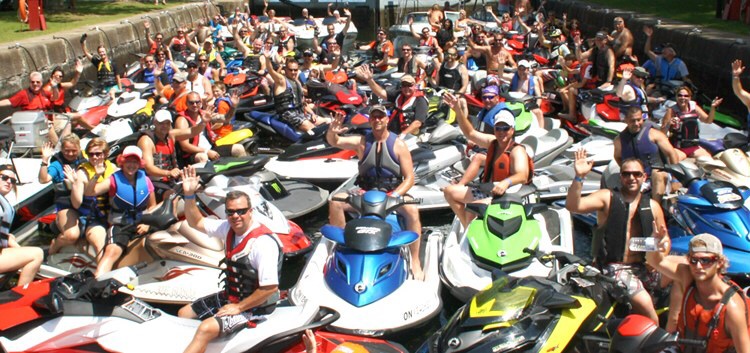
The signature moment for the Rideau Ferry ride (named for the launch location) is when all the watercraft and chase boats are collected together in a lock to pass between two sections of the waterway.
Last year there were over sixty watercraft in the lock, perhaps this year there will be more!
The ride itself is done as a poker run with several waypoints. Round trip takes about four hours, maybe five.
Prostate cancer is the most commonly diagnosed cancer in Canadian men (I presume the US statistics are similar). It generally affects men over 40. Successful treatment depends on early detection. In the longer term, research into improved diagnosis, treatment and prevention will further improve our capacity to deal with this disease.
The majority of watercraft enthusiasts are male and we are all susceptible to this.
What the what? It’s already July? It seems like only yesterday we were griping about winter dragging on too long, and now it’s sweltering by 8 o’clock in the morning (not that we’re complaining). We’re already half way through the Hydro-Turf Pro Watercross Tour, having just published our next-day coverage of the Sparks, Nevada stop, with only a few more stops to go before the IJSBA World Finals! How time flies, right?
Looking back on the past month, we’re humbled to announce we’re still bringing in the most readers of any personal watercraft publication, be it day-to-day, week-to-week or monthly. We’ve received countless compliments regarding the quality, tone and quantity of our content, and it’s only going to improve. We’re narrowing down on providing a lot more “do it yourself” technical articles, tutorials and “how to” stories that will enable our readers to enjoy the most out of their watercraft.
As each month’s “By The Numbers” is really for the benefit of our current advertisers, as well as to help those who have yet to enjoy participation with The Watercraft Journal tofamiliarize themselves with this magazine, below we have created a thorough and informative look at the industry’s most widely read magazine.
June 2014
Reliable, Daily Content
There’s something to be said about reliability. Delivering on what you promise is still a big deal in our eyes, and it’s disappointing when others claim to do the same when the truth is they don’t. We publish everyday, Monday through Friday. It’s not hard to verify (just go to the magazine!), proving our commitment to publishing the most exciting, entertaining and informative professionally-written articles.
News articles published in May: 23
Feature articles published in May: 13
Total feature word count: 14,845 words*
News articles published in June: 26
Feature articles published in June: 11
Total feature word count: 9,926 words*
*When this number is translated to print publication standards equals a 106-page magazine. Please note that this number does not include an average of two uniquely-written news articles published daily.
Popular Performance
Producing more articles than anybody else doesn’t do you any bit of good if nobody is reading them. Thankfully, that is not the case for The Watercraft Journal. The quality grade of our content combined with our unmatched velocity has garnered us the largest reading audience of any personal watercraft magazine today. Our advertisers get access to more potential customers than with any other publication through endemic feature articles, monthly news releases and updates and high impact advertising.
May
Total number unique readers: 12,308*
Total number of articles read: 35,695
Percentage of new readers: 60%
June
Total number unique readers: 12,437*
Total number of articles read: 34,141
Percentage of new readers: 59.33%
*This number is considered equal to an individual sale of a single copy of a magazine.
Social Marketing, Not Just Media
Using social media to your advantage doesn’t just mean dumping money down its throat, but mindfully targeting the right audience to get the most for your investment. Our Facebook, Twitter, Instagram, YouTube, and weekly newsletter are carefully crafted, monitored and customized to bring more engaged and interested readers to the magazine. It’s not “Likes” we’re after, but readership.
May Facebook readers: 8,324
May Facebook weekly reach: 40,923
Top Five countries: Brazil, United States, Philippines, Argentina, Thailand
June Facebook readers: 8,678
June Facebook weekly reach: 29,960
Top Five countries: Brazil, United States, Philippines, Argentina, Thailand
Reporting The Good News
The year isn’t even over and the manufacturers are reporting record numbers in new and used sales. And it’s through new unit sales that we measure the health of our industry. Because more and more people are interested in personal watercraft, they are doing their research, looking into what PWC meet their needs/wants, and are coming to The Watercraft Journal for industry news and happenings in the sport. It’s that simple. If you want your brand in front of more eyes than anywhere else, then you’ve come to the right place.













 Although technically two separate trails that do share some “common” water, the Honey Island venue has become a favorite of mine. Since both trails share the same drop-in facility, the La France Marina, it was impossible to omit either one. Ramping aside, the two trails are nothing alike.